All posts in “Sports and Outdoors”

The Best Hiking Socks Money Can Buy

A quality pair of hiking socks can make or break a day on the trail. Your feet are your most important tool when hiking. They’re your means of transportation, your method of travel and if they aren’t cared for and kept comfortable, hiking can quickly descend into the realm of misery. Hotspots, blisters and frostbite are all legitimate concerns. Thankfully, there’s never been a better time to buy hiking socks — there are more companies applying careful consideration and serious tech to their knits than ever before, and warm, soft, breathable materials like merino wool have become standard. It doesn’t matter whether you’re headed up to the local overlook for an afternoon or making a ten-day trek through Patagonia; you’ll need a good pair of hiking socks.

A Note on Price:

At first glance, hiking socks can seem expensive, especially compared to the cotton socks you may buy in packs of 12 for less than $10. But like all pieces of outdoor gear, hiking socks are designed to perform: to keep your feet warm while letting them breath, to prevent blisters and, of course, to be comfortable. Sock makers employ technical materials such as merino wool and construct each sock with hidden seams and hybrid knit patterns in order to create different levels of stretch. They also take careful consideration in applying compression to different areas of the foot. All of these things factor into the price of a decent pair of socks that are ready to take on the rigors of trail use; if you’re serious about getting outside, they’re well worth the extra cost.

Materials to Look For:

Merino Wool: Harvested from Merino sheep, it’s quick drying, static resistant, breathable and naturally antimicrobial, which means it doesn’t hold odors like polyester and cotton do. It’s also softer than traditional wool.
Nylon: Fibers made from durable, lightweight, synthetic polymers.
Spandex: A synthetic polyurethane-based fiber known for stretchability.
Elastane: A variant of “spandex.”
Polyester: A common plastic-based synthetic fiber that’s strong, light and shrink-resistant.
Silk: A natural fiber produced by insects. Silk is strong, soft, smooth and cool, but not very elastic.

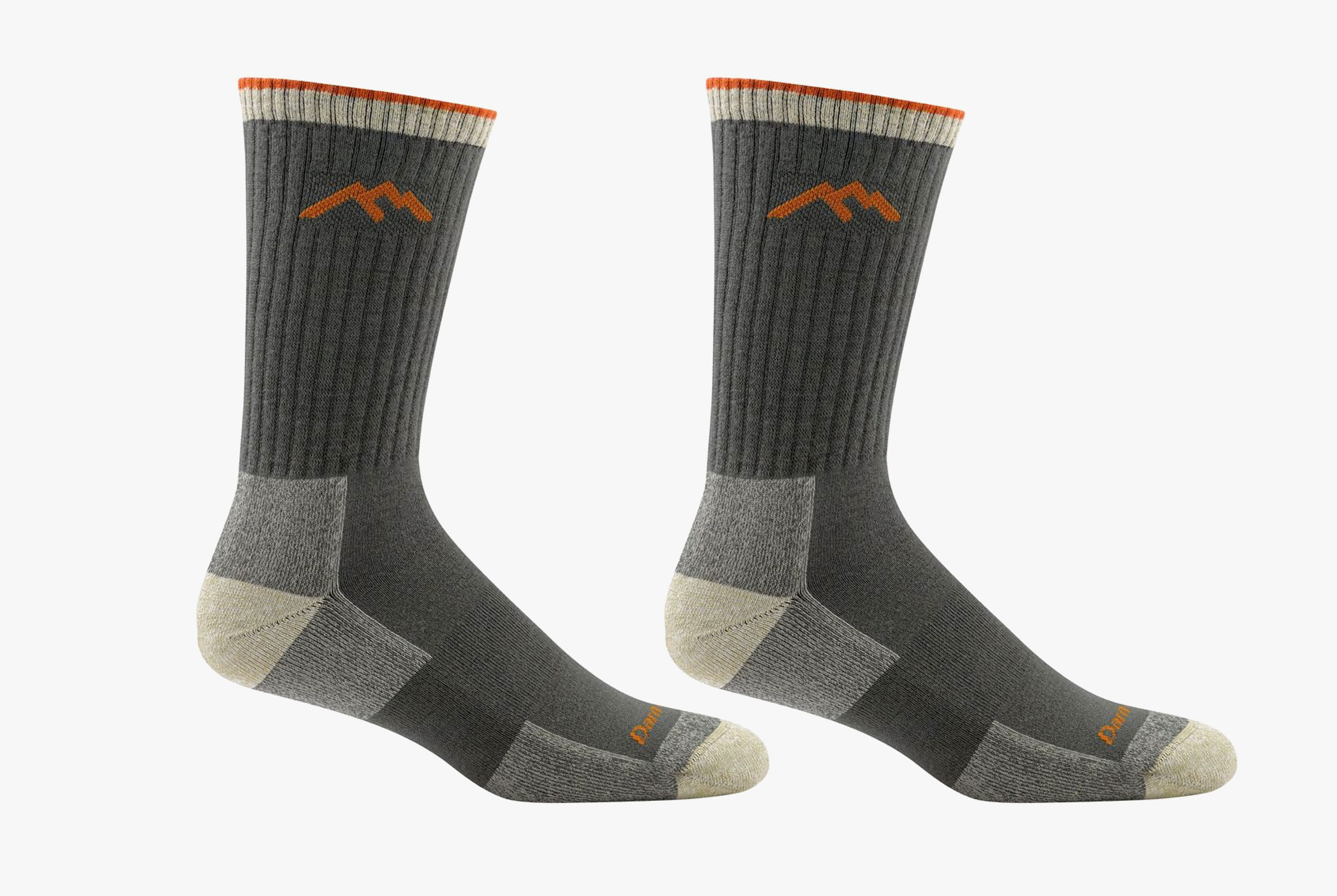
Darn Tough Hiker Boot Sock Cushion


Best for Long-Distance Trekking: The hallmark of all Darn Tough socks is their unmatched durability. These socks last forever — and if for whatever reason they don’t, Darn Tough has a simple lifetime warranty that allows you to trade them in for a brand-new pair with few questions asked. But it’s not just that resilience that makes Darn Tough socks, and particularly the Hiker Boot Sock Cushion, great for multi-day and long-distance hiking — they’re comfy and warm, too. The Hikers are designed to be tall enough to accommodate supportive boots made for trekking and are knit with a merino wool blend so they’ll hold off going sour during long days on the trail.

Materials: 64% Merino wool, 33% nylon, 3% Lycra spandex
Cushion: Medium

Smartwool Trekking Heavy Crew Socks
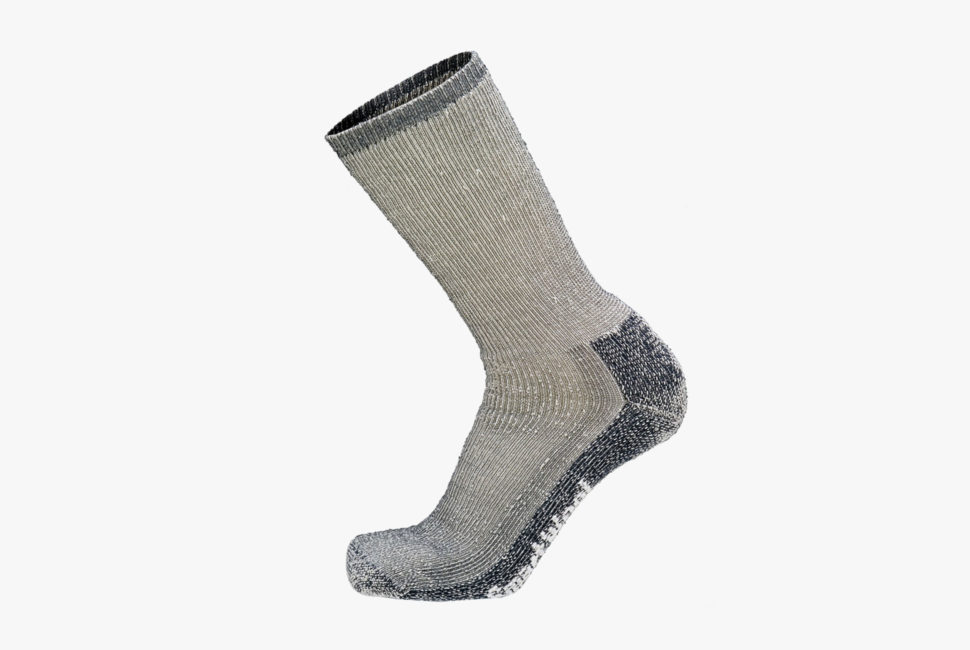


Most Comfortable: Smartwool may be the biggest name in technical hiking socks. It’s no surprise that its plush trekking model, built with full cushioning to provide support over miles and miles, is also incredibly comfortable. The sock has a heathered look that’s iconic among hikers and it’s equipped with all the additional features a hiker needs: a flat and minimal toe seam, light compression around the arch and of course, a very healthy dose of merino wool.

Materials: 70% Merino wool, 29% nylon, 1% elastane
Cushion: Heavy

Stance Troops Hike
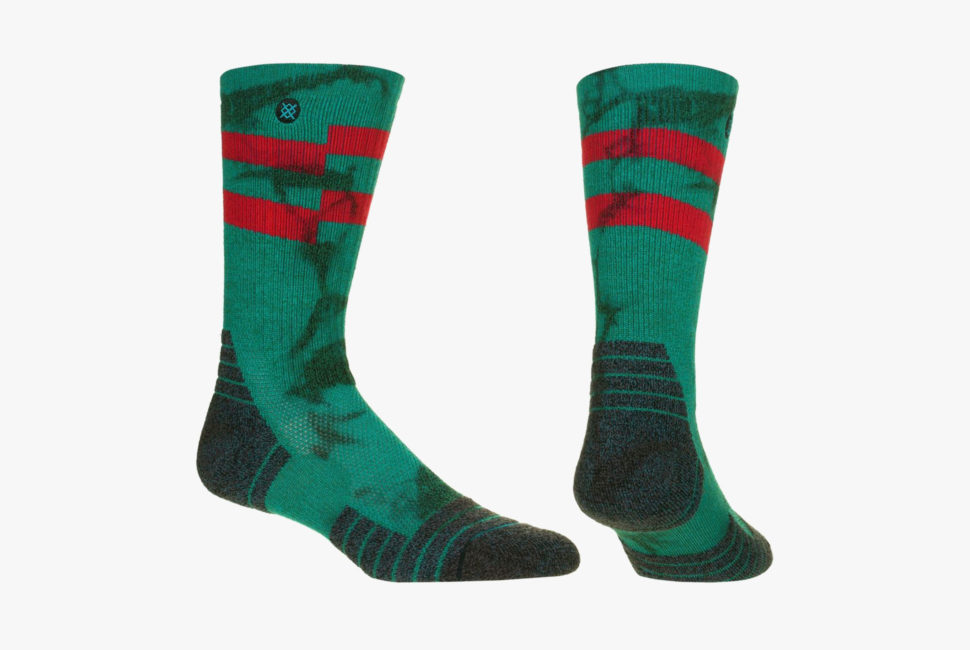


Best for Style-Conscious Hikers: Stance set out to reimagine the most boring article of clothing with an injection of creativity and style. In doing so Stance didn’t forget about technical features, and its Adventure Collection, introduced earlier this year, makes good on all three. The Hike is Stance’s mid-level outdoor sock. It’s constructed with a blend of wool, polyester, cotton and nylon and it’s engineered with targeted compression and cushion zones along with a mesh top for improved breathability. And of course, the Troops feature a wild tie-dyed stripe pattern you won’t find on any other hiking sock.

Materials: Merino wool, poly cotton, nylon
Cushion: Medium

Farm to Feet Damascus Lightweight Crew Socks
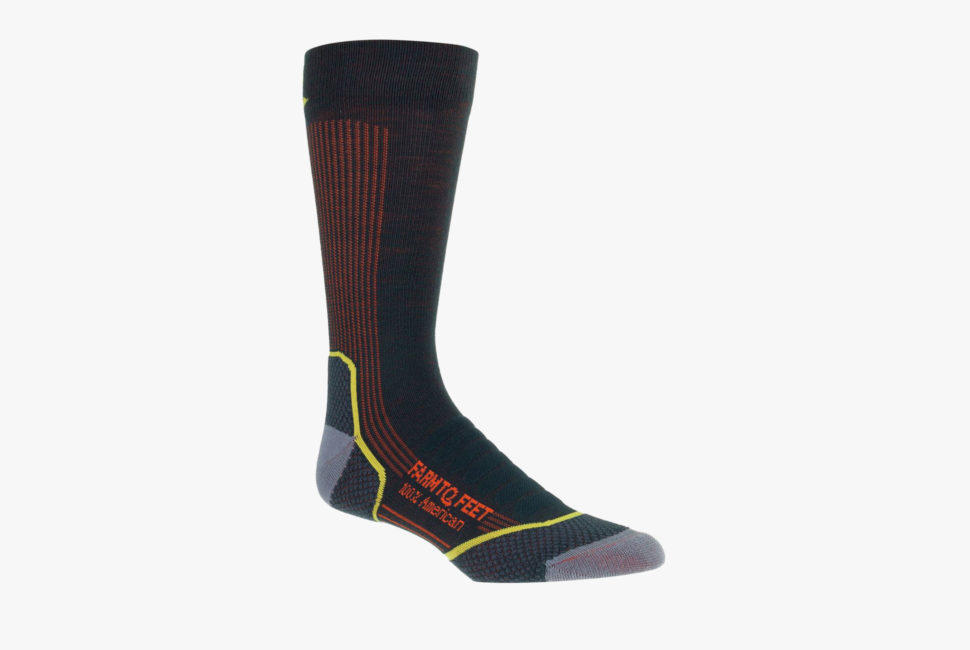


Best for USA-Made Buyers: To many people, origin is important. Farm to Feet, owned and operated by the Nestor Hosiery in North Carolina, may be the only company making hiking socks with a supply chain that’s 100% made in the United States. (Many other brands do build their finished products here with materials that are sourced abroad; most merino wool, for instance, comes from New Zealand and Australia.) The Damascus is a great example of what that supply chain can produce: a technical hiking sock with targeted cushioning and compression that’s ideal for hikes both long and short. It’s also available in a quarter-length model.

Materials: 57% Merino wool, 40% nylon, 3% Lycra spandex
Cushion: Light

FITS Light Performance Trail Quarter
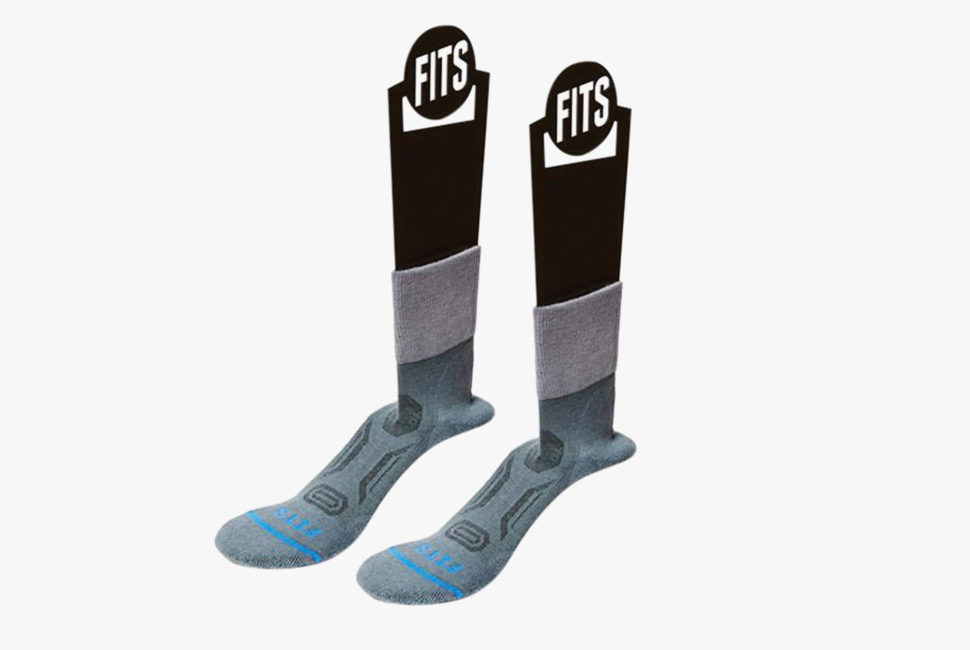


Best for Speed Hiking and Trail Running: You can’t really go wrong with FITS socks — every pair is incredibly comfortable and hard-wearing. But when it comes to ticking off the miles as fast as possible, its new Light Performance Trail sock is unbeatable. The sock features a slightly taller hybrid cuff that’s built out just enough to guard your ankles (and shoe interior) against sticks, rocks, snow and any other debris you might kick up as you make your way towards your destination. Beyond that, these socks fit incredibly well (as if the brand name couldn’t have been more of a clue to that); they hug the foot snugly without feeling restrictive and breath well with venting on the top of the foot.

Materials: 50% merino wool, 40% nylon, 7% polyester, 3% Lycra
Cushion: Hybrid; extra cushioning on toe, arch, heel and ankle cuff

SealSkinz Hiking Mid Socks
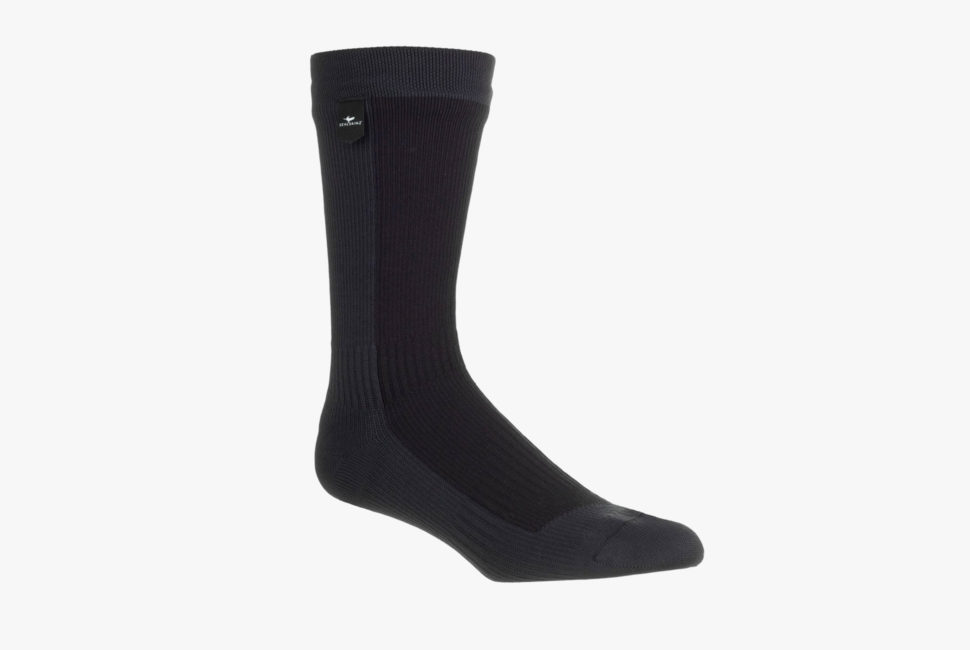


Best Waterproof Sock: In most cases, waterproof socks are overkill. But when spending prolonged amounts of time exploring bogs, fens and streams, wet feet are an inevitability — so a waterproof hiking sock can be your best friend. SealSkinz’s 100 percent waterproof hiking sock is also windproof and, miraculously, breathable. It’s built with a nylon and elastane outer, a hydrophilic membrane and an inner that blends merino wool with acrylic and nylon, as well as other materials.

Materials: Outer: 90% nylon, 10% elastane
Inner: 35% merino wool, 35% acrylic, 23% polyester, 3.5% elastane, 3.5% nylon
Cushion: Medium

REI Co-op Silk One Liner
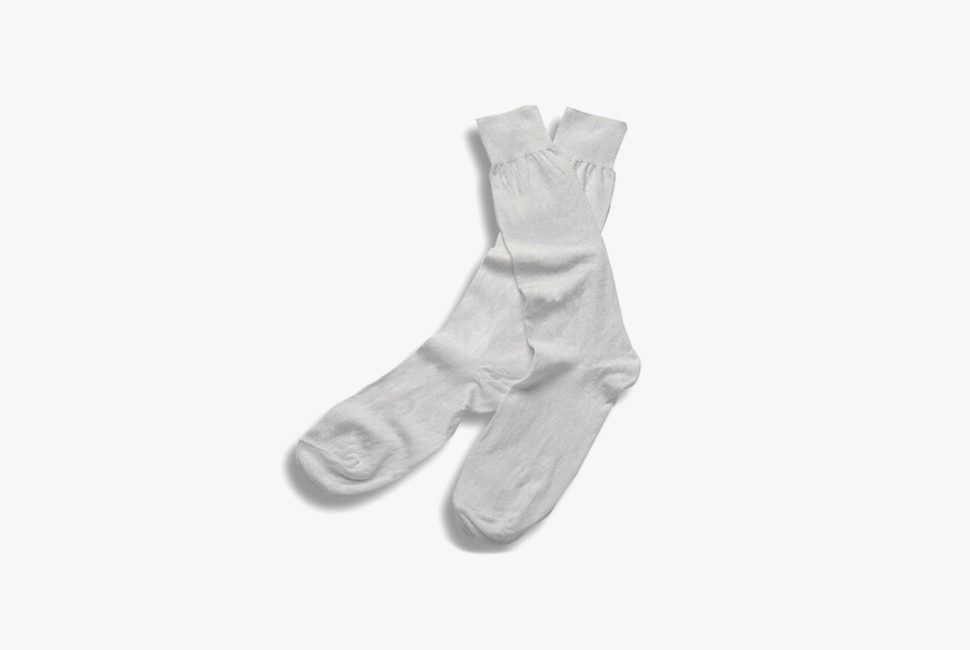


Best Liner Sock: Liner socks are divisive; either you like them or you don’t. Liners are thin, lightweight socks typically worn as a layer underneath regular hiking socks. Their purpose is to keep your feet dry by wicking away moisture and to prevent blisters by reducing the friction on your skin with an added layer. As with any layering system, everyone has a personal system and there’s no solution to suit all hikers, but if you are thinking of trying a liner, REI’s silk and nylon model is a solid place to start.

Materials: 55% spun silk, 44% nylon, 1% spandex
Cushion: None

Injinji Outdoor Midweight Weight Crew NuWool
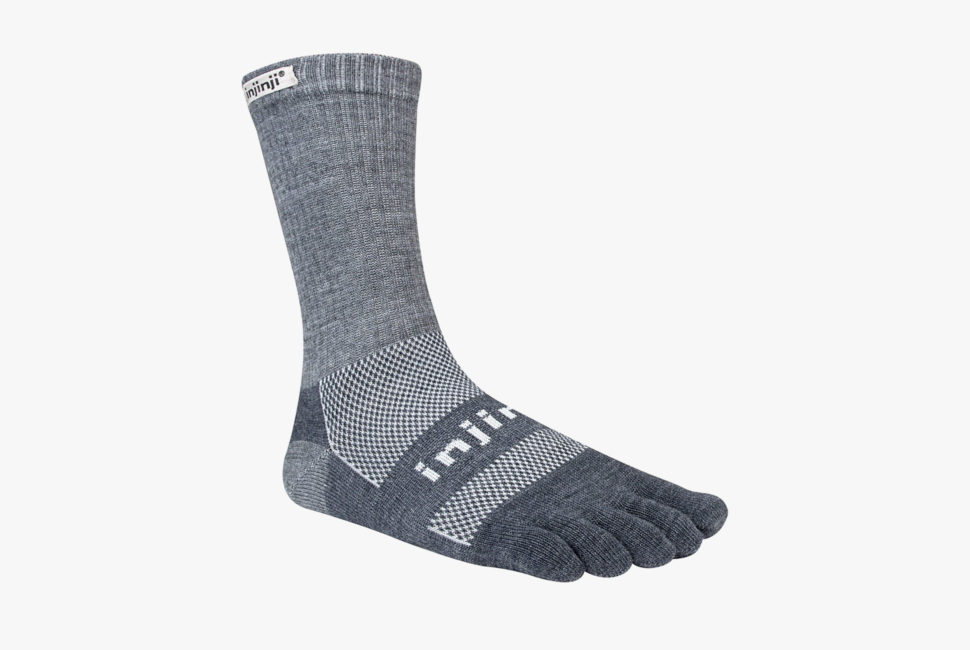


Best For Preventing Blisters: Yes, Injinji’s separated toe design is definitely different, but it’s also ideal for hiking. Separated toes mean less rubbing and friction from skin-to-skin contact, which in turn means fewer blisters. The style can feel strange at first, but doesn’t take long to get used to and is actually incredibly comfortable. Like any high-quality hiking sock, Injinji’s is constructed with supportive arch compression, a mesh top and, yet again, merino wool. If you can’t get past the look, just remember: once your feet are in your boots, nobody will know any better.

Materials: 64% NuWool, 33% nylon, 3% Lycra
Cushion: Medium

Wigwam Merino Wool Comfort Hiker
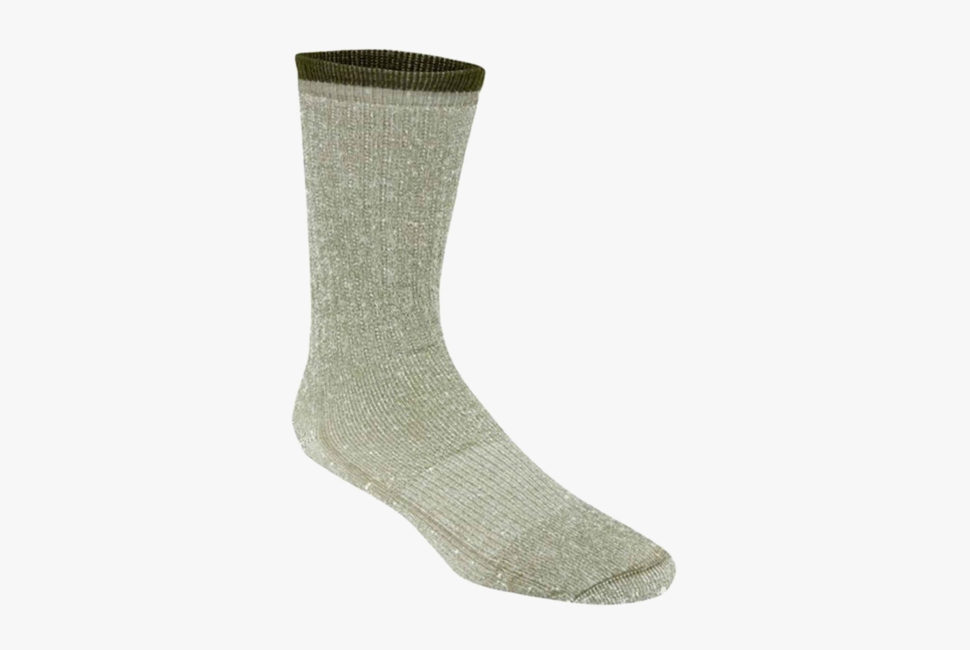


Best Affordable Option: For a piece of clothing that’s so easily forgotten (and lost in the wash), hiking socks are expensive. But they’re also essential. That high price tag is a result of the technical materials and processes that go into making socks that are suitable for a lifetime of trail use. Wigwam has been making socks in Wisconsin for over 100 years, and its Merino hiking socks are a solid set that will meet most hikers’ needs mile after mile.
Materials: 60% merino wool, 33% nylon, 5% acrylic, 2% elastic (rubber)
Cushion: Medium

Everything You Need to Know Before Trail Running

Trail running has long been a part of the everyman’s life in active cities such at Santa Fe and Denver, but it’s now becoming a trend, even in cities that have less access to great trails like New York City.

When push comes to shove, all you really need to go trail running is a pair of sneakers and nature, of course. But to make sure you’re properly set for the challenge, we chatted with a few experts to get you prepped and geared up. There’s a lot out there to choose from.

The Experts

To find out what gear you need, and what gear you don’t, we tapped two experts in the trail running field: Golden Harper, founder of Altra and Scott Jurek, an ultra runner who recently nagged the title of the FKT (that’s fastest known time in runner-speak) on the Appalachian Trail.

Vocabulary

Running is running — there’s not a ton you need to know. But in the trail running world, there are some things that can sound intimidating. Here are a few terms to know, so you can feel like an expert before you even get started.

Right of Way: You’ll come across a variety of groups of people on the trail, and it’s best to know who to move over for. Cyclists yield to runners and runners yield to hikers.
Trail Etiquette: If you’re coming up behind someone and are ready to move around them, simply say ‘on your left,’ and then pass them on their left.
Vertical: On the trail, miles upward toward the summit is not equal to the total mileage of the run. Three miles on the trail could equal 10 miles on the road in terms of difficulty. If you’re a beginner, avoid trails with a lot of this.

Types of Trails

Where you live will determine the types of trails that you’ll be running on. “The best trail is the one closest to you,” Harper says. He also filled us in on what types of trails you’re likely to find, depending on where you live.

Mountain West: When you think trail running, you think of the mountains. The ones found here are generally hard packed, don’t have a ton of mud and offer lots of vertical. Steep is a real thing here. You’ll cover a variety of conditions from the bottom to the top of the mountain (it might be sunny and 70 at the bottom, but windy and 40 at the top).
Midwest down to South: While this area might be flat as a pancake, the trails found here offer mixed conditions depending on the season and exact state. You won’t really find rocky footsteps with extreme footing or a ton of vertical, but you will deal with more slippery-ness than someone running in the mountain west.
Upper Midwest, Northwest and Northeast: Most of the northern pars of the country, like New England, the Pacific Northwest, and the Great Lakes region, tend to have trails that are floppy — that is, you’re dealing with more mud, and a soft mushy terrain. There’s normally more grass found on these trails.
Desert: From San Diego to Arizona, New Mexico to Texas, you’ll find dry, hard, sandy trails — and these are especially hard on shoes.

The Gear

Sneakers

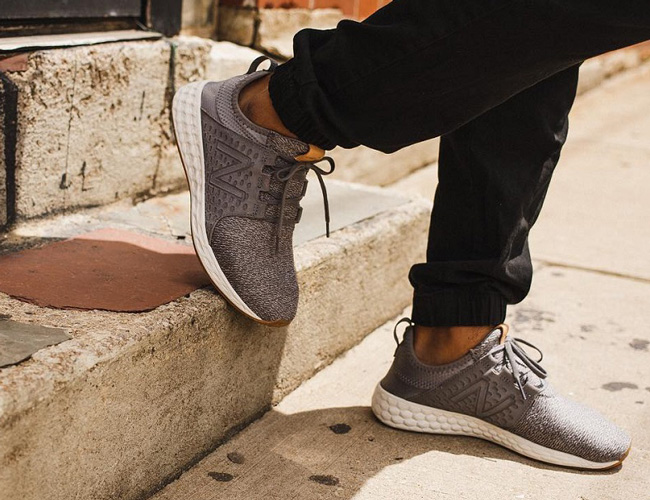
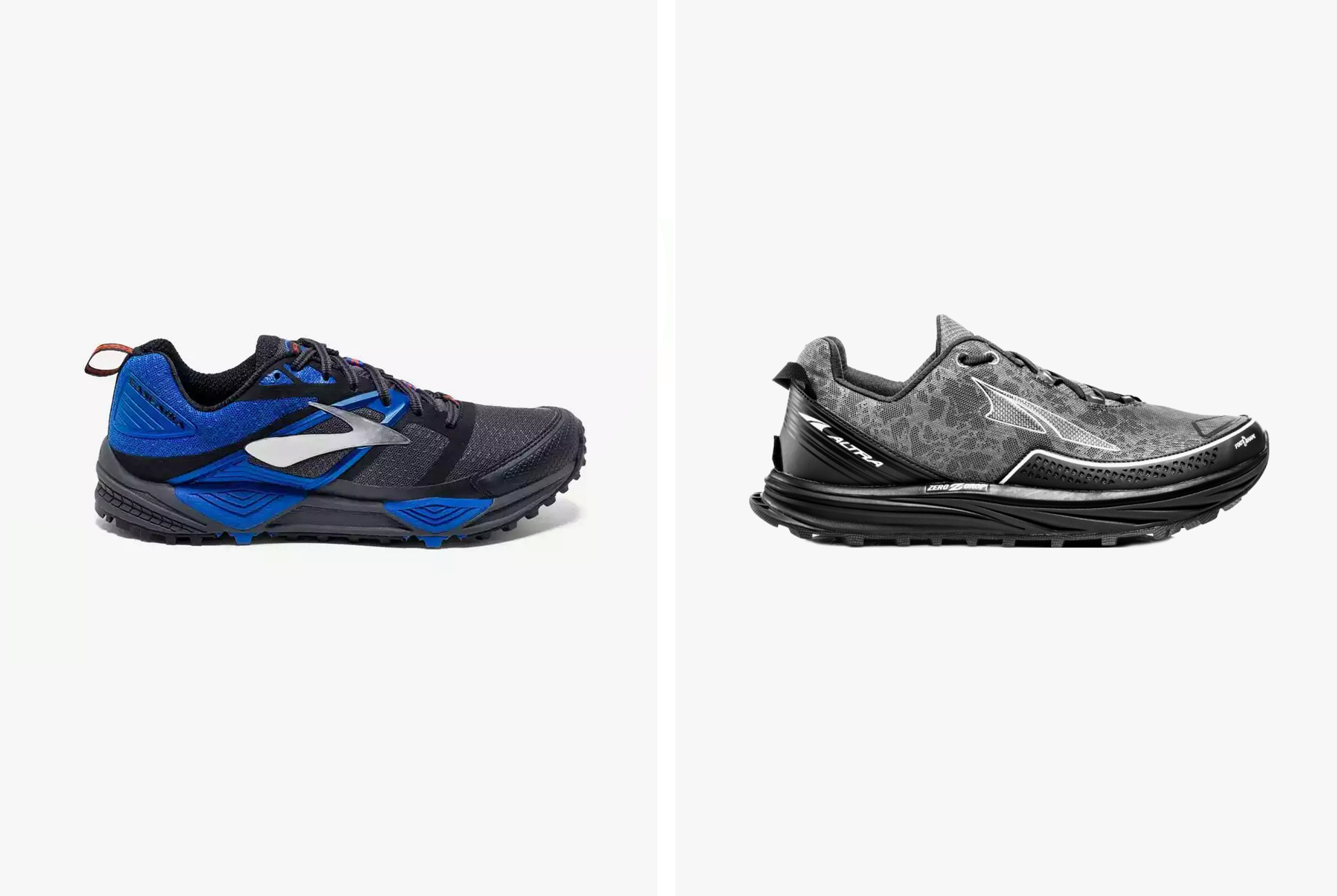
“For a beginner, the first thing is that [the trail shoe] is comfortable. You’ll put your foot in a more challenging environment than on the road, so comfort is the most important thing,” Harper says. “It should feel barefoot, relaxed and free.” Trying on sneakers is the best way to do that, and while you’re chatting with the sales associate, chat with them about the types of trails you’ll be on. “Match the type of shoe to the type of trail you run on — so, with rocky mountains, you don’t need a shoe with really big lugs. For the Northeast, where it’s wet and floppy, you’ll want big lugs to keep you upright in slippery terrain,” Harper explains.

“One of the biggest features I like to have is a lower heel height. The heel differential is lower than most road shoes, so I like something in the three to five-millimeter heel drop — it keeps the foot closer to the ground and gives me a more a stable platform to push off and land,” Jurek says. “New trail runners tend to think, ‘I want to protect myself completely from the trail,’ but having some sense of feeling is important,” he adds.

|

Waistpack + Water

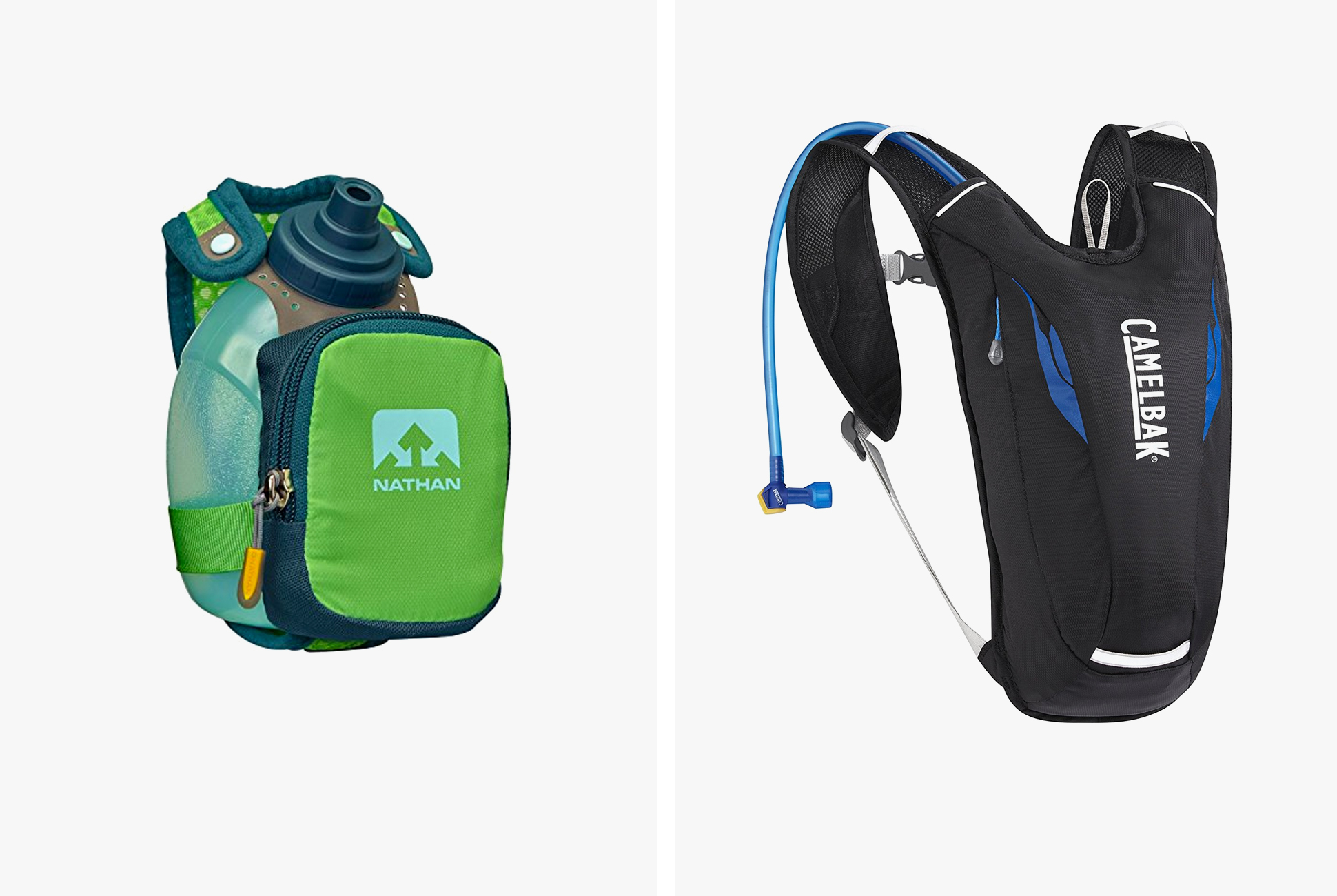
While you don’t necessarily need anything beyond proper shoes, it’s smart to bring water with you, especially if you’re not familiar with the trail. You can use something as simple as a handheld water bottle with space for your keys, or something more intense like a hydration pack.

|

Snacks

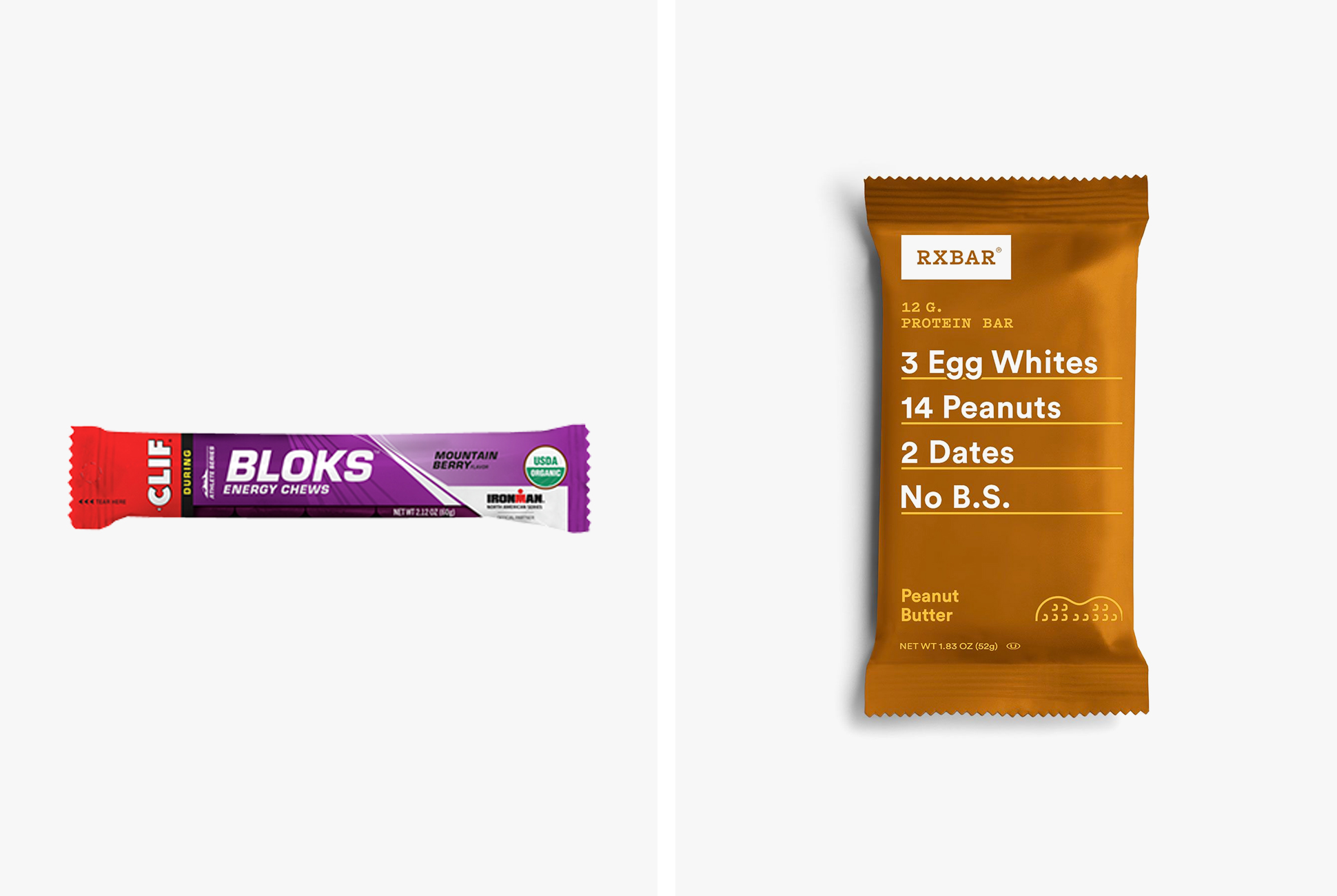
Depending on how long you’re heading out on a run for, it’s best to pack a few snacks. In case the trail ends up longer than anticipated or you slow down and are out longer than you planned, reaching for these gummies or electrolytes will keep your energy up. You can also bring real food if you want — apples and peanut butter, grapes or anything your body craves when you’re outside.

|

Watch

There is something to be said about running into the woods and enjoying the silence. It’s not often that we disconnect, but trail running can be your chance to do just that. You can detour from this one if you’re looking to totally get off the grid.

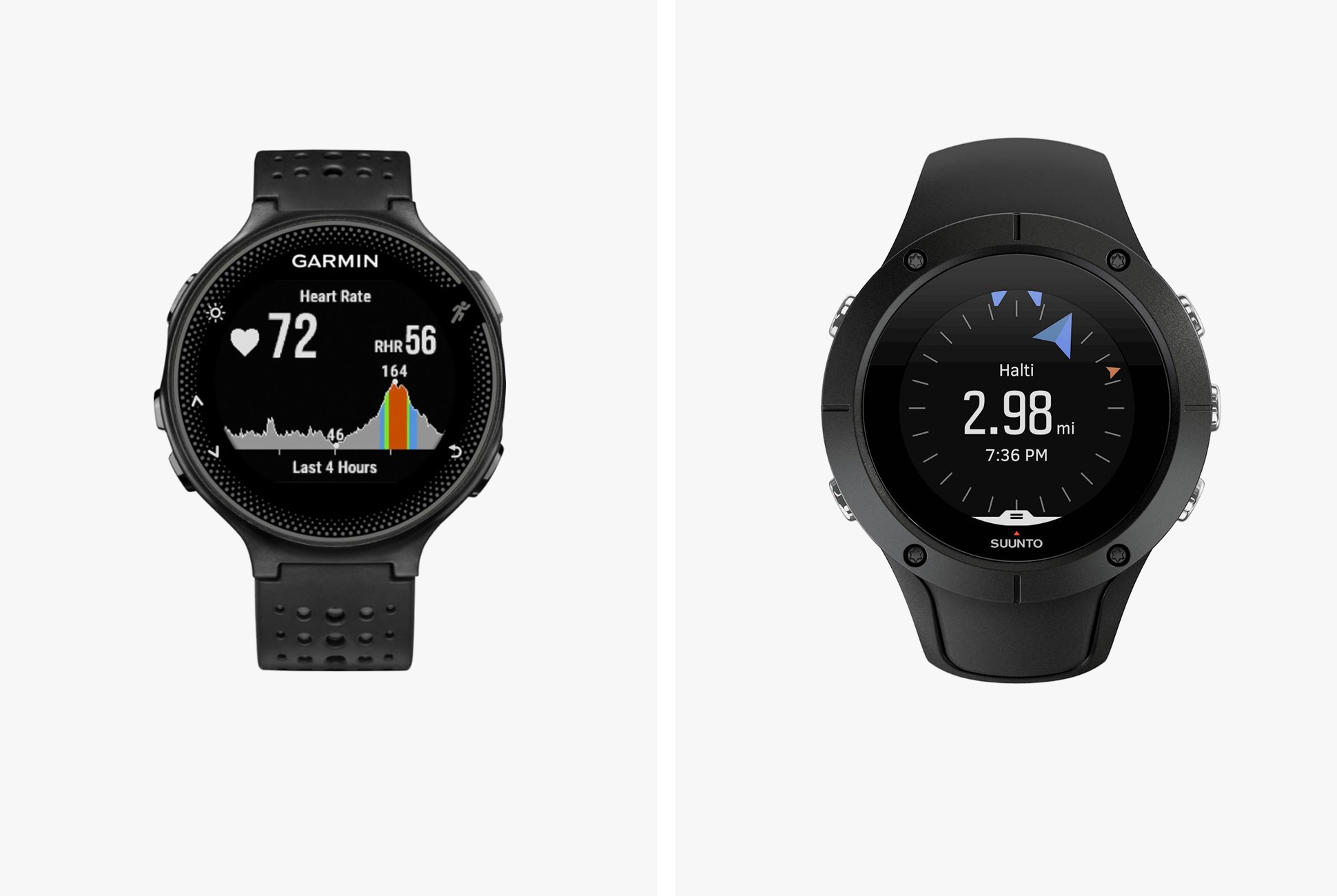
If you do want to keep track of where you’re going, and maybe even drop breadcrumbs to get you back to the starting point, start with a basic GPS watch. While some watches like the Garmin Fenix 5S offer amazing GPS and battery life, if you’re just getting started, we recommend working up to something like that. Make sure you actually like running with a tracker and trail running before making a serious investment.

|

Running Shoes to Wear All the Time

The only shoes you’ll want to wear all summer long. Read the Story

Everything You Know About Running Shoes Is Wrong

W

ay back, at my fitness nadir, a sales guy at a specialty running store told me I should wear Asics. I was new to jogging, new to exercise for its own sake, and consequently had just finished college three pant-sizes above my ideal. After watching me clomp up-and-down the sidewalk a few times, the guy diagnosed me as a chronic over-pronator (I recall a somber, analytic air, like what you might encounter in an oncologist’s office) meaning that I rolled my feet inward as they left the ground. Over time, he said, this would lead to knee, ankle and hip pain, or debilitating mash-ups of all three, so I needed running shoes with mid-sole stability and liberal cushioning. Other phrases stuck, mostly for their odd eroticism: “moderate torsion rigidity,” “energy return,” and “neutral ride.” Fortunately, he grinned, all of my needs came neatly bundled in one pricey, state-of-the-art, Day-Glo pair of Asics.

I’ve since poured half a lifetime of faith and currency into Asics’s over-pronation correctives. Now, as I plod into my 40s, my body dwindles and recedes, its abiding pangs tripling monthly, it seems, as everything from the hips down creaks like corroded machinery. Iliotibialis. Patellofemoral region. Soleus. These things suddenly mean something to me, as all radiate pain. It’s in preparation for the grave that I’ve tried to resign myself to this, my mind on a vigilant appendicular death watch.

Like every running shoe company, Asics has gone deep into the curative design realms. The order of magnitude here is difficult to overstate. Injury-prevention metrics of pronation (over and under) and impact force (sometimes called “foot strike,” ameliorated by cushioning or lack thereof) are the industry’s theoretical guiding lights, against which all else is measured. In service to them, no amount of garbled techno-jargon and morbid joy has been spared. Asics’s GEL-Kayano running shoe, for instance, aimed at over-pronators like me, employs the company’s proprietary “FluidFit system,” which promises “biomechanical efficiency” through a unique “dynamic taping” matrix and “external heel clutching system” and “gender specific cushioning,” allowing “mild and moderate over-pronators” more “safety control” and “a more luxurious and longer run.” Fair enough. But does it work?

everything-you-know-about-running-shoes-is-wrong-ambiance-1

“We’ve talked about this for thirty years,” Joseph Hamill, professor of kinesiology and head of the Biomechanics Laboratory at UMass-Amherst, told me. “The fact is, foot pronation or impact force have never been conclusively linked with any kind of running injury, or even the prediction of injury.” Hamill and I were discussing a recent review in The British Journal of Sports Medicine by a biomechanics expert named Benno M. Nigg. After digging through 40 years of research, Dr. Nigg and his co-authors concluded that most of our assumptions about running shoes and injuries are, in a word, hogwash. Pronation, it turns out, isn’t a problem that requires correction or benefits from attempts to correct it via shoe design. And there is almost no evidence that impact force causes injury, or that changing or removing shoes (in the Vibram/barefoot vein) alters impact much at all.

To wit, everything we think we know about running shoes is wrong: footwear designed to somehow “fix” your running form and prevent injury – that is, basically all running shoes – according to Hamill and Nigg, are at best ineffective, at worst counter-productive. Despite decades of research and costly advances in shoe design and materials, running injuries haven’t abated one lick; in fact, more than half of runners still get injured every year, a rate comparable to what it was 30 years ago.

How, then, did shoe companies drag us down the pronation/impact rabbit hole?

“If you go back thirty years to when researchers first started looking at injuries and footwear,” said Hamill, “there were an awful lot of knee injuries. We tried to make a link between things like internal and external rotation of the knee and how shoes might affect it. We thought there was a natural association there, and it became dogma.”

Which isn’t to say that shoes aren’t important vectors in running, or that barefoot running offers the surest path to righteousness, only that pronation and impact aren’t reliable measures for predicting injury, or for choosing the right shoes. (To be sure, some researchers aren’t convinced. David J. Pearsall, a professor of biomechanics at McGill University, thinks pronation and impact are still obvious measures for injury. “We shouldn’t totally discard them,” he said. “A lot of running injuries are chronic and happen over a long period of time, while others happen from running too quickly or too hard over a short period of time. The point is, they’re difficult to measure. So, to ignore pronation and impact seems to me to be throwing the baby out with the bathwater.”)

When it comes to choosing the right shoes, Hamill and Nigg suggest following the most scientifically sound criteria we have: comfort.

“Choose a shoe that feels good,” Hamill said. Simply put, in the most comfortable pair of running shoes, you’ll run more efficiently and suffer fewer injuries.

Comfort, of course, is the stickiest of wickets. It’s different for everyone, and changes with body type, muscle strength/weakness, speed, stride, fatigue, previous injury, terrain, climate, age, attitude, etc., in short, a kaleidoscope of variables that spins on an enigmatic axis.

“Comfort is a very personal feeling that gets down to the psychology of running,” Hamill said. “Basically, you want to feel relaxed, snug.” This generally translates into a cozy foot-bed and upper, with no chafing or pinching anywhere. You also don’t want to feel like you’re fighting a shoe, Hamill said, which can mean it’s altering your natural gait. And you want a wide range of motion – a shoe that isn’t too loose or too tight, and that lets you run as your body is meant to run.

With this in mind, and in the throes of ancient ankle grief – a pain that surged and swirled from Achilles to malleolus to subtalar and back again – I tried a dozen pairs of running shoes over the course of four months, excepting Asics (too much baggage): Adidas Supernova Sequence Boost 8, Newton Gravity, Reebok ZPump Fusion and ONE Cushion 3.0, New Balance 1500v1, Mizuno Wave Rider 19 and Wave Inspire 12, Brooks Glycerin 13 and Launch 2, The North Face TRII, and Puma’s Speed 600 Ignite and Ignite Ultimate (there’s an obvious joke here about shoe names and NASA suborbital space flight). All were chosen purely based on comfort.

everything-you-know-about-running-shoes-is-wrong-ambiance-2

I ignored specific design parameters – for instance, Brooks’ technology employs what the company calls its “Stride Signature,” which is a correlation of Nigg’s concept of “Preferred Motion Paths,” which, in a nut, is the same thing as Hamill’s comfort matrix: that is, a shoe that allows you to run the way you’re body wants to run, that doesn’t change your natural gait. But I liked them simply because they felt good. In fact, comfort with every pair mentioned above was through the roof. After two months, with mileage and terrain roughly commensurate, my ankle pain lessened, then gradual ebbed to nominal, until it wasn’t pain at all anymore, but like a memory from an old war.

As far as I’m able to choose favorites – and this is as tough as it is laughably unscientific, since my comfort gauge was to wear each pair for about a week-and-a-half of jogging – Mizuno’s Wave Rider 19 and Brooks’s Glycerin 13 both had some unmeasured quality, gracefulness I suppose, or luxury, but luxury in a burly, workaday sense of the word and not in the flannel pajamas sense. They transmuted my unsightly, feral, windmill gait, bolstered my natural patterns, and excavated a long-dormant trust in being competently shod. In both I just felt, I don’t know, better. So much better that, switching between the two pairs, I ratcheted up my speed and mileage considerably, even dropped a few pounds.

It’s worth remembering that injury is inevitable. Bodies break down. That’s what they do. No shoe is going to stop that. I’m 42. At a certain age, the best of us is in the past. “To grow old is to lose everything,” Donald Hall writes. “Aging, everybody knows it.” Minimizing your injuries before death takes it all requires not just self-knowledge – awareness of your limitations and heeding them – but a kind of brute honesty that most of us are plainly terrible at. We think we’ll live forever so we obscure our experiences, try again to conquer Denali in flip-flops and bicycle shorts. We hurl ourselves toward the void, invoking various gods.

I kept on running, flying along the Charles River path in Cambridge, lapping the Harvard cross-country team, shouting into the wind. Then one day my knees gave out. It was a double-tweak, swift and terrible, and snuck up on me, like a lead pipe to the back of the knees, and probably had as much to do with lugging my twenty-pound daughter around all day as it did with notching up my mileage/intensity ratio. My doctor told me not to worry, that the pain will likely vanish once my daughter learns to walk. But today my knees are ruins, throbbing and buried in ice. I write this from bed.

Note: Purchasing products through our links may earn us a portion of the sale, which supports our editorial team’s mission. Learn more here.

Everything a City-Based Kayaker Needs to Own

The Magazine

Let us take you on a journey of the world. Each issue of the Gear Patrol Magazine comes packed with adventures, guides and stories exclusive to the magazine. Stunningly designed, printed on high quality stock and ready for your coffee table. Subscribers received 15% off the GEAR PATROL STORE. Biannual. $35.

The Newsletter

Get GEAR PATROL in your inbox with the DISPATCH, including Today in Gear and all our new stories. Daily, 5pm. Free.

<!–

–>

These New Pocket Knives Are Futuristic and Practical

When a knifemaker launches a new collection of blades, there are typically one or two that rise above a crowded field of semi-standard folders and fixed blades. Earlier this week though, KnifeNews revealed that Kizer Cutlery has three new pocket knives in the works, and each one is unique and quite design-forward.

The first of the knives is the Yorkie, a plain-edge folder designed by Ray Laconico. Laconico is known for clean and simple designs, and it’s apparent in the Yorkie. The knife is a frame-lock pocket knife with a flipper tab that’s built with S35VN stainless steel in a spear point. The Yorkie has no fancy gimmicks or adornments other than a single skeletonized circle in the handle that creates an especially artistic profile.
The second in the new group is the Söze, a dagger-style knife designed by Elijah Isham. The Söze has a 3.6-inch blade that comes to a needle point. The shape of the blade is mirrored in the knife’s handle, which provides a markedly futuristic look. At 3.6 ounces, the Söze is also very lightweight and like the Yorkie, is a frame-locking flipper.

The last, and perhaps most interesting, is the Audaz. The Audaz represents a conscious move to get past the titanium frame lock mechanism found in many flipper-style pocket knives. In this case, the blade is deployed through the rotational movement and locking of the handle.

Each one of Kizer’s new knives, which are all still currently in production, places a foundational emphasis on unique design elements that stray toward unwarranted without crossing the line. On the contrary, the utilitarian elements are all maintained so that each knife is practical enough to take on everyday tasks.

Today in Gear

The best way to catch up on the day’s most important product releases and stories. Read the Story

The Outdoor Gear Our Staff Can’t Wait to Test This Summer

Welcome to another installment of Staff Picks from our Outdoors and Fitness team. Every other week, we select our favorite pieces out of the gear we’re testing, mainstays in our kits, as well as items on our wish lists. It’s like a sneak peek at the gear we’re testing and what we’re stoked on. Have something you think we should check out? Or just want to say hi? Drop us a line at outdoor@gearpatrol.com.

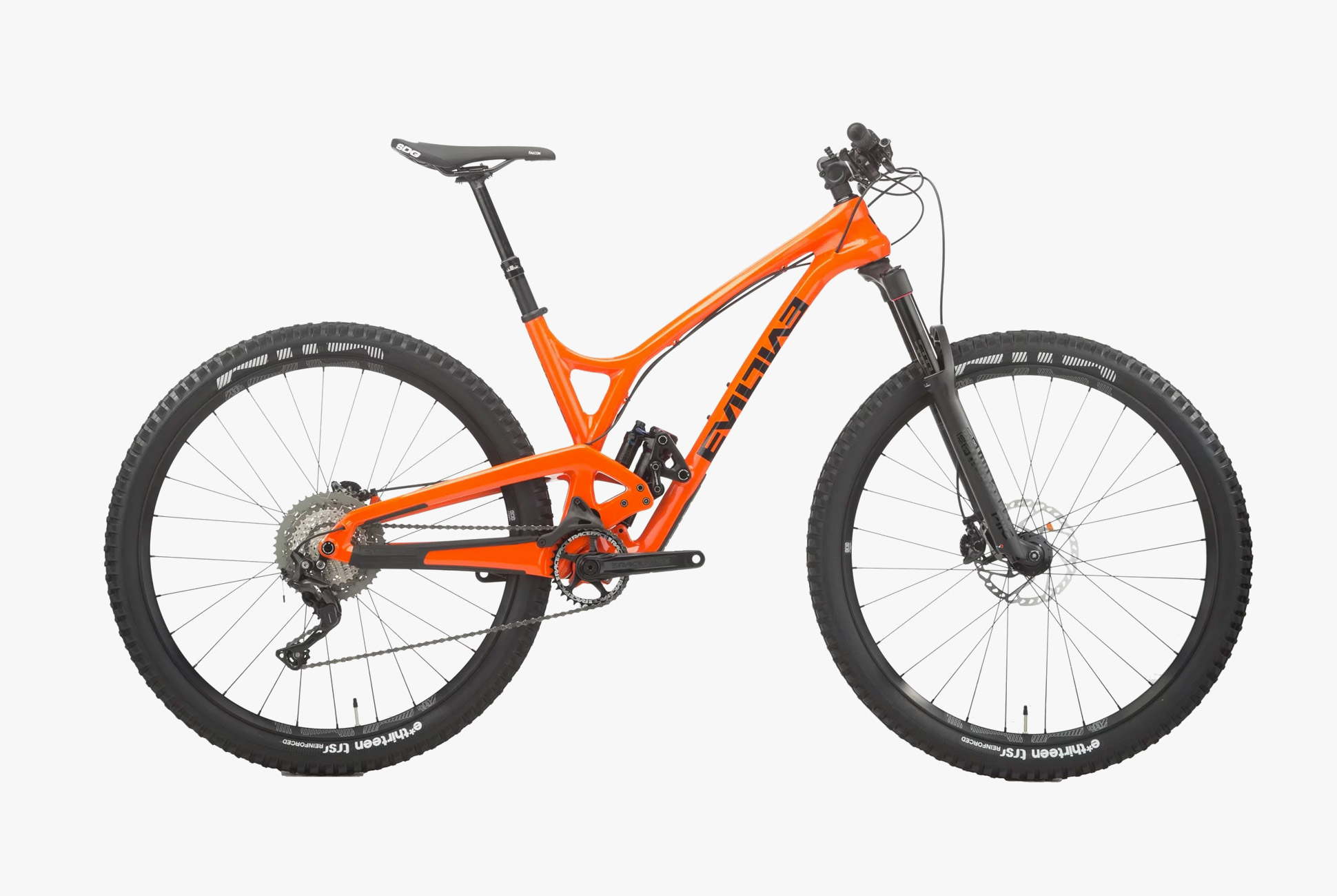
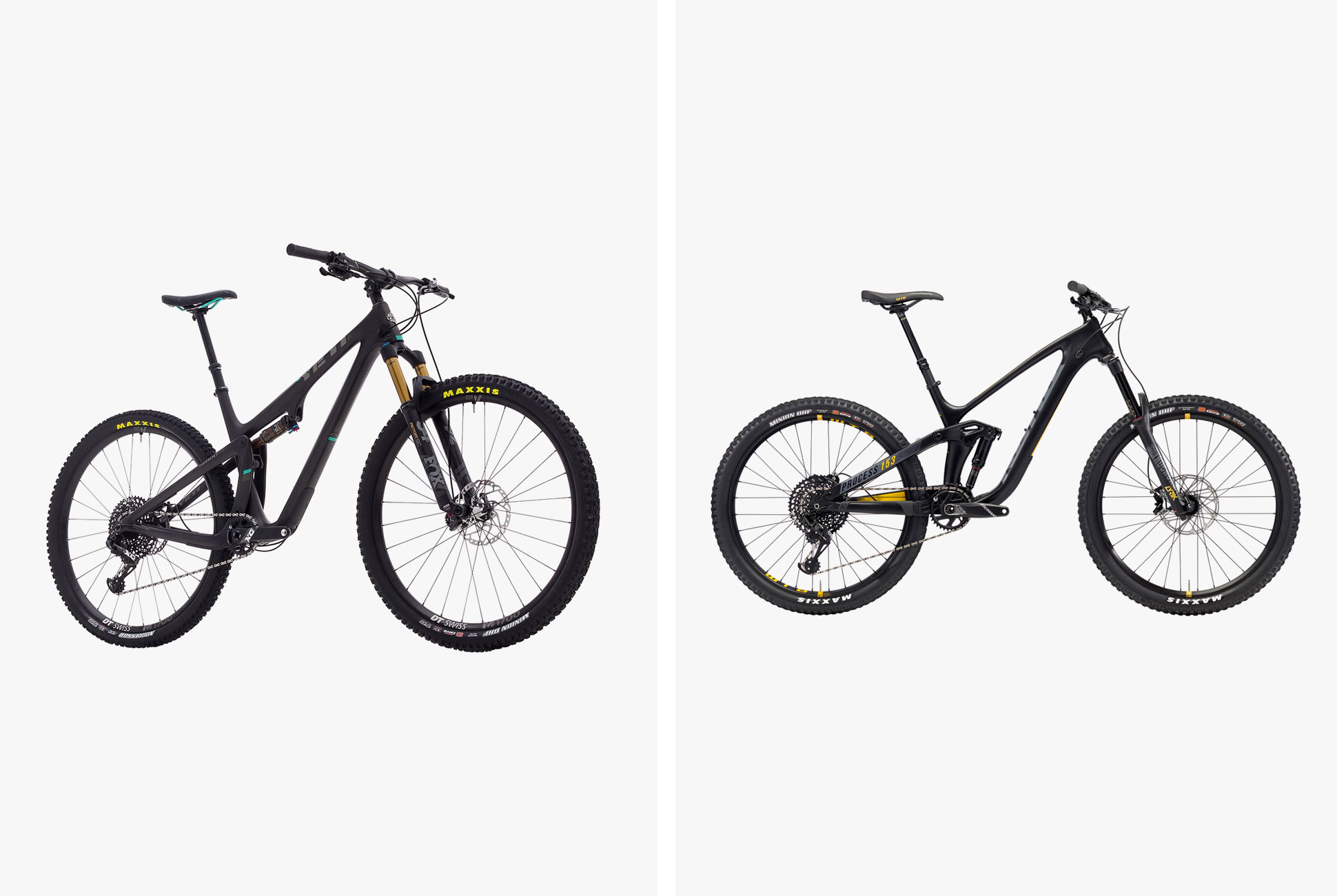
Evil Bikes The Following MB

When Washington-based Evil Bikes first released The Following, the critics raved. Its Dave Weagle-designed DELTA suspension platform was one of the best on the market at isolating pedaling forces from suspension travel. This year, Evil tweaked The Following, tacking on an “MB” (More Better’er) to its name along with a bit more length and extra stiffness to the frame. With only 120mm of suspension, many would peg The Following MB as a trail bike suited to timid riders a lycra-clad XC’ers, but it smashes that mold. The bike is designed to take on even the rowdiest of all mountain trails. — AJ Powell, Assistant Editor


Here are two more bikes we’re excited to test this summer:
Yeti SB100 ($6,999) | Kona Process 153 CR ($4,799)

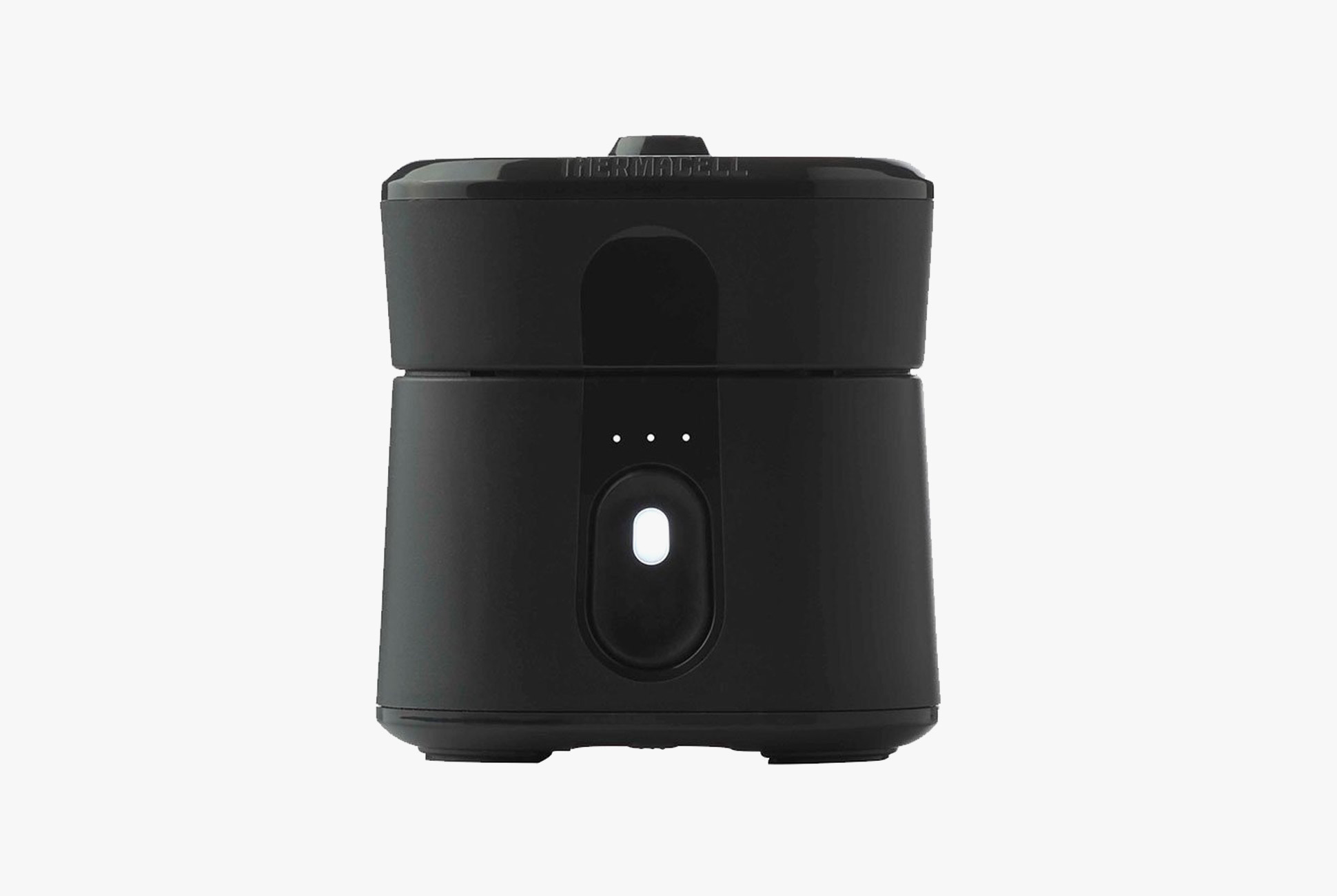
Thermacell Radius Zone Mosquito Repellent

With the rise of summer comes the re-birth of what seems like a million mosquitoes. As someone who goes outdoors once and gets 100+ bites (a slight exaggeration), I’m always seeking ways to eliminate them. I’ve done the whole spray my body with bug spray and tried dryer sheets, but each has its downside. I’m excited to test out one of Thermacell’s mosquito repellant devices. It fits in the palm of my hand and claims to create a 110-square foot mosquito protection zone. Memorial Day weekend is the perfect time to test, so we’ll see. — Meg Lappe, Staff Writer


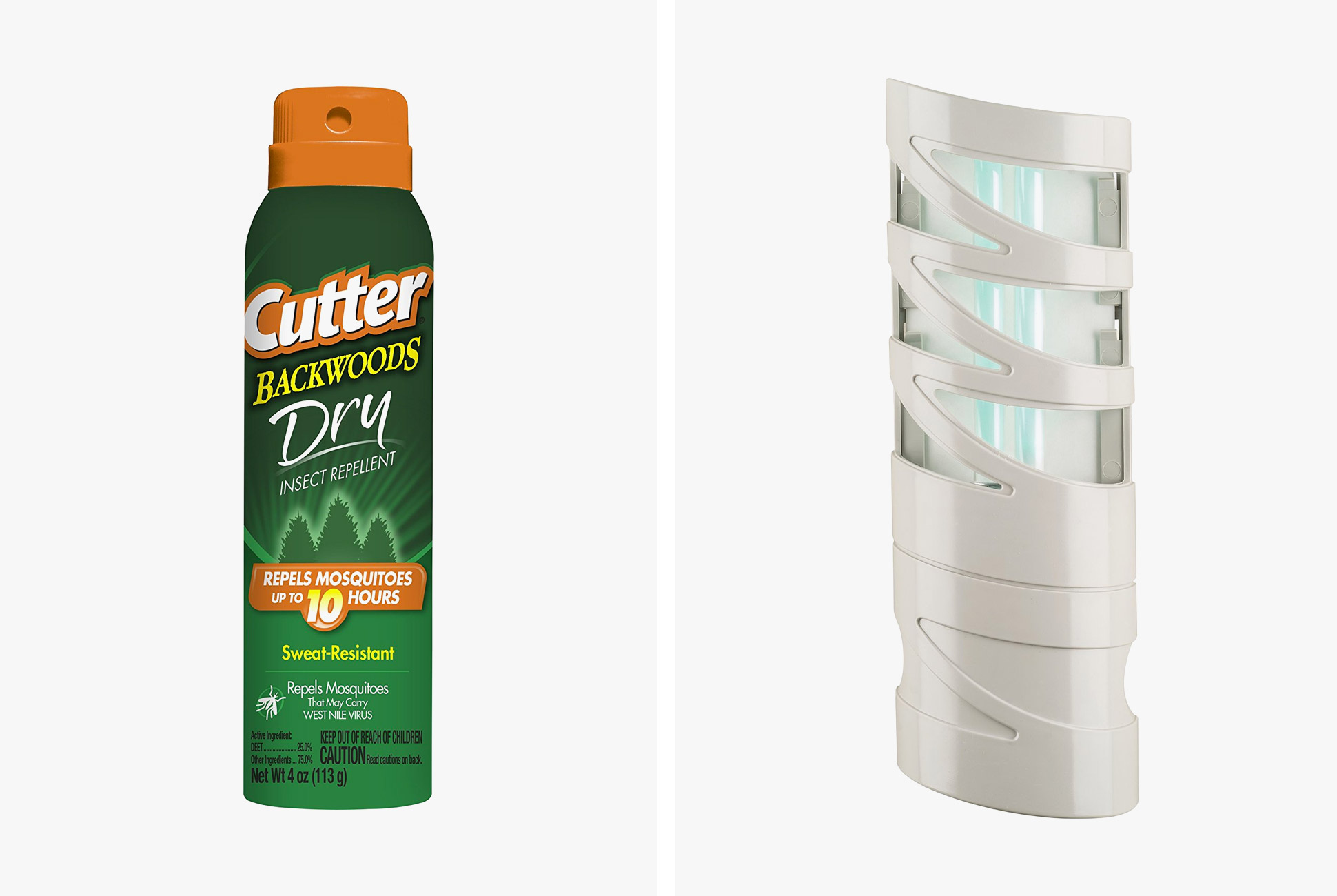
If you’re looking for something similar, but the pick above isn’t quite right, try these alternatives: Cutter Backwoods Dry Spray ($6) | Gardner Fly Web Fly Trap ($32)

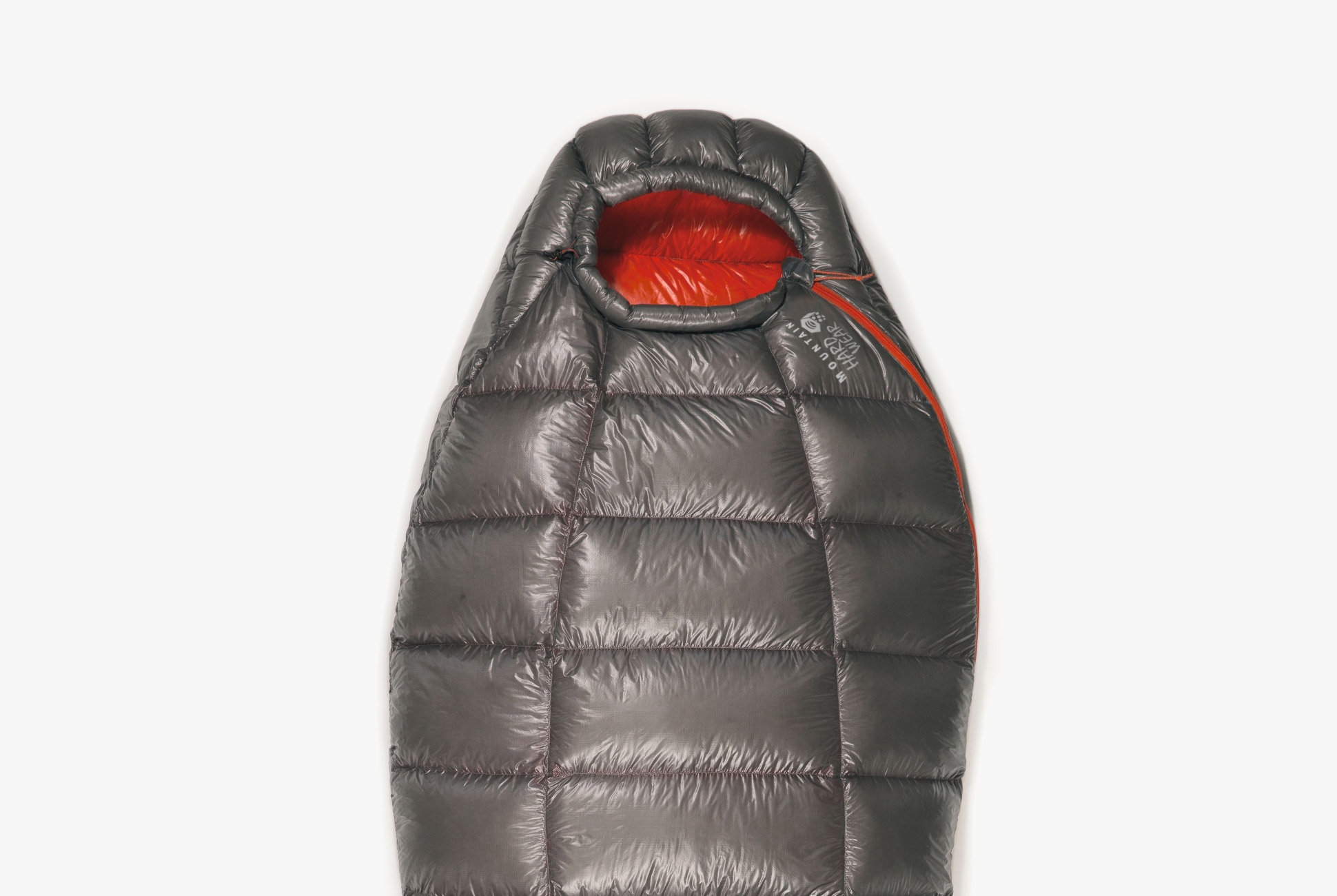
Mountain Hardwear Ghost Whisperer 40-Degree Sleeping Bag

I don’t often get the chance to test out warm weather sleeping bags. For whatever self-afflicting reason, my camping and backpacking trips tend to take place in extreme latitudes and at high elevation. It doesn’t matter what season the calendar says it is, cold is cold. This summer though, I’m making plans to stay closer to the equator, and sea level. And that means that I can bring a bag that weighs a pound and packs down to the same size as my 40-ounce water bottle.

Mountain Hardwear’s 40-degree Ghost Whisperer sleeping bag has both of these qualities, thanks to the lightweight 900-fill insulation that first debuted in one of the brand’s most popular jackets. The sleeping bag version, which is new this spring, debuted to much fanfare and ado (some of it coming from yours truly). I’ll let you know if it lives up to the hype. — Tanner Bowden, Associate Staff Writer


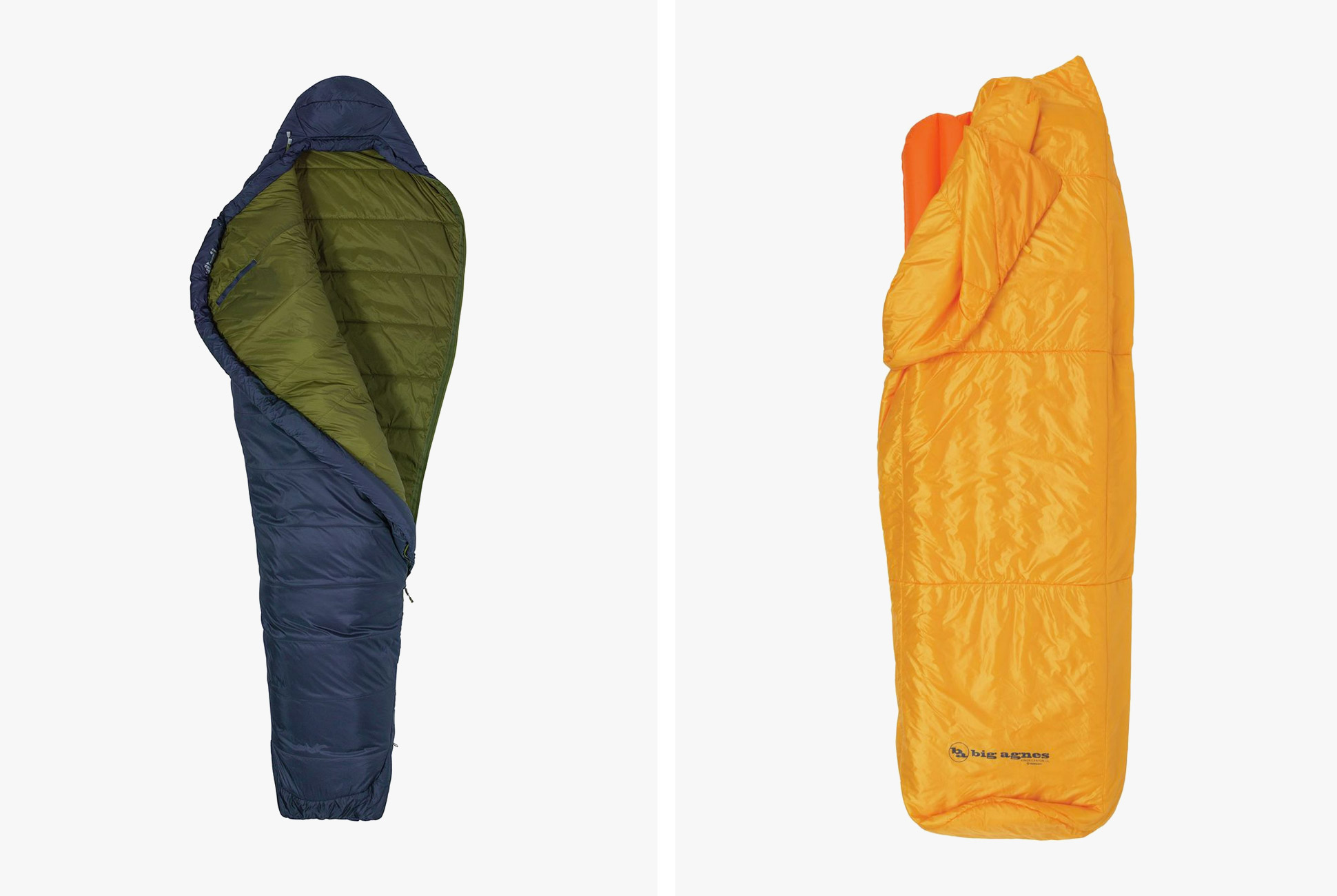
If you’re looking for something similar, but the pick above isn’t quite right, try these alternatives: Marmot Ultra Elite 30 ($179) | Big Agnes Kings Canyon UL Quilt ($170)
Note: Purchasing products through our links may earn us a portion of the sale, which supports our editorial team’s mission. Learn more here.

This New Pacsafe Backpack Is Perfect for Travel, Thwarts Thieves and Saves Turtles

The Vibe 28 Econyl

This New Pacsafe Backpack Is Perfect for Travel, Thwarts Thieves and Saves Turtles


Today, Pacsafe (a brand dedicated to keeping your things safe while you travel) released a new capsule collection backpack in honor of its 20th anniversary made from a recycled nylon fabric called Econyl. The Vibe 28 is the perfect size and shape for international travel. I recently took one to Barcelona (a city known for its rampant pickpocketing) to put it to the test. Luckily, there were no attempted thefts, but if you are less fortunate, the Vibe 28 is ready for it. Smart features like locking zippers, pieces of fabric sewn across the zippers preventing them from being yanked open, a lacking shoulder strap that allows you to lock the bag around an immovable object and an RFID-blocking pouch on the top of the pack are all standard. The pack is a limited edition, and Pacsafe will be donating all proceeds from sales of the pack to the Pacsafe Turtle Fund, an organization dedicated to protecting marine turtles by awarding annual grants to sea turtle conservation projects.

Secondary Info Here If Necessary
Emo enim ipsam voluptatem quia voluptas sit aspernatur aut odit aut fugit, sed quia consequuntur magni dolores eos qui ratione voluptatem sequi nesciunt. Neque porro quisquam est, qui dolorem.
Today in Gear

The best way to catch up on the day’s most important product releases and stories. Read the Story

Tiny Pocket Knives Are a Thing, and This New One Is Beautiful

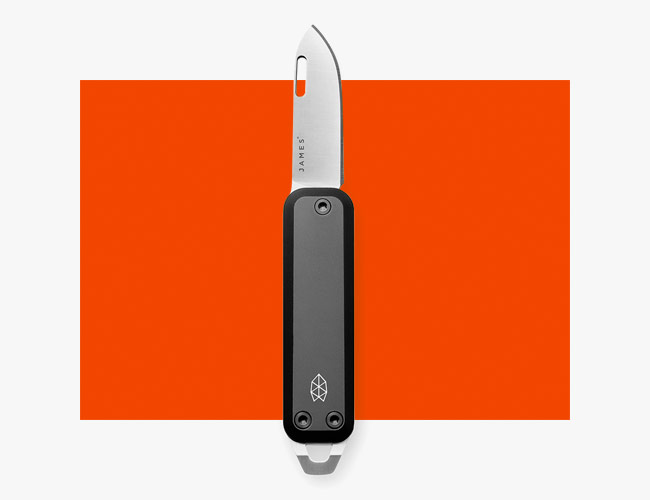
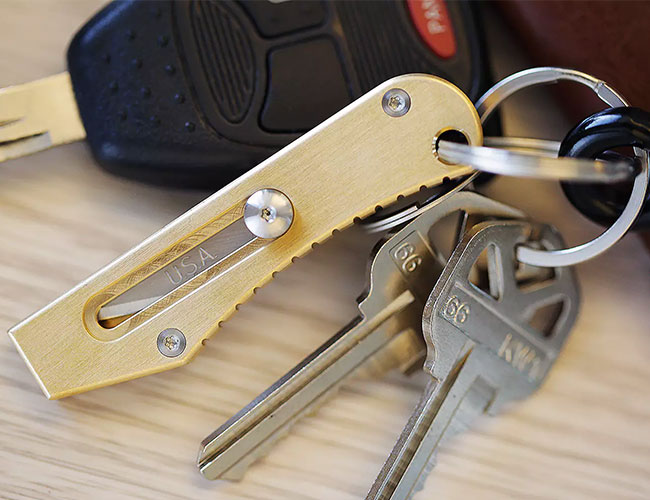
Tiny knives are having a moment. In the past months, we’ve seen venerable brands collaborate with esteemed knifemakers to produce miniature fixed blades, finger-sized folders — even a keychain-sized utility blade and a five-inch cleaver. Benchmade, one of the biggest and most recognized knife companies in the US, is joining the movement with its just-announced 756 mPR.

The 756 mPR — that stands for “Micro Pocket Rocket” — will be produced in collaboration with Shane Sibert, who previously worked with Benchmade to create the Mini Pocket Rocket. The Mini was an overbuilt monolock folder with a 2.9-inch blade; the Micro takes it further by lopping an inch off the blade to bring it under two inches, making it the shortest blade in Benchmade’s lineup.

Like its predecessor, the 756 mPR is a monolock folder, but this time Sibert gave it a flipper tab, which adds to the knife’s versatility by allowing for easier one-handed use. The premium 20CV steel blade is a drop-point with a plain edge, and its handle is lightweight titanium that’ll go largely unnoticed in a pocket or affixed to a set of keys with a built-in lanyard hole. (It weighs 3.5 ounces.)

Small knives are catching on more and more because their practicality is undeniable. Larger blades certainly have their well-earned place, and they aren’t going anywhere — but for those who may only find a use for a knife occasionally, carrying a five-inch folder every day may not make sense — but neither does going bladeless. The small knife is the solution. After all, it’s often the case that the best knife is simply the one you have on you, and if there’s one attached to your keys that statement will never be false.

Benchmade’s 756 mPR will be available later this year for $400.

Kind of Obsessed: This Tiny Knife Made Me Change the Way I Think About Pocket Knives

I used to think that small pocket knives weren’t practical enough. Now, my favorite knife is the size of a USB stick. Read the Story

5 Apps to Improve Your Mindfulness And Your Fitness

You already know that spending time in the gym equals fitness gains, but what about doing the same for your brain? Elite athletes spend as much time working on their mental health as they do in the gym, because it can improve their performance drastically come game day. Kobe Bryant, Michael Jordan and the entire Seattle Seahawks team have included meditation as part of their physical training regiment.

Studies show that meditation has countless benefits. Aside from reducing stress levels, mindfulness can change your brain. You’re more present, helping the hours you spend on that run or in the gym become more impactful. Beyond physical benefits, daily meditation practices can help you sleep better, have less anxiety, keep a level head when you have sudden pain.

The Experts

To get a few recommendations and hear why meditation is so great for athletes, we chatted with Max Vallot, co-founder at District Vision, who leads all pre-run group meditations for the brand. We also spoke with Joe Holder, performance specialist and health consultant, as well as a certified personal trainer at S10 and a Nike Run Coach.

Holder was introduced to meditation by his parents when he was young, but only started to ‘take it seriously’ in college. “It has continuously helped, not just my mental state, but I’ve seen improvements in my ability to bounce back from physical injuries as well,” Holder says. He recommends Headspace and Stop, Breathe & Think, as well as using resources from UCLA Mindful Awareness Research Center, which offers online meditations that you can stream.

Vallot has been meditating for years and brings his expertise to the running space, leading group meditations before big races like The New York City Marathon and Brooklyn Half. “At District Vision, we’re developing a method that is about a holistic sense of awareness throughout the body and how [those] are involved with running, and in turn how the breath affects running efficiency.” And while he’s quick to admit that meditation hasn’t made him a faster runner, “it makes you a more aware runner, a more conscious runner on some level.” Vallot started with transcendental meditation, “essentially a form of mantra meditation, that has been my core practice every day for the last five years or so,” he says. And continues to expand his practice into Vipassana and of course, yoga. “Physical forms of yoga asana and breath awareness are specifically designed to highlight aspects of the anatomical regions of the body that are key for a runner to look at.” He recommends Ten Percent Happier for beginners.

Our Picks

Headspace

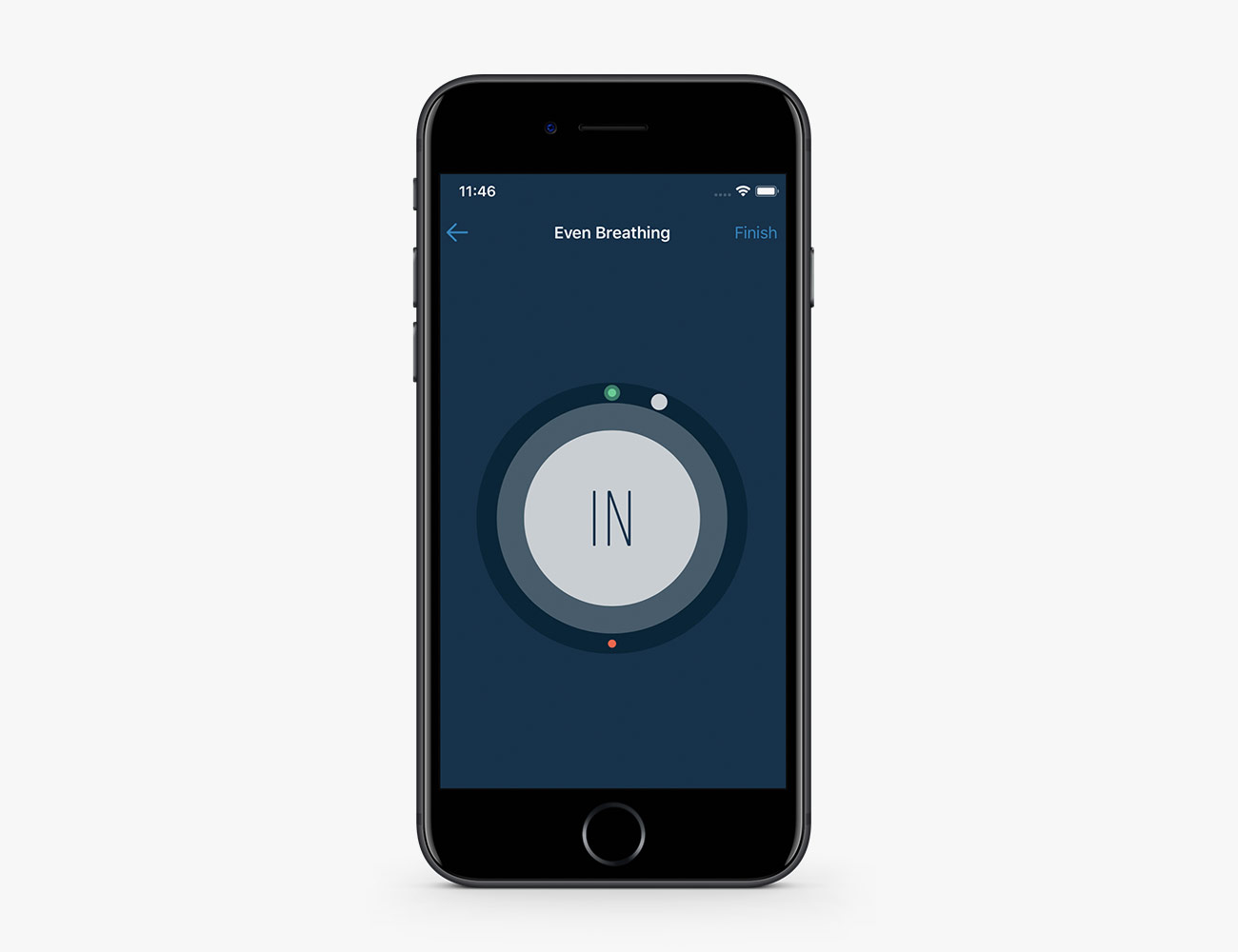
No matter what your experience with meditation is, the Headspace meditation app asks your familiarity, then asks what you want out of the sessions. Focus on anxiety, sleep or stress, then set a reminder to meditate every day. Andy Puddicombe’s soothing voice calms everyone down.

Stop, Breathe & Think

Offered online as well as on an app, this meditation app starts with the basics in three simple steps: stop, breathe, think. It’ll take you through exactly why mindfulness and meditation help you understand bad moods, identify and work on nagging thoughts to release stress and change habits. A female voice walks you through everything from sleep meditations to breath awareness lasting from three to twenty minutes. The free app gets you access to over 15 different types of mediation, and then for a dollar and up, you can unlock a variety of others.

Calm

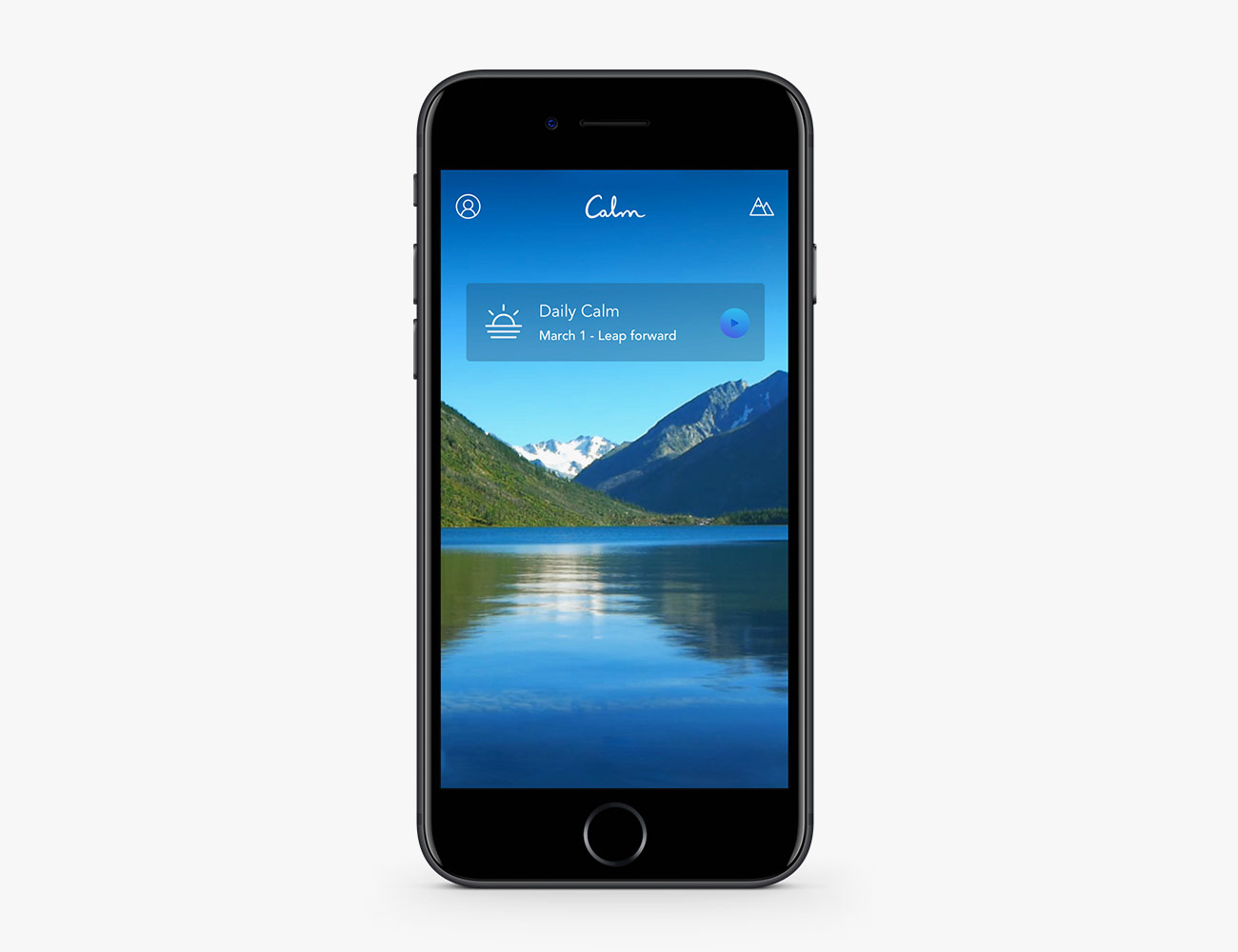
This mindfulness app is incredibly easy to use. Pull up the meditation app or head to Calm.com to listen to the soothing sounds of nature, a campfire, thunderstorms and more. With over twenty-five different mediation sounds, you’ll find your focus in no time. While the free sounds are all I’ve needed, you can also pay $5 a year to get more talking meditations — everything from focus, calming anxiety, managing stress to gratitude and happiness.

10% Happier: Meditation

Get ready to dive back into school. This meditation app offers a variety of teachers and course catalogs ripe for the newbie meditator. Learn the basics, and then test out the new original content that’s up every month.

Inscape

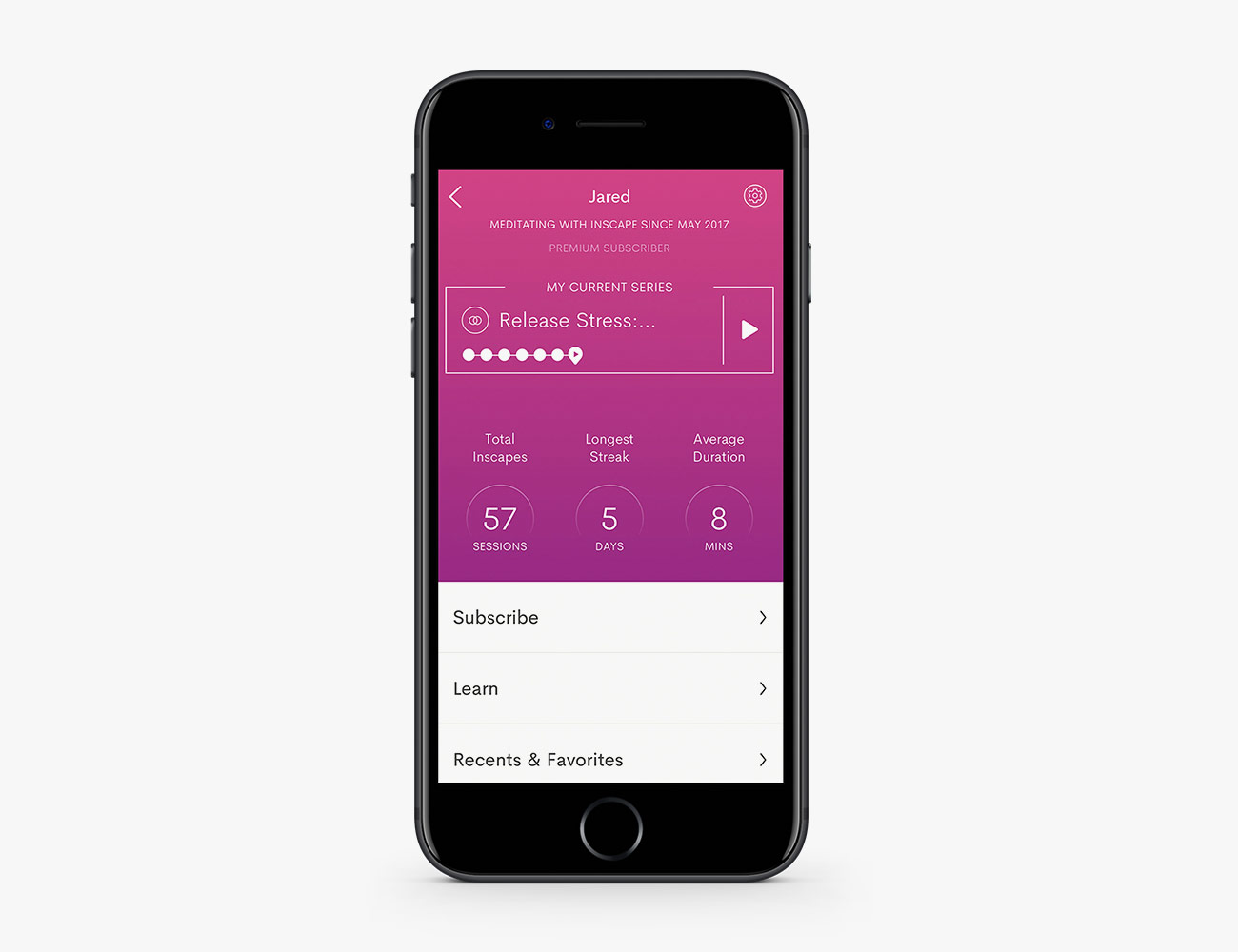
With a studio space in NYC, this meditation app is one you can experience in real life. The catch is, even at the studio, there’s a recorded voice. The voice has an accent that’s hard to pin down, making it sound all the more natural as you walk through that day’s meditation. Each meditation ends with the words ‘travel gently’ whether you’re drifting off to sleep, or getting ready to take on the day. The sleep meditations built into this app have been a game-changer for me. Whenever I can’t fall asleep, I just pop one of these on and drift off somehow before the 20-minutes is up. I’m not sure I’ve ever heard the end.

Everything You Need to Start Doing Yoga

Everything you need to take your first class and not look like a dork. Read the Story

These New Duffel Bags Are Made from One of the Most Innovative Materials Available

When we think duffel, we think cavernous, throw-over-the-shoulder, gone-for-weeks bags. North St. Bags has different ideas for the duffel though — it designed its Scout collection for short and fast trips and everyday use. The line features three bags in 6.9-, 15- and 30-liter sizes. Each bag has all the traits of a classic duffel: a barrel shape, full-length zipper, handles and a shoulder strap. The 6.9- and 15-liter Scout Duffels also allow for bike-specific add-ons that let you use them as a stand-in for a basket.

North St. has maintained the Scout series in its offering for a while now, but this year it upgraded the entire line with X-Pac sailcloth fabrics, which are lightweight, super durable and, most importantly for an everyday bag, waterproof. It’s a smart upgrade that makes the Scout bags even better suited to everyday use. The material was first developed for use on racing sailboats, so chances are it’ll handle a bike ride around town with ease.

Today in Gear

The best way to catch up on the day’s most important product releases and stories. Read the Story

The Ultimate Bug-Out Bag

That ragged guy on the street corner howling about the end of the world might be onto something. Think about it for a moment. Every morning it seems we read news of some horrifying, unprecedented event. People are scared, and they have good reason to be: according to a recent UN report, in 2015, 98.6 million people were directly affected by natural disasters, and with ongoing climate change, the disasters are expected to become bigger and more frequent. Governments are struggling to handle millions of political refugees. And then there’s North Korea. What will happen tomorrow?

No one can say for sure. But whenever and wherever the shit hits the fan, you should be prepared, and one of the best ways to do this is to assemble a bug-out bag. Typically, a bug-out bag (a.k.a. “survival bag” or “GO bag”) is defined as a backpack or duffel loaded with one to five days’ worth of survival essentials — food, water, clothing, shelter, miscellaneous tools and, if necessary, a weapon for self-defense — stashed away in a safe place and grab-able at a moment’s notice. Having one means you won’t be scrambling at the last minute to throw together a few things you think you might need, whenever a disaster occurs — and who knows what disaster it could be. Jason Charles, head organizer of the NYC Preppers Network, a group that teaches city-dwellers how to best prepare for unexpected disasters, says survival bags aren’t only for citywide emergencies like earthquakes, floods or nuclear attacks: “They can also be for smaller emergencies like home fires, evacuations or broken-down vehicles.”

Disaster preppers like Charles aren’t always the kooky bunch of paranoid weirdos that reality TV makes them out to be. They simply want to be ready for the event that everyone hopes will never happen; indeed, the event that many people, to their potentially fatal disadvantage, believe never will. Charles, himself a survival bag expert, taught us how to best assemble a great survival bag. Here’s the one we came up with — let’s hope you never have to reach for it.

Additional contribution by Michael Finn and Meg Lappe.

The Pack

Bombproof Carry-All

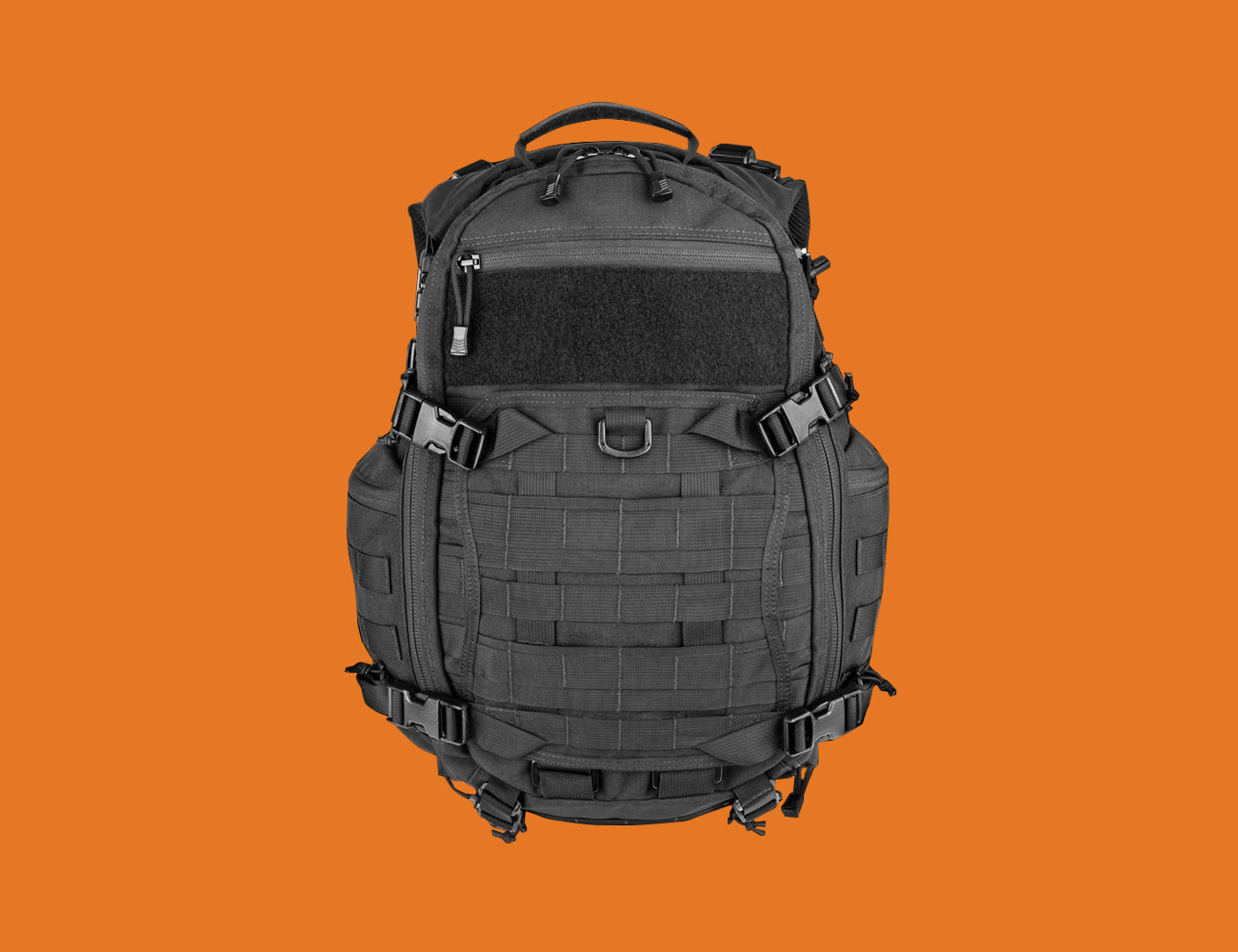
You know how seemingly every doomsday blockbuster has a token ex-Spec Ops badass who’s always heroically rescuing people? This is the pack he’d wear. Made in the USA and backed by a lifetime warranty, it’s built to stay strong in the harshest, most dangerous environments and holds several days’ worth of gear.

Fast Pack EDC by Triple Aught Design $340+

Food and Water

Can’t Live Without ‘Em
When preparing for a disaster scenario, always assume that food and water will not be readily available. Consequently, the amount of food and water in your pack is the single most important factor for determining how long you’ll be able to last on your own. Three days of food and water equals three days of relative safety. Once your stockpile runs dry, you’ll need to start scavenging. Put that off for as long as you can.

MRE 6-Pack by Meal Kit Supply $45
Guardian Purifier System by MSR $350
Dromedary Bag (4L) by MSR $40+
Micropur Purification Tablets (30-Pack) by Katadyn $11
Habenero Cherry Walnut Beef Bar (12-Pack) by EPIC Bar $25
Trek 900 Titanium Cookset by Snow Peak $53
Lite Stove by Solo Stove $70
Wide Mouth Water Bottle (40-ounce) by Klean Kanteen $29

Clothing and Shelter

Warm, Water-Resistant and Rugged


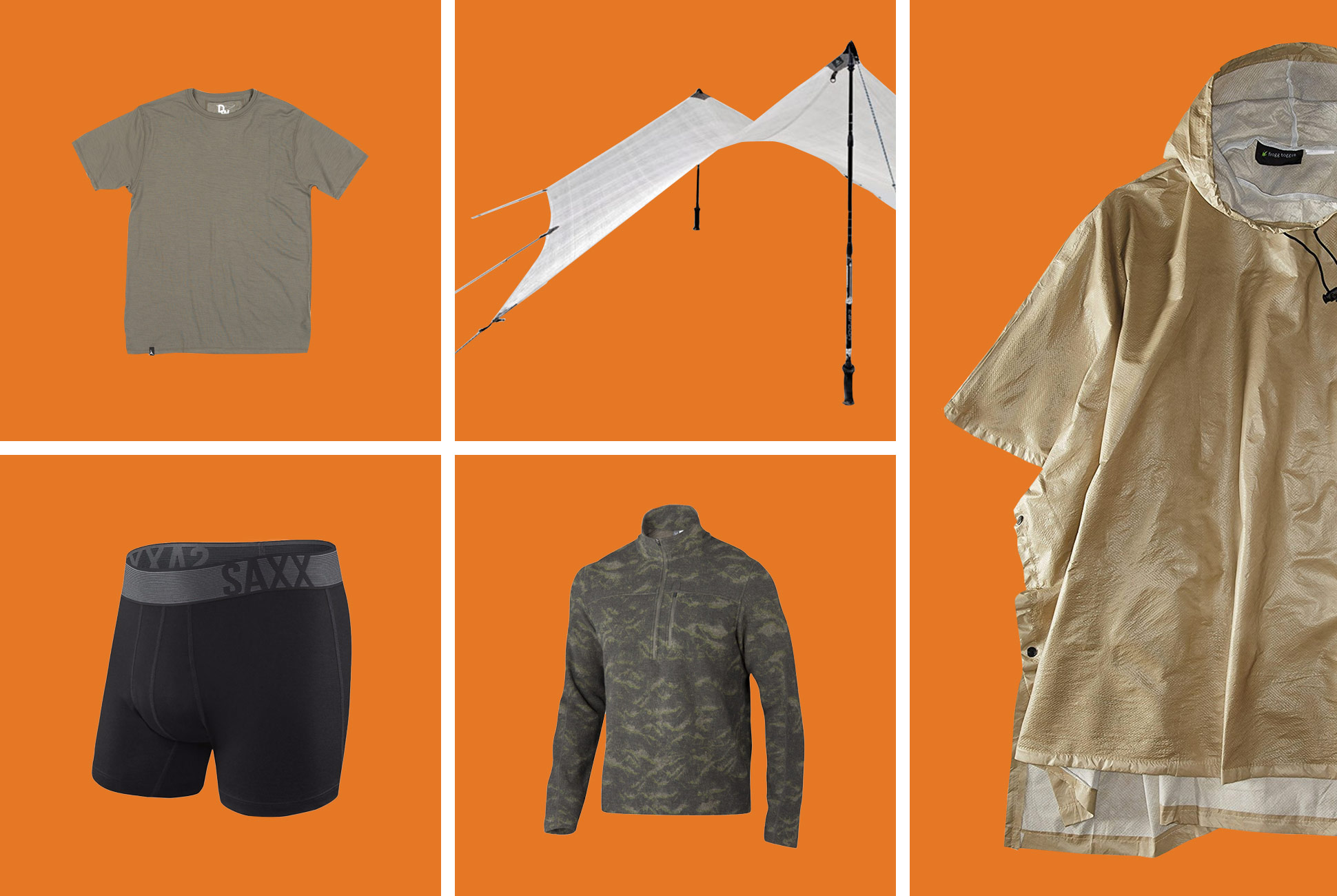
This is not a style contest. In a disaster scenario, the only things that matter about your clothing is that it keeps you warm and dry, and that it doesn’t fall apart. You won’t have time to make repairs. As for shelter, hammocks are easy to set up, quick to take down and pack small enough to leave room in your bag for everything else.

Blacksheep Boxer Brief by SAXX $32+
Maverick Tee by Duckworth $80
Scout Jura Half-Zip Fleece by Ibex $88
Ultra-Light Poncho by Frogg Toggs $11
Echo II Catenary Cut Tarp by Hyperlite Mountain Gear $325

Hardware

When the Power Grid Fails


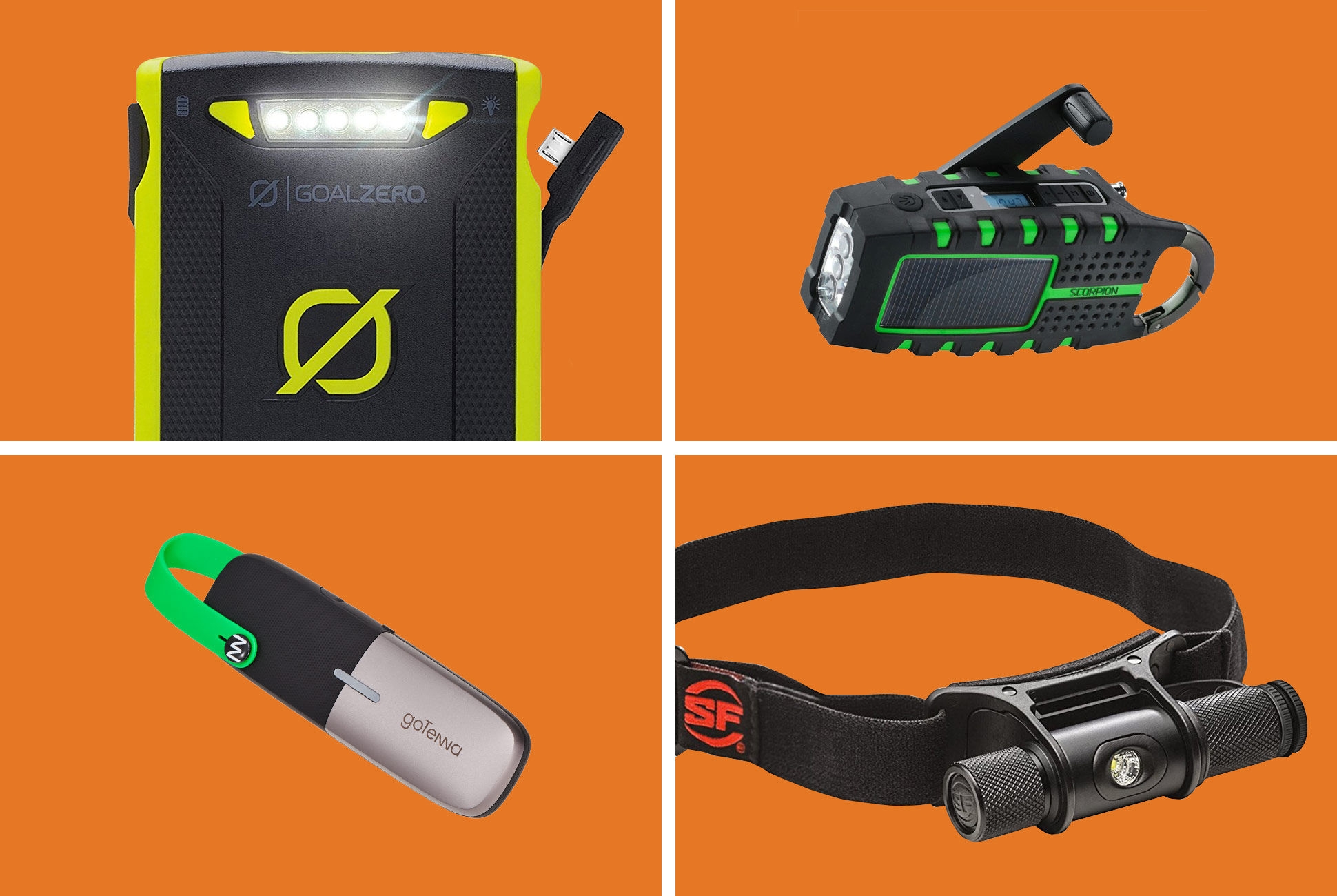
You have food, water, clothing and shelter, which is great — but none of that matters if you don’t have a way out. Making it to safety is all about communication. One way to do this is to spell out a massive “SOS” using rocks and fallen tree branches. The other, easier way is to call for rescue by simply pressing a button.

Minimus Headlamp by SureFire $168
Scorpion II Portable Radio by Eton $45
Mesh (2-Pack) by goTenna $179
Venture 30 Recharger by Goal Zero $100

Tools

MacGyver Your Way to Safety
Things will break. Other things will need to be broken. Cans will need to be opened, fires will need to be lit and wounds will need to be healed. Having the tools necessary to do these things, in a disaster scenario, could mean the difference between life or death. So, don’t pack the cheap stuff that’ll break after being used twice — invest in tools that are sturdy, multi-purpose and dependable.

Ultralight/Watertight Medical Kit by Adventure Medical Kits $8+
Fixed Contego by Benchmade $179
Alpha 3-Piece Set by Sea to Summit $20
Stormproof Match Kit by UCO $16
MC-2 Compass by Suunto $44
All-Weather Black Metal Clicker Pen by Rite In The Rain $15
All-Weather Top-Spiral Notebook by Rite In The Rain $12
Wilderness Wash by Sea to Summit $3+
Rebar Multi-Tool by Leatherman $60
Personal Towel by PackTowl $10+
Accessory Cord by Sterling Rope $50

The Finer Things

One Final Indulgence

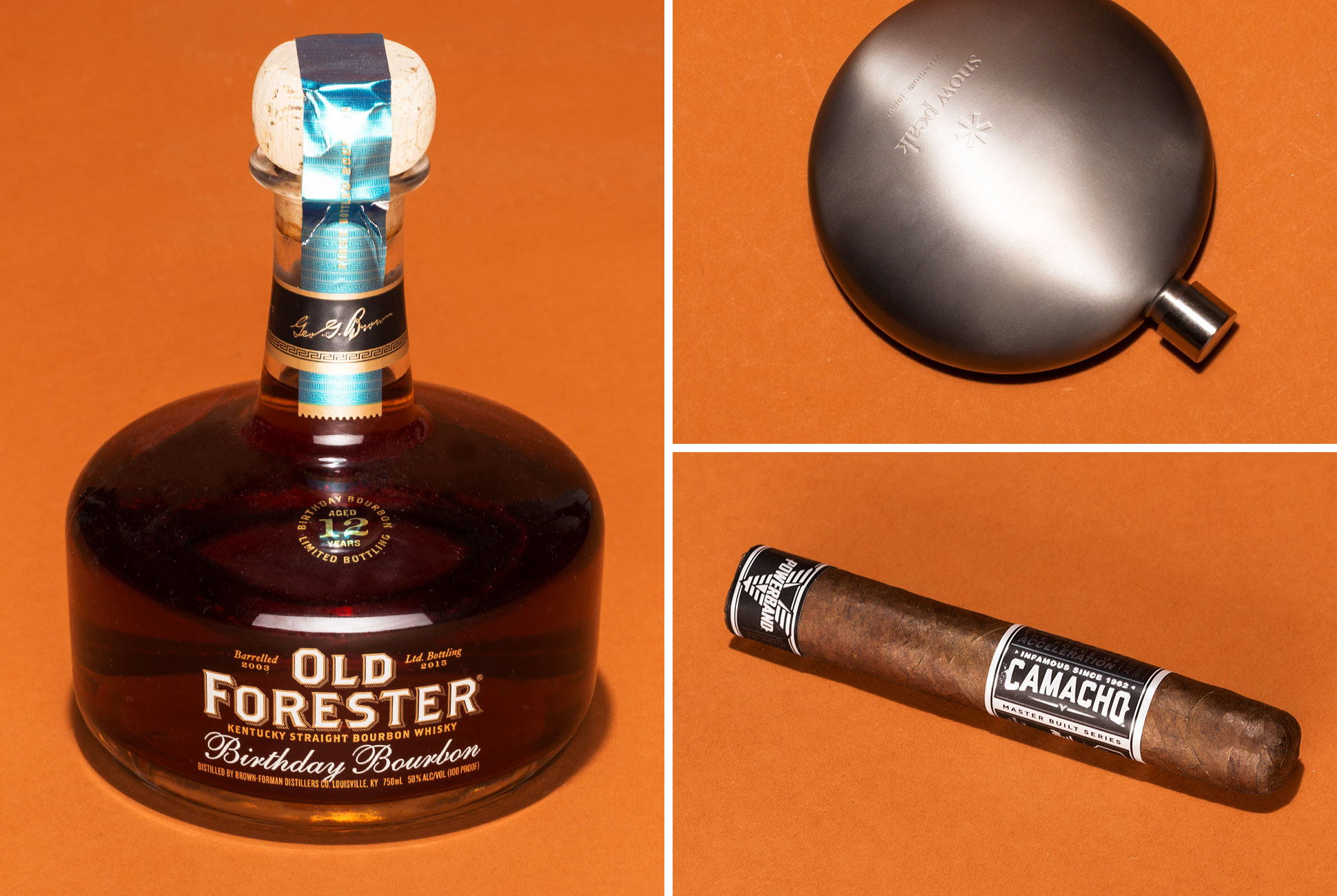
bug-out-bag-gear-patrol-extras Because you might as well enjoy your final moments — whether that’s with Whisky, Bourbon, Tequila or beer.
Birthday Bourbon by Old Forester Learn More
Powerband Cigar (5-Pack) by Camacho $52+
Titanium Curved Flask by Snow Peak $150

Already Complete Bags

Sometimes it’s easier to just buy


If you just want to pick up a bag that has all this (and more!) prepared for you, that’s fine by us. Here are a few suggestions for a ready to buy and go bag.

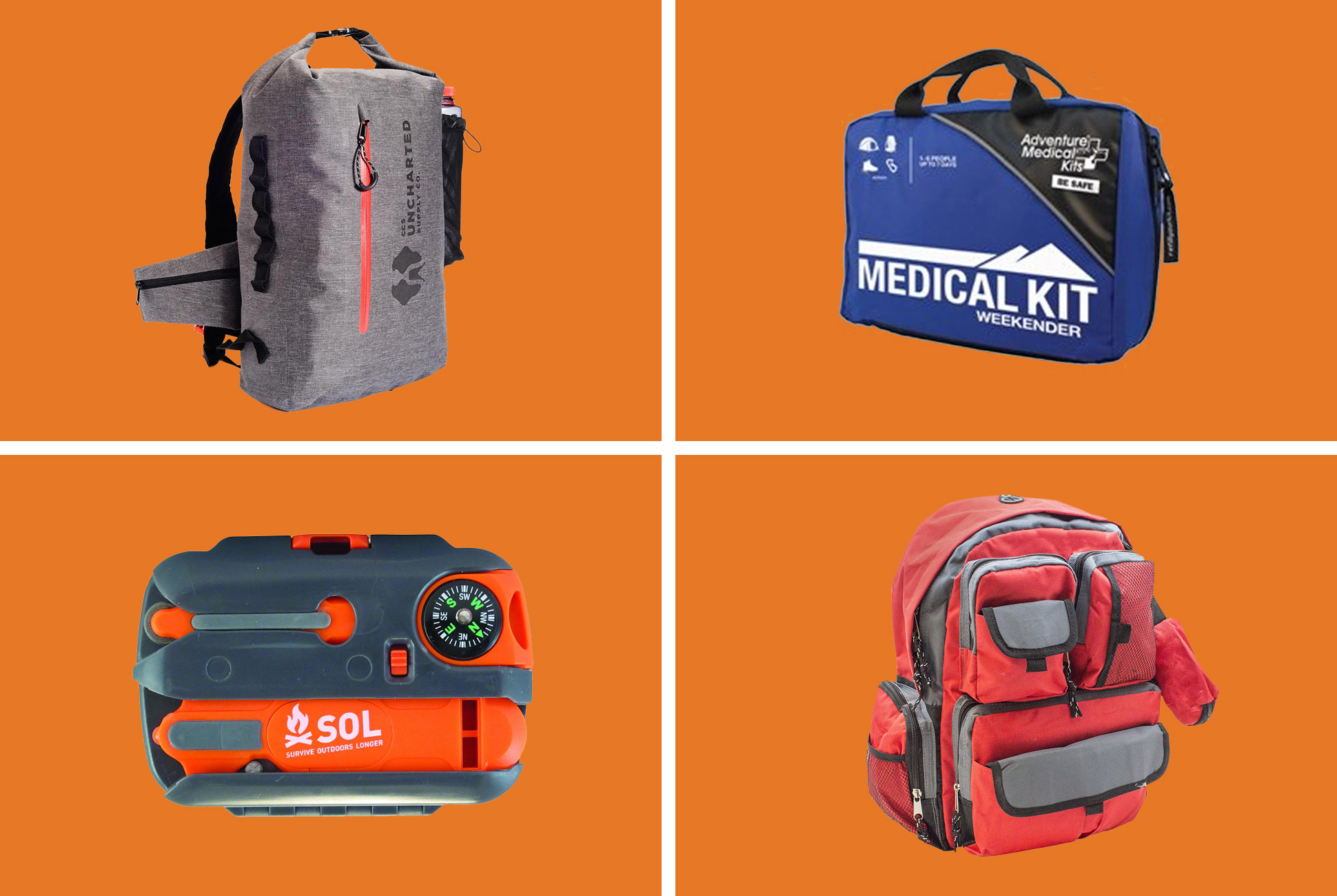
Mountain Series Weekender First Aid Kit by Adventure Medical Buy Now: $50
Seventy2 Survival System by Uncharted Supply Co. $350
Family Prep Emergency Survival 72 Hour Kit by Emergency Zone $140
Multi-Function Ultimate Survival Tool Kit by S.O.L. $26
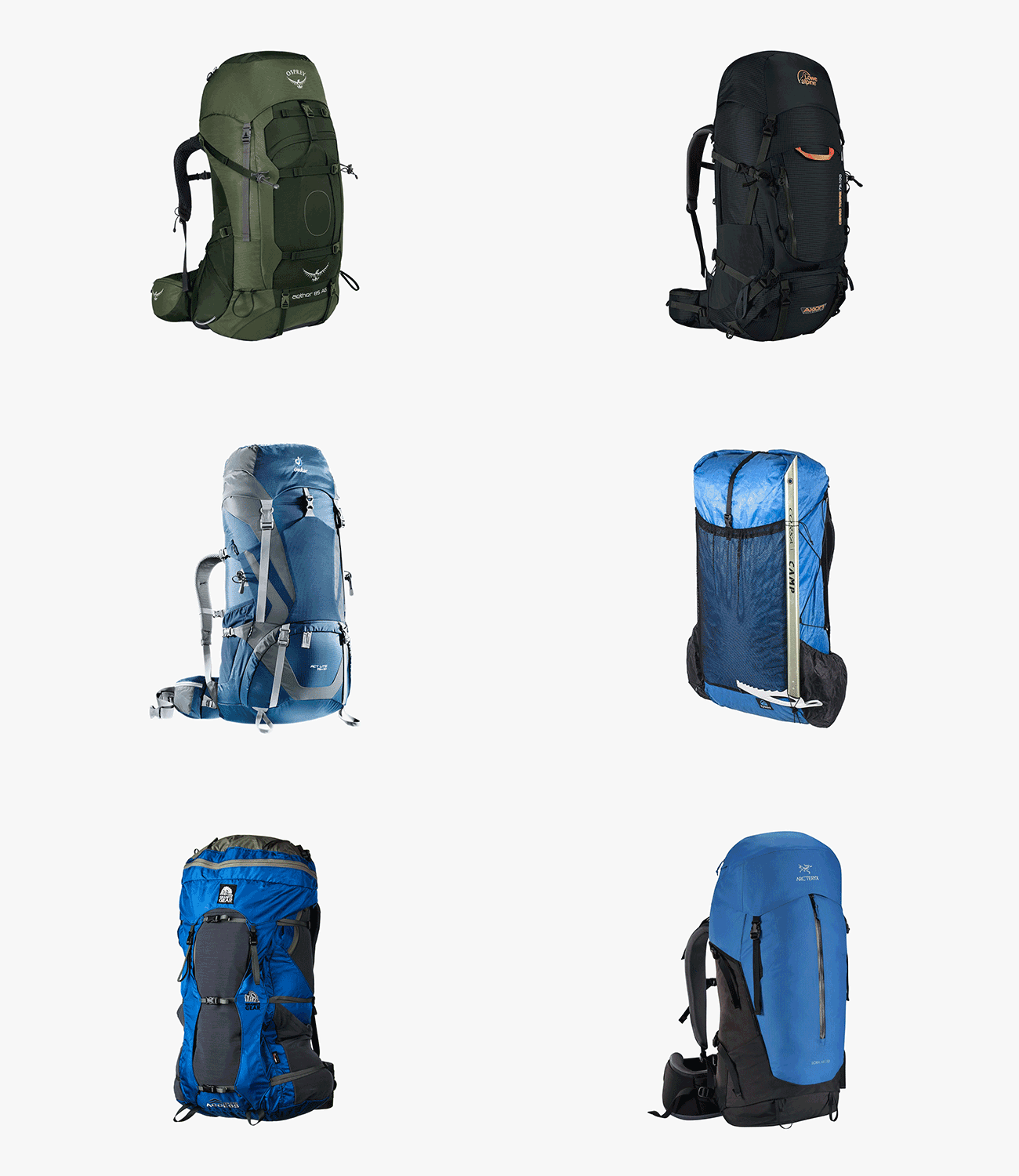
Best Backpacking Kits

Looking to take on a multi-day backpacking adventure? Picking the right pack is crucial. These are the best packs available in every size. Read the Story

The Best Used Patagonia Gear You Can Buy Now

Last September, Patagonia launched its Worn Wear website, which is an online shop where lightly-used and mended Patagonia gear is sold with a big price cut. The idea behind Worn Wear — that outdoor equipment should be repaired, not replaced — isn’t a new one for the brand. Patagonia has long been known for its dedication to minimizing its environmental footprint as much as a billion dollar company can, and making its products as nondisposable as possible is paramount to that goal.

That ethos is written plainly in Patagonia’s mission statement: “Build the best product, cause no unnecessary harm, use business to inspire and implement solutions to the environmental crisis.” It starts with product for a reason — if a product is good, its quality and longevity will inevitably keep consumers from replacing it as often as they might with something cheaper, in both price and quality.

On Black Friday, 2011 Patagonia doubled-down on this solemn undertaking with a full-page ad in the New York Times with a blaring command: “Don’t Buy This Jacket.” In the ad copy that followed, Patagonia admitted sincerely its understanding that each jacket or backpack it makes takes a heavy toll on the environment and its resources, but it also encouraged consumers to repair, reuse and recycle worn-out gear.

Worn Wear is the evolution of that declaration. Patagonia’s repair program — it promises to replace or fix-up any faulty or damaged merchandise — is an assurance that helps consumers justify buying gear that’s often more expensive than similar items from competitors. It also keeps them loyal long-term. At the same time that Patagonia launched the Worn Wear website, it also announced a trade-in program in which customers can drop off used clothing in exchange for store credit that can be used on new products.

The trade-ins are washed and repaired by Patagonia’s experts and entered into the Worn Wear database. The site is now brimming with jackets, shirts, pants, board shorts and more. It’s like walking into a Goodwill stocked exclusively with awesome outdoor gear, and as such, sizes are limited, but there are also some once-in-a-lifetime scores. And remember, anything you buy can be traded in for store credit again later. Here are our seven favorite items currently in the Worn Wear store.

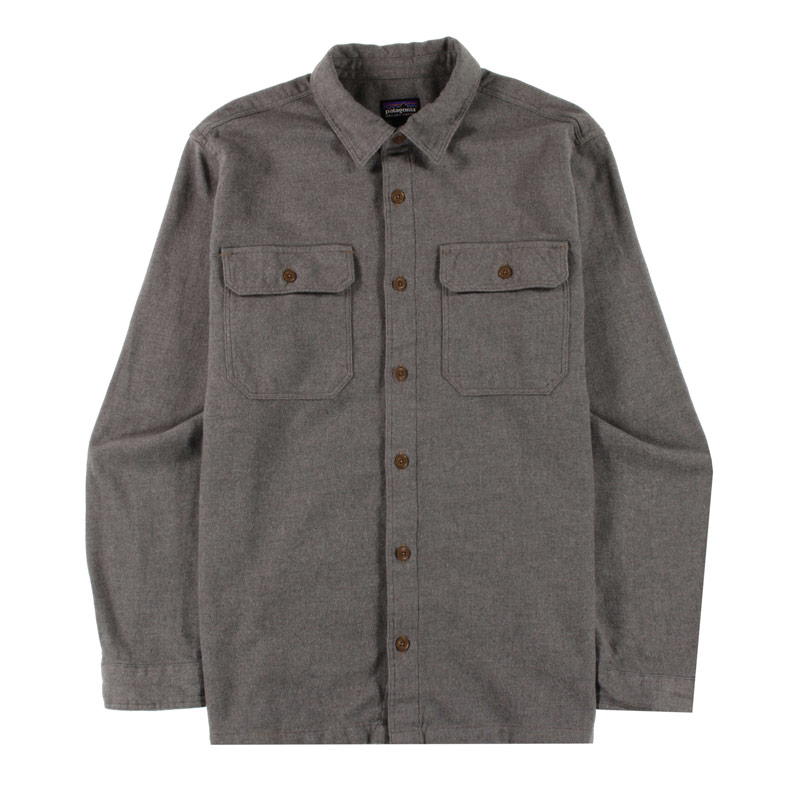
Fjord Flannel Shirt (size M, L) $35

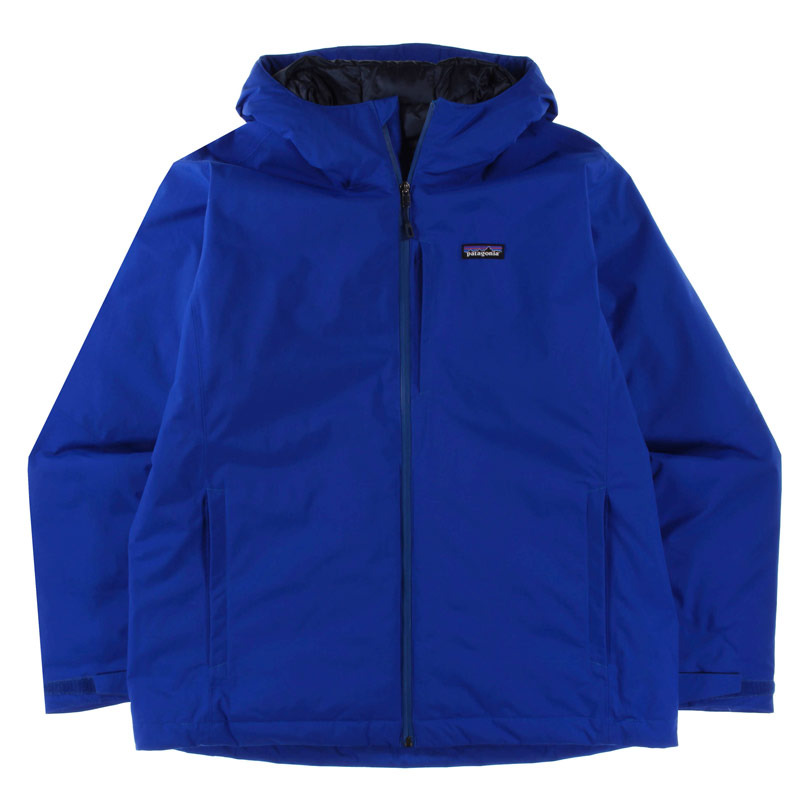
Windsweep Down Hoody (size S, M, L) $135

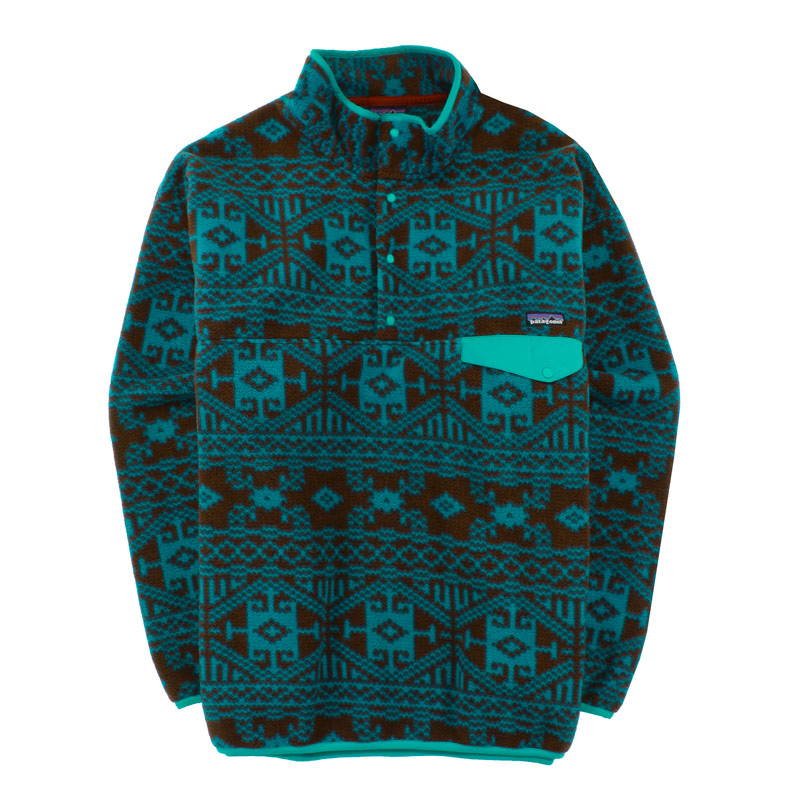
Synchilla Snap-T Fleece (size M) $70

Duck Pants (size 30, 32, 33, 34, 35, 38) $35-$40

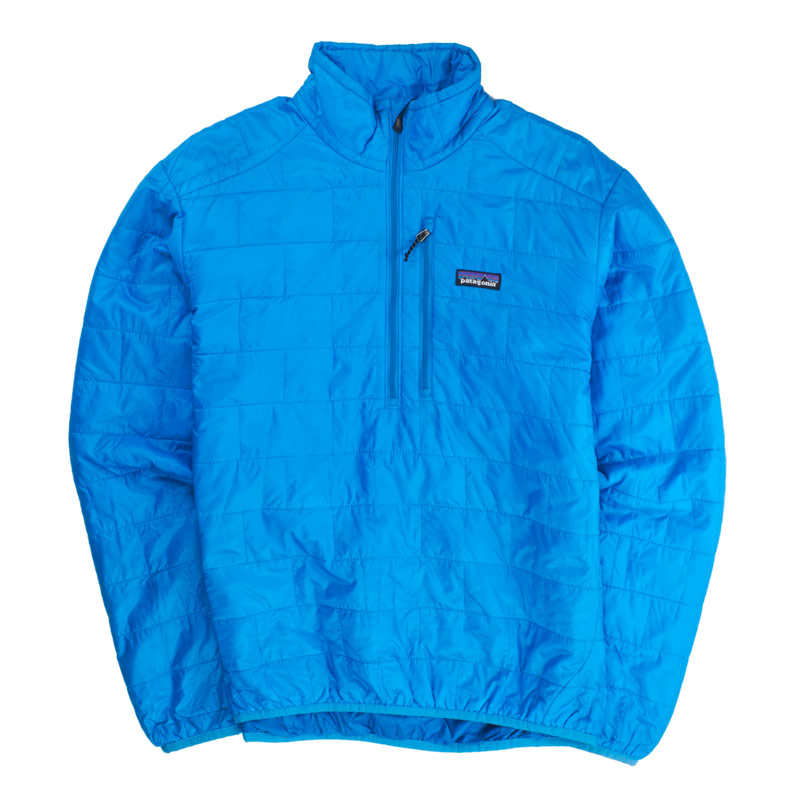
Nano Puff Pullover (size M, L) $90

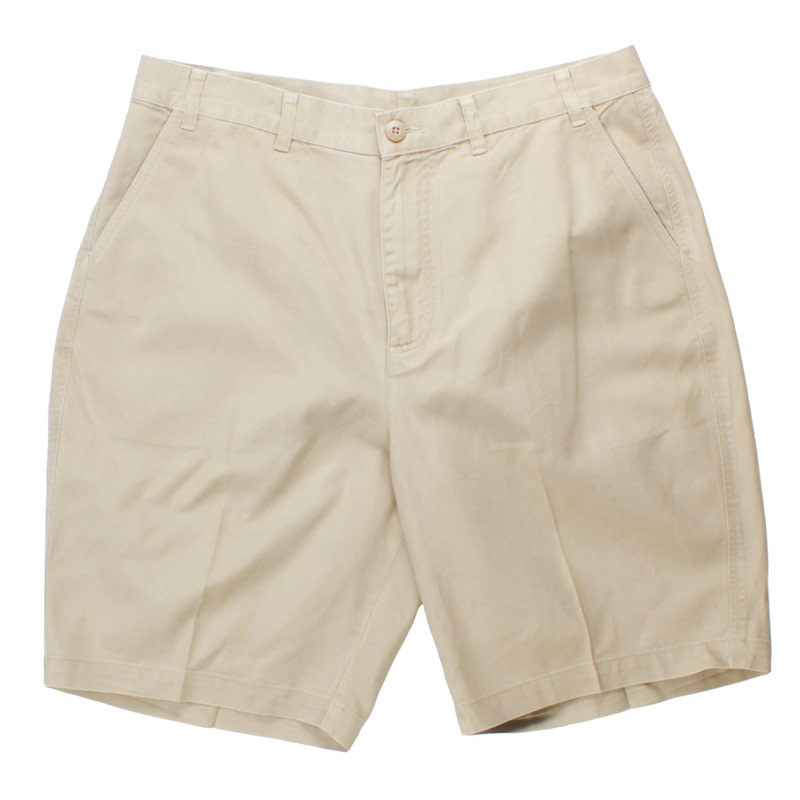
Duck Shorts (size 30, 32, 33) $35-$40

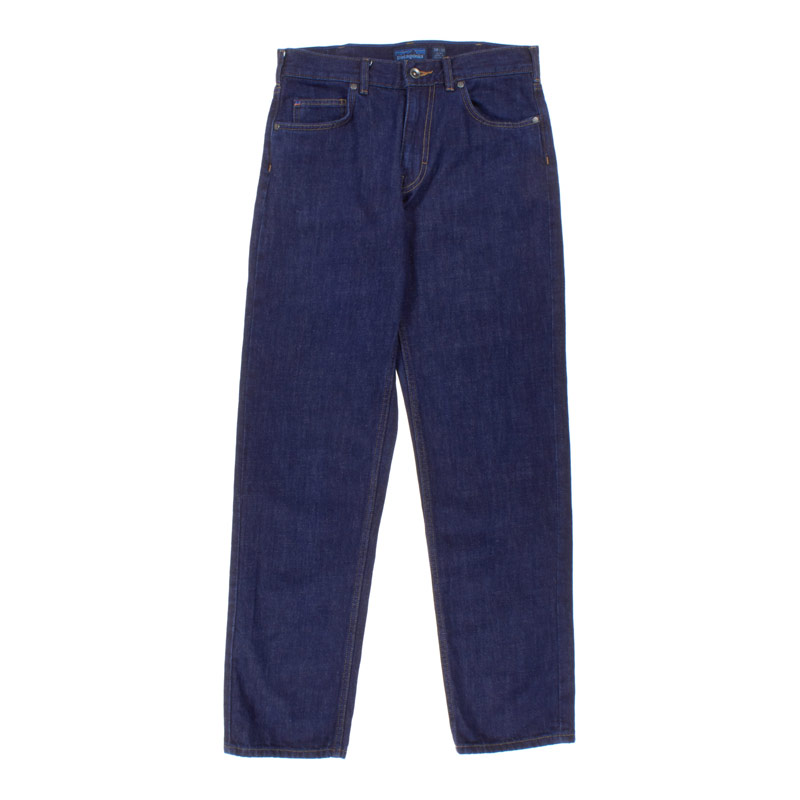
Regular Fit Jeans (size 30, 33, 34, 35, 36, 40) $40
Did Patagonia Just Make the Best Baselayer Ever?

Patagonia invented the concept of layering when it created its original Capilene baselayers in the 1980s. Now, more than 30 years later, the company reimagines the next-to-skin layer with the light and seamless Capilene Air. Read the Story

Note: Purchasing products through our links may earn us a portion of the sale, which supports our editorial team’s mission. Learn more here.

How to Re-Waterproof Your Jacket

If you haven’t washed or treated your waterproof-breathable jacket, and it’s seen a few seasons of use, you’ve probably noticed that it doesn’t keep you as dry as it used to. One of the biggest misconceptions with waterproof jackets is that you should never wash them. If you don’t wash them, your jacket’s pores can clog and it will no longer be breathable. The oils from your skin can also lead to delamination in the liner of your jacket. There is a simple process for washing your jacket and revitalizing its waterproofing that will help you get more out of your jacket and help to extend its life for a few more seasons.

Contributions by AJ Powell and Tanner Bowden.

A Note on DWR

When you’re buying a rain jacket or any outerwear for that matter, you’ll often come across the initials DWR, which stand for durable water repellent. DWR is a coating applied to fabrics that lets them shed fluids, and they’re commonly used in conjunction with waterproof membranes. DWR works by making the surface of the exterior fabric spiky at a microscopic level, which forces water and other liquids into rounder, beaded forms. That helps them roll off the garment instead of saturating it. DWR isn’t permanent, but it can easily be revived.

How To Re-Waterproof Your Rain Jacket

1

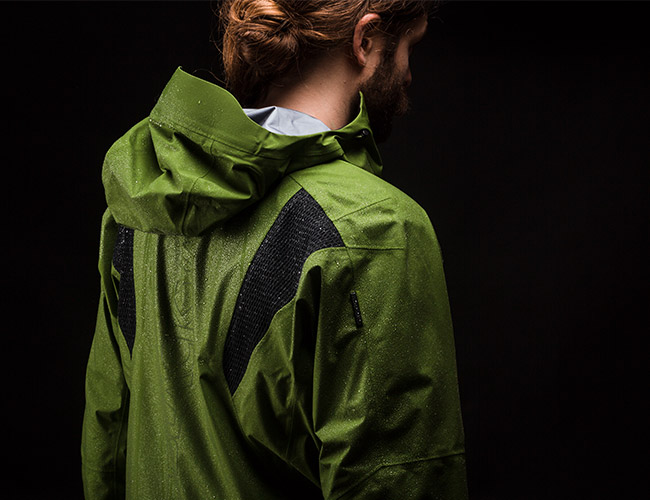
Take a look at your jacket. The first step in the process of getting your rain jacket ready for spring is to take a thorough look at it. Start with the inside. If the lining is peeling or bubbling and separating from the membrane, it’s time to retire your rain jacket. The next few steps will help to prevent this from happening to your new jacket. Secondly, apply some drops of water to your jacket. Does it bead and roll off? If you shake it does it come off? If so, you’re all set. But if the water sits on the fabric and starts to seep into the fibers (the fabric will darken), then it’s time to revive your DWR.

2

Wash and dry your jacket. Before applying a new DWR with specialized detergents, clean your jacket following the instructions on its tag. Once dry, place in the dryer for 20 minutes on low to medium heat. This will revitalize your DWR. If it doesn’t, move on to step three.

3

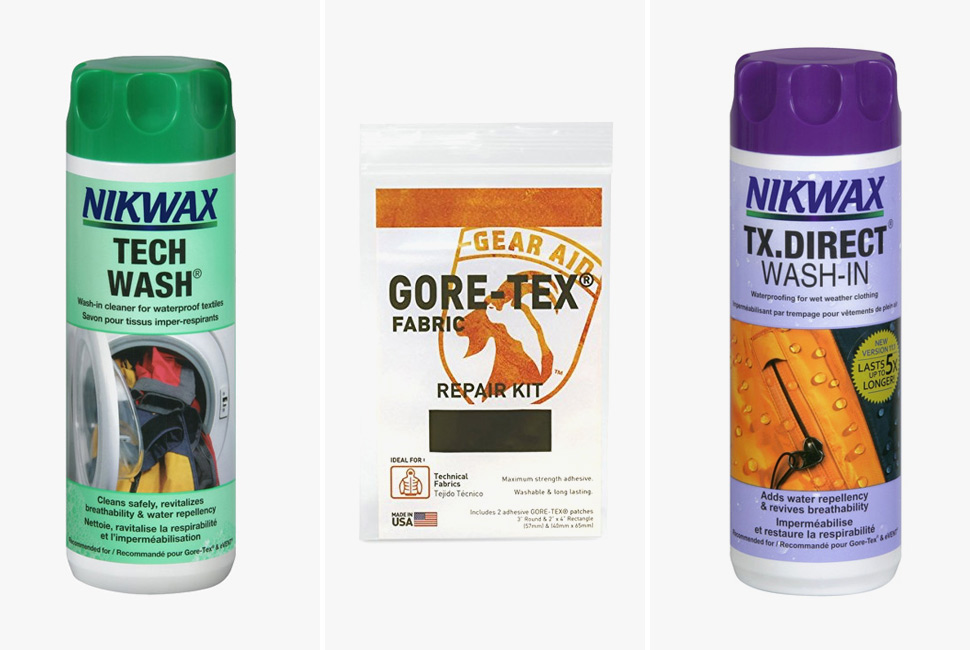
Wash your jacket. To wash your jacket, use a specially formulated detergent. We recommend Nikwax’s Tech Wash, though Granger also makes a suitable wash. Place your jacket in the washing machine. In a front-loading washing machine, make sure to remove any buildup in the detergent dispenser, then add the Tech Wash. For a top-loading washing machine, add the detergent once the machine has filled with water. A good rule of thumb is one capful of detergent for each jacket. (In hard-water areas, Nikwax recommends adding an additional capful.) Set the cycle to heavy (or synthetics if your machine has it) and warm water.

4

Wash your jacket again using TX Direct. After you have finished washing the jacket, wash it again following the same guidelines, this time using Nikwax’s TX Direct Wash-In. This will revitalize the waterproofing in your jacket’s membrane.

5

Dry the jacket. To dry your jacket, tumble dry it on low heat for no more than ten minutes. This will help to shake off most of the water and start the drying process. Take your jacket out of the dryer and hang dry it overnight.

6

Inspect your jacket for holes and tears. Look for any tears, pinholes, or abrasions in your jacket. If your jacket has a pinhole or tear, use Gear Aid’s Gore-Tex fabric patches to patch the hole. Cut the patch in either a circular or oval shape to reduce the chances of peeling. For a stronger bond, use an iron on its lowest possible setting for a few seconds on the patch to bond it to the jacket. (Be extremely careful using an iron. If the iron is too hot, it will melt your jacket.) For abrasions, use Gear Aid’s Tenacious Tape to cover the abraded areas. Again, cut the patches in circles or ovals to reduce the risk of peeling.

What You Need

waterproofing-gear-patrol-feature-2

Nikwax Tech Wash $10+
Gear Aid Gore-Tex Fabric Repair Kit $7
Nikwax TX Direct Wash-In $13+
The Best Rain Jackets of 2018

A lot has changed since heavy, unbreathable plastic rain slickers were standard all-weather apparel; today’s rain jackets are lighter, softer, more breathable, stretchy and more waterproof than ever. Read the Story

Note: Purchasing products through our links may earn us a portion of the sale, which supports our editorial team’s mission. Learn more here.

These Are the Military-Inspired Shoes to Wear Every Day

“I wanted to do a military-inspired story that was still related to the outdoors,” says Jon Tang, founder of the outdoorsy lifestyle brand Fronteer, referring to his newest shoe. Tang has targeted similar genre-crossing themes throughout his line of colorful canvas and leather shoes and boots that he designs to function equally well in the woods and Brooklyn. Some of those designs lean hard on mountain inspiration while others channel current trends in a way that would make a Nike designer envious.

The new shoe that Tang is referring to is the Ranger. The Ranger blends the heavyweight canvas once used in old rock climbing shoes with an equally-rugged rubber toe cap characteristic of old military boots. Its outsole is lugged Vibram rubber, which every hiker recognizes as a gold standard. Together, these elements create a functional lifestyle shoe that’s combat boot meets Converse, or Smokey the Bear meets SoHo.

Today in Gear

The best way to catch up on the day’s most important product releases and stories. Read the Story

Kind of Obsessed: This Is the Best Travel Pant I’ve Ever Worn

I used to dream of a middle ground designed specifically for traveling. Somewhere between sweatpants and jeans that looked good, but not sloppy. I refuse to buy stretch denim, so that was never an option. Lululemon’s ABC pants were close, but they don’t offer the performance and durability that I want in a do-it-all travel pant. Then I tried Mission Workshop’s Signal Pant for the first time, and I was smitten.

It’s a difficult thing to get right; comfort, performance and aesthetics don’t often go hand in hand. But the Signal brings all three to the table and more. I’ve worn them hiking, cycling, running through the airport, on 30-degree days and on 80-degree days — and they’ve never disappointed.

Mission Workshop spared no detail in the Signal. It’s crafted from an ultra-durable, military-spec, four-way stretch nylon fabric that manages to bring all of these properties to the table while remaining breathable. The pants also have an EDC blade-sized pocket on the right-hand side so that your knife is always at the ready. And if you happen to get caught in a rainstorm, no bother. The military-spec nylon fabric is also highly-water repellent.

If there’s one feature on the Signal that I’d rather go without, it’s the zip pocket on the outer right seam of the pant. It isn’t exactly necessary, and it gives away the Signal’s technical prowess with its inclusion in a product that’s designed to fly under the radar. But it’s a minor detail, and one that I’ll happily overlook for the best travel pants I’ve ever owned.

Kind of Obsessed: This Under-the-Radar Mechanical Watch Made Me A Watch Nerd

This automatic mechanical watch launched my full-blown watch obsession. Read the Story

This Is the Best Gear for Climbing Mountains, According to a Pro

The last town one passes through on the way to Mount Rainier National Park from Seattle is Ashford, Washington. That drive is a scenic one — the landscape gradually shifts from flat to foothills, and as the towns get smaller the trees grow taller. For many climbers attempting to summit Rainier, Ashford is a final base camp. Its amenities include many of the main street staples: a post office, grocery store, a selection of bunkhouses and lodges to choose from and a dive bar. There’s also a gear shop called Whittaker Mountaineering. Whittaker as in Jim Whittaker, the first American to summit Everest; as in Lou Whittaker, leader of the first American ascent of that same mountain’s famed North Col and founder of Rainier Mountaineering Inc, Rainier’s premier guide service. And Whittaker as in Peter Whittaker, Jim’s nephew and Lou’s son, and the current owner of the store.

Peter Whittaker has amassed his own remarkable climbing résumé, which includes two expeditions to Denali, 14 to Kilimanjaro, three to Antarctica’s Mt. Vinson, eight to Aconcagua, more than 250 climbs on Rainier, and the list goes on. Whittaker has been a professional climber for more than a few big-name brands, lead the development of Eddie Bauer’s First Ascent line and just recently started his own climbing company called Bight Gear.

He’s also made it his mission to make Ashford a destination, and a short-term home for climbers passing through on their way to, or from, the mountain. He’s worked with the rest of his altitude-addicted family to build the infrastructure that exists there, including the gear shop, Whittaker Mountaineering. The store is big despite Ashford’s remote location and small population, and serves both first-time and veteran mountaineers with the latest equipment available.

The quality of Whittaker Mountaineering is a direct result of Whittaker’s experience as a guide and professional climber. Not only does Whittaker — and his team of 60+ guides at RMI — know what type of gear is good and what isn’t, but he also knows that even the first timers need quality stuff to help get them to the top of the mountain. When it comes to gear, Whittaker is a true aficionado. We recently got ahold of him to find out what his top five favorite items are, and why.

Peter Whittaker’s Favorite Gear

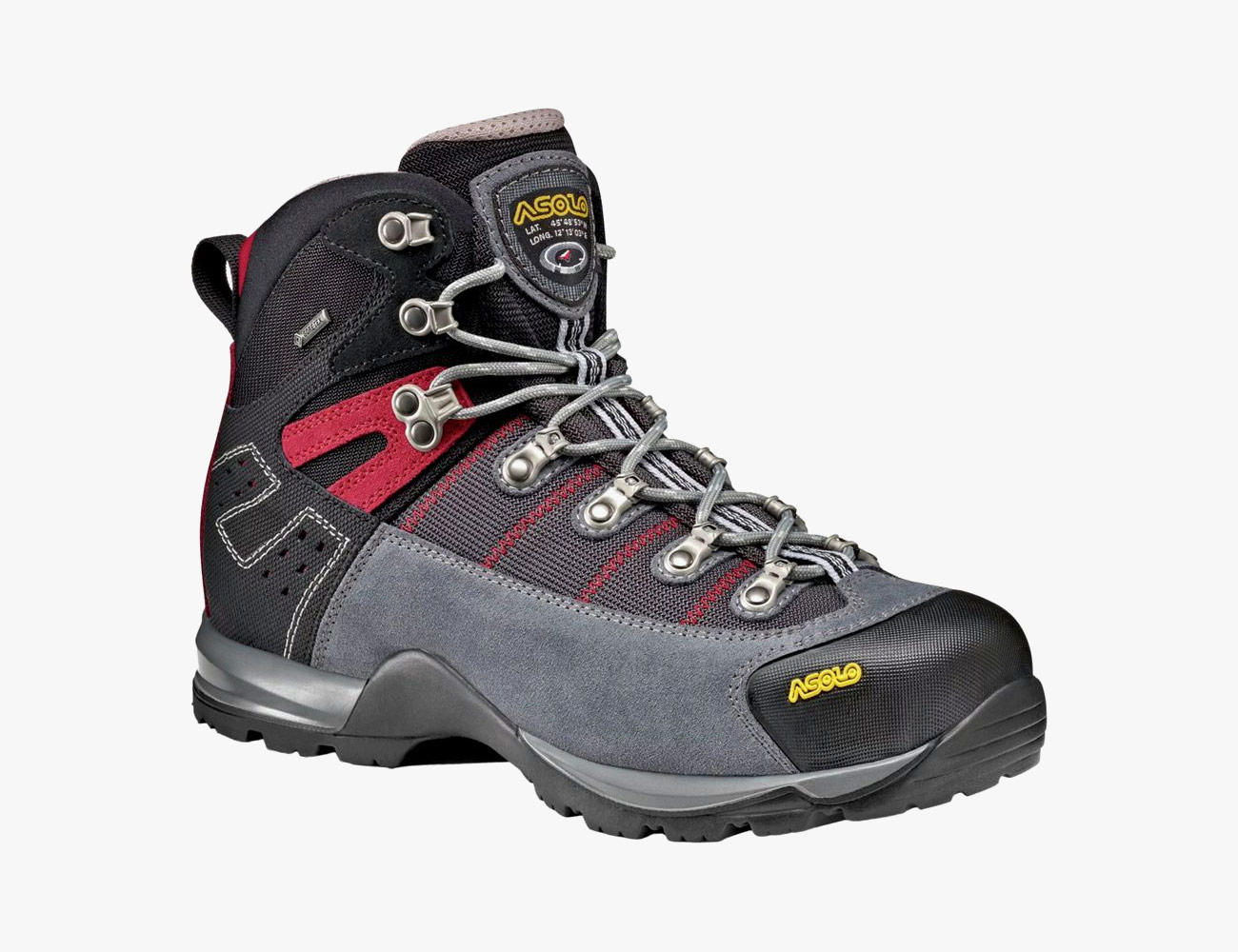
Asolo Fugitive GTX Boots

It’s the best trekking boot for Kilimanjaro, Everest Base Camp and rugged terrain. It has excellent ankle support, a great traction sole and a no-nonsense lacing system.

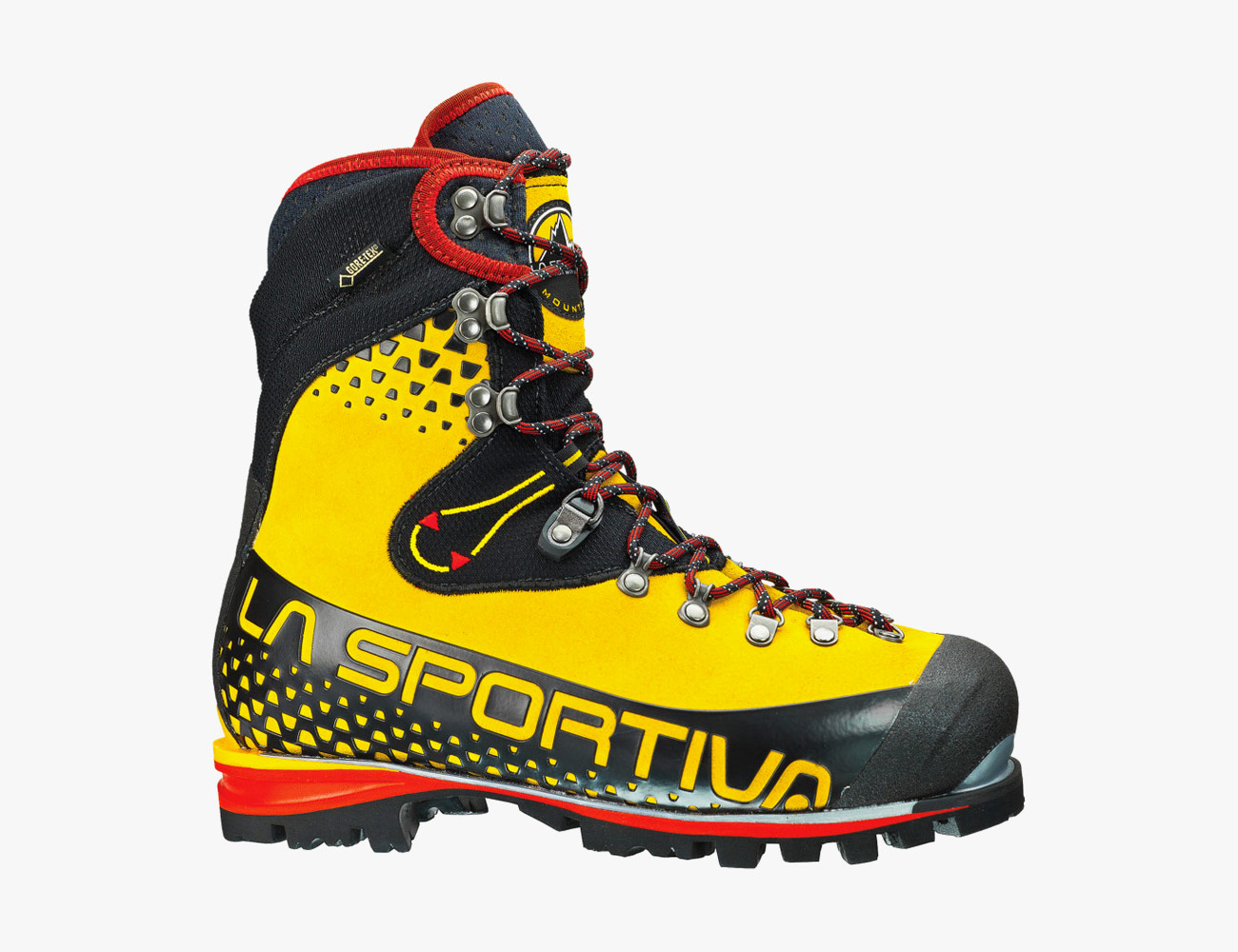
La Sportiva Nepal Cube GTX Boots

The perfect Rainier single boot. It’s warm, lightweight, fully crampon-compatible and a great fit for even my insanely high-arched feet.

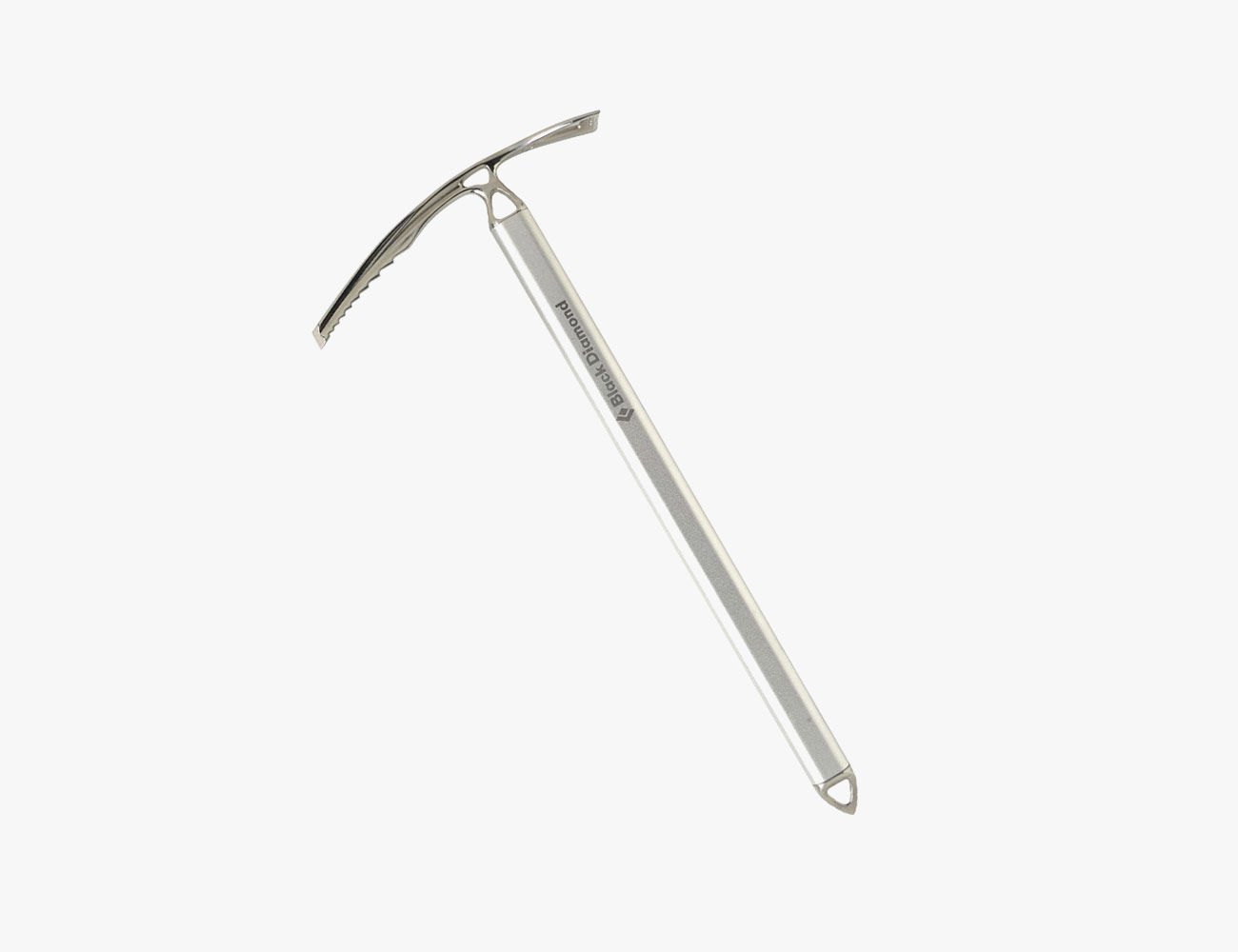
Black Diamond Raven Pro Ice Axe

Again, the perfect ice axe for Rainier’s non-technical, standard routes. Super light aluminum shaft, durable head and the perfect length on the pick for ice axe arrest in all snow conditions.

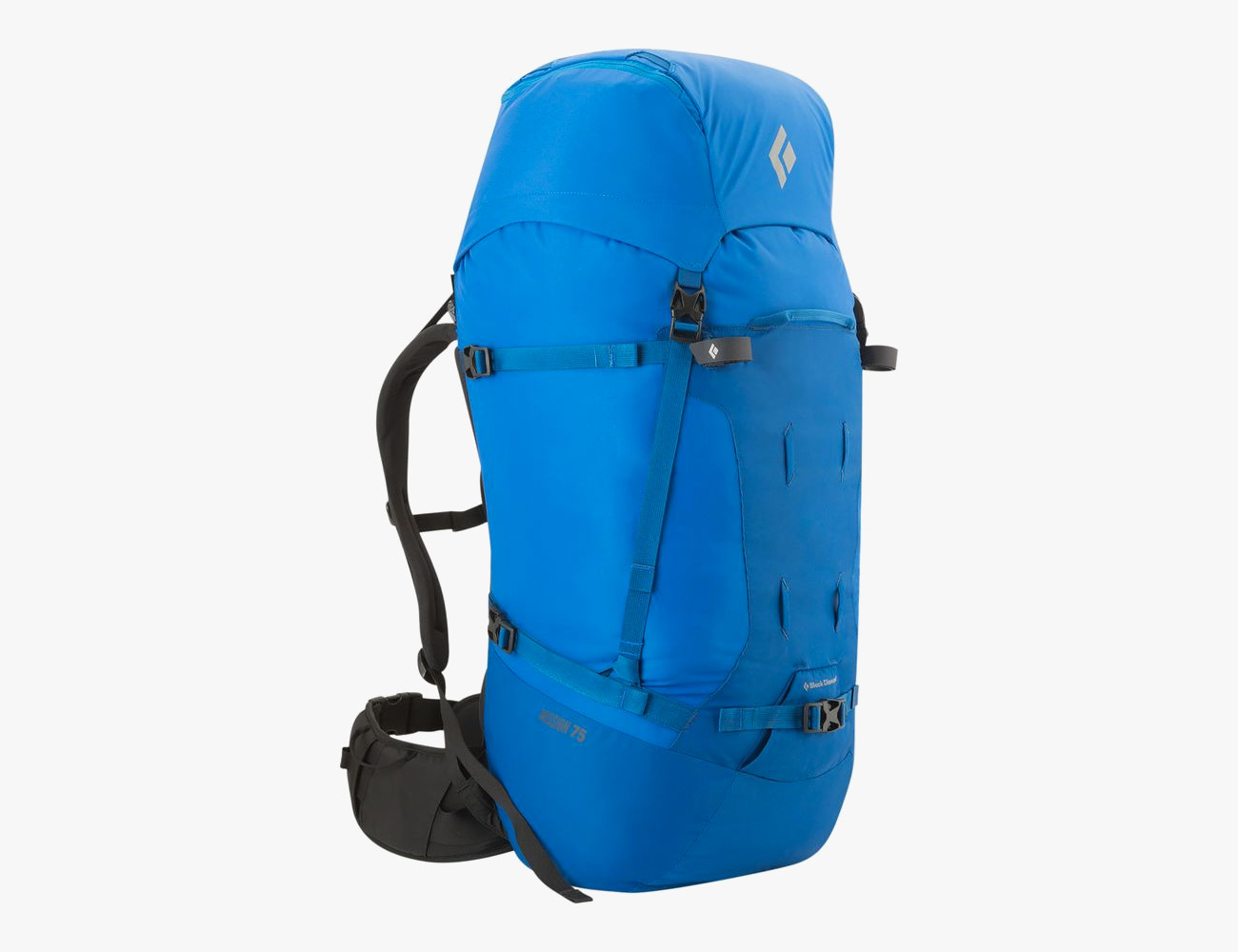
Black Diamond Mission 75 Pack

For a three to four day climb of Rainier, this is the pack. Not too many bells and whistles, good suspension and an intuitive feature set.

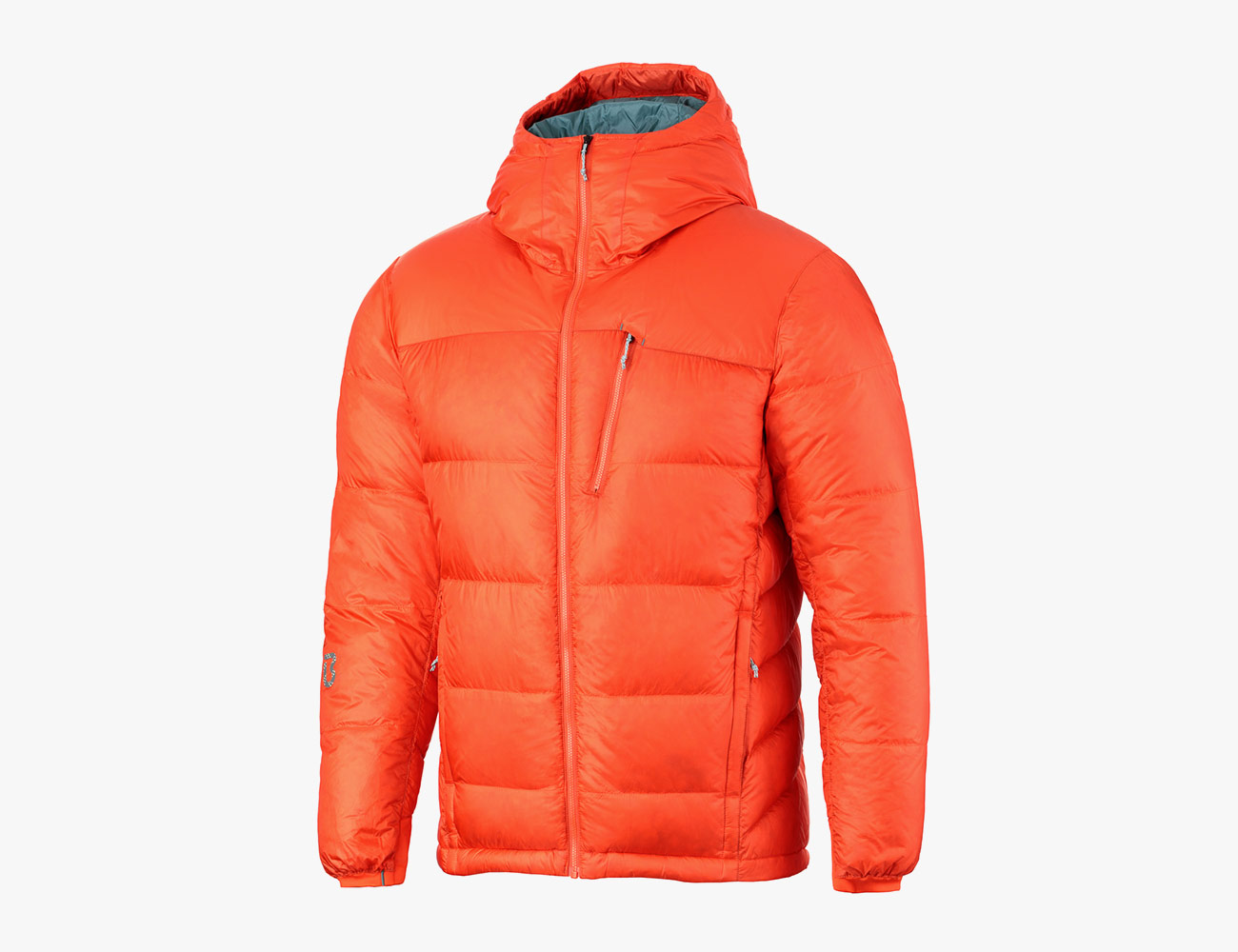
Bight Caldera Jacket

This is a top-of-the-mountain puffy that does not make you look like the Michelin Man. It uses 850 fill down, I-Beam construction and a slimmer profile. Toasty warm; think half a sleeping bag.

The World’s Greatest Mountaineers Share Their Most Cherished Pieces of Gear

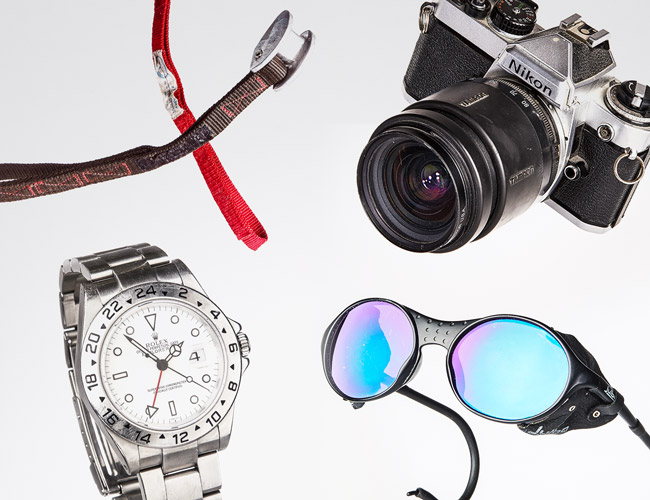
Jimmy Chin’s first-ever film camera, Melissa Arnot’s bag of blessed rice, Ed Viestur’s Rolex watch and more. Read the Story

Note: Purchasing products through our links may earn us a portion of the sale, which supports our editorial team’s mission. Learn more here.

This Pocket Knife Is So Plain That It’s Beautiful

In pocket knives, as with any product, there can exist a dangerous tendency to go overboard on features and stray toward unnecessary luxury. Yes, an oversized blade a la John Rambo can look cool, and who wouldn’t want a pocket knife with fossilized wooly mammoth tusk inlaid in its handle, but are these things truly necessary?

The answer to that question has the potential to spark an hours-long debate, but neither faction could deny the elegance of Massdrop’s new collaboration pocket knife with bladesmith Ray Laconico. It’s called the Keen, and it’s a 7.9-inch titanium frame-lock folder. Laconico designed the Keen in the minimalist and graceful style that’s present in many of his knives; a lanyard hole and pocket clip are the only non-essential traits. The blade is S35VN stainless steel forged into a spear-point and ground flat into a plain edge. The handle is available in various hues and finishes.

The Keen is simple. That’s not a bad thing though. Knives are collectible, sure, but they’re also practical tools that have the potential for daily use. The problem with a gorgeous, elaborate and expensive pocket knife is that we’re often reluctant to use them for even such basic tasks as opening packages and making quick repairs. But the Keen is beautiful, and utilitarian.

It’s important to note that this is the first-run of production for the Keen and that Massdrop is taking orders in the same style as a Kickstarter project might run. The finished knives will be delivered to buyers in October of this year. Those customers will get some perks for picking up the blade early, including a $10 Massdrop credit, a serialized edition of the Keen and a Q&A with Laconico himself.

Do You Really Need a Full-Sized Pocket Knife?

For most of us, the effectiveness of a full-sized pocket knife can be lost. If most of the tasks you perform with your blade involve small and precise cuts, then all you might need is a small X-ACTO-style blade, like the Retracting Utility Knife from Massdrop and Ferrum Forge. Read the Story

Rapha’s Latest Product Launch Does Something No Other Cycling Brand Has Done Before

In the cycling world, one brand will make saddles and another will make bib shorts, and there is no overlap between those two companies. For two products so dependent on each other for rider comfort, it’s frankly mindblowing that they are considered separately. That was, until today. This morning, UK-based cycling powerhouse Rapha launched a new line of cycling saddles that are designed to work specifically with its bib shorts. It’s a novel idea, and one that in theory could bring a lot of comfort and proper fit to a broad swath of cyclists.

The truth is, most people don’t know how a saddle should fit properly. And while there’s no substitute for a proper bike fitting from a professional, Rapha’s taking a small step to making comfort and proper fit more readily available. By filling out a short questionnaire on the brand’s website (waist size, weight and riding type), Rapha then recommends a saddle and bib short combo for you.

There are two saddles to choose from: the Classic and the Pro Team; designed to pair with the Classic and Pro Team II bib shorts respectively. The Pro Team saddle comes in both a sold and cut out version, and is offered in a black or Rapha Cycle Club colorway. The Classic is available in white, black or the RCC colorway. Each Rapha saddle is handmade in Italy, and while not denoted on the saddle itself, is crafted by Selle Italia. According to VeloNews, while Rapha enlisted Selle to make the saddles, they did all product design and R&D in-house.

Today in Gear

The best way to catch up on the day’s most important product releases and stories. Read the Story

The Fitness Tracking Tech Used by Active Navy SEALs is Now Even More Accessible

The Whoop Strap 2.0, a new fitness tracker currently in use by active Navy SEALs, is determined to improve recovery time in athletes and keep your data safe while doing so. With 24/7 tracking, it’s one of the first fitness trackers approved for the MLB to use during games — and it’s the official recovery wearable of the NFL.

When it first launched, a Whoop tracker was anywhere from $500 to $5,000 per year — depending on the athlete’s subscription plan. Today, the Whoop Strap 2.0 is available to everyday athletes thanks to a drop in price to just $30 a month (with a six-month commitment).

The Whoop records heart rate, HRV, ambient temperature, motion, calories burned and sleep, thanks to tracking from biometric data taken 100 times per second, 24 hours a day. As someone who is continuously wearing two trackers at once to figure out what works, this is one of the only apps I’ve used that provides me with feedback and a next step. When I wake up in the morning, I can see if I’m ready to hit the road for a five-mile run, or if a rest day is the better choice. When the day is over, I can see how much sleep I need to make up for the strain I put my body through that day.

Today in Gear

The best way to catch up on the day’s most important product releases and stories. Read the Story

After Years of Customer Requests, Yeti Finally Adds Wheels to Its Legendary Cooler

The popular Yeti Tundra is known for its tough construction, long-lasting ice holding capabilities and for its sheer durability. And now, all that has been updated with the added functionality of wheels. Introducing the Tundra Haul — the same heavy-duty cooler that put Yeti on the map, now with durable, single-piece polyurethane NeverFlat wheels.

Toss in 45 cans of beer or 55 pounds of ice, then grab the T-Bar StrongArm Handle to pull the full cooler over any surface without worrying that a nail or hole in the ground will puncture the tires. In fact, you could put it through a lot worse than that and the rotomolded construction won’t feel a thing — it can handle whatever bumpy terrain you decide to tackle that day. Dirt and gravel won’t gather in the grooves of the wheels either thanks to a smooth tread pattern.

The aluminum handle is curved to prevent any nicking at your heels as it rolls alongside you, and offers a variety of towing positions aimed at user comfort. The handle also gently lowers when it’s dropped a let go of, so there’s no massive smacking noise of metal against plastic. From the smooth ride to zero noise pollution, Yeti seems to have made its legendary cooler even better.

Once the day’s adventure is over, pop open the vortex drain plug at the bottom of the cooler, lift the handle and it’s practically self-cleaning. While in use, the plug is leakproof, so there are no worries about beer, wine, water, or any other liquid spills in the back of your car or truck. It’ll be available in two colors in the near future — both grey and white.

Stay tuned for our full review after we put the Tundra Haul to the test this summer.

Today in Gear

The best way to catch up on the day’s most important product releases and stories. Read the Story