
All posts in “Sports and Outdoors”

The 8 Best Small Outdoor Brands from Across the Globe

We’re all victims of tunnel vision. When Patagonia, The North Face, Arc’teryx or any of the other big guys release a new jacket, backpack or lightweight tent, we go running for the nearest REI. We’re creatures of habit, and we like what we know. We’re also loyal to our favorite websites and local gear shops — you know, that place you spend far too much time in without spending any money?

But what if there was a company you’d never heard of making adventure equipment in a foreign land that matched — nay, exceeded — the quality of the gear you already know and love? You’d want to know about that company. That company exists — in fact, many such small-scale brands based all around the world, from the Czech Republic to South Korea, are currently pushing gear to places the big brands can’t. They are themselves products of their unique environments, and they’re worth getting to know (even if you can’t afford the international shipping).

Millican
Millican is based in Keswick, which is part of England’s Lake District. It’s named after the self-proclaimed “Professor of Adventure,” Millican Dalton, and has a number of collections, but our favorite is the Mavericks collection. The bags are simple, constructed of durable and weatherproof Bionic Canvas and aluminum, rather than the industry standard plastic hardware. Without getting too nerdy: Bionic Canvas is a blend of 56 percent recycled polyester, 40 percent Cotton and 4 percent high-tenacity polyester. They are the perfect companion for a commute to the office or a spirited day hike. Our favorite silhouette is Smith the Roll Pack 25L, but Millican makes a bag to fit whatever you’re into — even camera gear.

Peak Performance

Peak Performance’s fascinating story begins in 1986. It’s a long one. For the sake of time, a summary: four world-class Swedish skiers returned from an epic ski trip in Sun Valley, Idaho. Their frustration with flashy, fluorescent, flamboyant ’80s slope style had reached a boiling point. Why was no one making simple, refined ski apparel? Couldn’t outerwear be high-performance without screaming about it into a proverbial megaphone? Thus Peak Performance was born: a masterful maker of understated, stylish, supremely technical ski apparel.

Thirty years after Peak Performance’s birth, hardly anything has changed. Their garments remain inspired by the great slopes of the world, yet consistently exhibit an unmistakable Scandinavian aesthetic: subdued, sleek, quietly confident. No bright colors, no flashy logos. Peak Performance is a lover of powdery slopes, yet a friend of city streets. I was impressed by Peak Performance, and you should be, too.

Klättermusen
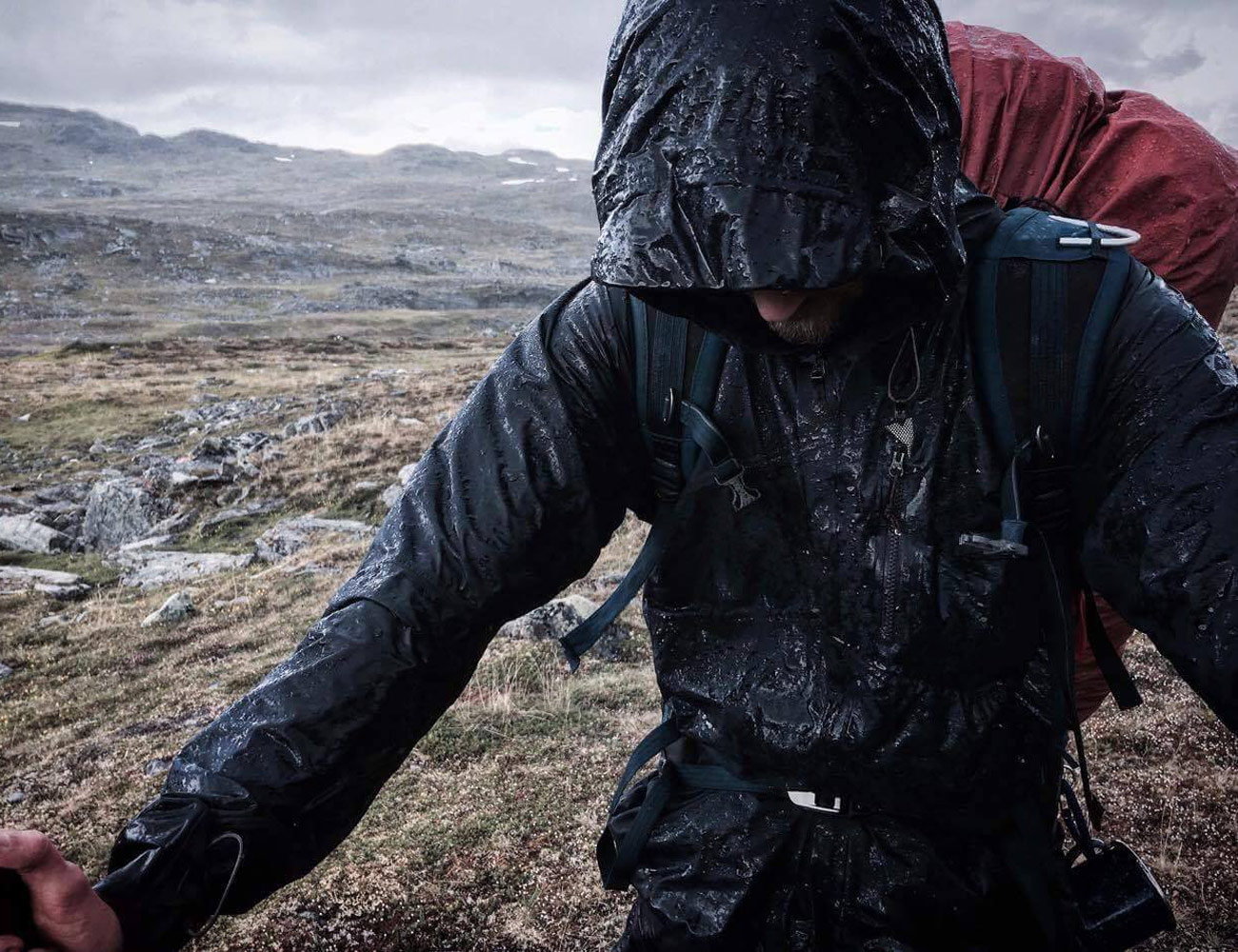
Based in Åre, Sweden, and founded in 1984, Klättermusen is dedicated to making functional, hard-wearing outdoor gear with a focus on sustainability. Not the retroactive greenwashing type of sustainability that you see in marketing campaigns, but meaningful steps toward creating products that are better for the environment. One of the brand’s more recent sustainable initiatives is its use of recycled fishing nets in all of its nylon backpacks. By 2017, Klättermusen will be 100 percent fluorocarbon free.

Both the clothing and packs from Klättermusen are notable. The clothing, particularly the jackets, is marked by innovative features like asymmetrical zippers, easily accessible trail map pockets and a built-in whistle and compass. The packs are just as innovative, featuring a hip belt clasp that can be detached easily in an emergency and shoulder pads that are ergonomically shaped to sit better on your shoulders than anything else on the market.

Halti

Halti was founded by Juhani Hyökyvaara in Helsinki and was conceptualized in much the same way that Fjällräven and The North Face were. Hyökyvaara was working in a camping store in Helsinki when he realized that there was a need for lighter, better-performing gear. That mission led him to create alpine gear tested in the harshest conditions imaginable — particularly the North Pole.

Today, Halti makes everything from jackets and boots to sleeping bags and tents — all with a minimalist aesthetic and crafted from some of the most durable materials available. Especially notable is the brand’s Lippo jacket, an insulating mid layer with Primaloft Gold 60 synthetic fill and a Pertex Quantum shell.

Tilak

Based in the northern mountains of the Czech Republic, Tilak is an under-the-radar outdoor brand creating some of Europe’s finest outerwear, and has been doing so since the ’80s. While most spotlight-hogging European outdoor brands hail from the U.K. or Italy, Tilak stands strong and proud as the Czech Republic’s most prominent outdoor brand. Its products are produced in strict accordance with deeply rooted Czech tradition, and is the only Czech outerwear producer permitted to work with Gore-Tex. The products — alpine shells, mid-layers, pants, boots, shoes and more — are crafted with impressive attention to detail. For now, Tilak’s goods appear to be unavailable in the U.S., but if you’re in Europe, and are able to navigate a mostly Czech website, you can purchase their goods online.

Teton Bros.

Contrary to what its name would lead you to believe, Teton Bros. is not based in the Tetons. Founded in 2007 by accomplished Japanese mountaineer Nori Suzuki, Teton Bros. fuses form and function to create pieces that are high functioning in high alpine environments. One of the brand’s most impressive pieces is the TB 2.0 jacket. The earliest iteration was developed in 2008 with input from ski patrollers across Japan. The newest example of the jacket features a version of Polartec’s Neoshell fabric that Teton Bros. had been developing for the past two years. Whether you’re heading out on a rain-soaked summer adventure or gearing up for your next winter pursuit, put Teton Bros. on your radar.

Mountain Designs
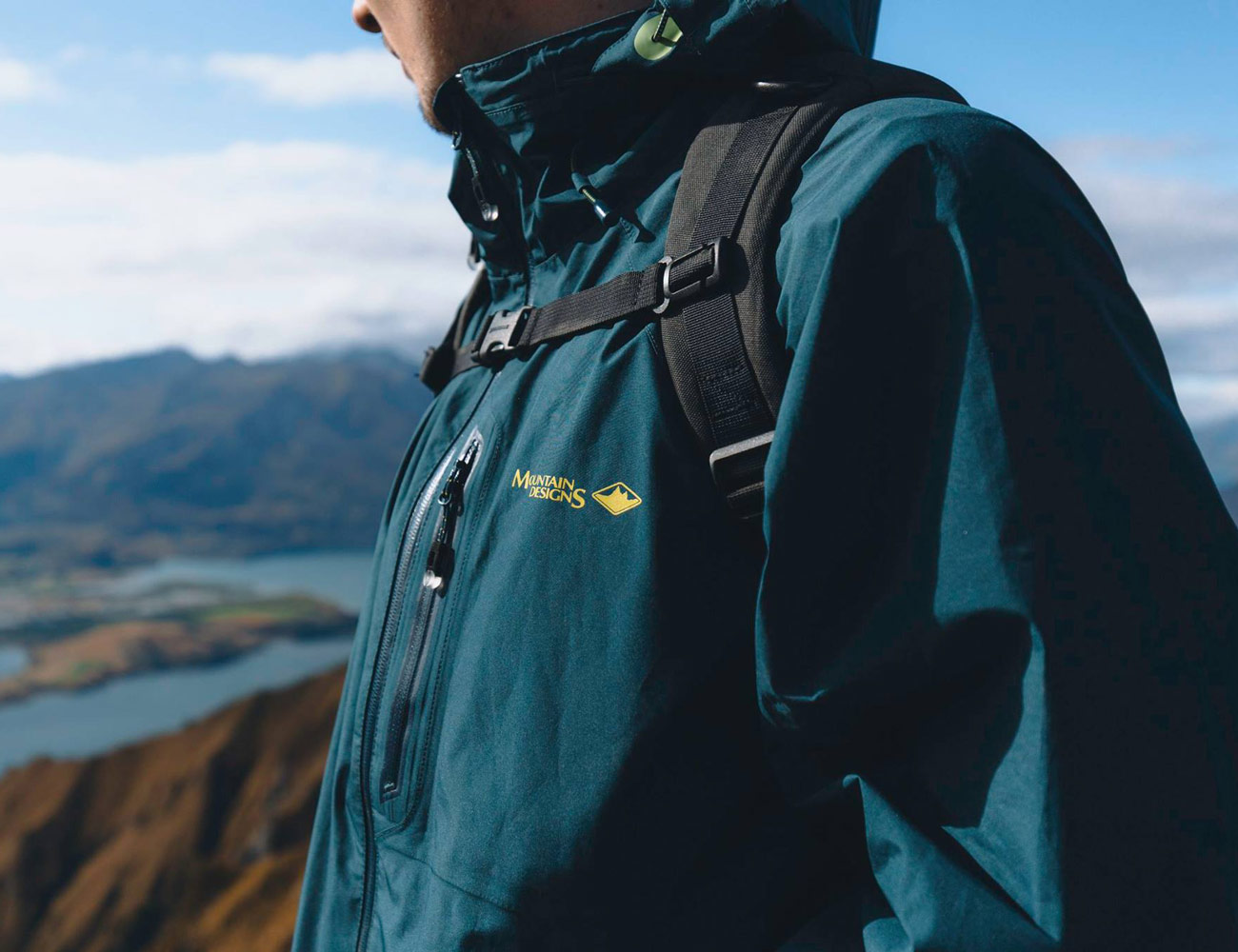
Like all respectable outdoor companies, Mountain Designs was founded by a wayward mountain climber who just wanted better gear. Rick White claimed the first Australian ascent of Yosemite’s El Capitan shortly before launching his gear company in response to the scarcity of climbing equipment in his native Queensland. Mountain Designs has continued to supply adventure-craving Australians with the gear they need to tackle rock climbing pursuits, skiing expeditions and everything in between. The company acts as a retailer for brands from across the globe but also supplies high quality gear — including tents, sleeping bags and outerwear — under the label White created 40 years ago.

Alchemy Equipment
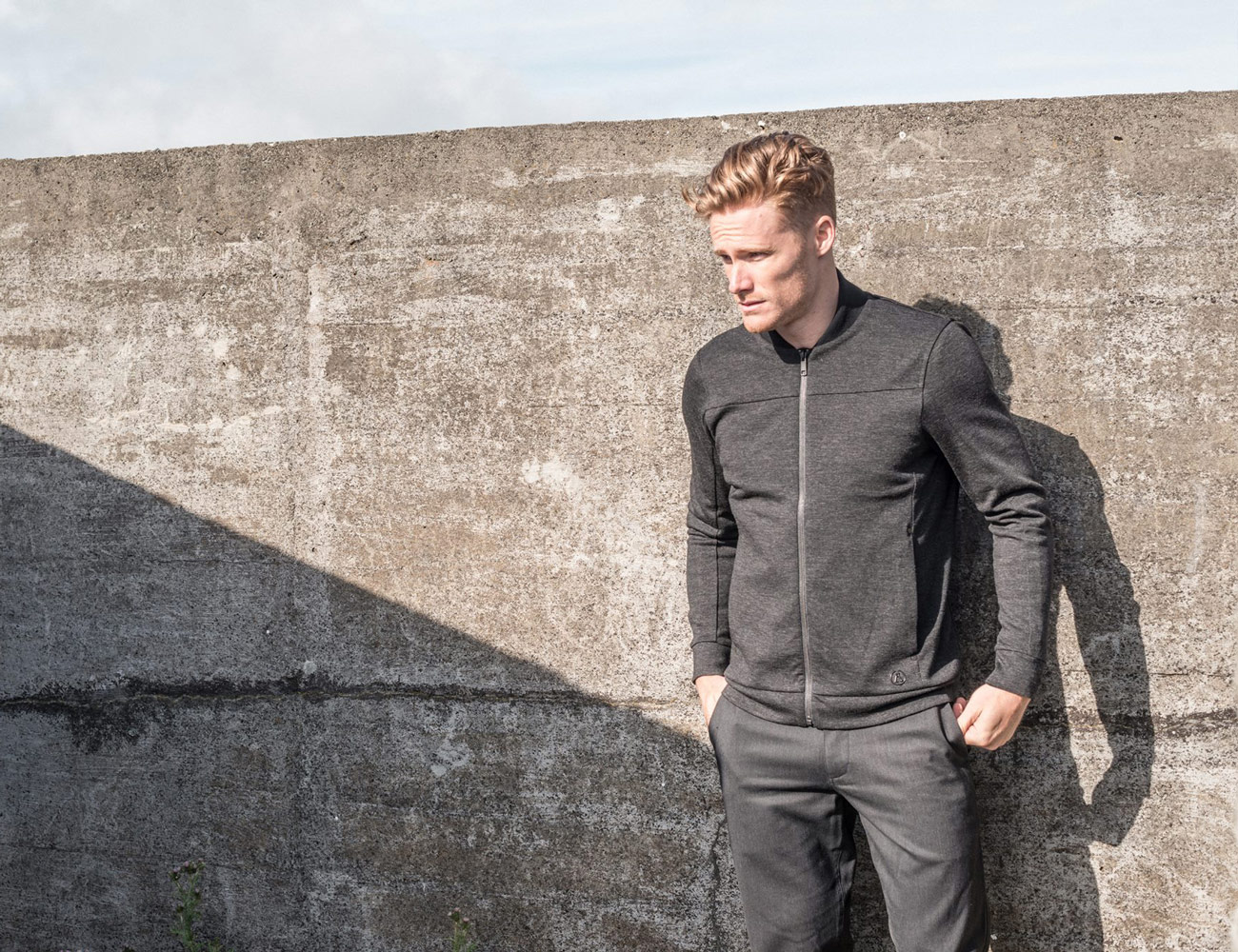
It’s one place where “city to mountain” is more than a nifty marketing term, and apparel brand Alchemy Equipment knows it; Alchemy is based in Christchurch, the largest city on the South Island and a day’s drive from, well, anywhere else in the country. It’s a place where a worsted wool rain jacket or a versatile carry-on pack makes sense for everyday use. Alchemy’s restrained aesthetic and philosophy let the clothes avoid easy categorization without becoming basic; as a result, every piece is high quality in both style and performance.
Do You Really Need a Full-Sized Pocket Knife?

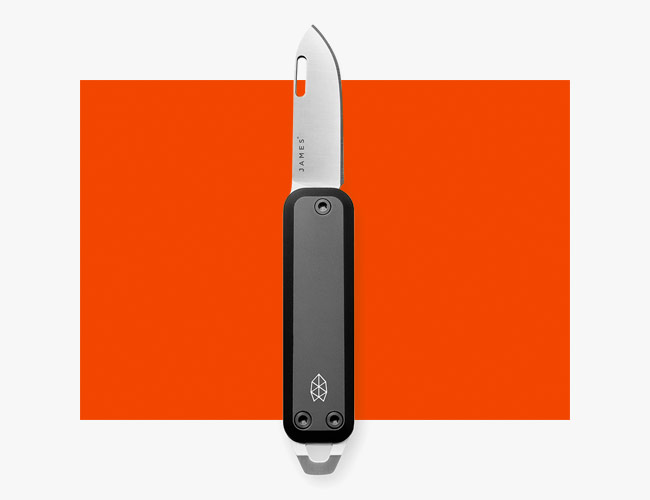
LA-based knifemaking brothers Elliot and Chris Williamson, collectively known as Ferrum Forge, have teamed up with Massdrop to craft a tiny everyday carry blade called, succinctly, the Retracting Utility Knife. The collaboration knife addresses what is perhaps a tough-to-confront notion for some: you may not actually need a full-sized pocket knife.

Mini knives have become somewhat of a trend in the EDC world; there are tiny fixed blades, tiny tantos, even tiny cleavers. These knives are pretty, but their effectiveness can, at times, be wasted on aesthetics. The Retracting Utility Knife addresses the issue head-on — it’s essentially a mini box cutter.

The 2.6-inch Retracting Utility Knife — RUK for short — is made, like most X-ACTO type cutters, with a replaceable steel blade. In that sense, the handle is the notable upgrade here. It’s made of milled copper or brass (that choice is yours) that’s straight on its spine and knurled on its opposite side for a sturdy grip, which is important in a small knife. (And just because the RUK is useful doesn’t mean it isn’t gorgeous.) The mechanism is a simple stainless steel extension spring that’s activated with an exterior domed button.

Most importantly, the Williamson brothers equipped the RUK with a lanyard hole — because all a little pocket knife’s utility is lost of it can’t be carried on a keychain, where it will always be at hand to open boxes, lop off stray threads, and assist in opening unrelenting clamshell packages. And the RUK weighs just 1.2 ounces, so it’ll go unnoticed along with your keys.

Kind of Obsessed: This Tiny Knife Made Me Change the Way I Think About Pocket Knives

I used to think that small pocket knives weren’t practical enough. Now, my favorite knife is the size of a USB stick. Read the Story

Inside the Mill Producing the World’s Toughest Sock

N

orthfield, like many towns in Vermont, is small. Even the valley it sits in, an impression carved out over centuries by the Dog River, is small, at least in comparison to the more-famous Mad River Valley, which routes its way through the Green Mountains seven miles to the west. The population of Northfield is just over 6,200. And yet, Northfield is somewhat famous. Famous for the local military university situated at the southern end of town, and for its five covered bridges (there are 100 or so in the state), but perhaps more so now for the product that comes out of the mill at the end of Whetstone Drive.

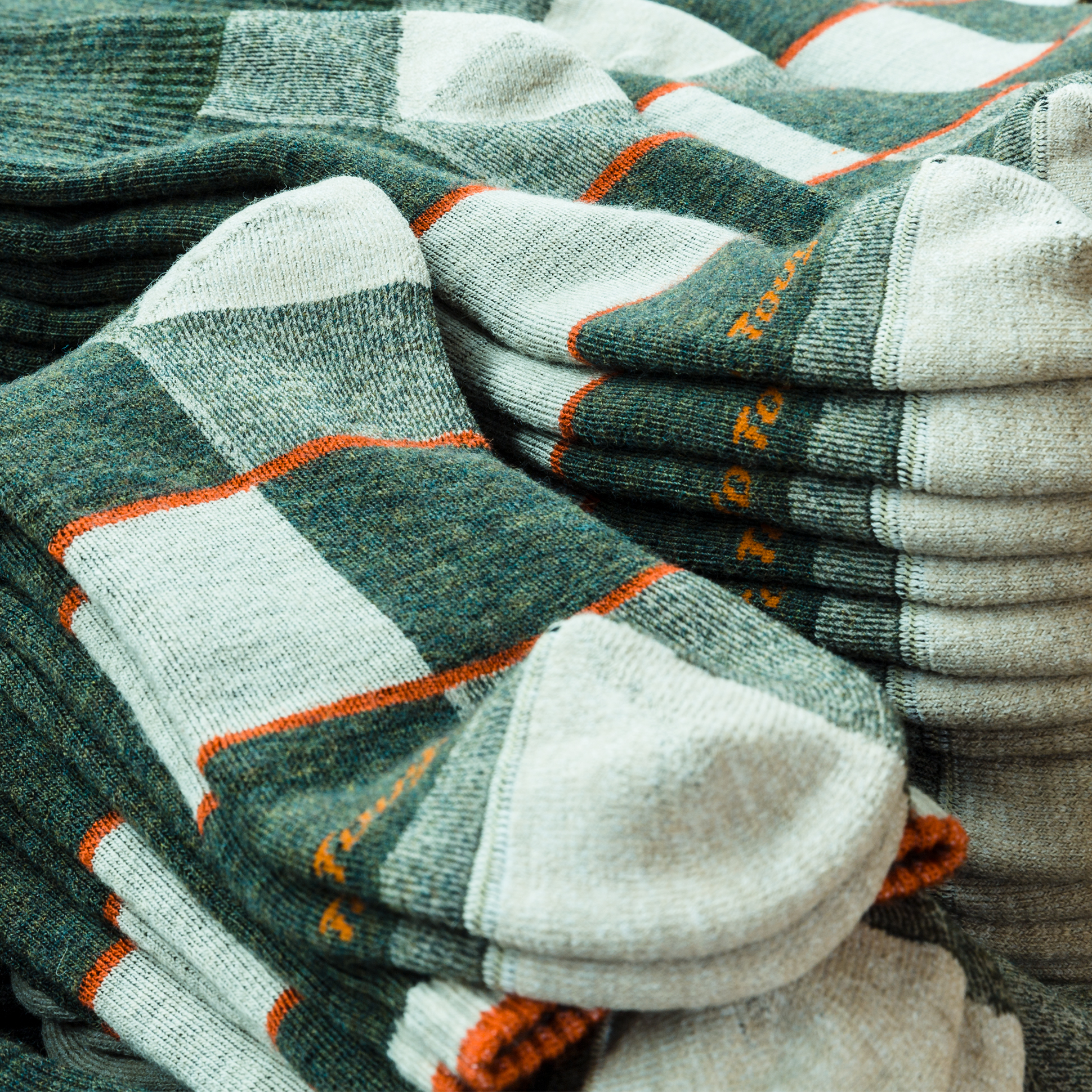
That mill is called Cabot Hosiery, and its product is the Darn Tough sock, the toughest sock in the world. Darn Tough has been in business since 2004, when Ric Cabot, a third generation sock producer, found himself perched on top of the trap door of bankruptcy with a mill, 35 employees and a small army of sock knitting machines. In the two decades that preceded that moment, Cabot Hosiery had been a private label manufacturer producing socks for Gap, Banana Republic and a host of other big name brands.

“As opposed to giving up, I tried to figure out a way to keep it going,” says Cabot. “I figured with my three generations of sock making know-how and experience” — Cabot’s father and grandfather were also in the business — “and our own factory, a workforce, the equipment and the beginnings of a raw materials library, if I couldn’t make the best sock out there then no one should be able to,” he says. So he and a colleague named Harvey Stabene took apart one of the Italian-made knitting machines, modified it, and put it back together. Then they knit a sock.

“…if I couldn’t make the best sock out there then no one should be able to,” says Cabot.

Since that time, Darn Tough has grown into a business worth over $40 million. Now, the mill at Cabot Hosiery contains 208 of those modified machines, and they’re running 24 hours per day, five days a week. They collectively knit thousands of socks per day, and it takes 250 employees to keep the mill running at full steam.

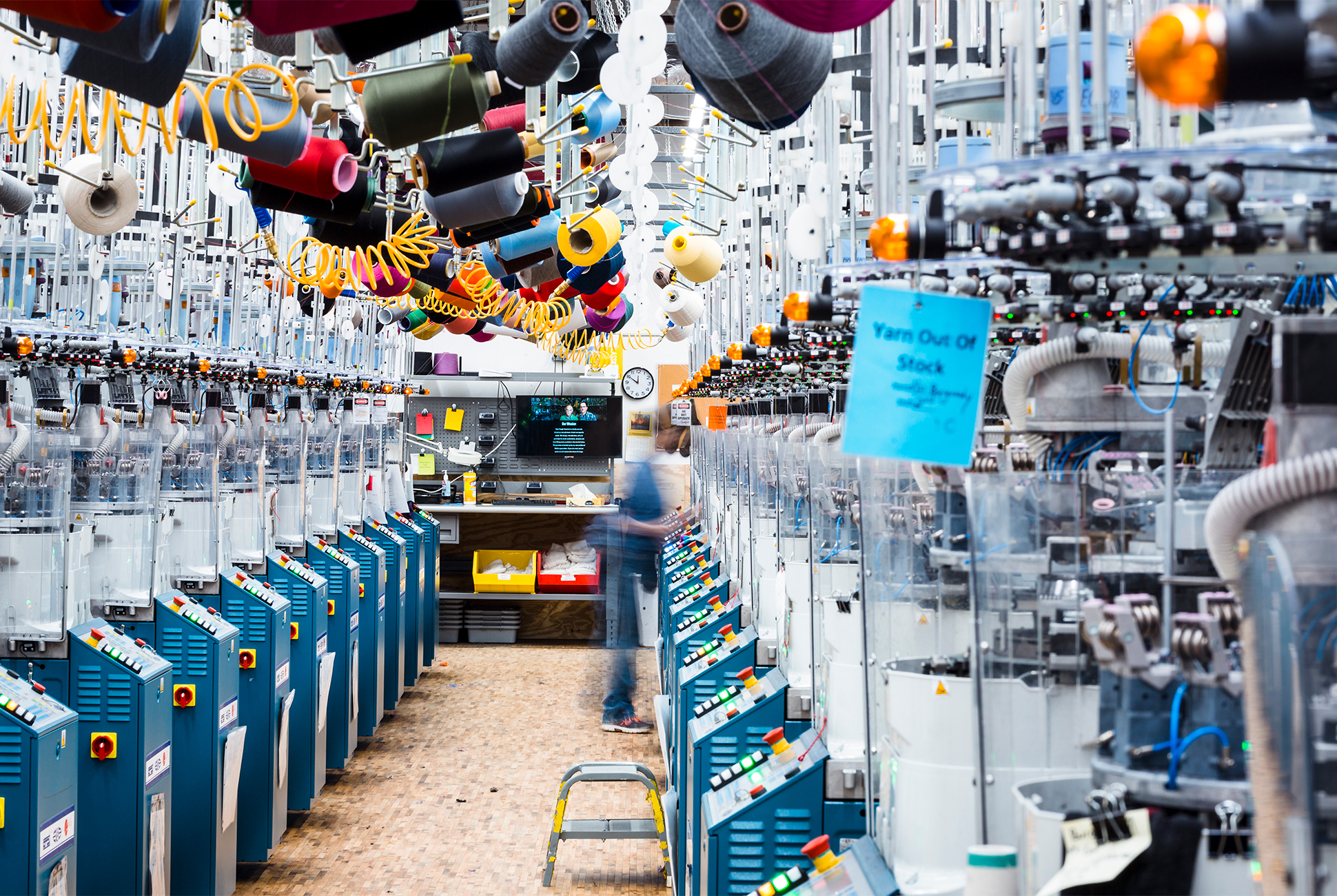
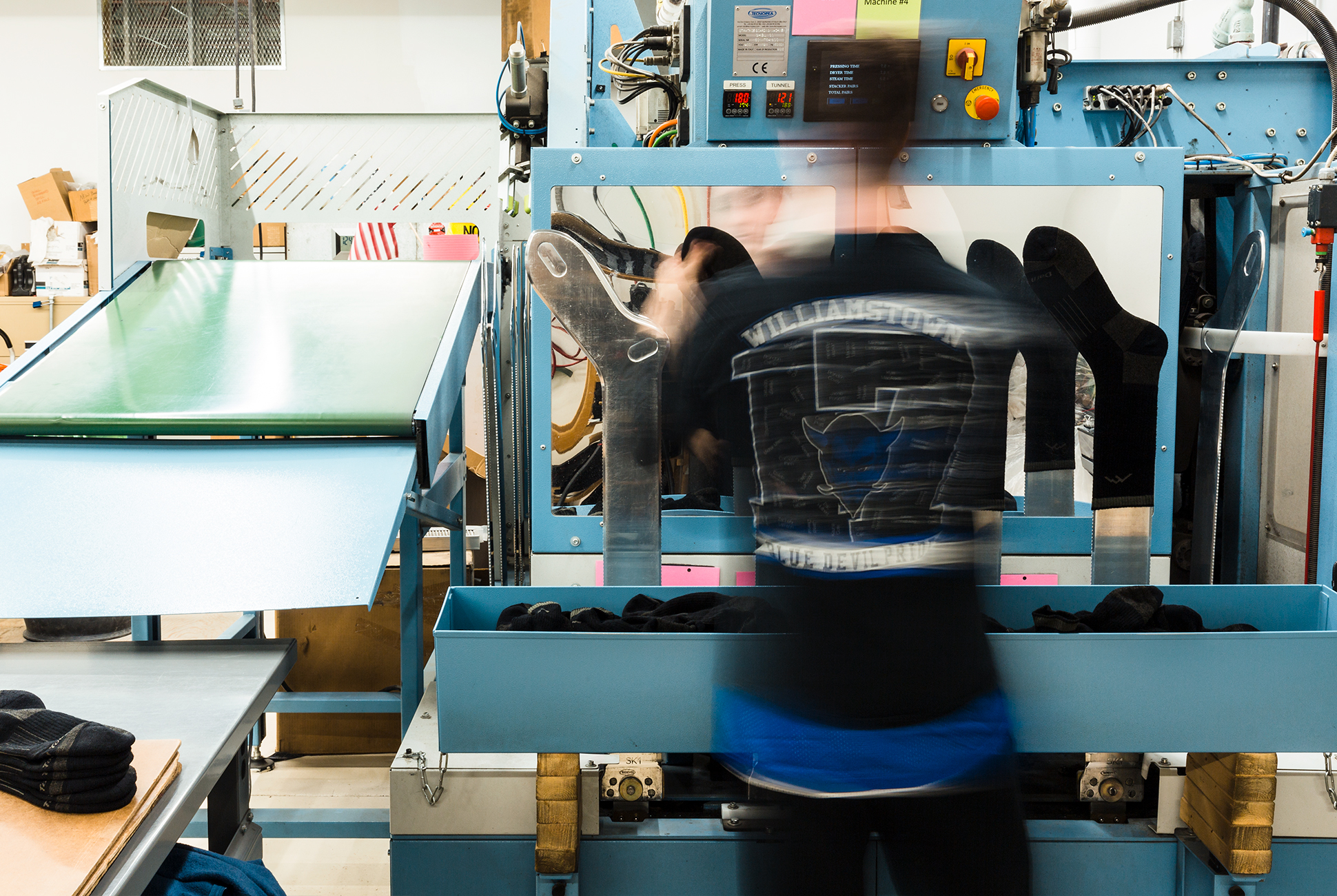
The foyer of the mill is spartan. There’s a check-in desk with a bulletin board and hallways leading to sets of offices. It’s normal, quiet, but head through a set of doors and the ambient volume ticks up two notches. Take a left through another set of doors and enter the vast space where the knitting happens, and it jumps to 11. The scene inside is Willy Wonka meets mass industry; a world simultaneously dominated by harsh chrome and vivid color. The ground is filled with boxy knitting machines; the air above a tangle of bright yarn, furiously spinning to depletion as the needles perform their work.

The record of Darn Tough’s growth can be traced on the knitting room’s floor; as the company expanded it purchased more machines and knocked down walls to add new rows of them — called sets — to the fleet. During the process, new flooring was added, but not to match. Last year, the company grew by over 40 percent.

The air is filled with invisible dust made up of wool and nylon fibers — a force that the staff is continually at war with for the prevention of flash fires. Adding its hum to the constant drone is a pressurized ventilation system that sucks as much of the lint and clippings out of the room as possible. The negative pressure created by it used to produce an almost vacuum-like seal on the entry into the space, and an open window would create an immense WHOOSH. Now, fresh air is pumped in to even it out, but remnants of the materials used to create socks are omnipresent.

Darn Tough uses merino wool as its primary ingredient, so technically, each sock starts as fiber on a sheep’s back. Those fibers are harvested during shearing and subsequently processed into what’s called a strand. It’s important to note that not all of these strands are the same — some companies will combine the merino ends with nylon ends to create a blended strand, or use fewer ends to create a less durable strand. “We use only fine-gauge merino wool, which means we pack more ends into a strand than our competitors,” says Courtney Laggner, Marketing Manager at Darn Tough.

“Those machines are equipped with 168 needles and can stitch together a sock — there are 1441 stitches in each square inch of a Darn Tough sock — in as little as 45 seconds.”

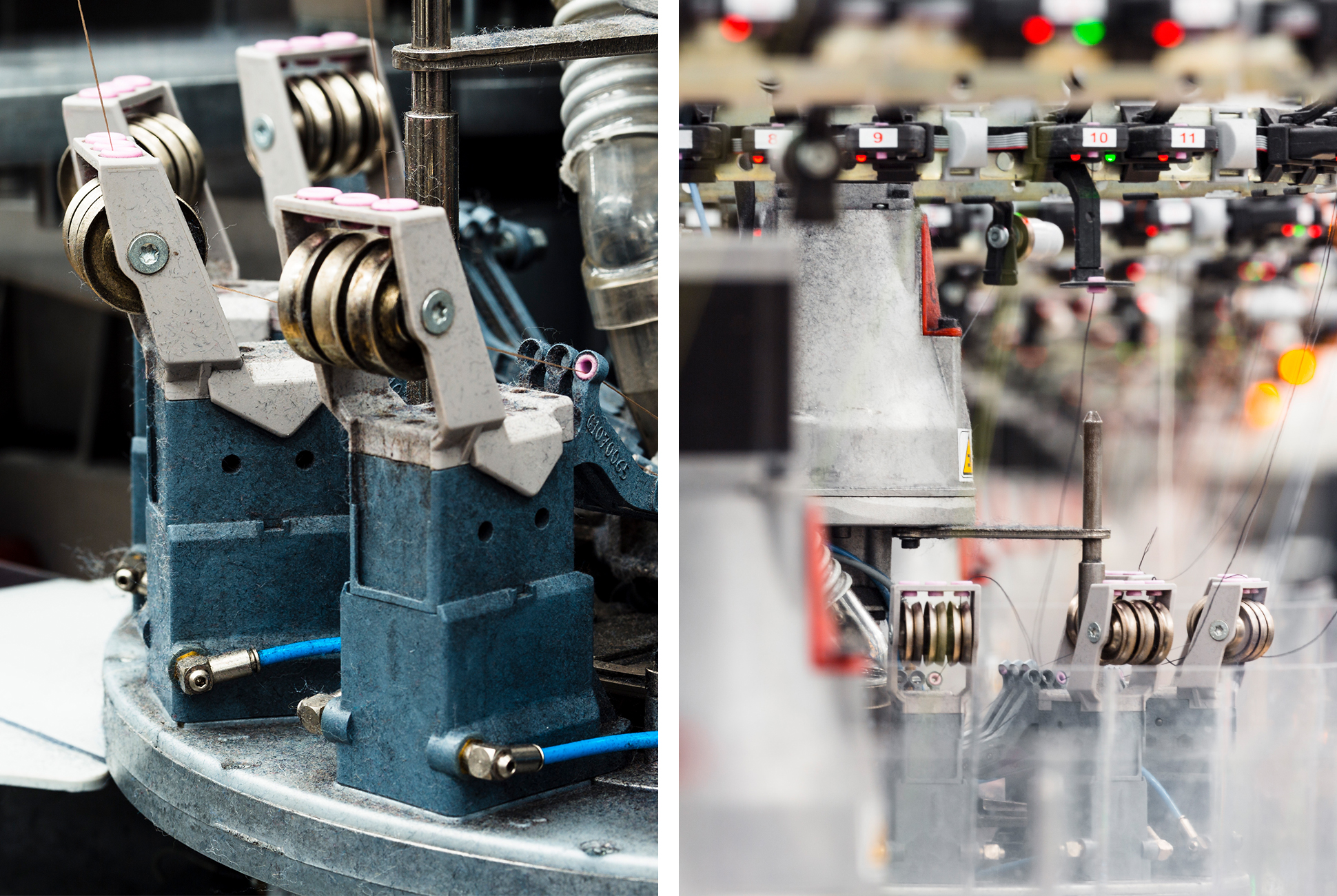
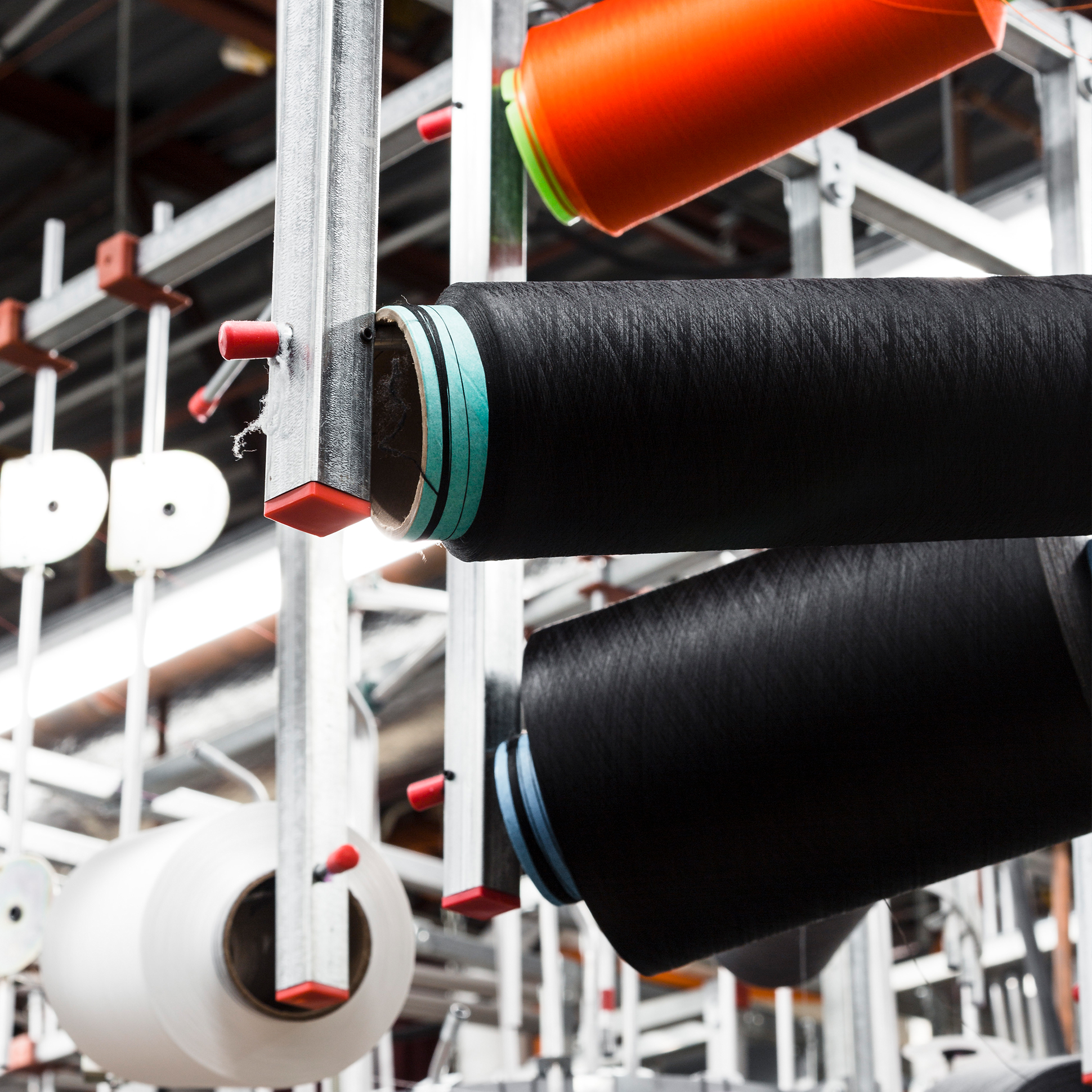
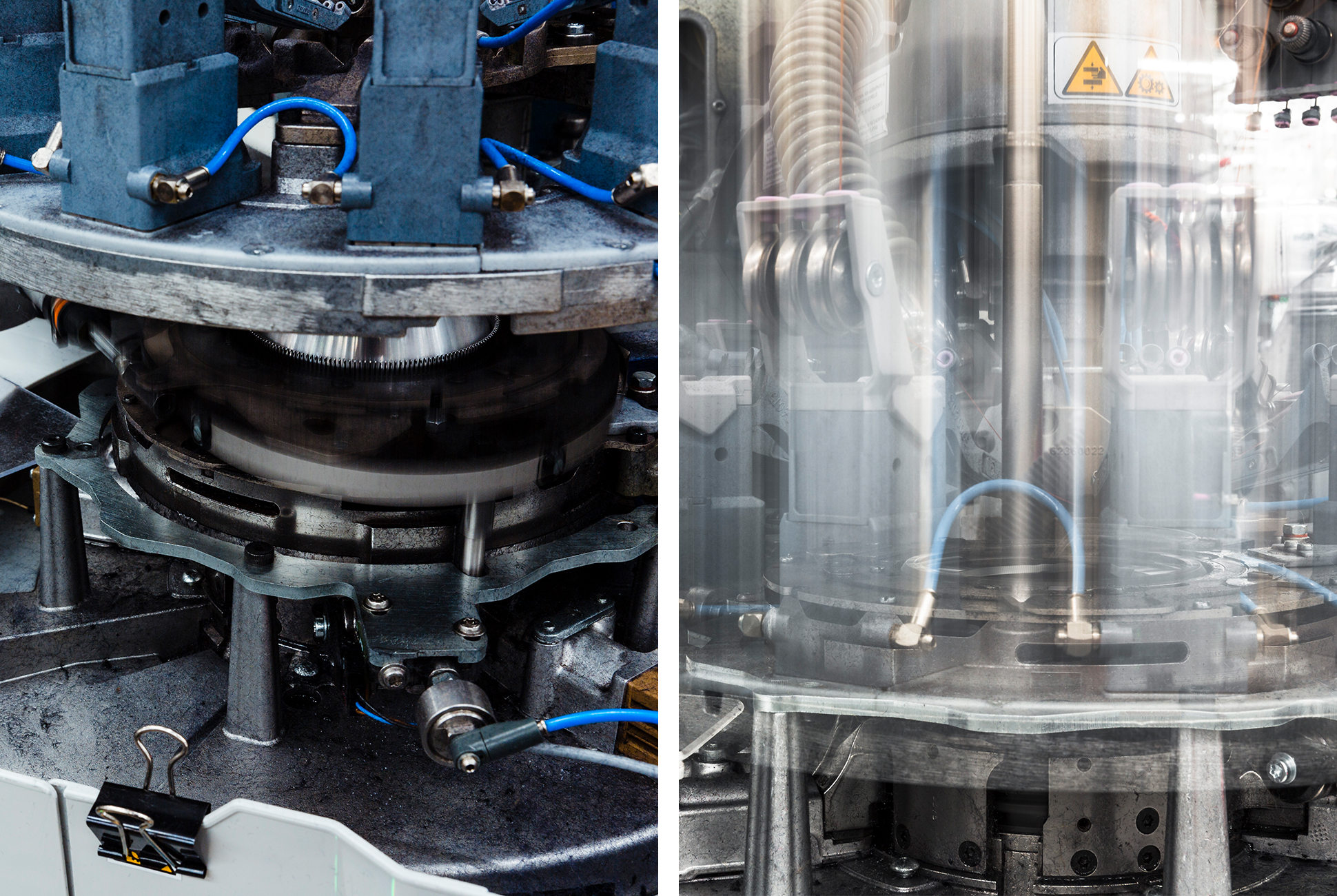
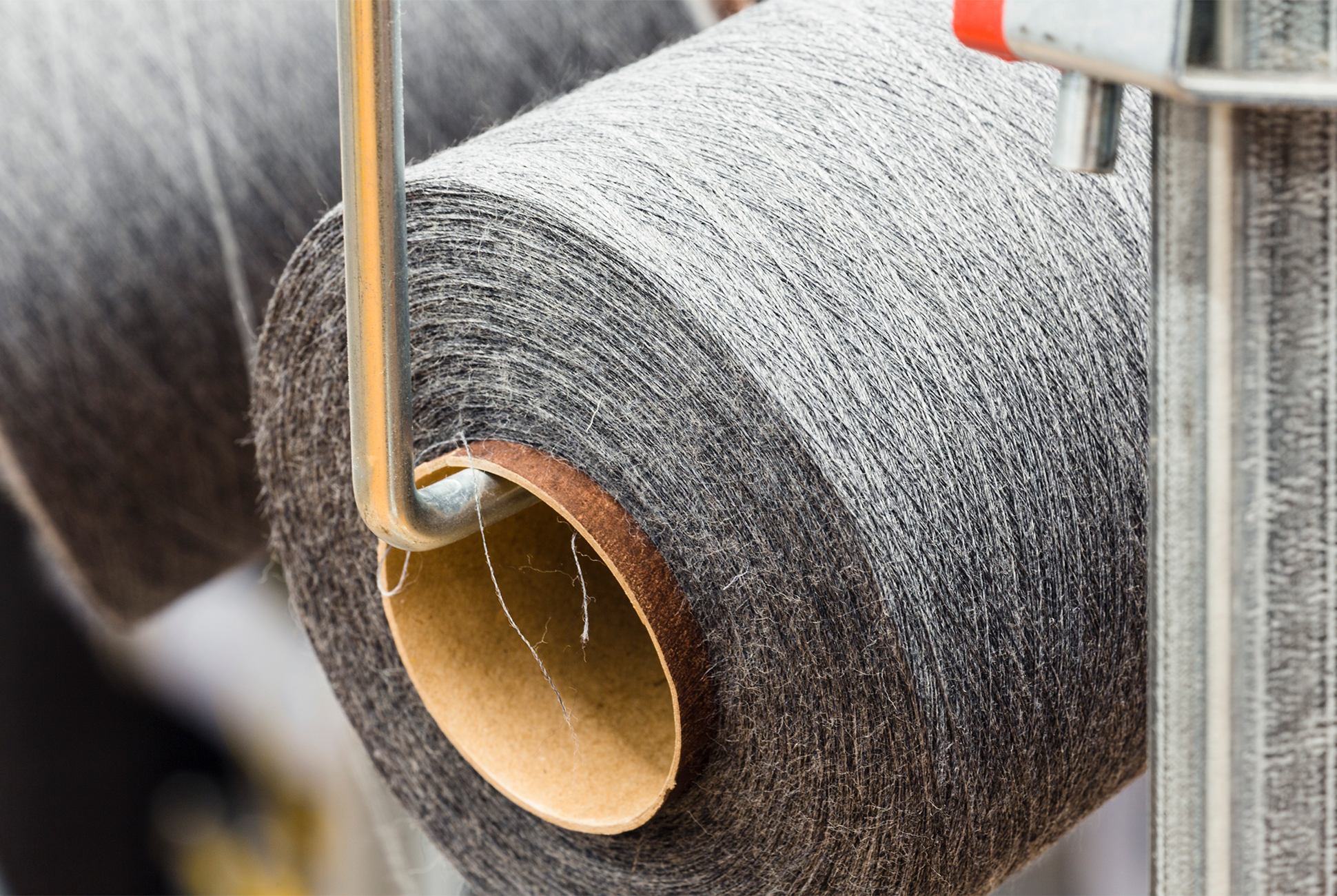
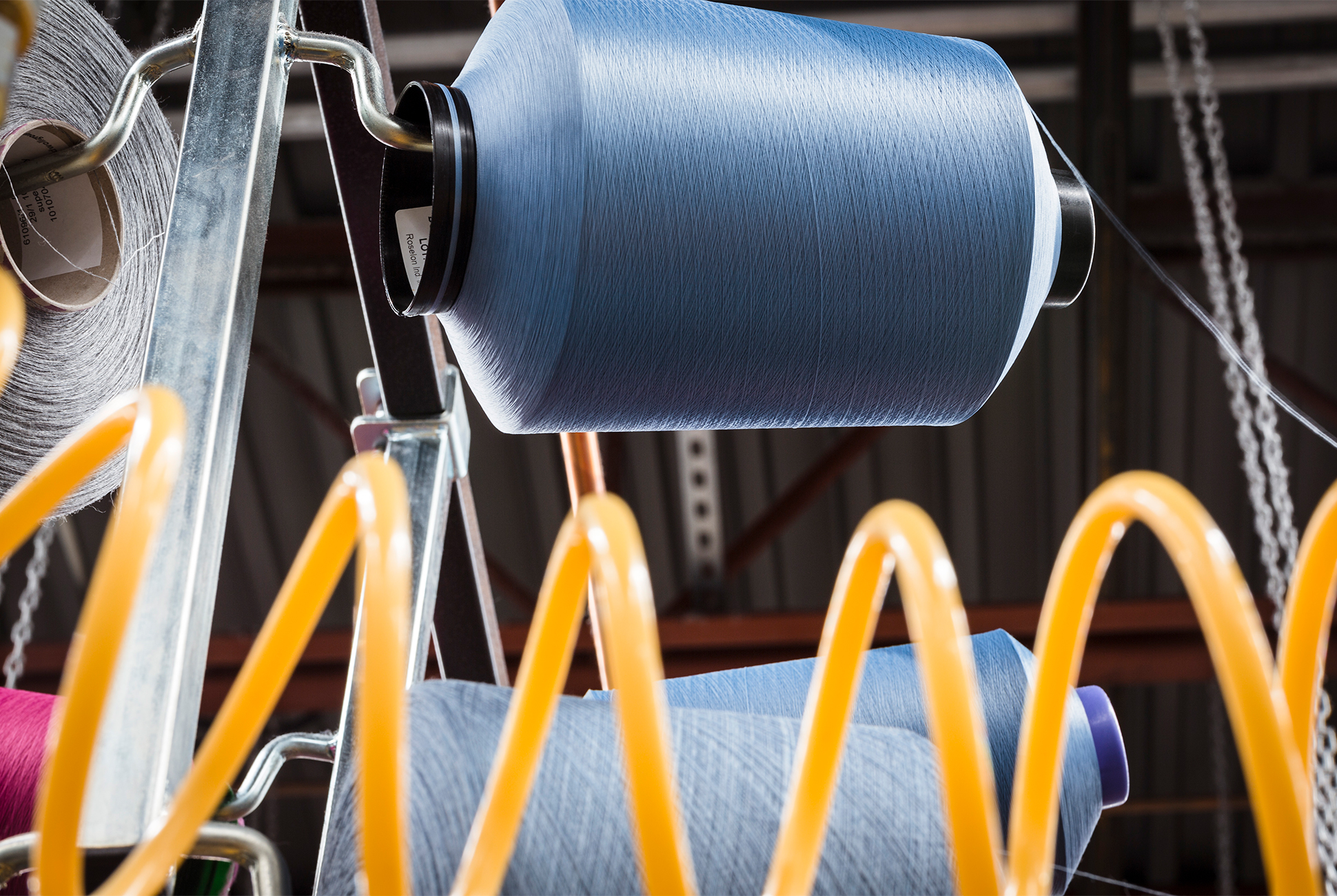
The thread is wrapped around spool-like objects called cones, which hang above-head on armatures that are arranged between and over the knitting machines. Those machines are equipped with 168 needles and can stitch together a sock — there are 1441 stitches in each square inch of a Darn Tough sock — in as little as 45 seconds (tall and heavily-cushioned mountaineering socks take the longest, roughly three and a half minutes).

The knitting machines are cared for and maintained by technicians who make sure that they’re running efficiently, and constantly. If one of them “goes down,” a light will turn on to notify the team that it needs attention. A machine can go down for a number of reasons — a broken needle or a cone that’s run of out of yarn are common instances.

The machines are also monitored by another computer — a “massive mother brain” that audits and measures all the data associated with the intake of raw material and the output of a sock. Because even though each machine is technically identical, each one also has unique character traits. “There are machines that knit certain styles better,” says Laggner. For instance, one machine might be able to knit hiking socks slightly faster than another, or with fewer errors. These specialties are identified, and the machines wind up assigned to particular socks.

The key to Darn Tough’s class-leading durability is the customized configuration of these machines that Cabot and Stabene developed, and how they integrate the different types of materials into a sock during the knitting process. But those are secrets kept, like a golden idol in a booby-trapped temple, within the walls of the mill. Not so confidential is the other half of the Darn Tough recipe: a meticulous and exhaustive process of checking each sock repeatedly during production for the smallest of defects.

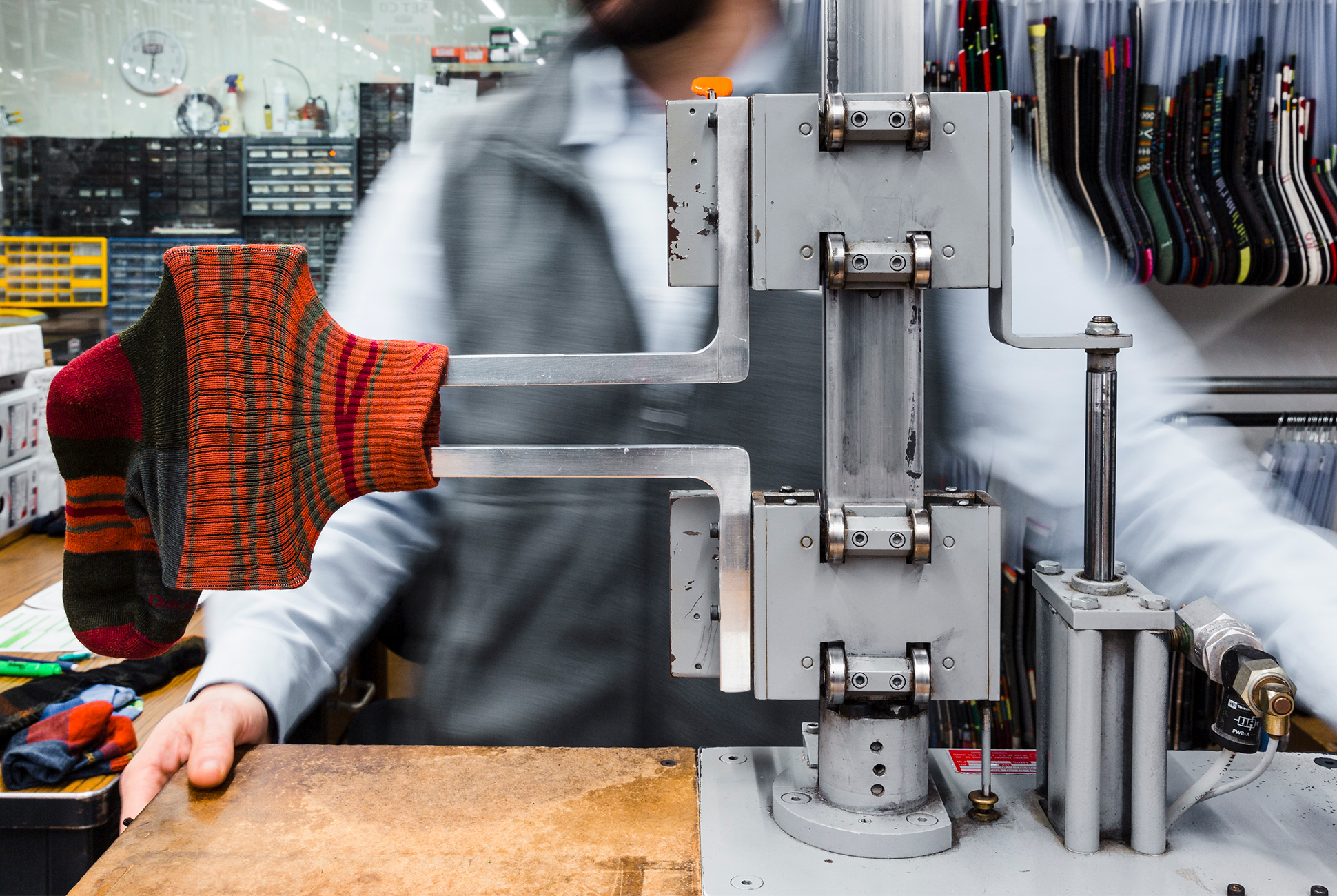
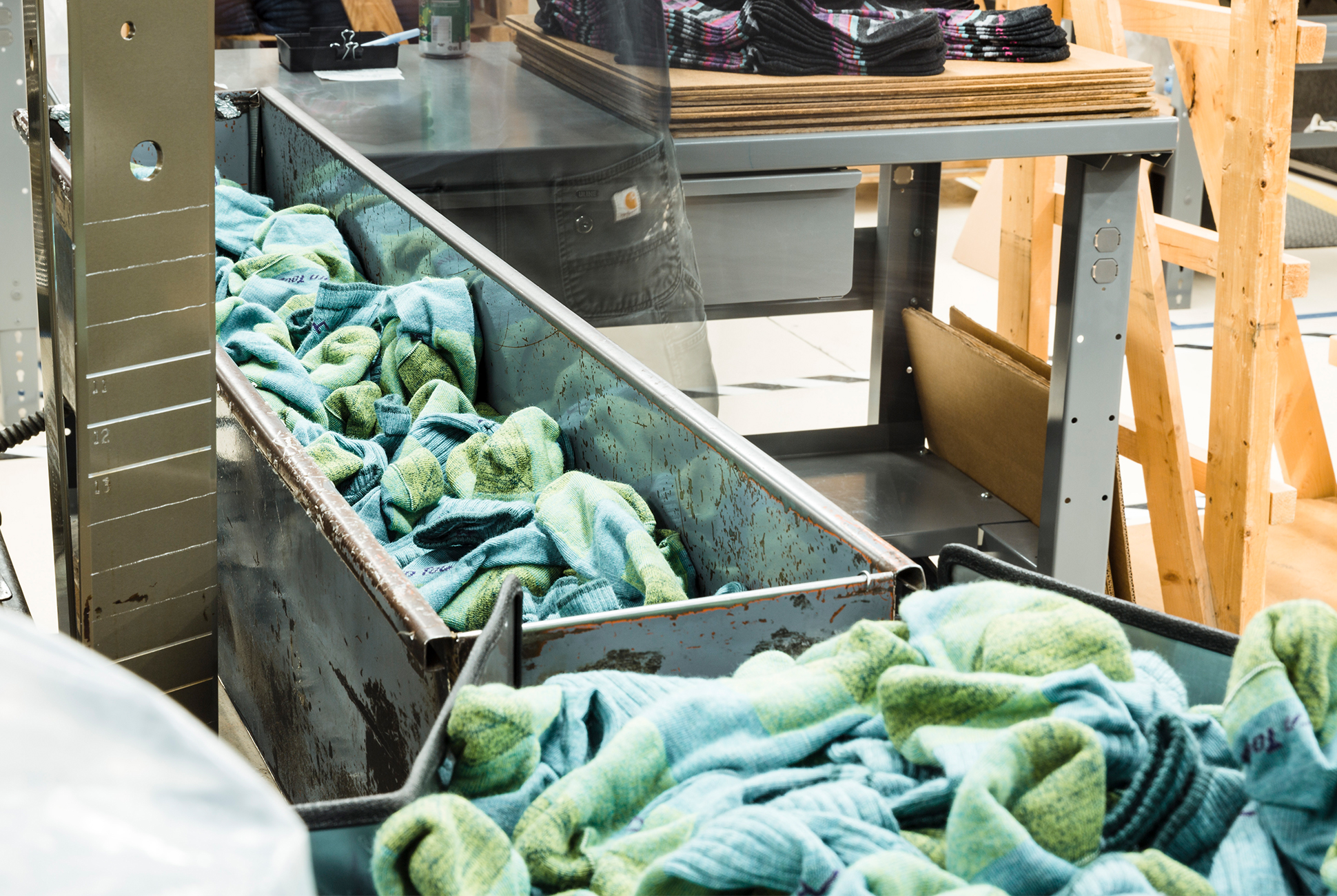
As a sock nears the final steps of its life in the mill, it goes to a dedicated inspection team. By now, many socks have already been checked and handled by other employees, but additional scrutiny is crucial for Darn Tough’s high standards. “We find yarn-outs and mis-plaiting are most common,” says one checker. A yarn-out is what happens when a cone runs out of yarn, and the needle has nothing to put into the sock.

Cabot and the rest of the team are so sure of their product that they put their money where their mouth is — (or perhaps, more fittingly, where their feet are). One of the hallmarks of a Darn Tough sock is that it’s guaranteed for life, no questions asked. It’s this warranty that makes the company’s premium socks worth their relatively high price tag: to buy a Darn Tough sock is to make a lifetime investment. Any defect is fair game. One notorious case brought back a sock that looked as if it had been bleached or left out too long to fade in the sun — in actuality; it had made a journey through the digestive system of a Golden Retriever.

That confidence comes directly from Cabot, and it’s exhibited by every employee at the mill in Northfield. It’s the type of pride that seems inherent to many of the Green Mountain State’s independent makers — whether it’s maple syrup, cheddar cheese or a premium sock. From an outsider’s point of view, it’s a satisfaction that might mistakenly be viewed as brash when in reality it stems from a commitment to craft and product. Cabot isn’t afraid to tout the socks produced at his mill, but he’s also the first to acknowledge that perfection is never achieved: “We’re making the best product out there, and we’ve yet to make our best sock.”


The Best Outdoor Products for Backyard Cookouts

The grill is the foundation of any outdoor gathering, but the requisite equipment for a proper cookout goes beyond the centerpiece cooking appliance. Read the Story

The Running Shoes We’re Most Excited To Test This Summer

Welcome to another installment of Staff Picks from our Outdoors and Fitness team. Every other week, we select our favorite pieces out of the gear we’re testing, mainstays in our kits, as well as items on our wish lists. It’s like a sneak peek at the gear we’re testing and what we’re stoked on. Have something you think we should check out? Or just want to say hi? Drop us a line at outdoor@gearpatrol.com.

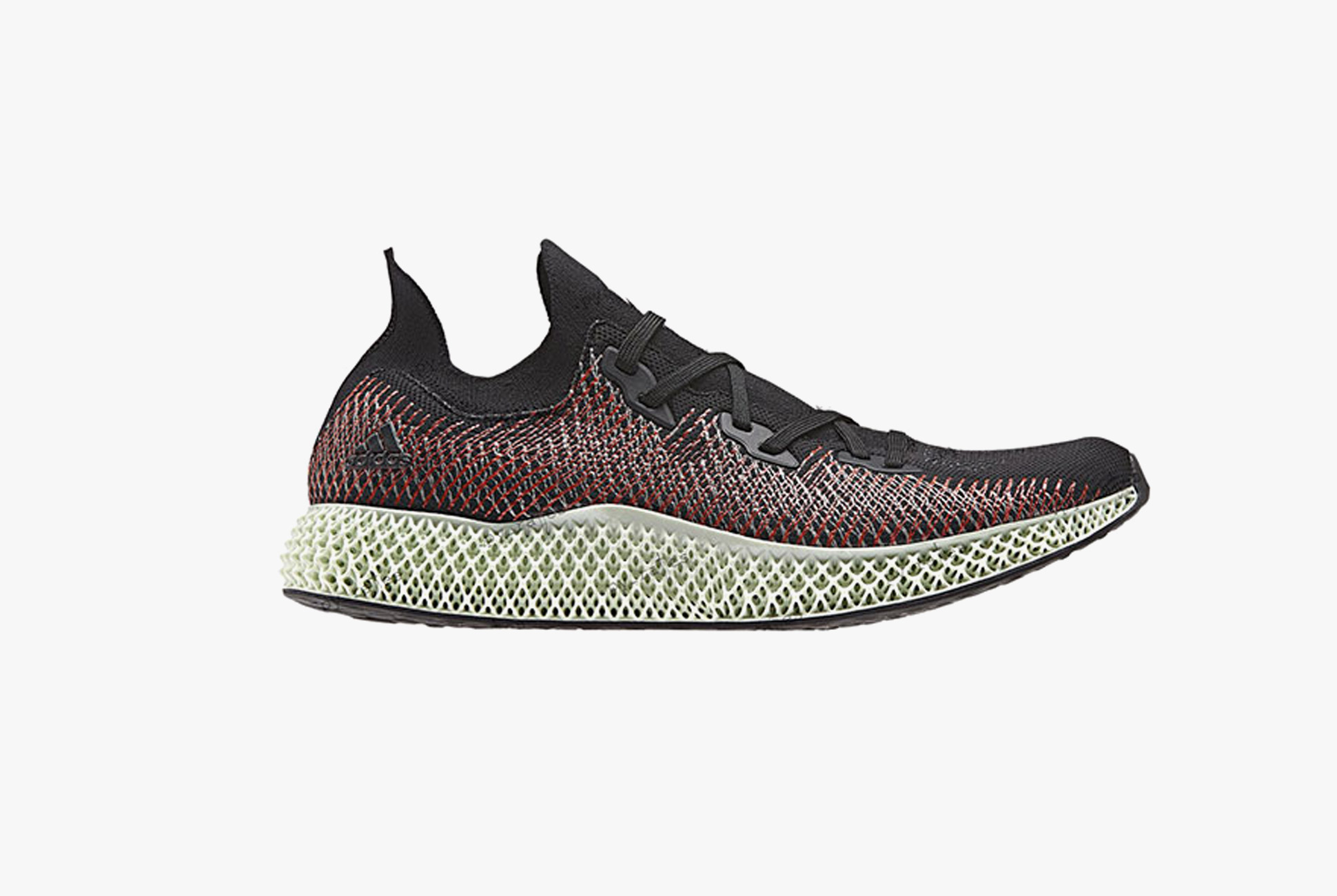
Adidas AlphaEdge 4D


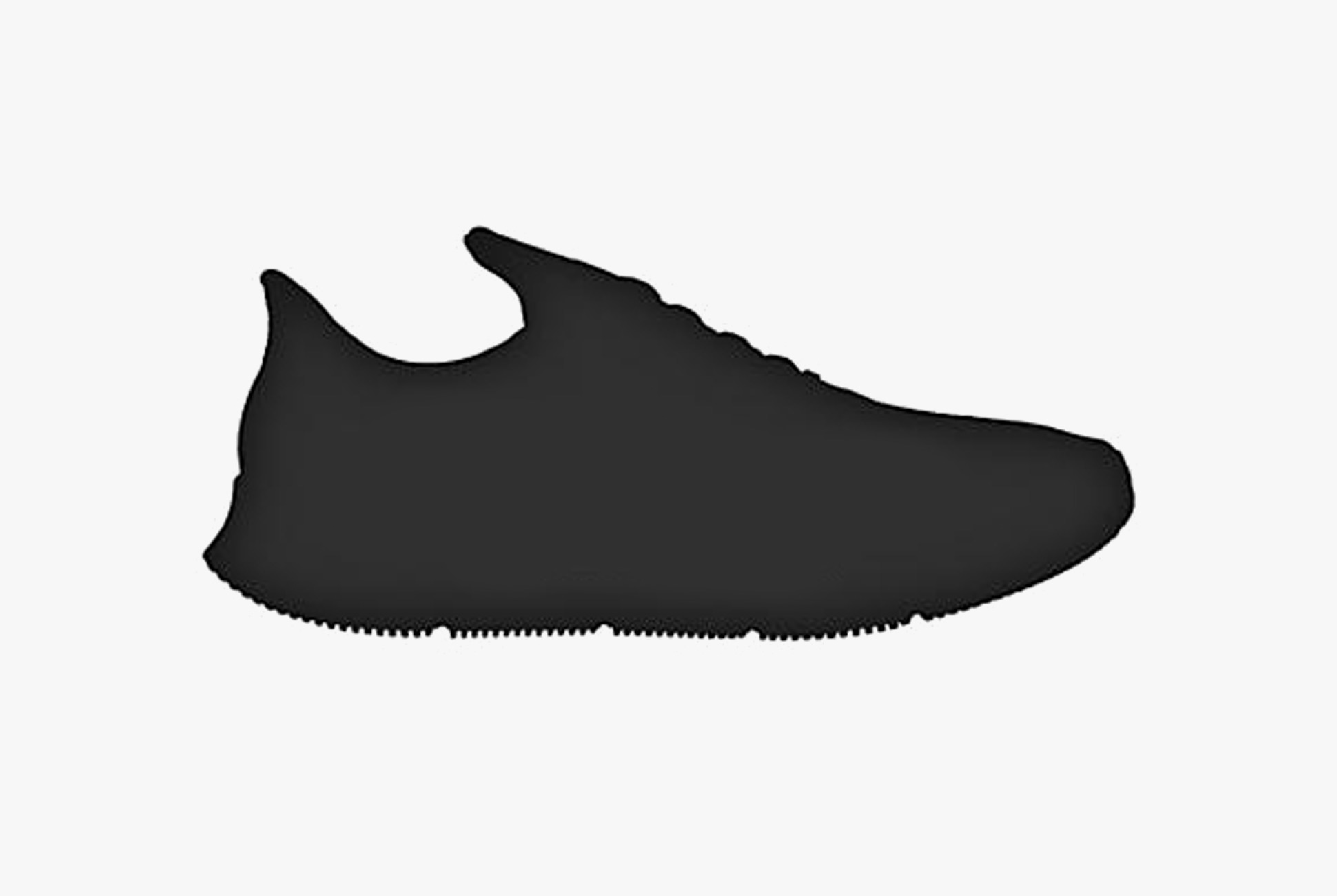
When I first saw the silhouette of the forthcoming Adidas AlphaEdge 4D, I was smitten. The newly updated shoe is about as innovative as you can get, thanks to its 3D printed midsole. It’s an interesting direction for Adidas, given that most brands have been releasing new foams over the fast few months. I would assume the new midsole in the AlphaEdge feels drastically different than foam, but who knows. I’ve been running in Altra’s Escalante and One V3, but the latest innovation from Adidas could be the shoe to bring me back to “Die Weltmarke Mit Den 3 Streifen.” — AJ Powell, Assistant Editor


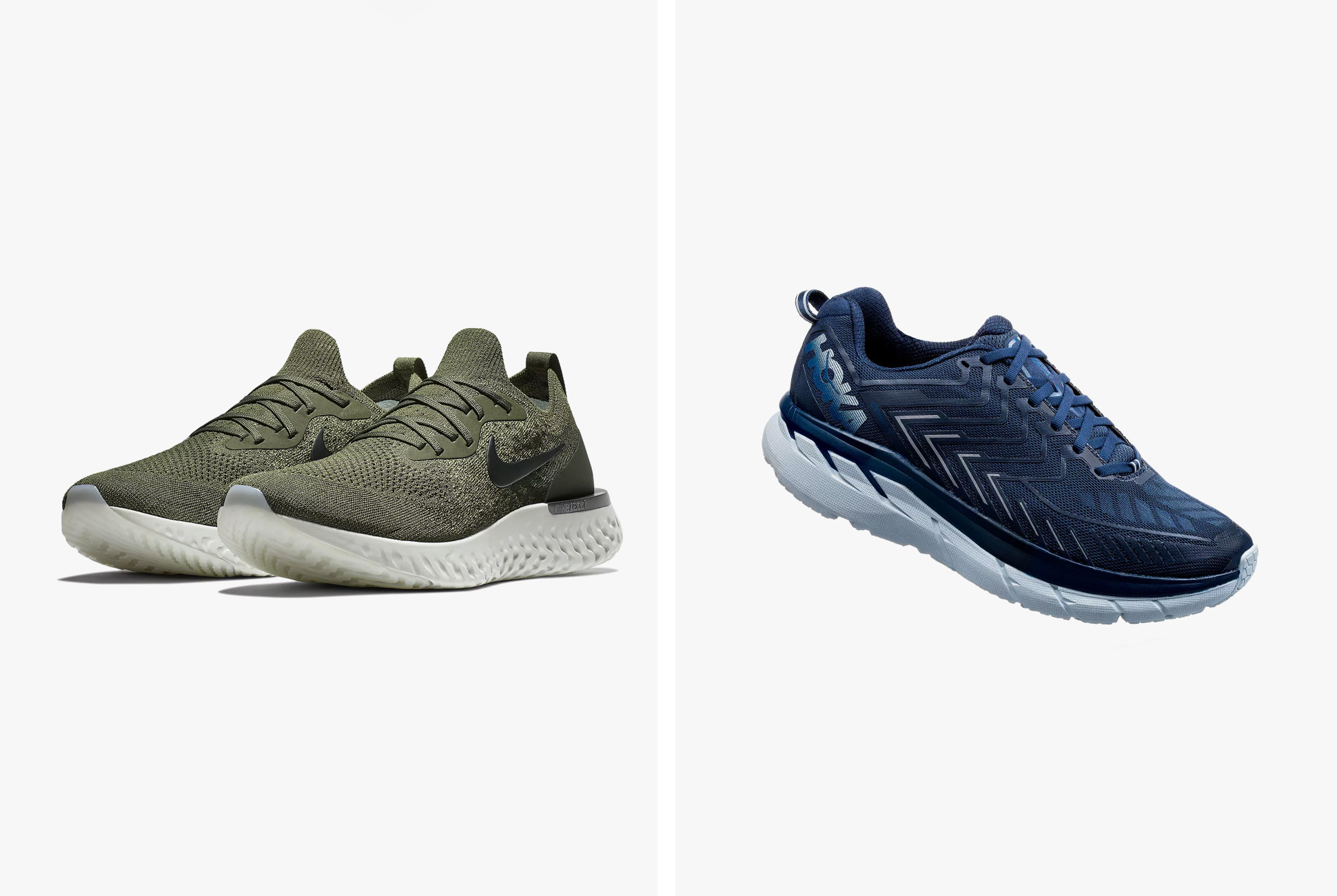
If you’re looking for something similar, but the pick above isn’t quite right, try these alternatives: Nike Epic React Flyknit ($150) | Hoka One One Clifton 4 Outdoor Voices ($140)

Nike Pegasus 35

Before the Nike Epic Reacts came along, I was a big fan of the Air Zoom Pegasus 34s. Now Nike is gearing up to launch a new iteration of the shoe, which post-React and post-4%, I’m really excited to see and take to the roads. There’s not much out there about them, but there’s definitely some speculation about how fast these new kicks will be. — Meg Lappe, Staff Writer

If you’re looking for something similar, but the pick above isn’t quite right, try these alternatives: Nike Epic React Flyknit Volt Glow (May 10) | NikeLab Zoom Fly SP (June 8)

Adidas NMD_R2

Normally, I’m not one for brightly-colored shoes, especially hues that might mistakenly be identified as salmon. But damn it Adidas, you’re sending me spiraling into an identity crisis. I can’t explain why I’m so drawn to the forthcoming NMD_R2 — maybe it’s the breathable woven upper or the Boost foam I know to be great, but then again maybe it is the color after all. I won’t admit to it, but I will look forward to slipping into a pair of these this summer. — Tanner Bowden, Associated Staff Writer


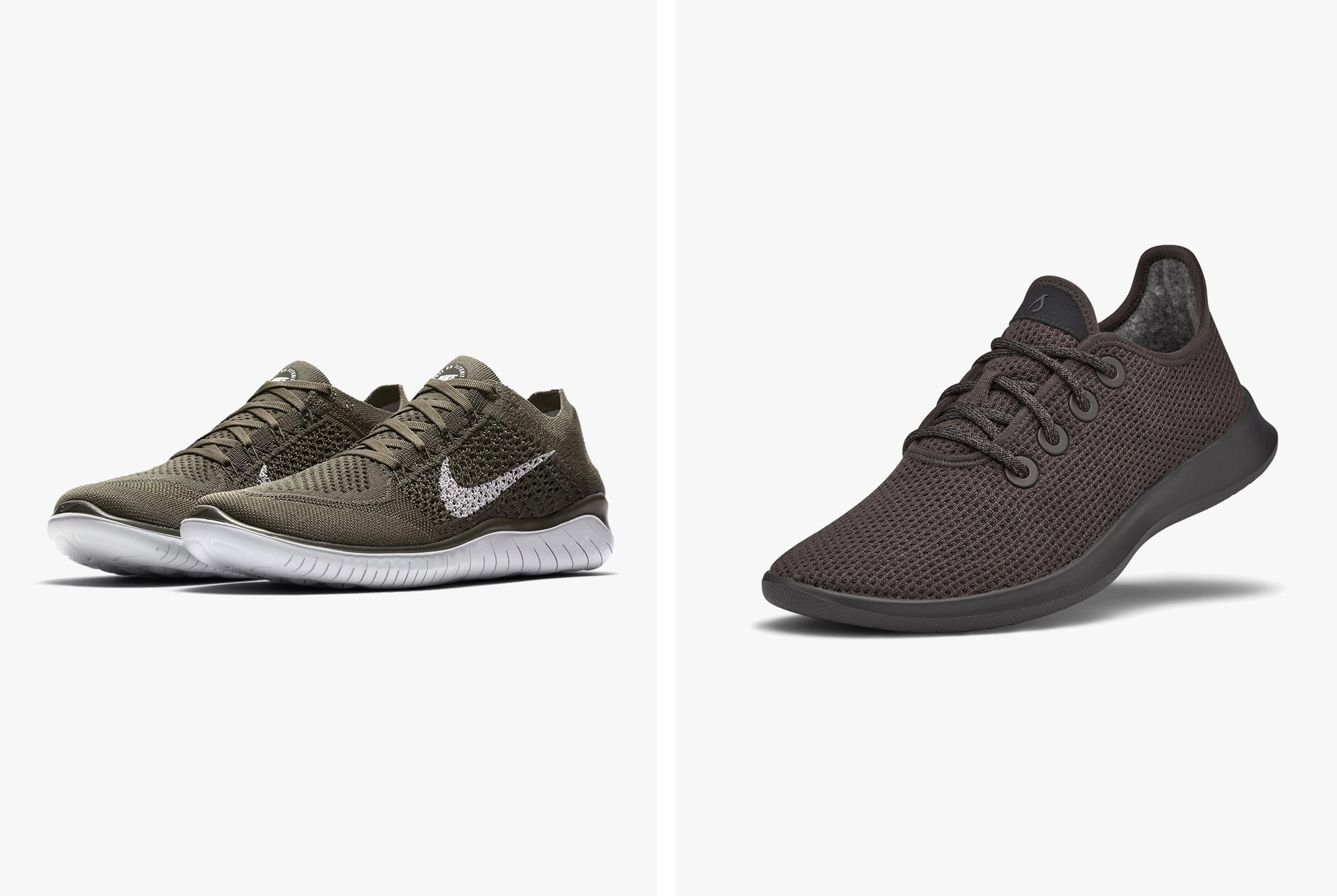
If you’re looking for something similar, but the pick above isn’t quite right, try these alternatives: Nike Free RN Flyknit 2018 ($120) | Allbirds Tree Runners ($95)
Note: Purchasing products through our links may earn us a portion of the sale, which supports our editorial team’s mission. Learn more here.

Why Mountain Bikes are Leading Road Bike Innovation

The 90’s brought a lot of good, bad, and forgettables — Sony Playstations, Google, reams of flannel, and an earworm from Chumbawamba. But it was also a watershed of innovation in mountain biking. Oddly, we are just now seeing some of these innovations spill off the dirt and on to the road, which had us asking, after 20 years, why is it that Roseanne is back on ABC, but we are only now just starting to see some of cycling’s most innovative trends embraced by road cycling? Has road cycling innovation hit a dead end?

But let’s backpedal a bit, and follow the technology, because the answer to that question may lay in a burgeoning new sport.

“In the 1970’s, I would go to the local dump scavenging for old paperboy bikes, braze up the broken parts and fix them up for exploring Mount Tam,” said Steve Potts. Potts has been making exquisite titanium frames and components for almost 40 years. His roots tunnel deep in the Marin County mountain bike scene, the cradle of mountain biking. “Rims and spokes were heavy, the components were marginal for the type of riding we were doing,” said Potts. “We made our first bikes out of a mishmash of parts that were available.” Potts and his friends soon started building their own components for their “ballooner” bikes. The band of eccentric, DIYers started building their own hubs, headsets, brakes and bearings. The sport was young and direction was malleable. The magic they spun in that garage injected a vital dose of innovation that sparked an entirely new sport. That backyard garage? Yeah, that became Wilderness Trail Bikes, who at the time, owned more cycling IP than anyone else in the two-wheel world and today makes some of the finest mountain bike parts and accessories available on the market.

Fat tires, stout bottom brackets, and knobby tires; Mountain bike 1-dot-0 grew slowly around a clunky steel frame until 1990, when Rockshox and Manitou each debuted a fork that looked like it was stolen off a motocross bike and jammed up the head tube of a rigid frame. “From a technology standpoint, suspension reinvented how people look at bikes in both design and the ride,” shared Eric Schutt, marketing manager at Hayes Performance Systems. Floating over bumps and bombing rock gardens, suspension elevated the average ‘hold my beer’ rider to full-blown superhero status.

The introduction of suspension travel touched nearly every part of the bike, and a flood of innovations shortly followed. And then, in 1997, when bike disc brakes hit the scene, the sport was born yet again.

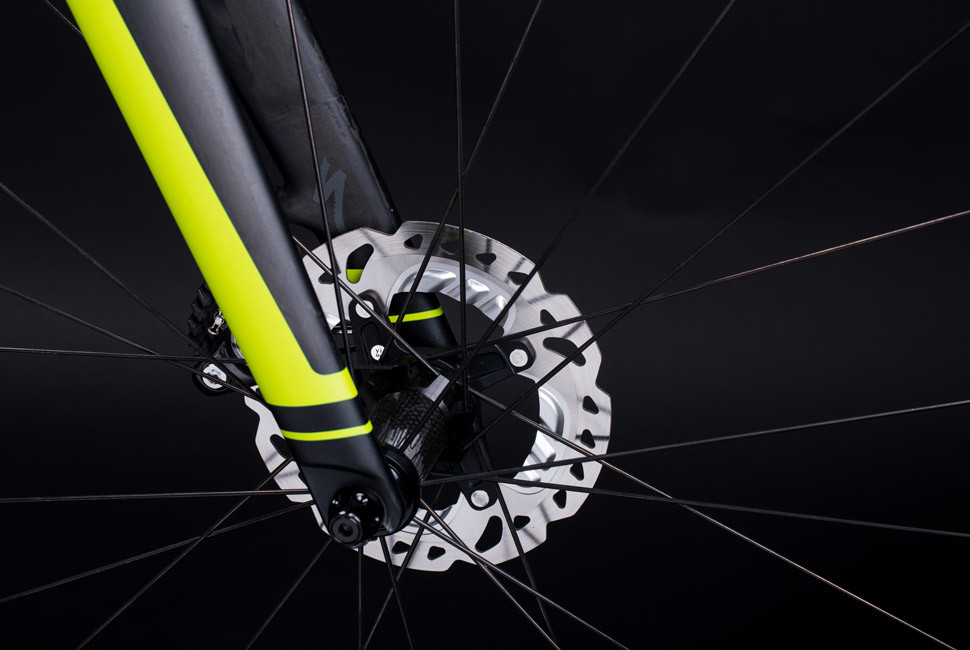
Rim brakes function by pinching brake pads on a wide rim, which essentially boils down to a lot of squeezing, collecting mud, and suspicious stopping power. On a good day, you could burn through a pair of brake pads in a single ride. Mountain bikers were won over by disc brakes’ superior ability to grip in wet and grimy conditions, but also because disc brakes allowed riders to carry their speed through turns much more efficiently than rim brakes ever could.

Discs still had their faults though. They were heavy, and the monster grip of the disc brakes caused a high rotational torque on suspension forks that were destroying quick release skewers. The grip was so strong, that it could yank a quick release out of a vertical dropout. Thru-axle systems evolved to solve both dilemmas, stiffening the forks while locking the wheels in place. A commitment to disc brakes implied adopting thru-axle systems.

The Specialized Tarmac disc takes all that mountain riders loved about discs and brings it to the road.

If suspension was a game changer in mountain biking, disc brakes were the gateway drug for road cycling to (reluctantly) accept mountain bike trends. Moving the brakes off of the rim allowed suppliers to use lighter materials (read carbon), shaving ounces (read seconds) off of wheelsets. Hence rims were no longer forced to be squeezed between the brake calipers and could relax from 23mm to 25mm, 28mm, 32mm or more. Wider tires put more air between the rider and the road while yielding a smaller footprint. In other words, disc brakes allowed extra tire girth that is both more comfortable and faster on the road.

Walk into any bike shop today and you’ll be hard-pressed to find a worthwhile mountain bike that features rim brakes. “Road bikes aren’t far behind,” shared Michael Zellmann, Senior Public Relations Manager at SRAM, the first to bring disc brakes to the road five years ago. “Sales of road disc brakes grew from 40% to over 60% from 2017 to 2018 and are expected to grow even more in the future.” Truth to word, Specialized announced that it will no longer be selling rim brakes on stock bikes in 2018. The disc brake and thru-axle movement appears to be here to stay on the road.

But disc brakes on road bikes aren’t the only innovation the aerodynamic-focused road bike designers are nicking from their fat-tire counterparts. Italian component manufacturer Campagnolo recently released a 12-speed cassette designed specifically for road bike applications. 12-speed cassettes became popular in the mountain bike industry with the launch of SRAM’s Eagle 1×12 groupset in March of 2016. While it’s too early to tell if the technology will be adopted in the way that road disc has, it’s another clear example of mountain bike designers setting the trend.

Why hasn’t road cycling seized on innovation in its own world? It’s hard to ignore that on the road, tradition is king, and that the UCI (or Union Cycliste International, professional road cycling’s governing body) has played more than a small part in stifling innovation. “It’s a conservative market” Zellmann continued, “you can’t simply retrofit your old bikes with new technology. Big innovation often requires taking the plunge to buy a brand-new bike and master new skills.”

It’s also important to remember mountain biking grew out of its own creative crucible; the sport had a blank canvas to paint and they defined their own future. And then there was Floyd, the Festina affair — followed by Lance — the late 90s and early aughts stripped some of the slickness off of road cycling.

The Open UP is blurring the lines between mountain and road bikes.

10 years later, the Tour still reigns king, but road riding has been reinvented by the people through the growing popularity of cyclocross, gravel and adventure riding. While the traditional road ride would be quarantined to the pavement, nowadays a typical road ride may start out on tarmac but toss a patch of dirt or gravel under the rubber before sewing it up back on the road.

Leading this new trend are designers like Gerard Vroomen, director at 3T and Open, who has seized on the opportunity to develop new bikes that allow riders to swap out a range of wheelsets – from 25mm road all the way up to 2.1″ mountain bike tires. Vroomen has also taken the 1x (pronounced “one by”) drivetrain and ported it over from the mountain bike and cyclocross world to somewhere many would think it doesn’t apply: pro tour aero road bikes. The Vroomen-designed 3T Strada is currently being ridden in the pro tour by the Aqua Blue Sport team and features not only soon-to-be-standard road disc brakes, but also a Sram Force 1×11 derailleur on a very aerodynamic road bike frame.

But before you label road bike designers as the only ones looking across the aisle, mountain bike design is worth a closer look as well. “The flow of technology isn’t all one directional,” said Zellmann. “Electronic shifting and power meters are being adopted by the mountain bike scene.” New staples in the road world are slowly backwashing into the muddy waters of mountain biking.

Which just goes to show that an abundance of technology benefits everybody and creates new opportunities for people to fall in love with cycling all over again.

This Service Will Land You the Campsite of Your Dreams, Last Minute

Unlike staying at a hotel, camping is about making a purposeful journey into the unknown and uncertain. Will the rain fly endure the storm? Will the stove give out at the last minute? These issues are part of the experience of camping, and they contribute to its final reward. Booking a campsite only to find that it’s full for the season, however, is not. And because different parks and government services manage campgrounds, there is no Expedia or Google Flights to send you an alert when a site suddenly becomes available.

Campnab is a new online service designed to help with the problem, and the process it uses to do so is simple. Enter the park or campground you’re looking for, choose an arrival date and the number of nights you’d like to stay, and input your cell phone number; Campnab will send you a text when a cancellation occurs, and a campsite opens up.

Campnab doesn’t use a StubHub business model to re-sell campsites, it doesn’t hoard sites to market to its users, it doesn’t make bookings for you and it doesn’t skim money from what the parks receive (it does charge a small fee though). It merely keeps a watch on the campgrounds in its growing database and alerts you with a text as soon as a cancellation occurs. Like some Michelin-starred restaurants, particular notable campsites can be challenging to get into if not booked many months in advance — Campnab aims to help you finagle your way in.

Today in Gear

The best way to catch up on the day’s most important product releases and stories. Read the Story

The Latest Collection from Adidas is an Ode to the Outdoors

Outdoor gear is everywhere. In 2016 the outdoor industry, now a measured segment of the United States’ GDP, contributed $373.7 billion to the economy. Considering that, it’s no surprise that The North Face has become as popular in urban centers as it is at Everest Base Camp and that gear stores can be found in trendy urban neighborhoods like Manhattan’s SoHo. It shouldn’t be surprising either then, that some brands not typically associated with camping and hiking are taking note, and creating new products that align with the burgeoning culture.

Adidas is the latest to join that list — its new Atric Collection is decidedly outdoorsy. Adidas has already been producing rugged hiking shoes and boots, but those products are outdoor-dedicated with a hint of street style, the Atric Collection is just the opposite. Among the new products is a range of different sneakers designed with knit uppers, but there’s also a jacket and backpack that look like they could’ve been unearthed from a trunk in your grandfather’s off-grid cabin.

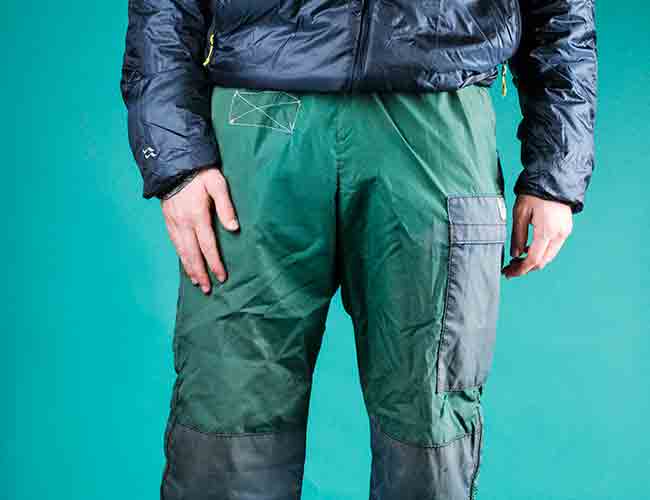
Another piece, the Atric Pants, takes design cues directly from the National Outdoor Leadership School’s iconic and retro wind pants. As a whole, the collection represents the continuing blurring of the line between outdoor gear and urban apparel.

Why These Ugly, Non-Waterproof Pants are the Pinnacle of Outdoor Gear

They’re like hammer pants for hikers. Read the Story

Your Mom Will Appreciate This New Knife More Than You

In celebration of its 120th anniversary, renowned knifemaker KA-BAR is opening up its custom knife shop, called State and Union, with a limited release of a new blade called the Tuko. KA-BAR has earned clout among outdoorsmen, survivalists and devotees of tactical design by producing practical and utilitarian fixed blades and folders designed with everyday carry in mind. It’d make sense for the company to celebrate its 120th birthday with a similarly-categorized EDC knife, but that’s not what KA-BAR did. Instead, the Tuko is an outdoor chef’s knife.

To create the Tuko, KA-BAR tapped into the expertise of Ethan Becker. You may not recognize that surname, but chances are your mother will — Becker’s grandmother, Irma Starkloff Rombauer is the original author of The Joy of Cooking, which is perhaps the most well-known cookbook ever published. Authorship of the book — it’s periodically updated — has since been passed through generations to Becker himself, who studied cooking at the famed Cordon Bleu in Paris.

Becker’s background in both cooking and knifemaking make him an exceptional choice to create KA-BAR’s first food-focused blade. The Tuko, which draws its name and shape from all-purpose Japanese chef’s knives called santoku, is a 9.9-inch fixed-blade designed for prepping food at both home and camp. Its blade, which is just over five inches, is flat-ground S35VN stainless steel that’s leveraged with a bone linen micarta handle. The Tuko dutifully represents the crossover of outdoors and at-home that Becker has cultivated in his work, and is a fitting first release for KA-BAR’s custom shop.

All the Knives We’re Loving Now

Gear Patrol staff members use knives to open boxes and prep food on a daily basis. Here, we share the blades that have earned a permanent home at our desks. Read the Story

This Is the First E-Bike to Fully Leverage Integrated Tech

E-bikes are are increasing in popularity faster than cities’ and trail systems’ ability to cope with them, and despite that, the bikes themselves haven’t made the same leaps. E-bikes are often clunky machines that pit the “e” factor as more of a last-step add-on than a fundamental design element. Batteries and motors disrupt the timeless design of the bicycle; plus, they’re heavy.

Some companies are catching on though, like Cowboy. The start-up has built the first e-bike to fully realize the capabilities that integrated tech can offer. At the core of any e-bike is a battery — Cowboy conceals its 252 WH, key-secured fuel cell in the seatpost, leaving the rest of the frame svelte and uncluttered. The battery can be charged in 2.5 hours, and riders will know exactly when that needs to happen thanks to a convenient display integrated into the top tube. The battery is also small and lightweight (about 3.75 pounds), making it easy to carry for those wary of theft.

The Cowboy bike is pedal-assist, which means the motor will only kick in when the rider is pedaling. The drivetrain uses a carbon belt instead of the classic chain, allowing for easy maintenance. The brake cables are routed internally through the frame, and front and rear lights have also been incorporated. More notable though, is that while nearly every e-bike weighs in at around 50 pounds, the Cowboy is just 35.
No e-anything would be complete if it didn’t come with a Bluetooth-enabled app, and the Cowboy’s provides the most utility of any e-bike available. Basic and predictable functions such as a display showing speed, distance and duration are enabled with the app, but there’s also built-in navigation, light controls, and a “Find My Bike” feature that can also be used to declare it stolen.

The Cowboy bike is available for ~$2,136.

Today in Gear

The best way to catch up on the day’s most important product releases and stories. Read the Story

With These Pants, You’ll Always Travel in Comfort

The Remedy for Getting Stuck with the Middle Seat

With These Pants, You’ll Always Travel in Comfort


We cope with enough hassles — delays, low-quality/high-cost food, invasive row mates — and make enough concessions when traveling that to be uncomfortable in one’s own clothing is unacceptable. But while the days of dressing up in one’s Sunday best for a trip through the airport are over, sweatpants and pajama bottoms are inadmissible travel attire — but comfort can still be achieved.

The minds working at Roark have just created the perfect pant for the occasion. The Layover Stretch Travel Pant responds to the issue of comfort with its stretchy blended nylon and cotton fabric, an unrestrictive drawstring waist closure and a rear mesh panel for added airflow. The ins and outs of the travel process were considered too, so the Layover was equipped with extended-zipper front pockets that are spacious enough to contain essentials such as sunglasses, a phone and keys as well oversized boarding passes and of course, your passport.

What GP Staff Members Can’t Travel Without

What we pack is as varied as the adventures we call “work.” Read the Story

The Best Gifts for the Adventurous Grad

Welcome to another installment of Staff Picks from our Outdoors and Fitness team. This week, we selected our favorite gifts for the adventurous grad. Have something you think we should check out? Or just want to say hi? Drop us a line at outdoor@gearpatrol.com.

Suunto Spartan Ultra

Every adventurer needs a way to track their adventures. Whether they are hiking, running, swimming or traveling, having a GPS, heart-rate tracking watch is a great way to keep a log of all the activities they do. The Suunto Spartan Ultra is the cream of the crop. It features a durable outdoor-grade color touchscreen, barometric altitude readings, a 100m water resistance rating and
GPS/GLONASS route navigation. Good luck convincing them not to take that gap year now. — AJ Powell, Assistant Editor


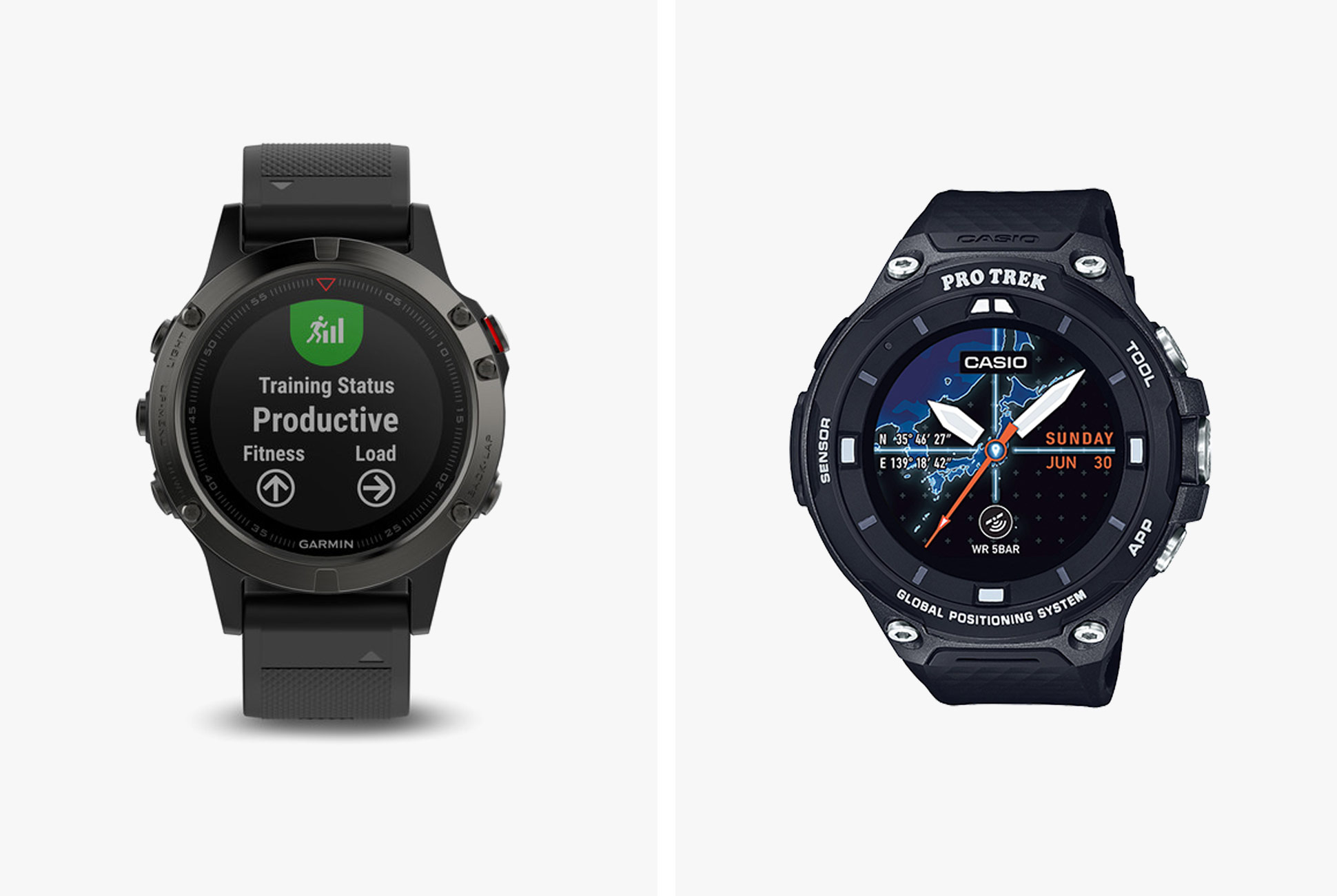
If you’re looking for something similar, but the pick above isn’t quite right, try these alternatives: Garmin Fenix 5 ($550) | Casio Protrek ($500)

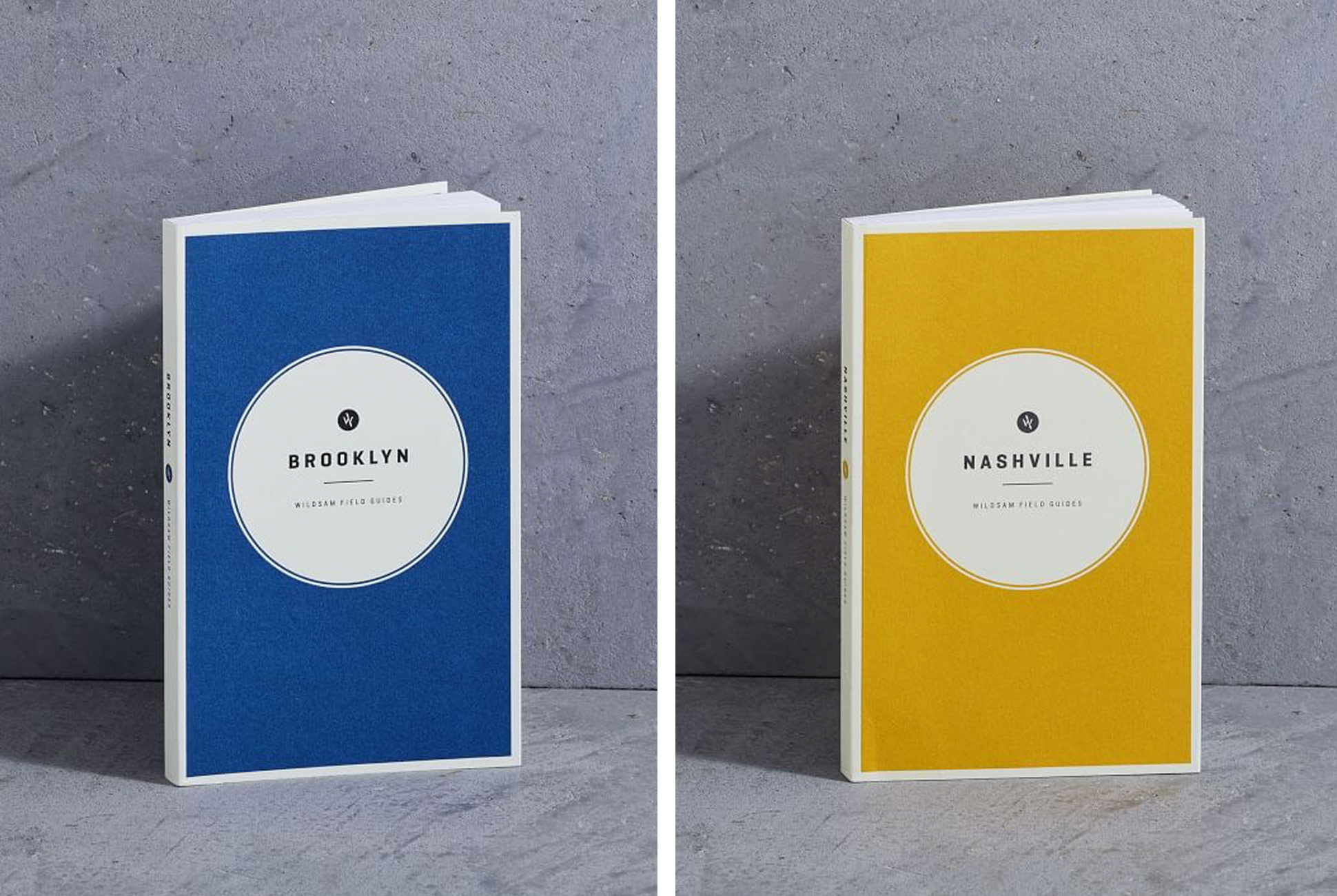
Wildsam Field Guides

When I graduated college, I couldn’t wait to explore every city in the US. From New York to Boston to Austin to San Francisco, I wanted to go everywhere. When I had the chance to visit each city, I definitely didn’t look like a tourist, which can be hard to do when reading from a very obviously titled guidebook. That’s what I love about these books — there’s no obvious ‘I’m Visiting’ sticker on the front — so I can pretend to blend in. Each city guide contains poems, essays and recommendations by local experts, uniquely curated to give you a better feel for each location and leave you feeling like a local at the end of your 36 hours there. — Meg Lappe, Staff Writer


If you’re looking for something similar, but the pick above isn’t quite right, try these alternatives: Lost in Guides (~$15) | Wallpaper* City Guides ($12)

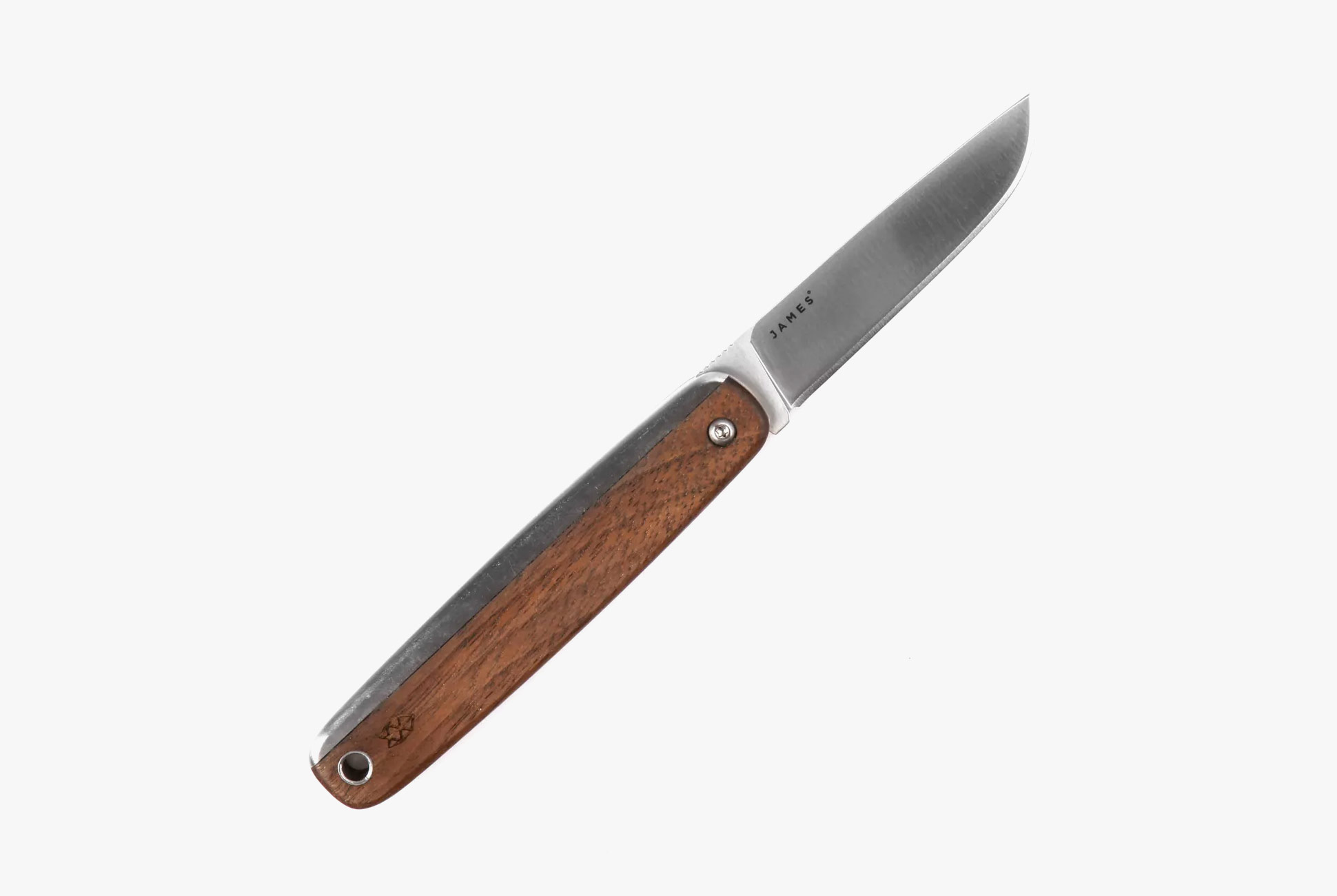
The James Brand County Pocket Knife

Graduation is a momentous occasion; a day that’s come to represent the transition into adulthood. And while the details of the actual ceremony will likely be forgotten, the day will be remembered forever. A good graduation gift will last just as long. A pocket knife is a good, symbolic choice, and the James Brand’s County is an elevated take on a classic blade. It’s built with a straight, plain-edge blade and a clipless handle made of wood and stainless steel. That’s pretty much it — no flash or gimmick, but plenty of timeless and understated style that’ll make it worth passing down to another grad generations later. — Tanner Bowden, Associate Staff Writer


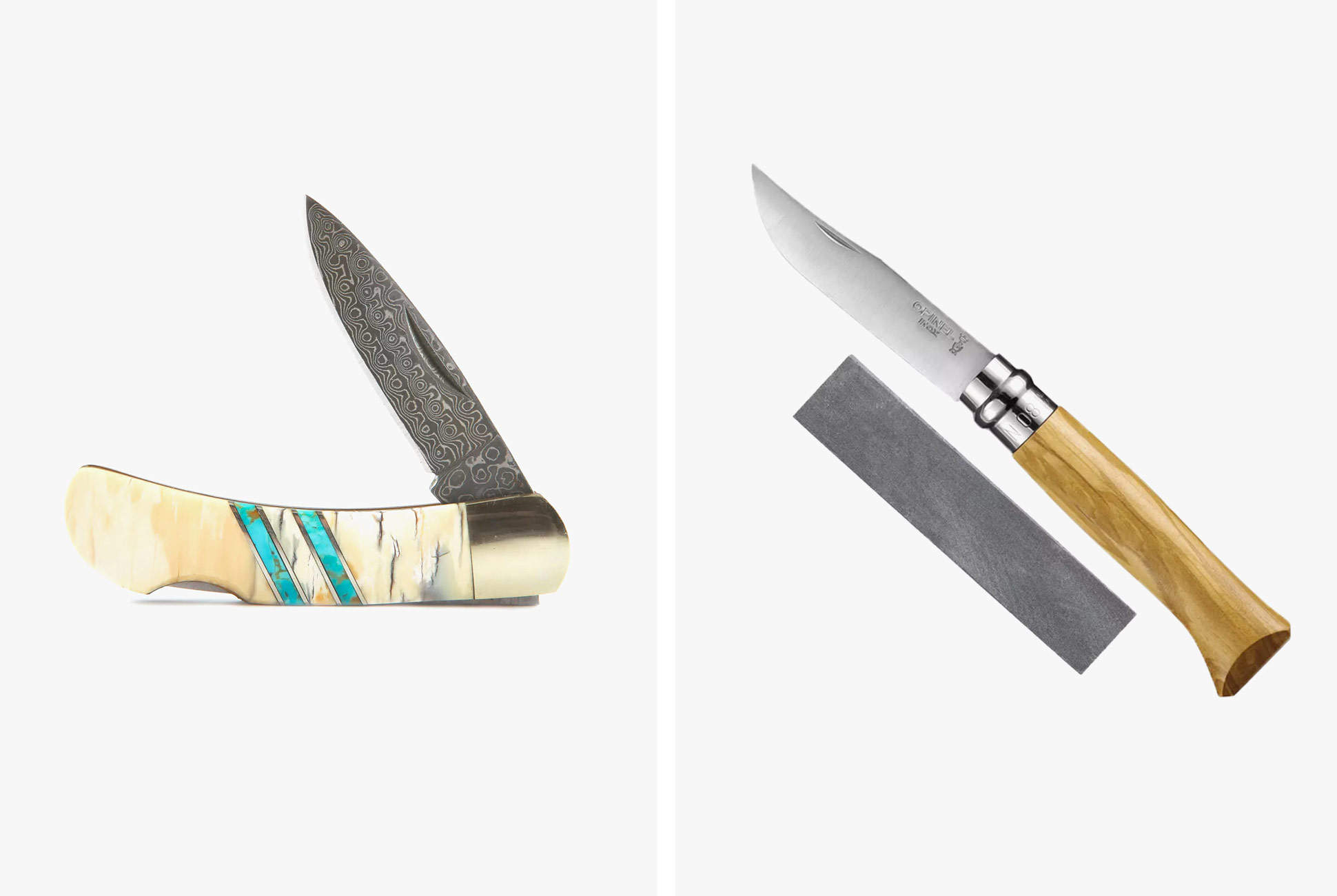
If you’re looking for something similar, but the pick above isn’t quite right, try these alternatives: Opinel No. 8 Olive Wood ($35) | Santa Fe Stoneworks Wooly Mammoth Tusk and Turquoise ($160)
Note: Purchasing products through our links may earn us a portion of the sale, which supports our editorial team’s mission. Learn more here.

Did a Ski Brand Just Make the Perfect Travel Bag?


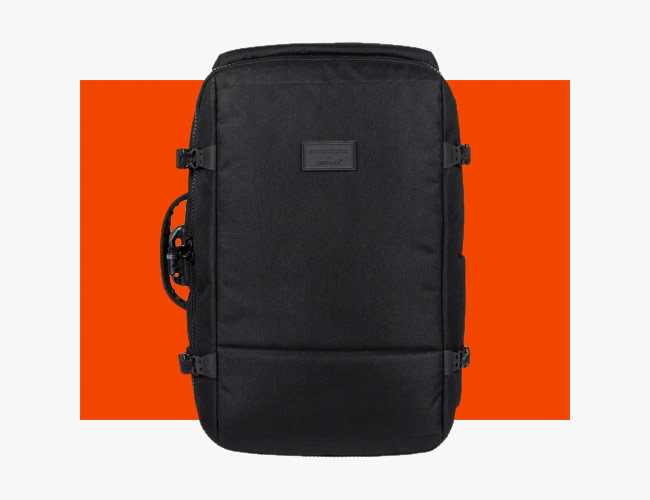
Rocky Mountain Underground, or RMU for short, is a ski company, but its just-launched BRFCS is a contender in the realm of adventure travel bags. The BRFCS — fill in the vowels for pronunciation — is the Colorado brand’s second foray into outdoor and travel and builds on the success of its Core Pack, an all-purpose backcountry adventure backpack.

The BRFCS is a carry-on compatible bag with a 35-liter base capacity that expands to 50 liters. RMU outfitted its interior with compartmentalized storage for clothing, (there’s enough room for ski boots), and smaller zip pockets for necessities and essentials; there’s also a false bottom. The BRFCS also features a padded laptop sleeve and a removable compression strap with hardware that doubles as a bottle opener. It can be carried like its namesake, with backpack straps and a stow-away hipbelt or as a shoulder bag.

The BRFCS is available for preorder now and will ship on June 15.

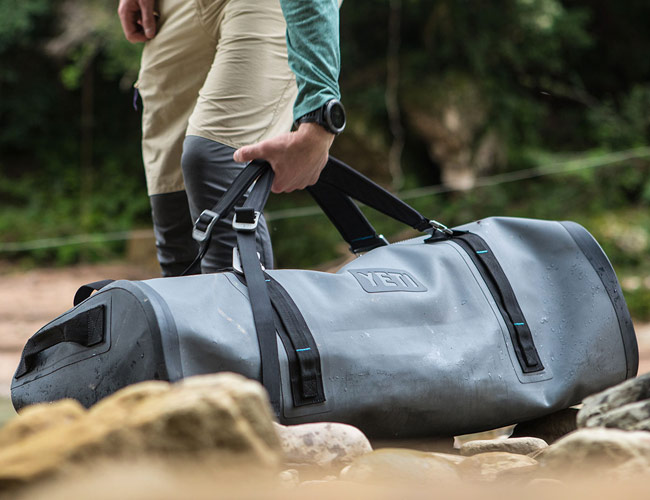
The 10 Best Rugged Travel Duffels of 2018

No matter where you’re traveling to, you’ll need a bag, and there’s nothing more functional than a cavernous, weatherproof, backpack strap-equipped duffel. Read the Story

This Is What You Need in Your Mountain Bike Repair Kit

You’re seven miles up a narrow valley and nearing the welcome end to hours of steady climbing when you hear a sharp thwack, followed by a hiss — your front tire has just gone flat, you don’t have a spare and there’s no cell service; you do not want to be here.

Next to everything else that might go wrong with a bicycle on an extended ride, a flat is a relatively minor issue that can be easily repaired trailside, if the right tools are at hand. If they aren’t, a quick fix can turn into a long walk. Well-prepared riders will perform a tune-up regularly and clean their bikes after every ride. For the less-diligent, a well-stocked repair kit will suffice.
Professional mountain biker Rebecca Rusch has been on plenty of long rides and experienced enough mechanical failures to know what makes a fully-stocked repair kit. One of her recent journeys, a 1,200-mile journey through the jungles of Vietnam, Laos and Cambodia along the Ho Chi Minh Trail required the utmost degree of preparedness — “We brought with us a lot of extra bearings, o-rings, stuff that you would never be able to find in Laos and Cambodia. Before I go out on these big adventures, I replace every bearing in my bike, my fork got a total rebuild — everything is in pristine condition,” says Rusch.

That preparedness went a long way; she and her riding partner, Huyen Nguyen, completed the 1,200 miles of rough road and only had one repair: a flat tire.
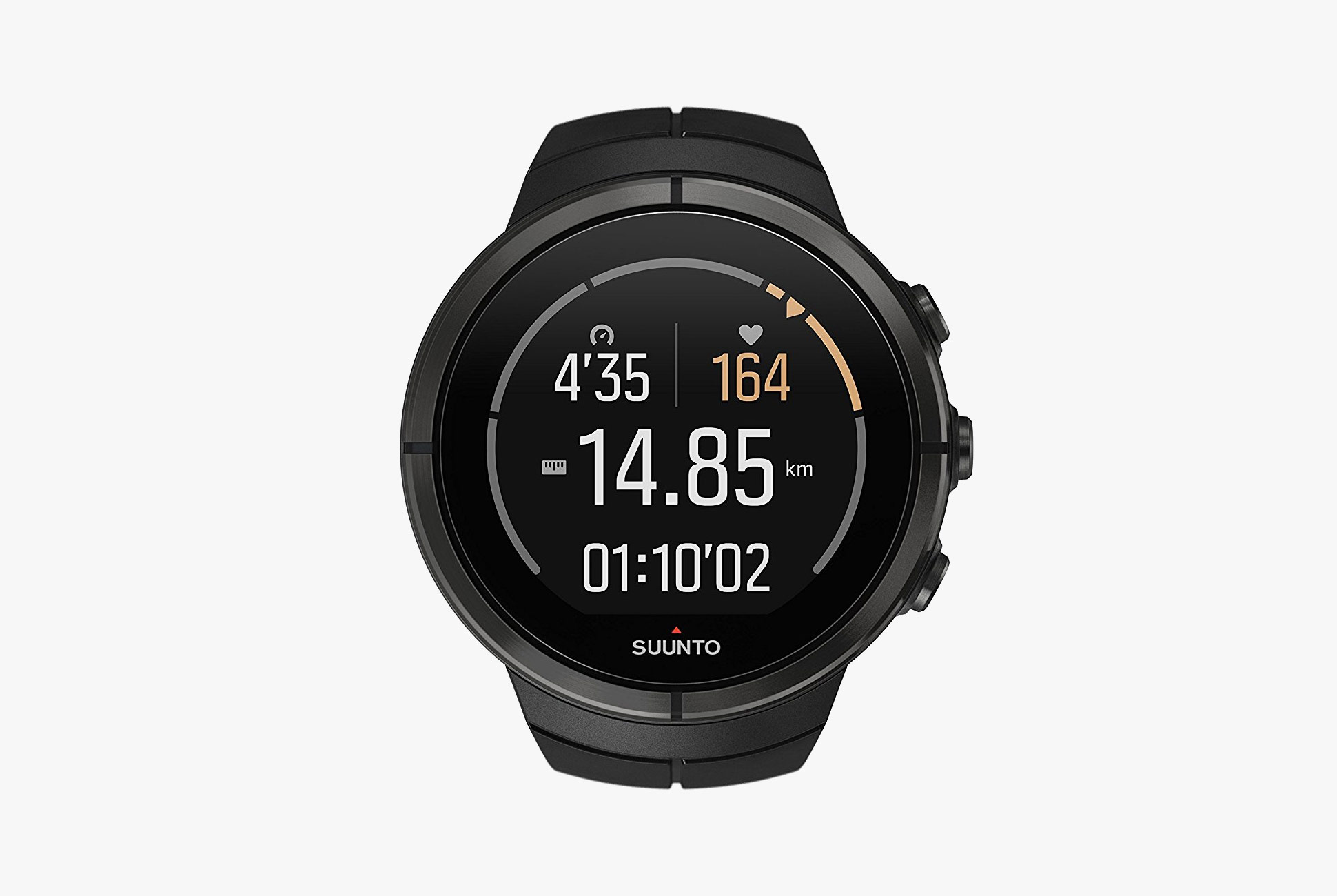
Even though she didn’t have to use it frequently, the repair kit was there. “I really honed in on the way I was carrying stuff and what I was bringing,” she says. “It forced me to dial in my kit. I’ve taken what I used there, and what I learned there, into my next adventures.”
Those adventures run the gamut from a self-supported 300-mile bikepacking race in Arizona to the hours’ long rides accessible from her doorstep in Ketchum, Idaho. The repair kit is a constant, and it doesn’t change much even when the distances differ: “It’s pretty much the same each time around,” says Rusch.

You can watch the documentary about Rusch’s Ho Chi Minh Trail ride, called Blood Road, here.

Photo: Josh Glazebrook Redbull Content Pool

Rebecca Rusch’s Repair Kit Tips

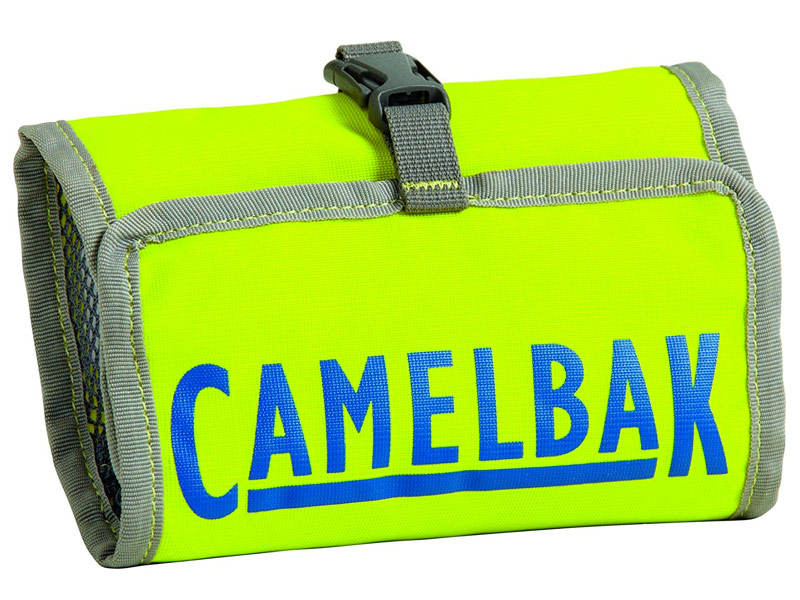
Be organized. “I like having everything be really small and super organized. I put all of my tools in CamelBak’s Tool Roll. It’s got little compartments, and I can separate tire changing stuff in one place, stuff like extra pedal cleats or an extra derailleur hanger in another, and it all rolls up into this tidy pouch. If I do have a repair, I can pull that one thing out and lay it out on the ground and it’s easy to work.”

Don’t rely on others. “People need to recognize that now there are different cassette sizes, so there are different chains depending on what gear you have. A lot of people are like, ‘Oh my friend is always prepared they always have the stuff, I’m not going to bring anything.’ All of the stuff now is very bike-specific, and you have to have your own package of stuff.”

Maintenance is the best prevention. “Prevention is the best medicine, and if you’re taking care of your equipment it’s super key. Bikes don’t just fail. If they’re in really good working condition and you clean them at night, and you’re religious about it, bikes are kind of like cars — they’ll start talking to you if something is getting worn or getting creaky or needs to be replaced.”

Buying Guide

Rusch considers what to bring based on what she calls “dealbreakers” — items and parts that, if broken, could completely divert a ride. Things like an extra derailleur hanger or extra pedal cleats. Here’s everything that she packs in her bicycle repair kit.

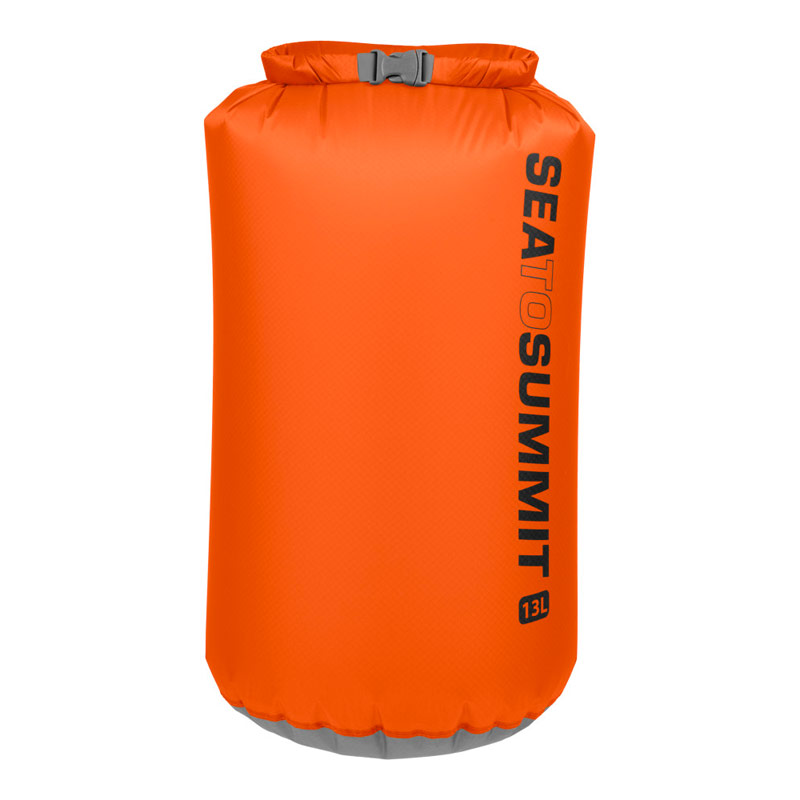
Ultra-Sil Dry Sack by Sea to Summit $12+

Tool Roll by CamelBak $34

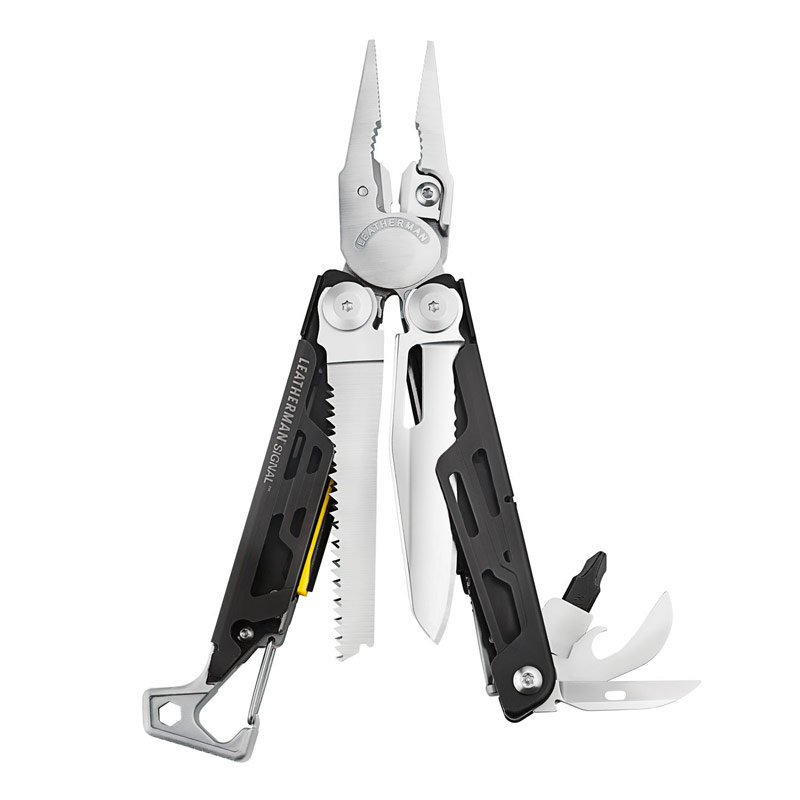
Signal Multi-tool by Leatherman $125

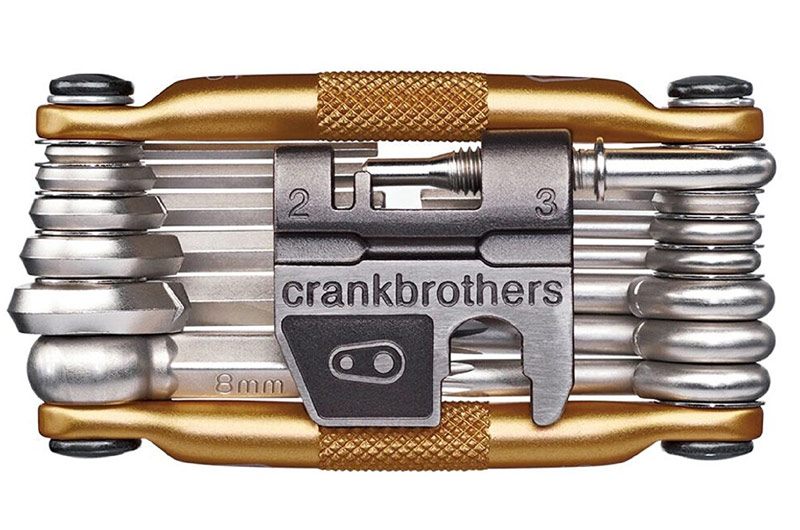
Multi Bicycle Tool by Crank Brothers $24+

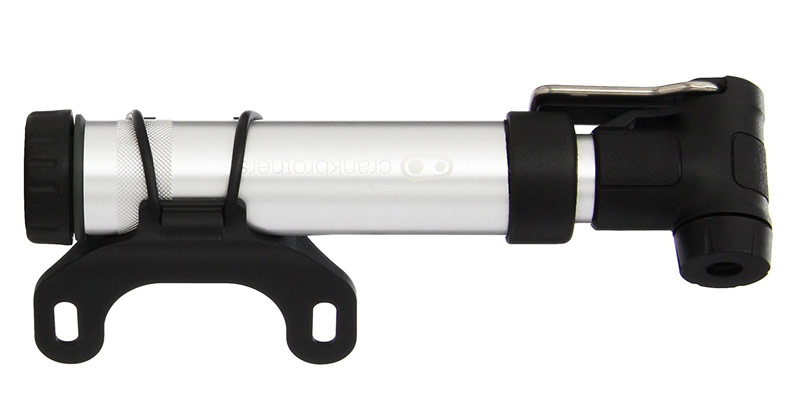
Gem Short Frame Pump by Crank Brothers $18+

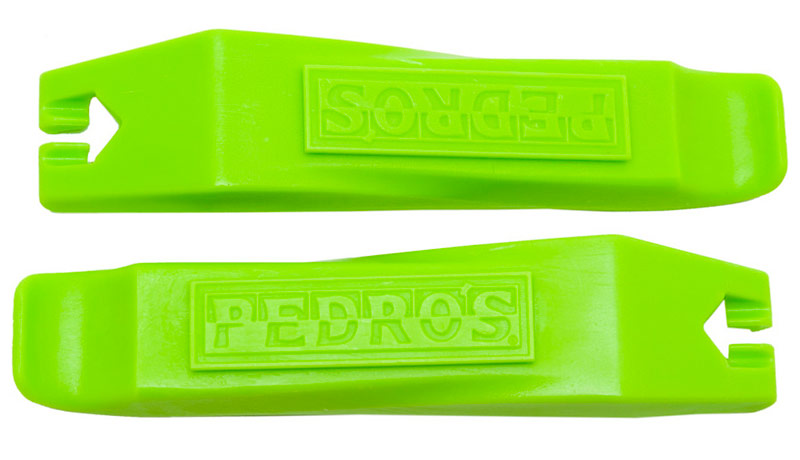
Tire Levers by Pedro’s $5

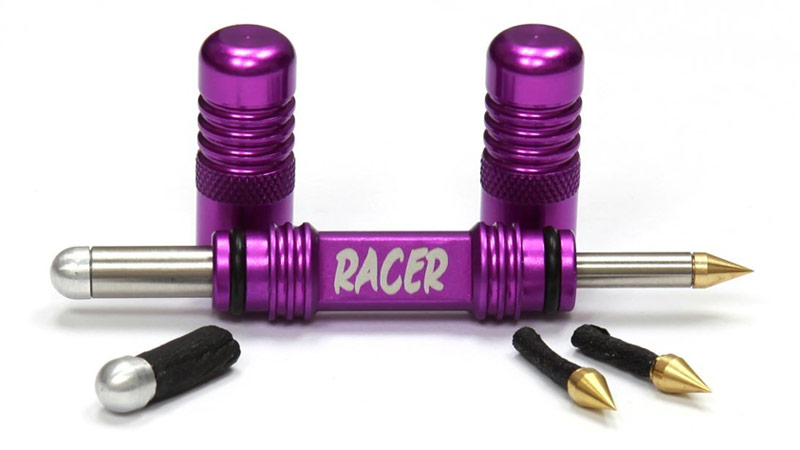
RACER Tire Repair Tool and Plugs by Dynaplug $44

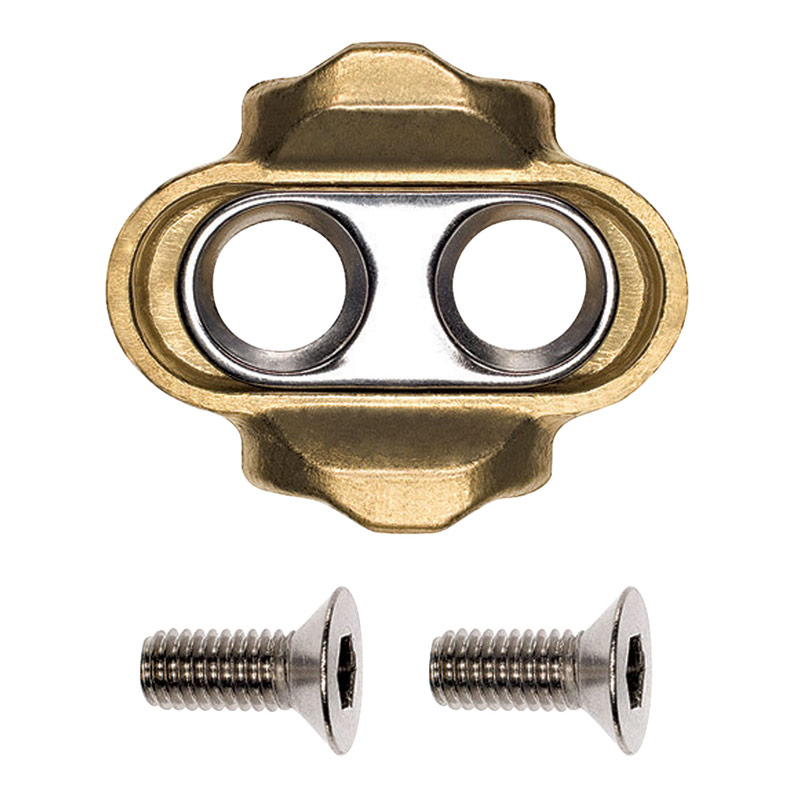
Premium Cleats by Crank Brothers $27
Spare Cleats: This item is specific to Rusch’s setup. If you’re putting together your own repair kit, make sure to buy the item that functions with the gear you already have.

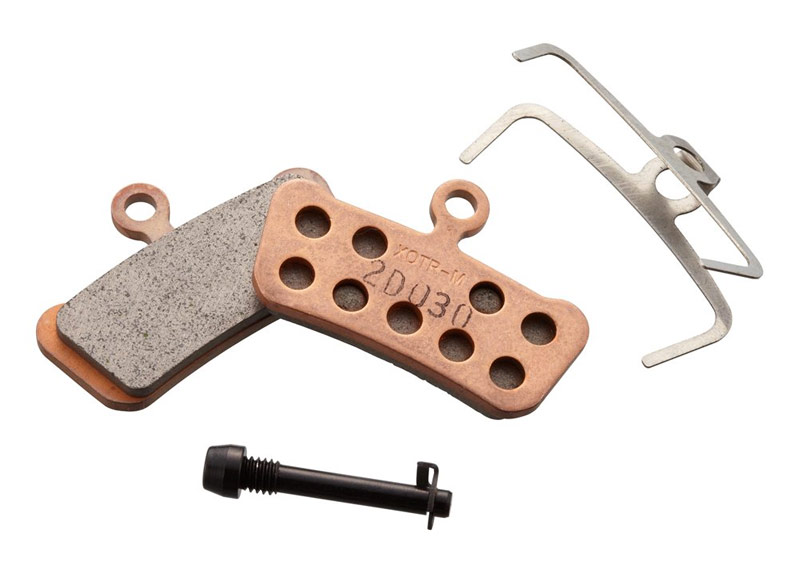
SRAM Brake Pads by Avid $20
Spare Brake Pads: This item is specific to Rusch’s setup. If you’re putting together your own repair kit, make sure to buy the item that functions with the gear you already have.

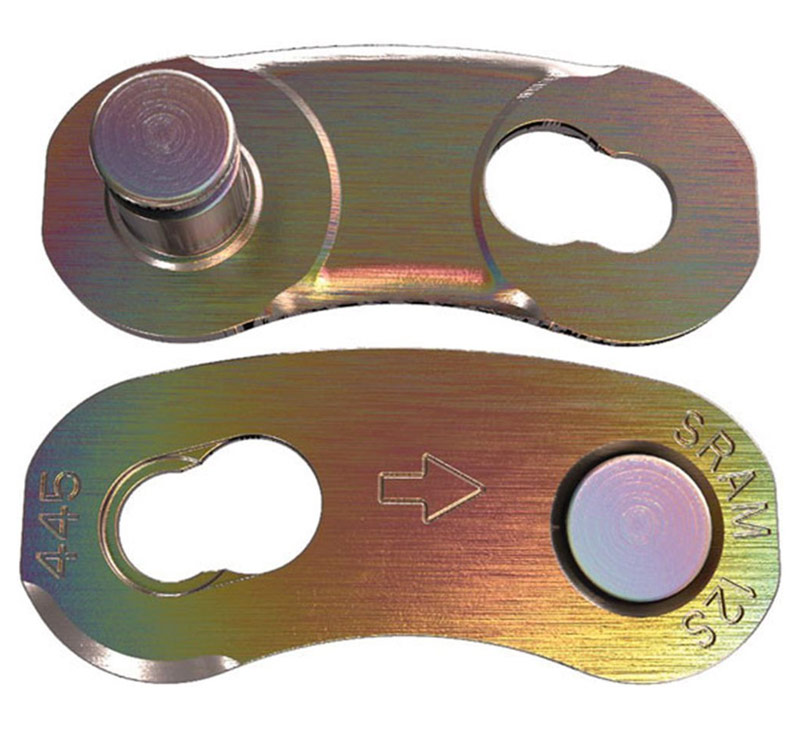
Powerlock Chain Link by SRAM $13
Spare Chain Link: This item is specific to Rusch’s setup. If you’re putting together your own repair kit, make sure to buy the item that functions with the gear you already have.

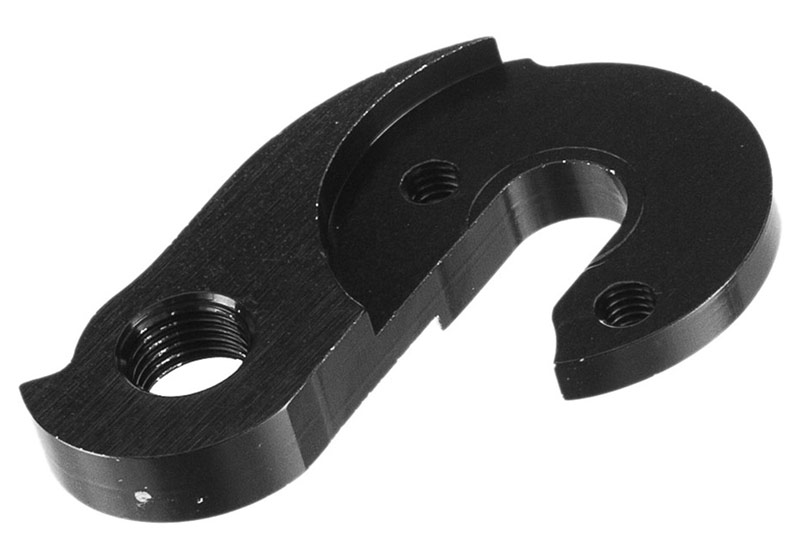
Derailleur Hanger by Niner $18
Derailleur Hanger: This item is specific to Rusch’s setup. If you’re putting together your own repair kit, make sure to buy the item that functions with the gear you already have.

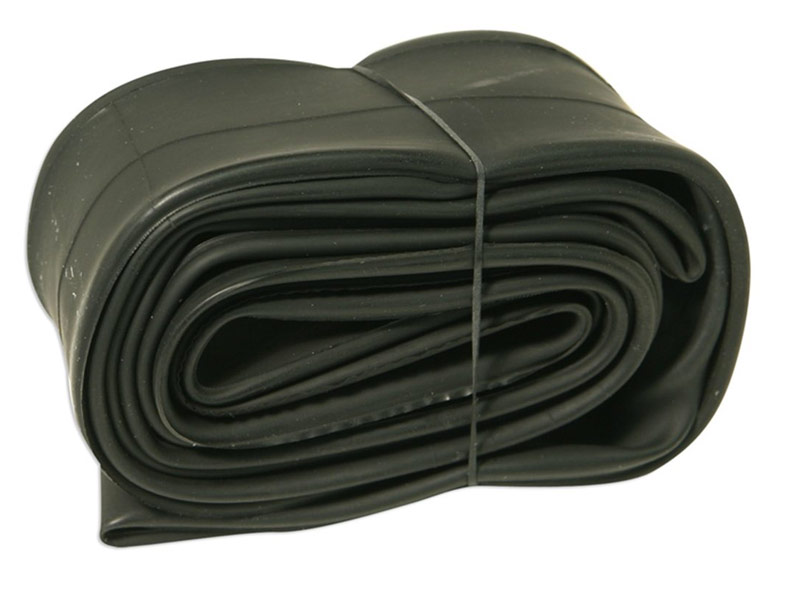
Spare Tubes x2 $4+
Spare Tubes: If you’re putting together your own repair kit, make sure to buy the item that functions with the gear you already have.

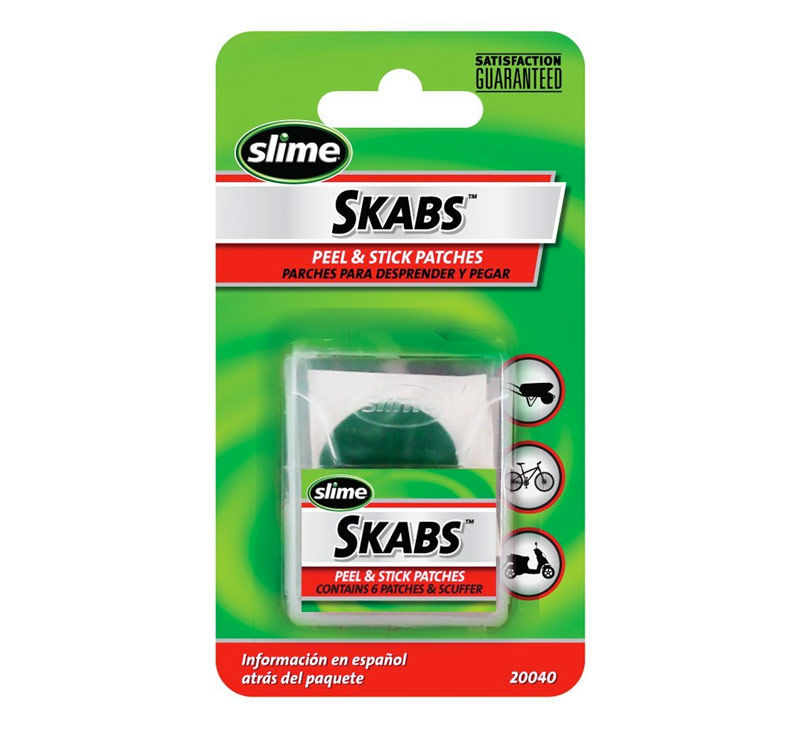
Skabs Tire Patches by Slime $4

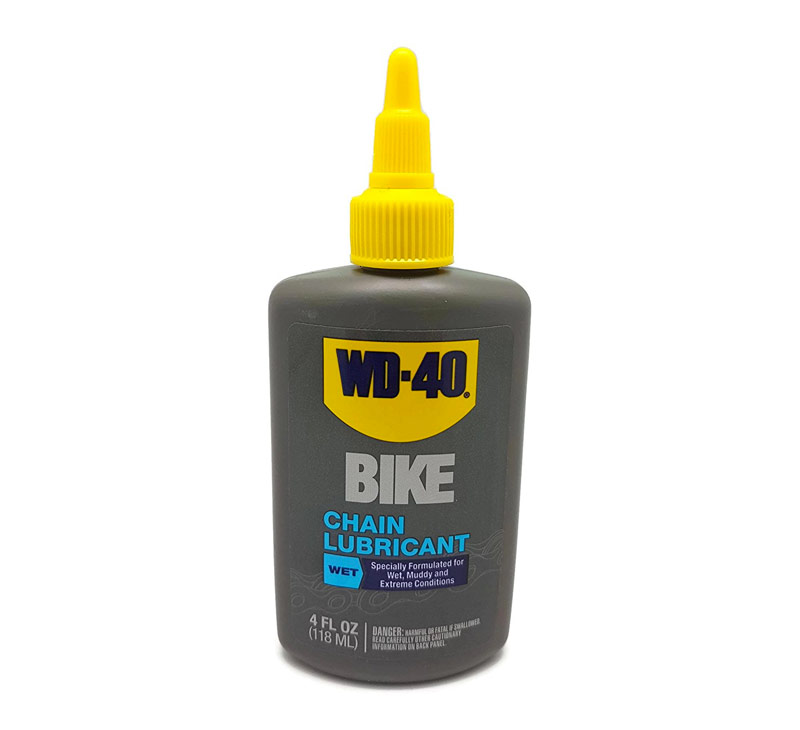
Wet Chain Lubricant by WD40 $5+
Tip: Instead of carrying a full bottle, Rusch buys this in single-use 2ml packets.

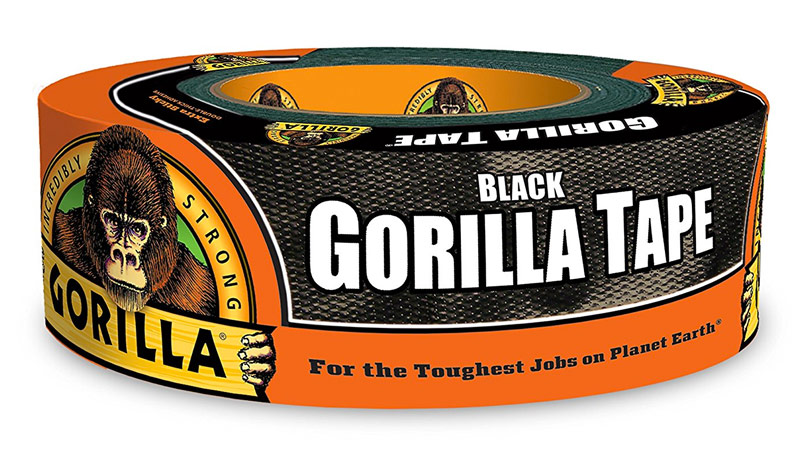
Gorilla Tape by Gorilla $8
Tip: Rusch stores the tape by wrapping a length around her hand pump.

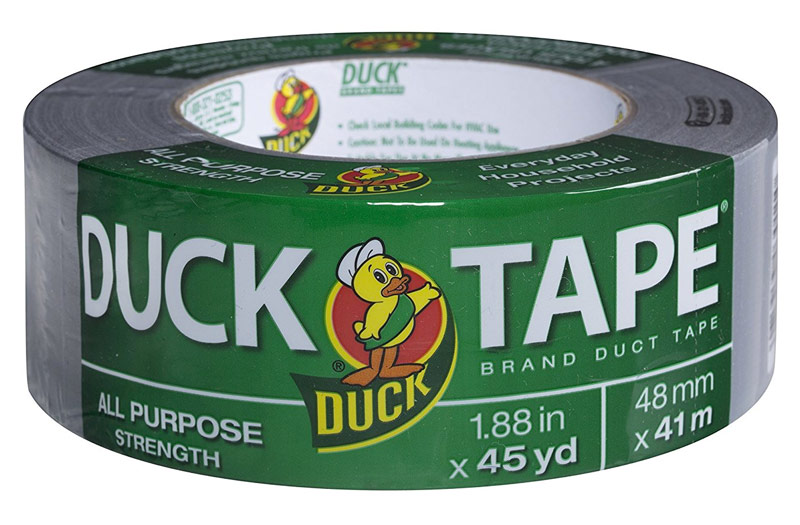
Duct Tape by Duck $8
Tip: Rusch stores the tape by folding a length over itself multiple times.

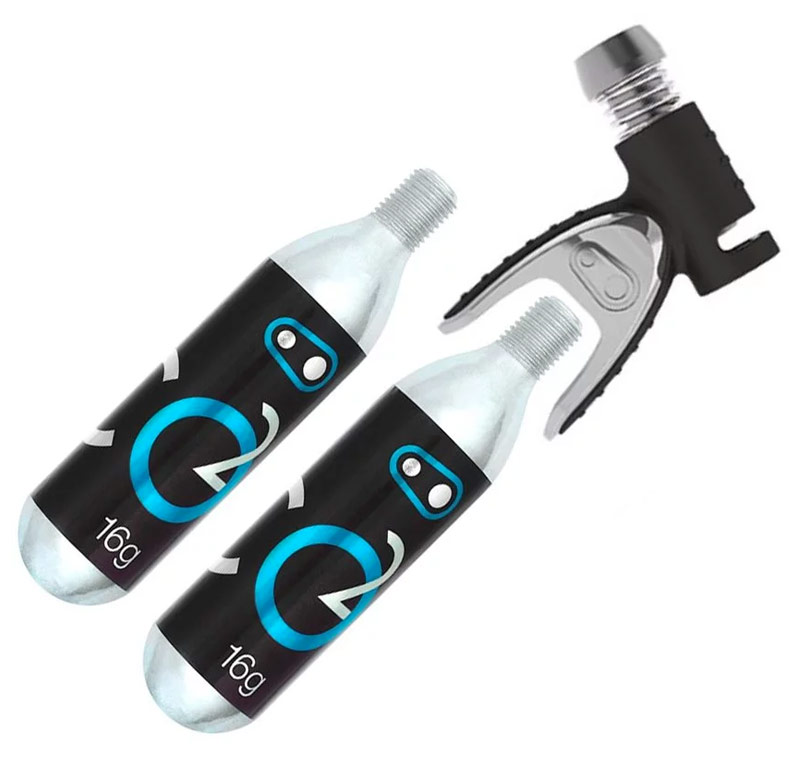
CO2 Inflator and Cartridges by Crank Brothers $18

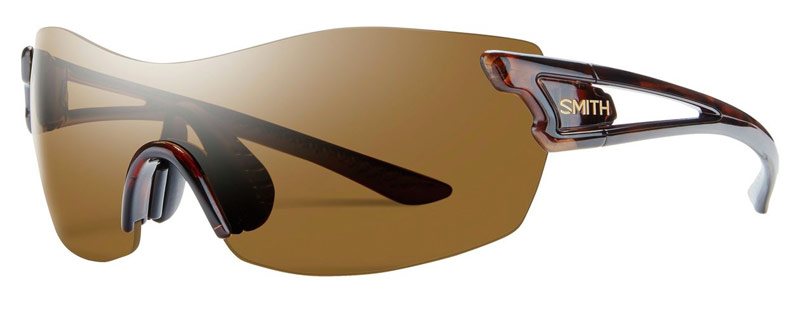
Asana Sunglasses by Smith $189
Tip: In addition to a dark lens, Rusch brings a clear lens for riding in low light.
The Ultimate Guide to Enduro Mountain Bikes

Everything you need to shred mountain bike trails. Read the Story

Note: Purchasing products through our links may earn us a portion of the sale, which supports our editorial team’s mission. Learn more here.

You’ll Use This Minimalist Pocket Knife Every Day

Minimalism can translate into knife design in many ways, and in the Massdrop x Brad Zinker Dogtooth it’s defined most accurately as everything you need and nothing that you don’t. Zinker, who is a member of the Knifemakers’ Guild, is known for his aversion to nonessential features. Thin blades, skeletonized handles, and simple mechanisms are themes in both his previously-successful Urban Trapper, made for Boker, and the just-revealed Dogtooth.

The Dogtooth isn’t a burly, cut-through-anything pocket knife that will go unused in a dusty drawer; Zinker designed it for everyday tasks such as opening boxes and slicing food. The narrow blade, made of CPM-S35VN stainless steel, employs a Wharncliffe shape that allows for precision handling of its sharp-angled point. The handle, as previously mentioned, is skeletonized titanium, which aids the Dogtooth in staying trim and reaching its 2.2-ounce weight.

Massdrop is currently taking pre-production orders of the Dogtooth and will only produce 1,200 units of the knife. Purchasing the Dogtooth during this period gives buyers a choice in handle color and blade finish as well as a spot in an AMA with Zinker.

All the Knives We’re Loving Now

Gear Patrol staff members use knives to open boxes and prep food on a daily basis. Here, we share the blades that have earned a permanent home at our desks. Read the Story

The Best New Outdoors and Fitness Gear We Discovered Last Month

Whew! With April in our rearview, we can soundly say that it’s been a month characterized by moisture. Yes, moisture — mainly in the form of rain, but also snow, drizzle, slush and fog. We assumed that if we were wholly preoccupied with the weather patterns, then you probably were too, so we gave you in-depth guides to the year’s best rain jackets and waterproof backpacks, as well a list of the best water bottles around (because we could all stand to be a little more hydrated). We also discovered boatloads of new outdoors and fitness gear this month, and we wanted to make sure you didn’t miss a single item. So here it all is! Give your digits a stretch, and scroll away.

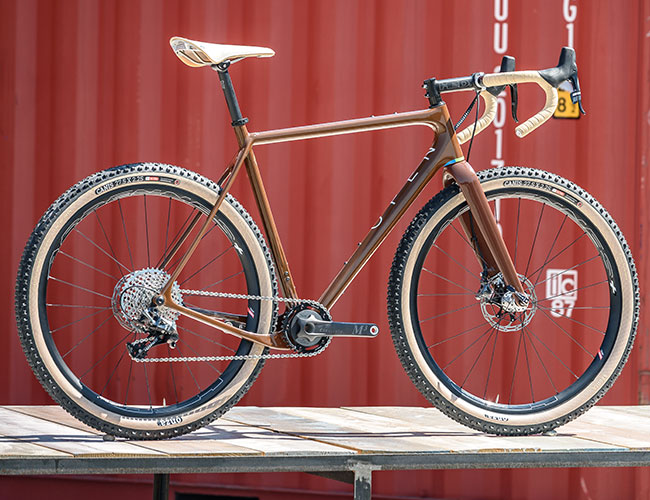
Can’t Afford a Custom Bike? Look at Photos of This One Anyway

Can’t Afford a Custom Bike? Look at Photos of This One Anyway

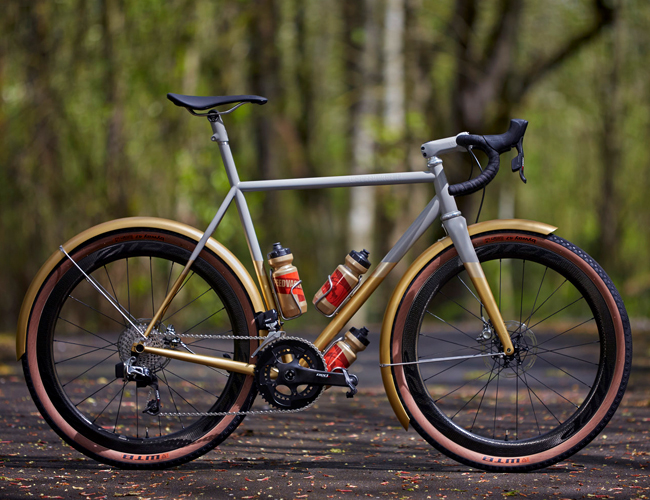
Vanilla Workshop in Portland, Oregon specializes in maxing-out each of its customized Speedvagen bicycles with a keen attention to detail that spares no weld or accessory. Even if you can’t afford the $1,000 deposit, photos…

These Best-Selling Sneakers Now Give Back to Help Save the Ocean

These Best-Selling Sneakers Now Give Back to Help Save the Ocean

Saving the ocean one plastic bottle at a time.

Splurge on This Beautiful Fly Box With 111 Hand-Tied Flies

Splurge on This Beautiful Fly Box With 111 Hand-Tied Flies

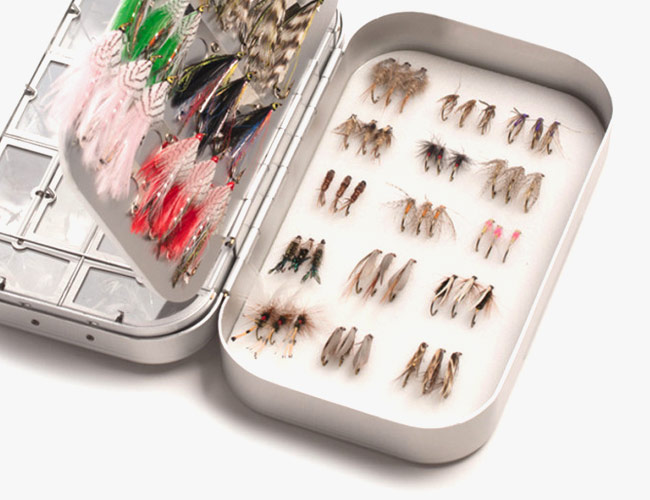
This 90th Anniversary Box is decked out with flies tied by a legendary fly shop.

These New Rain Jackets Are Easily The Most Attractive We’ve Seen

These New Rain Jackets Are Easily The Most Attractive We’ve Seen

Stutterheim’s new rain jackets are sleek, well-designed and perfect for the minimalist.

This Climbing-Inspired Shoe Is Cooler Than Your Converse All Stars

This Climbing-Inspired Shoe Is Cooler Than Your Converse All Stars

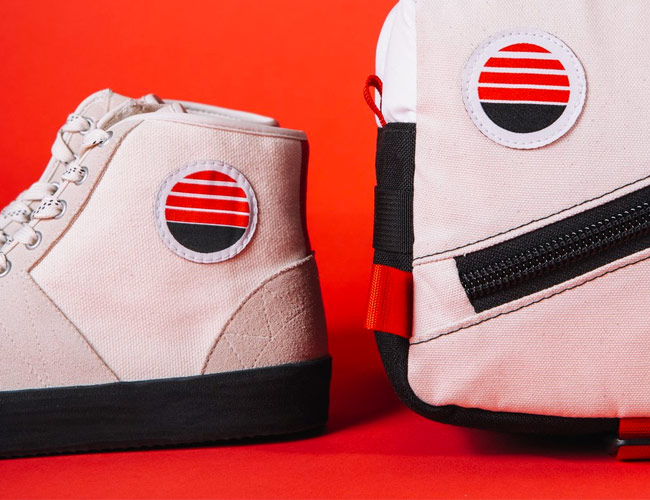
More proof that when vintage outdoor gear influences everyday apparel, the result is a win for all.

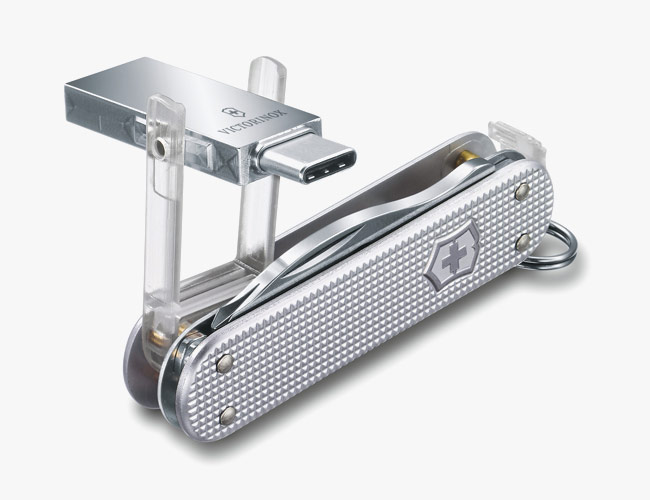
This New Swiss Army Knife Just Took Home One of the Most Prestigious Design Awards in the World

This New Swiss Army Knife Just Took Home One of the Most Prestigious Design Awards in the World

Victorinox’s Jetsetter multitool has a super durable frame and clever features that made it a winner at this year’s Red Dot Design Awards.

This New Boost Sneaker from Adidas Was Created for City Runners

This New Boost Sneaker from Adidas Was Created for City Runners

Speedy shoes created in a speed factory with data from fast folks.

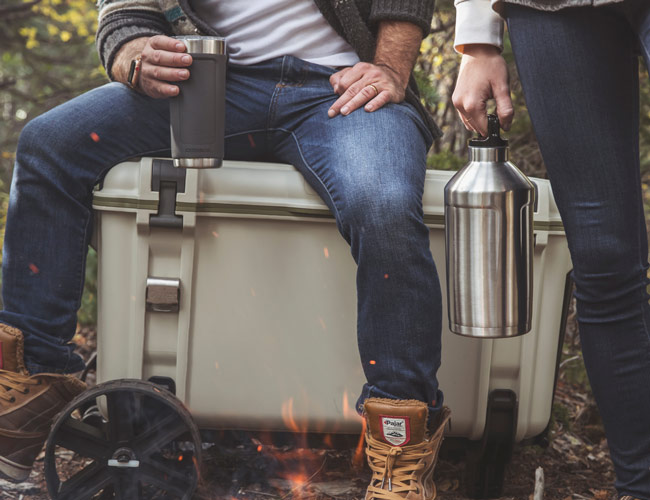
OtterBox’s New Accessory Puts Other Cooler Brands on Notice

OtterBox’s New Accessory Puts Other Cooler Brands on Notice

OtterBox just released its All-Terrain Wheels, which are a set of two three-inch wide and ten-inch diameter attached to a reinforced axle and an expandable chassis that can accommodate both the 45- and 65-liter Venture…

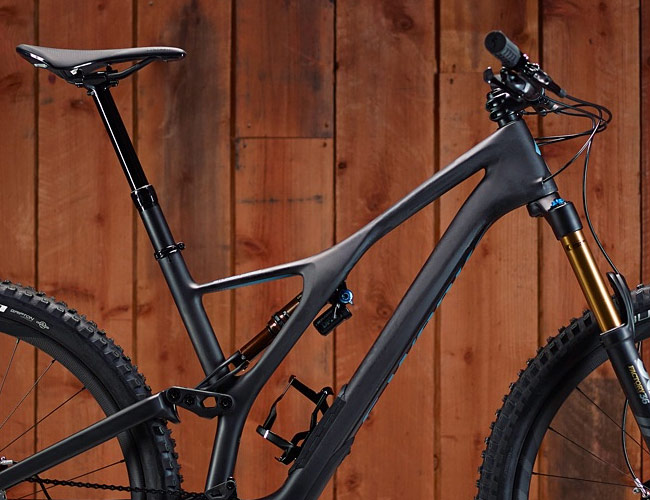
Did Specialized Just Make the Most Versatile Mountain Bike Ever?

Did Specialized Just Make the Most Versatile Mountain Bike Ever?

The Stumpjumper has been a mainstay in Specialized’s stable of mountain bikes since its introduction in 1981. The just-released 2018 model continues the trend with a wildly innovative design.

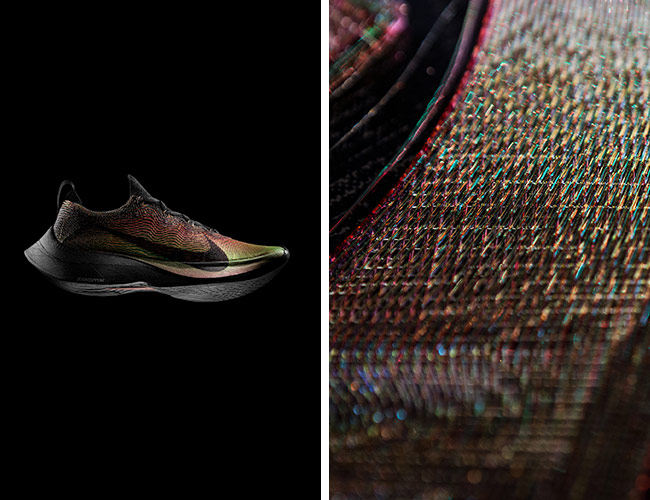
Nike Quietly Rolled Out a Revolutionary New Material Tested By The World’s Top Marathoner

Nike Quietly Rolled Out a Revolutionary New Material Tested By The World’s Top Marathoner

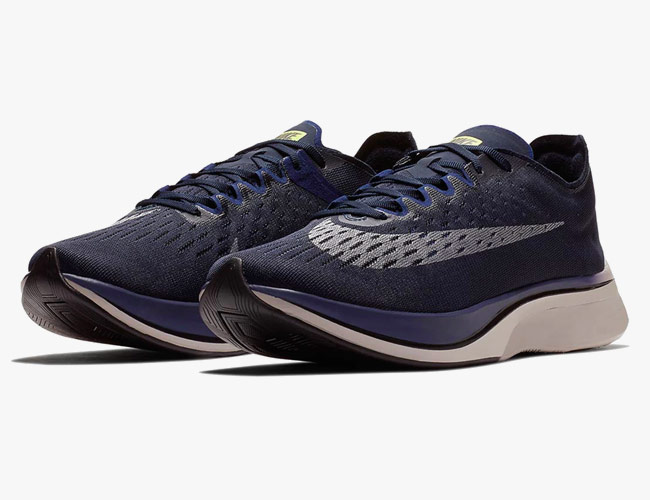
The newest Nike sneaker is 11 grams lighter than previous iterations of the Zoom Vaporfly Elite.

This Giant Multi-Tool Has Fewer Tools Than a Leatherman

This Giant Multi-Tool Has Fewer Tools Than a Leatherman

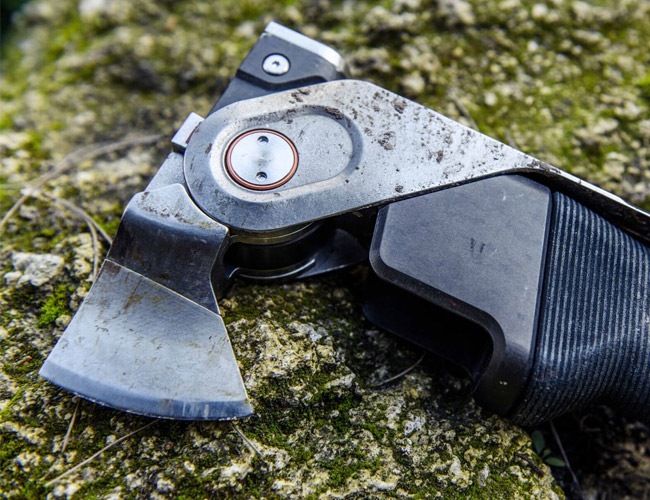
The just-announced Combar is a beefed up multi-tool with only three tools: a hammer, an ax and a spade. It won’t fit in a pocket, but that doesn’t mean it’s not useful.

Garmin’s New Edge 130 Bike Computer Has Everything You Need, Nothing You Don’t

Garmin’s New Edge 130 Bike Computer Has Everything You Need, Nothing You Don’t

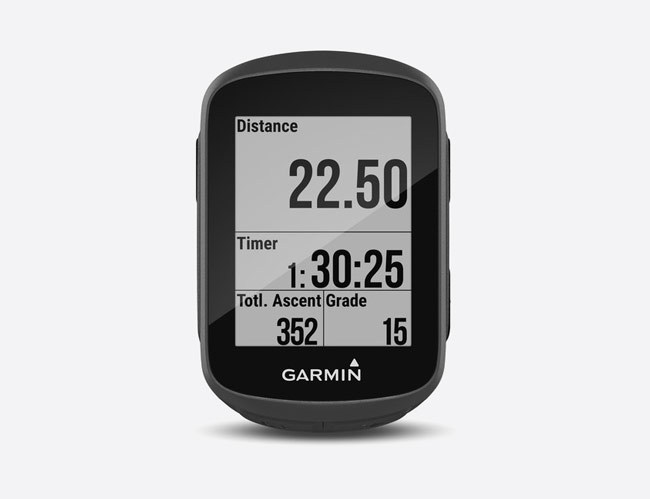
Garmin’s newest, paired-down cycling computer might be the cure for too much information.

These $70 Pants Fit the Part from the Office to the Backcountry

These $70 Pants Fit the Part from the Office to the Backcountry

How do you make chinos less boring, you ask? You make them flexible, tough as shit and office-ready all at the same.

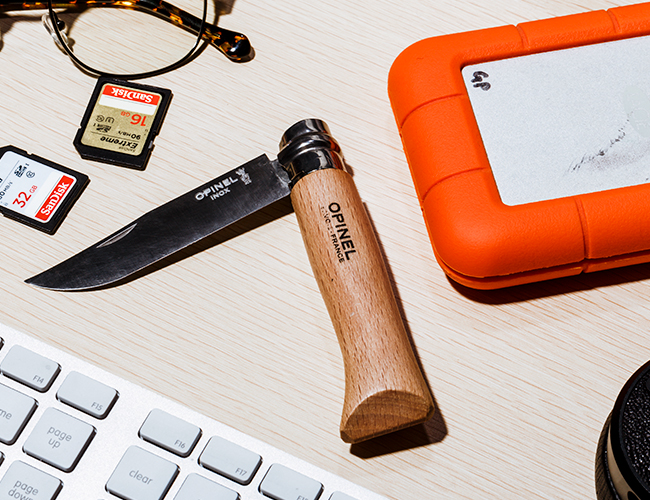
Opinel Made a Limited-Edition Version of its Iconic Pocket Knife

Opinel Made a Limited-Edition Version of its Iconic Pocket Knife

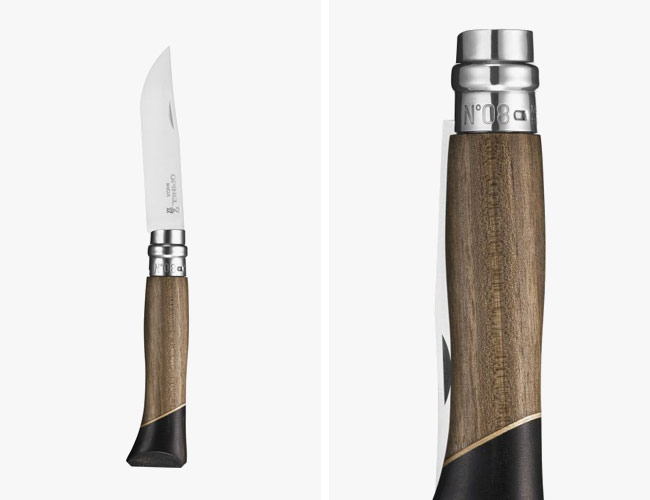
The No. 8 is a straightforward pocket knife with a steel blade, rotating lock and a wooden handle. Now there are 100 available with a limited-edition handle made with rare woods.

A Brand Our Readers Love Just Released a New Sneaker — and It’s Awesome

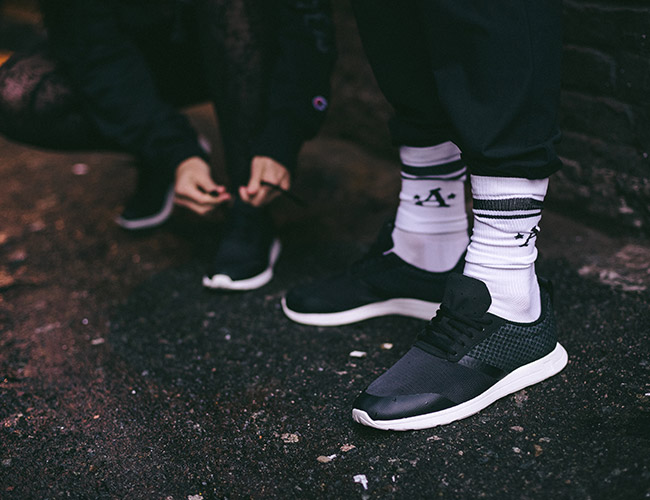
A Brand Our Readers Love Just Released a New Sneaker — and It’s Awesome

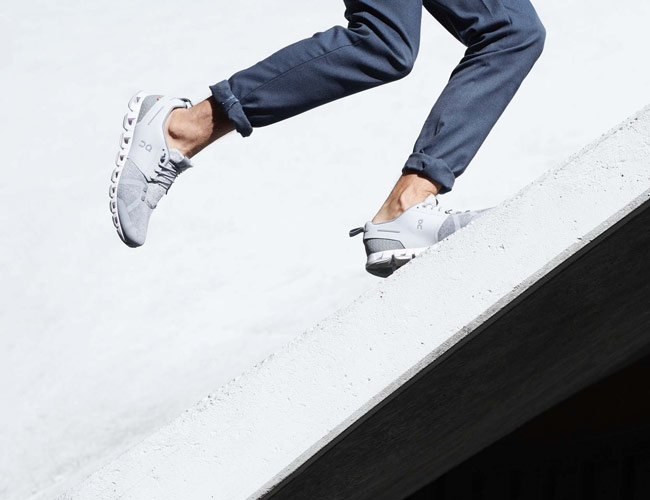
Designed for the urban explorer, these all grey sneakers look fresh and feel good in any environment.

What Goodyear Has Learned on the Racetrack, It’s Taking to the Bicycle

What Goodyear Has Learned on the Racetrack, It’s Taking to the Bicycle

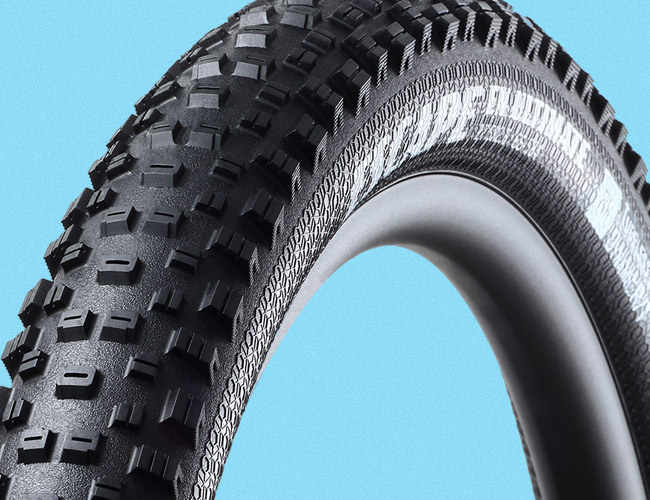
Despite Goodyear’s reputation as an innovator in the automobile industry and the official tire of NASCAR, its first product wasn’t a car tire, it was a bike tire. Now, after 120 years of experience, Goodyear…

Adidas’s Most Classic Shoe Just Got an Upgrade

Adidas’s Most Classic Shoe Just Got an Upgrade

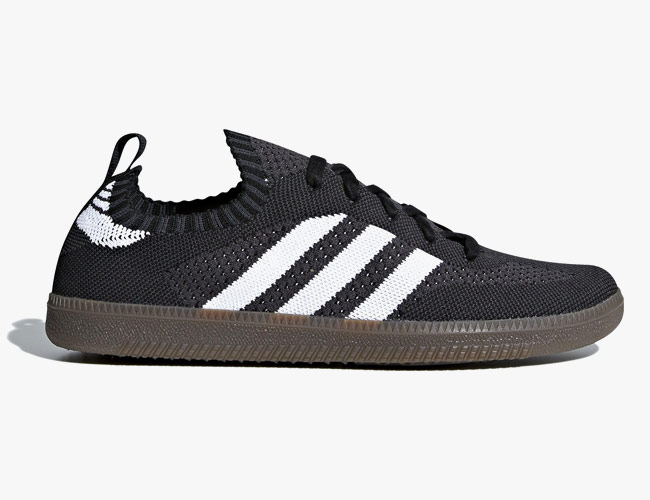
The popular soccer kicks are now better than ever.

Yeti’s New Mountain Bike Could Be Its Best Yet

Yeti’s New Mountain Bike Could Be Its Best Yet

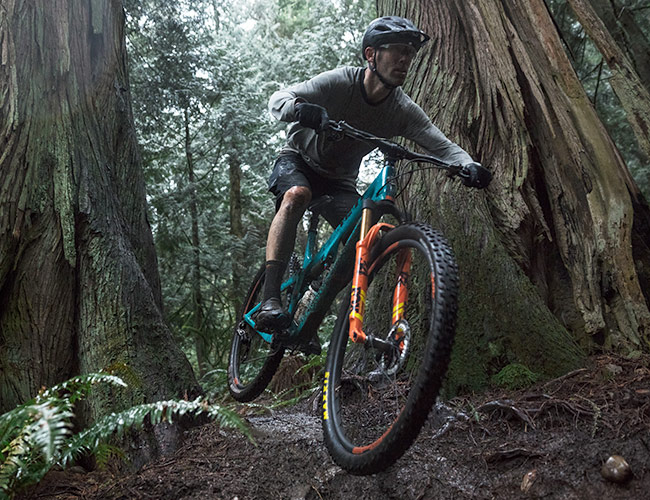
Does Yeti’s new “Super Bike” live up to its name?

Where to Buy the Newest Nike 4% Running Sneakers

Where to Buy the Newest Nike 4% Running Sneakers

Nike’s infamous 4% are back in stock — and in a new color.

Former Nike Designers Crafted the Coolest Kids Sneakers We’ve Seen

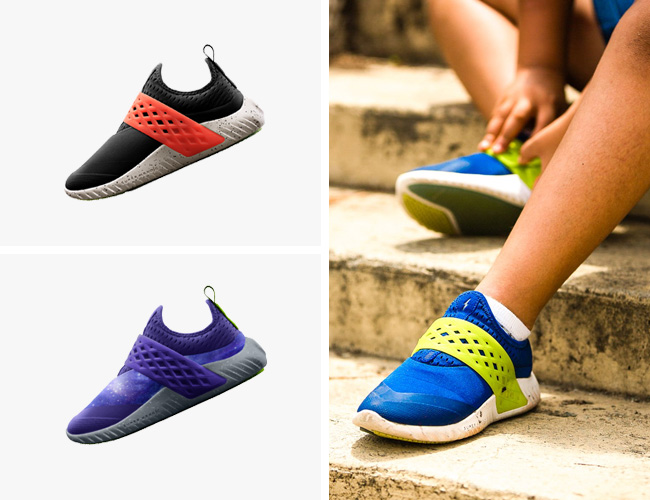
Former Nike Designers Crafted the Coolest Kids Sneakers We’ve Seen

Built to help kids run, jump, skip — even fly.

Balega’s Blister Resistant Socks Have a Permanent Spot in Our Sock Drawer

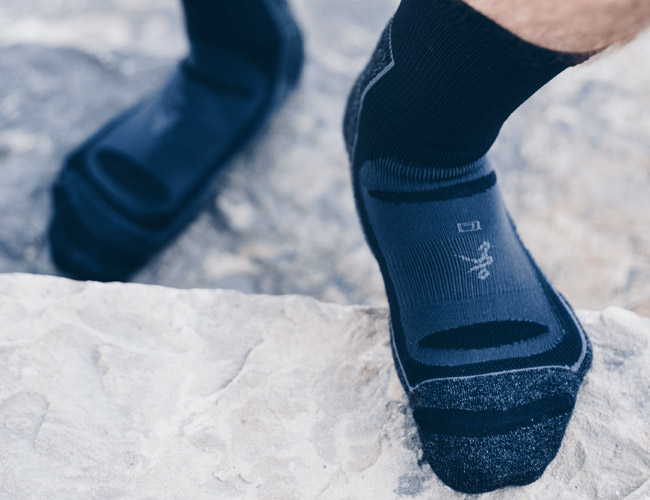
Balega’s Blister Resistant Socks Have a Permanent Spot in Our Sock Drawer

Balega goes all-natural with its latest blister-resistant fabric — do they work?

Exclusive: The Hi-Vis Reflective Kicks to Get You to the Gym Right Now

Exclusive: The Hi-Vis Reflective Kicks to Get You to the Gym Right Now

The newest sneaker from York Athletics offers a bit of a twist on one of its classic styles.

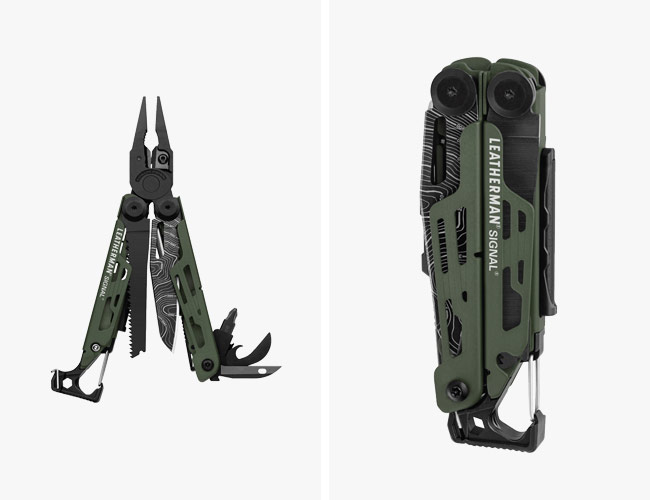
Leatherman Re-Designs Its Classic Survival-Specific Tool

Leatherman Re-Designs Its Classic Survival-Specific Tool

While many of Leatherman’s multitools are designed for everyday use, the Signal is specially geared for the outdoors and wilderness survival. To pay tribute to the Signal’s wilderness utility, Leatherman has re-released the classic tool…

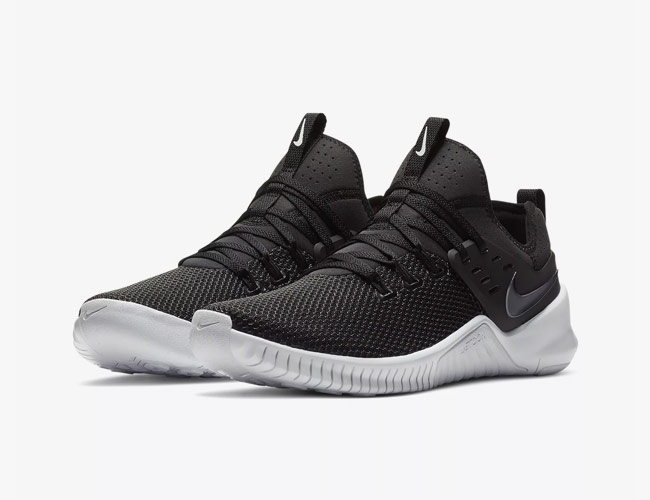
Nike Combines Two Popular Sneakers for A Totally New Model

Nike Combines Two Popular Sneakers for A Totally New Model

The Nike Free is a favorite of runners, and the Metcon is a staple in the Crossfit community — now the two kingpins have combined to form the newest versatile training shoe, the Free x…

I Can’t Stand Emergen-C, So I Reach for This Immunity Booster Every Morning Instead

I Can’t Stand Emergen-C, So I Reach for This Immunity Booster Every Morning Instead

The changing of the season can be taxing on your immune system — now’s the time to amp up your vitamin intake.

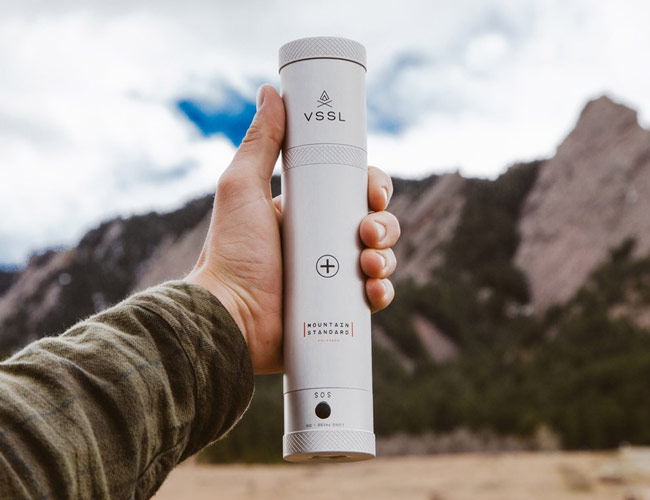
This Survival Kit Is for Bug-Out Minimalists

This Survival Kit Is for Bug-Out Minimalists

Mountain Standard and VSSL have teamed up to create an all-encompassing first aid kit for survivalists who want more resources in a smaller package.

Camp Cooking Goes Modular With This New Customizable Setup

Camp Cooking Goes Modular With This New Customizable Setup

A collect-’em-all modular camp cooking setup that will make you the envy of any campground or beach.

We Were Over Athleisure, Until We Saw Rapha’s New Sweats

We Were Over Athleisure, Until We Saw Rapha’s New Sweats

Just when we thought athleisure was fading from relevance, high-end cycling apparel powerhouse Rapha releases its Pro Team Transfer collection.

Roka’s New Sunglasses Conquer the Competition

Roka’s New Sunglasses Conquer the Competition

The brand started making wetsuits for gold medalist,s and now they’re pushing the limits of eyewear.

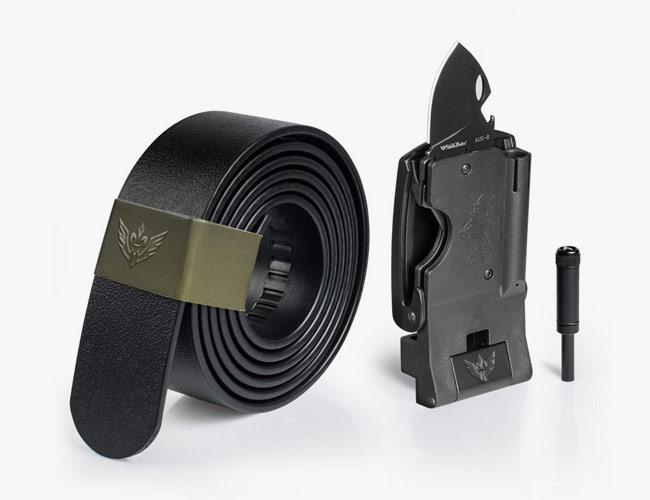
Declutter Your EDC With This Multi-Tool Survival Belt

Declutter Your EDC With This Multi-Tool Survival Belt

Your EDC already includes your wallet, a knife, a flashlight, a watch, a pen and a keychain — how much more do you honestly fit in your pockets?

This New Device Lets You Send Texts Even When You Don’t Have Cell Service

This New Device Lets You Send Texts Even When You Don’t Have Cell Service

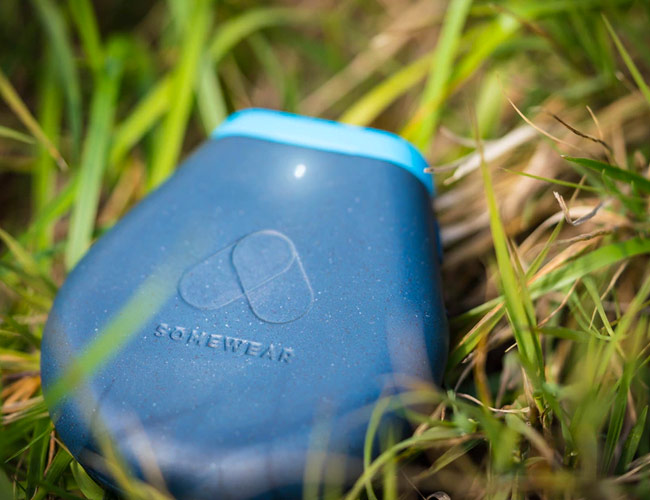
If you’ve ever been out on the trail and lost connectivity to your cell network, you know how frustrating, and dangerous, it can be to be unable to communicate with loved ones and emergency responders….

Exclusive: Oakley’s Newest Sunglasses Are Innovative in an Incredibly Simple Way

Exclusive: Oakley’s Newest Sunglasses Are Innovative in an Incredibly Simple Way

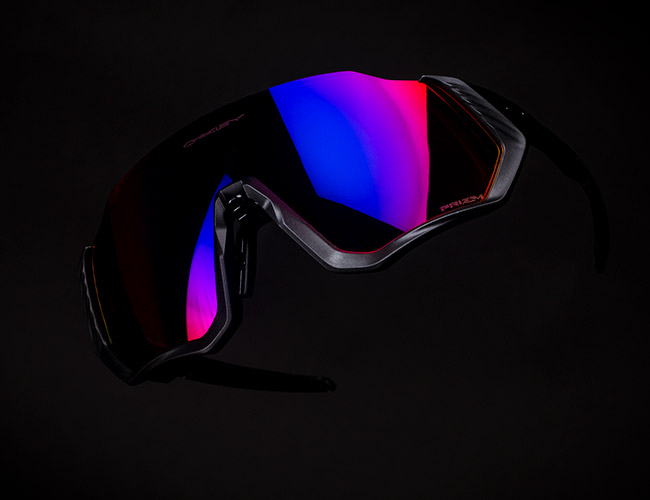
Oakley breaks ground with its newest performance sunglasses, the Flight Jacket.

Kind of Obsessed: This Pillow Improved My Sleeping Habits and My Sanity

Before last November, I never gave a second thought to the pillows I slept on every single night. The ones I have are not new. They’ve moved with me from my childhood home to my college dorm to my first apartment and beyond. I never contemplated their importance, and whether or not I needed a new one. They were merely something I slept on every night.

That was, until last fall. I picked up my bib for the New York City Marathon (my first) and was gifted a Bedgear Performance pillow. An odd gift, but as someone who is around gear all day long, I was pretty excited to try something new. The Dawn 1.0 Performance Pillow is for stomach sleepers or small body types, and after sleeping on it for roughly 175 nights, my life has changed. It’s the pillow I choose every night. If I could carry it on planes with me and in hotels without looking like a crazy person, I’d do it.

As someone who overheats, and can’t sleep in the heat, the climate control fabric is clutch. It’s the right amount of soft and firm. I used to double up on pillows, but now I’m sleeping on just this one. Since my stomach is where I end up often, I appreciate that this pillow doesn’t try and change me. It lets me, be me.

After just one month of sleeping on it, I was obsessed with it. So naturally, I went out and bought Bedgear pillows for my entire family for Christmas — a back sleeper for my dad, a stomach sleeper for my mom and an Align 1.0 for my brother. While I can’t fact check it, I won our family competition of best gifter. No one ever thinks to ask for a pillow, but that’s because they don’t realize that they need a better one.

Kind of Obsessed: I Found the Perfect Carry-On Weekender

I’m constantly traveling for my job, and few weekenders have ever impressed me. Now, I’ve found the perfect travel pack. Read the Story

6 Things Missing from the Outdoor Products We Rely on Most

We’ve been to the tradeshows, seen plenty of new, soon-to-launch products and have a good sense of what’s in store for the outdoor industry. Sure, tint-adjustable ski goggles and ultralight trekking packs are great, but our appetite for innovative new technologies and fun new things is insatiable. We want more.

We think about outdoor gear all of the time (it’s our job), and we’ve got a few ideas of our own. Some of these spare thoughts are certainties while others are wildly speculative; some are general suggestions, and others are highly specific. We live in the outdoor industry, and as members of its unpredictable, quirky, intelligent and thoughtful populace we reserve a right to shout our predictions and desires into the great void. Here is what we’d like to see from the outdoor industry.

New Materials: We’re going to continue to see innovative fabrics and material stories in a wider range of brands. Dyneema (and off-brand Dyneema) and synthetic spider silk are just the tip of the iceberg — keep an eye on Schoeller, Sympatex and others. —John Zientek, Associate Staff Writer, Style Desk

Everyday LJs: I’ve been a big cheerleader for the everyday use of long johns for the last two years. I’d like the outdoor industry to fully embrace the best-kept secret in winter layering. Give me some casual, stylish LJ’s for my everyday. —Chase Pellerin, Staff Photographer

Less Waste: I love shopping for outdoor gear online, but not the waste involved in the process. I want to see more outdoor brands utilizing in-store pickup, which is a great way to support local retail without running the risk of an item not being there when you arrive. But more importantly, I’d love to see retailers introduce a “minimal packaging” shipping option at checkout. Items often contain way too much packaging. Skip the plastic bag, spare me the bubble wrap, and send the invoice via email. —Caitlyn Shaw, Associate Audience Development Editor

Unobtrusive Tech: I’d like to see more technology integrated into every outdoor product, but yet still have an off-switch. One of the reasons I love getting outdoors is to escape all things screen-related, but that doesn’t mean I don’t want my hike/bike/run to go untracked. Similar to how Under Armour is integrating automatic tracking into its sneakers, it would be cool if my hiking boots did the same thing — and synced automatically with my phone/watch. What altitude did I reach? What was my top speed? How many breaks did I take? While I might choose to hide all of that or ignore it once I end the day, at least my watch will know I was active that day. —Meg Lappe, Staff Writer, Outdoors and Fitness Desk

Warmer Toes: I know that this is wildly specific, but I would love to see a snowboard boot maker use Primaloft’s Gold Cross-Core insulation in the toe of a snowboard boot (I’m looking at you Vans). Currently in use in L.L. Bean’s new Ultralight sleeping bag, Cross Core insulation is made from aerogel (the lightest insulating material on the planet originally developed for NASA). It’d be pretty simple to work it into the toe box of a snowboard boot to keep your toes nice and cozy on sub-freezing days without adding much bulk. —AJ Powell, Assistant Editor

Lateral Innovation: DPS, a ski maker, surprised everyone late last year when it virtually eliminated the need for ski wax with its new Phantom base treatment. It was an unexpected lateral move and a real innovation that has the potential to be, pardon the trope, game-changing. I want to see more. Brands and manufacturers — even the small ones — know more about their respective corners of the industry than anyone else. Imagine if an outerwear company developed a waterproofing technology that never degrades (instead of waiting for Nikwax or Gore to do it). Or even a bigger sideways move, like if Yeti, with all its durability prowess, developed super-strong tent poles. Yeah, Yeti should make a tent. —Tanner Bowden, Associate Staff Writer, Outdoors and Fitness Desk

The Coolest Outdoor Products Coming in 2018

These are the ten products that made us excited for the outdoor industry and the year ahead. Read the Story

All the Knives GP Staff Members Are Loving Now

It’s no secret that we love knives at Gear Patrol. For some of us, it’s part of our job to research and test as many blades as we can. Except for one staff member who, when asked about what knife she uses most frequently, responded, “NONE! Ever! Sorry, too dangerous,” nearly all of us keep a blade at-hand for the everyday tasks required by office life (spoiler alert: we open heaps of boxes). Those knives, no matter what they are most often used for, are highly-personal tools that shed light on the people who own them. A preference for utility, aesthetics, extra features or any combination of the three is reflected in the everyday pocket knife. Here are those which we use on a daily basis.

AJ Powell, Assistant Editor


SOG Ultimate C-Ti: Sure I use it to open boxes, but I also use it as somewhat of a fidget toy while I’m at my desk. Hearing the mechanism click and lock into place is therapeutic in a way. I’ve had it for over a year and a half, and it’s still going strong (and it’s still my go-to).

Favorite Feature: If I do need to take it on the go at any point, the knife is incredibly light and thin. I removed the pocket clip (which can also double as a money clip) so that it can go virtually unnoticed in my pocket.

Other Knives AJ Keeps At-Hand:
No. 8 by Opinel $15
Mantra Titanium by Spyderco $185

Kevin O’Brien, Account Manager, Brand Partnerships


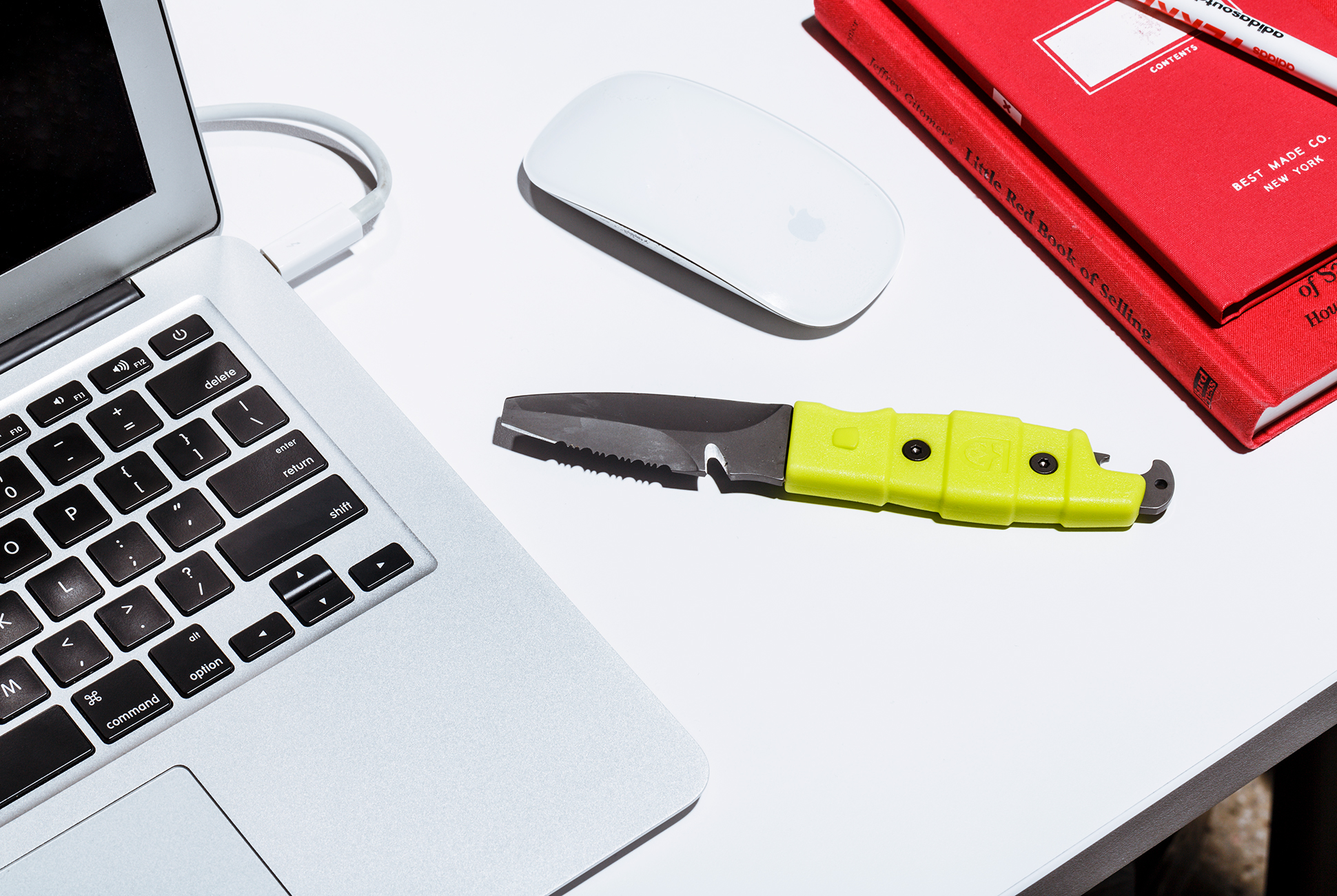
Gear Aid Akua Paddle and Dive Knife: This knife is made for diving, but I mostly use it for spreading peanut butter.

Favorite Feature: The rugged sheath and durable handle.

Other Knives Kevin Keeps At-Hand:
Excelsior Single Blade Swiss Army Knife by Victorinox $20

Nick Caruso, Associate Editor


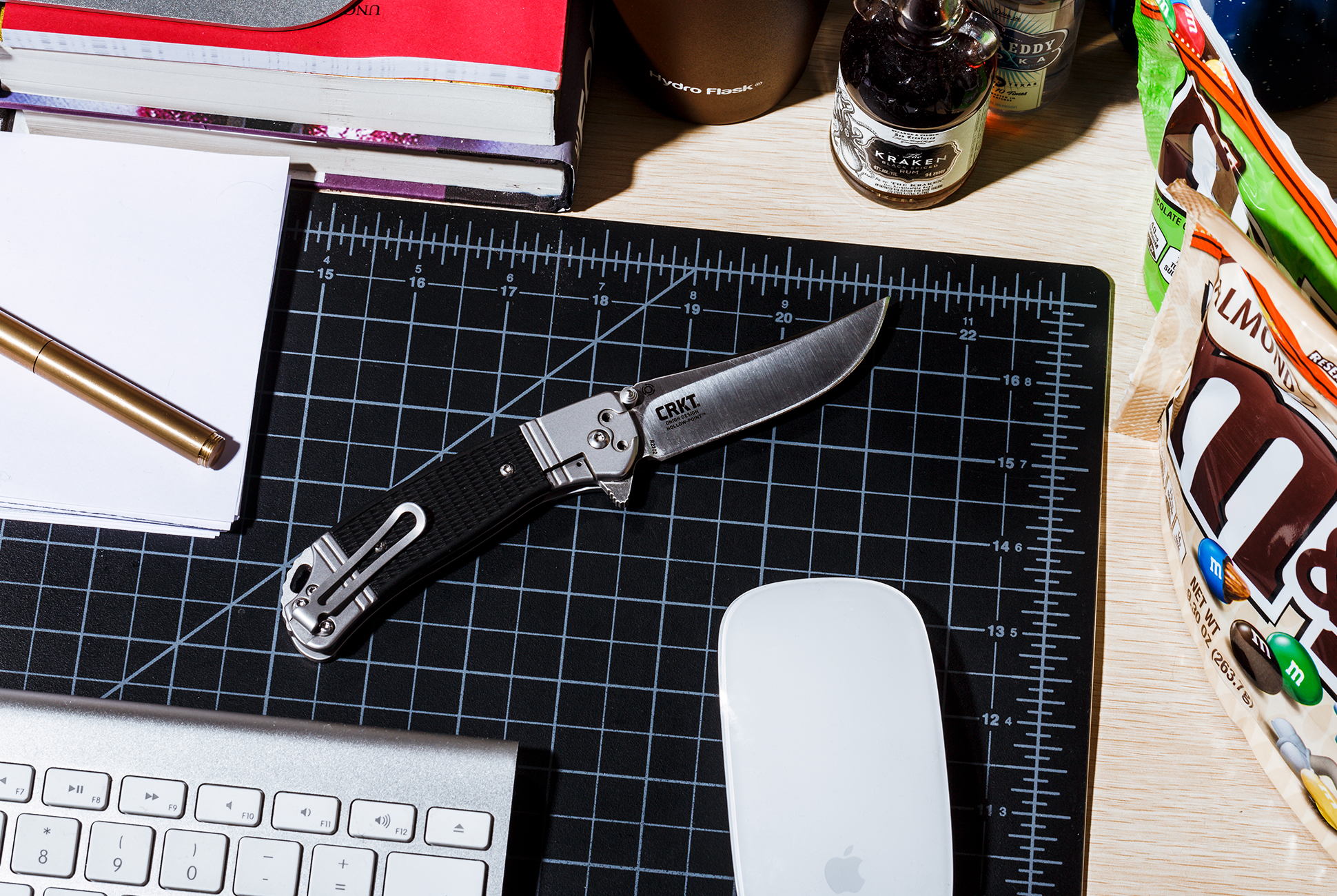
CRKT x Ruger Hollow-Point: I just cut a hang tag off a new jacket yesterday, but more often than not I’m opening boxes and sometimes envelopes. I’ve also performed sliver surgery on myself with this knife. But most often, I just open and close it a few times because the mechanism is so satisfying. This terrifies my coworkers.

Favorite Feature: CRKT’s “IKBS ball bearing pivot system” makes this folder very, very easy to open with one finger. It pops open with a flick and a click in a rather menacing, but also quite utilitarian way.

Other Knives Nick Keeps At-Hand:
Buri Adventure Knife by Gear Aid $23
K.I.S.S. Serrated Folder by CRKT $24+

Hunter D. Kelley, Associate Designer


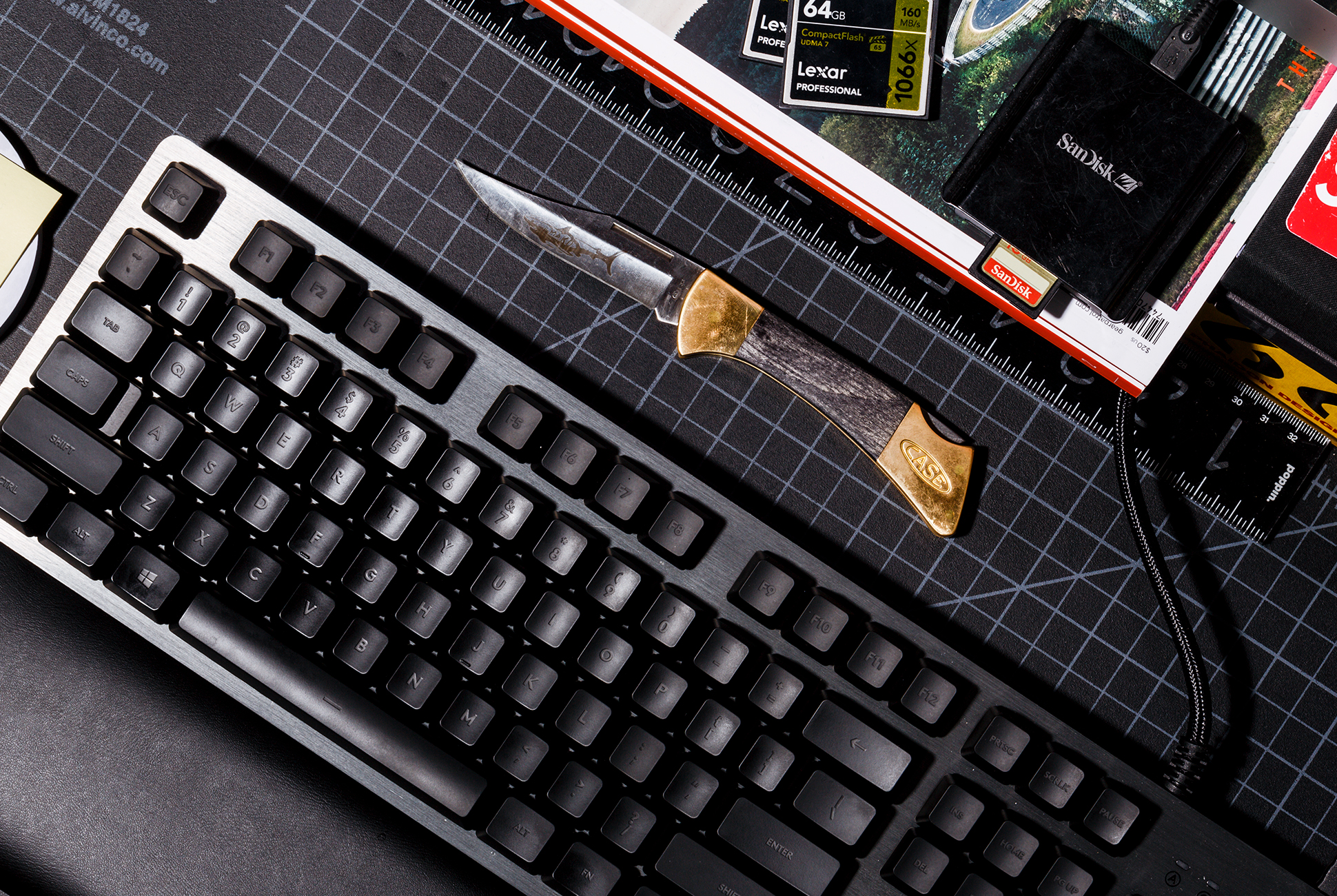
Case Mako w/ Black Staminawood Handle: I use this knife for opening boxes, cutting photo studio paper and as a paperweight. I don’t know how I ended up with it; it just gravitated towards my desk. There aren’t many knives in Gear Patrol’s design studio, so my Case Mako is usually borrowed at random times.

Favorite Feature: I like how shiny and old-school it looks. The combination of black and gold is appealing.

Jarry Truong, Associate Videographer


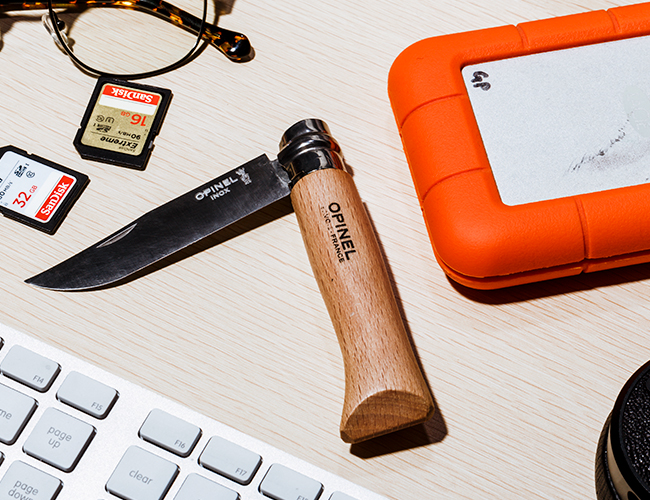
Opinel No. 8 Gear Patrol Edition: I use it for cutting all the fruit I bring to the office. I think I got it near the early days of my career here at Gear Patrol from the Outdoors and Fitness Desk. I have used and worn everything they’ve given me.

Favorite Feature: Exclusive GP branding, and a simple, clean and sharp construction.

Note: The Gear Patrol Opinel No. 8 is no longer available, but the classic can be found through the link below.

Meg Lappe, Staff Writer


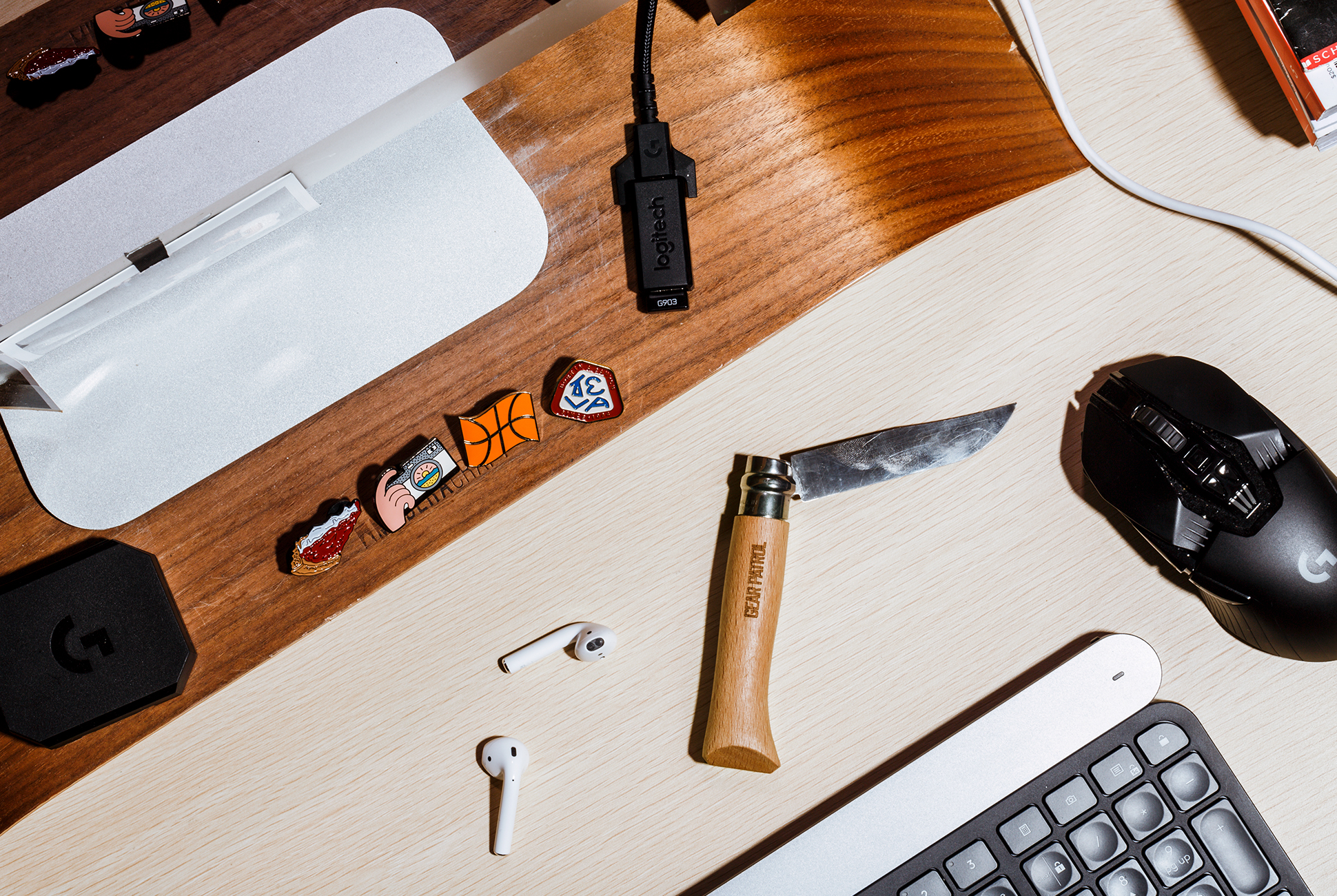
Opinel No. 8 France! 2017 by Jeremyville Edition: I exclusively use this knife for all my food needs. Since I try to bring my lunch every day, I’ll often toss celery, cucumbers and peppers in my bag before work (as well as actual lettuce and all the fixings). My Opinel cuts through all that I throw at it — apples, pears and bananas for oatmeal are all fair game as well. The artist who created this design actually lives in Brooklyn, which is where I just moved to.

Favorite Feature: I like that I can hide the blade, so I don’t have to worry about it getting dirty or picking up lint/dust anywhere on my desk.

Other Knives Meg Keeps At-Hand:
Baton Q1 by SOG $34
Keytron by SOG $20

Tanner Bowden, Associate Staff Writer


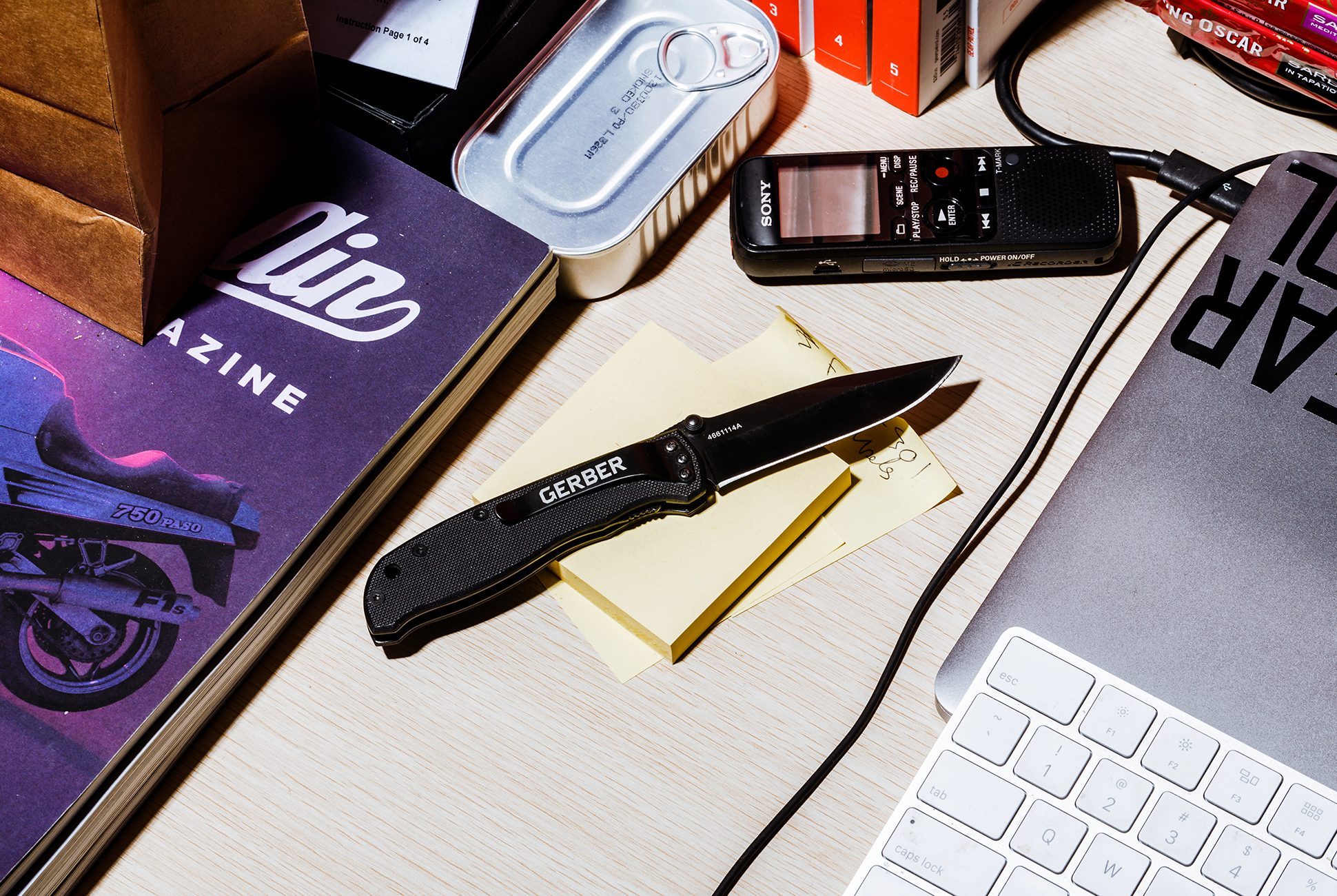
Gerber Sharkbelly: I use the Sharkbelly primarily to unbox everything from hiking boots to mountain bikes. I’m also a big fan of avocados, and at this point, this knife has pitted half a crop of them.

Favorite Feature: It’s straightforward, lightweight and affordable.

Other Knives Tanner Keeps At-Hand:
The Elko by The James Brand $60

Tucker Bowe, Staff Writer


Light My Fire Swedish FireKnife: I’ve had this knife at my desk for the better part of two years, and it’s given me more power — like Voldemort and the Elder Wand. If somebody in the office wants a package opened or a neat little spark (don’t tell HR), they come to me.

Favorite Feature: Two things. One, it’s actually called a “fire knife.” And two, it actually shoots sparks (not unlike a small dragon).

Bryan Campbell, Staff Writer


Gerber Air Ranger: The Gerber Air Ranger I have at my desk lives a pretty pampered life. Most of the time, it’s an overqualified, glorified letter opener. But, other than mail and the occasional package, I once used it to (unsuccessfully) help a co-worker get into his stuck filing cabinet. It also slices banana walnut bread and breakfast bars from the coffee shop downstairs like nobody’s business.

Favorite Feature: My desk is already overcrowded, so aside from the consistently sharp blade, the compact size is key.

Chase Pellerin, Staff Photographer


Leatherman Skeletool KB: I used* this knife for very average tasks: opening Amazon boxes, cutting product tags and managing some unruly seamless paper. (*One moment it’s on your desk at the ready, the next, a co-worker whose name rhymes with Landrew Waynes borrows it, and it disappears into the aether.)

Favorite Feature: It was gifted to me and felt like the only reasonable size knife to own in an office setting. The rest of this list makes me uncomfortable.

What GP Staff Members Can’t Travel Without

What we pack is as varied as the adventures we call “work.” Read the Story

Note: Purchasing products through our links may earn us a portion of the sale, which supports our editorial team’s mission. Learn more here.

This New Boost Sneaker from Adidas Was Created for City Runners


Adidas’s new Speedfactory sneakers have the city runner in mind. Athlete analytics from New York, London and Paris dictated the design of of the shoe. The Speedfactory AM4NYC (Adidas Made For) is the latest to launch and promptly sold out in 24 hours. There are five eyelets instead of four, allowing runners to really dial-in the fit. There are reflective details in the laces since city running often happens in the dark, and an all-black upper to give the shoes a fighting chance to survive the streets of New York.

Today in Gear

The best way to catch up on the day’s most important product releases and stories. Read the Story

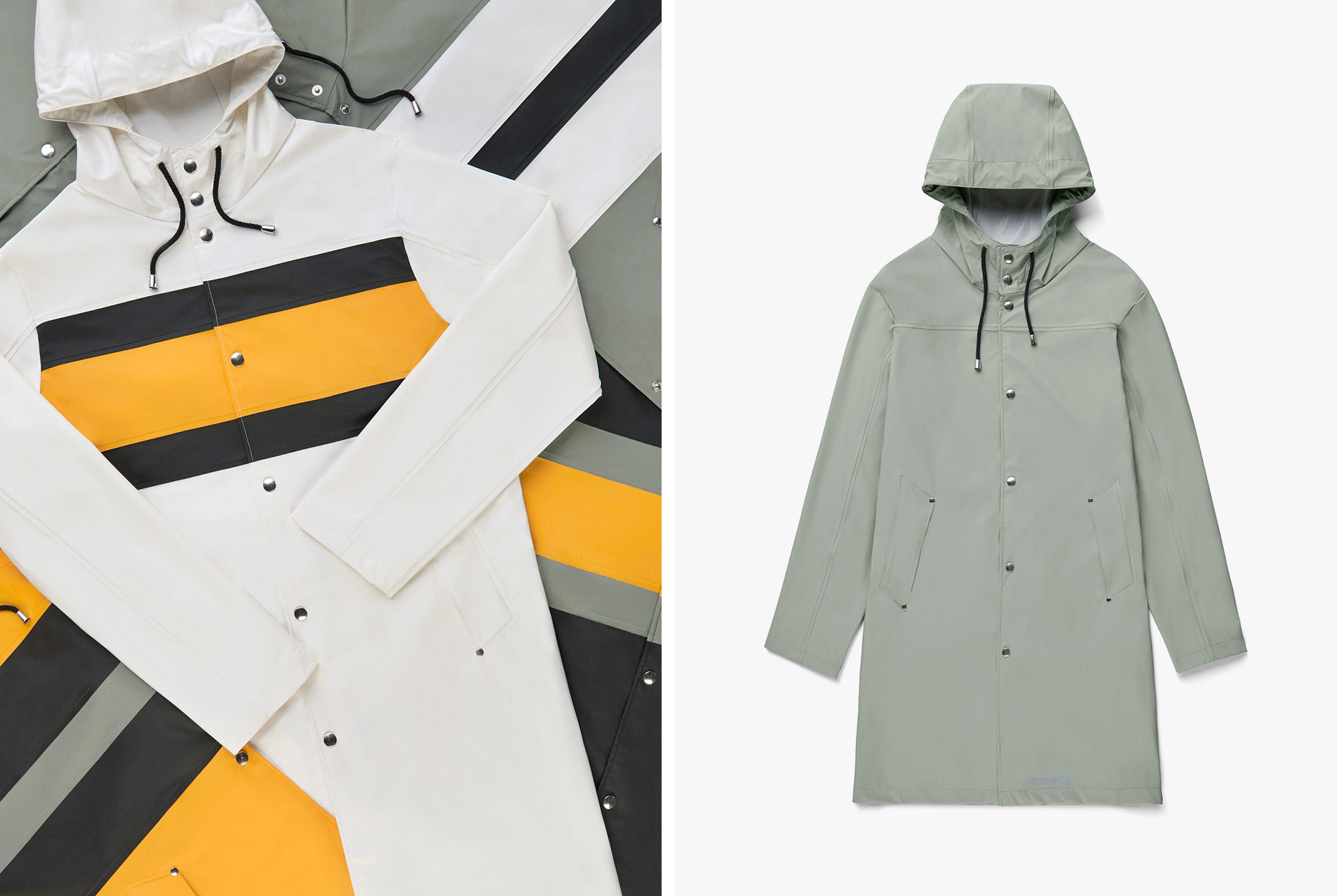
These New Rain Jackets Are Easily The Most Attractive We’ve Seen


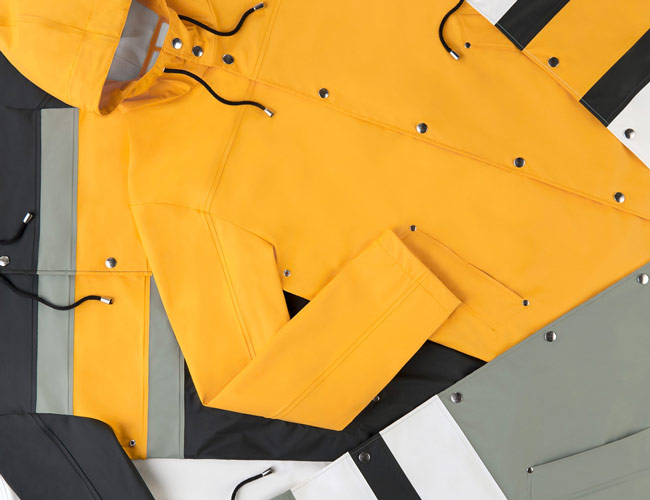
While it’s rare to see a bright yellow rain jacket on the streets in any urban city, the new line of coats from Swedish brand Stutterheim is making us wonder why. These handmade rain jackets are classic, yet functional in two new styles to combat April showers. The Falun is lightweight, 100% waterproof, and travel-friendly, so you can roll it up and toss it in your suitcase, briefcase or gym bag. And if the yellow doesn’t speak to you, we understand — there’s a black, khaki green and white that look just as good.

Today in Gear

The best way to catch up on the day’s most important product releases and stories. Read the Story