All posts in “Sports and Outdoors”

Five Treadmill Apps That Don’t Suck

Slogging along on the device of torture and misery that is the treadmill is hard to make fun unless you’re a masochist. But if you’re training for an upcoming race, snow, sleet, rain, and hail make outdoor running difficult; don’t lose hope. Thanks to developments in technology, treadmill apps are working to make your next run passable, if not fun. Plus, a handful of them provide coaching, meaning interval and tempo workouts are definitely possible. The more of those you do, the more your fast-twitch muscle fibers flex, meaning you can work on improving your speed. So, if the weather dictates an indoor run, download one of these apps and see how quickly those miles fly by.

Aaptiv

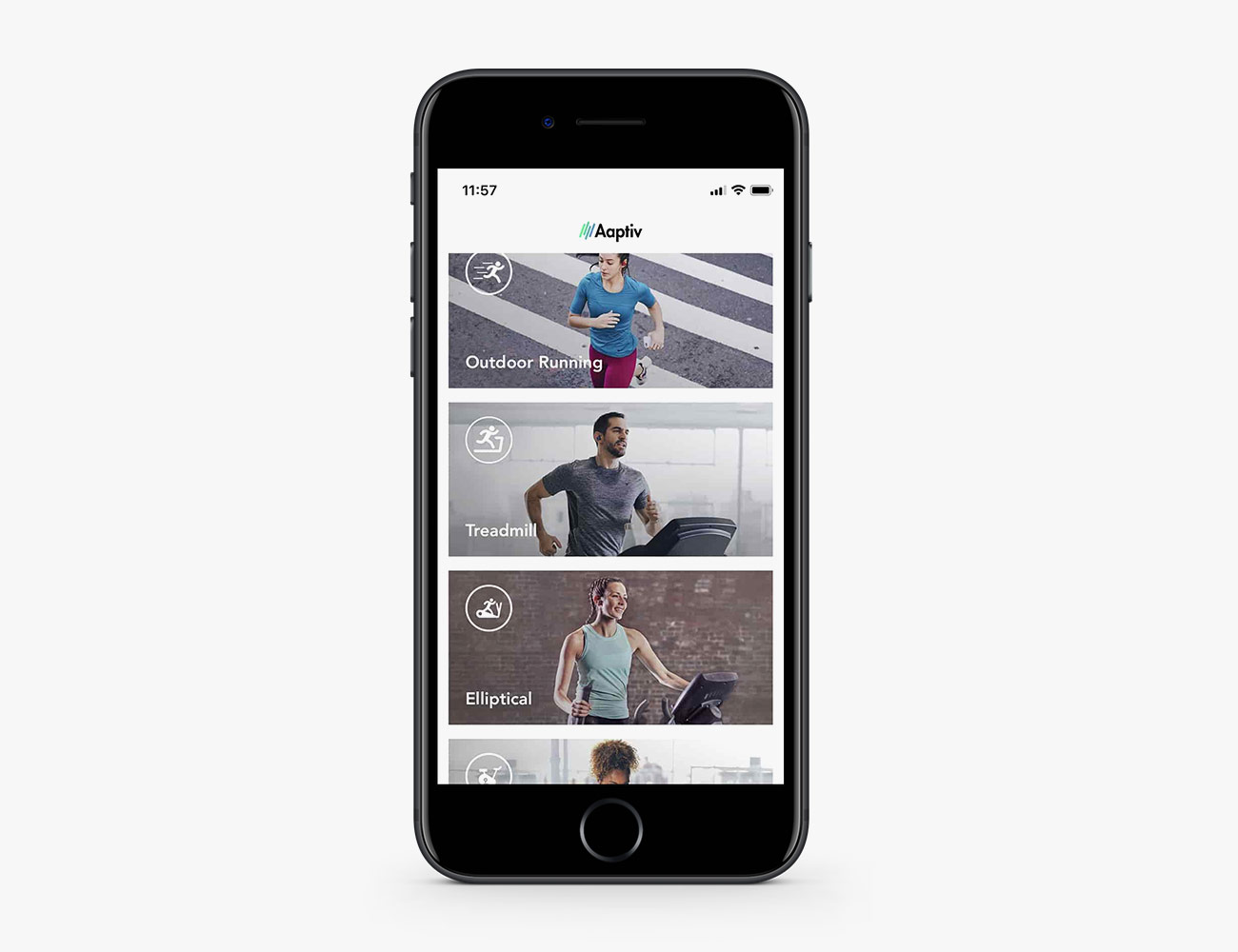
Aaptiv is the easiest way to workout with just your phone. While the app offers workouts for all gym machines, the treadmill options are particularly of note — especially when you need to get in some speed training. Aaptiv works hard to find top trainers who select upbeat tunes to keep you going through intervals. It’s $15 a month, but you get your first 30-days free.

Nike+ Run Club

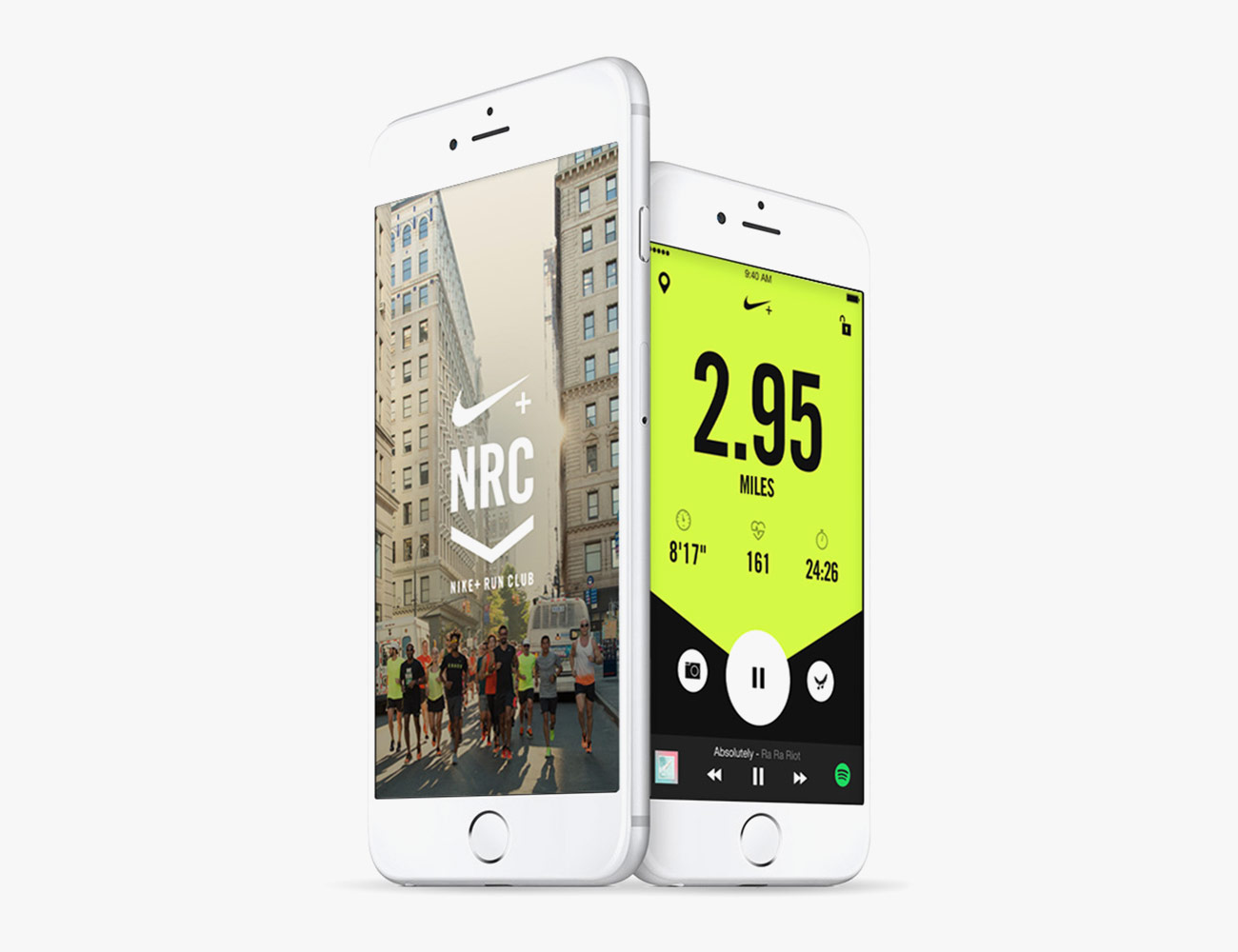
Nike outfits top runners like Shalane Flanagan and Eliud Kipchoge, and they also make it easy to access a run with both of them, plus other Nike athletes and superstars (think Simone Biles, Kevin Hart, Mo Farah and more). You’ll first have to download each workout, which takes roughly 5 to 10 seconds depending on your connection, and then hit start. Link up your Spotify or Apple Music to listen, and easily change the music throughout. In the app, scroll through the options to preview the type of run (speed, recovery or long) and a duration. Then get ready for a lot of conversation. Coach Blue Bennett, a Nike Run Coach, provides you with suggestions on how hard or how fast you should go, so it’s a good idea to know what your 5k, 10k, marathon and recovery paces are.

Studio

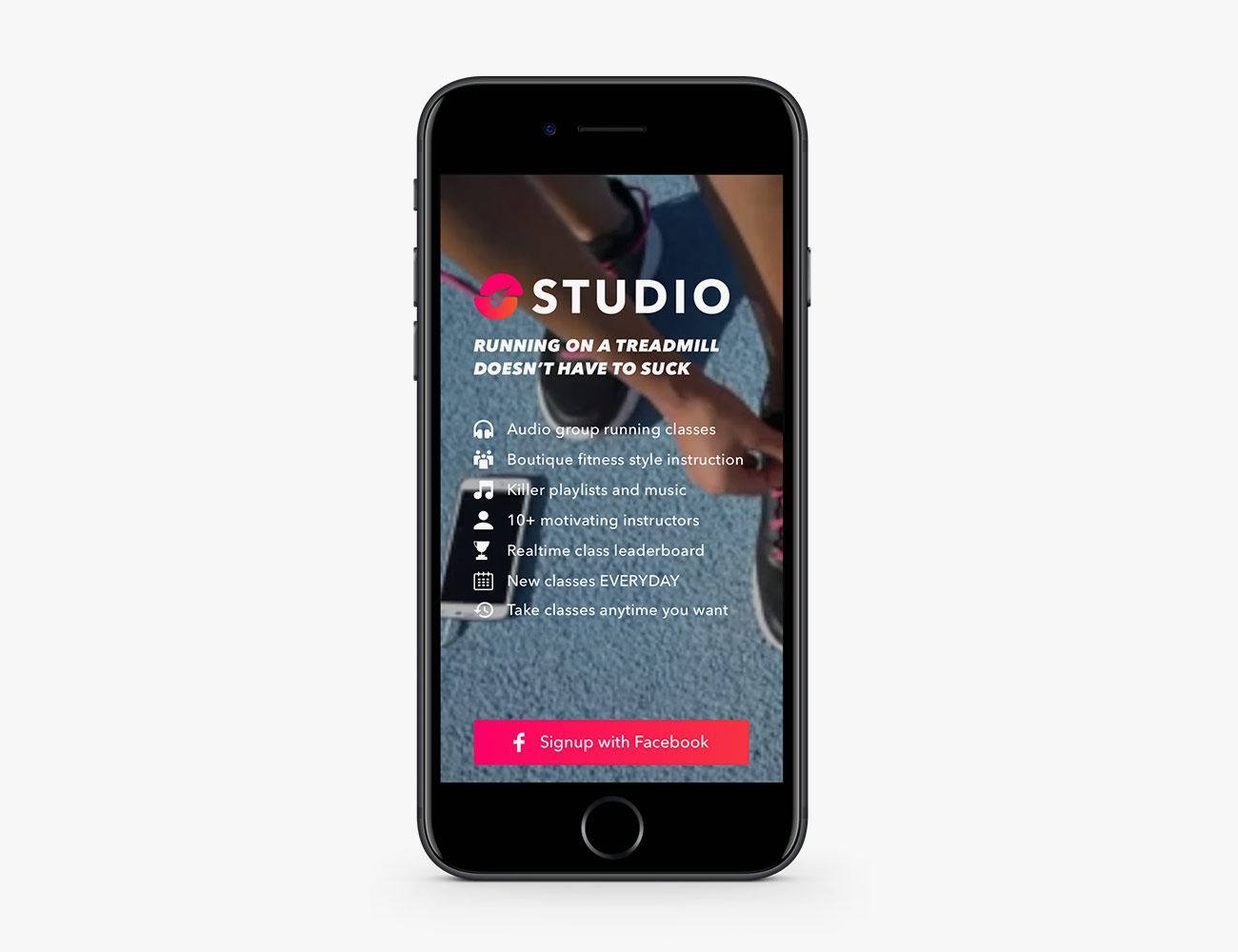
Group treadmill classes are all the rage these days — but if you don’t live in New York, they’re pretty hard to find. The Studio app wants to change that. Open it up to scroll through a variety of classes, or add a custom search like a 30-minute, intermediate interval run with 90s music. You can also narrow your search by instructor once you find one you jive with. Using Apple Health, Studio can track your heart rate and provide you with feedback on a leaderboard. It currently only works with an Apple Watch, but you can run untracked and still get the same workout — just without the competition. In these workouts, the instructor provides you with exact treadmill speeds and inclines, so you don’t have to know what your race day pace is.

Zwift

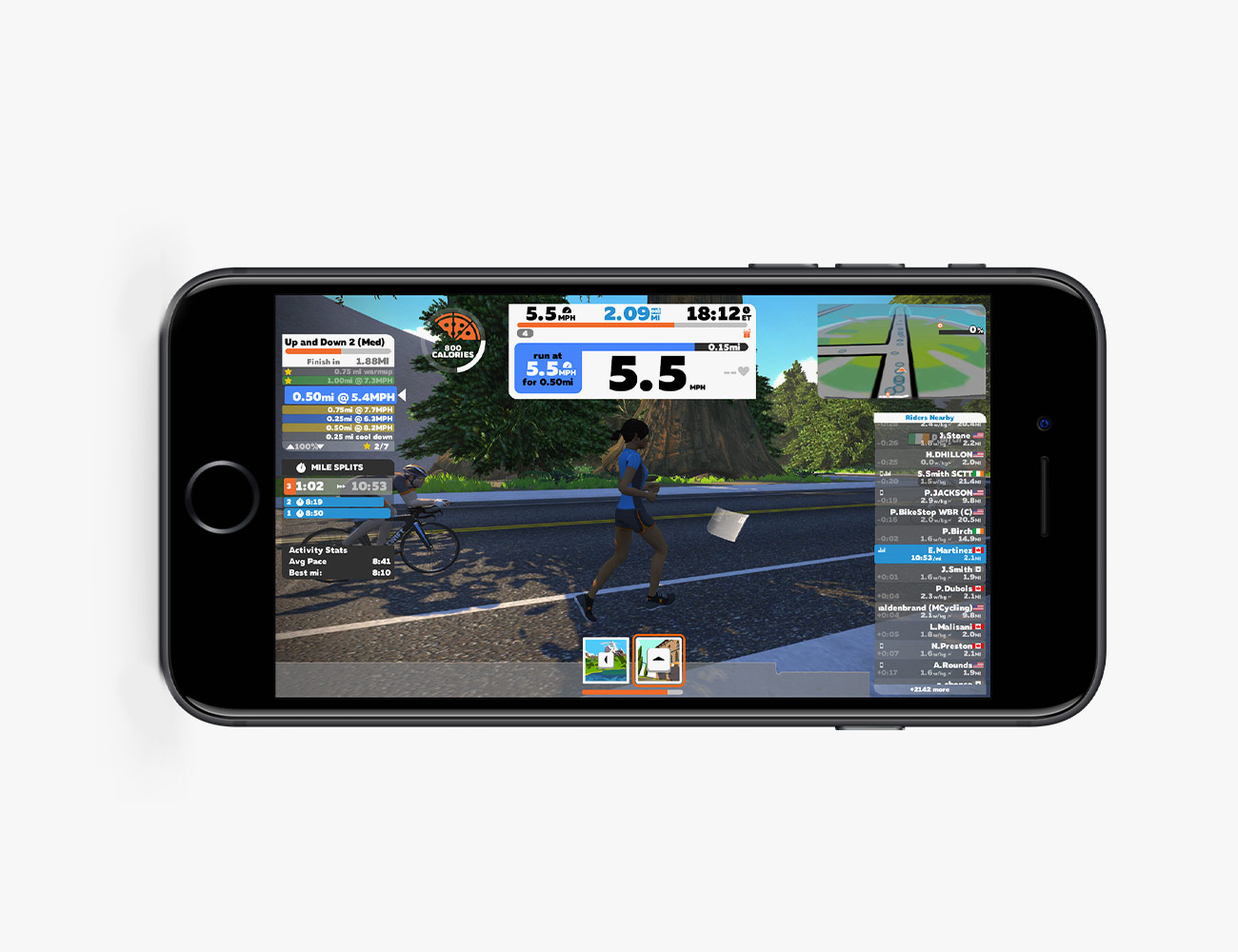
Zwift, the indoor cycling fitness platform that made stationary training exciting, expanded into running earlier this year. The interface and graphics are similar — it’s an extremely interactive course that lets you run with people from all over the world. Pick a run type and route, tweak the pace guidelines and then Zwift will plop a virtual you onto a ‘volcano climb’ and tell you what to touch on the treadmill. While it’ll feel more immersive on a larger screen, testing on an iPhone worked just swimmingly.

One note: To get started, the app requires a connection to a heart rate monitor, cadence tracker and a speed tracker (like an Apple Watch or STRYD). There are a number of smart treadmills and footpods that work with Zwift, as well as Bluetooth enabled sneakers.

|

Treadmill Trails

Each 30-minute video takes you on a virtual reality tour of trails around the world, like the Appalachian, Big Sur, Camino De Santiago and even Central Park. While there’s not much coaching involved here, if you’re looking for a way to purely distract yourself, this is it. The download of each video takes anywhere from five to 15 minutes, which can be a pain, but you’ll never have to download it again. Stream your own music in the background, or listen to the narrator’s reminders to drink water, speed up and slow down.

Armless Sunglasses Are an Unexpectedly-Awesome Idea

Six years ago, Jensen Brehm, co-founder of just-launched Ombraz Sunglasses, was traveling through India’s Thar Desert when a companion sat on his glasses, breaking the sidearms. Recalling a remedy that his brother had come up with, Brehm affixed a piece of twine to the hinges where the arms used to be and wrapped it around his head. The fix worked so well that when Brehm returned to civilization, he replaced the twine with more-permanent leather and continued to wear the sunglasses for years.

Brehm has since perfected his armless shades, and now he’s making them available to the anyone who wants to give them a try through an initial Indiegogo campaign that’s already fully-funded.

Ombraz sunglasses don’t use twine or leather either; instead, they employ a lightweight, water-resistant polyester-cotton blend that’s easily adjustable with two beads that cinch and expand thanks to some handy knot tying. The frames are made of cellulose acetate, which is light, durable and flexible. The lenses are a scratch-resistant polyamide manufactured by Zeiss that are lighter, but just as clear as mineral glass (they’re also polarized).

As with any innovative and would-be “revolutionary” product, I took the Ombraz with a healthy dose of skepticism. The promises that they claim are bold and their ability to fulfill them isn’t immediately assured — sidearms are such a fundamental and essential component of sunglasses, they go without saying.

I’ve been wearing Ombraz for the past month or so (on the sunny days in between Nor’easters, that is) and I’m impressed. I didn’t think the glasses would sit on my face and be comfortable without feeling restricted and pinched by the cord around my head, but they do. Ombraz recommends that the cord be loose enough to allow hands to slide underneath it at the temple, which has turned out to provide the perfect fit.

One of my favorite things about the Ombraz is that, because of their purported durability, I have no fear of breaking them. I can put them in my pocket (and they do lie flat, as claimed) without worrying if something else is in there or if they might get impacted if I sit down or bump into something. When I wasn’t wearing them though, I ended up pulling them away from my face — a quick way to loosen the cord — and bringing them down to my neck; the cord acts as built-in Croakies. I haven’t had the Ombraz long enough to bring them into many of the activities they’re supposed to be great for, but it’s easy to see their application: swimming, rafting, skiing, hiking, even surfing.

Sunglasses can’t be taken on function alone though; style has to be a consideration. While frame shape is mostly a personal choice, the Ombraz’ aviator-inspired arcs are contemporary and classic, subtle without nearing boring. The cord doesn’t look weird either — I spent an entire Saturday with friends, none of which noticed anything different about my sunglasses until I took them off and placed them on a counter while we grabbed some tacos. I’ll count that as a good sign.

I’ve been impressed by the Ombraz, and I’ll continue to wear them as summer ramps up and I spend more time outdoors. They’re forgettable, not because they are mundane or uninteresting, but because once they’re on, you forget that you’re wearing them. They just work.

Today in Gear

The best way to catch up on the day’s most important product releases and stories. Read the Story

What’s Missing from Your EDC? This Beautiful Pocket Cleaver

When you think of an everyday carry pocket knife, your mind probably doesn’t immediately jump to cleaver. What makes a knife a cleaver anyway? Typically it’s a heavy, oversized blade that lets butchers chop through meat and bone. Massdrop’s collaboration with Ferrum Forge, the Buc, is a different take on the cleaver.

By most conventions, the Buc, (short for buccaneer), isn’t a cleaver at all. Its blade uses a modified sheepsfoot shape with an exaggerated curved belly. The belly and the hard angle where the spine drops to the point are reminiscent of cleavers, but the Buc draws more inspiration from curved sabers used by Asian cavalry. Both of these styles combine and harmonize in one handsome and distinctive pocket knife.

The Buc’s blade is 3.5 inches of high quality, satin-finished S35VN stainless steel. The handle is titanium and contains a replaceable frame-lock mechanism. The pocket clip, also made of titanium, is reversible for carrying on either leg.

Today in Gear

The best way to catch up on the day’s most important product releases and stories. Read the Story

The Best Gear Our Outdoor Team Tested This Month

Welcome to another installment of Staff Picks from our Outdoors and Fitness team. Every other week, we select our favorite pieces out of the gear we’re testing, mainstays in our kits, as well as items on our wish lists. It’s like a sneak peek at the gear we’re testing and what we’re stoked on. Have something you think we should check out? Or just want to say hi? Drop us a line at outdoor@gearpatrol.com.

K2 Simple Pleasures

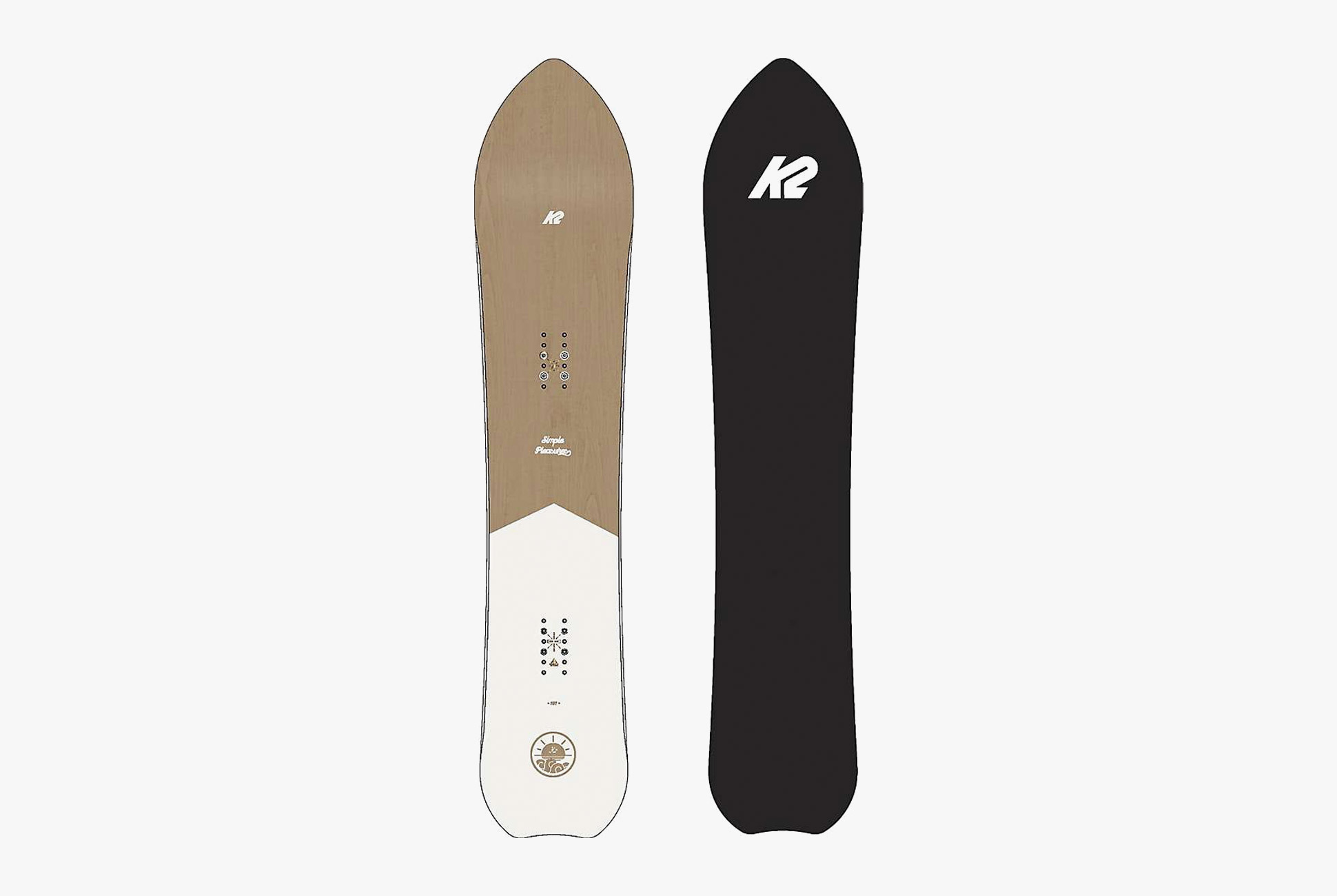
Nothing brings me quite as much joy as laying down a big, arcing toeside turn on fresh corduroy — there’s simply nothing like it. You know the feeling. Holding your edge, gliding effortlessly as your nose gets closer and closer to the snow. That’s pretty much my qualifier for how good a snowboard is; how good was my toeside turn? How close can I get my nose to the snow? The K2 Simple PLeasures lays down a mean, near-parallel toeside turn. It’s a wide board paired with a tight turning radius that makes it endlessly fun in nearly all conditions — from powder to east coast crust. Its performance, paired with a minimally branded, understated top sheet put this board at the top of my list. — AJ Powell, Assistant Editor


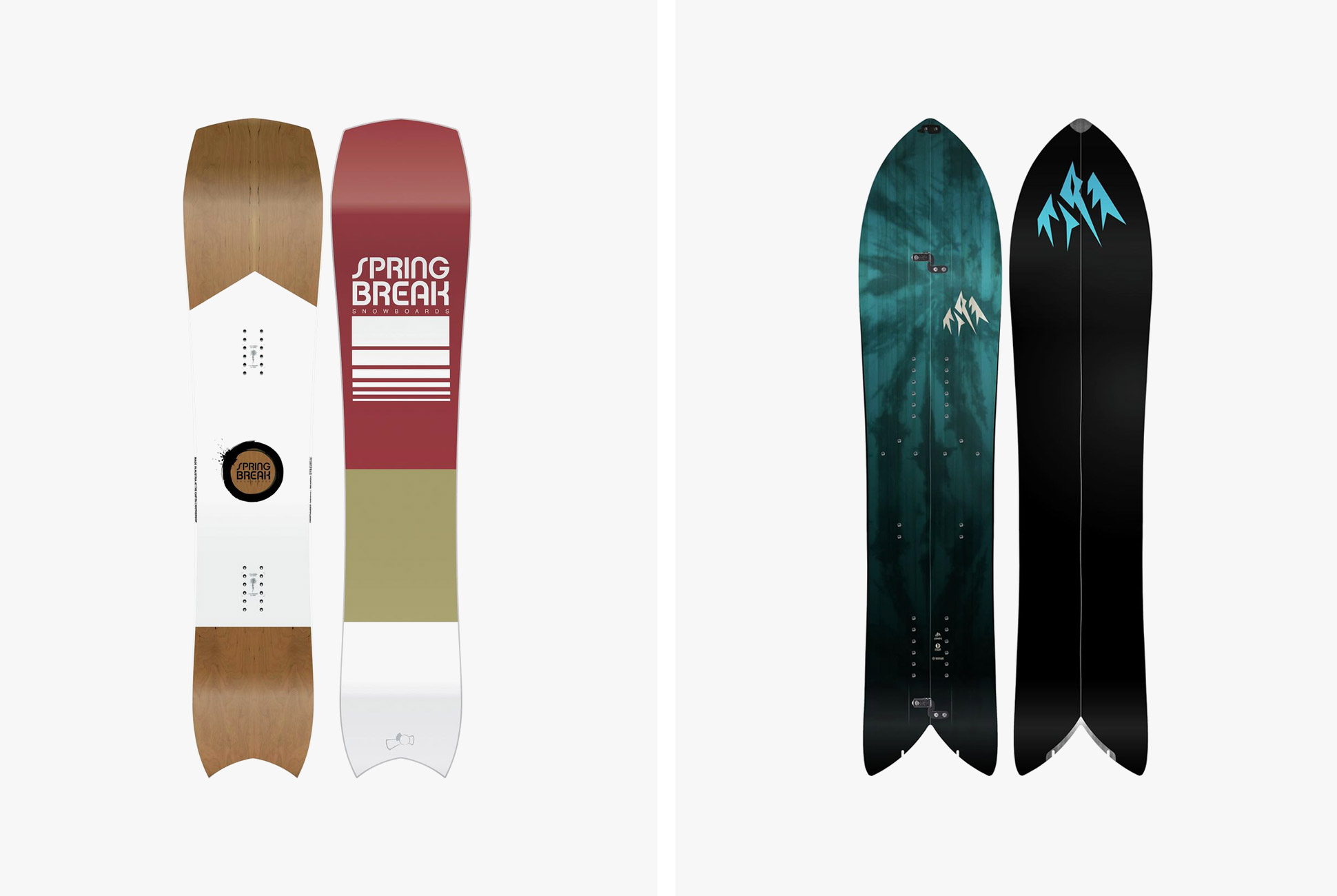
If you’re looking for something similar, but the pick above isn’t quite right, try these alternatives: Capita Tree Hunter ($525) | Jones Storm Chaser ($599)

Eddie Bauer Ignitelite Hybrid Jacket

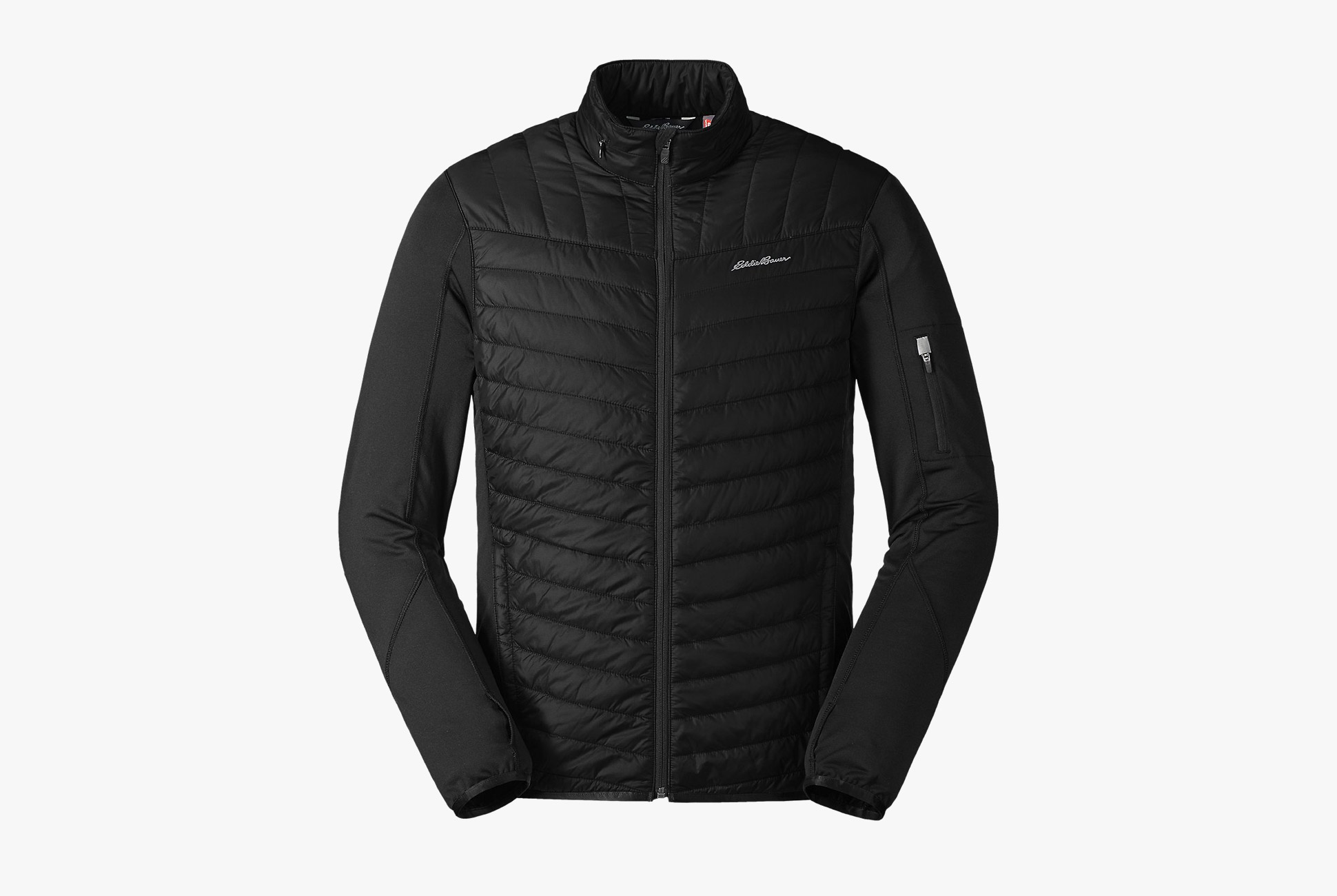
Eddie Bauer does a lot of things right — from synthetic jackets to upscale collaborations — but when I received one of its Ignitelite hybrid jackets, I wasn’t sure exactly how I would use it. The weather was starting to get warmer, and I default to a pull-over when the weather is cold. Then it snowed again in NYC, and I found myself reaching for this jacket to get through runs in 20- and 30-degree weather. The fleece-lined core with PrimaLoft insulation protected me from the wind and snow, and the spandex-infused sleeves and back stretched with me during dynamic warm-ups and cooldowns. This jacket really shines in colder weather. I never finished miles feeling like I was drenched in sweat. If winter continues to stick around, I’ll keep this in the very front of my closet. — Meg Lappe, Staff Writer


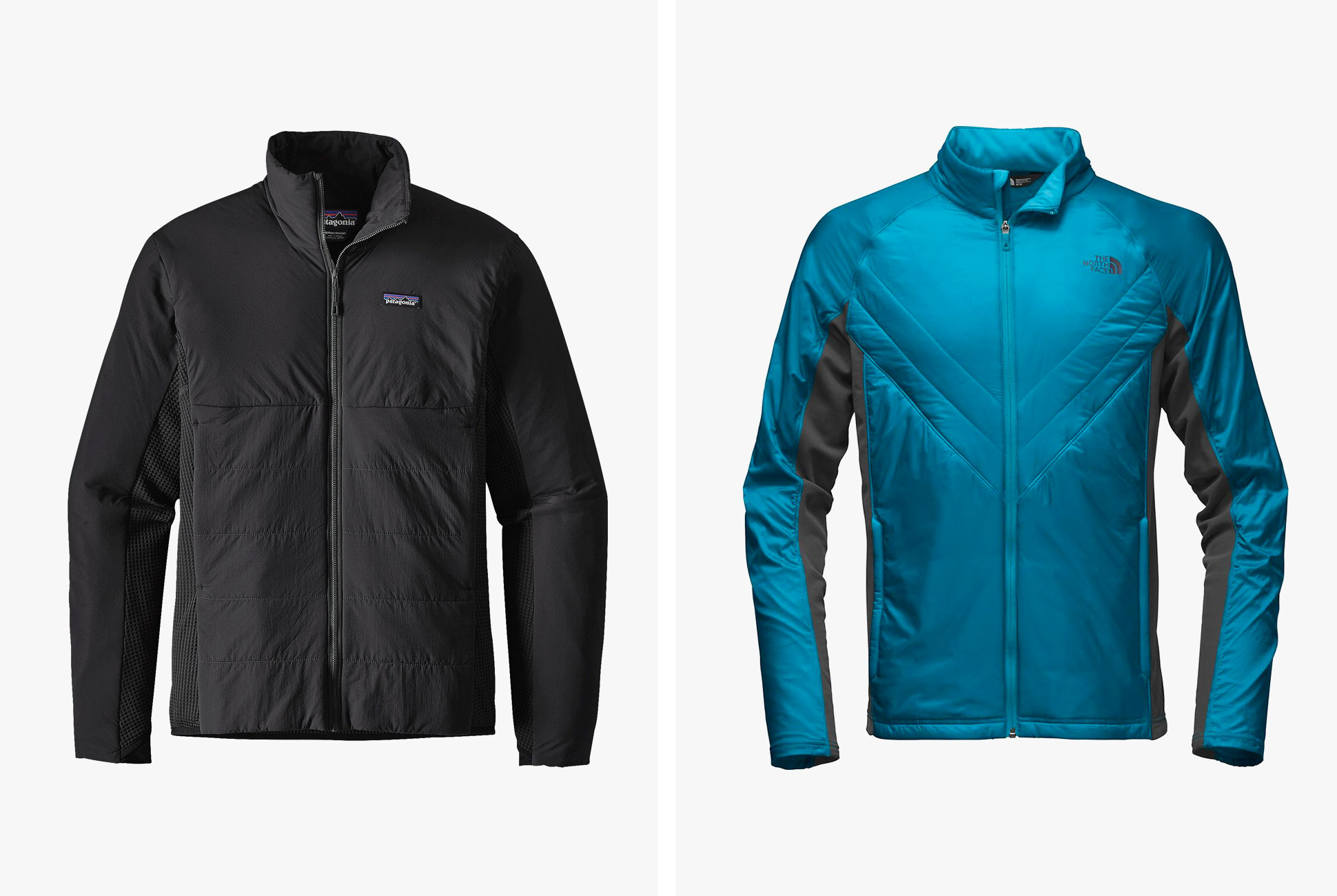
If you’re looking for something similar, but the pick above isn’t quite right, try these alternatives: Patagonia Nano-Air Light Hybrid Jacket ($99) | North Face Flight Touji Jacket ($104)

Trew Trewth Bib

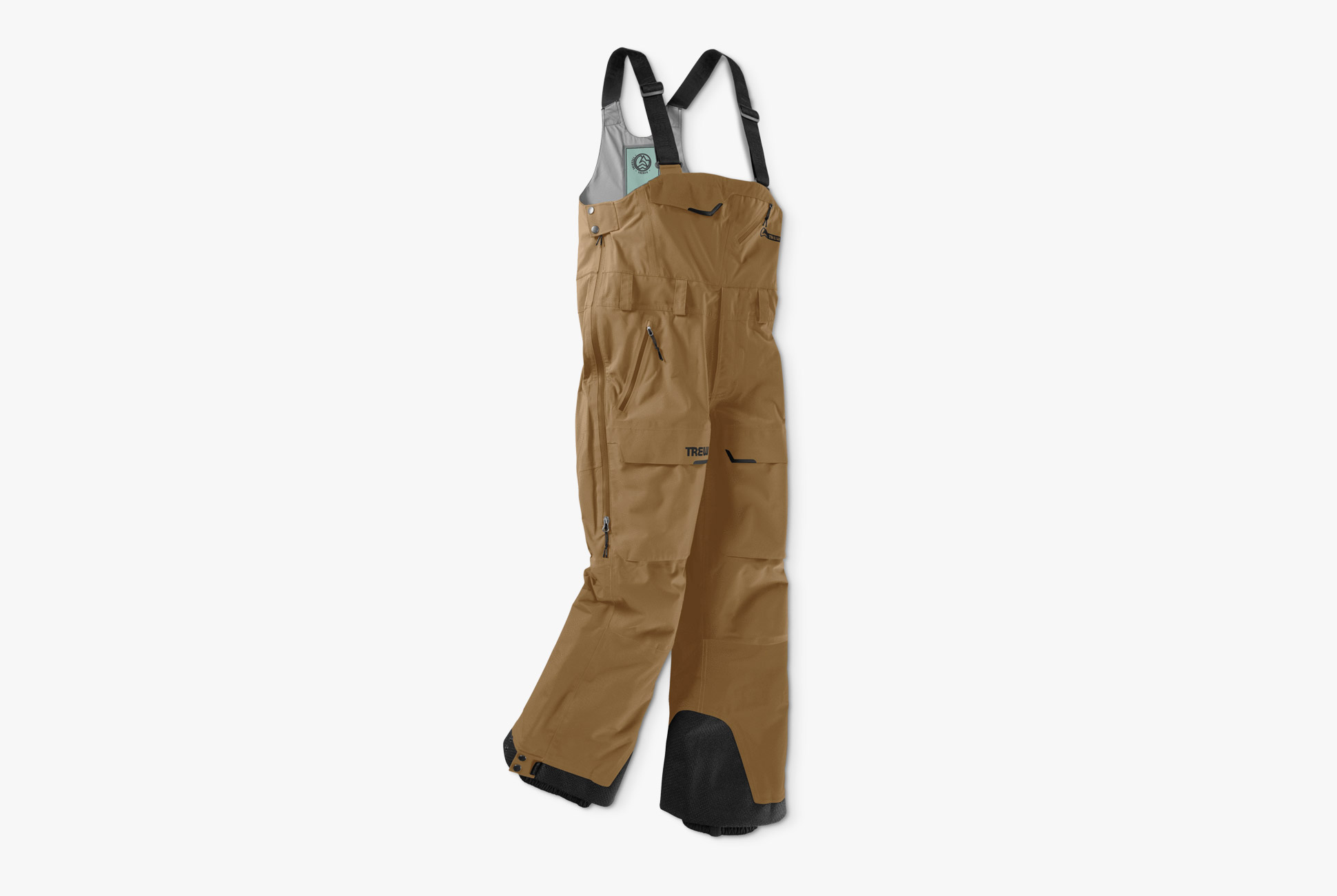
Last week I went to Montana, which is one of my favorite places to visit. There’s something special about it, something inherently wild that you feel as soon as you get there — it’s often described as “The Last Best Place,” an affirmation I find true every time I go. While there I skied at a little-known mountain called Maverick (which also has a great slogan, “Ride the White Thunder”) and the better-known but still under-the-radar Bridger Bowl. On both days I wore Trew’s Trewth Bib, which has quickly become my new favorite ski pant. Trew used Dermizax three-layer fabric to make the bib, which is incredibly lightweight, waterproof and breathable. There are also vents on both the inside and outside of the legs, which came in handy as I huffed my way from the top of Schlasman’s Chairlift to an adjacent peak for some untouched. Also awesome: lots of well-designed pockets. — Tanner Bowden, Associate Staff Writer


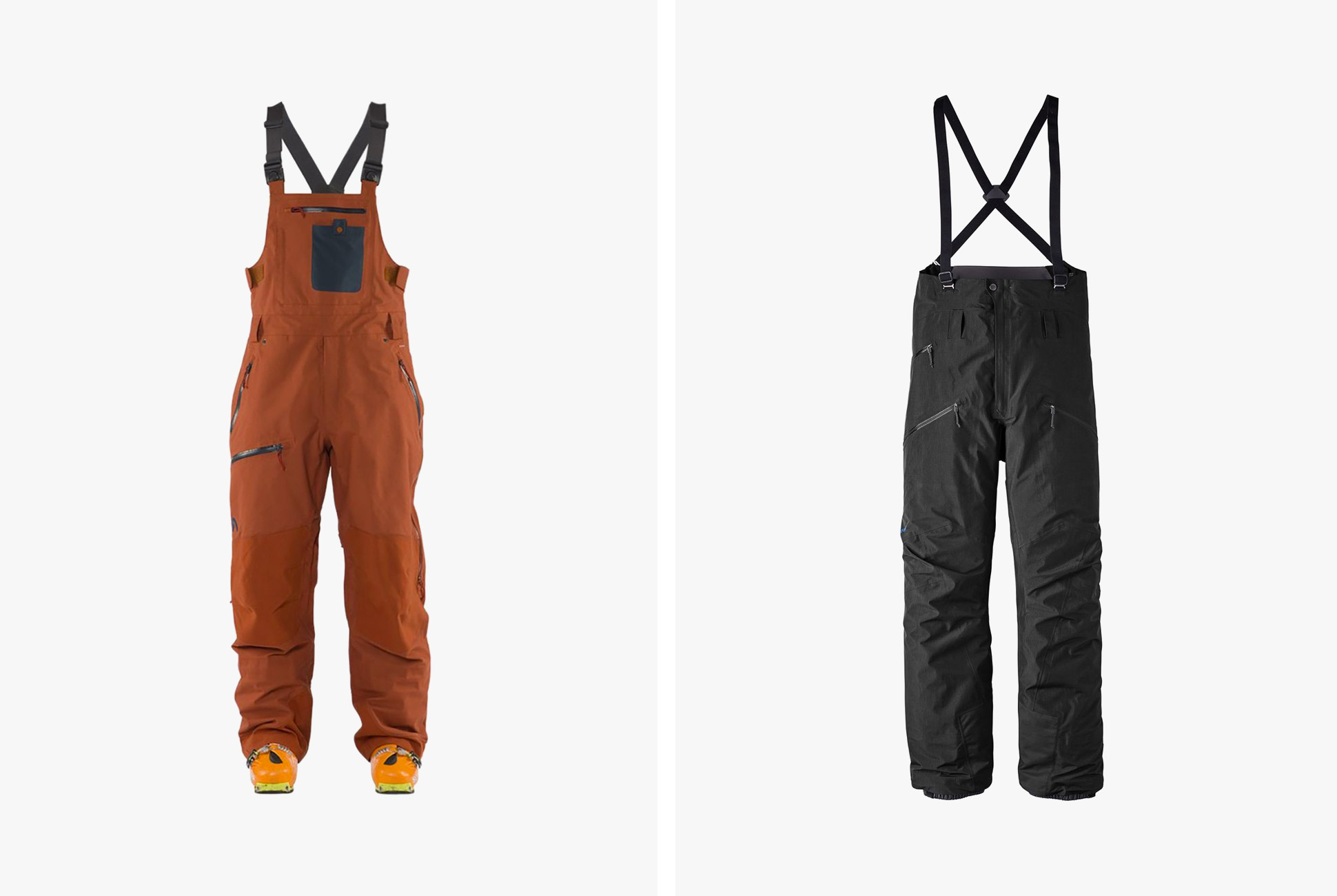
If you’re looking for something similar, but the pick above isn’t quite right, try these alternatives: Flylow Baker Bib ($273) | Patagonia Powslayer Bib ($449)
Note: Purchasing products through our links may earn us a portion of the sale, which supports our editorial team’s mission. Learn more here.

The Spork Receives Its Long-Awaited Redesign

The spork may have been made famous (or infamous) at the house of Colonel Sanders, but it doesn’t receive more dedicated use than by those who camp, hike and recreate in the backcountry. The spork has become standard issue for weight-conscious backpackers who are loath to fill space in their bag with a full set of cutlery. By combining spoon and fork (and sometimes knife) in one item, the spork is a weight-saver.

But the spork has never asserted itself as perfect. (I used to carry a double-sided model that broke a few days into a multi-week trip, leaving me with three inches of spoon and sauce-covered knuckles.) The fork tines are often too small or dull to be of much use and any attempt at including a serrated “knife” edge always falls short. Might as well just carry a regular spoon.

Hadron Gear is eyeing to change that with the Morsel Spork, a reimagination of the utensil that’s already been funded two times over on Kickstarter with plenty of time to go. The Morsel amplifies all of the qualities of the spork to real utility while adding additional smart features along the way. Like my busted utensil, the Morsel is double-sided: on one end is a fork with beefed-up edges, on the other, a spoon. Or perhaps, a spoon-like implement. Hadron has reinterpreted what a spoon can and should be in the outdoors by giving it a unique shape, which allows for scraping the inside of bowls and dehydrated meal bags, and a heat-resistant rubber edge that gives it spatula-like cooking capabilities.

The Morsel is also extra-long, which is ideal for cooking and avoiding dirty fingers (as well as the conundrum of whether to lick them when there’s also plenty of dirt present). That strength may prove to be its weakness though, as backpackers are known to be picky when it comes to carrying any amount of extra weight. That being said, the Morsel eliminates having to bring a cooking utensil, so net ounces may be reduced.

In either case, the Morsel is the first innovation that the spork, and camp cutlery in general, has received in a long time.

Today in Gear

The best way to catch up on the day’s most important product releases and stories. Read the Story

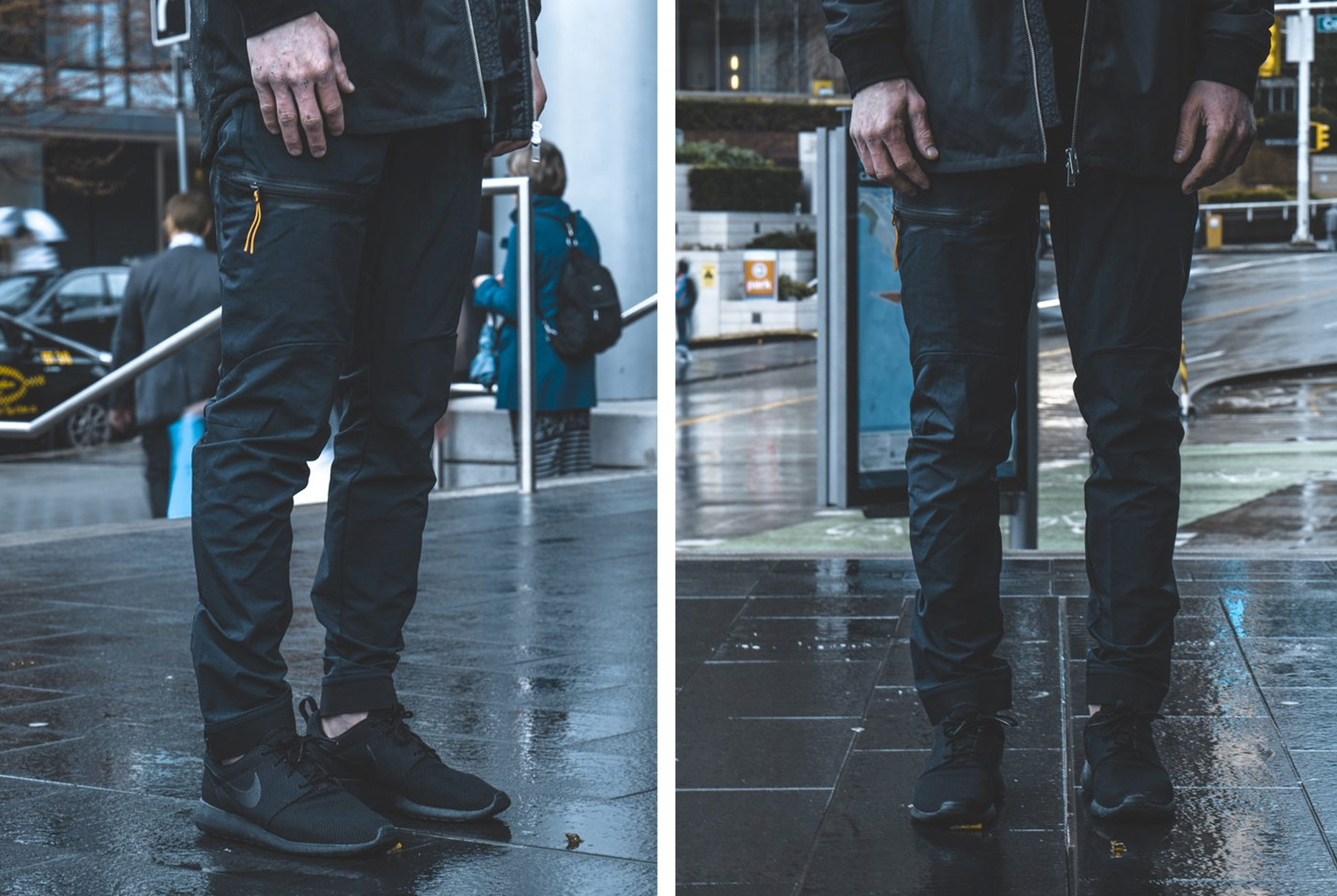
Kind of Obsessed: I Don’t Climb, but I’m in Love with These Climbing Pants

I am not a rock climber. I’m not a climbing enthusiast or even a climbing amateur. Don’t get me wrong though, I do like climbing, and I hold rock climbers, a group that includes many of my friends and colleagues, in high regard. I’m sure I’d like climbing too — I simply never had much of a chance to cultivate a passion for the sport in the same way that I have for skiing and hiking. Most of the climbing experience that I do have comes from the occasional trip to the local climbing gym 45 minutes away from where I grew up. (It was a popular birthday venue during elementary school.)

So it was to my surprise when, last summer, I found myself inexplicably intrigued by a pair of “modern rock climbing pants” that I had stumbled across on Kickstarter. I had never heard of the brand — Foehn — but it was plain to me that these pants were pretty damn stylish. My cursor hovered over the seafoam “Back this project” button for five or six drawn out seconds. I closed the window; after all, I’m no rock climber.

Fast forward six months and I found myself at a table drinking lattes with Foehn’s founders, Ingrid Sirois and Anthony Boronowski. They told me the story of Foehn, named for the type of warm wind that can develop on the leeward side of mountain ranges, a name that had been lost to the crags of my mind, and offered to show me some the products they had created. There was a flannel, a down pullover, a pair of… could it be? It was as if a long-forgotten submission to the “Missed Connections” section of a backwater newspaper had at long last been answered. No words were needed, the recognition was instant.

I’ve been wearing the Brise Pants regularly ever since. In feel, they’re a softshell pant with a more-rugged exterior and a comfy interior. The fabric is four-way-stretch-equipped nylon. The Brise’s waist has a zipper and button but is also stretchy, and the knees articulate. All of these qualities give the pant a big penchant for motion, which is probably great for climbing but again, I wouldn’t know. For me, these things translate to comfy as all hell.

I’ll admit it though, my initial attraction to the Brise was entirely superficial; grin-inducing comfort was a happy mistake. Like a pair of joggers, the Brise tapers down to a pair of elastic cuffs at the ankle, creating a slim profile, which I like. And that stretchy fabric, articulation and gusset — all designed for climbing — keep the fit trim and relaxed without becoming sluggish and baggy. The tape-accented thigh pocket has a certain streetwear appeal to it too, and yeah, it was also designed for climbing (so you can access essentials while wearing a harness). If you’re like me, you want technical features — they make for comfier, more durable pants — but you don’t want them on display.

There may not be any tougher fashion critic in the world than the collective New York City, where receiving a once-over can be just as telling as being completely ignored. This has been my testing ground for the Brise; not on a sheer granite wall but littered concrete. And yet, I’ve received more compliments on these pants, from friends and strangers alike, than any other piece of clothing I own. That the Brise are pretty and multifaceted means that I’ve finally found the full package. They’re my everyday pant, my comfy-Sunday pant and my travel pant, all wrapped up in one. I still haven’t climbed a rock wall but who knows what could happen, I find it’s best to go into relationships with an open mind.

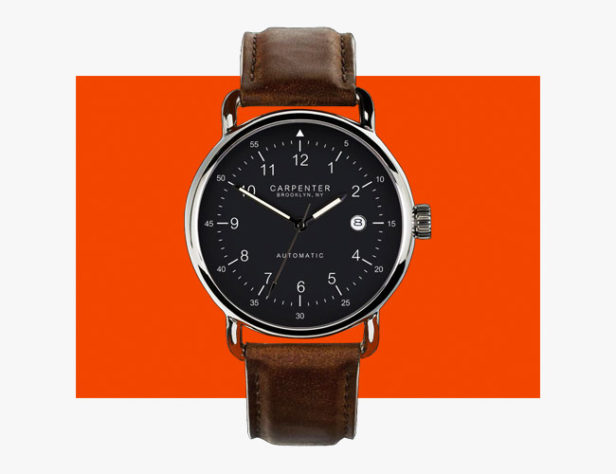
Kind of Obsessed: This Under-the-Radar Mechanical Watch Made Me A Watch Nerd

This automatic mechanical watch launched my full-blown watch obsession. Read the Story

Photographers Are Going to Lose It Over These New Bags

There are a lot of travel-oriented, adventure camera bags available to photographers these days. Chances are you’ve seen quite a few of them in photographs and videos, and chances are if those pictures in reels took place in a rugged environment, F-stop Gear made the bag. F-stop was among the first to recognize roving photographers’ need for better equipment, and it reacted by blending the padded compartmentalization of camera bags with the technical features of expedition backpacks.

F-stop made its name in the adventure photography world, but its new line of backpacks and shoulder bags is for the urban explorer. The Dalston and Fitzroy, named for neighborhoods in London and Melbourne, respectively, are sleek roll-top bags reminiscent of those favored by urban commuters. They’re geared for photographers though, with internal separators and side- and rear-access zippers. The Florentin, named after Tel Aviv’s hip neighborhood, and the Kalamaja, which draws its name from Tallinn, Estonia, are an ode to the prototypical shoulder bag that’s carried by photographers of all kinds.

F-stop knows that the urban photographer is exposed to the elements too though, so it built its Urban Collection using the same rugged materials used in bags geared for alpine pursuits. Ripstop nylon, water-resistant zippers, splash-proof fabric and reinforced handles all bolster these bags, making them fit for any adventurer’s kit.

Today in Gear

The best way to catch up on the day’s most important product releases and stories. Read the Story

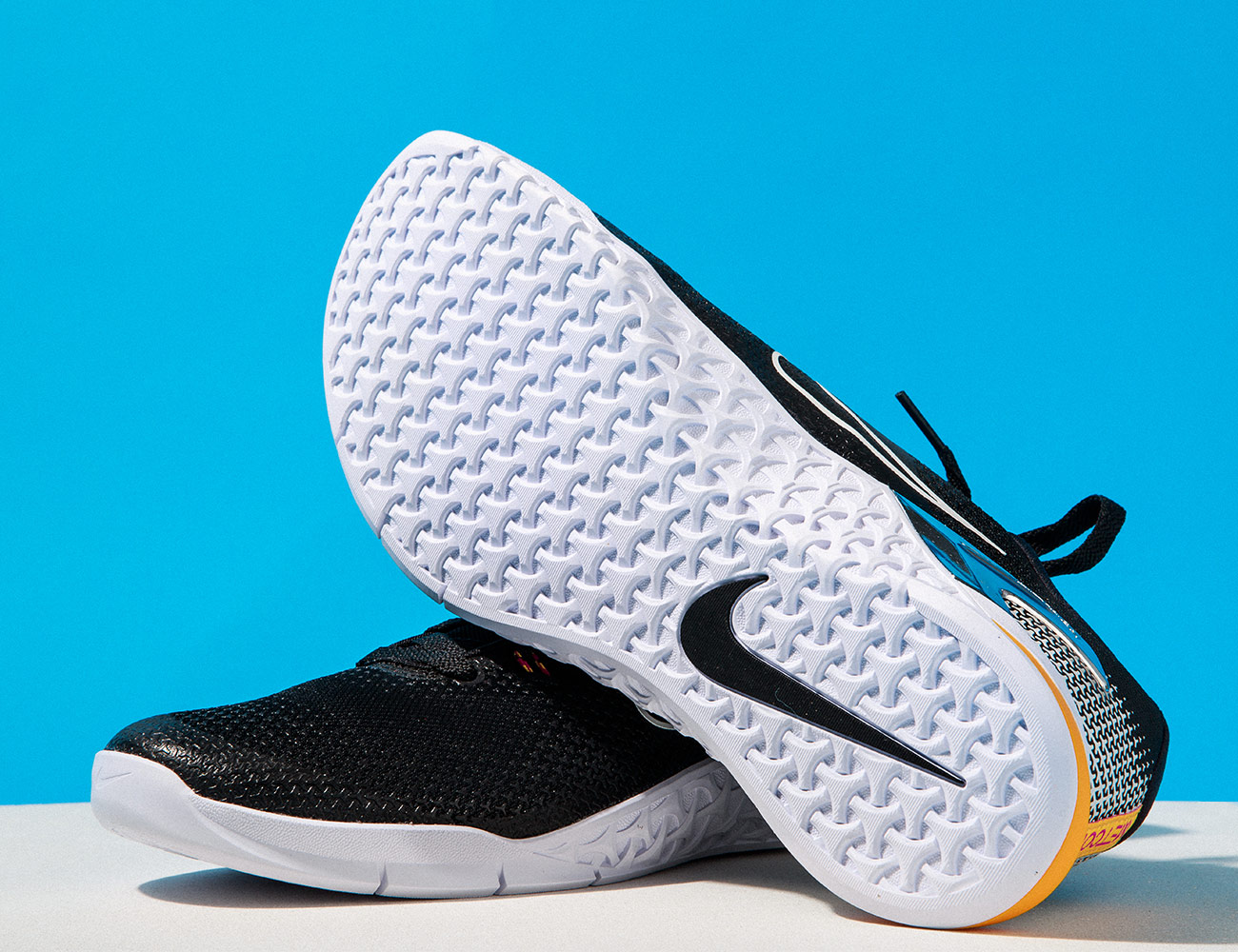
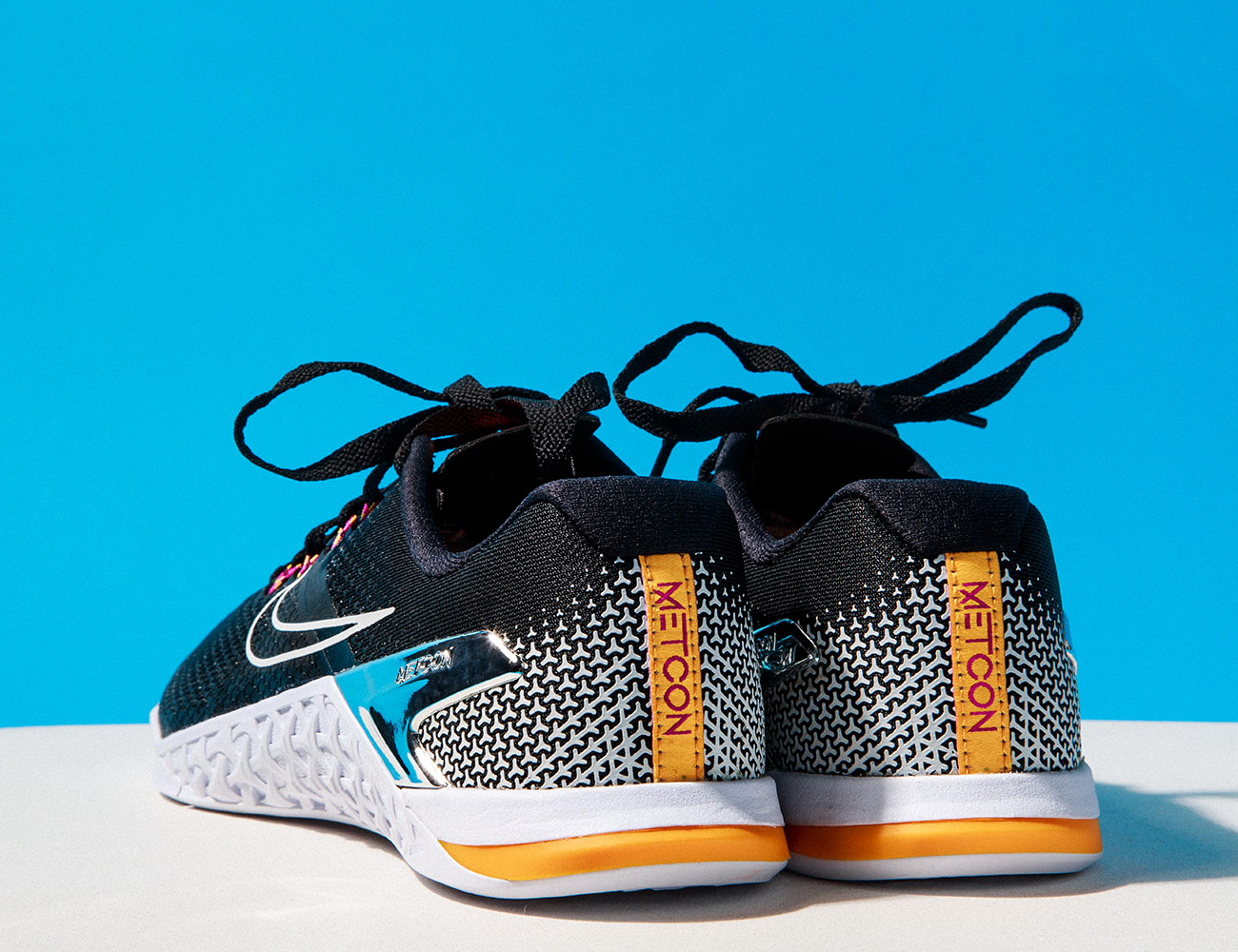
After Rigorous Testing, Here’s How the Nike Metcon 4 Stacks Up

Walk into a Crossfit Box and you’re likely to see a lot of Nike, Reebok and Nobull sneakers. While Reebok was first to the Crossfit training shoe game in 2011, Nike followed suit in 2015 and has since crafted some exceptional Crossfit shoes. The latest is the Nike Metcon 4, released in January, which brings an upgraded appearance along with upgraded performance. Here’s how it compares to previous iterations, plus the light under which it really shines.

The Good: The Metcon 4 takes basically all of the best features of the Metcon 3 and adds just a few tweaks. The shoe is more durable and works for both weight lifting and sprints. Design features like the interlocking pattern on the sole look cool, plus they grip exceptionally well for sled pushes and pulls. The sole also allows you to crush 100-meter sprints. The 4mm offset means your heels are close to the ground to allow for a stable launch for tuck jumps and power cleans — as well as provide firm support for deadlifts and overhead presses. The dual-layered sock liner lets the shoes breathe a bit, and the added sixth loop for the laces enhances fit and comfort.

Who They’re For: Anyone who lifts weights, frequently visits a Crossfit Box, takes athletic conditioning classes or boxes. The shoes perform well in all conditions where distance running and jumping aren’t integral to the workout. For the average gym-goer, this is a great shoe. It shines on all weight-lifting machines, as well as with free weights.

Watch Out For: While the Metcon 4s are updated to be a bit more flexible than the 3s, it’s still not a sneaker I’d want to grab for a run. The toe box flexes back toward the tongue, but it’s built to be a more rigid shoe — offering the support you need for gym exercises.

In terms of fit, heel slip was something the Metcon 3 had a slight issue with, and while Nike has added an additional lace loop to tighten the fit, it’s still something to watch out for. If you’re used to working out in standard running sneakers, these shoes are built differently, so it might take a little while to get used to them. When I first put them on, I thought they were snug, but after three months of use, they’re comfortable and feel normal.

Alternatives: One would be remiss not to mention the Reebok Nano, and the newer Nano 8 Flexweave. While I have yet to test the Flexweave, the fabric construction also provides security and durability, like the TPU Tri-star shapes all over the Metcon 4. The Nobull Dark Grey Trainers have a similar-looking upper construction as well.

The Verdict: Compared to the Metcon 3, there aren’t a ton of changes — which is a good thing considering what a strong performer that shoe is.

The more I wear them, the more I discover new uses for them. Previously, I’ve slid all over the place in my running sneakers during boxing or conditioning classes. My ankles were bellowing out for support. Once I started using the Metcons for those classes, I found myself more stable, able to focus more on doing the actual workout instead of worrying about flimsy footwear.

That peace of mind comes partially from the all-over rubber tri-star design that expands beyond just the sole and up the sides, slightly under the arch. The tri-star shapes are also placed strategically around the entire shoe, along areas where wear and tear usually take place — adding increased durability. They’re most visually evident along the heel, but they’re also dotted along the sides of the shoe and near the toe box.

For weight lifting, the shoes are unparalleled. The drop-in midsole is easily removable, which I had no issues with. There are some complaints about a squeak because of that, but I never noticed it. It’s also dense and stable, especially right under the arch, yet flexible under the forefoot. The overall feeling is an extremely solid base from which you can lift, pulse, clean and squat — an ideal shoe for all gym-goers.

What Others Are Saying:
“There’s no CrossFit shoe I’d rather don for a sprint on a Trueform treadmill; the ride, while rougher than, say, Nike’s Air Pegasus running shoe, is still smooth and lets me generate quality speed over 100 meters, 200 meters, and 400 meters. Despite that lack of rigidity in the mid-foot, the shoes offer a solid enough base that I’ve deadlifted 315 and above in them and had no problem squatting and keeping my weight back in my heels.” — Ebenezer Samuel, Men’s Health

Key Specs
Weight: TKTK (waiting to hear back from Nike on confirmation)
Offset: 4mm
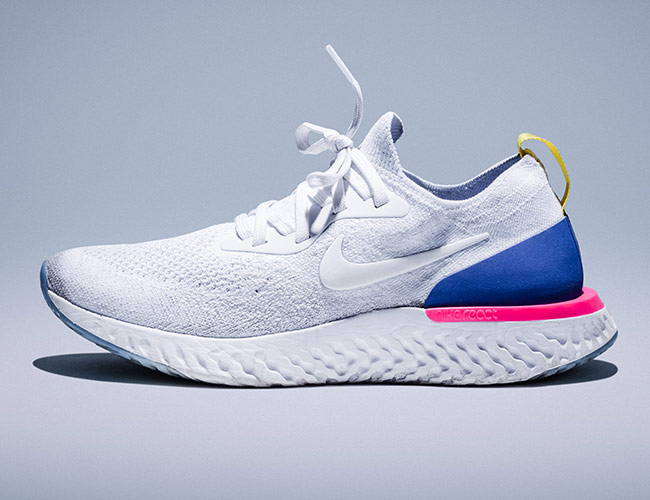
Is Nike’s Epic React Worth All the Hype?

The Epic React running shoe performs well in practically all conditions, but are they the right shoe for you? Read the Story

Want A Patagonia Nano Puff? Get This Instead.

So you’ve developed a lust for Patagonia’s Nano Puff jacket; I don’t blame you. Just last month I wrote my love letter to the puffy coat — how it accompanied me everywhere from the Tetons to the Andes and now lives dutifully by my side in Manhattan, far from any mountains. I recommitted to my vows by buying the anorak pullover version, too.

One thing I failed to mention is that I became acquainted with the Nano Puff while working as a rental grunt at a ski shop, a position which compensated me with two-hour ski breaks and major gear discounts in lieu of health insurance and a 401k. What I’m getting at is, I bought my Nano Puff on the cheap — it cost me less than 100 dollars. Had I not had access to those discounts would I have paid full price for the coat? Probably. But hindsight is 20/20.

Fortunately, if you haven’t committed to the Nano Puff, and price is the primary factor holding you back, there’s another option: L.L.Bean’s Packaway Hooded Jacket, which costs just $179. I know what you’re thinking — it’s not Patagonia — and I get that. The Patagonia brand has a particular magnetism to it. But, like Patagonia, L.L.Bean is also a heritage outdoor brand that is, objectively, iconic.

I propose to remove any weight added by any chest-mounted logo and let the jackets speak for themselves. Aesthetically, they’re near interchangeable. Instead of long, tubular baffles, both jackets use quilted stitching to create polygonal pockets that hold insulation. The Nano Puff’s are laid out horizontally and vertically like bricks, the Packaway’s angling inward toward the central zipper. It’s apples to or-, slightly different apples.

But a synthetic insulating jacket is designed for packability and warmth; it’s only as good as its stuffing. Patagonia fills the Nano Puff with 60-g PrimaLoft Gold Insulation Eco. In the Packaway, L.L.Bean uses 60-g PrimaLoft Gold Insulation with Cross Core technology. What’s the difference? Almost nothing. Both versions of PrimaLoft Gold feature a high content of recycled material, both provide the same amount of packability and warmth. In fact, Cross Core is a brand new technology PrimaLoft developed with NASA that uses aerogel to provide more warmth without increasing the insulation’s weight. And right now, L.L.Bean is the only outdoor company that’s allowed to use it.

Both the Nano Puff and the Packaway possess a 100% recycled polyester, water-repellent shell cut with two hand pockets and another interior chest pocket. The Packaway has an additional exterior chest pocket as well. Both have drawcord-equipped hems. The jackets are nearly identical. And while love and loyalty keep me true to the Nano Puff, I will admit that the addition of Cross Core does give the Packaway one-up over Patagonia’s jacket.

But the Packaway has one more advantage to it: it’s only $179, which is a full $70 cheaper than the Nano Puff, which costs $249. If you aren’t drawn to one brand over the other, or a specific color, the choice is an easy one to make. I’ll admit it; even my faith is shaken; had I not had my ski shop discount, maybe I would’ve taken another path.

|

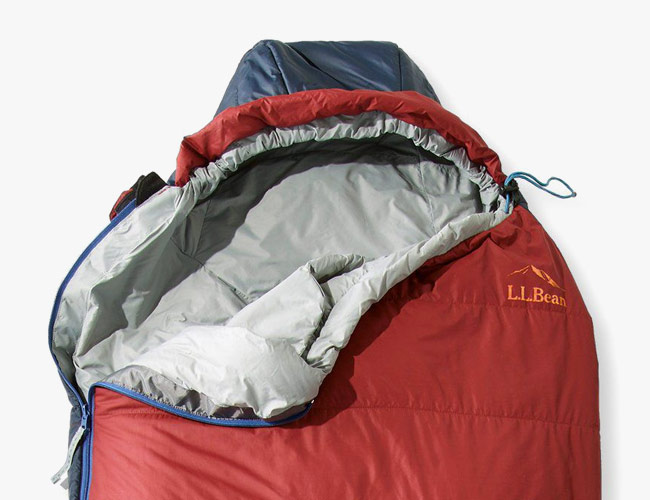
L.L.Bean’s New Sleeping Bag Uses Insulation Originally Developed for NASA

PrimaLoft’s Gold Cross-Core insulation was developed for NASA and provides more warmth without increasing overall weight. Read the Story

The 10 Best Rugged Travel Duffels of 2018

Features have gotten out of hand. No matter what the product is — be it as simple as a knife or as complex as a camera — we’ve come to expect that it’s jammed with as many bells and whistles (sometimes literally) as possible. Outdoor products are among the most egregious culprits here, fooling would-be adventurers into thinking that they simply cannot embark on a trip without bringing the multifunctional-jacket-pant-parachute-vest complete with eighteen camp-stove-dongle-ready removable pocket pouches (and it packs into its own hood!). It’s maddening.

Thankfully, the duffel has remained immune to the feature-packing epidemic. The design hasn’t deviated too far from the canvas sacks travelers used to throw over their shoulders before heading off to lands unknown. Improvements like weatherproof zippers and padded backpack straps are utilitarian, not gimmicky. Materials technology has made duffels all but bomb-proof, which is ideal for poor-weather adventures, but canvas has not been forgotten. Oftentimes the only “feature” is a simple zippered interior pocket. And that’s the way it should be. You already have enough stuff to bring with you; you shouldn’t have to worry about the bag that carries it all.

These duffels run the gamut of sizes and materials, but one thing is uniform in every case: resiliency is favored over contrivance. These are bags capable of withstanding countless well-planned weekends to a favorite hideaway, as well as expeditions to corners of the map that still contain question marks.

Editor’s Choice: Yeti Panga
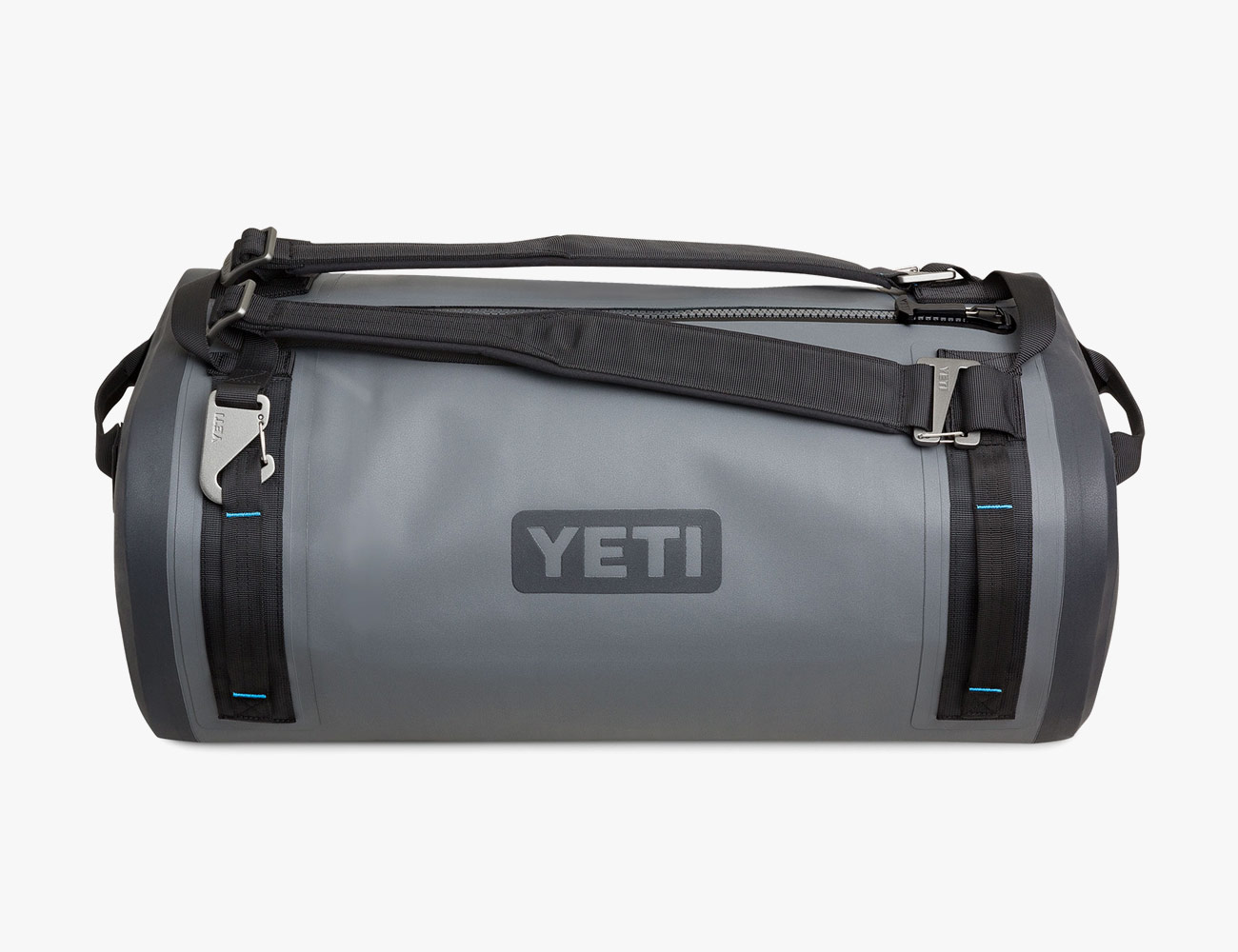


Drawing on the success of its soft-sided coolers, Yeti stripped out the insulation and used the thick, laminated nylon skin to create a highly puncture- and abrasion-resistant duffel called the Panga. Like many Yeti products, what appears run-of-the-mill is actually innovation genius. The Panga has easily removable backpack straps, lash points on all sides and haul handles on either end. Speaking of those ends, they’re sturdy enough to keep this bag standing upright, and the bottom is padded with EVA foam, similar to the stuff in running shoes, to keep things protected when you decide to give the bag a toss. The Panga is also fully submersible thanks to a TIZIP airtight zipper. One way to test it? Close it up when the bag is empty and stand on it — not even a gasp will escape.

Available Volumes: 50L, 75L, 100L
Weight: 5.2 pounds or 2,359 grams (50L)

Best Discreet Duffel: SDR Traveller D3 Traveller
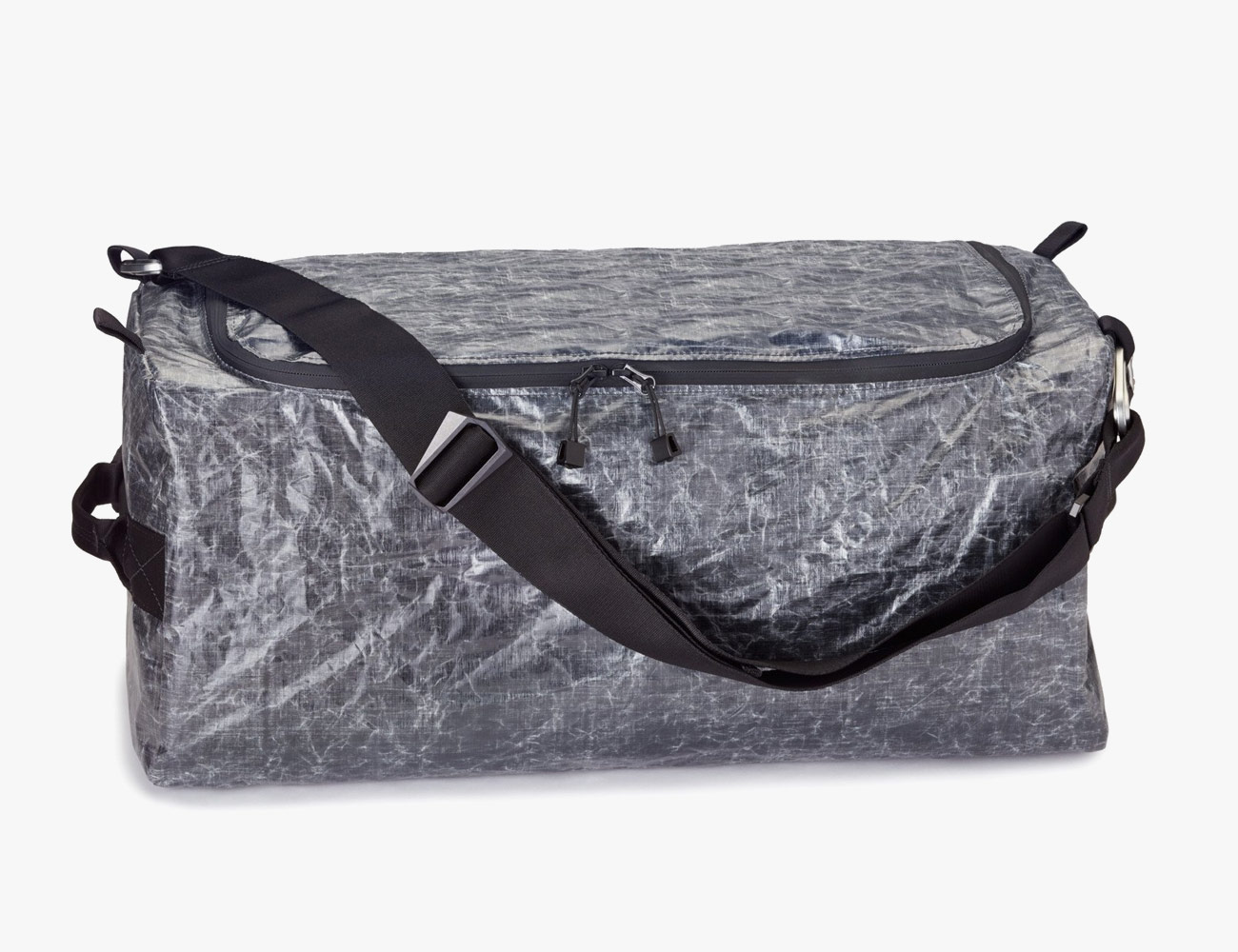


The D3 Traveller is made to take a beating, and go unnoticed. Why? Because when you’re traveling across borders where officers are more likely to request a bribe than a visa application, discretion is as important as durability. To the untrained eye, there’s nothing special about the unbranded black carry-all, but that’s the point. The bag is made from two layers of ultra-strong Dyneema composite fabric, allowing it to maintain a slackened look even when packed full. The D3’s detailing is in the same vein; the shoulder strap slider is machined from solid aircraft-grade aluminum, YKK zips are reinforced with water-resistant Uretrek. And, just to underline the brand’s thesis, the D3’s zipper pulls are accented with river stones from the Pamir Mountains, a vast and remote range located in a region where borders and laws are less tangible.

Available Volumes: 39L
Weight: 1.13 pounds or 515 grams

Most Versatile Duffel: The North Face Base Camp Duffel
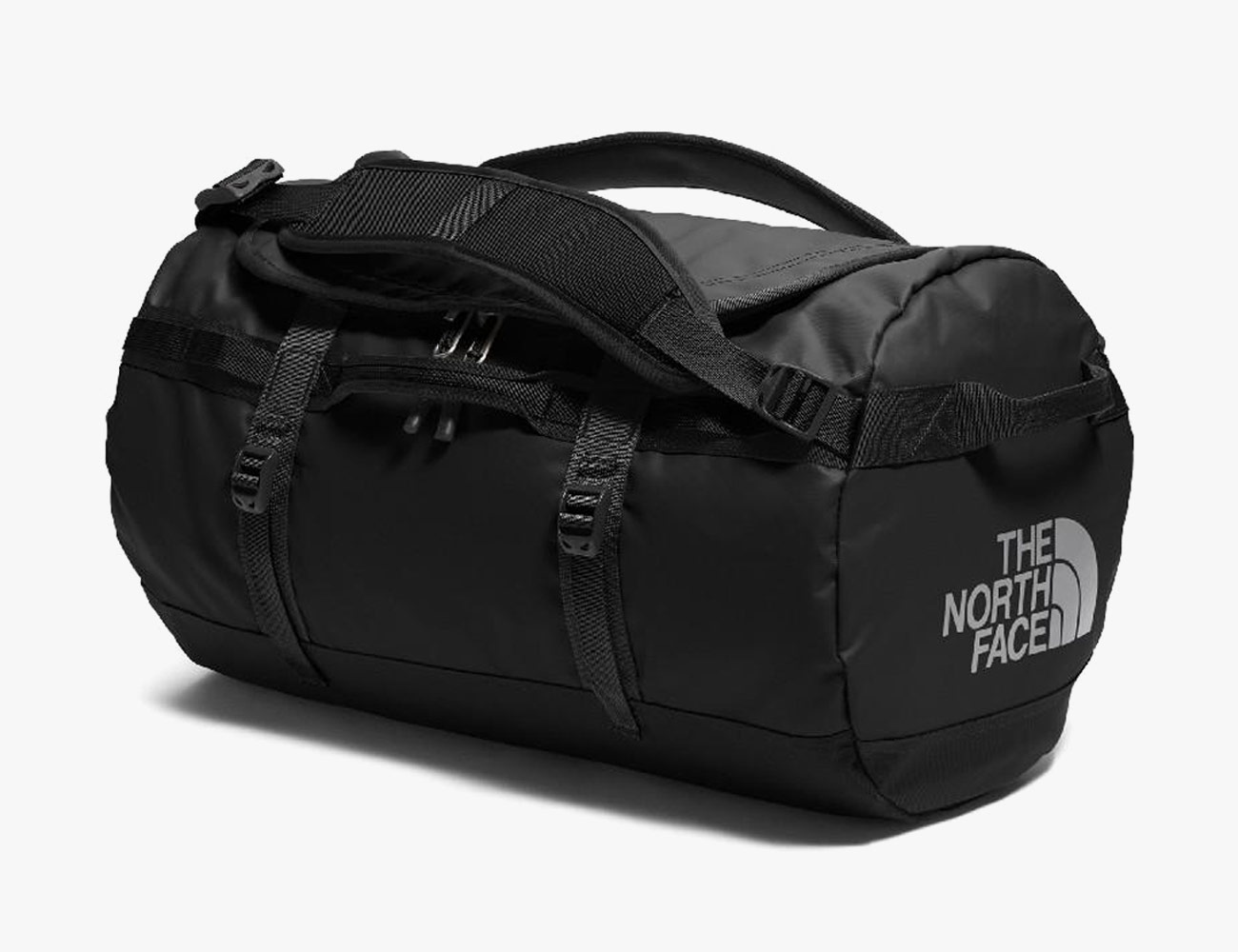


The North Face has over 50 years of experience hauling gear to the most remote parts of the world, so it’s no wonder that the Base Camp was not only one of the original laminated expedition bags, but also one of the few that has stood the test of time so well. The Base Camp comes in a classic cylinder shape made of laminated ballistic nylon and opens wide to reveal a spacious main compartment and a mesh organizing pocket on the interior of the lid. Like many of the bags on this list, the Base Camp comes equipped with removable backpack straps, daisy chain attachments, tie-down points and multiple handles for carrying. But the Base Camp differentiates with a separate compartment on one end that can take care of any wet or dirty clothing and gear, so it doesn’t have to mix in with the rest.

Available Volumes: 31L, 50L, 71L, 95L, 132L, 150L
Weight: 3.5 pounds or 1,588 grams (71L)

Best Duffel with Wheels: Arc’teryx Rolling Duffel
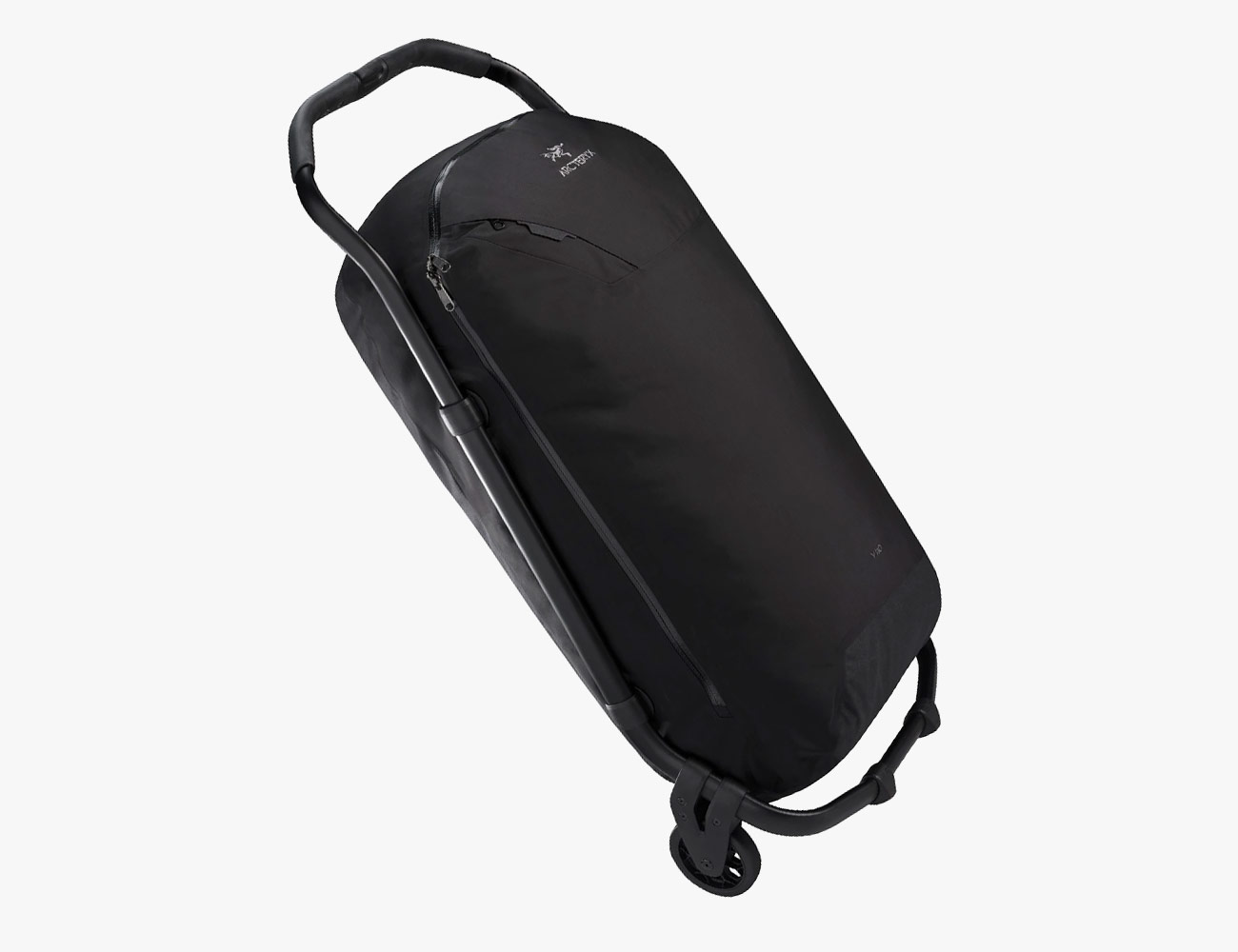


Arc’teryx’s Carrier line has long been the brand’s signature in the rough duffel world, but its new wheeled bags, the V80 and V110, make carrying big loads all that much more manageable. Unlike most brands, Arc’teryx placed the extendable, anodized aluminum frame on the outside of the bag, which leaves its interior totally free for well, everything. The U-shaped zipper opens nearly all the way for easy packing and unpacking. Inside, there’s even a pocket-equipped flap that can be compressed over everything in the bag to free the exterior zipper from additional stress. The outer fabric is weather-resistant 630-denier nylon, and the oversized wheels are burly enough to roll over rough terrain (but they’re easily replaceable should the worst occur).

Available Volumes: 80L, 110L
Weight: 7.4 pounds or 3,374 grams (80L)

Best Backpack Carry System: Mystery Ranch Mission Duffel
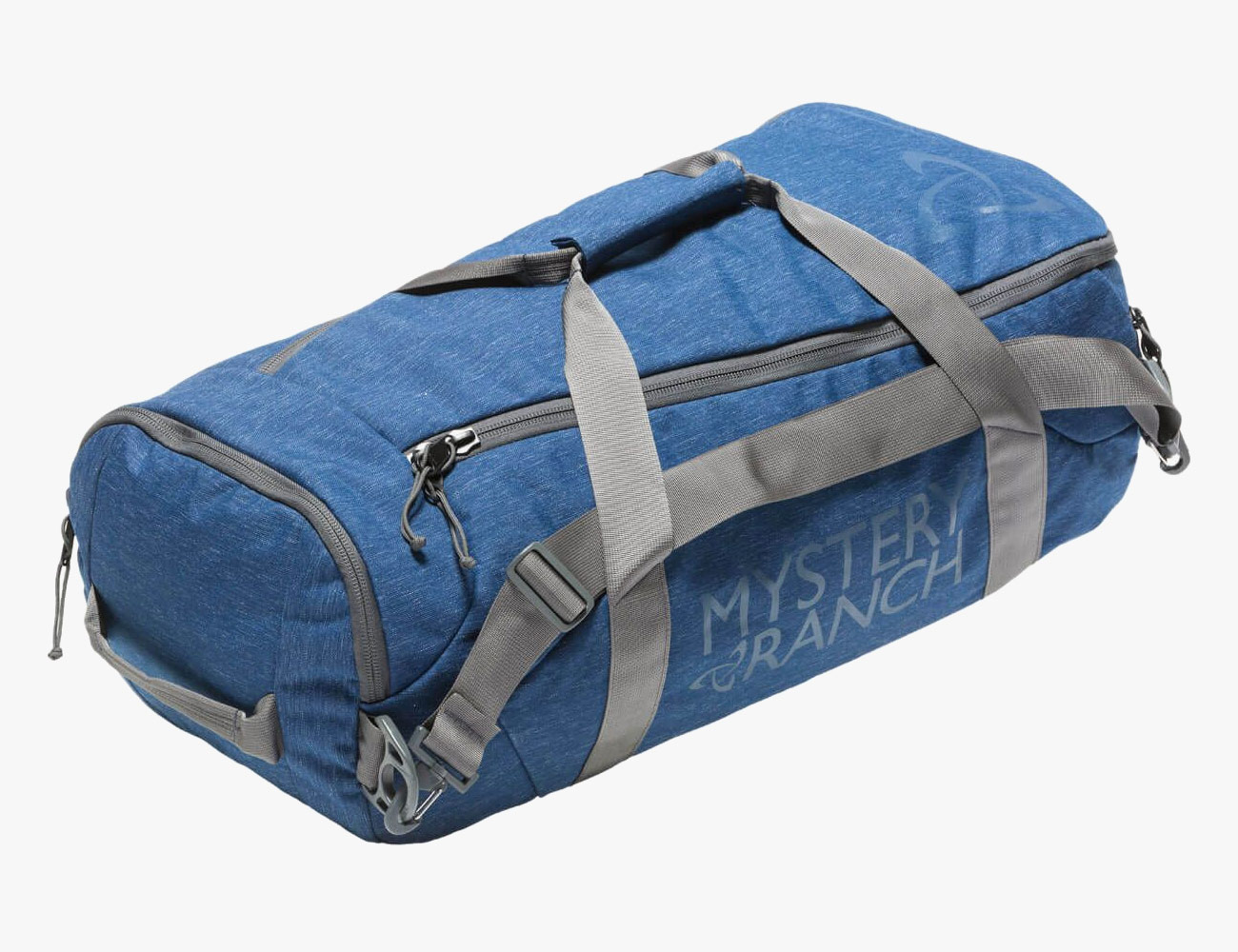


The Mission Duffel sits firmly in between backpack and duffel. As such, its shoulder straps aren’t an afterthought but a fully fleshed-out component that draws on the brand’s success with everyday and expedition packs. The straps are padded for comfort and equipped with a sternum harness. They also stow away neatly into a flap on the bottom of the bag. In addition to that, the Mission contains a main compartment that feels bigger than it looks and is home to multiple mesh organizing pockets. Like the Base Camp duffel, the Mission offers a separate section at one end for wet, dirty, or bulky items.

Available Volumes: 40L, 55L, 90L
Weight: 4.2 pounds or 1,905 grams (55L)

Best Minimal Duffel: Patagonia Lightweight Black Hole
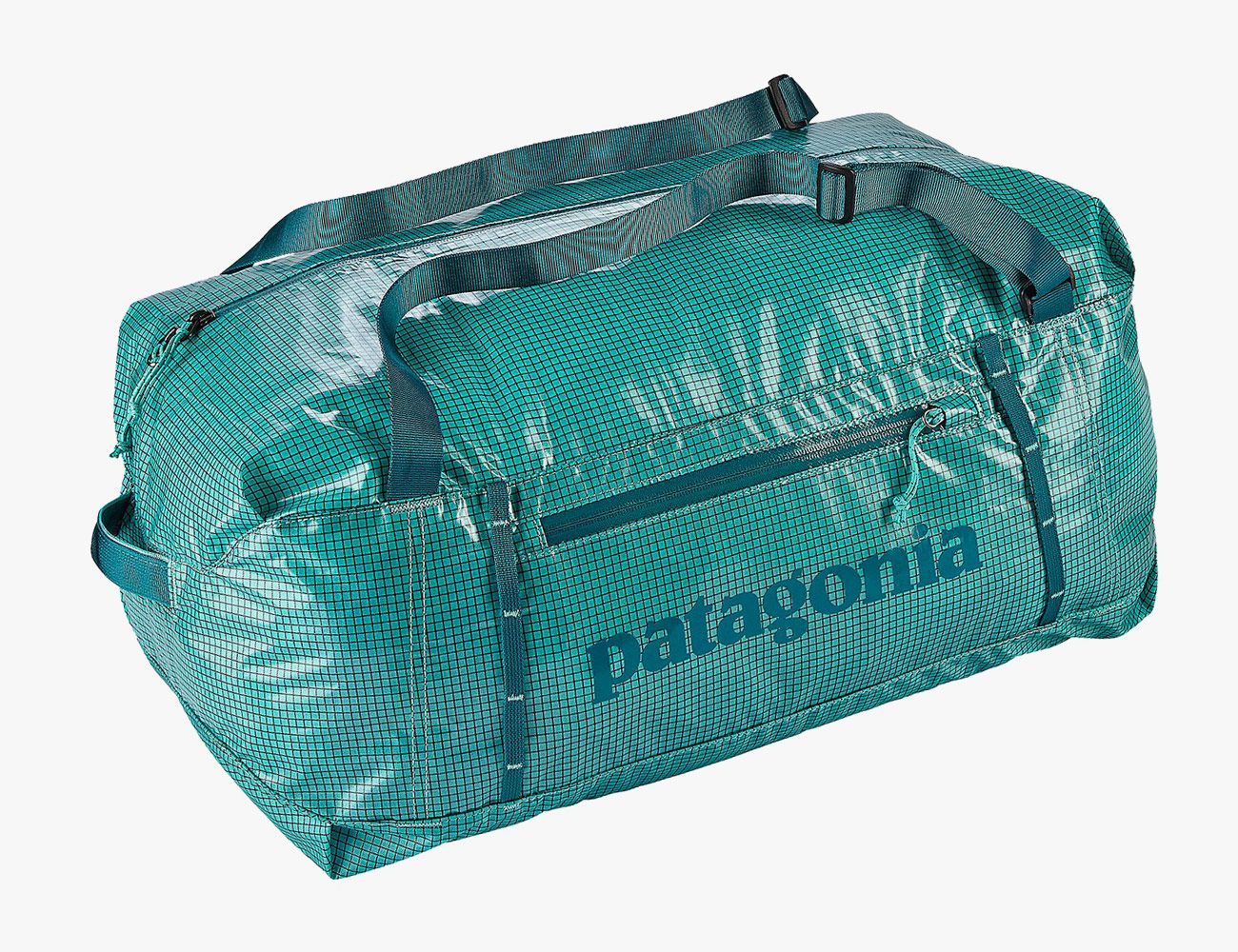


Patagonia hit the nail on the head with the name of its line of heavy-duty carry-alls: Black Hole. That’s what a duffel should be — a bottomless pit into which you can toss anything and everything you might need for a day at the crag or an entire week in the opposite hemisphere. The brand recently released a pared-down version of the popular bag — goodbye padded backpack straps and D-shaped zip opening. It’s lighter, but no less durable than its predecessor. The Lightweight Black Hole is made from 7.1-ounce 210-denier nylon ripstop with a TPU-film laminate and a DWR coating. Best of all? It weighs just 510 grams.

Available Volumes: 30L, 45L
Weight: 1.1 pounds or 510 grams (45L)

Best Budget Option: Mountain Hardwear OutDry Duffel
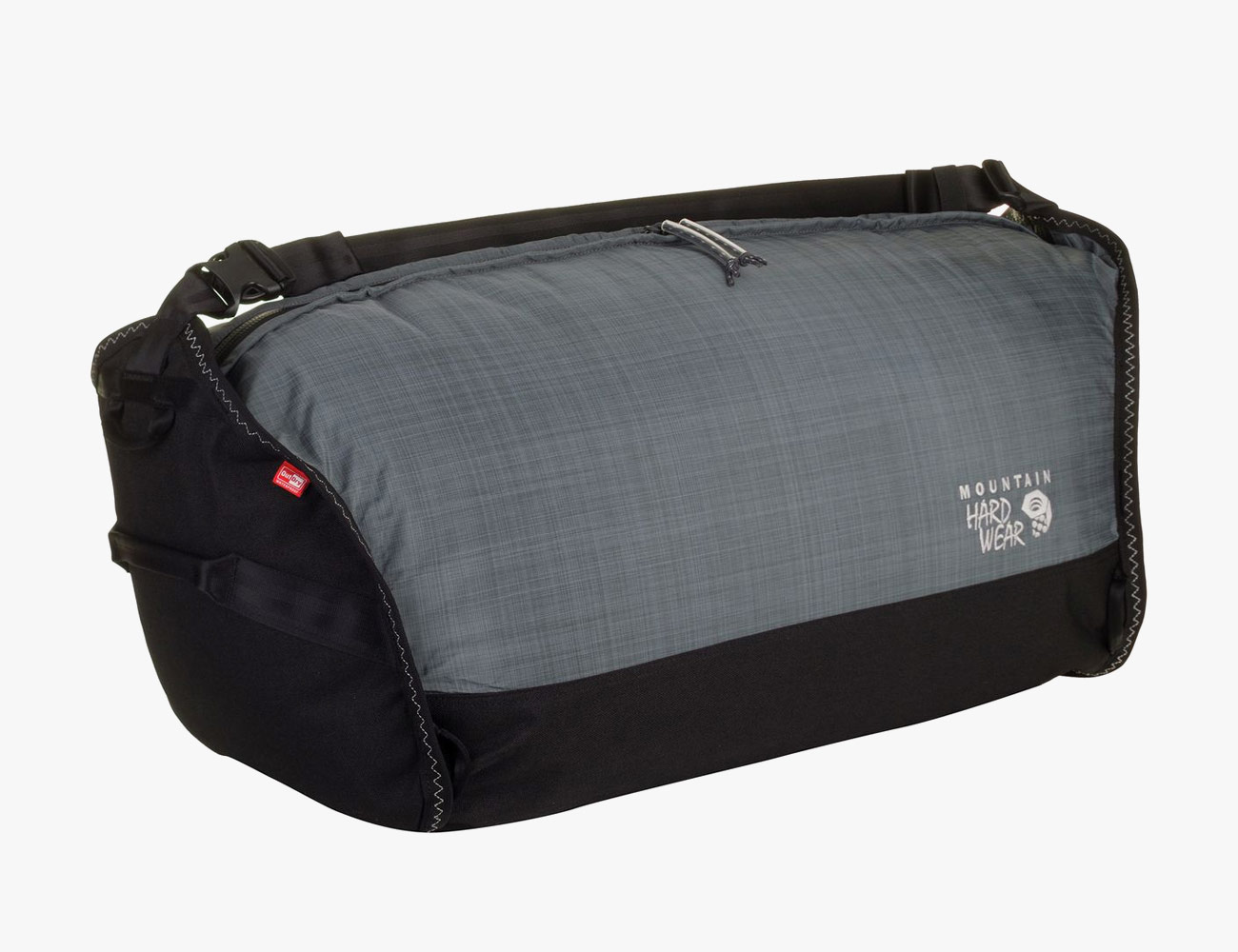


There’s nothing flashy about the OutDry Duffel. Without shiny plastic-like fabric and flashy “outdoorsy” colors you probably wouldn’t expect much of it till you saw the nut in the brand logo. This bag is capable of taking a beating. Mountain Hardwear’s OutDry tech entails a custom-shaped waterproof membrane laminated to the bag’s inner, which seals fabrics and seams all at once. Just to be sure it worked, the brand sealed the bag away in a rain room for 24 hours, so although the fabric may not feel waterproof, rest assured that your stuff will remain dry once inside. The simplistic look won’t draw attention to would-be bag thieves, either.

Available Volumes: 50L, 75L, 95L
Weight: 1.6 pounds or 737 grams (75L)

Best Waterproof Duffel: Ortlieb Duffle
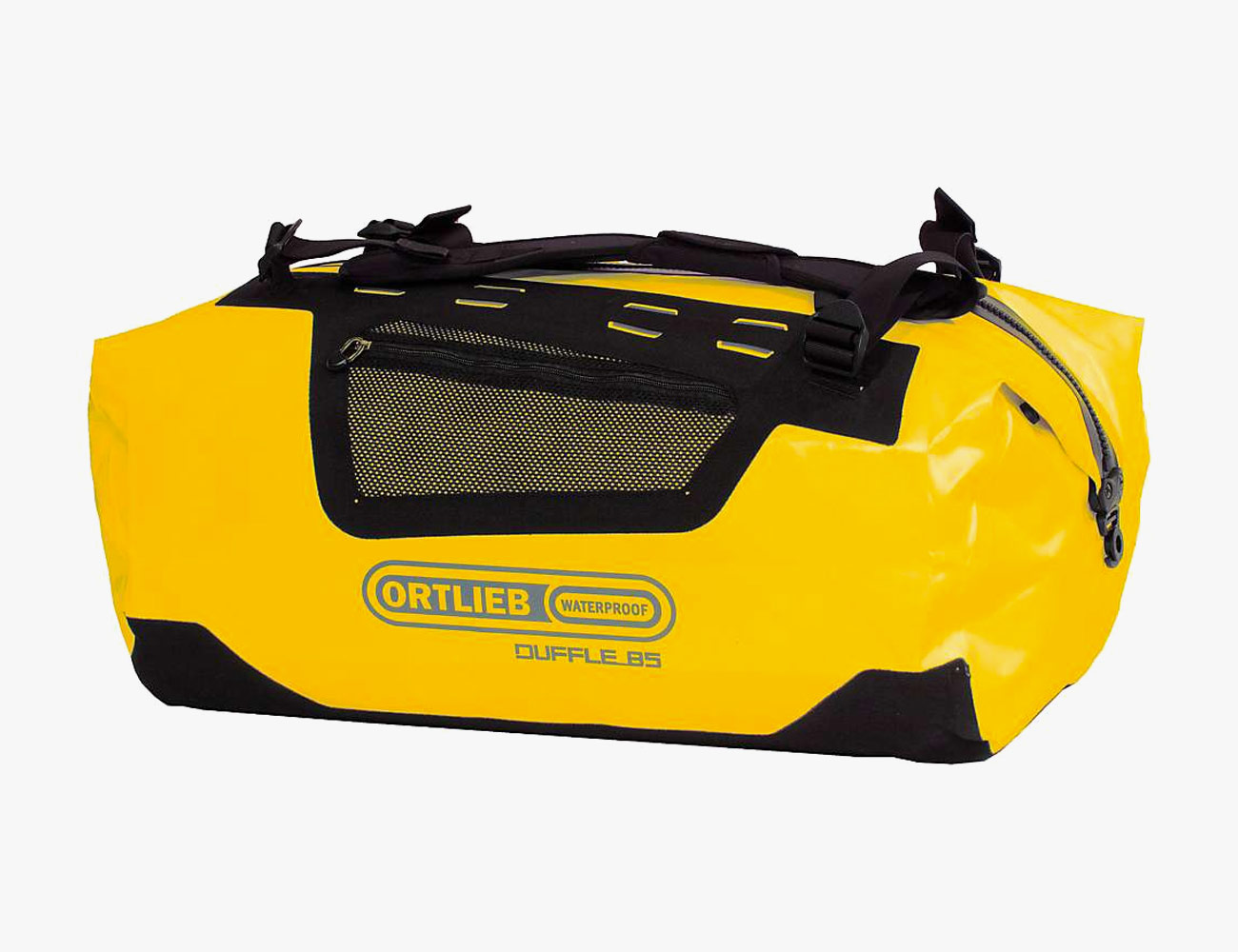


Here’s a duffel for those heading for inclement climates and expecting the worst. Ortlieb’s take on the duffel is an expedition bag made from tear-resistant, PVC-coated, polyester fabric that’s reinforced at the base. The interior contains two pockets for essentials, while the exterior features a mesh pocket, daisy chains for rigging and an impregnable TIZIP zipper (also frequently used on diving suits as well as Yeti’s soft sided coolers). You know water, or anything else for that matter, can’t get in when the excess air can’t get out.

Available Volumes: 40L, 60L, 85L, 110L
Weight: 3 pounds or 1,360 grams (85L)

Best Canvas Duffel: Fjällräven Duffel No.6
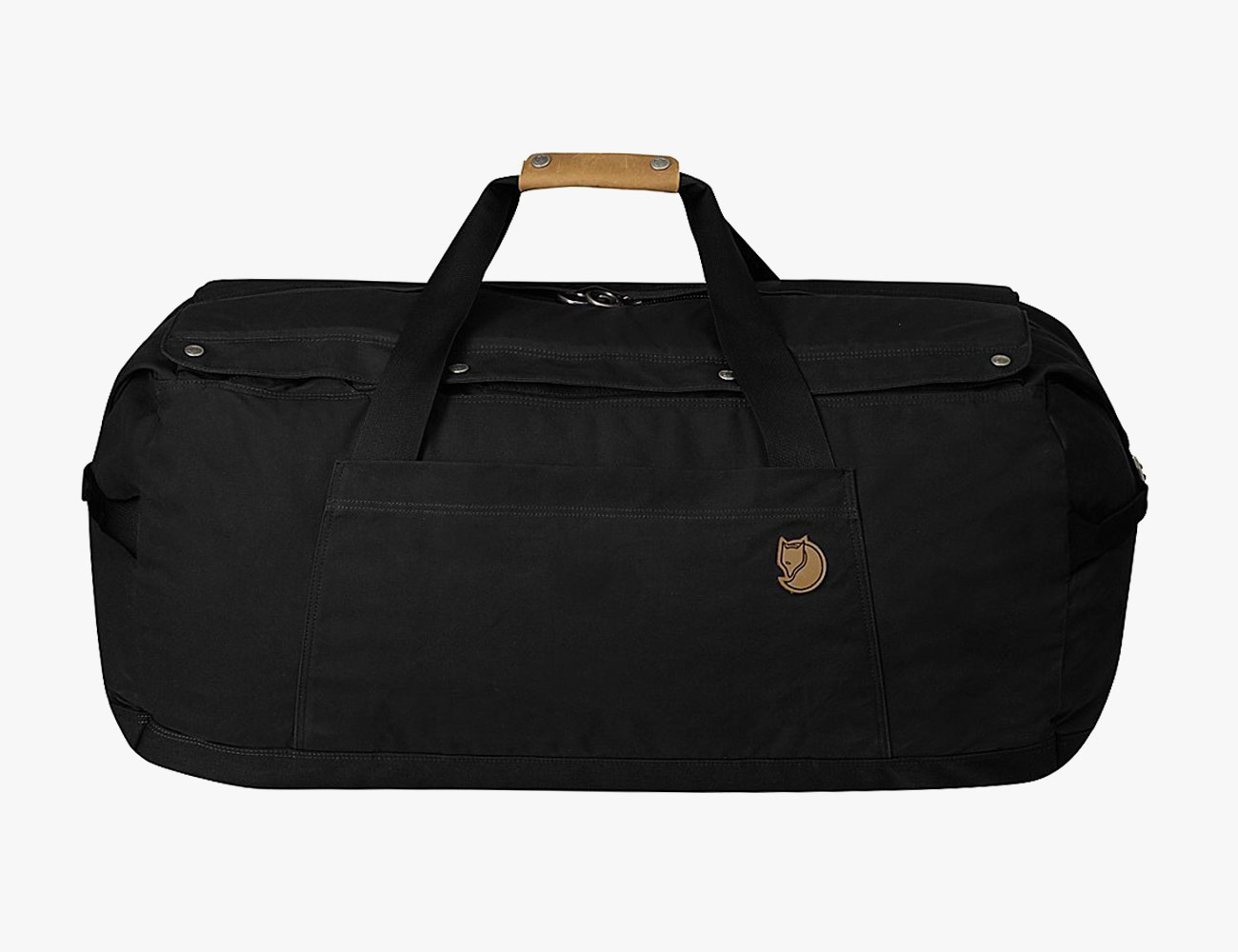


Fjällräven’s Duffel No.6 looks a lot like the standard-issue bag you might find hanging on the wall at a military surplus store. It’s not. The Swedish outdoor brand started with its proprietary G-1000 HeavyDuty Eco fabric, a canvas-like blend of recycled polyester and organic cotton that’s incredibly tough, windproof and water-resistant (especially after treatment with Greenland Wax). Then the bottom was reinforced with padded waterproof, PU-coated, polyamide fabric, and double handles were added at the ends along with stowaway backpack straps on top. There’s also a nice padded top panel, to cushion your back from the bag’s contents when you’re carrying it backpack-style.

Available Volumes: 70L, 110L
Weight: 3.3 pounds or 1,500 grams (70L)

Best Ultralight Bag for Big Loads: Hyperlite Mountain Gear Dyneema Duffel
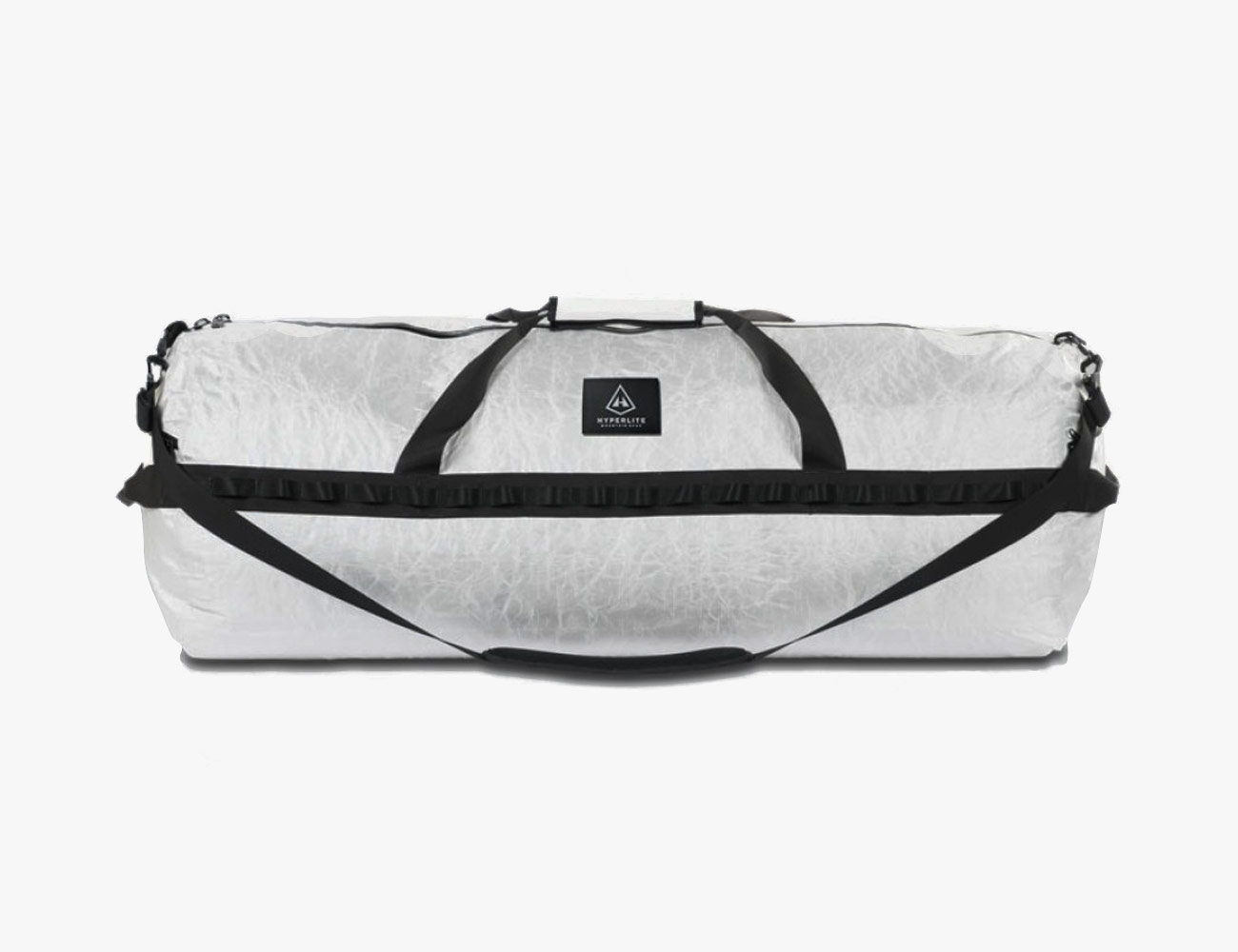


To say that Hyperlite Mountain Gear’s Dyneema Duffel is massive and indestructible borders on understatement. The narrow profile was designed specifically for harmonious integration with the Paris Expedition Sled, commonly used during longer trips to the world’s unreachable peaks. The primary material is right in the name. Dyneema, when taken at its strength-to-weight ratio, is the strongest fiber in the world — stronger than steel and Kevlar. It’s also waterproof and UV resistant. You could say the Dyneema Duffel is ultra-everything: ultralight, ultra large, ultra durable, ultra minimal.

Available Volumes: 140L
Weight: 2.6 pounds or 1,185 grams
Note: Purchasing products through our links may earn us a portion of the sale, which supports our editorial team’s mission. Learn more here.

This Is the Most Innovative Water Bottle, Ever

Until now, almost all water bottles are constructed of either metal or plastic, but the just-announced Keego is, somehow, both. Even though it’s made with 99.8-percent titanium, the Keego flexes and squeezes like those green Gatorade bottles that are the signature of every sideline from high school to the pros.

Metal bottles keep liquids free of harmful plastic chemicals like BPA and typically don’t take on the flavors of anything they hold, but unlike plastic containers, they can be cumbersome and require the use of two hands to remove a lid. The Keego bottle brings the best qualities of both — health and squeezability — in one ergonomic and athletic package. The Keego weighs 4.9 ounces and fits inside a bicycle’s water bottle cage.

But how does titanium become elastic in the first place? Because the makers of Keego, which include those who build parts for particle accelerators, are still waiting on a patent for the process, that answer is still forthcoming. Thankfully though, the bottle isn’t; it’s funding right now on Kickstarter, beginning today.

Today in Gear

The best way to catch up on the day’s most important product releases and stories. Read the Story

This Is All the Gear World-Class Photographer Jimmy Chin Keeps in His Pack

The backcountry hates technology. It wants to dent it, crush it, freeze it, burn it and drown it. But damn does it look good on camera. Visual storytelling in the wilds isn’t easy — ambitious photographers have to add extra weight to already-heavy bags, put thousand-dollar gear investments at the mercy of unforgiving environments and spend long hours waiting in harsh conditions to get the perfect shot. Jimmy Chin can’t afford not to have a trustworthy kit that’s both versatile and highly specialized, and as it is with all outdoor equipment, there is no one solution for every situation.

“I carry a variety of gear depending on what type of shoot I am doing. It’s always about trying to find a balance between weight, versatility, the difficulty of shooting location, the difficulty of activity, and whether I am shooting video, stills or both. Most recently, I was working on my current feature documentary project where I was directing and filming but had also been asked to shoot the feature print story simultaneously. I generally try to avoid this type of scenario because I feel like I have to make a lot of compromises and end up not doing any of it particularly well. But in this case, I didn’t have a choice. The shoot required a wide range of coverage including vérité film scenes, photojournalistic coverage of day-to-day life, and filming and shooting stills of high-angle big wall climbing. I think it is a good example to look at since I needed a quiver I could shoot video and shoot stills within multiple environments. Here is the basic kit I traveled to location with. This equipment would get paired down depending on what I was shooting for the day.” — Jimmy Chin

The Gear

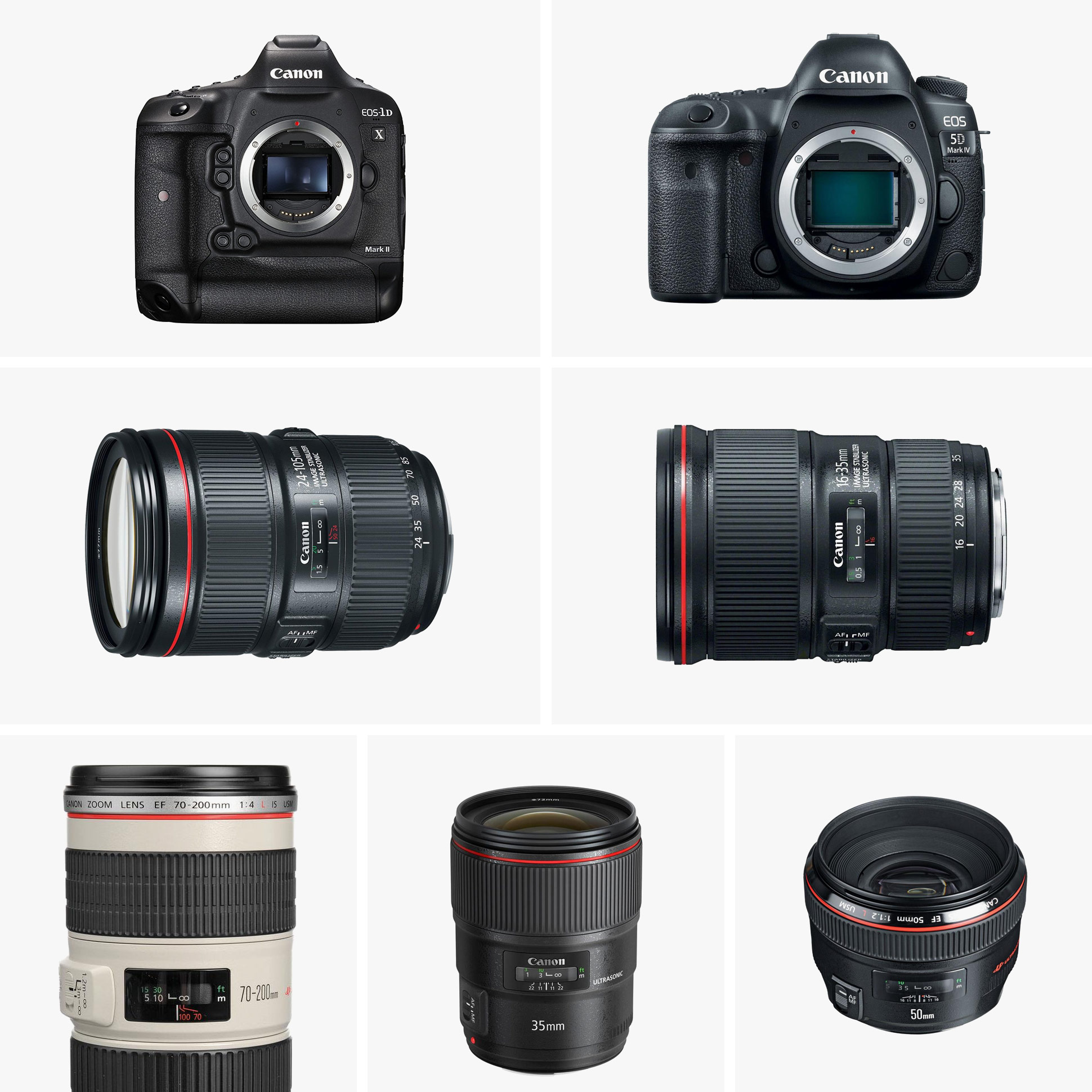
EOS-1DX Mark II by Canon $5,699
EOS 5D Mark IV (back up camera) by Canon $3,299

24-105mm f/4 by Canon $1,099
16-35mm f/4 by Canon $999
70-200mm f/4 by Canon $1,099
35mm f/1.4 by Canon $1,649
50mm f/1.2 by Canon $1,299
24-70mm f/2.8 by Canon $1,699

NikeLab’s Newest Collection Solves Your Warm Weather Running Problems

On the Heels of the Tokyo Marathon

NikeLab’s Newest Collection Solves Your Warm Weather Running Problems


The latest NikeLab collection, inspired by the Tokyo-based run crew Gyakusou International Running Association, tackles the problem of warm-weather rainstorms. The technical performance features of the Hooded Running Jacket are unmatched and the design quality is top-notch — it can be turned into a vest by removing the sleeves and hood. The navy, brown and grey colorways across the entire line are simple yet refined. In addition to the jacket, the new line includes a packable long sleeve, a pair of utility tights and a running cap.

Today in Gear

The best way to catch up on the day’s most important product releases and stories. Read the Story

Everything We Want from Outdoor Products in 2018

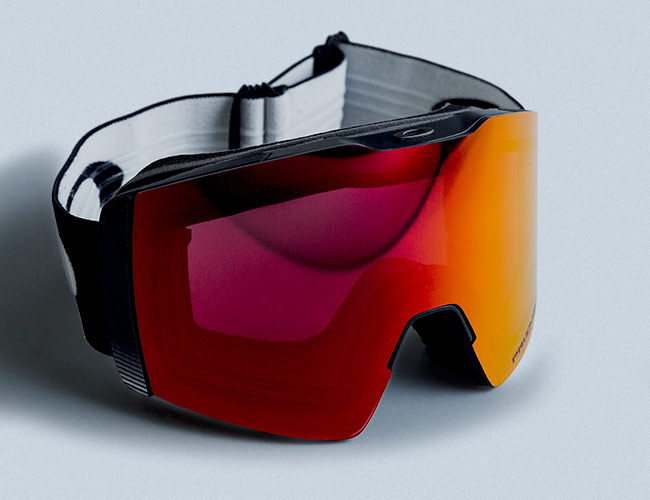
We’re now two months into 2018 (yikes, that was quick); we’ve been to the tradeshows, seen plenty of new, soon-to-launch products and have a good sense of what’s in store for the outdoor industry in 2018. Sure, tint-adjustable ski goggles and ultralight trekking packs are great, but our appetite for innovative new technologies and fun new things is insatiable. We want more out of 2018.

We think about outdoor gear all of the time (it’s our job), and we’ve got a few ideas of our own. Some of these spare thoughts are certainties while others are wildly speculative; some are general suggestions, and others are highly specific. We live in the outdoor industry, and as members of its unpredictable, quirky, intelligent and thoughtful populace we reserve a right to shout our predictions and desires into the great void. Here is what we’d like to see from the outdoor industry in 2018.

New Materials: We’re going to continue to see innovative fabrics and material stories in a wider range of brands. Dyneema (and off-brand Dyneema) and synthetic spider silk are just the tip of the iceberg — keep an eye on Schoeller, Sympatex and others. —John Zientek, Associate Staff Writer, Style Desk

Everyday LJs: I’ve been a big cheerleader for the everyday use of long johns for the last two years. I’d like the outdoor industry to fully embrace the best-kept secret in winter layering. Give me some casual, stylish LJ’s for my everyday. —Chase Pellerin, Associate Designer

Less Waste: I love shopping for outdoor gear online, but not the waste involved in the process. I want to see more outdoor brands utilizing in-store pickup, which is a great way to support local retail without running the risk of an item not being there when you arrive. But more importantly, I’d love to see retailers introduce a “minimal packaging” shipping option at checkout. Items often contain way too much packaging. Skip the plastic bag, spare me the bubble wrap, and send the invoice via email. —Caitlyn Shaw, Associate Audience Development Editor

Unobtrusive Tech: I’d like to see more technology integrated into every outdoor product, but yet still have an off-switch. One of the reasons I love getting outdoors is to escape all things screen-related, but that doesn’t mean I don’t want my hike/bike/run to go untracked. Similar to how Under Armour is integrating automatic tracking into its sneakers, it would be cool if my hiking boots did the same thing — and synced automatically with my phone/watch. What altitude did I reach? What was my top speed? How many breaks did I take? While I might choose to hide all of that or ignore it once I end the day, at least my watch will know I was active that day. —Meg Lappe, Staff Writer, Outdoors and Fitness Desk

Warmer Toes: I know that this is wildly specific, but I would love to see a snowboard boot maker use Primaloft’s Gold Cross-Core insulation in the toe of a snowboard boot (I’m looking at you Vans). Currently in use in L.L. Bean’s new Ultralight sleeping bag, Cross Core insulation is made from aerogel (the lightest insulating material on the planet originally developed for NASA). It’d be pretty simple to work it into the toe box of a snowboard boot to keep your toes nice and cozy on sub-freezing days without adding much bulk. —AJ Powell, Assistant Editor

Lateral Innovation: DPS, a ski maker, surprised everyone late last year when it virtually eliminated the need for ski wax with its new Phantom base treatment. It was an unexpected lateral move and a real innovation that has the potential to be, pardon the trope, game-changing. I want to see more. Brands and manufacturers — even the small ones — know more about their respective corners of the industry than anyone else. Imagine if an outerwear company developed a waterproofing technology that never degrades (instead of waiting for Nikwax or Gore to do it). Or even a bigger sideways move, like if Yeti, with all its durability prowess, developed super-strong tent poles. Yeah, Yeti should make a tent. —Tanner Bowden, Associate Staff Writer, Outdoors and Fitness Desk

The Coolest Outdoor Products Coming in 2018

These are the ten products that made us excited for the outdoor industry and the year ahead. Read the Story

What Exactly Is an Anorak, Anyway?

It’s a word that’s popping up more and more: anorak. But a quick survey of the brands making anoraks reveals that there’s not quite a consensus on what exactly an anorak is — some are hooded pullovers, some have quarter zips, and others, equipped with full-length zippers, appear to be no different from what one might normally call a jacket. Regardless of the form they come in, one thing is certain: anoraks are trending.

Given the recent popularity of this type of jacket, it’s probably due the clarity provided by a definitive explanation of what exactly makes an anorak an anorak. For that, we look to the weatherproof layer’s origins. The word anorak comes from the Greenlandic annoraaq, which translates roughly to “wind.” Wind, and cold, are exactly what the first anoraks were designed to protect against. Inuits made these using animal skin, often from seals and caribou, which had to be cured, stretched, and treated with oils in order to turn it into a water- and wind-proof layer. Now, Gore-Tex and ripstop nylon do that job for us, much to the chagrin of seals and deer everywhere.

But still, what exactly is an anorak, and how is it different from a jacket? According to the Autumn 1975 issue of Backpacker, an anorak “is a hip-length, hooded, pullover outer garment,” which “features a short zipper at the hood.” The all-knowing Wikipedia agrees that the anorak, in contrast with a parka or jacket, is characterized as a “pull-over jacket without a front opening.”

So there you have it. An anorak is a hooded pullover — if it zips all the way open, it’s not an anorak. The Inuits lined theirs with fur for extra warmth, but technical anoraks these days can be stuffed with down and synthetics, or lack any insulation and simply act as a water- and wind-proof shell layer.

Thinking about ditching the zipper? Here are our five favorite anoraks that you can get today.

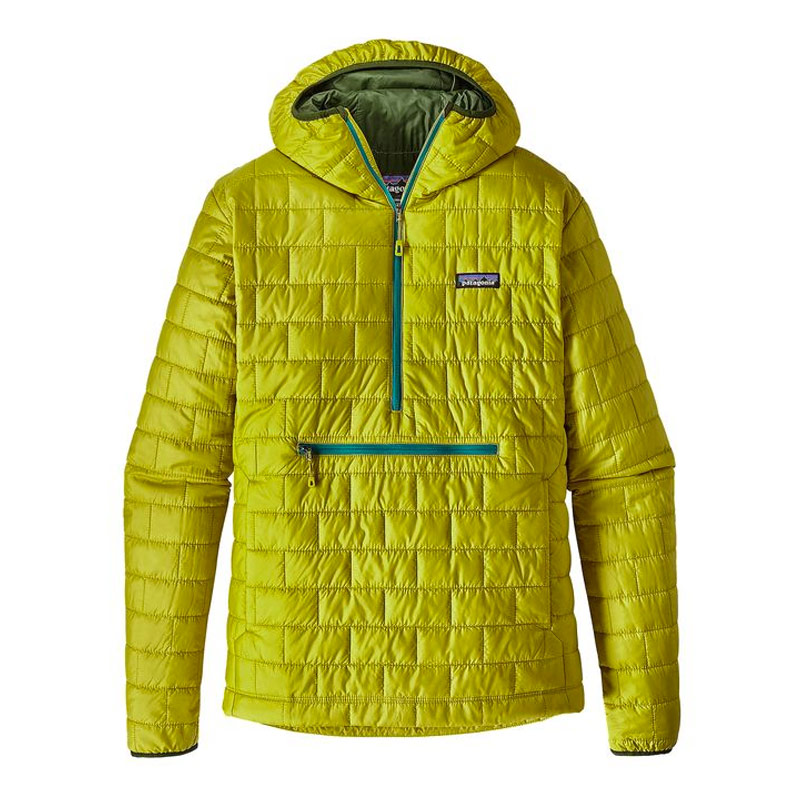
Nano Puff Bivy Pullover by Patagonia $219

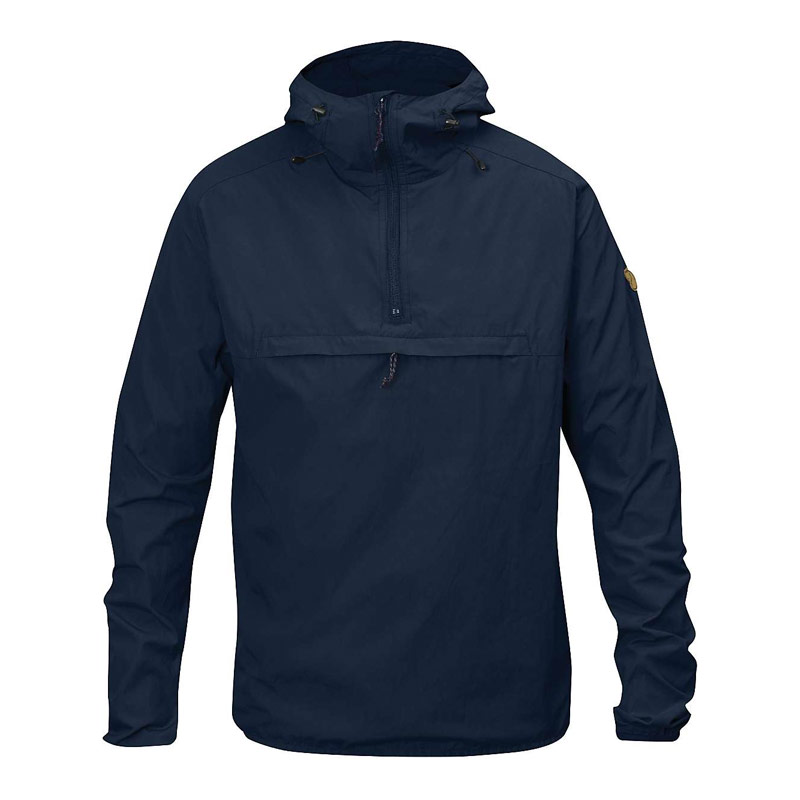
High Coast Wind Anorak by Fjällräven $160

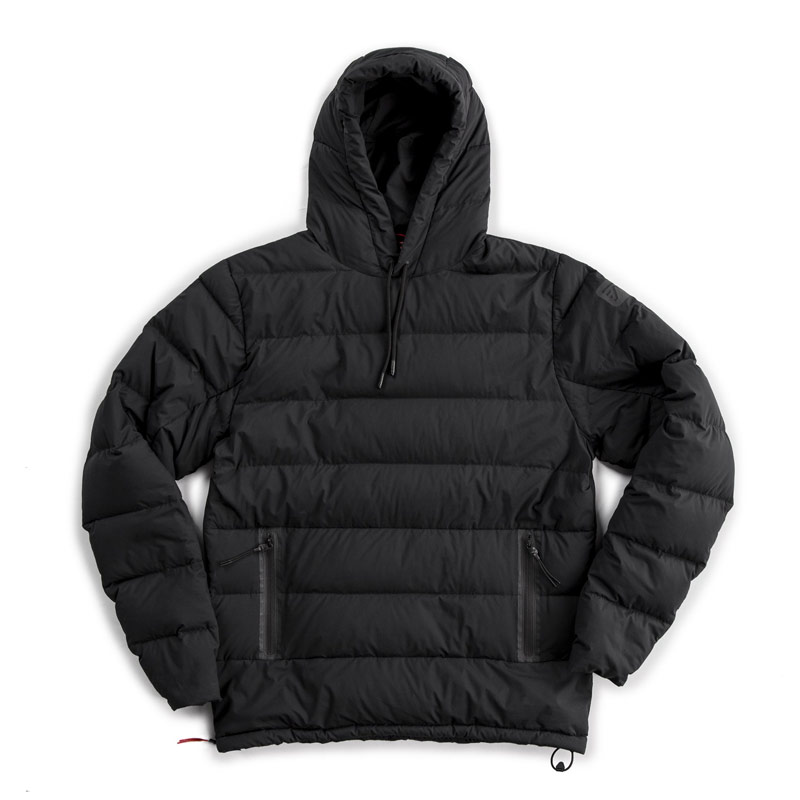
Robson Down Hoody by Foehn $234

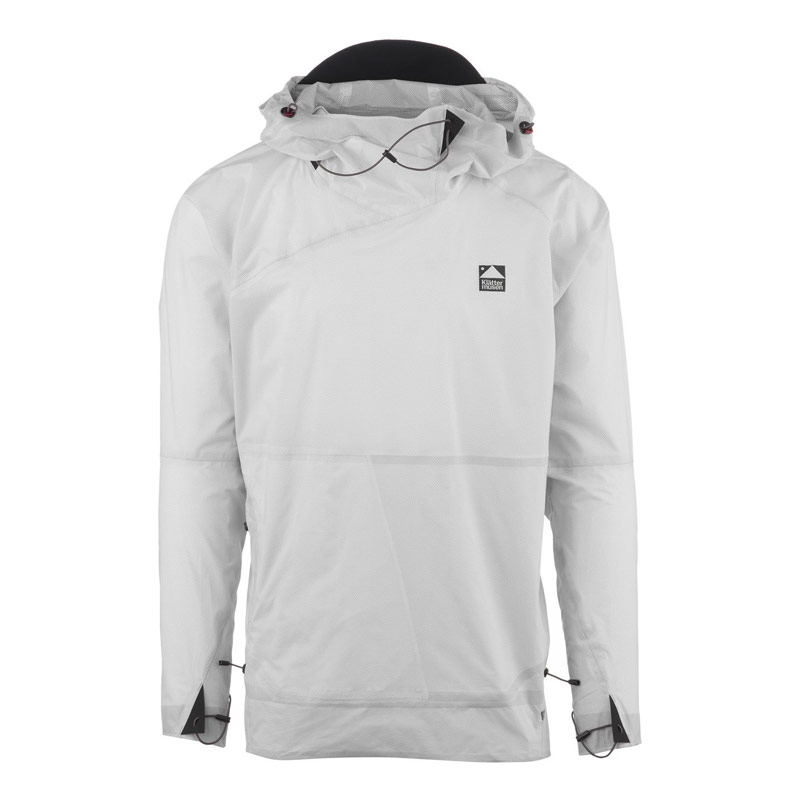
Fjorgyn Anorak by Klattermusen $300

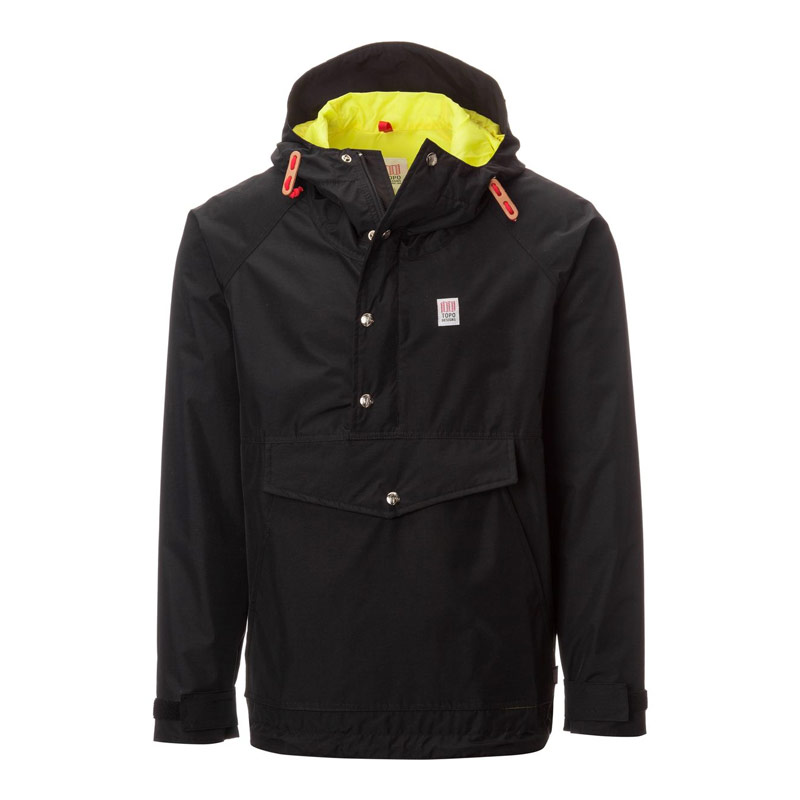
Anorak Jacket by Topo Designs $224
Note: Purchasing products through our links may earn us a portion of the sale, which supports our editorial team’s mission. Learn more here.