All posts in “Sports and Outdoors”

Yeti’s New Mountain Bike Could Be Its Best Yet

There is a stigma about mountain bikes with short suspension travel; that they are great for pedaling uphill, but as soon as things get rowdy on the downhill, they can’t keep up with longer travel bikes. Yeti’s new SB100 is here to challenge that stigma. The bike was officially released today but has been ridden and tested by Canadian Olympian and professional mountain biker, Geoff Kabush. “The SB100 is a short travel bike, but it’s made for and excels on technical singletrack,” says Kabush. Yeti’s president Chris Conroy agrees, “Whoever is testing the SB100 crushes us on the climbs, which is to be expected. But what’s unexpected is we can’t drop them on the chunky technical downhill. It’s a testament to how capable this bike is.”

True to Yeti’s bike naming convention, the SB100 features 100mm or rear suspension travel and comes kitted with a 120mm version of Fox’s new Step-Cast 34 fork. Yeti also opted for 29-inch wheels to pair with its tweaked Switch Infinity System, which gets tucked behind the seat tube. According to Yeti, this allows for all sizes of the bike to fit a large water bottle in the front triangle, and also gives the bike an uninterrupted seat post (great for installing longer-travel dropper posts).

The SB100 will fill the XC-bike-sized hole in Yeti’s lineup left by the departure of the ASR C. But it’s certainly not a direct replacement. Where the ASR C was a race-built speed machine, the SB100 leans slightly more toward the trail bike side — but still keeps climbing as a top priority.

What Others Are Saying:

• “As expected, the SB100 climbs with the quickness, efficiency and lightning-fast acceleration that has come to characterize Yeti’s SB platform, even with the shock left open. But it was while descending that I gained an appreciation for Yeti’s spec choices–a dropper post is truly a must on any mountain bike, and while I’m admittedly not a racer looking to shave every possible gram, the dropper-post grams are always worth keeping.” — Nicole Formosa, Bike Magazine

• “If the amount of suspension travel weren’t in this bike’s name, I would have guessed I was riding a replacement for Yeti’s 114mm-travel SB4.5 with a 120mm fork bolted to the front.” — Josh Patterson, Bike Radar

• “The other notable quality is that SB100’s rear end is, as claimed, surprisingly versatile. I’ll tell you right now that running 30-percent or more sag on a cross-country bike, or most any short-travel bike, often means that you end up feeling like you’re sitting in a flat, dead spot in the travel. That’s because you are; you don’t have much left because you didn’t start with much, and it can seem like you’re just bashing up against a piece of wood. But my black Yeti didn’t do that, even at the prescribed 32-percent number. The rest of the stroke was forgiving, and the bike pedals like a champ – I didn’t want to use the cheater lever once. ” — Mike Levy, PinkBike

Today in Gear

The best way to catch up on the day’s most important product releases and stories. Read the Story

The 5 Easiest Meals to Elevate Your Camping Experience

Hiking works up an appetite like nothing else. While you might not break a sweat during the day, that doesn’t mean you haven’t earned the right to pig out at the end of the day. Dehydrated meals bring something to the table (in some cases nothing more than convenience), but the more fresh food you can include in your dinners, the more satisfied you’ll be at the end of the day and the more enjoyable campfire moments can be.

Depending on the number of days you’re headed out for, and how big your group is, you can exponentially increase your party’s collective happiness if you add in a mix of real fruits and veggies. If you’re car-camping, the variety of meals jumps up significantly, especially because there’s space for a giant cooler to keep everything fresh. To get the inside scoop on the best meals to make in the backcountry, we chatted with Jack Carlisle, backcountry cooking class instructor for the Pursuit Series, as well as the team at Patagonia Provisions.

The Gear You Need

While you can find a full rundown of all the gear we recommend to cook in the woods here, our experts passed along a few of their favorites, too.

Carlisle asks himself a few questions before getting started: “‘How much can I execute with the tools I have and what additional tools do I need? If cooking, what heat source do I need? What cooking vessel am I going to use? What do I want to cook?’” Carlisle recommends gear from the Camp Chef Lumberjack series — you might want an over fire grill, a skillet or stryker stove depending on your location and group size. As for cooking vessels, you can use anything from tin foil to a lightweight aluminum pot set or your favorite heavy duty cast iron skillet — whatever you have space to carry.

“It’s the workhorse of my home and basecamp kitchen,” Carlisle says of his go-to 12-inch cast iron skillet. Other essentials include an all-purpose chef set with all of the basics — knife, spatula, spoon, tongs and carrying case. “I have one specifically for base camp cooking and I don’t have to pull my knives from my home kitchen,” Carlisle says. Flexible cutting boards that are easily cleaned, lightweight and portable, are also a good idea — as well as 32-ounce cylinder shaped deli containers. Carlisle says they are, “great for storing prepped food, stacking in coolers and easy storage when not in use. Pick them up at a restaurant supply store, Amazon or your local grocery store deli.” Lastly, a quality instant read thermometer is crucial. “Temperature! Temperature! Temperature! If you buy the highest quality meat, it can easily turn sub-par with an improper internal cooking temperature. Alternately, a low-quality meat can turn into a culinary masterpiece with the right technique and correct internal temperature. I personally use a Thermapen by Thermoworks,” Carlisle says.

Camp Cooking Tips

As for advice, Carlisle says, “Planning and simplicity are key. Whether you’re using a commercially produced freeze-dried meal or a prepared product of your awesome creation, plan your menu out. Think through the scenarios and utilize the same ingredients for multiple meals. Pair the food with the experience you are trying to create.”

“Once you cut into a fresh fruit or vegetable, it will require refrigeration so here are some ideas of what to pack: single mini servings of vegetables, that you can eat in one sitting like mini peppers, pearl onions, baby red potatoes, baby carrots, mini cucumbers,” Carlisle says. “Other options include mini Babybel cheese in wax, dried salami and dried fruits which when added to hot water can make great sauces.”

Butternut Squash Tsampa Soup

Serves 4

Ingredients:
1/2 small butternut squash, diced, skin removed (about 2 cups)
2 to 3 tablespoons olive oil
3 cups water
1 packet Patagonia Provisions Tsampa Soup Mix

Preparation:
1. Cut off the stem and cut the butternut squash in half.

2. Scoop out the seeds (reserve if you want to toast them for garnish).

3. Trim off any blemishes and cut into 3/4 — 1-inch pieces.

4. Heat olive oil in a large 3 – 4-quart pot over medium-high heat.

5. Add butternut squash and saute about 5 minutes, until squash pieces are well browned and starting to break apart.

6. Add water (it will sizzle and steam.)

7. Bring to a boil and add the packet of soup mix. Simmer for 6 minutes.

8. Serve in bowls and garnish with toasted squash seeds.

Wild Salmon Tacos with Cilantro Slaw and Mango Salsa

Serves 4

Ingredients:
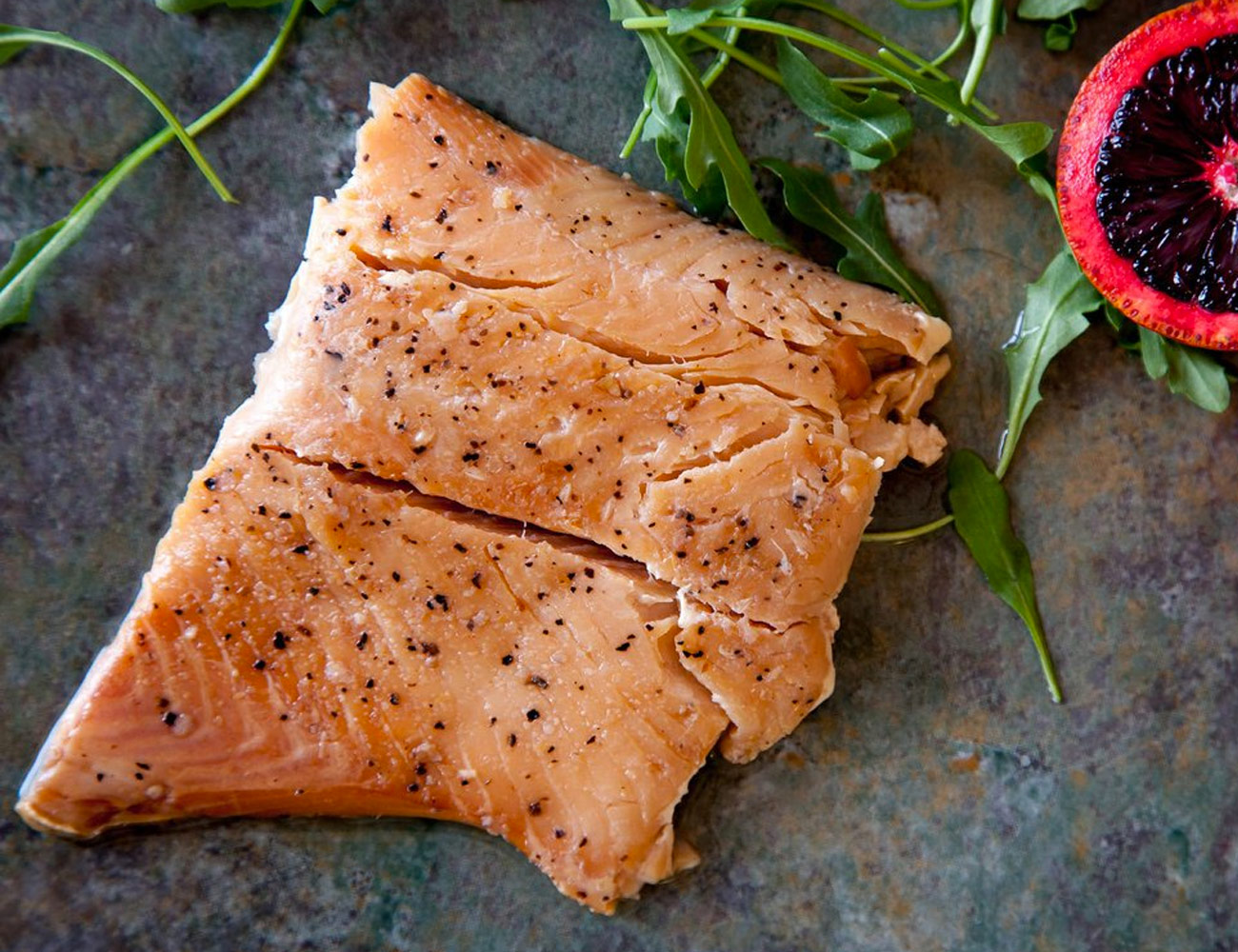
1 package Patagonia Provisions Wild Lummi Island Pink Salmon, Black Pepper, drained
6 – 6″ corn tortillas warmed over medium-high heat
2 cups finely shredded fresh cabbage
1/4 cup chopped fresh cilantro
1/2 cup mayonnaise
2 teaspoons apple cider vinegar
1 tablespoon sugar
Juice and zest of 1 lime
Salt and pepper to taste
Salsa (make at home or bring your own)
Lime wedges, cilantro and crumbled Mexican cotija for garnish

Preparation:
1. Whisk together mayo, vinegar, sugar, lime juice and zest, then add shredded cabbage and cilantro. Season to taste with salt and pepper.

2. Spoon cilantro slaw into warm tortillas and top with flaked salmon. Top with a dollop of salsa

Mediterranean Chicken Thighs

Serves 4

Ingredients:
12 Pieces chicken drumsticks and thighs, skin on, bone-in
1/2 cup olive oil
2 tablespoons fresh parsley, finely chopped
1 tablespoon fresh thyme, finely chopped
1 tablespoon fresh rosemary, finely chopped
1 tablespoon fresh sage, finely chopped
Zest of 1 orange
Zest of 1 lime
Zest of 1 lemon
1/4 cup of juice from orange, lime and lemon
Salt and Pepper

Preparation:
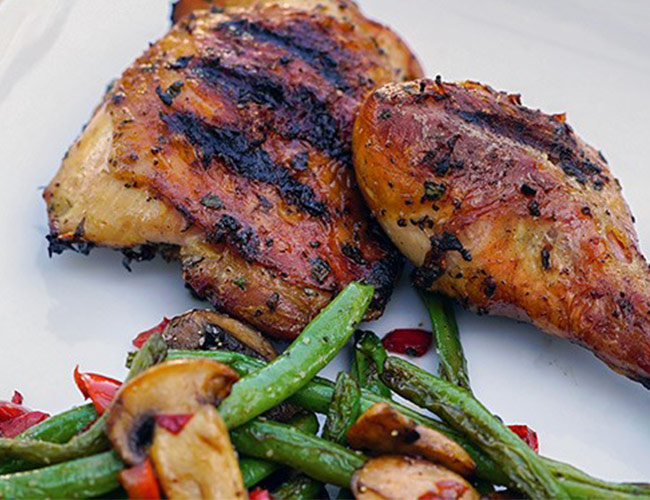
1. Pat chicken dry. Salt and pepper chicken. Apply all ingredients to chicken for wet rub and place in gallon baggies to marinate. Marinate for two hours up to overnight.

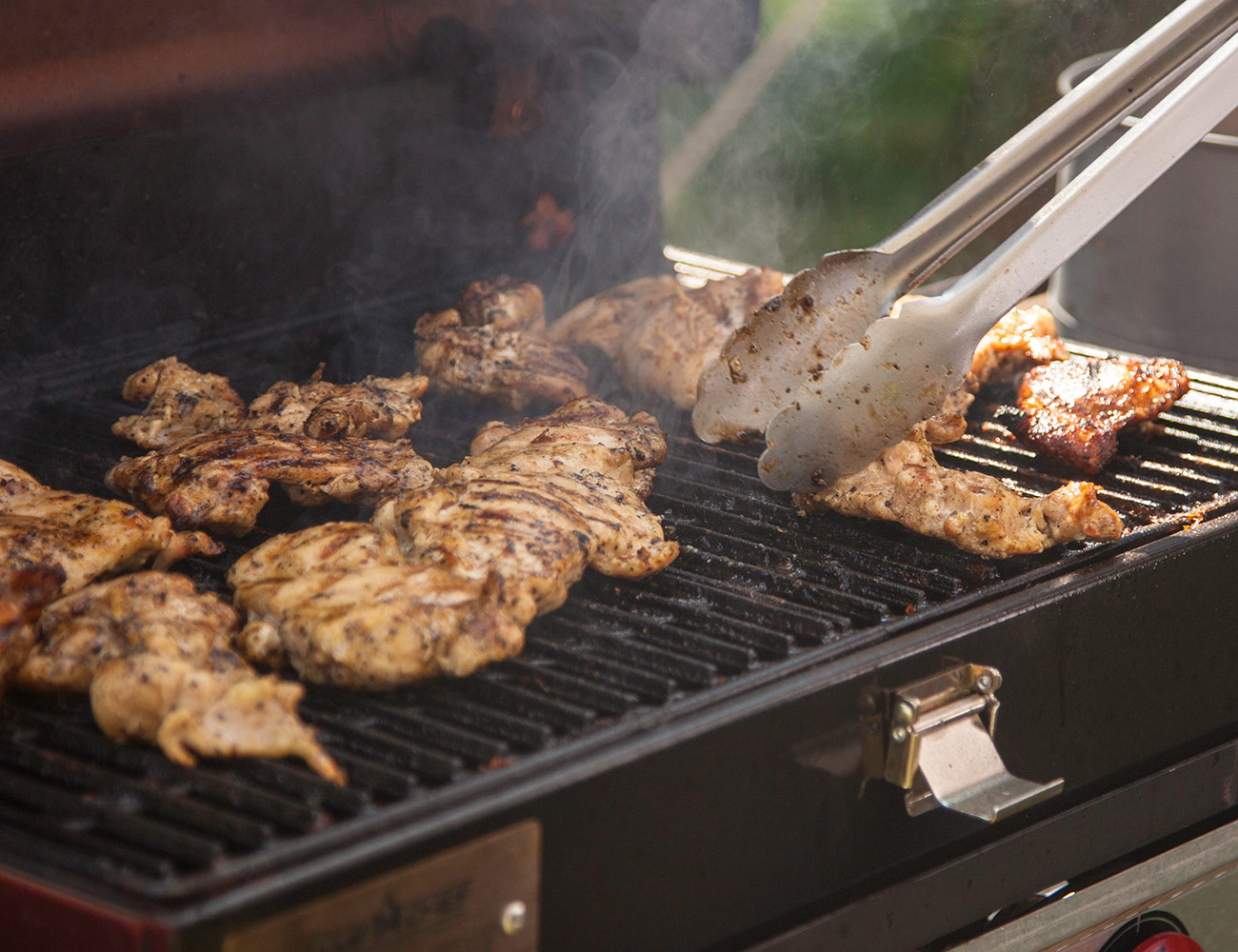
2. Place on heated cast iron pan, griddle or preheated BBQ box. Cook at 350 degrees until internal temperature hits 165.

Green Beans and Mushrooms

Serves 4

Ingredients:
2 large handfuls of fresh green beans, cut off ends
Salt and pepper to taste
4 tablespoons butter
1/2 red bell pepper, chopped
1 pound sliced brown mushrooms

Preparation:
1. Combine all ingredients and saute in pan until tender.

2. Serve with chicken, garden salad, rice, potatoes or pasta.

Steak Tips with Pepper, Onions and Potatoes

Serves 4 to 6

Ingredients:
2-pounds Sirloin, cut into 1-inch squares
1 large white onion, diced
1 red or green bell pepper, diced
1 jalapeño, diced (optional)
2-pounds baby red potatoes, unpeeled and halved
4 tablespoons butter
1 tablespoon dried Italian seasoning or 2 tablespoons fresh herbs (oregano, thyme, rosemary, basil)
Salt and pepper to taste

Preparation:
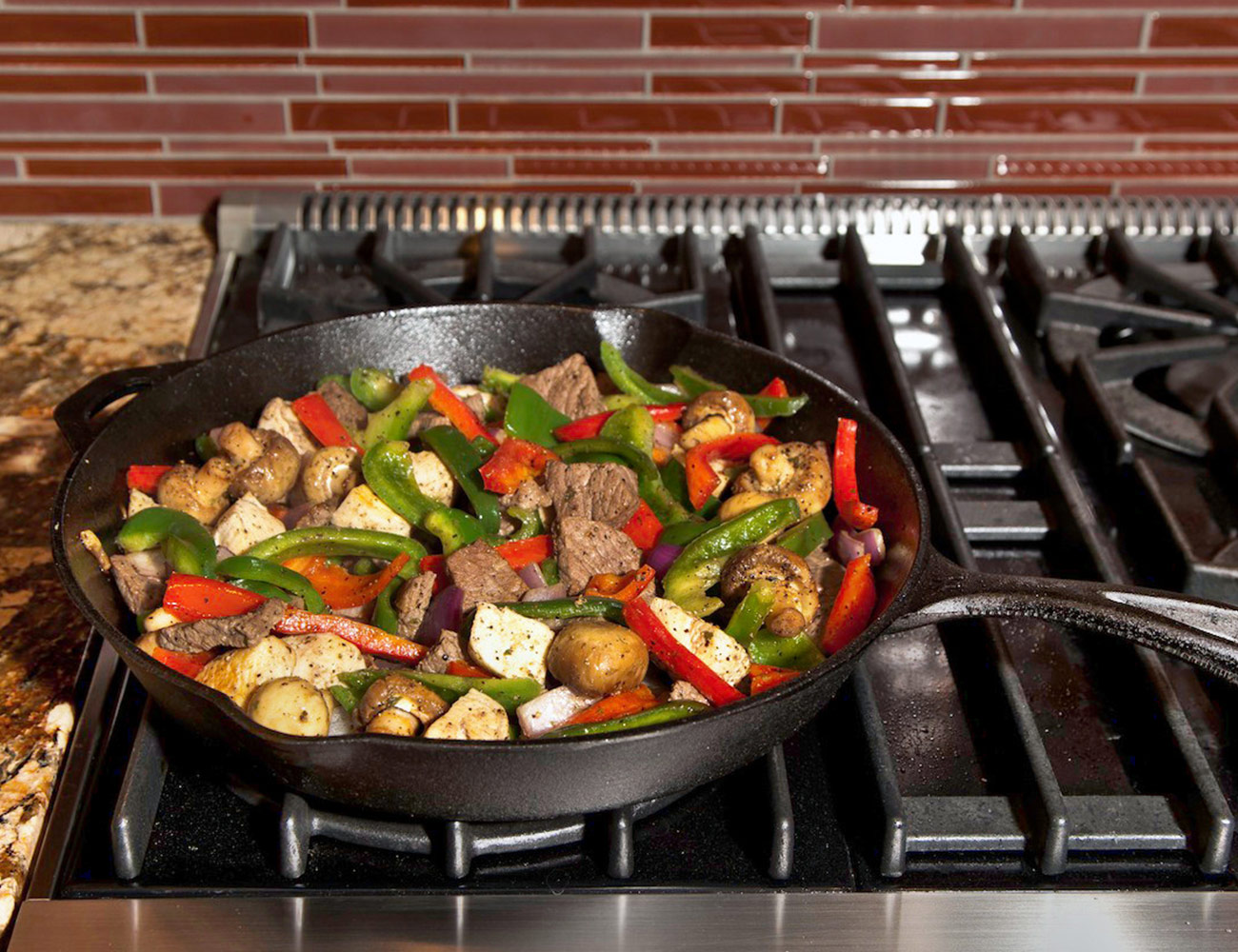
1. Melt butter in cast iron pan over medium heat.

2. Add potatoes and cook until tender. (A fork should slide right in)

3. Turn heat to medium-high and brown steak to cooking preference. Add onions, peppers, seasoning and salt and pepper to taste.

Backcountry Cocktails

Mexican hot cocoa, spiked sun tea and a ginger peach julep, plus all the gear you need to make ’em. Read More

Interested in CrossFit? Here’s Everything You Need to Know

Crossfit can be intimidating no matter how many people you know at the gym. There’s an air of experience around Boxes (what CrossFitters call a gym), but newbies will feel surrounded by good vibes as soon as they walk in the door. “Everyone is friendly and motivated to help encourage each other. Go in with the willingness to learn and try new things,” Mat Forzaglia, a coach at The Fhitting Room in New York, says. During the workout expect to see a lot of burpees, jump ropes (double-unders are popular), squats of every variation, pull-ups, chin-ups and deadlifts. The weighted bar is a favorite toy of instructors, and you’ll see it used with and without weights, and yes, you can drop it on the floor. It’s pretty exhilarating to push yourself to lift heavy weights and then just drop them to the floor. We chatted with Equinox master instructor and personal trainer Gerren Liles, Forzaglia and Blake Shutterly, a coach at Neo Fifth, to get a grasp on everything a CrossFit newbie needs to know.

Vocabulary

There are a few words and acronyms you should be familiar with before you head to your first class. The instructor will go over everything, but so you don’t look like a deer caught in headlights, here are a few of the common ones:

AMRAP: As many reps as possible — usually given with a time limit.
Box: The gym itself, or garage or third floor of a building, etc., where all the weights and machines are housed.
EMOM: Every minute on the minute.
WOD: Workout of the day.

The Gear

Training Shoe

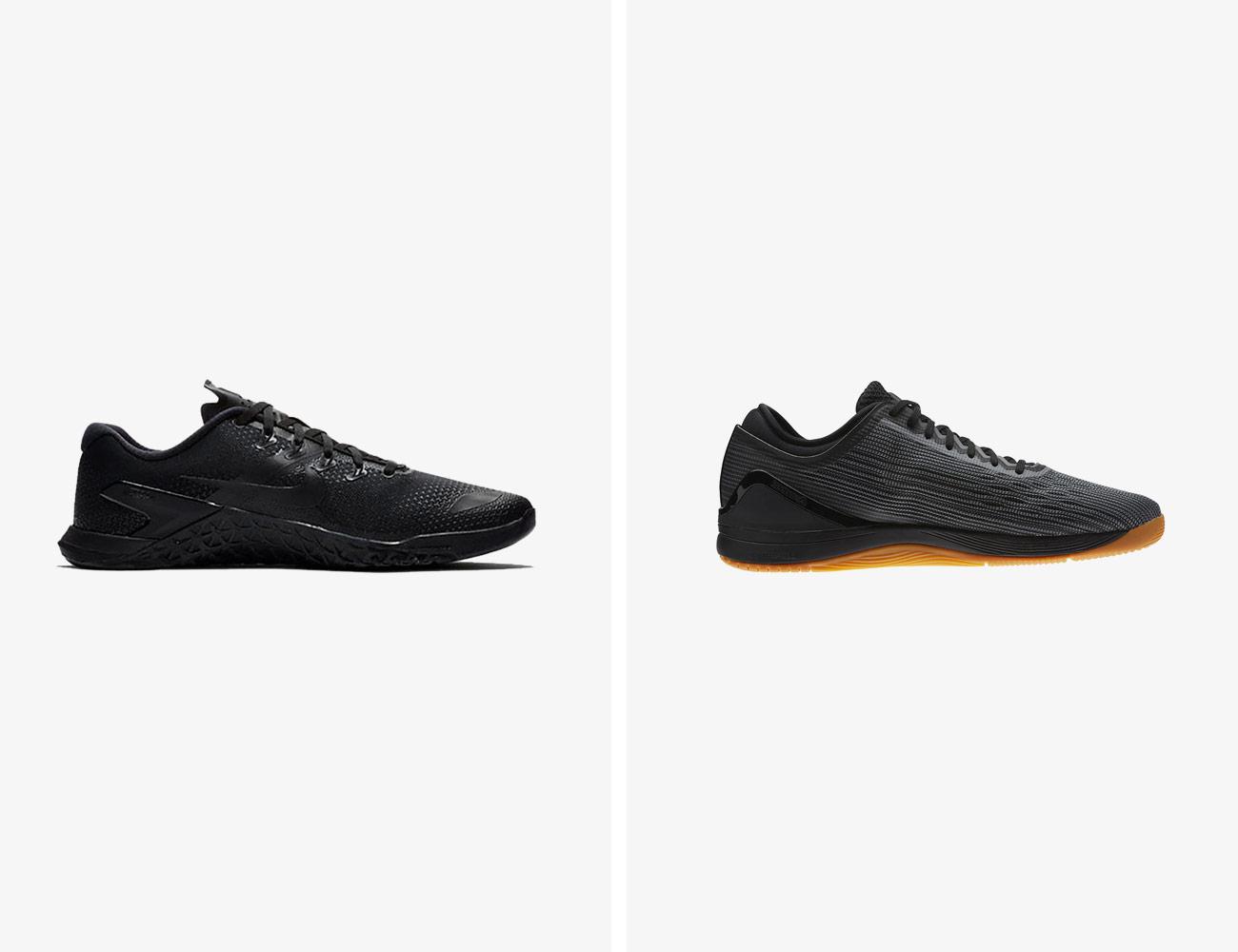
“A lot of people own running shoes with a lot of cushion in them, but those aren’t the best shoes for cross training. They have very little stability when it comes to lifting or lateral movements,” Forzaglia says. “I prefer Nike Metcons or Nike DSX Flyknits. The Reebok Nanos are a great shoe.” What’s important about each of these is that they are designed specifically for cross training. They offer stability, comfort and versatility. Look for a shoe with a flat solid base. Liles recommends Reebok CrossFit Fast FlexWeave or Nano 8 FLexweave.

|

Lightweight Tank or Tee

“Wear appropriate clothing that can withstand the movements that you’ll be doing in a CrossFit class,” Shutterly says. “I’ve seen a lot of ripped pants in my day as a coach because the material isn’t stretchy enough.” Wearing gear you’re already comfortable in is a plus, no matter what it looks like or what logo is on it.

“There are no right or wrong brands to wear,” Forzaglia says. “You want to wear something you can move freely in like a t-shirt and tank top. It is completely based on one’s preference.” Look for something that is sweat-wicking and breathable. Liles recommends the Lululemon Metal Vent Tech Surge Tank, a feather-light tank with mesh fabric to keep you cool.

|

Shorts

While you might see the leggings and shorts combo, you’re more likely to spot a lot of shorts. Again, you’ll want something you can move freely in — everything from squats and lunges to box jumps and Frankensteins. The Reebok CrossFit Super Nasty Board Shorts come recommended from Liles, but any stretchy, comfortable shorts will do. A few other options include the Vuori Banks short or Rogue Black Ops Shorts.

|

Water Bottle + Recovery Drink

“Bringing a water bottle and towel are two great necessities when working out,” Forzaglia says. “Most CrossFit boxes sell water or have water fountains, so if you forget to bring one, you can get it there.” Whatever bottle you already have at home will do — bonus points if it’s a shake-able one. Post-workout, it’s important to get enough protein, which you can get in liquid form, through sports drink mixes and beverages. Liles recommends Revere’s pre- and post-workout mix (along with its bottle). “It comes down to a person’s preference,” Forzaglia says, but he recommends Fitaid or Killcliff. Most boxes sell a variety of options.

|

Tape

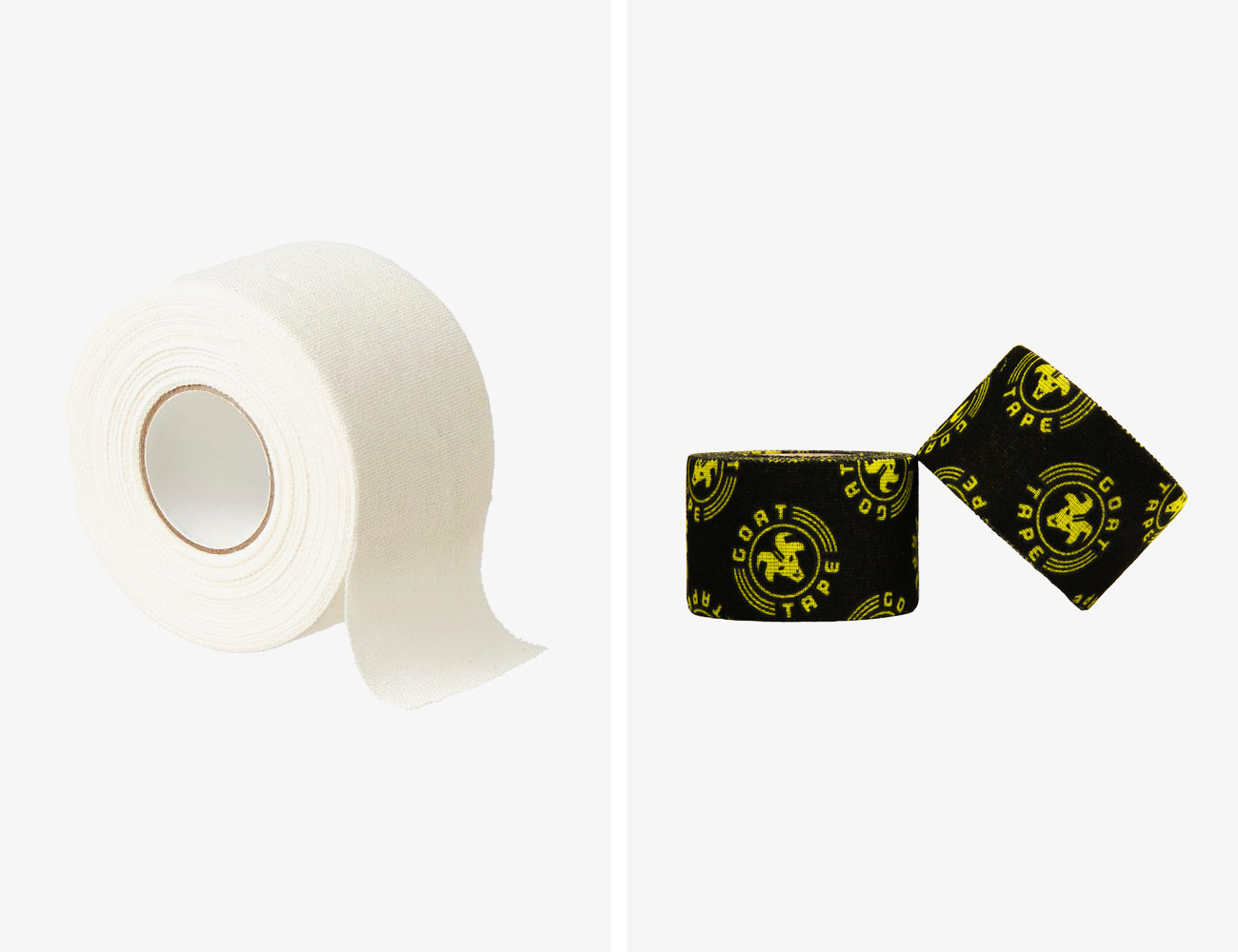
“Invest in some tape for your thumbs when weightlifting,” Shutterly says. “Goat tape is a great brand, but I also like the athletic tape from Dicks Sporting Goods as well.” If your hands start to look like they were mauled by a bear (thanks to calluses), it’s a good idea to start taping up. While you might not need this for your very first class, it is something to invest in if you decide Crossfitting is going to be your workout of choice.

|

Grips or Gloves

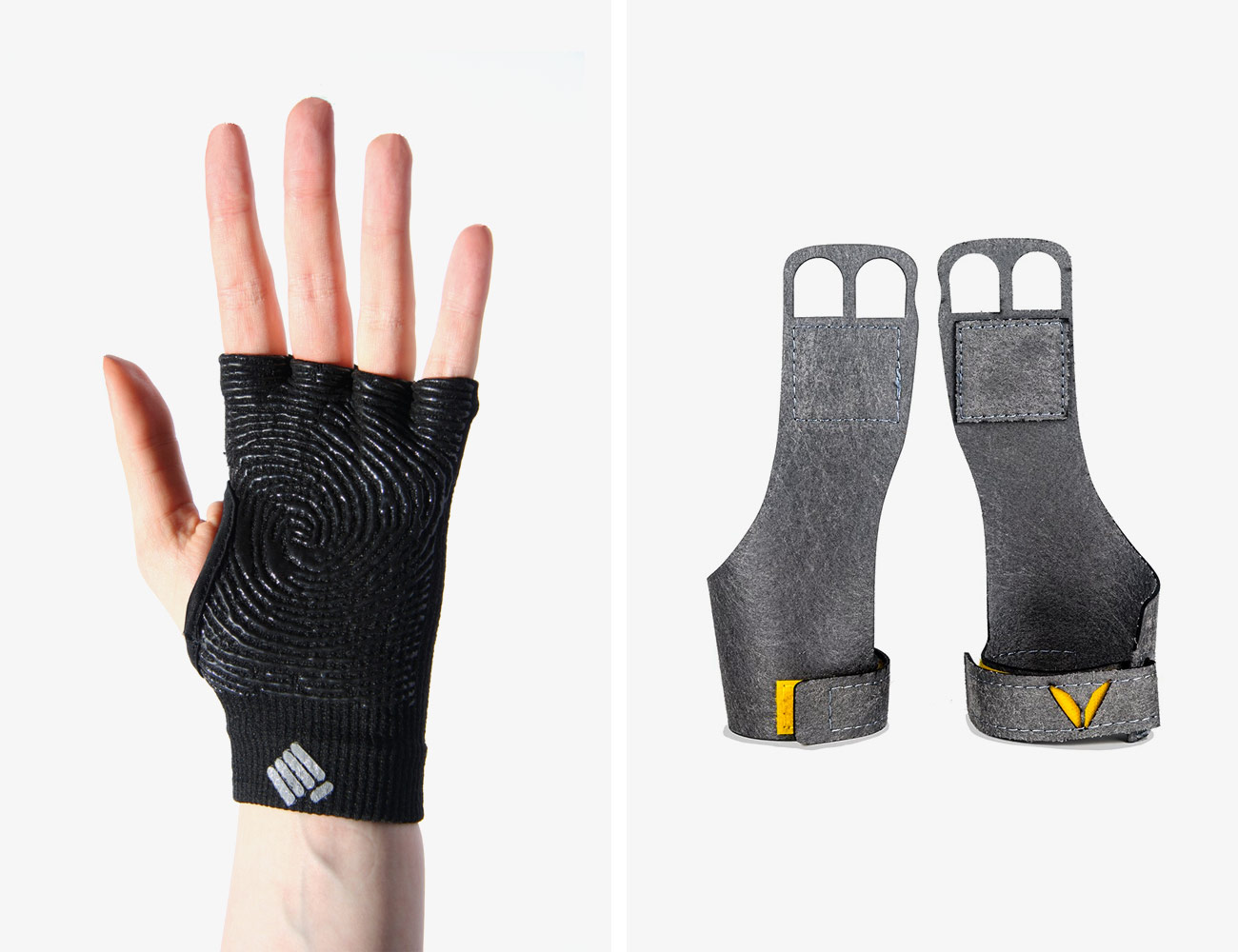
Depending on your preference and comfort level, you can try athletic gloves like Props Athletic, or grips like Victory or Bear Komplex. Both Shutterly and Liles recommend something for your hands if you find that your hands are getting beat up during the gymnastics movements. Grips or gloves help eliminate that.

|

A Quick and Effective HIIT Workout

High-intensity interval training is one of the most effective and efficient workouts you can do. Here’s how to do it the right way. Read the Story

What Goodyear Has Learned on the Racetrack, It’s Taking to the Bicycle

You know Goodyear; maybe as “the official tire of NASCAR,” or maybe you recognize it from the rubber that propels your vehicle. The yellow block letters and winged boot appear ubiquitous in signage on every main drag and advertisements on auto body garage walls in nearly every town in America. Still can’t recall the iconic insignia? Look up — it’s splashed across the side of a 246-foot long blimp.

Goodyear was founded in 1898 in Akron, Ohio, and since then it has become a pillar of the American auto industry, a name that recalls the smell of rubber and oil and the sounds of engines and squeal of tires on asphalt. But while Goodyear’s legacy exists within the auto industry — its founder, Frank Seiberling, gave Henry Ford his first racing tires in 1901 and outfitted the first Model Ts — its first product wasn’t built for a car; it was a bike tire.

It was in 1898 — still within the same century that the railroads were constructed, and the automobile was still just a fanciful notion — that the Goodyear name first appeared on a bicycle tire. Since then, Goodyear has shod the wheels of cars, buses, motorcycles, airplanes, Zambonis — even a lunar rover — and now, 120 years later, it turns back to that first tire with the launch of Goodyear Bicycle Tires.

With over a century’s worth of experience, it’s safe to say that Goodyear knows rubber. Technologies developed for high-octane NASCAR races trickle down into consumer tires, and now those learnings will advance to the bicycle. Rubber compounds formulated scientifically for grip, speed and roll are kept under heavy lock and key, and while most tire companies shop that job out to suppliers, Goodyear creates its formulas in-house.

“For Goodyear, this entrance to the bike market is about the world’s evolving transit needs,” says Logan VonBokel, spokesperson for Goodyear Bicycle. Goodyear is addressing that evolution with its Transit Range of tires, which is built for everyday use with all-weather traction, extra durability and reflective accents. “The bicycle is becoming a crucial tool in the transportation equation,” says VonBokel.

But the brand isn’t just testing the waters; it’s executing a blimp-sized cannonball and producing a tire for every type of riding. In addition to its Transit Range commuter tires, Goodyear is launching collections for road cycling, gravel and cross country, and mountain biking. It’s not just a matter of new molds either; each cycling collection and the various tires within it will be equipped with different compounds, treads, casings and protections. Each tire is unique.

“We’re still taking our time in the development process,” says VonBokel. “What’s most important is that every Goodyear tire offers the perfect balance of performance and reliability for its intended rider.”

The Best Beginner Road Bikes Under $1,000

If you’re looking to get into road cycling, this is the place to start. You don’t have to spend two full paychecks in order to get a taste of what it’s like to ride on skinny tires. Read the Story

This New Device Let’s You Send Texts Even When You Don’t Have Cell Service

If you’ve ever been out on the trail and lost connectivity to your cell network, you know how frustrating, and dangerous, it can be to be unable to communicate with loved ones and emergency responders. In the past, you’ve needed a dedicated satellite phone, or a mesh network of devices in order to communicate on the trail outside of cell coverage. But a new startup called Somewear is trying to change that.

The brand launched a new device on Kickstarter that promises to allow users to communicate via text message, without cell service, anywhere in the world. Somewear is also promising local weather updates, local alerts, an SOS beacon and the ability to share your location on a map. It sounds a bit too good to be true, but in a beta demo on the brand’s Kickstarter page, two Somewear developers are shown communicating via text with phones in airplane mode — at a minimum, a proof of concept.

And the brand has a heavy hitting outdoorsman backing the project as well. “Somewear basically turns your cell phone into a global communication device,” says legendary backcountry snowboarder Jeremy Jones. “In my profession, you learn quickly that if something goes wrong in the mountains you need reliable communication with emergency responders. Cell phones rarely work in the mountains, which is why Somewear has become a critical part of my backcountry kit.”

On the technical side, Somewear Labs claims that the device will send or receive 1,000 text messages on a single charge. It weighs just three ounces, has an IPX7 waterproof rating, is MIL-STD-810 shockproof and can operate in temperatures from -4F to 140F. Delivery for the device is slated for mid-July or early August and is expected to retail for $450. But if you support the Kickstarter campaign now, you can pick one up for just $299.

Today in Gear

The best way to catch up on the day’s most important product releases and stories. Read the Story

How Your Fitness Tracker Is Failing You

Remember when smartphones were a rare, even luxury, alternative to the standard-issue flip phone? That was ten years ago, and since then even the most mundane tasks of daily life have come to rely on, and hinge on, iPhones and the like. Everything is connected, data is everywhere, and we depend on it for everything — including regular fitness. Fitness trackers have progressed along with smartphones and the current breed of heart-rate-measuring, calorie-counting machines are more sophisticated than ever. But do they actually work?

Despite their relative youth, the tech inside the latest Fitbit or Garmin can trace its lineage back to the first polygraph machine, developed in the 1920s, which was designed to measure blood pressure, pulse rate (and fibs), in a much less portable package. Jump ahead 40 or so years and a Japanese company called Yamasa creates the Manpo-kei pedometer; the first iteration of a pocket-sized activity tracker. Throw in accelerometers, altimeters, barometers and a GPS, and you’re almost up to speed with the devices of today, which are all but guaranteed to make us all healthier, faster and skinnier.

The only problem is the human brain. A study published in the Journal of the American Medical Association in September, 2016 conducted by researchers at the University of Pittsburgh showed that people who were attempting to lose weight over a period of 18 months using fitness trackers actually lost less than those who didn’t wear a device at all.

Another study, conducted by psychologists at Brunel University London and the University of Birmingham and published in The American Journal of Health Education in April, 2017, attempted to measure the effects of giving activity trackers equipped with the now-standard 10,000 step goal — a number that originated with the Manpo-kei pedometer — to teenagers for a period of two months. Many of the students gave up the tracker after just a month, and most reported that they actually felt less motivated with a monitor than they did without.

Both of these studies hinge more upon human psychology than the technological function of the device itself. The JAMA study revealed the potential of a health halo, which refers to an effect in which the healthiness of a product is overestimated based on one claim, in that a person who keeps track of his or her daily burned calories might then use that as an excuse to eat more or exercise less. Burned an extra 450 calories? Well, that’s worth a Chick-fil-A Spicy Chicken sandwich! The AJHE study revealed more about motivation and what happens when adolescents feel pressure and are compared to their peers on a fitness leaderboard.

Both of these studies focused on behavior, and neither asked a fundamentally important question: is the data collected by fitness trackers accurate in the first place? The previous studies prove that the answer might be psychologically moot for many, but what about core users like athletes that use fitness trackers to create, and stick to, rigorous training plans? Do fitness trackers work then? Yes. And no.

Another study, this time undertaken by a team of researchers at the Stanford University School of Medicine and published in the Journal of Personalized Medicine in May 2017, answered that very question. In the study, researchers measured the capabilities of seven popular wrist-mounted fitness trackers (the Apple Watch, Basis Peak, Fitbit Surge, Microsoft Band, Mio Alpha 2, PulseOn and the Samsung Gear S2) against medical-grade devices.

The study involved 31 women and 29 men who sat, walked, ran on treadmills and rode stationary bikes while wearing the devices. Heart rate outputs were compared against a medical-grade electrocardiograph while metabolic rates (calories burned) were juxtaposed with readings from an instrument used for measuring the oxygen and carbon dioxide in the subjects’ breath, which provides a proxy for metabolism.

The results showed that fitness trackers are reliably accurate when it comes to measuring heart rate and unreliably defective in counting calories burned. To be exact, six of the seven trackers attained an average error rate in estimating heart rate of five percent. In regards to energy expenditure, no device achieved an error rate less than 20 percent — the most accurate was off by 27 percent, and the least accurate was off by 93 percent, which is, frankly, astounding.

The results are both good and bad for users and manufacturers alike. Heart rate has long been considered the best marker for training, and that tiny, wrist-mounted devices can hold pace with medical-grade equipment is a sign of how far fitness trackers have come. The errors in measuring calories burned is likely a result of a combination of factors including how the devices were tested in manufacturing, the algorithms each one uses in its calculations, the variance in the individual physiological makeups of each person tested and, in non-controlled scenarios, user error (such as punching in the wrong age, height or weight when configuring a device out-of-the-box).

The good news is that the earlier studies already proved to a certain degree that measuring fitness by calories burned doesn’t work in the first place. The Stanford study is more reason to exile that data from the front face of whichever fitness tracker currently sits on your wrist. It’s important to remember that fitness trackers are still relatively young in the world of tech, and they have a long way to go. And in case you were wondering — the overall worst performing device in the Stanford study was the Samsung Gear S2. The best? The Apple Watch. We could’ve guessed.

The Best Fitness Wearables for Summer

The sedentary lifestyle is out; fitness is in. Don’t be the sloth, be the tiger. Read the Story

Exclusive: Oakley’s Newest Sunglasses Are Innovative in an Incredibly Simple Way

Oakley has been known as a leader in sports optics since its early days; now, 43 years after its founding in a garage, the company continues its history of innovation with two new sunglasses built for cyclists: the Flight Jacket and the Field Jacket.

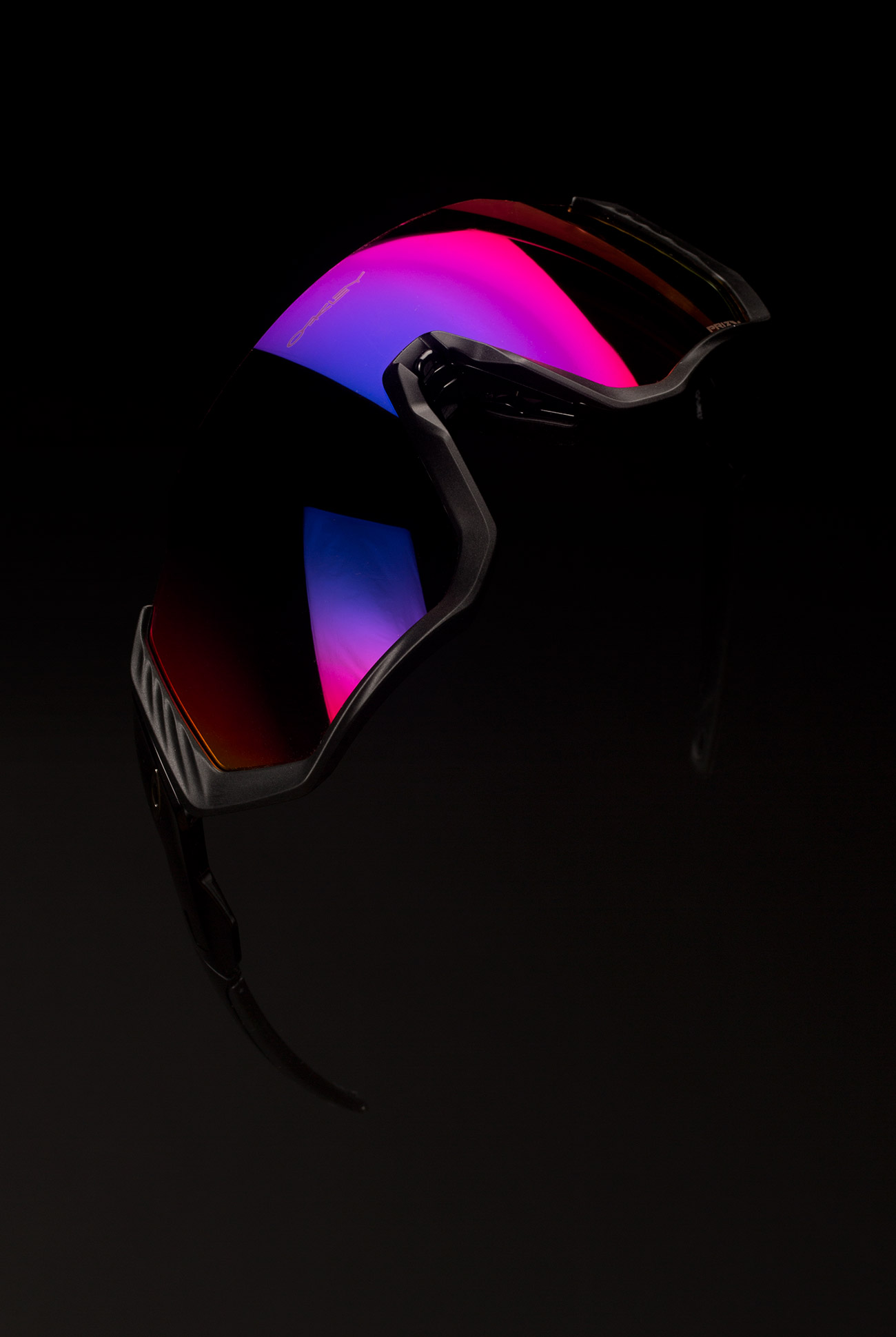
The new sunglasses would appear to be fairly-typical athletic shades with contemporary frame designs if not for the small lever at the apex of the nose bridge. That tab is part of Oakley’s newest innovation, called Advancer. Pull that toggle down — an action that can be accomplished easily on-bike with one hand — and the lens and frame are leveraged forward and away from the face while the rubberized nosepiece stays in place. The action opens up a triangle-shaped window at the nose bridge, allowing air to flow freely between the lens and the face, preventing fogging and neutralizing the effects of sweat and moisture on the sunglasses.

The innovation behind Advancer is subtle, simple even — the mechanics rely on two pairs of hinges and some small plastic parts — and yet it has significant implications for cyclists. “When I’m on the bike, it happens a lot of times when you go uphill. When you go from high speed to a slower one, and then you start to sweat, you get hot, your body gets hot, that’s why you start to get fog on your glasses,” says Marcel Kittel, a professional cyclist who rides for Team Katusha–Alpecin. “You need the space to get enough air in between to keep your lens free.”

Riders who specialize in climbing will experience the immediate benefits of Advancer, but as Kittel explains, the foundational technology supporting the Flight Jacket and Field Jacket is paramount to all types of riding. “When you’re out there on the road in training or during a race you have so many situations when the light is constantly changing; when you go through a forest, when there are sun and clouds, it’s always a change. It’s important to always be sure that you have a good view,” he says. Oakley’s answer to that is the unhindered frameless top of the Flight Jacket and its color-sharpening Prizm lens technology.

Kittel still remembers his first pair of Oakley sunglasses — the M Frame — which he bought when he was 15 years old, years before his thoughts turned to cycling at the professional level. Now that he’s in his seventh season, Kittel’s eyes are set on upcoming races at Paris-Roubaix, the Tour of California and ultimately the Tour. And those eyes will remain unhindered by fog, thanks to the Flight Jacket.

The Best Beginner Road Bikes Under $1,000

If you’re looking to get into road cycling, this is the place to start. You don’t have to spend two full paychecks in order to get a taste of what it’s like to ride on skinny tires. Read the Story

This Survival Kit Is for Bug-Out Minimalists

VSSL has made an M-O of crafting highly compact and portable survival kits and its latest, a collaboration with Mountain Standard, fits into a durable cylinder made of military-spec anodized aluminum. The kit is smaller than a 16-ounce water bottle, and yet contains an emergency whistle, antiseptic wipes, antibiotic ointment, three different types of bandages, Ibuprofen, safety pins, tweezers, a razor blade, medical tape, gloves and more. Plus, the cylinder itself is a dual-mode flashlight with a compass attached at one end. Nobody wants to be put into a survival situation, and in lieu of a full-on end-of-days bug-out bag, the Mountain Standard x VSSL First Aid Kit is a minimal way to stay prepared, always.

The Ultimate Bug-Out Bag

The headlines are scary. An emergency survival kit — or bug-out bag — offers some peace of mind. Read the Story

Suunto’s Newest Smartwatch Tracks Everything

Suunto is known for its incredibly accurate, off-the-grid GPS tracking as well as its tactical and military-inspired watches. The latest release is the Suunto 3 Fitness, a lightweight watch designed to track all your training — run, bike, swim, yoga, sail, climb, lift weights, whatever.

Compared to other Suunto models, the 3 Fitness is less bulky, but still offers an incredible battery life with up to 40 hours in training mode without GPS (according to Suunto it should last for five days while in 24/7 tracking and mobile notification mode). We’ve lightly tested the watch since the beginning of the week, and will be publishing a full review soon.

Today in Gear

The best way to catch up on the day’s most important product releases and stories. Read the Story

Leatherman Re-Designs Its Classic Survival-Specific Tool


Leatherman’s skill in crafting multitools has turned the brand into a genericized trademark similar to Kleenex and Velcro — Leatherman means multitool. The Portland-based company produces tools of all shapes and sizes with various applications, and while many of those are generic — if that word can even be used in describing a multitool — the Signal is specially designed for outdoor use and wilderness survival.

The Signal’s toolset was gleaned from conversations with trained survivalists who placed particular emphasis on items that can aid in wilderness rescue (hence the tool’s name). These include a ferrocerium fire starter and a whistle. But the Signal doesn’t sacrifice utility for specialization; it also incorporates outdoor staples like a can opener, a saw, a hammer and an awl, pliers, a diamond-coated sharpener and of course, a knife, along with a few more. To pay tribute to the Signal’s wilderness utility, Leatherman has re-released the multitool with a forest green paint job and topographic detailing on the knife blade.

Today in Gear

The best way to catch up on the day’s most important product releases and stories. Read the Story

My Favorite Pants Ever Just Got Majorly Upgraded, And They’re Incredible

I’m a big fan of Western Rise, and I have two pairs of their AT Slim Rivet Pants (and…a lot more of their stuff). I’ve mentioned them many times, and wear those pants a lot. They fit great, look great, feel great and are tough as all hell. They are literally everything I could want out of an everyday pant. And now I have to replace them because Western Rise is launching a totally new product that promises to do even more.

According to Western Rise founder Will Watters, the Evolution Pant pushes the brand even further into their core mission: “truly creating products that allow you to own less, carry less, and do more.” The pants are constructed of a fabric that comes “from one of the oldest, vertically integrated and sustainable, fabric mills in…Sweden.” They are durable, pill-proof, abrasion and wrinkle-resistant, quick-drying, slightly stretchy, breathable (thanks to Supplex fibers) and stain-proof. There is a hidden zippered security pocket out back, too. Plus, the pants are made in the U.S. in downtown LA.

These are the pants that Tony Stark would design and wear, and I’m not saying a fake superhero billionaire playboy is my sole inspiration in life, but I’m not not saying that. What I am definitely saying is that I like his pants.

Anyway. The Slim Rivet pants, which I wear when I travel, when I go to the office and on weekends (I have to try really hard not to sleep in them) are truly awesome. I’m eager to see what the new Evolution pants are all about. Right now, Western Rise has a Kickstarter going with plenty of time to go. Early adopters can get in on the action (and possibly beat me to the punch) and cop the $149 pants for just $99.

Today in Gear

The best way to catch up on the day’s most important product releases and stories. Read the Story

Nike Combines Two Popular Sneakers for A Totally New Model

Fans of the Nike Free and the Nike Metcon may soon become one big fan base. These two cornerstones of the Nike brand likely never crossed paths before — at least in the form of a single shoe. Nike launched its newest training shoe, the Free x Metcon, combining feather-light flexibility with stability. Offered in seven colors and patterns, the sneaker is sure to garner attention in the CrossFit, weightlifting and running world.

Today in Gear

The best way to catch up on the day’s most important product releases and stories. Read the Story

I Can’t Stand Emergen-C, So I Reach for This Immunity Booster Every Morning

Electrolytes help you recover from a tough workout, and they also help protect your immune system from overtaxing. With spring right around the corner, the changing tides of weather can cause all sorts of sickness. Combat that with Nuun Immunity, a tablet you add to water to restore your body’s natural defense systems, help with inflammation and take daily to prevent and help speed up the sick process.

Mix each tablet with 16-ounces of water and sip in the anti-oxidants, anti-inflammatories and electrolytes. The non-GMO, vegan and gluten-free supplements aren’t as effervescent as the electrolyte tablets. The Outdoors and Fitness team tested the two flavors over the course of the past month, and I find myself consistently reaching for it every morning. I know eating your fruits and veggies is the best way to up my vitamin intake, I figure there’s no harm in adding potassium, sodium, magnesium, chloride, elderberry, echinacea, selenium, zinc, turmeric and ginger to my diet.

Offered in two flavors, Blueberry Tangerine and Orange Citrus, each tube contains ten tablets.

Note: This article is not intended to treat, diagnose, or cure any medical condition. Consult with your doctor before making changes to your existing regimen.

Today in Gear

The best way to catch up on the day’s most important product releases and stories. Read the Story

How a Night of Hell in the Arctic Inspired Ex-Royal Marines to Make Outerwear

T

ommy Kelly was on leave from working security in Libya when he received a call from fellow ex-Royal Marine Stephen Howarth. The two had served their home country of the United Kingdom in a battalion called the 45 Commandos — that’s “four-five,” not “forty-five” — an amphibious unit within the Royal Marines. The 45 were present at Normandy in 1943 during D-Day and fought in Iraq and Kuwait in the Gulf War during the early 1990s. Their training is both highly specialized and incredibly versatile, requiring soldiers to be prepared for combat in tropical environments, deserts and high mountains.

Kelly and Howarth got to know each other in the Arctic Circle; both specialize in extreme mountain warfare. But when Howarth reached out to Kelly, it wasn’t in regards to recent orders, it was to go mountain biking. It was 2012; Kelly had been out of the marines for roughly three years and Howarth was just beginning the tumultuous process of transitioning back to civilian life. “I thought I’d hook up with him and pick his brain about what to do after I left the Marines,” says Howarth. He explains that many, like Kelly, move into security, while others might seek out positions in leadership consulting or business management. None appealed to Howarth.

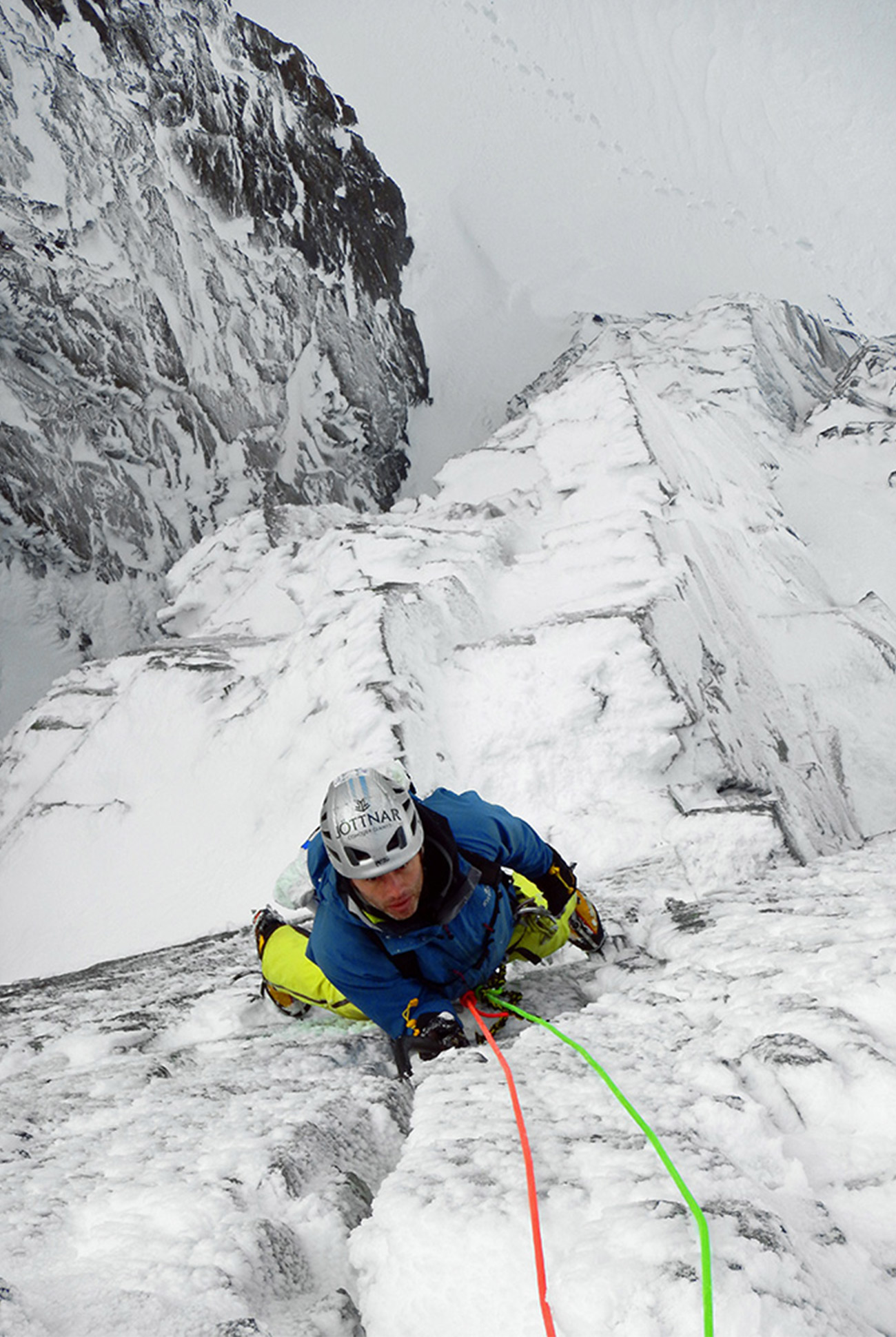
He looked instead to what came naturally: skiing, mountains, Arctic survival. Then he approached Kelly. “‘Do you fancy starting a company,’” he asked, to which Kelly responded, “‘Yep.’” Soon after, Jöttnar was born. From a lofty vantage, Jöttnar is young, but it’s already seen success with its small line of highly-technical outerwear pieces, an outcome due in no small part to Howarth and Kelly’s combined military experience and time spent in the harshest terrain on the planet. We recently caught up with Howarth to ask about where the inspiration for Jöttnar came from, and how his and Kelly’s experience in the Royal Marines influences the brand today.

Q:

How long did you serve in the Royal Marines?

A:

I joined the marines in 1990 and Tommy joined about ten years later. I spent a total of 21 years there; Tommy spent about 12. We both served all over the world — the War on Terror in Iraq and Afghanistan, and anywhere else you can think of. I did a lot of time in the States, training with the US Marines. One of the remits the Royal Marines hold on behalf of the UK Ministry of Defense is the Arctic, extreme cold weather and mountain warfare specialization. Within that specialization there are further deeper specializations such as Mountain Leaders, which are sort of reconnaissance-orientated military versions of professional mountain guides. Tommy was a Mountain Leader. I was a slightly lesser being, an Arctic warfare instructor.

Q:

Did you and Kelly meet while serving?

A:

Yeah, we met in the 45 Commandos. Tommy was the reconnaissance troop officer in that unit and I was the camp lead commander. What that means is he was in charge of about 30 reconnaissance specialists within that subunit and I was in charge of about 115 burned-door kickers, people who smash stuff up. We spent three and a half months cheek by jowl, side-by-side, in each others pockets in arctic Norway, that’s how we really go to know each other.

Q:

Was there a specific experience that brought you two together?

A:

There is a specific night of horror which we talk about. This occurred on a Norwegian mountain plateau about an hour north of Tromsø, which is well within the Arctic Circle. I had to do a night move on skis with my company. Essentially that’s taking 115 men in small teams across a significant distance in one cycle of darkness, and they’re carrying a lot of weight. It was probably about 80 pounds of weight on their backs plus another 20 or 30 pounds of weapons and ammunitions on their body, and they’re on skis.

That night was a particularly brutal night, it was about -21 [degrees Celsius] still air, which is not necessarily a huge problem, but you put the wind chill on top of that and we were down into the low -40 degrees Celsius temperature bracket. By the time we finished I had six casualties with cold weather injuries, frostbite. Tommy had none; I guess he was lucky. That resulted in a formal board of inquiry against me. I was exonerated by the inquiry — there was no problem with my judgement or decision making — but there was a problem with the kit. And I had always known there was a problem with the military supply kit, I never thought it served the purpose, and a lot of the guys substituted their own civilian kit based on their level of experience with that military kit. And it was the guys in the military kit that were injured with frostbite.

Getting frostbite in the marines is regarded as a very serious issue because it effectively makes you a noncombatant and if it’s not treated it can worsen. Hence why you have these rather serious sounding boards of inquiry when it happens because people get sent back to the UK if they get it. And it’s also regarded as professional failure in the marines; in other words, you can’t look after yourself professionally in those conditions. I thought that was all rather unfair. Those particular conditions placed demands on the issued kit and I also had my professional credibility questioned. That’s the prominent bonding experience, and it was often referred to when we started discussing the business.

Q:

How did that experience provide insight when you and Tommy Kelly decided to start Jöttnar?

A:

All this meant was really that Tommy and I had a really good understanding of extreme cold weather survival and mountaineering and skiing, which were passions of ours outside of our military careers. When it came time to form Jöttnar, that’s what gave us the grounding and the insight into what was required of outdoor clothing.

In terms of assessing the market today, you end up with companies who still make some good gear but they’re also at the same time turning out laptop bags and other things. It’s our intention that you can probably only be one or the other in terms of your proper focus. We understand completely the demands of driving your top-line revenue, growth and so on, but that’s not our concern. We’re completely focused on this, we’re not making tightropes and laptop bags, we’re just making serious gear for serious users, climbing, skiing and adventure. And it’s based on a combined almost 35 years of outdoor experience from the founders. And indeed it’s the founders who are designing this stuff and testing it; it’s not some MA design graduate who has never seen the side of a mountain apart from the photograph in the design studio.

We knew how this clothing should perform and we knew how clothing out there wasn’t performing. But we didn’t know how to produce a technical pack for a designer, didn’t know how to find a factory, didn’t know how to run a business. When you’re in the Marines, you move jobs every two years, you just rotate from job to job. There’s all sorts of functional areas whether it’s operations or training or personnel management. What you have to do in that situation is just very rapidly gain contextual awareness in that place and start decision making. And I thought, this can’t be as hard as some of the jobs I’d had in the marines, which were incredibly complex and risky and demanding.

Q:

How else has your military background contributed to the development of Jöttnar?

A:

There’s probably more about our military experience that influences the way we run the company and then in turn, the way the design discipline is maintained. The way the military is supposed to run, of course, is on quite tight lines. Thinking outside the box is encouraged, especially in the Marines, which is different from the Army, but the operational mechanics are quite tightly run in order to deliver things on time and in the correct manner and place and so on.

We like to run the company in that way as well. What that has allowed us to do is to really embrace this idea of design discipline. We look at companies such as Apple, for example, and I’m not comparing Jöttnar to Apple, the Apple approach is everything you need and nothing you don’t. I don’t want this to sound cynical, but when we look at the outdoor industry and some of the clothing it produces, it has what we would consider to be superfluous elements to it that are really there for marketing purposes. To us they confuse the nature of that particular garment — we regard garment as a tool — in its most effective incarnation you have to have discipline to weed out the unnecessary elements that other people might pile onto it.

Q:

How do you approach the design of a new product?

A:

The first thing we have to do is identify a credible need within an outdoor pursuit for that product. There’s no point in making something for the sake of it. Hopefully, that credible user need, what we would call in the Marines a “user operation requirement,” also times the market appetite for it. You have to be realistic about these things. Once the need is identified we’ll look across the market at what other companies are doing to satisfy their interpretation of that need — look at what’s good and what’s bad — and combine that with our own experience and literally start to sketch out with a bit of paper and a pencil what’s required.

Samples are tested by me and Tommy, but more importantly at this stage, they’re tested by our pro team. They then come back with their feedback, which can be quite critical, and we recycle again. Usually, by the third prototype we get near and by the fifth, we’ve probably nailed what we want. And then you have to assess whether it’s commercially feasible. It’s very much founder-driven from the outset.

Q:

Being from the UK, what drew you to use Scandinavia as the branding for Jöttnar?

A:

There was sort of an obvious cue there to name it in homage to Scandinavia. I’ve spent so much of my life in the Arctic Circle, as has Tommy, and we’re big fans of it and Scandinavia as a whole. Particularly Norway, which is a bit rustic. The other thing — I suppose it’s almost cliche now — is the cleanliness of the Scandinavian design approach, which speaks to that necessity to streamline our designs. That little package made a nice little nod to Scandinavia with our branding.

Q:

Do you have a favorite Jöttnar product?

A:

Our Vanir LT hardshell pants. They were a nightmare to design and they’re in their fourth iteration now. To arm it with all the technical features without betraying your design discipline and principles has been immensely challenging. You make one design that’s hidden, and it waters down or completely obliterates the initial design decision. We’re not designing SpaceX vehicles here, but it’s still surprisingly challenging to do something like that.

For Tommy it’s the Bergelmir Jacket, which we worked on for a long time. It represents the streamlining of design, it has pretty much everything that you need and nothing that you don’t. It probably makes up about 40 percent of our revenue, it’s a very popular jacket.

11 Military-Grade Items Civilians Can Buy
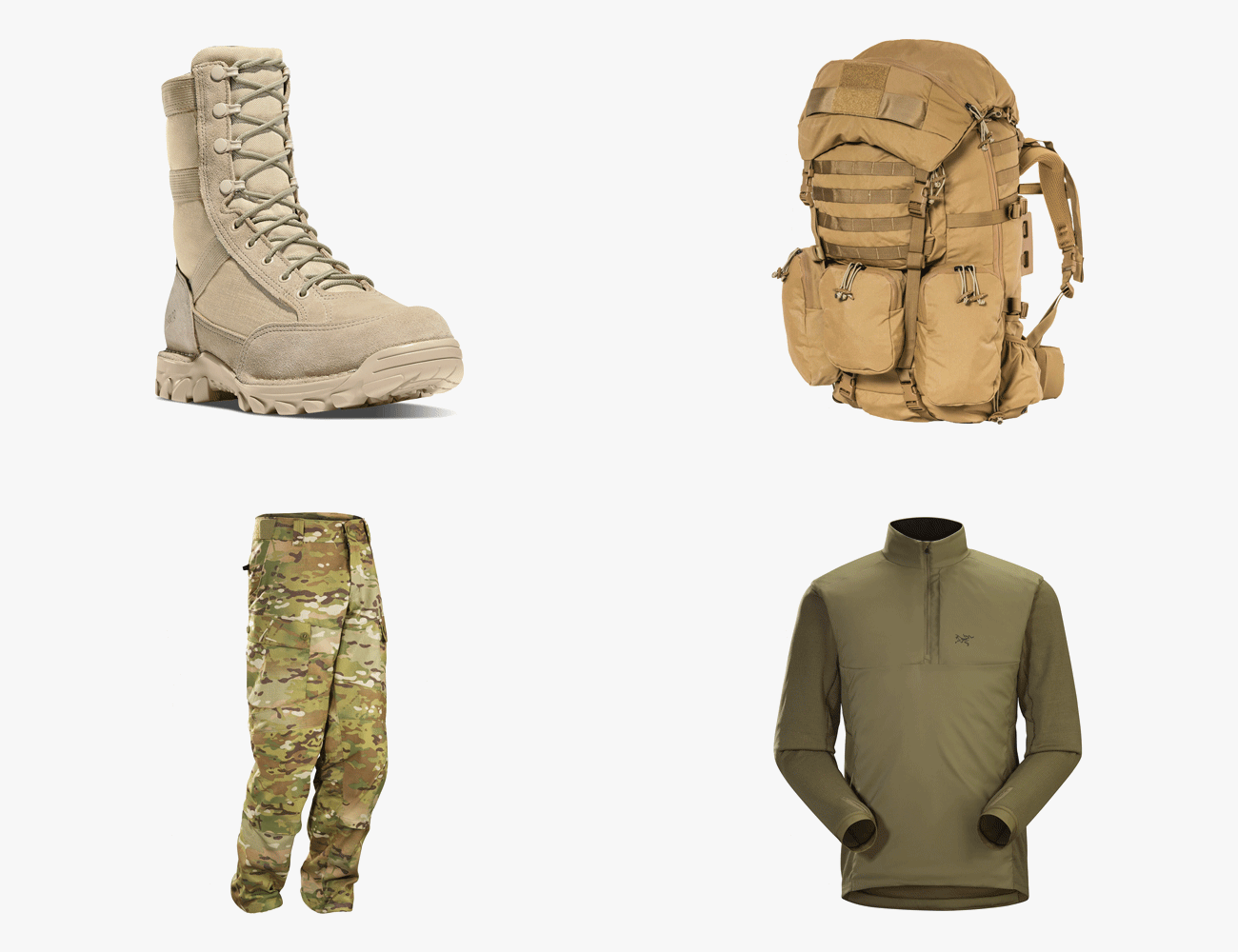
These long-lasting items are built to be used and abused by the military while continuing to perform in extreme conditions — and they’re also available to you. Read the Story

Balega’s Blister Resistant Socks Have a Permanent Spot in Our Sock Drawer

The Angora Goat Plays a Shining Role

Balega’s Blister Resistant Socks Have a Permanent Spot in Our Sock Drawer


After topping our list as one of the best running socks out there, we were excited, yet apprehensive when we heard Balega was re-creating its blister-resistant socks. The completely redesigned sock is now made from all-natural mohair to help keep blisters at bay as your feet start to sweat.

Mohair is antimicrobial and durable, on par with merino wool. I took these for a few test runs — first at an indoor cycling class, where they weren’t too thick in my tight spin shoes, and then on a track workout on a cold night. The socks have an impressive dry time — they were dry by the time I returned home that night. If the Balega socks weren’t perfect before, they’re certainly close now.

The socks are available in three sizes: crew, quarter and no show. Try them for hiking, biking, running and more.

| |

Today in Gear

The best way to catch up on the day’s most important product releases and stories. Read the Story
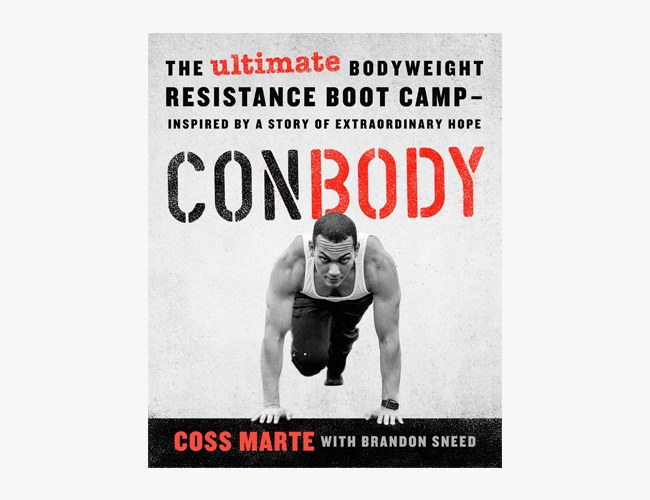
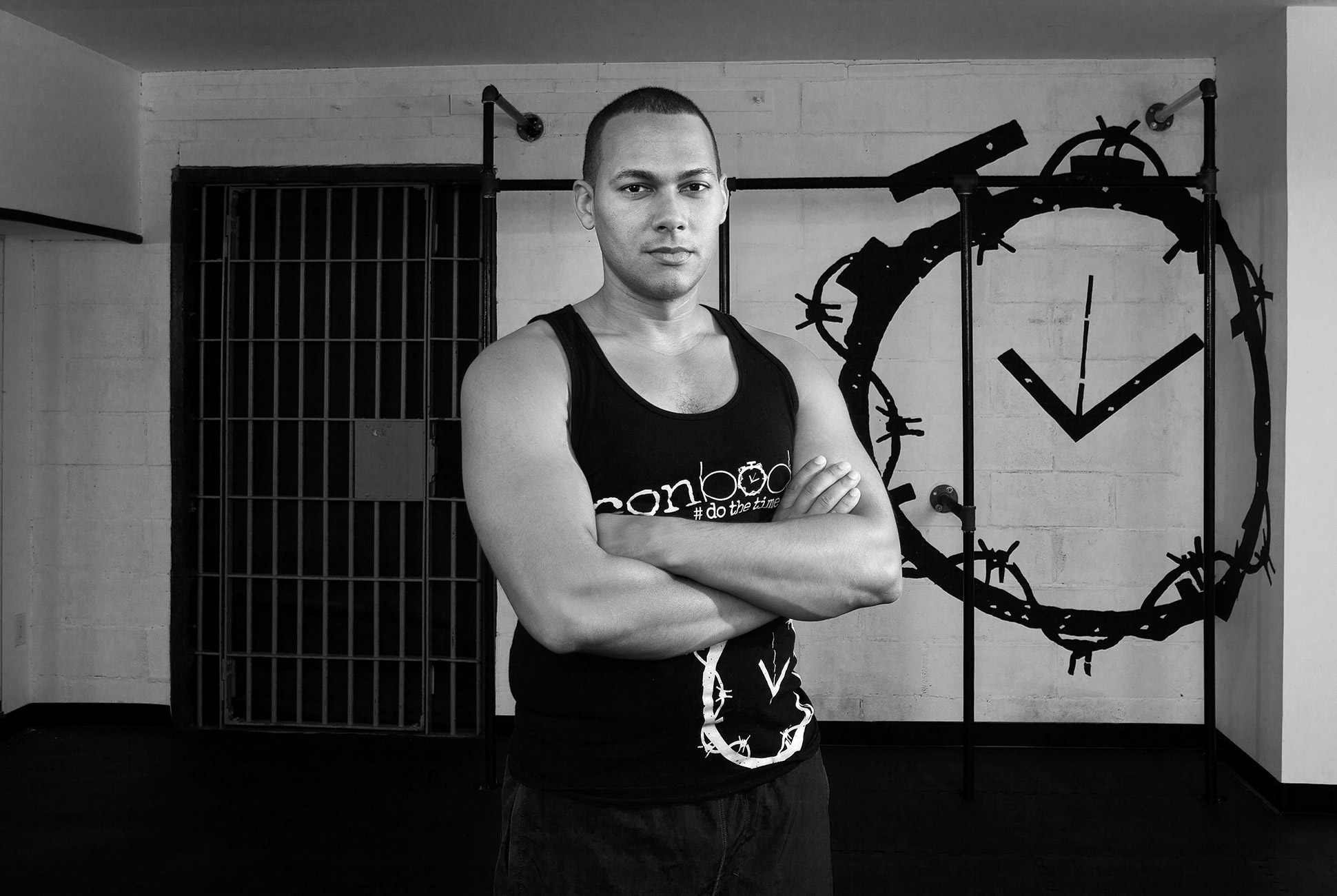
The Prison-Inspired Workout That’ll Get You in Shape

C

oss Marte used to be one of the biggest drug kingpins on the Lower East Side of Manhattan, making upwards of $3,000 a day. He started selling drugs when he was just 13 and realized how easy it was to turn $100 into $300. He continued throughout high school and college, eventually getting kicked out.

After returning home, Marte picked up right where he left off, selling weed, coke, crack and ecstasy. After taking over the business from a fellow drug dealer, he was a millionaire. The perks of living like a high roller were numerous — cars, Jordans, clothes — but at the same time, Marte stopped moving. He sat in a car for most of the day with someone else handling drop-offs, and the number on the weight scale rose.

In 2009, a partner double-crossed him, and Marte was sentenced to 12 years. When he entered Ulster Correctional Facility, the doctors told him that in five years he’d likely die of a heart attack. He knew something had to change. He started working out in his 9′ x 6′ cell, running every day and doing whatever moves he could in that space “I built myself up to running around two hours a day basically seven days a week,” Marte says. “Sometimes I would be running in two to three feet of snow.” He lost 70 pounds in six months.

“It became a routine, an addiction, I just needed to get up and run,” Marte explains when asked if he ever got bored. Other men started running and working out with him in prison after they saw the changes he made. He was the group leader. Eventually, Marte received an early release from prison — walking out with everything he did to lose the weight.

“I put this whole 90-day workout plan together while I was in the system,” Marte says. He started training friends in the neighborhood, eventually expanding to classes in rented ballet studios, but he wanted to do more. “My whole idea was to build a facility to look like a prison, and I spoke it out into the existence,” he says. Marte’s Lower East Side studio is now complete with prison bars, 3-minute shower rules and no locks on any lockers. “We tell people to trust ex-cons with your shit,” he says.

The workouts have expanded from the 90-day plan Marte wrote in prison, and you can always expect a different bent depending on which trainer you have leading class. “The whole mission of the company is to hire formerly incarcerated individuals to teach fitness classes,” Marte explains.

Part of Marte’s 90-day program is excerpted below, but we also asked what he does now to stay in shape. Beyond training for the New York City marathon (The goal is to lose 15 pounds in the next two months,” he quips), he regularly teaches Monday through Thursday classes at his studio and then puts in the time. “I’ll do 300 push-ups; depending on the day, I’ll do up to 500 push-ups. I’ll do 200 bodybuilders (they’re burpees with a plank jack) and then I’ll do a lot of pull-ups. I do 24 sets and max them out, working from the widest position [on the bar] inwards.”

Coss Marte’s ConBody Workout

Warm up with a jog, then rotate the following exercises, doing 2 sets of 10 to 25 reps of each. For an added challenge, run a lap around the track between each set.

Jumping jacks: Keep your feet together, hands by your side. Jump and spread feet so that you land with your feet shoulder-width apart. At the same time, raise hands so that they touch over the top of your head as you land. Jump again, bringing feet together so that they are next to each other when you land. At the same time, bring your hands down to your sides. Repeat quickly.
Calf Raise: Stand up straight. Bring your heels up off the ground about five inches. Go up and down.
Assisted dip (bench dip): Use something like a chair, bench, or ledge. Sit on it. Bring your butt off the ledge, to the side. Keep your hands on the edge of the surface. Bring your arms to a 90-degree angle as you dip down. Your butt should almost touch the ground but not quite. Then push yourself back up.
Pull-up (wide/close/regular): Grab the pull-up bar at shoulder width, palms facing away from you. Thumbs either wrapped around the bar or tucked under the bar. Pull yourself up until your chin goes past the bar. Lower yourself until your arms are straight. Repeat. Beginners: I recommend practicing by doing one pull-up and then holding for 10 seconds. Build up to doing more reps.
Chin-up (wide/close/regular): Same as a pull-up, except instead of grabbing the bar with your palms facing away, grab with your palms facing yourself.
Push-up: Lay down belly on the ground. Place your hands at your shoulders. Position your arms so that your elbows are at roughly a 90-degree angle and tucked against your side. Push up. Your entire body should leave the ground. Keep your back flat. Keep your elbows tucked in to your sides instead of letting them spread out sideways. Go up and down, chest to the ground, then back up.
Gravity push-up: On your knees. Place your hands directly over your shoulders, palms facing the sky. Push up against the air. Fully extend arms. Then bring hands back down to shoulders. Repeat.
Arm spin: Fully extend arms to your sides, and do small circles to the front. When rotating them backward, place your palms facing up to the sky and rotate. Fully extended, keep elbows locked.
Sit-up: Sit down. Lie with your back flat to the ground. Tuck your feet back so your knees are up. Place your hands at your temples. Crunch up until your elbows touch your knees. (Do not lock them behind your head — this tends to make people pull against the back of their skull, which puts strain on the neck and the spine.)

Buy the Book

The workout above appears in ConBody: The Revolutionary Bodyweight Prision Boot Camp, Born from an Extraordinary Story of Hope, by Coss Marte, published by St. Martin’s Griffin. Buy Now: $17

7 Outdoor Products All City Dwellers Should Own

Last updated April, 2018: We’ve added new gear picks for 2018 and updated all links and prices.

Versatility is quickly becoming the most coveted attribute of outdoor gear and apparel. If your backpack can’t transition from the office to the mountains, and your running shirt is too sporty to blend in at the local bar, you’re screwed. That’s what all the taglines and marketing lingo would have you think, that is.

The problem is, that same flexibility too often comes at a detriment to technical specialization. Those sidewalk-friendly hiking boots probably aren’t suited to an eight-day thru-hike. That sleek, pared-down backpack has a laptop sleeve, but do you really need a laptop when you’re out in the forests and mountains? These things are great, and they do fill a category, but the fact of the matter is, if a product is great for the city and the trail, it’s probably not perfect for either.

Luckily, most outdoor gear is already multifunctional. If an item is optimized to be rugged, deal with harsh weather conditions, or be lightweight and packable, that probably means it’ll make life around town easier in the same way it would improve backcountry travel — or time spent at basecamp. Getting your fancy camping gear to transcend the boundary of urban and wilderness utility just takes a little thinking outside the box — or, in this case, the product description.

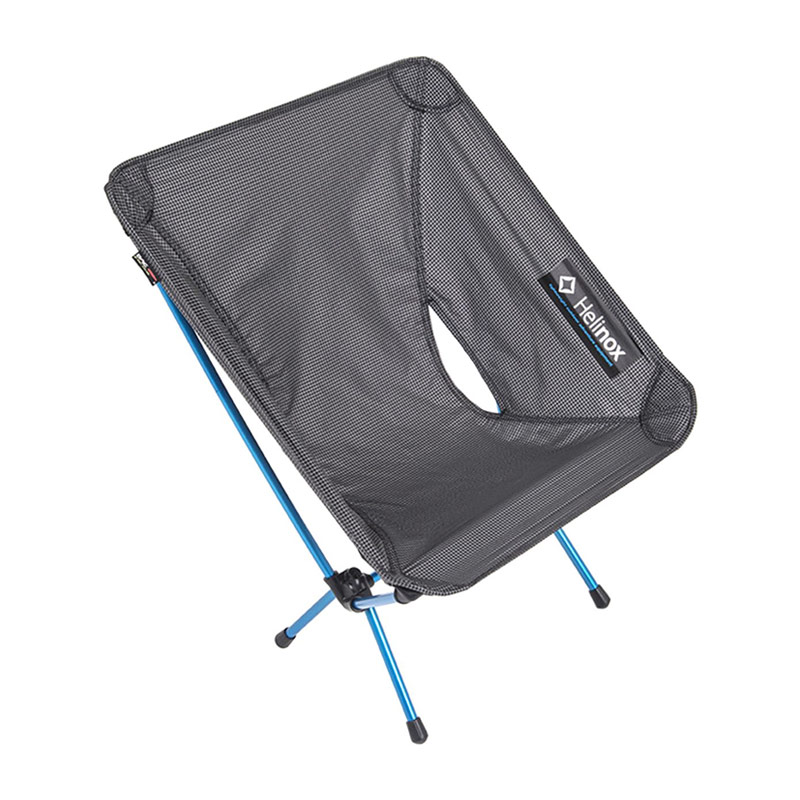
Camp Chair: Chair Zero by Helinox $120
A great, stowable extra seat for crowding everyone into the living room. Also doubles as a comfy perch when you’re waiting in line to score concert tickets.

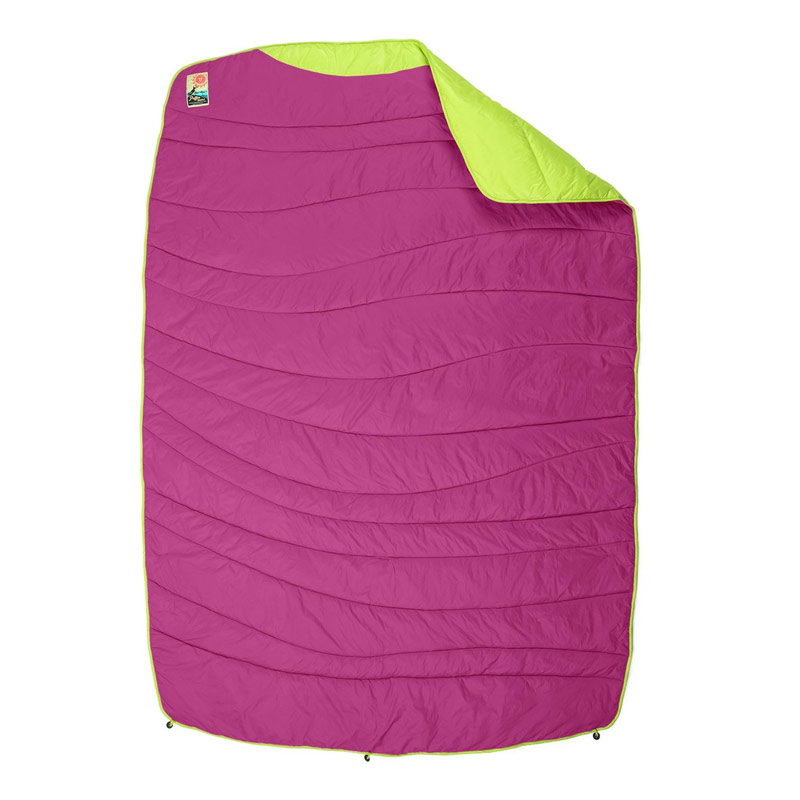
Technical Blanket: Puffin Luxury by NEMO Equipment Inc. $100
Your standard blanket is susceptible to stains from dirt and grass while also being a sand sponge. The extra-large outdoor blanket is built for those things and it’s cozy enough for the sofa or bed.

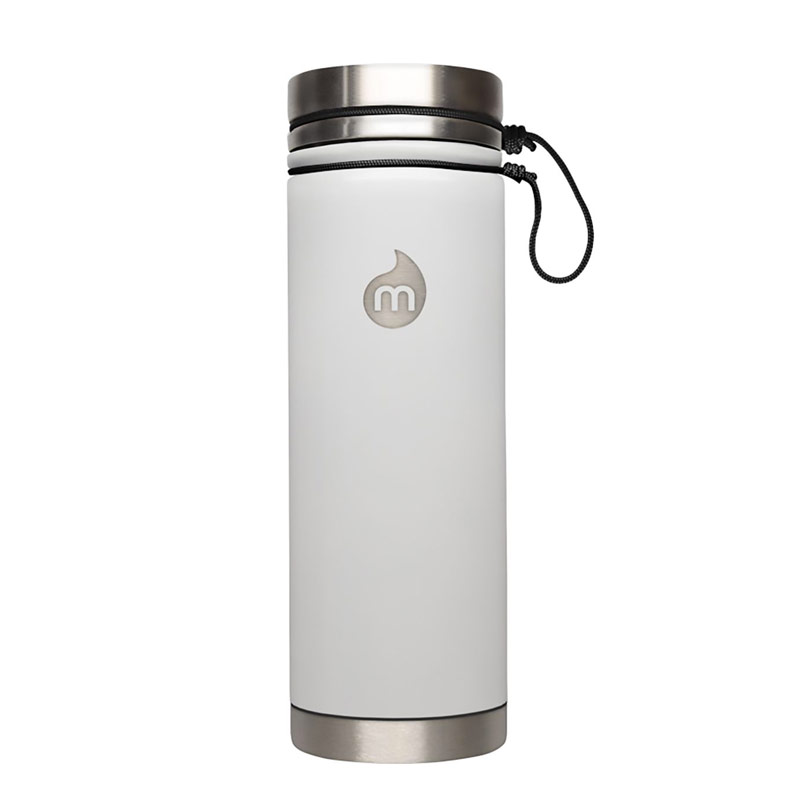
Water Bottle: V7 22oz by Mizu $38
City exploration consumes more energy than one might think and public water fountains are few and far between — bring your own water, and always be hydrated.

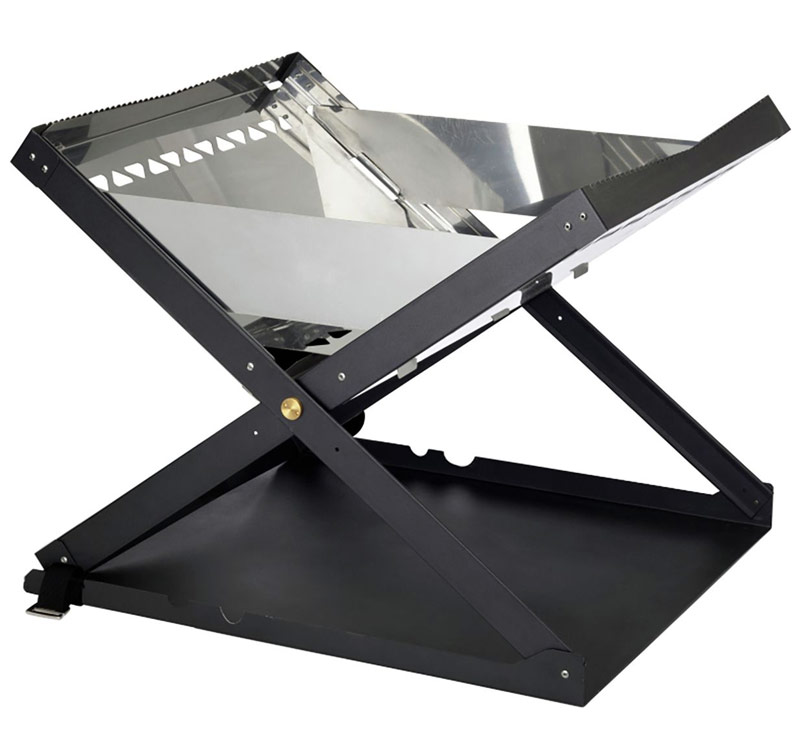
Fire Pit: Kamoto Openfire Pit by Primus $130+
A portable campfire that lets you grill sausages and roast marshmallows at the park, on the beach or in your backyard, if you’re lucky enough to have one.

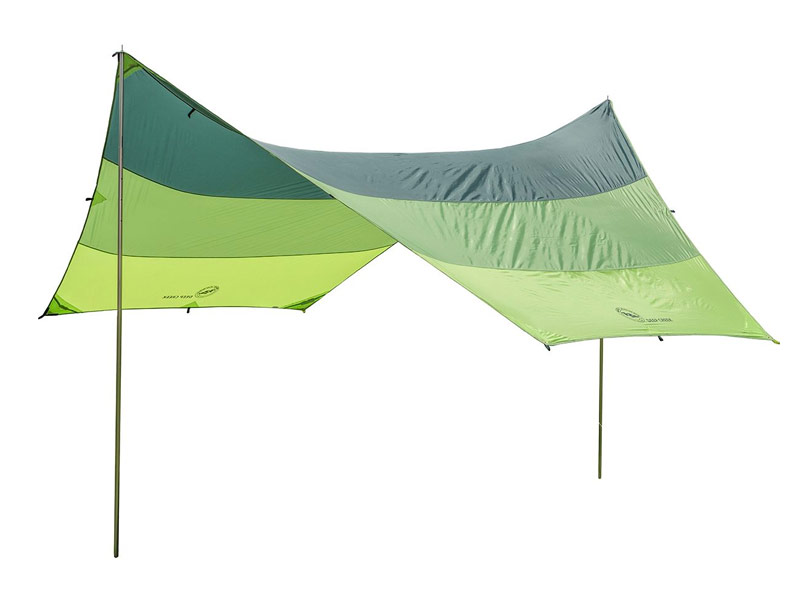
Camping Tarp: Deep Creek Tarp by Big Agnes $200+
A lightweight, portable shelter from the sun — and the prying eyes of the hundreds of other people that have the same idea as you on a beautiful day.

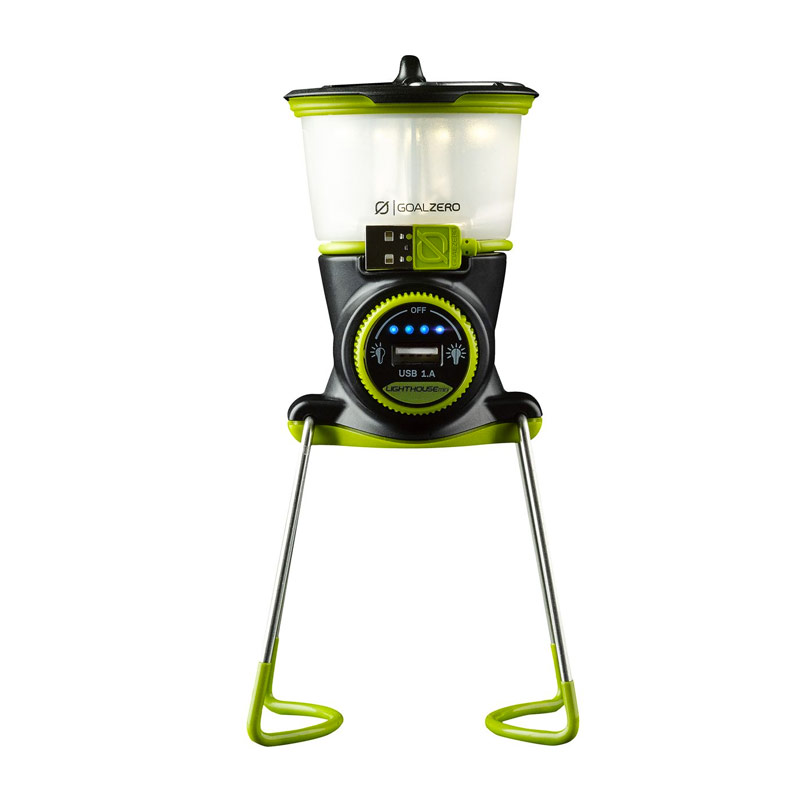
Lantern: Lighthouse Mini by Goal Zero $40
It lasts up to 500 hours, dims for subtle mood lighting, and can charge any of your USB devices. Perfect for the next catastrophic city-wide blackout.

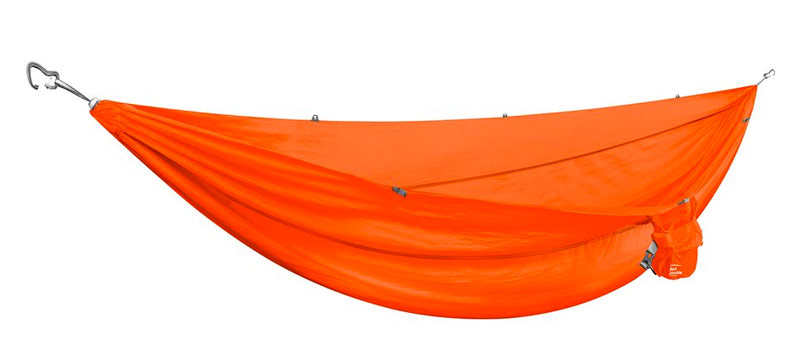
Hammock: Roo Double Hammock by Kammok $99
String it up in the park — or between two chimneys on your roof — for some gentle afternoon swaying.

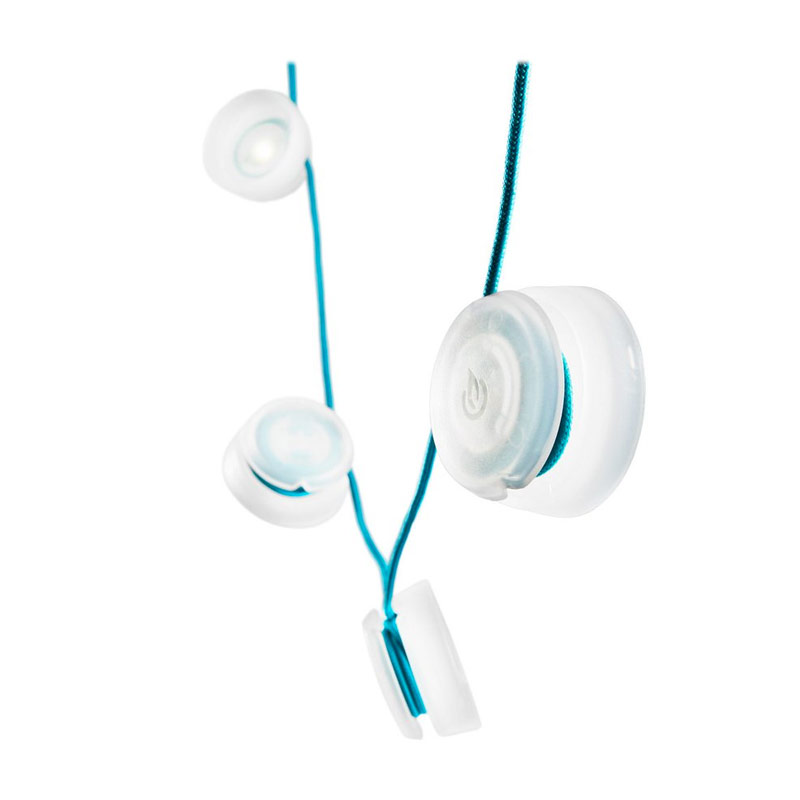
Area Lights: SiteLight Mini by BioLite $20
Christmas lights are fine, but something more portable and versatile is ideal for both indoor and outdoor spaces.

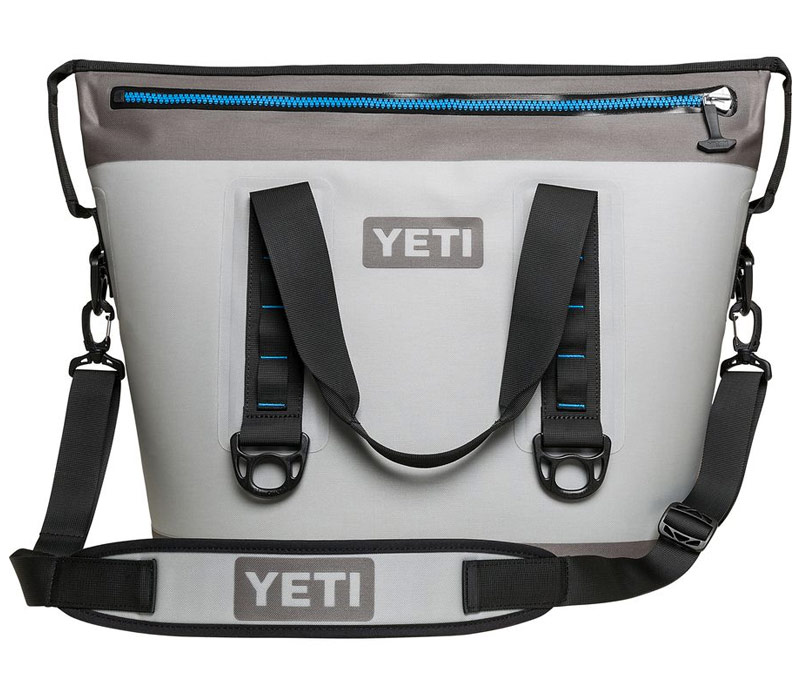
Rugged Cooler: Hopper Two 30 Cooler by YETI $300
Trips to the park or beach and weekends out of town are best complimented with a beverage, and those should always be cold.

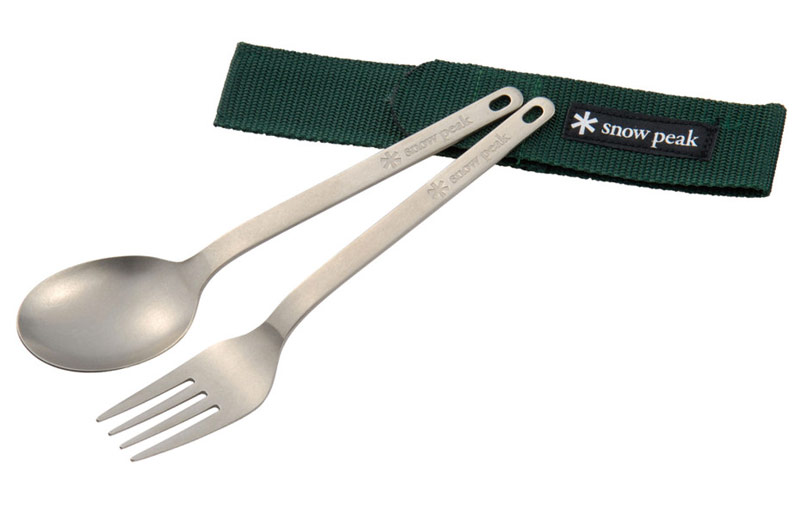
Camp Cutlery: Titanium Fork and Spoon Set by Snow Peak $26
Stash these in your everday bag and you’ll never be without a utensil again — and you’ll cut down on single-use plastics too.

We Want Every Bag in This USA-Made Brand’s New Travel Collection

Most travel kits are made of a hodgepodge of gear collected over a span of time and rarely does one buy into an entire collection of essentials designed specifically for life on the road. North St. Bags’ latest Weekender Collection might challenge that convention.

Made by hand in Portland, Oregon using materials and components sourced solely in the United States, the Weekender Collection is a modular system of bags designed for travel. The line includes a duffel, backpack, meeting bag (like a mini backpack designed to hold a laptop and notebooks), dopp kit and packing cubes. Every piece is designed to work with the others — for instance, the meeting bag can be clipped to the backpack to add a little extra volume, and the packing cubes are sized to function throughout (if you haven’t experimented with packing cubes yet, there’s no time like the present).

North St. Bags also recognizes that travel puts a particular strain on gear and it addressed that by designing every piece in the collection — except for the mesh-faced packing cubes — to be waterproof. Each piece is made with X-Pac sailcloth, which is both lightweight and abrasion-proof, and water-resistant zippers. Handles and haul points are constructed with seat belt webbing for increased durability, and comfort too. Aesthetically, the Weekender Collection passes the blending-in test with universal all-black styling.

Today in Gear

The best way to catch up on the day’s most important product releases and stories. Read the Story
The Best Performance Running Sunglasses for Every Face Shape

People who run with sunglasses tend to fall in one of two camps: you either want to be able to wear your sunnies all the time (outside of just logging miles) or you want something that performs at the elite level and basically, you don’t really care how you look. We get it; you’re serious about your sport. We’ve pulled together all of our favorite top-performing running sunglasses — that means lightweight, scratch-resistant, nose grips, UVA and UVB-protection and most importantly, they don’t fall off when you run or sweat. Regardless of your face shape, there’s guaranteed to be a pair that works for you.
Aviators

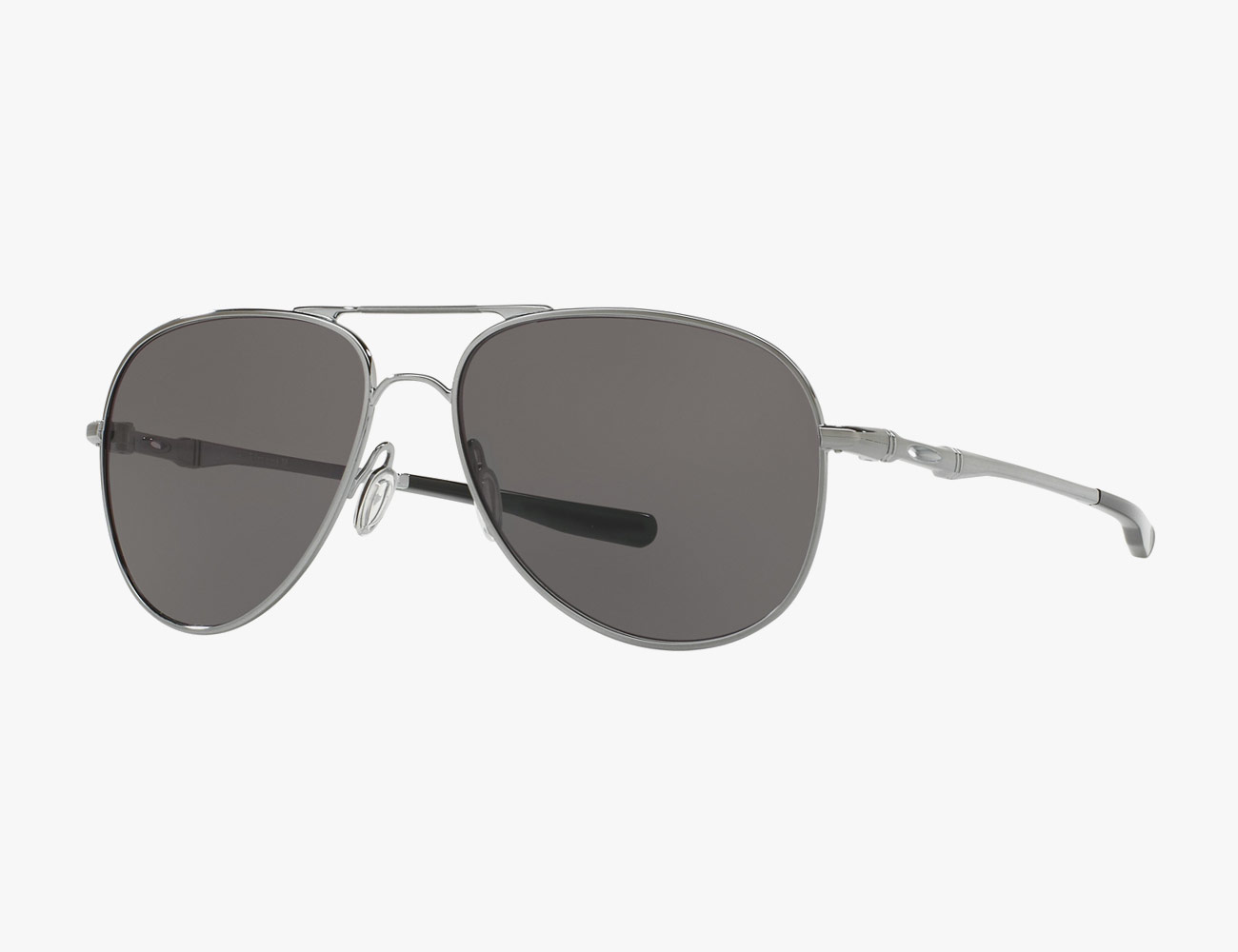
Oakley Elmont

Offered in a satin chrome frame, the Elmonts come with Oakley’s sun-blocking standard (100% of UVA, UVB and UVC rays), in a lightweight alloy frame. The shape of the aviators naturally offers breathability for runners, and you can upgrade to a polarized lens in a variety of lens colors — there are ten total options to choose from.

Roka Phantom TI

The aviator style is a classic for a good reason — who doesn’t want to look like they’re an extra in Top Gun? These titanium aviators come in two sizes (regular and large) and seven lens colors, plus the GEKO nose and temple pads keep them in place. You barely notice you’re wearing them thanks to the lightweight construction. And they’re anti-everything: scratch, fog, reflective.

Round

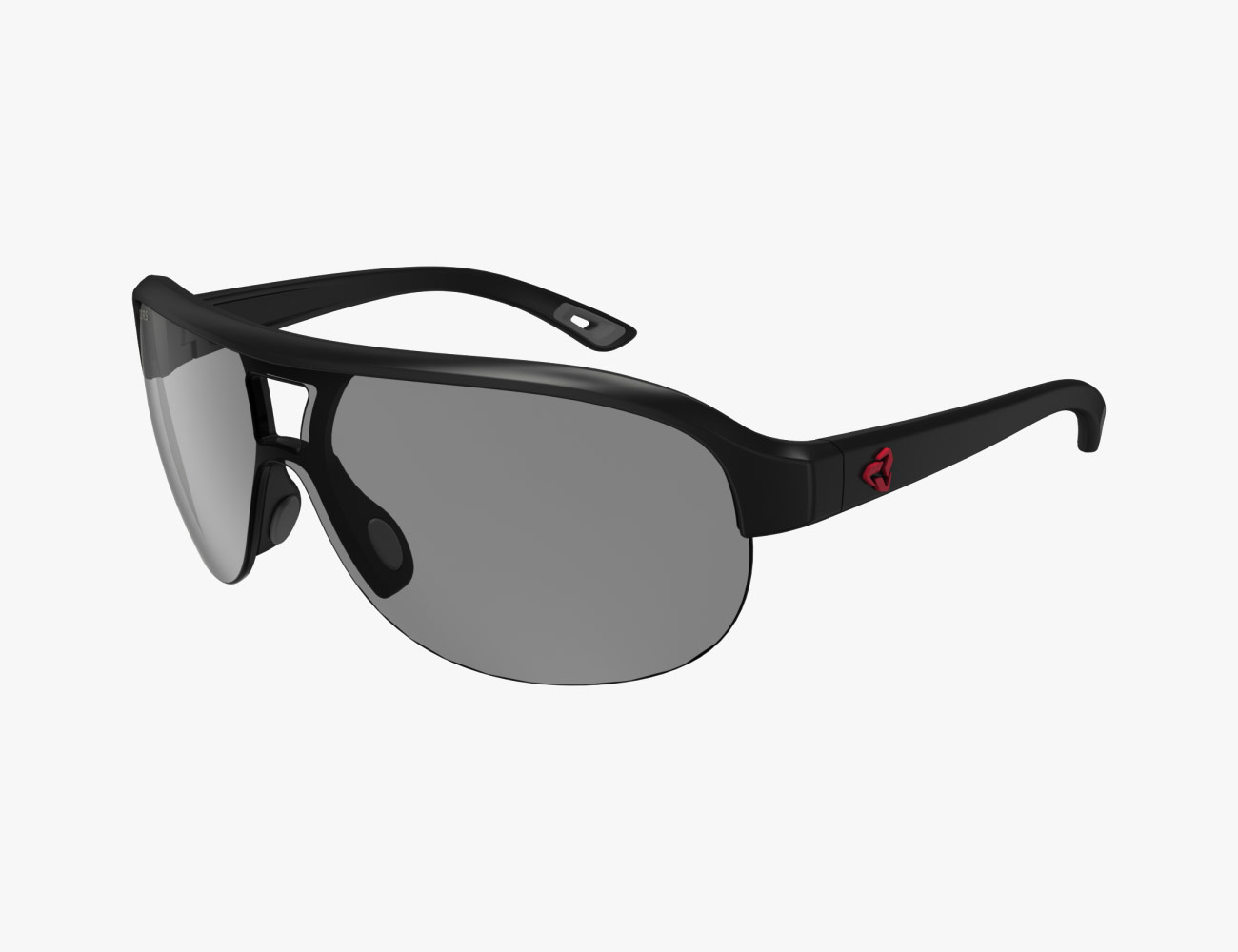
Ryders Trestle

At $90, you’d be hard-pressed to find a better pair of running sunglasses. Ryders is a trusted brand in the space, and for good reason. The photochromic lens on the Trestle stands next to some of the highest-end lenses on the market and comes in at around half the price. If you’re into the shape, there’s really no reason to look elsewhere.

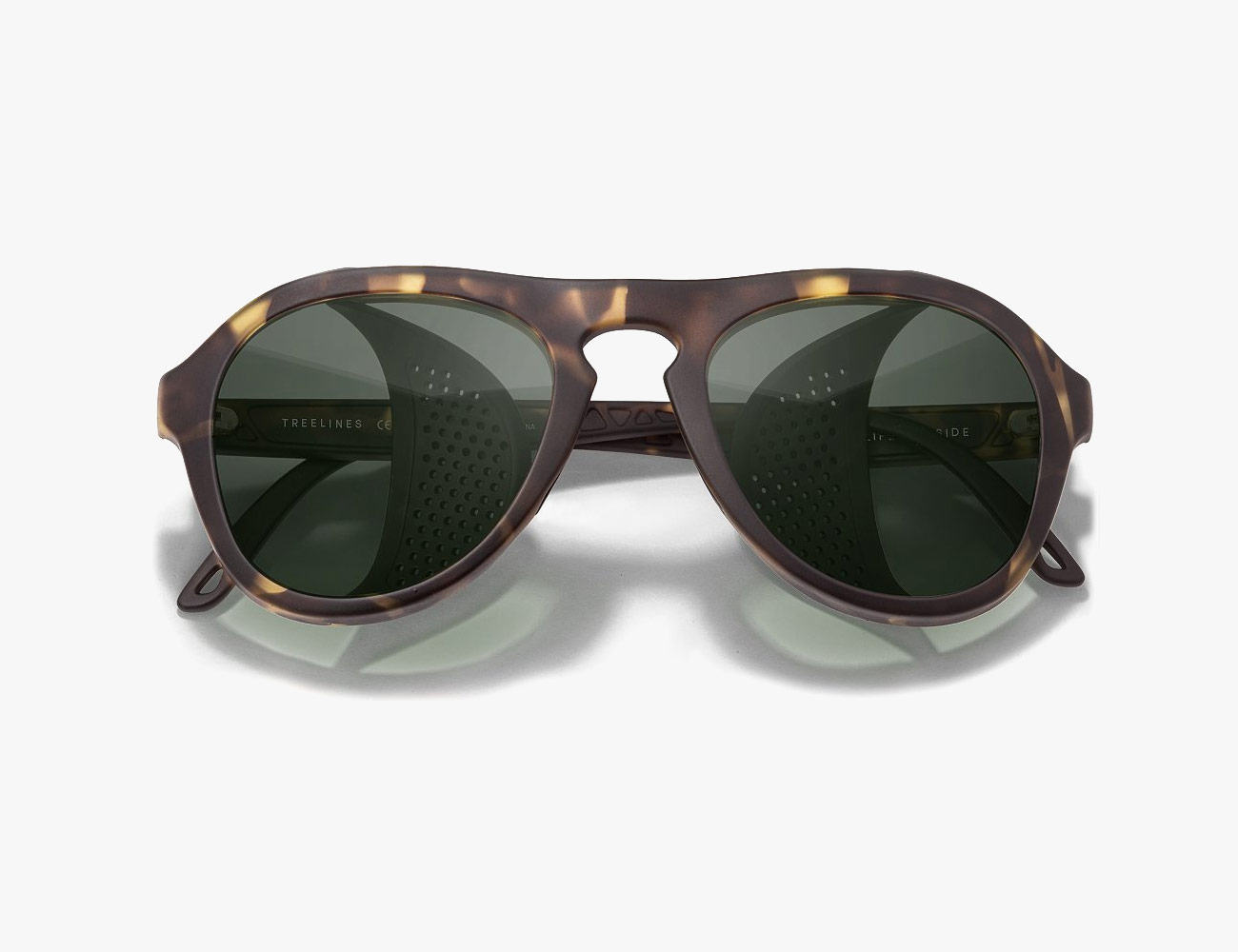
Sunski Treelines

These sunglasses are the latest release from Sunski, the brand that set out to make affordable, yet high-performing sunglasses that can take you from the beach to the slopes and work in either locale. These slightly rounded aviator-style sunnies are inspired by the glacier goggles, with removable side panels to complete the look — they cut glare on especially sunny days, and are easily removable. The lenses are quite dark, so you might want to leave these at home on darker days.

Adidas Pacyr

A new style for Adidas running that veers back toward lifestyle, the Pacyr is still packed with features. The frame is shatterproof and comes with adjustable nose pads to properly fit your face. The frames are slightly curved toward you, to improve the field of view, and best of all they look great.

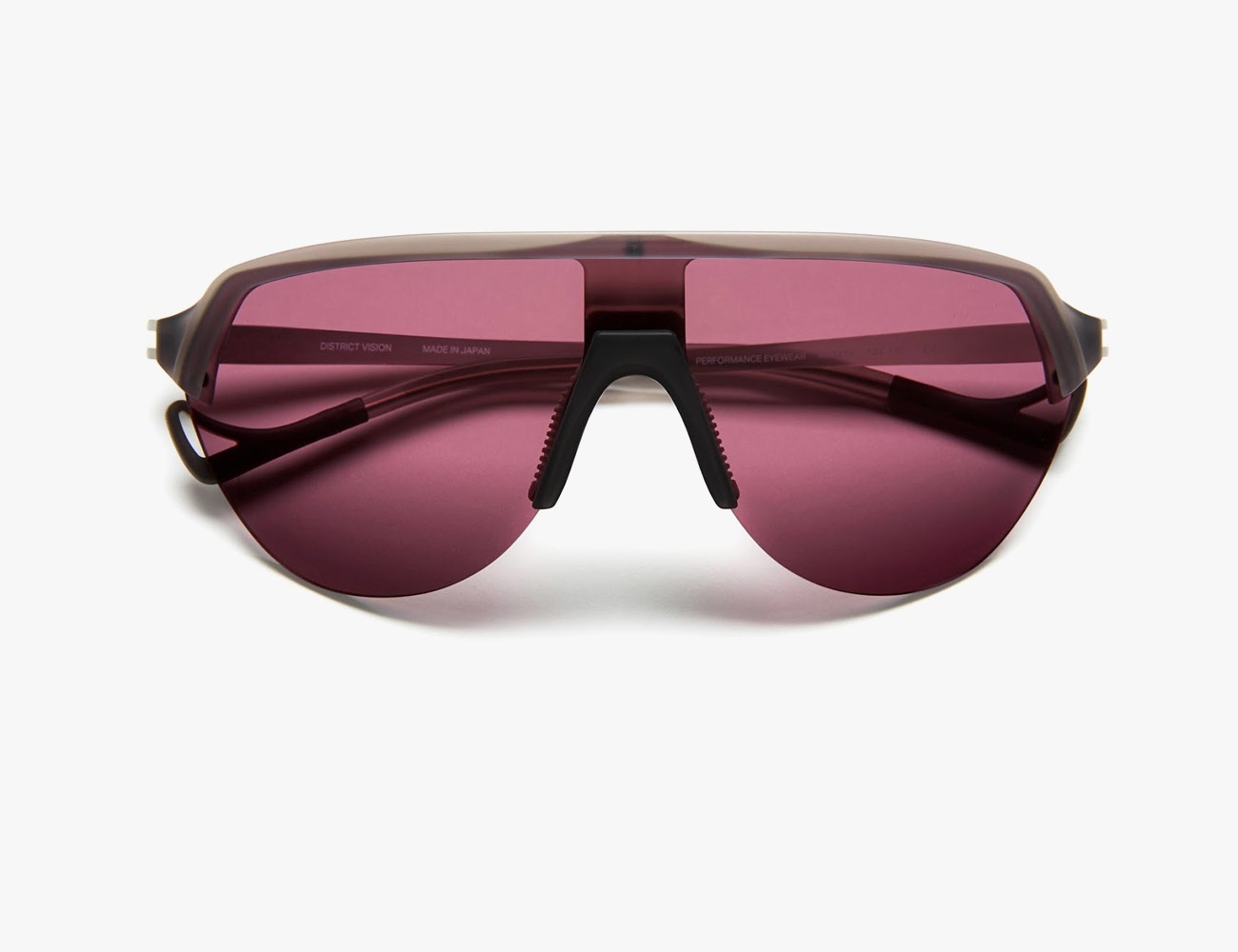
District Vision Nagata Black Rose Lens

Inspired by the time the founders spent out on the trails and realized that the light changes frequently, the Black Rose lens is made to perform in a variety of conditions. The sunglasses themselves are featherweight, and they’re cool enough that you can slide into any bar in running gear.

Wrap

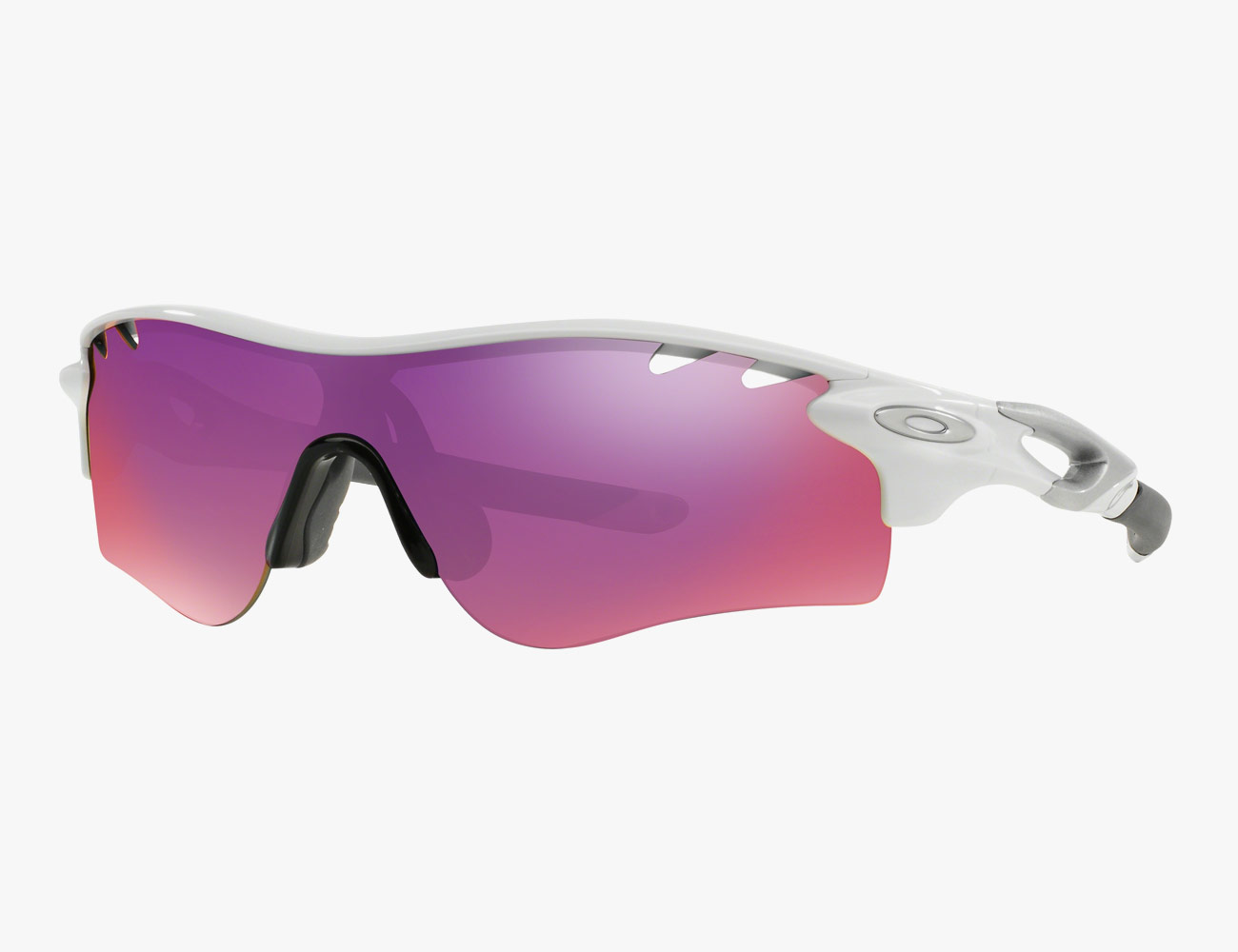
Oakley Radarlock Path

Oakley’s top-tier lens technology is Prizm, which it developed alongside its star-studded athlete team. In testing, Prizm lens technology simply pulls out contours and highlights that other lenses don’t. The Radarlock is a classic shape, and when paired with the Prizm Road lens, they are hard to beat.

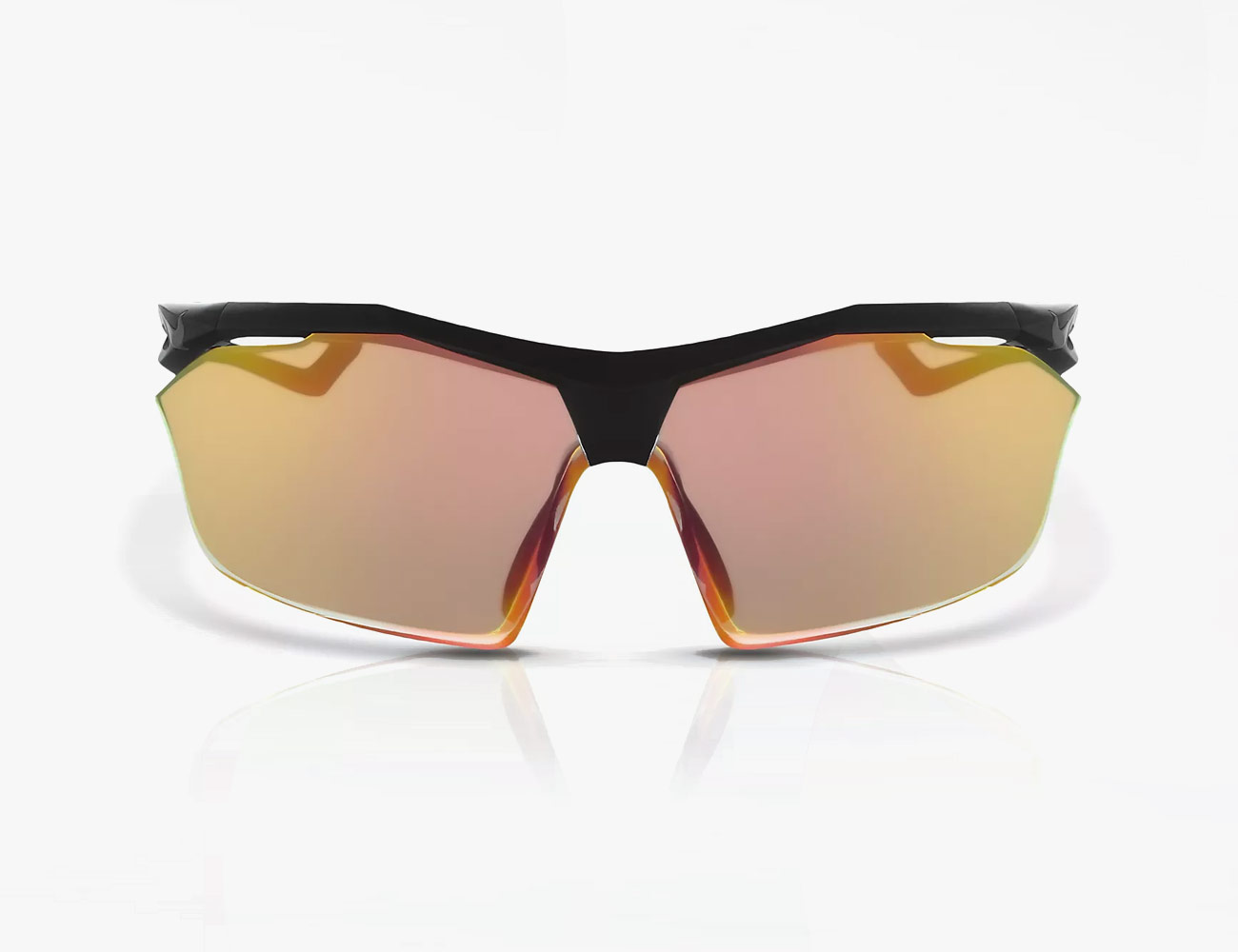
Nike Vaporwing Speed Tint

Worn by the likes of Shalane Flanagan (who won the NYC marathon this year), the Speed Tint is built for performance. Offered in four lens and frame combos, these are aerodynamic at their core. They are extremely lightweight and breathable, and will never get fogged up.

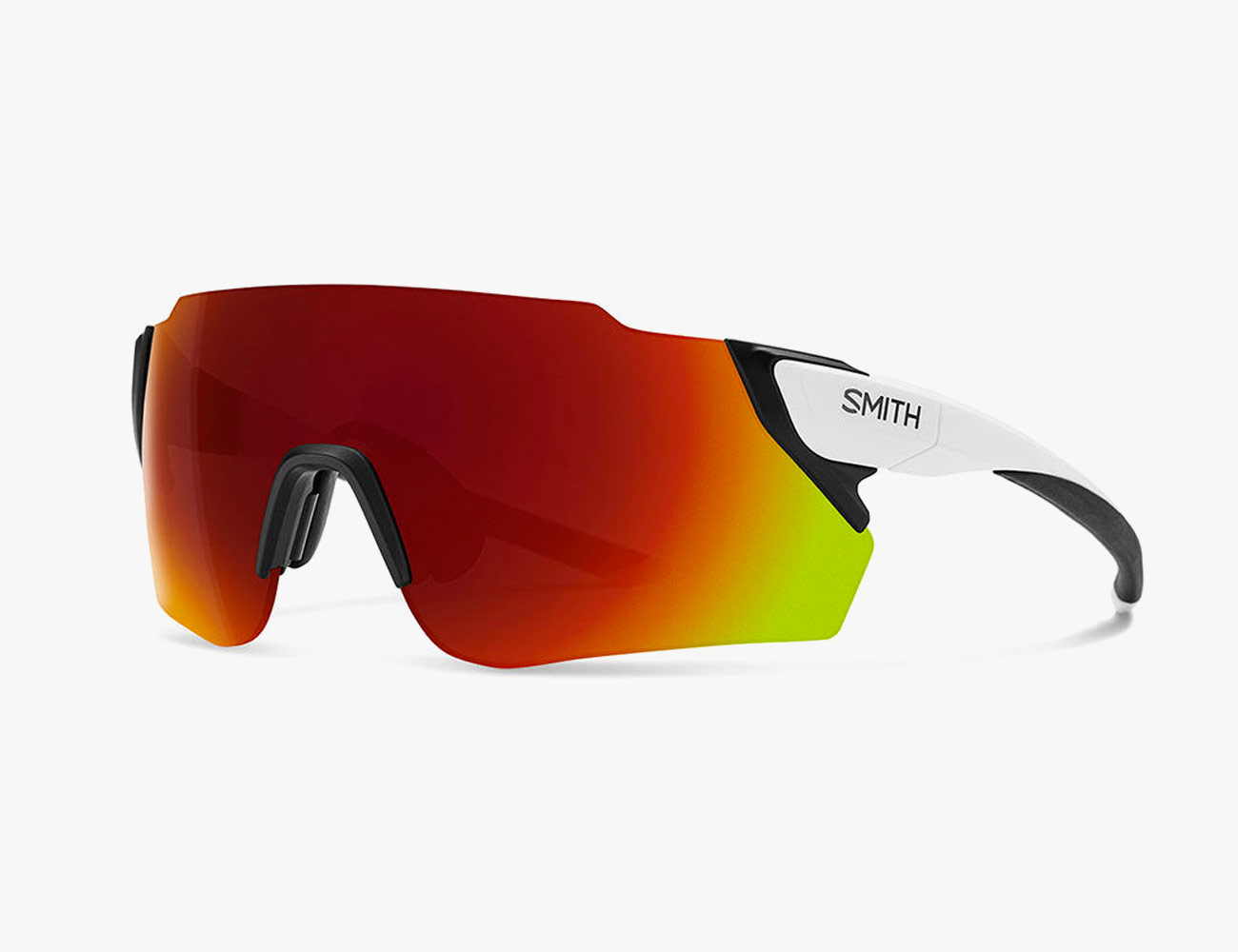
Smith Attack Max

The brand that delivers top-notch performance on snow has a pretty good idea of what works on the road as well. The newest addition to Smith’s line, the Attack Max, features the brand’s ChromaPop lens, and the option to swap it out. The nose piece wraps around the lens, so you get 260-degrees of coverage, and the lenses are slightly larger than glasses past, which provides more visibility. These are also great for cyclists.

Native Eyewear Catamount

These N3 lenses block up to four times as much infrared light as standard polarized lenses, so if you’re outdoors a lot, this level of protection is recommended. The lenses are interchangeable, so if on race day (or training day) the skies look a little grey, it’s a quick swap to brighten everything up.

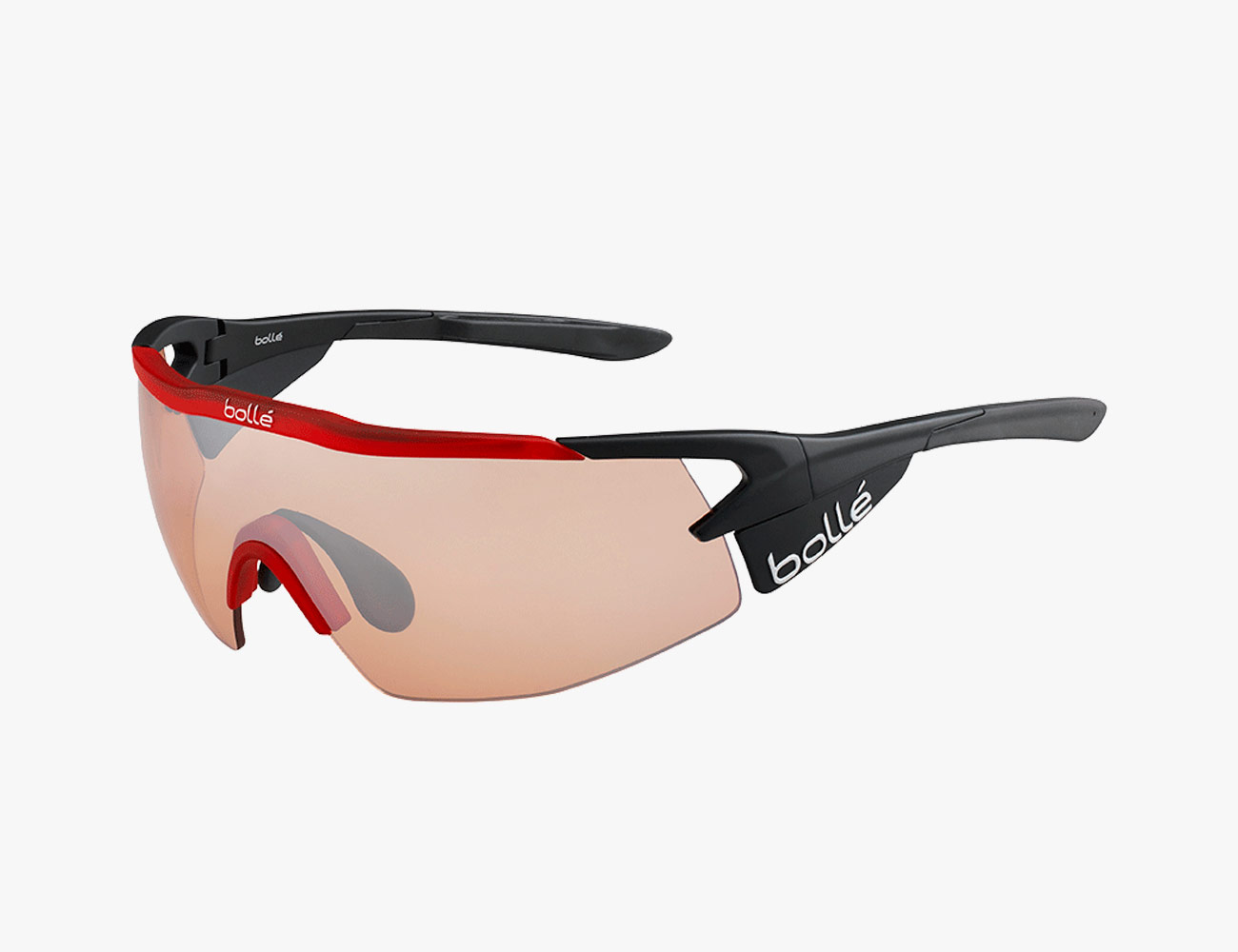
Bollé Aeromax

The oversized, semi-rimless lens offers a huge field of vision, and the customizable temples and nosepiece mean you’re guaranteed to get a tight, just-for-you fit. Upgrade to the photochromic lenses that brighten or darken depending on that day’s conditions. The anti-fog treatment comes standard, as does the waterproof and oil-proof coating, so anything the weather or road or trail spits up at you slides right off.

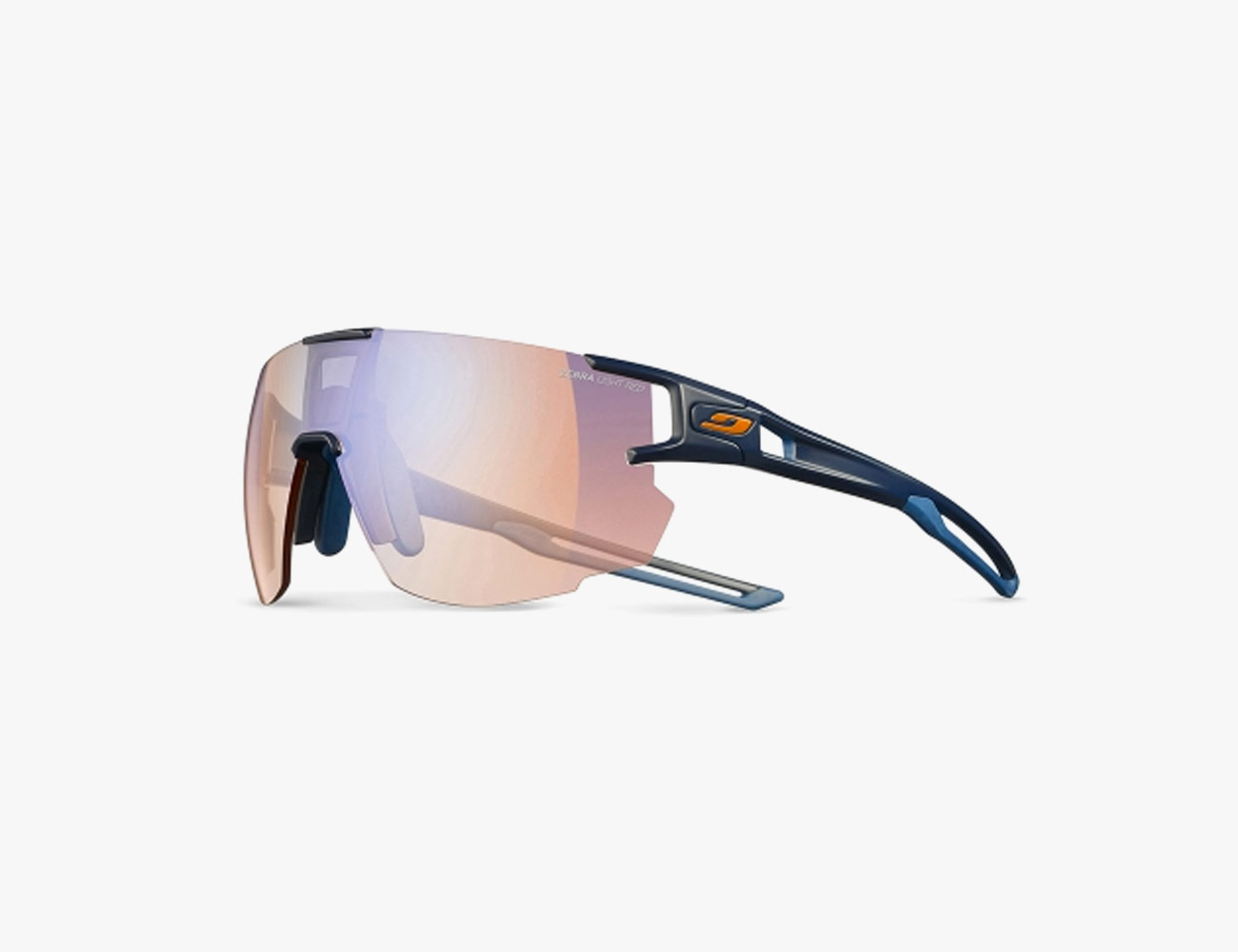
Julbo Aerospeed

The Aerospeed, the newest style from Julbo, is slightly larger than the previous Aerolite, thanks to feedback from ultrarunners and mountain bikers. The field of vision is immense, and it’s the go-to pick for athletes like Mike Foote, who summited over 61,000 feet in 24 hours.

Rectangle

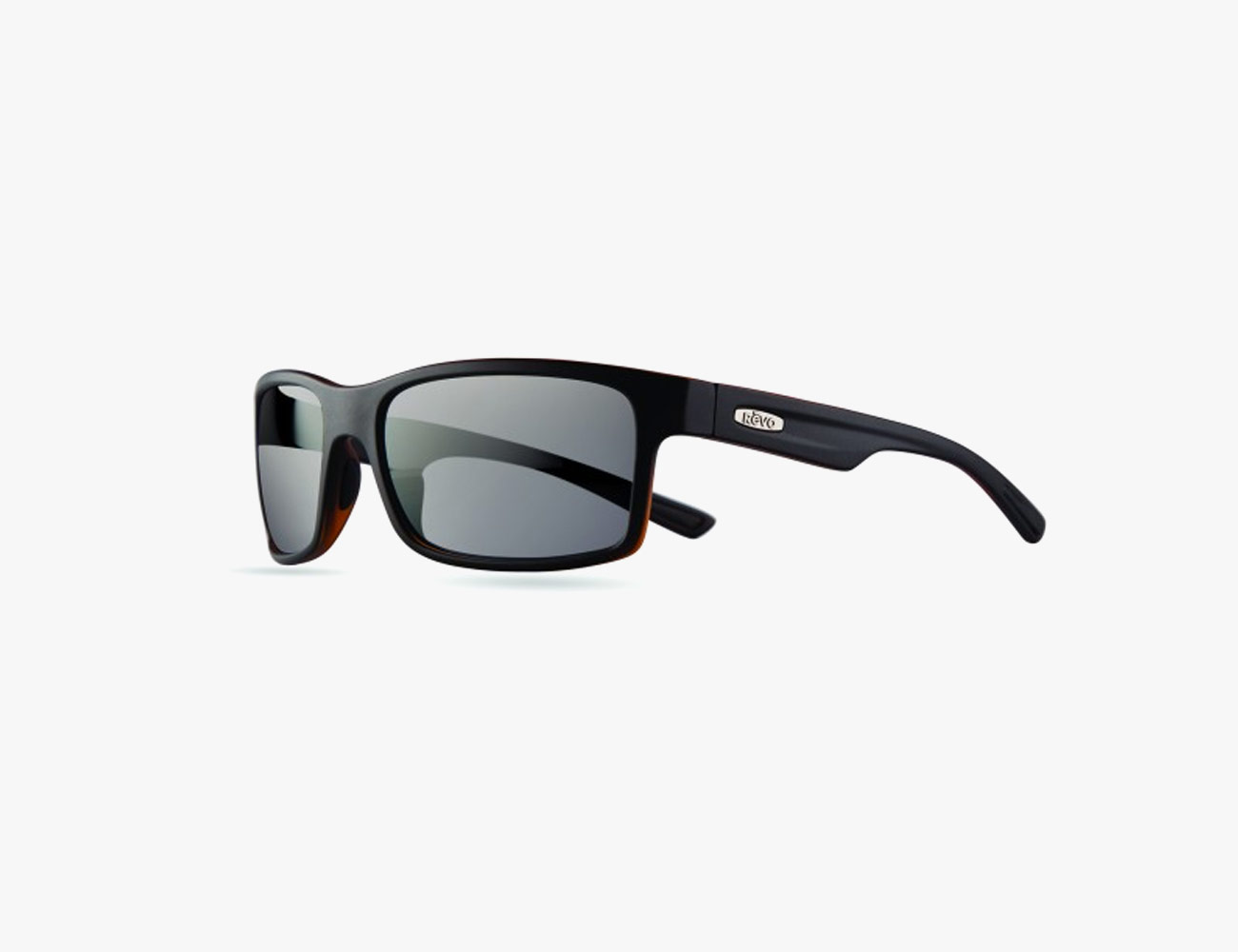
Revo Crawler

A classic shape for Revo, these rectangular performance sunglasses bring lifestyle-worthy aesthetics to performance optics. The graphite lenses cut out 100% of UVA, UVB and UVC light, and feature 100% polarization to eliminate glare.

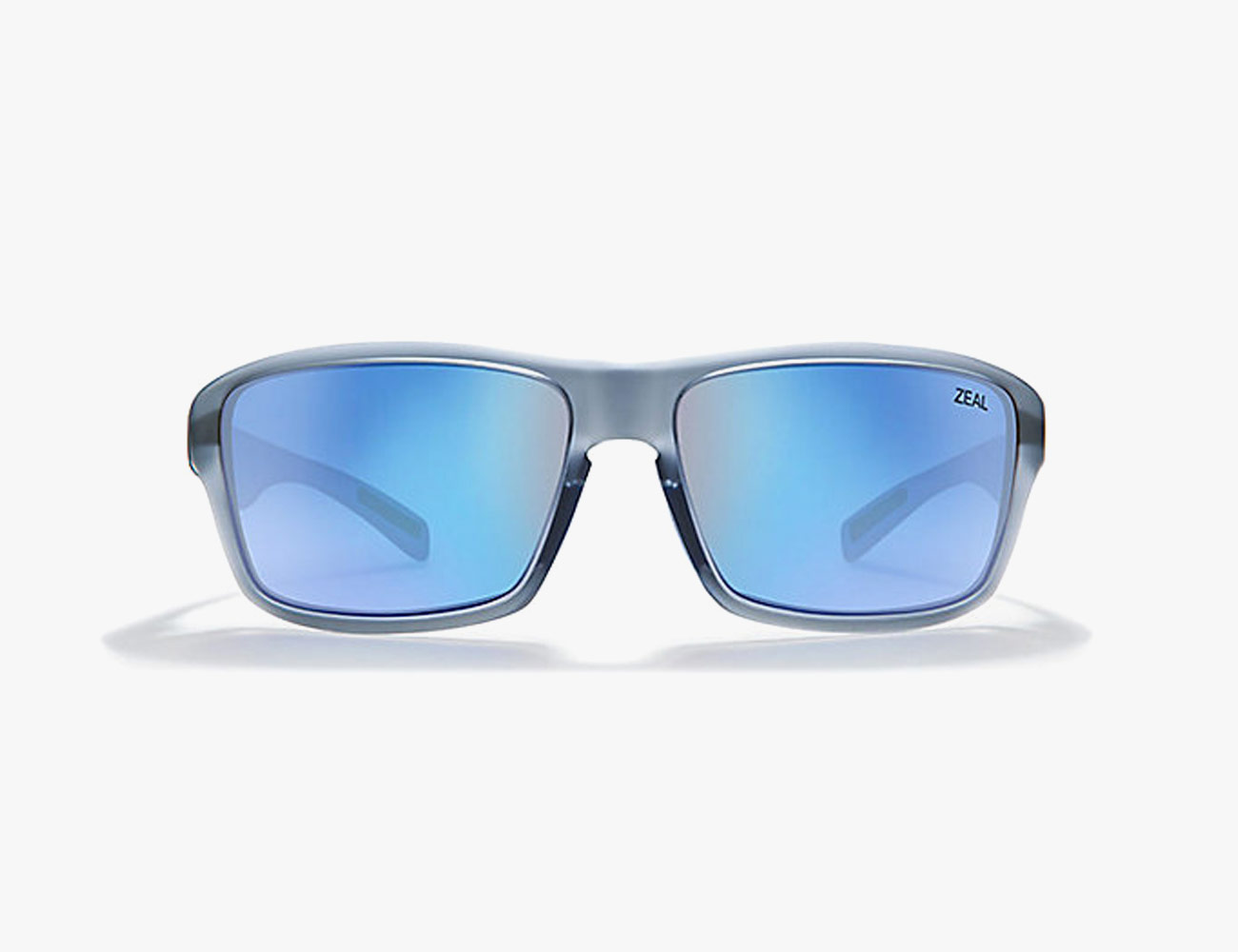
Zeal Optic Incline

Super lightweight frames are necessary when you’re logging miles. The Inclines are built for long-distance training, and as a part of the Z-Lite collection, you get a resin-based plastic frame with a bio-plastic polarized lens to make all the blues and greens really pop. It’s good for the environment, too. These are ready right off the shelf, or are easily customizable with your prescription.

Wayfarer

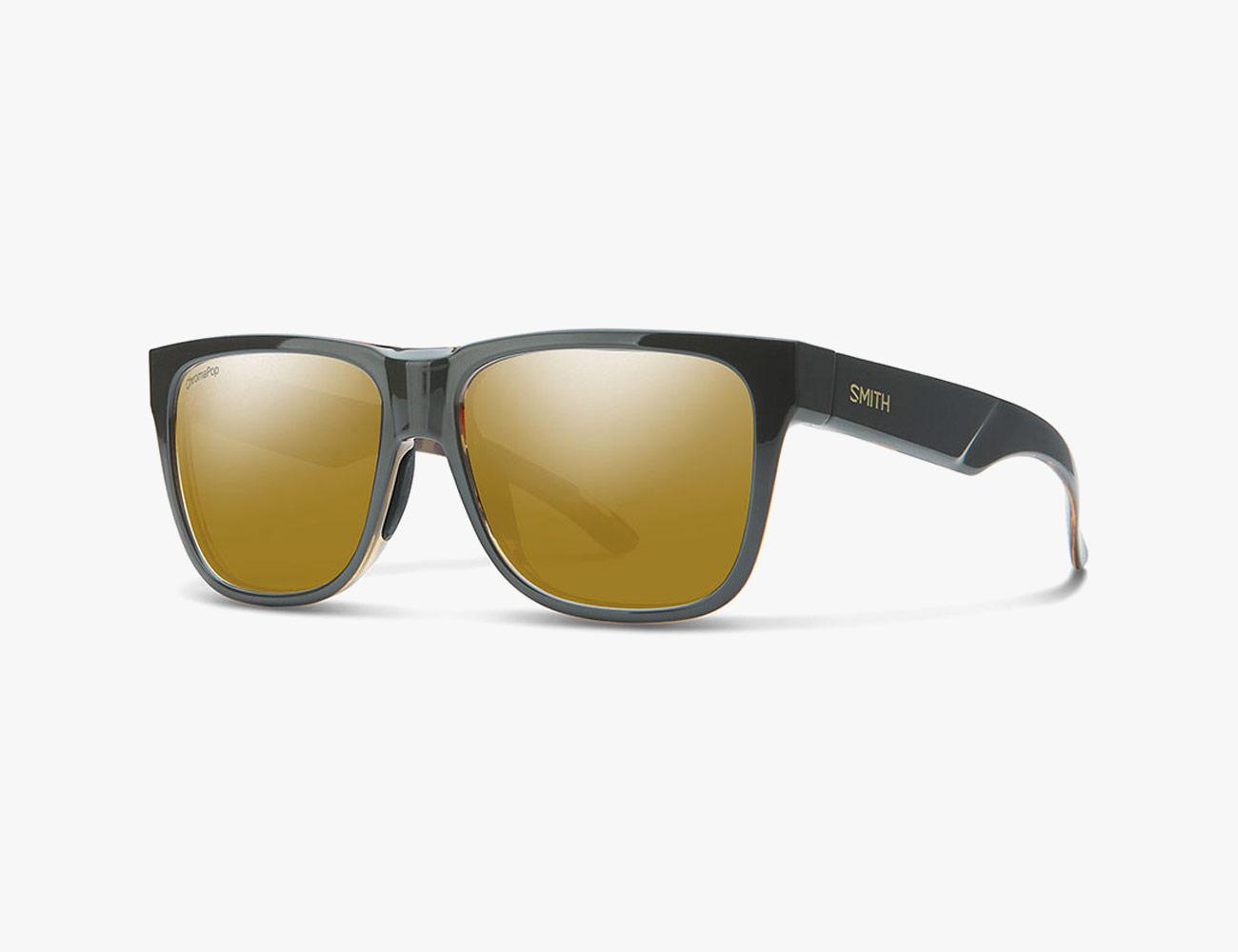
Smith Optics Lowdown 2

The iconic style gets an upgrade with a more performance-focused frame and lens. During trail run testing, these stayed put, and also looked great next to the campfire after a long day outdoors. They still come with the ChromaPop lenses, so your field of vision is crisp.

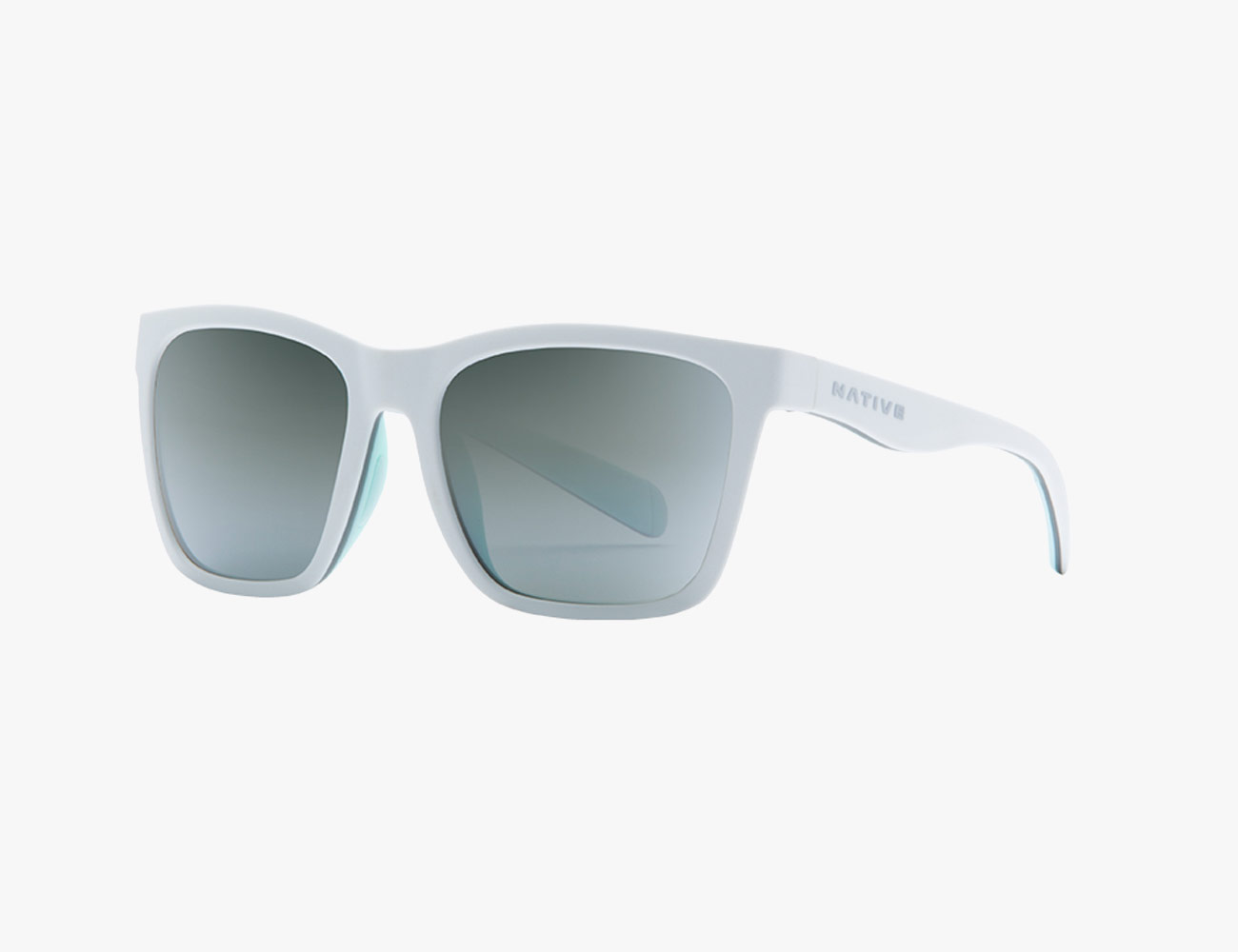
Native Eyewear Braiden

Built with N3 polarized lens technology, when you put these on you get a high-contrast and super crisp and clean field of vision. These tend to fit medium to large faces better than small ones, but the temple and nose grip secure them to any face.

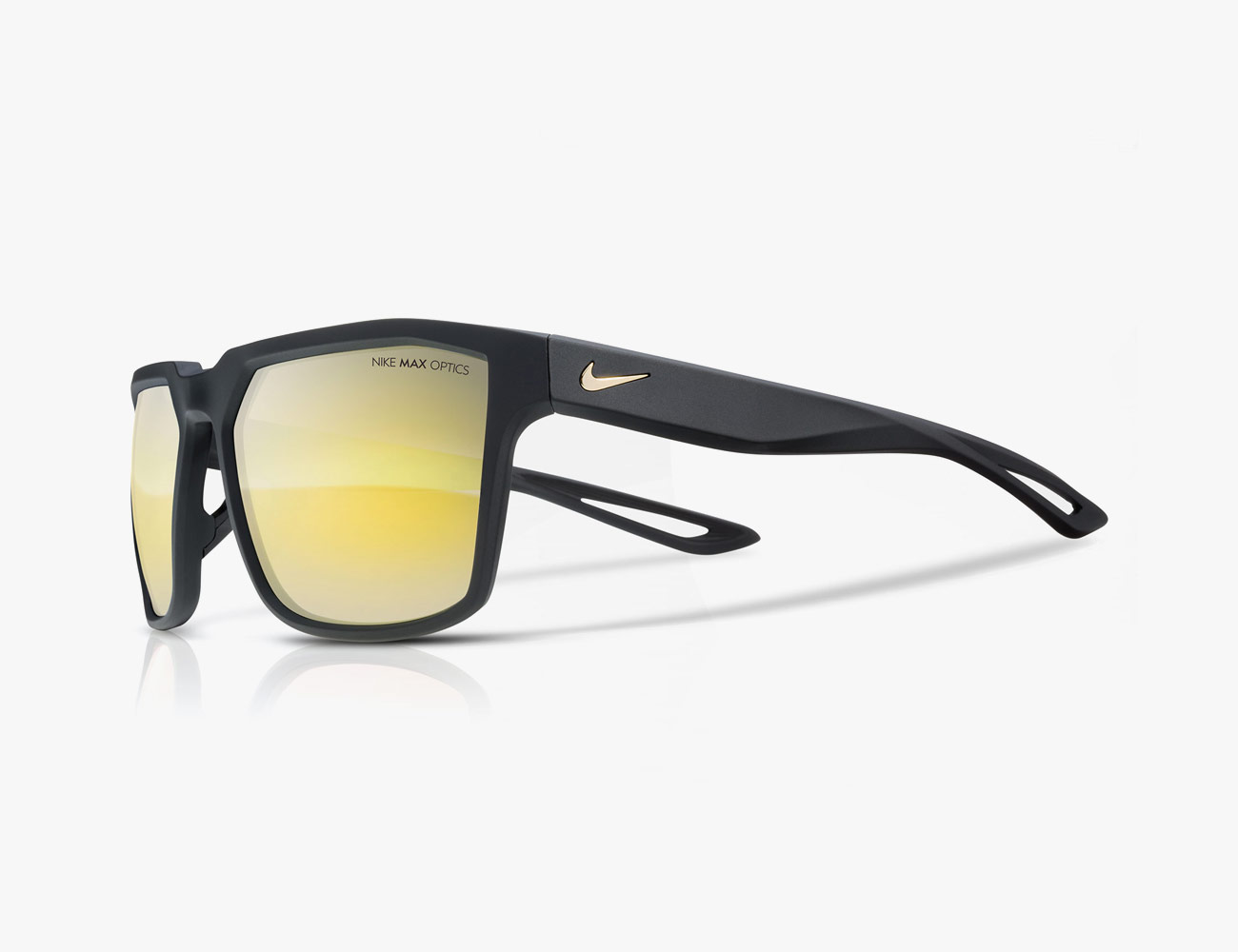
Nike Bandit

Popular among the NYC running crew world, this pair of crossover sunglasses offers performance features that we’ve come to expect from Nike. Offered in eight frame and lens colors, the Bandit is feather-light with floating nose pads to increase ventilation, lowering the chance of fog. Even the arms are ventilated to help prevent fogging.

10 Stylish Running Hats That Won’t Make You Look Like A Dork

For years, my dad has been running in the same ’47 Mets hat that he’s had since before I was born. It’s clearly not built for running because, as he has sweat in it, the fabric has slowly bleached from navy blue to washed-out grey. Nevertheless, it’s the hat he always packs on vacations and grabs before he runs out the door to log miles. While baseball caps are great, they aren’t designed for running. They aren’t built to be tossed in the washing machine, or to go for a post-run swim. To keep you company on all of your summer miles, here are 10 hats built for running that still bring style to the table.

Path Projects Muir Cap

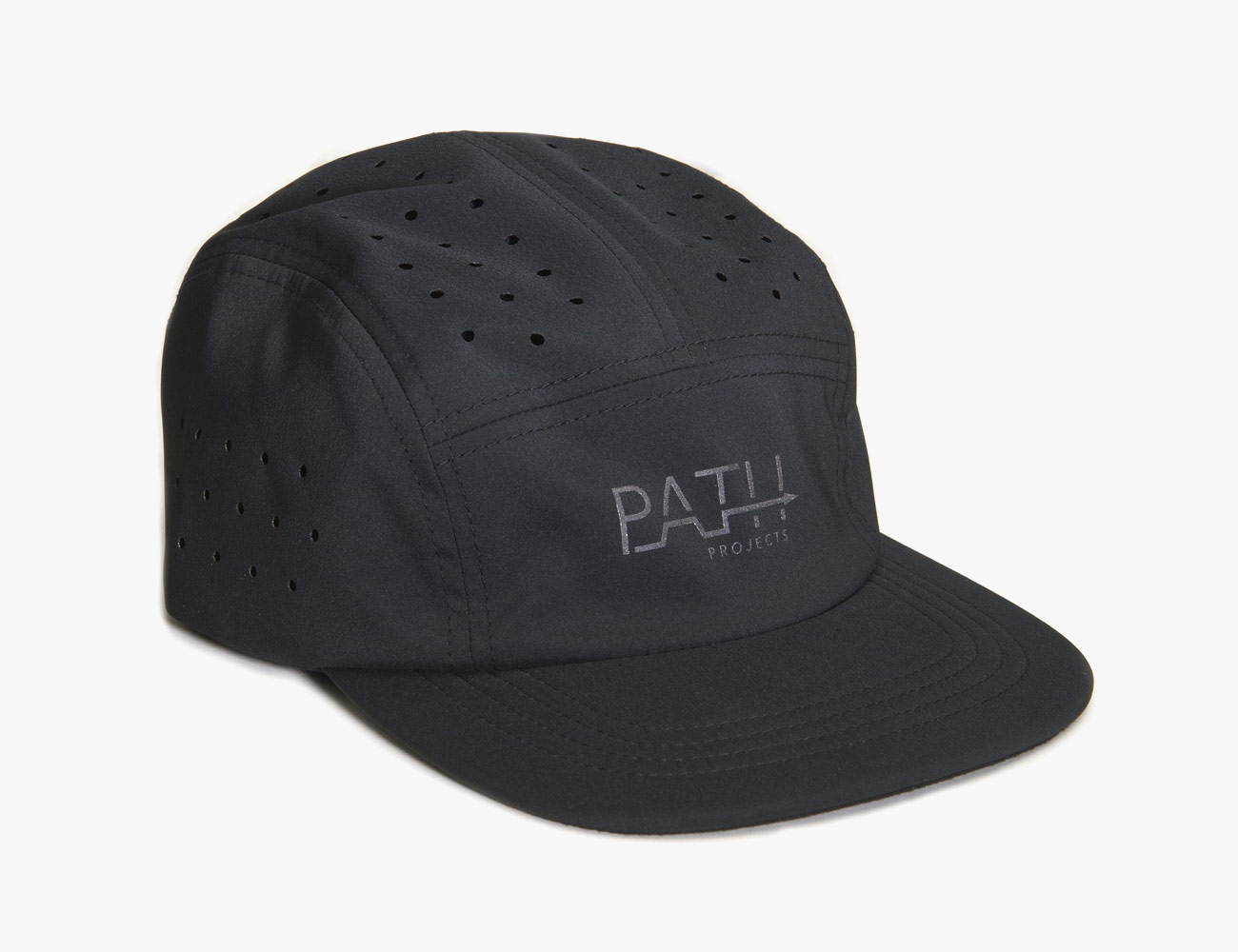
Breathability in a running hat is crucial, and to provide unmatched breathability, Path Projects puts 94 two-millimeter holes all over the top and side panels. The all-black, sleekly designed cap is a solid grab for the running closet.

Rhone El Cap

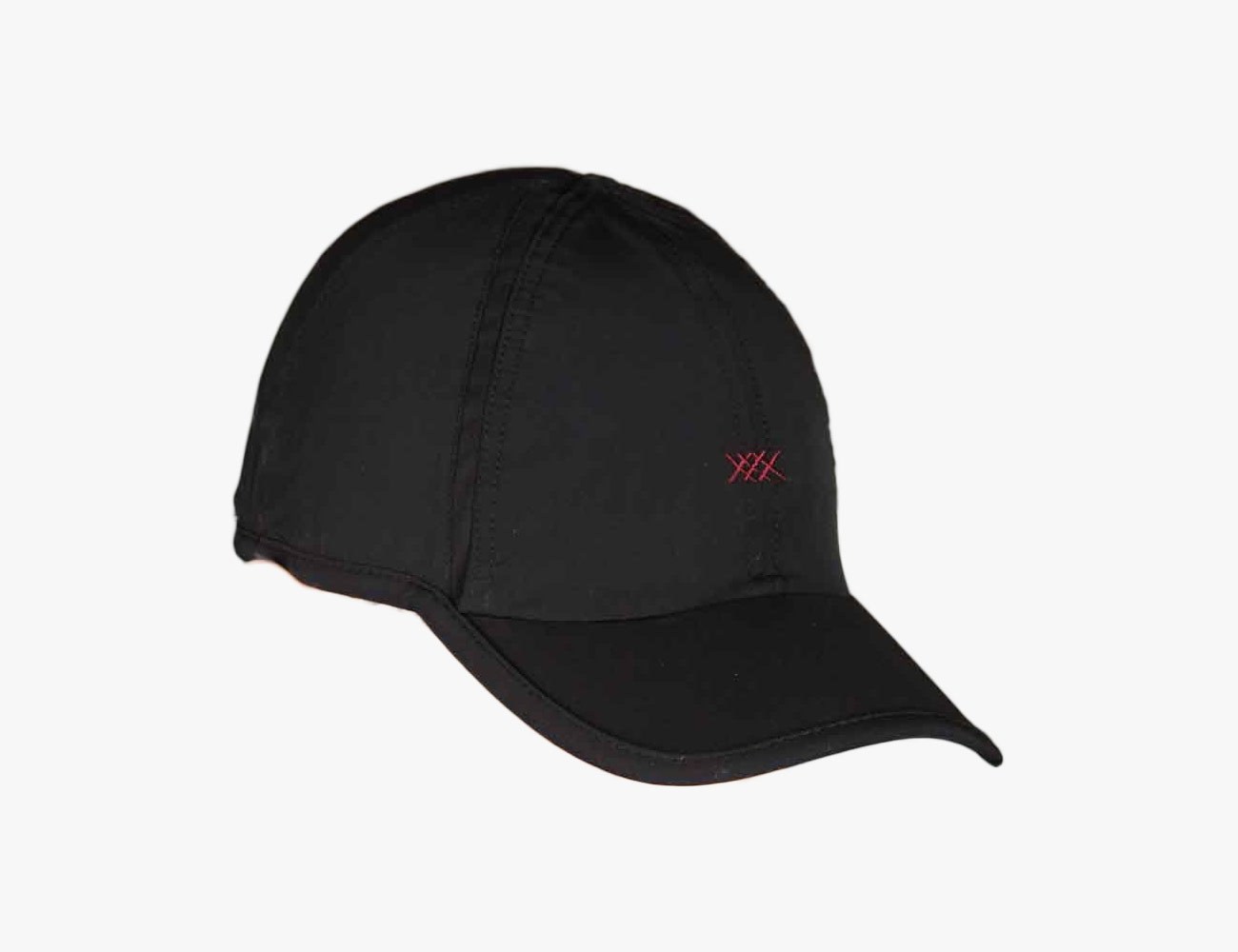
The sleek design of this hat does just what it’s supposed to — blocks out the sun and wicks away brow sweat. The power-stretch mesh panels keep you cool and come in five different colors to suit pretty much any style.

New Balance 5 Panel Performance Hat

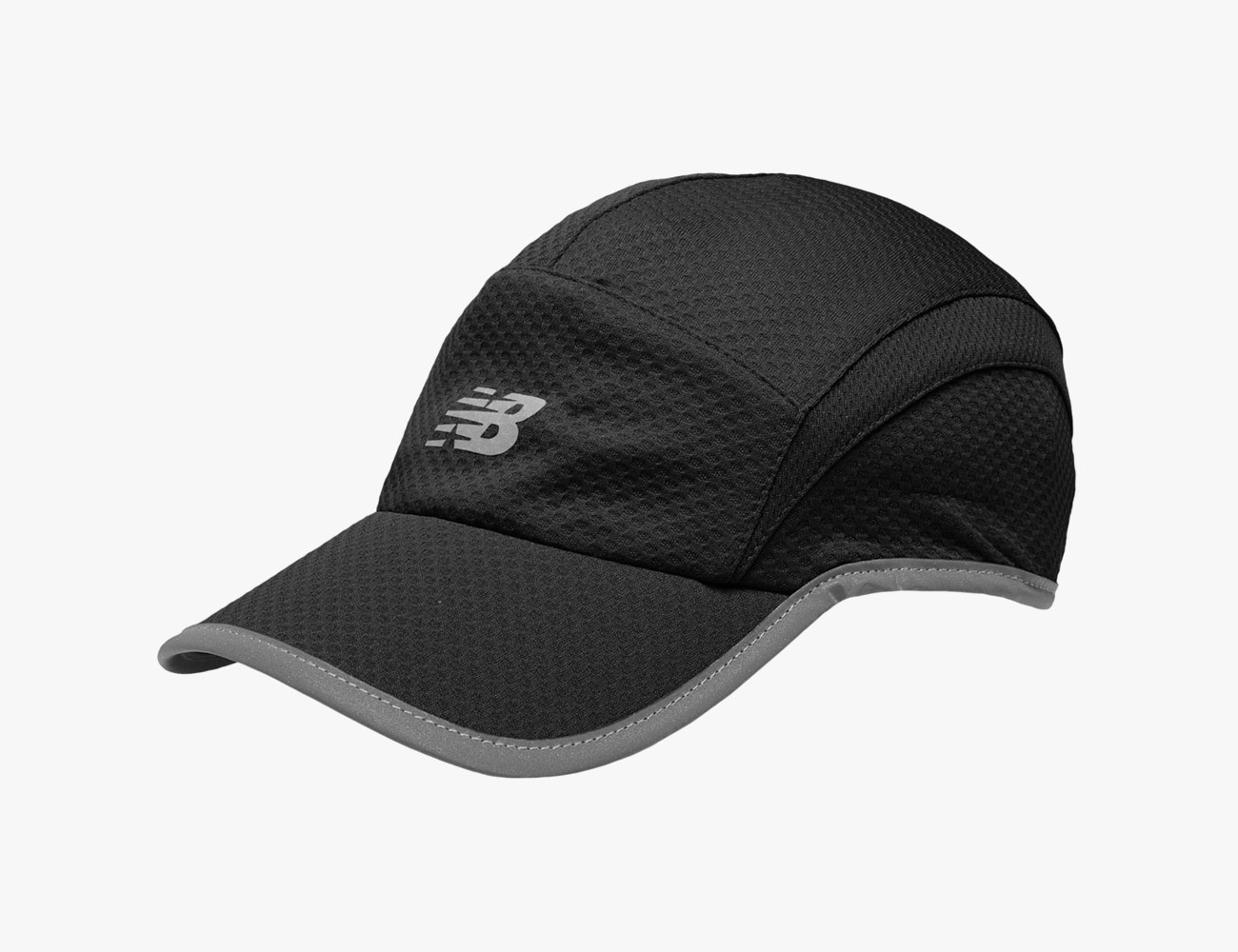
In a bright orange that’s no longer available, this hat was my sidekick for the New York City Marathon. It’s lined with reflective trim, which makes it easy to be seen at night.

Satisfy Ultra-Light Running Cap

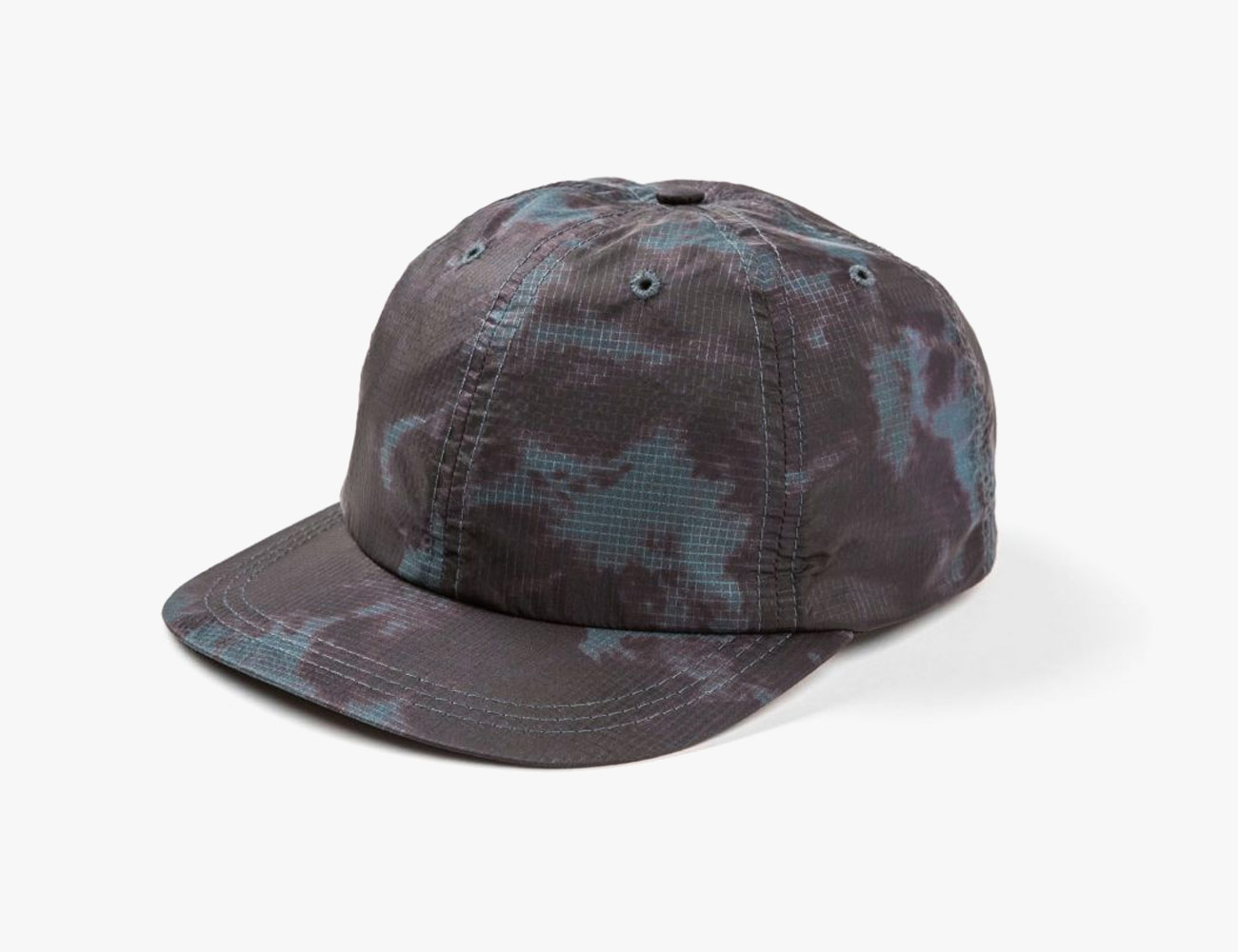
When you’re looking to add a little funk to your regular runs, we recommend reaching for this tie-dye hat. It’s ultra-lightweight and printed on a ripstop fabric, so there’s no need to handle with care.

Arc’teryx Calvus Cap

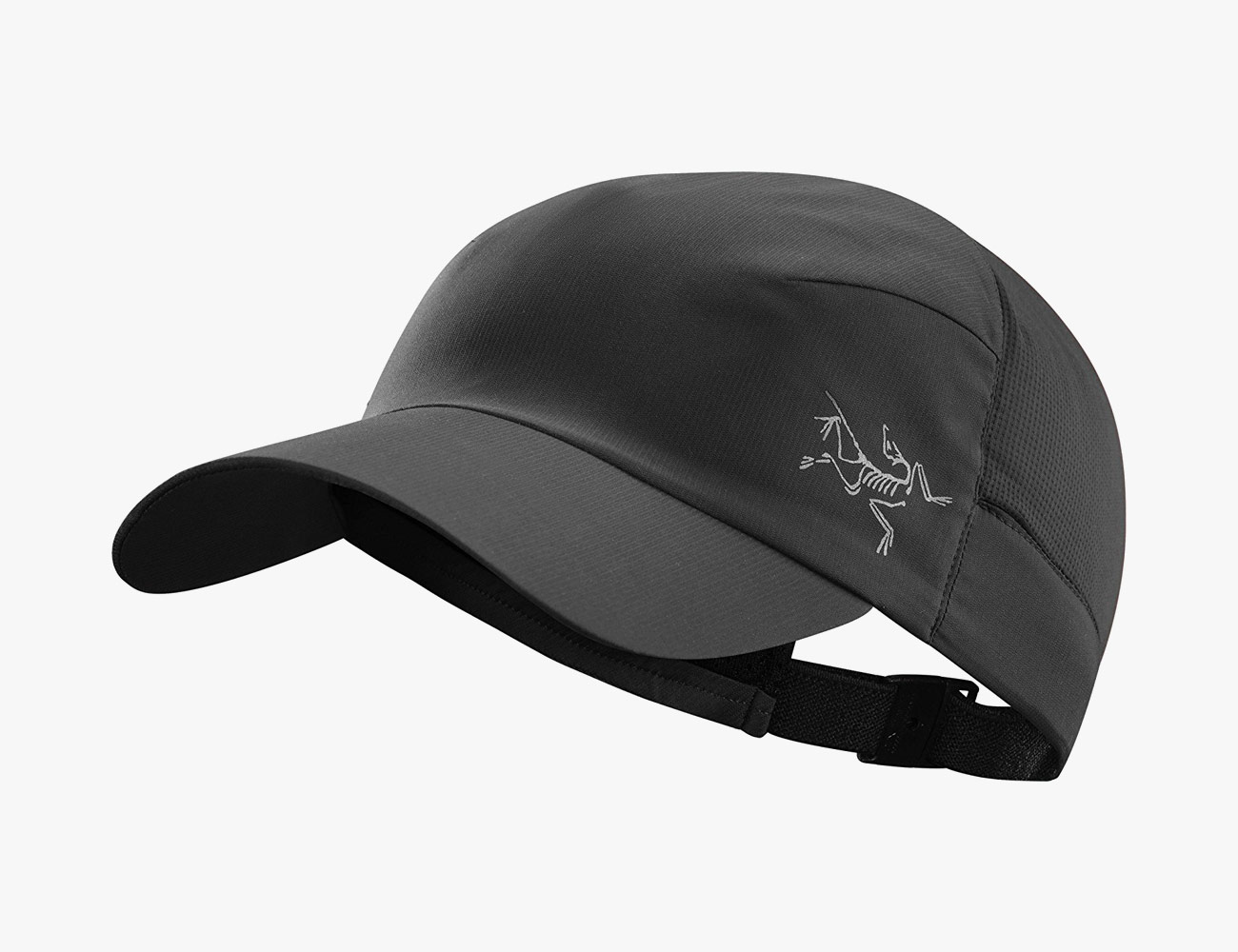
Arc’teryx makes quality goods that continually top our ‘best of’ lists. This cap is no different. It’s designed for mountain training, so you know it’ll handle any road run easily. There’s no velcro on this, just an adjustable stretch closure strap with a quick release buckle.

Patagonia Duckbill Cap

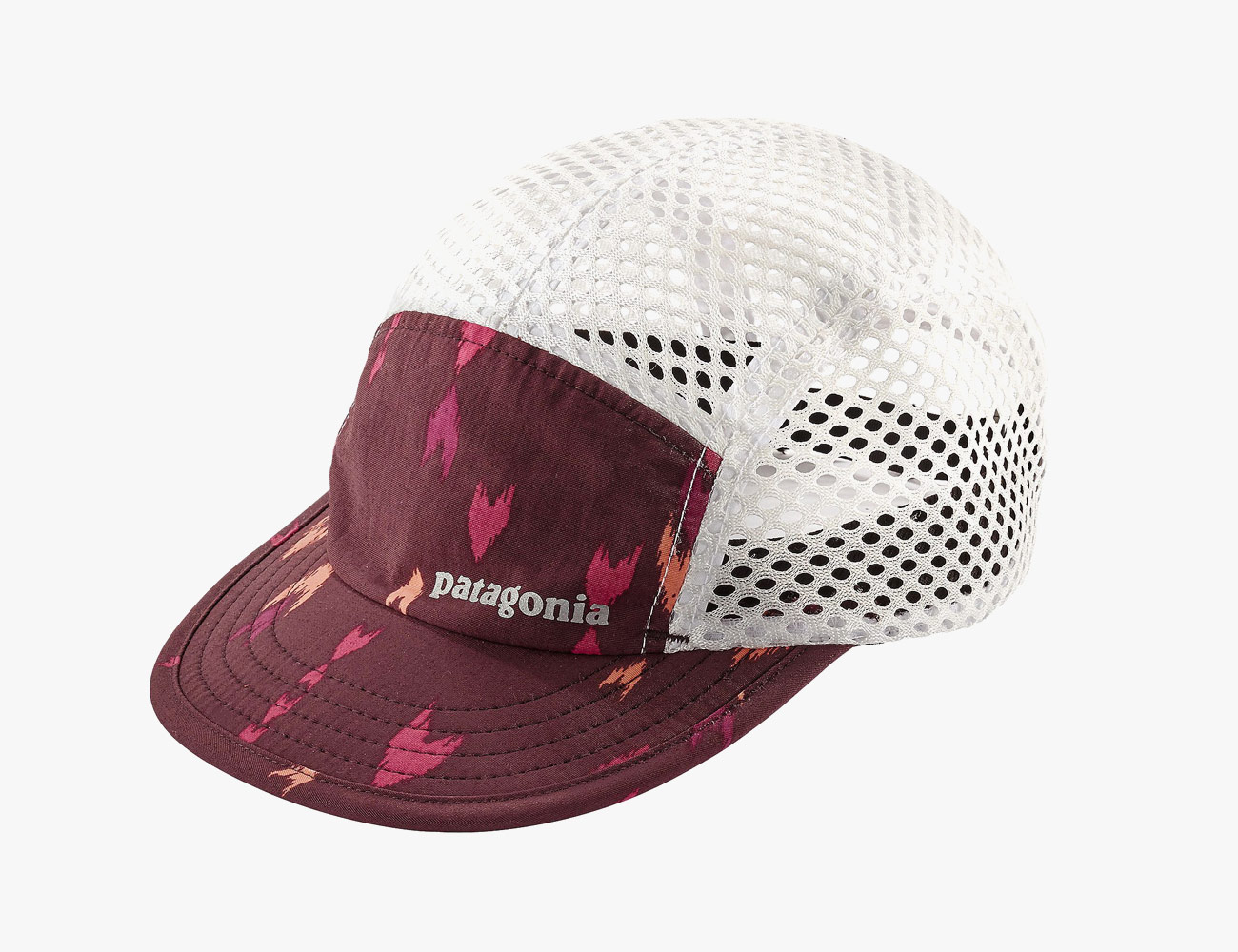
No running hat list would be complete without the classic Patagonia Duckbill cap. The magic exists in the brim. It easily shrinks into a pocket and then bounces back to its original shape. It’s also the 25th anniversary of the Baggies, the same fabric that makes up this hat. Celebrate with a new cap.

Ciele FST Cap

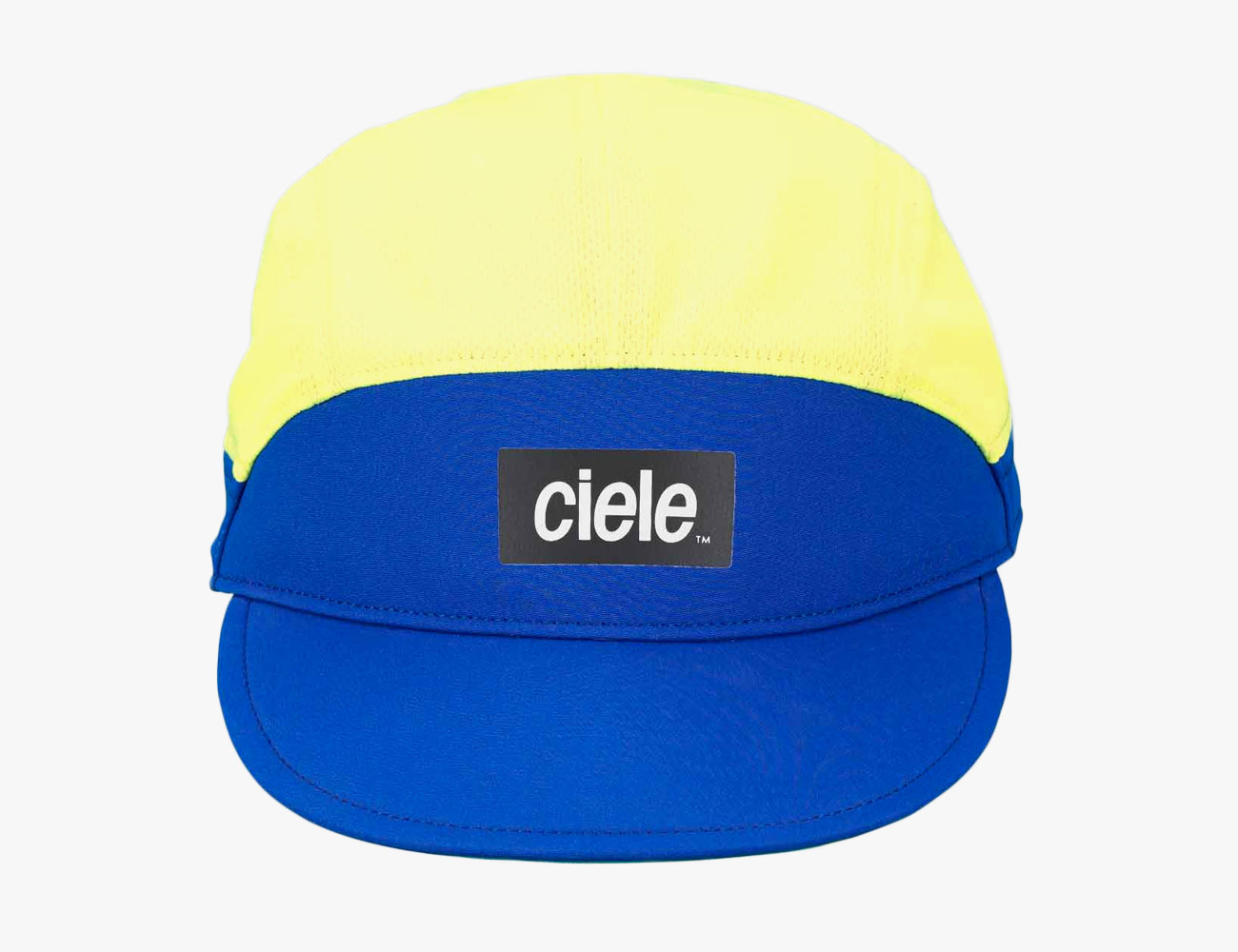
Ciele makes excellent racing caps — for cyclists and runner alike. We recommend grabbing a hat, then downloading Ciele’s app, ‘EverybodyRun’ to check out races, run clubs and events near you. Then, run to whatever microbrewery the app recommends. The best post-run recovery lies in what beer you’re drinking. And this cap fits right in, no matter your splits.

Myles Momentum Cap

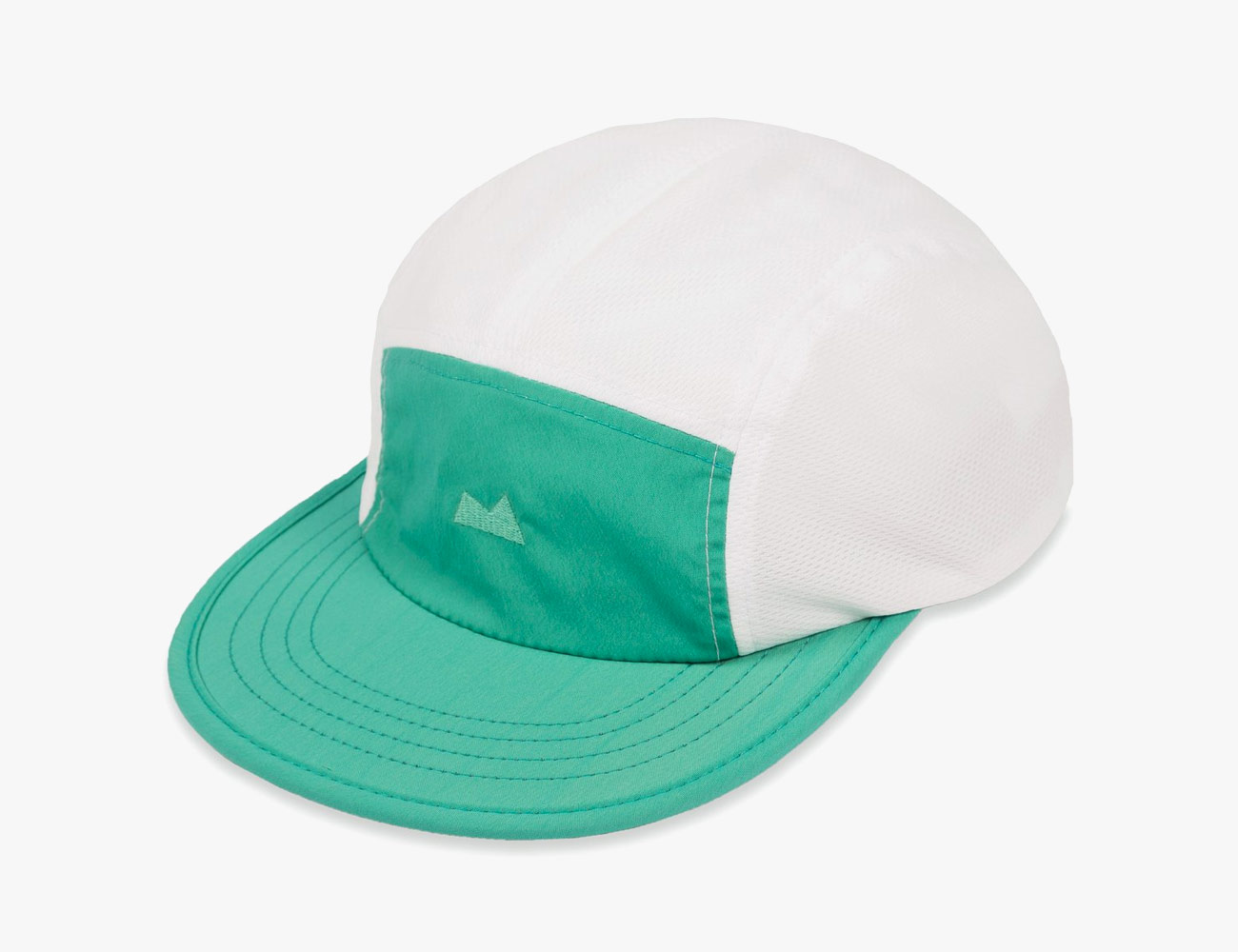
Seafoam green, or Waterfall as Myles calls it, is a color that can do no wrong. The hat looks almost worn-in, which is great for a classic 5-panel hat. The adjustable snap band and dark color under the brim keep you comfortable throughout the day.

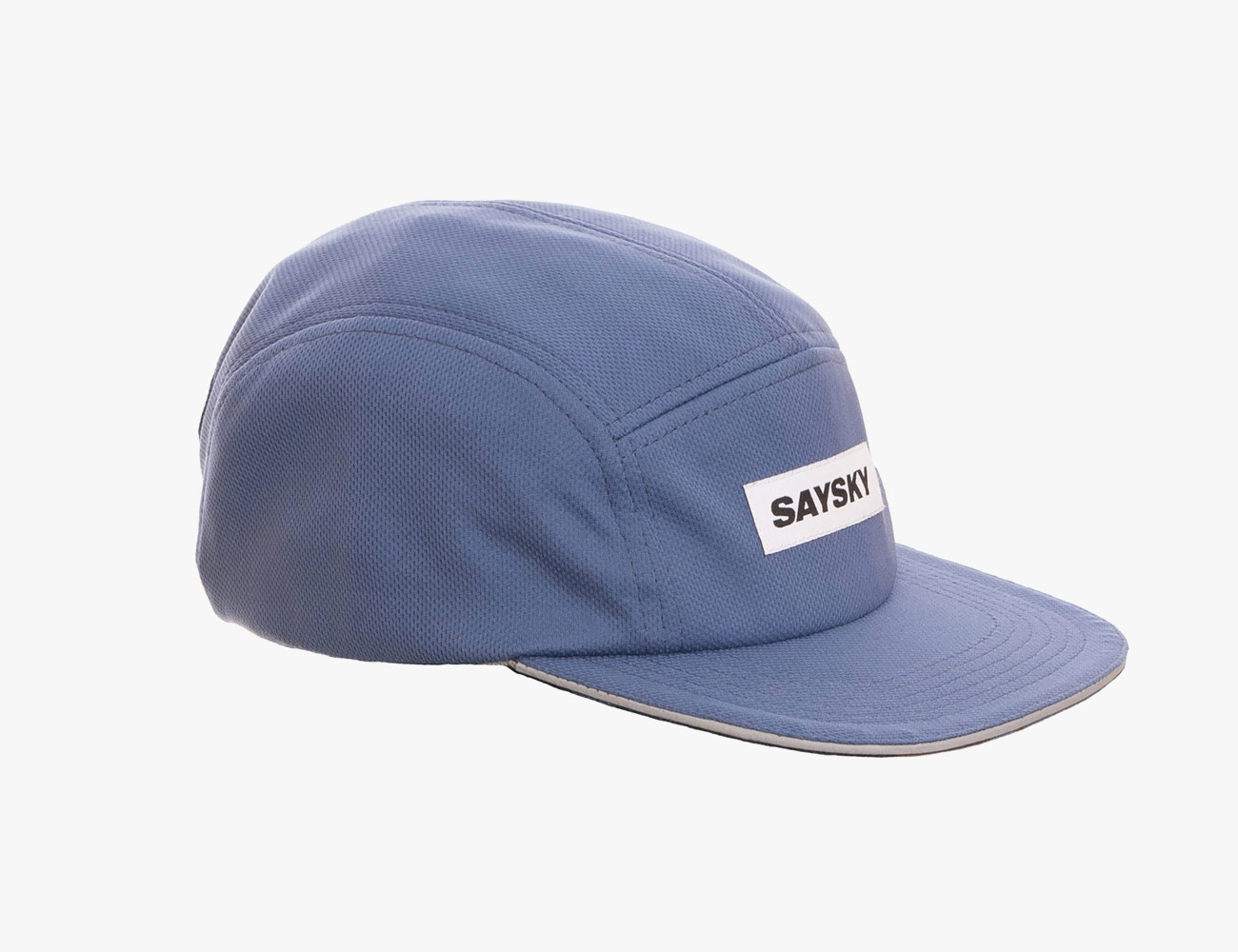
Saysky Blaze Cap

Whether you’re running here or across the pond, Copenhagen-based brand Saysky makes products you’re sure to get noticed wearing. This is one of its less-intense products, but the technical features are still top notch. The moisture-wicking fabric and mesh panels improve ventilation so you stay cool no matter where you’re running.

Path Projects Arapahoe Cap

While this doesn’t quite look like a running hat, the DWR coated, quick dry 5-panel would say differently. Its best feature is that it works just as well hiking in the Adirondacks as it does sipping a beer after a race.