All posts in “Motorcycles”

20 of Our Favorite Bikes From the Handbuilt Motorcycle Show 2018

The Handbuilt Motorcycle Show 2018, in Austin, Texas, this past weekend was the fifth installment and the largest showing yet of Revival Cycle’s get together. Over the course of the three-day event, 30,000 attendees came to see a Wall of Death, plus celebrate and drool over 140 beautiful custom, hand-built motorcycles from builders and manufacturers all over the globe.

All the typical nameplates were present and accounted for, from BSA, BMW and Royal Enfield to Honda, Kawasaki and Yamaha, but hardly any of the bikes on display could be labeled as ‘typical.’ No matter what your taste or preferred niche, all the scramblers, flat trackers, classic GP bikes, ADVs and sidecars were all objectively jaw-dropping and impressive works of rolling art. But of all the 140 bikes that rolled into the Handbuilt Motorcycle Show this year, these 20 are our favorites.

More Desireable Motorcycles

The beauty of motorcycles is that you can find lightly used, older models for next to nothing. Read the Story

4 Wildly Impractical Vehicles I Want to Buy Right Now With a $10,000 Budget

Editor’s Note: We love scouring the internet for reasons to spend money we don’t have on cars we daydream about owning, and these are our picks this week. All prices listed are bid amounts at the time of publishing.

In the most regrettable way, I’m back in the market for a car. Suffice it say that flash floods, deceptive standing water and a hurried morning commute do not mix. (More specifically, buckets of rainwater and the engine of my now dead 2002 BMW 325i.) Could I have taken a different route? Taken my time? Not assumed it was a fordable depth for a sports sedan? Yes, yes and… duh. Hence, “regrettable.”

So this week’s Found is, admittedly, a bit selfish. The best catharsis I can manage right now is to share my next-car search. In the long run, these are wildly impractical, but at the moment seem fun enough actually to pull the trigger on. Would any of these turn into their own source of regret after, say, a month of daily use? Perhaps, but they’re pretty tempting right now.

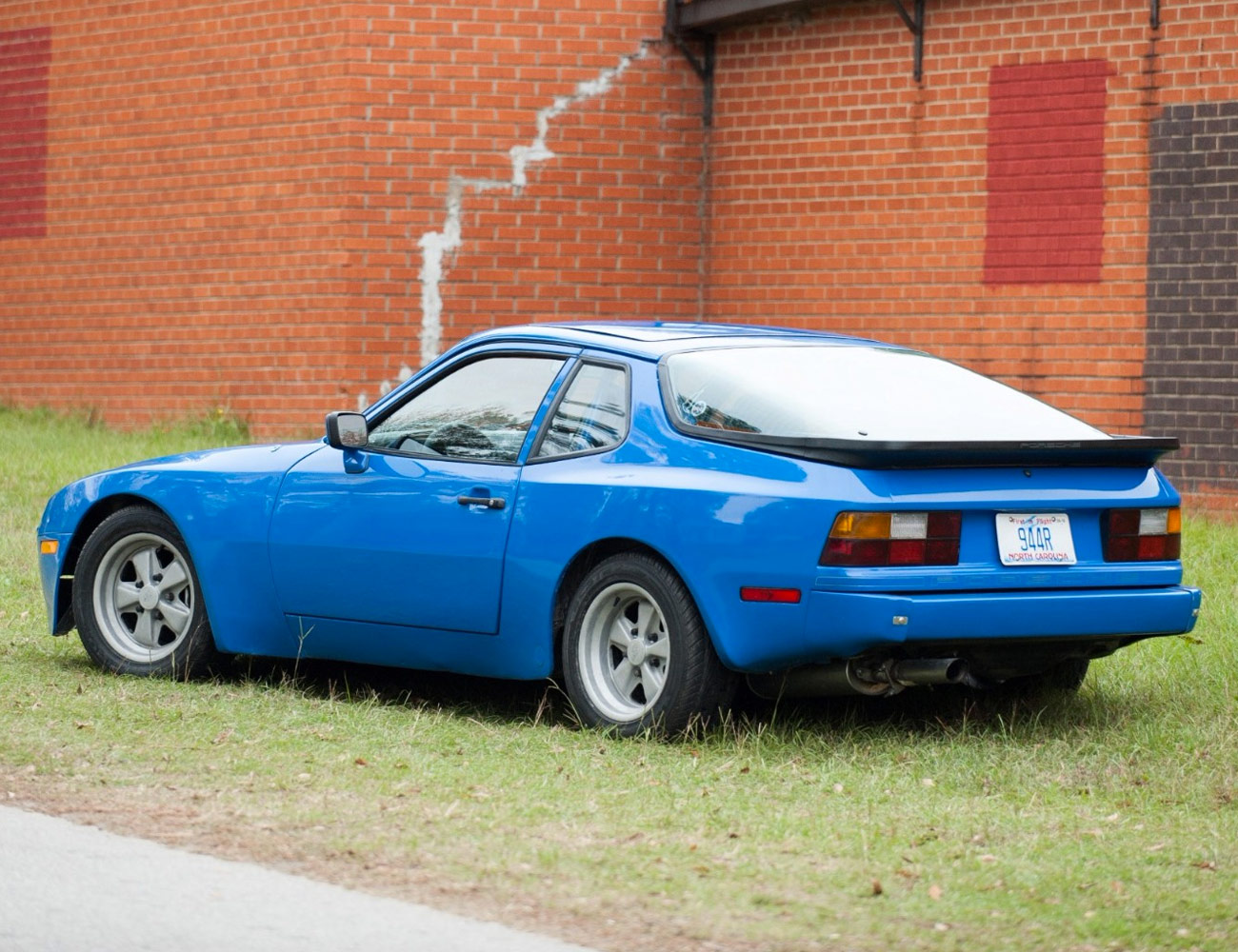
Modified 1984 Porsche 944

Mileage: 29,000 (TMU)
Location: New Hill, North Carolina

What I like: Most of the car is refurbished, replaced or rebuilt to look like what you’d get if Porsche had built an ‘R’ version of the 944 (which they should have done). It reminds me of the Cayman GT4 — one of my favorite cars of all time.
From the seller: “This 1984 Porsche 944 was purchased by the seller five years ago and subsequently built into a street-legal track car. The 2.5-liter inline-four was rebuilt to stock specs and sends power through a torque tube to a five-speed manual transaxle. A new clutch was also installed, much of the suspension was rebuilt, the brakes were gone through, a repaint in a custom color was conducted, and a four-point roll bar was installed.”
What to look out for: Like you should for any car this age, keep an eye out for bad seals and leaking fluids. In regards to the 944 specifically, there have been a few recalls worth noting.

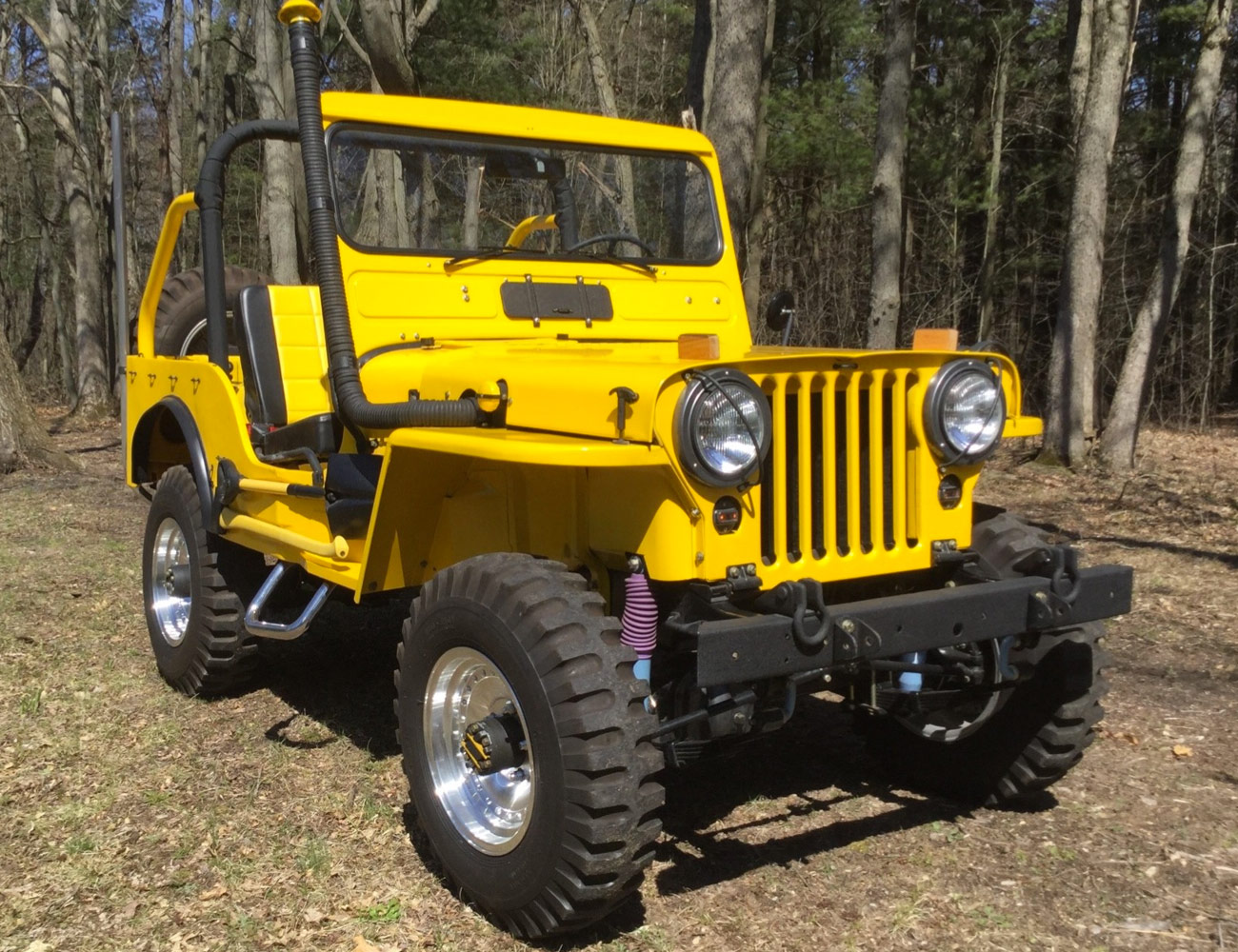
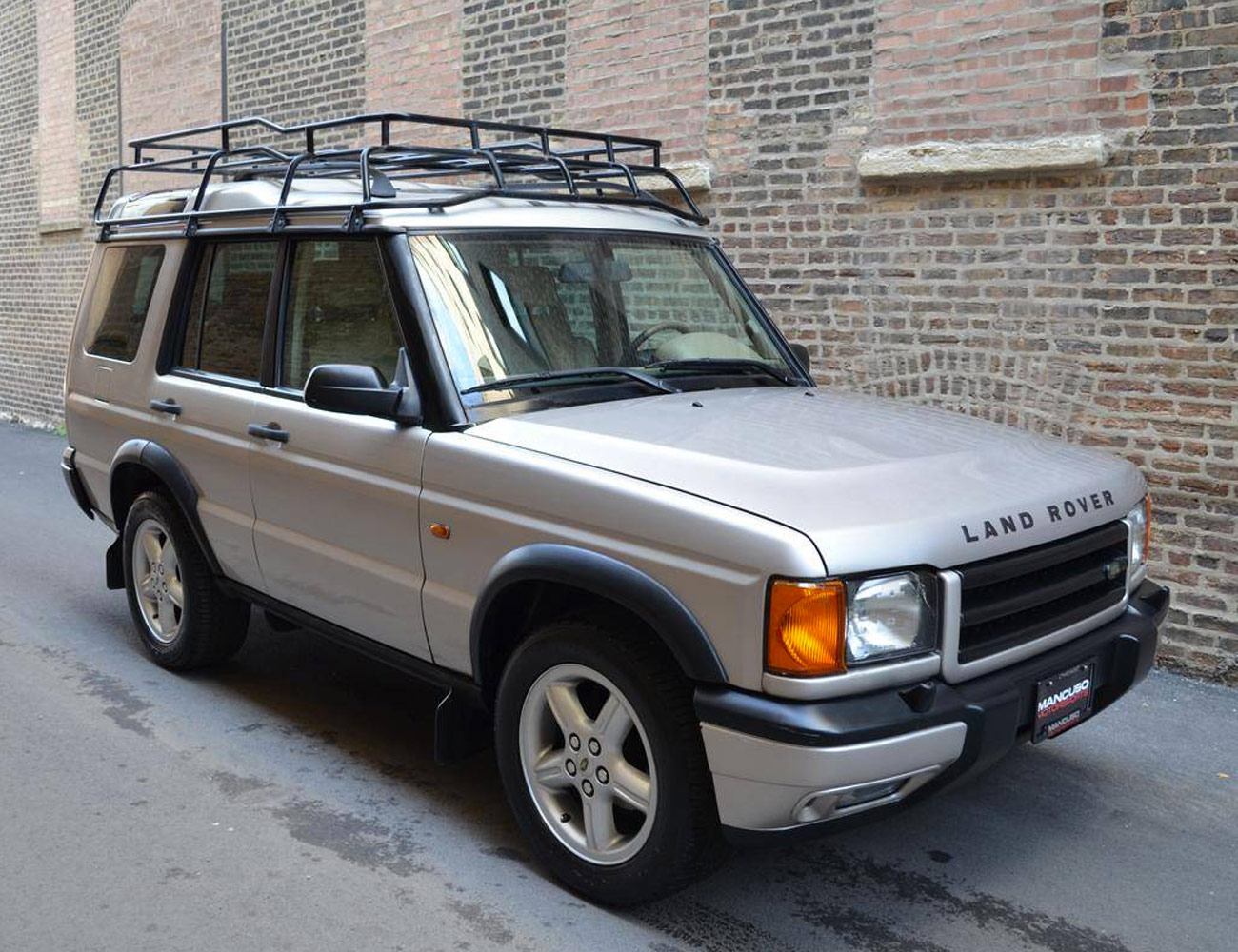
1952 Willys M38

Mileage: 462 (TMU)
Location: Comstock Park, Michigan

What I like: I’ve recently come to admire snorkels.
From the seller: “This 1952 Willys M38 was purchased as a military-spec example by the seller in 1996 and subsequently underwent extensive refurbishment to its exterior sheet metal, tub, frame, brakes, steering, exhaust and 24-volt electrical system. Modifications include a new old-stock military deep-water fording kit as well as modern gauges, lighting, and wheels.”
What to look out for: Typically, the electrical systems on old Willys are the main headache, but this particular lil’ guy under went a full refurbishment, including an electrical system swap.

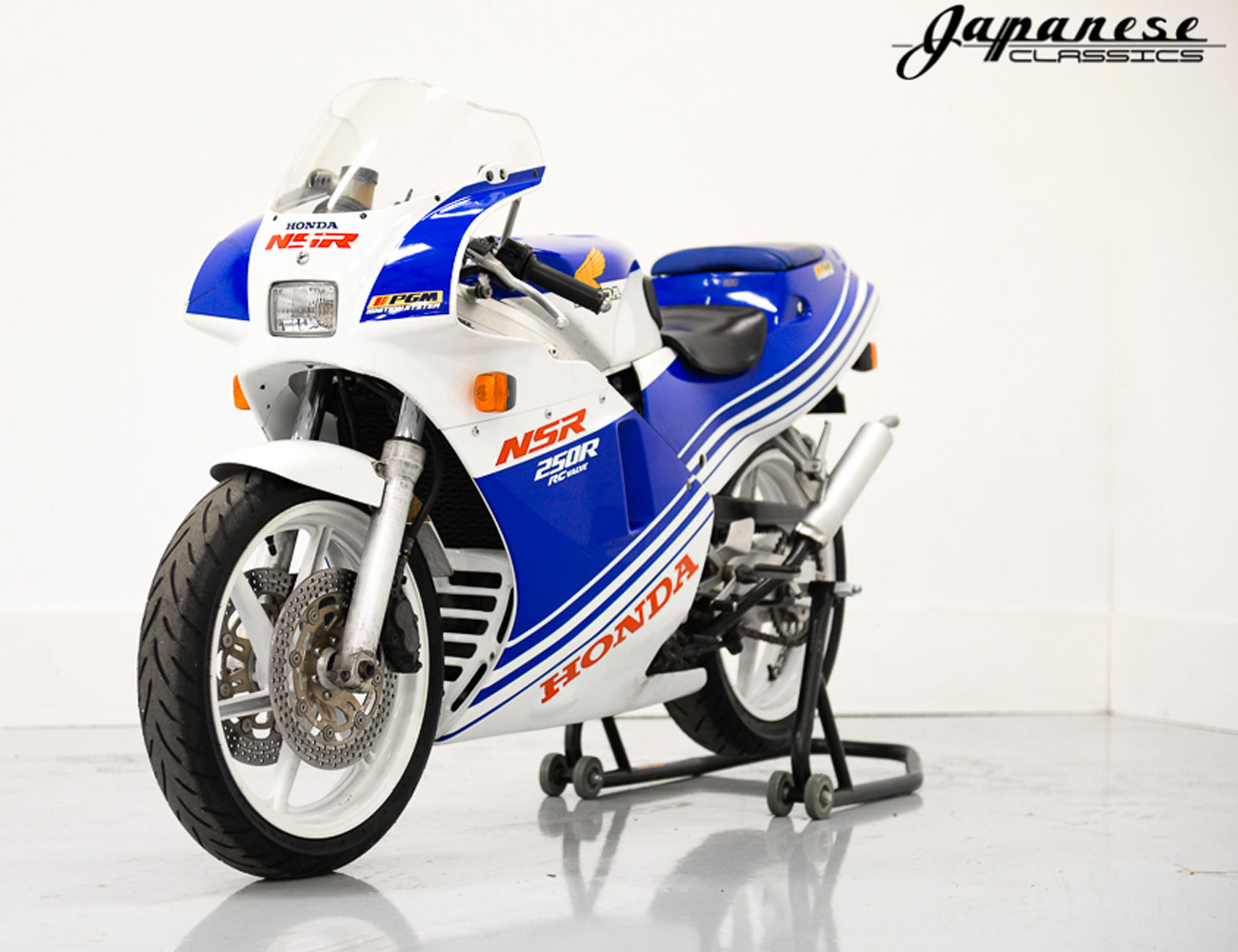
1989 Honda NSR250R

Mileage: 7,000
Location: Richmond, Virginia

What I like: The late-’80s styling is hard to resist, even if it is a two-stroke — I’d be mixing my own gas everytime I fill up. Still, a 249cc 90° V-twin with an 11,500 rpm redline is a pretty fantastic and rare sound this side of the pond.
From the seller: “The NSR is powered by a 249cc 90° V-twin liquid-cooled two-stroke with crankcase reed valve induction via twin naturally aspirated carburetors. The two-stroke is fitted with a kick start that fires right up and idles nicely. The 11.5K redline comes up quickly with the rev-happy V-Twin.”
What to look out for: The main problem with an imported bike like this is when you do need parts you’ll be waiting for them to ship from the other side of the globe via small mail-order operations. If you spot certain parts starting to show their age, anticipate the worst and order ahead.

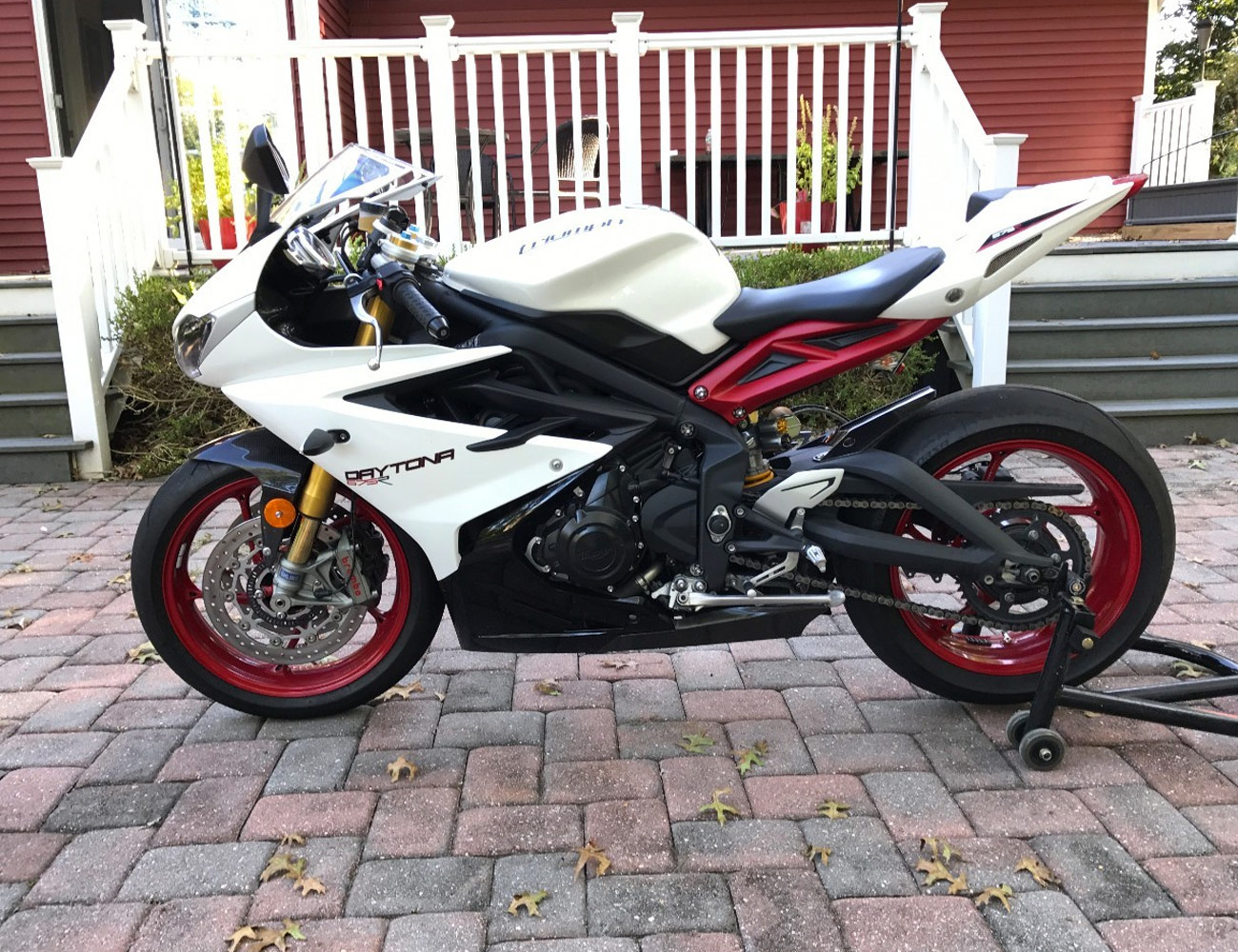
2014 Triumph Daytona 675R ABS

Mileage: 9,000
Location: Freehold, New Jersey

What I like: I was never a fan of the way 600cc inline fours sound — they’re just too whiny, but the Triumph’s triple gets away with sounding like a bigger engine than it actually is. I’m also a sucker for red trellis frames.
From the seller: “Extras include Triumph painted seat cowl, trickle charger, rear stand, rubber tank grip, R&G rear bobbins, Competition Werks rear fender eliminator and Taylor Made … carbon fiber bodywork [and] racing exhaust system, reducing overall weight by about ten pounds. All stock parts are included. Mechanically and cosmetically flawless, never laid down or tracked. Garaged and covered, professionally maintained with all scheduled services performed and documented.”
What to look out for: Most of what goes wrong on the ’14 Daytona 675R is reconciled by a recall. It’s a fairly young bike to find massive part failures at this point in its life.

What the Rest of the Team WOuld Get for $10,000

If we had a [limited] blank check, this is what we’d pick up. Read the Story

Essential Riding Gear for the Motorcycle Commuter

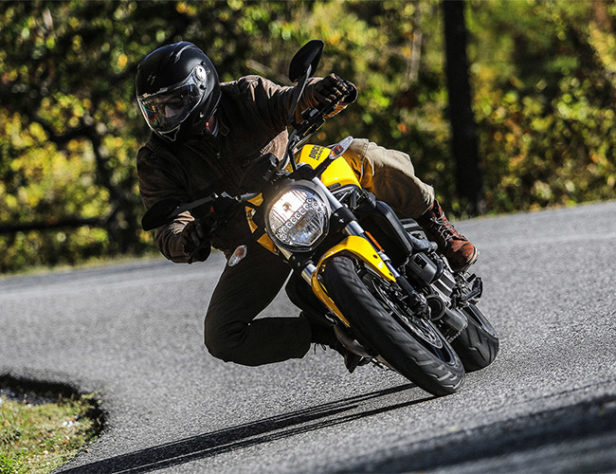
When it comes to commuting by motorcycle, your choice of gear and clothing is crucial. Just like any other time you hop in the saddle, safety and protection are keystone characteristics, but when you’re heading into the office style and grace should be top priorities as well. If you’re out for a weekend ride or at a track day, it’s completely acceptable to look like you just spent the last 30 miles hunting for apexes. But, when the office is your final destination, you want to look as professional as possible, even if you spent the last 30 minutes weaving through traffic, dodging potholes. Below is a collection of essential kit for the commute via motorcycle calls.

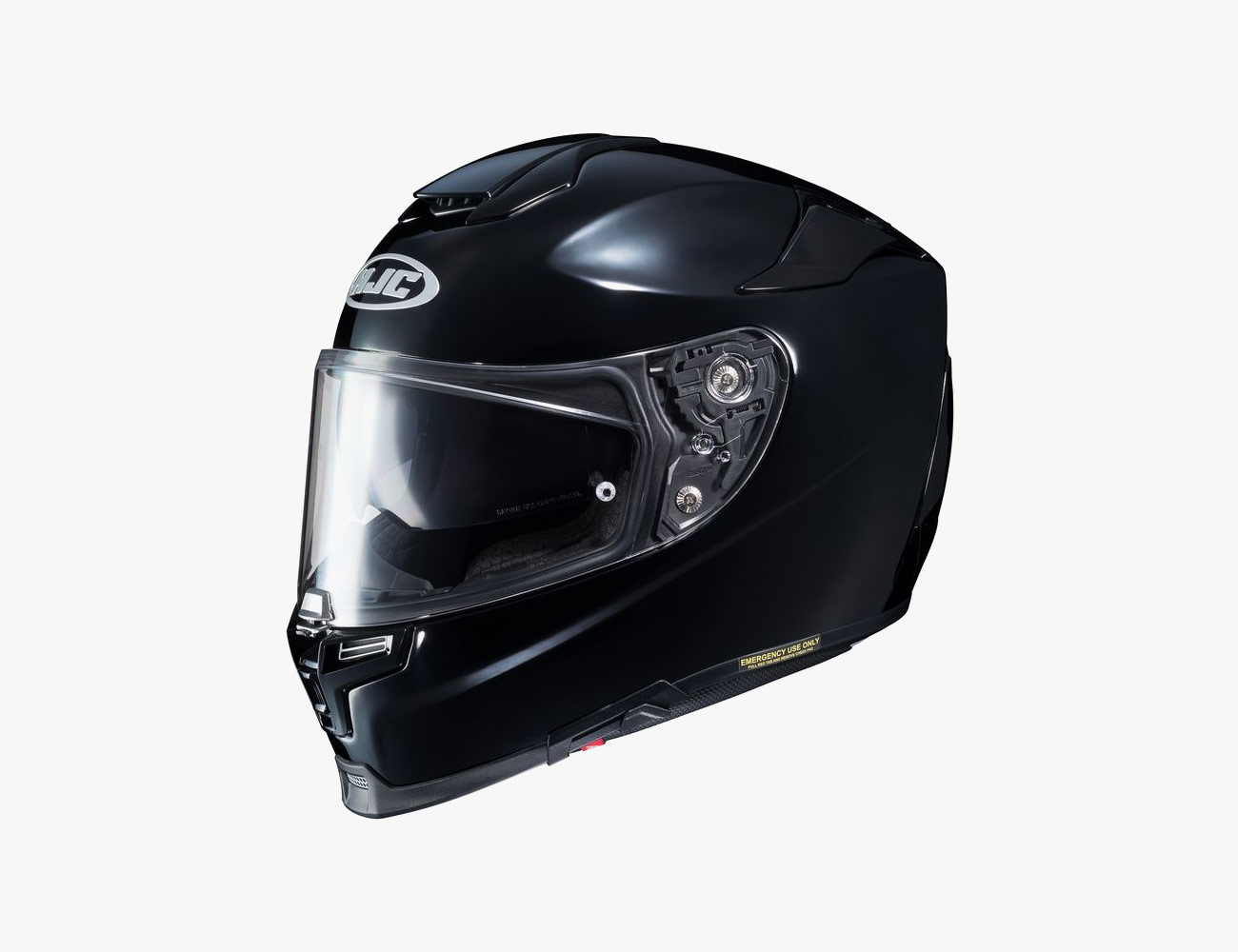
HJC RPHA 70 ST Helmet

The RPHA 70 ST by HJC lands right in the sweet spot where an all-purpose helmet should. The RPHA 70 ST has track-day style and aerodynamic perfromance, but not so much that wind becomes uncomfortable while riding if you’re sitting straight up. Top-notch venting and lightweight construction also make it solid choice for longer hauls.

Budget Alternative: Scorpion EXO-R420 Helmet $150
Splurge Option: AGV Sportmodular Carbon Helmet $750

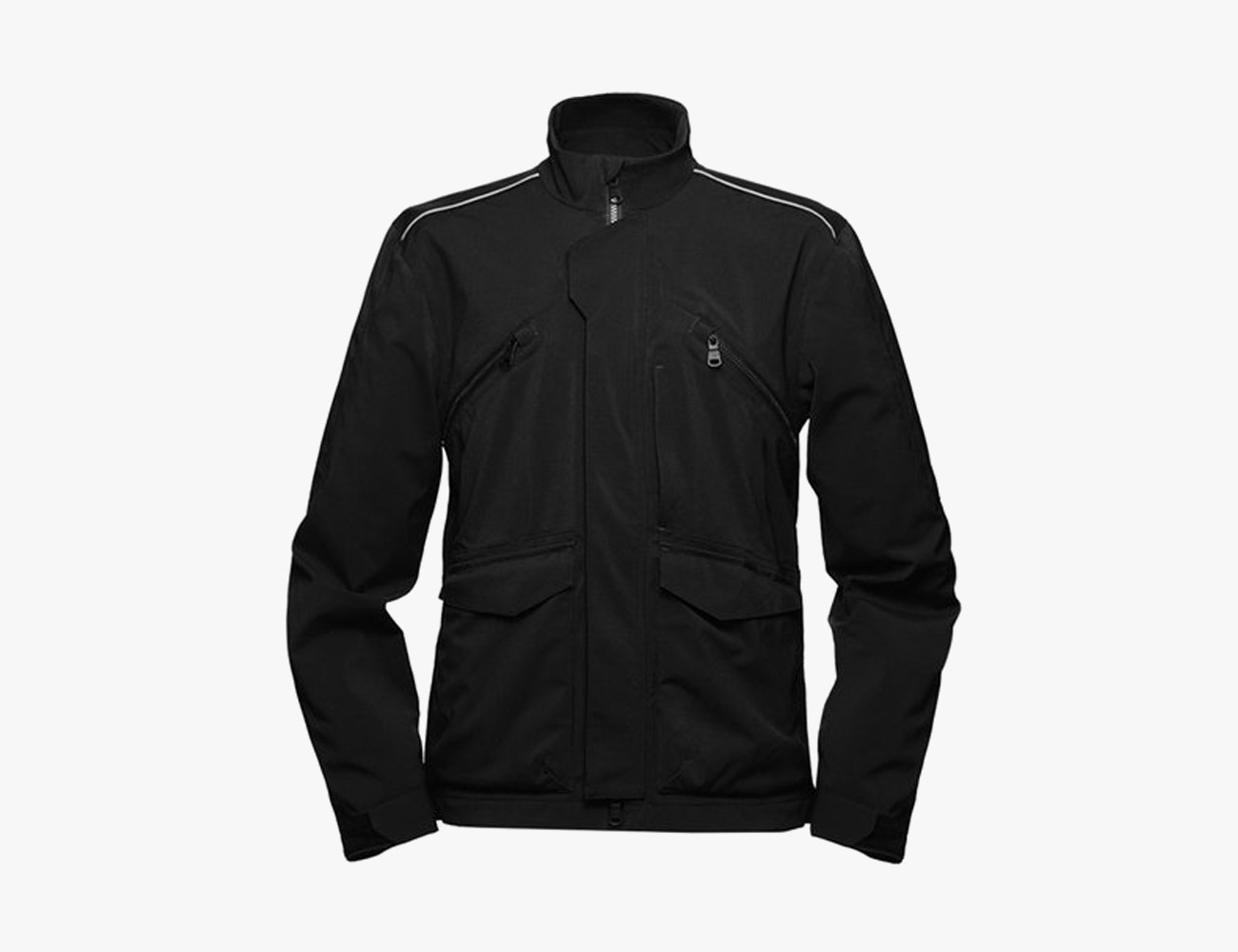
Aether Navigator Motorcycle Jacket

There are more affordable leather options and more robust jackets out there, but the Navigator nails the minimalist style of a classic jacket and provides wind and weather protection. And since it’s not bulky or overly weighted, Aether’s Navigator works as a casual jacket whether you just got off the bike or not.

Budget Alternative: Tour Master Koraza Jacket $100
Splurge Option: Belstaff Classic Tourist Trophy Jacket$1,450

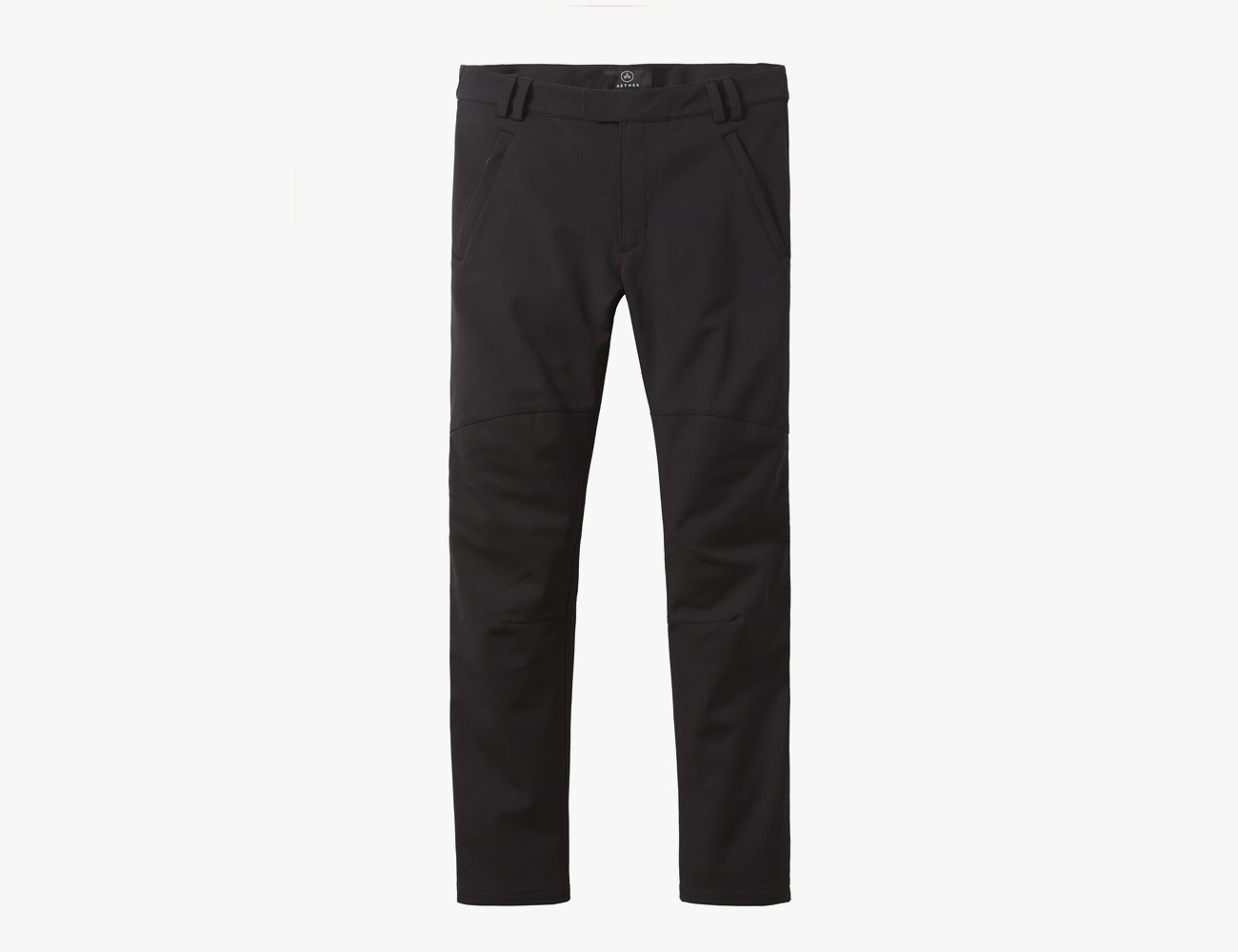
Aether Ramble Pants

Aether makes a second appearence on the list because it’s hard to deny how well the brand hides real protection behind classy style. At first glance the Ramble pants look like regular casual, grey slacks but the three-layer Schoeller Ottoman weave also acts as a highly water-, wind- and abrasion-resistant shell. You also get D3O EVO XT armor at the hips and knees. Can you say that about your Dockers?

Budget Alternative: Spidi Superstorm H2Out Pants $140
Splurge Option: Saint Unbreakable 6 Jeans $600

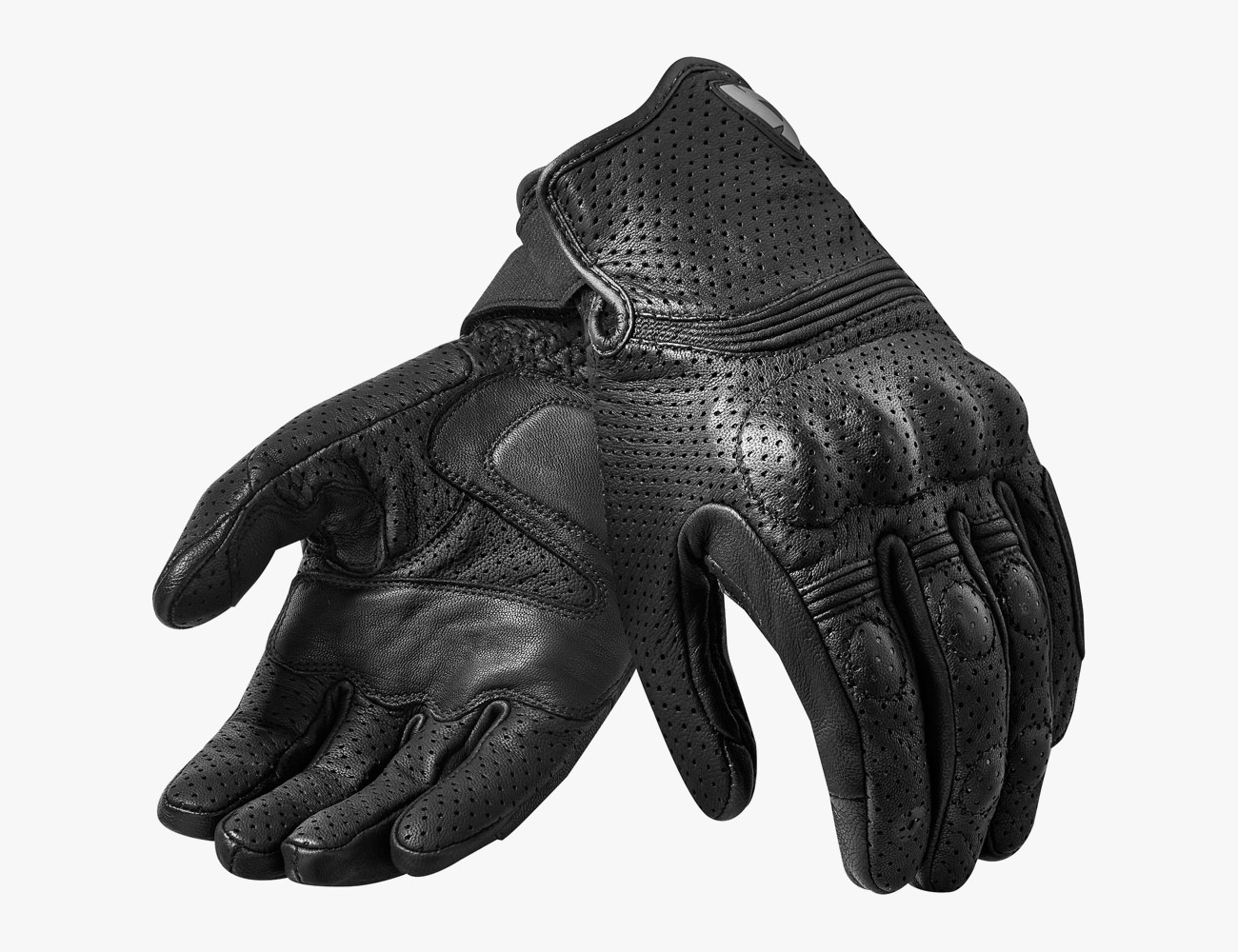
REV’IT! Fly 2 Gloves

Due to necessary padding and armor, motorcycle gloves are one of the harder pieces in the commuter repetoire to balance style and function gracefully. The REV’IT! Fly 2 Gloves hide knuckle protection under preforated goatskin leather, which also extends a little further up the wrist to block any unwanted weather from boring its way up your jacket sleeve.

Budget Alternative: Icon Twenty-Niner Gloves $35
Splurge Option: Dainese X-Strike Gloves $200

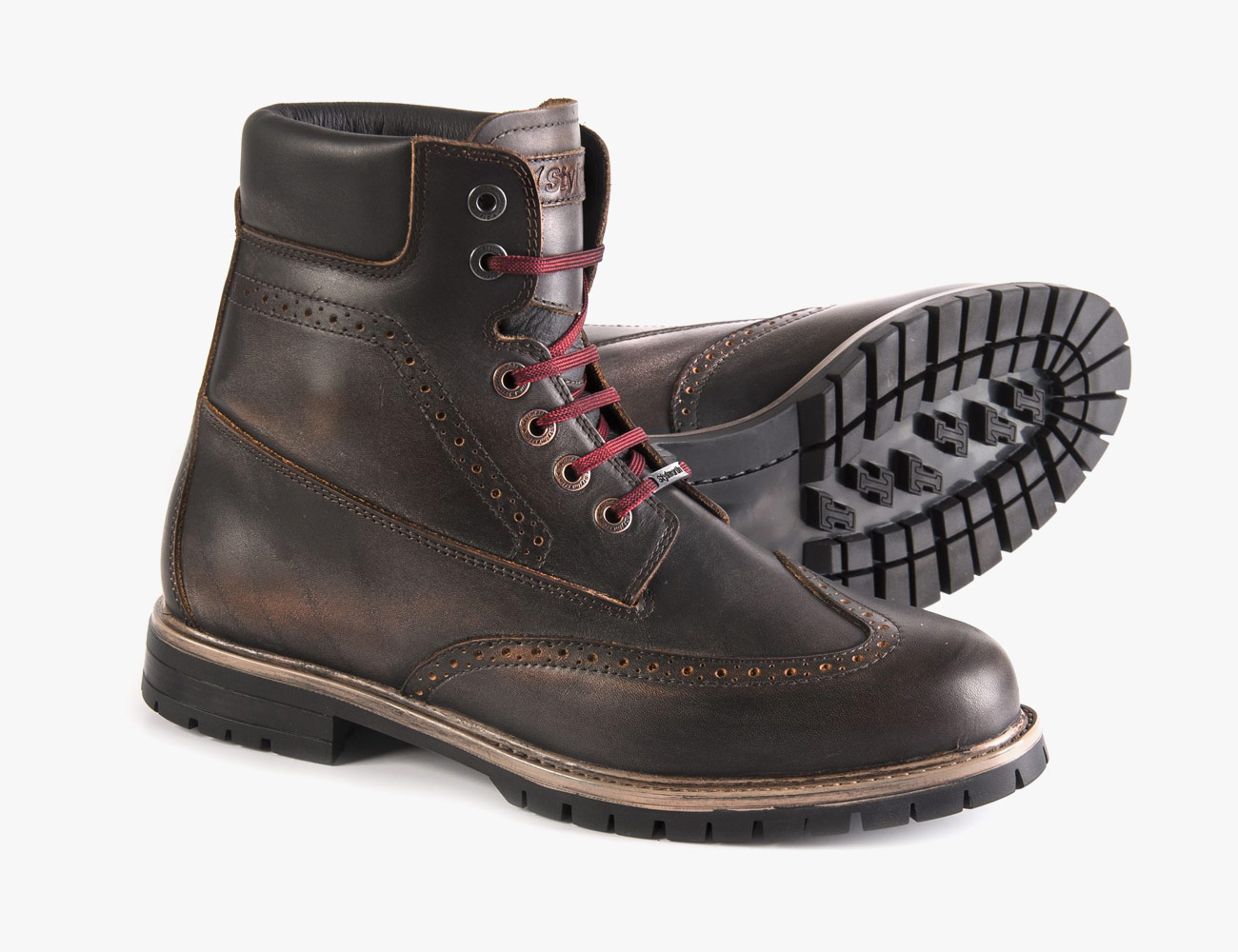
Stylmartin Wave Boots

Finding a brown or black leather boot which can double for motorcycle duty isn’t difficult. Finding a pair of boots that subtly combine fashion and functional details is a little harder. The Wave Boots by Stylmartin are built with wax-treated leather to shed water and an integrated waterproof liner if the weather really starts to pick up. The wingtip design also cleverly acts as a shifter gaurd for an even better marriage of form and function.

Budget Alternative: Alpinestars Parlor Drystar Boots $180
Splurge Option: Rokker Gentleman Racer Boots $500

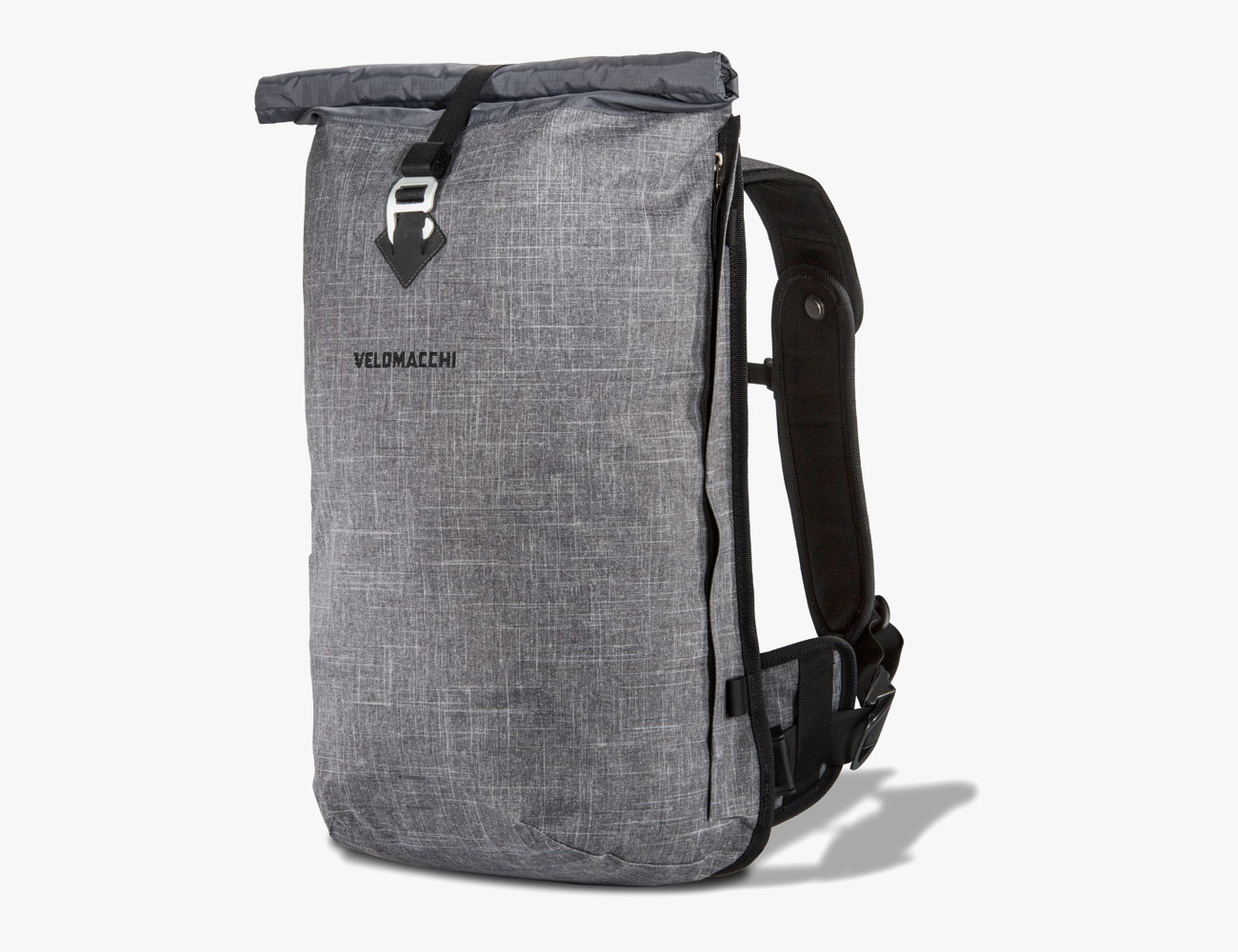
Velomacchi Giro Backpack 35L

The 35-liter Giro doesn’t look like much but its construction is watertight and abrasion resistant; inside, there is room for more than just your EDC in the main compartment and a rear slot for your laptopn. The unique architecture of the shoulder straps works to spread weight across your chest which boosts endurance.

Budget Alternative: Alpinestars City Hunter Backpack $120
Splurge Option: Velomacchi 40L Roll-Top Backpack $300
The Best Motorcycles For City Commutes

Navigating any concrete jungle can be hell — especially if you call the asphalt wilds your commute. These five bikes make riding through the city much easier for any kind of rider. Read the Story

4 Used Motorcycles We’d Buy Right Now for Under $2,500

The beauty of motorcycles is that you can find lightly used, older models for next to nothing. Don’t believe me? Do a quick search for vintage enduro motorcycles. After a few minutes of searching it’s clear, even capped at a $2,500 budget, you can get a lot for your money. These are the used motorcycles the Gear Patrol team would buy right now with $2,500 worth of spendin’ money.

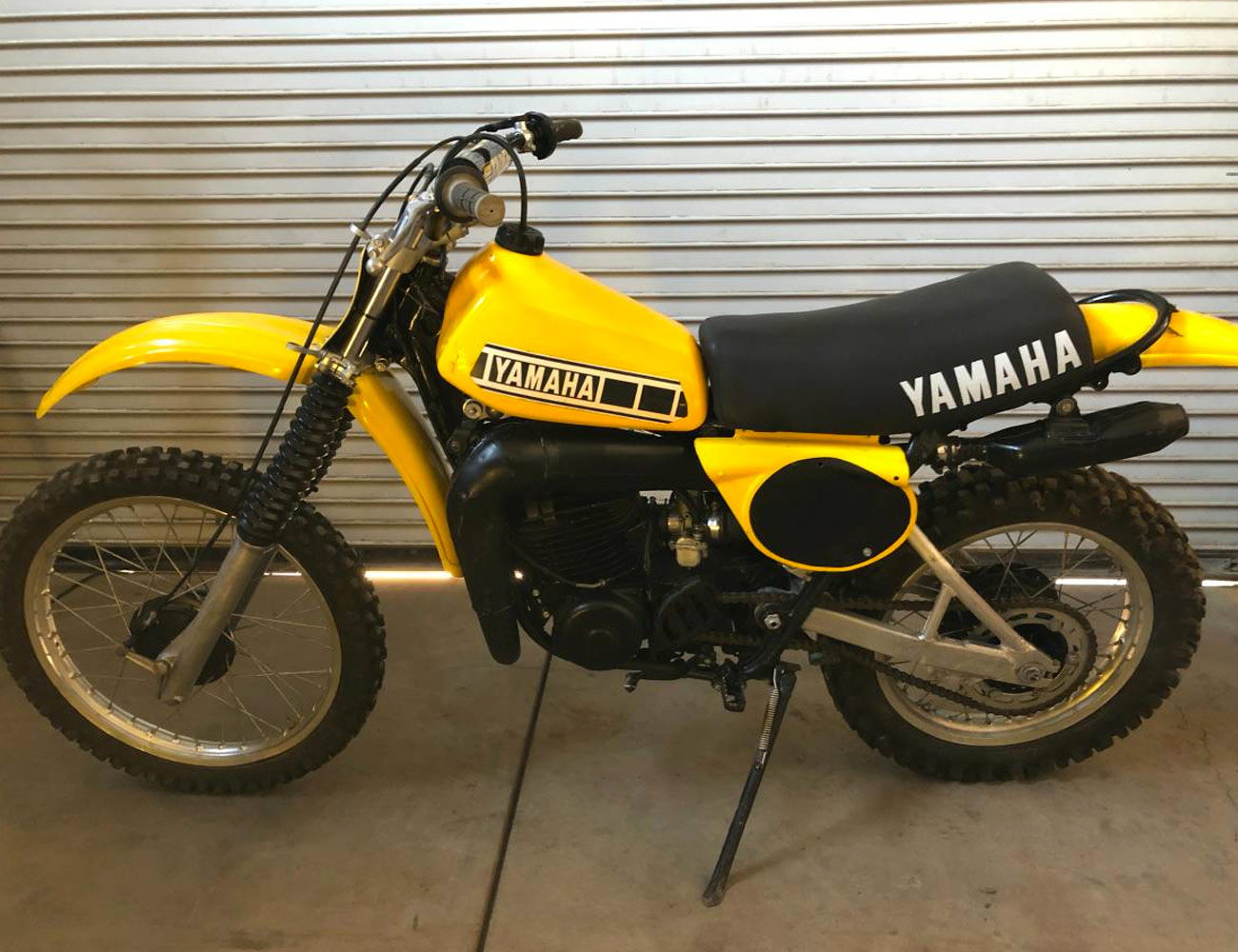
1978 Yamaha IT250

Not many things look good in yellow, but for some reason, motorcycles tend to pull it off . On top of that, I’m on a serious classic enduro and dirtbike kick at the moment. Because they made so many enduros in the ’70s and ’80s, you can find these things for relatively nothing. This ’78 Yamaha ticks all the boxes. — Bryan Campbell, Staff Writer

Mileage: Not listed
Original MSRP: $1,498

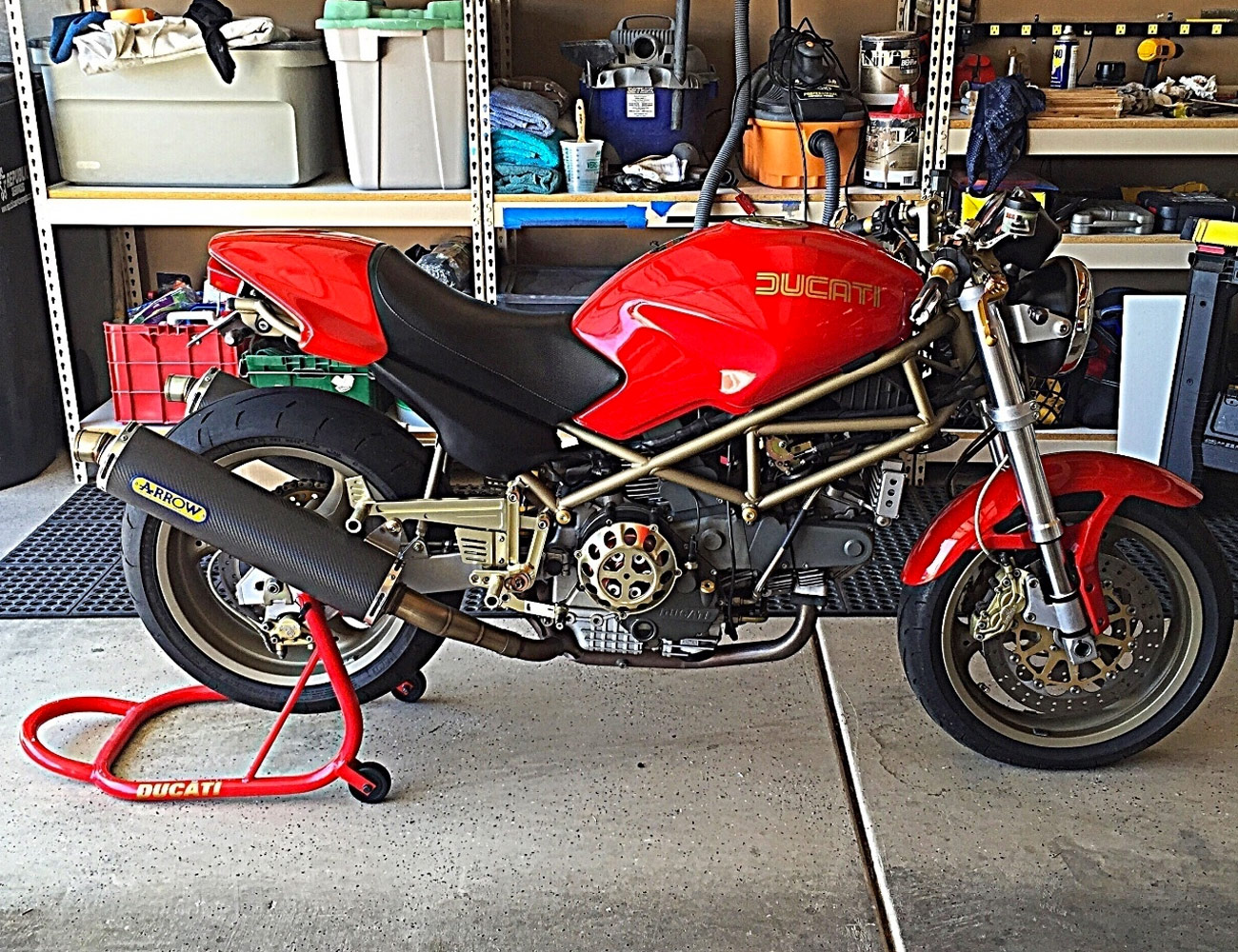
2000 Ducati Monster 900

The Ducati Monster is a design icon and, in my humble opinion, Miguel Galuzzi’s original iteration is the best looking of the breed. It’s hard not to pull the trigger at this price, but it is old enough to vote — and it’s Italian. — Matt Neundorf, Freelance Contributor

Mileage: 32,000
Original MSRP: $13,995

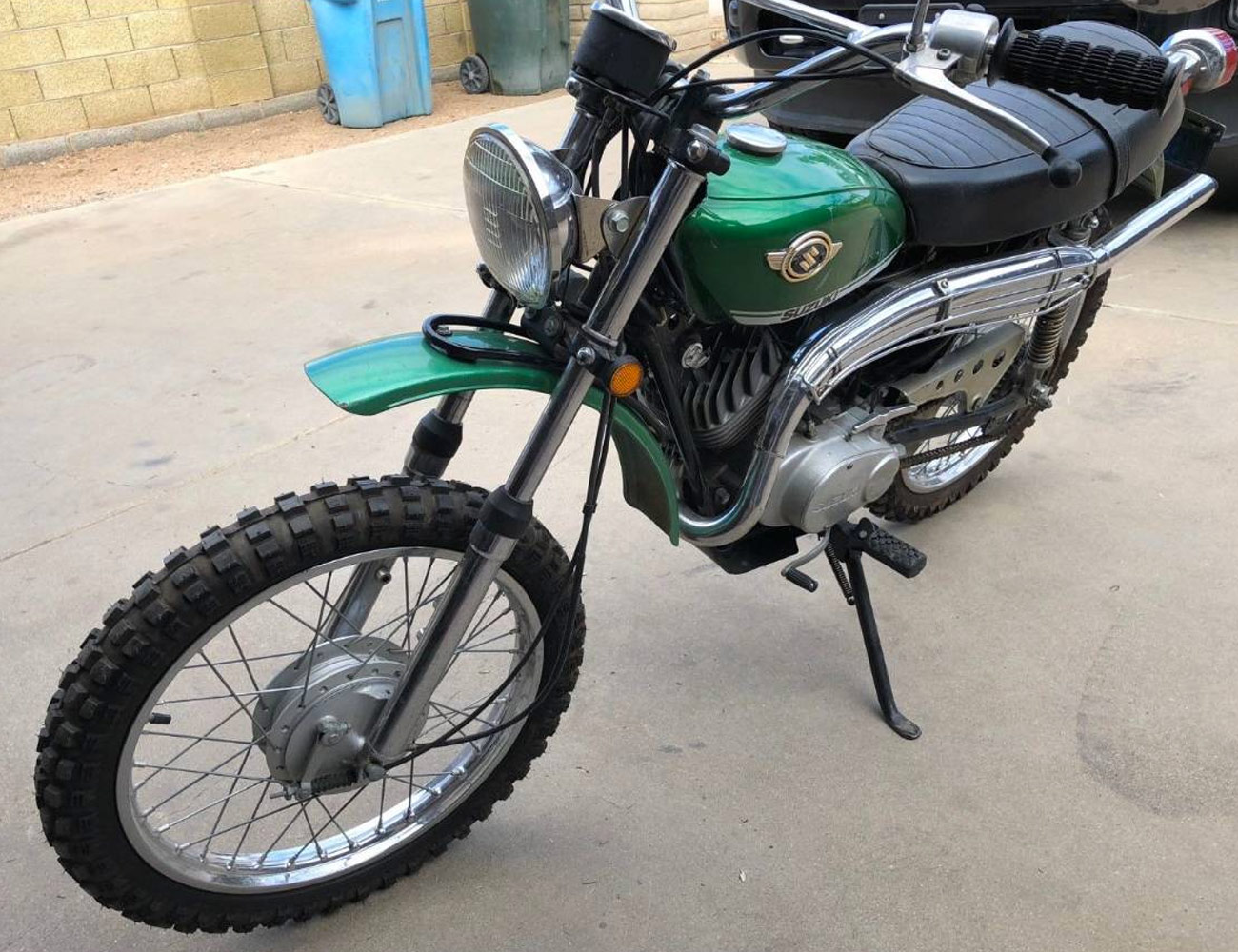
1970 Suzuki TS90 Honcho

I love old dirtbikes for two main reasons, their simplicity and their curb appeal. This mint condition Suzuki TS90 “Honcho” has been hiding out in Arizona for the past 20 years and except for a few minor things it looks factory fresh. As the ad says, it’s a collectible that you can ride, and I’d say it’d make a damn fun way to run errands around the neighborhood. Get a few friends on the old trail bike bandwagon and start your own weekend coffee club, just make sure to leave a little dirt on the tires for authenticity. — Andrew Maness, Freelance Contributor

Mileage: 2,700
Original MSRP: $374

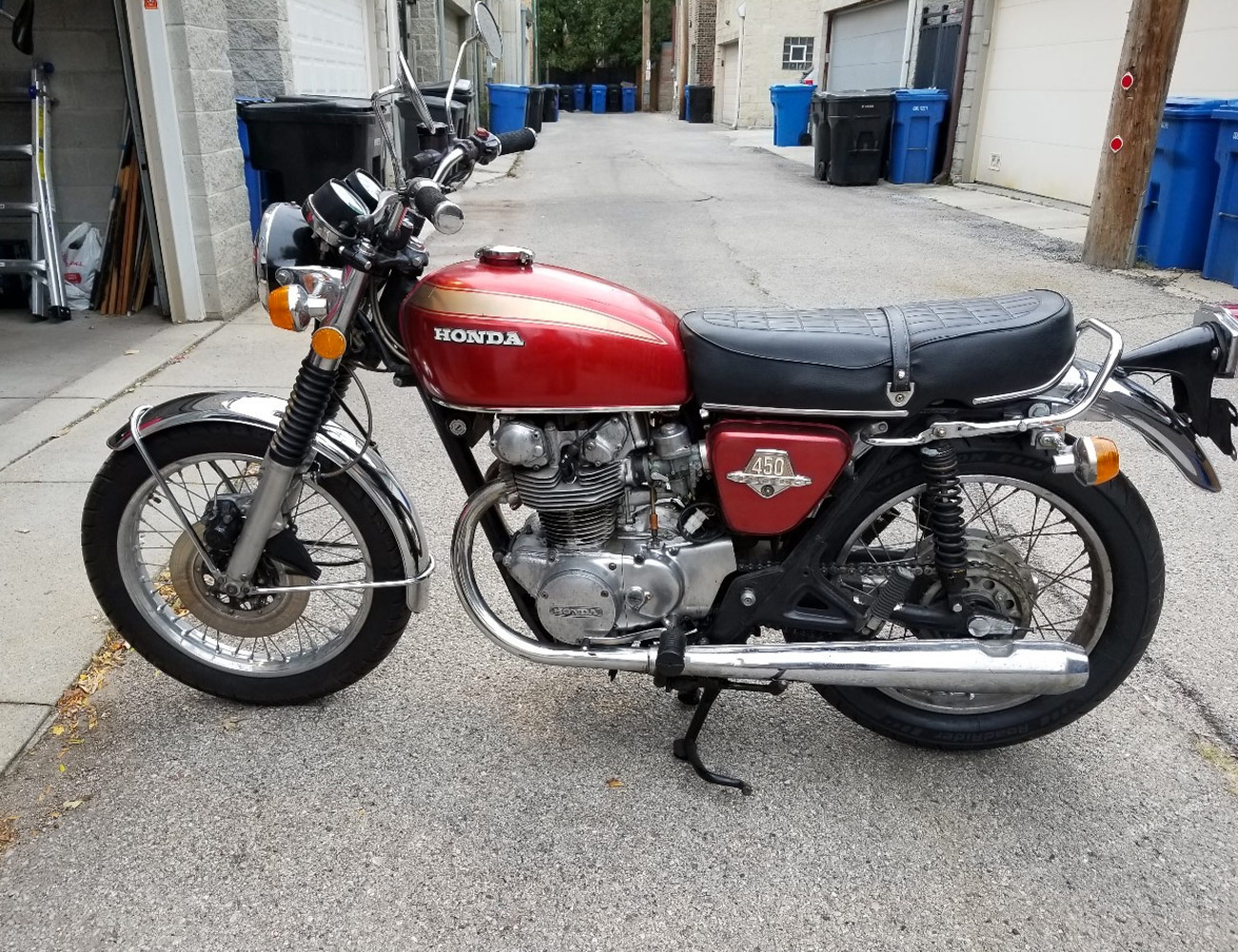
1973 Honda CB450

I’ve always had an affection for ’70s Honda standards, and the little CB450 seems like the perfect city runabout for someone who’s still a relative beginner to bikes. It’s small, has a reasonable amount of power, and has a comfortable, upright riding position. Hondas of its ilk are relatively reliable (for their age), and if something does go wrong, parts and know-how are easy as hell to find. — Andrew Connor, Staff Writer

Mileage: 19,000
Original MSRP: $1,050
The Used Cars We’d Buy Right Now For $10K

We combed the internet again to find our dream cars of the month: what we’d pick up if we had a budget cap of 10 large and were able to follow our dreams. Read the Story

All the Gear You Need to Go Adventure Riding This Weekend Is up to 80% Off

The Magazine

Let us take you on a journey of the world. Each issue of the Gear Patrol Magazine comes packed with adventures, guides and stories exclusive to the magazine. Stunningly designed, printed on high quality stock and ready for your coffee table. Subscribers received 15% off the GEAR PATROL STORE. Biannual. $35.

The Newsletter

Get GEAR PATROL in your inbox with the DISPATCH, including Today in Gear and all our new stories. Daily, 5pm. Free.

<!–

–>

Europe’s Oldest Motorcycle Brand is Still Making Beautiful Classic Bikes

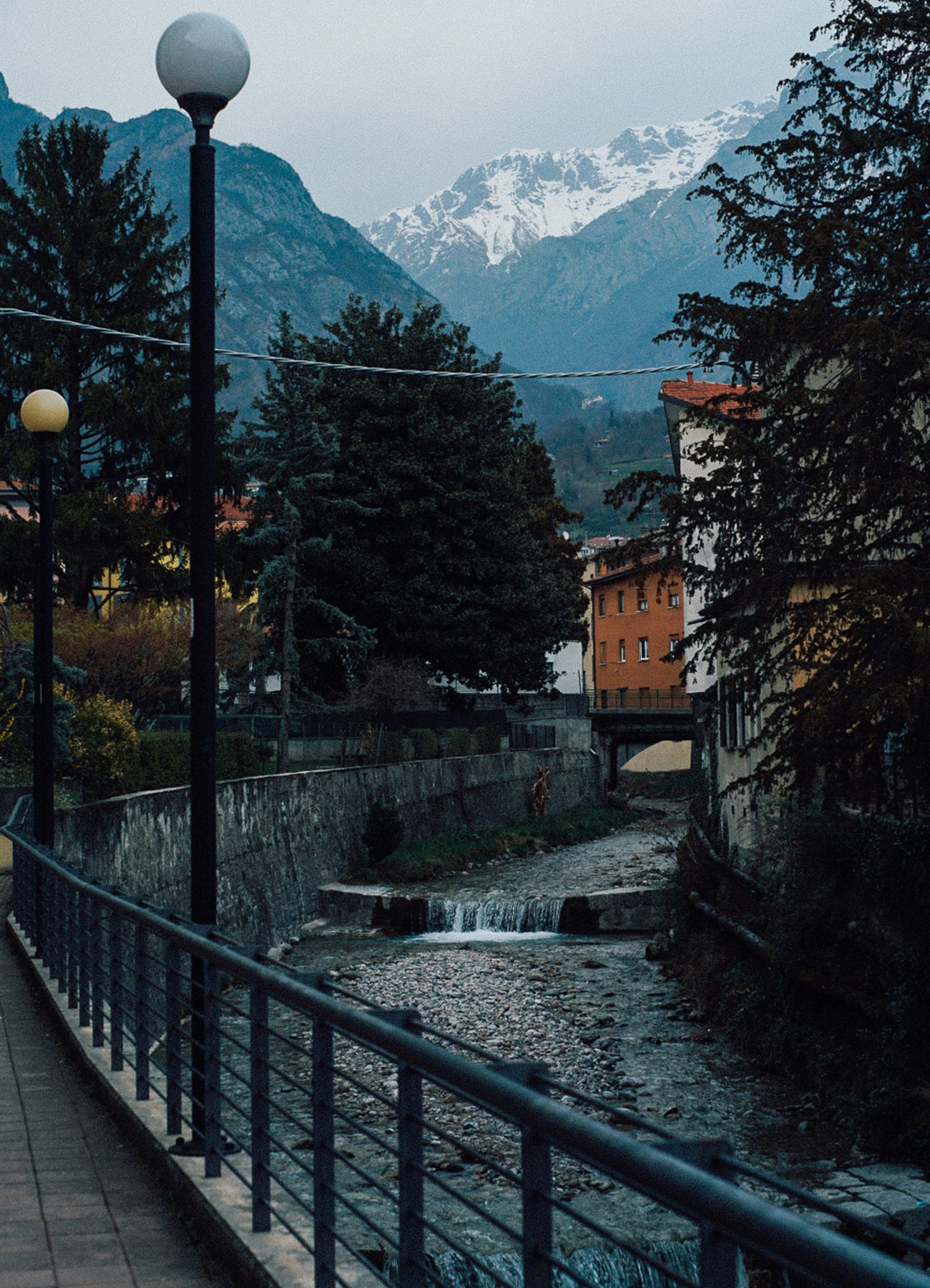
“It’s handbuilt and affordable” isn’t a phrase you hear all that often these days, particularly when referring to products made in Italy and especially not when said product is a motorcycle. However, as I learned while spending a few days in Mandello del Lario on the eastern shore of Lake Como, handbuilt and affordable are not mutually exclusive. Each of the new Moto Guzzi V7III models starts at under $10,000 — even the badass, lust-worthy V7III Carbon Dark. Of the three new special edition models, the Carbon Dark is the one that jumped out at me from the moment I laid eyes on the lineup. The V7III Rough looks sharp with a brushed aluminum tank, some black accents and light-duty knobby tires. The V7III Milano puts off a classy retro vibe with chrome pipes, chrome passenger grab bar and throwback side-by-side gauges. but that Carbon Dark is the one you want.

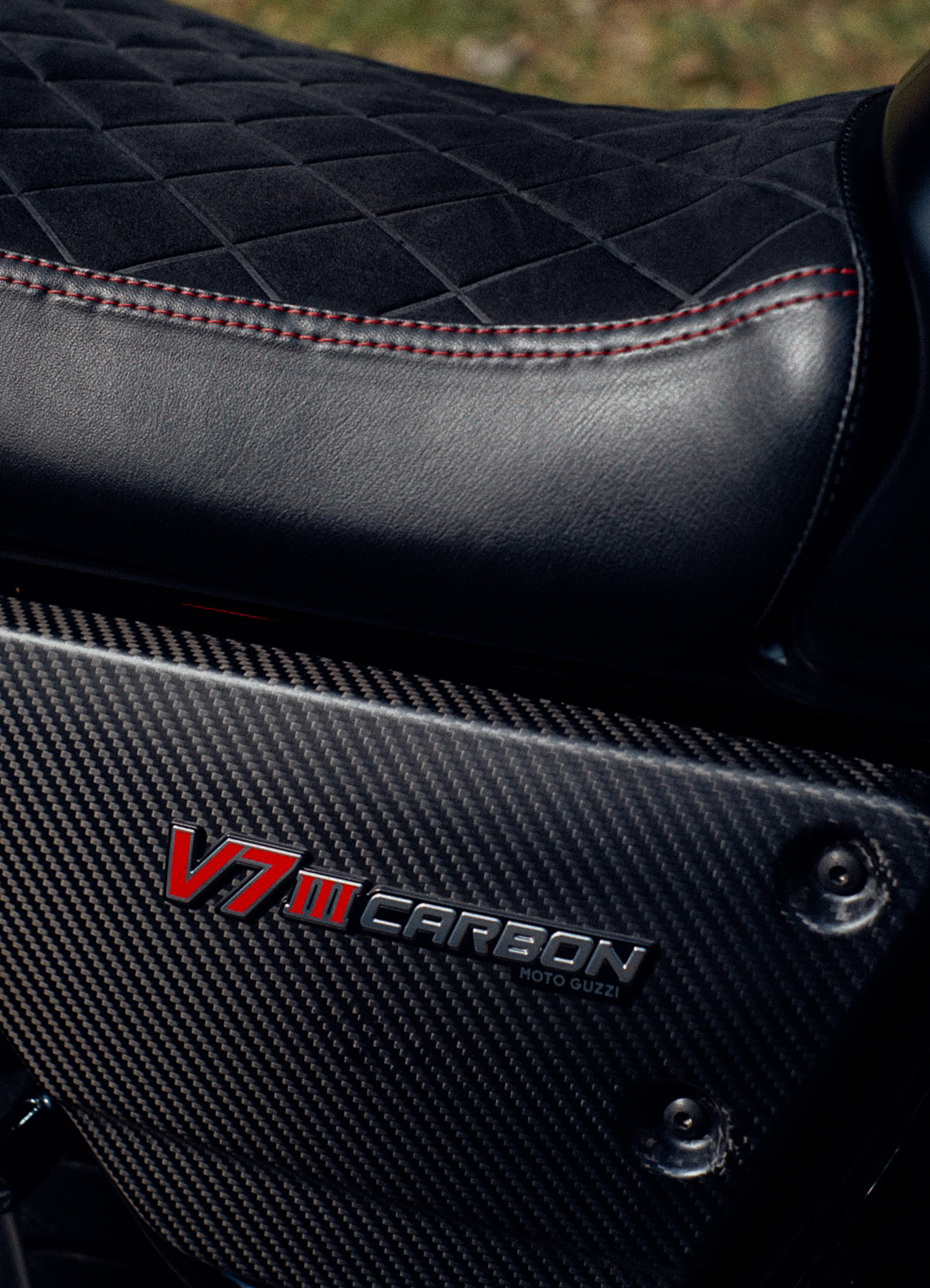
The Good: Limited to just 1,921 units, the Carbon Dark is a study in the tasteful use of matte black paint with red accents. The ever-prominent cylinder heads are painted red to match the Brembo brake calipers, the V7III and iconic Moto Guzzi eagle on the side of the gas tank. On top of the tank, a strip of carbon fiber with red Moto Guzzi text leading to a black anodized billet aluminum gas cap further sets the bike apart from the other special editions. What ties the whole bike together is the black Alcantara seat made with a brand new water repellent variant of the ultra-suede-like material — a higher grade material than what car companies are currently using.

Who It’s For: Those new to riding will enjoy the compliant nature of the bike and veterans will get a kick out how easy it is to toss around. Fans of design and style will also appreciate this bike to no end.

Watch Out For: Torque from the engine is good down low, but as you wind the bike out past 5,500 rpm, the engine runs out of breath. There’s not much happening other than steady if not lackadaisical acceleration. Also, I’d advise against aggressive leaning in right-hand turns as you’ll surely find the kickstand meeting the pavement.

Alternatives: The V7III competes with Ducati and Triumph’s entry-level offerings in their Modern Classics line and Scrambler selections. For the most part, Ducati and Triumph have the edge on power, but they also cost significantly more.

Review: From the minute I hopped on the V7III and rolled out the factory grounds, I felt comfortable on the V7III. The BMX-style bars were easy on my wrists; their placement dictated a comfortable upright riding position. Weaving through the town of Mandello established a baseline for the stability of the bike, which came in handy as the day wore on and the roads got increasingly more demanding.

Ease of use is a major draw for this bike and has been since the first version debuted in 1967. While there are certainly more powerful retro-style bikes on the market, I haven’t ridden one that I’ve connected with the way I connected with the V7III. While the tank and chassis remain quite similar to that original bike, thoughtful updates and constant refinement have made the V7III the great all arounder that it is. All the improvements introduced on the V7III last year — the lowering of the seat to 30.3 inches, the adjustable Kayaba shock absorbers, a revamped chassis front end — translate to a damn addictive experience.

Touring around the edge of Lake Como through long dark tunnels and narrow streets told me everything I need to know about the cruising capabilities of the bike. It’s stable at higher speeds and comfortable enough to ride without interruption for extended periods of time. It’s a bike you could regularly take out on the weekend and ride from point A to point B just for the hell of it. This mountainous terrain is what separates the southwestern and southeastern parts of Lake Como, and when I say mountainous, I mean it. But, I wouldn’t have it any other way as the setting perfectly complimented the style of the bikes that are built down below in Mandello.

Verdict: Moto Guzzi is offering a whole lot of bike for not a lot of money, which is exactly what needs to be happening in the motorcycle industry to attract new riders. With a custom parts catalog totaling over 1,000 pieces — more than 200 for the V7III alone — Moto Guzzi makes it easy for you to make the bike your own. These three special edition bikes each hit a niche style within the ‘retro-bike’ slot and any riders of any experience level would be foolish to overlook them. They’ll happily handle daily commuter duty, provide an excellent platform for aggressive modification.

What Others Are Saying:

• “It may have the same retro styling as the outgoing V7 II, but the III features a new chassis and shocks with improved damping characteristics to boost its agility..” — Jon Urry, MCN

• “The V7 III Stone has been my commuter, so I’m happy to say that the ergos are neutral and comfortable with a plush-ish seat that has kept this 6-foot-tall man’s back and money maker just fine on a daily hour cruise through Corolla-congested corporate San Diego.” — MAx Tanbara, Motorcycle.com

• “The engine buzzes and vibrates and gives great feedback but doesn’t have that strange engine torque behavior that you’ll find on some older BMW’s where they pull to one side when you’re on the noise. And unlike its Bavarian brethren, the shaft drive doesn’t really cause the rear end of the bike to buck up under acceleration – it’s all very level and sensible..” — Marlon Slack, Pipe Burn

Key Specs

Engine: 744cc Transverse V-Twin
Transmission: 6-speed
Horsepower: 51
Torque: 44 ft-lbs
Weight:460 lbs (curb weight)
Fuel Economy: 51 mpg

More Italian Motos

Ducati brought its iconic, entry-level roadster into the modern era, with an incredibly minimalistic approach. Read the Story

There’s Nothing Else on the Road Quite Like the Kawasaki H2 SX

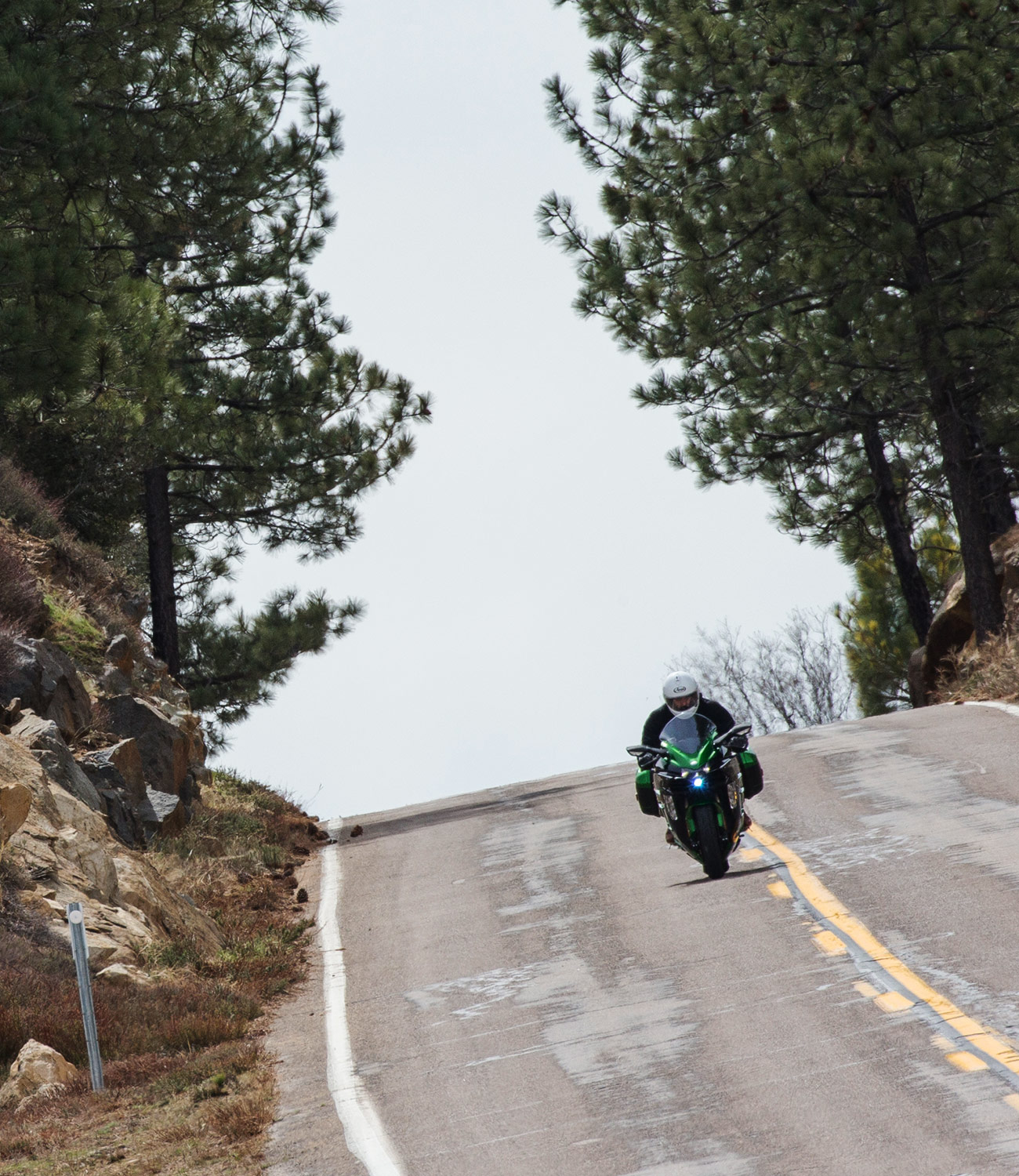
In the world of four-wheels, they go by ‘halo cars’: the vehicle that represents the brand’s cream of the crop. An aspirational product designed to capture the imagination with bleeding edge performance, technology and style. And since it debuted with a jaw-dropping, supercharged 300 horsepower ‘R’ version in 2014, the H2 line has held the halo title for Kawasaki and, arguably, the entire motorcycle industry.

But where the H2R, and its de-tuned civilian counterpart H2, were built with a focus on speed above all else, the H2 SX has been completely reworked and refined for comfort and everyday rider friendliness. That translates to ergonomics revised for a less aggressive riding position, an added rear seat to share in the fun and 58 liters of luggage-carrying capacity for extended jaunts. Don’t let the civilities fool you, though. The supercharged, 998cc inline-four engine still spools up a titanic 200hp, supplemented with a whirl from the impeller that constantly coaxes you for more throttle.

The Good: In an entirely counterintuitive way, Kawasaki found a way to deliver more bike for less money. Priced at $19,000, The H2 SX is the entry-level model in the supercharged, hyperbike family. And yet it comes equipped with a chassis, suspension and electronics combination that works harmoniously with one of the most tractable and blisteringly quick engines I’ve had the chance to experience. There are at least 200 hp on tap along with 101 lbs-ft of torque from this all-new version of the H2 powerplant.

Who It’s For: Speed-obsessed riders who aren’t keen on cramped sports bike ergonomics, and touring riders looking to work the ‘sport’ quotient back into their multi-day, asphalt-heavy escapes.

Watch Out For: While the ergonomics aren’t as aggressive as a traditional sports bike, they’re not nearly as comfortable as on a conventional sport-touring bike. There’s nothing wrong with the stock setup for sprints between fill-ups, but after our 200-plus mile day in the saddle, I was a bit tender at the wrists and on the rear.

Alternatives: There’s not much direct competition for the Kawasaki H2 SX SE, as it’s the only supercharged motorcycle currently available aside from other H2 variants. The Suzuki Hayabusa is about to celebrate its twentieth birthday, so until the next-generation ‘Busa comes along, the Kawasaki is unopposed. However, within Kawasaki’s own lineup, there’s also the much more affordable Concours 14, which is down on power in comparison but offers more comfortable ergonomics.

Verdict: Credit to Kawasaki’s partnership and their Gas Turbine and Aerospace unit for their incredible in-house-designed and -fabricated supercharger. It is a different design from the one found whirring away in the H2R; the SX’s version will spin up to 110,400 rpm at the engine’s 12,000 rpm redline and deliver over 32 psi of boost. It spins so fast that the blades break the sound barrier inside the housing, inches from your kneecap.

The manner in which the H2 SX transforms explosions into speed needs to be felt to be properly understood — the engine operates more like a warp drive than a traditional mill. Rolling onto the throttle turns the digital speedometer into a mess of pixels as the supercharger spools up more and more thrust. If you need to pass slower moving vehicles, there is plenty of torque down low to squirt by just about anything. The transmission has six gears, but you only ever need second and third to get from A to B with an intact license. To ensure riders are reigned in while learning the machine, Kawasaki equipped the SX with a full suite of rider aids — traction control, ABS, launch control, engine braking control and corner traction management — all of which operate seamlessly in concert with a Bosch Inertial Measurement Unit.

The Kawasaki H2 SX delivers one of the most unique riding experiences available today. Many bikes are fast, capable and composed but the SX, and especially the SE variant, is more than that. The new Kawasaki is a hyperbike that could pass as a commuter, blister a track day without breaking a sweat, take you (and a friend) away on a weekend escape and be the center of attention on any bike night.

What Others Are Saying:

• “It’s almost as if they’re a little bit worried some sports-tourer riders might be put off by the extremes of performance associated with supercharging.
No one should be put off. Supercharged doesn’t mean super-aggressive. For the Ninja H2 SX, it means super-powerful but also versatile and manageable.” — Steve Farrell, Visor Down

• “At the end of 200 miles, the motorcycle began to feel less ridiculous than it appears on paper. At first, it seems even more over the top than some of the historical absurdly powerful bikes, like the Suzuki Hayabusa, the Honda CBR1100XX Blackbird, or (I imagine) a ZX-14. But really, this is a big, fairly heavy bike that’s very well suited to its job — it just happens to be ridiculously fast.” — Lemmy, Revzilla Common Tread

• “There is no disappointment with the 2018 Kawasaki Ninja H2 SX SE. More sport than tour, even with the hard bags, the Ninja H2 SX SE expands the definition of what a sport touring motorcycle can be.” — Arthur Coldwells, Ultimate Motorcycling

Engine: 998cc, supercharged, inline-four
Horsepower: 206.7
Torque: 101 ft-lbs
Weight: 573.3 lbs
MSRP: $19,000
A More Affordable, Classic Approach From Kawasaki

With a return to their roots and a nod to an icon of the past, Kawasaki does nouveau-retro, right. Read the Story

The 2019 Honda CB300R Is a Modern Cafe Racer for Under $5,000

The market is so saturated with vintage and classically-styled motorcycles that it’s almost getting, well, old. There’s no denying the Ducati Scrambler Cafe Racer or the Kawasaki Z900RS are pretty bikes, but the design that’s defining the current era of motorcycles doesn’t even belong to this decade. Honda seems to be the only brand bucking the trend and the company is doubling down with the 2019 CB300R.

Originally unveiled at EICMA late last year, the CB300R is billed by Honda as a “Neo-Sports Café,” but that’s just a fancy name for the bike into which the original cafe racer evolved. All the trappings of a great, small-engine city bike are there; the CB300R tips the scales at 317 lbs, has a low 31-inch seat height and a 286cc liquid-cooled, single-cylinder engine that is sure to return ridiculous mpg.

Don’t expect much in the way of groundbreaking tech, however. The CB300R, like its bigger sibling the CB1000R, is a pretty pared down ride. You’ll get an LCD gauges and full LED lighting… and that’s about it. But the ABS model will only run you back $4,949 (the non-ABS costs $4,649). In a world where old is the new ‘new,’ it’s good to see Honda committing to styling that is new and selling it for a bargain.

More Great City Bikes

Navigating any concrete jungle can be hell — especially if you call the asphalt wilds your commute. These five bikes make riding through the city much easier for any kind of rider. Read the Story

The First Motorcycle Helmet With a Crash Detection System

Safety and Style

The First Motorcycle Helmet With a Crash Detection System


Quin will be the first brand to bring a helmet motorcycle to market with an integrated crash detection system. It uses built-in Bluetooth technology to sync with your phone through an app, where you can take calls, listen to music, navigation and use any other useful apps while riding. That’s nothing new — where the Quin helmets standout is if and when you do go down on a ride, the system automatically sends out a signal to your listed emergency contacts. And, in a less severe situation, say, running out of gas on the side of the road, you can hit the S.O.S beacon and call for help.

A helmet is unquestionably the most critical piece of gear you can wear while riding your motorcycle. Since it was introduced and made mandatory nearly the world over, there have been advances in style and design, material and structural strength, but nothing groundbreaking as far as integrated technology. Quin looks to be filling that gap and all funded from a Kickstarter that met its 100% goal in 48 hours.

Another Top-Of-Line Motrcycle Helmet

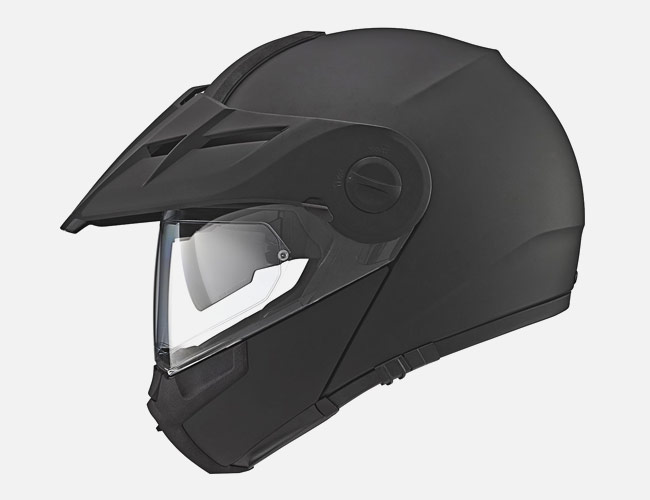
The E1 Adventure inherits all the best parts and design of the C3 Pro, the helmet it’s based on, and then takes them off-road. Read the Story

A New ADV Motorcycle Suit I Would Trust to Wear On Another 7 Day Ride

Without Hesitation

A New ADV Motorcycle Suit I Would Trust to Wear On Another 7 Day Ride


Aether Apparel has a knack for making incredibly rugged and tactical motorcycle gear while eschewing the over-designed style that runs rampant throughout the market.

Both the Mojave jacket and pants sport Aether’s signature minimalist style, but it’s the utility that the brand pairs to its design that earned its reputation. They’re made from heavy-duty yet breathable Halley Stevensons cotton canvas 100% abrasion resistant.

Normally, I wouldn’t be so trusting of gear that just hit shelves, but last summer I had the opportunity to put some Aether Range pants to the test, riding up to Alaska from Seattle, Washington. The Mojave looks like the upgraded version, only with couple more usable pockets and some crucial ventilation. If Aether’s new Mojave getup keeps the level of performance as the older Range models, I would not hesitate to take another week off this summer and head north in them.

Today in Gear

The best way to catch up on the day’s most important product releases and stories. Read the Story

5 Best Commuter Motorcycles of 2018

This list serves as a guide to commuter, motorcycles. It’s not an official segment of motorcycles, but certain lifestyles demand daily transportation in and out of urban areas, and a small motorcycle is the perfect answer. The five motorcycles included vary in size, style and price but are all perfect for navigating the daily grind.

Prefer to skip directly to the picks? Click right here.

The Short List

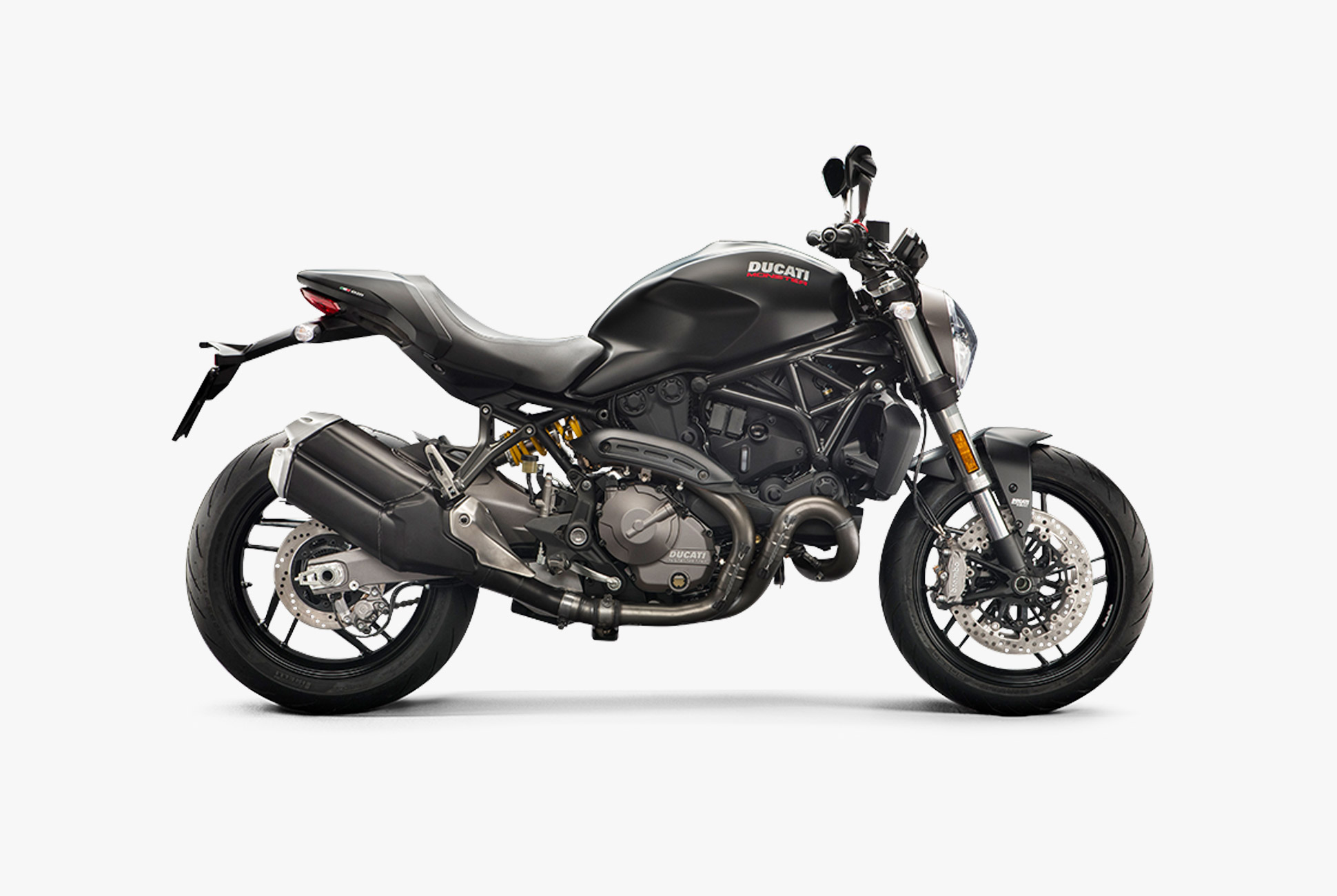
Best All-Around Commuter: 2018 Ducati Monster 821
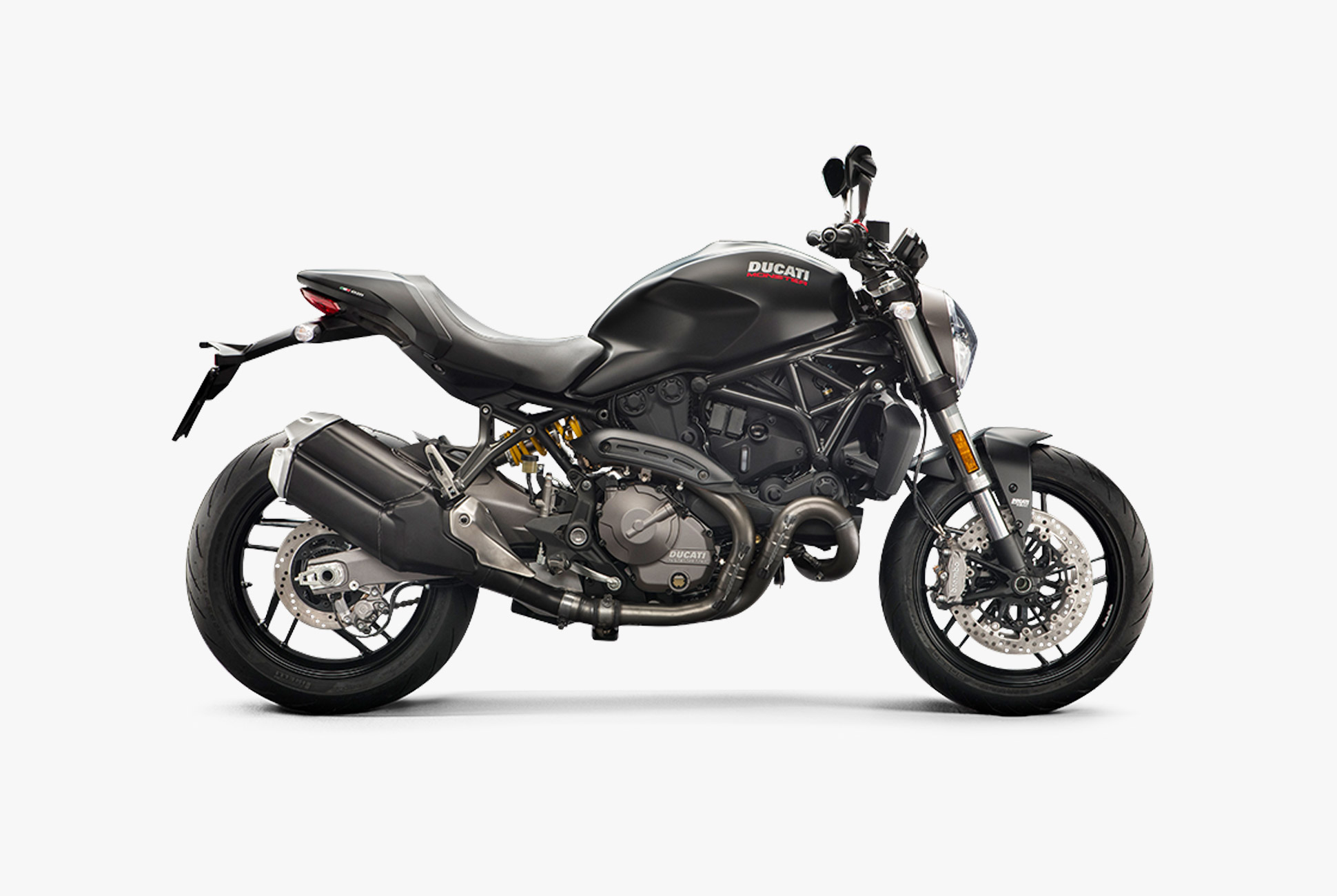


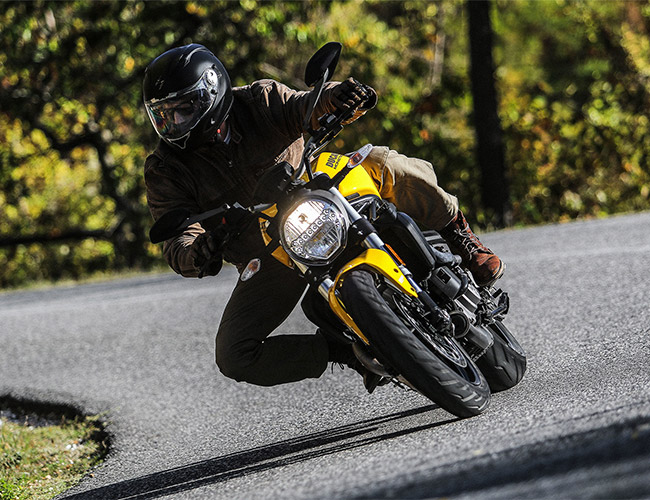
In the Ducati Monster lineup, the 821 risked falling into obscurity as the middle child. The 797 is prized as the approachable, entry-level Ducati since the Scrambler line spiraled off into its own sub-brand. The Monster 1200 might have a near identical design to the little 797, but if you look closer, it’s a tech-laden superbike with no fairings and serious power. Instead of being a slightly bigger version of the 797, the 821 borrows supersport-level tech from the 1200 and brings it down to an approachable level. It gets the best of all worlds — the controllable and lightweight nature of the 797, plus a little extra shove from the engine and the top-of-the-line tech and control systems from the 1200. And it costs just over $11,000.

Who It’s For: The commuter who doesn’t need the power of a bigger engine, but wants the tech that seemingly only the bigger, more expensive bikes get.

What’s Good: “For some, and understandably so, the 147-horsepower Monster 1200 may prove to be too much bike and the 797 too small and rudimentary. The 821 comes in as the Goldilocks option: it utilizes the same frame, brakes, tank and headlight, the beautiful if intricate, color TFT instrument display and traction control and ride mode system as the more expensive 1200 — but delivers it all in a much more manageable, affordable package. That seems to be the magic of the Monster. The Scrambler may be its own sub-brand, but the Monster has its own following under the larger Ducati umbrella. It offers the same styling with different levels of performance, attracting a wider array of riders. It succeeds with an architecture Ducati got right the first time and has simply fined tuned over the years in small, minute increments like Porsche has done with the 911.” – Bryan Campbell

What to Watch Out For: The term ‘all-new’ for 2018 has to be used loosely. “The engine in the new 821 is the same 821cc Testastretta L-Twin engine from the outgoing model but gets a host of modern hardware from the bigger, more technologically advanced 1200. Looking at the 797 and the 821 side-by-side, you might say they’re both entry-level models; if the 797 is the base model, with no options ticked, the 821 is the upgraded sport package. – Bryan Campbell

Value: There are very few other bikes at this price point with this much technology on board, though that much tech is becoming increasingly more common. Aside from the power deficit and the yellow paint job option, the 821 is incredibly similar to its big brother, the Monster 1200 — a bike that starts around $17,000.

Design: “Ducati’s Monster married a superbike engine to a Super Sport frame and created somewhat of a new genre with the “naked” sportbike — a modern cafe racer of sorts. It was an undeniable hit. It was different. It was beautiful. It could handle the canyon roads as well as a race bike could tackle the track and it came with three different engine options: the M600, M750, and M900. Until now, we’ve had the all-new Monster 1200 and 797; and now, the latest update: the middleweight 821. For 2018, in keeping with tradition, Ducati brought its iconic, entry-level roadster into the modern era with an incredibly minimalistic approach.” – Bryan Campbell

Verdict: “The 821 certainly isn’t a paradigm shift in the Monster universe, but what it gets right is bringing upper-echelon sportbike technology within the grasp of new riders — or riders not interested in spending nearly $18,000 for what should be standard on any modern sport bike.” – Bryan Campbell

What Others Are Saying:
“Stylish yet utilitarian, practical yet exciting, thoroughly modern but consciously linked to its glorious past, the 821, like Italy itself, blends opposing forces in a harmonious whole, forging its own identity in the process. The 821 isn’t just the Monster 1200’s little sibling. It’s a user-friendly package suitable for less experienced riders, but it’s also competent and engaging in ways that appeal to riders looking for a motorcycle distinguished, not by a single dominant sensation, but by the parity of its parts in pursuit of motorcycling bliss.” – Cycle World

“By far the biggest change, though, is to the electronics, and this comes in two parts. First, the old, letterbox-esque LCD dashboard has been consigned to the trash can in favor of a thoroughly modern color TFT display. Second, Ducati have thrown a full-on electronics package as standard at the 821 and that means full ride-by-wire with 8-level configurable traction control, three-level configurable ABS, and three engine maps.” – Ride Apart

“In the end, I think the new Monster would make a fantastic and stylish first Ducati for any rider with more than six months of riding experience under their belt. Ducati wasn’t B.S.-ing when it claimed the new 821 is the “Best Balanced Monster.” – Motorcycle.com

Engine: 821cc L-Twin
Horsepower: 109
Torque: 63 lb-ft
Price: $11,995

Best Value Commuter: 2017/18 Kawasaki Z650
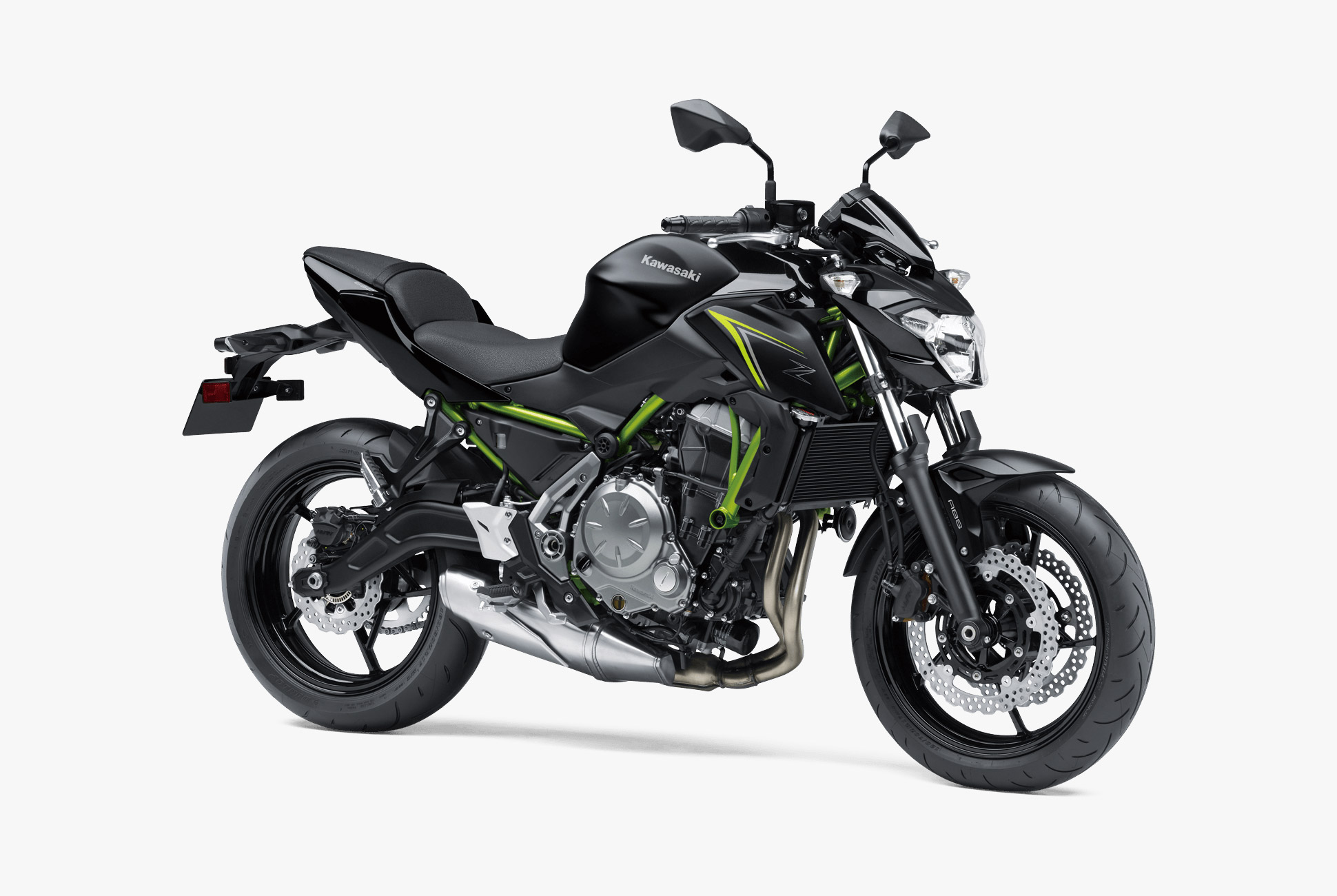


In the middle-weight naked bike category, the bikes are so closely matched that any scrutiny has to be done under a microscope. Pricing is all evenly matched, though the Kawi is one of the more affordable options compared to its Japanese rivals (even on the ABS model at $7,399) and also edges out the competition on styling with lively pearl white plastics and an electric green trellis frame. Where the Z650 really shines is under power in the mid-range, right where you need it for passing traffic in day-to-day commuter traffic.

Who It’s For: The rider who wants to save a money rather than shell out for the absolute best in class but still wants to enjoy tight and twisty back roads on the way home from work.

What’s Good: “Team Green developed this bike as the bigger brother of their own monkey-bike, the Z125 Pro. That means power took a backseat to flickability during development. Which is why Kawi only breathed on their tried-and-tested 649cc parallel-twin engine, opting to smooth out delivery and provide grunt where it was needed most — in the mid-range.” — Matt Neundorf

What to Watch Out For: To be a better bike for a wider audience, Kawasaki set up the front forks more lightly sprung than usual. It makes the bike more user-friendly to novice riders but aggressive riders might overdo it and find the front end diving under hard braking.

Value: For a modern, naked sports bike to have this level performance and a $6,999 price tag hanging off the bars, it’s a bargain.

Verdict: “You feel this as soon as you settle into the saddle. During stop-and-go stints in downtown Santa Monica, there were no struggles to stand flat-foot at lights, and the bike never felt like it could get away from me. The revised chassis geometry and slim, straight bars make 90-degree, grid-street negotiations a breeze, meaning this thing will do well for urban commuters too.” — Matt Neundorf

What Others Are Saying:
“In all, the Z650 satisfies nearly all of the prerequisites for an affordable, mid-level, sport-inspired machine. In terms of performance, nearly all of the systems found on the Z650 have massive amounts of potential to take a rider with little to no experience, and allow for a great deal of maturation to take place; a rider can develop their skills for a good while, before stepping to the next rung on the proverbial ladder.” – Ultimate Motorcycling

“As it stands, the bike is a great addition to the Z family, and proof of what Kawasaki has learned from years spent with the Z1000 and Z800 (both of which will be replaced by the Z900 for 2017). And it’s a great option for those naked bike lovers who’ve been waiting for a mid-displacement twin with Team Green badges on its side.” – Cycle World

Engine: 649cc parallel twin
Horsepower: 63
Torque: 42 lb-ft
Price: $6,999

Introduction

Navigating any concrete jungle can be hell — especially if you call the asphalt wilds your commute. Driving into the city is certified insanity and public transportation isn’t always the most reliable (which is the understatement of the year for any New Yorker). That only leaves one serious option: a motorcycle. In the city, agility trumps power and bulk is the enemy of timeliness. To get to work on time what you need is a slender, nimble bike that looks good and handles well — here are five of the best motorcycles for any city-dweller.

Terms to Know

Sport Standard: A style of motorcycle with an up-right riding position, with handle bars close enough to the rider not to neccesitate and agressive lean or reach.
Naked style: A motorcycle lacking plastic fairings, exposing the engine and transmission.
Twisties: When a road has many, tight and winding turns.
Lane splitting: Riding your motorcycle between the lanes or rows of slow moving cars or stopped traffic. California is the only state in the U.S. to officially legalize lane splitting.
Flickability: The ease at which a bike can be quickly change direction, leaning from one side to the other.

What Makes a Great City Motorcycle?

Surviving city traffic — mad cabbies, delivery trucks and frantic commuters — on a motorcycle requires patience, quick reflexes and steel nerves from a rider and it’s crucial the motorcycle itself can keep up. A compact, slender bike is a good place to start. Dodging potholes and traffic and going for narrow or closing gaps between cars is the norm when you’re cruising down a crowded avenue or side street. To be able to get any of that done with ease a good city motorcycle utilized that smaller silhouette by being lightweight and flickakble. Of course, bigger bikes are at a disadvantage there but if they can hide their weight with a nice and low center of gravity, heavier bikes can ride like they’re half the size.

Power is important but only if it’s in a usable spot in the rev range. There’s no use having chart-topping power and torque if you have to be flirt with the redline to see any of it. Motorcycles that work best on city streets have a healthy low- and mid-range — basically where the engine speed lives when you’re coming off light or traveling at traffic speeds.

When you are dipping and diving, weaving your way through town, your attention has to be at an all-time high. And not surprisingly, if you’re not physically comfortable on your bike, you’re going to be distracted. That’s not just the ergonomics of the seating position either. Although it is incredibly important that you’re not stuffing yourself onto the bike and cramping up your needs, riding comfort also stems from a great suspension setup. A super stiff suspension setup, where you can feel every rut, rock and crack can not only be bone shatteringly uncomfortable but can lead to a nervous, twitchy and unsettled bike.

It’s a tall order to build a bike that’s versatile enough to handle city streets and still have the capabilities to hop on the highway to get out of town. But when manufacturers get the formula right, a city-bound motorcycle can be an incredible asset in fighting back the daily grind.

Buying Guide

What’s in This Buying Guide

5 Best Urban Motorcycles of 2018

Best All-Around Commuter: 2018 Ducati Monster 821


In the Ducati Monster lineup, the 821 risked falling into obscurity as the middle child. The 797 is prized as the approachable, entry-level Ducati since the Scrambler line spiraled off into its own sub-brand. The Monster 1200 might have a near identical design to the little 797, but if you look closer, it’s a tech-laden superbike with no fairings and serious power. Instead of being a slightly bigger version of the 797, the 821 borrows supersport-level tech from the 1200 and brings it down to an approachable level. It gets the best of all worlds — the controllable and lightweight nature of the 797, plus a little extra shove from the engine and the top-of-the-line tech and control systems from the 1200. And it costs just over $11,000.

Who It’s For: The commuter who doesn’t need the power of a bigger engine, but wants the tech that seemingly only the bigger, more expensive bikes get.

What’s Good: “For some, and understandably so, the 147-horsepower Monster 1200 may prove to be too much bike and the 797 too small and rudimentary. The 821 comes in as the Goldilocks option: it utilizes the same frame, brakes, tank and headlight, the beautiful if intricate, color TFT instrument display and traction control and ride mode system as the more expensive 1200 — but delivers it all in a much more manageable, affordable package. That seems to be the magic of the Monster. The Scrambler may be its own sub-brand, but the Monster has its own following under the larger Ducati umbrella. It offers the same styling with different levels of performance, attracting a wider array of riders. It succeeds with an architecture Ducati got right the first time and has simply fined tuned over the years in small, minute increments like Porsche has done with the 911.” – Bryan Campbell

What to Watch Out For: The term ‘all-new’ for 2018 has to be used loosely. “The engine in the new 821 is the same 821cc Testastretta L-Twin engine from the outgoing model but gets a host of modern hardware from the bigger, more technologically advanced 1200. Looking at the 797 and the 821 side-by-side, you might say they’re both entry-level models; if the 797 is the base model, with no options ticked, the 821 is the upgraded sport package. – Bryan Campbell

Value: There are very few other bikes at this price point with this much technology on board, though that much tech is becoming increasingly more common. Aside from the power deficit and the yellow paint job option, the 821 is incredibly similar to its big brother, the Monster 1200 — a bike that starts around $17,000.

Design: “Ducati’s Monster married a superbike engine to a Super Sport frame and created somewhat of a new genre with the “naked” sportbike — a modern cafe racer of sorts. It was an undeniable hit. It was different. It was beautiful. It could handle the canyon roads as well as a race bike could tackle the track and it came with three different engine options: the M600, M750, and M900. Until now, we’ve had the all-new Monster 1200 and 797; and now, the latest update: the middleweight 821. For 2018, in keeping with tradition, Ducati brought its iconic, entry-level roadster into the modern era with an incredibly minimalistic approach.” – Bryan Campbell

Verdict: “The 821 certainly isn’t a paradigm shift in the Monster universe, but what it gets right is bringing upper-echelon sportbike technology within the grasp of new riders — or riders not interested in spending nearly $18,000 for what should be standard on any modern sport bike.” – Bryan Campbell

What Others Are Saying:
“Stylish yet utilitarian, practical yet exciting, thoroughly modern but consciously linked to its glorious past, the 821, like Italy itself, blends opposing forces in a harmonious whole, forging its own identity in the process. The 821 isn’t just the Monster 1200’s little sibling. It’s a user-friendly package suitable for less experienced riders, but it’s also competent and engaging in ways that appeal to riders looking for a motorcycle distinguished, not by a single dominant sensation, but by the parity of its parts in pursuit of motorcycling bliss.” – Cycle World

“By far the biggest change, though, is to the electronics, and this comes in two parts. First, the old, letterbox-esque LCD dashboard has been consigned to the trash can in favor of a thoroughly modern color TFT display. Second, Ducati have thrown a full-on electronics package as standard at the 821 and that means full ride-by-wire with 8-level configurable traction control, three-level configurable ABS, and three engine maps.” – Ride Apart

“In the end, I think the new Monster would make a fantastic and stylish first Ducati for any rider with more than six months of riding experience under their belt. Ducati wasn’t B.S.-ing when it claimed the new 821 is the “Best Balanced Monster.” – Motorcycle.com

Engine: 821cc L-Twin
Horsepower: 109
Torque: 63 lb-ft
Price: $11,995

Best Value Commuter: 2017/18 Kawasaki Z650


In the middle-weight naked bike category, the bikes are so closely matched that any scrutiny has to be done under a microscope. Pricing is all evenly matched, though the Kawi is one of the more affordable options compared to its Japanese rivals (even on the ABS model at $7,399) and also edges out the competition on styling with lively pearl white plastics and an electric green trellis frame. Where the Z650 really shines is under power in the mid-range, right where you need it for passing traffic in day-to-day commuter traffic.

Who It’s For: The rider who wants to save a money rather than shell out for the absolute best in class but still wants to enjoy tight and twisty back roads on the way home from work.

What’s Good: “Team Green developed this bike as the bigger brother of their own monkey-bike, the Z125 Pro. That means power took a backseat to flickability during development. Which is why Kawi only breathed on their tried-and-tested 649cc parallel-twin engine, opting to smooth out delivery and provide grunt where it was needed most — in the mid-range.” — Matt Neundorf

What to Watch Out For: To be a better bike for a wider audience, Kawasaki set up the front forks more lightly sprung than usual. It makes the bike more user-friendly to novice riders but aggressive riders might overdo it and find the front end diving under hard braking.

Value: For a modern, naked sports bike to have this level performance and a $6,999 price tag hanging off the bars, it’s a bargain.

Verdict: “You feel this as soon as you settle into the saddle. During stop-and-go stints in downtown Santa Monica, there were no struggles to stand flat-foot at lights, and the bike never felt like it could get away from me. The revised chassis geometry and slim, straight bars make 90-degree, grid-street negotiations a breeze, meaning this thing will do well for urban commuters too.” — Matt Neundorf

What Others Are Saying:
“In all, the Z650 satisfies nearly all of the prerequisites for an affordable, mid-level, sport-inspired machine. In terms of performance, nearly all of the systems found on the Z650 have massive amounts of potential to take a rider with little to no experience, and allow for a great deal of maturation to take place; a rider can develop their skills for a good while, before stepping to the next rung on the proverbial ladder.” – Ultimate Motorcycling

“As it stands, the bike is a great addition to the Z family, and proof of what Kawasaki has learned from years spent with the Z1000 and Z800 (both of which will be replaced by the Z900 for 2017). And it’s a great option for those naked bike lovers who’ve been waiting for a mid-displacement twin with Team Green badges on its side.” – Cycle World

Engine: 649cc parallel twin
Horsepower: 63
Torque: 42 lb-ft
Price: $6,999

Best Big Engine Bike: 2018 Ducati Multistrada
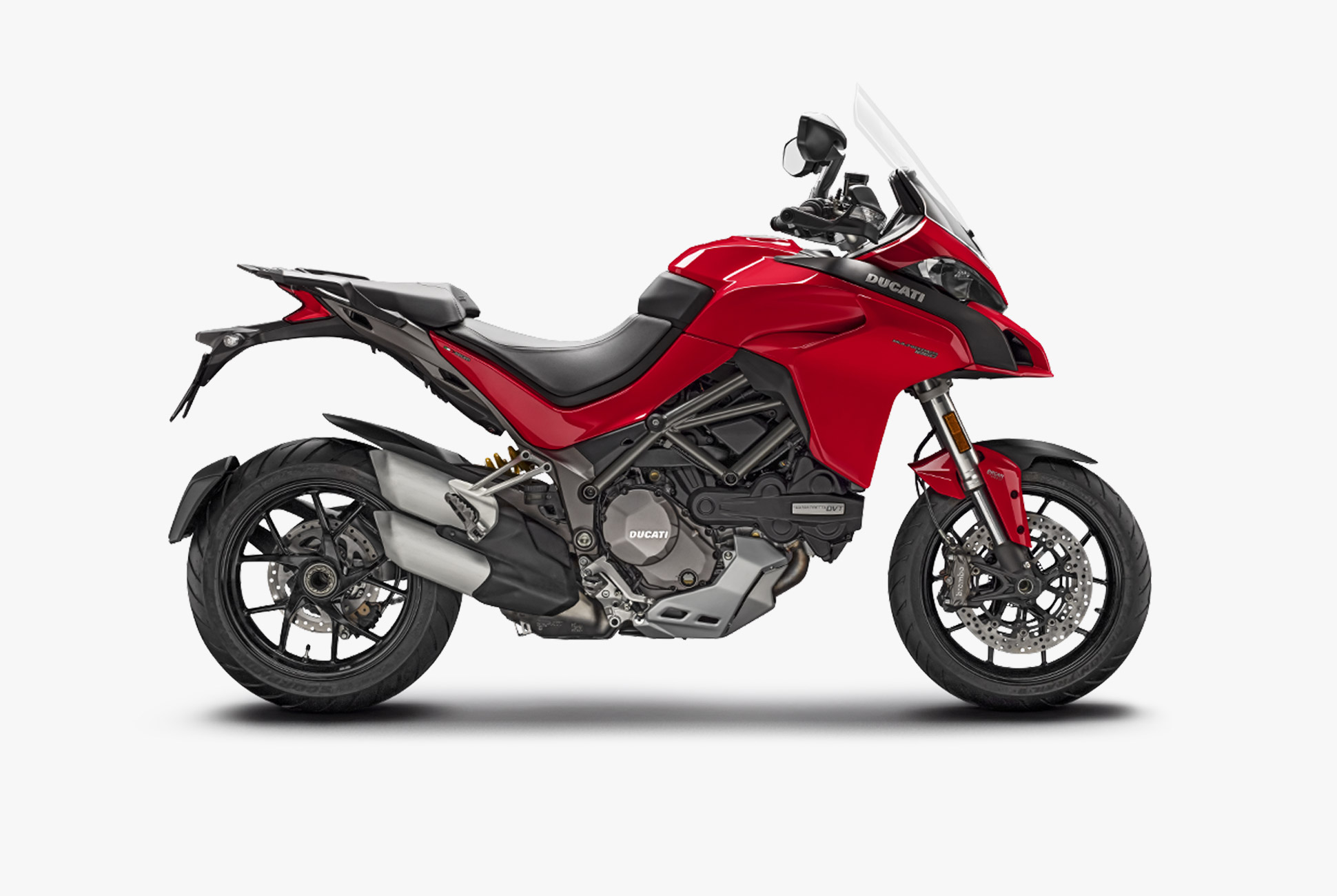


As far as styling and sound go, the Multistrada can be polarizing. What’s not up for debate, though, is how well the big adventure sport bike rides and tackles turns. The secret is the phenomenal Skyhook semi-active suspension and the clever way Ducati engineers hid the bulk of the Multistrada’s 518 pounds. It has the looks of an adventure bike, but when you start to flick the ‘Strada back and forth, navigating traffic and city streets, it’s easy to forget it can handle a mountain pass or two as well.

Who It’s For: The long distance commuter.

What’s Good: “The high-visibility LED graphic display makes swapping riding modes and adjusting suspension settings a simple task, displaying them in simple, visual terms. With a dry weight of 467 pounds, the Multistrada 1260 feels light and agile, albeit a bit tall (seat height is adjustable from 32.5-33.3 in), which makes maneuvering the bike in and out of parking spaces somewhat difficult if you’re a shorter rider.” — Justin Coffey

What to Watch Out For: “Don’t expect to take the new 1260 off-road, as its 17-inch cast Marchesini wheels are more adept at eating up the asphalt than dirt.” — Justin Coffey

Value: The sports-adventure bike category is a tough one to navigate — nearly every manufacturer offers one at this point and they’re all similarly priced. The Ducati, though, has style to go with its tech and performance.

Design: The Multistrada 1260 feels much like the outgoing 1200cc model. Riding position stays the same – upright, comfortable, with wide handlebars and ample wind protection thanks to the on-the-fly adjustable windscreen. With the longer wheelbase, the new 1260 is more confident in corners, more noticeably so in the faster, sweeping curves on the island of Gran Canaria. — Justin Coffee

Verdict: “Ducati’s Multistrada was designed to offer the owner a variety of options. From taking the long way home to riding the length of South America, the Multistrada is capable of many tasks, although it excels at making twisty (paved) roads disappear into the distance. Locking luggage comes standard (optional aluminum panniers are available from Touratech), as do heated grips, keyless ignition, a tire pressure monitoring system and a quick-shift function (clutch-less up- and downshifts, available on the S and Pikes Peak models). With its upright riding position and multiple ride modes, the new 1260 can transform from a docile urban commuter to an aggressive sport-touring machine with the push of a few buttons.” — Justin Coffey

What Others Are Saying:
“So much of what has made the Multistrada a popular machine since 2010 is captured wholly in the new 1260. The engine is the biggest improvement. Ducati claims six additional ponies over the 1200, but it doesn’t really feel faster. The longer wheelbase makes it less prone to wheelie, I’m sure—mostly it’s how linear the power delivery is that made me smile. It’s happy to lug around town, and has a fat midrange that won’t disappoint.” – Cycle World

“The handling of the Multistrada 1260 is superb for a motorcycle of its size. At a claimed 511 lbs wet and with a 62.4-inch wheelbase, I was pleasantly impressed with how precise and light the front end felt and how quickly the entire motorcycle could be flicked from side to side.” – Motorcycle.com

Engine: 1262 90-degree L-twin
Horsepower: 158
Torque: 95.5 lb-ft
Price: $18,695+

Most Stylish: 2018 BMW R NineT Urban G/S
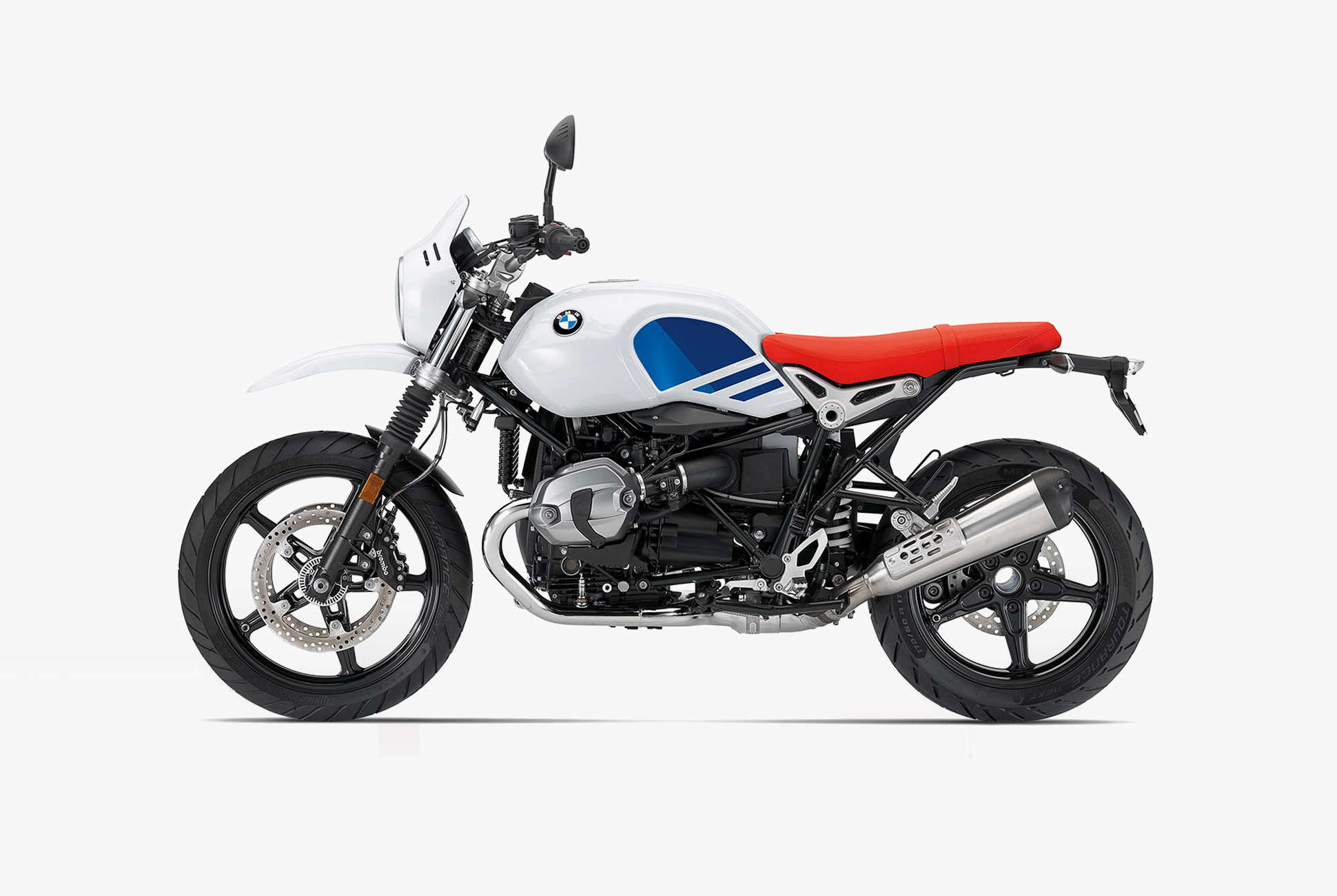


The heritage line at BMW is a tad confusing. The R NineT that launched the line, though it’s a pretty bike, at $15,000 seems rather tame. It does have the technology and power to warrant a price tag around that limit, but the Urban G/S not only looks miles better, it’s more affordable as well. Granted, though it’s more pared down, tech-wise, it still handles just as well as the R Nine T its based on. A Dakar racer it is not, but while weaving through traffic downtown few things look cooler.

Who It’s For: The rider who wants iconic style and design cues blended into a modern BMW.

What’s Good: “Calling it a new model is a touch misleading, though, because it’s essentially just a restyled R nineT Scrambler — except better looking. A high front fender, nose fairing and the iconic combination of red seat and blue tank graphics over a white paint job bring out the best in the R NineT’s styling. The exhaust differs from the Scrambler’s as well, but the rest of the running gear — like the compact analog-digital combo speedo — is identical. It even comes standard with the Scrambler’s alloy wheels, but the optional spoked wheels (pictured) are the ones you want. As a styling exercise, there’s no doubt the Urban G/S is a home run.” – Wesley Reyneke

What to Watch Out For: Where the original G/S that this bike takes most of its inspiration from was known for dominating Dakar, the Urban G/S is not as off-road savvy. It has a few design touches here and there that would help it do better on a dirt than the R NineT it’s based on, but for the most part, it’s just that: design touches.

Value: It might be a slightly paired down version of the more expensive R NineT, but there’s no doubting it looks better. Saving around $3,000 doesn’t hurt either.

Design: “The Urban G/S’s upright ergonomics make it all-day comfortable, but you’ll eventually pine for a cushier saddle, if you do find yourself in the saddle. Its 485-pound form factor won’t give you supermoto-like levels of handling, but the low center of gravity makes it relatively easy to muscle through turns. It’s a deceptively compact motorcycle.” – Wesley Reyneke

Verdict: “The Urban G/S does have incredible potential to be customized beautifully, to be made unique, to be made your own. If customization isn’t your thing, that shouldn’t turn you away. Out of the box, the Urban G/S is a great-looking and well-performing motorcycle. Even if you won’t actually race across the desert with it, it’ll make you feel like you can.” – Wesley Reyneke

What Others Are Saying:
“The heritage the Urban G/S pays tribute to is reminiscent of the old R80 G/S, a motorcycle that basically invented the adventure-touring category. In its time, dirt bikes were lightweight, single-cylinder machines. The original G/S was a street bike fitted for off-pavement duty, a motorcycle made for exploring. The modern version, the Urban G/S, really is no different..” – Revzilla

“The thing is, while none of the other models have really struck my fancy, I really like the R NineT Urban G/S. BMW seemed more willing to admit the Urban G/S is not an adventure bike but a daily bike for people who loved that first adventure bike and who are moved by the styling..” – Cycle World

Engine: air- and oil-cooled 1,170cc flat-twin
Horsepower: 110
Torque: 85 lb-ft
Price: $12,995

Best All-Electric Option: 2018 Zero DS ZF13.0 +POWER TANK


There’s an argument to be made that motorcyclists have a better understanding of torque than most. Sitting so close to the fulcrum point at the wheel, with any amount of twist from the engine you can easily feel the forces at work. Now consider that one of the defining characteristics of electric vehicles is their maximum torque is available from zero RPM — full power can be instantaneous and available throughout the rev range. When you need to make a last minute pass or get ahead of traffic off the line, an electric motorcycle can spoil a rider. The Zero DS ZF13.0 +POWER TANK is admittedly on the expensive side for the bike that it looks like, however, having 188 miles per charge is a mileage stat not many other bikes can boast. Efficiency is the Zero DS ZF13.0 +POWER TANK, but the way it sends power to the rear wheel is addictive and a great way to spice up any commute.

Who It’s For: The eco-concsious commuter who has a taste for neo-futurism and appreciates that quality power doesn’t mean paying through the teeth at the pump.

What’s Good: Even without the Power Tank option added, the DS gets better city mileage than almost any other bike in its price bracket or power class. Spring for the Power Pack and the DS ZF13.0 increases its range from 147 miles to 188 miles. In other words, more than enough to stifle any lingering range anxiety.

What to Watch Out For: You’re paying for the battery performance, technology and capabilities. Where the Zero falls short is the overall refinement. The plastics seem to be on the cheaper side of the spectrum. But if you can look past that, the DS’s 188-mile range makes it an incredible commuter.

Value: As mentioned, the plastics and overall refinement of the Zero DS falls a tad short, but the better range and money saved at the pump is really why you’re buying this. It’s no electric-assist pedal bike either. Aside from the lack of exhaust note, this is a genuine motorcycle and should be looked at as such. Not many other motorcycles at this price point can claim the same endurance.

Design: The DS design lands somewhere in the gray area between the dirt world and sports standard city bike. That’s not necessarily a bad thing — giving off the peppy character of a scrambler or dual sport while retaining the practicality and comfort of a city bike helps the DS stand out. Oddly, its the complete lack of noise as you ride by that catches the attention of most.

Verdict: There’s a lot to go back and forth on with electric bikes — the lack of sound, the range anxiety, the lack of gears or on some, the pointless gears. But the DS can handle corners well enough (despite being 457-lbs) and will go further than anything else you have in your garage on two wheels. Not to mention it’s one fewer reason to vist the gas station and give them money.

What Others Are Saying:
“Basically, with some cute bodywork and clubman bars, this bike would be the perfect scrambler. Like all Zero motorcycles, it’s best as your daily commuter, but if you really need to do those 100-mile Sundays in the canyons, or just have a long distance commute, there’s always the power tank, which gives it an additional 25 miles at Highway/City combined. That 25 miles of range comes at a price of $2,695 and 44 lbs of added weight.” – Clean Technica

“Zero DS is pleasurable in virtually any riding environment. It’s not your run of the mill electric bicycle “wannabe” motorcycle, but the real deal. If there were a negative issue, it would be that it’s so quiet that other motorists are often unaware of your presence, requiring extra vigilance on your part..” – The Fast Lane Car

Power: Lithium-ion Cell Zero Force Battery
Horsepower: 60
Torque: 81 lb-ft
Price: $16,890
The Best SUVs Under $50,000

Choosing one among the endless many is no easy task. Moreover, since the average price for an SUV 2017 was just under $40,000, it’s a decision that shouldn’t be taken lightly. To cover all the bases, we bumped the budget up to $50,000 and chose the best new SUVs you can buy in 2018. Read the Story

5 Best Urban Motorcycles of 2018

This list serves as a guide to commuter, motorcycles. It’s not an official segment of motorcycles, but certain lifestyles demand daily transportation in and out of urban areas, and a small motorcycle is the perfect answer. The five motorcycles included vary in size, style and price but are all perfect for navigating the daily grind.

Prefer to skip directly to the picks? Click right here.

The Short List

Best All-Around Commuter: 2018 Ducati Monster 821


In the Ducati Monster lineup, the 821 risked falling into obscurity as the middle child. The 797 is prized as the approachable, entry-level Ducati since the Scrambler line spiraled off into its own sub-brand. The Monster 1200 might have a near identical design to the little 797, but if you look closer, it’s a tech-laden superbike with no fairings and serious power. Instead of being a slightly bigger version of the 797, the 821 borrows supersport-level tech from the 1200 and brings it down to an approachable level. It gets the best of all worlds — the controllable and lightweight nature of the 797, plus a little extra shove from the engine and the top-of-the-line tech and control systems from the 1200. And it costs just over $11,000.

Who It’s For: The commuter who doesn’t need the power of a bigger engine, but wants the tech that seemingly only the bigger, more expensive bikes get.

What’s Good: “For some, and understandably so, the 147-horsepower Monster 1200 may prove to be too much bike and the 797 too small and rudimentary. The 821 comes in as the Goldilocks option: it utilizes the same frame, brakes, tank and headlight, the beautiful if intricate, color TFT instrument display and traction control and ride mode system as the more expensive 1200 — but delivers it all in a much more manageable, affordable package. That seems to be the magic of the Monster. The Scrambler may be its own sub-brand, but the Monster has its own following under the larger Ducati umbrella. It offers the same styling with different levels of performance, attracting a wider array of riders. It succeeds with an architecture Ducati got right the first time and has simply fined tuned over the years in small, minute increments like Porsche has done with the 911.” – Bryan Campbell

What to Watch Out For: The term ‘all-new’ for 2018 has to be used loosely. “The engine in the new 821 is the same 821cc Testastretta L-Twin engine from the outgoing model but gets a host of modern hardware from the bigger, more technologically advanced 1200. Looking at the 797 and the 821 side-by-side, you might say they’re both entry-level models; if the 797 is the base model, with no options ticked, the 821 is the upgraded sport package. – Bryan Campbell

Value: There are very few other bikes at this price point with this much technology on board, though that much tech is becoming increasingly more common. Aside from the power deficit and the yellow paint job option, the 821 is incredibly similar to its big brother, the Monster 1200 — a bike that starts around $17,000.

Design: “Ducati’s Monster married a superbike engine to a Super Sport frame and created somewhat of a new genre with the “naked” sportbike — a modern cafe racer of sorts. It was an undeniable hit. It was different. It was beautiful. It could handle the canyon roads as well as a race bike could tackle the track and it came with three different engine options: the M600, M750, and M900. Until now, we’ve had the all-new Monster 1200 and 797; and now, the latest update: the middleweight 821. For 2018, in keeping with tradition, Ducati brought its iconic, entry-level roadster into the modern era with an incredibly minimalistic approach.” – Bryan Campbell

Verdict: “The 821 certainly isn’t a paradigm shift in the Monster universe, but what it gets right is bringing upper-echelon sportbike technology within the grasp of new riders — or riders not interested in spending nearly $18,000 for what should be standard on any modern sport bike.” – Bryan Campbell

What Others Are Saying:
“Stylish yet utilitarian, practical yet exciting, thoroughly modern but consciously linked to its glorious past, the 821, like Italy itself, blends opposing forces in a harmonious whole, forging its own identity in the process. The 821 isn’t just the Monster 1200’s little sibling. It’s a user-friendly package suitable for less experienced riders, but it’s also competent and engaging in ways that appeal to riders looking for a motorcycle distinguished, not by a single dominant sensation, but by the parity of its parts in pursuit of motorcycling bliss.” – Cycle World

“By far the biggest change, though, is to the electronics, and this comes in two parts. First, the old, letterbox-esque LCD dashboard has been consigned to the trash can in favor of a thoroughly modern color TFT display. Second, Ducati have thrown a full-on electronics package as standard at the 821 and that means full ride-by-wire with 8-level configurable traction control, three-level configurable ABS, and three engine maps.” – Ride Apart

“In the end, I think the new Monster would make a fantastic and stylish first Ducati for any rider with more than six months of riding experience under their belt. Ducati wasn’t B.S.-ing when it claimed the new 821 is the “Best Balanced Monster.” – Motorcycle.com

Engine: 821cc L-Twin
Horsepower: 109
Torque: 63 lb-ft
Price: $11,995

Best Value Commuter: 2017/18 Kawasaki Z650


In the middle-weight naked bike category, the bikes are so closely matched that any scrutiny has to be done under a microscope. Pricing is all evenly matched, though the Kawi is one of the more affordable options compared to its Japanese rivals (even on the ABS model at $7,399) and also edges out the competition on styling with lively pearl white plastics and an electric green trellis frame. Where the Z650 really shines is under power in the mid-range, right where you need it for passing traffic in day-to-day commuter traffic.

Who It’s For: The rider who wants to save a money rather than shell out for the absolute best in class but still wants to enjoy tight and twisty back roads on the way home from work.

What’s Good: “Team Green developed this bike as the bigger brother of their own monkey-bike, the Z125 Pro. That means power took a backseat to flickability during development. Which is why Kawi only breathed on their tried-and-tested 649cc parallel-twin engine, opting to smooth out delivery and provide grunt where it was needed most — in the mid-range.” — Matt Neundorf

What to Watch Out For: To be a better bike for a wider audience, Kawasaki set up the front forks more lightly sprung than usual. It makes the bike more user-friendly to novice riders but aggressive riders might overdo it and find the front end diving under hard braking.

Value: For a modern, naked sports bike to have this level performance and a $6,999 price tag hanging off the bars, it’s a bargain.

Verdict: “You feel this as soon as you settle into the saddle. During stop-and-go stints in downtown Santa Monica, there were no struggles to stand flat-foot at lights, and the bike never felt like it could get away from me. The revised chassis geometry and slim, straight bars make 90-degree, grid-street negotiations a breeze, meaning this thing will do well for urban commuters too.” — Matt Neundorf

What Others Are Saying:
“In all, the Z650 satisfies nearly all of the prerequisites for an affordable, mid-level, sport-inspired machine. In terms of performance, nearly all of the systems found on the Z650 have massive amounts of potential to take a rider with little to no experience, and allow for a great deal of maturation to take place; a rider can develop their skills for a good while, before stepping to the next rung on the proverbial ladder.” – Ultimate Motorcycling

“As it stands, the bike is a great addition to the Z family, and proof of what Kawasaki has learned from years spent with the Z1000 and Z800 (both of which will be replaced by the Z900 for 2017). And it’s a great option for those naked bike lovers who’ve been waiting for a mid-displacement twin with Team Green badges on its side.” – Cycle World

Engine: 649cc parallel twin
Horsepower: 63
Torque: 42 lb-ft
Price: $6,999

Introduction

Navigating any concrete jungle can be hell — especially if you call the asphalt wilds your commute. Driving into the city is certified insanity and public transportation isn’t always the most reliable (which is the understatement of the year for any New Yorker). That only leaves one serious option: a motorcycle. In the city, agility trumps power and bulk is the enemy of timeliness. To get to work on time what you need is a slender, nimble bike that looks good and handles well — here are five of the best motorcycles for any city-dweller.

Terms to Know

Sport Standard: A style of motorcycle with an up-right riding position, with handle bars close enough to the rider not to neccesitate and agressive lean or reach.
Naked style: A motorcycle lacking plastic fairings, exposing the engine and transmission.
Twisties: When a road has many, tight and winding turns.
Lane splitting: Riding your motorcycle between the lanes or rows of slow moving cars or stopped traffic. California is the only state in the U.S. to officially legalize lane splitting.
Flickability: The ease at which a bike can be quickly change direction, leaning from one side to the other.

What Makes a Great City Motorcycle?

Surviving city traffic — mad cabbies, delivery trucks and frantic commuters — on a motorcycle requires patience, quick reflexes and steel nerves from a rider and it’s crucial the motorcycle itself can keep up. A compact, slender bike is a good place to start. Dodging potholes and traffic and going for narrow or closing gaps between cars is the norm when you’re cruising down a crowded avenue or side street. To be able to get any of that done with ease a good city motorcycle utilized that smaller silhouette by being lightweight and flickakble. Of course, bigger bikes are at a disadvantage there but if they can hide their weight with a nice and low center of gravity, heavier bikes can ride like they’re half the size.

Power is important but only if it’s in a usable spot in the rev range. There’s no use having chart-topping power and torque if you have to be flirt with the redline to see any of it. Motorcycles that work best on city streets have a healthy low- and mid-range — basically where the engine speed lives when you’re coming off light or traveling at traffic speeds.

When you are dipping and diving, weaving your way through town, your attention has to be at an all-time high. And not surprisingly, if you’re not physically comfortable on your bike, you’re going to be distracted. That’s not just the ergonomics of the seating position either. Although it is incredibly important that you’re not stuffing yourself onto the bike and cramping up your needs, riding comfort also stems from a great suspension setup. A super stiff suspension setup, where you can feel every rut, rock and crack can not only be bone shatteringly uncomfortable but can lead to a nervous, twitchy and unsettled bike.

It’s a tall order to build a bike that’s versatile enough to handle city streets and still have the capabilities to hop on the highway to get out of town. But when manufacturers get the formula right, a city-bound motorcycle can be an incredible asset in fighting back the daily grind.

Buying Guide

What’s in This Buying Guide

5 Best Urban Motorcycles of 2018

Best All-Around Commuter: 2018 Ducati Monster 821


In the Ducati Monster lineup, the 821 risked falling into obscurity as the middle child. The 797 is prized as the approachable, entry-level Ducati since the Scrambler line spiraled off into its own sub-brand. The Monster 1200 might have a near identical design to the little 797, but if you look closer, it’s a tech-laden superbike with no fairings and serious power. Instead of being a slightly bigger version of the 797, the 821 borrows supersport-level tech from the 1200 and brings it down to an approachable level. It gets the best of all worlds — the controllable and lightweight nature of the 797, plus a little extra shove from the engine and the top-of-the-line tech and control systems from the 1200. And it costs just over $11,000.

Who It’s For: The commuter who doesn’t need the power of a bigger engine, but wants the tech that seemingly only the bigger, more expensive bikes get.

What’s Good: “For some, and understandably so, the 147-horsepower Monster 1200 may prove to be too much bike and the 797 too small and rudimentary. The 821 comes in as the Goldilocks option: it utilizes the same frame, brakes, tank and headlight, the beautiful if intricate, color TFT instrument display and traction control and ride mode system as the more expensive 1200 — but delivers it all in a much more manageable, affordable package. That seems to be the magic of the Monster. The Scrambler may be its own sub-brand, but the Monster has its own following under the larger Ducati umbrella. It offers the same styling with different levels of performance, attracting a wider array of riders. It succeeds with an architecture Ducati got right the first time and has simply fined tuned over the years in small, minute increments like Porsche has done with the 911.” – Bryan Campbell

What to Watch Out For: The term ‘all-new’ for 2018 has to be used loosely. “The engine in the new 821 is the same 821cc Testastretta L-Twin engine from the outgoing model but gets a host of modern hardware from the bigger, more technologically advanced 1200. Looking at the 797 and the 821 side-by-side, you might say they’re both entry-level models; if the 797 is the base model, with no options ticked, the 821 is the upgraded sport package. – Bryan Campbell

Value: There are very few other bikes at this price point with this much technology on board, though that much tech is becoming increasingly more common. Aside from the power deficit and the yellow paint job option, the 821 is incredibly similar to its big brother, the Monster 1200 — a bike that starts around $17,000.

Design: “Ducati’s Monster married a superbike engine to a Super Sport frame and created somewhat of a new genre with the “naked” sportbike — a modern cafe racer of sorts. It was an undeniable hit. It was different. It was beautiful. It could handle the canyon roads as well as a race bike could tackle the track and it came with three different engine options: the M600, M750, and M900. Until now, we’ve had the all-new Monster 1200 and 797; and now, the latest update: the middleweight 821. For 2018, in keeping with tradition, Ducati brought its iconic, entry-level roadster into the modern era with an incredibly minimalistic approach.” – Bryan Campbell

Verdict: “The 821 certainly isn’t a paradigm shift in the Monster universe, but what it gets right is bringing upper-echelon sportbike technology within the grasp of new riders — or riders not interested in spending nearly $18,000 for what should be standard on any modern sport bike.” – Bryan Campbell

What Others Are Saying:
“Stylish yet utilitarian, practical yet exciting, thoroughly modern but consciously linked to its glorious past, the 821, like Italy itself, blends opposing forces in a harmonious whole, forging its own identity in the process. The 821 isn’t just the Monster 1200’s little sibling. It’s a user-friendly package suitable for less experienced riders, but it’s also competent and engaging in ways that appeal to riders looking for a motorcycle distinguished, not by a single dominant sensation, but by the parity of its parts in pursuit of motorcycling bliss.” – Cycle World

“By far the biggest change, though, is to the electronics, and this comes in two parts. First, the old, letterbox-esque LCD dashboard has been consigned to the trash can in favor of a thoroughly modern color TFT display. Second, Ducati have thrown a full-on electronics package as standard at the 821 and that means full ride-by-wire with 8-level configurable traction control, three-level configurable ABS, and three engine maps.” – Ride Apart

“In the end, I think the new Monster would make a fantastic and stylish first Ducati for any rider with more than six months of riding experience under their belt. Ducati wasn’t B.S.-ing when it claimed the new 821 is the “Best Balanced Monster.” – Motorcycle.com

Engine: 821cc L-Twin
Horsepower: 109
Torque: 63 lb-ft
Price: $11,995

Best Value Commuter: 2017/18 Kawasaki Z650


In the middle-weight naked bike category, the bikes are so closely matched that any scrutiny has to be done under a microscope. Pricing is all evenly matched, though the Kawi is one of the more affordable options compared to its Japanese rivals (even on the ABS model at $7,399) and also edges out the competition on styling with lively pearl white plastics and an electric green trellis frame. Where the Z650 really shines is under power in the mid-range, right where you need it for passing traffic in day-to-day commuter traffic.

Who It’s For: The rider who wants to save a money rather than shell out for the absolute best in class but still wants to enjoy tight and twisty back roads on the way home from work.

What’s Good: “Team Green developed this bike as the bigger brother of their own monkey-bike, the Z125 Pro. That means power took a backseat to flickability during development. Which is why Kawi only breathed on their tried-and-tested 649cc parallel-twin engine, opting to smooth out delivery and provide grunt where it was needed most — in the mid-range.” — Matt Neundorf

What to Watch Out For: To be a better bike for a wider audience, Kawasaki set up the front forks more lightly sprung than usual. It makes the bike more user-friendly to novice riders but aggressive riders might overdo it and find the front end diving under hard braking.

Value: For a modern, naked sports bike to have this level performance and a $6,999 price tag hanging off the bars, it’s a bargain.

Verdict: “You feel this as soon as you settle into the saddle. During stop-and-go stints in downtown Santa Monica, there were no struggles to stand flat-foot at lights, and the bike never felt like it could get away from me. The revised chassis geometry and slim, straight bars make 90-degree, grid-street negotiations a breeze, meaning this thing will do well for urban commuters too.” — Matt Neundorf

What Others Are Saying:
“In all, the Z650 satisfies nearly all of the prerequisites for an affordable, mid-level, sport-inspired machine. In terms of performance, nearly all of the systems found on the Z650 have massive amounts of potential to take a rider with little to no experience, and allow for a great deal of maturation to take place; a rider can develop their skills for a good while, before stepping to the next rung on the proverbial ladder.” – Ultimate Motorcycling

“As it stands, the bike is a great addition to the Z family, and proof of what Kawasaki has learned from years spent with the Z1000 and Z800 (both of which will be replaced by the Z900 for 2017). And it’s a great option for those naked bike lovers who’ve been waiting for a mid-displacement twin with Team Green badges on its side.” – Cycle World

Engine: 649cc parallel twin
Horsepower: 63
Torque: 42 lb-ft
Price: $6,999

Best Big Engine Bike: 2018 Ducati Multistrada


As far as styling and sound go, the Multistrada can be polarizing. What’s not up for debate, though, is how well the big adventure sport bike rides and tackles turns. The secret is the phenomenal Skyhook semi-active suspension and the clever way Ducati engineers hid the bulk of the Multistrada’s 518 pounds. It has the looks of an adventure bike, but when you start to flick the ‘Strada back and forth, navigating traffic and city streets, it’s easy to forget it can handle a mountain pass or two as well.

Who It’s For: The long distance commuter.

What’s Good: “The high-visibility LED graphic display makes swapping riding modes and adjusting suspension settings a simple task, displaying them in simple, visual terms. With a dry weight of 467 pounds, the Multistrada 1260 feels light and agile, albeit a bit tall (seat height is adjustable from 32.5-33.3 in), which makes maneuvering the bike in and out of parking spaces somewhat difficult if you’re a shorter rider.” — Justin Coffey

What to Watch Out For: “Don’t expect to take the new 1260 off-road, as its 17-inch cast Marchesini wheels are more adept at eating up the asphalt than dirt.” — Justin Coffey

Value: The sports-adventure bike category is a tough one to navigate — nearly every manufacturer offers one at this point and they’re all similarly priced. The Ducati, though, has style to go with its tech and performance.

Design: The Multistrada 1260 feels much like the outgoing 1200cc model. Riding position stays the same – upright, comfortable, with wide handlebars and ample wind protection thanks to the on-the-fly adjustable windscreen. With the longer wheelbase, the new 1260 is more confident in corners, more noticeably so in the faster, sweeping curves on the island of Gran Canaria. — Justin Coffee

Verdict: “Ducati’s Multistrada was designed to offer the owner a variety of options. From taking the long way home to riding the length of South America, the Multistrada is capable of many tasks, although it excels at making twisty (paved) roads disappear into the distance. Locking luggage comes standard (optional aluminum panniers are available from Touratech), as do heated grips, keyless ignition, a tire pressure monitoring system and a quick-shift function (clutch-less up- and downshifts, available on the S and Pikes Peak models). With its upright riding position and multiple ride modes, the new 1260 can transform from a docile urban commuter to an aggressive sport-touring machine with the push of a few buttons.” — Justin Coffey

What Others Are Saying:
“So much of what has made the Multistrada a popular machine since 2010 is captured wholly in the new 1260. The engine is the biggest improvement. Ducati claims six additional ponies over the 1200, but it doesn’t really feel faster. The longer wheelbase makes it less prone to wheelie, I’m sure—mostly it’s how linear the power delivery is that made me smile. It’s happy to lug around town, and has a fat midrange that won’t disappoint.” – Cycle World

“The handling of the Multistrada 1260 is superb for a motorcycle of its size. At a claimed 511 lbs wet and with a 62.4-inch wheelbase, I was pleasantly impressed with how precise and light the front end felt and how quickly the entire motorcycle could be flicked from side to side.” – Motorcycle.com

Engine: 1262 90-degree L-twin
Horsepower: 158
Torque: 95.5 lb-ft
Price: $18,695+

Most Stylish: 2018 BMW R NineT Urban G/S


The heritage line at BMW is a tad confusing. The R NineT that launched the line, though it’s a pretty bike, at $15,000 seems rather tame. It does have the technology and power to warrant a price tag around that limit, but the Urban G/S not only looks miles better, it’s more affordable as well. Granted, though it’s more pared down, tech-wise, it still handles just as well as the R Nine T its based on. A Dakar racer it is not, but while weaving through traffic downtown few things look cooler.

Who It’s For: The rider who wants iconic style and design cues blended into a modern BMW.

What’s Good: “Calling it a new model is a touch misleading, though, because it’s essentially just a restyled R nineT Scrambler — except better looking. A high front fender, nose fairing and the iconic combination of red seat and blue tank graphics over a white paint job bring out the best in the R NineT’s styling. The exhaust differs from the Scrambler’s as well, but the rest of the running gear — like the compact analog-digital combo speedo — is identical. It even comes standard with the Scrambler’s alloy wheels, but the optional spoked wheels (pictured) are the ones you want. As a styling exercise, there’s no doubt the Urban G/S is a home run.” – Wesley Reyneke

What to Watch Out For: Where the original G/S that this bike takes most of its inspiration from was known for dominating Dakar, the Urban G/S is not as off-road savvy. It has a few design touches here and there that would help it do better on a dirt than the R NineT it’s based on, but for the most part, it’s just that: design touches.

Value: It might be a slightly paired down version of the more expensive R NineT, but there’s no doubting it looks better. Saving around $3,000 doesn’t hurt either.

Design: “The Urban G/S’s upright ergonomics make it all-day comfortable, but you’ll eventually pine for a cushier saddle, if you do find yourself in the saddle. Its 485-pound form factor won’t give you supermoto-like levels of handling, but the low center of gravity makes it relatively easy to muscle through turns. It’s a deceptively compact motorcycle.” – Wesley Reyneke

Verdict: “The Urban G/S does have incredible potential to be customized beautifully, to be made unique, to be made your own. If customization isn’t your thing, that shouldn’t turn you away. Out of the box, the Urban G/S is a great-looking and well-performing motorcycle. Even if you won’t actually race across the desert with it, it’ll make you feel like you can.” – Wesley Reyneke

What Others Are Saying:
“The heritage the Urban G/S pays tribute to is reminiscent of the old R80 G/S, a motorcycle that basically invented the adventure-touring category. In its time, dirt bikes were lightweight, single-cylinder machines. The original G/S was a street bike fitted for off-pavement duty, a motorcycle made for exploring. The modern version, the Urban G/S, really is no different..” – Revzilla

“The thing is, while none of the other models have really struck my fancy, I really like the R NineT Urban G/S. BMW seemed more willing to admit the Urban G/S is not an adventure bike but a daily bike for people who loved that first adventure bike and who are moved by the styling..” – Cycle World

Engine: air- and oil-cooled 1,170cc flat-twin
Horsepower: 110
Torque: 85 lb-ft
Price: $12,995

Best All-Electric Option: 2018 Zero DS ZF13.0 +POWER TANK


There’s an argument to be made that motorcyclists have a better understanding of torque than most. Sitting so close to the fulcrum point at the wheel, with any amount of twist from the engine you can easily feel the forces at work. Now consider that one of the defining characteristics of electric vehicles is their maximum torque is available from zero RPM — full power can be instantaneous and available throughout the rev range. When you need to make a last minute pass or get ahead of traffic off the line, an electric motorcycle can spoil a rider. The Zero DS ZF13.0 +POWER TANK is admittedly on the expensive side for the bike that it looks like, however, having 188 miles per charge is a mileage stat not many other bikes can boast. Efficiency is the Zero DS ZF13.0 +POWER TANK, but the way it sends power to the rear wheel is addictive and a great way to spice up any commute.

Who It’s For: The eco-concsious commuter who has a taste for neo-futurism and appreciates that quality power doesn’t mean paying through the teeth at the pump.

What’s Good: Even without the Power Tank option added, the DS gets better city mileage than almost any other bike in its price bracket or power class. Spring for the Power Pack and the DS ZF13.0 increases its range from 147 miles to 188 miles. In other words, more than enough to stifle any lingering range anxiety.

What to Watch Out For: You’re paying for the battery performance, technology and capabilities. Where the Zero falls short is the overall refinement. The plastics seem to be on the cheaper side of the spectrum. But if you can look past that, the DS’s 188-mile range makes it an incredible commuter.

Value: As mentioned, the plastics and overall refinement of the Zero DS falls a tad short, but the better range and money saved at the pump is really why you’re buying this. It’s no electric-assist pedal bike either. Aside from the lack of exhaust note, this is a genuine motorcycle and should be looked at as such. Not many other motorcycles at this price point can claim the same endurance.

Design: The DS design lands somewhere in the gray area between the dirt world and sports standard city bike. That’s not necessarily a bad thing — giving off the peppy character of a scrambler or dual sport while retaining the practicality and comfort of a city bike helps the DS stand out. Oddly, its the complete lack of noise as you ride by that catches the attention of most.

Verdict: There’s a lot to go back and forth on with electric bikes — the lack of sound, the range anxiety, the lack of gears or on some, the pointless gears. But the DS can handle corners well enough (despite being 457-lbs) and will go further than anything else you have in your garage on two wheels. Not to mention it’s one fewer reason to vist the gas station and give them money.

What Others Are Saying:
“Basically, with some cute bodywork and clubman bars, this bike would be the perfect scrambler. Like all Zero motorcycles, it’s best as your daily commuter, but if you really need to do those 100-mile Sundays in the canyons, or just have a long distance commute, there’s always the power tank, which gives it an additional 25 miles at Highway/City combined. That 25 miles of range comes at a price of $2,695 and 44 lbs of added weight.” – Clean Technica

“Zero DS is pleasurable in virtually any riding environment. It’s not your run of the mill electric bicycle “wannabe” motorcycle, but the real deal. If there were a negative issue, it would be that it’s so quiet that other motorists are often unaware of your presence, requiring extra vigilance on your part..” – The Fast Lane Car

Power: Lithium-ion Cell Zero Force Battery
Horsepower: 60
Torque: 81 lb-ft
Price: $16,890
The Best SUVs Under $50,000

Choosing one among the endless many is no easy task. Moreover, since the average price for an SUV 2017 was just under $40,000, it’s a decision that shouldn’t be taken lightly. To cover all the bases, we bumped the budget up to $50,000 and chose the best new SUVs you can buy in 2018. Read the Story
The 7 Most Beautiful Waterfront Motorcycle Rides in America

From the east coast to the west coast, and not forgetting Hawaii and Alaska, America is inarguably one of the most geographically diverse countries in the world. And ever since President Eisenhower proposed the building of 41,000 miles of interconnected asphalt with the Interstate Highway System, back in 1956, it became easier than ever to see all of what the country has to offer. But where to start? What should be your vehicle of choice? Those questions are actually easier to answer than you might think.

If you’re looking for great road complimented by incredible scenery, with a few exceptions, pin straight expressways are your enemy. What you want are stretches of tarmac adapted to nature when they were first laid out and there’s no better place to look than along coastal stretches and the ribbons of asphalt that contour snaking rivers and waterways. And if you want to take in 100 percent of the experience, skip the car and go for two wheels. With a motorcycle, there’s no barrier between you and nature — It becomes a sensory overload rushing at you at 65 mph. So, if you want to know the best riding roads in America, this list is your starting point.

Hells Canyon Road, Idaho

Starting just across the river from Coopersfield Campground in Oxbow, Oregon, and continuing all the way to Hells Canyon Dam, the appropriately named Hells Canyon Road runs along the Snake River for 22 miles. Hugging the jagged canyon walls, the two-lane strip of blacktop undulates and creases the entire way. When you do eventually get to the Hells Canyon Dam, where only Park Service vehicles are allowed to pass, you’ll have to turn around and head back the way you came. Going 44 miles out of your way never looked so good.

Location: Hells Canyon Road | Council, ID

Route 9W to Storm King Highway, New York

Just short of an hour north of Manhattan is Route 9W. It’s a highway that starts out unassumingly enough, meandering around Bear Mountain State Park. Take the exit for Storm King Highway, though, and the contemptuously named route leads you to and along the Palisades, a cliffside drive with views 1,000 feet over the Hudson River.

Location: Storm King Highway | West Point, NY

M119, Harbor Springs, Michigan

Perfectly contouring the northern section of Lake Michigan, the M119 in Harbor Springs, Michigan, makes for one hell of a springtime ride. If the Nurburgring is the “Green Hell,” then M119 north out of Harbor Springs, Michigan is probably the Green Heaven. Officially nicknamed the Tunnel of Trees, what M119 lacks in elevation change it makes up for in twisties and constant, peacefully green canopy.

Location: M119 | Harbor Spring, MI

California State Route 1, California

You can’t have a list of waterfront riding roads without California Highway 1 or the Pacific Coast Highway. In total, the PCH stretches 556 miles from Dana Point in Orange County, just south of Los Angeles to Leggett, California. Along the way, you’ll see some of the most famous views in the world, including the Bixby Creek Bridge in Big Sur, the Channel Islands and the Golden Gate Bridge.

Location: Pacific Coast Highway | State Route 1, CA

US 1, Florida

US 1 in Florida, from South of Homestead down to Key West isn’t exactly pin straight but it’s not a road for the apex hunters either. What US 1 lacks in turns, it more than makes up for in views of crystal clear waters and warm salt air flooding your helmet. Not to mention you’re spoiled for choice if you want to stop and take a dip.

Location: US-1 | Key West, FL

Hana Highway, Hawaii

It should come as no surprise that Hawaii has at least one stunning waterfront road, but the Hana Highway on the north coast of Maui is one of the best in the world, not just for the tiny island state. Pinched between the Pacific ocean and Koolau Forest Reserve, the Hana Highway serpentines its way along the coast, providing the dramatic sights, sounds and beautiful aromas Hawaii is known for.

Location: Hana Highway | Haiku, HI

US 101, From Cannon Beach to Florence, Oregon

The PCH takes care of most of California but when you pick up the 101 and make your way up to Oregon, that’s when you figure out the west coast is riding road heaven. Route 101, from Cannon Beach to Florence, Oregon, snakes up Oregon’s west coast, spoiling riders with views of crashing waves, Nehalem Bay State Park and the famous 235-foot Haystack Rock.

Location: US 101 | Redwood Highway
Meet the Regulus

Nixon’s Regulus watch — shockproof and water-resistant to 100 meters — is built to withstand tough terrain, whether you’re on dry land, high in the mountains or out at sea. Designed with input from special ops personnel, the minimal, 46mm case is made from durable, fiber-reinforced TR90 and the sturdy timepiece is equipped with dual chronographs as well as a five-year battery life. Learn More

Location: PLACE