All posts in “Ferrari”

FIA introduces ‘Hypercar Concept’ for World Endurance Championship

One of the most common jabs at hypercars is the question, “Where can you drive them to their potential?” Imagine the answer being: to the checkered flag in the 24 Hours of Le Mans. We’re not there yet, but the FIA World Motor Sport Council took a step closer to the possibility during its second annual meeting in Manila, the Philippines. One of three initiatives the WSMC announced for the 2020 World Endurance Championship was “Freedom of design for brands based on a ‘Hypercar’ concept.” This “Hypercar concept” would replace LMP1 as the premier class in the WEC.

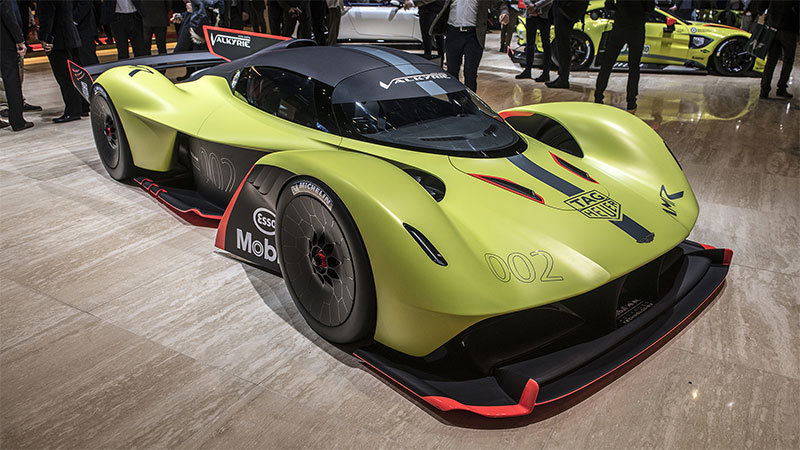
The dream, of course, would be seeing racing versions of the AMG Project One, Aston Martin Valkyrie AMR Pro, Bugatti Chiron, Koenigsegg Regera, McLaren Senna GTR, Pagani Huara BC, and the rest of the gang trading paint and carbon fiber through Dunlop in a heinously expensive version of “Buy on Sunday, sell on Monday.” The reality is that we don’t have all the details yet on the set of regulations called “GTP,” but the FIA wants race cars more closely tied to road cars, albeit with the performance level of today’s LMP1 cars.

Exterior design freedom would shelter internals designed to reduce costs, the FIA planning to mandate less complex hybrid systems and allow the purchase of spec systems. One of the FIA’s primary goals is lowering LMP1 budgets to a quarter of their present levels. Audi and Porsche budgets exceeded $200 million, while Toyota – the only factory LMP1 entry this year and next – is assumed to have a budget hovering around $100 million. Reports indicated that Aston Martin, Ferrari, Ford, McLaren, and Toyota sat in on the development of the proposed class. If the FIA can get costs down to around $25 million, that would compare running a top IndyCar team and have to be hugely appealing to the assembled carmakers.

The initiative represents another cycle of the roughly once-a-decade reboot of sports car racing to counter power or cost concerns. The FIA shut down Group 5 Special Production Sports Car class in 1982 to halt worrying power hikes, and introduced Group C. In 1993, Group C came to an ignoble end over costs; manufacturers were spending $15 million on a season, back when that was real money and not one-fifth of a Ferrari 250 GTO. Then came the BPR Global GT Series that morphed into the FIA GT Championship, which would see the last not-really-a-road car take overall Le Mans victory in 1998, the Porsche 911 GT1. That era would be most aligned with a future hypercar class. After that, the FIA created the LMP classes that would take those previous stellar budgets supernova.

We’ll get more details on the proposal next week when the Automobile Club de l’Ouest, the Le Mans organizer that worked with the FIA on the ideas, hold’s its pre-Le Mans press conference.

Elsewhere on the WMSC docket, the FIA approved aero changes to 2019 Formula 1 cars to improve overtaking. An even bigger shock: the FIA World Rallycross Championship will go electric-only from 2020. The WRX will use silhouette cars provided by Oreca, powered by two 500-kW electric motors sourced from Williams Engineering, and a common battery. Ex-World Rally Championship maestro Sebastien Loeb, now a World Rallycross team owner and driver, said of that move, “We don’t dream about electric cars, but if the future for all cars is to be electric then it’s normal that we’d make the swap. And in this case I think Rallycross is the best series to do it because it’s very short, you have a lot of power, very fast cars and an intense fight…”

Related Video:

Ferrari ‘Holy Grail’ Sold For Many Monies

They probably didn’t use Craigslist for this one, but a 1963 Ferrari 250 GTO was sold privately for $70 million USD.

Sky News reported that one of the only 36 250 GTO’s in existence was rumored to have been sold to a classic Ferrari collector, David MacNeil. The founder of WeatherTech, those great custom-made floor mats for your car, purchased the vehicle which has a 3.0L race-proven Tipo 168/62 Comp V12 engine with six Weber carburetors and 300 horsepower.

This recent sale made this the most expensive car ever sold, beating the previous record set by another 250 GTO in 2013.

Meanwhile, I have issues trying to get a Best Offer on eBay… Such is life.

F1: Ricciardo Wins Monaco GP 2018 after Dominating All Weekend

Ricciardo wins in Monaco. Red Bull has clinched another victory of the season after the Aussie driver led from start to finish in a race that is notoriously known for its difficulty in overtaking, coupled with tire issues that faced almost every driver. Vettel finished second for Ferrari while Mercedes took the final podium spot with Hamilton.

The top ten at Monaco GP 2018 comprised of 1 Ricciardo; 2 Vettel; 3 Hamilton; 4 Raikkonen; 5 Bottas; 6 Ocon; 7 Gasly; 8 Hulkenberg; 9 Verstappen; 10 Sainz.

The Monaco GP 2018 formation got underway with the top ten starting on hypersofts while the rest opted for ultrasofts besides Sergey Sirotkin in 13th and Brendon Hartley in 15th. Ricciardo started from pole and after lights out, he pretty much managed to fend off a hungry Vettel, the order remained as 1 Ricciardo; 2 Vettel; 3 Hamilton; 4 Raikkonen; 5 Bottas; 6 Ocon; 7 Alonso; 8 Sainz; 9 Perez; 10 Gasly.

“The pace is quite slow, car feels quite good” Hamilton said while in third place. Verstappen meanwhile had gained three places after starting from last, proving once more its possible to overtake in Monaco. After lap 7/78, Ricciardo’s gap over Vettel was 1.5s. Hamilton was 3.5s behind the leader, and already complained about his tires graining.

Mercedes was the first to pit on lap 12, bringing in Hamilton who later emerged on ultrasofts ahead of Alonso in P7. On lap 15 Hamilton passed Ocon for fifth and was now behind teammate Bottas. “If you can keep this pace, stay out,” Ferrari told Vettel, who later agreed to staying out longer. But the Ferrari man pitted a lap later to cover Hamilton.

Vettel emerged ahead of Hamilton after his pitstop. Raikkonen and Bottas also stopped, but interestingly for Bottas, he picked up supersofts while the rest were on ultrasofts.

Raikkonen was pushing hard and only 0.6s behind Hamilton, who was 8s off the leaders Ricciardo and Vettel. Hamilton was already complaining that his tires were graining once more.

By lap 30, Vettel had noted that Ricciardo’s car ahead was flashing a red light and Ferrari confirmed that indeed the red Bull man had a power unit issue. Ricciardo was holding it down well though despite the issue.

“I told you about this tyre,” that was Hamilton complaining about his tires.

At one point Hamilton was 9s behind Vettel, but by lap 41 he had closed the gap to 3s despite complaining about his tires. Vettel meanwhile complained of a blackout when his dashes went blank. Besides Hamilton, other drivers were also recording high tire graining including Vettel, the reason he was able to keep up with the rest of the leaders.

“My rear tyres are gone, I’m just sliding on four wheels,” said Verstappen, and after 48 laps, the Dutchman was called in for his first stop. First retirement of the race was Hamilton after 54 laps, the McLaren suffered a gearbox failure. That was Alonso’s first retirement of the season. “I can’t keep the same pace as those guys [Ricciardo/Vettel],” said Hamilton, but his team told him he doesn’t need to.

Virtual safety car was deployed on lap 73 after Leclerc hit Hartley from behind. “I had no brakes. Brakes went completely off. We had to do brake-saving before, honestly.” he said.

After the VSC ended, Vettel was now 5s behind Ricciardo. And 3 laps later the Aussie went ahead to win the Monaco GP 2018 ahead of Vettel and Hamilton.

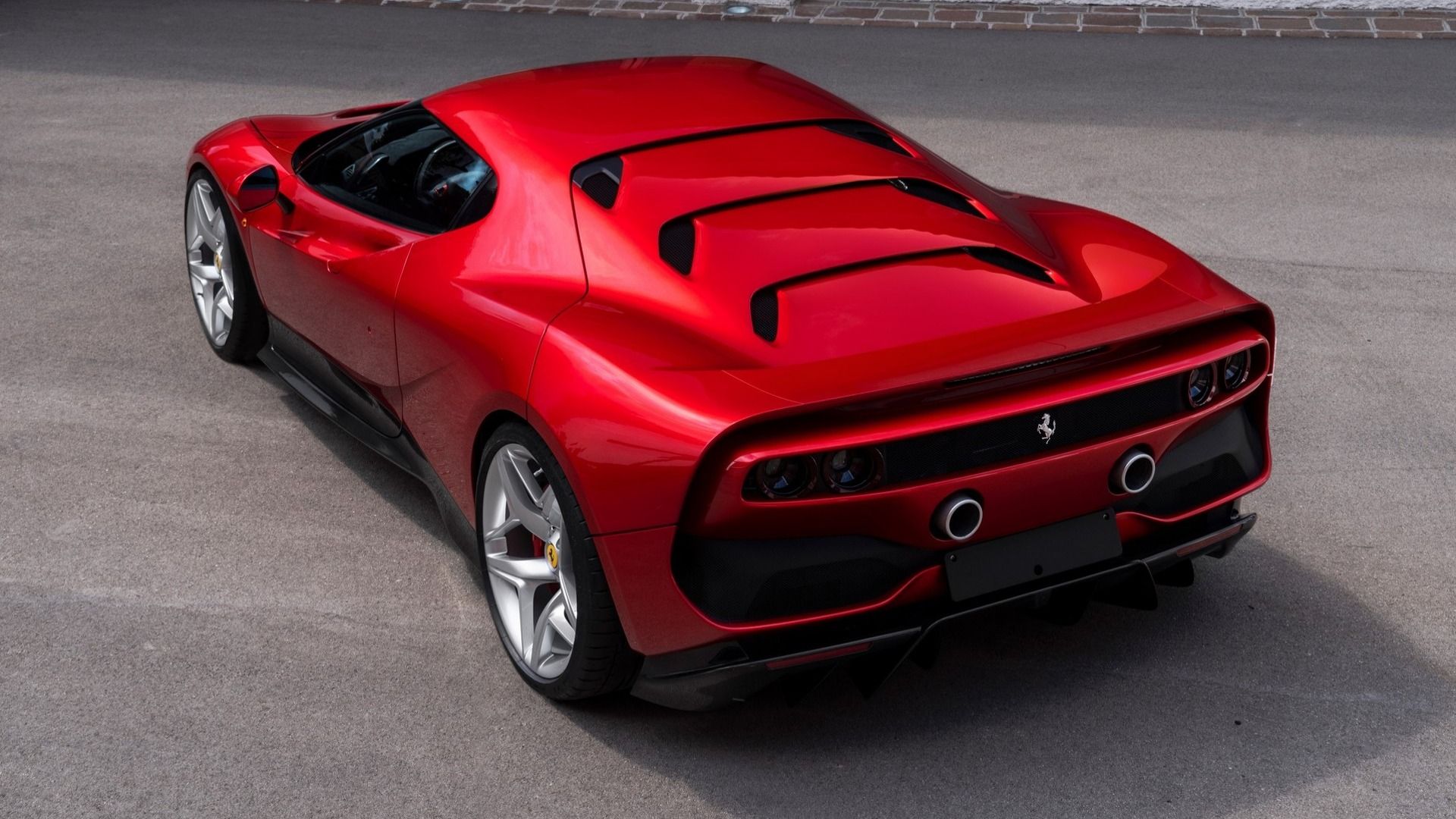
Ferrari SP38: Another Bespoke Ferrari from Maranello’s One-Off Program

Like a bespoke suit, tailored to your wants and desires, it fits you and only you. The buttons, the fabric, the cut… It was truly your pick. The cool part is you can do it with cars as well!

The Ferrari One-Off program gives any oligarch the ability to built their own Ferrari that is going to be 1 of 1. You know you’re in another level when a LaFerrari is for commoners.

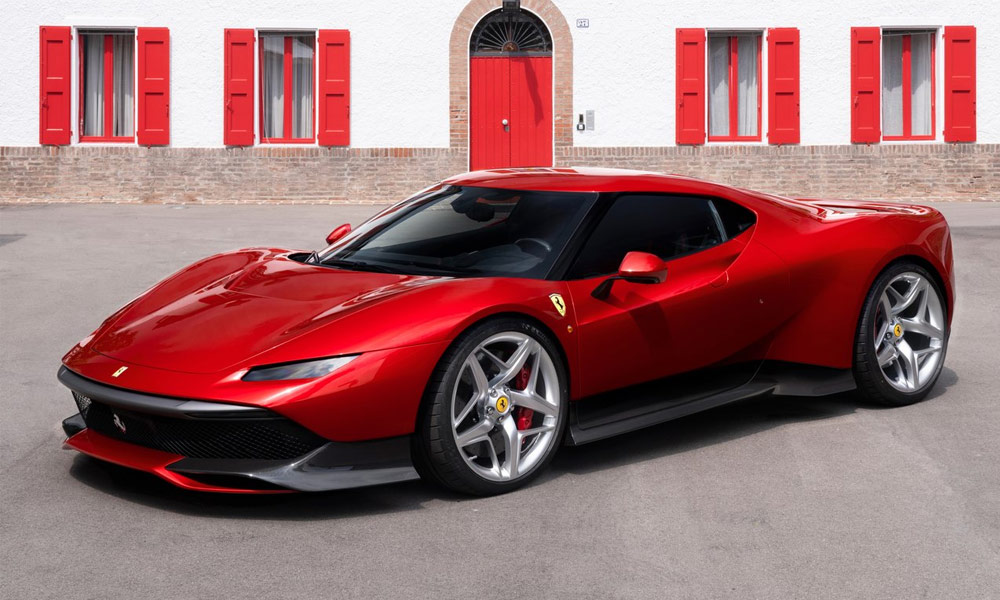
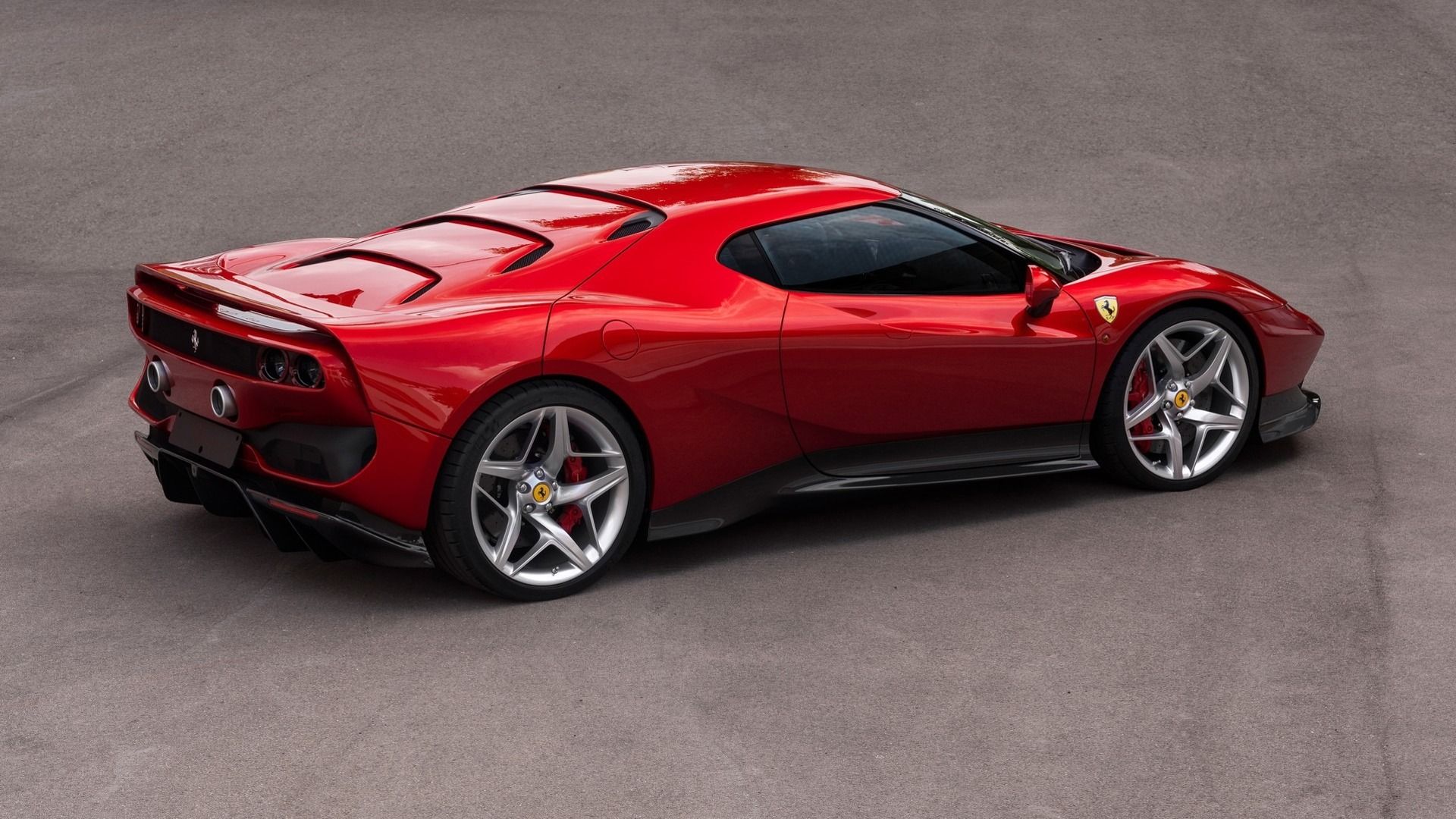
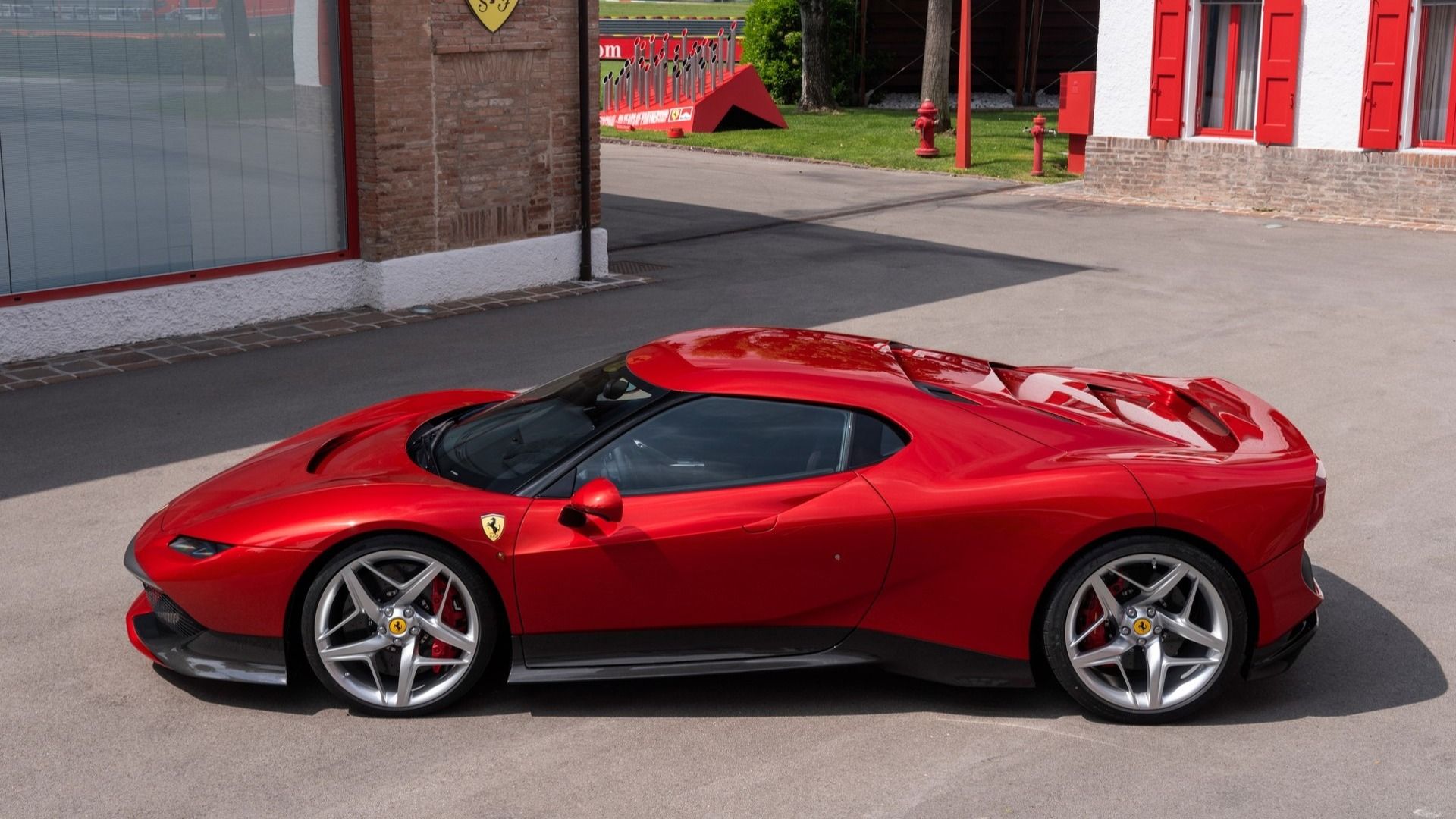
Known as the ‘SP38’, the chassis and the foundation are on a 488 GTB, but with bespoke panel work. The engine is still that delicious twin-turbo V8 with a dual-clutch transmission but the exterior bits and pieces were inspired by historical Ferrari’s such as the 308 GTB, the F40 fixed rear wing, and a wraparound windscreen.

Just look at how epic that back end looks; double tailpipes and all. Step aside, tycoons with a 458.

There’s an SP38 in town.


Technical Specifications

Type V8 – 90° – Turbo – Dry Sump
Total displacement 3.902 cm3
Bore and stroke 86,5 x 83 mm (3.4 x 3.3 in)
Maximum power * 670 CV (492 kW) at 8000 rpm
Maximum torque * 760 Nm at 3000 rpm in VII gear
Specific output 172 cv/l
Compression ratio 9.4:1
7 gears F1 dual clutch transmission
Maximum speed 330 km/h (205 mph)
0-100 km/h 3,0 s
0-200 km/h 8,3 s
0-400m 10,45 s
0-1000m 18, 7 s
Weight/power ratio 2,04 kg/cv (6,13 lb/kW)

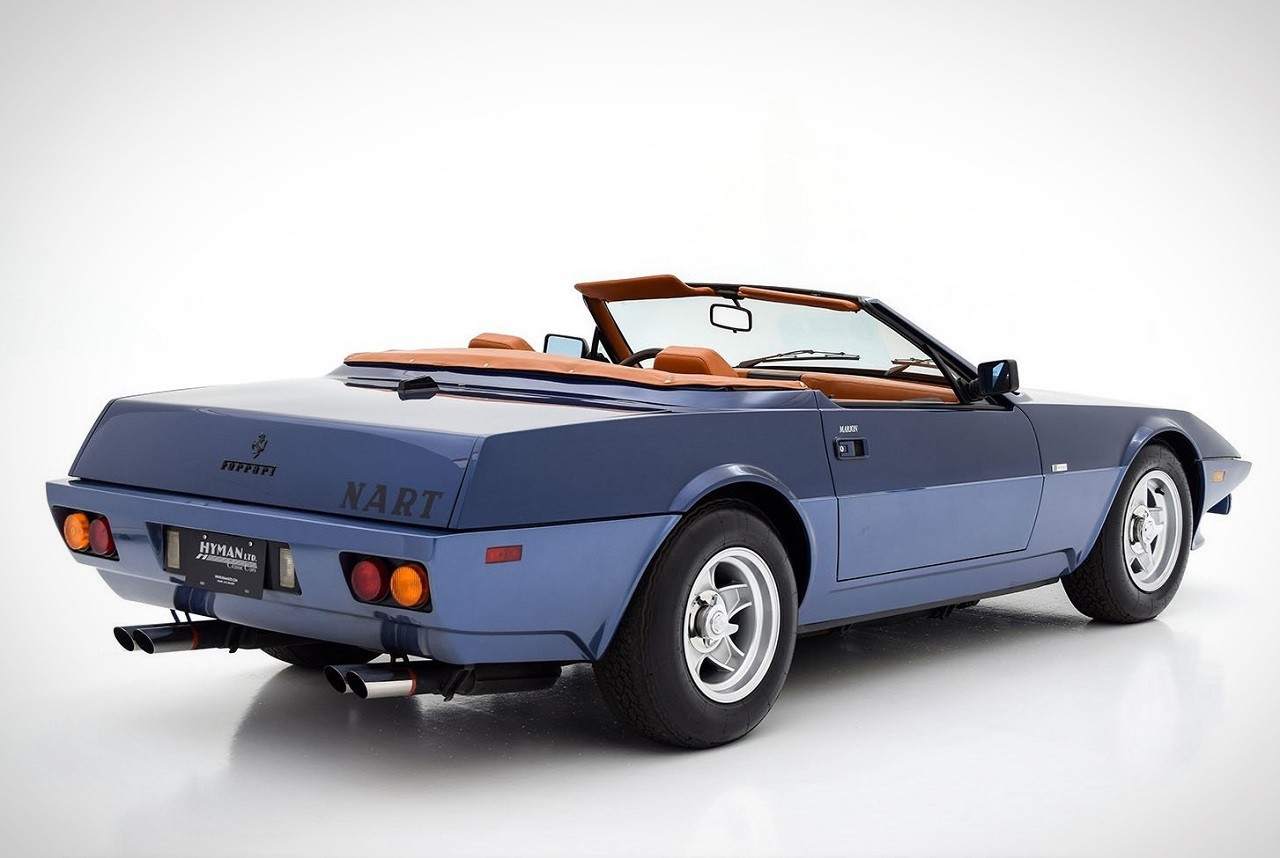
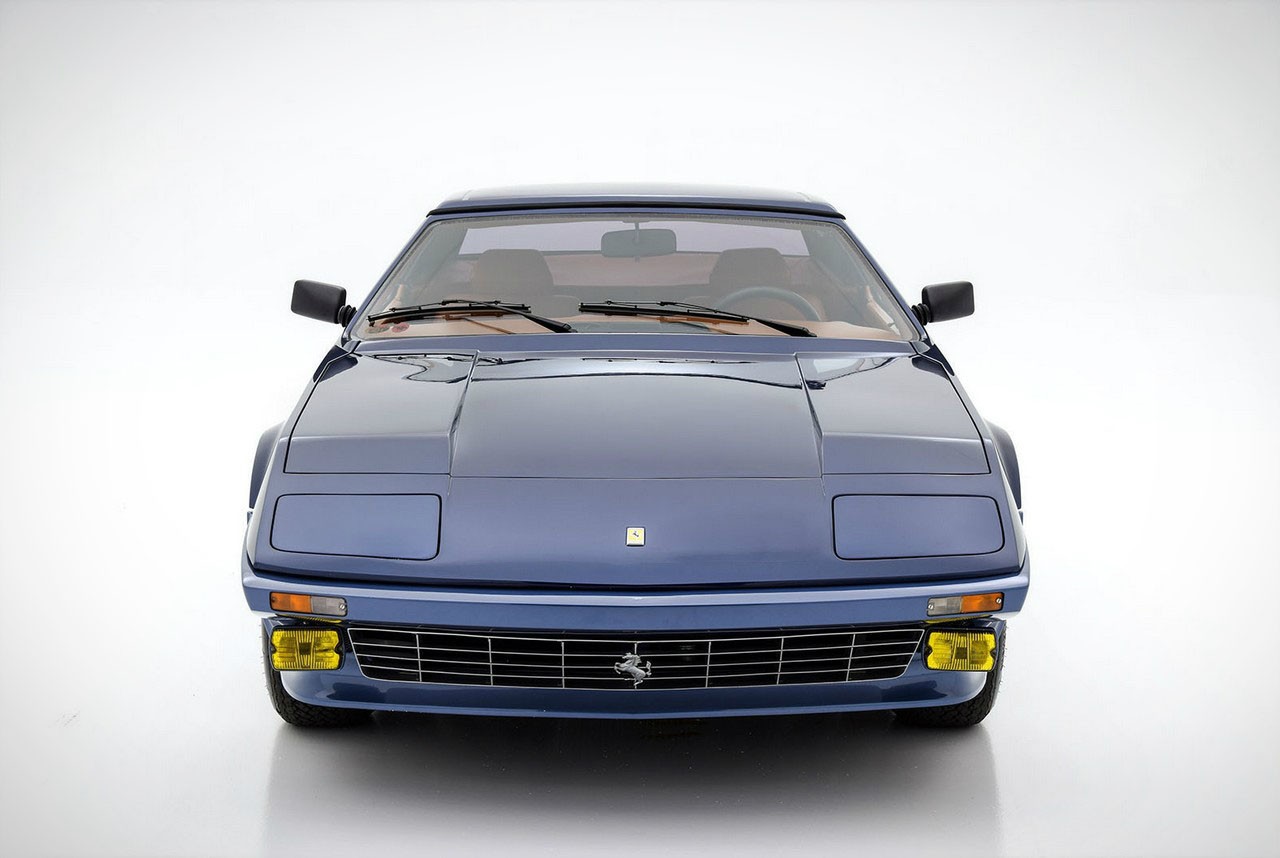
1971 Ferrari 365 GTB/4 NART Spyder

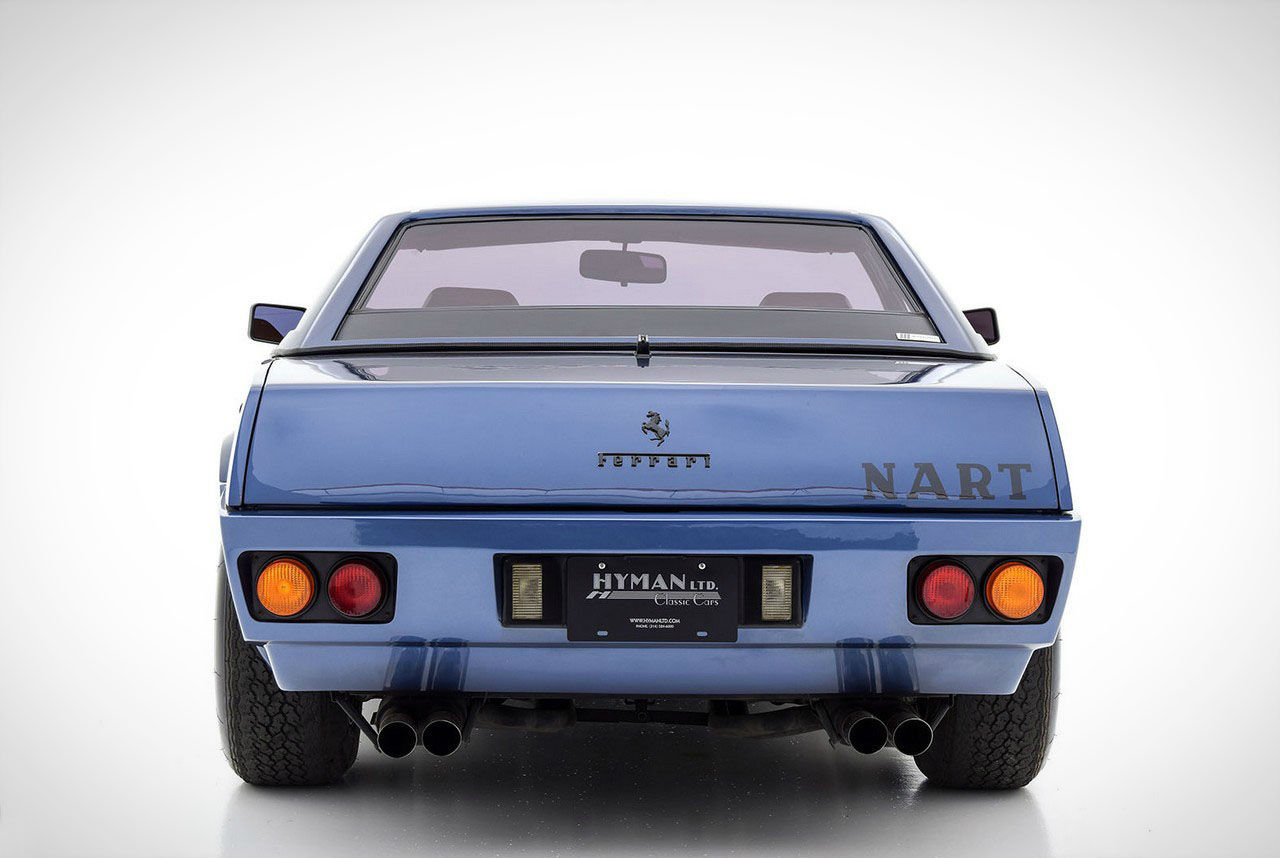
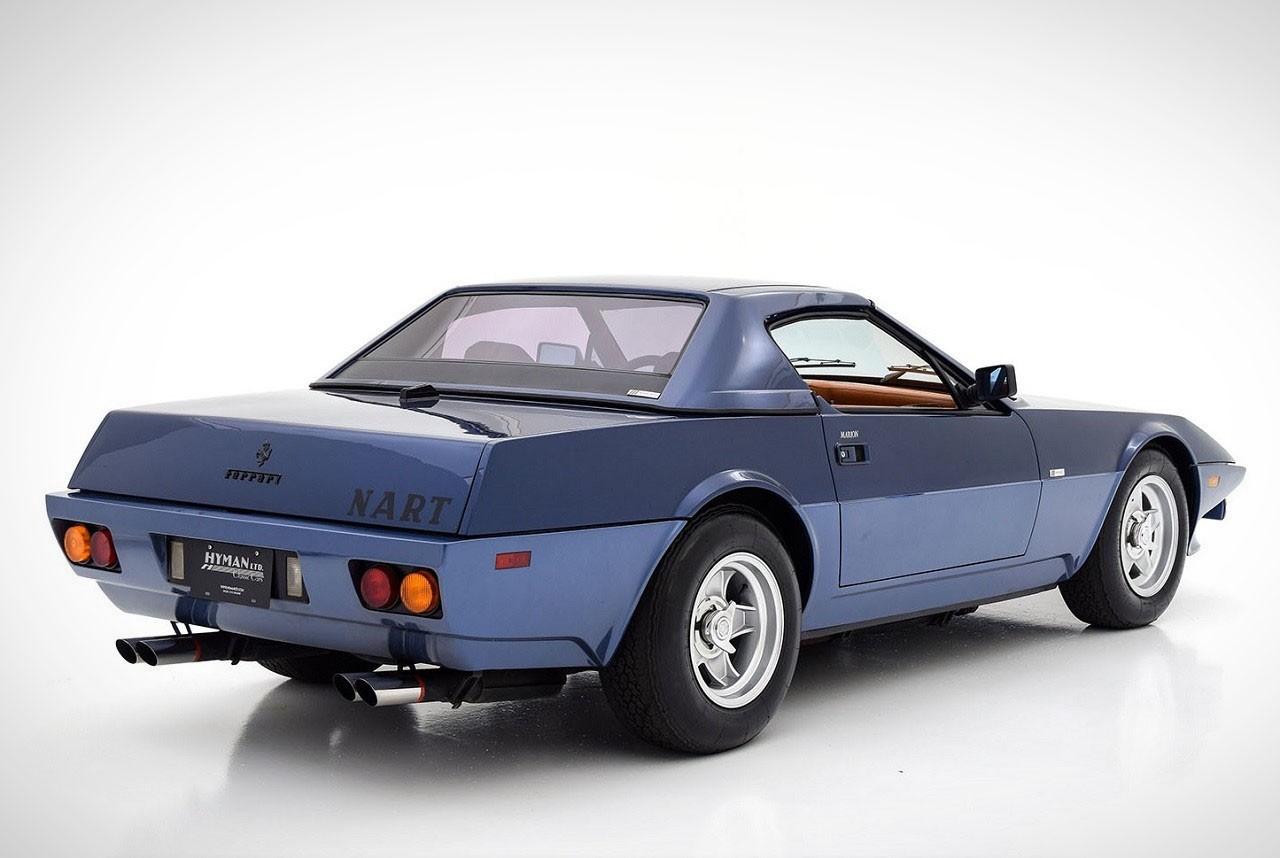
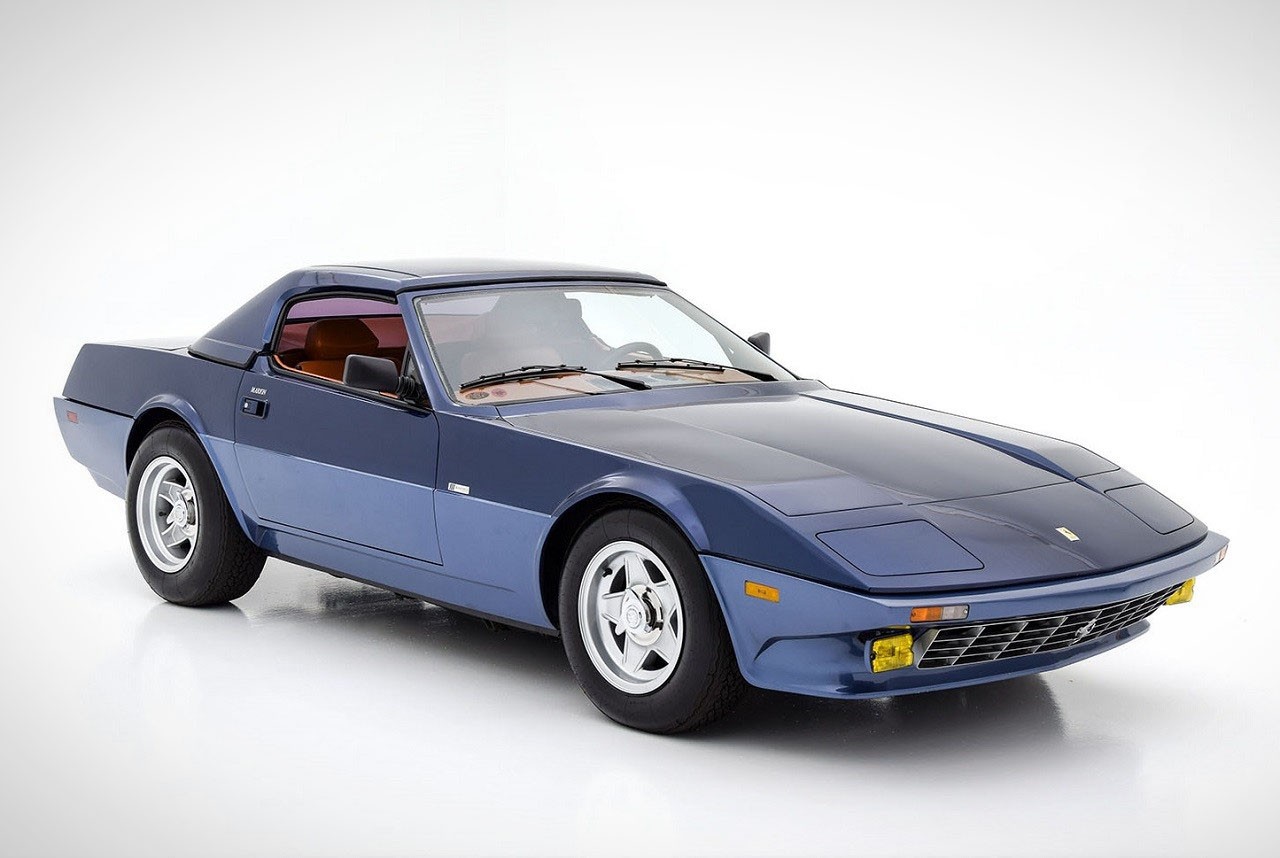
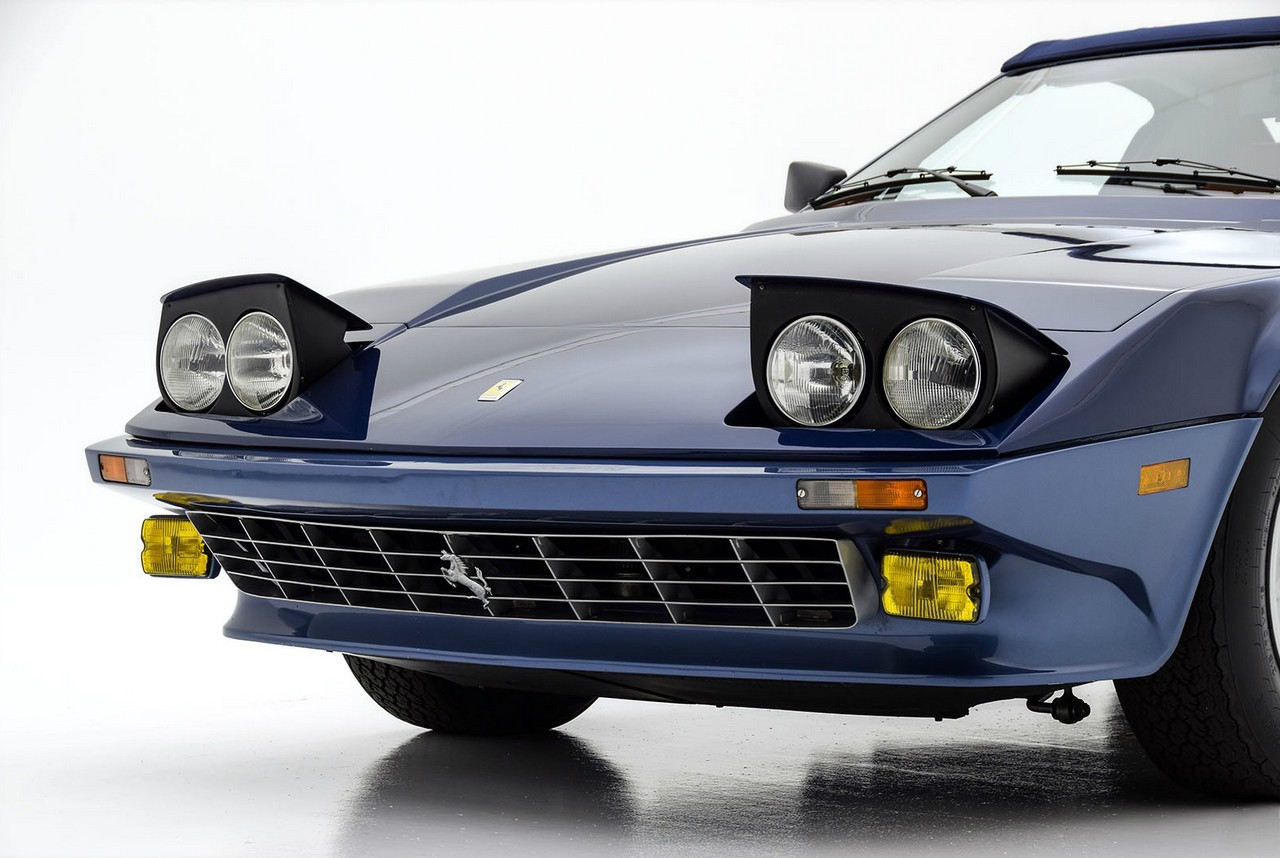
If you have an extra million dollars laying around and you’d like to invest in an ultra-rare piece of automotive history, this is your chance. One of three ever made, this street-ready 1971 Ferrari 365 GTB/4 NART Spyder is up for sale, arriving in “exceptional and highly original condition.”

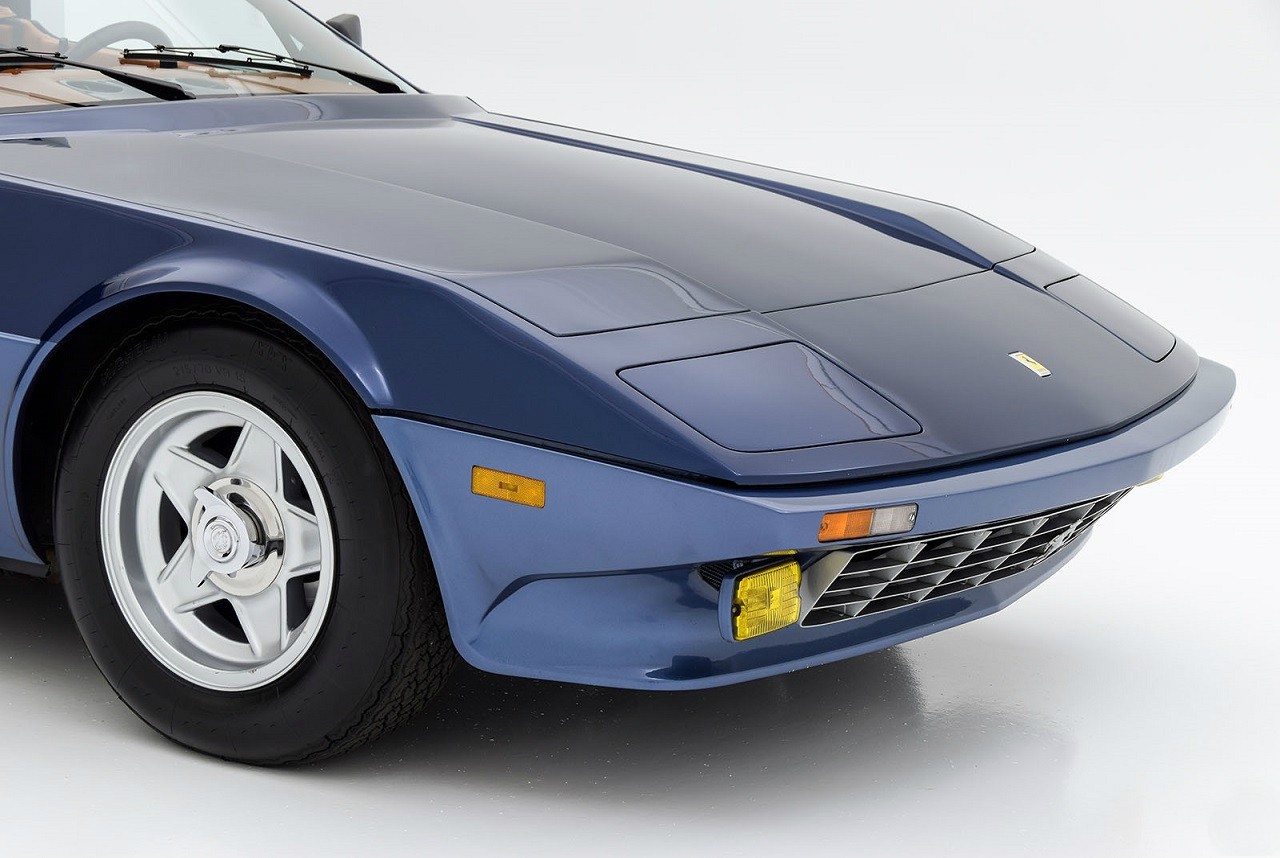
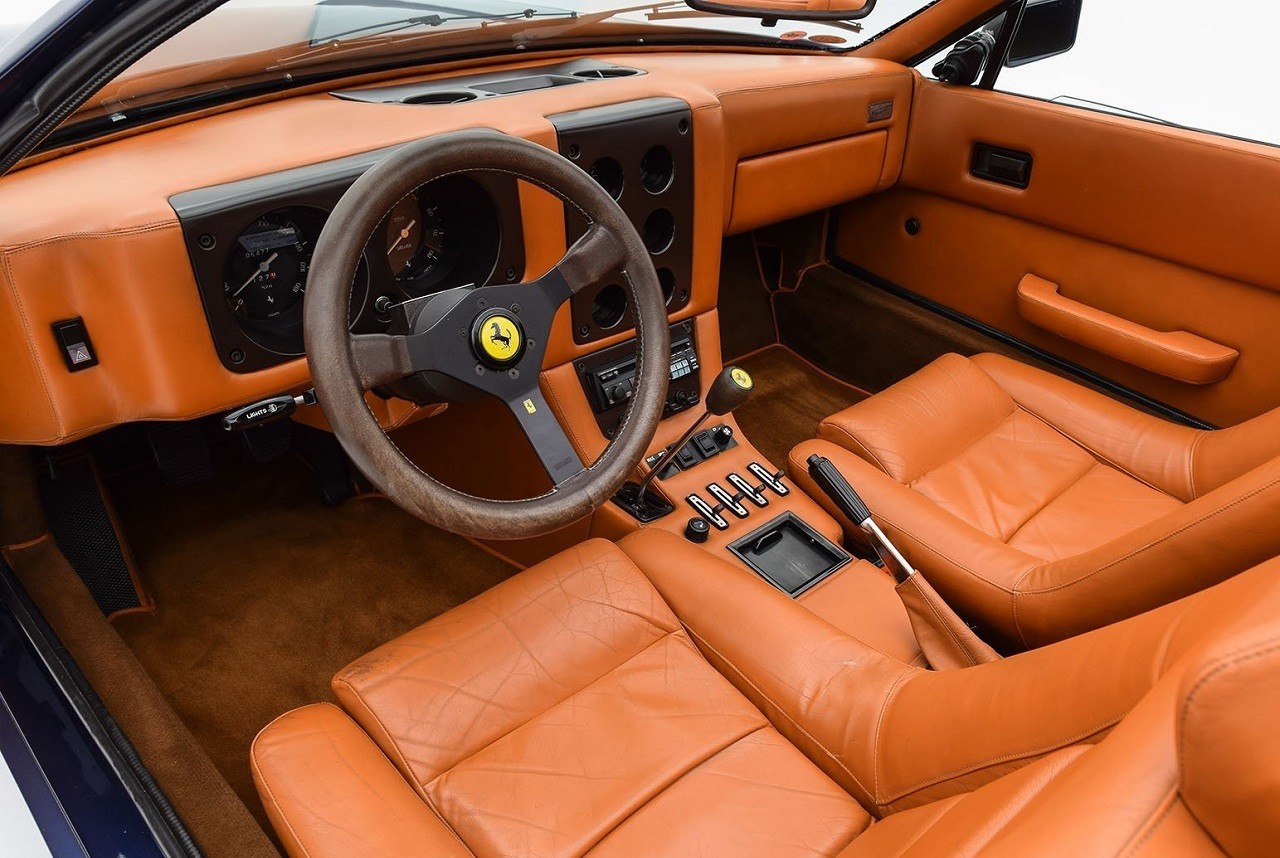
Built by Giovanni Michelotti–one of the most prolific sports car designers of the 70s, the unrestored Daytona wears many of its original features including the striking metallic blue body paintwork, Cibie Iode fog lamps, ANSA exhaust, Michelotti badging and hard top. The Arancia tan leather interior with bespoke dash and unique seats is in outstanding original condition, the only thing that’s not stock being an aftermarket radio.

Fully functioning, the unique Ferrari has electric windows, air conditioning, a properly-fitted soft top, and a fat Momo steering wheel. It rolls on magnesium alloy Cromodora knock-off wheels wrapped in period correct Michelin XWX tires.

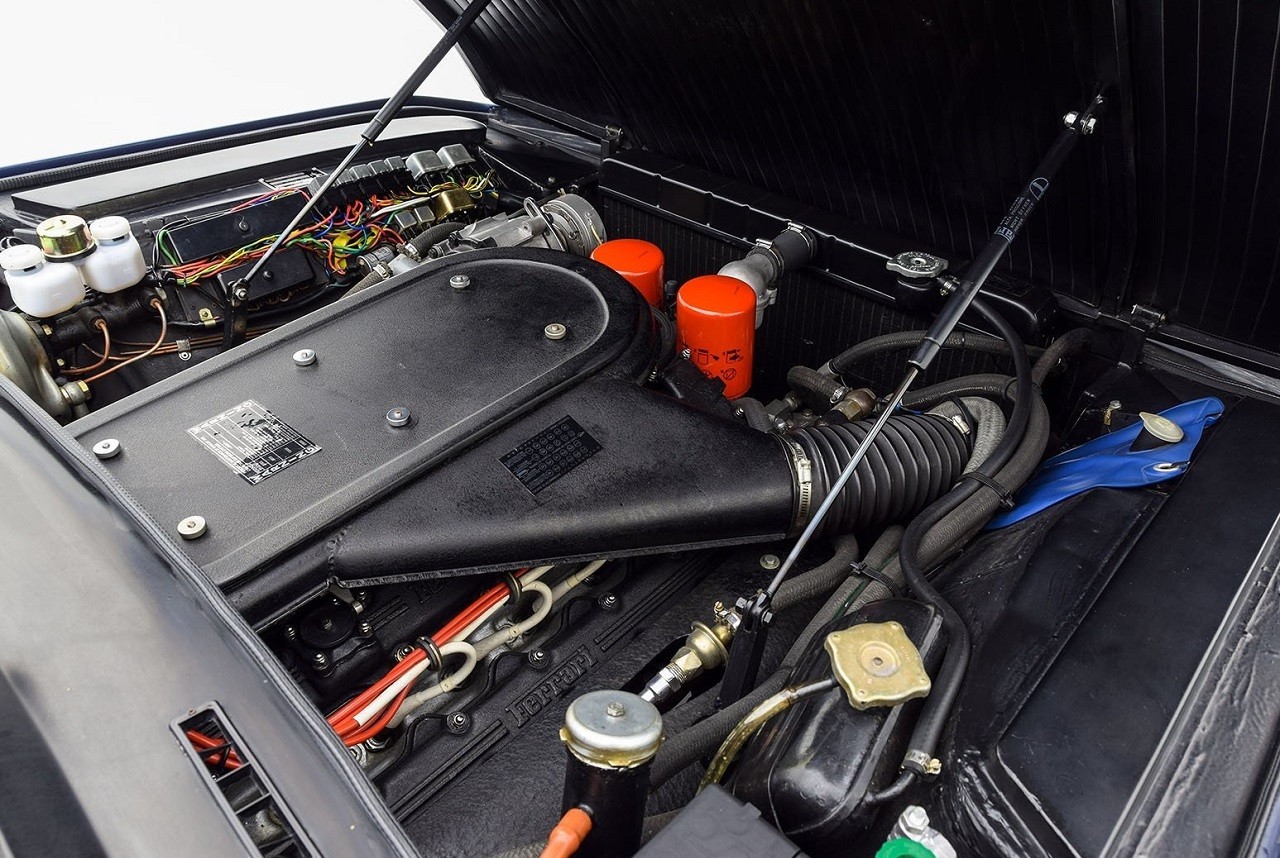
Mechanically, the NART Daytona is also in excellent condition. It’s said to run strong and feel “even more aggressive than a standard car – perhaps due to the lighter coachwork.” Having seen only limited use, the car retains its original engine with six Weber 40 DCN 21 carburetors and even includes the original toolkit as well as the jack bag with jack and wheel tools.

Buy From Hyman $995,000

2019 Ferrari 488 Pista – Ferrari’s Most Powerful V8. Ever

The 710HP V8 Prancing Horse From Maranello

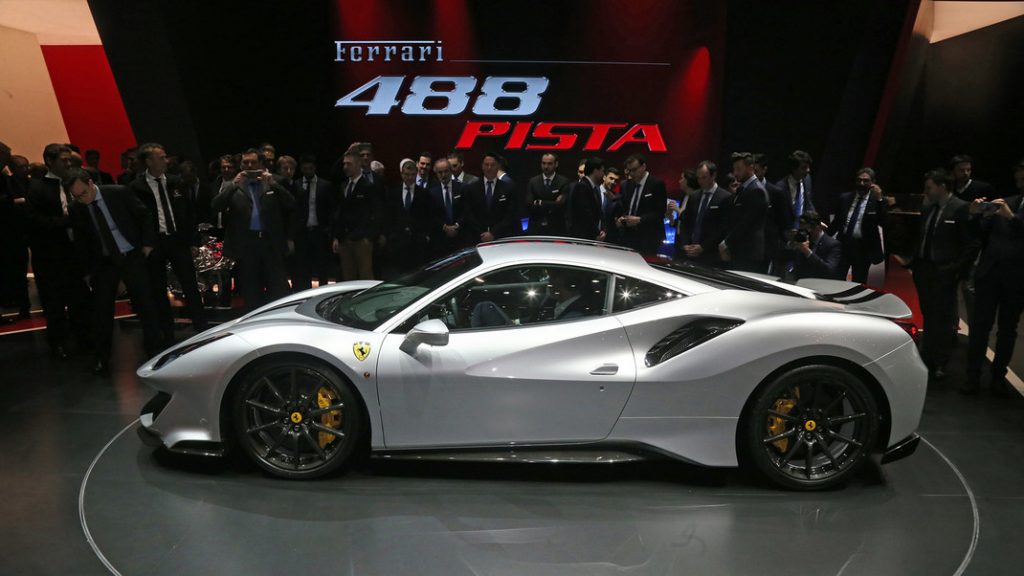
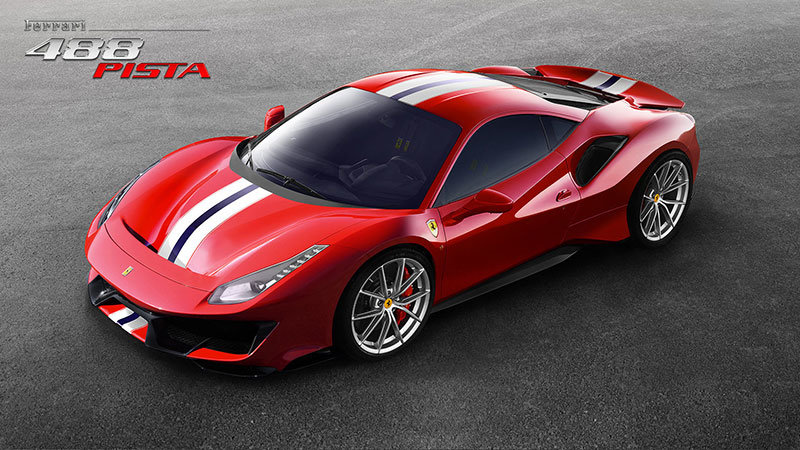
Ferrari first unveiled its new track-focused 488 variant at the Geneva Motor Show in March 2018. Given the moniker “Pista” – which translated from Italian, means “track” – the latest iteration of Ferrari’s mid-engined V8 is faster than ever before and pays homage to the manufacturer’s remarkable motorsports heritage.

The new 710-horsepower 488 Pista is the current successor to Ferrari’s famed v8-engined special series, which boasts the 360 Challenge Stradale, 430 Scuderia and 458 Speciale in its lineage. While Ferrari is now taking orders for the Pista, an official release date and U.S. pricing have yet to be confirmed.

2019 Ferrari 488 Pista

Ferrari’s 488 Pista takes the “regular” 488 GTB to the next-level; even more so than what previous special series cars did for their respective standard models. The Pista is the beneficiary of an abundance of dynamics and technologies carried over from competitive racing.

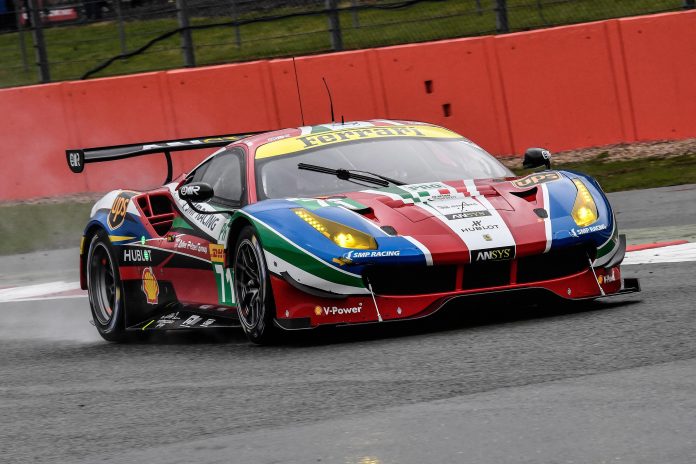
The car’s development is mainly derived from Ferrari’s involvement in the FIA World Endurance Championship (WEC), where its 488 GTE and 488 Challenge race cars have competed and won numerous Manufacturers’ titles.

With such favorable genetics to borrow from, the Pista is much more than just a horsepower bump and stickier tires. The car has undergone extensive weight reduction and received noteworthy vehicle dynamics and aerodynamic upgrades.

The end-goal, Ferrari says, is to “offer impeccable track-like performance on and off the road, even when in the hands of non-professional drivers”.

Features and Highlights

Engine

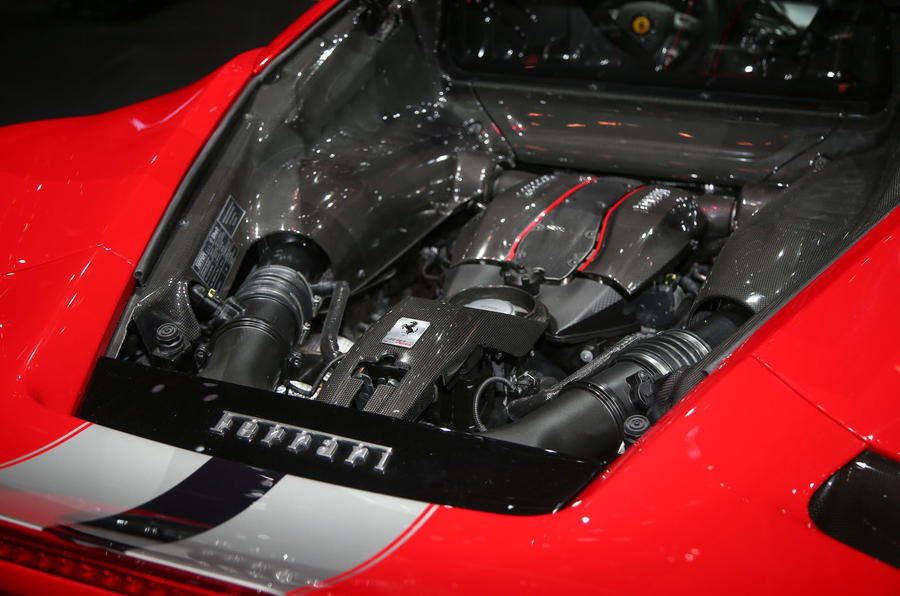
The revised engine is the most powerful V8 in Ferrari’s long history of building some of the world’s fastest cars. Benefiting from its twin turbo setup, the 3.9-litre unit is able to output a blistering 710-horsepower at 8000 rpm and 568 lb-ft of torque at 3000 rpm. This contributes to performance figures of 0-100 km/h in 2.85 seconds, 0-200 km/h in 7.6 seconds and a top speed of 340 km/h.

Respective to the standard 488 GTB model’s award-winning engine, the overall increase of 49 horsepower and 7 lb-ft of torque is achieved by borrowing engine parts from the 488 Challenge race car – such as Inconel exhaust manifolds, strengthened pistons, a larger intercooler, and a new camshaft.

Ferrari proudly remarks that “the engine sound is unique and unmistakably Ferrari, as such a special car warrants”.

Chassis

Mated to the illustrious V8 engine is a 7-speed dual-clutch transmission which bangs through gears in just 30 milliseconds when driven in race mode setting, providing the driver with such meticulous control over the car as if it were an extension of his or her own thoughts.

The Pista – compared to the GTB – is 0.3 inches lower, 0.9 inches wider and 1.5 inches shorter in length due to various weight reduction and aerodynamic upgrades performed throughout the car, which also makes it a noticeable 90 kg lighter.

Ferrari has also equipped the car with version 6 of their Side-Slip Angle Control System (SSC). This vehicle dynamics system is able to simultaneously control the electronic differential, traction control, magnetic damping and brake pressure software, with perfect synergy. The brake pressure software, dubbed “Ferrari Dynamic Enhancer” or (FDE), is a world-first system which can adjust brake pressure at the calipers.

Exterior

The Pista is equipped with an F1-inspired S-duct and front diffuser optimized for the 488 GTE race car. The underbody also features modified vortex generators and a rear diffuser to reduce turbulence beneath the chassis.

Additionally, the rear blown spoiler has been revamped with a higher, longer and more optimal design. The end result of all these aerodynamic upgrades is a dramatic 20% increase in downforce relative to the 488 GTB.

Interior

Ferrari has not yet revealed many details about the interior, though it is expected to remain largely unchanged from the 488 GTB. However, as part of its special series makeover, we expect Ferrari to delete or replace certain non-essential parts in the name of weight reduction, as it has done for previous special series cars. “Pista” badges and nameplates are likely featured throughout the interior as well.

Verdict

While there have not yet been any test drives of a 488 Pista production-spec model, a select group of very lucky automotive journalists were able to take a test mule out for some hot laps at Ferrari’s private racetrack – Fiorano Circuit near Maranello, Italy. With an official test driver, the car is reported to complete a lap of Fiorano in 1:21.5; a very distinguishable 1.5 seconds quicker than a 488 GTB.

The Test Mule in Action

https://www.youtube.com/watch?v=QnzLtf0ruYw&feature=youtu.be

UK news site, The Week, provided a compilation of what some of the critics had to say. Overall, reports from the likes of Auto Express and Top Gear note the Pista’s bang-for-buck as a “hypercar-beating machine” and provide plenty of praise for its special handling characteristics, super-accurate steering and “brilliantly balanced chassis”. It is a car that is “just as at home on the road as it is on the circuit”, they add.

Autocar reports that Ferrari 488 Pista pricing starts at £252,695, which means that we can expect U.S. pricing to begin north of the USD $340,000 mark.

The Pista is latest and most advanced variant of the manufacturer’s fan-favorite special series cars. There is no reason to believe that Ferrari will not deliver on its production model, so if the test mule is any indication of what the final product will be, supercar lovers are in for a treat of hypercar proportions.

Specifications and Performance Summary

Pricing and Model Info

Make Ferrari
Model 488
Generation 2019 –
Sub-Model Pista
Car type Coupe
Category Series Production Car
Built At Maranello, Italy
Introduced 2018
Base Price (£) $252,695

Chassis and Powertrain

Curb Weight 1,280 kg
Layout Mid-engine
Driven wheels Rear-wheel drive
Engine V8 – 90°
Aspiration Twin-turbocharged
Displacement 3.9 Litres
Transmission 7-speed DCT

Engine Output

Power 710 hp @ 8,000 rpm
Power / litre 182.1 hp / litre
Power-to-weight ratio 3.97 lb / hp
Torque 568 lb-ft @ 3,000 rpm

Performance

0-100 km/h 2.85 seconds
0-200 km/h 7.6 seconds
Max speed 340 km/h

Photo Gallery

Videos

[embedded content] [embedded content] [embedded content]

No electric Ferraris before 2022, says Marchionne

Ferrari is readjusting its electric car timeline. Earlier, the company’s chairman Sergio Marchionne had said that an electric Ferrari would be part of its 2018-2022 strategy, but now it seems that the advent of the full-electric era is being pushed into the future.

As recently as January’s NAIAS show in Detroit, Marchionne stated, “If there’s an electric supercar to be built, then Ferrari will be the first.” Automotive News reports that Marchionne recalibrated that claim in a company meeting on April 13, saying that a full-electric Ferrari “is not relevant at the moment.” If there will be an electric Ferrari, it will be announced after 2022. Earlier than any of that, Marchionne had called an electric Ferrari “an obscene concept,” adding, “You would have to shoot me first.”

It is likelier that Ferrari will keep gasoline engines as part of all its models for now, even if they get boosted by hybrid technology. Marchionne said Ferrari is debating which of its production models will be electrified in the future; earlier in Detroit, he had said that the company’s first series production hybrid will debut at the Frankfurt motor show in fall of 2019. There have been limited-edition hybrid Ferraris already, the LaFerrari and its topless Aperta version.

Related Video:

Ferrari 488 Pista Prototype Drive | Pants-soiling straight-line performance

Independent studies confirm that Lotus Elise drivers are 221.6 times more likely to spontaneously dispose of light-colored undergarments after driving on curvy roads. That’s because the weight distribution of a mid-engine car encourages novice drivers to inadvertently ask the rear wheels to pass the fronts in the middle of a corner. Adding insult to staining, the layout’s resulting low polar moment of inertia ensures that this rotation happens more quickly than the average person’s sphincter-startle clench reflex.

The flip side is that even the most powerful mid-engine cars have enough weight over their rear wheels to make straight-line acceleration a worry-free affair.

Well, they used to. Full-throttle acceleration in the Ferrari 488 Pista is genuinely terrifying. Wheelspin is a genuine threat at any road-legal speed — and when that happens, its rear end steps out with the same violence as the car accelerates. And that is saying something.

The 488 Pista is diabolically quick. Like, hallelujah-hold-on-tight, praise-the-lord, scream-like-a-child and slap-yo-momma quick. Or, in slightly more objective terms, the Ferrari’s claimed 7.6-second sprint from a standstill to 200 km/h (124 mph) is but 0.3 second behind that of the 1,000-hp Bugatti Veyron 16.4. When we say quick, we mean QUICK.

Perhaps too quick for the road, so it’s a good thing the car is literally named after the track. The Pista is the latest in the lineage of harder-core Ferraris that began with the 360 Challenge Stradale. The 360CS, like the F430 Scuderia (“Team”) and 458 Speciale (“Special”) that followed, was a little quicker than the regular car, a little more devoid of creature comforts and a lot louder. The same basic recipe applies to the 488, though in its transition from GTB to Pista (say “peas-ta”), its engine gets a bigger power boost than any of its predecessors. Boasting 720 metric horsepower, or 710 American ponies, the Pista makes 49 hp more than the already absurdly powerful 488 GTB.
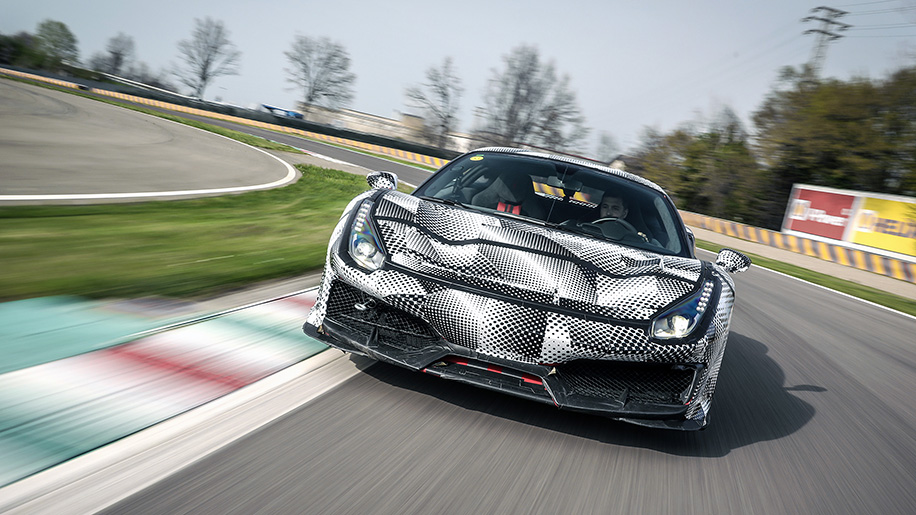
Ferrari 488 Pista Prototype

The expected weight-savings measures are also present, accounting for a claimed 198-pound reduction in total mass. Ten-percent-stiffer springs and recalibrated magnetorheological dampers offer tighter body control, and Michelin Sport Cup 2 tires conspire with those changes to generate massive cornering grip.

But more on that later — the star of this prototype preview drive was the engine, Ferrari’s award-winning 3.9-liter flat-plane-crankshaft V8. Ferrari claims that half of the engine’s functional parts are new compared with the F154CB engine in the 488 GTB — enough to merit it a new code. Say hello to the F154CD.

The revised engine weighs 40 pounds less, and Ferrari claims that it has 17 percent less rotating inertia thanks in part to a lighter flywheel and crankshaft, titanium Pankl connecting rods and hollow intake valves. The engine breathes cooler air thanks to intakes that have been relocated onto the rear deck, out of the path of the hot air coming from the front-mounted radiators.

A new carbon-fiber intake plenum has 60 percent shorter runners, recontoured camshafts provide for 1 mm of additional valve lift and freer-flowing, ultralight Inconel tubular exhaust headers replace the GTB’s heavy cast manifolds. Bore and stroke are unchanged, but the F154CD receives new pistons that bump compression 0.2 point to 9.6:1, and ignition timing is advanced by 2 degrees.

Ferrari 488 Pista PrototypeFerrari 488 Pista PrototypeFerrari 488 Pista PrototypeFerrari 488 Pista Prototype

Those are pretty granular facts, but they’re important because of what we haven’t discussed — there’s been no mention of an ECU reflash or bigger turbos to create additional power. That’s because, where turbocharged engines are concerned, there’s a right way and a wrong way to make more power — and Bigger Turbos, Moar Boost is the wrong way.

Indeed, an exceedingly high level of turbocharger control is what defines the F154 engine — it’s allowed to make full torque only when the transmission is in seventh gear. Peak boost is up marginally, from 20.3 to 21.8 psi, and the turbocharger housings are new, but only so that Ferrari could install turbine speed sensors. Knowing the exact speed of each turbo, rather than inferring it from boost pressure, allows the Pista’s computers to better control output, to sync the output from each bank of cylinders and to let the turbos run to within 1,000 rpm of their 160,000-rpm maximum speed. The margin of error in the GTB’s estimation model required a 5,000-to-6,000-rpm buffer.

In the first six gears, the computers deploy four reduced-boost strategies (first through third, fourth, fifth and sixth gears) with increasing midrange output — but each mode is designed to help the engine feel like a naturally aspirated engine with a 6,750-rpm torque peak.

It works — this is a turbocharged engine that rewards revs. The engine’s stupendous output and willingness to pull right to the limiter, combined with the seven-speed dual-clutch transmission’s short, incredibly closely spaced gear ratios makes for a blistering full-throttle experience where each gear seems to last only a fraction of a second before it’s time for an upshift. Since the engine’s 710-hp maximum output occurs in a plateau from 6,750 to 8,000 rpm, full power is once again available after each shift. Acceleration is relentless and otherworldly.

Ferrari 488 Pista Prototype

By comparison, the prodigious cornering grip seems entirely of this world. At its limit, the Pista exhibits just enough understeer to impart a sense of stability, but the smallest twitch of your right foot is enough to overwhelm the rear and summon the aid of stability control.

The latest version of Ferrari’s Side Slip Control is pure dynamic sorcery, programmed with the singular mission of adding speed. In its more aggressive modes, it allows significant tail-out antics without letting you spin and prevents the car from exploding sideways in response to the transmission’s positively brutal full-throttle upshifts, providing a significant safety net with no penalty whatsoever. This is the kind of stability control that you won’t ever want to turn off.

Especially when you experience just how quickly 710 hp can overwhelm the this car’s rear tires. The Pista encourages intimate relations with the oft-ignored area of the accelerator pedal that’s located between “off” and “on.” Ferrari deserves praise for having the courage to limit the engine’s torque in lower gears; any driver of this Ferrari will have no choice but to exercise additional restraint.

Then, the 488 Pista proves to be far more docile and tractable than any of its predecessors. Driven around town, the Pista’s ride is surprisingly unbrutal, the transmission executes smooth shifts and the engine will lug along happily at just over idle. It takes but one errant stab at the throttle to remind you, however, that Ferrari has flipped the rules of the mid-engine sports car. The corners? Those you can deal with. But when the road turns straight, you’d better clench tight before hitting that pedal.

Related Video:

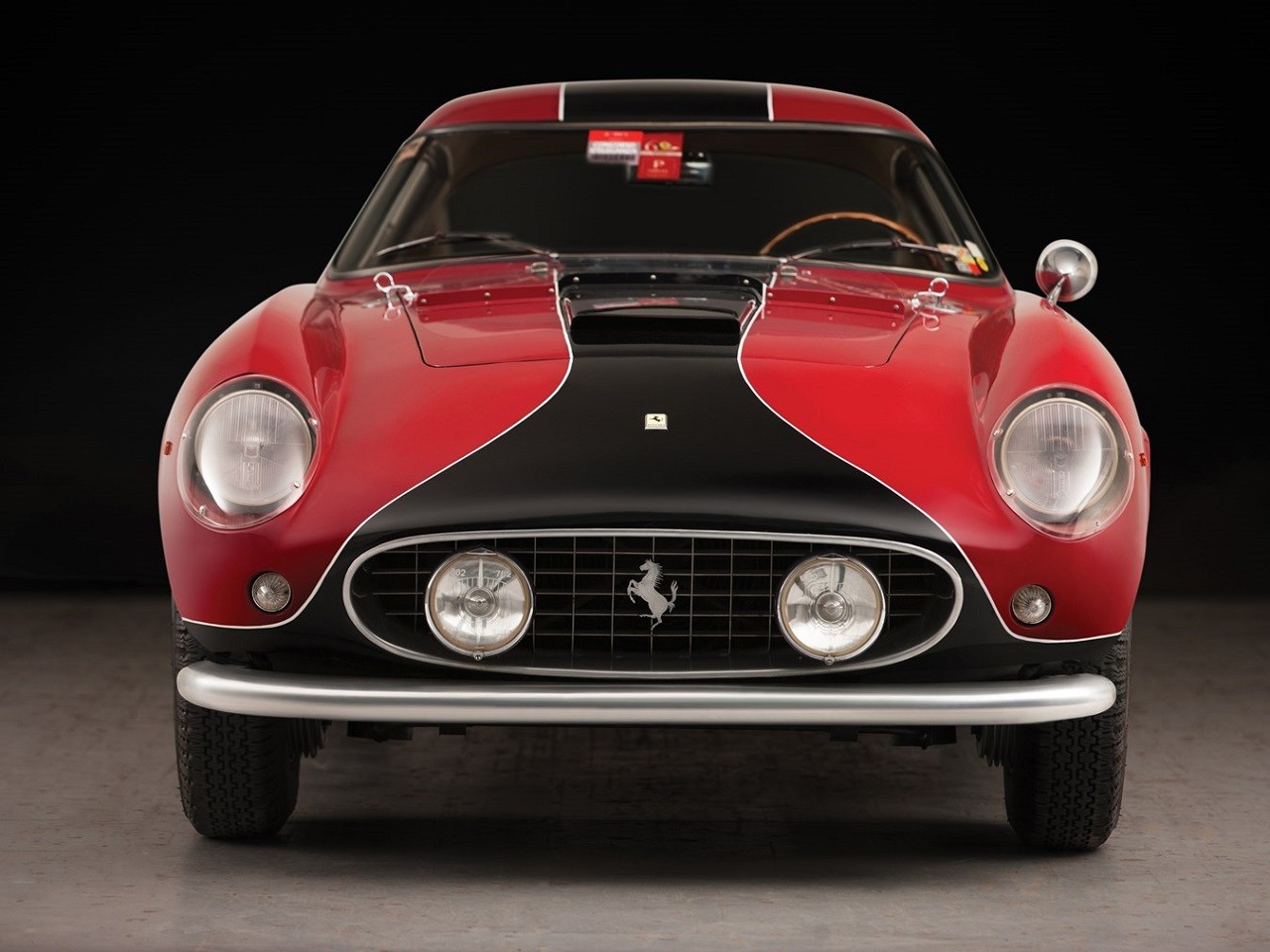
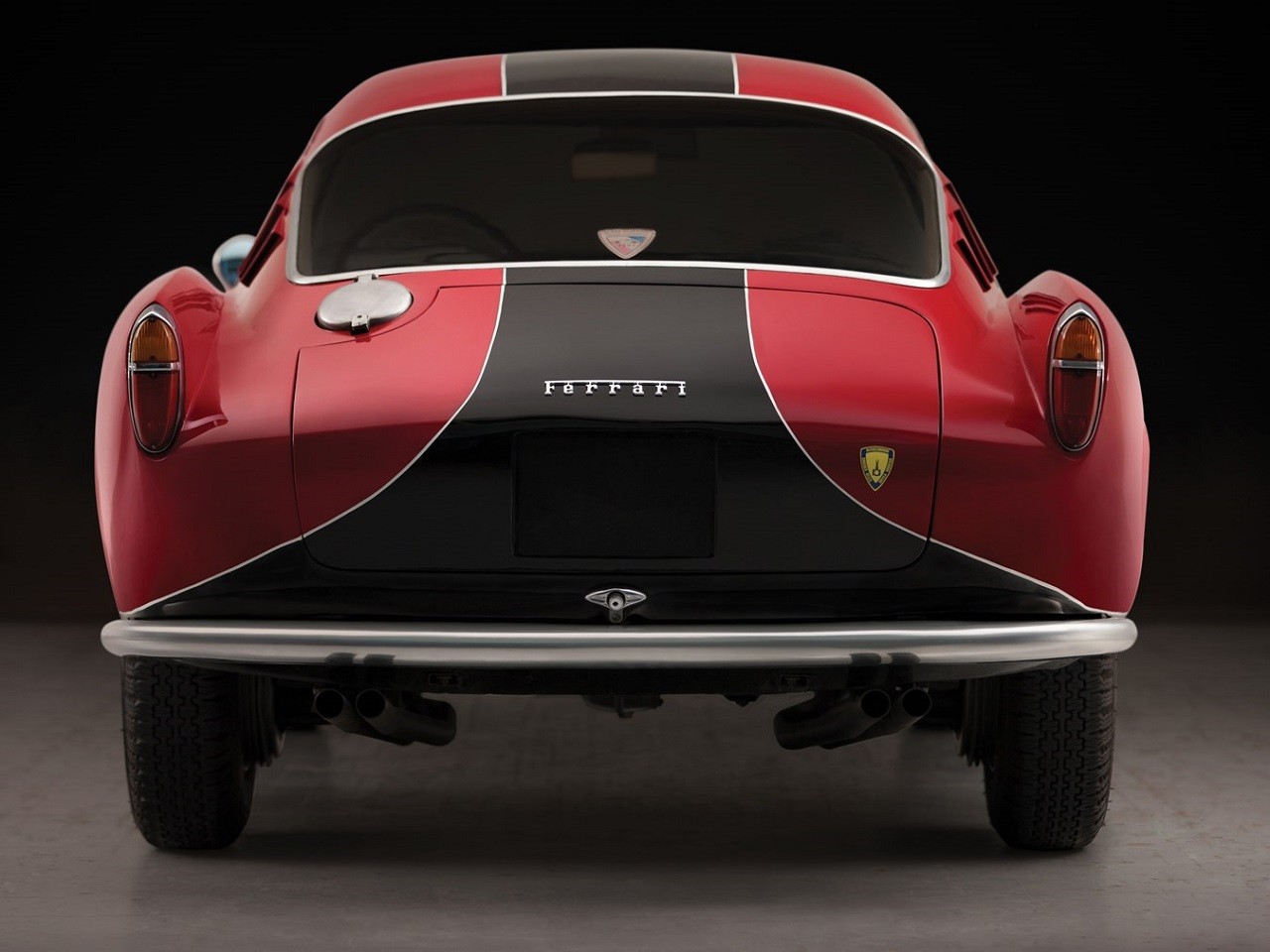
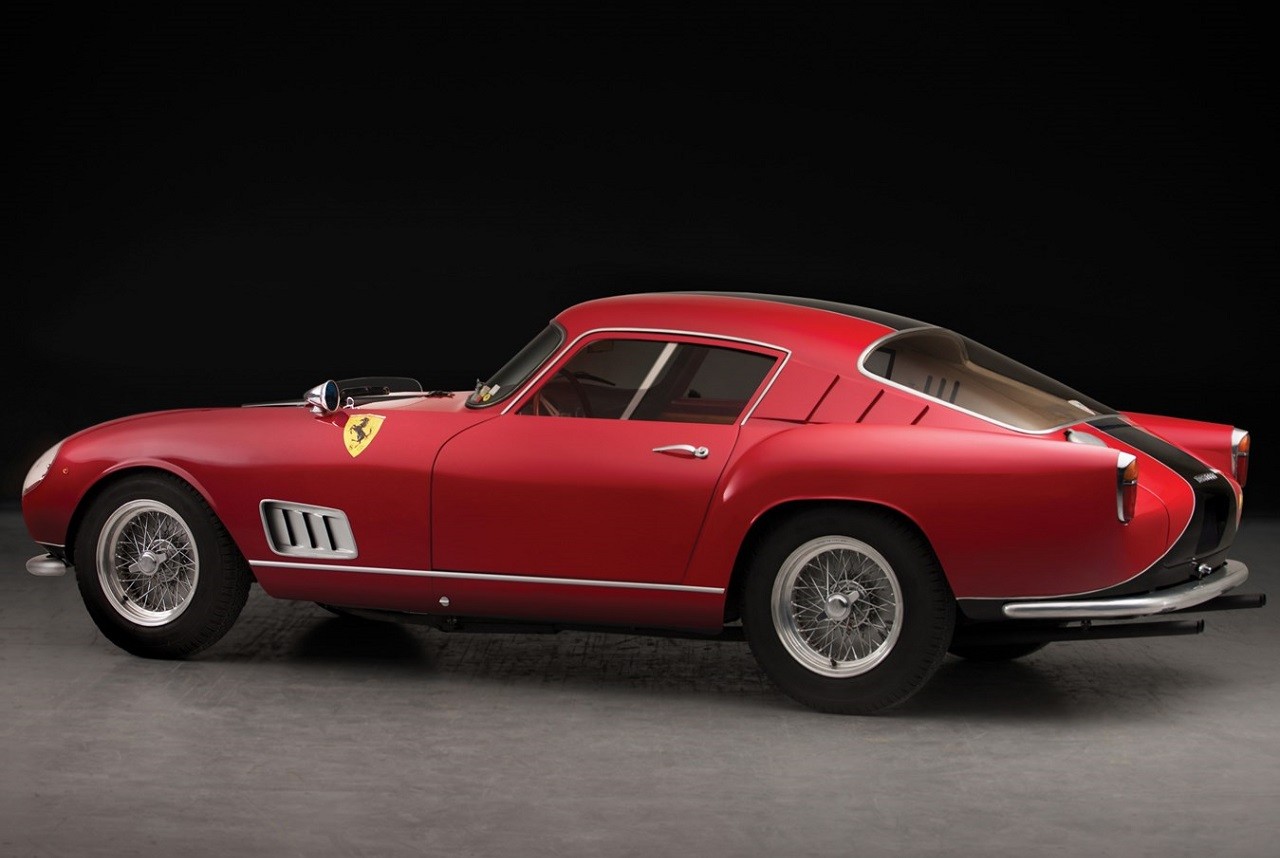
1957 Ferrari 250 T Berlinetta Competizione ‘Tour de France’

Nicknamed after the ‘Tour de France’ rally where it became a champion multiple times, Ferrari’s 250 GT Berlinetta is known as the finest competition car of the 1950s. Produced in a modest quantity of 72 examples, this pure breed racer is highly sought after today not only for its significant past but also for the admirable lightweight coachwork and advanced racing mechanicals it featured.

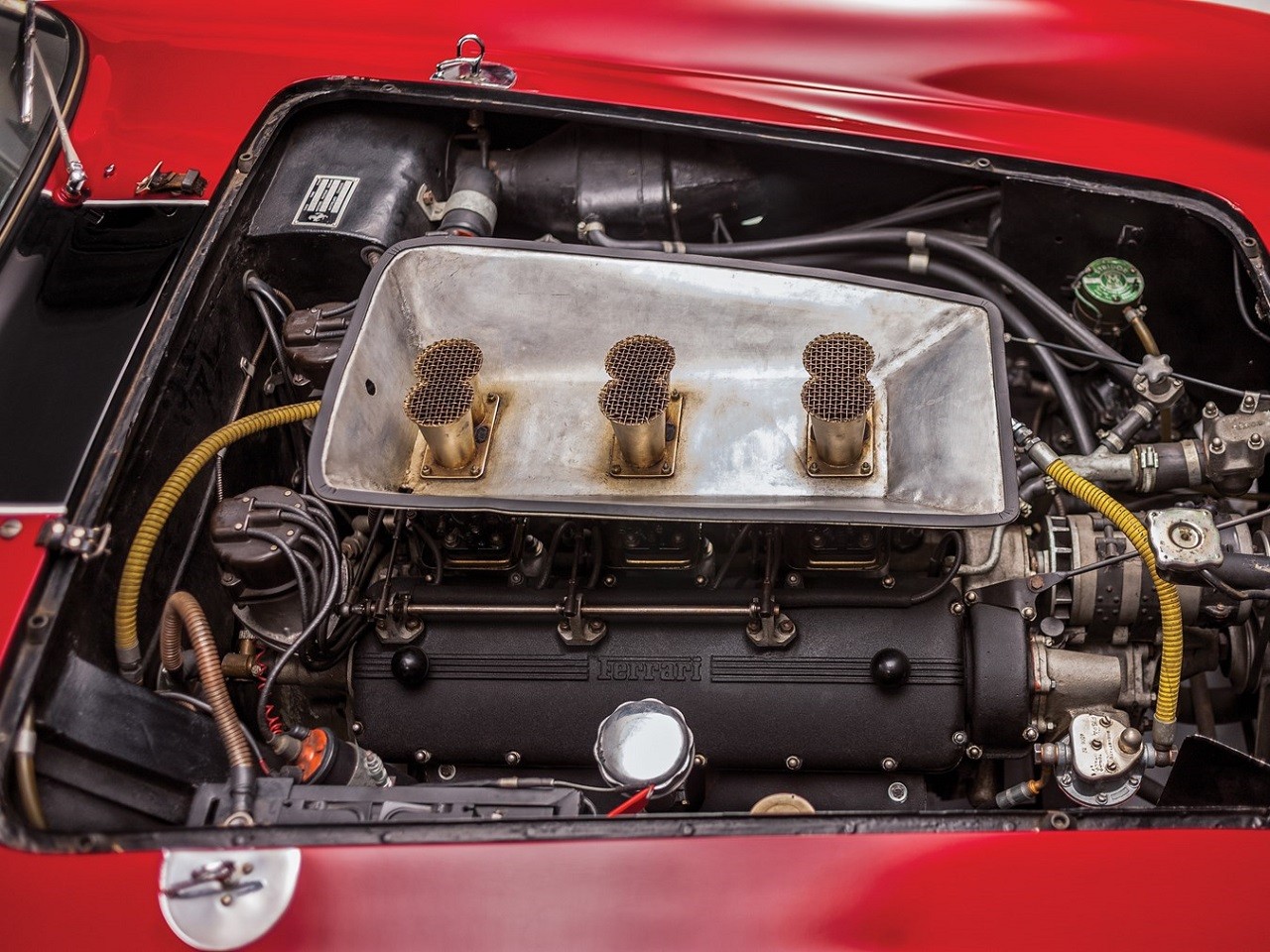
The splendid 1957 Ferrari 250 GT Berlinetta Competizione ‘Tour de France’ you see here is even rarer. Number 15 out of 17 cars built with the beautiful three-louver Scaglietti coachwork and covered headlights, this vehicle retains its original 258 bhp v12 engine (rebuilt in 1968) with competition camshafts and high-compression pistons.

It went through a painstaking restoration process that took nearly 20 years to complete, and in its racing career, it entered 22 events, claiming 11 victories along the way. The vehicle never crashed, and, with just two custodians looking after it over the last 45 years, this makes for a particularly pure and impressive example of a Ferrari competition legend. Coming to RM Sotheby’s auction in Monaco, on 12 May 2018.

Bid Here

Photos Courtesy of RM Sotheby’s 

Revealed: Ferrari 488 Pista – 711bhp, 8,000 RPM of Mighty Twin Turbo V8 Fury

This is one serious Ferrari. Lets start with the fact that the 488 Pista has a 0-62mph time of 2.85sec. Thats as quick as the Italian brand’s halo hypercar, the Ferrari LaFerrari. Dry weight comes in at just over 2,820 pounds, and the Ferrari claims the car has a top speed of over 211 mph.

The 488 Pista is the long awaited special edition version of the 488 GTB. Our longtime readers know that our dream car is a 458 Speciale so we have been eagerly waiting for the latest version. The model uses the most powerful V8 in Ferrari’s history and is described as an “extreme evolution” of the turbo unit that won International Engine of the Year in both 2016 and 2017. The fact that this turbo powerplant can rev to over 8,000 RPM is incredible.

The Ferrari 488 Pista will officially be unveiled at the Geneva Motor Show soon. As the successor to the 360 Challenge Stradale, 430 Scuderia and 458 Speciale it has big shoes to fill.

Ferrari 488 Pista Gallery

According to the company, the Ferrari 488 Pista marks a significant step forward from the previous special series in terms of both sporty dynamics and for the level of technological carry-over from racing.

Here’s What Ferrari Had to Say

The car’s development evolved directly from the company’s involvement in the FIA World Endurance Championship – in which it has won five Manufacturers’ titles in the GTE class in the six years since the series’ inception – and its 25 years’ experience in running the Ferrari Challenge one-make series.

The Ferrari 488 Pista’s extensive weight saving solutions, along with engine, vehicle dynamics and aerodynamic developments, all derive from Ferrari’s racing cars: the 488 GTE and the 488 Challenge. The result is a car with an uncompromising mission: to offer impeccable track-like performance on and off the road, even when in the hands of non-professional drivers.

Lighter and More Powerful

The new model weighs an impressive 90 kg less (1280 kg dry) than the 488 GTB. This fact, combined with the largest ever increase in engine power for a special series car (+50 cv), sets a new benchmark for Ferrari’s V8 sports cars.

Its engine is the most powerful V8 in Ferrari history and is an extreme evolution of the turbo unit that won the overall International Engine of the Year award titles in both 2016 and 2017.

It punches out 720 cv with the highest specific output of in its class (185 cv/l) and is now lighter too, thanks to solutions adopted from the 488 Challenge. As a result it has a top speed of 340 km/h and sprints from 0-100 km/h in 2.85” and 0 -200 km/h in 7.6”.

The engine sound is unique and unmistakably Ferrari, as such a special car warrants. Both the sound quality and the intensity are higher than the 488 GTB in all gears and at all engine speeds in proportion with the progressive increase in power.

Boosted Downforce

The Ferrari 488 Pista makes full use of Ferrari’s motor-sports experience for maximum aerodynamic performance even on the road. Among the racing solutions adopted is the front F1-inspired S-Duct and the design of the front diffusers which feature a ramp angle that was optimised for the 488 GTE to create strong suction for increased downforce. Additionally, the rear blown spoiler is higher and longer and the shape has been optimised. The final result of all these interventions is an impressive 20% increase in downforce compared to the 488 GTB.

Exhilarating Driving Pleasure

The vehicle dynamics were designed to enhance driving pleasure and make the car’s full potential available to all drivers, professional or otherwise. The objective was to make the car’s performance on the limit easier to reach and control.

This was achieved by synergies between the development of the mechanical set-up and the electronic dynamic controls integrated into version 6 of the Side-Slip Angle Control system. SSC 6.0 incorporates all the following systems: E-Diff3, F1-Trac, the magnetorheological suspension (SCM) and, for the first time ever, the Ferrari Dynamic Enhancer. The FDE features a world-first: it uses Ferrari software to adjust the brake pressure at the callipers.

A Powerful, Efficient Design

The design of the Ferrari 488 Pista is focussed on functional aerodynamic concepts while the cockpit is pared back in keeping with its very sporty vocation. Ferrari Design used innovative elements, such as the aerodynamic S-Duct at the front, as an opportunity to visually shorten the car’s nose, creating an original floating wing effect.

The racing livery colour scheme is an integral part of the design of the car and the way it dives into the S-Duct underscores the berlinetta’s compact yet imposing forms. Contrasting edging on the aerodynamic elements on the bumpers and flanks add structure to the design.

The concept of the front is echoed in the dolphin-tail rear spoiler which appears suspended to provide an impression lightness and efficiency, while the rear volumes add a sense of power to the tail.

Specifications

Specs
Type V8 – 90° twin turbo
Overall displacement 3902 cm3
Maximum power output * 530 kW (720 cv) at 8000 rpm
Maximum torque * 770 Nm at 3000 rpm in 7th gear
Length 4605 mm
Width 1975 mm
Height 1206 mm
Dry Weight** 1280 kg
0-100 km/h 2.85 s
0 -200 km/h 7.6 s
Max. Speed > 340 km/h

Ferrari makes 488 Pista official with 711 hp, racing tech, photos

Instead of letting the internet get the best of its new V8 Special Series coupe, a day after images leaked Ferrari released a batch of details and photos on its 488 Pista track-day weapon. The twin-turbo 3.9-liter V8 produces 720 of France’s Cheval Vapeur, which equates to 710 of our U.S. horsepower, while torque churns in at 568 pound-feet. Those numbers outdo the 488 GTB by 50 hp and eight pound-feet, and will get the 488 Pista in its lightest guise from a standstill to 62 miles per hour in 2.85 seconds, with 124 mph arriving in 7.6 seconds. Maximum velocity tops out at 211 mph.

We say “in its lightest guise” because Ferrari records the 488 Pista’s weight as 2,821 pounds dry, but with an asterisk that explains said weight can only be achieved “With optional lightweight features.” As of now we have no idea what those features are, but along with other lightweighting efforts like the carbon floor, they help amputate a total of 198 pounds compared to the weight of the standard 488.

Ferrari says the goal was to make the upper reaches of the new Special Series V8 “easier to reach and control,” so engineers poured the brand’s racing toolbox over the 488 Pista. The front S-Duct and diffuser mimic the ramp angle on the 488 GTE World Endurance racer. The sixth evolution of Side-Slip Angle Control that oversees the electronic differential, the magnetorheological suspension, and the F1-Trac stability control, now incorporates Ferrari Dynamic Enhancer software that varies the brake caliper pressure. Even the livery was created to enhance the coupe’s raciness, as if such ornamentation were needed.

We’ve heard rumors that 488 Pista can lap Ferrari’s Fiorano test track faster than the LaFerrari. A better comparison — one we’re more eager to see, and one with a much better chance of happening — is that between Ferrari’s latest and the McLaren 720S. Their specs are nearly identical. The McLaren produces 710 hp and 568 lb-ft from a 4.0-liter, twin-turbo V8, weighs 2,828 pounds in its lightest fitment, sprints to 62 mph in 2.9 seconds, to 124 mph in 7.8 seconds, and has a top speed of 211 mph. Things that make you go, hmmm…

We’ll be at the Ferrari booth at the Geneva Motor Show as soon as the lights go up on this one.

Related Video:
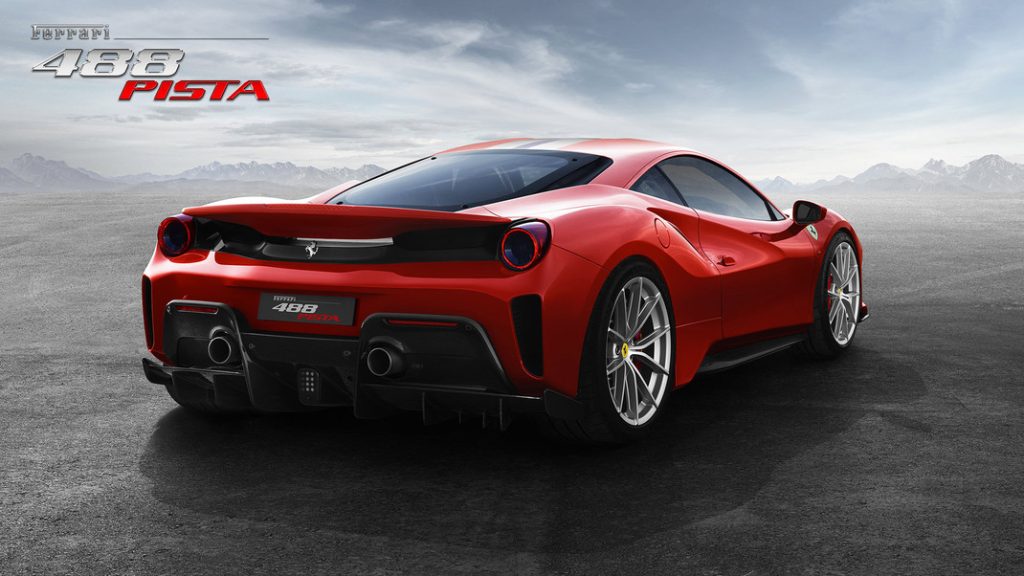
Ferrari 488 Special Series V8 named Pista in leaked photos

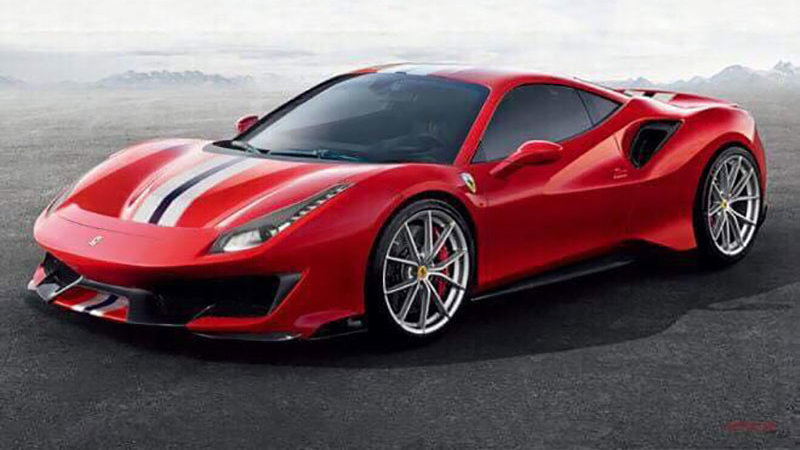
Ferrari Photo Page leaked Ferrari’s presentation of the 488 Special Series last month. Today, the site’s Instagram has what appear to be press shots of the coming Ferrari that reveal the coupe’s name: 488 Pista. The word “Pista” means “track” in Italian, and it would be the next peak in the lofty range already notable for the 360 Challenge Stradale (Road), 430 Scuderia (Team), and 458 Speciale (Special). We also get a few potential specs, namely a rumored 721 horsepower.

If the press photos are accurate — everything in front lines up with the blurry screenshot from the recent teaser vid — we can begin to see how Ferrari increased aerodynamic efficiency by 20 percent over the standard 488 GTB. Autocar says Ferrari’s aimed at the 340 kilograms of downforce produced by the Porsche 911 GT2 at 155 miles per hour, 15 kg more than achieved by the 488 GTB. Instead of a hood carved out with two deep scallops as on the 488 GTB, nearly the entire span of the hood on the 488 Pista plunges before reaching the leading edge. In back, a large, heavily dished wing tops a new rear fascia, its center span hovering a few inches above the bodywork. Below, a much more aggressive rear diffuser sits between vertical vents at the flanks.

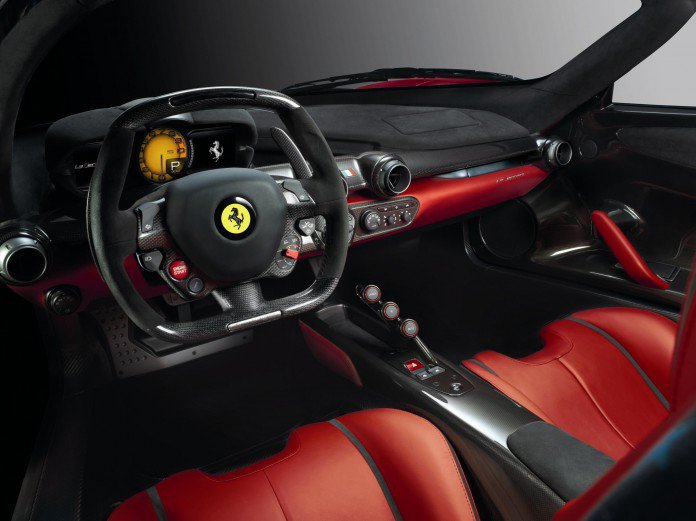
The interior doesn’t look much changed, but note the carbon fiber floor instead of floor mats, the leaner center tunnel area, and shift selector buttons on a stalk styled after the one in the LaFerrari.

A reveal at the Geneva Motor Show seems likely, where we’ll look forward to detailed specs on that engine derived from the 488 Challenge race car but 10 percent lighter. Based on what we’ve seen so far, a Geneva debut will be thrilling no matter how much of the 488 Pista leaks before then.

Related Video:
5 Ferrari Special Editions You’ll Drool Over

Just when you thought Ferraris couldn’t get any better, the plucky factory from Maranello devises some of the greatest supercar masterpieces the world has ever laid eyes on. Jokes aside, they’re not really a ‘plucky’ car brand but an unstoppable, desirable supergiant that loves to push boundaries in both style and speed.

The clientele Ferrari attracts is a whos-who of the elite 1% and with that much power and cash, comes the ability to customize anything. Do you want purple seats? Maybe not that extreme, but Ferrari has been known to create some special editions to certain people, or to commemorate their heritage. Whatever it may be, it has a certain aura that only Ferraris can emit and we all love them for it!

250 Europa Coupe by Vignale

250 Europa Coupe by Vignale

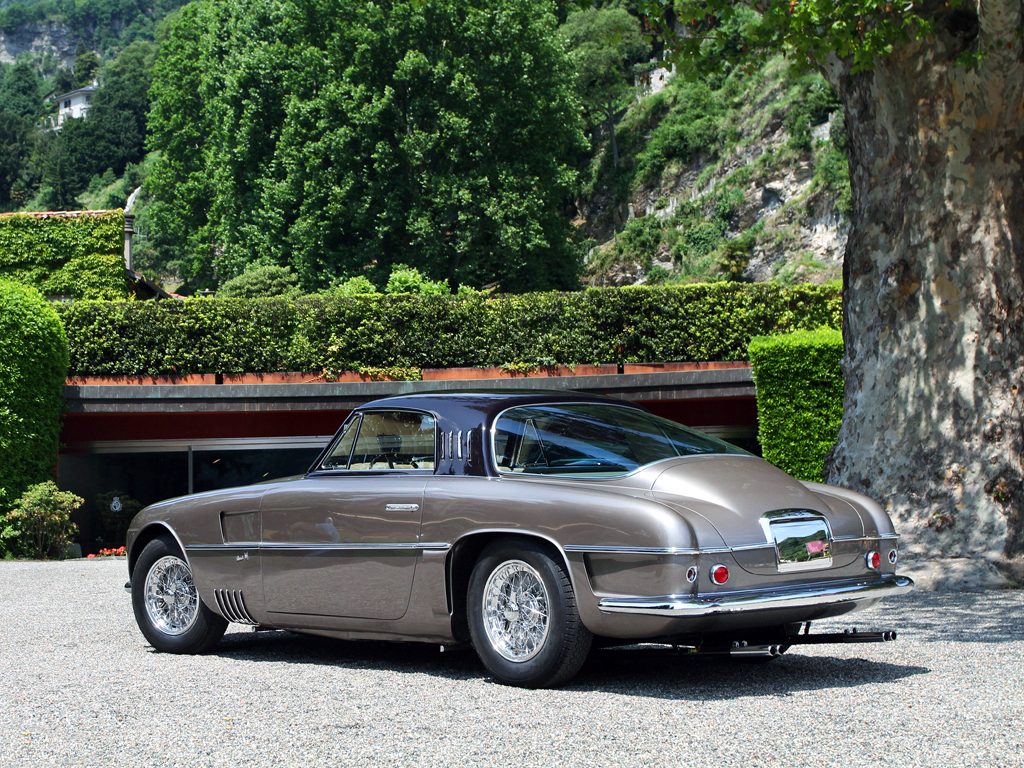
250 Europa Coupe by VignaleThe 1950’s was still new territory for Enzo Ferrari and his company. They were mostly an Alfa Romeo racing firm before coming into mass production of cars, but here they were, producing a gem called the Ferrari 250.

Ferrari’s most famous coachbuilder was Pininfarina, but they had a few one-offs, one of them was the 250 Europa created by Vignale. Only a handful of examples were created by Vignale and the V12 coupe is a rare masterpiece, more modern than the Pininfarina counterpart.

Some examples sold more than six-figures, and it’s a desirable piece of automotive history, adding their own flair to an already beautiful vehicle. Personally, we love the massive glass in the rear after the B-pillar, giving the 250 Europa a fastback look and a curvy back.

LaFerrari Aperta

LaFerrari Aperta

LaFerrari Aperta

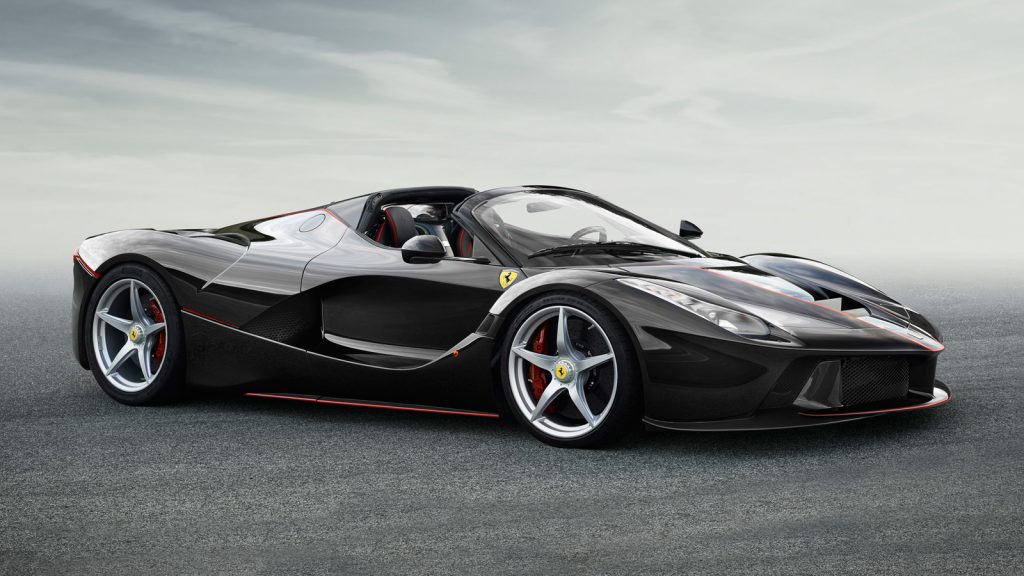
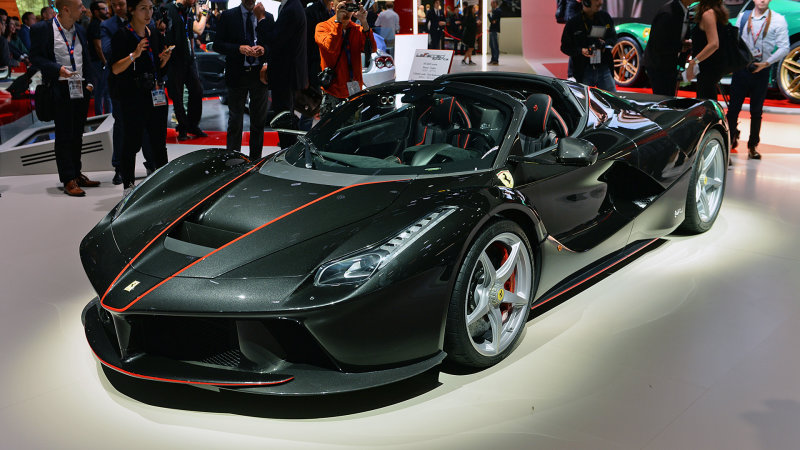
When LaFerrari was introduced in 2013, it made everyone’s jaw drop. A V12 hybrid supercar was now a reality and was going head-to-head with the likes of the Porsche 918 and the McLaren P1. This was the unspoken territory and Ferrari was determined to leave their mark for generations to come.

Everyone loved the Ferrari LaFerrari and 500 examples were produced. To commemorate Ferrari’s 70th anniversary, they created the convertible version called LaFerrari Aperta. Italian for ‘open’, the LaFerrari Aperta created access to endless miles of sky and fresh air while hearing almost 800 rampaging horses scream for more. Only 210 examples of the Aperta were sold, so seeing one in the wild will be quite a feat.

275 NART Spyder

275 NART Spyder

275 NART Spyder

The Ferrari 275 ruled the land during the 60s as a V12 roadster for the elite. It was the first Ferrari to offer a transaxle, which meant the transmission, the differential, etc., was built into one assembly. Having a transaxle gives the car better weight distribution vs. a transmission and reduces weight overall.

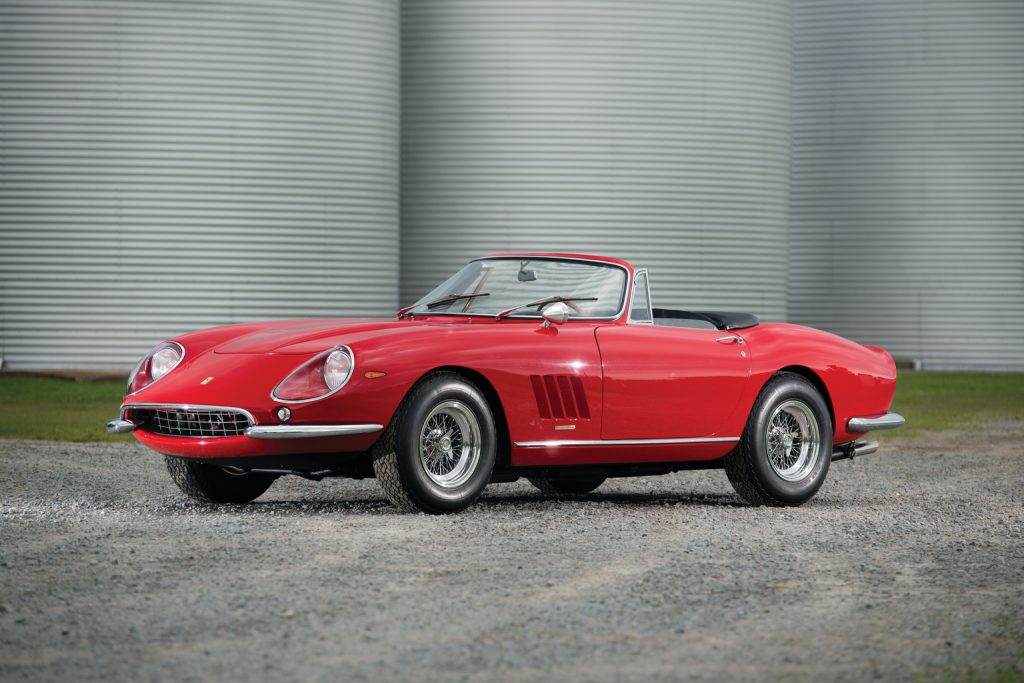
The 275 was bought directly through Ferrari as a convertible ‘spyder’ version and became known as the NART. It was specifically created for an American dealer who had their own ‘North American Racing Team’. It still featured a 3L V12 under the hood, but now with no roof, for you to enjoy the sound even more.

Producing only 10 examples, the NART edition of the 275 is one of the most desirable and rarest Ferraris in history.

Bergman 375 MM Pininfarina Berlinetta

Bergman 375 MM Pininfarina Berlinetta

Bergman 375 MM Pininfarina Berlinetta

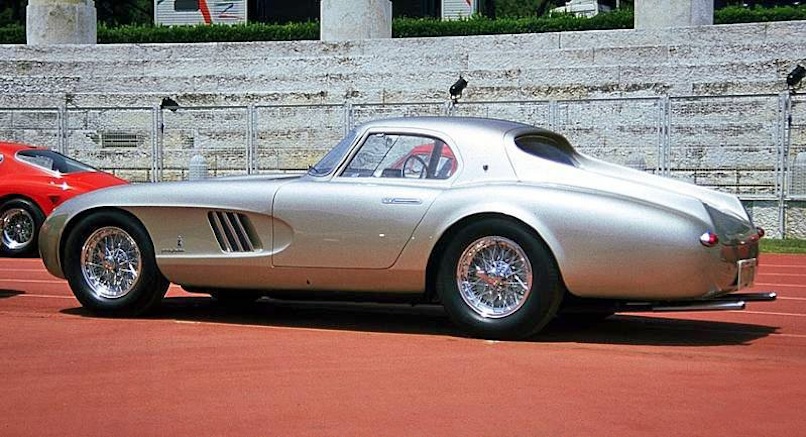
The Ferrari 375 MM was a racing legend in the mid-1950’s. Named after the Mille Miglia, one of the most famous endurance races in Italy, the two-door race car from Maranello was a racing legend. With 375cc in each cylinder, the V-12 roadster had almost 4.5L of raw power on your right foot, ready to send you to victory.

The most famous example was when director Roberto Rossellini asked Ferrari to build a special 375 MM for his then-wife, Ingrid Bergman. Most notably known as Humphrey Bogart’s counterpart in the movie Casablanca, Ingrid Bergman lit up the silver screen becoming a Hollywood icon.

Complete with a custom grey paint job, the 375 MM had their own colour called Grigio Ingrid.

Only one example was created and it is a masterpiece. If you happen to see this example, cherish it forever. Cherish and remember that moment whenever you have a bad day because whatever problems you may have don’t amount to a hill of beans in this crazy world.

“Someday you’ll understand that.”

Ferrari Enzo

Ferrari Enzo

Ferrari Enzo

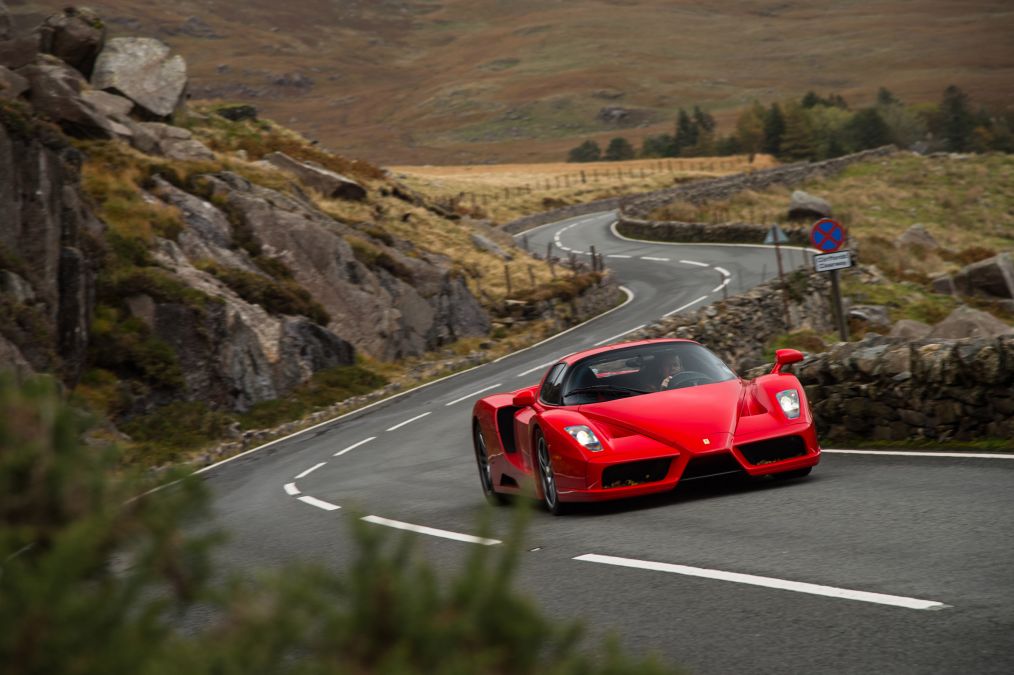
Named after the legend himself, the Enzo was released in the early 2000s with great spectacle. Designed by Pininfarina, the V12 monster was a rare spectacle of 400 examples. Featuring Formula 1 technology, such as a carbon fibre body, composite brakes, and an F1-style transmission, this rare supercar couldn’t just be bought at any Ferrari dealership.

You needed to have bought a Ferrari F40 or an F50, and be invited to have the right to buy the Enzo. No other car manufacturer has the gall or the chutzpah to declare that you had to be invited to buy their car. Imagine going to a Volkswagen dealership and seeing a GTI in the showroom, only to be denied rights to buy it because you weren’t invited.

Only Ferrari could pull off something that ludicrous, and pull it off they did.

‘Sensual but also logical’: Ferrari’s Flavio Manzoni opines on design at London exhibit

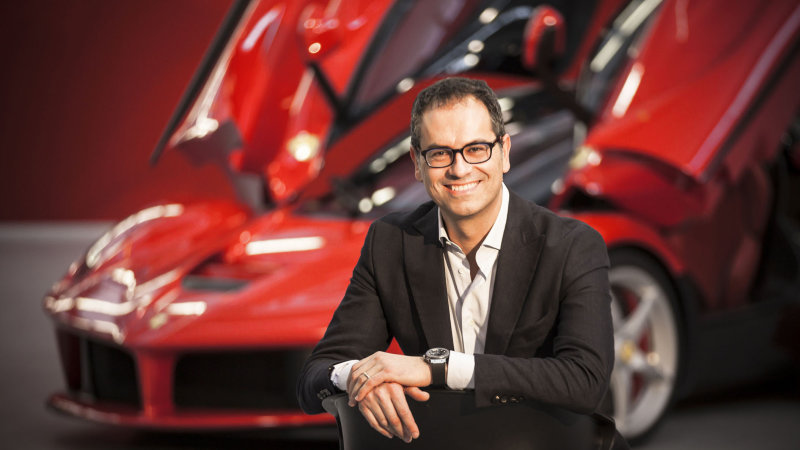
Ferrari design boss Flavio Manzoni was in London this week for the opening of a five-month exhibition on the famous Italian brand, part of its 70th-anniversary celebrations, at the world-famous Design Museum. So Autoblog jumped at the chance to ask the man behind the La Ferrari, FXX, 488 GTB and more about his design approach and inspirations, and also what he thinks about designing a Ferrari SUV, or even an EV.

Manzoni, 52, is pleasingly Italian in manner and accented English. Passionate and forthright, he has strong views on what makes good design in general and for Ferrari in particular. Having increased the importance of the brand’s Styling Centre considerably since becoming head of design in 2010, the now 80-strong team increasingly creates new vehicles in-house (as opposed to using former independent design company Pininfarina). The first project Manzoni fully oversaw within Ferrari was the La Ferrari. He’s a firm believer in form following function, “but not in a German way,” he says with a smile, citing the side of the 488 GTB, which is shaped by the need to divert air in a certain way around the car and also to look fantastic. As he declares: “You’d never find lines on a Ferrari just for decoration. The scoop on the 488 GTB is sensual but also logical.”

As another example, he says that his “latest baby,” the track-focused FXX K Evo, took a different path from the very engineering-focused Enzo of 2002, designed well before he joined the company. “We worked for eight months with the engineers on the FXX, to keep the functionality and make it beautiful.”

In Manzoni’s job, it would be impossible not to respect Ferrari’s incredible back catalog — he owns a Gandini-designed Ferrari 208 GT4, “still very beautiful, but iconic as well” — but he’s no slave to the past. “Déjà vu is something we don’t like,” he says with a slightly scolding look. “We don’t agree with nostalgia or the need to create a family feeling throughout our range. But a Ferrari must be recognizable without the badge. There are different ways to do this — not just in details like the headlamps, but sometimes in how you treat the surfaces. It’s tricky to explain, but it’s a feeling.”

He’s also not keen on following industry trends and has historically spoken out against luxury SUVs. “Every time we work on a new Ferrari, we try to improve on every aspect — including the center of gravity — so an SUV is not a Ferrari,” he stated as recently as 2015. “I don’t understand why so many other brands are doing them. In my opinion it shows a lack of courage.”

But forward-wind just two years, and parent-company CEO Sergio Marchionne has made several pronouncements relating to a potential Ferrari crossover or SUV plan. How does Manzoni feel about that? “I cannot answer, but one thing is clear: Ferrari is not a follower. There have been so many declarations from Sergio Marchionne and others. I cannot add anything more to what they have already said, but Ferrari won’t follow a trend.”

Given the way the world is changing, and as an admirer of those who think, imagine (and draw) differently — from Syd Mead to Le Corbusier — Manzoni must have considered an all-electric Ferrari, though? What does he think of the recent futuristic Lamborghini/MIT Terzo Millennio electric concept?

“I have a lot of respect for our competitor brands, but we are never influenced by them,” he says. “We work under our own vision and especially the guidance of Sergio Marchionne, who is giving us a big opportunity to reshape Ferrari in an extraordinary way. Of course I cannot say how, but we are living in a special moment of creativity, and when there is a change, there is also a peak in creative solutions.”

“Ferrari: Under the Skin” is on display at London’s Design Museum until April 15, 2018. It features $185 million worth of classic and new Ferrari road and racing cars — from the 1947 125 S to the latest La Ferrari Aperta, vintage photos and letters from founder Enzo Ferrari’s extraordinary life, plus an array of original F1 Ferrari racing helmets, including the classic 1960s bubble visor of American Phil Hill, and much more amazing memorabilia. It’s well worth a visit if you’re in London. See designmuseum.org/exhibitions/ferrari-under-the-skin.

Related Video:
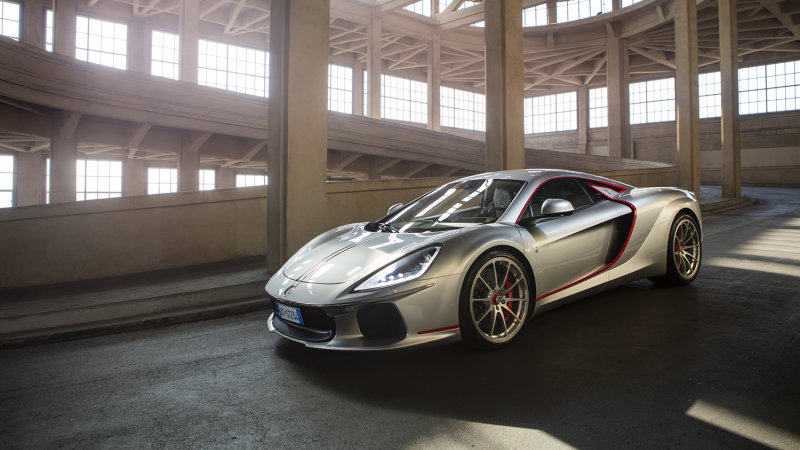
ATS rises from the ashes with its gorgeous GT supercar

Here’s a name we haven’t heard from in a while: Automobili Turismo e Sport is throwing its name back as an entrant in the war of the supercars with its new GT, a coupe that serves as a successor to a never-produced gran turismo car from the 1960s. True to its rarified segment, just 12 models will be produced starting at about $1.33 million, each highly customized to the purchaser’s tastes.

The coupe is a successor to the 2500 GT, which was revealed at the 1963 Paris Motor Show but never went into production before the entire company shut down in 1964. ATS was launched by Carlo Chiti and Giotto Bizzarrini after leaving Ferrari in 1961 due to a dispute with Enzo Ferrari. The initial aim was to beat Ferrari, and the company managed to produce a Formula One racer and the mid-engine 2500 GT.

Despite teasing several models in recent years, the GT will be the company’s first new production supercar in nearly half a century. Today’s version of the company is being run by ATS’s design chief, Emanuele Bomboi, and Daniele Maritan, a former race car driver turned importer and distributor of fast sports cars. The company insists this rebirth “is not a ‘nostalgia’ operation” and says it has other ideas it plans to develop beyond the GT.

Bombi formerly worked for Fiat and Bertone, and it shows in the GT’s styling. “The side silhouette of this new Gran Turismo is charged with energy, with clean lines framing arched surfaces,” the company says. “The outlines above the wheel are evocative while a clean flowing line divides the car’s upper and lower halves. As with the original car’s design, the windows provide a focus for the flanks of the car.” The new car also borrows its predecessor’s front spoiler, which runs the whole width of the car with the same blue Dragon of Bologna logo, with two stripes running along the bonnet. It gets a carbon fiber body and chassis for a curb weight of 2,866 pounds.

Powering the GT is a 3.8-liter, twin-turbo V8 mounted behind the cabin that does 650 horsepower and 500 pound-feet of torque. Or, buyers can upgrade to a 700-horsepower version with 553 lb-ft of torque. Either is mated to a seven-speed dual-clutch transmission that drives the rear wheels. Zero to 60 time is around 3 seconds, and top speed is around 206 mph. Three driving modes are offered — Viaggio, Sport and Corsa — with each configuration changing the colors of the cockpit controls from blue, to yellow and red, respectively.

Does that sound a lot like the McLaren 650S to you? It does to us. That’s likely what this car is based on, although we don’t have any info at the moment about ATS’ relationship with McLaren, if there is one. We’ll know more, hopefully, when it’s closer to launch.

Related Video:
Aston Martin hires Ferrari’s ‘key guys’ to challenge 488 GTB

Aston Martin is wasting no time in its aggressive product rollout, and it’s putting Ferrari and other supercar makers on notice.

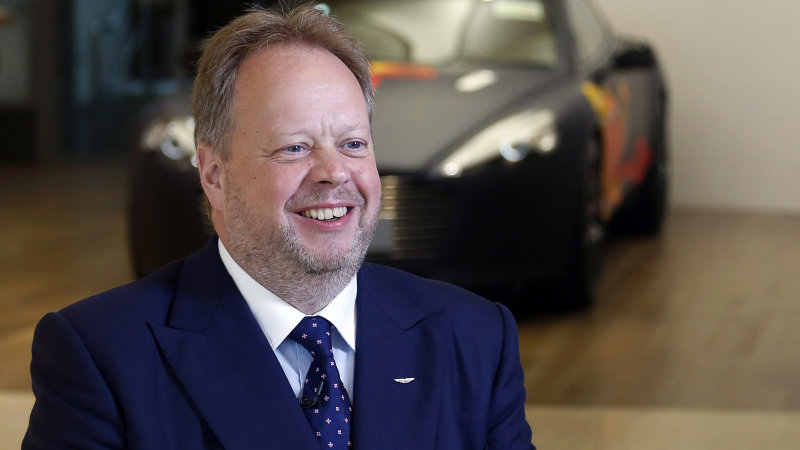
At the recent launch of the DB11 V8 in Catalonia, Spain, we caught up with Aston Martin CEO Andy Palmer. The Aston chief gave us new details on plans for a mid-engine car to go up against the Ferrari 488 GTB, the McLaren 720S and the Lamborghini Huracán.

Palmer says Aston has harnessed a great deal of learning from the $3 million Valkyrie hypercar and plans to apply that to its next mid-engine car, slated to land sometime in 2020 or so. As indicated in part of our conversation below, design plans for that car are developing quickly.

Andy Palmer, chief executive officer of Aston Martin Lagonda Ltd., reacts during a Bloomberg Television interview in Singapore, on Saturday, Sept. 16, 2017. Palmer discussed the impact of Brexit on the auto industry. Photographer: Vivek Prakash/Bloomberg via Getty Images
Autoblog: You said there will be a forthcoming mid-engine sports car. I still think the Ferrari 488 GTB is one of the best I’ve driven. How do you compete with that?

Andy Palmer: “Well, I agree with you. That’s the best car in its segment. And we’re going to take it on. And I realize the gravity of that statement, of what that means.”

AB: So how do you take on the 488 GTB?

AP: “Well, to start with, you recruit from Ferrari the head of body structures, and the head of powertrains. I’ve now got three of Ferrari’s key guys. And really, it’s a big compliment to Ferrari. That’s the defining car in its segment, and it’s really, really good. And those three guys now work for me. And you combine those guys with Nick [Lines, chief planning officer, Aston Martin] and Marek [Reichman, chief creative officer, Aston Martin] who you know really well, and you create some great recipes. And now I’ve got a better understanding of what that car looks like.”

AB: How far along is that car? Is there a clay model already?

AP: “Yeah, there’s clay. There’s actually eight quarter-scales. And there’s one in particular that I’m leaning toward. We’ve got it pushed out; it’s gone to a second studio in Milton Keynes. That studio is different from Gaydon. And I’ve got a pretty good idea of what the replacement for the 488 is going to be like as well. So, if we’re going in that market, we need to be ahead of the 488. And there’s no naïveté about what that means.”

One of the recruits Palmer is referring to is Max Szwaj, former head of innovation and body structures at Ferrari and Maserati. Szwaj has been named vice president and chief technical officer in his new role in Gaydon. Another recruit, Joerg Ross, formerly head of advanced engines at Ferrari and Maserati, assumes the chief engineer, powertrain, role at Aston. A third recruit by way of Modena is a very recent acquisition and has yet to be formally announced.

Aston Martin’s forthcoming car would slot above the Vanquish GT and below the Valkyrie hypercar in the lineup. And while the British luxe automaker is developing replacements for its existing lineup — most recently kicked off by the new DB11 — the Ferrari 488 fighter would join the upcoming DBX SUV as an all-new model line for Aston.

Related Video:
Ferrari building one more LaFerrari Aperta for charity auction

When Ferrari officially introduced the LaFerrari Aperta roadster, it announced that it would only build 209 of them. It also announced that every single one was already sold. That apparently isn’t quite the case, though. RM Sotheby’s announced it would be selling a LaFerrari Aperta, and it’s a new one, No. 210, that hasn’t yet been built.

According to the description, this is an additional special edition that will be built to help celebrate Ferrari’s 70th anniversary. It will also have a unique paint scheme and will be unveiled during the celebration in Maranello. No details were given as to what the paint scheme would be, but based on the other five specially painted LaFerrari Apertas, it will probably be inspired by one of the company’s more famous road or race cars of the past.

Also, since this car will be auctioned, it presents a rare opportunity to own one of Ferrari’s top-tier sports cars without going through the trouble of becoming one of the company’s favored customers. Of course that means this car could be very expensive, too. RM Sotheby’s estimates it will go for between €3 million and €4 million, which at current exchange rates is $3.5 million to $4.7 million. On the plus side, the proceeds from the auction will go to an unnamed charity.

Related Video:
As the iconic Ferrari F40 turns 30, a look back at its development

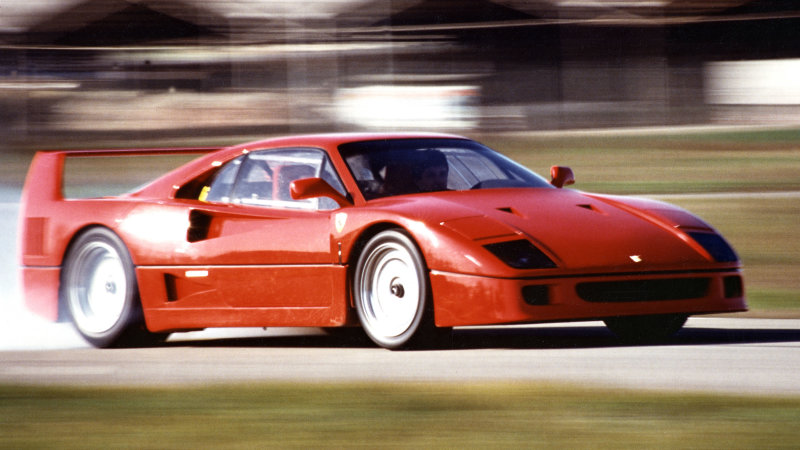
Today is the 30th anniversary of the Ferrari F40‘s debut. The F40 is easily one of the greatest Ferraris ever produced: It was one of the first road cars to have a top speed of 200 mph, it celebrated the company’s 40th anniversary, and it was the very last model that founder Enzo Ferrari was able to see to completion. To celebrate this historic car’s anniversary, Ferrari collected some anecdotes from people who worked on the F40 project, and they reveal some interesting details about the car’s development.

Among these details was the timeframe for creating the car. Ermanno Bonfiglioli, Head of Special Projects at Ferrari at the time, said that the car was developed in just 13 months. That means everything from the styling to the engine were taken from an idea to a production car in barely over a year. The engine wasn’t quite a from-scratch design, though, since it was based on the unreleased 288 GTO Evoluzione’s 650-horsepower engine, but it still received many updates to become the 487-horsepower engine we know today. Bonfiglioli highlighted the engine’s weight savings due to using magnesium for the oil sump, cylinder head covers, intake manifold, and transmission bellhousing.

It was after driving one of those 288 GTO Evoluziones that Pininfarina designer Leonardo Fiorvanti learned about Enzo Ferrari’s plan for the F40. He said that after telling Enzo his thoughts on the 288, Enzo told him he wanted to make a “true Ferrari.” Fiorvanti also revealed that everyone, including Enzo, knew this would be the last car for the founder.

From what Ferrari test driver Bario Benuzzi said about the F40, it certainly didn’t start out as a “true Ferrari.” He said, “The handling of the first prototypes were poor.” But in the short development time, the F40 became the car Enzo wanted, and Benuzzi credits plenty of downforce and the light, stiff chassis. It didn’t make the car easy to drive, though. Benuzzi said, “With no power steering, power brakes or electronic devices, it demands the skill and commitment of the driver, but generously repays it with a unique driving experience.”

Related Video:
Ferrari, not Tesla, might be the stock to buy

Last week Tesla’s earnings – or lack thereof – were one of the big stories in the auto industry. As usual, the electric carmaker didn’t make money, but the news sent the market, analysts, and Tesla’s devoted fans into a lather. But another company, this plucky upstart called Ferrari, also attracted a positive reaction from the market and actually had the financials to back it up.

Ferrari posted net revenues of $898 million (at today’s exchange rates) EBITDA of $265 million (a slightly complicated way to snapshot financial performance) and an adjusted net profit of $136 million in the first quarter. The company delivered 2,003 cars, and sales of its V12 models increased 50 percent. It quietly made progress nearly a year and a half into its life as an independent automaker. For 2017, Ferrari expects to deliver 8,400 cars and rake in net revenue of $3.6 billion.

No one thought Ferrari would flounder when Fiat Chrysler Automobiles spun it off in fall 2015. With a rich history, expensive products, and its own loyal fan base that’s arguably even larger than Tesla’s, the company seemed poised for success, though skeptics wondered how it might fare after longtime chief Luca di Montezemolo stepped down before the spinoff. Plus, the company remains within the FCA sphere, as its key stakeholders are largely connected to its former parent in some way, and Chairman Sergio Marchionne also steers FCA.

Last week’s results showed Ferrari is gaining footing in the evolving automotive world, and analysts responded. UBS analyst Michael Binetti reiterated Ferrari stock (RACE on the NYSE) as buy status and raised his target price from $85 to $92. Morgan Stanley’s Adam Jonas was even more bullish, raising projections to $100 in the next 12 months. Shares were trading around $82 Monday morning.

Both analysts viewed Ferrari as something different than a conventional automaker stock, with Binetti comparing it to luxury house Hermes, which produces high margins even for a specialty goods maker. Jonas suggested Ferrari’s singular reputation and history (16 Formula One Constructors titles, the most ever) could insulate its products when autonomous and electric cars become even more commonplace.

“In our view, a Ferrari is not transportation,” he wrote in a note to clients. “Ownership is viewed as an exclusive club, and membership requires more than just money. In a world where pleasurable human driving experiences on an open road become increasingly scarce, the value of this club’s membership may indeed appreciate.”

Ferrari is working on electric technology and has shown a willingness to diversify its product line with hybrid and turbocharging technologies in recent years. It also offers the GTC4 Lusso, a hatchback, with greater functionality than the brand’s cars traditionally offered.

Tesla, meanwhile, posted revenues of $2.7 billion in the first quarter but booked a net loss of $330.3 million, $48 million more than in the first quarter of 2016. Its stock was trading around $311 per share Monday morning.

Related Video:
New Ferrari LaFerrari with 100km For Sale

GTspirit is proud to offer a new Ferrari LaFerrari with only 100 km mileage, delivered new to the first owner in the Middle East.

The LaFerrari was launched back in 2013 after which 499 units were made and sold out. A final 500th car was revealed in 2016, it was later auctioned for a record $7 million with proceeds going towards the Italian earthquake relief fund. Prices for the LaFerrari continue to rise despite the introduction of the Aperta whose value is even higher.

Interno_con-pedaliera_15997_3_con

Powering the LaFerrari is a 6.3L V12 N/A engine mated to a KERS system producing 950bhp and 900nm of torque altogether. Power is transmitted to the rear wheels via a 7-speed DCT, the top speed is rated at 217 mph with a 0-62 mph time of less than 3 seconds.

For full details about the car on offer, please contact us here. The price is on request.