All posts in “Cars”

The All-New 2019 BMW 3 Series Is Here

Thanks to a handful of online forums, the images of the 2019 BMW 3 Series have leaked online ahead of its official debut later this week. Screenshots from the brand’s configurator show there’s a significant redesign at the front and rear with a handful of tech upgrades for the interior.

Starting at the front, the new 3 Series is much more sculpted than the outgoing model. The headlights take on a similar style to the 5 Series; their inside edge takes up more space on the kidney grille’s contour but keep a more pointed trailing edge. In profile, the 3 Series looks eerily similar to the Mercedes C-Class, but at this point, I think we just have to chalk it up as standard German design — BMW, Mercedes and Audi have been converging on design for years now.

The tail lights also get a big revision; for years the 3 Series had a stepped, two-part design but for 2019 there’s more cohesion between the outside lamps and the ones on the trunk. Interestingly, the raised, red hockey stick-shaped section adds a bit of depth and style to the new setup. Inside, there aren’t any massive leaps in architecture to make you think it’s an entirely new car, but for the introduction of a single touchscreen interface that cleans up the center of the dashboard nicely.

Because it’s still early, we don’t have exact details on pricing or performance. We’ll know more as the week unfolds and the Paris Motor Show opens its doors, but it’s safe to assume there will be marginal increases in both. Overall, the G20 generation 3 Series isn’t a game changer, but it’s probably still the benchmark sedan every other brand will be aiming to beat.

The New Audi SQ2 Is Just a Big Hot Hatch

Audi is busy bolstering its SUV lineup with entirely new models, but more importantly, it’s slotting in S-level performance version as well, like the new SQ2. Normally, crossovers don’t move the needle as far as excitement goes, but the smallest ones are transforming into what equates to lifted hot hatchbacks.

Audi revealed the SQ2 ahead of this year’s Paris Motor Show and announced it’ll be powered by the same turbocharged 2.0-liter four-cylinder from the S3 and Volkswagen Golf R. That means the little SUV will have 296 horsepower and 295 lb-ft to play with when it does 0-62 mph runs in 4.8 seconds. Here’s hoping the RS Q2 gets the 362 hp five-cylinder screamer from the RS3 sedan sooner rather than later

Crossovers land in a weird place in every automaker’s lineup — they’re very clearly meant to fill the gap between the full-sized SUVs and sedans. The result, historically, always seems to be an awkwardly shaped and proportion vehicle with equally sub-par handling. Brands like Audi seem to be getting a better handle on what crossovers should look like, and it’s not a mini SUV, but a just a big hatchback with a little lift. Granted, the SQ2 is lower by almost an inch compared the standard Q2; it still sits taller than your average hatchback.

There’s no word yet on pricing or whether we’ll even get the SQ2 here in the states. Even with America’s affinity for crossovers and any car slightly resembling an SUV, the smallest of the bunch seem to stay on European shores. To be honest, we need another crossover over here like we need another fake exhaust hole in a bumper, but it’d be interesting to see how these little crossovers are evolving first hand.

Editor’s Pick: I Think the Volvo V90 CC Is the Most Ideal Car On Sale Today

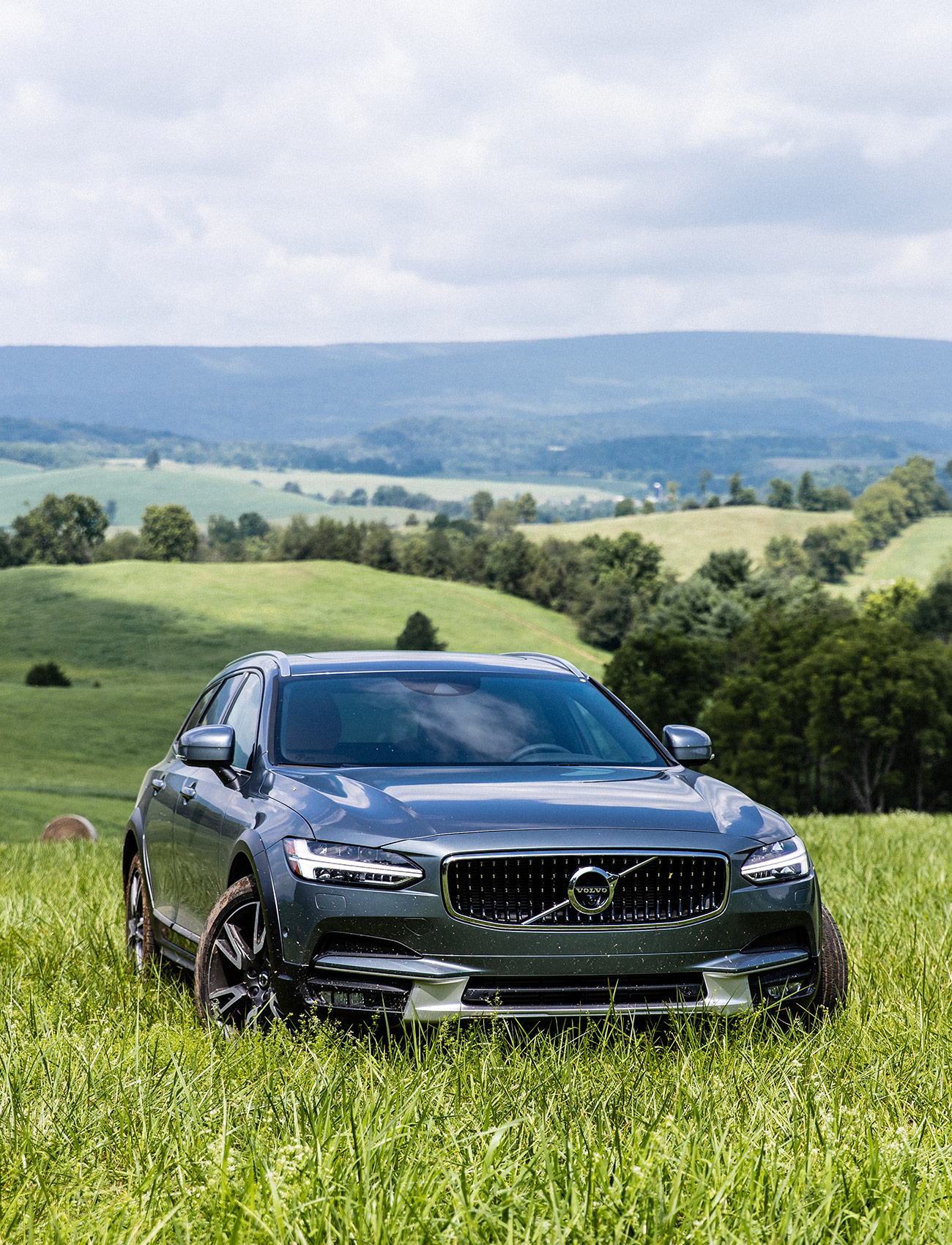
First, an admission in the interest of transparency: I have called a lot of cars “the best” in their respective categories, and some of those have been Volvos. The automotive journalism community at large is prone to being pretty hyperbolic, myself included. But this is not one of those times. I truly believe the Volvo V90 Cross Country is the singularly most ideal car available.

The beefed-up, “off-road” Volvo V90 CC wagon ($52,300, base) lies at the intersection of supreme comfort, capability, technology, safety and cost. It is not an inexpensive car, but for what you get, even in the very basic configuration, it’s a bargain.

Comfort

It’s a reasonable assumption that anyone who owns a car will need to transport more than two adults at any given time. I daydream about sports-car-as-my-only-car ownership as much as the next person but there’s a reason it’s only a fantasy for most of us. Between friends and kids and dogs and other passengers, a usable backseat is a must. The V90, which is in the most basic terms an S90 sedan with added 44 cubic-foot cargo space out back, features enough space in back for full-size human people (technically, five). For comparison, the V90 has the same amount of rear legroom as a Mercedes-Benz E-Class Wagon (36.9 inches and 36.8 inches, respectively). More on that car later.

The level of luxury that Volvo conveys throughout its lineup is rather unparalleled for the money. There are other upscale, lesser-expensive offerings from other brands (premium Ford Explorers are very nice inside; GMC makes awesome interiors; Mazda is absolutely killing it with its price-to-luxury ratio), but the kind of luxury you experience in a Volvo is on another level: the Scandinavian, minimalist approach that is widely loved. High-grade materials, unobtrusive shapes, intuitive and ergonomic controls, an airy cabin — all those elements combine to form a very distinct kind of tangible luxury that I think goes further than straightforward plushness you might find elsewhere.
Technology

I find Volvo’s infotainment system — dubbed Sensus — to be fantastic. Its main nine-inch touchscreen is organized much like a smartphone operating interface, which is to say you swipe from left to right to access different clusters of (digital) buttons and functions. The navigation and media controls, which can be made full-screen or stacked in a modular fashion, are intuitive and pleasant to look at.

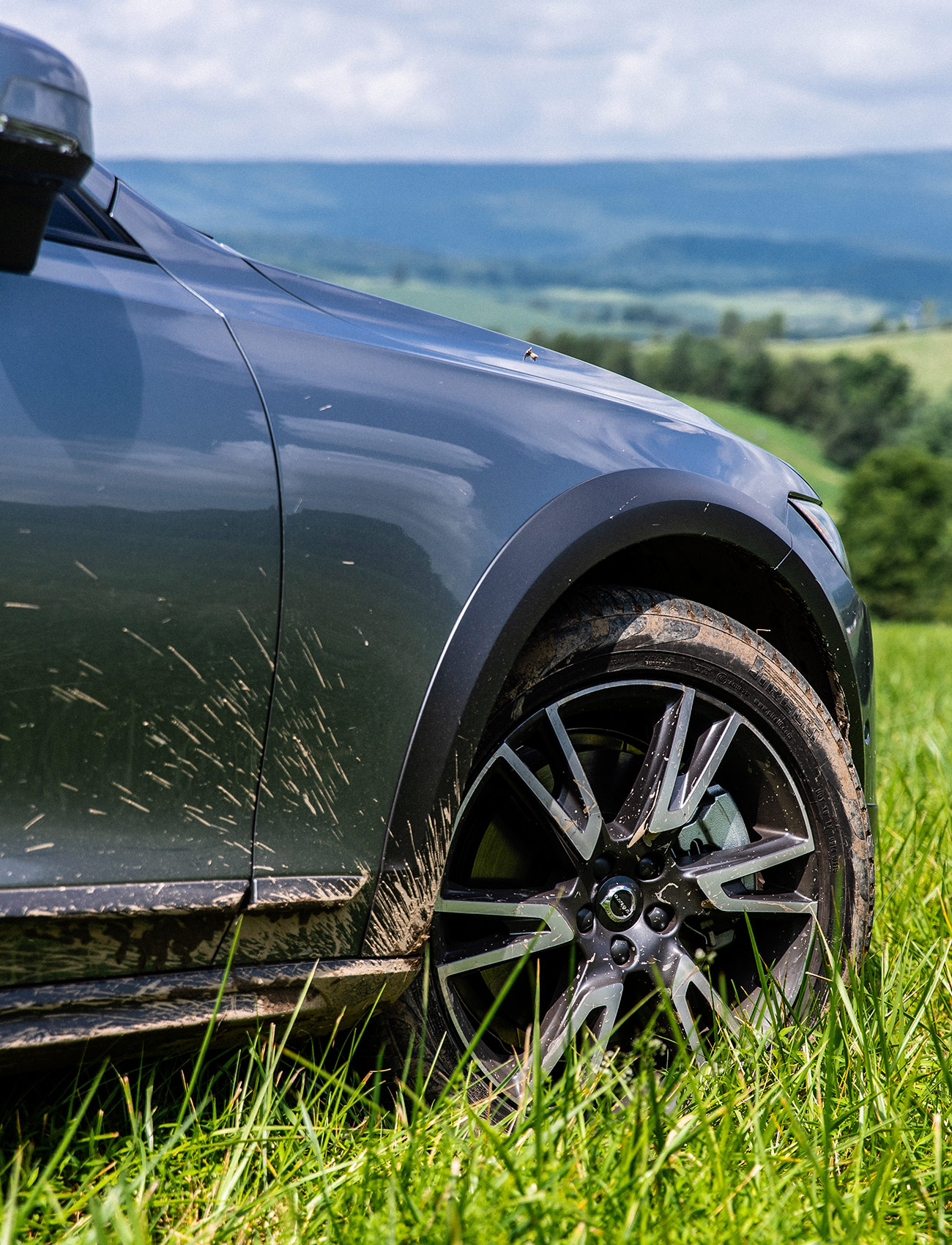
Further, Volvo’s Pilot Assist technology is superb, as far as semi-autonomous driving is concerned. On a recent trip to the middle of Pennsylvania, pictured here, I drove 10 hours in a single day. In the middle, I spent about six or more hours gallivanting around in the outdoors. I didn’t have any issue whatsoever with concentration or fatigue because Drive Assist, also severely intuitive and well-calibrated for ease-of-use, was able to supplement my driving. Various other manufacturers offer similar tech — Mercedes-Benz Active Steering Assist, for instance — but I find Volvo’s to be smoothest and smartest I’ve tested. It is gentle, unobtrusive, intelligent and suits drivers who are patient, seamlessly orchestrating radar-guided cruise control, lane keeping and blind spot detection as well as passing functions in satisfying harmony.

Capability and Safety

This is where the “CC” come in to play. Beefing up the already splendid V90 station wagon is Volvo’s signature take on all-wheel-drive ruggedness: the Cross Country. Volvo equips their Cross Country vehicles (the V60, the V90’s smaller sibling, was just announced this week) with extra tough cladding where it counts, slightly elevated ride heights and off-road tech like Hill Descent Control, which modulates downward, off-road progress automatically. As you can see, I braved some fields and trails in a V90. It was terrific in all situations, even with all-season tires. A lot of makers offer really great AWD wagons, but the degree of refinement in Volvo’s Cross Country lineup does it for me.

Volvo is, of course, an automotive safety standard bearer — say the name and most of us likely think of dorky safety-obsessed dads. The brand calls its current suite of technology aids Intellisafe. Standard on all its cars is a system that identifies, tracks, warns of and automatically avoids (if necessary) vehicles, pedestrians and animals. Pilot Assist, as I mentioned above, can take over driving duties for a few seconds at a time, though it is officially intended as a supplement to your own driving, not a replacement. A high-strength frame, pre-collision tech and more are integrated into the brand’s cars.

Styling

Subjective, without a doubt. But then again so is this entire argument. I think, though, that if I were to conduct a poll simply asking “Do You Think the Volvo V90 CC Is Good Looking?” I would get a 90-plus-percent positive response rate. I’d put money on that. Volvo design language in its current form is, for my money, exceptional. The lines and shapes and proportions are magical, especially considering that truly gorgeous cars normally cost far more. If you’re an aesthete of any kind and shopping for a new car, Volvo should literally be at the absolute top of your list.
Cost

$60,000 is a shitload of money — it’s the median income of an entire household in the US — and it should buy you something massively significant. The Volvo V90 CC can be very well optioned at around $60,000.

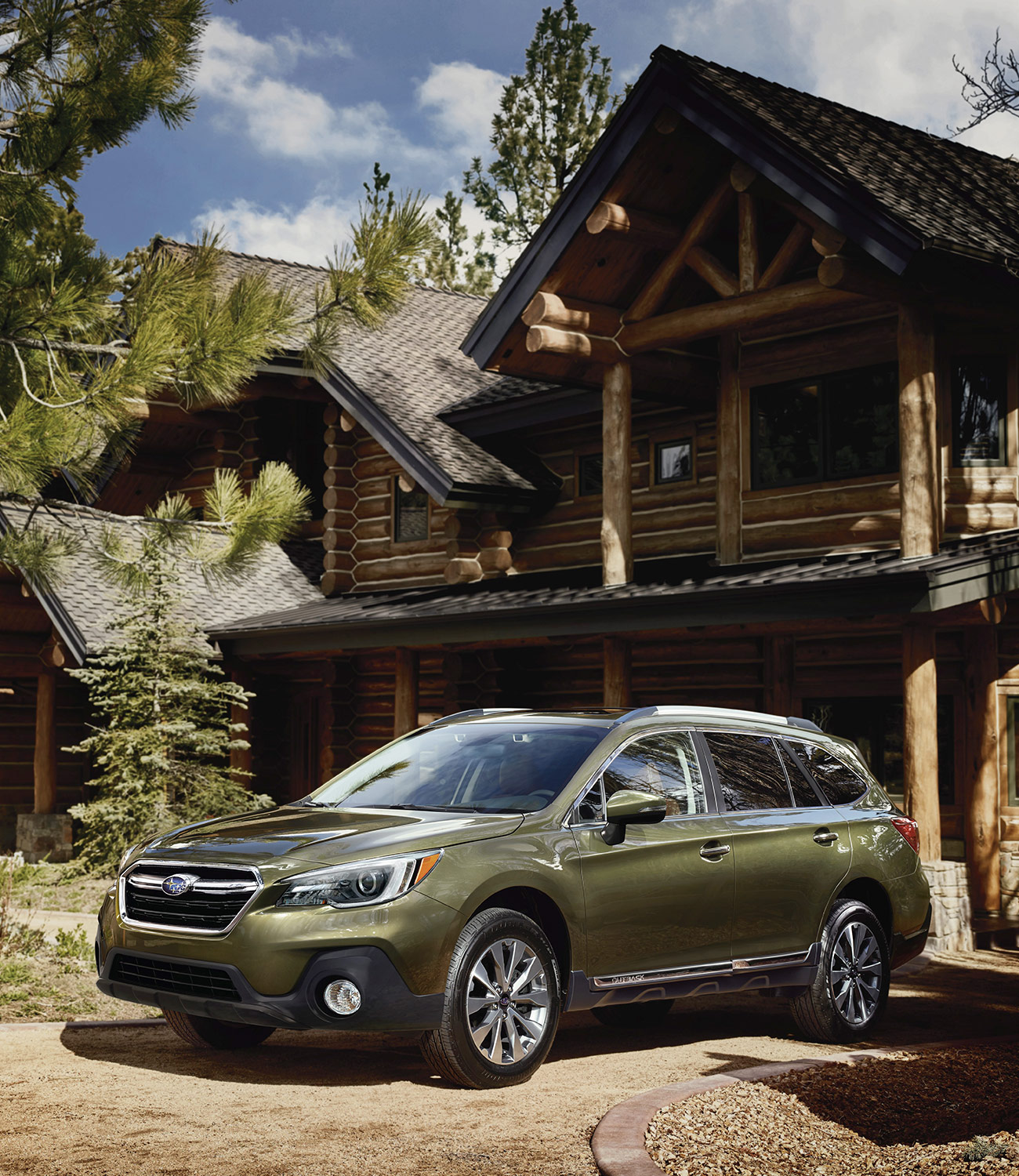
Compared to the base Subaru Outback ($26,345), a similar type of car, at just over $52,300, base MSRP, the V90 CC costs twice as much. But for that money, you get a lot more car as standard, so I don’t consider it a really fair comparison. As contributor Tyler Duffy recently pointed out, the Outback is the best value family car by a slim margin. I find it reasonable to think that an “ideal” car should be inherently more premium, like the Volvo.

It would be more accurate to compare the V90 CC to its most direct competition, the base Mercedes-Benz E-Class 4Matic Wagon ($63,050), is $7,000 more than a similarly equipped V90 CC. I get into the nitty-gritty below but suffice it to say, as both are optioned similarly, the cost delta stays the same at best and increases if you’re aggressive.

I want to make two things really clear. First, I am in no way picking on Mercedes-Benz; it just happens to make an honest V90 CC competitor. The E-Class Wagon is a tremendous car, and largely deserves the prestige it garners. Secondly, these are in some fundamental ways, different vehicles meant for different things. The Volvo is for a more reserved and practical person like me; the Mercedes-Benz is for someone with more cash who wants more of a luxe driving experience. But, that kind of drives (heh) home my point. Volvo covers all the necessary bases, and does so really, really well.

Verdict

This is where my argument hinges. In terms of all the points I’ve made up to now and especially in terms of bang-for-your-buck, Volvo comes out ahead; in fact, the Volvo is an actual bargain. Most of that increased price, then, is branding: you’ll simply pay more to have a three-pointed star on the hood of your car than you would the Swedish maker’s emblem.

Which is where I suspect you’ll choose to accept or dismiss this argument. It’s just one dude’s opinion, but the V90 CC is definitely my ideal car. Agree/disagree? Shoot me an email and share why.

Cost Comparison: V90 CC and E-Class 4Matic Wagon:
Your results may vary, but I tried my best to compare the E-Class and V90 CC in each brand’s online car configurator, selecting similar options and trim levels to make an admittedly less frugal but deeply desirable final product. I ended up with a $72,085 V90 CC and an $81,555 E-Class Wagon.

I started with the T6 AWD V90 CC ($56,100, base) which features a 316-horsepower, 2.0-liter turbocharged and supercharged inline-four, and added brown paint and 20-inch wheels, and the three available packages: Luxury ($4,900), Convenience ($1,950) and Protection Package Premier ($535). I also selected some cool options: a head-up display ($900), Bowers & Wilkins sound system ($3,200), the Premium Air Suspension ($1,200) and a retractable trailer hitch (1,310).

For the Mercedes-Benz E-Class Wagon ($63,050, base), I stuck with the standard 3.0-liter twin-turbo V6 with AWD and added brown paint ($720) and 19-inch wheels ($500). Upgraded leather and trim plus the warmth and comfort package ran $2,820; the Entertainment and Convenience package (power seats, dual-zone climate control, Navigation, etc.) is grouped with the Premium 3 Package (heated seats, Burmester sound system, Active Steering Assist, etc.) and runs $10,650. Adding the adjustable suspension and rear side-impact airbags added $2,320.

Volvo loaned us a V90 CC to drive and photograph.

One of the Most Iconic Cars of the ’90s Is For Sale Under $20,000

When it comes to the ’90s, affordable Japanese sports cars ruled the roads. But as far as icons go, the FD generation Mazda RX-7 is in rarified air. Of course, that whole generation of cars got a cultural boost from the original The Fast and the Furious movie. Still, it’s hard to argue they need any help today, because of the vintage car bubble that continues to expand over the era. The RX-7’s sound, silhouette and unconventional engine made it an instant classic, which is why this particular example is an absolute gem of a find.

In 1992, the first year of the FD RX-7 production, Mazda’s high-performance coupe went for around $33,000, or about $62,000 in today’s money. While that would make it Mazda’s most expensive model if it were on sale today, nearly doubling the CX-9 SUV in price, this one for sale on Japanese Classics is just $19,995 — less than a base-level MX-5. Even with 76,000 miles on the clock, that’s a ridiculous steal.

It should be said, this RX-7 isn’t completely stock, but thankfully it’s not modded to hell and back and burdened with some bolt-on widebody kit. A set of 17-inch OZ Racing Futura wheels are added to a Tein adjustable coilover setup; a Fujitsubo Catback exhaust broadcasts a better-than-stock sound out back. When it was new the RX-7’s rotary engine churned up 236 horsepower, 217 lb-ft of torque and screamed all the way to an 8,000 RPM redline, but it has to be said, was notorious for overheating. Japanese Classics claims this FD starts up and runs smoothly with no smoke from the exhaust (a telltale sign of worn rotary seals).

At $20,000, a car as legendary as the RX-7 is a genuine find. The money you save should probably go into upgrading the cooling system to get ahead on typical reliability issues, but as great as the new MX-5 is, it takes a back seat to an FD RX-7 of this caliber.

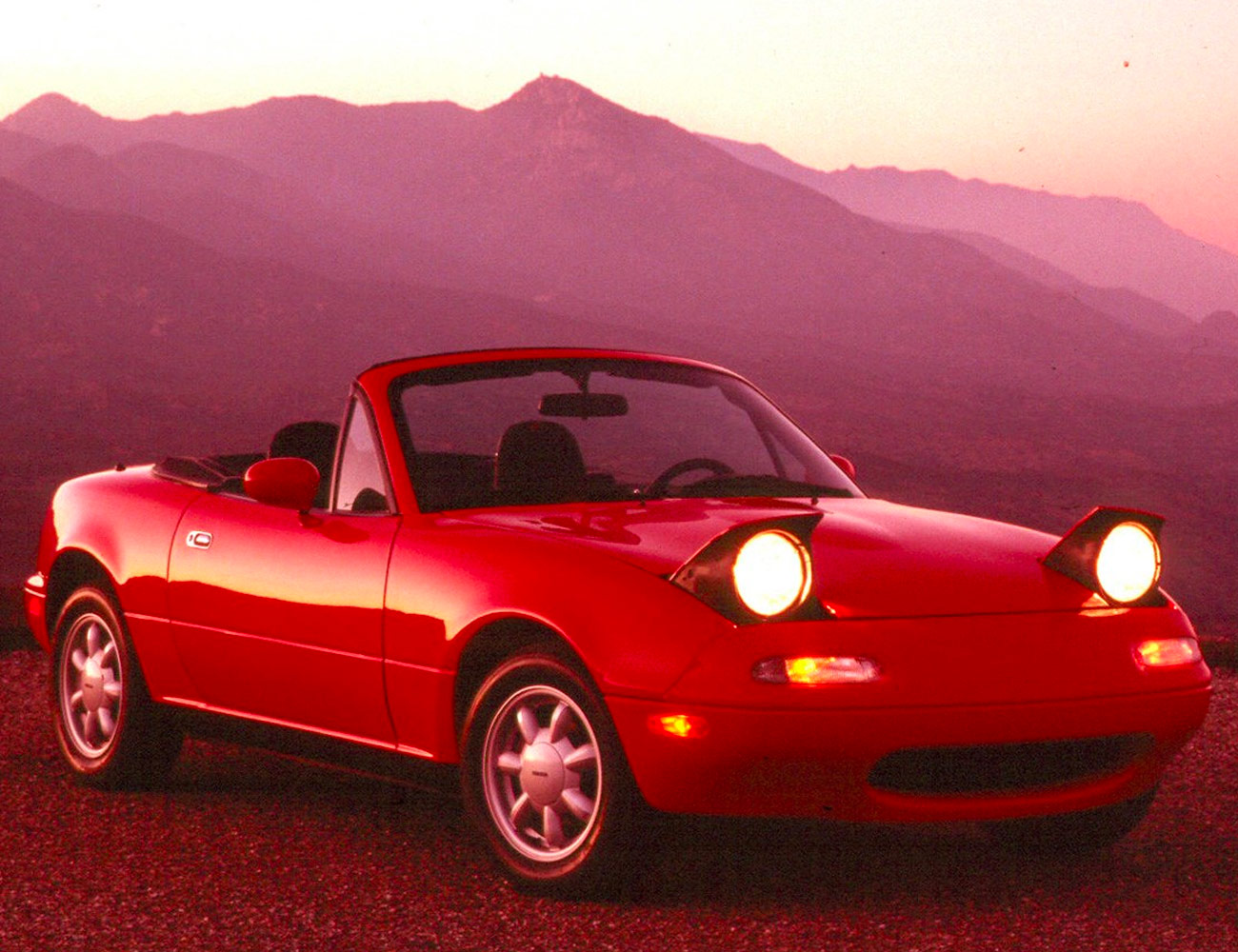
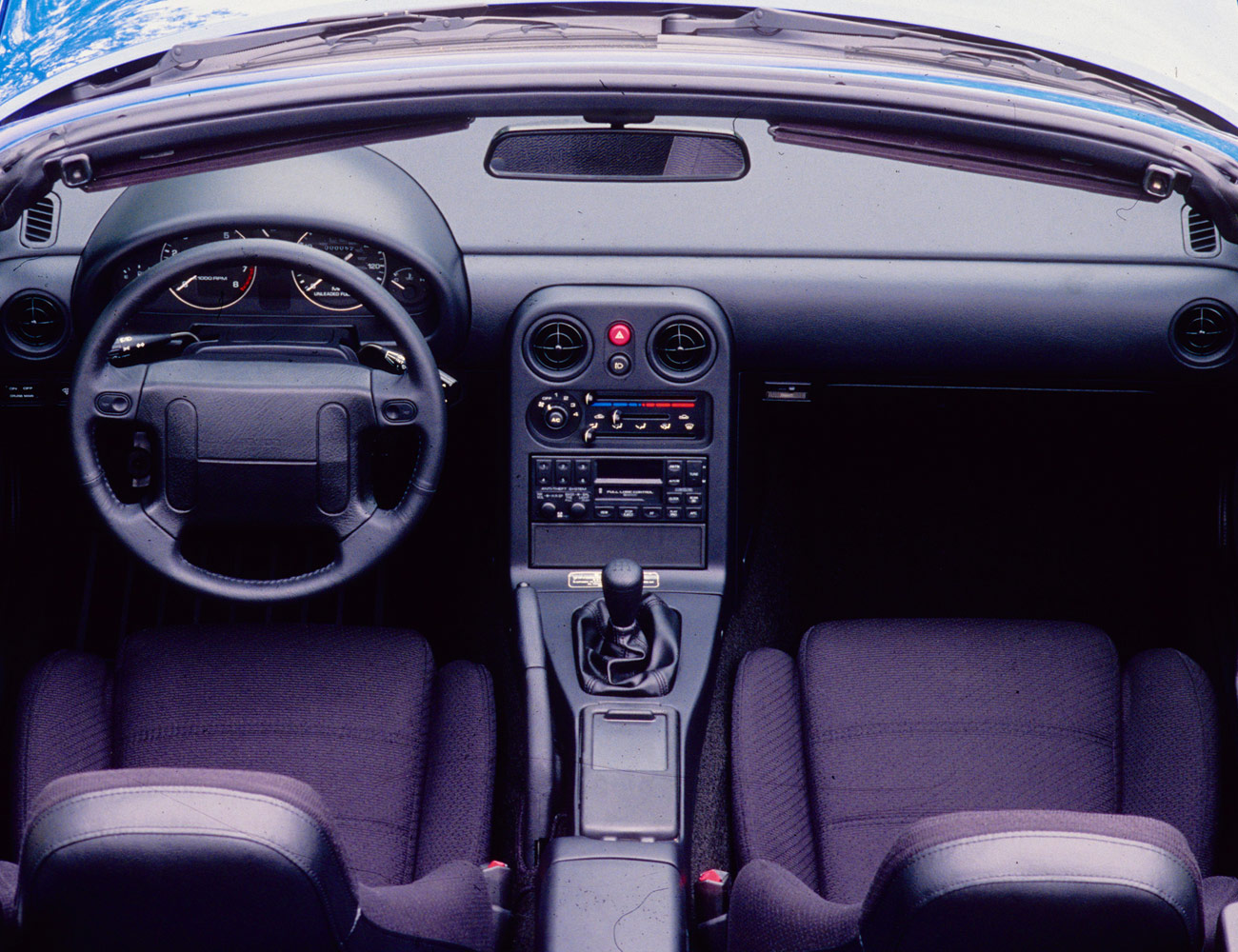
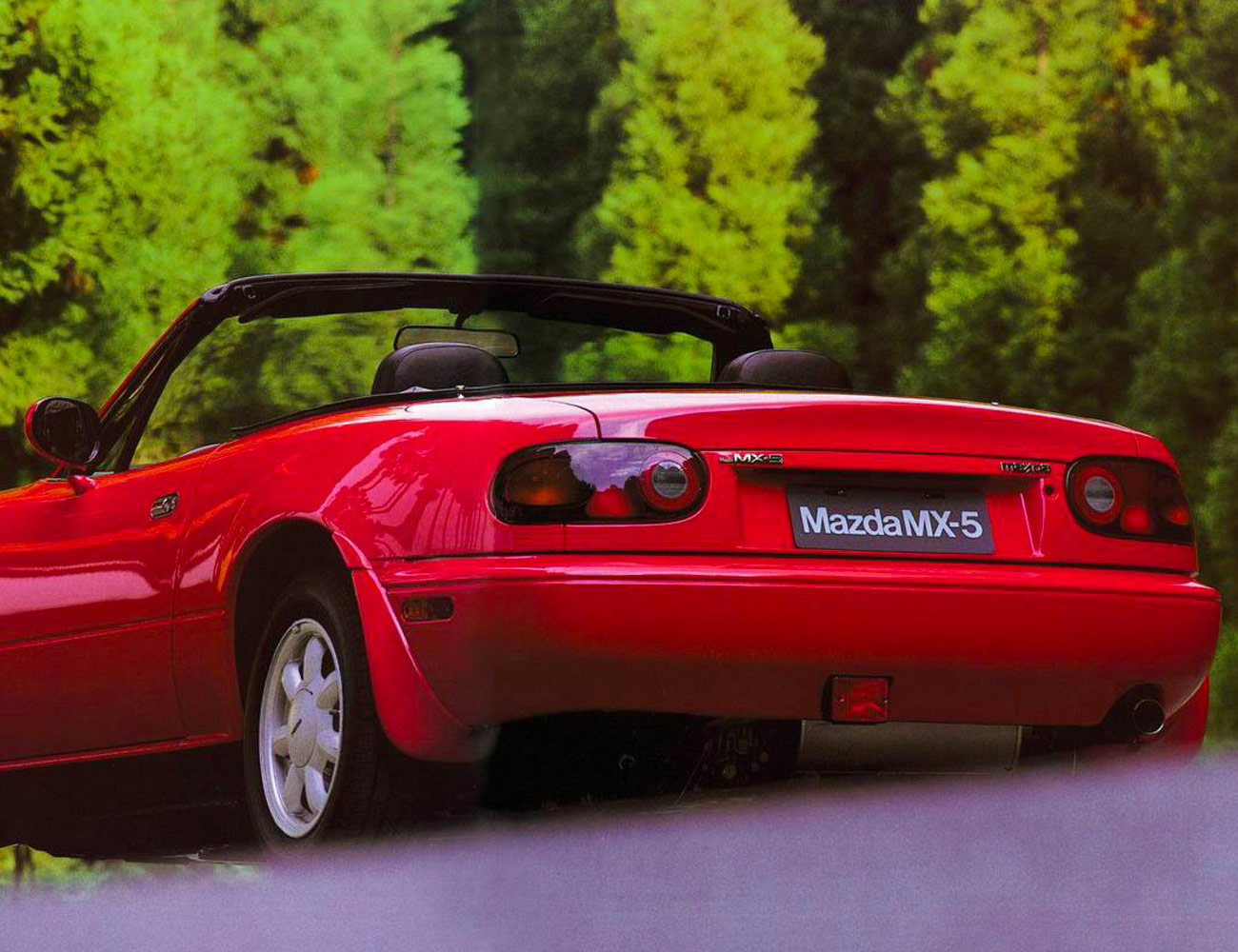
Everything You Need to Know Before Buying the Original Mazda Miata

It’s a bit of a running joke online that “Miata Is Always the Answer.” Need something fun? Miata. Need something cheap? Miata. Need something reliable? Miata. Need something to modify? Miata. As they say, there’s truth to every joke, and the Miata has earned itself a stellar reputation since its debut in 1989. We happen to be big fans of the modern version.

There have been four generations of the Miata (whose full model name is MX-5 Miata) now, and each is a bit different but still adheres to the ethos of ‘lightweight fun’ set forth by the original NA generation. It’s that earliest generation that’s starting to become the most collectible — Mazda is even beginning a factory-backed restoration program for the car — and if you are looking at buying a used Miata, you might as well make it the iconic NA generation. The good news is that Mazda made a hell of a lot of NA MX-5s and they’re still pretty attainable, but there are still some things worth knowing.

Performance

Nostalgia tends to cloud our better judgment when it comes to the cars of the 20th century, but it’s worth looking at the NA Miata in the context of its introduction to understand why it was such a revelation. “There’s no use trying to hide our enthusiasm for this car… the Miata fairly glows with the automotive ideals that this magazine holds dear,” said Car & Driver in its 1990 review. “It marks a giant leap forward in the evolution of the sports car… it will go down in automotive history as the car that saved the roadster from mere extinction,” beamed em>Motorweek’s John Davis.

Consider the small roadster it was competing with at the time, the Alfa Romeo Spider, and the roadsters that came before it like the Triumph TR7, Fiat Spider and MGB. Comparatively, the Mazda offered a more refined and reliable experience without lacking in the kind of driving experience you’d want in a small roadster — nimble handling, a featherweight build (it only weighed around 2,100 pounds), direct feedback and a rev-happy engine. The Miata was neither powerful nor quick with 116 horsepower and a 0-60 sprint time around nine seconds, but that’s hardly the point of this car.

Common Problems

The NA MX-5 was lauded for its reliability, at least compared to older European sports cars, but the Miata still has issues to look out for, especially as it ages. One is rust, which is commonly seen on the rear rockers of the car, though it can also be an issue near the front, as well. The rockers actually feature drains but can plug up with time, causing rust to build; make this a definite spot look for when inspecting. Similarly, check the state of the vinyl top, though this is something you should do on any older drop-top, as they can rip and crack with age.

One larger problem on some early Miata’s are problems related to the “short nose crank.” This is where the keyway slot in the crankshaft nose becomes worn over time, which negatively effects engine timing; if the issue goes unresolved it can result in a broken crankshaft and can result in a costly repair. Fortunately, the problem only affects ’90 and ’91 model years and is easily identifiable by checking to see if the crank’s pully to see if it has four slots (later versions had eight slots). Many short nose crank cars run fine, but if you do buy an earlier car be mindful of the potential hazards.

Other than that, the NA is a fairly reliable car. Check for basic things like fluid leaks and see if the previous owner(s) kept up with maintenance with service records and receipts.

Trims

At launch, the MX-5 came with a 1.5-liter inline-four engine, but starting in 1994 the car was offered with a 1.8-liter engine producing 12 more horsepower over the smaller engine. That, then, was boosted to 133hp in 1996. So, if you want to get a slight power boost and avoid the small nose crank issue, a later car is worth seeking out. Some NAs were also equipped with a Torsen Limited Slip Differential (LSD), another desirable performance addition.

What a lot of people don’t realize is just how many different limited and special edition NA Miatas were produced — if you want to see every single one, Jalopnik has a solid breakdown. One of the most common is the M-Edition which varied by the year but was introduced between 1994 and 1997. An M-Edition was usually optioned out with tan leather and lots of interior options. Some even came with BBS wheels or interior parts from Nardi. Other special editions featured different exterior colors, like the Sunburst edition from 1992 or the 1993 Limited edition which came in black with a red interior. There was also the R-Package from 1997, which was optioned with Bilstein shocks, stiffer suspension, no power steering and a cloth interior. It’s exceedingly rare today, with only around 1,200 made.

Important Specs:
Engine: 1.6-liter inline-four; 1.8-liter inline-four
Transmission: 5-speed manual; four-speed auto
Power: 116hp @ 6,500 rpm; 128hp @ 6,500 rpm
Torque 100lb-ft @ 5,500 rpm; 110lb-ft @ 5,500
Weight: Approx 2,100+

Volvo Makes the Best-Looking Off-Roader On the Market

Volvo unveiled the newest addition to its Cross Country stable this week with the V60. And, in true Volvo fashion, this isn’t just some in-name-only model, the Swedes gave the V60 Cross Country wagon some real upgrades to tackle some dirt.

Don’t expect to take on the Baja 1000 by any means, but the upgrades Volvo fitted to the V60 to earn it the Cross Country badge will certainly help you get a little further down the trail to find the better campsite you’re looking for. Hill Descent Control, Electronic Stability Control, Corner Traction Control and a special Off-Road driving mode are all standard features to play with. Underneath are the real upgrades: AWD moves a specially tuned chassis and suspension system, all of which sits three inches higher than the standard V60.

In the looks department, the V60 CC falls in line with the rest of Volvo’s stunning stable. It’s safe to say we’re at peak Volvo right now. Take a look at any other big manufacturer and none of them are pumping out such gorgeous-looking cars with such consistency across the board. With the introduction of the V60 CC, paired with the V90 CC, I can say, with confidence, Volvo makes the best-looking off-roader on the market.

Sure, you’ll see rougher terrain in a Mercedes 4×42 or even a Jeep Wrangler Rubicon, but those trucks brag about their overkill abilities right on the surface. They’re boxy, brash and utilitarian. The Volvo V60 CC is low, long, wide and sports Volvo’s latest beautiful design — a badge of honor in and of itself. If you want to let everyone know your car can off-road, no matter where you are, go for the squared-off overlanders. If you want unrivaled style on the road and off it — the V60 Cross Country is currently the best choice.

Gear Patrol Reader Cars: 6 Vintage Sports Cars From Around the World

We asked; you delivered. Below, some of our car-enthusiast readers’ personal rides, with the stories to go along with. There are plenty more to share, but this time we’re concentrating on vintage sports cars — because, well… obviously. If you’d like the chance to share your own car or motorcycle, submit all the info about your ride here. It’s exciting for us to see the project, daily driver and/or pride and joy in your stable, so thanks for sharing. Keep ’em coming.

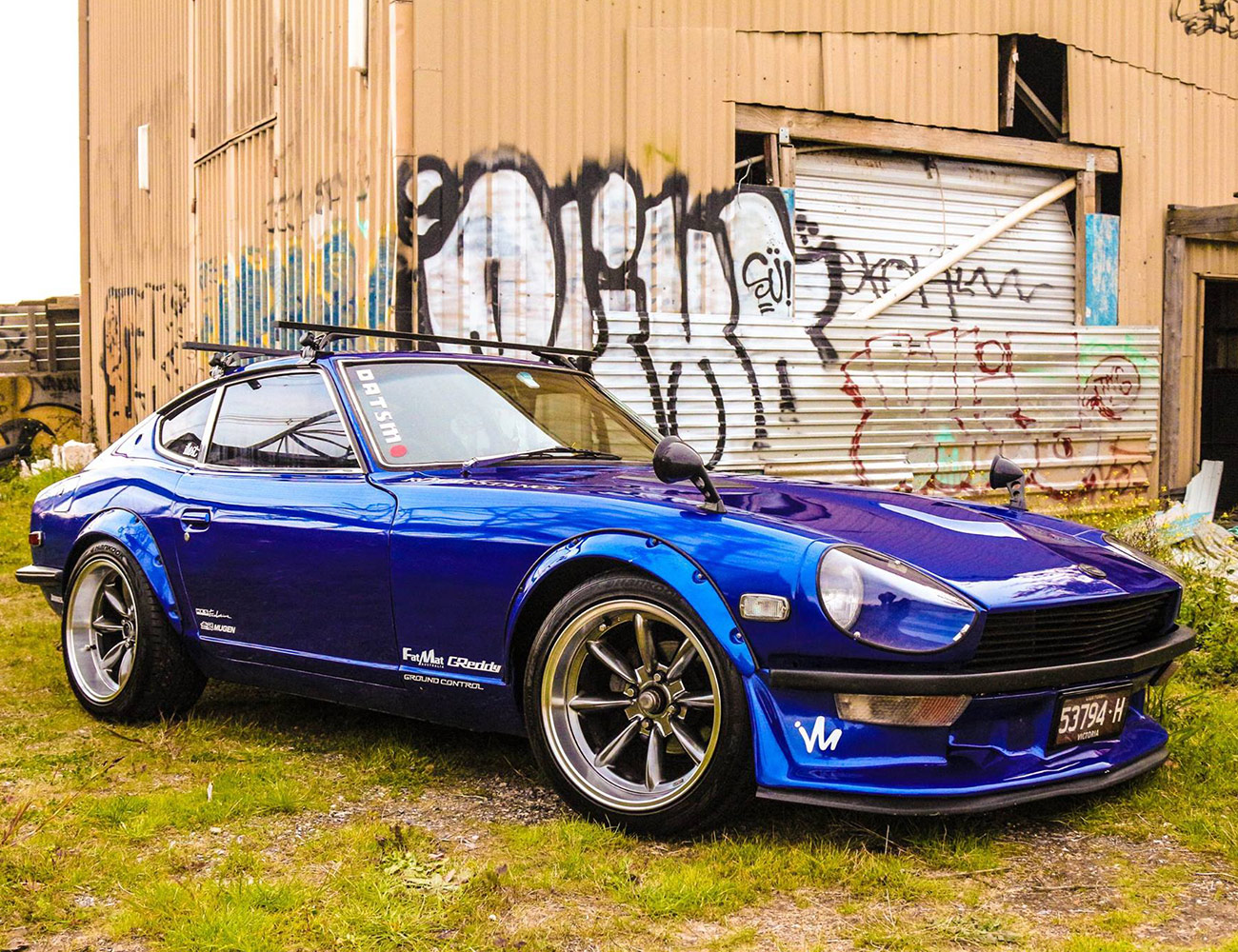
1971 Datsun 240z

V. Ramjee — Chicago, Illinois / Melbourne, Australia

Why do you love your car? It started as a boyhood dream. I wanted to build a car based on a TV show I loved: Wangan Midnight.

The Best Story About Your Car: I purchased the car in poor condition, not running and completely neglected. It had rust holes the size of soccer balls and an engine that wasn’t fit for such a beast. I purchased the shell when I was 20 years old, and took five years to build and get to where it is now. It was a project I wanted to complete with my younger brother (13 at the time).

My fondest memories are long drives within the ranges — just me and my brother. I used to daily the car … as a consultant it used to baffle all my clients. I have had multiple people offer to buy it, and it is something that I hope to pass onto my kids.

When I moved to the US, I told my brother he was not allowed to drive the car. Being a true 18-year-old, he took the car on the last day of high school and hit the car in front of him when leaving school. It goes without saying, he will be indebted to me for life! Lucky it was only a cosmetic damage. You can see my build at @angrypandagarage on Facebook.

Has the car been a good deal? I purchased the car for $2k, and over the years have spent close to $50K getting it to where it is.

Any advice for other enthusiast builders? Do it. Many sleepless nights are well worth it when you see the finished product.

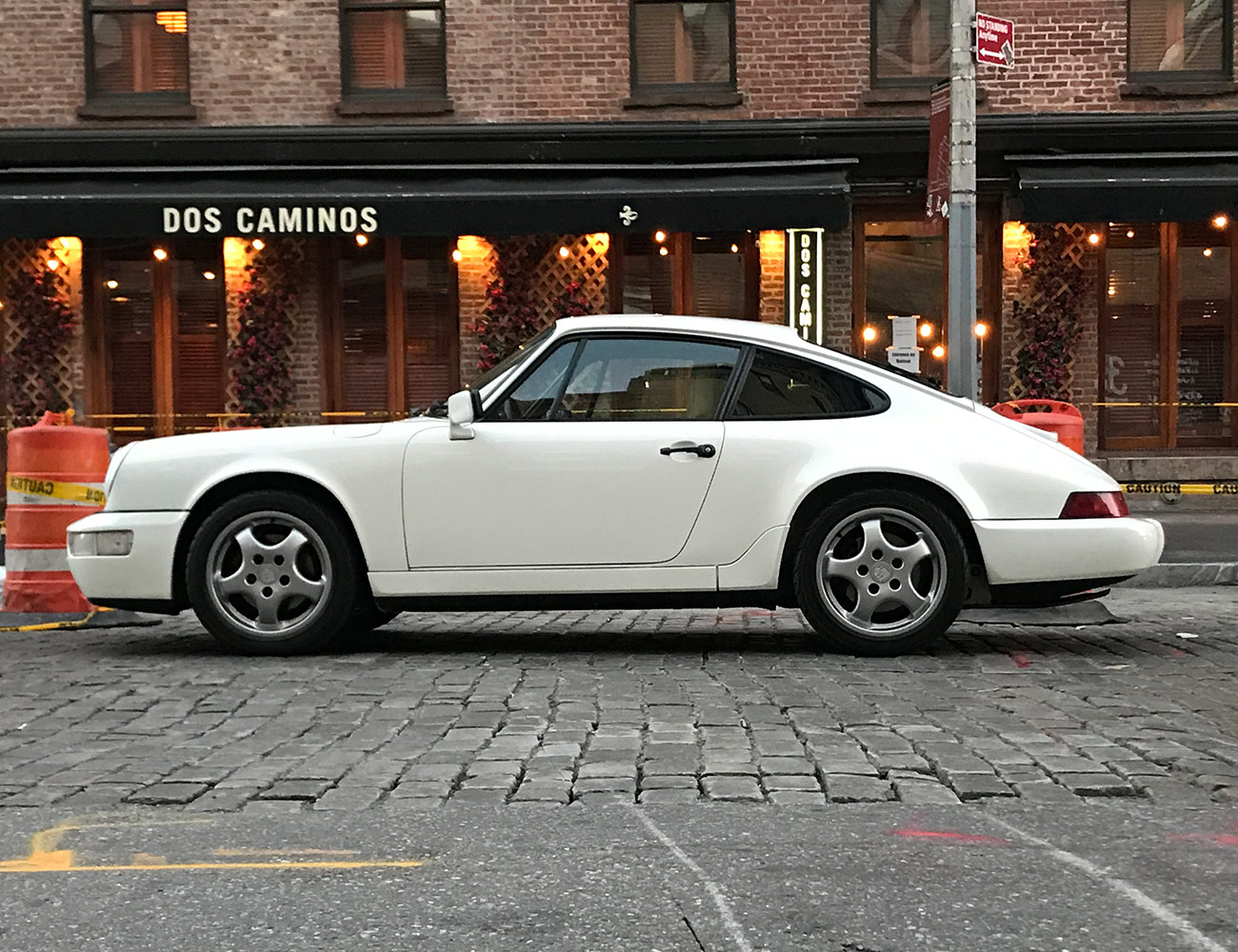
1991 Porsche 911 (964 Coupe)

Sam F. — New York City, New York

Why do you love your car? I love that it is the “red-headed stepchild” of 911s. It is the perfect mesh of modern meets analog. I love the looks and street cred I get from being seen in it; I love that you need to be at attention at all times behind the wheel. Every ride is exhilarating.

The best story about your car: I just had my first son and my bucket list item was to have an air cooled Porsche by 30, which I was just about to turn. I wanted to have a car I could bond over with my son (now sons). I found one in Albany (not quite local), jumped on a train and bought it on the spot after my test drive. I drove it right back to Brooklyn where I immediately put my newborn son behind the driver seat. It is now in his DNA. He LOVES cars, especially my 964.

Has the car been a good deal? I paid $33,000. I think it was a GREAT DEAL!

Any advice for other enthusiasts? Don’t be afraid to DIY. There is something very intuitive about 964s, but also, make nice with a good local mechanic who knows these cars well too.

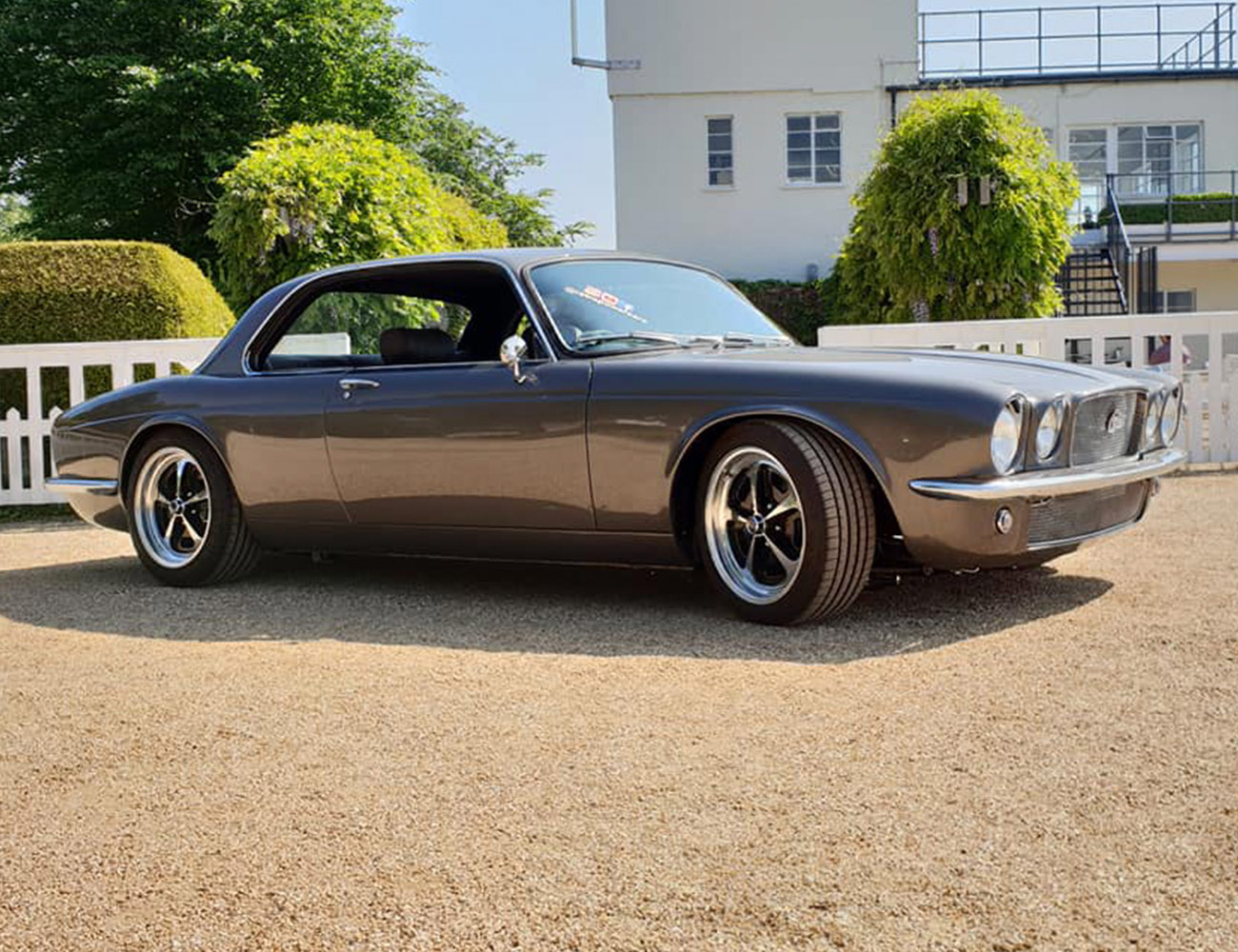
1975 Jaguar XJC

Ian C. — London, United Kingdom

What makes your car special? This is a professionally built one-off restomod, the only one in the world and built to be used as a daily driver! The car was stripped to bare metal and then completely rebuilt with new everything in order to keep the stunning original looks – albeit with a few external design tweaks – whilst making it reliable and fast. It was built to replace my BMW M5. [My XJC has] similar speed and performance yet looks so cool. The engine is now a Chevrolet LS3 and the car has: racing AP brakes, racing suspension (yet still a comfortable drive), new gearbox, re-built XJS rear end, new wiring, custom new interior, stunning paint job in Jaguar 1960’s gunmetal, alloy “rostyle” wheels and is just generally perfect.

The best story about your car: When I drive around the car generates smiles. People wave or come up and ask questions. It does not generate the sneers that Ferrari/Lambo drivers experience. Even my wife describes the car as the most beautiful car she has seen!

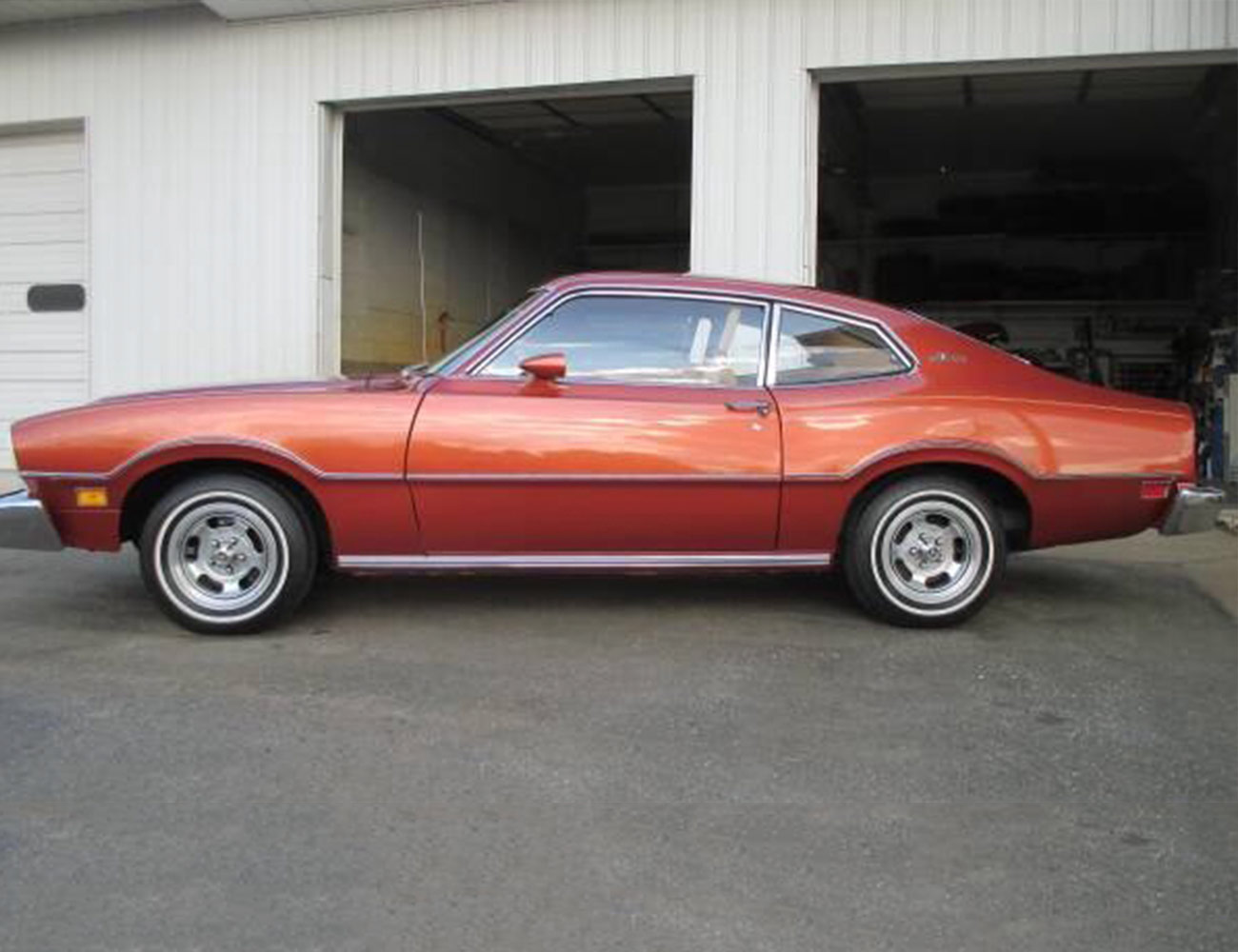
1975 Ford Maverick

Erik N. — Houston, Texas

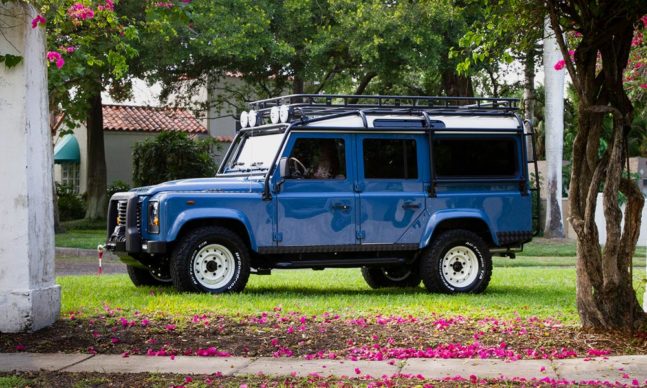
Why do you love your car? It’s easy to salivate over the tricked-out, or even all original, Toyota LCs or Land Rovers, but for most of us they’ll run half a year’s salary. There are many gems that can be found from $5,000-$7,000. There are endless people that will stop by and say “I haven’t seen one of these in years,” “My family had one,” “I learned to drive in this,” “I went to prom in this car,” or any number of everyday things people did in this everyday car. One of my favorite things about it is that it’s not a Mustang — but mine still hides a stock 302 under the hood. And it’s not a car that you see that often in this good of shape, or even restored.

The best story about your car: After driving it from Virginia down to Georgia for an extended work trip, I found a last minute car show to enter. She’ll never win any prizes, but it’s always fun to hear the stories and see people reminiscing of times past. The guy parked next to me with a mint 70’s Dodge Charger lent me his placard number for a few minutes so I could at least get a few votes though.

Has the car been a good deal? I paid $6,100 for it. It’s mostly original, and in good but not great shape. A basic Maverick in decent shape will pop up from time to time between $5-$7K, with mint or modified ones running you $10K+. I think I got a decent deal, as it can function as a daily driver and is all there.

Any advice for buyers? Once you realize how good of a classic car you can get at a reasonable price, you’ll find yourself having the recurring issue of shopping for more.

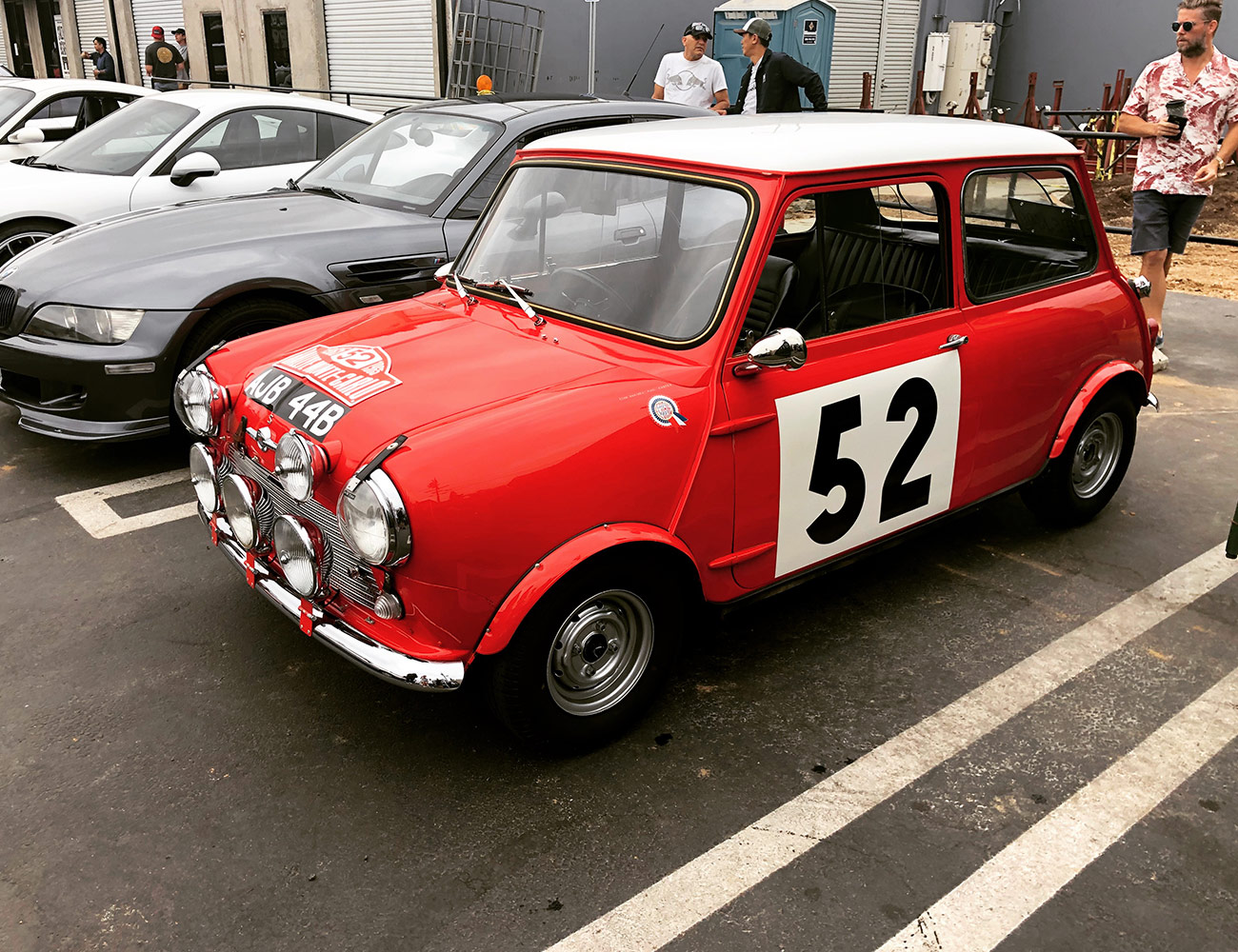
1960 Austin Mini – Works Monte Carlo AJB44B replica

James T. — Los Angeles, California

Why do you love your car? It’s 1 of 2 Works Monte Carlo Mini Tribute cars in the U.S. and RHD. The visceral feel and agile handling make this car such a joy to drive. Since it is such a rare and unique car, it always draws attention and gets the most smiles per gallon.

The best story about your car:

Any advice for buyers? RHD takes a little getting used to in the U.S.

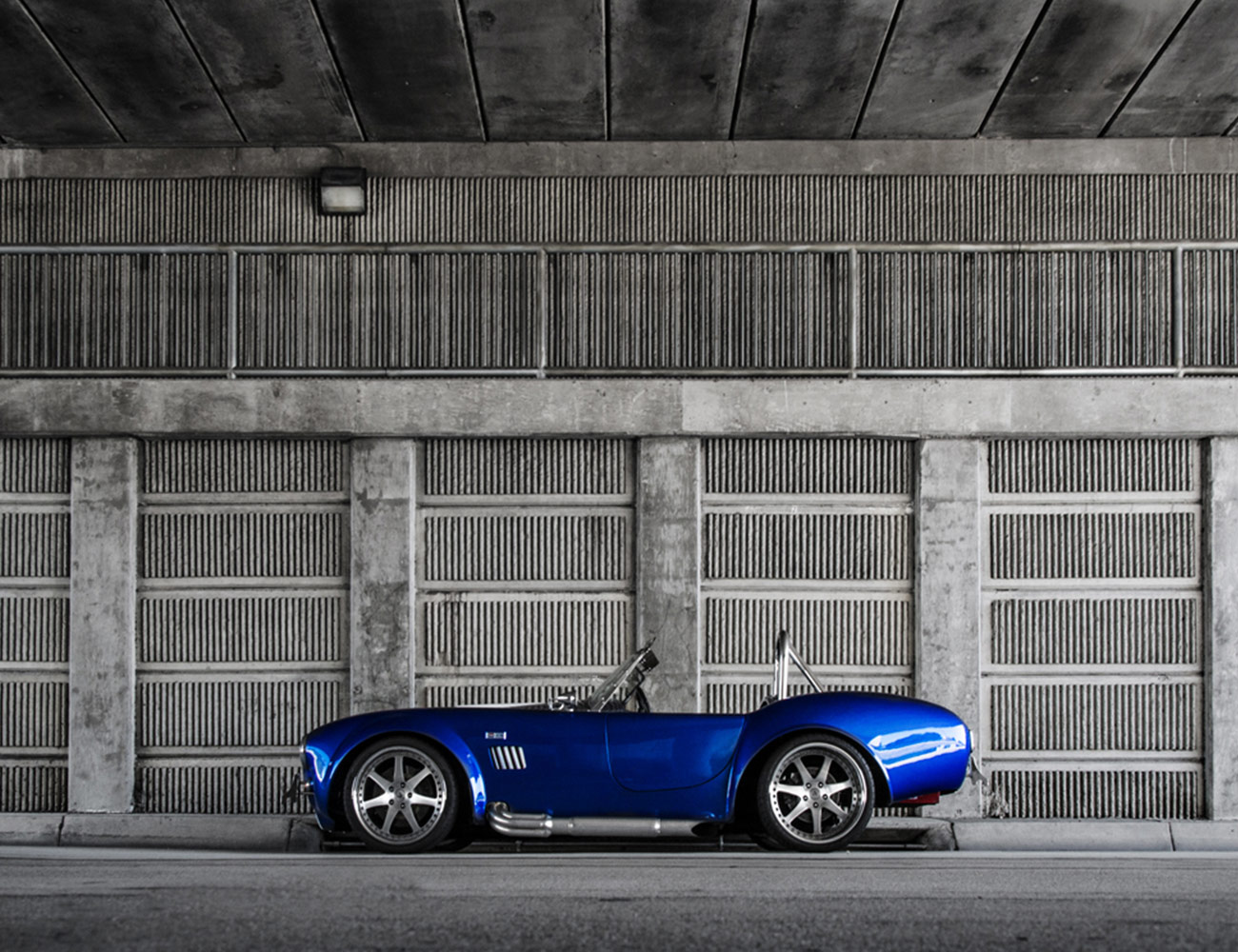
1965 Shelby Cobra – Factory Five Mk3

James T. — Los Angeles, California

Why do you love your car? It’s an old car with very modern technology. The drivetrain is a crate Terminator motor from Ford SVT and the transmission is a Tremec T-56R racing unit from the Ford FR500C. Absolute savagery.

The best story about your car: Sharing many memorable drives with my late friend Dave who built the car and spent many many hours on it. It’s an honor to be a caretaker of this car for many years to come. One time we were testing out the new supercharger, and coming on the freeway on-ramp at 60mph. I dropped it into third gear and it lit up the tires up to 80mph. Unreal experience.
Has the car been a good deal? $35k and it was a great deal considering the build cost double that.

Any advice for buyers? It’s definitely not an everyday car. In the five years I’ve owned it, I put only 8K miles on it. There have never been any mechanical issues with it, but it’s just a full-on assault to your senses. It’s rare to be in the mood to drive it around on the weekends. The weather has to be just right also since there are no windows or top. But as a fun car, it’s an incredible bang for your buck considering it makes 500hp and weighs 1800 pounds.

Note: Purchasing products through our links may earn us a portion of the sale, which supports our editorial team’s mission. Learn more here.

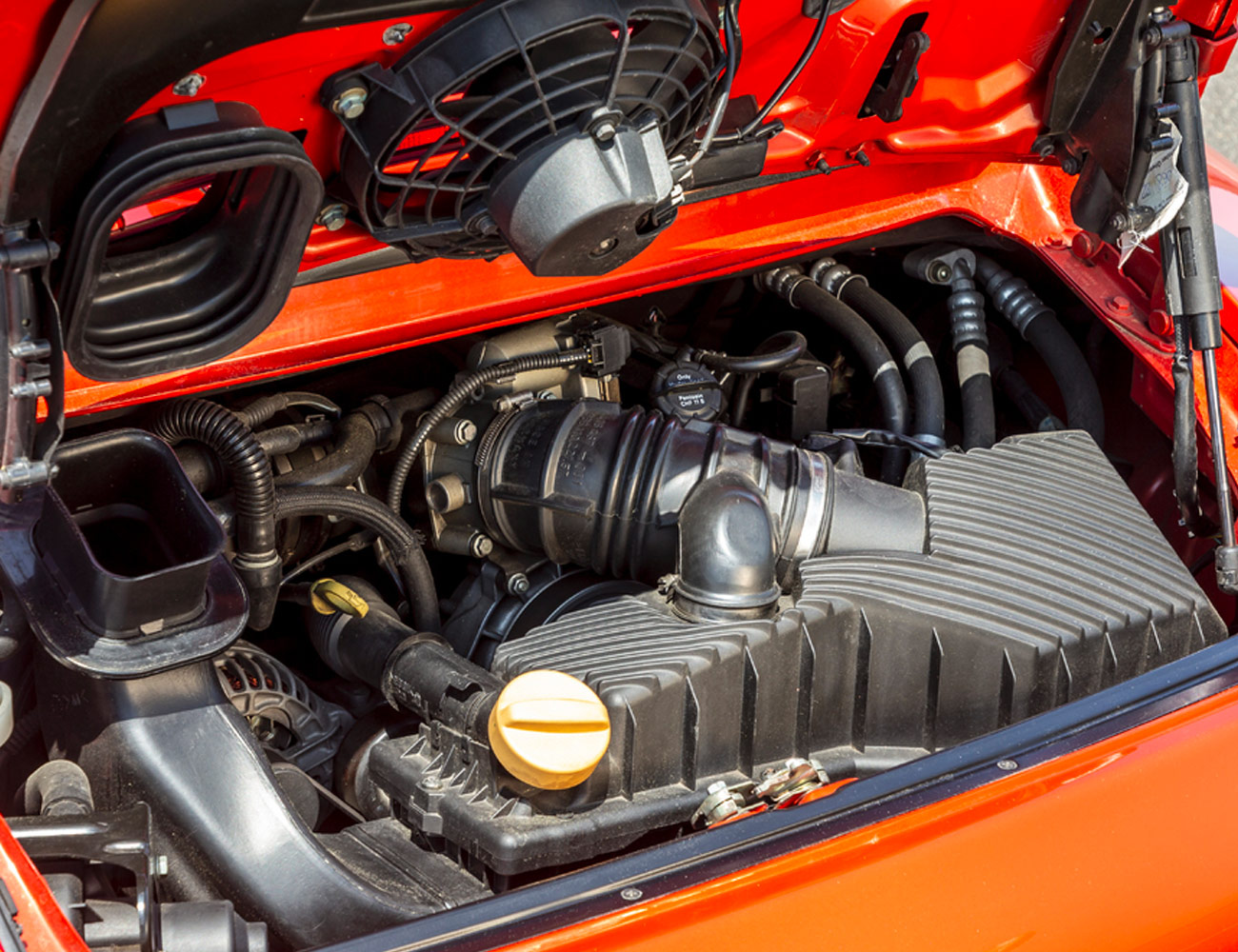
Everything You Need to Know Before Buying the Unloved Porsche 911

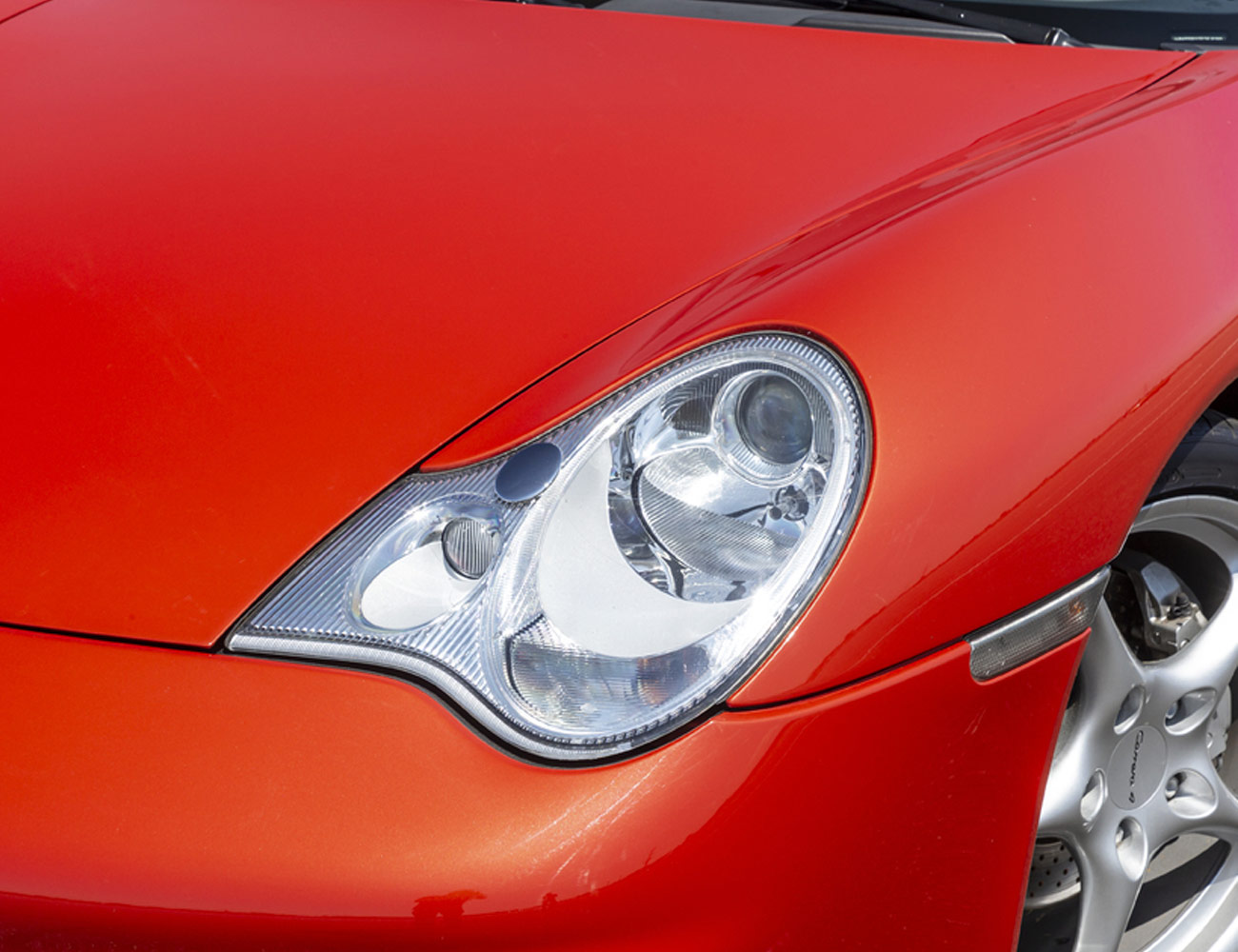
Almost everybody who loves cars loves the 911. Unless, of course, we’re talking about the 996 generation, made from 1997–2004 and perhaps one of the most vilified performance machines in all of car-dom. The 996 was the car that killed the air-cooled flat six, usurping the far more desirable 993 that preceded it. The 996 replaced the 911’s iconic round headlights with a shape vaguely reminiscent of a runny fried egg. The 996 came from the factory with a fatal flaw that could result in catastrophic engine failure.

I’m probably not making a great case for the 996 right off the bat, and on the surface, the odds are stacked against it. The thing is, though, that despite its faults, the 996 wasn’t as bad as many make it out to be. Today it represents pretty good value on the used car market, especially while air-cooled cars continue to trend upwards in price. As long as the significant issues with the car have been resolved, you have a relatively reliable, relatively practical and relatively affordable version of one of the most iconic cars ever made. Haters be damned.

Performance

This wasn’t just the first water-cooled 911, it was the first 911 since the model’s inception to roll on a completely brand new chassis and suspension. That means a larger — but sleeker — body and of course those new headlights. You know what it also means? Better handling. While earlier 911s tended to dangerously oversteer under heavy cornering, this was something engineered out of the 996.

In fact, in a 1998 review, The New York Times compared the 996’s handling more favorably to the earlier 993. Their analysis? “The [993] was substantially noisier at all engine speeds, and its handling characteristics, as good as they are, proved far inferior to the new car’s… By every measurement, on or off the track, the new 911 is superior to the old one.”

And that doesn’t even get us to power. Yes, Porsche switched to a water-cooled engine design to meet increasingly stringent emissions standards, but it also allowed them to add four valves per cylinder and to generally squeeze out more power. The base 993 Carrera, for example, was making 268 horsepower out of a 3.6-liter flat-six, while the comparable 996 made nearly 300 horsepower from just 3.4 liters; the later car, thus, was 0.7 seconds quicker to 62 miles per hour form a standstill.

That sort of progress is meant to be expected as time marches forward, but it illustrates just how much of a leap the 996 was. Yes, air-cooled Porsches will always be lusted after, but the 996 is very clearly not without its merits. What’s more, it’d make a reasonable daily driver, too. A long-term test of a 1999 Porsche 996 from Car & Driver lauded its “everyday practicality and reliability” even after accumulating thousands of miles of winter driving.

Problems

No discussion of the 996 is complete without mentioning the infamous intermediate shaft (IMS) bearing. The shaft connected the crankshaft to the camshaft by a ball bearing. The problem was that there was no way to lubricate this bearing and, in time, it would dry out and fail. Well, sometimes it would; a class action lawsuit cited that the failure rate was somewhere around 10 percent on 2000 to 2005 model years. What’s more, it would happen seemingly at random, with no warning signs. When it went, the fix was to replace the entire engine.

So, when searching for a 996, search for a model that’s had the IMS bearing issue resolved (and the paperwork to prove it). If you find a car that you like but hasn’t had the IMS bearing replaced by a more effective aftermarket upgrade, use that to your advantage when bargaining the price and budget for a fix after the transaction. According to Jalopnik, two proven replacement bearing kits both cost around $1,000, and you can even install a sensor that detects bearing wear.

IMS bearing issues aside, most purport the 996 to be fairly reliable, at least for a German sports car. One more thing to consider checking, though, is for any signs of the cylinder head and liners cracking. When getting the car inspected before purchase, make sure a borescope inspection is done to see if there’s any sign of this.

Trims

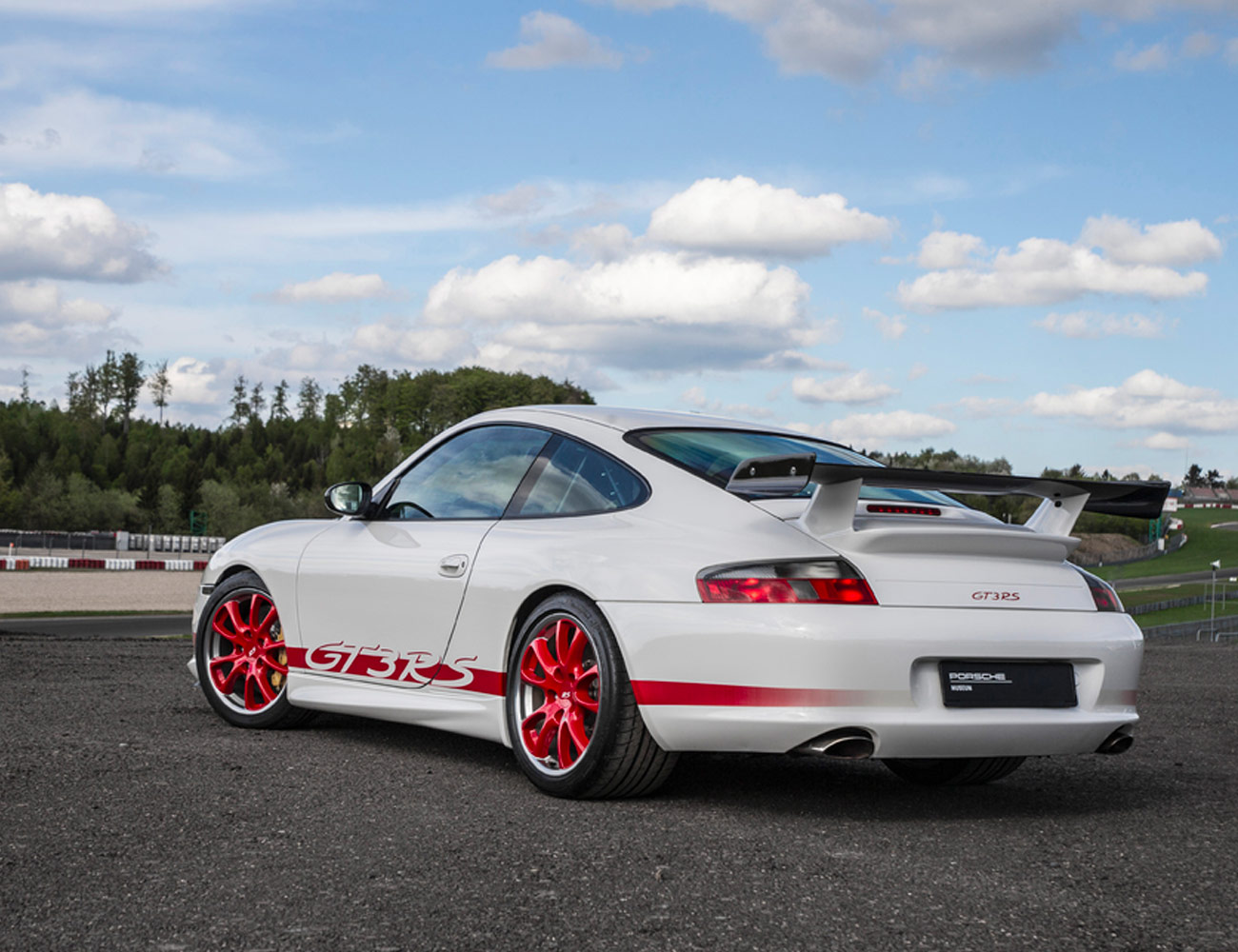
The beauty of the 911 is that they made more versions than you can shake a stick at. The cheapest versions today remain the more basic Carrera and Carrera S, which you can still find under $20,000, though better examples are in the low twenties. Expect to pay more of a premium for the 4 and 4S models, the latter which is prized not just for its AWD and higher engine output but its wider hips at the back. Expect those to run in the high twenties and low thirties. And do you want to know what’s really crazy? You can still get the batshit Turbo model for under $60,000. The coveted GT3 version will set you back somewhere around $70,000, but that’s still cheaper than later generations. There’s also the GT2, which has held its value well and still sells for well over $100,000 today.

Key Specs:

Engine: 3.4-liter flat-six; 3.6-liter flat-six; 3.6-liter twin-turbo flat-six
Transmission: 6-speed manual; 5-speed “Tiptronic” automatic
Drive: RWD; AWD
Horsepower: Between 296hp and 476hp
0-62mph: Between 5.4 seconds and 3.6 seconds

At $33K, the Lexus UX Is the Premium Brand’s Most Affordable Car

Updated September 19, 2018: The Lexus UX, which debuted at the Geneva Motor Show last March, will be the brand’s most affordable vehicle yet. It’s a compact crossover that will be offered in both hybrid (the UX 250h base MSRP is $35,025) and non-hybrid guise (the UX 200 base MSRP is $33,025). It’ll be less expensive than its Mercedes-Benz (GLA 250) and BMW (X1) competition. Only the hybrid is offered with all-wheel drive (the UX 200 is FWD), and both models are less powerful than their rivals. However, the UX 200 utilizes the very good transmission found in the shockingly fun new Toyota Corolla. The UX will be available in December; the Hybrid will bow in January 2019.

Lexus UX 200 Specs:
Engine: 2.0-liter four-cylinder
Transmission: CVT; front-wheel drive
Horsepower: 169
Torque: 151 lb-ft

Previous Coverage:

It’s no secret that the Geneva International Motor Show is, essentially, the premier car-launch event of the year. Thanks to a mixture of timing and location, the early March mega-show is a new-car Mecca where dozens of exciting metal goes on display. We’re looking forward to seeing fresh cars, refreshed cars and much more next week ahead of the public unveilings. But among all the sport sedans and hypercars and 4x4s is one vehicle in particular that stands out: the all-new Lexus UX compact crossover. The UX is a tiny version of the NX crossover set to compete with the Audi A3 and Mazda CX-3, among many others. It’s also a massive deal.

Nevermind the dubious moniker Lexus is giving the car — the brand’s “first urban crossover” — what matters here is that the UX is poised to check off the right boxes for a boatload of customers. At the turn of the millennium, Lexus was on top of the premium segment in the US and remained such for over a decade. When the NX crossover was launched in 2015, the brand regained traction lost to Mercedes and BMW in the interim. I’m guessing that the UX may nudge Lexus even closer to the top again for two reasons.

First, the ‘compact crossover’ is, for all intents and purposes, a wagon. It’s a little taller and a little dumber, but it’s at least a wagon/hatchback hybrid. Wagons are, objectively, the most practical overall car choice around, but consumers prefer their taller SUV relatives, which is why ‘compact crossovers’ do so well: they represent wagon practicality and SUV-ish height.

Second, Lexus styling continues to be remarkably distinctive in a world of lookalikes. While most other premium makers are relying on design language inspired by underbaked clay introduced to a wind tunnel, Lexus doubles down on aggressive, sharp styling. I think consumers will be attracted to edgy, new cars in this segment, especially when alternatives are the relatively stale German competition and otherwise derivative contenders from Infiniti.

(Not for nothing, the name “UX” is a clever play too — there’s a high probability of tech-minded folks coming across this little car when Googling things like ‘new UX’ and ‘best UX’.)

My prediction is that we’ll see a multitude of UX crossovers materialize very quickly once the car is officially launched, that most of them will be mid-to-high trim levels and that, seeing success, Lexus will edge back up as a major threat in the US premium segment. And who knows? Maybe the UX will be a great car too.

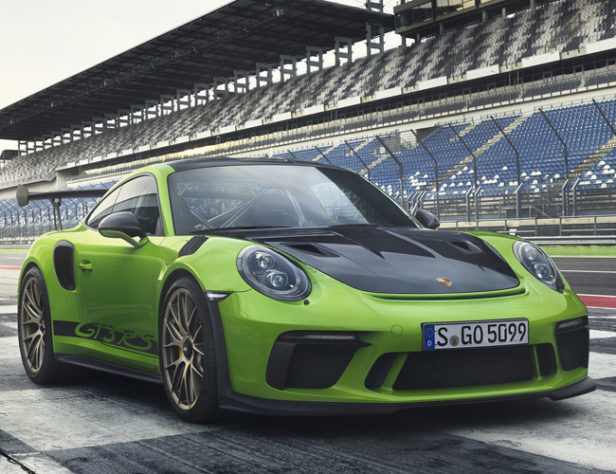
Porsche Just Revealed its Maniacal 2019 911 GT3 RS

The latest non-turbo, race-ready 911 variant, freshly facelifted and very green, has finally arrived. Read the Story

A Mazda With a $30,000 Steering Wheel

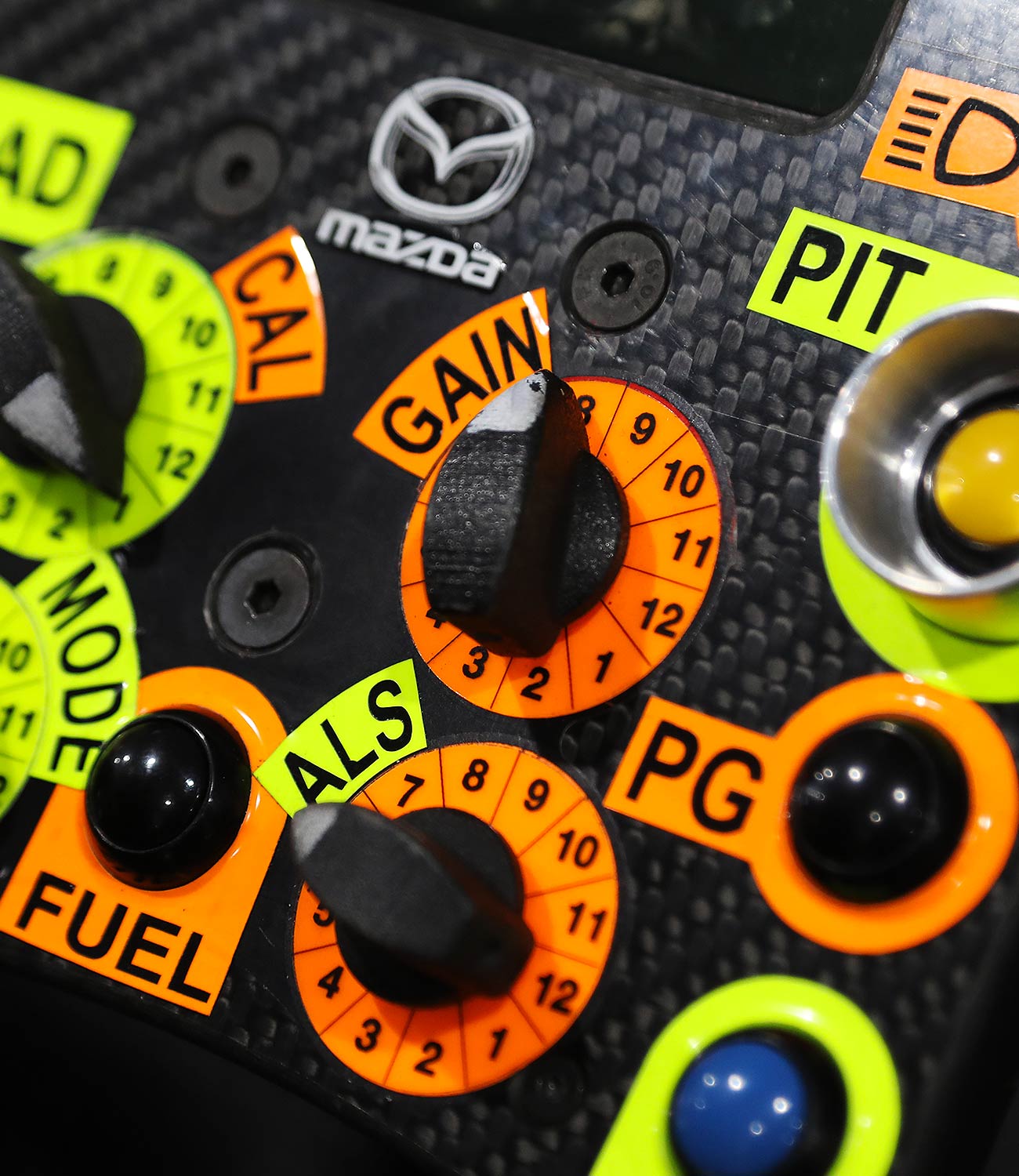
Of all the facets and accouterments in your car increasingly growing more complicated, the steering wheel is leading the charge. At first, the steering wheel was tasked merely with turning the wheels, then buttons and dials started populating the small space to control radio volume, cruise control, phone calls and even change the way the car handles. The design tactic certainly clutters the real estate and is done in the interest of safety — the less time your hands are off the wheel, the better. But if you think the steering wheel in a modern road car is overpopulated, slide into the Mazda RT24-P IMSA prototype race car and belt your self in front of its $30,000 direction changer.

Modern top-tier race cars are exponentially more electronically complicated than their forebearers. Before the advent of traction control, the driver’s right foot took care of managing grip. Before shifter paddles were bolted to the back of the wheel for quick shifts and seamless gear changes, drivers were doing it all manually. Engine revs and speed, those were on the dash. Now, cars like the Mazda RT24-P put all of those operations and more on the wheel solely on the steering wheel.

If you really want to trace this trend back as far as you can go, you can argue it started in the ’60s when Jackie Stewart taped a wrench to the steering wheel of his BRM Formula 1 car so he could get out if he crashed. Mazda driver Tristan Nunez doesn’t have a box end wrench strapped to the wheel of his RT24-P, but he says “this is by far the most complicated steering wheel I’ve ever raced with — more so than even an Indycar.”

With a set of shifter lights, two shifters on the back, 11 buttons, four scroll wheels, four dials and one LCD screen for basic readouts like lap times and speed and to see all the settings he’s changing with all those dials and buttons, it’s easy to see why. Throughout any race in the IMSA, Nunez and the other drivers he shares the car with are constantly adjusting and alter the settings on the car to fit their specific tastes and to best suit the conditions on track.

Nunez can dial in how much weight he wants in the power steering and he can fine-tune the level at which the traction control intervenes. And like most road cars these days, the RT24-P has a few driving modes, but where your typical ‘comfort’, ‘eco’ and ‘sport’ modes suffice for your daily driver, Nunez has a dial with 11 different engine map settings. Oh, and his steering wheel also has a button to dispense a drink, through a tube going into his helmet. Consider the fact that this tiny little supercomputer steering Nunez’s Mazda race car is made from carbon fiber and magnesium and it starts to make more sense why it costs as much as a brand new Miata.

McLaren Completely Changed Supercar Design With the “Boundary-Breaking” 720S

It has become an eye-rolling trope of automotive marketing to claim that extreme supercars offer “everyday drivability” or “accessible performance.” Part of that reaction is a kind of resentment from the overwhelming ranks of enthusiasts (like me) who will never come close to owning a half-million-dollar supercar and instead daily drive a truly “everyday” vehicle. Additionally, it seems to be an obscene lie to say that a 700-horsepower carbon fiber tub hovering two inches about pavement is in any way practical. Consider that claim from a relative point of view, however, and you’d be correct to say that McLaren — quirky, nutty, outrageous McLaren — has mastered the art of the everyday supercar.

I spoke with Dan Parry-Williams, McLaren Chief Designer, about what separates the physics-defying 720S supercar different from its competition, and the answer is, plainly, that the McLaren 720S is engineered that way. Thanks to a strong focus on ergonomics, the 720S is just as easy to park in a garage as it is to take on a road trip as it is to scream around a race track. And that’s not entirely marketing speak.

“It was a driver from the onset to go above and beyond in terms of ergonomics,” Parry-Williams told me. “We decided right from the get-go to actually break a new boundary for a supercar. If you like, when the 12C (made from 2011-2014) came out, and later became the 650, it had surprisingly good vehicle dynamics in terms of comfort and track performance, and I think previously that had been an area that had been a poor compromise for supercars. That car represented a big step forward in terms of being able to have both comfort and dynamics.”

This is where ergonomics come in to play. McLaren designs its cars to be more physically accessible and approachable from an everyday perspective, doing away with the notion that a supercar — say the Lamborghini Aventador — needs to be a squinty-eyed cave from the driver’s perspective. A driver must be able to get in and out in normal settings and see where he’s pointing his car — reasonable enough notions, but a significant departure from the rest of the fray.

“When we came to do the 720, we wanted first of all visibility to be amazing from the driver’s perspective,” said Parry-Williams. “So we slimmed down all of the [windshield] pillars, we worked out how we could have almost 360-degree visibility. The rear window is much lower than other supercars [and] visibility in the mirror is much better. Over the shoulder visibility too — we’ve glazed the quarter panels. That means that when you’re driving the car it’s not intimidating. You can park it, you can see what’s behind you, you can see all around you.”

Earlier this summer, I borrowed a 720S from McLaren for a long weekend, during which time I confidently wound through Manhattan with ease, parked in narrow garage spaces and easily cruised, passed and navigated all manner of highway driving. In many other vehicles – even massive G-Class SUVs and many passenger cars – I wouldn’t have felt as confident.

In terms of engineering tweaks, perhaps most significant in the 720S’s pursuit of ergonomics is the engine location. The topmost point of the entire car clocks in at about 47 inches tall — for comparison, a Toyota Camry is about 57 inches tall. You can imagine, then, that space is precious. “We decided to actually lower the engine — we redesigned the entire plenum of the engine to be about three and a half inches lower,” Parry-Williams explained. “There’s space inside the car for two [duffel bags]. You’ve got room in front for two … and we created this big luggage space over the top of the engine.”

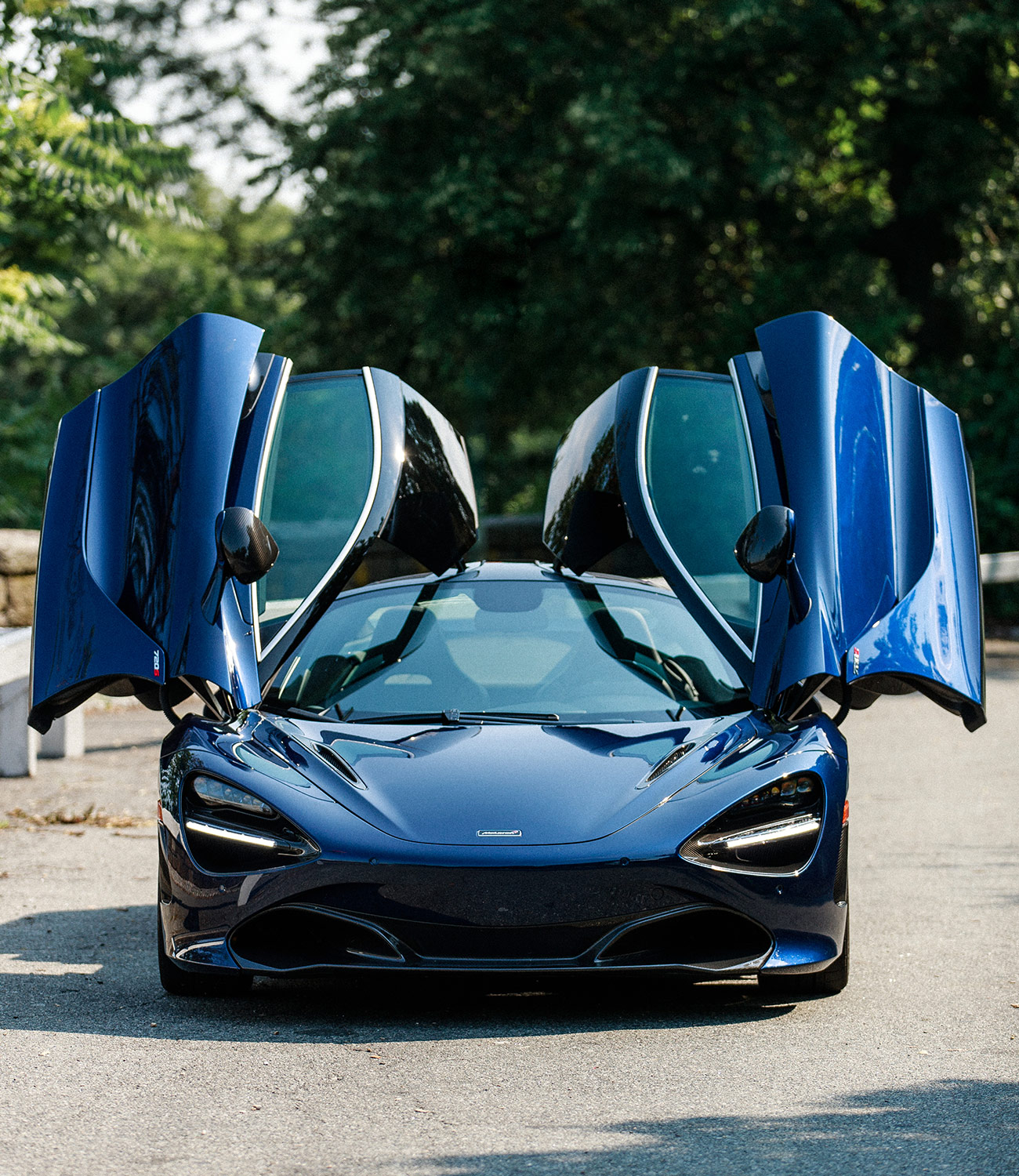
Aside from its alien design, the one aspect of any McLaren that almost any 10-year-old is most excited about are the doors which, of course, open upwards. Certainly, the upward-swinging doors give the car an even more exotic look, but they are truly a practical addition, says Parry-Williams. “We set ourselves a target: if you park the car between two other standard cars in a parking bay, can you fully open the doors? You can’t even do that in a compact.” That’s another area where supercars haven’t been particularly brilliant. We decided to go back to the door concept we did for the F1 — the previous generation of McLaren — where the door cut into the roof like a Ford GT40. Not because it was cool, but because what it does is create a different axis which throws the door over the top of the roof.”

Like I said previously, I squeezed the mega-wide 720S into a garage parking space from which I had no right being able to physically escape. The 720S is over 80 inches wide; compare that again to the Camry at just under 72 and you’ll begin to see what I mean. Inside there’s an astounding amount of room for a car that moves as though it’s mostly engine. “When you take the door across into the roof,” Parry-Williams continues, “you no longer have that restriction so the thickness of the door through that whole area can be like an inch thick instead of maybe three inches thick. Which means that in the 720 it meant that we could have this beautiful teardrop shaped glass house. It pulled the external surface inside where the driver’s head is considerably further than it was in the 650 but there’s actually more room inside. So we had an aerodynamic benefit, we had a design benefit from an aesthetic point of view and better ergonomics. That’s the kind of cool solution we really like: when there’s two or three things.”

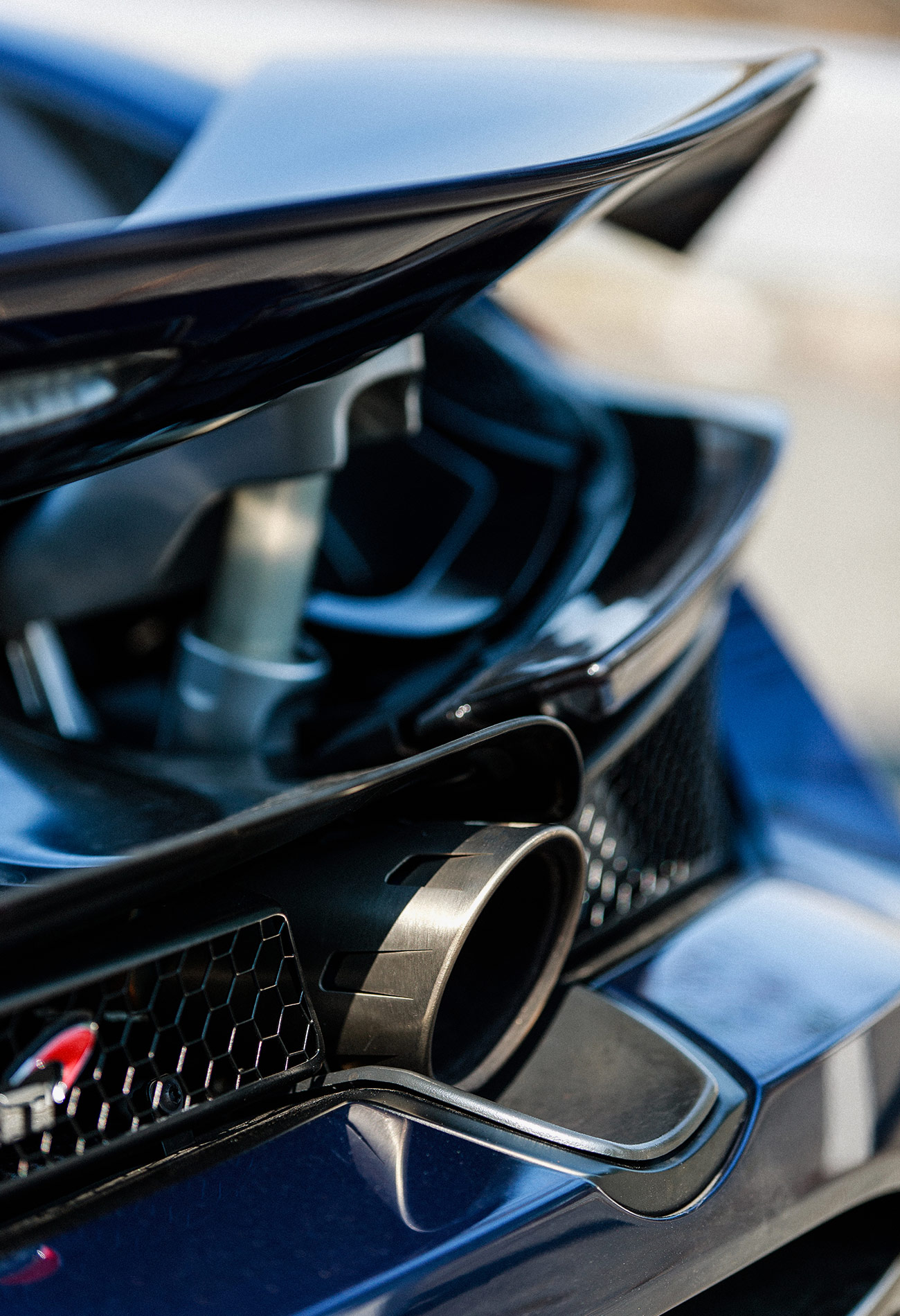
It’s not only ergonomics that set apart the 720S. As one can imagine, its level of performance borders on indecent. I cannot fully explain in words what it feels like to accelerate at full tilt in a 720S. The best I can do is to say that it is a lot like one of those barf-inducing, magnet-driven roller coasters that accelerate faster than they should, only with less barf. Mashing the throttle from a docile 30 or 40 miles per hour conjures enough adrenaline in the next four seconds to revitalize a corpse and make you see stars. I say this without irony: it is enough to make me afraid. The sound from behind your head — whooshing turbos and air being sucked into that lowered plenum — sounds nuclear, like a cheesy sci-fi movie about rocketships that can somehow make noise in the vacuum of space. In short, the physics of an accelerating 720S feel as though they simply should not happen.

I didn’t take the 720S anywhere near its limit, but on a track, it is a formidable weapon. “We’ve evolved the suspension concept,” Parry-Williams tells me. “The system we use, where it constantly monitors what the car is doing and then uses real-time to calculate optimize the damping. The roll of the car is [managed] with gas springs and hydraulic lines and not with mechanical roll bars. Which gives us this kind of characteristic of zero warp stiffness (where the body twists as the front and rear suspensions lift and drop at different rates). Normally when you go across a road where you’ve got changes in camber, it destabilizes a sports car because a car has to be stiff in roll. But the characteristic that this creates is one that just cuts through these reverse camber, combination corners. That’s grip and that’s performance.”

Did McLaren set out to evolve the supercar with the 720S? I think probably, but Parry-Williams suggests otherwise. “We just wanted to make it a big step up. We didn’t really have a benchmark. We felt that we had already achieved our benchmark target with the 650. We just wanted to see how far we could push it beyond that to evolve the dynamics and ergonomics and the design.”

Reading back, maybe this does all sound like marketing speak. But I swear to you on all that is automotive and holy, that I have never been in a machine that moves and feels like the 720S. It does things you don’t expect — like move as though it is part of a lightning bolt, or carry four duffel bags, or deftly park in between Camrys. Purposeful or not, McLaren has pushed and broken the boundary of what a supercar can be, not simply by going faster or being wilder, but being smarter.

The Best Family Car Under $30,000 Shootout: Honda vs Subaru

Parenthood alters the car buying calculus. Procreating does not consign you to bland, kid-transporting purgatory necessarily. But, your priorities change. Active safety features supplant horsepower. Your cargo bay must hold more than a couple weekender bags and a bottle of rosé. Value becomes paramount. You want the best car that meets your family’s needs. But, with miscellaneous and escalating child expenses, money will be tighter. The question, for parents who can’t afford to pop over to the Mercedes or Volvo dealership, is what is that best value family car?

Before answering, let’s define the “family car.” For our purposes, a family car is a vehicle that fits a family of four on a road trip comfortably. That means practical seating for five and significant cargo capacity. Sardining your wife, two small kids and a tiny cooler into a Porsche 911, while admirable, does not a family car make.

CRITERIA

I used four broad parameters to narrow down our “value” field:
• First, monetarily, it had to be a value purchase. The sticker price had to be less than $30,000. The car needed strong reliability, good gas mileage and high resale value.
• Second, it had to be safe. Any car without a five-star NHTSA crash test rating and IIHS Top Safety Pick status was excluded. The trim had to include the manufacturer’s active safety features at that price.
• Third, the car must have family utility: cargo space, versatility, all-wheel drive, family-friendly tech etc.
• Finally, we considered style and performance. Being decent to drive helped.

THE CONTENDERS

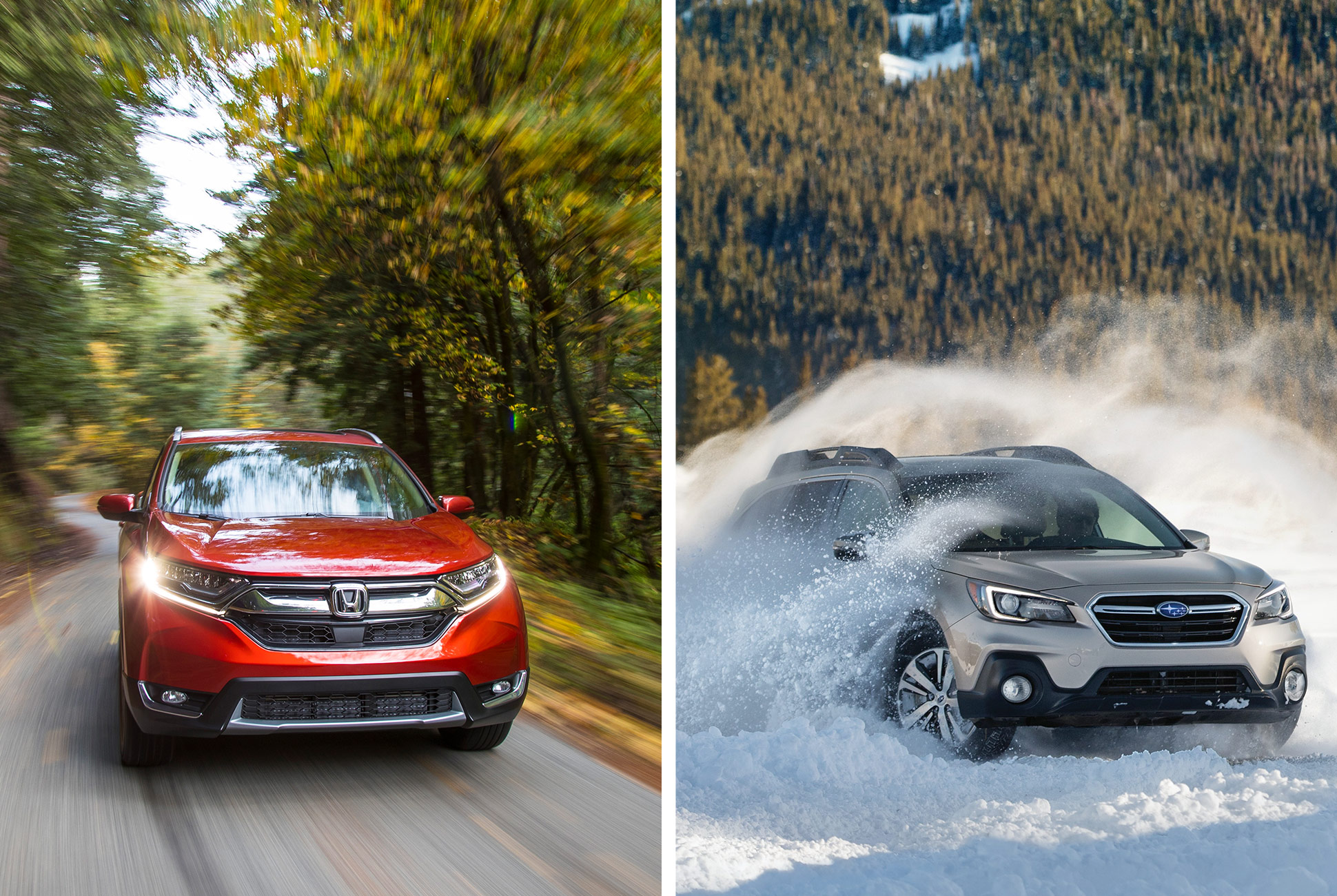
The choice came down to what, in this price braket, is a classic debate. The Honda CR-V (base MSRP: $24,250) is the preeminent budget crossover. But, do you buy that over the Subaru Outback (base MSRP: $26,345), the ultimate reliable utility wagon?

VALUE

Advantage: Push

Both cars met the sub-$30,000 sticker price requirement. For the CR-V, that allowed an upgrade to the EX trim to include the Honda Sensing safety features. That plus AWD, mats and an accessory or two still put the price a hair under the limit. For the Outback, that meant either sticking with the base 2.5i trim starting at $26,395 or the 2.5i premium trim with nothing but floor liners.

Both cars are cheap to own. The CR-V gets best-in-class gas mileage (27 city, 33 hwy) for an SUV. That’s a slight edge over the Outback (25 city, 32 hwy), which is still quite efficient. Both the CR-V and the Outback received 10/10 mechanical quality ratings from J.D. Power, limiting the maintenance costs. Edmunds’ five-year True Cost to Own figures for the CR-V and the Outback are within $500 of each other. Both are under $40,000.

Both cars maintain their value. Mechanical quality (and Honda and Subaru’s reputation for it) mean a high residual value for leases and a high resale value. True ownership can be much longer than a five-year proposition. Both the CR-V and the Outback can go well past 100,000 miles before their value dips into the four-figures. AutoTrader is rife with examples of both cars still kicking well past 200,000 miles.

We wanted to include the VW Golf Sportwagen here. With its peppiness and precise handling (and cheaper manual transmission option), it is a treat to drive. But, it was hard to make the “value” work. 4Motion is only available in the base S model. The active safety features are in the SE model. To get both, you need an AllTrack SE which will take you north of $30,000.

SAFETY

Advantage: Push

Both cars have five-star NHTSA crash test ratings and the highest IIHS Top Safety Pick+ rating. The CR-V includes Honda Sensing, which brings a collision mitigation braking, a road departure migration system, forward collision warning, lane departure warning and adaptive cruise control.

Subaru is doubling down on safety (and hastening the manual transmission’s demise) with its dual camera EyeSight Driver Assist Technology. That includes adaptive cruise control, lane keep assist and pre-collision braking and throttle management. Both systems strive to avoid the avoidable collisions and to mitigate the impact of the unavoidable ones.

The CR-V has a blind spot and cross-traffic monitor standard on the EX-trim. A similar feature on the Outback requires the 2.5i Premium trim and a $1,100 package, pushing the sale price just north of $30,000. However, with the CR-V that feature is a must-have. The Outback, with boxy styling, thin pillars and large windows, offers excellent visibility. The CR-V with thick pillars, headrests, and a sloping rear window permits less than ideal rear visibility.

UTILITY

Advantage: Outback

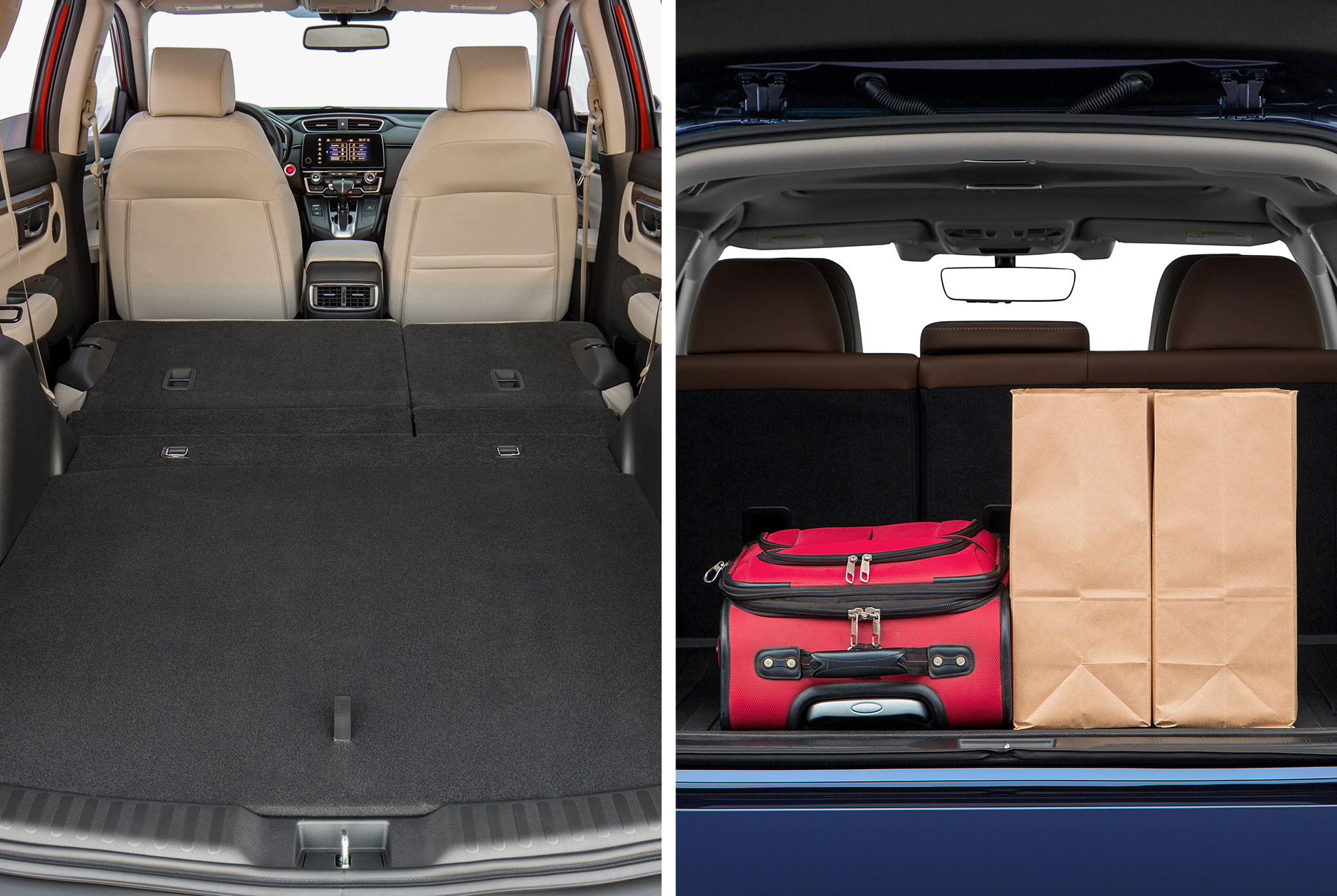
Dimensions for the CR-V and Outback are similar. Both are spacious enough for five people and a large amount of stuff. The CR-V (39.2/75.8 cubic feet) edges the Outback (35.5/73.3 cubic feet) for cargo capacity. However, the Outback has slightly more generous passenger volume (108.1 cubic feet) to (102.9 cubic feet) for the CR-V EX trim. The Outback also offers roof rails with retractable cross bars. Roof rails for the CR-V are available on the high-end Touring Trim.

The Outback gets the edge for versatility and off-road capability. The CR-V did increase its ground clearance (up to 8.2 inches), though it still trails the Outback by a bit (8.7 inches). There’s still a difference between being a specially designed all-wheel drive, all-weather, all-terrain vehicle like the Outback and being a pavement dweller that can withstand some dirt, even if you add a lift kit and off-road tires.

Tech-wise, Honda’s infotainment system euphemistically would be described as “quirky.” Tellingly, one of the most praised features for the latest CR-V is the return of the manual volume knob. The CR-V EX does have a push-button start. That’s only available on higher Outback trims. With the Outback, you need the 2.5i Premium trim to get dual-zone climate control and rear USB ports. The Subaru offers 4G-LTE Wifi. Both are compatible with Apple Carplay and Android Auto, which is what most customers want.

Slight edge to the Outback here for its off-road capability.

PERFORMANCE AND STYLE

Advantage: Push

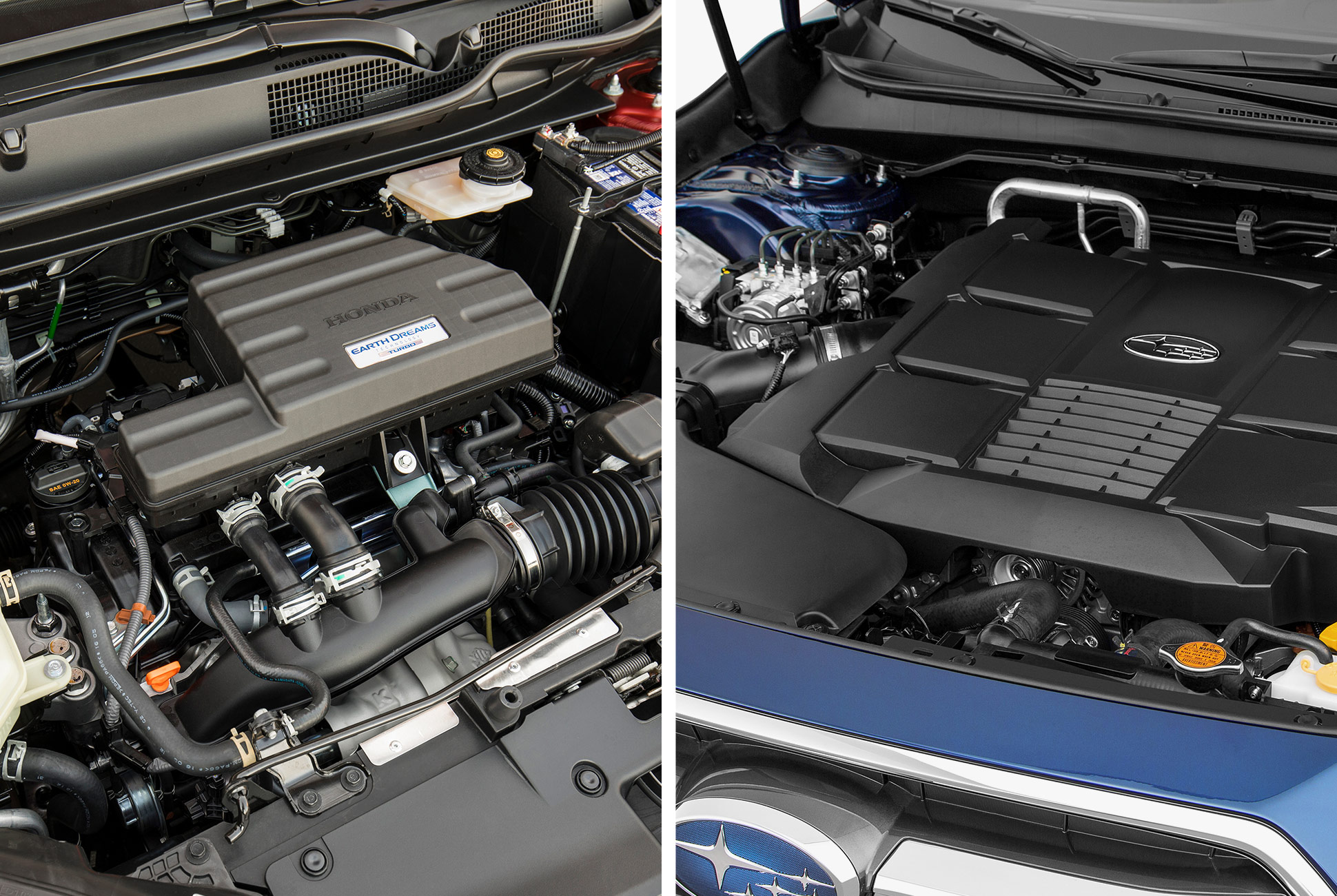
Driving impressions for the Outback and CR-V will read similarly. Both handle decently. Both accelerate slowly with four-cylinder engines. The 1.5L turbo on the EX is the upgraded option for the CR-V. Outback buyers can upgrade from the 2.5L four-cylinder boxer (175hp) to the 3.6L six-cylinder (256hp) for more oomph, but that shoots up the price (the 3.6R Limited starts at $35,970) and comes at the expense of fuel economy (20 city, 27 hwy). The CR-V gets the nod here, as its acceleration is merely slow. On the Outback it is glacial. Reviewers also think the CVT transmission on the CR-V behaves better.

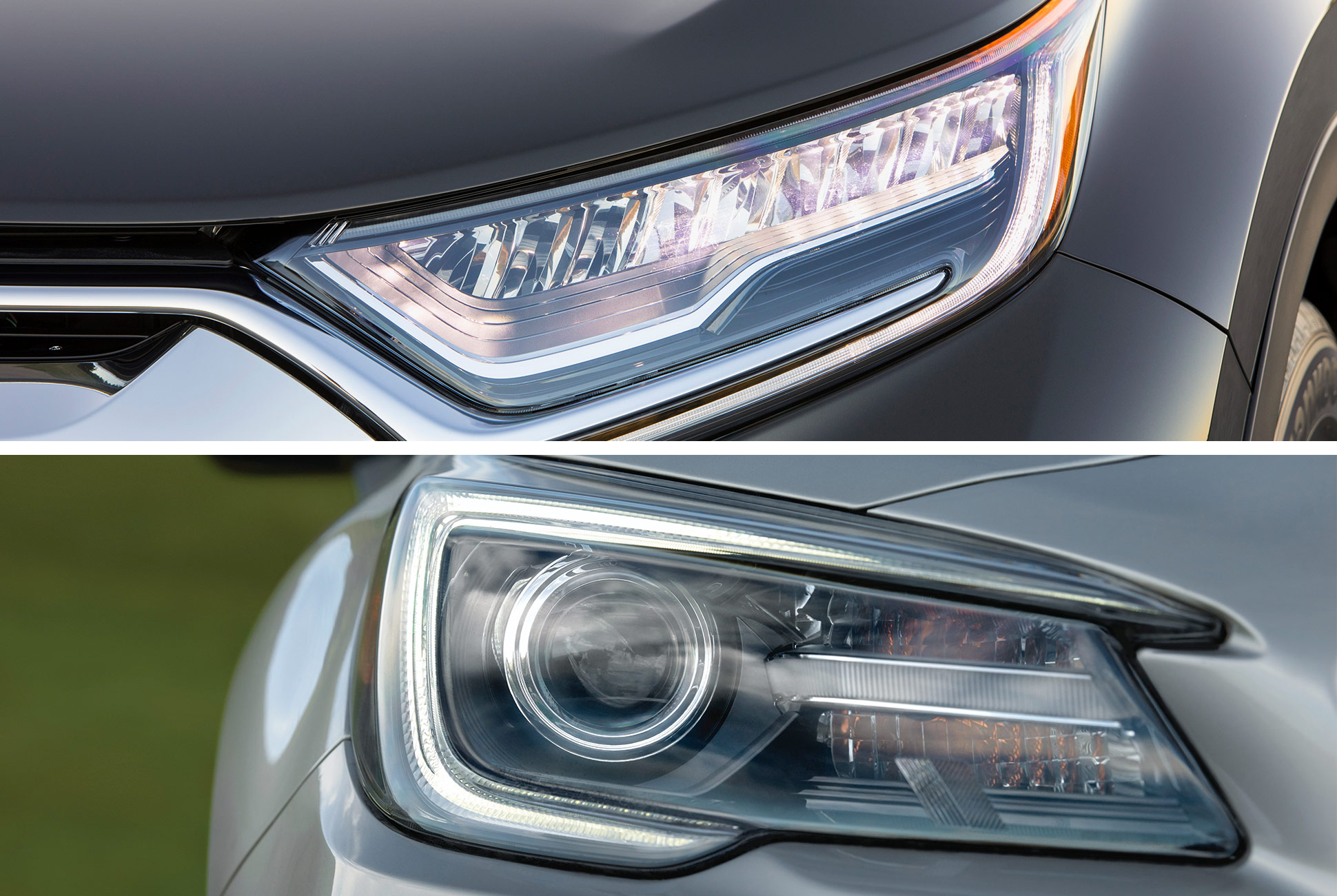
Give the Outback the edge for style. It’s not cool per se. But, it’s rugged and, in theory, a cool, outdoorsy person could own one to facilitate his or her cool, outdoorsy lifestyle. You’re heading to soccer practice, not loading up your kayak for a Saturday in the wilderness. But, the point is you could. One might term it “New England college town chic.” The CR-V doesn’t earn its plaudits with appearance. It’s a crossover, without much distinction in the style department.

VERDICT

The Subaru Outback is the choice.

Yes, the Honda CR-V is the gold standard for budget crossovers. There are many reasons it is one of the best-selling vehicles in the U.S. It’s a great crossover, but it’s still a crossover. It blends right into the background in its natural habitat, the elementary school parking lot. You may have to hit the lock button on your key fob a few times to remember which one is yours.

The Outback brings more versatility, utility, and possibility. It offers distinction and an endearing blend of toughness and dorky charm. It’s the car you would choose to extricate your family from a random calamity, which is something you now consider. Would the Outback win a point-by-point road test with the CR-V? No. But, that’s not how you choose a life companion, which your Outback could be for the next 10-15 years.

Subaru Outback Specs:

Engine: 2.5L four-cylinder
Transmission: CVT
Horsepower: 175
Torque: 174 lb-ft
Weight: 3,624 lbs
0-60: 9.3 seconds

Honda CR-V Specs:

Engine: 1.5L turbocharged inline-four
Transmission: CVT
Horsepower: 190
Torque: 179 lb-ft
Weight: 3,358 lbs
0-60: 7.5 seconds

The Best Cars You Can Finally Import to the US in 2018

US auto enthusiasts have long been shortchanged. Because our emissions and safety regulations differ from the rest of the world, a car being sold by a foreign marque must be developed to meet the US’s regulations. For many niche cars, automakers know that the cost of federalizing them just isn’t worth the trouble and the cost. That means that there are many, many weird and/or wonderful cars that never make it to our shores. If you grew up watching Top Gear or playing Gran Turismo you’ve been painfully aware of this for some time.

The good news is that if you’re patient enough you can import your dream car from overseas. Once a car reaches 25 years of age based on its production date (and not its model year) you’re free and clear to bring them on over. That means that every year, a new wave of cars will become legal here. This year, cars first introduced and produced in 1993 will finally make it to the USA for the very first time. The field this year is interesting — most are certainly unconventional (at least as far as American tastes are concerned) but therein lies their charm. And at the very least, performance-wise, there really isn’t a dud in the bunch.

Mazda Lantis Type R

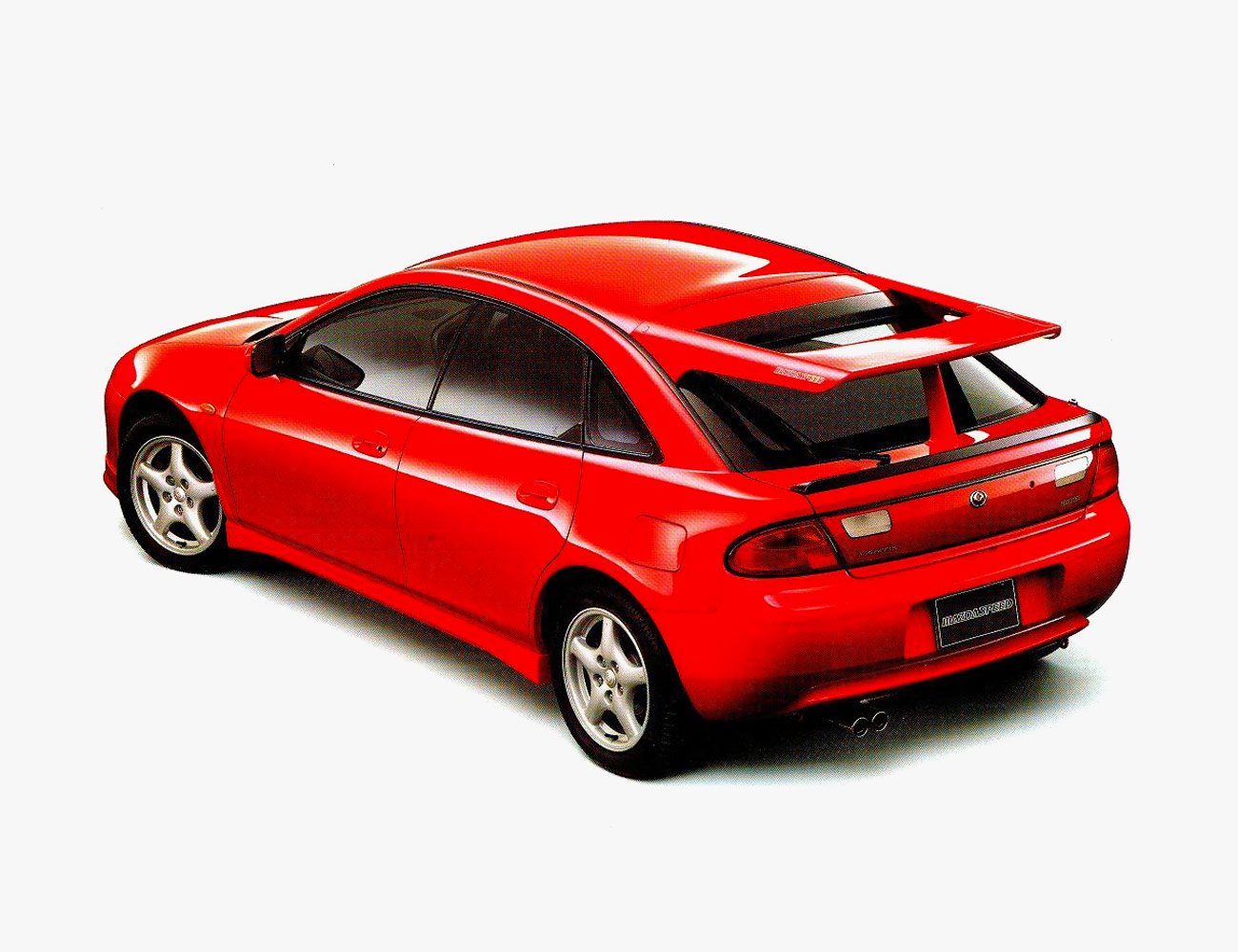
Debuting in August 1993, the Lantis was Mazda’s compact “four-door coupe” (a term Mazda used more than a decade before Mercedes popularized the concept with the CLS) that competed amongst seemingly countless other quirky compact cars in the Japanese market in the early ’90s. While the basic, four-pot Lantis was nothing more than a somewhat zany-looking econobox, in Type R guise it was a tiny sleeper thanks to a 168-horsepower, 2.0-liter V6 (with an 8,000rpm redline!) shoved into the front, sending all the power to the front wheels.

Mazda even made an adorable rally-inspired floating rear wing available. Perhaps because the Lantis had to compete with other JDM heroes from the early ’90s, it’s not particularly well remembered today which means they can be picked up in good shape for just a few thousand dollars when they pop up for sale.

Renault Clio Williams

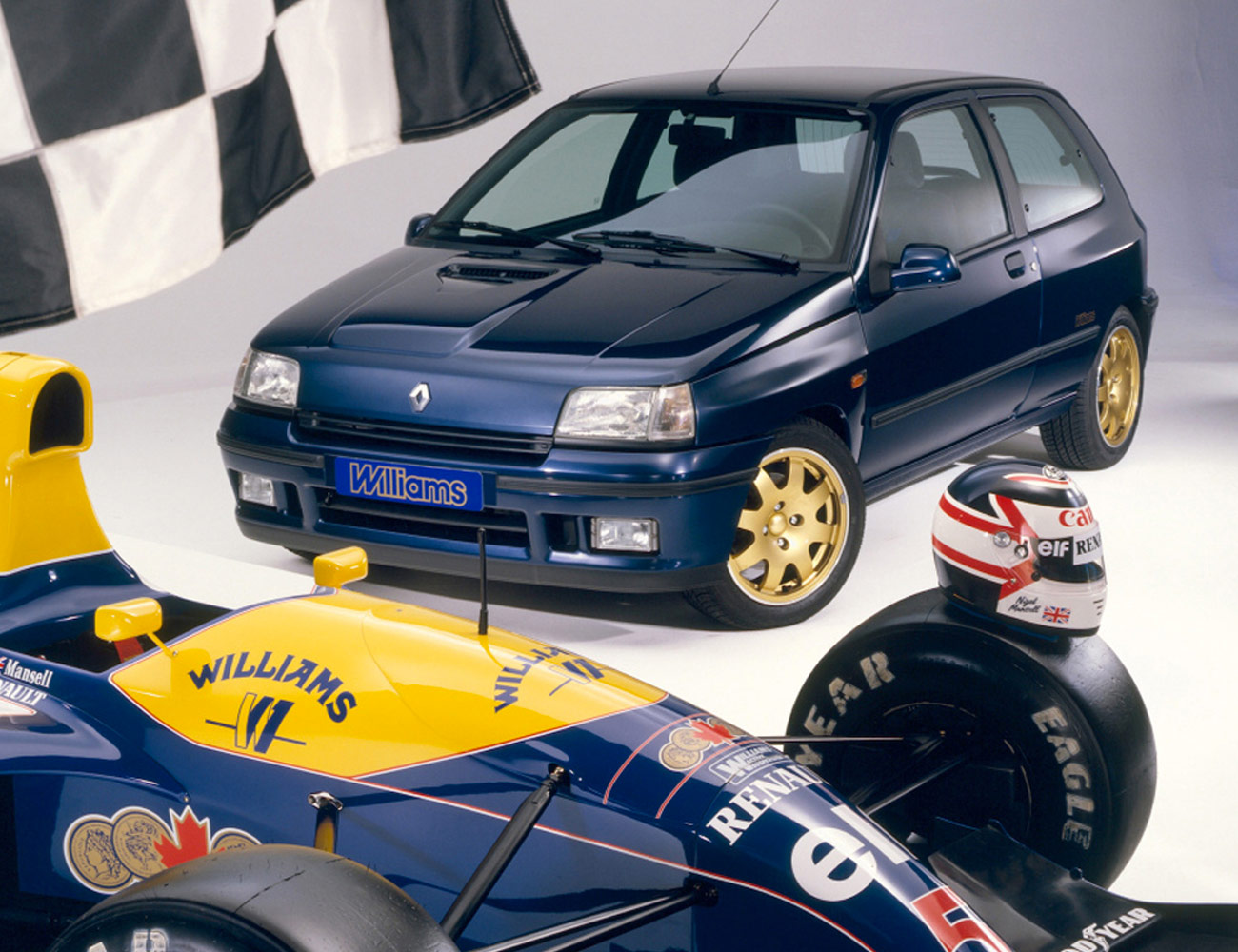
Though the competent Clio 16V had arrived two years before, Renault didn’t truly earn the hot hatch crown until 1993 when it debuted the Clio Williams. Built as a homologation special for Renaults rallying efforts, only 3,800 were planned for 1993 (well beyond the FIA’s 2,500-car requirement) but the car was so popular another 1,600 were made before the end of the year, and 6,000 more were made in the following two years.

The Williams was bestowed with a 2.0-liter, naturally-aspirated four-pot, putting out 148 horsepower and received intensive suspension upgrades including a front subframe borrowed from the Clio Cup race car. Unsurprisingly, the car was praised for its handling prowess (not to mention its propensity to lift a rear while under heavy cornering) and has since become an icon of the early halcyon days of the hot hatch.

Fiat Coupé

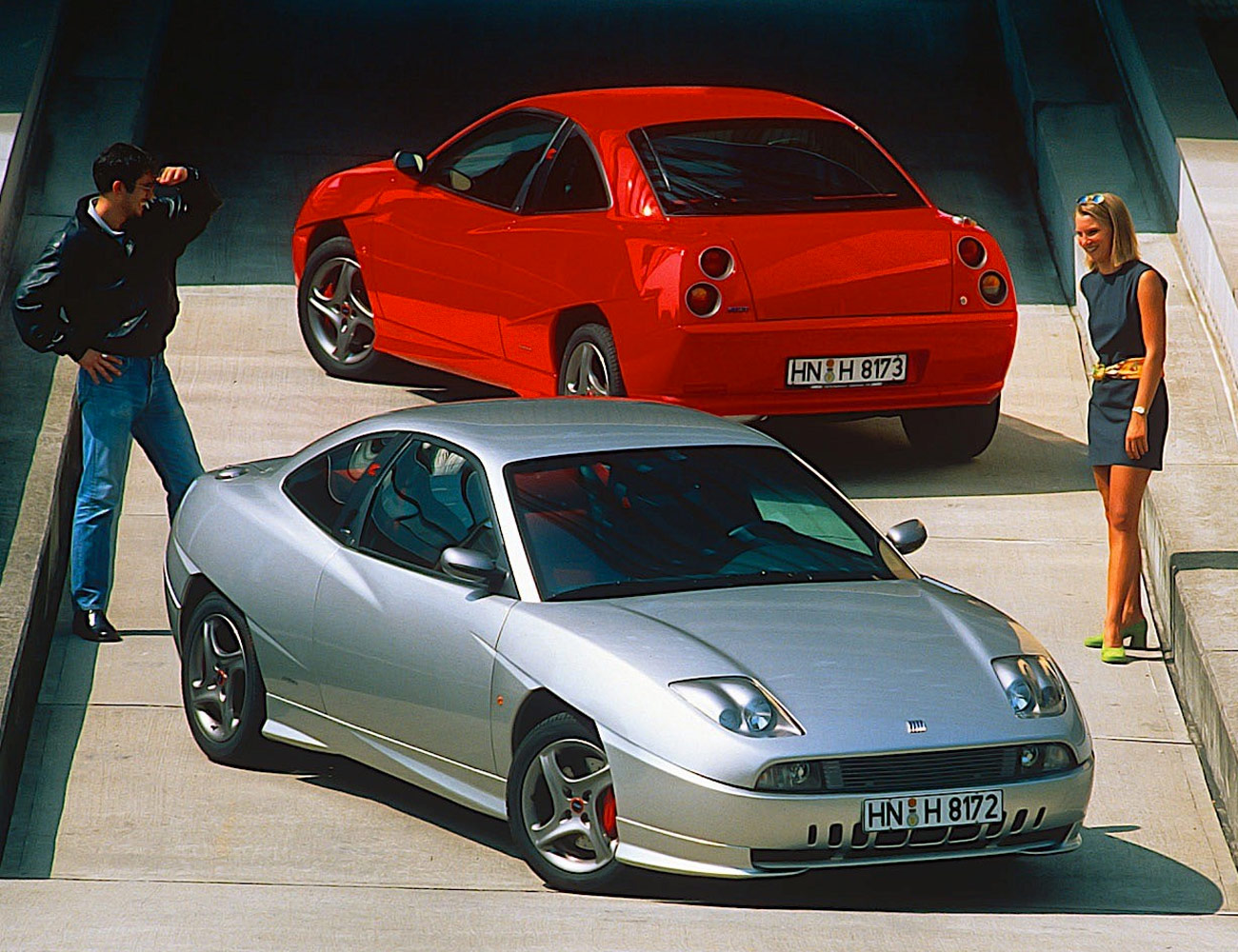
In an era ripe with “sporty” compact front-wheel-drive coupes, the aptly-named Fiat Coupé stood out for its charmingly distinct exterior penned by Chirs Bangle, whose portfolio of work is…somewhat questionable. Still, there’s no denying the Coupé is wonderfully distinct, and if it’s any consolation the clean, semi-retro interior was designed by the not-in-any-way-questionable folks at Pininfarina.

The Coupé was a modest performer for its time, thanks to Fiat’s excellent twin-cam four-cylinder (derived from the legendary Lancia Delta Integrale) available in both naturally-aspirated and turbo guises (a turbo five-cylinder was eventually made its way into the engine bay, too). While the Coupé went on sale in early 1994, there were over 100 cars built in 1993, so if you can find a very early production car you can bring it over at the end of this year.

Nissan Skyline (R33)

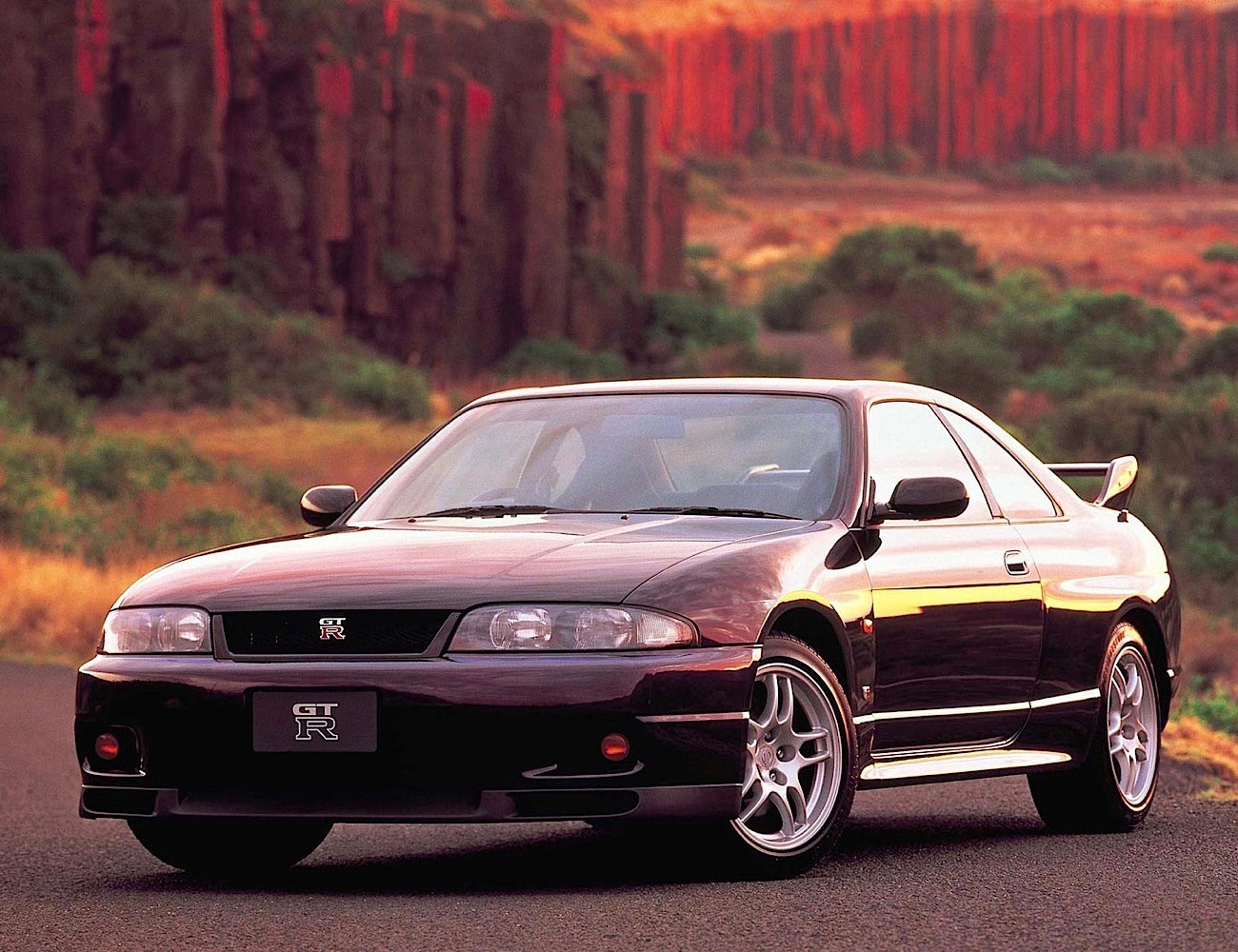
You’ll have to wait another two years to get this generation’s beastly GT-R (though the special-edition R32 V-Spec becomes available this year for all you Gran Turismo lovers), but more basic iterations of the R33 Skyline — the GTS, GTS-4, GTS-25 and GTS-25t — will finally start to trickle in stateside this year. That’s no concession. These cars were fitted with a 2.5-liter inline-six in both naturally aspirated and turbo guises, the latter putting out around 247 horsepower in the GTS-25t. These lower-spec versions all sent their power to the rear wheels (except for the AWD-equipped GTS-4) and featured Nissan’s HICAS four-wheel steering system, making them all exceptional handlers.

Holden Commodore (VR)

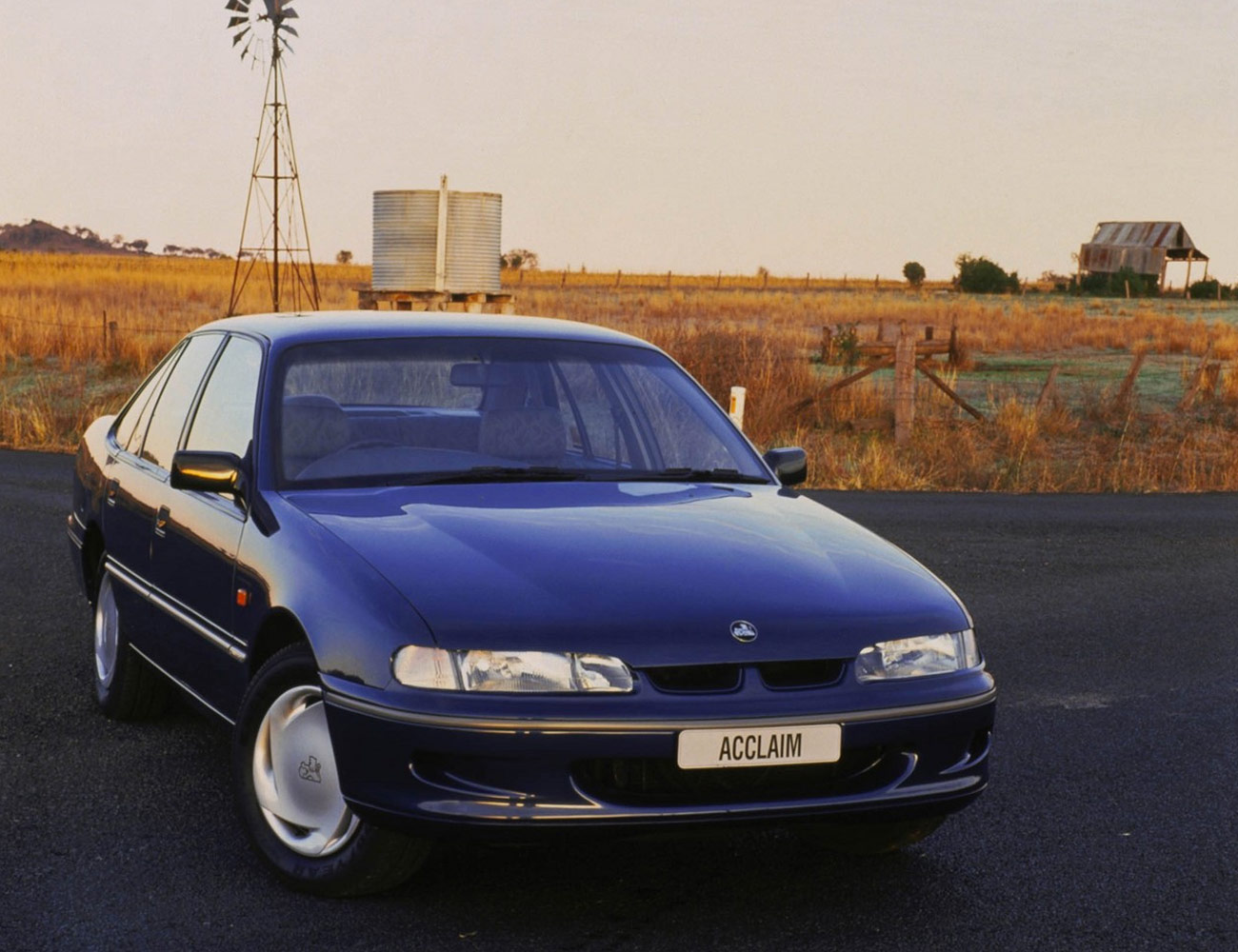
The brutish, Aussie-built Commodore was starting to hit its stride in the early ’90s, receiving a sleek overhaul in the form of the VR generation in 1993. The Commodore name is something of a catchall name for a range of cars — the standard Commodore sedan, the long-wheelbase Statesman and the truck-like Ute — but each was based upon Holden’s vaunted rear-wheel-drive platform. Many variants were available (including some very mundane offerings) but the best of the bunch were the powerhouses built by Holden Special Vehicles (HSV): the Clubsport, GTS, Maloo and Senator. Each packed either a 5.0-liter or 5.7-liter V8, producing 248 and 288 horsepower, respectively.

TVR Griffith 500

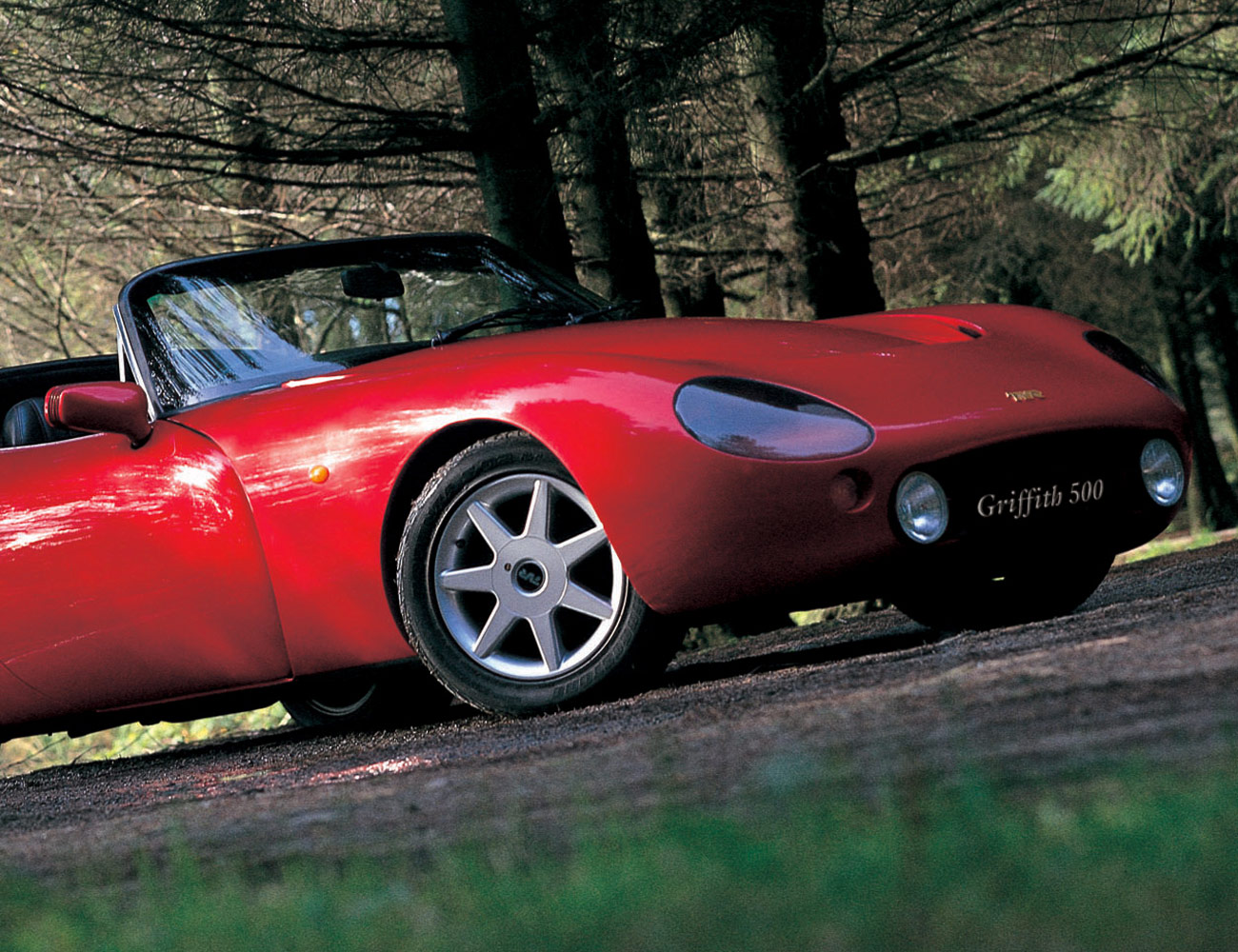
The Griffith of the 1990s launched in ’91, so early examples have been legal here for two years, but in 1993 the car was bestowed with a Rover-based, TVR-modified 5.0-liter V8 good for 340 horsepower, begetting the new Griffith 500 nameplate. Given that the car weighs just over a tonne (thanks to that swoopy body made from fiberglass) and never came with any real safety or traction control equipment, it’s essentially a British Dodge Viper: a preposterous, phallic, bare-bones sports car that will murder you if you aren’t careful. Still, if you can rein it in, you’ll hit 60 miles per hour from a standstill in 4.1 seconds — pretty damn good for the early ’90s.

MGB RV8

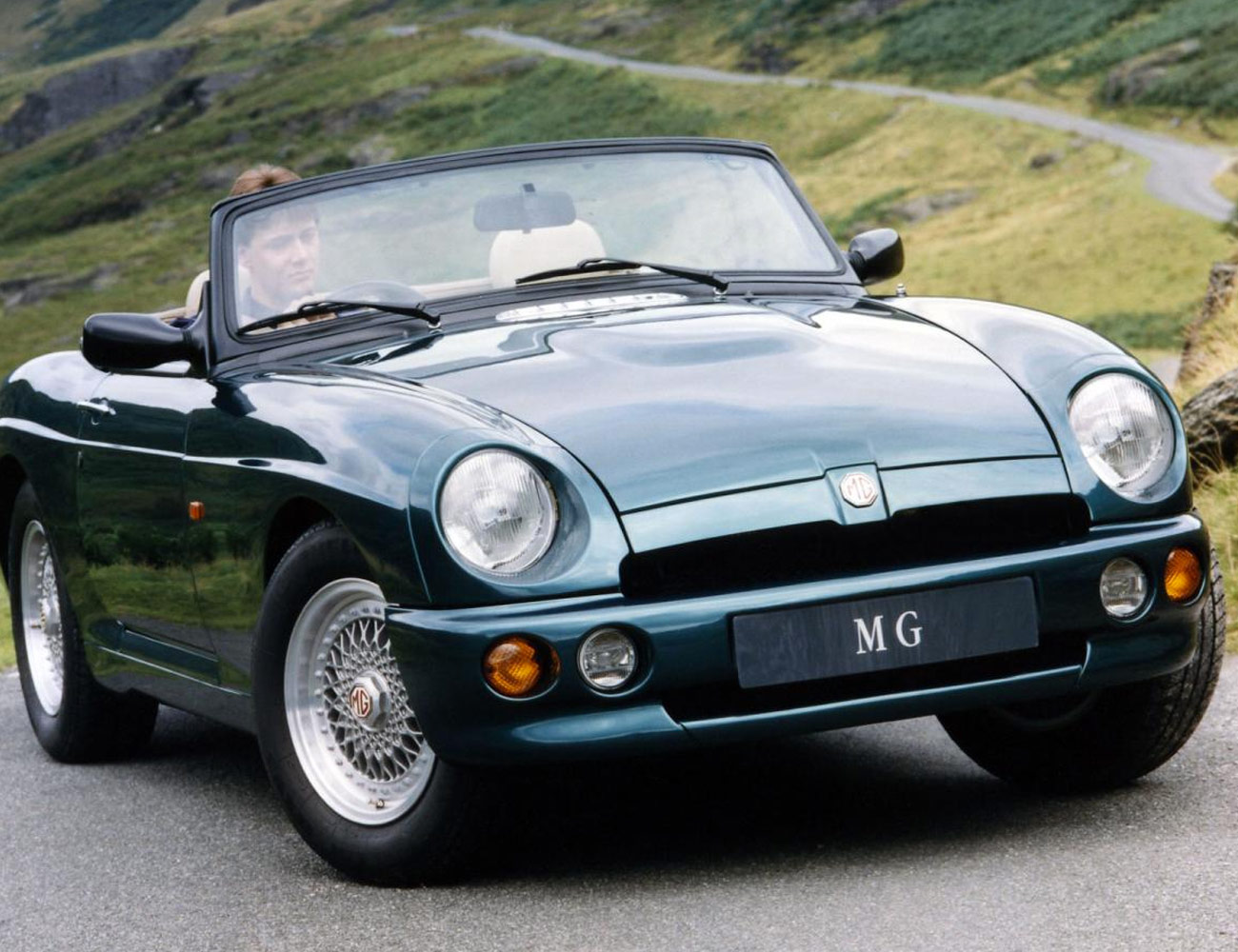
Though the MGB enjoyed a relatively long production run between 1962 and 1980, the folks at Rover (who owned MG at the time) saw fit to bring the car back in the early ’90s for a limited run. What they cooked up was the ultimate MGB: it featured an updated suspension setup and a body complete with flared fenders and a front-clip design more in line with the era. More importantly, a V8 was added for the first time (in the roadster version, anyway), and while its 190-horsepower output may seem underwhelming, it was enough to catapult the car to 60 miles per hour in less than six seconds. Production started in early 1993, with only about 2,000 examples made over the car’s two-year production run. Interestingly enough, it seems about two-thirds of them went to Japan.

Lancia Delta Integrale Evoluzione II

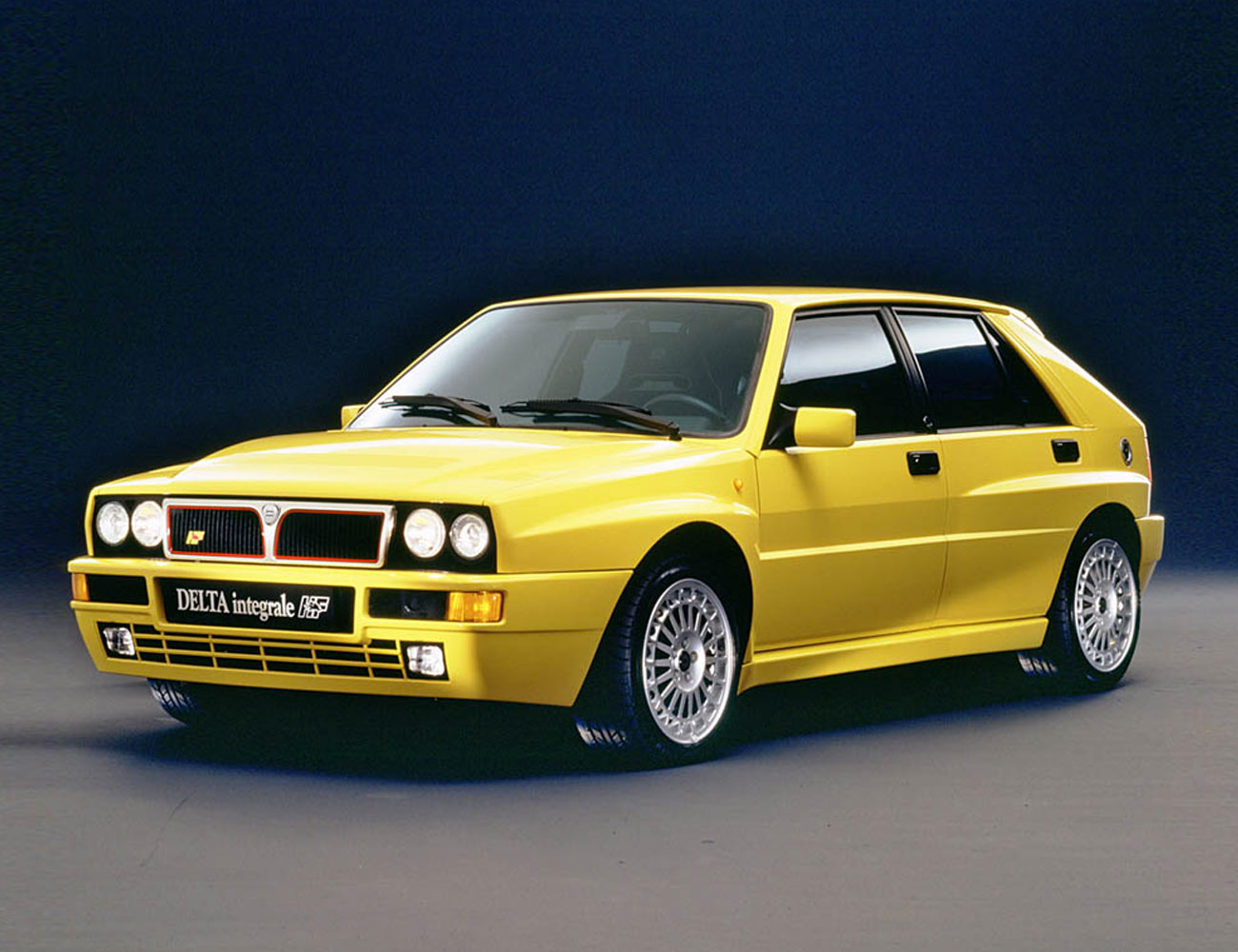
Much like the MGB RV8, the Delta Integrale Evo II was a proper send-off to an icon. Though the second generation Delta arrived in 1993, the rally-derived iteration of the first generation got one final hurrah. Changes included an updated version of the turbocharged four-cylinder under the hood, now making 212 horsepower and 232 lb-ft of torque, as well as cosmetic improvements like new 16-inch alloys, Recaro seats and a Moma steering wheel. It isn’t drastically different from the first Evo but it does represent one of the greatest homologation cars of all time going out on a high note. That’s ought to count for something.

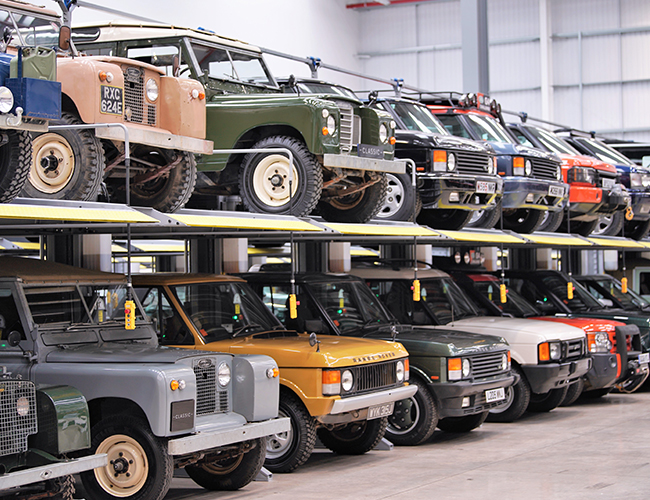
Inside Land Rover’s Coventry-Based Resto Shop

Any owner can send their 10-year-old-plus car in for thoroughly modern service.Read the Story

Badass and Brown: Score This Vintage Bronco (Plus a Jeep and Defender)

Automotive trends, like any other trends, are, for better or worse, hit or miss. Some have proven to have staying power (fake intake vents… why?), some have thankfully fallen into the dark recesses of history and yet others boomerang back with an unambiguously desireable vengeance. Case in point: plain-jane paint jobs. Obviously, the military has rocked beige toned SUVs and trucks for decades, but as far as consumer cars go, black, white red and silver have pretty much been mainstays. Browns and tans, even outside the automotive world, have by and large adorned unoriginal, blend-into-the-background blah-mobiles.

But combine that military inspiration with vintage road cars et voila: tan trucks that exude trend-transcendent style. These three trucks, culled from Bring a Trailer, are all up for auction and feature variations on a tan theme. Please buy them, drive them and never, ever repaint them. (Bid amounts listed reflect the price at time of publish.)

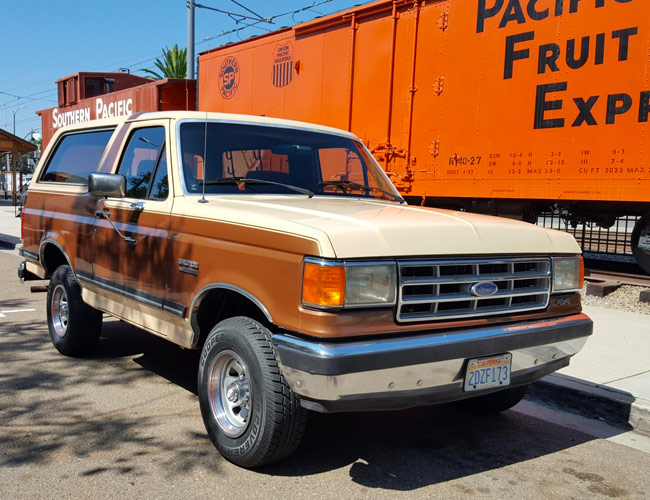
1987 Ford Bronco

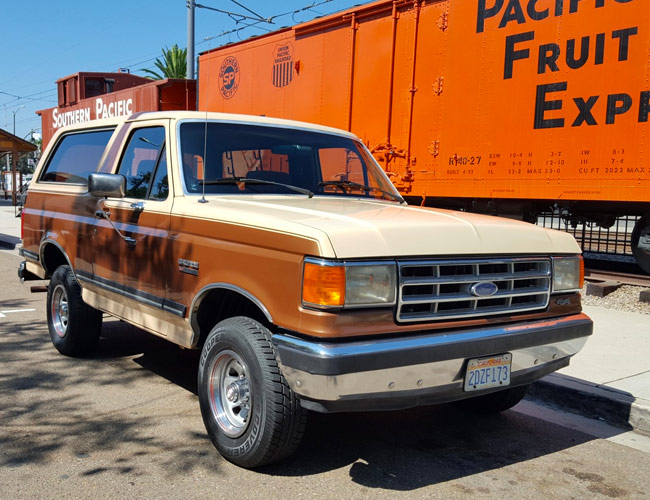
The Bronco is both famous and infamous, but its cool cred these days is undeniable. It’s a big truck with lots of room and classically blocky styling. Modest, handsome and simple: the marks of a great vintage 4×4. This example has a clean and well-documented three-owner history and benefits from a now five-year-old repaint of its original Desert Tan Metallic color. There’s some slight corrosion along the roof rail and tailgate, but probably not something that can’t be mended. Its 5.0-liter V8 is a Ford staple, the a/c blows cold and it’s been cared for consistently.

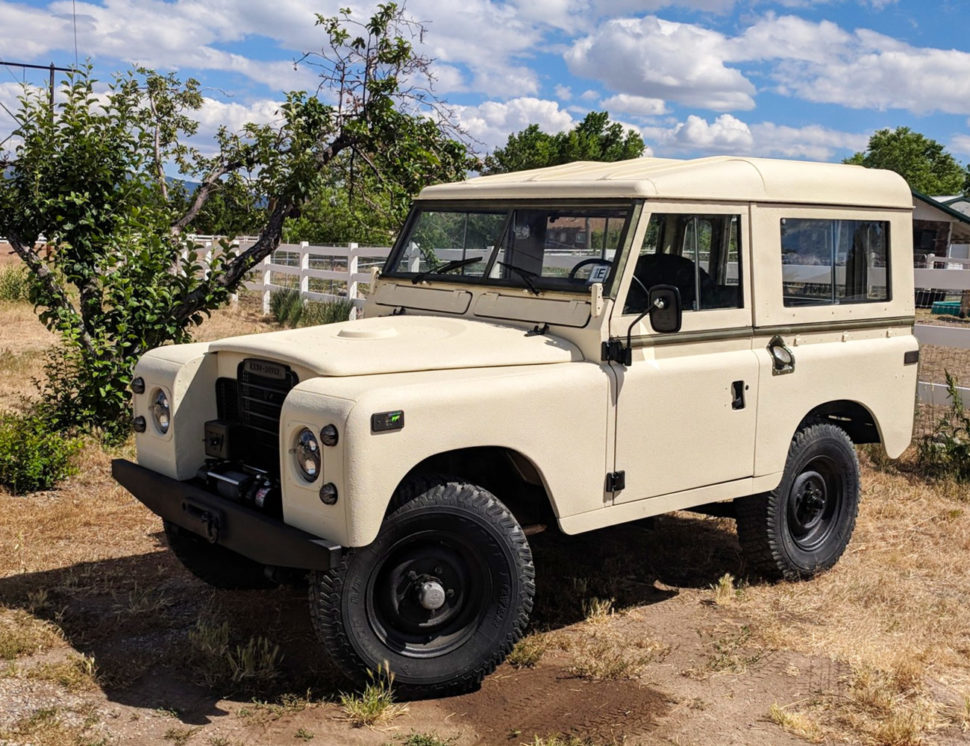
1973 Land Rover 88 Series III

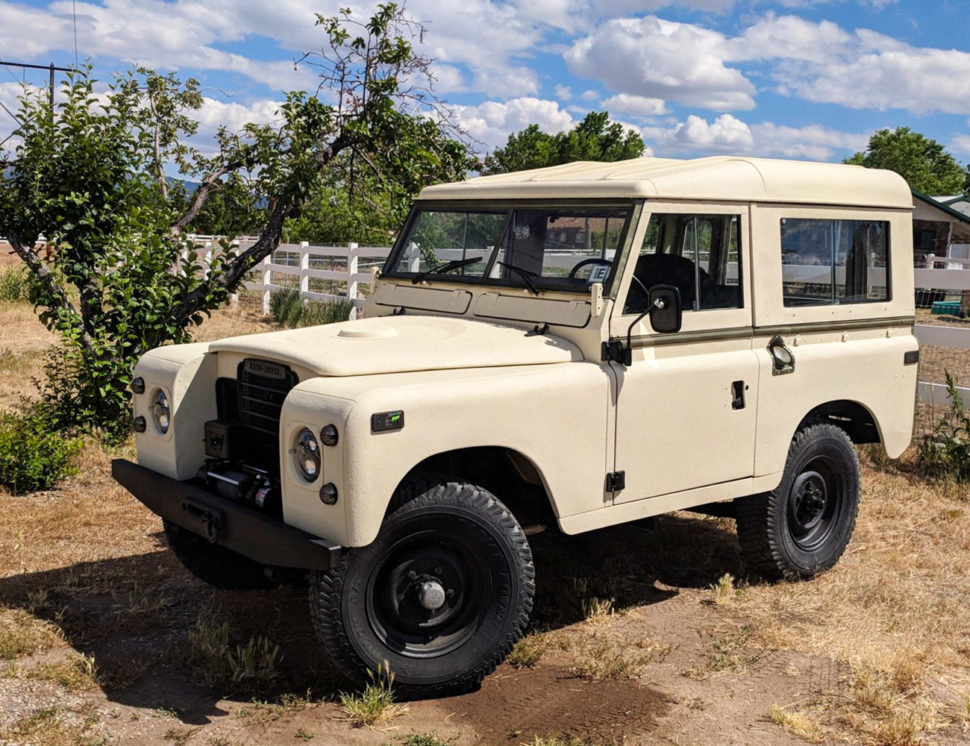
Left-hand drive, Limestone paint and a manual transmission: not a bad start. After a six-month “refurbishment” and adding 10,000 miles, the current owner is ready to part with this beige beast. Regarding its color, “the aluminum body was reportedly sandblasted before receiving a new two-part textured paint” — the frame and chassis were treated to a similar respray. It’s got a row of three bucket seats in front and a few other new parts as well. Probably an excellent buy for whoever pulls the trigger.

1982 Mitsubishi Jeep J37

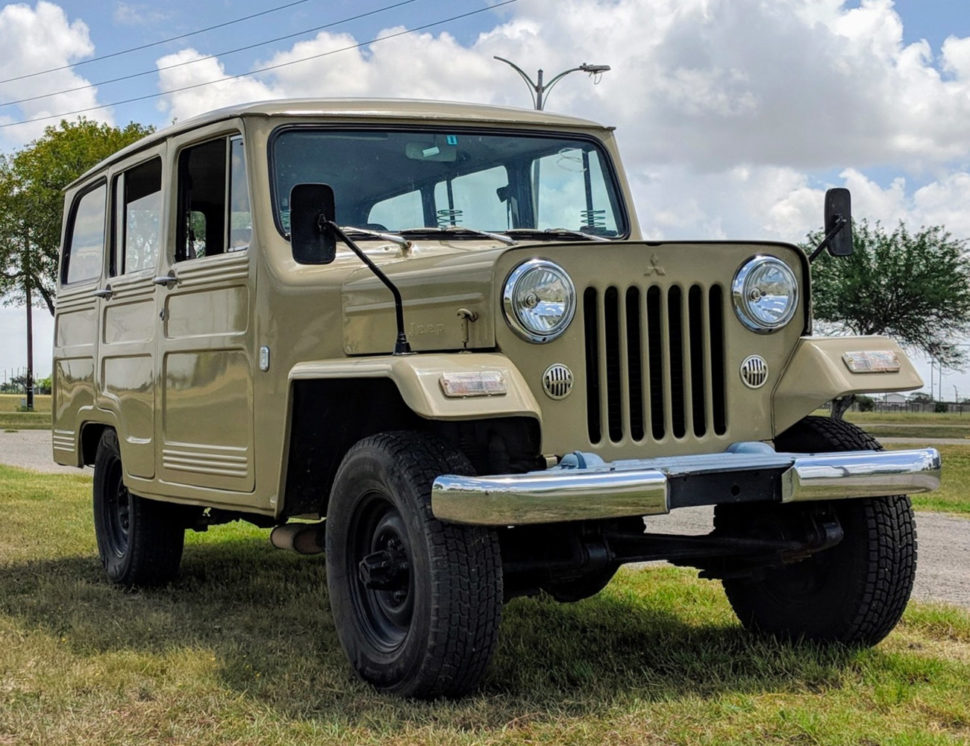
The seller bought this right-hand drive wagon in Japan and imported it to the States six months ago. It’s got an “older repaint” to replace its original two-tone job that looks great in the picture gallery. A little corrosion and bubbling are apparent, and the rear door doesn’t open fully at the moment, but the aftermarket interior is just about as awesome as you’d hope. This truck needs some work, but as a quick project it might not get better — you’ll have a distinct and decidedly tan vintage get-around in little-to-no time.

These 3 Vintage SUVs Are Beige As All Hell

Automotive trends, like any other trends, are, for better or worse, hit or miss. Some have proven to have staying power (fake intake vents… why?), some have thankfully fallen into the dark recesses of history and yet others boomerang back with an unambiguously desireable vengeance. Case in point: plain-jane paint jobs. Obviously, the military has rocked beige toned SUVs and trucks for decades, but as far as consumer cars go, black, white red and silver have pretty much been mainstays. Browns and tans, even outside the automotive world, have by and large adorned unoriginal, blend-into-the-background blah-mobiles.

But combine that military inspiration with vintage road cars et voila: tan trucks that exude trend-transcendent style. These three trucks, culled from Bring a Trailer, are all up for auction and feature variations on a tan theme. Please buy them, drive them and never, ever repaint them. (Bid amounts listed reflect the price at time of publish.)

1987 Ford Bronco

The Bronco is both famous and infamous, but its cool cred these days is undeniable. It’s a big truck with lots of room and classically blocky styling. Modest, handsome and simple: the marks of a great vintage 4×4. This example has a clean and well-documented three-owner history and benefits from a now five-year-old repaint of its original Desert Tan Metallic color. There’s some slight corrosion along the roof rail and tailgate, but probably not something that can’t be mended. Its 5.0-liter V8 is a Ford staple, the a/c blows cold and it’s been cared for consistently.

1973 Land Rover 88 Series III

Left-hand drive, Limestone paint and a manual transmission: not a bad start. After a six-month “refurbishment” and adding 10,000 miles, the current owner is ready to part with this beige beast. Regarding its color, “the aluminum body was reportedly sandblasted before receiving a new two-part textured paint” — the frame and chassis were treated to a similar respray. It’s got a row of three bucket seats in front and a few other new parts as well. Probably an excellent buy for whoever pulls the trigger.

1982 Mitsubishi Jeep J37

The seller bought this right-hand drive wagon in Japan and imported it to the States six months ago. It’s got an “older repaint” to replace its original two-tone job that looks great in the picture gallery. A little corrosion and bubbling are apparent, and the rear door doesn’t open fully at the moment, but the aftermarket interior is just about as awesome as you’d hope. This truck needs some work, but as a quick project it might not get better — you’ll have a distinct and decidedly tan vintage get-around in little-to-no time.

The Next Big Automotive Revolution Is Almost Here

Take a closer look at the historical timeline of the automobile and, like any other industry, you’ll see a select few innovations not just marking milestones but having long-lasting impacts we still feel today. Henry Ford’s assembly line in 1913, DuPont industrializing rubber for tires in 1920, Volvo inventing the three-point seatbelt and opening the patent in 1959 and airbags and ABS in the ’70s and ’80s — all seismic shifts altering the course of the modern automobile. And according to Henrik Fisker, we’re only two to three years away from the “big boom in electrification.”

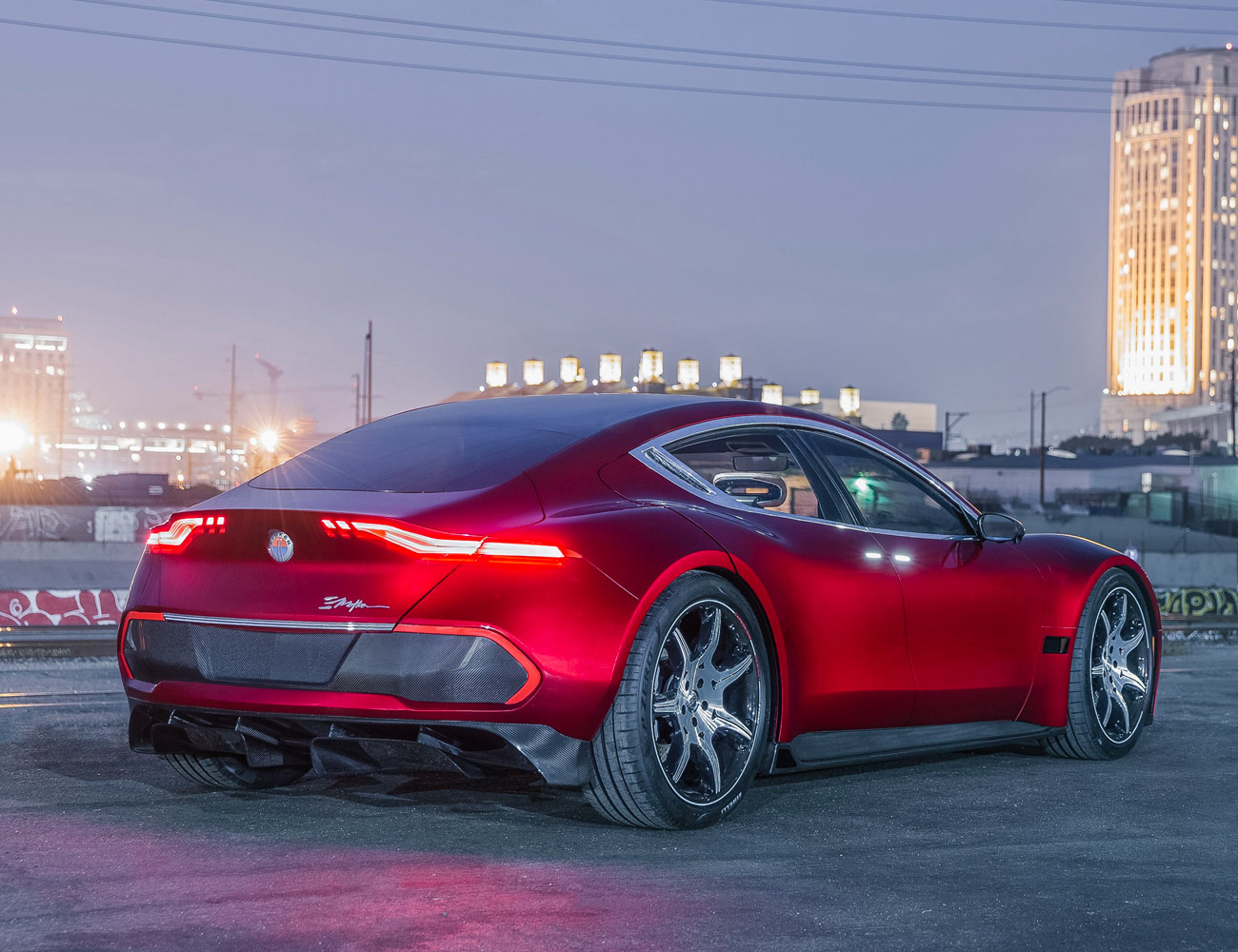
Henrik Fisker is most famous for his design work on the Z8 at BMW, the DB9 and V8 Vantage at Aston Martin and, of course, the current iteration of the electric car company that bears his name, Fisker Inc. However, the Fisker EMotion all-electric luxury sedan and the similarly powered Orbit people carrier announced at CES are now just one facet of what Fisker Inc. is looking to accomplish. In Fisker’s own words, “we’re more than just a car company now. I would even consider us a battery company.” Over the past year, along with designing the anticipated cars, behind the scenes, Fisker has worked tirelessly testing and developing the battery technology he thinks will be the next giant leap, not just for electric cars but the automotive industry as a whole.

The “big boom” Fisker refers to is the application of solid-state batteries in mass-market automobiles. Solid-state batteries aren’t anything new — they were developed in the 1950s by Michael Faraday — but it hasn’t been until recently that rapid advancement of the technology has occurred. Solid-state batteries, as opposed to liquid-state like Lithium-Ion batteries that are the current status quo, employ the use of ceramics, glass or Lithium-Sulfide. What that means for the consumer is lighter, quicker-charging batteries.

“It’s pretty clear the current Li-Ion technology is not the final technology that’ll make it into mass-market electrification,” says Fisker. And looking at the spec-to-spec comparison, Li-Ion tech is a steam engine compared to the advancements happening with solid-state batteries. “They only have five percent more that can be improved and that’s not enough to beat the gasoline engine.” The main drawbacks to Li-Ion batteries are a penchant to overheat when fast charging and their notorious flammability.

Parallel to developing its cars, Fisker Inc. has been testing solid-state batteries on a small scale and is soon moving on to larger applications. “We might apply these batteries outside the car industry in applications that don’t require such large batteries. We hope to be producing large formed cells, where each cell is about one kilowatt-hour and put them into a battery pack and in a car for testing by next year.” Fisker Inc. claims that though current superchargers outperform the batteries, its batteries will match or exceed the performance of modern superchargers. “With the current best supercharger we would be able to charge the equivalent of 200 miles in about five to ten minutes, which is pretty fast,” says Fisker.

Fisker says if the maximum-capacity battery pack is used in the EMotion, it’d get up to a 750-mile range. On top of the ‘minutes to fully charge claim’ and Fisker claiming “this technology is at least two times cheaper than current battery technology,” it’s easy to dismiss his mission. Considering his tumultuous past in the industry some may consider his claims to be vaporware, and that’s nothing to say of how many electric car startups have come and gone. But the trend is gaining credible momentum — where the majority of startups are backed by random billionaires and interchangeable tech companies, brands like Toyota, BMW, Honda, Hyundai Motor Company and Nissan are already developing their solid-state battery technology.

It’s clear, as Fisker says, solid-state batteries are the next avenue for all-electric vehicles. Jaguar already announced its lineup will be all-electric and hybrid by 2020 or 2021 and Porsche is releasing the Mission E sometime next year. Where does Fisker think he can come out ahead in such a cutthroat industry? “As a new company, we start with a clean sheet of paper. We can develop an all-electric car from the ground up and not worry about building around a gasoline engine. We can be more radical in or innovation and capture the consumers’ attention.” The ‘big boom’ is inevitable. It’s just a matter of whether Fisker’s strategic positioning has put the company in a prime spot to supply the resulting wave of demand.

My 8 Gear Essentials For Surviving an Off-Road Race Across Nevada

Going by the way of smooth, paved asphalt and piloting a modern, road-legal car, it’ll take you just under seven hours to get from Las Vegas to Reno, Nevada. Your luxurious, climate-controlled cocoon of leather and carpet can effortlessly glide over the ribbon of road connecting those cities regardless of the searing sun, triple-digit temperatures and gusts of wind carrying buckets of desert dust. It’s almost too easy. But try to get from one of the casino-laden cities to the other without using any roads at all, as fast as you possibly can, while fighting off dehydration, silt beds waiting to swallow wheels, blind turns preceding cliffs and suspension arm-hungry boulders… that’s a different story. Coincidently, The Best in The Desert Vegas to Reno, which at 540 miles is the longest off-road race in the US, puts on just such show. I attempted to finish it in a relatively stock Polaris RZR Turbo S.

By “stock,” I mean the only things added to the RZR were to make it race-safe and compliant — an extensive, reinforced roll cage, race seats and safety belts, removable-steering wheel, race fuel cell, radio, safety lights and fire extinguisher system. Other than what the regulations deemed necessary, everything on the Turbo S was factory-spec — there were no mechanical upgrades. Meaning the suspension, engine, transmission, ECU and basic chassis rolled up to the starting line the same as they were on the showroom floor. My co-pilot and I, on the other hand, were in need of necessary optional extras. Fireproof suits, gloves and driving shoes and a ventilated race helmet were baselines; on top of that, we needed a way to communicate to the pits and, as we found out 50 miles into the 580-mile race, food and water, just in case we got stuck out in the desert. This is the gear we brought along to attempt America’s toughest off-road endurance race.

Polaris RZR XP Turbo S

Pyrotect Pro Airflow Helmet

PCI Race Radios Offroad Helmet Wiring Kit

Alpinestars GP Race Suit

Alpinestars Tech 1 Race Glove

Oakley Race Mid Boot

CamelBak Ratchet 6L Backpack

Cliff Bars

Country Archer Beef Jerky