All posts in “Stuff”

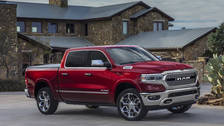
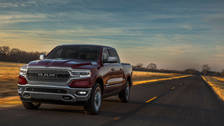
Urban cowboy: 2019 Ram 1500 Laramie Longhorn adds western flair to your luxo truck

Share

  • Pinterest

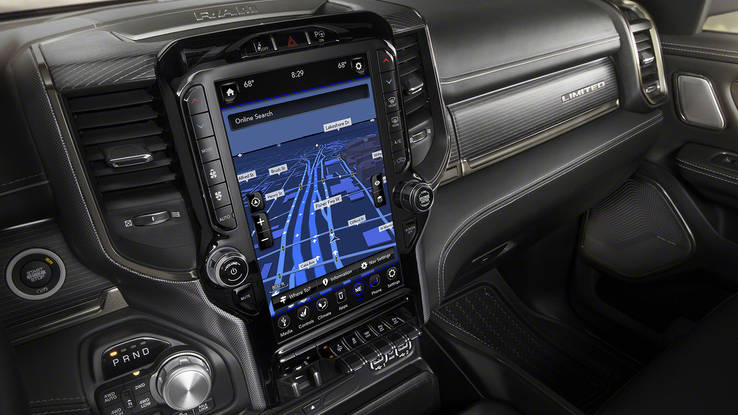
The next-generation of Ram trucks debuted at this year’s North American International Auto Show in Detroit with technological advancements like a mild hybrid powertrain and a massive 12-inch infotainment screen.

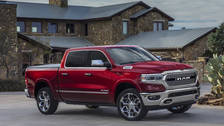
Following the auto show reveal, Ram is now showing off its more upscale trim level, the Laramie Longhorn. This package comes standard with LED headlights, leather seats and branded wood accents in the interior.

A step below the top-dog Limited pickup, the Laramie Longhorn shares all its utilitarian components, like its powertrain and body shell, with the rest of the lineup. Where the Laramie Longhorn is set apart is with comfort. The truck’s interior is stuffed with leather and barn-wood accents. The wood accents were branded with a charred Longhorn logo to add rustic western flair to the upscale truck. Leather covers parts of the door panels, the dash, the seats and the center console.

2019 Ram 1500 and its engineering on display at the Detroit auto show

On the exterior, this Ram has chrome bumpers, a big chrome billet “RAM” grille and adaptive LED headlights. If you’re not into chrome bumpers, don’t worry — you can check the RV match brown two-tone paint option to get them painted like the Ram in the gallery above. 

Ram hasn’t released pricing for its new 1500 yet, but we think this is going to be slightly more expensive than the currently available 2018 models. Expect this truck to set you, or your business, back over $50K if you plan on taking it home.

2019 Ram 1500: 7 (more) things to know

Share

  • Pinterest

Ram took the wraps off the all-new 1500 at the Detroit auto show a few weeks back, unveiling plenty of substantial under-the-skin updates along with the fresh looks. The completely redesigned truck now boasts a mild-hybrid system to provide extra torque when needed, along with plenty of extra towing and payload capacity.

There is a lot to see before it goes on sale at the end of March — that’s just weeks away — so we’ve rounded up the most important bits you need to know.

1. The power

The 1500’s base engine is the 3.6-liter Pentastar V6 paired with the eTorque mild-hybrid system producing 305 hp and 269 lb-ft of torque, but those in need of greater performance can pick the trusty Hemi 5.7-liter V8, good for 395 hp and 410 lb-ft of torque. Both are paired with TorqueFlite eight-speed automatic transmissions. Both engines feature variable valve timing, but the Hemi comes with the added fuel economy benefit of cylinder deactivation. With this Fuel Saver Technology system, as Ram calls it, the engine computer turns off spark and fuel and closes the exhaust and intake valves on four of the eight cylinders when hauling light loads. Variable camshaft timing also helps save fuel by reducing the V8’s pumping work through a delayed closing of the intake valve.

2019 Ram eTorque system torque down low

2. eTorque

The Ram 1500 is a mild hybrid; instead of a traditional alternator, both engine versions of the new truck feature a motor/generator that restarts the engine for the automatic stop/start system, but it also provides an assist when needed. It does this with the help of a battery pack about the size of a suitcase located inside the rear wall of the passenger cabin. The battery pack can store up to 430 watt-hours of energy (at a cost of adding about 100 pounds of weight to the truck), giving the V6 engine a boost of 90 lb-ft of torque, or 130 lb-ft of torque to the Hemi V8.

The extra help does not figure into the 305 hp and 269 lb-ft of torque of the V6, or the 395 hp and 410 lb-ft of the V8; the eTorque system kicks in during low engine speeds, broadening the torque band rather than adding to peak torque on tap. This means that drivers can get more torque early on, when the truck is at a crawl and is towing something heavy, without the need to rush the engine, and it helps take the strain off the engine when moving heavy loads.
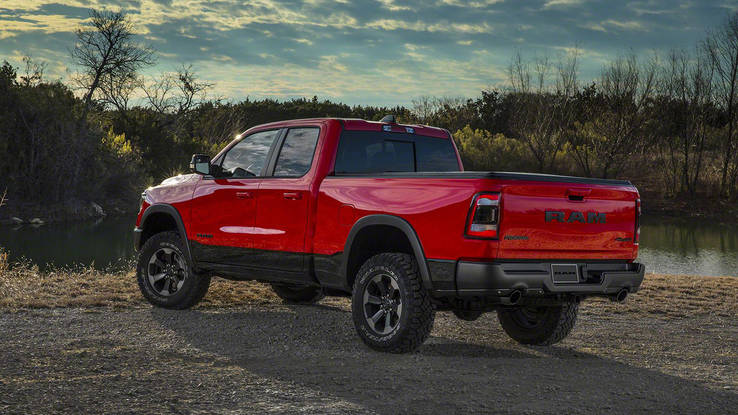
2019 Ram 1500 rear

The Ram 1500 will go on sale at the end of March 2017.

3. The wheelbases

Three frame lengths will be on the menu when the 2019 Ram 1500 goes on sale: a 144.6-inch wheelbase for Crew Cab short bed versions, a 153.5-inch wheelbase on Crew Cab long beds, and a 140.5-inch wheelbase for Quad Cab long beds.

“The 2019 Ram 1500’s cab length has increased a total of 4 inches inside,” the company says. “B- and C-pillars moved an inch rearward, and the rear of the cab is pushed an additional 2 inches. Thus, front and rear doors are now 1 inch larger on Crew Cab configurations, while the rear door is 1 inch shorter on Quad Cab models compared to the previous model.”

4. The interior

A larger interior demands a larger screen, and it’s getting one: A 12-inch Uconnect touchscreen that can display one application at a time, displaying a big map, for example, or two different applications simultaneously on a split screen. The center stack had to be raised and brought closer to the driver to accommodate the new screen, but don’t worry — there will still be plenty of buttons even though the Ram is getting a screen this big: The all-new toggle switches will be located just underneath it.

“The reimagined center console is a usable, complex piece of art with more than 12 different storage combinations,” the automaker says. “Center stage, a wider docking area with optional wireless charging can hold a small tablet or smartphone. A three-position sliding cup holder tray can be stowed under the center armrest to reveal a deep storage tub designed to hold a 15-inch laptop. Lifting the lid of the center armrest also reveals an additional lined storage compartment sized to fit a tablet and/or hang a full-size file. At the rear of the console, there are two additional cup holders, which include a tablet holder for rear passengers.”
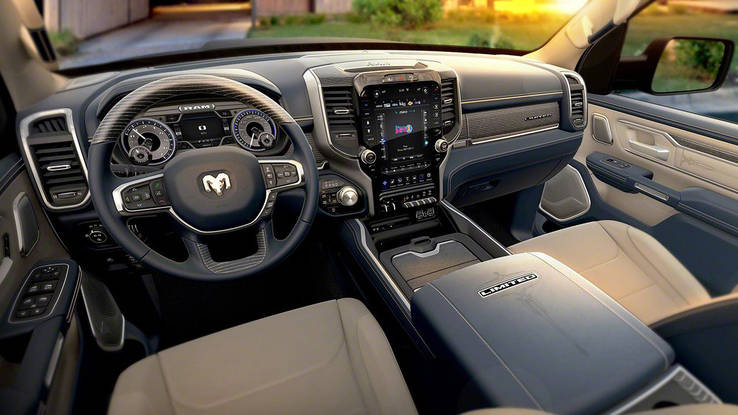
2019 Ram 1500 dash

The interior now features a 12-inch infotainment touchscreen.

5. Payload and weight savings

The maximum payload weight is 2,300 pounds, a gain of more than 400 pounds over the outgoing model, and towing capacity is now 12,700 pounds, up from 10,650.

Another type of weight has dropped: The overall weight is down by 225 pounds, thanks to extensive use of aluminum, high-strength steel and composites. The frame is now 98 percent high-strength steel and the body is 54 percent high-strength steel. The frame itself shed pounds over the outgoing model thanks to the use of high-strength steel, while the chassis lost 120 pounds. The other weight savings came from the body and various systems: the tailgate, engine mounts, front axle suspension crossmember, transmission crossmember and steering system gear are now made from aluminum. The upper front suspension arms as well as the air dam structure are made from composites.
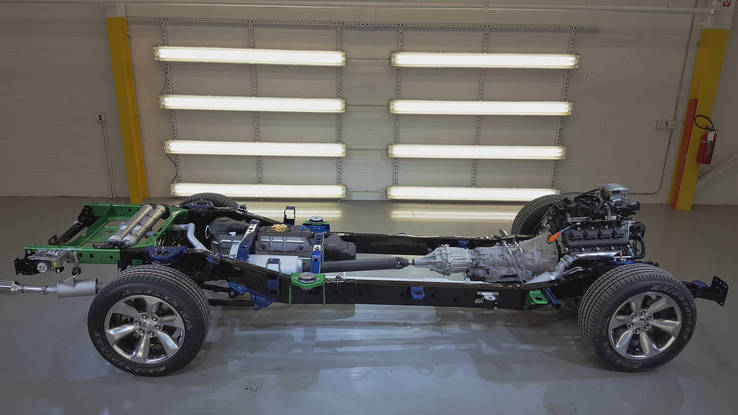
2019 Ram 1500 chassis

The eTorque mild-hybrid system adds about 100 pounds, but overall the trucks actually loses weight over the outgoing model.

6. Off-roadability

The 4×4 Off-road package, available with almost every trim level, includes an electronic-locking rear differential, 32-inch on/off-road tires on 18- or 20-inch wheels, and a 1-inch suspension lift. This setup also includes off-road-calibrated shocks, and an off-road-biased rear suspension geometry, along with hill-descent control. Add to that skid plates for the steering, engine, gas tank and transfer case, as well as some tow hooks, and you’re ready to tame the great outdoors.

The Rebel is back as well for even more serious off-roading, wearing 33-inch Goodyear Wrangler DuraTrac tires mounted on 18-inch wheels, new Bilstein shocks, unique rear suspension geometry and a 1-inch lift. The Rebel gets more off-road goodies in the form of tow hooks mounted in wide bumper openings, and skid plates for the steering system, transfer case, gas tank and oil pan.
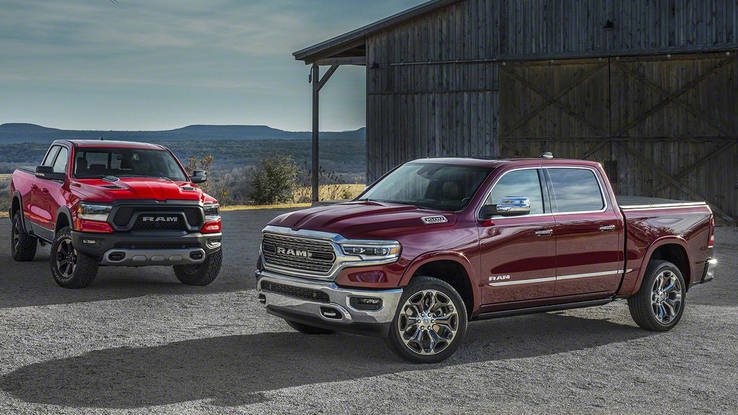
 

2019 Ram 1500 lineup

The Ram 1500 now has the eTorque system to help it with low-end torque.

7. Class-leading aerodynamics

It may seem a little strange to talk about aerodynamics in an age when most pickups strive to look like midcentury locomotives, but the 2019 Ram 1500 has a drag coefficient of 0.357, which puts it into the same category as a 2004 Chevy Aveo or a 2006 Honda Fit. That’s a 9 percent improvement over the outgoing model.

How did Ram accomplish this? The engineering team spent a lot of time in the wind tunnel, and in addition to wind-cheating sheetmetal, the truck features an active air dam that automatically extends downward by 2.5 inches as the truck approaches 35 mph. The Ram 1500 also has active grille shutters, which close up to prevent additional drag at speed. Models equipped with the optional air suspension can also lower the truck by 0.6 inch for greater aerodynamic efficiency.

“Significant time was dedicated to designing the truck bed itself to increase usability and aerodynamics,” Ram says. “Bed rails are raised by 1.5 inches to reduce drag as does a new spoiler on the new aluminum tailgate. The bed-to-cab execution is sub-flush to reduce disturbance alongside the body. A wheel-to-wheel tubular side-step design offers aerodynamic improvements by allowing air to pass around the truck more smoothly.”

Formula E teases radical new Gen 2 race car on Twitter

Share

  • Pinterest

The next generation Formula E race car will be unveiled on Tuesday but the ‘batman-like’ machine was teased over several social media channels on Monday afternoon.

The Batmobile reference has been made by series CEO Alejandro Agag and the teasers revealed a car with a wider nosecone, single-plane front wing and front wheel covers. It also will utilize the Halo divice. The curtains on the full rendering will be made public on Tuesday and the physical reveal is set for the Geneva Motor Show in March.

This new car will bring an end to the widely criticized mid-race driver swaps.

Spark Racing Technologies won the rights to produce the car, which will be powered by a McLaren Applied Technologies battery. It replaces previous battery supplier Williams Advanced Engineering.

Matt Weaver

Matt Weaver – Matt Weaver is an associate motorsports editor at Autoweek. Before becoming a journalist, he was a dirt track racer and short track cheeseburger connoisseur.
See more by this author»

The Autoweek Podcast Ep. 20: Detroit auto show, Danica Patrick’s Daytona return and a Kia Stinger review

Share

  • Pinterest

On this episode of the Autoweek Podcast, host Rory Carroll joins Mike Pryson, Robin Warner and Graham Kozak to talk about the upcoming racing season. The group talks about Danica Patrick’s Daytona 500 return with a GoDaddy-backed Chevrolet Camaro ZL1 and what it means to racing as a whole. After Danica Patrick’s racing legacy is wrapped, the team shifts gears and talks about the other race in Daytona: the Rolex 24. Rory, Mike and Robin talk about the CadillacMazda and Acura racing teams as well as Jackie Chan’s team’s shot at winning the race. During the discussion about the race, Robin and Rory gamble on which of Wayne Taylor’s sons, Ricky and Jordan, is the eldest. Before finishing up on Rolex, the group praises Yost Autosport and Fernando Alonso’s efforts in the Daytona. Before the end of the motorsports section, the team takes a quick look at Dan Gurney’s life, but expect a more substantial Gurney episode in the future.

After Mike leaves, Wesley Wren hops on a mic to talk about the hits from this year’s North American International Auto Show. The guys highlight Hyundai’s Veloster N before getting derailed by a cultural analysis of 1968’s “Bullitt” thanks to the special-edition Mustang’s reveal. Rory and Graham argue about the importance of the film as well as if it’s entertaining or not, which leads to a bigger discussion about other seminal 1960s racing movies. After the team reaches a conclusion about “Bullitt,” they dive back into the auto show. Trucks like the new Ram 1500 and the Ford Ranger were the talk of the show floor in Detroit, alongside the new G-Class.

After the auto show, the team reviews the anticipated Kia Stinger GT. The rear-wheel-drive Kia is praised by the group for its attention to detail, driving characteristics and the simple fact it exists.

Check out the episode below, on iTunes or wherever podcasts are played. Don’t forget to subscribe and leave feedback here and on iTunes.

By Autoweek Staff

Citroen’s Karin concept was an ‘80s pyramid on wheels

Share

  • Pinterest

There have been sharp-edged concept cars and there have been rakish concept cars, but few have been as uncompromising in their devotion to two dimensions as the Citroen Karin. Unveiled at the 1980 Paris motor show, the Karin was penned by Citroen designer Trevor Fiore, and it featured a novel 1+2 seating layout. Meant purely as a design exercise, the Karin expanded upon several recent concepts that had also gone crazy with trapezoidal shapes — especially the Aston Martin Bulldog — with corners almost sharp enough to give showgoers paper cuts.

Today, the Karin seems like a prop from a film centering on the violent, daily lives of droogs, or a car-based test bed for the radar-evading geometry of the F-117. But the inspiration for this concept car came about in an interesting way: Citroen was headed into the 1980 Paris motor show without a production or a concept to show the public, a situation that flirted with getting bad press and scaring off shareholders. Fiore, who was a recent arrival at Citroen and who eventually took the spot of longtime Citroen designer Robert Opron, led the effort that produced a small, pyramid-shaped coupe with an engine placed far in the front and a relatively compact and glass-laden greenhouse that led to a less rakish rear window.

1980 Citroen Karin concept interior

The Karin featured a central seating position.

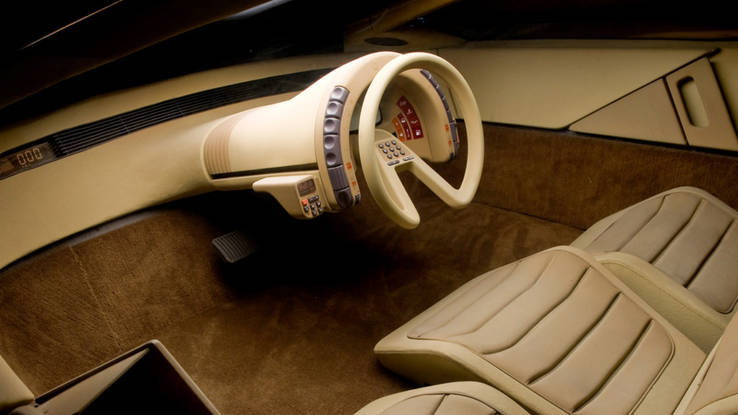
The interior was dominated by a tube-shaped steering column protruding far from the dash, with a signature Citroen steering wheel that also featured actual telephone buttons. All of the controls were located around the steering column hub or on small pods at the three- and nine-o’clock positions, a design reminiscent of the Maserati Boomerang concept.

When it came to exterior details, news reports of the time attempted to trace the headlights to the design of Citroen SM, though viewed through today’s eyes they are essentially dictated by the shape of the hood, while the rear fascia and taillights would probably remind most of today’s viewers of the Lotus Esprit.

1980 Citroen Karin concept rear

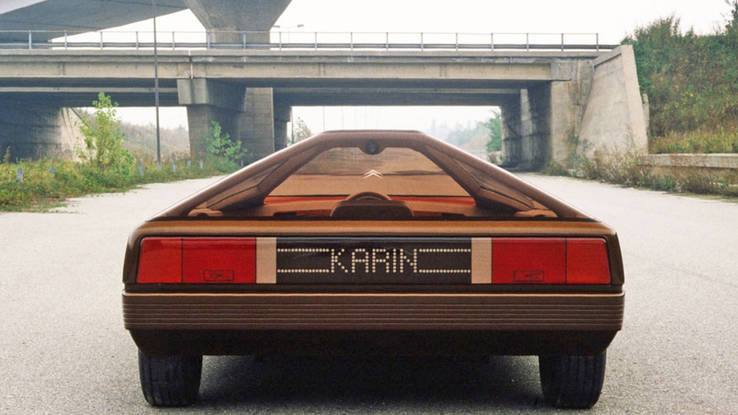
Today, the rear fascia of the Karin reminds us of the Lotus Esprit, which is perhaps the most rakish wedge-shaped supercar that made it into production.

1972 Citroen SM fall colors

Needless to say, the Karin did not immediately lead to a production car, even though Citroen may have looked back at the Karin when designing the XM sedan a few years later. In 1981, the automaker also created an MPV interpretation of this design dubbed the Citroen Xenia that actually made much more sense from a production point of view. Scaled up a little, it reminds us of what would become the Renault Espace.

Was this pyramid shape the pinnacle of wedge design? The Aston Martin Bulldog, penned by Lagonda designer William Towns (once again using nothing but a ruler) that debuted a year prior with a similar wedge-like shape, was on track to actually go into limited production before Aston Martin reconsidered. The Karin could be described as being a little late to the party, kicked off by the likes of the Lancia Stratos Zero, the Lamborghini Bravo and Jaguar Ascot, even though Bertone remained fond of wedge shapes with flat surfaces for quite some time thereafter.

One-of-a-kind 1970 Lancia Stratos HF Zero set for auction at Lake Como

Here’s the complete history of the Ram pickup truck

Share

  • Pinterest

The 2019 Ram 1500 pickup went live at the Detroit auto show last week. We could break down the century of Dodges, Rams and Merchant Expresses, but we figured we’d get official story straight from the horse’s — or sheep’s — mouth in this 21-page PDF. It covers everything since 1917, when the first Dodge Brothers commercial vehicle, the Screenside Truck, was introduced, up to the latest and greatest that bowed at Cobo Center in Detroit. In between, we fought two World Wars, allegedly went to the moon and invented the iPhone.

You can check out the full document in the PDF viewer below or click the download link to pull it down to your computer.

The 2019 Dodge Ram 1500 climbs into the Detroit auto show

The 101-year history of the Ram pickup truck

(27.98 MB)

2018 Detroit auto show: Hits and misses

Share

  • Pinterest

Richard Truett, Automotive News’ powertrain savant, design connoisseur and all-around engineering go-to guy, jumped up on just about every stand, thought and pondered and scratched his head, changed his mind a couple of times and came up with a list of 2018 Detroit auto show hits and misses. We’re republishing his take on things to add to our own analysis.

HIT: Ram 1500

It’s easy to imagine Fiat Chrysler Automobiles boss Sergio Marchionne giving his truck team a blank check and this order: “Spend whatever it takes to make the best pickup you can, using all available technology at our disposal.”

Nearly everything is new from the wheels up. Weight is down by about 200 pounds, though the truck is 9 inches longer. The frame is stiffer, the brakes stronger and the body smoother. The powertrains are updated and upgraded.

Inside is where the Ram design team really stands out. An available 12-inch screen with eye-poppingly clear graphics. Most of the materials on the seats, dash and doors are soft and expensive-feeling to the touch — exactly what you’d expect in a luxury sedan.

Outside, the big rig look is toned down over previous generations and perfectly matches Ram’s new premium mission.

HIT: Chevrolet Silverado (*but with a big, black asterisk)

Technically, General Motors checked all the right boxes, right? The option list includes a new inline six-cylinder turbodiesel engine. It’s bolted to a 10-speed automatic stuffed in a body that is 450 pounds lighter than the current truck. Highway mileage will be in the 30s for the diesel. Gasoline engines get an industry-first variable cylinder cutoff system for a fuel economy gain of nearly 20 percent. The frame is stiffer, the suspension has lightweight parts, and the body uses high-strength steel and aluminum body panels.

So, how can the new Silverado lose with those genes? Chevy wrapped all that in a body with some strange styling cues. The front edges of the fenders near the lower portion of the radiator, for example, look unfinished.

And the interior misses the mark by a wide margin. You can’t buy any model with a floor shifter, and there is still too much hard plastic on the instrument panel.

MISS: Honda Insight

It might as well say “Kirkland” on the trunk lid and be sold near the frozen section at your local Costco. It’s automotive tofu. What’s the deal with Honda and its hybrids?

The stubby, cool CR-Z hatchback, now interred, was a futuristic-looking car saddled with a buzzy, lethargic hybrid powertrain. It was annoyingly slow and didn’t even really deliver great fuel economy. But appearancewise, it brought back memories of the much-missed CRX, and you wanted to love it — until you drove it. The Insight’s snazzy two-motor gasoline-electric drivetrain is capable of 50 mpg, but it’s trapped under the hood of a car that will be invisible on the road.

HIT: Ford Ranger

Ford hasn’t released any specs for the new North American version of the Ranger, but it appears slightly smaller than its main competitors, the Chevrolet Colorado and GMC Canyon — and that’s not a bad thing. The Ranger — which debuted in 2011 in global markets and is being updated for North American sale — sports a steel body, a simple leaf-spring suspension and one powertrain choice, a 2.3-liter turbo-four rated at 280 hp and mated to a 10-speed automatic. The chrome grille pays homage to the Super Duty and has R-A-N-G-E-R embossed on the edge near the hood. Nice touch.

veloster

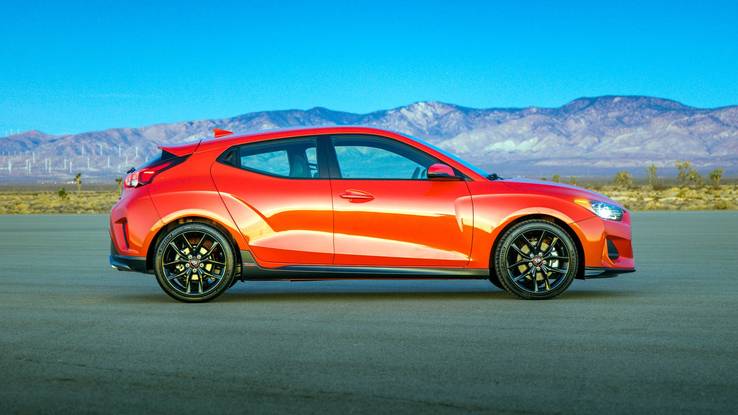
The new Hyundai Veloster.

MISS: Hyundai Veloster

Here’s the problem: It’s been redesigned but not radically restyled. It might be better in every way than the old car, but Hyundai’s sports coupe looks pretty much the same, and that’s the kiss of death in a restless segment that demands radical new designs.

HIT: Acura RDX

It’s a crossover. It’s the right size, a larger compact. It’s slick-looking. And it has CR-V underpinnings. It’s outfitted with Honda’s premium hardware to improve handling and acceleration. Oh, but a slight demerit for the oversized Acura caliper logo in the grille. Something this big looks like it belongs on a Peterbilt.

HIT: Volkswagen Jetta

Here’s a car with styling that is mostly devoid of original thinking, and yet it all hangs together well. Those overwrought swage lines running down the side are a vain attempt to capture the good mojo from the previous-generation Hyundai Sonata. The taillights and headlights are nearly indistinguishable from those on every other sedan, from Alfa Romeo to Toyota. The strakes on the hood were lifted from the Chrysler Crossfire. Generally, I switch off when I see a car cobbled together with styling cliches. But the Jetta is an exception. I just like it.

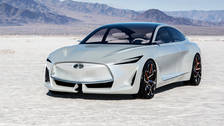
MISS: Infiniti Q Inspiration Concept

What’s this, Infiniti’s take on a Tesla sedan, but with a stylish grille and a gasoline engine? The rear glass and taillights look as if they were lifted straight off a Model S.

HIT: Mercedes G class

Note to Ford and Land Rover: This is how you redesign an off-road icon. The new G class, apart from the headlights and instrument panel, does not stray far from the blocky, squared-off design of the original. Let’s see what happens with the Ford Bronco and Land Rover Defender.

MISS: GAC Enverge

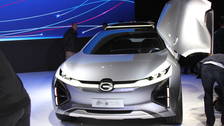
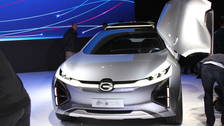
Blemishes in the paint and side windows that are painted body color and can’t be seen out of had me scratching my head about this Chinese-designed concept crossover.

HIT: Lexus LF-1 Limitless

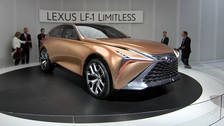
It’s not hard to imagine this sleek, low-roof concept crossover as the next RX. The copper color hands down wins the best paint job of any vehicle at the show. Still, one hopes that Lexus reconsiders the huge spindle grille before this one is handed off to production.

HIT: Toyota Avalon

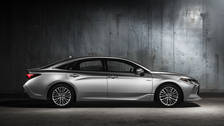
Sorry, GM. But Toyota still makes the best Buick. The new Avalon has a Lexus-grade interior, smoothly sculpted aerodynamic body and a neat taillight cluster that tucks the reverse lights under the brake lights.

By Richard Truett at Automotive News

Will Chinese automaker GAC’s U.S. ambitions run into political headwinds?

Share

  • Pinterest

Guangzhou Automobile Group (GAC) is the latest and best-positioned Chinese automaker with plans for sales in the U.S. Days after GAC showed off a sample of its lineup at the Detroit auto show, including a sub-brand that is (fortunately or unfortunately) named Trumpchi, the automaker and its home country’s trade policies faced criticism from U.S. politicians.

Reuters reports that Sen. Chuck Schumer, D-N.Y., argued on the Senate floor last Wednesday that Chinese trade rules as they apply to cars are “manifestly unfair and a typically unfortunate example of China’s rapacious trading policies.”

Schumer’s arguments stem from the fact that Chinese-built automobiles would face a 2.5 percent tariff, while cars exported from the U.S. to China face a 25 percent tariff. This is why many U.S. automakers that sell cars in the Middle Kingdom build them there, including Buick, which has a much larger lineup in China than in the U.S. and now exports one model to the U.S.

The White House has also criticized the high import tariffs U.S. goods face in China and has repeatedly called for higher tariffs on specific goods shipped from China. In a matter of days the administration will decide whether to impose even higher tariffs on imported solar panels, a move calculated to help domestic manufacturers. The administration has repeatedly criticized the current trade regime with China when it comes to a number of goods.

GAC is coming: A Chinese car company announces US arrival

It’s unclear whether GAC and other Chinese automakers with their sights set on the U.S. market will be deterred by the imposition of tariffs; so far no significant action has been taken when it comes to car imports. GAC plans to enter the U.S. market in 2019 with the GAC GS8, a seven-seat premium SUV.

The automaker wants to sell as many as 100,000 vehicles annually in the U.S. during the first two years — a lofty target, especially given the fact it needs a distribution network. The automaker has mentioned that it hopes to work with Fiat Chrysler in the U.S. when it comes to distribution and that it has also reached out to independent dealership groups.

Setting up a dealership network may prove to be the bigger hurdle for GAC than the threat of tariffs — 2019 isn’t far away, and launching an all-new brand in the U.S. is something that Fiat and Alfa Romeo had trouble with not too long ago, even with effective control of Chrysler.

Our 5 favorite 2019 Ram 1500 interior features

Share

  • Pinterest

Ram debuted its next generation of pickups at this year’s Detroit auto show with the new 1500. While it has an interesting mild hybrid powertrain, enough payload capacity to haul all the tiles and sheets of plywood your heart desires and look sharp on your way to work, new Ram buyers will spend most of their time in the truck’s cabin, host to some interesting new features. 

Ram touch screen image

The 2019 Ram 1500’s optional 12-inch touchscreen is big enough to handle your navigation and your music at the same time.

1. The 12-inch touchscreen

Ram’s new optional touchscreen is bigger than you’d ever think you’d see in a pickup. The 12-inch screen runs Fiat Chrysler’s Uconnect software and controls just about everything from the seat heaters to adjusting the truck’s suspension. The screen is big enough to run two applications at once, such as your Sirius XM radio on the lower half with the navigation directly above it. Or, if you want to see most of your trip on the map, you can run just one application to take up the entire screen. It’s available on Laramie and Longhorn models but comes standard on Limited-trim trucks. 

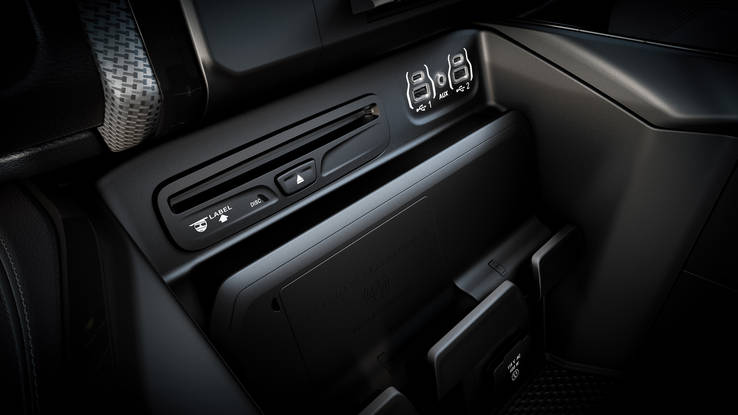
CD player image

The CD player is still alive and well in the 2019 Ram 1500 — it even has instructions on how to use it.

2. A CD player

No, the CD isn’t a new development, but a 2019 model-year vehicle with a CD player is pretty novel, and the 2019 Ram has one. It even has instructions (ed note: rad). This will be nice for the few people who have opted out of having a smartphone or an iPod, but we’re still waiting for Ram to bring back the in-car turntable for our true uncompressed listening pleasure. 

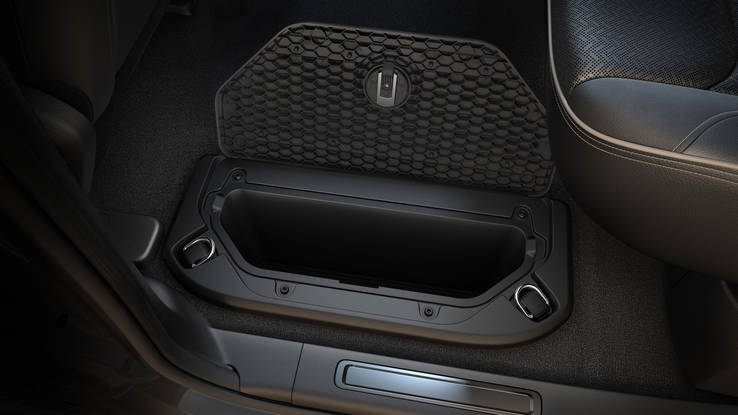
RamBin image

The RamBin is only part of the 2019 Ram’s drastically increased interior storage. If you need to haul tools to a job site or snacks for a road trip, the Ram should fit the bill.

3. Storage

While your 1978 D100’s storage was limited to the bed, whatever you threw behind the bench seat and the glovebox, the 2019 Ram isn’t. Storage is vast and plenty with the new Ram, which features space in the center console, glovebox, RamBins behind the seats and a few bins here and there to store change and other small objects. Ram says there’s 151 liters of storage (5.3 cubic feet here in ‘Murica), which Ram claims is twice the competition. What that means in the real world is you’ll have enough space to stash stuff for road trips.

The center console can be configured 12 different ways, depending on your need. It also has a handy protractor built into the plastic lid — in case you need to reference an angle. There is also a handy “full” line so you don’t accidentally crush anything — or if you do, you can’t blame Ram.

Taking a note from parent company Chrysler’s minivans, the new Ram features storage behind the front seats. The RamBin isn’t exactly new — it showed up on previous-generation trucks — but it’s 5.5 inches longer than last year, just in case you needed to stash a small ax that was too big for your 2017.  

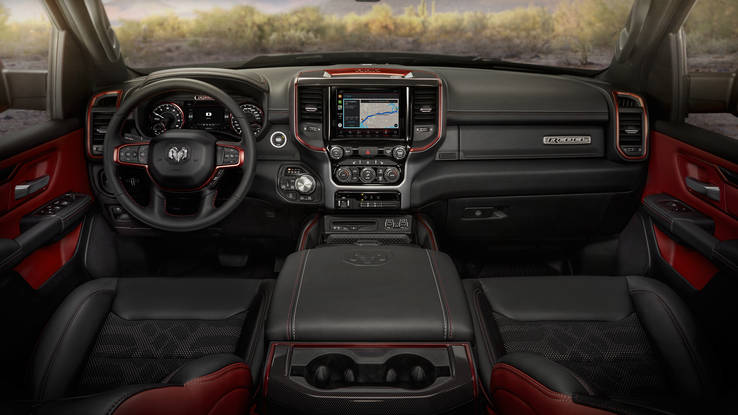
Ram Rebel accent colors image

Like this Ram Rebel, the other trims of the Ram 1500 affect the interior styling just as much as the exterior.

4. Style

As we mentioned in the truck’s debut, there are a lot of ways to buy this new Ram. You can still get a genuine workhorse with the Tradesman-trimmed rigs, but most will be middle-pack double-duty Laramie, Big Horns and Rebels. Still, whatever you pick, it’s reflected throughout the cabin. The interior of the 2019 Ram Rebel sports aggressive red accents to remind you that you picked the brazen Ram of the bunch.

The top-end Limited rigs have soft leather, accent stitching, limited badges on the interior and lots of wood trim. Ram engineers also said that all the metal you touch is real metal — while that’s a small concession for a truck, it’s still nice to know that it’s not full of chrome-plated plastic. The Ram also offers a panoramic sunroof, which is about as luxurious as you’d want a pickup to be.

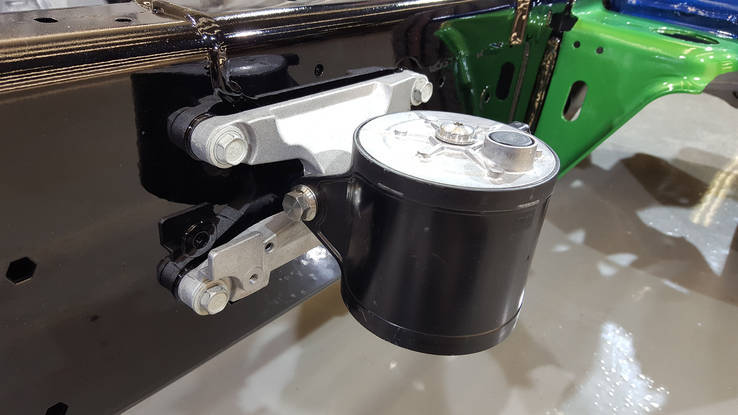
Active mass module image

This active tuned mass module is one of the tools Ram engineers use to keep the cabin ultra-smooth and quiet.

5. Sound deadening

A pickup used to be a workhorse designed to haul something from point A to point B with as little discomfort as possible. The 2019 Ram is more luxe-wagon than junk hauler. Trucks used to not have much in the way of sound deadening or any need to isolate the driver from the world around them. The 2019 Ram does and should do it well with its acoustic glass, active noise canceling (on Hemi-equipped trucks) and active-tuned mass modules on the frame. The noise canceling works with the frame-mounted mass modules to keep the cabin free from drone and unwanted road noise.

That may sound like overkill, but it makes a lot of sense. Most folks don’t use their truck just as a tool but rely on it for daily use, too. Regardless, if you want to make the most of the 900-watt 19-speaker premium sound system, it helps. 

Check out our other 2019 Ram 1500 stories, and stay tuned for a first drive in the coming months.

Where are the cool concept cars in Detroit?

Share

  • Pinterest

This is the Detroit auto show, right? So where are the concept cars — the crazy, cool, or maybe clunky and clumsy experimental vehicles we used to have so much fun either faulting or falling in love with?

Isn’t Detroit supposed to positively detonate with ideas? If Tokyo’s concepts were wacky and Geneva’s gaudy, Detroit’s were always brawny and brazen; head-turners like the Cadillac Sixteen.

Where are the Cadillac and Chevy concepts of days gone by? Or maybe something fun and fashionable from Ford. Yes, Jeep does its Moab concepts each year, but why not some kind of conversation starter in Detroit, like the Gladiator of 2005?

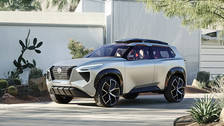
Nissan and Infiniti gave us two real concepts — the Nissan Xmotion and the Infiniti Q Inspiration — so a tip of the hat to the group’s new design chief, Alfonso Albaisa.

Lexus gave us the LS-1 Limitless, and Chinese maker GAC trotted out the Enverge crossover concept as it prepares to cross over the Pacific to our shores.

Of course, all-out concept vehicles have been on the wane for a while. They’re not only expensive to do, they’re time-consuming and maybe distracting for styling and engineering teams that have bigger-than-ever product lineups to design.

But even if a concept doesn’t become a production model, the ideas build on themselves and are transmitted from one company to the next.

Remember the BMW X Coupe that debuted here in 2001 and hinted at a wave of coupe-styled SUVs, sedans and crossovers to come? People rolled their eyes at the time, but it turned out to be massively influential.

Concepts are fun, and over time, they prove their importance. Bring ’em back!

Where are the cool concepts?” originally appeared in Automotive News on 1/16/2018

By Richard Johnson at Automotive News

2019 Ram 1500 eTorque system: What it is and how it works

Share

  • Pinterest

The 2019 Ram 1500 that was announced during the Detroit auto show hit us with a goodie bag full of improvements: lighter overall weight (by 225 pounds) stronger frame, lower coefficient of drag, better fuel economy, plus more payload and towing capacity. Those last three can be partially attributed to new technology dubbed eTorque. But what exactly is eTorque?

Well, in a literal sense, it’s an alternator (the vehicle’s electrical generator) replacement — the 2019 Ram no longer comes with one because the eTorque tech provides the electricity. But in addition to keeping the 12-volt battery charged, the motor/generator quickly restarts the motor when the automatic stop/start system is used, and it adds assist as a mild-hybrid system. That’s right — the 2019 Ram is technically a hybrid. And that’s with either of the two gasoline engines offered, V6 or V8.

While most of the Ram 1500’s electrical systems still use traditional 12-volt power, eTorque is actually a 48-volt system. It uses the aforementioned motor/generator, an eight-rib belt with two tensioners, a DC inverter to convert 48 volts to 12 (for the traditional electrical systems), and a battery pack about the size of a small suitcase that can store up to 430 watt-hours of energy. The total eTorque system, cables and all, adds about 100 pounds of weight to the truck. The battery pack is located inside the rear wall of the cabin.

2019 Ram 1500 and its engineering on display at the Detroit auto show

What you get in return for the weight penalty is a 90 lb-ft of torque boost with the V6 and a full 130 lb-ft worth of help with the V8. There are two different levels of output because of packaging constraints for the V6 engine, which requires a slightly smaller eTorque unit mounted in front (there’s plenty of room under the Ram’s hood, but the eTorque V6 will also find itself in other models, like the Jeep Wrangler). The V8’s larger system is found exclusively in the Ram right now and mounts exactly where the alternator usually lies.

The 2019 Ram comes either with a 3.6-liter V6 outputting 305 hp and 269 lb-ft of torque or a 5.7-liter V8 with 395 hp and 410 lb-ft. And those peak numbers are unaffected by the eTorque system. The extra oomph comes in when the gas engines are at low speed, like between idle and 1,500 rpm, before they are able to produce bigger torque numbers on their own. The hybrid system broadens the torque band as opposed to adding to peak torque available.

And that’s just fine. Peak torque is useless when you’re trying to pull your 22-foot deck boat out of the water at 0-2 mph. Adding torque down low not only helps get heavy loads moving from a standstill, it takes stress off the powertrain while doing so.

If the idea of owning any kind of hybrid truck makes you nauseated, you can purchase the V8 without the eTorque system. But why? Why turn down more torque off the line? A mild hybrid pickup won’t cut your fuel bill in half, but it will make doing truck things a little bit easier without adding to that bill. How cool is that?

Robin Warner

Robin Warner – Robin Warner is Editorial Manager at Autoweek. He once tried and failed to become a professional race car driver, but succeeded in learning about debt management and having a story to tell. A former engineer, Warner loves cars for their technology and capability.
See more by this author»

2019 Honda Insight: 7 things you need to know

Share

  • Pinterest

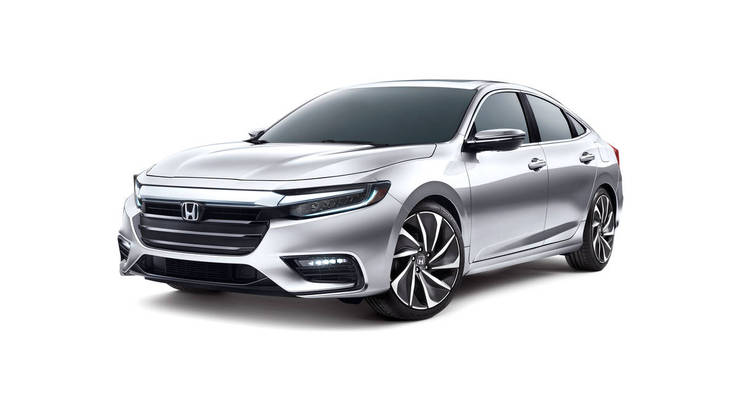
As we mentioned, the Honda Insight is back, and this time it’s a sedan. You may recall the first-generation Insight that debuted all the way back in 1999 before things like the iPhone and … just about everything else really. You may also recall the second-generation Insight that looked exactly like the Toyota Prius. The latest, third-generation Insight made its debut at the Detroit auto show just days ago in production form, and it will join a growing range of compact and midsize sedans that have been the recipients of Honda’s hybrid powertrains, taking aim at a much greater field of competitors than the original Insight faced.

Here’s what you need to know about the upcoming 2019 Honda Insight.

2019 Honda Insight front

The Insight will go on sale in late 2018 as a 2019 model.

1. The powertrain

The new Insight will be powered by a 1.5-liter Atkinson cycle engine coupled with an electric motor and a lithium-ion battery. In most driving conditions, the Insight will run on electric power alone, using the engine as a generator. The batteries will be housed under the rear seats, so they won’t rob the trunk of any space, and the rear seats will even be able to fold down in a 60/40 fashion.

For a transmission, the Insight will use a multimode direct drive setup: The electric motor will operate on a single ratio, while the gas engine will use another ratio for driving at higher speeds.

2. Fuel economy

Honda expects an EPA fuel economy combined rating in excess of 50 mpg, which will make it competitive with other hybrids on the market. The current Toyota Prius now currently offers combined ratings ranging from 52 mpg to 56 mpg, so the Insight achieves general parity.

By comparison, the previous-gen Insight model that left in 2014 served up a combined 41 mpg, from a closely spaced rating of 40 mpg in the city and 42 mpg on the highway. 50 mpg is the new 40 mpg when it comes to hybrids, and the Insight will have to stay competitive past late 2018, when it goes on sale. It’ll be interesting to see how the EVs that are promised to debut before 2020 will affect the sales of hybrids on the market, but Honda is certainly planning on midsize hybrids ruling the field for the near future.

“The Honda Insight is anticipated to receive fuel economy ratings competitive with the best hybrids in the segment, with styling that will have universal appeal inside and out and best-in-class passenger volume,” said Henio Arcangeli, Jr., senior vice president of automobile sales and general manager of the Honda Division.

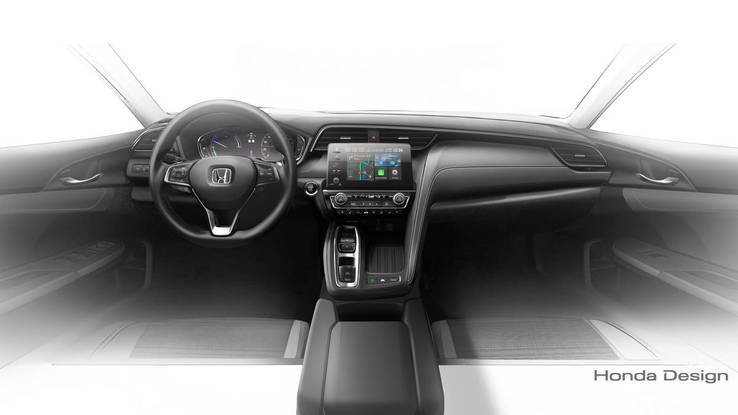
2019 Honda Insight interior

The Insight will feature an 8-inch infotainment touchscreen.

3. Luxury and technology

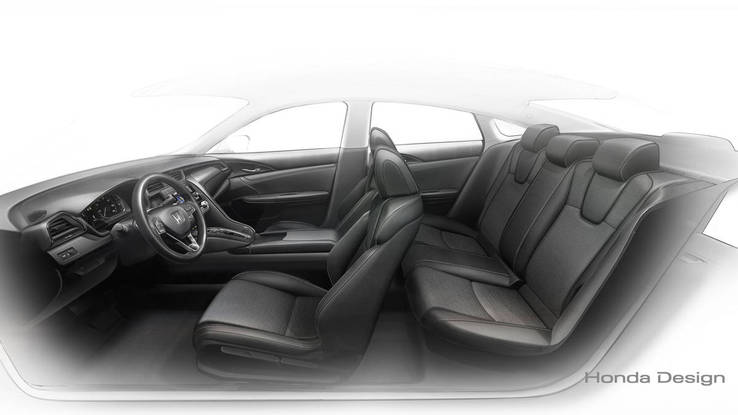
Honda is taking the Insight upmarket, and this means available perforated leather seating, plenty of rear-seat legroom, bolstered seats, a wide center console and premium plastics inside. This also means an 8-inch capacitive infotainment touchscreen and a 7-inch LCD instrument cluster display for the driver. The infotainment system will feature customizable app tiles, as well as Android Auto and Apple CarPlay integration. The car’s systems will also be able to receive over-the-air updates.

“The new 2019 Honda Insight signals we are entering a new era of electrification with a new generation of Honda products that offer customers the benefits of advanced powertrain technology without the traditional trade-offs in design, premium features or packaging,” said Arcangeli Jr.

2019 Honda Insight cabin

The Insight will aim to offer as much interior space as possible in this platform, and won’t limit trunk space through the placement of the battery.

4. Out with the old

The very first Insight looked like an early 1990s view of the future, complete with an aerodynamic teardrop shape, tapered rear wheel arches and not a whole lot of room to cut down on weight and size. The second-generation Insight that debuted in 2009 could easily be mistaken for the Prius, offering four doors, a tall fastback hatch profile and a more bulbous shape. The second-gen Insight stayed in production a relatively short time, leaving the lineup in 2014, but what’s important about the first two generations is that their slabby, wedge-shaped designs screamed hybrid, and everyone could guess they were hybrids from a mile away without even being familiar with their powerplants.

5. In with the new

The 2019 Insight aims to change all that by adopting a modern Honda sedan shape, something between the style of the Civic and the Accord. In terms of size and interior room the new Insight will actually be closer to the Accord, offering a comfortable, premium interior without compromising interior room, exterior design, or serving up extremely obvious aerodynamic tweaks. The new Accord is a fastback now itself and the Insight tracks this shape, offering a short trunklid with benefit of plenty of rear-seat room. In fact, Honda promises class-leading passenger space in the new Insight, moving it closer to the Accord when it comes to usable interior space.

2017 Hyundai Ioniq Hybrid Limited review

6. Safety tech

The Insight will feature Honda LaneWatch — a video feed of the passenger side of the car that appears when the right-hand turn signal is engaged — on EX trim models and above.

As standard equipment the Insight will also include lane departure warning, adaptive cruise control with a low-speed follow feature for traffic jams, road departure mitigation and a collision mitigation braking system as part of the Honda Sensing Suite. This system will also include traffic sign recognition.

7. When and how much

The Insight will reach store shelves in late 2018 as a 2019 model. It will join a growing Clarity lineup, which now includes the Clarity Fuel Cell, Clarity Electric and Clarity Plug-in Hybrid.

That’s right — Honda already has a plug-in hybrid in the lineup, and it’s on sale now. It also uses a 1.5-liter inline-four paired with an AC permanent magnet synchronous electric motor churning out a combined 212 hp. The Clarity PHEV and the Accord Hybrid (there’s that too) will be positioned above the Insight, so don’t expect too much overlap in price. The price, by the way, will be announced closer to the start of sales this fall. We’re expecting it to start in the $30,000 range given its size, hardware and standard features, giving the Accord Hybrid and the Clarity PHEV a little room higher up in the range.

Jay Leno drives the original Bullitt Mustang in his latest ‘Garage’ video

Share

  • Pinterest

At the Detroit auto show, Ford debuted the long-awaited and heavily speculated 2019 Ford Mustang Bullitt alongside the car it’s emulating — the 1968 Ford Mustang fastback from the movie “Bullitt.” While one of the film’s Mustangs was found in Mexico early in 2017, the actual car that the legendary Steve McQueen drove during the film’s seminal chase scene was tucked away in a barn in Tennessee, having been bought out of the back of Road & Track in 1974 and used as a family car until it was put to rest in the barn.

Because of the car’s value, the owners didn’t seem to be interested in letting the world know about this special Mustang, but the new Bullitt edition car created a perfect excuse to bring the original back into the public eye.

Confirmed 2020 Mustang Shelby GT500 is on its way with 700 plus supercharged horsepower

In the video, Leno drives both the 2019 and the 1968 Mustang, speaking with Mark Schaller from Ford about the way the new car drives and its features. After his time in the new car, he gets a chance to drive McQueen’s Mustang and talk with the car’s current owner Sean Kiernan about the car’s history. 

Want to see the 1968 Ford Mustang from Bullitt run around a racetrack? Of course you do: Check out the video above.

Infiniti will go mostly electric by 2021

Share

  • Pinterest

Nissan Motor Co.’s premium Infiniti brand will almost entirely comprise electrified vehicles after 2021, Nissan CEO Hiroto Saikawa said.

All new Infiniti models launched after 2021 will either be all-electric vehicles or will rely on the parent company’s new range-extending electric motor-powered technology called ePower, Saikawa told an audience at the Automotive News World Congress on Tuesday afternoon.

EPower is an unusual type of electrified-vehicle system. It is not a plug-in technology. And unlike Toyota’s Prius, it uses its gasoline motor to recharge the battery, but not for propulsion.

The plan Saikawa outlined represents a rapid catchup for Infiniti. Its global luxury market competitors, including Audi, BMW, Mercedes, Volvo and Jaguar already have unveiled similarly aggressively electrification plans.

Saikawa predicted that half of Infiniti’s sales by 2025 will be EVs or ePower vehicles.

The brand sold 153,415 vehicles in 2017, an increase of 11 percent.

Infiniti was one of the first luxury brands to propose an EV. In 2012, the company unveiled the Infiniti LE concept at the New York auto show — a model that would have been an upgraded variation of the Nissan Leaf. But that plan was canceled as Infiniti reconsidered its global product portfolio.

Saikawa said that the electrification strategy probably will have one exception — the company’s full-size body-on-frame QX80 SUV.

The announcement comes in the same week that Infiniti presented its latest design concept at the Detroit auto show, the Q inspiration. That concept suggests the look of the next Infiniti Q70, due in 2019 or 2020.

However, the Q Inspiration was described as running on Infiniti’s advanced new four-cylinder variable-compression engine, the VC Turbo.

Infiniti executives emphasized Monday that the VC Turbo engine is envisioned as a bridge technology to electrification, which they said was in the works.

Saikawa did not address what will happen to the new VC Turbo after 2021, when all new vehicles will be electrified.

One company source said it is possible that the four-cylinder VC Turbo might power the big QX80 after that time.

The QX80 currently is powered by a 5.6-liter V-8.

A company spokesman declined to comment on future plans for the QX80.

Nissan introduced ePower in Japan in late 2016 as an alternative powertrain in its Note, a hatchback version of the subcompact Versa. The technology uses a battery-powered electric motor to drive the car’s wheels, and a gasoline engine to charge the battery.

Nissan officials have said ePower is an alternative to a pure battery-powered electric vehicle.

By Lindsay Chappell at Automotive News

Ferrari EV on the horizon: Marchionne plans an electric supercar

Share

  • Pinterest

Ferrari CEO Sergio Marchionne announced at the Detroit auto show that the company will build an electric supercar to expand Ferrari’s current portfolio, add sports car credibility to electric platforms and fight with Tesla for the EV limelight. While talking to reporters. Marchionne said, “If there is an electric supercar to be built, then Ferrari will be the first.”

Ferrari’s hybrid powertrain technology, developed for hypercars like the LaFerrari, might make building a full battery-powered supercar easier, but it will still have to make up ground fast to be the industry’s first all-electric supercar. Tesla is dangling its ultra-high performance Tesla Roadster in the faces of EV fans, and Croatian automaker Rimac already has the world’s first battery-electric supercar with the Concept One. Of course, its small run and the odd name might make Ferrari’s claims viable if an electric supercar comes quickly.

Wheres Chevys midengine Corvette

Where’s Chevy’s mid-engine Corvette?

One of the most talked-about cars leading up to press days at the North American International Auto Show this week isn’t even at the show. In fact, it has not even been confirmed by its …

Bloomberg notes that Ferrari is edging closer to stricter fuel economy rules with its expansion, which makes electrification more appealing for the company. Ferrari also plans to debut a high-performance SUV late in 2019 or early 2020 that will be the “world’s fastest,” according to Marchionne. It likely won’t be electric.

Marchionne didn’t mention a direct timeline for when he plans for Ferrari to introduce a full EV but noted that he thinks over half the cars sold in 2025 will use alternative powertrains. That might be a good indicator that Ferrari is planning this electric supercar for sooner rather than later.

Opinion: Detroit auto show proves trucks are just as important as autonomous electric pods

Share

  • Pinterest

The 2018 North American International Auto Show’s press days are behind us, and the show can be summed up in one word: Trucks. Well, maybe two words: Trucks and SUVs. We saw the new Ram 1500, Chevrolet Silverado, Ford F-150 diesel, BMW X2, Ford Ranger, Mercedes-Benz G-Wagen and Jeep Cherokee. That’s just the production stuff. Indeed, the U.K.’s Car Magazine said Detroit could become “a very interesting commercial-vehicle show.” Don’t know if I’d go that far, but I see where they’re coming from.

Yes, pickup trucks are still where the sales are and thus the profits, and sales are supposed to go up yet again this year if you believe the analyst types. The good news for Ford, GM and FCA is the new entries look good. I loved the new Ram’s styling and was especially impressed with the interior –- it embarrasses more than a few luxury cars. The Silverado’s big news is it adopts the complex mixed-material construction system launched a couple years ago underneath Cadillac’s CT6. Chevy said the new beast is 450 pounds lighter even though it’s a bit bigger. Another cool Silverado trick is its new fuel cutoff system, firing on only the cylinders needed, so a V8 could potentially run on just two cylinders at a steady speed.

As for the Ranger, no doubt Ford has been watching the midsize truck class come on strong in just the last four or so years and thought “we better get in on that.” With a Ranger in some form on sale everywhere except here anyway, this was an easy launch.

How much longer can trucks continue to rule? Bets are being hedged for sure: Autonomous cars and EVs were a red-hot topic, too. Automakers fell all over themselves telling us about our glorious, non-driving electric future. The message? If a car company doesn’t already have EV and autonomous strategies in place, it will in the next 11 minutes or so. We media types were inundated with announcements about hardware, software and new investments.

Ford, for example, said it is doubling its EV investment to $11 billion, adding it is planning 24 plug-in hybrids and 16 full EVs in just four years. GM said it is going to spend around $1 billion on autonomy — not long term, this year. And let’s not forget late last year FCA said it is teaming with BMW and Intel to develop its own, turnkey autonomous driving system.

Just you watch: Next year someone is going to show an electric pickup that drives itself, can adjust your home’s thermostat before you get there and has dinner waiting on the dining room table.

Book it.

Wes Raynal

Wes Raynal – Wes Raynal joined Crain Communications’ circulation department while still in college. When he graduated in 1986, he became a reporter for Autoweek sister publication Automotive News. He has worked as Autoweek’s associate editor, news editor, motorsports editor and executive editor before being named editor in 2009.
See more by this author»

2019 Ram 1500 pickup deep dive: Here’s the engineering behind Ram’s newest pickup truck

Share

  • Pinterest

The 2019 Ram 1500 is a big deal. It’s only the fifth generation of Chrysler pickup trucks since it went from being the Dodge D-Series to the Dodge Ram pickup. And it was only in 2011, remember, when Ram Trucks became its own brand. As we heard this week, the new Ram will be smarter, tougher and more efficient than the outgoing model, just in time to compete with the new Chevy Silverado and perennial sales leader Ford F-150. But what exactly do those claims mean? Let’s take a look:

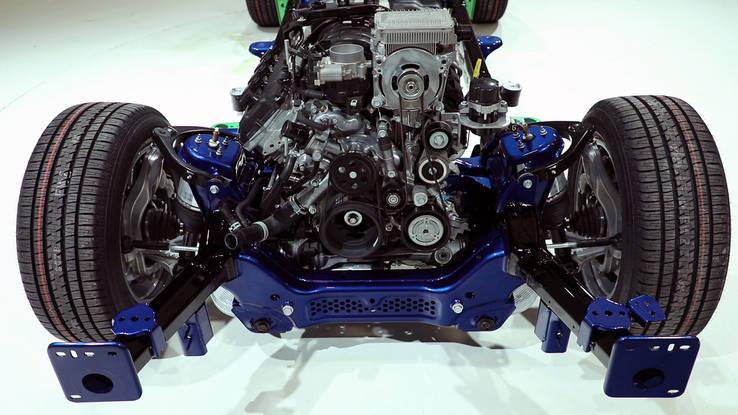
2019 Ram pickup front frame

The 2019 Ram 1500 frame includes the same impact countermeasures across all configurations, and is made from 98 percent high-strength steel.

Chassis

The 2019 Ram chassis will be tough. Ram says it’s the strongest frame ever produced for the 1500, made from 98 percent high-strength steel. That improves torsional stiffness, which is just a fancy way of saying it’s less prone to twisting. The chassis lost 120 pounds, 100 of that from the frame, and the truck overall lost 100 pounds more from the body structure. Ram also uses “front splayed frame rail” technology, which it says is highly efficient for absorbing all crash impact modes, including front offset, one of the more difficult to engineer for. Basically it means there are frame-mounted, high-strength steel tire blockers that force the wheels outward in the event of a crash.

Space

The new Ram will have the most spacious cab in the segment, says the company, with three longer frame lengths: a 144.5-inch wheelbase on the Crew Cab short bed, a 153.5-inch wheelbase on the Crew Cab long bed — both 4 inches longer than their predecessors — and a 140.5-inch wheelbase on the Quad Cab long bed model. That’s good for 40.9 inches of headroom and legroom in front, 66 inches of shoulder room and 63.4 inches of hip room. Its interior volume is 117.2 cubic feet for the Quad Cab and 132.4 for the Crew Cab. That’s bigger, by a few cubes, than the F-150’s Super Cab and Super Crew, respectively.

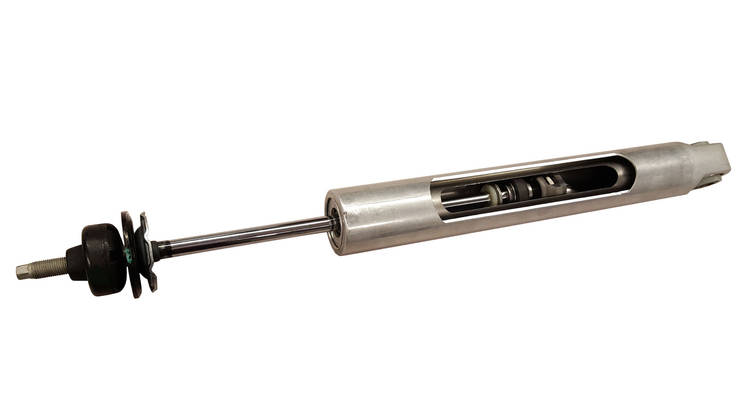
2019 Ram 1500 shocks

Frequency Response Damping (FRD) shocks have benefited on- and off-road race cars for many years.

Suspension

The Ram already has our favorite suspension setup of the full-size pickup trucks, but for 2019 engineers made improvements anyway. The new front independent suspension includes composite upper control arms, aluminum lowers, and a retuned geometry for more responsiveness. Ram saved weight with hollow sway bars front and rear, at the same time improving roll stiffness by 20 percent. In back, buyers still get a multilink coil spring setup vs. the leaf springs of Chevy and Ford, and the whole shebang is good for 2,300 pounds of payload and a 12,700-pound tow rating when properly equipped.

Frequency Response Damping shocks are new — they have valves that automatically adjust damping force depending on wheel input. When there’s a slower input, like during cornering and braking, the bypass valve closes for more stability. During hard impacts, like when you drop it in a pothole or drive up a curb, the valve opens to soften the blow. When combined with the air suspension option, ground clearance can range from 8.1 inches at speed on the freeway to 10.1 inches in “off road 2” mode. That’s also good for a 27.3-degree departure angle and a 23-degree breakover angle, just in case you feel like playing at the off-road park.

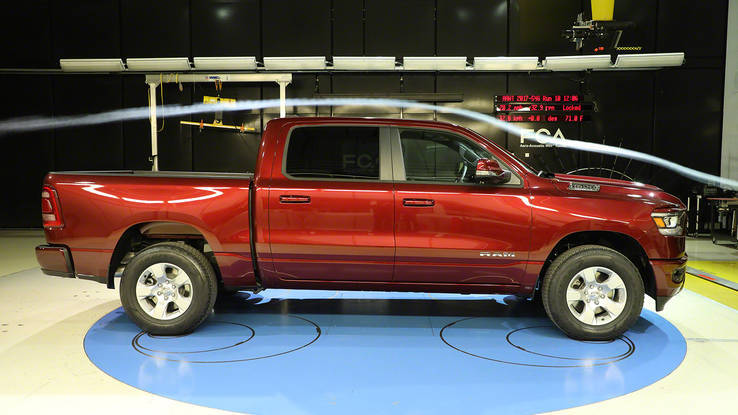
2019 Ram 1500 in the wind tunnel

No vehicles, not even the pickup truck, escape the wind tunnel.

Aero

The 2019 Ram 1500 Quad Cab 4×2 coefficient of drag — an industry measure of how aerodynamic a vehicle is — is 0.357. That’s not low for a car, but it’s certainly low for a pickup. When the truck approaches 35 mph, says Ram, a front active air dam lowers 2.5 inches. Before you fret, the piece includes a clutch-release system that allows it to retract if it hits anything in the road. It also gets an active grille shutter system, which closes the airflow through the grille when cooling needs are met. It also speeds warm-up time, a godsend when getting up and out in the morning in the Snow Belt states.

To reduce wind drag even more, the bed rails are raised 1.5 inches and a new tailgate spoiler is installed. That, combined with a smoother bed-to-cab connection and tubular side step, allows air to pass around the truck more smoothly, which is good for a 0.5 percent increase in fuel efficiency. Every little bit counts.

Fuel mileage with the Hemi V8 is 15/22, city/highway. We don’t have numbers for the eTorque electric-assist models yet, but they should be a few mpg better. The 2019 Ram 1500 goes on sale this quarter, which means we should see it in dealerships within a month or two.

Where’s Chevy’s mid-engine Corvette?

Share

  • Pinterest

One of the most talked-about cars leading up to press days at the North American International Auto Show this week isn’t even at the show. In fact, it has not even been confirmed by its manufacturer, General Motors.

We’re talking about the next-generation Chevrolet Corvette, widely expected to have its engine placed behind the seats for the first time in its 65-year history. Enthusiast car magazines and websites have been breathlessly reporting that the eighth-generation Corvette would make its long-awaited debut this week in Detroit.

Turns out it was premature speculation.

Although the car has been caught testing numerous times by spy photographers, and appears nearly fully baked, apparently no one outside GM knows when it will debut. The next major global auto show happens in early March in Geneva and nearly all the world’s supercar manufacturers are on this year’s list of exhibitors. GM and Chevrolet are not scheduled to attend — but that may be a ruse to tamp down speculation.

Possible mid-engine Corvette CAD drawing showing a twin-turbo V8 leaks

If you are going to launch a bona fide American supercar, why not take it to the Europeans and introduce it in their backyard? Also, even though GM no longer owns Opel and Vauxhall, Chevrolet maintains a small presence in Europe, offering Camaro and Corvette in several countries. So a European launch for the Corvette is plausible.

Last week, I thought there was a decent chance Chevrolet would roll out the next-gen Corvette at the Detroit show. The redesigned Silverado pickup had its coming-out party at a weekend press event, clearing the way, I thought, for the next-gen Corvette to suck the oxygen out of Cobo Center just like the Ford GT did in 2015.

It didn’t happen.

Several people I know who claim to have good sources in GM say the car will be shown next year at the Detroit show. I hope not. With more and better spy shots coming almost weekly, there won’t be much mystery left to the new car.

Where’s Chevy’s midengine Corvette?” originally appeared in Automotive News on 1/16/2018

By Richard Truett at Automotive News

2018 Detroit auto show: Everything we saw

Share

  • Pinterest

Detroit auto show media days are winding down as the international journalists escape to warmer climes, like Sweden and Canada, and this means that public days are approaching. We’ve seen just about all that Detroit’s Cobo Center had to offer this year including the world debuts of the all-new Ford Ranger, Chevrolet Silverado and the Ram 1500. We also saw “trucks” like the all-new Mercedes-Benz G-Class that looks a lot like the old G-Class, and may require a minute or two to tell apart.

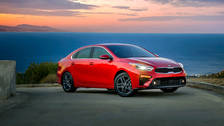
Were there vehicles smaller than the Ford Ranger in Detroit this year? You bet, and that includes the 2019 Volkswagen Jetta, 2019 Kia Forte, 2019 Honda Insight, which is now a sedan, and the 2019 Toyota Avalon, which was a sedan all along. We also saw the North American debuts of the BMW X2, as well as the 2019 Mini Cooper hardtop and convertible.

Oh, and the 2019 Ford Mustang Bullitt made an appearance, as had been rumored in weeks prior, but it wasn’t chasing a Dodge Charger inside Cobo Center. At least not this time.

Here’s everything we saw at the Detroit Auto Show this year. If you’re in the Motor City, stop by beginning Saturday, January 20 to see it all for yourself. Just watch out for meteors.
 

Is there enough pie left for the Ford Ranger

The 2019 Dodge Ram 1500 climbs into the Detroit auto show

Core of Capability How the 2019 Chevy Silverado Breaks Through the Fullsize Pickup Noise

2019 Toyota Avalon Limited Hybrid

GAC is coming: A Chinese car company announces US arrival

The 2019 Jeep Cherokee gets a facelift for Detroit

The Lexus LF 1 Limitless concept previews an opulent robo chauffeured luxury crossover for four

2019 Kia Forte revealed Fresh looks better fuel economy and more tech

Mach 1: Ford teases an all-electric performance SUV at Detroit

2019 Volkswagen Jetta: Here's VW's newest sedan ahead of the Detroit auto show

2019 Ford Mustang Bullitt debuts at NAIAS

2019 Chevrolet Silverado Meet Chevys redesigned full size pickup

Mercedes Benzs latest art project A hybrid of Gelandewagen und resin

2018 Bentley Bentayga V8

2018 Volkswagen Passat GT introduced for North American International Auto Show

2019 Ford Edge and Edge ST at the North American International Auto Show

Ford introduces Power Stroke diesel V6 for 2018 F-150 before Detroit auto show

2018 Nissan Xmotion

Here’s how Nissan sees its future SUVs

Nissan took the wraps off the Xmotion — say “cross motion” — concept at the Detroit auto show on Monday, using the sharply-styled compact crossover to showcase Japanese heritage and …

2019 Mercedes-AMG CLS53, E53 introduced at the Detroit auto show

2018 Infiniti Q Inspiration concept

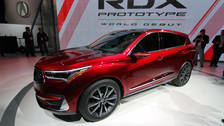
2019 Acura RDX concept preview new look new engine at Detroit auto show

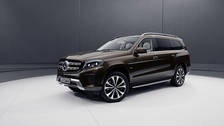
The 2018 Mercedes-Benz GLS gets even more luxe at Detroit

The Bugatti Chiron’s 1,479-hp engine is a perfect art installation

Share

  • Pinterest

Replacing the Bugatti Veyron couldn’t have been an easy task — the 1,200-hp 8.0-liter W16 is a tough act for anyone to follow. So, for Bugatti’s Chiron, the company kept the foundation laid by the Veyron and made it better. For those who haven’t followed the Chiron’s’s development, the 10 or so of you out there, Bugatti squeezes nearly 1,500 hp out of its latest 8.0-liter engine.

Reddit user u/SoeppoeS spotted a Chiron’s engine outside of the car at the Brussels auto show, according to the Reddit thread. The engine, without the car, looks massive. It also looks like a packaging nightmare for the folks at Bugatti. Between the big engine block and cylinder heads, the turbocharger ducting alone probably cost an engineer his hair.

As one Redditor noted, the Chiron’s engine looks like it could have served time powering a WWII warbird. We’re thinking it’d look better in a tank.

Regardless, check out the massive mechanical marvel above.