All posts in “Sports and Outdoors”

7 New Bike Products You Should Definitely Know About

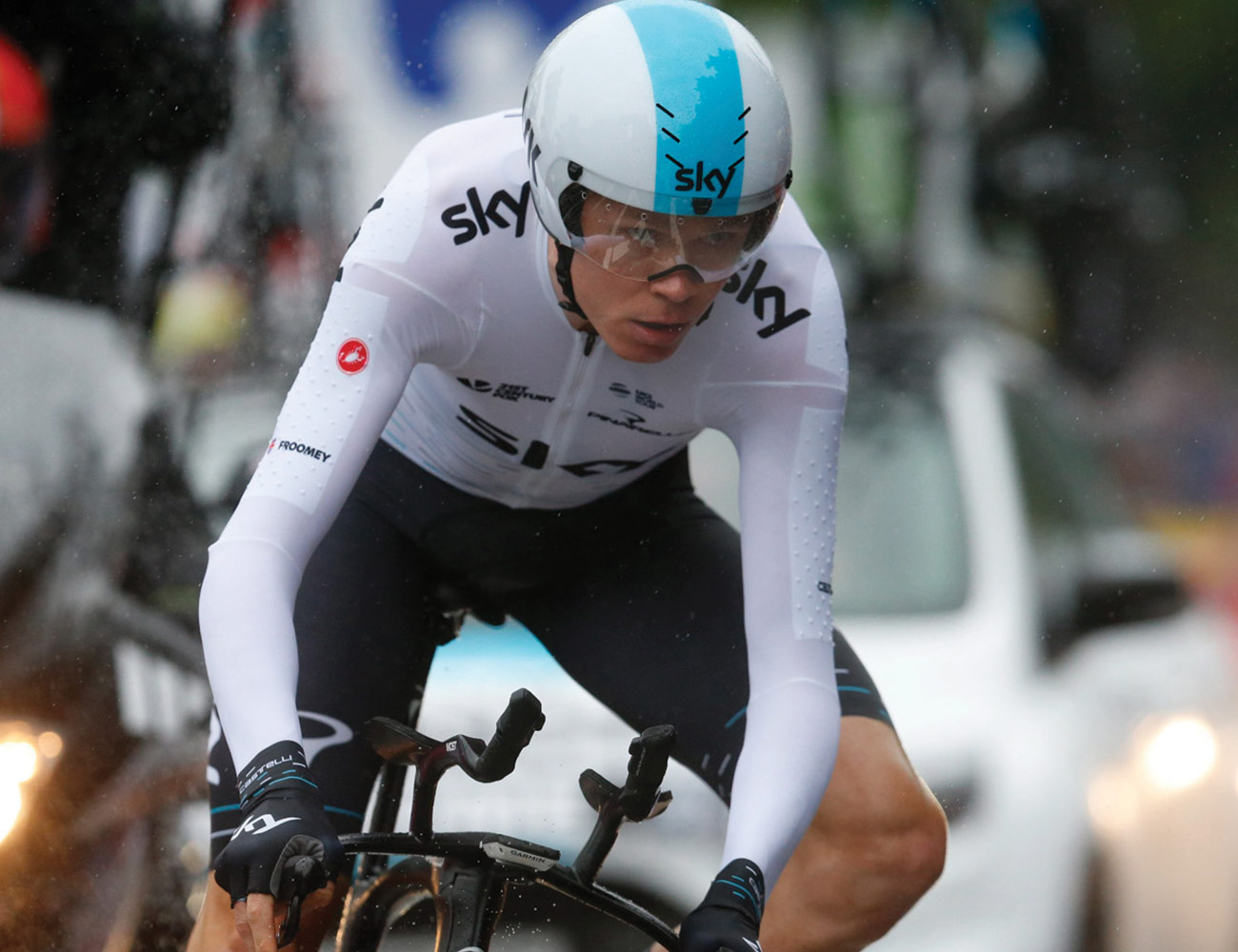
There’s a lot happening in the cycling world right now. Most eyes will be turned to France and the most important race of the year, the Tour. (That’s the Tour.) Rightly so — the race kicked off only days ago and has already provided plenty of spectacle: three-time defending champ Chris Froome crashed into a field during stage one; Peter Sagan donned the yellow jersey after a stage two win; BMC bested Team Sky in the stage three team time trial by four seconds.

There’s a second gathering of bike lovers happening concurrently over in Friedrichshafen, Germany, Eurobike. It’s the world’s largest bicycle trade show, and it brings together brands, enthusiasts and industry insiders from across the globe. It’s also a common launchpad for the newest bike products that we’ll be seeing released by companies over the coming weeks and months. Like the Tour de France, Eurobike is only a few days into its full duration, but there’s already plenty to be excited about. Here are a few cool things we thought you should check out between stages.

CeramicSpeed Driven Drivetrain

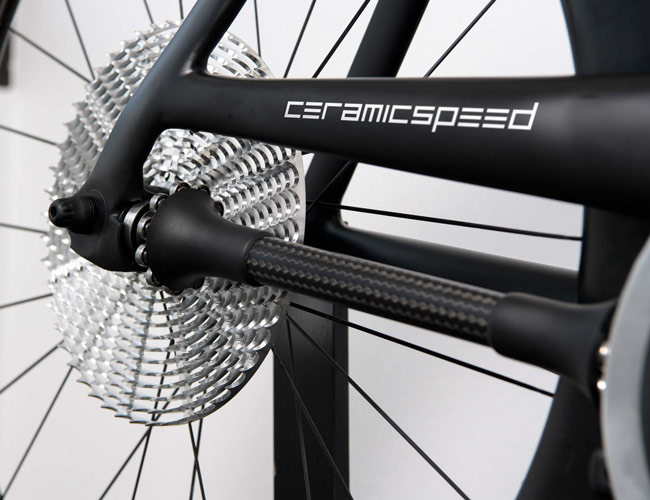
CeramicSpeed’s Driven drivetrain has already won the Eurobike Award, which commends design within the bike industry. The system eliminates the chain for a shaft and bearings instead. In reality, it’s a bit more complicated than that, but the key takeaway is that there’s a lot less friction in the system — CeramicSpeed claims it to be the most efficient drivetrain available.

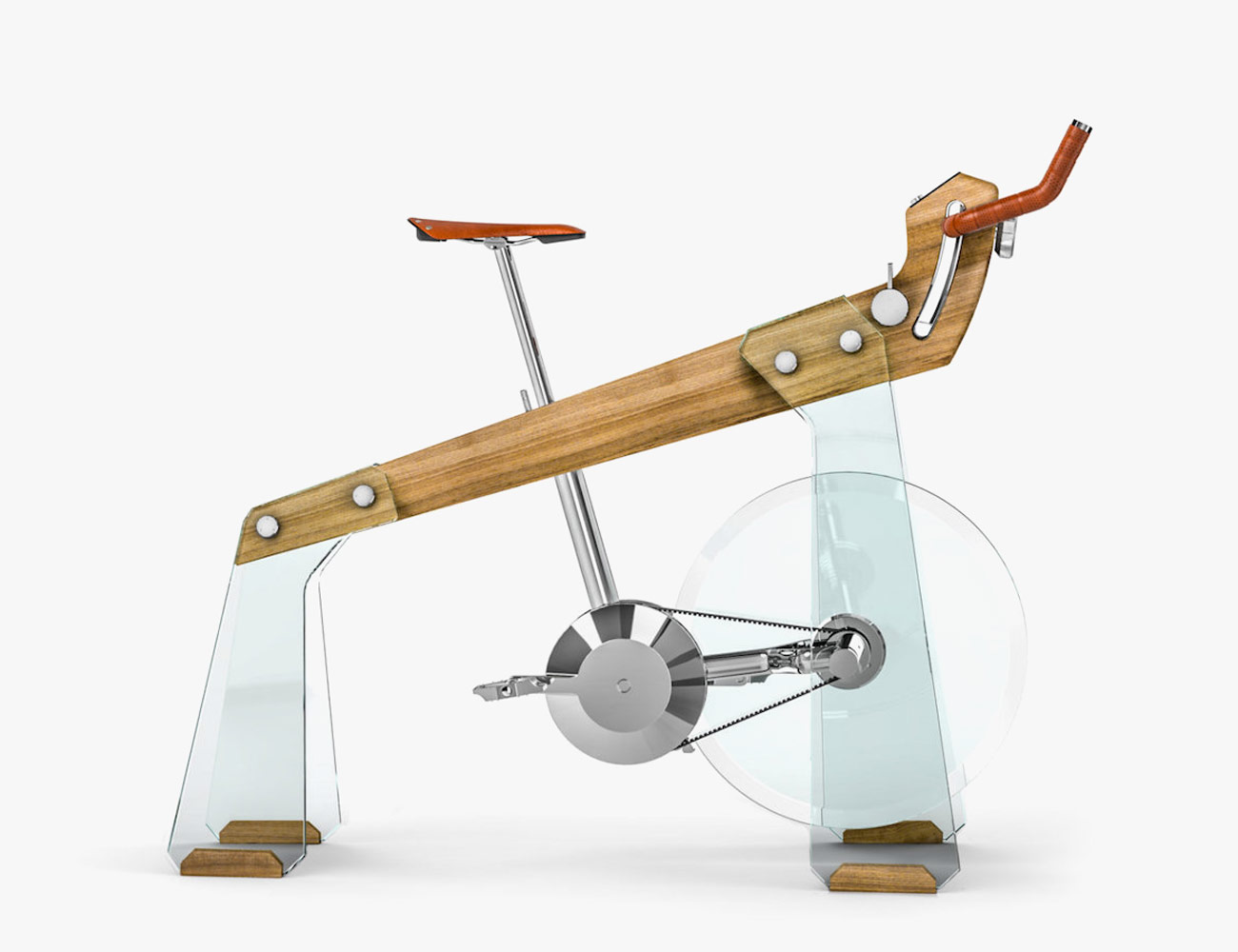
Elite Fuoripista Trainer

Eurobike is a good venue to encounter the unexpected, like this trainer by Elite that’s part modern art, with the idea being it’s pretty enough not to hide in a garage or crammed into a closet. It’s wood, glass and aluminum and pairs with Zwift and other training software.

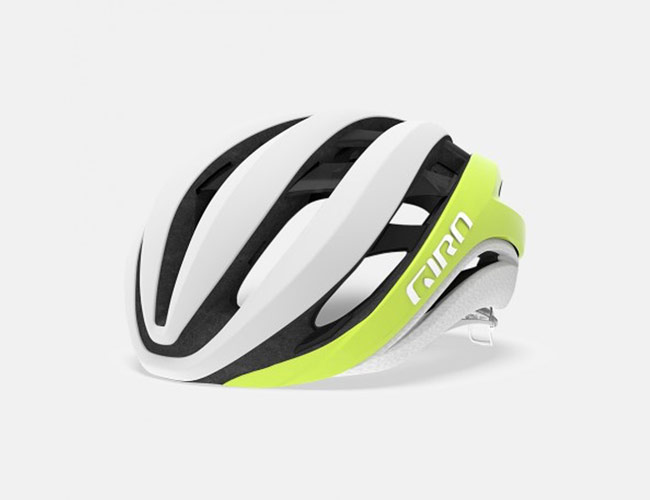
Giro Aether Helmet

The Aether officially launched ahead of the show last week. It represents a big step for helmet tech — check out our full preview here.

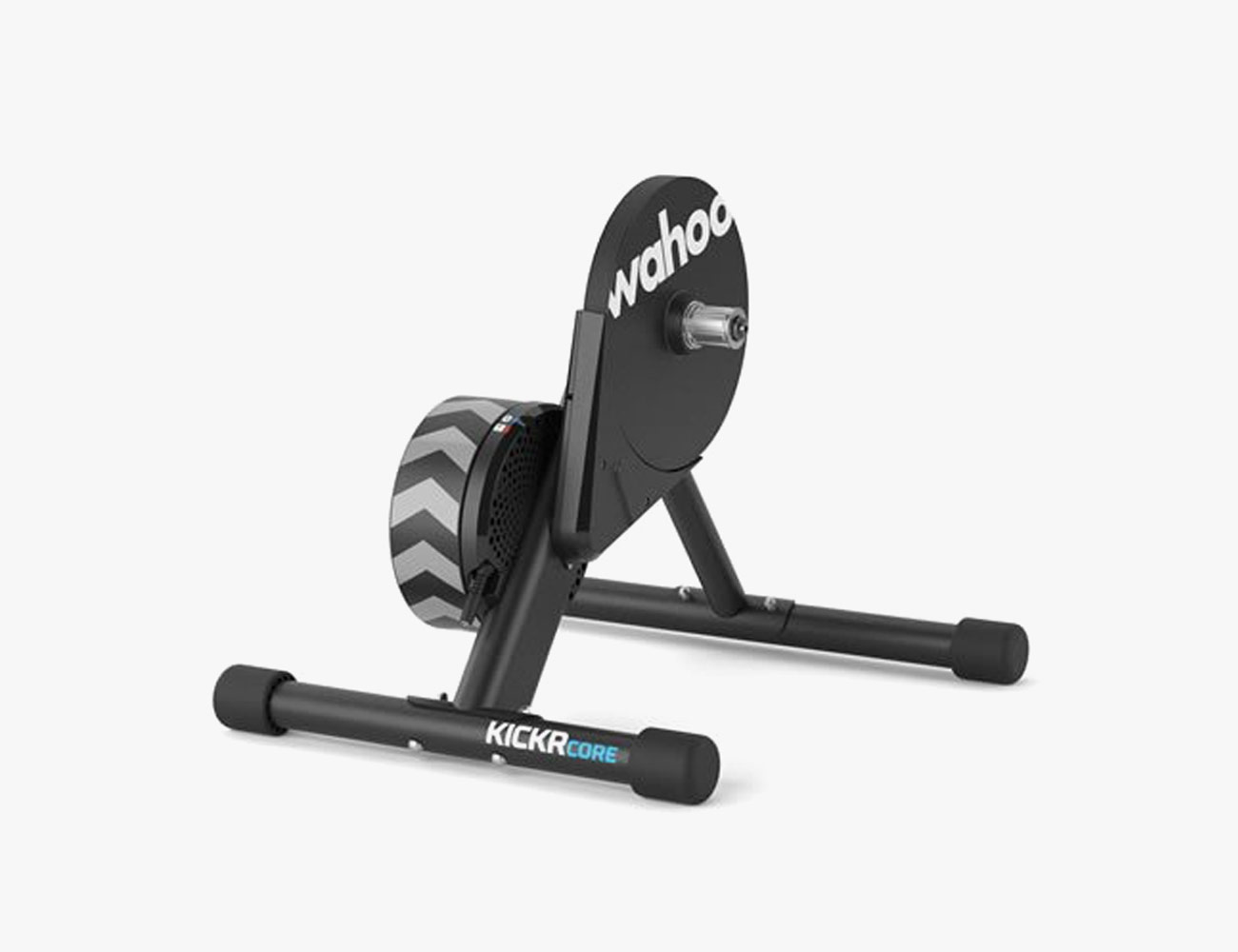
Wahoo Expands the Kickr Training Product Family

Wahoo is expanding on its popular Kickr indoor trainer in more than one way. First, there’s the Headwind, a sensor-controlled smart fan that’ll adapt its speed as you pick up the pace. Then there’s the Kickr Core, a pared-down version of the original model.

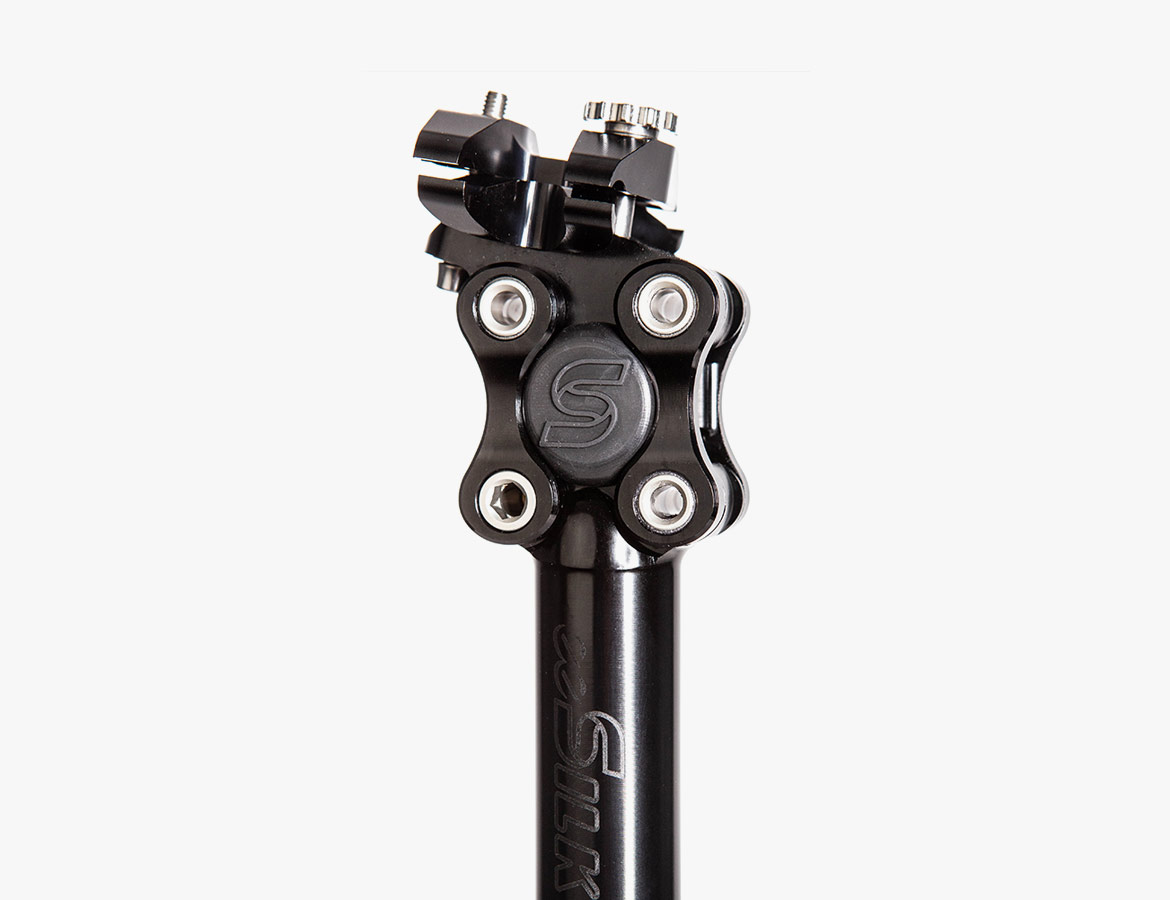
Crane Creek eeSilk Seatpost

As gravel riding continues to increase in popularity so does the docket of specialized components that enhance the experience. Crane Creek designed this seatpost to mitigate some of the bumps and vibrations encountered on such a ride.

Lezyne Mega GPS Computers

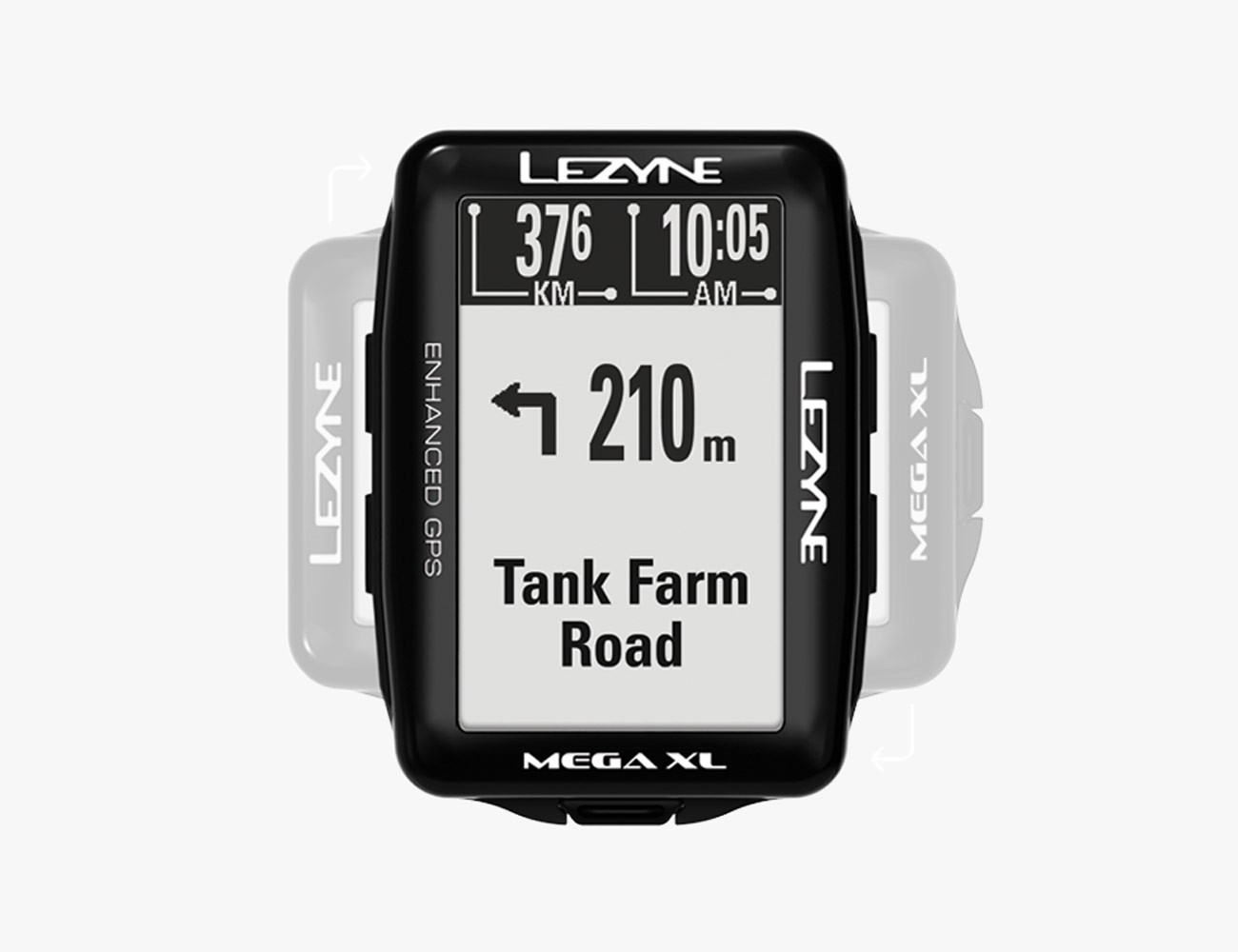
Who says bike computers should be small? Lezyne’s Mega GPS computers focus on user-experience with bigger screens that can display more information and best-in-class batteries.

Silca Sicuro

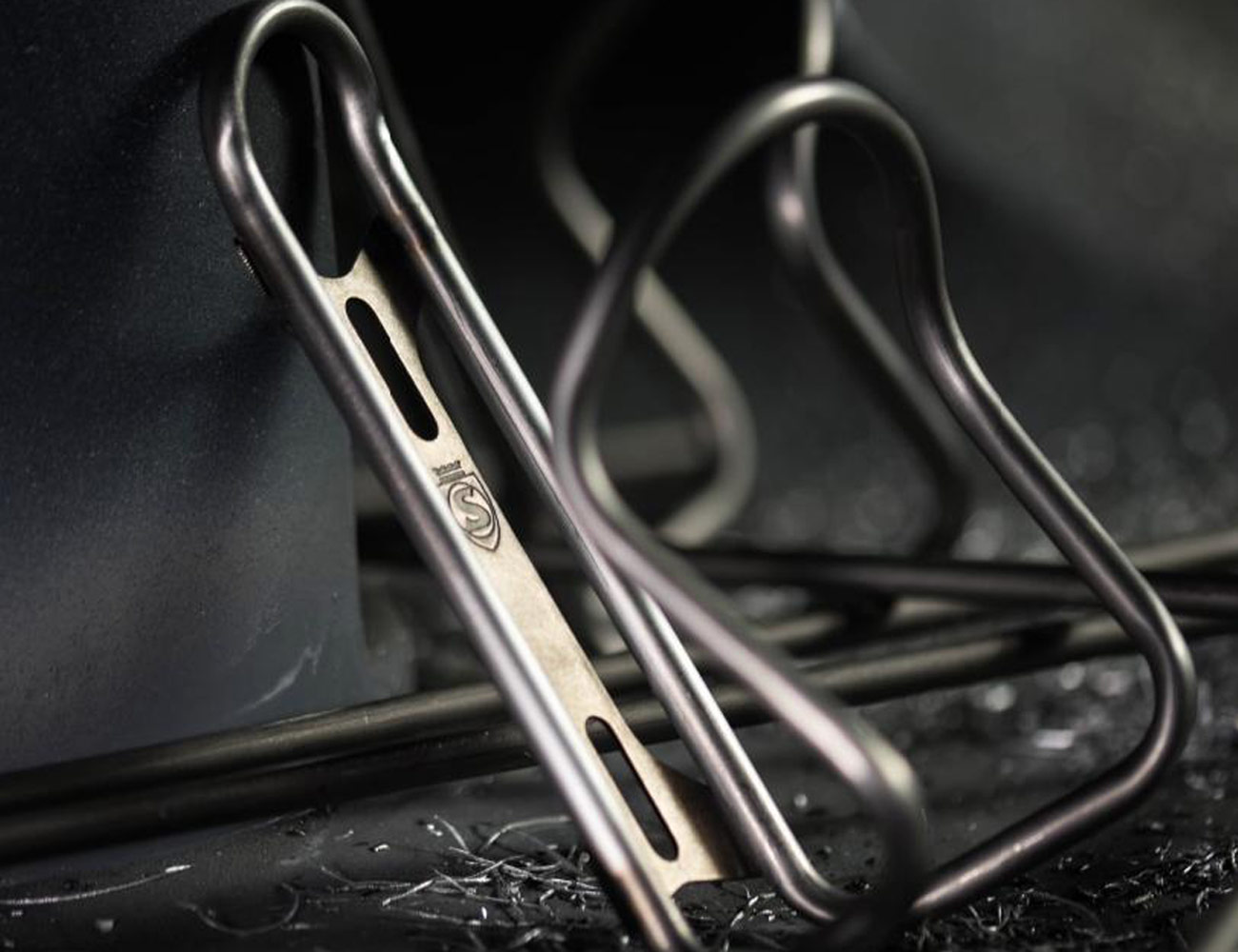
Last but not least, a super-light water bottle cage made of aerospace-grade titanium. Yes.

These Are the Worst Cities for Cyclists, and What You Need to Stay Safe

If you live in a city, you probably know that commuting to work on a bicycle is often far faster than driving or taking public transportation. It’s certainly the case in our home base of New York City, where the only predictable trait about the subway system is its consistent unreliability. It makes cycling here that much more convenient, but unfortunately, that doesn’t mean it’s safe.

According to a new study by Your Local Security, New York is the second most dangerous city in the US for bike riders. To determine its rankings, YLS pulled data from numerous sources to determine “the percentage of bike commuters, number of fatal crashes, amount of bike lanes, and what bike laws are in place or in the works in each city.” Other cities to fall short include LA, Houston and five municipalities in Iowa. On the flip side, six of the ten safest cities for cyclists are in California.

No matter where your home falls on the list, it’s important to realize that no matter how safe of a rider you judge yourself to be, it’s more often the choices of others on the road that contribute to an accident. Take as much control of that as you can — starting with how you outfit yourself for a ride. Below, you’ll find some of the urban-riding essentials that’ll help your city improve its place on the list.

Bell: Spurcycle Bell

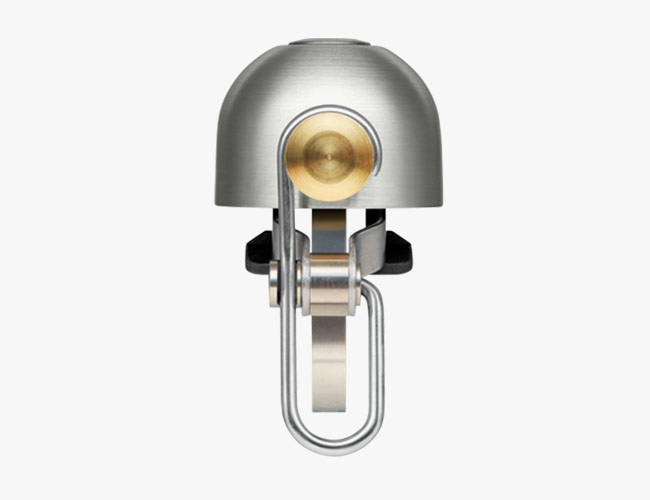
Cars aren’t the only road users you have to worry about — use this good-looking bell to warn slower riders you’re making a pass and remind pedestrians that the bike lane isn’t an extension of the sidewalk.

Headlight: Light & Motion Urban 500 Headlight

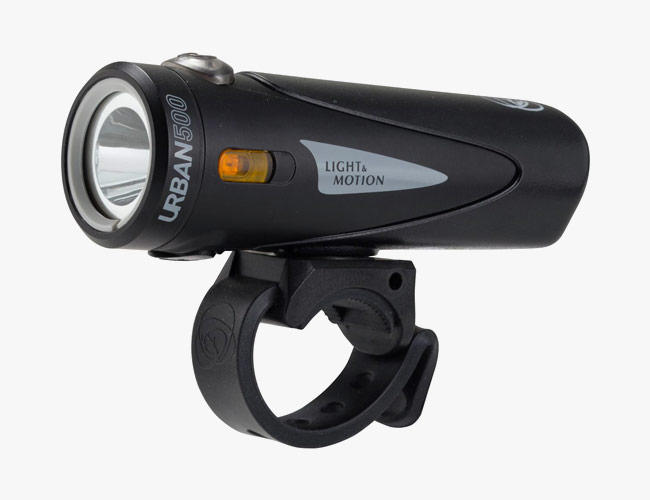
Some cities require headlights by law, and if you’re riding in poorly-lit areas this is essential for seeing where you’re going and avoiding obstacles in your path.

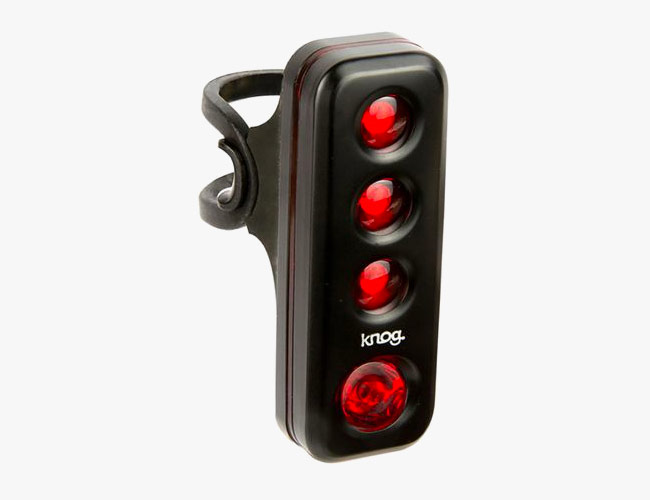
Tail Light: Knog Blinder Road R70 Tail Light

A tail light is indispensible in alerting those behind you to your position on the road. This waterproof light emits 70 lumens of red light directly behind you but is visible from the sides too.

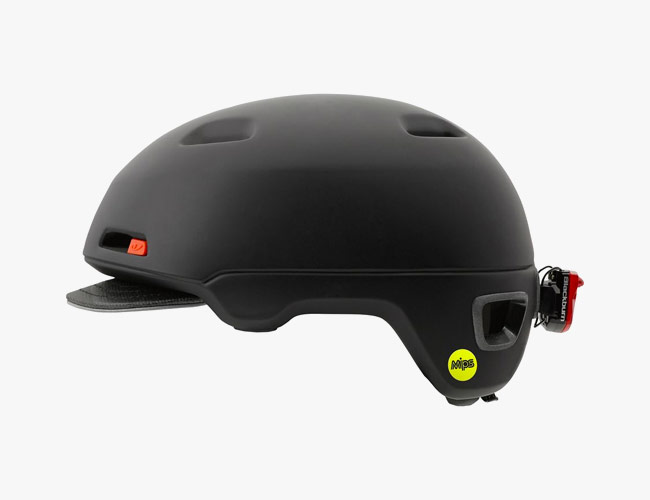
Helmet: Giro Sutton MIPS Helmet

Protect your head with this MIPS-equipped urban helmet.

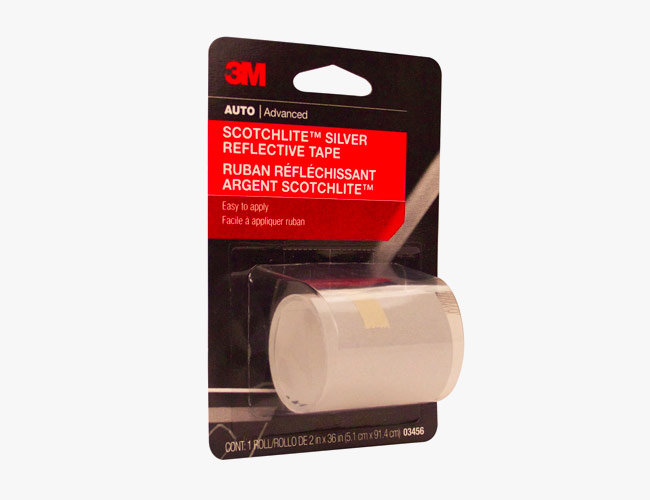
Tape: 3M Scotchlite Reflective Tape

Commuter apparel often features hits of reflective taping, but if that’s not your style you can add it to your bike with a cheap roll of tape.

Note: Purchasing products through our links may earn us a portion of the sale, which supports our editorial team’s mission. Learn more here.

Your Complete Guide to the Gear of the Tour de France

The Tour de France is the biggest, and most important, cycling race in the world. It’s also the second-most-watched live sporting event in the world (next to the FIFA World Cup). The race began in 1903 as a way to boost the circulation of an ailing French newspaper and has grown to include twenty-one stages and 2,069 miles of racing — including 50mph sprints, steep climbs in the Alps and the bone-shaking cobblestones paving the roads of Northern France. The overall winner will wear the yellow jersey into Paris and be crowned the most accomplished cyclist in the world.

Quick Facts

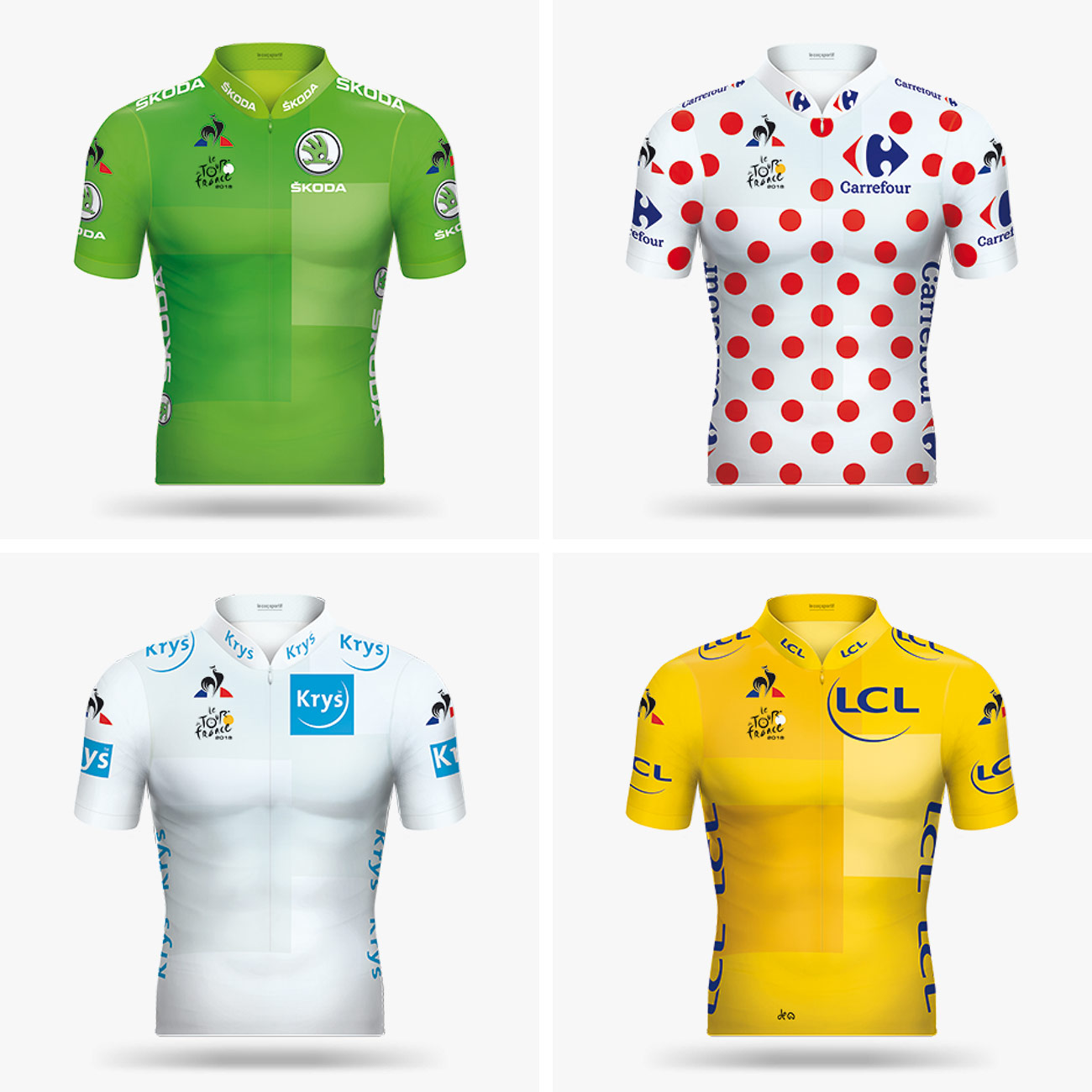
The famed yellow jersey, or Maillot Jaune, is awarded to the rider with the fastest overall time on the General Classification (GC), including time bonuses awarded to the top finishers on each stage. Alongside the Maillot Jaune, riders can win several other jerseys throughout the race.

The green jersey is awarded to the rider who accrues the most sprint points. These points are earned by winning stages and intermediate “hot spot sprints” along the route. The winner is normally a well-rounded rider who can get into breakaways to sweep up mid-race points — not necessarily the fastest bunch sprinter.

The polka dot jersey, also known as the King of the Mountains jersey is awarded to the rider who accrues the most points by crossing the top of mountain passes first. Mountains are graded according to their difficulty, with the hardest being Hors Catégorie, or “beyond classification.”

There is also a white jersey for the fastest rider under 25. These are the guys who are being groomed to contest for the biggest prize in cycling in years to come.

The team classification rewards the team with the lowest combined overall time with yellow race numbers. They may also wear yellow helmets.

Riders to Keep an Eye On

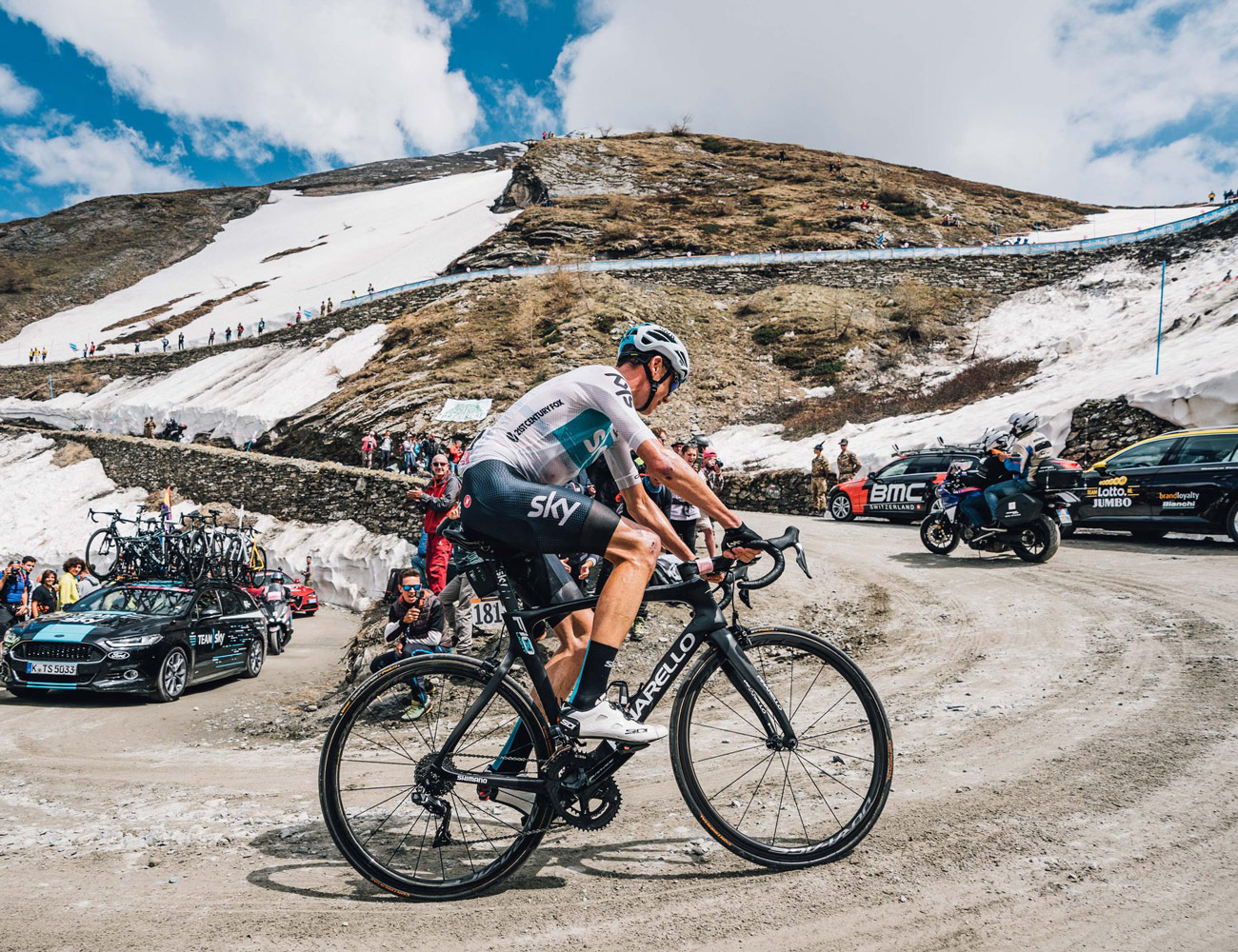
Chris Froome (Team Sky) during his outrageous solo attack to win the Giro d’Italia earlier this year. (Photo: Team Sky via Facebook)

Chris Froome: The three-time champion was nearly forced to sit out the race this year after a test showed excessive levels of Salbutamol (a controlled substance) during last season’s Vuelta a España. With the doping case against Froome dropped, and his dominant ride in the final few days of the Giro d’Italia, the Kenyan-born Brit will be the man to watch. Look out for his ex-teammate and close friend Richie Porte challenging him for the yellow jersey.

Peter Sagan: Wheelies? Motorcross goggles? Flames behind him on the podium? Three world championships? There’s nothing Peter Sagan can’t do in a bike race. Sagan will be extra hungry this year after being controversially disqualified in 2017. The Paris-Roubaix winner will be up against rival Fernando Gaviria for the green jersey, but win or lose, Sagan always puts on a show for his fans and we can’t help but love him for it.

Primož Roglic: He represented his country at the 2010 Winter Olympics as a ski jumper, but he’s flying on the bike these days. The Slovenian rider switched to cycling in 2012, has come second in the world time trial championships and climbs with the best in the world. We wouldn’t be surprised to see him on the podium in Paris.

Adam Yates: Yates is coming to the Tour as the sole leader for the Mitchelton-Scott team. Yates’ brother Simon lost the Giro d’Italia to Chris Froome after the latter’s huge solo breakaway. Yates must be yearning to restore the family honor and has the advantage of being guided over the risky cobbles of stage 9 by former Paris-Roubaix winner Matthew Hayman.

Toms Skjuins: Skjuins has become something of a fan favorite in the USA thanks to his pugnacious antics in multiple Tours of California. The Latvian time trial champion will likely get a free hand on stages where a breakaway is likely and has shown the World Tour field a clean pair of heels in California and Mallorca already this year.

Gear to Watch Out For

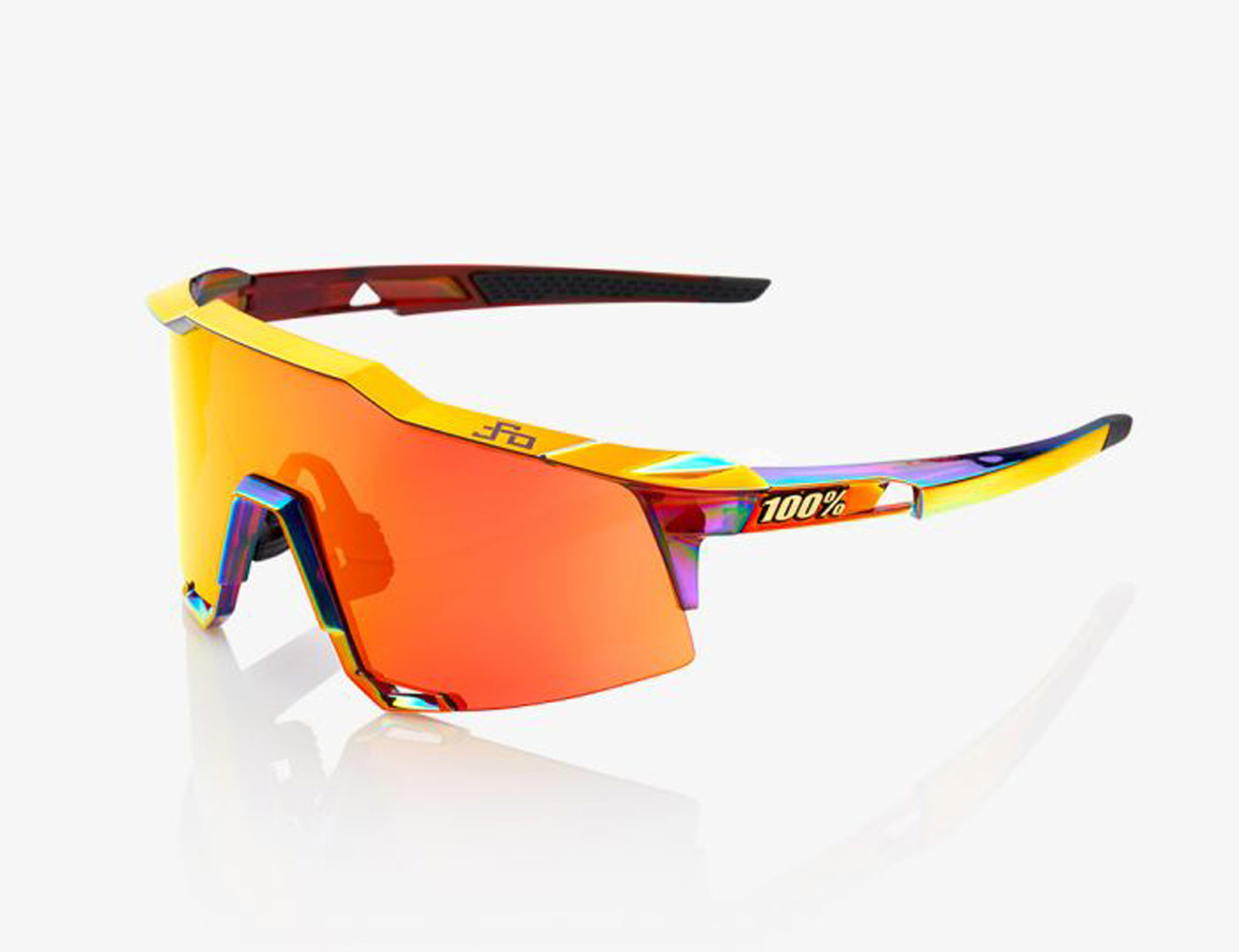
100% Peter Sagan Edition Sunglasses

Sagan’s trademark podium goggles won’t be making an appearance in the race just yet, but this collaboration with his eyewear sponsor isn’t something you’d want to shield your eyes from anyhow. 100% is using a new coloring process, meaning no two frames are alike. But that’s okay — nobody is going to mistake you for Peter Sagan anyhow.

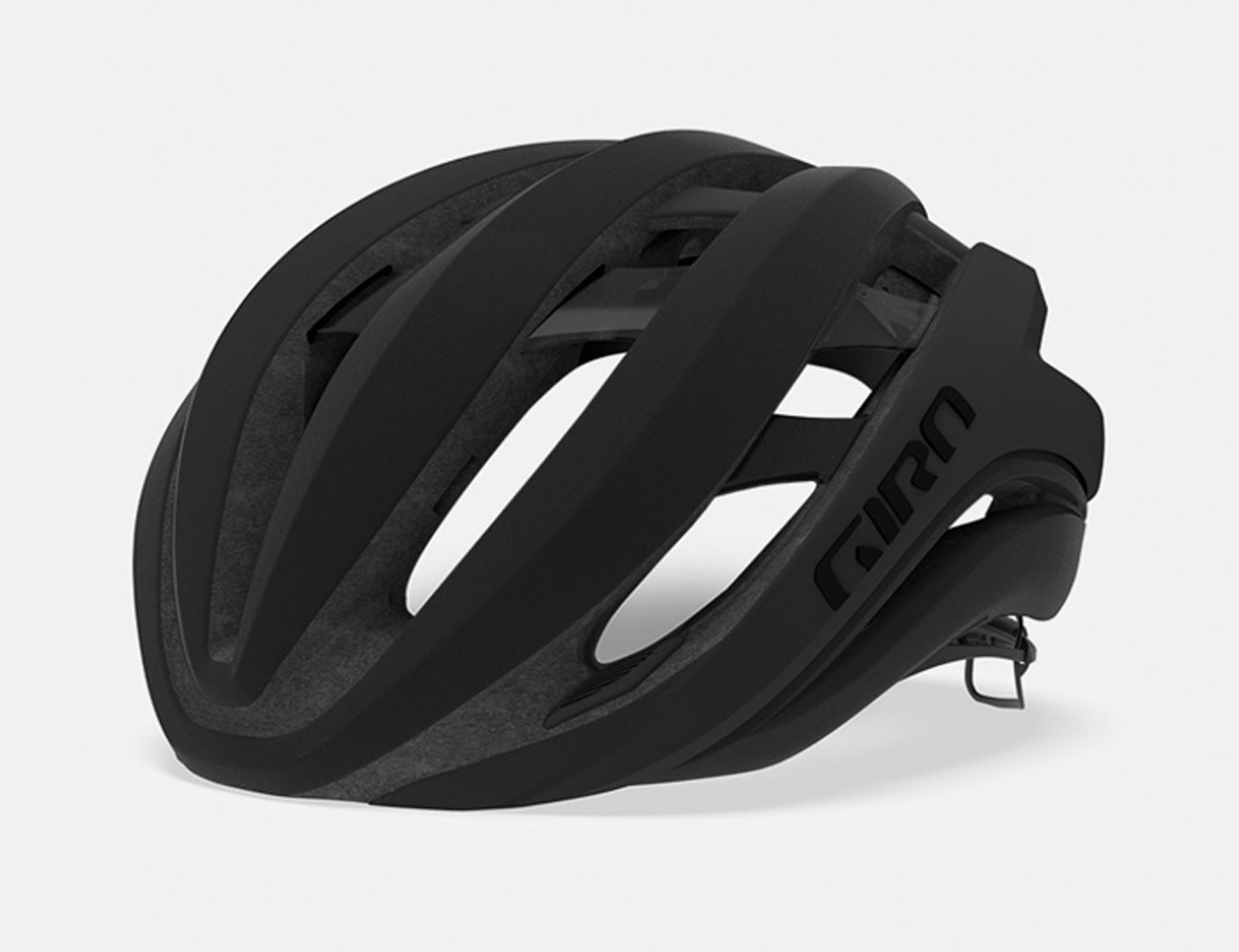
Giro Aether MIPS

Giro recently released a do-it-all road racing helmet. Giro claims the helmet is faster and better vented than its Synthe while weighing roughly the same. The helmet also uses a new spherical MIPS (Multiple Impact Protection System) that should keep riders safer in crashes, and boasts pretty impressive wind tunnel numbers.

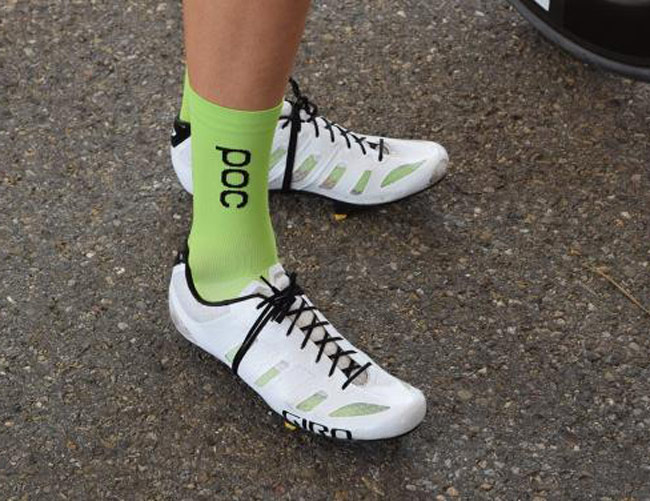
Giro Prolight Lace-Up

We spotted Taylor Phinney wearing what looked to be a ProLight version of Giro’s Empire at the Tour de Suisse. Giro’s existing ProLight shoe uses a hybrid lace-velcro closure system they call Techlace, but that’s not what we saw Phinney wearing. We reached out to Giro, who suggested Phinney’s shoes might be a homemade modification of the existing ProLight Techlace to meet his fit and aesthetic preferences — but we’re not so sure.

Castelli Body Paint Speed Suit

In collaboration with Team Sky, Castelli has developed a series of time trial suits that aid in aerodynamics through the use of textured fabrics. As if they needed any more help.

The Bikes

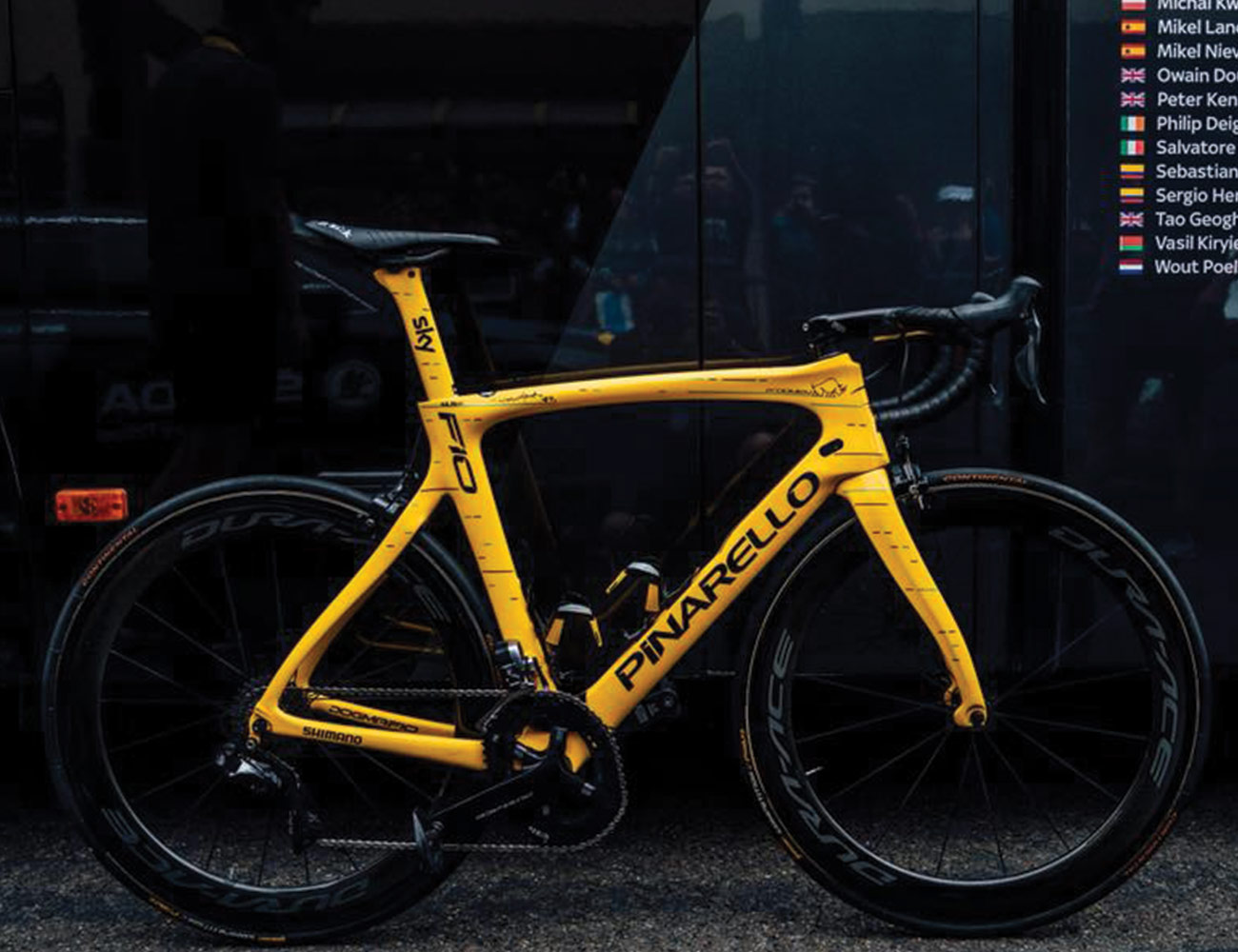
Sky: Pinarello Dogma F10

The Pinarello Dogma won the tour last year, and there’s a very good chance a yellow one will be ridden into Paris again this year. Look out for Froome’s custom paint job, adorned with the wildlife of his native Kenya. The Sky leader’s bike also often features crazy weight weenie modifications like his handlebar-top shifter with the casing removed.

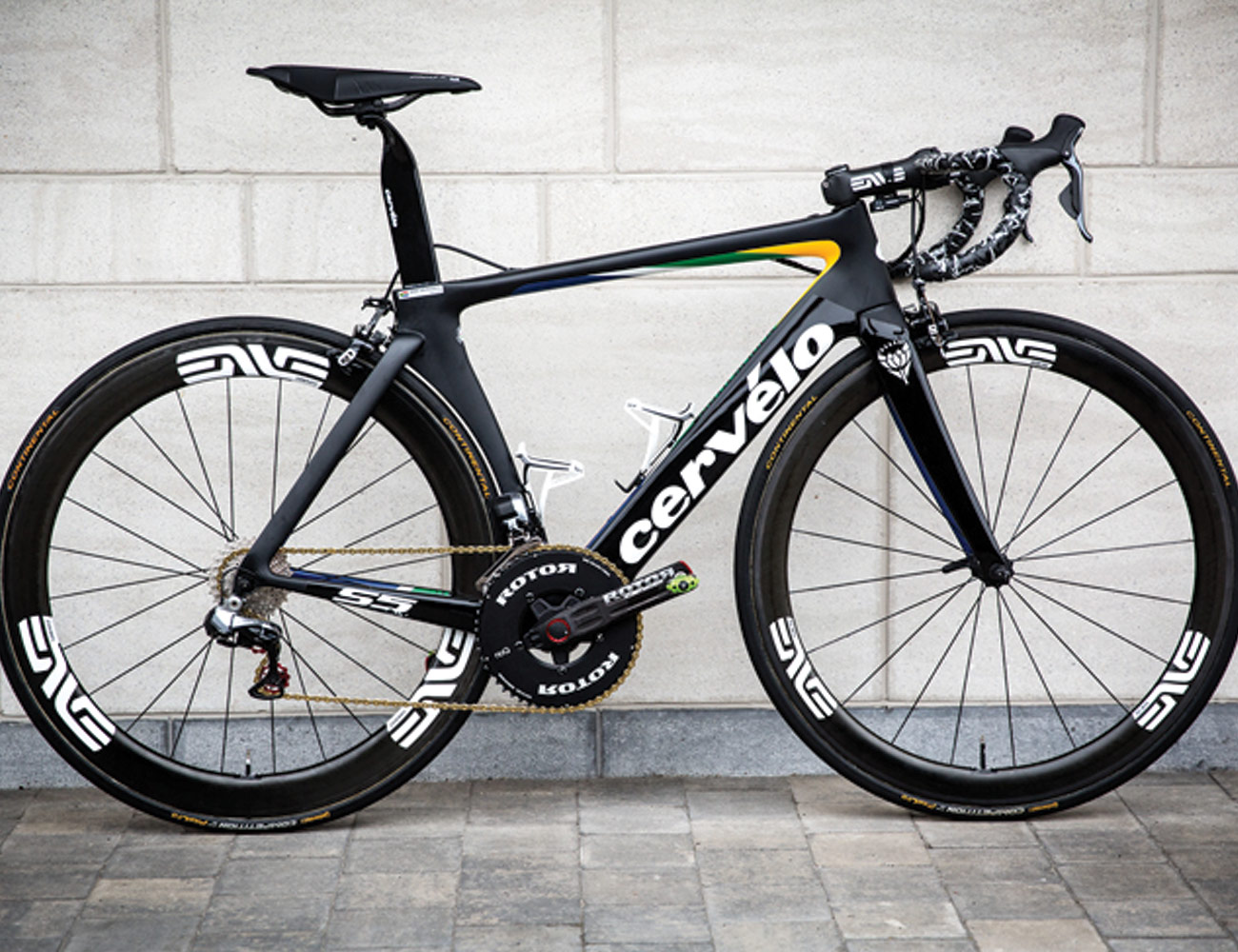
Dimension Data: Cervélo S5

Cavendish’s team has upped its aero game again this year. They’ll be using Cervélo’s slippery S5 frame paired with a new aero road bar and stem in the sprint stages and breaking out the new R5 frames for the mountains. Cavendish will be hoping this is enough for him to take at least one stage and equal Eddy Merckx’s record 34 stage wins.

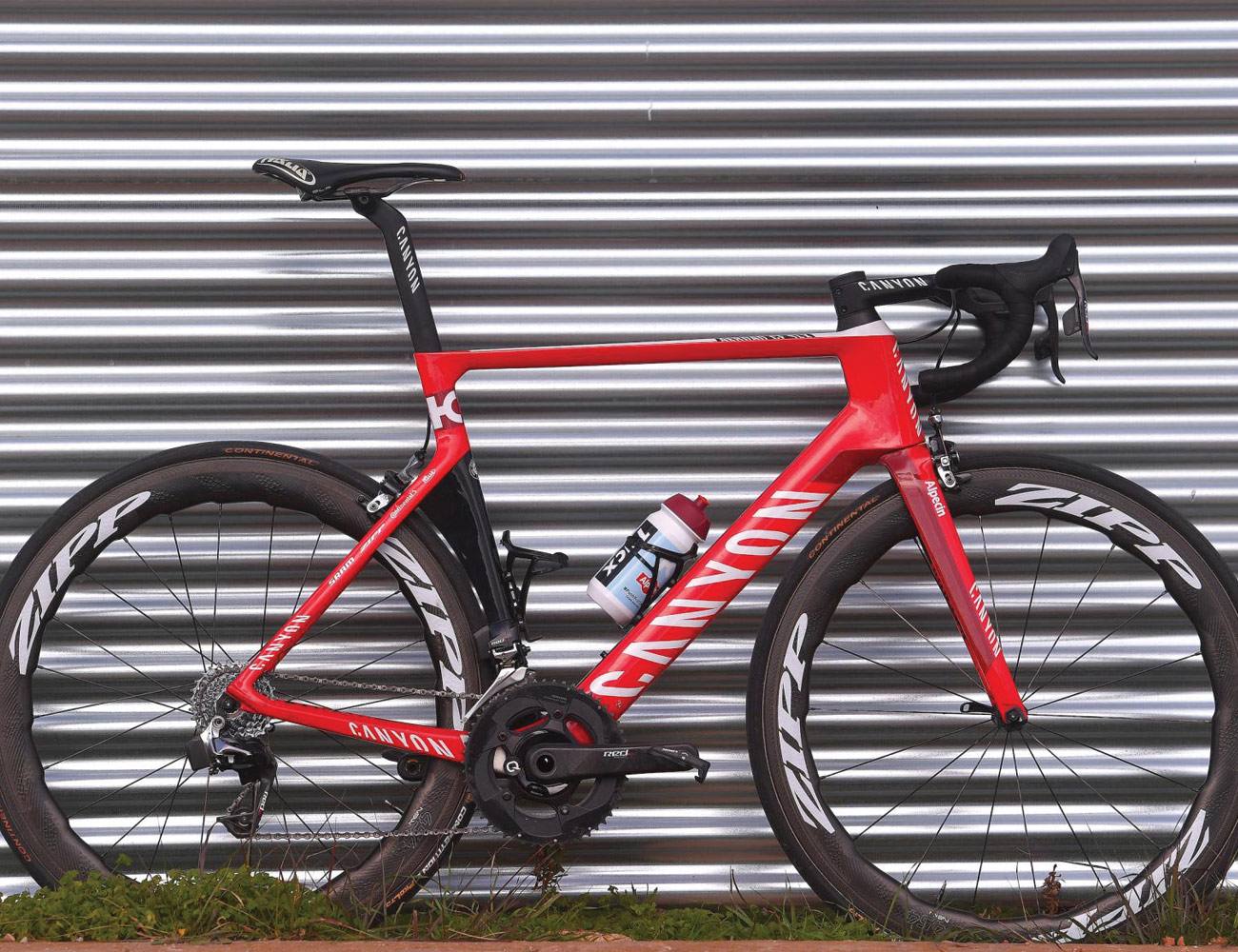
Katusha: Canyon Canyon Aeroad

Appropriately, the now Swiss team will be riding red and white Canyon Aeroad bikes on the flats. SRAM has equipped the team with eTap gearing, disc brakes and a tubular version of Zipp’s 454 NSW.

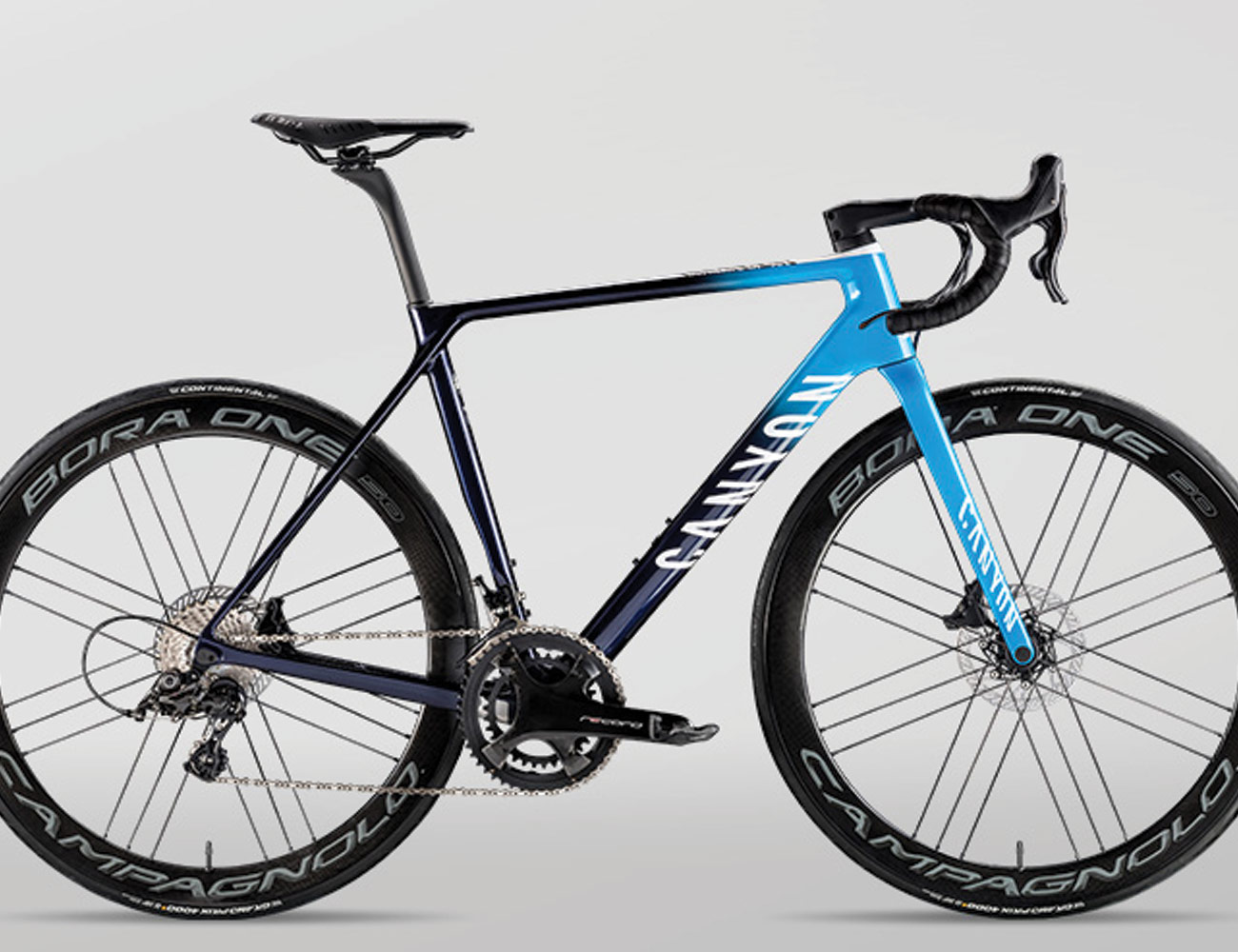
Movistar: Canyon Ultimate CF SLX

One of the diminishing number of Campagnolo-equipped teams in the race, Movistar’s baby blue Canyon bikes are easy to pick out in the peloton. The Spanish team could cause an upset with its stacked roster and no clear leader — giving them lots of options. Movistar will choose its Ultimate CF SLX bikes for the high mountain stages.

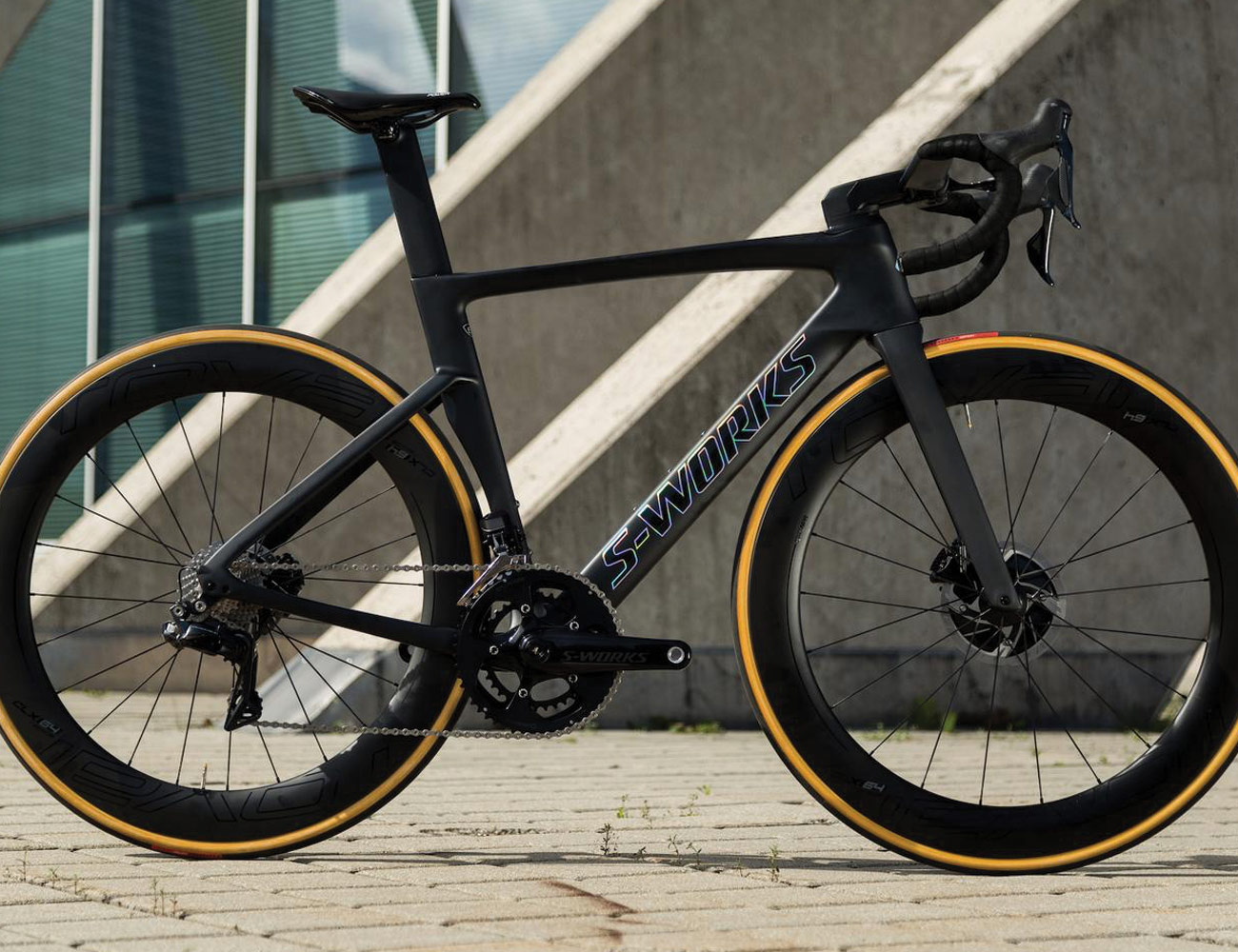
Bora–Hansgrohe: Specialized Venge

Riding the new and (much) improved Venge, Sagan’s Bora-Hansgrohe team should have no problems getting him to the front of the bunch, not that he needs much help. Look out for the custom paint jobs that have adorned the world champion’s bike in the past.

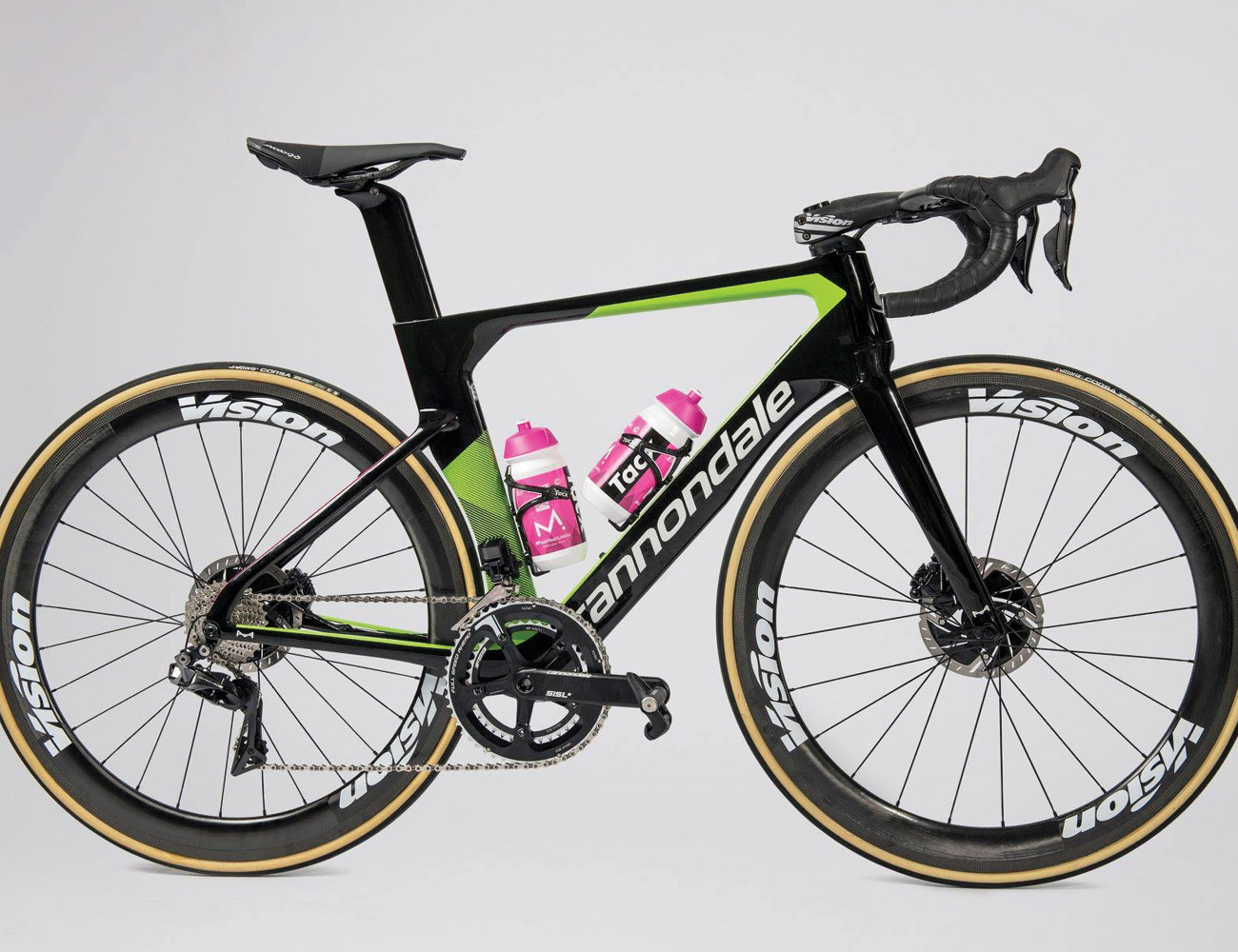
EF Education First-Drapac Cannondale: Cannondale SystemSix

The team with the longest name in cycling will be riding Cannondale’s new aero road bike. Cannondale claims it is “faster everywhere,” and it certainly looks slick. The disc-only bike will likely see use on all but the mountain stages, where riders will likely stick to the lightweight SuperSix Evo.

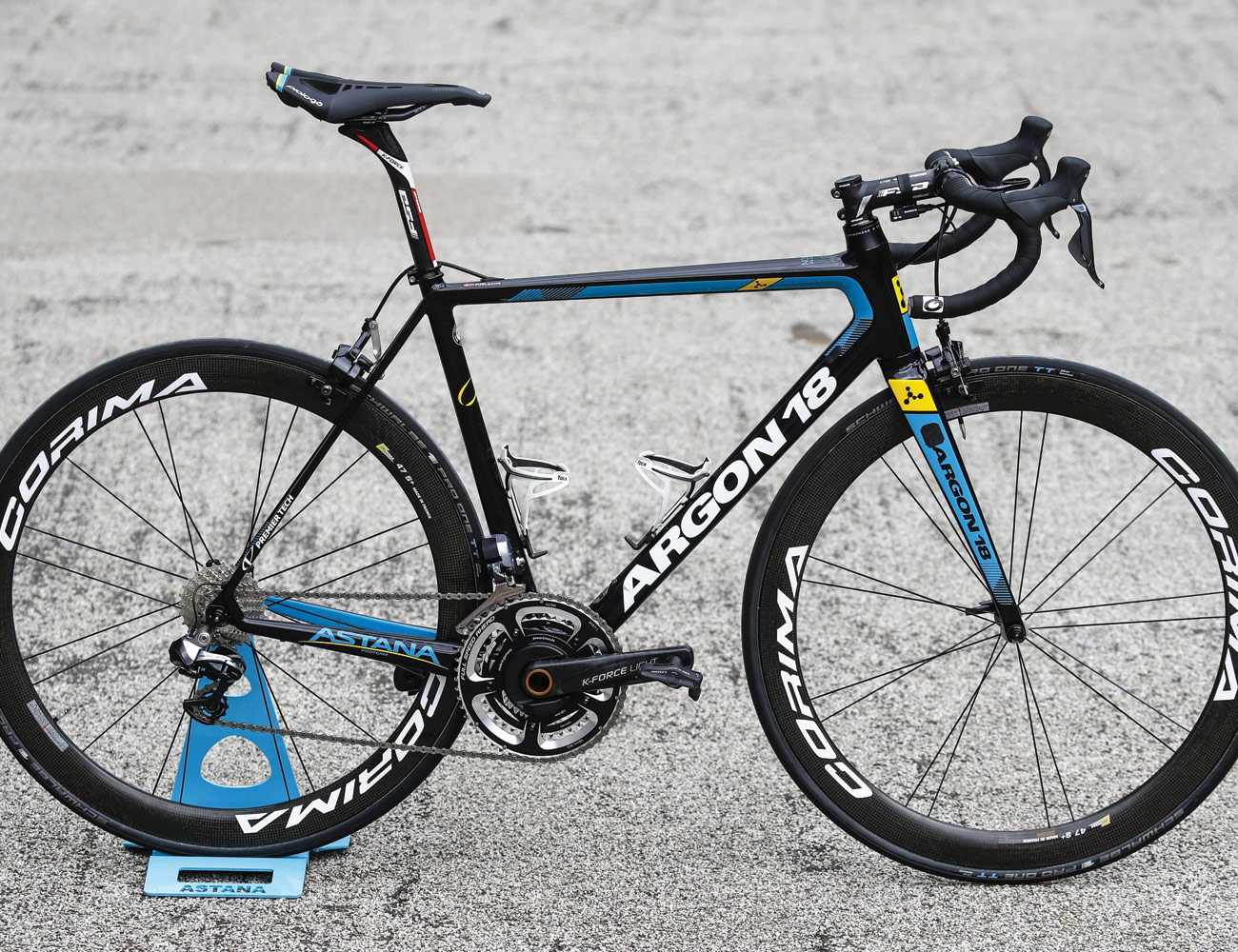
Astana: Argon 18 Gallium Pro

Fun fact: in previous years, Astana’s entire team at the Tour has ridden the same sized frame! This year, Astana is sticking with the tried-and-tested climbing frame from the Canadian brand and the rarely-seen Corima wheels that have served the team well in previous Tours.

Trek-Segafredo: Madone Disc?

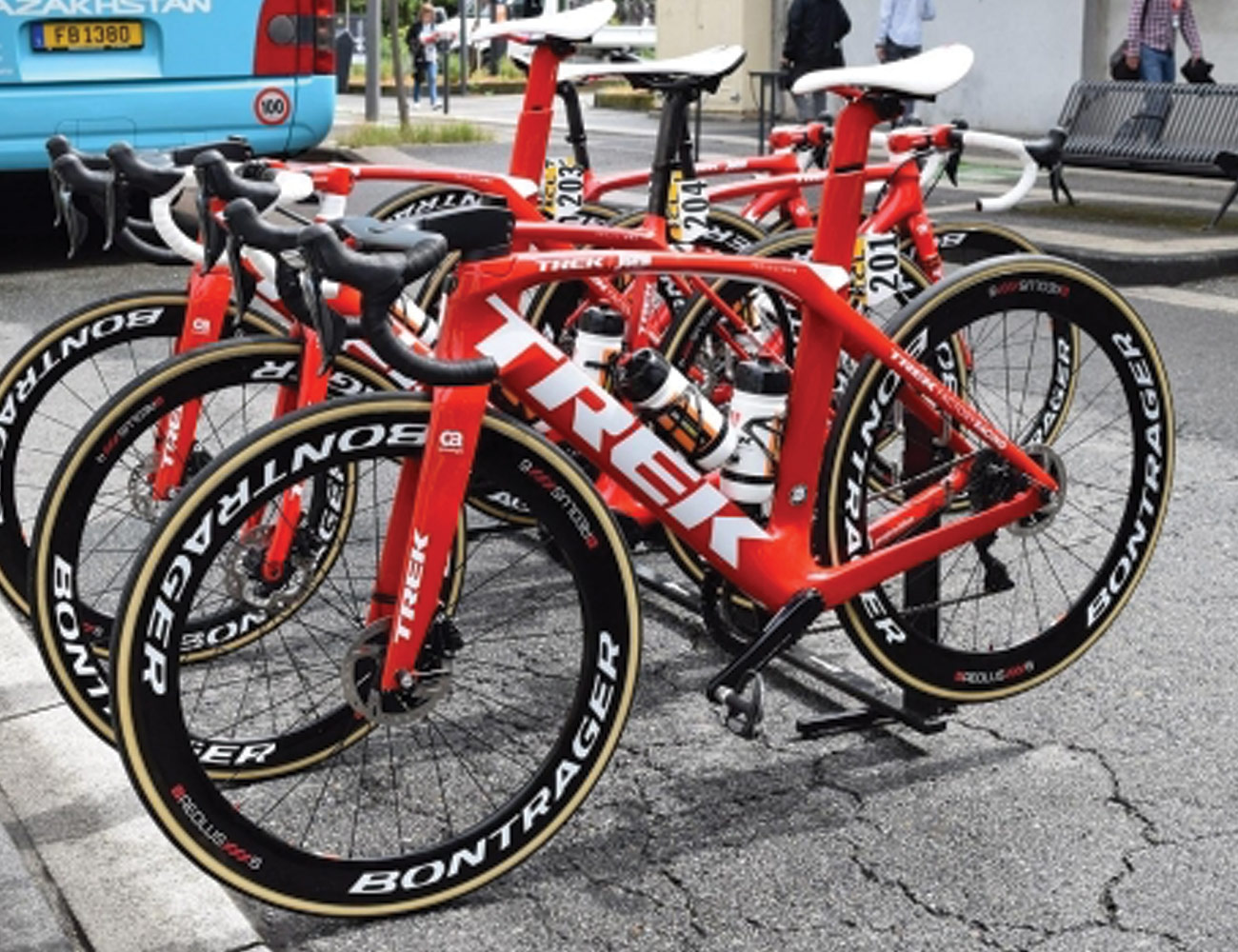
New Madone Disc bikes have been spotted at the warm-up races to the Tour, so look out for those on the flat stages. Trek’s riders will likely opt for the supremely comfortable Domane on the cobbles of stage 9 and the featherweight Emonda in the mountains. Look out for Shimano’s new Ultegra RX rear derailleur on stage nine — its clutch will help to maintain chain tension on the cobbles.

Ag2r-La Mondiale: Factor O2

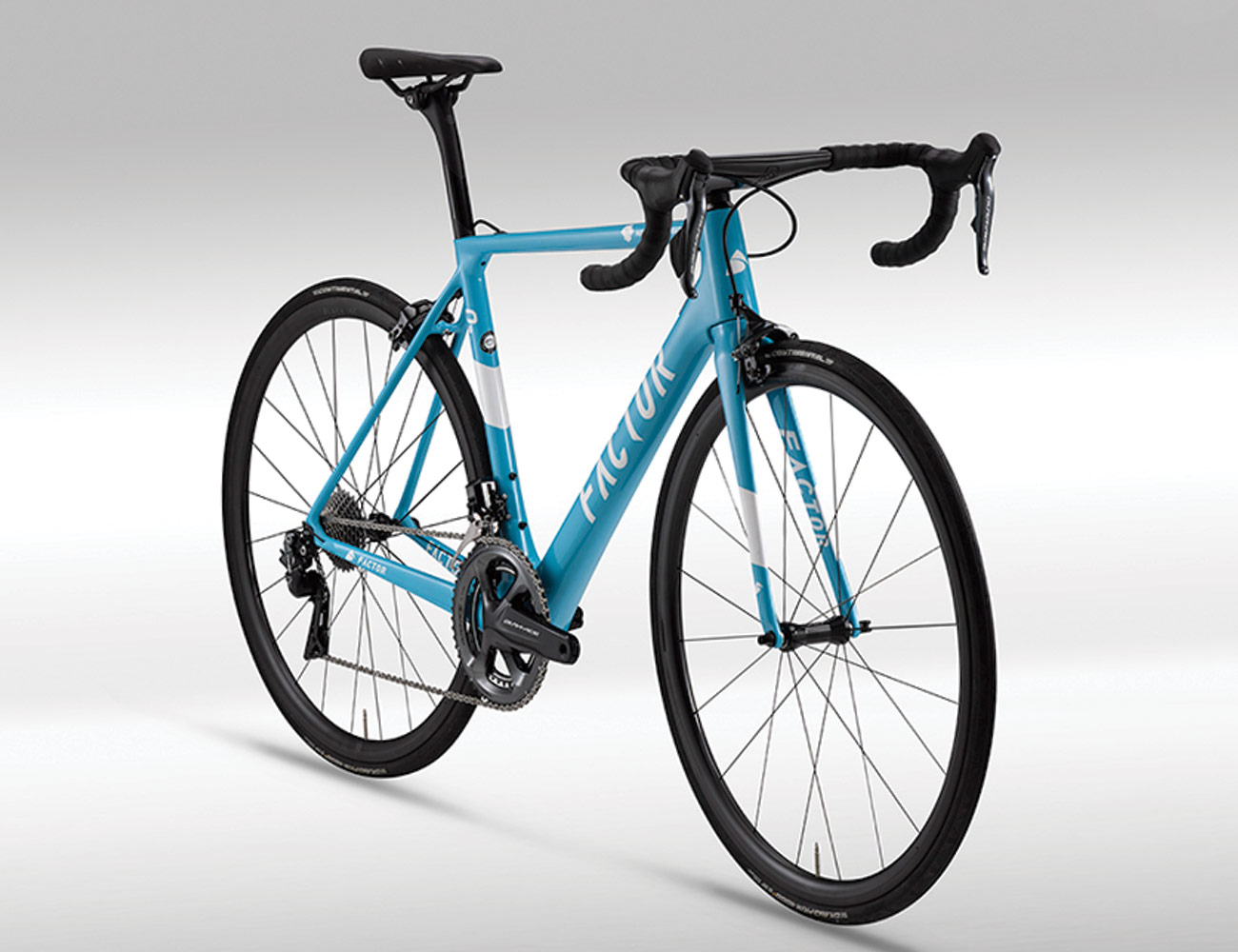
Ag2r will be riding limited-edition models of British brand Factor’s versatile O2 model. Watch out for Romain Bardet’s custom painted frame, which features a picture of Vercingetorix — a local hero in Bardet’s home region of the Auvergne — and an image of the Puy de Dome, the dormant volcano visible from his home.

The Most Important Stages to Watch

Stage 9 Arras Citadel to Roubaix: The cobbles of northern France can put an end to any contender’s hopes of winning the race. Look out for special bikes to soak up some of the vibrations and teams relying on classics specialists to shepherd their General Classification (GC) contenders through the pavé. The last 5 winners of Paris-Roubaix will be racing at the Tour, so look for them to battle it out for the win, or be yelled at to wait for their GC leaders.

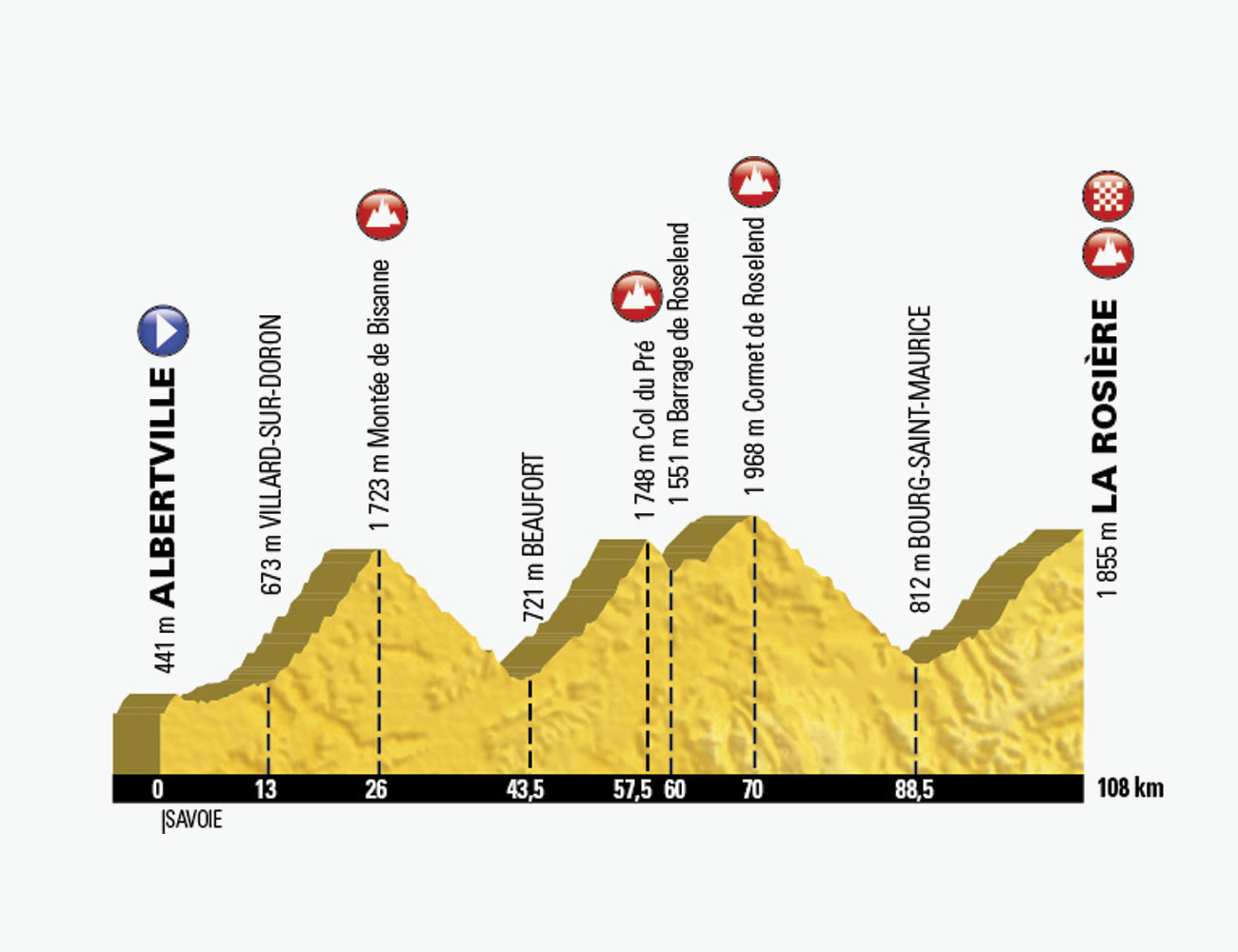
Stage 11 Albertville to La Rosière: Low mileage, mega climbing and no flat valleys to recover — and it’s the first big climbing day. Expect the first summit finish of the tour to be a ripper as GC contenders finally get a chance to feel out their competition. A bad day here could cost a GC rider his chances at the podium.

Stage 17 Bagnères-de-Luchon to Saint–Lary-Soulan: This is the most innovative stage format in recent memory. The stage is just 65km in length and features a staggered start, much like an F1 race, with the leader starting in a sort of pole position. The rest of the riders will be spaced out along 70 meters of road according to GC position. Will the leaders wait for their teammates or take the opportunity to battle it out man to man?

How to Watch

The full broadcast schedule: Head over to NBCSN to watch all of the stages. In order to live stream the stages, you’ll need a NBC Sports Gold Cycling Pass which will run you $50.

Alternatively, you can also sign up for a seven-day free trial of FuboTV to catch a few of the stages.

The hacker method (also known as the Henry Phillips method):
1. Get a VPN
2. Get a Eurosport Player subscription
3. Watch it in HD with a far better commentary team

I Hiked Up and Biked Down the World’s Tallest Volcano

E

ach day, for the next seven days, we spent a few hours exercising at altitude. All of us but Rob (“I’m not trying to be a tough guy,” he told me, “I just want to see what I’m made of”) had begun taking the altitude-easing drug Diamox to fend off malaise. One day, we untethered our bikes, grabbed our face masks and skidded down some trail and scree above the lake. Another afternoon, we climbed to 16,000 feet on a neighboring peak, accessed via some white-knuckle, Mad Max off-roading in heavy wind. It was hard to imagine climbing 6,500 feet higher, but the pale eyes of Ojos, visible in the distance, had a come-hither look.

After two nights in single-degree weather, we drove on to our next camp: 14,200-foot Laguna Verde, past the ancient frozen carcass of a wayward cow, where a “thermal bath” was advertised. On the way to the tepid waters, tucked inside a small wooden refuge, we passed by a contingent of Russian visitors permanently playing cards in the shelter’s main room, drinking vodka and fondling their expensive satellite phones. On Thanksgiving, we took turns expensively calling home with our own, allowing two minutes each for the impossible task of describing the bioluminescent night sky. It was fantastically lousy with astral matter.

Life at fourteen thousand feet is simple but hard. You must move slower, take more breath, think harder.

Laguna Verde is where Justin started acting funny. Though a strong cyclist — he’d kicked my ass on a ride in Georgia, a week earlier — he had the least high-altitude experience. It began to show when he tripped down stairs, repeatedly misnamed a refuge, and became uncharacteristically sluggish, even tongue-tied. After a day hike, he fell asleep in the truck with his headlamp on, glacier goggles in place. (These made him resemble an alpine Ray Charles.) Once roused, he refused dinner, blaming Diamox. That night he got a nosebleed, which persisted, on and off, for days, producing Rorschach-like red blots on our precious toilet paper.

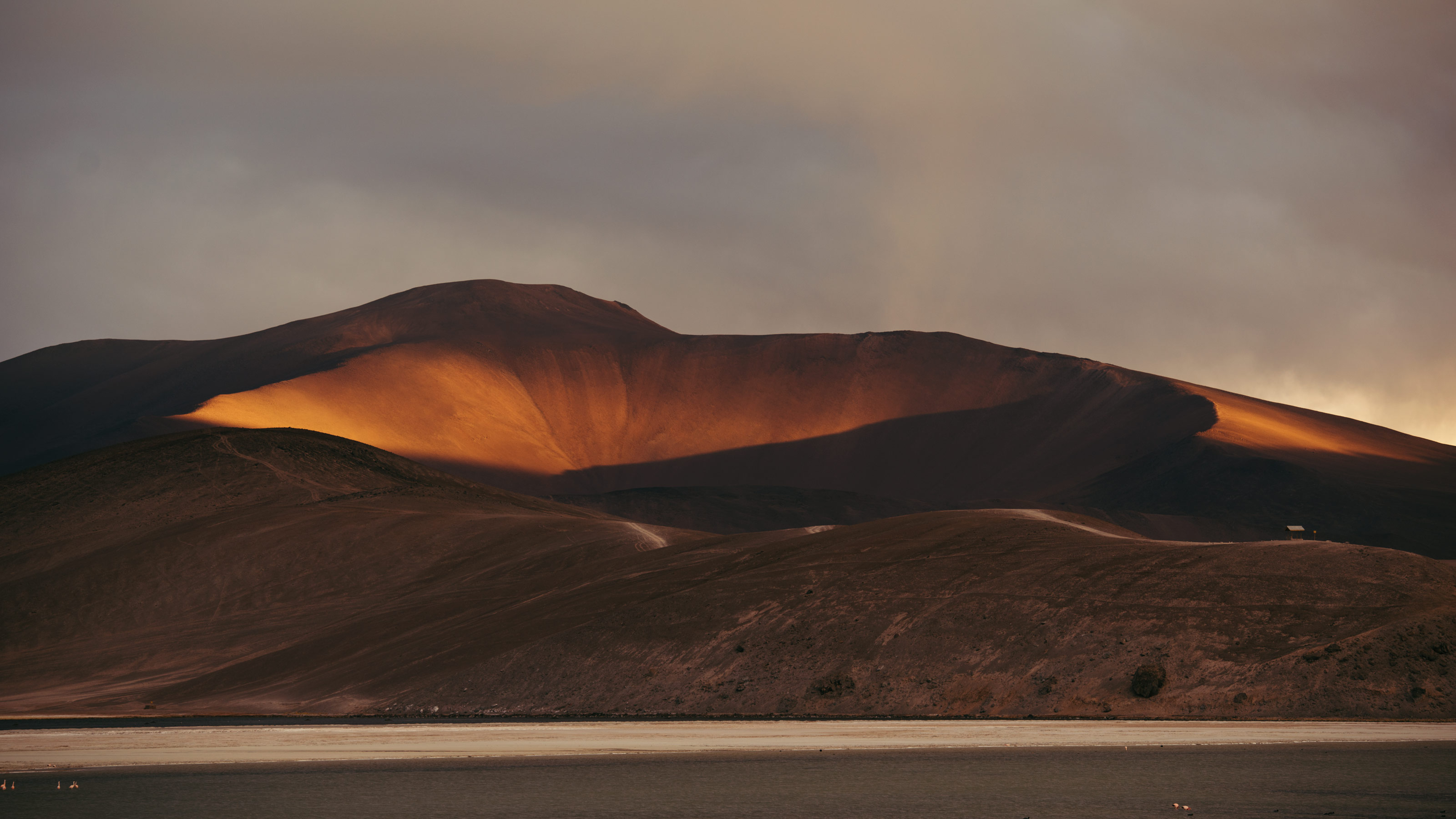
Life at 14,000 feet is simple but hard. You must move slower, take more breath, think harder. At this elevation, there’s only 60 percent of the oxygen found at sea level; at 22,600 feet, it’s 40 percent. The high desert amplifies the sense of distortion. There are no trees, of course. Only monochromatic sand and rock. Meat-locker cold and constant wind. The occasional mirage. A circling, hungry-looking bird. But most of all: these huge mountains, decorated with strange penitentes: clusters of icy spires sticking straight out of the ground towards the sun. An absurd arctic art project, by the Great Unseen Hipster Artist in the Sky.

Hernan and Fabaola were our psychic anchors, but they would leave us soon. Another guide, named Mario, would take their place for the summit push, once we’d relocated again, negotiating a labyrinth of deep sand ruts and rock garden travel in our Hilux, to a cozy, climber-graffitied shelter at 17,000 feet: a repurposed, abandoned Russian shipping container, it turned out, that had housed a massive telescope high on Ojos in the early ’80s. It completed our miniaturization.

Mario, we gathered, was el hombre. He slept in a duct-taped sleeping bag. He barely needed water, like a high-altitude camel. He’d been atop Ojos 56 times and still had all his fingers and toes. He’d guided three German climbers to just below the summit earlier that week, in fact. They’d turned around with one hundred meters to go, after nine hours. It was too windy, too cold. One of them had developed a hypothermic finger. Whether amputation would be necessary was still unknown.

Blood began to flee my patchily bearded face for my toes.


T

here was some good news: the weather was supposed to improve, slightly, during our narrow summit window at the end of November. Winds would slow from 60 mph to perhaps half that. Temperatures might inch up towards zero degrees. This, during the start of summer on Ojos, would be mild. Drinking his second mug of black coffee at Atacama Refuge, on our final day of rest, Rob was ebullient. “I could live up here,” he announced during a brief lull in the wind.

A Russian duo had read the same optimistic weather report, apparently. They appeared a day later at the final refuge, Tejos, where we’d ‘rest’ at 19,150 feet — sound sleep is a futile wish so high up — the night before our 4 a.m. summit attempt. We’d passed them on the 2.4-mile, two thousand vertical path up to Tejos, pushing our bikes through the volcanic ash like a band of Sisyphean cyclists condemned to usher their machines up volcanoes for eternity.

Apart from some strange facial tingling, I felt okay. Rob’s headaches persisted, but he didn’t complain. (“Messner wouldn’t bitch!”)

The short, mustachioed, fiftyish guide, Victor Bobok, had climbed each of the earth’s seven summits twice, including Mt. Everest three times. His lone client was younger, larger, wealthy-looking and, judging by his lethargic trudge, a dilettante mountaineer. They ate expensive cheese and generally ignored us after announcing their intention to leave the refuge at one in the morning, for an alpine start.

Justin and Doug were on the fence about going for la cumbre. Though his look and talk had improved, it seemed inadvisable for Justin, particularly, to proceed to the top, much as we wished to remain a team. Doug’s portable pulse oximeter, which measures oxygen saturation in the blood, confirmed the obvious: Justin was still struggling to acclimatize. Only Chris, Rob and I seemed to be in the healthy blood-oxygen range for this altitude. Apart from some strange facial tingling, I felt okay. Rob’s headaches persisted, but he didn’t complain. (“Messner wouldn’t bitch!”) In fact, he began to actually drool the closer we got. The hungry kind of drool.

Maybe my brother, unlike most humans, did belong up here.
A

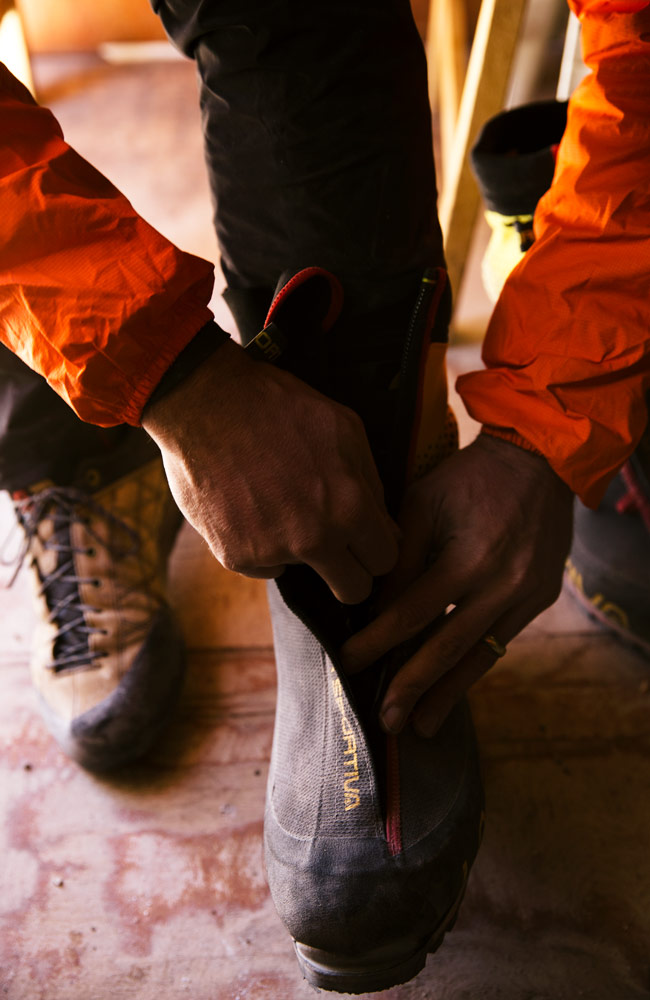
fter nodding off around nine, I woke to piss, again, at 11:45 and mostly rolled around for the next four hours, listening to gaseous bugle calls from neighboring bunks until alarms blared mercifully. It was -25 degrees and windy when I stepped outside a little after four in the morning. We’d made coffee, eaten a few muffins, put snacks and water in our lightened packs and layered up. We wore two pairs of socks inside our La Sportiva super-gaiter boots.

Few words were exchanged, beyond the necessary:

Three liters of water?

Gloves or heavy-duty mittens?

These fucking bikes…

We’re not bringing the beer.

Only 15 percent of climbers (without bicycles) reach the summit, totaling some 250 a year. Doug had finally informed us of this statistic — which has everything to do with extreme elevation, cold and windy weather and the easiness of underestimating the mountain, as opposed to any truly technical features — a few days earlier. By then, we were no longer surprised. A strong, Alps-experienced solo climber from Germany — he referred to himself, earnestly, as a “climbing machine” — had gone up just the day before with some muesli, an apple and hot tea and come down defeated, his nose purple, his face lined with extra years. It might be a “walk-up,” but it was not “easy,” except, perhaps, compared to Denali or K2 or Meru.

“I don’t know,” the climbing machine murmured as we offered him hot water. “I just did not have the energy on this day. Maybe if I had not lost the route… ”


W

e pushed our bikes up the ashy, steep and windswept slope of the volcano to about 20,000 feet, more than half a commercial airplane’s cruising altitude. At this point, the unstable trail — such as there was one — angled up more acutely, to perhaps 40 degrees. Riding down this, even at sea level, would be absurd. So we dropped the bikes after a terse powwow — channeling Ahab, I wanted to keep pushing them, while Rob correctly but annoyingly advised against this — and continued behind Mario. A five-some distinguished by small beams of light and labored breathing, we’d begun the morning with 1.8 miles to the summit and 3,600 feet of elevation to gain. The average one-way trip from Tejos took eight hours.

Within 20 minutes, Justin and Doug had fallen far behind. I couldn’t see them. Mario warned us, matter-of-factly, that their pace was too slow. There was no time, energy or authority to question his opinion.

“I can’t go on. Gotta go back. Could get frostbite. People get frostbite up here, right?” Mario nodded.

The message was conveyed and, though frustrated, they dutifully retreated. Fifteen minutes later, Rob complained that his toes were numbing. We stopped, unable to escape the wind, and shouted about our shitty options: to mush on into the colder regions above or turn around. I pulled out foot-warming pads and extra socks. The latter wouldn’t fit in Rob’s boots. The former would take a while to heat up, and his feet were worsening. He removed a boot and rubbed the colder foot. Chris swaddled it in an extra down layer. Nothing.

“FUCK!” Rob yelled, in a foreign tone. He’s not the complaining, compromising, stop-just-to-be-safe brother. He barrels headlong into the overhead surf, the waist-deep snow, the hostile crowds, as I shout, from some remote bunker behind him, to pump the brakes. So his words made no sense.

“I can’t go on,” said Rob. “Gotta go back. Could get frostbite. People get frostbite up here, right?” Mario nodded. I was scared for Rob and, suddenly, myself. His confidence, to this point, had buoyed my modest self-belief. Could I continue? Should I continue? To be safe, Mario escorted Rob back to the now invisible hut, in the dark, where he would prop up his feet next to a camp stove and try to banish thoughts of Messner (who has only three toes left) and what he’d do in the same situation. Meanwhile, Chris and I danced in place on the upper flank of the volcano, a pair of freezer-burned marionettes. This whole trip had been the product of our fertile imaginations, and now we faced the frigid, sober reality of the thing. The FUCK of it.

My right foot felt a little funny, too.
Ten minutes after Mario returned, Chris, in turn, headed down. There was less protest in him. His toes, too, were burning cold and, as both a young father and a necessarily pragmatic diabetic, he accepted the meaning. Mario, meanwhile, had made clear that things would worsen before they might ever improve: “Sol,” he said, “maybe three hours. Wind and cold, more bad.” He gestured up into the bleak, bleary-eyed black-and-whiteness of the mountain above.

“You got this,” Chris told me, as he disappeared. I thought briefly of Krakauer, who’d also been on assignment on Everest in ‘96. Had fear of failing before his readers helped him reach the top and get back down without dying? Or was he just a tough sonuvabitch with good circulation and better boots?

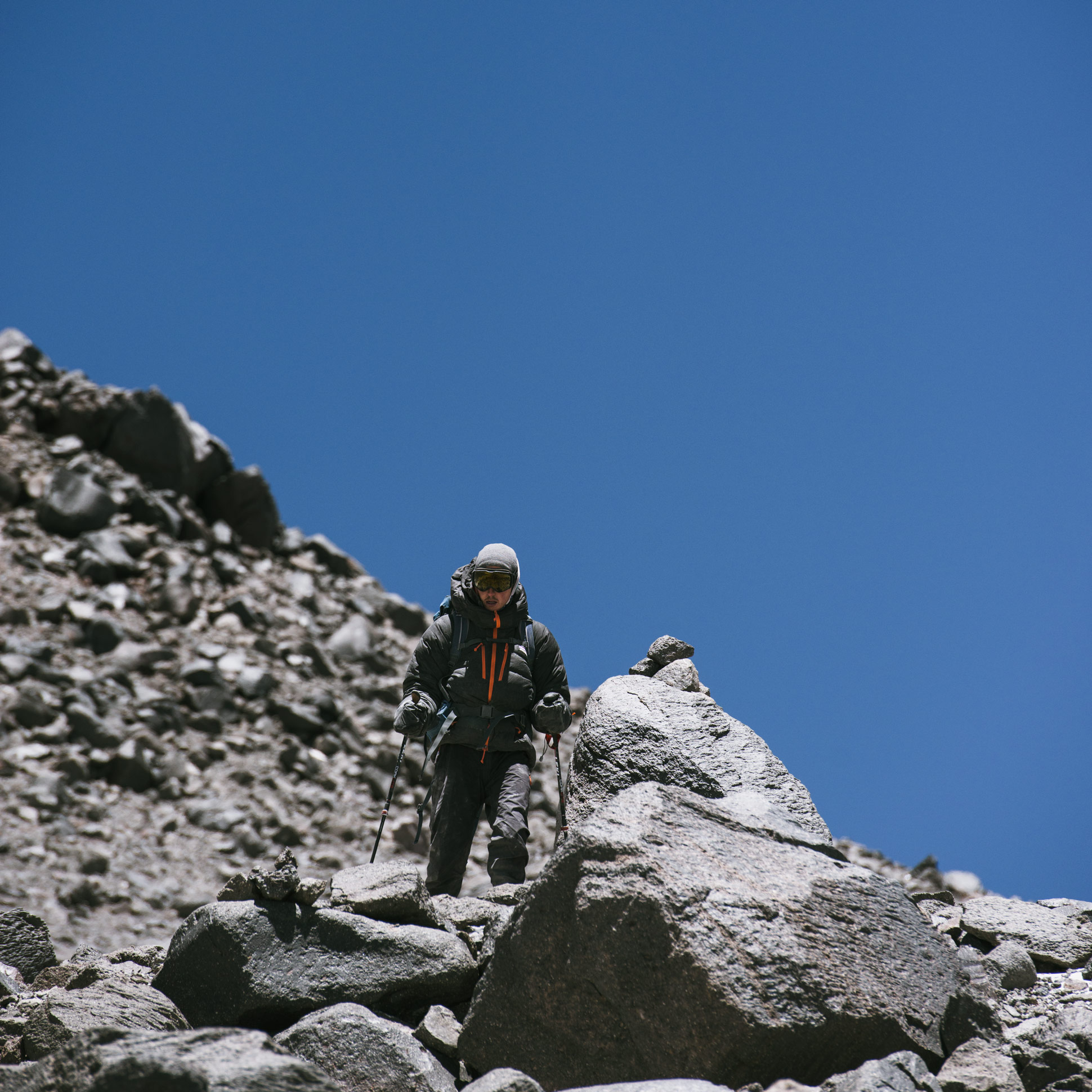
The comparison, in any case, was a far reach. What propelled another man didn’t matter as I found myself trudging upward, in the godless cold, behind only Mario. He kicked his boots into the volcanic debris to gain purchase. I did the same. The rhythm was regular, nearly calming. This pattern repeated itself for distended hours, my mind hanging on to its default survivalist mantras (“One step at a time”; “When you feel finished, you’ve still got fifty percent left”), my toes retaining just enough heat. Gradually, the Andean valley appeared in the twilight. I greeted it with a barrage of disdainful snot-rockets that seemed to freeze mid-air.

“Sol!” Sol! I echoed Mario’s plaintive call. This was our main exchange.


J

ust before the first rays arrived — to better reveal, if not alleviate, our suffering — I felt a disconcerting sensation: freezing at the tip of my dick. First I rubbed it with a mittened hand. Then I yelled ahead to Mario. Using fria and crude sign language, I tried to convey what seemed to be happening. Mario nodded and kept walking. Finally, I took the extra wool socks out of my pack — the ones I’d offered to Rob before he turned around — and used them to insulate the sad, frozen worm. My future children will thank me one day for this, I thought.

After four and a half hours of steep switchbacks, Tejos disappeared behind a ridge. The bright blue speck of Laguna Verde still showed farther beyond. Through my goggles, pieced together by an oxygen-depleted brain, the Andes looked like so many overwrought sandcastles. I unscrewed a water bottle, knocked out a fresh rim of ice, and swallowed as much as I could before the freeze set in.

“One more hour?” I said, wishfully, to Mario.

“One to caldera,” he replied. “One more to cumbre.”

Gear For a Volcanic Adventure
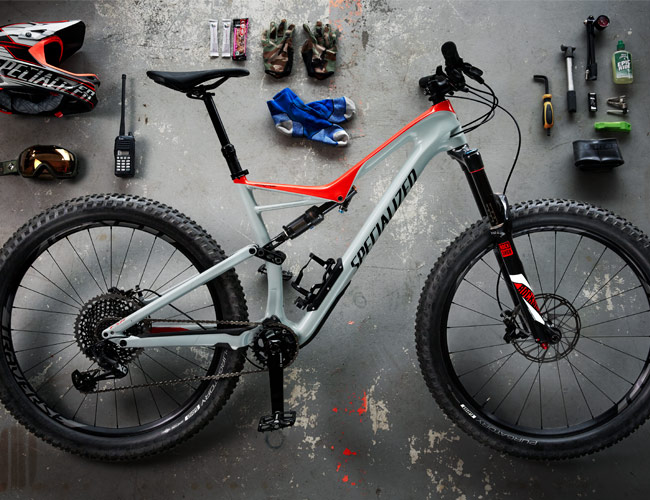
Want to follow in the author’s footsteps? (You sure?) Start here. Read the Story

The buff covering my face had half-frozen around my mouth. A rope of mucus hung from my raw nose. But I was getting somewhere, and beginning to have a foretaste of glory. Forty-five minutes later, the snow-covered edge of the volcano’s caldera appeared: a depression resulting from a long-ago eruption, looking much like a lake in dead winter. A few hundred yards around it, lurching towards the top like lost, seasick fishermen, were the Russians. We’d made up their three-hour lead. I felt a competitive burst of energy. Where had it been stored as I staggered along these past few hours? I saved a thought for later: The human body — to say nothing of the mind — is strange even to itself. Walking above 20,000 feet reminds one of this.

We met them just below the 200-meter climb up to the summit. It was a steep, narrow, bouldered section, one that most mountaineers use fixed ropes to ascend. Conceding our faster pace, they moved aside — for Victor, who could have summited twice by now, the deference seemed begrudging. I pulled myself onto the small summit block minutes later, teeth chattering uncontrollably. How long has that been happening? I glanced at my watch: It was 10:30 in the morning, the hour I usually get down to work, coffee in hand, dog lying at my feet…

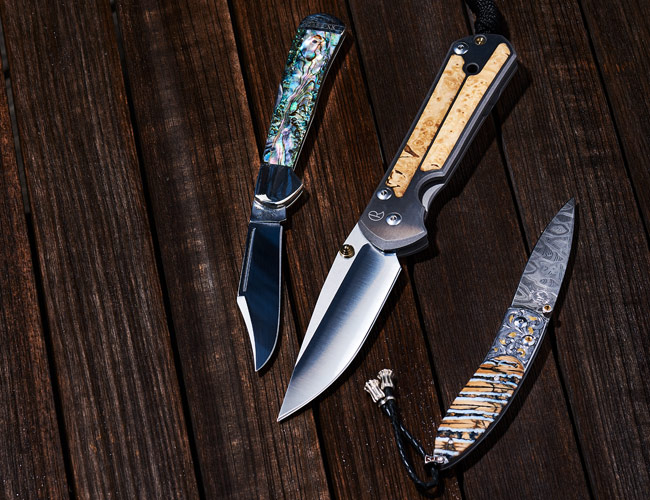
10 Knives Released This Month We Can’t Wait to Get Our Hands On

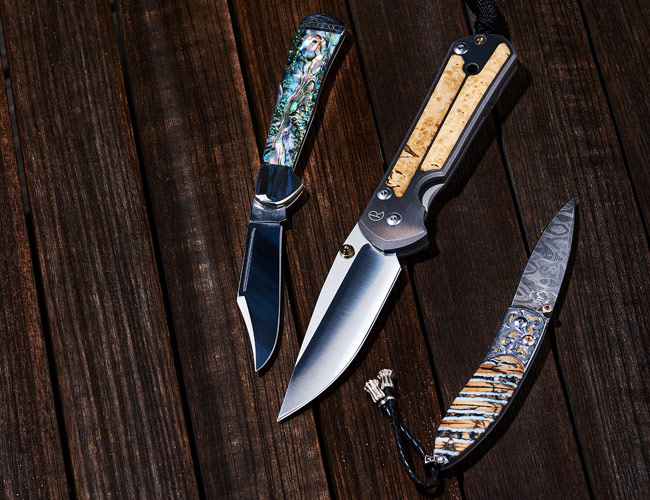
Unlike the many products that follow a pattern of seasonal releases — typically in spring and fall — knife makers bend to no calendar. It keeps us on the edge of our seats, steadily waiting for the next great blade to make its appearance. And while a pocket knife (a quality one at least) is an heirloom-worthy item that will endure through many years of use, we can’t help but get excited when the new ones have us wanting to make room in our collections. Here are all the knives we discovered in June that have us doing just that.


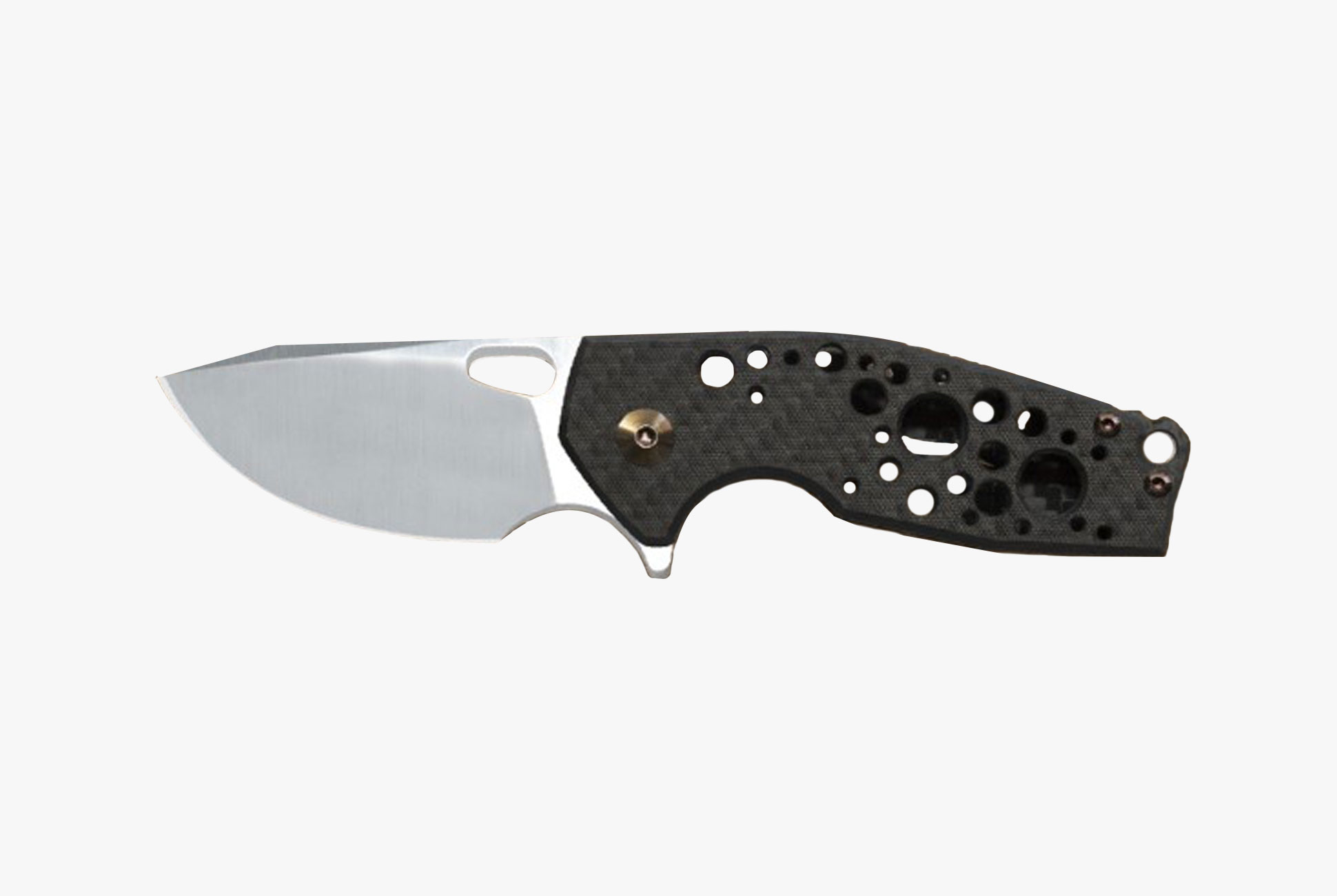
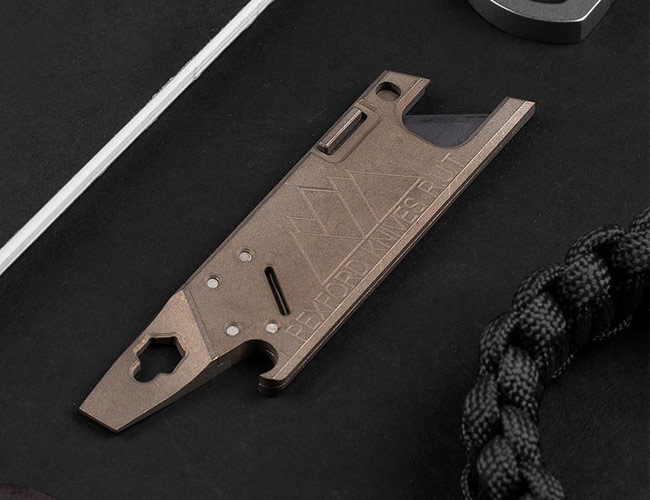
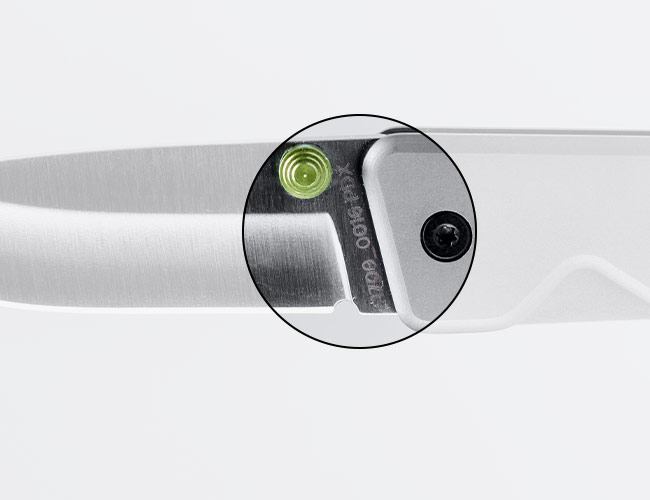
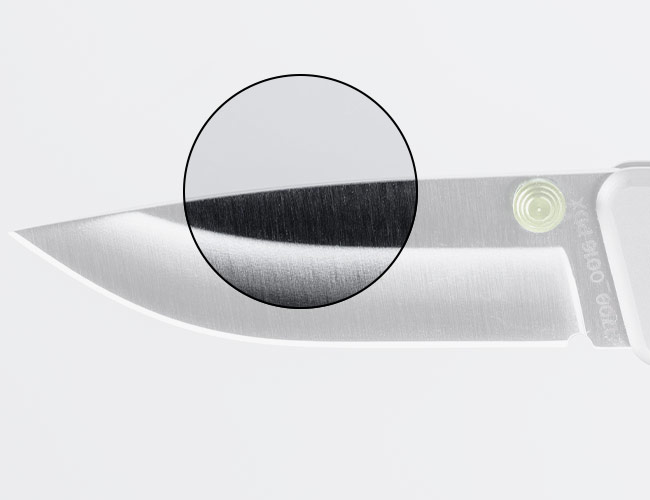
Fox Knives SURU: The knife that took home the grand prize is a collaboration between Fox Knives and designer Jesper Voxnaes. According to the duo, the SURU is the first pocket knife to employ a carbon fiber frame-lock, which assists it in reaching an incredibly light 2.04 ounces. The SURU’s steel blade is 2.32 inches long, and all of the hardware is titanium.

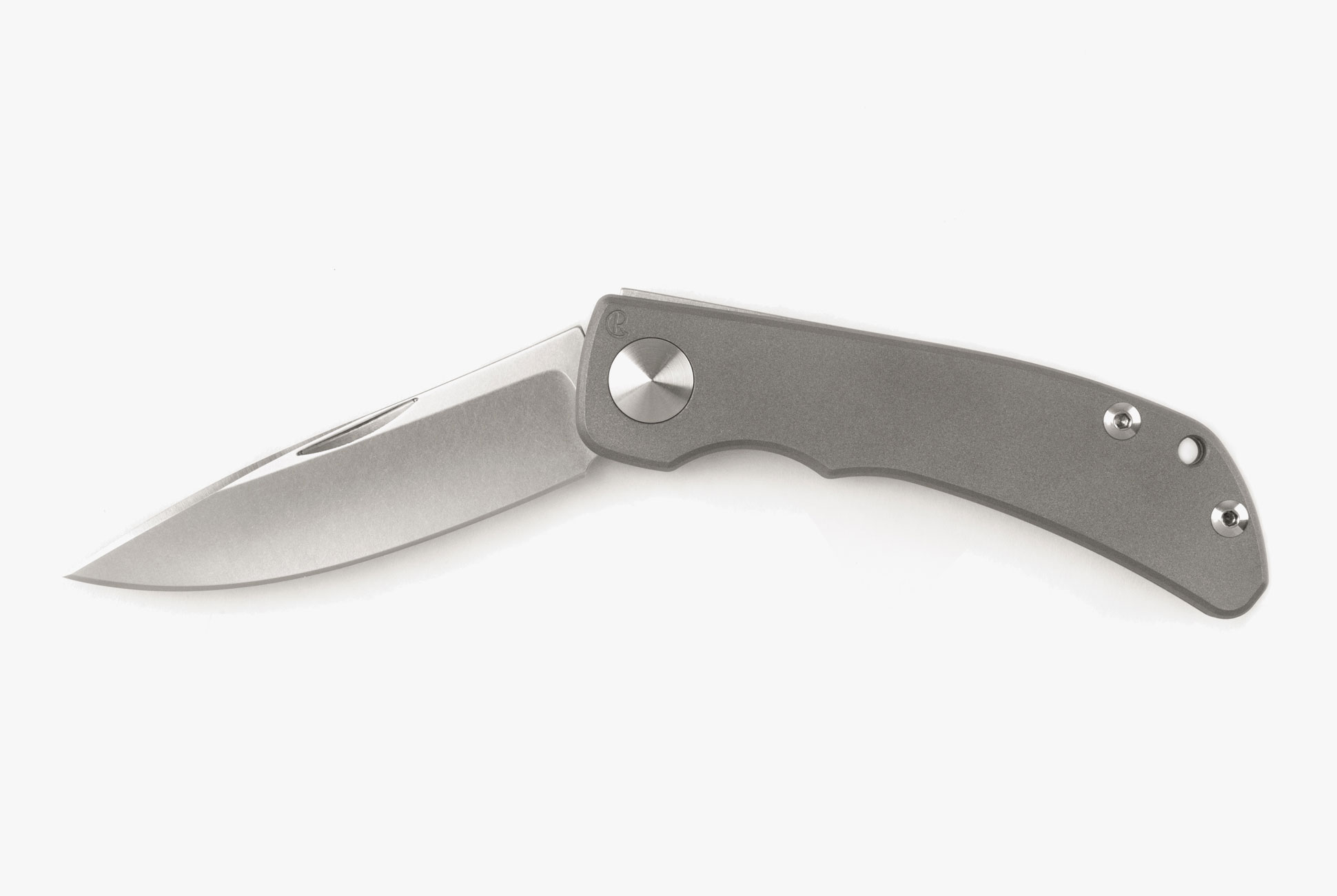
Chris Reeve Knives Impinda: Chris Reeve is well-known in the knifemaking world, and his folding Sebenza pocket knife has become a benchmark against which many knives are judged. The Impinda is the manufacturer’s first slip-joint pocket knife. To maintain safety within a non-locking design, Chris Reeve and designer William W. Harsey leverage differential spring pressure so that opening and closing are smooth and safe actions. The Impinda has a 3.12-inch blade, weighs 3.38 ounces and is made of CPM S35VN stainless steel with titanium handles.

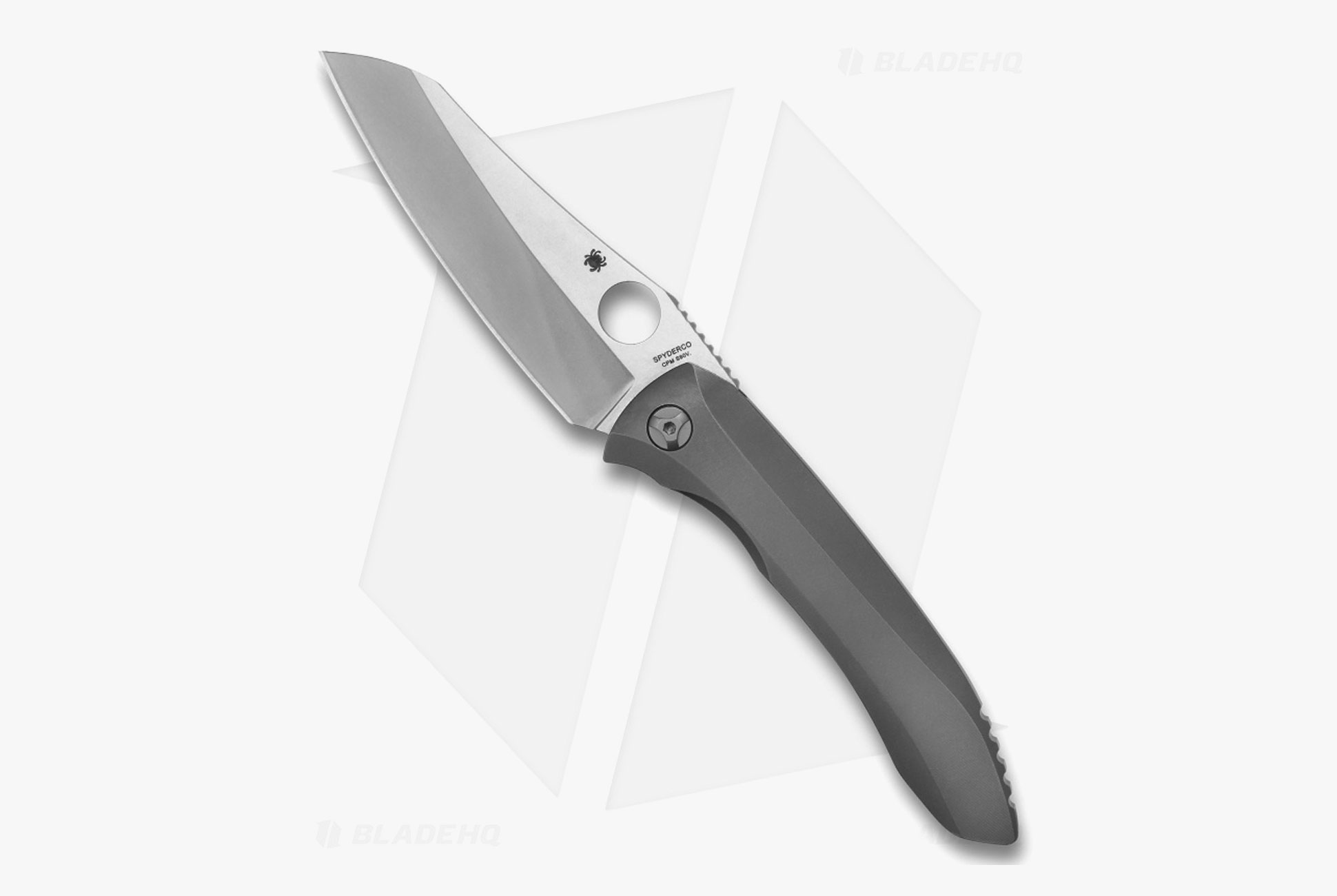
Spyderco Paysan: Spyderco’s highly-anticipated Paysan is the evolution of the discontinued Peter Rassenti-designed Nirvana. The knife uses an integrated frame lock design and Spyderco’s iconic circular thumb hole, which allows for one-handed opening. The S90V Wharncliffe blade is 3.88 inches long, and the handle is titanium. The Paysan weighs 4.4 ounces.

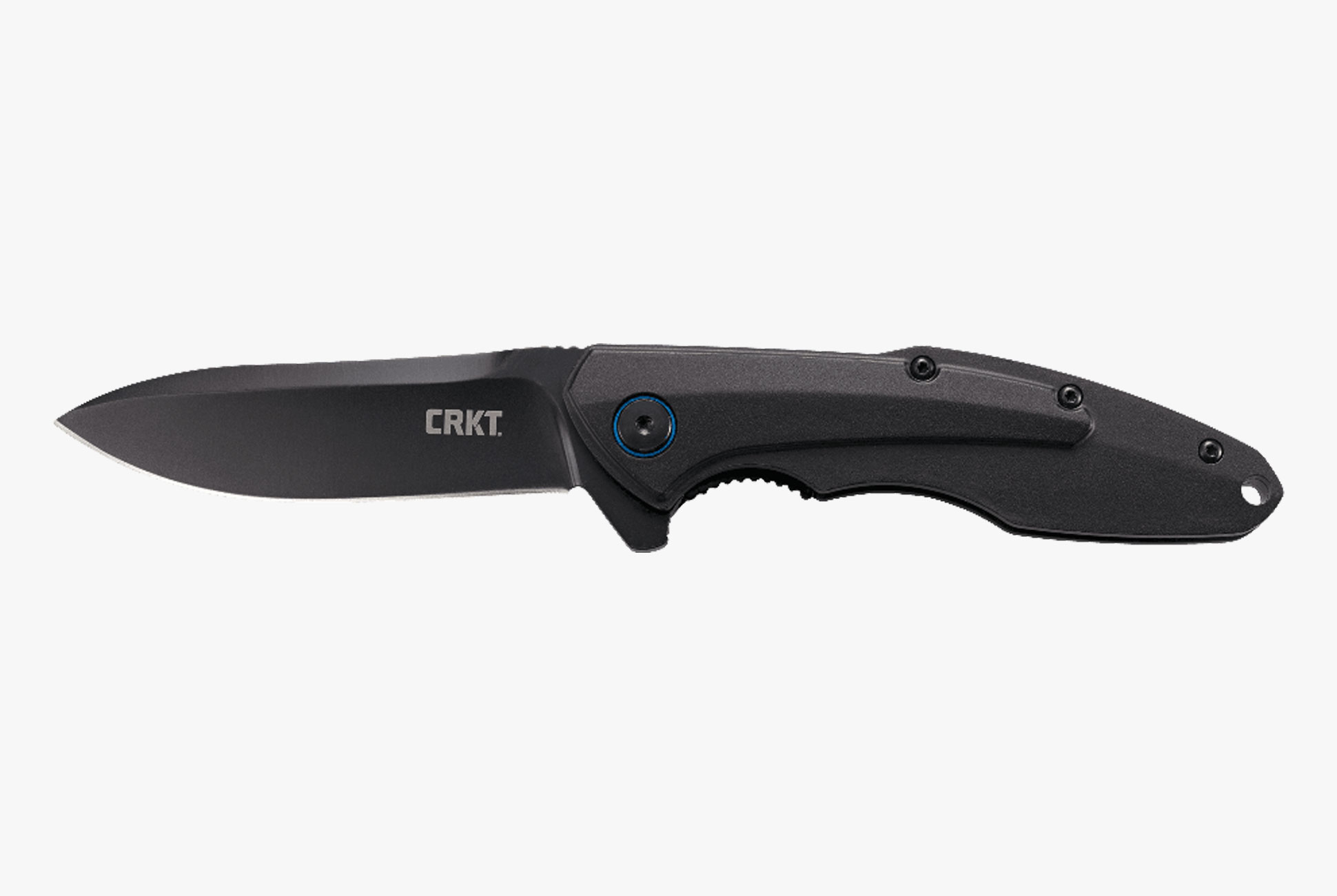
CRKT Caligo: CRKT’s Caligo employs a flipper tab and a ball bearing pivot system to create a super-fast opening action. The knife’s plain edge, black oxide finish, and blue accent give it subtle and stealthy good looks to match that speed. The Caligo has a 3.19-inch blade and weighs 3.4 ounces. It represents as much quality as one can hope to find in a $50 pocket knife.

A Famous Knife Maker Just Made its Most Beautiful Pocket Knife Yet

A Famous Knife Maker Just Made its Most Beautiful Pocket Knife Yet

In the knifemaking world, Chris Reeve Knives is renowned. The manufacturer’s most famous model may be the Sebenza, a folding pocket knife that has become a benchmark against which many other knives are judged. This…

This New Knife Is Subtle, Futuristic and Practical

This New Knife Is Subtle, Futuristic and Practical

Zero Tolerance is known for working with knife makers to create forward-thinking blade designs. Its latest model, a folding pocket knife called the 0470, follows the trend while maintaining plenty of practical everyday use.

Premium Materials Make This New Everyday Pocket Knife Awesome

Premium Materials Make This New Everyday Pocket Knife Awesome

Real Steel Knives has added a new folding pocket knife to its collection. At first glance, it looks like a standard utility folder. Look closer though, and you’ll find premium ingredients that make it great.

Looking for a Tiny Fixed-Blade? This Is the Knife to Get

Looking for a Tiny Fixed-Blade? This Is the Knife to Get

TOPS Knives just released a new tiny knife with a less-common blade shape geared toward maximizing utility.

This Is the Only Utility Knife You’ll Ever Need

This Is the Only Utility Knife You’ll Ever Need

If anyone is going to update a classic utility tool, it better be the lauded creator himself.

This Beautiful Pocket Knife Is Invisibly Innovative

This Beautiful Pocket Knife Is Invisibly Innovative

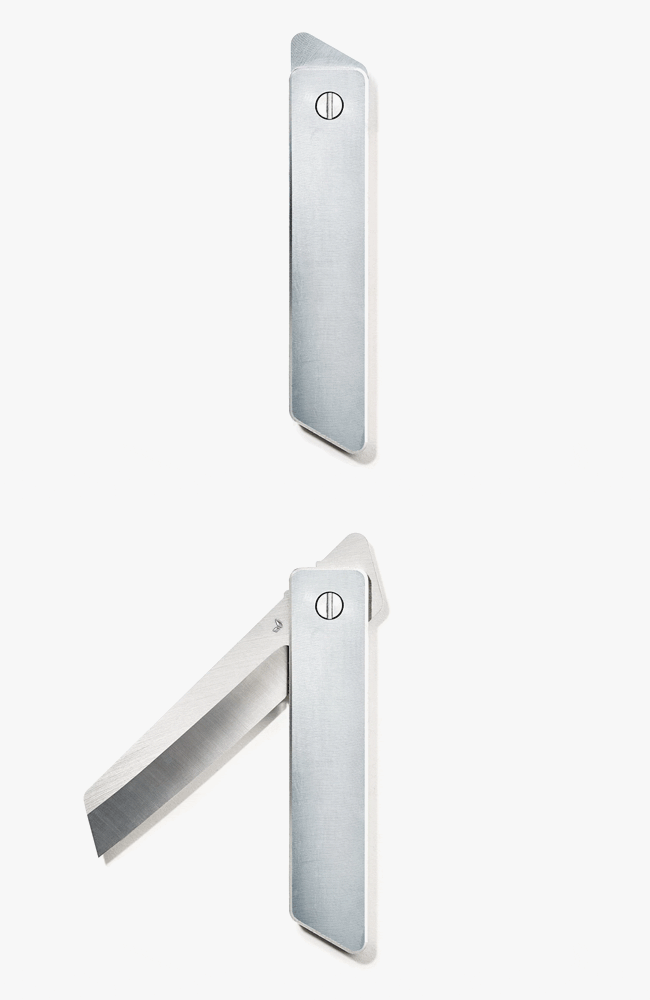
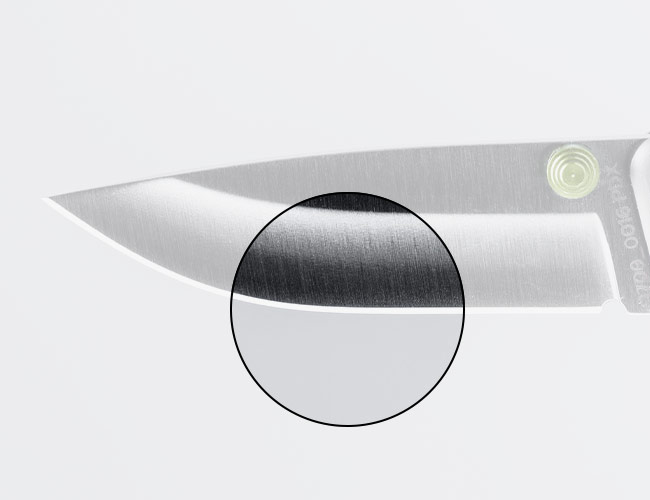
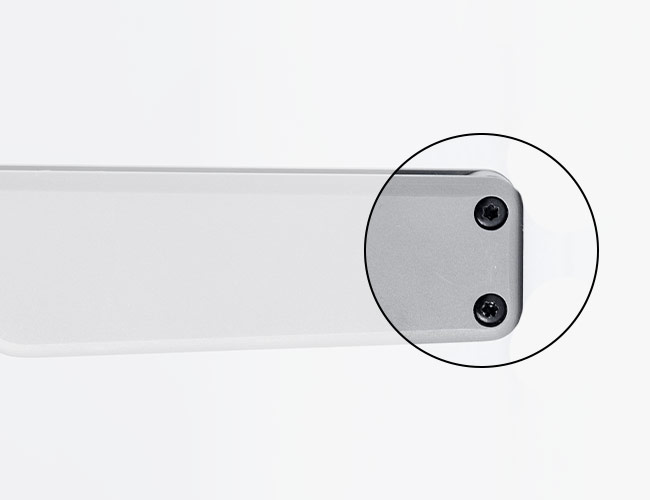
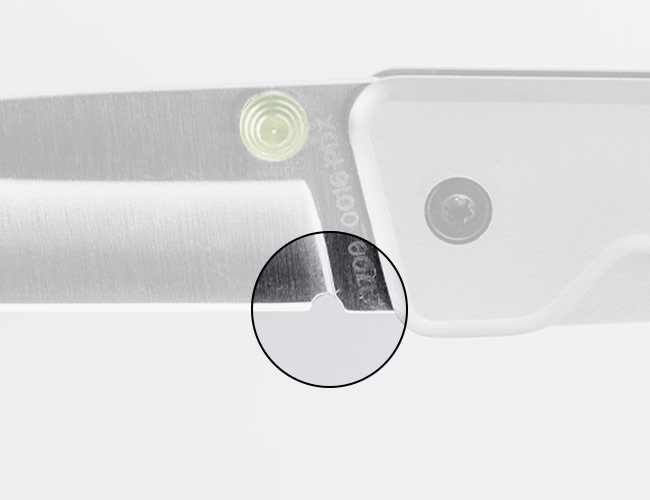
Grovemade’s new Titanium Minimalist Knife is inspired by traditional Japanese blades. At its core is a unique and innovative feature that will go unseen by the untrained eye, and that’s by design.

21 Terms Every Knife-Lover Should Know

grey_placeholder

The vocabulary used to describe a pocket knife may not be as complex as that which speaks to mechanical watches or automobiles, but if you want to sound like an expert, there are a few that you should commit to memory. Read the Story

This Under-the-Radar Brand Is the Most Innovative in the Outdoor Market

From Issue Six of Gear Patrol Magazine.
Discounted domestic shipping + 15% off in the GP store for new subscribers.

Companies like Polartec and Gore spend millions of dollars developing new materials for waterproofing, insulation and moisture-wicking, but none of them would see the light of day if consumer-facing brands didn’t apply the materials to garments you can buy at your local REI.

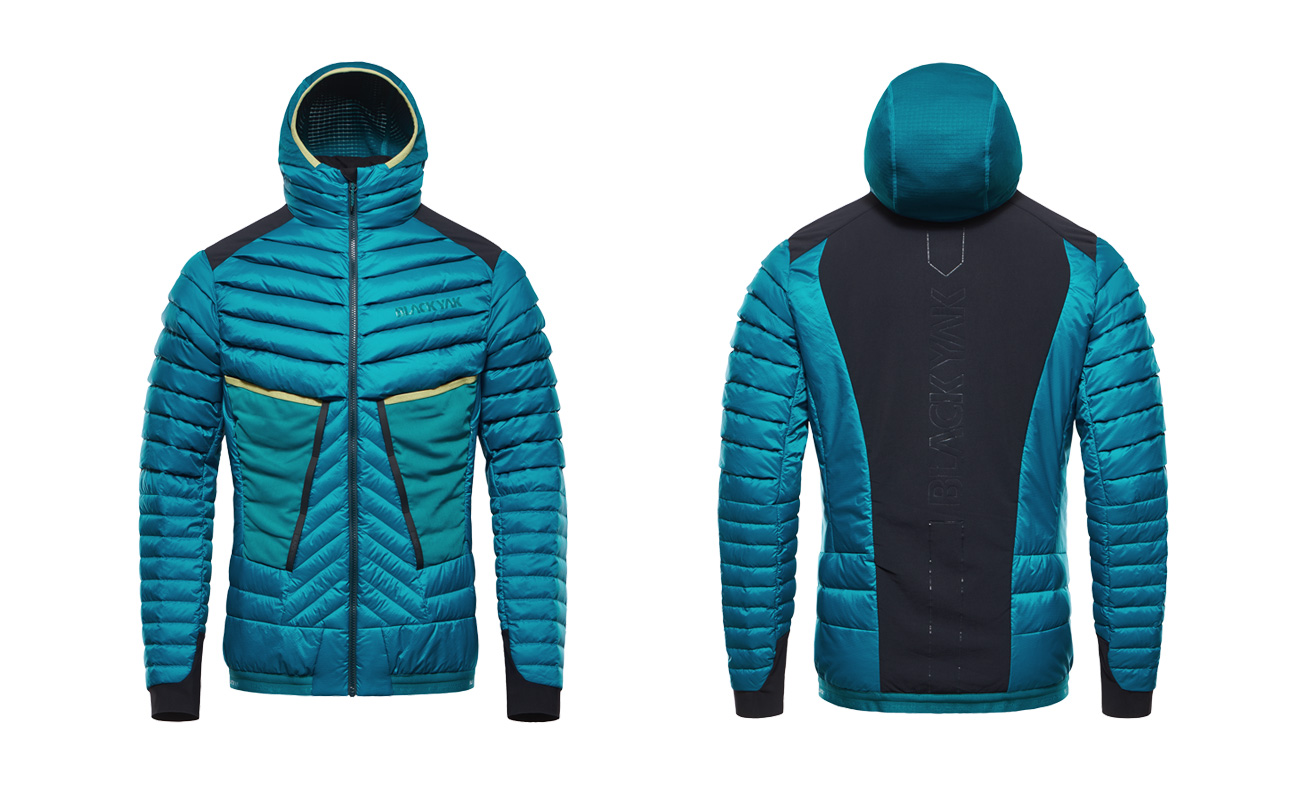
No one understands this better than South Korea-based apparel company BlackYak. Their design team, led by David Randall, studies, researches and prototypes how the newest materials can be integrated into garments in a way that works better than what is currently available from other brands on the market.

“We are a brand that wants to bring innovation back into the industry,” says Randall. “Not just in pretty design lines, not just in pretty little features, but true innovation and real innovation in the materials.” This concept is perhaps best exemplified in the brand’s Hybrid Jacket, a Frankensteinian combination of materials from Cordura, Polartec and PrimaLoft, in addition to traceable goose down.

“What we realized when we were analyzing product groups and product categories,” says Randall, “was that there is actually something which we defined as ‘mid-shell’ — which was a completely new category. It’s kind of an answer to the soft shell — one of these materials that could be fantastic, but nobody knows what the bloody hell to do with it.”

The mid-shell he’s referring to is essentially a more versatile version of the traditional soft shell. It can be worn as a highly water-resistant outer shell or layered underneath a fully waterproof shell as an insulator. With the right lining material, it can even work as an insulated jacket. In theory, it can make two or three jackets from your wardrobe obsolete in a way that a 3-in-1 jacket never could.

The material that’s making this new mid-shell category more feasible was developed by Gore, the company famous for Gore-Tex waterproof membranes. It’s called Gore-Tex Infinium, and it’s focused not on keeping you dry, but on keeping you warm. Randall sees it as integral to the mid-shell. “With Infinium,” he says, “I think what you’re doing is you’re allowing the user to perfectly fill this gap in technical product.” By filling that gap, users can actually consolidate their closet and simplify their outdoor gear. It’s innovation that leads to us owning less, rather than more, and so it feels like BlackYak is thinking more about their consumer than about bullet points on a marketing plan. Which might be the most innovative thing of all.

Why This New Parka Makes Good Summer Outerwear

Traditionally, parkas are meant for winter. The original form of the jacket was conceived by the Inuits, who made it from the skin of caribou and seals, lined it with fur from the same animals and sometimes coated it in fish oil for water resistance. The parkas we know today trade those organic materials for lab-created synthetics, but the idea is the same — these are jackets designed to help humans survive outdoors in the harshest cold environments.

They don’t have to be though — Outlier’s new F.Cloth Sun Parka is for warm weather. The jacket is made in New York City using Swedish F.Cloth fabric, which is a blend of nylon and elastane. These ingredients give the Sun Parka an impressive amount of stretch, making it ideal for activities involving a lot of movement, like climbing, hiking and paddling. It’s also treated with a light DWR finish for water-resistance.

But why would you want a parka in the summer? Well, in this case, “parka” is used flexibly; think of it as a lightweight jacket instead. As for the reasons, there are a few notable ones worth mentioning — it’ll be more breathable than a raincoat and provide a suitable amount of protection (except in heavy deluges), it’ll help guard against the wind, which can have a quick chilling effect. It’s also a skin-friendly way to block the sun — the parka permits less than 1/50th of UV rays to pass through its fabric. And, as can be expected of any Outlier garment, it looks pretty damn good.

Today in Gear

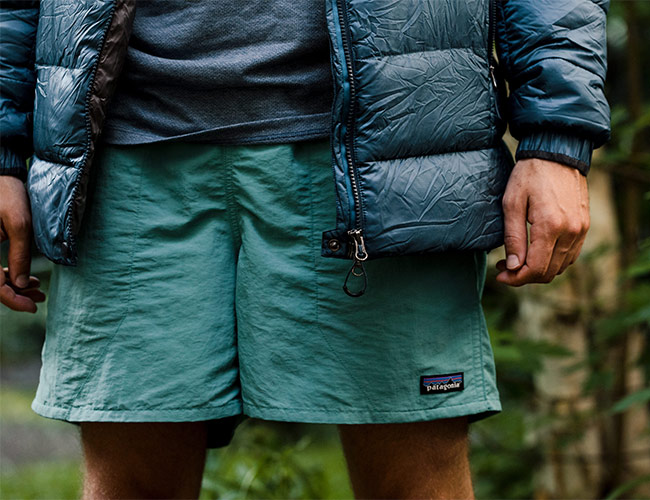
Before you pack all your winter clothing into a box bound for the attic, stop, think and take that puffy jacket back out. Yes, an insulated jacket is great for summer use. Here are all the reasons why. Read the Story

The Used Gear We’d Buy Right Now Under $150

Welcome to another installment of Staff Picks from our Outdoors and Fitness team. Every other week, we select our favorite pieces out of the gear we’re testing, mainstays in our kits, as well as items on our wish lists. It’s like a sneak peek at the gear we’re testing and what we’re stoked on. Have something you think we should check out? Or just want to say hi? Drop us a line at outdoor@gearpatrol.com.

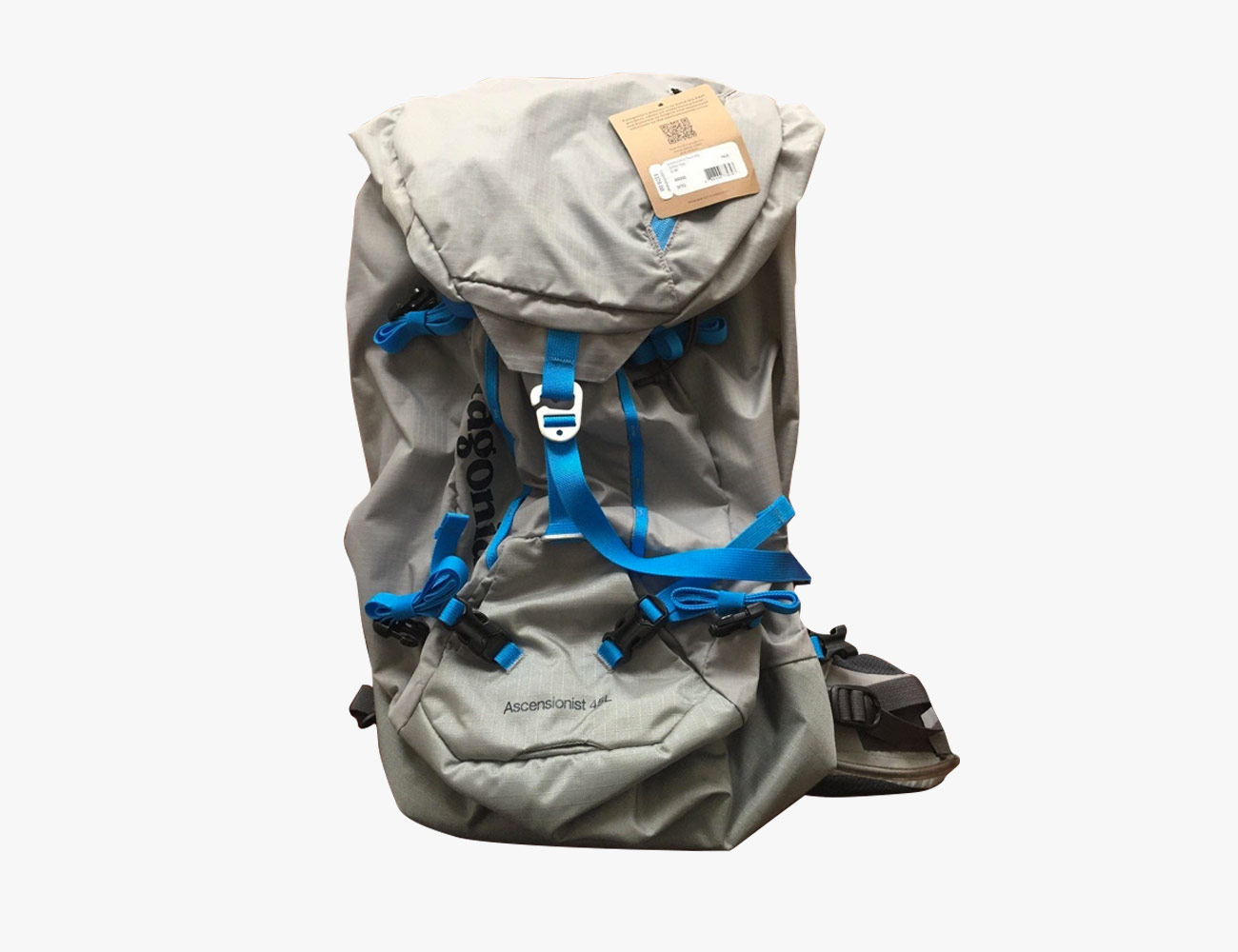
Patagonia Ascensionist 45L Pack

When the Ascensionist first launched a few years ago, it was Patagonia’s first technical pack in a long time. While the bag is designed for alpine pursuits like mountaineering and climbing, it’s equally well-suited to shorter overnight backpacking trips and other general outdoor pursuits. It’s also a suitable commuter bag if you need extra space to transport a change of clothes. — AJ Powell, Assistant Editor

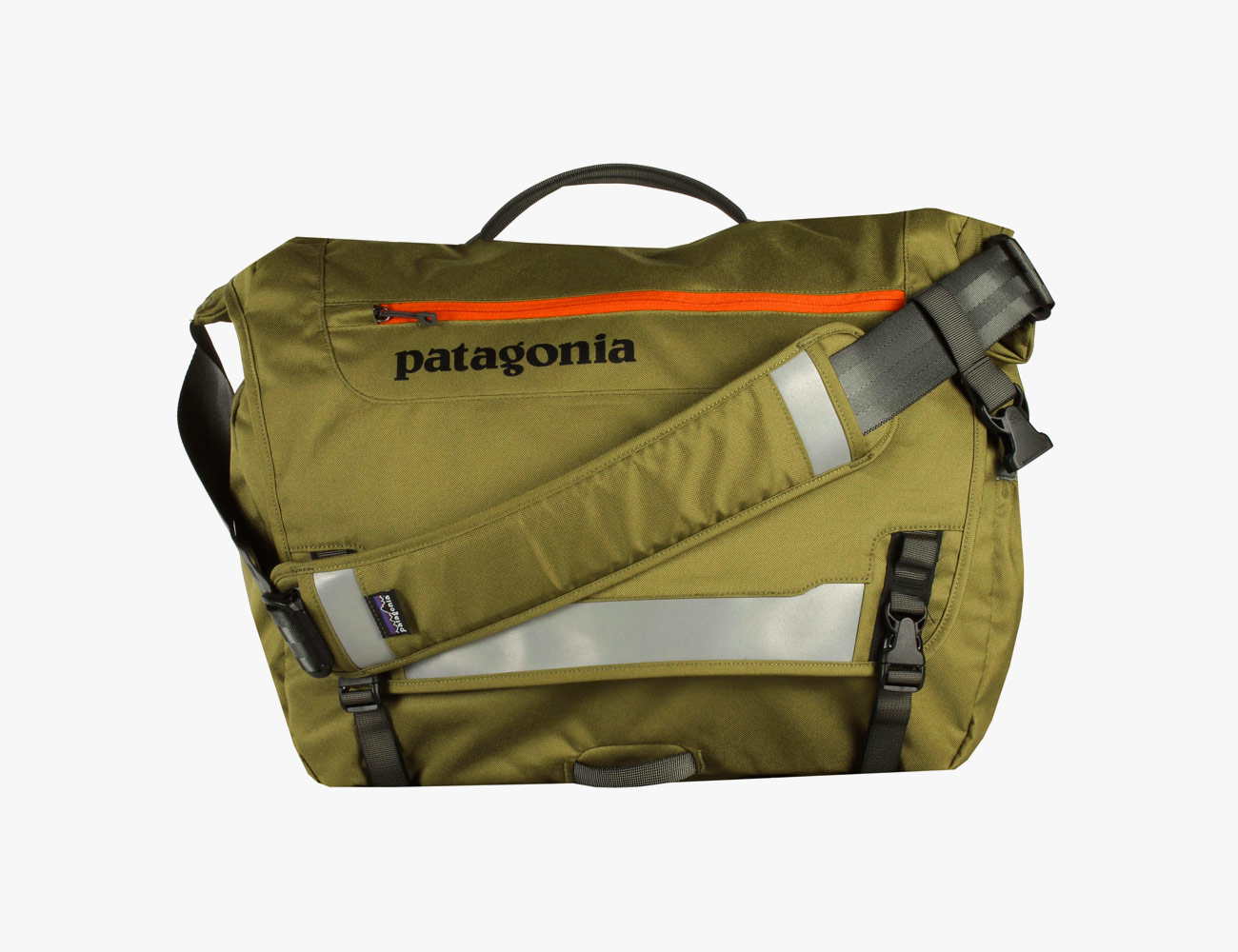
Patagonia Worn Wear Critical Mass Bag

As a recent convert to the bike-commuting life, I’m now on the hunt for the perfect bike bag. I will typically let my fingers go numb trying to carry in all of my grocery bags at once, so you can imagine how much I try to stuff into bags that fit on a bike. This sturdy bag made from recycled polyester is sure to last me longer than my last one did (that was less than 30 days). The olive color is back in style, and will hold up to any dirt, dust and bike grease that are bound to speckle the bag. — Meg Lappe, Staff Writer

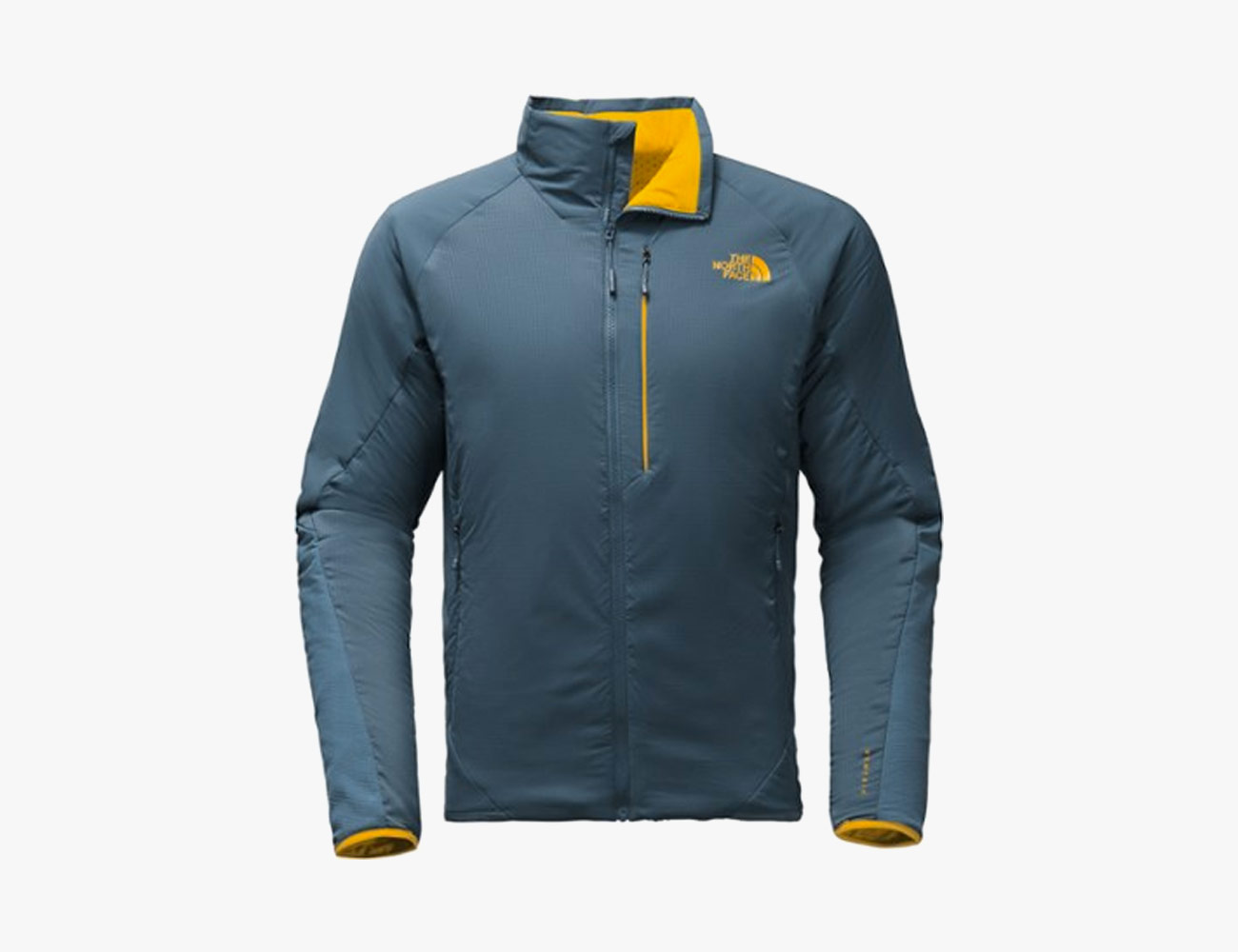
The North Face Ventrix Jacket

Announced last year, Ventrix is The North Face’s first foray into active insulation. The jacket is filled with breathable polyester insulation similar to other puffy synthetic jackets, but unlike other fills, Ventrix insulation is outfitted with special perforations that open and close with motion. It works — we ranked it one of our favorites of the year — and the company plans on expanding the tech into new styles for the coming fall and winter seasons. I’d happily pay a little less for a used one. — Tanner Bowden, Associate Staff Writer

Note: Purchasing products through our links may earn us a portion of the sale, which supports our editorial team’s mission. Learn more here.

Looking for a Tiny Fixed-Blade? This Is the Knife to Get

As tiny knives continue to carve out what’s now well-established territory in the everyday carry category, it’s become clear that small folding blades are markedly more common than their fixed-blade counterparts. It’s likely because a fixed-blade construction makes these knives stronger and more adept at tougher tasks like processing firewood and building shelters, a trait that diminishes as size scales down. Folders also have the advantage of folding, which allows them to get down to closed lengths as small as two inches.

Safety is also a concern — a small fixed-blade knife may actually be more accident-capable than a larger one, simply because grip and control are sacrificed for size. TOPS Knives’s new Little Bugger might be the exception though.

The Little Bugger has all the hallmarks of a well-built fixed-blade including a full-tang construction and micarta handles, but it was designer Matt Graham’s decision to use a Wharncliffe blade shape that makes it suitable for shrinking. Wharncliffe knives feature a flat edge and a spine that slopes from handle to point, thereby creating a shape that reduces the chances of accidental piercings while maintaining a practical cutting edge. Wharncliffes have historically been favored by woodworkers, farmers and sailors for its precision and utility.

The Little Bugger is 5.75 inches in length with a 2.38-inch blade made of 1095 stainless steel. The design leaves enough handle for a solid grip and enough blade for a range of tasks. It isn’t the smallest tiny knife we’ve seen recently, but given that it’s a fixed-blade and a Wharncliffe at that, it’d be a worthy daily-use knife for any EDC kit.

21 Terms Every Knife-Lover Should Know

The vocabulary used to describe a pocket knife may not be as complex as that which speaks to mechanical watches or automobiles, but if you want to sound like an expert, there are a few that you should commit to memory. Read the Story

How NASA and Air Jordans Inspired the Creation of a New Outdoor Brand

I

f Jon Tang had it his way, we’d wear his shoes on Mars, but while the masters of astrophysics devise a method to get us there, he’ll settle for virtually anywhere else. Tang has been designing footwear for roughly ten years and has worked for “every brand under the sun,” according to him. Right now though, the only brand he works for is his own: FRONTEER.

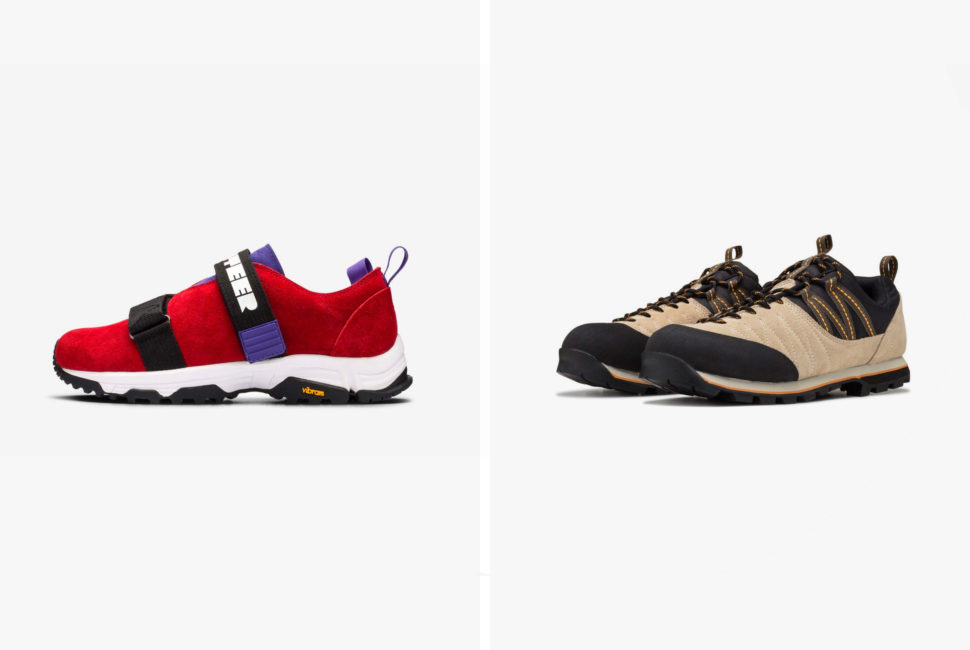
FRONTEER is small and startup-y. Its products, which consist of a handful of footwear silhouettes along with a few hats, are filled with harmonious contradiction; their palettes are bright and dull, their constructions are uncomplicated and complex. They straddle nostalgia and avant-garde, outdoorsy and street — and it’s all by design.

Tang is a mash-up of sorts himself, with unequal parts Texan, New Yorker and Californian. He grew up in the Lone Star State, where he developed an affinity for sneakers as well as a fascination with astronauts and outer space that he picked up during class trips to NASA’s Johnson Space Center. Despite his urban upbringing, that wonder extended to the outdoors, for which Tang devotes a special affinity.

Basketball shoes, NASA, rock climbing — they’re all encompassed by FRONTEER in one way or another. To understand Tang’s brand, it’s best to let him speak to it. Below, he talks soccer cleats, Chuck Taylors, outdoor lifestyle and much more.

Q:

What lead you to start FRONTEER?

A:

I grew up in sneakers. I grew up in Michael Jordan Airs and I grew up playing soccer as well and that style, and cleats, is a very different thing. Cleats were actually more expensive than basketball shoes. There’s always this idea of really high-priced conceptual product that always has this story to it.

I grew up in Texas, life before the Internet, and we were outside a lot. I enjoyed the stars, the sunsets. NASA is also in Houston, and anyone growing up in Houston as a kid went on field trips to the Johnson Space Center. I was always very interested in and inspired by the Space Center, it gave me this idea of “the beyond.” I loved things like space suits and all the gear that they’d have to put on for this futuristic journey. I like camping, I like hiking, getting out and climbing. Space is that times a billion. I like the play between the two.

I was designing and working for three different [footwear] companies, and I would see things that I’d be really inspired by and think, “Well that’s pretty cool, but if I had my own company I would do it like this.” I started to take all these bits of brainstorming and compile them together, and basically ten years later, I had an idea of what to do for a brand. I had pretty much everything thought-out beforehand down to like the company font.

Then in 2015, I wanted to pull the trigger; I was bursting at the seams with ideas and so I started the brand.

I always felt like the outdoor market had this void, this gap, between performance products and lifestyle. Right now a lot of outdoor products dive into “Oh, this is for climbing Mount Everest.” And it’s great and that product is amazing and I would definitely wear it to go do that, but I wanted to do something that was like “Well, I’m inspired by the outdoors but I’m a city guy, ya know?” I walk around on cement so I can’t have something like a TPU shank or a stiff last or hard compound rubber, which normally you would need to make sure jagged rocks don’t go right through your boot. You don’t need that in the city. But I still love what the products represented, what the colors did, the stories, and the iconic styles, and I wanted to be able to wear that every day.

Q:

What did the first shoe look like?

A:

The first shoe was the Super Gratton. I dove into climbing because I really liked climbing footwear and I thought that was a missed opportunity — all these climbing shoes are beautifully made, they have such detail, they have such story to them but you can’t walk around in them. When I go out and climb I would wear everyday shoes and then I slip into the climbing shoes and for that moment I’m the climber and I get to be a part of that culture, but I didn’t like the idea that I couldn’t just walk around in them.

The Super Gratton took the very first climbing shoe that was ever made, it was also called the Super Gratton actually, it wasn’t meant for walking, but that shoe in itself was inspired by [Converse] Chuck Taylors. Pierre Alain, a French climber from the sixties, worked with a cobbler to make a climbing shoe based on the Chuck Taylor.

I liked the idea that Alain worked with the cobbler to make a specific shoe for rock climbing and so I wanted to bring it full circle, where I’m taking the rock climbing shoe now, to come back to everyday street. Instead of raw sticky rubber on the bottom, I use compound rubber so you can actually walk around. I tried to keep as much of the essence of the original Super Gratton.

Q:

How did you come across that story?

A:

I have a lot of these old climbing books, a lot of just stories I read online and in editorials. I try to stay connected to the culture. I just love vintage in general and everything I do connects to the past in some form.

Q:

Is that the mindset for every piece you design?

A:

It is. It’s like a good campfire story. There’s always a story. We as humans are emotionally connected to good stories and that’s why books and movies will always be around. Every year and every product drop I do, there’s always a general theme. I try to find interesting and unique things and tell untold stories. It feels slightly educational to some extent.

Every time I went to the Johnson Space Center I would find out something new, I find that really inspiring and I’d like the product to always be about something you’re discovering. I want people to come to the brand and when they see something they’re discovering, not only the product and its newness, but also the story that it represents.

Q:

Do these stories look to the past or do you look adjacent in time to things that are happening now?

A:

It’s what I call a recontextualization through familiarization. I try to re-contextualize things through something that’s somewhat familiar already. Take something from the past that you might find familiar and I try to re-contextualize it for today. I like to look one foot in the past but have one foot in the future — toward something different, something that may not exist.

Q:

Do you think the outdoor industry is more receptive to brands and products with a story than general sportswear brands are?

A:

Sportswear in general is a much more mature market in that sense — I don’t mean in regards to finances but the mass consumers of sportswear are much more receptive to very conceptualized storytelling. The outdoor market is a little bit more conservative on the storytelling, but only right now. The consumers have been receiving the same kind of storytelling for the longest time now and I think they are looking for something different.

Q:

What do you think of high fashion labels adopting outdoor style cues?

A:

I think a lot of these high fashion brands are looking to outdoors as a conceptual inspiration because the outdoors has such good product and stories to tell. I think fashion companies are looking for the next big inspiration and a large pool of stories to tell, the next movement of fashion. The outdoors provides a good pool for them. I embrace it, I don’t see it as a hard competition kind of thing and if anything I think it’s good competition and it builds good product. It makes people think a little bit more.

Q:

Do you think there’s any danger in losing the functional piece?

A:

That’s a line that I always teeter with. A fashion brand isn’t rooted and doesn’t have a need to be in the very functional side, and they might lose out on functional need. I think it’s more about embracing what you will be standing for. I don’t think there’s anything wrong with losing out on some of the functional need as long as you as a brand or as a company own up to not taking on those needs.

I would never say to go climb Everest in FRONTEER because it’s not meant for that. But, I will still give you a Vibram outsole to walk, even in the city — to go to the bar, to walk your dog — because I appreciate what Vibram represents and I’m willing to spend more money on a product because of what it represents. I take as much of the functional need as I can from the outdoors and I put it into the shoe and as long as you can still walk around in it every day, I will keep that functional need there. I embrace the fact that I am a lifestyle company, yet I will give as much outdoor features as I can.

Q:

In your opinion, what’s the most important shoe, ever?

A:

It’s hard to say because footwear is, at the end of the day, a form for our feet. And in different instances throughout time and history, footwear has come to mean different things in terms of function, in terms of a general need and in terms of storytelling. A lot of it depends on what you’re focusing on. It’s so contextual.

For me, personally, before the hype and before anything the Jordan 11 Concord was my favorite shoe because it was the shoe that got away. I grew up poor and my parents couldn’t buy me these expensive, nice shoes all the time. I used to get Eastbay catalogs and cut out shoes from these catalogs and throw them on my wall. I think it’s what manifested me to dive into footwear — I’d just look at these photos down to the last little ink drop. I dreamed of having these shoes.

What happened was I used to conjure up an allowance — birthday, Christmas, anything that I could from my parents — and this was like $20 basically and that was a lot. I’d buy shoes off kids’ feet. A lot of the kids around me would get the new shoes every week, and reselling wasn’t a thing back in the day. My classmates, they’d get the new ones the next week and just throw away the old ones. And I’d be like, ‘Hey can I buy the shoes off you? Here’s $20.’ And they were like, ‘Sure’ — they were going to throw them away anyways.

And so I got into this practice with these kids that were the same shoe size as me. I got a couple shoes out of that, and then one day the Jordan 11s came out and they were beautiful, they were amazing and I loved them. And I went to the same kid that I had been buying shoes off of and was like, ‘Hey, I have $20 can I buy these shoes off you.’ And he for the first time was like, ‘No, but how ’bout $50?’ And I didn’t have $50, and I couldn’t buy them.

It’s ironic because now on eBay they go for like $500, $600, $1,000 and I couldn’t get them for $50. Luckily, over the years because I’m in the industry I was able to get a pair. To me, that is the most important pair of shoes because they were the ones that got away. That was in fifth grade. It has everything to do with the story and this emotional connection to these shoes and that’s why that shoe means so much to me and it still means so much to me.

Hip Packs Are Back — Here are 11 Worth Buying

Fanny packs, waist packs, hip packs — whatever you call them, the ubiquitous 90s accessory is back. While fashion designers are incorporating them into their runway shows, the real place the hip pack shines is in motion. Whether on the trails or on the road, a waist pack is an easy, lightweight alternative to a hefty backpack or a hydration pack while riding. The fanny packs of years past filled with pens, snacks and an autograph book (let’s be honest, I never wore mine anywhere besides Disney), have been updated with pockets and longer-lasting fabric.

While you can sport one of these pretty much anywhere, the two places where you’ll get the most use out of them is on day hikes and mountain bike rides. When you’re hiking up a mountain, there’s absolutely no need for you to carry a huge pack. All you need is a water bottle, snacks and an extra layer — all of which can fit in a hip pack.

For ripping up trails, a hip pack is an easy way to ditch cumbersome backpacks. Any core repair items and snacks can go in the pack along with pressure gauges, tools and CO2 canisters. Some hip packs for cycling now come with hydration options inside, so you can fit water in there as well. It’s an easy way to take a load off your back.

Hiking Hip Packs

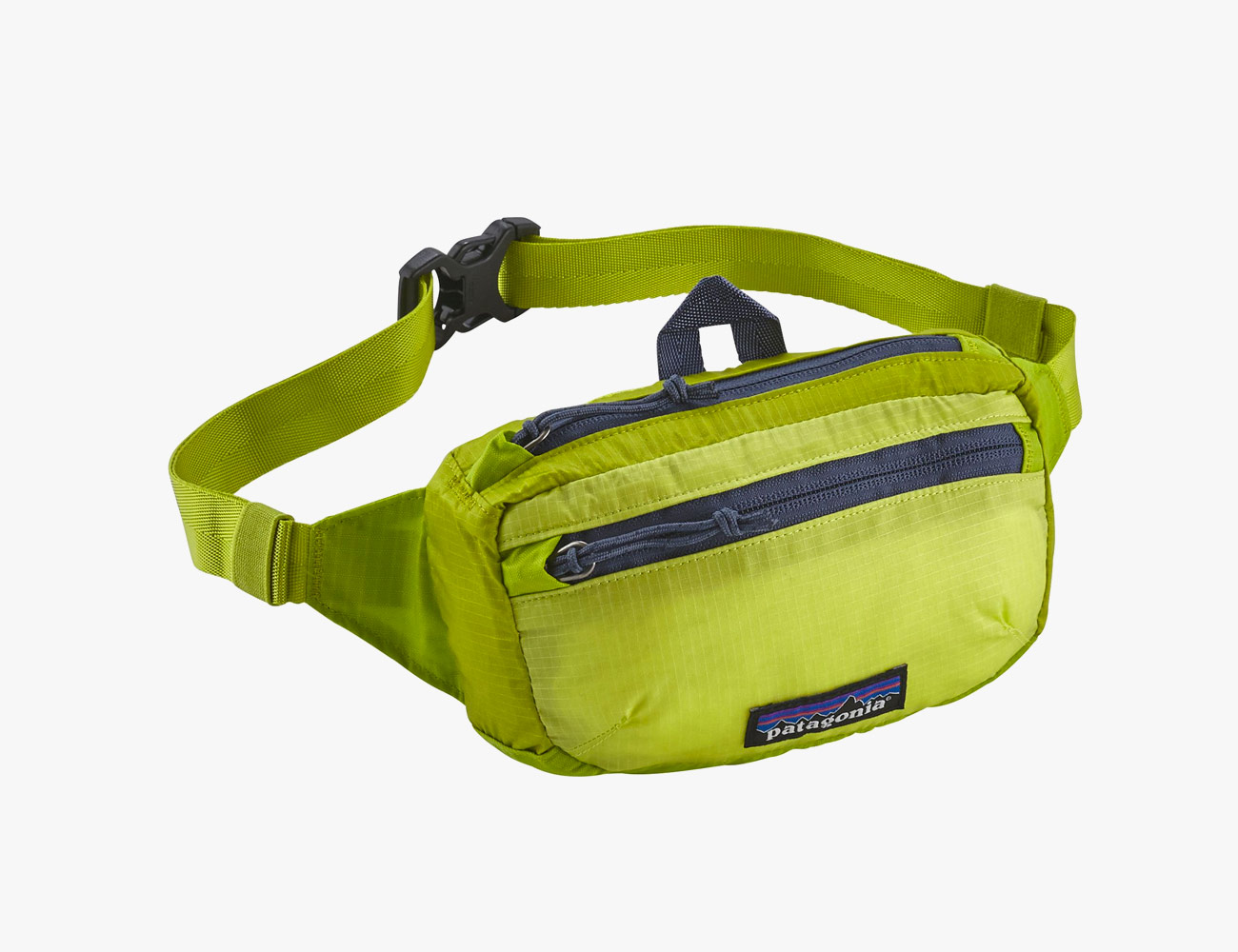
Patagonia Lightweight Travel Mini Belt Bag

Patagonia’s pack folds up into itself, so you can stash it in a larger pack for traveling purposes until the day calls for its usage. The ripstop nylon fabric and padded back further add to the pack’s durability and comfort respectively.

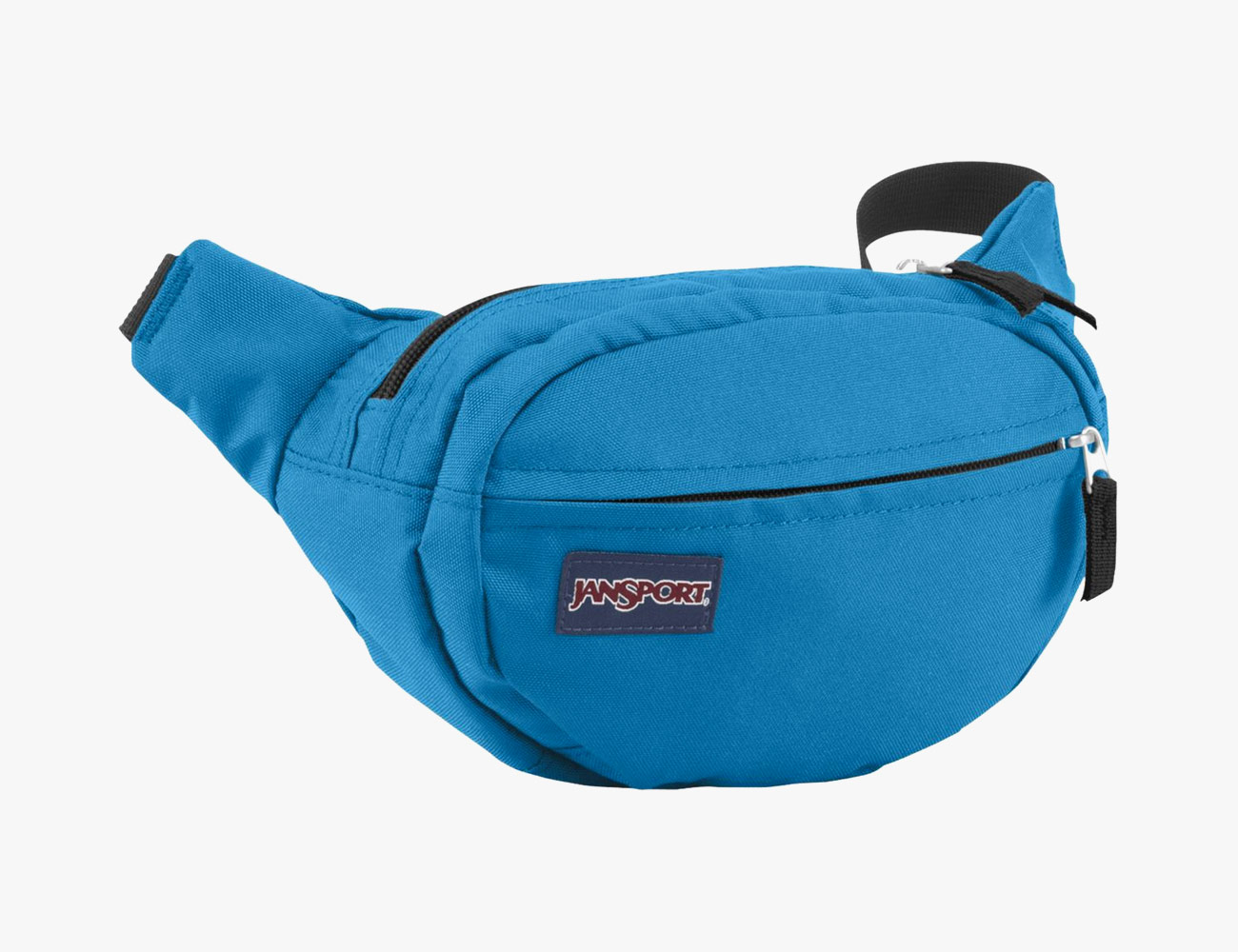
JanSport Fifth Avenue 2L Lumbar Pack

The JanSport Fifth Avenue pack is one of the originals. It’s simple and durable, and features two liters of space. If you happen to brush up against any rocks, the 600D polyester material will take it in stride.

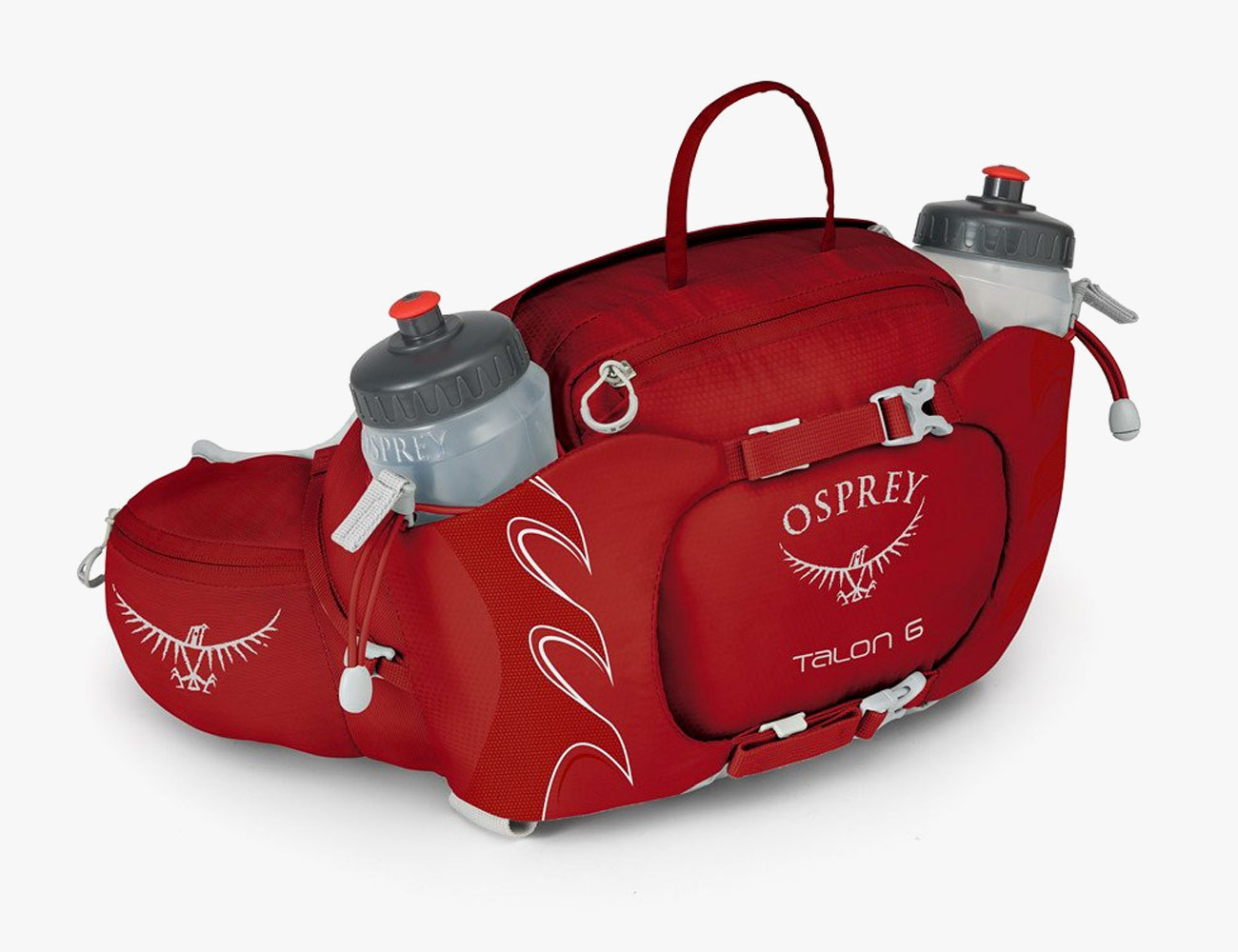
Osprey Talon 6

The dual pockets on the Talon 6 are ideal for water bottles, and the extra pockets along your hips hold all the tiny essentials like keys or a pocketknife.

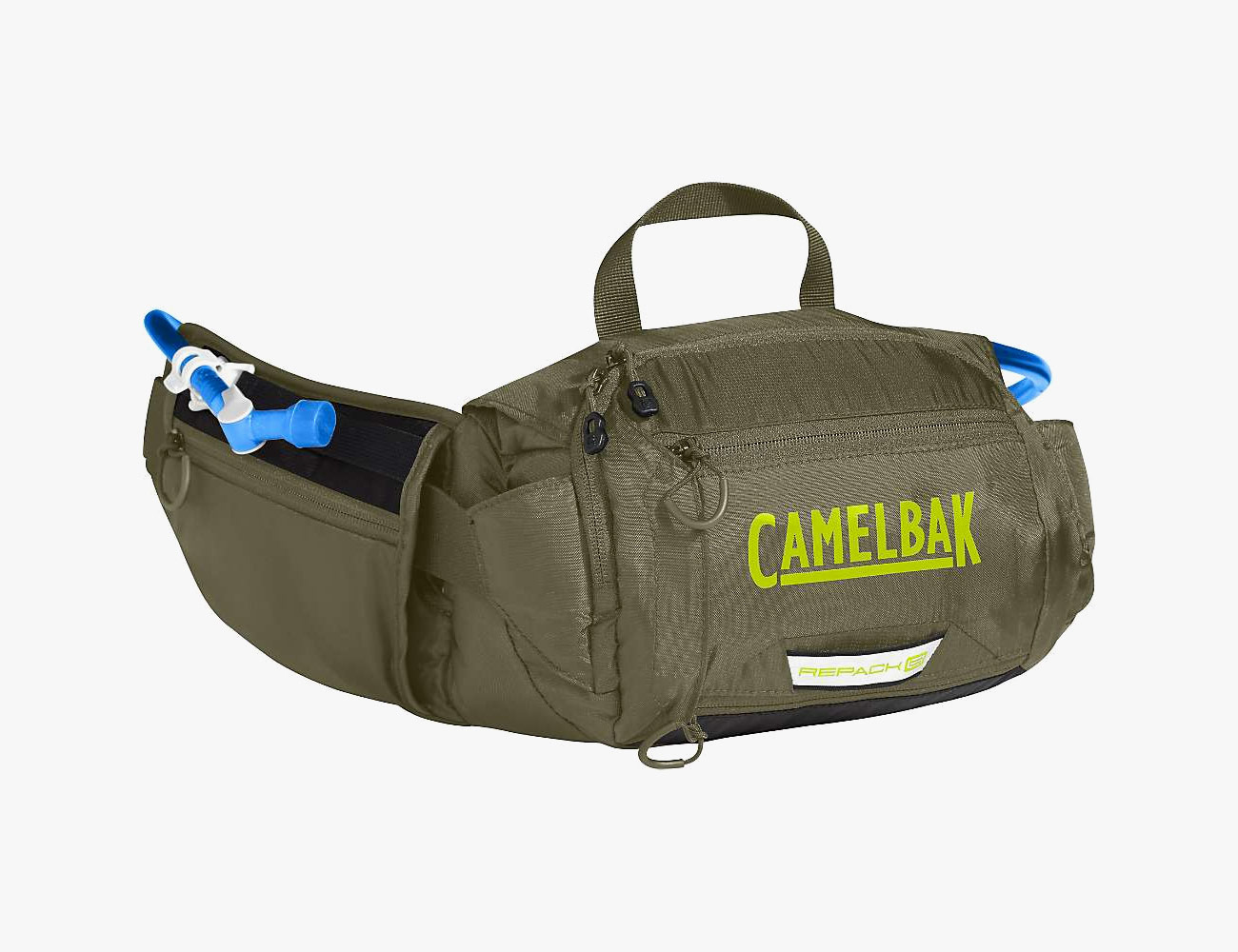
Camelbak Repack LR 4 Hydration Pack

A hip pack that stores your phone and water is gold. A magnet keeps the hydration straw in place so you don’t have to worry about it dragging on the ground or getting stuck in the trees.

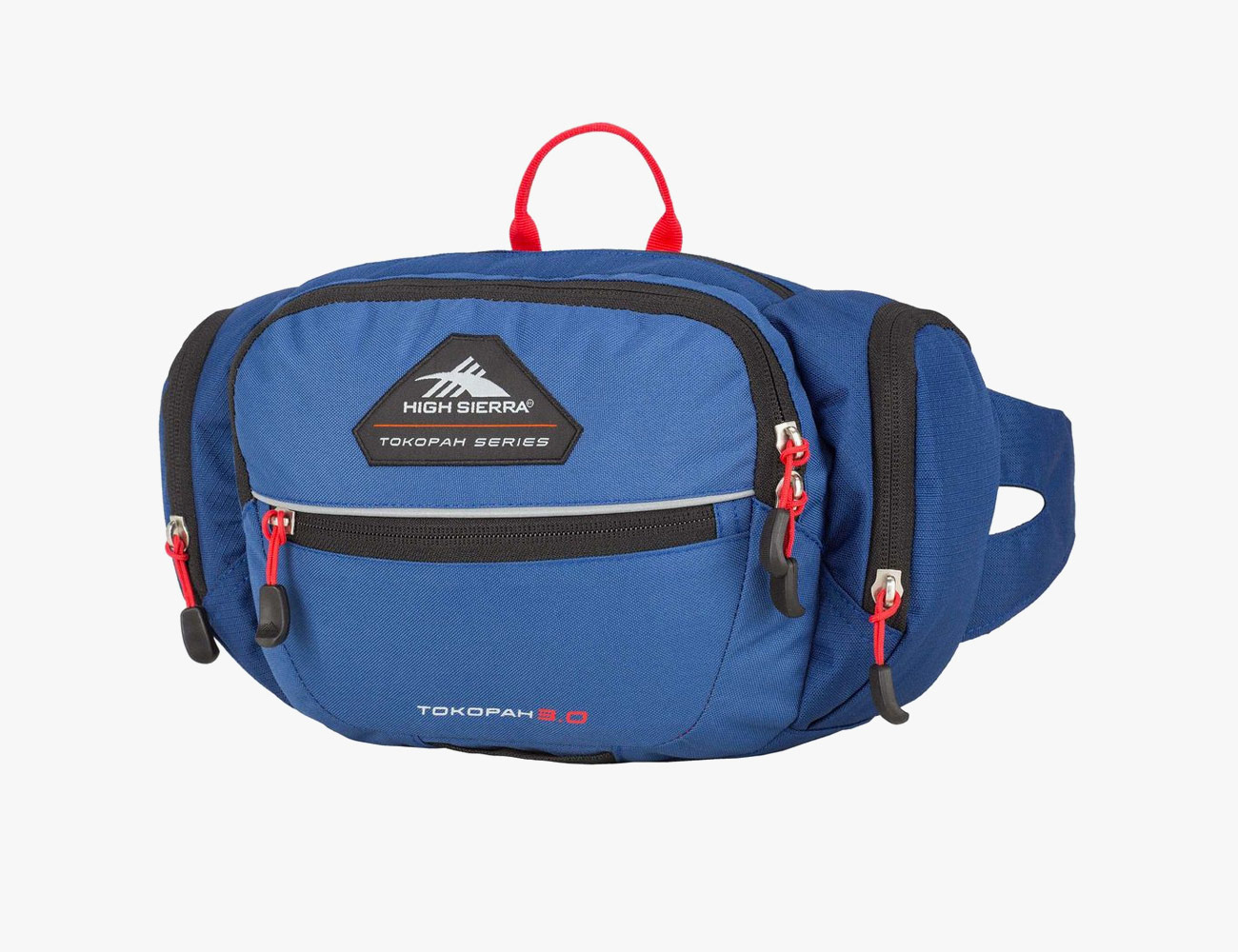
High Sierra Tokopah 3L Waistpack

This pack features four individual pockets. There are separate ones for your sunnies, phone, keys and any layers you take off. The reflective attachments are key if you’re hitting the trails early in the day or coming down late at night.

Biking Hip Packs

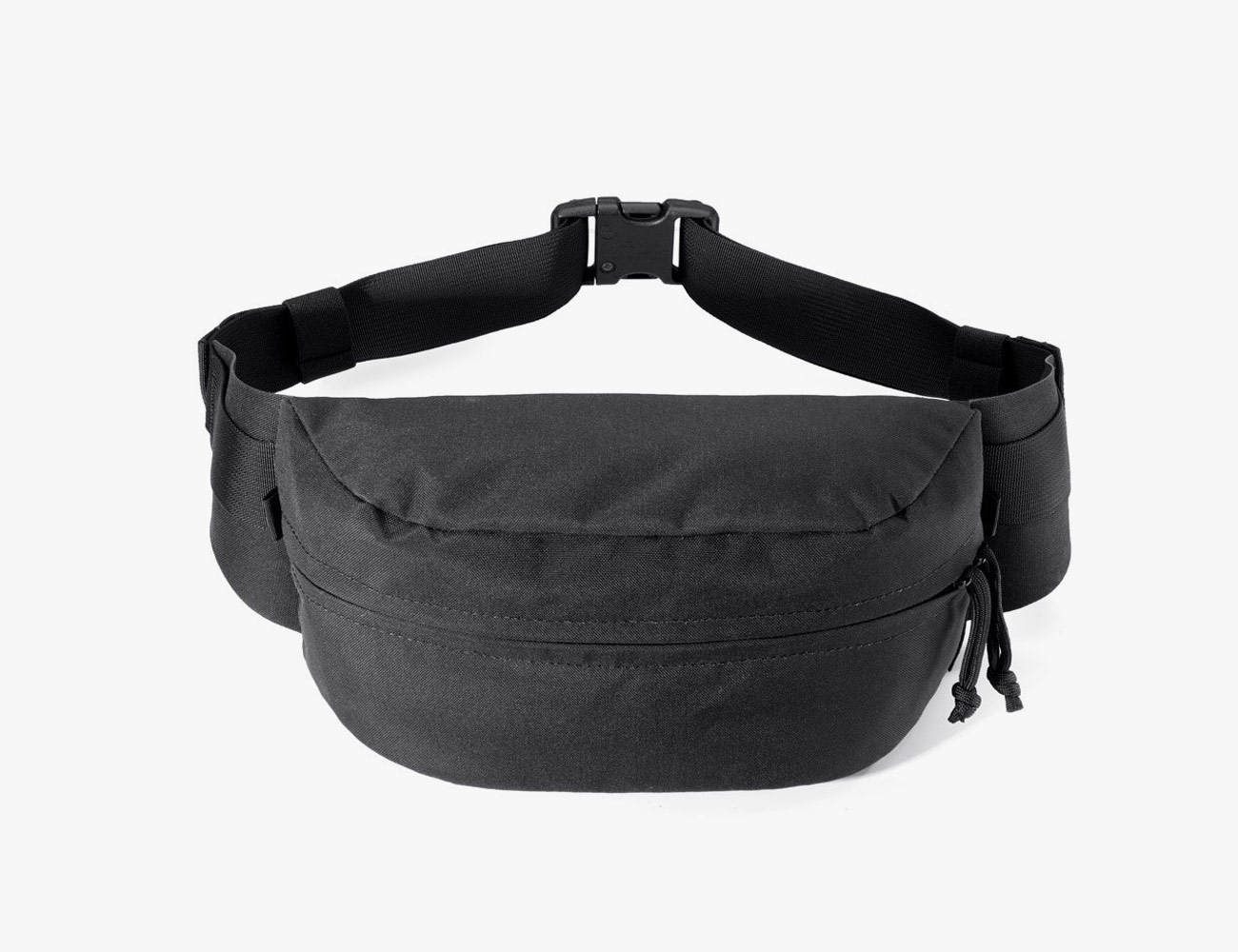
Mission Workshop The Axis

We tested The Axis on the Kingdom Trails in Northeastern Vermont, and it continuosly impressed each tester who gave it a try. The minimalist design combined with rugged materials makes for a pack that’s easy to wear and comfortable all day long.

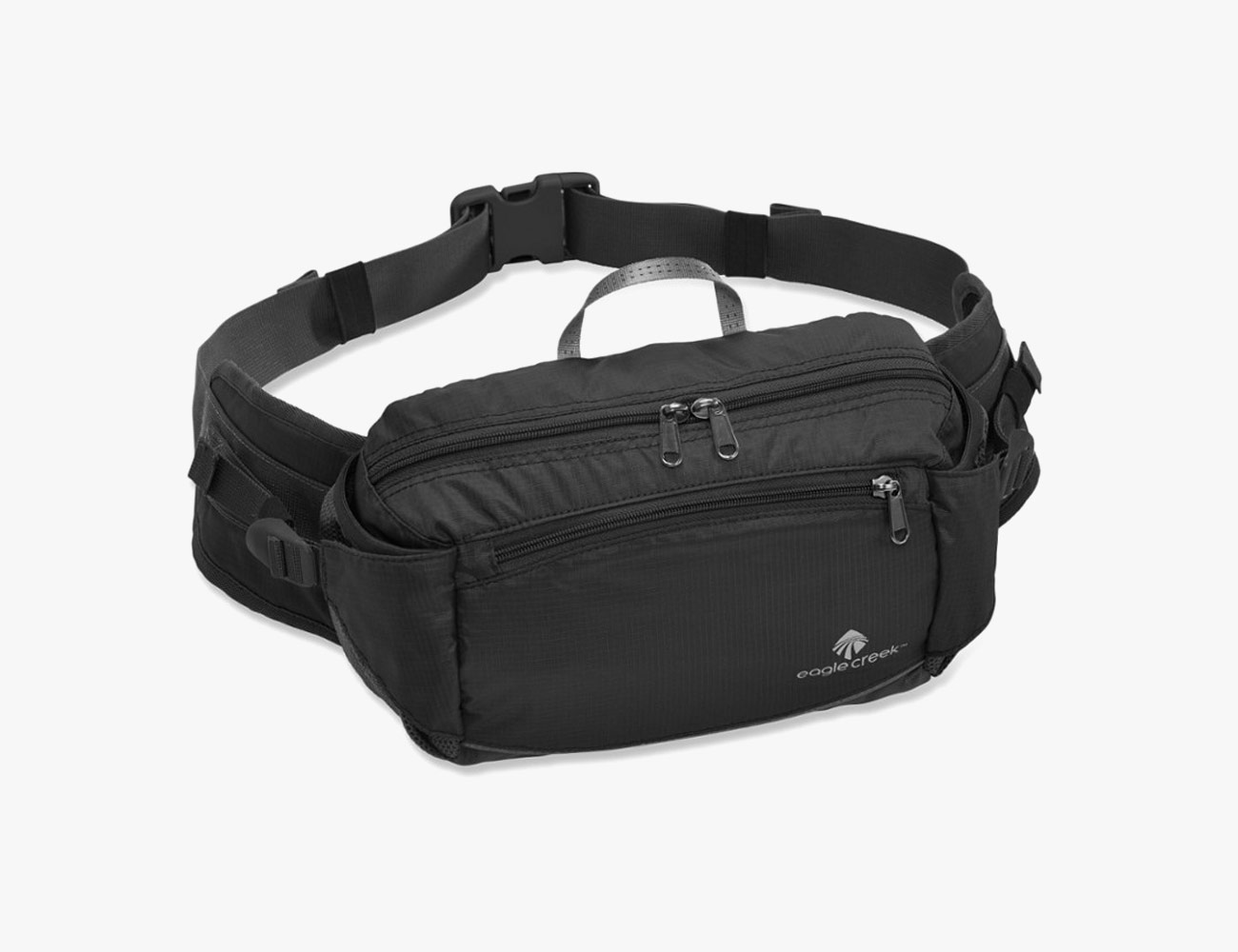
Eagle Creek RFID Tailfeather Waist Pack

Eagle Creek’s packing cubes keep us organized when we’re traveling, and the brand is bringing that same mentality to its hip packs. Thanks to lockable zippers, you don’t have to worry about your things falling out, and the padded breathable mesh back channel keeps the air circulating.

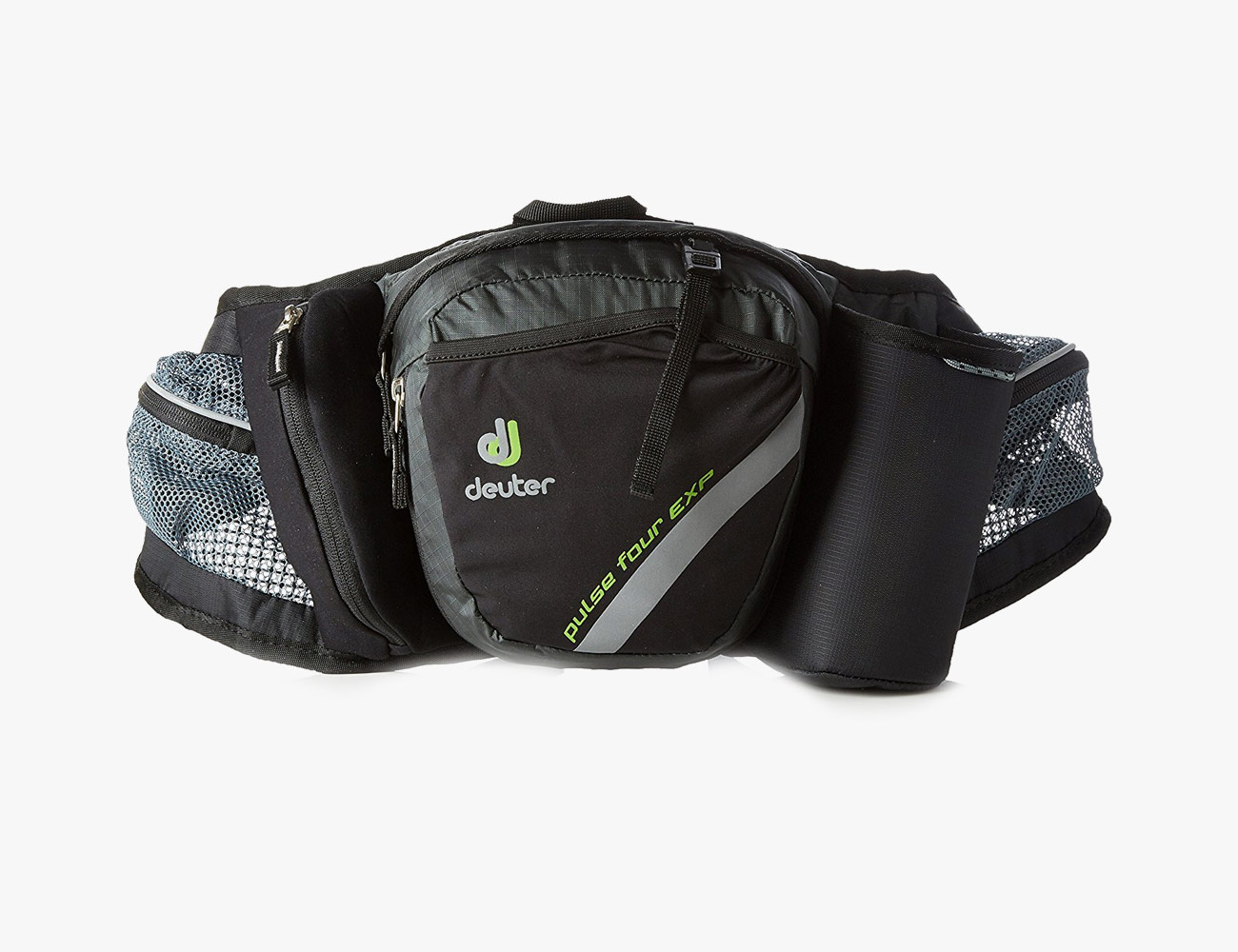
Deuter Pack Pulse Four Exp

With a dedicated water bottle pocket, phone pocket and space for an additional layer, the Pack Pulse Four Exp allows for plenty of organization. The ripstop material and three-liter capacity make this ideal for the bike.

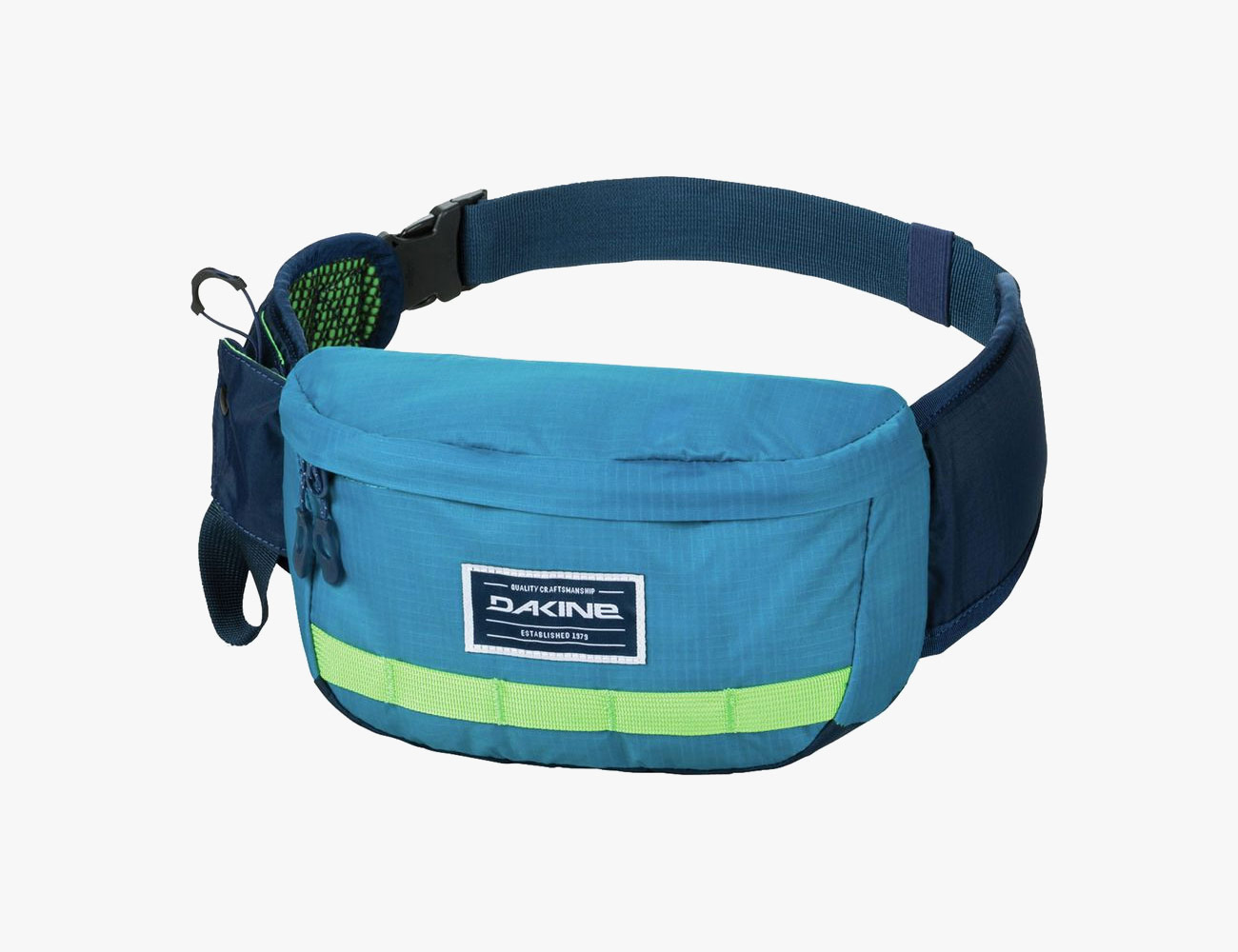
Dakine Hot Laps 2L Hip Pack

The Hot Laps pack is perfect for singletrack laps. Dakine cracked the code on the ideal hip pack: abrasion-resistant fabric, a fleece lined pocket and loads of internal pockets. Pop out the bonus side pocket and throw in an extra water bottle if needed.

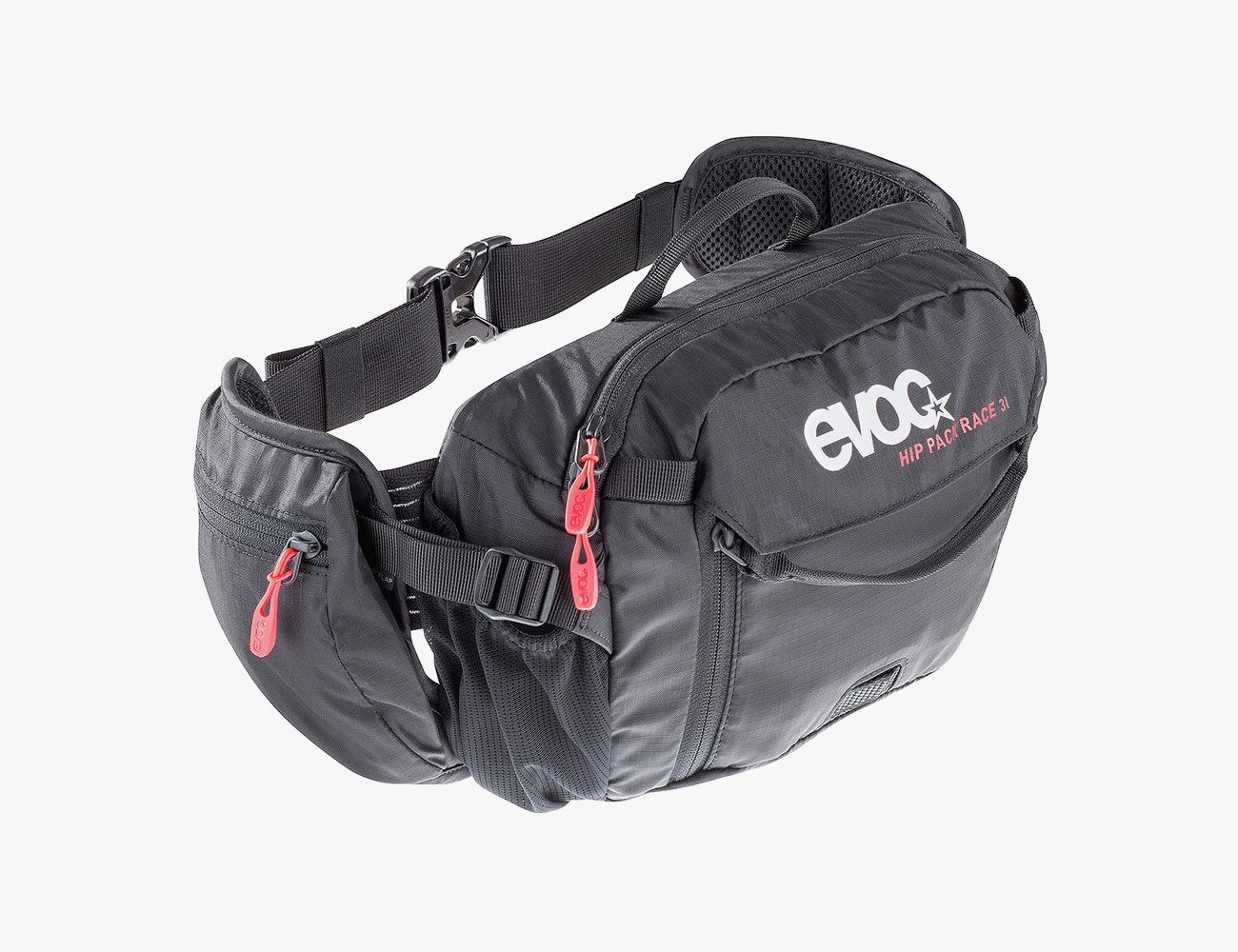
EVOC Hip Pack Race 3L

The EVOC Hip Pack Race 3L is a pro at keeping your back cool thanks to a ventilated flap system — simply tighten the cord to keep it closer to your body or add some slack to feel a breeze.

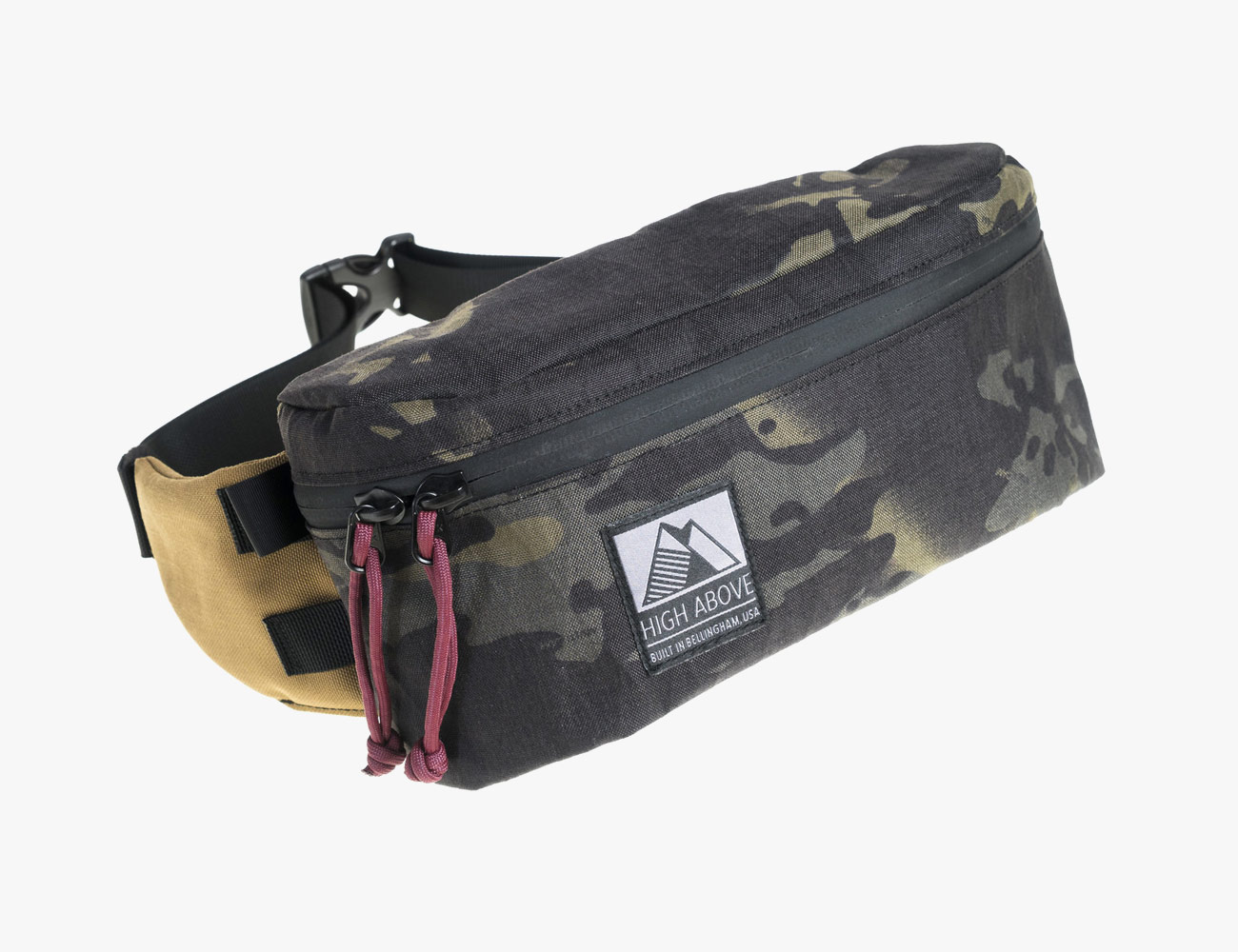
High Above V.3 Cascadia

High Above mountain bike hip packs are some of the best on the market. And they’re serious pieces of outdoor gear — despite the tagline and lighthearted feel of the brand’s website. Each High Above hip pack is designed and sewn in Bellingham, Washington. They come in three different models that vary in size and can be outfitted with an optional water bottle holder. Each material that High Above uses has been obsessed over and combined into a product that’s built to go the distance.

Best Enduro Mountain Bikes We tested the six best enduro mountain bikes and enduro bike gear on the market to determine which one reigned supreme. Read the Story
Note: Purchasing products through our links may earn us a portion of the sale, which supports our editorial team’s mission. Learn more here.

Nike’s Newest Lifestyle Sneaker Pulls From the High-Performing 4%

Nike is built off a history of strong runners, and Steve Prefontaine was one of the first. Before his all too sudden death, Prefontaine held the U.S. record in every long-distance track event starting with the 2,000 meter all the way up to the 10,000 meter. The Prefontaine Classic, held in Eugene, OR, is one of the top track and field competitions in the U.S. and is named in his honor. His legacy is just the tip of the iceberg in terms of Nike’s roster of athletes, but as one who was there from the beginning, it’s no wonder Nike chose to celebrate the late Prefontaine in its newest sneaker.

The EXP-X14 is an experiment by the sportswear designers at Nike’s headquarters. The X14 alludes to the internal codename for the Nike React technology — another pillar in the Nike running field. Along the side of the shoe, you can read N3546, which references Prefontaine’s fastest mile: 3 minutes and 54.6 seconds.

EXP-X14 pulls from the Nike Zoom Drive running sneaker as well as the Nike Zoom Vaporfly 4%, which is the racing shoe you’ll see on every pro-athlete from Galen Rupp to Shalane Flanagan to Eliud Kipchoge — all running legends of our time. The exposed TPU plate is similar to the speedy shoes, so perhaps these new sneakers can help you speed through your day.

Look for the shoes at Nike.com starting June 28th in Europe, and July 5th in America.

Today in Gear

The best way to catch up on the day’s most important product releases and stories. Read the Story

21 Terms Every Knife-Lover Should Know

Blade, handle — the vocabulary that describes the different parts of a pocket knife are simple… right? The sharp tools may not be as complicated as mechanical watches or automobiles, but there’s more to knives, both folding and fixed, than that. Aficionados will bandy around terms like action and slipjoint, but these aren’t even the most complex or specific words that can be used to describe every part of a pocket knife. For those new to the world of blades, this guide will act as your shortcut from novice to pro.
Action: Refers to how a folding knife opens. A knife’s action can be described in many ways, but it will be either manual or automatic.

Belly: The curved part of the blade used for slicing.

Bevel: The tapered part of the blade that extends from the spine down to the cutting edge.

Butt: The end of a knife’s handle.

Choil: The unsharpened portion of a knife’s cutting edge that’s close to the handle. Some choils are notched.

Clip Point: A common blade shape, the clip point is characterized by a spine with a front section that appears to be clipped off. This seemingly cut-out area can either be straight or concave and results in a fine point.

Drop Point: One of the most common blade shapes, the drop-point is characterized by a convex spine that curves down from the handle to the point. This creates an easily-controlled point and a bigger belly for slicing. Ideal for hunters.

Guard: Part of the handle designed to prevent the hand from slipping onto the blade. This can be integrated into the handle or a separate component.

Gut hook: A sharpened hook on the spine of a hunting knife designed for field dressing.

Jimping: A notched portion of the spine close to the handle, designed for extra grip.

Quillon: The part of the guard or handle that extends beyond the tang of the blade to provide additional protection to the hand.

Ricasso: The flat and unsharpened portion of a blade between the handle and the bevel. Not to be confused with choil, ricasso refers to the flat side of a knife, not its edges.

Sheepsfoot: A blade shape characterized by a straight edge and a spine that curves down to meet it at the point. Sheepsfoot blades are designed for slicing while minimizing the potential for accidental piercing with the point. Originally made to trim the hooves of sheep.

Slipjoint: A common type of folding pocket knife that uses a spring to keep the blade in either a closed or open position.

Spear Point: A symmetrical blade shape with a point that’s in-line with the center of the knife. Commonly used for throwing knives.

Spine: The unsharpened “back” or “top” of a knife. The spine is the side opposite the sharp edge. Double-edged knives do not have spines.

Swedge: Also known as a “false edge,” this is a portion of the knife’s spine that is unsharpened but has been ground to give the appearance that it is.

Sweep: See “belly”.

Tang: The portion of the blade that extends into, and is held by, the handle.

Tanto: Inspired by the short swords that were worn by Samurai in feudal Japan, this blade shape replaces a curved belly for an angular edge transition that makes for a much stronger and prominent point.

Wharncliffe: Like a sheepsfoot blade, this shape has a straight edge and a curved spine, but the curve extends gradually from the handle to the tip. The shape is similarly ideal for slicing while minimizing the possibility for an accidental puncture with the tip.

27 Innovative Products from Europe’s Most Important Outdoor Gear Show

There’s still over a month to go before the outdoor industry convenes in Denver to talk shop and reveal all the new technology and products gear geeks have coming their way. But those looking for a sneak peek at what’s to come should turn their gaze to the other side of the Atlantic. OutDoor is Europe’s Outdoor Retailer, a three-day gathering taking place in Friedrichshafen, Germany, where brands finally release projects that have long been held under wraps. Over 330 new products, from hiking packs to Kevlar boots, have been exhibited. Of that number, an expert panel of judges has selected the 11 best. The criteria? Quality, design and sustainability. Without further ado, here are the 11 products that took home the gold in Germany, along with 16 more innovative products from the show.

Gold Award Winners

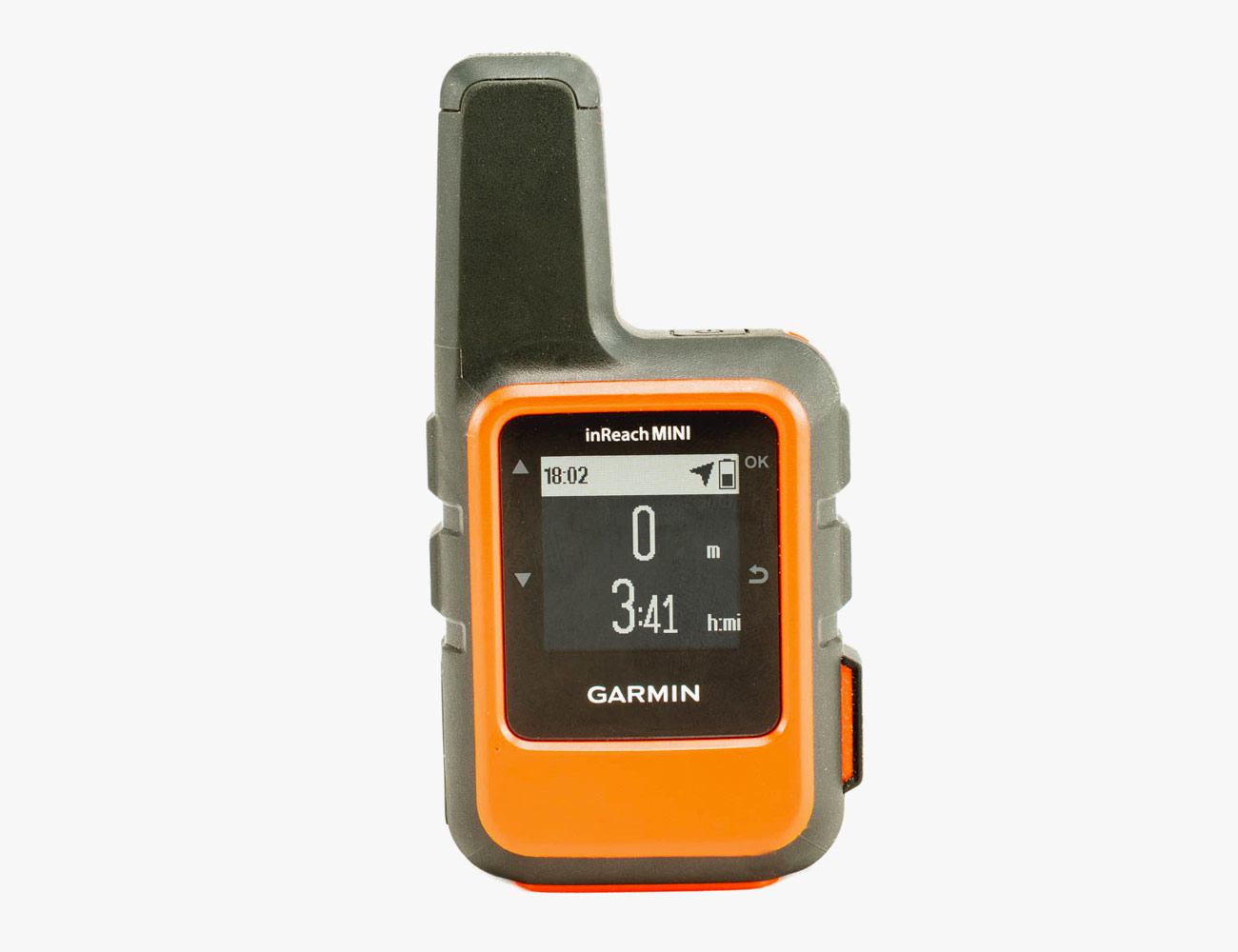
Garmin inReach Mini


The inReach Mini is a satellite communicator that allows outdoor adventurers to stay in contact no matter where you are. It can send and receive text messages via satellite and can also trigger an SOS signal to alert emergency responders if necessary.

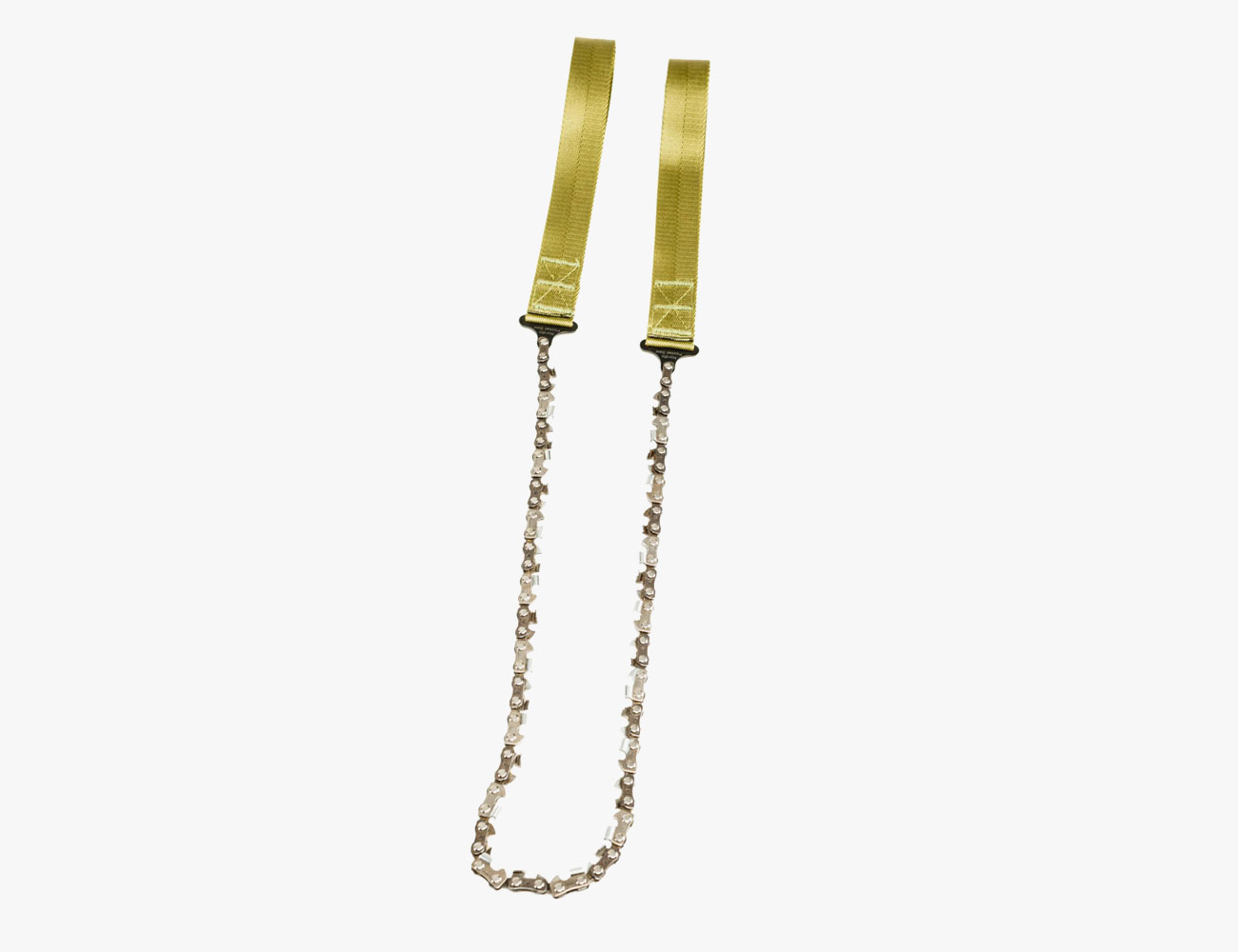
Nordic Pocket Saw


The Nordic Pocket Saw packs down into a tiny package that makes it easy to toss in even the smallest day pack. In a pinch if you get stuck out in the wilderness, the Pocket Saw makes quick work of cordwood for emergency shelters and firewood.

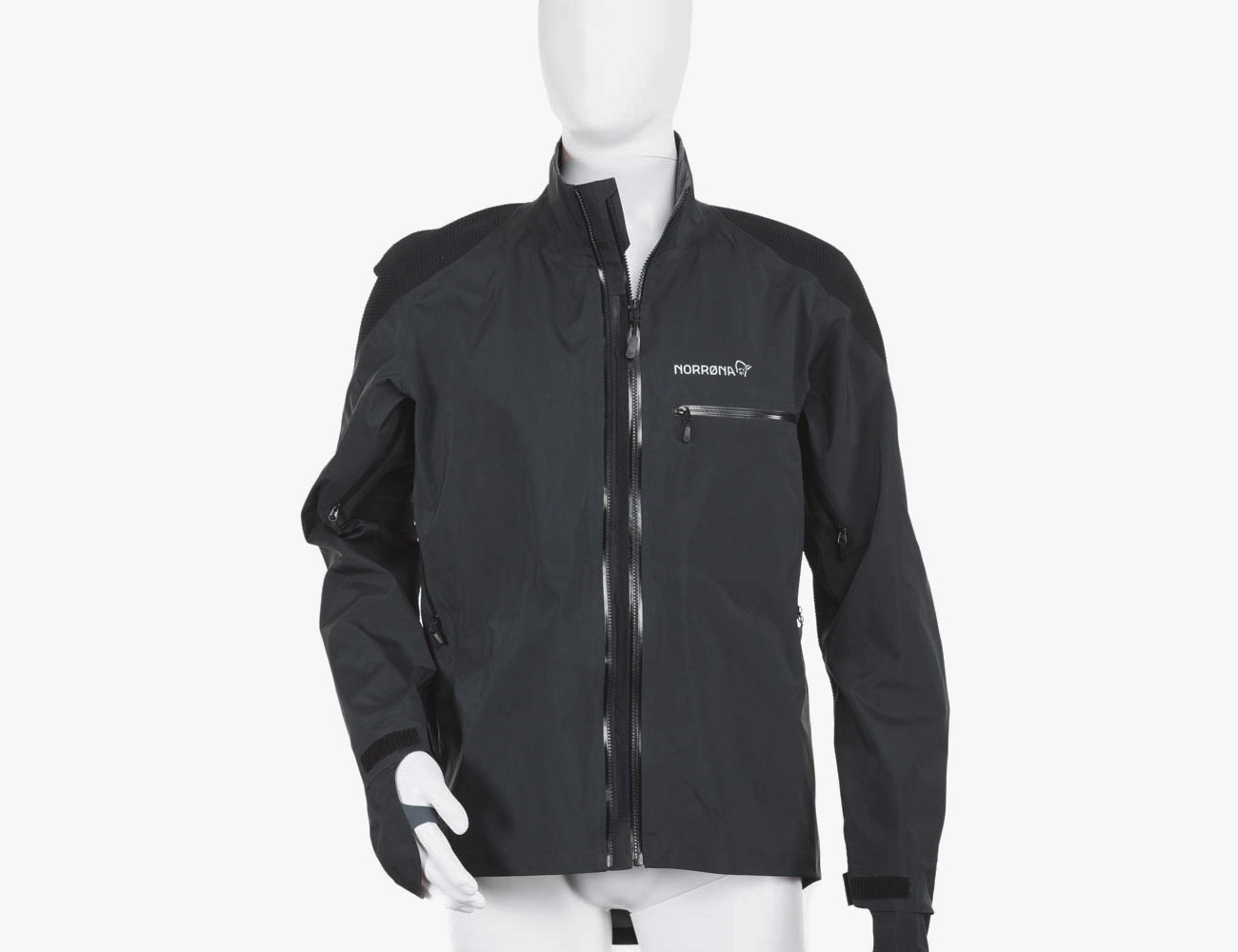
Norrøna Skibotn Gore-Tex Pro Jacket


The Skibotn Gore-Tex Pro shell is designed for mountain biking, specifically enduro and downhill riding, and features the same four-way stretch Gore-Tex material found on Outdoor Research’s highly regarded Infiltrator jacket. The material was originally developed for the US military, and is now making its way into consumer products as well.

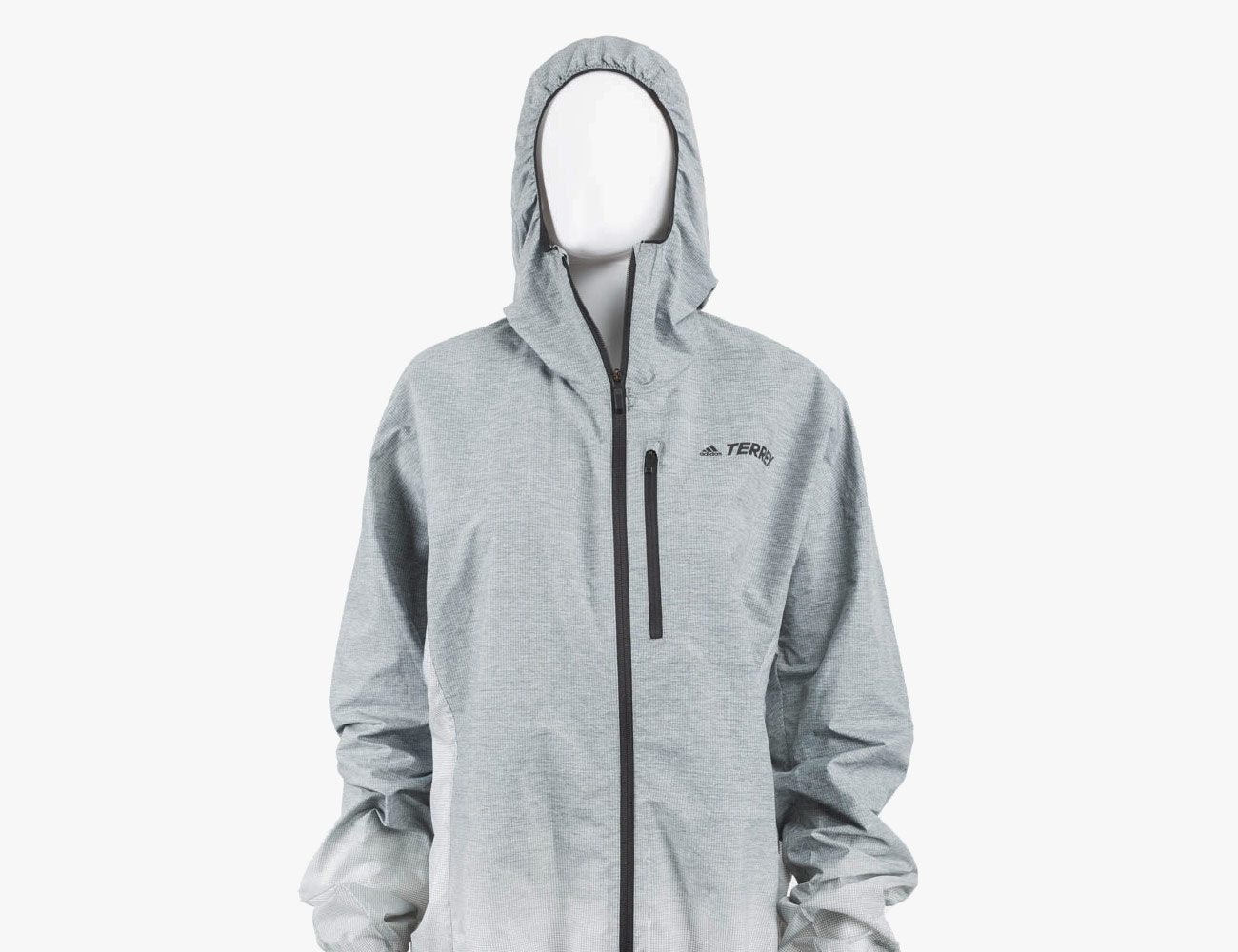
Adidas Terrex Agravic Windweave


The Adidas Terrex Agravic Windweave jacket is claimed to be the first truly body-mapped wind jacket. Adidas makes use of a series of different denier yarns strategically placed throughout the jacket to allow some areas to breath better than others.

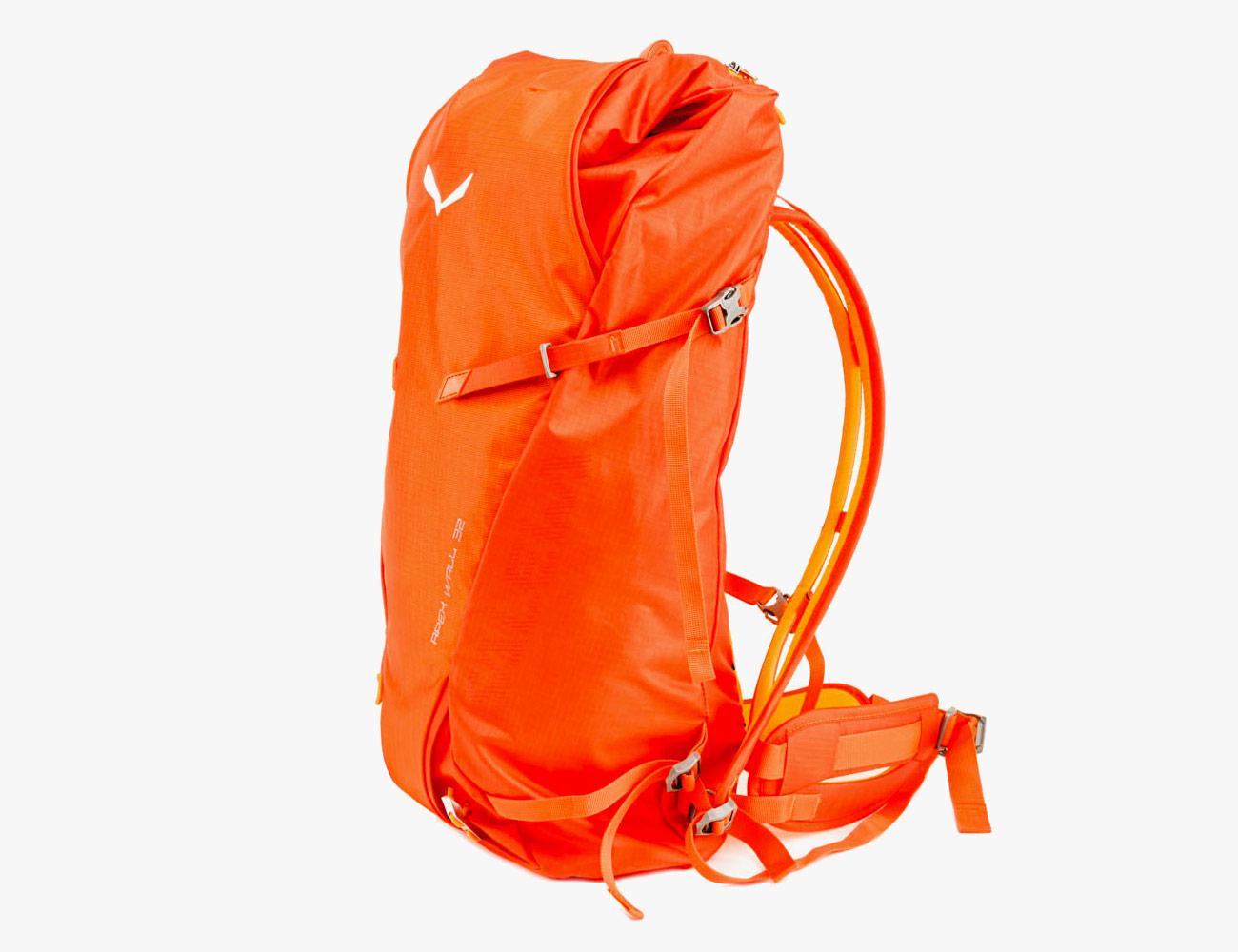
Salewa Apex Wall Pack


Designed for mountaineering, the Apex Wall pack features an innovative back panel that allows for increased breathability over similar mountaineering packs. It also features shoulder straps with cutouts to allow more airflow as well as a magnetic buckle that can be opened and closed one-handed.

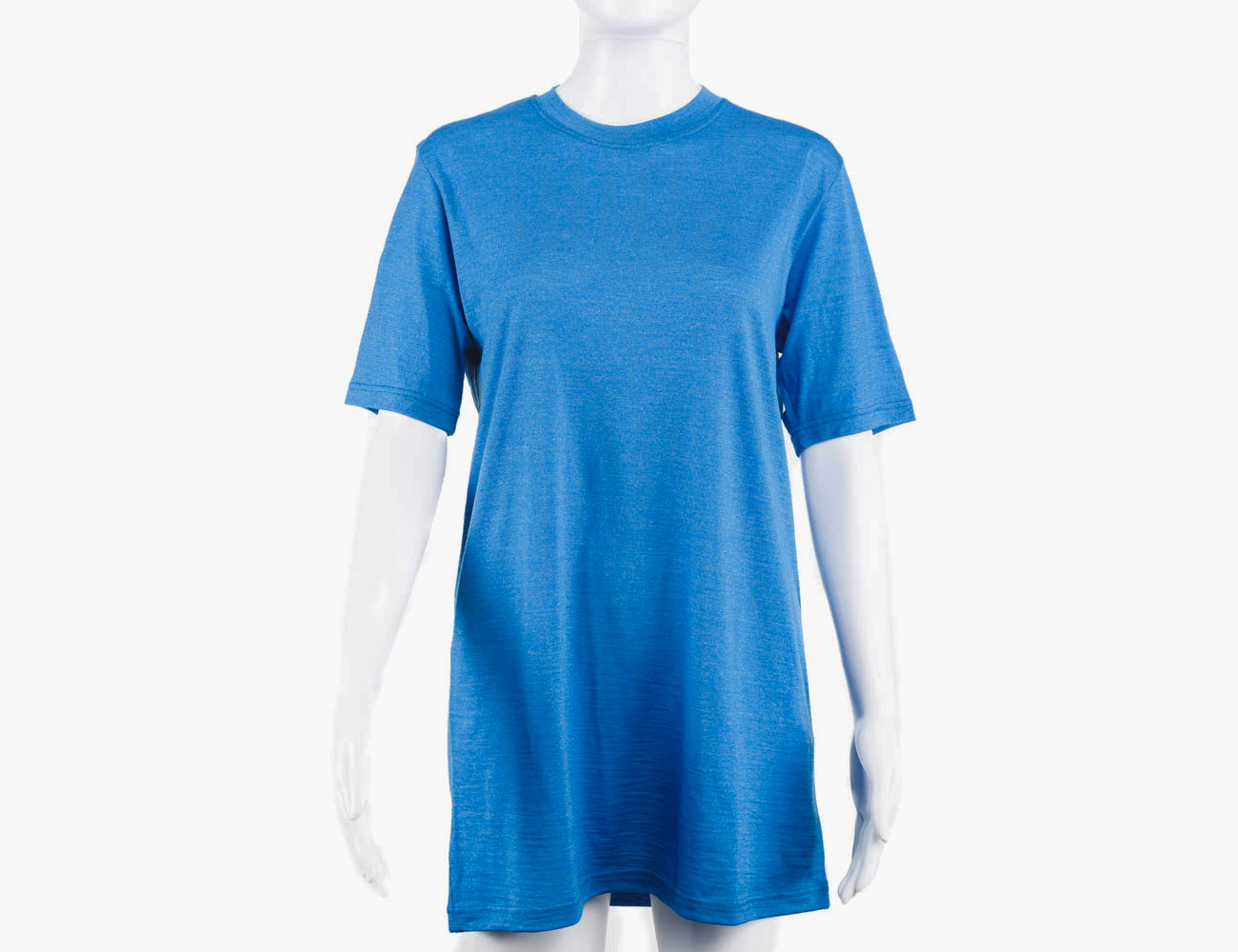
Südwolle Group Jackson Betaspun


This innovative material combines the benefits of merino wool with ultra-soft silk. The material is 88% wool and 12% silk. The silk fiber is spun around the merino wool fiber that improves abrasion resistance and helps reduce pilling.

Ortlieb Atrack


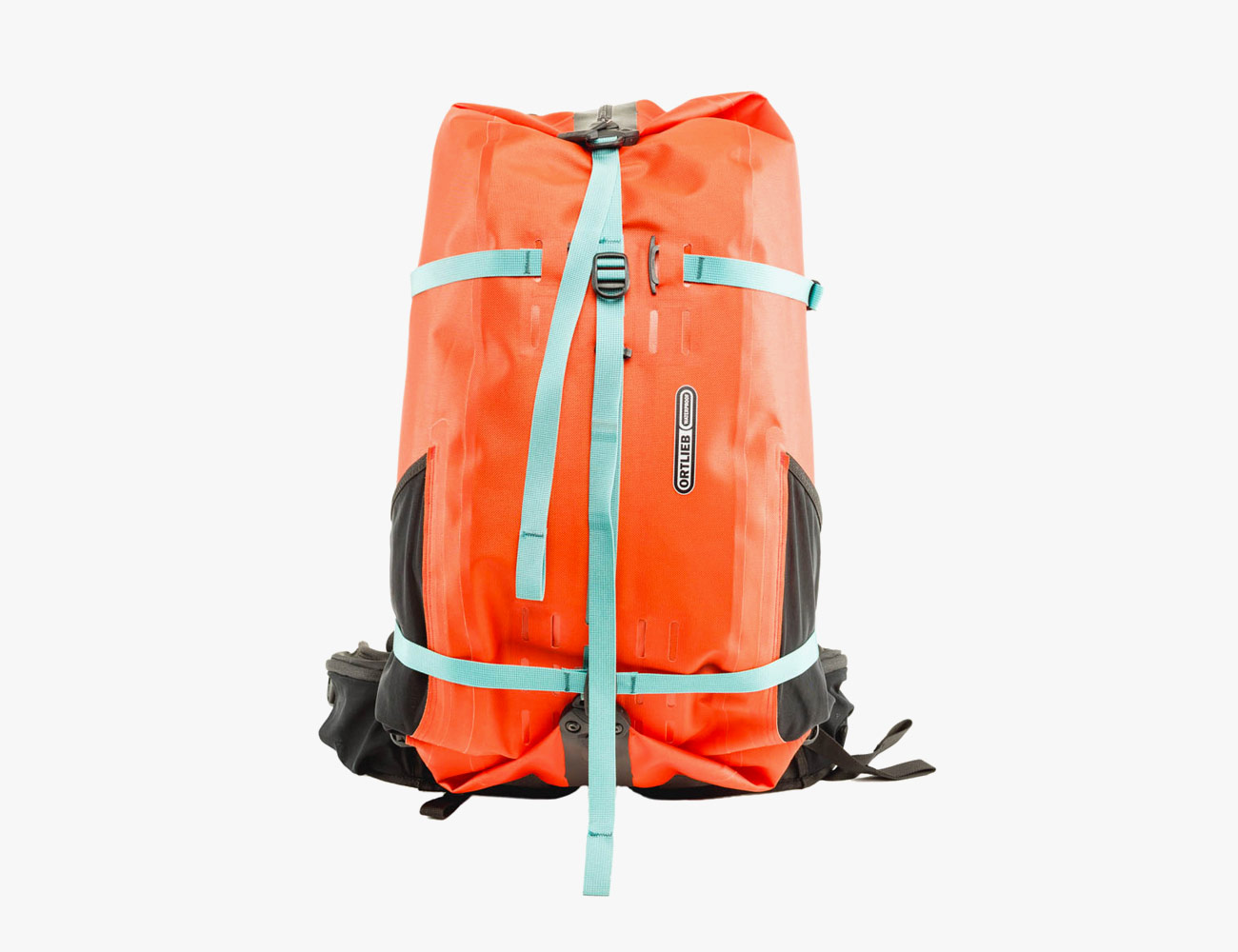
The Ortlieb Atrack is an adventure travel pack designed to be as versatile as possible. It’s waterproof to IP67 standards and features a TIZIP zipper positioned on the backpanel of the pack to allow for easy access and more packing options.

Camp Skimo Total Race


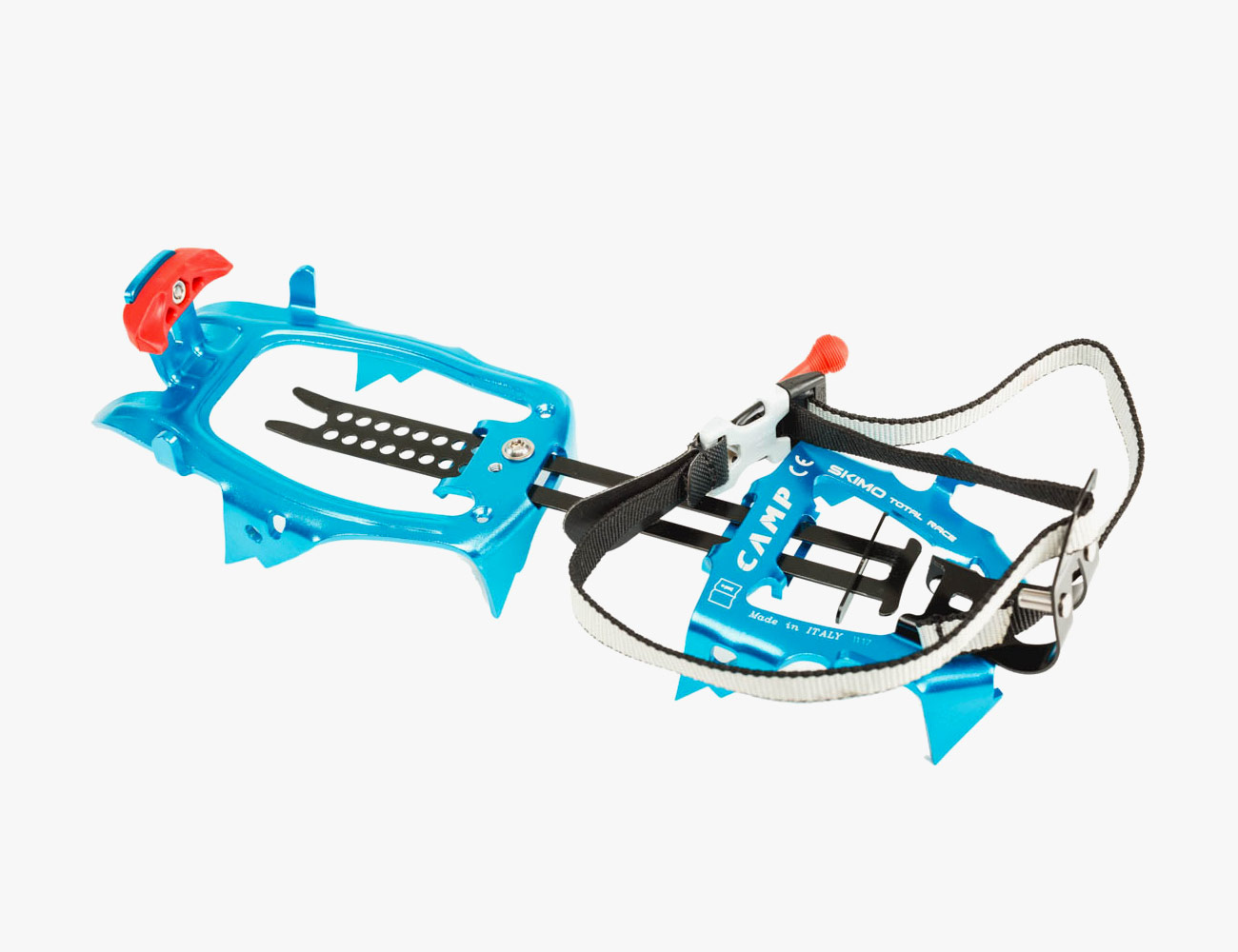
These crampons are designed specifically for ski mountaineering races. They are ultralight, in part thanks to the Dyneema linking straps that allow the crampons to fold into themselves and easily be stashed in a backpack.

OASE Outdoors FjellGuard 60


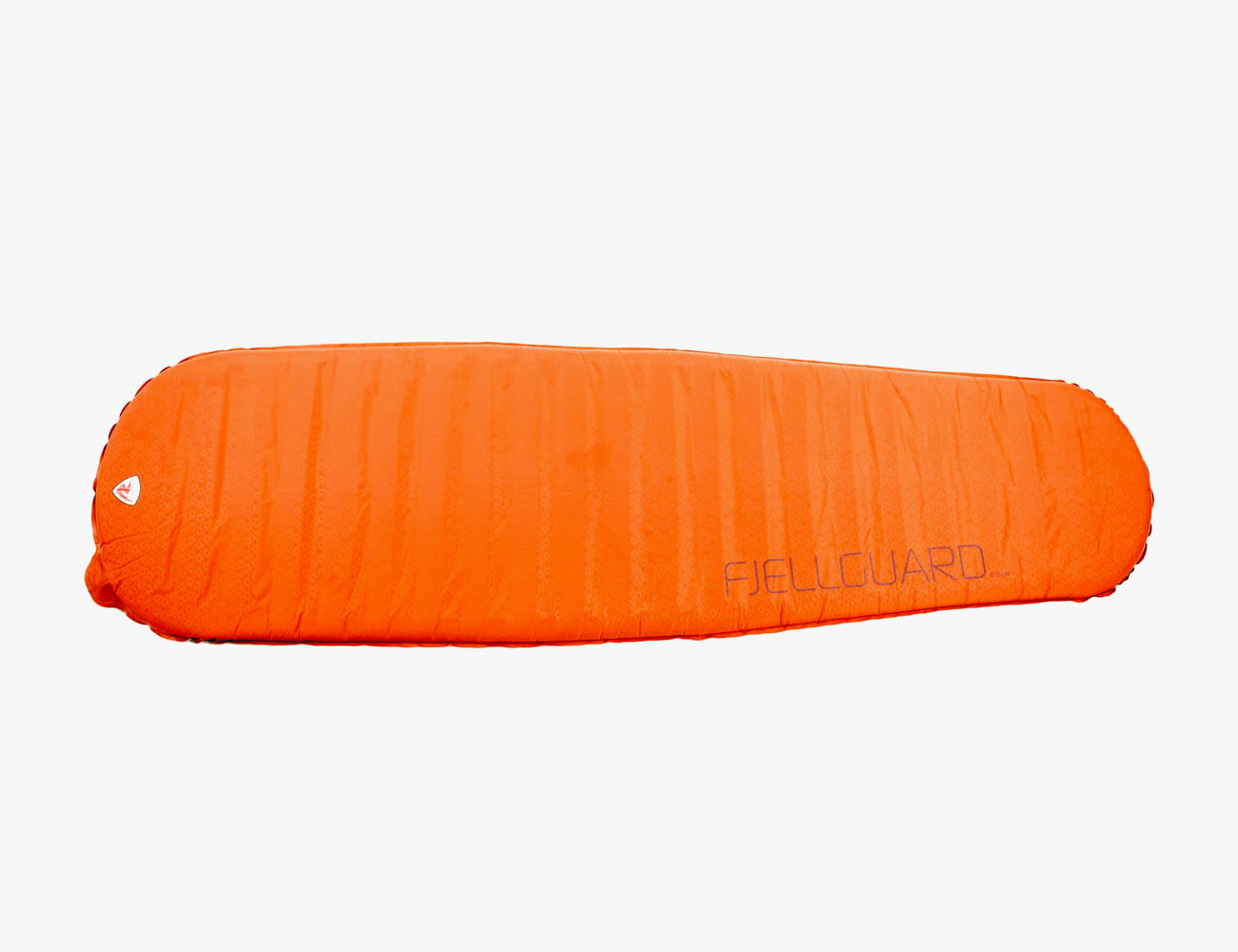
The FjellGuard 60 is a self-inflating sleeping pad that in addition to the insulation provided by the foam and air of the pad, features 180 grams of MicroThermo Highloft synthetic insulation.

Naglev Unico


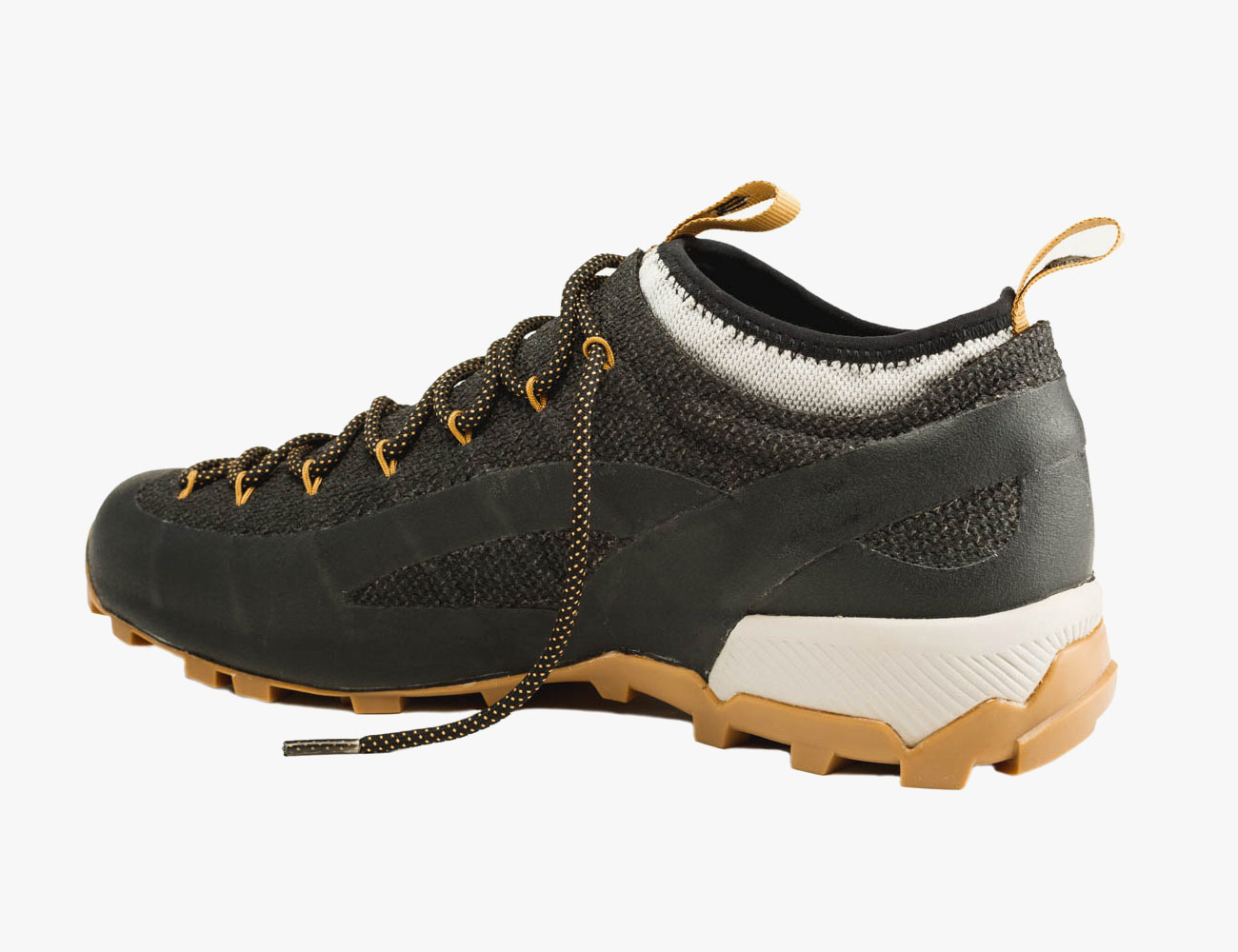
Designed as a versatile light hiking shoe, the Unico is constructed from a one-piece Kevlar upper and a wool sock liner. The shoe also features nylon cables sandwiched in the upper for uncreased support and durability.

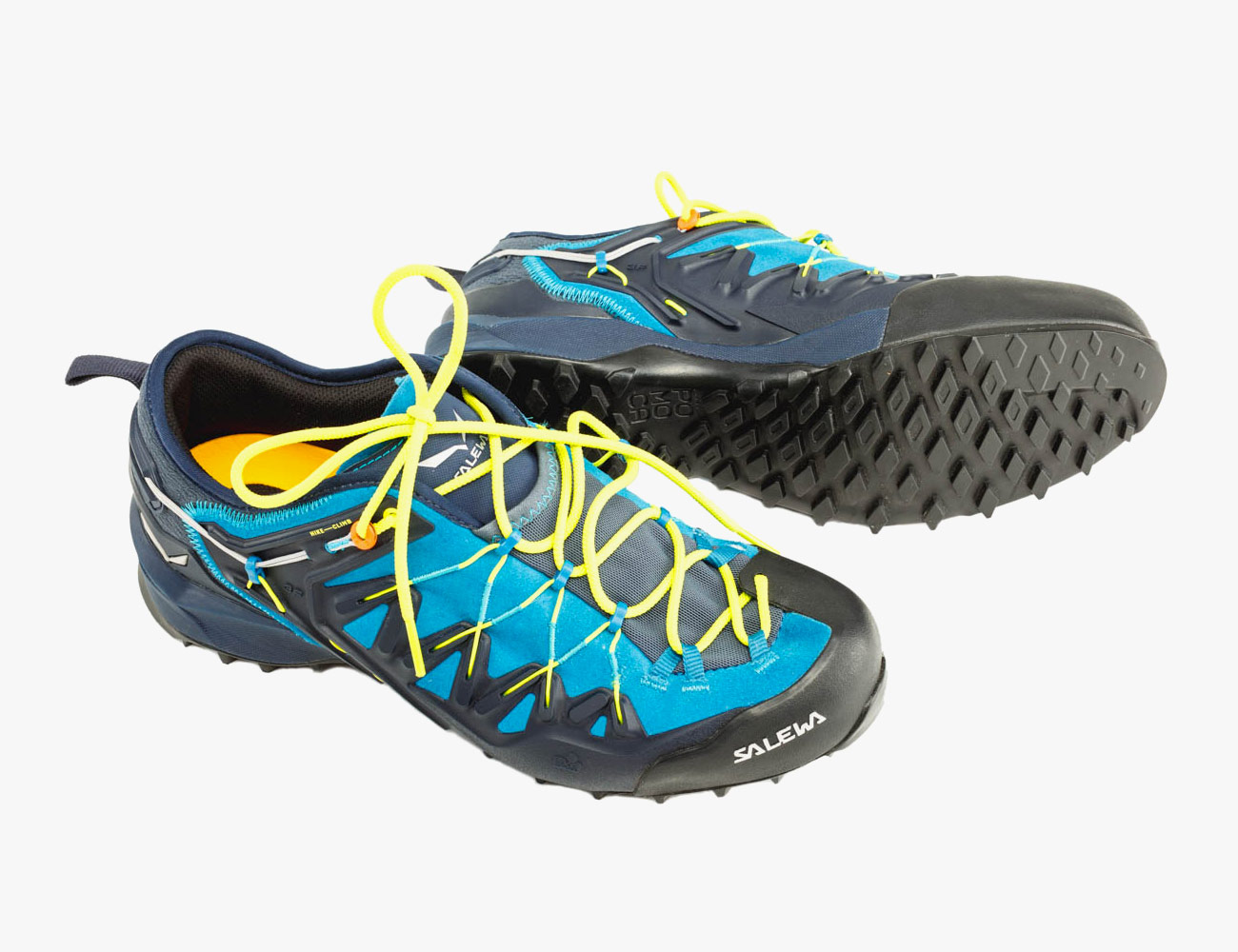
Salewa Wildfire Edge


With the Wildfire Edge, Salewa improves on its expert-favorite approach shoe. Salewa realized that alpinists want an approach shoe that they can do light climbing in. In the area underneath the big toe of the shoe Salewa implemented what it’s calling an Edging Plate, a stiff patch of smooth sticky rubber.

Award Winners

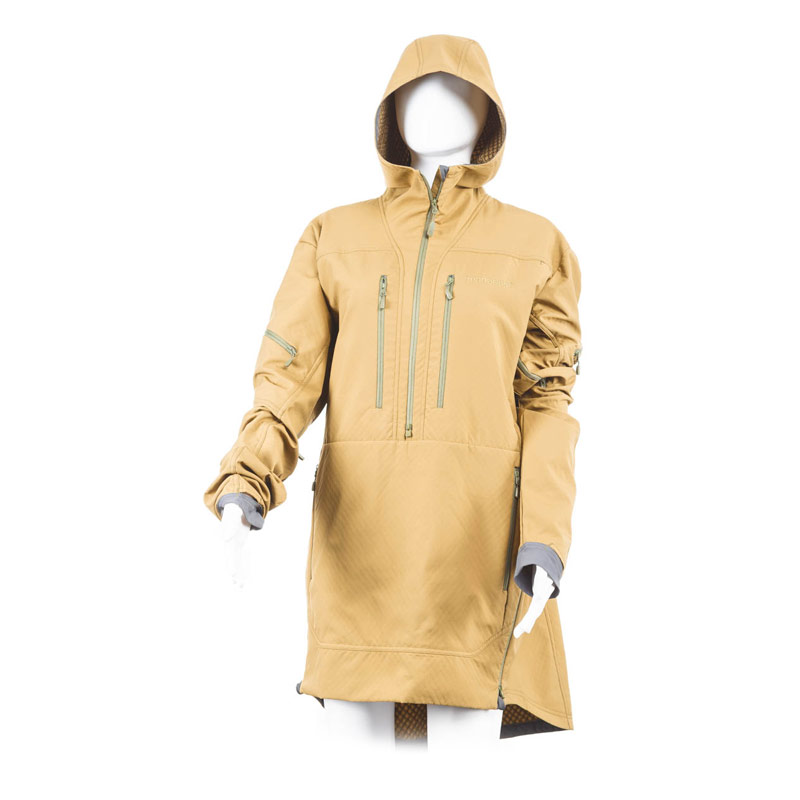
Kvinherad Flex2 Smock by Norrøna Learn More

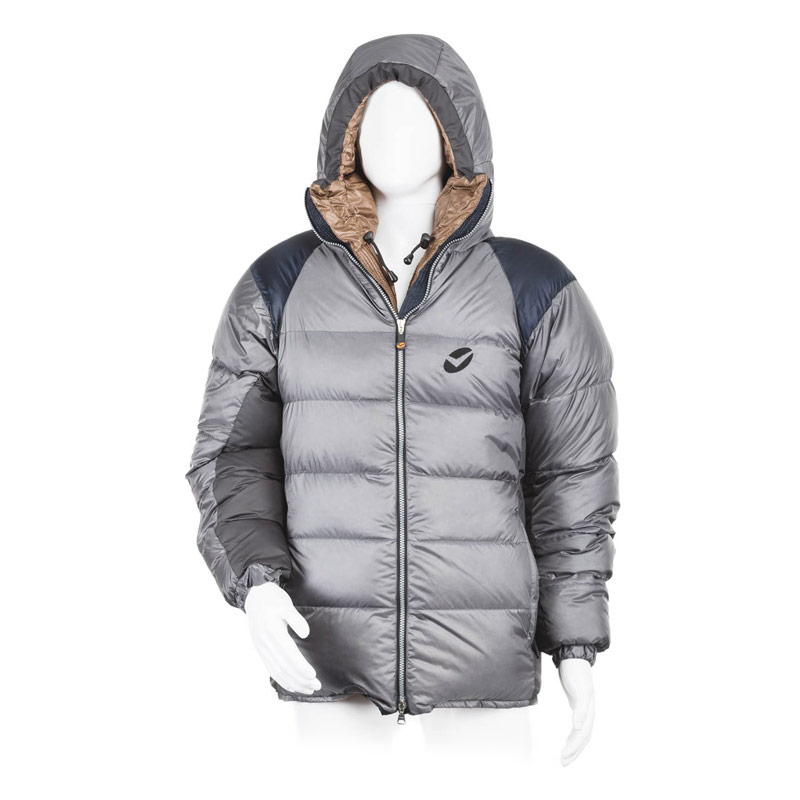
Troll by Valandre Learn More

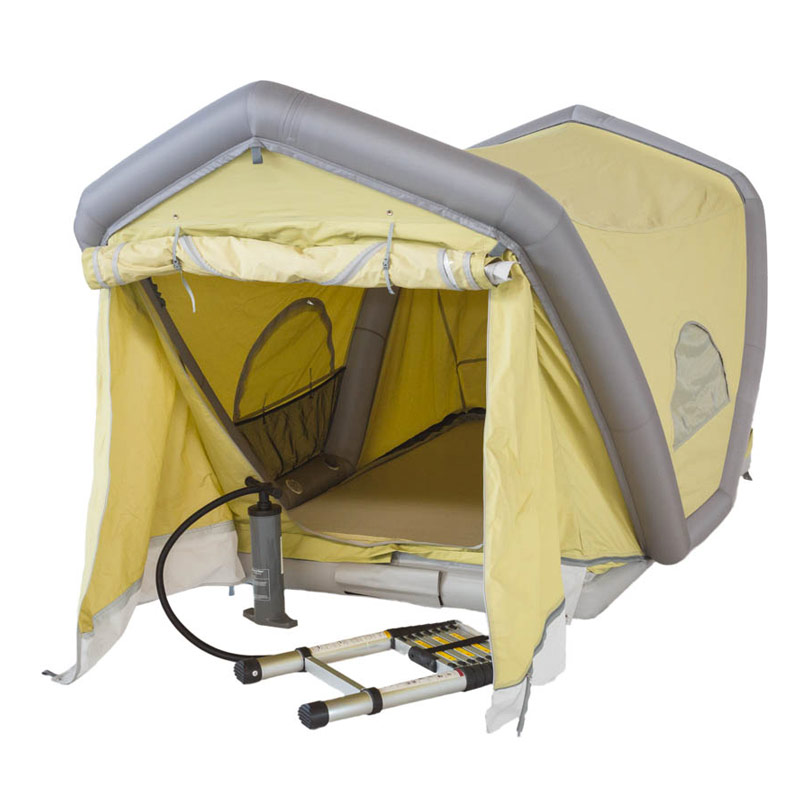
GT Roof Tent by Gentle Tent Learn More

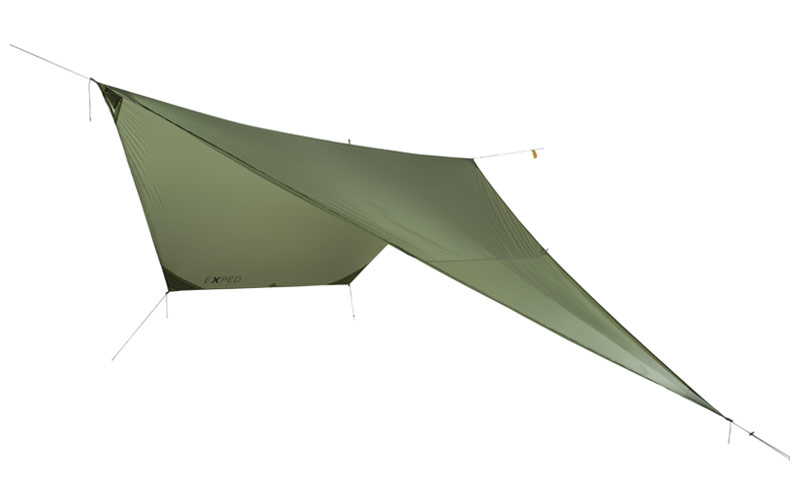
Hammock Trekking Tarp by EXPED Learn More

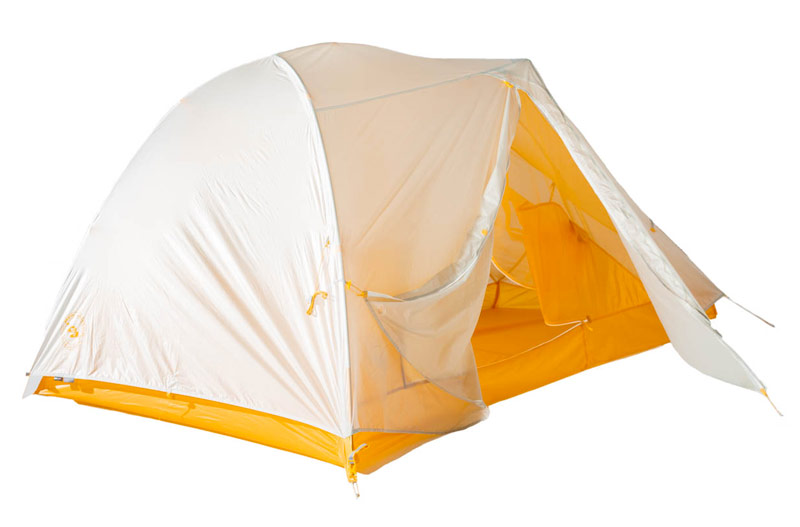
Tiger Wall UL2 by Big Agnes Learn More

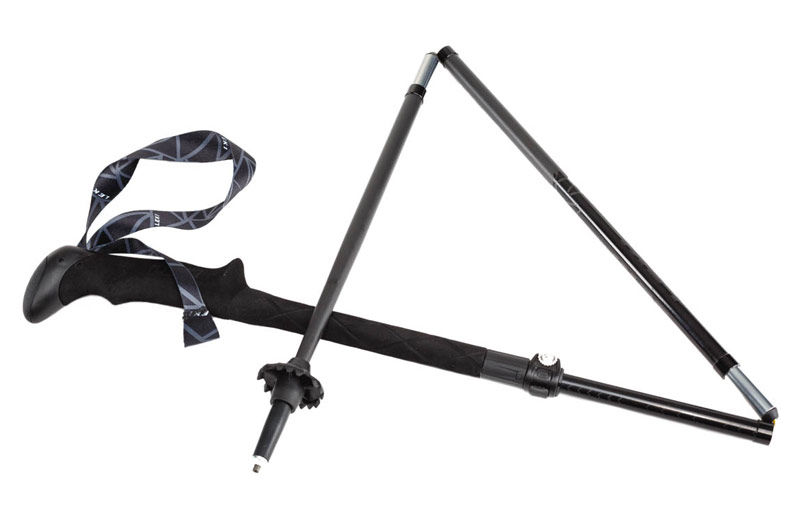
Black Series Trekking Poles by Leki Learn More

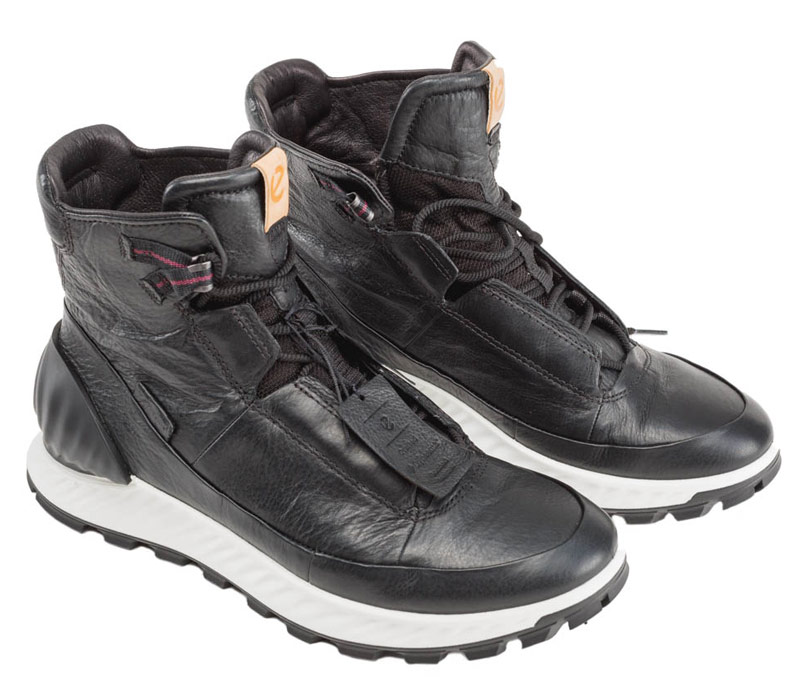
Exostrike Boots by Ecco Learn More

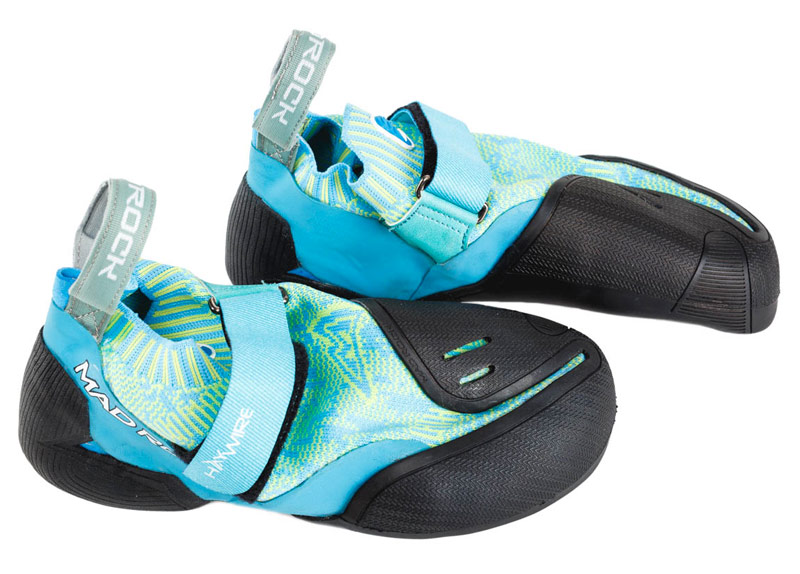
Haywire Climbing Shoes by Mad Rock Learn More

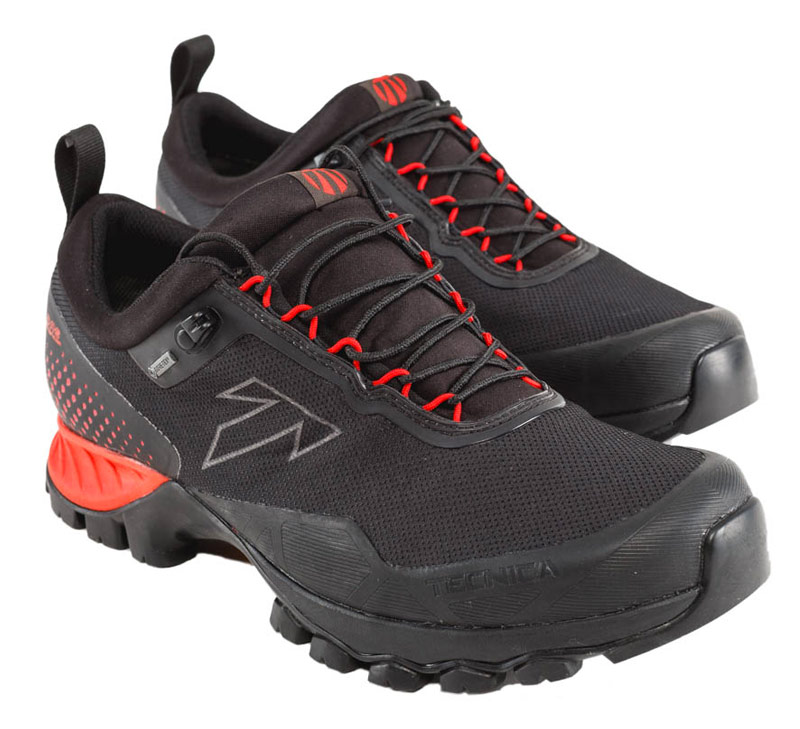
Plasma S GTX by Tecnica Learn More

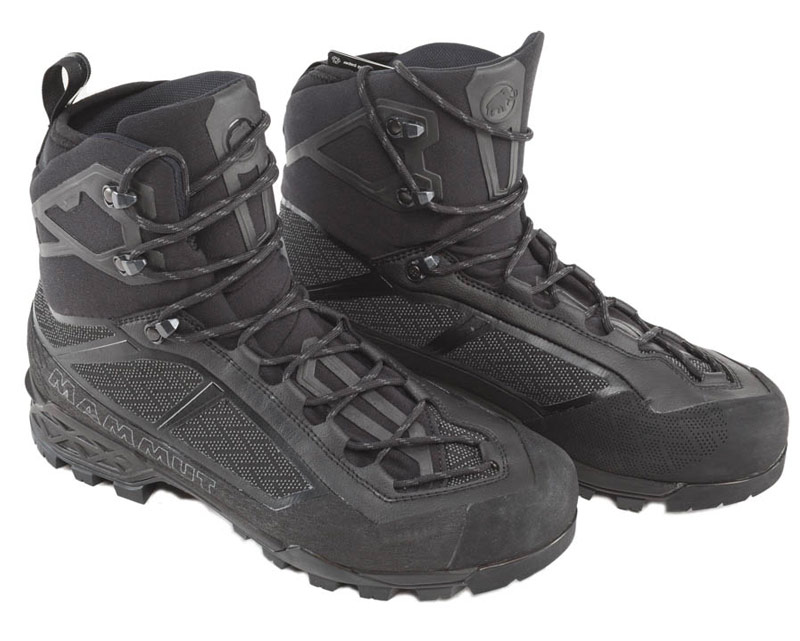
Taiss Light Mid GTX by Mammut Learn More

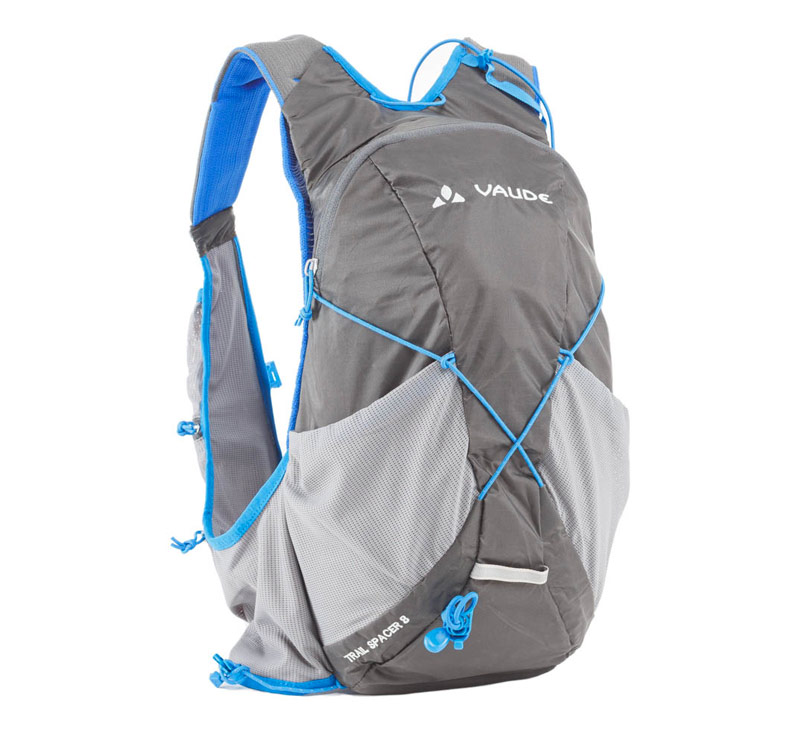
Trail Spacer 8 Backpack by Vaude Learn More

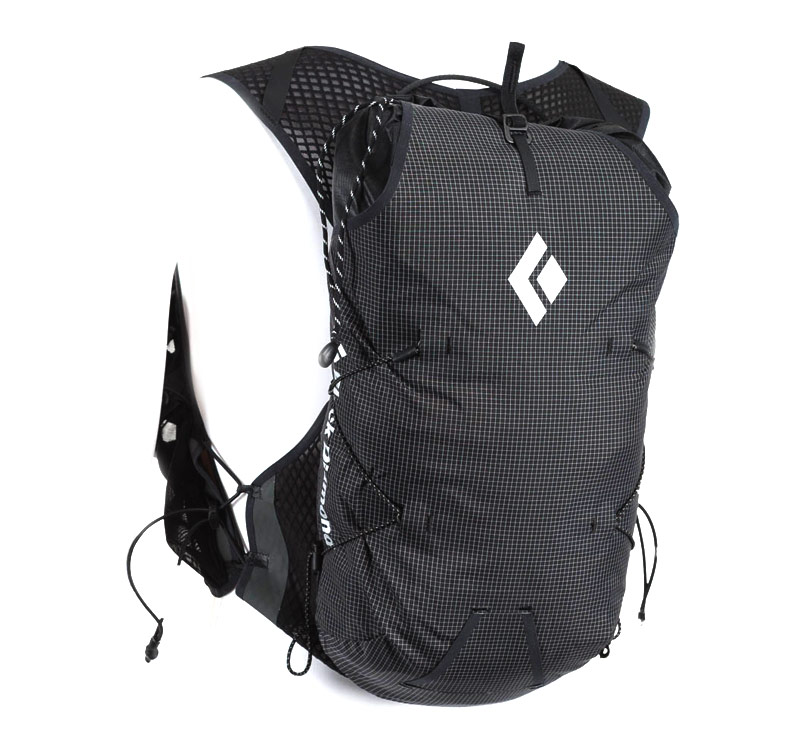
Distance 8L Pack by Black Diamond Learn More

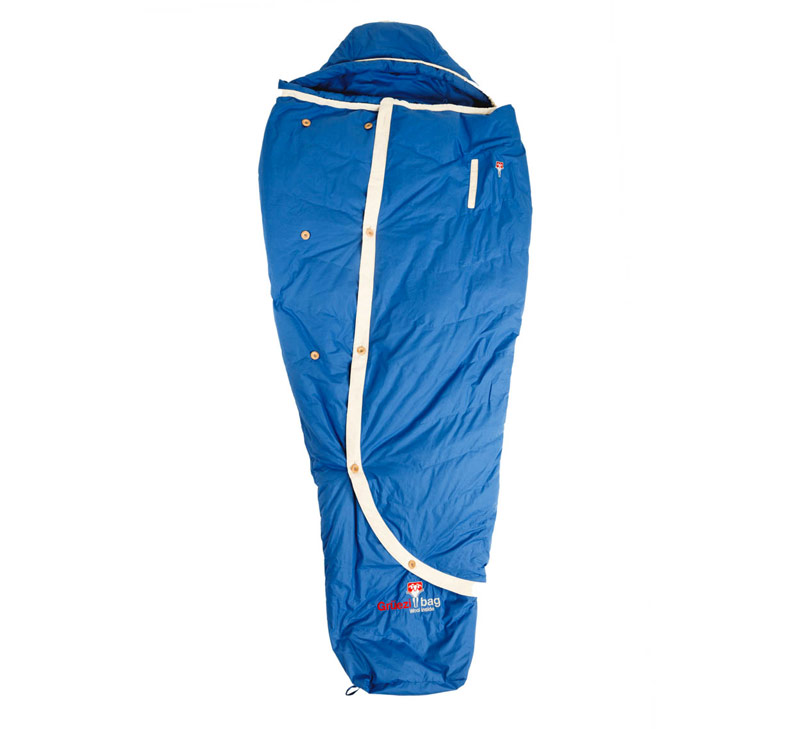
Biopod DownWool Nature by Grüezi Bag Learn More

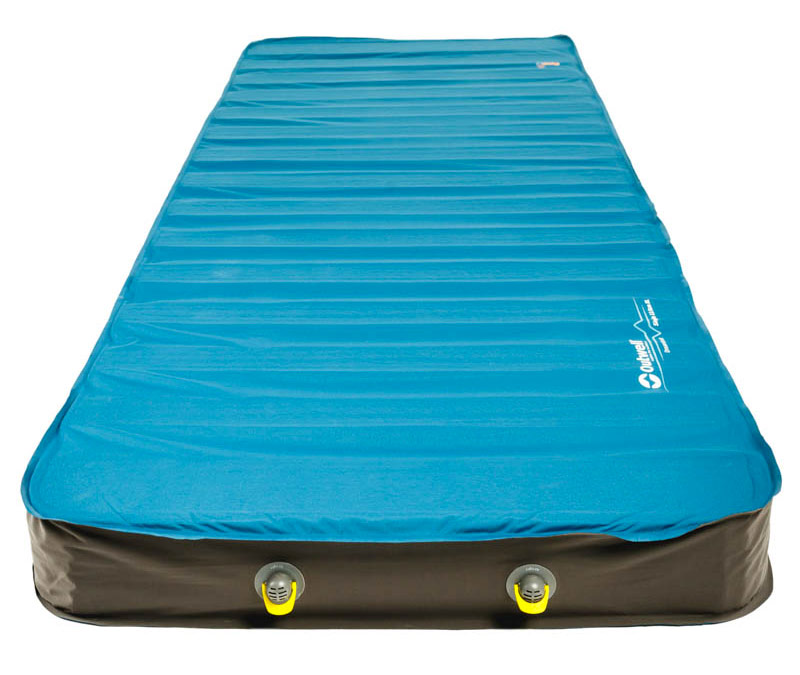
Dreamboat Single 12.0 cm by OASE Outdoors Learn More

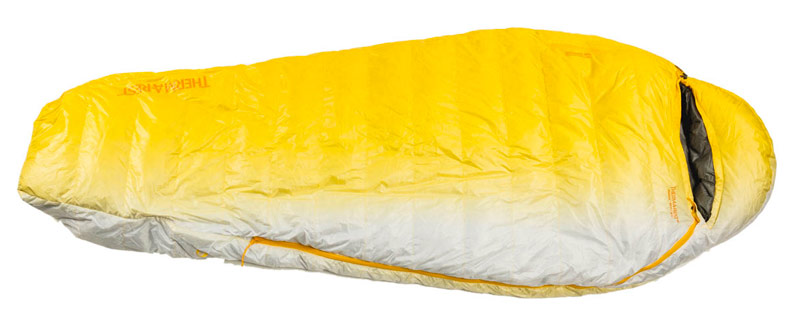
Hydrophobic Down Technology by Nikwax Learn More

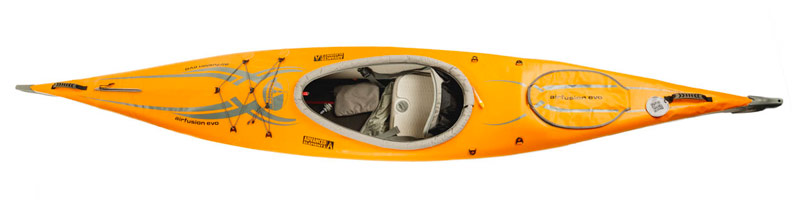
AirFusion EVO Drop-stitch Inflatable Kayak by Advanced Elements Learn More
Today in Gear

The best way to catch up on the day’s most important product releases and stories. Read the Story

These Special Forces-Inspired Boots Look Amazing

Roughly ten years ago, ex-special forces soldier Jason McCarthy founded GORUCK with the simple conviction that he could build a backpack unlike any that existed at the time, a backpack that would be work for soldiers fighting overseas and commuters navigating through the city. He came up with the GR1 and due to its success, continued to build a bag brand based on the concept of go-anywhere carry. Now GORUCK is taking McCarthy’s idea to footwear with the Special Forces-compliant MACV-1 boot.

The MACV-1 is inspired by the Vietnam-era Special Forces jungle boots and uses up-to-date materials that focus on lightness and durability. Those ingredients include a premium full-grain leather and Cordura upper, an EVA midsole and GORUCK’s Workhorse Insert, which is designed to considerably improve upon the typical throw-away insoles found in most boots.

To create the MACV-1, McCarthy assembled a three-man team that included himself, footwear designer and inventor of the Reebok Pump Paul Litch, and Richard Price, a 30-year Special Forces veteran. Price’s military experience includes time served in Vietnam as a member of MACV-SOG, a classified special ops unit charged with undertaking many of the war’s most sensitive and dangerous missions.

The combined efforts of this group brought the MACV-1 to life over the course of four years. That time was essential in bringing the boot up to GORUCK standards, which demand that a product be just as suitable to everyday life as it is to use in the jungles, deserts and mountains that Special Ops soldiers might find themselves in. McCarthy himself staked his confidence in the MACV-1 in a recent comment on Reddit: “I would bet the entire company on this one product. They’re another level.”

The MACV-1 boots are currently available for preorder with an estimated ship date of October 2018.

7 Tougher-Than-Hell Military-Inspired Backpacks

Using super-tough materials and packing as much function as possible, these backpacks blur the line between tactical, outdoor and everyday use. Read the Story

The Best Bike Racks of 2018 for Any Vehicle

This guide provides our choices for the best bike racks available now. Inside, you’ll find options for trunk-mounting bike racks, trailer hitch bike racks and rooftop bike racks.


Introduction

Whether you’re headed on a weekend trip, to the local trail system for a lunch ride or the top of your favorite descent, a good bike rack is crucial. It’s no fun to have to fold down your back seat to wrestle your bike into the back, twisting the handlebars and taking off the front wheel in the process. Just returned from a particularly muddy ride? Hopefully, you have a tarp.

The bike rack is your space-saving alternative. It’ll free up your car’s interior for the rest of your gear, your dog, or a riding partner, or two, depending on the capacity of your rack. There are many types of bike racks, and the ones that follow here are, in our opinion, the best available.

The Best Bike Racks of 2018

Thule T2 Pro XT

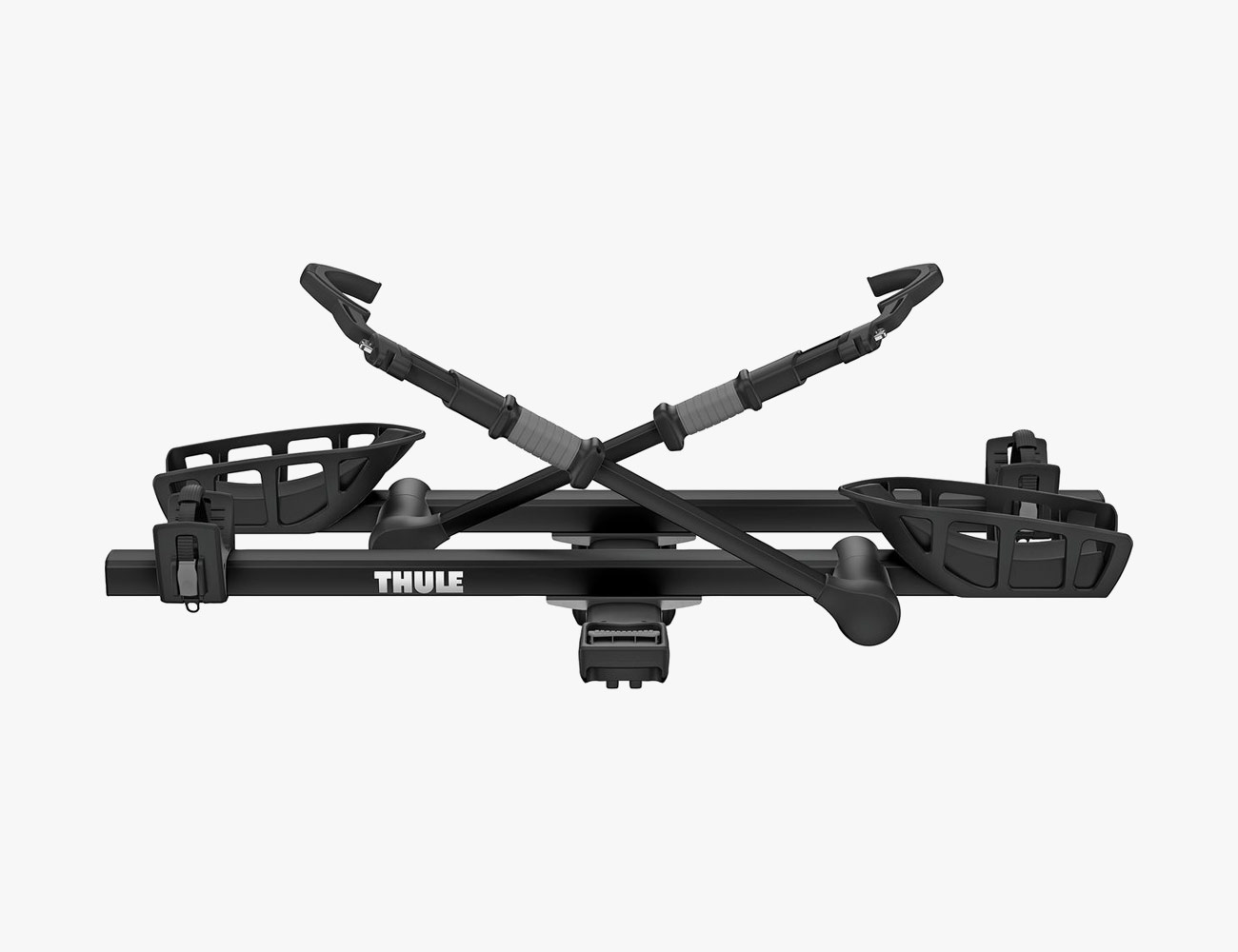
Best Overall Bike Rack: The T2 Pro XT is Thule’s premium tray-style, hitch-mount bike rack. It’s pricey but offers best-in-class features in a very user-friendly build. Front wheel ratcheting arms and rear wheel straps secure bikes that weigh up to 60 pounds without any frame contact. If you need to access the trunk space while the bikes are on the rack, the double-jointed mechanism can tilt your load away so that your car door is free to swing up and open. Best of all, if your crew is more than two people you can get an extension that adds two more bikes.

Saris Bones 3

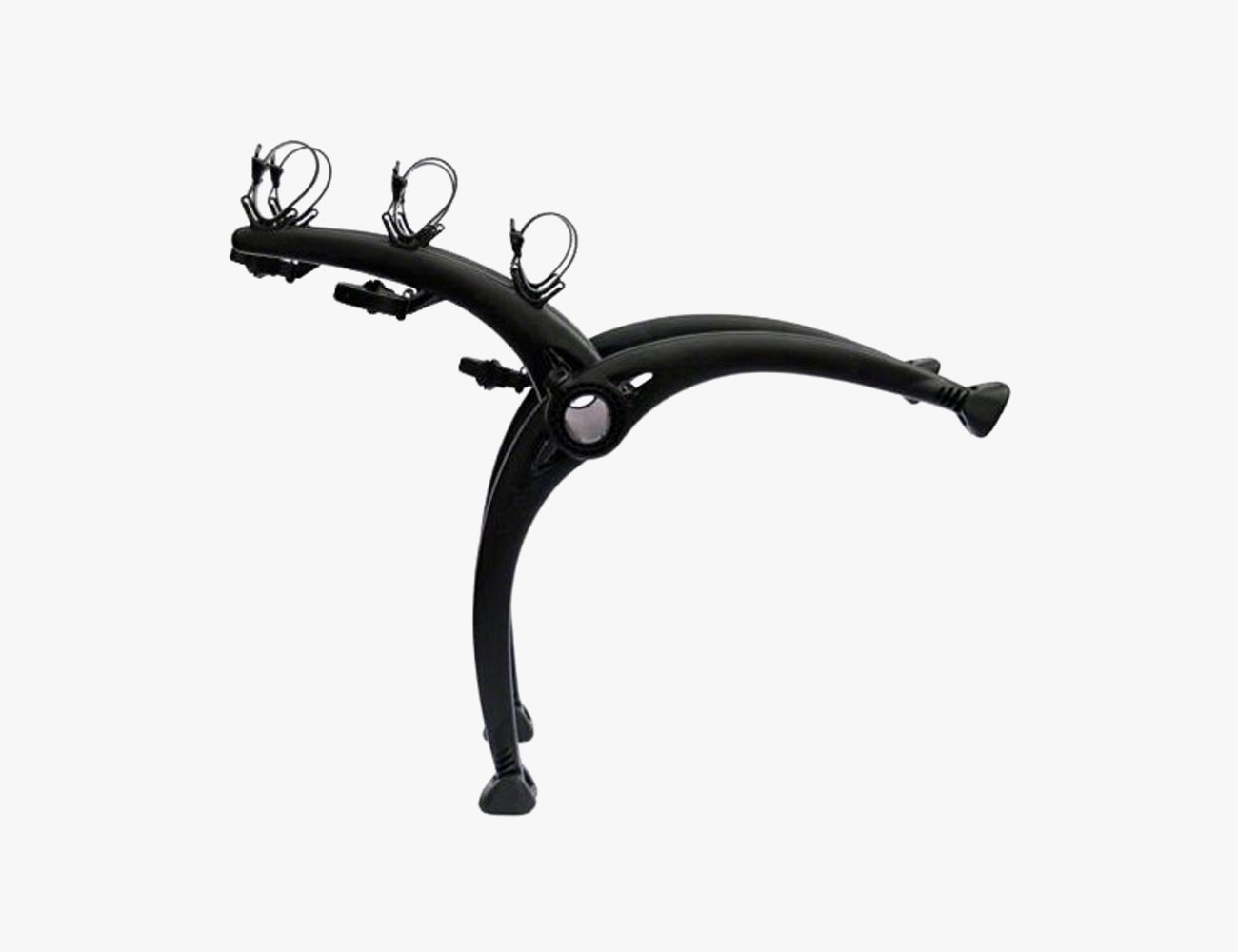
Best Budget Option: Saris’ Bones bike rack is an awesome affordable option that’ll work for most riders’ needs. The rack attaches to almost any vehicle with rubberized, paint-friendly contact points and ratchet-equipped straps. It’s made from strong injection-molded plastic and has space for three bikes. If your car doesn’t have a trailer hitch and you don’t want to spend too much on a rack, this is the one to get.

1Up 2″ Super Duty Double

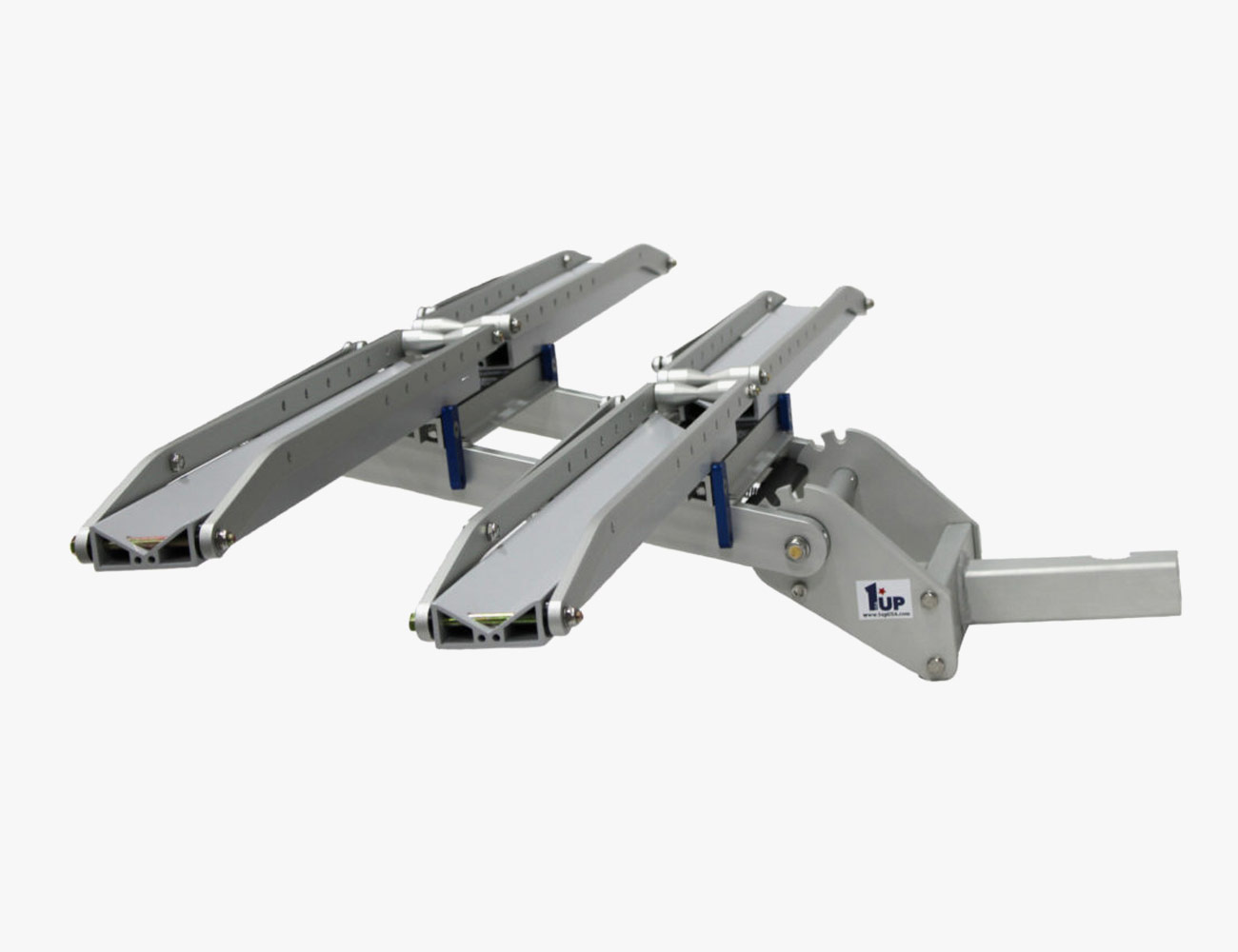
Best Hitch Rack: There’s a reason that virtually all luxury SUVs in Jackson, Wyoming (and many other mountain towns) can be spotted kitted with 1Up racks on the back. They are the top of the line when it comes to hitch-mount bike racks. They’re built in Dickeyville, WI from lightweight aluminum and like tyhe Thule T2, features an expansion bolt that eliminates virtually all wobble that many hitch-mount bike racks suffer from. 1Up Super Duty Double racks are also compatible with tire sizes from 16″ to 29″ and up to a 52″ wheelbase.

Kuat Trio

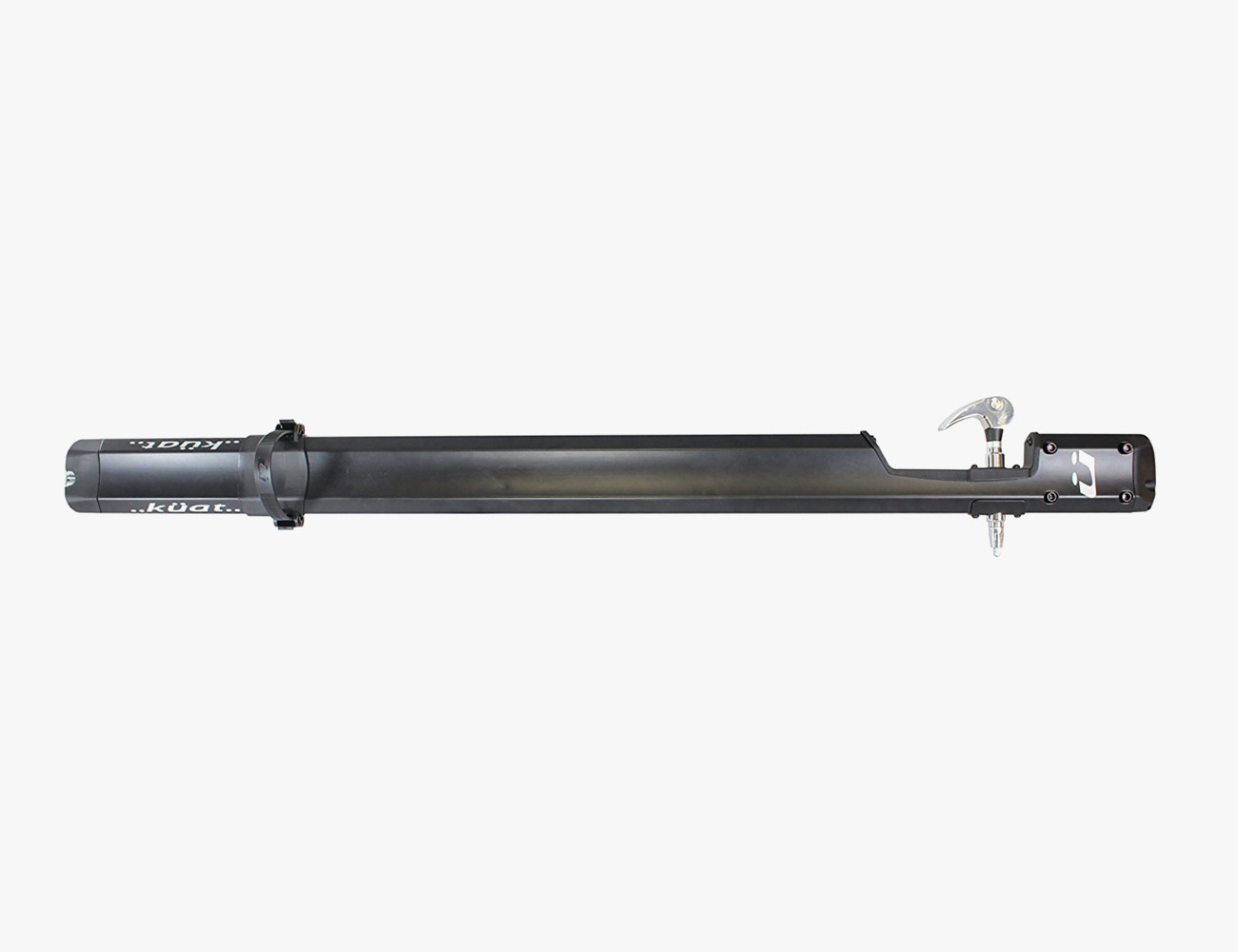
For riders who want a rooftop rack but are intimidated by the prospect of having to lift a bike high to strap it down, there’s Kuat’s Trio bike rack. The Trio is sleek and easy to use, with an intelligent fork mount system that will adjust to hold bikes of all sizes. The rear wheel secures with a ratchet strap, and the rack includes a built-in bike lock that deploys from the end. It’s also quite affordable.

Thule UpRide

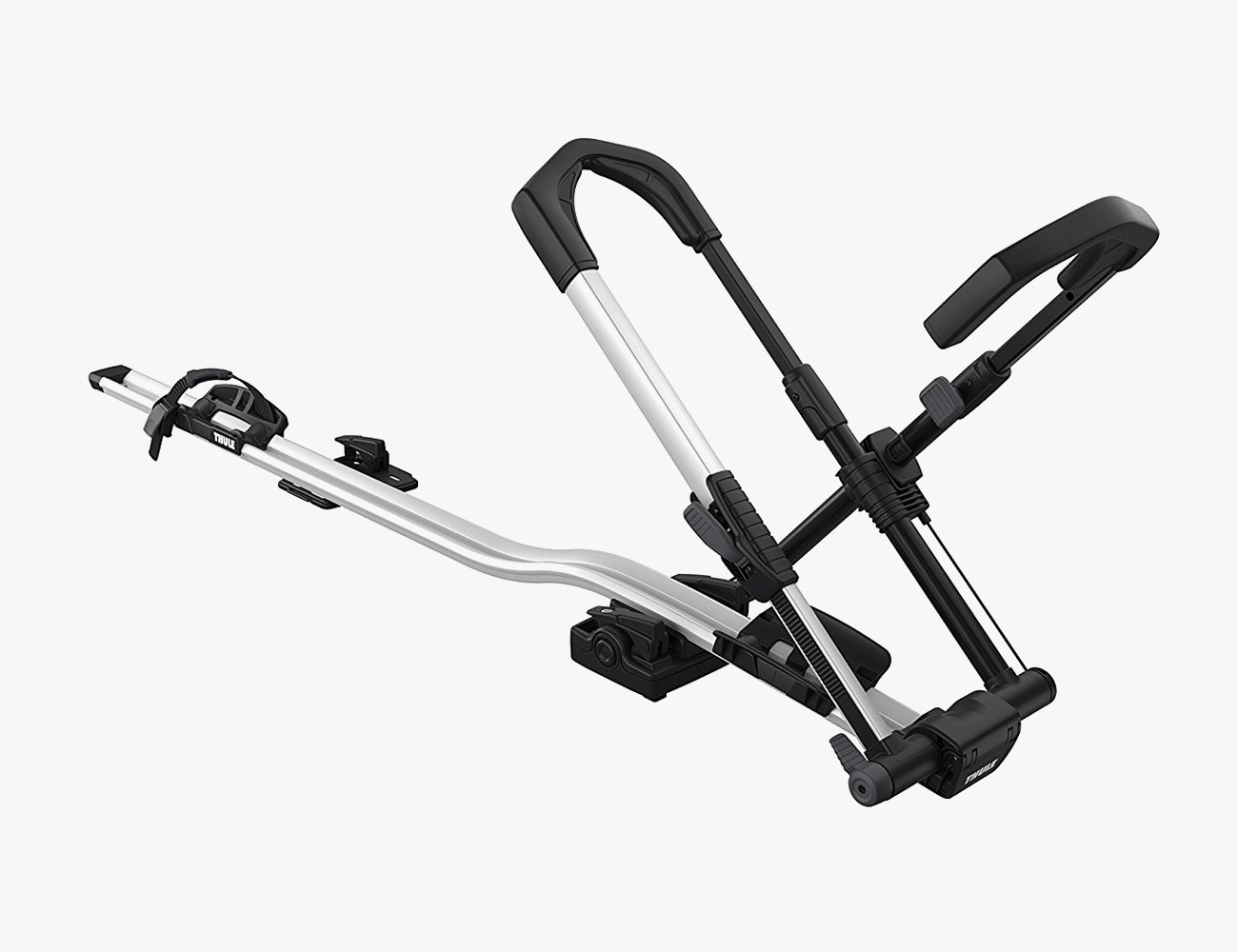
Thule’s newest single-bike roof rack is an award winner, and rightly so. The UpRide lets riders leave the front wheel attached, securing it with two adjustable arms that hold it firmly in place. It does this without any contact with the frame, so it’s a good option for owners of pricey carbon bikes. With this system, the UpRide can accommodate frames of all shapes, sizes and suspensions.

Yakima Dr. Tray

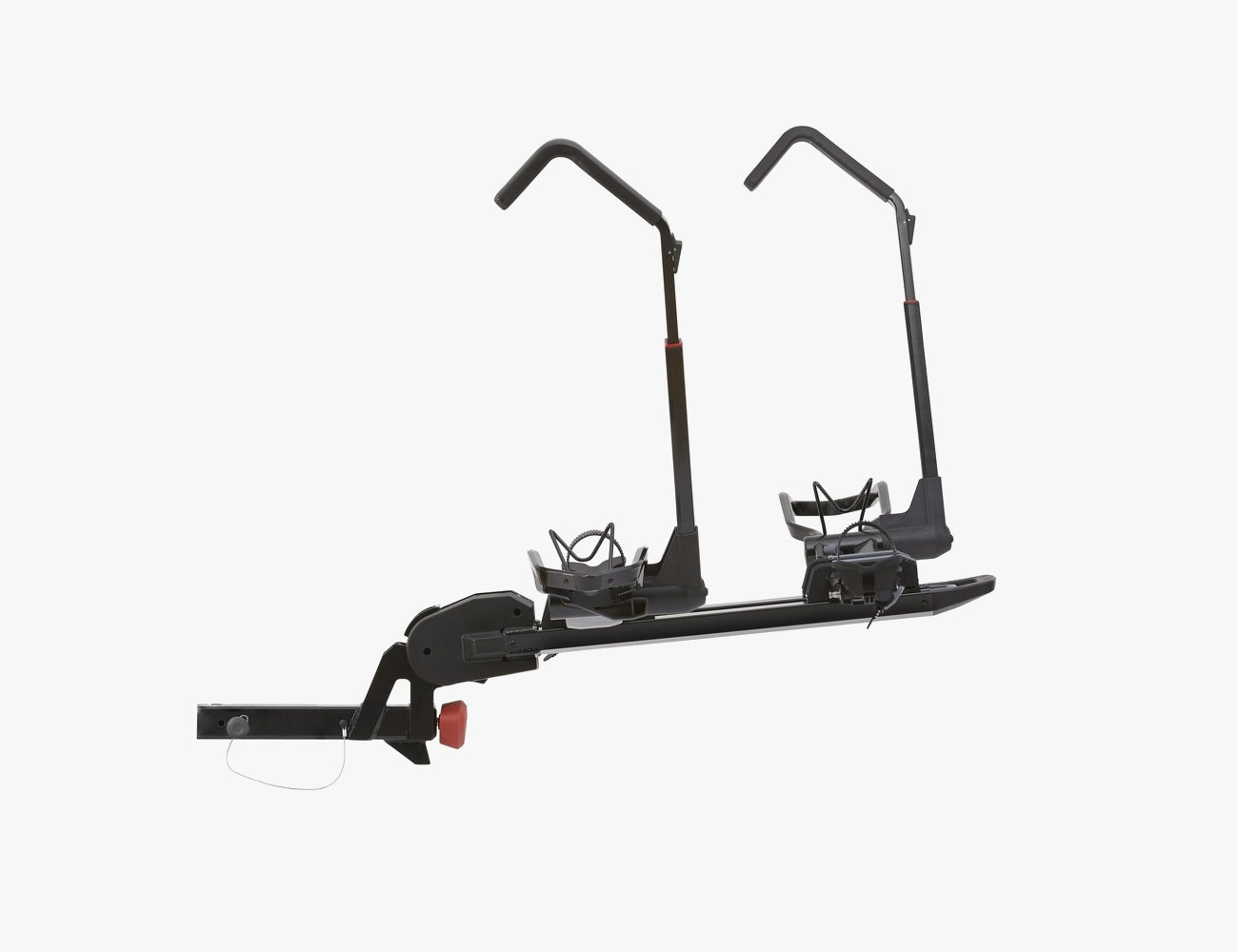
The Dr. Tray is, hands down, one of the most stable hitch-mount bike racks we’ve ever used. The mechanism that attaches the rack to the hitch receiver utilizes a built-in wedge that eliminates any unwanted movement and sway. The trays are also infinitely adjustable, allowing you to position both bikes exactly where you want them and eliminate any chance of them rubbing against each other. When not in use, the tray folds up and locks in place with the squeeze of its handle.

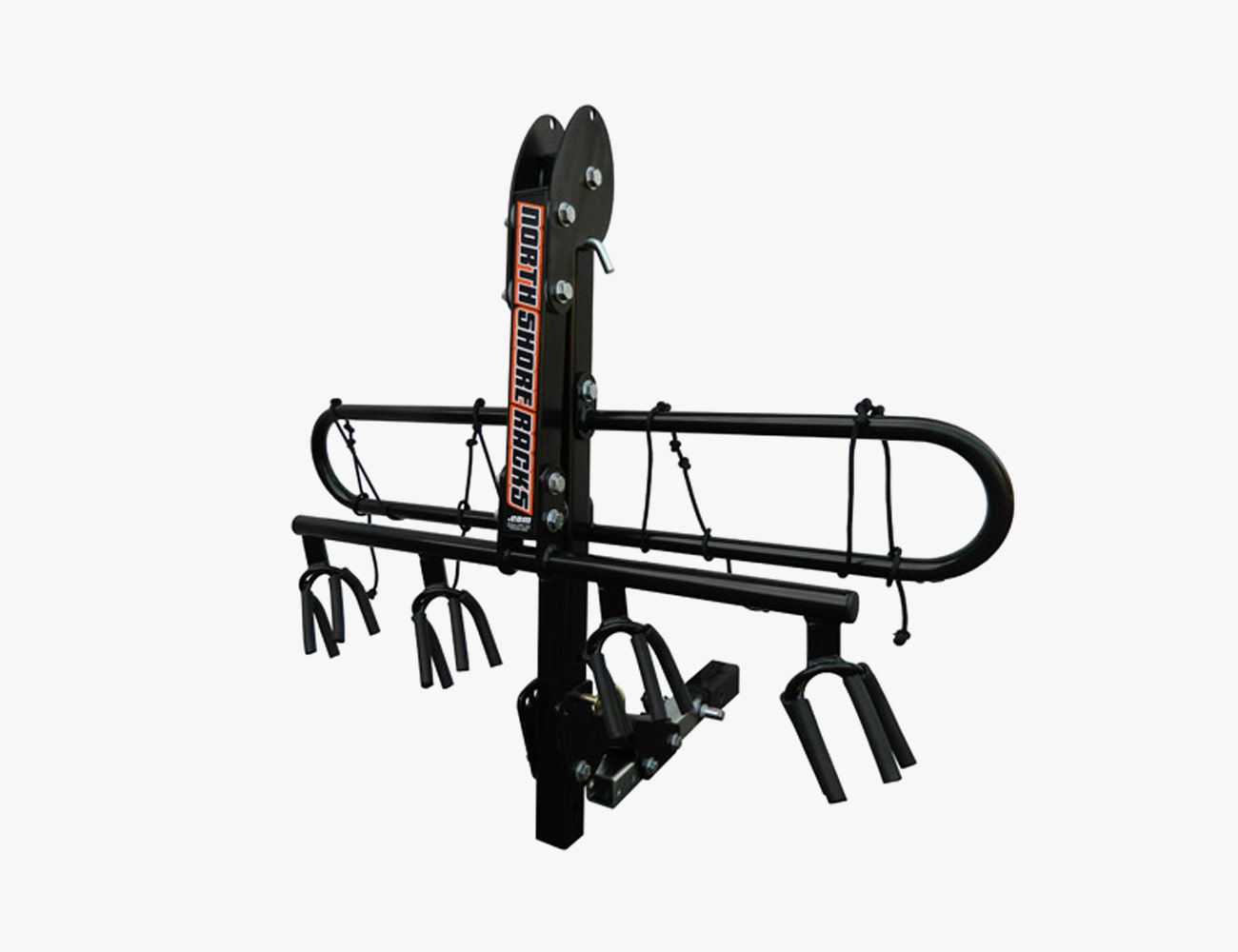
North Shore NSR 4-Bike

North Shore Racks’ NSR offers a vertical alternative to the hitch-mounted rack, positioning up to four bikes upright and next to each other behind nearly any vehicle. The front wheel hangs tilted from a rubberized fork while the rear wheel locks to the frame with an easy-to-use rope and knot system. This way, the bikes can be positioned as close as possible without touching, and less space is used overall. This rack was designed for mountain bikers by mountain bikers, and as such it’s best for mountain bikes (read: not road bike compatible).


Note: Purchasing products through our links may earn us a portion of the sale, which supports our editorial team’s mission. Learn more here.

Priority’s Newest Bike is All-Terrain, Yet Still Low-Maintenance

From Porsche to a 12-Speed

Priority’s Newest Bike is All-Terrain, Yet Still Low-Maintenance


Here at Gear Patrol, we’re big fans of Priority’s low maintenance, high reward bikes. I tested out the Classic NeverFlat for a couple of weeks and now have been riding the company’s Classic Plus Gotham Edition for about a month. Priority continues to push the envelope on bikes that are a joy to ride and easy to maintain. Today, Priority launches the Priority 600; a car-inspired bike meant to ride on roads, gravel and dirt without breaking a sweat.

The 12-Speed Pinion Gearbox was designed by two former Porsche transmission engineers to offer loads of power and adventure to every single rider. It sits between the pedals so you won’t feel a weird weight imbalance and it only needs to be oiled every 6000 miles — plenty enough for any commuter.

Paired with the same great gates carbon belt drive and all-weather composite fenders, this bike is geared up and ready to go for all the excursions you can think up. The bikes start shipping on June 18th and if you use code VELOFIX600, you’ll get a free Velofix white glove delivery.

Today in Gear

The best way to catch up on the day’s most important product releases and stories. Read the Story

Travel With a Bike? This Is Your New Favorite Bag

Traveling with gear is inconvenient at best. Hikers, runners and campers have it relatively easy, but once skis, surfboards and bikes are included in an itinerary bag fees begin to ascent. Bag options become an issue too, and cyclists and mountain bikers have had to choose between XL hard cases and softer bags that don’t offer quite enough protection. Db Equipment solved a similar issue with its roll-up ski bag, and now it’s aiming to do the same for bikes with the new Savage Bike Bag.

The Savage is a softshell bag with a racecar-inspired “roll cage” built-in. It’s made of aluminum and offers protection from all angles as well as anchor points for a series of straps that are used to keep the bike stable and in-place. The bag includes additional protective casings for the drivetrain, fork and handlebars as well as separate compartments for wheels and stash pockets for small items like pedals and tools.

Db Equipment tends to search for the ideal overlap between versatility, practicality and user-friendliness in all of its products and it’s done so here by making the bag collapsible. The aluminum cage and internal storage accessories pack down to a flat rectangular shape that’s easily stored under a bed or in a closet, and the entire bag weighs just 28 pounds. For those torn between the protection of a hard case and the lightweight storability of a soft bag, the Savage provides the best-of-both-worlds answer.

Today in Gear

The best way to catch up on the day’s most important product releases and stories. Read the Story

Apple Teams Up with Rapha on New Commuter Bags — And They’re Gorgeous

I

n the tech world, Apple is renowned for its product design. Hell, in the world world, Apple’s design is applauded as bordering on flawless. It only follows that, if the company were to work with an athletic brand on a collection of products to be sold exclusively in its stores, it would have to be one that shared similar aesthetic values.

That brand is Rapha. The London-based cycling house is similarly known for its minimalist designs (and jolts of electric pink), and it’s applying them in a limited edition luggage collection sold exclusively at Apple. Included in the launch are a convertible backpack tote, a mini messenger bag, MacBook and iPad sleeves and a tech organizer.

“We wanted to create something that was elegant and not overly-complicated, but then you instantly saw functionality and beauty once it was in its final form,” says Rapha’s Creative Director, Alex Valdman. Valdman has been using Apple’s iPad Pro as his primary design tool — instead of the more traditional pen and paper — since it came out in late 2015. Below, he tells us how the new collection came to be, how Apple and Rapha are similar and why minimalism is essential in product design.

Q:

How did you approach the design of this collection?

A:

Apple came to us maybe a year ago and they said they’d love for us to create something for them. I was instantly taken back to a place in the 90s when, growing up in San Francisco, Apple was kind of a symbol for people that were in graphic design or making music. You could identify with that tribe. That was the inspiration point — take inspiration from that moment and create something for our cycling tribe.

We approached the project by empathizing with our tribe, which is, for the purpose of this project, the commuter. So someone that has to ride four miles or 40 miles. This lead us to create a system of luggage that can be worn on the back or attached to the bike. The Messenger Bag can attach to the bars or the top tube or your waist or it can be worn over the shoulder as a sling.

We all got into the design studio and just started cutting up paper and experimenting and playing around to figure out what the direction was. We spent a lot of our best energy and best people on this project and what the result is, is a product that represents the design values of Rapha.

The one thing that I keep thinking about is this quote that’s always stuck in my mind — Steve Jobs said that an Apple computer is like a bicycle for your mind. What I would add to that quote is that the bicycle is also what gives your mind a space to think. When you ride, you wind up going into this more relational, organizational part of your limbic brain and I think that’s where you reflect on a lot of things that are happening in your life and you come up with a solution on the bike. The values between both brands are very similar. Apple wants you to think with something and I think what we want to do is vocalize all the benefits of cycling and one of those is reflection.

Q:

Why does a collaboration between Rapha and Apple make sense?

A:

It’s an interesting one. As a company, our standards are super high. It’s part of our culture to always strive for better and question everything that we do. And we try to get to perfection even though it’s an impossible journey. I think that when you have two companies with similar values you kind of push each other. For us it was an opportunity to really get close to that organization and one, to be inspired by it and learn from it, but also to offer something to them that they were interested in as well.

Q:

Has Apple influenced you as a designer?

A:

I think it’s one of the influences. How can I say this without sounding like I know what Apple’s design philosophy is? I’m assuming that Apple’s philosophy is about simplification of complex ideas or complex forms to create the desired minimalist product that has an extreme platform of functionality. And that’s really hard to do, that takes so much iteration, so much patience, so much dedication. And that’s the bit about their process that inspires me.

Q:

Why is the iPad Pro your primary design tool?

A:

It’s more sustainable for one. The amount of nice notebooks that you could go through is ridiculous. But the reason why it’s a good tool is because you’re able to have a quick thought, sketch it out, and share it right away. For me, it’s all about sharing and informing other people and over-communicating. When you have a design tool that also has 4G, I mean, man, it’s kind of a miracle, so to speak.

Q:

How long did it take to go from the first sketch to the final product?

A:

Basically within the first three months we went from idea to final product, which is fast. Usually that takes us 18 months. But what we did is we basically spent the majority of that time on the project, where typically we don’t necessarily do it all in one go. We space it out and iterate every six weeks where in this instance we iterated every single day. Instead of having 18 months’ worth of ten iterations, we have three months’ worth of 20 iterations. And then we spent three months wear-testing it and lab testing it, the packaging took about three months, and production took about three months.

Q:

Where does simplicity fit into your design philosophy?

A:

There’s a guy named Buckminster Fuller. I don’t know if he was the first smart architect, but he was one of the first locally-celebrated architects that preached sustainability, and this was back in the 40s. He has a philosophy called Spaceship Earth, which is, we’re on this spaceship, it doesn’t have infinite resources so we have to be more sustainable with how we build. His architecture was based on the theory of less is more. So, how can you make the world’s lightest building? He veered toward simplified geometry and high-tech materials.

He mentored a man called Norman Foster who lives here in London and is a friend of the brand. I think that philosophy is probably one of the most appealing philosophies for most designers. Being in the world that we are in today, being influenced by the Paris Climate Accords, being influenced by having a child, quite frankly, and thinking about what the future holds for her, influenced by becoming a much more sustainable practice here at Rapha — that design language just makes a lot of sense.

Note: Purchasing products through our links may earn us a portion of the sale, which supports our editorial team’s mission. Learn more here.