All posts in “Sports and Outdoors”

This New Camp Blanket Will Make You Ditch Your Sleeping Bag

Sleeping bags have been the standard for bedding down outside for decades. Their position is being challenged though, by the camp blanket. Camp blankets aren’t a new thing, but they are gaining in popularity. Commonly referred to as trail quilts, these outdoor blankets aren’t just decoration for Instagram-friendly cabins, they’re viable sleeping bag replacements made of technical fabrics and fills. Kammok makes one of our favorites, and today it announced a new addition to its line with the Bobcat.

The Bobcat looks like a sleeping bag that’s been given the blanket treatment — it’s rectangular with down-filled diamond baffles — but it hides an array of smart features that give it the extra functionality it needs to become a reliable piece of camping gear. For one, Kammok used top-notch Atmos 20D ripstop nylon and responsibly-sourced, water repellent down. It also has cinch cords at either end and snaps running down its sides so that it can effectively close up like a sleeping bag if that’s the way you want to use it. It also comes with straps that link it to your sleeping pad so it won’t fall off in the middle of the night and a conversion kit that turns it into an underquilt for sleeping in a hammock. These attributes make the Bobcat ideal for backpacking and camping, but even if you have no use for them the quilt is still a warm and light solution for the home or the camper.

The Bobcat is rated for comfortable use down to 45 degrees Fahrenheit, weighs 19 ounces and packs down to the size of a football. Kammok initially launched the quilt on Kickstarter, where it earned over $265,000 (of a $50,000 goal), but as of the commencement of the new year, the Bobcat can be purchased on Kammok’s website in three colors.

The Best Fitness Apps for 2019

Our smartphones, we’re told, are ruining our lives. You’ve no doubt heard the news stories by now (or, more likely, scrolled past the headlines on your phone) about how they’re destroying our cognitive resources, disrupting our sleep, giving us bent backs and kinked necks, and causing us to become anxious, depressed, antisocial weaklings while we obsessively scroll through our social media feeds 100 times a day.

But it’s not the phones themselves that are the problem, so much as how we use them. In fact, a whole category of health and fitness apps are poised to help make you fitter, stronger, leaner, looser and more relaxed than ever before—to fight back, in other words, against the creeping physical and mental ills of the Information Age. Taking advantage of today’s information-rich environment, they focus on putting personalized, coach- or trainer-built workouts at your fingertips, so you can get better results faster, whether you pump iron at the gym, do bodyweight HIIT routines or push the pace on outdoor runs. And, more than crushing it every day, they stress consistency as the key to a healthy lifestyle, by holding you accountable for missed workouts and keeping you on track with a nutrition plan. At the very least, they offer variety, and a change of pace from the tired old fitness routine that saw you plateau back when the iPhone 4 was released, and there’s something to be said for that.

Additional contribution by Meg Lappe.

For the Time-Pressed: Sworkit

An overpacked schedule is the most common barrier to fitness (never mind the nightly Netflix binge), but Sworkit’s customized programs allow you to fit a solid, targeted workout into whatever time you can find, whether that’s a trainer-recommended 40 minutes or 4 minutes between episodes of Master of None. Simply choose the kind of routine you want—strength, cardio, yoga, or stretching—and enter how many minutes you have, and it outputs a video-guided, precision-timed, sports scientist-approved workout that’ll help you trim fat, pack on muscle or just loosen up, excuses be damned.

|

For Those Who Like to Listen: Aaptiv

This audio-only workout app is best for those who learn from hearing, as well as visual learners who want to grasp workouts exclusively through their ears. Aaptiv lets you pick (and download) on-demand workouts so you can dabble in everything stretching and yoga classes to boxing and weightlifting. New classes show up every week in the app. Pick the type of workout you want, the kind of music you like and then narrow your options down by how much time you have. Whether you’re traveling and need an exercise without any weights, or need some motivation on your next long run, Aaptiv has you covered.

|

For Outdoor Cardio: Nike+ Run Club

From the company hell-bent for the past two decades on reviving American distance running—and this year’s Boston Marathon is proof it’s working—comes the Nike+ Run Club, an innovative app that, in addition to tracking your runs via GPS, provides audio-guided runs for newbies and personalized coaching plans fit for hardcore racers. Each workout helps you build strength, speed and endurance, and there are motivational tools—from friendly leaderboards to weekly challenges to Spotify playlists tailored to the pace of each run—to keep you on pace for a PR. If that’s not enough, you have the option of in-ear audio from coaches and athletes for an added oomph.

|

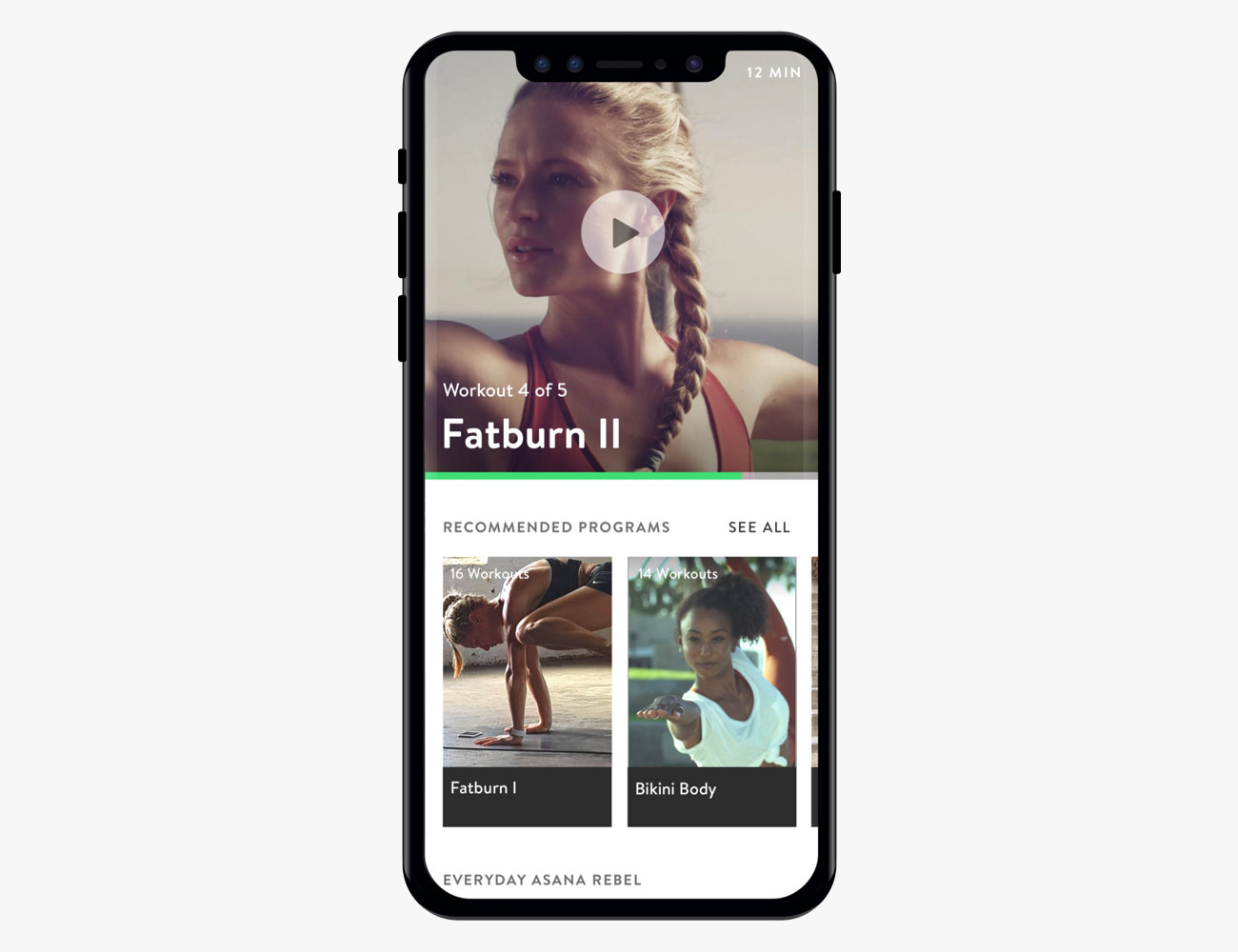
For the Yoga-Curious: Asana Rebel

You know it’s good for you, but somehow you’ve still not gotten around to trying yoga. You’re either confused by all the different styles (what is the difference between Hatha, Ashtanga, and Vinyasa, anyway?!), or put off by the spirituality and om-ing gurus. Asana Rebel’s yoga-inspired fitness takes a different approach, combining traditional practices with exercises—like burpees, mountain climbers and LOTS of planks—straight out of HIIT class. Choose a category of yoga flow (like strength, fatburn, or flexibility) to match your mood and energy level, then prepare to be worked.

($38 for 3-month training program)

|

For Discovery: ClassPass

Group fitness popularity is skyrocketing, if for no other reason than we’ve collectively run out of ways to motivate ourselves to do the same tired old at-home routine (we’re looking at you, Shaun T). It also helps, of course, that you’re coached through a workout professionally designed for efficiency and maximum results, not to mention motivated by the group’s enthusiasm or, at the least, by a fear of looking weak and ridiculous in front of the fairer sex. But it’s still hard to commit full-time to a boutique studio, where you’ll plunk down $30 per class, sight unseen. ClassPass gives you ultimate flexibility, allowing you to sample book all sorts of classes—HIIT, barre, cycling, boxing, yoga, younameit—on the fly at studios all over your city, and at about half the normal price.

(membership starts from about $35/month, depending on where you live)

|

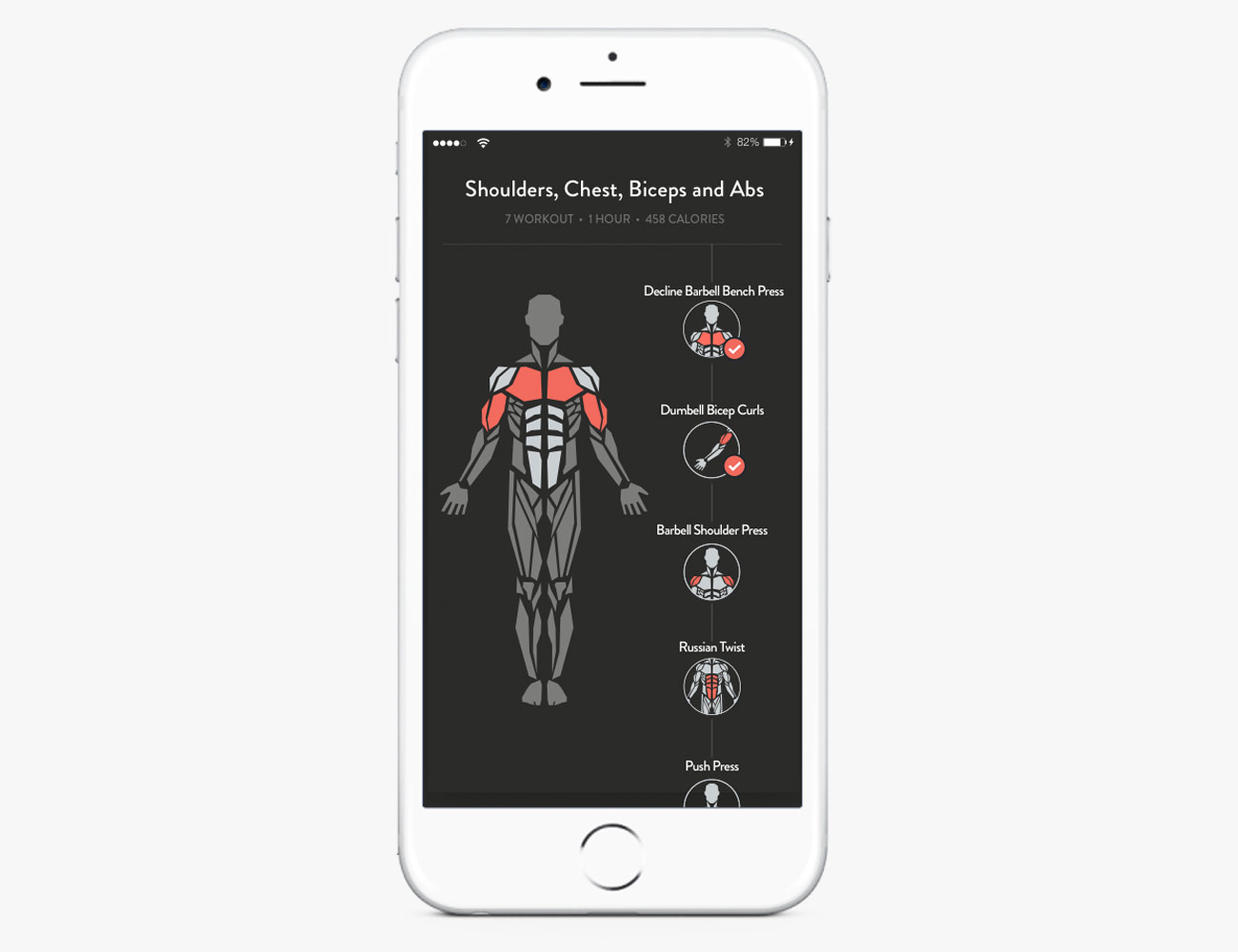
For Weightlifting: Fitbod

Using artificial intelligence, Fitbod handles the heavy lifting of workout planning, so you can focus on, well, the heavy lifting. It learns from your past workouts to develop a personalized plan that’ll push your limits based on your goals, preferences, struggles, and available gym equipment. Then, when you hit the gym, it guides you step-by-step through each exercise (telling you weight, reps and sets), and even adjusts the workout according to muscles you want to target and your recovery state. And, like a personal trainer, the more you pump iron with it, the better it gets at constructing workouts that get you the gains you want.

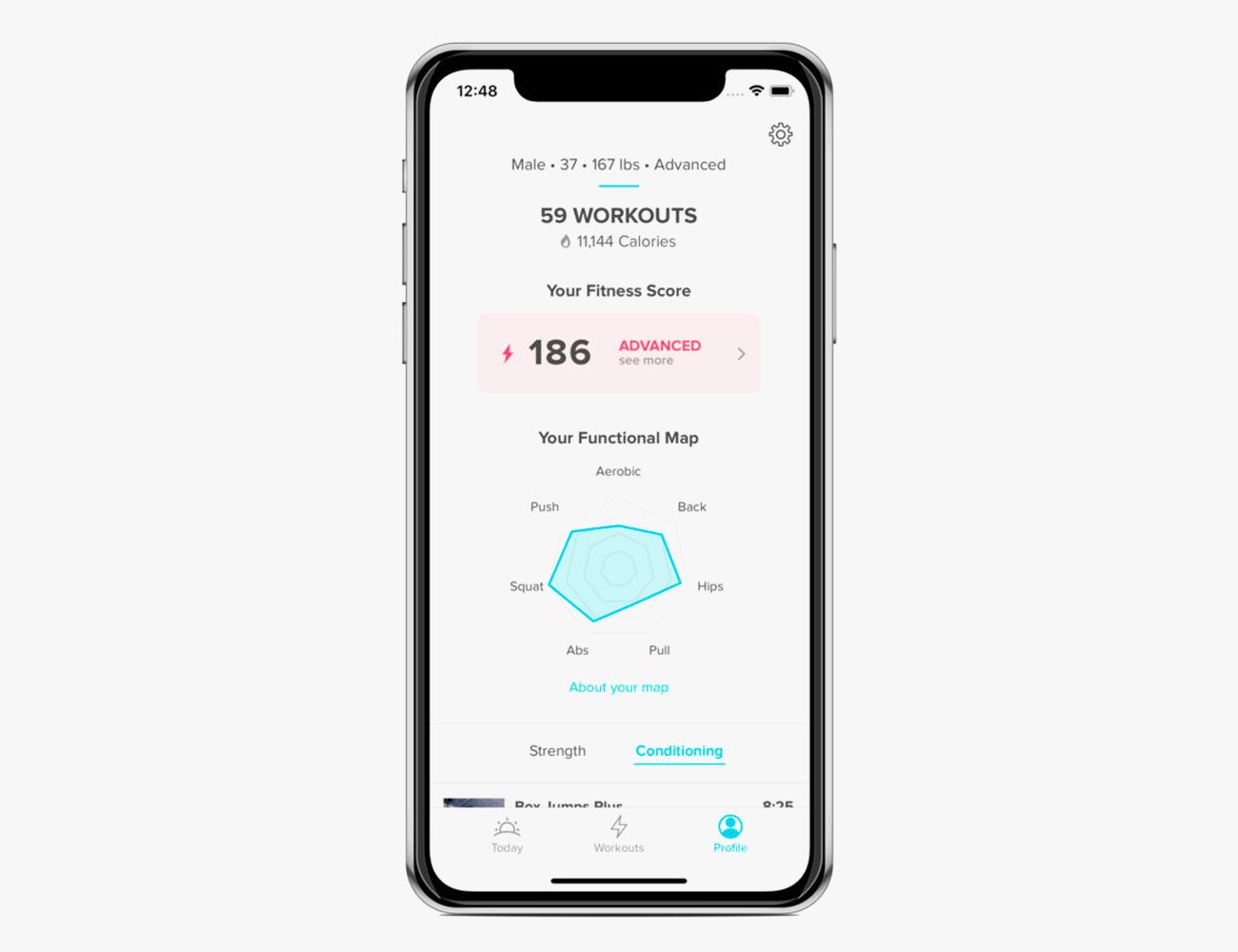
For Quick-Hit Workouts: Keelo

When you’re looking to knock out a quick, effective full-body workout, HIIT is hard to beat. Keelo recommends intense, fast-paced workouts—each tweaked, based on your recent history, to hit compound muscle groups that are being ignored—that last between seven and 20 minutes. There’s a mix of bodyweight and free weight workouts, so it’s can stick to a three-a-week routine at home or on the road, and get maximum results.

(Premium subscriptions from $12/month)

|

For Recovery: Sleep Cycle

Getting solid sleep is one of the most important aspects of recovering from your workouts and making fitness gains, so it’s worth a closer look at what goes on after you go under. Sleep Cycle uses your phone’s accelerometer to monitor and record your movement and quality of sleep. When morning approaches, it uses sleep cycle theory to wake you up during light sleep (within a user-defined window of time) rather than deep sleep, so you feel refreshed and ready to tackle the day—and workout—ahead.

|

For On Demand Workouts: NEOU

On-demand workouts are popping up all over the place. Peloton was one of the original live workouts on its bike, sold nationwide. They created a community of trainers and cyclists who live and breathe all things Peloton. Other studios and gyms have worked towards this, but no one has figured out the best way to go about it. NEOU is a new model that’s looking to live stream workouts and store hundreds in the app so that you never get bored. Trainers head to a state of the art facility on Fifth Avenue to film their routines. You can test out a variety of workouts from HIIT and Bootcamp to boxing and core — even mobility and dance. Follow your favorite trainer or mix it up.

|

For Stress Relief: Headspace

Between your hard-driving fitness goals and a busy home and work life, it’s easy to push too hard and suffer both mentally and physically. That’s why it’s so important to clear your mind regularly to keep going strong, and promote a balanced mind and body. Headspace offers structured, beginner-friendly meditation courses that range from three- to 30-minute sessions, with built-in reminders and tracking to help you stay on track. Because meditation can reduce stress, improve focus and promote better sleep, you’ll recover faster, work more efficiently and—bonus!—probably be a more patient, mindful person.

|

For All-Around Healthy Lifestyle: 8fit

For the person who wants to outsource all of their fitness and nutrition planning (sorry, bud, career advice not included), 8fit is up to the job. Like having a personal trainer and nutritionist wrapped in one, it creates custom exercise and meal plans based on your goals, your current stats, and—to a degree that other apps don’t—your fine-grained preferences. It asks probing questions (like how many weekly workouts you can handle, how many meals you want per day, how much variety you require in a diet, and how you prefer to meal prep) then spits out an achievable, step-by-step plan—with at-home HIIT workouts and delicious, nutritionist-created recipes—to your fittest self.

($60/year for pro edition)

|

Note: Purchasing products through our links may earn us a portion of the sale, which supports our editorial team’s mission. Learn more here.

The Best New Knives and EDC of December 2018

Some product launches are predictable — hiking boots and rain jackets in spring; skis and jackets for winter. Other things don’t fall so neatly into weather-defined timelines though, like pocket knives and EDC tools. The designers and makers behind these items never stop, and manufacturers that roll out as many as 50 new knives and multi-tools per year don’t do so all at once. Instead, they’re revealed in a steady but unpredictable flow, and there’s something new to ogle every week. We make it our mission to keep you in-the-know as knives and tools that have the potential to become your next daily sidekick are released. But just in case you missed one, we’ll round up our findings in one concise, easy-to-scroll article.

In December, we saw an innovative karambit, a knife set for outdoor chefs, one of our favorite knife maker’s very first pen and more.

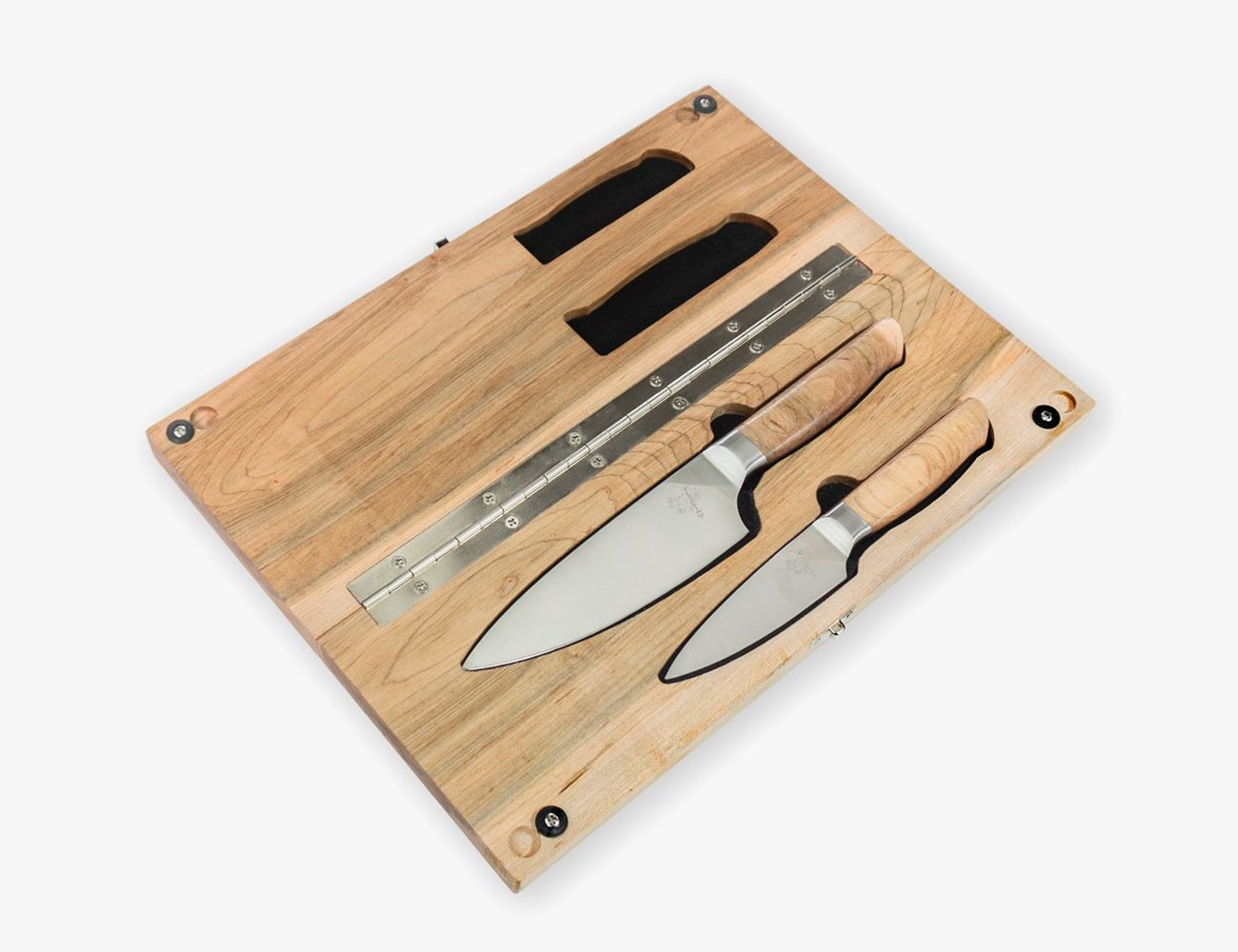
Prometheus Design Werx SPD Field Kitchen Knife Set

The benefit of car camping and overlanding is that, unlike in backpacking, you don’t have to carry your gear. You’re also afforded all of the storage of a vehicle’s trunk and roof, which means you don’t have to go ultralight if you don’t want to. You can bring a tent big enough to stand up in and a full-sized air mattress instead of a sleeping pad. Adventuring by vehicle also allows you to take more seriously one of the most important aspects of backcountry travel, meal prep, by trading out your pocket knife for a proper chef’s blade.

That’s the concept driving Prometheus Design Werx’s new SPD Field Kitchen Knife Set. PDW’s approach to outdoor cooking is multi-pronged. Aesthetics are important — the knives are good-looking with handles made of maple — but utility and practicality aren’t forgotten. The set comes with a six-inch chef’s knife and a four-inch paring knife so that you have blades for various cutting tasks, and the maple box that they come in unfolds and functions as a cutting surface. The steel used in these knives (Carpenter CTS BD1N) isn’t commonly found in cooking blades but is known for its high resistance to corrosion and edge retention, so you won’t have to fuss over them as much as you might with the knife in your kitchen at home.

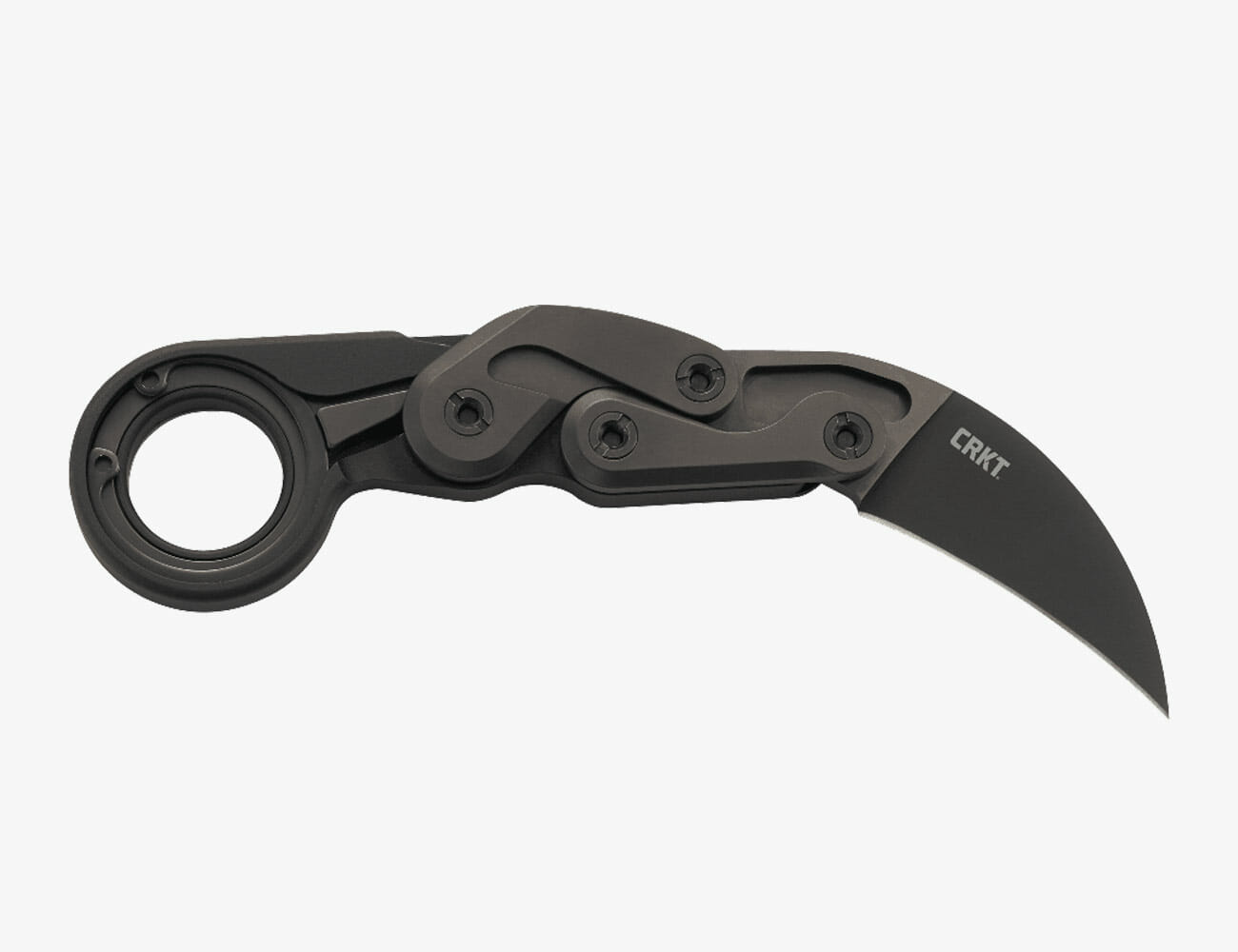
CRKT Provoke

Earlier in 2018, a knife maker named Joe Caswell created waves by introducing an entirely unique take on the folding pocket knife with a blade called the Morphing Karambit. Instead of folding downward into its handle, the knife uses a mechanism that draws the blade up and out, allowing users to not only open it with one hand but also to do so while maintaining a full grip on the handle. That innovation on its own makes the Morphing Karambit notable and helped it earn over $350,000.

Around the time of that Kickstarter campaign, Caswell dropped a hint that a major knife brand might bring his design to life as a more affordable production model, and CRKT just revealed that it would be the company to do that. Its version of the Morphing Karambit is called the Provoke, and it’s almost identical to the original but uses less-premium materials to create a more approachable price.

CRKT and Caswell have dubbed the distinctive opening mechanism “Kinematic,” and while it remains to be seen whether or not it’ll show up in future designs and different types of knives, the karambit makes a suitable point of entry since it can be held with the blade pointing back. Historically, karambits, which were created in Indonesia, have been used as weapons but it’s believed that they took after the sickle and were originally used for agricultural purposes, with the claw-like shape designed for slicing vegetation and churning up the earth. Today, karambits are used for everything, from martial arts to emergency response to outdoor survival. Caswell has already proven that with a little creative thinking karambits can find mass appeal, and CRKT clearly believes the same.

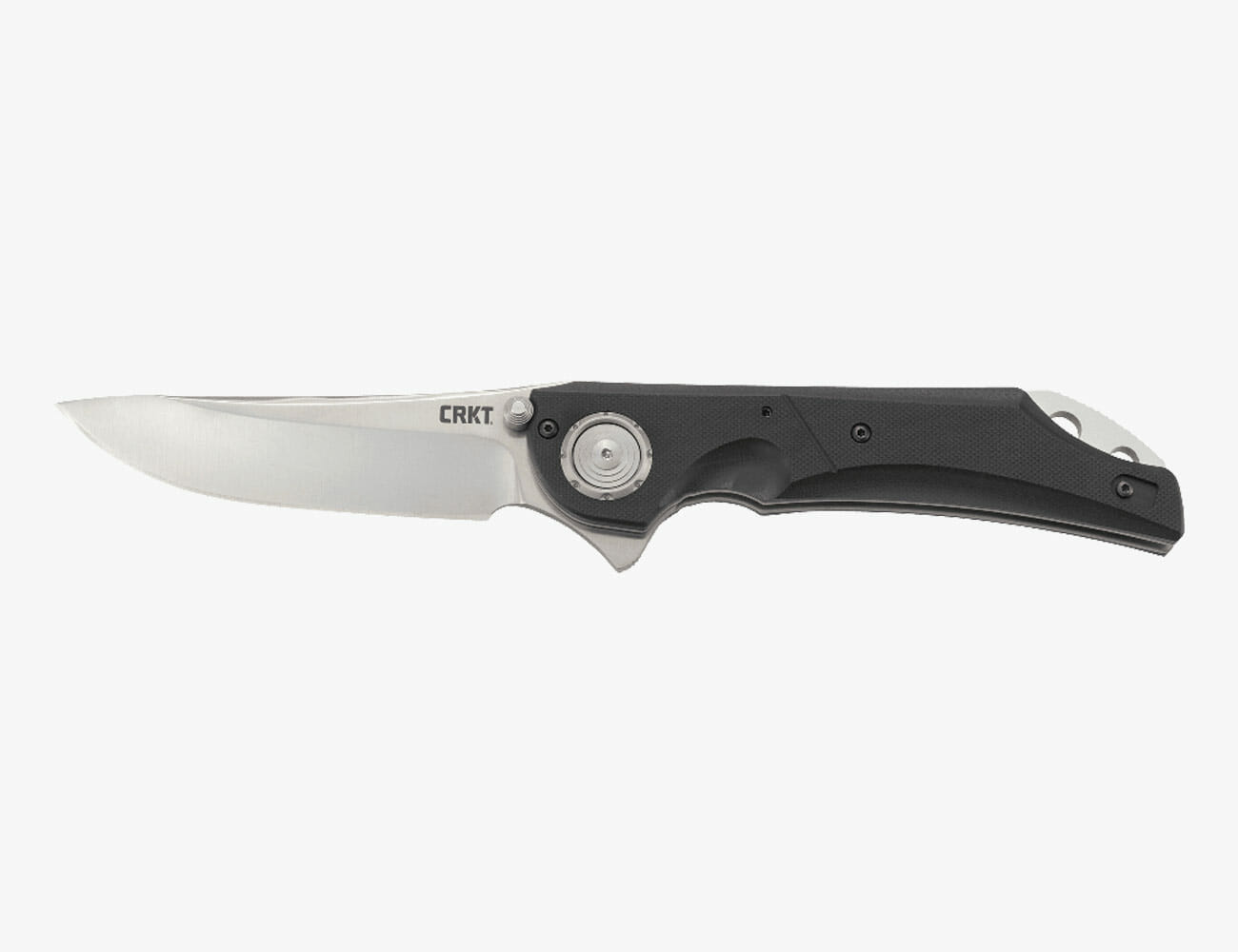
CRKT Seismic

The Seismic was designed in Brazil by Flavio Ikoma and debuts CRKT’s proprietary Deadbolt locking mechanism. The system uses interior steel bolts that wedge into the blade and liner when open, providing strength without bulk. The lock is released by pressing the oversized button that also marks the knife’s pivot point.

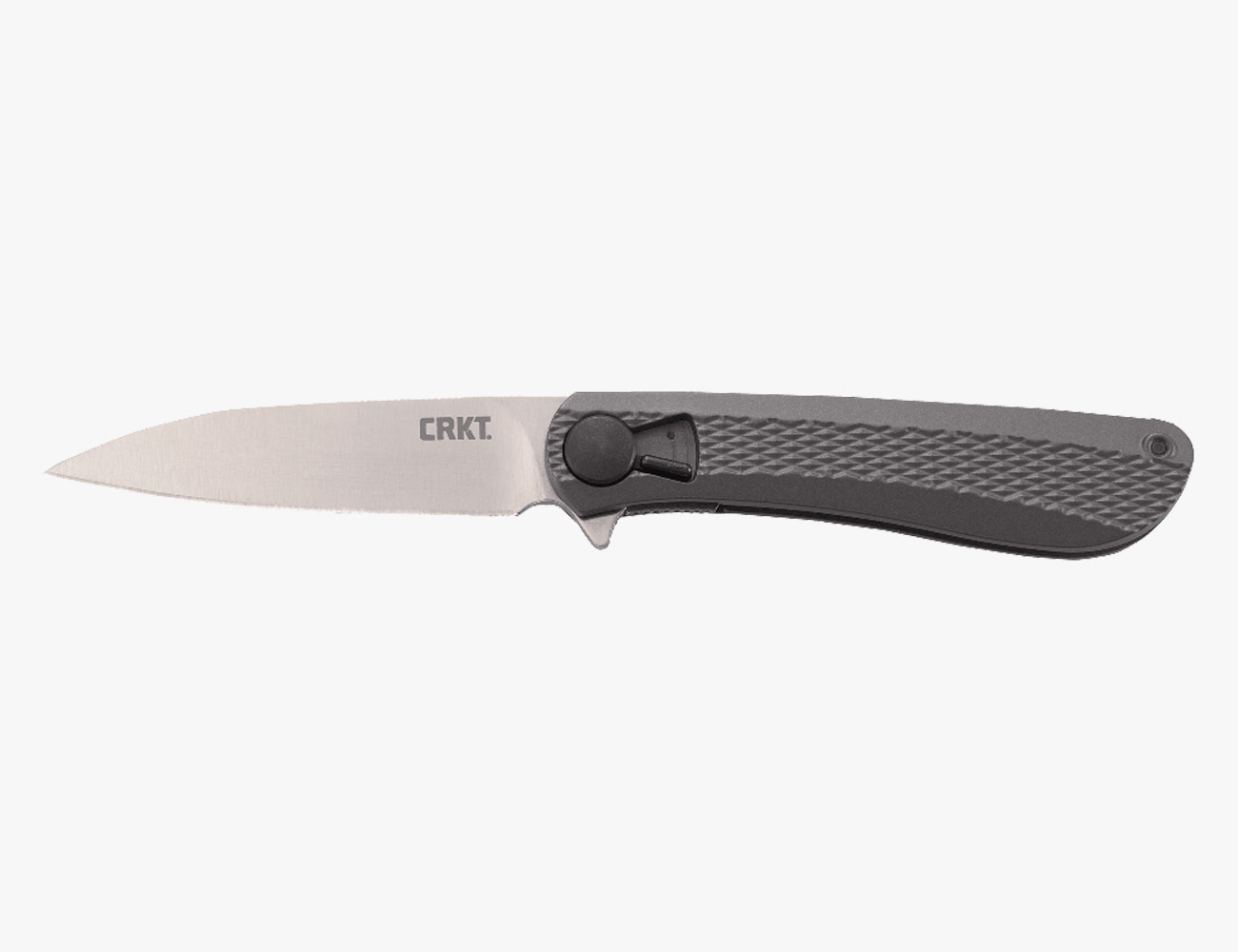
CRKT Slacker

Field Strip might be CRKT’s most innovative mechanism to date. It was developed by esteemed designer Ken Onion and allows users to completely take apart a knife for in-the-field cleaning with the switch of a lever and the spin of a wheel. That technology has expanded into a handful of new knives, perhaps most notably the Slacker, a slim everyday blade also created by Onion.

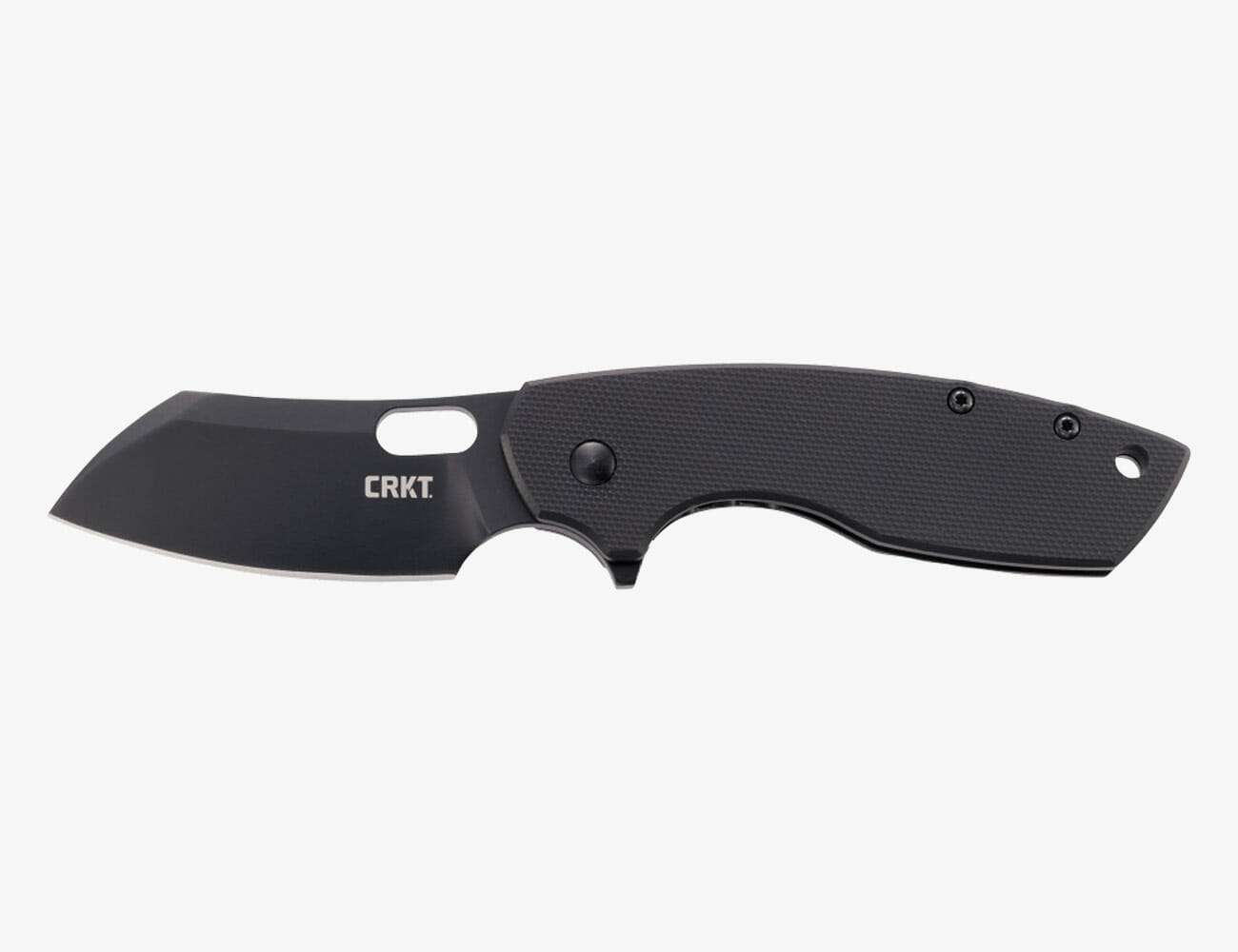
CRKT Pilar Large

Another notable model from CRKT’s 2019 preview is the Pilar Large. It isn’t an entirely new model, but rather a bigger version of the Pilar, which was made available in 2017 and became a fan-favorite for its folding cleaver-like design. It was designed by Jesper Voxnaes (and named after the boat that Ernest Hemingway used to do recon on German U-boats in the Caribbean during World War II), and now it’s available in a slightly larger size that also includes a flipper tab. It’s also available in black.

Malboro & Kane Claw

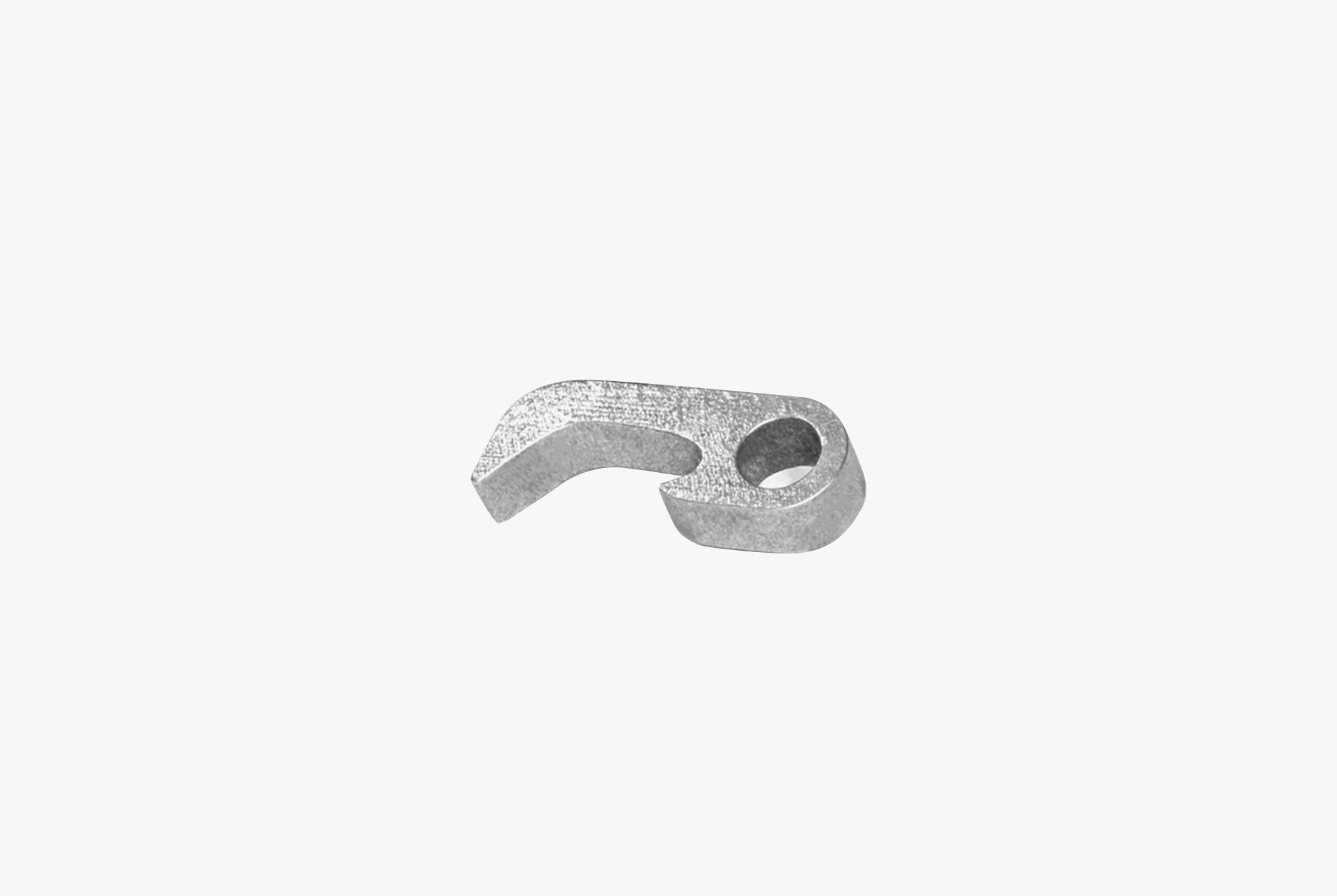
Malboro & Kane just released what the brand is calling the “world’s smallest multitool.” The Claw is less than one-inch long and attaches to your keychain, allowing you to take it just about anywhere. It’s made from aerospace-grade titanium (Grade 5), so it’ll last a lifetime. As a bonus, it’s TSA-approved, so you don’t have to worry about bringing it on an airplane, and at just two grams, it’s incredibly lightweight. Whether you’re always searching for a quick way to open bottles, paint cans and more, this multitool is the one for you.

It works equally well in the office as it does at your home on the weekend. For something that’s roughly the size of a penny, it’s worth a test.

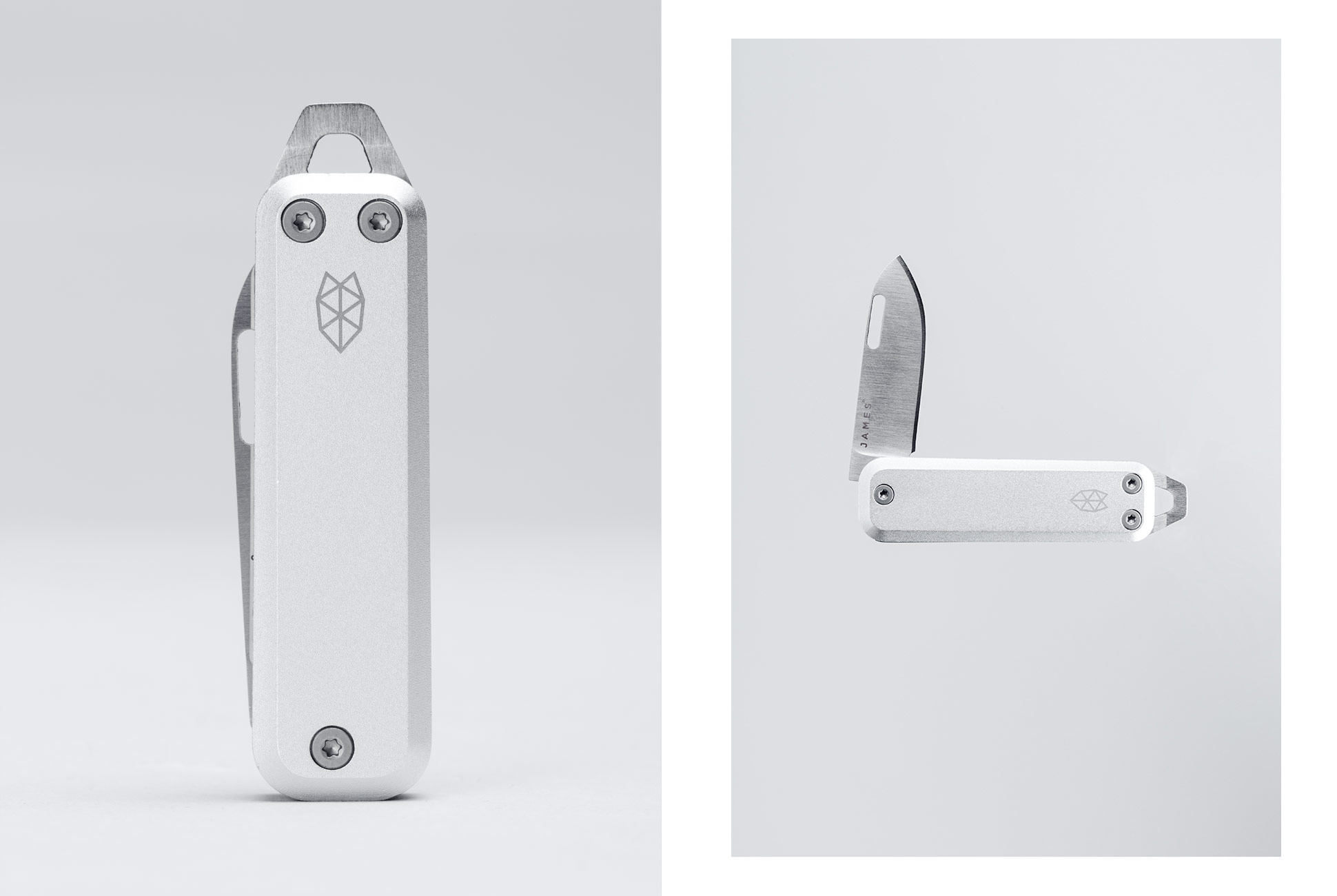
The James Brand Benton

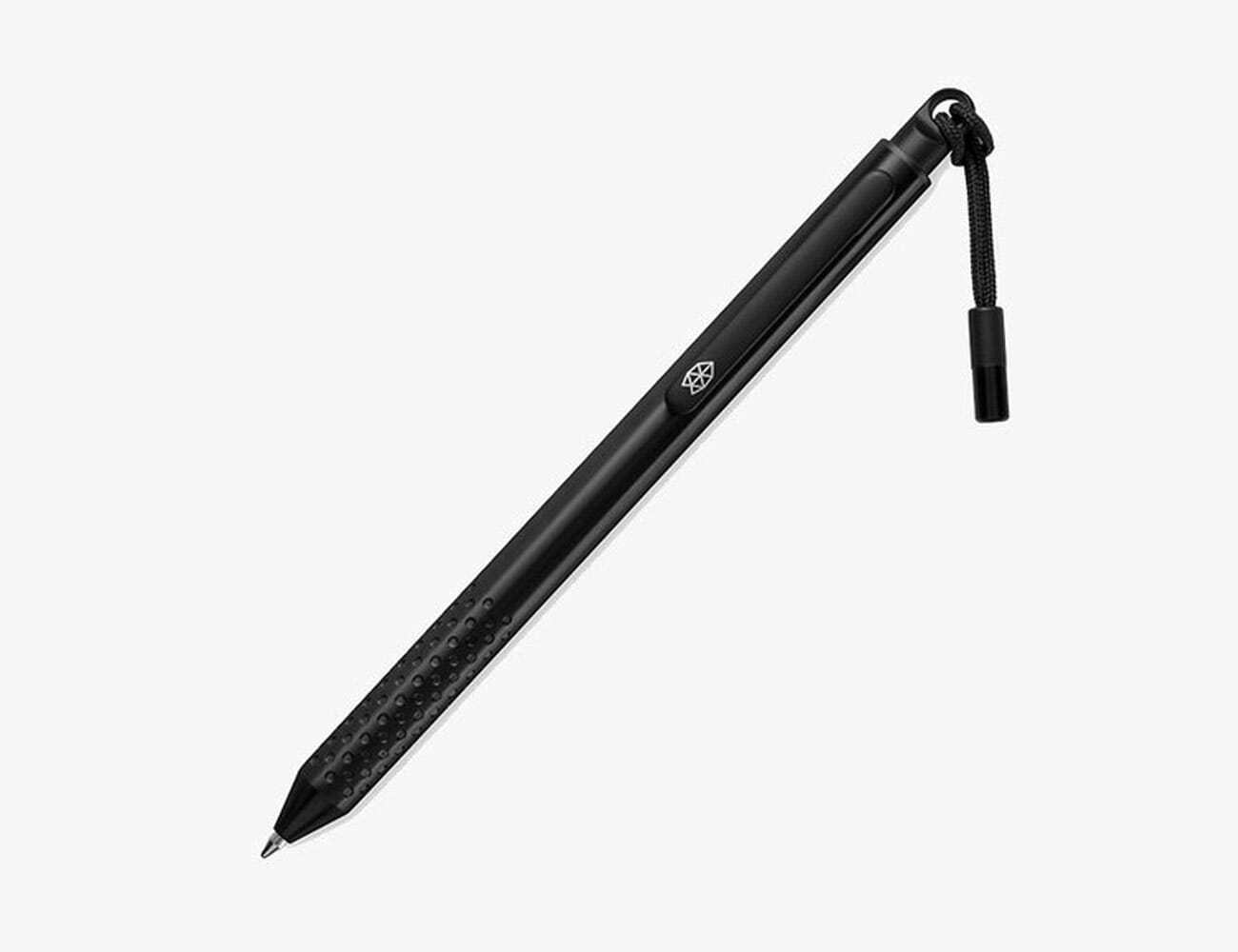
Often when we use the phrase “EDC-friendly,” we’re talking about a pocket knife. That’s because as a category, knives is vast; the quantity of blade shapes, lengths and functions is innumerable, and not all are fit for everyday use. Everyday carry is more general than knives though; it includes flashlights, wallets, keychains — anything that we might carry and use on a daily basis. Even writing utensils are fair game, and The James Brand, a company best known for creating some of the prettiest EDC pocket knives out there, released its first pen this month.

The James Brand has always maintained daily use as the driver of its creative engine. The first pocket knife it ever made was born of its founder Ryan Coulter’s desire to create a blade that he and his team actually wanted to carry every day. They wanted an alternative to the overly-utilitarian and tactical-focused knives that characterize much of what the knife industry produces. So they came up with the Chapter, a sleek, geometric tool with titanium scales and a steel blade. Then they made more knives to complement it: a more-classic lockback, a keychain model, even a slightly tactical model.

The James Brand cemented itself as a knife company, but then it made the Hook, a ruler/bottle opener contained as a key carrier. This year it followed that up with a lanyard, a bladeless tool, a carabiner and now, a pen. Named the Benton, the new pen is 5.5-inches long and made with a stainless steel barrel. It’s capless, using a lanyard-equipped push button to deploy its writing point. The Benton is available in black and stainless (for now — the company frequently unveils new colors for its products) and follows the company’s refined design schema (attention to materials, clean lines, minimal branding, subtle hits of lime green). It also reinforces an important idea: The James Brand isn’t just a knife company anymore.

Note: Purchasing products through our links may earn us a portion of the sale, which supports our editorial team’s mission. Learn more here.

One of Nike’s Most Popular Sneakers Gets an Upgrade

The Magazine

Let us take you on a journey of the world. Each issue of the Gear Patrol Magazine comes packed with adventures, guides and stories exclusive to the magazine. Stunningly designed, printed on high quality stock and ready for your coffee table. Biannual. $39.

The Newsletter

Get GEAR PATROL in your inbox with the DISPATCH, including Today in Gear and all our new stories. Daily, 5pm. Free.

Ditch the Protein Powders and Enhance Your Training Regimen with Beet Pigment Instead

At the start of England’s 2015-2016 Premier League soccer season, a small, century-old football club from Leicester was favored for relegation (a process in which the bottom three teams in the league are demoted and dropped into a lower league). Leicester City FC wrapped the season as Premier League champions for the first time since the club’s founding in 1884. English soccer fans across the country (and the world) were excitedly bewildered — but the result puzzled analysts and obliged British bookmakers to make the most significant payout in the sport’s history (the odds were 5,000 to one).

Following the win, many wondered how a team with such limited resources could produce such an unpredictable outcome. Smart management certainly played a defining role, but so did, according to an investigation by the BBC, an unorthodox training program. That program included cryotherapy — immersion in chambers that can cool to as low as minus 300 degrees Fahrenheit — and the regimented consumption of a particular food: beets. Or, more specifically, beetroot drink shots.

The use of beets and beetroot as an athletic performance enhancer isn’t entirely new. Ryan Hall, the recently-retired Olympic runner and the American record holder for the fastest half marathon, championed a beet-filled training diet that included beet pancakes, beet oatmeal and of course, beet shots. He was by no means the only high-profile endurance runner showing up at major races with lips stained crimson. Eliud Kipchoge, the 2016 Olympic gold medal marathon runner, is another purported beet juice drinker. So is the University of Virginia football team.

But how does a colorful root vegetable actually boost athletic performance? The answer lies in the dietary nitrate found in the veggie, which, when consumed, is converted into nitric oxide, which can increase blood flow and reduce the amount of oxygen needed for muscles to operate at an optimal level. Essentially, the body functions more efficiently and performance increases, so goes the thinking. Numerous studies corroborate that thinking; one example showed increased performance in a Dutch soccer team after six-days on a beetroot juice supplement. Another from researchers at the University of Exeter showed a boost in prolonged intermittent sprinting performance and even decision making, too.

Scientists are still digging to uncover beetroot’s athletic potential while runners, cyclists and football players on both sides of the Atlantic continue to guzzle the stuff, but some within the athletic community are skeptical of just how much of an effect the vegetable really has on performance. A 2016 study by researchers at the Canadian Sport Institute Ontario published in the scientific journal Sports Nutrition and Therapy found that concentrated doses of beetroot juice, in fact, did not improve endurance among elite triathletes during a middle distance 30-minute cycling time trial.

The key word in the CSIO study is “elite.” In the introduction, the authors argue that “the majority of research studies reporting exercise benefits of NO3-supplementation have been conducted on moderately/recreationally active subjects,” or in other words, amateurs. According to the researchers, when it comes to professional and elite athletes who have already achieved peak fitness levels, athletes competing at a high enough level in which a 0.6% increase in performance might realistically impact race results, beetroot shots do nothing.

Nevertheless, athletes are still drinking the stuff before consequential races and new studies on its potential benefits come out every year. Beet products are even showing up on shelves in new forms as dedicated sport supplements.

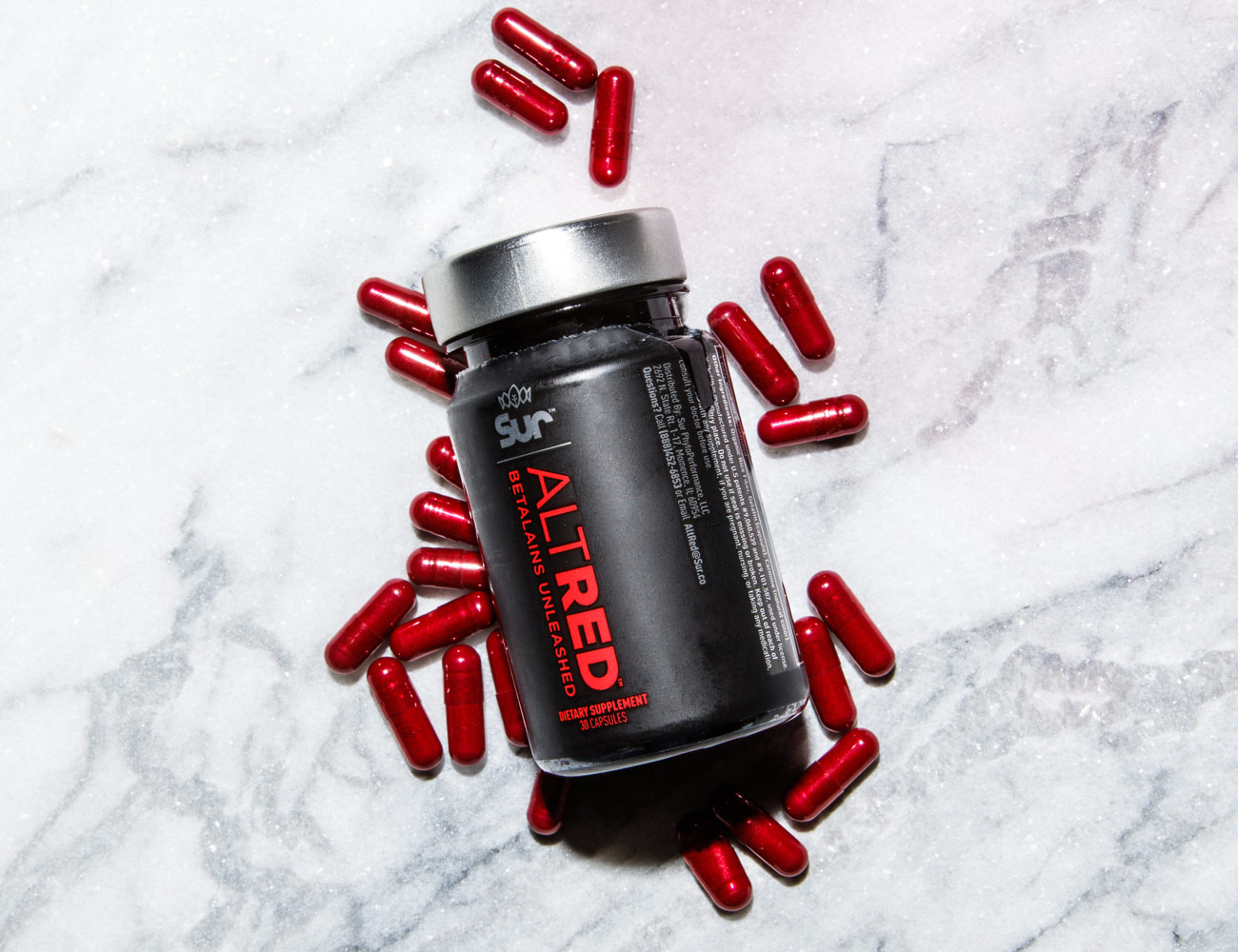
AltRed is one of those products. The product was developed by Sur PhytoPerformance, a company who has made a mission of creating clean, plant-based supplements and is owned by a seven-generation farming family. AltRed’s approach to unlocking the beet’s potential is unique; its capsules are filled with a pale powder that, when wet, instantly turns a deep red. It’s pure beet betalain, a naturally-occurring chemical and the pigment that gives beets their vibrant hue.

Where beetroot shots (and pretty much every other beet-themed athletic food) are basically a delivery system for the plant’s nitrate, which is believed to increase athletic efficiency, the primary assertion behind betalains is that they’re totally isolated from every other part of the plant — no sugars, no nitrates. And because AltRed doesn’t rely on nitrate and its conversion to nitric oxide to increase blood flow, most, if not all previous studies of beets’ role in athletic performance don’t apply, whether the results were positive or negative.

So is AltRed just more beet-colored snake oil? And where do betalains get their kick? The answer goes beyond Chem 101, and as with beetroot shots, involves oxygen. Basically, the antioxidant properties of betalain allow it to neutralize reactive oxygen molecules in the blood called superoxide radicals, which leads to an increase in the availability of nitric oxide. It’s a different path to the same endpoint of the chemical process that results from drinking the beetroot shots, and it results in increased blood flow to the muscles. Supposedly.

Sur PhytoPerformance’s claims that AltRed is capable of increasing an athlete’s output and efficiency while reducing muscle damage and promoting a quicker recovery aren’t unsupported. Two University of California Davis studies so far have documented betalain’s success: one involving competitive male distance runners competing in a five-kilometer time trial and another in which triathletes completed 40 minutes of cycling followed by a 10-kilometer time trial and a subsequent five-kilometer recovery trial the next day. The results of both studies showed faster times in all cases when subjects used betalains.

The studies supporting AltRed fall into the same trap revealed by the CSIO researchers — none of the participants were elite athletes. But that doesn’t mean the research is inconclusive; it did, after all, provide results. And it did so without relying on the nitrates inherent in the veggie.

And so what if beets — either as juice shot or pigment capsule — only benefit amateurs? Sure, the first-time marathon runner won’t stand to benefit from a three percent increase in performance as much as Eliud Kipchoge might, but it also can’t hurt. Beets are healthy! They’re filled with important nutrients like folate, Vitamin C, manganese and potassium. Perhaps their only downsides are a moderately earthy flavor, and an unwavering tendency to dye everything purplish-red.

The Ultimate Hotel Room Workout

Do not be tempted by the mini-bar. Or the all-you-can-eat buffet dinner, or the breakfast in bed, or the pay-per-view movies. You have been traveling — yes, it’s exhausting, no one denies that — but that’s no excuse to let your body go soft. That you don’t have a gym is no excuse, either. With a little ingenuity, you can get your sweat on in your own hotel room, using drab old furniture and luggage as makeshift gym equipment.

Ruben Belliard, Certified Personal Trainer and founder of The Training Lab, an intensive, holistic training gym in New York City, knows the perfect workout to get you started. “This total-body workout will help you maintain your fitness while you travel,” Belliard says. “It targets every muscle group and both anaerobic and aerobic systems.” All it takes is 20 minutes.

Main Set

Warm-Up: 25 jumping jacks, 15 body weight squats, 10 pushups, 10 lunges (each leg), 10 hip raises, and 25 jumping jacks. Do each in succession.

Note: After warming up, set a timer for 20 minutes, and then get into the main set. Do as many full circuits as possible until time runs out.

Cross-Over Mountain Climbers: 15 reps on each side. Start in a push-up position, keeping your body in a perfectly straight plank. While keeping your hands in place, kick one knee up to the opposite elbow, then drive it back. Do the same with the other leg. Kick your knees quickly, so that one knee is always driving forward.

Tricep Dips: 15 reps. Use the edge of a chair, bathtub or bed. Place your hands at the edge of the furniture, palms facing down and fingers toward your glutes. Scoot your glutes off the bed so that your torso is hovering above the floor. Slowly dip down, keeping your glutes and back close to the bed. Then, push the bed away as you raise yourself back up to the starting position. (For an added challenge, and if you have two beds, rest your feet on one with your hands on the other).

One-Legged Prisoner Squats: 10 reps on each side. Use a bed or chair as a plyometric box. Start by sitting on the furniture with your arms behind your head. Raise one leg in front of you, and plant one leg on the ground. Engage your core and strongly stand up on your planted leg. Slowly lower back down. Repeat.

Luggage Rows: 15 reps. For this traveler’s take on the bent-over row, kneel on a chair or bed with one leg on the bed and one leg off. Hold your suitcase in one hand like a weight. With a strong, flat back, pull the luggage up to your chest, and slowly lower it back down.

Lateral Push-Ups 20 reps. This is a standard push-up, but with a small variation: after each push-up, take a small step to the side with your hands and legs, and return back to the starting position.

Stair Runs: Finish the workout by walking or running up a few flights of stairs for 5-8 minutes. Every hotel has them, but few people actually use them.

You Should Know About This Boutique Cycling Brand

The Magazine

Let us take you on a journey of the world. Each issue of the Gear Patrol Magazine comes packed with adventures, guides and stories exclusive to the magazine. Stunningly designed, printed on high quality stock and ready for your coffee table. Biannual. $39.

The Newsletter

Get GEAR PATROL in your inbox with the DISPATCH, including Today in Gear and all our new stories. Daily, 5pm. Free.

These May Be the Best New Gym Shoes of 2019

I recently went to the gym in my running sneakers and was quickly reminded just how unstable those could be. Single leg squats, lunges and anything alternating had me wondering if I should take my shoes off and work with flat feet. Depending on what type of workouts you enjoy, the proper pair of gym shoes can help you run faster on the treadmill, lift heavier weights and move quickly through ladder drills and rope climbs. Under Armour dropped the UA TriBase Reign sneaker this week aimed directly at gym-goers.

I wore these to box and weight lift and was pleasantly surprised with how they moved. There’s no removable sock liner, but there’s plenty of cushion beneath the toes, and a bit of a divet in the heel of the shoe, so you feel like it’s cradling your foot. The upper is surprisingly breathable for how sturdy and thick it seems. A ripstop material and mesh combo upper are sure to help with rope climbs.

The shining moment of the shoes is when you’re in plank or pushup position — the full rubber outsole means your feet stay in place, no matter how much sweat is on the ground — so you can hold that plank for longer and eke out one more pushup. The 2-mm offset is low, so that you can feel stable in squats and the shoes weigh 10.3 ounces, so you have a bit of heft (but not much) to feel connected to the ground.

While you can’t purchase these just yet, they’ll be available just after the holidays. Starting December 26, you can order these training-specific sneakers, hit the gym and crush some goals for 2019.

Need New Winter Apparel? Learn These Specs to Know What You’re Getting

It’s the time of year when winter tightens its frosty grip. All at once, it hits. The snow falls. The wind bites. That errand just a short walk away suddenly looks very unappealing.

It’s important to be ready, and that means gear. There’s enough innovation happening right now to get you set for any cold-weather activity, but sifting through technical jargon and comparing features can be a bitter process. We’ve identified some of the key terms and measurements that you should pay attention to when making a purchase.

Down vs. Synthetic

winter-tech-gear-patrol-down-synthetic

A great insulating piece, be it a jacket or a sleeping bag, is warm, lightweight and packable. Both down and synthetic-filled products offer these qualities, but each has its pros and cons.

Down is found in layers underneath the rougher exterior feathers of ducks and geese — it’s what keeps them warm while floating around all winter, so, naturally, it will keep us warm too. Despite that, moisture is the undoing of down, causing it to clump up and lose its heat-retaining qualities. It also should be noted that while large-scale efforts have been made by big brands such as Patagonia and The North Face, not all down is ethically sourced, and animal cruelty does happen.

Synthetic insulation is man’s attempt to copy down with polyester fibers arranged in different sizes that cluster and trap heat much like real feathers. The artificial version gets the job done and maintains packability and a low weight — plus it’s hypoallergenic. The polyester fibers that make up synthetic products have a higher weight-to-warmth ratio, so they tend to be a bit bulkier. Synthetic does have the benefit of being much more water resistant though; it doesn’t clump when wet like down and it dries much quicker.

As far as labeling is concerned, natural down will always be labeled “down.” You may encounter a fancy first prefix, which usually refers to proprietary waterproofing treatments applied to down, such as Q.Shield by Mountain Hardwear. It should be noted that while the industry is getting better at making down resistant to moisture, no feathers are truly waterproof. Synthetic insulation will also carry proprietary names such as PrimaLoft.

Not sure which to choose? Down is great for cold and dry environments but tends to be more expensive. Take synthetic if there’s a chance it’ll get wet, or if you’re just looking for a break on the price.

Lodge Down Jacket by Canada Goose $495 (750-fill down)
Ghost Whisperer by Mountain Hardwear $350 (800-fill Q.Shield down)
Stretch Thermoball Jacket by The North Face $220 (synthetic)
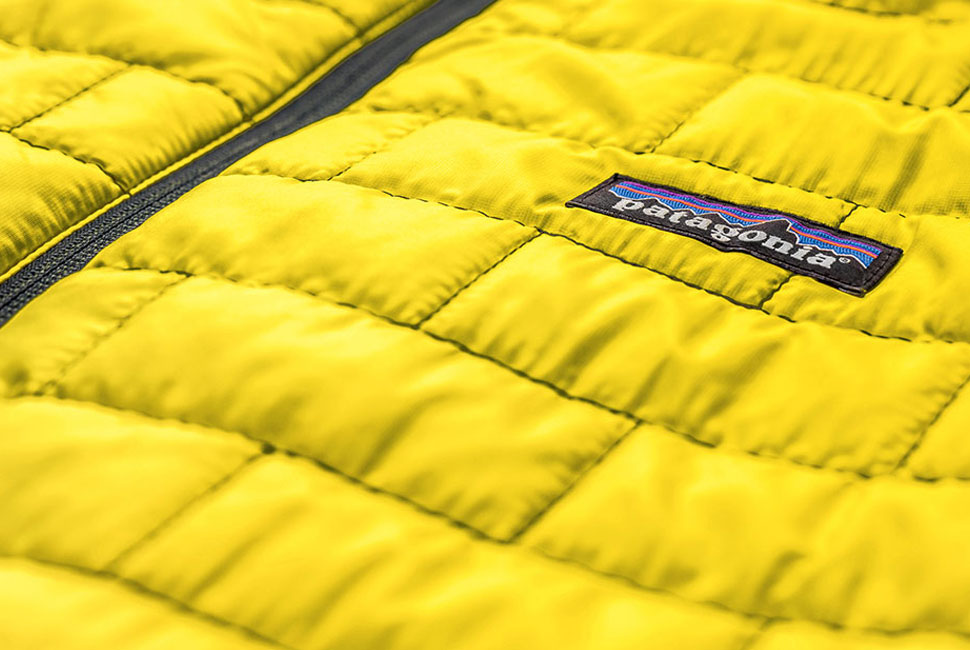
Micro Puff Hoody by Patagonia $299 (synthetic)

Active Insulation

Until Patagonia released its Nano Air Jacket in 2014, active insulation flew below the radar (the concept was first introduced by Polartec in late 2012). Now there are enough companies making apparel that’s both warm and breathable that active insulation can officially be considered as its own category.

Technically, active insulation is a type of synthetic insulation, (a water-resistant alternative to down), but because of some fundamental differences that make it unique, active should be considered on its own. The technology draws its name from its intended use — active insulation garments are insulating pieces that are meant to be worn during activity (unlike, for example, a down jacket one might throw on after activity, once the body starts to cool down).

Every active piece has one feature in common: they’re incredibly breathable. How this is achieved depends on the insulation used in the jacket, and every company uses a different version. Some are proprietary, like Patagonia’s FullRange insulation, and some, such as Polartec’s Alpha insulation, which was originally developed for the US Special Forces, are sourced by a range of companies.

As with other types of synthetic insulation, active insulation is highly water-resistant and compressible. In comparison to regular synthetic insulation, active is the most breathable form of synthetic insulation available today thanks to a construction that prevents the migration of fibers within the piece while allowing for extra stretch and superior moisture management. Many active pieces are designed with an exterior shell that’s also more breathable but is often softer and less water-repellent than what’s found in other synthetic apparel.

All active insulation, no matter the brand, is designed to prevent lots of layer swaps so that it can be worn throughout the entirety of an activity like hiking, climbing or skiing.

Ascendant Jacket by Outdoor Research $199
Ventrix Hooded Jacket by The North Face $220
Alpha Ascender Hoody by Bight Gear $279
Nano Air Hoody by Patagonia $299
Alpha Direct Jacket by Rab $275
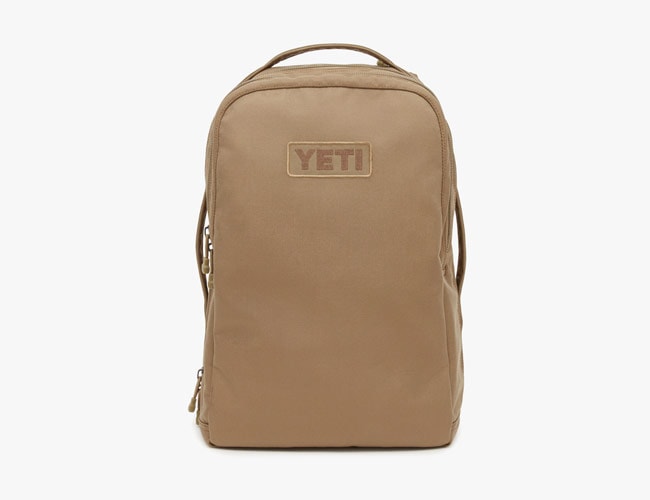
YETI Tocayo Backpack 26

grey_placeholder

Everyday use can be tough on a backpack. Which is why YETI made the Tocayo Backpack 26 to withstand those rigors and then some. Constructed with a waterproof body, a PU-backed 1000D nylon face and a 210D ripstop backer means it’s durable as hell. A firm EVA padding is built into the base, back and each compartment to keep the bag from tipping over — a very handy feature. Offering plenty of pockets and padded organizational compartments keep it from becoming a bottomless pit, too. Learn more here.

Down Fill Powers

winter-tech-gear-patrol-down-fill

Down fill powers are numerical ratings that usually range anywhere from about 450 to 900. This number comes from a standardized test in which an ounce of down is compressed in a graduated cylinder and then measured for volume in cubic inches; that volume is the fill rating. An ounce of 900-fill down occupies more space (and thus traps more air and provides more warmth) than an ounce of 600-fill down. The two samples weigh the same, but one takes up more space and can trap more air, which means more warmth.

What this boils down to is the idea that a higher fill power means more warmth for less weight. It’s important to note that two jackets or sleeping bags may have different fill ratings while providing the same amount of warmth — the difference is that whichever has the higher rating will pack down to a smaller size because less material is needed to get the same amount of warmth. High down fill powers tend to come with a heftier price tag, so consider what you’re going to use a product for when getting into those loftier feathers.

Transcendent Hooded Down Jacket by Outdoor Research $225 (650-fill)
Thorium AR Jacket by Arc’teryx $244 (750-fill)
Positron Jacket by Rab $400 (800-fill)
Plasma 1000 Alpine Down Parka by Montbell $439 (1,000-fill)

Waterproof and Breathability Ratings

waterproofing-gear-patrol-full-lead

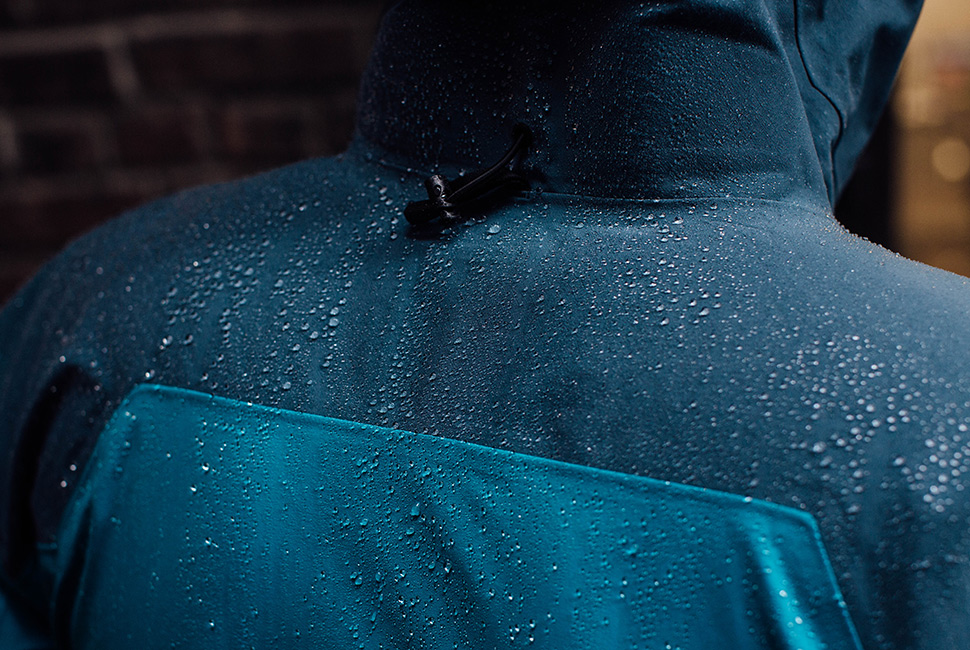
Waterproof breathability ratings should accompany any piece of technical outerwear you might be looking into, from raincoats to ski pants, and will appear as two numbers in the thousands — e.g., 10,000mm / 10,000g. The first number, measured in millimeters, refers to a fabric’s capacity for withstanding water penetration up to a certain amount of pressure. This measurement is obtained through a test in which a 1 x 1 inch column of water is put over the test fabric and filled. The amount at which the column can be filled, in millimeters, before the water penetrates is the waterproof rating. For instance, if the column can be filled up to 5,000mm before the water penetrates the fabric, it receives a 5,000mm rating.

The second number marks a fabric’s breathability by measuring how many grams of water vapor can escape through one square meter of membrane over a period of 24 hours, from the inside to the outside. So if a raincoat has a breathability rating of 10,000g, then that is the amount of water vapor that can escape away from your body over 24 hours of wearing the coat. The higher the number, the more breathable the fabric. If you’re exercising in a jacket or pants, then high breathability is important for allowing perspiration to travel away from your body through the fabric; otherwise, it will get trapped and you’ll overheat. And get soaked in sweat.

Still unclear? The bottom line is that the higher the rating, the more waterproof or breathable the product. A 10k/10k (10,000mm waterproofing and 10,000g breathability, which protects against rain and is waterproof under light pressure) rating is considered a good place to start for most people who spend a decent amount of time outdoors in the winter, on the slopes or around town.

Spearhead Jacket by Armada $300 (10K/10K)
Stadium Pant by Orage $200 (10K/10K)
Nomad Jacket by Strafe Outerwear $525 (15K/15K)
Baker Bib by FlyLow $390 (20K/20K)

Fleece Weight

winter-tech-gear-patrol-fleece

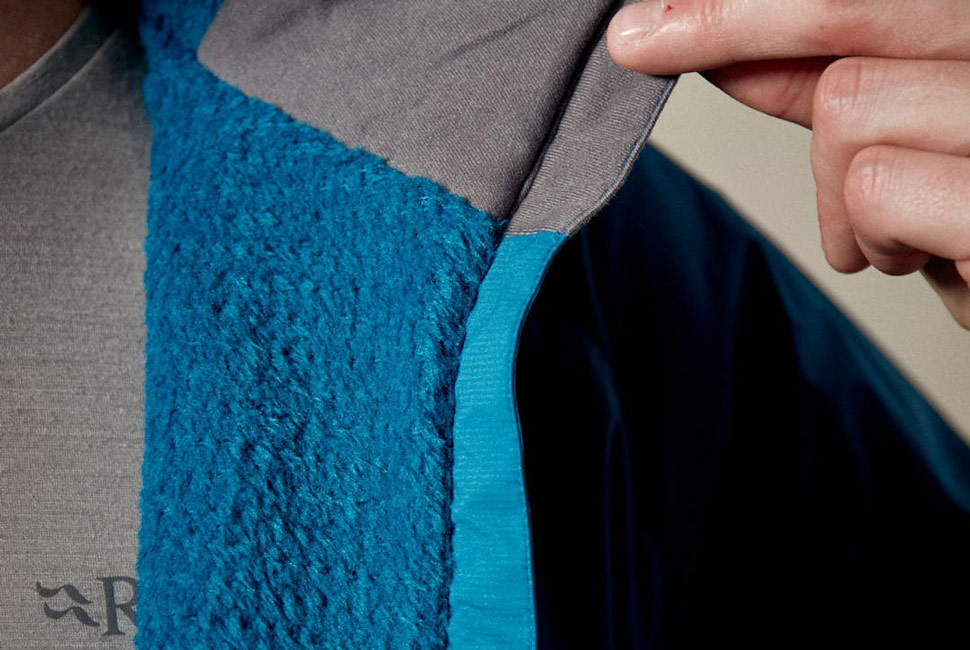
Fleeces are great layering pieces that have been around since Patagonia released their first Synchilla back in 1985. Not much has changed — fleece is still made of a synthetic material called polyethylene terephthalate, or PET — but you should be familiar with the different weights of hydrophobic insulation. Many fleece products use the Polartec scale of 100, 200 and 300, where a higher number designates a loftier, thicker material, which gets you more warmth but also more weight. The scale is less scientific than those related to waterproofing, down fill power, and so on: 100-weight fleece is lightweight, 200 is mid-weight and 300 is heavyweight.

Building the right layering system is a series of choices. Any fleece can be combined with a rain- or windproof shell to protect against the elements. Lightweight fleeces are great for active sports due to added breathability and freedom of movement, while heavyweight fleeces are best for frigid adventures. Mid-weight fleeces are versatile and fit snugly between those two.

Falketind Fleece Jacket by Norrona $159 (200 weight)
Mountain Fleece by Topo Designs $149 (200 weight)
Descender Fleece Jacket by Icebreaker $158 (240 weight)
Synchilla Snap-T Pullover by Patagonia $139 (300 weight)

Merino Microns

winter-tech-gear-patrol-merino-microns

Merino wool is a miracle fiber that comes from the Merino breed of sheep — it’s quick drying, static resistant, breathable, and naturally antimicrobial, which means it doesn’t stink up like polyester or cotton. It also doesn’t itch, which is reason enough to only wear merino when it comes to wool.

But alas, not all wool is created equal. Merino’s anti-itch quality comes from the small diameter of its fibers, which is measured in microns; the smaller the micron measurement, the thinner the fiber and the softer the wool. For reference, fine Merino wool usually measures between 17 and 24 microns while some common sheep species produce wool that can measure up to 40 microns, which is probably what the itchy sweater you’re thinking about is made of. There aren’t many companies that specify the exact micron measurement they use, but some, including Ibex and Ortovox, do.

Be wary of blends. Some products with the Merino moniker can contain 50 percent or less of the wool, but this is almost always called out in the product tech specs. Shoot for at least 65 percent Merino to keep the benefits.

Setesdal Sweater by We Norwegians $199 (19.5 micron)
Woolies 1 Crew Top by Ibex $60 (18.5 micron)
Katmai Expedition Bottom by Minus 33 $96 (18.5 micron)
Rock’N’Wool Overall by Ortovox $200 (18 micron)
Join the Conversation on Facebook

Why You Should Never Buy a Three-in-One Jacket

Simplification is the promise of most would-be revolutionary pieces of outdoor gear. The marketing taglines read like paradoxical hyperbole: “the quiver-killing ski that goes everywhere” or “the performance hiking boots you can wear to your next board meeting.” For multi-hobby individuals with small gear closets the idea can seem dreamy, and paring down is usually in sync with the ideals held by those who spend lots of time outdoors. The only problem is, this type of simplification — the one-thing-does-everything type of simplification — is a myth.

The multitool is the best example of the problem this creates. As an idea, it’s a good one: get rid of the need for an entire toolbox by packing multiple instruments into one small, pocketable apparatus. The issues arise when you actually go to use the thing, only to find that the Phillips-head is too short to reach the recessed screw you need to twist, or that the tiny knife blade is not cut out to perform the task of butchering a leg of wild boar in the backcountry (that one comes from personal experience). Don’t get me wrong, a multitool can come in handy, but it’s too often the case that it becomes a jack of all trades and a master of none, and is inevitably left to gather dust in the toolbox you hoped to eliminate in the first place.

The case is the same 3-in-1 jacket. For those who need a refresher, the 3-in-1 is a winter jacket that comes equipped with an additional zip-in insulating layer, usually a fleece or hoodless puffy. So you get 1) A fully-insulated ski jacket for cold temperatures; 2) A waterproof, breathable shell for warmer days; and 3) A fleece or puffy mid-layer that can be worn on its own. Sound like the last jacket you’ll ever need? It isn’t.

The 3-in-1 goes against the fundamental concept of how to stay warm and protected from the elements outdoors: layering. At its crux, layering is the ability to wear and swap different articles of clothing in order to fine tune your kit to whatever the weather conditions call for. Sure, the 3-in-1 jacket does this, but in a limiting and inefficient way; it adds an extra, highly unnecessary zipper into the mix and leaves the wearer stuck with whatever mid-layer comes attached to the jacket.

Furthermore, the way in which 3-in-1 mid-layers secure to their respective outer shells presents some serious design flaws. The inner jacket zips into the outer jacket just behind the main exterior zipper that seals the whole thing up, which creates two large inefficiencies. First, with only one point of connection located at the front, the two jackets are bound to bunch and pull on each other in awkward ways creating discomfort (insulated ski jackets are made with many points of stitching). Secondly, and more importantly, this strange zipper configuration means that the mid-layer jacket is never fully closed, and unless the external zip is fully taped, air (and cold) will penetrate the system in a vertical line up the wearer’s core. The only way to avoid this is to wear the mid-layer on its own, unzipped beneath the shell, which sort of defeats the claimed purpose of the 3-in-1.

Finally, 3-in-1 jackets are just sort of, dorky. Okay, maybe that’s unfair, but they do call back to the equally dopey — yet unquestionably more functional — zip-off pants/shorts designed for hiking. They’re clumsy, and definitively lacking in style. (I wore them all the time as a kid, so I have no problem ragging on them). The fact is, 3-in-1 jackets are built to be budget, affordable apparel. For some, they’ll pack enough functionality to get by (Patagonia’s Snowshot Jacket is a decent choice for those looking). The problem is that they’re marketed as a buy one, get three solution when in reality it’s more like buy one, get two halves.

We live in an age when the technology and materials that go into shells, waterproof membranes, synthetic insulation, down insulation and every other facet of outerwear advance on an annual basis. Aesthetics and styles do too. There’s no reason to block oneself from the ability to mix and match gear from various brands and be stuck with one inflexible (and inefficient) system. Building and fine-tuning the perfect outdoor kit is a very personal process — I’ve rotated through numerous shells over the years but for the most part still pack the same sort-of-grimy puffy because it was the first one I ever owned, and it still keeps me plenty warm. That personalization is part of the fun of it! Because while it’s mostly our actions that define us in the outdoors, it’s also just a little bit what we wear.

I’ve Had This Fleece in My Winter Kit for the Past 7 Years. Here’s Why

The Arc’teryx Stryka Hoody is the ultimate outdoor fleece. Read the Story

The Nike Tailwind is Back Again in Two New Colors

The Magazine

Let us take you on a journey of the world. Each issue of the Gear Patrol Magazine comes packed with adventures, guides and stories exclusive to the magazine. Stunningly designed, printed on high quality stock and ready for your coffee table. Biannual. $39.

The Newsletter

Get GEAR PATROL in your inbox with the DISPATCH, including Today in Gear and all our new stories. Daily, 5pm. Free.

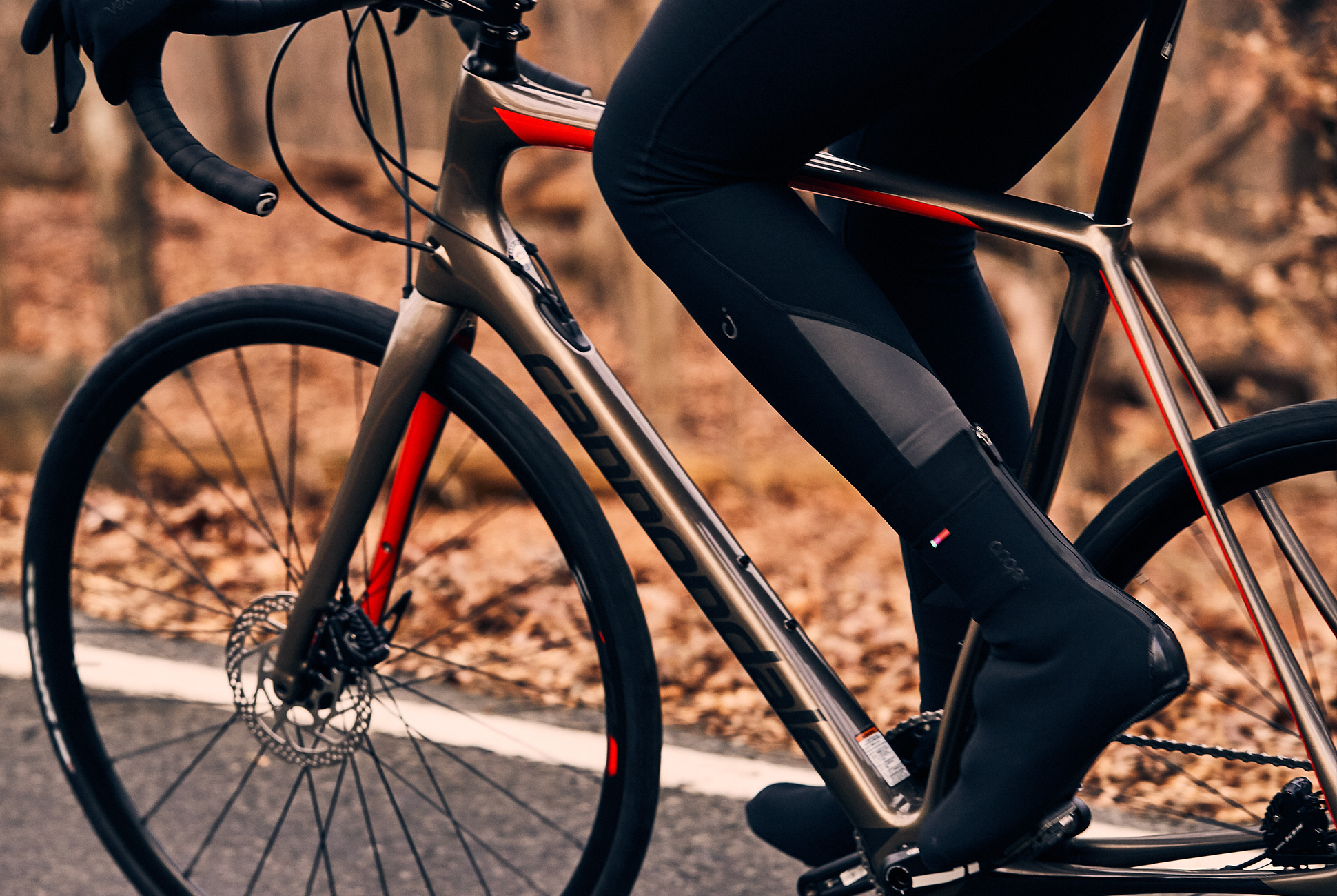
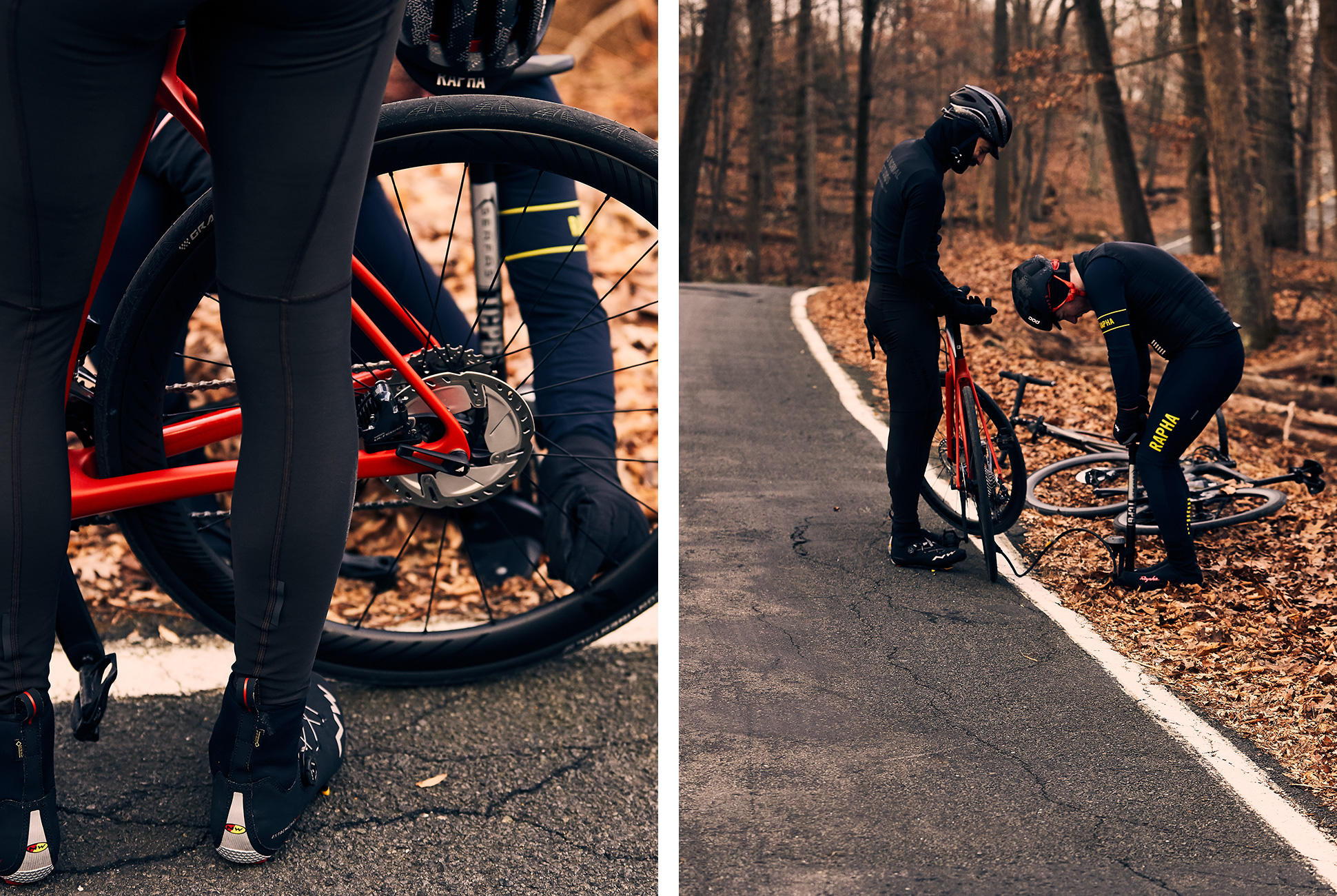
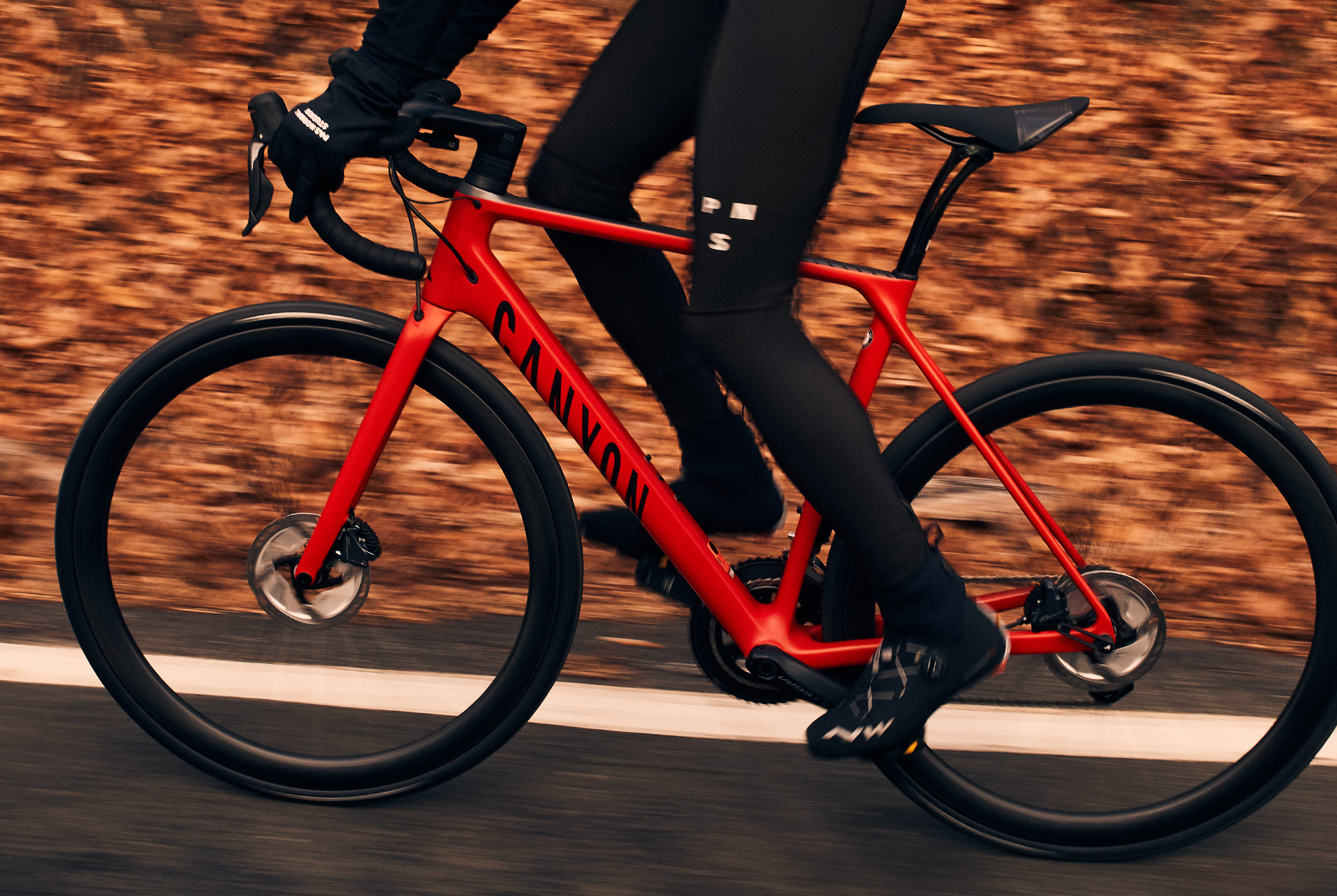
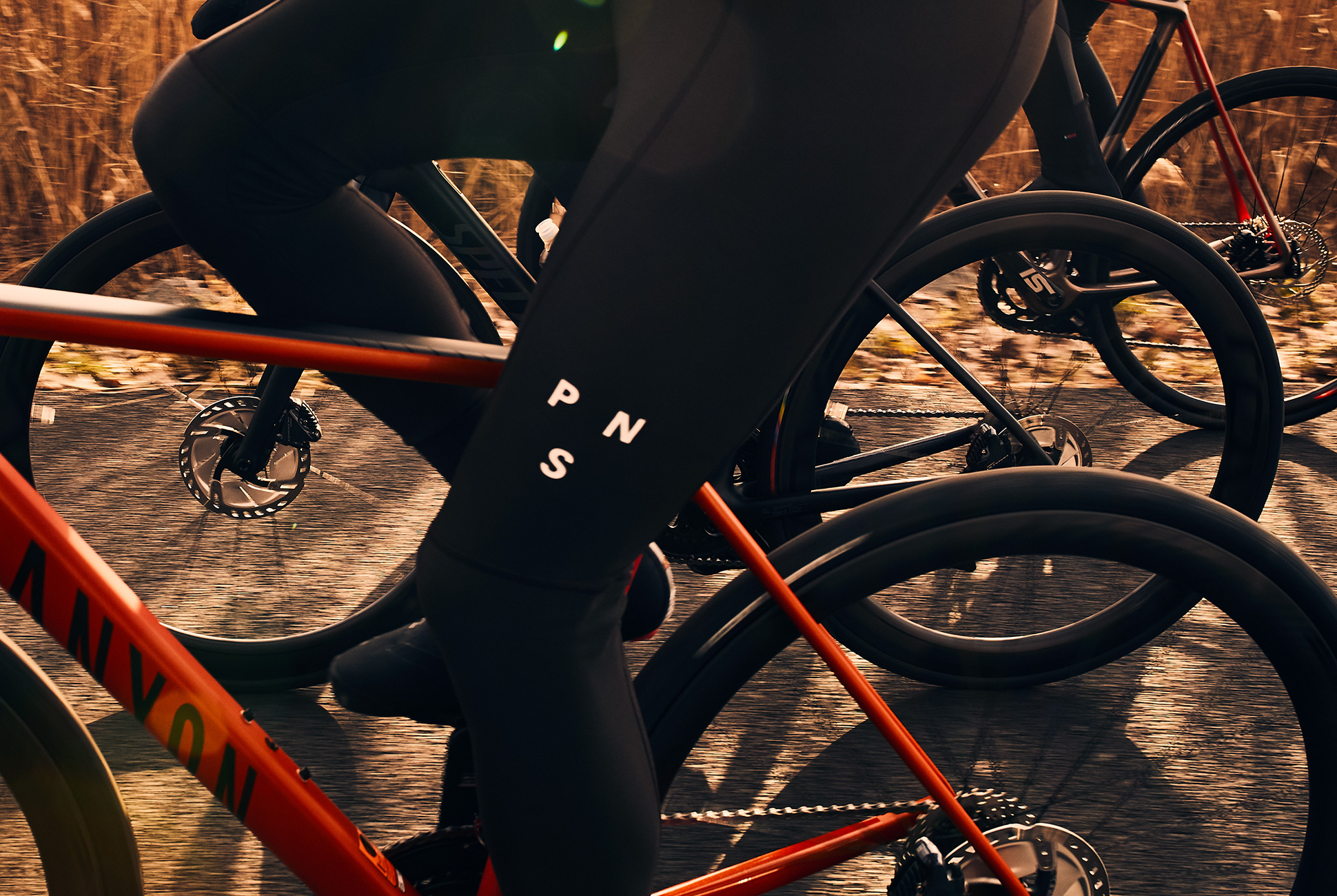
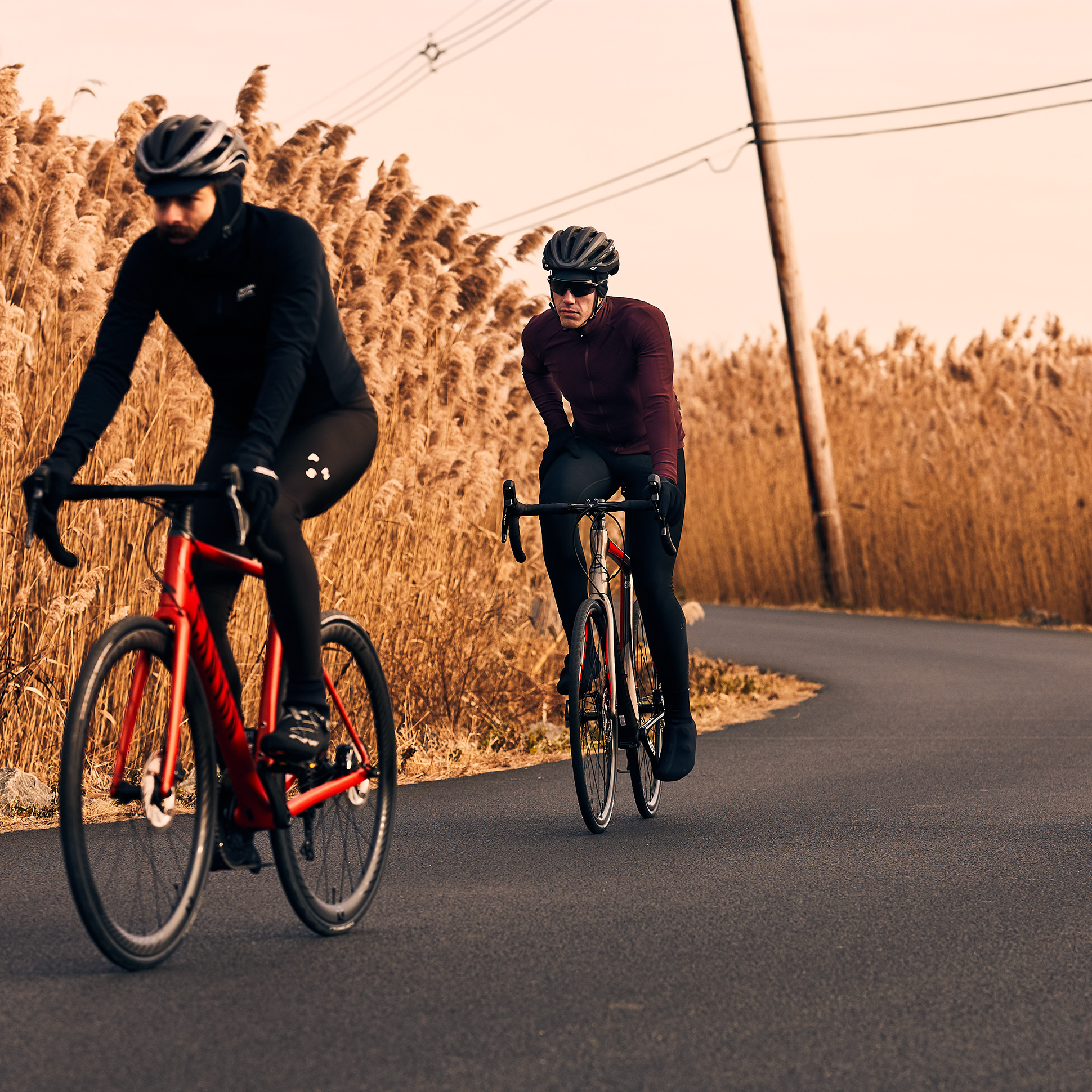
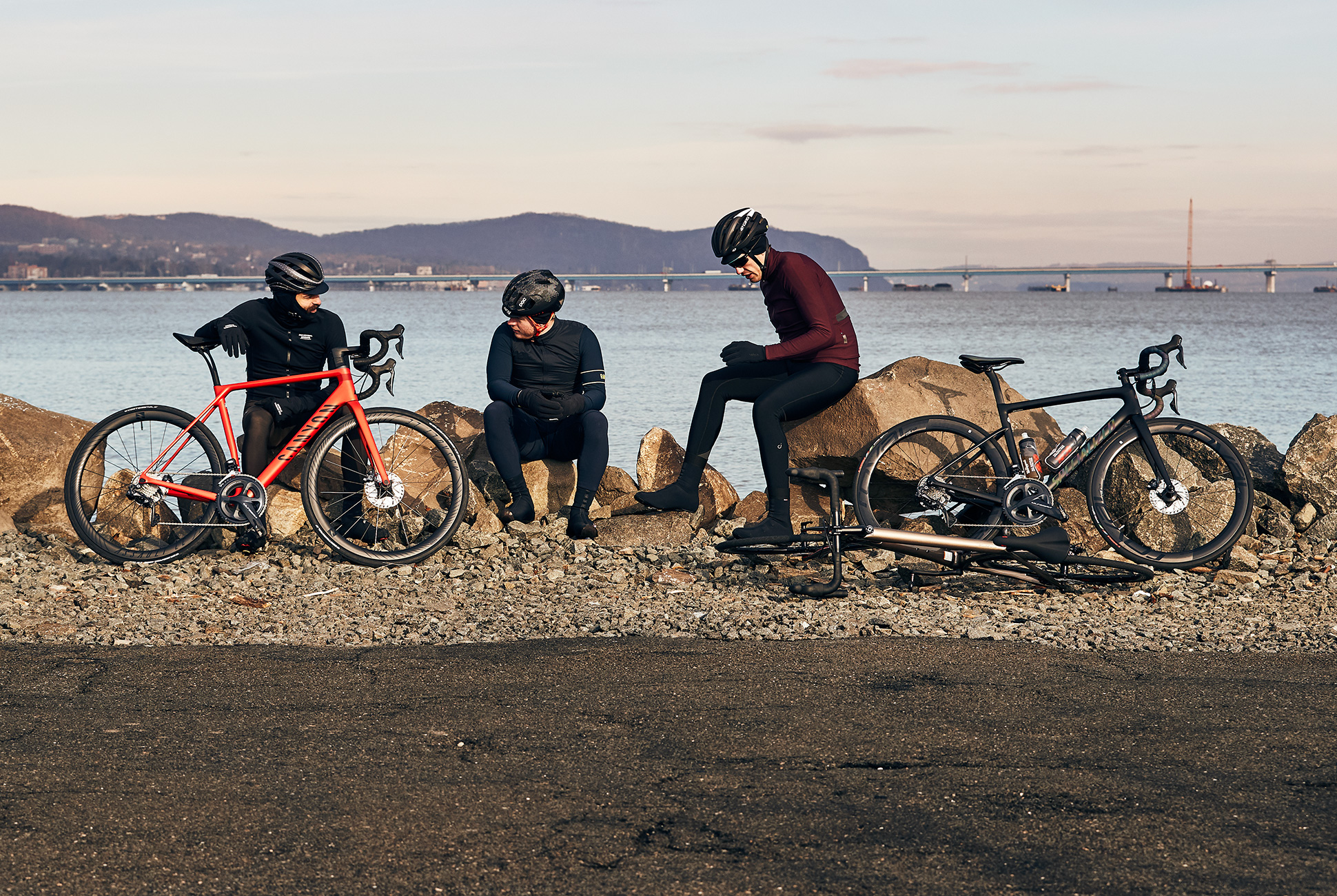
The 3 Best Winter Cycling Kits of 2019

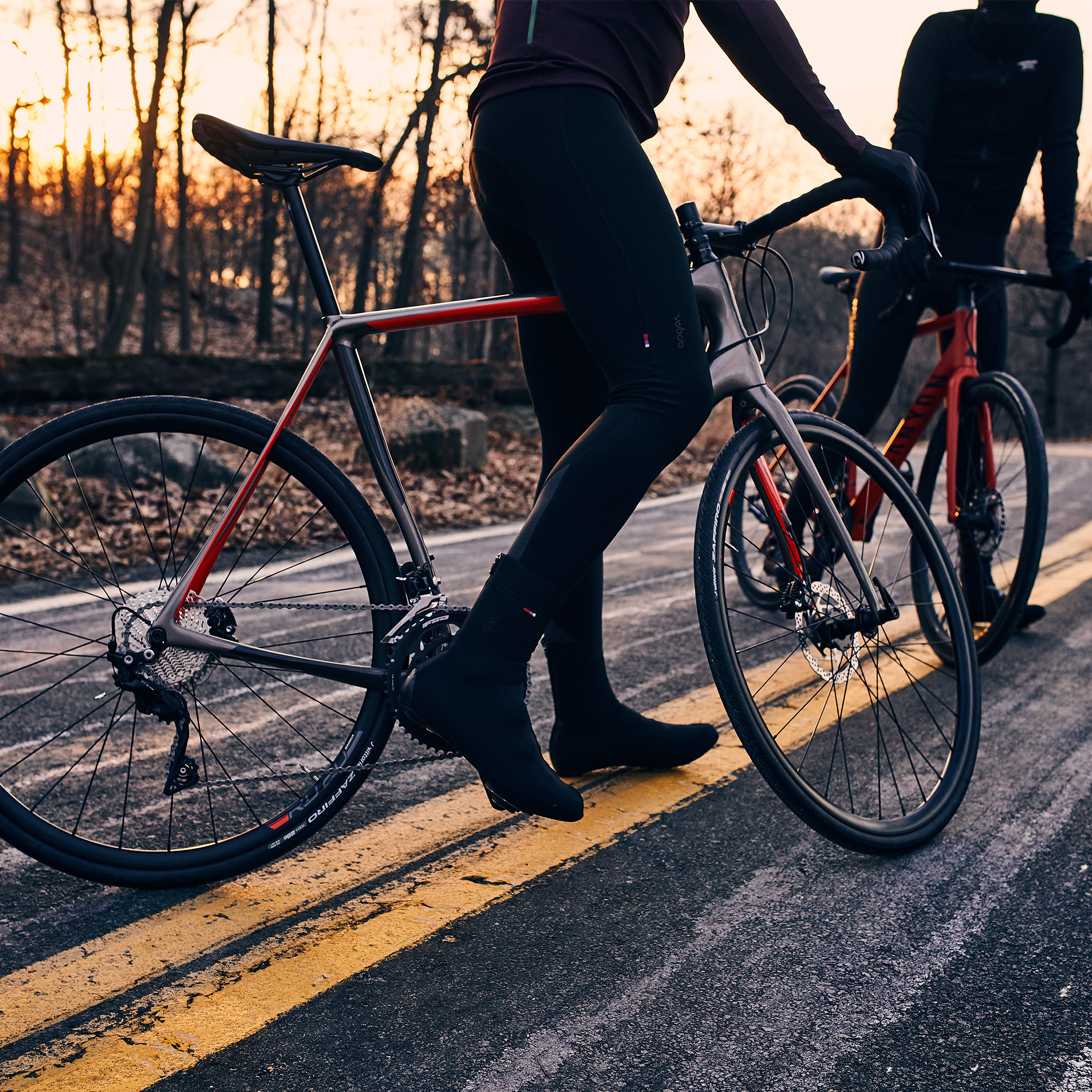
While winter cycling has its upsides (Fresh air! The wind on your face! Getting back before the sun rises!), it isn’t for the faint of heart — or the ill-prepared. The best way to enjoy the fresh air and wind in your face is to layer up, efficiently. You can’t just throw on a puffy jacket like you can with running (if you’re desperate) or hiking. Winter cycling requires clothing that is thin and flexible, yet warm and insulating.

The concept of layering for winter cycling is not unlike layering for nordic skiing or winter running. You need a foundation — a sweat-wicking base layer. It’s inevitable you’re going to sweat, no matter how cold it is outside. And because of the wind and freezing temps, as soon as you start to sweat, you’ll get cold. Look for something that’s going to dry fast so you can take the downhills like a champ and not end up with chattering teeth. From there, add layers — a jersey, winter jacket and fleece-lined bibs.

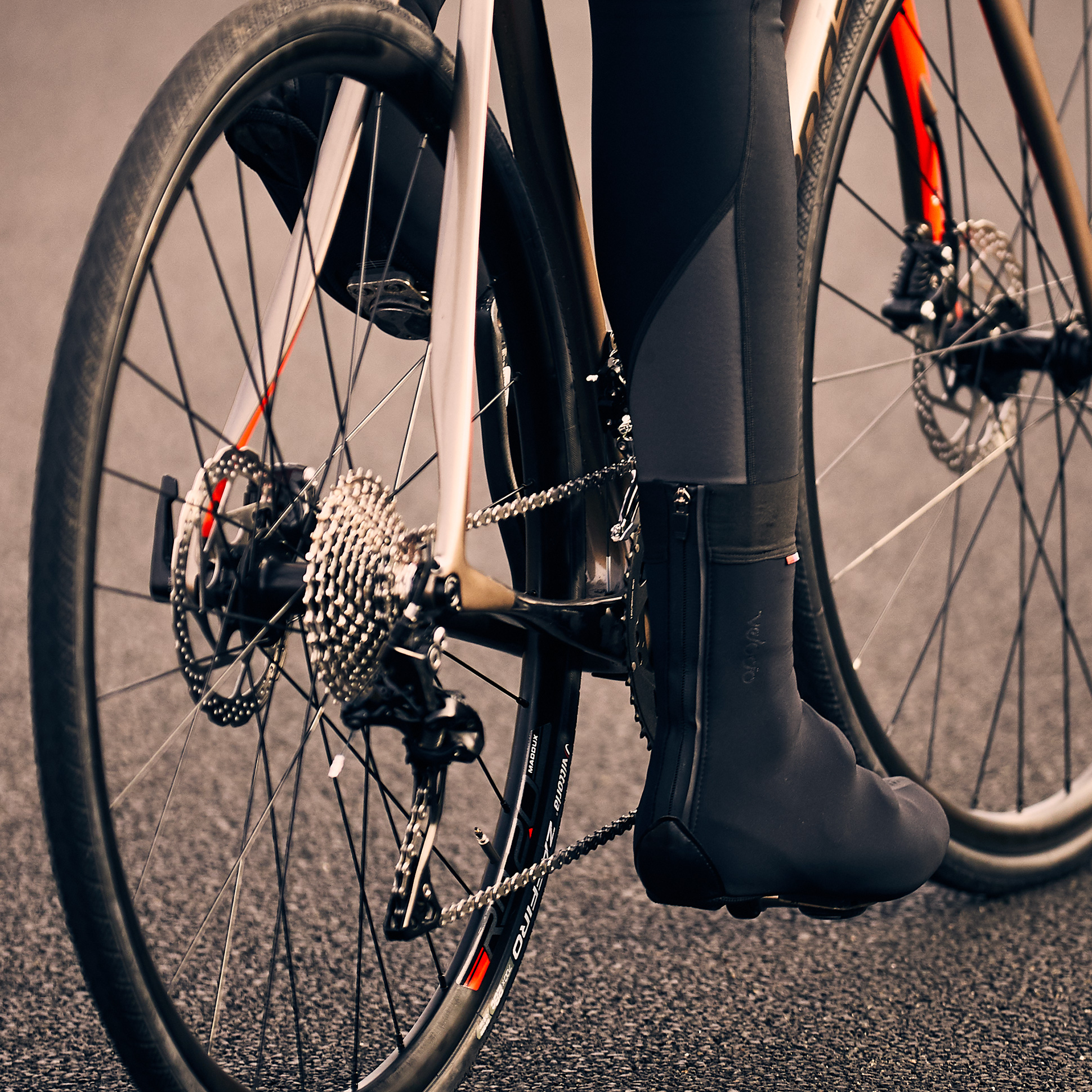
Next come the accessories: gloves, neck buff, hat and winter booties. The thin gloves you’ve used all fall likely need to be upgraded to something more suitable for deep winter riding conditions — insulated but flexible. Keeping your extremities warm will make braking and pedaling feel almost as good as it does in spring. For your feet, invest in a solid pair of winter booties. Your feet will be the first to go cold in freezing temps, so make sure you pair them with a warm pair of socks.


Once you’re all bundled up, head out and revel in the emptiness of the roads. It’s worth it. As they say, there’s no such thing as bad weather, just bad clothing.

Additional contribution by Tanner Bowden and AJ Powell.


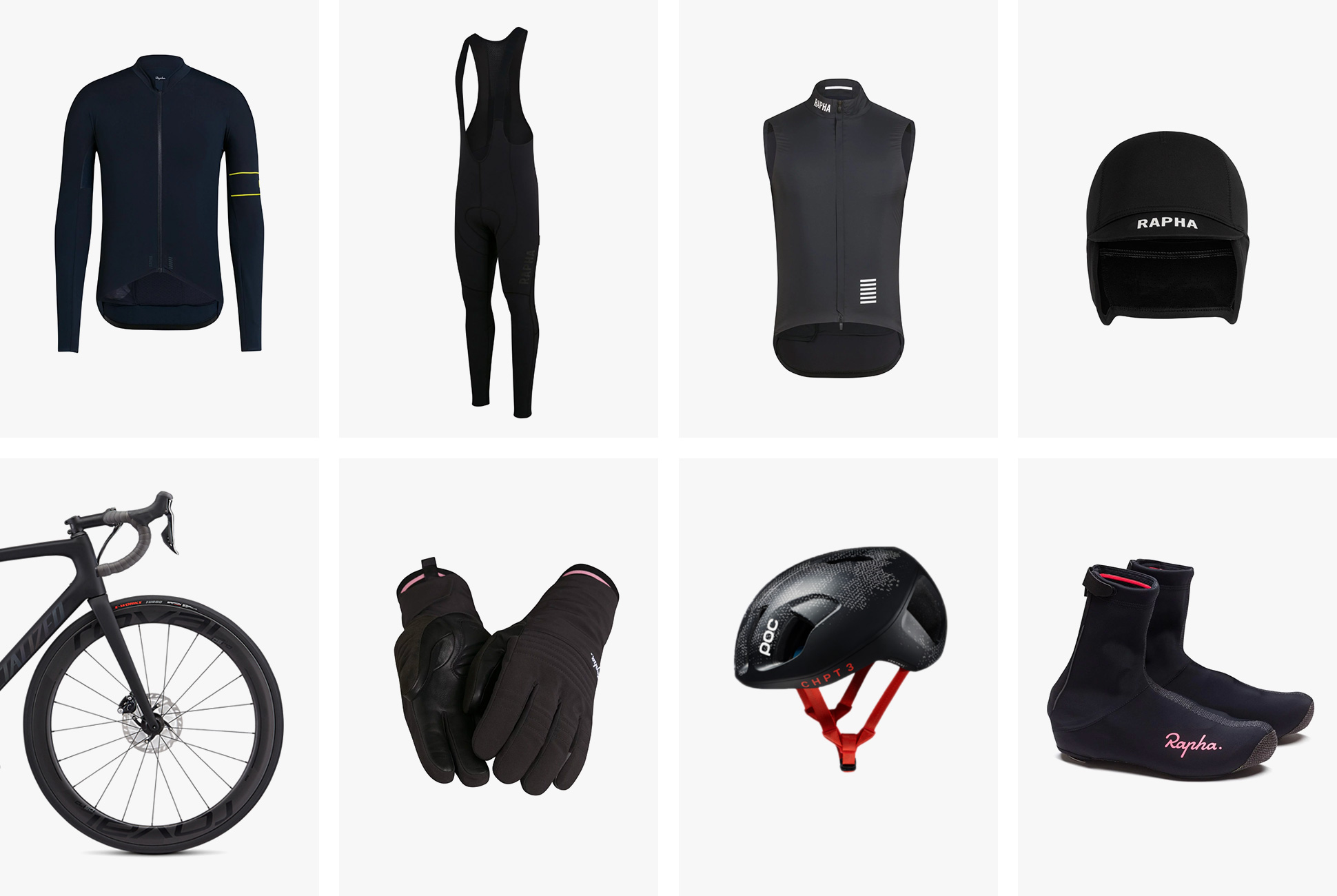
Pro Team Long Sleeve Thermal Jersey by Rapha $205
Pro Team Winter Tights with Pad II by Rapha $285
Pro Team Insulated Gilet by Rapha $190
Pro Team Winter Hat by Rapha $65
Deep Winter Gloves by Rapha $190
Deep Winter Overshoes by Rapha $100
CHPT3 x POC Devesa Ventral SPIN Helmet by CHPT3 ~$341
Tarmac Disc Pro by Specialized $6,700


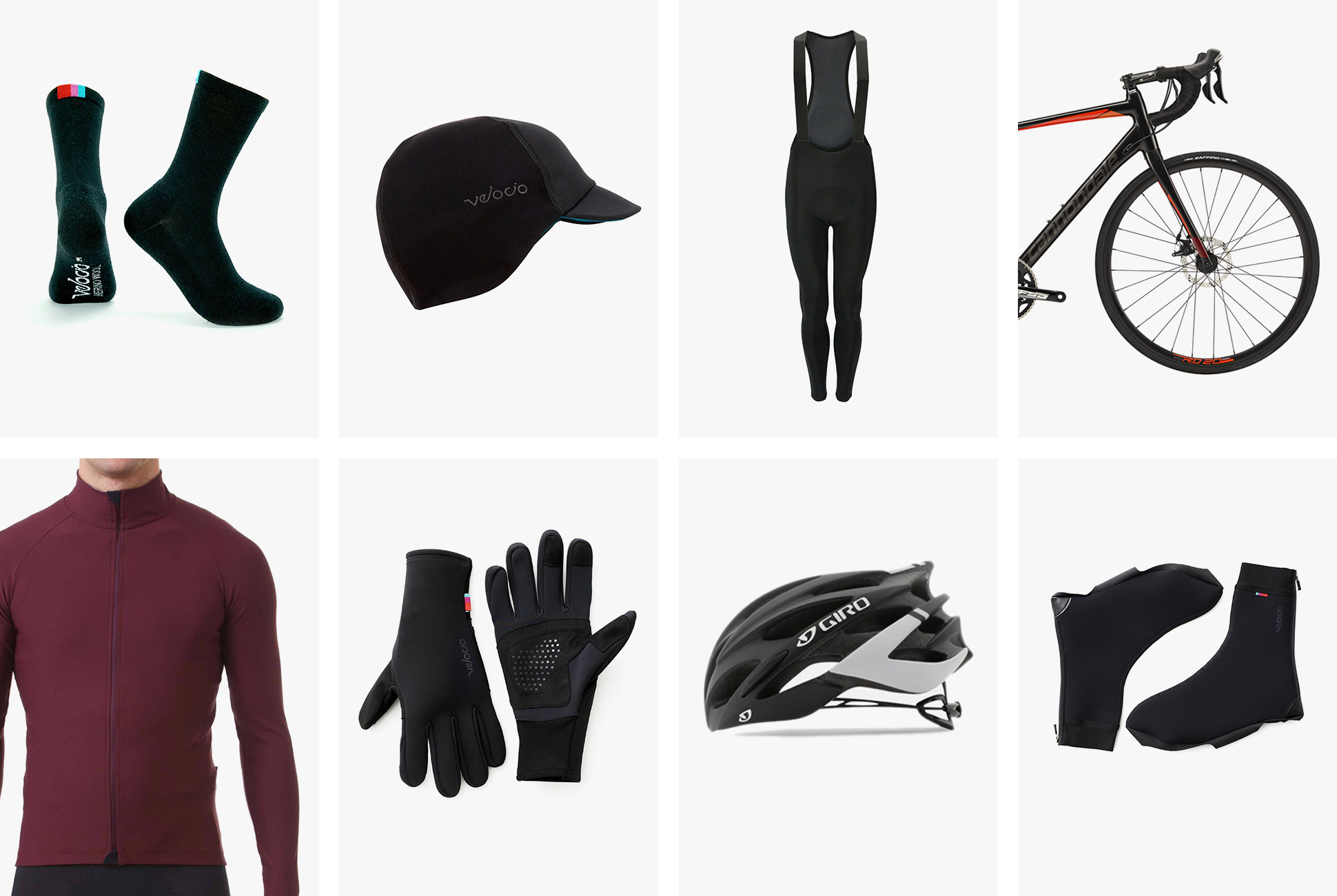
Recon Thermal Long Sleeve by Velocio $199
Thermal Bib Tight by Velocio $249
Winter Wool Socks by Velocio $28
Zero+ Bootie by Velocio $89
Zero+ Glove by Velocio $79
Zero Cycling Cap by Velocio $79
Savant MIPS by Giro $120
Synapse Disc 105 (2018) by Cannondale $1,500


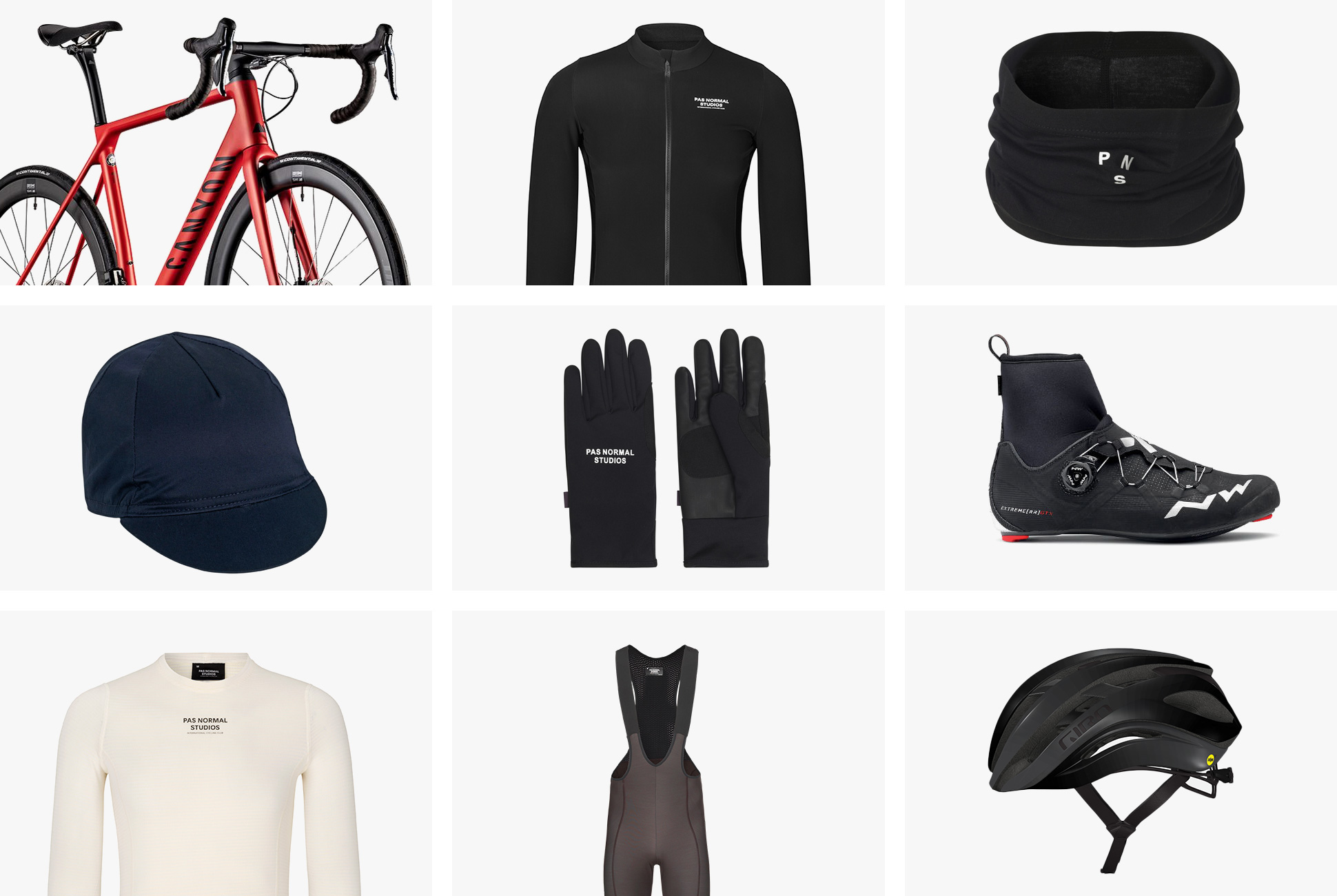
Heavy Jersey Black by Pas Normal Studios ~$262
Heavy Long Sleeve Base Layer White by Pas Normal Studios ~112
Long Tight Bronze by Pas Normal Studios ~$250
Winter Neck Tube by Pas Normal Studios ~$52
Navy Cap by Pas Normal Studios ~$29
Winter Glove by Pas Normal Studios ~$103
Northwave by Pas Normal Studios $379
Aether MIPS Custom by Giro $400
Endurace CF SLX by Canyon $3,999+

Note: Purchasing products through our links may earn us a portion of the sale, which supports our editorial team’s mission. Learn more here.

5 Questions for the Mad Genius of Steel Bike Making

If you haven’t heard of The Vanilla Workshop or Speedvagen, you’re behind the times. The two brands are known for handcrafting some of the world’s best steel-frame bikes; they’ve made our list of best road bikes of the year and the best handmade steel bike makers. And the man who put them on the map is Sacha White.

White has been building bikes for 17 years. While working as a bike messenger, White broke a frame and was inspired by watching a local frame builder fix it. The first bikes he made on his own — four cyclocross bikes, for his friends and teammates — are still being raced today.

The Vanilla Workshop, part one of White’s modern operation, is a head-to-toe, balls-to-the-wall custom frame shop with a wait list of five years and five-digit price tags. Speedvagen, Vanilla’s sister company, is dedicated to bringing the ride quality and ethos of Vanilla’s full custom bikes to a wider audience — with a lower price tag starting at $3,750 for the frameset.

Both companies stand out amid the steel-bike Mecca of Portland, Oregon. The ride qualities of their bikes are superb: supple, fast, responsive, comfortable and uncompromising. We caught up with White while he was in New York on the Speedvagen Fit Tour — a series aimed at letting people across the country take a test ride — to ask him about his inspired creations.

Q: Out of all of the bikes you make, what’s the one that you spend the most time on?
A: The Urban Racer for sure. It’s kind of a good everything bike. It’s not a good everything bike if you’re going to go road racing, but it’s the bike that I use every day. I take it to the movies and lock it up. I take it on 100-mile gravel rides and that sort of thing. It’s super fun. It has a rack and it has a pannier, but it’s a very minimal rack and pannier. You can bring some stuff with you but it’s not a full-on touring bike. It has a really short wheelbase so again it’s not a touring bike and it’s not a commuter bike.

Q: What’s your favorite place to ride?
A: I ride so much around town now [in Portland]. I love riding in cities because of my messenger roots. I was a messenger for four years, so I really enjoy that energy of being in traffic and having to be aware. You have to have skills.

That said, I love getting out into the woods or onto gravel. It smells good, it’s fresh, it’s quiet. Whenever I get out, whether I’m on a mountain bike or just off road somewhere, it always hits me how much I love it and how I want to do it more.

Q: Out of the parts that you spec on your bikes, what’s the one upgrade that you think everyone should splurge on?
A: We do a carbon seat tube on our steel frames. The base level would be a steel seat tube and then the carbon seat tube is an upgrade. It’s $850 and the cost comes from the initial cost of the materials along with the additional time producing it. It ends up saving somewhere between a third and a half pound and it takes a little bit of that sting out. So that’s one place where if you were buying that much weight savings in components, you’d be spending much more than that. So to me it seems like a decent bang for your buck.

sacha-white-gear-patrol-ambiance

The Speedvagen Urban Racer is a commuter bike that’s cooler than just a commuter bike. Road-racer-inspired geometry, huge tires and a skid-ready two-speed coaster brake make it White’s favorite bike these days. Learn More

Q: What’s the thing that inspires you the most?
A: The world doesn’t really need more stuff, right? There’s a lot of stuff in the world. There are a lot of bikes, there’s a lot of everything. Plenty of stuff to go around. But I feel like what we can bring to the world, what our value is, is that next level experience that each of us only gets to have maybe a few times a year. An example would be, you go out for a meal and the server is a career waiter and they do an amazing job. The food is really wonderful. You get to the end of the meal and you’re like ‘wow that was a little piece of perfection.’ The kind of thing that you want to take a minute and reflect on. That’s what’s inspiring me now when it comes to how we’re building our business, what it is that we’re making for people and how it is that we’re interacting with them.

Q: What’s Speedvagen and The Vanilla Workshop about in their simplest forms?
A: It’s definitely not about making bikes. It’s not about making more bikes for the world. It’s about bringing something really special to people and enriching lives in that way. Bringing value to the world, bringing value to lives of my employees. When I think about how we’re growing our company, those are the principles that I’m aiming for.

The 10 Best Snowboards of 2018

Last Updated December 2018 for winter 2019: We’ve updated our guide of the best snowboards with the 10 best picks for winter 2019. Prices and links have also been updated.


Introduction

Like a lot of American technological innovations, a tinkerer created the modern snowboard in a garage. An engineer from Michigan, Sherman Poppen, fabricated the first modern board in 1965 by bolting two skis together and attaching a rope to the unit. The rope helped riders — initially, his daughters — control the sans-binding board.

His wife named the product, conflating “snow” and “surfer.” Almost as soon as the “snurfer” was born, its success snowballed.

A big hit in Poppen’s small town of Muskegon, word of the Snurfer spread quickly to some folks at a company that’s now called Brunswick. They heard about it, licensed it and sold more than 500,000 Snurfers in 1966 — a single year after Poppen built the first prototype — and about one million Snurfers in the next decade.

Like skateboards from that era, the Snurfer was an inexpensive toy built for kids. But the success of the Snurfer spawned regional and eventually national competitions that attracted folks that would usher in modern snowboarding. Early competitors include Tom Sims and Jake Burton, who would go on to start incredibly successful companies bearing their surnames. Two other competitors, Dimitrije Milovich and Mike Olson, would start Winterstick and GNU.

These pioneers built their businesses during the 80s. In the mid-80s, only a handful of resorts permitted snowboard use. But by the early 90s, snowboarders were welcomed at most resorts.

During the 90s, snowboard design was similar to ski designs: all boards had traditional camber and straight edges.

In the early aughts, Mervin Manufacturing, the brand that builds Lib Tech and GNU boards, made two revolutionary changes. In 2004 they introduced MagneTraction. These serrated edges increased edge control on ice. In 2006, Mervin introduced reverse camber in a big way under the name Banana Tech. A major departure from the traditional camber of skis and snowboards, this was arguably the biggest change in board design to date. Reverse camber boards rode loose and reduced the chances of catching an edge.

A year later, hybrid camber was born. Most of these boards include reverse camber between the feet and camber at the tip and tail.

Fast forward a decade, and surf-inspired shapes start rolling. Initially marketed for riding powder, designs evolved and many riders chose to use these boards with minimal tails for daily use.

And now for winter 2019, choices abound. “It’s the most exciting time ever in snowboard design,” says industry veteran, big mountain competitor and General Manager of Wave Rave in Mammoth Lakes, Tim Gallagher.

So do your homework and choose well. The right choice will reap daily dividends on the mountain, helping make each turn a little better and allowing you to enjoy your time on the mountain even more.

Terms to Know

Backcountry: Terrain outside resort boundaries.
Base: The bottom of the snowboard that slides on the snow.
Corduroy: The tracks left by a snowcat after grooming a trail. The grooves in the snow look like corduroy pants.
Directional: A board shape where the riders stance is off-center, typically set-back a few inches.
Duckfooted: A stance angle featuring both sets of toes pointing outward. More common for freestyle riders and riders who ride a lot of switch stance.
Edge: The metal edges that run the perimeter of the snowboard.
Effective Edge: The length of steel edge that contacts the snow when making turns.
Flat Camber: A board profile that’s neither concave nor flat.
Flex: The stiffness or lack of stiffness of a snowboard. There are two types of flex. Longitudinal flex refers to the stiffness of the board from tip to tail. Torsional flex refers to the stiffness of the width of the board.
Float: The ability of a board to stay on top of deep snow
Freeride: A style of riding focused on groomers, backcountry, and powder. Freestyle: A style of snowboarding that includes a mix of terrain park and non-terrain park riding.
Goofy: Riding with your left foot in front of your right.
Hybrid Camber: A snowboard shape that mixes reverse camber and hybrid camber profiles.
MagneTraction: A trademarked serrated metal edge on boards built by Mervin manufacturing, the parent company of GNU and Lib Tech. This is for better edgehold on ice. Other manufacturers have their own versions.
Pow: Short for powder. Fresh snow.
Rocker: The opposite of camber. Often called reverse camber.
Regular footed: Riding with your left foot in front of your right.
Reverse Camber: A snowboard shape that looks like a banana that’s concave between the tip and tail. Sometimes called “rocker” because a board with reverse camber looks like it can rock back and forth.
Shovel: Lifted sections of the board at the tip and tail.
Sidecut: The radius of the edge that runs alongside a snowboard.
Sidecountry: Terrain that’s outside resort boundaries that’s accessible from the resort.
Traditional Camber: A snowboard shape similar to a mustache AKA convex between the tip and tail.
Splitboard: A board that split into two ski-like shapes so riders can ascend the mountain like an XC skier and reassemble when it’s time to descend.
Twin tip: A board with an identically shaped nose and tail.
Waist: The most narrow part of a board between the bindings.

Understanding the Construction of a Snowboard

Building a snowboard is a lot like making a good burger. Although new and better ingredients can improve both burgers and snowboards, the process of making them hasn’t changed much.

“Board construction has remained basically the same for the last 20 years. By that, I mean there is a polyethylene plastic running base with an edge surrounding it. There is a layer of fiberglass. A wood core. A layer of fiberglass and a plastic topsheet. Those basic materials haven’t changed much. But there’s been a lot of innovation in each of the specific materials that has really driven the ride performance and the weight of the boards that we see in the market today,” said Senior Design Engineer at Burton Snowboards, Scott Seward.

One of the most important parts of your board is the core. Typically built from wood — different types change the flavor of the ride. Many manufacturers even utilize a handful of different trees in a single core. Many Lib Tech boards include three different types of wood. Some manufacturers build cores from foam. Builders sculpt cores. Thinner in areas where you need more flex and thicker in areas where you don’t. Unlike a burger, you should never see your board’s core. “If the customer ever sees the core, then I’ve done my job wrong,” said Seward.

Sustainably grown cores are more popular than ever. Monitored by Forest Stewardship Council (FSC), the FSC “ensures that products come from responsibly managed forests that provide environmental, social and economic benefits,” according to the council’s website.

Next up, the “buns” — in the form of the base. These high-tech plastics are placed in a mold with the board’s edges. Gummy paper or a strong glue helps the edges bond with the base.

The “cheese and condiments” are layers of fiberglass. Operative word: fiber. The layout of the weave of this cloth affects the ride quality of your board. Adding epoxy to the cloth turns this into fiberglass, and there’s a layer on each side of the core. Higher-end boards often have carbon stringers — narrow strips of carbon fiber running the length of the board for added stiffness and pop.

Epoxy covers each layer, holding the board and its pieces together. This isn’t your grandfather’s nasty, toxic epoxy. One of the more recent innovations by folks at companies like Lib Tech and Burton is bio-based epoxy. You can’t understate the importance of epoxy because it holds the board together, bringing its character to life.

After the second layer of epoxy, the board is ready for the topsheet. Once that’s added, the top is inserted into the mold and sent to the press where heat and pressure will do the work of the grill, bonding all of the layers together as well as setting the camber profile of the board.

Although heavy machinery is critical to building snowboards, there’s a lot of craftsmanship mixed in. “Most people are surprised at how much hand-work is done,” said Seward.

The board’s in the press for about 10 minutes. Once removed, the board goes to finishing, where craftsmen remove excess material and add sidecuts. After that, the board is ground down, to remove excess resin. After a handful of grinds, the board is either waxed or shipped.

Looking into his glass ball, Seward sees boards with a smaller carbon footprint.

“The future of snowboarding is going to see more innovation of sustainable manufacturing,” said Seward.

How to Pick a Snowboard

Picking a snowboard can be tough. With so much many different styles of boards available, paralysis of choice is a real threat if you aren’t honest with yourself. But, if you know what you want, the world is your oyster.

Before even wading into the waist-high selection of what’s available, it’s important to think about how and where you ride.

“There’s such a broad spectrum of riding styles and riding preferences, that people get to find out what’s really in their heart and soul as to where they want to find themselves on the mountain. Once you’ve figured that out, you’ll want to start looking for what’s a better tool for that discipline or trying to cover as many disciplines as possible with one snowboard,” says General Manager of Wave Rave in Mammoth Lakes, Tim Gallagher.

Most shops worth their salt will ask you a handful of questions, like: Where’s your home mountain? What type of riding do you want to do with this board? Is this board going to be a do-everything board or is it filling a specific need in your quiver? Where do you normally ride? Is there a style of riding or is there a rider you want to emulate?

They’ll also ask about your foot size and weight. The former question will ensure your board is the appropriate width. Not too narrow, so your toes and heels are hanging off the sides and not too wide, because that can make a board feel sluggish.

One of the best ways to find a good match is to do your homework and find a shop you trust. “There’s some misinformation out there. A lot of people are educating themselves. It’s not always good info. Come into a shop with an open mind, accept some guidance and try before you buy if you can,” says Gallagher. The value of a good shop is paramount. Utilize its brain trust. Another good move for folks who really like to be thorough? Talk to more than one salesperson.

Demoing a few boards is one of the best ways to ensure you make the right choice. Most good shops let customers apply part of the cost of a demo towards a purchase. Most narrow their choices down to three boards or less. “If there’s more than that, you don’t know what they want,” says Tucker Zink, the General Manager at Darkside in Killington, Vermont that includes a demo fleet of about 75 decks. Darkside’s slopeside location in Killington makes demoing boards easy because customers don’t have to leave the hill to switch up boards.

It’s also worth asking the shop near the mountain you ride the most about their most popular board. Last year at Darkside, that was Burton’s Deep Thinker, an aggressive all mountain board with some of the coolest graphics in history — artwork by skateboard legend Mark Gonzales. That deck was followed closely by a similar board: a Lib Tech Travis Rice model (he probably has more pro models per year than any snowboarder in history).

At Wave Rave, the Jones Storm Chaser was last year’s best seller. At first glance, that’s a bit surprising. It’s a powder board with a short swallowtail. Designed by surfboard shaper Chris Christenson, the Storm Chaser is inspired by the shapes of fast gliding surfboards. And many riders in Mammoth use it as their daily driver, making surfy turns down the hill all winter long on corduroy, through crud and in powder.

Part of the popularity of the Storm Chaser in Mammoth is due to the mountain’s location. The 3,500-acre resort is about five to seven hours away from some of the most popular surf spots in Southern California, so it attracts lots of surfers, many of whom love to mimic riding waves when they’re in the snow.

But that doesn’t mean, pow and the new shorter but wider boards are just for So Cal surfers. At Darkside, they sell plenty of these boards as well, many to folks who travel out west to ride. Others appreciate the short turning radius that makes these boards great for riding trees.

“There’s no right or wrong way to snowboard. If you’re having fun and you’re exploring the mountain, and you’re pushing yourself, you’re doing it right,” said Gallagher.

The 10 Best Snowboards of 2019


Editor’s Choice: Lib Tech T.Rice Orca
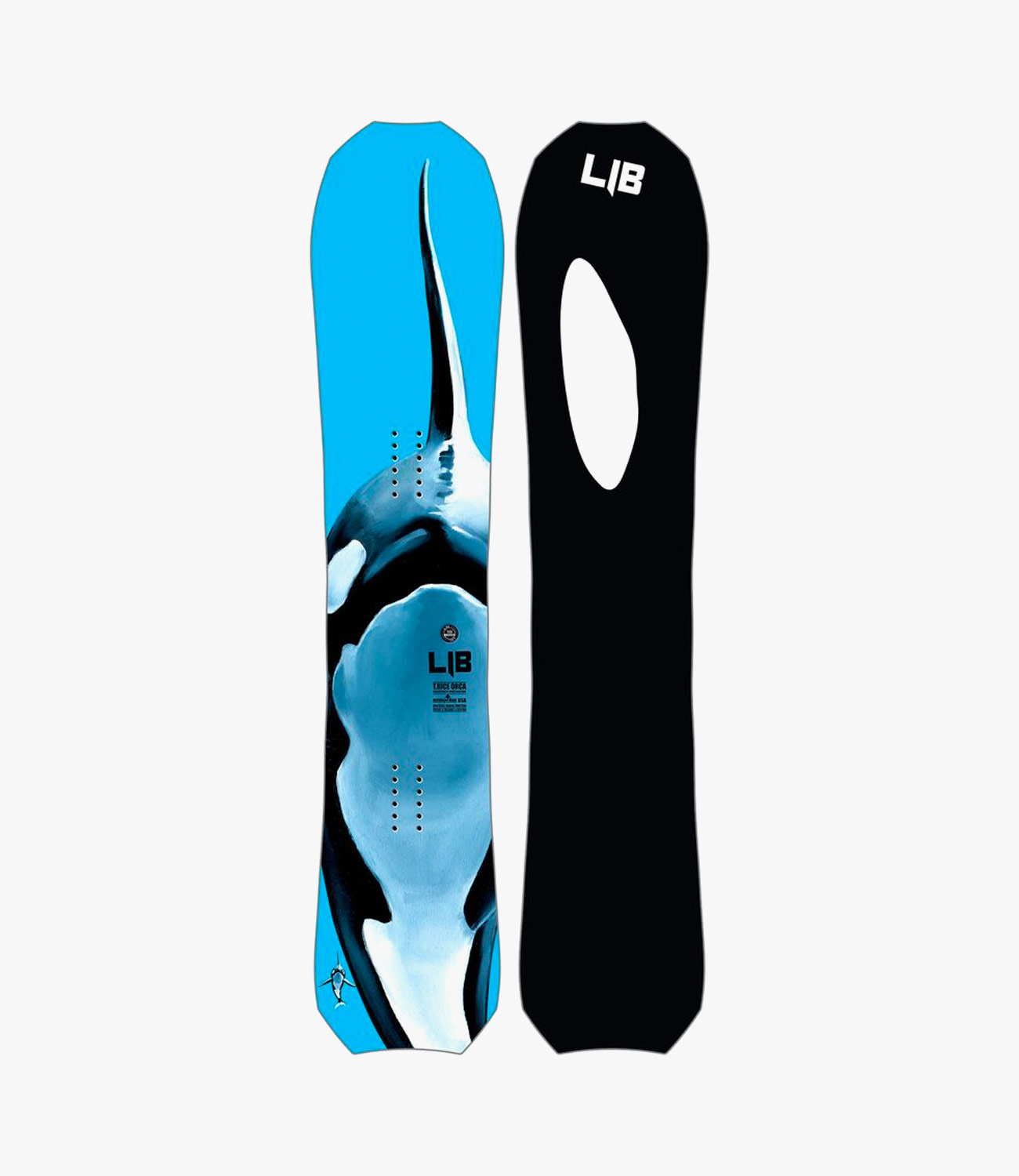
The movement of short and fat snowboards is a few years old. Big companies like K2 did a great job kicking off the “volume shift” movement that lopped off a few centimeters from board length and added it to the width. The new Orca brings the volume shift movement home. Available in three sizes (147, 153, and 159), the waist of the Orca is thick. 26.7cm for the two longer models and 25.7cm for the 147. This width makes it great in the powder and a solid choice for guys with big feet because toe drag shouldn’t be an issue. But it’s not so wide that you can’t just spend a day ripping groomers like there’s no tomorrow.

One of six T.Rice pro models, the Orca is great for short, slashy turns, and is also fun in tight trees, whether they’re filled with fresh snow or skied out.

Serious MagneTraction is one way this board is different than similar decks. Each side of the board has seven serrations, so when you’re scraping on hardpack, the board has a little more edge to help it bite into the trail. And the swallow tail makes it easy to keep the front-end up.

The board is made by Lib Tech, a company with a sense of humor, punk rock edge and DIY ethos. It jokes that its boards are “built by snowboarders with jobs.” Behind the joke is a company that builds all its boards domestically, utilizing innovative techniques for “green building” and using non-toxic substances as well.

Best Budget Snowboard: K2 Broadcast
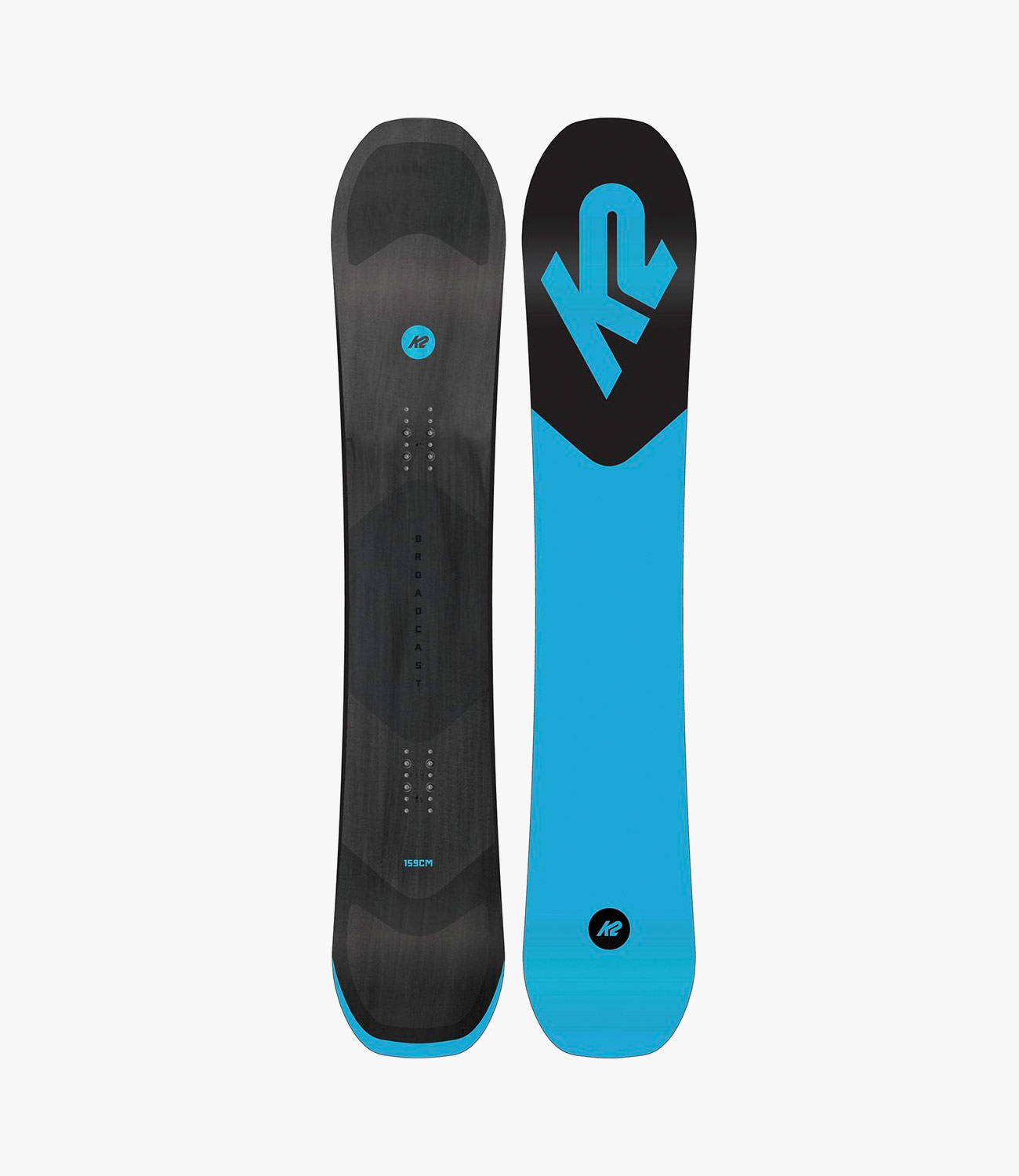
When it comes to “budget” boards, there’s not a huge difference between entry-level and pro-level. Most company’s entry-level boards start at $400-$450 and max out around $600. Sure, there are boards that cost $1K and more, but unless it’s custom — hello, Franco Snowshapes — the qualitative upgrades once you head north of the $600 neighborhood are incremental at best.

The Broadcast is a new freeride shape from the folks at K2, a company that’s been making skis for decades and was one of the first to embrace the fat ski movement for powder skis. The Broadcast is one of our favorite freeride boards for 2019. The fact that it’s about $200 less than some similar boards is just gravy.

The directional hybrid shape leans more on camber than reverse camber, making the Broadcast incredibly responsive. Best for riders who are intermediate and above, the Broadcast loves being ridden fast, and that camber ensures that the deck has plenty of pop. Get this board if you have a taste for craft beer, but a PBR budget.

Best Powder Board: Jones Storm Chaser
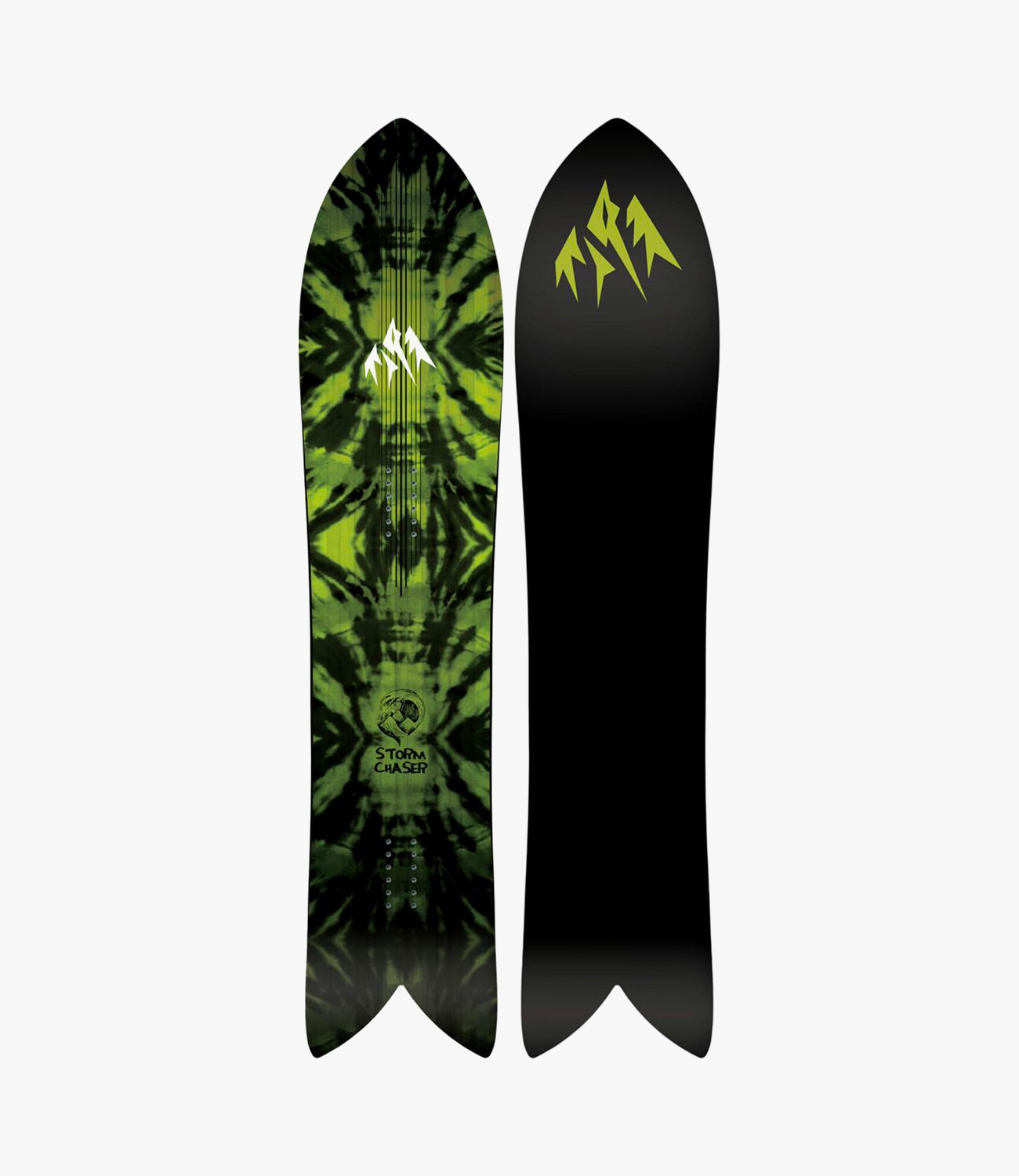
In the past, snowboarding had an outlaw reputation. But for many years, riders wouldn’t rock a pow board on a non-pow day because even the “outlaws” would poke fun. Those days are done, partially because riders are unabashedly riding what they love. And partially because some pow boards are very capable of being daily drivers. That’s the case with the Storm Chaser.

The board was built for one of the best freeriders on the planet — Jeremy Jones — by veteran surfboard shaper Chris Christenson, who’s been shaping boards for 26 years.

Christenson is a passionate snowboarder as well, splitting his time between Cardiff-by-the-Sea in SoCal and Swall Meadow just south of Mammoth Lakes. His understanding of shaping snow shapes is evident in the Storm Chaser. It loves getting on a rail for deep carves and has just as much love for a deep powder day.

On groomers, Jones’ version of serrated edge technology does a good job of holding a rail when terrain gets slick. And in powder, the swallowtail adds to the insane amount of float of the deck. And for 2019, this board that was great to begin with, gets even better with a lighter core built from bamboo and carbon stringers to add a touch more stiffness to the Storm Chaser.

Best Park Board: GNU Head Space
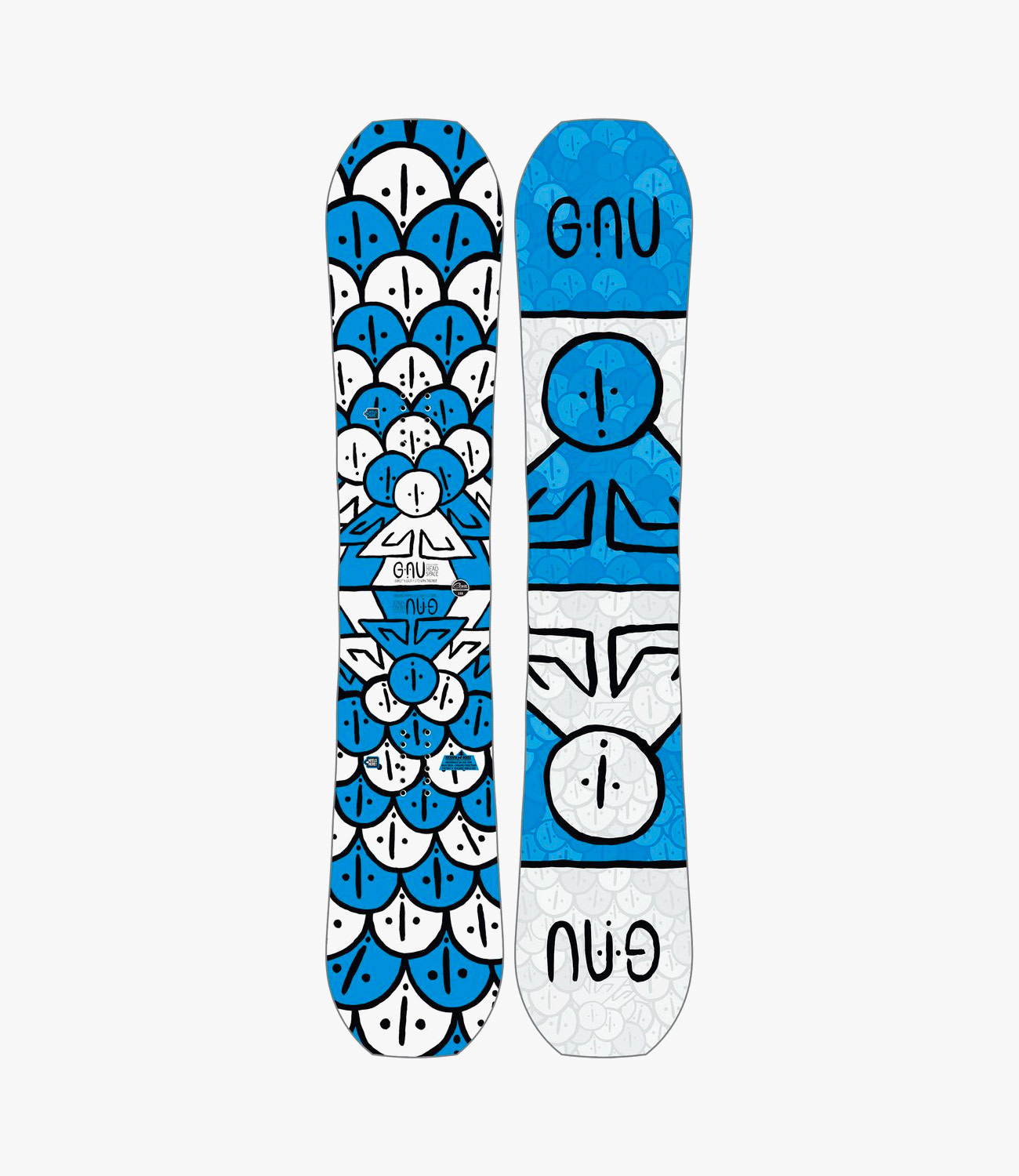
Although pro models are few and far between these days, the Head Space is one of two pro models for Forest Bailey. Like fellow Mervin athlete Jamie Lynn, Bailey is an artist and his handiwork adorns his freestyle deck.

Available in four sizes, the Head Space is asymmetrical, a design approach that GNU has been pursuing for years. The thought behind it? Since snowboarders stand sideways, heelside and toeside turns are different biomechanically, so each side of the board is designed differently to optimize each type of turn: a deeper sidecut on the heelside and more shallow on the toeside.

The Head Space includes a hybrid camber with mellow rocker between the feet, and camber in front and behind the bindings. With soft flex, the board doesn’t beat you up in crappy conditions. And a core that’s a combination of sustainably harvested aspen and paulownia wood delivers plenty of pop.

It’s also a great deal — $450 — and almost won our best budget board contest. You’ll have a few more bucks left over for $12 beers at the mountain.

Best All-Mountain: Ride MTN Pig
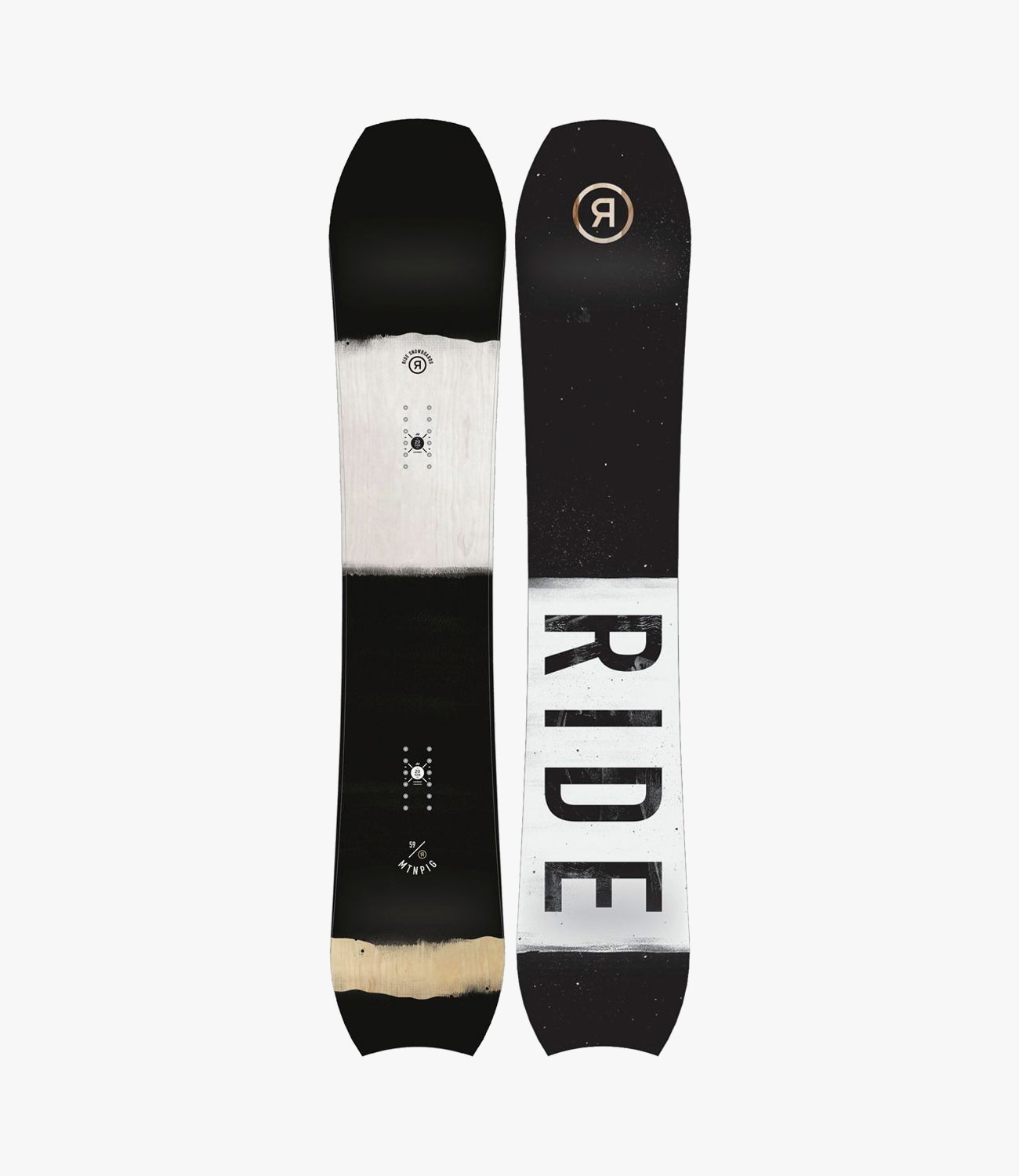
Don’t click on the link, because the branding on this deck is gross. But, the board (even with its poor advertising) is a great all mountain machine.

Few boards look like the MTN Pig thanks to a half-moon tail, blunt nose and an aesthetic that’s mostly monochromatic with a hit of natural wood. The hybrid camber board is one of the stiffest we tested. Built for riding fast and taking chances, there’s some rocker at the nose that keeps the front end above the snow on powder days. Camber on the tail section of the board helps you keep an edge when the snow is less than ideal.

The bigger brother to Ride’s park board, the WARPIG, the MTN Pig’s urethane edges knock down chatter when riding through rough snow — known as chunder. All that’s to say this is not a deck for lazy and mellow intermediate runs. The MTN Pig is built for riding hard and fast. If you that’s not your get-down, this ain’t the board for you. But if you like riding each run like it might be your last, give this board a shot.

Best Splitboard: Venture Storm
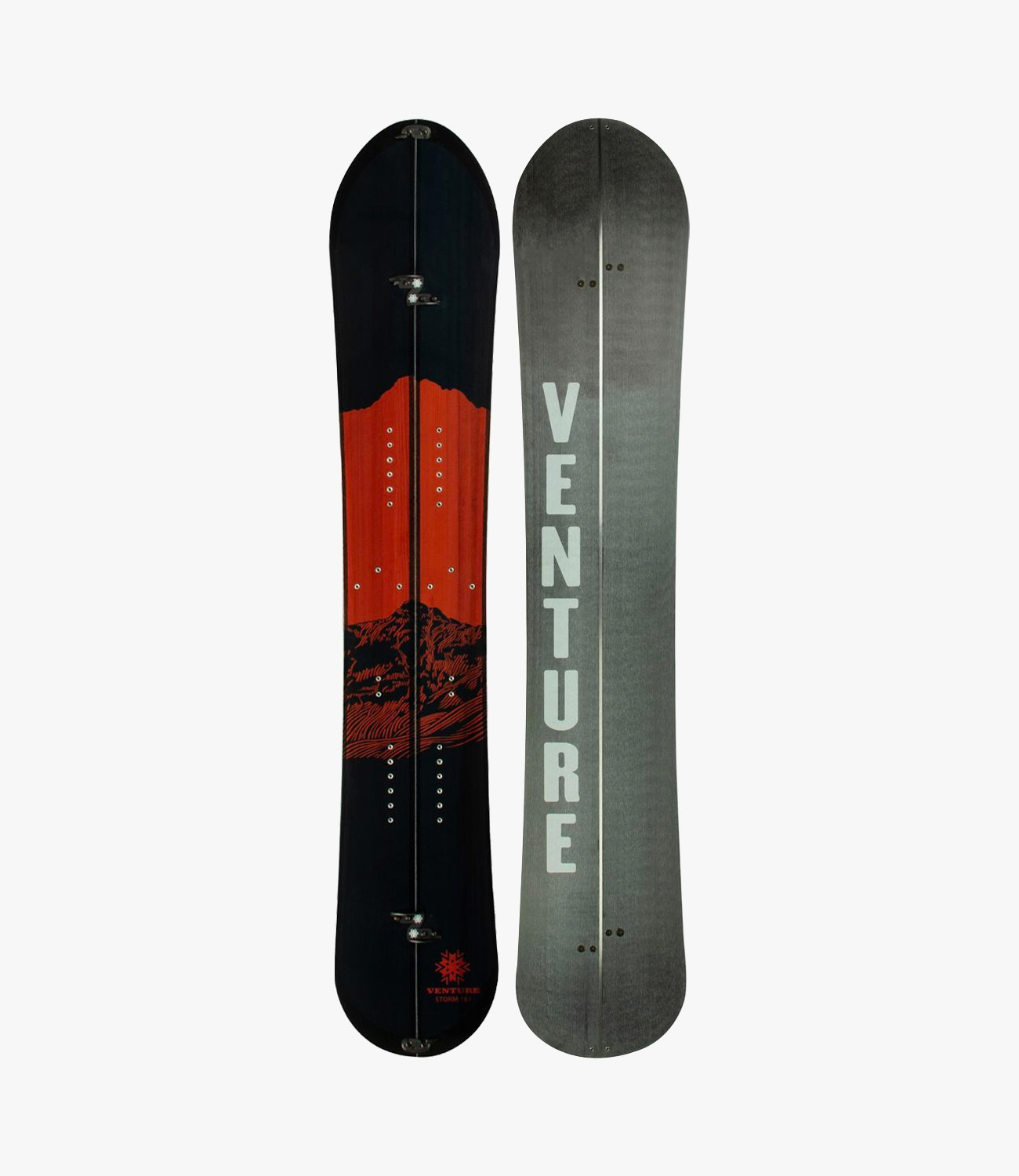
Built by a small crew of snowboarders in Silverton, Colorado, Venture’s snowboards just feel boutique. Strap in and you get a sense that you’re riding a board that was built with love in the mountains. That may sound woo-woo, but we’ll bet you a nice, life-affirming crystal that if you test ride one, you’ll feel the same.

Silverton is home to Silverton Mountain, which offers some of the gnarliest lift-accessed terrain in the world. Named for an iconic peak in the San Juan Mountains with a 13,487-foot summit, the Storm is the tool for ascending and descending mountains like this.

Also available as a solid board, the Storm has a new core for this winter. Like its Colorado brethren Never Summer, Venture boards are typically overbuilt. Those extra grams add durability in spades, but the new core shaves some weight.

It’s not Venture’s stiffest split (that would be the Odin), but the Storm is stiff without beating you up. Like most boards in the test, the Storm features hybrid camber, with a bit of a twist. Instead of camber between the feet, the Storm is flat. This is great for powder, but can be a little squirrely during run-outs when snow often gets variable.

The soft nose provides insane amounts of float when it gets deep, and the moderate sidecut will put a smile on your face. And for folks who care about carbon footprint, the Venture workshop is 100-percent solar powered.

Best Intermediate: Burton Custom
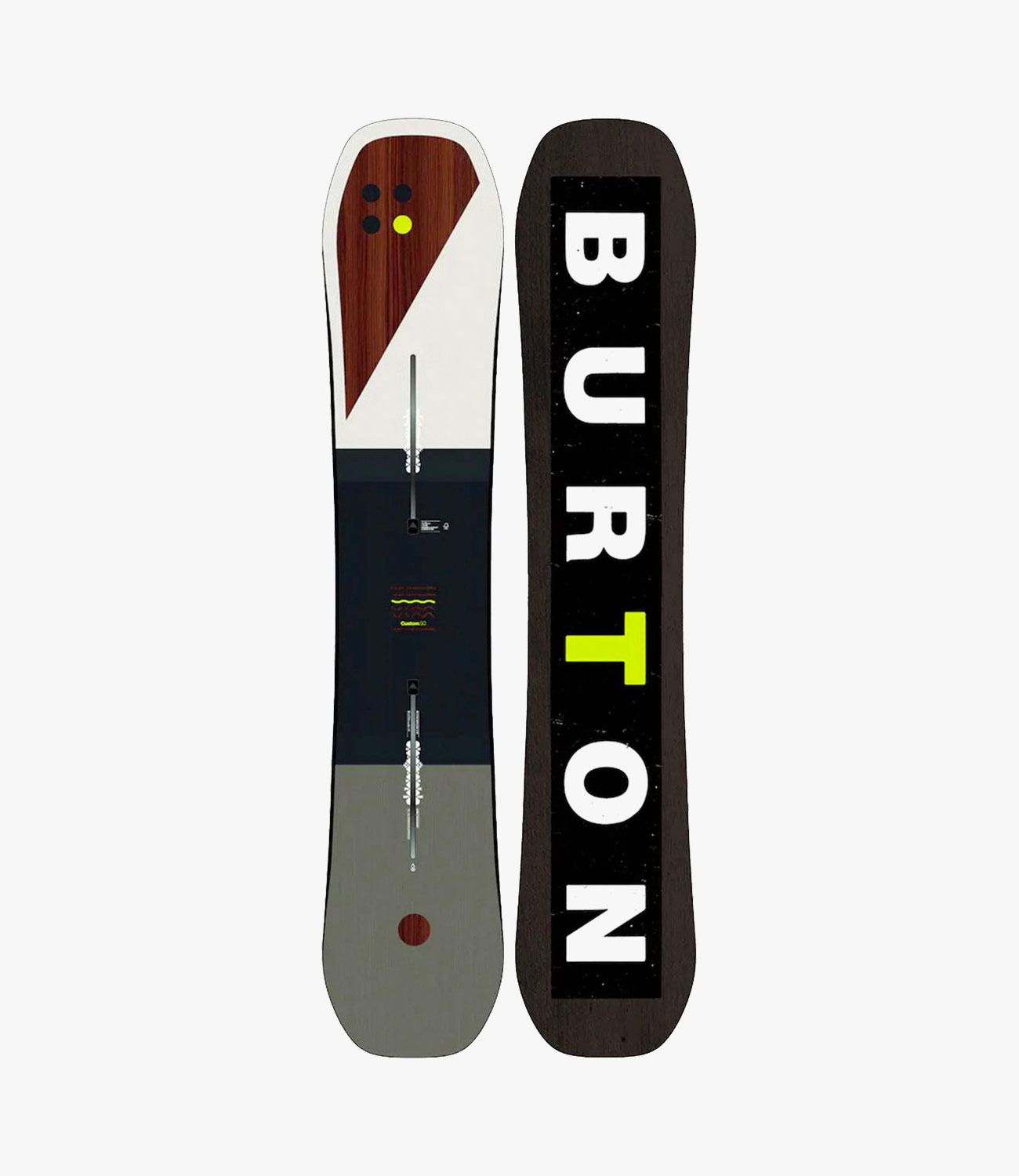
When it comes to legendary snowboards, the Burton Custom is always at the top of the list. It’s been in the Burton line-up for decades, back when the most famous company in snowboarding still built all its boards in Vermont.

The first Custom was released in 1996. The consistently great freeride board — along with its stiffer cousin the Custom X — is available in two models for 2019.

The Flying V version contains a mix of camber and rocker, and is a great board for intermediate riders. It’s designed for all-mountain use and is a happy compromise between stiff and soft. With a medium stiffness, you can ride it all day.

Camber-wise, the Custom also rocks a happy compromise with a mix of camber and rocker. It’s plenty responsive, but not so responsive that you’ll be catching a bunch of edges at the end of a long day, when your tired mind and body gives way to sloppy technique. And that’s one of the many reasons snowboarding is a bit easier than it was in the camber-only era when hyper-responsive boards reigned supreme. That was great for expert riders. For less experienced riders, that responsiveness was too much, like giving a teenager who just learned how to drive a car with too much horsepower.

Best Snowboard for Carving: Bataleon Carver
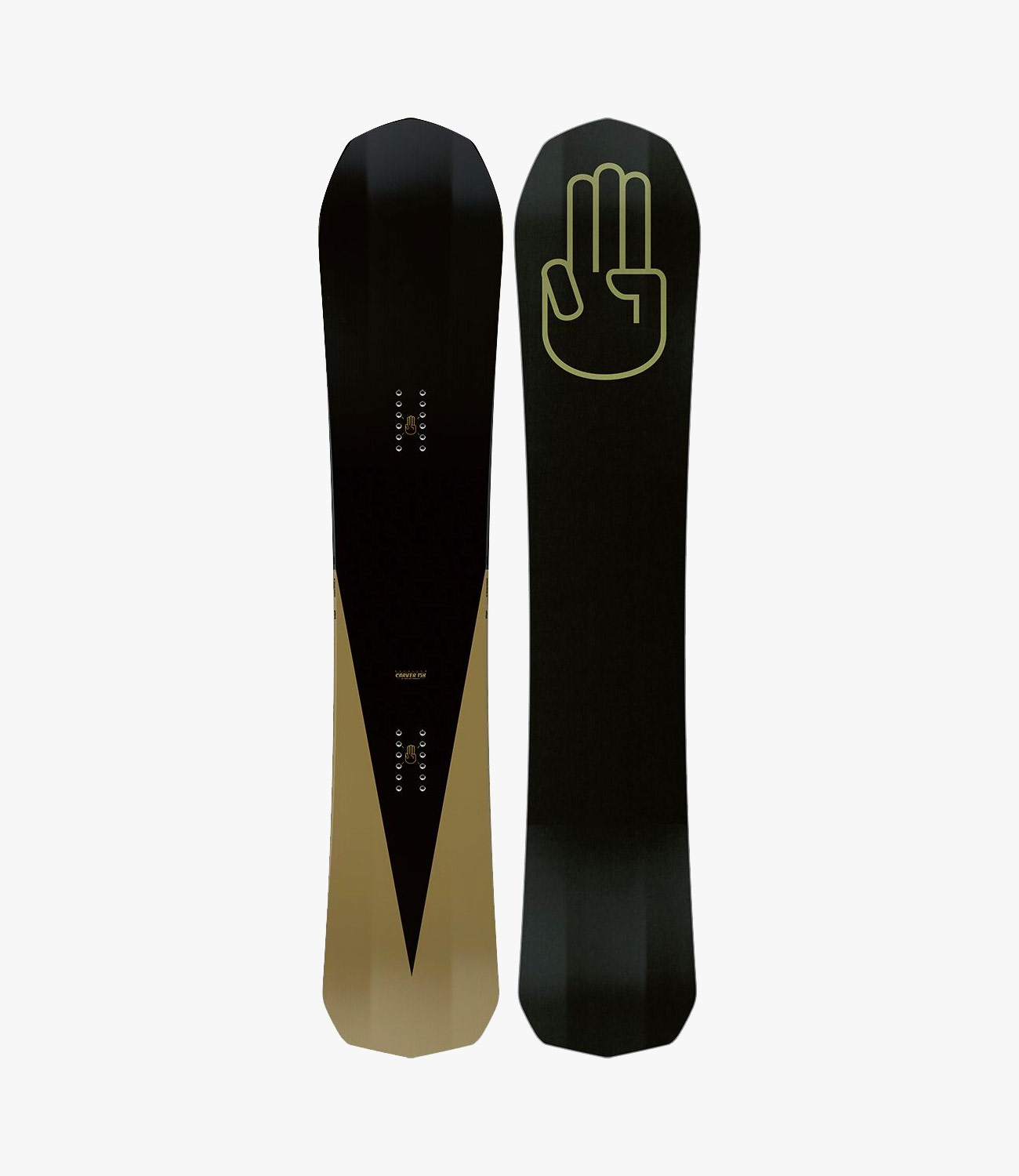
Full disclosure: we were sad to see the asymmetrical and stance-specific GNU Zoid dropped from the lineup this year. The Zoid is one of the best carving boards ever made, but the Bataleon Carver is also on that very short list.

As you may have guessed, the Carver is for advanced riders because if you’re still figuring out how to make turns, you’ve got some work ahead of you before you’re ready for a carving board.

With a wide waist, toe drag isn’t an issue for this board that lives on its rails. But what makes the Carver unique is the profile of the board. While it’s traditional camber from tip to tail, it has raised edges from left to right. So, you get all the pop and responsiveness of a cambered design without the drawback of easily catching edges. This board also claims to provide prodigious float in powder. Sadly, we can’t report back on that because we didn’t ride it in fresh snow.

Medium stiff, carbon stringers that run the length of the deck help you power through turns. And since Bataleon is still a surprisingly small company, it’s unlikely you’ll see other Carvers on the hill.

Best Snowboard for Advanced Riders: Arbor Bryan Iguchi Pro Model Camber
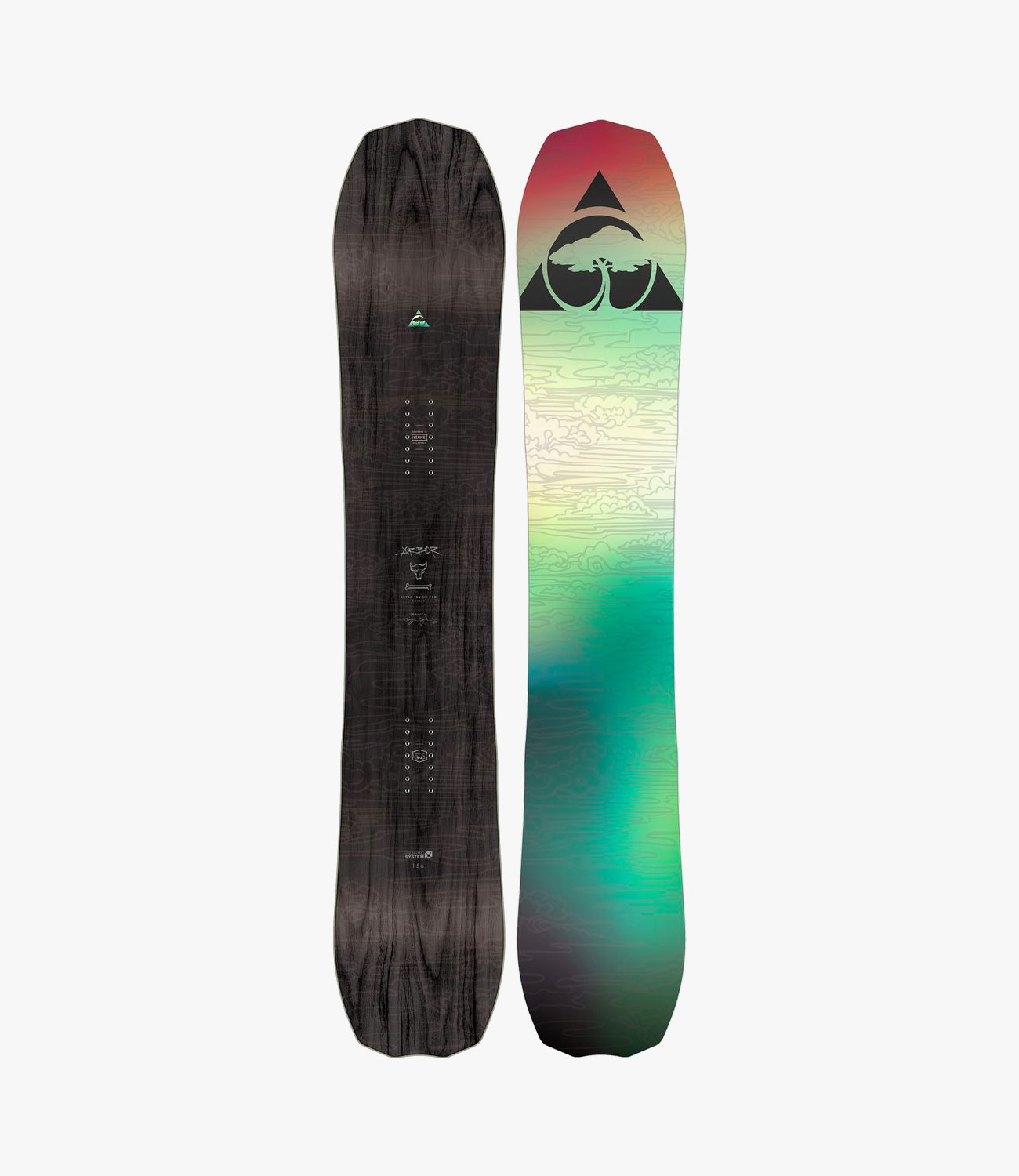
Bryan Iguchi is a legend. Before it was a cool thing to do, the young ‘Guch moved to Jackson Hole to ride some of the steepest lines in the world. He was one of the first well-known professional snowboarders, and some believed that the talented athlete was committing professional suicide by leaving the competition circuit. Eventually, the industry caught up with him. And if you’re looking to ride steeps, one of his two boards should be on your radar.

His two models include a camber as well as a rocker version. Both are on the stiff side of the spectrum and the camber version is one of the most responsive boards on the planet. Before you strap in, one of the first things you’ll notice is the weight. It’s a bit heavier than most. Some folks ding it for how it tips the scales. Others appreciate the added meat on the proverbial bones, especially those who put in a lot of time in the Rocky Mountain backcountry, where obstacles just happen.

Strapping in, one of the first things you realize is the minimal rise of the tip and tail. This is great in the fresh snow because it helps the board stay on top of it while also making it slightly more forgiving.

TLDR? This is a lot of board. If you watch Iguchi and aspire to ride like him, it just might be the perfect board for you.

Best Alternative Shape: Spring Break Twin
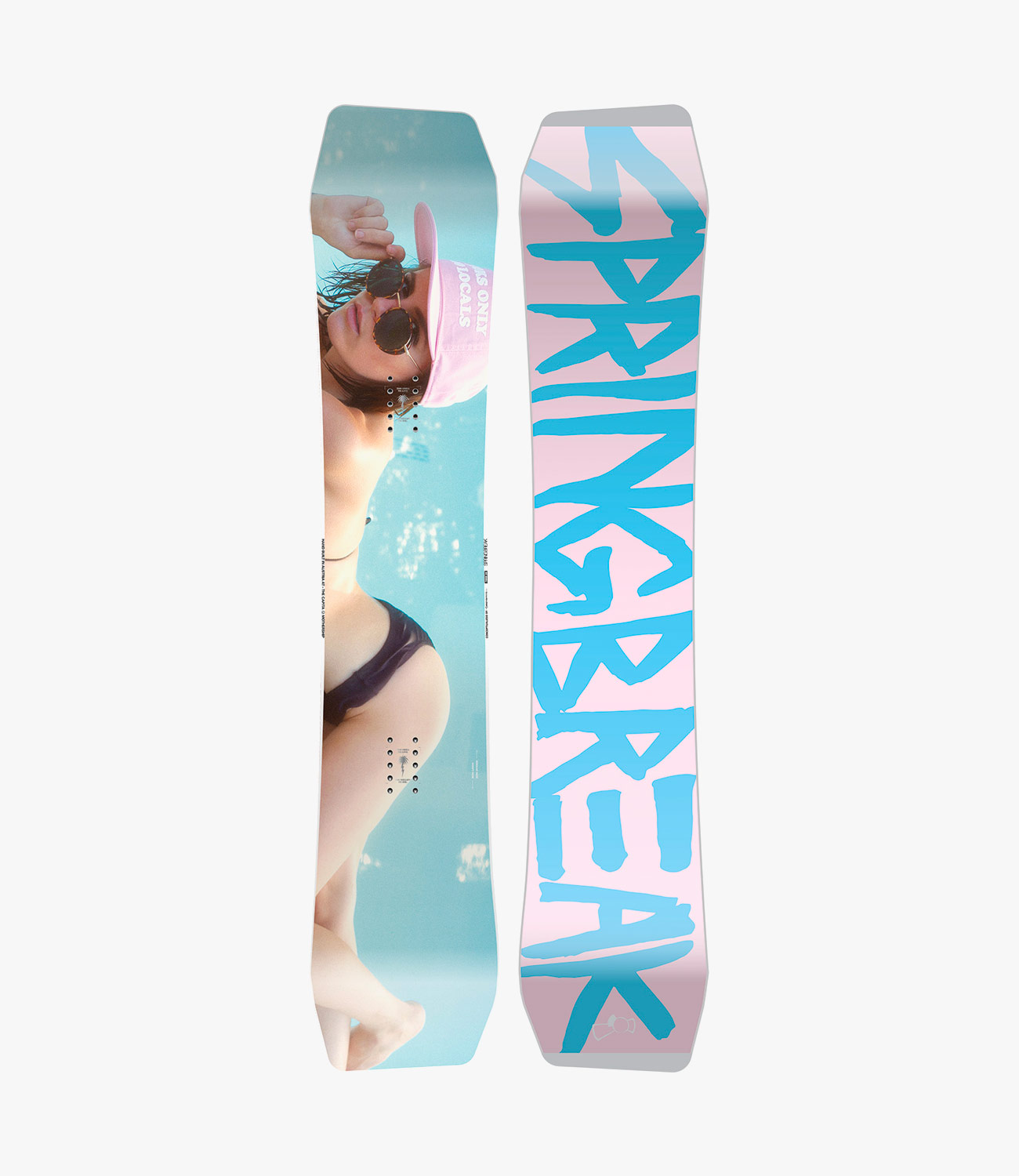
Like the mountain biking industry, snowboarding has a small collection of boutique brands that add a whole lot of fun. One of these is Spring Break, a company founded by former pro snowboarder and contemporary artist, Corey Smith, in 2010. And as the good folks at Field Mag alluded to, Spring Break is a nice and weird mix of two Burtons: Jake (the man behind Burton snowboards) and Tim (the guy behind films like “Nightmare Before Christmas”).

Built by Capita at its factory in Austria, the Twin is an asymmetrical twin board with a lopped off tail and nose and is great for the park.
The hybrid camber includes traditional camber until just after the binding inserts, before going flat, and ending/starting with a touch of hybrid camber at the nose and tail. Translation: plenty of pop thanks to the camber and a nose and tail that don’t catch when you don’t want them to. And new for this model year are stringers made from basalt that settle down the board in variable snow — and also add a little more spring to your ollies.

With a right-down-the-middle medium flex, the Twin has serious snap and rebound. Load up the tail and it’s ready to go skyward.

The sidecut is longer on the heelside than toeside to maximize the body dynamics of standing sideways and making turns. And like a properly executed asym board, it loves being on its side, laying deep trenches as you make deep turns.

If you spend a lot of time in the park, but like getting your all-mountain on, this is a solid option. Demo this deck, and if you want to compare it to a similar deck, check out the GNU Head Space as well.

Note: Purchasing products through our links may earn us a portion of the sale, which supports our editorial team’s mission. Learn more here.

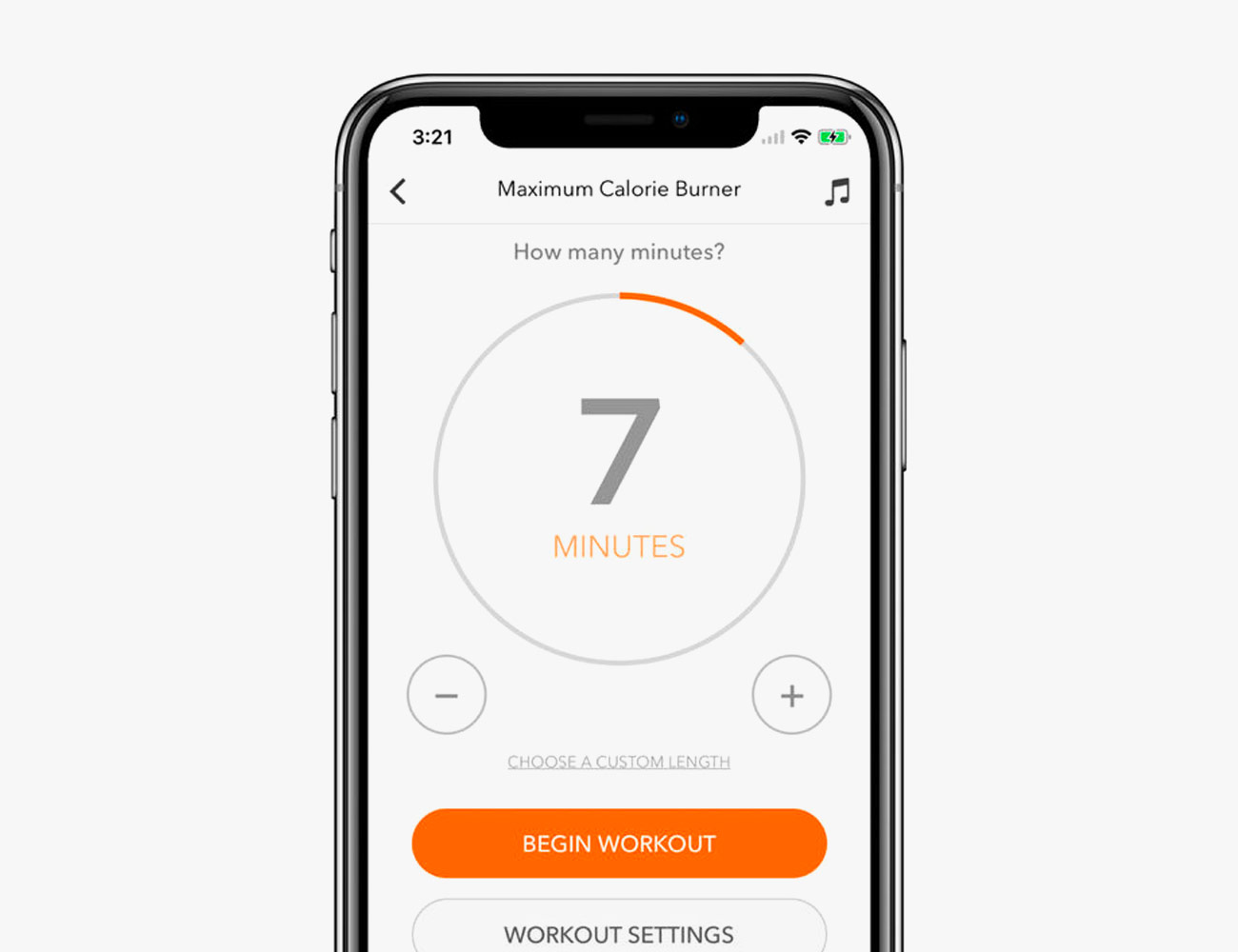
Meet the Man Designing the Most Beautiful Pocket Knives We’ve Ever Seen

There’s not much to a pocket knife — a blade and a handle, maybe it folds, maybe it fits onto a keychain or clips into a pocket. But under closer inspection, there’s a lot more than that. There are the materials: stainless steel, carbon steel, Damascus steel, titanium, nylon, micarta, wood. There are straight and serrated edges, clip points and tanto tips, automatic actions and gut hooks. The pocket knife, at first unassuming, implies infinite possibilities.

Ryan Coulter, the founder of the James Brand, focuses on just a few of them. While the big knife companies put out hundred-plus page product catalogs on a yearly basis, the James Brand has released only four knives (and one tool) since the brand’s founding in 2016. But those blades — the Chapter, the County, the Folsom and the Elko — are subtly perfect. They’re sleek; they’re sharp; they’re made with quality materials. They are also overtly minimal and as a result, beautiful.

That’s probably because Coulter is an industrial designer by trade — he’s done stints at both Burton and Nike — and has carried a pocket knife since boyhood in coal country, Indiana. His first knife came to him as a hand-me-down from his father, who received it from the mine he worked at as gratitude for his service there. Coulter’s mom carried a pocket knife at all times too, (a Swiss Army).

It’s plain that Coulter, who lives in Portland, Oregon amongst the biggest knife brands in the world, takes special consideration when it comes to pocket knives. His views on knives as tools and everyday carry items border on philosophical and manifest in the products that the James Brand creates. Below, Coulter explains why the pocket knife needed a re-design, how the James Brand builds a new product and why he wants to “own the pocket.”

Q: What was one of the first knives that made you think about knife design?
A: Burton used to own a shoe company called Gravis, and Gravis did a little promotional knife that was small — a little single blade folding knife with a serrated blade and I carried the thing literally every day for about ten years. It ended up with this beautiful patina, and I used it all the time for all these basic things, but it came from Gravis and I wasn’t necessarily this huge Gravis fan per se — and it was co-branded with Smith and Wesson and I definitely wasn’t the Smith and Wesson person. So I always thought like, man this thing is so handy and so good to have around and I love it but it could definitely be better; surely there has to be something that’s closer to what I’m actually looking for or that I would be more connected to than this.

Q: Was there something specific about pocket knives that you recognized needed to be improved or a problem that needed to be fixed?
A: There was this knife that I used to carry a lot when I was in China from this company called Protech, I think it was called the Godfather Mini. It was a full-auto, full switchblade and it was extremely tactical — symmetrical, pointy, stabby blade. But it had this really great action and the design of it was kind of beautiful. But it was definitely too tactical.

From a design positioning standpoint, most of the knife world would just start to break into two chunks. There was the hunt/fish world that generally involves things that were really over-built, over-designed, overly-ergonomic with camo handles and gut hooks and blood grooves, and then there was stuff that was kind of like my Protech example that was really tactical and really felt like it was a weapon and not a tool. The way I always grew up with these knives in my life was that they weren’t weapons — I mean, that was maybe a last resort — but they were super handy as everyday tools to do things from slice an apple, to dig a root out of the garden, to open the mail to clean out your fingernails; they’re just a thing that you have handy all the time. They were always everyday carry to me and I just didn’t feel like anything was really doing that for me — either from a brand positioning standpoint or from the design of the product.

Our philosophy has always been to make less stuff and make that stuff better.

Q: With a smaller and a more refined collection of knives, what goes into the process of designing a new product? Do you feel an urge to keep making new items?
A: Our philosophy has always been to make less stuff and make that stuff better. I think one of the things that was really and is still confusing to us is, if you thumb through the catalog for one of the big knife competitors, they are often hundreds of hundreds of pages deep. It’s really hard to figure out what would be the right product for me or anybody based on that.

The knife industry has been very focused on SKUs. We really wanted to do something different from that, partially just to solve this question of, “What’s the right knife for me? Here’s what I do, here’s where I’ll be, what’s the right thing for me?” We’re totally focused on everyday carry, so that narrows things down quite a bit, but we wanted to make it easier for people to figure out what the right thing for them would be.

For us, if you dove into the future 20 years, I would love for that Chapter silhouette to still exist and have the same value as the Case Trapper or the Chris Reeve Sebenza, any of the things that are really iconic.

Q: Your newest knife, the Elko, is your smallest knife. How did the design process for that one start and how did you end up with the final product?
A: We’re all extremely proud of that one. In some ways, it’s maybe the best example of modern minimal everyday carry that we’ve ever pulled off. We really believe in this idea that the best knife for you is the one that you actually have with you. So the idea of having a knife that could go with your keys, that you can basically never forget, is a really important idea for us.

We’d always wanted to do that, and it had been on our radar, but we wanted to look and see what the problems are with the other things that are like that in the market. One of the things that we found is that with a lot of the competitive knives, like the Swiss Army Classic, the blade is so small that it’s barely functional. So when we talk to people about that it’s like, you can actually make a fully functional knife if you give it a real blade instead of that eighth-of-an-inch-wide penknife blade.

It just kind of disappears in your pocket.

We’re not gonna put a corkscrew on it and we’re not gonna add a bunch of blades to it, but just having that little tool on the end that lets you turn screws on your snowboard or scrape off a sticker or pry open a bottle of beer — that one little thing adds so much value to that tool because all of a sudden you don’t have to worry about prying with your blade tip or damaging the edge finish when you open a beer. The combination of this bigger blade and that one sort of multifunctional tool on the end makes it really useful for a bunch of situations. But it’s super minimal, it just kind of disappears in your pocket.

We don’t want to be just a knife brand, we want to really solve for this idea of everyday carry and owning what’s in your pocket.

Q: The idea of everyday carry is obviously important to you, so which one of your knives is most often in your pocket?
A: I don’t go anywhere without an Elko, ever. And not because I’m thinking about it, but because I’m still using one of our original samples — I put it on my keys and I’ve just never taken it off.

And then I generally carry a Chapter. I just love the minimalism of the form. I love the way the action feels. Mine is always the black with the chrome blade. The Chapter has a special place in my heart, it was the very first one that we did. It’s small, it’s minimal, it’s titanium, it’s still kind of my baby. I think a lot of us feel that way.

The 11 Best Gifts for Mountain Bikers

Mountain bikers can be a difficult group to shop for. While certainly not as picky as lycra-clad road bikers, mountain bikers like their kit to be just so. But all mountain bikers can agree on a handful of things, and these things often fall under the umbrella of best-in-class products. Our picks for the best holiday gifts for mountain bikers fall mostly under that umbrella, but we’ve also included a handful of gifts that even the casual outdoorsman will enjoy.

POC Tectal Race Helmet

POC’s Tectal Race mountain bike helmet was one of the brand’s first helmets to feature its new SPiN technology. SPiN consists of a handful of rubbery pads that line the inside of the helmet. In the event of a crash, the pads help to reduce rotational forces that are often associated with concussions. In addition to the safety features, the Tectal Race looks badass and is ultra-comfortable.

Light & Motion Seca Race 2500

Some of the best and most rewarding rides start long before the sun rises. When taking on these types of endeavors, being able to see each and every bump and undulation in the trail is absolutely crucial. We’d only trust one light for the job: Light & Motion’s Seca Race 2500.

Kitsbow 5in V File Socks

In all types of cycling, socks need to be more than just functional. Style plays a big factor as well. Kitsbow’s V File socks bring both style and function thanks to a construction that utilizes 60% Meryl Skinlife (a material that has silver embedded for anti-odor) and a sleek pattern.

7mesh Oro Jacket

Don’t let inclement weather prevent you from heading out on your favorite loop. 7mesh’s Oro jacket is built with Gore-Tex Active with ShakeDry, which is Gore’s most breathable waterproof material to date. Even if your ride requires an hours long climb, the Oro will make sure you don’t overheat and will protect you from the rain.

Kitsbow Kitchel Lightweight Gloves

Kitsbow’s latest glove release, the Kitchel, was designed in collaboration with Mechanix Wear, whose gloves are renowned for their comfort. Kitsbow noticed that mountain bikers were wearing Mechanix gloves to ride, and figured that they, together with Mechanix, could optimize a glove for mountain biking. It’s about as close to a perfect mountain biking glove as you can get.

A Trip to the Northeast’s Best MTB Trails, Kingdom Trails

There’s something magical about Vermont’s Kingdom Trails. Situated in the state’s Northeast Kingdom region, affectionately referred to as the “nek,” the Kingdom Trails are some of the east coast’s finest. People travel from across the country (and the globe) to ride trails like Kitchel, Switchback, Burnham Down and the three T’s (Tap ‘n Die, Tody’s Tour and Troll Stroll).

Mission Workshop Hauser 10L Hydration Pack

Mission Workshop’s Hauser 10L pack is just the right size for a couple hours-long ride. It has enough space for an extra layer, a three-liter hydration bladder, plenty of snacks and a tool roll. And it’s made from incredibly durable materials so it can handle everything you can throw at it, literally.

High Above The Lookout Hip Pack

Unless you’re headed out on an all-day onslaught of mountain biking, a full-on mountain bike backpack is overkill. All you really need is a phone, wallet, tube, tool, pump/CO2, maybe a snack and water. Those essentials can fit easily in a hip pack and allow for better ventilation on your back as well as a better range of motion while on the bike. High Above mountain bike hip packs are some of the best on the market. And they’re serious pieces of outdoor gear. Each High Above hip pack is designed and sewn in Bellingham, Washington.

Buff Lightweight Merino Wool

Wear it as a helmet liner, a neck gaiter, a headband or a scarf. The options are virtually endless and the highly breathable and moisture-wicking merino wool material makes this piece invaluable.

Evoc Bike Travel Bag Pro

If you’ve ever ridden a rental mountain bike, we’d bet that you don’t plan on doing it again. Save yourself the pain and frustration of forever trying to dial in a rental bike and opt instead to travel with your own bike. Evoc’s bike bags are the best available and will ensure that your bike makes it to the trailhead safe and sound.

Ergon GE1 Evo Factory Grip

Handlebar grips can make all of the difference between an enjoyable ride and one full of pain and frustration. Ergon’s GE1 Evo Factory grips feature Gravity Control rubber that is just soft enough where it provides comfort while avoiding the “I’m holding a damp sponge” feeling.

Boneshaker Mag Mega Bundle

Self-described as a “sideways look at cycling,” UK-based Boneshaker Magazine offers unique features and design that stands in contrast to the old guard of mountain bike magazines. While not mountain bike-specific, even the most diehard of mountain bikers will find something to enjoy in these pages.

100% S2 Sunglasses

100%’s S2 is the perfect cross between lifestyle and on-trail performance. The frames are comfortable, the styling is on point and if you opt for the HiPer lens, you’re getting some of the highest quality optics out there.

Voke Tabs

There are few things worse than bonking when you’re still a handful of miles from the trailhead. Keeping a few Voke Tabs in your pack will save you on just such an occasion. Voke Tabs are all natural energy chews designed to give you that extra boost of energy. If you need more convincing, they’re endorsed by world class mountaineer Conrad Anker.

WTB Ranger Tire

WTB, or Wilderness Trail Bikes, is one of the old guard brands from the mountain bike world. Its Ranger tire is one of the best on the market, providing ample grip in a light and durable casing. It comes in a variety of sizes, so there is sure to be one that fits.

Topeak Mini 20 Pro Tool

Every cyclist needs a tool in their pack. Topeak’s bantamweight Mini 20 Pro provides everything you need and nothing you don’t.

Swrve Topo Map Mug

When you’re stuck at the office, Swrve’s Topo Map mug will help you envision loamy forests and berms made of hero dirt that you’ll be ripping come the weekend.

Firestone Lager

No ride is complete without the perfect beer afterward. Firestone Walker’s Lager is not only the most perfect, most satisfying post-ride beer, but it’s also the best representation of the new wave of craft lagers.

Note: Purchasing products through our links may earn us a portion of the sale, which supports our editorial team’s mission. Learn more here.
How the Country’s Oldest Heli Skiing Operation Uses the Internet to Fly Safe

Viewed on a macro level, Sun Valley’s role in the history of the development of alpine skiing in the United States seems illogical. The region’s central town, Ketchum, is far from the urban centers on either coast; it was at one time a hub for mining, smelting, and the raising of sheep. But zoom in, and the squashing and tightening of topographical lines leave the point moot: the region was made for winter sport.

Once the Union Pacific Railroad — chaired by W. Averell Harriman, an avid skier — made the area more accessible to passengers, skiing developed quickly. The first chairlifts in the world were constructed on Proctor and Dollar Mountains in 1936, and they established Sun Valley as a resort destination for skiing. But many of the mountains visible on maps remained inaccessible to skiers until Sun Valley Heli Ski was founded by Bill Janss in 1966. It was the first heli-ski operation in the country.

The main reason to integrate helicopters into skiing is access, and SVHS has loads of it. The team has access to roughly 750,000 square miles of terrain through a special use permit granted by the U.S. Forest Service. It’s one of the largest heli-ski permits in North America, and SVHS has the exclusive rights to it; to access many of the countless three thousand foot (and longer) runs without a helicopter requires multiple days of walking.

There is no ski patrol in the backcountry, so it’s up to the guides at SVHS to continuously monitor and control the risk of avalanches. But the guides don’t begin their day by flying missions and dropping TNT from the chopper to trigger avalanches — they’re in the office every morning at roughly 5 a.m. The flip of a light switch illuminates the base: the walls are lined with detailed maps, shelves are filled with avalanche gear and radios, a large monitor sits above a conference table. For the longest-operating heli-ski organization in the country, technology plays a central role, and the day begins in front of a computer screen.

“We get a really good idea of what our weather forecast is going to be for the day and whether we’re going to have a flyable forecast.”

“The first thing we’re diving into is the National Weather Service, which gives us a very direct forecast for our area,” says Alex Kittrell, a guide at SVHS. “We’re looking at cloud cover, precip type, our temps for the day, our wind forecast, a quantified precipitation forecast — how much snow they’re expecting us to get with temperature and moisture content — and a precip possibility. We get a really good idea of what our weather forecast is going to be for the day and whether we’re going to have a flyable forecast.”

That weather data is combined with detailed avalanche information to create a plan of action for the day. But unlike meteorological information, the data required to create a substantial avalanche report can’t be gathered through satellites and weather stations; it has to be observed on the ground, and that presents a significant hurdle for a guide service with as much terrain as SVHS. The solution, again, lies in a complex network supported by computers and technology.

“We have an incredible amount of snow data systems that we can gather data from,” says Pat Deal, SVHS guide. Most of that data is cataloged by the Sawtooth Avalanche Center and other organizations and is readily available online. Weather concerns — especially precipitation, temperature and wind — do play an important role in creating an avy report. “Wind is available to move an incredible amount of snow. Typically our biggest hazards out there are wind-related issues, wind slabs,” Deal says.

But the other half of that comes from direct observations, which the guides are recording every time they enter the backcountry. “Our snowpacks change every single day. We get pretty detailed when we’re digging in the snow, observing our different layers, and going through and doing our stability tests,” says Deal. But differences between snowpacks exist on a micro level. According to Deal, “Each zone has incredibly different snowpacks and the snow is different on every side of the compass.” So how does any guide service gather enough information to create a sufficient avalanche report? Through crowdsourcing.

“The snow is different on every side of the compass.”

At the end of every day, when the helicopter rotors are cooling down, the guides head back to the office to fill out a form called professional observations. “[The form] talks about where we skied for the day, what kind of stability or instability we saw out in the field, how many natural avalanches did we see, did we have any intentionally skier-triggered or unintentional skier-triggered avalanches,” and more, according to Deal. And SVHS isn’t the only group contributing this information. The Sawtooth Avalanche Center, Sun Valley Trekking and Sun Valley Mountain Guides also submit their own reports at the end of the day, which creates a comprehensive report for most of the area. The form is detailed and includes a place for comments and photos. One guide even managed to photograph an avalanche that was triggered by a mountain goat, just seconds after it occurred.

The guides at SVHS combine all this data into their own weather report. From there they use another piece of technology, Google Earth, to look at their range and either open or close runs for the day. The program allows the team to see the mountains in 3D, which adds tangibility to the mountain of data they go through each morning.

In the ’60s, when Sun Valley Heli Ski was founded, none of these systems existed. They didn’t have satellite phones, they didn’t have radios. The operation was kept much closer to town, and the team used topographical maps to scout potential ski runs. Carl Rixon, a previous owner of the company, used to fly a 185 Cessna airplane over the area searching for runs. “Nobody really knew what was going on in snowpack forecasting or why avalanches happened,” Deal says. Now, thanks to an online network that’s constantly becoming more and more sophisticated, backcountry operators can continue to explore all the terrain on their maps, and most importantly, be safe doing it.

YETI Tundra 65

grey_placeholder

Hard coolers don’t come much tougher than the YETI Tundra 65. It keeps contents colder for longer with up to 3 inches of PermaFrost Insulation and a ColdLock Gasket. The legendary toughness comes from the Rotomolded Construction that makes it armored to the core and nearly indestructible. For big days out or big parties at home during the holidays, the Tundra 65 has enough room to get the job done. Learn more here.

Everything You Should Know about Alternative Insulation

You finally swapped out your winter clothes from your summer/fall clothes and pulled out your long lost ski jacket. After you look it over, you quickly realize it’s seen better days and that it’s for an upgrade. There are tons of jackets to choose from, but there’s an aspect that you’re likely overlooking: what do you want your jacket to be made of? This is a question that consumers need to answer now, either in person or online when they go shopping for a new winter jacket. For years, all you had to do was decide if you wanted a synthetic jacket or a down jacket, but now there are tons of other options, and many more decisions to be made.

A handful of brands are now offering alternative insulation materials that are more sustainable, and oftentimes offer different pros and cons than standard down and synthetic insulations. To help aid in your purchasing decision, we pulled together a variety of the most popular and newest forms of alternative insulation and provided insights on just what they are and what they do.

Alpaca Insulation

Cotopaxi is a brand that’s focused on doing good, so it’s logical that it would produce environmentally-friendly insulation. The brand offers an alpaca wool insulation. The material fuctions well as an insulator and offers many of the same traits that merino wool does. Cotopaxi pulls wool from alpacas that live in the high plains of the Bolivian Andes — much the same way many brands pull merino wool from sheep that live in the high elevations in New Zealand. It also helps that alpaca insulation is hypoallergenic, strong, durable and works when wet. Cotopaxi works with farmers for the alpaca insulation that it calls “Alti Insulation.” It’s a 50-50 blend that separates coarse llama hair from fine hair, similar to de-hairing cashmere. You can see the final product in the Kusa Collection as jackets and blankets.

United By Blue Bison

Like Cotopaxi, United by Blue is committed to sustainability and giving back to the community. For every product sold, one pound of trash is removed from the oceans and waterways around the world. The team is constantly innovating to find the most sustainable fabrics to use in its apparel and gear. Bison fiber is the latest sustainable fiber that the brand has integrated into its product line. The brand launched a Bison-insulated puffy jacket this fall. It uses what the brand calls B100 fill for insulation — they are the only brand to do so. The fill is a blend of 50 percent bison fiber and 50 percent recycled polyester. It’s the most sustainable down-alternative jacket the brand has ever produced. B100 insulation regulates your temperature, is hypoallergenic, warm when wet, lightweight and flexible and uses a supply chain that helps to eliminate bison fiber as a wasted byproduct from the ranching industry. It was one of eleven winners for the Outdoor Retailer Innovation Awards 2018.

PrimaLoft Bio

This is the newest type of synthetic insulation, but its development began almost five years ago. “We think of ourselves as an advanced materials company, so our core strength is polymers and textiles. Our thought process was ‘It’s going to be virtually impossible to police the world,’ so we wanted to go at its source,” says Mike Joyce, CEO of PrimaLoft. Alongside experts from various industries, the brand found that modifying the synthetic polyester was the best play. “We modify the polymer so it’s more attractive to the natural microorganisms that reside in landfills and oceans,” Joyce says. “A standard polyester is not a material that microorganisms will gravitate towards.” So the brand created a material that microorganisms are attracted to in order to speed up the decomposition process. “They break it down into natural materials such as water, CO2, methane and what we call biomass.” Does this mean it’ll start to degrade in your closet? “No, it won’t because oxygen doesn’t trigger it. You have to be in an environment where microorganisms exist,” like the ocean or a landfill, Joyce says. After rigorous testing, PrimaLoft claims that Bio is 84 percent degraded after 400 days compared to standard polyester, which is just two percent degraded.

The 100 percent recycled material will roll out in 2020 with PrimaLoft’s partners. “Key partners are prototyping, making garments and testing right now.” While prices might rise slightly, PrimaLoft ultimately leaves the decision up to the brand. “Our intent is to go after this in a reasonable way.” PrimaLoft Bio won the Outdoor Retailer Innovation Award Product of the Year for 2018.

Wool

While there are a variety of companies that are designing wool-insulated jackets, pants, shirts and more, Ortovox has committed to using it across its entire jacket line. The brand uses what it calls Swisswool insulation. Sourcing the wool is an incredibly hands-on process. Ortovox works exclusively with Swiss farmers to buy their “second shearing” wool at a handful of collection areas around the country. The wool is weighed, then farmers are paid in cash for their crop. Much the same way you’d buy tomatoes at a farmer’s market. The “second shearing wool” was previously discarded or burned because it cannot be woven. Ortovox thought creatively and turned it into a product that is both sustainable and high-performance.

37.5

We’ve written extensively on 37.5 and its ability to keep you cool during workouts, sleep and throughout the day. Nau designs sustainable apparel including winter coats and began adding 37.5 into its jackets as an alternate for goose down. The reason they chose to go that route is that it stays warm (keeping your body at the right temperature), dries quickly and is odor-proof, which is a concern when a base layer or insulation layer is so close to your skin.

Note: Purchasing products through our links may earn us a portion of the sale, which supports our editorial team’s mission. Learn more here.

The Inventor of the Snowboard Has a New Brand

In the eighties and nineties, snowboarding was a fledgling sport, a fringe movement steeped in youth counterculture that defined itself as opposed to skiing, but in those years and the decades that followed it seeped into the mainstream and became a guiding force for snowsports as a whole. Much of that growth can be attributed to Jake Carpenter, who is credited with the invention of the modern snowboard, and his company Burton Snowboards, which continues to be one the biggest board manufacturers in the world.
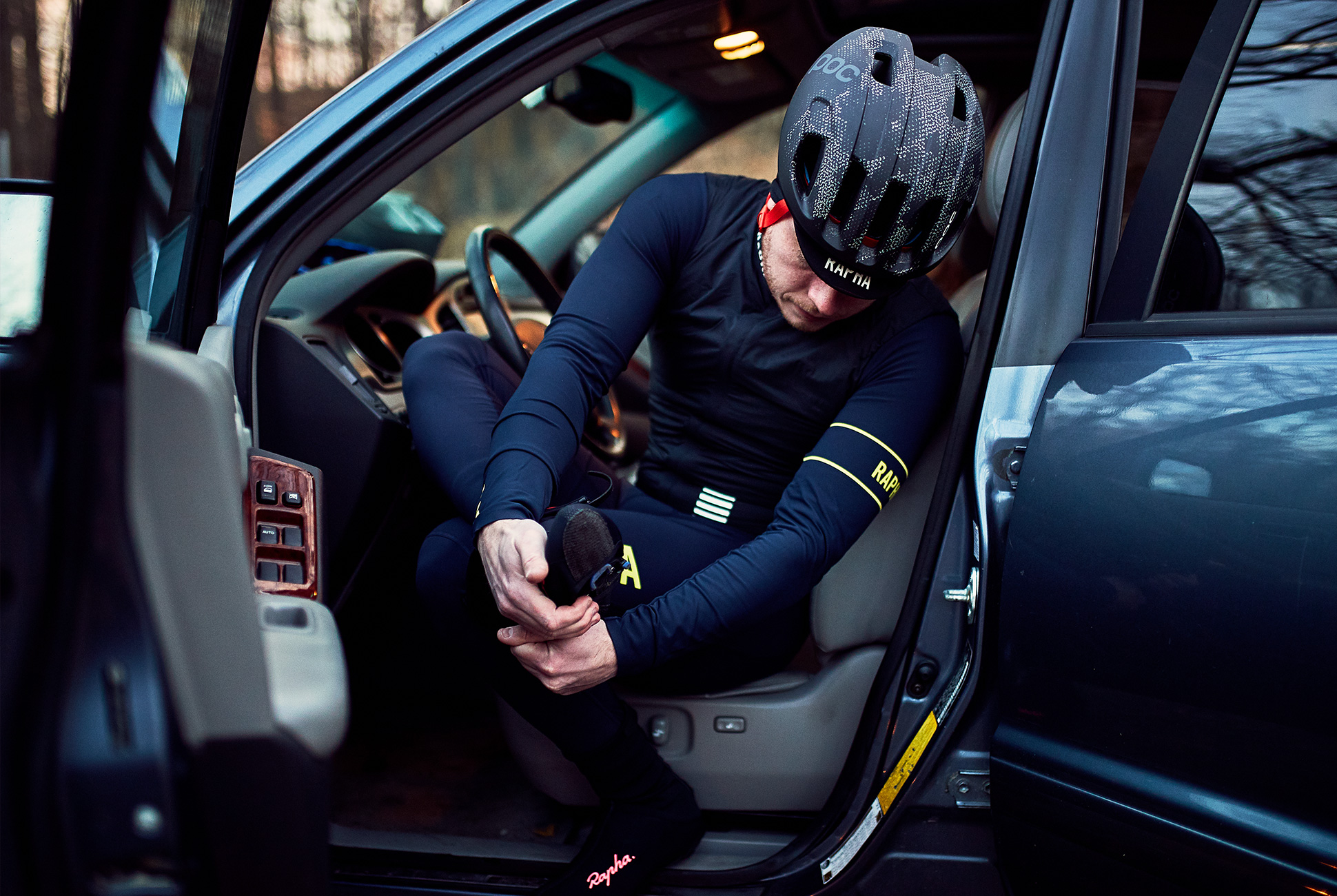
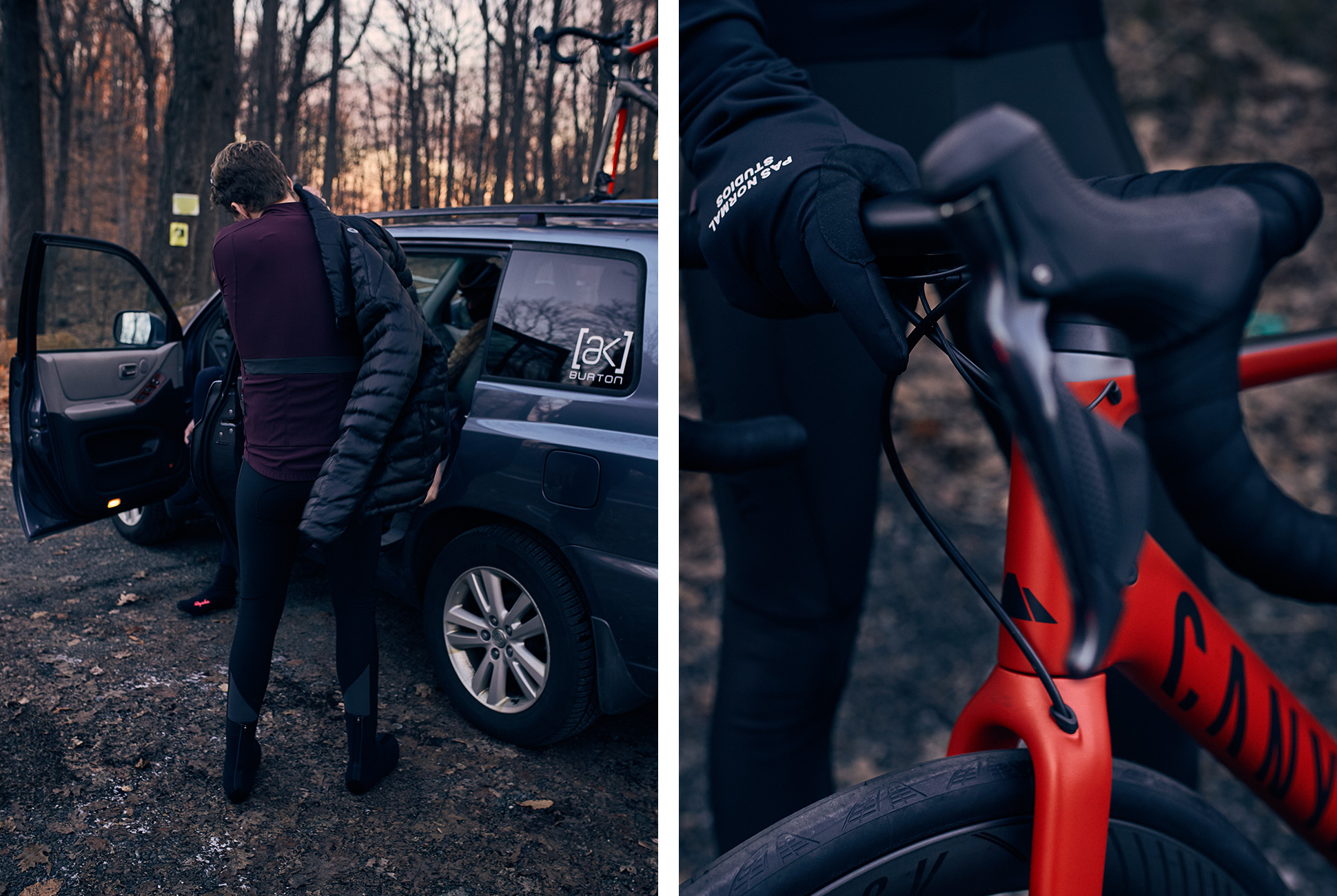
In that sense, Burton is now somewhat pitted against the original traditions upon which the sport was adopted; in a movement that in many ways still defines itself as at variance with the prevailing social norm, the most prominent brand — the one selling it to those not already in the know — is automatically Public Enemy No. 1. But any arguments against Burton have to tiptoe around the fact that the company continues to steer the sport as a whole through innovation, in product and culture too. The spirit of creativity still exists, even if it isn’t as apparent as in the early days when Carpenter was just a tinkerer living near a ski hill.

Carpenter still lives in the mountains, and he’s still hard at work trying to push snowboarding along, even as the sport has been declining in popularity. His latest project is a collection of apparel, outerwear, bags, accessories and hardgoods dubbed Mine77. Unlike Burton’s seasonal product releases that are dreamed up by many minds, this one is all Carpenter. “Mine77 is a way for me to be hands-on again with every detail of a product collection,” he said in a press release. “From the features, fabric and fit to the words on the hangtags and the style of a photo shoot.”

The creation of the new brand was spurred by a recent near-death experience in which Carpenter was left almost completely paralyzed for weeks due to a rare nervous syndrome. It gave him a renewed appreciation for life that compelled him to create. “After being on my deathbed a few years ago with Miller Fisher syndrome, I changed,” he says. “I wanted to live for the moment, be more creative and do some things that were outside the box.”

In the case of Mine77, “outside the box” means cargo corduroys, an apparel homage to the late Craig Kelly, leather bags, split-toe socks, paisley and tie-dye. Carpenter’s fingerprints are on every aspect of the product, from the physical design to the way each item is packaged and delivered (each clothing item comes with a stick of his favorite lip balm in one of the pockets). It’s a homecoming of sorts for Carpenter and another new path forward for snowboarding.

This Is the Underrated Piece of Camping Gear Everyone Needs

The Magazine

Let us take you on a journey of the world. Each issue of the Gear Patrol Magazine comes packed with adventures, guides and stories exclusive to the magazine. Stunningly designed, printed on high quality stock and ready for your coffee table. Biannual. $39.

The Newsletter

Get GEAR PATROL in your inbox with the DISPATCH, including Today in Gear and all our new stories. Daily, 5pm. Free.