
All posts in “Sponsored”

How to Make the Most of Any Business Trip
Business trips can often be short and demanding. But being in a different locale for work doesn’t mean you have to stick to the hotel and its surroundings the entire time — in fact, you very well should make the most of the travel itself.

Within every business hub, there is a city waiting to be explored. Different cuisines, vibrant streets and local culture are all at your fingertips if you make the most of your free moments.

The versatile My Montblanc Nightflight collection can help any modern-day globetrotter make the most of wherever they find themselves. Adding an element of luxury and respite to the grind of business travel, this luggage will change how you travel for work. Throw in these tips to keep in mind below, as well as a few choice ideas should you find yourself in certain global cities, and you’re all set to make the most out of your next business trip.

Skip The Hotel Food

When traveling for work, it’s easy to limit yourself to the few block radius around your hotel for every meal. But, you can do better. You have to eat — and you need caffeine — so take advantage of that time to do it right? Before landing in your destination, research and find out where the best spots are for lunch, dinner and coffee and how to get there from your hotel or office.

Find yourself in Hamburg? Known for its harbor city charm, you’ll want to try the Hummersuppe (lobster soup). You can’t go wrong with any of the seafood dishes at Fischereihafen with its old-school Hamburg class.

Taking a trip to San Francisco? The City by the Bay has some of the best coffee and pastries the US. Try Highwire Coffee at the Ferry Building Farmers Market on Saturdays or at its shop in Oakland. Tartine Bakery’s morning buns are also must-haves.

Heading to Tokyo? You’ll probably want to indulge in some noodles and sushi. Places like Sushi Tokami and Kanda Matsuya are a couple that are worthy of your list.

#MY4810 Cabin Trolley
The #MY4810 Cabin Trolley is the ideal carry-on with plenty of room. The compact, four-wheel polycarbonate bag offers leather trimming and separate smart compartments that make business travel a breeze. Generally accepted as cabin luggage, it’s an easy hop from the plane to your hotel with no waisted time at baggage claim.
$645

Hoof It

The best way to truly experience a city is to walk or opt for public transportation. Whether you’re working from a remote office, in town for meetings or a project, seeing things from behind a cab window isn’t necessarily conducive to the best experience. Get out and in your map to truly see the city in a new light.

The Underground (or “The Tube”) in London is the city’s underground rail system that can get you just about anywhere you want to go. And though the bus system might take a bit longer, you’ll get those double-decker views. Oyster cards work on both options.

Singapore’s Mass Rapid Transit is the best way to get around this tiny city-state. If you want to venture to other nearby islands, the ferry system is your best bet.

New York City is built for walking. And if you’re pressed for time or want to go between boroughs, the subway will do you just fine and at any time of day or night.

My Montblanc Nightflight Large Backpack with Flap
The My Montblanc Nightflight Large Backpack with Flap is a great option when trekking around. A powerful everyday bag with a roomy interior and plenty of pockets, it also offers Montblanc Shield technology (RFID-blocking lining).
$725

Tap a Local

If you know someone, even a friend of a friend, in the city you’re heading to, you most certainly should take advantage of that insider knowledge. Ask for suggestions of experiences and places they enjoy, or better yet, get them to take you there. If you have a moment to take in some culture, do it.

In Chicago, take an elevated stroll on The 606 or grab a drink at a rooftop bar with a superb view like The J. Parker.

Mexico City’s Biblioteca Vasconcelos is a must-hit for a book browsing experience like no other. Not to mention, Museo Soumaya is free and has over 66,000 works on display.

In Paris, the Bouquinistes on the West Bank of the Seine River present plenty of opportunities to peruse wonderful books and plenty of authentic hidden treasures.

My Montblanc Nightflight Duffel
On quick jaunts for a nimble approach, the My Montblanc Nightflight Duffel still offers plenty of space and compartments for the modern day business traveler. Offering plenty of organizational storage, it also features a detachable shoulder strap for even more versatility.
$740

Devereux: Built on the Family Value of Dressing Well

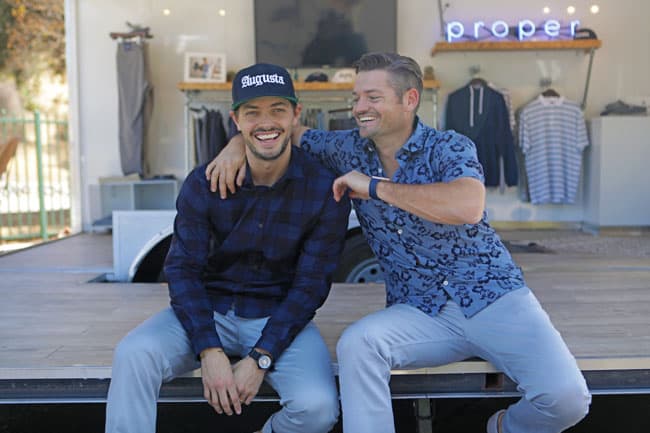
Brothers Robert and Will Brunner are writing their own story — one about passion, confidence and respect. But most importantly, it’s a journey dedicated to their grandmother, Devereux, who taught them that dressing well is the highest form of good manners.

“Growing up in a small town in West Texas, fashion was hard to come by,” the brothers recall. “Regardless, our family always made dressing well a priority. We created Devereux as our own solution to share our passion and style and to instill confidence for everyday adventures.”

Brothers and Devereux founders Robert and Will Brunner.

Looking to create products to fit the lifestyle of a stylish man on-the-go in an aesthetic they can relate to, these two brothers strive not only to create high-quality apparel but to share a lifestyle that they can believe in. The cut, fit and fabrics are second to the values and ideals of family, friends and respect.

Devereux is a reflection of how the Brunner brothers live. As Robert says, “It was about creating what we couldn’t find.”

Though they started in the golf world, DVRX’s collections have evolved greatly. Its new fall line focuses on versatile items, two of which are pieces that should definitely make it into your rotation with the layering season now upon us.

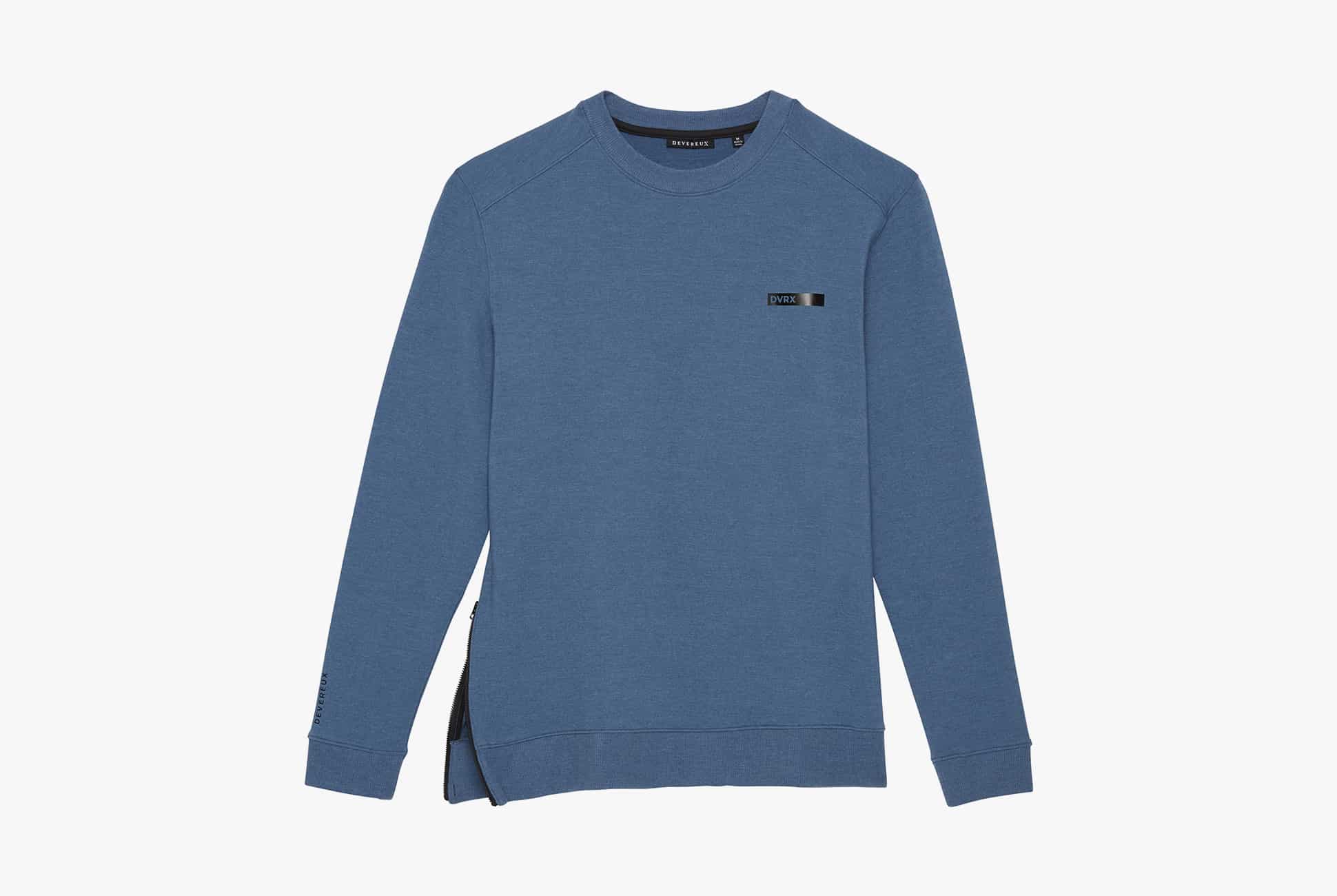
DVRX Crew


The DVRX Crew is the modern evolution of the crewneck sweatshirt. Its cotton-poly fabric blend is super soft and provides a two-way stretch with breathability for maximum comfort and performance. The DVRX Crew also has a side zipper for added functionality. It’s the perfect piece for traveling, working out or just hanging around.

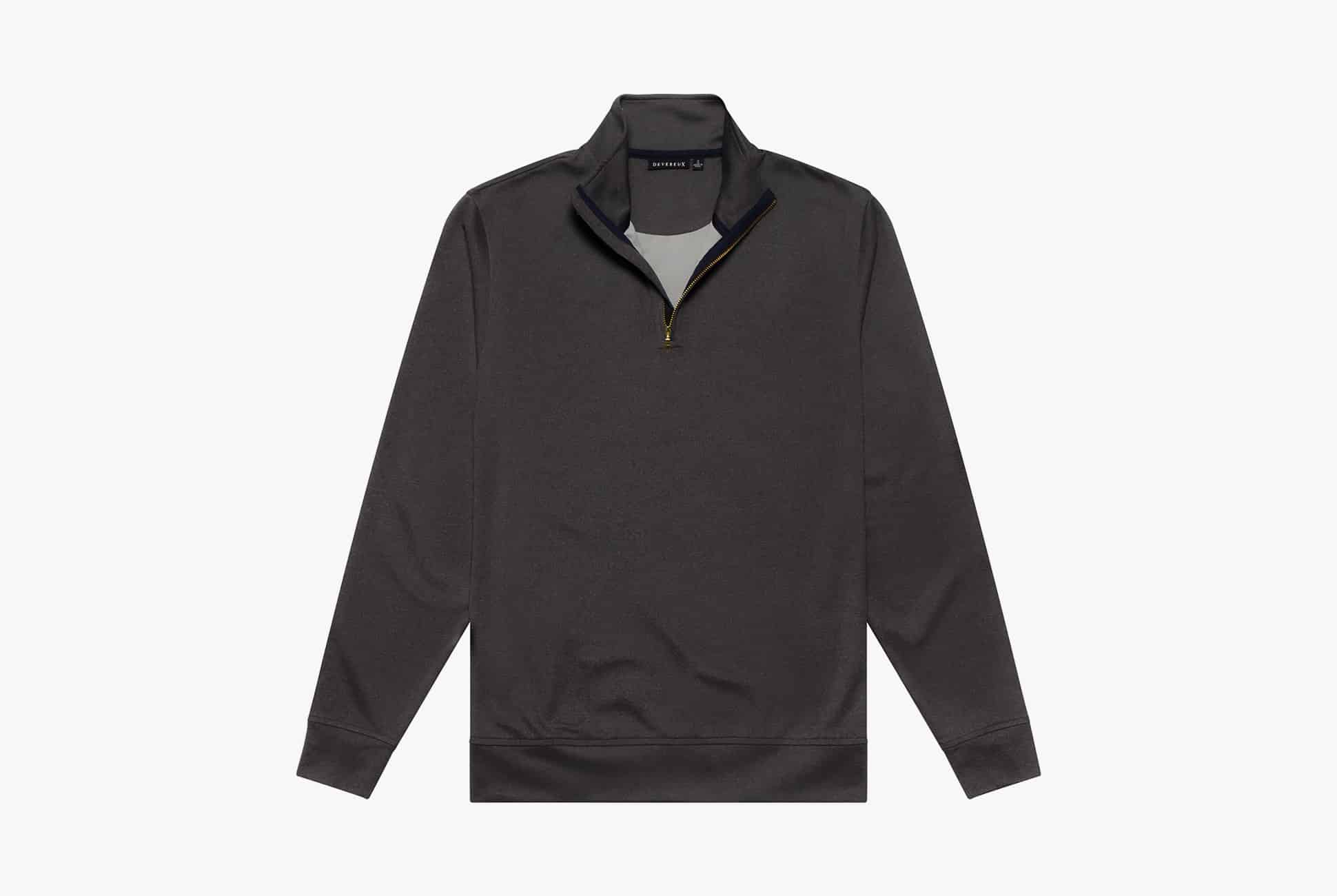
James Pullover


Also built for autumn is the James Pullover. It’s a performance quarter zip engineered to help regulate body temperature on cool days. The sueded feel combines with a 5-percent spandex stretch for an enhanced, lightweight wear. Mix in a subtle camo placket, and the James Pullover is a solid layering option.

Performance Insoles and More Gear to Help You Become Your Best Athlete

No matter your sport of choice, there are plenty of products out there to give athletes a performance edge. Finding gear that fits well into your routine, is straightforward and helps you go the extra mile are all crucial components to becoming your best athlete. Whether you’re training, competing or cooling down, there is plenty of gear to help you perform (and recover) at your peak abilities. Taking the care to upgrade your gear in calculated ways can bring you to your best levels yet. These are a few pieces of essential gear that any athlete should have on their radars.

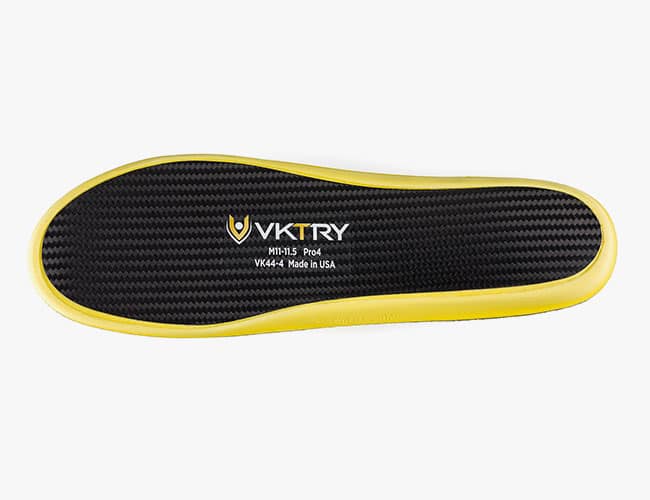
VKTRY Gear Insoles

You might not think that insoles could be performance-based, but VKTRY Gear’s are not normal insoles. They are the first-ever sports insole designed to return the energy an athlete generates as explosive power, speed and agility. The VK’s patented carbon fiber curved design is scientifically proven to increase explosiveness by an average of 9.3 percent, increase vertical by an average of 1.6-inches and decrease 40-yard dash time by 0.12 seconds. The premium insoles do this by generating more force into the ground, which translates into more energy being readily available to be deployed out of driving actions — part of the reason why they are worn by 44 NFL, NBA and MLB Teams and more than 100 NCAA teams.

Sports medical experts and third-party research have also found that VKs can provide added support, stability and shock absorption to help protect against lower-body injuries such as plantar fasciitis, turf toe, stress fractures, shin splints and more. Considering you can save $70 when you enter the code GP70 at checkout and its 30-day money back guarantee, you can’t afford not to try VKTRY Gear Insoles.

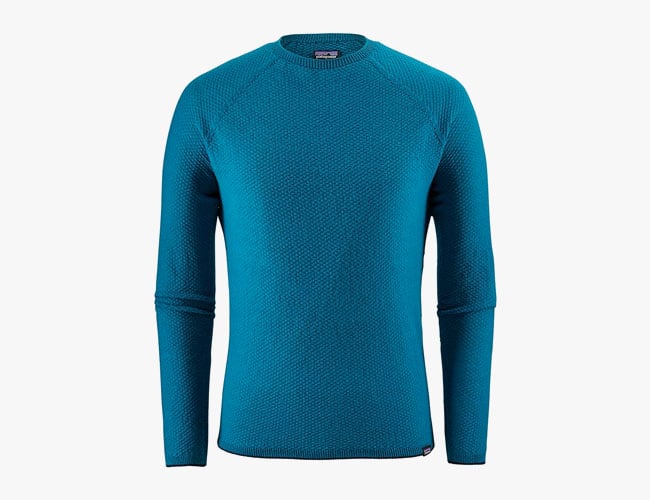
Patagonia Capilene Air Crew Top

Just because the temperature has started to drop doesn’t mean your training has to suffer. To keep it going outside in colder weather, a high-tech baselayer can make all the world of difference. Patagonia’s Capilene Air Crew is one of the most advanced baselayers on the market. It’s made of 51 percent fine merino wool and 49 percent recycled polyester for an airy blend that elevates warmth, wicking, durability and dry time. And its seamless 3-D construction eliminates chafe points throughout the entire garment. Drying in a flash and resisting odor, it’s a baselayer that will keep you pushing in cold weather.

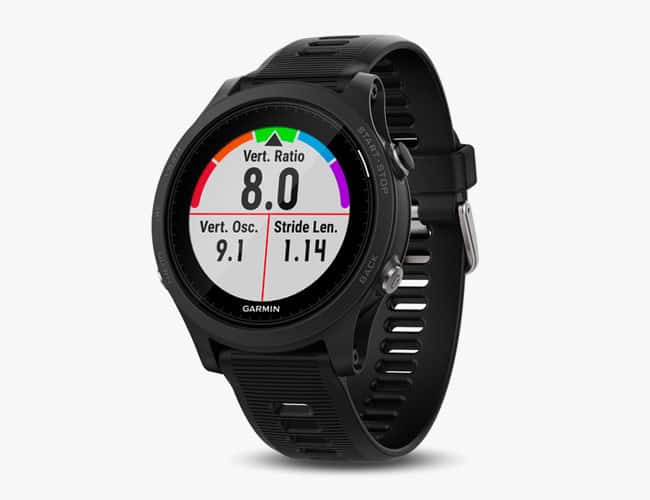
Garmin Forerunner 935

When it comes to running watches, the Garmin Forerunner 935 is in a class of its own. Extremely lightweight due to its plastic construction, it also boasts premium features. Beyond just telling the weather and how many steps you’ve taken in a day, the Forerunner 935 capitalizes on Garmin’s years of being in the running data business. Compatible with lots of third-party apps and products, the possibilities are quite endless. It delivers insights into workouts (like your VO2 max and lactate threshold, and whether you should keep going or rest) that most other watches only touch upon. And with the phone app and Connect IQ web app you can get a granular look at all activities to help you plan workouts for maximum performance.
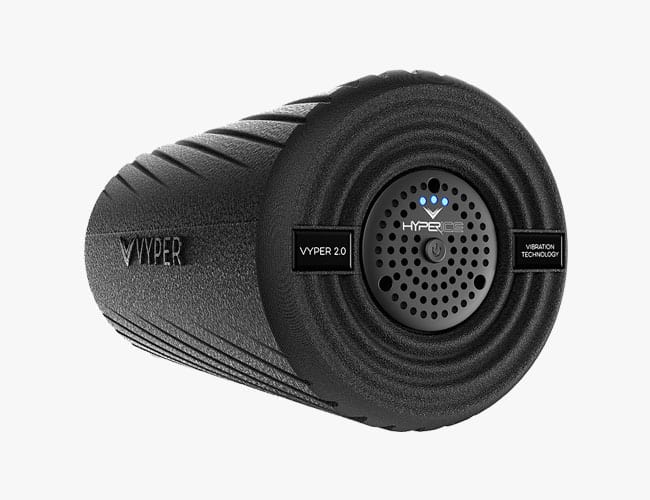
HyperIce Vyper 2

Foam rolling is one of the simplest yet most effective recovery and warm-up methods and every athlete should be doing it. The Vyper 2 from HyperIce is the next generation of foam rolling: The vibrating fitness roller features three speeds of high-intensity vibration to increase flexibility, increase circulation and reduce muscle soreness. The vibration technology in the Vyper 2 penetrates deeper for better muscle activation, increasing range of motion by up to 40 percent (versus an 18 percent increase with regular foam rolling). If you’re looking to up your foam rolling game, this is it.

Note: Purchasing products through our links may earn us a portion of the sale, which supports our editorial team’s mission. Learn more here.

A Veteran Photographer on the Intimacy of Portraiture

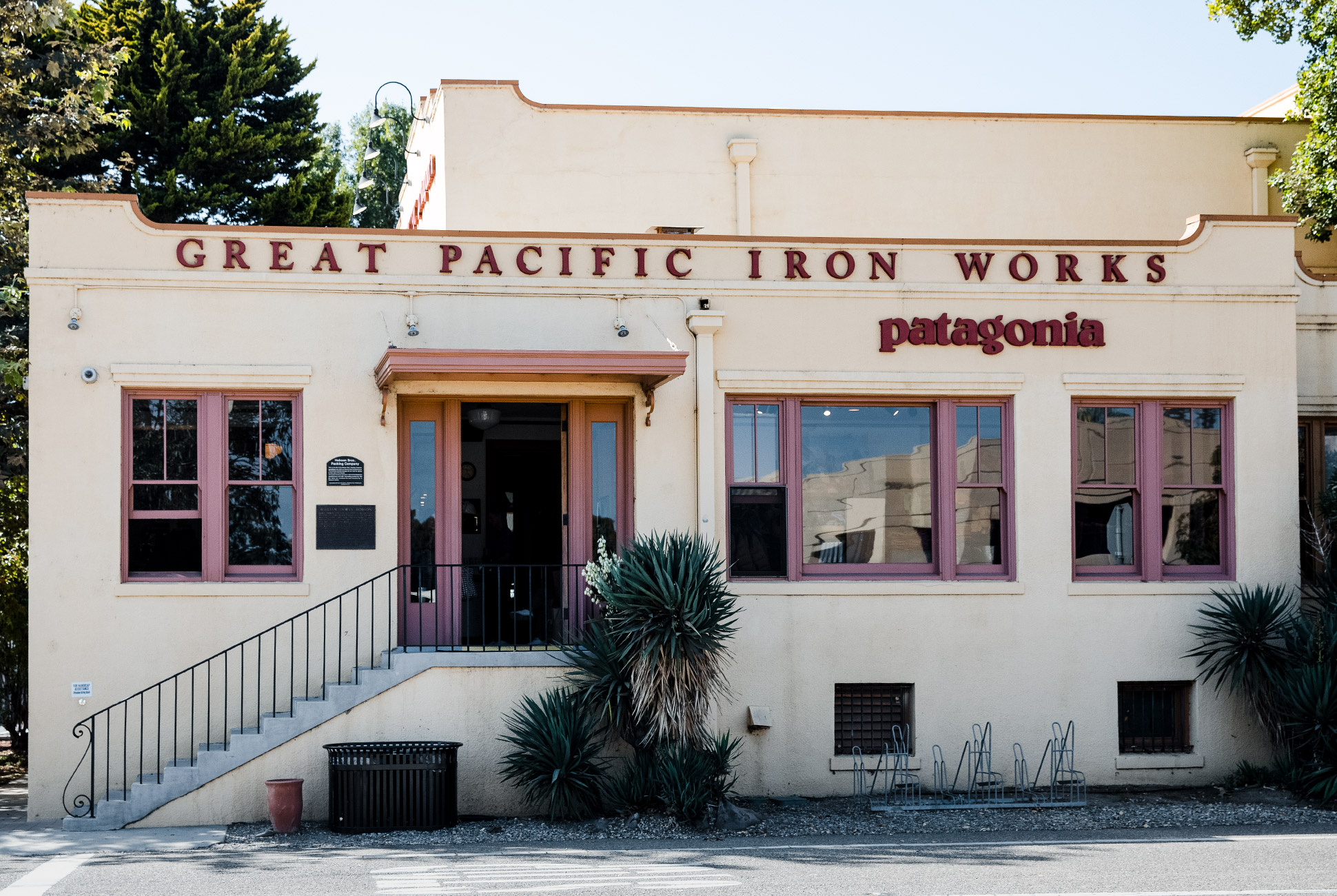
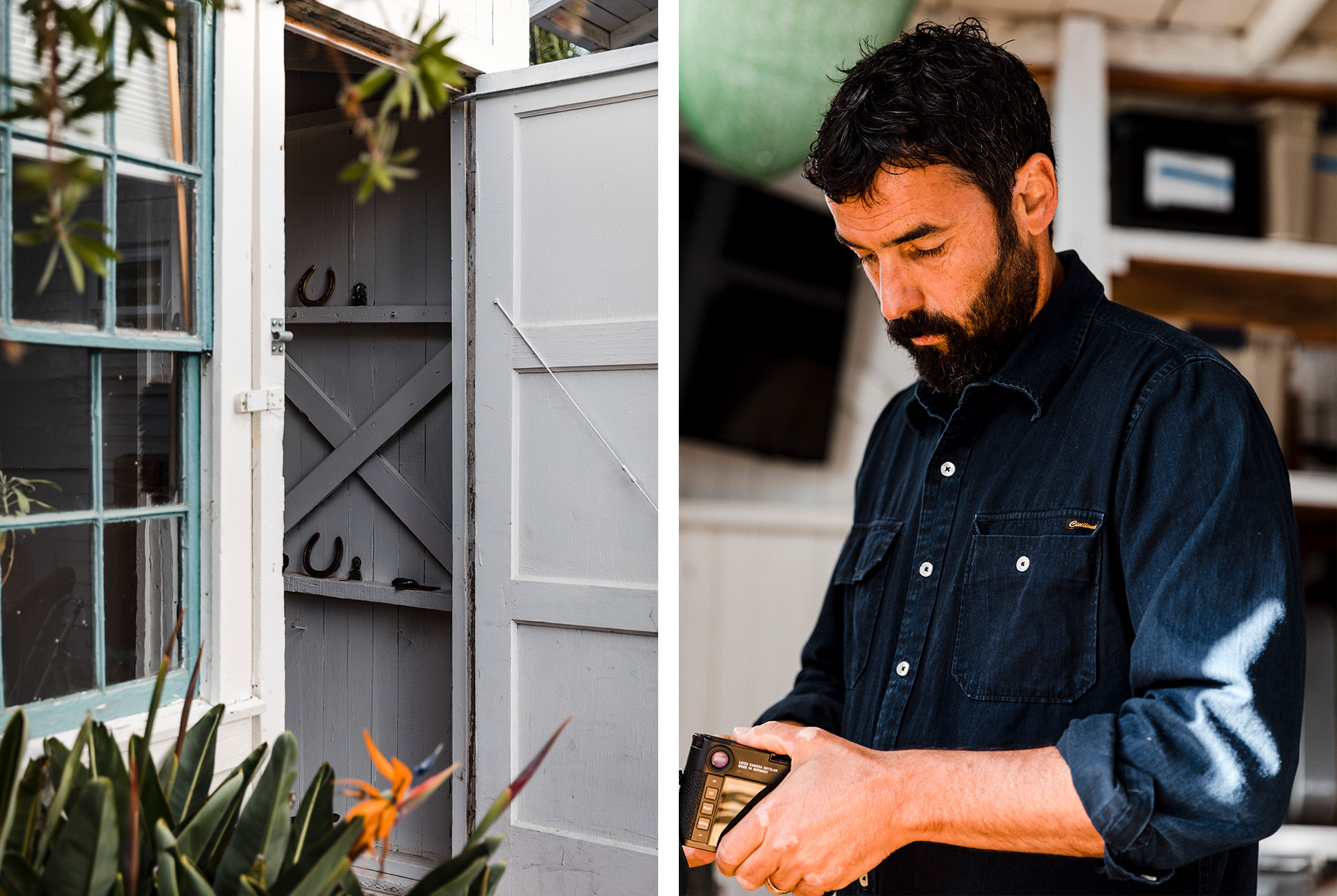
Born in Southern California and raised from what he calls “humble beginnings,” Tim Davis has built an enviable career as a photographer. First starting out in graphic design, an internship at Patagonia eventually led him to shift his focus behind the lens. Now, 13 years into his tenure as a staff photographer at Patagonia, Davis spends the chunk of his time in the field, shooting gear in action, with refreshing reprieves in the studio and editing deskside.

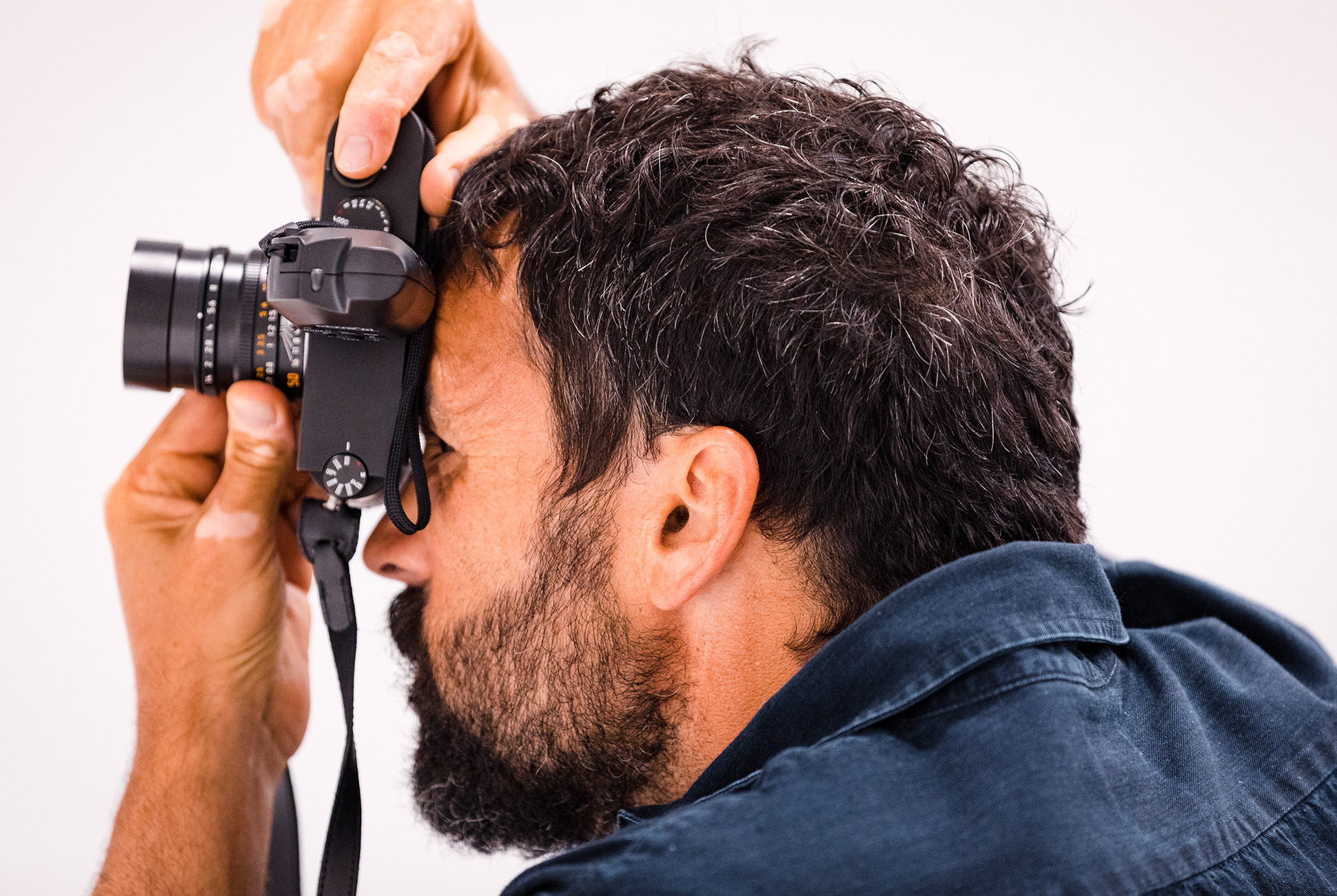
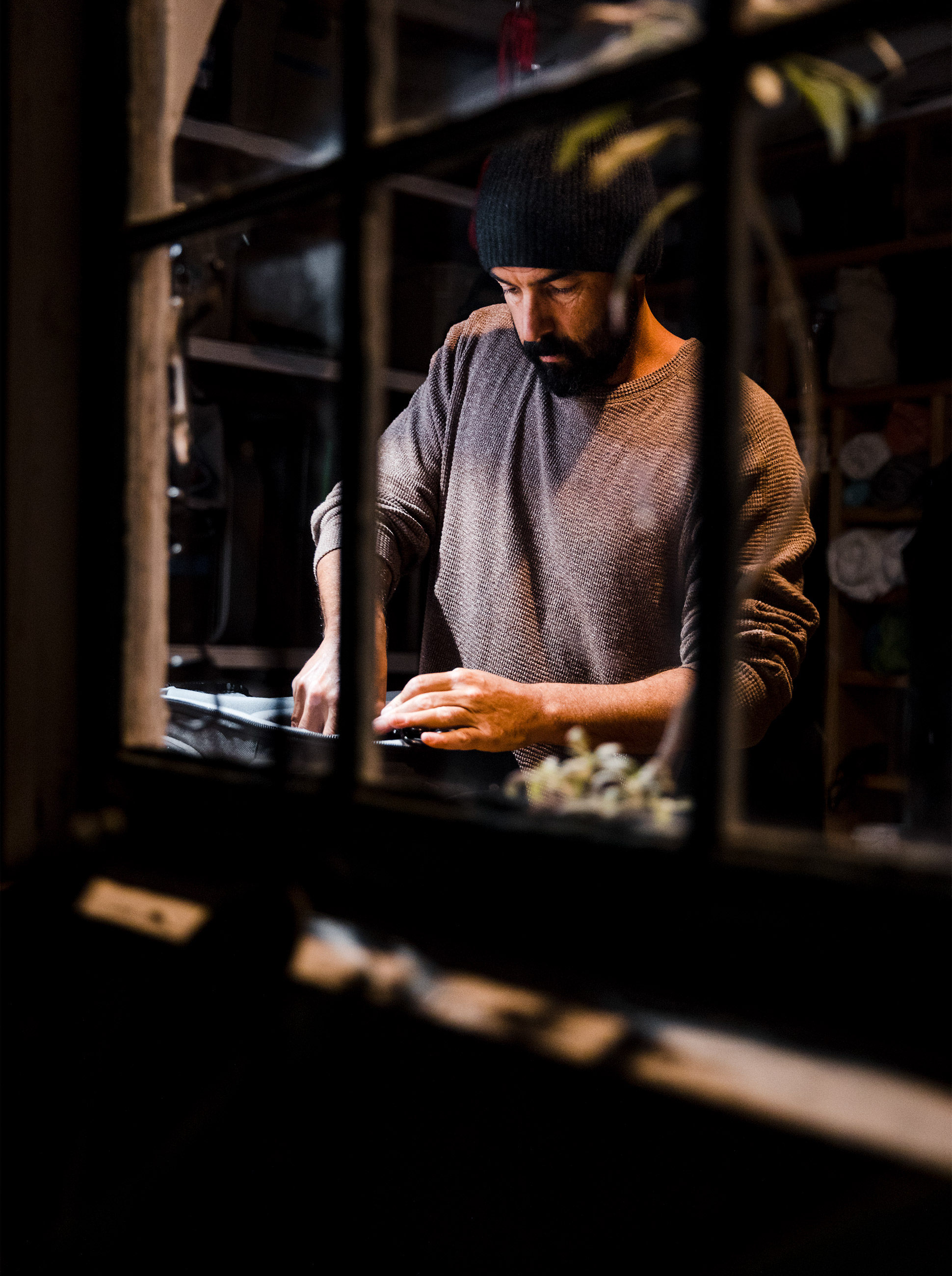
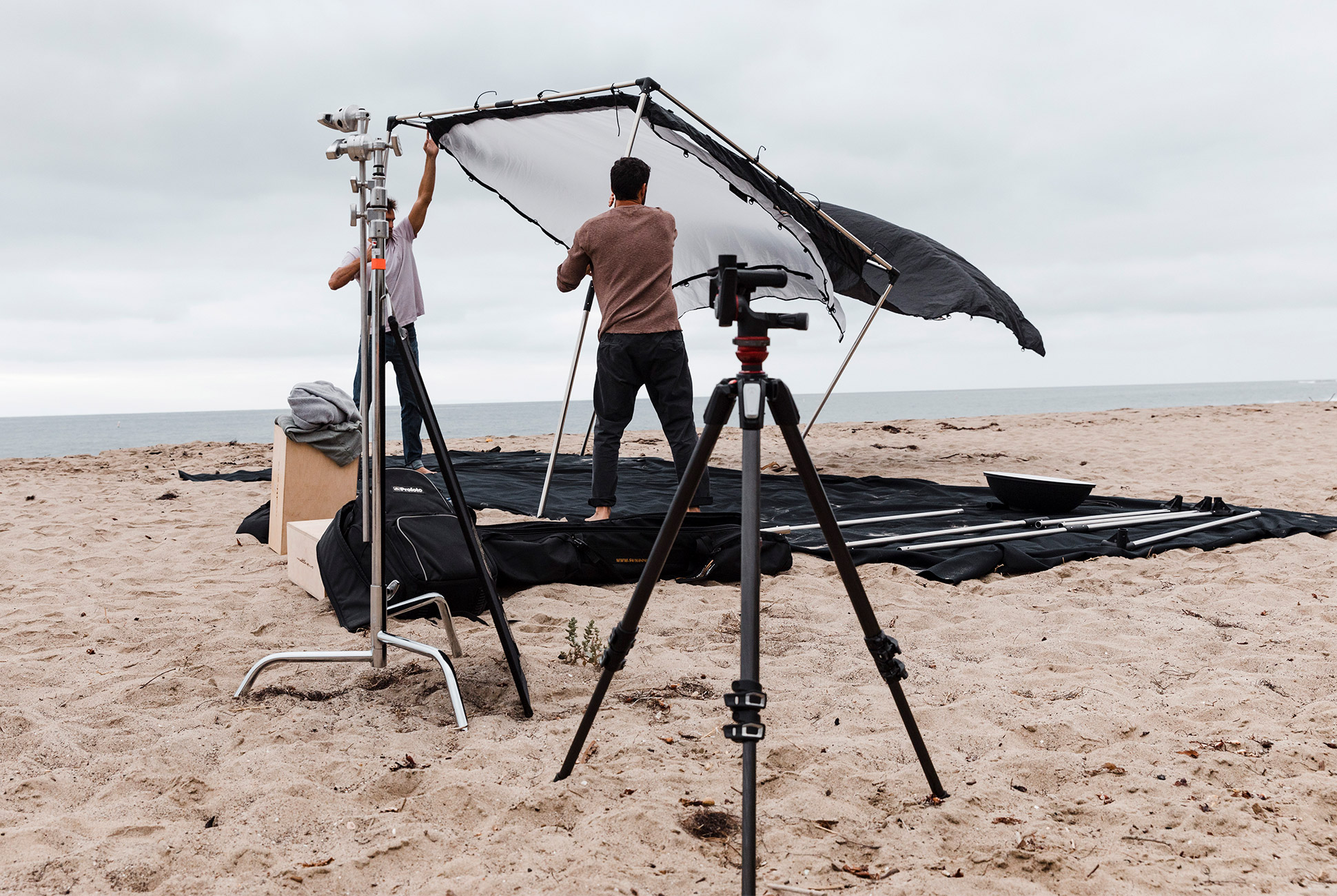
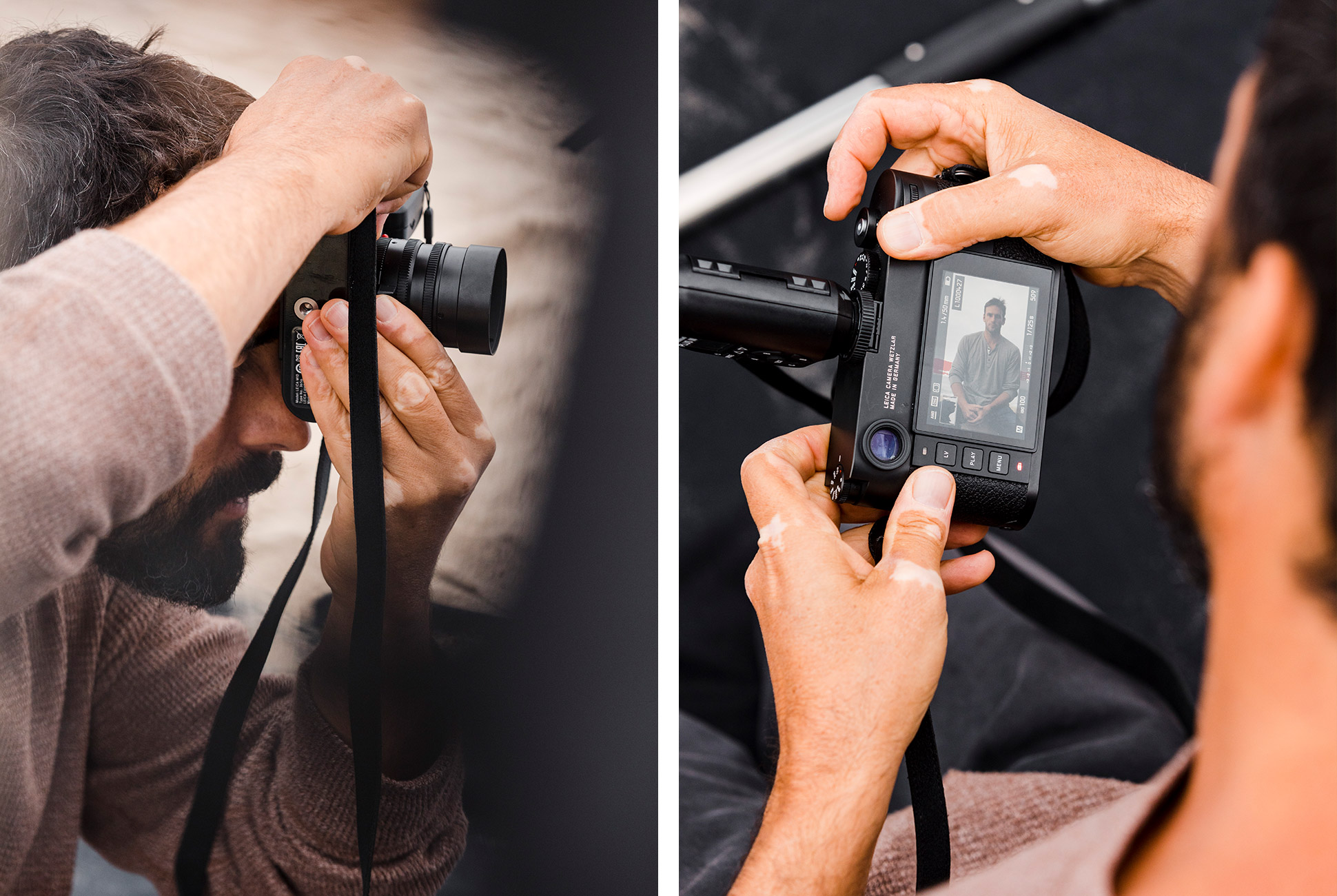
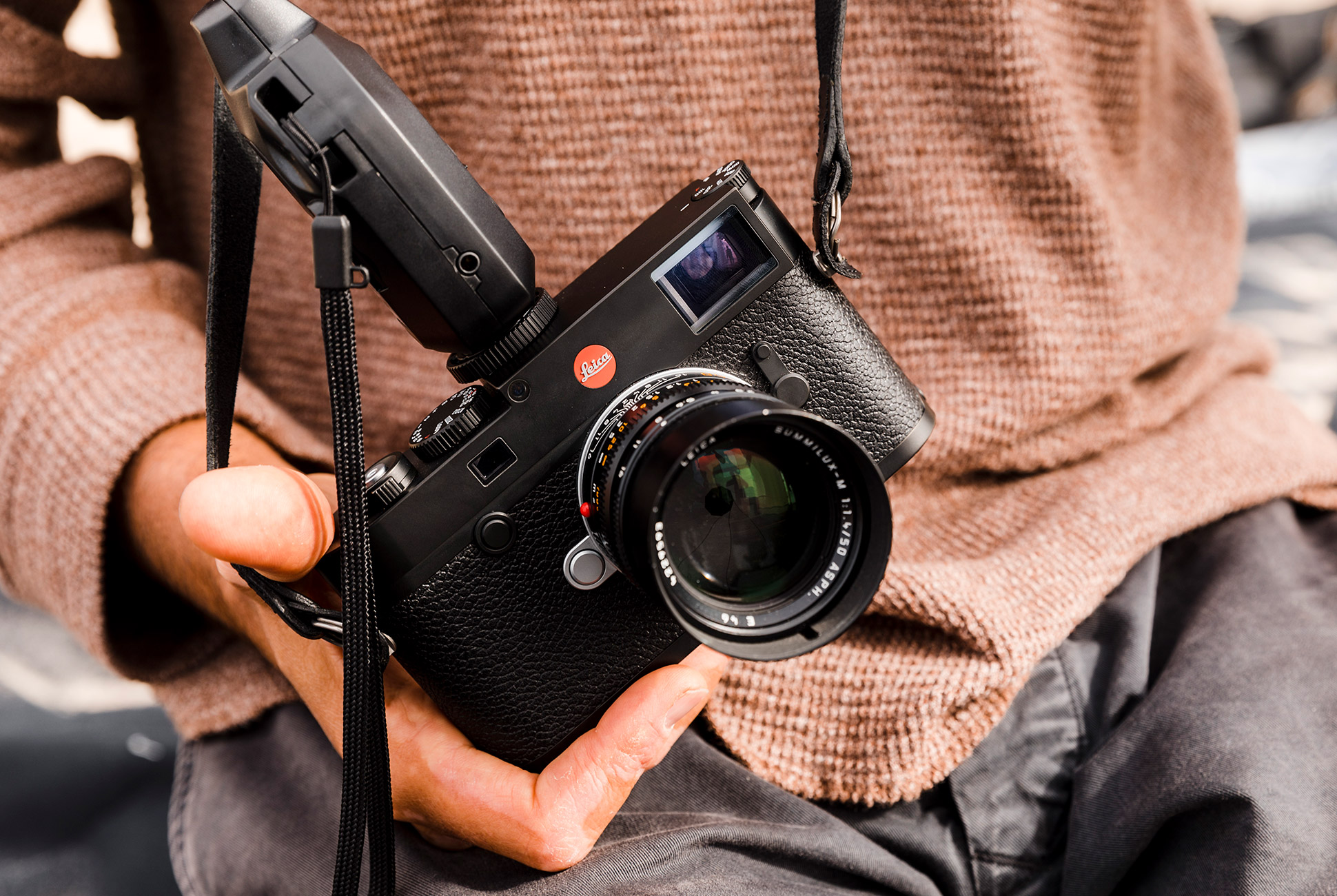
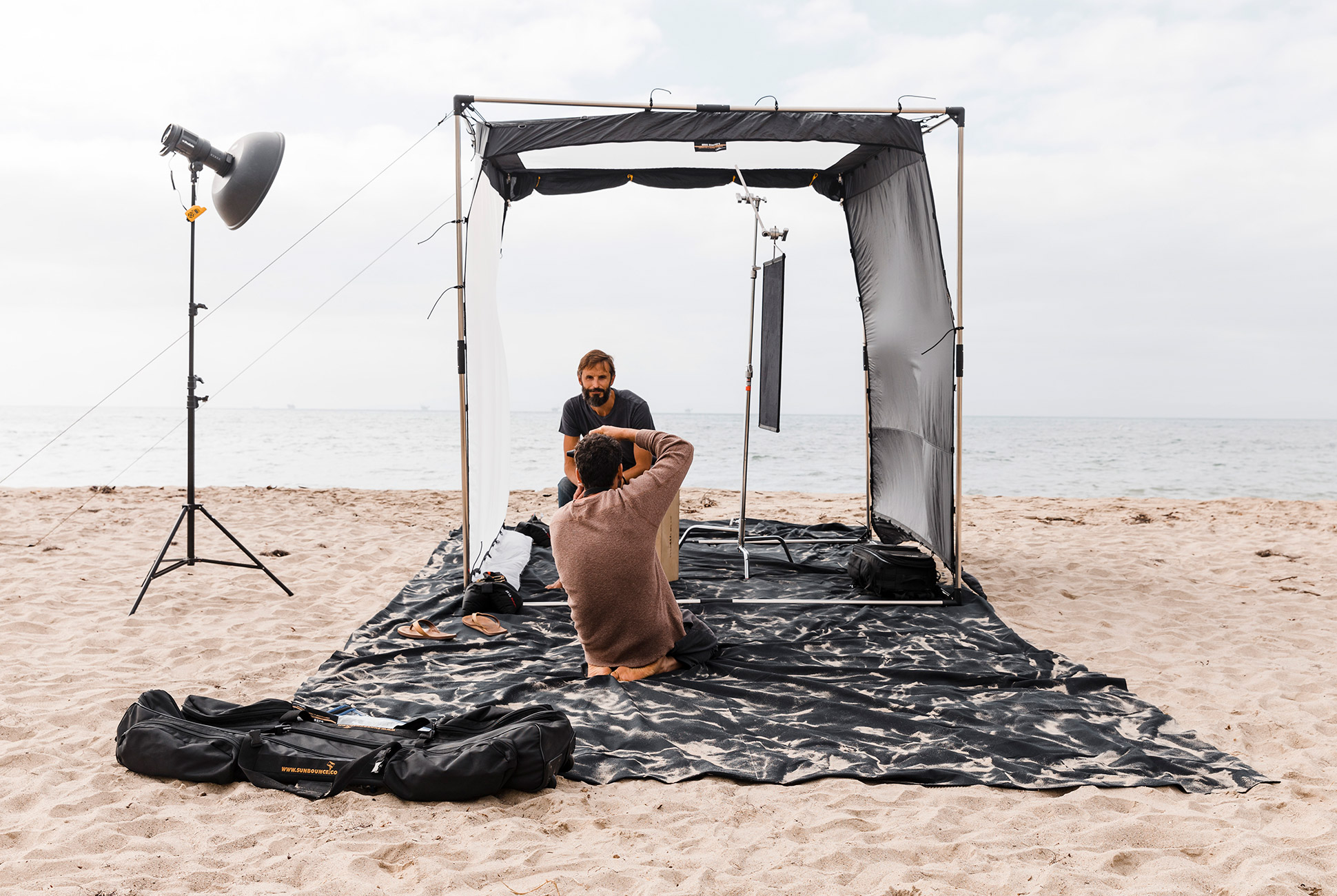
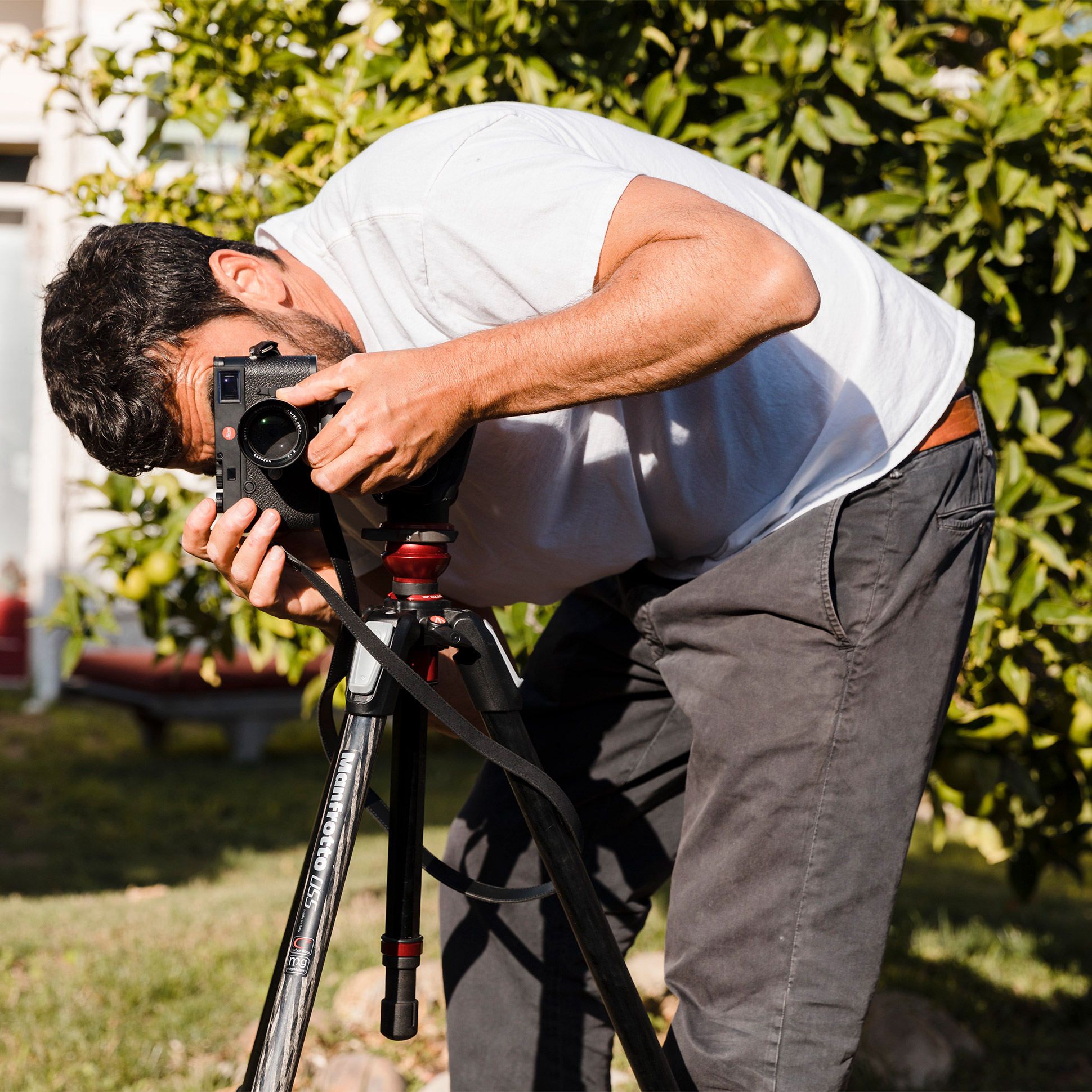
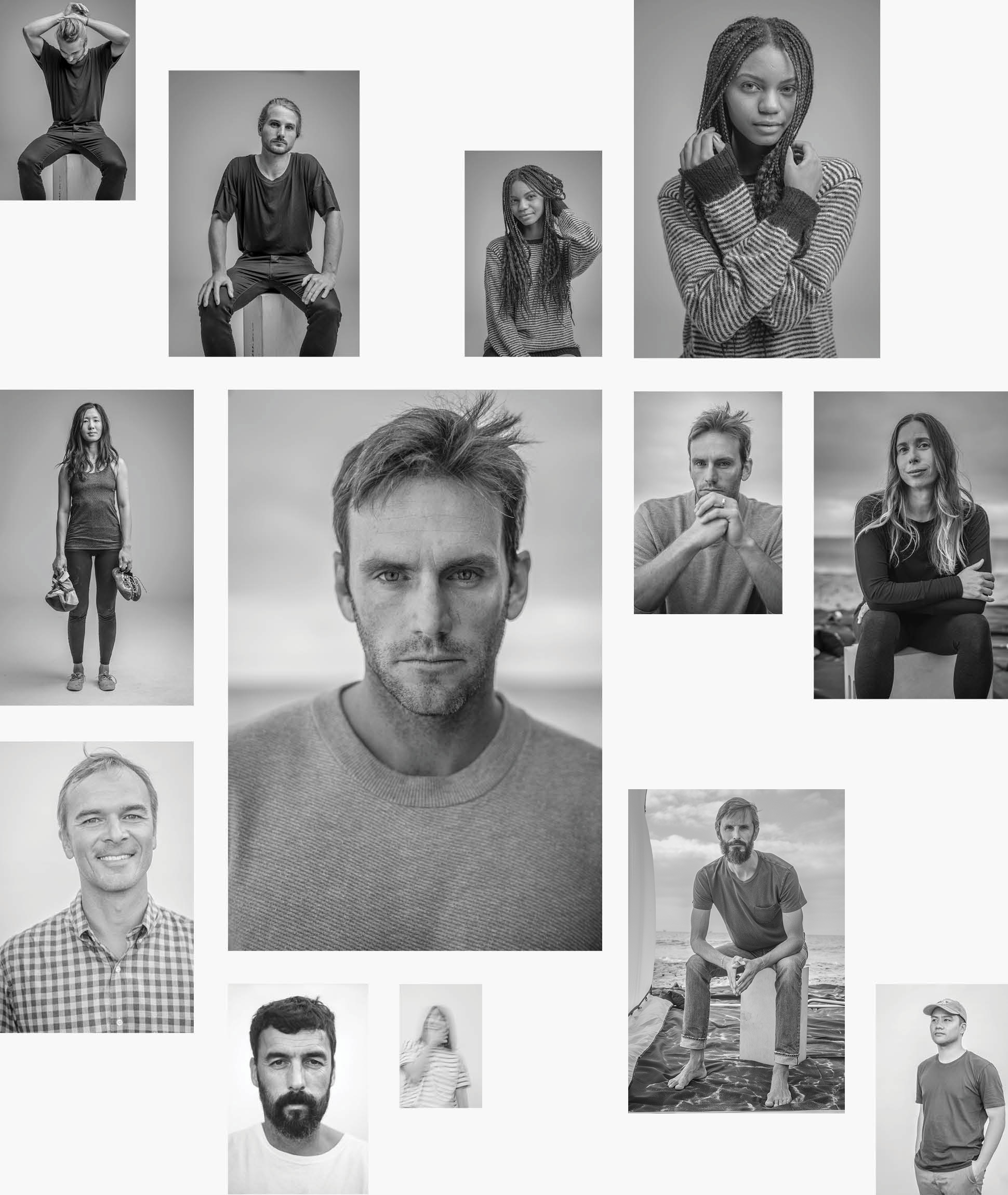
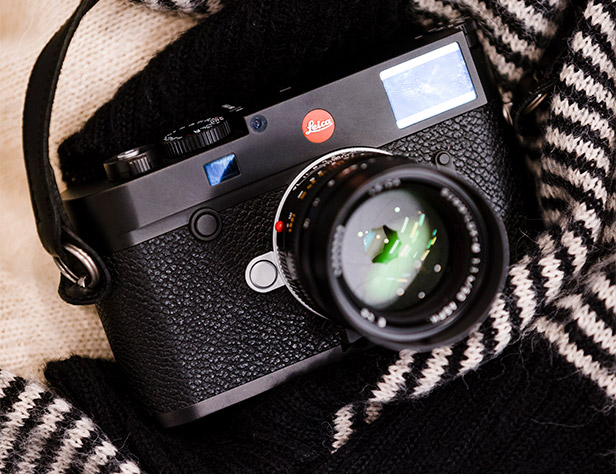
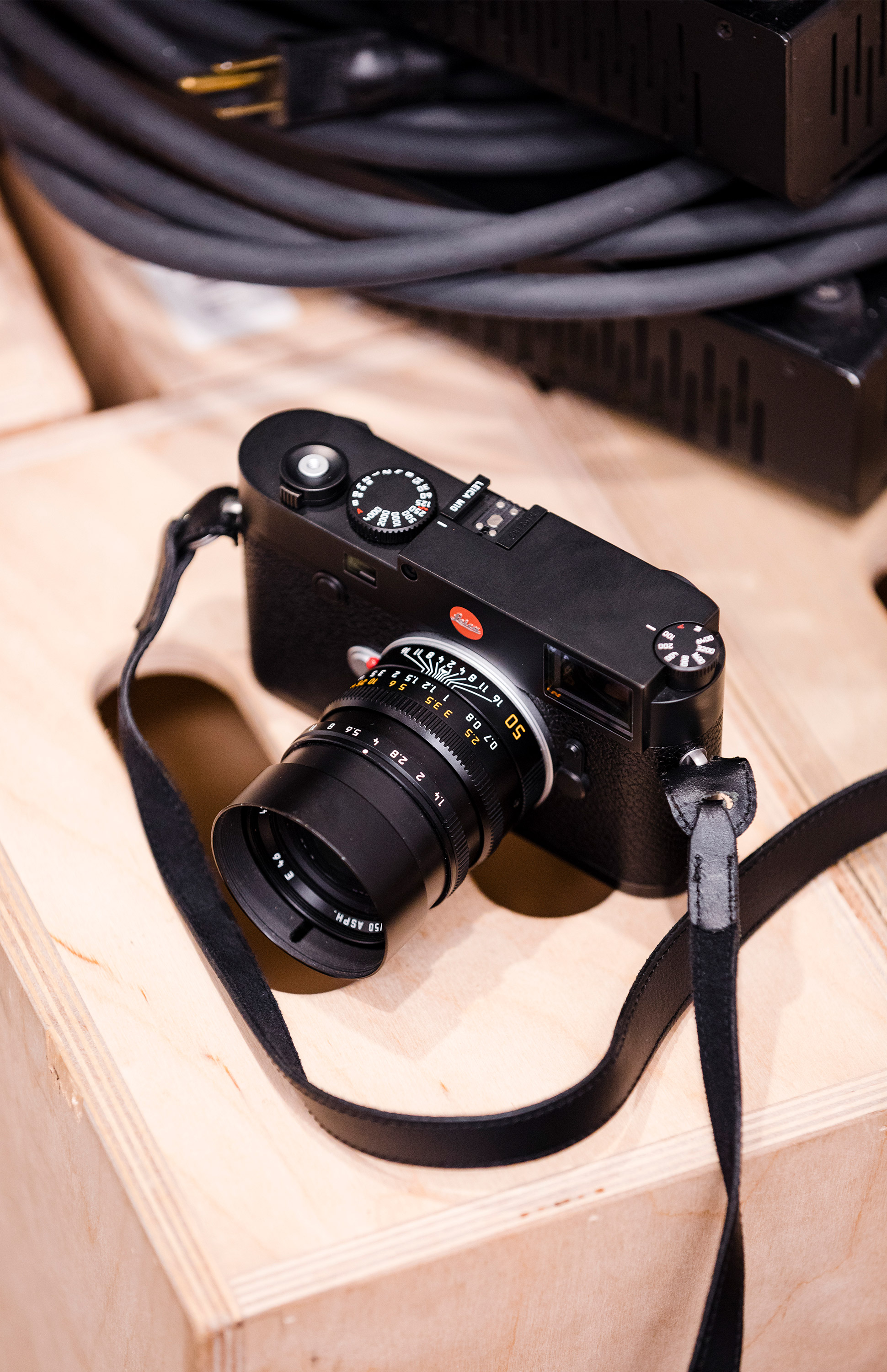
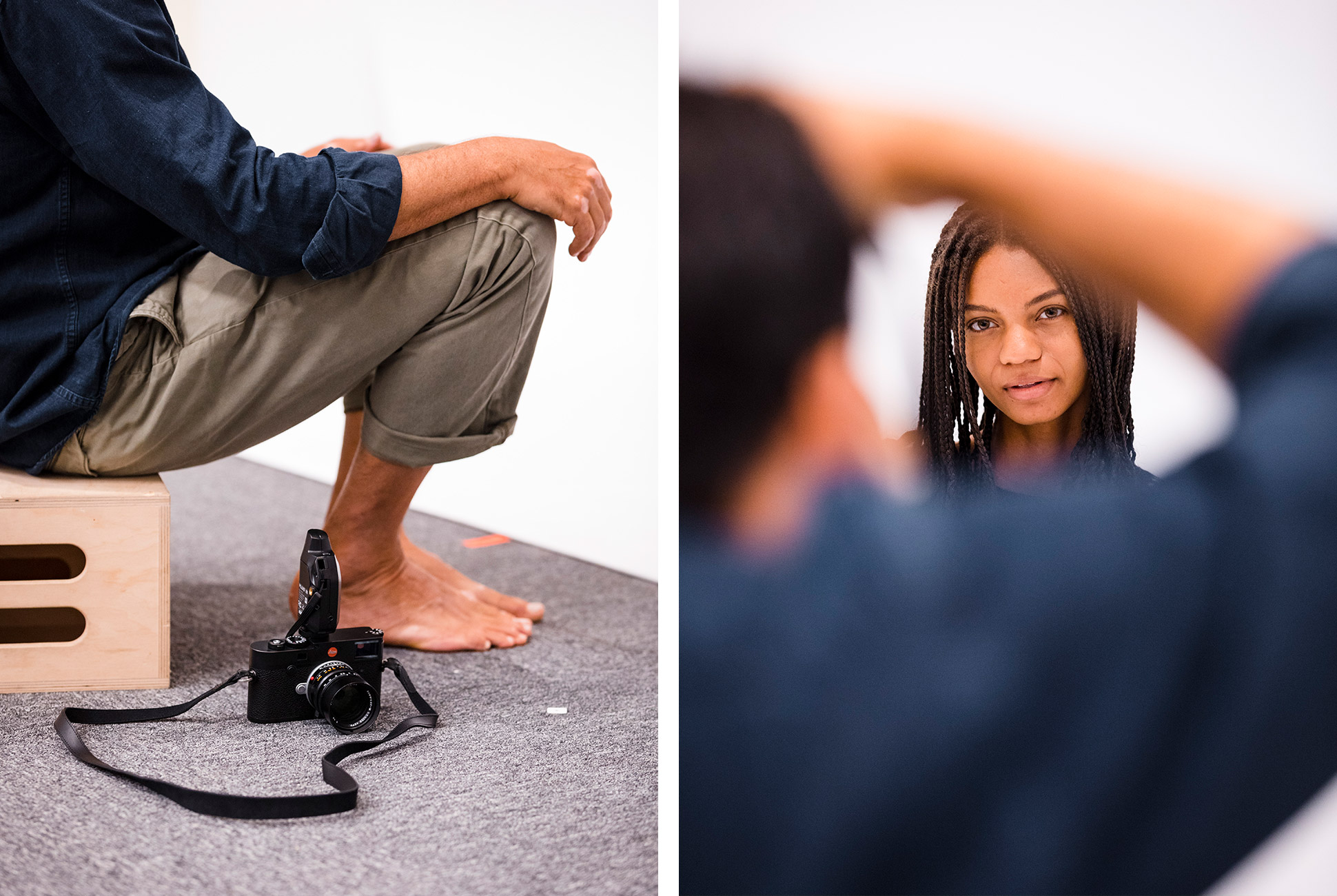
By nature, most of Davis’ work in the outdoor space has required him to be somewhat removed, an observer documenting as a photojournalist. But in his free time, Davis has been taken by the more intimate nature of portraiture. He’s studied the work of the masters of the craft, recreating classic set-ups and dialing-in studio lighting. His go-to has been the Leica M10, favoring its history, timeless craftsmanship and slender design. Davis took us along on some of his recent portrait shoots, behind the curtain at Patagonia’s creative studios and into his own home workshop to share more about this nuanced form of photography and how he approaches it. Read on for a look into his world.

On becoming a photographer:
“I’ve had an affinity for still photography since I was a kid. My uncle was a special effects photographer in the film days back in the ‘70s-’80s in New York City. I remember being 7- or 8-years-old and visiting his studio, being really impressed. My grandfather also owned a little camera store. My first camera was a little Kodak; I can’t even remember what it was called. It had discs of film and I would blast through them. By the time I was 16 or 17, my mom got me my first SLR, which was a Minolta with three lenses. It wasn’t a quality camera but I thought it was amazing.
Initially, in college, I was a fine art major. But I came from pretty humble beginnings so I had to figure out how to make a little money. I knew I wanted to do something in the arts. But I knew being a fine art major and making fine art was a really sketchy gamble. At first, getting into graphic design was amazing because you start making a little bit of money, but it was too much computer time. When I was at UCSB in the Graphic Design Department, I freelanced at Patagonia doing graphic design. While I was freelancing as a graphic designer, I switched [disciplines] and went to Brooks Institute of Photography back when it was located in Santa Barbara. Photography and filmmaking was a really neat way to see the world and be out and shooting amazing stuff. You do still get some technical stuff. You work really hard and then you get back in the office and have a more civilized environment with a cup of coffee at 8:30 in the morning and you get to process.”

On portraiture:
“The drawback to outdoor photojournalistic photography, at least for me, is that it’s a lonelier experience. You’re not involved, ideally, in the making of a photo. You’re just there to document it. That’s a neat experience, but the advantage to portraiture is that you’re involved in creating the photo. Portraiture is a lot more intimate in that sense. You get to work with the subject. If you look at the Henri Cartier-Bresson approach to it, he looked at the camera as a tool. In a way, it could encumber the process if you let it. It was about you and me and if I did my job right, I really captured the moment. It’s as simple as that.

When you’re taking someone’s portrait, it’s case by case. When working with a professional athlete or model, someone who has been photographed a lot, it’s a really easy process. They do what they do and I do what I do, and hopefully, we make something really great. If you get someone that’s nervous in front of the camera, the direction becomes more nuanced. You want to evoke the right look but you don’t want to make them feel more nervous. It’s a delicate balance. We have a finite limit to how long we can be photographed; I think a human can be photographed for maybe 8 minutes.”

On shooting with the Leica M:
“For photojournalism, it’s really nice to show up with something small and lightweight and unobtrusive. If you show up with a big SLR, and you’re trying to be stealthy, it’s just not going to happen. If you show up with the Leica M with a small 50mm on it, they might not know you’re shooting amazing photos on it. And the beauty of a manual camera like the M is that it makes a different photo.

There is something really special about a camera that’s been relatively unchanged for 100 years. These really teeny beautiful lenses are handmade and these camera bodies still look the same. There’s something tactile. They’re heavy. It’s handmade with brass and glass and someone is making each one.”

Meet the Leica M10

Leica took its expertise from more than 60 years since launching the M Series — 11 making digital M Cameras — to create the Leica M10. It is the slimmest digital M ever made with dimensions as slender as analogue M-Cameras. Combining heritage with technology, the slim and elegant camera uses a specially developed 24 MP, full-frame CMOS sensor and a Maestro II image processor, delivering extended dynamic range as well as ISO values up to 50,000. Learn More


On photographic legends:
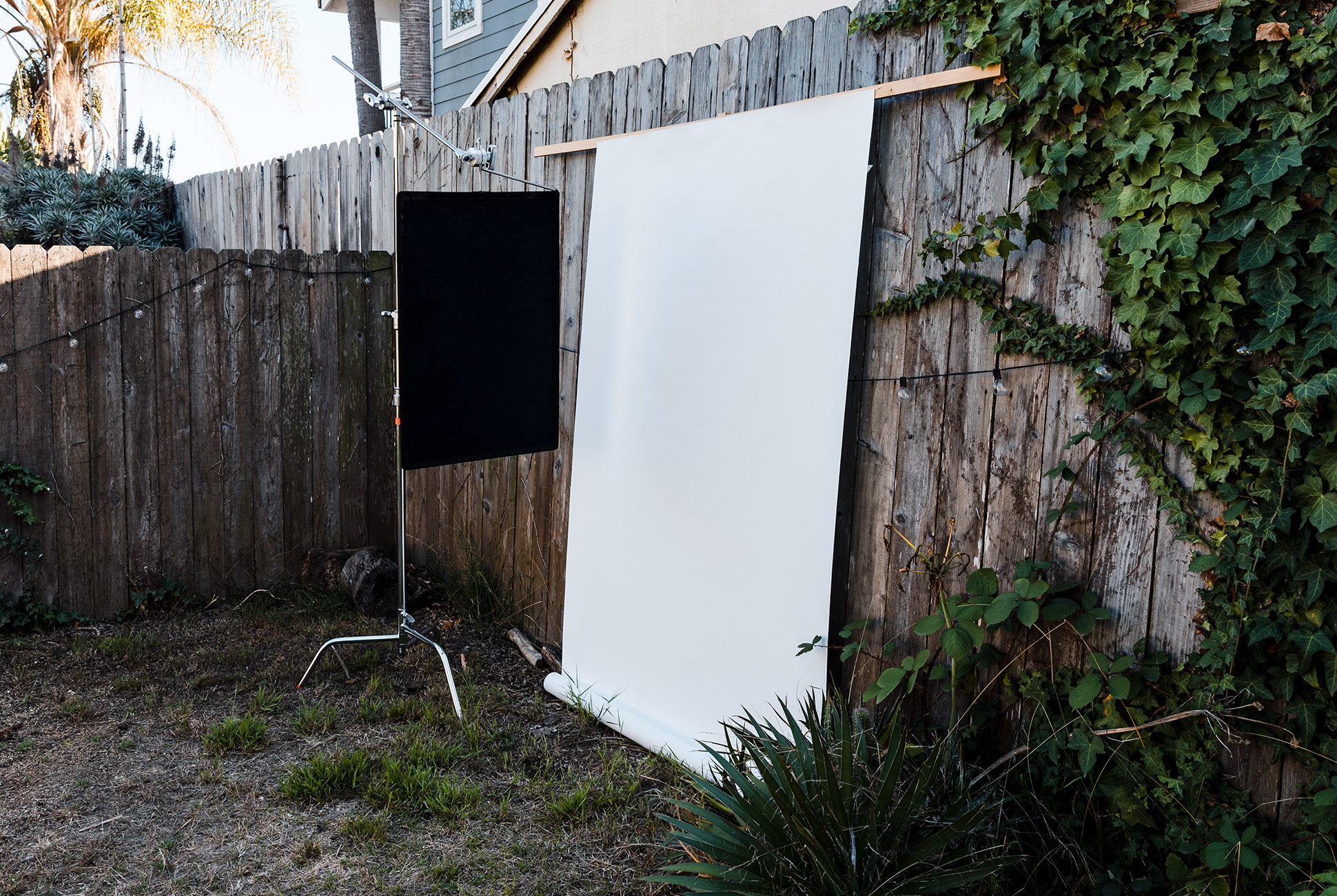
“I have a slight obsession with black and white portrait photographers. We don’t use a ton of portraiture here [at Patagonia], even less black and white, so developing those ideas happens outside of work. Researching the old images and techniques of the legends (like Avedon, Newton, Elgort, Demarchelier, Lindberg and so on) is so rewarding: a Bob Marley portrait shot on auto with Kodak film bought at the local drug store; Avedon teasing his subjects or his 8×10 wooden camera with a white seamless taped to a barn; Bresson’s 50mm that he shot his entire career; Nachtwey’s focusing techniques and Tri-X film; Capa and Gerda Taro and love, war and death; Mark Seliger’s brick studio stairwell; Leibovitz and box studios. There is so much to learn: the techniques, the mistakes, the complexities, simple solutions, love of the medium and their subjects, the heartbreak, drugs, death, insecurities or regrets. It’s all so amazing and so human. I’m fascinated with the old legends and their lore.

Everything that’s happening in photography has been done and has maybe been done 100 years ago. It’s at least been done 50 years ago. We’re almost 70 years past when Richard Avedon was at his prime and Irving Penn was at his prime — and the fashion magazines on every shelf today are clearly influenced by these guys. I’m just trying to pay homage to the legends.” — Tim Davis, Senior Photographer, Patagonia


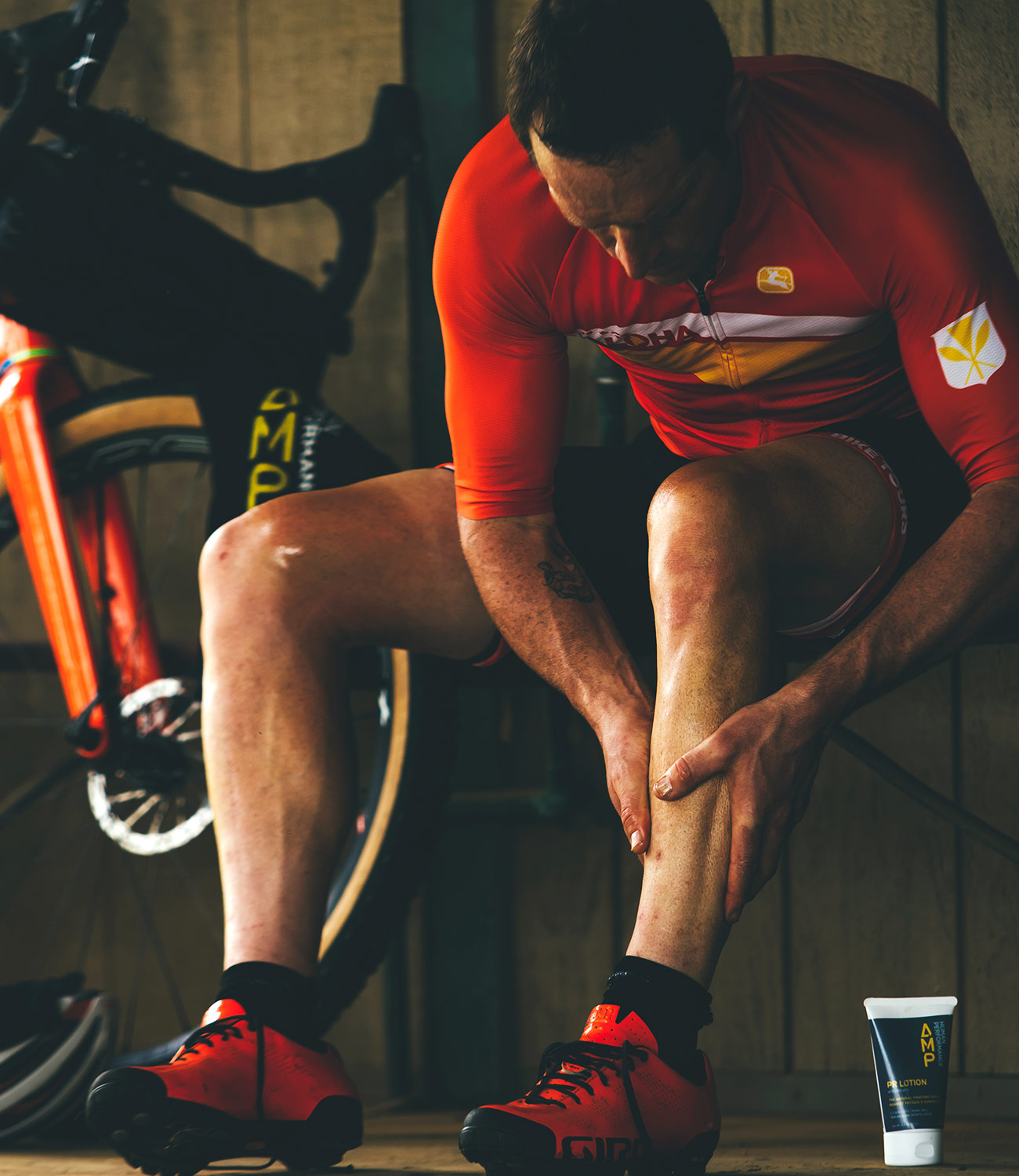
Fight Muscle Fatigue and Soreness With PR Lotion

During exercise, muscles create acid as a by-product. When you push your body to its limits, the acid buildup produces that burning sensation that often keeps you from going further and longer. Beyond the burn, acid buildup also lowers your muscle pH and disrupts muscle firing and contraction.

The human body naturally produces bicarbonate to neutralize acid, battle fatigue and reduce soreness. Amp Human Performance has taken this simple buffering science found within the body and placed it within a lotion called PR Lotion.

PR Lotion is a tool for the human body designed to deliver bicarbonate directly to your hardest working muscle groups before or after your workout. It buffers the acids produced during exercise, which makes it both a performance and recovery lotion in one. The proprietary lotion delivers more bicarbonate where it’s needed most while bypassing the stomach where gastrointestinal side effects occur. More bicarb means the ability to do more — more miles, more rides and more days doing what you love.

When applied pre-workout, PR Lotion has been clinically proven to increase lactate levels by 11 percent to help fuel muscles for a 25 percent gain in intervals completed, while reducing delayed onset muscle soreness by 53 percent. PR Lotion is a natural fighting force against soreness and fatigue that can help any level of athlete go longer, perform better and recover quicker.

Advertisement

Behind the Scenes with a Pro Photographer

Born in Southern California and raised from what he calls “humble beginnings,” Tim Davis has built an enviable career as a photographer. First starting out in graphic design, an internship at Patagonia eventually led him to shift his focus behind the lens. Now, 13 years into his tenure as a staff photographer at Patagonia, Davis spends the chunk of his time in the field, shooting gear in action, with refreshing reprieves in the studio and editing deskside.

By nature, most of Davis’ work in the outdoor space has required him to be somewhat removed, an observer documenting as a photojournalist. But in his free time, Davis has been taken by the more intimate nature of portraiture. He’s studied the work of the masters of the craft, recreating classic set-ups and dialing-in studio lighting. His go-to has been the Leica M10, favoring its history, timeless craftsmanship and slender design. Davis took us along on some of his recent portrait shoots, behind the curtain at Patagonia’s creative studios and into his own home workshop to share more about this nuanced form of photography and how he approaches it. Read on for a look into his world.

On becoming a photographer:
“I’ve had an affinity for still photography since I was a kid. My uncle was a special effects photographer in the film days back in the ‘70s-’80s in New York City. I remember being 7- or 8-years-old and visiting his studio, being really impressed. My grandfather also owned a little camera store. My first camera was a little Kodak; I can’t even remember what it was called. It had discs of film and I would blast through them. By the time I was 16 or 17, my mom got me my first SLR, which was a Minolta with three lenses. It wasn’t a quality camera but I thought it was amazing.
Initially, in college, I was a fine art major. But I came from pretty humble beginnings so I had to figure out how to make a little money. I knew I wanted to do something in the arts. But I knew being a fine art major and making fine art was a really sketchy gamble. At first, getting into graphic design was amazing because you start making a little bit of money, but it was too much computer time. When I was at UCSB in the Graphic Design Department, I freelanced at Patagonia doing graphic design. While I was freelancing as a graphic designer, I switched [disciplines] and went to Brooks Institute of Photography back when it was located in Santa Barbara. Photography and filmmaking was a really neat way to see the world and be out and shooting amazing stuff. You do still get some technical stuff. You work really hard and then you get back in the office and have a more civilized environment with a cup of coffee at 8:30 in the morning and you get to process.”

On portraiture:
“The drawback to outdoor photojournalistic photography, at least for me, is that it’s a lonelier experience. You’re not involved, ideally, in the making of a photo. You’re just there to document it. That’s a neat experience, but the advantage to portraiture is that you’re involved in creating the photo. Portraiture is a lot more intimate in that sense. You get to work with the subject. If you look at the Henri Cartier-Bresson approach to it, he looked at the camera as a tool. In a way, it could encumber the process if you let it. It was about you and me and if I did my job right, I really captured the moment. It’s as simple as that.

When you’re taking someone’s portrait, it’s case by case. When working with a professional athlete or model, someone who has been photographed a lot, it’s a really easy process. They do what they do and I do what I do, and hopefully, we make something really great. If you get someone that’s nervous in front of the camera, the direction becomes more nuanced. You want to evoke the right look but you don’t want to make them feel more nervous. It’s a delicate balance. We have a finite limit to how long we can be photographed; I think a human can be photographed for maybe 8 minutes.”

On shooting with the Leica M:
“For photojournalism, it’s really nice to show up with something small and lightweight and unobtrusive. If you show up with a big SLR, and you’re trying to be stealthy, it’s just not going to happen. If you show up with the Leica M with a small 50mm on it, they might not know you’re shooting amazing photos on it. And the beauty of a manual camera like the M is that it makes a different photo.

There is something really special about a camera that’s been relatively unchanged for 100 years. These really teeny beautiful lenses are handmade and these camera bodies still look the same. There’s something tactile. They’re heavy. It’s handmade with brass and glass and someone is making each one.”

Meet the Leica M10

Leica took its expertise from more than 60 years since launching the M Series — 11 making digital M Cameras — to create the Leica M10. It is the slimmest digital M ever made with dimensions as slender as analogue M-Cameras. Combining heritage with technology, the slim and elegant camera uses a specially developed 24 MP, full-frame CMOS sensor and a Maestro II image processor, delivering extended dynamic range as well as ISO values up to 50,000. Learn More


On photographic legends:
“I have a slight obsession with black and white portrait photographers. We don’t use a ton of portraiture here [at Patagonia], even less black and white, so developing those ideas happens outside of work. Researching the old images and techniques of the legends (like Avedon, Newton, Elgort, Demarchelier, Lindberg and so on) is so rewarding: a Bob Marley portrait shot on auto with Kodak film bought at the local drug store; Avedon teasing his subjects or his 8×10 wooden camera with a white seamless taped to a barn; Bresson’s 50mm that he shot his entire career; Nachtwey’s focusing techniques and Tri-X film; Capa and Gerda Taro and love, war and death; Mark Seliger’s brick studio stairwell; Leibovitz and box studios. There is so much to learn: the techniques, the mistakes, the complexities, simple solutions, love of the medium and their subjects, the heartbreak, drugs, death, insecurities or regrets. It’s all so amazing and so human. I’m fascinated with the old legends and their lore.

Everything that’s happening in photography has been done and has maybe been done 100 years ago. It’s at least been done 50 years ago. We’re almost 70 years past when Richard Avedon was at his prime and Irving Penn was at his prime — and the fashion magazines on every shelf today are clearly influenced by these guys. I’m just trying to pay homage to the legends.” — Tim Davis, Senior Photographer, Patagonia


A Look at 4 Premium Travel Items Thule Will Release in 2019

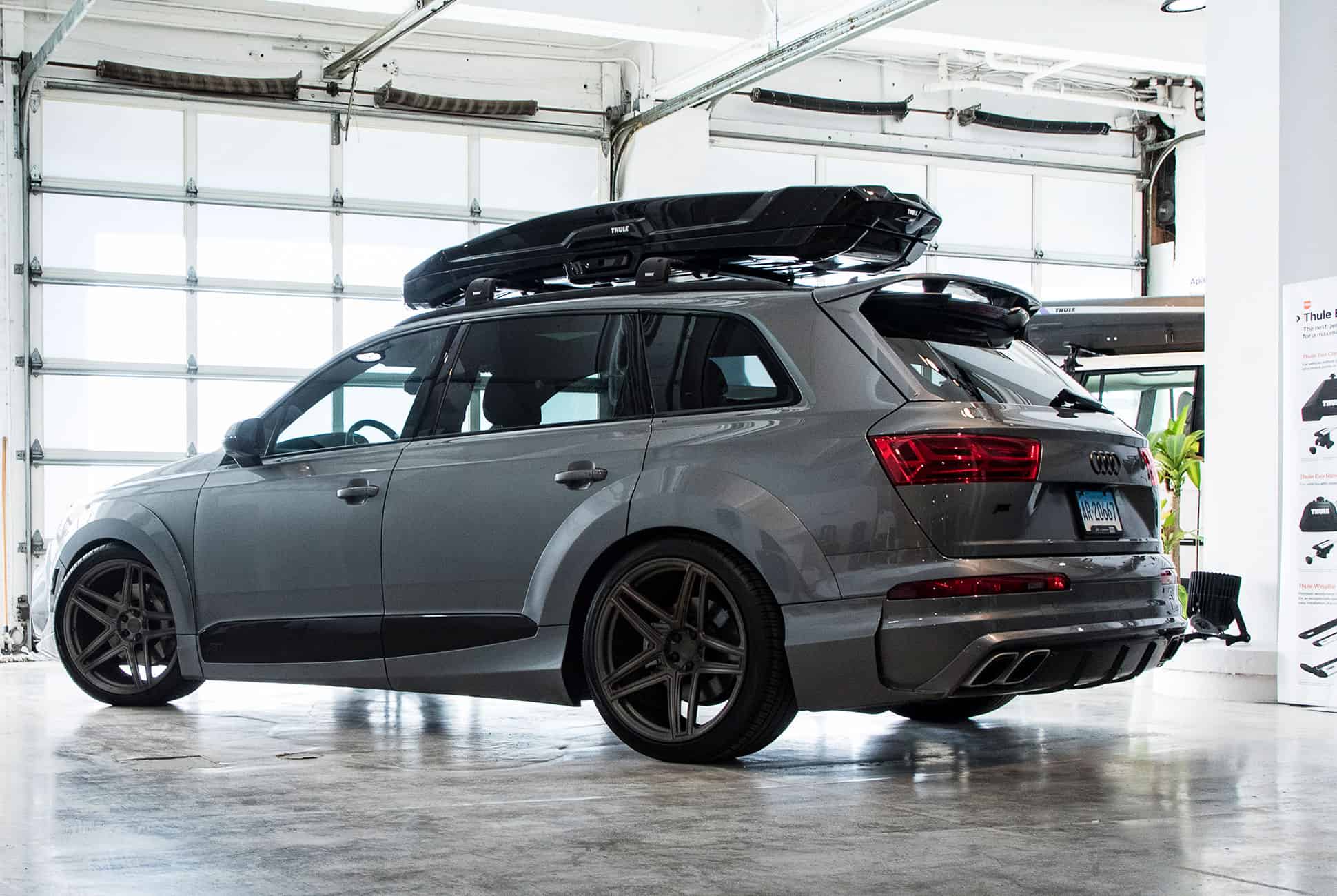
When you think of roof racks for your car, Swedish-based Thule immediately comes to mind. Established in 1942, its reliable and sturdy racks and cargo boxes have become the standard by which all others are measured. Not satisfied to rest on its laurels, Thule has widely expanded over the years to items that can help any traveler accomplish what they’re looking to do.

We recently attended the Thule 2019 launch event where we got a sneak peek at next year’s gear. The brand has continued its focus on superior design, style and safety. Below are five of the standout products Thule has developed that are sure to make their marks for any traveler.

Thule Vector


The Vector raises the bar for Thule on its already trusted cargo box line. Smart functions like synchronized lid lifters, an LED light inside for easy visibility and a SlideLock system that automatically locks the lid in place are details that elevate the Vector to a new user experience. Add in the seamless integration of the lid and the base and the Thule Vector offers a distinctive look on top of any car.

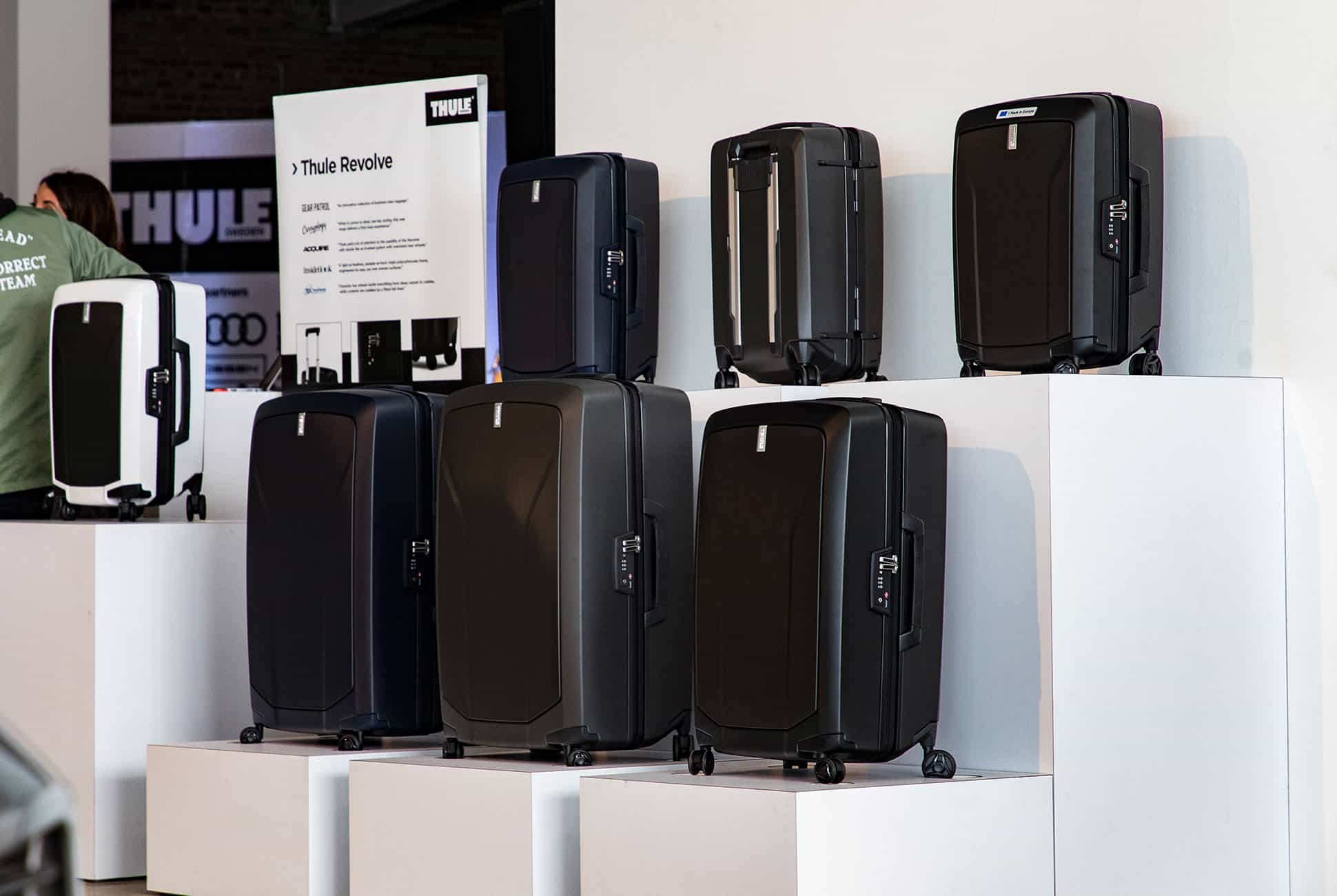
Thule Revolve Luggage


Thule’s first hardside luggage collection, Thule Revolve Luggage is thoughtfully built for everyday use and beyond. An exclusive eight-wheel system allows for easy navigation while interior space is maximized by a custom-fitted felt liner that also keeps contents in place. This liner also absorbs vibrations for a quiet roll, removing one of the most irritating facets of rolling luggage.

Thule Landmark Backpacks


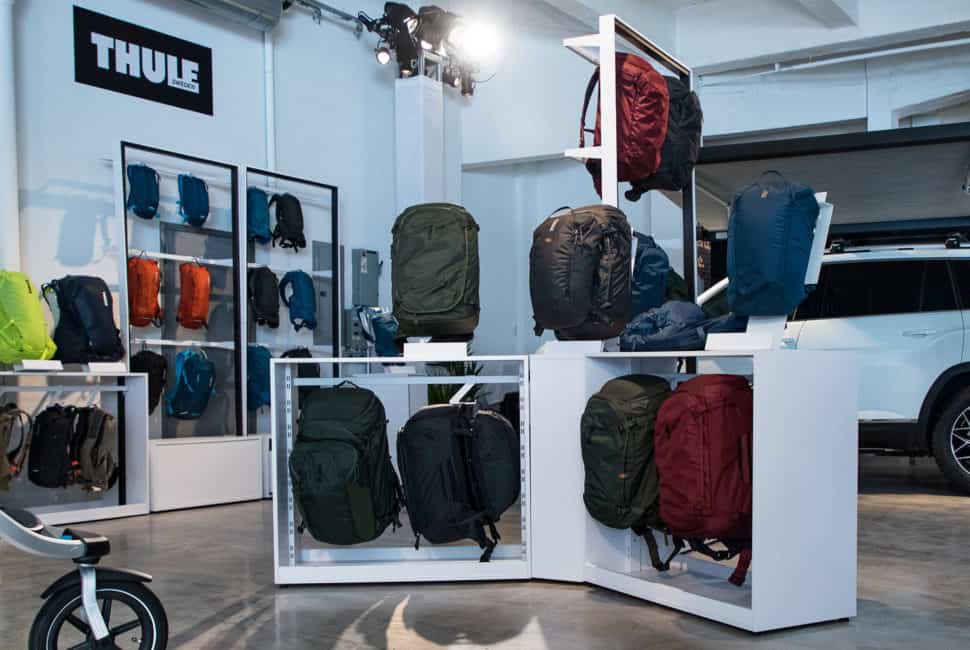
Thule’s Landmark Backpacks are made for extended journeys. They offer the organization of luggage with the comfortable carry of a trekking pack. With plenty of smart travel features like a suitcase-style opening, passive locking systems on the main compartment and a hidden CashStash pocket, any trip you take is one for a Landmark Backpack.

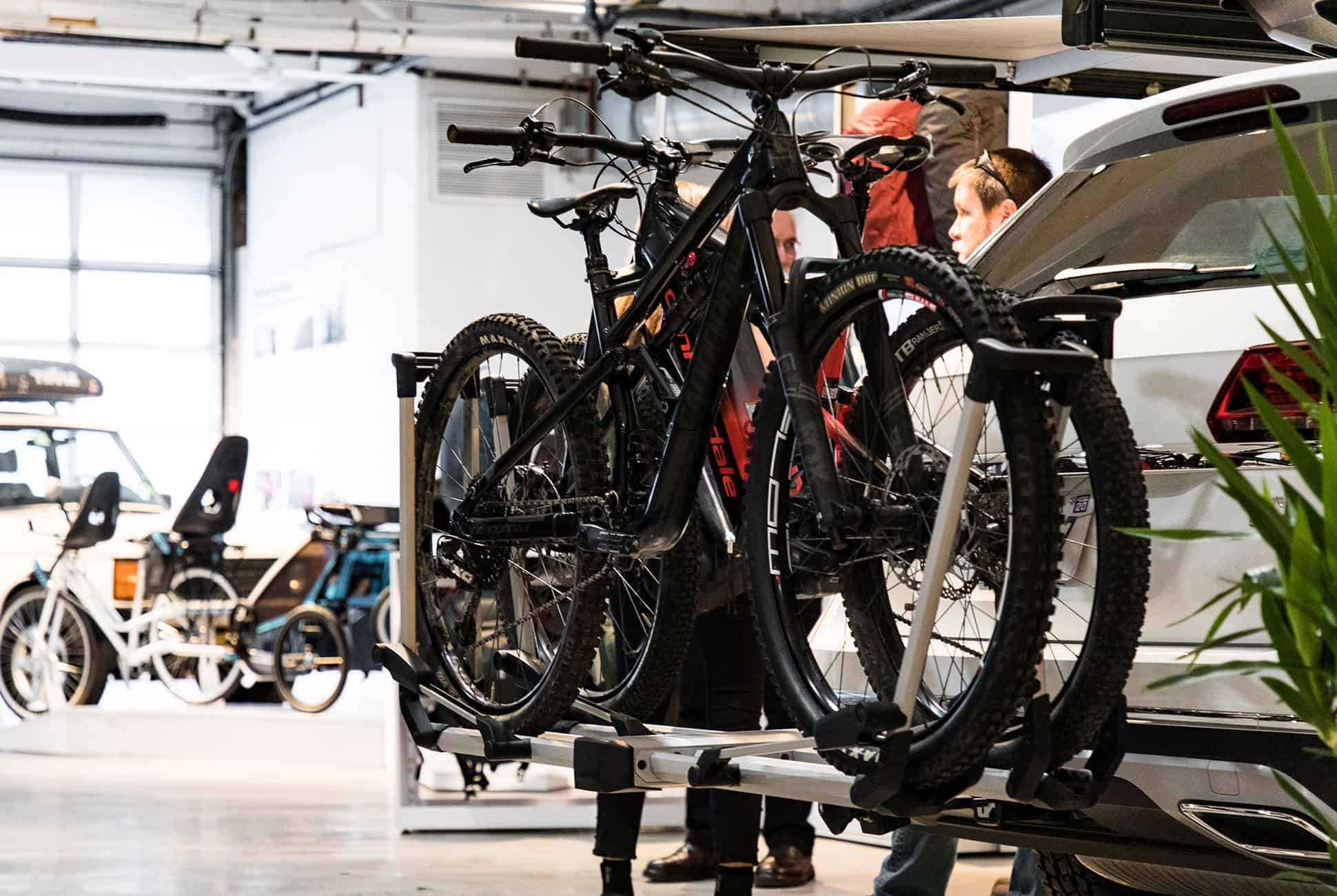
Thule Helium Platform Bike Rack


The Helium Platform Bike Rack is a fully lockable premium aluminum platform and holds up to two bikes without frame contact. It’s quickly installed without tools via the SnugTite stinger that locks to your vehicle’s hitch. Bikes are easily mounted and secured using ratcheting wheel loop technology. And the HitchSwitch level can tilt the rack down, even with bikes on it, for easy access to the rear of the vehicle.

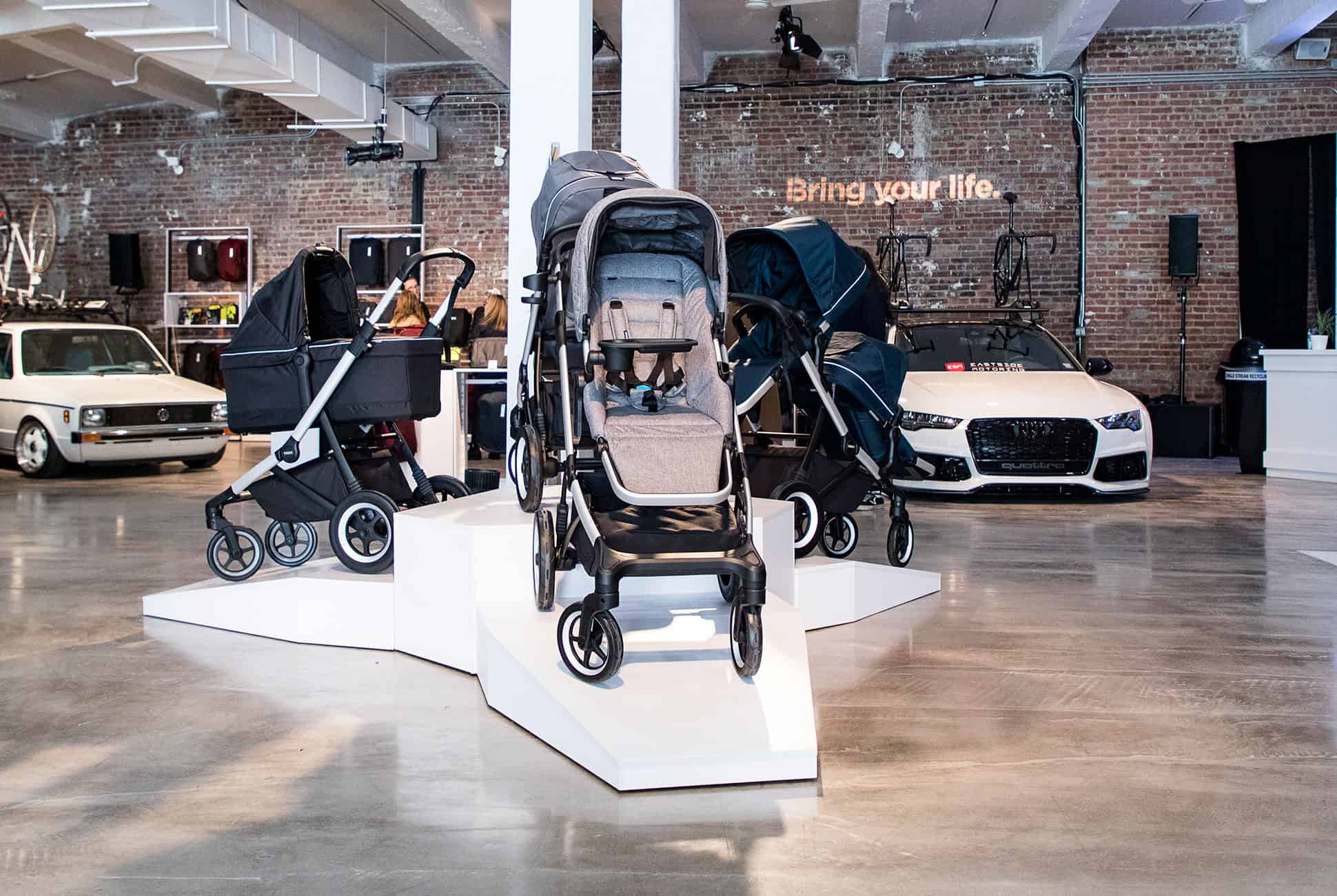
Thule Sleek Urban Stroller (available now)


Another product highlighted at the Thule event is the Thule Sleek Urban Stroller, which hit stores this month. And leave it to Thule to design a sleek and comfort-minded stroller. A shock-absorbing four-wheel suspension offers a smooth ride — the two front wheels operate on swivels but can lock for rougher terrain. An extendable, ventilated canopy with peekaboo window and sun visor offer UPF 50+ protection. And the lightweight construction allows the Thule Sleek to meet the needs of any family out exploring.

Dopp Kit Essentials for Surviving Holiday Travel

The holidays are a whirlwind. Travel can take its toll with exodus-like traffic jams and laughable airport lines. Arriving at the in-laws or a relative’s house after grueling hours of a cramped ride is not ideal for presenting your freshest self. Which is why your Dopp kit game needs to be on-point for the holiday travel season. Packing it with rejuvenating face essentials, a solid cologne, premium toiletries, a wireless charging battery and more can be a game-changer. Add in a top-flight razor and you’ll be set to survive (and thrive) during the upcoming holiday season.

Farewell Razorburn

With the Braun Series 9 electric razor, shaving no longer has to be a chore. Its responsive intelligence adapts to the features of your face for a completely smooth shave. Five synchronized shaving elements with two specialized central trimmers are able to tackle more hair in one stroke, ensuring a shave with fewer strokes for more skin comfort. Combined with 10,000 vibrations that create a cushion to gently glide the razor across your skin, it can tackle every contour of your face.

The Braun Series 9 is titanium coated for protection against corrosion. This means you can shave wet, dry, with foam or gel and it can stand up to it all. And when at home, the 5-action Clean & Charge station hygienically cleans, lubricates and dries your shaver at the touch of a button. You already have plenty to worry about during the holidays: Built to deliver the ultimate shaving performance, the Braun Series 9 is an electric razor that can at least make looking sharp easy.

|

The Dopp Kit Essentials

7 Outdoor Creatives Pushed Themselves (and Their Gear) in New Zealand

When it comes to pushing the limits of rugged products, there’s no better way than getting it in the hands of experts and letting them do their thing. Which is why Urban Armor Gear recently rounded up six of its favorite outdoor photographers/social influencers and took them to the furthest place possible: New Zealand. Not only is the country a long trek, but it’s also home to some of the world’s most unforgiving terrains.

But this was no controlled photoshoot — the seven days consisted of bungee jumping, jet boats, offroading, hiking, kayaking and more to test the furthest capabilities of UAG-protected devices in the hands of skilled individuals. Taking risks and challenging their abilities, the outdoor creatives came away with uncanny moments because their gear allowed them to go further. It helped them find new angles, inspirations and points-of-view they may not have found otherwise. We caught up with three of the trip’s attendees to talk about New Zealand, outdoor photography and how it’s shaped their lives.

Prince McClinton

Prince McClinton is the co-founder and CEO of Art of Visuals, creating tools and resources to help photographers/filmmakers navigate the intersection of art and commerce. His work can be seen on Instagram @artofvisuals.

Q: What is your motivation for sharing inspiring outdoor content?
A: We live in an era when the media around us is almost always negative. The message we constantly hear is that the world is dangerous, ugly and that people are terrible. Our motivation for sharing outdoor content is to inspire people and counteract this message by sharing beautiful stories, people and the places around them. The world is a lovely place and we hope you all get out there to experience it with your own senses.

Q: What impact do you hope your content will have with your audience?
A: We hope to inspire our audience to spend more time creating and exploring — and less time consuming. We have been blessed that we’ve been able to make a difference in many people’s lives through our various platforms and we look forward to amplifying that in the near future.

Q: What’s your greatest piece of advice to best experience a new destination?
A: Make friends with locals — English is spoken enough almost everywhere and, paired with body language, you’ll be surprised how easy it can be to communicate. Enjoy the food, the culture and be present. Traveling is all about getting out of your comfort zone not ordering a cheeseburger and fries. But sometimes I order the cheeseburger and fries…

Garrett King

Garrett King was born and raised in Texas and now resides in Huntington Beach, CA. The blending of lifestyle photography with the push of adventure are what make up his unique aesthetic. He engages in videography as well, capturing the moments in all their glory. His work can be seen on Instagram @shortstache.

Q: How did you get started in outdoor photography? What drew you to it?
A: I started photography with just my iPhone. That’s it. It was all I needed and I loved it. As the saying goes, the best camera is the one you have with you. I loved how simple it could be. The idea and the story you have behind it is what makes a solid photograph for me. Later, I eventually upgraded to a small DSLR. I got into outdoor photography because I was venturing out every weekend I could around Colorado. We built a solid crew of friends that did the same and wanted to explore.

Q: When you are setting out to tell a story, what is it that you hope to achieve? What is your objective and how do you work to get it right?
A: When I set out to tell a story, most of the time it tells itself in a much different way. That’s the blessing in disguise for me. I always have this initial plan and goal that I have and standards that I want to meet, but it often shifts as you go into something better. When things line up and other factors come together strongly, that’s when you know you’ve got some momentum to really push the story.

Q: You’ve explored some incredibly remote places, like on this trip to New Zealand. How did you decide this kind of life as a traveler was accessible for you and how did you make it happen?
A: I never thought I’d be traveling like I do now. My life has shifted from one creative field to another. I was a designer and art director for six years before I got into photography. Design was my first passion and still is. I’ve grown to love photography and film so much. My goal is to blend the three together. Traveling has opened up so many doors for me. It’s taught me so much about time management, budgeting, my health, my goals and so much more. I make it happen because I say yes and take risks. Do something that scares you and pushes yourself out of your comfort zone. Traveling has helped me do that.

Forrest Smith

Forrest Smith is a photographer based in New York City. Born in Colorado, he was exposed to the outdoors early on. Much of his work is inspired by outdoor spaces, the experiences he had within them and the emotions that these places bring him to personally. His work can be seen on his Instagram @lostintheforrest.

Q: What impact has the outdoors had on your life?
A: Growing up in a mountain town had a large influence on my view of the world. Most everything I did as a child I was surrounded by nature — from skiing and running to climbing mountains with friends and family. Through my photography, I hope to share this way of life with people that may not be privileged to experience it. Through sharing this, I hope to show just how meaningful the outdoors are, and furthermore, that they deserve to be respected and preserved.

Q: Why do you travel? What’s the draw of being somewhere very far flung?
A: It may sound cliché, but I travel to learn. There are so many unique perspectives and viewpoints on life all around the globe and by visiting these places I hope to learn something about myself. Whether it’s through talking to locals and people who have been in a certain area for generations or by seeing the effects that climate change has on certain environments, there’s always something to be learned through travel.

Q: In such a connected age, what’s the key to being remote? What value do you find in it personally?
A: It’s hard to disconnect in today’s society, but more than ever being present is essential. With so much happening on our phones, it’s important to look up and remember that life happens off the Internet. Being in remote places, especially outside, is a reminder of this. By taking yourself off the Internet, no matter if it is for a week or just an afternoon, gives you the space to be completely engrossed in your own experience.

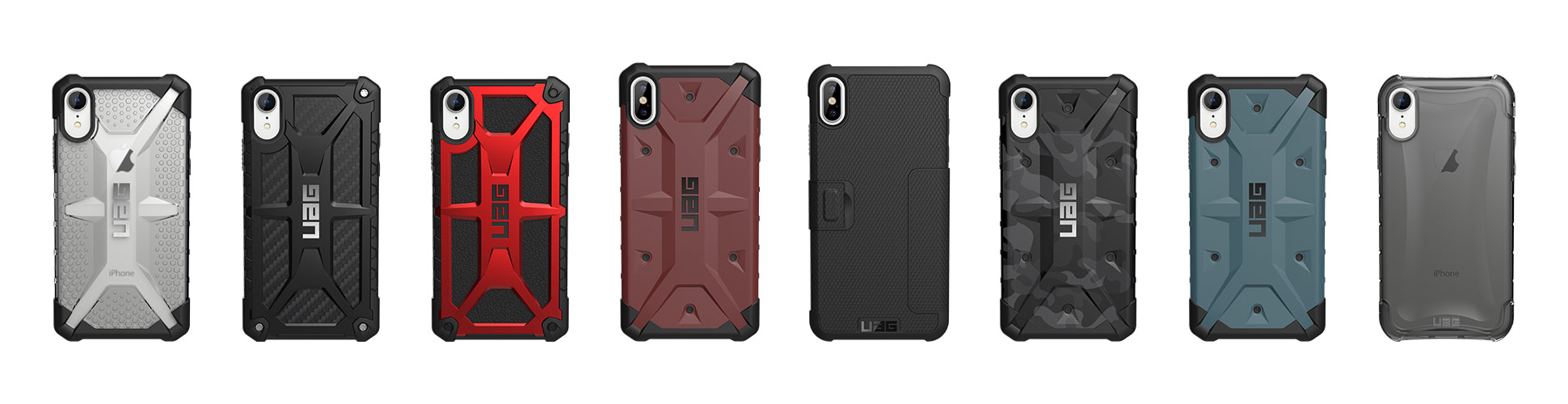
UAG offers a full line of protective cases in various colors for the new iPhone X, Xs, Xs Max and XR. The UAG iPhone collection ranges in price from $34.95-$59.95 and are available now on UAG’s website.

The Secret Behind This Wine Club’s Success

Few companies can say it helped initiate and pioneer a booming, multi-billion dollar industry. That industry is the ever-popular wine of the month club. And Gold Medal Wine Club is one company leading the way from the get-go.

Gold Medal Wine Club holds the honor of being the longest running, same-ownership Wine Club in America. After more than 26 years, it has become the backbone and driving force of the industry.

While some wine clubs can struggle with customer retention because of a well-packaged but low-quality product, Gold Medal Wine Club simply delivers high-quality wines from authentic, family-owned wineries that aren’t large enough for big distributors.

Co-founder David Chesterfield explains the model: “Despite competition from new wine clubs offering low-end wines produced from bulk market juice, our philosophy remains one of delivering our members the products of artisan winemakers who have a story to tell. We like to call this ‘delivering authentic value, wrapped in discovery’ and our 400,000+ members have loved it just as we expect our 500,000th member will.”

It’s this straightforward approach that has earned Gold Medal Wine Club a strong reputation and hundreds of 5-star ratings from satisfied customers. Many of those customers have been receiving their wine shipments since the early 90’s. This is a true marker of value, as no one would continue purchasing monthly wine deliveries for 20+ years if they didn’t thoroughly enjoy it.

Gold Medal Wine Club began with just the Gold Wine Club and has since expanded to a total of six club programs ranging from $39 to $179 per shipment and all customizable to fit anyone’s tastes. With the holidays right around the corner, you’ll want to have these six premium wine club options in your back pocket for the wine lover gift of the holidays.

Gold Wine Club


Superb, fascinating wines from some of California’s best small wineries. The biggest and best-value club.

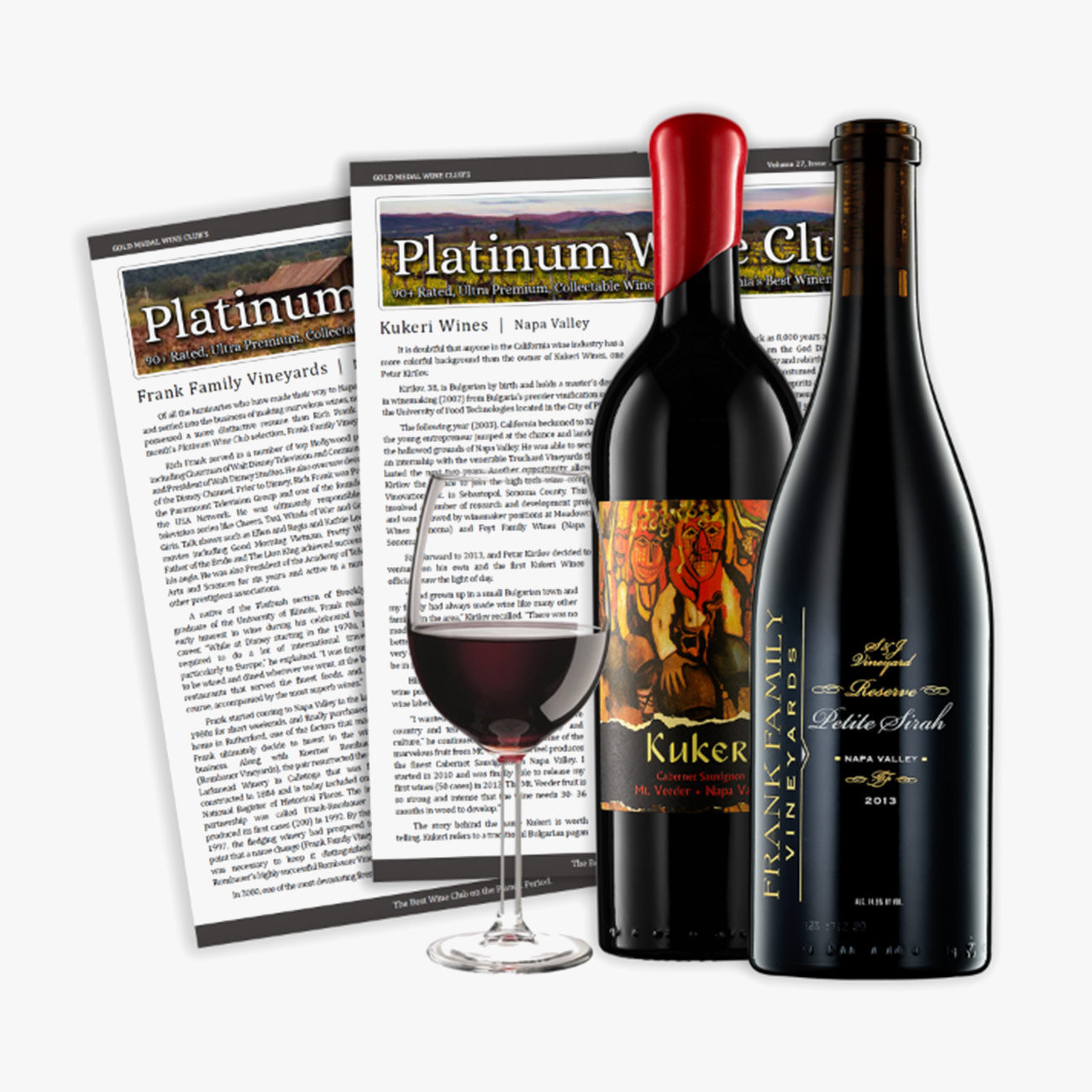
Platinum Wine Club


90+ rated, rare and collectible. Access to absolute masterpieces from winemakers at the pinnacle of their craft.

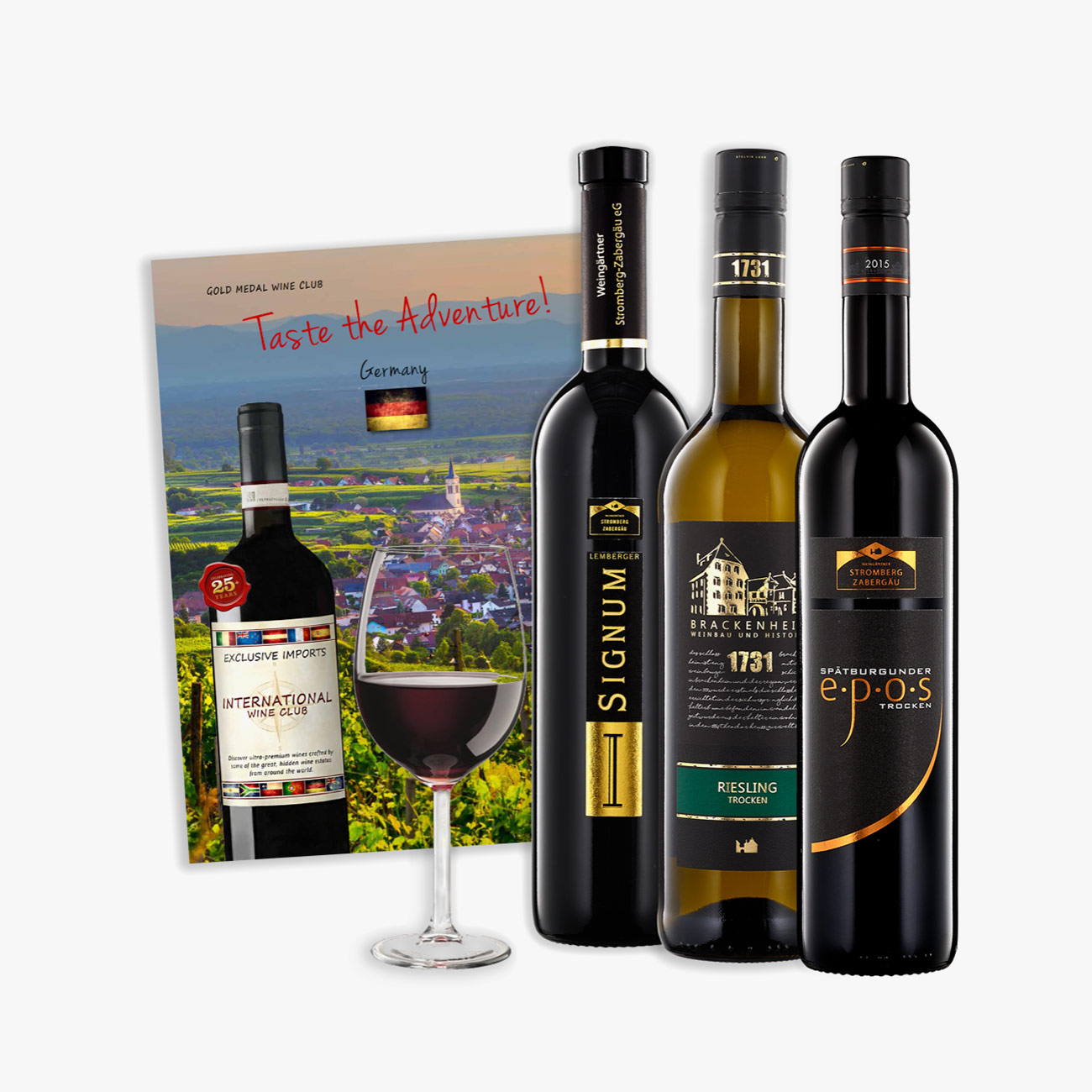
International Wine Club


Exclusively-imported, fabulous wine from family-owned, international estates from around the world. The gourmet food from the same region is optional.

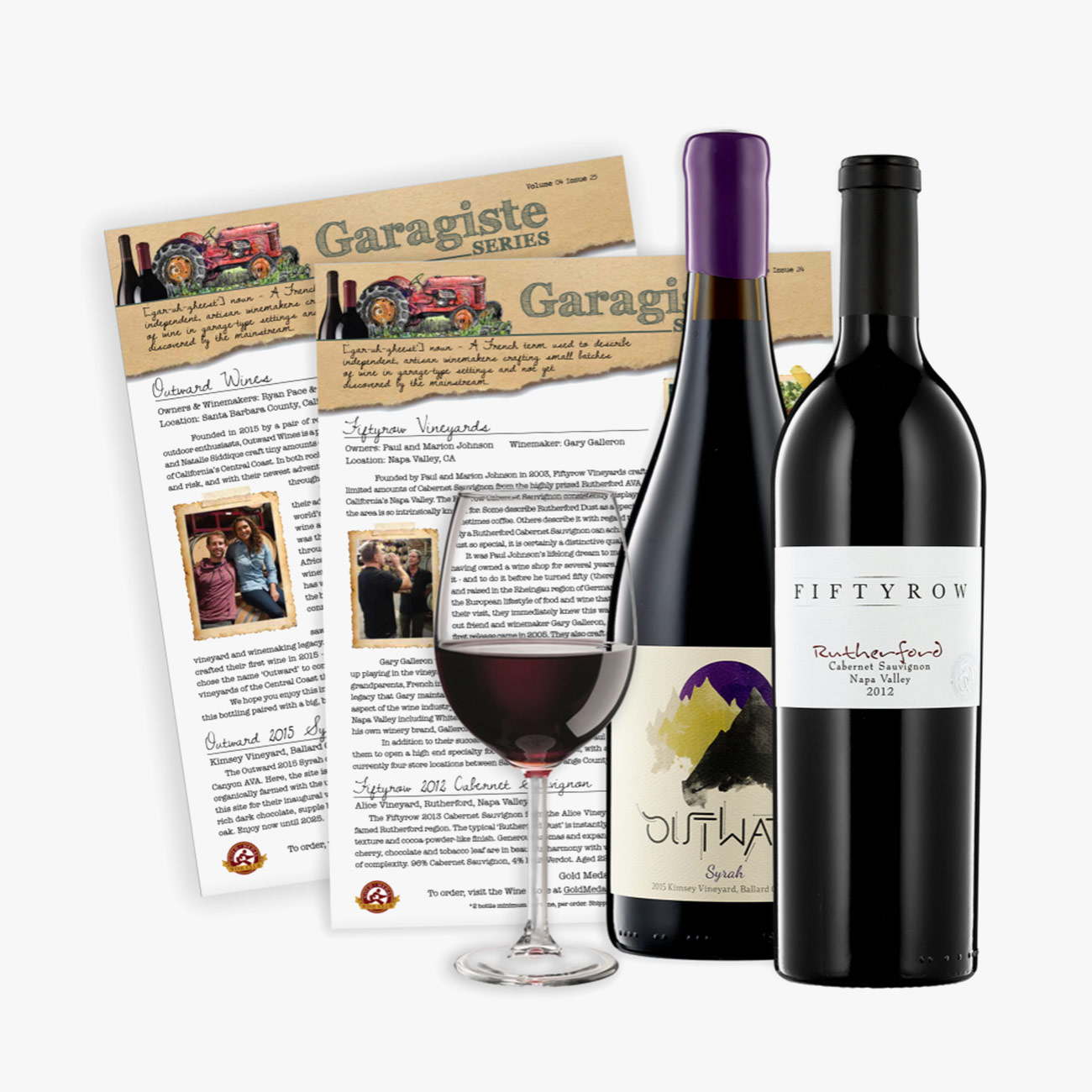
Garagiste Wine Club


Amazing, authentic, artisan gems. Crafted in small batches by independent winemakers.

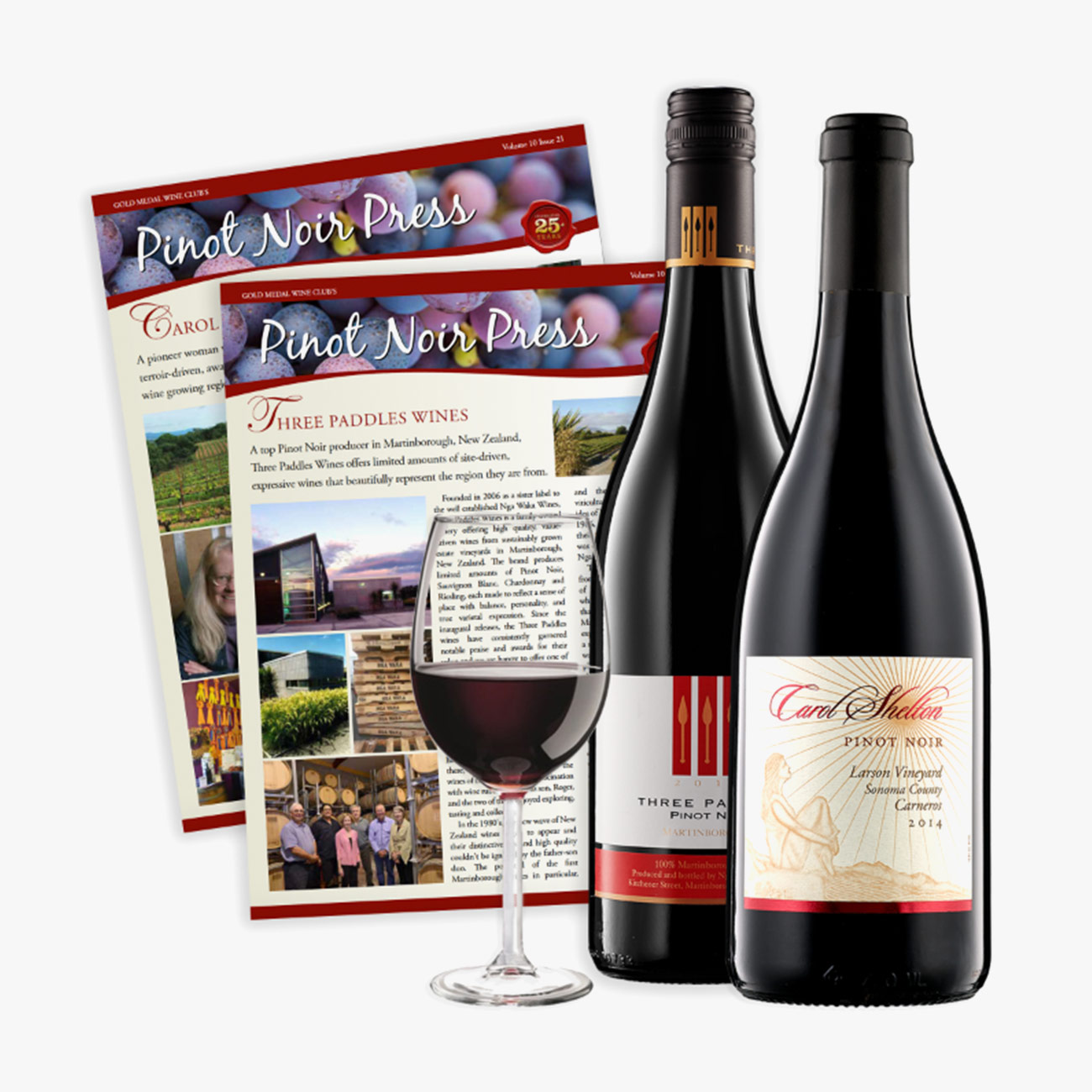
Pinot Noir Wine Club


If you love Pinot Noirs, this wine club is a no-brainer. Small production and highly rated.

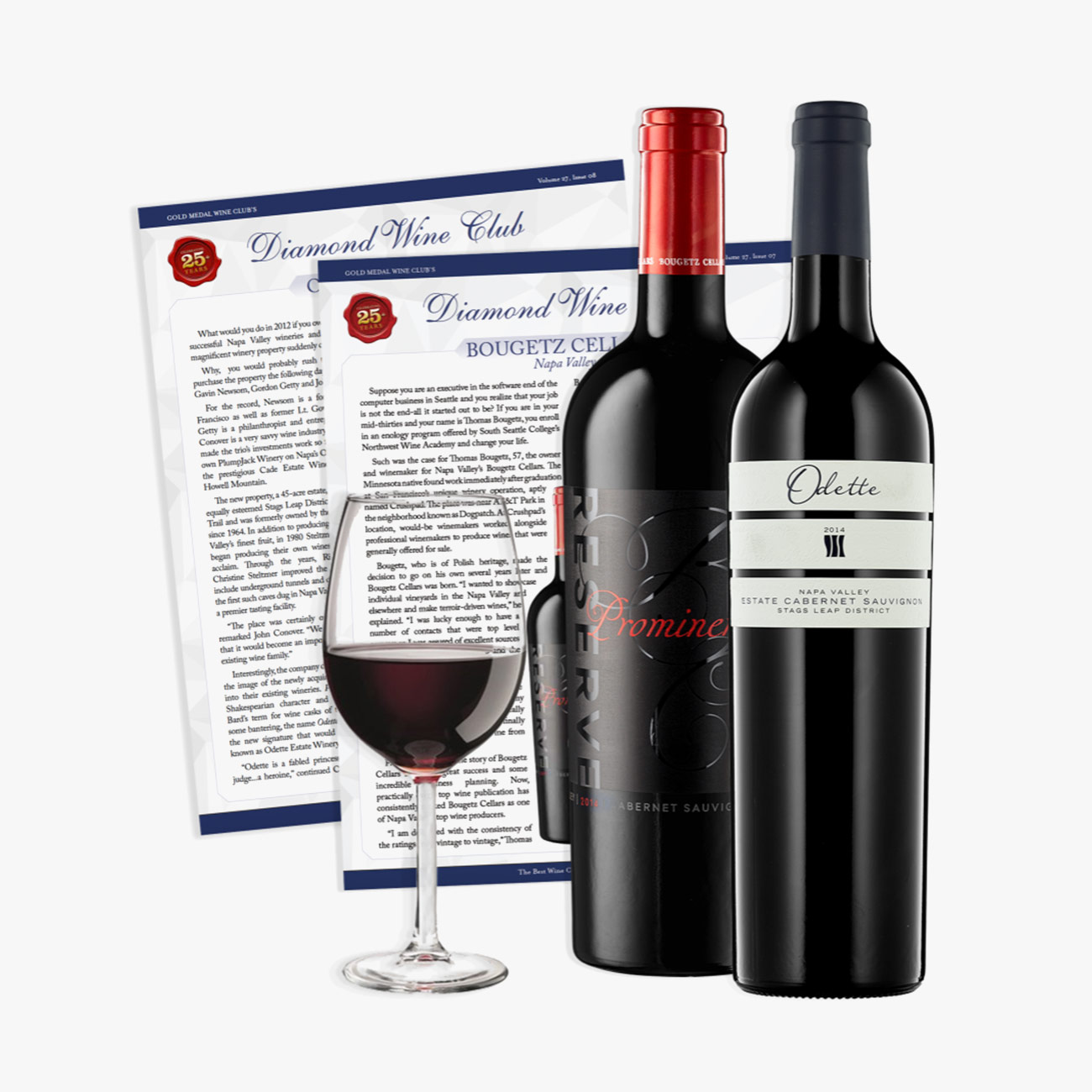
Diamond Wine Club


Perfection in a glass. 93+ rated, luxury, top-tier wines. This quarterly wine club is the ultimate wine tasting experience.

This Community Brings Together Experts and Advice Seekers

Expert recommendations matter, plain and simple. With products galore out there, the marketplace can be an overwhelming sea of information. Experts are all around us, and they can offer crucial advice when it’s most needed. But it’s not always clear where advice seekers can get in touch with experts. ExpertVoice has built just that type of place.

It’s an exclusive community that rewards passion, knowledge and experience by connecting experts with 500+ of their favorite brands. A place where anyone, anywhere can always find expert advice on what to buy. But it’s also where the experts themselves get the credit they deserve.

ExpertVoice helps worthy brands easily find, educate and reward these trusted influencers. Forward-thinking brands like The North Face, YETI and hundreds more understand that an expert recommendation matters now more than ever. That’s why brands partner with ExpertVoice, to build a relationship with these experts and give them first-hand product experiences, rewards and discounts.

More than one million experts are enjoying behind-the-scenes access and discounts up to 60 percent off the brands and products they love. Signing up is easy and free. Whether you’re an expert or an advice seeker, ExpertVoice is somewhere you can get what you’re looking for.

Westerlind Outdoor Founder Highlights Down Items For This Winter

Swedish-born Andrea Westerlind founded Westerlind Outdoor “to create an intersection where technical outdoor gear and apparel meet a style-minded boutique,” as she describes on the retailer’s website. Since opening the first location in New York City in 2014, she has done just that by leveraging brands with superior functionality and premium quality, presenting them in the posh SoHo neighborhood with compelling storytelling, merchandising and distribution.

One of those brands Westerlind has partnered with from early on is Goldwin. The long-time Japanese outerwear brand is one of the blossoming leaders in the outdoor lifestyle market, fitting perfectly into Westerlind’s vision.

“Goldwin’s knowledge in snow sports combined with its Japanese sense of style and fashion makes a great combination for an outdoor lifestyle collection,” Westerlind recently told Gear Patrol. “It’s a wonderful thing to see Goldwin push the envelope and enter the urban market.”

Westerlind noted that the Kodenshi down available in many of Goldwin’s winter coats is a must-have for the winter. Kodenshi down maintains the wearer’s body temperature in a constant and natural range by utilizing far-infrared body heat. Maintaining the ideal body temperature helps to stabilize both your mind and body. This is essential to living a relaxing daily life.

“Every piece in the fall/winter collection has one or more details that you discover as you start wearing the garment. Whether it’s a hidden pocket, a magnet to keep a pocket cover or hood in place, or a stuff sack, Goldwin really does try to think of ways to amaze you with practicality and versatility.”

With that ethos in mind, here are two of Westerlind’s favorite pieces from Goldwin’s fall/winter collection that contain Kodenshi down– both available online and in Westerlind’s retail locations.

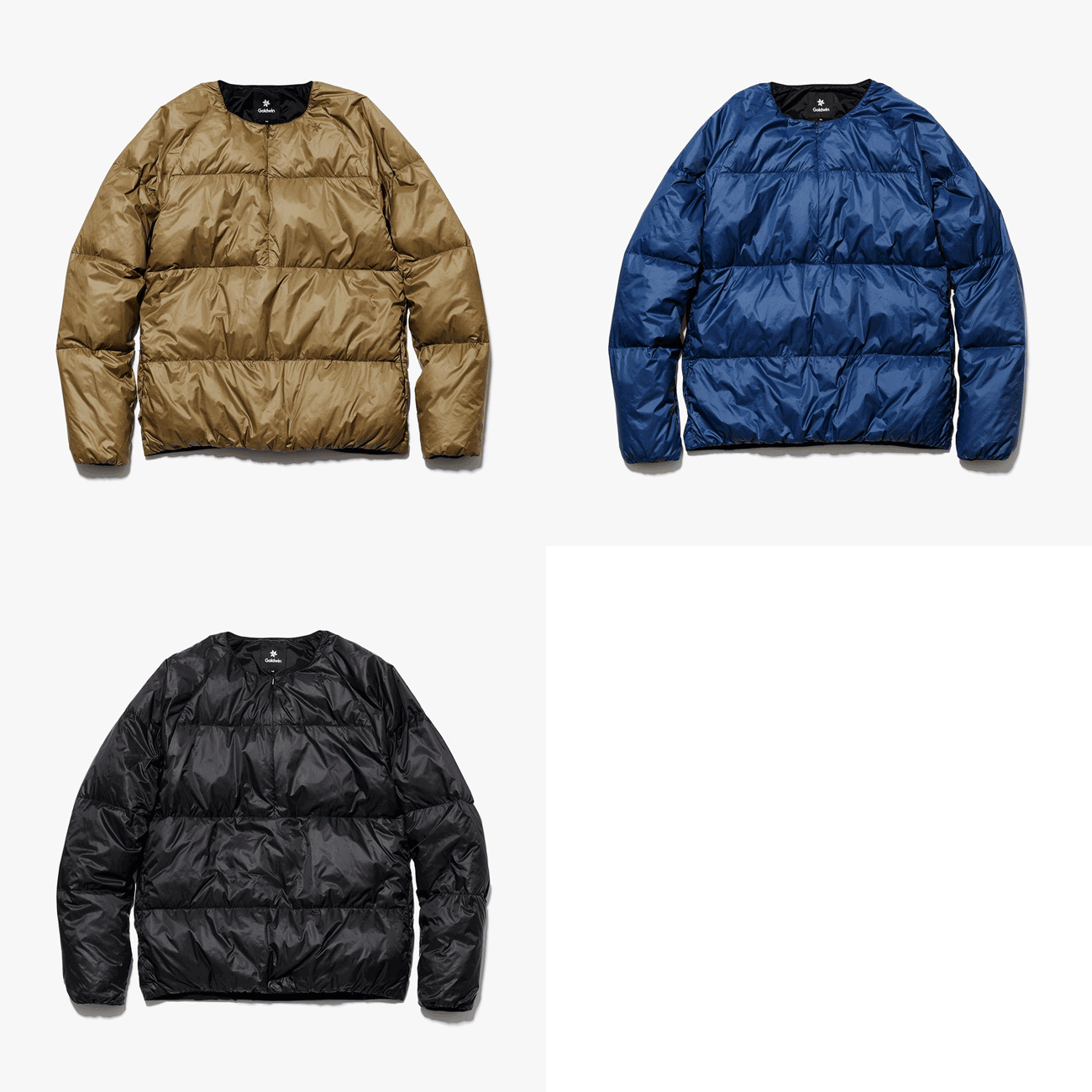
Crew Neck Down Sweater


The Crew Neck Down Sweater is a unique piece that combines the warmth of a down jacket with the styling of a crew neck sweater. This look is further enhanced by the nearly invisible half-zipper on the front. This allows you to wear it over a turtleneck, tee or under a hi-tech shell jacket. It’s a Goldwin staple product that maximizes the potential of layering styles.

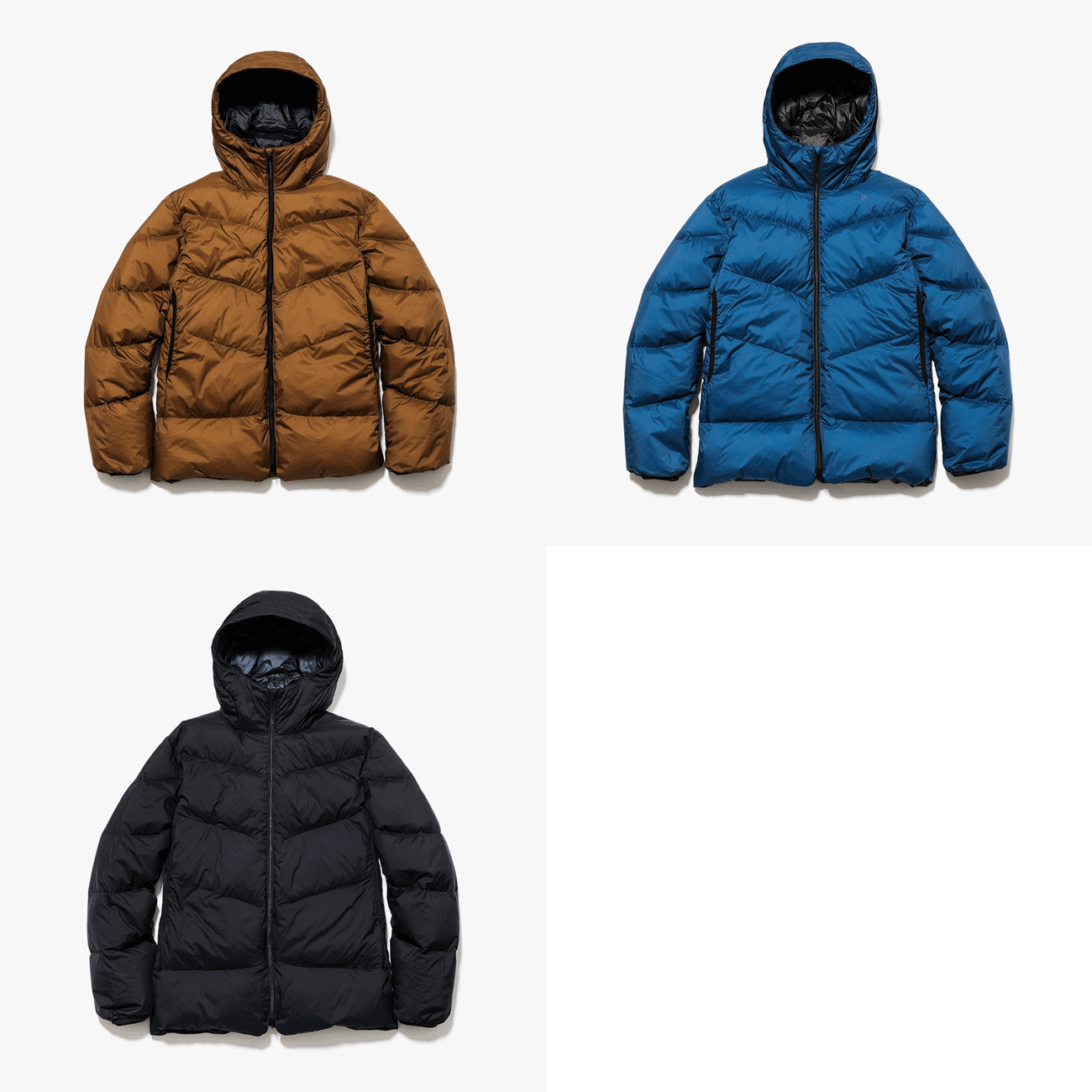
Down Parka


The Goldwin Down Parka is made with Pertex, a warm and lightweight hi-tech material. Highly compact in size, it is a thoughtfully constructed jacket that values warmth over bulk. The front pockets sit a little higher up, which you’ll be glad you have in the winter months. Retaining heat, it’s a down jacket with all the warmth and none of the marshmallow man look.

Wireless Phone Charging to Keep You On-the-go

Our lives have become increasingly mobile and we rely on our smartphones more than ever to stay productive — including when we’re on the move. However, nothing can bring the day to a grinding halt like a dead phone battery. Wireless charging makes it easy to stay powered-up all day, whether you need a full charge or you’re just topping off your battery. It’s as simple and convenient as merely placing your device on the charging surface.

To charge wirelessly you need two things: 1) a Qi-compatible smartphone, and 2) a wirelessly charging accessory such as a charging pad, car vent charger, desk stand, or portable battery charger.

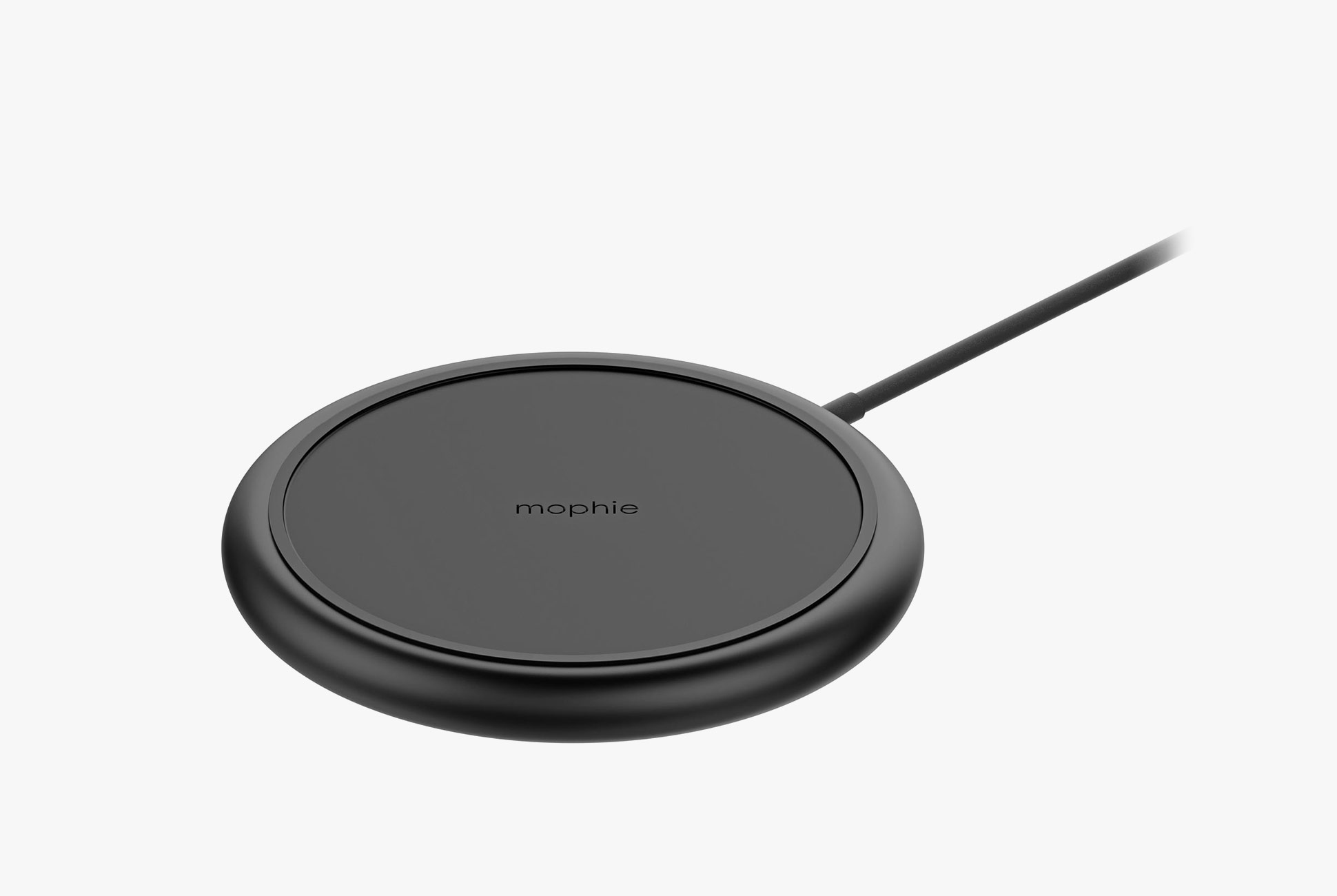
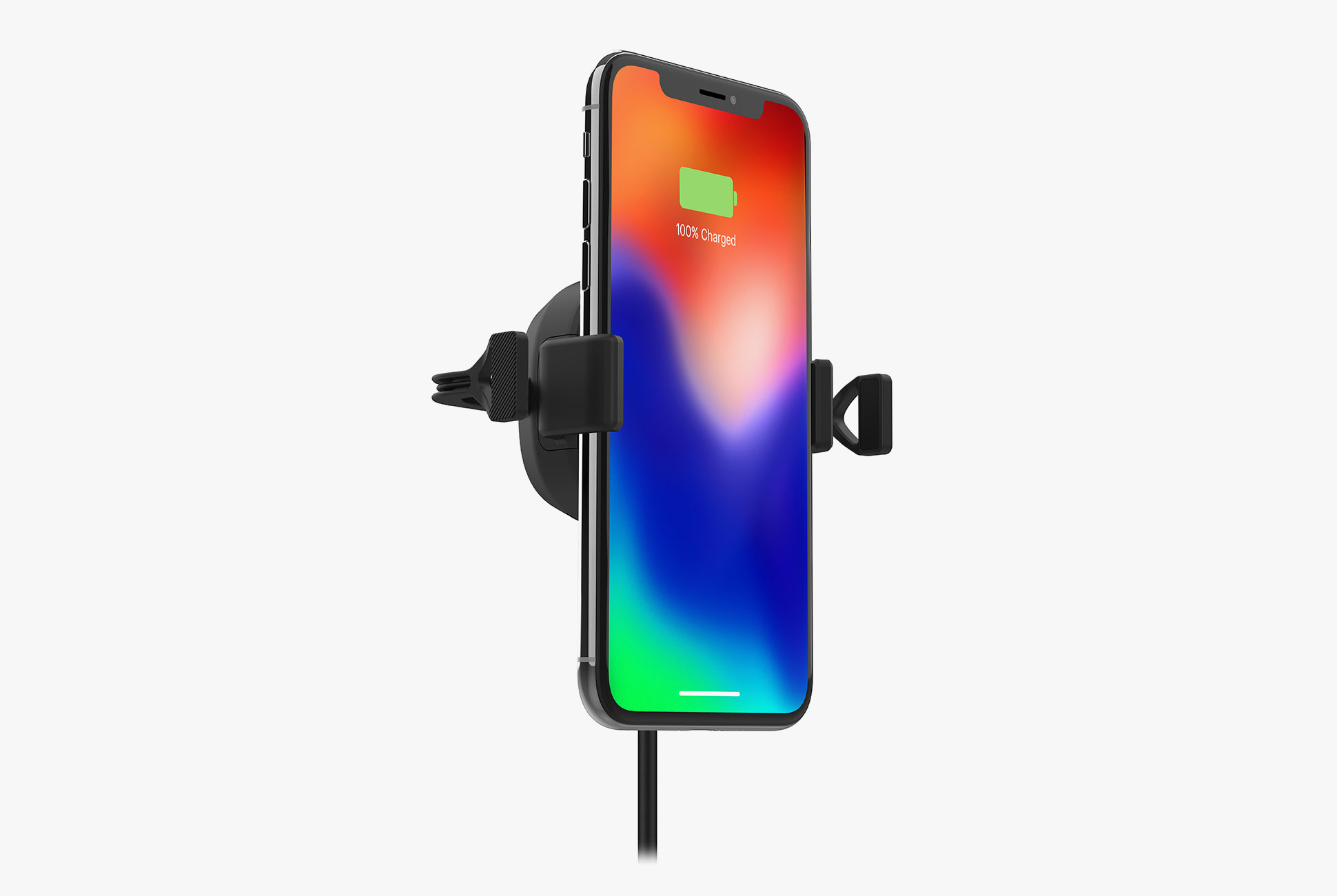
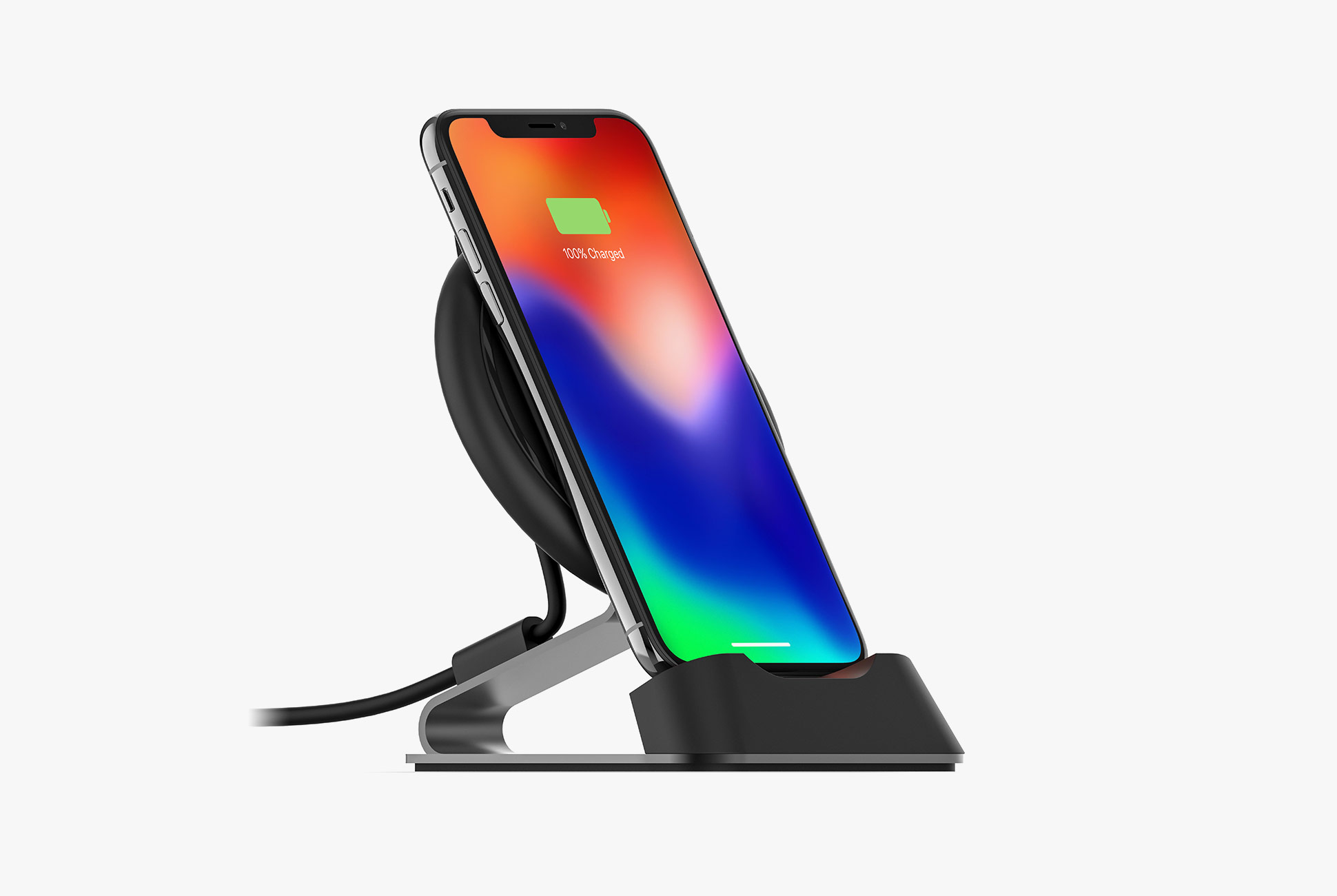
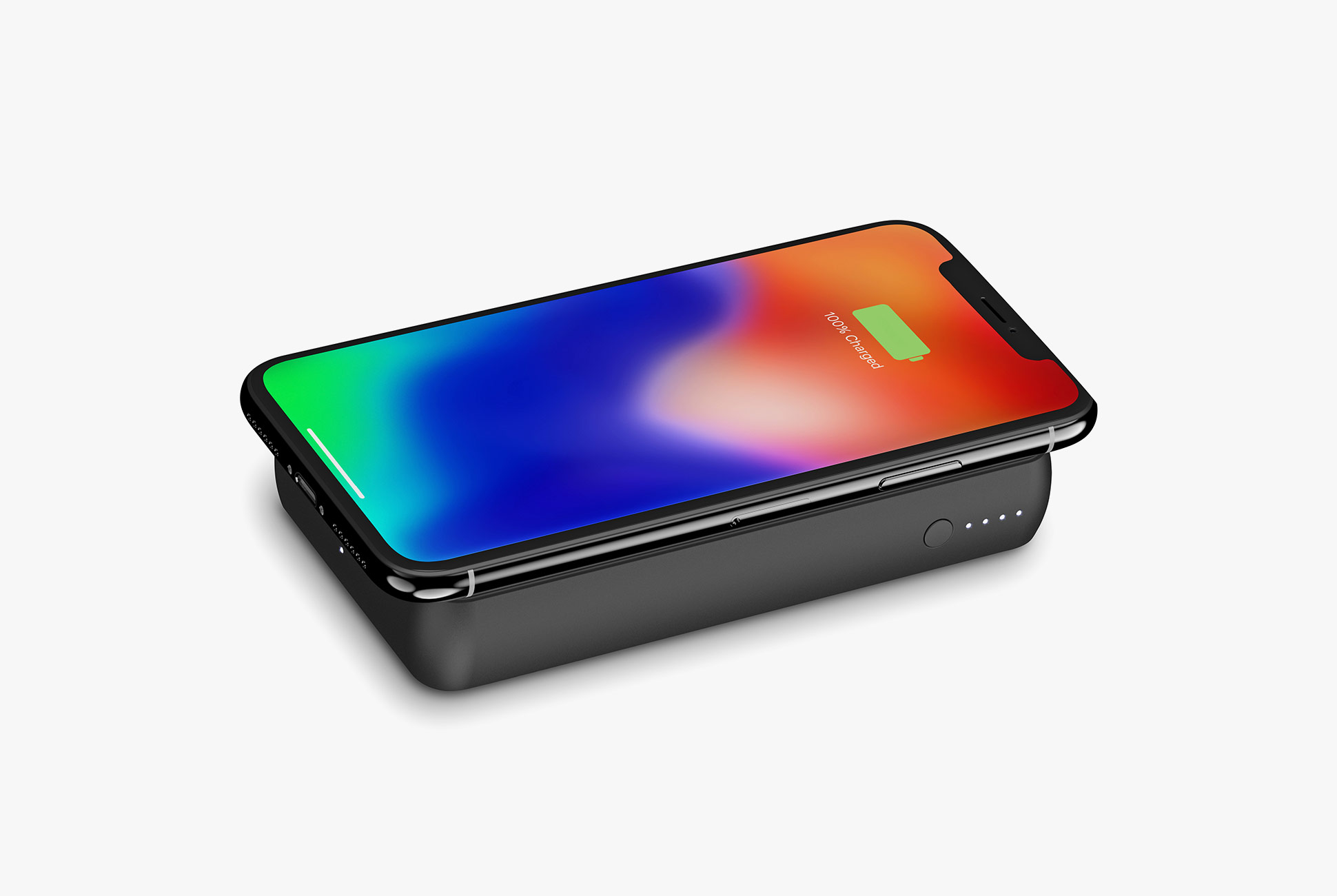
The new charge stream wireless products and accessories from mophie let you charge your smartphone at home, in your car, at the office, or even when you’re traveling. Most are optimized for Samsung and Apple fast charge, so you’re getting the fastest charge your device can take.

With a wide range of wireless products, mophie makes it so you’re never far from a full charge. With the mophie charge stream suite of wireless products, you’re always fully charged and ready to go.

At Home


At home, plug in the charge stream pad+ and simply drop your phone on the pad when you need a charge. And it can charge through phone cases up to 3mm thick, so there’s no need to pull your case on and off every time you want to charge.

In The Car


In your car, the charge stream vent mount delivers 10W of power to your smartphone. Holding your phone securely at a convenient viewing angle keeps GPS navigation and hands-free calling easily available.

At Work


In the office, the compact charge stream desk stand holds your phone at a convenient viewing angle while it charges. It also maintains full functionality of your phone and access to your favorite features while charging.

Traveling


When you travel, pack the lightweight charge stream powerstation wireless portable battery. Just place your phone on its surface to charge wirelessly, and plug an additional wired device into the high-output 10W USB-A port to charge. Or the charge stream travel kit is an option that includes everything you need to charge wirelessly in a car, airport, or hotel. |

Retracing a Legendary Antarctic Expedition, Even Down to the Whisky

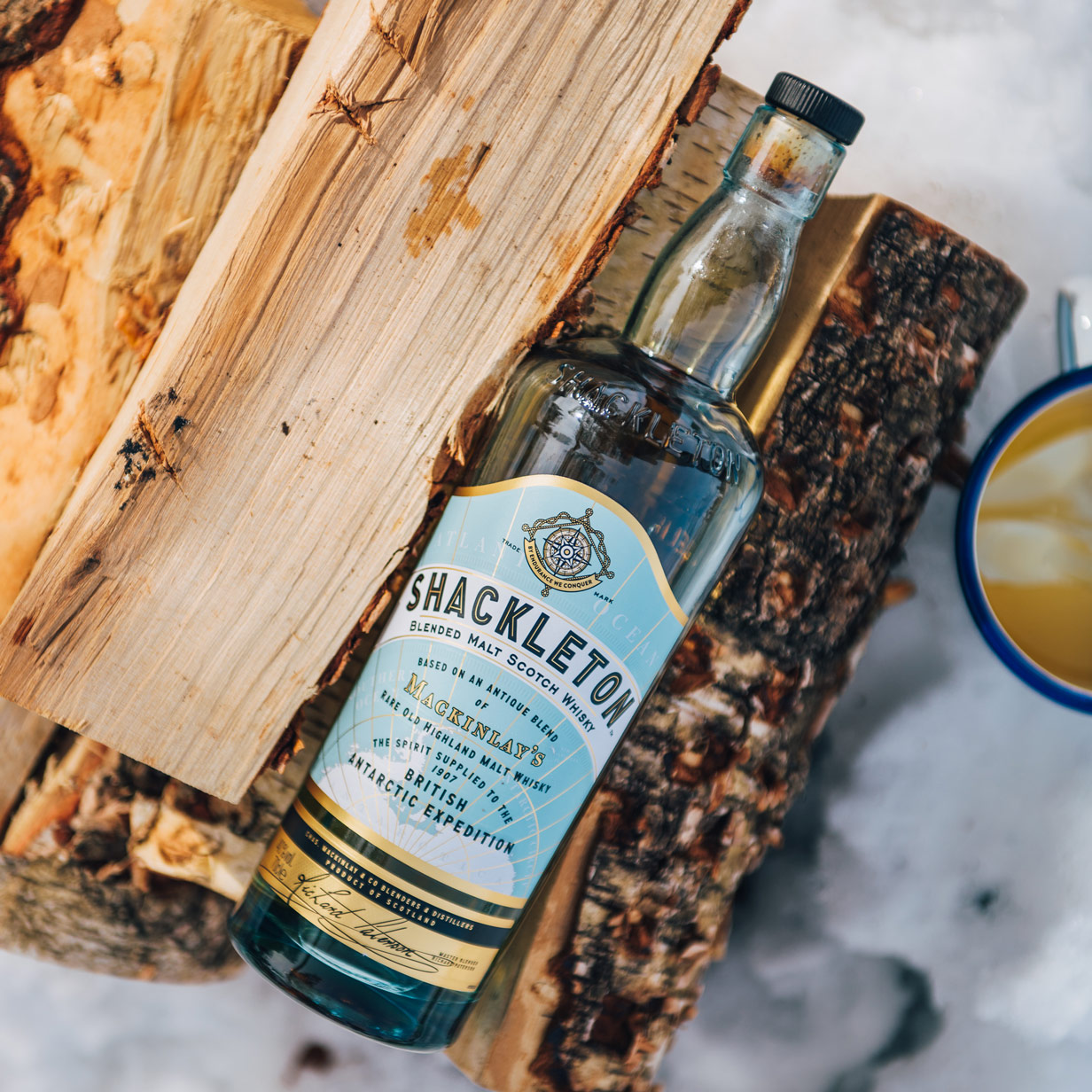
In 1907, explorer Sir Ernest Shackleton set out on the Nimrod expedition: one attempt at becoming the first to trek across Antarctica and reach the South Pole. The journey was stocked with, among other rations, 25 cases of Mackinlay’s Rare Old Highland Malt Whisky.

But Shackleton and his crew never made it to the South Pole – he turned around just 100 miles shy of the South Pole. And in his next attempt in 1914, perhaps even more harrowing, the explorer saved the lives of his men after their ship froze in the ice — along with the whisky, which was found a century later still frozen under ice, excavated and faithfully recreated. Both of Shackleton’s Arctic expeditions left his name legendary as a leader, explorer and survivor.

Lifelong adventurer and environmental scientist, Tim Jarvis, set out in 2013 to retrace Shackleton’s journey in the James Caird. Jarvis sailed a replica of Shackleton’s James Caird boat 1500kms across the Southern Ocean from Elephant Island, Antarctica to South Georgia and climbed over South Georgia’s mountainous interior all while using the same rudimentary equipment, authentically replicated period clothing and technology just as Shackleton and his team did.

In preparation for National Adventure Day, we were on the arctic ground side-by-side with Jarvis and Shackleton Whisky in Finse, Norway, which once hosted Shackleton as he trained for his 1914 expedition. Our own team set out to experience the wild there first hand. We spoke with Jarvis about his adventures, and specifically, what drew him to recreate this epic feat.

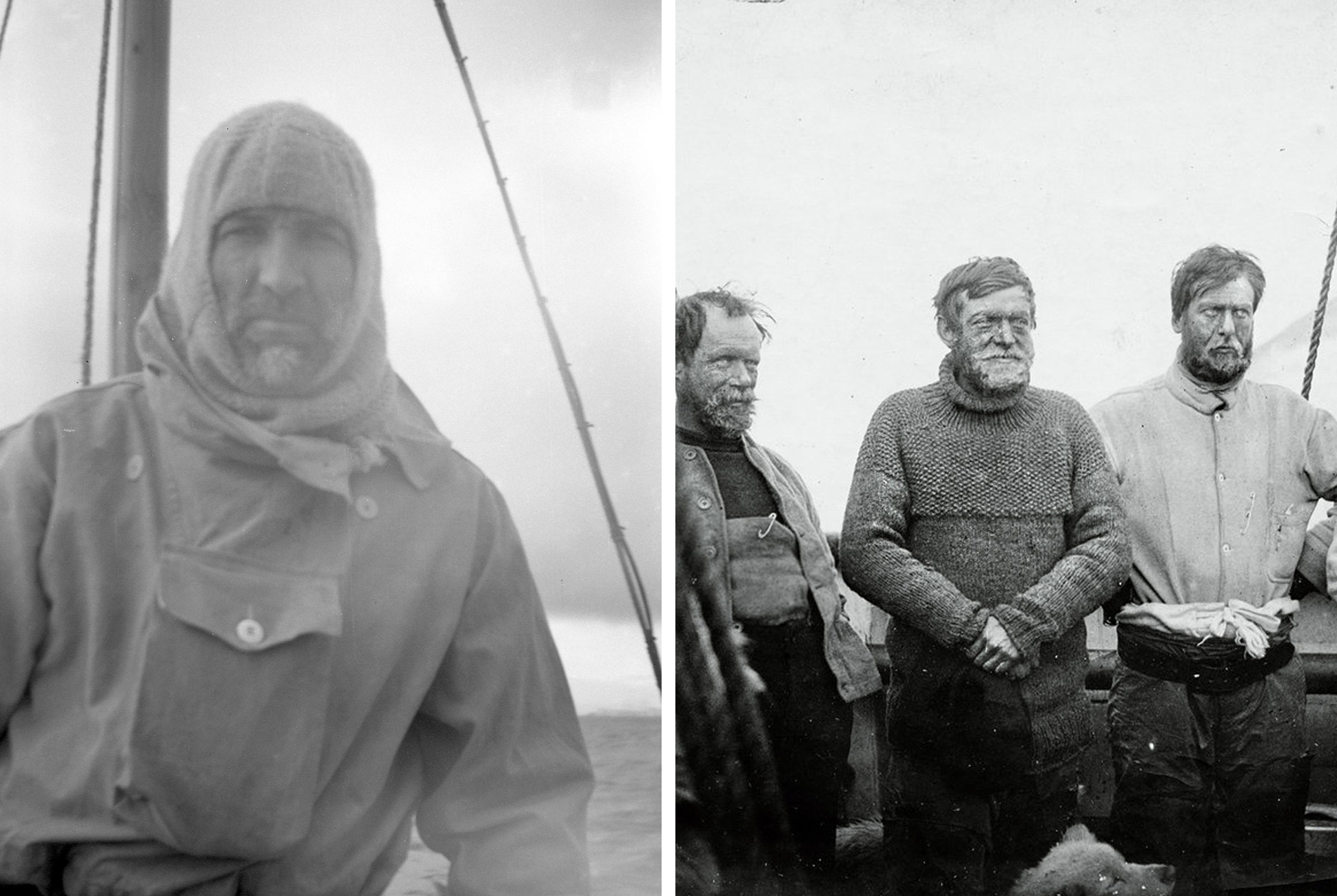
Left: Tim Jarvis recreating Earnest Shackleton’s 1914 Endurance Expedition (shot on a period-correct 1912 Kodak Vest Pocket Camera). Right: The man himself, Sir Ernest Shackleton (center)

Q: What inspired you to recreate Shackleton’s journey?
A: Sir Edmund Hillary actually described Shackleton’s journey as the greatest survival journey of all time. Without a doubt, the rescue mission he undertook after his ship sank ended up being a far greater achievement than his original goal of trying to cross Antarctica. I wanted to try and emulate what he had done in the manner in which he had done it, in part to honor his memory on the centenary of his original journey and in part because it represented an incredible personal challenge for me. It was such an audacious trip that it is difficult not to be inspired by it.

I also wanted our retracing his journey to be about several things over and above the adventure and honoring his achievement. One of the key things was showing how Shackleton’s leadership and teamwork ethic could be applied to some of the challenges we’re faced with today. Central to this was the ability he had to get his teams to put aside their differences to pull together as one to achieve difficult goals.

Q: Rather than just retracing Shackleton’s steps, you also used rudimentary gear, a replica of his boat and the same style of clothing. Why did you choose to do it that way? It certainly wasn’t the easy route.
A: It was very important to do it as he had done it to both honor his original achievement as well as get a sense of what it would have been like for him on his original journey. That meant using period clothing, including nails through the soles of our boots for grip in the mountains of South Georgia, building a replica of his boat the James Caird, traditionally navigating using a compass, sextant and chronometer and eating the same, frankly, miserable expedition rations as he did. About the only positive was that his original expedition manifest included several bottles of today’s Shackleton Whisky, which was faithfully reproduced from the original and given to us. This provided such much-needed fortitude on more than one occasion.

Q: How did you convince your crew to join and how did you choose them? What went into the planning and preparation overall?
A: The planning and preparation took about 5 years from start to finish and of course the risks start long before the physical challenge of trying to sail a small keel-less, capsize-prone (and frankly unseaworthy) wooden boat across the Southern Ocean, or climb a mountain without any climbing gear begins. These include reputational risks, financial risks and the risks associated with putting 5 years of your life into something that may ultimately fail spectacularly. There are also many hard, lonely moments you face in planning and bringing together major expeditions, one of the biggest of which is finding the right people.

In the end, it didn’t take that long to find the right people. Shackleton allegedly ran an advert saying “Men wanted for hazardous journey. Low wages, bitter cold, long hours of complete darkness. Safe return doubtful. Honor and recognition in case of success” and got 3,000 applicants for 27 places). I got 200 applicants for 5 places so obviously, there’s an ongoing appeal in pitting yourself against the forces of nature like this!

Q: Shackleton’s crew had 25 cases of whisky, 12 of brandy and 6 cases of port — I imagine your provisions were different. Can you tell us what you packed?
A: We sailed in a replica of the James Caird, and wore the same gabardine (cotton) external layers with woolens and animal pelts for insulation. The cotton smocks were not waterproof as they had been designed for a crossing of the driest, windiest continent by Shackleton. Six of us forced ourselves into a tiny space below deck no bigger than a single bed and slept in a seated position on top of rocks and camera batteries in a boat that was constantly threatening to capsize. We used a sextant, compass and chronometer for navigation and ate the same miserable rations as Shackleton did including pemmican (congealed animal fat), nougat, sledge biscuits, sugary tea, and reindeer jerky as a substitute for the seals and albatross eggs his men ate that we, of course, couldn’t. A saving grace on the whole expedition was the fact that we were given 6 bottles of the Mackinlays rare old Highland malt by Whyte & Mackay and consumed these whenever there was either cause for concern or celebration which was most of the time (e.g. surviving a storm or having made a successful sunsight as part of our celestial navigation)!

Q: What insights did you get from the journey, particularly into what his crew experienced?
A: There were many insights I got from retracing his journey as closely as possible to the way he did it. The first is an overwhelming sense of just how incredible his achievement was and how thin the line was that separated success and failure. One miscalculation and our boat could easily have capsized at sea, just as one misstep in the mountains and we would have fallen to our deaths into a crevasse or down the face of the mountain. It was the same if not worse for him. Beyond this, there were two main take homes for me:

The first is how relevant his leadership style is too many of the global issues we’re faced with today. Whether it is climate change or the state of disarray in the credit markets, Shackleton’s message of individuals putting differences aside and working to their strengths to collectively overcome seemingly insurmountable problems has continuing resonance 100 years on.

The second insight is the amount of environmental change there has been since Shackleton’s day. He had to cross 3 glaciers on his crossing of South Georgia. For us it was only two, as the 3rd, the Konig Glacier is now a lake. We started from Elephant Island off the Antarctic Peninsula, adjacent to where much of Antarctica’s ice cap melt has occurred, several hundred kilometers from the infamous Larsen B Ice Shelf. The expedition shot footage and took stills showing the status of Antarctic ice melt in the region as part of my ongoing interest in using my expeditions to show environmental change. Shackleton’s goal was to save his men from Antarctica, we are trying to save Antarctica from man — an unfortunate irony.

We had a chance to visit Finse, Norway — a small town only accessed by train in central Norway that was a favored training ground for both Shackleton and Jarvis — to get a small taste of what it’s like to explore the Antarctic.

Q: Finally, on a personal note, what is it that has made you a lifelong explorer and environmental ambassador?
A: I think the reasons I explore are essentially the same as they were in Shackleton’s day – the challenge of seeing whether or not something can be achieved, the thrill of trying, and the process of learning more about yourself and your surroundings that going on a journey to find out teaches you. That is what exploration is all about – the thrill of personal discovery as well as a more literal journey of exploration. This in turn is driven by a very human need to challenge ourselves to find out more about the world and our place in it and I believe this is as relevant a concept now as ever it was. As Helen Keller famously said at the end of her incredible life “Life is a daring adventure or it is nothing at all.”

Shackleton’s Whisky

Some 100 years after Shackleton’s journey, three cases of his stash of Mackinlay’s Rare Old Highland Malt Whisky were found, buried and perfectly preserved beneath the ice at his Antarctic base camp. Excavated and flown first to New Zealand, one bottle was then carefully transported to Scotland where Master Blender Richard Paterson and Whyte & Mackay’s chief chemist James Pryde tasted, analyzed and ultimately, recreated the style of the lightly-hued spirit. The result — a blended malt whisky — has tasting notes of caramel and dried fruit with a praline-smoky finish and sweet cinnamon-apple on the nose. Excluding time travel, it’s probably as close as you can get to the action of a 19th-Century Arctic expedition and a very worthy takeaway. Purchase Shackleton Whisky for your next adventure.

Staff Picks: A Watch With a Racing Plane Soul, a Quilted Field Jacket and more

Every day, our team filters through hundreds of style articles, clothing pieces, collection launches, brand parties, blogger fads, runway shows, fashion shoots, lookbooks and many, many more stimuli to stay on top of what’s hot in men’s fashion. In spite of all that noise, we’ll keep things simple here: just four things we’re into right now.

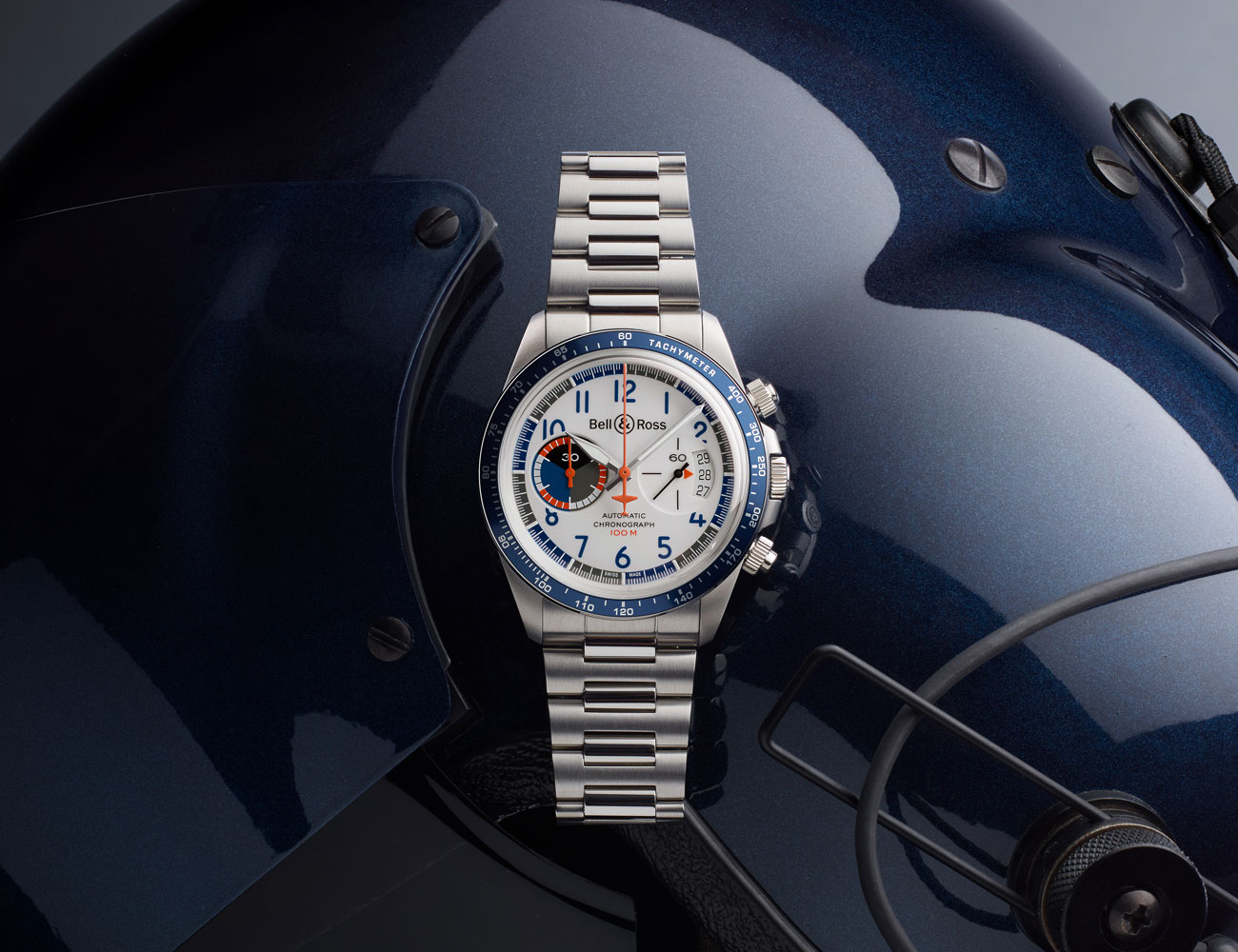
Bell & Ross BR V2-94 Racing Bird

Bell & Ross co-founder and creative director Bruno Belamich is known for designing racing vehicle prototypes to guide the design process of developing new watches. This time, he decided to go to the sky (where Bell & Ross has long drawn inspiration from the history of aviation for its watches that are directly influenced by the shape and look of flight instruments). Belamich conceived the single-seat, propeller-engine BR-Bird racing aircraft concept to help fashion two limited-edition BRV2 Racing Bird timepieces.

The Automatic Chronograph BR V2-94 Racing Bird shares many of the aesthetic choices with the concept racing aircraft itself. From the white dial to the blue numerals and chronograph counter, all elements have their direct reflections in the dreamed-up plane. The final touch is the silhouette of the hypothesized aircraft at the base of the second timer. With the BR-Bird concept and the BRV2 Racing Bird watches, it’s clear Bell & Ross is weaving a new era of aviation history for itself. — Gear Patrol

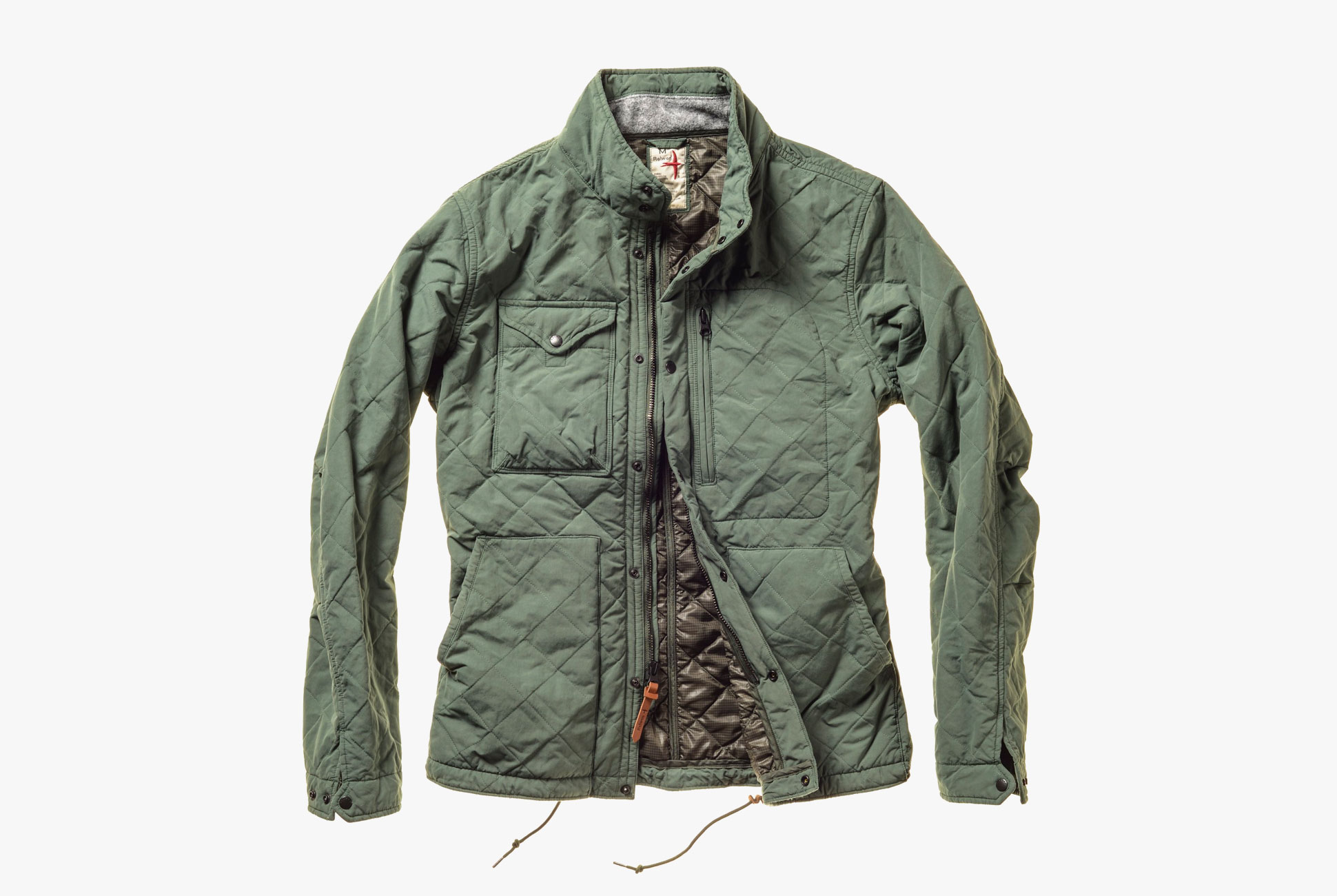
Relwen Quilted Tanker


A field jacket brings a touch of mettle to any fall outfit. Quilted field jackets are not the norm, but the Quilted Tanker from Relwen marries the two styles impeccably. The quilted water-resistant nylon/cotton Taslan shell fabric provides a distinct look while still offering the utility of a traditional field jacket for universal wearability.

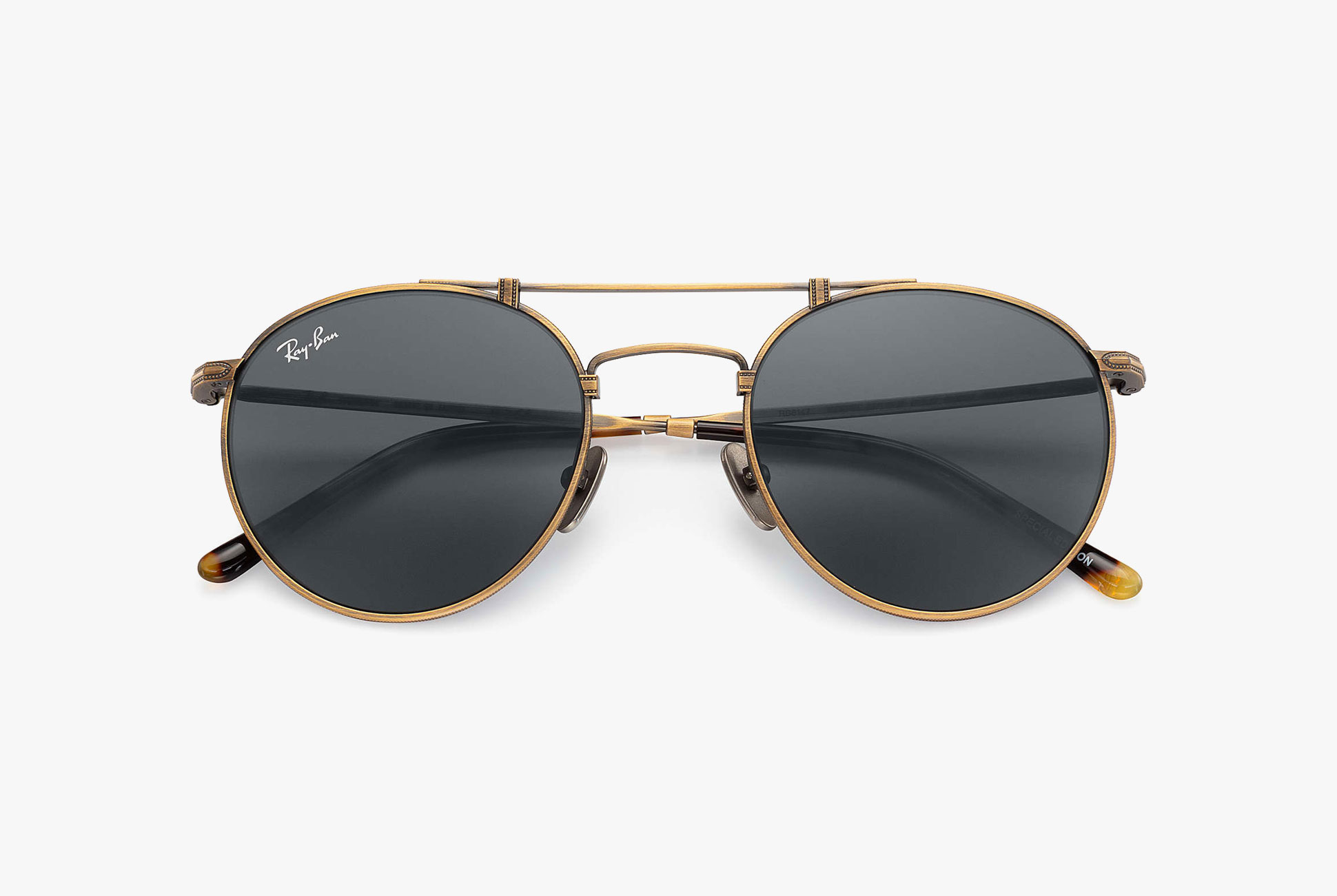
Ray Ban Round Titanium Sunglasses


Aviator sunglasses are classic, but sometimes it’s good to explore something a bit different. Riffing off both aviator and round frames, the Ray Ban Round Titanium sunglasses sport a double bridge with bushed metal finishes and meticulously crafted detailing. Made in Japan, they are a pair of shades that bring a little extra to the table.

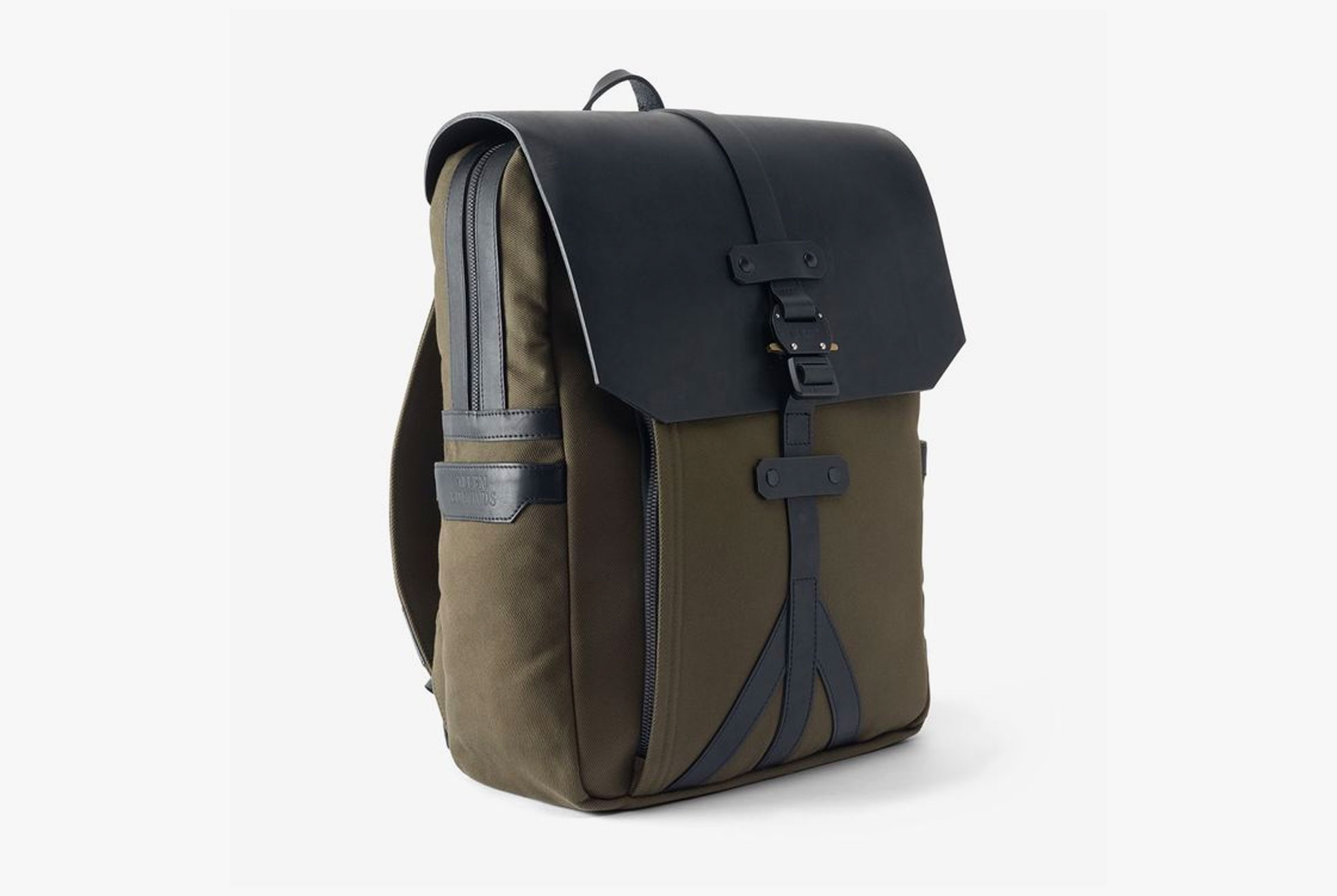
Outpost Olive Twill Flap Backpack by Kochmar for Allen Edmonds


Tapping leathermaker Kochmar for a backpack in its latest collaboration, Allen Edmonds has focused on homegrown, American craftsmanship. The Outpost Olive Twill Flap Backpack represents just that, combining high-quality leather with rugged twill. Also water-resistant, it’s a go-to option for air travel or your everyday commute.

Three Coffee Makers Fit For Any Type of Guy

For many of us, coffee is the essential start to a day: the aroma, that sweet first sip, a necessary perk to get moving. Without a doubt, it is a ritual. It’s not just going through the motions — often, it is the day’s very first indulgence. Yet for something so ubiquitous, the preferences, from method to taste, are endless. Maybe mornings are stacked with workouts, maybe picking up after a two-year-old, or if you rise early enough, a leisurely read of your favorite periodical.

We all have morning routines. It sets the stage for the day ahead. It gets us prepped to take on the conference calls, build the decks, lead the meetings or mentor the students. There is no one size fits all when it comes to the morning, or to caffeine intake. At home with some of Gear Patrol’s own, we’ve singled out three of the best methods — suitable for just about any type of morning and any type of guy.

If You Need to Set It and Forget It

“Our family’s morning routine is pretty dialed. My wife, Emily, is up at 6:15 a.m., me at 6:30 a.m. That way we both have a chance to shower before our preschooler wakes up. My first stop after the shower is coffee prep. We all chip in making breakfast and we’ll usually chat and read the news while we eat. The overall vibe is a mix of keeping things moving since the schedule is pretty tight, yet fun and light since it’s typically the only time all three of us are together (and awake) in the house during the weekdays. We have a divide and conquer approach after that. I take care of cat duty and breakfast clean-up and Emily takes care of making the beds and getting our son ready for school. I’m out for work via the subway at 8:00 a.m. and she leaves 30 minutes later — she pretty much needs all of that difference in time to get him together.

My coffee ritual has evolved as my life has become busier and more scheduled. There was a time when I was using a scale for pour over but now that time is more precious than ever, our daily ritual is an easy drip coffee maker. We need to create efficiencies wherever possible. What hasn’t changed however is using quality beans and grinding them every morning. And the only difference between the weekday and weekends is making more coffee on the weekends since we’re at a much slower pace and can take more time to enjoy it.” — Zach Mader, Vice President, Partnerships

OXO 9-Cup Coffee Maker
There is nothing average about this coffee maker. The water temperature is precisely heated, the LED screen shows brewing status, time and coffee freshness, water is dispersed evenly over grounds with a rain-like shower function and the double-walled stainless steel carafe keeps your coffee hot. Not to mention, for busy people everywhere, it’s equipped with an automatic brew-start timer.
$200

If You Like to Take Your Time

“I’m usually up around 6:30 a.m. and the very first thing I do is start heating water in my pour-over kettle. Then I’ll weigh out enough beans to make two mugs of coffee: one for me and one for my boyfriend, Brian. (The tradeoff is that if I make coffee, he makes the bed.) We both have to be at work around the same time, so he’ll get ready for the day while I’m in the kitchen. By the time he’s out and dressed, the coffee is ready, and then we have a few minutes to talk about our days over a cup of coffee before I start preparing for the day ahead.

Truth be told, I started making pour-overs to impress Brian when we first started getting serious. One of the thousands of things that we have in common is a deep appreciation for and reliance on caffeine, and coffee’s place in our culture. We can recite the scripts for almost all of Lauren Bacall’s High Point Coffee commercials verbatim at this point. We also tend to need a little kick in the mornings to help get us going.

I’ve gotten pretty specific about how to grind the beans — I’ve learned that you have to have a conical burr grinder to get a really good, consistent grind. I’ve also learned that I really like Ethiopian beans and that I tend to prefer something closer to a medium grind, even if most people on the Internet will guide you to something on the finer side. I’m pretty precise about water temperature, too. I tend to brew right at 200 degrees, depending on which beans I’m using.

But the thing that’s so fun about making pour-overs is that you have to be so careful about controlling every element of the process. It makes every decent cup I make feel like a reward for a job well done.” — Justin Fenner, Senior Associate Editor

OXO Glass Pour-Over Set
This ultra-stylish, modern design, mixing a hand-blown double-walled borosilicate glass carafe, glass with stainless steel and cork finishes, is made to speak to those who like to savor their mornings. Taking a bit of extra time is often the joy of the process, but for those a bit rushed, OXO has also created a simple, unfussy Pour-Over Coffee Maker equipped with its own water tank to meet the needs of pour-over lovers with a bit less time on their hands.
$50

If You’re Always on the Move

“Before I started working at Gear Patrol, I never drank coffee. Then someone told me not to let my boss know that I didn’t drink coffee because he doesn’t trust people who don’t. I started the next day. Being around people like our resident coffee expert Will Price has led me to become more and more interested in different beans, techniques and the gear required to make great coffee. I bought a digital scale to weigh my beans which was the next step in my rise to coffee nerdery. Next on the list? A conical burr grinder. My tiny blade grinder just wasn’t cutting it.

I’m a cold brew drinker now so that usually involves prepping coffee for the week over the weekend. During the week, I try to be up around 7:00 a.m. to get a quick run or workout in. Then it’s music, shower, checking Slack, email and my Google feed. I toss a few ice cubes in a thermos with the cold brew and oat milk with some maple syrup and I’m out the door by 8:30 a.m. at the latest. It usually only takes me about 30 minutes to get ready for the day, so I like my coffee routine to be quick and easy. I won’t eat breakfast unless I grab something quick on the way to the office.” — AJ Powell, Assistant Editor

OXO Cold Brew Coffee Maker
OXO’s trademark Rainmaker™ is the key to evenly distributing water in this well-designed cold brew maker, ensuring your low-acidity concentrate is perfectly brewed. The borosilicate glass carafe not only has measurement markings for portioning, it doubles as a storage container thanks to a well-designed and very handy lid.
$50

The Next Evolution of Hands-Free Filming

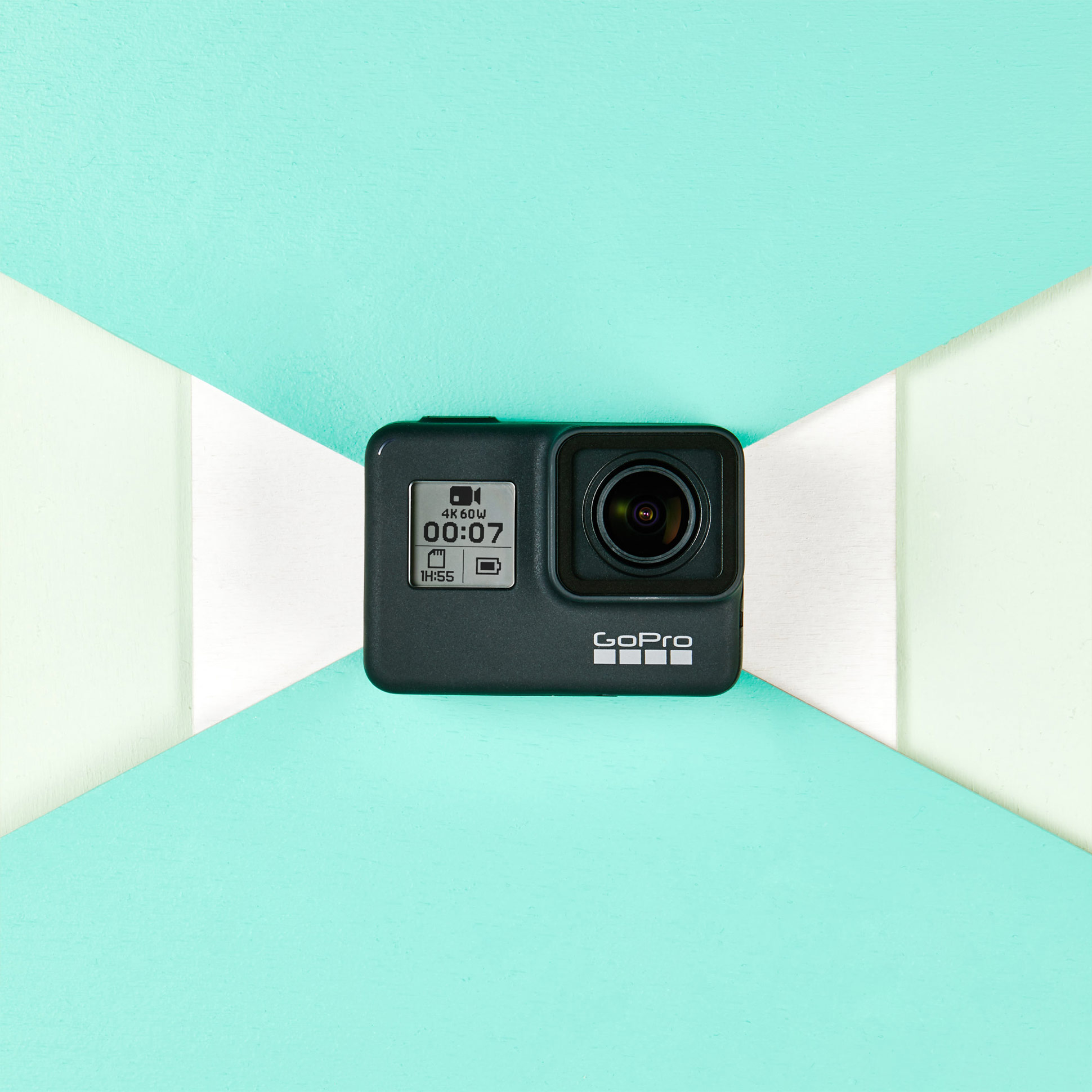
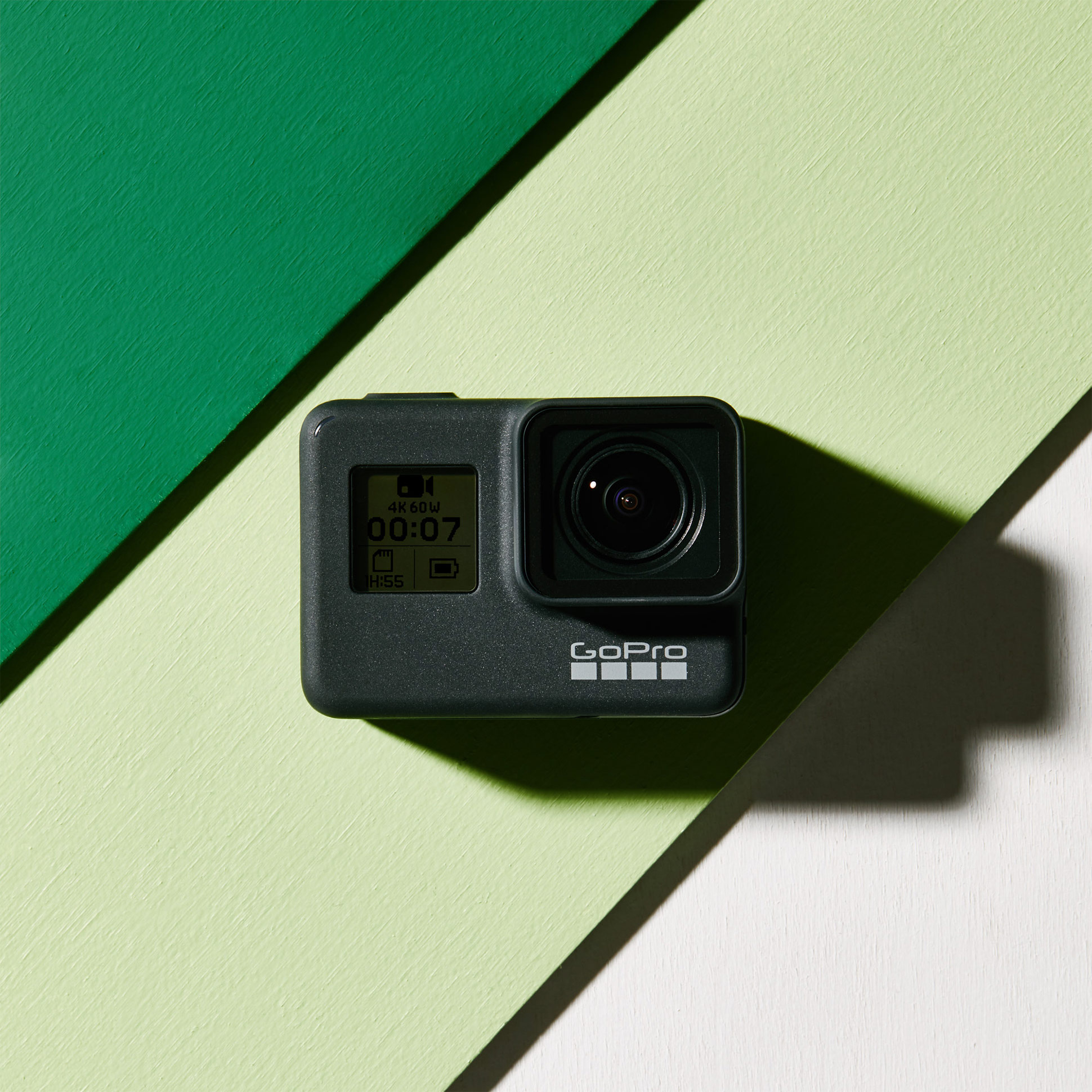
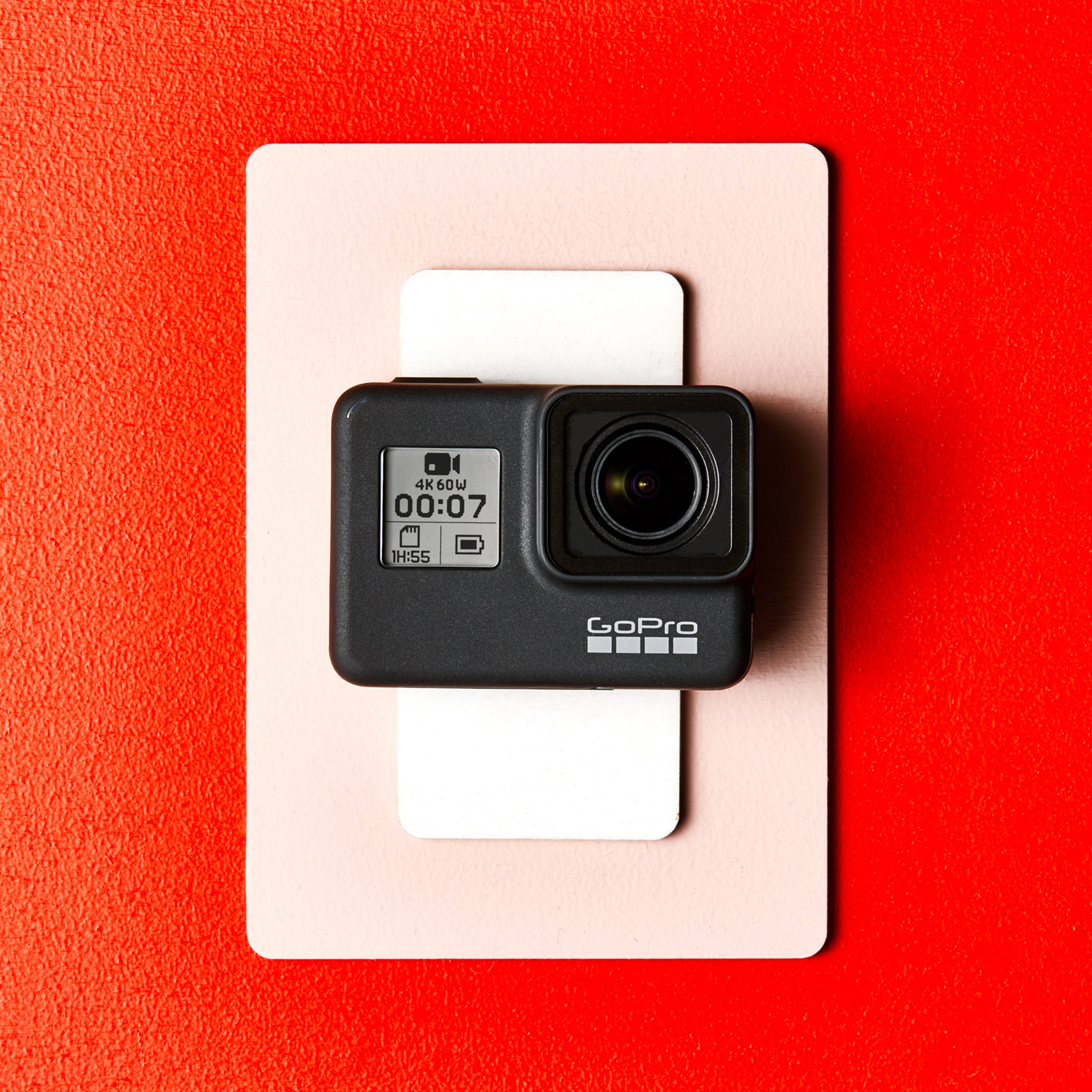
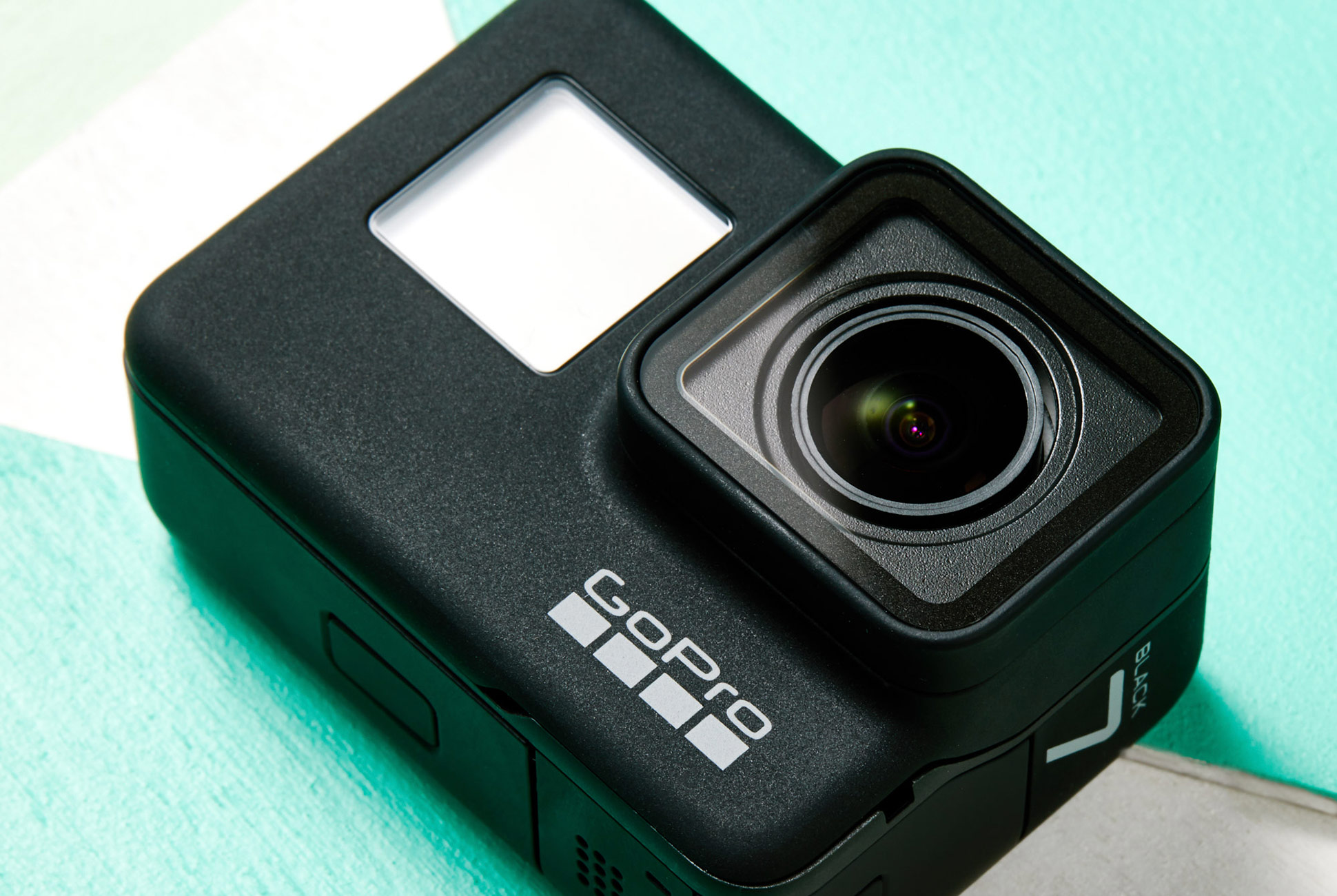
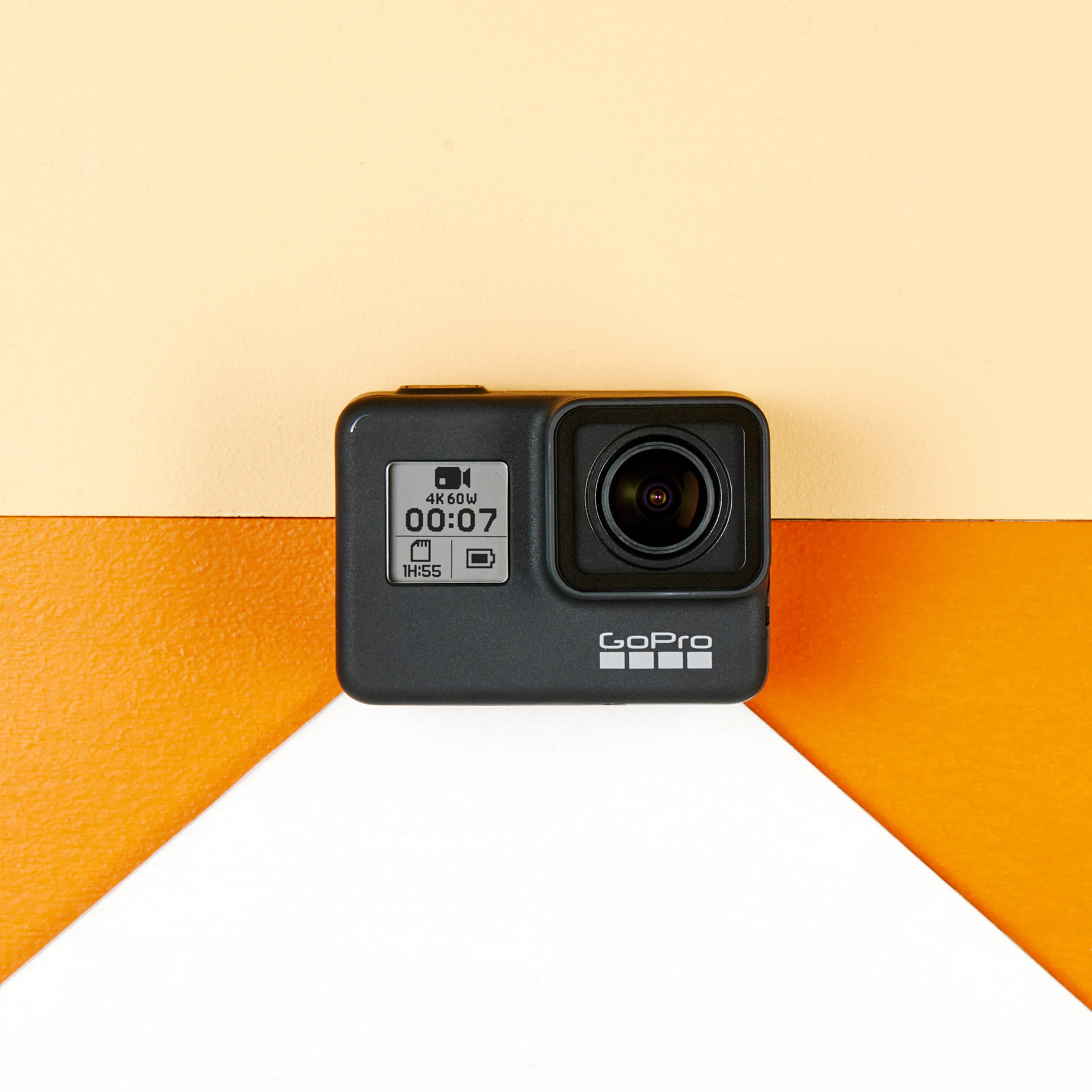
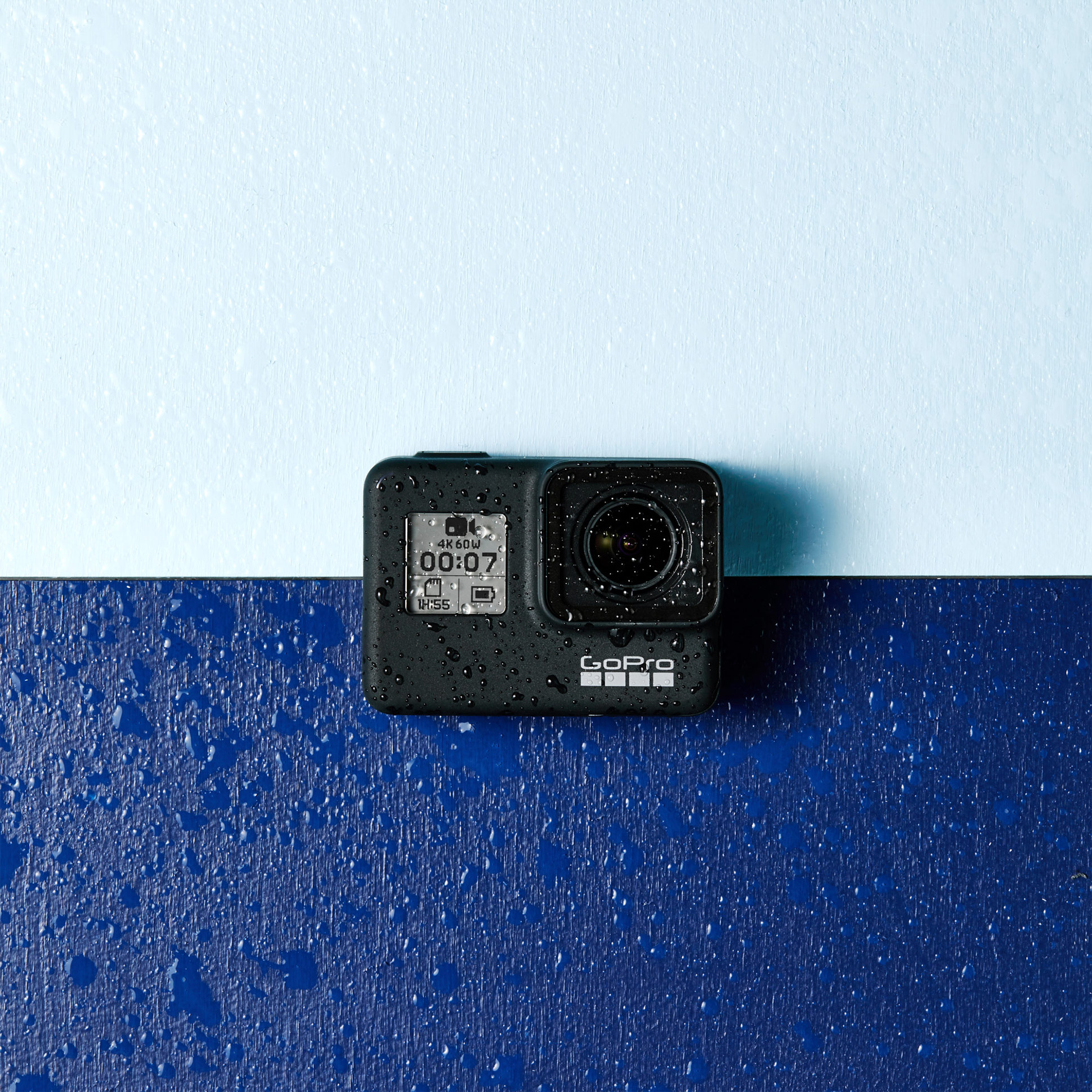
You know GoPro: it’s responsible for creating the standard for bite-sized, personal cameras tough and petite enough to thrive where traditional cameras don’t. In its latest release, the HERO7 Black, GoPro has taken everything learned from its dedicated consumer base and presented them with the most robust camera yet.

“Early cameras were [based] a lot on gut,” GoPro Senior Director of Product & Lifestyle PR Kelly Baker told Gear Patrol. “We included features that we wanted to use, and in the beginning, that really defined the category. Today, GoPro is more sophisticated in our camera development. We’re using data and market research to learn what customers want and building new features to meet those demands.”

Key Specs

Dimensions: 2.45 W x 1.77 H x 1.30 D (inches)
Processor: GP1 chip
Display: 2-inch touchscreen w/ touch zoom
Video: 4K60fps
Slo-Mo: 8x

To that end, wowing the user is arguably the most important consideration in any GoPro. And that shines through in the HERO7 Black with features and upgrades to create GoPro’s highest benchmark yet. The HERO7 Black provides gimbal-like stabilization through the new development of HyperSmooth. Along with that groundbreaking advancement, the camera continues to provide advantages over smartphones with its rugged underwater capabilities, expands on Voice Control, and provides intuitive tools for creating with SuperPhoto and a one-of-a-kind live streaming ability.

HyperSmooth Stabilization


Insider Note: “The algorithms and processing we developed for stabilization are beyond anything in the realm of our [previous] cameras. Taking a $300 gimbal performance and baking that into the camera itself changes the game for not only for us but for the industry as a whole.” — Nick Gilmour, GoPro Director of Product Management

Working off its own processor (GP1) for the second camera in a row, GoPro was able to leverage the platform it built by doubling the memory of the HERO6 Black to release a stabilization that mimics a gimbal grip. These algorithms correct for camera shake to deliver insanely smooth video (say goodbye to shaky videos forever). That means if you use a GoPro when running, riding a bike, or doing anything that can cause camera shake, you’ll be pleasantly surprised.

The new stabilization is also utilized impressively in the TimeWarp feature, giving users the ability to create steady time-lapse videos while moving about a scene. TimeWarp allows you to capture longer activities and compress the video into short and shareable clips. By leveraging HyperSmooth tech, TimeWarp gives you a super smooth, sped-up video that’s easy to share.

Waterproof and Ruggedness


Insider Note: “There are a few elements that make GoPro DNA. First and foremost, you can take it anywhere on any adventure. We do a bunch of quantifiable testing to validate things like its ability to withstand submersion in water or exposure to heat and cold. We test it beyond what we’re claiming just to make sure these things are just bulletproof and to know that whatever a customer is doing with it, it’ll make it.” — Nick Gilmour

GoPro has long been known for its waterproof capabilities, and that continues in the HERO7 Black. It provides waterproofness down to 33 feet (10 meters) without a housing, making it a camera you never have to worry about failing on you in any environment.

Before joining the team at GoPro, Product Marketing Manager Jeremy Hendricks was a Green Beret in US Army Special Forces commanding a HALO team. Coincidentally, he was doing product testing for the HERO3+, taking it on 20,000-foot, high altitude, oxygen landings, and missions. As Jeremy told Gear Patrol, “You know if you see your GoPro go flying that it’s going to be fine. It can take a beating.”

Voice Control


Insider Note: “A big part of the GoPro experience is allowing users to capture moments using voice commands. You can literally talk to your camera and tell it what to do, like, ‘GoPro take a photo’ or ‘GoPro start recording.’ It’s very intuitive and allows you to stay in the moment during capture, rather than worrying about pressing a button to start and stop.” — Nick Gilmour

The capabilities of GoPro Voice Control have expanded considerably since it was first introduced in the HERO5 cameras. HERO7 Black responds to 15 different voice commands in 14 languages and even different accents for English. Voice commands allow for easy, intuitive use of the HERO7 Black and make the experience hands-free — something you can’t achieve with your smartphone.

Voice commands also allow you to keep your eye on the action and stay in the moment, without having to worry about changing modes or settings. HERO7 Black will respond to simple commands to help you start and stop recording, change capture modes, add HiLight Tags and power off the camera — all without needing to press any of the camera’s buttons.

SuperPhoto


Insider Note: “It’s a tool that automatically applies multi-frame noise reduction, local tone mapping, or HDR to a photo without the customer having to decide which tool to use to give them a much more brilliant, better-looking photo.” — Jeremy Hendricks

SuperPhoto is a new intelligent photo mode that utilizes smart-capture technology to take the best possible photo. All of this is done internally by the camera, analyzing the light and motion in the scene before the photo is taken for automatic optimization. SuperPhoto will also not apply any of these image enhancements if they are not needed for the scene, further emphasizing its photo-taking intelligence.

This becomes even more helpful with Voice Control eliminating the need to see what the camera is doing when you want a photo taken in the heat of the moment. With the ability to shoot in RAW, it means the 12-megapixel photos can compete with point-and-shoots.

Live Streaming and Sharing


Insider Note: “A big priority for us is the journey of the content. Our users are always looking for faster and easier ways to share their photos and videos, and the GoPro app is the perfect tool for that. And now, the live streaming feature of HERO7 Black offers them a new way to instantly share moments.” — Nick Gilmour

The ability to easily share from the HERO7 Black makes use of all the new features to provide an entirely new medium of live streaming that has yet to exist. The HERO7 Black brings vertical photo and video sharing options, allowing for a seamless uploading of content straight to Instagram stories. And when you live stream, a high-resolution video file is saved to the HERO7 Black’s SD card — something your smartphone doesn’t do. GPS overlays are also available through the GoPro app for speed, your course, and more information to help users share everything in the moment.

Add in the hands-free capabilities and the HyperSmooth stabilizing, and GoPro has created an entirely new experience for live streaming that is sure to change the paradigm yet again. One that creative users will find ways even GoPro hasn’t thought of to bring their content to the world.

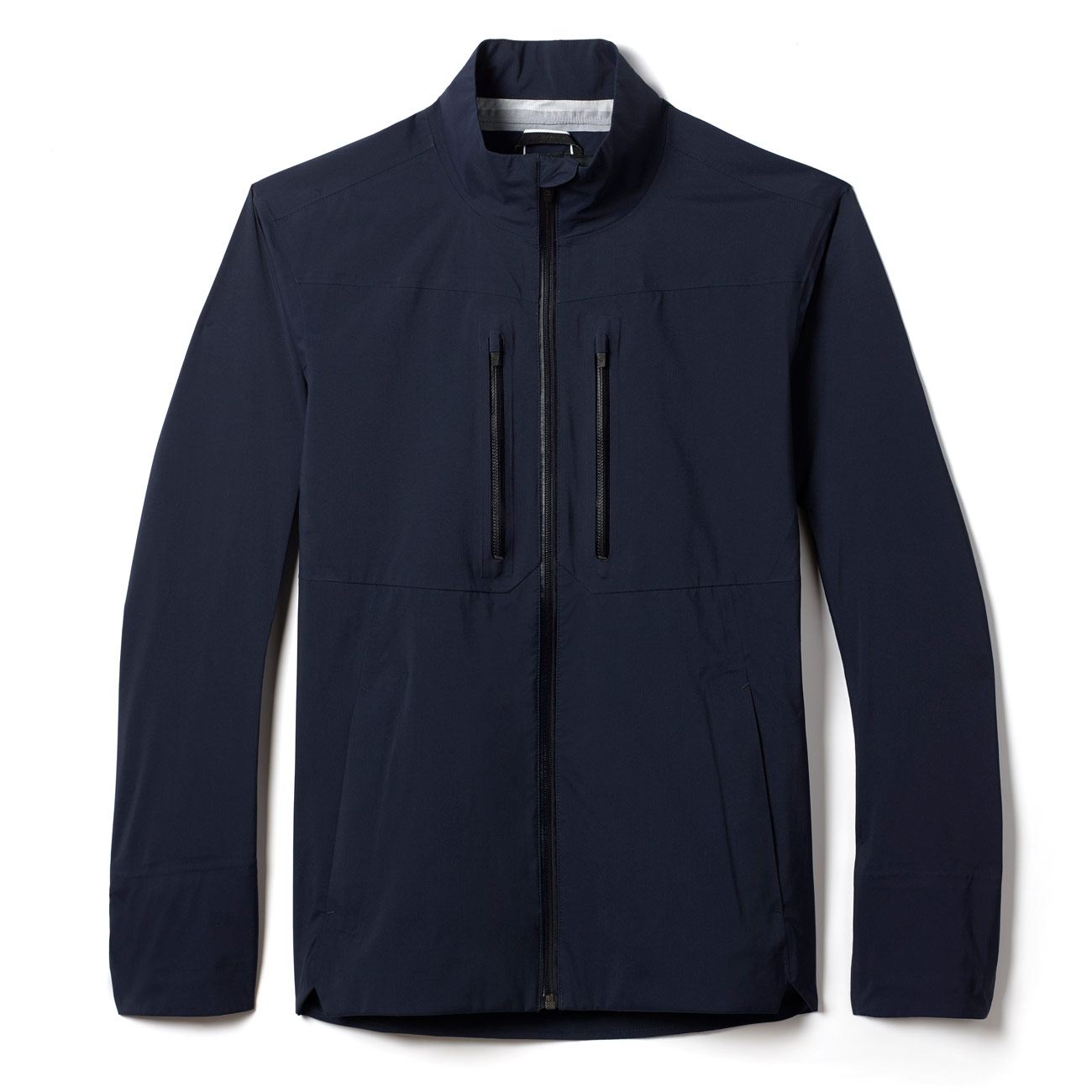
A Lightweight Jacket Built to Handle Autumn’s Worst

AETHER’s Realm Jacket is the perfect city shell that can also perform out in the mountains — or anywhere else you find yourself in need of a well-designed, lightweight jacket. Made from a three-layer ripstop, the simply sophisticated style is constructed to handle all types of weather conditions, making it the ideal piece to pack for wherever your next adventure takes you.

It’s waterproof, seam-sealed, wind resistant, and breathable to make sure you stay comfortable at all times. And the classic AETHER slim fit cut means its high-tech construction doesn’t sacrifice style, staying true to what the brand has become known for: superior outerwear made to live an aspirational, adventurous lifestyle.

From the weatherproof zippers to the interior pockets (one of which has an audio valve for listening to tunes on the go), every single detail was considered when designing and manufacturing the Realm Jacket. The sleeves even feature an interior stretch-jersey wind cuff to keep the elements out, which you’ll be glad to have in the coming months. This is the jacket to reach for when that chilly weather finally sets in and you’re packing for the coming journeys on your fall calendar.

Versatile Shoes Ready for Any Urban Escape

Cities are no longer the treeless landscapes they once were. Urban planners are integrating more and more green space in unique ways. Places like the High Line in New York City, Detroit’s Dequindre Cut, and the Rail Park in Philadelphia have shown that even the most unwavering industrial infrastructure can be reimagined as modern-day areas of respite.

This gives city dwellers the ability to quickly escape the concrete jungle. The High Line, for example, offers nearly 1.5 miles of walking for views of the Hudson River along an old rail line 30 feet above the streets of Manhattan. The High Line is rugged and peace-providing, yet still allows for seamless access to fine cultural possibilities in art galleries, restaurants, and more in the Chelsea and West Village neighborhoods of NYC. Simply walking up or down the steps to go from city bustle to nature break, this makes for a go-to option when you need to get outside in the city for a micro-adventure.

To do that, it’s imperative to have versatile shoes like KEEN’s Glenhaven Mid Sneaker and ‘The 59’ Chelsea. Both pairs can transition from the office to any trail or city street with plenty of comfort and support to spare for those days of constant walking and getting lost in parks. And they’ll be able to handle any weather the city might unexpectedly throw at you.

‘The 59’ Chelsea Boot

‘The 59’ Chelsea is a stylish city boot that’s upgraded with seam sealed water protection and a comfortable foam footbed for superior transition from the office to the streets. The easy slip-on design and combination of leather and mesh make ‘The 59’ Chelsea a superior fall boot to deal with any weather and muddy paths you find yourself on.

The Glenhaven Mid Sneaker

And the Glenhaven Mid Sneaker is just the sort of sneaker urban life demands — every urbanite needs a comfy mid-rise sneaker in their arsenal. The black-on-black colorway also brings a sense of modern cool. Merging urban performance with a hiking silhouette, the Glenhaven Mid Sneaker is ideal for traversing whatever landscapes you roam.

The Ultimate Essentials of a Leica Photographer

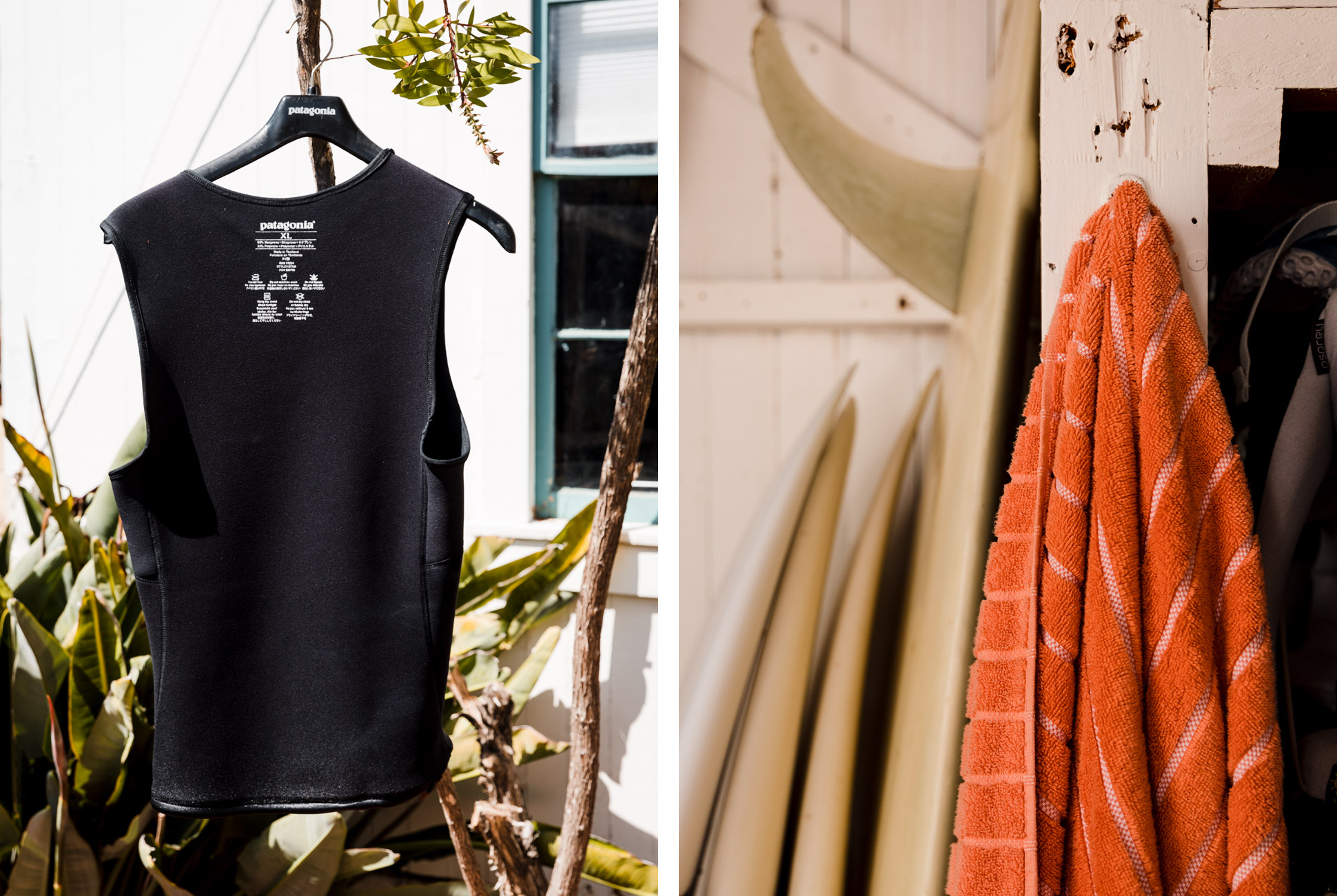
In his work as a photographer, Tim Davis has been on shoots all over the world — to India, Indonesia, to Sri Lanka and Japan, across Europe and Latin America, not to mention at home in the US. His photographs span from adventure sports to classic, intimate portraits. And for the last 13 years, his full-time gig has been on staff at Patagonia. “I’ve been shooting here full time since 2005, split unevenly between different disciplines — location, ocean sports (like diving, surfing, paddling), environmental issues, studio and video,” says Davis.

Being a photographic jack of all trades has allowed Tim Davis to get dialed in a variety of styles, but these days portraiture has captivated his attention. “Photography is this interesting combination of art and science. But the actual process of operating the camera needs to be something done well enough that it becomes a subconscious reflex, second nature muscle memory,” he says. “It should disappear to make room for the real priorities: being in the moment and observing, communicating, building rapport with a subject, recognizing what’s working, what’s not, changing ideas and listening to your intuition.” Below you’ll find this pro’s go-to kit, that is, all of his essentials for a shoot on the road, and his personal insights to why he shoots with a Leica M10.

The Camera Set-Up

“Ah, the M10! The M Series represents pure classical photography. These are the Steve-McQueen-oil-cooled-Porsches of cameras. Raw, unobtrusive, reductionist equipment crafted by hand and built like a tank (if Porsche made tanks). The iconic style of these cameras is still reminiscent of Ernst Leitz’s originals. They’re recognizable, notable even to the layman. Brass, glass and style. The high-tech cameras are great too, but that tech removes you a bit from the process. Those cameras cover your ass whether you need it or not. Just as the classic Porsche needs you to downshift manual transmission while late breaking around a corner, the Leica needs you paying attention. It makes a certain type of photo and that’s special. Henri Cartier-Bresson shot a Leica with the 50mm nearly his entire career. Mary Ellen Mark used the M6 with the 35mm for a lot of her 35mm work. So for me, it was as simple as that. Gear good enough for them is certainly good enough for me.”

Everything Else

“Shoot days vary — portrait sessions with heavy hitters may allow you just 15 minutes of access, so we’ve got to move quickly in those situations. International, on-location, high-level portraiture or documentary-film shoots may run longer. Over the years we’ve traveled with various crews: Director of Photography Robert Richardson and Annie Leibovitz for Amex, Stacy Peralta as well as tons of younger, nimble and specialized freelance crews. I’ve been all over — to India, Indonesia, Chile, Sri Lanka, Argentina, Central America, Europe, Japan, as well as tons of domestic stuff. I’m much more efficient than I was years ago and really enjoying the 3-5 day strike missions these days.”

LunarGlide by Nike
Cash Card by SOG Knives
Starter Kit by Snow Peak
iPhone 8 Plus by Apple
Alpaca Beanie by Industry of All Nations
1510 Protector Carry-On Case by Pelican
Houdini Jacket by Patagonia
Stormfront Pack 30L by Patagonia
BYOB 10 – Camera Insert by Tenba
BYOB 9 – Camera Insert by Tenba
Pescador Untangled Collection by Costa Del Mar x Bureo
Single Layer Premier Leather with Arch Support by Rainbow Sandals