
All posts in “Motorcycles”

Cake Is the Swedish Solution for America’s Disappearing Motorcycle Market

D

espite the existence of two-wheeled land rockets like the Kawasaki H2, the BMW S1000RR and growing list of cafe racers, the American motorcycle industry, as a whole, is a slow-moving machine. It’s slow to react to changes in culture, drags its feet in adopting new technology, misses the mark attempting to hit the right target audience and it can’t seem to grasp why sales slip year after year. Across the Atlantic Ocean in Sweden, Cake, an upstart electric motorcycle company has a formula and a mindset that Harley-Davidson, Honda and Yamaha would do well to learn.

Cake founder and CEO Stefan Ytterborn, who did stints designing at IKEA and Saab and also founded the helmet company POC is an optimistic creative who takes pride in immersing himself in his work on a personal level. That’s not to say he’s some starry-eyed workaholic – quite the opposite. Like many Swedes, Ytterborn is pragmatic in his approach to nearly everything and is an essentialist in style. When his sons started getting into mountain biking and skiing, he took a look at the protective gear they were wearing and thought he could do better. That was the basis for POC’s creation. Now that electric motor technology is finding its way into the mountain bike and motorcycle industry, Ytterborn sees another opportunity to utilize his particular brand of creative engineering. Ytterborn admits he’s “not a traditional motorcyclist,” but maintains that’s what gives him an advantage. “I’m approaching the whole electric motorbike idea from a mountain bike guy’s perspective. But we’re not trying to make a battery-assisted mountain bike.”
Motorcycles in America saw a boom in popularity in the ‘60s, 70’s and held a steady presence throughout the ‘80s and even into the early-oughts. However, over the last decade, sales have trickled off. The riders Harley and Honda have catered to for the past few decades (the Baby Boomers) started out on bikes with small cc-engines and as riders grew up, manufacturers focused on increasing engine sizes, making the bikes bigger and upping the speed. The Boomers were the cash cow, so that’s for whom the bikes were built. Now those riders are aging out of riding altogether, and manufacturers are left scrambling trying to find what sells now that newer riders aren’t hopping on 1000cc sport bikes with fresh licenses. A general lack of attractive products might be putting off the younger generation from riding entirely.

“But what the American motorcycle industry needs is a fresh new take on what an accessible, approachable motorcycle can be.”

According to Ytterborn, Cake’s mission is to “lean on the traditional attributes of the motorcycle culture. It’s all about responsibility, sustainability, exploring, discovering what’s out there.” As with his previous pursuits, he’s hellbent on doing it his way. “These big companies, if you start doing exactly what they’re doing from scratch, it doesn’t go well.” Ytterborn goes on to describe Cake and its first production bike, the Kalk, as “adding a discipline. It’s not mountain biking, motor-aided mountain biking, nor is it like traditional combustion engine motorbiking — this is something new.”

But what the American motorcycle industry needs is a fresh new take on what an accessible, approachable motorcycle can be. “Look at the off-road combustion market — there are only 350,000 bikes sold annually which is tiny market. That’s why we want to … help people get out there and explore in an easy way without really knowing how to ride a motorcycle — not knowing the clutch, not knowing how to change gears.” Not exactly an unfounded idea: over in the four-wheeled industry, manual transmissions are rapidly disappearing, even as options. The majority of the market is not made of enthusiasts and new drivers aren’t learning. On motorcycles, it might be the same story. The idea of operating the clutch with one hand, the front brake and throttle with the other, while the left foot shifts gears and the right foot works the rear brake is daunting at best. The Cake Kalk brings the familiarity of mountain bike controls — both brakes on the handlebars and with no clutch to speak of since it’s electric — to a similar silhouette and produces an easy-to-manage, easy-to-ride, small-engined dirt bike.
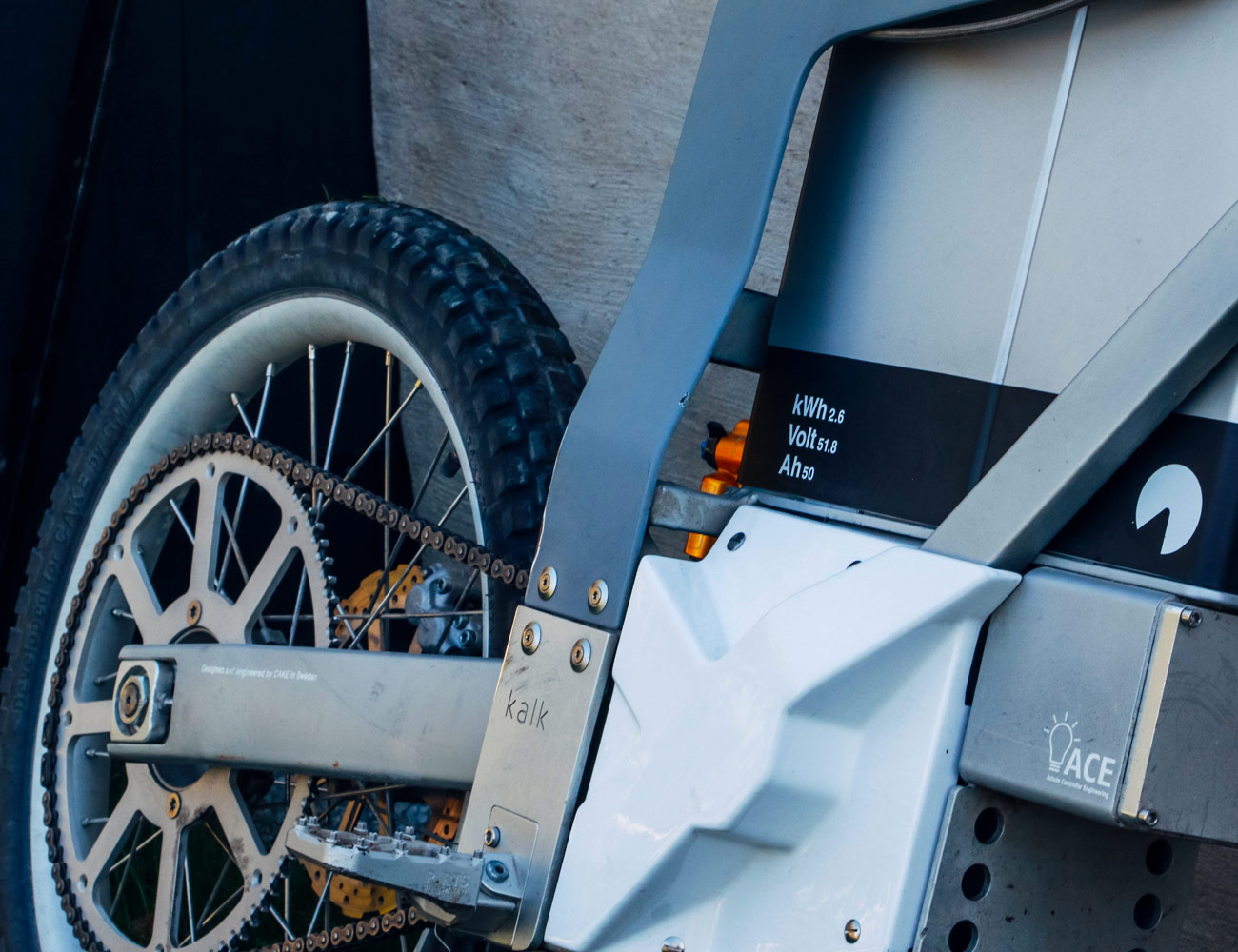
Most people learn how to ride a bicycle when they’re young, but there’s a vast chasm between the dynamics of a pedal bike and a motorcycle. The Kalk is neither a power-assisted pedal-bike nor a full-on electric motorcycle — exactly the bridge the American market needs right now. Even with manufacturers like Honda and Ducati making smaller, more stylish bikes and marketing to a younger crowd, there’s still a sense of them working backward. Cake is moving forward from the limited architecture of mountain bikes that, with super lightweight frames and skinny tires, are unstable at higher speeds. But it’s not making the full jump (yet) to electric speed machines like Alta and Zero, motorcycles better suited for experienced riders. And it’s those Swedish values — that inclusiveness, that friendly approachability — and humble approach that will win over new riders. If bigger manufacturers want to succeed in drawing in a new generation, they should take notice.
The FTR 1200 Is the Motorcycle Harley-Davidson Is Too Afraid To Build

If you haven’t noticed, the traditional American motorcycle companies (hint there’s only two of them) seriously lag behind the rest of the world’s manufacturers when it comes to brand diversity. For Indian Motorcycle and Harley-Davidson, the rule of thumb is cruisers or bust, but Indian is breaking that tradition with the all-new FTR 1200, and it’s about damn time.

When Indian announced the street-legal FTR 1200 would go into production, it made sure to mention it would be obviously related to the FTR750 flat track racer and the one-off FTR1200 Custom that made rounds at last year’s motorcycle shows. Indian Motorcycle Senior Designer Rich Christoph said, “We wanted to make sure that the FTR 1200 wasn’t merely a regurgitation of the FTR1200 Custom, but something uniquely ‘street,’ albeit flat track inspired.” Hopefully, that translates to more civilized exhaust pipes to meet emissions and swapping the carbon fiber for something more affordable to keep the price down. Everything else needs to stay.

Full stats on the FTR 1200 aren’t official, but it’s clear the new bike will use different V-twin from the current Scout. Whether Indian decide to keep it at or around a similar 100 horsepower and 73 lb-ft is another story. But, it might not matter because of the stripped down, flat track-style body — the FTR 1200 will be undoubtedly lighter by 100 pounds or so. All you have to do now is keep an eye out for the FTR 1200 going on sale early next year.

Indian introduced this bike as a one-off then sat back and listened to the feedback, assessing whether or they should build it or not. Which, while smart, I will say was probably unnecessary. You only need to take a glance at the current market to see that retro-styled scramblers, cafe racers from Europe and Japan and street trackers from custom shops the world over are very much in style. The hesitance to build a bike like this speaks volumes of American manufacturers. Harley-Davidson’s reluctance to build anything but cruisers aimed at demographic completely aging out of riding motorcycles altogether is exactly why it’s in the dire situation it is. I’m genuinely ecstatic Indian finally pulled the trigger on a bike like this, since the American market has clearly been pining, starving for it. But what took so long?

This New Line of Vintage Helmets From AGV Is Absolutely Stunning

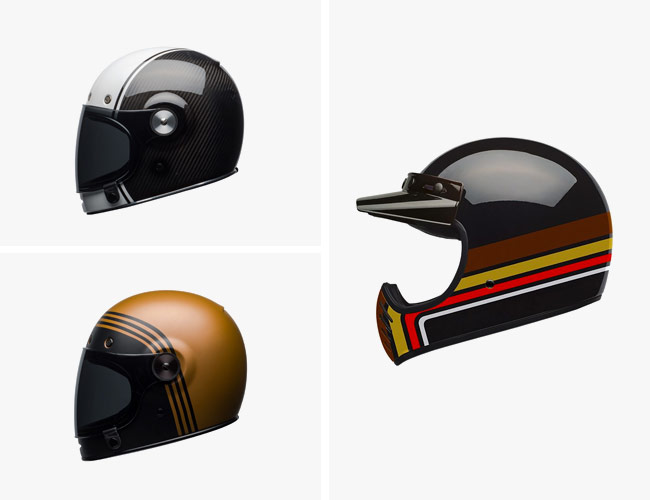
There’s been a recent surge in vintage helmets coming from almost every manufacturer. And who can blame them with the number of classically style bikes flooding the market? Well, AGV just joined the fold this week when it launched its own new line of vintage helmets, AGV Legends Collection.

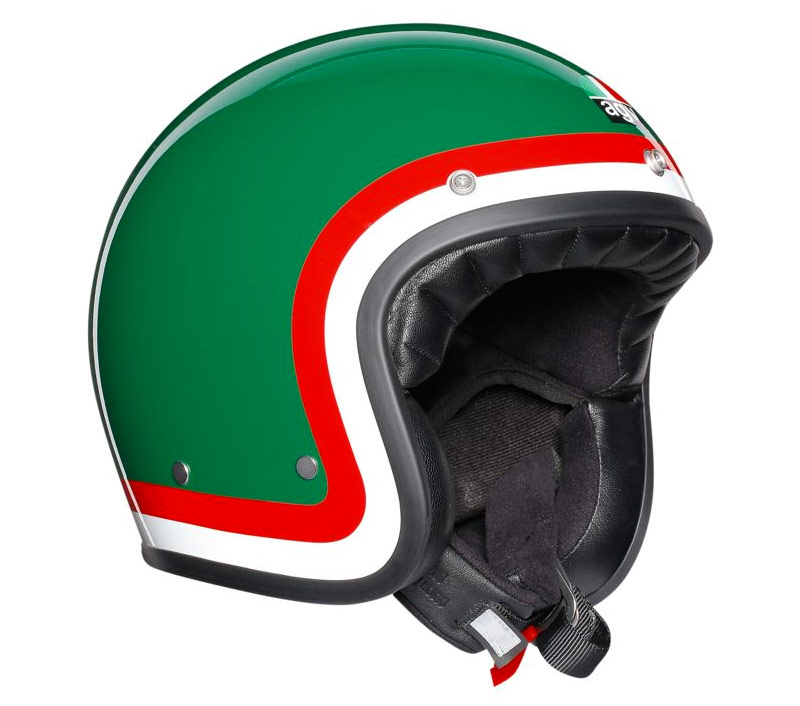
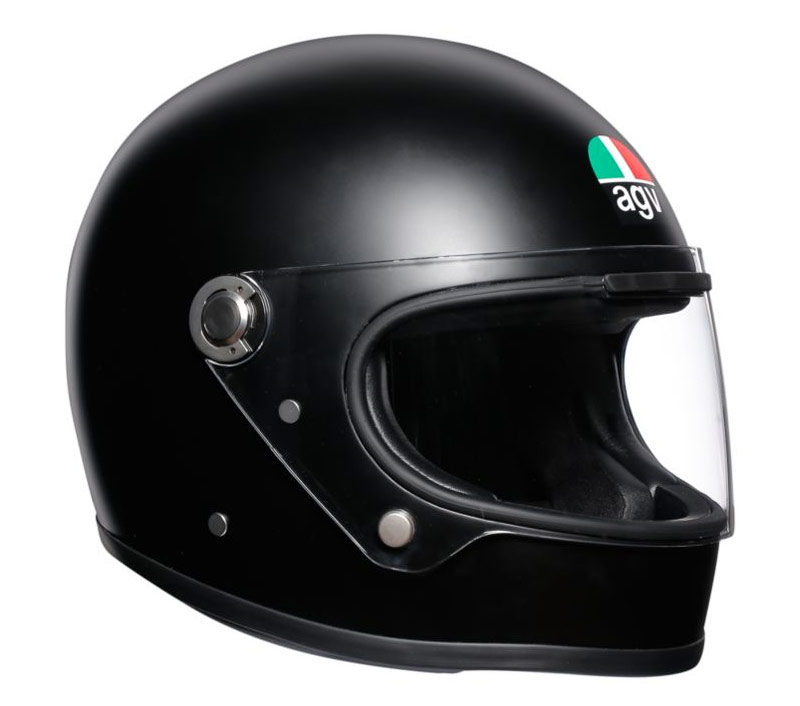
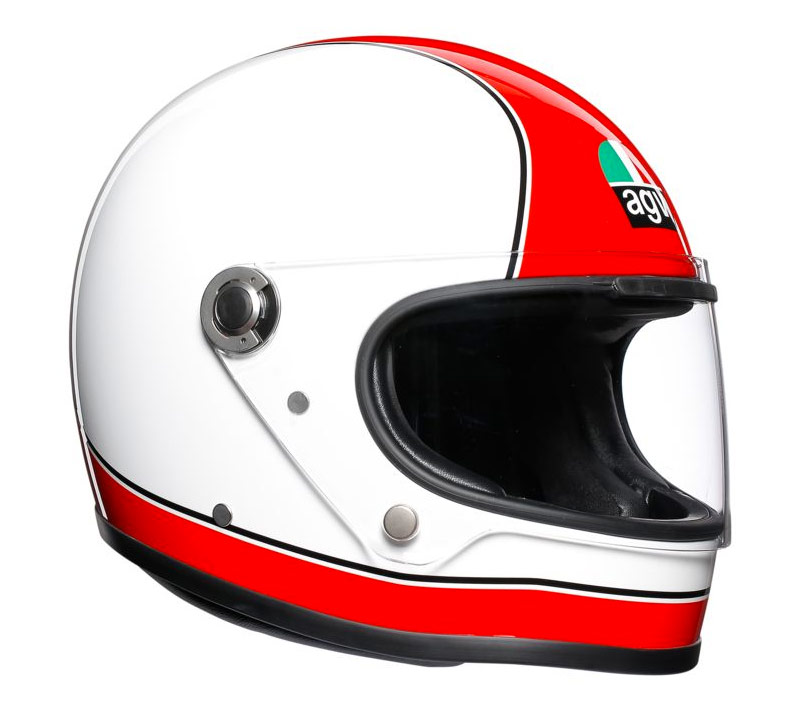
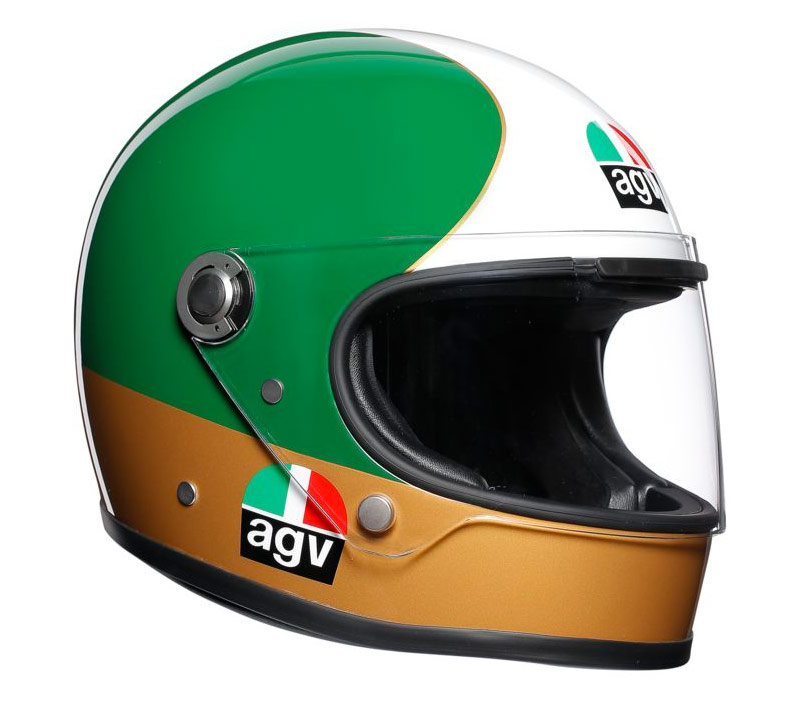
The AGV Legends Collection as a whole is made up of two base helmets, the X3000 full face model and the X70 three-quarter shell. Both bring modern safety standards to the table, like many of the other reborn ’60s- and ’70s-styled helmets, but there’s something about the AGV helmets that go above and beyond with Italian style and flair. And, depending on which specific model you pick, you can dial that back or up to 11.

There’s always the classic black or white, matte or gloss options, but at the other end of the awesome-spectrum are the X3000 Ago and X70 Pasolini special editions. Both are inspired by the helmets of Giacomo Agostini and Renzo Pasolini, the two Italian motorcycle racers who helped put AGV on the map back in the ’70s. Agostini may have won the championships, but Pasolini’s wild riding style pushed the sport forward — both can take credit for making these designs so recognizable.

It just goes to show how much designers from 40 and 50 years ago knew what they were doing. They’re designs, colorways, and aesthetics are just as beautiful and impact today as they were then. Whether you’re into the latest and greatest or are completely onboard with the vintage style wave, there’s no denying the AGV Legends Collections is absolutely stunning and timeless.

X70 Trofeo Helmet by AGV $230

X70 Pasolini Helmet by AGV $330

X3000 Helmet by AGV $380

X3000 Super AGV Helmet by AGV $450

X3000 Helmet Ago by AGV $700
Today in Gear

The best way to catch up on the day’s most important product releases and stories. Read the Story

Looking For a Capable, Lightweight Adventure Motorcycle? This Is It

In the quest for more lightweight, capable, easy-to-ride adventure bikes, the ‘enduro’ category is looking more and more popular every day. Building off of the success of its dirtbike range, Alta Motors decided to jump into the class feet first with the Redshift EXR enduro bike. The EXR adopts the familiar silhouette of the modern enduro but challenges the industry by employing the company’s latest, lightweight, performance-packed quick-charging electric motor.

It might not sound like your tradition high-revving single-cylinder, but since it uses 50 horsepower and 42 lb-ft of torque to move only 273lbs worth of bike, you better believe it rides like one. I got a taste of one of Alta’s road bikes awhile back and can attest to how wild the powertrain is. Further, Alta just proved itself the world by being the first electric bike to qualify for the Erzberg Rodeo, one of the world’s most demanding off-road races. And, for everyday use, the EXR can be switched into any one of four riding modes — Eco, Sport, Performance or Race — each of which has a different power level for varying conditions and rider experience levels.

The numbers everyone will be scrutinizing are the four hours of trail riding or 50 miles of city riding you’re limited to on a single charge. That might not seem like much but, considering the EXR can fully charge in as little as 90 minutes on a rapid charge (240v) and in three hours on a standard charge (120v), it’s completely usable. After four hours of trail riding, you’ll need about 90 minutes to recharge yourself anyhow.

As adventure vehicles, electric motorcycles are becoming increasingly prevalent with each passing riding season. The technology is decreasing in weight, increasing in power and performing on par with their gas-powered relatives. Not to mention the notion of adventure and off-road vehicles leaving less of a footprint and conserving the environment is becoming more important as well. What better way to lead the charge (sorry) than supporting electric vehicles and pushing the industry forward because it’s clearly heading in that direction.

Today in Gear

The best way to catch up on the day’s most important product releases and stories. Read the Story

This Vintage Cafe Racer Commuter Bike Only Costs $2,800

In any modern city, getting from one end to another can be a hassle (even if public transportation is an option). The cost of taking an Uber, cab or the train can add up over the course of a year, but it’s miles better than owning a car in a city like Manhattan. The new city-orientated RCR electric bike from Onyx and other bikes like it are the only viable, sane option when you break it down.

The Onyx RCR, however, comes with serious ’60s styling to pair with the genuine performance the rear hub-mounted electric motor. You could opt for a Citi Bike, but you won’t get 72 volts feeding torque to the rear wheel and have a 60 mph top speed and a 45-75 mile range — meaning you’ll leave some $5,000 electric assist bikes in the dust. The Onyx RCR will only set you back $3,500, and the more moped-looking CTY model costs just $2,500. The CTY, although it’s even more affordable only has a maximum range of 40 miles and a top speed of about 30 mph, which might be ideal for neighborhood errands, but I wouldn’t chance it on the busier streets.

Both Onyx RCR and CTY are on track to hit the streets later this year and early next year, respectively. As of now, Onyx hit 203 percent of its original funding goal on Indigogo where you can reserve one for yourself, along with a few other perks. If you do fancy getting your name down for the RCR or CTY early, know that you’ll get a 25 percent discount which drops the RCR’s price tag to $2,600 and the CTY’s to $1,875. There’s no denying that electric-powered two-wheelers are growing in popularity and demand, it’s just a matter of when you’ll adopt one and what style you want.

Today in Gear

The best way to catch up on the day’s most important product releases and stories. Read the Story

2018 Husqvarna Svartpilen 401 Is the Futuristic Cure to Vintage-Style Fatigue

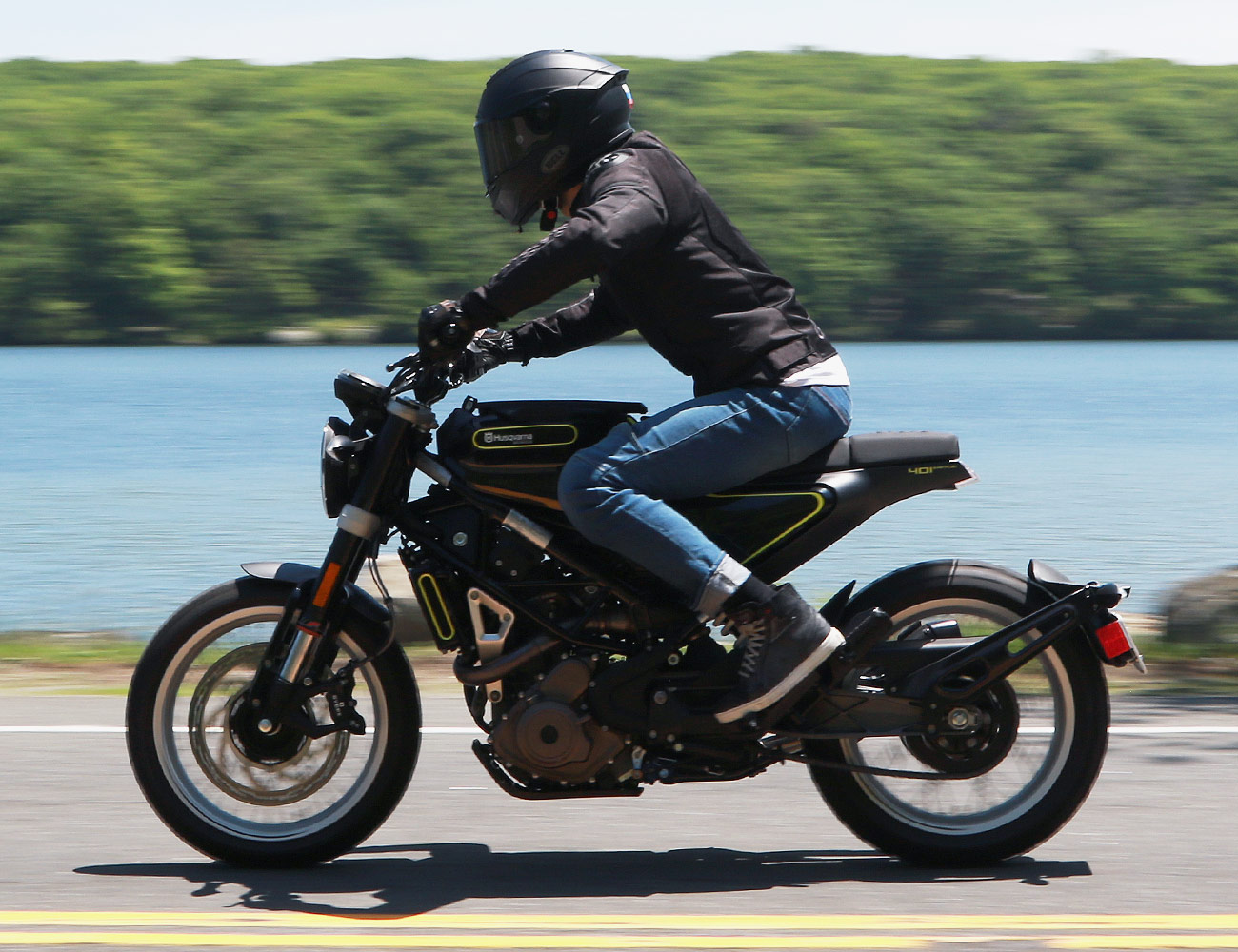
When Husqvarna took the wraps off the Svartpilen concept — alongside a few other bikes — at EICMA in 2016, the crowd went wild. Not only did it mark the brand’s return to the road bike scene for the first time in nearly 50 years, but the bikes looked damn good too. By the time 2016 came around, retro-styled cafe racers and scramblers had flooded the market, so the offerings from Husqvarna came as a breath of futuristic fresh air. Flash forward to 2018 and the bikes everyone drooled over at EICMA are now on the road. Best of all, they’re identical to the concepts and deliver more than just good looks.

The Good: The list of complaints I have with this bike is almost non-existent. Fresh styling helps it stand out from the pack and under the modern design lurks a genuinely outstanding machine. The Svartpilen 401 might be small in stature, but its engine has more than enough punch to get the 330-lbs of bike moving with an entertaining amount of enthusiasm. All of the 401’s strengths combine to make one hell of a contemporary city bike.

Who It’s For: If retro styling, seen on the majority of cafe racers and scramblers on the market, is getting, well, old to you and the super aggressive stylings from Japan are a bit much, the Svartpilen 401 carves out a stylish niche for you. The city-dweller of today who wants a perky around-town bike with subtle yet head-turning style will want to get on the 401. Whether it’s a first bike, fourth bike or beyond, the 401 would be a welcome addition to the garage.

Watch Out For: Modern scrambler-styling, raised dirtbike handlebars and slightly knobby tires give the impression the Svartpilen can tackle some off-roading, but it’s not truly designed for it. This is similar to the way the BMW Urban G/S is mainly a style exercise and not a real dirt-pounding machine.

Alternatives: The Svartpilen 401 is a newcomer in an ever expanding small-cc bike market, so its competition is pretty stiff. Husqvarna might be aiming at the heavier, more expensive Ducati Scrambler Sixty2, but Honda has a serious contender with the CB300R. The 401 lands right in the middle at $6,299, while Honda gets a $4,949 price tag — the Ducati tops the three at $7,995.

Review: Don’t let the humble scrambler styling throw you off — the Svartpilen 401 is an urban runabout, through and through. Making my way out of Brooklyn, where I wove around city blocks and threaded through traffic up the highway, I headed for Bear Mountain State Park. The 401 was in its element. It has all the hallmarks of what makes a great city bike: compact, lightweight and a punchy engine.

Oddly enough, none of that is apparent when looking at the 401. The only thing that’s obvious is the undeniably attractive bodywork that manages to make the bike look like it’s constructed with just three or four parts. Normally, with tinier bikes, seat real estate, leg room and power are left wanting, but I was entirely too ready to label the Svartpilen ‘all show and no go.’ At six-foot-one and 195lbs, I was sure a cramped ride on top of an anemic engine was in my future.

Not only did the upright riding position, raised handle bars and flat but short seat provide enough room, the engine was able to hustle away from lights and bob and weave through congested streets despite me weighing it down. The bike’s short wheelbase combined with a scant 330-pound weight make it ideal for flicking in and out of tight spaces and superb for taking off from the lights to escape engulfing traffic. Urban-dwelling commuters, look no further.

Verdict: Historically, Husqvarna is Swedish, but since the company was acquired by KTM, technically the new bikes from Husqvarna are Austrian. But, while the KTM 390 Duke (the bike the 401 is based on) inherits incredibly aggressive styling from the rest of the KTM brand language, Husqvarna holds onto its own paired down, crisp and classy Swedish roots.

That essentialist theme carries over into the ride experience as well. Where KTM’s and other modern bikes are festooned with countless riding modes, the Husqvarna keeps it simple — you just get on and ride. It’s a beautiful thing. The ‘Keep It Simple, Stupid’ approach is also a critical factor in what makes it the ideal commuter. When you’re in a rush, have a bottomless inbox of emails waiting for you at the office or handfuls of projects in the wings, fiddling with settings and buttons first thing in the morning becomes more of a chore, even if it’s a small notion that inflates over time. But the 401’s ease of use, approachable performance and fun factor make the newcomer a serious contender.

What Others Are Saying:
“It’s an enthusiastic little revver too, and spools up so quickly. You’ll be surprised at how soon you’ll need to shift. The response from the ride-by-wire throttle is crisp, and even though the clutch action’s a touch heavy, cycling through the gearbox is a cinch.” — Wes Reyneke, Bike Exif

“It feels like a small motorcycle with no intruding accouterments to impede the rider. The ergonomics are almost dirt-bike like, especially with the wide flat-bend handlebars. The short wheelbase and moderate rake make sliding between four (and more) wheeled vehicles a fun, practical and, if you want, exhilarating experience — replacing the awkward and useless mirrors will help” — Don Williams, Ultimate Motorcycling

“When I rode it through downtown Los Angeles last week, the Svartpilen proved a worthy counterpart. The lower gears eased smoothly over the Fourth Street bridge. (You’ll run through them rather quickly, given any true length of road.) The raised handlebars and upright seating position provided the best kind of quick-on-off access for someone (me) who’s inclined to jump off at every coffee/photo opp/dog-petting opportunity I spot.” — Hanna Elliot, Bloomberg

Specs:
Engine: 375cc Single Cylinder
Transmission: Six-speed
Horsepower: 43 hp
Torque: 27.3 ft-lbs
Weight: 331 lbs
Price as tested: $6,299

This Is the Most Important Motorcycle Ever Made and It’s Coming Back to the USA

To borrow some hyperbole from James May, the Honda Cub is “the single most influential product of humankind’s creativity.” That’s a bold statement, but to his credit, the Cub has contributed more to motorcycling, perhaps transportation in general, than any other vehicle. It’s sold over 100 million units, mobilized growing nations, and in America specifically, it helped popularize motorcycling at a time when they were seen only as the miscreant’s preferred means of conveyance. Though the Cub was once a fixture in American motorcycling, the model was discontinued in the United States about 40 years ago but continued to soldier on pretty much everywhere else in the world.

Until now. In an unexpected and welcoming bit of news, Honda has announced that it’ll be bringing the Cub back to America in the guise of the Super Cub C125. And like the original, it’s designed to be approachable to new riders. For one, the 125cc single cylinder engine (the very same used in the popular Grom) is hooked up to a four-speed semi-automatic transmission that still requires the rider to select gears manually, but doesn’t require a clutch. This will certainly be more approachable to new riders apprehensive to traditional manuals. The model also comes equipped with ABS brakes as standard.

The design is a dead-ringer for the original, and the step-through profile will make mounting and dismounting easier for pretty much any conceivable rider. It’s also just an iconic shape, and it’s old-school charms are impossible to hate. Honda notes that the current press images are not of the U.S.-market model, but it’s a safe bet that the final version will not be much different, if at all. Hopefully, the blue-and-cream color scheme and red seat remain, too.

There’s a caveat: Honda says it will come here in “limited quantities.” There’s very little elaboration on that, but we certainly hope this isn’t going to be made inaccessibly finite to the point that newbie riders interested in the Super Cub’s fascinating heritage, grin-inducing design and accessible build can’t get their hands on one. Because given that Honda projects a fairly low $3,599 MSRP when it goes on sale in January 2018, this could potentially reignite a passion for motorcycling in the U.S. as it did decades ago.

Today in Gear

The best way to catch up on the day’s most important product releases and stories. Read the Story

The Moto Guzzi Factory and Museum are Absolutely Epic to Behold

M

oto Guzzi started constructing bikes in the shadow of giant granite and limestone mountain peaks in 1921, and has continued to do so ever since without interruption. Over the course of the last 97 years, the company has pushed the boundaries of motorcycling both on the street and on the track, creating some of the most timeless two wheel silhouettes out there. And it’s done so while remaining a small, Italian-owned company. I think it’s the laser-focused nature of the brand that has kept them afloat all these years: Moto Guzzi motorcycles are imbued with both the spirit of the workers that build them and the mystique of the Italian mountains close by.

After having seen the bikes in production and felt the rhythm of the factory workday, it’s now impossible for me not to romanticize Moto Guzzi. The care and attention to detail that the workers give each motorcycle was immediately apparent when I stepped onto the factory floor — where one engine is made every six minutes on a stop and go assembly line. There are 24 stations in total. Between March and October, which is the high season for production, a staff of around 150 mans the fort. At full capacity, they’re cranking out an average of 65 handbuilt bikes per day. Impressive.

My walk through the two-story Moto Guzzi museum was possibly more enlightening than seeing the production facility. I’m no fanboy — a “Guzzisti” — but I do love a good origin story, and Moto Guzzi has a special one. Following the First World War, Giorgio Parodi and Carlo Guzzi set up Società Anonima Moto Guzzi with the help of Parodi’s father, a successful shipping magnate in Genoa. Giorgio didn’t want the spotlight; he just wanted to build top quality bikes, so the pair used Carlo’s last name to found the company that would become synonymous with top-tier Italian motorcycles. To honor their friend and fellow aviator, Giovanni Ravelli, who had died in a test flight accident in 1919, an eagle with wings fully spread was chosen as the logo for their newly formed company.

Right from the start, Moto Guzzi was building quality bikes. The first production model, the Normale, made just eight horsepower from a single horizontal cylinder at a time when everyone else was using a vertical cylinder setup. Success in racing began right away with a victory at the 1921 Targa Florio, and until Moto Guzzi pulled out of competition in 1957 the bikes were dominant, amassing 14 world GP championship titles and 11 Tourist Trophy titles, including a win at the Isle of Man TT by racer Ombono Tenni, the first Italian to do so.

Success in racing ran parallel to success in sales, as two early Moto Guzzi models held the distinction of being the best selling motorcycles in Europe in their respective segments for over a decade. Then, in 1950, Moto Guzzi became the first motorcycle company to build and use a wind tunnel as part of their development process. The early bikes look as insane now as I’m sure it did then.

The company’s early innovative spirit led to the production of the bat-shit crazy four-stroke V8 engine, the Ottocilindri, or “The Otto”. Conceived after the 1954 Grand Prix season for use in the 1955 season, The Otto weighed just 326 pounds, produced an impressive 78 horsepower and set a speed record that wouldn’t be broken for another 20 years: 172 mph. After having a closer look, I can understand why racers eventually refused to ride the bike, as the safety technology simply wasn’t on par with its power. Would you want to be cresting 150 mph while relying on only drum brakes? Likely not.

After withdrawing from racing 10 years prior, the next big evolution for Moto Guzzi came in 1967, which saw the introduction of a 90-degree V-twin engine in the Guzzi V7 line, which went on to include the legendary 1971 V7 Sport, the style and spirit of which is carried on in the current V7III range. Development of the V-twin began during the sales doldrums of the early ‘60s.

The company’s 700cc civilian V7 went into production in late 1966, and with the arrival of Lino Tonti as chief engineer in 1967, Moto Guzzi once again was headed in the right direction. Tonti wasted no time in getting to work tuning the V7 twin, chasing American police motorcycle contracts and attempting to set new speed records. He was successful in all his pursuits and the “Tonti” V7s paved the way for the 748cc V7 Sport that finally went into production just in time for Moto Guzzi’s 50th anniversary in 1971. That bike was capable of 125 mph; it handled brilliantly and was unquestionably beautiful. It was only to be a flash in the pan though, as De Tomaso took over the company in 1973 and production of the V7 Sport ended in 1974.

Forty years and many evolutions later, MotoGuzzi still cranks out impressive and dominating motorcycles, both in terms of performance and style. To see the evolution in person is another experience altogether, and whether you’re a diehard motorcycle enthusiast or just a casual observer who appreciates a good story, a visit to Mandello del Lario is highly recommended. Just make sure you call ahead if you want to visit, the museum is only open for a few hours in the afternoon on certain days of the week.

The Perfect Motorcycle For New Riders Comes From Sweden

It’s no secret the motorcycle industry is in dire straights. Baby Boomers, the most reliable and consistent motorcycle customer demographic for decades is aging out, and the sales numbers manufacturers and dealerships once relied upon just aren’t there anymore. Younger, upcoming generations, minority groups and female customer bases are all seen as possible wells of new, rejuvenated sales, but it’s short-sighted to say the industry’s problem is a lack of marketing to one group over the other. The real problem is much more primary than simply one rider’s interest over another. Cake, the new upstart company, based in Stockholm, Sweden, reckons it has the answer: the Cake Kalk might just be the perfect motorcycle for first-time riders.

The reason motorcycle sales are on the decline is the same reason the manual transmission is dying off. Almost, if not every, car on the market today has an automatic transmission as standard and manuals are rare options; more often than not, it’s the automatic cars being driven off the lots. Whether it’s because people aren’t bothering to learn, have no one to teach them or just can’t be bothered, the manual transmission is old tech and part of the past. Now flip that and imagine what car sales would be like if the manual transmissions were standard — and in most cases, the only option — on 99 percent of cars on sale. That’s the case for motorcycles.

Honda is the only large manufacturer utilizing automatic transmissions or clutchless systems, not including scooters like the Vespa and the current electric bike selection. I’m convinced it’s not the idea of riding a motorcycle that is turning new riders away, it’s instead learning the relatively complex system of operating a clutch with your left hand, shifting with your left foot, accelerating and operating the front brake with your right hand and braking the rear wheel with your right foot. In fact, I’ve been riding for nearly a decade now and just writing that out was intimidating and overwhelming.

Cake is out to put potential new riders on a motorcycle by bridging the gap between pedal bikes, electric-assist bikes and full-sized, full-power electric motorcycles. You would think the Cake Kalk would have some direct competition, but in terms of style, design and performance, the little Swedish electric motorcycle is all on its own.

The Good: Stefan Ytterborn, Cake’s founder and CEO (and founder of the helmet brand POC) is also a former brand marketer and designer at Ikea. His signature style is very apparent in the Kalk. The Kalk, whose name is a Swedish term for the limestone gravel the bikes are tested and developed on, has a simple, essentialist design — it’s the first thing you notice and admire about the company’s first bike. The sheer size of it, or lack thereof, is incredibly deceiving because even though it only has 16 horsepower and 31 lb-ft of torque, the bike only weighs just 154 lbs — or in industry terms, absolutely nothing. It might share a silhouette with a 125cc dirtbike, but the Cake hauls ass like bike twice its size. Power, combined with a lightweight chassis and tuned suspension translates into perfect traffic and trail carver.

Where Cake will succeed with the aformentioned marginalized, potential riders is with the bike’s three ride modes which dial in different levels of power, speed and acceleration. The different modes turn an already ridiculously approachable bike into one that’s even easier to ride. New riders will be able to learn, adapt and evolve at their own pace.

Who It’s For: Ideally, Cake says, it imagines the typical Kalk rider will commute into and around the city during the week and then hit the trails on the weekend. In the real world, however, that rider is incredibly rare. Yes, the Kalk makes an outstanding commuter machine and it can hit the trails like a lightweight enduro, but the person buying an electric vehicle for an efficient commute and a trail riding enthusiast tend not to be the same person.

That’s especially true here, because the Kalk costs $14,000 — it’s hard to imagine someone will risk trashing their daily commuter druring a weekend adventure. Could it do both? Of course. People buy Porsche 911s to simply cruise through town with, while others take them to the track — same car, totally different customers — and the 911 gets the job done in both instances beautifully. So, indeed, some customers may do both.

The third type of rider the Kalk is gunning for is the first-timer, which this is where it’ll find the most success. Its inherent ease of use, plus the fact that it’s far enough removed from electric bicycles yet is far more approachable than any dirt bike or street bike make it incredibly unintimidating.

Watch Out For: Right now, the battery Cake is using has a range of 50 miles, give or take, depending on how you ride. 50 miles might not sound like much, but for many city commuters (who live close to or in the city), that’s more than enough for a few days worth of going back and forth to the office.
For those rider looking to hit the trails, the battery drains in two to three hours with intense trail riding or just under an hour of full-throttle track time. To curb that, Cake linked up with the Swedish renewable energy company Utellus to develop portable solar panels to charge the bike when nowhere near an outlet. Another upshot is the bike can be fully charged in an hour or so.

Alternatives: It’s hard to say, really. You could shop for an electric-pedal assist mountain bike or road bike, but that’s an entirely different class of vehicle. And a pedal assist bike certainly won’t match the Kalk’s 50 mph top speed.

In the electric motorcycle department, Alta Motors and Zero are the only others worth a look. That being said, the Alta and Zero options are all-out motorcycles that aim almost exclusively at enthusiast and experienced riders. Comparing those options to the Cake bike would be similar to pitting a 125cc dirtbike up against 600cc street bikes. So, in that respect, the Cake bike stands on its own.

Review: When a new manufacturer sets out with a specific goal in mind and knocks it out of the park, there’s no ignoring it. We took the Kalk out for a ride around the woods of Hallshuk, Gotland, where the trails are tight, the trees impose on your personal space and look to bash your hands on the bars every chance they get. We traveled fast enough that I was pretty much almost crashing in every turn, but every time a tree or rock step out in front of me, it didn’t matter because the Cake is so damn light. All I had to do was look down the trail and effortlessly flick the bike left or with light pressure on the pegs and a quick juke of the handlebars. Cake wanted a well-tuned chassis with predictable power and handling, wrapped in a typically Swedish design — they got it.

Cake tested out a few different setups for power delivery, like placing the motor in the rear wheel hub. But, on quick, bumpy trials, with that much unsprung weight hanging out far from the center mass, the center of gravity is disrupted. Placing its motor in the conventional location helps on that front and keeps the electric bike looking and feeling familiar. Aside from the lack of engine noise, Cake nailed the feel of a fantastic little enduro.

However, where enduros and dirtbikes seem intimidating due to their strong association with enthusiasts, the Cake bucks that trend, and hard. One of the other journalists on the ride came on the trip thinking it would be just another typical electric-assist bicycle; but, after starting in the friendliest of the three ride modes (the lowest power setting and top speed) and doing a few laps through Hallshuk’s milder trails, you wouldn’t have guessed it was his first time throwing a leg over a motorcycle. That alone speaks volumes for what Cake achieved with the Kalk.

Verdict: Cake’s approach toward the electric motorcycle market is an interesting one, but one that looks primed for success. Where Zero and Alta Motors have created enthusiast-minded electric motorcycles — to their credit, still fantastic machines — they still marginalize the newcomers, the ones on the fence about riding in the first place. And to riders with no experience looking at a supermoto-style bike or heavier bike with mountains of torque on tap can be incredibly intimidating. Cake’s determination to strike a balance between the friendliness and familiarity of a mountain bike with the performance of a small enduro works in the Kalk’s favor. It’s what gives Cake the best chance for success in luring new and younger riders, that gold-mine customer base the motorcycle industry is starving for.
However, the Kalk’s iPhone-esque design, which makes it more approachable than pretty much any small, aggressive plastic-clad dirt bike on offer today, also comes with iPhone-esque pricing. Even for an adult commuter making enough money to justify a relatively boutique item, the $14,000 price tag might be enough to scare off any would-be first-time riders. As with battery and electric tech everywhere else, efficiency will go up as the price comes down over time, but if Cake’s bikes are to become as ubiquitous as Ytterborn wants them to be — as ubiquitous as they should be — that inverse relationship is going to have to speed up. The motorcycle industry is depending on it.

Specs:
Power Unit: IPM 51.8 Volt/2.6kWh 18650 lithium cells
Transmission: direct drive
Horsepower: 16 hp
Torque: 31 ft-lbs
Weight: 154 lbs
Price as tested: $14,000
More Two Wheeled Adventure

No matter if asphalt gives way to gravel and dirt, an adventure bike never waivers. Read the Story

Triumph Builds the Most Beautiful Motorcycle In Production Today

Editor’s Note: Many thanks to the fine folks at GP Bikes in Whitby, Ontario who provided the Triumph Bobber for this review and my participation in this year’s Distinguished Gentlemen’s Ride.
It’s a cruel, honest truth of life: some things are just prettier than others, and the 2017 Triumph Bobber is on that list. This British take on the stripped down, custom style ride born in the ‘30s is beyond pretty — dare I say, the most beautiful motorcycle on the market today. But let’s be honest, aesthetics mean nothing on the road. Looks won’t keep you planted in the middle of a corner and fancy paint won’t supply the hustle to get around lazy traffic. Ideally, beauty should be backed up by brawn.
Everything on the Bobber has a meticulous finish — from the knurled brass tops adorning the fuel injection system, expertly styled to resemble vintage Amal carburetors, to the faux transmission cover that serves to hide vital fluids. The attention to detail from handlebar to fender is second to none. It’s the same story with the wiring and piping — you’ll be hard-pressed to find any, a testament to thoughtful design. The manner in which the floating single seat hides the rear suspension is divine inspiration. Everything here has been combed over to ensure a refined product. In truth, the only visual disappointments I could suss out were the painfully generic switchgear and lack of braided lines adorning the flat bars.

But when the Bobber burbles to life, a melodic thrum transforms it from just a “pretty bike” to a badass motorcycle. The torque from the liquid-cooled 1200cc parallel twin is delivered in thick, healthy dollops, and tall gearing means you’ll be flirting with the wrong side of the speed limit long before you’ve hit third gear. If you’re brave enough to turn off the traction control, 6-inch rubber streaks and wisps of white smoke are all too easy to generate.

2017 Triumph Bonneville Bobber

Engine: 1,200cc, liquid-cooled, parallel twin
Horsepower: 77
Torque: 78 lb-ft
Weight: 502 lbs
Price: $11,900

Thanks to a completely revised chassis, Triumph’s engineers have also delivered a motorcycle that handles sublimely, too. Exert some effort on the wide bars to overcome the extended rake and 19-inch front wheel, then shift your weight forward and the Bobber will bomb through a corner at speeds and lean angles most cruisers simply can’t calculate. Sure, the pegs will grind and spark if you’re really aggressive, but their mid-position layout basically encourages bad behavior (and replacements are cheap).

That being said, there are a few drawbacks to the Bobber’s form taking precedence over its function. For starters, you’ll never be able to share the Bobber’s badass performance with anyone. That tire-hugging rear fender wasn’t designed with passengers in mind, so there are no pillion options available. Same goes for a windshield; it simply doesn’t exist. Carrying anything with you on a journey will be a chore, too. Sure, panniers can be fitted, but the combined 27-litres of storage they offer is less than that of a small backpack and they’ll only detract from the overall looks. Not that you’ll be able to go all that far: the Bobber’s tank holds a mere 2.4 gallons of fuel. Even with that tall gearing and a conservative right-wrist, the Bobber will only cover about 100 miles between fill-ups.

But if that’s not why you get a bobber. You get it because it’s a looker; the on-road performance is just a plus. You’ll be stopping more frequently for fill-ups, but at least then you get to take a step back and bask in the glow of the most beautiful motorcycle in the world. Which, in my book, is as near as fine a place to be as behind its bars, at full chat, 100 miles at a time.

The American Way

This year both companies pulled the wraps off new models designed to fight to attract new riders. Read the Story

How to Build a Scrambler Motorcycle with 5 Easy Modifications

What is a scrambler motorcycle? The name might sound unconventional, but scrambler motorcycles hit their peak popularity (before the most recent popularity surge) in the ’50s and ’60s. Motorcycle racers of the era took their ubiquitous sport standard bikes, modified and stripped them down to the bare essentials and then toughened them up for off-road use while keeping some of the on-road civility. As a result, the machines became all-terrain bikes riders road on the streets to and from the track and trails.

Now, obviously, you could just go and buy one of the many scrambler style motorcycles manufacturers are currently offering. But, if you want to keep in the hand-built spirit of the original scramblers, there are few easy modifications you can make to transform your standard motorcycle into a fire road pounding, asphalt eating scrambler. Short of completely tearing down your bike and building it back up into a whole new machine, this is a good place to start.

Tires

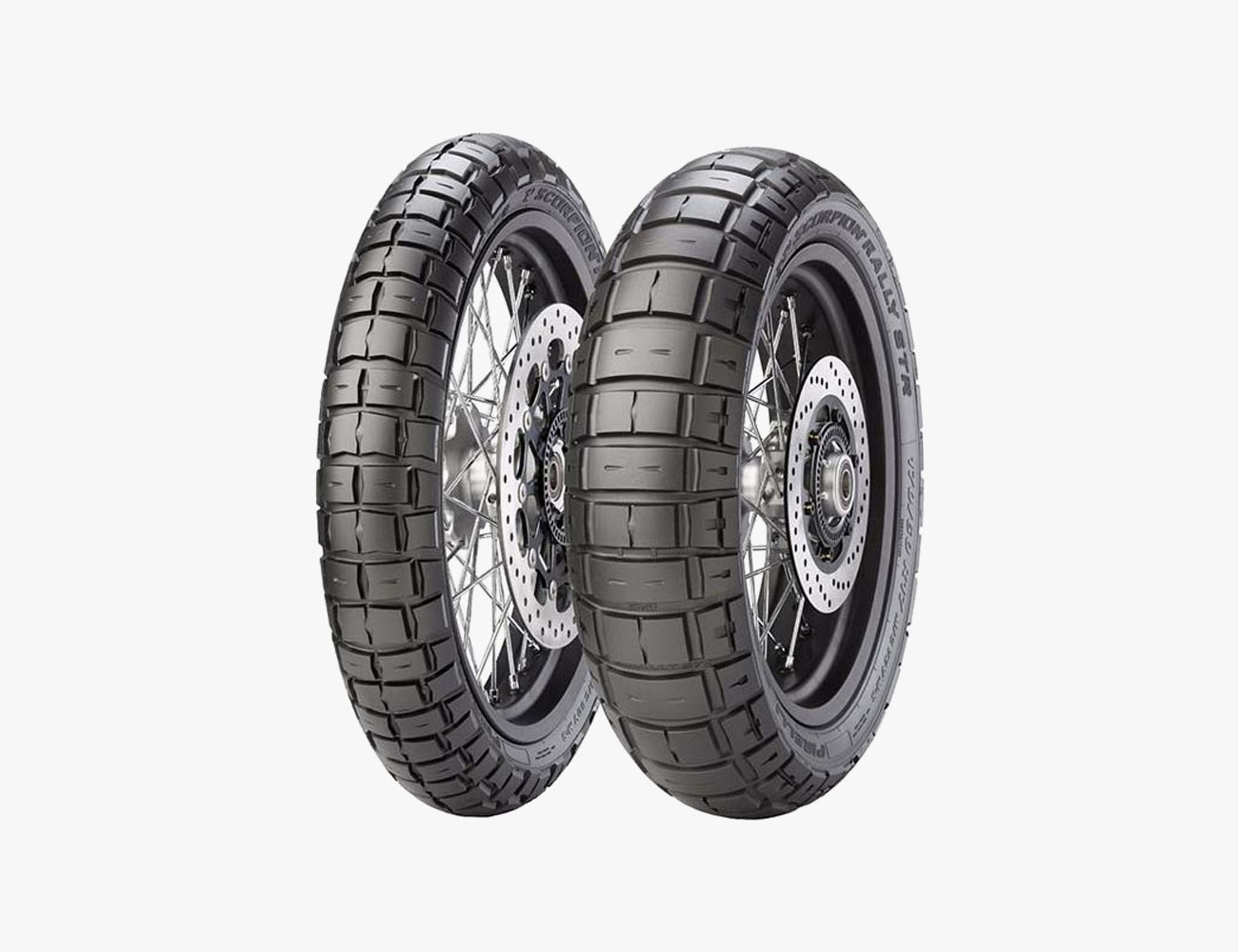
Tires, like in most situations, are probably the most important aspect. If you try to take a semi-slick street tire off-road, you’re going to have a bad time. Likewise, go out on smooth asphalt with a super-aggressive kobby dirt tire and you’ll find nothing but nervous instability underneath you. Like the ethos of the scrambler itself, the tires should strike the right balance between on-road grip and being just knobby enough to give you the off-road traction you’ll need.

Good: Metzeler Enduro 3 Sahara $260
Better: Pirelli MT60RS $273
Best: Pirelli Scorpion Rally STR $324

Wheels

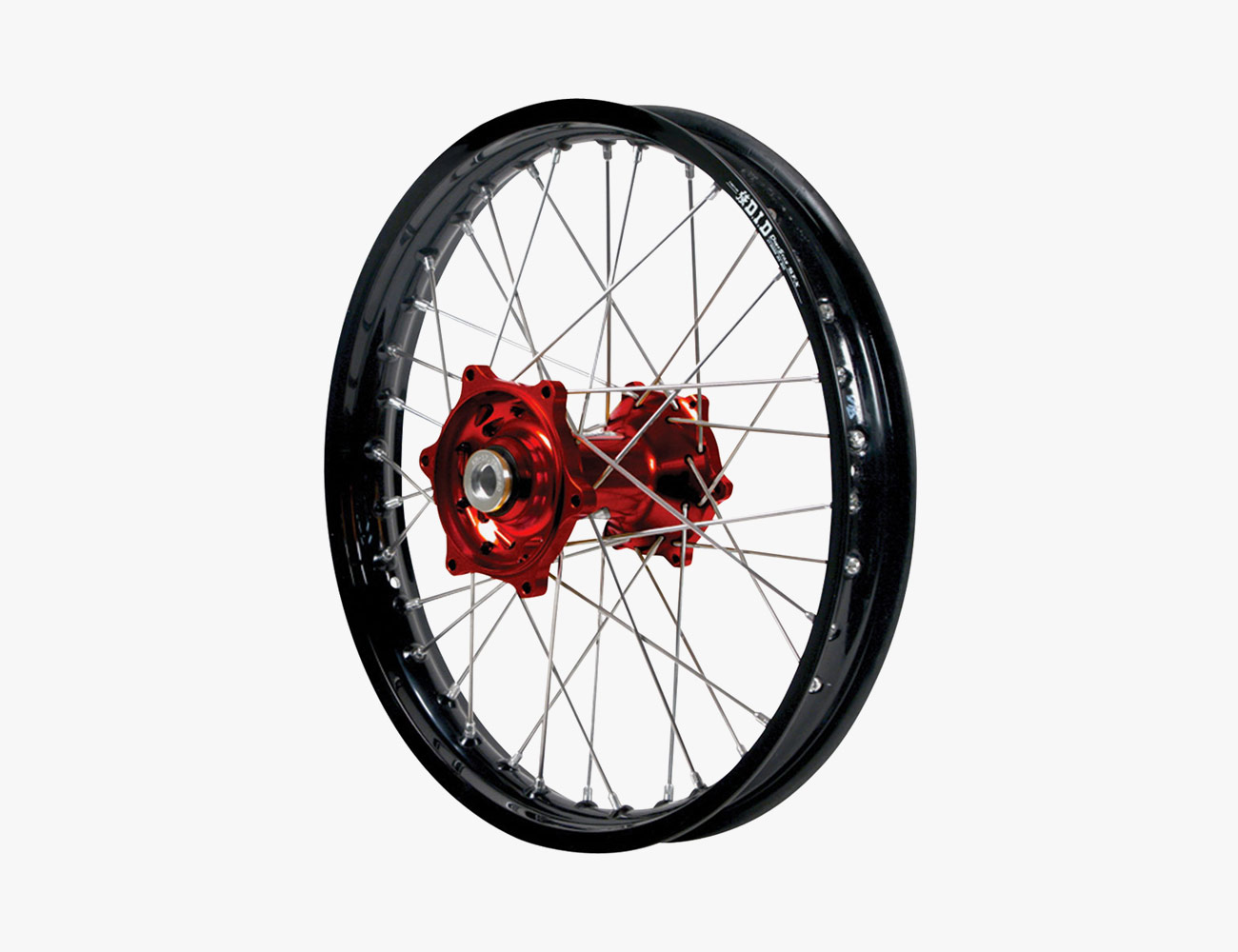
Spoked wheels aren’t just for style and show — there’s a reason most, if not all off-road bikes use them. Spoked wheels tend to be lighter, which helps when things get bumpy, but most importantly, they’re more impact resistant than street-focused cast wheels. So, when you hit a rock or rut at full-blast, instead of cracking like a cast wheel might, spoked wheels absorb the impact and let you keep going.

Good: Tusk Impact Complete Front/Rear Wheel Kit $369+
Better: Warp 9 Complete Wheel Kit (Front and Rear) $743
Best: Dubya Complete Rear Wheel Kit (Front and Rear) $1,296

Skid Plates

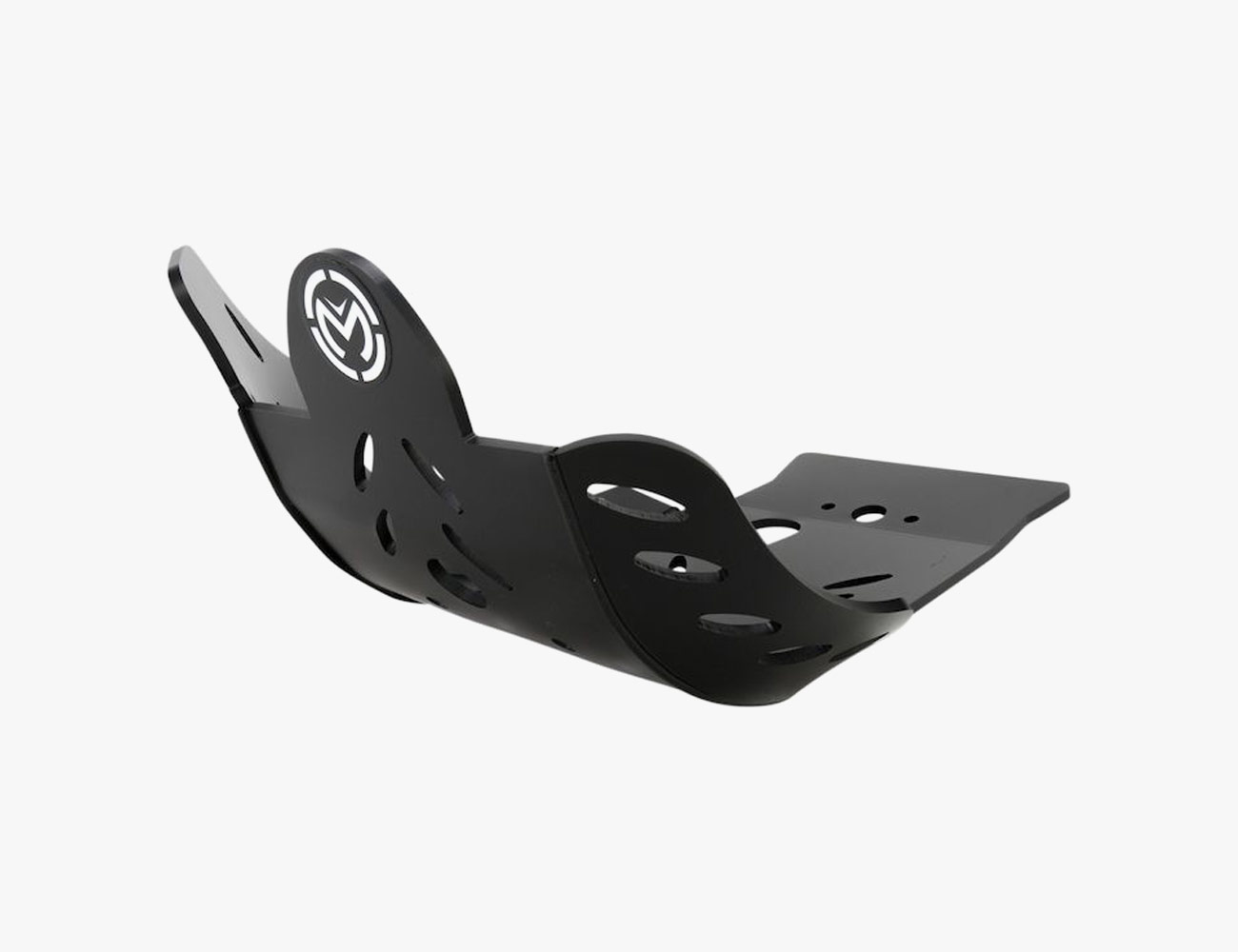
Speaking of rocks and ruts, if your bike’s suspension ever bottoms out off-road, you’ll want some protection. Skid plates help protect the engine and oil system from ground-level off-road hazrads and the overly ambitious riders who think thy can take them on.

Good: Cycra Speed Armor Skid Plate $43
Better: Cycra Full Armor Skid Plate $80+
Best: Moose Racing Pro Skid Plate $120+

Exhaust

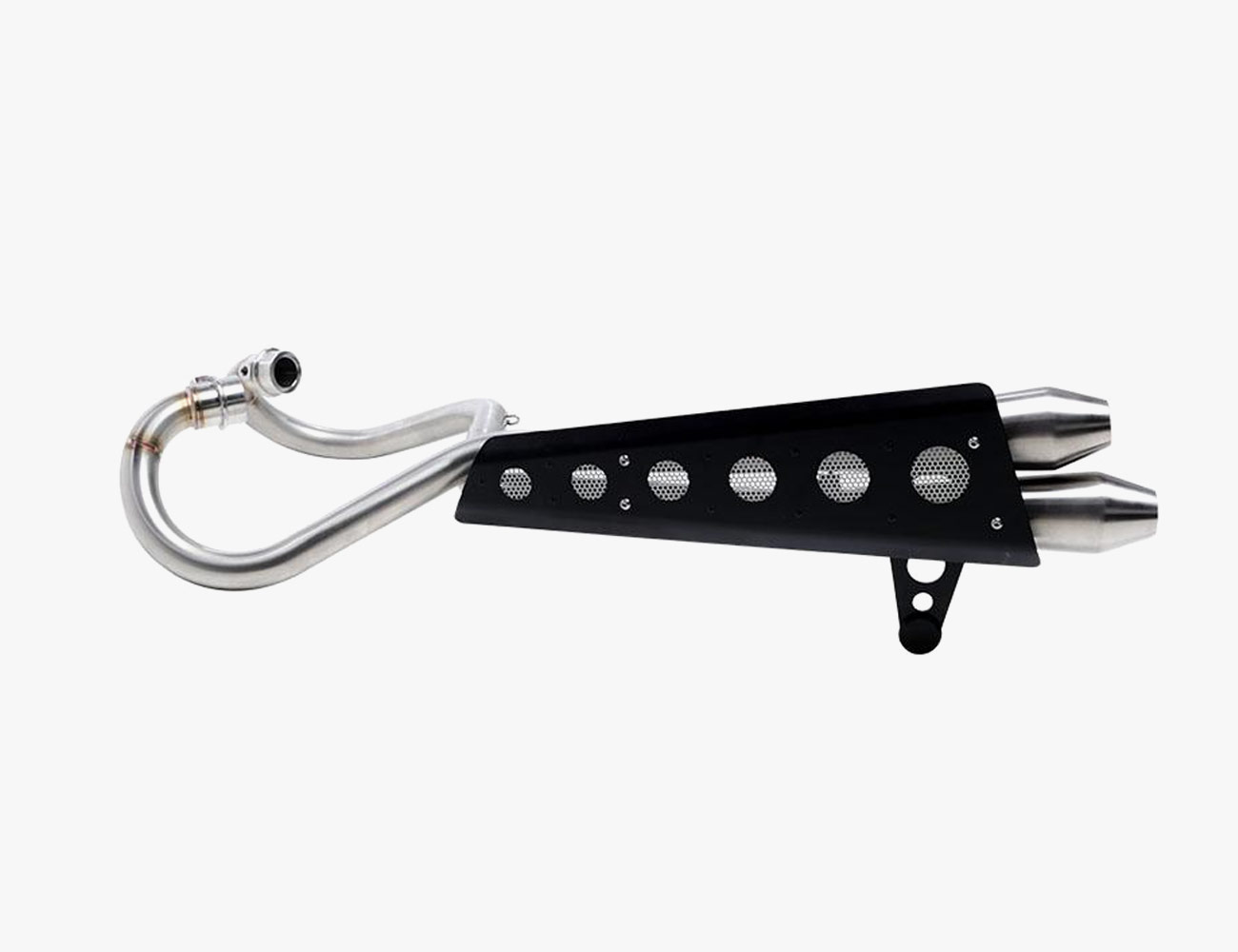
There’s no hard and fast rule about scrambler exhuasts. You can keep the pipes low and protect them with a skid plate or panels, but conventional wisdom says to reroute them up high, along the side of the bike, to get them out of the way of big bumps, uneven ground and other off-road hurdles. You don’t want to pinch your exhaust closed out on the trail.

Good: Zard Muffler High Short $636
Better: Scorpion Custom Complete Exhaust $667
Best: British Customs 2 Into 2 High Header Exhaust System $1,500

Handle Bar Risers

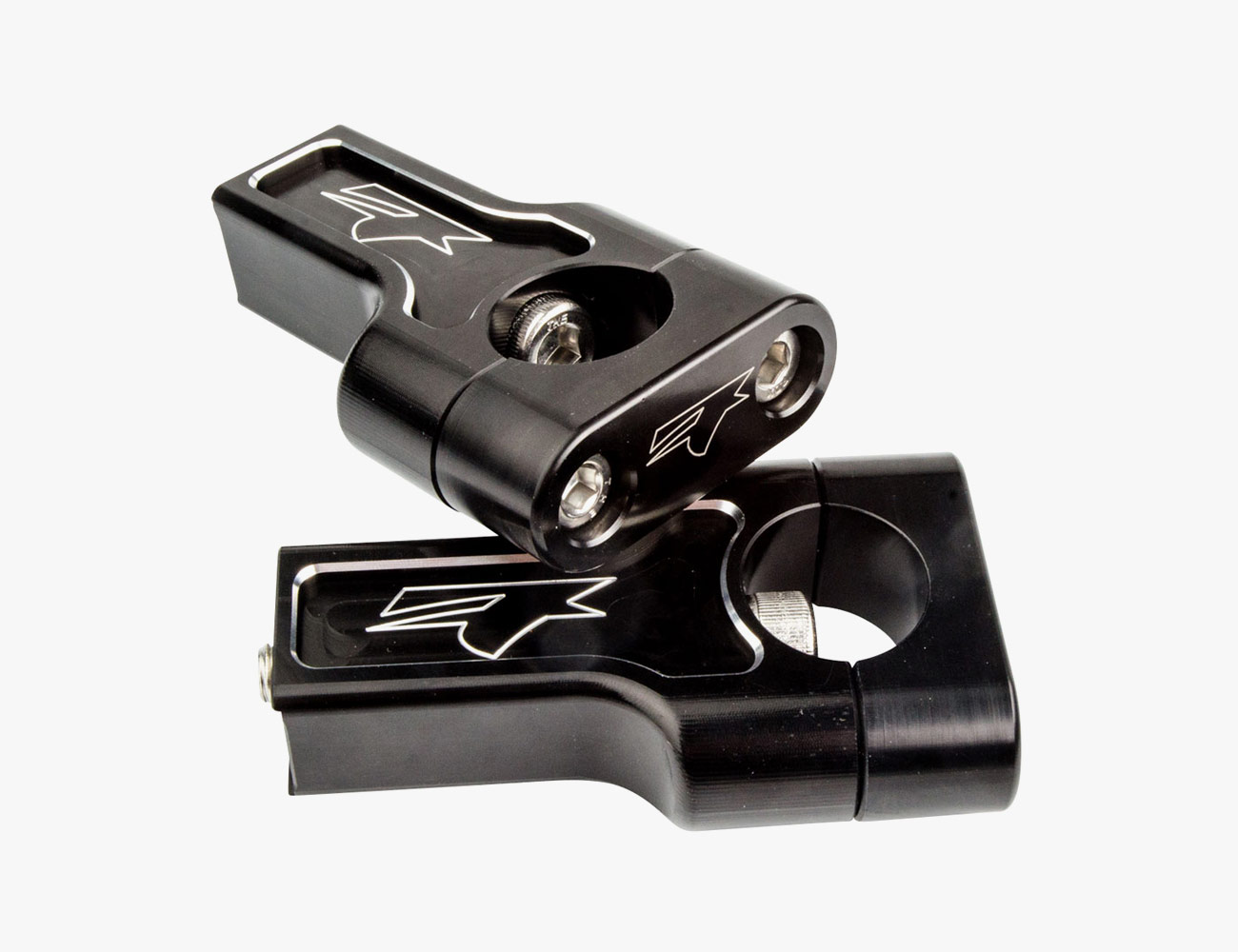
Last but not least: handle bars. You don’t have to go full-on dirt bike or ADV with a wide and high single-piece setup. Instead, keep it simple, stick with the bars you have and just add risers. Riser instalation is much easier than swapping in entirely new bars, but it also gives you the comfort and height you need when you’re in the standing position off-road.

Good: Tusk Universal Big Bar Clamp Kit $30
Better: Rox Speed FX 1 3/4″ Handlebar Risers $86
Best: Fastway 2″ Handlebar Risers $123+

The Used Motorcycles We’d Buy Right Now For $2,500

It’s insane to think that for $2,500, you can get an okay mountain bike. But, for the same money, you can get a half-way decent — and even pristine — classic motorcycle that’ll go farther and faster. I know they’re two wildly different products aimed at different customers, but I’m a little biased. $2,500 seems to be a sweet spot for used motorcycles. Yes, there are some rust buckets out there at that price point, but there are also a few gems, and we believe we found them. These are the used motorcycles we’d buy right now for $2,500 or less.

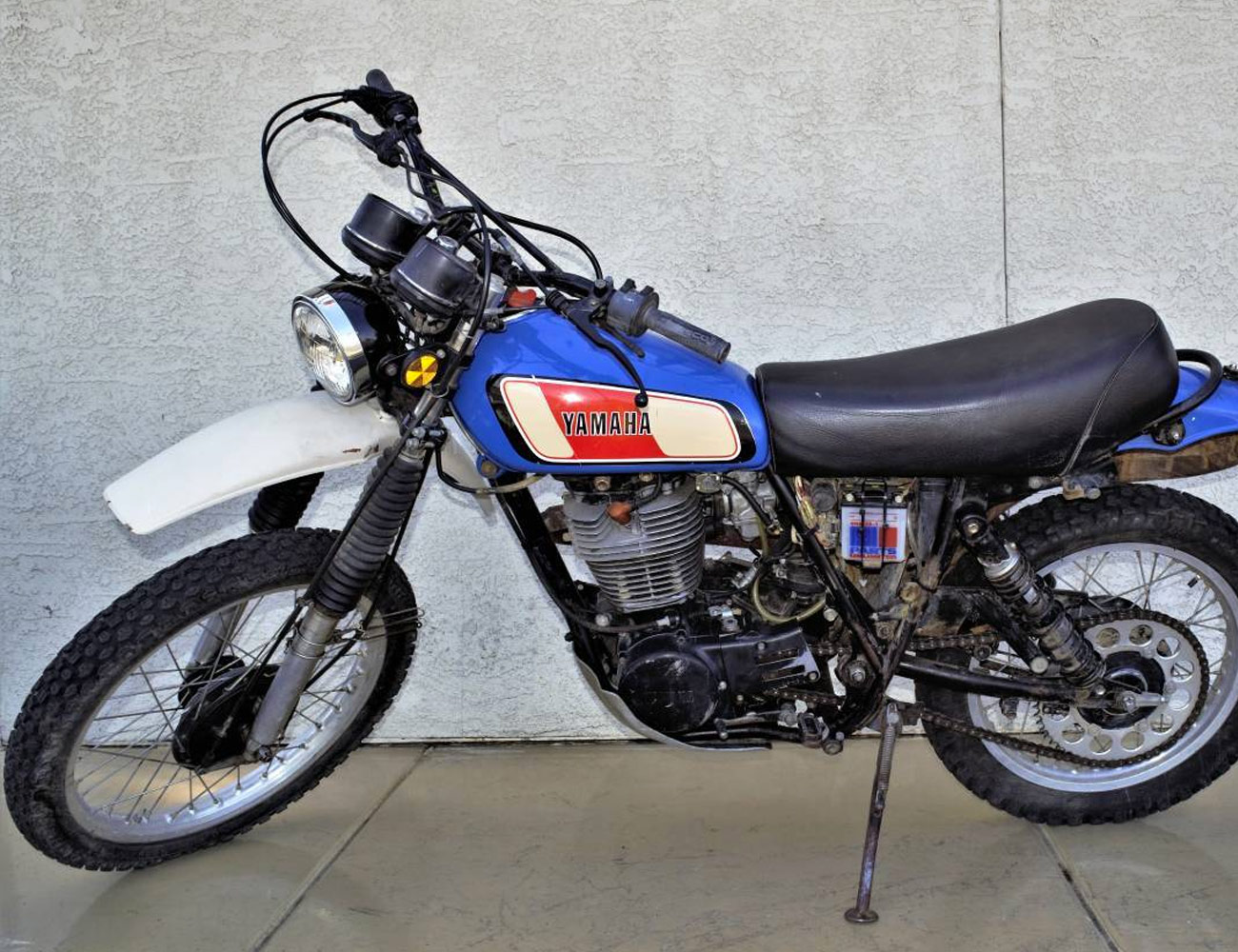
1978 Yamaha XT500

Lately, I’ve been leaning more towards bikes which are prime examples of lower weight and handling rather than power. It’s a fairly big shift in taste for me, but classic enduro bikes like the legendary XT500 make a great case for the change. The ’78 XT500 might only pump out 32 horsepower (when new), but the low-stress engine means it’ll probably last longer on the trails than you do. And how can you turn down ’70s style of this magnitude?– Bryan Campbell, Staff Writer

Mileage: 9,108
Original MSRP: $2,000

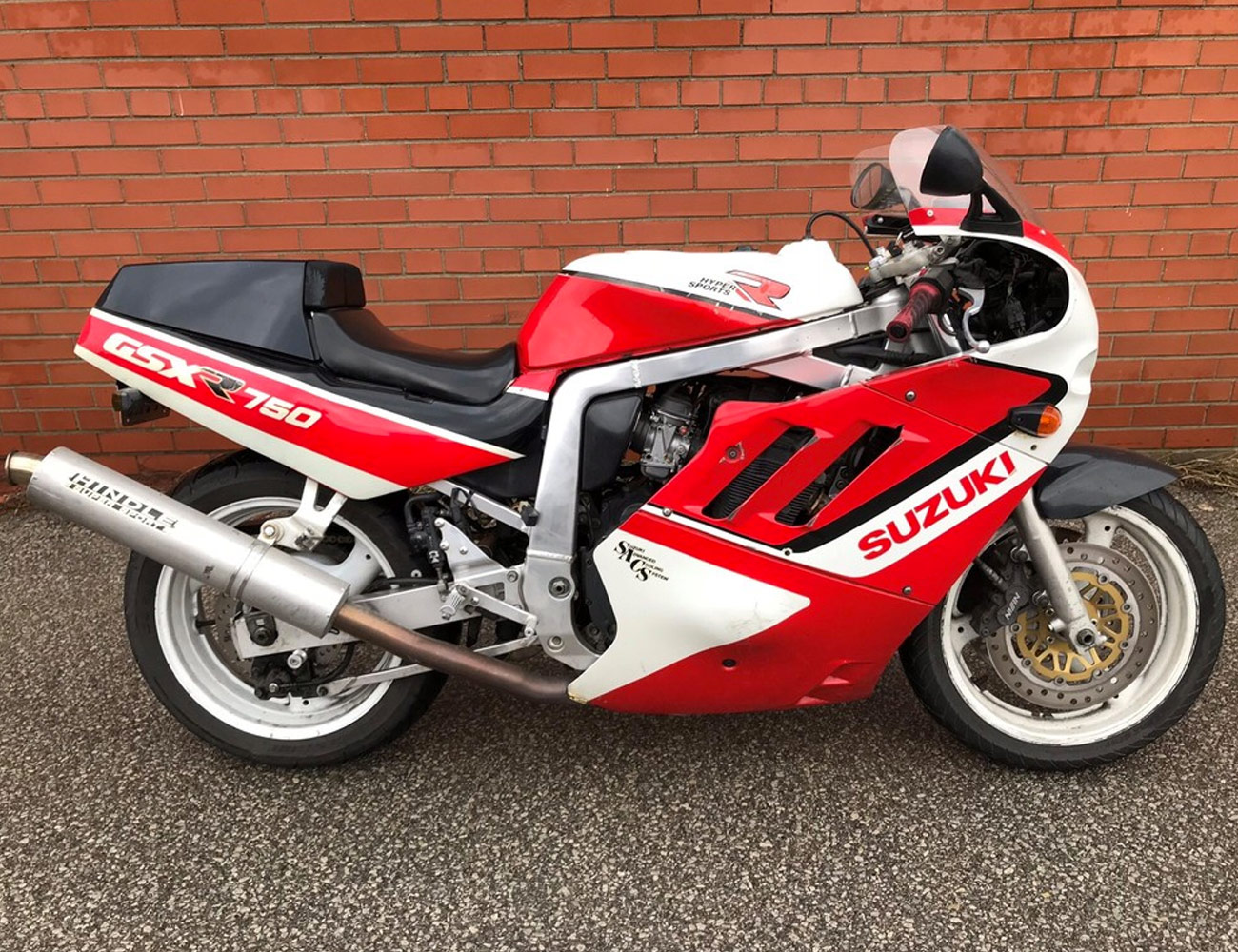
1988 Suzuki GSX-R750

If you follow the custom scene at all, you’ll know that all things ’80s are making a huge comeback. And this low-mileage Gixxer is a great example of why. The late ’80s represented a time of massive advancements for sportbike performance, and the ’88 Gixxer was arguably leading the charge. Those performance numbers may pale in comparison to the new hotness of today, but today’s bikes don’t have the classic endurance racer good looks and Slingshot graphics that this bike does. Somebody save me from myself and buy this before I do. — Matt Neundorf, Contributor

Mileage: 18,915
Original MSRP: $6,000

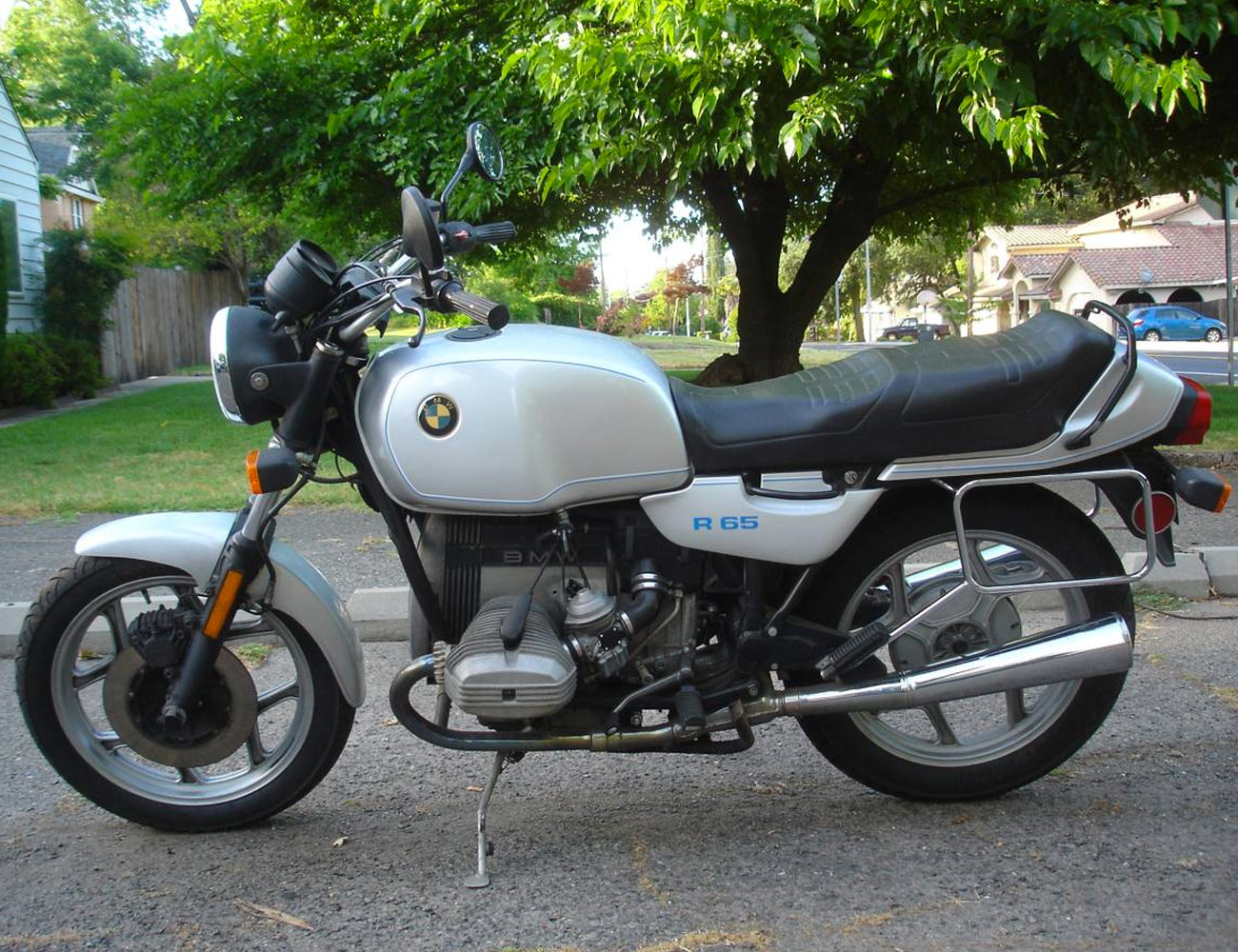
1987 BMW R65

I’ve had a fixation on BMW’s old air-cooled standards for some time, with a specific love for the widely-forgotten R65. I love the bike’s simple, upright design, and modest performance (I’m still something of a beginner). The funky, rare and wedge-gendered LS variant has always been my grail (they fetch a pretty penny these days), but the standard version is still a bargain on the used market and known to last a long time with the right maintenance. — Andrew Connor, Staff Writer

Mileage: 50,000
Original MSRP: $3,595

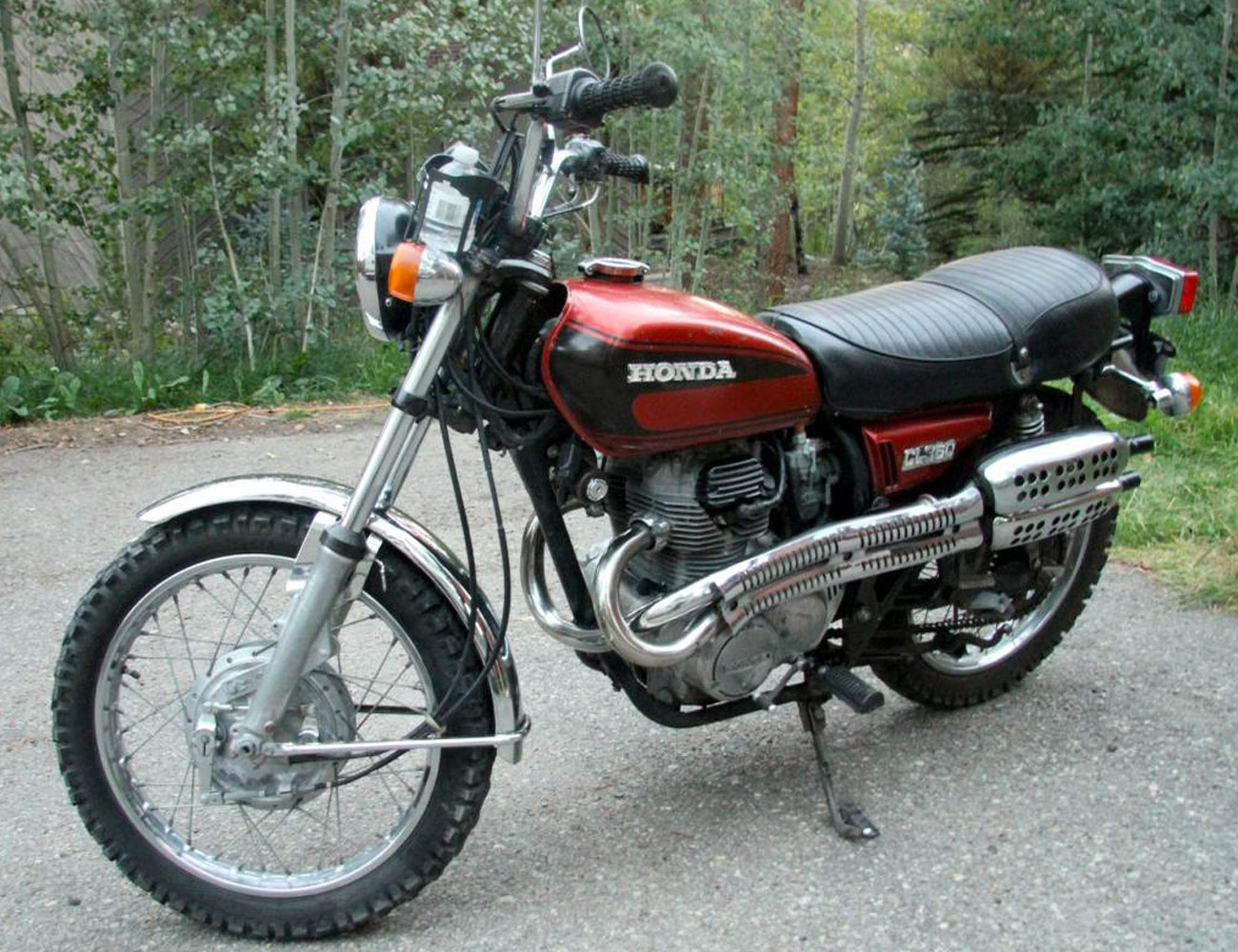
1975 Honda CL 360

It’s tough to beat an early ’70s Honda (right Dad?), and the ’74/’75 CL360 was an even better iteration of an already popular model, the CL350. This bike wasn’t just a simple numerical upgrade either; the CL360 featured a new chassis and new components that brought ratings up from 325cc to 356cc. With 34 horsepower, this thing isn’t going to blow your hair back, but it’s a nice around town runabout with quintessential two-into-two side pipes and room for a passenger on the back for cruises down to the local dairy bar. — Andrew Maness, Contributor

Mileage: 2,000 (new engine)
Original MSRP: $1,000
Now Get Some Gear

When it comes to commuting by motorcycle, your choice of gear and clothing is crucial. Saftey is paramount, but looking as professional as possible walking into the office is key. Read the Story

Essential, City-Ready Motorcycle Gear that Doesn’t Compromise on Style

When it comes to commuting by motorcycle, your choice of gear and clothing is crucial. Just like any other time you hop in the saddle, safety and protection are keystone characteristics, but when you’re heading into the office style and grace should be top priorities as well. If you’re out for a weekend ride or at a track day, it’s completely acceptable to look like you just spent the last 30 miles hunting for apexes. But, when the office is your final destination, you want to look as professional as possible, even if you spent the last 30 minutes weaving through traffic, dodging potholes. Below is a collection of essential kit for the commute via motorcycle calls.

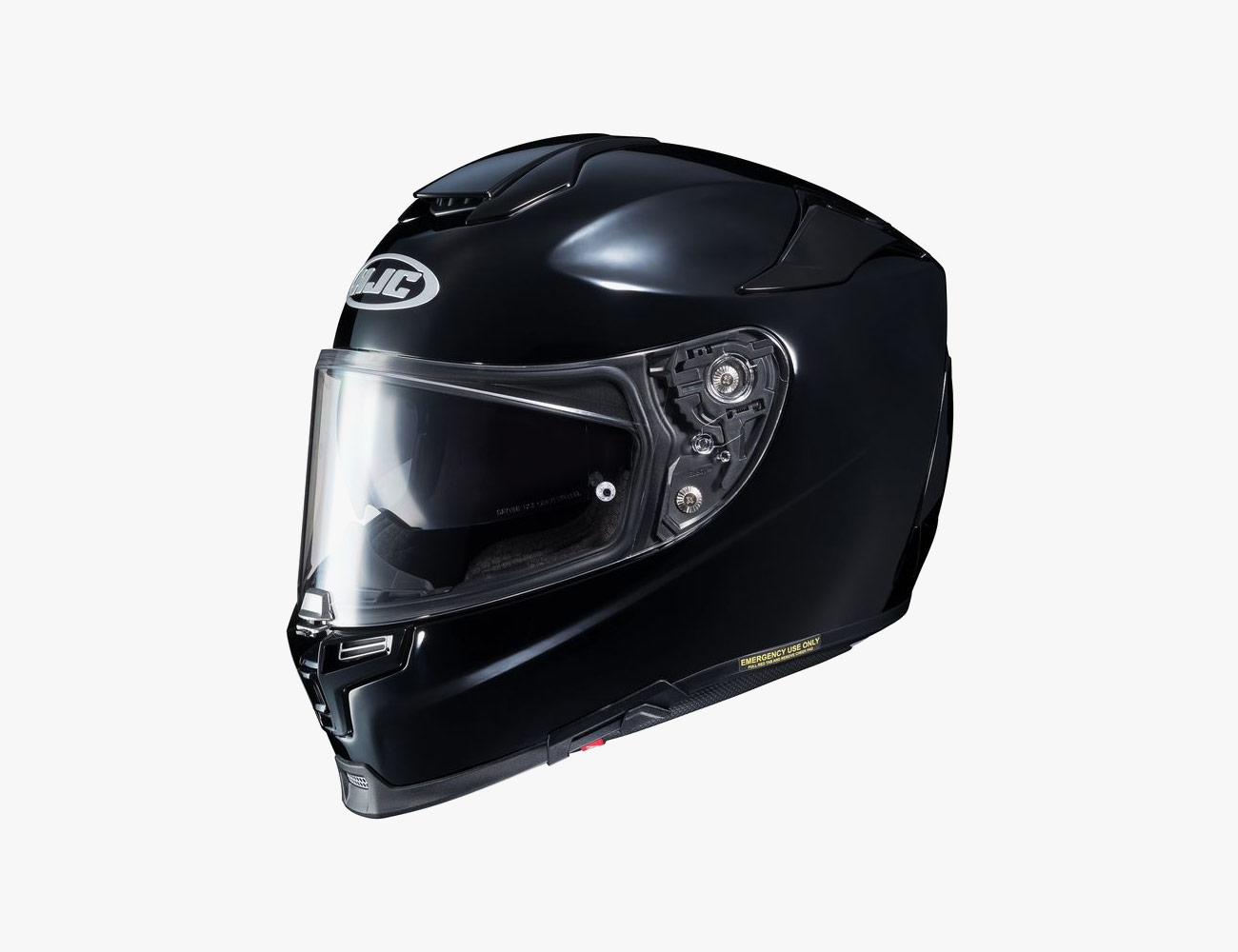
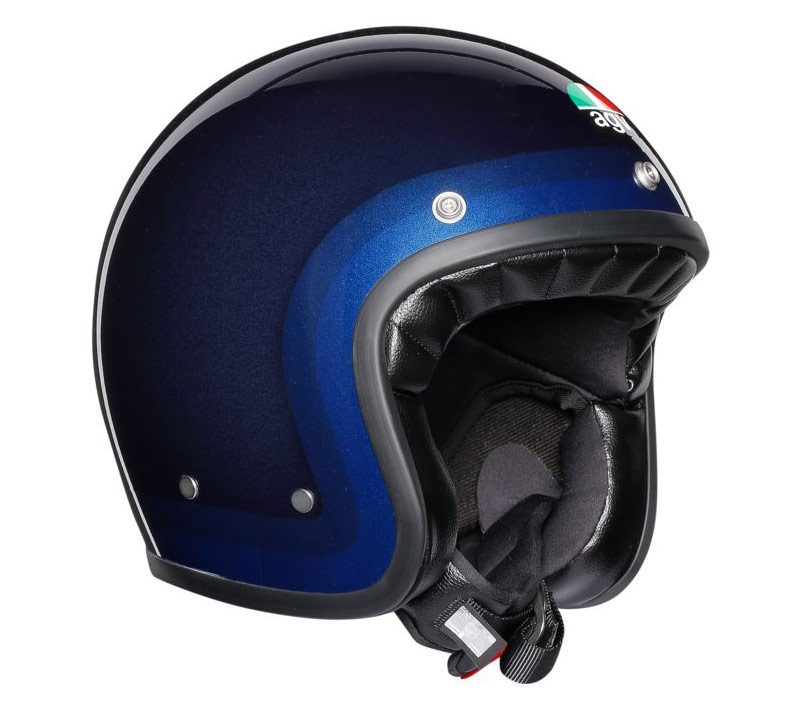
HJC RPHA 70 ST Helmet

The RPHA 70 ST by HJC lands right in the sweet spot where an all-purpose helmet should. The RPHA 70 ST has track-day style and aerodynamic perfromance, but not so much that wind becomes uncomfortable while riding if you’re sitting straight up. Top-notch venting and lightweight construction also make it solid choice for longer hauls.

Budget Alternative: Scorpion EXO-R420 Helmet $150
Splurge Option: AGV Sportmodular Carbon Helmet $750

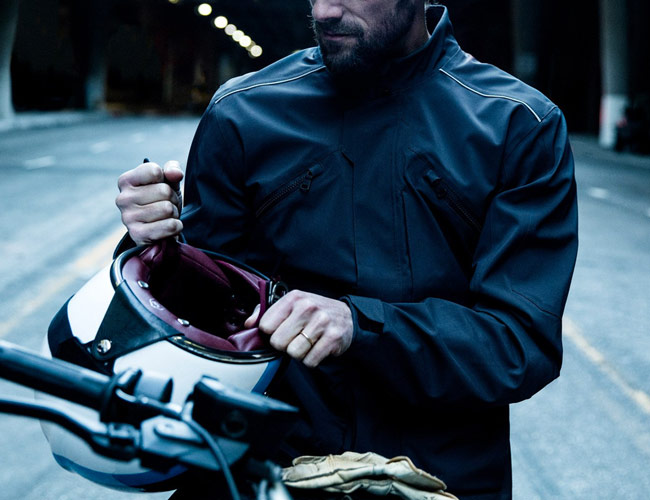
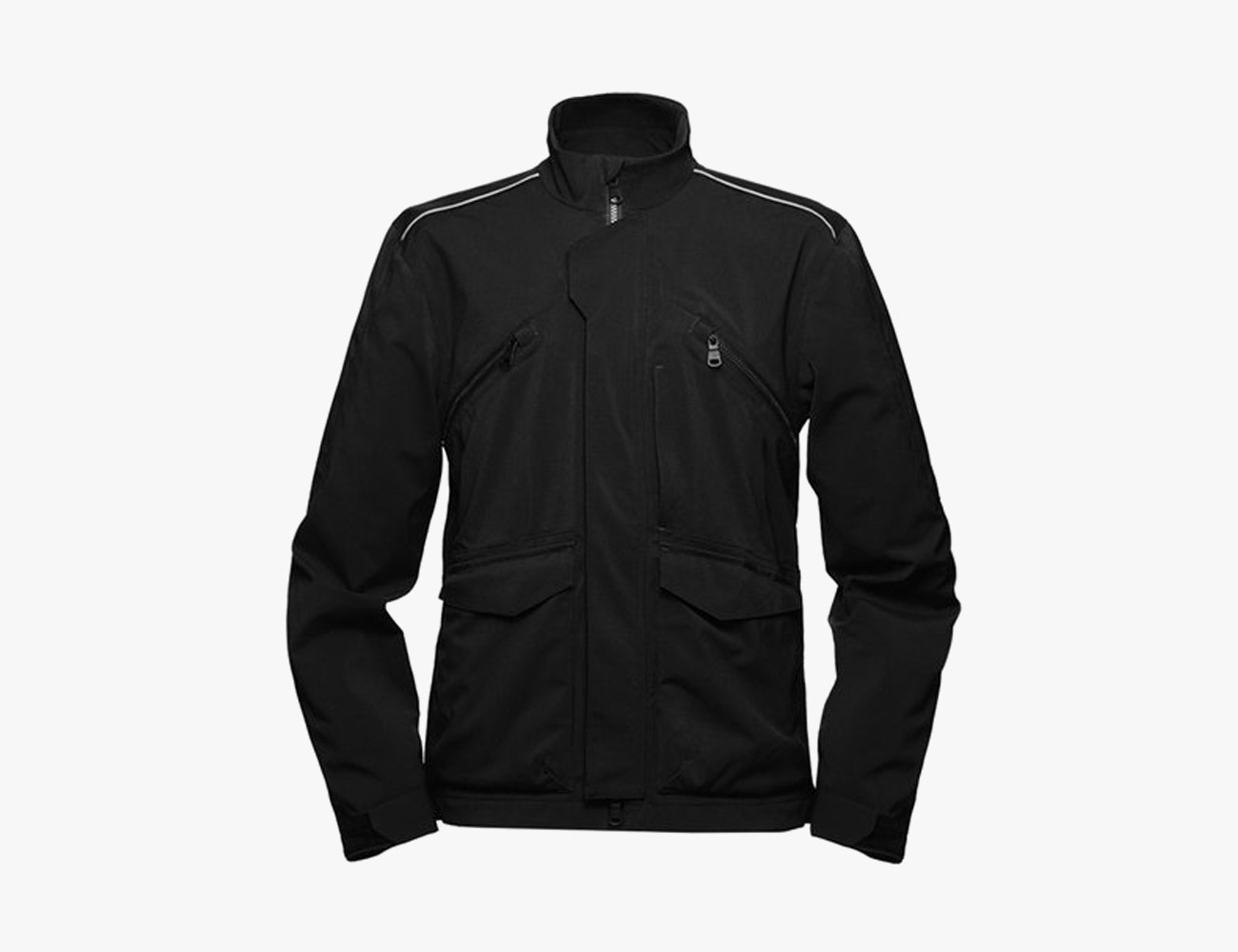
Aether Navigator Motorcycle Jacket

There are more affordable leather options and more robust jackets out there, but the Navigator nails the minimalist style of a classic jacket and provides wind and weather protection. And since it’s not bulky or overly weighted, Aether’s Navigator works as a casual jacket whether you just got off the bike or not.

Budget Alternative: Tour Master Koraza Jacket $100
Splurge Option: Belstaff Classic Tourist Trophy Jacket$1,450

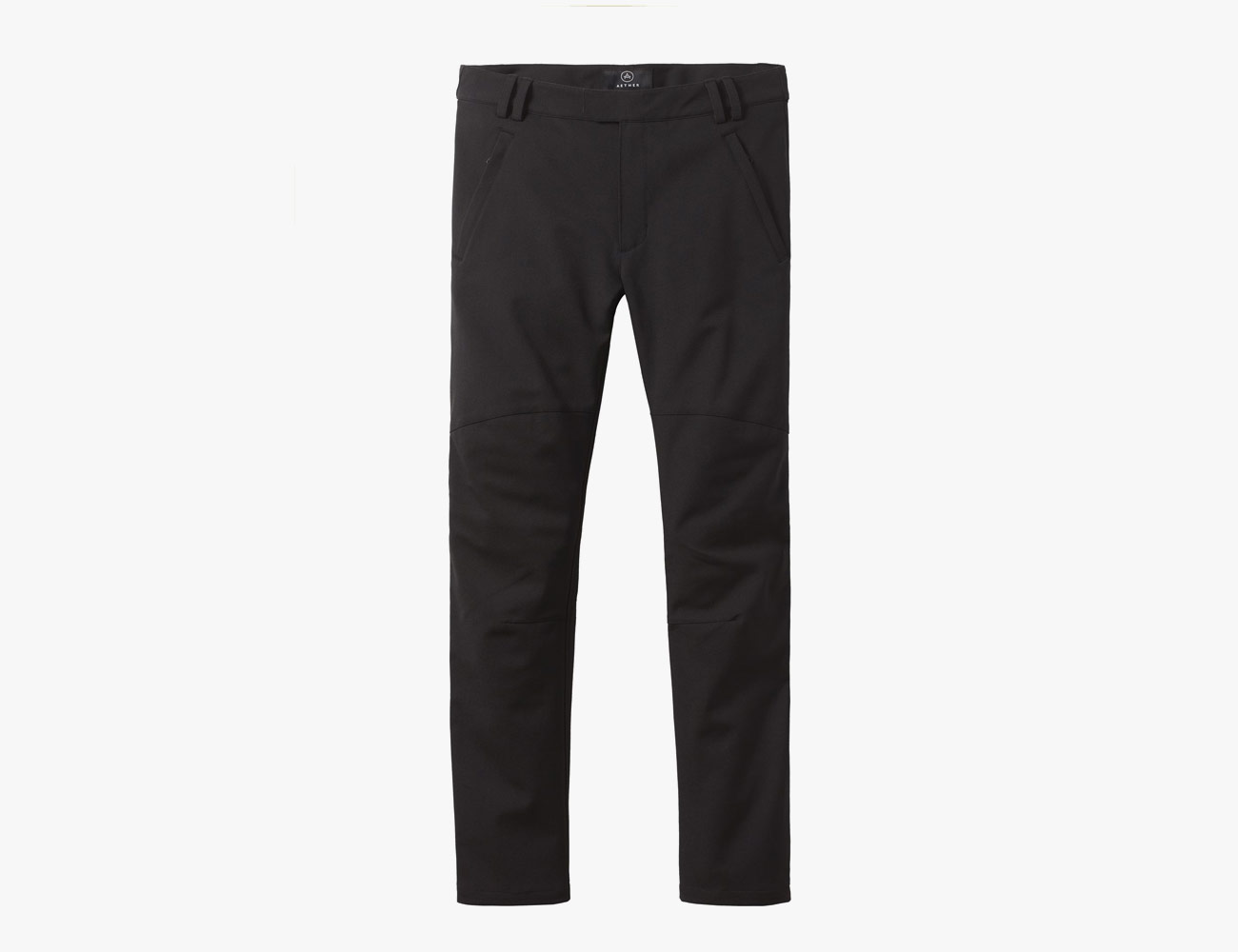
Aether Ramble Pants

Aether makes a second appearence on the list because it’s hard to deny how well the brand hides real protection behind classy style. At first glance the Ramble pants look like regular casual, grey slacks but the three-layer Schoeller Ottoman weave also acts as a highly water-, wind- and abrasion-resistant shell. You also get D3O EVO XT armor at the hips and knees. Can you say that about your Dockers?

Budget Alternative: Spidi Superstorm H2Out Pants $140
Splurge Option: Saint Unbreakable 6 Jeans $600

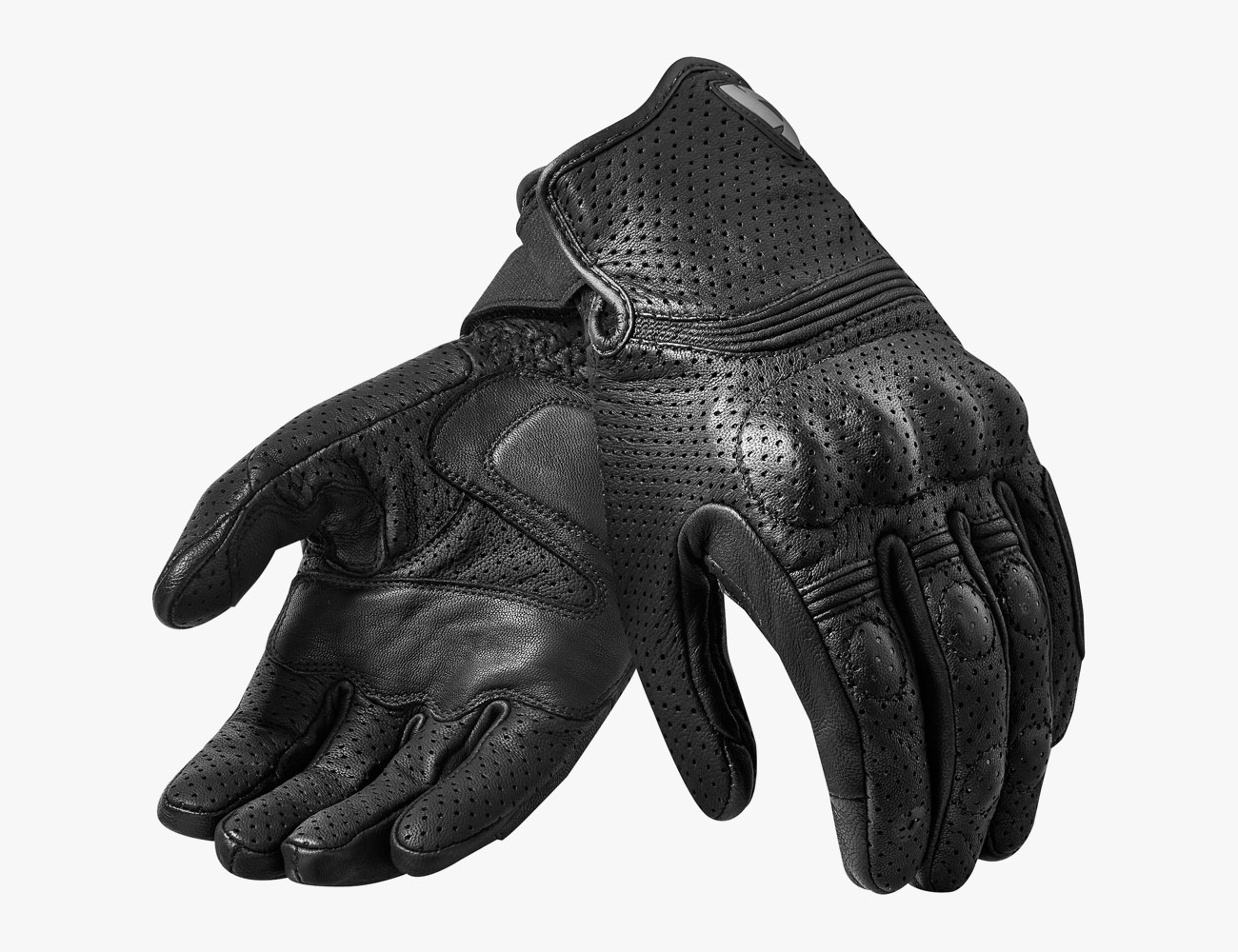
REV’IT! Fly 2 Gloves

Due to necessary padding and armor, motorcycle gloves are one of the harder pieces in the commuter repetoire to balance style and function gracefully. The REV’IT! Fly 2 Gloves hide knuckle protection under preforated goatskin leather, which also extends a little further up the wrist to block any unwanted weather from boring its way up your jacket sleeve.

Budget Alternative: Icon Twenty-Niner Gloves $35
Splurge Option: Dainese X-Strike Gloves $200

Stylmartin Wave Boots

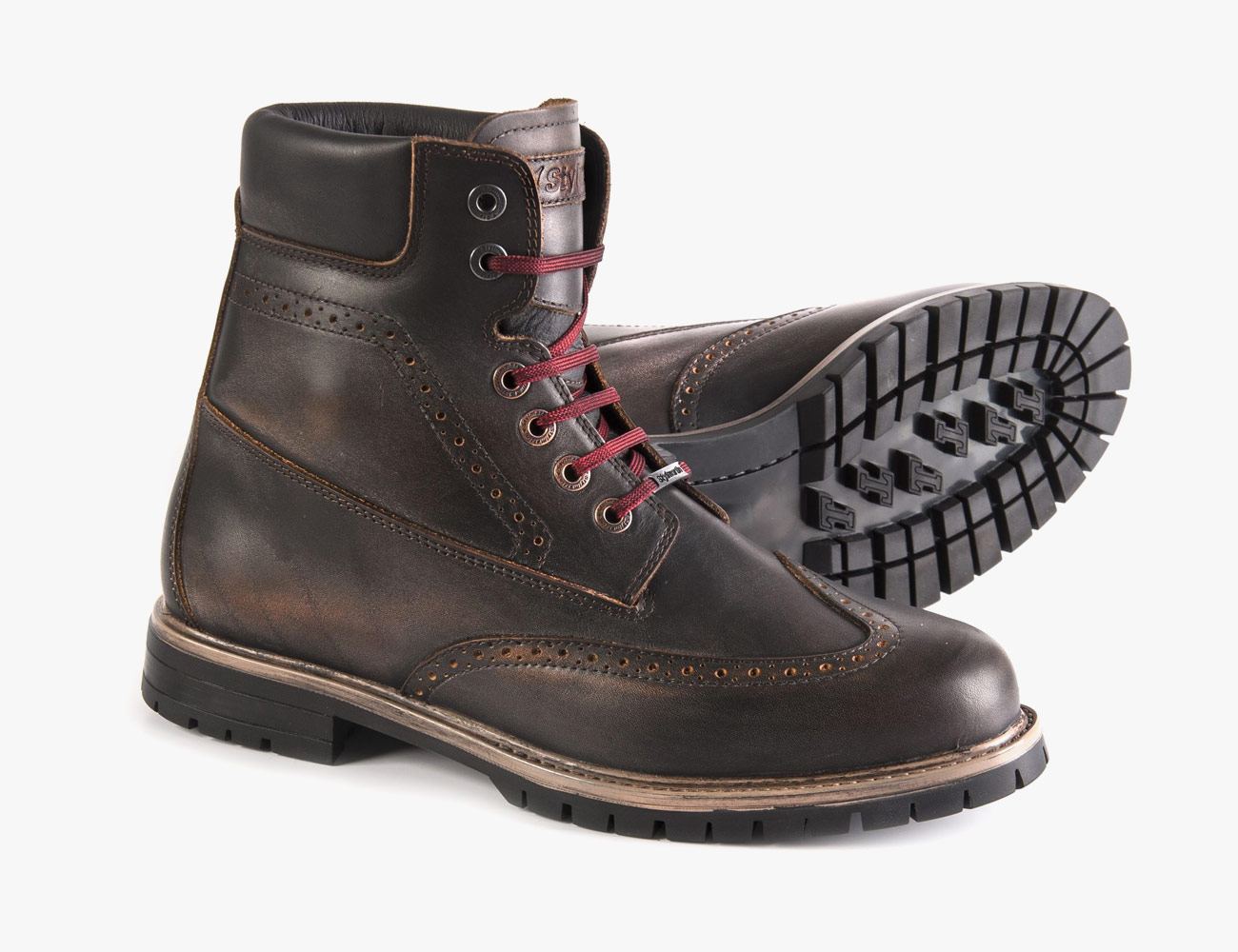
Finding a brown or black leather boot which can double for motorcycle duty isn’t difficult. Finding a pair of boots that subtly combine fashion and functional details is a little harder. The Wave Boots by Stylmartin are built with wax-treated leather to shed water and an integrated waterproof liner if the weather really starts to pick up. The wingtip design also cleverly acts as a shifter gaurd for an even better marriage of form and function.

Budget Alternative: Alpinestars Parlor Drystar Boots $180
Splurge Option: Rokker Gentleman Racer Boots $500

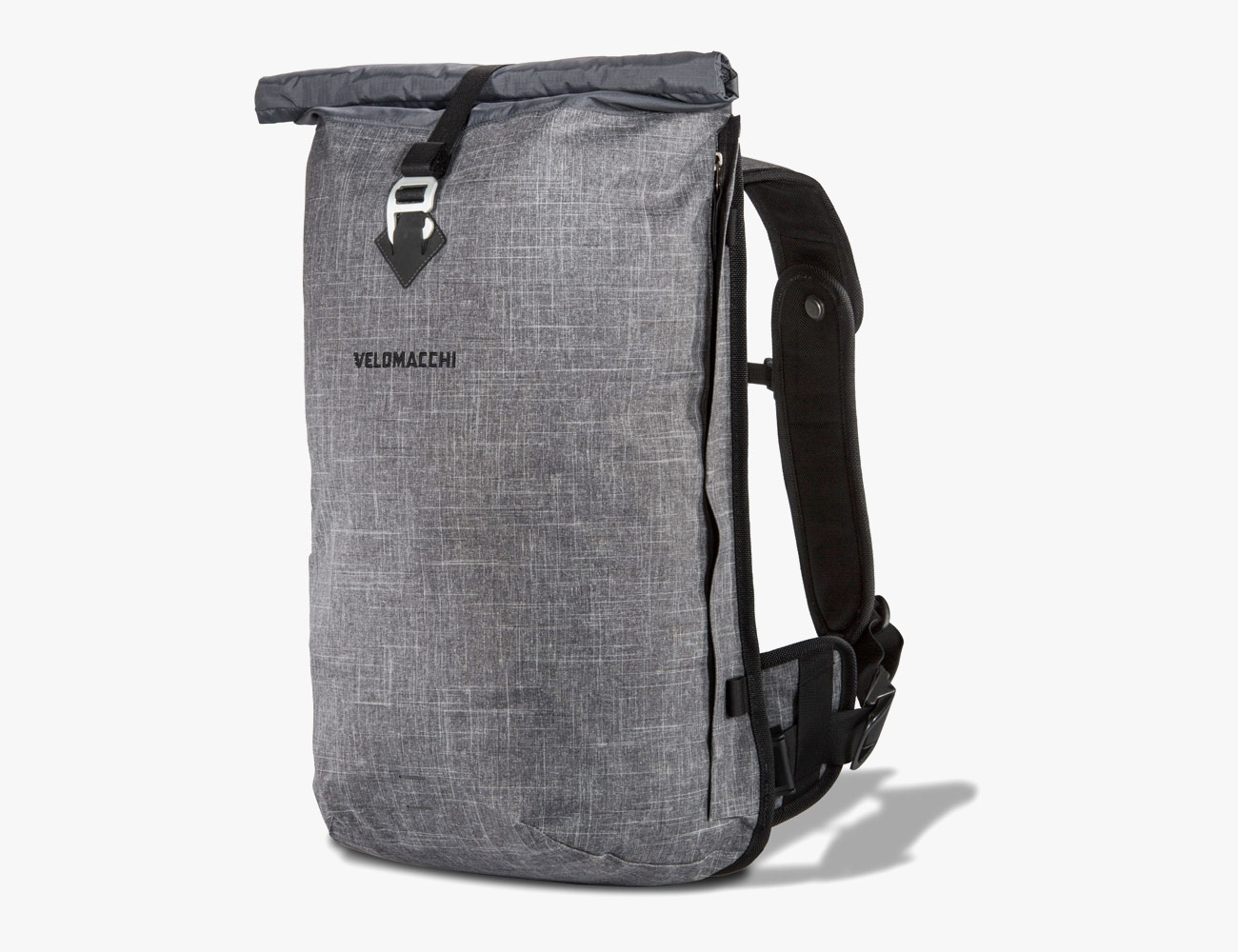
Velomacchi Giro Backpack 35L

The 35-liter Giro doesn’t look like much but its construction is watertight and abrasion resistant; inside, there is room for more than just your EDC in the main compartment and a rear slot for your laptopn. The unique architecture of the shoulder straps works to spread weight across your chest which boosts endurance.

Budget Alternative: Alpinestars City Hunter Backpack $120
Splurge Option: Velomacchi 40L Roll-Top Backpack $300
The Best Motorcycles For City Commutes

Navigating any concrete jungle can be hell — especially if you call the asphalt wilds your commute. These five bikes make riding through the city much easier for any kind of rider. Read the Story

Royal Enfield Rolls Out the Limited Edition, Military-Inspired RE Classic 500 Pegasus

In homage to the iconic two-stroke ‘Flying Flea’ used by British soldiers in World War II, the UK’s Royal Enfield created the RE Classic 500 Pegasus, a military dressed version of its Classic 500. It is available in olive drab or matte green and only 1000 of these unique little bikes will be built.

Honda’s New Africa Twin Will Change Your Perception of Off-Road Riding

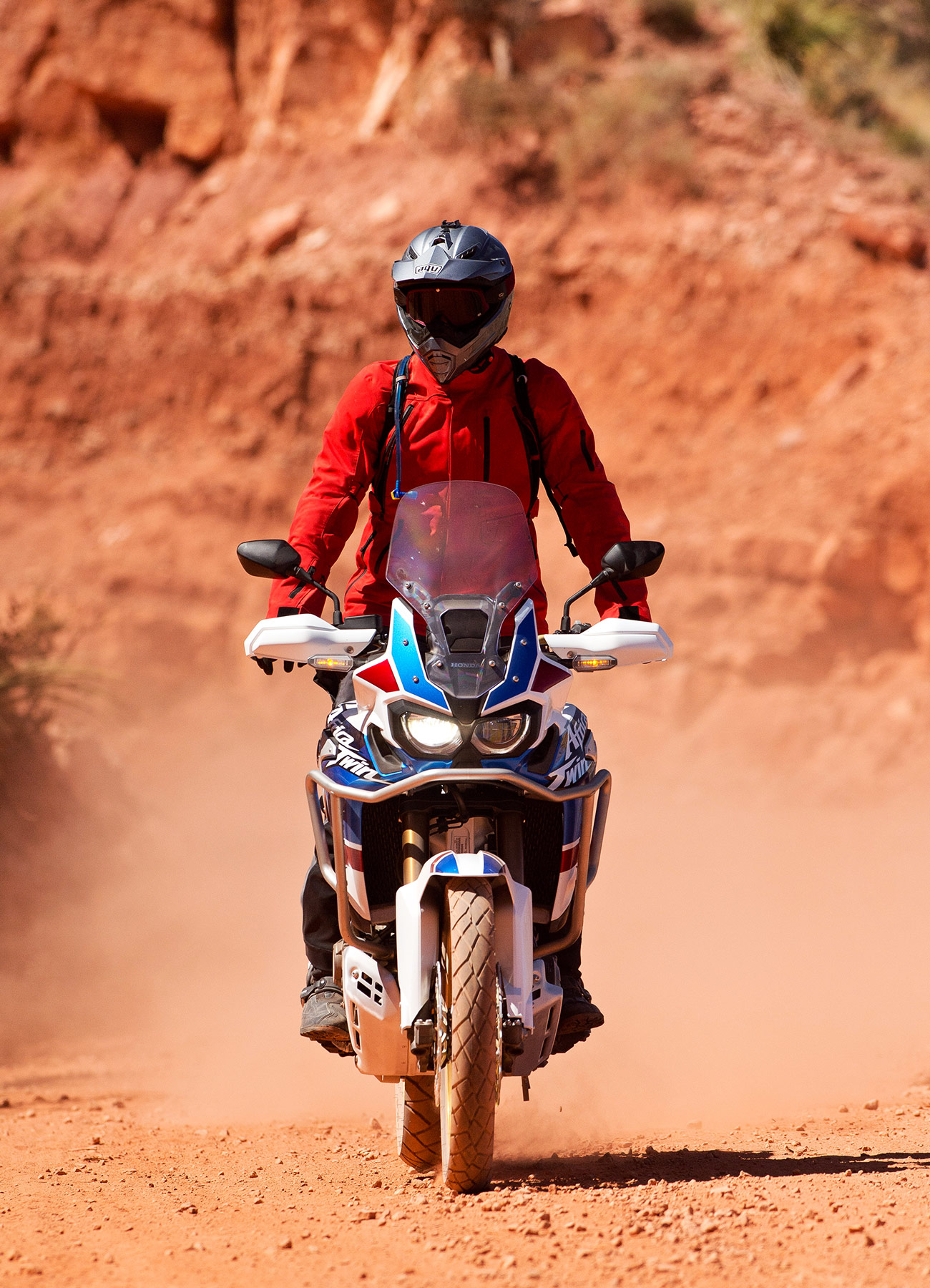
The standard Honda Africa Twin is already an extremely capable machine. Back in 2016, when it was released, it easily presented itself as the most dirt worthy rider in the middleweight adventure bike category. Its Dakar Rally-derived chassis and compliant ergonomics delivered incredible confidence in technical terrain. But a lot can change in two years and the competition never sleeps. Technical advancements in rider electronics are at a stage where they can enable fine-tuned control and even overshadow chassis and engine changes alone.

The Adventure Sports is Honda’s new range-topping Africa Twin that not only boasts a full suite of revised rider modes; it gets taller suspension and a bigger fuel tank to work with and help enhance its class-leading hardware under the seat. More so, these upgrades will only run you an extra $1,500, making it a bargain at the bank and a riot on the trails.

The Good: When I first rode the Africa Twin in 2016, the Dual Clutch Transmission (DCT) surprised me with just how competent it was. I remained a skeptic; surrendering even partial control to a computer just wasn’t something my mind or muscle memory was prepared to accept. This time around, however, the updated electronic rider aids have been tweaked and make a convincing argument relinquish command over the clutch.

There are now three pre-set modes: Urban, Tour, and Gravel, all programmed for their respective conditions. Each of them works decently enough, but as you get more comfortable with clutchless riding, it helps to play around and find one suitable for your style. The power, engine braking, and torque levels can all be modified via buttons on the left handlebar, on the fly. I settled in on the highest power level (one), engine braking at level three and torque levels at number two and, with ABS disabled at the rear and “G” mode activated to tighten up the DCT’s response to the throttle.

Who It’s For: The 998cc parallel-twin engine delivers a flat, linear torque curve making the Africa Twin easy to live with as a daily commuter. And thanks to the new suspension setup that ups ground clearance to a class-leading 10.6-inches very little can get in its way on weekends during outdoor excursions. Equipped with the DCT transmission, the Adventure Sports would be an ideal bike for a rider with little to no off-road experience who’s looking to cash in on the ADV fun. With no muscle memory or ingrained reactions to overcome, the learning curve to exploit the best the Africa Twin has to offer would be minimal.

Watch Out For: With the increased capacity of the fuel tank (up 1.4 gallons to 6.4 total), I found that its larger bodywork didn’t offer the same levels of control with my knees in a standing position. The slender waistline of the original Twin had a perfect set of indents to pinch with your knees so your arms could stay loose on the bars. The Adventure Sports sacrifices a bit of that control for longer runs between fuel stops.

Alternatives: The middleweight adventure market is certainly heating up. The Triumph Tiger 800 XCA has brought a lot of capabilities to the party and BMW has just pulled the wraps off their F850 GS, which we hear is filling those big shoes their F800 GS had worn for so long. Regarding spec-sheets, all three bikes are similar in power output, but the Honda is the heaviest — especially if DCT equipped — at 556 lbs.

Review: In Adventure Sports trim, Honda has taken an already stellar bike and made it better. The improved suspension negates the previous model’s downsides when it comes to performance on asphalt. And, despite my qualms with the bigger tank’s shape when standing, the ergonomics of the bike are more comfortable overall. Both the bars and the seat are raised over an inch which, so if you’re long-legged like I am, it makes the saddle that much more comfortable for longer stints.

Lean the Twin hard into a corner, and it’ll respond with confidence and poise. Spot your apex and exit under a fistful of throttle and the sound is simply demonic. There is a reason 600cc sports bikes are losing market share — in the right hands these upright, do-it-all bikes can be just as fast through a canyon and be comfortable too. There is plenty of room to move around on the bike to nail an apex, but, at the same time, just as much to relieve wiggle room some to relax sore muscles after miles of monotonous slab. Once off the beaten path, the adaptable suspension soaked up everything our fire-road route could throw at it.

Even though it has put on a few pounds, the bike still carries its weight exceptionally well. A forward-situated, low center of gravity offers nimble control which makes the bike easy to reign in. Credit goes to Honda’s engineers for building a motor so smooth and compact: the oil pump resides in the crankcase, the water pump hides in the clutch case and the balancer shafts serve double duty by driving both those vital bits. To help offset some of its heft, Honda also opted for a lithium-ion battery which shaves a full 5 lbs from the total weight.

Verdict: If you’re looking for a middleweight adventure bike, the Honda Africa Twin Adventure Sports is an excellent choice. Where it truly sets itself apart though is the DCT transmission. With the switch to a silky smooth ride-by-wire throttle and the updates to the electronic rider aids it simply performs better than it should. Possibly better than I could, even with a clutch and foot shifter. It takes the inconvenience of stalling out of the riding equation, which can be both handy on rough roads and in commuter traffic. If you have limited dirt experience and you’re looking at joining the ranks of ADV riders, a DCT-equipped Africa Twin Adventure Sports would be a wise bike to invest in. If you’re a veteran thrasher looking for a new bike to shred the gnar, a manual transmission is available.

What Others Are Saying:

“The balance between power and weight is the Africa Twin’s secret, then and now. The renewed machine has proved itself a modern-day all-rounder, popular with casual tourers and off-road adventurers alike” — Michael Le Pard, Total Motorcycle

“Honda’s latest Dual Clutch Transmission system is also impressive. On dirt roads it quickly feels natural to ride the bike like an automatic, occasionally changing down by pressing a button with the left thumb, rather than using a bulky boot on the gear lever.” — Roland Brown, Cycle World

“Some love it, others don’t and I got to try both the DCT model and manual version on the launch. Even though I’m a stickler for the more traditional gearbox and foot-operated change, I am a fan of the DCT because of the options it presents depending on the type of ride or even mood. ” — Michael Mann Bennetts

Specs:
Engine: 998cc, parallel twin
Transmission: six-speed Automatic DCT
Horsepower: 94 hp
Torque: 73 ft-lbs
Weight: 555.8 lbs
Price as tested: $15,699
More Two Wheeled Adventure

No matter if asphalt gives way to gravel and dirt, an adventure bike never waivers. Read the Story

Kind of Obsessed: My Go-To Motorcycle Jacket Is Outdated and Wildly Impractical

Five hundred miles in and it still hasn’t form-fitted as other leather jackets do — the leather is stiff, thick and boxy. There are no vents — for warm weather relief — to speak of and the liner won’t keep me particularly toasty in the cold. The collar rides high when I’m in the saddle, and the clasp puts pressure directly on my Adam’s apple. But I don’t care about any of these things because the Toga72 jacket from Dainese is just so damned cool.

Designed to pay homage to their very first set of racing leathers, the Toga72 is properly retro. Instead of being just another pre-patina-ed, “authentically” styled brown or black leather riding jacket, you need to work this piece of kit into submission to develop its character. As such, it feels built to last far longer than I will. Every seam of the Sol cowhide is double stitched, and zippers seal the chest and each of the three external pockets. The shoulders and elbows are equipped with Dainese’s proprietary Pro-Armor, offering CE levels of impact protection, and there is a pocket that will accommodate a back protector as well.

But it’s that red-on-white colorway that makes this jacket so special. It nails the racing aesthetic of the seventies and suits the build and cut of this coat perfectly. Zipping up to head out for a ride, I feel like the man behind the helmet could be Mike Hailwood, Barry Sheene or Paul Smart. Now if only I could score a run on one of those legends bikes.

More Vintage Motorcycle Gear

Vintage inspired helmets that look good in any era. Read the Story

Used Motorcycles That’ll Make You Love Commuting

Editor’s Note: We love scouring the internet for reasons to spend money we don’t have on cars we daydream about owning, and these are our picks this week. All prices listed are bid amounts at the time of publishing.

Commuting can be hell. Whether you’re stuck in traffic or packed on to a train like a sardine, it can’t end soon enough. Lifehack pro-tip: ride a motorcycle into work. They’re easy to park, cost almost nothing to maintain and traffic is never an issue if there’s enough space between the lanes.

Not all motorcycles are built for the rigors of the daily rat race, though. Here, top end power isn’t a necessity — since you’ll be carving through traffic, dodging road work and taking off from lights, what you want is a light, agile machine with low- and mid-range grunt. Now, we can’t promise your commute will be pure bliss from here on out, but at least with one of these bikes, you’ll certainly look forward to it more often.

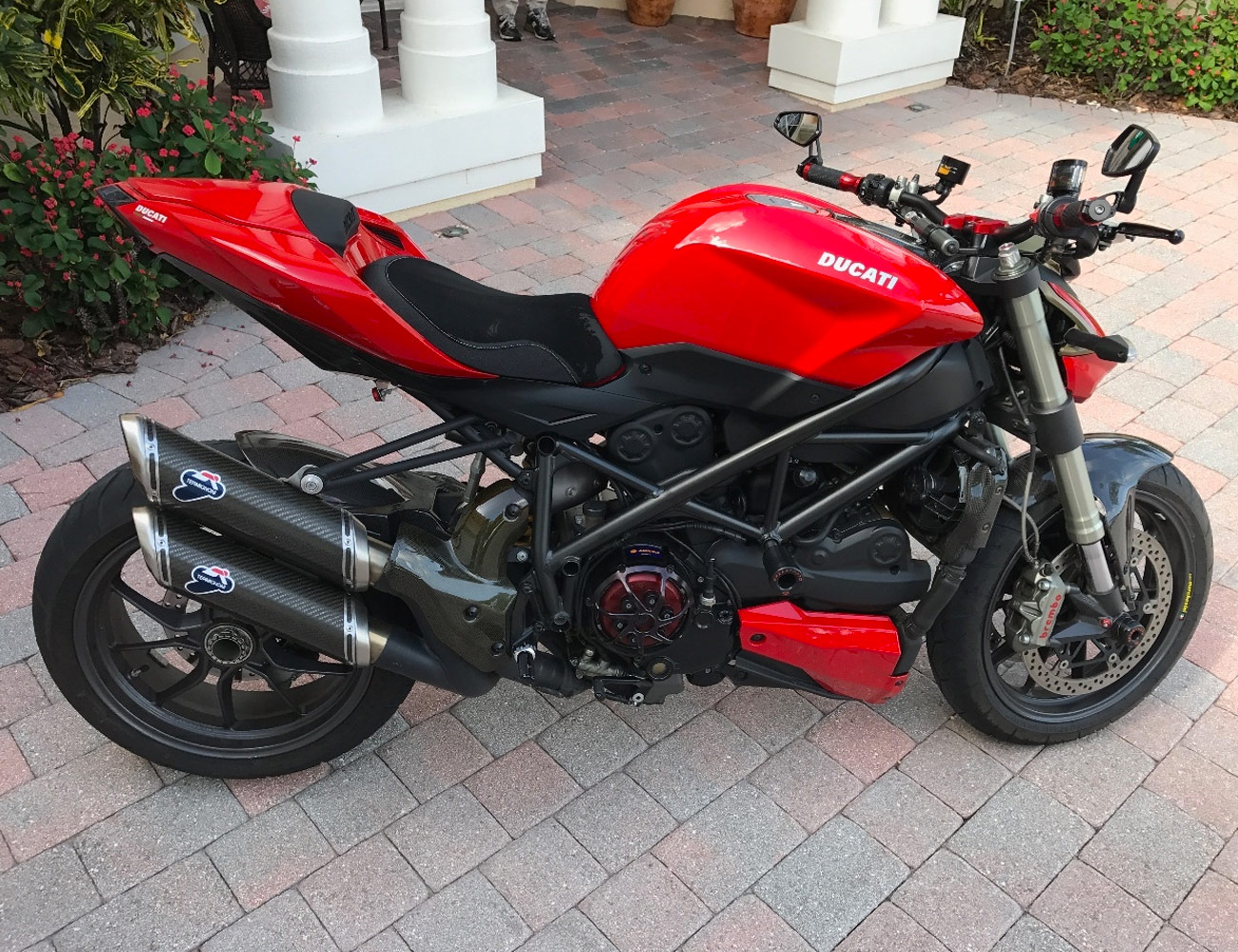
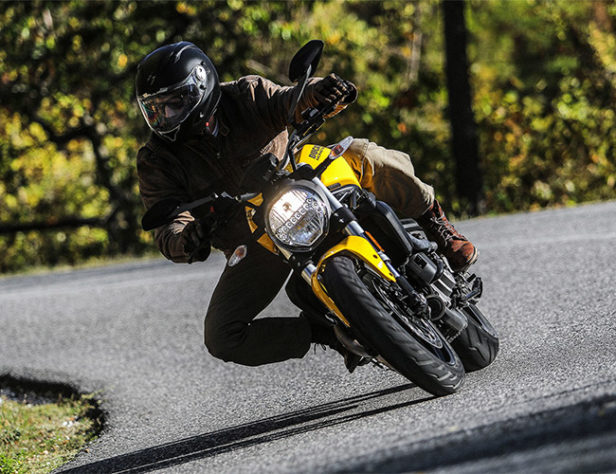
2010 Ducati Streetfighter 1098

Mileage: 14,000
Location: Melbourne, Florida

What we like: The Ducati L-twin engine’s torque is one of its calling cards. If you want to get beat cabbies and disgruntled car-commuters to the next light the Streetfighter’s 1098 will be your best friend. The owner of this particular Streetfighter claims they just had it in for the scheduled serviced, including clutch and chain adjustment. At 14,000 miles it’s not exactly new, but at least its well taken care of enough for you not to have any initial maintainence fears.
From the seller: “Bike has 14000 miles on it, just serviced at Brevard Superbike and has brand new clutch and chain adjustment.”
What to look out for: There was a recall on this bike fule hose clamp, but as the seller notes, it was just in for a service, so it should’ve been sorted. Other than that there have been documented electrical issues affecting fueling so make sure the previous owner has attended to that as well.

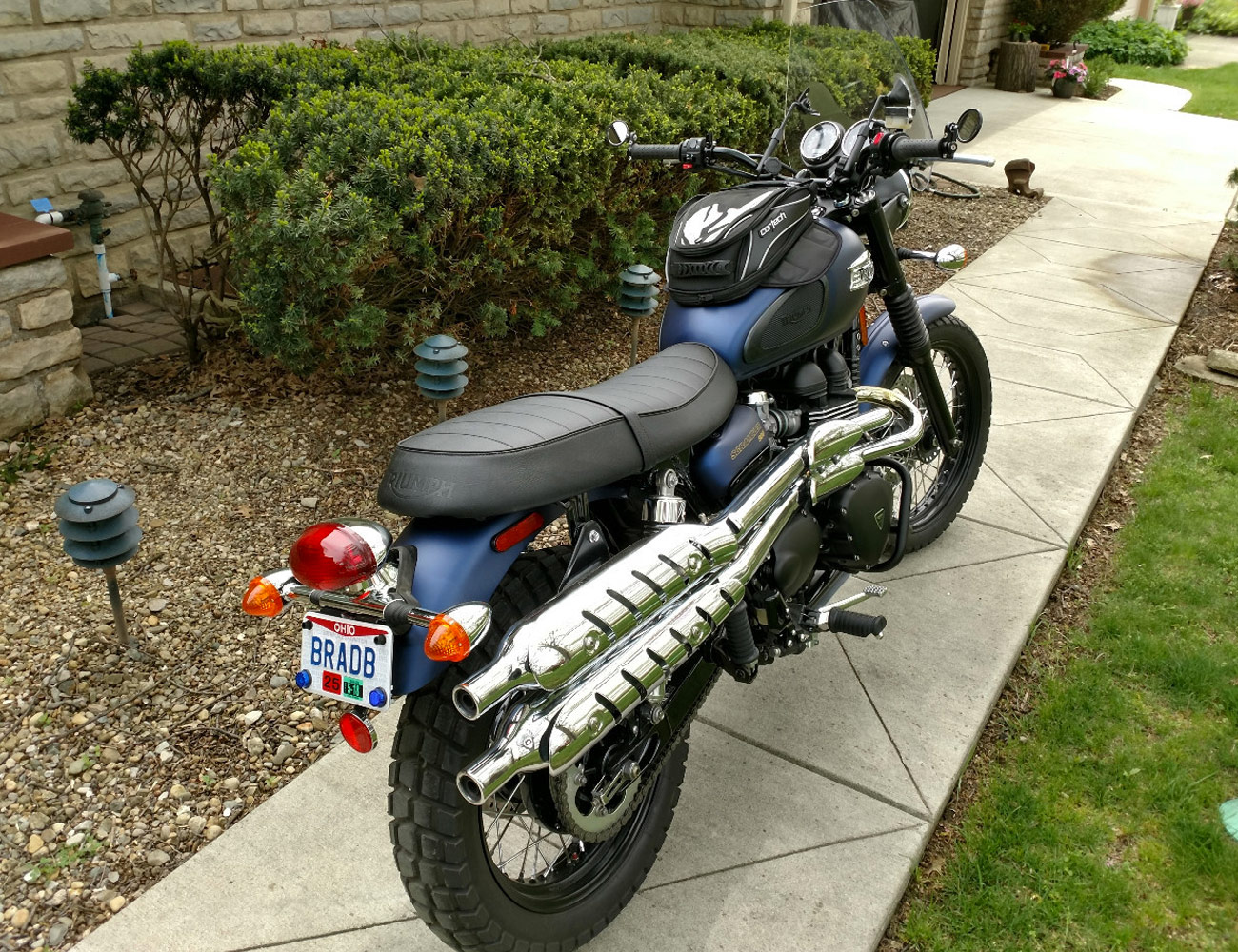
2016 Triumph Street Scrambler

Mileage: 70
Location: Columbus, Ohio

What we like: The Triumph Street Scrambler is no doubt a more stylish option on this list, but it’s tough as nails. The Triumph shown here has a few add-ons, chief of which is the windscreen — crucial if your daily commute has any highway miles in it. The beautiful deep blue semi-matte paint is a serious bonus. It also only has 70 miles on the clock, so it’s basically brand-new, too.
From the seller: “Offered is a 2016 Triumph Scrambler with only 70 miles on the odometer. This Scrambler has been fitted with factory engine case guard, short windscreen and bar end mirrors. The factory mirrors are wrapped and can be reinstalled if desired. Likewise, the factory bar ends. Included is the Cortech tank bag pictured.”
What to look out for: If this bike truly has only 70 miles on the clock, then it’s practically brand-new. But because there are so few miles, there might be a larger, hidden issue that’s worth a closer look.

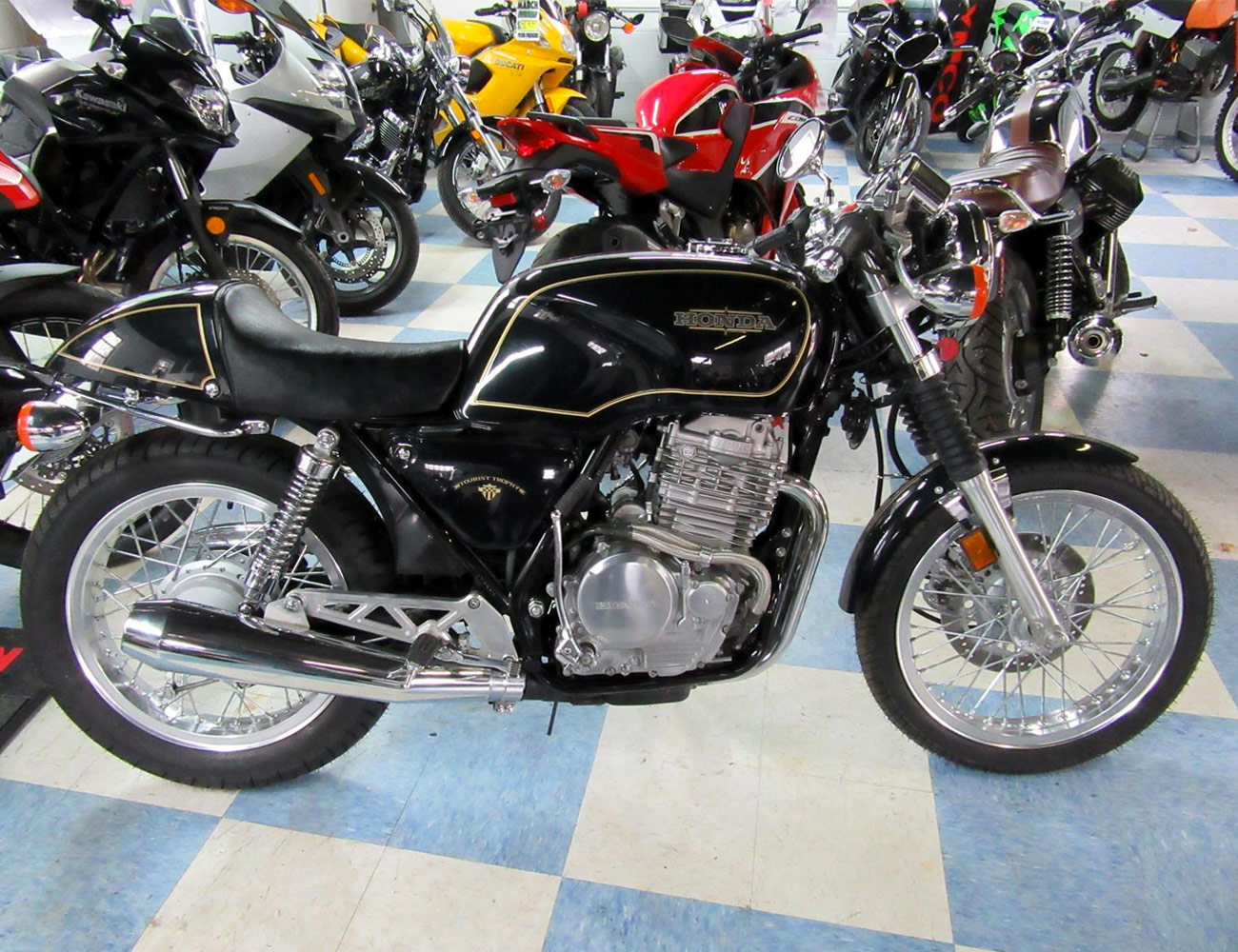
1990 Honda GB 500

Mileage: 8,095
Location: North Kingstown, Rhode Island

What we like: Cafe racers were designed to take on city streets at racing speed, so it shoudn’t be a surpise one popped up on this list. Even at 28 years-old this Honda GB 500 only has 8,095 miles — in other words, it’s barely broken in.
From the seller: “Honda’s homage to classic British bikes, the GB500, is as much fun to ride as it is beautiful to look at. This example is in very good condition. Supertrapp exhaust and aftermarket rectangular mirrors replace stock items.”
What to look out for: The rear seat cowl tends to crack over time and other than using bondo and repainting it, the only practical way to remedy it is to order a new one. If you can inspect a 1990 Honda GB 500 in person, pay close attention to this area.

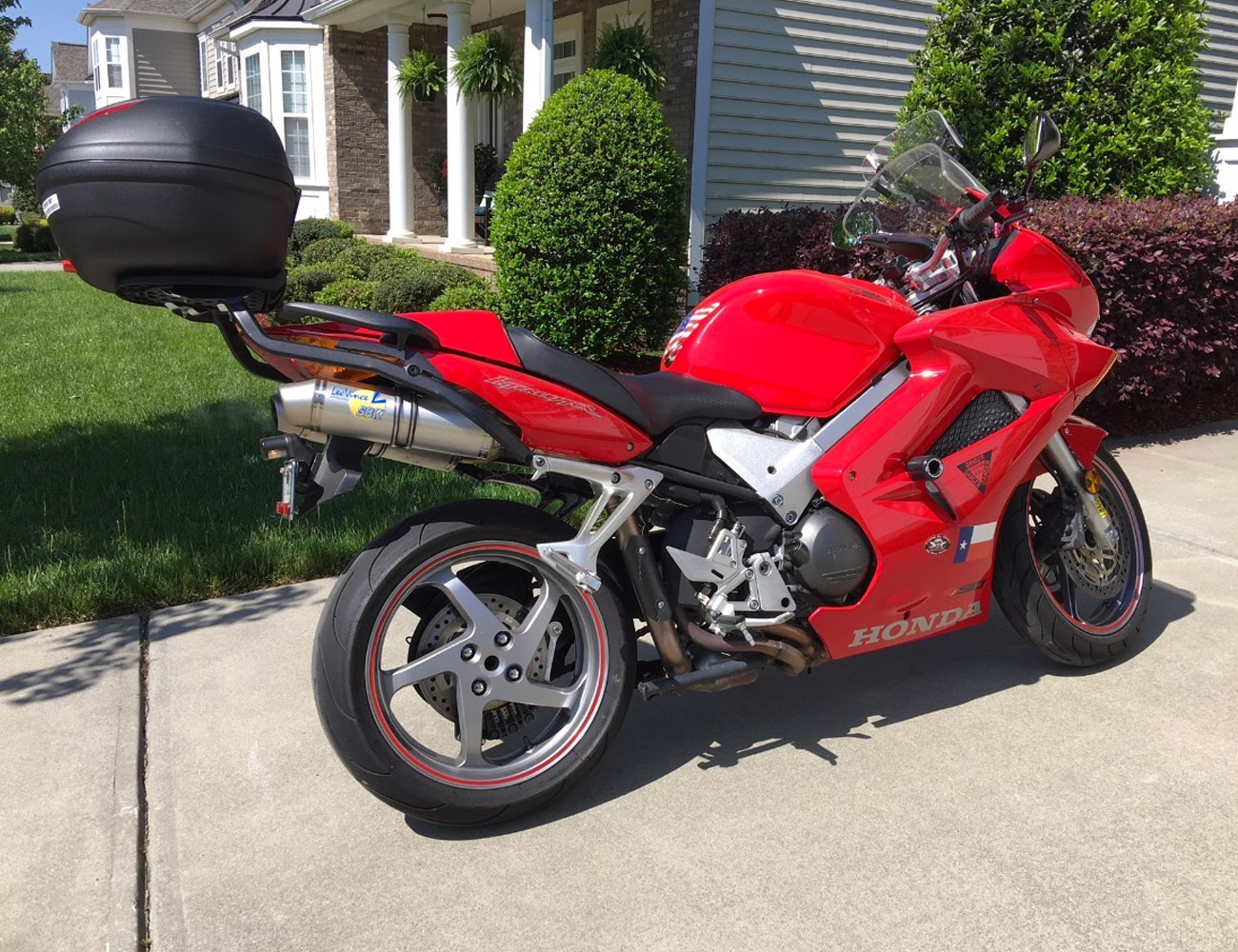
2004 Honda VFR 800 Interceptor

Mileage: 21,014
Location: Rock Hil, South Carolina

What we like: The Honda VFR 800 Interceptor could easily void all the other bikes on this list as far as commuter motorcycles go: it has a torquey engine, comfortable riding position, aerodynamic bodywork to deflect wind and handles with the best of them. Superbike styling isn’t for everyone, but otherwise, the Interceptor is the ideal commuter.
From the seller: “I purchased the bike new in 2005 with one mile. It has always been garaged, well-maintained and ridden responsibly. I have upgraded several items to enhance the ride. I changed out the stock windscreen for a Puig with an adjustable deflector. And I’ve installed a GIVI hard tail bag which works great for weekend trips or just running errands.”
What to look out for: The stand out flaw for this generation VFR — with VTEC technology — was the valve clearances. Make sure the owner had the valves adjusted at the regular service intervals. Otherwise, you’re asking for a much larger headache. To get the valves adjusted outside of the warranty can easily run upwards of $500.

But If You Want a Brand Motorcycle For the City…

Navigating any concrete jungle can be hell — especially if you call the asphalt wilds your commute. These five bikes make riding through the city much easier for any kind of rider.Read the Story

Own a Beautiful Vintage Ducati Without Destroying Your Bank Account

It’s not very often you see a vintage Ducati in such good condition going for such a temptingly-low price. Go to any big auction and a mint ’70s Ducati sports bike will easily see five figures. But then again, not every Ducati has such a troubled history as the Sport Desmo 500.

Right off the bat, the significant differentiator of the Sport Desmo 500 is its parallel twin engine. Not only does it break away from the iconic L-twin setup the Italian brand is known for, but it was forced into production by bureaucrats and suits attempting to compete with the influx of Japanese bikes — it didn’t go well. When the new engine came to be in the mid-’70s, it was underpowered, uninspired and bolted on to the lackluster Gran Turismo Lusso.

But, in 1977, after the flatlining sales couldn’t be ignored, Ducati upper-brass asked the manufacturer’s prized engineer Fabio Taglioni to work his magic. He massaged a few more horsepower out of the parallel twin engine while famed designer Leopoldo Tartarini reworked the body and chassis — the result was the Sport Desmo 500.

This ’77 Sport Desmo 500 up for auction shows a few signs of age, but it’s in incredible condition for a 40-year-old motorcycle. The thing that’s really holding back the price of this Ducati is the unconventional (for Ducati) parallel-twin. It’s not the most desirable power plants the brand has let leave the Borgo-Panigale factory, but if you’re more a fan of the styling and appreciate the bank account-friendly price tag, this is the vintage Ducati you want.

A Few More Affordable Motorcycles

The beauty of motorcycles is that you can find lightly used, older models for next to nothing. Read the Story

The Most Iconic Modern Ducati Turns 25 Years Old – Read Our Reviews

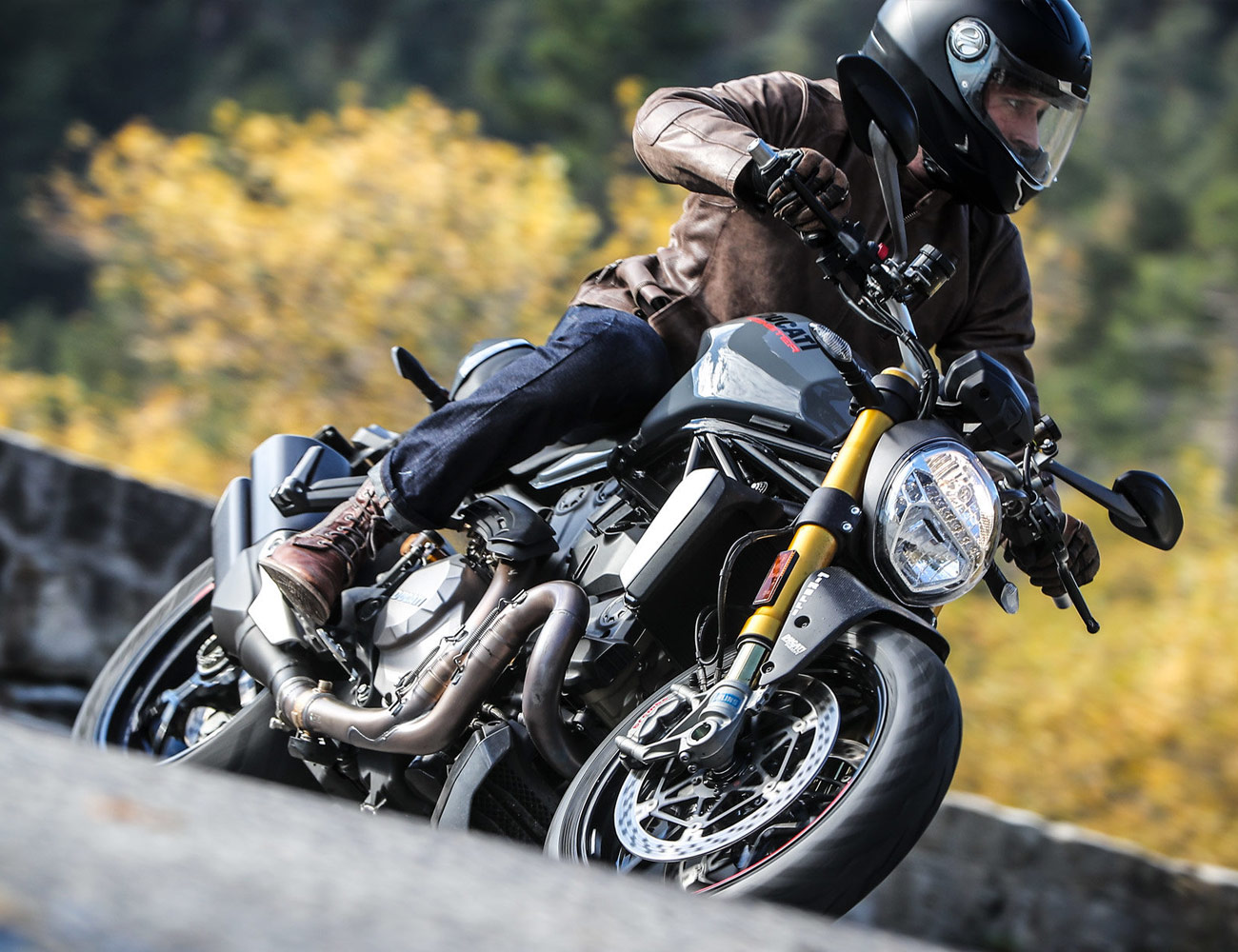
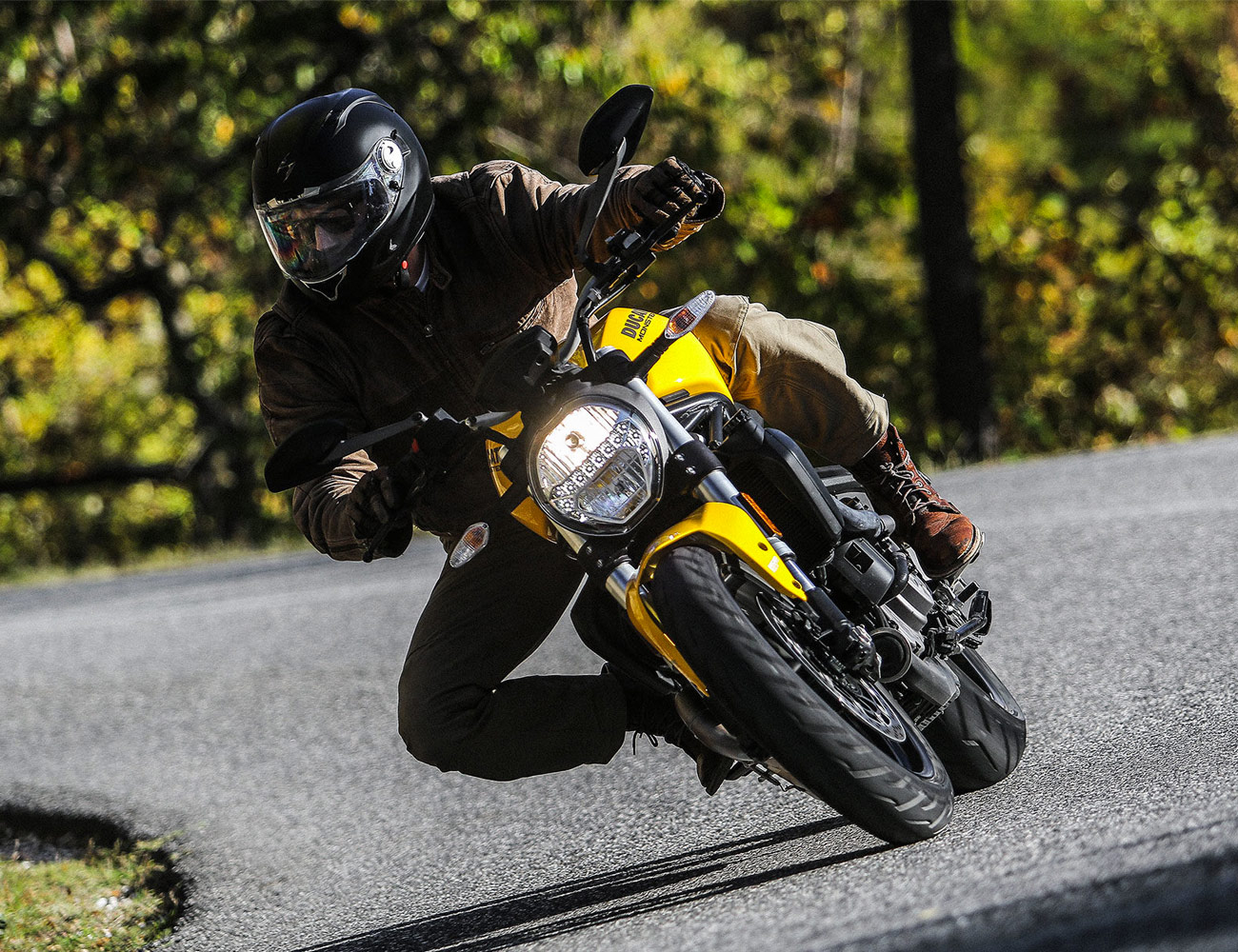
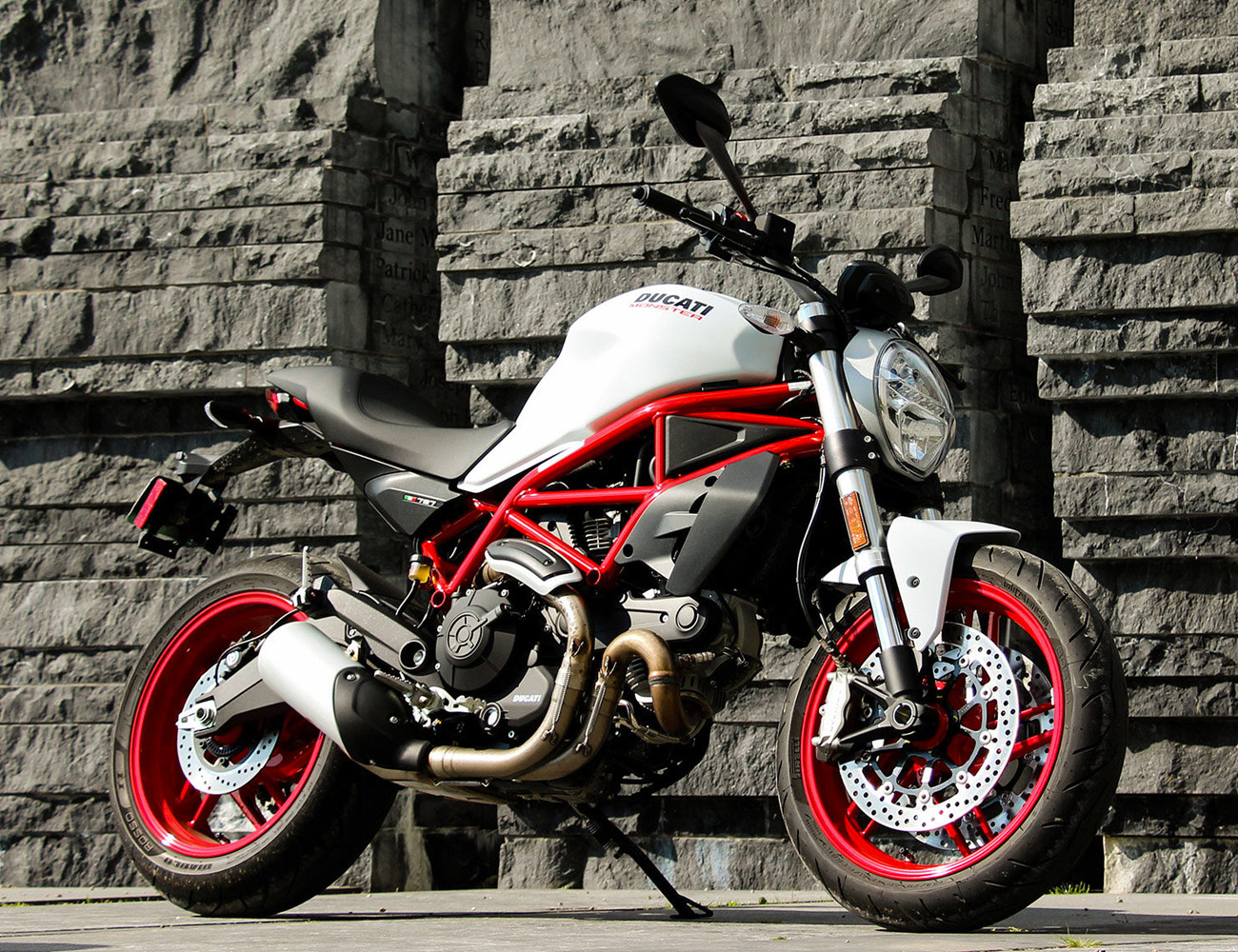
This weekend is The Quail Motorcycle Gathering, where Ducati will celebrate the Monster turning 25 years old. The motorcycle is arguably the most iconic Ducati of the modern era — it’s a founding father of the ‘naked sports bike’ segment after all. Not only that, but the Monster is Ducati’s most successful bike to date, with over 250,000 having rolled out of the factory in Borgo Panigale, Italy since 1993. We’ve been lucky enough to ride each of the newest iterations of the Monster family — the 1200, 821 and 797. Read the reviews below.

2017 Monster 1200

The Monster is Ducati’s 911. There may be some Ducati die-hards that will go on rants about the design tweaks or electronics, but the 2017 Monster 1200 is a milestone for Ducati, one that will be celebrated as the next step forward. — Bryan Campbell

2018 Monster 821

The 821 certainly isn’t a paradigm shift in the Monster universe, but what it gets right is bringin upper-echelon sportbike technology within the grasp of new riders — or riders not interested in spending nearly $18,000 for what should be standard on any modern sport bike. — Bryan Campbell

2017 Monster 797

In true Ducati fashion, the Monster 797 will have you yearning for the twistiest patches of tarmac you can find. I loved the last-generation Monster 1200S but this one, the 797, the Bambino, may have taken its place in my heart. — Matt Nuendorf

The Best Motorcycles For Navigating City Streets

Navigating any concrete jungle can be hell — especially if you call the asphalt wilds your commute. These five bikes make riding through the city much easier for any kind of rider. Read the Story

The Affordable Alternative to the Expensive British Motorcycle Jacket Everyone Wants

Just about every motorcycle jacket brand out there makes something similar to the Zircon jacket by Rev’It — the classic design of four pockets design, a belt around the middle and basic, if not archaic, snaps and clasps. Almost all of them come sans Velcro, without any exciting features, and little in the of way liners or insulation. During a ride through Monte Carlo, I met up with a friend who was wearing a wonderfully weathered Zircon of his own — beaten on by harsh sun rays, torturous weather, covered in dust and bugs. He told me the jacket had initially been black. However, it appeared a dark grey after his month-long motorcycle ride across Morocco. It was clear the Rev’It Jacket could stand up to the test of time, but I had to test it for myself.

The Good: The Zircon is Rev’It’s top-of-the-line British-inspired touring coat. Wax-coated polyester creates a water-repellent outer shell while contrasting polyester Oxford reinforces critical impact zones like elbows and shoulders. The jacket is simple, to say the least: four pockets on the front, each of which fasten shut with trusty button-snaps; an elastic drawcord around the bottom of the coat helps to tailor the look; a belt at the waist and a similar closure around the storm collar.

Beneath the storm flap there’s an inner breast pocket with an orange zipper that makes a perfect place for your wallet, documents, et al. The storm flap is secured by a series of button-snaps, covering a robust zipper which only runs from the collar down three-quarters of the jacket, allowing the jacket to sit more comfortably across your lap while riding. There’s an insulated, waterproof thermal liner effective enough to actually get too warm at times. There are also hand-warmer pockets behind the bottom two front flap pockets. CE-rated Knox Lite protection comes standard: elbow and shoulder armor inserts and an optional back-protector slot.

Who’s It For: Any motorcyclist who appreciates classic kit and the stylings of yesteryear. It’s a basic, belt-waisted jacket with a British origin; a silhouette made most famous by Steve McQueen. The Zircon provides the old-world look and brings modern-day protection into the fold.

Watch Out For: The Zircon, like most vintage-styled touring jackets, takes more effort and patience to wear daily. The belt around the waist is an old-fashioned notch-and-buckle setup, which isn’t easy to fasten with gloved hands. There’s a similar belt closure atop the storm collar, which is also frustrating to close when it’s cold or if you’re in a hurry. The inner thermal liner, while being wonderfully warm and GORE-TEX protected, means that when it’s raining full tilt, you might stay dry, but the outer shell of the coat gets soaked. The result is a core kept clear of the elements, but a jacket needing an entire day to dry.

Alternatives: Rev’It makes a very similarly styled jacket called the Jackson. Like the Zircon, it features a four-pocket front and traditional touring coat accouterments. It’s made from 750D polycotton twill shell and backed with a Hydratex waterproof and breathable membrane. Like the Zircon, the Jackson also comes standard with a thermal liner and CE-rated armor; however, doesn’t have the belt around the waist. The Jackson is slightly more affordable at $288.

Similarly priced and almost identical in style to the Zircon is the Atlow Jacket by Merlin. And then there’s Belstaff. While the Belstaff Tourist Trophy Jacket made this style famous, you’ll often see it with a price tag twice as large as the Zircon’s.

Review: The Zircon mimics the coveted Belstaff Tourist Trophy jacket while staying more affordable and adding CE-rated armor, a waterproof thermal liner, robust stitching and the Polyester Oxford material at the elbows and shoulders. It’s the same size, the same shape and has the same belt-waisted look as the Belstaff.

I have a garage full of motorcycle gear, which includes countless jackets of all varieties. Yet every time I jump on a motorcycle, I find myself pulling the Zircon off the rack. About a month ago, the first Zircon I owned — which had been on my back for a few years, traveled to more than five countries and over countless miles — was stolen. It was, as far as I was concerned, just beginning to get good. A glossy layer of dirt and dust covered the entire coat, much of which came courtesy of a somewhat unexpected water crossing aboard a BMW in Mexico. I loved it so much that I bought another to replace it.

Verdict: It’s everything I want from a touring coat. It’s toasty with its thermal liner zipped in, breathable at warm temps, as waterproof as any waxed outer shell can be (more-so with the GORE-TEX innards), comfortable, easy to use and looks damn good.

What Others Are Saying:

• “Comfortable, stylish, and warm: the Zircon is a solid 2/3 season jacket for those of you that don’t want to look like Rossi wannabes.” – Abhi Eswarappa Bike-Urious

Key Specs

Outer Shell: Wax coated cotton twill and polyester Oxford
Lining: Hydratex and mesh G-liner, detachable thermal liner
Protection: CE-rated Knox Lite armor, SEESOFT CE-level two back protector.

More Motor Cycle Jackets

Summer is riding season. But don’t sacrifice safety for comfort under the hot sun. Read the Story