All posts in “Events”

2018 is going to be a pickup truck battle royale between Ford, GM and Ram

Share

  • Pinterest

Pickups have long been the U.S. auto industry’s hardest-fought sector, with stakes so high that no potential advantage is seen as too costly and no gain goes uncontested. But the competition will be even more heated in 2018 as Ford, General Motors and FCA US pursue new strategies for their truck lineups.

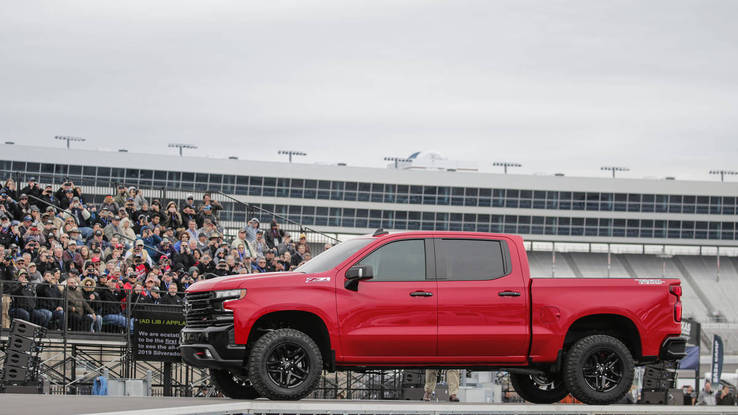
GM made a splash in Texas this month by showing off its redesigned Chevrolet Silverado, which it promised will be leaner and meaner when it debuts late next year. Ford will lob two shells into the segment in 2018: a light-duty diesel for its F-150 and the return of the midsize Ranger to challenge GM’s Colorado/Canyon combination.

And FCA will throw the first full redesign of its Ram 1500 pickup since the 2009 model at its two crosstown competitors in January. Then, late in the year, it will introduce the first midsize Jeep pickup in a couple of decades.

“The pickup truck segment has reached into a hypercompetitive mode, and consumers are benefiting from more power, improved fuel economy and increased comfort,” said Dave Sullivan, senior analyst at AutoPacific. “What’s interesting is that all three pickups are really deviating from each other. They are all going their own way when it comes to materials, powertrains and drivetrains.”

The full-size pickup segment has grown 5.5 percent through November, while the overall light-truck market — which includes crossovers and SUVs — is up 4.7 percent, according to the Automotive News Data Center. Those hot segments stick out in a U.S. market off 1.4 percent this year, mainly because of much weaker car demand.

But regardless of roiling segments, there is no doubt that pickups are the U.S. kings: The Ford F series has been the nation’s top-selling vehicle for nearly four decades, with the Silverado now at No. 2, followed by the Ram pickup.

Sales of the F series have risen 10 percent through November, while Ram sales are up 3.2 percent. Silverado sales have slipped 0.5 percent from a year ago and the GMC Sierra has fallen 3.5 percent.

The Toyota Tundra has gained in the segment, with sales up 1.4 percent through November, but it remains far below the fourth-place Sierra.

Nissan Titan sales have more than doubled from a year ago, yet Nissan’s full-size pickup volume remains a fraction of its domestic competitors.

One long-sought number remains out of reach for the pickup contenders: an EPA rating of 30 mpg in highway driving. Yet that milestone could be attained in 2018 with the latest pickups. Some analysts speculated Ford would achieve the feat with its change to aluminum. But the 2018 F-150 is rated at 26 mpg in highway driving with a 2.7-liter V-6 EcoBoost engine and 10-speed automatic transmission.

The current-generation 2018 Ram 1500 with a 3.0-liter V-6 diesel engine gets up to 29 mpg with an aerodynamics package, while the Ram’s 3.6-liter V-6 engine is rated at 25 mpg highway. Both Ram models come standard with an eight-speed automatic transmission. The 2018 Silverado is rated at 24 mpg highway with a 4.3-liter V-6 and six-speed automatic transmission.

Mixed materials

GM’s slippage in the segment this year may have been motivation to lift the veil early on its redesigned Silverado this month, nearly a year ahead of its planned production. Chevrolet said it would use mixed materials to shed weight, boost fuel economy and enhance functionality of its twin pickups.

Chevrolet did not specify how much steel and aluminum will be used on the new truck, but it’s expected to be a mix of both materials and other lightweight components.

GM said changes in engineering and materials will result in “a significant reduction in total vehicle weight” and “improved performance in many measures.” Eventually, the company is expected to offer a pickup bed that uses carbon fiber.

Alan Batey, president of GM’s North America operations, said the automaker’s next-generation pickup will have “a stronger, roll-formed steel alloy for the bed and floor, contributing to a cargo box that is both lighter and even more functional than ever before.”

Rangers, diesels

Since the F series was redesigned in 2014 and given an aluminum body, Ford has added features nearly every model year, including a 10-speed transmission, a Raptor performance variant and swankier trims.

Spring will mark the first time in the F-150’s storied history that it is available with a diesel, though performance details have not been released.

Later in the year, Ford will begin building Ranger midsize pickups in the U.S. for the first time since 2011, competing with the Toyota Tacoma, Nissan Frontier, Honda Ridgeline, Chevrolet Colorado and GMC Canyon.

Overall, Ford expects to sell just shy of 900,000 F-series trucks in 2017, not far off its record of nearly 940,000 in 2004.

2019 Chevy Silverado premieres at Chevy Truck Legends

“Certainly, there will be activity,” said Todd Eckert, Ford’s truck marketing manager. “But at the same time … we really feel like we have an outstanding lineup to be competitive like we have been. That’s what leaders do, and we’re very confident in our product going forward.”

Eckert said Ford will try to stay disciplined on incentives as Ram and Chevy likely put more cash on the hood to help move old models off dealer lots.

“Affordability continues to be very important, but we continue to feel very strong about our product and it fitting the needs of our customers, and that’s how we’ll continue to go to market,” Eckert said.

FCA will reveal the details of its redesigned Ram 1500 at the Detroit auto show and likely will begin producing it the same week. Spy photographers caught much of the Ram 1500’s new styling after a strong breeze blew the cover off a preproduction model this fall, revealing many secrets.

Under the hood, the next-generation Ram will have upgraded engines, complete with a 48-volt mild-hybrid belt-start generator system to improve fuel economy, as well as improved suspension systems.

It’s also expected to shed weight from current versions, have a larger crew cab and come with the latest version of FCA’s Uconnect infotainment system to go with a reworked interior.

FCA will continue to produce its current-generation DS Ram 1500 for at least a year while production of the new DT ramps up at a retooled plant in Sterling Heights, Mich., in suburban Detroit. The move should enable Ram to produce record numbers of pickups, with the current version packing the lower end of the trim and price spectrum.

In the fourth quarter of 2018, about the time the next-generation Silverado and Sierra are hitting the market, FCA will start building the Scrambler, a Wrangler-based pickup. The Scrambler will feature a midsize pickup bed attached to a four-door cabin similar to the 2018 Wrangler Unlimited. It also will carry the Wrangler’s off-road suspension system.

Largely because of the Jeep badge, FCA expects to be able to sell the Scrambler at a substantial premium compared with competitors in the medium pickup segment.

The article “Detroit’s fierce pickup rivalry gets fiercer” originally appeared at Automotive News on 12/15/17.

By Larry P. Vellequette, Automotive News

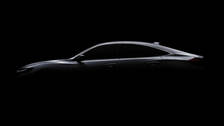
This white sketch is Infiniti’s new concept for the Detroit auto show

Share

  • Pinterest

Infiniti will preview its next-gen styling on the concept shown above at the Detroit auto show in January. All we have is this little teaser to go on, but that front end, we think, looks like something you’d see on a designer’s drawing board. As it should.

“The new Infiniti concept car will take the traditional sedan architecture to its next stage of evolution,” said Karim Habib, executive design director. “A shift toward smarter, more compact and less intrusive powertrains; we were able to create an alternative form with flowing gestures, more engaging in character and more enriching experience. With its long cabin, balanced proportions and muscular stance, the concept heralds in a new era for Infiniti models.”

The next-gen styling talk is a bit premature, in our minds, considering the brand’s sedans and coupes are some of the best looking on the market, especially the new Q60. Its powertrains are strong, too. The company just needs to get its steering setup figured out and start naming its vehicles in a way that makes sense.

We’ll get a better look at NAIAS in a few weeks, so stay tuned.

Hyundai’s funky hatch, reborn: Here’s a preview of the 2019 Veloster

Share

  • Pinterest

The current Hyundai Veloster is a bit of an odd duck in the automaker’s lineup; it feels the most dated and represents a sort of window into the Hyundai of the early aughts. A funky hatch meant to be sporty, the Veloster instead channels the tuner scene from 15 years ago, with interior plastics to match, while never really providing the go along with the show. Now nearing the end of its product cycle, the Veloster has been consistently upstaged by Hyundai’s own Elantra, which has served up more agreeable looks along with greater practicality.

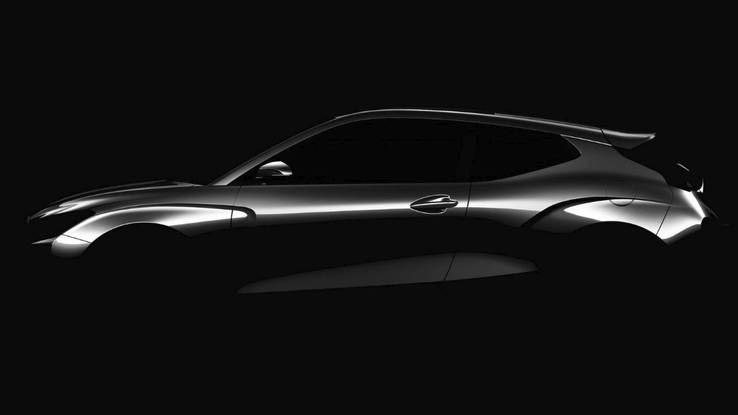
The current Veloster has been on sale since 2011, so a replacement is not too far off; we’ll likely see the production version in the metal in just a few weeks at the 2018 Detroit auto show, with sales expected to start in the second half of 2018. The 2019 model, as you can see in the video, will keep the funky three-door layout, but the exterior design will gravitate toward more modern Hyundai looks.

2018 Hyundai Elantra GT Sport first drive: Has Hyundai done it?

This means an updated version of the front fascia, more in line with the Elantra, and a wider rear window. The outgoing model was a little challenged when it came to rear visibility, but it appears that Hyundai will keep the overall shape with just a few styling tweaks. Another major change will be an all-black roof, which is a popular look these days.

Under the hood of the Veloster Turbo, expect to see the turbocharged 1.6-liter inline-four borrowed from the Elantra GT Sport, good for 201 hp, while the base version will likely get the naturally aspirated 2.0-liter inline-four producing 147 hp, also borrowed from the Elantra.

2017 Kia Soul review with photos, specs, pricing and power

Acura RDX is getting a major redesign for the Detroit auto show

Share

  • Pinterest

Ahead of the Detroit auto showAcura is teasing its next-generation RDX crossover, replacing the current model that was refreshed for 2016. The folks at Acura say this RDX will be its best-performing to date, but they weren’t clear about what that means. We imagine the new compact crossover will have more oomph than the current 279-hp V6-powered 2017 model. There’s even a chance a performance boost could come by way of electrification or turbocharging, but we won’t know until the North American International Auto Show in January.

Honda plans to revive the Insight at Detroit auto show

Judging just from the teaser, this prototype looks more aggressively styled than the current model, too. The nose looks slightly longer, and the top profile seems more coupe-like. Of course, this is a teaser of a prototype, so it’s hard to say what cues will carry over to the production version. That said, Honda and Acura have been good at debuting prototypes and concepts that look close to what is slated for the roads.

We’ll bring you much more from Acura and all the other manufacturers in a couple weeks during our comprehensive Detroit show coverage, so check back. 

The Honda Insight returns for the Detroit auto show

Share

  • Pinterest

Honda is resurrecting the Insight nameplate — a five-passenger gasoline-electric hybrid sedan with a new profile — to be slotted above the Civic and will show a prototype at the Detroit auto show next month.

The all-new Insight will feature Honda’s latest two-motor hybrid system and will be launched in the U.S. in the summer as the newest electrified vehicle in the Honda lineup, the company said Tuesday.

Henio Arcangeli Jr., general manager of the Honda Division, said the next Insight was developed to provide ample interior space and best-in-class performance “without the typical tradeoffs.”

The Insight, introduced in 1999, was America’s first gasoline-electric hybrid vehicle, with an EPA highway rating of 70 mpg. The second-generation, five-door Insight debuted in 2009 with more interior space and functionality.

Honda said it undertook a new approach with the Insight’s latest styling, packaging, premium features and performance to appeal to mainstream-car buyers.

It will provide fuel economy that is competitive with other compact hybrid models.

Honda to slot third-gen Insight hybrid above Civic” originally appeared in Automotive News on 12/19/2017

By David Phillips at Automotive News

2019 Jeep Cherokee shows its new face ahead of the Detroit auto show

Share

  • Pinterest

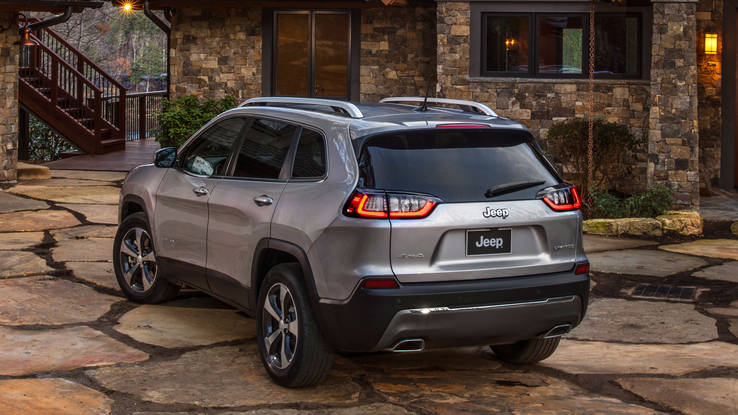
Six model years after the controversial, squinty redesign of the Jeep Cherokee, the successful midsize Jeep is getting an exterior makeover.

Jeep released a few photos of the 2019 Cherokee ahead of its Detroit auto show debut, and lo and behold, the bizarre stacked-headlight design is gone. In its place is a more traditional setup without the thin daytime running lights. The fog light placement appears to vary based on the trim. Trailhawk versions (pictured in red) get small fogs right under the main headlights, placing them further away from off-road obstacles, while the non-Trailhawk Cherokee (pictured in gray) has its fog lights in the lower fascia. One thing Jeep hasn’t touched is the grille-in-hood design it has going on.

Cherokee photo

Jeep waited longer than most manufacturers do for a mid-cycle refresh like this one.

Out back, Jeep integrated the license plate niche into the tailgate instead of squeezing it in below. A new taillight design helps give the Cherokee a modern and slightly muscular look too.

Customers must not have been complaining about the Cherokee’s interior: It carries over almost entirely unchanged beyond a few button modifications. Jeep says it’ll show more fuel-efficient engines for the Cherokee at the NAIAS in January too. The current Cherokee comes with either a 2.4-liter I4 or a 3.2-liter V6, so we’d expect something small and turbocharged to debut in the 2019 Cherokee when Jeep finally announces it.

Zac Palmer

Zac Palmer – Editorial Intern Zac Palmer has probably spent more time in a car than any other 21-year old in the country. He likes anything that can go around a corner, and is surely talking about a car wherever he might be.
See more by this author»

No more teases: get your 602-hp Hennessey VelociRaptor 6×6 now

Share

  • Pinterest

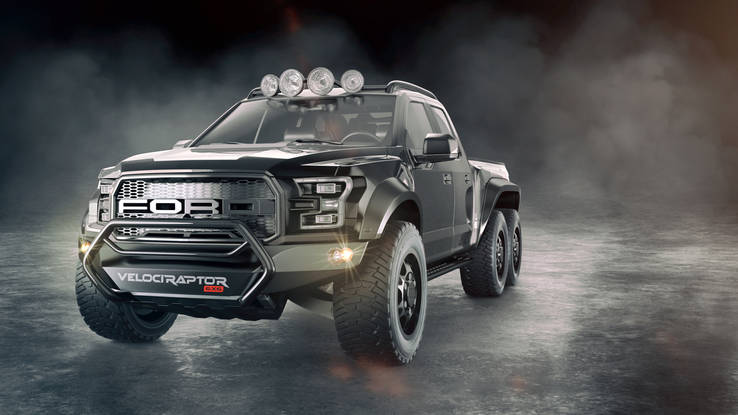
Famed tuner Hennessey doesn’t do subtle. At SEMA this year, the company teased its second version of a 6×6, based on the Ford F-150 Raptor. It gets two extra wheels, obviously, along with 602 hp and 622 lb-ft of torque. That’s 152 hp and 172 lb-ft more than the basic, and already awesome, Raptor. Hennessey’s version comes in at $349,000, including the price of a new Raptor pickup. It does the 0-60 sprint in 4.9 seconds.

This vehicle is a successor to the 2010 VelociRaptor — which Hennessey Performance Engineering has built more than 1,000 examples of — a story that began with a customer asking to twin-turbocharge his first-gen, 6.2-liter Raptor.

Upgrades to the Raptor SuperCrew base truck include larger twin-turbochargers, an extra locking rear axle, upgraded Fox suspension, six 20-inch wheels with Toyo Open County tires, front and rear bumper upgrades, LED lights, a roll bar and a three-year/36,000-mile warranty from Hennessey.

There aren’t too many competitors for this zombie apocalypse truck. The only one that comes to mind is the Mercedes-Benz G63 6×6; that comes in at about $500,000. Brabus and Carlsson versions crest the seven-figure mark.

So in that sense, it’s kind of a deal.

Go to hennesseyperformance.com for more info and to order. Hennessey says it’ll take about four-six months to complete.

Hennessey VelociRaptor 6x6 in black

“The VelociRaptor 6×6’s appearance at SEMA was just a sneak peek, but we are done teasing,” said John Hennessey, founder and CEO of Hennessey Performance Engineering. “It is time to uncage our monster of a truck.”

2019 Chevy Silverado: What’s hiding beneath the skin?

Share

  • Pinterest

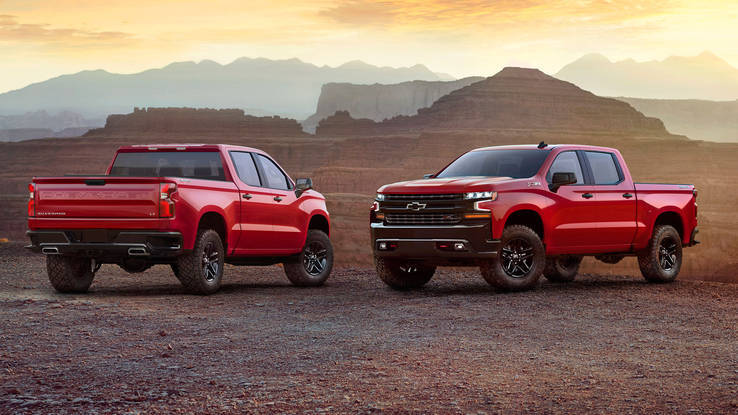
So, Chevrolet has given us an early glimpse of the redesigned Silverado pickup ahead of its official debut next month at the North American International Auto Show. Technical details are few, but the photos released Saturday actually do reveal a lot.

Let’s start with the fenders and sides of the truck. See those deep curves, especially on the lower flanks just above the rocker panels, and the deep accent lines in the upper part of the fenders that start at the headlights and flow back? These are good hints as to what the fenders, doors and bed are made of.

These parts are very likely steel.

2019 Chevy Silverado premieres at Chevy Truck Legends

It’s very difficult to stamp such deep draws in aluminum without the metal tearing. Aluminum suppliers Novelis and Alcoa have been developing new grades of aluminum that can support these styling cues, and it possible that the Silverado does have aluminum outer body panels. But I think it is unlikely.

Using high strength steel for the outer panels is very much in keeping with Chevrolet’s belief that it isn’t smart to use soft metal in vulnerable places on a vehicle designed for work — a point driven home in a series of commercials that poked holes, literally, in the Ford F-150’s bed. Also, today’s high strength steel can be nearly as light as aluminum. For now, Chevy is confirming only that the truck’s bed floor is made of steel.

Let’s assume the new Silverado’s outer body is high strength steel. That would give Chevrolet some powerful ammunition in its upcoming marketing battle with Ford.

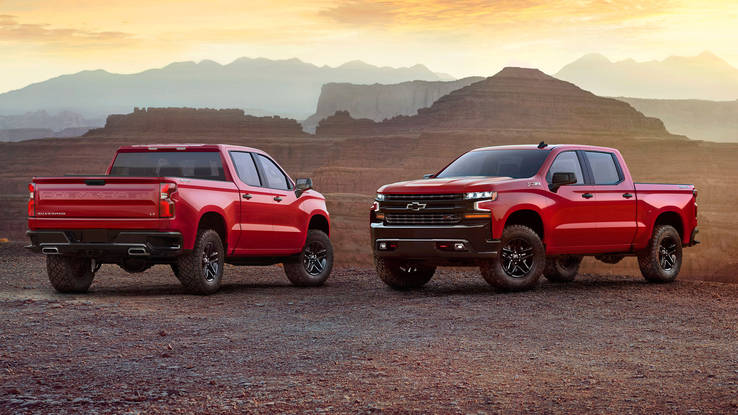
Silverado photo 1

The 2019 Silverado made a surprise appearance before the 2018 Detroit Auto Show.

Despite what Ford claims, aluminum-bodied vehicles are more expensive to repair than steel. Most body shops have two labor rates, one for steel and a higher one for aluminum. It could very well be that the tool box Chevy dropped into the bed of the aluminum F-150 to show the softness of the metal is only the opening salvo in a more aggressive effort marketing effort by Chevy to gain market share.

The new Silverado can still trump the F-150 on weight. GM has finally confirmed that is using the mixed material manufacturing system developed for the Cadillac CT6 on the Silverado’s body in white. That means the Silverado uses bonded, riveted and possibly even welded aluminum, cast parts and magnesium for the cab.

Ford pretty much stuck to a traditional steel frame for the F-150. GM might have some interesting weight-saving frame technologies to showcase underneath. Details on the Silverado’s specific weight savings will come Jan. 13th just ahead of the Detroit auto show.

This supercharged Silverado concept is a modern muscle truck

The surprising success of Ford’s Raptor off-road high-performance truck caught Chevrolet and everyone else off guard. It may have influenced Chevy designers to toughen up the new Silverado. The next-gen truck has squinty, mean-looking Clint Eastwood eyes for headlights. The black bumpers and chrome tipped dual exhaust also inject an air of seriousness to the Silverado.

My sources tell me there will be some major surprises under the hood. GM needs a state of the art overhead-cam V-6 engine to compete with Ford and Ram trucks. And it would not surprise me if some version of the 3.6-liter engine currently used in various Cadillacs becomes the base engine for the new Silverado.

It currently makes a commendable 335-horsepower, and with some minor tuning, can deliver plenty more torque. There should also be room under the hood to turbocharge or supercharge this engine — giving GM a true competitor to Ford’s EcoBoost engines.

Silverado photo 2

The Silverado was revealed in Trailboss trim which gets the Z71 package and a two-inch suspension lift.

We haven’t seen the interior yet, but it is crucial that Chevrolet introduce all-new styling, switchgear and dramatically upgrade the quality of materials. It’s time to retire the 1990s-influenced interior and bring the Silverado into the connected-vehicle age. For now, Chevy is saying only that the new truck will have a “significant reduction in total vehicle weight and improved performance in many measures.”

To have a chance to top the F-150 in U.S. sales, the new Silverado will have to post industry best numbers in many areas — fuel economy, towing, hauling, stopping, and performance. And it will need some smart marketing.

While self-driving vehicles, BMW-beating Cadillacs and mid-engined Corvettes generate huge headlines, it’s the high-volume, high-profit working man’s Silverado that is the most important vehicle GM sells.

This one has to be nearly perfect if it is going to gain ground on the F-150.

The article “Clues to the materials on ’19 Silverado” originally appeared at Automotive News on 12/16/17.
By Richard Truett, Automotive News

Surprise: 2019 Chevy Silverado Z71 lands at Chevy Truck Legends

Share

  • Pinterest

Things are bigger in Texas — even truck reveals.

Chevrolet surprised guests at Texas Motor Speedway today with a sneak peek of the 2019 Silverado Z71, weeks before its Detroit auto show reveal. Bowtie fans were celebrating 100 years of Chevy pickups when a helicopter dropped the next-gen truck in the middle of the festivities. GM president for North America Alan Batey was on hand for the show.

“Our owners’ passion for Chevrolet trucks is truly humbling,” said Batey, president of GM North America and global head of Chevrolet. “Many of our owners depend on their trucks for work and play, personalize their trucks in astonishing ways and pass their loyalty for Chevy Trucks down from generation to generation.

2019 Chevy Silverado at Texas Motor Speedway

The 2019 Chevy Silverado Z71 made a surprise appearance at Chevy Truck Legends on Saturday.

Batey didn’t give up too much information, but he did confirm that the new truck has a “high-tensile-strength steel bed.” It is expected to have a 6.2-liter V8. The new Silverado LT Trailboss will be one of eight 2019 models. It gets the off-road equipment of the Z71 package and a 2-inch suspension lift.

January marks the 100-year anniversary of the delivery of the first Chevy truck. Hundreds of owners attended the Saturday reveal, and among the 100 vintage Chevy trucks in the infield was a 1988 S-10 — the first truck owned by Dale Earnhardt Jr., who was a special guest.

By Autoweek Staff

Honda celebrates 100 million Super Cubs with this proud display

Share

  • Pinterest

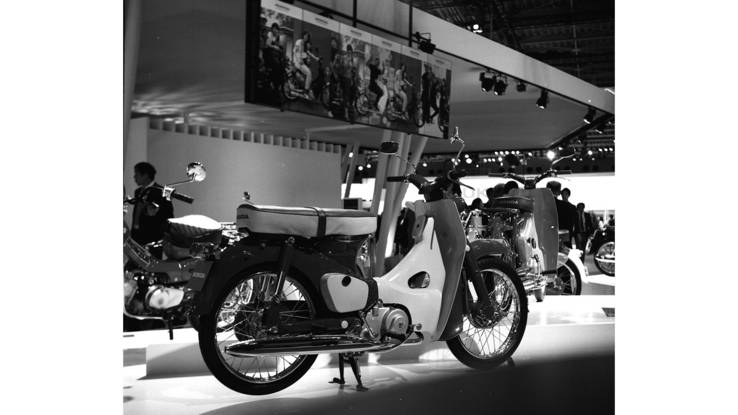
While the Chinese Flying Pigeon bicycle may be the most-produced vehicle ever made, the Honda Super Cub motorcycle ranks as the most-produced motor vehicle in human history, with production surpassing the 100,000,000 mark this year. Whether hauling bedroom sets and entire families in Vietnam or your Speed Week correspondent at the Bonneville Salt Flats, the Super Cub appears capable of going anywhere and doing anything. At the Tokyo Motor Show in October, Honda did a bit of much-deserved bragging by setting up this Super Cub display.

Honda Super Cub photographed with 1954 Ricohflex camera

It seemed appropriate for me to photograph a vintage Super Cub with a Japanese Ricohflex film camera from the 1950s. Photo by Murilee Martin

Disappointingly, Honda shoppers can’t buy a golden 2017 Super Cub with the commemorative badging… yet. However, my sources at Honda tell me that it is possible the 60 Years/100 Million badges will be available for sale in the not-excruciatingly-distant future; when that happens, I will get one for my 1980 Super Cub.

2018 Detroit auto show preview: Here’s what’s coming in January

Share

  • Pinterest

We’re almost done with 2017, and everybody knows that means the 2018 Detroit auto show is right around the corner (literally around the corner from us here at Autoweek HQ). Running from Jan. 13-28 at Cobo Hall, 31 manufacturers will be in attendance for the public show this year.

Here’s a preview of some of the big reveals we expect to see; we’ll update this list as the show approaches and more reveals are previewed or leaked.

Mid-engine Corvette photo

There’s another C8 Corvette mule in the back, along with a Saturn Sky and some other GM sheetmetal. Photo by JOSH BUSENBARK

Chevy: The ever-elusive but seemingly inevitable mid-engine Corvette has been rumored for a 2018 NAIAS debut for ages now. We’ve all seen the spy shots and bold predictions, but we’ll have to wait and see if Chevy decides to wheel it out and steal the show in January.

The Silverado and Sierra full-size pickup twins are set to receive an update at the Detroit show, if recent reports are true. This one is less certain, however, because the rumors have yet to be confirmed by GM. Going lightweight appears to be the goal for the next truck, so whether we see GM debut it in Detroit or Chicago, expect to see more exotic materials in your next Chevy or GMC pickup.

2019 Ford Ranger photo

The middle truck in this photo could be a Ranger test mule. Photo by Sean T.

FordThere’s a good chance we see the new Ford Ranger make its appearance in Detroit for the first time. Ford has said the truck will be coming in 2019, so the 2018 show makes sense for a reveal. With the possibility of both Ram and Chevy showing off new trucks, Ford might want to get in on the fun, too, and make the 2018 Detroit show a truck lover’s paradise.

We might see some new Mustangs make their way onto the show floor, as well, in the form of a Bullitt and maybe even the recently leaked GT500.

Veloster photo

Here’s a teaser Hyundai released to preview the next Veloster — at this angle, it’s not much different from the current design.

Hyundai: The quirky Veloster is coming back for a second generation, and it’s likely to remain a bit of an oddball. Hyundai released a silhouette photo of the “three door” hatchback and it looks similar to before, but with a bit more muscle chiseled into the lines. We’re betting Hyundai decides to plop the 2.0-liter turbo from the i30 N into it at some point, so look out for news on the powertrain side of things, as well.

Infiniti: Nissan’s premium arm has said it will show something along the lines of a flagship sedan in concept form in Detroit. Expect something much more extravagant than the current Q70. The Q80 Concept from the 2014 Paris Motor Show never went any further, but Infiniti could be making a push for a real halo car in its lineup.

Lexus LF-1 photo

This concept is reportedly designed by the same people who penned the LF-LC concept that took everyone’s breath away in 2012 before transforming into the futuristic LC500.

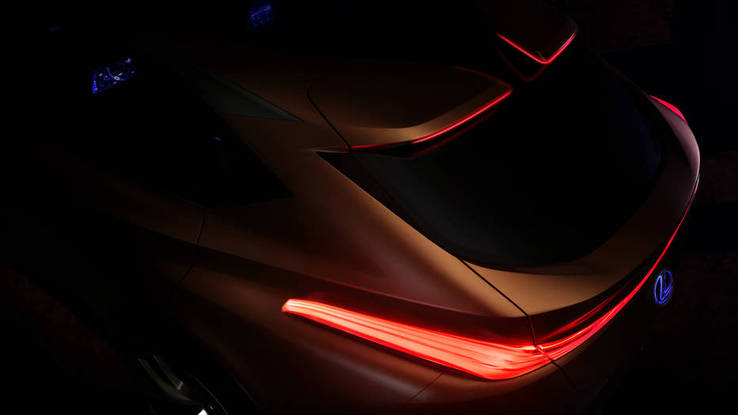
Lexus: Of course, it wouldn’t be 2018 without the continued proliferation of crossovers and SUVs. Lexus has got us covered there with the debut of an all-new “crossover flagship” concept called the LF-1 Limitless. We saw a dark shot of the roof and rear fender a week ago, and it looks like an evolution of current Lexus design with some fancy, wraparound taillights. The “SUV coupe” shape doesn’t seem to be losing any steam, so there’s a real possibility it takes on this body style.

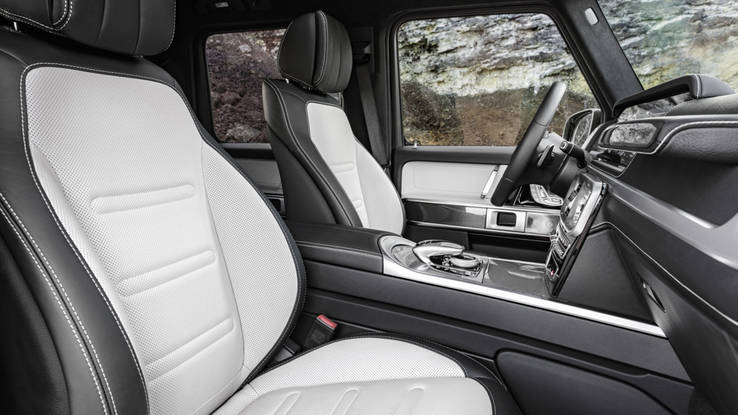
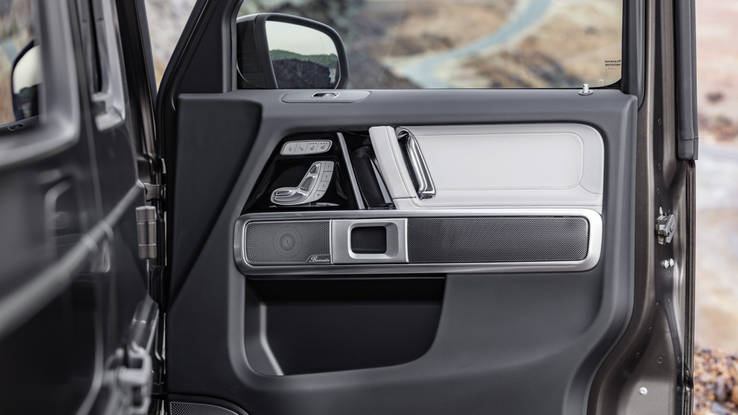
G-Wagen interior photo

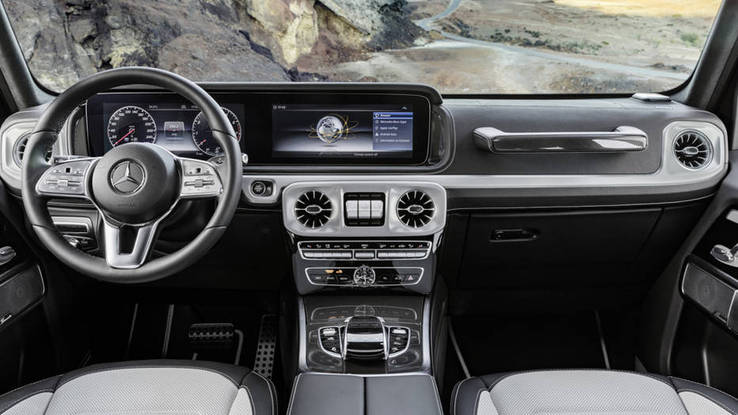
The interior of the new G-Wagen marks a big change for the original military-style vehicle.

Mercedes-BenzWe’ve already seen the interior of the new G-Class, but the redesigned luxury box will make its official debut in Detroit. You can check out everything we’ve learned so far about the unique SUV here.

Other Mercedes news we look forward to hearing about is more concrete information on the AMG 53 line. So far there has been a CLS53 confirmed, reportedly making 430 hp. Mercedes-AMG boss Tobias Moers says the AMG 53 models will logically make more power than the AMG 43 series from a new higher-output turbocharged 3.0-liter inline-six cylinder engine with a 48-volt electrical system. For now we might see the AMG 53 make its way into the E-Class family, but the GLE could be another possibility for that powertrain, as well.

Ram: A refreshed Ram 1500 should make its debut in Detroit, possibly with the split tailgate caught in spy photos. Details are sparse on this one, so we’ll have to wait and see what FCA has in store for us. In the meantime though, there are some spy shots to check out again if you missed them the first time.

Avalon photo

The new 2019 Toyota Avalon will go on sale next year.

Toyota: The real disappointing news here is the lack of a new Supra. Toyota has said it won’t be ready for Detroit, so don’t get your hopes up about this one.

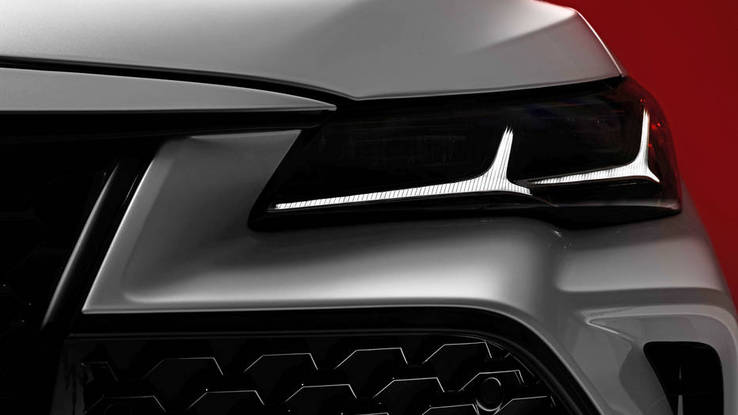
However, we will be getting a new Avalon come January. Toyota released a teaser image of a headlight and part of the hood and grille. It looks slightly more aggressive than the current Avalon, so the design evolution could be following that of the Camry’s creases and sharp edges. Regardless of the design, we’d expect the Avalon to continue being the competent front-drive sedan it is now with some flashier sheetmetal. One nice takeaway here though, the Toyota display won’t be all about SUVs and crossovers.

VolkswagenWe’ve seen sketches of what the 2019 Jetta will look like, so a fair amount of the surprise is gone. It’ll be riding on VW’s MQB platform that also underpins favorites like the GTI and Golf R, and should sport a more mature look than its rivals like the Honda Civic and Mazda3. A full interior redesign appears to be in place, as well, featuring Volkswagen’s digital cockpit dash display.

Zac Palmer

Zac Palmer – Editorial Intern Zac Palmer has probably spent more time in a car than any other 21-year old in the country. He likes anything that can go around a corner, and is surely talking about a car wherever he might be.
See more by this author»

VW hopes this look will keep the Jetta its U.S. best-seller

Share

  • Pinterest

Volkswagen is betting that there’s enough life left in the floundering U.S. compact sedan segment to draw new customers to the redesigned Jetta.

The Jetta is the brand’s best-selling model in the U.S., and carried the water in the market before VW made a big move into crossovers this year with the three-row Atlas and redesigned 2018 Tiguan.

Now, Volkswagen believes that much-improved driving dynamics, more technology and a more fuel-efficient gasoline powertrain in a redesigned Jetta that is moving onto the brand’s global MQB platform will draw sedan customers into its showrooms.

“It’s so important that it’s our high-volume car, so this car has high volume expectations, so we really put a lot in there necessary to make it a great concept,” said Hinrich Woebcken, CEO of Volkswagen of America, at a media unveiling here. “It’s the only German-engineered car in that segment.”

The redesigned Jetta, which will appear in U.S. showrooms in mid-2018, will continue to be equipped with the brand’s 150-hp 1.4-liter turbocharged I-4 engine, but it will now be mated to either an eight-speed automatic transmission or a six-speed manual gearbox.

Volkswagen’s platform strategy — which uses the same flexible platform for U.S. vehicles ranging from the Golf hatchback to the three-row Atlas crossover — allows the brand to democratize development costs, making it possible to put luxury-level safety equipment into commodity-like segments such as compact sedans, said Matthias Erb, chief engineering officer and head of product strategy for Volkswagen’s North American region. For example, the 2019 Jetta will get post-collision braking standard, with optional blind spot monitoring, rear parking assist and adaptive cruise control.

2019 VW Jetta first prototype test drive

“With the platform [strategy], you are producing so many cars, you can afford to offer really state-of-the-art driving assistance, luxury driving assistance, to the customer,” and be competitive on pricing with less contented competitors, Erb said.

The 2019 Jetta will come with standard LED front and rear exterior lighting, and an updated cockpit will largely mirror the current design of the European 2018 Golf, with available Apple CarPlay and Android Auto compatible infotainment system.

Pricing was not announced but Woebcken said that the redesigned Jetta would be “competitive” with other compact sedans, even with higher content. The redesigned Jetta will make its global debut in January at the Detroit auto show.

U.S. sales of the Jetta rose 0.5 percent to 108,574 this year through November — a small gain that reflects the collapse Volkswagen suffered in the wake of its 2015 diesel emissions violations. U.S. Jetta sales peaked in 2011 at 177,360. However, Jetta deliveries declined each year between 2012 and 2016.

U.S. sales of compact cars have declined 4.9 percent this year in an overall car market that is on track to shrink for the fourth straight year.

In Europe, where customers prefer hatchbacks, the Jetta is one of VW’s lowest-selling models with a volume of 5,829, down 25 percent, in the first 10 months, according to JATO Dynamics.

VW Jetta gets fresh look, more tech” originally appeared in Automotive News on 12/12/2017

By Larry P. Vellequette at Automotive News

2019 Mercedes G-Class interior: 5 things to know

Share

  • Pinterest

Behold, the interior of Mercedes’ new G-Class SUV. We got a sneak peek at what the next G-Wagen will offer occupants, and it’s a marked upgrade from the narrow, decade-old trappings of the outgoing model.

Don’t expect the military-inspired exterior to change much when the next G is unveiled at the 2018 Detroit auto show. The interior, though, is poised to make a luxurious leap into the 21st century to keep up with this extravagant SUV’s well-heeled buyers. Here are 5 new — and classic — features to look for when the G-Wagen appears at your local dealership:

G class interior space

There’s more shoulder room in the front and more of every kind of room in the rear seats of the new G-Class.

More room

Despite its girth, the G-Wagen isn’t particularly large on the inside. The new model rectifies that somewhat by carving additional space out of the doors and adding a few inches to its overall proportions, all of which is dedicated to passenger space. It doesn’t seem like much on paper, but the effect inside is remarkable, with 6 inches more legroom for rear passengers than in the current model and a welcome increase in shoulder space all around, without giving up the massive box that is the cargo compartment.

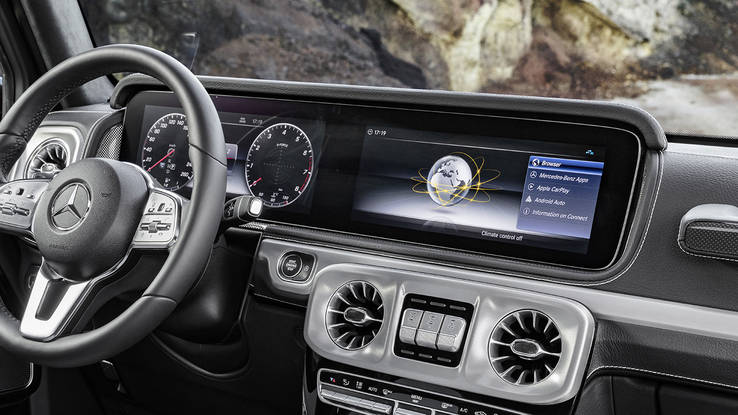
G-class dash tech

The available full digital display mimics that of the current E-Class.

High-tech dash display

Two different dash designs are available in the new G-Class: One maintains actual gauges for the driver while adding the latest infotainment features in a new central screen; the other gets the E-Class digital dash with its long screen and virtual instrument cluster. Both help bring the new G-Class up to current tech standards.

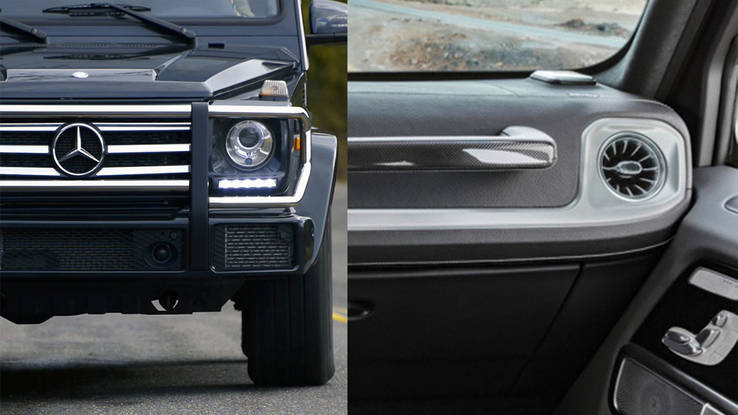
Vent vs headlight

See the tweeter on top of the dash? Combined with the air vent, it’s an homage to the G-Wagen’s classic front look.

Actual design elements

The current G-Wagen interior is nice enough, but like the rest of this throwback, it plays more to functionality than fashion. The redesign preserves the functionality (see the note on off-road essentials below) while adding design elements that show attention to luxury detail lacking on the current vehicle. Our favorite? The dash vent/Burmester tweeter combo that mimics the headlight/fender-mounted turn signal that’s long been a signature G-Class exterior feature.

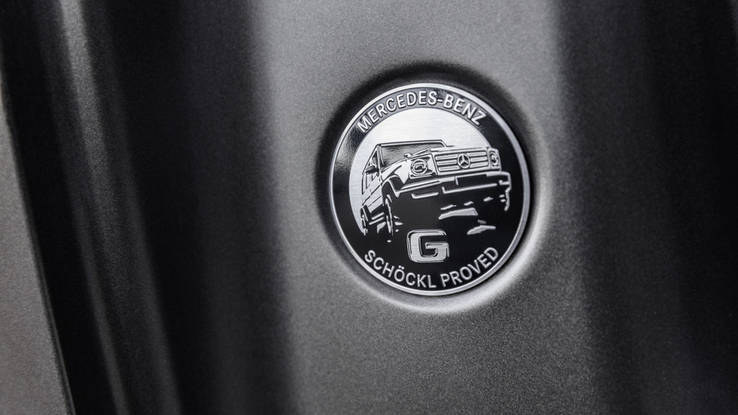
Schockl

The Mercedes equivalent of Jeep’s Trail Rated badge, signifying the new G-Class was tested in the same conditions all that came before it were.

Off-road essentials

All this talk about luxury and design details might make you think the G-Wagen has gone soft. Not so. The center of the dash gets the same three off-road differential lock buttons as before, and the fat grab handle on the passenger’s side dash is there for support when bounding over Saharan sand dunes. We don’t have specs on the new G’s off-road capabilities yet, but you can bet they’ll be impressive.

Gwagen door

Close this door and it’ll sound just like a current G-Wagen does: Clunk, but the good kind.

That same door and lock sound

Rest assured, despite all the refinements, two beloved G-Class features remain: The vault-like click when the doors close and the bolt-action rifle sound of the door locks. We tried all five doors just to make absolutely sure, and Mercedes engineers assured us those aural cues were non-negotiable on the redesign.

Andrew Stoy

Andrew Stoy – Digital editor Andrew Stoy has spent the past 20 years wrenching on and writing about cars. He’s worked everywhere from dealer service bays to the headquarters of the world’s largest automakers.
See more by this author»

Yes, there will be a fifth-generation Toyota Avalon

Share

  • Pinterest

Since replacing the Toyota Cressida (remember that one?) in the early 1990s, the Avalon has grown from a stretched version of the Camry to something a little larger, while trying to steer clear of overlapping with Lexus models. The current, fourth-generation Avalon that debuted in 2012 tried to distance itself from Camry looks, offering a fastback shape while continuing to share its platform with the Lexus ES.

In just a few weeks, the Avalon will enter its fifth generation as Toyota takes the wraps off the new Avalon at the Detroit auto show.

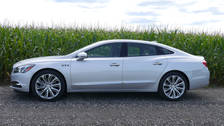
2017 Buick LaCrosse in Wisconsin Cornfield

This glimpse of the 2019 Avalon’s headlight and front fascia is just about the only image of the upcoming sedan that Toyota has shared, and it strongly suggests the Avalon will keep the large, two-tiered grille shape of the outgoing model. The Avalon will follow the debut of the all-new 2018 Toyota Camry, and is expected to stick to the V6, front-wheel-drive formula. Look for a hybrid version as well in 2018; the Avalon and its competition still need to hit fuel economy targets.

Speaking of the competition, as the SUV boom continues booming the Avalon is waging battle in a slowly dwindling full-size sedan market currently occupied by the likes of the undercover police-looking Ford Taurus, Chevrolet Impala, Chrysler 300 and Nissan Maxima. Don’t expect to see any new competition for the Avalon for a while as automakers focus on utility vehicles.

Mercedes is about to gain an AMG 53 lineup

Share

  • Pinterest

The Mercedes-AMG CLS53 will go on sale in the U.S. by the end of 2018, kicking off a new line in the AMG performance stable.

Mercedes-AMG boss Tobias Moers confirmed the CLS’ new 53 variant and hinted at more 53s coming later in the E-class family. All AMG 53 models will be powered by a higher-output version of parent Daimler’s new turbocharged 3.0-liter inline six-cylinder engine with a 48-volt electrical system.

“It’s a higher output than the 43s,” Moers said. The engine in the CLS53 reportedly will produce 430 hp. Moers wouldn’t confirm a specific number but said the AMG version of the inline six will produce horsepower “for sure in the 400s.” Mercedes-AMG will reveal more details at the Detroit auto show in January, he said.

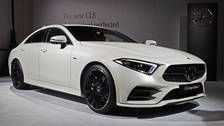
What you need to know about the 2019 Mercedes-Benz CLS

With the new 53 line, the CLS family will no longer have a top-of-the-line AMG 63 model, Moers said. That slot in the lineup is being taken by a new four-door AMG GT car based on the Mercedes-AMG GT concept that debuted at the Geneva auto show this year. The four-door AMG GT will go on sale in the U.S. in 2019, Moers said.

AMG 53 variants for the E-class coupe and convertible are possible, Moers said. Those likely would also arrive in 2019.

The GLE midsize crossover is another candidate for a 53 model. The GLE will be redesigned in 2018 with a likely U.S. on-sale date in early 2019. The AMG model would come after that.

New AMG 53 line launching in 2018” originally appeared in Automotive News on 12/11/2017

By Amy Wilson at Automotive News

This is the McLaren Senna — your true F1 successor

Share

  • Pinterest

In a world where the word “hypercar” is synonymous with a Formula 1-style hybrid driveline, insane amounts of power and enough teasers to make your head spin — McLaren introduces its latest hypercar — the P1’s successor with a twin-turbocharged 4.0-liter V8 that spins just the rear wheels — and drops the mic. Dubbed the McLaren Senna, after legendary racer Ayrton Senna, the newest Ultimate Series McLaren is more of a true McLaren F1 successor than a continuation of the P1’s groundwork.

McLaren and supercar fans might be confused by the engine — a twin-turbocharged 4.0-liter V8. Similar to the M840T under the rear clam-shell of the 720S, it’s got an extra letter (an R) and more power. The M840TR in the Senna sends 789 hp and 590 lb-ft of torque through a dual-clutch seven-speed transmission and to the rear rubber. More important than its figures, the folks at McLaren slapped an F1-style roof scoop on the top of the car, like a real race car, for that V8 to pull the most air possible.

The suspension is hydraulic and works alongside the active aero bodywork to keep the car sucked to the road. McLaren calls it the RaceActive Chassis Control II system and it uses double-wishbone control arms at every corner, which helps keep the tires planted to the ground. The hydraulic dampers are connected to each other to work together to keep the car at the right height for every situation. In race mode, the Senna gets in race car form by lowering everything. Slowing the Senna is a set of massive carbon ceramic brakes, which work in conjunction with a special set of Pirelli Trofeo R tires that wrap race-car-ready center-lock wheels.

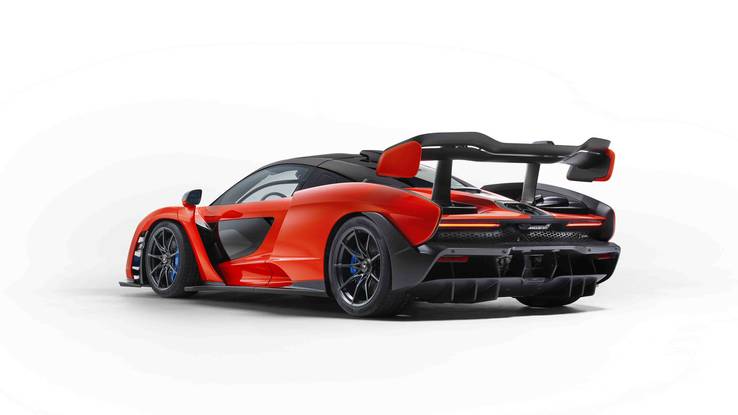
McLaren Senna rear image

You might not get windows that roll all the way down, but the rear wing makes up for most of the sacrifices you have to make.

Mercedes-AMG Project One hypercar for sale in Germany

McLaren axed some luxe features to get the Senna the right shape and the right weight. Want windows that roll down? Go somewhere else. The team at McLaren designed the Senna with aerodynamics in mind and luxury features such as full windows didn’t make the cut. The interior is also full of carbon fiber and synthetic suede, but not a lot else.

However, keeping the 2,641 pound McLaren on the ground is a huge rear wing, double diffuser in the rear and a front splitter. The active aerodynamics help keep the downforce away when you don’t need it, but supply it when you do.

McLaren plans to officially debut the Senna at the Geneva motor show, but it already said how much it costs — just over $1 million. McLaren is only making 500 Sennas, and if you’re reading this before McLaren approached you — you might have a hard time getting one. If you can afford (and find) one, the McLaren Senna has the makings of something special … maybe even as special as the F1.

Watch: Car Bros lampoon the LA Auto Show

Share

  • Pinterest

The Los Angeles Auto Show’s media days are closed, and the doors to the public are wide open. However, during the media preview, the guys behind the funniest car-centric channel on YouTube took a jab at the show.

The Bros are mostly known for hilariously mocking everything from “Fast & Furious” and Ken Block’s “Gymkhana” to the generic car-flipping shows you’ll find on cable. They also made a video mocking the SEMA Show, as well as one showing off their recently acquired Ferrari Enzo.

At the end of this latest video, the team takes the new Chevrolet Corvette ZR1 out on a green-screen test drive. Naturally, the fake review is peppered with generic and meaningless clichés but is jam-packed with humor.

Need a good laugh? Check out the video above. Afterward, check out everything we saw at this year’s LA show.

Wesley Wren

Wesley Wren – Wesley is an Associate Editor at Autoweek. He loves cutting up old cars, listening to weird music, and going fast.
See more by this author»

2019 Range Rover plug-in hybrid first drive

Share

  • Pinterest

No manufacturer to date has been able to deliver a hybrid 4WD vehicle capable of driving off-road trails in low range solely on electricity—until now. The Range Rover and Range Rover Sport P400e plug-in hybrid (PHEV) will be the first, when they hit our shores in the summer of 2018.

Thanks to crisply-designed and luxurious products, Rover sales in the U.S. have been trending up. Last year the company sold more than 65,000 vehicles. And that, of course, speaks to Americans’ rabid desire for SUVs. The most recent November 2017 sales figures show the brand has gained 20 percent over last year.

“Looking forward, we are confident we are going to wrap-up 2017 with another record growth year,” said Joe Eberhardt, President and CEO, Jaguar Land Rover North America, LLC.

Land Rover hasn’t announced how many of the PHEV Range Rovers it plans to sell. But it’s likely the new hybrid models will only add incrementally to the total sales picture next year. Regardless of volume, these machines are exceptionally important to Land Rover. They are the crucial first steps towards the brand’s eventual electrification. And they are certainly steps in the right direction. 

“When we designed the aluminum architecture for Range Rover and Range Rover Sport, we knew we wanted to electrify it,” says Land Rover Vehicle Engineering Senior Manager Lynfel Owen. “It was also very important, from a complexity point of view, to maintain the suspension articulation and all the off-road performance.”

To accomplish that goal, Owen’s team turned to powertrain supplier ZF for an essential component. The P400e uses a ZF gearbox that packages eight speeds, an 85-kW electric motor and dual clutches inside an automatic transmission case. That allowed engineers to bolt the same 4WD transfer case it uses on the conventionally-powered Range Rover to the back of the transmission—without re-engineering any chassis components. Under the hood of the P400e is Land Rover’s new “Ingenium” 2.0-liter four-cylinder in that engine’s most potent form delivering 296 hp and 295 lb-ft of torque. Land Rover says the combined output of the powertrain is 398 hp, hence the 400e nameplate.

“Four-cylinder turbocharged engines are excellent at delivering refined performance at low speed. And you get the benefits of turbocharging when you work that engine harder too,” says Owen. “So, the gas four-cylinder gives you that duality of performance. And that really complements a PHEV powertrain.”

Underneath the cargo area sits an aluminum-cased 13.1-kWh battery pack that Land Rover developed with Samsung. And to fit the pack, the cargo floor is raised by about an inch and a half. There’s a 7-kW on-board charger and the pack can be fully charged in just under 3 hours using quick charging. And because these Rovers are wide, the charge port is integrated into the grill instead of the side of the vehicle. The battery pack allows the P400e to drive up to 30 miles on pure electric power and cruise up to 85 mph. That range is certainly competitive. But it’s the blending, distribution and tuning of that gas and electric power that make it a Land Rover.

5 Things Land Rover Got Right with the 2018 Range Rover PHEV and Range Rover Sport PHEV

Behind the shifter is an EV mode button that when pressed allows the Rover to drive solely on electric power. This function is available only in specific modes within the Terrain Response system—auto, comfort, mud and ruts and grass, gravel, snow.

“In rock crawl [mode], we found in testing that even though the torque was excellent for low-speed maneuvers in places like Moab, we had better performance using both engine and electric combined,” says Owen. “Rock crawling tends to be a very long, slow and precise process. And we don’t want to use up the battery, get halfway down the trail and then have the engine kick in at some crucial moment and upset the chassis.”

He also explained that sand mode requires gas and electric power too. The heat of the typical desert environment combined with the heavy drag on the tires from deep sand and high A/C loads would deplete the battery very quickly. And while these PHEVs maintain the Range Rover’s 35.4-inch water fording capability, it’s not recommended to attempt that depth in EV mode. That’s because with the engine off, a water crossing will flood the exhaust and leave behind muddy deposits that will, eventually, ruin the catalytic converter.

The P400e offers some unique features that should make it appealing to those who stay on pavement too. The Rover’s “save” function allows the driver to essentially freeze the battery level until you want to use it. Rover’s Predictive Energy Optimization program can be enabled when using the navigation system and using elevation data from the maps, make your route as efficient as it can be. For example, the quickest route might be completely flat. But the system might see a hilly side route that will allow more electric use. The system knows that it can use electric power to crest the top of these hills because it will replenish the pack on the way back down through regen. And more time using electricity means more fuel is saved.

Speaking of the navigation system, for 2018 both the Range Rover and Sport receive a major interior upgrade. The new Touch Pro Duo dual ten-inch screens for infotainment are backed by next-generation hardware and look brilliant. The touchscreens are flanked by two large knobs to control HVAC and seat heat, cooling and massage functions. The Terrain Response system functions are adjusted with a traditional knob behind the shifter or, for the first time, through the touchscreen. Range Rovers also receive new optional seating systems front and rear that are softer, offer a wider range of adjustment and much more comfort than before.

The Execution

Land Rover’s philosophy about hybrids is different than some. Instead of aero body modifications, tiny wheels with low rolling resistance tires and billboard-like “hybrid” graphics—Land Rover keeps it all very low key. In fact, the only way to spot one will be to read the tiny P400e badge on the tailgate. It’s about the length and width of your pinky finger.

The P400e driving experience largely keeps the powertrain a secret too. In “blended” parallel hybrid mode, using part throttle, there’s just smooth and silent thrust. In normal driving, it’s very hard to determine exactly what engine configuration is under that hood. The Range Rover and Range Rover Sport P400e models we drove were final pre-production build models with prototype software, but on the street the tuning seemed very well-sorted. However, in electric mode, we did notice that the clutches can sometimes feel clunky initially. The brakes are a little artificial in the first few inches of travel, but that goes away as the pedal is pressed deeper toward the carpet. Generally, the braking system is very close to the experience in a conventional Rover. When coasting, there’s less regen drag than most hybrids — it seems clear Rover wants to mimic a traditional powertrain experience here — and that drag didn’t seem to increase when we switched to Eco mode.

In auto mode the Rover is, however, a little hesitant to downshift quickly. Dynamic mode feels just as responsive as we remember the last conventionally-powered Range Rover Sport we drove. Yet when the throttle is held wide-open, you will hear quite a bit of air “whooshing” from the turbocharged four-cylinder. In that regard, we’d certainly prefer a V8. But the thrust from this powertrain is good. Land Rover says a Range Rover Sport P400e can hit 60 mph in must 6.3 seconds and top out at 137 mph. And that’s impressive considering its carrying around 700 additional pounds over a V6 model. And that poundage can be felt when the Rover is pushed hard on a canyon road—at least in auto mode. 

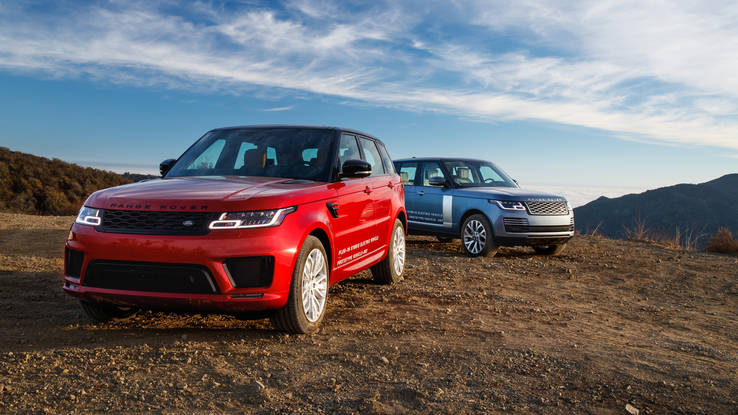
Group shot of the 2019 Range Rover and Range Rover Sport PHEV

Revealed at the Los Angeles Auto Show, these promise to be the first PHEV you can take off road in electric drive.

On a challenging off-road course near Malibu, CA we had our very first experience driving in low range with pure electric power. It’s a great experience—just as eerily quiet as you might imagine. Put all the windows down and you can hear everything around you. It’s particularly wild to use Hill Descent Control in EV mode because you not only hear the crunching and sliding of the tires on the trail in surround sound high fidelity but you can also pinpoint exactly which wheel the system is braking at any one time. And the same goes for the traction control on the way up a challenging trail. The silence is only broken at times by what sounds like a cooling fan for the battery pack. We noticed that the transmission’s clutches chatter quite a bit in low range as you roll on and off the throttle. Engineers are working on smoothing that out but it’s something you probably won’t notice with the gas engine running. Rover’s driving instructors mentioned that four-wheeling in EV mode consumes a lot of power. On this extreme course, a full charge is depleted around 50 percent quicker than on the street.

The Takeaway

The plug-in hybrid models will carry an approximate $8,000 premium over the base Range Rover SE. However, all P400e models are outfitted in the up level HSE trim and end up being about $1000 cheaper than the TD6 diesel in that same trim. Land Rover has yet to announce the MPGe rating for the P400e. But with those 30 miles of electric-only driving range, it should be a good choice for those that spend a lot of time driving in city centers. The most interesting part of these vehicles is their ability to drive off-road in complete silence—with no tailpipe emissions. It’s a more serene way to crawl along a tough and twisty trail and we can’t wait to see what happens when electrification is applied to the upcoming Land Rover Defender. 

On Sale: Summer 2018

Base Price: $78,300 (est.) Range Rover Sport; $95,100 (est.) range Range Rover

Powertrain: 2.0-liter turbocharged I4, eight-speed automatic, 85-kW electric motor, 4WD

Output: 398 total system hp, 472 total system lb-ft of torque

Curb Weight: 5,519 lb (Range Rover P400e); 5,448 lb (Range Rover Sport P400e)

Pros: Electric 4WD capability, silent, luxurious

Cons: Heavy, turbo four-cylinder engine noises

LT5 deep dive: Here’s how the Corvette ZR1 gets its 755 hp

Share

  • Pinterest

ZR1 is a special thing. The coming 2019 ZR1 is only the fourth such model in seven generations of Corvette. The 1970 C3 ZR1 is so rare it almost doesn’t count.

“We don’t do one every generation,” said Corvette chief engineer Tadge Juechter.

So the engine that powers any ZR1 is even more special. You could say that the new LT5 engine is the ultimate Chevy small block. It’s amazing to look back at the original 265-cid V8 that started the whole Chevy small block thing in 1955 and try to trace this new block’s lineage. But even compared to the 638-hp LS9 engine that powered the 2009 sixth-generation ZR1, the new 755-hp LT5 in the 2019 ZR1 is a big leap forward in power, torque and efficiency.

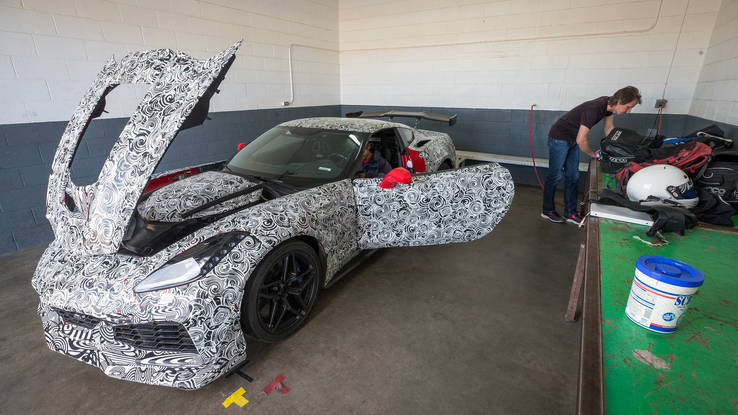
ZR1 in the garage

Under that shaker hood is the most powerful production engine GM has ever made!

First off, it’s not completely all-new. The 2019 Corvette ZR1’s new LT5 shares a lot of parts with the LT4 V8 used in the Z06 (and, in different forms, in everything from the Hummer H2 to the Cadillac Escalade).

“The engine architectures are the same,” said Jordan Lee, chief engineer of the new LT5. “The block, the head, the pistons, the connecting rods are all carryover from the LT4.”

It does have an all-new supercharger, an all-new throttle body — the biggest throttle body GM has ever done at 95 mm compared to the LT4’s 87-mm throttle body — a dual fuel system, two engine controllers to control the fuel system, modifications to the lube system, a different crankshaft material made of a higher-strength alloy and (!) a shaker hood.

Everything works together to make 755 hp, but if you wanted to single out a single thing, you could point to that supercharger poking through the hood. When the engine was under development, they wanted to keep it a secret, so rather than stamp “Corvette ZR1” on the top, it said “BAS.” There’s a GM diesel engine that uses something called a Belt Alternator System, so that’s what they wanted people to think this was. But the engine engineers said that the “BAS” stood for something wherein the B was for “Big” and the S was for “Supercharger” and … you can guess what the A stood for.

“It’s the most efficient and the biggest supercharger the Corvette has ever had,” said Lee.

It’s 52 percent bigger than the unit atop the LT4 block, and it’s the reason for the shaker hood. It displaces 2.65 liters of air for every rotation. It has a 170-degree helix rotor set, the twist in the rotor set. It’s more efficient than the 160 degrees in the LT4.

“That 170 degrees compared to 160 degrees for the LT4 is mostly done to improve the efficiency of the rotors,” said Lee. “As they’re compressing air, you want to make sure you don’t get any leakage past those rotors. 170 degrees ensures a tighter seal.”

The supercharger actually spins slower than the one on the LT4: 15,860 rpm versus 21,000 rpm. The boost is 13.9 psi at peak.

“We wanted to slow the supercharger speed down to introduce a lot less heat,” said Lee. “So running slower is more efficient.”

Nonetheless, the LT5’s supercharger is drawing 110 hp to keep it spinning. That’s so much that it needs an 11-rib drive belt to accommodate the extra energy required to spin it. The LT4 only needs eight ribs on its drive belt. (Maybe ribs will become the cupholders of engine bays?)

“So effectively, this engine’s making 865 hp,” said Lee.

While many aftermarket parts makers will be tempted to offer a different-size pulley to increase the speed at which the supercharger spins, don’t be tempted.

“The aftermarket’s gonna be chompin’ at the bit to bring in a smaller pulley and overdrive this thing,” said Juechter. “That invalidates the warranty. We designed this engine to be robust on the track, but it’s all optimized the way it’s designed now. Anybody throwing new parts at this, they’re taking their own risk. We stand behind it the way it’s built in Bowling Green.”

They have more confidence, too, thanks to no less than 13 radiators (or heat exchangers) used to keep it cool. The Z06 had some cooling problems, and the ZR1 should be totally cool. It’s more than radiators, though.

“From the A-pillar forward, a lot of the structure is new because we wanted to pack as much cooling content into the car as possible,” said Juechter. Cool air is routed to the brakes, too, as well as to rear-mounted radiators through openings on top of the forward surface of the rear fenders.

The result is an engine that is “not too shabby,” according to Lee. “The LT4 and LT5 feel similar off the line, but above 4,000 rpm it’s a whole diff world.”

We are looking forward to driving it sometime before the car debuts next year.

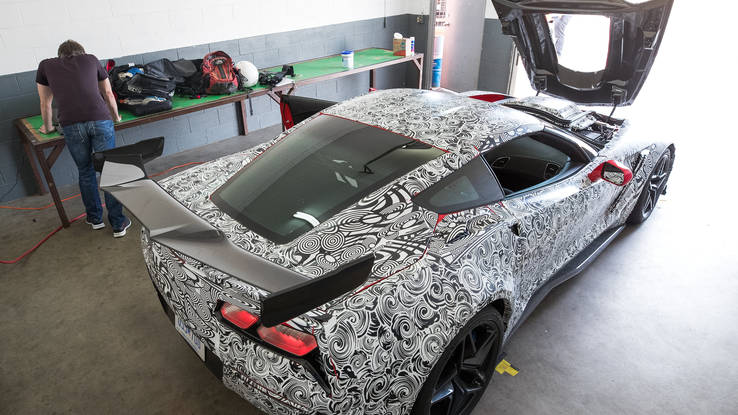
Shaker hood

Shaker hood in air brake deployment mode. JK