All posts in “Events”

The Mazda Kai Concept teases the future of the Mazda 3

Share

  • Pinterest

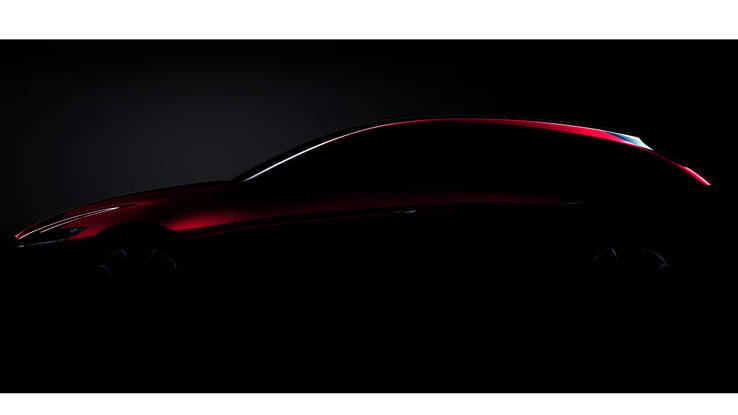
Following its sleek Vision Coupe conceptMazda showed off its next-generation hatchback concept at the Tokyo Motor Show. Dubbed the Kai Concept, the hatchback’s shape might be a good indication of what is coming to the Mazda 3 in the next few years.

The Kai Concept is based on the Skyactiv-vehicle architecture and sports the tech-heavy Skyactiv-X engine. If you’re unfamiliar with the engine, it’s Mazda’s compression-ignition-capable gasoline engine that only relies on spark compression in certain situations. 

Mazda Vision Coupe Concept from the 2017 Tokyo Motor Show

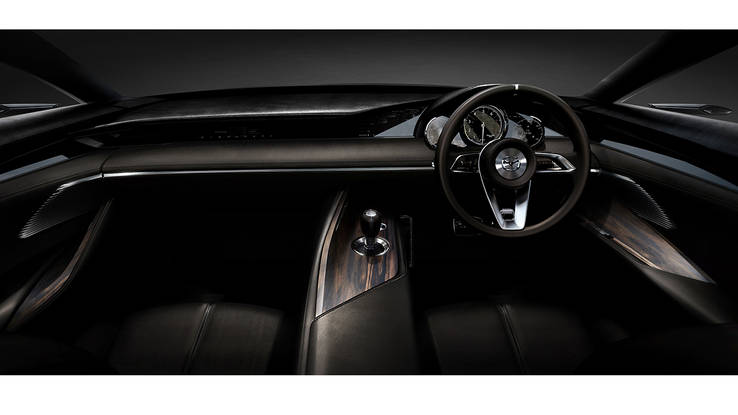
Of course, the more radical parts of the concept won’t see an assembly line — the tiny, flush-mounted door handles and the small side mirrors are probably only going to live in concept form. The interior, too, is probably only going to exist in concept form despite it being subtle and sharp.

If this is the next generation of Mazda 3, with a mature take on the Kodo design language, it will make the Mazda look upmarket and modern. The higher-end Mazda 3 would also match Mazda’s push for a more luxurious profile of cars. Regardless, we’re looking forward to seeing what parts survive the concept stage and make their way to the assembly-line version of the Mazda hatchback.

The Honda Sports EV concept wants to give electric cars old-school personality

Share

  • Pinterest

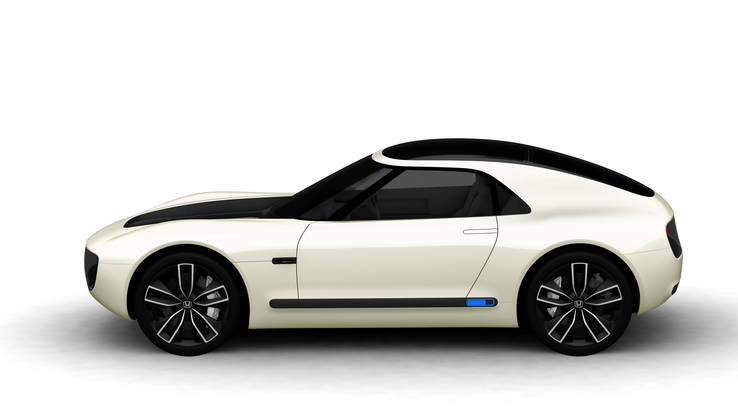
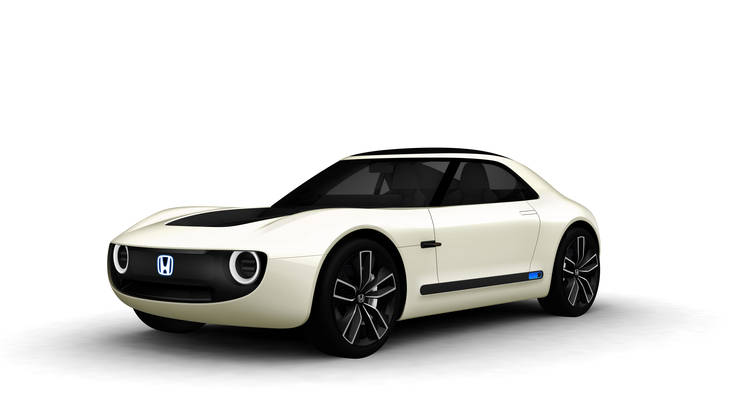
We don’t know all that much about the Honda Sports EV, which just debuted at the 2017 Tokyo Motor Show, except that it’s a performance-oriented take on the Urban EV concept the automaker unveiled in Frankfurt.

The automaker bills the Sports EV as “a concept model which combines EV performance and AI (artificial intelligence) inside a compact body with the aim to realize the joy of driving the user can feel with a sense of unity with the car.” Impenetrable manufacturer-speak, naturally, but we think it means Honda is trying to combine the straightforward appeal of a classic sports car with Asimo. Somehow.

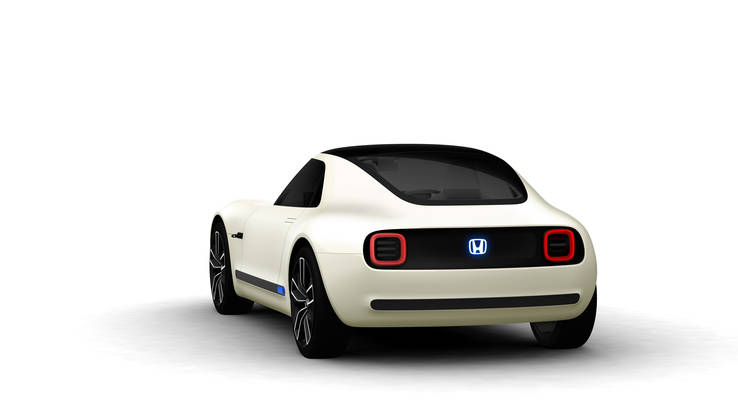
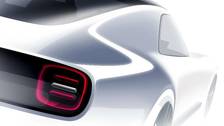
Its styling reaches back into Honda history and grabs a few lines from the tiny S600 coupe, drapes them over an electric vehicle platform and then adds the requisite futuristic halo headlights and taillights and the concept-spec flush door handles and rearview cameras.

Honda Sports EV electric coupe concept profile Tokyo Motor Show

The Sports EV concept would share underpinnings with the Urban EV Honda revealed in Frankfurt.

The Honda Urban EV Concept is the enthusiast's green car

Despite their hypothetically shared underpinnings, this is a very different sort of vehicle than the retro Civic-inspired Urban EV. Yet it’s instantly recognizable as a part of the upcoming Honda EV lineup, and in a lot of ways, its clean lines are almost the polar opposite of the hyper-stylized cars, like the Civic Type R, that Honda is building now. So we at least know what kind of design cues we can expect when these cars go into production.

And these are supposedly happening, for real: In Frankfurt, Honda president and CEO Takahiro Hachigo said that a production version of the Urban EV would roll out in Europe around 2019, with a Japanese-market intro in 2020.

Something like the Sports EV would be a logical follow-up and a way for Honda to prove that it is still interested in fun vehicles even as we roll inexorably toward an electrified future. That brings us to a bigger question: We know that electric sports cars can be fun (ask anyone who has driven a Tesla Roadster) and even utilitarian EVs like the Chevy Bolt can be entertaining in a golf cart sort of way. But what kind of personality will they have?

Honda Sports EV concept rear 3-4

If this and the Urban EV concept are anything to go by, Honda’s electric cars will wear simple lines — a departure from the automaker’s current lineup.

Honda will be an interesting case study here, because so much of its fame (and fan base) has been built on the strength of its internal combustion engines. We’d like to think that instant torque will make us forget about singing cylinders, but … it’s just not the same, for better or for worse. And the tradeoff EVs ask us to make is particularly ironic when it comes to Hondas, which have been historically celebrated despite their lack of low-end shove.

Ideally, a truly great sports EV would be so engaging that we wouldn’t even miss the exhaust note (don’t even start with the simulated soundtrack crap) and enjoy the car on its own merits. It should have a personality distinct from the combustion-powered cars that proceeded it, even as it draws on their best attributes. If we’re going to have a future full of EVs, we don’t want simulations of our cars from the past — we want to see what designers and engineers can do with a more or less blank sheet.

These are tall orders, no doubt, but at the very least Honda’s concept looks the part.

Honda Sports EV concept front 3-4

The Sports EV is less obviously retro than the Urban EV concept, but it feels just the right amount of old-fashioned.

Graham Kozak

Graham Kozak – Graham Kozak drove a 1951 Packard 200 sedan in high school because he wanted something that would be easy to find in a parking lot. He thinks all the things they’re doing with fuel injection and seatbelts these days are pretty nifty too.
See more by this author»

The Mitsubishi e-Evolution is not your old Evo

Share

  • Pinterest

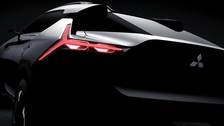
At this year’s Tokyo Motor Show, Mitsubishi ripped the sheet off its e-Evolution Concept. Unlike the Mitsu Evo of yore, the e-Evolution Concept doesn’t have a turbocharged I4 and doesn’t have a trunk lid. Just because the latest Mitsu concept shares the Evo’s name doesn’t mean that it has to share any of its bones. The e-Evolution Concept points the name, and the brand, into the new era of electrification and crossover domination.

Powering the electrified crossover is a three-motor system that drinks juice from a floor-mounted high-capacity battery. The floor-mounted batteries are close to the middle of the car, which should help it handle more like its namesake than a run-of-the-mill crossover.

Here's the Mitsubishi's Lancer Evolution's rally-bred history

The e-Evolution concept does have an all-wheel-drive system that borrows some familiar acronyms from its internal-combustion forefather like AYC, which stands for Active Yaw Control. Only now it seems like two of the electric motors dictate where power is going, opposed to sophisticated differentials. Mitsu’s Super All-Wheel Control all-wheel-drive system (S-AWC) also joins the list of returning acronyms.

While there isn’t a two-step system built into the e-Evolution, there is an artificial intelligence system that apparently “augments the driver’s capabilities.” The e-Evolution can sense what the driver wants and shift power places to make sure what the driver wants to happen actually happens.

It’s hard to say if this hyper-styled crossover will transform into a production trim, but it’s a good sign that Mitsu is thinking heavily about electrification. This could be the jolt Mitsubishi needs to get back to the forefront of enthusiast’s minds.

Viziv flexes some muscle for Subaru at Tokyo Motor Show

Share

  • Pinterest

Subaru hints at a new, more muscular/athletic design direction, complete with fender fins and aerodynamic venting with its new Viziv Performance Concept.

The Japanese all-wheel-drive specialist unveiled the compact sporty sedan on Wednesday at the Tokyo Motor Show, saying the looks will debut in production cars in the near future.

The concept gets a more planted, lower and forward-leaning stance to express movement, said Mamoru Ishii, Subaru’s global design chief.

“From this car forward, we don’t want our cars to look good just parked in a show room but to look good running down the road,” Ishii said after the concept’s unveiling.

Beefy blister fenders, front and rear, infuse the car with a muscular look, that can be dialed up and down to fit different nameplates across the lineup, Ishii said. But the concept on display in Tokyo clearly previews the packaging of a performance model such as the WRX.

1982 Subaru GL wagon in California wrecking yard

Junkyard Treasure: 1982 Subaru GL Station Wagon

Many of the Subarus that came to the United states after Malcolm Bricklin’s hilariously rickety 360s but before the current era of everything-all-wheel-drive outdoorsy commuters tended to aim for the …

His design team also wielded a couple aerodynamic tricks to help the Viziv cut through the air.

The first are perforated air outlets on the rear side of the front and rear wheel arches. They help smooth the turbulent air whirling around the wheel wells.

The top of the wheel arch lip also gets tiny aerofins that protrude ever so slightly. These winglets help with aerodynamics and improve handling, Ishii said.

Subaru intends to use the wheel-arch aerofins on future production cars, he said.

The car is the latest in a series of Subaru Viziv concepts that take their name from “vision for innovation.” The Tokyo offering aims to combine Subaru’s latest safety technology with the fun-to-drive characteristics of a true sports sedan, the Japanese carmaker said.

The concept embodies Subaru’s vision for next-generation autonomous driving systems built upon the brand’s trademark Eyesight safety technology.

Subaru has said it targets Level 2 autonomy by around 2020. The future technology will team EyeSight with radar, highly accurate GPS and advanced navigation systems.

Subaru previews new muscular design with Viziv concept” originally appeared in Automotive News on 10/25/2017.

By Hanz Greimel at Automotive News

Check out these two Lexus LC500s that’ll be at SEMA

Share

  • Pinterest

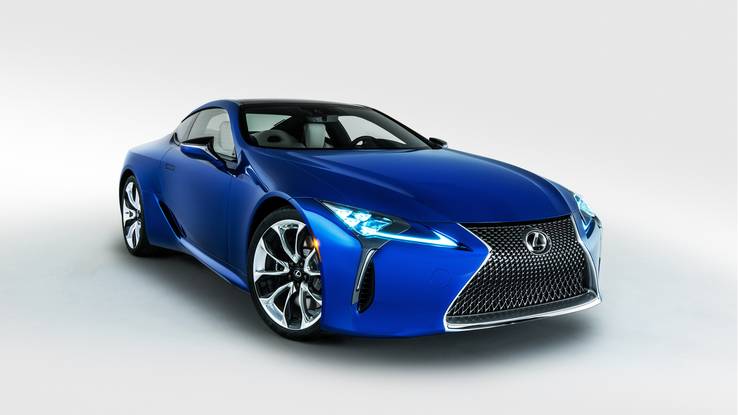
Lexus debuted two new LC500s ahead of next week’s SEMA show, one a movie car and the other a limited-production street car. First, the movie star car.

Black Panther is a Marvel Comics superhero (introduced in 1966, a few months before the founding of the political activist Black Panthers). The superhero was the first black Marvel character with superpowers. A movie based around the character, “Black Panther,” is due in February from Marvel Studios. It stars — at least in one scene — a Lexus LC500. The character Black Panther rides atop it chasing bad guys. His guards follow in another Lexus, a GS-F. The movie car was made for the movie by West Coast Customs. In the movie, the streaked paint on the sides is infused with the mythical substance vibranium, which makes the car bulletproof. On the hood is a Black Panther mask inlay. The rear track is several inches wider than a stock LC500 contained inside flared fenders.

Lexus LC Inspiration Series

The Lexus LC Inspiration Series

While you can’t buy a Black Panther LC500, you will be able to purchase the other LC500 Lexus showed last night: the LC Inspiration Series. In addition to some bespoke trim pieces, the customized car sports a paint job done in what Lexus calls structural blue. Lexus says the paint contains no actual blue pigment but rather, “its unique construction reflects blue light” the same way the sky or the ocean appears blue but contains none of that color. It’s all based on a butterfly called a morpho, which appears blue but isn’t really.

“The effect is the result of microscopic details that scatter light and show only the color wavelengths of the iridescent blue we perceive in their vibrant wings,” Lexus said.

Heavy, man.

You can see both cars at the SEMA show, if you’re going, and you may or may not be able to see them at the Los Angeles and Detroit auto shows since that hasn’t been decided yet. Production of the Inspiration Series LC begins in January and will be limited to only 100 units. Inspiration Series buyers will also get a Signature Barneys sommelier set and a magnum of wine from the estate of Lexus sports car driver Scott Pruett.

“The Inspiration Series takes our flagship products and makes them even more exclusive and distinguished,” said Brian Bolain, general manager of Lexus marketing.

Look for further Inspiration Series Lexii in the future. 

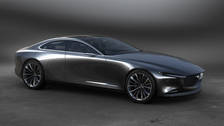
The Mazda Vision Coupe concept is Japan’s next luxury design salvo

Share

  • Pinterest

After teasing its new design direction a few weeks back, Mazda finally unveiled the Vision Coupe concept at the Tokyo Motor Show. The photos don’t do it justice — it needs to be seen in person. Assuming something along these lines actually gets built, it could be the best-looking Mazda since the FD-generation RX-7 and a definite signal that Mazda’s serious about expanding its offerings into more premium territory.

Yes, the Vision Coupe has four doors — thanks for that, Germany — but otherwise, it’s true to classic long-hood, short-deck design. The aggressive front shows how comfortably Mazda’s current fascia design translates to a wide, low-slung vehicle without feeling forced. Chances are the extended beak wouldn’t make it through pedestrian impact regulations intact, so expect any production version to tone down the chiseled brow a bit; other than that, the extended windshield and the camera sideview mirrors, there’s not much in the exterior design that would be out of place in a showroom next year.

Mazda VC tokyo interior

Inside the Mazda Vision Coupe concept

Interior styling gets a predictably minimalist Japanese aesthetic based on what Mazda says is “the traditional Japanese architectural concept of ma, the meticulous use of space to create atmosphere.” In other words, the lines, woodgrains and other visual cues are intended to impart a sense of flow in the direction the car is moving, but there’s a lot of empty space to prevent any sense of confinement. It’s sort of an “implied cockpit” based on shapes and textures, and it works well as a concept; how much could make it to production is up for debate.

The absence of any engine or powertrain information indicates the Vision Coupe is set to remain a concept for the moment. Still, the Lexus LC proved Japan can be serious about moving from concept car to showroom machine; Mazda seems intent on showing the world what it’s capable of, and making the Vision Coupe a reality would be a hell of an exclamation point.

2018 Ford Mustang septuplets invade SEMA

Share

  • Pinterest

Ford is bringing seven customized 2018 Mustangs to the 2017 SEMA Show at the end of October. The “Magnificent Seven,” as Ford calls them, will join more than 40 others in the largest OEM display at this year’s show. Each of the new Mustangs was designed by a single shop ranging from MAD Industries in California to Roush in Michigan and Tucci Hot Rods in New York. They’re based on few different versions: fastback, convertible, 5.0. and EcoBoost.

Here’s a list of the upgrades on the Roush Performance Triathlete 2018 Ford Mustang:

–5.0-liter Ti-VCT V8 engine

–10-speed automatic transmission

–Roush supercharger

Roush Performance parts:

–Cold-air intake

–Active quad tip exhaust with x-pipe

–Air gobbler ram air with Stratasys function hood scoop

–Custom exhaust tips

Chassis

–Brembo GT-series brakes

–Roush Performance 3-way adjustable suspension

Wheels and Tires

–Vossen/Roush Performance custom RVS (20-inch x 10-inch front, 20-inch x 11-inch rear) wheels

–Continental extreme contact (295/30/20 front, 305/30/20 rear) tires

Exterior

–Roush Performance Stratasys custom body kit

–Sherwin Williams custom Grabber Green paint

–Roush Performance body kit:

–Functional window scoops

–Heat extractors

–Splitter

–Upper/Lower grille

–Rear blackout applique

–Hood struts

Roush Performance / Anderson composites:

–Carbon fiber front splitter

–Carbon fiber rear aerofoils

–Carbon fiber side rockers

–Carbon fiber spoiler

–Carbon fiber mirrors caps

Interior

–Recaro racing seats

–Ford Accessories leather interior kit by Katzkin

–Watson Racing roll cage

–Anderson Composites carbon fiber rear seat delete

–Roush Performance floor mats

–Roush Performance gauge cluster

–SPARCO 4-point racing harness
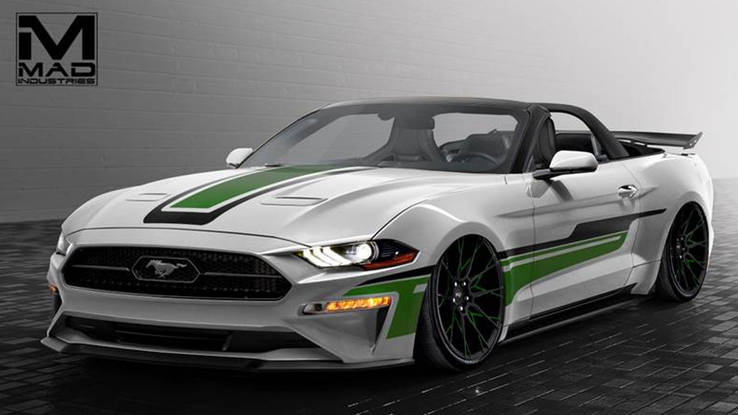
MAD Industries 2018 Ford Mustang

MAD Industries 2018 Ford Mustang at SEMA

–2.3-liter EcoBoost® engine

–six-speed manual transmission

Powertrain

–Ford Performance by Borla exhaust

–Ford Performance cold-air intake system

–AMSOIL dominator motor oils

Chassis

–Eibach Pro-R2 double adjustable coilovers

–Eibach adjustable three-way adjustable 36 mm front, 25 mm rear sway bar kit

–Wilwood Aerolite front six-piston brakes with 15-inch front and 14-inch rear drilled and slotted rotors

Wheels & Tires

–Niche Road Wheels Staccato series (20-inch x 9-inch front, 20-inch x 10.5-inch rear) wheels

–Michelin Pilot Sport 4 S (265/35ZR/20 front, 305/30ZR20 rear) tires

Exterior

–BASF custom paint products applied by LGE – CTS Motorsports

–MAD custom pony emblems

–3M Film graphics installed by Daley Visual

–Nano-Fusion paint protection film by CCL design

–Diode Dynamics LED side markers, taillight sequencer and back-up LED lights

–APR carbon drag wing with adjustable riser

–APR / MAD Industries full lower splitter package

–Redline tuning quick lift hood struts

Interior

–Braum elite-x series racing seats wrapped in luxurious black leatherette with white stitching

–MAD Industries custom interior work: black leatherette interior appointments throughout

–MAD Industries custom-covered GT350R steering wheel

–Classic Design Concepts light bar

–3M Crystalline automotive window films

–Astell & Kern A&ultima SP1000 in Cooper, music player by Focal Audio System / Source AV Design Group

–AL Priority Quint laser defense and parking system
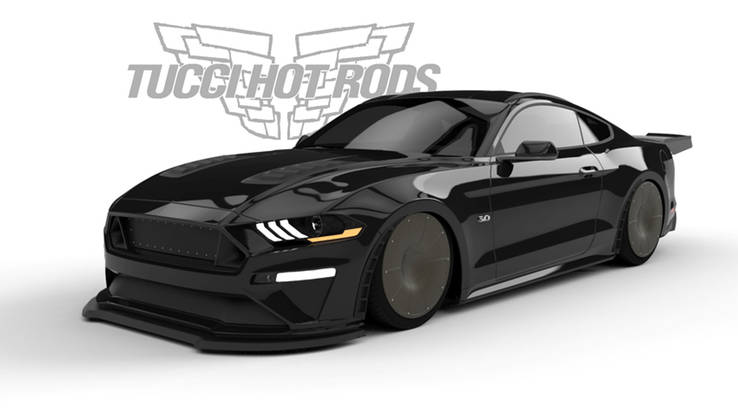
Tucci Hot Rods 2018 Ford Mustang

Tucci Hot Rods 2018 Ford Mustang at SEMA

–5.0-liter Ti-VCT V8 engine

–10-speed automatic transmission

Powertrain

–Hellion twin turbo kit

–Mishimoto radiator, transmission cooler and oil cooler

–Turned by HP Tuners

–G-Force driveshaft and rear axles

–DEI exhaust wrap

–Ford Performance by Borla exhaust

Chassis

–RideTech triple adjustable air ride suspension

–Wilwood Aero (six-piston front / four-piston rear) brakes

–Ford Performance front and rear sway bars

Wheels & Tires

–Forgeline GTD1 Open lug (19-inch x 9-inch front, 19-inch x 11-inch rear) wheels

–Hoosier R7/A7 (265/35/19 front, 315/35/19 rear) tires

Exterior

–Dom Tucci design concept

–John’s Auto Restoration paint

–Tucci Hot Rods aluminum pro mod wing and rear diffuser

–Ultimaker 3D-printed hood vents

–Stroud parachute

Interior

–Cobra Sebring Pro-Fit GT driver’s seat

–Cobra Suzuka Pro-Fit GT passenger’s seat

–Schroth Pro-Fit II 6 pt. HANS harnesses

–Tucci Hot Rods 8 pt. roll cage

–TMR Customs interlocking roll cage clamps
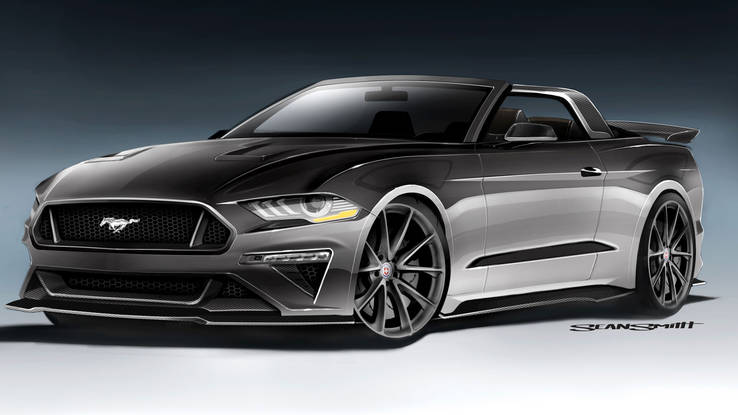
Speedkore Performance Group 2018 Ford Mustang GT convertible

Speedkore Performance Group 2018 Ford Mustang GT convertible at SEMA

–5.0-liter Ti-VCT V8 engine

–10-speed automatic transmission

Powertrain

–Roush supercharger

–SpeedKore custom titanium cat-back exhaust

Chassis

–Eibach Pro-Street-S coil over kit

–Brembo brakes

Wheels & Tires

–HRE Wheels P204 (20-inch x 9.5-inch front, 20-inch x 10.5-inch rear) brushed aluminum wheels

–Michelin Pilot Sport 4 S (285/30/20 front, 305/30/20 rear) tires

Exterior

–SpeedKore custom paint

–SpeedKore carbon fiber:

–Mirror covers

–Air vents

–Rockers

–Splitters

–Spoiler

–Diffuser

–SpeedFlares

–Exhaust tips

Interior

–Gabes’ Interiors custom Bomber Brown interior and seating

–Ford Accessories carbon fiber dash applique

–SpeedKore carbon fiber:

–Front and rear door panels

–Tonneau cover

–Roll bar
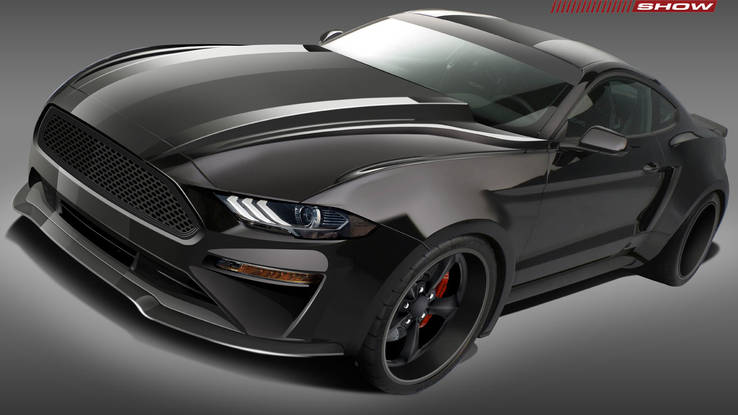
DeBerti Design 2018 Ford Mustang fastback

DeBerti Design 2018 Ford Mustang fastback for SEMA

–5.0-liter Ti-VCT V8 engine

–Six-speed manual transmission

Powertrain

–Roush supercharger

–Ford Performance by Borla exhaust

–Currie Enterprises 9-inch Ford third member

–US Gear 9” 370:1 ratio

–Optima battery yellow top

Chassis

–Watson Racing independent rear suspension

–H&R Performance adjustable springs and struts

–Ford Performance brakes

Wheels & Tires

–Forgiato (20-inch x 9.5-inch front, 20-inch x 14-inch rear) wheels

–Mickey Thompson (275/35/20 front, 29/18/20 rear) tires

Exterior

–DeBerti billet grille

–Brad DeBerti hood design

–Ice Nine hood fabrication

–TS Designs wide body

–Sherwin Williams paint

–Bullseye Retro custom headlights and taillights

–Ford Licensed Accessories rear wing by Air Design

Interior

–Exotic sound stereo fabrication

–Ford Licensed Accessories Audio by Kicker

–DeBerti custom roll bar

–Sherwin Williams interior paint

–Ture Carbon interior panels
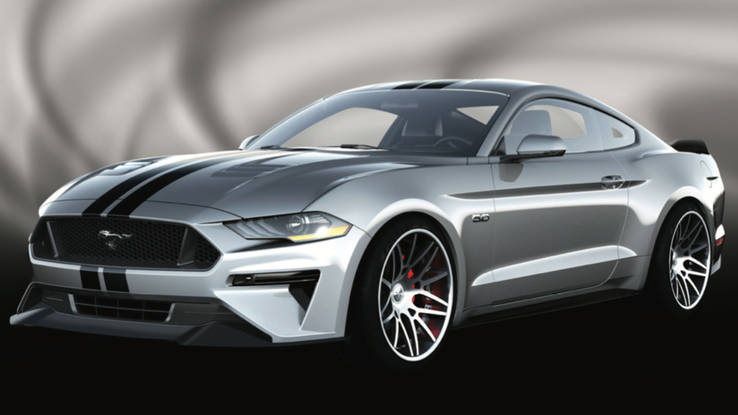
Air Design 2018 Ford Mustang fastback

Air Design 2018 Ford Mustang fastback

–2.3-liter EcoBoost engine

–10-speed automatic transmission

Powertrain

–Ford Performance by Borla exhaust

Chassis

–Wilwood six-piston front and four-piston rear brakes

–Wilwood (15-inch front, 12.9-inch rear) drilled and slotted rotors

Wheels & Tires

–Forgiato Fratello ECL (21-inch x 9.5-inch front, 21-inch x 10.5-inch rear) wheels

–Pirelli P Zero (275/35ZR/21 front, 295/35ZR/21 rear) tires

Exterior

Air Design body kit:

–Front splitter

–Rear diffuser

–Ford Licensed Accessories by Air Design:

–Hood vents

–Air curtains

–Side scoops

–Window louvers

–Sherwin Williams custom silver paint with custom black stripes

Interior

–Recaro leather seats

–Ford Licensed Accessories Audio by Kicker

–Sundial window tint
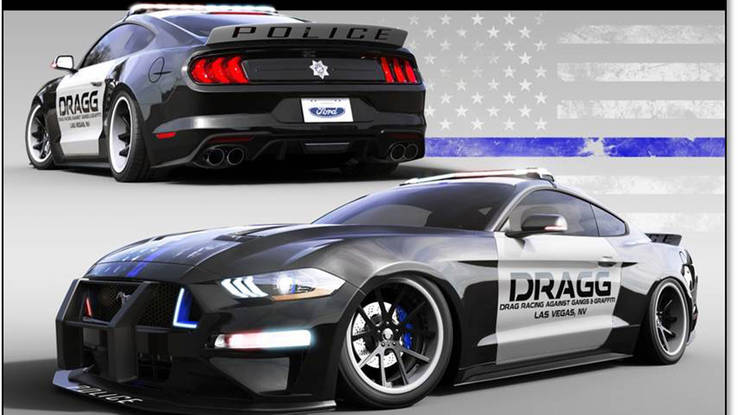
DRAGG 2018 Ford Mustang fastback

DRAGG 2018 Ford Mustang fastback

–2.3-liter EcoBoost engine

–Six-speed manual transmission

Powertrain

–Ford Performance by Borla exhaust

–Air Raid intake

–Jet-Hot high-performance coatings

–Lucas Oil engine products

Chassis

–Ford Performance lowering springs

–Eibach sub-frame and rear sway bars by America Muscle

–Wilwood six-piston high-performance brakes

Wheels & Tires

–Velgen VFMP10 (20-inch x 10-inch front, 20-inch x 11-inch rear) wheels

–Michelin tires (275/30/20 front, 305/30/20 rear) tires

Exterior

–Rally Innovations custom front splitter

–Federal Signal emergency lighting by West Coast Lights and Siren

–Commercial Auto Body custom paint

–3M graphics and logos by Ron’s Signs

–Metalhaus Inc. police push bar

–Petty’s Garage custom rear spoiler

Interior

Ford Licensed Accessories:

–Leather interior kit by Katzkin

–Sport pedal kit

–Audio by Kicker

Toyota to tout AI at Tokyo Motor Show

Share

  • Pinterest

Toyota plans to broaden its vision of future mobility at the Tokyo Motor Show with two tiny electric runabouts that predict the driver’s emotions and guide them away from danger.

The Concept i-Ride and Concept i-Walk flesh out a Concept-i series of vehicles introduced with the original four-seat Concept-i car at the CES show in January.

The Concept i-Ride is a two-seat pod car perfect for crowded city streets and envisioned as a personal mobility option for the elderly or handicapped. Its gull-wing doors open wide to allow easy loading and unloading of wheelchairs, and it is driven by a joystick, instead of pedals.

The Concept i-Walk is a three-wheel Segway-like scooter on which the driver stands. Toyota envisions the trike as a way to zip around pedestrian zones or tourist sights.

Both concepts, previewed Monday as part of Toyota’s Tokyo Motor Show plans, are battery-powered and positioned as having ride-sharing potential.

The Concept-i Ride would have a range of between 62-93 miles, while the Concept i-Walk is seen as cruising up to 12.4 miles on a full charge.

Mazda Tokyo teasers A new Mazda 3 hatch and a sports sedan to be

The series name is a play on the Japanese word for love, which is pronounced like the letter i. It reflects Toyota Motor Corp.’s desire to position intelligent cars of tomorrow as beloved partners with an emotional connection to the driver, rather than as just utilitarian appliances.

Toyota said it will start road-testing some of the Concept-i autonomous driving and artificial intelligence technologies in the home market around 2020.

The common thread is an artificial intelligence system that taps deep learning to absorb the driver’s habits and behavior, make predictions and suggestions and protect the occupants.

For example, by monitoring the driver’s eye movements, facial expressions and gestures, the cars aim to predict if the driver is becoming sleepy or irritated.

Current systems can recognize fatigue or anger after the fact, but Toyota says that’s too late. It wants a system that can predict the driver’s state of mind ahead of time.

Mobility Resource Guide

Mobility Resource Guide

 Mobility Resource GuideFinding accessible resources can be challenging, especially for the newly injured. We’ve compiled an assortment of goods and services designed to make life better. …

For example, if the driver is becoming annoyed by heavy traffic and beginning to huff, the computer might respond by inflating and deflating the seat at a slow rhythmic pace.

That could slow the driver’s breathing, helping to take the edge off.

Or when drivers are getting sleepy, the car will step in to keep them awake before the start to doze.

Toyota showed another video in which the talking artificial intelligence program sensed the driver becoming depressed. The computer then dipped into its digital music memory banks to pull up one of the driver’s favorite old songs in an effort to cheer him up.

“The Toyota Concept-i series,” Toyota said in a statement, “aims to become a ‘beloved car’ of a new era guided by the concept of ‘more than a machine, a partner’ to better understand the driver and grow together with the driver as an irreplaceable partner.”

Toyota expands mobility, AI reach with 2 concepts” originally appeared in Automotive News on 10/16/2017

By Hans Greimel at Automotive News

Toyota promises a ‘Fine-Comfort Ride’ in this hydrogen fuel-cell concept

Share

  • Pinterest

Even though Toyota is selling plenty of hybrids, the automaker is also investing in hydrogen fuel-cell technology as evidenced by its rollout of the Toyota Mirai fuel-cell car in California. And a few days ahead of the start of the Tokyo motor show, Toyota has taken the wraps off a futuristic fuel-cell vehicle (FCV) concept dubbed Fine-Comfort Ride.

The origami-style exterior aside, this fuel-cell concept promises a range of 1,000 kilometers or 621 miles on a full load of fuel, along with zero CO2 emissions — and really no other emissions. Toyota is staying mum regarding the details of the powertrain, only indicating that this concept features electric motors at each wheel. Along with the newly developed hydrogen powertrain, the Fine-Comfort Ride concept is also expected to showcase advanced autonomous driver assist systems.

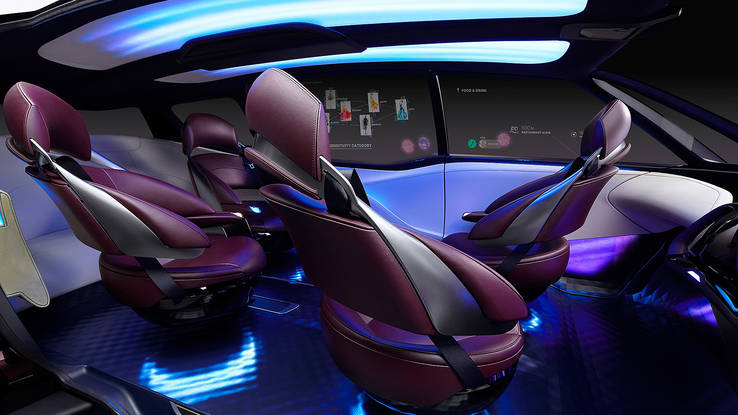
When it comes to design, there’s a diamond-shaped interior layout that grows narrower toward the aft section of the car, offering the widest seating area at the front row. The interior itself is futuristic enough, with four swiveling round-shaped seats that can rotate to face each other, conference-style, and a large rear bench that wraps around the tail section of the vehicle.

2017 Toyota Fine-Comfort Ride concept interior

The concept features swiveling seats that can face each other, in addition to a back bench.

This is just a concept for now — and despite Toyota championing fuel-cell technology, the current Mirai only has one competitor in the marketplace in the form of the Honda Clarity. But “competitor” may be too strong a word, given the fact that there are just 91 hydrogen filling stations in the U.S. (less than two per every state is one way of looking at it), and most of them are in California, where these two models are sold. It’s not the investment in hydrogen tech that’s lacking at the moment — it’s the infrastructure. And Toyota has not fully embraced pure-electric vehicles. The development of hydrogen fuel-cell vehicles may be effectively coming at the expense of a Toyota competitor to the Nissan Leaf, among others.

Without measurable growth in the numbers and geographic locations of hydrogen filling stations, Toyota may soon face some tough questions about its lack of focus on battery-electric cars in the U.S., plug-in hybrids notwithstanding.

We’ll have to wait a few more days till the Tokyo motor show gets going to get answers to these questions, but for now there is no doubt that Toyota can dazzle with a futuristic exterior and interior concept design.

2018 Honda Clarity PHEV

Huge new Infiniti QX80 preps for Dubai motor show

Share

  • Pinterest

Ahead of the Dubai International Motor Show, Infiniti is teasing its next-gen QX80 full-size SUV. We don’t know much about the upcoming Infiniti QX80, other than its current polarizing styling is going to change, and the SUV will still be a luxurious behemoth — at least, judging from the interior’s teaser.

Looking at the QX80 Monograph, the next-gen QX80’s concept design, we can imagine that the styling will be sharper on the new SUV. Of course, the razor-thin pillars won’t make it to production, but the boxier shape should. The bigger grille looks to have also made it from the concept stage to the production, finally ridding the design of its bulbous hood.

 The Infiniti QX80 Monograph concept New York auto show preview

Formerly known as the QX56, the QX80 got a new name in 2013 but never changed much in appearance. We doubt that the QX80’s powertrain will see much of a change and expect the new QX80 to still offer the 5.6-liter V8.

Until the folks at Infiniti rip the cover off the new QX80 in Dubai, these teasers are all we have to go by.

Mazda’s Tokyo show ‘vision’ looks ready to tackle Lexus and Audi

Share

  • Pinterest

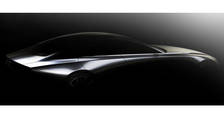
What do we have here, Mazda? This gorgeous, fastback-esque sedan (coupe in German) is set for a Tokyo motor show debut in a couple weeks to help showcase Mazda’s future design language. While it’s hard to make out specifics from the shadowy teaser, the so-called “design vision concept” appears to blend the best elements of recent Lexus and Audi styling with a healthy dose of Mazda’s own heavily sculpted Kodo language. And since “design vision” doesn’t come close to doing it justice, we’re going to call it the Mazda 8. That’s got a nice ring to it.  

The second concept Mazda’s bringing to Tokyo is a small hatchback that we expect to foreshadow the future Mazda 3. It’ll sit atop a new structure called the Skyactiv-Vehicle Architecture (Skyactiv-VA) that Mazda says features “a human-centered design philosophy for optimal functionality.” Like you, we’re wondering what the current Mazda 3 design is centered on, if not humans (crash test results, maybe?), but it’s a damn good driver, so we’re really looking forward to trying one with a human-centered design philosophy.

Mazda 2017 Tokyo Motor Show concepts and technology Photo 4

This next-generation concept hatch previews Mazda’s new design language, and likely the next Mazda 3.

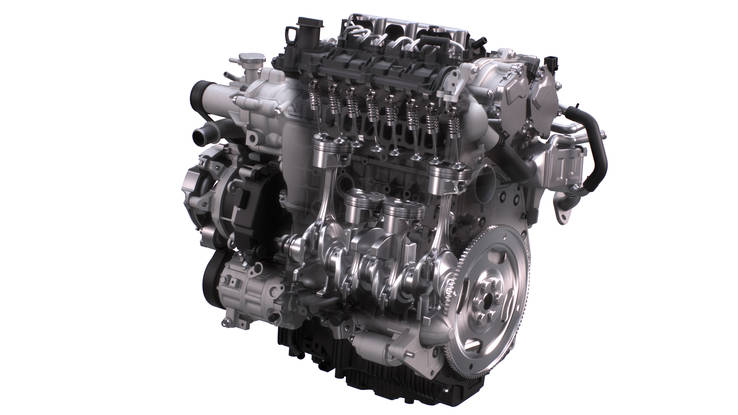
On the tech front, we’ll get a better look at the Skyactiv-X compression-ignition gasoline engine, expected to appear in 2019, possibly under the hood of the next Mazda 3. The goal of the tech — called “spark controlled compression ignition,” or SPCCI — is to deliver roughly 25 percent more power in an engine that’s 25 percent more efficient. You can read more about the engine tech here, and check out a test-drive of a current Mazda 3 with the new powertrain

“Our stand this year marks the beginning of a new era for Mazda,” said Masamichi Kogai, Mazda’s representative director, president and CEO. “We will showcase a concept model with the design and technologies that will define a whole new generation of Mazda cars.”

So what’s it going to be? Is the future of internal combustion Mazda’s SPCCI or Infiniti’s equally innovative variable compression engine? Or a combination of both? We’ll have more from the Tokyo show floor, including a deeper dive on Mazda’s new design direction, in just a few short weeks.

Mazda 2017 Tokyo Motor Show concepts and technology Photo 7

Mazda’s Skyactiv-X spark-controlled compression ignition (SPCCI) engine

Andrew Stoy

Andrew Stoy – Digital editor Andrew Stoy has spent the past 20 years wrenching on and writing about cars. He’s worked everywhere from dealer service bays to the headquarters of the world’s largest automakers.
See more by this author»

Volvo sub-brand Polestar offers ‘puzzling’ preview of its first concept

Share

  • Pinterest

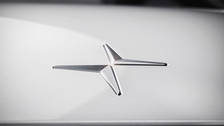
Teaser shots are often pretty unimaginative, offering either an absurdly zoomed-in close-up of some trivial detail of a car or some form of a profile shot with surface detail obscured by darkness. Thus we have to give Volvo’s Polestar credit in this puzzle-shaped preview of what is likely an electric or electrified luxury coupe. Polestar has been releasing small segments of its first concept car via its Instagram account, which now paint a partial picture of the finished product.

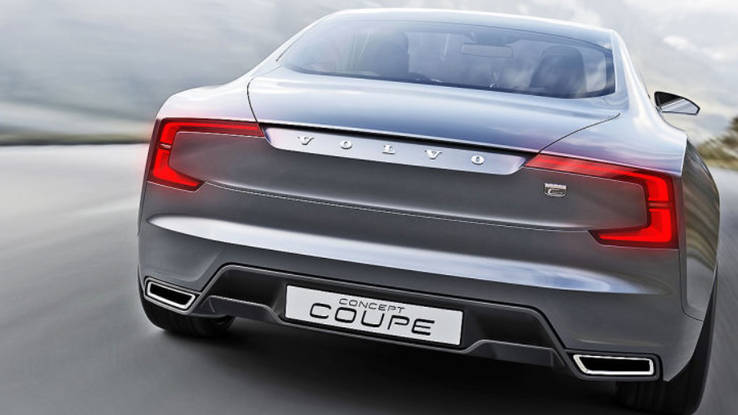
Scheduled to be unveiled in Shanghai on Oct. 17, the mystery concept will certainly be electrified in some way — Polestar is now Volvo’s electric car sub-brand — and will almost certainly be a coupe, likely in the style of the Concept Coupe shown by Volvo at the 2013 Frankfurt motor show. The 2013 concept showcased the talents of Volvo designer Thomas Ingenlath, who was new to the automaker at the time, while also giving the world a glimpse at the latest Volvo design themes. Ingenlath is now the CEO of Polestar itself, so it makes sense that the brand’s first model may follow up on themes revealed in Frankfurt in 2013.

2013 Volvo Concept Coupe

The 2013 Volvo Concept Coupe previewed a model that has been absent from Volvo’s lineup for some time now.

Volvo turning its Polestar brand into a Tesla competitor

Volvo uses Polestar to go after Tesla, BMW i

Volvo will challenge Tesla Motors and BMW’s i subbrand by turning its Polestar unit into a global stand-alone brand for high-performance electrified models. “With Polestar, we are able …

While we’ll have to wait another week to find out just what will power the first Polestar concept — it could use Volvo’s T8 PHEV powertrain — it’s clear the new brand has Tesla in its sights, even though Polestar didn’t start out that way. An outside tuning house that was purchased by Volvo, Polestar is currently being transformed into a premium performance and electric marque that will not wear the Volvo badge but will trade on being designed and backed by Volvo.

“We want to redefine the brand, moving it away from having gasoline-powered cars to offering electrification and something that we call progressive performance,” Volvo CEO Hakan Samuelsson told Automotive News earlier this year.

Toyota Tokyo hybrid concepts go in two totally different directions

Share

  • Pinterest

Toyota will take its hybrid knowhow into new territory at the Tokyo Motor Show with electrified concepts for a sleek sporty coupe and big boxy crossover.

Japan’s biggest automaker unveiled the GR HV Sports concept and the Tj Cruiser crossover concept during a Friday preview of its plans for the auto expo this month.

Toyota said both vehicles are pure concepts and not planned for production.

On the sporty side, the GR HV Sports concept draws heavily from the 86 sporty coupe, but with a couple twists. For starters, it gets a vertical array of LED headlamps, air vents in the hood and a gaping, center mounted, hexagonally-shaped single exhaust pipe.

It also gets a targa top in homage to such venerable convertible forerunners as the Toyota Sports 800 and the Supra. Toyota says its matte black finish expresses “aggressiveness.”

The GR stands for Gazoo Racing, Toyota Motor Corp.’s global motorsports arm, while the HV stands for hybrid, the segment pioneered by the brand’s flagship Prius.

But under the hood, the GR HV Sports hardly resembles its hatchback cousin. Instead, the concept gets the Toyota Hybrid System-Racing, the electrified drivetrain technology used in the TS050 racer Toyota enters in Le Mans and the World Endurance Championship.

The battery is mounted near the center of the car to improve performance handling.

Honda chums the waters around Tokyo with sport EV concept

Adding to the fun is the ability to switch between 6-speed manual and automatic transmission modes. Drivers of the rear-wheel drive, two-seater choose automatic gear positions from a display of buttons on the center console for racing car ambiance.

The GR HV Sports concept.

And the push-button ignition sits atop the tip of the shift lever, like the machine gun trigger in an old James Bond spy car.

“Drivers can delight in the performance of THS-R in a genuine sports car,” Toyota said, “while experiencing a sense of freedom thanks to the targa top.”

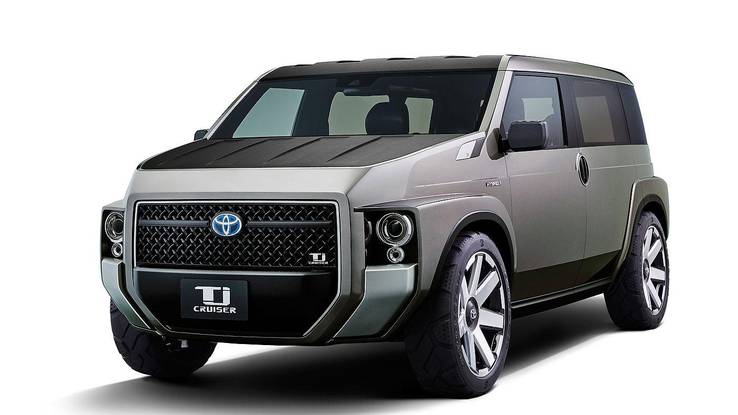
On the practical side, Toyota says it will explore a new crossover genre with the Tj Cruiser, a monolithic concept that merges the roominess of a cargo van with the feel of an SUV.

The “T” in the name stands for toolbox, apt given the concepts boxy dimensions, while the “j” stands for joy the riders get from venturing to different destinations. The Cruiser moniker, traditionally reserved for SUV models, is a nod to its power, Toyota said.

TJ Cruiser

Toyota shows off a storage tote on wheels

“The Tj Cruiser was designed for drivers with lifestyles where work and play dovetail seamlessly,” the company added. “The Tj CRUISER symbolizes a new genre.”

This concept is also envisioned with a hybrid drivetrain — but this time a more pedestrian system mounted to a 2.0-liter class engine.

It would ride on the company’s next-generation TNGA modularized platform.

The rear doors slide open like a van, while the interior emphasizes creative cargo space and seat manipulation to accommodate everything from bicycles to surfboards. The front and rear passenger seats fold completely flat, their seat backs equipped with tie-down points.

Media days for the Tokyo Show begin Oct. 25.

Toyota readies sporty, boxy hybrid concepts for Tokyo” originally appeared in Automotive News on 10/6/2017

By Hans Greimel at Automotive News

Toyota Century finally rolls into this century

Share

  • Pinterest

 When it comes to regal resonance in Japan, no nameplate rules like the Toyota Century, the official car of the emperor, prime ministers and esteemed captains of industry.

Perhaps that’s why, after 20 years, the grand limousine’s long-awaited redesign doesn’t mess with much. Toyota will unveil a hybrid third-generation Century at this month’s Tokyo Motor Show, but the overhaul largely keeps the old-school elegance that harkens back to its roots in 1967.

The iconic long car, hardly seen outside of Japan, was last redesigned in 1997.

Two decades later, the new iteration undergoes mostly cosmetic changes, including LED headlamps, three-dimensional taillights and a more rear-slung posture.

The rear door opening is also enlarged, perhaps to ease access for the Century’s traditional demographic — those in the over-50 set.

The interior still oozes zen-like refinement in its elegant simplicity, replete with the retro-style lace curtains reminiscent of the doilies on your grandmother’s coffee table.

It even grows longer and wider for more comfort inside.

But modern upgrades creep in throughout, including LCD panels in the armrests that enable passengers to control seat positioning, air conditioning and the audio system.

2018 Lexus RX seven-seat model rendering

A power leg rest rounds out the new creature comforts that were long overdue.

Under the hood, the car also enters the 21st century.

Toyota is dropping a silky-smooth, 5.0-liter V-12 engine on the outgoing model in favor of the brand’s trademark hybrid system. The next Century pairs a direct injection 5.0-liter V-8 engine with a two-stage electric motor and nickel-metal hydride battery for power and fuel economy.

Toyota also plans a safer Century, outfitting the new luxury flagship with the company’s suite of safety technologies that includes precrash auto-braking and blind spot monitoring.

The second-generation Century stickered for 12.53 million yen ($111,300) when production finally ended in January. With that steep price and competition from the likes of the Lexus LS, it’s not surprising sales of the outgoing model totaled just 8,700 units over its 20-year lifespan.

The third-generation Century goes on sale in the middle of 2018.

Media days for the Tokyo Motor Show begin Oct. 25.

Toyota Century enters 21st century with hybrid upgrade” originally appeared in Automotive News on 10/5/2017

By Hans Greimel at Automotive News

The Mitsubishi e-Evolution is more Asimo than Evo

Share

  • Pinterest

How do you make a tougher, greener Mitsubishi crossover even smarter, too?

By adding artificial intelligence, of course.

Mitsubishi Motors Corp.’s upcoming e-Evolution Concept not only sports a three-motor, four-wheel drive powertrain, it gets an AI personal assistant to make driving safer and easier.

The Japanese carmaker unveiled new details about its Tokyo show vehicle on Oct. 5, saying it had no plans to build it. But the e-Evolution’s technologies will be adopted for production vehicles Mitsubishi wants to bring to market starting around 2020.

Mitsubishi’s vision calls for a single electric motor to drive the front wheels and a new dual motor system to power the rear.

The battery-powered concept’s high-torque, high-performance motors aim to deliver the “go-anywhere flexibility of SUVs” under all weather conditions and all surfaces, Mitsubishi says.

The rear dual motor employs active yaw control for crisp handling.

Mitsubishi’s artificial intelligence system reads the road through an array of sensors and seamlessly coordinates the human driver’s intentions with the car’s self-driving capabilities.

Electric crossover is a beacon for Mitsubishis Tokyo line up

Key to the system is recognizing and learning the owner’s driving habits and skill levels and adjusting to match. The future onboard computer will act as a coach, giving advice to the person behind the wheel.

It will use voice recognition to allow voice control of climate control, wipers, headlights and more. And Mitsubishi’s AI personal assistant also would support vehicle-to-home communication.

The company will demonstrate the home link to Amazon Echo with Alexa and Google Assistant on Google Home VPA-enabled wireless speakers at the Tokyo auto show.

The whole package, Mitsubishi says, delivers safer, less stressful driving.

The e-Evolution name is a nod to the performance heritage of the Lancer Evolution street racer. But the concept’s design breaks new ground for the company.

New renderings of the e-Evolution depict a wedge-shaped crossover with a dramatically slanted rear window and a front that slopes from the roof at a long, low angle to the nose with hardly any front hood. A bank of crystal-like lights up front lends a high-tech feel.

Little winglets jut from the rear fender to support the C-pillar like flying buttresses.

Media days for the Tokyo Motor Show begin Oct. 25.

Mitsubishi e-Evolution greener and smarter, thanks to AI” originally appeared in Automotive News on 10/5/2017

By Hans Greimel at Automotive News

Is Nissan’s Nismo Leaf Concept the sporty-looking EV people need?

Share

  • Pinterest

Nissan will tout its electric ambitions at this month’s Tokyo Motor Show with a new concept vehicle alongside a sporty version of its just-unveiled next-generation Leaf electric vehicle.

The Nissan Leaf Nismo Concept is a pulse-pumping take on the Japanese carmaker’s flagship EV, with tuner treatment by its Nismo performance sub-brand.

Sporty exterior tweaks improve aerodynamic performance and reduce lift — to keep the Nismo Leaf glued to the road for more exciting handling, Nissan said Tuesday in a preview of its show plans. It also gets a sport-tuned suspension, high-performance tires and a custom-tuned computer that delivers “instant acceleration at all speeds,” Nissan Motor Co. said. Red accents complete the Nismo look.

“On the road, the Leaf Nismo Concept offers a truly exciting drive,” the company said.

The company will also unveil a concept vehicle that hints at the future direction of its “intelligent mobility” strategy. The concept will bundle three technologies Nissan positions as core to its brand: electrification, autonomous driving and connectivity.

Nissan did not offer details about the concept. But it may be a long-awaited electrified crossover variant of the Leaf that executives have been hinting at for months.

Nissan Leaf: 5 things we like about Nissan’s new EV

5 things we like about the new Nissan Leaf EV

The redesigned 2018 Nissan Leaf electric car looks ready to compete with the likes of the Chevy Bolt and the Tesla Model 3. While it might not have a pile of pre-orders placed long before anyone …

Daniele Schillaci, Nissan’s executive vice president for zero emission vehicles as well as global marketing and sales, said just weeks ago it was reasonable to think the company would have an EV crossover in the “near future.” Alliance partner Mitsubishi Motors Corp. plans its own electric crossover at the Tokyo show, a coupe-like four-wheeler dubbed the e-Evolution Concept.

In Tokyo, Nissan will expand on the performance theme with a Nismo version of the Serena, a Japan-market family van. That vehicle, which goes on sale in November, will deliver sharper handling and spunkier pickup thanks to a sportier suspension and new engine control unit.

Nissan announced in the spring it wants to improve traction for the Nismo subbrand by embarking on a massive global expansion. It aims to double the number of nameplates getting the Nismo treatment and deliver a sixfold increase in sales over the next five years.

The push could expand the line of Nismo offerings to new body types including crossovers, minivans and — in the U.S. especially — pickups. Tokyo’s rollout of Nismo-badged vehicles foreshadows what is in store.

Nissan will also show an updated Skyline sedan with new aluminum wheel designs, a reworked steering wheel and a refreshed shift knob. The car, sold in the U.S. as the Infiniti Q60, also aims for a more premium interior feel with a revamped instrument panel surface.

The Skyline upgrade goes on sale in Japan in December.

Press days for the Tokyo Motor Show begin Oct. 25.

The article “Nissan to show electric concept, sporty Leaf in Tokyo” originally appeared on autonews.com

By Hans Greimel, Automotive News

Suzuki e-Survivor concept will channel the Jimny of the 1980s

Share

  • Pinterest

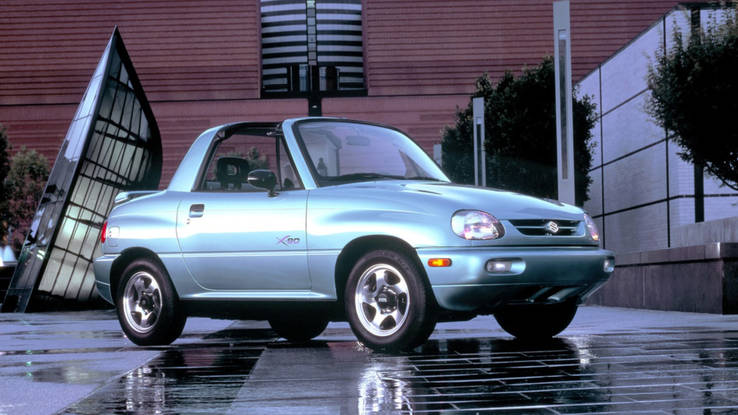
It’s been clear for a while that eventually every car will have the letter “e” or “i” in front of its name, and to reconfirm this trend while throwing in a dash of 1980s nostalgia, Suzuki will debut the e-Survivor concept at the Tokyo motor show in a few weeks. The high-riding, four-wheel-drive electric concept will pick up where vehicles like the X-90, the Jimny and the Samurai left off, adding a complex suspension system with plenty of ground clearance.

But it is probably the X-90 that the e-Survivor concept will remind you of the most; the two-seat compact crossover (from a time before the term crossover was applied to cars) was available for an exceedingly short product cycle that lasted three model years and deposited just a little more than 7,000 vehicles in the U.S.

The e-Survivor will feature a ladder frame, just like the company’s legendary 4x4s it’s meant to evoke but will be a bit smaller and a lot more open. The concept will feature a total of four electric motors, one for each wheel, incorporated into the advanced suspension system, but Suzuki is staying mum for now when it comes to battery specs or output. The e-Survivor will also make use of lightweight materials and will feature impressive approach and departure angles.

Suzuki X-90

Suzuki had a niche of sorts since the 1970s that it had mined with some success: very small SUVs.

2018 Lexus RX seven-seat model rendering

There is no danger of the company launching a pocket-size electric 4×4 in the U.S. anytime soon; Suzuki left the U.S. market in 2012 after a pitched battle in just a couple of segments, with the Kizashi taking on budget compact sedans while the Grand Vitara lost ground to a raft of offerings from Japanese and Korean brands. Suzuki has stayed true to its compact 4×4 roots in other markets while still battling the familiar cast of rivals in Japan and elsewhere, with a small lineup of affordable hatches and the Vitara SUV.

Stay tuned for more concepts from Japan, the Land of Small and Weird Cars, as the Tokyo motor show gets closer.

Is Land Rover planning a new ‘Road Rover’ line of luxury EVs?

Share

  • Pinterest

It looks like Land Rover might be putting together something new for the Chinese and North American markets. According to Autocar, the British automaker will release an electric vehicle sub-brand dubbed Road Rover before the end of the decade. Expecting the car to debut at the 2019 Los Angeles Auto Show, Autocar thinks the future Land Rover Road Rover will compete directly with luxe-sedans like the Mercedes-Benz S-Class and the BMW 7-Series.

We don’t doubt Land Rover is looking at China and electrification, nor do we doubt the plausibility of an ultra-soft-roader in the form of a wagon or sedan, but that name: Road Rover? After reaching out to Land Rover, a spokesperson said the Road Rover story is speculation but did not deny a future product akin to what Autocar expects.

We also reached out to Nick Gibbs, a U.K.-based correspondent for Autoweek sister publication Automotive News, who had similar doubts about the name. Gibbs expects Land Rover to expand the Range Rover name because of its brand equity rather than starting another line for cars. Earlier this year, Gibbs spoke with Land Rover designer Gerry McGovern, who echoed those sentiments of equity. 

2017 Land Rover Range Rover SVAutobiography Dynamic Quick Take

McGovern said, “If you look at the Range Rover family of vehicles in the same way the Discovery range and the Defender that hasn’t come yet, there’s opportunities within all three families to expand into areas that we haven’t been in. I would argue that, at the moment, within our whole division, Range Rover has by far the most equity, in terms of premium pricing and in terms of sitting in that world of luxury.”

With the Chinese new-car market still hot on luxury sedans, we’re pretty sure Land Rover will build something to expand its name and further its awareness around the world. However, we doubt Land Rover will introduce a name like Road Rover instead of simply expanding the Range Rover lineup like the company has already done with the Evoque convertible and the new Velar. It looks like we’ll find out for sure what’s happening by the end of 2019.

Does the Subaru Viziv Performance Concept preview the next WRX?

Share

  • Pinterest

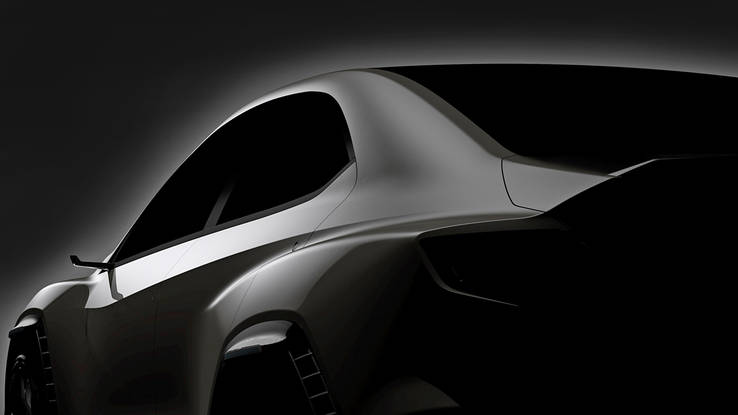
Subaru will bring no fewer than three concept cars to the Tokyo motor show in a matter of weeks, and the automaker has just released images previewing a concept sports sedan, which will likely foreshadow the next-generation WRX. Dubbed the Subaru Viziv Performance Concept, the sedan evidently features relatively wide wheelarches and large vents compared to the greenhouse, suggesting not only the presence of some wide wheels and tires but serious brake ventilation.

Up front the concept wears the now-familiar hexagonal grille in addition to L-shaped headlights flowing to the grille itself, while the rear fascia appears to feature a relatively short trunk with an integrated spoiler. Notably absent are traditional side mirrors — likely just cameras on small pylons feeding the image to A-pillar-mounted screens — while a view of the front reveals sensors mounted at the leading edge of the roof. Subaru promises this concept will feature advanced driver assist technology, so these sensors could be part of an upgraded EyeSight driver assist system.

Another item of note are fins mounted at the top of each wheelarch that appear to house small lights. The size of the fins themselves suggests something more than simple blind-spot detection systems, and may be related to some level of autonomous driving technology.

“The model expresses the enjoyment of driving by adopting a sports sedan style based on Subaru’s shared design philosophy of “DYNAMIC x SOLID”, while realizing its future vision for safety with advanced driver-assist technology, centered on Subaru’s original EyeSight driver-assist system,” the automaker said in an opaque statement announcing the concept sedan. “Subaru will also premier new retail models, and exhibit the models that will race in the Super GT series.”

2017 Subaru Viziv Performance Concept rear

The concept will feature some pretty serious wheelarches, ones with likely vents for brakes.

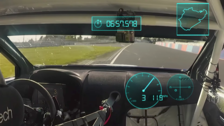
Watch Subaru's Nurburgring record lap from inside the car

Even though the Viziv concept appears to preview the next-gen WRX, the car itself isn’t due until 2020, by which time the driver-assist tech previewed here will likely be production-ready. It remains to be seen just what kind of autonomy a production version of this sedan will offer and what kind of sensors Subaru will add to its EyeSight system.

We’ll see this concept in the metal along with a special edition WRX STI model called the S208, just 450 of which will be built, and a special edition of the BRZ STI Sport that will be limited to 100 cars. These special editions, it appears, are meant solely for the Japanese domestic market, but Subaru will have plenty of other things for a worldwide audience to see in Tokyo, and we’ll have them all for you here as we get more details.