All posts in “Porsche”

Possible raids at Porsche Automobil Holding SE amid VW diesel scandal probe

Share

  • Pinterest

Porsche Automobil Holding SE cannot rule out the possibility that investigators acting on behalf of German public prosecutors may raid its premises in connection with Volkswagen Group’s diesel emissions scandal.

Porsche SE is an investment vehicle which owns the majority of VW’s voting shares. Stuttgart prosecutors confirmed earlier this month that Porsche SE CEO Hans Dieter Poetsch and management board member Matthias Mueller are being investigated on suspicion they may have informed investors too late about risks to Porsche SE from VW Group’s emissions cheating.

Poetsch is VW chairman and Mueller is VW Group CEO.

GMs turn Chevrolet Silverado and GMC Sierra Duramax diesels used defeat devices lawsuit claims

Poetsch reaffirmed at Porsche SE’s annual meeting on Tuesday that the company considers the allegations unfounded.

A Porsche SE spokesman said: “We have nothing to hide,” adding that there were no indications to suggest prosecutors were planning to search the company’s offices.

Poetsch, Mueller and former Porsche SE CEO Martin Winterkorn are under investigation following a criminal complaint lodged in the summer 2016 by German securities regulator BaFin.

2014 Ram 1500 EcoDiesel

Two other top Porsche SE executives, Manfred Doess and Philipp von Hagen, are excluded from the investigation since neither serve on the VW Group board.

Major automakers including General Motors, Daimler and Fiat Chrysler Automobiles have been hit by allegations recently that their diesel vehicles had illegal software to circumvent clean air regulations limiting nitrogen oxide emissions.

Last Tuesday, Daimler shares came under heavy pressure after the company confirmed investigators had searched various offices across Germany in connection with an investigation.

Porsche SE says raids possible in emissions-scandal probe” originally appeared on Automotive News on 5/31/17.

By Christiaan Hetzner at Automotive News

RM Sotheby’s sells 911 RSR for over $2M, 918 for over $1.5M

In the lead-up to RM Sotheby’s Villa Erba sale, the auction house revealed it had some pretty amazing machines lined up. Among them was a 1993 Porsche 993 RSR 3.8 that was only ever driven 6 miles. Three of this generation’s most potent hypercars also were slated to go across the block: a Porsche 918 Spyder Weissach, a McLaren P1 GTR, and a Ferrari LaFerrari. Interestingly, only two of these four cars sold, but they went for hefty sums.

The almost-never-used 911 RSR went for a whopping $2,254,492. The Porsche 918 Spyder was sold for $1,628,244. The RSR fit right in with RM Sotheby’s estimate, while the 918 exceeded the estimate by about $100,000. Both Porsches also ranked among the 10 top selling cars at the Villa Erba auction, with the RSR selling for the third highest amount behind a pair of pre-war French cars, and the 918 was fifth highest.

These pricey Porsches also show why buying limited production models to flip for profit would be appealing, which is an issue that Porsche is currently trying to resolve. Fortunately for Porsche these cars likely weren’t bought for profit making. The RSR was owned for many years before being sold, and the owner of the 918 managed to put on an impressive 6,800 miles before selling.

Related Video:

Plan to flip a new Porsche? You may not get another one

Share

  • Pinterest

Porsche has taken an interest in those trying to make an extra profit on its new GT cars, Car and Driver reports. The Stuttgart-based automaker says it plans to crack down on those flipping their rarer GT cars right off the dealership floor.

Flipping new Porsches is not a new trend, per se — there have always been limited-edition variants or simply high-demand models that the market was crazy enough about to pay speculators — with these entrepreneurial buyers stashing away cars for a few weeks in hopes of making a profit. Let’s just recall the whole Speedster frenzy of the early 1990s or the very last air-cooled 993s.

One of the rarity factors motivating today’s Porsche flippers is the availability of manual transmissions in the pricier models, once again feared as the “last of the line.” Porsche’s head of GT road-car development Andreas Preuninger told Car and Driver the decision to offer a manual transmission in the new GT3 has rubbed owners of the manual-only 911R the wrong way — they had been expecting the model to hold its value due to the presence of a stick shift. The debut of the latest GT3 has upset those who bought the car as an investment.

Jerry Seinfeld Porsche collection auction sale total

“I personally like to see my cars being used,” Preuninger told Car and Driver at the launch of the 2018 911 GT3. “That’s what we build them for. They are just too good to be left to stand and collect dust. I don’t like this business of people buying our cars to make money on them. That was never our intention. The purpose of limiting a car is not for it to gain value. We don’t want to be laying money on each car’s roof when they run out of the factory.”

There isn’t much automakers can normally do to stop this practice (unless cars are being shipped off to China, in which case European automakers will use U.S. government resources to protect their profits), but given the limited nature of the GT cars, Porsche says it keeps an eye on who is flipping the cars for profit and will take that into account when offering future limited-production GT specials.

“If you’re flipping cars, then I think it’s understandable that you won’t get on the list for the next car if we have more demand than supply,” Preuninger told Car and Driver. “It’s not a punishment but a strategy: to supply the cars to the customers who will really use them. I think that’s just fair.”

1990 Porsche Accessories Catalog offered everything from whale tails to beer steins

Share

  • Pinterest

BMW got on board the lifestyle-brand train fairly early, and we have admired the 1981, 1986, and 1992 accessory catalogs from those clever Bavarians. Porsche, a brand with a prestige image in the United States long before most on this side of the Atlantic had heard of four-wheeled BMWs, wasn’t far behind in this game, as we can see in the 1990 Porsche Accessories and Boutique Catalog.

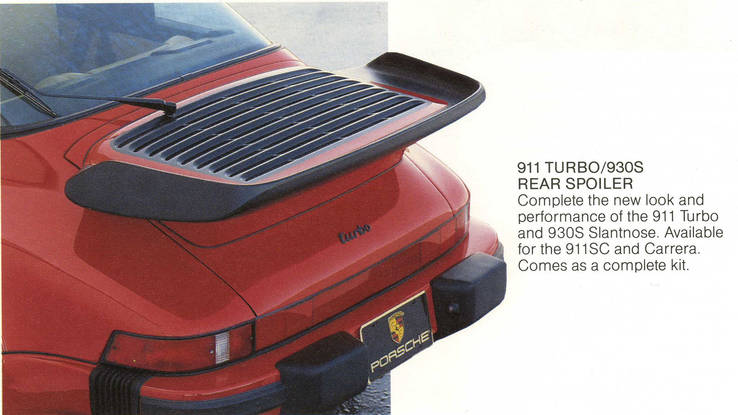
1990 Porsche Turbo/930S Rear Spoiler

$995 in 1990 dollars. Photo by Porsche

The first dozen or so pages are devoted to upscale trim parts and Porsche-care items, including Blaupunkt cassette decks and Porsche-branded snow chains.

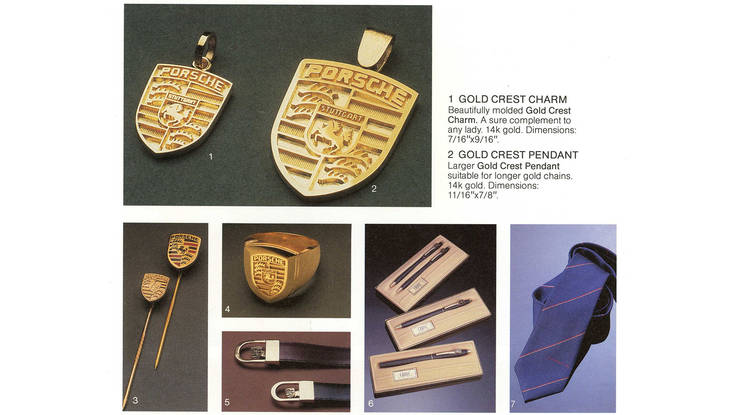
Porsche-branded jewelry

Did anyone buy the Porsche-crest gold ring? Photo by Porsche

Then the flashy stuff that tells the world “I drive a Porsche” appears. Tie clips, belts, bud vases, beer steins, enough of it to make a powerful Porsche owner’s office a shrine to the brand.

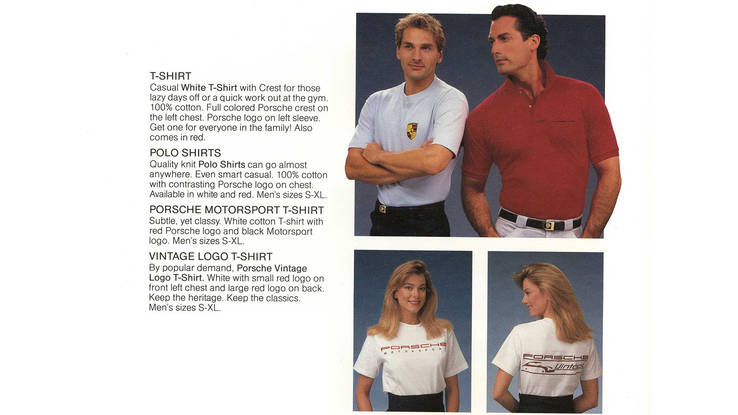
Porsche-branded shirts

The well-dressed 1990 Porsche owner needed something to wear at the gym, too. Photo by Porsche

The models in the T-shirts and polo shirts look much less awkwardly early-1990s than their counterparts in the 1992 BMW catalog, and the clothing itself is less garish. This could be the difference between BMW and Porsche, or it could be the difference between 1990 and 1992. You be the judge!

What is a PDK transmission? Autoweek explains

Share

  • Pinterest

If you’ve read about, shopped for or driven a Porsche in the past decade, you’ve probably heard of the brand’s PDK dual-clutch transmission. PDK shifts faster than other types of transmissions, includes a launch control feature and, even better, doesn’t need clutch replacements — ever. But what exactly is PDK and how does it work?

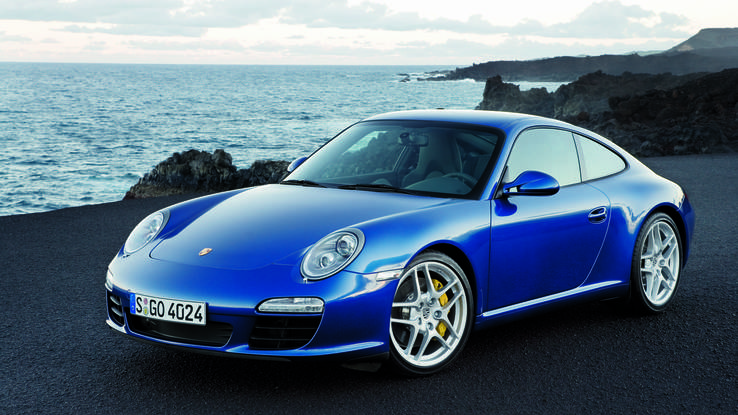
2009 Porsche 911

The 2009 Porsche 911 was the first to offer a PDK transmission option.

PDK is an acronym for Porsche Doppel Kupplungs getriebe (strictly, Porsche-Doppelkupplungsgetriebe), which translates to Porsche double-clutch transmission. As the name suggests, it’s Porsche’s version of a dual-clutch transmission (DCT) and fundamentally operates in the same way as other DCTs on the market today.

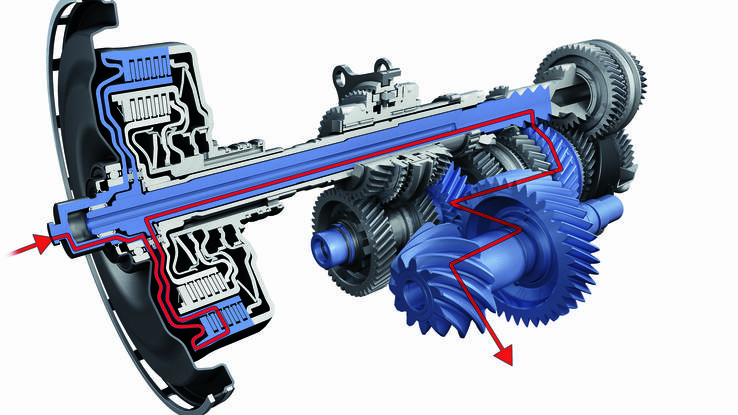
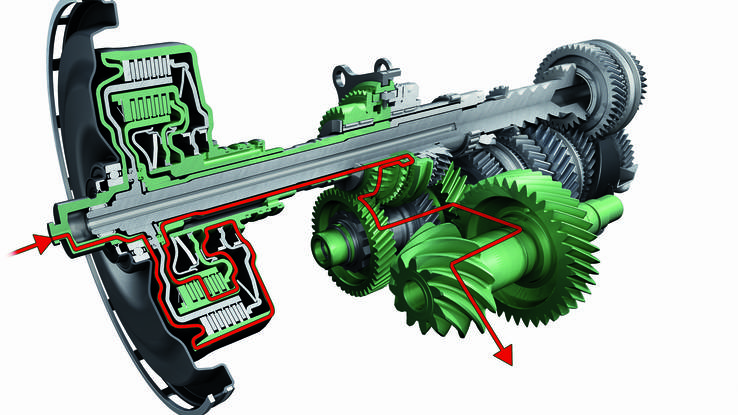
A DCT is more similar to a manual transmission than a traditional automatic, but instead of one clutch engaging with a flywheel, two separate clutches work together. A PDK gearbox uses hydraulically actuated wet-clutch packs, one enveloped around the other. One clutch connects reverse, first, third, fifth and seventh gears, the other handles second, fourth and sixth. As opposed to a clutch pedal on the floor, an electronically controlled valve body actuates the correct clutch when it’s needed. The PDK only engages one clutch at a time. However, because gear sets alternate between clutches, as one disengages the other can engage in one fluid motion.

PDK transmission clutches 1

The internal gears and clutch pack of a PDK transmission. Blue highlights which gears the clutch operates.

PDK transmission clutches 2

The internal gears and clutch pack of a PDK transmission. Green highlights which gears the clutch operates.

Think of a PDK like a seven-person Olympic relay race team. By the time one runner nears the end of his stint, another gets up to speed separately and is ready to begin, so the baton is effectively handed off instantly, with no loss in speed. And just like perfectly nourished and hydrated athletes, the oil-soaked wet-clutches don’t overheat or wear out under pressure. That’s how Porsche avoids damaging parts with launch control. Rev the engine to a high-power point and slip the clutches to get maximum torque to the wheels without spinning them. It’s stunningly effective.

2018 Porsche 911 GT3 road test with specs, power, price and photos

As do so many automotive innovations, PDK got its start in racing because its faster shifts meant quicker lap times. Fuel efficiency gains were coincidental, but also consequential because over time the design started replacing traditional automatic and manual transmissions in Porsche cars, even the driver-focused GT3.

Objectively, you can’t argue with PDKs. But enthusiasts want more than the objective. So we fought the trend and, in the case of the GT3 at least, won. Why? As Lingeman said in his 911 GT3 review, “… even with my penchant for lap times, I’d still pick the zero-dollar 6MT option. It. Just. Feels. Right.”

Robin Warner

Robin Warner – Robin Warner is Editorial Manager at Autoweek. He once tried and failed to become a professional race car driver, but succeeded in learning about debt management and having a story to tell. A former engineer, Warner loves cars for their technology and capability.
See more by this author»

Only at Luftgekuehlt can a Ruf get lost in a sea of incredible Porsches

Share

  • Pinterest

What happens when you gather a bunch of historical and well-loved air-cooled Porsches together (besides seeing cars such as the Gmund Porsche that won the marque’s first victory at Le Mans in 1955)? You get Porsches of all flavors in attendance, of course, such as this subtle-green Ruf pictured above.

This year’s Luftgekuehlt gathering in LA was packed with hundreds of air-cooled Porsches across several generations. To say there were rare cars at the event would be an understatement. It’s probably one of the few places a Ruf can show up and feel mundane in comparison to its counterparts.

Luftgekuehlt is a Celebration of Air Cooled Porsches Bruce Canepa's 917s

Ruf, the German automaker best known for its CTR and its run around the Nürburgring, has been modifying Porsches and building off their chassis since the mid-1970s. We wouldn’t mind driving this green Ruf, even if it doesn’t look as wild as the great Yellowbird.

2018 Porsche 911 GT3 first drive: Impractically perfect

Share

  • Pinterest

You might think hanging a 420-pound, 500-hp 4.0-liter hunk of flat-six over the back wheels of the 2018 Porsche 911 GT3 would make it hard to handle at speed (or otherwise). You might also think adding rear-wheel steering would accentuate that skittishness. You, and probably some physicists, would be wrong on both accounts. Sure, on cold tires, in the morning around a roundabout, the race-bred GT3 can, and will, slide its tail sideways without warning. It IS still for the hard-core. But exiting a sweeper at 80 mph with foot to floor? It’s planted like an old oak tree, even over the shiny, red-and-white curbing at Circuit Guadix in southern Spain. Like we said, it IS for the hard-core.

The GT3 is the track car from the track car brand. It’s been 18 years since the first 911 GT3 premiered, and since then, it’s gone from hiding a 355-hp 3.6-liter flat-six to today’s 500-hp, 911 GT3 Cup-derived 4.0. It’s the only naturally aspirated 911 you can buy right now.

Peak power is at a screaming 8,250 rpm while all 339 lb-ft of twist are available at 6,000 rpm. The seven-speed PDK-equipped GT3 is faster than the stick, with a sprint time of 3.2 seconds using launch control; the six-speed manual takes 3.8 seconds. The GT3 doesn’t get a seventh manual gear like the Carrera; Porsche tells us that’s because the GT3 doesn’t need a cruising gear. It’s not for cruising. The PDK car takes 11 seconds flat to get to 124 mph, which we can basically verify after hammering down arrow-straight, desolate back roads near Granada. Terminal velocities (197 mph, PDK; 198 mph, 6MT) are achieved in top gear for both.

The GT3 gets redesigned front and rear bumpers made of lightweight polyurethane and carbon fiber. New front air blades force air to the brakes, and the fixed rear wing is about an inch higher, which puts it right on the horizon line when on a flat road, unfortunately. The total package makes 20 percent more downforce than the outgoing model while keeping the same coefficient of drag. It’s about 2 inches wider and 1 inch lower than the 911 Carrera. A straked rear diffuser hides just under the back end, cleaning airflow underneath.

Porsche’s Active Stability Management system is standard and controls the damping on the MacPherson strut front and multilink rear suspension. Auxiliary springs help keep tension on the main springs in back, helping the car stay composed “after rapid and complete deflection,” like when flying over the crest of a hill. The rear steering system works like similar systems from other manufacturers: It uses actuators to angle the wheels up to 1.5 degrees depending on speed. Below 31 mph, the rears turn opposite the fronts; above 50 mph, they turn the same way for quick lane-change maneuvers, on the track or off.

The Execution

On startup, the GT3 revs up and sends a few pops out the back before settling into a crunchy, metallic flat-six idle. Porsche did a good job with the Carrera‘s exhaust, hiding most of the boost noises, and the Macan V6 with its flat-six impression, but nothing is quite like the true wail of a naturally aspirated Boxer engine. The GT3’s version makes for smooth and strong acceleration early and exhaust-wailing frenetic dashes near its 9,000-rpm redline. Torque stays even when paddling through the gears, and there’s plenty of power to pass on the highway even in the PDK’s seventh gear. Once you’re at speed, you can quiet the exhaust with a console-mounted button — at 80 or so, it drones enough that you’ll need to yell at your passenger to have a conversation.

Early morning drifts and redline runs notwithstanding, the GT3 is surprisingly normcore on the street. The softer mode of the adjustable suspension is tight and controlled, but never seems harsh. The tighter setting, which some of the Porsche drivers confessed to not even using, ratchets up the stiffness about 25 percent, but even it only crashed hard over the worst parts of the mostly perfect Spanish roads. There’s barely any nose lift, brake dive or sway in either setting, and the available front-axle lift ($2,590) can help you clear any steep driveways or speed bumps.

Circuit Guadix has a half-mile front straight, which really puts the pressure on the 16.1-inch front, 15.4-inch rear optional ($9,210) carbon-ceramic brakes. They seemed to relish the burden, bringing the coupe from 130ish to 50ish before the right-left-right-left opening salvo of turns. Where old 911s got scary and sketchy, the GT3 never misses a beat. There were a few moments of lift-off, ahem, correction at corner entrances, but half the time it just sort of pointed the car where it needed to go. There’s no real sense of the weight in the back during the sweepers, and the car never danced around no matter how hard I hit the clampers.
2017 Porsche 911 Carrera review with pricing, specs and photos

As for getting the car pointed right, even with electric power steering, the GT3 is sublime to pilot on the endless Sierra Nevada (version 1.0) mountain roads. Its weighted corrections are instant with the rear steering, which comes in handy when getting a little too enthusiastic on a two-laner as another car rounds the oncoming bend. It doesn’t so much swerve as crab walk to the side.

At the track, hitting the 19 or so apexes was really just a matter of looking through the turn and letting your hands follow. The steering wheel tightens up considerably around the sweepers at 5-6 and 13, where Porsche put a cone gate to keep us on the racing line. Midcorner corrections work the same as on the street. Pointing a little wide of the proper line? Give a quick 15 more degrees of input and get back on there. I left the traction control on as instructed and only felt the slight pullback of the system two times all day, both on corner exits. These systems — both the traction control and the PDK shift strategy — are so sophisticated that only the most professional, or insane, drivers could do better without them.

The Porsche Doppelkupplung transmission, the company’s version of the dual-clutch gearbox, makes for instantaneous changes on the street and track. PDK Sport mode doesn’t quicken the shifts (there’s no need), but instead changes when they take place. On my last track run of the day, I didn’t touch the paddles at all. The GT3 kept the revs high, downshifting two and three times when necessary, and held gears until at least peak power, usually further. Additionally, it has a feature called paddle neutral that puts the car in neutral when both paddles are held. This can be used on the track momentarily to send some cornering force forward, like when understeering in the wet, and it also works from a standstill, letting the driver “determine the preferred acceleration characteristics.” Translation: Do a burnout.
Porsche GT3

Porsche 911 GT3 Cup races into Paris auto show

The new 911 GT3 Cup race car joined the Porsche Panamera E-Hybrid at the Paris auto show on Thursday. Its four-liter flat-six now makes 485 hp, and the whole package tips the scales at just 2,645 …

After using both manual and PDK cars, and even with my penchant for lap times, I’d still pick the zero-dollar 6MT option. It. Just. Feels. Right. It comes with a mechanical rear diff as opposed to electronic and it saves 37 pounds. Stickshift throws are of medium weight and medium distance, but the gates are easy with just a teensy hang-up at the neutral point. Sport mode adds automatic rev matching in the manual cars. The third pedal has a good bit of spring to it, and the catch point is near the middle. My only complaint here is that the shifter itself doesn’t have that satisfying metallic tink-tink sound. It sounds plasticky.

The GT3 has three seat options, but I only tested the full buckets ($5,200), which have carbon-shelled backs and no angle adjustment. It does, of course, move fore and aft, and Porsche added a height adjustment for shorter drivers. It forces you into the correct driving/racing position, and I was grateful for it. I spent three or so hours on the road with no fatigue or pressure points.

Alcantara is strung about the cabin liberally, and the five central gauges keep all the important info in the driver’s field of view. The small duplicate nav screen is especially useful when your passenger is fiddling with the radio. There are no back seats, just small shelves, though I did see a photographer hunched back there for a few minutes. The front trunk will fit two full backpacks or maybe a small carry on. The hard-core have no need for luggage.
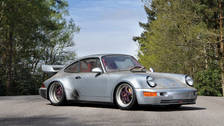
This 1993 Porsche 911 Carrera RSR 3.8 is brand new with just 6 miles on the clock

The Verdict

If practicality isn’t a concern, the naturally aspirated GT3 is the 911 to buy. The rear seats in the Carrera are laughable anyway, and once you start piling options on the $105K 911 S model, you quickly close in on the GT3’s base price of $144,650. Granted, you can do the same with the GT3 — the brakes, seats and front-axle lift will set you back $15,000 — but you wouldn’t have to. It undercuts some rivals like the Audi R8 and Acura NSX by $18,000 and $12,000 respectively, but the Mercedes-AMG GT S is $10,000 cheaper. That said, the GT3 is the only one that offers rear-wheel drive AND a manual transmission. And if you’re hard-core with your track days, you have to pick it.

On Sale: Order now

Base Price: $144,650

Powertrain: 4.0-liter H6, RWD, 6-speed manual or 7-speed PDK

Output: 500 hp at 8,250 rpm; 339 lb-ft at 6,000 rpm

Curb Weight: 3,116 lb (6MT); 3,153 lb (PDK)

0-60 MPH: 3.8 sec (6MT); 3.2 sec (PDK)

Pros: Sublime on the track; doesn’t feel sketchy at the limit

Cons: Rear wing impedes rearview visibility

Why we love diesel: Cayenne S tows an Airbus A380

Share

  • Pinterest

Various versions of the Porsche Cayenne advertise acceleration and top speed, but the SUV’s torque figures rarely get much time in the spotlight aside from those rare occasions when (European) owners use them to tow trailers. Or double-decker airliners.

Porsche put the low-end torque performance of the Cayenne to the test recently by towing the largest passenger aircraft in service today — the Airbus A380 — out of its 60,000 square foot hangar, in the process setting a new Guinness world record for the Heaviest Aircraft Pull by a Production Car.

Which version of the Cayenne did Porsche use? The Cayenne S Diesel of course, which is also the version of the Cayenne we’d recommend for towing an airliner if you find yourself in such a situation. The 385 hp is certainly useful in this scenario, but it’s the 627 lb-ft of torque that comes in handy when towing something like the 314-ton, 516-seat Airbus.

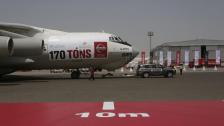
The Cayenne bested the previous record by 115 tons — almost half the weight of the plane itself — towing it a distance of 137 feet. The previous record, in case you’re wondering, was set by a Nissan Patrol back in 2013: The SUV pulled a 170.9-ton Ilyushin Il-76 cargo plane a distance of 164 feet (50 meters) at Sharjah International Airport in the UAE. Further back, the record was held by a VW Touareg, which pulled a 155-ton Boeing 747.

“We don’t usually go this far to test the limits of our cars, but I think today we got pretty close,” said Porsche technician Richard Payne, who drove the Cayenne. “I could tell that it was working hard, but the Cayenne didn’t complain and just got on with it. My mirrors were quite full of Airbus, which was interesting.”

Nissan Patrol breaks obscure Guinness World Record

Nissan Patrol breaks obscure Guinness World Record

The Nissan Patrol, a cooler-looking version of the Infiniti QX80 with a Nissan front end, broke a Guinness World Record on Thursday at Sharjah International Airport in the UAE.The nearly 3-ton truck …

How did the Cayenne even get traction? The towing arm connected to the front wheels of the A380, which attached to a stock towing hitch on the Cayenne, helped keep all four wheels firmly planted. Still, in the video, you can see that the nose of the Cayenne lifted up a bit at “takeoff.”

Are there bigger planes out there with which to set records, or is this pretty much the end of these types of feats of strength? The Antonov-225 Mriya is certainly larger than an A380, but it’s a transport plane, so it’s mostly empty inside. The Antonov weighs 275 tons empty, but if it could be filled up with a couple of dozen Cayennes stacked on top of each other in special containers … a perfect next pull record for Porsche to attempt.
 

Would you buy this 1993 Porsche 911 Carrera RSR 3.8 with just 6 miles on the odo?

Share

  • Pinterest

If a car is over 20 years old but only has a handful of miles on the odometer, is it still considered new? That’s the question potential owners will have to wrestle with when a 1993 Porsche 911 Carrera RSR 3.8 with just six miles on the clock rolls across the auction block later next month.

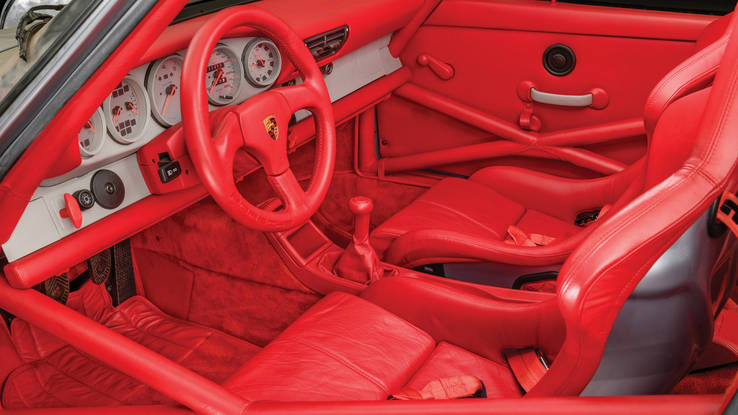
This example was special-ordered and then tucked away in a private collection for close to 25 years, which should be a crime. The exterior, which still wears its factory-applied Cosmoline coating, is wrapped in polar silver metallic paint, while there is a can-can-red leather-trimmed interior. And, oh boy, is it red! There’s just about as much red here as there was in that elevator scene from Stanley Kubrick’s “The Shining.”

You can own this1993 Porsche 911 Carrera RSR 3.8 with just 6 miles on the clock Photo 1 4-27-17

Red on red on red on red. Photo by RM Sotheby’s

While this Carrera does wear a Turbo body, a naturally aspirated 3.8-liter engine actually powers the RSR. Horsepower was underrated at the time at 350, with 375 hp being the more likely output, according to auction company RM Sotheby’s. Torque measured 284 lb-ft. A sprint to 60 mph took just 3.8 seconds — faster than a Ferrari F40.

RM isn’t giving estimates for how much they expect this 911 Carrera RSR 3.8 to sell for. Low miles likely means a high price. You’ll want to check out all the photos at RM Sotheby’s. The car is gorgeous.

H/T Jalopnik

Porsche is back in ‘GT Sport,’ ‘Forza’ and the Forza Racing Championship

Share

  • Pinterest

Porsche is back, baby. It never left our hearts and minds (or garages and driveways), but Porsche is finally back in the driving simulators we all know and love. Players will be able to access the marque in “Gran Turismo Sport,” coming later this year, and Microsoft’s “Forza” series, via downloadable car packs.

The absence was purely a business arrangement: Porsche was in an exclusive deal with Electronic Arts from 2000 up until the past year, only making appearances in the “Need for Speed” series and a few other one-offs. German tuner Ruf was a good stand-in for the “GT” series during the lean years, but now we’ll get back to the real deal.

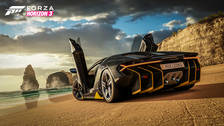
Porsche and Microsoft’s partnership extends for six years, nonexclusive, and will include cars in “Forza Motorsport 6,” which have been there since last year when the deal expired, and “Forza Horizon 3.” “Horizon” players have the option of downloading seven current and historical cars for the arcade-style game including the 550A Spyder, the 718 RS 60 Spyder from 1960, the 911 Carrera RS 2.7 from 1973, the 911 GT2 (type 993), the Cayman GT4 and the 911 GT3 RS, as well as the new Panamera Turbo. The pack costs 7 bucks.

Porsche will also partner with Microsoft on the Forza Racing Championship, which has the largest online racing community of all the driving games. It boasts 30,000-40,000 competition players and more than 4 million recreational players. ForzaRC season three begins on May 1, and you can register now, right here.

To celebrate the new season, Forza is holding the 2017 New York Invitational “Presented by Porsche” April 15-16 at Microsoft’s flagship store on Fifth Avenue. The competition will feature 18 of its elite players from around the world and two players vying for top drifter. It’ll be broadcast live on Beam livestream, YouTube and Twitch, a streaming service primarily aimed at gamers.

But this isn’t about creating real racing drivers a la Nissan’s GT Academy, nor is it really about selling cars either, says Porsche. It’s about sharing the overall Porsche experience. And if it sells a few extra cars because of it, even better.

Most players don’t have dreams of racing suits, tire changes and fuel strategies dancing in their heads. They like the games, and they like connecting with each other online. Not to mention the fact Porsches are still pretty expensive in the real world while video games, relatively speaking, are not. The enthusiasm from game players and track drivers is just two sides of the same coin.

ForzaRC season three culminates in a final event at a special secret location, where winners can take home $100,000. And with that kind of loot, maybe a new 911 isn’t that far out of range after all.

Forza Horizon 3 cars revealed

Do you park your sports car in the winter or use it year-round?

Share

  • Pinterest

We’ve seen (and driven) our share of sports cars in cold weather, but we still wince every time we see something like a Lamborghini buried in the snow because its owner spent everything on the car and forgot the garage part.

That brings us to this all-weather Porsche Cayman in Quebec, a province that (thankfully) mandates winter tires between Dec. 15 and March 15. The winter-tire requirement does not change the fact the rear-wheel-drive Cayman is a little light in the front, which makes it prone to understeer in the white stuff. (Now that we think about it, an all-wheel-drive Lamborghini Huracan Spyder seems like a logical winter vehicle compared to a Cayman).

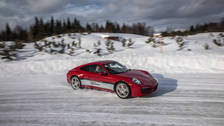
Porsches on ice Throwing 911s and Caymans sideways in the snow at Camp4 Canada

It’s difficult to judge a given winter sports-car owner’s situation: He or she might not have access to a garage, or there’s only budget for one car for all seasons. If we lived in an even colder climate, we might want to pretend that it’s practically spring year-round as a coping mechanism and run nothing but gently used Miatas, obtaining invaluable winter-rally skills in the process.

Do you park your daily driver in the winter, or do you use it year-round? Let us know in the comments below.

H/T: SGNick/reddit

Porsche power package comes at a $12K premium

Share

  • Pinterest

Those wanting 911 GTS power in their 911 S have a new, albeit expensive, option package available from Porsche. The package, called the Porsche Exclusive 3.0S Powerkit, will give 911 S owners 30 more hp from the car’s 3.0-liter flat-six engine, along with several other upgrades.

The additional power, which is up to 450 hp total, is achieved with a pair of larger turbochargers and updated engine electronics. The package adds the Sport Chrono package, which itself adds a steering-wheel-mounted driving mode switch, analog stopwatch on the dash and dynamic engine mounts. The Powerkit also adds a sport exhaust and modifies the brake-cooling system.

The package is limited to the 911 Carrera S, the 911 Carrera 4S, and 911 Targa 4S. Older turbocharged 911 Carrera S, 911 Carrera 4S and 911 Targa 4S models can have the package added if they are already equipped with the Sport Chrono package.

Those wanting the option will need to shell out $12,350 for 911s equipped with the seven-speed manual. Those with the PDK dual-clutch automatic will pay $12,870, an additional $520.

Porsche Mission E: More details on upcoming EV come out of Geneva

Share

  • Pinterest

Porsche’s first fully electric vehicle is coming, and it appears to be more than just a one-off creation. Porsche chairman Oliver Blume dished some details on the Mission E when he talked with Autocar during the Geneva motor show.

Blume said Porsche plans to offer model variants of the EV, believed to slot below the Panamera, with different levels of power and over-the-air update capability.

“It isn’t decided yet, but it could be possible to charge up with more power,” Blume told Autocar. “For example, when you have 400 hp, it could be possible to upgrade to 450 hp.”

Also packed into the Mission E will be Level 4 autonomous-driving technology, which allows for self-driving in nearly all situations — but Porsche says it won’t let technology overtake the driving experience.

Porsche greenlights Mission E sedan

Porsche Mission E is a go

Porsche will move ahead with production of the Mission E electric sedan, the company announced in a statement, though we wouldn’t bet on it keeping that name.Porsche had previewed the upcoming EV …

“There are situations in traffic jams where you will be able to read a newspaper, but our customers take pleasure from driving, and this will remain,” Blume added in the interview.

Some details haven’t changed since the Mission E concept was revealed back in 2015 at the Frankfurt motor show. Then, Porsche claimed a range of 311 miles with an 80 percent recharge time of 15 minutes. Blume reiterated these stats. The Porsche Mission E concept had a claimed 600 hp with a 0-60 mph run of 3.5 seconds.

The Mission E will sit on one of three new EV platforms currently in development with Volkswagen Group. The platform will also underpin Audi’s E-tron Quattro SUV concept. Blume said the Mission E will stick with the 800-volt charging system used on the concept.

For all of Blume’s comments, head to Autocar. The Porsche Mission E is expected to go on sale toward the end of 2019.

Decisions, decisions: Porsche 904 Carrera GTS or Carrera GT?

Share

  • Pinterest

One lucky Reddit user has happened upon a modern-day Porsche conundrum and decided to throw the internet into an existential crisis. Would you take the Porsche 904 Carrera GTS or opt for the mid-2000s Porsche Carrera GT? A picture with a handful of words has never stumped us more than this.

Forty years separate the two cars. Both had limited runs with the GTS being built for just two years — 1964 and 1965. The GT has a slightly longer production run from 2003 to 2007. Power for the GTS came from a modest 198-hp 2.0-liter flat-four engine. The Carrera GT, on the other hand, had a 5.7-liter V10 making 612 hp and 435 lb-ft of torque.

Commenters seem split on which to pick. And honestly so are we. Pitting these two cars against each other is honestly comparing apples to high-performance, genetically modified oranges. Each has their merits and is so different; we’d rather take the road of indecisiveness and say we’d take both. We’re so greedy we’ll take that 959 on the lift, too.

Watch the story behind a 1970 Porsche 911 saved for the track

Share

  • Pinterest

This family’s 1970 Porsche 911 sat in a garage for 25 years and was almost sold for a paltry $3,000; fortunately John Cary’s son (John Cary Jr.) had the foresight to step in.

Originally bought as a 911 for the track, John Cary has owned this car for decades, but sadly, most of its life has been spent engineless in a garage. Before life got in the way for Cary, he blew two 911T motors up, before finally throwing in a race car backup engine from the 24 Hours of Daytona.

[embedded content]

After the 911’s extended hiatus, John Cary Jr. decided it was time to get it running and back on the road. The car was completely worked over and quickly became something Cary Jr. could take to a track. And that’s exactly what he did.

He actually took the 911 to an autocross, but he got the chance to push it to the limit like his father did about 30 years ago. Minus the subliminal Optima Battery advertising, this two-part video story is a compelling watch. It’s especially entertaining whenever you get to hear that throaty air-cooled flat-six at wide-open-throttle, so turn the volume up and enjoy.

Zac Palmer

Zac Palmer – Editorial Intern Zac Palmer has probably spent more time in a car than any other 21-year old in the country. He likes anything that can go around a corner, and is surely talking about a car wherever he might be.
See more by this author»

VW 3.0-liter V6 diesel deal reached; Here’s what it means for owners

Share

  • Pinterest

Volkswagen has reached a deal with U.S. regulators to repair or buy back a total of 83,000 vehicles from the VW, Audi and Porsche brands equipped with the 3.0-liter V6 TDI engine. The deal comes four months after a larger agreement was formally reached with U.S. regulators over the fate of 485,000 2.0-liter TDI vehicles from VW and Audi.

Under the agreement, VW will recall and repair more than 75 percent of the affected vehicles to bring them into compliance if the presented modifications, which are not yet available, are eventually approved by the EPA and the California Air Resources Board. This includes approximately 63,000 VW, Audi and Porsche models from the 2013-16 model years equipped with the Generation 2 TDI engines.

VW also plans to buy back approximately 20,000 VW and Audi vehicles from the 2009-12 model years, or modify their NOx emissions to allow eligible owners and lessees to continue using them,  if possible

The agreement covers a total of six Audi models, one VW model and one Porsche model: 2014-16 Audi A6, 2014-16 Audi A7, 2014-16 Audi A8, 2014-16 Audi A8L, 2014-16 Audi Q5, 2009-15 Audi Q7, 2013-2016 Porsche Cayenne Diesel and the 2009-16 VW Touareg. Vehicles equipped with the Generation 1 engine include the Touareg and the Audi Q7; these two models from the 2009 through 2012 model years will be bought back or have their leases terminated unless VW can come up with a solution to reduce their nitrogen-oxide output. It is not known at this point whether VW will be able to come up with a fix.

VW reached diesel deal in Canada

VW has also reached an agreement with the plaintiffs’ committee to compensate owners in all circumstances, whether the vehicles are bought back or repaired, though it is still negotiating certain aspects of the agreement and did not share details of a compensation plan.

“As reported today by Judge Breyer, we have reached an agreement in principle with Volkswagen on substantial aspects of relief for 3.0-liter TDI Generation 1 and Generation 2 class members, and we are working to resolve remaining issues,” said Elizabeth Cabraser, court-appointed lead counsel for the Plaintiffs’ Steering Committee. “We will have no further comment, as the court has instructed the parties that its confidentiality order still applies.”
VW is expected to create a similar claim-processing operation to work with individual owners — the system should be in place before buybacks of the eligible vehicles begin in spring 2017. As with the 2.0-liter TDI program, the agreement must be ratified by the court in order for compensation and a buyback program to start.  
 

EU parliament faults EC over VW diesel scandal

Under the terms of the deal, VW will contribute $225 million to an environmental remediation trust already created by the 2.0-liter TDI program, in addition to $25 million to CARB to promote zero-emissions vehicles in the state of California.

“The agreement announced by the court today between Volkswagen and U.S. environmental regulators is another important step forward in our efforts to make things right for our customers, and we support the efforts of the court to bring about a fair and reasonable resolution of remaining 3.0-liter TDI V6 claims as quickly as possible,” said Hinrich J. Woebcken, president and CEO of Volkswagen Group of America Inc. “We are committed to earning back the trust of all our stakeholders and thank our customers and dealers in the United States for their patience as the process moves forward.”

A 190-mph shift never seemed so smooth

Share

  • Pinterest

There is something glorious about Porsche and its PDK transmission. Its lightning-quick shifts almost defy the very laws of physics. The engineers at Porsche, who clearly don’t like being told, “No, you can’t have shifts that quick at that speed,” have pushed boundaries — as this insane sixth-to-seventh 190-mph shift shows.

If you’re listening, be sure to turn up the volume. The sound of the shift from sixth to seventh in this Porsche 911 GT3 is aurally appealing. At that speed, the transmission isn’t working on making an orchestra of exhaust notes to ricochet of a deserted canyon road — it is working to fight back wind resistance.

H/T Jalopnik

Sx-Z | Vintech Unveiling P550 Tribute at Pebble Beach

OFFICIAL: Vintech Unveiling P550 Tribute at Pebble Beach

Sx-Z | Vintech Unveiling P550 Tribute at Pebble Beach

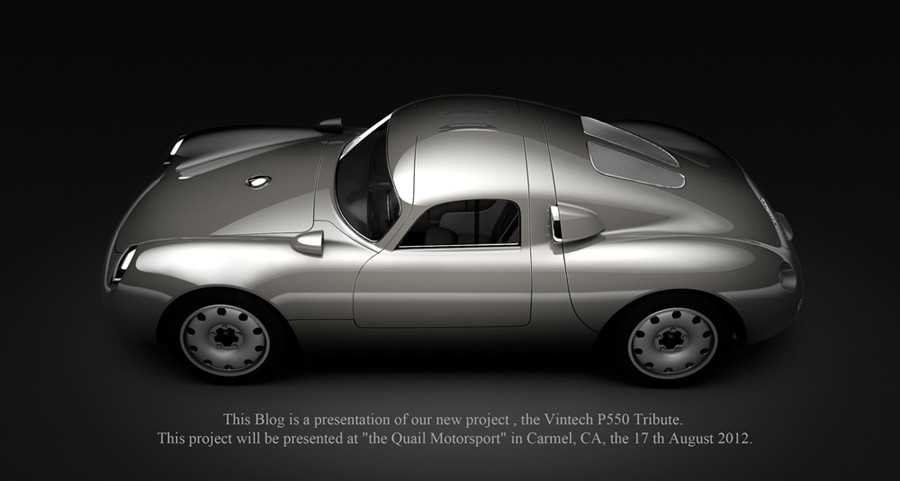
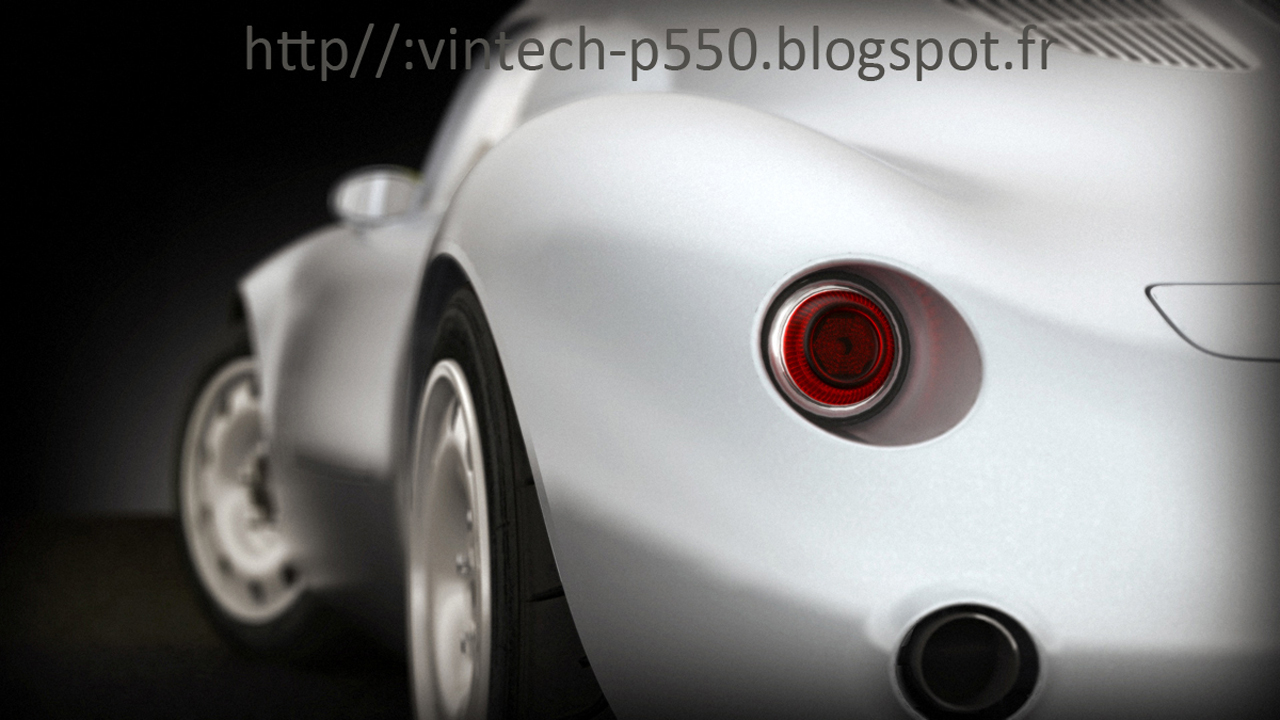
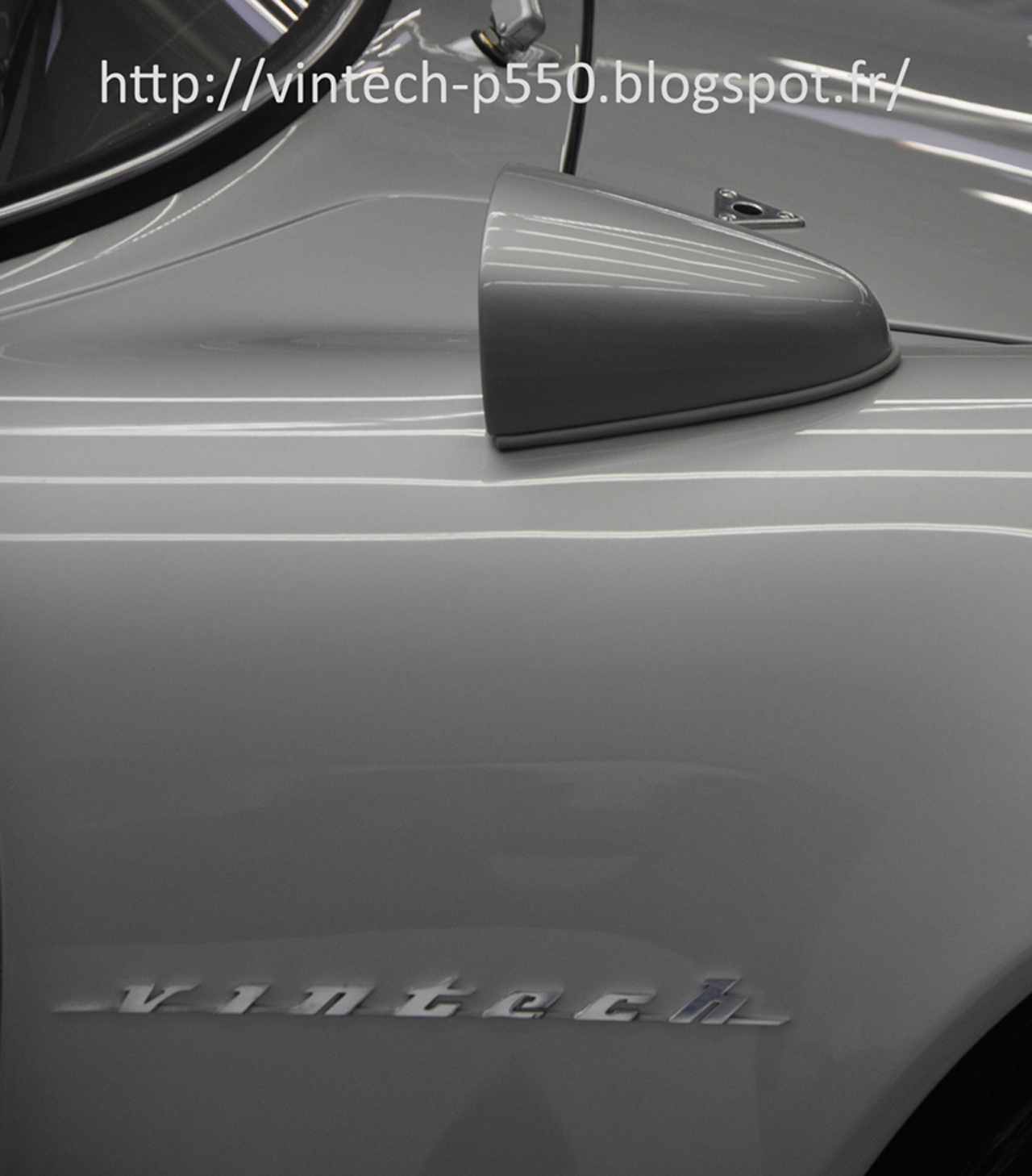
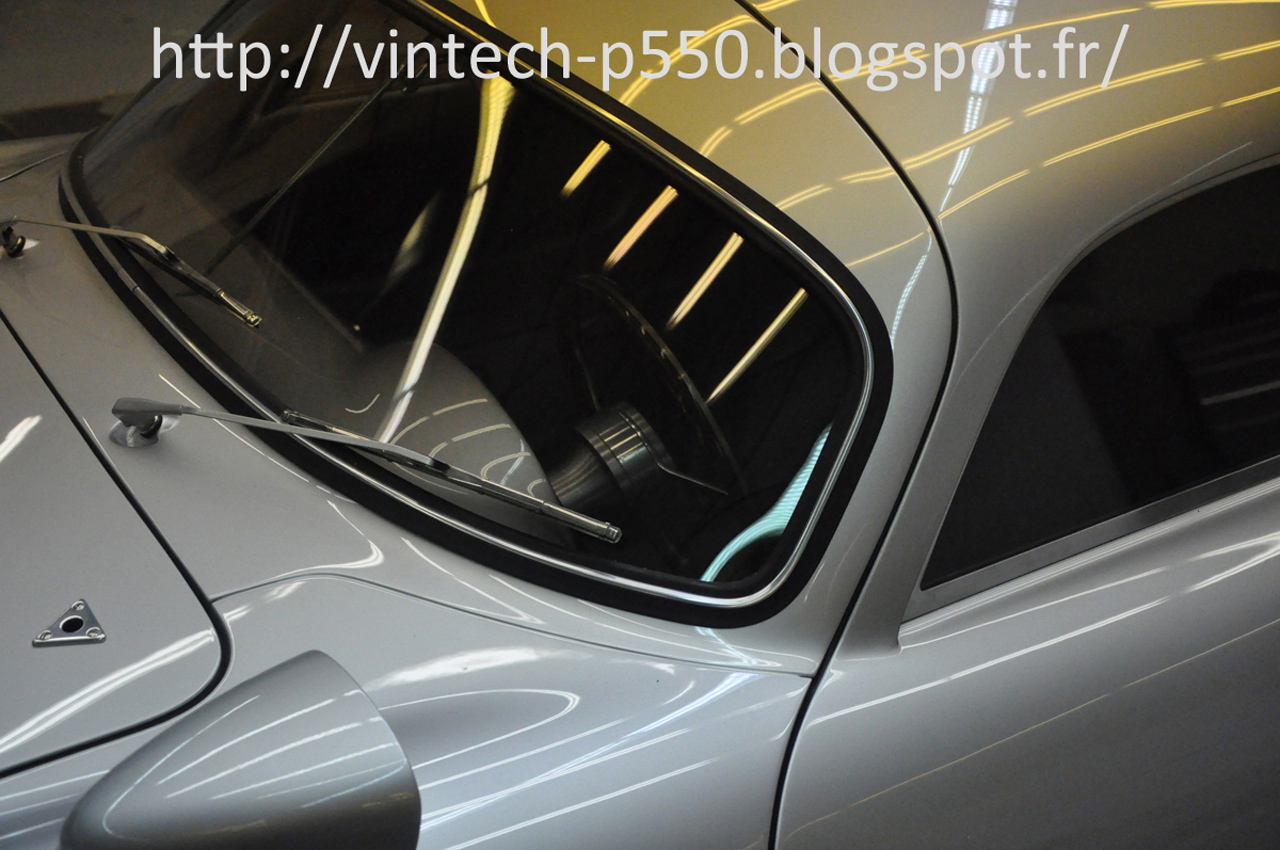
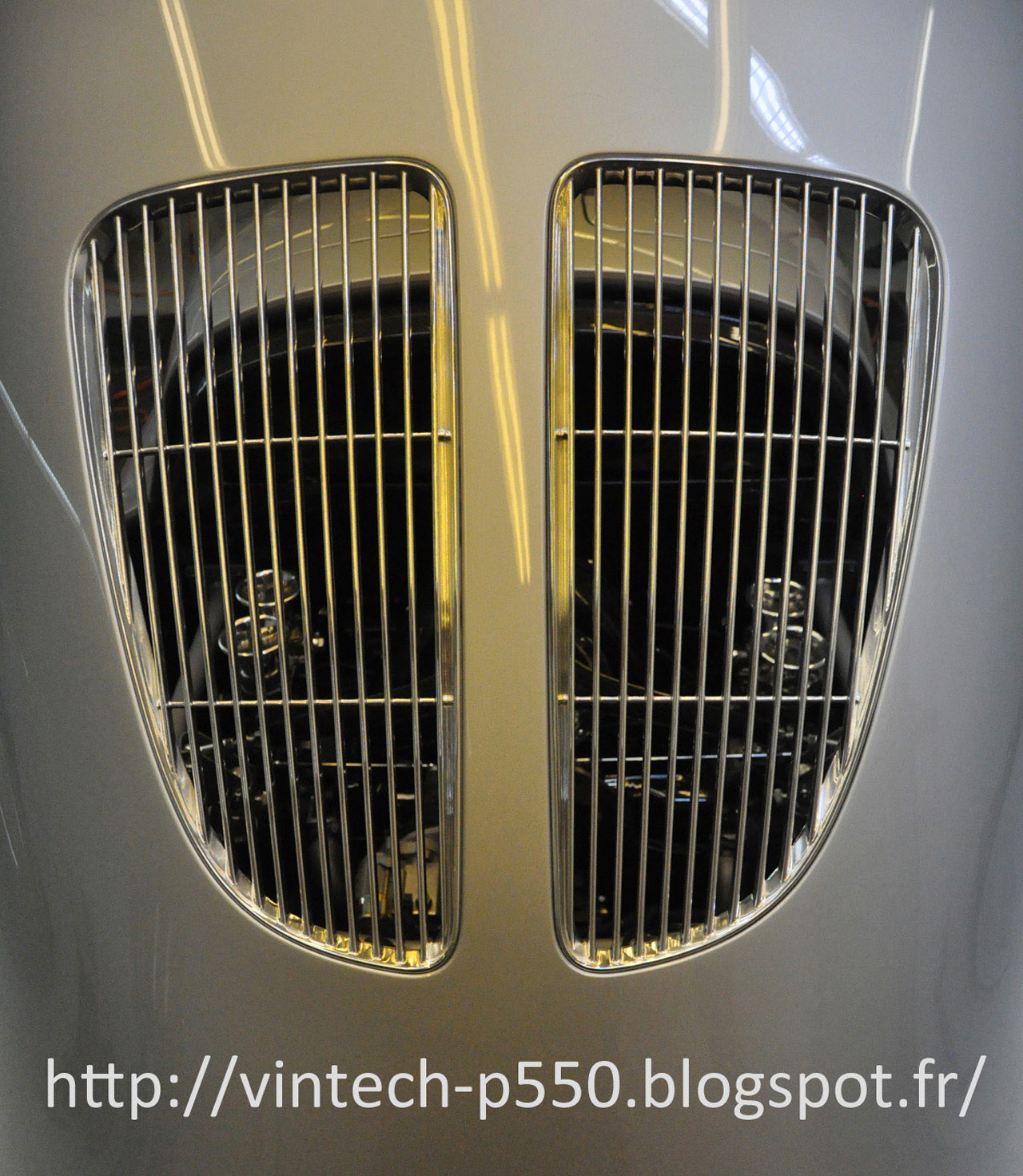
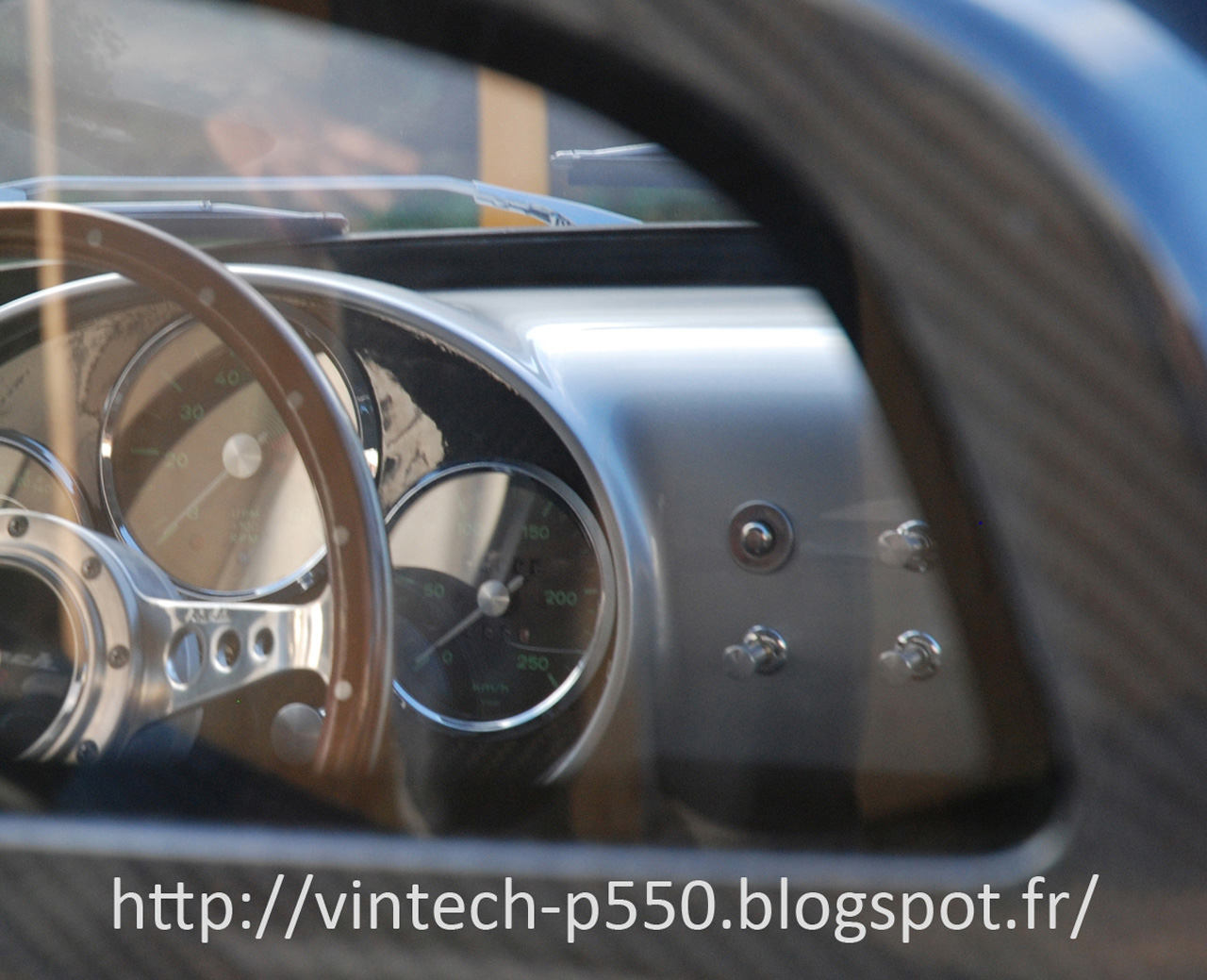
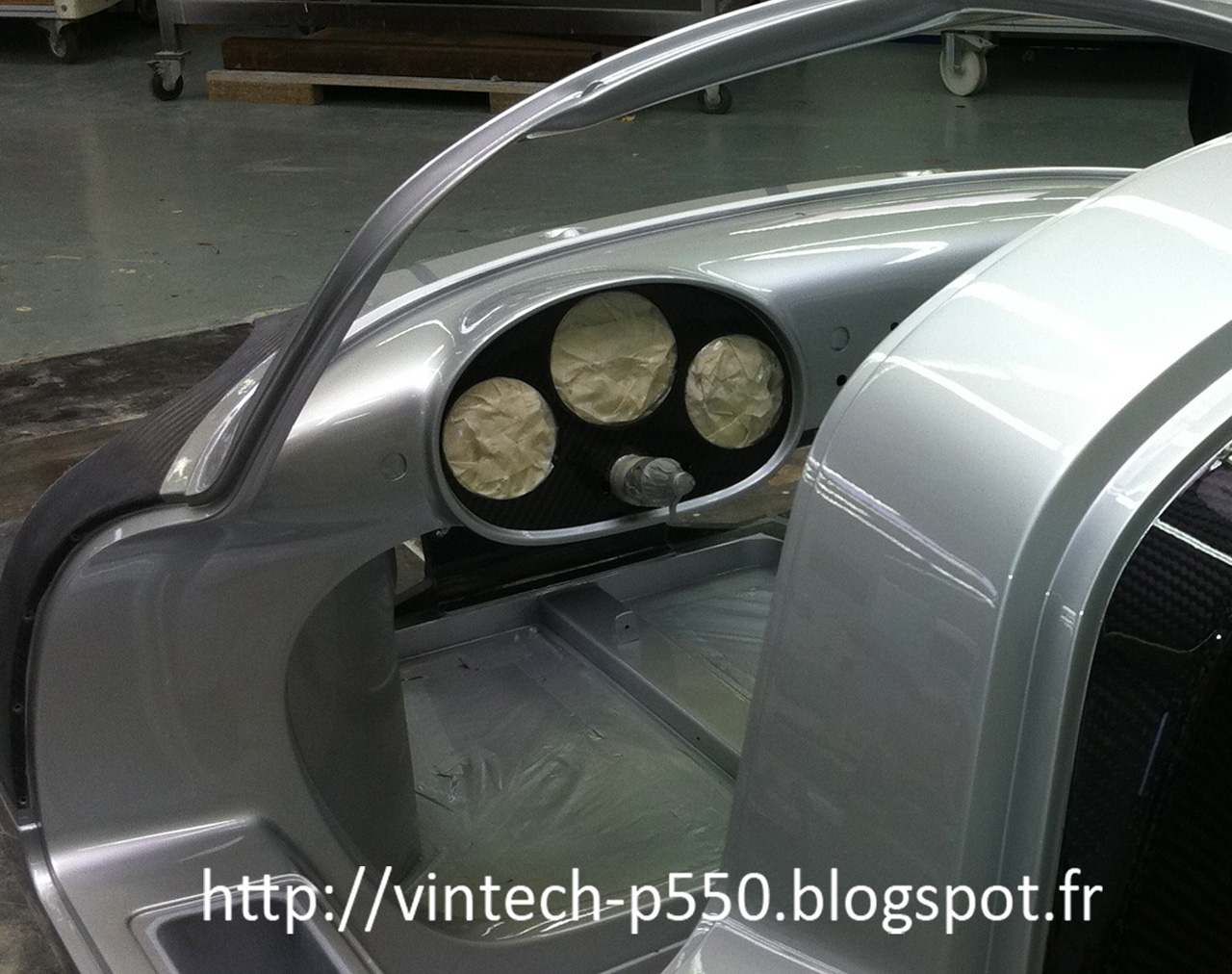
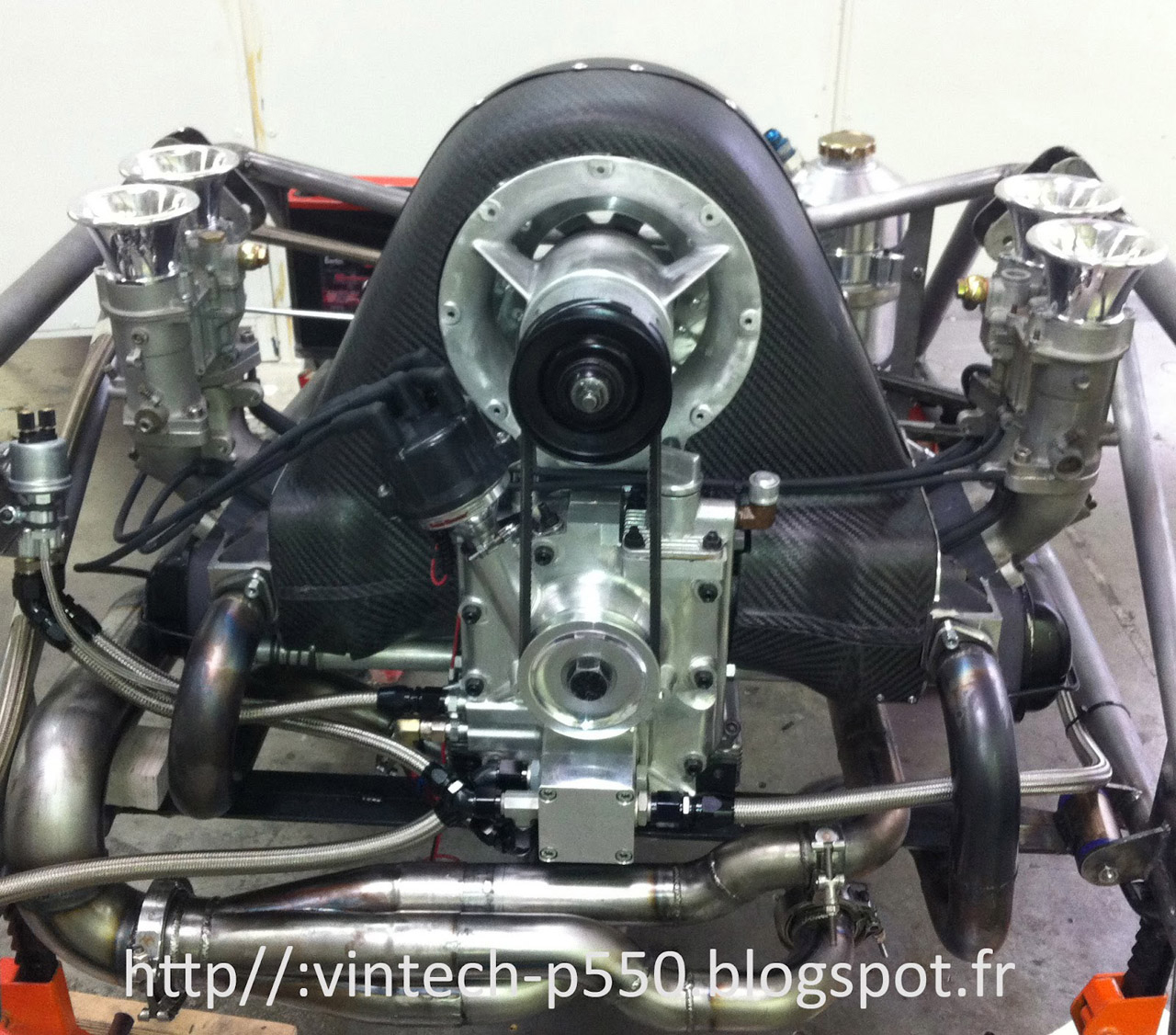
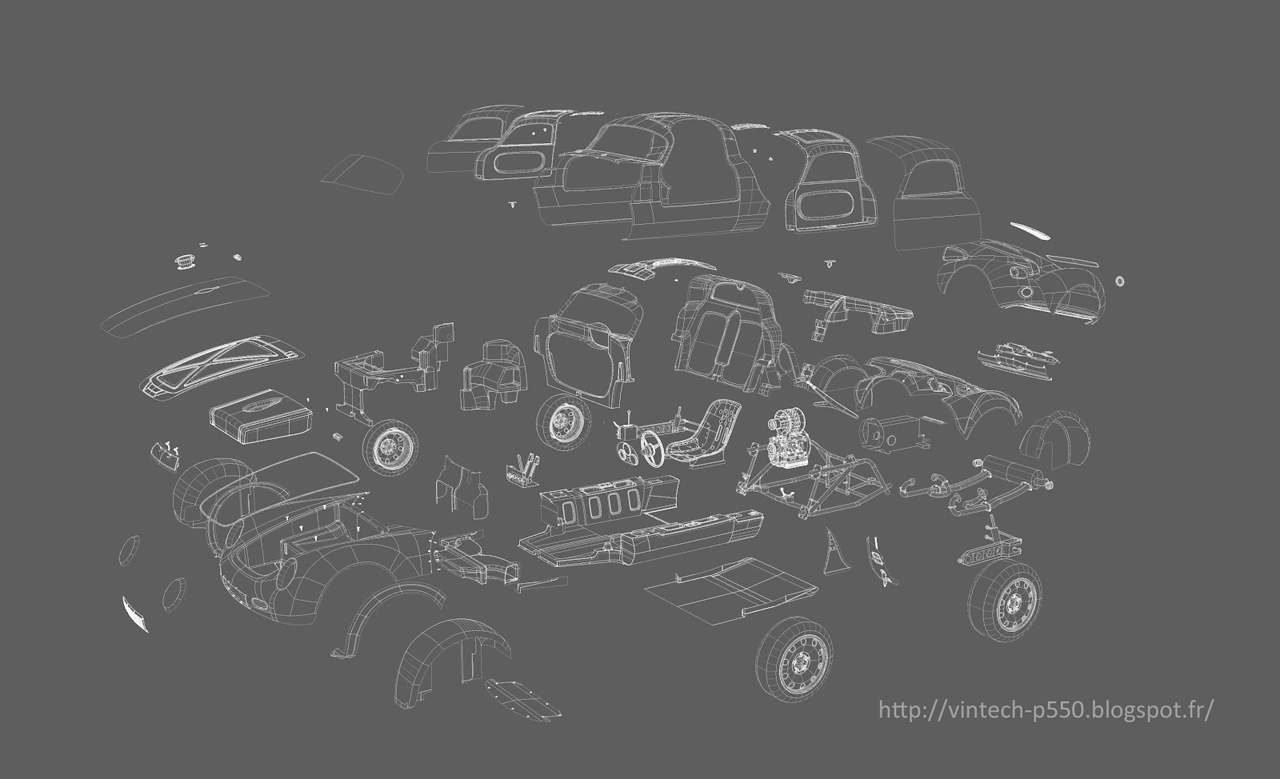
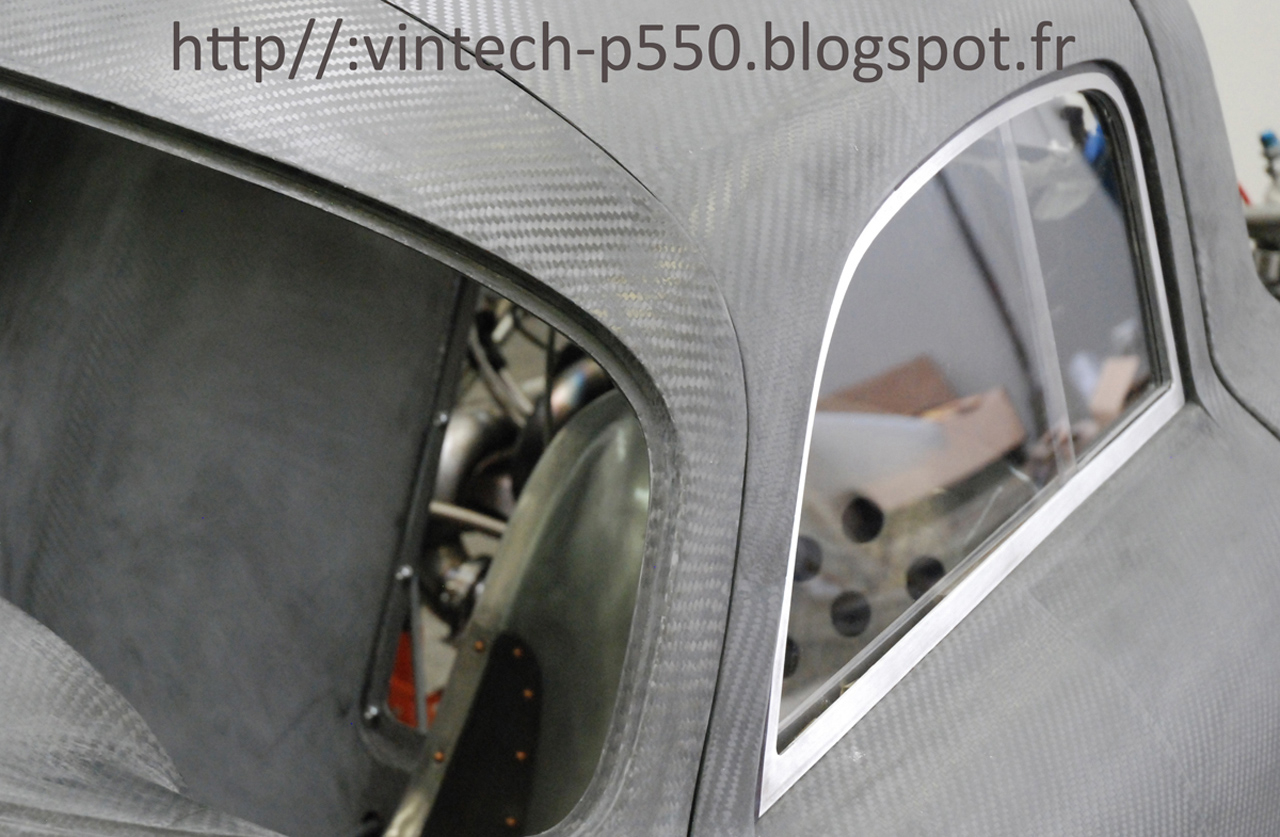
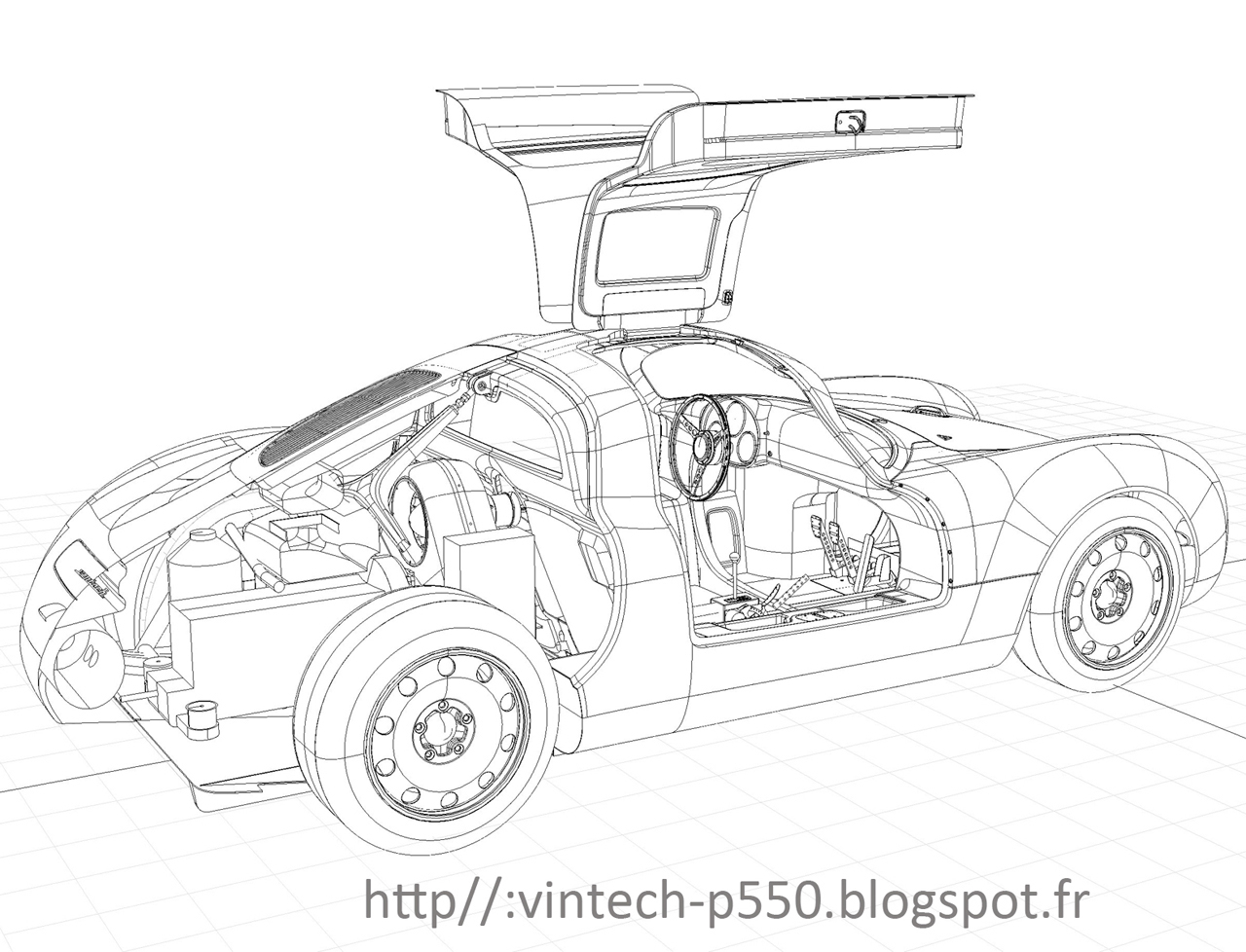
Do you love classic and expensive Porsches and/or you’re a fan of the gorgeous Porsche 550 but don’t have $3.685 million to spend? No worries, the French company, Vintech, has created a solution to owning the Porsche 550. Vintech has designed the P550 Tribute; a full carbon fiber body boasting classic lines with a modern chassis and a 3.0-liter four-cylinder boxer engine. The five-speed manual P550 has an engine that is expected to produce between 260 and 270 horsepower and a curb weight of 1,212 pounds.

The P550 Tribute makes its debut this Friday, August 17 at “The Quail: A Motorsports Gathering,” one of the events taking place at the Pebble Beach Concours d’Delegance.

Pricing and production numbers have not been announced yet. Follow the schematics, build, finished product and news/updates at the Vintech P550 Tribute blog.

Sx-Z | Vintech Unveiling P550 Tribute at Pebble Beach

Sx-Z | Vintech Unveiling P550 Tribute at Pebble Beach

Sx-Z | Vintech Unveiling P550 Tribute at Pebble Beach

Sx-Z | Vintech Unveiling P550 Tribute at Pebble Beach

Sx-Z | Vintech Unveiling P550 Tribute at Pebble Beach

Sx-Z | Vintech Unveiling P550 Tribute at Pebble Beach

Sx-Z | Vintech Unveiling P550 Tribute at Pebble Beach

Sx-Z | Vintech Unveiling P550 Tribute at Pebble Beach

Sx-Z | Vintech Unveiling P550 Tribute at Pebble Beach

Sx-Z | Vintech Unveiling P550 Tribute at Pebble Beach

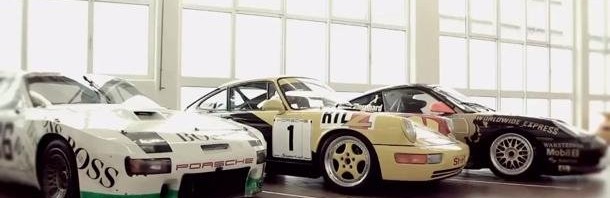
VIDEO: An Inside Look At Porsches’ Secret Museum

For any Porsche fan, a visit to the Porsche Museum in Stuttgart is a must. The museum recently moved its spare vehicles into a new warehouse which led to a video featuring inventory of some of the more unusual Porsche projects.

Throughout Porsche’s earlier years, the company struggled to build race cars and vehicles for the public. To keep the balance, Porsche took on uncredited engineering contracts with other automakers.

Did you know about the idea borrowed from IBM of a “Porsche Junior,” or a 928 convertible that should have been built, a concept car that could last 30 years and even a Porsche-Diesel tractor?

Watch the video above to see all the struggling Porsche projects before the company became successful.

Sx-Z | German Tuner Alpha-N Working On New Supercar Project

German Tuner Alpha-N Working On New Supercar Project

Germany’s Alpha-N Performance has announced plans to design a supercar based around the chassis of a current Porsche model, similar to the designs that fellow tuners RUF and 9FF have produced.

Alpha-N may be a new name on the scene, but founders of the company have come from the likes of the now defunct Veritas-VBT Racing, previously known as Brabham Racing, and was an expert at developing performance modifications for street use and racing.

Alpha-N is using a Porsche Cayman to form the basis of its new supercar. Dubbed the Alpha-One, the supercar will be powered by upwards of 800 horsepower and will weigh as little as between 2,400 and 2,800 pounds.

The Alpha-One will sport full carbon fiber body, styling of the Porsche Cayman – which the car is based off of – and elements borrowed from the Porsche 918 Spyder. No word as to what will be powering the Alpha-One yet or pricing but you can see the current renderings below.

Sx-Z | German Tuner Alpha-N Working On New Supercar Project

Sx-Z | German Tuner Alpha-N Working On New Supercar Project