All posts in “Sports and Outdoors”

Love #Vanlife? These 3 Books Are for You

Nomadic Dreams

Love #Vanlife? These 3 Books Are for You


If you’re curious about van life and how to make it work for you, these three new books are a beautiful way to learn. The trendy and romanticized nomadic lifestyle comes with its challenges (where to park, how to build out a van, where to put the dogs), and the people included in each of the three books below share what it’s like and how to make it work. In each book, beautiful photo essays showcase van life around the world, alongside route recommendations and expert advice from the team behind The Lonely Planet, Vanlife Diaries and The Rolling Home Journal. Whether you’re thinking of hitting those back country roads soon, or are searching for the perfect van, each book is worthy of your coffee table. Shop all three books today.

||

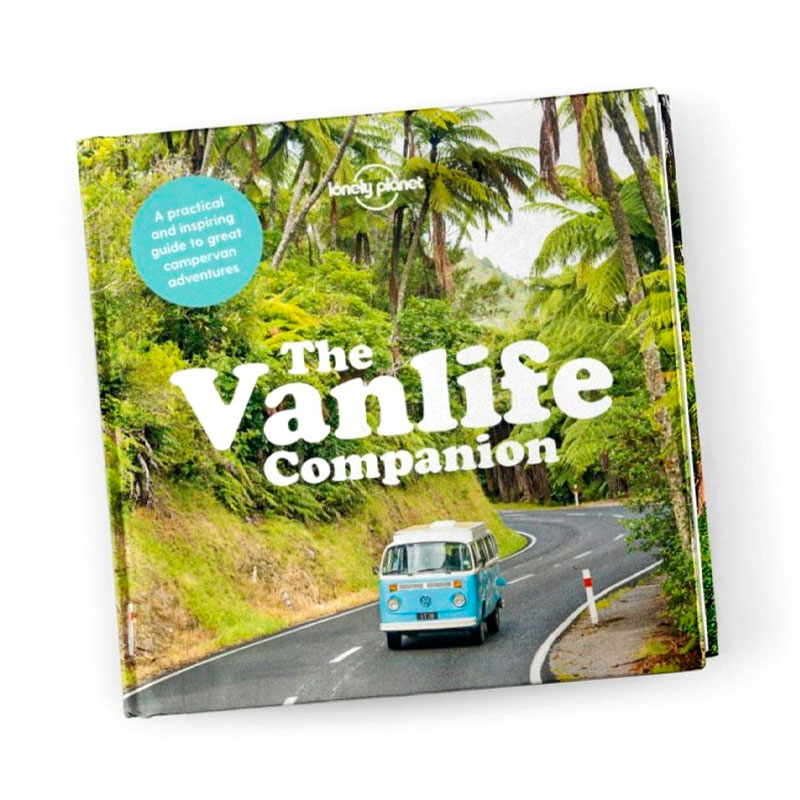
The Vanlife Companion by Lonely Planet $20

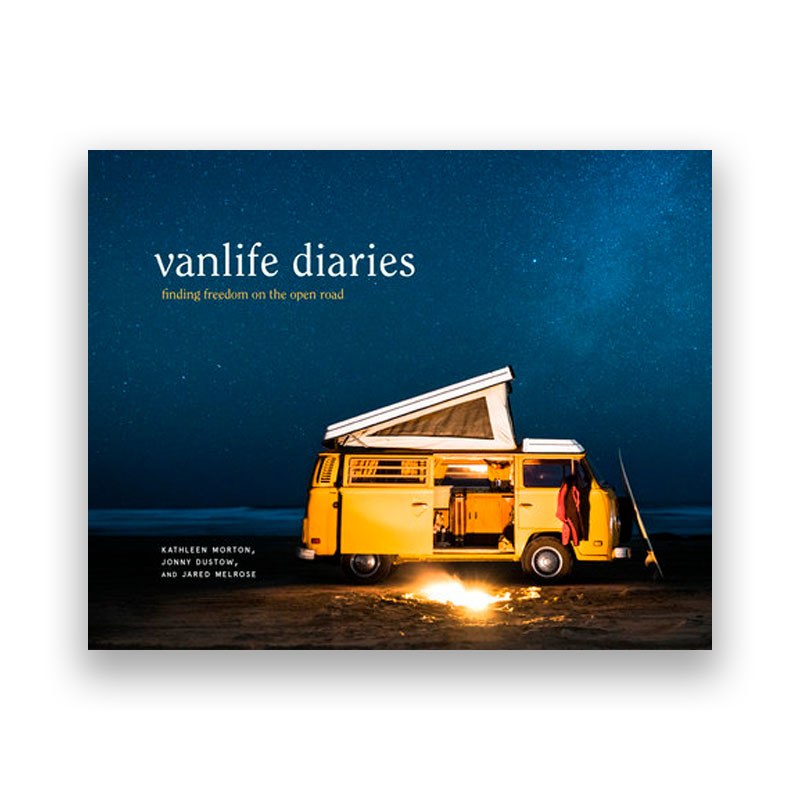
Vanlife Diaries: Finding Freedom on the Open Road by Ten Speed Press $17

The Culture of Vanlife by The Rolling Home ~$40

How to Fly with Your Bike and 4 Great Bags to Do It

You did it: you committed to your pedal-spinning hobby and bought a bike. Whether it’s a road bike, a mountain bike or something in between, it likely cost a pretty penny. At first, you might coddle it, treat it like a fragile display item instead of a thing used for transportation, ride it delicately, refer to it with a human pronoun. That’ll wear off, and then you’ll want to take it everywhere, including across the country or overseas.

You won’t be alone. Gravel riding, an adventurous type of biking that’s characterized by riding long distances on a mix of paved and unpaved roads, is currently growing faster than any other segment in the bike industry. Pro racing teams, most notably Education First, are even adopting “alternate” race schedules that include contests like the Dirty Kanza, a 200-mile trial on rough Kansas back roads.

Gravel riding and bikepacking (a self-supported blend of distance riding and camping similar to backpacking) lend themselves to travel. But distance isn’t a precursor to adventure by bike; making any lengthy journey, whether it be to roads topped with dirt or pavement, has value in itself. The only obstacle: getting your ride to your final destination, and there’s more than one way to go about it.

Fly with Your Bike

Many airlines like Delta, American Airlines, United and Southwest classify bike bags as regular luggage, with those size and weight restrictions applied, typically 50 pounds and a combined length plus width plus height of 62 inches. If your bag doesn’t meet these requirements, you could end up paying as much as $200 in fees.

Others airlines don’t offer that regular luggage classification (Air France, Lufthansa, Air Canada are a few) and they might have policies that require you to call ahead to let them know you’re flying with a bike. When in doubt, call your airline as soon as you book tickets to find out what the rules are.

Ship Your Bike

There’s an alternative to checking your bike aboard a plane: ship it instead. The costs associated with this method can often be less than the airline fees if you can’t meet the requirements of their checked bag policies, and you can usually get away with using the same hard case or bag that you’d bring on a plane.

You can also contact your local bike shop and see if they’d be willing to mail your bike to your destination or to a bike shop nearby, which could run you roughly $50, depending on the shop. For an additional charge, many shops will take apart and pack your bike into a box, and a receiving shop can have it rebuilt before you arrive. Bike shops always have boxes lying around, so you can save money on buying a bag this way too.

Buying Guide

Bike bags come in two types: hard or soft. Hard cases offer serious protection but they’re heavier, so they might constrain your packing if you’re trying to stay below an airline’s limit. Soft cases are lighter but not as protective. Both types usually have wheels as well as an internal system of padding and organization to make packing easy. The bag you purchase will guide the process, but here are some general things to remember:

Take apart your bike. Not completely, but depending on the bag, you’ll likely need to take off your pedals, wheels and handlebars.

Deflate your tires. Check with your airline for rules here, and leave a little in there to protect the rims. You may also need to deflate your suspension.

Remove the rear derailleur. Affix it inside of the chainstays (the two tubes that extend back from the pedals to the rear axle) with a zip tie or other fastener.

Wrap your chain. Use a rag or something else to prevent an oily mess.

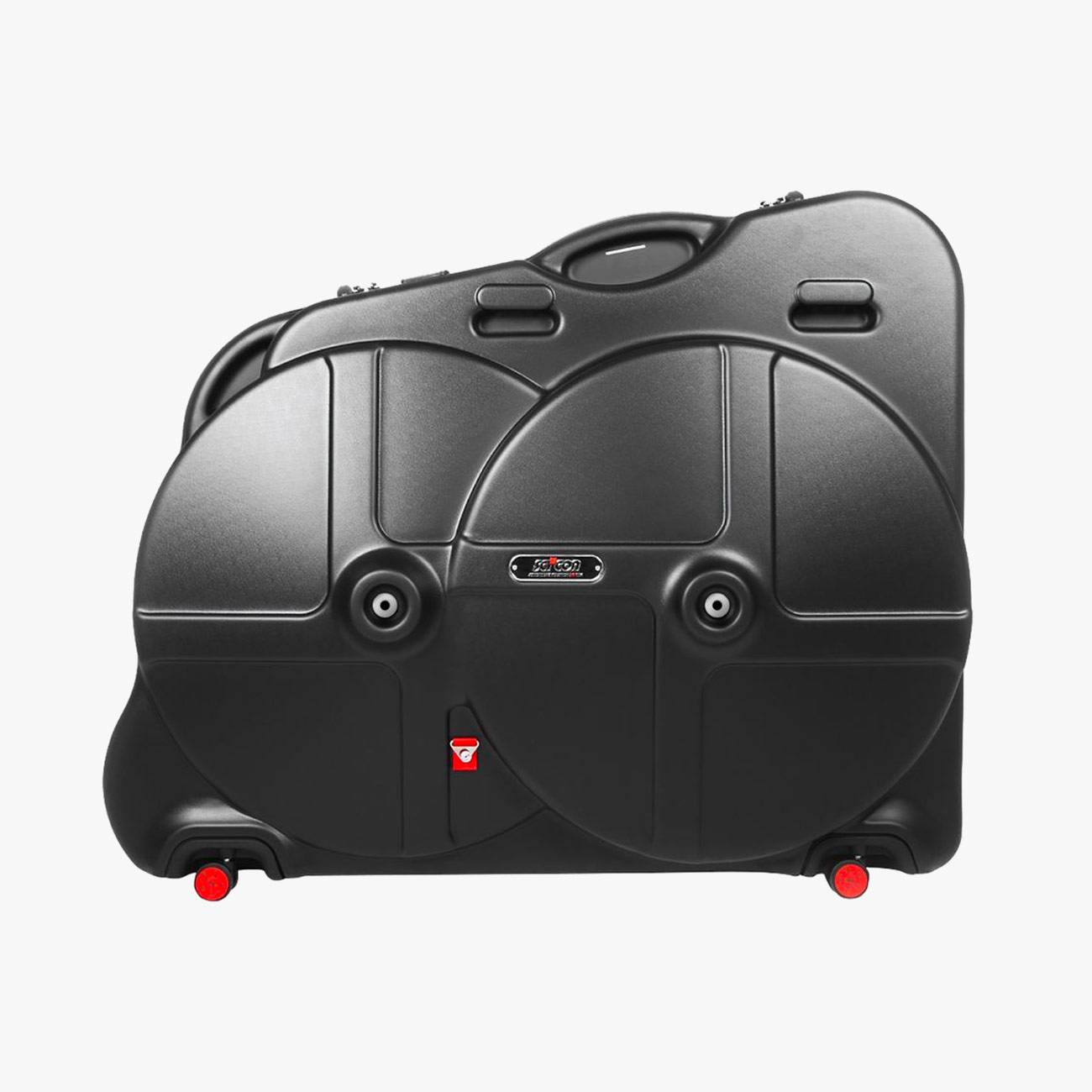
Best Hard Case: SciCon Aerotech Evolution X TSA Case

SciCon’s hard case uses an ABS composite to provide a high level of protection while keeping a low weight (24 pounds).

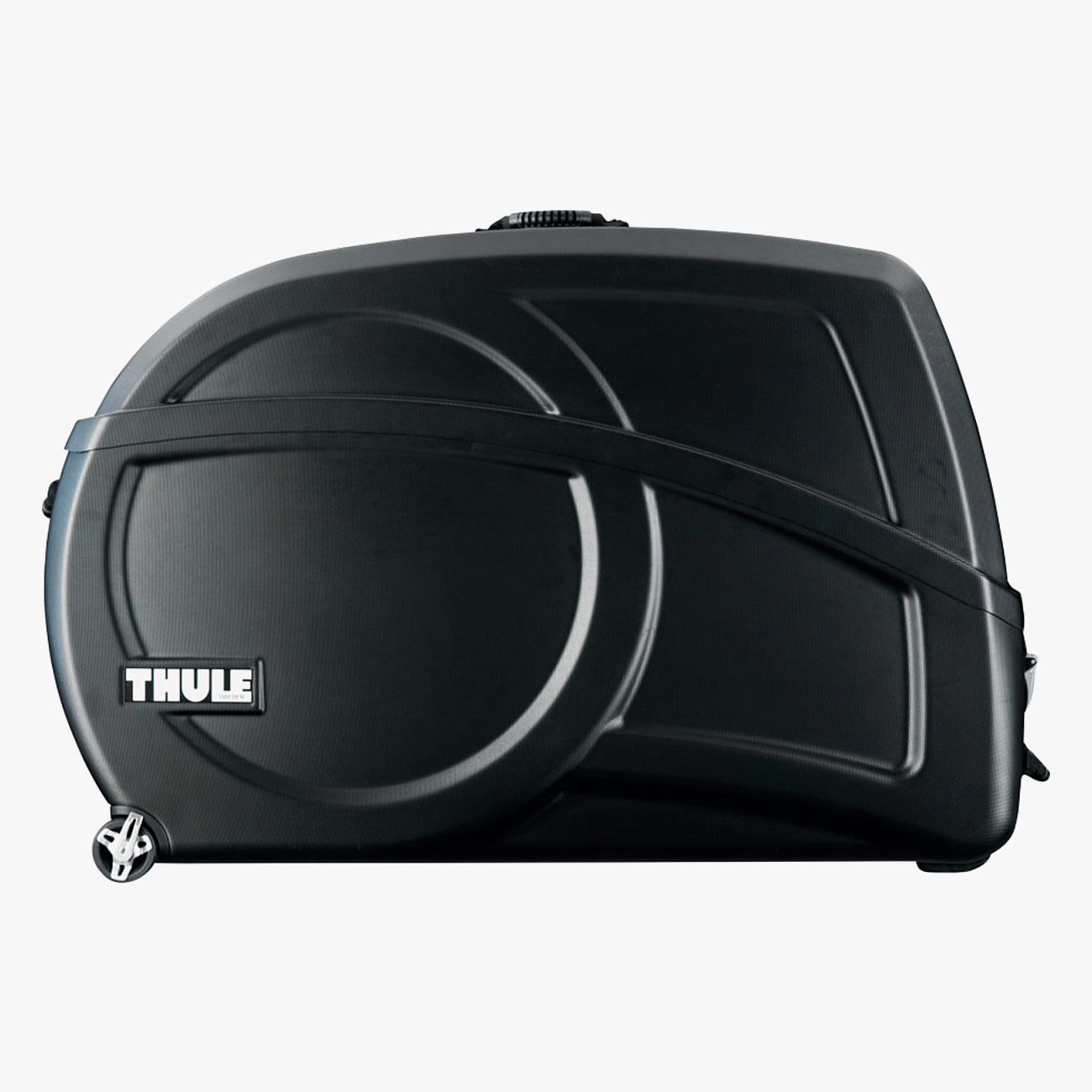
Affordable Hard Case: Thule Round Trip Transition Bike Travel Case

The Thule Round Trip Transition Bike Travel Case uses a top-loading construction. That sounds inconvenient until you see the included bike stand, which makes taking apart a bike for packing (and reassembling at the destination) a much easier task.

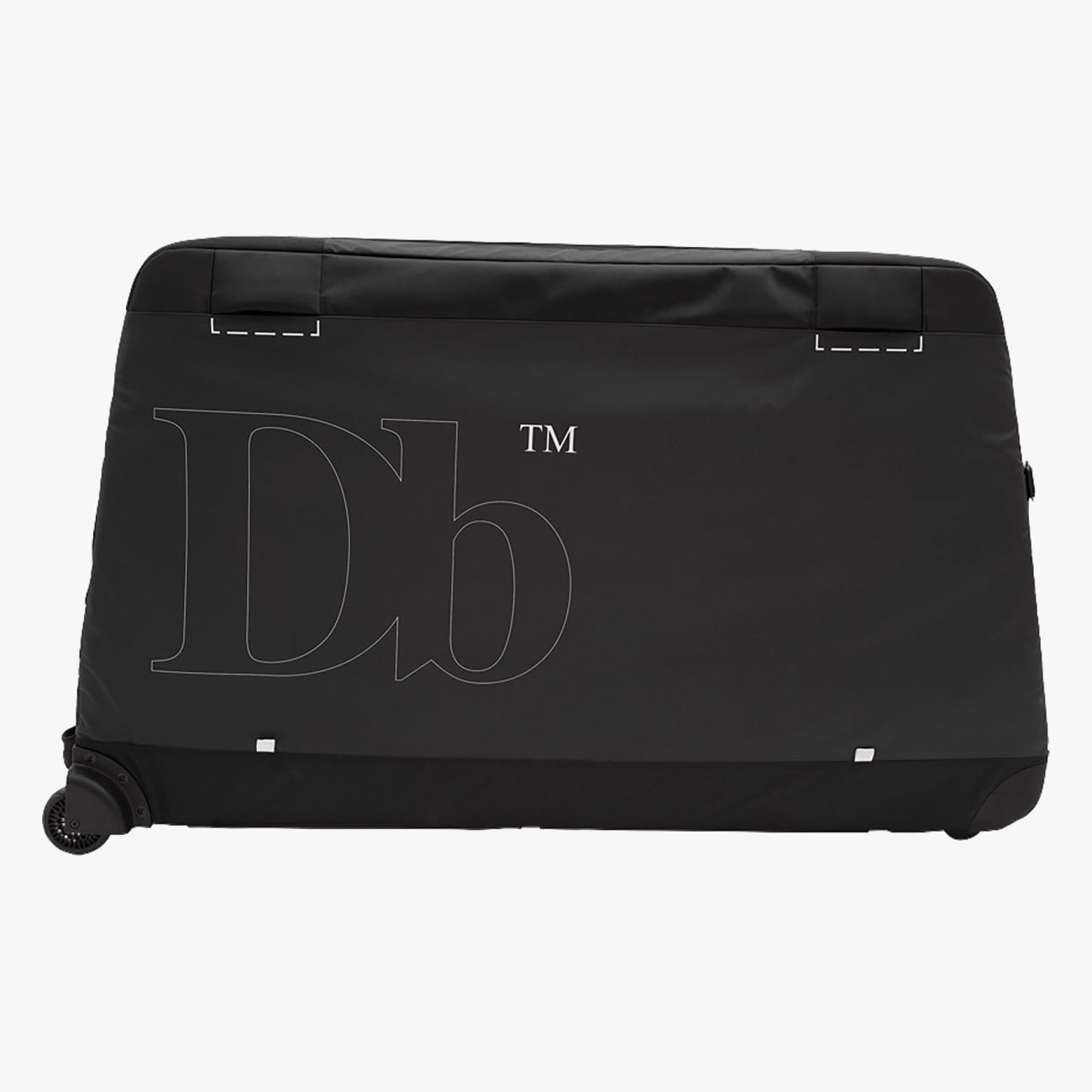
Best Soft Case: Db Equipment Savage Bike Bag

The Savage is a softshell bag with a race car-inspired “roll cage” built-in. It’s made of aluminum and offers protection from all angles as well as anchor points for a series of straps that are used to keep the bike stable and in-place.

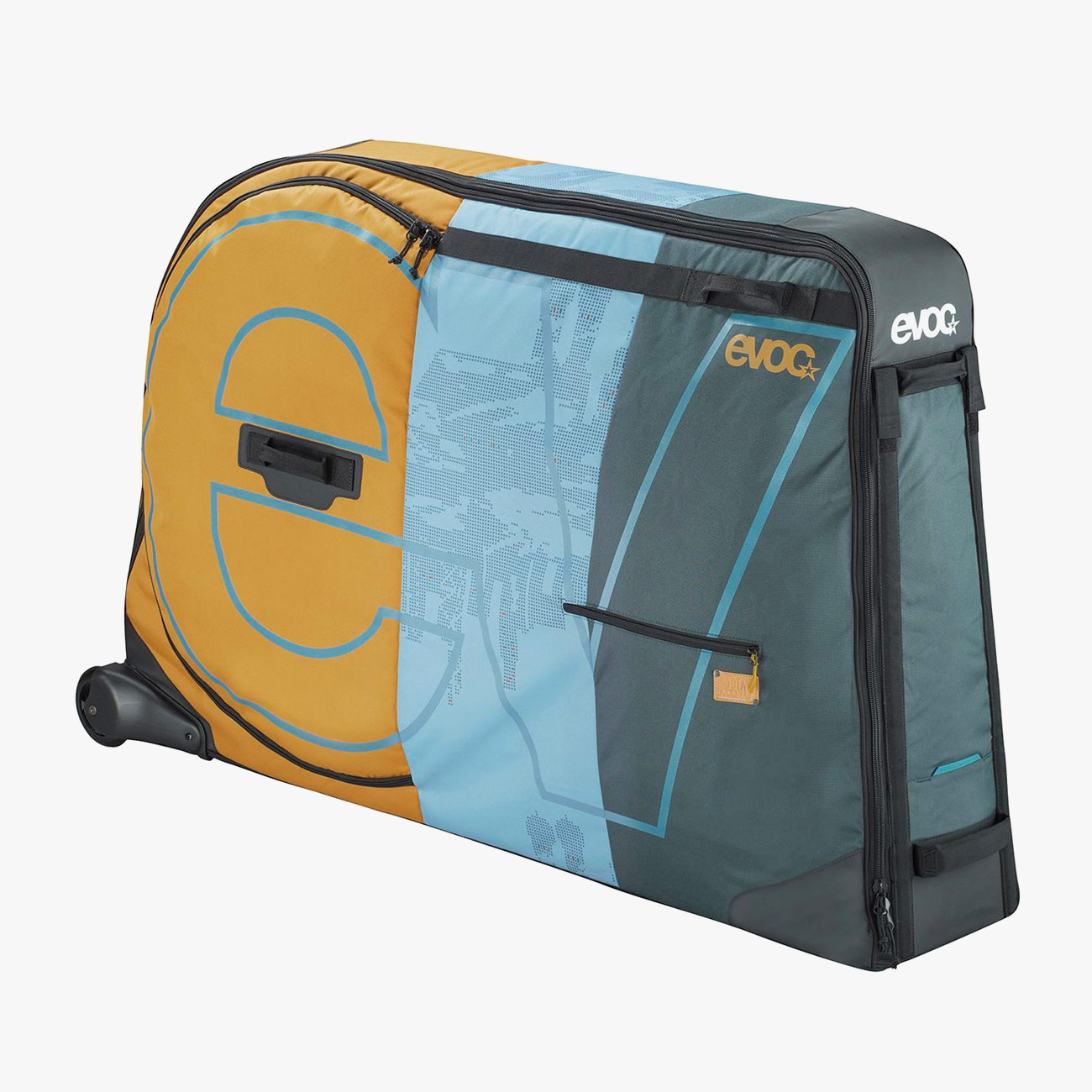
Affordable Soft Case: Evoc Bike Travel Bag

Often listed as one of the best soft bags for flying with a bike, Evoc’s Bike Travel Bag is one of the most affordable options but still provides compartmentalized storage and a system of internal straps and padding keep your ride secure and protected.

Note: Purchasing products through our links may earn us a portion of the sale, which supports our editorial team’s mission. Learn more here.

The 6 Best Purifying Water Bottles for Travel

Up until now, adventure travelers heading to places where water is questionable had few choices: bring a UV-light-equipped sterilizing pen, a hand-pump filter that takes time and energy or chlorine- or iodine-based tablets that purify but take at least 30 minutes to work. Now, water bottle companies have gotten smart and are equipping bottles themselves with these technologies, conveniently combining drinking vessels and purifiers into one neat bundle. It’s time to ditch the single-use plastic water bottle for good.

Before packing for your next trip, search the Centers for Disease Control and Protection. Select whatever country you are visiting for specifics on contamination. For example, hepatitis A is a virus found in contaminated water in many countries in the developing world, but with specific water purifying systems (not just filtering), that virus can be removed. Do you need to protect just from bacteria or also from viruses? Some systems filter to remove protozoa (such as giardia), bacteria (e-coli, salmonella, cholera) and chemicals or pesticides; some systems filter and purify, which then eliminates viruses, like hepatitis A and rotavirus. Remember, many water systems filter out the chunky stuff like pebbles and grit, but not all purify against bacteria and viruses.

We tested six water bottles and their purifying systems in the backcountry to find out which we trusted most, how easy it was to filter, what the drinking experience was like, durability and, well, style points. Here are our favorites.

Purifiers + Filtering Systems

What these do: Guard against bacteria, protozoa, viruses, chemicals, heavy metals and other pollutants. Also, filter out gunk and odor.

Best for: Central and South America, Africa, most of Asia and parts of Europe

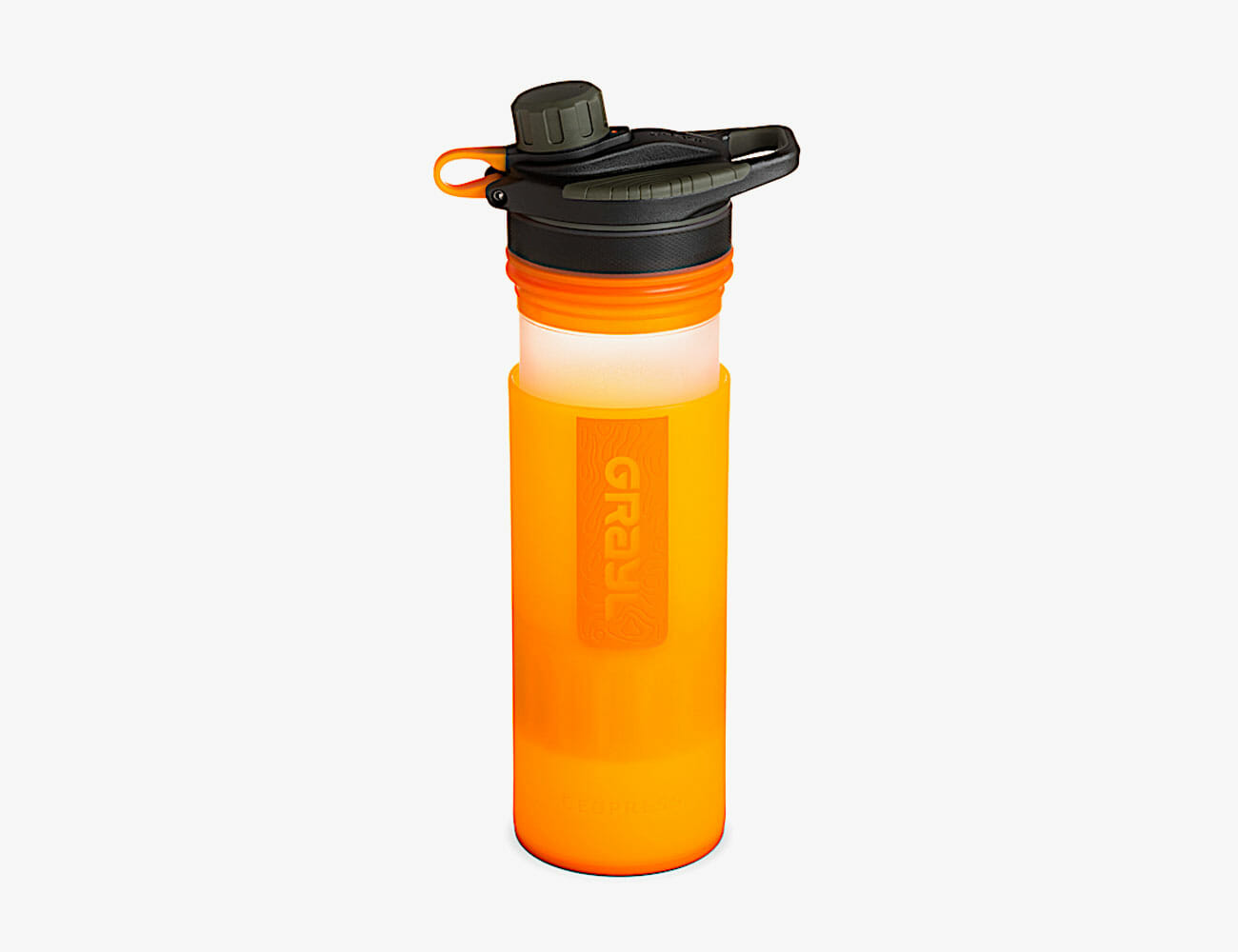
Grayl Geopress

The Grayl Geopress is a do-it-all, versatile water purifier and filtration system in one, and the easiest to use and drink from of all the bottles we tested. It both filters and purifies with a cartridge at the bottom of the bottle to remove 99.99 percent of viruses, bacteria and protozoan cysts (which can cause infections), as well as filtering particulates, many chemicals, and heavy metals — all of which can make you sick.

Using the water bottle was easy — it works like a French Press where you press down on the inner container so the water from the outer container gets pushed through the purifying and filtering cartridge into a separate internal vessel. This took us eight seconds. Once it takes about 25 seconds (around 350 uses), it’s time for a new filter. We found we had to use our whole body weight to press down the system, but that wasn’t a big issue. In fact, the press system easier to sip from than those that use a filtering straw. The clean water came out tasting slightly better and was less foggy than the original source. We liked the large carrying handle for holding or clipping onto our pack with a carabiner and the grippy bottom.

Volume: 24 ounces
Tech specs: electroadsorption (ion exchange, ultra-powdered activated carbon and silver treated zeolites)
Weight/size: 15.9 ounces; 10.4 inches high with a 3.4-inch diameter

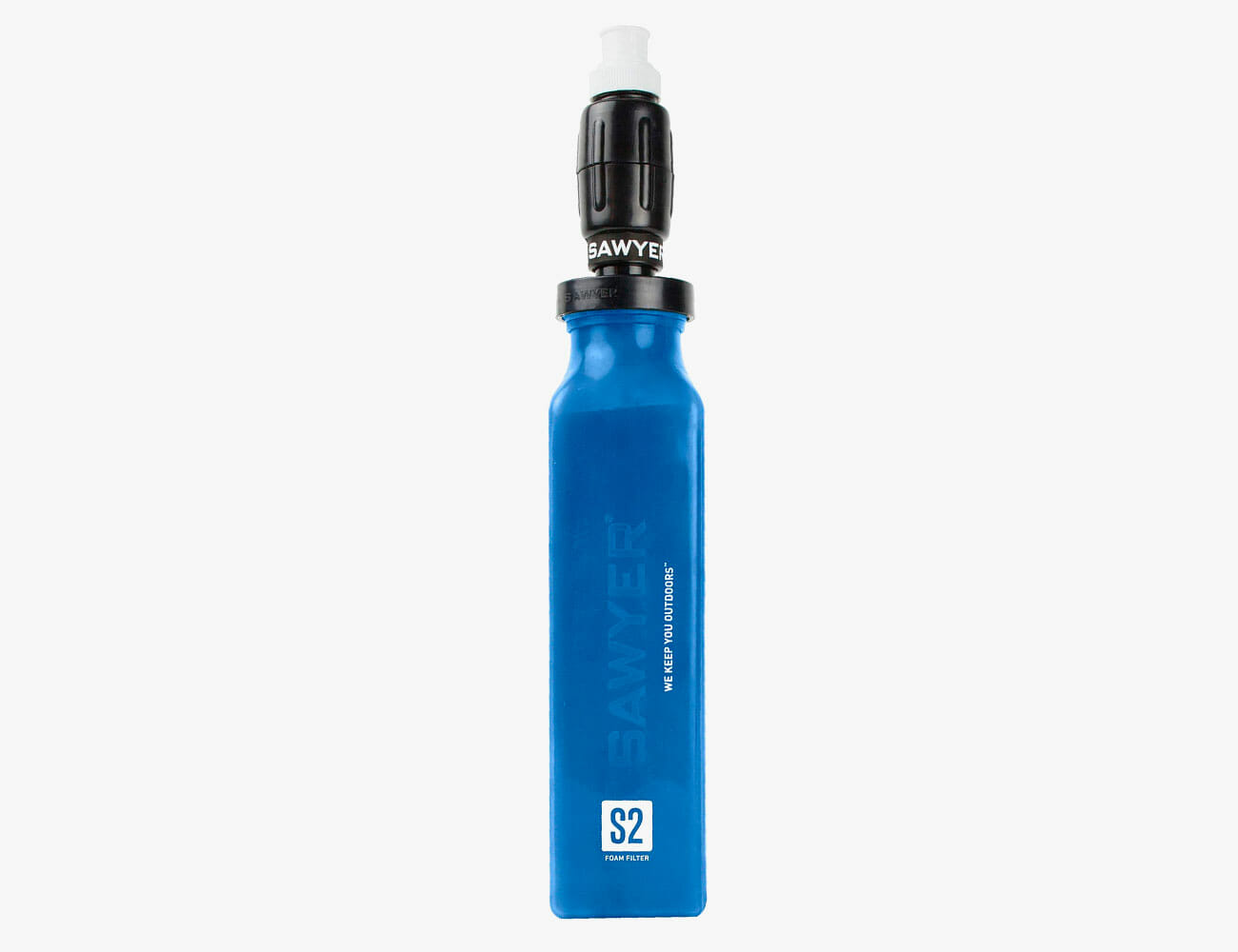
Sawyer Select Filter S2 and S3

The S2 and S3 Sawyer Select Filters are take some getting used to. The soft silicone bottle uses a foam membrane combined with a hollow fiber filter at the top. Squeeze the full bottle for ten seconds to move the water through the system and then you can drink. Filling the bottle, though, took longer than we wanted, as the water has to soak into the foam membrane. From there, the flow of the water from the bottle to mouth was painfully slow, though you could squeeze the water into another vessel fairly easily. Overall, the entire system was cumbersome to both drink and pack, at about a little over a foot long (they recommend not storing it compressed). The S2 system will last for 800 uses and removes viruses, bacteria, protozoa, chemicals, pesticides and general gunk while the S3 system offers 400 uses and removes everything above plus heavy metals.

Volume: 20 ounces
Tech specs: Foam Adsorption Technology (a dense, large foam membrane with activated carbon) combined with a hollow fiber filter
Weight/size: 10 ounces; 14 inches

|

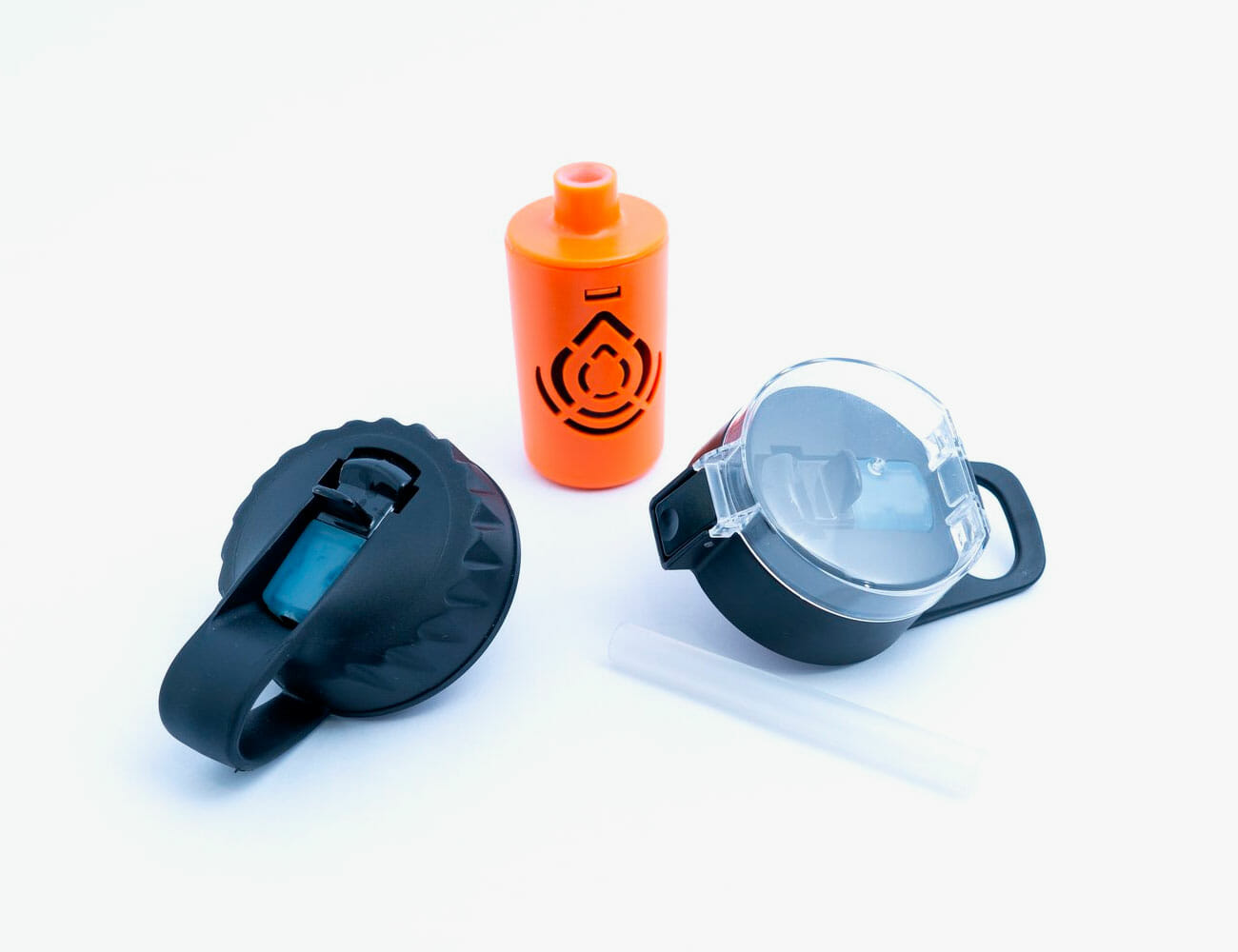
Epic Water Filters, The Answer | Nalgene

The best part about the filter from Epic Water Filters is that you can use it with a water bottle you already have, like a Nalgene or a Hydro Flask. You just have to buy the right filter for the water bottle you own. In The Outdoor Answer Kit for Nalgene, you get a filter and straw, plus two lids (one easy-flip sports lid and one locking, dust-cover lid with a button) that fits a wide mouth, 32-ounce Nalgene bottle. Once you fill your water bottle up, place the straw-and-filter lid back on and drink from there. This system did take some muscle to get the water flowing through the filter and straw, unlike the Grayl. The outdoor filter uses nanofibers and electroabsorption to help remove 99.99 percent of viruses, bacteria, giardia, cryptosporidium, as well as lead, chlorine, arsenic and other heavy metals or pollutants. Epic Water Filters also has a filter specifically for urban settings with tap water, which filters heavy metals and pollutants, but not viruses and bacteria. The average filter life is three to four months.

Volume: 32 ounces
Tech specs: activated carbon coconut filter

Filter Only

What these do: filter against protozoa and bacteria, but won’t help purify water against viruses.

Best for: outdoors in North America, general tap water in the U.S. and other non-developing countries and any place where the water is safe to drink, but might be smelly or cloudy

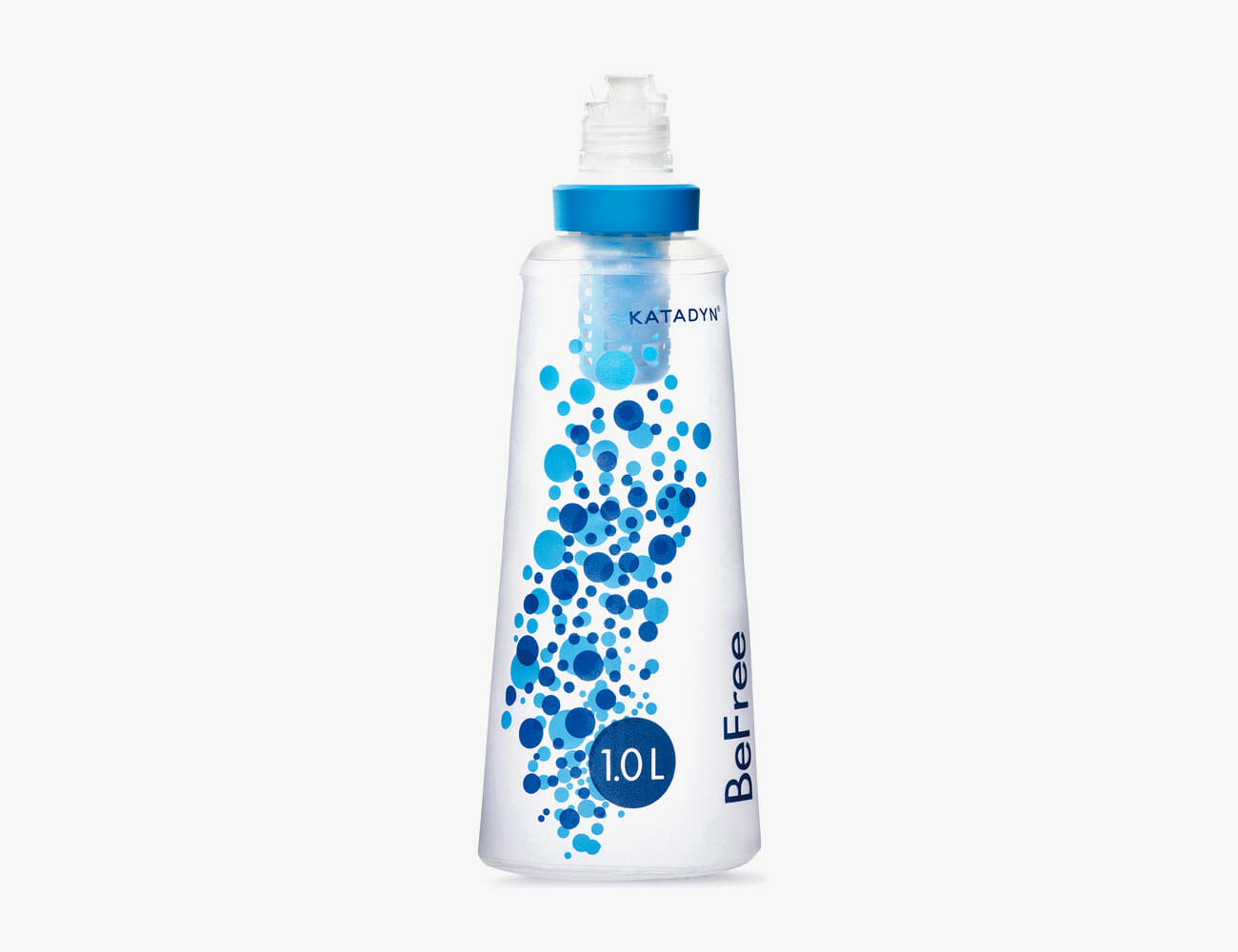
Katadyn BeFree

Extremely lightweight (just two ounces), the Katadyn BeFree is made from a collapsible material, so it can be rolled up to a tiny size. And, it’s extremely easy to use. Unscrew, fill with water and then drink the water through the EZ-Clean Membrane hollow fiber filter and sports cap. Drinking water through this filter isn’t as difficult as others because you can squeeze the water bottle to move the water through the filter (or squeeze the water directly into another vessel for cooking and cleaning). The EZ-Clean Membrane filter is effective against microorganisms such as bacteria, protozoa, and sediment, but does not protect against viruses.

One benefit of this filter is that it is easy to clean. You simply swish the filter in water or shake the bottle to remove any build-up and debris, unlike the LifeStraw and Sawyer, which need the backwashing syringe for cleaning. This system is perfect for for a quick filter before boiling water for camp cooking. Without a carbon filter to help with taste and odor, water from the BeFree was clean and clear, but still tasted slightly off when drinking from a stream or lake.

Volume: .6 liters, 1 and 3 liter bladders
Tech specs: Hollow fiber filter 0.1 micron
Weight/size: 2 ounces, 10 inches by 3 inches

WaterWell Foldable Squeeze Travel Water Bottle

The Foldable Squeeze Travel Water Bottle filters out 99.9 percent of bacteria, parasites and cysts (not viruses). The filter, which can be replaced, uses a two-stage ultrafiltration system in the straw, which is good for up to 1000 liters of water and is easy to sip through with a good flow of water. Plus, the flexible walls make it easy to squeeze filtered water out into another bottle. With the travel system, you get two squeeze bags for extra carrying capacity and a protective soft outside cover to reduce punctures. The attached cap seems slightly flimsy, and if it breaks, you’ll be stuck with a cap-less water bottle. But, we did like that the water tasted better than competitors’ due to the activated carbon.

Volume: 16.9 ounces
Tech specs: Two-stage ultrafiltration membrane with a hollow fiber filter and granular activated carbon
Weight/size: 2.9 ounces

LifeStraw Flex with Soft Bottle

Flexible bottles are ideal for space saving issues and to easily transport water from one vessel to another. With the LifeStraw Flex, you get a soft bottle and a built-in filter in the straw to filter heavy metals, bacteria, parasites, microplastics and pesticides for 500 gallons of water. The carbon filter helped with better tasting and smelling water, unlike the Katadyn BeFree, which doesn’t have any activated carbon to eliminate odors. Although you are sucking up water through the straw with the built-in filter, it is easier to drink from because it’s simple to squeeze. A warning to users: the mouthpiece is extremely small. Another downside is that once the water level is below the straw’s length, it is really tricky to get any water out, which means of the 22 ounces, you aren’t able to drink that much at all. Since the straw’s almost half as long as the flexible bottle, you aren’t able to squeeze or roll the entire system up like the Katadyn BeFree. On the plus side, you can also use the filter with other vessels, as it can screw onto a regular-sized plastic water bottle, can be used simply as a straw or can work in-line with your hydration bladder.

Volume: 22 ounces
Tech specs: Hollow fiber micro-filtration membrane (0.2 microns) paired with a carbon fiber filter
Weight/size: 3.15 ounces

The Best Water Bottles

grey_placeholder

Since Nalgene began rebranding its scientific containers for outdoor use in the 1970s, the water bottle has taken a firm place as an essential item for everyday life. Here we examine the best bottle of every type, from plastic to insulated. Read the Story

Note: Purchasing products through our links may earn us a portion of the sale, which supports our editorial team’s mission. Learn more here.

This Advanced 72-Hour Survival System Is Your Life Raft When Disaster Strikes

The thing about disaster striking is that it’ll likely affect more than just you, which is not something that most bug-out bags deliver. If you’re someone who already has a bug-out bag, a pre-packed backpack with survival supplies like freeze-dried food, batteries, a flashlight and a knife, at the base of your bed or in your trunk, you might have previously thought about this — do you need more than one bag for your entire family? The newest brand on the survival kit market is Rino Ready, which makes an all-encompassing 72-hour survival bag for two. In any crisis, from a forest fire to an avalanche to an earthquake to a hurricane to a simple power outage, the likelihood that you’re with another person is high, and the last thing you want to do in a crisis is fight with that person for resources, which is why this new bug-out bag features enough food and water for two people for 72-hours.

Rino, founded by Michael Reed in early January 2019, makes the Rino Ready bag, which is being called the world’s most advanced 72-hour survival bag, or bug out bag. It quickly rose through the ranks on Indiegogo to become over 2000-percent funded. While survival brands tend to do well with crowdfunding campaigns (thanks, preppers), it’s hard for a brand like this to “stay true to the commitment of quality [with] each product needing to perform exceptionally well,” Reed says. This is mostly because many of these kits in the past are flashy but then are filled with crap-quality goods. It’s why those with experience are more apt to design their own kit (backpack, food, water, shelter, etc.) rather than buy one backpack filled with generic equipment.

While there have been a few every couple of years that make people excited about preparedness (we covered Uncharted Supply Co., early last year), Reed says, “These pre-packaged kits pop up many times throughout the year and [you] look at it and buy it and realize it’s another disappointment,” Reed says. He points to the poor quality behind many of the items needed to truly get you through the apocalypse. It’s a tricky balance to figure out how to work with companies that make quality gear, while also staying under a certain price point. “The reason we’re not working directly with Leatherman or Sawyer Filters isn’t that they aren’t great quality, but in order to produce a formidable quality option that doesn’t cost an arm and a leg we have to dig deep and produce the products ourselves.” To address this, Reed tried to pay homage to pre-existing communities who have been building these kits from scratch for decades, like volunteer firefighters, EMS and veterans to name a few. “The overlanding, law enforcement, community emergency response teams and EDC communities are very large and active,” Reed says, “and they are comprised of the most upfront, transparent and brutally honest people out there.” Reed reached out to family and friends, in addition to connecting with communities through crowd-sourcing resources like Reddit. The people Reed met through that process helped to provide valuable feedback on his products. “It’s been humbling to engage with so many likeminded people who want good quality product. It’s that black and white. If we stay true to quality, we earn their respect.”

Rino Ready made sure this pack was dummy-proof. In addition to supplies, like U.S. Coast Guard-approved water and food (meaning it’s been evaluated, tested and approved for use as emergency drinking water and emergency provisions for merchant vessels by the International Convention for the Safety of Life at Sea (SOLAS) for survival crafts), and a two-times-the-standard-thickness tent, plus it has a how-to sheet that won’t evaporate or fade after spending years in your car or basement. “Guys in the military for seven or eight years, they know what they have, where it is, how to access it,” Reed says. “[But] those who buy something online, they will not have that cohesive understanding of how to use each piece. It was fundamental from the get-go to understand that we need to build something that has these quick access components, while also understanding that we need to make it digestible and easy to understand for someone who may not have that experience with products in our kit.” The waterproof, laminated sheet gives step-by-step instructions on how to survive practically anything.

While naming conventions for these types of bags range from straightforward and standard like Ready America to abstract like The Seventy2, Reed tried to fall right in the middle of those two: an association naming convention. “I was looking at what people identify safety and preparedness with and trying to align that with something memorable,” Reed says. “To me, a rhino represented the rugged durability you would need in an emergency.” Combine that with a modular aesthetic, and a strong design utility, and you have the minimalist-looking bag. The ruggedness and natural robustness of the bag reminded Reed of rhinos since they have those qualities in spades.

Rino Ready

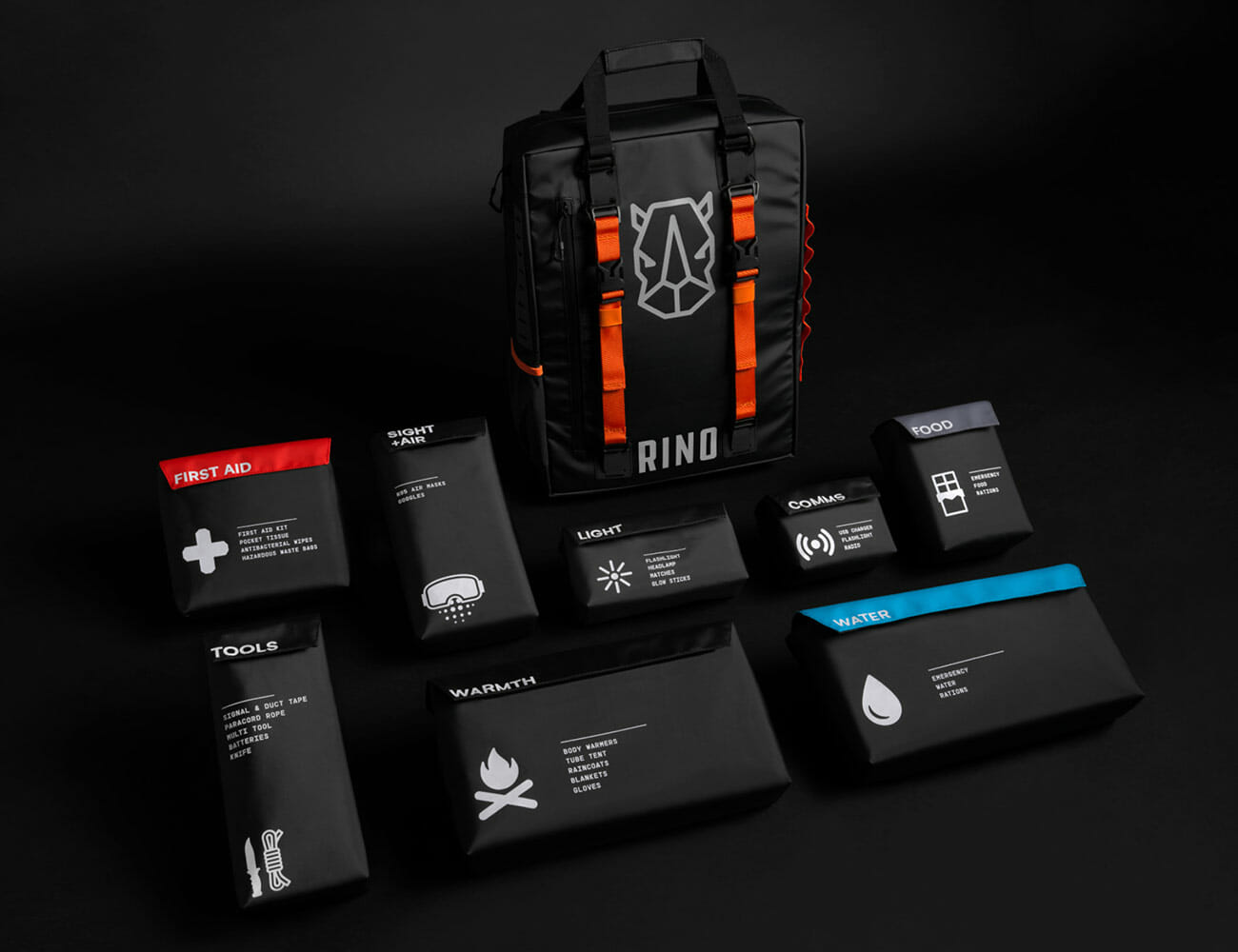
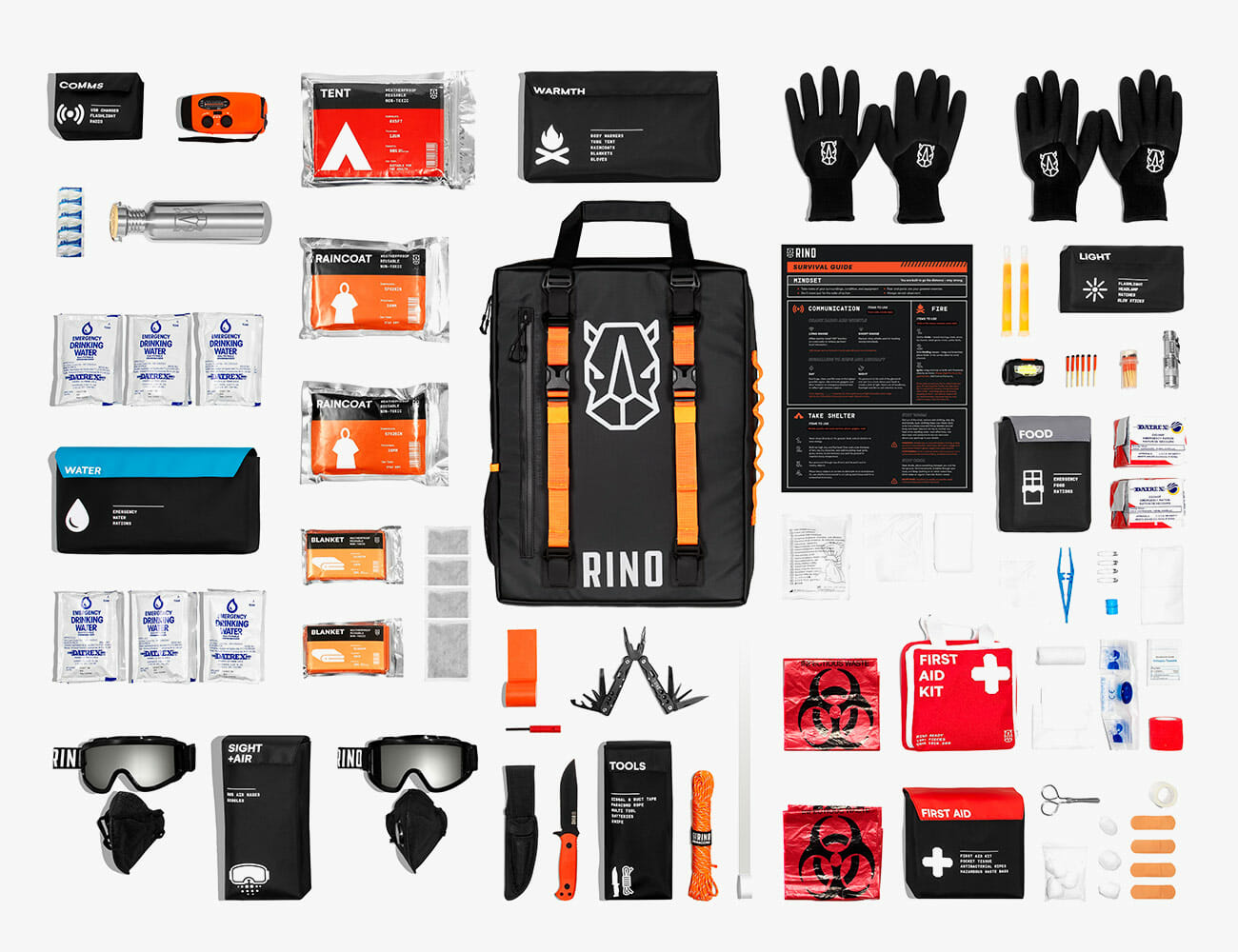
The 16-pound pack starts with a water- and fire-proof exterior made from 1200 denier hybrid fabric. Each bag contains over 40 products, all organized in a modular way so when you unzip and lay the pack flat, you can see the eight sections: warmth, sight + air, tools, light, comms, water, first aid and food. Inside you’ll find a phone charger, radio, goggles and mask, multitool, 550 paracord, blade and firestarter and 100 pieces of banadages, tourniquet, antiseptic wipes, breathing barrier, elastic wraps, non-latex gloves (and lots more) within the first aid kit in addition to a tent, winterized work gloves, hand warmers, flashlight, headlamp, glow sticks and stormproof matches. The food is U.S. Coast Guard-approved and is also non-GMO and nut-free. In June 2019, the packs will be shipped to those who invested on Indiegogo and then will likely be on sale for $399 (with all the gear) for new backers. Before launch, you can buy just the bag and stock it yourself for $159 or shop the fully stocked companion for $299. Each piece was tested and created by the Rino team — whether that took five or fifteen iterations to get it perfect.

|

8 Shops That Will Repair Your Outdoor Gear

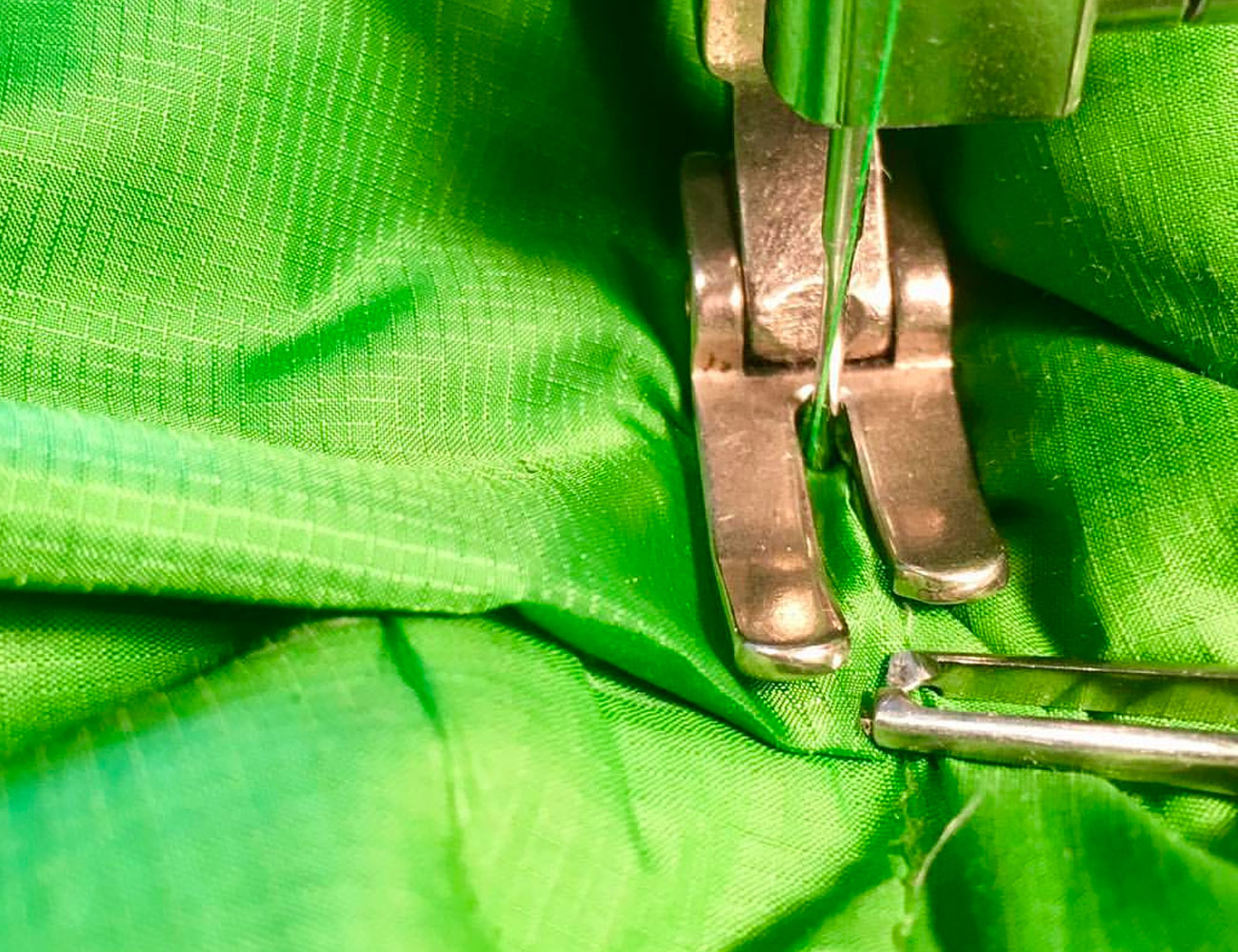
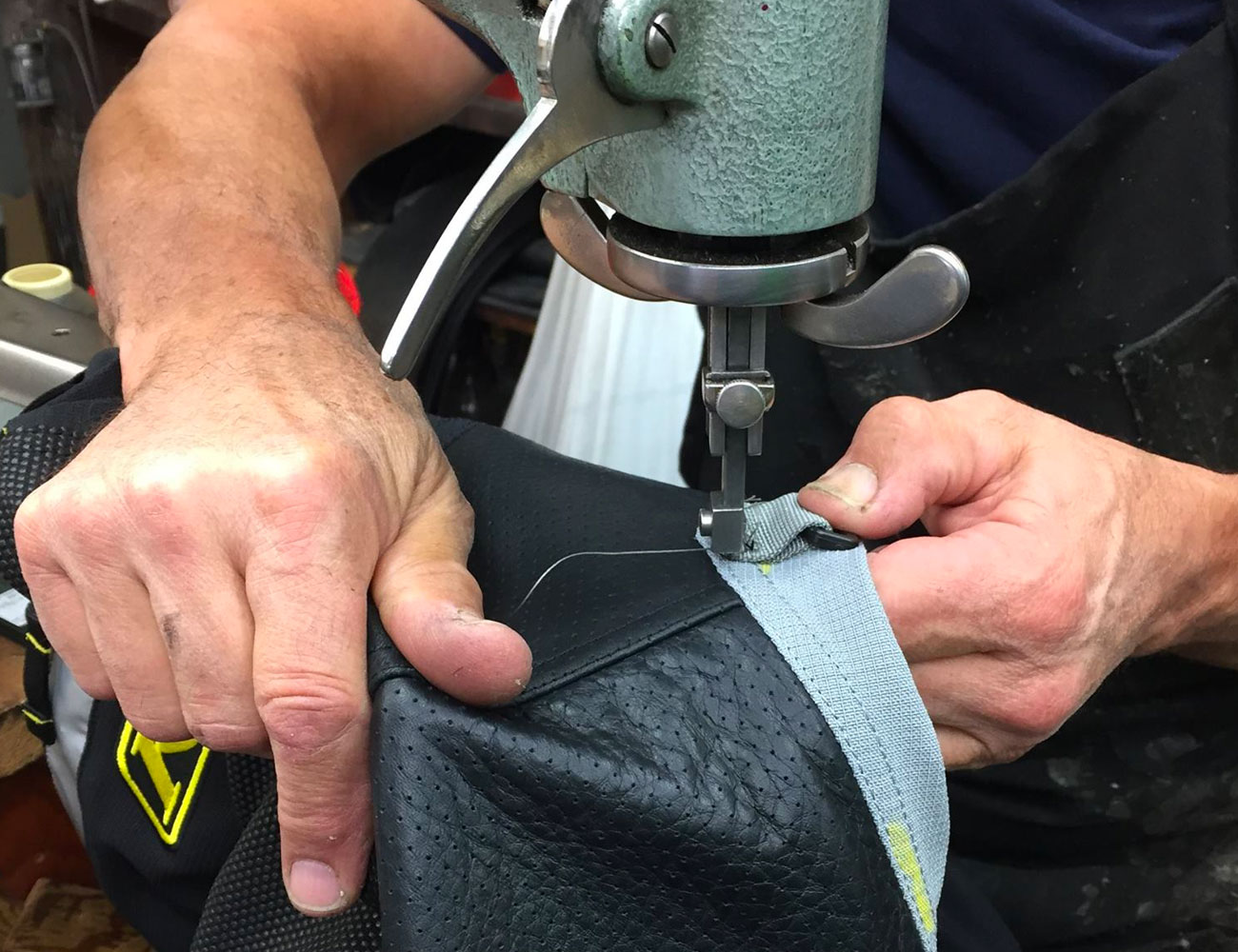
Well-designed technical apparel and equipment will keep you warm, dry and comfortable on the trail. But accidents happen. Torn mesh on a tent’s door might lead to a swarm of biting insects inside your tent, a tear in a sleeping bag lining will produce a flurry of down feathers, a broken buckle on a waist belt can render a backpack nearly unusable — you get the idea.

Outdoor brands can help in selecting new replacement gear or directing you to the closest retailer, but not so much in terms of repair. While some, like Patagonia, maintain a policy of repair that goes beyond “manufacturer defect” warranties, many others have closed or outsourced those services (and unfortunately, the condoling sympathy of customer service can’t bring a ripped tent wall back to life).

Thankfully, an ecosystem of highly skilled repair shops exists that can address these issues. More and more outdoor enthusiasts are adopting an ethos of repair and reuse, and these shop owners, some of whom have operated for decades, are a well of experience that not only addresses that approach but also champions it. Most of these repair shops are adept at handling any general repairs for equipment like backpacks and tent poles, while in some cases — like resoling a pair of leather hiking boots — specialized knowledge is called for.

Pricing varies. Some shops post prices per project, like replacing a zipper are patching up a tear in a jacket. Others list an hourly rate. Almost all of these shops will offer estimates based on a description of the issue and an emailed photograph of the needed repair. Don’t worry if you think the damage is too extensive or complicated to fix — these folks thrive on the challenge.

An important piece of advice: as more people become aware of and opt for gear repair services, turnaround time can be as much as two to three weeks, or even longer. If you have an upcoming trip (or time-sensitive permits) think and plan ahead to ensure that these craftsmen have plenty of time to repair your gear.

Repair Lair

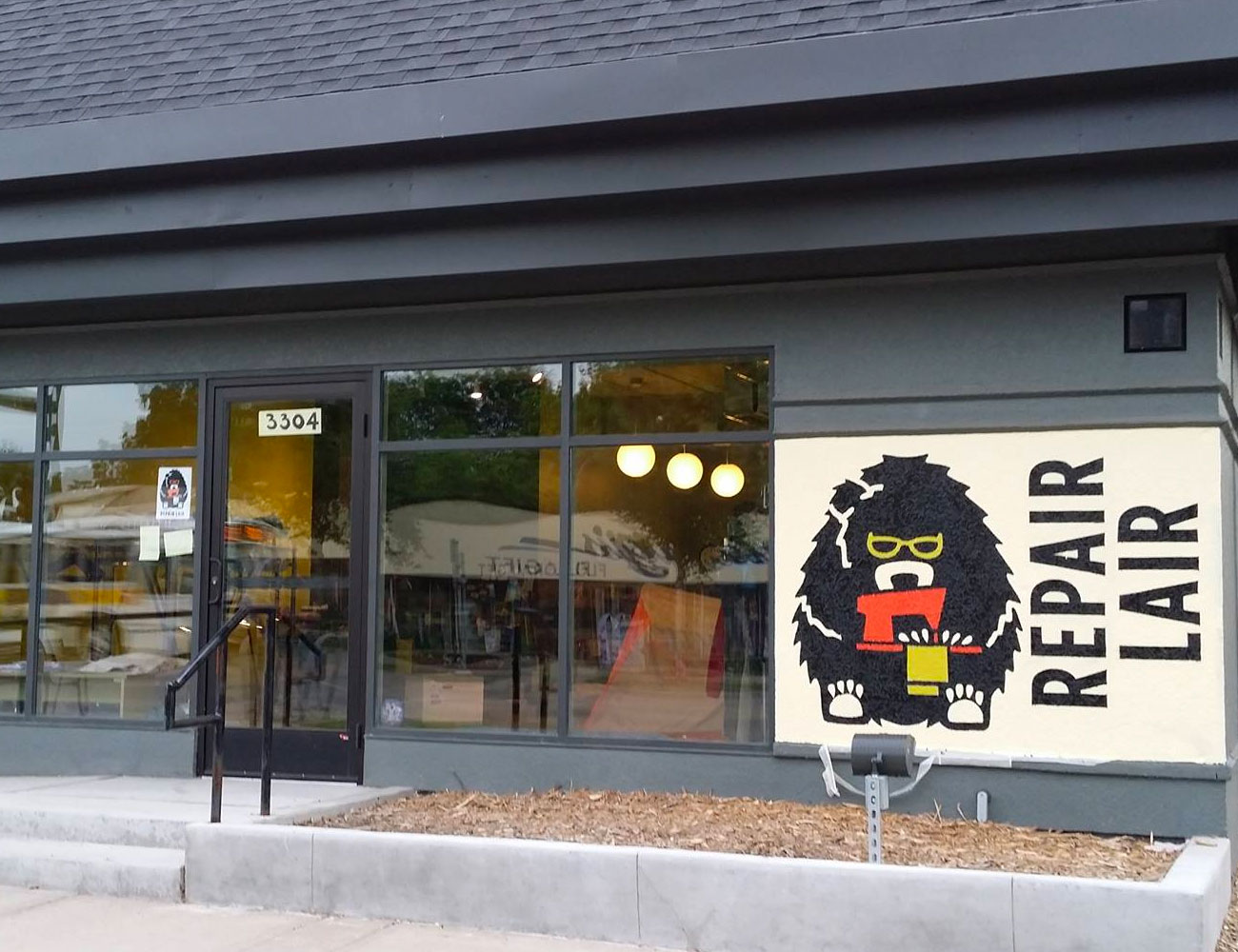
Minneapolis, MN: Despite being relatively young at just five years old, Repair Lair and its staff rightfully boast that they can fix just about anything. Ask them for examples and they’ll tick off a list of restored items that includes a backpack that was ripped apart by a bear and a tent shredded from the inside out during a first-time camper’s panic attack. The shop, which also includes a section for gear consignment, lives by the motto, “If it’s broke, fix it.”

3304 E Lake St. ⇱ | (612) 729-9095

Rugged Thread

Bend, OR: If it has a broken zipper, Rugged Thread can fix it. Rain jackets, sleeping bags, tents, life vests; even travel trailers and sailboat covers. Broken teeth, missing teeth or worn out coil zippers? Come here for quick, wallet-friendly repairs (cost is case-by-case but can be as low as $20). But zippers are only part of their repair expertise; the Rugged Thread staff patches holes, adds straps and snaps and replaces elastic cords too.

2618 NW Marken St. ⇱ | (541) 306-8727

Rainy Pass Repair Inc.

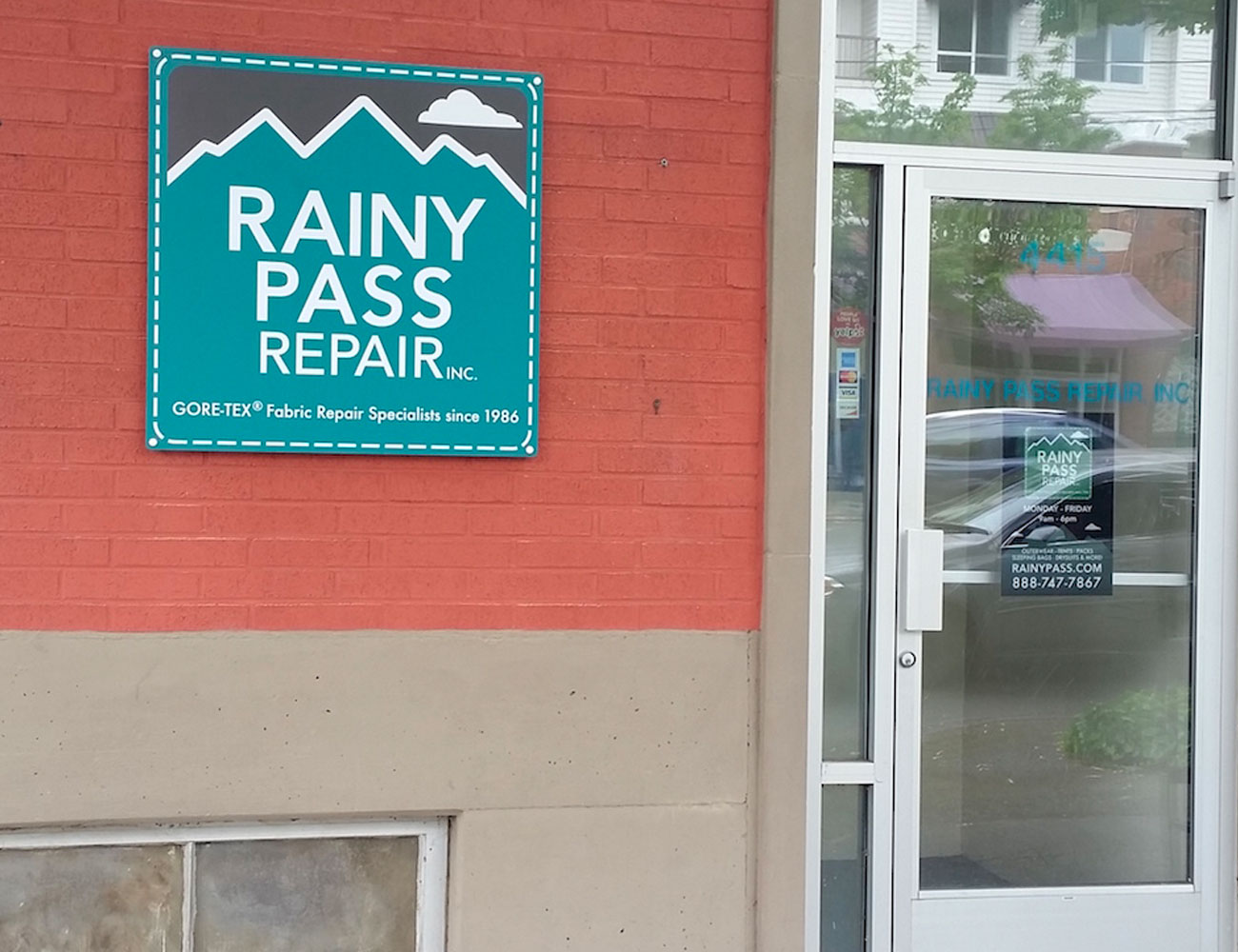
Seattle, WA: As a Gore-Tex fabric repair specialist since 1986, Rainy Pass Repair can fix anything that needs some thread-and-needle TLC. In handling well-used technical shells, its team will maintain the waterproof/breathable benefits of the original material (and be mindful of final appearances too). Don’t live in Seattle? That’s okay — Rainy Pass created a straightforward form for mail-in jobs.

4415 Stone Way N ⇱ | (888) 747-7867

TentPole Technologies

Vancouver, WA: Sooner or later, tent poles give out. Fiberglass poles crack, aluminum poles crimp and shock cords fray. Armed with your tent’s model name and number, TentPole Technologies can rebuild, repair or replace the poles and get your shelter standing again. With 35 years of experience working with major tent pole manufacturers, it has a direct line to get the parts you need (if the staff doesn’t already have them in their Washington shop).

12607 NE 95th St. ⇱ | (360) 260-9527

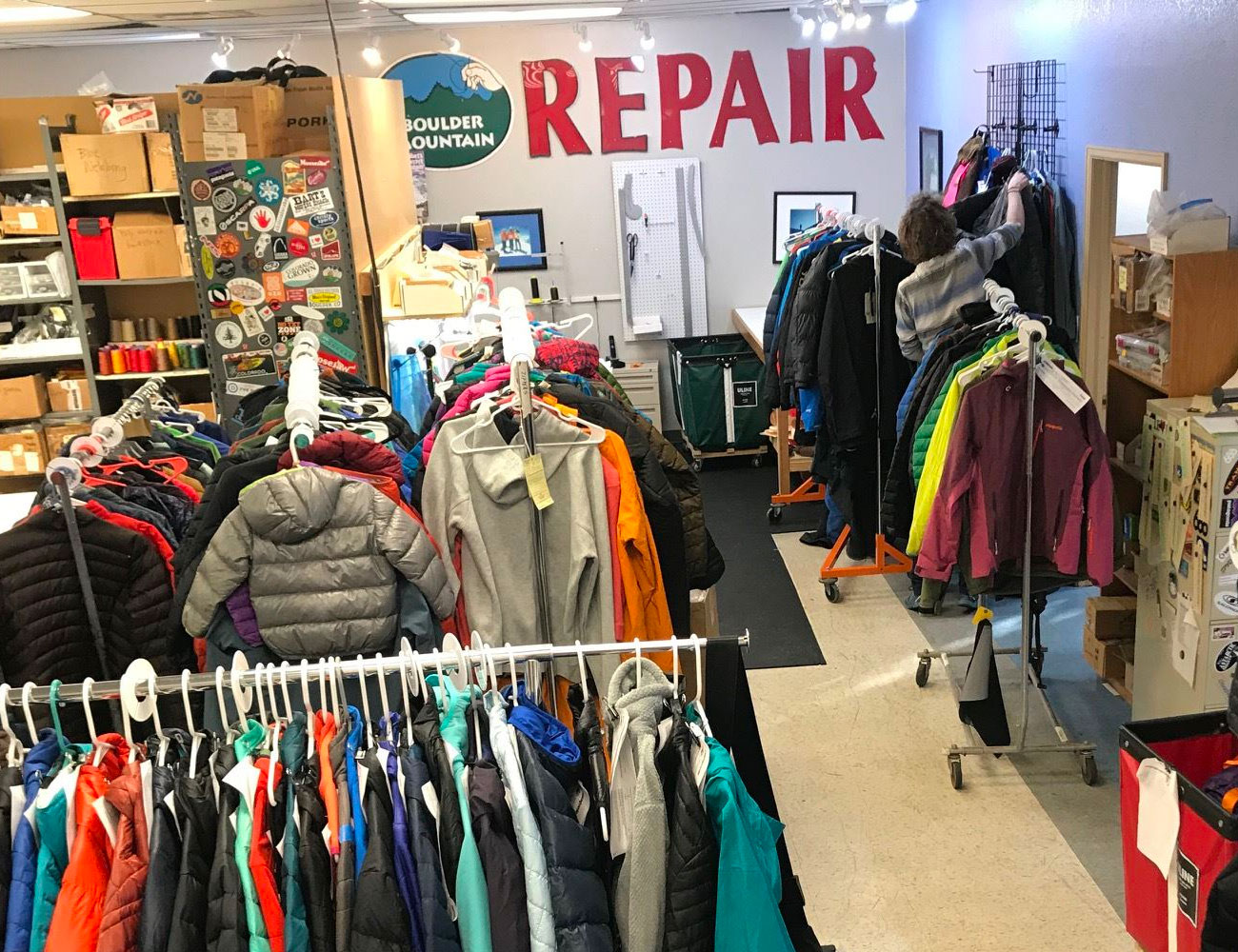
Boulder Mountain Repair

Boulder, CO: Backpacks can elicit a deep sense of faithfulness. Some owners can’t bear to replace one that’s accompanied them on dozens of trips. But sometimes, scrapes and stains that are mementos from adventures past can transform into shredded panels and worn-out straps. Boulder Mountain Repair can repair those problems and add modern features to old packs like hydration sleeves and custom pockets.

2200 Central Ave F ⇱ | (303) 499-3634

Mountain Soles & Outdoor Threads

Portland, OR: Water plays a central role in Mountain Soles’s repair services. In the winter, they provide brand-authorized repairs for Atlas and Tubbs snowshoes and give new life to cross country ski boots. When the snow melts and fills whitewater rivers, the shop can replace worn-out gaskets on paddling dry tops and dry suits. Mountain Soles also does general repairs on apparel and equipment and operates with a mail-in service to service those who don’t live in town.

(503) 236-0785

Dave Page, Cobbler

Seattle, WA: With an international reputation for quality work, Dave Page, Cobbler can resole or repair boots for hiking, mountaineering, climbing, telemark skiing and more. The boots are returned meeting or exceeding original factory specifications — Page is an authorized repair agent for Scarpa, Salomon, Lowa and more, and REI lists his name on its website as its only recommendation for footwear repair services.

3509 Evanston Ave N ⇱ | (206) 632-8686

Specialty Outdoors

Spokane, WA: With more than 20 years of experience, Specialty Outdoors can handle most gear repairs. Before addressing the broad scope of repair, its founder, Penny Schwyn, formerly sewed for Mountainsmith. Now, she’s authorized by The North Face, Helly Hansen and Trew Gear to repair their products (but works with any brand’s products). And if you’re wondering about modifying your equipment by adding custom elements like a waterproof pocket, hydration tube port or pit zips, give her shop a call.

(509) 448-0346
Note: Purchasing products through our links may earn us a portion of the sale, which supports our editorial team’s mission. Learn more here.

How to Run Faster: Start With One of These Six Apps

It’s early spring, and that means the start of a summer race training block is imminent. Let’s say you’ve successfully finished a few halves or even a full — but have you raced them? You know what it takes each week to log upwards of twenty to forty miles, and have carved out the appropriate time to make sure you’re in good physical shape for race day. The logical next step is to learn how to run faster. One way to get quicker is to start running with faster people, join a local track club and challenge yourself weekly with a new pace group. If joining a club isn’t in the cards for you, apps can help you hit those quicker pace times. It can be intimidating for any runner — from the greenest to the fastest member of the local track club — to take next steps beyond “run more,” so here are six easy-to-use training apps and some tips and tricks to help you get faster.

Initially, you’ll want something that tracks and logs the following: mileage (daily, weekly, monthly), duration, per-mile splits and GPS. You can expect these basic features from most free apps. Some other in-app features that are useful include elevation gain, calorie counters and a degree of programmability so you can map out different routes and workouts depending on what type of run you want to do on any given day.

Where to Start When You’re Just Getting Started

Believe it or not, the free basic versions of certain fitness apps are the way to go. The majority of them have a timer, a lap clock and pace, which is precisely what you need. Try Pacer, Runkeeper and Runtastic. All three are available for Android or iOS and track every mile logged, so you have a baseline of how many miles you’re running each week and how fast those miles are. Knowing your pace per mile, and how that changes over long and short runs, is key to starting speedwork. Runkeeper and Runtastic also track your running shoe mileage, so you know when your shoes have worn out, and it’s time to upgrade to a new pair.

If you feel like you’re not yet in serious running shape, building your endurance and aerobic base is crucial. Once you’re in the routine of logging 15 to 20 miles each week, it’s easy to swap out a 5K easy day for a day of speedwork. These apps have bright, easy-to-use interfaces that keep track of the miles you’re logging. Aside from tracking your training distances, these apps help you stay motivated, showing the progress you are making in terms of distance and time and sending motivational push messages. Additionally, the majority of these apps also offer upgrades which include smart coaches and training plans that cater to a variety of race distances — but you don’t need these to start to learn how to run faster.

Pacer
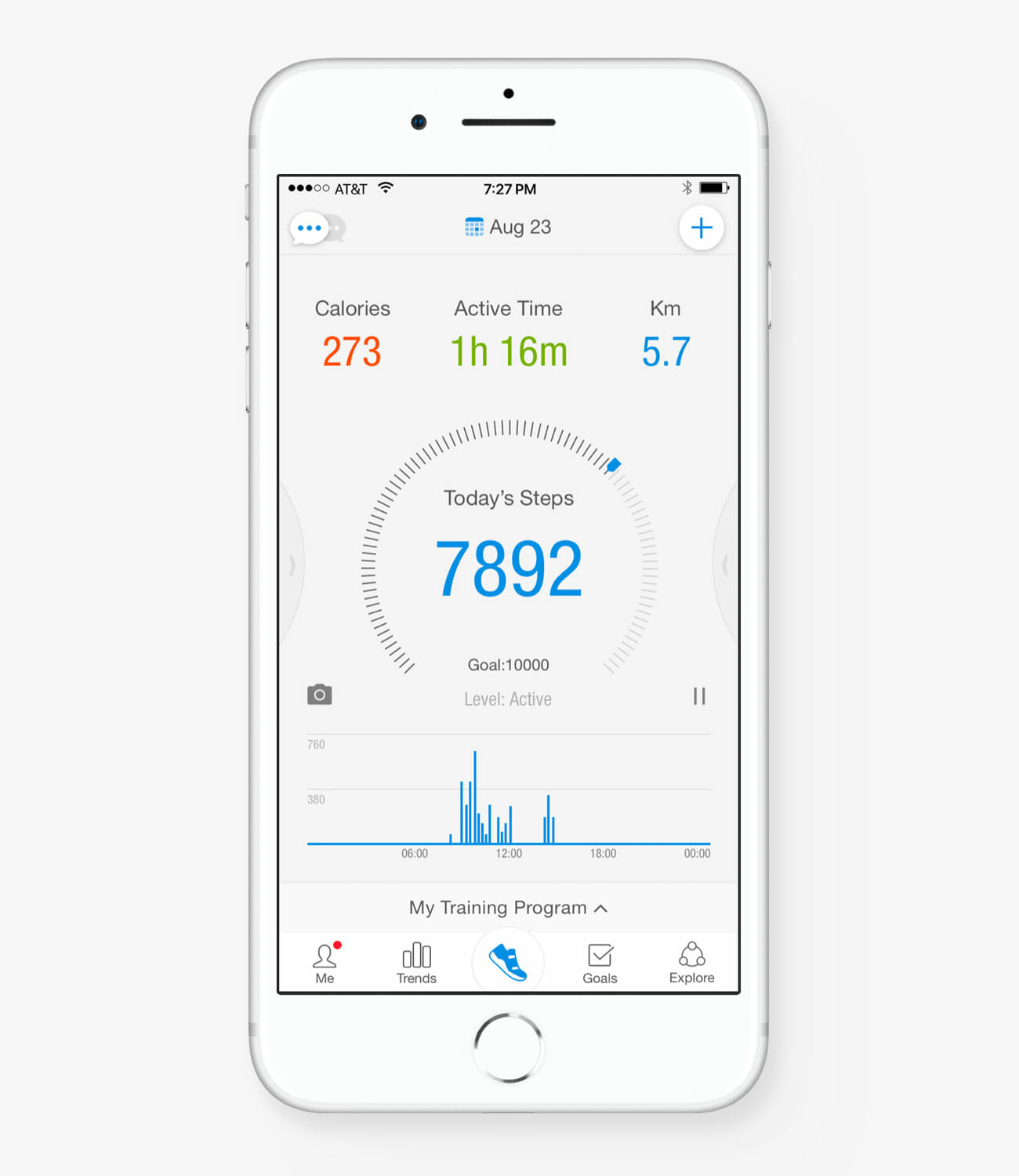
The free version of this app keeps track of your walks, runs, hikes and rides once it’s looped up to the GPS on your phone. It’ll work with your tracker to monitor your calories, activity time and total mileage based on your steps. You don’t need a fitness tracker to log everything, just wear this during your runs to check back on your distance and average pace. The other benefit of this free app is that you can hop on the treadmill with it. While you can likely keep an eye on your stats on the treadmill, if it’s one you’re not familiar with, open up the app and click into ‘Workouts’ at the top of the screen (next to Home and GPS). The option for a Treadmill session is at the top. Click start session and then hit the settings button in the top right corner of your screen to have a voice let you know your time, distance and pace every 1, 5, 10 or 15 minutes, or every quarter, half or a full mile. It’s an easy way to stay on target when you can’t get outside, but need an app to recognize that you’re still running. You can upgrade to the $30-a-year version, and you’ll get a smart AI coach, video workouts, training plans and GPS audio cues all designed to help you hit new personal bests.

|

Runkeeper
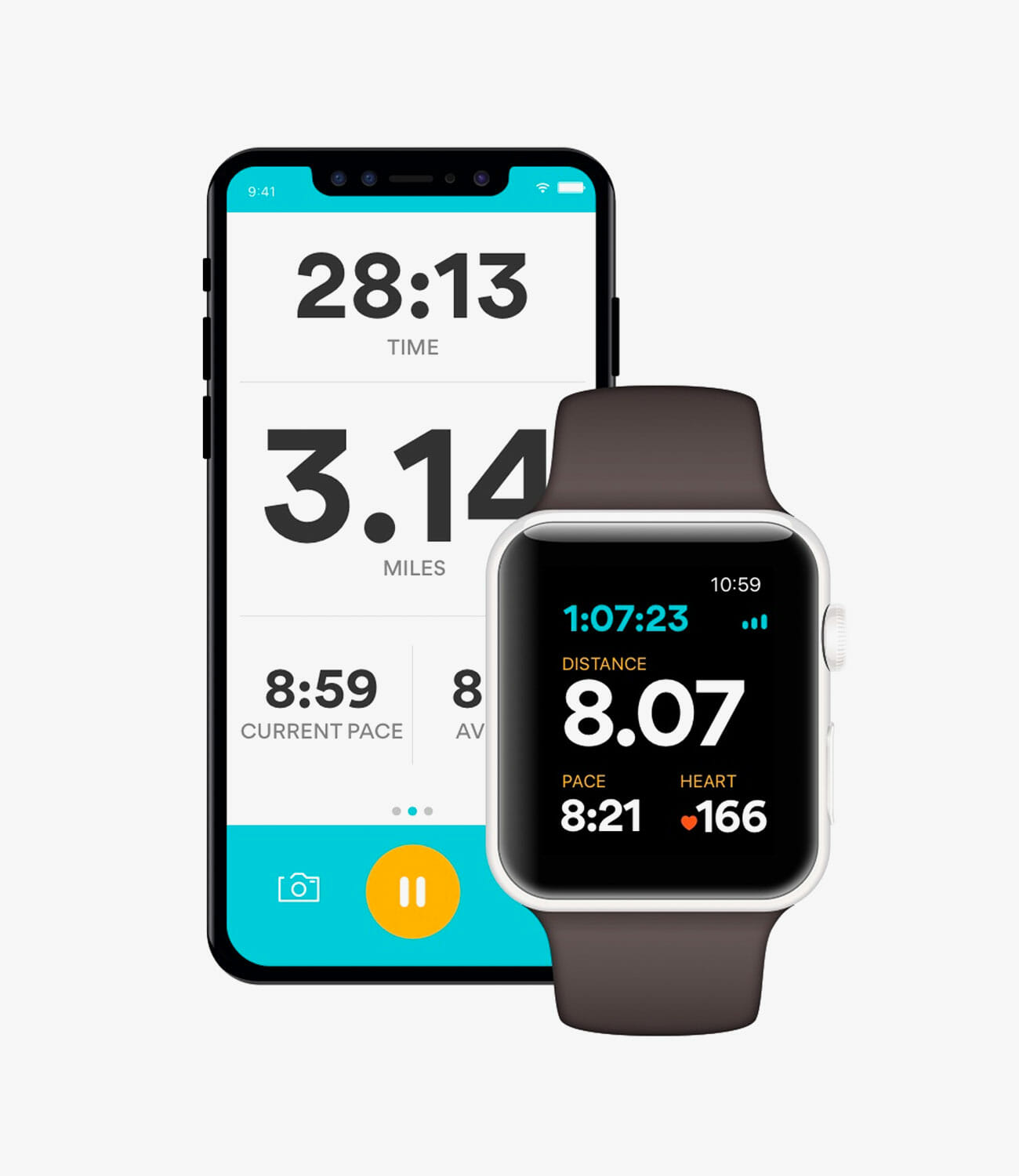
Runkeeper has a very similar design but opens up immediately to your GPS location instead of your step counter. Change the activity from running to cycling or walking, then get moving. In Runkeeper, it’s easy to create an interval workout that the voiceover will guide you through. Open up the app, and hit workout in the bottom right corner (above Audio Stats and the bright orange Start button), hit Custom. Name your workout (say, “lake lap sprints”), then click the plus button to add your steps. If you’re working with a coach, you can ask them for a workout, or use something like Training Peaks to type out your own. A simple exercise is one minute at a fast pace followed by one minute at a slow effort. You can enter that under the workout details and then hit repeat three or four or five times to increase the duration of the workout. Make sure to toggle to include the five minute warm-up and five-minute cool-down (although we recommend at least a 10-minute warm-up). You can also buy a training plan through Asics for $40 a year or $10 a month with a seven-day free trial period to get access to programs created for you. There are 5K, 10K, half and full marathon, five and 10-mile plans.

Runtastic
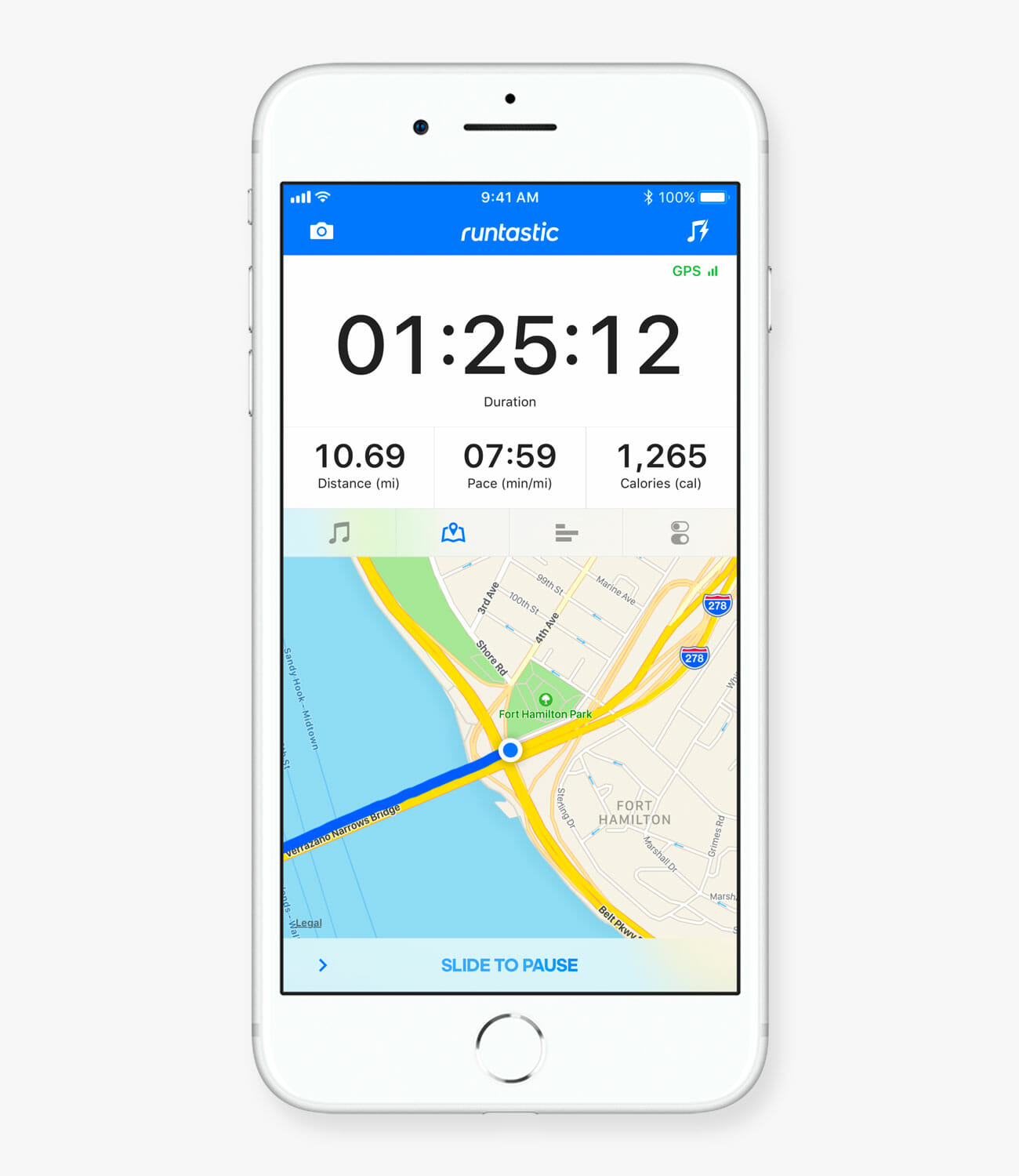
The user interface in Runtastic is very similar to Runkeeper — it opens up showing your GPS location. Duration is most prominent on the screen, so keeping track of time is easy, without having to look at your phone. Open up the app, and hit the settings button (next to the green Start button). Hit Voice Coach and select how often you’d like to hear from the voice — whether that’s every seven minutes or every mile, the voice will also tell you duration, distance, heart rate, and pace of your last mile, so that you can stay on target with a certain speed. The free version of Runtastic will pump out distance, average pace, calories and total time, but if you want more stats, you’ll need to upgrade to the $36-a-year plan. Beyond training plans, you’ll also gain access to pre-mapped routes in your area, so you never have to think about where to run again as well as the ability to auto pause (an important one if you live in a city or else you have to press pause every time you hit a stop light).

Human
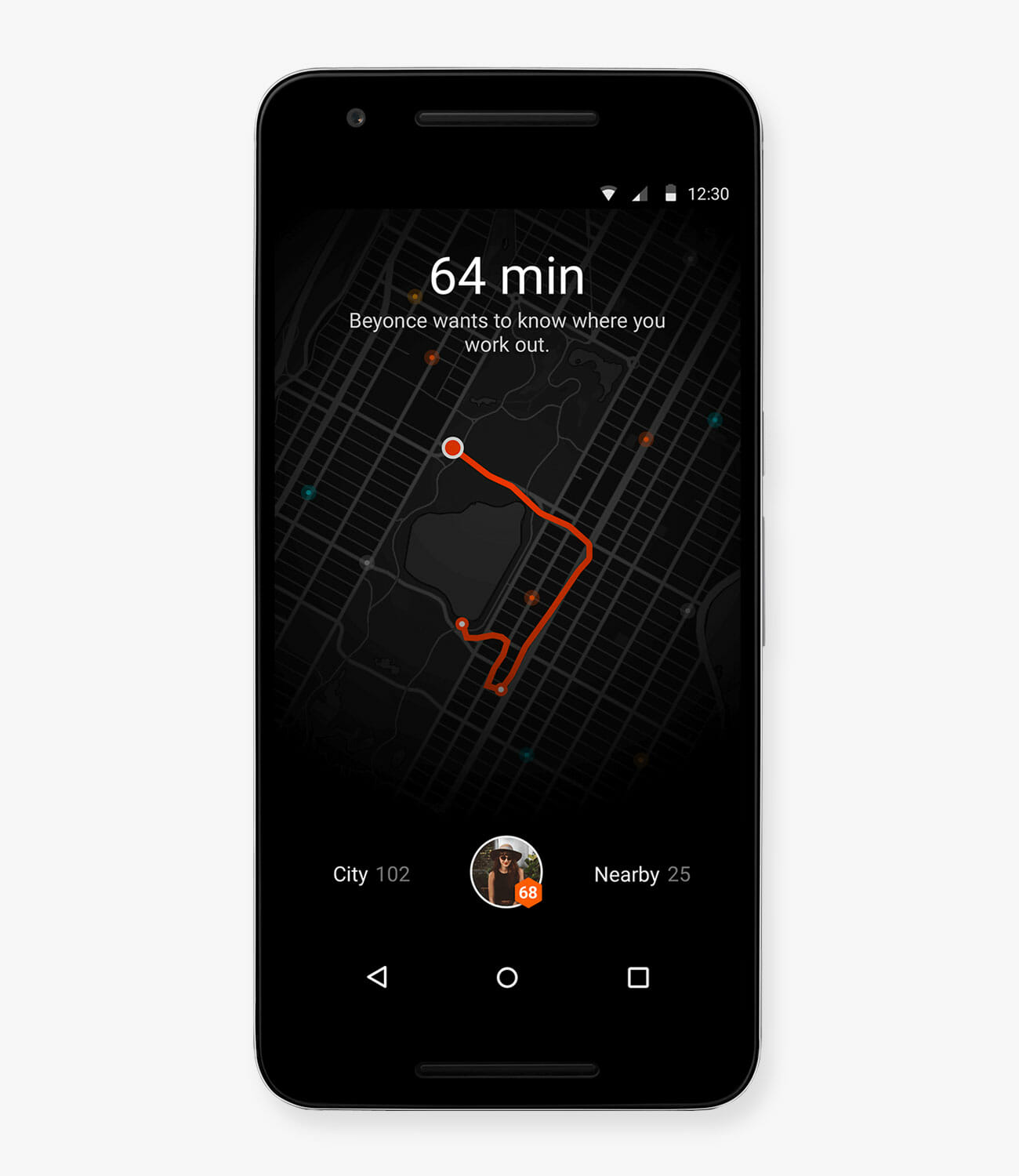
If motivation is a real hurdle for you, take a look at Human. More of a fitness/movement tracker than a running app, Human’s best feature is its simple, persistent nudges and reminders daily to get moving. It also compares users in the same area, so you’ve got a baked-in peer set against whom you can compete.

|

Running Fast Means Mixing It Up

One great feature that Pacer, Runtastic, Runkeeper and even Human offer is mapping where you’re running (or walking/cycling). Far too often runners can get stuck in a ‘route rut’ where they hammer the same four-mile loop every time out. While having your routines down is excellent for getting you out the door, these runs can feel boring when you don’t mix things up. If you want to get in a similar distance to what your typical weekly long run is, use the above apps to discover a new route that takes you for the same distance in a different part of town. Mixing up your directions not only benefits your mind by stimulating you with new sights, but it also keeps things fresh for your legs as there are variations (a grassy hill versus your favorite staircase, for instance) that force your body and mind to react a little differently.

Ready for the Next Level? Time to Add Intervals

If you’ve got baselines for speed and distances already down, it’s time to think about speedwork and improving your times. Initially, this entails knowing what you’re capable of and what’s achievable. Be honest with yourself. No matter how fast you ran that first 5K, you’re not going to win Boston this year. But, maybe you can shave a minute off your next short-distance race. Your goals should be small enough that they’re manageable and achievable, and you can build from there. The best way to improve is to increase your mileage and incorporate interval workouts.

One big misconception about speed work is that it has to happen on a track. While tracks are great, not everyone has access to them. You can look up interval workouts or focus on time instead of distance goals. Trail runner Camille Herron recommends plugging a workout into your app (which Runkeeper lets you do) before you go: a 90-second fast run at a speed that’s the same as your fastest 5K (say your time was 27:56, your mile time is 9:00) — then rest for 90 seconds by jogging or walking, and repeat that circuit 10 to 12 times.

And if that’s too much for you, or you want to hit the road untethered to anything but your shoes and your thoughts, that’s possible, too. While out on your run, speed up every time you see someone walking a dog on the path ahead of you. Keep your effort up until you pass the pooch and then ease into a recovery pace, speed back up as the next dog comes into sight and repeat with each puppy you see. The same game can be played with telephone poles, parking meters, cacti, whatever is easiest to spot and comes up frequently during your run.

iSmoothRun
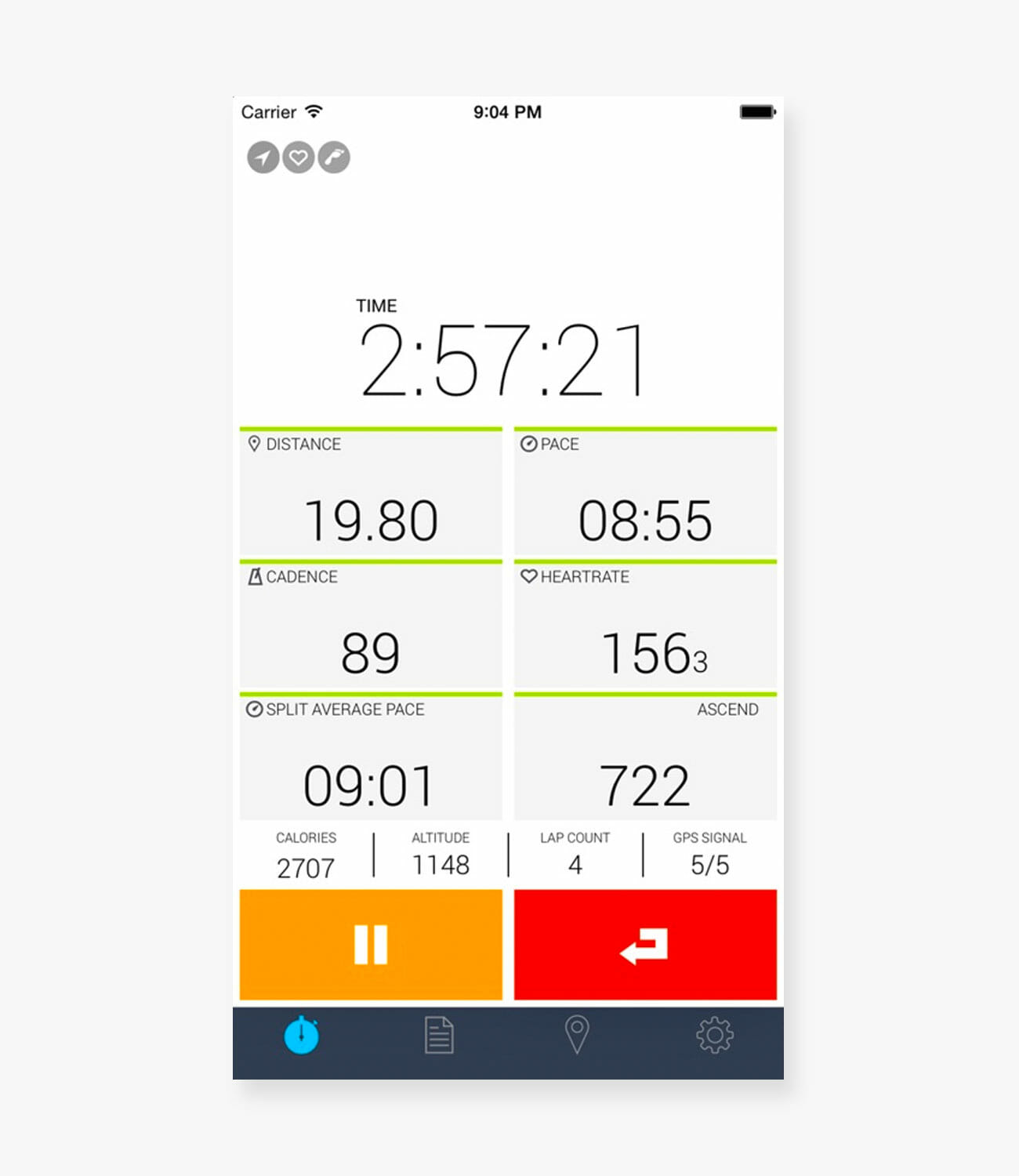
Interval workouts — where you alternate running fast for a set number of minutes, followed by a recovery walk or jog for another fixed number of minutes — should be difficult (but not impossible) for you, and it can take a few attempts to calibrate this effort. iSmoothRun (for iOS only — sorry Android users) offers programmable interval features, so there’s no guesswork on interval distances or times. On top of very customizable interval workout options and rest periods, iSmooth also offers auto pause; so if you’re stuck at a crosswalk or red light the app knows to pause itself until you’re moving again. Another feature that allows this app to stand out is Ghost Run, which will enable users to compete against their previous runs. Nail a PR three months ago? Ghost Run logs the routes, splits and effort for all runs, allowing you to challenge yourself against your best runs to see how much progress you’ve made.

Ghost Run is useful for breaking through a plateau. Too often runners will think that they’ve found their maximum speed just because they haven’t seen any improvements in times for a while. Chasing your PR’s (personal records) with Ghost Run can help jumpstart your times by reminding you visually and immediately what’s possible.

RunCoach
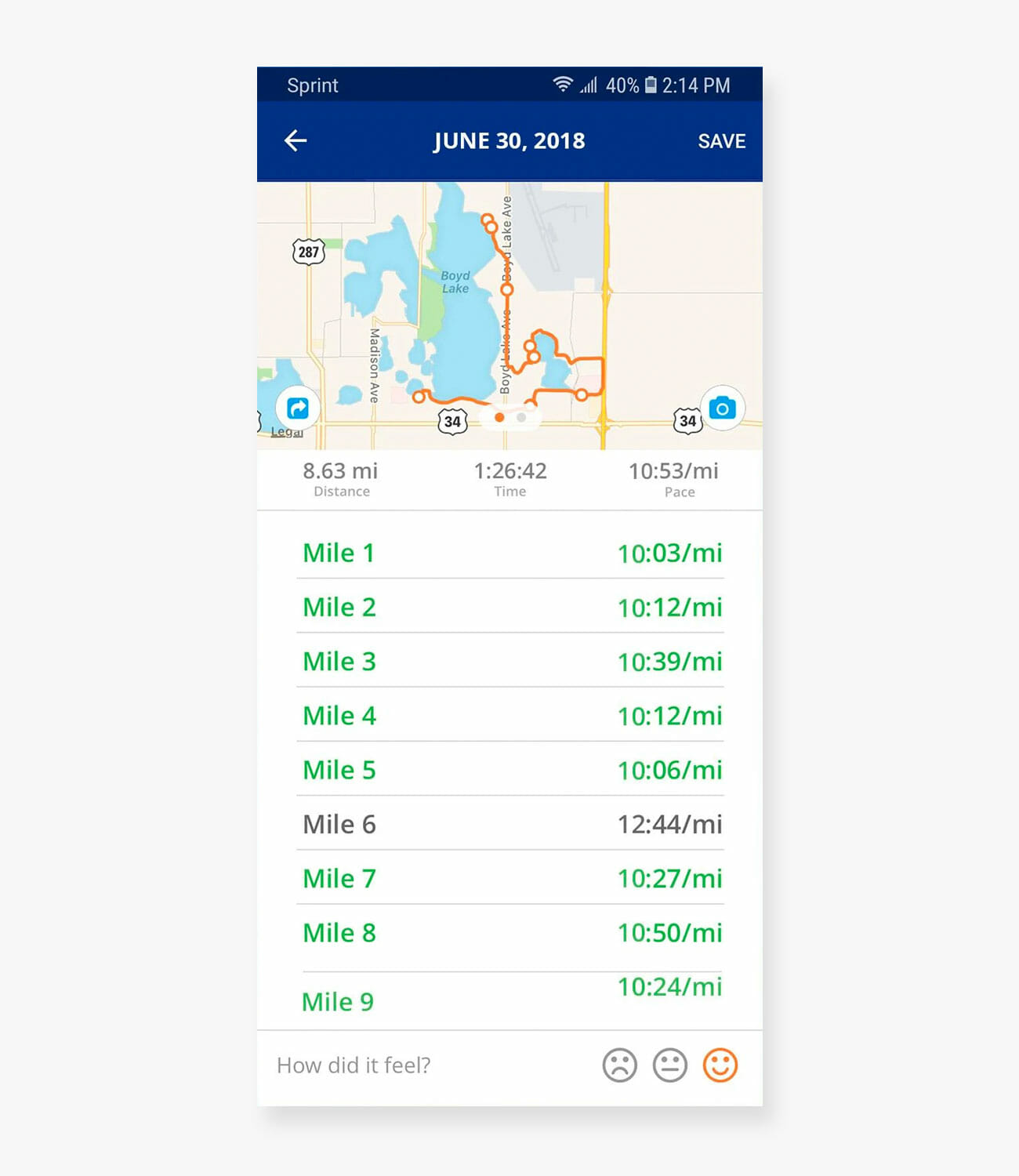
Another great app for iOS and Android is RunCoach, a freemium app that costs $19.99/month for everything. It’s the gold standard for running. Even with its basic version, you’re getting an algorithmically-powered training app that looks at your distance, pace, workouts and more to provide consistent workout routines designed to challenge you and improve your fitness. The subscription version puts users in touch with actual coaches. For what it’s worth: RunCoach boasts that seven percent of users improve their race times.

RunCoach is beneficial for the runner looking to hit a specific goal — whether that’s a one mile PR or a Boston qualifying marathon time. While the app won’t physically get you out the door and running faster, it will offer you a bevy of tools and interactions with running coaches who can help you develop a personalized workout plan aimed at giving you the best chance of hitting that QT (qualifying time), or sub-6:00 mile and anything in between.

Best Running Shoes to Travel With
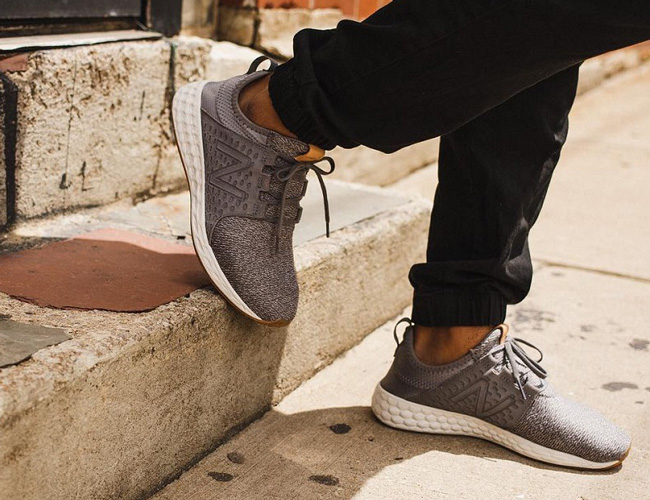
The only shoes you’ll want to wear all summer long. Read the Story

Yes, You Should Upgrade Your Bike Lights

In bike riding, vision is everything. Not only in terms of seeing what’s ahead but also to be seen by others, who, more often than not, are speeding around in massive chunks of metal. In the early and late hours of the day, visibility can become a problem, for which the answer is straightforward: bike lights. But, as with most things, there are bike lights, and then there are bike lights; Knog’s new Cobber is undoubtedly the latter.

Knog, an Australian bike accessories company, is known for its somewhat funky yet innovative take on improving the riding experience. (I still remember receiving a strange silicon light from my mom one Christmas called a Knog Frog that wraps around a handlebar and does look somewhat amphibious.) The Cobber lights are aimed at just that, and they accomplish it by producing 330 degrees of light.

The Cobber lights come in three sizes (Big, Mid, Lil’) and offer varying levels of brightness (470, 170 and 110 lumens, respectively, with the red rear lights emitting slightly less). They’re cylindrical, 100 percent waterproof and install easily onto bars with silicone straps. There’s also a magnetic clip system that lets you take the light off while leaving the strap in place, which comes in handy in preventing theft.

All of the Cobber lights use Knog’s Modemaker platform, which lets riders plug their lights into a computer to configure their settings. Users can program each light with up to eight modes, but there are twice as many options available. Within those modes, cyclists can make further adjustments to brightness, strobe frequency and more. It sounds complicated, but Knog’s interface is well-organized and straightforward (and using it isn’t required to make the lights function).

Bike lights are often a secondary purchase, perhaps made at the bike shop in a moment of, “Oh yeah, I need that,” but they shouldn’t be. There are plenty of options available, and Knog’s Cobber is among the most versatile.

Gear Patrol also recommends:
Priority Light Set Front and Rear ($30)
Kryptonite Street F-250 Front Light ($37)
Bontrager Ion Pro Light Set ($175)

The 10 Best Rugged Travel Duffels of 2019

Last updated April 2019: We’ve added all-new picks for 2019. Prices and links have also been updated.

Features have gotten out of hand. No matter what the product is — be it as simple as a knife or as complex as a camera — we’ve come to expect that it’s jammed with as many bells and whistles (sometimes literally) as possible. Outdoor products are among the most egregious culprits here, fooling would-be adventurers into thinking that they simply cannot embark on a trip without bringing the multifunctional-jacket-pant-parachute-vest complete with eighteen camp-stove-dongle-ready removable pocket pouches (and it packs into its own hood!). It’s maddening.

Thankfully, the duffel has remained immune to the feature-packing epidemic. The design hasn’t deviated too far from the canvas sacks travelers used to throw over their shoulders before heading off to lands unknown. Improvements like weatherproof zippers and padded backpack straps are utilitarian, not gimmicky. Materials technology has made duffels all but bomb-proof, which is ideal for poor-weather adventures, but canvas has not been forgotten. Oftentimes the only “feature” is a simple zippered interior pocket. And that’s the way it should be. You already have enough stuff to bring with you; you shouldn’t have to worry about the bag that carries it all.

These duffels run the gamut of sizes and materials, but one thing is uniform in every case: resiliency is favored over contrivance. These are bags capable of withstanding countless well-planned weekends to a favorite hideaway, as well as expeditions to corners of the map that still contain question marks.

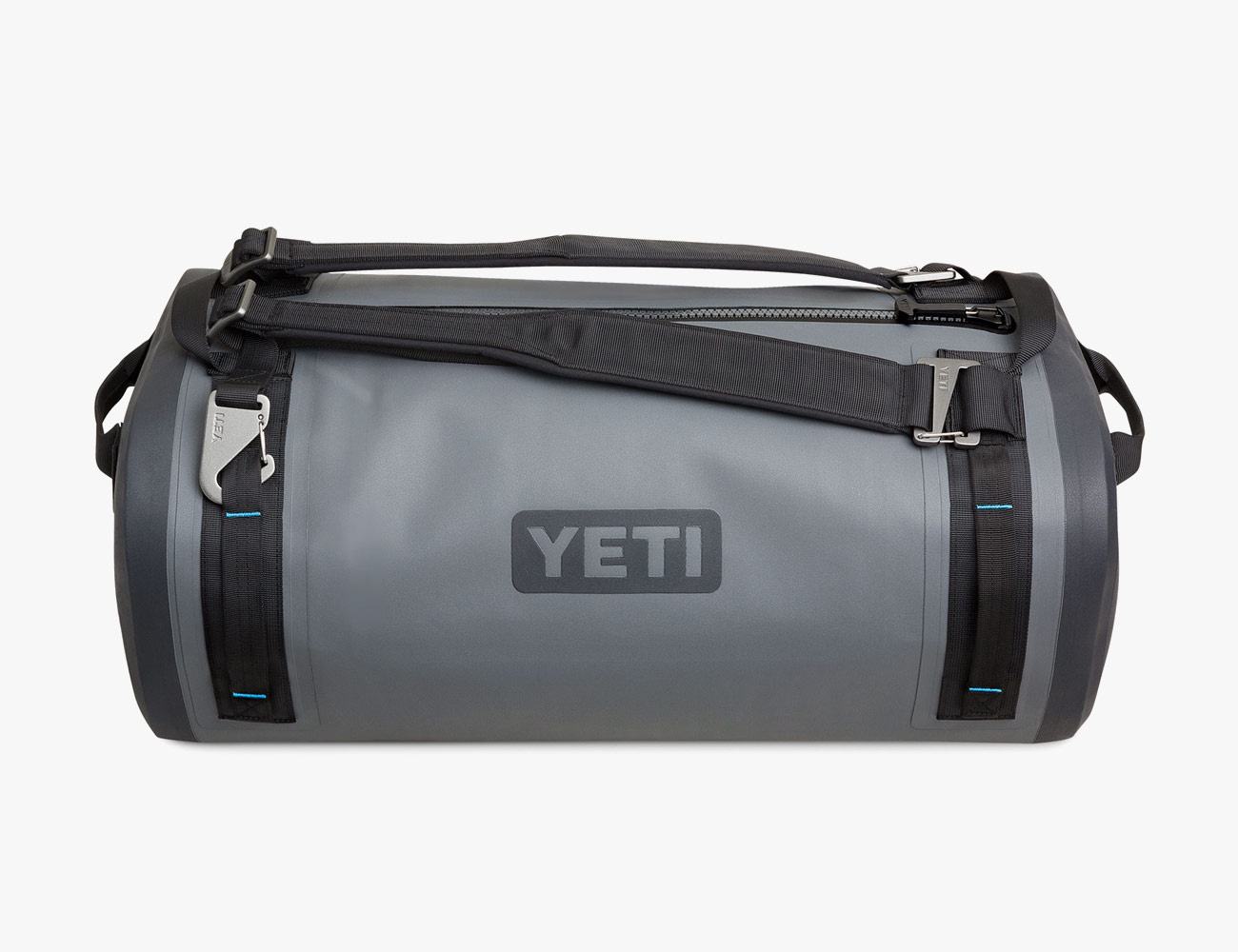
Editor’s Choice: Yeti Panga


Drawing on the success of its soft-sided coolers, Yeti stripped out the insulation and used the thick, laminated nylon skin to create a highly puncture- and abrasion-resistant duffel called the Panga. Like many Yeti products, what appears run-of-the-mill is actually innovation genius. The Panga has easily removable backpack straps, lash points on all sides and haul handles on either end. Speaking of those ends, they’re sturdy enough to keep this bag standing upright, and the bottom is padded with EVA foam, similar to the stuff in running shoes, to keep things protected when you decide to give the bag a toss. The Panga is also fully submersible thanks to a TIZIP airtight zipper. One way to test it? Close it up when the bag is empty and stand on it — not even a gasp will escape.

Available Volumes: 50L, 75L, 100L
Weight: 5 pounds 3 ounces (50L)

Best Discreet Duffel: SDR Traveller D3 Traveller


The D3 Traveller is made to take a beating, and go unnoticed. Why? Because when you’re traveling across borders where officers are more likely to request a bribe than a visa application, discretion is as important as durability. To the untrained eye, there’s nothing special about the unbranded black carry-all, but that’s the point. The bag is made from two layers of ultra-strong Dyneema composite fabric, allowing it to maintain a slackened look even when packed full. The D3’s detailing is in the same vein; the shoulder strap slider is machined from solid aircraft-grade aluminum, YKK zips are reinforced with water-resistant Uretrek. And, just to underline the brand’s thesis, the D3’s zipper pulls are accented with river stones from the Pamir Mountains, a vast and remote range located in a region where borders and laws are less tangible.

Available Volumes: 39L
Weight: 1 pound 2 ounces

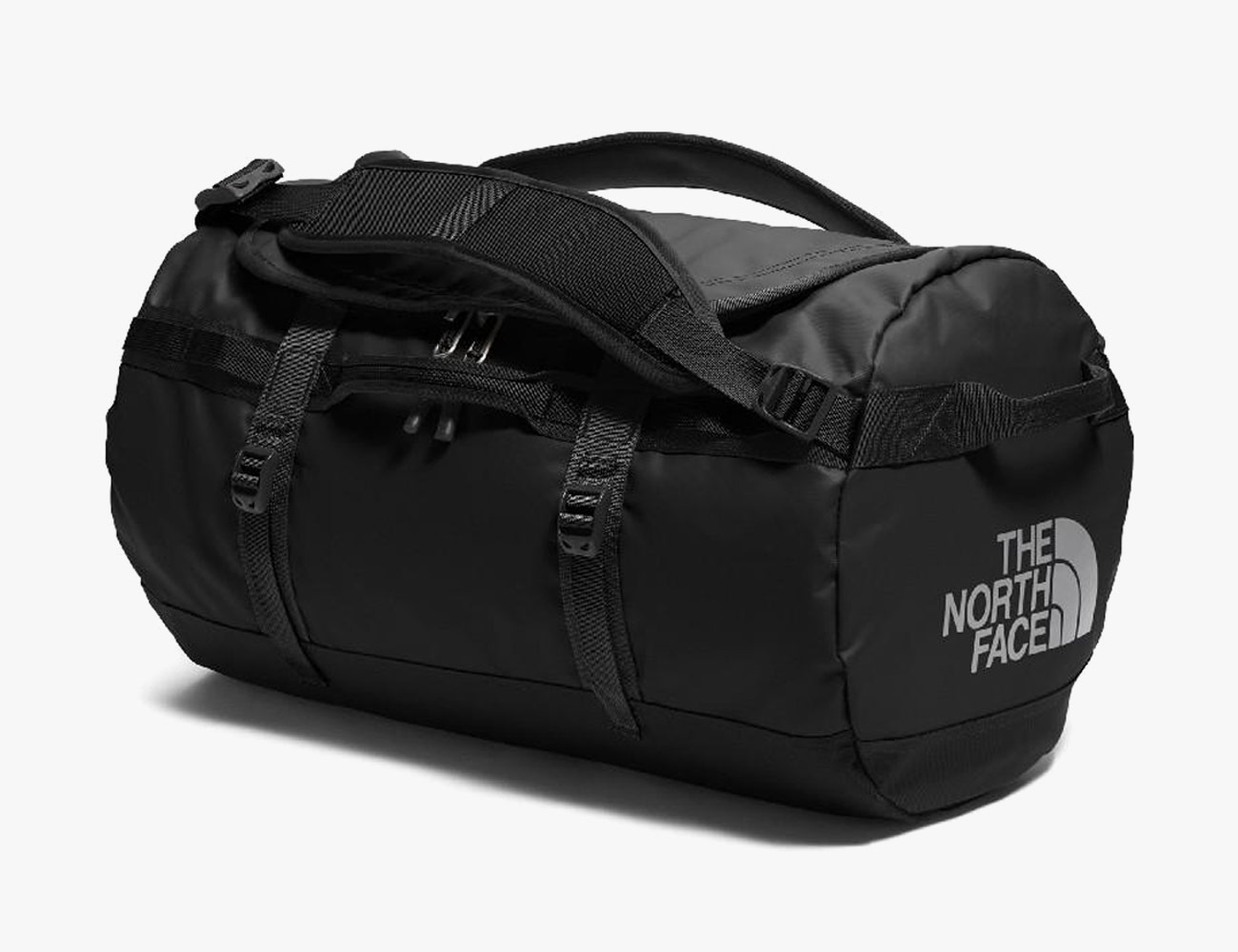
Most Versatile Duffel: The North Face Base Camp Duffel


The North Face has over 50 years of experience hauling gear to the most remote parts of the world, so it’s no wonder that the Base Camp was not only one of the original laminated expedition bags, but also one of the few that has stood the test of time so well. The Base Camp comes in a classic cylinder shape made of laminated ballistic nylon and opens wide to reveal a spacious main compartment and a mesh organizing pocket on the interior of the lid. Like many of the bags on this list, the Base Camp comes equipped with removable backpack straps, daisy chain attachments, tie-down points and multiple handles for carrying. But the Base Camp differentiates with a separate compartment on one end that can take care of any wet or dirty clothing and gear, so it doesn’t have to mix in with the rest.

Available Volumes: 31L, 50L, 71L, 95L, 132L, 150L
Weight: 3 pounds 8 ounces (71L)

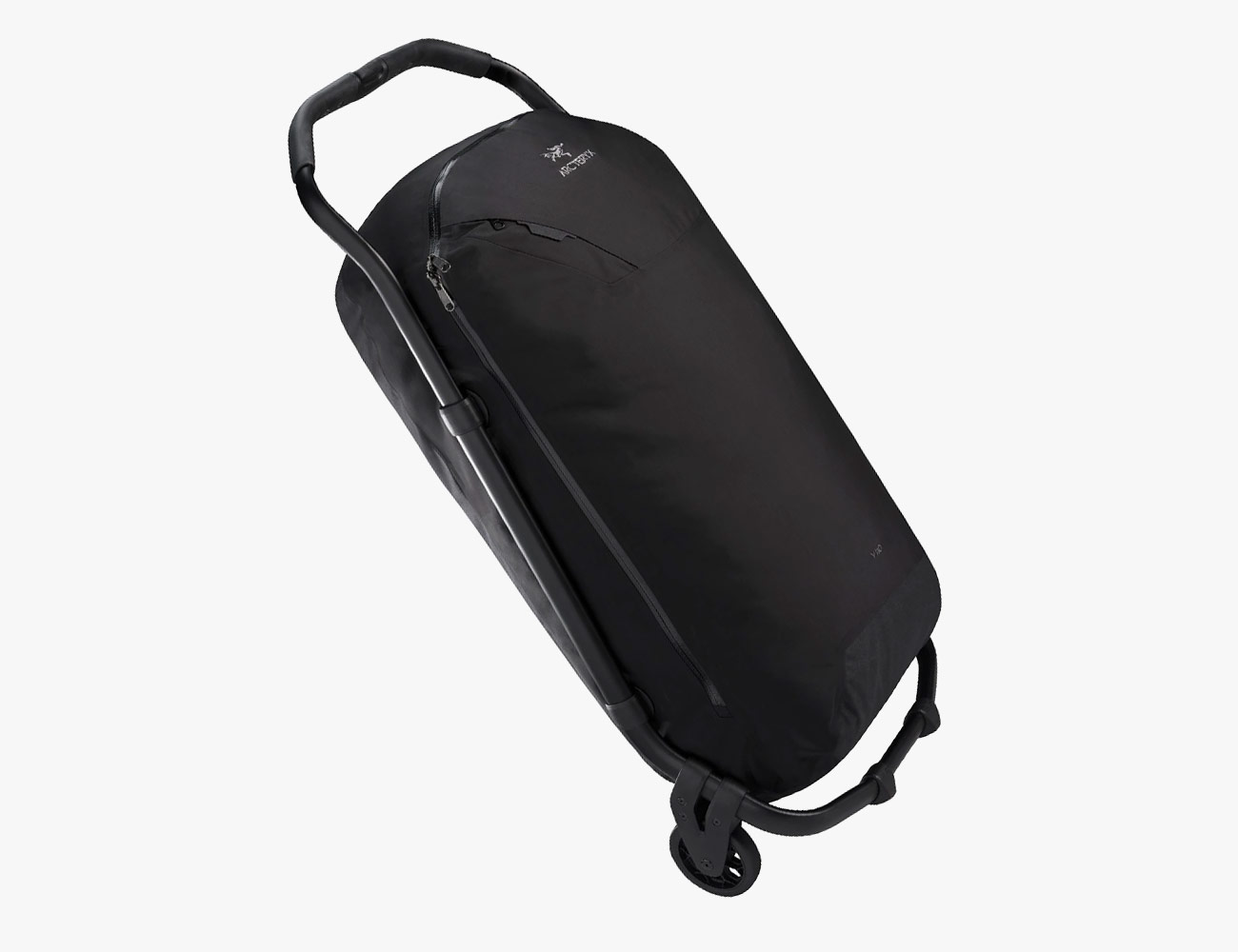
Best Duffel with Wheels: Arc’teryx Rolling Duffel


Arc’teryx’s Carrier line has long been the brand’s signature in the rough duffel world, but its new wheeled bags, the V80 and V110, make carrying big loads all that much more manageable. Unlike most brands, Arc’teryx placed the extendable, anodized aluminum frame on the outside of the bag, which leaves its interior totally free for well, everything. The U-shaped zipper opens nearly all the way for easy packing and unpacking. Inside, there’s even a pocket-equipped flap that can be compressed over everything in the bag to free the exterior zipper from additional stress. The outer fabric is weather-resistant 630-denier nylon, and the oversized wheels are burly enough to roll over rough terrain (but they’re easily replaceable should the worst occur).

Available Volumes: 80L, 110L
Weight: 7 pounds 6 ounces (80L)

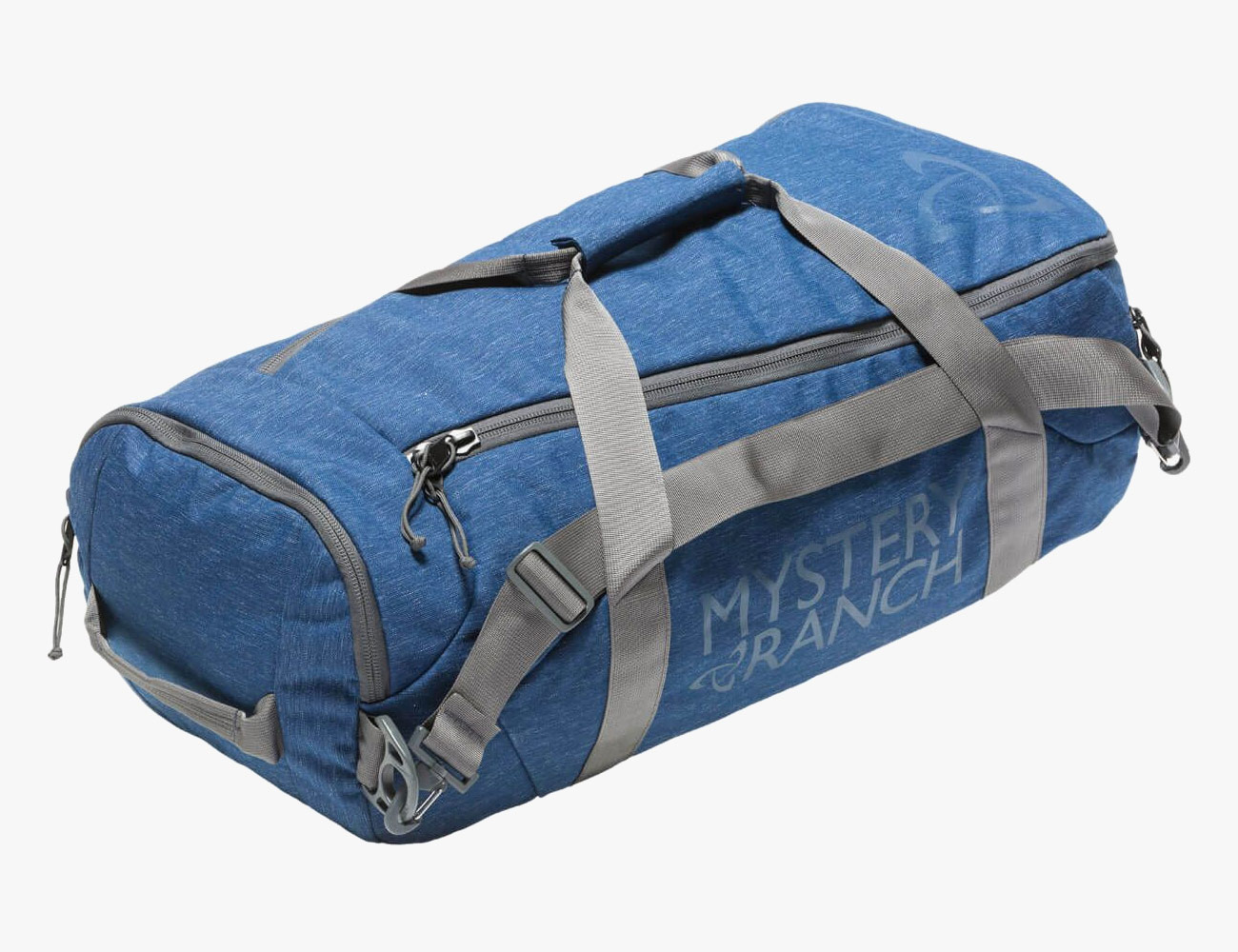
Best Backpack Carry System: Mystery Ranch Mission Duffel


The Mission Duffel sits firmly in between backpack and duffel. As such, its shoulder straps aren’t an afterthought but a fully fleshed-out component that draws on the brand’s success with everyday and expedition packs. The straps are padded for comfort and equipped with a sternum harness. They also stow away neatly into a flap on the bottom of the bag. In addition to that, the Mission contains a main compartment that feels bigger than it looks and is home to multiple mesh organizing pockets. Like the Base Camp duffel, the Mission offers a separate section at one end for wet, dirty, or bulky items.

Available Volumes: 40L, 55L, 90L
Weight: 4 pounds 3 ounces (55L)

Best Minimal Duffel: Patagonia Lightweight Black Hole


Patagonia hit the nail on the head with the name of its line of heavy-duty carry-alls: Black Hole. That’s what a duffel should be — a bottomless pit into which you can toss anything and everything you might need for a day at the crag or an entire week in the opposite hemisphere. The brand recently released a pared-down version of the popular bag — goodbye padded backpack straps and D-shaped zip opening. It’s lighter, but no less durable than its predecessor. The Lightweight Black Hole is made from 7.1-ounce 210-denier nylon ripstop with a TPU-film laminate and a DWR coating. Best of all? It weighs just 18 ounces.

Available Volumes: 30L, 45L
Weight: 1 pound 2 ounces (45L)

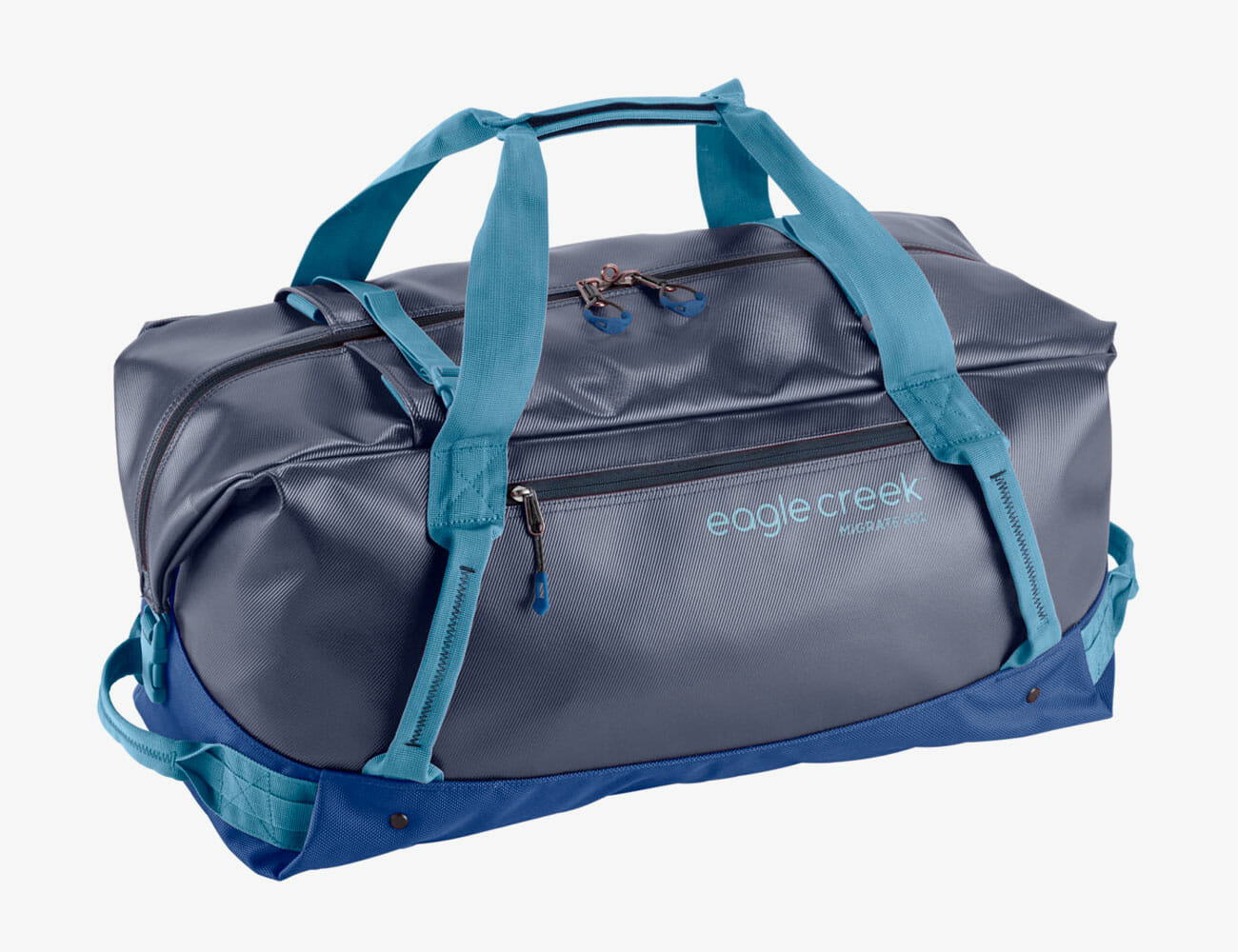
Best Budget Option: Eagle Creek Migrate Duffel


At under $90 for the 60-liter carry on-friendly volume, the Migrate Duffel is a bargain. You’d think that Eagle Creek would have to make sacrifices to make that happen, but the Migrate remains fully featured. Its main body is 900-denier TPU, its bottom is reinforced against ground moisture and it has backpack straps that stow neatly away in separate sleeves. And when you need a few extra liters for items discovered while traveling, the adjustable side buckles provide an additional six.

Available Volumes: 40L, 60L, 90L
Weight: 2 pounds 8 ounces

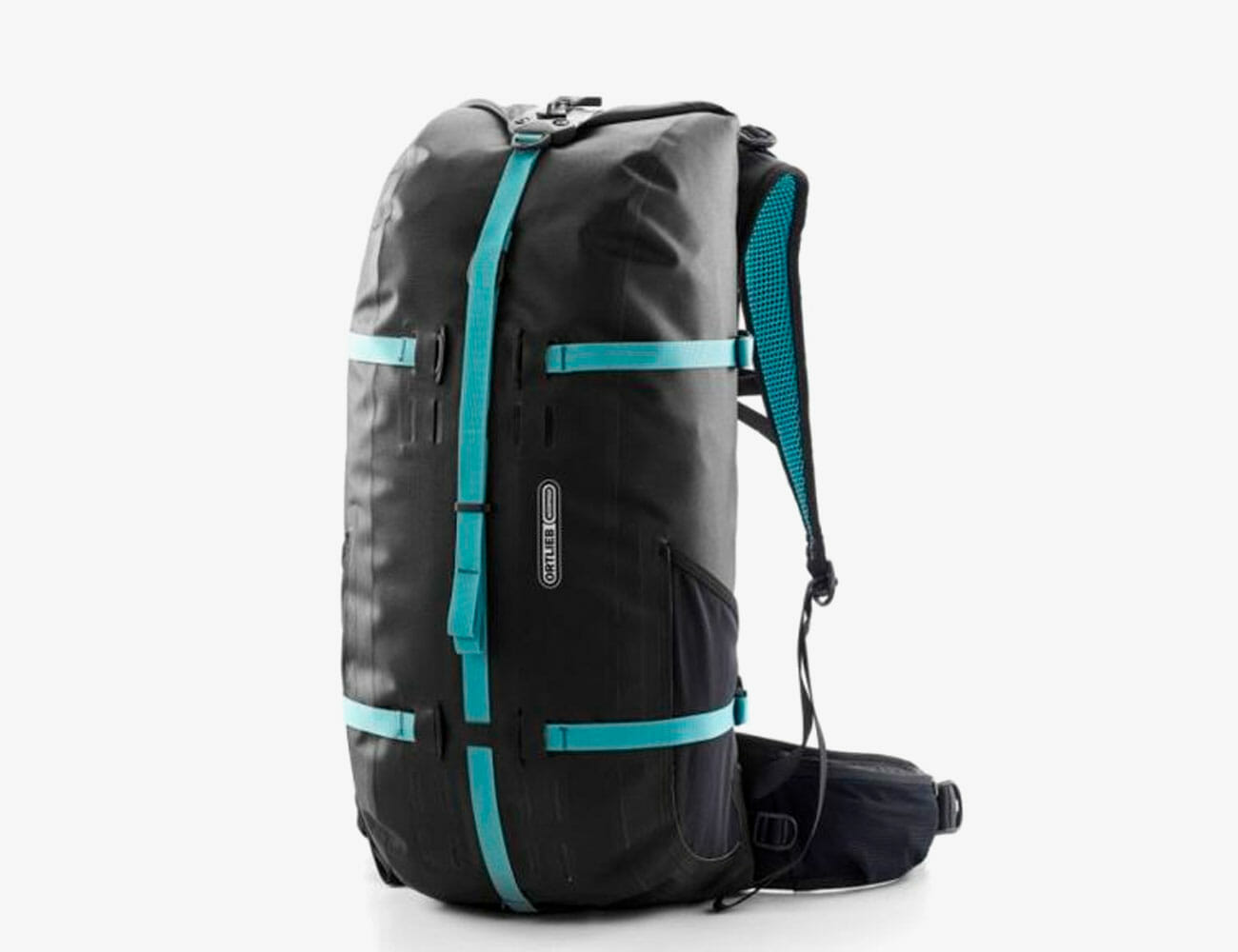
Best Adventure Duffel: Ortlieb Atrack


Of all the strap-equipped bags on this list, Ortlieb’s Atrack is the only one that’s a backpack first. Ortlieb previously made waterproof and rugged duffels with backpack straps on them, and it pulled many of those features over to the Atrack — including a tear-resistant fabric and an impregnable TIZIP zipper — which is designed less for hauling huge loads than for facilitating lots of different adventures. Its pack straps are padded, and they have an accompanying hipbelt. Plus, it uses a simple modular strap system that allows for the carrying of skis, snowboards, snowshoes, trekking poles, helmets and whatever else you might think to strap to it.

Available Volumes: 25L, 35L, 45L
Weight: 3 pounds 3 ounces

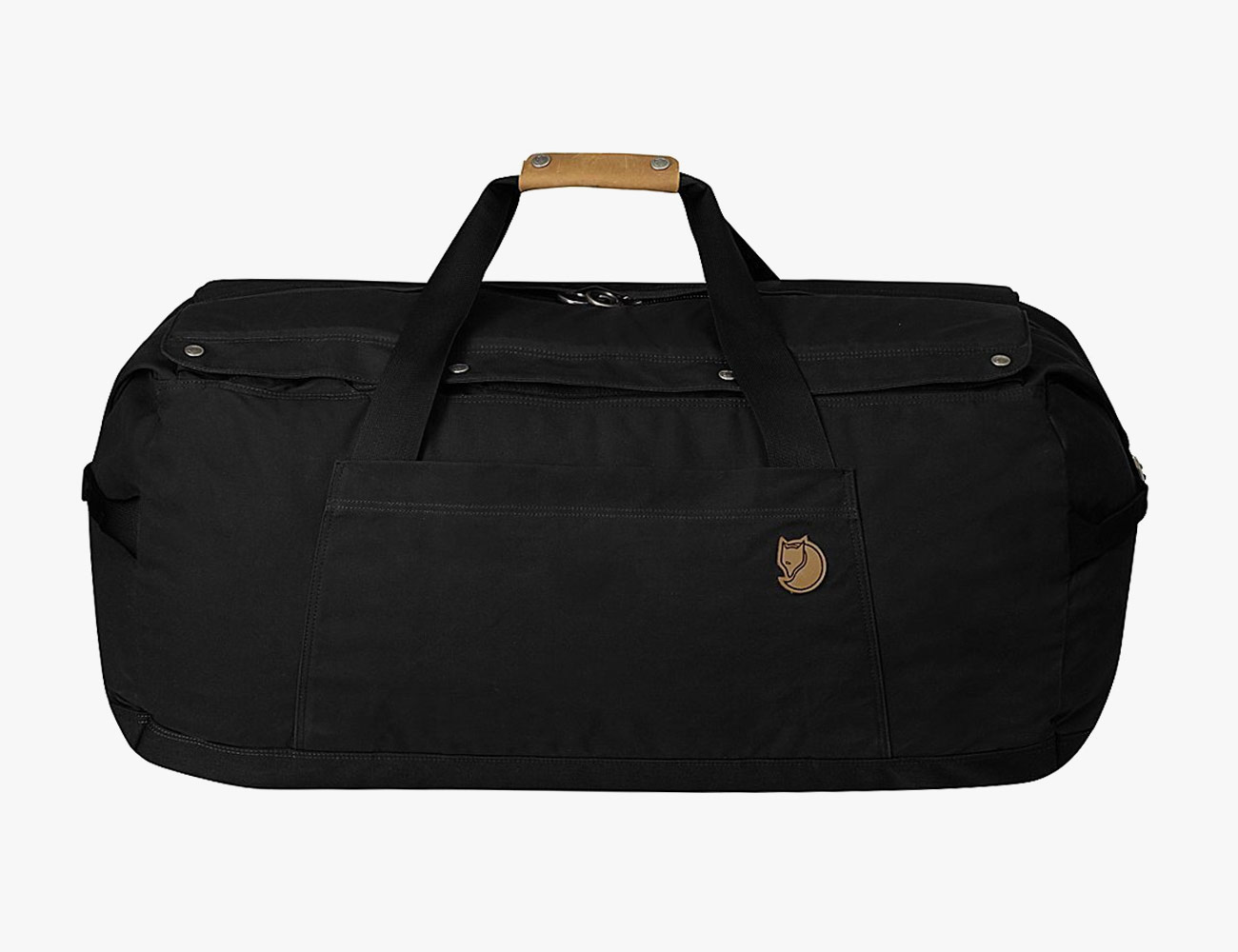
Best Canvas Duffel: Fjällräven Duffel No.6


Fjällräven’s Duffel No.6 looks a lot like the standard-issue bag you might find hanging on the wall at a military surplus store. It’s not. The Swedish outdoor brand started with its proprietary G-1000 HeavyDuty Eco fabric, a canvas-like blend of recycled polyester and organic cotton that’s incredibly tough, windproof and water-resistant (especially after treatment with Greenland Wax). Then the bottom was reinforced with padded waterproof, PU-coated, polyamide fabric, and double handles were added at the ends along with stowaway backpack straps on top. There’s also a nice padded top panel, to cushion your back from the bag’s contents when you’re carrying it backpack-style.

Available Volumes: 70L, 110L
Weight: 3 pounds 5 ounces (70L)

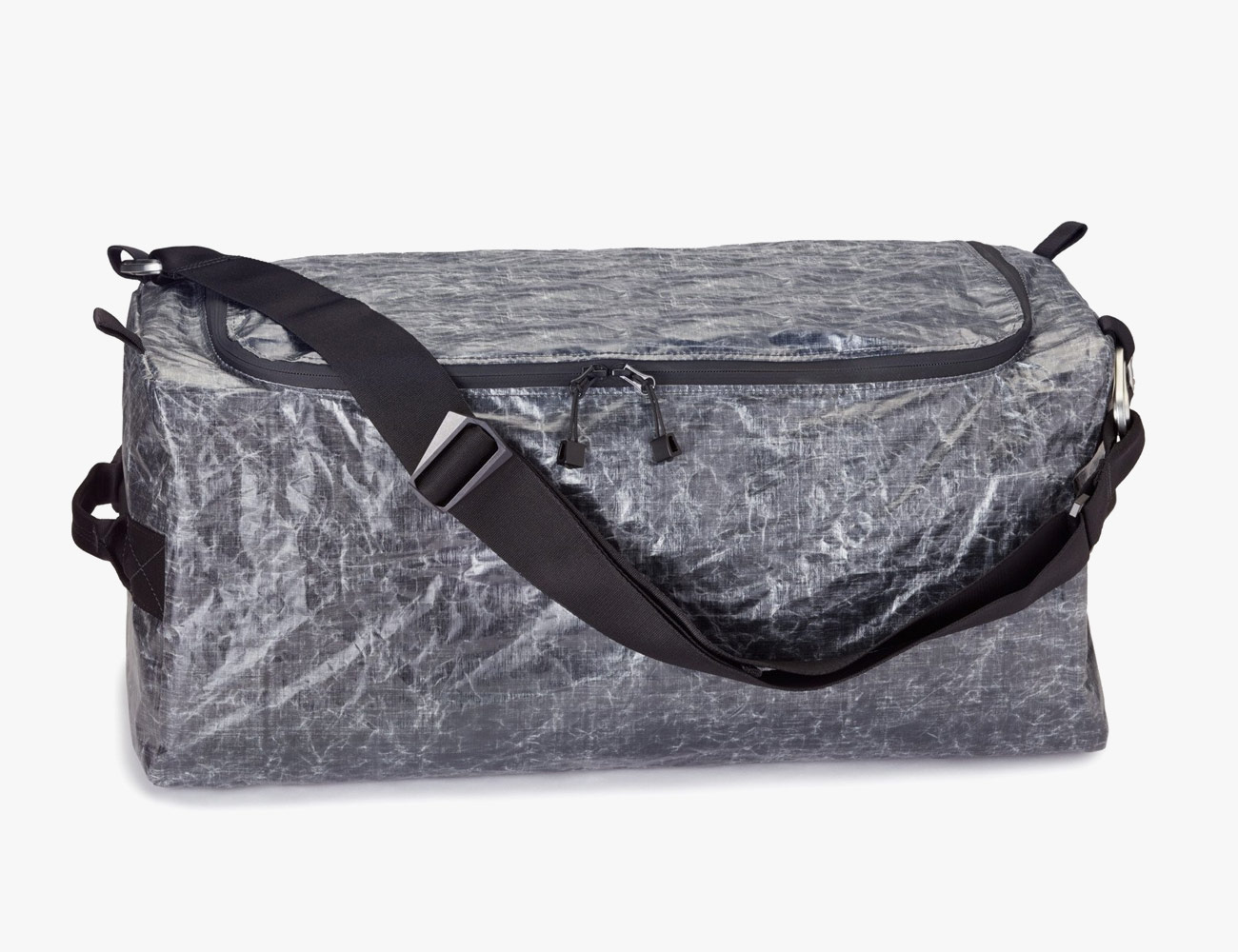
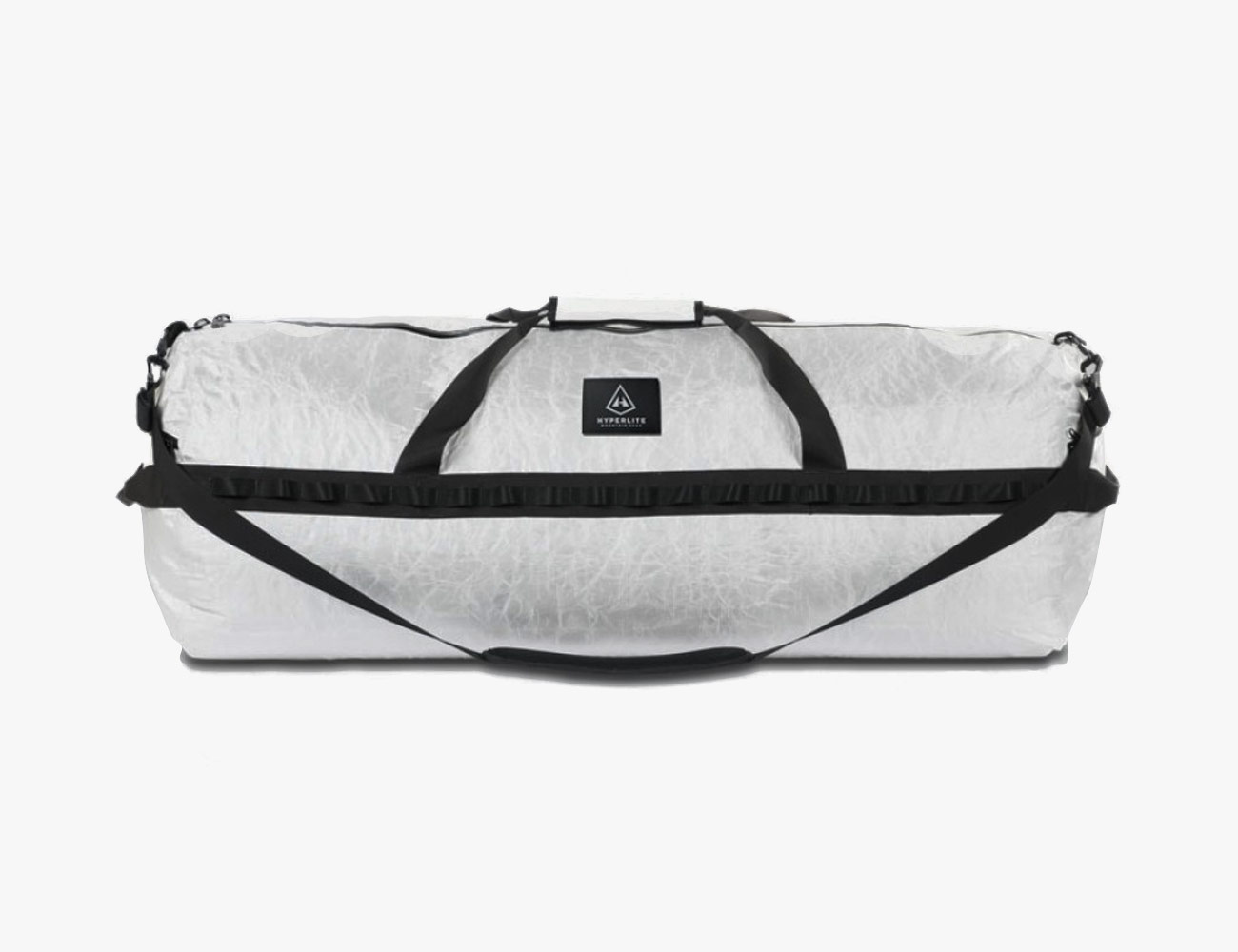
Best Ultralight Bag for Big Loads: Hyperlite Mountain Gear Dyneema Duffel


To say that Hyperlite Mountain Gear’s Dyneema Duffel is massive and indestructible borders on understatement. The narrow profile was designed specifically for harmonious integration with the Paris Expedition Sled, commonly used during longer trips to the world’s unreachable peaks. The primary material is right in the name. Dyneema, when taken at its strength-to-weight ratio, is the strongest fiber in the world — stronger than steel and Kevlar. It’s also waterproof and UV resistant. You could say the Dyneema Duffel is ultra-everything: ultralight, ultra large, ultra durable, ultra minimal.

Available Volumes: 140L
Weight: 2 pounds 10 ounces
Note: Purchasing products through our links may earn us a portion of the sale, which supports our editorial team’s mission. Learn more here.

Everything You Need to Run in the Rain

April showers bring May flowers, which is ideal for your #seenonmyrun Instagram posts, but unpleasurable for long runs. If you’re running an early summer or late spring race, your training block is in full swing, which means you’ll have to brave whatever elements the weather gods decide to throw for the next 90 days. To make sure you’re adequately prepared for some dampening effects we have eight pieces of essential gear that’ll keep you warm as you slog through the mileage. Whether you’re sneaking in a quick speed workout on the track or bumping up your weekly mileage on a Sunday, these pieces will help you stay mentally on track.

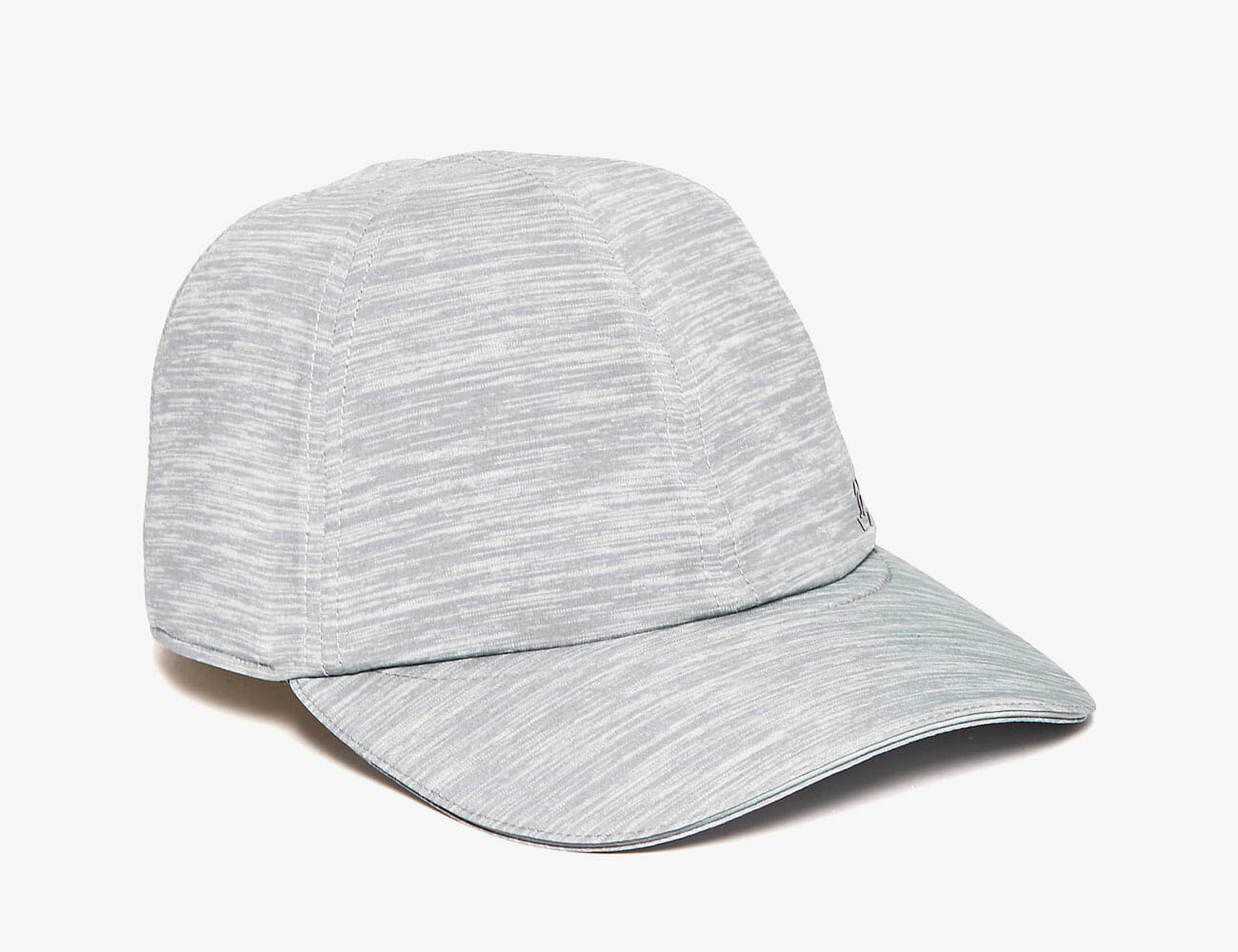
Lululemon Lightspeed Running Hat

This lightweight hat keeps snow, rain, sleet and any other precipitation out of your eyes so you can knock out your long run on days where the weather is less than ideal, plus it comes in six colors. In any snowstorm, you’re going to want a hat to keep the water out of your eyes so you can check your mileage at every street corner.

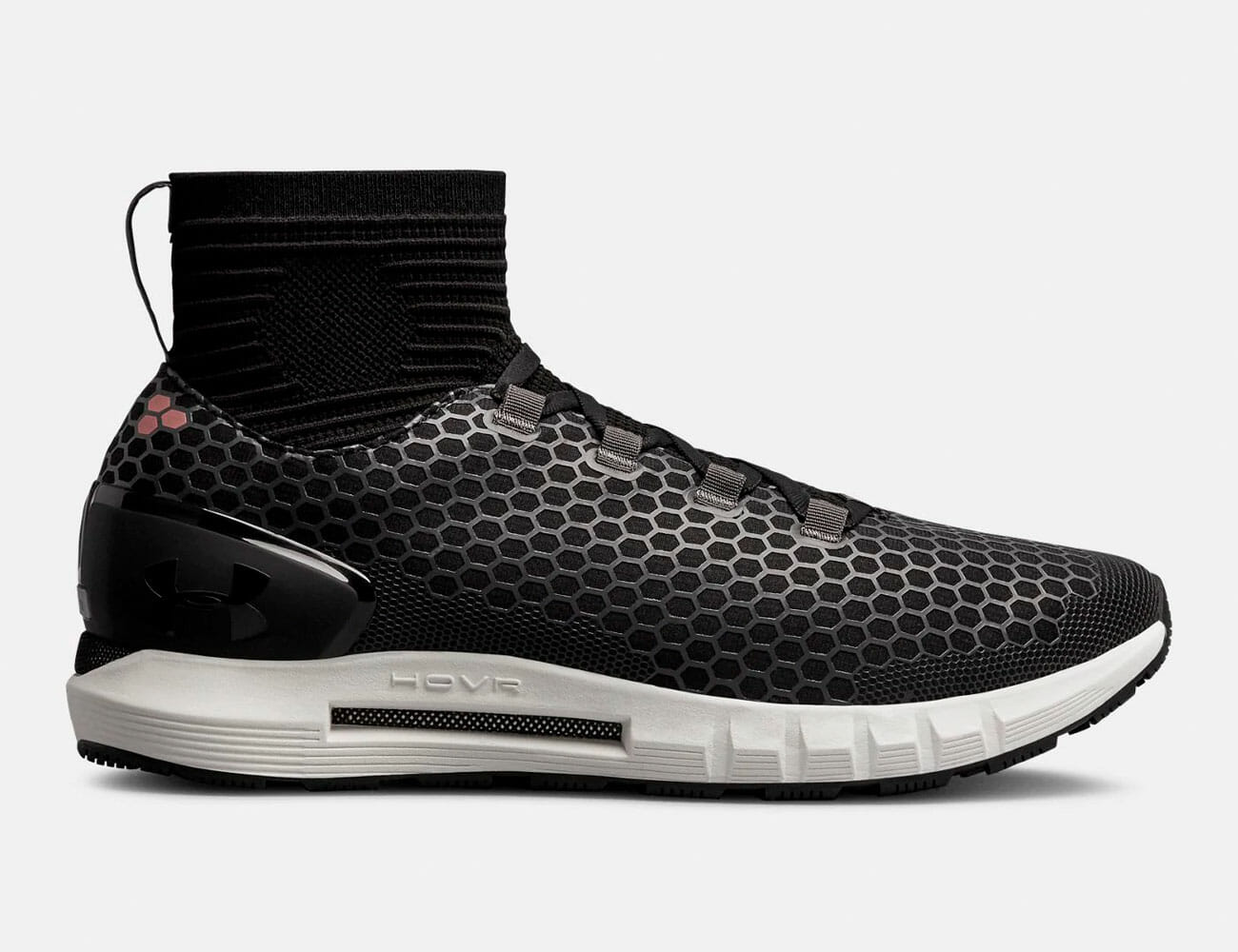
Under Armour Hovr CGR Mid Connected

The Michelin rubber outsole on these Cold Gear Reactor sneakers from Under Armour is the same as the rubber found in your tires, so that you won’t slip over grates or ice. The storm technology fabric on the upper won’t wet out, yet is still breathable as the weather starts to warm up.

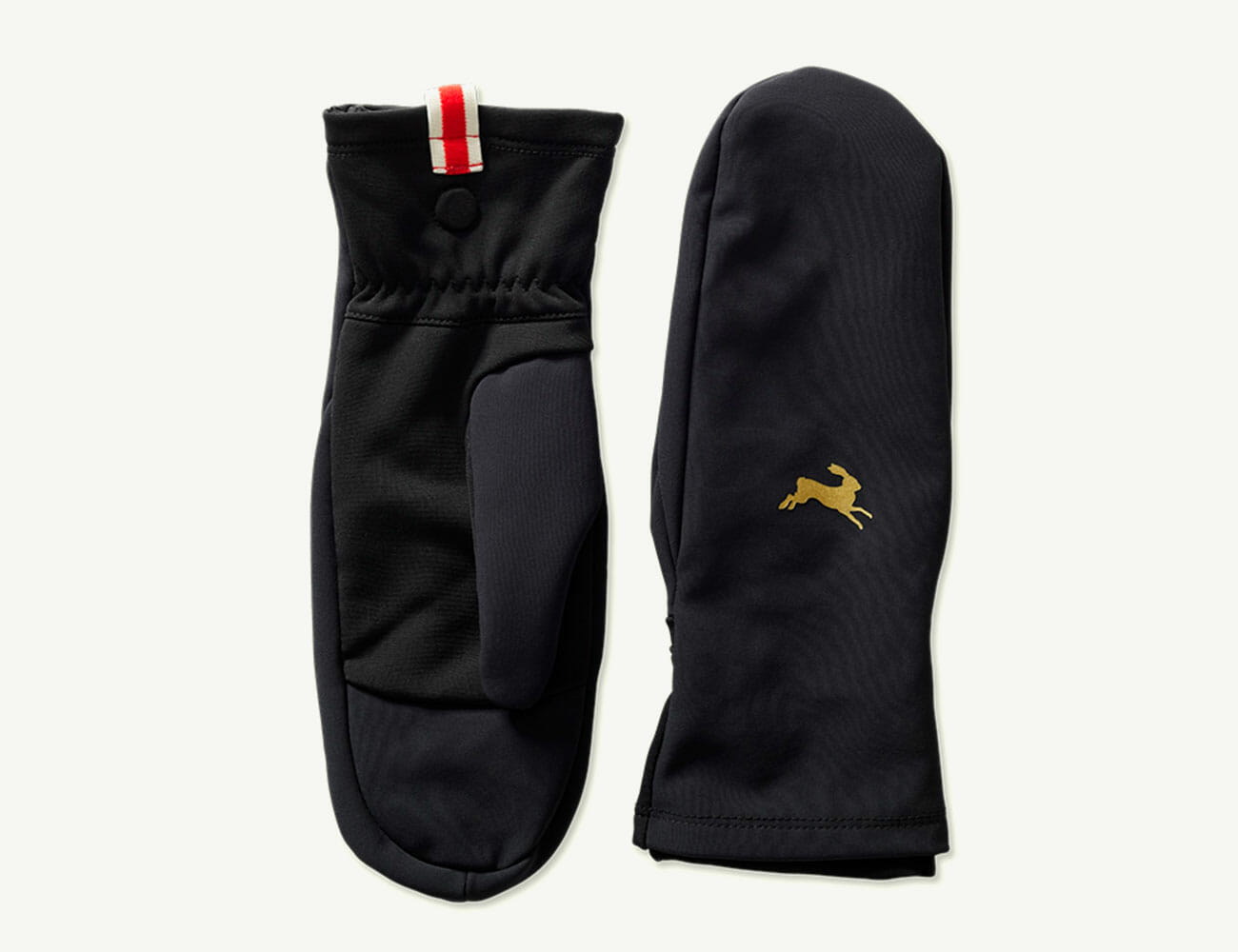
Tracksmith NDO Mittens

The merino wool in these mittens will stay warm even when wet. On a recent nine-miler, I wore these through snowy conditions meaning the exterior layer wet out, but the merino wool lining kept my hands warm despite the falling temperatures. The magnetic fasteners on the cuffs are a nice touch, so they stick together when you’re not using them.

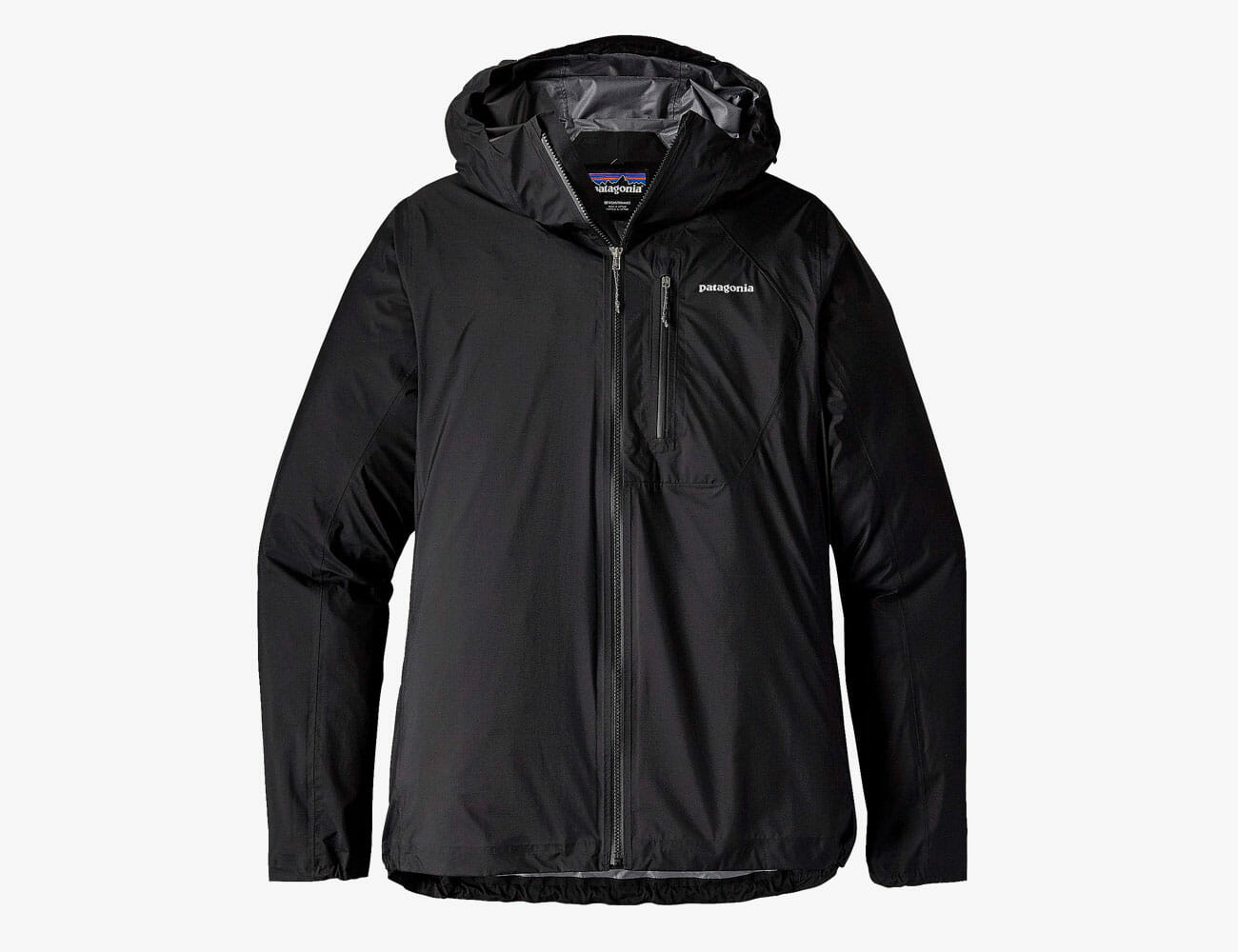
Patagonia Storm Racer Jacket

The Storm Racer Jacket was built for trail running, meaning it’s lightweight, breathable and waterproof. There aren’t any pockets on the jacket, which can prove problematic. However, it’s hard to find an exterior layer that can fend of weather like this one. I never feel clammy or sweaty inside, aside from the actual sweating that happens during a workout.

Smartwool PhD Pro Endurance Print Crew Socks

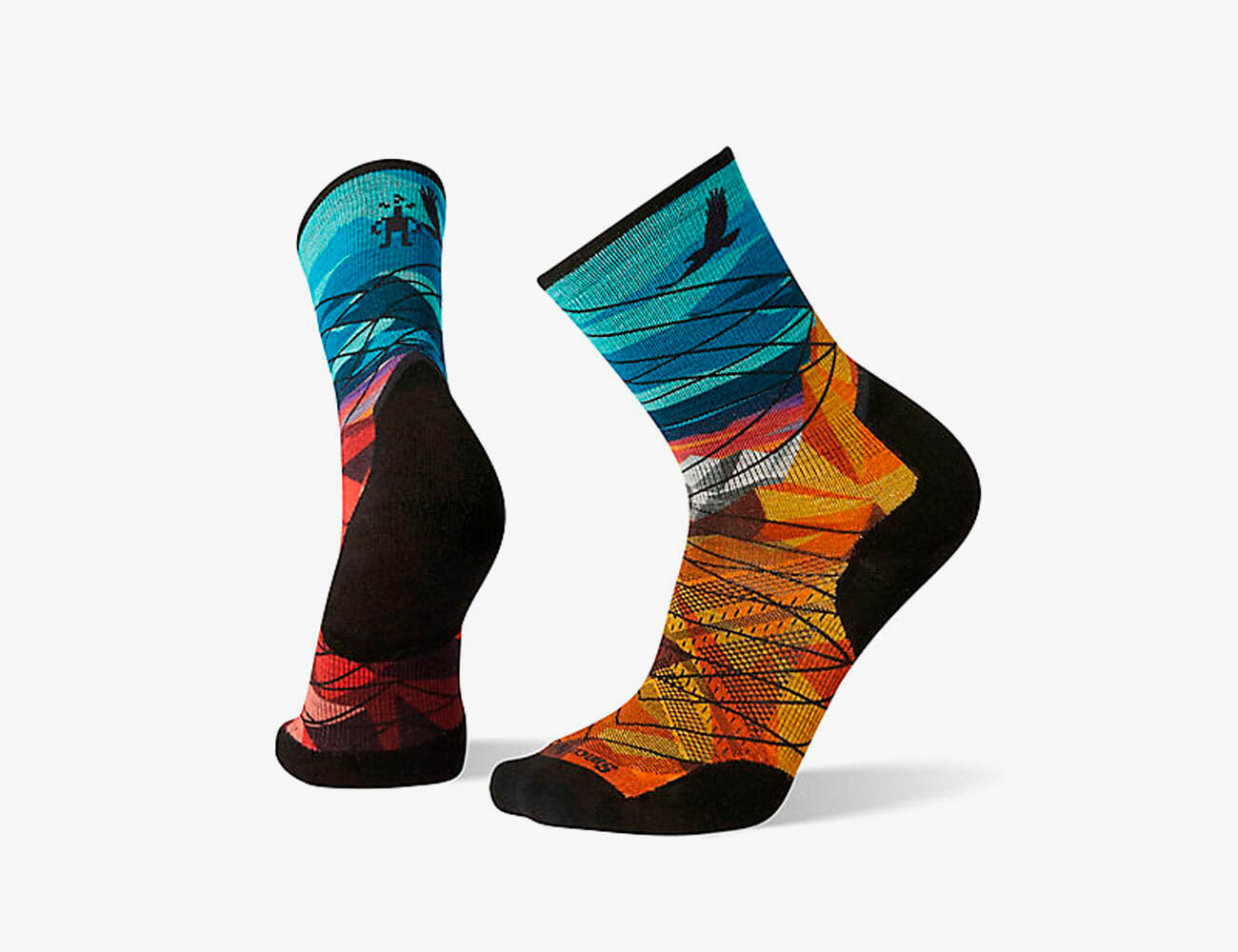
These socks were designed by Rob Krar, an ultrarunner, meaning they’ll support your feet over hundreds of miles. The indestructawool fabric will hold up and stay warm even when damp. Mesh venting on the top of the foot lets toes breathe, so the inside of your shoe doesn’t become a sauna.

Nite Ize RunOff Wallet

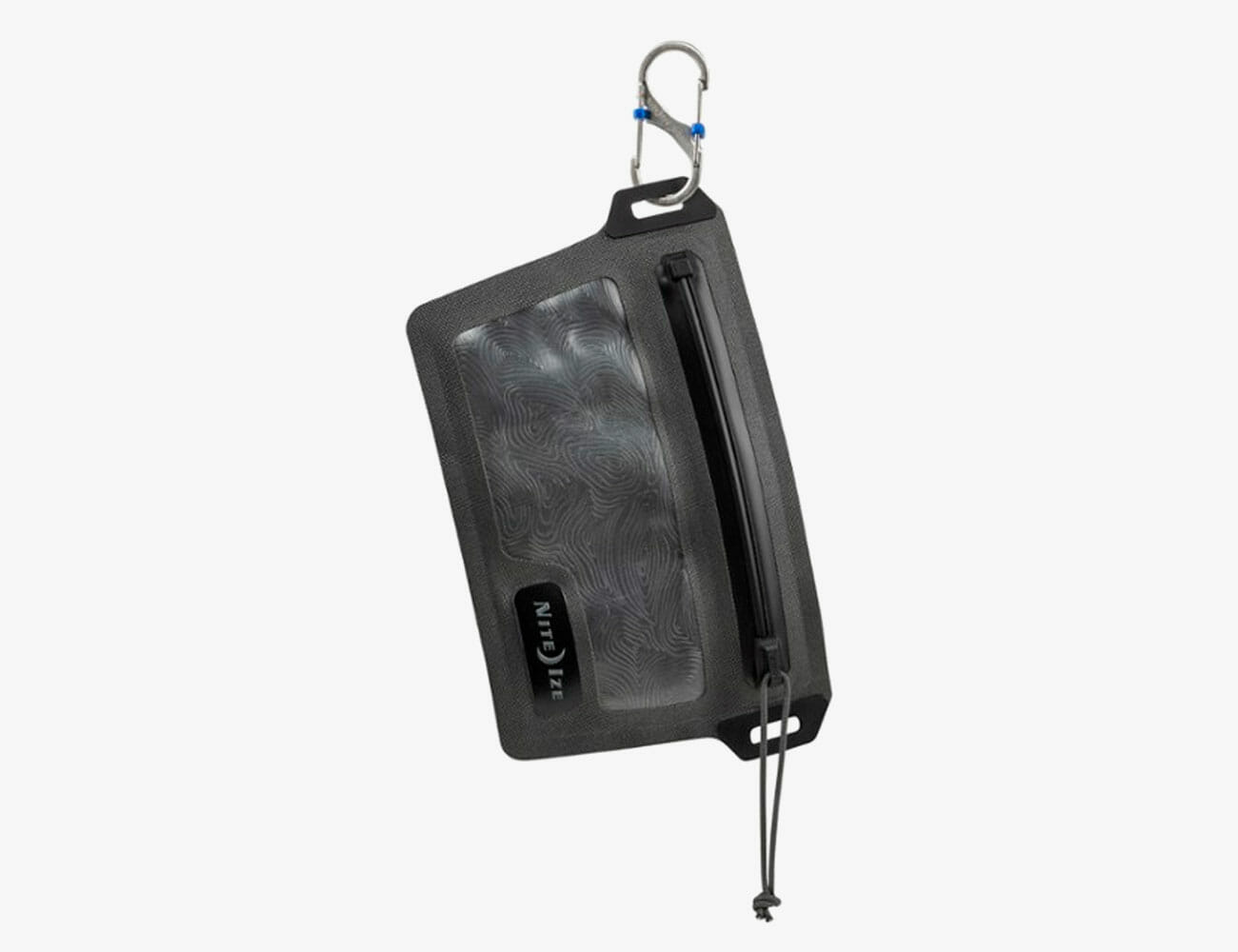
If you’re running alone, it’s always good to have a form of money — credit, debit or cash — on you, in addition to your keys, an ID and possibly your health insurance card. The Nite Ize RunOff wallet is compact enough to stuff in a pocket, but will also clip to your waist belt and will keep everything dry. It’s rated to IP67, meaning it’ll keep your belongings in the clear for up to 30 minutes.

The North Face Flight Winter Pant

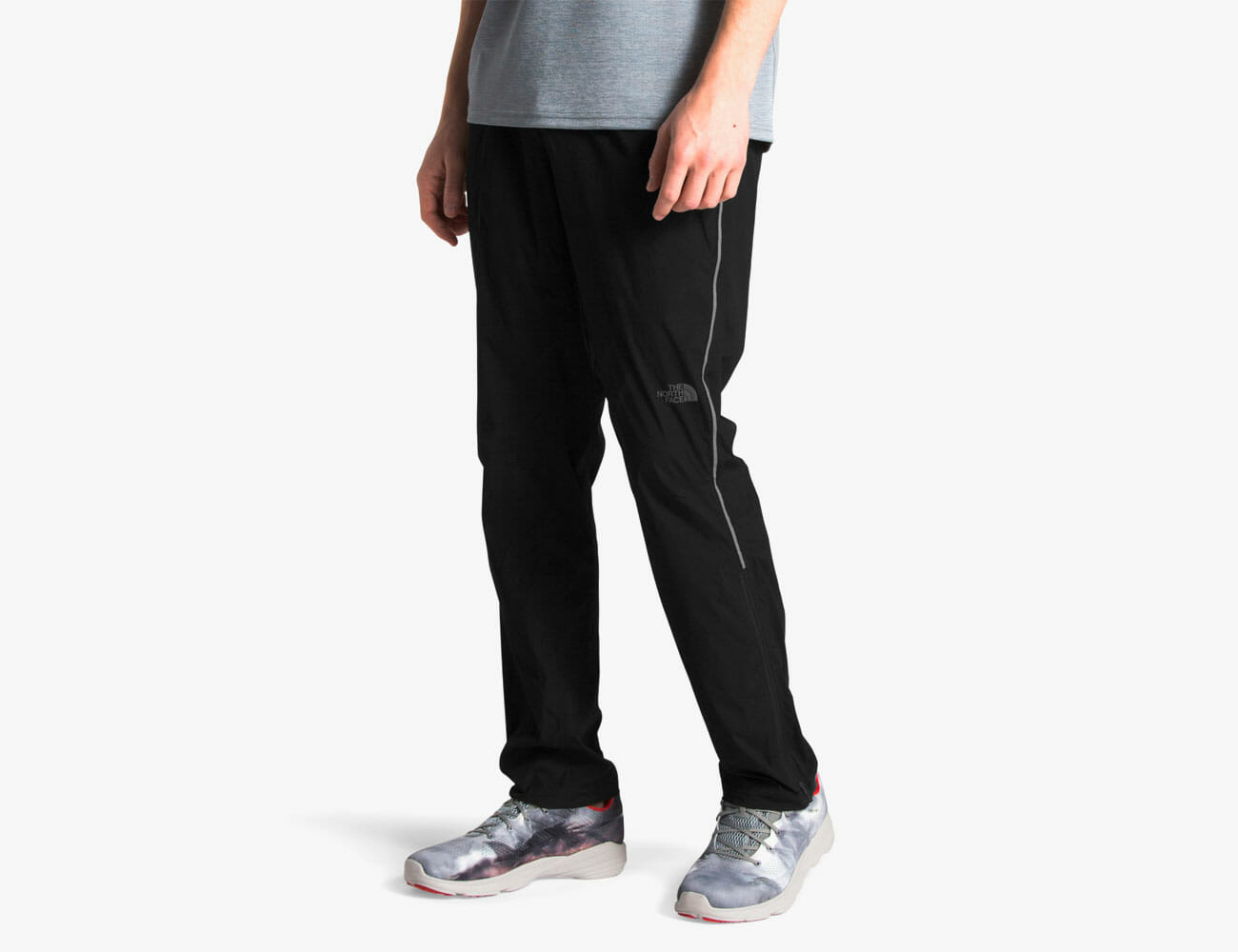
If you like to run in shorts, but want to avoid them getting soaked, throw on these pants. The FlashDry fabric wicks away sweat from the inside, plus it’s treated with DWR to repel raindrops.

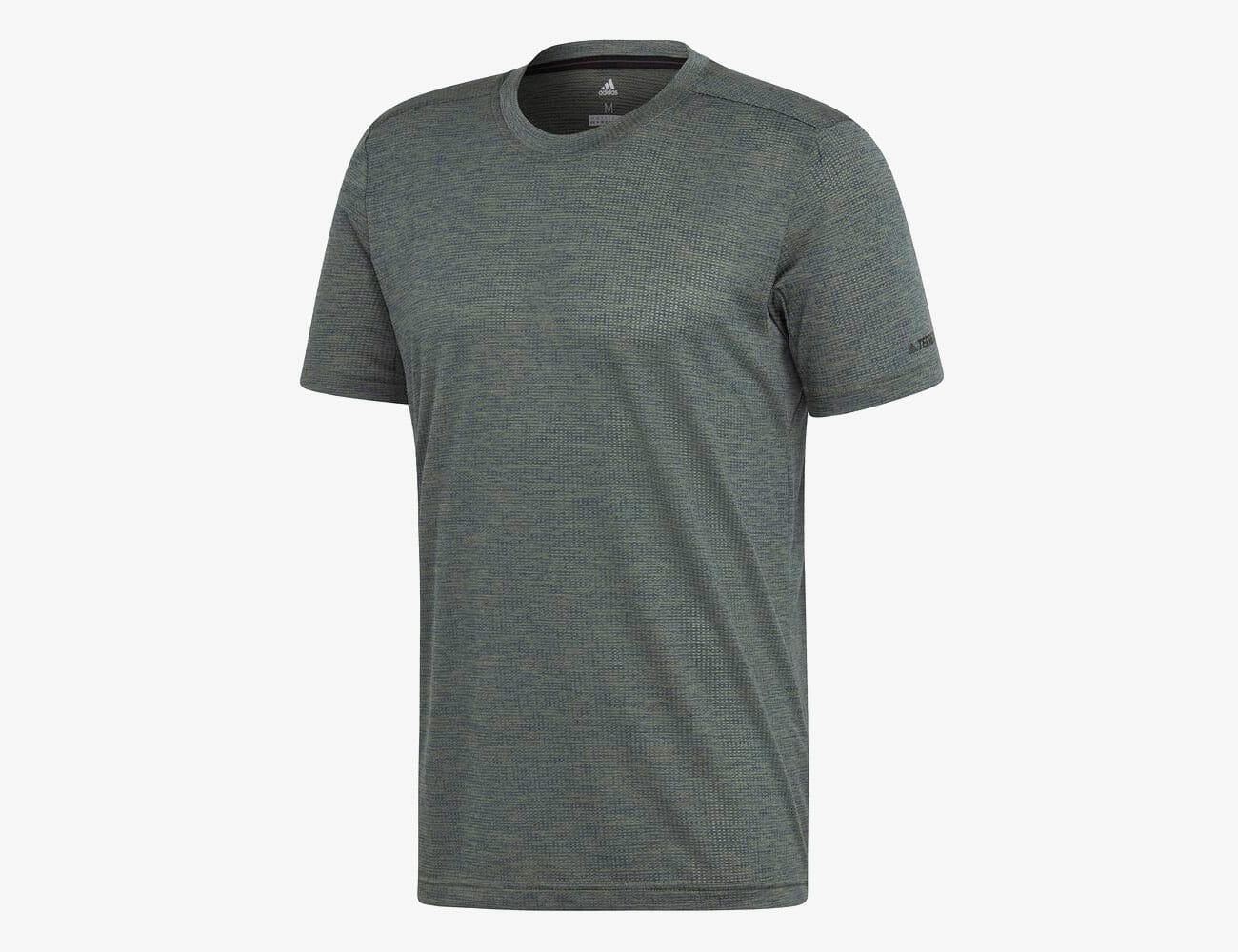
Adidas Tivid Tee

Under your jacket, you’re going to want a breathable tee or long sleeve, depending on the wind and temperature conditions. This Adidas tee with Climalite technology works to keep you dry from the inside out.

Note: Purchasing products through our links may earn us a portion of the sale, which supports our editorial team’s mission. Learn more here.

Testing Forks and Knives, er, Spatulas With Alex Honnold

It’s not every day that you get to eat scrambled eggs with Alex Honnold, one of the best climbers in the world and the subject of Free Solo, the Oscar-winning documentary about Honnold’s harrowing unroped climb up the iconic Freerider route on El Capitan in Yosemite National Park.

In February, as part of a Gear Patrol story about his rock climber-slash-movie star existence, I found myself sitting in a hotel room in Beverly Hills with Honnold as he got ready for the Oscars. As we spoke with Honnold for the piece it became apparent he wouldn’t be able to eat anything for several hours, so we played good host and ordered him some food.

If you know anything about Honnold, you know he prefers simplicity. That means #vanlife over a proper bedroom; approach shoes over wingtips; and (true story) spatulas over silverware as he eats directly from the pan.

As a dedicated Gear Patrol product journalist, I couldn’t pass up the opportunity for expert feedback. I gave Honnold three spatulas, taught him the technical terms for his utensil of choice (“flipper,” “handle,” etc.) and watched him go to work handling, scraping, and consuming.

As it turned out, Honnold was packing his very own spatula — as in, a spatula with his name on it, a limited-edition collaboration between Honnold and Black Diamond. No surprise, his version won (though a staff favorite came in a close second). If you want to check it out the Honnold Signature Spatula for yourself, head over to Black Diamond’s website; good news for anyone choosing to buy: profits from each spatula sold will go directly to the Honnold Foundation, promoting solar energy for a more equitable world.

Otherwise, check out Honnold doing some highly scientific, Gear Patrol-style product testing here:

[embedded content]
Gear Patrol also recommends:
OXO Good Grips Silicone Flexible Turner ($10)
Black Diamond Honnold Signature Spatula ($15)
Get It Right Premium Silicone Ultimate Spatula ($25)

The 10 Best Travel Running Shoes of 2019

There are two types of packers in the world: those that throw everything they own into a suitcase, and those that carefully stuff each packing cube with the order demanded by a drill sergeant. And let’s be honest, the art of perfect packing involves planning, especially when you’re trying to pack light. In the winter this can be slightly tricky, but in the summer, it’s more than doable.

One of the stickiest aspects of packing light is the question of “How do I leave enough room to pack an extra pair of sneakers so I can keep training and working out while I’m traveling?” Luckily, the fitness industry has come a long way from the bulky, over-supportive styles of running shoes past. Now it’s easy to find sneakers that look good, feel great and keep your feet happy all day long. Whether you’re running around Lady Bird Lake or walking around the Louvre, these ten styles bring performance and style to the table.

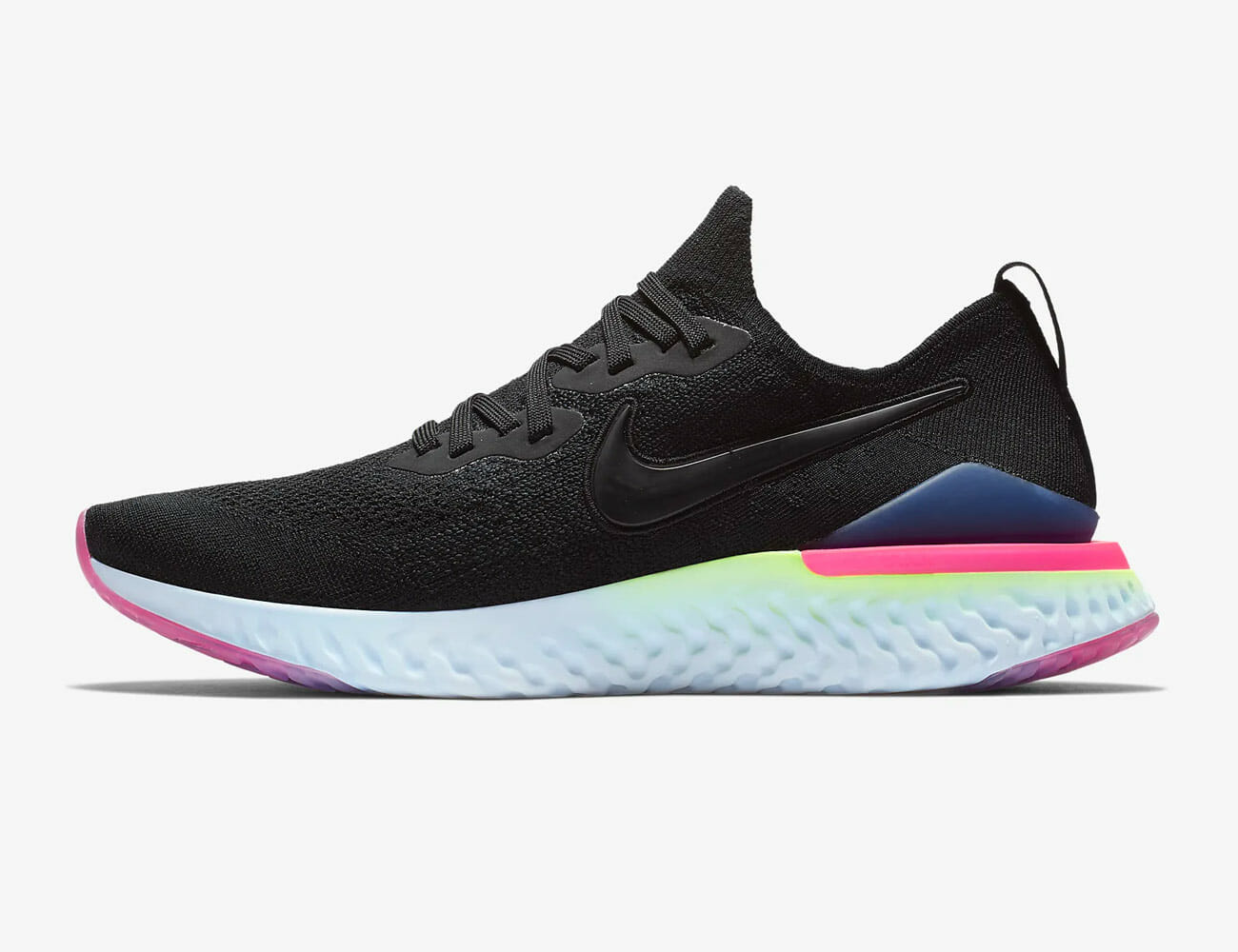
Nike Epic React Flyknit 2

These lightweight, yet plush Nike running sneakers are a smart choice for runners looking to log up to 10 miles. They work double duty when you’re flying out to a race and need a pair of shoes that will keep your legs feeling good before your shakeout run — and all day at the expo.

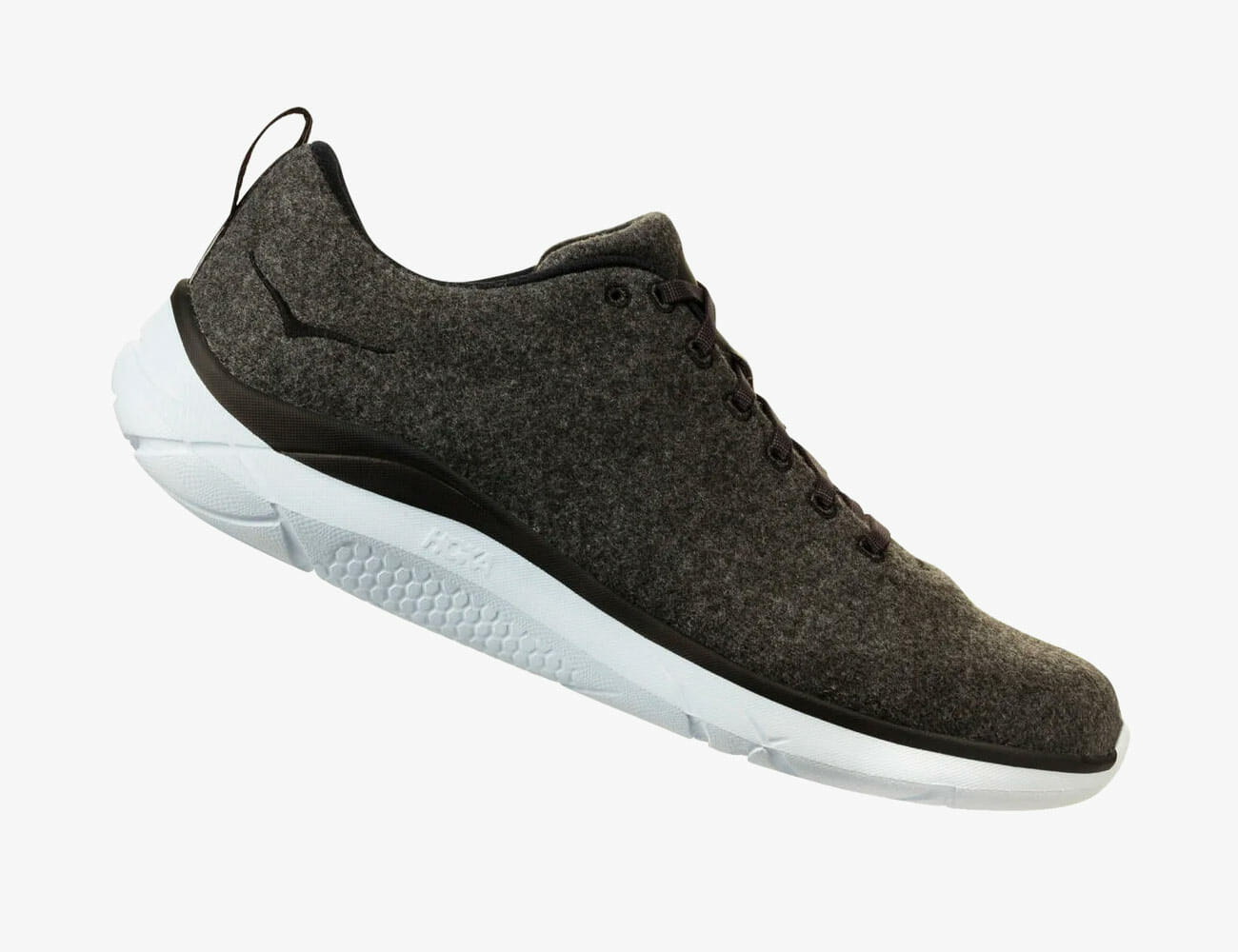
Hoka One One Hupana Wool

From the first time we laid eyes on the Hoka One One Hupana Wool runners we couldn’t help but think of the Allbirds Wool Runners, which are great weekend sneakers; we don’t want to run in them for fear of ruining the exterior, plus there’s no support in the sidewalls — but they can handle full days on your feet. The Hupana is a great sneaker for someone looking for a bit of support and they are easy to scrunch down so there’s plenty of added space for the extra wine bottle or rolled up map you’re bringing home in your suitcase.

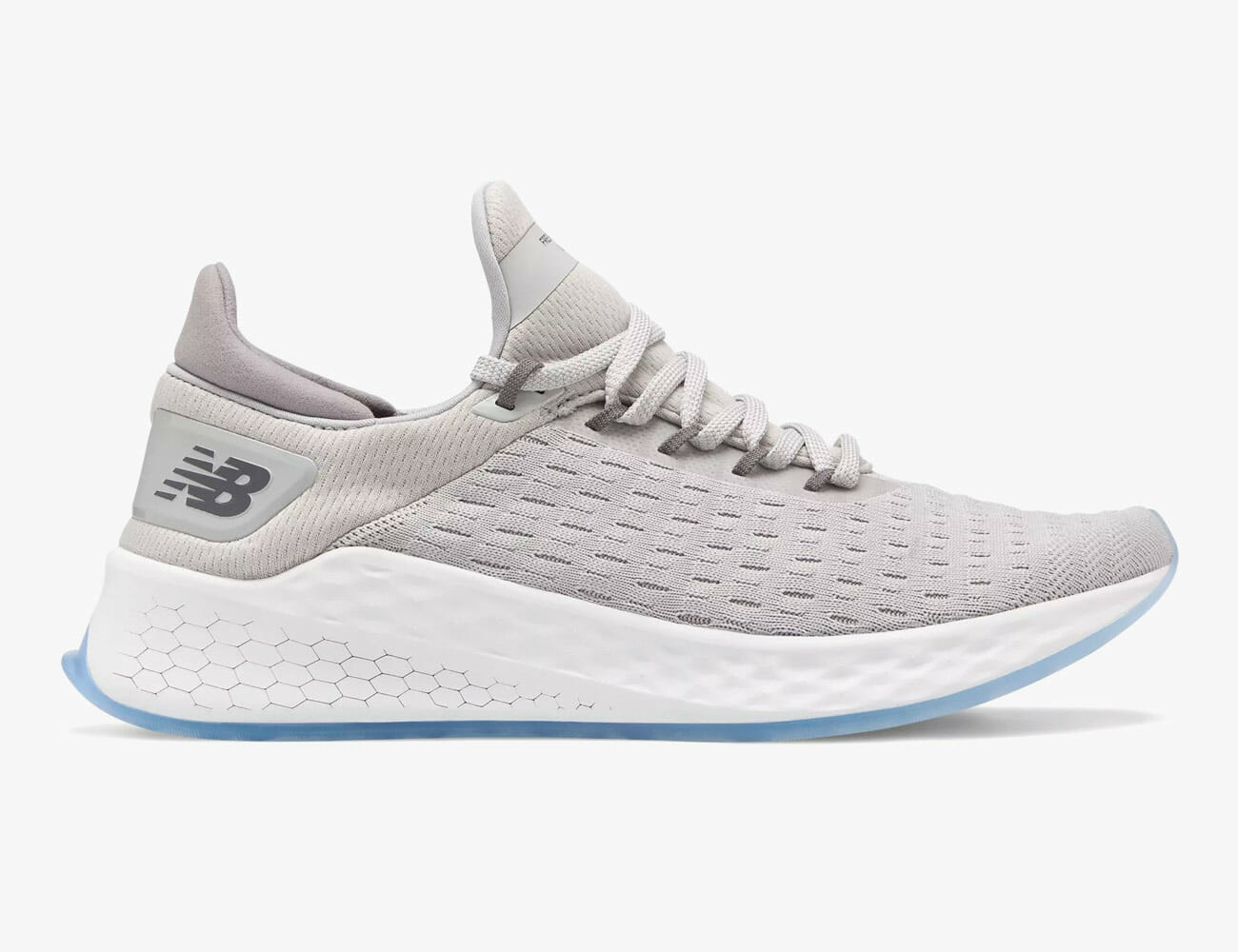
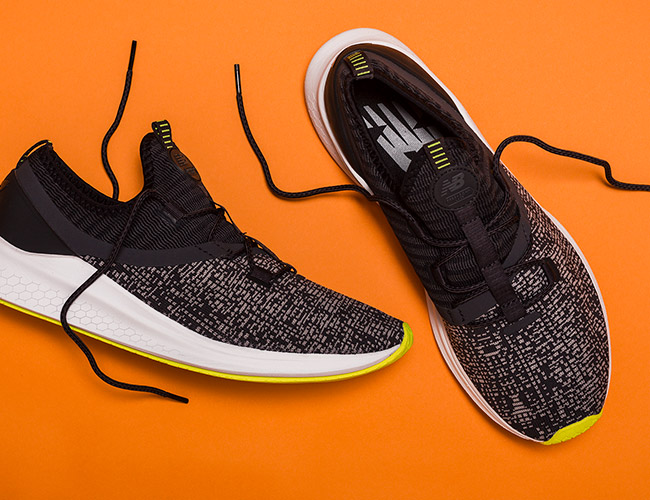
New Balance Fresh Foam Lazr V2 HypoKnit

At just $100, the second version of the Fresh Foam Lazr is a steal. These shoes are under 10-ounces, and the sleek upper, made from Hydroknit, is tighter around certain parts of your feet where you might need added support (like under the toes and along the interior and exterior of the shoe for over- or under-pronators). A pillow-like tongue ties it all together.

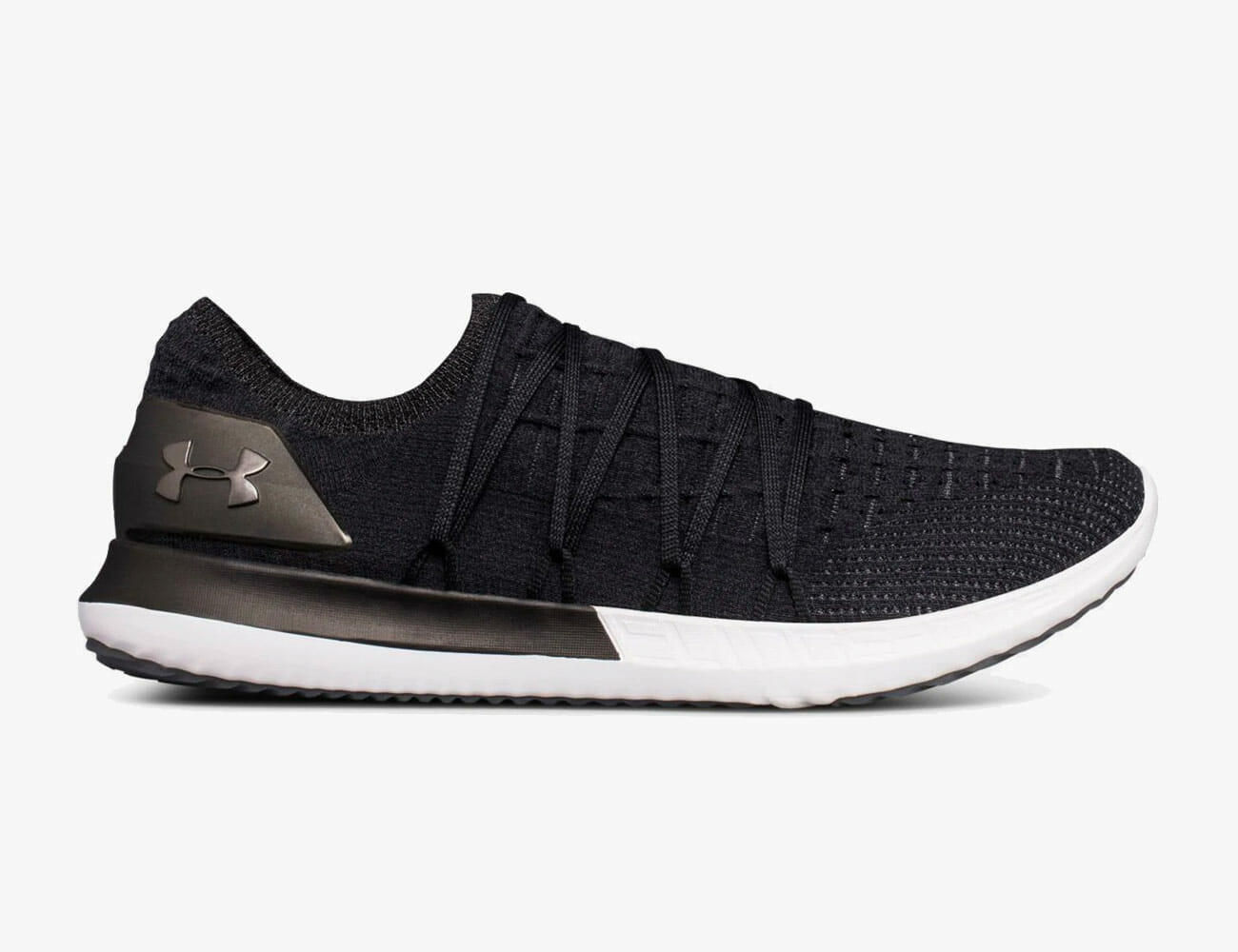
Under Armour SpeedForm Slingshot 2

The Under Armour SpeedForm is another pair of runners that are affordable and good-looking. Offered in grey or black, these minimalist sneakers are ideal for a Cherry Blossom 5K and the whirlwind city tour that happens after the run. The knit fabric will stretch if your feet swell, so you don’t have to worry about all the time you spend standing.

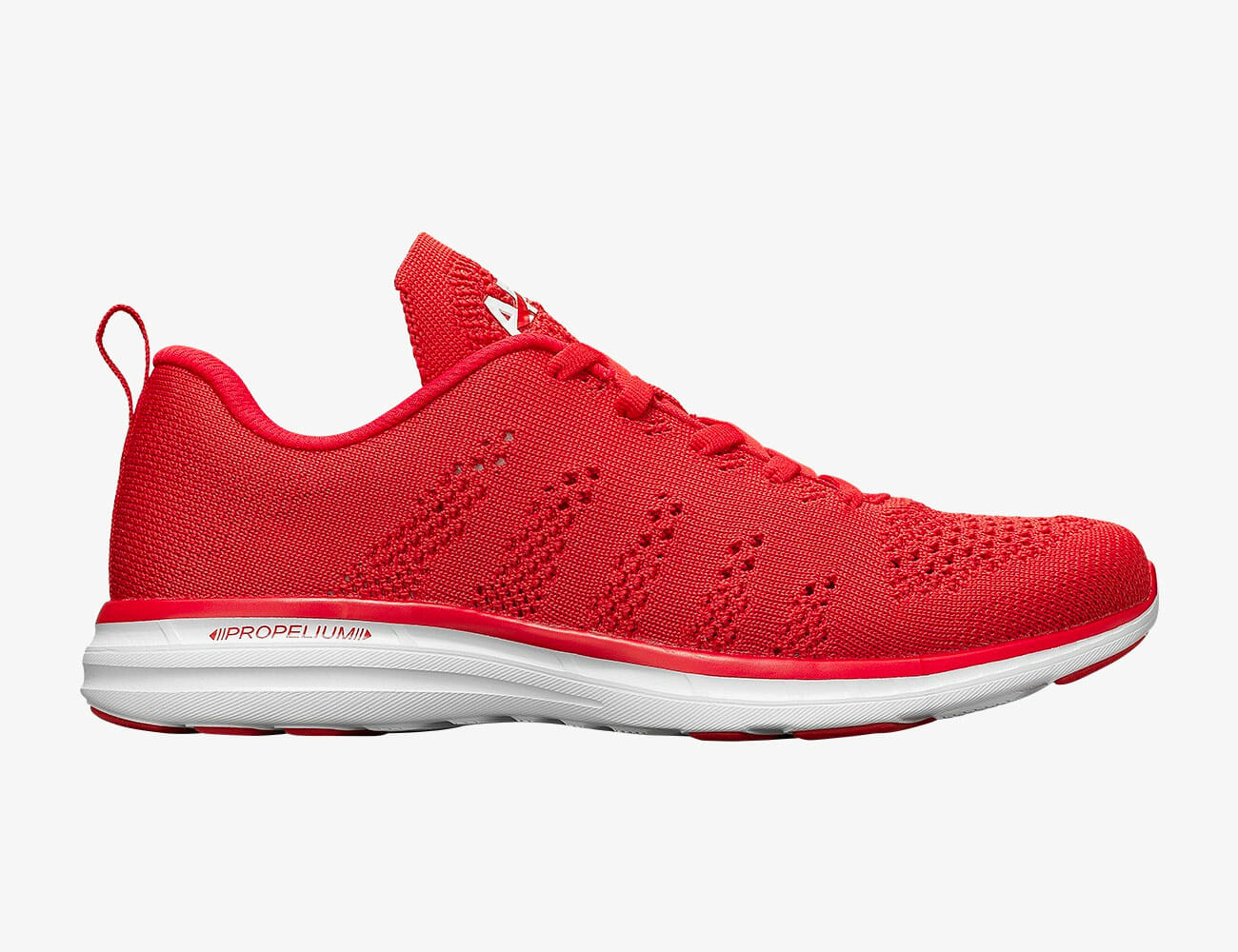
APL TechLoom Pro

These single-color sneakers work for shorter distances, yet are also simple enough to match every outfit you pack — there are 27 different colors. And did I mention they’re lightweight? We also love these low profile sneakers for gym days as well.

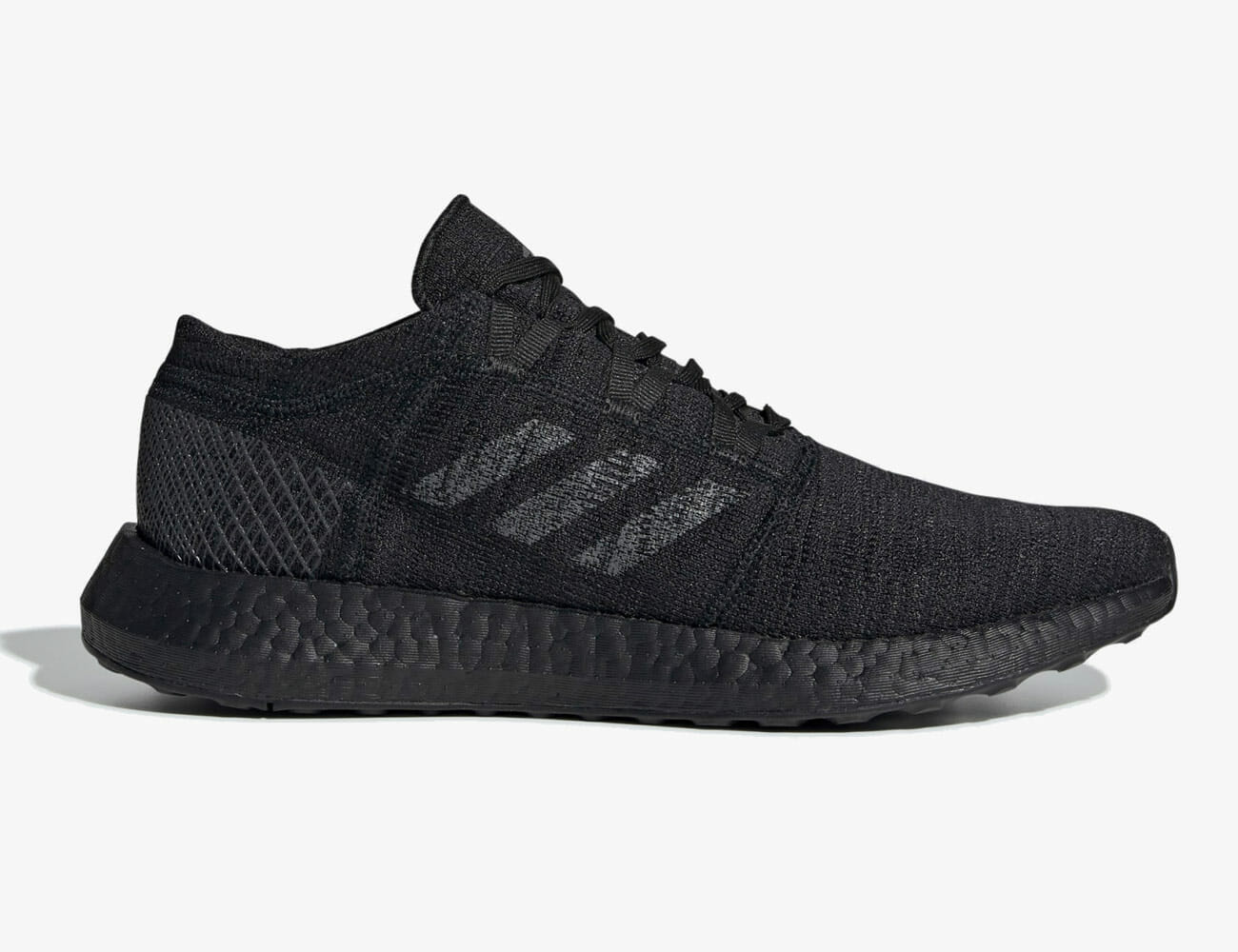
Adidas Pureboost Go Shoes

It’s hard to find all black sneakers with a matching black sole, but these Adidas Pureboost Go shoes fit the bill. With Boost foam underfoot and a stretchy upper, these sneakers can handle anything city exploring throws at you. At 10.3 ounces, these are a bit heavier than others on this list, but there’s a reason the Adidas Ultraboost style sells out so quickly — the responsive and soft foam helps return energy to your body so your feet won’t be as tired at the end of the day as opposed to a day spent in flip flops or boots.

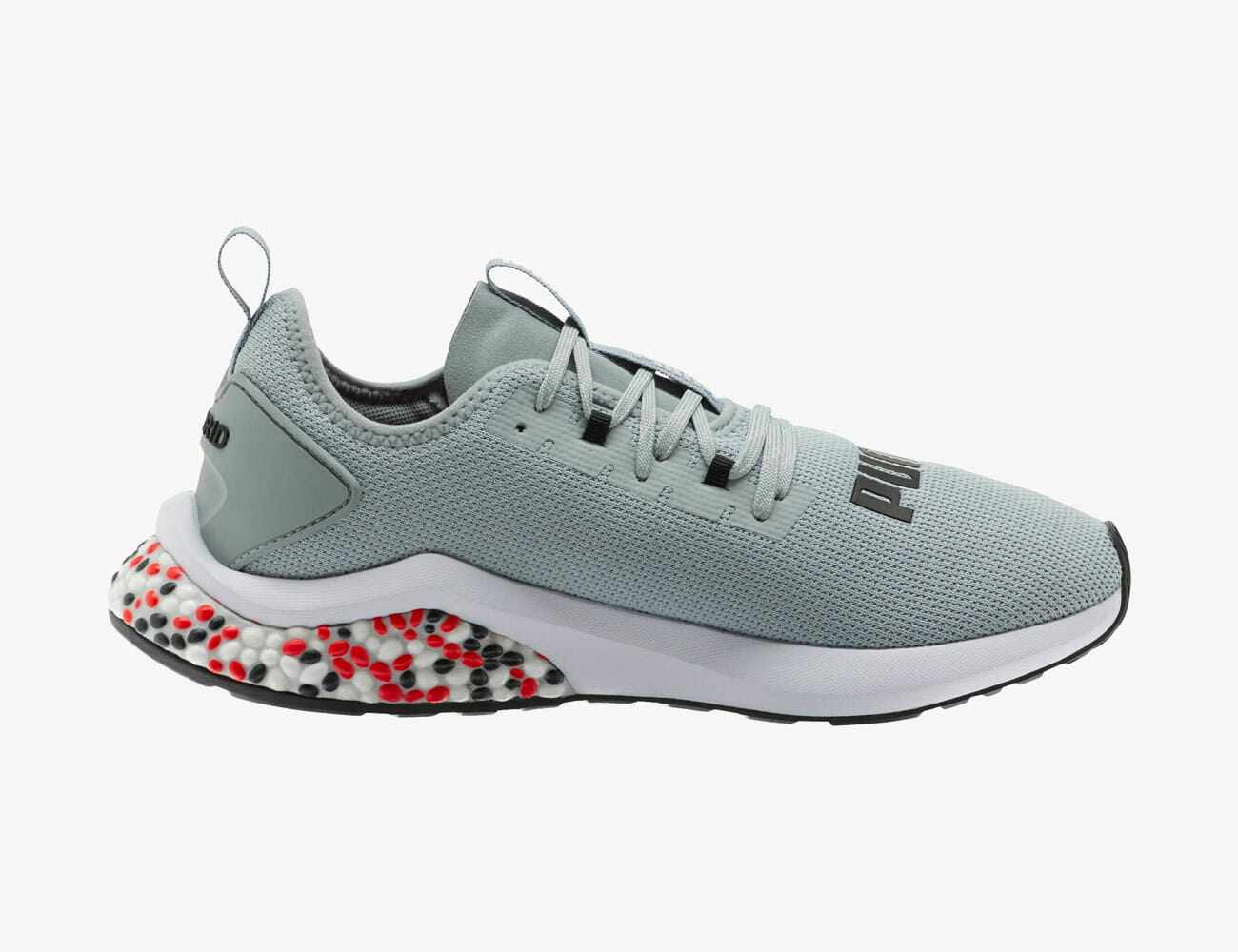
Puma Hybrid NX Shoes

The breathable sock-like upper in Puma’s Hybrid sneakers features plenty of support thanks to an external heel cup (labeled with Puma) and two types of foam underfoot. The blended shoe comes in five different colors. While the heel cup won’t fold down, the rest of the sneaker will collapse and squish together so a pair could fit in your briefcase, if needed.

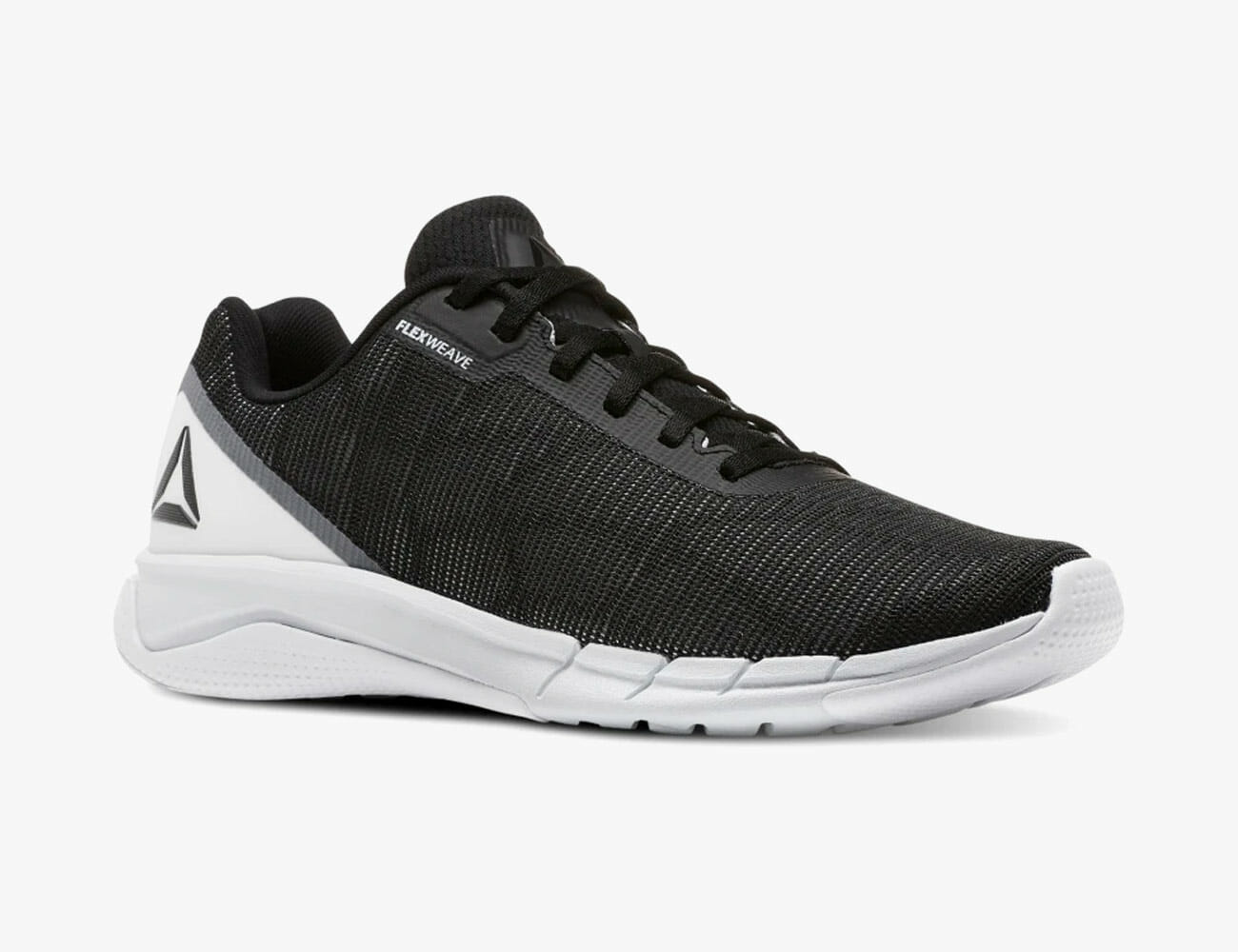
Reebok Fast Flexweave

Imagine all the technology in the Reebok Floatride run, just at a lower price, with a denser (read: more comfortable and firm) midsole. At only $100 (or less) this gym and running shoe is the ideal blend of performance and stretch that’s built to last, no matter how many gyms you visit.

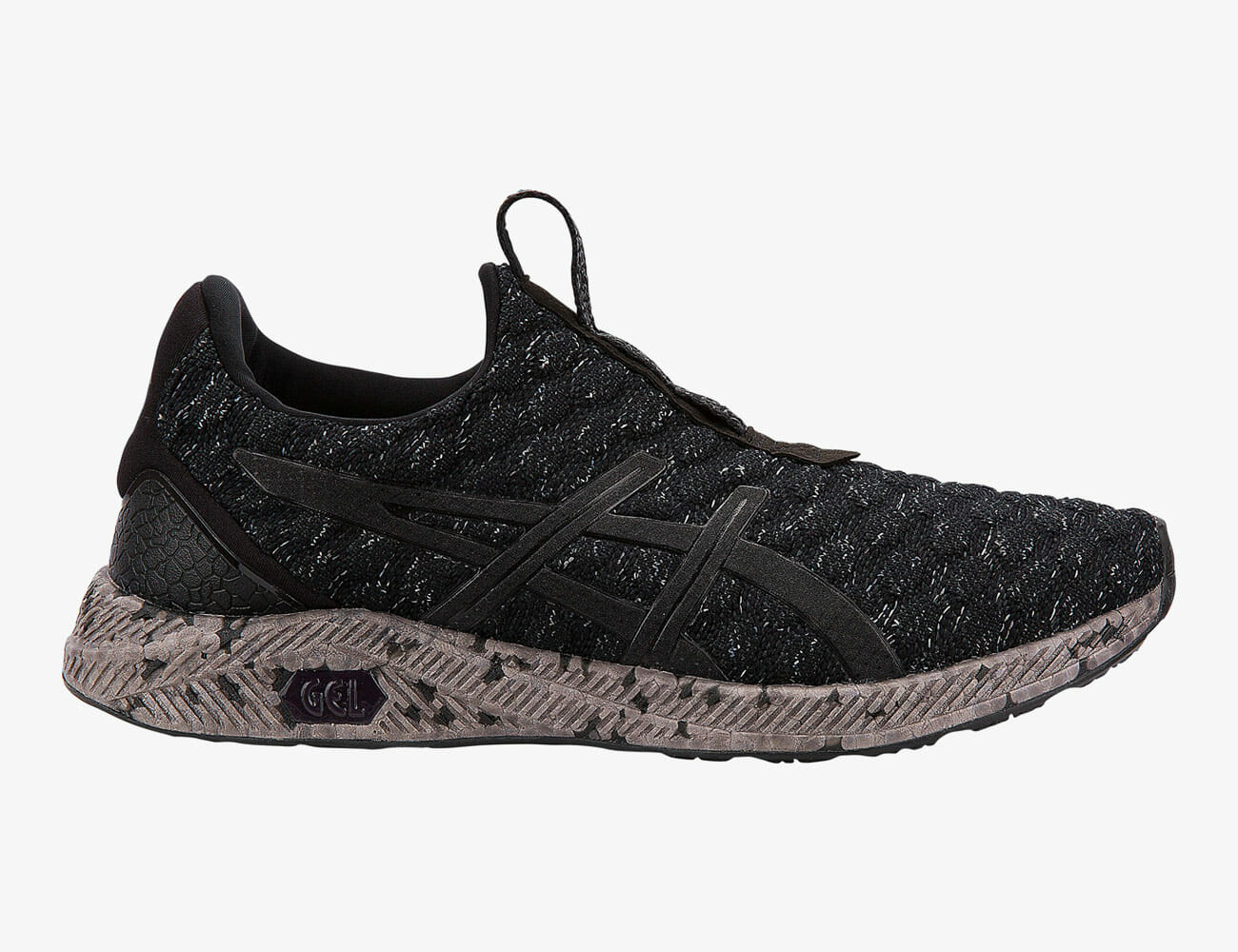
Asics HyperGel-Kenzen

These Asics sneakers have no laces, but don’t let that dissuade you from taking them out for a quick jaunt. The sock-like construction is tight around your feet, so buy half a size up so there’s some space for your toes to breathe.

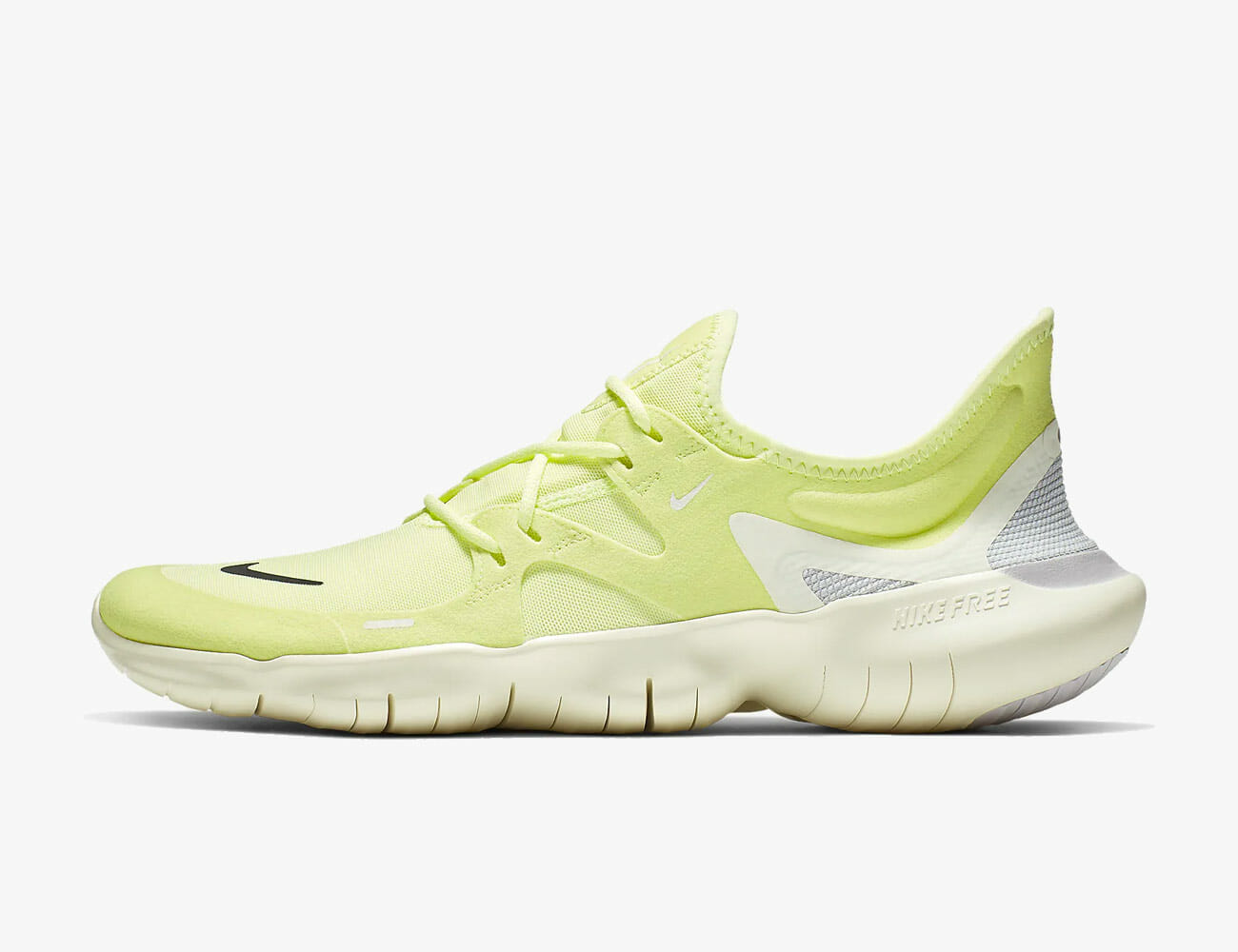
Nike Free RN 5.0 2019

The minimalist look and feel of the Nike Free is a cornerstone of what makes these lightweight sneakers instantly recognizable. The updated 2019 version is 26 percent more flexible than previous versions, and the upper is 100 percent different. We like to imagine what shoes would look like if we were going to space — this would be it.

Best Gym Shoes

Whether you hit the CrossFit Box or lift weights at the gym, there’s a gym sneaker in here for you. Read the Story
The Best New Running Shoes Out This Month March

With spring races just around the corner and more hours of sunshine in each day, it’s time to take your treadmill miles to the road. Each month there are a seemingly large number of new sneakers released, whether they’re updates to old versions or brand new models — and it can be hard to figure out which ones are worth buying. We’ve sifted through the noise for you; Here are all the running sneakers we’re excited about that launched this month.

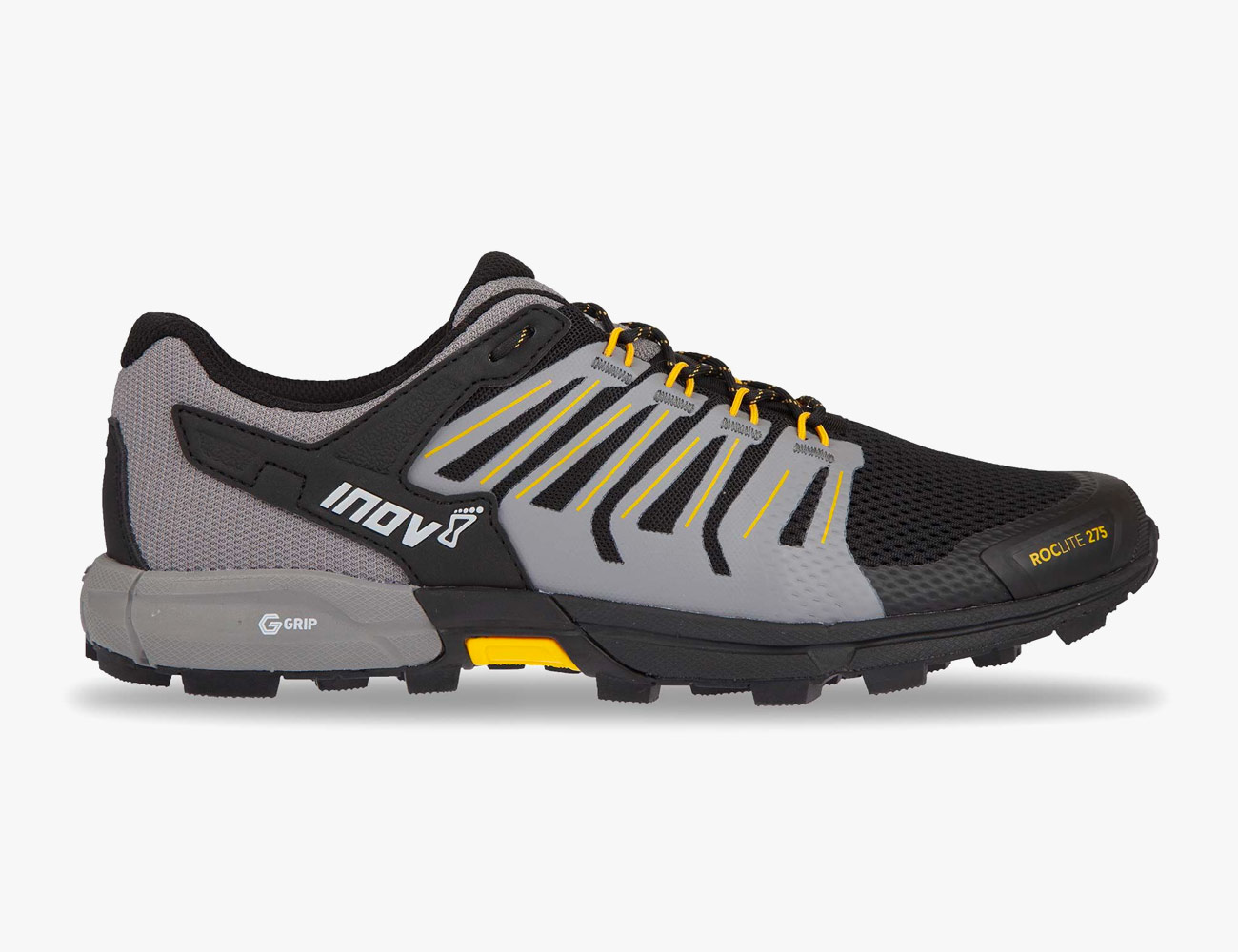
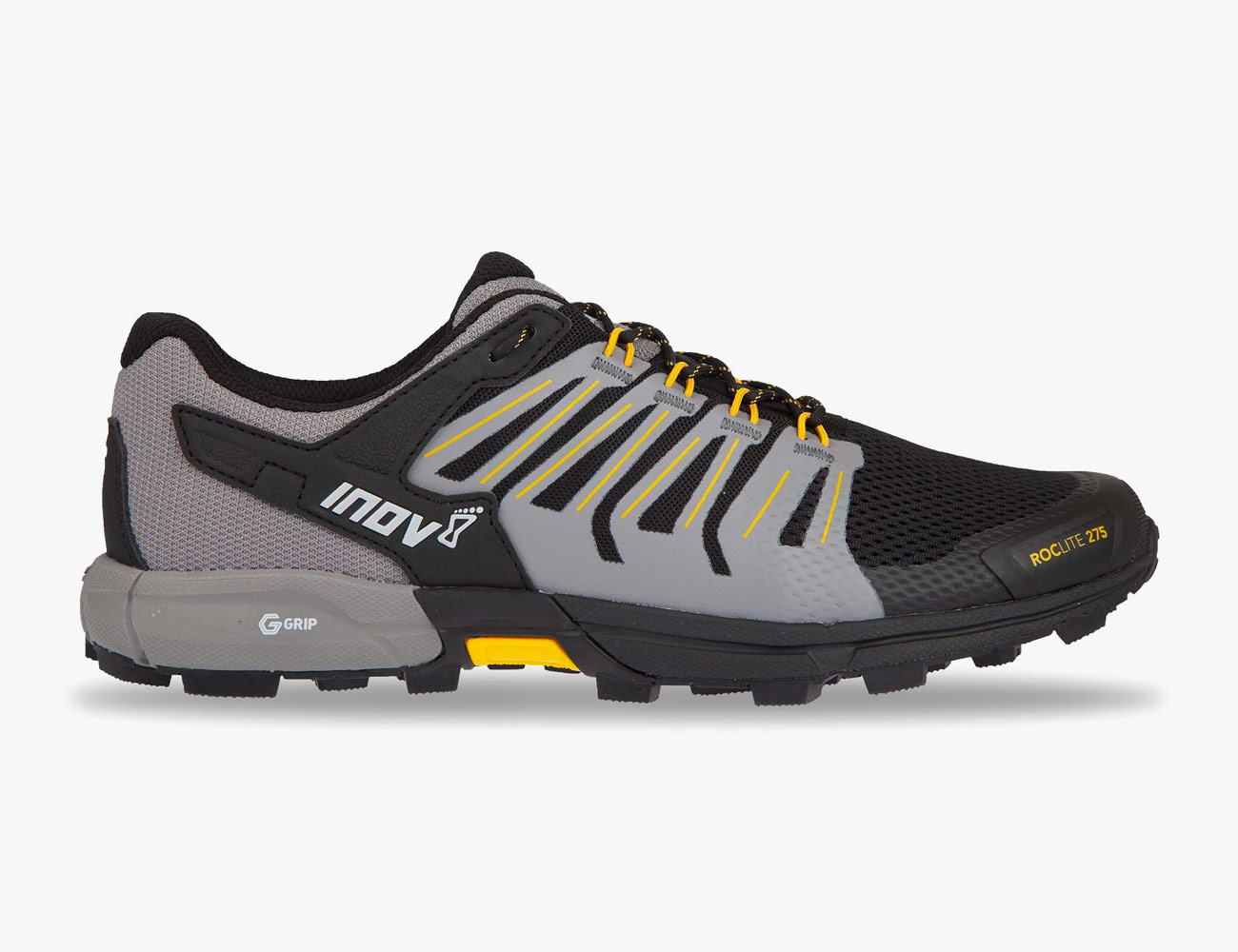
Inov-8 Roclite 275

This light and speedy sneaker is ideal for rocky trails. Despite weighing just 9-ounces, the mesh upper and grippy, lugged outsole are heavy duty and won’t fall apart after 50 miles.

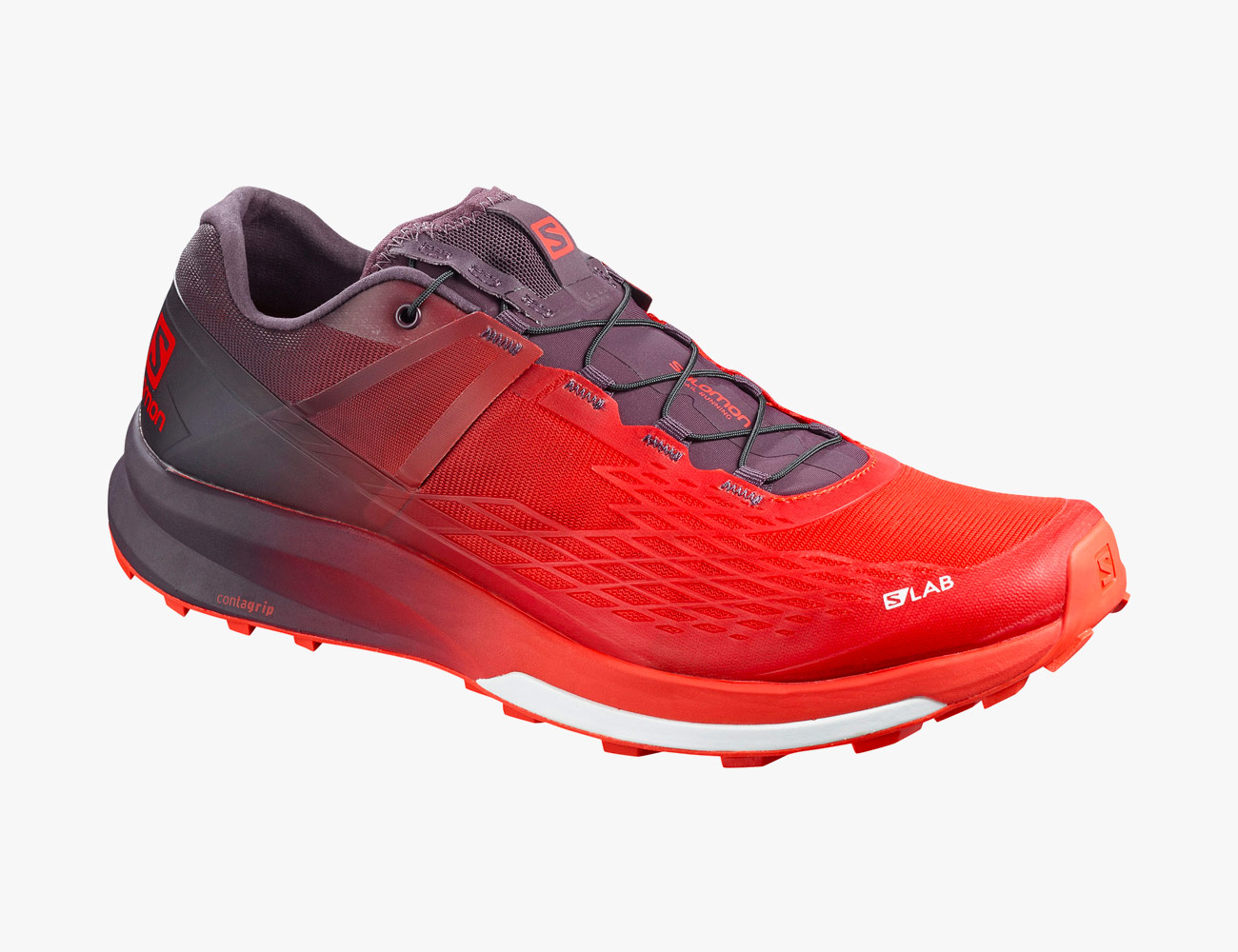
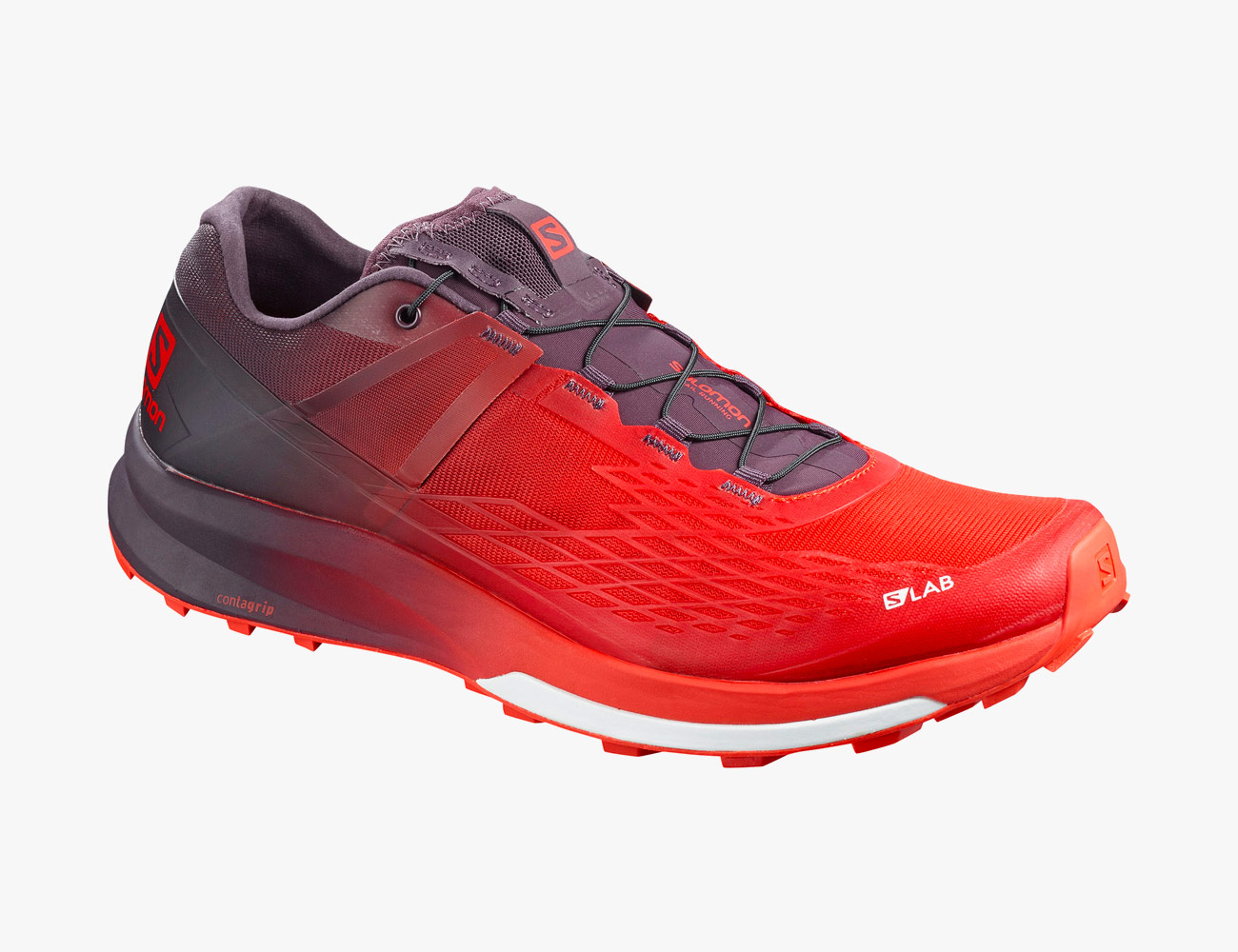
S/Lab Ultra 2

The S/Lab Ultra is for those on the high mileage side of trail running. At $180, it’s not an entry-level shoe, but runners in the know will recognize and put value in the name Françoise D’haene, an ultrarunner who collaborated on the design. He wore these during his record-breaking run of California’s John Muir Trail last October. Salomon’s newest trail runners will handle 50-mile trail races in stride, plus the improved fit means there’s ample room for foot swell.

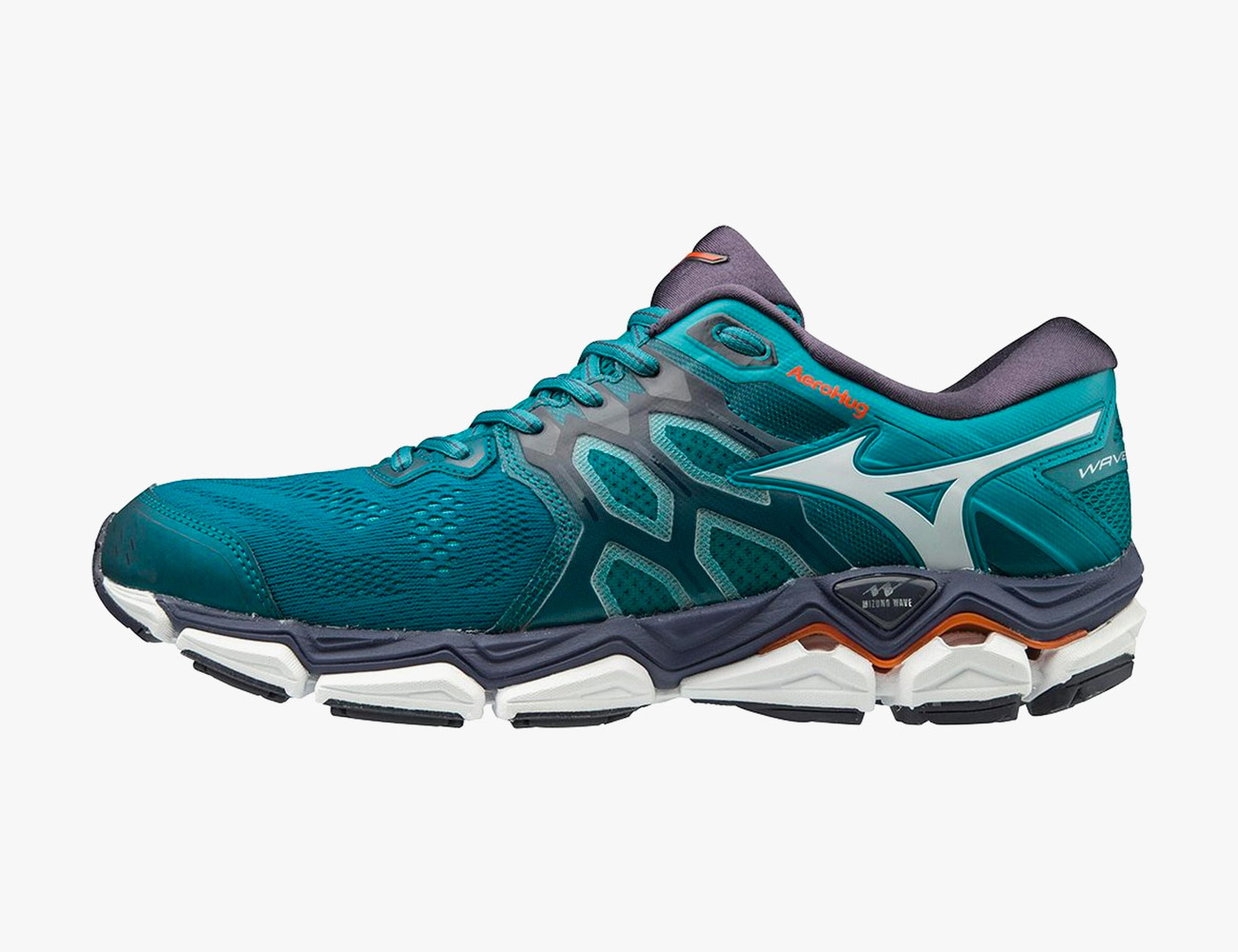
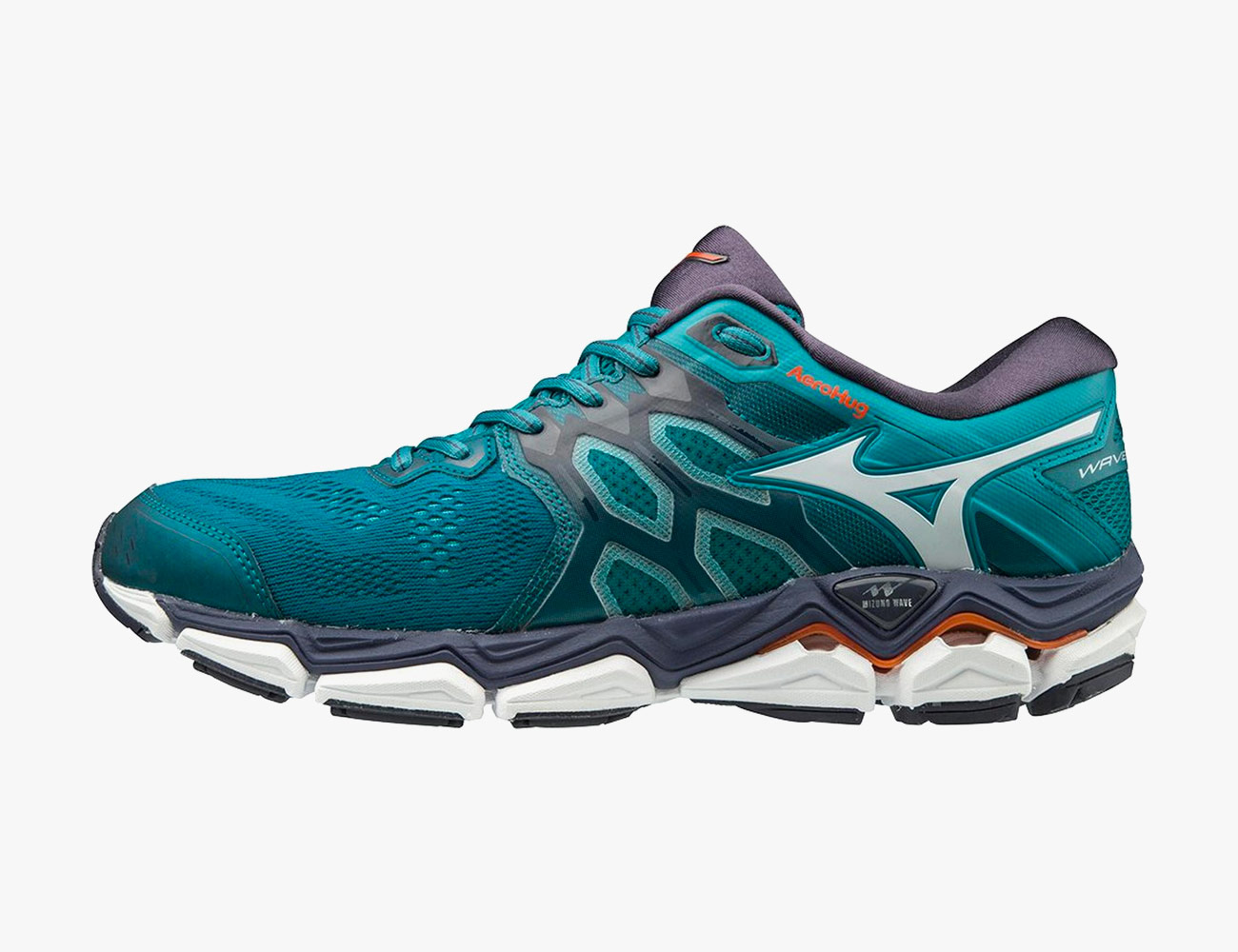
Mizuno Wave Horizon 3

The newest sneaker from Mizuno is built for those who need stability on their runs. For those familiar with the Mizuno family of shoes, the midsole is the same as the Wave Enigma, Wave Rider and Wave Prophecy. For those who haven’t tried it, the foam is soft and cushioned, so you have a plush feel as soon as you step in.

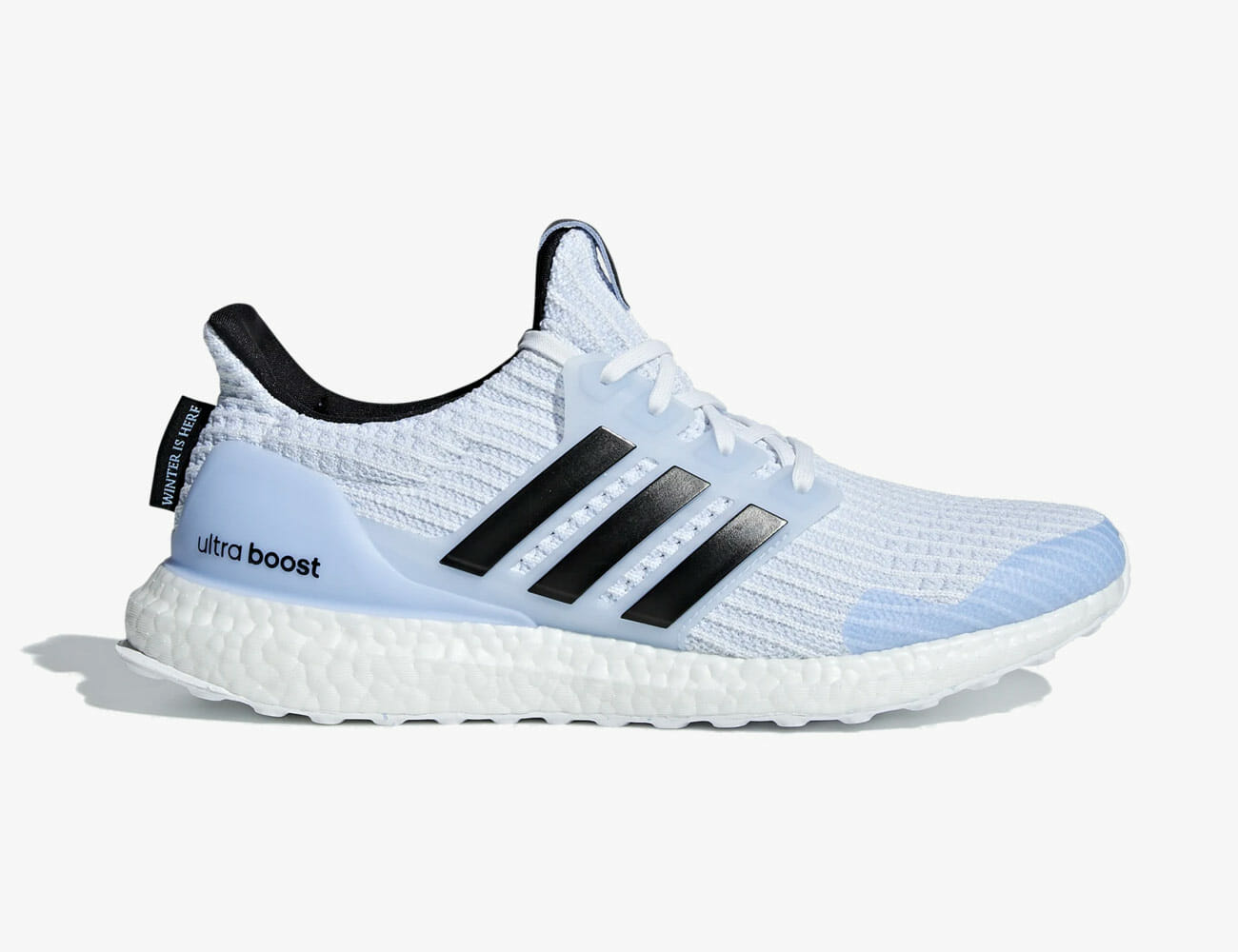
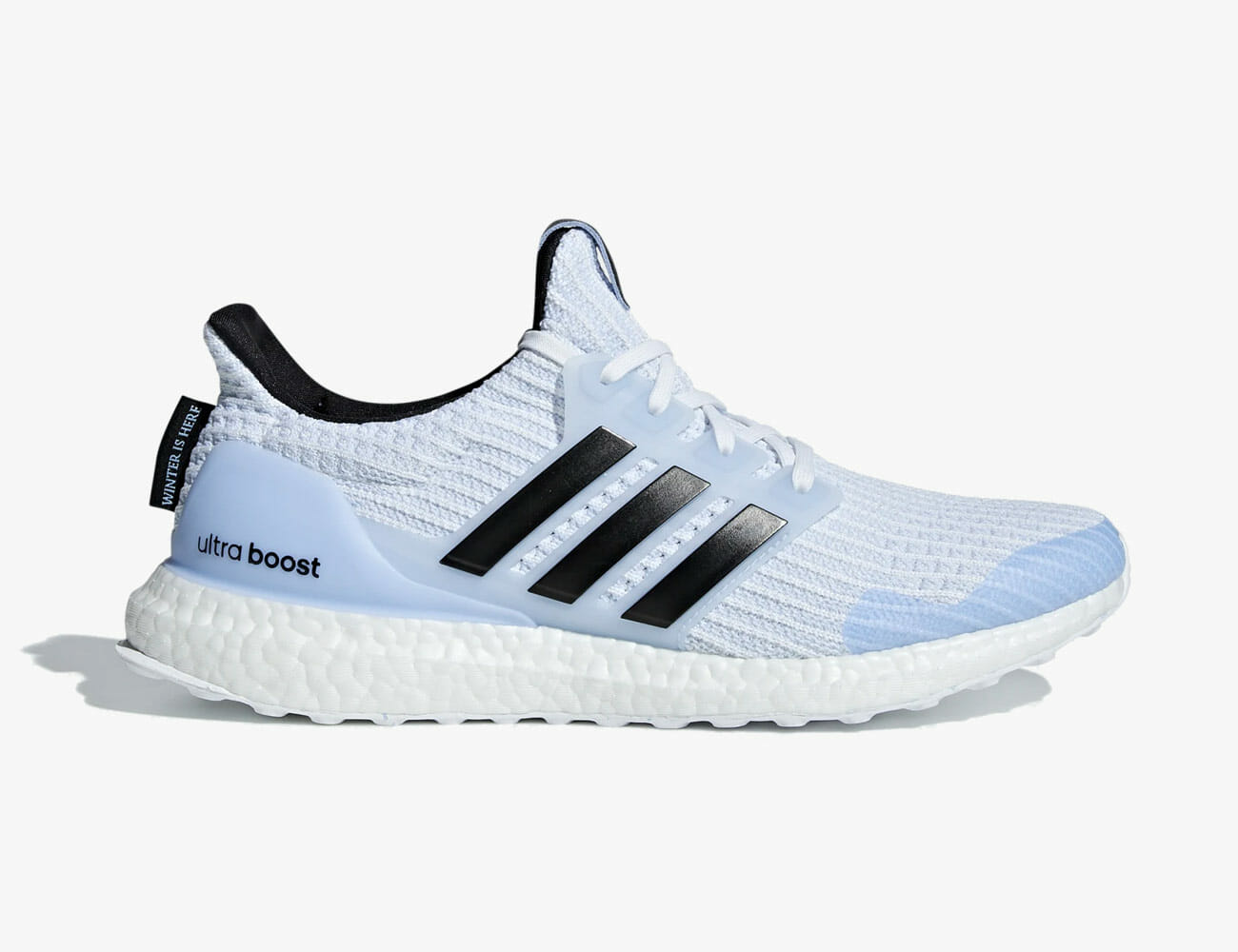
Adidas Running x Game of Thrones

These unisex shoes, inspired by the television series Game of Thrones, come in six limited edition styles and colors. Expect the same great performance features the Ultraboost is known for like a cushioned feel and a grippy Continental outsole.

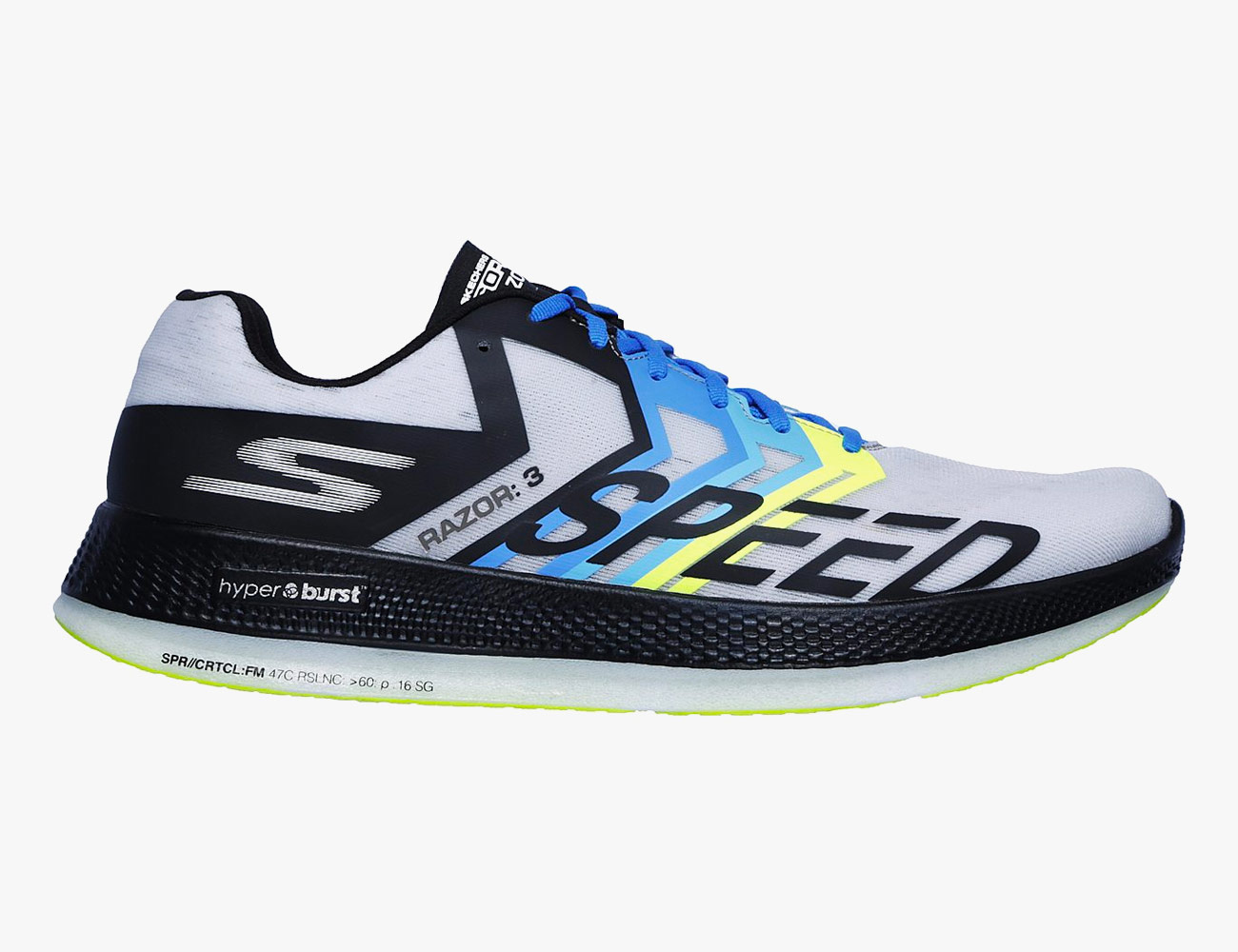
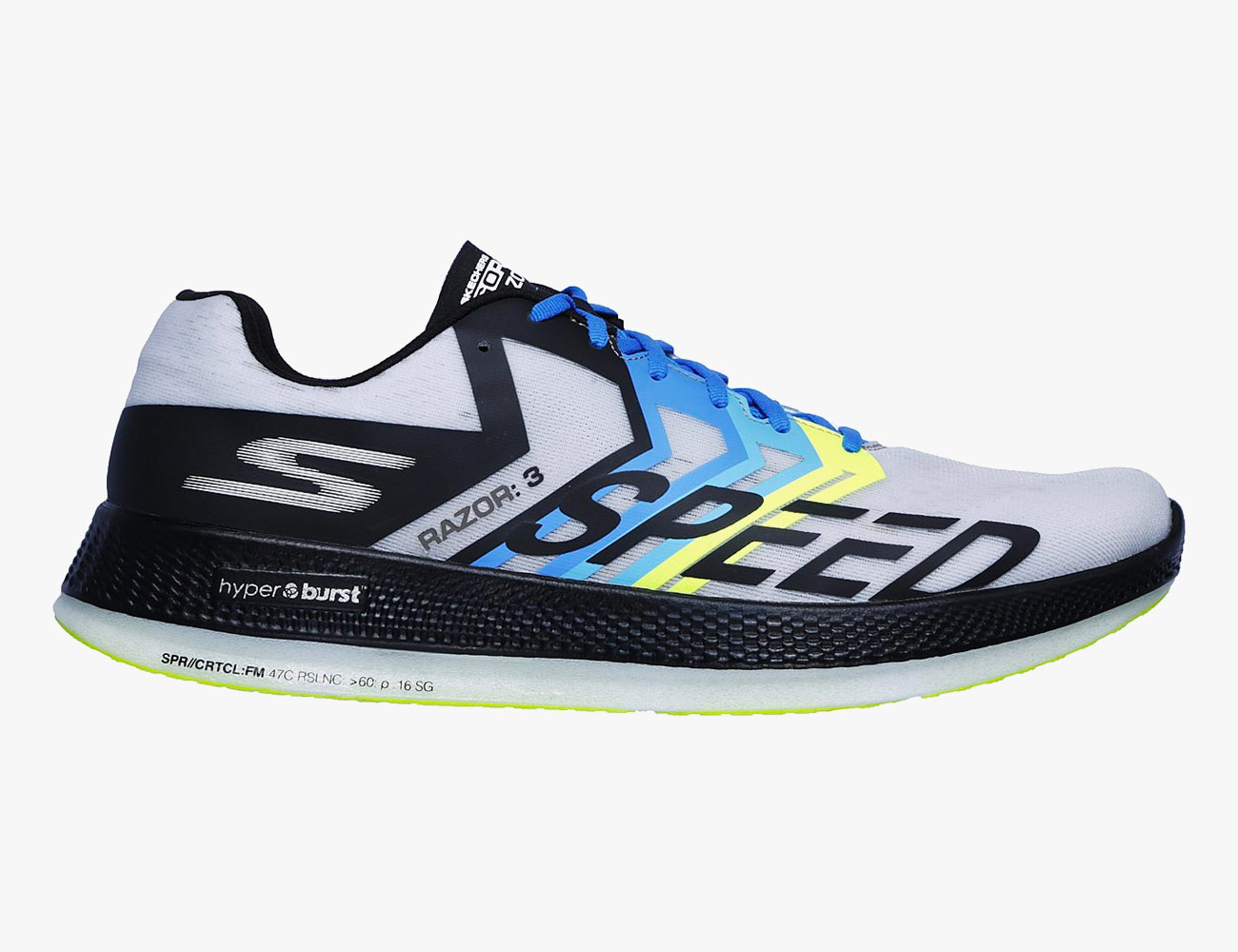
Skechers Go Run Razor 3 Hyper

In honor of the Los Angeles marathon (on March 24), Skechers, a title sponsor, released a new colorway of the speedy Gorun Razor. We tested a version of this sneaker and awarded it as one of the Best New Running Shoes of 2018, so we expect this version, which has only had a color update, will also help us pick up the pace and log some speedy meters.

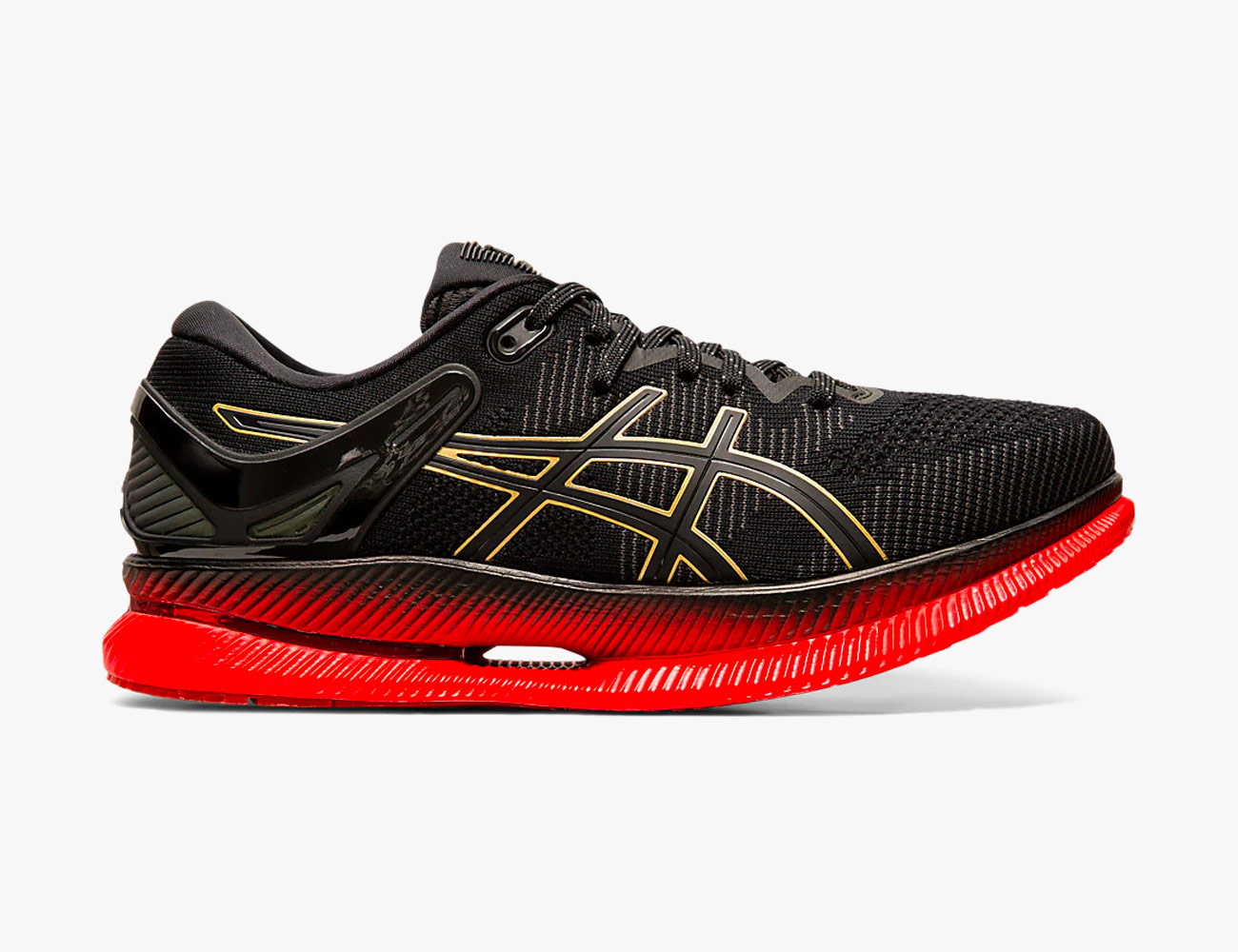
Asics MetaRide

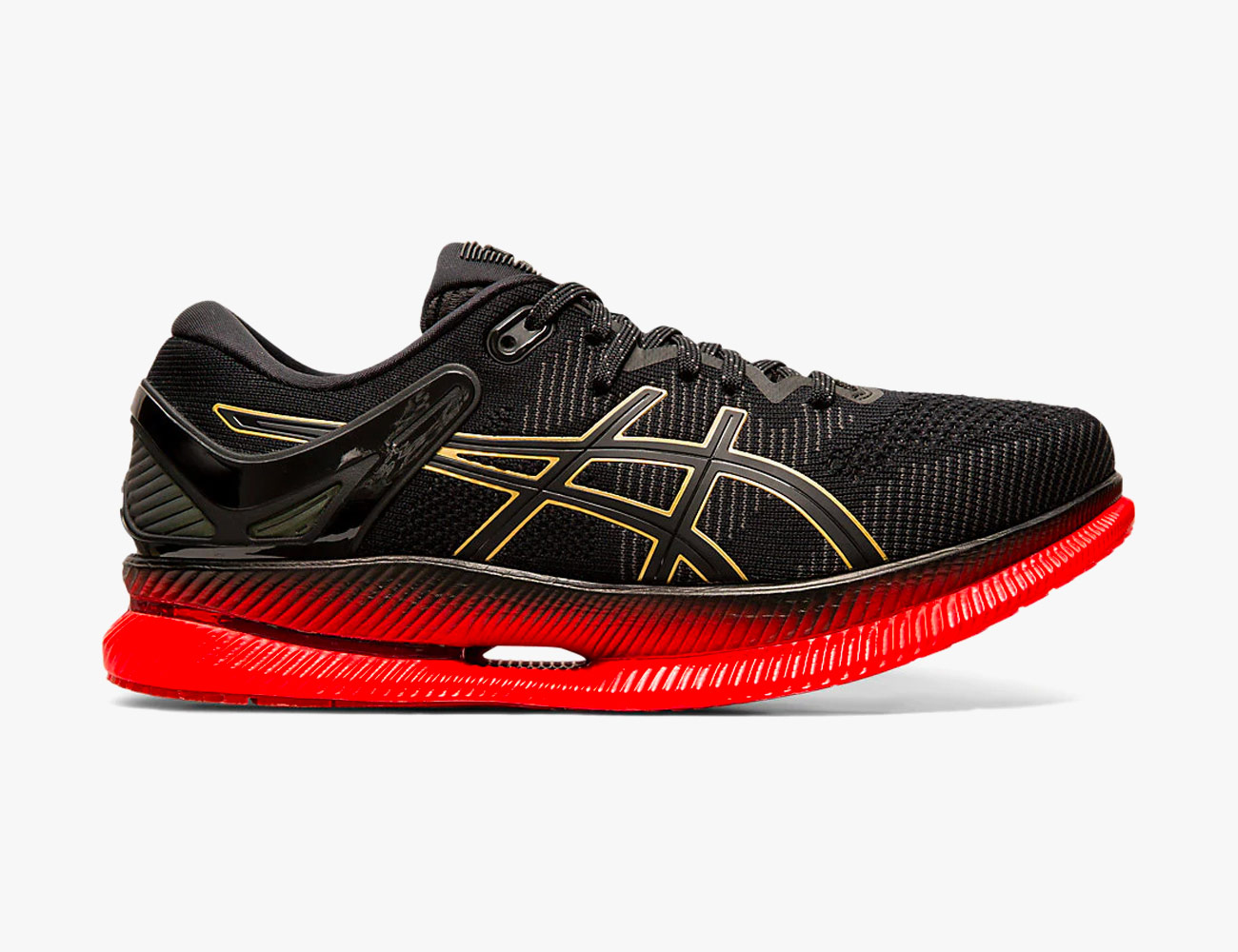
After a brief 20-minute treadmill run in the Asics MetaRide, we can vouch that the rocker technology makes for a seriously different feel. Heel strikers will get the most energy return as they hit the ground with their heel and feel the shoe roll forward (picture a rocking chair moving back and forth), which helps eliminate some energy output on your part.

The 15 Best New Running Shoes of 2018

This definitive guide to the best new running shoes of 2018 explores everything you need to know before buying new running shoes this year, including shoes from Brooks, Altra, Adidas, Asics, Mizuno, Reebok and more. These twelve shoes are worth tracking down this year. Read the Story
Note: Purchasing products through our links may earn us a portion of the sale, which supports our editorial team’s mission. Learn more here.

The Best New Running Shoes Out This Month

With spring races just around the corner and more hours of sunshine in each day, it’s time to take your treadmill miles to the road. Each month there are a seemingly large number of new sneakers released, whether they’re updates to old versions or brand new models — and it can be hard to figure out which ones are worth buying. We’ve sifted through the noise for you; Here are all the running sneakers we’re excited about that launched this month.

Inov-8 Roclite 275

This light and speedy sneaker is ideal for rocky trails. Despite weighing just 9-ounces, the mesh upper and grippy, lugged outsole are heavy duty and won’t fall apart after 50 miles.

S/Lab Ultra 2

The S/Lab Ultra is for those on the high mileage side of trail running. At $180, it’s not an entry-level shoe, but runners in the know will recognize and put value in the name Françoise D’haene, an ultrarunner who collaborated on the design. He wore these during his record-breaking run of California’s John Muir Trail last October. Salomon’s newest trail runners will handle 50-mile trail races in stride, plus the improved fit means there’s ample room for foot swell.

Mizuno Wave Horizon 3

The newest sneaker from Mizuno is built for those who need stability on their runs. For those familiar with the Mizuno family of shoes, the midsole is the same as the Wave Enigma, Wave Rider and Wave Prophecy. For those who haven’t tried it, the foam is soft and cushioned, so you have a plush feel as soon as you step in.

Adidas Running x Game of Thrones

These unisex shoes, inspired by the television series Game of Thrones, come in six limited edition styles and colors. Expect the same great performance features the Ultraboost is known for like a cushioned feel and a grippy Continental outsole.

Skechers Go Run Razor 3 Hyper

In honor of the Los Angeles marathon (on March 24), Skechers, a title sponsor, released a new colorway of the speedy Gorun Razor. We tested a version of this sneaker and awarded it as one of the Best New Running Shoes of 2018, so we expect this version, which has only had a color update, will also help us pick up the pace and log some speedy meters.

Asics MetaRide

After a brief 20-minute treadmill run in the Asics MetaRide, we can vouch that the rocker technology makes for a seriously different feel. Heel strikers will get the most energy return as they hit the ground with their heel and feel the shoe roll forward (picture a rocking chair moving back and forth), which helps eliminate some energy output on your part.

The 15 Best New Running Shoes of 2018

This definitive guide to the best new running shoes of 2018 explores everything you need to know before buying new running shoes this year, including shoes from Brooks, Altra, Adidas, Asics, Mizuno, Reebok and more. These twelve shoes are worth tracking down this year. Read the Story
Note: Purchasing products through our links may earn us a portion of the sale, which supports our editorial team’s mission. Learn more here.

Shop This Constantly Sold Out Jacket from Topo Designs Today


Today, you can pick up the elusive Topo Designs Ultralight Jacket that tends to disappear off the virtual shelves as quickly as the brand can restock it. The lightweight nylon material of the minimally designed coat works for day hikes, commutes, even bike rides. It folds up into an internal chest pocket so packing it in a duffel or carry-on is a breeze.

The jacket comes in four colors, and as of this morning, specific sizes are already starting to sell out. If you’ve had your eye on the simple, yet essential jacket, now’s the time to buy one at Topodesigns.com.

Gear Patrol also recommends:
Kuhl Parajax Jacket ($99)
Backcountry Wasatch Crest Hybrid Jacket ($140)
Relwen Packlight Shell ($228)
Today in Gear

The best way to catch up on the day’s most important product releases and stories. Read the Story
Conquer Your Commute with This Unique Helmet

This post is presented by the Gear Patrol Store. Purchasing products from our store supports our editorial efforts.

A good helmet is a crucial piece of commuter kit, whether you’re cruising on a Citi bike or pedaling your personal two-wheeled pegasus. But when you get where you’re going, lugging it around can be a pain. Clip it to the outside of your pack? No go. That look went out in middle school. Conceal it neatly in your messenger bag? Fat chance. There’s no way you’re getting it in with all your other essentials, no matter what commuter bag you’re rocking. So what do you do with that life-saving, space-sucking piece of head armor? The product wizards at Priority Bicycles say, fold it.

What Is Priority Bicycles?

Priority has been making commuter-friendly bikes since their meteoric kickstarter campaign in 2014 which birthed what is now dubbed the Priority Classic. Since then, Priority has rolled out seven different models, including an e-bike called theEmbark. With ‘no-maintenance’ belt drives, comfy seats and oodles of convenient accessories, Priority’s line has made commuting easier and more enjoyable. Read the results of our month-long test of Priority’s ‘no-maintenance’ model, the Neverflat.

Building a Better Helmet

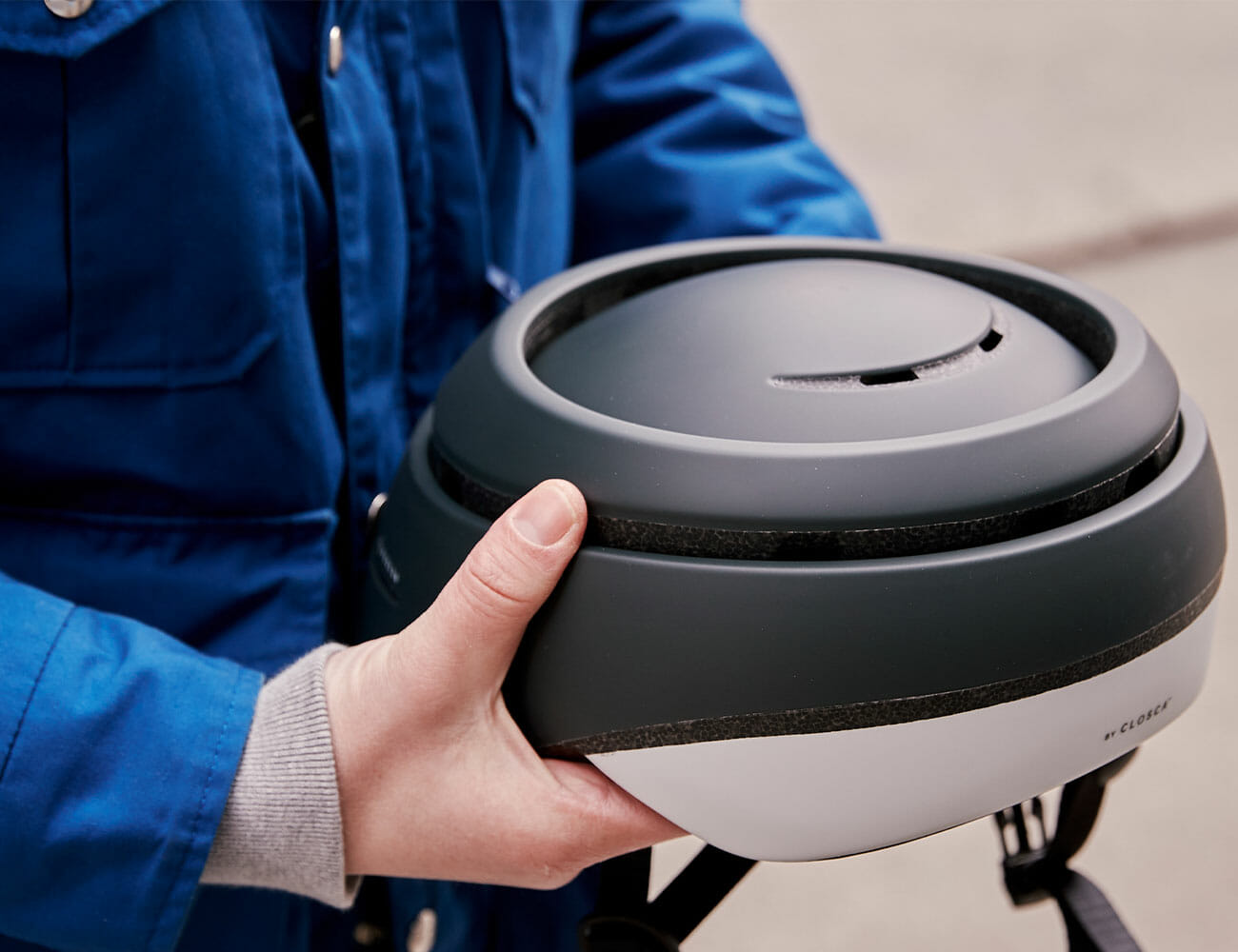
With the bike sorted, Priority applied its philosophy to the bicycle helmet, seeking to build one that would better meet the needs of the modern commuter. The result was the 174Hudson Stack, a unique folding helmet that offers all the protection of a standard unit but is easier to stow and carry when not in use.
174Hudson Stack Helmet

Small on Size, Big on Safety
Most importantly, the collapsible design doesn’t shortchange on safety, either. Having passed rigorous testing in both the EU and the United States, the helmet is fully certified. When donned properly, the three tiers of the 174Hudson Stack lock into place. In this configuration it forms a constant barrier between your head and an impact surface at all angles.
[embedded content]

A Helmet For Every Head
When folded, the 174Hudson Stack helmet is almost 50% smaller than when it is expanded, and at 330 grams, it’s also lightweight. The 174Hudson Stack has sleek front air vents and an adjustable chin strap, making it comfortable, and with two sizes, it accommodates a wide range of head dimensions. Further, it comes in four sharp colors, so it will fit your style too.

Conquer your commute with the new 174Hudson Stack folding helmet from Priority Bicycles, now available in the Gear Patrol Store.
Backcountry’s New Climb Line Launches Today

The Magazine

Each issue of Gear Patrol Magazine is a deep dive into product culture. Inside, you’ll find seasonal buying guides, rich maker profiles and long-form dispatches from the front lines of product design. The stunningly designed Gear Patrol Magazine is ready for your coffee table. Quarterly. $39

The Newsletter

Get the best new products, deals, and stories from across the world, in your inbox daily.

6 Cycling Brands You Need to Know Now

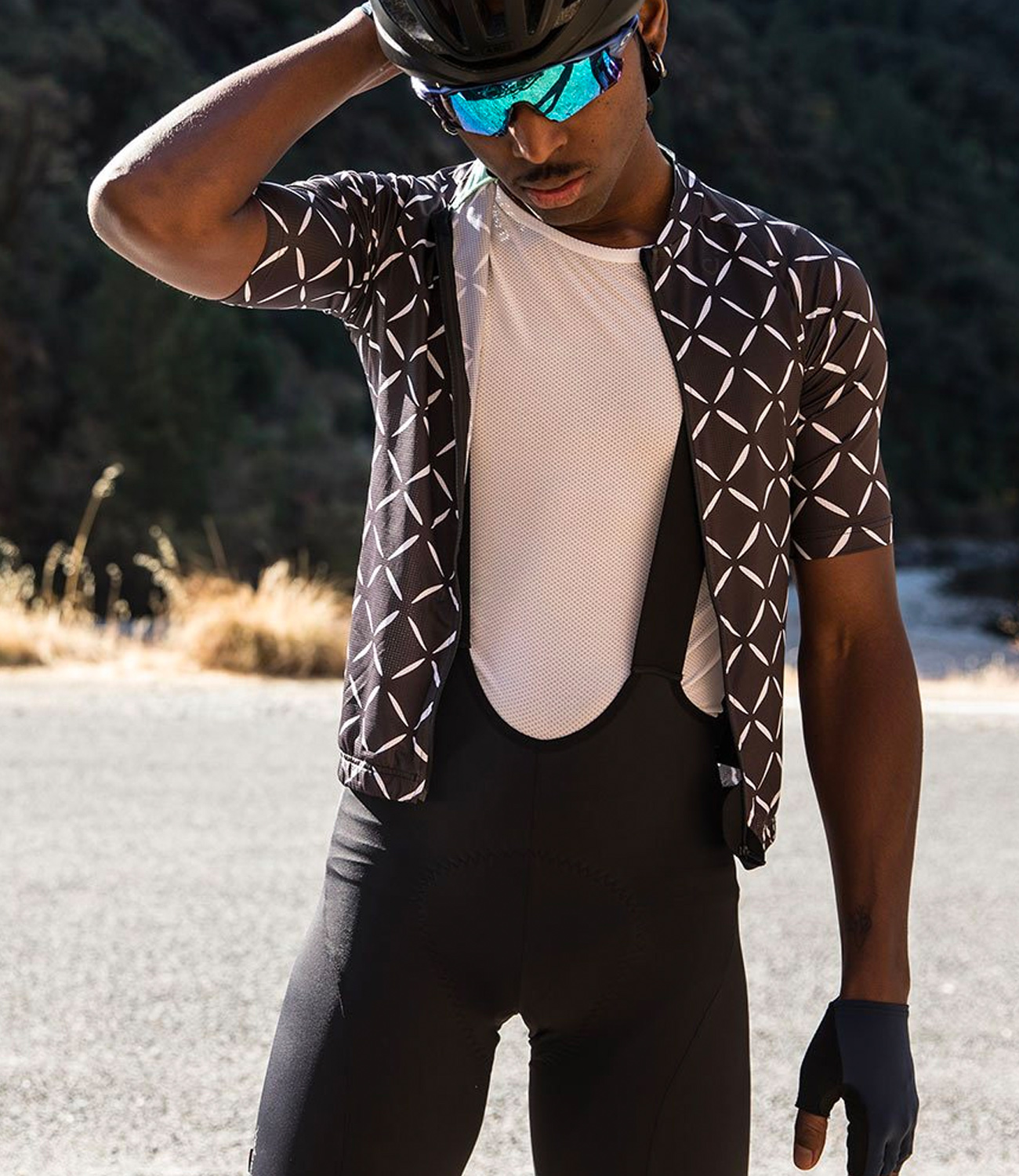
Few sports mesh style and function as much as cycling. Just as a quality sweat-wicking t-shirt takes running from exercise to activity, close-fitting jerseys and chamois-cushioned bibs make riding 40-plus miles on a bicycle not an act of self-flogging but a joy-invoking pursuit. Clothing matters in cycling perhaps more than it does in other sports, and riders today are privileged to exist in an era in which a high level of performance isn’t aspirational but baseline.

That leaves apparel makers to freely address the look of their clothing as much as anything else, which in turn has allowed for an ecosystem of brands large and small to pop up, all proffering unique takes on bike style. Admit it or don’t: what you wear on a bike matters, not just for comfort but also for style. No, you don’t have to shave your legs, but you do have to embrace the look of a cyclist. Here are some lesser-known brands to help you do so.

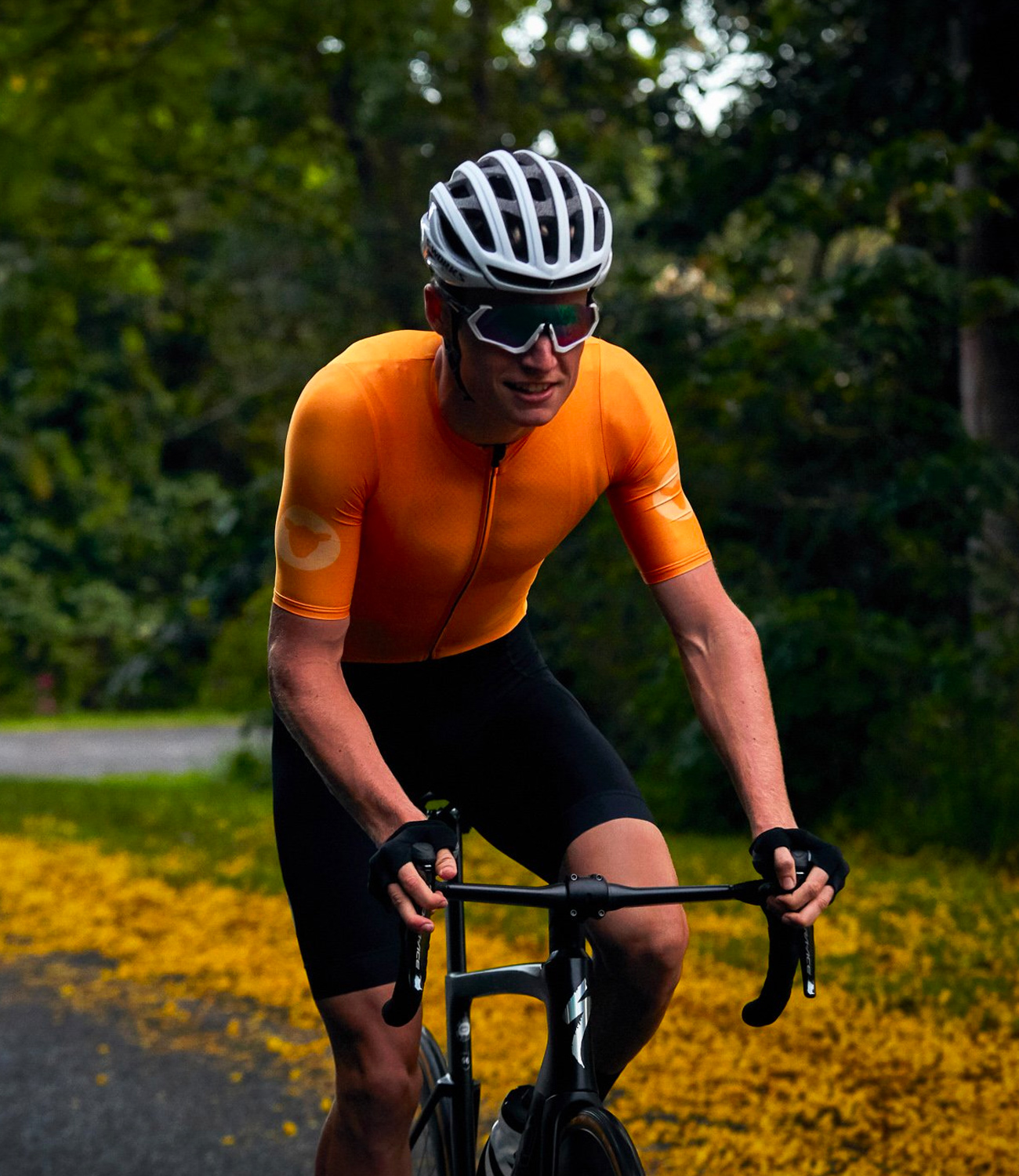
Black Sheep Cycling

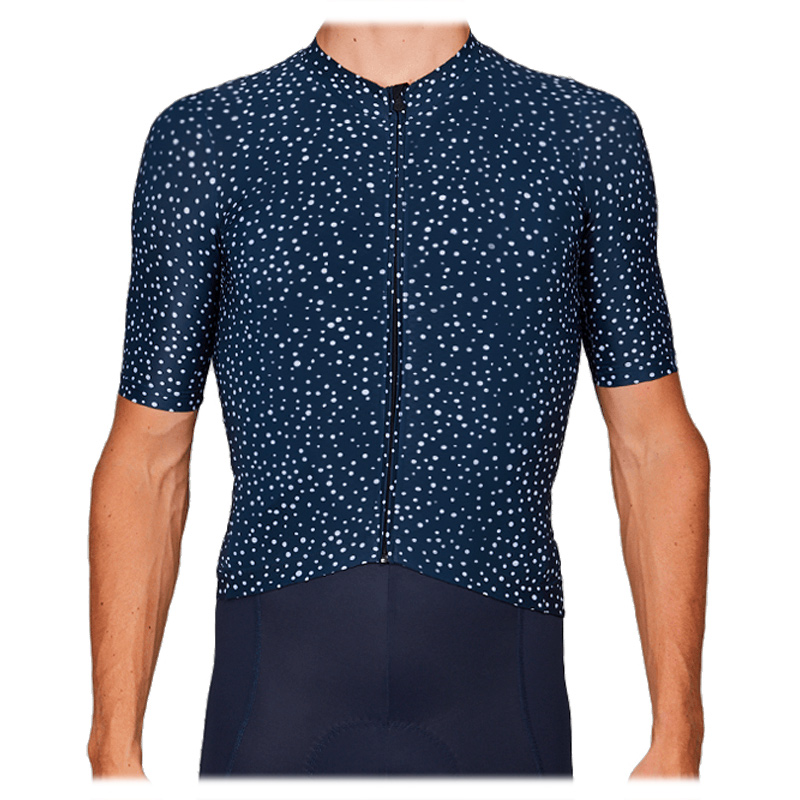
Cycling can take itself too seriously. Not Black Sheep though, a young cycling brand from Brisbane, Australia with a mounting global following. The company prizes individuality over conformity through a collection that pairs high-quality materials and manufacturing with eclectic patterns (polka dots are commonly featured). “Fuck the stereotypes, just do your own thing,” Black Sheep says (with a grin and a wink).

Essentials Navy Dot Jersey $140

Ornot

Ornot’s founding principle was to offer cyclists a choice — “you could be a rolling billboard, Ornot,” it proposes. Its branding is kept to a strict minimum — a small logo on the thigh or arm, if one exists at all — but its apparel is identifiable through its geometric blocks and distinct color palette. As with every brand on this list, that style is anchored firmly by quality which, in Ornot’s case, is built into the product in the USA.

Work Jersey $96

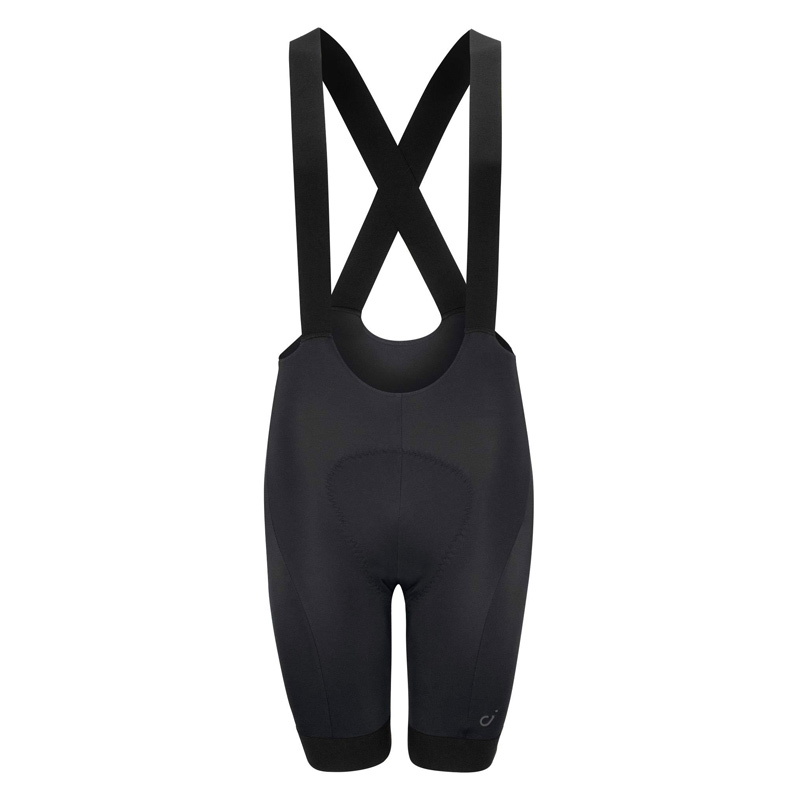
Velocio

As a New England-born cycling brand, Velocio has no choice but to focus on performance. Perfect-weather cycling days are few in the region, so it creates clothing to handle anything. The brand is endorsed by pro cyclist Ted King, who wears it to train through Vermont’s sub-zero winters. The brand’s products are subtle, colorful, modest in design and first-rate in both construction fit.

Signature Bib Short $229

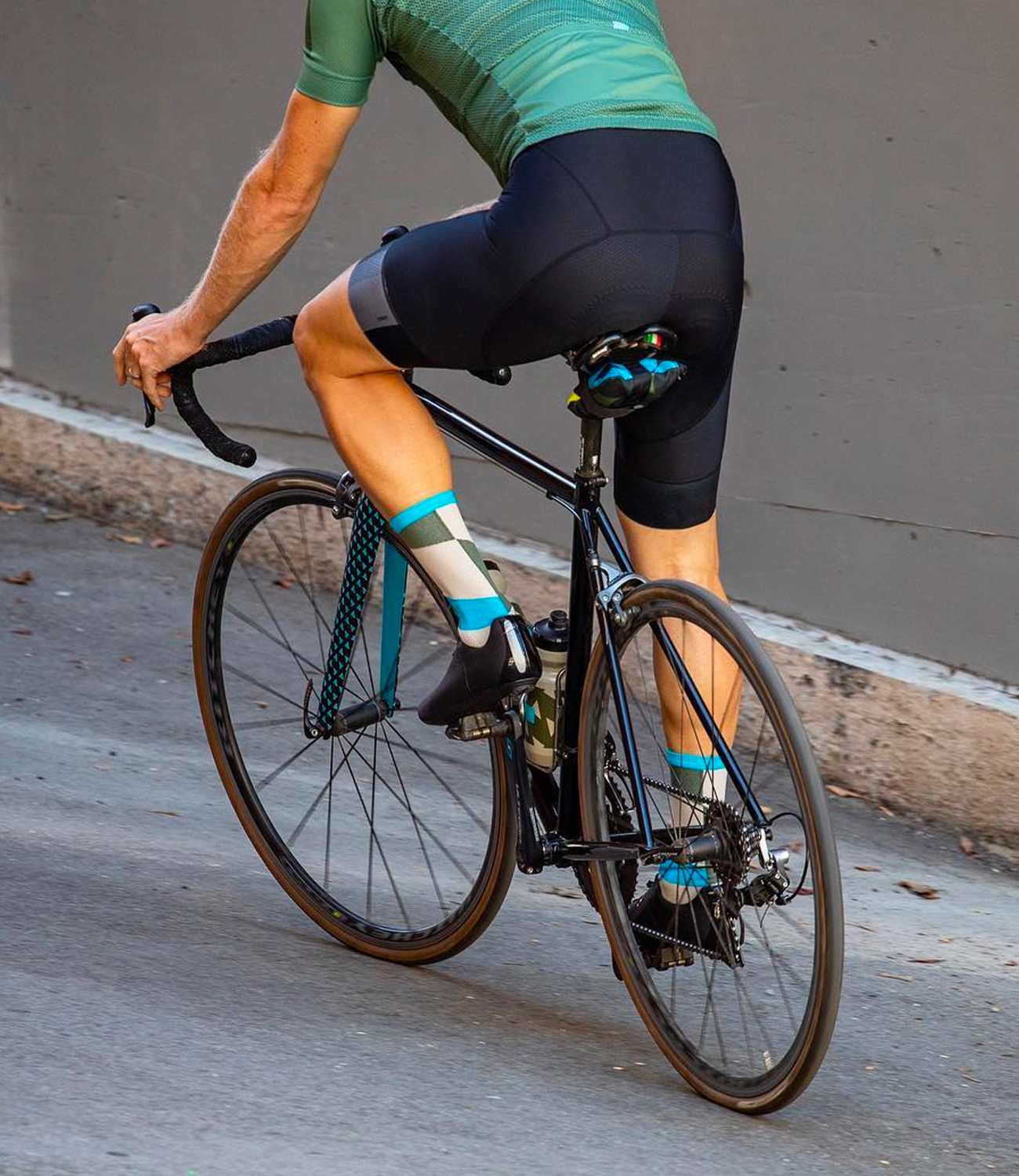
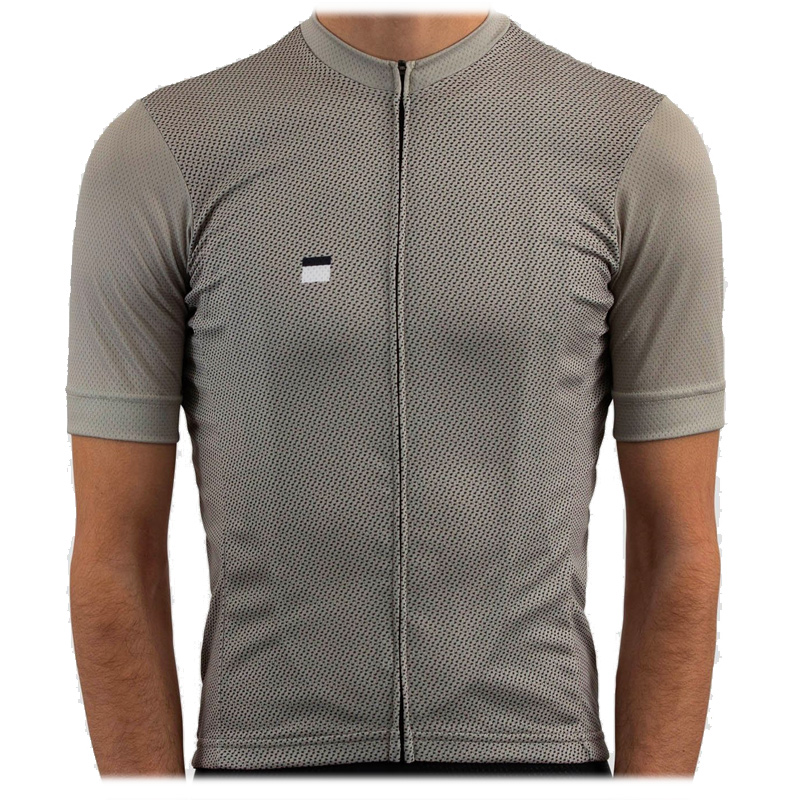
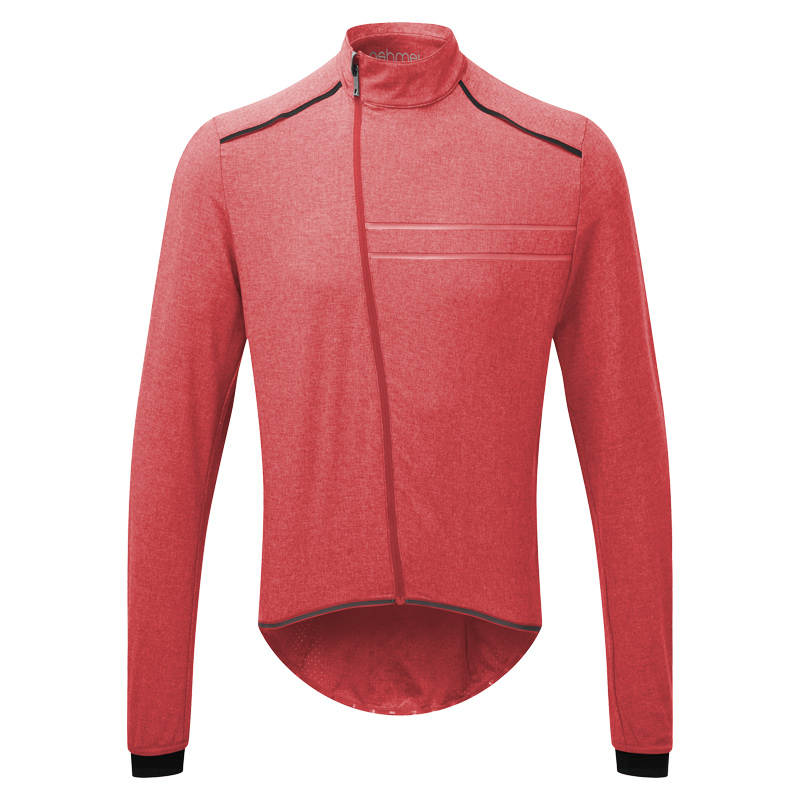
Ashmei

The overall aesthetic of UK-based Ashmei is refined, minimalist and tonal. Embrace it or not, style is rooted deeply in the sport, but Ashmei’s understated approach will appeal to those desiring to avoid too much flair. Beneath their good looks, Ashmei’s products are fantastically high-performance, built from the ground up with the finest materials and construction methods. All of these characteristics extend to Ashmei’s running and triathlon gear too.

Windjacket $190

Velobici

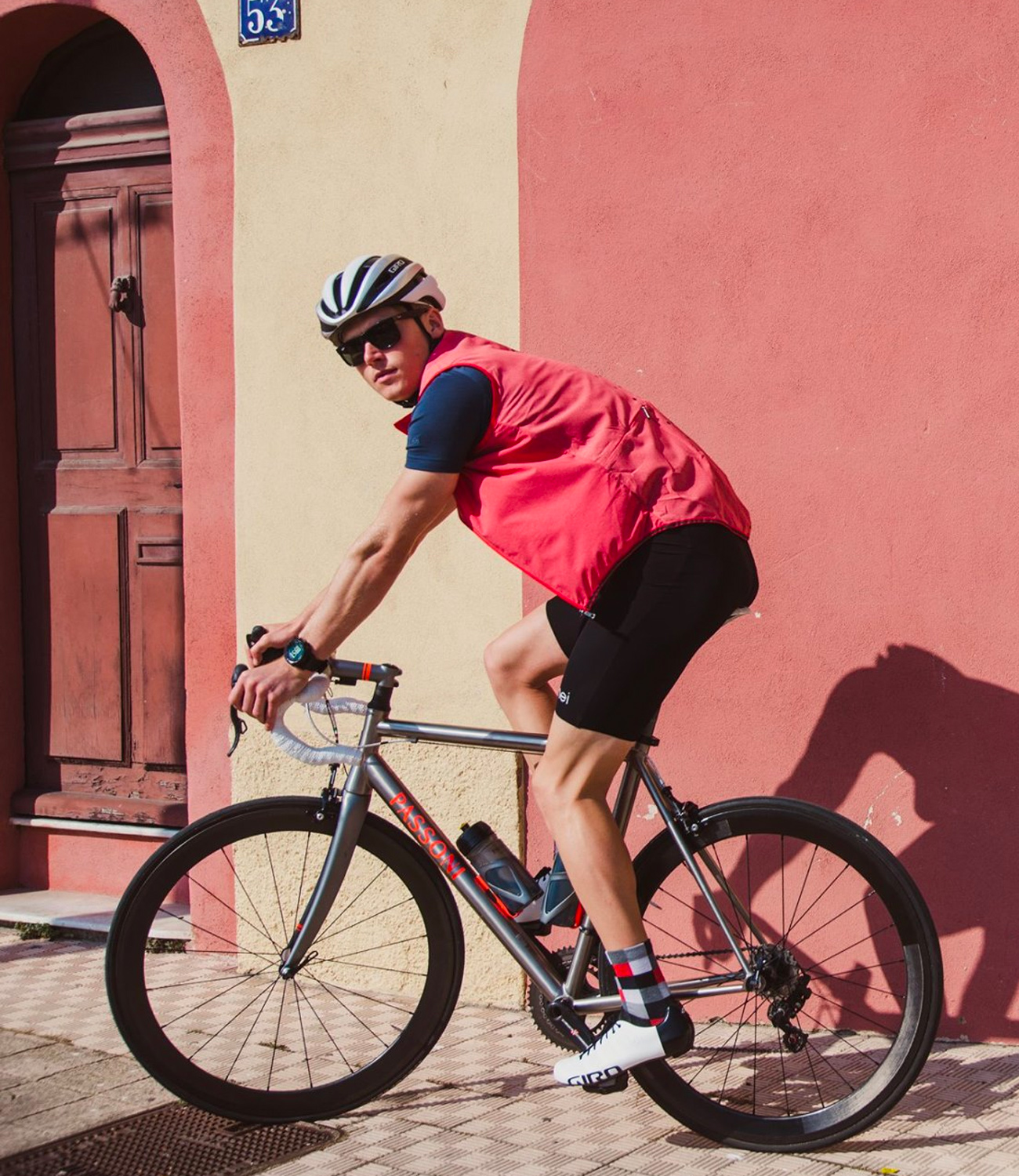
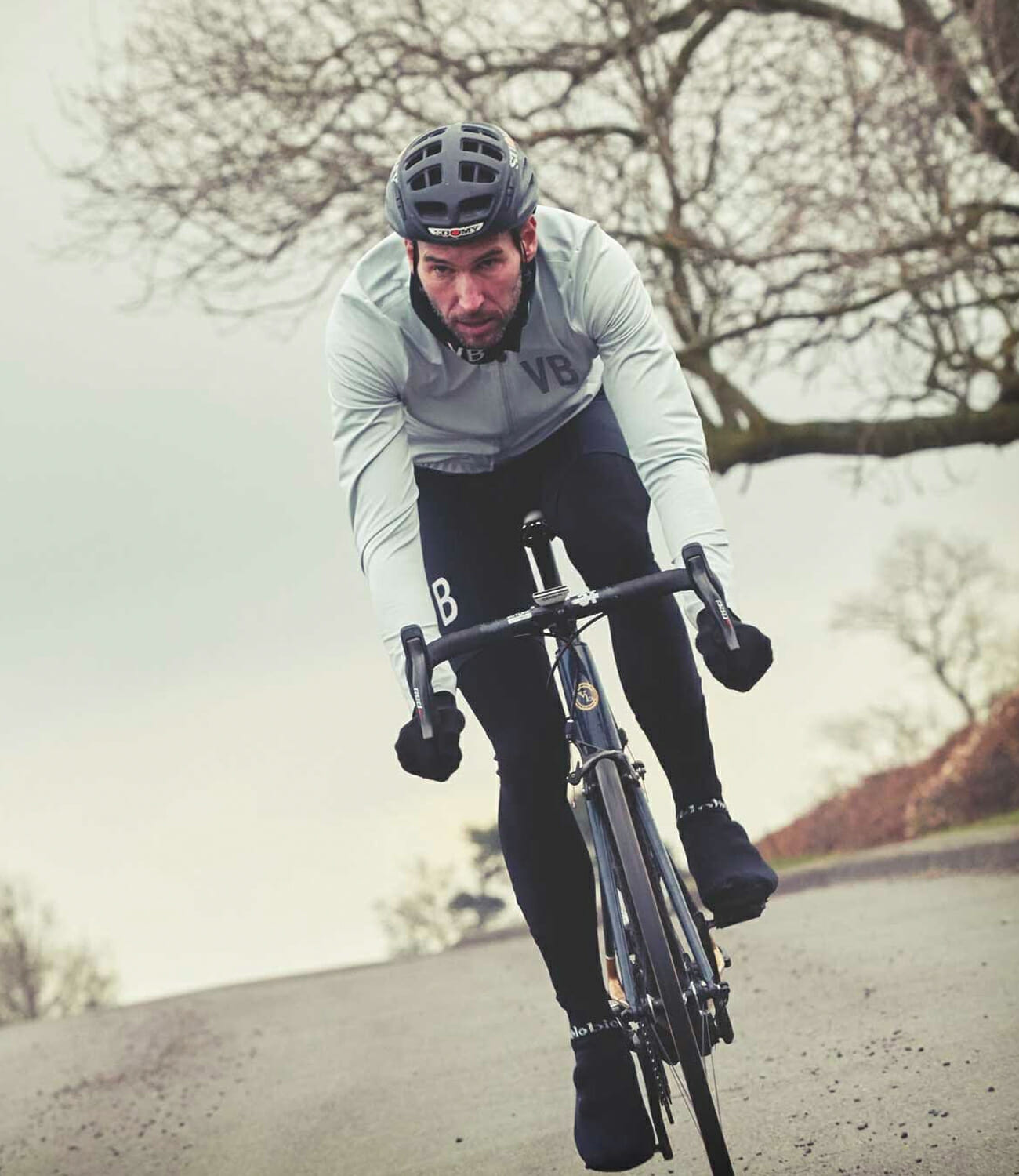
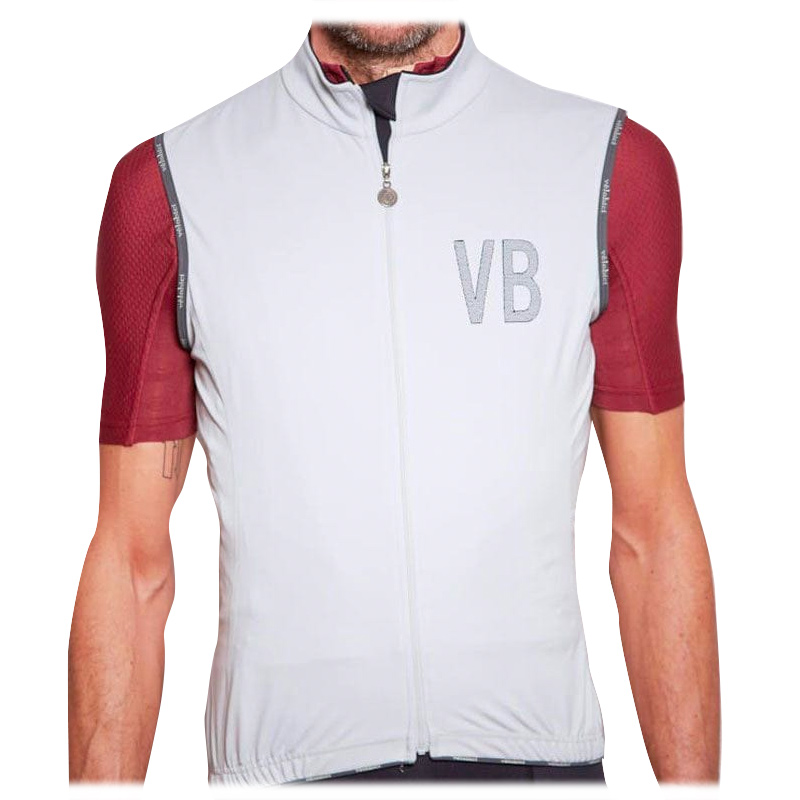
Velobici was founded in 2010 by Chris Puttnam, who gave himself one strict parameter for the brand to adhere to: everything had to be produced in his home country, England. After geography, Velobici emphasizes a balance between style and performance both on-bike and off. In addition to every piece cyclists need — jerseys, bibs, jackets, gilets, baselayers, socks, caps — the company produces a collection of casual knitwear, t-shirts and more. All are made with premium materials so they can handle riding yearlong.

Alfie Gilet ~$249

Alba Optics

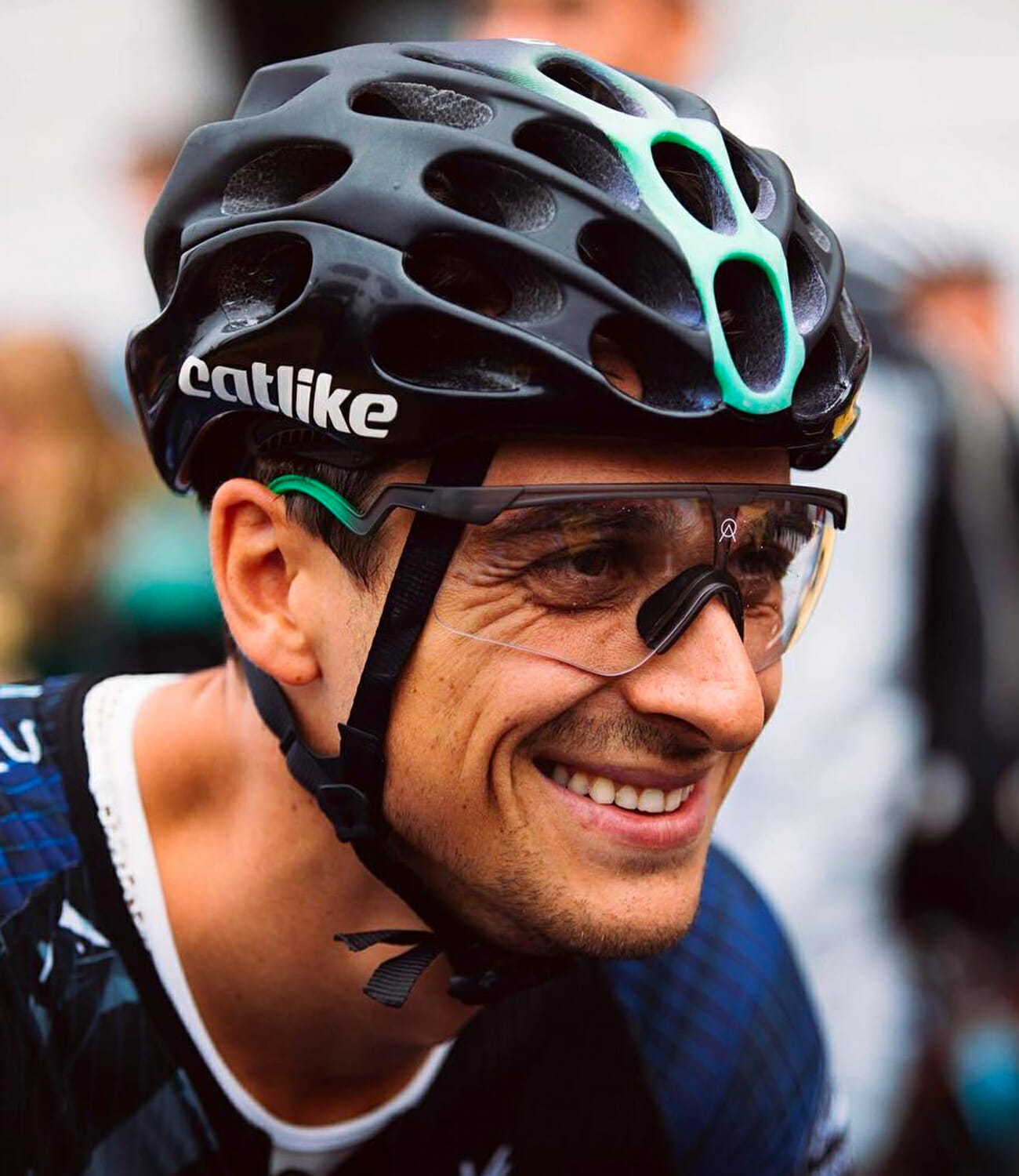
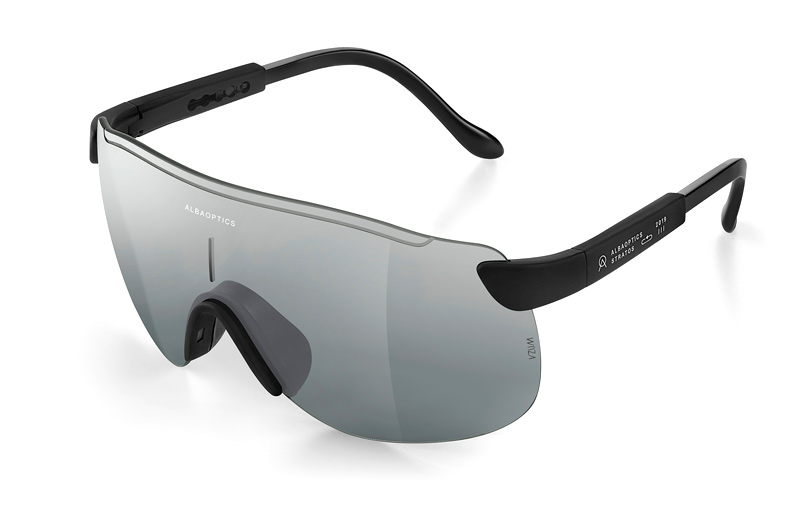
Running’s recent creative reawakening has produced a crowd of performance apparel brands as well as a handful of companies that are thinking originally about accessories. Primary among those is District Vision, which engrains mindfulness into items like sunglasses and socks. Cycling finds its analog to that in Alba Optics, an Italian company that offers a simplified and stylish yet performance-anchored collection of cycling sunglasses that serves as an alternative to big brands like Oakley or Smith.

Stratos Glasses ~$180
Note: Purchasing products through our links may earn us a portion of the sale, which supports our editorial team’s mission. Learn more here.

10 Workout Recovery Products That Feel Damn Good

The science behind recovery gear should come with an asterisk. It’s not that it doesn’t work, but the benefits may be more mental than physical; there’s a limit to how much it can help. The term active recovery stems from the effort to ease soreness and prepare our bodies for the next effort. And yet, science shows that the best recovery method is actually passive, free and something we can’t function without sleep.

The perception that we are involved in our recovery is hard to shake. How many runners and cyclists take an Epsom salt bath after a hard workout to help flush out lactic acid? Lactic acid doesn’t cause muscle soreness. Instead, it recycles itself back into stored energy within an hour after exercise. By the time an athlete gets home and fills the bathtub, the lactic acid is gone.

When you start a new training regimen, you might not be sore right away but you will likely feel it several days later. That phenomenon is known as delayed onset muscle soreness (DOMS) and is caused by micro-tears in muscles (and not by lactic acid as is a common myth), most often happening in movements where the muscles stretch or lengthen. Think the lowering of your arm during a bicep curl or the stepping down from a box jump. That soreness remains the primary justification for massage products and the use of ibuprofen. Before you throw down hundreds for some fancy leg chambers you saw an Olympian using on Instagram, know your money is likely better spent on a comfy recliner.

That’s not an excuse to skip cooldown exercises or massages – mainly if they work for you – as studies continue to find benefits, even if they can’t explain them. “I am a big advocate of recognizing the principle of individual differences,” Dixie Stanforth, Ph.D., Fellow of the American College of Sports Medicine (FACSM), and editorial board member of ACSM Health & Fitness Journal, says. She’s a big fan of foam rollers and massage, which allow you to enter a parasympathetic state, where your body knows to slow your heart rate, blood pressure and breathing rate. One caveat with rollers is that getting too intense can cause pain and trigger the body’s fight or flight response, where your heart rate spikes and you have a burst of energy. Make sure to track your heart rate and let your body come back down to a resting state before calling it quits.

We pulled ten of the best recovery aids to help you improve sleep and muscle soreness. While pampering yourself into a relaxed state may be the most beneficial outcome, anything that feels good after using it is worth the investment.

Fit Simply Resistance Bands

For light-resistance stretches or recovery cooldowns, these bands can work muscles in a variety of ways you can’t (safely) get from free weights. The five color-coded bands represent different weights, with the red one providing two pounds of resistance and the black one registering around 25 pounds. For recovery, you want to stay on the lower end of that scale — save those heavier bands for an actual workout. It’s a simple set that’s affordable and travel-friendly, plus it comes with a lifetime guarantee.

Trigger Point Grid Foam Roller

The Grid Foam Roller is one of the original self-massage tools. A lot of the ‘upgrades’ stray toward more dubious claims and cost more. This hands-on approach to massage helps your body know its time to begin recovering. There is evidence that post-effort self-massage with a foam roller can temporarily increase the range of motion and alleviate muscles soreness over a few days. It’s not a torture device, so avoid movements that cause too much discomfort as misuse can also lead to injury. Do you need one that vibrates? Probably not.

Addaday Type J+ Junior Roller

The Junior+ Roller is a favorite travel-ready massage tool. It’s a larger and softer version of the balls used on Addaday’s stick rollers, which is good since the massage roller reaches some of the more sensitive muscles, like feet. The roller sits inside an easy-to-grip frame that can also sit on the floor while you work your arches. If you’ve held off buying a roller before, the Junior is an excellent entry-point to recovery. It will quickly become a must-pack for post-race bags.

Oofos OOmg Fibre Low Shoes

If your workout runs overtime, elevating your legs isn’t always an option. That’s where recovery footwear comes in. The Oofos flip-flops make great house footwear, but don’t fare as well outside. The shoes can go out on errands and withstand light outdoor use. A flexible and breathable upper makes for a snug, sweat-free fit meaning they make walking around after a workout extremely comfortable, especially for those with foot issues like plantar fasciitis.

Tailwind Rebuild Drink

Sometimes a ride or run goes long, and you’re behind schedule. A recovery drink can help save time and sate your hunger for more than an hour. Tailwind’s Rebuild recovery mix is unique in that it offers a complete protein made from vegan ingredients like organic rice, amino acids and coconut milk. The six-pack of single-use packets comes in chocolate or vanilla.

CEP Merino Socks for Recovery

Compression socks have shown promise as a legit post-run recovery device, though some studies had participants wear them for an improbable two days after a marathon effort, and then tested their recovery on a treadmill test. Hopefully, you’re not running to failure anytime soon after a marathon. Pros and weekend warriors alike swear by their socks, and even researchers admit that a perceived reduction in muscle soreness and inflammation may benefit the athlete. At worst, wearing these is a comfortable way to signal you are in lounging mode. Weekend warriors may want to use them to alleviate next-day soreness for those Saturday-Sunday efforts.

Charlotte’s Web Extra Strength CBD Oil

The science behind CBD and its benefits is still emerging, which means it is easy for companies to throw out overreaching claims and hope research backs them up some day. That said, studies in humans have found that full-spectrum hemp oil can curb anxiety and reduce inflammation which in turn help regulate sleep. Hemp oil is also high in omega fatty acids and plays well with other micronutrients. Charlotte’s Web sources its hemp from Colorado farms which have a reputation for monitoring soil contamination and product consistency. Despite the naming convention, the Extra Strength oil is a good entry level, as the Original Formula contains three times as much CBD.

Nuun Rest

If you have trouble falling asleep, try one of these magnesium and tart cherry-packed tablets. The melatonin in these tablets will aid sound sleep — dissolve one tablet in four ounces (half a cup) and don’t worry about getting up in the middle of the night. The Lemon Chamomile and Blackberry Vanilla flavors can be served cold, or try one in warm water with a dash of honey, like a tea.

Slumbercloud Nacreous Cooling Mattress Pad

Cooler bedroom temperatures make for better sleep — aim for 60 to 67 according to The Cleveland Clinic — but the thermostat can’t keep heat from building up between your body and the mattress. This cooling mattress pad siphons excess heat into the mattress and returns it when your temperature drops. The liner inside the mattress pad contains tiny beads that attract or repel heat according to a set temperature, creating a consistent sleeping temperature, which is especially useful for old school souls who sleep without air conditioning in the summer.

Good to Go, by Christie Aschwanden

What does a book have to do with recovery? Good To Go pulls back the curtain on the recovery industry and questions the efficacy of many popular recovery methods. Aschwanden is an author, athlete and lead science writer at FiveThirtyEight. Her research even challenges the notion that athletes need to help their body recover faster, which should make you stop popping ibuprofen like its candy. If you’re a weekend warrior, a post-effort nap is the most effective and cheapest option out there. If you’ve thought about investing $100 in infrared pajamas or a recovery gym, give this book a read first.

Note: Purchasing products through our links may earn us a portion of the sale, which supports our editorial team’s mission. Learn more here.