All posts in “Reviews”

Samsung’s Retro-Looking Wireless Speaker Is All About Its Volume Knob

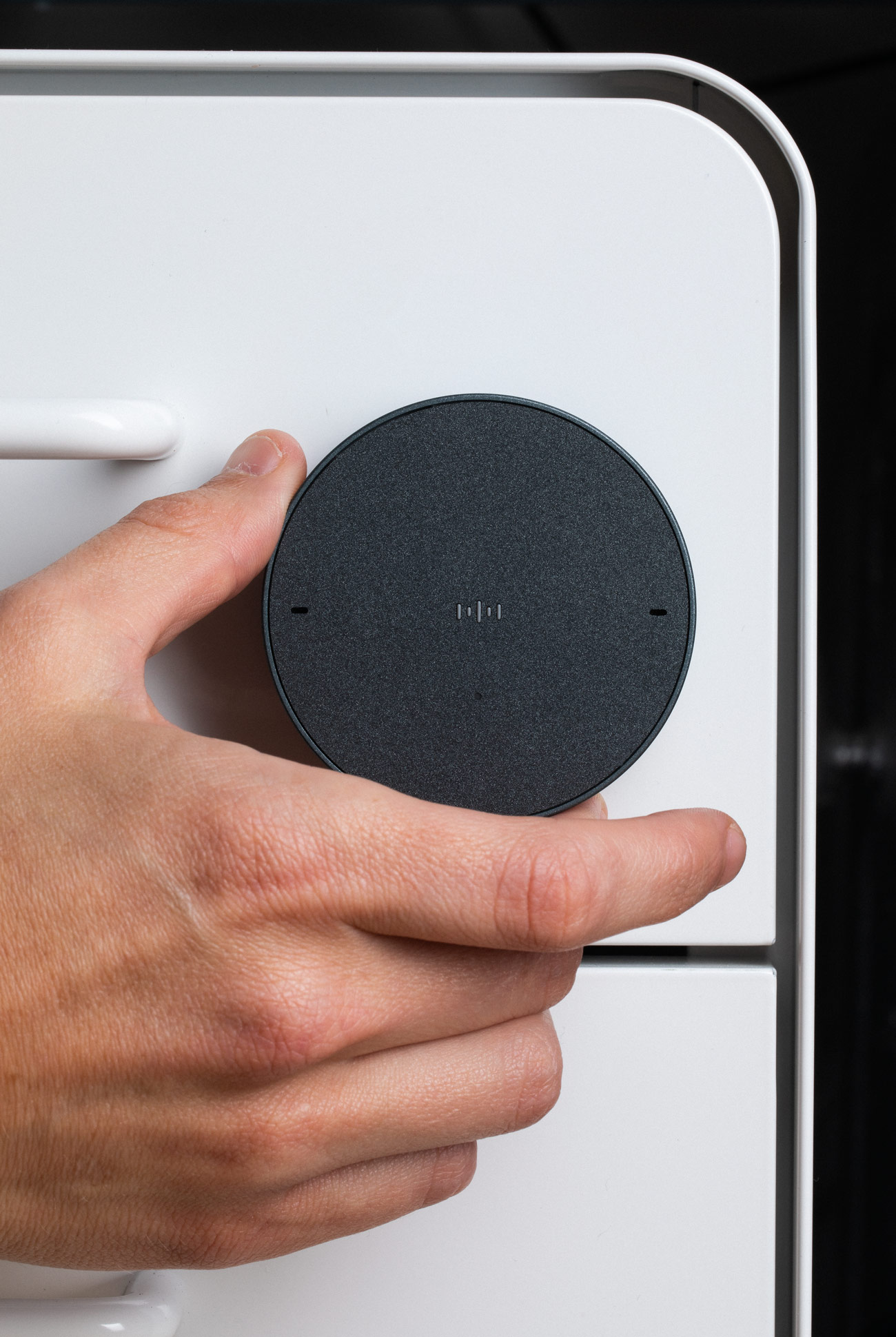
The Samsung VL5 ($400) and the Samsung VL3 ($250) are the company’s newest wireless speakers that can play music over Bluetooth or your home’s wi-fi network. Both speakers have a retro design and come with a movable volume dial, which can magnetically stick to any metal surface, including most places on the speaker. The speakers work with Samsung’s SmartThings app, meaning you can integrate them with other compatible wi-fi speakers in a multi-room system. As for differences, the VL3 is essentially just a smaller, square-shaped version of the VL5. Both speakers were announced at CES 2018 and are available for purchase.

Note: We did not test the smaller and more affordable Samsung VL3; we tested only the Samsung VL5 speaker.

The Good: The Samsung VL5 has three woofers and dual tweeters and it’s able to deliver accurate audio with punchy bass. The speaker’s design is stark; it’s modern and minimalist, yet still has a vintage vibe that makes it look like it’s from the 70s. The speaker can be used as a traditional Bluetooth speaker or put in a multi-room setup with other wi-fi speakers that are compatible with Samsung’s SmartThings app (learn more here). All things considered, the movable volume dial is really the star feature that sets the Samsung VL5 apart. It has a great “knob feel” that analog lovers will adore. Also, you can place the dial anywhere on the speaker or bring it next to you at your desk; as long as it’s within Bluetooth range of the speaker, it’ll change the volume and play/pause tracks.

Who They’re For: While the Samsung SmartThings app is available on iOS, I feel like this is a speaker that people with a Samsung Galaxy smartphone will find easier to use. Also, if they have other SmartThings-compatible devices, they can group the speaker with those devices in smart “scenes” and have them all work together.

Watch Out For: Both Samsung’s SmartThings app and playing music over wi-fi in general isn’t as smooth as I would’ve hoped. The app doesn’t work with a number of popular music services, such as Spotify or Tidal, either. For these reasons, I primarily used the VL5 as a Bluetooth speaker, which was straightforward enough to connect. The battery on the volume dial could be better.

Alternatives: For other wi-fi speakers that work with Samsung’s SmartThings, you can get any of Bose’s SoundTouch series of speakers: the SoundTouch 10 ($179+), SoundTouch 20 ($349) or SoundTouch 30 ($499). For a similar price and sound quality, yet with a built-in voice assistant, you can purchase the Google Home Max ($399).

Review: It’s worth remembering that Samsung has been a fixture in the home theater market, making great TVs and soundbars for years. And even though it’s not as experienced in making wireless speakers as companies like Bose or Sonos, Samsung is no slouch when it comes to great audio. The company bought Harman in 2017, acquiring its subsidiary audio companies (such as JBL, AKG, Harman Kardon and Mark Levinson) and all their expertise in the process. And in terms of sound quality, the Samsung VL5 ($400) definitely sounds like what you’d expect from those higher-end audio companies.

Over the last several weeks, the Samsung VL5 speaker has been the primary music-playing source in our office, taking the place of a Sonos system comprised of Play:1 and a Sonos One speakers. I’ve almost exclusively played music over Bluetooth because, even though the Samsung VL5 has built-in wi-fi and can operate as a multi-room speaker, the fact that the Samsung SmartThings app isn’t compatible with popular music services like, Spotify, Apple Music or Tidal meant that listening to music over Bluetooth was the only realistic option for me. That said, it wasn’t a problem. The music sounded great and it was simple to stream.
Audio quality is very good, but as I mentioned before, the striking feature on the Samsung VL5 speaker is its wonderful volume dial. For anybody who appreciates a good analog dial, such as the ones on any of Naim’s multi-room speakers, you’ll know the value of a great “knob feel.” Beyond aesthetics, the volume dial is really wonderful because of the way it works. You can slowly and accurately increase or lower the volume almost one decibel at a time and the knob makes this beautiful clicking noise like you’re reeling in a big fish. It’s tough to describe, but it’s great.

The volume dial is also movable. You can physically take it off the speaker and magnetically place it on any metal surface — as long as it’s within Bluetooth range, you’ll be able to adjust the volume. That said, the volume knob has a few modern tricks up its sleeve. Not only can you play/pause the audio by clicking its center, but the dial has a built-in microphone so you can access your phone’s voice assistant (if your phone is connected). Just hold down the button in the center of the dial and you can call friends or ask the voice assistant questions, like “What’s the weather?” and “Who plays in the World Cup today?”

Verdict: The Samsung VL5 isn’t going to be for everybody, mainly because it requires you to use the Samsung SmartThings app and you probably need to be well-versed in Samsung’s ecosystem in order to use it as a multi-room speaker. Basically, this won’t be the first-choice speaker for those with iPhones or non-Samsung Android smartphones. However, it’s a beautiful speaker with one of the best and most unique volume dials I’ve ever come across. And for a $400 speaker, it sounds just as good (if not better) than most of its competitors. If you’re looking for a unique speaker that’s well-designed and sounds pretty great, the Samsung VL5 is a pretty stellar option.

What Others Are Saying:

• “If sound quality is as important as design, however, there’s not much else at the price. In terms of sound quality and features, Samsung’s speakers would likely be going up against higher-end smart speakers, like the Google Home Max or the HomePod, which cost $400 and $350 respectively. While it isn’t quite as simple to use voice assistants on the VL550—it’s just amplifying the assistant that’s in your connected device—at least the speaker isn’t something that would only look appropriate in the retro-futuristic living room of The Jetsons.” — Mike Murphy, Quartz

Key Specs

Drivers: three woofers, two tweeters
Connectivity: Bluetooth, wi-fi, Ethernet, 3.5mm jack
App: Samsung Smartthings
Key feature: movable volume dial with terrific “knob feel”

Read More Gear Patrol Reviews

Hot takes and in-depth reviews on noteworthy, relevant and interesting products. Read the Story

Note: Purchasing products through our links may earn us a portion of the sale, which supports our editorial team’s mission. Learn more here.

Huawei MateBook X Pro Review: The MacBook’s Most Worthy Competitor Yet

When Huawei announced the MateBook X Pro laptop a few months ago at Mobile World Congress 2018, it did so to a significant amount of buzz. Aesthetically, the laptop is an unashamed MacBook copy, with a few tweaks here and there to avoid any IP infringements. As a power user of a MacBook Pro, I was curious to see if the MateBook X Pro could stand up to daily use as my work machine. I replaced my MacBook Pro with the MateBook X Pro as my main computer for work. In short, color me impressed.

|

The Good: The Huawei MateBook X Pro, smartly, overcomes one of the biggest hurdles in getting MacBook users to jump ship outside of software — aesthetics. By using a silhouette that MacBook users are more than familiar with (down to even the two color options which are Apple shades of gray and silver), it softens the blow of adjusting to a new software ecosystem. The MateBook X Pro runs the latest version of Windows 10 Signature Edition, and overall I found the laptop to be more than capable of running a plethora of CPU-hungry apps like Chrome, Spotify and Slack. It also features an NVIDIA GeForce MX150 graphics card, and while I didn’t use the PC for gaming, other reviewers have noted that it does an admirable job.

If you’ve yet to abandon the USB-A protocol, you’ll find solace in the MateBook X Pro’s one USB-A port on the right side of the PC. One the left side, are two USB-C ports (one of which is Thunderbolt 3 compatible) and a 3.5mm headphone jack. Effectively, that makes the MateBook X Pro almost 100-percent usable dongle-less (save for things like HDMI and SD), which is more than can be said for the latest generations of MacBook.

Who It’s For: If you’re a power user that likes the idea of a MacBook, but would rather save around $1,000 to put towards other endeavors, you can’t go wrong with the MateBook X Pro. Likewise, if you’re a diehard PC user that is tired of using the Dell XPS series, you’ll likely enjoy this Huawei laptop as well.

Watch Out For: Becuase of the graphics card included is the new machine, Huawei was unable to keep the MateBook X Pro fan-less. I didn’t find that to be too much of an issue, and the fan was never too loud. In testing, there were times that the MateBook’s speed was noticeably slower than the MacBook, but it was never to the point that I felt bogged or slowed down when working. The trackpad isn’t quite as flawless as the MacBook’s trackpad. The touchscreen is a cool feature, but I found that I didn’t use it all that much.

It’s worth noting that the US Government has warned against buying Huawei devices. There is a lot of speculation that the company’s devices could be used with malicious intentions. In February, FBI Director stated: “We’re deeply concerned about the risks of allowing any company or entity that is beholden to foreign governments that don’t share our values to gain positions of power inside our telecommunications networks.” In early May, the Pentagon banned Huawei and ZTE phones from being sold on US Military bases. As far as consumers are concerned however, this is all speculation, and Huawei makes excellent hardware. Weigh the speculation as you will.

Alternatives: The Dell XPS 13 ($1,000+) is worthy alternative if you simply want a laptop that works. If you want something a touch more powerful with more of a gaming focus, take a look at the Razer Blade 15 ($1,900+). And if you want something that’s as pretty as the Huawei, but brings some innovation a la touchbar, check out the new Asus Zenbook Pro 15 ($2,300+) with the new touchpad that replaces the standard trackpad.

Review: It seems impossible these days to speak authoritatively about any piece of touchscreen tech without mentioning how large or small the bezels are, so I’m going to get that out of the way up front. Shrinking and minimizing bezels has become such an obsession in the tech world that it’s become a major selling point for loads of tech products. The MateBook X Pro is the latest to lean on its tiny bezels, which are the smallest of any 13-inch laptop on the market. In fact, the bezels are so small that the MateBook X Pro offers a staggering 91-percent screen to body ratio. Because of this, Huawei is actually able to squeeze what is effectively a 14-inch screen into the chassis of a standard 13-inch laptop.

But beyond the bezel-shrinking innovation, Huawei also managed to squeeze in a few more tricks. For starters (pardon the pun), the MateBook X Pro goes from off to logged-in and surfing the web in as little as 7.8 seconds. It’s remarkably fast, and in practice feels like you’re simply waking the PC from sleep.

But perhaps the most innovative feature on the MateBook X Pro (and another tweak that allows those bezels to be so small) is the placement of the webcam. In research, Huawei realized that many people were placing a sticker or some sort of cover over their webcams, often placed at the top of the screen. It’s a less than elegant solution, and Huawei figured that they could do better. The result is a pop-up webcam hidden in the function keys of the keyboard. Simply press the button and the webcam pops up when you need it.

Though I personally am not one to often use the external speakers on a laptop setup, the MateBook X Pro’s speakers are worthy of mention. The laptop uses quad speakers and a split frequency set-up to create what Huawei calls “an immersive 3D sound experience.” Basically, all you need to know is that they sound significantly better than 90% of what you’d find on comparable laptops. If speaker quality is a factor you’re scrutinizing in a laptop, you’ll be satisfied by the Huawei.

Verdict: If there was ever a laptop to make me jump ship from my MacBook, this is it. It’s well-designed, fast, thoughtful and innovative. It comes with top-end hardware, including an NVIDIA graphics card, and manages to do so at an incredibly competitive and approachable price point. If you can look past the speculation surrounding Huawei and the US government, the MateBook X Pro is one of the best laptops you can buy.

What Others Are Saying:

• “Simply put, if you are looking to purchase a new laptop for productivity or entertainment, the MateBook X Pro should be at the very top of your list.” — Dan Seifert, The Verge

• “We could not have seen this coming, but there is a new best laptop in town: the Huawei MateBook X Pro. We’ve been so taken aback by this sleeper hit laptop, that it now sits amongst the highest-ranking in our top buying guides.” — Joe Osborne, Tech Radar

• “Here’s what strange – Huawei does it better. Sure, the MateBook X Pro doesn’t possess the impressively solid feel of a MacBook Pro, and its shade of silver isn’t quite as attractive. What the Huawei does have over the Mac, though, is a larger display with thinner bezels, a more attractive keyboard, and an on-board USB-A port, as well as two USB-C ports, one of which supports Thunderbolt 3. Apple is the pioneer, but the pioneering approach doesn’t always translate to a device that’s better for day-to-day use.” — Matt Smith, Digital Trends

Key Specs

CPU: 1.8GHz Intel Core i7-8550U (quad-core, 8MB cache, up to 4.0GHz)
Graphics: Intel UHD Graphics 620, Nvidia GeForce MX150 graphics (2GB GDDR5)
RAM: 16GB LPDDR3 (2,133 MHz)
Screen: 13.9-inch 3K (3,000 x 2,000) LED with touch panel
Storage: 512GB SSD (NVMe PCIe)
Ports: Thunderbolt 3 USB-C, USB-C 3.1, USB 3.0, 3.5mm audio jack
Connectivity: 802.11ac (2 x 2 MIMO) Wi-Fi, Bluetooth 4.1
Camera: 720p webcam with far field microphones
Weight: 1.33kg (2.93 lbs)
Size: 11.97 x 8.54 x 0.57 inches

|

Read More Gear Patrol Reviews

Hot takes and in-depth reviews on noteworthy, relevant and interesting products. Read the Story
Note: Purchasing products through our links may earn us a portion of the sale, which supports our editorial team’s mission. Learn more here.

2019 Lexus ES 350 Review: The Best ES to Date Is Still Too Polite to Be Sporty

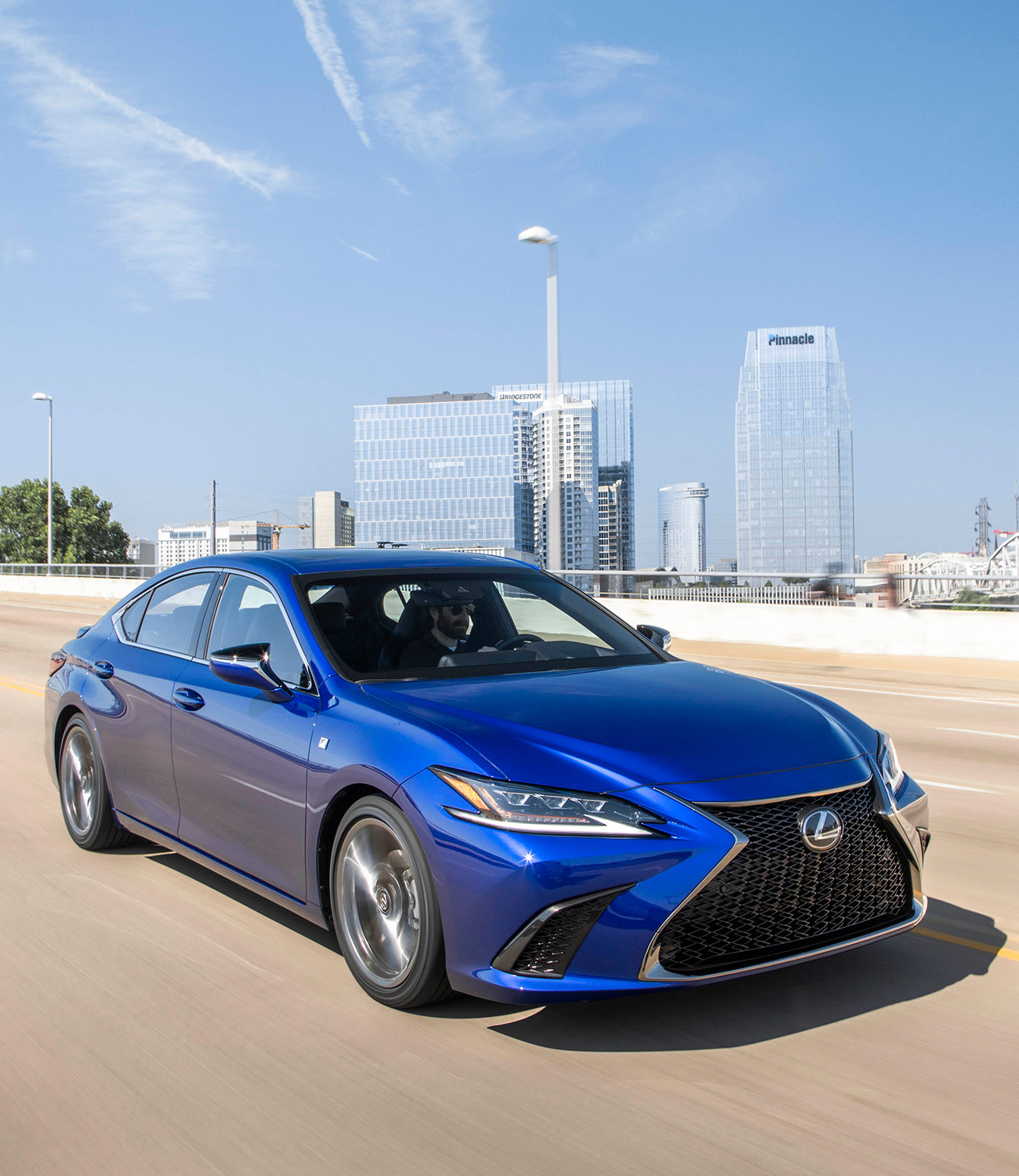
The ES is a sedan that’s as old as Lexus itself, being a mainstay for the brand since its launch in 1989. After nigh on 30 years, the Lexus ES begins its seventh generation, adopts an all-new platform, and even gets its first F Sport iteration. The mission? Maintain the level of craftsmanship that Lexus prides itself on and find luxury in the little things. “My inspiration for the ES came in micro-moments in everyday life,” said ES chief engineer Yasuhiro Sakakibara. He alludes to moments like the confidence brought on by donning a favorite, well-tailored shirt, or savoring each bite of a gourmet meal. Much like we consume cuisine, Lexus customers may very well easily find the “fast food” version of what the ES offers, but miss out in reveling in its careful preparation.

The Good: Seven generations is a long time to get things right, and with that in mind, the ES has honed its role. Slotted closer to the IS on the automaker’s sedan spectrum, it provides the full Lexus sedan experience without expanding to the heftier GS and LS models. What that means is a smooth ride with a well-appointed interior, a well-baffled cabin and a quality aural experience with the Mark Levinson sound system. Audiophiles will rejoice in the quality produced by the 17-speaker package, which was carefully arranged throughout 10 different cabin locations so that tunes are optimally delivered. I’m not as keen-eared as those who can discern finer quality audio gear, but even I was able to hear layers of favorite songs that I didn’t know existed. The sound system is a standalone option, so folks who want it aren’t forced into a particular package.

Who It’s For: In the U.S., the median age of an ES buyer is around 60, but Lexus hopes to broaden the appeal of the ES with this generation while still satisfying the needs of its stalwart buyer base. “Our customers have been with the brand since the beginning. They’ve grown up with us and, frankly, aged with us,” said Brian Bolain, General Manager of Lexus International. This ES and its F Sport injection is an attempt at rejuvenating that consumer base.

Watch Out For: The Lexus multimedia system has come a long way, and is faster and sharper than ever before, but it’s still got some kinks to work out. As it happens, the infotainment interface is accessible only via a “remote touch interface,” which is essentially a trackpad that manipulates an on-screen cursor. It will quickly snap to the options or icons you want to click on — like “Ok” or “Cancel” — and its movements are reinforced with little haptic vibration to confirm your selection. But ultimately it’s quite distracting for use on the go. There’s a reason why car interfaces are different than that of a PCs: they’re not meant to demand that much of our concentration. The 12.3-inch screen has no touch capabilities, making the trackpad the sole interface, which I finally gave in to after smudging the screen ineffectually a couple of times.

Alternatives: The Mercedes-Benz E-Class and the Audi A6 would be the biggest threats to the Lexus ES. Audi’s offer might prove to be the more dynamic drive experience out of all of the three. Mercedes tech is also usually top-notch, not to mention that the car carries a little more luxury brand prestige along with it. Both come with a price tag to match. Lexus says the ES will start “around” $40K, but both German competitors start much higher.

Review: If we rated cars like we rate films in the US, the Lexus ES would be a solid “PG.” This isn’t a disparagement, it’s context: E.T. and The Lego Movie are PG but so are Jaws and Poltergeist. With this in mind, the Lexus ES is a great ride with occasional thrills, but its high points are far from being remotely scandalous or unadulterated.

It’s a nice, safe bet, which is why 2.18 million of them have been sold since the ES launched alongside the Lexus brand thirty-some-odd years ago. As with most safe bets, the latest ES builds upon what makes it great and refines things further with the tailoring needed to keep it contemporary. Now built on the GA-K platform, the ES shares its underpinnings with the Toyota Avalon and Camry, two other vehicles in the Toyota family that have maintained a substantial legacy. This allows the new ES to be 2.6 inches longer, slightly lower, and 1.8 inches wider. Small numbers that make a big difference when it comes to car profiles. These changes allow the wheels to be pushed closer to the corners and gives the car a more sturdy stance.

Up front, the ES wears the signature Lexus fascia whose sharp headlamps pinch the distinct grille towards the badge. This is the highlight of a fluid body shape that emphasizes an appearance of a slippery aerodynamic surface. All told, the car has a sharp profile that has a clean, dignified presence which is suitable for any occasion.

Inside, the extra couple of inches spread across the platform has been put to good use, making for a roomy cabin for both front and rear passengers. Laser screw welds and a 46 percent increase in body bond adhesive have increased the rigidity of the ES to make the ride smoother and improve the noise reduction in the cabin. Lexus compares this to using a zipper to close a jacket rather than a series of buttons. Cute analogy, but it’s incredibly effective. My ride through the streets of Nashville out to the city’s outskirts were in perfect comfort, and watching the scenery go by in my quiet cabin was like sitting in a panoramic theater.

10-way adjustable seats and power adjustable steering column makes finding a preferred driving position quick and easy, which will give you time to marvel all that’s going on in the interior, which is a lot. The dark brown and tan interior colors Chateau and Flaxen are your standard interior palettes in the ES 350 and 300h hybrid. Black is an option as well in both models plus the F Sport, which also gets an exclusive red interior to distinguish itself from the others. Dark Mocha and Espresso wood trims are the high-gloss options, but it’s also joined by a matte bamboo, which stands out from the two mainly because it doesn’t look as premium. The F Sport gets a new Hadori Aluminum metallic trim machined to emulate the polishing process of ancient Japanese swords.

Loaded with tech, Lexus has kept the ES up with the times in terms of creature comforts. Safety features like lane keep assist, collision warnings and adaptive cruise control keep things nominal during commutes. The Lexus multimedia system is as crisp and smooth as ever; there are just a few ergonomic hangups that the automaker staunchly hangs onto. As mentioned before, the 12.3-inch interface isn’t a touchscreen and, while Lexus isn’t the only player in the game to refrain from letting occupants paw at icons, its trackpad-and-cursor system tends to draw in already preciously divided attention. The cursor’s omnidirectional capabilities — whether it snaps to options or not — is not the most intuitive solution to in-car interactivity. With the ES being the first Lexus to incorporate Apple CarPlay, there is at least an alternative available for some.

There is perhaps a glut of tech in the ES, with several buttons across the steering wheel, dash and in between. It’s handy to have a physical button for specific functions, but the trade-off is trying to find the one you’re looking for throughout the array of dials. Perhaps to satisfy an older customer who would prefer an old-fashioned button rather than a menu option, tons of car functions are laid bare.

There are some instances, though, where this layout would lead to surprise when a button I wanted was missing. There was indeed a button to turn the head-up display on or off, but nothing handy to adjust the height while on the go. All of this seems to be one of the side effects of having such a long-running and successful car: the need to hoard features lest the car stray too far into new territory. Lexus wants to broaden the appeal but not ostracize its brand loyalists, which means adding rather than removing, and the tech is an area that could use some heavy streamlining.

The ES 350 is saddled with a 3.5 liter V6 that puts out a modest 302 horsepower and 267 pound-feet of torque. It’s certainly enough to get the job done, either for cruising or overtaking. I hopped into the F Sport, which offers no power bump but does get an adaptive variable suspension, which adjusts the stiffness based on the changing conditions. Finding a sublime stretch of country backroad, I endeavored to see if there was any sportiness to be found. Pleasantly, what the ES offered was fairly enjoyable. The roads I faced were hardly challenging but twisty enough to demand some hard braking and powering through sweeping apexes. Control was easily maintained thanks to the F Sport’s chunkier steering wheel and, though I couldn’t figure out how to adjust it, the head-up display was helpful in knowing what speeds I was dealing with without breaking my concentration. There was a surprising amount of acceleration to be had, but heading into a deep brake, the ES felt like a broad barn door about to swing wildly outward if pushed too hard. The limit of this front-wheel-drive sedan is found quickly and it feels like control would be difficult to regain if things went awry.

Saying “it’s not the worst” may be a back-handed compliment, but the ES F Sport has all the performance anyone attracted to the ES could ever want. Those whose performance tastes stray outside of the PG rating wouldn’t be eyeballing the ES for that particular appetite to be whetted, regardless of the F Sport injection.

Verdict: The legacy of the ES is secure. Within its element, it’s the best its ever been with contemporary looks and tech conveniences. The F Sport accoutrement only improves things, as long as buyers go in with the right expectations. The ride is smooth, the cabin is a comfortable place to be and it’s easy to see why Lexus loyalists have stuck with it for a few decades. This generation ES is far from a radical upgrade, but as Sakakibara-san states, the pleasure is in the little things it consistently gets right.

What Others Are Saying:

• “I can confirm that it is indeed unerringly serene, and it enjoys excellent ride quality and sound isolation. Further, there’s no reason to assume that the new ES will deliver anything other than sterling reliability.” — Chris Paukert, Roadshow

• “The F Sport version adds engine sound through the speakers to add a little drama to accelerations, and shifts come reasonably quick, but again, if I’m looking for a four seater that’s more sport than luxury, this is not it. ” — Jake Lingeman, Autoweek

• “When Lexus first launched its mouse-like Remote Touch controller, I thought things couldn’t get any worse; the touch pad with which they replaced it has proved me wrong. There is absolutely no way to use it without staring at the screen, which is not where a driver’s eyes should be.” — Aaron Gold, Automobile

Key Specs: 2019 Lexus ES 350

Engine: 3.5-liter V6
Transmission: eight-speed automatic
Horsepower: 302 hp
Torque: 267 ft-lbs
Weight: 3,704 pounds
MSRP: $40,000 MSRP (est.)

Read More Gear Patrol Reviews

Hot takes and in-depth reviews on noteworthy, relevant and interesting products. Read the Story

Note: Purchasing products through our links may earn us a portion of the sale, which supports our editorial team’s mission. Learn more here.

G-Shock DW-5600E Review: Just How Tough Is a $40 Plastic Watch?

The DW-5600E is not the iconic original G-Shock, though you wouldn’t know from looking at it. The 5600 series first hit the scene in 1987 and has been in production in one form or another since then, and the current iteration is pretty much the most basic G-Shock you can buy. Save for a few small details here or there, it’s incredibly similar to the original but uses a plastic case in place of the original’s blacked-out stainless steel.

That might sound like a mark against the DW-5600E right off the bat, but the cheaper material works in the watch’s favor. For one, it means you can buy it for around $40 at your local Wal-Mart or Target. Secondly, because plastic has an elasticity to it that metal just doesn’t have, is absorbs shocks better. Given that G-Shock’s creator, Kikuo Ibe, set out to engineer a timepiece that could withstand careless wear without any issue, it’s not in any way out of line with the brand’s ethos.

Which brings us to this review. I wanted to see just how much abuse the most basic G-Shock could withstand before failing, and my torture testing went far beyond the occasional knock on a door jamb; I threw it, dropped it, hit it with a hammer and ran over it with my car to find its breaking point. And I was surprised to find how much abuse it could take.

The Good: If you want a truly tough-as-nails watch I’m not entirely sure you can do better than the DW-5600E. Well, maybe you could, but I don’t know how I’d feel about dropping anything more expensive three stories onto concrete – and that’s the point. For just $40 you get the toughest watch you could need, and while the DW-5600E is incredibly simple, with no frills to speak of, this is refreshing in and of itself. There’s no fuss with this watch — it just does its job, and it does it well.

Who They’re For: Anyone who needs or wants a beater watch and doesn’t want to spend much money. The good ol’ G-Shock has been the timepiece of choice amongst military servicepeople, police, firefighters, construction workers, et cetera — so if that’s you, this is as good a choice as any. If that isn’t you, but you still need something to wear while camping or working on DIY projects, this is still an excellent choice, especially if you don’t want to spend a lot of money on something you know will see some type of abuse.

Watch Out For: Most people probably won’t be buying the DW-5600E for its chronograph functionality and alarm, but they’re there. Setting these things up, as well as the time and date, is a little clunky and take some time to figure out. The recessed buttons — which you’ll need to be pushing a lot to set the time — certainly don’t help in this regard. This is more of an annoyance than a fatal flaw. The DW-5600E does have a fatal flaw, though, and it’s an inability to withstand the force of a Volvo station wagon’s driver’s side tire. More on this in a second.

Alternatives: The Timex Ironman Original is another tough, functional and cheap digital watch with roots in the 1980s. While the list price at $67 is a bit more than the G-Shock’s, there’s an extra degree of functionality in the Ironman. For example, the chronograph features are more extensive on the Ironman (which makes sense, given that it’s billed as a sports timepieces) and the exposed pushers are easier to use than the recessed buttons on the G-Shock; a “Night-Mode” is a nice touch, too. The Ironman is also rated as “shock-proof,” though I couldn’t tell you how it fares compared to the G-Shock. It’s probably still more than enough.

Review: Strap the DW-5600E to your wrist, and you’ll notice that it doesn’t really look or feel like most other G-Shocks you can buy right now. They’re massive, chunky, heavy and covered in countless nubs and facets. The DW-5600E, on the other hand, is comparably minimal. At 42.8mm wide and 13.4mm thick, it doesn’t wear much larger than most big sports watches you can buy today. Its design, still firmly rooted in its 1980s upbringing, is far more mundane. Fumble through its many functions — time, countdown timer, stopwatch, alarm, backlight — via its tiny, recessed buttons, and you’ll get an equally ’80s-tastic nostalgia blast.

So the DW-5600E is not like a modern G-Shock regarding aesthetics, nor does it have a large amount of functionality, but it’s still a pure distillation of what Ibe aimed to produce – namely, a nearly indestructible watch. More specifically, Ibe stipulated an ability to withstand 100 meters of water pressure and survive a 10-meter fall (10-year battery life was initially stipulated though not initially achieved). The watch is rated to 200 meters of water resistance, and since I’m not a diver, I’ll have to take Ibe’s word for it. But the 10-meter fall? I have a few things to say about that.

When I first got my hands on the DW-5600E I tossed it over my shoulder on hardwood flooring to prove how careless you can be with a watch like this. As you’d expect, there was no visible damage. Later wearing the watch — while moving — I went out of my way to bang the G-Shock on any surface within arm’s reach, and again there were no dings, scuffs or loss of functionality. These are the sort of everyday things that could damage a more fragile timepiece, and it’s no surprise that the DW-5600E was entirely unphased by them.

Photo: Andrew Connor

So I took the watch off and gave it a few good thwacks on wood and metal surfaces…nothing. Ready to kick things up a notch, I dropped the watch from the first-floor balcony of my building. Again, nothing. So I went up one more floor. Nothing, not even a damn scuff and all functions appeared to work properly. Looking to further the abuse in a more creative manner, I go inside and grab a claw hammer.

With the watch resting face-up on a piece of wood, I delivered the kind of considered blow you’d use to drive a nail into wood with one strike – it doesn’t phase the watch. I tried it again, failing to cause any perceptible damage. I rested the watch on its side and delivered another strike, leaving just a small scuff. I then attacked the DW-5600E with several fast-paced hits to its side and face. While the watch took on a couple of small dings, it otherwise continued functioning like it was just taken out of the box.

So I climbed to the third balcony of my building and dropped the G-Shock; it landed face-down with a loud, plastic-y thud. After the long walk down I picked it up to find it fully functioning. There appeared to be some concrete dust collected on the front of the case that wiped off easily, and the only damage sustained appeared to be a slight loosening of the screw holding the resin strap onto the case. So I tried the drop again, throwing the watch up into the air a few more feet before it arced back down to the ground. Nothing. Finally, I forcefully threw the watch at the wall of the neighboring building and witnessed the G-Shock ricochet its way to the ground. No sign of any damage.

Growing frustrated that I couldn’t impart any real damage to the DW-5600E I decided one final test was in order. I considered my Volvo station wagon, nearly two tons of Swedish steel, and put the watch face down on the pavement under the front driver’s side wheel. Shifting into first I slowly roll over it over and…nothing. No damage appeared to be done. I tried again, going into reverse. Still nothing. Finally, I set the watch on its side and tried for a third time. As I rolled over the watch, I hear a pop. The case back popped off, dislodging the screen and movement slightly from its once-impervious housing.

The cracked digital display had nothing on it and the plastic case, slightly deformed as it was ground into the pavement, finally showed the serious scuffs I had been looking for. The case back was not going to attach back on. The watch was, at this point, irreversibly fucked up. The only thing working, amazingly, was the backlight. I had finally succeeded.

And yet, as I was scooping up the remains and putting them in the cupholder of my car, I wished I hadn’t succeeded. The DW-5600E had survived far more abuse than any other watch would’ve, and more than any normal wearer would possibly have put it through. I felt a lingering sadness thinking about all the life it could’ve had left; I realized, at that moment, that this plastic, bargain-bin watch had an incredible amount of personality.

Verdict: The DW-5600E is more than a plastic watch you can feel comfortable tossing around with abandon – in being able to withstand so much abuse there’s an irrefutable charm to it. It’s the kind of watch that’ll accompany you until the end…so long as you don’t run over it with your car.

What Others Are Saying:

• “I didn’t buy this watch for travel. I bought it to have adventures in. I wanted a watch that I could scale mountains, go SCUBA diving and trek through jungles with. I wanted a watch that Indiana Jones could wear. I wanted something that could withstand all the cool activities and trips and adventures that I plan to have. And that’s what I got with my G-Shock DW-5600E-1V.” — Christian Alexandersen, Worn & Wound

Key Specs

Movement: Digital quartz
Case material: Resin
Case width: 42.8mm
Water resistance: 200m
Notable functions: Countdown timer, stopwatch, alarm

Read More Gear Patrol Reviews

Hot takes and in-depth reviews on noteworthy, relevant and interesting products. Read the Story

Note: Purchasing products through our links may earn us a portion of the sale, which supports our editorial team’s mission. Learn more here.

G-Shock DW-5600E Review: Just How Tough Is a $40 Watch?

The DW-5600E is not the iconic original G-Shock, though you wouldn’t know from looking at it. The 5600 series first hit the scene in 1987 and has been in production in one form or another since then, and the current iteration is pretty much the most basic G-Shock you can buy. Save for a few small details here or there, it’s incredibly similar to the original but uses a plastic case in place of the original’s blacked-out stainless steel.

That might sound like a mark against the DW-5600E right off the bat, but the cheaper material works in the watch’s favor. For one, it means you can buy it for around $40 at your local Wal-Mart or Target. Secondly, because plastic has an elasticity to it that metal just doesn’t have, is absorbs shocks better. Given that G-Shock’s creator, Kikuo Ibe, set out to engineer a timepiece that could withstand careless wear without any issue, it’s not in any way out of line with the brand’s ethos.

Which brings us to this review. I wanted to see just how much abuse the most basic G-Shock could withstand before failing, and my torture testing went far beyond the occasional knock on a door jamb; I threw it, dropped it, hit it with a hammer and ran over it with my car to find its breaking point. And I was surprised to find how much abuse it could take.

The Good: If you want a truly tough-as-nails watch I’m not entirely sure you can do better than the DW-5600E. Well, maybe you could, but I don’t know how I’d feel about dropping anything more expensive three stories onto concrete – and that’s the point. For just $40 you get the toughest watch you could need, and while the DW-5600E is incredibly simple, with no frills to speak of, this is refreshing in and of itself. There’s no fuss with this watch — it just does its job, and it does it well.

Who They’re For: Anyone who needs or wants a beater watch and doesn’t want to spend much money. The good ol’ G-Shock has been the timepiece of choice amongst military servicepeople, police, firefighters, construction workers, et cetera — so if that’s you, this is as good a choice as any. If that isn’t you, but you still need something to wear while camping or working on DIY projects, this is still an excellent choice, especially if you don’t want to spend a lot of money on something you know will see some type of abuse.

Watch Out For: Most people probably won’t be buying the DW-5600E for its chronograph functionality and alarm, but they’re there. Setting these things up, as well as the time and date, is a little clunky and take some time to figure out. The recessed buttons — which you’ll need to be pushing a lot to set the time — certainly don’t help in this regard. This is more of an annoyance than a fatal flaw. The DW-5600E does have a fatal flaw, though, and it’s an inability to withstand the force of a Volvo station wagon’s driver’s side tire. More on this in a second.

Alternatives: The Timex Ironman Original is another tough, functional and cheap digital watch with roots in the 1980s. While the list price at $67 is a bit more than the G-Shock’s, there’s an extra degree of functionality in the Ironman. For example, the chronograph features are more extensive on the Ironman (which makes sense, given that it’s billed as a sports timepieces) and the exposed pushers are easier to use than the recessed buttons on the G-Shock; a “Night-Mode” is a nice touch, too. The Ironman is also rated as “shock-proof,” though I couldn’t tell you how it fares compared to the G-Shock. It’s probably still more than enough.

Review: Strap the DW-5600E to your wrist, and you’ll notice that it doesn’t really look or feel like most other G-Shocks you can buy right now. They’re massive, chunky, heavy and covered in countless nubs and facets. The DW-5600E, on the other hand, is comparably minimal. At 42.8mm wide and 13.4mm thick, it doesn’t wear much larger than most big sports watches you can buy today. Its design, still firmly rooted in its 1980s upbringing, is far more mundane. Fumble through its many functions — time, countdown timer, stopwatch, alarm, backlight — via its tiny, recessed buttons, and you’ll get an equally ’80s-tastic nostalgia blast.

So the DW-5600E is not like a modern G-Shock regarding aesthetics, nor does it have a large amount of functionality, but it’s still a pure distillation of what Ibe aimed to produce – namely, a nearly indestructible watch. More specifically, Ibe stipulated an ability to withstand 100 meters of water pressure and survive a 10-meter fall (10-year battery life was initially stipulated though not initially achieved). The watch is rated to 200 meters of water resistance, and since I’m not a diver, I’ll have to take Ibe’s word for it. But the 10-meter fall? I have a few things to say about that.

When I first got my hands on the DW-5600E I tossed it over my shoulder on hardwood flooring to prove how careless you can be with a watch like this. As you’d expect, there was no visible damage. Later wearing the watch — while moving — I went out of my way to bang the G-Shock on any surface within arm’s reach, and again there were no dings, scuffs or loss of functionality. These are the sort of everyday things that could damage a more fragile timepiece, and it’s no surprise that the DW-5600E was entirely unphased by them.

Photo: Andrew Connor

So I took the watch off and gave it a few good thwacks on wood and metal surfaces…nothing. Ready to kick things up a notch, I dropped the watch from the first-floor balcony of my building. Again, nothing. So I went up one more floor. Nothing, not even a damn scuff and all functions appeared to work properly. Looking to further the abuse in a more creative manner, I go inside and grab a claw hammer.

With the watch resting face-up on a piece of wood, I delivered the kind of considered blow you’d use to drive a nail into wood with one strike – it doesn’t phase the watch. I tried it again, failing to cause any perceptible damage. I rested the watch on its side and delivered another strike, leaving just a small scuff. I then attacked the DW-5600E with several fast-paced hits to its side and face. While the watch took on a couple of small dings, it otherwise continued functioning like it was just taken out of the box.

So I climbed to the third balcony of my building and dropped the G-Shock; it landed face-down with a loud, plastic-y thud. After the long walk down I picked it up to find it fully functioning. There appeared to be some concrete dust collected on the front of the case that wiped off easily, and the only damage sustained appeared to be a slight loosening of the screw holding the resin strap onto the case. So I tried the drop again, throwing the watch up into the air a few more feet before it arced back down to the ground. Nothing. Finally, I forcefully threw the watch at the wall of the neighboring building and witnessed the G-Shock ricochet its way to the ground. No sign of any damage.

Growing frustrated that I couldn’t impart any real damage to the DW-5600E I decided one final test was in order. I considered my Volvo station wagon, nearly two tons of Swedish steel, and put the watch face down on the pavement under the front driver’s side wheel. Shifting into first I slowly roll over it over and…nothing. No damage appeared to be done. I tried again, going into reverse. Still nothing. Finally, I set the watch on its side and tried for a third time. As I rolled over the watch, I hear a pop. The case back popped off, dislodging the screen and movement slightly from its once-impervious housing.

The cracked digital display had nothing on it and the plastic case, slightly deformed as it was ground into the pavement, finally showed the serious scuffs I had been looking for. The case back was not going to attach back on. The watch was, at this point, irreversibly fucked up. The only thing working, amazingly, was the backlight. I had finally succeeded.

And yet, as I was scooping up the remains and putting them in the cupholder of my car, I wished I hadn’t succeeded. The DW-5600E had survived far more abuse than any other watch would’ve, and more than any normal wearer would possibly have put it through. I felt a lingering sadness thinking about all the life it could’ve had left; I realized, at that moment, that this plastic, bargain-bin watch had an incredible amount of personality.

Verdict: The DW-5600E is more than a plastic watch you can feel comfortable tossing around with abandon – in being able to withstand so much abuse there’s an irrefutable charm to it. It’s the kind of watch that’ll accompany you until the end…so long as you don’t run over it with your car.

What Others Are Saying:

• “I didn’t buy this watch for travel. I bought it to have adventures in. I wanted a watch that I could scale mountains, go SCUBA diving and trek through jungles with. I wanted a watch that Indiana Jones could wear. I wanted something that could withstand all the cool activities and trips and adventures that I plan to have. And that’s what I got with my G-Shock DW-5600E-1V.” — Christian Alexandersen, Worn & Wound

Key Specs

Movement: Digital quartz
Case material: Resin
Case width: 42.8mm
Water resistance: 200m
Notable functions: Countdown timer, stopwatch, alarm

Read More Gear Patrol Reviews

Hot takes and in-depth reviews on noteworthy, relevant and interesting products. Read the Story
Note: Purchasing products through our links may earn us a portion of the sale, which supports our editorial team’s mission. Learn more here.

Jaguar XF S Sportbrake Review: This Sexy, Supercharged Wagon Makes Practicality Fun

Every year, without fail, some foreign auto marque will debut a svelte, swoopy wagon, usually replete with a fast engine. It will then proceed to dash our dreams and crush our spirits with the caveat that it will be sold everywhere but the US. “It’s all our fault,” we tell ourselves. “We buy too many crossovers and SUVs.” Simply put, a fast wagon wouldn’t sell well enough here to justify the costs to sell it in the first place.

But Jaguar — sweet, debonair Jaguar — has taken pity on us. Last year it decided to take a chance and bring its gorgeous, XF S Sportbrake stateside. The Jag Wagon sits on the same modular platform as the XF Sedan and F-Pace but offers more utility than the former and a more car-like experience than the latter. It comes with a 380-horsepower supercharged V6 and only a 380-horsepower supercharged-V6. It’ll do a 0-60 mph sprint in 5.3 seconds.

According to Autoblog, Jaguar brought the car to the US because 1) they like it so much and 2) because the cost to homologate was small enough to make the gambit worthwhile. Let’s hope America proves them right because the Sportbrake is worth keeping here.

The Good: The XF S Sportbrake feels like the embodiment for that old Jaguar slogan “Grace… Space… Pace.” The wagon has a cavernous cargo area, rides comfortably when you want it to and drives exceptionally fast on command; handling is exceptional. There’s also the sleek, sublime profile that handily shakes the fuddy-duddy dad image station wagons have had for years. It’s a well-rounded car in that it does most things incredibly well. Want to fill it up with a massive IKEA haul? It’ll do that. Want to take the kids to school in style? It’ll do that. Want to have some backroad fun? It’ll do that too.

Who It’s For: While expensive, the Sportbrake feels like the ultimate compromise for somebody who needs to reconcile between having a practical, utilitarian car and something that’s fun and beautiful. It’s also worth considering if you’re thinking about buying a crossover with the need for cargo space as a justification. For example, the Sportbrake’s cargo capacity is very close to the comparable F-Pace (33.1 cubic feet with the rear seats up in the former, 33.5 cubic feet in the latter) the negligible loss in capacity might be worth it to have more car-like driving dynamics and a sleeker, low-down look.

Watch Out For: Some reviewers have bemoaned that the interior is a bit ho-hum, but my take is that the inside of the Jag is handsome and minimalist and fits the equally handsome and minimalist exterior styling. More of an issue is the interior space itself, though specifically the rear seats which feel a tad cramped given how big the Sportbrake actually is on the outside (though that cargo space does feel very generous). Meanwhile, the steeply-raked rear windscreen gives the Jag a handsome silhouette, but it does impede on cargo room and hinders rear visibility. Finally, the infotainment system itself is well-designed and intuitively laid out, but the lack of CarPlay is progressively beginning to feel more and more unacceptable. As such, connecting via Bluetooth has its pains, most notably a tendency, at least in my case, to randomly sever the connection. It should be said that these are small nitpicks worth putting up with.

Alternatives: I will not stoop to suggesting a crossover as an alternative. You came here for wagons. If you love design (and are a little weird), the Volvo V90 T6 R-Design is available with an $1,800 “optimization package,” essentially a dealer-installed ECU flash that bumps power from 316 horsepower to 330 horsepower and torque 295 lb-ft to 325 lb-ft. It’s not quite in the Jag’s wheelhouse, but the V90 T6 R-Design starts at a significantly cheaper $55,950. I’d also be remiss if I did not mention the Mercedes-Benz E400 Wagon. Though it’s down on power by some margin (51 horsepower to be exact), Mercedes claims the same 5.3-second 0-60 time. But the E400 has a $63,050 starting price. So again, ever-so-slightly more accessible, though the Jaguar (and the Volvo for that matter) arguably has a better design.

Review: When I initially requested the Jaguar XF S Sportbrake over two months ago for a review, I did not do so with a plan to fill it to the brim with IKEA furniture. But when the car finally was delivered to me at the end of May, I happened to be at the beginning stages of a move between apartments in Chicago, a city — like many big, northern American municipalities — with garbage-status, pothole-ridden streets. My daily driver, a 2004 V70R, is also a quick, European sport wagon but it, being of an older era, is smaller and its shocks tend to transmit every possible road imperfection through my spine. A trunkload of flat-pack furniture does not help.

But moving with the Sportbrake showed me how remarkable its domestic chops are. When in its normal driving mode it soaks up the pits in Chicago’s horrid roads with ease and slides in and out of traffic with smooth, unadulterated grace. Its supple, ventilated seats made muggy end-of-May weather easier to bear, while its brilliant Meridian sound system was truly a joy to listen to. Best of all, its cargo bay, especially with the rear seats down, swallowed up a surprising amount of my things. Here’s a list of crap that went in it in one trip — a reference, if you’re familiar with the brand, of how much I hauled.

• A queen-sized IKEA NESTTUNN bed frame.
• A BESTÅ TV unit.
• Two SELJE nightstands.
• A MOLGER bench.
• A TARVA 6-drawer dresser.
• A 7-foot by 10-foot rug.
• Four, full Redi-Boxes.
• Other small, assorted moving shit.

Of course, this is all just one side of the Jaguar. If you leave the car in Eco or Normal mode, it kind of feels sluggish, like it had a big lunch or something. But Sport mode: that’s the key to unlocking the Jaguar’s athletic side. The car sharpens up its throttle response, and if you lay into the throttle, snap between the gear you’ll manage a 0-60 time of just over five seconds that’s… eerily civilized. There’s a sensation of speed, no doubt, but the delivery feels somewhat insulated. You don’t even get the same kind of silly, snap-crackle-pop exhaust note as you do in the V6 Jaguar F-Type (which has the same engine), though a faint supercharger whine is a reminder of the V6’s inner madness.

Able to break free from Chicago’s terrible streets with an unladen wagon, I found twisty backroads in Wisconsin’s Kettle Morain area, which the Sportbrake handled with aplomb. Cornering is sharp, and the car’s AWD system provides lots of grip. The engine’s supercharger supplies a steady stream of power which makes for power-on-demand when accelerating out of corners. If there’s a qualm its that the steering feels slightly numb to what’s going on with the wheels, but overall the driving experience doesn’t disappoint.

The counterargument to the performance wagon is a similarly-powered crossover. I only have one good reference point for this — a Mercedes-Benz GLE43 AMG. When I drove that car on similar roads years ago, I did not have the same sense of composure. It felt top-heavy, burdened by body roll, and generally wayward. Admittedly this is one sample from a rapidly growing segment, but it highlights the insurmountable issue with crossovers: they cannot defeat physics. In the end, to have a car-like driving experience, there’s no replacement for an actual car.

Which brings me back to the Sportbrake’s practical side. Conversely, a car, specifically a sedan or a coupe, cannot offer the same kind of utility as an SUV or a crossover. But a wagon can. In the past, it’s proven to be a fruitless argument that wagons offer similar cargo room and space as their lifted brethren with fewer compromises in the driving department. But the field of wagons in America appears to be growing. The XF S Sportbrake is just one of the newest, quickest and pretties ones. And thank god for that.

Verdict: While it is pricey, the Sportbrake is one of the most well-rounded vehicles for the enthusiasts with a need for practicality. It should suit every possible daily driving need you have and still has the driving chops for a fun day spent driving twisty roads. And I feel like a broken record here, but it bears repeating: the Sportbrake is one of the prettiest daily drivers I’ve ever laid eyes on.

What Others Are Saying:

• “This Jaguar, then, pulls off the wagon hat trick by combining a practical interior package with sports-sedan dynamics and drop-dead-gorgeous looks. In our book, it’s far preferable to nearly any luxury SUV because of its undeniable elegance and exclusivity. Although the XF S Sportbrake isn’t quite as refined or luxurious as its closest rivals from Mercedes-Benz and Volvo, we still celebrate its existence because it offers a sporty and satisfying alternative in this tiny slice of the new-car market.” — Joseph Capparella, Car & Driver

• “No one but you would know that there’s a mad supercharged engine beneath the hood, howling for blood. You could come off the highway and stop serenely, wait for a crowd of school children to cross the street, and not one of them would know that you’d just spent the last 20 minutes blowing past lesser cars like they weren’t even moving. There’s a kind of self-indulgent thrill to harboring a secret like that.” — Kristen Lee, Jalopnik

• “Before you take the path of least resistance and climb into a new F-Pace, or any of the other more or less adequate luxury blobmobiles on the market, I urge you to take a look at this as a very worthy alternative. If it strikes a chord with you, you will find a lot to love — all the more so if your commute doesn’t march you through a minefield of potholes on a daily basis.” — Graham Kozak, Autoweek

Key Specs

Engine: 3.0-liter supercharged V6
Transmission: eight-speed automatic; all-wheel drive
Horsepower: 380 horsepower @ 6,500 RPM
Torque: 332 lb-ft @4,5000 RPM
Drive: AWD
Price: $70,450

Read More Gear Patrol Reviews

Hot takes and in-depth reviews on noteworthy, relevant and interesting products. Read the Story
Note: Purchasing products through our links may earn us a portion of the sale, which supports our editorial team’s mission. Learn more here.

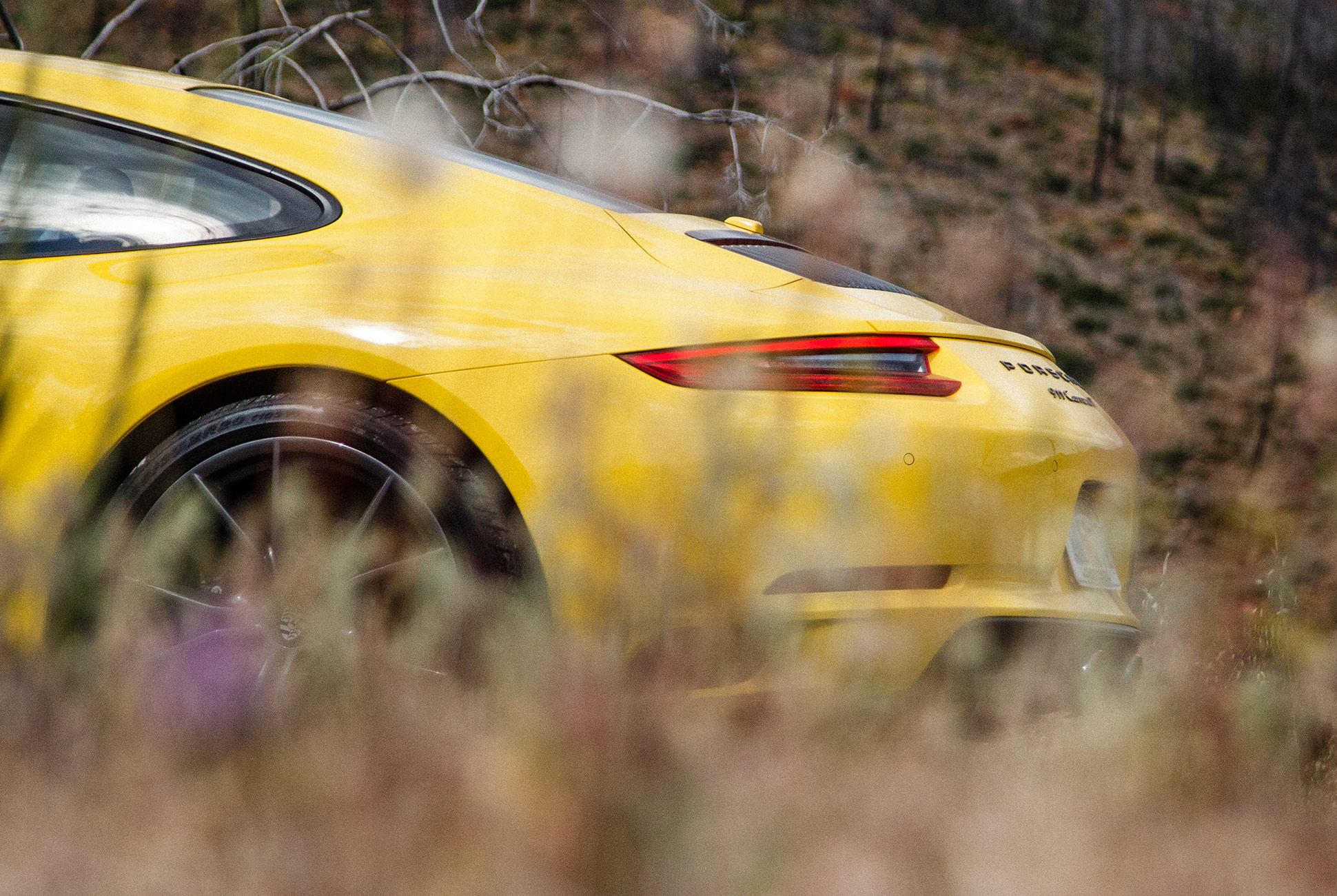
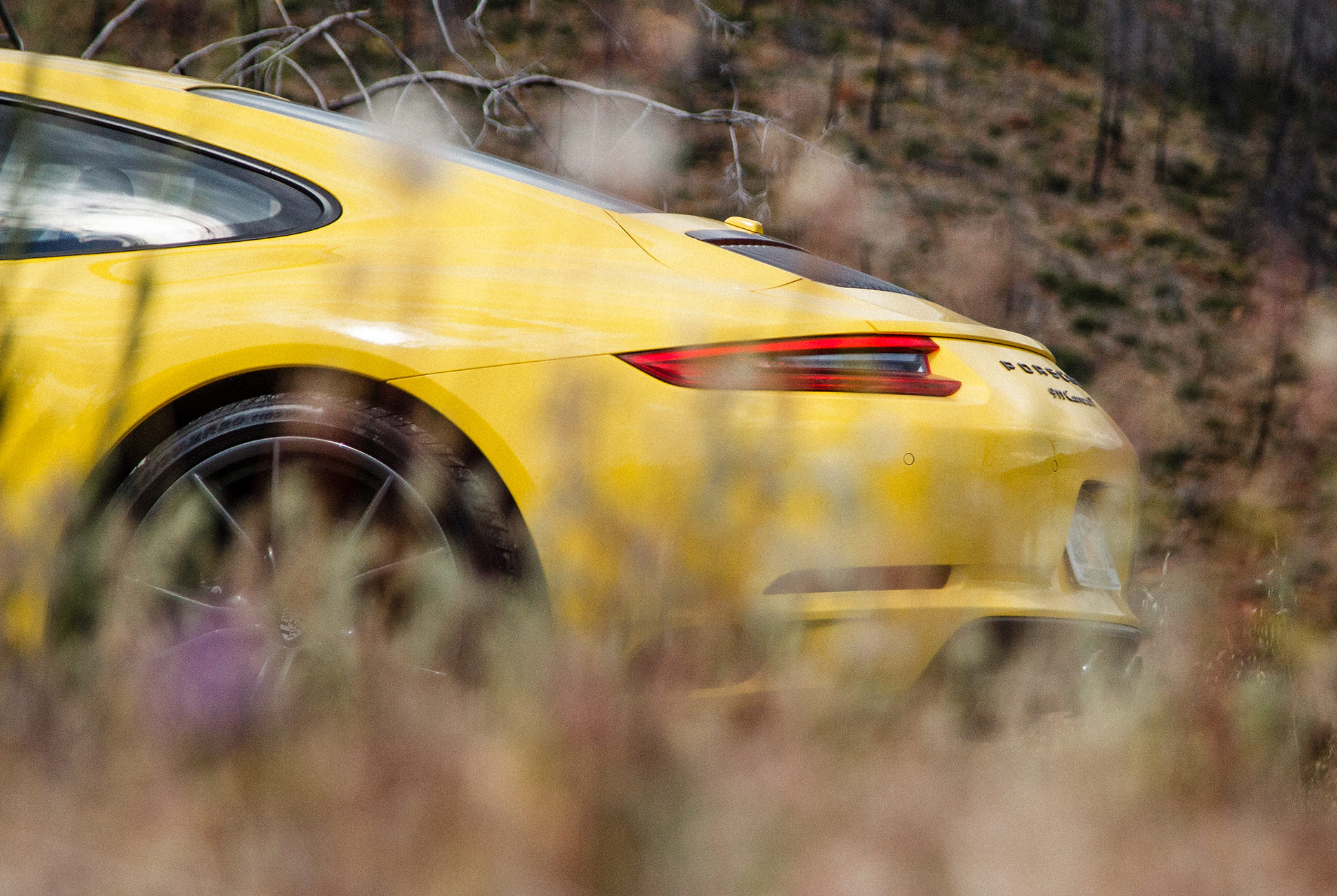
2018 Porsche 911 Carrera T Review: All the Best Performance Goods, None of the Excess Weight

Let’s not mince words: the Porsche 911 is a god-tier car. And — spoiler alert — the 2018 Porsche 911 Carrera T ($102,100) is among the greatest right now. That’s no surprise — the 911 was an instant, desirable performance hit in the 60s, and in its every form, for decade upon decade, it has remained a benchmark, a Wonder of the Sports Car World, a perennial winner of both racing awards and suburban lust. Few automakers have such a literal track record, but even fewer boast the kind of legacy Porsche can; few, if any, are capable of simultaneously maintaining progress and honoring the past. The 911 is remarkable in that regard, and the 911 T is its most current triumph.

That is as much hyperbole as I can ascribe to the 911 T. It is not “insane” and its performance is not “mind-bending.” I haven’t even been “fundamentally altered” by the experience of driving the car and nor am I doodling pictures of its familiar form on my notebooks during meetings. It is not “my new favorite car” either. But it is now my favorite 911. It is my favorite Porsche. And, I think, that’s because it is the best Porsche.

1968, a year the History Channel calls “one of the most tumultuous single years in history,” was fraught with absolute global hell: the Tet Offensive and the Vietnam War at large, the assassinations of both Martin Luther King, Jr. and Robert F. Kennedy, Nixon entering the White House to begin his corrupt and truncated couple terms. On the bright side, Apollo 8 orbited the Moon that year, prepping humankind for the next year’s lunar surface stroll. I suppose this is me cheating on the “no hyperbole” promise from before, but one other glint of splendor found its way into very fortunate garages that year: the original 911 T, the T standing for “Touring,” was then considered an entry-level version of the 911. It featured the base engine and simple visual differentiators, like chrome grilles and bumpers and side mirrors, plus a silver Porsche emblem. Today’s 911 T is a fair bit more special.

Yes, the 911 T is almost a base-level Carrera. It features the base engine, which produces 370 horsepower, compared to S models, which get 420. And while it is very pared down — more on that momentarily — it is arguably not as driver-focused and hot-rod-fun as Porsche’s 911 GTS, which pushes out 450 horsepower, put down through special wheels and a Porsche-tech-heavy suspension. The GTS is rear-drive only, like the 911 T, but is faster overall, and meant to be driven hard on a track or very challenging road. But, like the old saying “there are no small parts, just small actors,” all 911s are meant to manipulate pavement, some are simply more — or less — outfitted to do so than others.

The 911 T is still faster than a streak, but it’s also faster and lither than the actual base 911, despite sharing an engine. Thanks to myriad weight savings improvements and some of that suspension tech, the 911 T weighs in at just 3,142 pounds and is, according to Porsche, “the lightest model in the 911 Carrera range.” To reduce its weight, the rear windows and back windscreen are made of lightweight glass. Interestingly, it was pointed out to me that the rear windscreen has no heating elements embedded within, making it completely clear — a rarity these days. Further mass reduction comes in the form of loop-style door releases and removal of some sound deadening materials; choose full bucket seats up front, and your 911 T’s diet consists of a rear-seat delete as well.

My test car was equipped with a seven-speed manual transmission which, along with being objectively the most fun transmission type available… is also the transmission type you’d expect me to think is the best. It fits the 911 T well, though. Porsche’s PDK automatic is absolutely riveting to use — it’s far smarter and quicker than I could ever hope to be with a stick, and you get fully-automatic Launch Mode, which makes your friends giggle a lot. It’s magnificent, but if you go with the 911 T, I say manual or bust. Because the car itself is lighter, it feels so much more like an actual machine than sports cars so often do these days. Be one with the machine: row your own gears.

The 911 T features options not available on the standard Carrera range. One such option is PASM (Porsche Active Suspension Management), which continuously adjusts the suspension based on road conditions and feedback. But I think the most important available option here is rear-wheel steering. This is technology that continues to show up in more and more applications as time marches on — Porsche has made it available for years now on the 911 — and it completely changes the car’s dynamics. By pivoting the rear wheels counter to steering inputs at low speed (for a tighter turning radius) and in lockstep with the front wheels at high speeds (for increased stability), the car almost literally feels alive under you. You get used to the feeling quickly, but in the midst of a corner, the car seems to transmute from a straightforward A-to-B machine into a hypersonic physics crusher. Rear-steering doesn’t do things you don’t expect; it does more of what you do expect. Coupled with the 911 T’s 0.39-inch lower overall suspension, it’s a required and remarkable sensation.

In addition to all the tech, there are plenty of visual cues to set the 911 T apart from the rest of Porsche’s 911 range: dark gray side mirrors and details, red accents on the shifter, 20-inch wheels, logo headrests and more emblazon the 911 T, making it a bit boy-racer, but also noticeably unique. It’s very cool-looking and very fun to behold. That’s important to enthusiasts, and it should be.

All this less-weight and more tech will cost about $10,000 more than the standard (and relatively boring) 911 Carerra ($92,100). For about nine percent more money, you get approximately 25 percent more experience. That’s a great deal any way you look at it and makes me think that perhaps I should start doodling the 911 T in meetings.

2018 Porsche 911 Carrera T

The Good: Excellent for enthusiasts: less weight, more suspension and steering tech; faster than the 911 Carrera. Good looks: great wheels and graphics. Sounds glorious. Is a 911, so it’s, you know, excellent.

Who It’s For: The driving enthusiast who doesn’t need to drag race supercars.

Watch Out For: More expensive than a base 911. The graphics may be too much for some. Certain bucket seats are somewhat uncomfortable after long stretches (not so much “Grand Touring” as “Face Melting Touring”) and therefore difficult to extricate yourself from. That said, it’s a sports car, so deal with it. No back seats. Not a ton of luggage room, though more than you might expect.

Alternatives: The Chevrolet Corvette Z06 ($79,495) is technically an option, though its styling is overwrought, it’s big and it’s just kind of lame in comparison to a Porsche anything. The Mercedes-AMG GT C ($124,400) is another somewhat pared-down version of a desirable sports car, but is wilder and more expensive than the 911 T by a hell of a lot. For a bit more than the Benz, consider the very new and probably more liveable Aston Martin Vantage ($149,995) — it’s fantastic. Even more expensive yet, but in many ways closest to the 911 T’s spirit, is the McLaren 570S ($188,600), which actually is one of my most favorite cars. It is a high-tech masterpiece-level driving experience and literally nothing more. (Though, add a few options and you could buy two 911 Ts for the same money.)

What Others Are Saying:

• “The 911 Carrera T is so much more than the sum of its parts. It’s a base-spec car with S- and GTS-level performance bits, and no less satisfying to drive. It’s a shining example of why Porsche’s Carrera is one of the finest sports cars in the entire world, and why the inherent greatness of every 911 starts right here at the bottom.” — Steven Ewing, CNET Roadshow

• “The T represents baby steps towards reviving some of the rawness that always made older Carreras so appealing without treading on the feet of the hardcore heroes at the pinnacle of the range.” — Dan Trent, Car Buzz

Key Specs: 2018 Porsche 911 Carrera T

Engine: 3.0-liter twin-turbo flat-six
Transmission: seven-speed manual; double-cluth autopmatice (PDK)
SPEC2: 370 horsepower
SPEC3: 331 lb-ft
0-60: 4.3 seconds (manual); 4.0 seconds (PDK)
Top Speed: 182 mph (manual); 180 mph (PDK)
Base MSRP: $102,100

Read More Gear Patrol Reviews

Hot takes and in-depth reviews on noteworthy, relevant and interesting products. Read the Story

Note: Purchasing products through our links may earn us a portion of the sale, which supports our editorial team’s mission. Learn more here.

The Best Thing about the Porsche 911 Carrera T Is that There’s Literally Less of It

Let’s not mince words: the Porsche 911 is a god-tier car. And — spoiler alert — the 2018 Porsche 911 Carrera T ($102,100) is among the greatest right now. That’s no surprise — the 911 was an instant, desirable performance hit in the 60s, and in its every form, for decade upon decade, it has remained a benchmark, a Wonder of the Sports Car World, a perennial winner of both racing awards and suburban lust. Few automakers have such a literal track record, but even fewer boast the kind of legacy Porsche can; few, if any, are capable of simultaneously maintaining progress and honoring the past. The 911 is remarkable in that regard, and the 911 T is its most current triumph.

That is as much hyperbole as I can ascribe to the 911 T. It is not “insane” and its performance is not “mind-bending.” I haven’t even been “fundamentally altered” by the experience of driving the car and nor am I doodling pictures of its familiar form on my notebooks during meetings. It is not “my new favorite car” either. But it is now my favorite 911. It is my favorite Porsche. And, I think, that’s because it is the best Porsche.

1968, a year the History Channel calls “one of the most tumultuous single years in history,” was fraught with absolute global hell: the Tet Offensive and the Vietnam War at large, the assassinations of both Martin Luther King, Jr. and Robert F. Kennedy, Nixon entering the White House to begin his corrupt and truncated couple terms. On the bright side, Apollo 8 orbited the Moon that year, prepping humankind for the next year’s lunar surface stroll. I suppose this is me cheating on the “no hyperbole” promise from before, but one other glint of splendor found its way into very fortunate garages that year: the original 911 T, the T standing for “Touring,” was then considered an entry-level version of the 911. It featured the base engine and simple visual differentiators, like chrome grilles and bumpers and side mirrors, plus a silver Porsche emblem. Today’s 911 T is a fair bit more special.

Yes, the 911 T is almost a base-level Carrera. It features the base engine, which produces 370 horsepower, compared to S models, which get 420. And while it is very pared down — more on that momentarily — it is arguably not as driver-focused and hot-rod-fun as Porsche’s 911 GTS, which pushes out 450 horsepower, put down through special wheels and a Porsche-tech-heavy suspension. The GTS is rear-drive only, like the 911 T, but is faster overall, and meant to be driven hard on a track or very challenging road. But, like the old saying “there are no small parts, just small actors,” all 911s are meant to manipulate pavement, some are simply more — or less — outfitted to do so than others.

The 911 T is still faster than a streak, but it’s also faster and lither than the actual base 911, despite sharing an engine. Thanks to myriad weight savings improvements and some of that suspension tech, the 911 T weighs in at just 3,142 pounds and is, according to Porsche, “the lightest model in the 911 Carrera range.” To reduce its weight, the rear windows and back windscreen are made of lightweight glass. Interestingly, it was pointed out to me that the rear windscreen has no heating elements embedded within, making it completely clear — a rarity these days. Further mass reduction comes in the form of loop-style door releases and removal of some sound deadening materials; choose full bucket seats up front, and your 911 T’s diet consists of a rear-seat delete as well.

My test car was equipped with a seven-speed manual transmission which, along with being objectively the most fun transmission type available… is also the transmission type you’d expect me to think is the best. It fits the 911 T well, though. Porsche’s PDK automatic is absolutely riveting to use — it’s far smarter and quicker than I could ever hope to be with a stick, and you get fully-automatic Launch Mode, which makes your friends giggle a lot. It’s magnificent, but if you go with the 911 T, I say manual or bust. Because the car itself is lighter, it feels so much more like an actual machine than sports cars so often do these days. Be one with the machine: row your own gears.

The 911 T features options not available on the standard Carrera range. One such option is PASM (Porsche Active Suspension Management), which continuously adjusts the suspension based on road conditions and feedback. But I think the most important available option here is rear-wheel steering. This is technology that continues to show up in more and more applications as time marches on — Porsche has made it available for years now on the 911 — and it completely changes the car’s dynamics. By pivoting the rear wheels counter to steering inputs at low speed (for a tighter turning radius) and in lockstep with the front wheels at high speeds (for increased stability), the car almost literally feels alive under you. You get used to the feeling quickly, but in the midst of a corner, the car seems to transmute from a straightforward A-to-B machine into a hypersonic physics crusher. Rear-steering doesn’t do things you don’t expect; it does more of what you do expect. Coupled with the 911 T’s 0.39-inch lower overall suspension, it’s a required and remarkable sensation.

In addition to all the tech, there are plenty of visual cues to set the 911 T apart from the rest of Porsche’s 911 range: dark gray side mirrors and details, red accents on the shifter, 20-inch wheels, logo headrests and more emblazon the 911 T, making it a bit boy-racer, but also noticeably unique. It’s very cool-looking and very fun to behold. That’s important to enthusiasts, and it should be.

All this less-weight and more tech will cost about $10,000 more than the standard (and relatively boring) 911 Carerra ($92,100). For about nine percent more money, you get approximately 25 percent more experience. That’s a great deal any way you look at it and makes me think that perhaps I should start doodling the 911 T in meetings.

2018 Porsche 911 Carrera T

The Good: Excellent for enthusiasts: less weight, more suspension and steering tech; faster than the 911 Carrera. Good looks: great wheels and graphics. Sounds glorious. Is a 911, so it’s, you know, excellent.

Who They’re For: The driving enthusiast who doesn’t need to drag race supercars.

Watch Out For: More expensive than a base 911. The graphics may be too much for some. Certain bucket seats are somewhat uncomfortable after long stretches (not so much “Grand Touring” as “Face Melting Touring”) and therefore difficult to extricate yourself from. That said, it’s a sports car, so deal with it. No back seats. Not a ton of luggage room, though more than you might expect.

Alternatives: The Chevrolet Corvette Z06 ($79,495) is technically an option, though its styling is overwrought, it’s big and it’s just kind of lame in comparison to a Porsche anything. The Mercedes-AMG GT C ($124,400) is another somewhat pared-down version of a desirable sports car, but is wilder and more expensive than the 911 T by a hell of a lot. For a bit more than the Benz, consider the very new and probably more liveable Aston Martin Vantage ($149,995) — it’s fantastic. Even more expensive yet, but in many ways closest to the 911 T’s spirit, is the McLaren 570S ($188,600), which actually is one of my most favorite cars. It is a high-tech masterpiece-level driving experience and literally nothing more. (Though, add a few options and you could buy two 911 Ts for the same money.)

What Others Are Saying:

• “The 911 Carrera T is so much more than the sum of its parts. It’s a base-spec car with S- and GTS-level performance bits, and no less satisfying to drive. It’s a shining example of why Porsche’s Carrera is one of the finest sports cars in the entire world, and why the inherent greatness of every 911 starts right here at the bottom.” — Steven Ewing, CNET Roadshow

• “The T represents baby steps towards reviving some of the rawness that always made older Carreras so appealing without treading on the feet of the hardcore heroes at the pinnacle of the range.” — Dan Trent, Car Buzz

Key Specs: 2018 Porsche 911 Carrera T

Engine: 3.0-liter twin-turbo flat-six
Transmission: seven-speed manual; double-cluth autopmatice (PDK)
SPEC2: 370 horsepower
SPEC3: 331 lb-ft
0-60: 4.3 seconds (manual); 4.0 seconds (PDK)
Top Speed: 182 mph (manual); 180 mph (PDK)
Base MSRP: $102,100

Read More Gear Patrol Reviews

Hot takes and in-depth reviews on noteworthy, relevant and interesting products. Read the Story

Note: Purchasing products through our links may earn us a portion of the sale, which supports our editorial team’s mission. Learn more here.

Nike Air Pegasus 35 Review: One of the Best Running Shoes of 2018

2018 marks the 35th year of the Nike Air Zoom Pegasus, so what better time to launch a new version of the popular running shoe. Per Nike’s history, each franchise gets a facelift every year, and every two years, there’s a total overhaul. The Zoom Pegasus 35 is a revamp starting with the outsole all the way up to the tongue. It’s snappier than previous iterations, fast on foot and durable enough for a 10-miler. We took them for a spin to see how they compare to the Pegasus 34s.

The Good: Thanks to cutouts in the outsole, the Pegasus 35 is .2 ounces lighter than the 34. The mesh is more breathable, looks fresh and feels great. An update to the airbags underfoot provide a thin, yet firm layer of cushioning that stretches from heel to toe. Thanks to input from Mo Farah, the 2012 gold medalist in the 5,000 and 10,000 meters, the heel collar is higher, which makes for a faster-looking shoe.

Who They’re For: Everyone from 5k racers to marathoners can appreciate the neutral shoe. While the Nike Epic React works for a particular type of runner (someone who has a stable arch, needs zero structure and doesn’t pronate or supinate), the Pegasus 35 is more ubiquitous. I took the 35 for runs on trails, dirt roads and pavement, but enjoyed the shoes most on the back roads of upstate Vermont.

Watch Out For: The extended heel collar, created to help ease pressure on your Achilles tendon (you can thank Mo Farah for that design), might take a while to get used to. It can cause some rubbing in the beginning. The toe box is also decidedly more narrow as compared to the 34, which some testers have complained about.

While I didn’t experience these issues, it did take me roughly 11 miles to feel like my feet adapted to the sneakers. I played around with the fit quite a bit, testing out different ways of tieing the laces to adjust to just four toe eyelets as opposed to five. But once I hit those 11 miles, I felt like I could run forever.

Alternatives: There are a lot of differences between the Nike Air Pegasus 34s ($65) and the 35s, so be sure to test them out in stores before settling with the former model. Other similar running sneakers include the Asics Cumulus 19 ($120), Brooks Ghost 9 ($78) and Mizuno Wave Rider 20 ($90). The New Balance 880V7 ($115) and the Saucony Ride 10 ($72), also have similar neutral cushioning.

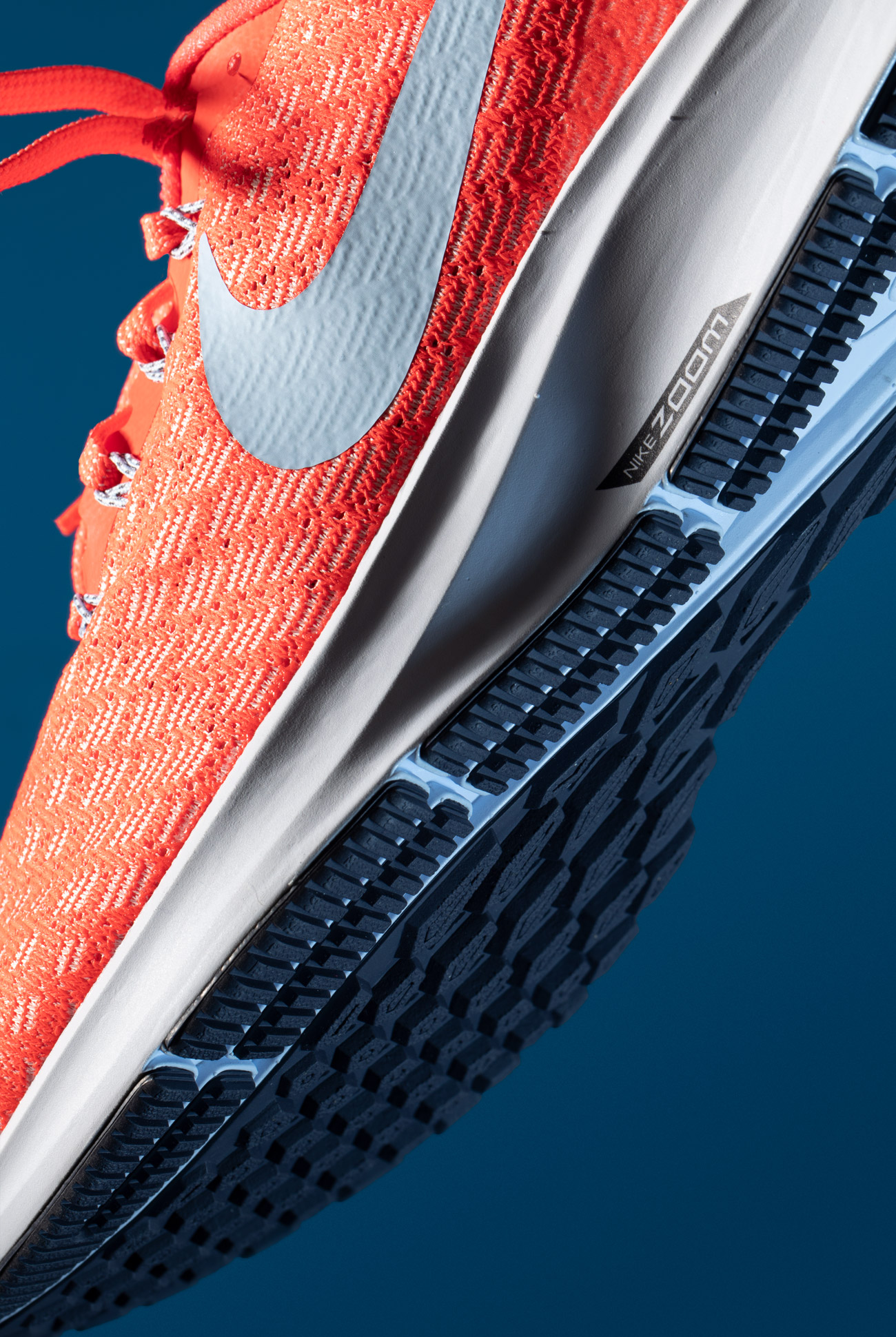
Review: The night I picked up the sneakers, I had the chance to chat with Chris Nuelle, an EKIN for Nike (a group of Nike employees tasked with brand storytelling and marketing), who has been running for Nike for two years. He walked me through all the changes to the Pegasus from bottom to top. The waffle outsole on the 35 is the same as the 34, just with a change in shape. On the 34s, the lugs are pentagonal, and roughly the same size from toe to heel, varying a little the closer they get to either edge. One complaint about the 34s was how rigid the outsole was, especially under the toe. On the 35s, the pentagonal shapes stretch and shrink from heel to toe, providing more flexibility in the outsole. The outsole is springy, yet stiff enough to keep your heel to toe energy transfer effortless.

The midsole has a Zoom bag throughout the entire shoe, unlike past models which only had a zoom bag in the heel or toe, or separate bags in each. And the airbag is the same shape as the elusive Nike 4%. The Cushlon foam is the same as what you find in the 34s.

The most significant changes are aesthetic-related. An engineered mesh upper is more breathable, with perforations you can see, starting in the toe and wrapping around the entire foot. During testing, I ran in everything from 50 degrees up to a sizzling 79, and never once felt the shoes were too hot. Paired with thick merino wool or thin performance socks, the shoes felt comfortable and airy. My feet sweat, but no more than expected on hot days.

The toe box on the 34s seems smaller, just because of the elimination of one toe eyelet. The 35s offer more room for foot flexion. Like I said earlier, it took me a while to figure out my perfect fit. During my first few shorter runs (a 3- and two 4-mile runs) I felt some pressure on the top of my left foot, directly under the laces, but by mile twelve, it disappeared.

Verdict: As a fan of the Pegasus 34s, I’m still impressed by the 35s. While it took a few runs for me to wear these in, the lighter weight and full airbag underfoot create a shoe that’s fast, yet semi-supportive. For a neutral runner, these kicks are comfortable all day long, whether you’re running or walking. The price is $10 more than previous versions, but you’re getting the elite look inspired by the 4% sneakers, as well as a shoe that’ll take you through track practices and long distance runs. While they’re not as bouncy as the Nike Epic Reacts, these shoes are ones I can see lasting me through marathon training and never look back.

What Others Are Saying:

• “This is a superior daily trainer. There is only one shoe we have reviewed this year that I like better. If you follow my reviews then you know my top shoe this year to date is the Nike Epic React. The Epic React doesn’t work for every runner though, while the Pegasus 35 will work for the majority of runners.” — Thomas Neuberger, Believe in the Run

• “The beveled heel helps with touchdown as you’re running, the collar is directed away from the Achilles tendon to make it more comfortable on your foot (you have Sir Mo to thank for that) and there’s a full-length Zoom airbag in the sole. Inspired by the Zoom Vaporfly 4% — a shoe that claims to improve your running efficiency by, you’ve guessed it, 4%— the sole offers improved cushioning and flexibility.” — Matt Hambly, Men’s Health UK

• “The Pegasus 35 bridges the gap between an elite athlete’s shoe and a mass-consumer buy. Not only in price (the Vaporfly 4% cost $250), but in fit, form, and function. It feels deluxe, but it’s robust enough to tackle a long endurance run one day and a sprint session the next. The Pegasus 35, in our opinion, is the running shoe release of spring 2018 that’ll give you the biggest bang for your buck. It doesn’t hurt that it’s a sharp-looking shoe at that.” — Brittany Smith, Men’s Journal

Key Specs

Offset: 10mm
Weight: 9.9 ounces

| |

Read More Gear Patrol Reviews

Hot takes and in-depth reviews on noteworthy, relevant and interesting products. Read the Story

Note: Purchasing products through our links may earn us a portion of the sale, which supports our editorial team’s mission. Learn more here.

Atlas Athlete Camera Pack Review: An Adventure Camera Bag to Rival the Best

The adventure-oriented camera bag category used to be solely dominated by Lowepro. Now, a variety of young brands are capitalizing on the growing population of adventure-curious (and Instagram-addicted) photographers to create dedicated travel and outdoor backpacks designed with cameras in mind.

Atlas is the latest to cater outdoorsy snapshoters with its two camera backpacks, the Athlete and the Adventure. With 30 liters of internal storage — not including a dedicated camera section accessed via fold-out back panel — the Athlete is the smaller of the pair. It’s built like a hiking pack with plenty of performance-oriented features, but somehow manages to squeeze just as much photography function in as well.

The Good: The best thing about the Atlas Athlete backpack is its adaptability in terms of carrying capacity. Different activities require distinct gear kits, and depending on whether you’re hiking, kayaking or skiing, you’ll use less or more space inside the bag. Furthermore, outdoor activity can range from a few hours to a few days. The Athlete’s adjustable features prepare it for variety, and it’s comfortable and practical both when it’s stuffed to the brim and holding only a few items.

The most original of the Athlete’s space-modifying features is its Origami divider system. At the top of the camera storage space is a small loop that, when pulled, reduces that space by about a third, allowing photographers to carry more non-camera-related equipment in the bag’s main gear compartment. Push it back in and the space is available for lenses and bodies again.

This feature is great because it lets photographers carry more or less of either type of gear depending on what the trip calls for.

Who It’s For: The Atlas Athlete camera backpack is an adventure photographer’s bag. It looks and carries like a hiking pack — it uses high-grade lightweight performance materials that are also weather-repellant (and it comes with a built-in rain cover) — so it’s best equipped for outdoor use. That being said, it’s also a capable hauler for less-outdoorsy photographers, but they may not appreciate the bag’s techy aesthetics and overbuilt features.

Watch Out For: Atlas’ branding on the Athlete is very prominent across the pack’s face, and some might be put off by this as being too loud and sporty. Also, within the camera organization there are two sizes of Velcro dividers that can be used to arrange the space, let’s call them large and small. Three smalls equal roughly the same size as a large, but I did find a desire for at least one medium-sized spacer.

Furthermore, the Athlete’s dedicated hydration sleeve is a pocket on the side. Ideally, this should be as close to the back as possible because water presents a lot of carried weight, and positioning this on the side can create a lopsided imbalance.

Alternatives: F-stop has been the top name in the game for years, and its Anja ($259) and Tilopa ($319) backpacks will likely be the Athlete’s biggest rivals. Peak Design has also become a fan-favorite among photographers and while its Everyday Backpack ($260) is less outdoor-dedicated, it’s still suited to the task. A lesser-known brand to look toward is Shimoda Designs with its brand-new Explore backpack ($280). All of these bags are cheaper, and offer a comparable range of specs.

Review: If I’m being honest with you, I’m a bit of a purist when it comes to outdoor activities. I desire the best of the equipment I use and I rarely make room for the non-essential. When I did eventually purchase a high-end digital camera to take with me on adventures, I made sure to keep portability in mind but then, like many before me, struggled to find the best way to transport it up to 15,000 feet elevation, if need be.

My photo kit is small. I shoot with a Sony mirrorless, an old analog Canon AE-1 Program and sometimes a bulkier Canon 5D, but rarely do I bring all three on the same trip. On a recent journey to Vermont’s more-remote Northeast Kingdom in search of empty mountain bike trails, I brought the former two devices, and packed them in the Athlete.

The internal camera space required some customization, but after battling with the Velcro spacers I easily managed to fit both cameras with lenses attached as well as a hard drive, dust blower, two extra camera straps, an extra battery, a charging cable and handy clip. My colleague, Chase Pellerin, Gear Patrol‘s staff photographer, was also outfitted with an Athlete and filled his with a Canon 1DX and four lenses, as well as a light, light stand, umbrella and laptop.

My setup was sparse compared to his, but I knew that it was all I needed. I had still only filled a little more than half the space. Enter the Athlete’s Origami divider: with one pull of a webbing loop, that extra camera storage space became gear space in the backpack main compartment. That side of the Athlete was able to hold: a MacBook Pro (in a dedicated sleeve), a sleeping bag and pad, a puffy jacket and a rain jacket, a water bottle and an undeniably bulky mountain biking helmet, along with a variety of small essentials stored in various pockets. I had plenty of space to spare (some of which went under-utilized because it was in the camera storage compartment).

On the trail, the Athlete performed as it looks — like a hiking bag. The hip belt is actuallysupportive, a trait that doesn’t always hold true for crossover backpacks, and the shoulder straps are fully-adjustable, which allowed me to shift and distribute weight throughout the day.

In photography and hiking, bag access is crucial, and the Athlete backpack provides it. Cameras and other gear are kept separate, so when I needed one or the other I didn’t have to do much digging to find it.

The Athlete stocks numerous small yet thoughtful features, such as an internal laptop sleeve that uses the camera storage to provide padding and expandable exterior sleeves for stashing gear. Its webbing tension straps all run through strategically-placed loops that hold excess length and prevent the chaos caused by too many dangling lines.

There are some small things not to love though; I’m a fan of minimalism and subtlety, and the gigantic logo on the pack’s front is anything but. In hiking packs, I also always look for a backdoor into a main compartment that will inevitably become stuffed, and disorganized. Outdoor companies usually provide this with a front, side, or bottom zipper that gives access without opening the top, and this would be a welcome addition to the Athlete.

Even without these features though, the Athlete made a worthy companion on our trip to Vermont. I’ll continue to bring it on other journeys, pushing the limits of its seams, as I do the same to my muscles, over miles of well-worn and untrodden trails.

Verdict: The Athlete is neither a hiking pack with a built-in camera system nor a camera bag that’s been optimized for outdoor use. It walks the line between these two expertly, providing all the support, adjustability and varied storage space of an outdoor pack with the organization and storage that photographers need. There are a few small points to address, such as the bag’s hydration sleeve location and its internal dividers, but the Athlete is still strong on many points. Photographers with more expansive camera kits will get more use out of the Athlete, which has more camera storage than I needed. For brand’s first pass at an adventure camera backpack, the Atlas Athlete strikes close to bullseye.

What Others Are Saying:

• “If you’re someone who likes traveling light or hiking and shooting on the go, then this is a pack you should consider. The Atlas Athlete is well made with reinforced stitching and high-quality zippers and taped seams everywhere it counts. I expect many years of enjoyable use from this pack.” — Levi Sim, Photofocus

• “I’m on a seemingly never-ending quest to find the perfect backpack for not just outdoor photography, but one versatile enough for any situation (hiking, camping, studio, coffee shops, cycling, etc). The Athlete and Adventure backpacks from Atlas Packs are a great step toward bags that are highly functional, well-made, and versatile, and meet the needs of amateurs and professionals alike. They seem to have taken inspiration cues from true hiking packs like those from Osprey, and photography-focused brands like F-stop Gear, and come up with their own design and solution. I have to say, it’s pretty solid.” — Caleb Kerr, Youtube

• “If you’re looking for a high-end outdoor camera pack that will let you comfortably carry your gear in any kind of terrain or environment, then I’d recommend taking a look at what Atlas has to offer. I’m excited to see this small company grow, and judging by their designs and the positive feedback they’ve had from users so far, they’re well on that track.” — Dan Bailey, Dan Bailey Photo Blog

Key Specs

Available Sizes: Medium (5’0″-5’10”), large (5’11”-6’6″)
Non-camera gear volume: 30 liters
Weight: 3.6 pounds
Select Features: 15″ laptop sleeve, air-vented mesh back panel, removable internal frame backpack, removable hip belt, hydration compatible

Read More Gear Patrol Reviews

Hot takes and in-depth reviews on noteworthy, relevant and interesting products. Read the Story
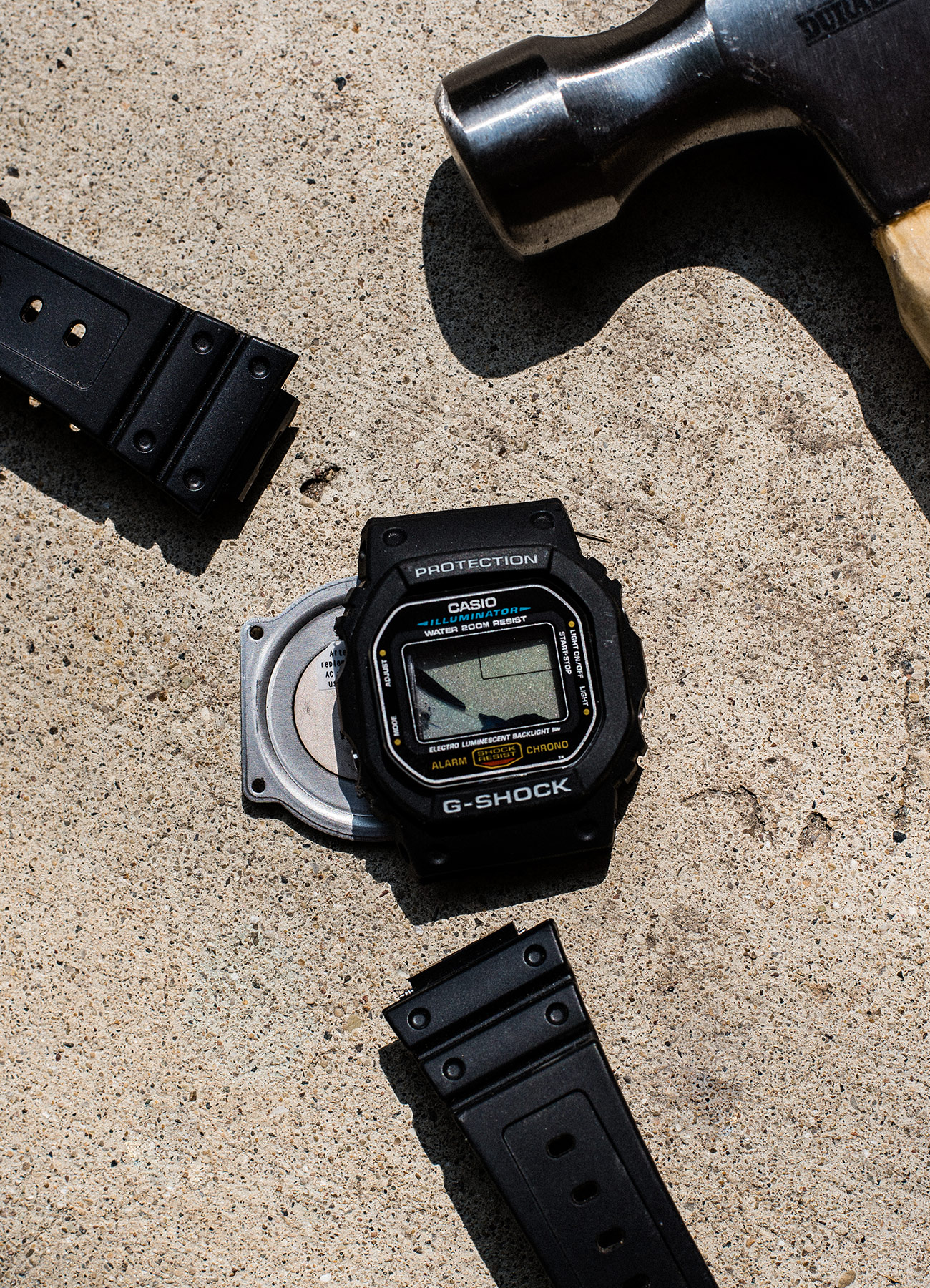
Note: Purchasing products through our links may earn us a portion of the sale, which supports our editorial team’s mission. Learn more here.

2019 Subaru Ascent Review: A Much-Needed and Very Good Three-Row SUV

Subaru has had a longstanding SUV problem; namely, the lack of an SUV. The Tribeca — a model that lasted ten years and was mercifully retired in 2014 — never really counted, because nobody wanted it. That bland vehicle was routinely among the worst-selling vehicles in the U.S., lacking, as it did, the nearly ineffable qualities that make a Subaru a Subaru. Because of that, and its lack of an immediate replacement, the company has been by its own admission “hemorrhaging customers” to competitors offering three-row models with seating for seven or eight passengers. This market — families — is hugely important, of course, so the company is taking another swing at the legit family hauler: the Subaru Ascent ($31,995). The car comes loaded with cool features and innovative twists, and it finally brings Subaru’s A-game to the contest. It’s late to that particular game, of course, but it’s playing catch-up for all it’s worth.

The Good: First and foremost, the handling on twisty roads is exemplary. The Ascent feels stable and confident, something that carries over to off-road scenarios as well. Also, its all-wheel-drive system has an easy X-Mode that allows you to quickly jack up the system’s sensitivity to wheelspin and throttle modulation in rocky or sandy situations, ensuring you don’t get bogged down. It’s no Wrangler, but it’ll get you on—and off—the beach with little fuss. During a drive along Oregon’s coast, I experienced this first-hand. It would be no problem toting the family to the ocean in the Ascent.

Who It’s For: Being a versatile Subaru, it’ll fit whatever Subie lifestyle you happen to inhabit. More practically, though, think families in need of seven or eight seats, or adventurers constantly hauling around camping gear, kayaks, and the like. That crowd won’t be able to go too far off the beaten path, but it’ll make quick work of rutted dirt roads and light scrambling. The third row is cramped for adults, so keep that in mind if you bring your pals along on a lot of adventures. Also, it’s great for heavy drinkers. Not of the alcohol variety — can’t condone that — just in general. Nineteen cupholders… you can tote a lot of bottled water or craft root beer or three gallons-worth of Super Big Gulps.

Watch Out For: Each one of those 19 cupholders. The things are magnets from dirt and the sticky schmutz that accompanies children everywhere they go. Since these things will be used for everything from actual beverages to smartphones to toys to discarded candy wrappers, the goo will undoubtedly migrate onto stuff you’d rather it didn’t. Do yourself a favor: keep the cupholders clean, even though it will mean venturing into the dark dungeon of third-row kid-dom every now and then. Yuck…

Alternatives: The mid-sized SUV category is about as hot right now as the crossover, and as such is heavily populated with high-quality alternatives. The Honda Pilot, the Volkswagen Atlas, the Kia Sorento, the Mazda CX-9, the Toyota Highlander and the GMC Acadia, among others, all share space in the Venn diagram that comprises the not-quite-premium segment of this category. (Yes, there are many categories and segments now.) All are great options, and the Ascent leads or holds its own in many of its metrics, from leg room to road noise to towing capacity — among about a thousand other qualities. They also have comparable base pricing, in the Ascent’s case starting at $31,995, though the Ascent offers all-wheel-drive and its EyeSight driver-assist package as standard, which is a rarity.

Review: I drove the Ascent from suburban Portland, Oregon, to the coast, tackling a wide variety of driving conditions, though ones obviously optimized to show off precisely what the car was capable. That included brisk curves in the woods, beaches and a light off-roading course, but nothing more challenging. On the road, the ride is terrific — quiet, smooth, and surprisingly flat. This is major body-roll turf for large SUVs, and while pushing the Ascent through the rural hills of eastern Oregon, the ride was fun and energetic, with good acceleration and braking performance — though the Ascent was minimally loaded — and good handling. The 260-horsepower 2.4-liter boxer engine helps by bringing down the center-of-gravity, but the four-wheel independent suspension proves a good match for the road and the machine. Also impressive: the complement of driver aids that comprise Subaru’s EyeSight system, including automatic emergency braking, adaptive cruise control, lane departure warning and a head-up display that flashes warnings as you need them. It’s nice to see a manufacturer making this standard, even if just in one model line.

On the beach, it handles the sand nicely, but couldn’t absorb some higher-speed traverses of washboard ruts left behind by a receding tide. So take it easy, lest you start bouncing up and down and dislodging dozens of drinks from the safety of their cupholders. While driving an off-road course consisting of a serpentine route over some rocks and up some slippery gravel slopes, it fared perfectly fine, easily managing the challenges, much of that courtesy of the healthy 8.7-inch ground clearance. The standard hill-descent control also helped modulate what would have been a quick plummet in a beginner’s hands. These challenges are likely at the far end of the Ascent’s capabilities, but they’re good enough to make the car use and to expand the places you can reach on a trip without any fuss. If you push too hard, though, you will get in trouble, no matter what you’re in—something we saw first-hand when a jacked-up Jeep driven on the beach by some inexperienced or over-exuberant drivers found itself mired up to its axles on the same sand we were driving. Take-home: Respect your opponent, lest ye embarrass yourself.

Inside, the new Subie’s trappings are high-quality and competitive, with excellent fit and finish, substantial heft and strong tactile feel in the materials. Plastic abounded, as is natural, but it doesn’t feel “plasticky,” and the leather upholstery available in the higher trim levels — Limited and Touring — lent the ride a definite premium flair. The rear doors open wider than most SUVs, at 75 degrees, easing access, particularly with child seats, and there’s an excellent under-floor storage compartment in the rear. The connectivity system also stands up to scrutiny, with eight USB plugs for charging devices, available 4G LTE Wi-Fi, and, up front, Apple CarPlay and Android Auto, with a full complement of music-streaming apps accessible on the standard 6.5-inch display or the upgraded eight-inch system. It ticks all the boxes that are expected in this category and for this (mostly) family-centric audience.

My favorite feature — as it is whenever I see it — is the digital rear-view mirror. Fed by a camera in the back, it, of course, eliminates the visibility problem you have with a large vehicle, especially when packed tight with people and gear. It’s not quite as bright and crisp as summer higher-tiered samples I’ve tried, but it works well and generates a perfectly usable and useful unobstructed view. It was a nice surprise seeing that in there.

Verdict: It’s always been a bit baffling that Subaru has never really had a dog in this hunt — has never been a contender in the big SUV category. Of course, it’s a small company that can’t practically compete in every category, which helps account for that gap. But it’s now been filled with a worthy product. The Ascent is fun enough to make a rural road trip a pleasure and robust enough to take you a few miles further than the roads might allow. It can wear the Subaru badge with pride.

What Others Are Saying:

• “During testing on serpentine, woodsy roads on the Oregon Coast, it felt like a five-passenger sedan rather than an eight-passenger family barge. Steering is hardly sports-car tight, but it’s accurate with inputs, with little of the numbness that plagues too many crossovers in this segment. — Michael Frank, Men’s Journal

• “[It handled] with aplomb anything we tossed at it during a long day’s drive. That included a delightful excursion down a long and wet beach strand at low tide that likely would have bogged down many crossovers. We later had the chance to test the 2019 Subaru ute on a run through a rutted gravel pit. A third demonstration showed Ascent’s solid towing capabilities, the base model rated at 2,000 pounds while higher trim levels – which add an oil cooler — can easily manage a 5,000-pound trailer.” — Paul Eisenstein, http://www.thedetroitbureau.com/2018/05/first-drive-2019-subaru-ascent-proving-bigger-is-better/

• “Interior design won’t be winning any awards for innovation, but the materials are certainly better than we’ve seen from Subaru lately. Nothing rattled or vibrated during my short time with the vehicle and I found the driver’s seat to be a comfy place to spend the day.” — Emme Hall, Roadshow

Key Specs

Engine: 2.4-liter 4-cylinder horizontally opposed turbocharged boxer engine
Transmission: continuously variable transmission with selectable eight-speed manual shift mode; symmetrical all-wheel-drive
Horsepower: 260
Torque: 277 lb-ft
Weight: 4,430 lbs
Fuel economy: 23 mpg combined city/highway for 18-inch wheels; 22 for 20-inch wheels
Price: $31,995 (base)

The 10 Best SUVs Under $50,000

Choosing one among the endless many is no easy task. Moreover, since the average price for an SUV 2017 was just under $40,000, it’s a decision that shouldn’t be taken lightly. To cover all the bases, we bumped the budget up to $50,000 and chose the best new SUVs you can buy in 2018. Read the Story

Note: Purchasing products through our links may earn us a portion of the sale, which supports our editorial team’s mission. Learn more here.

Levi’s 501 Review: Is the Original Blue Jean Any Good?

Full disclosure: I’m a longtime fan of the Levi’s 501. I’ve got a few pairs of the straight-leg style that get regular wear. My favorite pair came into my life by chance. I was wandering down a quiet street in San Francisco’s NoPa neighborhood when a laundromat owner dumped a pile of forgotten garments by a corner trashcan. On top was a pair of perfectly worn and faded vintage Levi’s 501s. I took them home, washed them and tried them on — a perfect fit, noticeably better than any jeans I owned. It was meant to be. Since then, I’ve picked up a few other pairs of vintage 501s, all unique in their aging, but familiar in their fit.

While Levi’s has produced the 501 for 145 years, certain features have evolved and changed over time. The brand now offers the silhouette in stretch denim and in premium denim. You can also choose between a tapered silhouette and a skinny fit. All the new iterations aside, I’ve been most curious how the stock 501, the non-stretch Original Fit jean, fares in the modern marketplace saturated with denim styles. So, to see for myself, I got my hands on a couple pairs of off-the-rack 501s to explore how the most iconic jean stands up in the 21st century.

The Good: This is a time-tested style — Levi’s has produced the design for almost a century-and-a-half. The straight-leg fit is appropriate for almost everyone. Being Levi’s flagship product, the style is widely available and relatively inexpensive. What’s more, it’s a durable pant that should last for years, developing a unique fading over the time.

Who They’re For: The 501 Original Fit is a no-nonsense jean that is flattering on a range of body types. It doesn’t pander to fashion trends and has an unabashedly straight leg silhouette. It’s neither skinny nor baggy. The 12.5-ounce denim is appropriate for a range of seasons and the jean comes in a variety of washes to suit your personal taste.

Watch Out For: According to some online reviews, the 501 Original Fit is plagued with manufacturing inconsistencies. As this is Levi’s budget 501 produced at high volume, there are more issues with sizing than with the brand’s higher-priced options. Some reviewers found that that listed waist size didn’t correspond to their actual size — my advice: just buy from a site that has a strong return policy. That aside, these are workhorse jeans. Don’t get them if you want some selvedge to show off or if you’re looking for denim with an intricate origin story.

Alternatives: If you’re not into the straight leg silhouette, Levi’s offers the 501CT, which has a taper from the knee to the ankle. Or, if you like the style but you’d rather have a bit of stretch for comfort, Levi’s also offers various stretch versions of the jean. Want to invest in a Levi’s 501 that is closer to what the vintage models were like? Try the Levi’s Vintage Clothing 1947 501 — at $260, it’s noticeably more expensive though.

On the other hand, other brands offer a good range of value options. Wrangler makes a classic straight leg pant for $34, and Uniqlo and Everlane both sell stretch denim for $50 and $68, respectively. Secondhand sites are yet another option for budget-conscious 501 lovers. Check eBay and Etsy for a range of modestl -priced jeans from the past few decades.

Review: To test the 501 Original Fit, I picked up two starkly different washes: a rigid unwashed denim and a light stonewash denim. While the soft hand feel of the stonewashed pair created a different wear experience, the fit of both pairs was spot on. When I talked with Paul Dillinger, Levi’s Head of Global Product Innovation, about jean quality, he mentioned the importance of fit. “The Levi’s 501 jean is world famous, and is also made in factories in nearly every region where it’s sold,” he said. “It’s important that the fit is absolutely consistent wherever it’s sold.”

While Levi’s offers high-end vintage reproductions of different 501 jeans, they come at a premium. The stock 501, on the other hand, is geared at a budget consumer who still needs a good-fitting, durable pant. The front pockets are reinforced with rivets while bar tacks reinforce the back pockets. The five-pocket style has a button fly that offers greater longevity than a zip-fly. “With more than a century of experience, we know the best place to use a chain-stitch versus a lock stitch; or where to use a double-needle felled seam versus a simple single-needle straight stitch,” Dillinger said. “We know where to put a rivet or bar-tack to create strength, and what type of sewing thread is best suited to each type of operation.”

While not as immediately comfortable as my faded and beat-up vintage 501s, the Original Fit pants featured the same straight-leg fit that looks equally good with boots as it does cuffed with sneakers. Uniqlo and Everlane use stretch denim in their affordable jeans, but the Levi’s 501 is made with 100 percent cotton. The fit sits at the waist and has a straight leg that is regular through the thigh. While I wear wider leg chinos and slim-fit jeans as well, the democratic fit of the 501 feels like home — it’s comfortable and allows my personality to show. The fabric quality in the Original Fit jeans isn’t what you’d find in vintage reproduction or premium denim from Japan, but that’s to be expected. And, that no way means these aren’t a good option for everyday wear. In fact, they may be the best option for everyday wear — at least, for shoppers looking for a classic-fitting, well-made jean. “From the beginning, Levi’s has been known for quality,” Dillinger said. “We have vintage jeans in our archives that are over 100 years old that could still be worn today, so we know that our product can last.”

Verdict: The 501 Standard Fit is the gold-standard for an affordable classic jean. It’s not made from premium denim, and that’s just the point. It’s made from solid, serviceable denim, and it’s produced in overseas factories so it can be sold at an accessible price-point. The silhouette of the jean is timeless and looks great on anyone, no matter age or body-type. As much as the rest of the fashion world changes, the Levi’s 501 stays the same — we should all take solace in that.

What Others Are Saying:

• “Few pieces of clothing genuinely deserve the title of “icon.” The Levi’s 501 sits right at the top of that very short list. It’s the kind of status that comes with being the flagship style from the brand that invented the modern blue jean.” — Jonathan Evans, Esquire

• “The 501 has gone through more than twenty makeovers in its already long life and many of the early models are difficult if not impossible to trace down today. To indicate their rarity (and value), Levi’s themselves bought a pair of c1890 501’s in 1997 which cost them approximately 25,000 dollars!” — Mads Jakobsen, Heddels

• “The waist hit right at my true waist and was not too tight or too loose. As for every other aspect of the fit, I could only describe it as the “everyman fit”. This is not a slim straight fit but a true straight fit from top to bottom.” — Dustin Weidner, Denimology

Key Specs

Fabric: 100 percent cotton
Fastening: Button fly
Style: 5-pocket
Silhouette: Straight leg
Washes: 12

Read More Gear Patrol Reviews

Hot takes and in-depth reviews on noteworthy, relevant and interesting products. Read the Story

Note: Purchasing products through our links may earn us a portion of the sale, which supports our editorial team’s mission. Learn more here.

Review: Why the Tudor Black Bay Fifty-Eight Is My New Favorite Watch of 2018

Since Rolex’s sister brand Tudor came back to the United States in 2013, the brand has leaned heavily into its Black Bay Heritage lineup as a stalwart. A vintage-inspired dive watch in the vein of Rolex and Tudor Submariners that preceded it, the Tudors have caught on for both their vintage design cues and their relatively entry-level price. As such, the model has spawned numerous version: a black bezel version, a blue bezel version and a two-tone version to name a few.

The Black Bay Fifty-Eight is the latest member of the family. It might also just be the best. Because for all the praise that’s been heaped on the Black Bay, a sticking point for some has been the size: at 41mm in diameter and 14.75mm thick, it’s just slightly too big to truly feel like a vintage throwback. So while the Black Bay Fifty-Eight overall doesn’t deviate far from the existing formula, the drop to a 39mm case diameter and 11.9mm height makes a huge difference in the metal, even if the shavings seem miniscule on paper.

The Good: The Black Bay Fifty-Eight is perfectly proportioned. Not too big, not too small. The case is svelte, but still substantial enough to be a legitimate, 200-meter dive watch. If you’ve ever been fortunate enough to wear a vintage Submariner — either a Tudor or a Rolex — you’ll have a good analog sense for how the Fifty-Eight looks and feels on the wrist. This is to say nothing of the fact that the watch boasts an in-house chronometer movement and starts at a bit over three grand. If you’ve fallen into the wristwatch rabbit hole, you know that’s not a big ask for a watch that succeeds as a modern stand-in for vintage Submariners — they are skyrocketing in price with seemingly no ceiling in sight.

Who They’re For: If you’re interested in vintage watches, specifically vintage Submariners, this is a brand new alternative to the very expensive pieces you’ll find at auctions. It will also almost certainly appeal to buyers looking at a new Rolex Submariner but can’t swing the associated price tag.

Watch Out For: If you’re interested in the bracelet version of the watch (which adds a $250 premium), there are a couple sticking points worth noting. While most watch companies will sell a bracelet watch with a very long bracelet to be sized down, the stock bracelet on the Fifty-Eight is pretty small; it just barely fit on my 7.75-inch circumference wrist and felt uncomfortably snug. If your wrist is that size or any bigger, you’ll have to work with Tudor to get extra links to get it to fit comfortably. Also, a coworker astutely pointed out to me that the finishing on the bracelet doesn’t perfectly align with the finishing on the case. It’s difficult to spot but once you notice the difference, it’s weirdly hard to ignore.

Alternatives: For those wanting an authentic vintage-style diver at a lower cost, the Oris Divers Sixty-Five has been a Gear Patrol perennial favorite since it debuted a few years ago. A myriad of case sizes and dial designs are available, but the most recent black-and-gold addition is most like the Fifty-Eight regarding color scheme and will set you back just $2,000, though you’ll lose 100 meters of depth resistance and chronometer-certified accuracy.

Review: I first saw that Black Bay Fifty-Eight at Baselworld this year where I tried it on and immediately fell in love. Granted, for me, Baselworld is a mess of appointments where general lack of sleep and seeing a barrage of new watches can affect your overall judgment. I also wore it a total of two minutes. So, upon returning home, I decided to take my initial assessment with a grain of salt until I could review the watch again. Turns out I’m still in love.

The problem with so many vintage watch reissues is that they’re made much bigger than their original counterparts to appeal to modern sensibilities. But many enthusiasts — myself included — have complained about case size enough to the point where brands are taking notice and scaling down their vintage reissues. The Fifty-Eight is what happens when you apply that method to a vintage Submariner and of course, the results are incredible. The classic Submariner has inspired so many knock-offs and imitators because it’s such a perfectly proportioned design; the Fifty-Eight matches it, but the standard Black Bay just doesn’t in my book.

Part of why the standard Black Bay is a larger watch is its original movement — that’s why Tudor had to build a new one to accommodate a downsized case. But the new caliber MT5402 is still an in-house automatic running a silicon balance spring and boasts chronometer-certified accuracy. A 70-hour power reserve ain’t bad either.

Tudor was wise to leave off the date window (as it did on the original Black Bay), letting the classic Submariner dial design shine uninterrupted. The Gold trim around the beige lume plots achieve the slightly-faded look without overdoing it, and the gilt printing around the chapter ring is a design detail that you just don’t see on modern watches. This all blends in nicely with the matte black dial and black bezel (complete with a deep red triangle at 12 o’clock). Rolex and Tudor fans will know that all these little dial details create something of a greatest hits album of different Submariner references from the past, but the overall look is cohesive.

Verdict: This is ultimately the appeal of the Black Bay; it really does look and feel almost exactly like a vintage Submariner, but it doesn’t attempt to recreate one specific reference, thus giving it its own unique identity. It’s almost a cliche to love vintage Submariners at this point — they’re like the air-cooled Porsche 911s of watch collecting. But imagine for a second if Porsche made a new air-cooled 911 that looked and felt like a vintage one and finished it with best details from every generation. That’s basically what the Fifty-Eight is to the watch world. Pretty hard to argue with that.

What Others Are Saying:

• “On the wrist, the Black Bay Fifty-Eight is simply superior to most other sports watches within the Rolex family, save perhaps the Explorer I or the Daytona. It is svelte and subtle, and the proper design elements have been brought into this watch to make it true to its roots.” — Ben Clymer, Hodinkee

• “To me, this Black Bay Fifty-Eight should remain a stand-alone piece and shouldn’t be derived in yet another sub-collection. It should be seen as the authentic heritage piece in the catalogue — in fact, it could almost have been a limited edition to make collectors line-up to get their hands on one (but it isn’t).” — Brice Goulard, Monochrome Watches

• “The rose gold dial markings create a surprisingly optical effect: though the Super-Luminova on the hands and dial is an off-white, or even ivory tone — it’s the exact same shade as on the Pelagos LHD in fact — the lume appears flat white against the rose gilt hour markers and hands. That is a good thing, because the retro looks does not feel like an affectation.” — Su Jia Xian, SJX Watches

Key Specs

Movement: Tudor Caliber MT5402
Winding: Automatic
Case diameter: 39mm
Case thickness: 11.9mm
Water resistance: 200m
Other notable features: Officially-certified chronometer

Read More Gear Patrol Reviews

Hot takes and in-depth reviews on noteworthy, relevant and interesting products. Read the Story
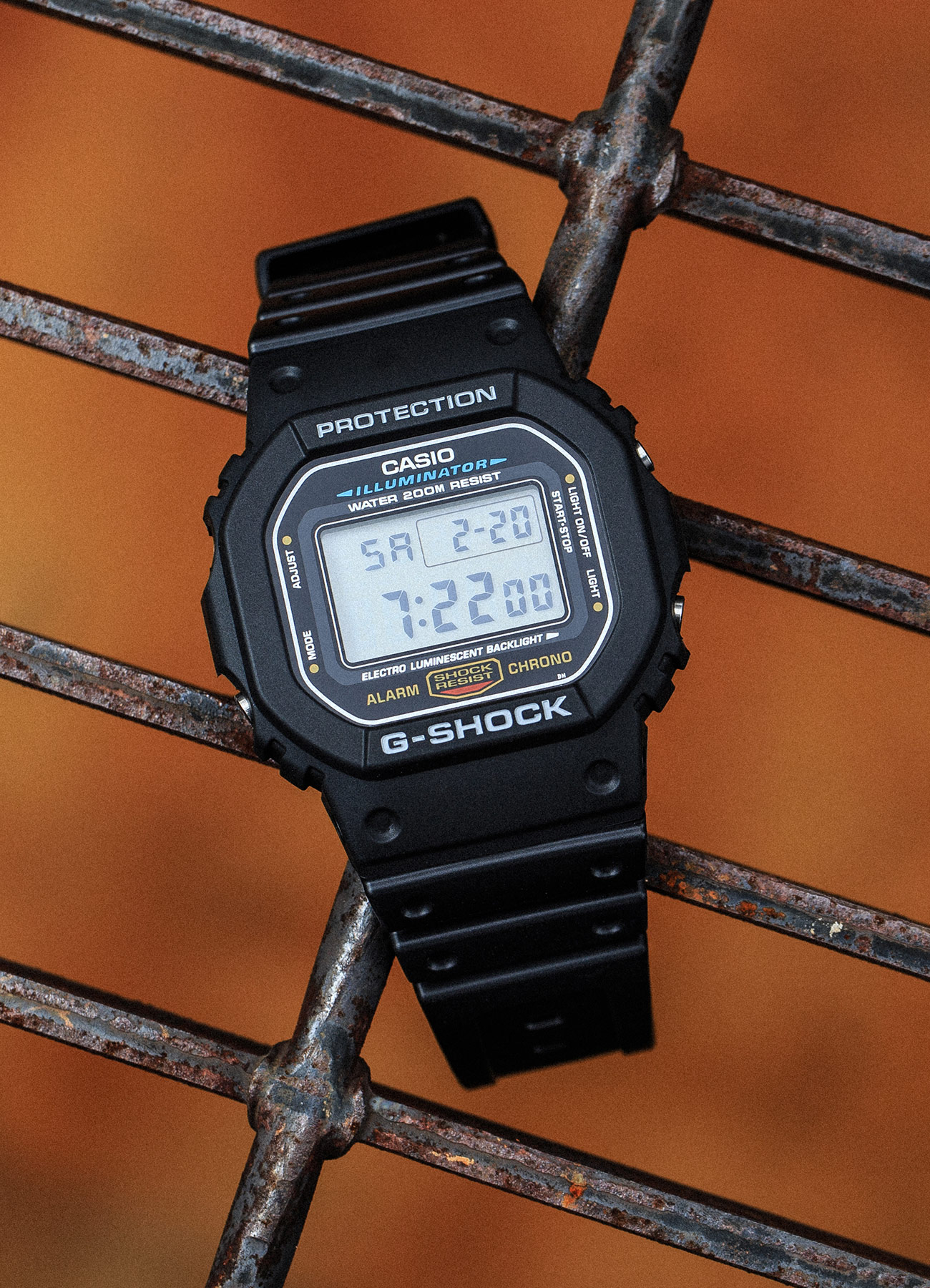
Note: Purchasing products through our links may earn us a portion of the sale, which supports our editorial team’s mission. Learn more here.

Sony’s AirPod Competitors Are Also Designed to Tune Out The World

The Sony WF-SP700Ns ($178) are the follow-up to the company’s first true wireless earphones, the Sony WF-1000X, that were released in 2017. The WF-1000Xs received mixed reviews: The Verge‘s Chris Welch noting they were prone to drop-outs, poor battery life and they were difficult to set up. The new Sony WF-SP700Ns, on the other hand, are definitely different. They have a more sport-focused design, are sweat-resistant and they have on-ear buttons to control music. They also come with a completely redesigned charging case. These are active noise-canceling earphones, like the WF-1000Xs, which makes them truly unique among other true wireless earphones, like the Apple AirPods or the Jaybird Run.

|

The Good: The Sony WF-SP700Ns are good true wireless earphones for runners or people working out. The customizable fit, plus swappable earwings and eartips, make them as secure as any other true wireless earphones that I’ve tested. The sound quality is very good and pretty even — not too bass heavy. For me, the best thing about the WF-SP700Ns was they get louder than any other competitor that I’ve tested, which is great because I need loud music to exercise. I didn’t have any issues with dropped signals. Phone calls come through strong and clear. The app allows you to scroll through a few default EQ settings that do make a noticeable difference in sound quality.

Who They’re For: Anybody who has trouble finding true wireless earphones that fit in their ears. They’re also perfect for runners and anybody working out, because of their secure fit and sweat-resistant design. They’re compatible with iPhone or Android, so it doesn’t particularly matter which smartphone you have.

Watch Out For: The Sony WF-SP700Ns’ active noise-canceling ability leaves something to be desired. Sometimes when you don’t turn the earbuds off before putting them back in their charging case, they’ll stay turned on and deplete their battery life. The charging case is bulky and it requires some finessing to get the individual earbuds to fit inside; they don’t easily clip in like AirPods. When watching videos on your computer, there’s a noticeable audio delay.

Alternatives: If you’re looking for noise-canceling earphones, I’d suggest the Bose QC30 ($300). They’re not truly wireless and have a pretty prominent neckband, but their noise-canceling is unmatched in the earphone realm. On the flipside, in my experience the best true wireless earphones for running are the Jaybird Run ($160+) or the Samsung IconX ($148+).

Review: With any true wireless earphones, the two most important factors are fit and sound quality — and the Sony WF-SP700Ns pass those both with flying colors. I’ve been testing them for the better of three weeks, using them as my primary running headphones, and they’re great for running and commuting to work. They fit my ears like a glove, which I can’t say about a lot of true wireless earphones, and the sound gets really loud, which is important for me because when I run… I need loud music motivation.

Beyond fit and audio quality is where the Sony WF-SP700Ns lose a bit of the luster. One of their main selling points is active noise-canceling — which no other popular true wireless earphones can do — but it’s just not as effective as I’d hoped. The WF-SP700Ns allow you to change between three modes — noise-canceling on and off, as well as an ambient noise mode to better hear the world around you — and there were many times I couldn’t tell which mode I was in because the experiences were all so similar; I would have to press the button the left earbud to make the built-in voice tell me which mode I was in. (You can also go to the Headphones Connect app to find what mode you’re in, but that’s a bit of a chore.)

Not knowing what mode the earphones are in is also a red flag when it comes to battery life; ambient and noise-canceling modes drain the earphones noticeably more quickly than when just listening to music. Also, you have to make sure that you manually turn off the earbuds before manually placing them in their charging case, otherwise what will happen is that the earbuds might not lock in, even though they’re in the charging case. This means the Bluetooth connection will still be draining battery life even though you aren’t using the earphones. I ran into this issue more than once, and the battery died on me on several occasions.

There are a few other little things that I can criticize. The charging case is bulky and feels flimsy, like the top could easily snap off. It also charges via micro-USB, which will feel dated to someone like me, whose devices mostly charge via Lightning or USB-C cables. The lights on the actual earphones are pretty well-hidden, which actually makes it difficult to tell if they’re on or off just by looking at them. And you can only use the left earbuds by itself — if you turn off the left earbud, the right one will automatically turn off.

Verdict: The faults of the Sony WF-SP700Ns add up, but they ultimately don’t take away from what they are: very good true wireless earphones that sound great and will fit pretty much anybody. Yes, they have a sports focus, but since they lack a coaching feature or exercise-centric app (like many of Jabra’s headphones), the WF-SP700Ns are solid true wireless earphones for anybody. They’re not unreasonably expensive, either, falling in the same ballpark as Jabra’s, Apple’s, Samsung’s and Bose’s models. Just don’t buy these purely because they have active noise-cancellation.

What Others Are Saying:

• “I’ve been using these earbuds for about a week. Sound is good, they fit comfortably and snug, they have a decent Bluetooth connection, the noise canceling is hard to notice mainly because once they are fit into your ear snug there is no need for noise cancellation. The problem I have with these is that you can only use the left one solo. I am deaf in my left ear so I’m forced to put the earbud designed for the left ear into my right ear. The right one doesn’t work alone and they aren’t designed symmetrically.” — Sckroostro, Sony Reviews

Key Specs

Frequency response: 20 Hz–20,000 Hz
Connectivity: Bluetooth 4.1
Battery life: 3 hours (max)
Water-resistance: IPX4
App: Headphones Connect

|

Best True Wireless Earphones of 2018

AirPods have set the bar for true wireless earphones. A year and a half later, however, other products are starting to catch up. Read the Story

Note: Purchasing products through our links may earn us a portion of the sale, which supports our editorial team’s mission. Learn more here.

Review: Sony’s True Wireless Earphones Also Come with Noise-Cancellation

The Sony WF-SP700Ns ($178) are the follow-up to the company’s first true wireless earphones, the Sony WF-1000X, that were released in 2017. The WF-1000Xs received mixed reviews: The Verge‘s Chris Welch noting they were prone to drop-outs, poor battery life and they were difficult to set up. The new Sony WF-SP700Ns, on the other hand, are definitely different. They have a more sport-focused design, are sweat-resistant and they have on-ear buttons to control music. They also come with a completely redesigned charging case. These are active noise-canceling earphones, like the WF-1000Xs, which makes them truly unique among other true wireless earphones, like the Apple AirPods or the Jaybird Run.

|

The Good: The Sony WF-SP700Ns are good true wireless earphones for runners or people working out. The customizable fit, plus swappable earwings and eartips, make them as secure as any other true wireless earphones that I’ve tested. The sound quality is very good and pretty even — not too bass heavy. For me, the best thing about the WF-SP700Ns was they get louder than any other competitor that I’ve tested, which is great because I need loud music to exercise. I didn’t have any issues with dropped signals. Phone calls come through strong and clear. The app allows you to scroll through a few default EQ settings that do make a noticeable difference in sound quality.

Who They’re For: Anybody who has trouble finding true wireless earphones that fit in their ears. They’re also perfect for runners and anybody working out, because of their secure fit and sweat-resistant design. They’re compatible with iPhone or Android, so it doesn’t particularly matter which smartphone you have.

Watch Out For: The Sony WF-SP700Ns’ active noise-canceling ability leaves something to be desired. Sometimes when you don’t turn the earbuds off before putting them back in their charging case, they’ll stay turned on and deplete their battery life. The charging case is bulky and it requires some finessing to get the individual earbuds to fit inside; they don’t easily clip in like AirPods. When watching videos on your computer, there’s a noticeable audio delay.

Alternatives: If you’re looking for noise-canceling earphones, I’d suggest the Bose QC30 ($300). They’re not truly wireless and have a pretty prominent neckband, but their noise-canceling is unmatched in the earphone realm. On the flipside, in my experience the best true wireless earphones for running are the Jaybird Run ($160+) or the Samsung IconX ($148+).

Review: With any true wireless earphones, the two most important factors are fit and sound quality — and the Sony WF-SP700Ns pass those both with flying colors. I’ve been testing them for the better of three weeks, using them as my primary running headphones, and they’re great for running and commuting to work. They fit my ears like a glove, which I can’t say about a lot of true wireless earphones, and the sound gets really loud, which is important for me because when I run… I need loud music motivation.

Beyond fit and audio quality is where the Sony WF-SP700Ns lose a bit of the luster. One of their main selling points is active noise-canceling — which no other popular true wireless earphones can do — but it’s just not as effective as I’d hoped. The WF-SP700Ns allow you to change between three modes — noise-canceling on and off, as well as an ambient noise mode to better hear the world around you — and there were many times I couldn’t tell which mode I was in because the experiences were all so similar; I would have to press the button the left earbud to make the built-in voice tell me which mode I was in. (You can also go to the Headphones Connect app to find what mode you’re in, but that’s a bit of a chore.)

Not knowing what mode the earphones are in is also a red flag when it comes to battery life; ambient and noise-canceling modes drain the earphones noticeably more quickly than when just listening to music. Also, you have to make sure that you manually turn off the earbuds before manually placing them in their charging case, otherwise what will happen is that the earbuds might not lock in, even though they’re in the charging case. This means the Bluetooth connection will still be draining battery life even though you aren’t using the earphones. I ran into this issue more than once, and the battery died on me on several occasions.

There are a few other little things that I can criticize. The charging case is bulky and feels flimsy, like the top could easily snap off. It also charges via micro-USB, which will feel dated to someone like me, whose devices mostly charge via Lightning or USB-C cables. The lights on the actual earphones are pretty well-hidden, which actually makes it difficult to tell if they’re on or off just by looking at them. And you can only use the left earbuds by itself — if you turn off the left earbud, the right one will automatically turn off.

Verdict: The faults of the Sony WF-SP700Ns add up, but they ultimately don’t take away from what they are: very good true wireless earphones that sound great and will fit pretty much anybody. Yes, they have a sports focus, but since they lack a coaching feature or exercise-centric app (like many of Jabra’s headphones), the WF-SP700Ns are solid true wireless earphones for anybody. They’re not unreasonably expensive, either, falling in the same ballpark as Jabra’s, Apple’s, Samsung’s and Bose’s models. Just don’t buy these purely because they have active noise-cancellation.

What Others Are Saying:

• “I’ve been using these earbuds for about a week. Sound is good, they fit comfortably and snug, they have a decent Bluetooth connection, the noise canceling is hard to notice mainly because once they are fit into your ear snug there is no need for noise cancellation. The problem I have with these is that you can only use the left one solo. I am deaf in my left ear so I’m forced to put the earbud designed for the left ear into my right ear. The right one doesn’t work alone and they aren’t designed symmetrically.” — Sckroostro, Sony Reviews

Key Specs

Frequency response: 20 Hz–20,000 Hz
Connectivity: Bluetooth 4.1
Battery life: 3 hours (max)
Water-resistance: IPX4
App: Headphones Connect

|

Best True Wireless Earphones of 2018

AirPods have set the bar for true wireless earphones. A year and a half later, however, other products are starting to catch up. Read the Story

Note: Purchasing products through our links may earn us a portion of the sale, which supports our editorial team’s mission. Learn more here.

The 5 Best Tech Products We Reviewed This Past Month

Product discovery, curation, testing and culture is what we pride ourselves in at Gear Patrol. Basically, we look for the coolest products, either new or old, and find out how we can use them — e.g. for travel, work, fun or leisure — and how they fit in the greater product landscape. It’s the end of May 2018 and with it, here’s a look back on the best products we tested this month — check out our full reviews below.

The Best Bookshelf Speaker Under $500?

The Audioengine A5+ Wireless speaker are very similar to the company’s popular A5+ speakers, but with a Bluetooth receiver and high-res DAC, you can stream music right from your phone.

The Perfect Noise-Canceling Headphones for Hi-Fi Hipsters

KEF and Porsche Design collaborated to make the Space One Wireless. They’re active noise-canceling headphones that sound great and add a luxury and alternative flair that Bose’s and Sony’s headphones don’t have.

Bose’s Rugged Bluetooth Speaker Sounds Better Wherever You Put It

The Bose SoundLink Revolve Plus is the company’s best-sounding portable Bluetooth speaker. It’s also the company’s first speaker that produces 360-degree room-filling sound. But should you get it over portable rugged speakers by Ultimates Ears or Sony?

Need Wireless Earbuds for Working Out? Get These

The Jaybird Run are the company’s first and only truly wireless earbuds. They are fitness-focused and sweat resistant, and they work with a companion app in case you want to adjust the audio’s EQ. The app comes with a couple other neat features, too.

Want a $300 Home Security Camera? Get This $20 Alternative Instead

The WyzeCam is a smart home security camera that costs $20 and has many of the same capabilities as its way-more-expensive rivals by Nest, Amazon and Lighthouse.

Read More Gear Patrol Reviews

Hot takes and in-depth reviews on noteworthy, relevant and interesting products. Read the Story
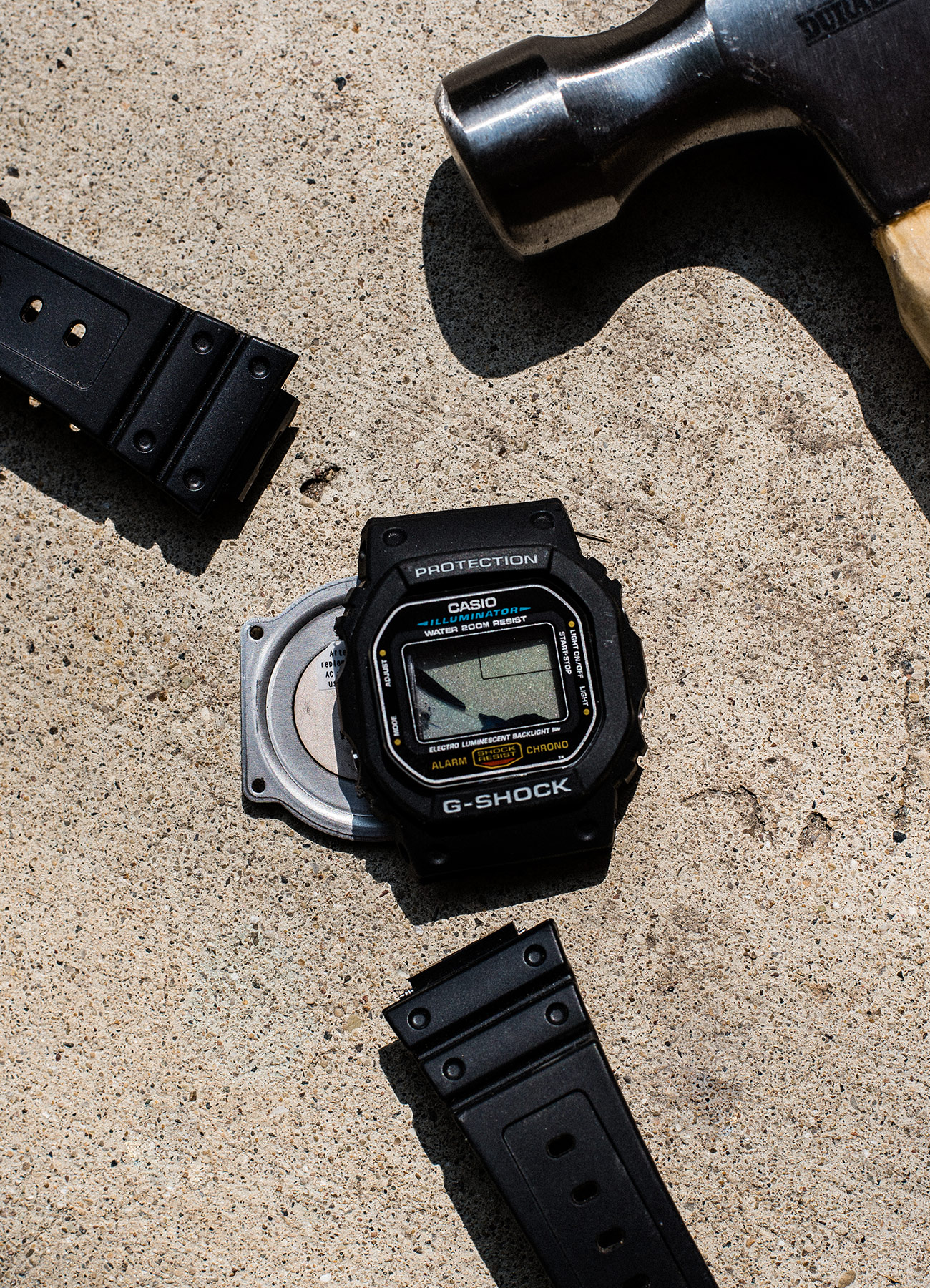
Note: Purchasing products through our links may earn us a portion of the sale, which supports our editorial team’s mission. Learn more here.

Can a $20 Home Security Camera Stand Up To Its $300 Rivals?

The popularity of smart home security cameras has skyrocketed. Nest, Amazon, Netgear, Honeywell and Lighthouse — they all make models. No matter which one you buy, the great thing is that they’re all simple to use; just plug in, download an app, connect them to your home’s wi-fi… and that’s it. You can then check the camera’s live feed anytime you want, as long you’re connected to wi-fi or have a cell signal, and any of these cameras can be used as baby monitors, pet cameras or for actual home security.

Whether it’s an Amazon Cloud Cam ($120), Honeywell’s Lyric C2 ($170) or the Nest Cam IQ ($299), all these cameras have night vision, two-way audio, motion sensors, push notifications and give you 24/7 access to live camera feeds. They’re able to shoot and record 1080p videos, too. What differentiates most smart home security cameras from each other, aside from price and compatibility, is the premium features — such as facial recognition, digital zoom, object tracking — all of which require a monthly/annual subscription fee. If you opt not to be a subscriber, you’re opting to not get the best out of the camera.

Enter WyzeCam ($20). It’s a home security camera developed by Wyze Labs, a small start-up, formed by former Amazon employees, that aims to mass produce high-quality gadgets at really low prices. (To read more about the company’s business model, Farhad Manjoo of The New York Times wrote an in-depth feature.) The camera can do most everything that other smart home security cameras can do, but at a fraction of the price. And there’s no subscription option, at all. The only option additional cost is for a micro-SD card (up to 32GB, Class 10) to store all your recordings. Without a micro-SD card, you can access a seven-day rolling coverage through the app, but after that, they expire.

The first Wyzecam model was launched in October 2017, but the company replaced that original model with WyzeCam v2, as of February 2018. The updated camera has a motion tagging feature, has improved day and night vision, better audio quality and comes with a new matte finish. More importantly, the WyzeCam v2 works with Amazon’s Alexa, so you can summon a live feed on your Echo Spot, Echo Show or Amazon Fire TV.

The Good: WyzeCam offers most of the same features — and general experience — as other popular smart home security cameras for a fraction of the price. The camera can record SD and HD videos and capture photos (although you should get a micro-SD card in order to save them permanently). Two-way audio enables you to speak with whichever person, pet or perpetrator is in your house. Works with Amazon’s Alexa, meaning if you have an Echo Spot or Echo Show smart speaker or Amazon Fire TV, you can instantly summon a view of the camera’s live feed. No subscription service to worry about. The magnetic/sticker base and flexible hinge system mean that this camera is easy to install anywhere in your home and point to exactly where you want. I’ll emphasize this again — it’s only $20.

Who It’s For: Somebody looking for an entry-level home security camera to check-in periodically on their kids, pets or whatever is going on in their home. It’s a capable and super affordable camera; however, the app and commonly-used features might frustrate those who interact with the camera multiple times per day.

Watch Out For: No advanced features, such as facial recognition. It’s an indoor camera that needs to be constantly plugged into the wall to work. No micro-SD card included with the camera, so you’re going to want to purchase one; you can find 32GB micro-SD cards for around between $10 and $20. Field of view is more limited than other home security cameras. No geofencing. The app isn’t as intuitive as I’d hope for, and accessing a live feed takes longer than with other cameras.

Alternatives: In this price range, there are very few alternative smart home security cameras to choose from. Options from Amazon, Nest and Lighthouse all cost well over $100.

Review: The WyzeCam looks like toy. That’s what I thought when I first took it out of its box and is likely what most people will think. It’s small enough to fit in the palm of your hand. It’s made of plastic. And if a dog or young child are around, this is something you’d want to put on a high shelf, out of their reach. But after using the WyzeCam for the better part of two weeks, I have to admit that this little gadget undoubtedly pushes well above its weight. It’s not a toy. In fact, it’s very much a competitor to its much more expensive rivals.

Let me preface this by saying that I live in a New York apartment, and installed a Lighthouse ($299) home security camera in my parents’ home in New Jersey. It’s been there for the last few months and helps me check in periodically on my 12-year dog, as well as my parents and brother. I don’t pay for its monthly subscription service, so Lighthouse doesn’t recognize faces or allow me to set smart notification using its AI features (which is what it’s really good at), but the way I use the camera — not for security purposes and not to keep a constant parental watch — means that I don’t need those premium features. And because of that, my experiences with WyzeCam and Lighthouse have been largely similar.

The fact that a $300 camera and a $20 camera work essentially the same says a lot about WyzeCam — it really is a steal of a deal for anybody looking for a casual-use home security camera. I set motion and sound alerts on, between certain hours in the morning and evening, so the WyzeCam sent me push notifications whenever my roommate left for work or arrived at home. I could also talk with him from afar, when he was home and I wasn’t.

WyzeCam isn’t perfect. The app is intuitive enough, but the fact that when I open up the Wyze app and I don’t immediately view a live feed — in the app, I had to click on the camera, initiate the live feed and then wait for it to load — gets frustrating. It can be difficult to know the date and time of the live feed, too, as that info is displayed in a really tiny font. I noticed that were multiple occasions when the camera didn’t detect motion or sound when my roommate got home, too, so it’s probably not the safest option if you’re looking for ultra-vigilant home security.

Verdict: WyzeCam has a few little flaws when it comes to ease of use, and it’s not the best option for actual home security purposes. Instead, WyzeCam is a very good camera for casual smart home users. It’s for people just looking to check in on their pets or family members a few times a day. The picture quality and common features are pretty much identical to what you’d get in way more expensive smart home cameras, which is exceptional. Also, because WyzeCam is now compatible with Alexa, it’s a no-brainer buy for anybody hedged in Amazon’s ecosystem.

What Others Are Saying:

• “Wyze did not create a home internet camera for a tenth of the price of rivals by skimping on quality. Though the camera comes in extremely spare packaging, it otherwise offers many features you would expect in big-brand devices, including tough security.” — Farhad Manjoo, The New York Times

• “In addition to delivering 1080p video, this tiny home security camera offers many of the features that you get from cameras that cost at least five times as much, including motion and sound detection, free cloud recording, local storage, two-way audio, video on demand, and much more.” — John R. Delaney, PCMag

Key Specs

Video resolution: 1080p
Field of view: 110-degrees
Connection: wi-fi
Storage: local (SD card) and cloud
Key features: night vision, motion detection, two-way audio

Read More Gear Patrol Reviews

Hot takes and in-depth reviews on noteworthy, relevant and interesting products. Read the Story

Note: Purchasing products through our links may earn us a portion of the sale, which supports our editorial team’s mission. Learn more here.

Christopher Ward Malvern 595 Review: An Ultra-Thin Watch at an Ultra-Low Price

Christopher Ward is a name that, amongst watch enthusiasts, might garner either disregarding sneers by those apprehensive to boutique brands or respectful nods of approval from those who perceive it as an exceptionally good value. Taste in watches is, ultimately, a very subjective thing, but it’s hard to argue that the brand doesn’t offer a lot of watch for not a ton of money. In fact, the brand was something of a pioneer of the value-driven online watch movement back in 2004 when it became one of the first brands to sell its timepieces directly to consumers on an online platform.

In recent years, the brand’s prices have crept up, but the products have become more ambitious. For example, in 2014, Christopher Ward debuted an in-house developed movement with a five-day power reserve and chronometer certification, which you can pick up for under $2,000. The brand’s latest timepiece — the C5 Malvern 595 — is not as mechanically ambitious, but in many ways, it still is an impressive feat of watchmaking. Coming in at just 5.95mm (hence the name) and rocking a hand-winding movement, it is one of the thinnest (if not the thinnest) mechanical watches you can buy under $1,000. Given that watchmakers have something of a fixation on making super-thin watches at the moment, it makes it certainly worthy of consideration, no matter how you feel about the brand.

The Good: If you have been bitten by the ultra-thin bug but can’t swing the expense that usually comes with one, the Malvern 595 is a sound compromise. The case feels impossibly sleek and sits so flat it might as well disappear into your wrist. The watch also has a minimal and vaguely industrial design that works with the sleek case design; it feels crafted in the same vein as neo-Bauhaus watches from other microbrands like Union Wares which makes the ultra-thin appeal feel a lot less fuddy-duddy than the old-guard Swiss watchmakers make it seem.

Who It’s For: Anyone looking at accessibly-priced mechanical dress watches should consider looking in the 595’s direction, especially if thinness is a prioritized attribute. It’s an astoundingly sleek timepiece with proportions that are only matched by far more expensive watches.

Watch Out For: It can feel trite to complain about modern watches being too large, but this is really the Malvern 595’s biggest issue. At 39mm in diameter it doesn’t sound like it’s particularly big, but this is a dress watch with a very narrow bezel we’re talking about; this makes the dial feel gigantic. Which would be less of a problem if the dial weren’t so austere. Minimalist dials can be deceptively tricky to master, but by keeping them physically small, you avoid leaving in too much negative space. A drop in diameter would certainly make it feel less sterile.

Alternatives: You’d be hard-pressed to find a watch as thin as the Malvern 595 in its price range, but a couple watches come close. The Junghans Meister Handaufzug — which uses the same ETA 7001 base movement — is 7.3mm thick, but at $1,290 it costs nearly twice as much as the Christopher Ward. If you favor an automatic, Hamilton’s newly revised Jazzmaster Thinline comes in at 8.45mm thick, fairly scant for an auto using a stock ETA movement, and at $995 is closer to the Malvern in price.

Review: If you’ve been paying attention to what brands have been releasing at Baselworld and SIHH, you’d know that for the past couple years many high-end brands have been fixated on slinming watches, trying to one-up their competitors by fractions of a millimeter. Look at Bulgari’s Octo Finnisimo Tourbillon Automatic, a 3.95mm automatic tourbillon, or Piaget’s 2mm-thick watch concept. But these are far out of the grasp of the everyday watch buyer.

But Christopher Ward’s Malvern 595 exists well outside this mainstream realm of high-end one-upmanship, quietly debuting online in February of this year. Even casting the matter of price aside, its 5.95mm profile is still astoundingly thin, but significantly more wearable than Piaget’s razor-thin concept or Bulgari’s six-figure tourbillon. Its more straightforward design also has more mass appeal and wearability than a super-thin watch showcasing a dial crammed with gears.

The 595’s modern, minimalist aesthetic suits the svelte case incredibly well. The bezel is slim and simple, with a small bevel on the outer-edge the only flourish. The dial is also free of any unnecessary complications
— there’s no date, no minute markers, no lume. The dial finish itself is interesting: it’s sandblasted, and its look varies depending on the light. Indoors, in low light situations it has a matte, almost paper-like look; in direct sunlight, it shimmers in a way that almost looks like television static. The thin, long hour markers and needle-like hands further fit with the slim motif and minimalist look, and while the dial is just a bit too expansive, the overall design of the Christopher Ward is both handsome and original.

Powering the watch is an ETA/Peseux 7001, a hand-winding movement just over 2mm thick that’s popped up in a number of dress watches (in various guises) since it debuted in the early 1970s. Its an incredibly simple movement, which you can clearly see through the Malvern’s case back, making it a reliable watch and an easy one to service, given its ubiquity, making it a relatively easy watch to own and service in the long-term.

Verdict: Like many of Christopher Ward’s other watches, the Malvern 595 feels like an incredible value for money, especially when you look towards similar watches that run the same movement but can’t match them it regarding price or thickness. But there’s a lot more than its scant proportions to make it stand out; those who’ve grown tired of the vintage-inspired movement in watches will probably appreciate the watch’s modern aesthetic. And while the 39mm diameter might be a sticking point for some, there will be plenty of buyers out there who will appreciate the larger size.

Key Specs

Movement: ETA/Peseux 7001
Winding: Manual
Case diameter: 39mm
Case height: 5.95mm
Water resistance: 30m

Read More Gear Patrol Reviews

Hot takes and in-depth reviews on noteworthy, relevant and interesting products. Read the Story

Note: Purchasing products through our links may earn us a portion of the sale, which supports our editorial team’s mission. Learn more here.

The Christopher Ward Malvern 595 Is an Ultra-Thin Watch at an Ultra-Low Price

Christopher Ward is a name that, amongst watch enthusiasts, might garner either disregarding sneers by those apprehensive to boutique brands or respectful nods of approval from those who perceive it as an exceptionally good value. Taste in watches is, ultimately, a very subjective thing, but it’s hard to argue that the brand doesn’t offer a lot of watch for not a ton of money. In fact, the brand was something of a pioneer of the value-driven online watch movement back in 2004 when it became one of the first brands to sell its timepieces directly to consumers on an online platform.

In recent years, the brand’s prices have crept up, but the products have become more ambitious. For example, in 2014, Christopher Ward debuted an in-house developed movement with a five-day power reserve and chronometer certification, which you can pick up for under $2,000. The brand’s latest timepiece — the C5 Malvern 595 — is not as mechanically ambitious, but in many ways, it still is an impressive feat of watchmaking. Coming in at just 5.95mm (hence the name) and rocking a hand-winding movement, it is one of the thinnest (if not the thinnest) mechanical watches you can buy under $1,000. Given that watchmakers have something of a fixation on making super-thin watches at the moment, it makes it certainly worthy of consideration, no matter how you feel about the brand.

The Good: If you have been bitten by the ultra-thin bug but can’t swing the expense that usually comes with one, the Malvern 595 is a sound compromise. The case feels impossibly sleek and sits so flat it might as well disappear into your wrist. The watch also has a minimal and vaguely industrial design that works with the sleek case design; it feels crafted in the same vein as neo-Bauhaus watches from other microbrands like Union Wares which makes the ultra-thin appeal feel a lot less fuddy-duddy than the old-guard Swiss watchmakers make it seem.

Who It’s For: Anyone looking at accessibly-priced mechanical dress watches should consider looking in the 595’s direction, especially if thinness is a prioritized attribute. It’s an astoundingly sleek timepiece with proportions that are only matched by far more expensive watches.

Watch Out For: It can feel trite to complain about modern watches being too large, but this is really the Malvern 595’s biggest issue. At 39mm in diameter it doesn’t sound like it’s particularly big, but this is a dress watch with a very narrow bezel we’re talking about; this makes the dial feel gigantic. Which would be less of a problem if the dial weren’t so austere. Minimalist dials can be deceptively tricky to master, but by keeping them physically small, you avoid leaving in too much negative space. A drop in diameter would certainly make it feel less sterile.

Alternatives: You’d be hard-pressed to find a watch as thin as the Malvern 595 in its price range, but a couple watches come close. The Junghans Meister Handaufzug — which uses the same ETA 7001 base movement — is 7.3mm thick, but at $1,290 it costs nearly twice as much as the Christopher Ward. If you favor an automatic, Hamilton’s newly revised Jazzmaster Thinline comes in at 8.45mm thick, fairly scant for an auto using a stock ETA movement, and at $995 is closer to the Malvern in price.

Review: If you’ve been paying attention to what brands have been releasing at Baselworld and SIHH, you’d know that for the past couple years many high-end brands have been fixated on slinming watches, trying to one-up their competitors by fractions of a millimeter. Look at Bulgari’s Octo Finnisimo Tourbillon Automatic, a 3.95mm automatic tourbillon, or Piaget’s 2mm-thick watch concept. But these are far out of the grasp of the everyday watch buyer.

But Christopher Ward’s Malvern 595 exists well outside this mainstream realm of high-end one-upmanship, quietly debuting online in February of this year. Even casting the matter of price aside, its 5.95mm profile is still astoundingly thin, but significantly more wearable than Piaget’s razor-thin concept or Bulgari’s six-figure tourbillon. Its more straightforward design also has more mass appeal and wearability than a super-thin watch showcasing a dial crammed with gears.

The 595’s modern, minimalist aesthetic suits the svelte case incredibly well. The bezel is slim and simple, with a small bevel on the outer-edge the only flourish. The dial is also free of any unnecessary complications
— there’s no date, no minute markers, no lume. The dial finish itself is interesting: it’s sandblasted, and its look varies depending on the light. Indoors, in low light situations it has a matte, almost paper-like look; in direct sunlight, it shimmers in a way that almost looks like television static. The thin, long hour markers and needle-like hands further fit with the slim motif and minimalist look, and while the dial is just a bit too expansive, the overall design of the Christopher Ward is both handsome and original.

Powering the watch is an ETA/Peseux 7001, a hand-winding movement just over 2mm thick that’s popped up in a number of dress watches (in various guises) since it debuted in the early 1970s. Its an incredibly simple movement, which you can clearly see through the Malvern’s case back, making it a reliable watch and an easy one to service, given its ubiquity, making it a relatively easy watch to own and service in the long-term.

Verdict: Like many of Christopher Ward’s other watches, the Malvern 595 feels like an incredible value for money, especially when you look towards similar watches that run the same movement but can’t match them it regarding price or thickness. But there’s a lot more than its scant proportions to make it stand out; those who’ve grown tired of the vintage-inspired movement in watches will probably appreciate the watch’s modern aesthetic. And while the 39mm diameter might be a sticking point for some, there will be plenty of buyers out there who will appreciate the larger size.

Key Specs

Movement: ETA/Peseux 7001
Winding: Manual
Case diameter: 39mm
Case height: 5.95mm
Water resistance: 30m

Read More Gear Patrol Reviews

Hot takes and in-depth reviews on noteworthy, relevant and interesting products. Read the Story
Note: Purchasing products through our links may earn us a portion of the sale, which supports our editorial team’s mission. Learn more here.

2019 Aston Martin DB11 AMR Review: the Car Aston Should Have Made in the First Place

Aston Martin kicked off its Second Century Plan with what it expected to be a rather gorgeous bang. The DB11 V12 arrived at the end of 2016 and delivered 90 percent of the driving experience I’d hoped it would. There were problems though, which is why Aston Martin have already crafted a replacement. It’s called the DB11 AMR and it’s here to address any middling concerns I may have had with the outgoing version.

Dr. Andy Palmer, Aston Martin President and CEO, believes the V12 needed to let its freak flag fly a bit more: “With the exceptional V8 Coupe and Volante I felt the V12 could reveal more of its sporting potential while remaining the consummate GT. By applying a suite of carefully considered performance and styling enhancements the DB11 AMR is both faster and more precise.”

The Good: An increase in power coupled with more responsive handling and a greater aural presence pairs perfectly with the untouched style and grace of an all-time Aston Martin great. Tweaks to the 5.2-liter twin-turbocharged V12 result in a 30 horsepower rise, which brings the total output to 630 horsepower. The top speed of the car is now 208 mph, and a dash from 0-62 mph will be dispatched in just 3.7 seconds. When you’re out hot footing it, a smile develops as the exhaust pipes bark a melody much more in tune with how you’d expect a V12 engine to sound.

Who It’s For: The person who can afford first-class travel yet hates to fly, or simply loves the act of driving that much more. The DB11 AMR is for those who understand that faster options exist but none are quite as lovely and enjoyable. This is Grand Touring, with a capital G and T… and the owner will arrive at a hotel that knows to have a cold G&T waiting at the bar, as soon as the song of 12 cylinders marks his arrival.

Watch Out For: The DB11 V8 is still the car for those with greater sporting pretensions. It has less weight over the nose, better sound and greater responsiveness. There’s a surprising deadness to the brakes upon initial application of the pedal. You’re likely to get used to it, and the 15.7-inch front/14.1-inch rear rotors are more than adequate at hauling in speed. But that initial press into nothingness introduces a bit of fear before the calipers clamp down and do their friction dance.

Alternatives: Bentley has a hot new Continental that looks to reign supreme as true grand tourer. Mercedes-Benz makes a sinister S65 AMG coupe. Both are slightly slower and a touch less powerful. If you’re spending well over $200k, can you live with that?

Review: Aston Martin created something quite good with the launch of the DB11 V12. The problem is that “quite good” doesn’t cut it when you’re playing in the $200,000+ Grand Touring space. The automaker admits that this all-new platform presents a learning curve, and the lessons are flying fast and furious thanks to the team addition of former Lotus chassis guru Matt Becker. To put it simply, the bones of the car are solid but room for improvement paves a clear path to the DB11 AMR.

Aston Martin designers have taken steps to help distinguish the car from the first go-around variant. Here the brightwork has been darkened. You can always opt for shiny stuff, but it just feels right to see carbon in place of chrome or blackened elements instead of reflective ones. It all adds up to further the feeling that this is a far more focused V12-packing DB11.

It should be no surprise though, as any Aston Martin bearing the AMR initials heralds “extra.” Be it extra power, performance, or style, an AMR Aston is something special. This one starts at $241,000 but Aston Martin are creating 100 Signature Edition examples bearing the Sterling Green and Lime color scheme found on a handful of its racing vehicles. That’s 100 total units for the globe, and each one starts around $270,000.

An increase of power is great but it’s the updates to the chassis that help bring the DB11 into a new light. Just five millimeters of increased roll bar thickness is all that Becker deemed necessary for a more responsive front end. Out back, pumped up damping support results in less rear roll. Yet there’s been no loss to in-cabin comfort.

Thanks to Becker’s efforts, we have a DB11 flagship that is as eager to turn in as its V8 sibling. Grab the flat-bottomed carbon fiber and Alcantara-clad steering wheel, dial in your direction and throttle on through the corner. Aston Martin have reworked the traction control system for smoother intervention should you fat foot it.

The upgrades to the AMR go beyond some chassis tweaks. On the prior DB11 V12, the actual throw of the paddle shifter seemed longer than necessary. That’s been altered here, as it already had been on the V8. Additionally, the gearbox itself is recalibrated to present a more dynamic spread of shift responsiveness between the various driving modes.

Pointing the nose of the DB11 AMR towards some of Germany’s B-roads reveals the full extent of Aston Martin’s upgrades. This feels very much like the DB11 V12 I’d hoped for when the car was originally launched. While not as exuberant of an exhaust trumpet as the older 6.0-liter V12, this updated 5.2-liter produces far more noise and visceral appeal. Shifts fire off far more quickly. The action, when you want it, is greatly improved. And when you want to relax, you can do that as well.

Like say, when going 250 kph on an unrestricted stretch of German autobahn — there’s no drama when doing so. Save for the flourish of trucks and vans relegated to the far right lanes.

As with any Aston Martin though, it’s never perfect. Left to its own devices, the transmission sometimes gets confused during spirited sections. It will hold gears nicely and downshift for corners, but there are brief occasions when an out-of-place shift arises. Furthermore, the brakes have an initial feeling of emptiness upon the initial pedal press. It’s only for the first quarter-inch of travel or so, but it’s there and it’s at times unnerving. The transmission issue is solved by using the paddles when the road gets frisky. For the brakes, I imagine you’d get used to the dead spot but I can’t say for certain.

It’s clear that Aston Martin paid close attention to all of the criticisms and concerns levied with the arrival of the DB11 V12. A car that delivered 90 percent of the desired experience has been reworked into one that now feels far more rewarding and enjoyable to drive. If you’re in the market for a luxurious cruise missile disguised as a grand tourer, the DB11 AMR is good bet. And if you feel it’s not quite focused or sporting enough, there’s always the new Vantage.

Verdict: This is the DB11 V12 that Aston Martin needed from the beginning. Noise and nimbleness have been prior hallmarks for the brand, even on top-flight models. Now the current flagship of the DB11 family possesses the traits you’d expect of it.

Key Specs: 2019 Aston Martin DB11 AMR

Engine: 5.2-liter, twin-turbocharged V12
Transmission: eight-speed automatic
Horsepower: 630 horsepower
Torque: 516 ft-lbs
Weight: 4,134 lbs
0-62: 3.7 seconds
Top Speed: 208 mph

Read More Gear Patrol Reviews

Hot takes and in-depth reviews on noteworthy, relevant and interesting products. Read the Story

Note: Purchasing products through our links may earn us a portion of the sale, which supports our editorial team’s mission. Learn more here.