All posts in “performance”

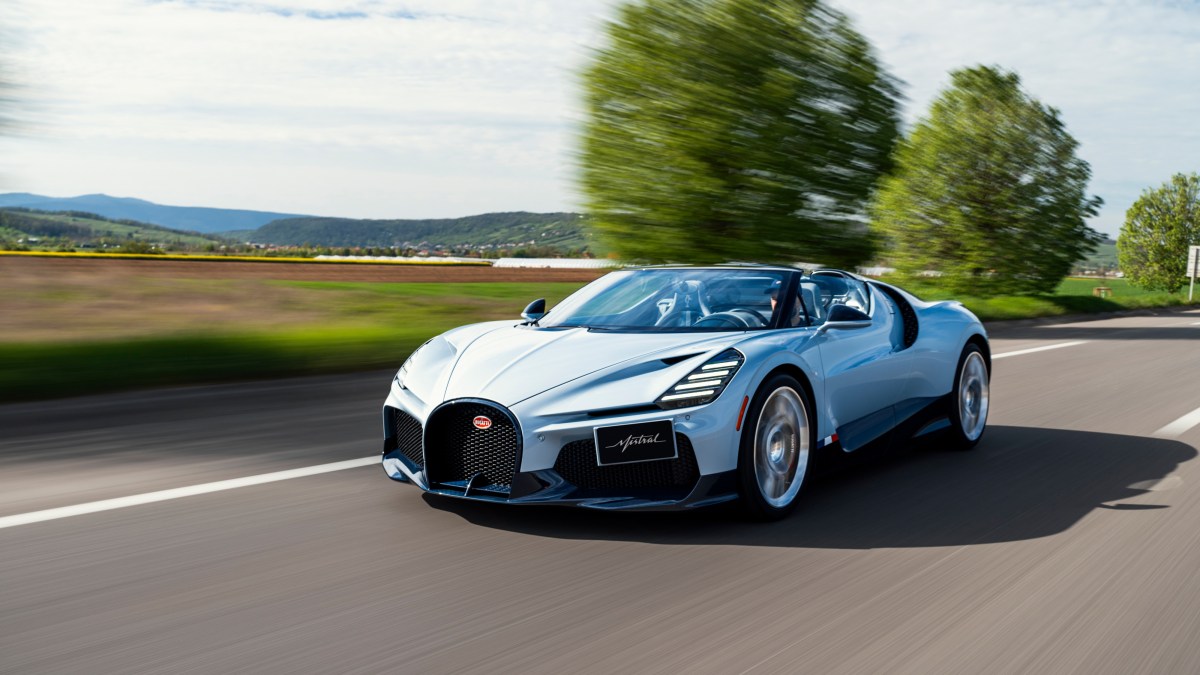
The Bugatti Mistral’s road-testing phase includes a top-speed run

Unveiled in 2022, the Mistral is the final street-legal Bugatti powered by the quad-turbocharged W16 engine. It’s related to the Chiron, but the two cars are different enough that the French brand built test mules to put the roadster through its paces before launching production.

While some hypercars can only be registered in the United States under the Show and Display rule, Bugatti wanted the Mistral — its first convertible since 2015 — to be fully street-legal in every major market. It re-engineered the monocoque during the development phase and notably reinforced the sills and the transmission tunnel, so it needed to put the model through a series of crash tests to obtain homologation. 

Aerodynamic tests were completed in October 2023, and the 1,600-horsepower W16 engine was extensively tested on a dyno before it was signed off. The road-testing phase of the project has started: Bugatti is testing the Mistral on and off the track, on different road surfaces, at different elevations, and in wildly different weather ranging from freezing cold to scorching hot. One of its development mules has already covered nearly 20,000 miles, and it will rack up an additional 5,000 miles in the coming months including roughly 3,000 miles on a track.

If that doesn’t sound like much, consider this: Bugatti notes that most of its modern-day cars haven’t reached the 25,000-mile mark yet.

Even the top speed, which is advertised at over 260 mph, will be verified — it’s part of road-testing, after all. The problem is that finding a track with a long enough straight is easier said than done. “We are planning to run the final high-speed test on one of the very few tracks around the world that allows us to run the test in safe conditions,” said Emilio Scervo, the chief technical officer for Bugatti-Rimac, without revealing which track he has in mind. “The moment we have access to that track, achieving the top speed will no longer be a problem.”

Mistral production is limited to 99 units excluding the development cars, and the entire run is spoken for in spite of a base price pegged at about €5 million before taxes and options are factored in (that’s around $5.4 million at the current conversion rate). Bugatti also needs to build the 40 planned units of the sold-out Bolide, which is a track-only model. When those are delivered, the W16 will enter the pantheon of automotive history. After closing the W16 chapter, the company will launch production of the recently-unveiled, V16-powered Tourbillon.

Bugatti Information

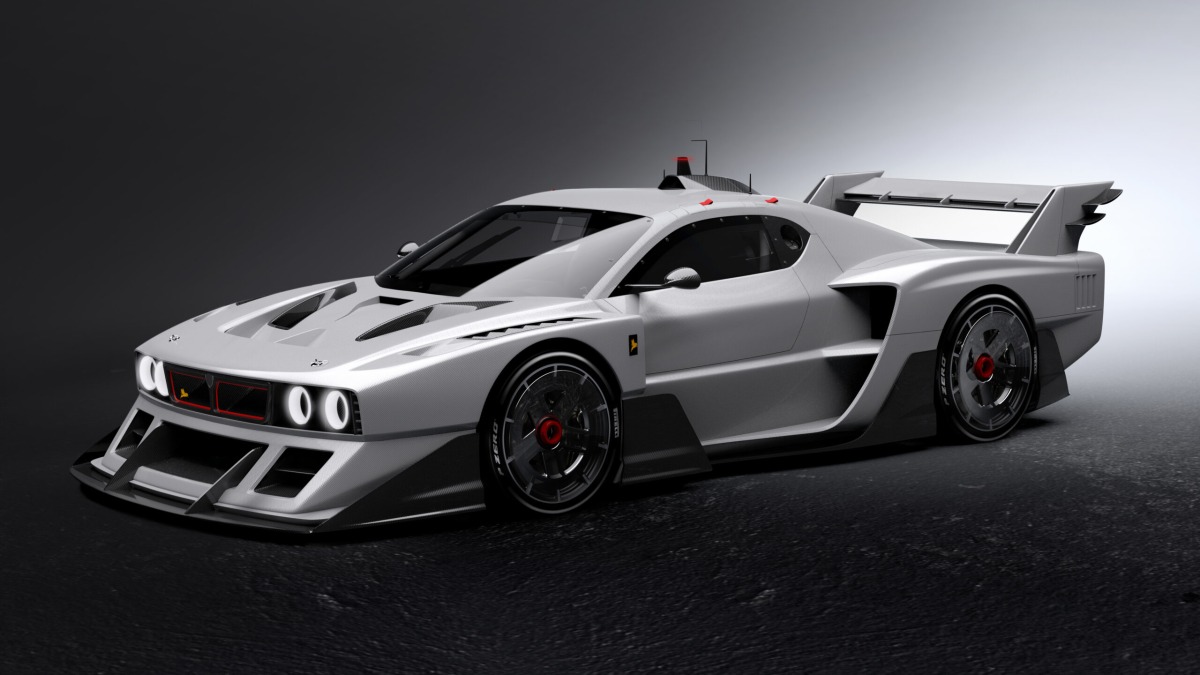
Kimera K39 hill climb car aims for Pikes Peak in 2025

This is what it was all about with Kimera and the Pikes Peak International Hill Climb, the new K39. There’s much to learn about what’s gone into this beauty, but we know the internals will demonstrate quite the fortitude. Kimera went full carbon moncoque with this chassis instead of borrowing the shell from a Lancia Beta Montecarlo as employed for the EVO37 and EVO38. Those other cars used a turbocharged and supercharged 2.2-liter four-cylinder. The all-wheel-drive EVO38 version made about 600 horsepower, 100 more than the rear-wheel-drive EVO37. Kimera didn’t make any runs up the mountain this year, but says it will take the K39 to Colorado next year aiming to beat the all-time record.

Let’s make sure we’re clear on what that means: Kimera’s not trying to beat the best time for an internal-combustion-engined car, a time of 8:13.878 set by Sebastien Loeb in the Peugeot 208 T16 in 2013. Kimera wants the K39 to surpass the all-time record set by Romain Dumas in the battery-electric Volkswagen ID.R racer that climbed the hill in 7:57.148 in 2018.

Since the Kimera hides some sort of ICE powertrain, the Italian boutique maker has given itself an exceptionally tough hill to climb. The ID.R is still the only car to break the eight-minute barrier. Few gas-powered cars have gotten up the hill in under nine minutes, with Loeb’s Peugeot and the purpose-built Norma M20 SF PKP in 2018 being two exceptions.

Kimera understands the challenge, as he writes that an electric race car “is not penalized by the thin air that becomes increasingly oxygen-poor as you climb to the summit” of Pikes Peak.

We’re betting that the K39 is going to get a lot more than the 600 horsepower in the EVO38 as well as an all-wheel-drive system to make the most of whatever the final number is. This is because Loeb’s twin-turbo V6 Pug made about 875 horses, the Norma M20 SF PKP made about 800 hp from another twin-turbo V6. We have noticed that where the EVO37 showed off a set of quad exhaust pipes, the K39 rearranges the three exhaust pipes poking out of the EVO38’s backside.  

If Kimera succeeds in all its goals on Zebulon Pike’s mountain, the K39 would obliterate the ICE-powered record and represent an upstart Italian David felling a German Goliath. The feat would certainly help burnish an already glowing reputation and sell the limited number of K39 road cars Kimera now says it plans to build.

Bentley Continental GT Speed Information

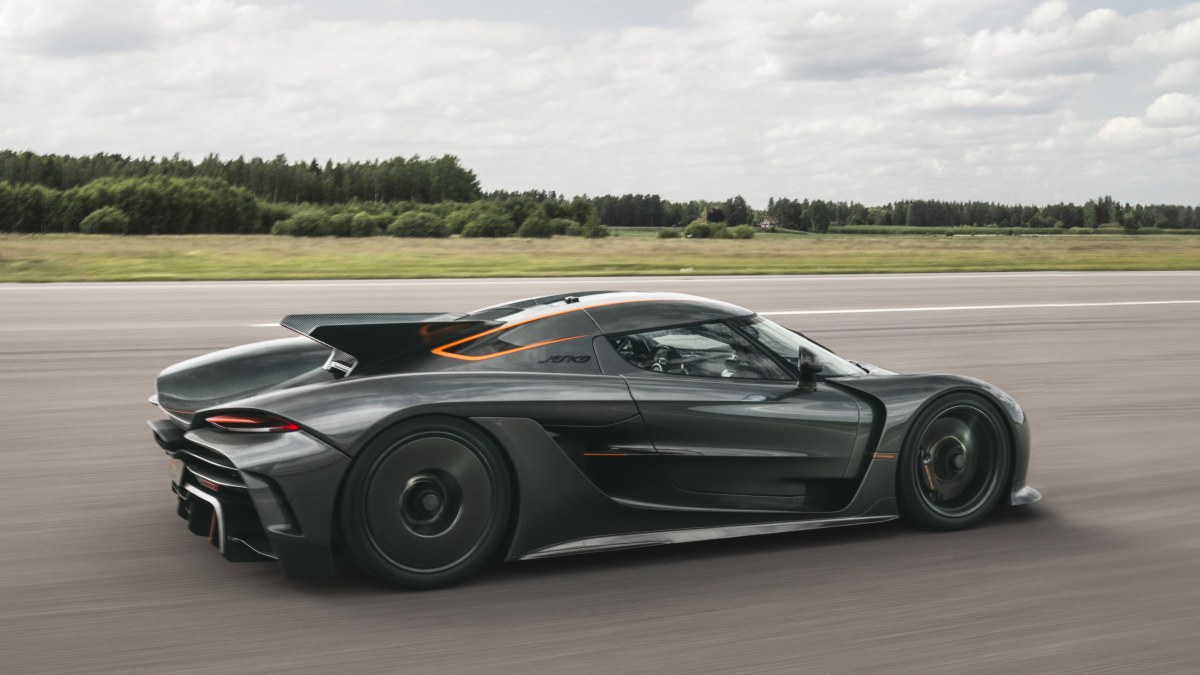
Koenigsegg pinpoints source of fire that flambeed a $3M Jesko Attack

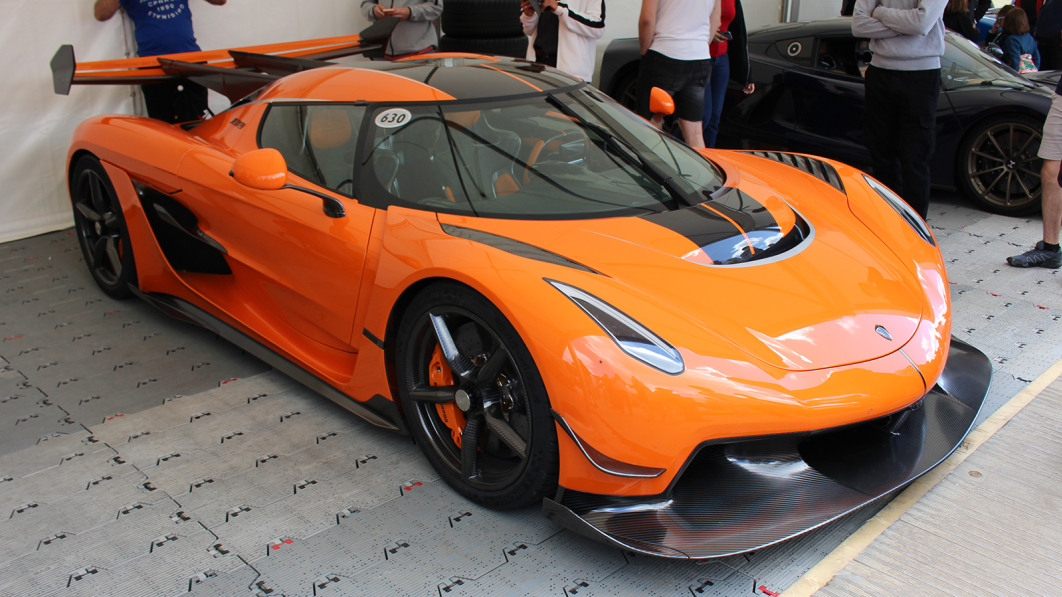
The 70 or so road trippers who signed up for this year’s 6to6 European tour were looking forward to taking off from Athens, Greece, then crossing eight countries and two mountain ranges on their way to Monaco. One entrant didn’t make it out of Athens on the first day: Not long after leaving the hotel, a $3 million Koenigsegg Jesko Attack Nur Edition in raw carbon fiber with 24-karat gold accents caught fire while cruising through the city at low speed, turning into a bonfire that left little more than a pile of carbon shards melted to an engine. The Swedish carmaker had only delivered around 30 of the planned 125 Jeskos at the time. The Swedish mothership dispatched an engineer to bring the remains back to Sweden for an autopsy. In a post on Instagram, CEO Christian von Koenigsegg explained that the source of the fire was a leak in the car’s pressurized hydraulic line. 

He said the systems containing other flammable liquids were intact, those being the engine and gearbox oil systems, and fuel tank. “However,” he wrote, “there was a streak of hydraulic fluid behind the car on the road. Given this we have investigated the pressurized hydraulic system, which is the only system that contains this fluid.” Sure enough, that was the culprit, the hose found to be “compromised at the rear of the car.” 

The company’s checking the hydraulic system on every car that’s been produced as well as those that have been delivered. It’s also working on a software update that monitors hydraulic pressure and, in case of a leak, can shut the system down in less than a second. Based on the post date, that software should be on its way to cars or very close. Once the cars have been updated, Koenigsegg says they’ll be safe to drive again.

As for the two people in the car in Athens, they made it out unharmed. At the end of his post, Christian added, “We are also incredibly grateful to the owner of the car in Greece for giving us his continued support and that we will be able to supply him with a new car so he can continue his Koenigsegg journey.” Here’s a company whose customer service is almost as quick and comprehensive as its record-breaking cars.

Oh, and cue the Facebook Marketplace profiteers: Autoblog Greece (no relation) reported someone put bits of raw carbon fiber up for sale, claiming without proof they’d come from the Jesko. Which makes total sense. Because Facebook Marketplace. 

Related Video

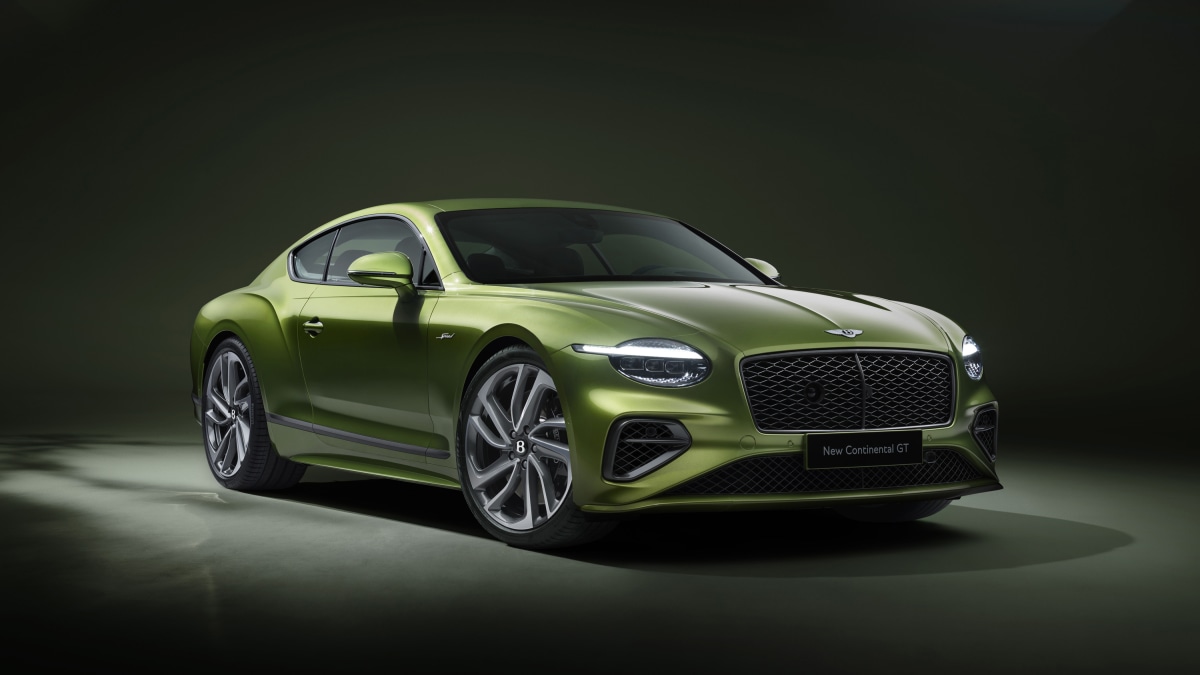
2025 Bentley Continental GT Speed launches 771-hp PHEV powertrain

In getting us ready for the 2025 Bentley Continental GT Speed, the automaker from Crewe hyped the coupe’s Ultra Performance Hybrid engine, not the car. That’s because we already know what to expect of any modern Bentley — opulence + velocity. The only question is how many horses will be used to fulfill the second part of the formula, and what kind of engine will make them. In this case, it’s a twin-turbocharged 4.0-liter V8 producing 584 horsepower on its own. When assisted by the 187-hp electric motor between the engine and eight-speed dual-clutch transmission, combined output is a very cheery 771 hp and 738 pound-feet of torque, making this Conti another notch in VW’s Year of Living Powerfully. Throughout the VW Group, the Porsche Taycan, Audi E-Tron GT, Audi RS Q8 Performance, and this new Bentley have all set benchmarks for being the most powerful roadgoing products their respective brands have ever produced.  

For reference, the current GT’s W12 engine produces 650 horsepower and 664 pound-feet of torque, propelling the car to 60 mph in 3.5 seconds. The new coupe is said to take 3.1 seconds to 60 mph, the convertible one tenth behind. The current V8 makes 542 horsepower and 568 pound-feet of torque.

The 25.9-kWh battery behind the rear axle provides a few benefits. First, it powers that e-motor, and Bentley programmed this powertrain to recharge the pack while driving, a feat the Bentayga PHEV isn’t designed to do. Second, it can power pure-electric driving up to 87 miles per hour, although not for long; claimed electric range is 50 miles on the European cycle. But wait, there’s more: The Continental’s battery placement is said to bestow the coupe with a 49:51 weight distribution, improving on the 55:45 balance in the current GT range and establishing the best balance we’ve seen in a Bentley. The price of all this goodness is a 400-kW electrical architecture and a maximum charging rate of 11 kW, meaning a three-hour charge time to get the battery from empty to full. 

After engineers got the third-generation 2019 Continental GT down to 5,056 pounds, this one hits the scales at 5,421 pounds in coupe form and 5,811 pounds in droptop GTC form. A chassis dubbed Bentley Performance Active Chassis holds the driving line thanks to mechanicals like all-wheel steering and all-wheel drive, an e-LSD, torque vectoring, and Bentley Dynamic Ride active anti-roll system working a new dual valve damper system and dual chamber air springs. We’re not fazed, having grown used to Bentleys being sensational heavyweights; this 2025 is only 270 pounds more than the original 2003 Conti GT, but with 219 more horsepower and 259 more pound-feet. 

The automaker calls this model a fourth generation, making its case by saying 68% of the parts are new, percentages being the argument of choice when it’s tough even for automotive media to figure out what’s new. Bones underneath carry over, beneath sheetmetal given some clear revisions one can make out from afar, though. Start with those Bacalar eyes in the front end, an oval headlight cut by an illuminated slash the company calls an eyebrow, filled with diamond-like detailing. This is the first time since the 1950s that a Bentley’s shown a face with just two headlights. Wider taillights carry their own jewel-like highlights.

One needs to get closer to realize length has grown by 1.8 inches, and that the decklid’s been redesigned to eliminate lift so designers could get rid of the current car’s active spoiler. And the convertible’s roof adds a seventh crossbow for sleeker profile.

Inside, there’s a new look to the digital gauges, and there’s still plenty of buttons and knobs. Three audio system choices go from 650 watts pumped through 10 speakers to 1,500 watts working 16 speakers to 2,200 watts run through 18 speakers. 

New tech features include deeper smartphone integration through the MyBentley app, cabin preconditioning, remotely summoning the car from its parking spot, and Zoom call capability. The standard color palette will add this fetching Tourmaline Green and Gravity Gray.

If convention holds, the “Speed” in the name hints at a less powerful version to come once the flagship coupe and convertible have launched.

Bentley Continental GT Information

Lamborghini Huracan Sterrato and GMC Acadia driven | Autoblog Podcast #837

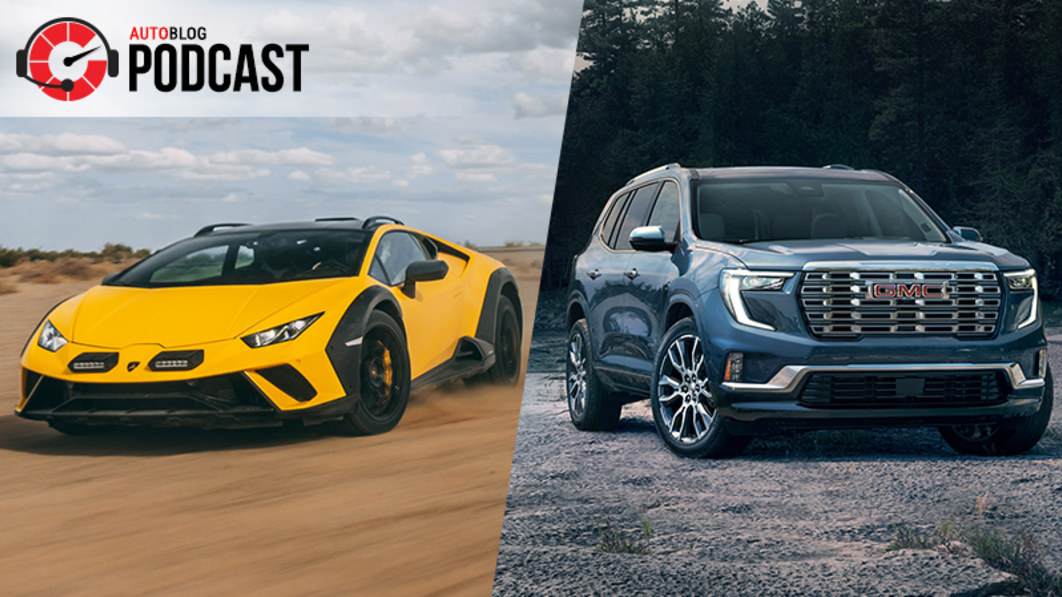
In this episode of the Autoblog Podcast, Editor-in-Chief Greg Migliore is joined by Senior Editor, Electric, John Beltz Snyder. They’re both jazzed after driving the off-road-ish and totally sublime Lamborghini Huracán Sterrato. John recently drove the new GMC Acadia, Greg spent some time in the Toyota Camry, and they also discuss Autoblog‘s long-term Subaru WRX. In the news, the Porsche 918 Cayman and Boxster are reportedly ending production, while it’s officially the end of the road for the Nissan GT-R and Volvo S60. Fisker has officially filed for bankruptcy. Cadillac has shown off a couple cool Blackwing special editions in honor of Le Mans. Finally, we reach in the mailbag and help a listener pick a sporty convertible in this week’s Spend My Money segment.

Send us your questions for the Mailbag and Spend My Money at: Podcast@Autoblog.com.

Autoblog Podcast #837

Get The Podcast

  • Apple Podcasts – Subscribe to the Autoblog Podcast in iTunes
  • Spotify – Subscribe to the Autoblog Podcast on Spotify
  • RSS – Add the Autoblog Podcast feed to your RSS aggregator
  • MP3 – Download the MP3 directly

Rundown

Feedback

Autoblog is now live on your smart speakers and voice assistants with the audio Autoblog Daily Digest. Say “Hey Google, play the news from Autoblog” or “Alexa, open Autoblog” to get your favorite car website in audio form every day. A narrator will take you through the biggest stories or break down one of our comprehensive test drives.

Related video:

Ferrari plans to keep the V12 alive for as long as regulations allow it to

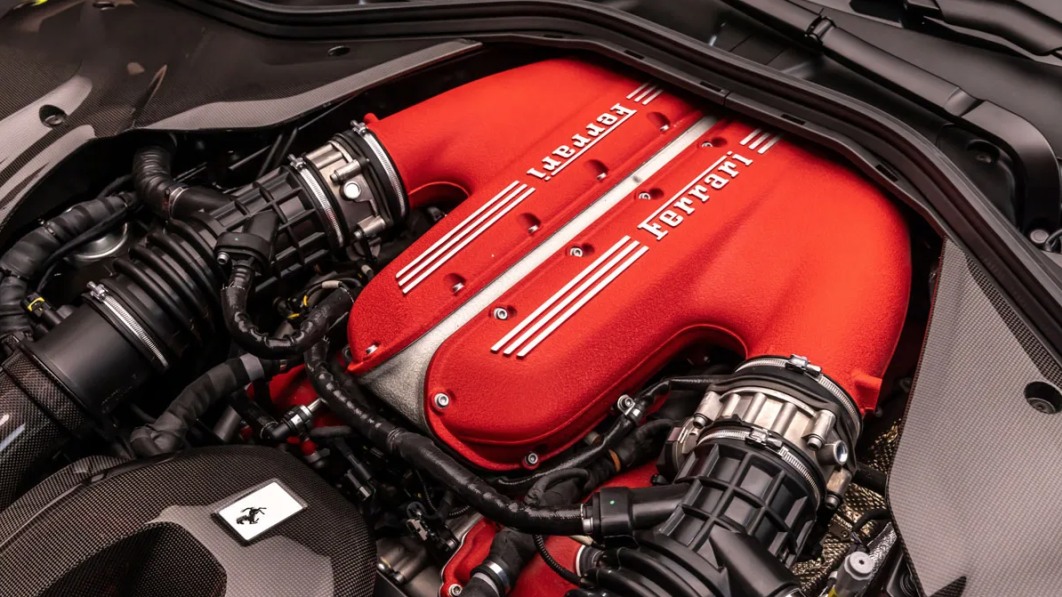
Ferrari’s entry-level model is a V6-electric plug-in hybrid, but the company stressed that downsizing won’t spread across its entire lineup. It plans to keep the naturally-aspirated V12 engine alive for as long as possible, even as it prepares to release its first electric supercar.

“We will produce naturally-aspirated V12s until the law [no longer] allows us to,” confirmed Emanuele Carando, Ferrari’s global marketing director, in an interview with Australian website CarExpert. He added that synthetic fuels could help extend the 12-cylinder’s shelf life.

Arch rival Lamborghini remains committed to the naturally-aspirated V12 as well, but how long these companies can continue making 12-cylinder engines without summoning a dark cloud of disapproval from regulators remains to be seen. In the European Union, the sale of new piston-powered cars will be illegal in 2035, though a last-minute exemption was made for some synthetic fuels. Lawmakers in the United Kingdom have settled on 2035 as well. Our market isn’t quite there yet, but much stricter emissions regulations are looming on the horizon.

Interestingly, the executive revealed that Ferrari considered giving the 12Cilindri, its new V12-powered GT, hybrid power. Ultimately, the car made its debut without electrification. “We wanted to be true to our roots,” he said, adding that “a naturally-aspirated engine with a combination of electric components, according to our feeling, adds weight without really improving the performance so much.”

That doesn’t mean Ferrari believes electric motors are only useful to move windows and wipers. The company is working on its first series-produced electric car, an enigmatic model tentatively due out by the end of 2025, and early details are beginning to trickle out. Executives stress that the EV will be a “true Ferrari,” which is hardly a surprise — can you imagine one of them saying it’s going to be a bogus Ferrari?

Carando told Australian website Drive that his team isn’t concerned with making the fastest or quickest EV on the planet. “We have never been following speed as a key reason for [marketing] our cars,” he said. “We want to have a fast, agile, and fun car to drive.”

While some brands leverage an electric drivetrain’s silence as a major selling point, Ferrari believes its EVs should make noise. It won’t be a fake noise that mimics a V12 or a V8, however. It will be “authentic,” Carando said, which suggests it will be tailored to some aspect of an electric drivetrain’s operation. The motor’s whine, perhaps? Other details, like the segment that the EV will fall in, also remain to be seen.

Ferrari isn’t going 100% electric. It expects that, in 2030, EVs will represent about 40% of its sales. Plug-in hybrids will represent 40% as well while the remaining 20% will be non-electrified gasoline-powered cars. As for what’s next, it depends on regulations and on market demand.

“It’s going to be the clients who decide whether to buy an internal-combustion natural [non-hybrid] engine, a plug-in hybrid, or an EV.”

McLaren Automotive CEO admits there’s a plan for an SUV

Road & Track put McLaren Automotive CEO Michael Leiters through his interview paces, trying to assess how the ex-Ferrari man wants to return the carmaking operation to the top of the charts. Leiter, in place since late 2022, has mainly finished patching the holes in the ship like some organizational issues, delays with the Artura, and securing enough money to stay in business. There’s a long way to go to restore the glow of 12 years ago, when the MP4-12C impressed all with its combination of capability and drivability, however. The company still makes great cars, but of the current lineup, it’s the 750S and 765LT that shoulder McLaren’s aspirational allure; the GTS and Artura haven’t been nearly as convincing to the supercar set, and the balance sheet shows it. RT says 2023’s full-year loss of more than $1 billion on 2,137 global sales equated to McLaren losing more than $500,000 per car.

Naturally, Leiters didn’t get into how the current products might change to address that, but he vowed that supercars and Ultimate Series cars like the P1 and Senna would remain the “first focus.” The CEO believes one way McLaren can hit the front of the pack is by achieving what no competitor has so far: A lightweight EV supercar. There’s one such in development, the curb weight target is around the same 3,300 pounds as the Artura PHEV. “For me, a supercar that weighs two tons is no supercar,” he said. For comparison, the Lamborghini Revuelto is claimed to weigh about 3,900 pounds, the Rimac Nevera comes in at 5,100 pounds.

He also admitted that McLaren’s working on an SUV. Rather, the automaker’s working on a vehicle with “shared performance,” meaning it will fit more than two people, because SUV is still a bad word among superluxury makers until the first SUV is out the door making big bucks. The CEO’s ideal powertrain would be a plug-in hybrid based on a McLaren engine, but the car might not be a solo project, Leiters open to partnering with another automaker to “create synergies” so long as the result makes sure “not to lose anything which is core to McLaren and the DNA of the brand.” The idea’s familiar, we’ve just rarely seen it pulled off at this price point — something around $400,000, supposedly — outside of the Volkswagen Group. 

The CEO had more to say on a range of topics, from too much serial production to too many limited editions, why an EV supercar could still make sense despite a softening market, and why the next Ultimate Series car doesn’t need to be all-wheel-drive even if it’s more powerful than the 903-horsepower P1. Head to RT for the full interview.

McLaren Information

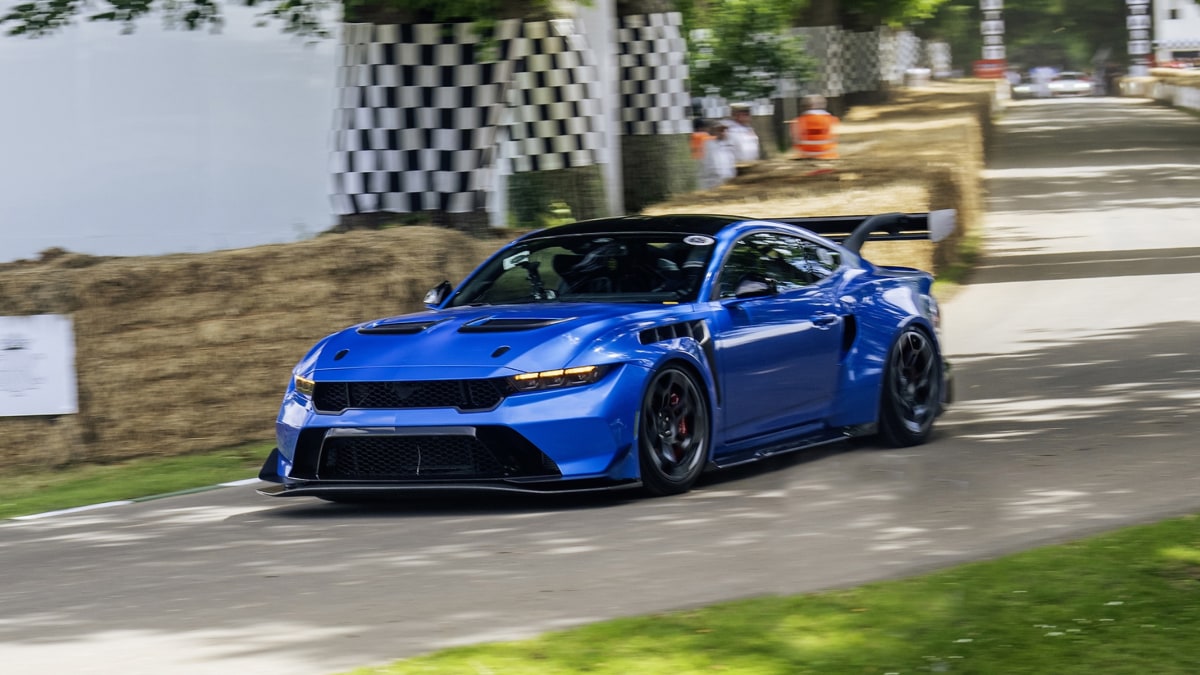
2025 Ford Mustang GTD reveals the view into its ultra-cool ‘suspension window’

The 2025 Ford Mustang GTD makes use of a race car-inspired pushrod-actuated inboard rear suspension, which is very cool. But what’s even cooler than that? Being able to see the beautiful engineering at work.

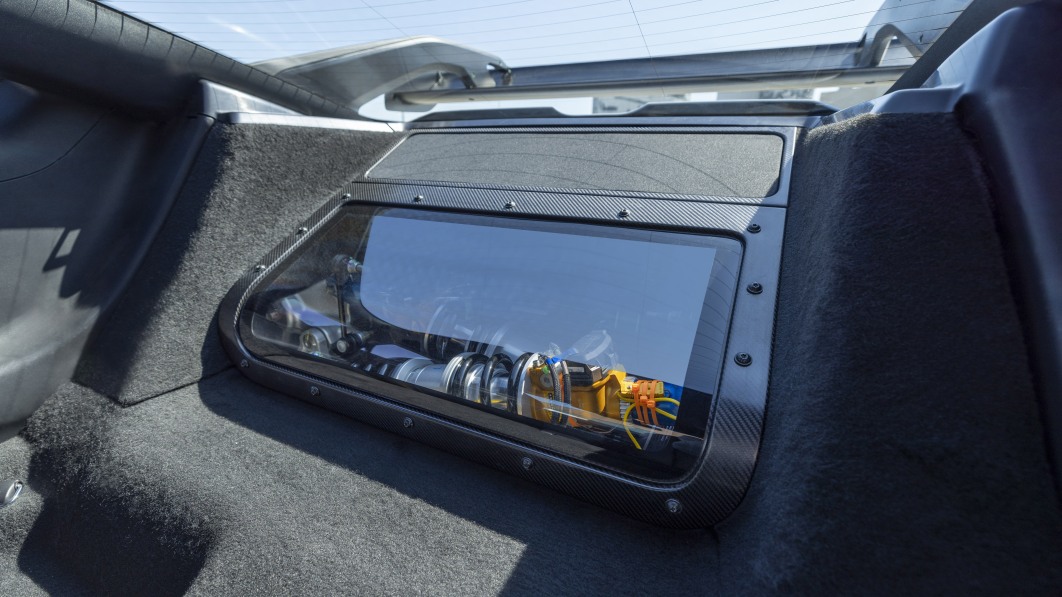
Today, Ford revealed that the GTD will feature something it’s calling the “suspension window,” as that’s quite literally what it is. Positioned where you might otherwise find the rear seats, the GTD has a 24-inch-wide and 10-inch-tall piece of polycarbonate that allows you to look back and see the Multimatic adaptive spool valve shock absorbers in all their blue and gold glory. As a passenger, you could even look backwards and see them in action over the road. The glass itself has a scratch-resistant coating applied to both sides to avoid it being marred.

“The rear suspension is designed for purpose, but it’s also just a beautiful thing to look at,” said Jim Owens, Mustang GTD marketing manager. “It would have been a shame for us to hide it away never to be seen.”

Ford says the Multimatic shocks are capable of going from their softest to firmest setting in just 15 milliseconds and continuously adapt to the road surface to maximize the tire contact patch. Each of the dampers has two springs – activating Track mode hydraulically compresses one of the springs to double the spring rate and lower the ride by 1.6 inches.

Just as we learned recently, Ford reaffirmed its goal of setting a sub-7-minute lap on the Nürburgring later this year. We also expect to see the GTD make appearances at big motorsports events throughout the year such as the 24 Hours of Le Mans and the Goodwood Festival of Speed.

Related video:

Ford Mustang Information

Ford Mustang GTD heads to Europe for testing prior to Le Mans

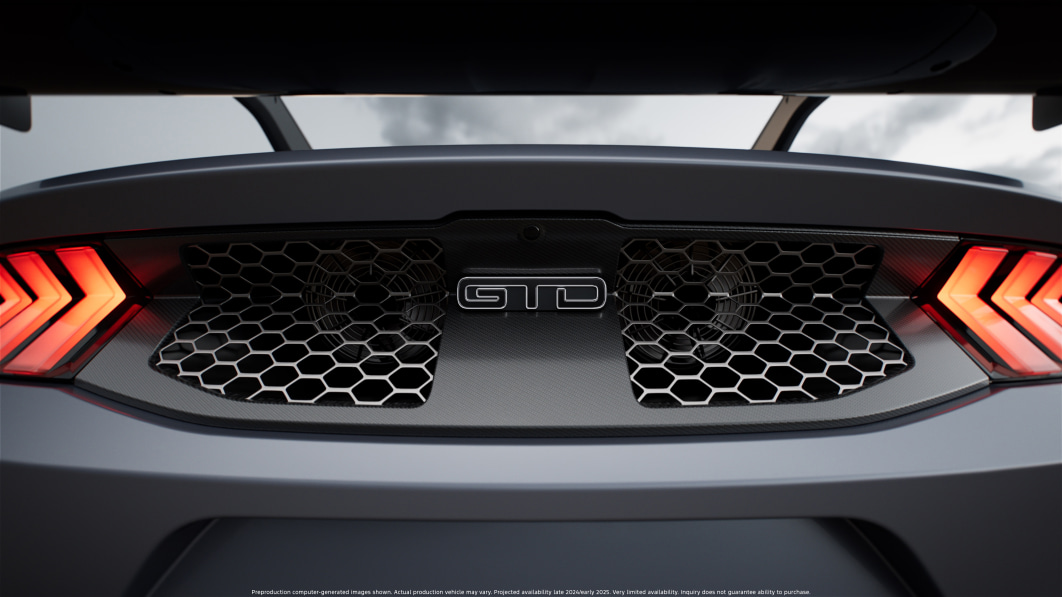
The new Mustang GTD was forged to be the weapon with which Ford intends to conquer international road racing. On the quest to elevate its high-performance pony car, Ford is taking the GTD on a European tour to coincide with its debut at the 24 Hours of Le Mans on June 21. To commemorate it all, Ford is kicking off a new digital series that documents the GTD’s development. The CGI images comprising the gallery above are the first components of that online narrative. 

“These images and videos show high-performance equipment in ways that match the high-performance nature of the Mustang GTD,” Ford’s announcement said. They will be released via various social media channels, including YouTube and TikTok, suggesting that the campaign will likely progress beyond still CGI images to video content. 

“We’ve tested the Mustang GTD in North America extensively, including laps at Sebring International Raceway and Virginia International Raceway. This has all been in service of engineering a car that can lap the Nürburgring in under seven minutes,” said Mustang GTD Chief Program Engineer Greg Goodall. “Moving onto European roads and dedicated test sessions at the Nürburgring is the next step, ahead of a timed run later this year.”

And by later this year, Goodall means Q4, following the GTD’s appearances at the 24 Hours of Spa and the Goodwood Festival of Speed. Ford’s hype engine is coming online just in time for European customers to start requesting reservations for the GTD; details of that are to follow in June. More than 7,500 customers raised their hands for allocations of 2025 and 2026 GTDs; how European enthusiasts will respond to the opportunity remains to be seen. 

Ford Mustang Information

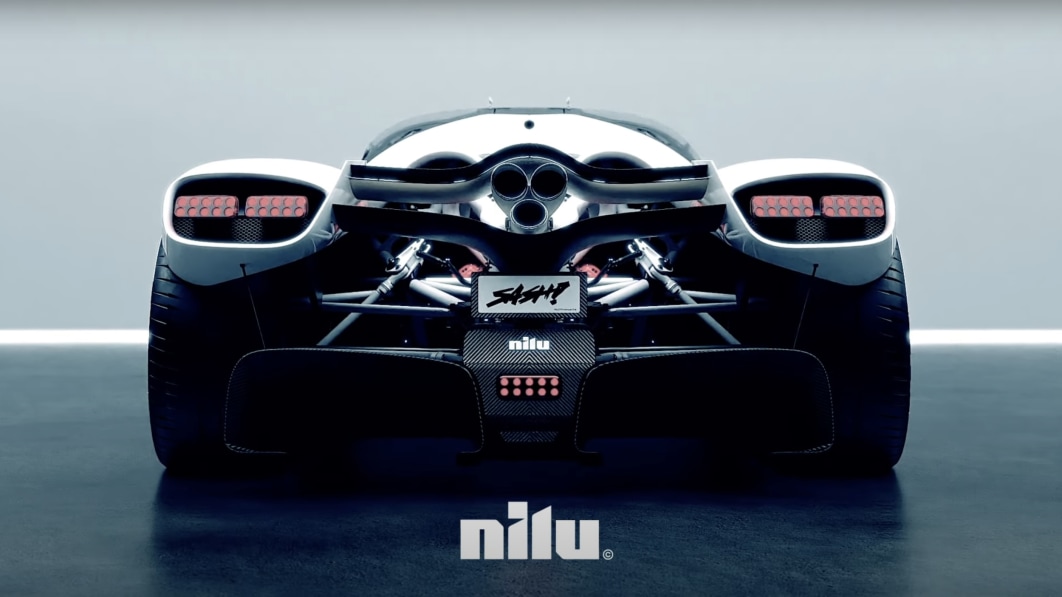
Nilu27 teaser video shows off high-tech hypercar from Sasha Selipano

There’s a lot more we don’t know about this mysterious hypercar than there is that we do. But one thing is certain: With automotive designer Sasha Selipano behind the project, it’s going to be wild. Selipano announced a new brand called Hardline27 a little less than a year ago, hailing it as “a new automotive design and branding studio with operations in Berlin and Los Angeles.” With automotive design credits to his name that include the likes of Lamborghini, Bugatti, Koenigsegg and some of Genesis‘ recent droolworthy concepts, we understandably have high hopes for whatever this new brand called Nilu27 will cook up.

Fortunately, we won’t have to wait long to see the first fruits of this new hypercar venture — a new teaser on YouTube highlights an unveiling at Pebble Beach on August 15. We only get a glimpse of the rear of the debut vehicle, but we can see some awfully impressive hardware. The first highlight of the teaser video are what appear to be small gullwing doors, followed closely by a trick-looking dual-pane rear wing that arches over triple exhaust tips that slowly come into focus. We’re treated to a nice view of what looks to be a high-tech pushrod-based suspension setup, a heck of a lot of carbon fiber, rear diffusers that hint at massive aerodynamic underbody designs and what could be a tubular spaceframe chassis.

And then we hear an engine. We can just barely make out some red bits that may or may not be valve covers splayed in a wide-V shape, and the exhaust note sounds like what we’d expect from a high-strung V8 engine. All of this is pure speculation, of course, but our interest is certainly piqued. Is this a pure concept vehicle, or something intended for limited production? Will it be designed for the street, or as a track-only special? Pure combustion, or fortified with electrification? We’ll see. Check the video out for yourself up above, and stay tuned for Monterey Car Week in the dog days of summer for a full reveal.

Lamborghini confirms 800-hp V8 for hybrid Huracán successor

Lamborghini went to significant lengths to keep the naturally-aspirated V12 engine alive, but its naturally-aspirated V10 has nearly reached the end of its life cycle. Instead, the yet-unnamed model that will replace the Huracán will downsize, adopt forced induction, and electrify.

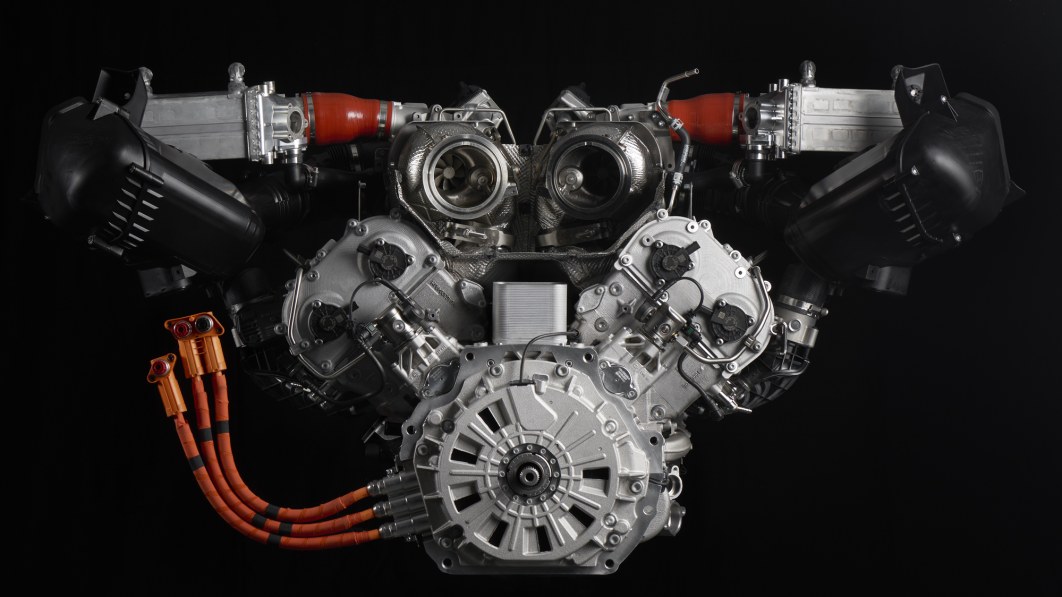
Code-named 634 internally, the Huracán’s successor will get a 4.0-liter twin-turbocharged V8 rated at about 800 horsepower and 538 pound-feet of torque and linked to an eight-speed dual-clutch automatic transmission. For context, the 10-year-old Huracán uses a naturally-aspirated 5.2-liter V10 tuned to develop 631 horsepower and 441 pound-feet of torque in its most powerful state of tune and the Revuelto’s V12 makes 814 horsepower. The hybrid part of the drivetrain will consist of three electric motors and a battery pack whose capacity and chemistry haven’t been announced. The system’s total output also hasn’t been revealed, but it should check in well above 800 horsepower. 

Before rumors begin to fly, let’s get an important detail out of the way. Lamborghini is part of the Volkswagen Group, and several of its sister companies — including Porsche — offer a twin-turbo 4.0-liter V8, but this is not what you’ll find in the Huracán’s successor’s engine bay. The brand claims that the eight-cylinder is new; it was developed in-house on a blank slate. Its delivers its peak horsepower output between 9,000 and 9,750 rpm, it provides its peak torque output over a broad range that stretches from 4,000 to 7,000 rpm, and it revs to an un-turbo-like 10,000 rpm. The pistons are linked to flat-plane crankshaft, too. On paper, it sounds like Lamborghini developed a racing engine. 

The dual-clutch automatic is a version of the transmission developed for the Revuelto, which made its debut in 2023 as Lamborghini’s first series-produced plug-in hybrid super-sports car. Details about the electrified part of the drivetrain remain relatively vague: all we know at this stage is that one of the three motors is sandwiched between the V8 and the eight-speed transmission. Fear not, the model won’t sound like the average hybrid. It will likely be capable of driving on electricity alone for short distances, but Lamborghini stresses it spent a great deal of time tuning the engine’s exhaust note to ensure it sounds the way a modern supercar with a flat-plane crankshaft and a high redline should.

Lamborghini will unveil the Huracán’s successor later in 2024, and we expect to hear more about it in the coming months. When it lands, it will complete the company’s shift to an all-electrified line-up: it will join the Revuelto and the plug-in hybrid Urus SE unveiled in April 2024.

Lamborghini Information

Rimac says demand for electric hypercars has dropped

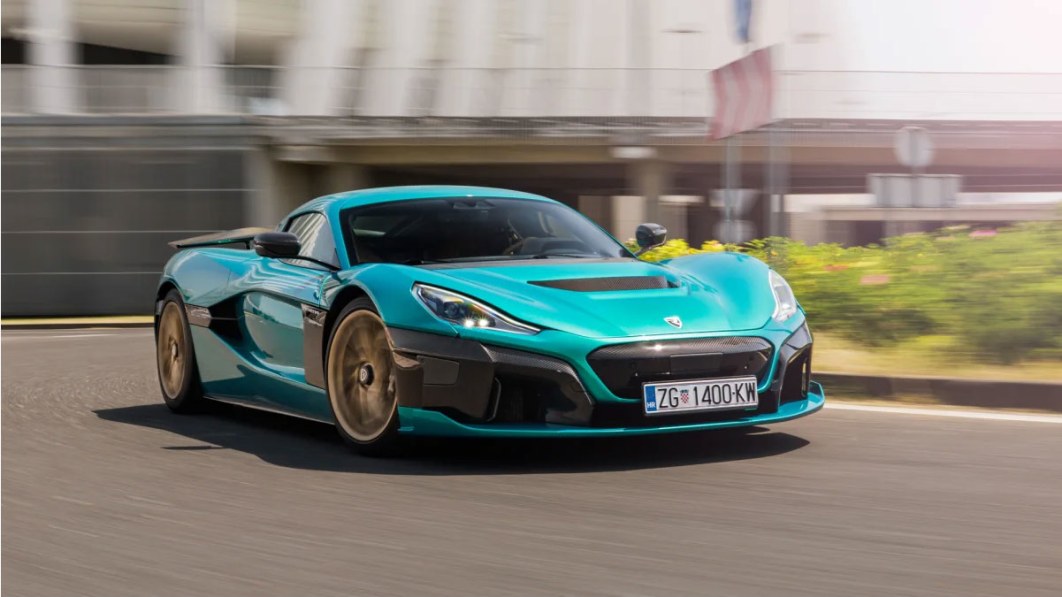
Unveiled in 2021, the 1,914-horsepower Rimac Nevera is limited to 150 units, and about 50 of those have already been spoken for. Part of the reason why two-thirds of the planned production run remains available is that demand for electric hypercars has dropped, the brand said.

“We started to develop the Nevera in 2016/2017, when electric was cool,” company founder Mate Rimac explained during the Financial Times Future of the Car conference in London, England. Fast-forward to 2024 and electric technology has become a lot more common; electrification is legally mandated across Europe, and nearly every company regardless of market positioning offers at least one EV.

“The regulators and some OEMs push it so much that the narrative has changed. They’re pushing stuff on us that we don’t want, so people get a little bit repulsed by it, this whole forced application. I’m always against it. I think everything has to be based on merit, so the product has to be better,” he added. Regular motorists don’t have a choice, but those who can afford a hypercar want one with a gasoline engine.

In turn, this shift is driving demand for electric hypercars — like the Nevera, the Pininfarina Battista, and the Lotus Evija — down. They’re more powerful and usually quicker than comparable gasoline-burning models, but companies are realizing that a sub-two-second zero-to-60-mph time isn’t enough to make a car appealing. Buyers with a seven-digit sum to spend on a car want analog technology, Autocar reported.

Rimac used the Apple Watch as an example.

“An Apple Watch can do everything better. It can do 1,000 more things, it’s a lot more precise, and it can measure your heart rate. But nobody would pay $200,000 for an Apple Watch,” he said. He noted that the Nevera remains the best-sold electric hypercar, however.

This realization at least partially explains why the Bugatti Chiron’s successor isn’t electric; it will be powered by a new V16 engine. Rimac, which owns Bugatti, said a battery-powered model’s sales figures would be “nowhere near” what it has planned for the V16-powered car. And, the shift will likely have an effect on Rimac’s product pipeline: it doesn’t expect demand for electric hypercars will go back up.

Rimac remains committed to electrification, it notably has partnerships with several carmakers including BMW and Hyundai, and it’s not about to stuff Bugatti’s new V16 engine in the Nevera to boost sales. Looking ahead, it wants to experiment with other types of drivetrain technologies. “It’s not about being electric; it’s about doing things that other cars can’t do and giving a unique experience,” the CEO said.

One project brewing behind-the-scenes in the brand’s Croatian headquarters is a nanotube-powered drivetrain capable of running on diesel, LPG, or hydrogen. It’s a system that heats “chemically different” liquid fuels to generate the electricity needed to zap a motor into motion.

Red Bull’s Adrian Newey leaves F1 team, shifts focus to RB hypercar

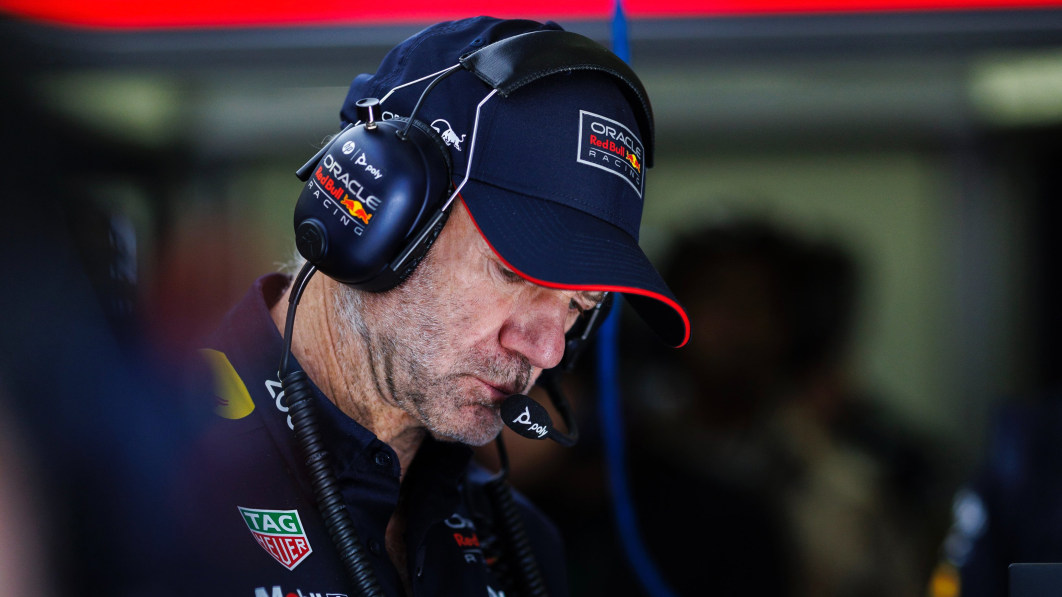
Red Bull Racing’s Chief Technical Officer Adrian Newey is officially departing the team in the first quarter of 2025. Rumors of his departure have swirled for the past few days, and now the news is official. But there’s more. Red Bull also revealed that Newey will be shifting his focus to the RB17 hypercar (a road car project) and seeing that project out through its completion.

It’s been 19 years of Adrian Newey designing Red Bull Formula 1 cars, and in that time he’s been a part of seven F1 Drivers’ titles, six Contructors’ championships, 118 victories and 101 poles. Those are the sort of numbers that make you a legend of the sport, especially considering that Red Bull was merely a startup F1 team when he joined. 

“Ever since I was a young boy, I wanted to be a designer of fast cars,” Newey said in a statement. “My dream was to be an engineer in Formula 1, and I’ve been lucky enough to make that dream a reality.”

Of course, the real question everybody wants the answer to is where Newey is headed next. Ferrari and Aston Martin are the two teams that seem to be in the running going by the most recent rumors. However, there’s no real sure indication of where he might eventually land, assuming he stays in Formula 1.

As for why Newey is leaving, the official statement follows below.

“For almost two decades it has been my great honour to have played a key role in Red Bull Racing’s progress from upstart newcomer to multiple title-winning team,” Newey starts. “However, I feel now is an opportune moment to hand that baton over to others and to seek new challenges for myself.”

Of course, there are the reported reasons of him leaving due to being unsettled by the Christian Horner misconduct investigation that stole headlines leading up to this season of racing. Newey’s statement upon leaving mentioned Horner calling him a “business partner but also a friend to our respective families.”

We’ll be waiting impatiently for further news on where Newey might be headed once the dust at Red Bull has settled, because where he goes, success in Formula 1 is almost sure to follow.

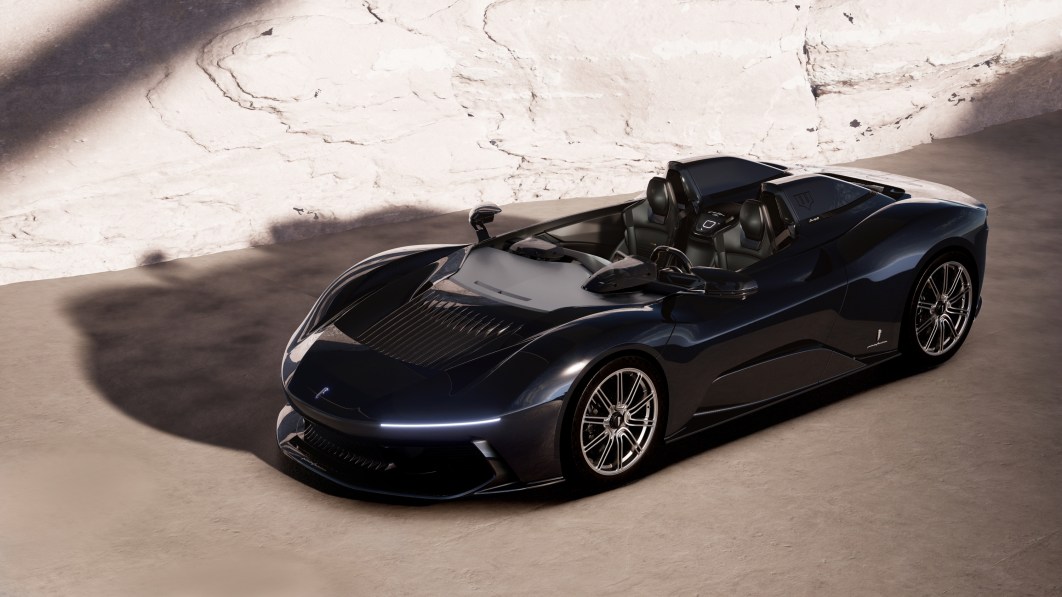
Pininfarina whips up a Batman-inspired Battista and B95 speedster

Albert, Harry, Jack, and Sam Warner founded Warner Bros. Pictures Incorporated in April 1923, 101 years ago. Artist Bob Kane and writer Bill Finger first put Batman into Gotham in an issue of Detective Comics (DC) on March 30, 1939, 75 years ago. Warner Bros., which owns DC Comics (and Discovery owns Warner), has gifted the ageless Dark Knight a mighty present for his diamond jubilee year: special editions of the Pininfarina Battista coupe and Pininfarina B95 speedster. Two trims of each, in Gotham and Dark Knight trims, make four cars in total. Every one of them gets the Battista’s standard powertrain, a 120-kWh battery charging four motors that make a combined 1,877 horsepower and 1,696 pound-feet of torque good for getting to 60 miles per hour in under two seconds and rated at 300 miles on a charge in the U.S.

The Italian automaker debuted the B95 Barchetta last year, a speedster in the mold of the Aston Martin V12 Speedster and Ferrari Monza SP1. At the time, the company said deliveries would begin in 2025 for the ten units it planned to produce. We’re not sure if these Batman editions are part of the ten or added to the ten.   

The Gotham variants reflect Bruce Wayne’s sophisticated side. Fronted by backlit Pininfarina badges, they’re painted Argento Vittorio Gloss paint with contrasts in Nero Torino Gloss and a Goccia roof. A redesigned roof and door junction on the coupe adds more curved glass, letting more light into the cabin, while new louvers in the wheel arches pass more air out of aerodynamically sensitive areas. The staggered wheels on the coupe get Prezioso Evoluzione Gloss Black faces with a matte black rim. The B95 Gotham is differentiated by having a matte black inner ring and and gloss black outer ring. Cabins in both cars are dressed in tan leather and tan stitching with quilted center panels in the seats.

The Dark Knight flavors express Bruce’s tech-intense side, enabled by the boffins at Wayne Enterprises. These come in Nero Profondo Black paint with a Nero Torino Goccia roof and rims in Glorioso, over a cockpit in black leather and Alcantara.

Special touches include a new skin for the infotainment system, voiced by Bruce Wayne’s butler, Alfred Pennyworth, as well as discreet Wayne Enterprises badging inside and out.

The cars are part of a real-life lifestyle division called Warner Bros. Discovery Global Consumer Products, which is rolling out a range of branded products for living the Bruce Wayne life, from these vehicles to luxury residences and “rarely seen, life-enhancing technologies and limited edition products.” You read that right. You can find out all about it at www.BruceWayneX.com, and apply for an allocation of any of these four cars right now. Pricing:

McLaren’s next ultra-exclusive flagship revealed at the end of this year

McLaren will be show the next installment in its Ultimate Series later this year — the range that claims the Senna, Senna GTR, Speedtail, and Elva at the moment. But really, we’re talking about a successor to the cars with a 1 in their names, as in F1 and P1. An Automotive News story says the latest superstar from Woking, England, is expected to cost about $2 million when it arrives in 2026.

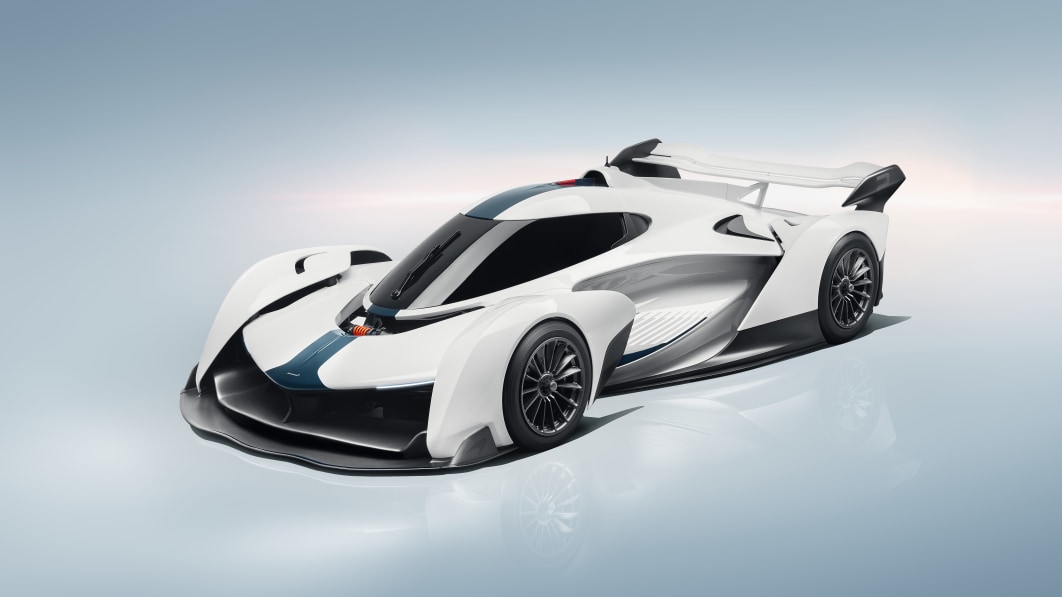
It will be sold out long before then, however, if it isn’t already, because McLaren’s only making 400 of them. On top of that, the selection process has gotten more exclusive, McLaren saying those who bought the $2.5M Solus GT track car (pictured) will be offered the first chance to buy the Ultimate Series car. The Solus GT was originally a Vision Gran Turismo fiction that the English firm made 25 real-life examples of, each powered by a 5.2-liter V10 making 829 horsepower and 479 pound-feet of torque.

Dealers emerging from company meetings in Las Vegas told AN that McLaren showed a rendering of a new car codenamed P18 that combines the more graceful lines of the P1 with “the technical aspects of the Senna.” The car won’t feature the company’s hallmark butterfly doors, either, but is fitted with gullwing doors instead. The police sketch description mentions a new eye-socket headlight design, “floating fenders,” intakes in the hood plus a snorkel in the C-pillar and more intakes at the rear buttresses, and active aero around the hem that includes a front splitter, the rockers, and a deployable wing with a “jewel-like” extension mechanism.

The P18’s powered by an all-new V8 hybrid powertrain unrelated to any other current McLaren product. The internal combustion engine is said to be developed with Riccardo, the hybrid system is said to be 70% lighter than the hybrid unit in the Artura GT. The battery is a “high-density, lightweight” unit derived from the pack in McLaren’s F1 race car. And it sounds like steering precision will be just as fine as ever, McLaren sticking to hydraulic steering to go with a new hydraulic suspension. 

As for a market name, CarBuzz clocked four trademark applications McLaren filed in the UK: W1, MP1, U1, and H1. Any of these could make the grade, or none of them might. And with the reveal not planned until Q4 this year, it’s possible more filings are inbound.

In a separate interview about McLaren’s remade design language, new chief design officer Tobias Sühlmann told Car magazine, “There will be a bigger portfolio, possibly, and we need to look into different power technologies. Is there more than two seats? Yeah, possibly. And we need to develop a form language that separates each model from each other – that is quite important.”

Based on persistent rumors, it’s possible that by the time the new Ultimate Series car arrives in early 2026, we’ll know more about a new McLaren or two that forms the basis of the bigger portfolio of models with more than two doors and two seats.

Lamborghini applies to trademark ‘Huracan STJ’ for another limited edition

When Lamborghini showed the 60th anniversary Huracans at Milan Fashion Week last April, automaker CEO Stephan Winkelmann said “The special editions of the Huracán not only celebrate the 60th anniversary of our brand, but also give our customers maybe the last chance to purchase an otherwise sold-out V10-powered Lamborghini.” We wrote at the time that we thought “maybe” was a vital qualifier. The Huracan’s twin-turbo V8 hybrid-powered successor isn’t due until the end of this year; 18 months is a long time for the Sant’ Agata brand to go without a special edition for the growing legion of buyers ready with six or seven figures sight-unseen. CarBuzz might have restored order to the world and proved us right, finding a couple of trademark applications with the European Union Intellectual Property Office (EUIPO) for a vehicle called the Huracan STJ.

The J is for “Jota,” the Spanish pronunciation of the letter “J,” representative of the FIA rule book’s Appendix J detailing sports car racing and homologation regulations (a connection that might or might not be true), and of Lamborghini’s most focused road-going models for retail customers going back to the Miura Jota prototype in 1970. Since then, there’s been a Miura SVJ, Diablo SE30 Jota, Aventador J one-off speedster and the Aventador SVJ.  

The short money says this is a turned-up version of the Huracan STO, itself the most raucous version of the Huracan that sold out through the end of production more than a year ago. The long money says this could be a track-only coupe, despite every previous J designation being legal for the street. The fans of all things bully at Lamborghini Talk say there will only be ten made, one for each of the automaker’s global regions, and all are sold out. One poster wrote that in December and January, Lamborghini approached prospective buyers with the chance to purchase the sole unit for their region. Our bet is that nary a “No” was heard. 

It’s possible the public will get its first and perhaps only look at the Huracan STO — outside of Pebble Beach or an RM Sotheby’s auction — at Lamborghini’s takeover of Italy’s Imola Circuit on April 6 and 7. The festival is called Lamborghini Arena, the automaker calling it “The most extraordinary event in our brand’s history.” Could make a worthy entrance for an extraordinary new J.

Related video: