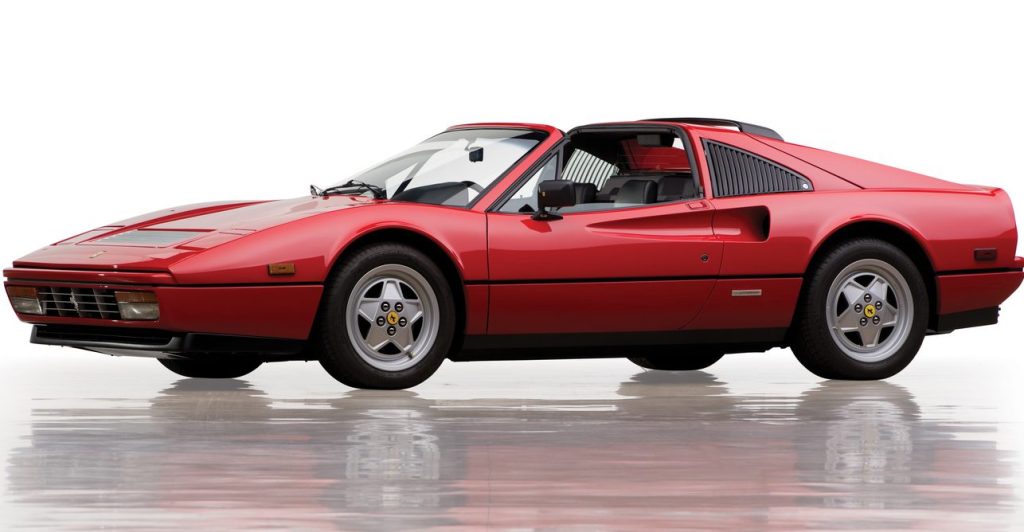
All posts in “Ferrari”

Shoes By Berluti And Ferrari

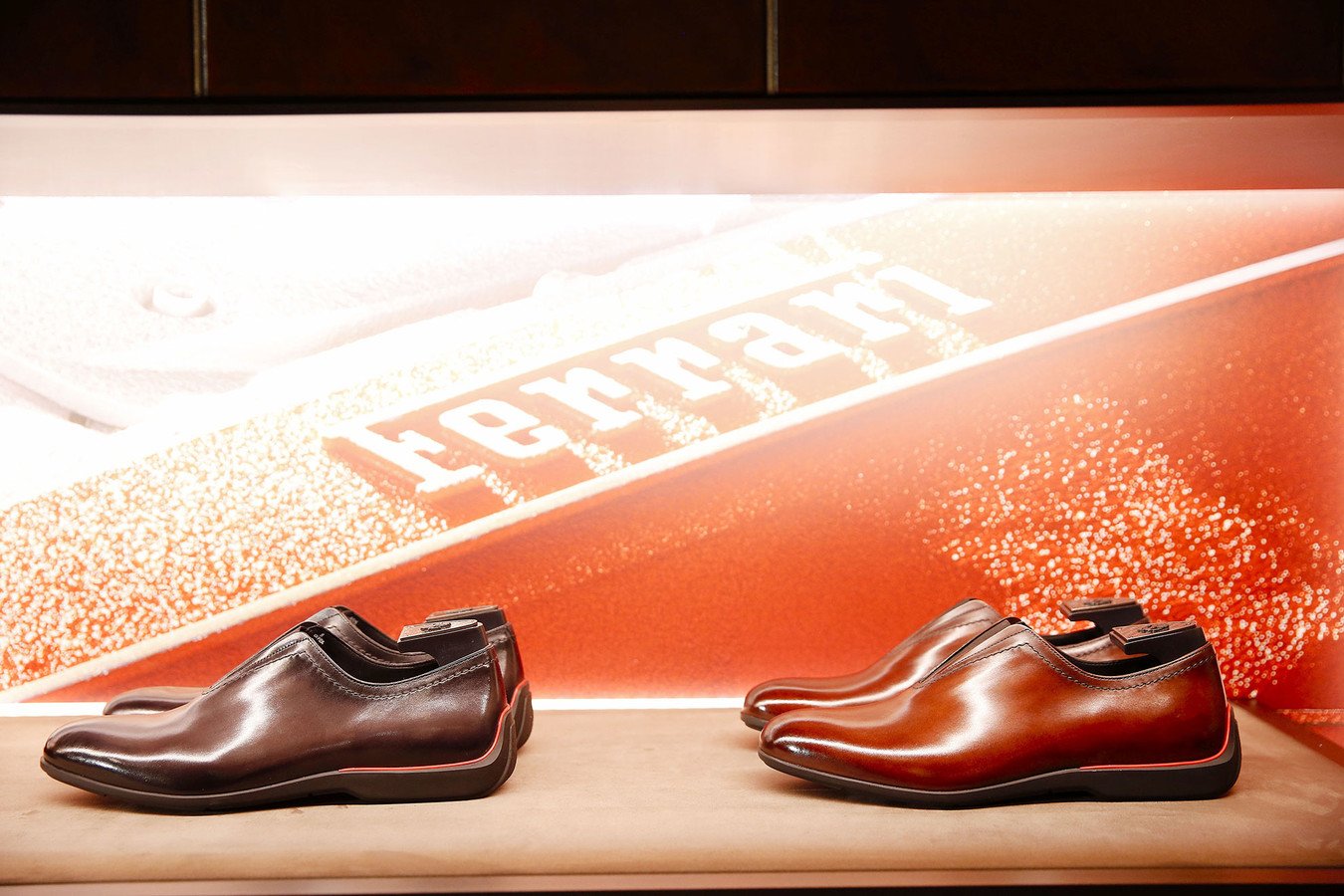
No bigger news came out of the Paris Fashion Week than Berluti and Ferrari launching a new shoe collection. One that apparently takes inspiration from “gentlemen drivers,” as the luxury automaker puts it.

The two have joined forces for three new shoe models, a slip-on, an Oxford and a Chelsea boot, complete with signature stitching and Ferrari Red piping detail in the heels. The shoes are available November from select of Berluti stores and online.

Because carbon fiber is heavily implemented into Ferrari cars, especially the more recent ones, the shoes have received a similar treatment. And every element, like detail and styling, takes inspiration from Ferrari vehicles. That includes the sculptural, sinuous shapes and stitching. The shoes evoke Ferrari’s instantly recognizable exterior styling and exquisite interiors.

“These are the lightest shoes that Berluti has done ever. These are shoes which have real technology in them, with carbon fiber that is used for cars for driving,” says Ferrari chairman John Elkann. “It’s a very special grip that you have on the sole and this is taking inspiration from the engine.”

The idea was to try and capture the vibe of the gentleman driver back in the ‘60s. We won’t be glamorizing the ‘60s here, of course, especially when its ills and errors reverberate to this day. But there’s something notable about the simpler, more refined design inclinations of that era. Which is especially in the automobile sector. We understand why Berluti and Ferrari have such a fascination for the decade.

The Berluti and Ferrari collection coincides with the release of the Monza SP1 and SP2. Both were inspired by vintage models but outfitted with modern technology.

MORE INFO HERE

Photos courtesy of Ferrari

Ferrari 812 Convertible is Coming, Insider Sources Say

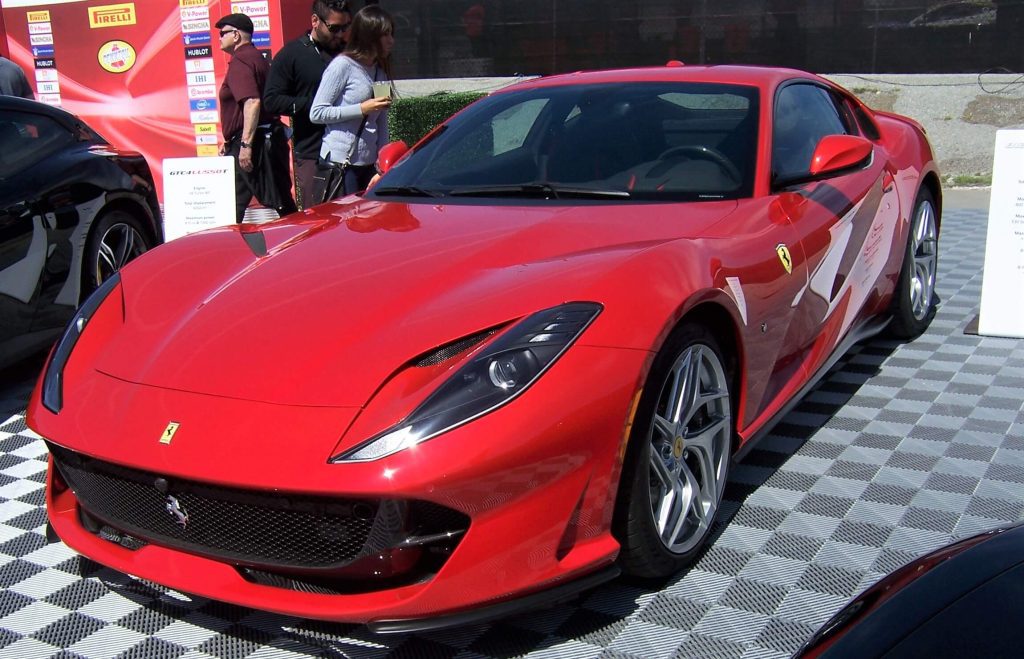
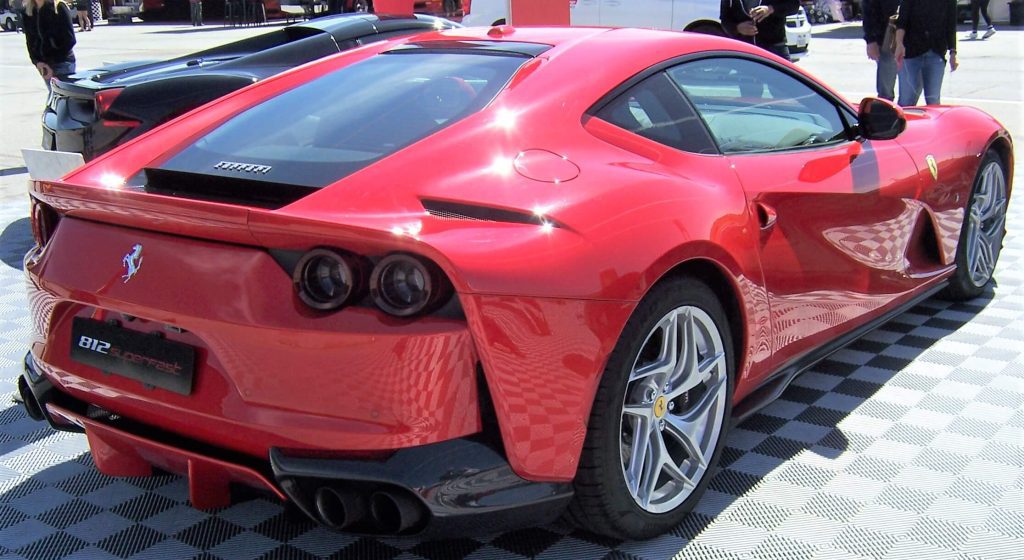
Rumours have ignited that suggest Ferrari are currently planning a Ferrari 812 Convertible. The rumours have been supplemented by a render, produced by Jonathan Machado. If the rumours are to be believed, the 812 Convertible will arrive within the next 12 months as a limited edition model.

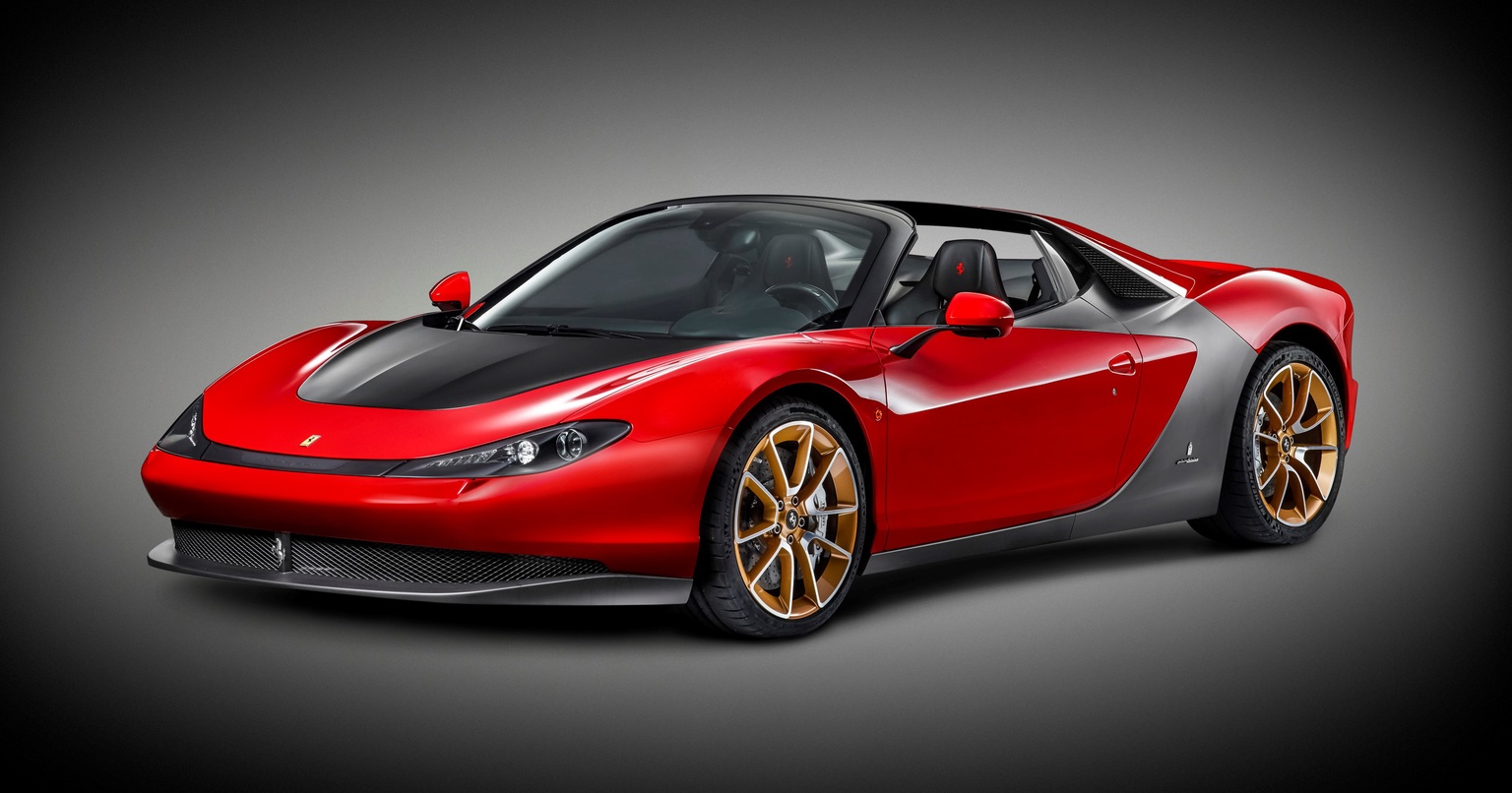
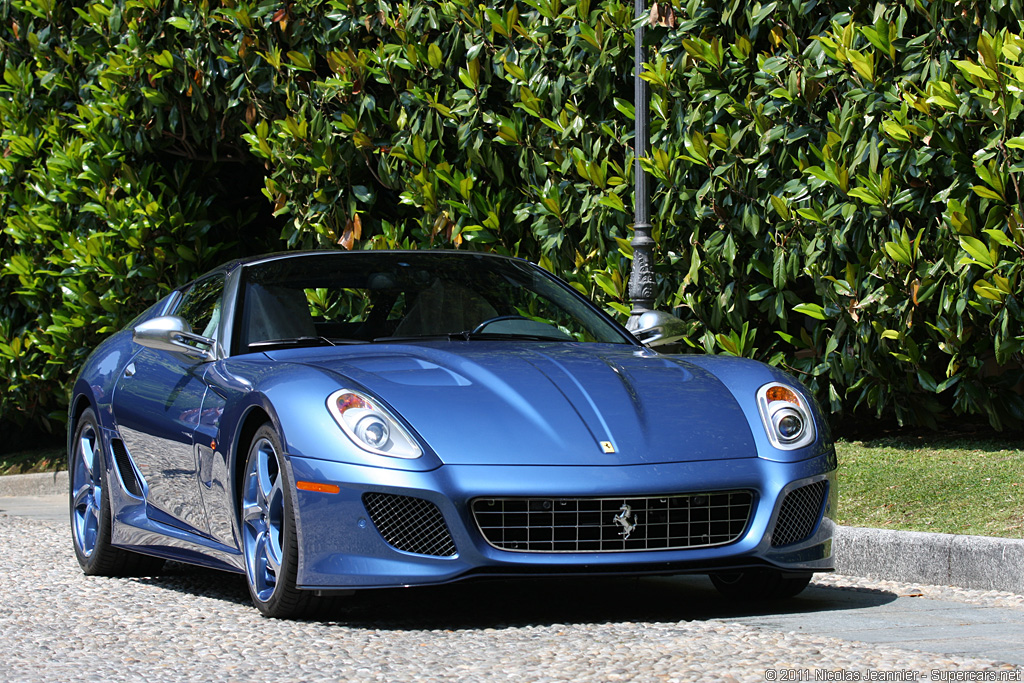
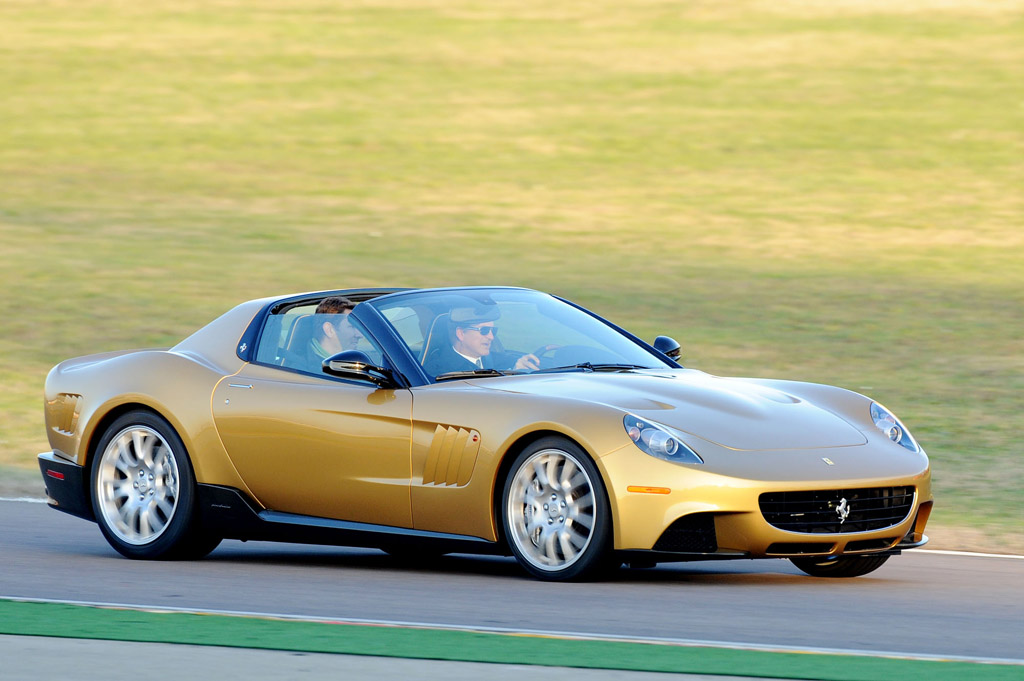
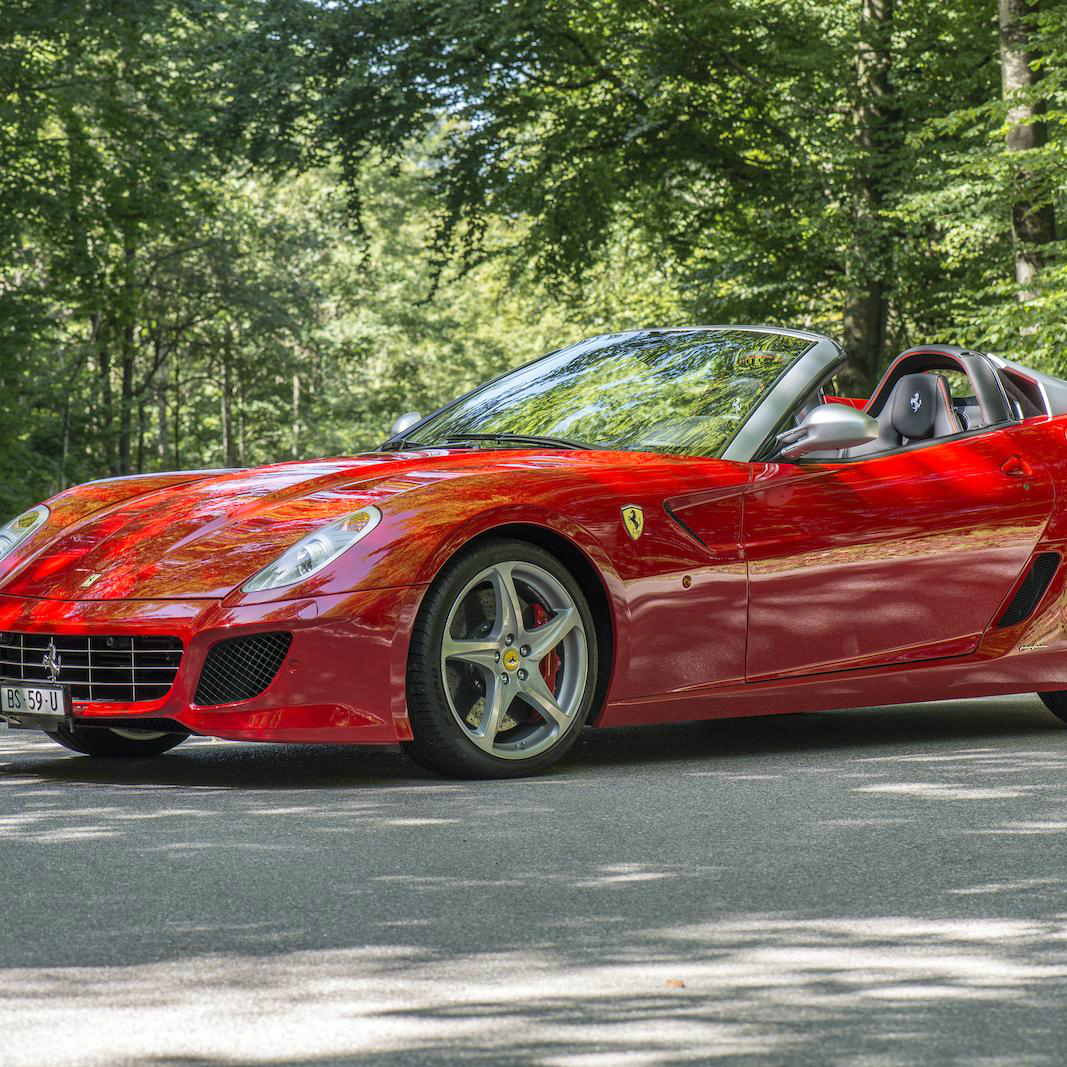
The rumours fit with what Ferrari has previously done with its V12 front engine models. The Ferrari F12, for example, received the one-off barchetta, the Ferrari F12 TRS and the Ferrari F60 America, limited to 10 examples. The Ferrari 599 had the 599 SA Aperta, a highly sought-after collectors model, limited to just 80 pieces.

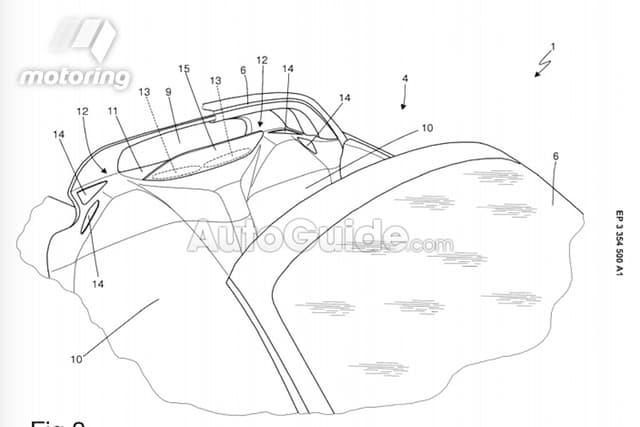
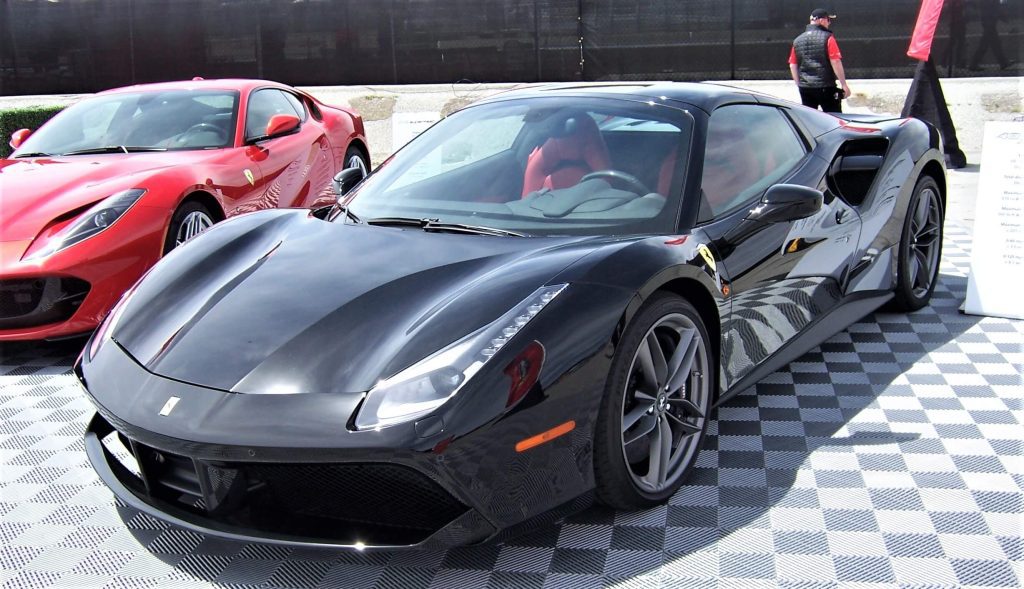
The Ferrari 812 Convertible is likely to use the folding hardtop system similar to the Ferrari 488. This will mean that it should get prominent roll-over bars with a relatively small section of the roof cut out, as opposed to the barchetta models which feature a much larger cut-out.

We are talking about rumours at the moment though, so nothing is known for sure. The 812 Superfast currently uses Ferrari’s 6.5 litre V12 engine with a massive power output of 789 hp. If the Convertible gets the same engine (which is highly likely) it should prove to be one of the fastest convertibles on the planet.

We know that cutting the roof off the Ferrari 812 chassis is technically possible too. The recent Ferrari Monza SP is based on the same chassis and receives a complete barchetta makeover. Maintaining a Ferrari 488 Spider-style opening can only aid in making a vehicle which is more structurally balanced.

Details Emerge about Ferrari Monza Cost and Production Run

The cost and availability of the new Ferrari Monza has finally been revealed. The Italian company announced the speedster a few weeks before the Paris Motor Show 2018 began. While much of the technical information was available immediately, the release was particularly thin on details such as how much it would cost and how many would be available.

Interviews given during the Paris Motor Show 2018 have finally revealed the cost of the Monza to be €1.6 Million. With the help of a calculator, and confirmation that Ferrari plans to sell 499 of them, it is clear that Ferrari stands to generate revenue of €794.4 million.

While the headline figure sounds impressive, the profit that Ferrari generate from each car will be significantly less. To get that figure, the price of production, 22 percent value added tax and dealership profits would need to be taken into account.

The first of the special series cars, a new production line that Ferrari has developed, the Ferrari Monza is completely sold out. The choice of SP1 or SP2 will be left to the customer, although Ferrari is expecting an equal split across the two versions.

Ferrari have confirmed that the Monza has been developed without adhering to any particular set of rules. As a result, it will be street legal in Europe but not in the United States or in Asia. Customers in those regions will need to use their cars on closed circuits or on race tracks.

Sources have also confirmed that the Monza SP1 and SP2 will take up 2 years of production run. They will be assembled in Maranello as part of a new production line which will continue past those two years for upcoming Icona models.

Ferrari at Paris Motor Show 2018

The Paris Motor Show 2018 is now in full swing. As ever, Ferrari have one of the biggest displays, attracting the most attention. The crowds are flocking to get the first public sightings of the Ferrari Monza SP1 and SP2, as well as the Ferrari 488 Pista Spider and the Ferrari Portifino.

The Monza is Ferrari’s highest profile release. We saw official details only a few weeks ago. The Speedster model is a special edition with less than 500 planned in either single seater or two seater configuration. While there is no official detail on either availability or pricing, rumours are circulating of any entry price in the region of €3 million.

The Ferrari Monza is inspired by the 166 MM and the 750 Monza, among others. A development of the 812 Superfast, the 6.5 litre V12 unit produces 810 hp and 719 Nm of torque. It is capable of a 100 km/h sprint in just 2.9 seconds, together with a 200 km/h sprint in 7.9 seconds. Dry weight is 1,500 kg for the Ferrari Monza SP1 and 1,520 kg for the Ferrari Monza SP2. For context, the Ferrari 812 Superfast weighs 1,630 kg.

Alongside the Ferrari Monza SP1 and SP2, the Ferrari 488 Pista Spider is also attracting a fair amount of attention. Released at the Concours d’Elegance at Pebble Beach in California last August, the Paris Motor Show 2018 is a European debut.

The new Ferrari 488 Pista Spider uses the most powerful Ferrari V8 engine ever. At 3.9 litres, the V8 produces 720 hp at 8,000 rpm and 770 Nm at 3000 rpm. The Pista Spider hits 100 km/h in just 2.85 seconds and 200 km/h in 8 seconds dead. Top speed is 340 km/h.

Ferrari Monza SP1 and SP2

The new Ferrari Monza SP1 and SP2 were unveiled yesterday at the Capital Market’s Day at the factory in Maranello (Ferrari also announced 15 new models you may want to check out). These limited-edition special-series Ferraris are the first in a new category that Ferrari calls ‘Icona’, essentially custom cars made for collectors. The company has experience with building special edition and one off Ferraris for collectors so this seems like a natural extension. The Icona cars will essentially be cars that look like classic yesteryear racers, underpinned with the latest chassis, electronics and engines. Think of classic Ferraris of the 1950s coupled with the most advanced sports car technology available today and you pretty much nailed it.

The first iteration of the program is the Ferrari Monza SP1 and SP2. Reminiscent of racing barchettas of that late 1940s and early 1950s, both cars look amazing. The Ferrari Monza SP1 is a single-seat sports car with no windscreen while the Ferrari Monza SP2 is a more classic two-seater. Both cars feature no roof, no windscreen and no side air bags.

Both the Monza SP1 and SP2 are based on the Ferrari 812 Superfast and come with a 6.5 liter V12 engine with 810 hp to the rear wheels. Aluminum chassis and carbon fiber body make for a lightweight car and absurd power to weight ration. Expect sub 3 second sprint from standstill to 60 mph and scintillating 7.9 seconds to 125 mph. Top speed will be around 186 mph.

We don’t think these cars will be approved for road use, so expect them to be track-day only machines.  Maybe that is why Ferrari said buyers will get a racing jumpsuit designed by Italian high-end luxury brand Loro Piana. Speaking of buyers, only a maximum of 500 units will be produced although we expect that this is slightly inflated and that we will only see a few hundred units max.

If you’re looking for a 1950’s style design with modern technology underneath and you like to track your cars, this may be the Ferrari for you. All you have to do is pony up the more than a million dollars these cars will cost.

We stated the obvious earlier, that the SP1 is a single seater, while the SP2 is a two-seater. That is the biggest design difference as it impacts other parts of the car. The Monza SP1 has a tonneau cover while the SP2 gets rid of the cover to make room for the second passenger. There is small windscreen and a second roll bar hoop in the SP2 which further differentiates the designs.

At the front, both cars have carbon fiber front slitter which resides below a wide grille and protruding LED daytime running lights. Bigger changes occur further back as the windscreen has been removed and this promises to give owners a taste of the “blistering speed” that Formula 1 drivers experience.

Further back, the models have been equipped with unique half-doors that open upwards. They provide access to a compact cabin which features a three-spoke steering wheel, special switchgear and plenty of exposed carbon fiber components.

Getting back to the windscreens for a second, Ferrari says they have developed and patented an innovative “Virtual Wind Shield” technology which is integrated into the fairing ahead of the instrument panel. While it doesn’t look like much, Ferrari says the virtual windscreen deviates enough air to maintain driving comfort.

Ferrari was coy on additional details, but the Monzas have a 6.5-liter V12 that is the “most powerful engine Maranello has ever built.” It produces 799 hp (603 kW / 810 PS) and 530 lb-ft (719 Nm) of torque. This enables the cars to accelerate from 0-62 mph (0-100 km/h) in 2.9 seconds and 0-124 mph (0-200 km/h) in 7.9 seconds. If the driver is brave enough, they can hit a top speed in excess of 186 mph (300 km/h).

Press Release

THE FIRST MODELS IN A NEW CONCEPT OF LIMITED-EDITION SPECIAL SERIES CALLED ‘ICONA’
The Ferrari Monza SP1 and SP2 unveiled – Iconic cars whose sophisticated design and engineering is inspired by legendary Ferrari Sports cars of the past

Maranello, 18 September 2018 – The new Ferrari Monza SP1 and SP2 have been unveiled on occasion of the company’s Capital Market’s Day at the factory in Maranello. These limited-edition special-series cars are the first in a new segment called ‘Icona’ and draw inspiration from the most evocative Ferraris of the 1950s and feature the most advanced sports car technology available today.

Aimed at dedicated clients and collectors, the Monza SP1 and SP2 reference the iconic Ferrari racing barchettas of the past, not least the 1948 166 MM, which originally inspired the name ‘barchetta’, and the 750 Monza and 860 Monza. Designed with the sole aim of winning, these uncompromising models helped build the Ferrari legend in the 1950s by delivering numerous victories in the World Sports Car Championship.

The Ferrari Monza SP1 was designed as an uncompromising single-seat road car that offers a truly unique experience behind the wheel. The second configuration, the Monza SP2, thanks to the elimination of the tonneau cover and the addition of a second protective screen and a second roll-bar, is instead a two-seater enabling the passenger to share the same driving sensations.

The Monza SP1 and SP2 feature a unique design, the best weight-to-power ratio of any barchetta, thanks to the extensive use of carbon-fibre in construction, and distinctive details, such as head-and tail-lights, wheels and interior, which further enhance the cars’ exclusivity. Equipped with the most powerful engine Maranello has ever built, a 810 cv V12, they can sprint from 0-100 km/h in 2.9 seconds and 0-200 km/h in 7.9 seconds.

The architecture of the two cars is based on a monolithic form with an aerodynamic wing profile where the complete absence of a roof and windscreen gave the designers the freedom to create unique proportions that would not have been possible on a traditional spider.

The result is the feeling of blistering speed normally only experienced by Formula 1 drivers, which derives from the concept of a cockpit carved from the car’s very volume that wraps around the driver.

The Ferrari Design Centre has sought to create a very pure design, as though born of a single pencil stroke, to convey an ideal of timeless elegance, minimalist form and refined detail. Visually complex solutions, such as those seen on recent racing cars, have been avoided, giving way to a more understated formal design language. Never has a model expressed such a narrative power, highlighting its appeal as a driver’s car where the link between man and automobile becomes symbiotic.

A radical choice was made for the design of the cars’ compact doors which open upwards. Equally important is the all-carbon-fibre one-piece bonnet-wing assembly which is hinged at the front to showcase the imposing V12 engine once open.

As with racing models, the bodyshell of both cars is made entirely from lightweight carbon-fibre. The entire interior is trimmed in the same material with a natural finish to enhance the sporty impact of the design. Weight reduction and the ‘barchetta’ configuration guarantee unique vehicle dynamics: perfectly balanced with no roll whatsoever for pure, uncompromising sports-car handling.

Because these are authentic “en plein air” sports cars, one of the greatest challenges in their design was managing the aerodynamic flows inside the cockpit in the absence of a windscreen. The solution was the innovative patented “Virtual Wind Shield” which has been incorporated into the fairing ahead of the instrument panel and the steering wheel. The “Virtual Wind Shield” deviates a part of the air flow to maintain driving comfort.

Especially for Monza SP1 and SP2 owners Ferrari, in collaboration with two leading luxury brands, Loro Piana and Berluti, has created elegant gentlemen-driver-inspired apparel and accessories. The driver’s selection includes racing overalls, jersey, helmet, gloves, scarf and driving shoes. These feature a number of technical solutions to guarantee a comfortable fit and ensure freedom of movement while driving.

Engine & Specifications

While Ferrari were a little light on the specs for the Monza cars, we did manage to find the following information on the cars.

ENGINE
Type V12 – 65°
Overall displacement 6496 cm3
Max. power output* 603 kW (810 cv) at 8500 rpm
Max. torque* 719 Nm at 7000 rpm
DIMENSIONS AND WEIGHT
Length 4657 mm
Width 1996 mm
Height 1155 mm
Dry weight** 1500 kg (SP1), 1520 kg (SP2)
PERFORMANCE
0-100 km/h 2.9 sec
0 -200 km/h 7.9 sec
Max. speed >300 km/h
FUEL CONSUMPTION/CO2 EMISSIONS
Under homologation

Photo & Image Gallery

Ferrari Monza SP1 Pictures

These open-top Ferraris are absolutely stunning. We pulled all the press images and photos of both the Monza SP1 and SP2. The SP1 has the single seat old-school LeMans racer about it. We love the silhouette and simplicity of its design.

Ferrari Monza SP2 Pictures

With its two-seat layout the SP2 is a more traditional set up. Despite the two-seats it still is stunning and sexy from every angle. These photos of the SP2 in black with that red interior really make it stand out. For me this is my favorite of the two.

Ferrari Monza SP1 & SP2 Unveiling

[embedded content]

Ferrari to launch 15 new models by 2022 (including its most powerful road car ever)

Ferrari Unveils Ambitious Plans In A New Model Assault – Special Editions, Hybrids, Hypercar and SUV

We don’t normally talk about news but this is too tasty. Ferrari had is Capital Markets Day where they basically sell investors on their future plans. It is unique for Ferrari since the company has only been public for a short time. While some readers may be investors, we really care about the cool new cars the company is working on.

The best Ferrari ever is the one that has yet to be builtEnzo Ferrari

Ferrari’s 5 Year Plan Is a Model Onslaught

The headline news is that under a new five-year strategy under a new boss Ferrari will launch 15 new models by 2022. Those kinds of model numbers sound like McLaren, maybe Ferrari is learning from its newest production car competitor. As long as the cars are awesome, we’re excited.

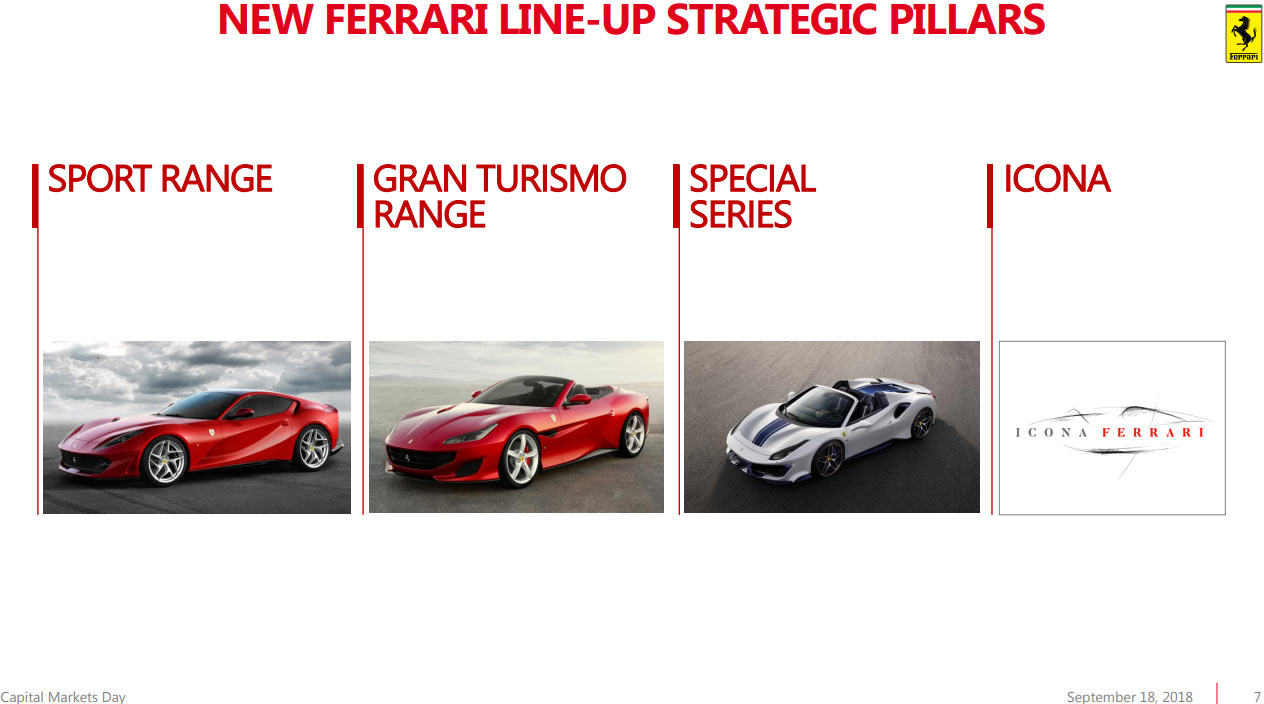
Ferrari broker out its model range into a clearer four pillar set up. The Sport range are the cars we know as today as the 488, 812 Superfast. The Sport range will confirm Ferrari as a leader in performance and future models will feature hybridization as well as a track-oriented human machine interface. In particular, the automaker said we can expect a “two tier mid rear engine product range” and a “full hybrid range by 2021.” Ferrari went on to say the 488 successor will be focused on being fun to drive and hinted the Sport range could be expanded in the future.

The Gran Turismo range includes the GT4Lusso and Portofino. The lineup of GTs will grow in the future and there are already plans for plug-in hybrid variants. Sticking with the GT theme, Ferrari hinted at the return of an elegant model which has a “unique design inspired by the classic and refined Ferrari Gran Turismo of 1950s and 1960s.” Yes please Ferrari, make it happen.

Next up is our favorite Special Series range, with cars like the 488 Pista (historically included 458 Speciale, F430 Scuderia). Special Series vehicles will also be sold in limited numbers. Not surprisingly these models are all about driving emotions.

They will now be joined by an Icona range which will apparently include highly customized vehicles like the Monza SP1 and SP2. The name has been chosen to reference the firms famous racing cars of the 1950’s. The SP1 has only one seat while the SP2 allows for one passenger. The company has had great success with limited edition and custom Ferraris over the years so it is no surprise they are investing more here.

Announcing the Ferrari Monza

Ferrari announced a new limited-edition open-top racing-style supercar. Called the Monza it will come in single-seater and two-seater versions as part of the new range called Icona. Ferrari will build fewer than 500 of the two models combined and all have already been sold.

The Monza is intended as a successor to the classic Barchetta, a racing car made by the firm in the 1940s and 1950s. Ferrari claims they are fitted with the most powerful engine ever built by the Italian car maker. It will have an 810-horsepower V-12 engine.The Monza’s bodyshell is built entirely from carbon fibre and neither model comes with a roof or windscreen. Ferrari said a “virtual wind shield” is placed behind the instrumentation panel to push air flow above the driver who is sat in a Formula 1 style cockpit. The car will take just 2.9 seconds to reach 60 mph. Think more than a $1m for this tasty treat and you’re close.

The luxury sports car maker took the wraps off the Ferrari Monza SP1 and SP2 at the firm’s famous Maranello factory in Italy on Tuesday.

A New Supercar to Replace LaFerrari

Ferrari’s replacement for LaFerrari hypercar is three to five years from launch, according to chief technology officer Michael Leiters. A new hypercar, or replacement for the LaFerrari, is not in the brand’s mid-term plan but the company did confirm work is under way on the technology that will feature in its successor.

Set to be ‘born from fresh innovations’, the LaFerrari’s limited-edition replacement is set to be revealed before 2022.

Selling Mostly Hybrids

Ferrari expects that Hybrid powertrains will make up the majority of its sales at the end of 2022. Clearly the company is investing in a world where the majority of its well healed buyers will want low emissions performance cars.

“By 2022, nearly 60 percent of the models we produce will be built around hybrid powertrains,” new CEO Louis Camilleri said. Ferrari is focused on hybrid petrol-electric powertrains and expects its new SUV will feature this hybrid set up.

The company will increasingly make hybrid cars “as the years unfold to meet specific regulatory requirements but also to satisfy customer desires for significantly improved emissions while retaining the driving emotions that render Ferraris simply unique,” said Camilleri (new CEO).

Ferrari SUV On Its Way

In the worst secret ever Ferrari is launching its first SUV, called the Purosangue. It is going to arrive at the end of the five-year strategic plan period, around 2022.

Announcing the SUV, former Philip Morris boss Camilleri said he hated the idea (didn’t we all): “It just does not sit well with our brand and all that it represents,” he admitted, but guaranteed investors that the new design will “redefine expectations”. Describing it as “elegant, powerful, versatile, comfortable, spacious… worthy of the Ferrari badge,”. Lets hope so.

The Purosange will sit in Ferrari’s GT range and be based on a new front-mid engine architecture compatible with plug-in hybrid technology. The GT line-up is designed to ‘expand the Ferrari family’ and cover ‘growing market segments’.

New V6 Engine Range

On the topic of new models, Ferrari confirmed plans of a V6 engine family. There are also plans for a “Turbo Hybrid” family of engines which will produce 394+ hp (294 kW / 400 PS) per liter and have zero turbo lag. Under the guidance of new CEO Louis Carey Camilleri, 60 per cent of the Italian firm’s products will feature hybrid technology within the next four years. Key to that will be the development of a new V6 hybrid powertrain, which Ferrari has confirmed is under development.

Ferrari bosses would not be drawn on speculation that the V6 engine is for a new generation of Dino, but did say that the engine will be used as a lower performance entry point for models such as the Portofino.

Higher Prices

Chief marketing officer Enrico Galliera said new Ferrari models would come with a “significant” increase in the average price. Boo to that we say. May need to focus on my affordable used Ferraris list then.

Learn More

If you want to dig into the details, download the Presentations from the Capital Markets Day:

Ultimate Guide – What You Need to Know About Ferraris Brilliant V8 Special Series Cars

GTC, Stradale, Scuderia, Speciale and Pista. We explore Ferraris hardcore, track-inspired mid-engined “Special Series” masterpieces.

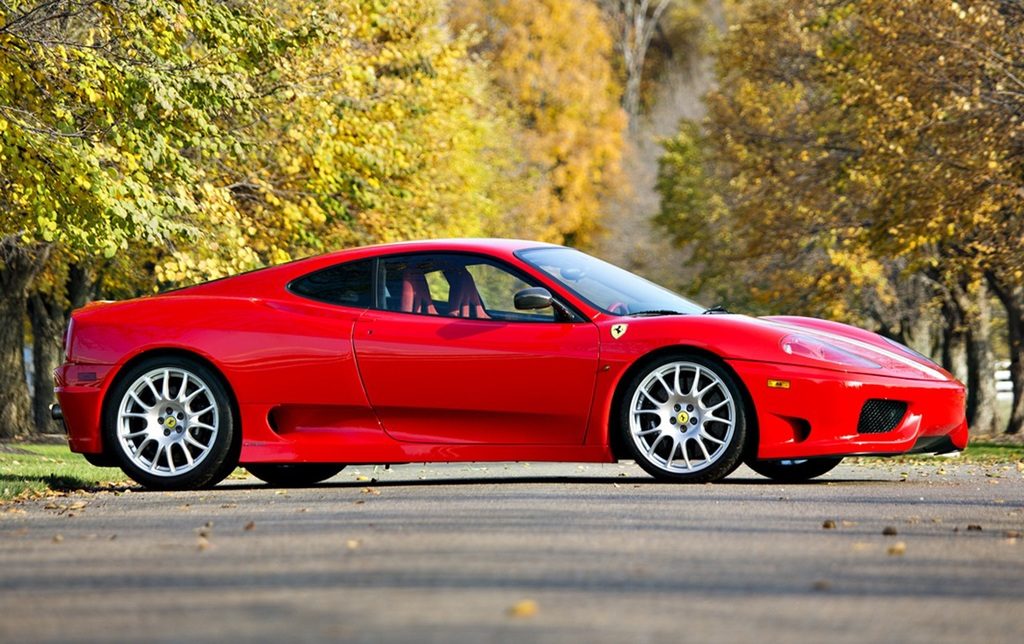
Recently, Ferrari launched the 488 Pista and Pista Spider, the latest in a brilliant line of track-inspired mid-engined “special series” road cars. It is the successor to Ferrari’s V8-engined special series  – the 360 Challenge Stradale, 430 Scuderia and 458 Speciale – all critically acclaimed performance cars and some of the most desirable Ferraris on the market. Collectors love them as they hold/grow in value while fans drool over the chance to own these very limited edition machines.

The thing that makes these Ferraris so special is that they feel special, they feel better than other Ferraris. They follow a simple formula where numerous small changes are put them together to transform already great cars into pure perfection. The track inspired special series Ferrari formula is simple. Take a “normal” mid-engined V8 Ferrari and make it lighter, sharper, more aggressive and more exciting. Each generation is better than the previous generation, marking a significant step forward from the previous special series in terms of both sporty dynamics and the level of technological carry-over from racing. The name is, in fact, a direct homage to Ferrari’s unparalleled heritage in motor sports.

It all started in 1993 with a special edition Ferrari V8 you’ve never heard of, the 348 GT Competizione. This was Ferrari’s first homologation special after the magnificent 288 GTO. Built in order to complete in the international GT3 class, Ferrari took their (average at best) entry level, mid engined car and got to work turning it into the ultimate street Ferrari 348. The formula was the same for the Challenge Stradale, 430 Scuderia, 458 Speciale and now the Pista. The interiors are stripped down from all un-necessities like carpeting and leather upholstery, making the cars lot lighter than their normal Ferrari donor. Engines are improved with more horsepower. Electronics and chassis improvements are all focused on performance, while bodywork is altered with aerodynamic efficiency in mind.

The end result are rare, expensive and worth every penny supercars. They are absolutely epic cars and some of our favorite Ferraris ever. Lets dive into the special editions below and tell you all about each one.

1993→1994 Ferrari 348 GT Competizione

1993→1994 Ferrari 348 GT Competizione

Ferrari 348 GT Competizione

Year(s): 1993 / Engine: 3.4L V8 / Power: 315bhp @ 7,200 rpm / Torque: 239 lb/ft @ 5,000 rpm / Power to Weight: 250 bhp/ton / 0-60 mph: 5.3 seconds / Top Speed: 170 mph (estimated) / Units Built: 50 / Verdict: The template was set.

The regular 348 sucked. It was heavy, underpowered and dynamically horrible. Homologation for GT racing transformed it. The 348 GT Competizione was designed specifically for the GT Championship on the 348 GTB platform.

The base 348 went on a 420 pound diet thanks to lots of Kevlar and carbonfiber. The engine had 3.4 liter V8 that generated 315hp (only difference from base 348 was a more free flow exhaust). Power to weight was the same as the later F355. Inside was a serious race car makeover with carbon seats and drilled aluminum pedals and the removal of carpets and other creature comforts like air-conditioning and even floor mats. Stiffer suspension, unassisted steering, shorter gearing, competition clutch and bigger brakes (no ABS) and a short 25/27 gear ratio and a racing clutch with reinforced discs made it a properly engaging car (something that could not be said for the base 348). Even the suspension was modified for racing with rigid rose joints, competition-ready dampers and springs. The standard car’s 17” wheels were replaced by 18” ones with 239/635/18 tires to the front and 265/645/18 to the rear.

Just 50 were built, making it one of the rarest road-going Ferraris. Good luck finding one.

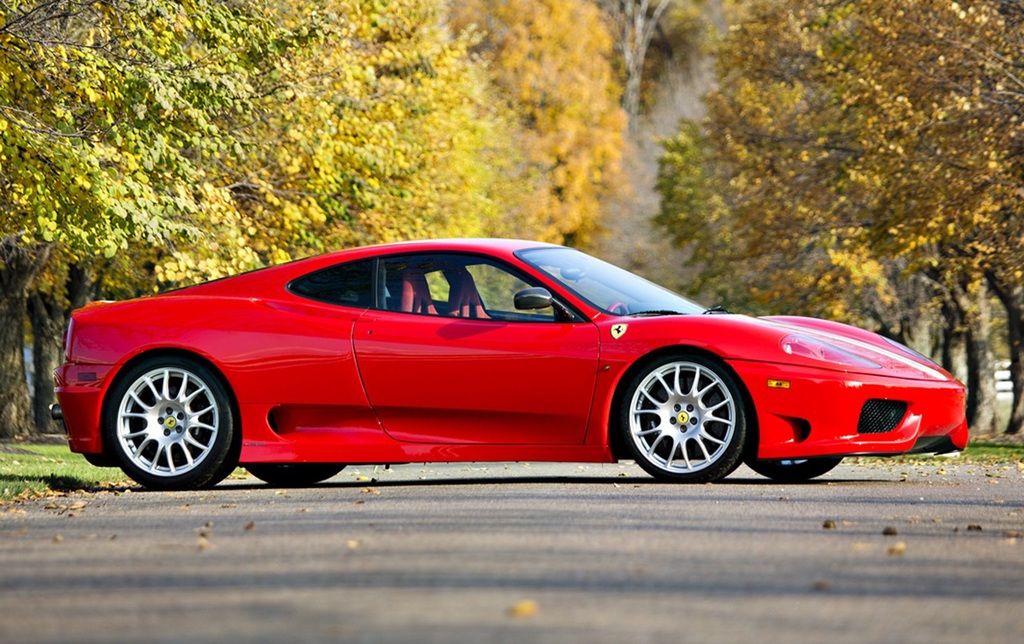
2003→2004 Ferrari 360 Challenge Stradale

2003→2004 Ferrari 360 Challenge Stradale

Ferrari Challenge Stradale

Year(s): 2003 / Engine: 3.6L V8 / Power: 420 bhp @ 8,500 rpm / Torque: 275 lb/ft @ 4,750 rpm / Units Built: ~1,300 / Verdict: Potentially the best sounding car ever.

Ferrari skipped making a special edition F355 (they did build a F355 Challenge race car but there was no road car version). We waited until the 360 to get the true successor to the 348 GTC. Compared with a regular 360 Modena, weight was reduced significantly and the engine was tweaked.

The Challenge Stradale was much more than a redressed 360 with extra power. Its bare-bones approach and subtle styling changes only hint at the thoroughbred under the skin: this is a road-legal car that is entirely race-ready and at home on track. It offered enthusiasts genuine race car performance and features in an accessible, street-legal package that is built on top of a standard production model donor car.

The main goal for the 360 Challenge Stradale was to take 3 seconds off the 360’s Fiorano lap record. He and his team succeeded.

Starting with the 360 Modena, Ferrari engineers removed all equipment deemed superfluous in order to shed weight, lowered and stiffened the suspension, and fitted massive alloy wheels. Inside, the two passengers were treated to bucket seats with racing harnesses and Plexiglas windows. The huge performance gains can largely be attributed to increase in power and a reduction in weight. Ferrari put the 360 on a titanium and carbon fiber diet which shed 243 lbs (110 kgs) off the car.

Having an all-aluminum monocoque and a flat-plane V8 whipping out 395 bhp, the 360 Modena had raised Ferrari’s standards from the preceding F355 that came before it. The Stradale took things further got the 3.6-liter V8 up to 425-hp. Fine tuning is how the engineers at Ferrari extracted more power. Higher-compression combustion chambers, polished ports, and a larger intake tract all contributed. Attached was a dual-flow exhaust which, by means of a valve bypassed most of the deadening for a blaring symphony of noise. This wail is distinctive of the Stradale and is enough of a reason for it to make our list.

Around 1200-1300 are believed to have been made so it is still relatively rare but not impossible to find.

See: All Challenge Stradale Articles

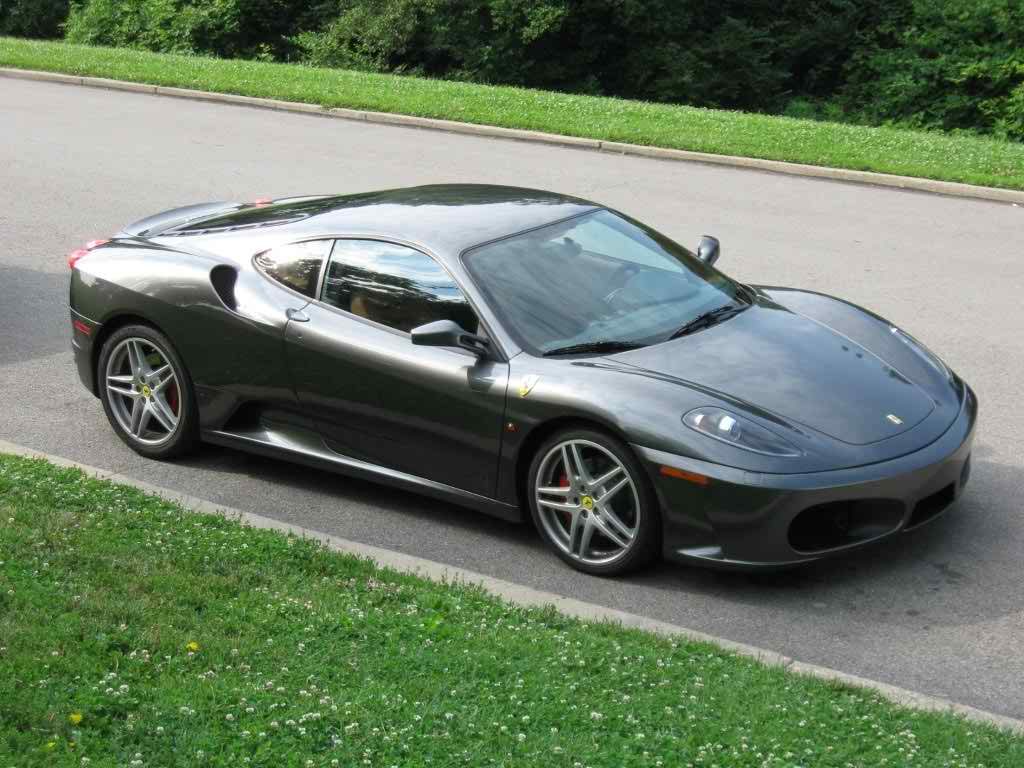
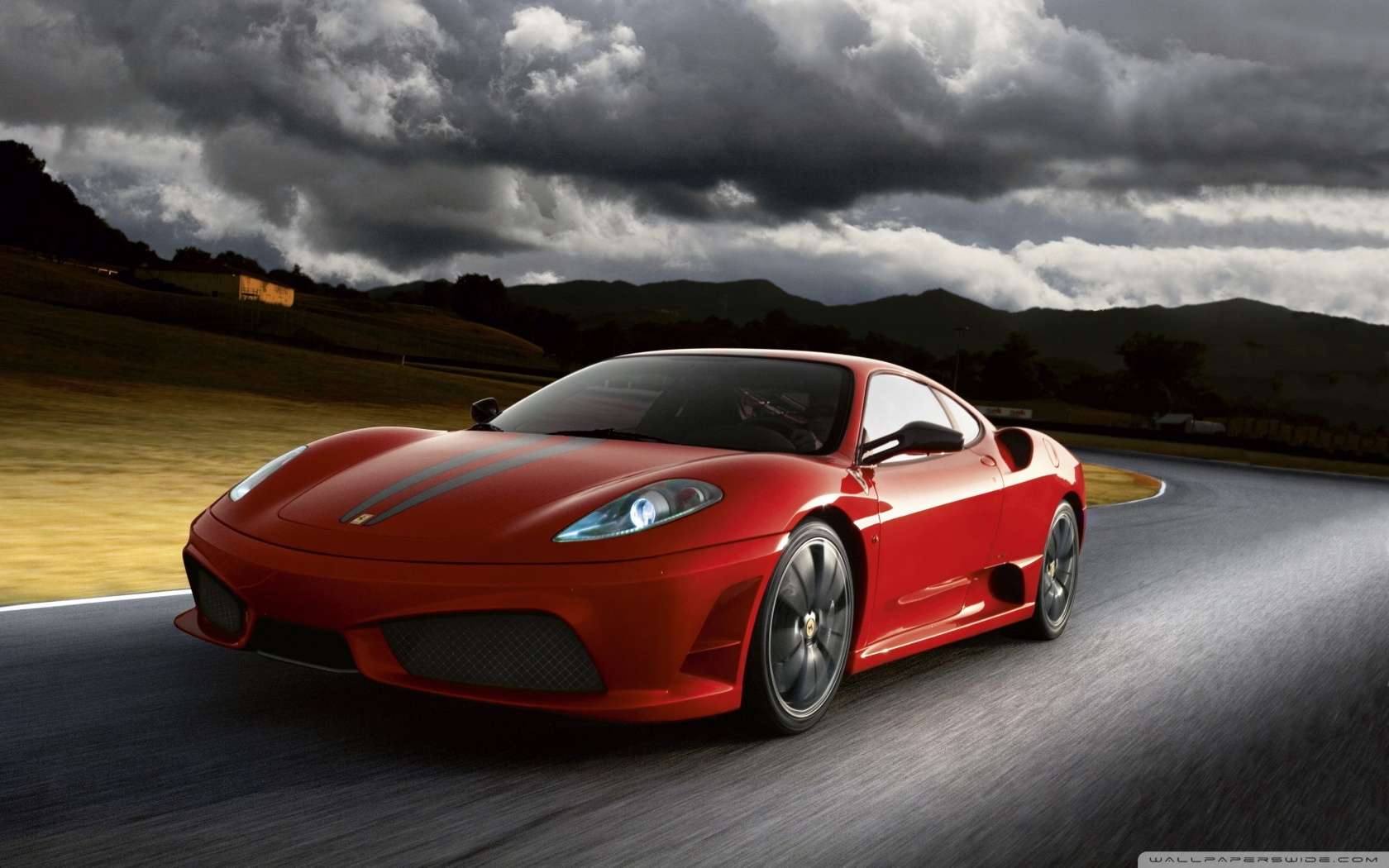
2007 Ferrari F430 Scuderia

2007 Ferrari F430 Scuderia

Ferrari F430 Scuderia

Year(s): 2007 / Engine: 4.3L V8 / Power: 503 bhp @ 8,500 rpm / Torque: 347 lb/ft @ 5,250 rpm / Power to Weight: 378 bhp/ton / 0-60 mph: 3.6 seconds / Top Speed: 198 mph / Units Built: 1,800 / Verdict: The sweet spot.

The extreme version of that already awesome F430 and one of our favorite cars ever was the F430 Scuderia. The 430 Scuderia was a truly high-performance 2-seater berlinetta that demonstrated how Ferrari’s Formula 1 know-how is carried across to its production cars. Fitted with a naturally-aspirated 4308cc V8’s and 510 hp at 8500 rpm it is one of the best engines ever.

The F430 Scuderia built on the now familiar special series recipe. Light, largely composite bodywork, aero tuned for extra downforce in corners, a stripped out interior and fettled engine and electronics. The F430’s 220 pound weight loss program came from removing carpeting, glove box, and radio. Trim was carbon fiber, floor mats were out in favor of aluminum plating.

Where the 458 took performance to another level and things have continue to escalate from then on, the F430 Scuderia feels like the real sweet spot in terms of cars that can actually be enjoyed and really tested on the road. It was the last Ferrari to use the “F1-style” paddle-shift transmission before they switched to dual-clutch so it has a level of engagement that later models are missing. The F1 Superfast 2 gearbox gave rapid gearchanges and coupled with the F1-Trac traction control and E-Diff electronic differential it deployed power to maximum effect. While peak power was only 20bhp up on the regular F430, the ferocious way it was delivered when all of these things combined was something else and it transformed the way to Scud felt.

At Fiorano it lapped faster than the Enzo. It is thought as many as 1,800 units were made.

See: All Ferrari F430 Scuderia Articles / The 430 Scuderia In-Depth

Ferrari F430 Spider 16M

Year(s): 2009 / Engine: 4.3L V8 / Power: 503 bhp @ 8,500 rpm / Torque: 347 lb/ft @ 5,250 rpm / Power to Weight: 378 bhp/ton / 0-60 mph: 3.6 seconds / Top Speed: 198 mph / Units Built: 499 / Verdict: A genuine hardcore soft-top Ferrari

This was the last Ferrari F430. The limited edition (only 499 we built) Scuderia Spider 16M was built to celebrate Ferrari’s 16 Formula One constructors’ championships and it is based on the Ferrari Scuderia coupe. The basics are the same as the Scuderia with the 16M getting the higher compression 4.3 liter V8 that is good for an extra 20bhp and 4 lb/ft torque over the base Spider. Bodykit, aero, suspension, interior and electronics are all fettled like the Scuderia coupe too. The 16M weighs in around 3300 pounds, about 200 fewer pounds than an F430 Spider, or just over 200 more pounds than a 430 Scuderia.

Did the changes make a difference? You bet. Ferrari clocked the Scuderia Spider 16M around Fiorano test circuit and said it was faster than any open-top road car it has ever built. It isn’t just track performance though, because the best part about the 16M is the way it combines hardcore performance with daily driver usability. This is an open top car remember so it is a good thing that the suspension is adjustable and in its softest settings is actually quite good at massaging away the hardcore nature of the rest of the package.

Perhaps the best part of the 16M is that it intensifies the Scuderia experience. With the top down the noise is just absurdly good. That flat plank V8 Ferrari engine, all 503hp revving to 8,500 rpm is the best thing you have ever heard, the closest thing to an F1 engine you will ever experience. Today’s turbocharged Ferraris don’t come close to the same intoxicating excitement. \It is an astonishing car.

See: All Ferrari F430 Scuderia 16M Articles 

Ferrari 458 Speciale

Year(s): 2013 / Engine: 4.5L V8 / Power: 597 bhp @ 9,000 rpm / Torque: 398 lb/ft @ 6,000 rpm / Power to Weight: 4350 bhp/ton / 0-60 mph: 3.0 seconds / Top Speed: 202 mph / Units Built: ~2,000 / Verdict: The end of an era. Perfection

Let’s start by saying that this is absolutely our favorite car ever. Period, full stop, the end. It took the already epic “entry level” 458 and with the Speciale, Ferrari amped everything up to 11. It is arguably the best naturally aspirated sports car in history.

The 458 Speciale was the last naturally-aspirated V8 Ferrari and the engine was at its peak in terms of evolution. Mid-engined 4.5-litre V8 with flat-plane-crank, sky high 9,000 RPM redline, insane 597 bhp and 398 lb-ft of torque, making this the most powerful naturally aspirated V8 ever built at Maranell. The Speciale was one special Ferrari.

Performance was astonishing for a naturally aspirated car. The 0-62 mph sprint was over in 3.4 seconds and top speed was over 200 mph. More importantly, the Speciale does everything well. It took the already amazing 458 and somehow made it better, faster and more fun to drive. Gearshifts were faster, the active aero tuned to maximize downforce in corners and minimize drag on the straights, and the brakes were adapted from the LaFerrari. Steering response times and lateral g were the best ever recorded for a Ferrari production car. New for the Ferrari Speciale was the Side Slip Angle Control (SSC), which used sensors and the E-Diff to help the committed driver to hold lurid tail-slides.

No official production numbers, but it is thought to be about 2,000 units. The best V8 Ferrari ever? You bet.

See: All Ferrari 458 Speciale Articles

2014 Ferrari 458 Speciale A

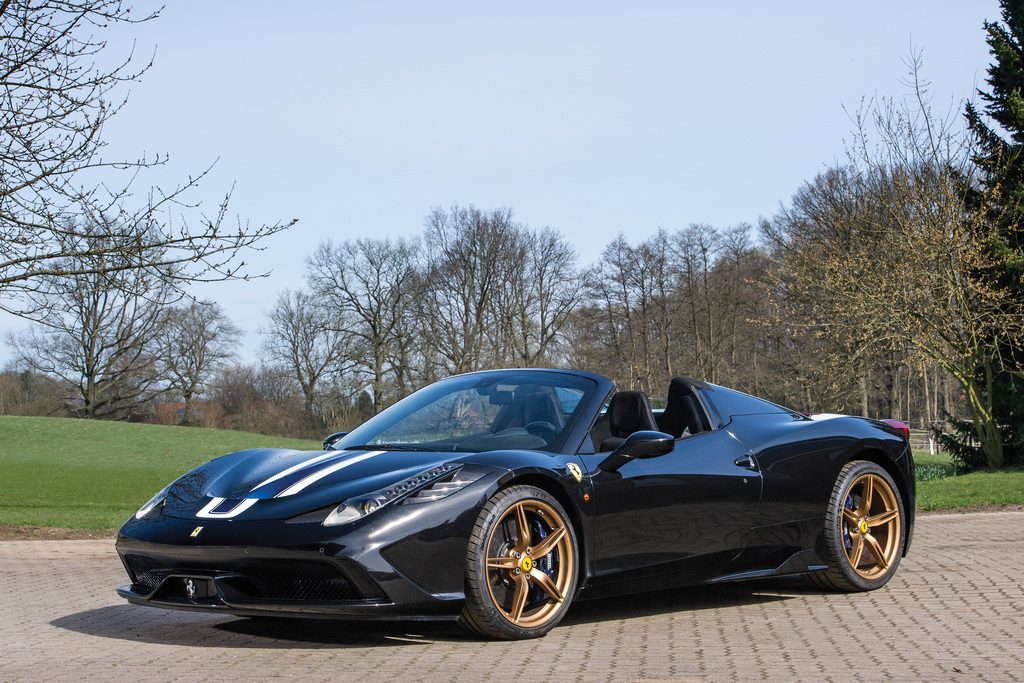
2014 Ferrari 458 Speciale A

Ferrari 458 Speciale A

Year(s): 2013 / Engine: 4.5L V8 / Power: 597 bhp @ 9,000 rpm / Torque: 398 lb/ft @ 6,000 rpm / Power to Weight: 4350 bhp/ton / 0-60 mph: 3.0 seconds / Top Speed: 202 mph / Units Built: 499 / Verdict: Most powerful naturally-aspirated V8 open top ever

The Speciale A followed the 16M’s exclusivity formula with just 499 units made. Unlike the 16M which had a fabric roof, Ferrari decided the Speciale A should have the same folding hard-top as the regular 458 Spider. That adds weight and had many pundits concerned that the Speciale A was more of a marketing exercise than the awesome 16M. At 1445kg the numbers were worrying for hard core fans. To offset its weight, Ferrari did the right thing and added the same powerplant as the Speciale to its open top sibling. As a result, the 458 Speciale A sports the most powerful naturally-aspirated road-going V8 engine ever built by Ferrari with a massive 597 hp at 9000 rpm.

Performance wise, the Speciale A was an absolute beast, sprinting to 62 mph in just 3.0 seconds and logging a Fiorano test track lap time of 1:23.5. It combined extreme performance with the intimacy of open-top driving. Like the Scuderia 16M the open top makes the engine and even bigger part of the overall experience.  Like the Speciale coupe the open top has a raft of aerodynamics, chassis and electronic improvements all designed to make it hardcore and livable at the same time. Probably the best open top performance car we have ever seen.

See: All Ferrari 458 Speciale Articles

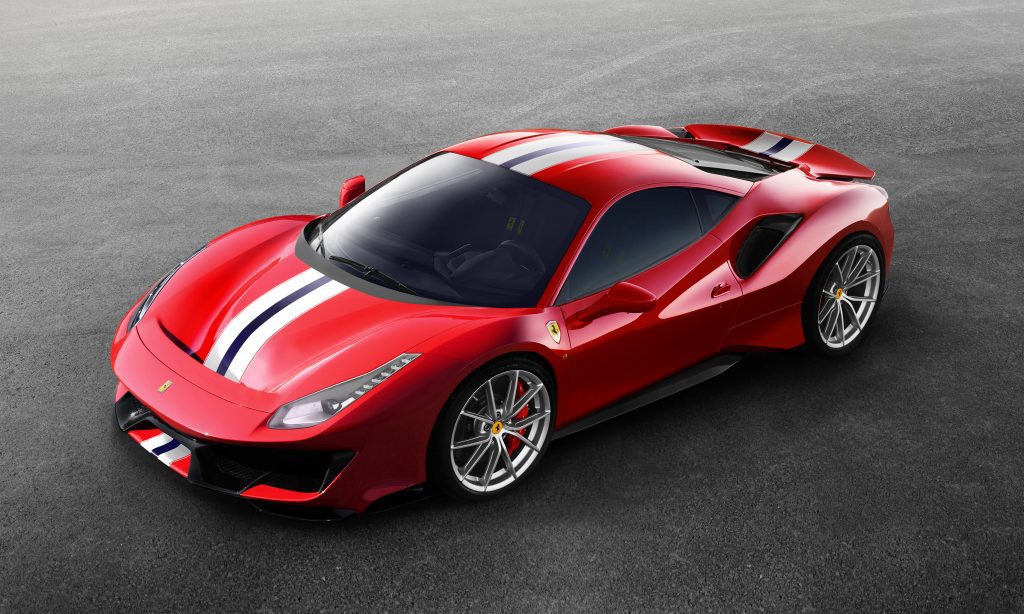
Ferrari 488 Pista

Year(s): 2018 / Engine: 3.9 liter Twin-Turbo V-8 / Power: 711 hp @ 8000 rpm / Torque: 568 lb/ft @ 3000 rpm 0-60 mph: 5.3 seconds / Top Speed: 211 mph / Verdict: Turbocharging can be awesome too

Ferrari first unveiled its new track-focused 488 variant at the Geneva Motor Show in March 2018. Given the moniker “Pista” – which translated from Italian, means “track” – the latest iteration of Ferrari’s mid-engined V8 is faster than ever before and pays homage to the manufacturer’s remarkable motorsports heritage. The new 710-horsepower 488 Pista is the current successor to Ferrari’s famed v8-engined special series, which boasts the 360 Challenge Stradale, 430 Scuderia and 458 Speciale in its lineage. While Ferrari is now taking orders for the Pista, an official release date and U.S. pricing have yet to be confirmed.

While there have not yet been any test drives of a 488 Pista production-spec model, a select group of very lucky automotive journalists were able to take a test mule out for some hot laps at Ferrari’s private racetrack – Fiorano Circuit near Maranello, Italy. With an official test driver, the car is reported to complete a lap of Fiorano in 1:21.5; a very distinguishable 1.5 seconds quicker than a 488 GTB.

UK news site, The Week, provided a compilation of what some of the critics had to say. Overall, reports from the likes of Auto Express and Top Gear note the Pista’s bang-for-buck as a“hypercar-beating machine” and provide plenty of praise for its special handling characteristics, super-accurate steering and “brilliantly balanced chassis”. It is a car that is“just as at home on the road as it is on the circuit”, they add.

Autocar reports that Ferrari 488 Pista pricing starts at £252,695, which means that we can expect U.S. pricing to begin north of the USD $340,000 mark. Don’t worry though because they’re all sold out so even if you did want one you would out of luck.

See: All Ferrari 488 Pista Articles

Ferrari 488 Pista

Ferrari 488 Pista

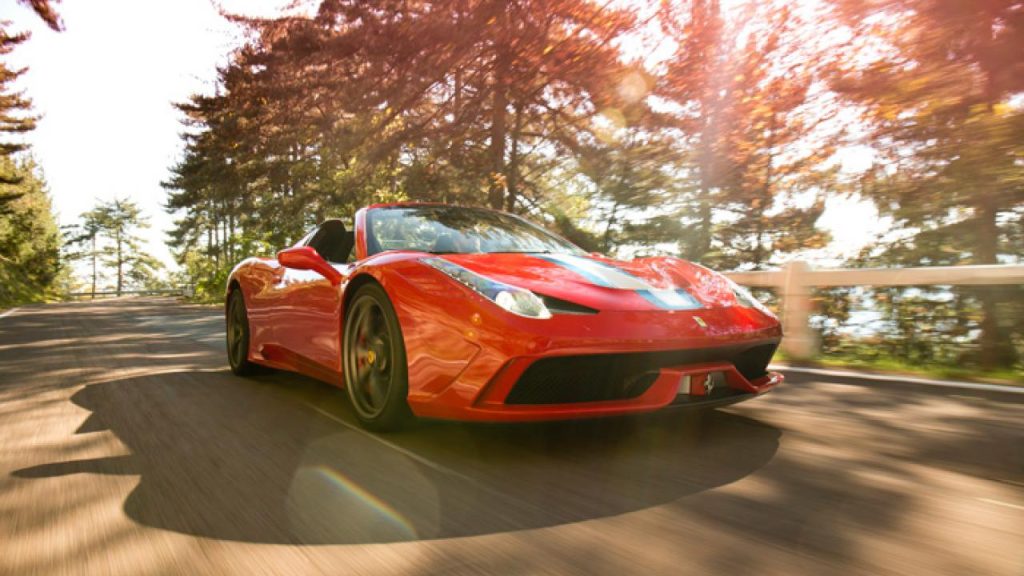
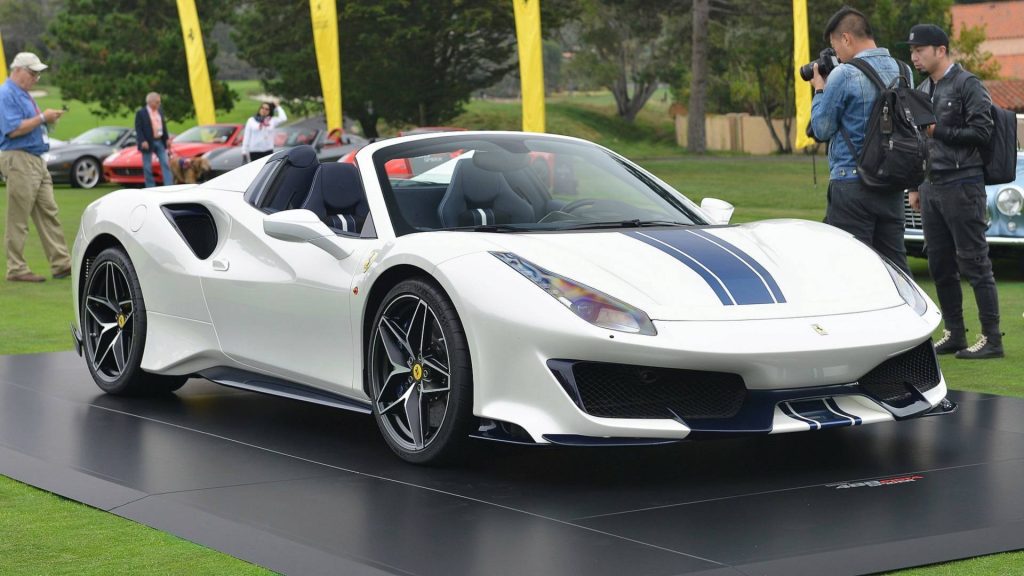
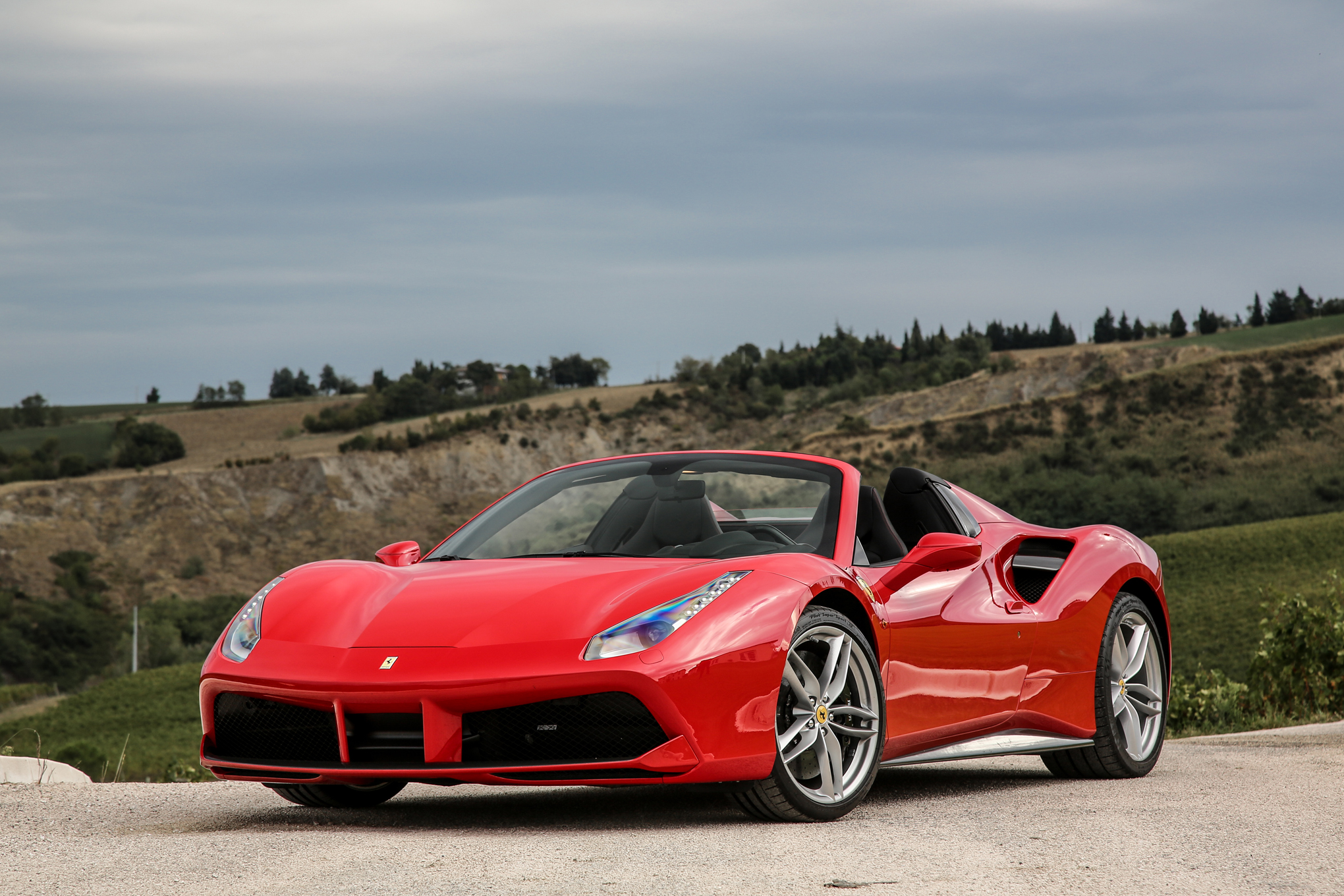
Ferrari 488 Pista Spider

Year(s): 2019 / Engine: 3.9 liter Twin-Turbo V-8 / Power: 711 hp @ 8000 rpm / Torque: 568 lb/ft @ 3000 rpm 0-60 mph: 5.3 seconds / Top Speed: 211 mph / Verdict: TBD

Earlier this year, we reviewed the 2019 Ferrari 488 Pista – Ferrari’s most powerful V8 ever. The 488 Pista is the marque’s latest Special Series model and – following in the footsteps of its predecessors – epitomizes the pinnacle of Ferrari road cars. Ferrari decided to surprise the world with a Spider version at this year’s Pebble Beach Concours D’elegance event in California, taking place in late August. The Spider is a convertible with a removal hardtop, though some would argue it functions more closely to targa top vehicle. Ferrari also revealed that the new Pista Spider will become the 50th convertible model in the company’s history.

The Ferrari 488 Pista Spider is powered by the same engine used in the coupe – a twin-turbocharged 3.9L V8 which produces a magnificent 711-horsepower and 568 lb-ft of torque.

The Spider weighs 200 pounds more than the coupe, but despite the extra hardware needed to accommodate the removable hardtop, it is remarkably still able to achieve 0-100 km/h in 2.85 seconds – the exact same as the fixed-roof variant. Thanks to proper aerodynamics, the Spider also manages to equal the coupe’s top speed of 340 km/h, so long as the hardtop remains on.

Elsewhere on the car, the Spider differentiates itself from the coupe by way of a larger front splitter, a new deck lid and side skirts, and a redesigned rear diffuser. The Spider is also fitted with special livery – a central stripe that runs the length of the car which Ferrari proclaims, “recalls the movement of the airflow and exalts the lines of the car”. Exclusive options such as one-piece carbon fibre wheels (in lieu of the standard also-unique-diamond-finish alloy wheels) will also be made available on the convertible.

While the Ferrari 488 Pista Spider is still considered a concept with no release date or pricing information yet, we do expect that the car should enter production in the near future. Ferrari has openly acknowledged the popularity of convertibles – particularly in the U.S. – and will be incentivized to to appeal to their demand.

See: All Ferrari 488 Pista Articles

15 Affordable & Reasonably Priced Ferraris for First Time Collectors

Second Hand Ferraris: Our Favorite Modern and Classic Ferraris For Under $120,000.

Ask nearly any car enthusiast which dream cars they want and odds are there is at least one Ferrari on their wish list. The question is can you buy a used or vintage Ferrari on a budget?

Many people think you need millions of dollars in the bank to get into a Ferrari. We recently published our 100 most expensive Ferraris and best limited edition Ferrari list and it took about five minutes for readers to complain that the lists were useless because there are only a few hundred people in the world that can actually afford these cars. Fair point. Luckily, we love creating best of Ferrari lists so we decided to do some research and give you the list of the best affordable Ferraris you can buy. The good news is that we found plenty of Ferraris that still sell for prices within reach of most car guys.

Classic or Modern Ferrari? Which is Best?

We are car guys and we know there are nuances that matter when it comes to these topics. Nobody we know says “I have $50k to spend on a car and my only requirement is that it is a Ferrari”. Everybody is different. For example, what determines an affordable Ferrari to one person is different than another. For one person a bargain Ferrari is one that has depreciated a lot, is likely to maintain its current value and is under $150k. Another person wants a heritage Ferrari that is slower than a Honda Civic but is perfect for a first time Ferrari collector. To another person it is quite simply finding the cheapest car, the true entry point into Ferrari ownership.

The good news is that today you don’t need six figures to buy a good Ferrari. The bad news is that for six figures you can also buy a turd of a Ferrari. For example, you can probably get your hands on a classic Ferrari for well less than $100k, but expect absurdly high maintenance costs, skyhigh parts prices and labor costs to scare the life out of you. With older Ferrari prices climbing quickly that may be the Ferrari bargain you want, but remember the market is pretty balanced so there are no free rides.

If you want a more modern Ferrari that is fast, handles well and has low maintenance costs then expect to pay up. Sure there are some affordable Ferraris around like that, but once again buyer beware because if it seems too good to be true, then it usually is.

It is not all doom and gloom of course. Whether you’re looking for a modern car that is easy to maintain or a classic Ferrari that’s still affordable there are a lot of great options within reach of most first time Ferrari buyers. In this article, we list try to finds them.

We decided the split the list by modern Ferrari and classic Ferrari models. The main reason being that those two buyers are radically different. So how did we decide what makes a classic Ferrari and a modern Ferrari. We looked at Wikipedia of course:

“A classic car is an older automobile; the exact definition varies around the world. The common theme is of an older car with enough historical interest to be collectable and worth preserving or restoring rather than scrapping. Cars 20 years and older typically fall into the classic class”

That was good enough for us. So here are our favorite budget Ferraris:

Modern Ferraris Under $120,000

How do we define a modern Ferrari? Great question. We asked around and the consensus was that a Ferrari made in the last twenty years would be appropriate to call a modern Ferrari. People also said they think of a modern Ferrari as one that is easy to maintain and that is quick by modern standards.

What we found is that you can find some awesome five figure Ferraris that are modern and reliable. The tasty models in this section of our list are probably the most interesting to us because they suit buyers who grew up with Ferrari posters on their walls and are now coming to an age where they have the means to buy their first Ferrari. Sure some of those guys are buying new 488s, but most are looking to spend less than $120,000 on a car.

So let’s get this straight. This buyer wants a Ferrari and they want to spend less than $120,000. They want it to look modern, not break down or cost a fortune to service and they want it to be fast and sound like a true Ferrari.

Sounds easy. Here we go:

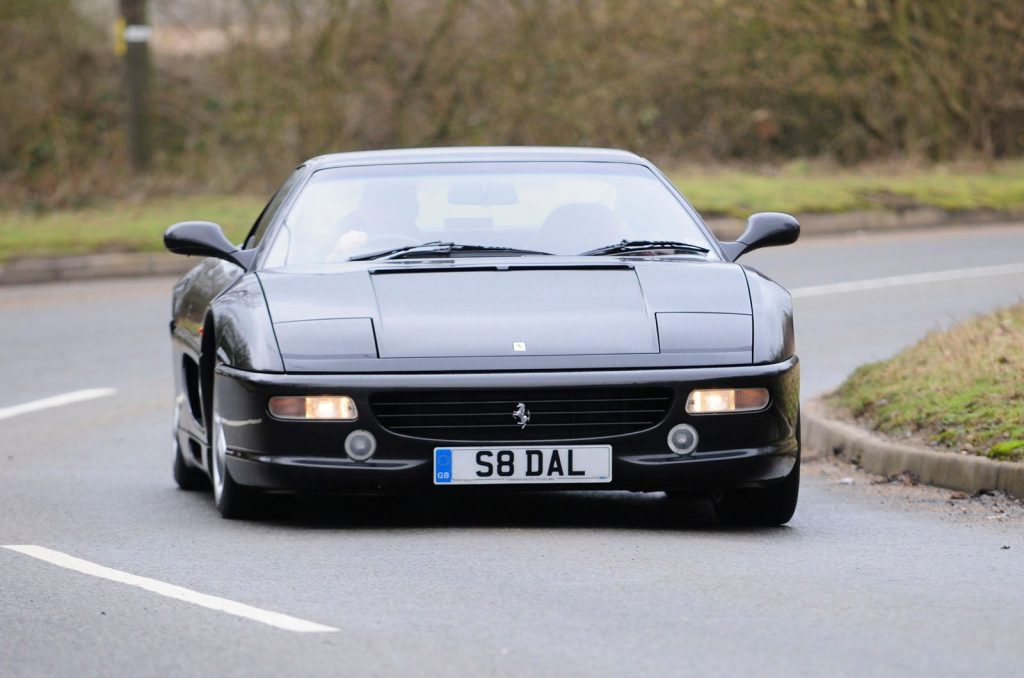
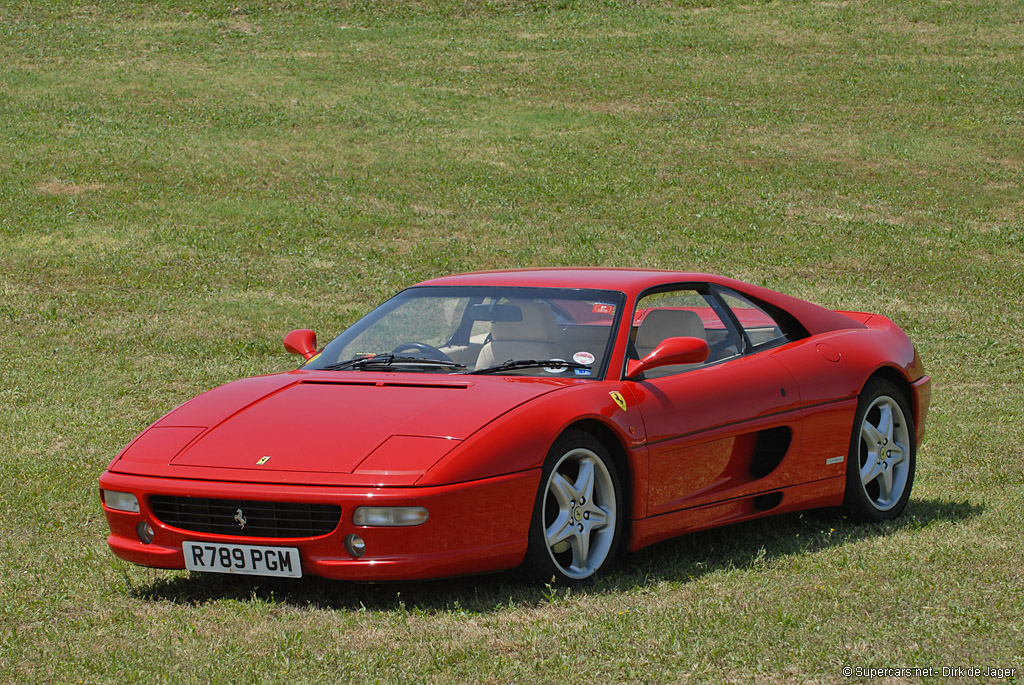
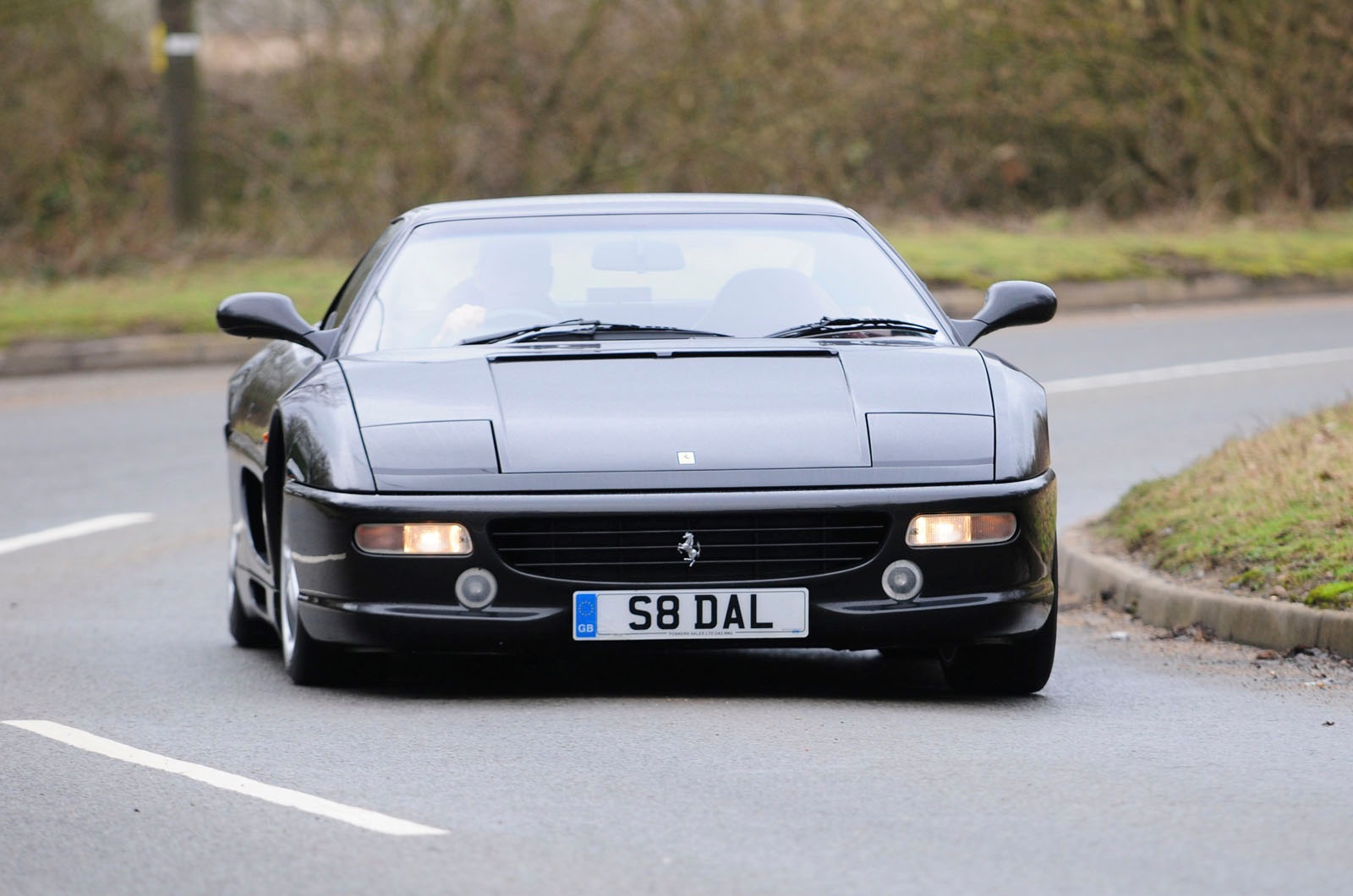
Best Second Hand Ferraris To Buy - Ferrari F355

Best Second Hand Ferraris To Buy - Ferrari F355

1. Ferrari F355

Model Years: 1995-1998 / Units Produced: 11,273 / Engine: 3.5L V8 / Horsepower: 375 hp / Price Guide: $70,000 – $90,000 USD

If I had $70k to spend on a Ferrari our choice would be the Ferrari F355. First it is easily the best looking modern-day Ferrari, much nicer than the butch 1980s Ferraris we had to deal with. Second, there are a lot of F355s out there with over 11,000 units made from 1995 till 1998 so picking one up for reasonable money and in good condition is totally doable. Third, while closely related to those late-model 348s, the F355 was a massive step forward technically, with way more performance and refinement (and way better sound too). This is a true modern Ferrari and it is reasonably priced and a relative bargain when you factor in maintenance costs compared to the 348s before it. Perhaps the coolest thing about the F355 is that you can actually get one in manual. Yes, gated shift, awesome, back to basics manual. Hallelujah. Sign me up.

The F355 was introduced in 1994 for the 1995 model year. Body style wise, there were Berlinetta (coupe), GTS (targa roof) and Spider (convertible) models available. Manual gearboxes we standard until 1997 with the launch of the F1 gearbox (a single-clutch automated transmission). Our pick would be a six-speed manual in GTS (targa roof) spec and optional Fiorano handling pack although other buyers seem to agree so they tend to go for a little more.

The F355 is a special car to drive. The flat-plane-crank V8 doesn’t actually sound that good when you’re cruising, but floor the throttle and it will make the hairs on the back of your neck stand up. The 3.5-liter V-8 (375 hp) has five valves per cylinder, revs beyond 8000 rpm and propelled the gets you to 60 mph in under five seconds. It’s that screaming, rev to the skies Ferrari V8 that does it for me, it is just awesome and once you get to its sweet spot that V8 sound develops a hard edge and screams in true V8 Ferrari tradition. The F355 drives really well and while a new hot hatch will destroy it performance wise, it is a genuinely balanced and sporty car in the twisty stuff and with a manual gearbox and that exploitable and enjoyable V8 right behind you there are fewer better feelings in the world.

More: Ferrari 355 In-Depth

2000 Ferrari 360 Modena Gallery

2000 Ferrari 360 Modena Gallery

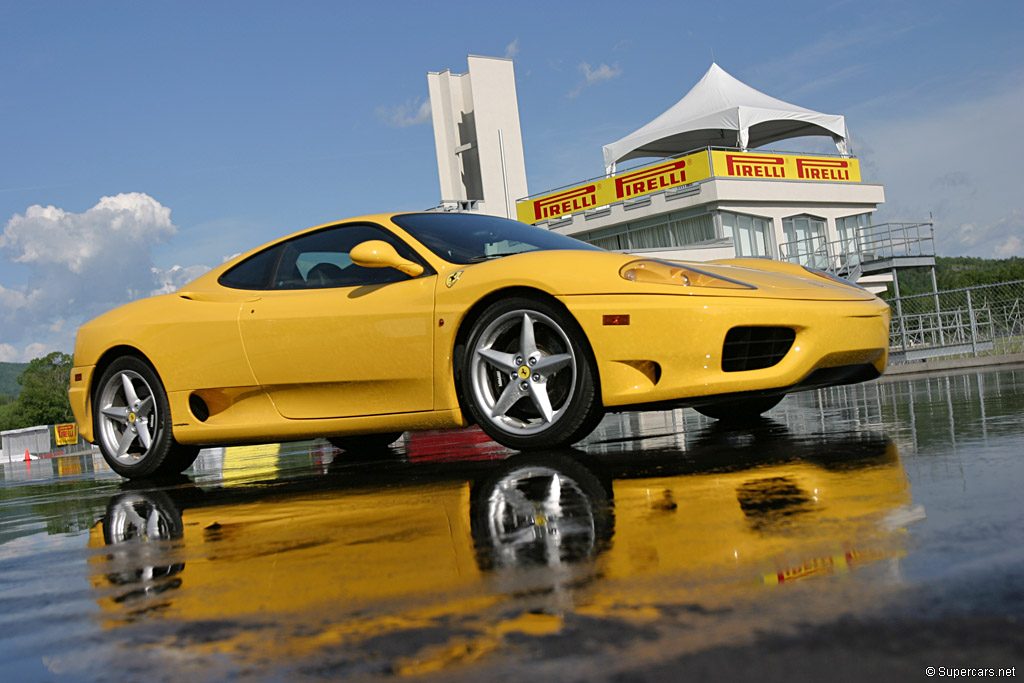
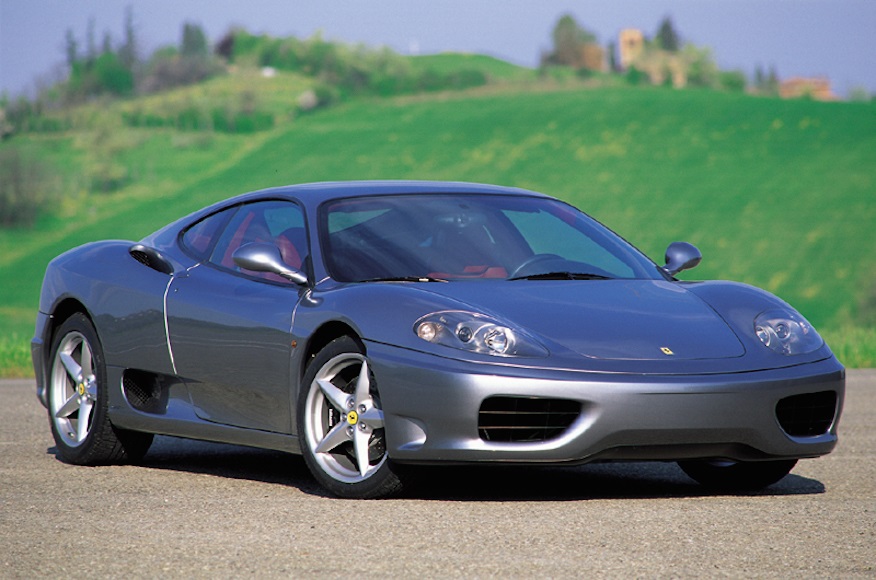
2. Ferrari 360 Modena

Model Years: 2000-2004 / Units Produced: 8,500 (Modena), 7,500 (Spider), 1,288 (Challenge Stradale) / Engine: 3.6L V8 / Horsepower: 400 hp / Price Guide: $70,000 – $90,000 USD

The 360 Modena was a replacement for the F355. I was not a big fan of the 360 Modena design when it launched in 1999 (still not a fan actually), but boy did this Ferrari change the game technically. It combined strong performance, everyday refinement and all-around usability into a package that was truly a supercar you could drive every day. For lucky buyers looking for a modern Ferrari at reasonable money, the great news is that the 360 Modena is actually quite affordable and can be yours for between $70,000 and $90,000 for a nice example. Ferrari produced 17,000 units so there are a lot of good examples to be found.

When the Ferrari 360 Modena arrived it was the first Ferrari with an all-aluminum chassis which made it 130 pounds lighter than the F355 and gave it 65 percent more torsional rigidity. While the design didn’t do anything for me it was advanced in that it had been the first production Ferrari that had thousands of hours of wind tunnel testing to optimize aerodynamics. The result was 400 pounds of downforce at 180 mph (with no wing).

How about the engine? The 3.6-liter V8 engine was another masterpiece. With 400-hp and six-speed transmission, it hit 0-60 mph in 4.4 seconds and topped out at 186 mph. It was also three seconds a lap faster around the Fiorano test track than the F355. You could opt for either an F1 paddle shift or six-speed manual.

The 360 Modena was more comfortable and much roomier inside than the F355. It was also reliable and much cheaper to service. Maintenance wise the scary thought of days of labor taking engine out and putting it back just to change a cambelt (an issue that plagued earlier mid-engined Ferraris) was a thing of the past. The addition of more modern technology and a focus on reliability means that maintenance costs aren’t out of this world (for a Ferrari). Believe it or not this is an engine that does better the more you drive it, so don’t be scared off by higher mileage 360s assuming of course they have up to date books.

The Modena and Spider offer very similar driving experiences – comfortable, fast and great handling. The steering is very quick and accurate. Compared to the F355 you can feel the more rigid body and the stronger motor. The 360 is easier to drive, more composed and more fun than the F355 and the additional power makes it seriously fast even by today’s standards. It feels faster in person than the numbers suggest and has an exhaust note that will go down in history books as one of the best sounding cars ever. You could drive the F360 everyday, it is comfortable and relatively reliable while still being fun.

Our pick is a manual Spider (actually our pick Challenge Stradale but that’s not a bargain).

More:  Ferrari 360 Modena In-Depth

2005 Ferrari F430 Gallery

2005 Ferrari F430 Gallery

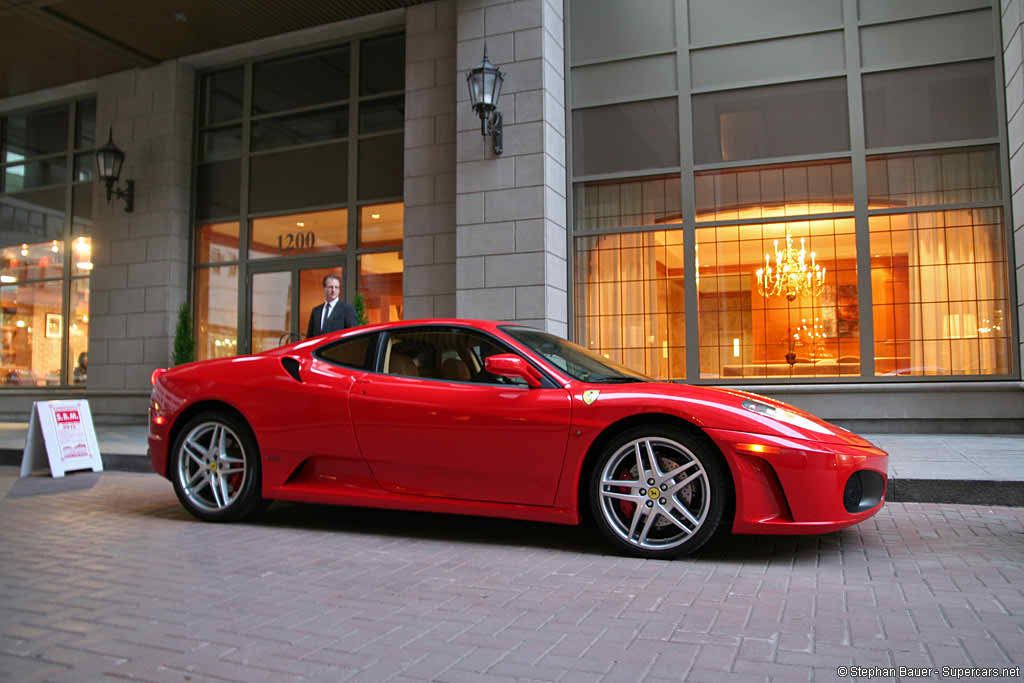
3. Ferrari F430

Model Years: 2004–2009 / Engine: 4.3L V8 / Horsepower: 483 hp / Price Guide: $ $100,000 – $125,000 USD

While the Scuderia the one we really want, it is still not “bargain” money so we’re going to talk about the F430 Spider and Coupe F430 versions are starting at just under $90,000 (that’s 991 Porsche money). We would recommend that you spend a little extra and get one that has excellent books and history.

Make no mistake, even today the F430 is epic. Top Gear called it the best car in the world when they first reviewed it and I drove one recently and would call it the best balance between daily driveability, reasonable cost and absurd but usable performance on the road. A 458 is too fast for the road and a 360 Modena is slower than a fast hatch. An F430 is perfect and it still feels super special and exotic even today.

The F430 may have carried over some chassis and body elements from the 360 but it was clear from the beginning that it was a significantly improved sports car. Technological updates included such things as a new electronic e-diff and an all new 4.3 liter naturally aspirated V8 that makes 483 horsepower at an awesome 8,500 rpm redline. It weighs 3,200 pounds and reaches 0-60 in 3.8 seconds. The sound is the best in the business, especially when revving to the stratosphere.

When it was launched all the journalists raved about it. Handling was supposedly fantastic. Straight line performance was out of this world. Engagement and feeling were the best ever for a Ferrari. People talked about how the electronics enhanced the driving experience. All these years later the above are all still true with the addition of two important facts. Behind the wheel of the F430 is still a blast and it ia teaming with feel, is flat in corners and is enjoyable on the street, mountain pass or on track. It is really comfortable and surprisingly easy to maneuver in daily traffic too. Add reasonable service and running costs and a price under $100,000, this may be the bargain of the bunch.

See: Ferrari F430 In-Depth

2009→2012 Ferrari California

2009→2012 Ferrari California

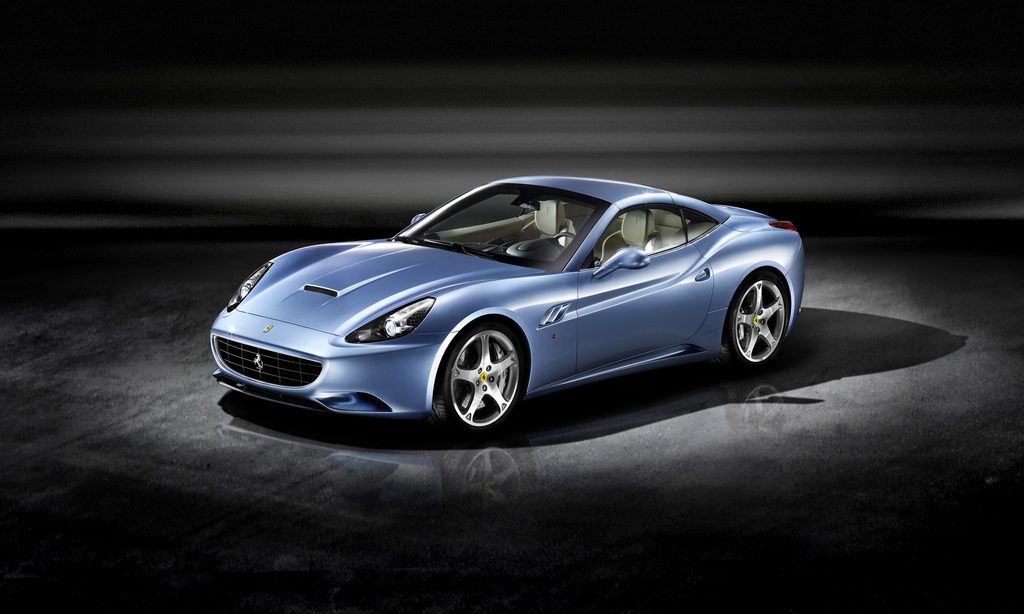
4. Ferrari California

Model Years: 2009–2014 / Units Produced:~13,500 / Engine: 4.3L V8 / Horsepower: 453 hp / Price Guide: $ $100,000 – $135,000 USD

According to Wikipedia, the Ferrari California was: The first front engined Ferrari with a V8, the first to feature a 7-speed dual-clutch transmission, the first hard top convertible with a folding metal roof, the first with multi-link rear suspension, the first with direct petrol injection. That is a lot of firsts for the first generation California (from 2015–2018 the California was updated with new styling a new turbo engine and is too expensive to be on our bargain list). A lot of purists hated the California because it wasn’t hardcore enough.

Yes, this is a real Ferrari and yes it is a relative bargain these days. For under $100k gets you a Ferrari V8 you can drive every day. We can assure you having driven the California it is a great Ferrari and is legitimate fun and very fast. Sure, it is not a canyon carver like a 458 but it is the perfect daily driver and is easily the most practical Ferrari you can buy.

It’s a softer, more approachable Ferrari which is why which 70 percent of California buyers so were new to the brand. If you want a Ferrari that is quick with a blend of everyday usability and outright enjoyment, then this might be the Ferrari V8 bargain for you.

While the California was made all the way through 2017 we suggest you focus on the earlier 2008 to 2012 models if you’re looking for a true bargain.

See: Ferrari California In-Depth

1997 Ferrari 550 Maranello Gallery

1997 Ferrari 550 Maranello Gallery

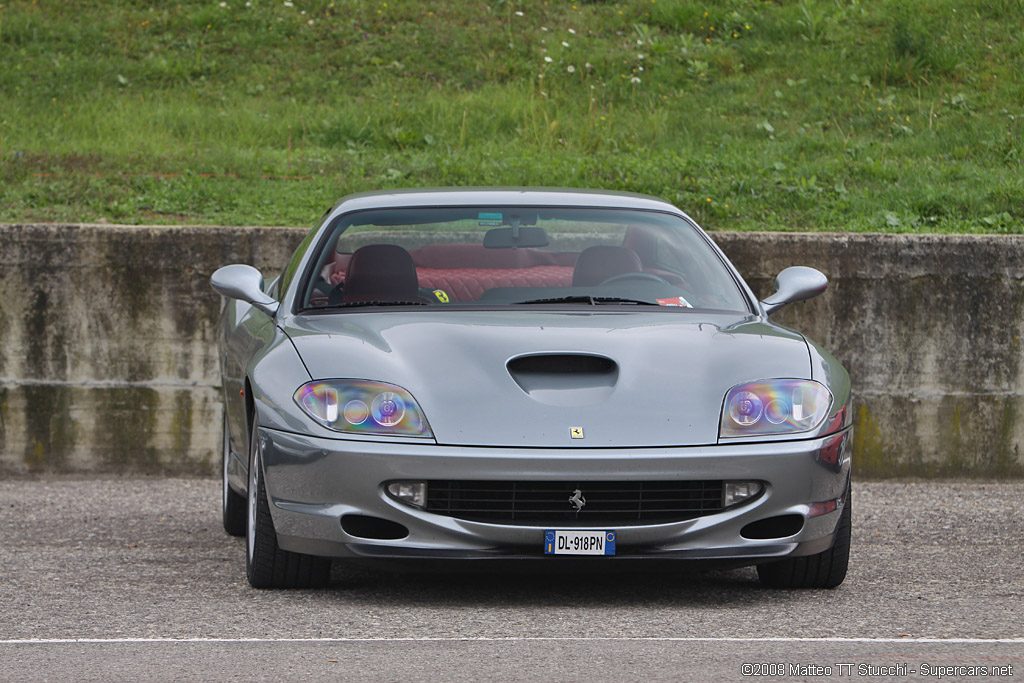
5. Ferrari 550 Maranello

Model Years: 1996–2001 / Units Produced: 3,083 / Engine: 5.5 L V12 / Horsepower: 478 hp / Price Guide: $100,000 – $120,000 USD

The Ferrari 550 Maranello launched as a 1996 model and was a replacement to the aging Testarossa/512TR models. Unlike the Testarossa the 550 Maranello returned to a front-engine layout like the classic Ferrari GTs (think Daytona and 275) of yesteryear. The end result was the a massive upgrade over its predecessor, with better handling, more comfort, practicality and better looking proportions. Ferrari 550 Maranello had a 5.5 liter V12 with 478 horsepower and rear wheel drive. The design has the perfect front engines GT proportions and looks modern even today, aging very well.

The manual gearbox and well weighted steering mean that the handling balance and driveability of the 550 stand out on the road. It is perfectly powered too (especially compared to the crazy F12 or 812 Superfast) so you are total ease behind the wheel, comfortable giving it the beans and really pushing it without the fear of something bad happening. It is way more engaging and fun than the rockets being made today (call us old school). The fantastic powertrain combined with comfortable seats and a decent amount of space to make an absolutely brilliant grand tourer.

While you can buy a 550 for under US$120,000 we are seeing that values have been steadily increasing over the last twelve months or so. Ferrari made a relatively small number of 550s, with only 3,083 units sold between 1996 and 2001. As always look for a good service history and updated books when shopping.

See: Ferrari 550 In-Depth

6. Ferrari 575M Maranello

Model Years: 2002–2006 / Units Produced: 2,056 / Engine: 5.7 L V12 / Horsepower: 508 hp / Price Guide: $100,000 – $120,000 USD

A funny thing happened when we researched this list. We had both the 550 Maranello and the 575 on our list and then we realized that you can buy the 575M for less than a 550 (on average). Not sure why because there were only 2,056 575s made compared to the 550s and the 575 was overall a better car. Nostalgia I guess, but I suspect we will see 575M Maranello prices creep up sooner rather than later.

The 575M is pretty close to the 550. The 575M showed up in 2002 and had a revised, more aggressive design, a nicer interior, more power and adaptive suspension. Boring out the V12 to 5.75 liters gave the 575M 515 horsepower (37 more than the 550). The changes made a difference. You could also order the 575M with the flappy paddle F1 transmission that was clearly faster than the manual for lap times.

In terms of driving, the 575M felt sharper than the 550 with more immediacy and less inertia. Journalists said: “it feels lighter on its springs when driven hard into compressions, and less prone to the 550’s habit of running out of body control when confronted with a series of awkwardly spaced crests and troughs. There’s still a lot of momentum at work, and you can still drive the Maranello hard into its bump stops, but the 575’s adaptive dampers feel better able to keep the mass in check”.

See: Ferrari 575 In-Depth

2010 Ferrari 599 GTB Fiorano HGTE

2010 Ferrari 599 GTB Fiorano HGTE

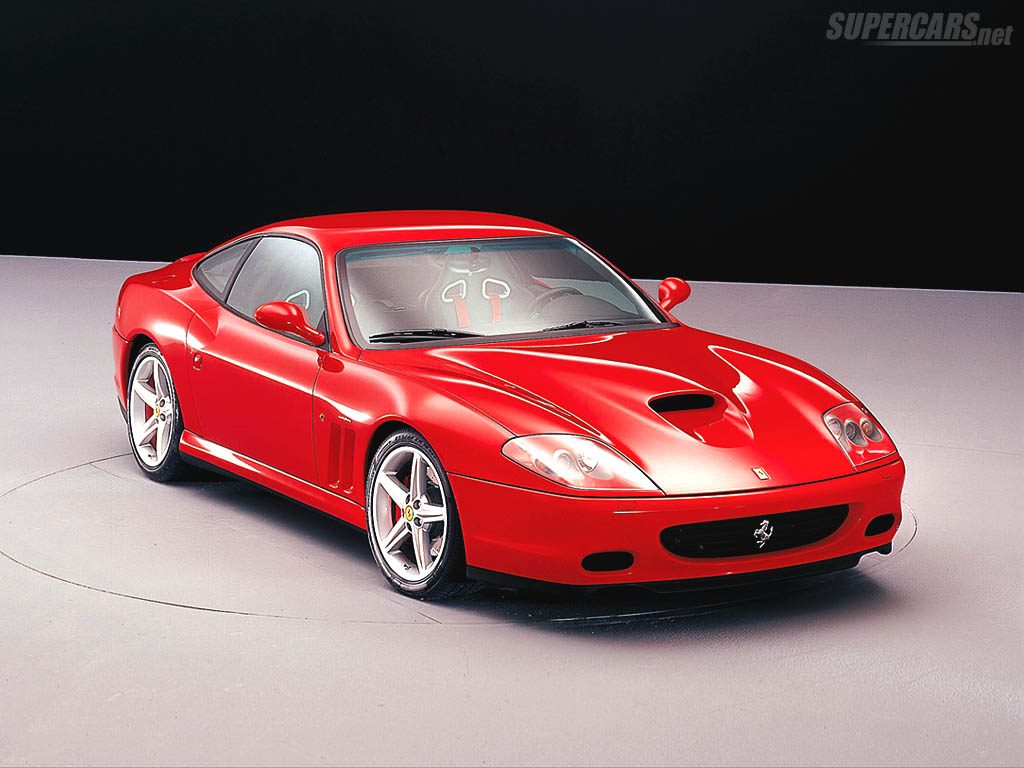
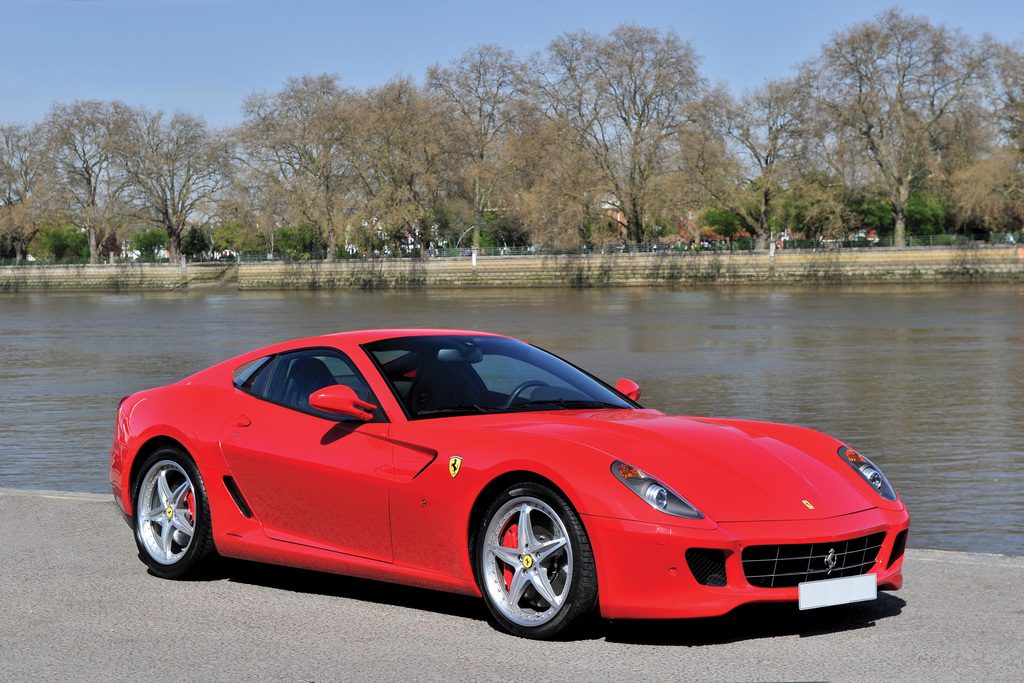
7. Ferrari 599 GTB Fiorano

Model Years: 2007–2012 / Engine: 6.0 L V12 / Horsepower: 612 hp / Price Guide: Starts at $120,000 USD

We admit we were a little sneaky here. We found three Ferrari 599 GTBs for under $120,000 in the entire United States so technically the 599 makes our list at just under our price limit. Clearly you won’t find a great example for that kind of money but its hard not to include a masterpiece Ferrari in our list of awesome modern Ferrari’s for bargain money.

The Ferrari 599 was the successor to the 575M Maranello and arrived in 2006 for the 2007 model year. It was a statement by Ferrari about the future of the Grand Touring segment. Gone were the classic, flowing, “designer is king” GT proportions, replaced by aero-first designs that are all about efficiency and performance. The front-engined V12 format stayed but how the engine performed and felt were radically transformed forever. A new era where the modern classic 575 was replaced by F1-tech-laden 599.

The chassis was all-aluminium and changing gears was via a super fast F1 paddle shift gearbox. The 599 also came with things like F1-Trac stability and traction control, magnetic semi-active dampers and carbon-ceramic brakes. It was a total departure from front engined Ferraris that came before it. The 599’s V12 engine was basicallty a detuned Enzo unit with 6.0-liter displacement and 612 bhp at 8400 rpm. At the time it made the 599 GTB the most powerful front engine Ferrari ever.

We found this quote by EVO magazine to describe the 599 which we loved: “Flat-out in the 599 is an all-consuming experience, each gear delivering a more intense hit than the last. The Veyron may post fiercer figures, but it surely can’t match the Fiorano’s naturally aspirated immediacy on give-and-take roads” (evo 093).

Price wise you are going to struggle to find a 599 for under $120,000. It is worth noting that the 599 also had a HGTE pack option and those cars go for way more than the base 599 GTB. If you’re not that budget conscious the HGTE packages is worth the extra money because it comes with firmer springs and rear anti-roll bar, lowered ride height and modified magnetic suspension settings, sharpen throttle response, while the exhaust allows more of the V12’s noise to be heard in the cabin. If budget is truly no issue, just pony up the $800,000+ it costs to get the super-limited edition 599 GTO and call it a day.

See: Ferrari 599 In-Depth


Classic Ferraris Under $120,000

The modern stuff a little to sedate and plain for you? Are you looking for a little more nostalgia in your Ferrari? Did you grow up with Ferrari and Lamborghini posters on your wall? Then a classic Ferrari may be the way to go. While we all know that the market for classic and rare Ferraris has cars selling for tens of millions of dollars, you don’t need to be a millionaire to drive a classic Ferrari. In fact as we found some tasty entry level Ferraris that a new collector could buy for less than $100,000.

1973 Ferrari Dino 308 GT4 Gallery

1973 Ferrari Dino 308 GT4 Gallery

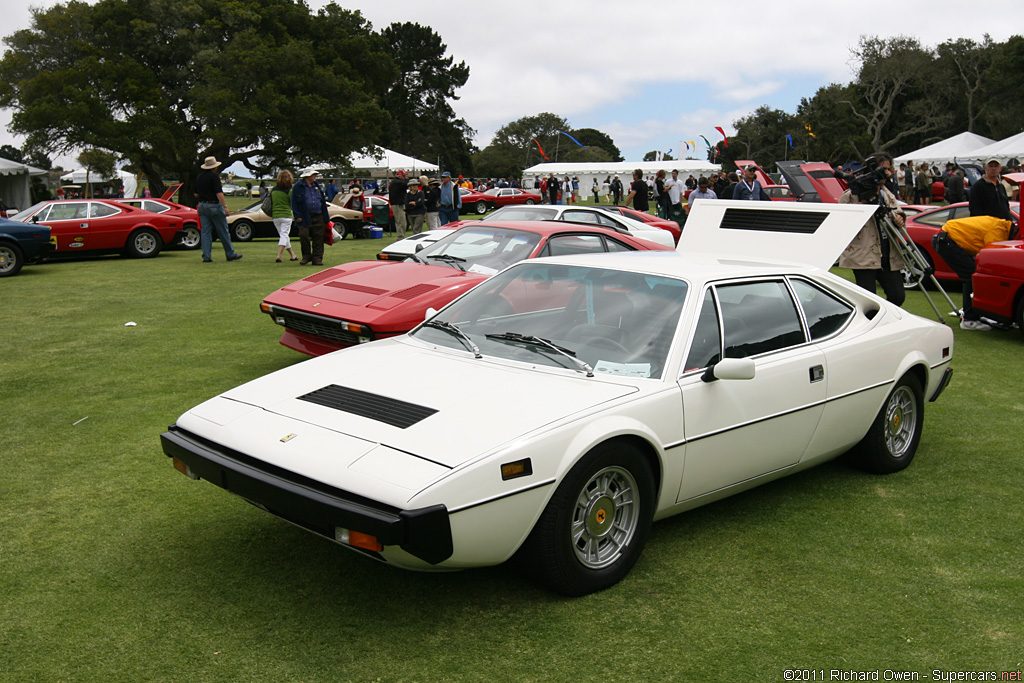
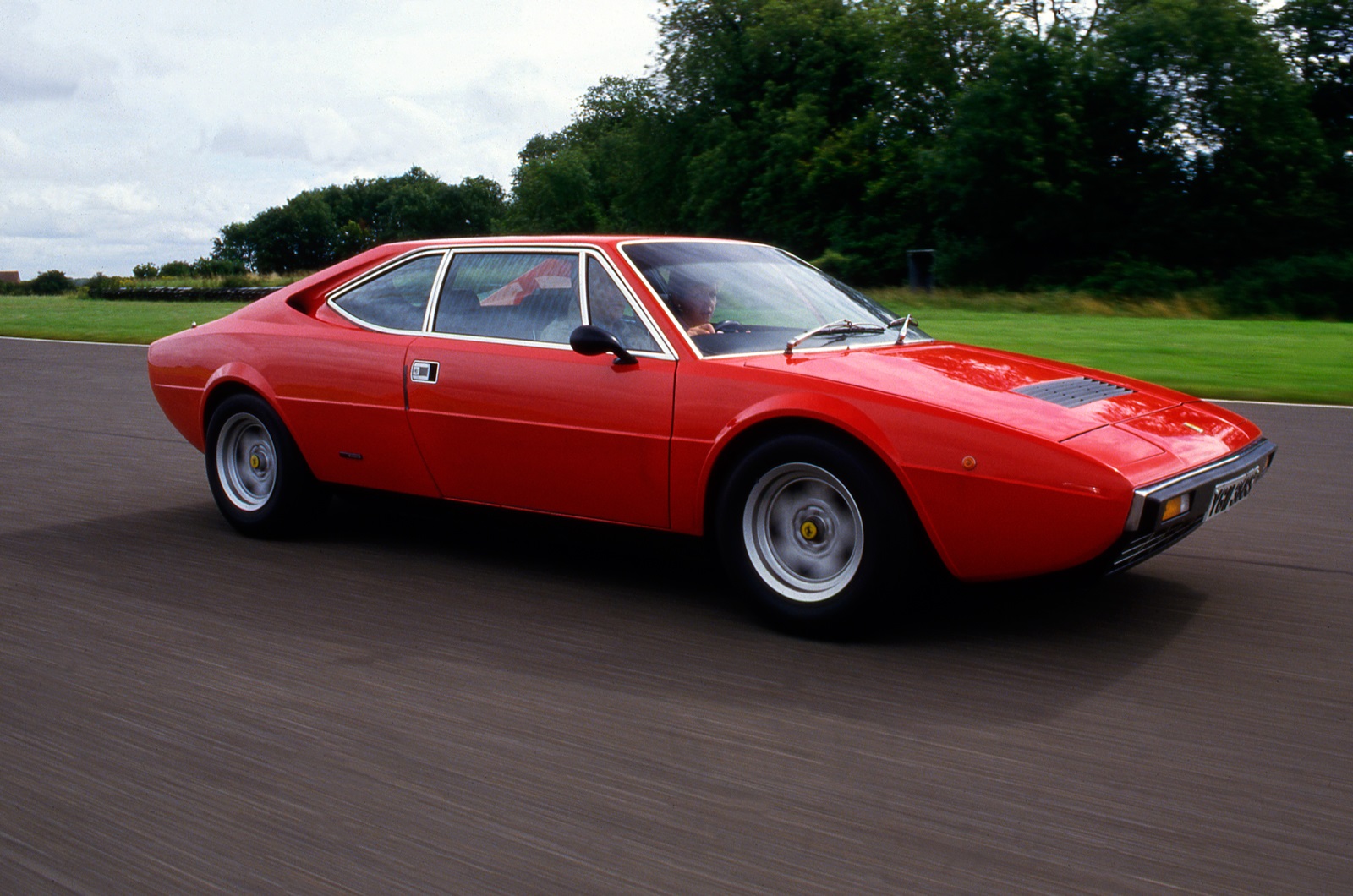
1. Ferrari Dino 308 GT4

Model Years: 1973–1980 / Engine: 3.0 L Dino V8 / Horsepower: 250 hp / Price Guide: $60,000 – $70,000

We will be the first ones to say that buying a 1970s era Ferrari isn’t for the faint of heart. Initially badged as a Dino the 308 GT4 only officially became a ‘real’ Ferrari three years later. We love the cool ‘70s wedge-shaped car and it’s fun 250bhp V8. While 0-60mph in 6.9 seconds is not fast by today’s standard, we can say that driving this car is a real experience.

There is some historical value here too with this being Ferrari’s first V8 road car and the marque’s first mid-engined 2+2, but the 308 GT4 (‘3’ for 3 litres,‘8’ for 8 cylinders, ‘4’ for 4 seats). Even more historically significant was that this Ferrari was designed by Bertone rather than Pininfarina. It is also pretty practical. The transversely mounted engine means that the GT4 was a 2+2 and is pretty roomy back there (for kids, not adults) and ever had reasonable luggage space to boot.

Our pick is the earlier models since they got the full 250 hp (emissions laws meant post 1976 models were down to 200 hp thanks to catalytic converters). Plus the earlier models sounded better with that awesome four-cam 3.0-liter V8 fed by four Weber carburetors – real old school V8 goodness. It might come as a surprise to find that a 308GT4 can be reliable given regular servicing. Overall, the 308 GT4 is one of the most reasonably affordable ways to buy a Ferrari.

See: Dino 308 GT4 In-Depth

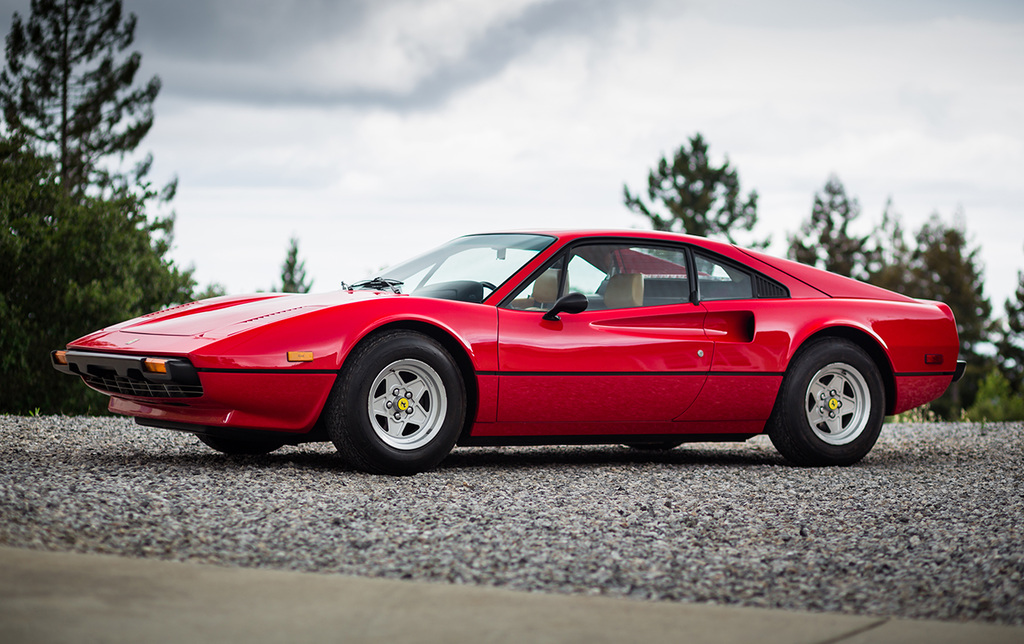
1977→1979 Ferrari 308 GTB

1977→1979 Ferrari 308 GTB

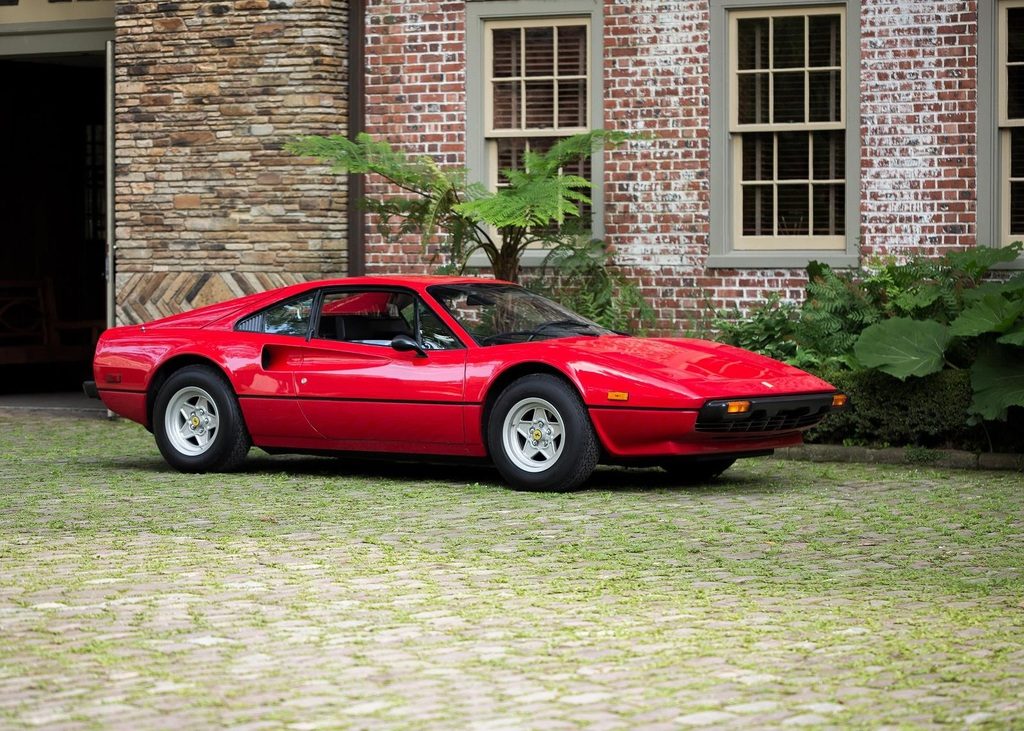
2. Ferrari 308 GTB/GTS

Model Years: 1975–1985 / Engine: 2.9 L V8 / Horsepower: 240 – 252 bhp  / Price Guide: $45,000 – $65,000

The Pininfarina designed 308 was the first of the mid-engined V8 breed to emerge from Ferrari and made its debut in 1975. While it is slow by today’s standards it is just a great car all around and so much fun.

The carb-fed 2.9-litre mid-mounted V8 packed 252 hp and hustled the ~2,000 pound Ferrari to 60 mph in 6 seconds (not bad for 1975). Top speed was 152 mph. The classic design is known by everybody and is still pretty modern with its wedge shape and vents.

Ferrari expanded the 308 lineup with several variants of the coupe and convertible models. The mid-mounted V-8 was essentially the same as in the Dino GT4’s, a 3.0-liter quad-cam, first with Weber carbs and then fuel injection from the early 1980s. A V8 with four valves per cylinder made its debut in 1982.

For most this is the Ferrari they remember growing up, thanks in large part to Magnum, P.I. That means while prices are quite reasonable today, we are seeing upward pressure and expect that to continue over time. Ferrari made thousands of 308s so take your time picking a good one. The 308 was available in Berlinetta (GTB) and Targa (GTS forms), with the coupe being rarer than its open top sibling.

See: Ferrari 208/308/328 Articles

1986 Ferrari 328 GTS Gallery

1986 Ferrari 328 GTS Gallery

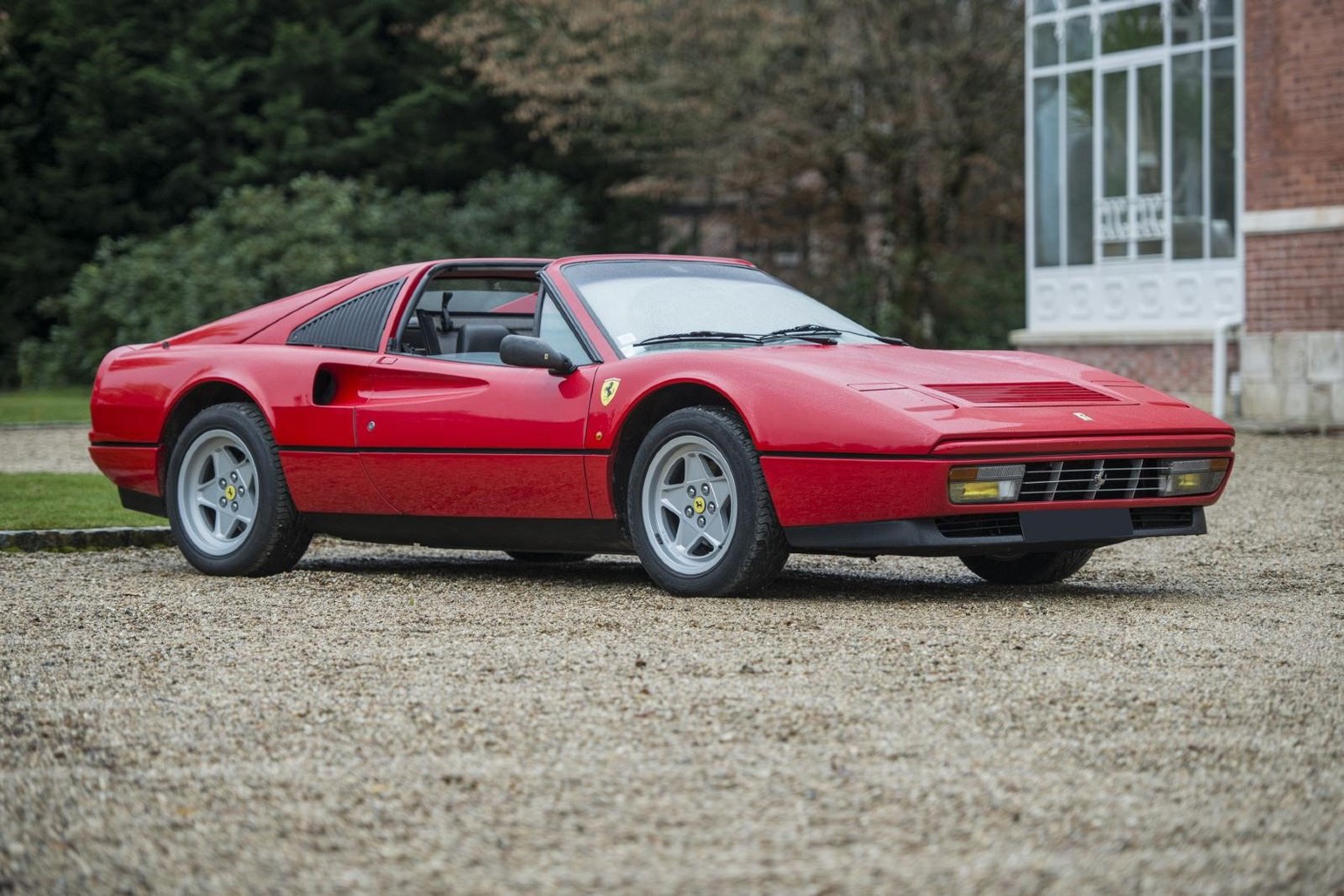
3. Ferrari 328 GTS

Model Years: 1986-1989 / Engine: 3.2 L V8 / Horsepower: 270 bhp  / Price Guide: $65,000 – $80,000

In the mid-80s, the elegant shape of the open-topped 308 GTS was further softened and rounded to become – once a 270bhp 3.2-liter engine had been fitted amidships – the 328 GTS.

The curvier body not only updated the looks, it also improved the aerodynamics. Inside the new drop-top, the now outdated 1970s seats and trim and switchgear were also thoroughly refreshed.

Launched at the Frankfurt Motor Show of 1985, the 328 GTS was an instant hit and – during the four years of its production – more than 6,000 cars were sold: around five times as many as its hard-topped brother, the 328 GTB.

The extra displacement and 270 horsepower meant it was more fun to drive than the 308. The 328 is also considered by some Ferrari enthusiasts to be one of the most reliable Ferraris; unlike some models, most engine maintenance can be performed without lowering the engine from the vehicle.

See: Ferrari 328 GTS In-Depth

1985 Ferrari Mondial 3.2

1985 Ferrari Mondial 3.2

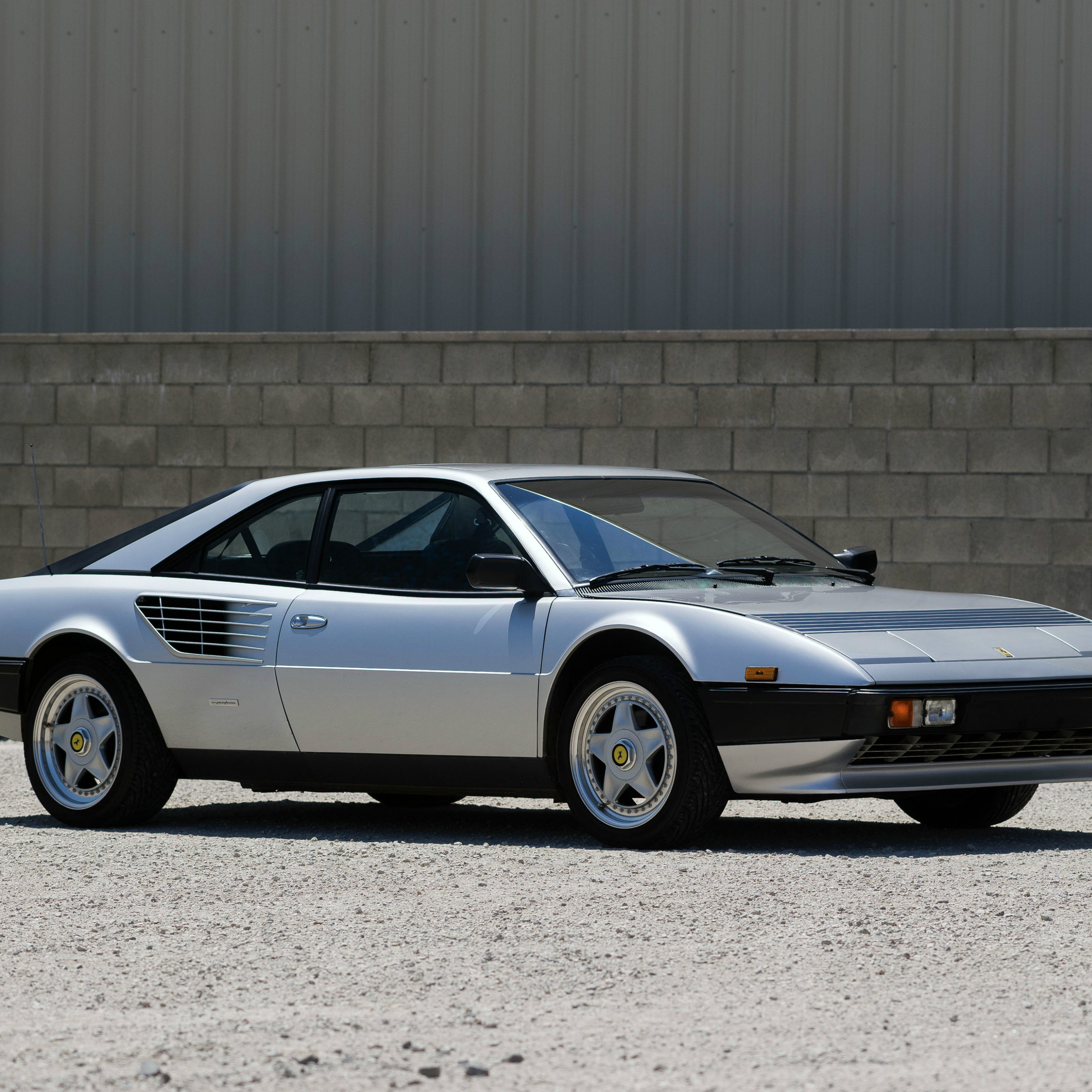
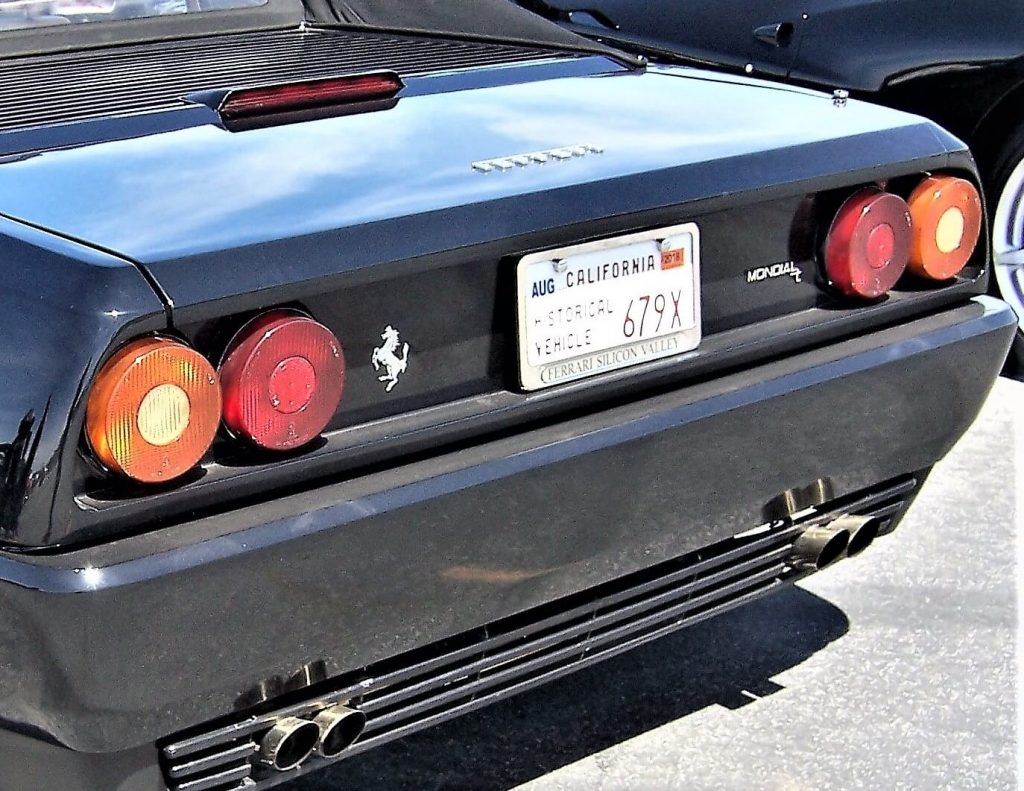
4. Ferrari Mondial

Model Years: 1980-1993 (all models) / Engine: 2.9-3.4 L V8 / Horsepower: 214-300 bhp  / Price Guide: $30,000 – $60,000

The Mondial was one of Ferrari’s most commercially successful models, with over 6,000 examples produced over its thirteen-year run and that is good for second hand prices. The Mondial underwent many updates throughout its production with four distinct variants produced: the Mondial 8, Mondial QV, Mondial 3.2, and Mondial t. All but the Mondial 8 were released in both coupé and cabriolet (convertible) body form. It was the successor to the 308 GT4 and this time Pininfarina was in charge of design.

This is a practical Ferrari. It had a longer wheelbase which meant some more space for the back seats and, thanks to this and its greater levels of comfort. It is a genuinely useable Ferrari. Today, Mondial is a byword for an affordable – but still high-performance – classic Ferrari.

Our pick is the final Mondial variant, the Mondial t, released in 1989. This contained some of the biggest changes in the Mondial history, with an even-larger 3.4 l (210 cu in) engine, a substantial update to the exterior styling and interior ergonomics, and with an entirely new, albeit more complex to service, powertrain. Overall the Mondial t is considered the best vehicle in the range regarding overall performance and refinement, although it is often noted that this comes at the cost of greater maintenance.

See: Ferrari Mondial T In-Depth

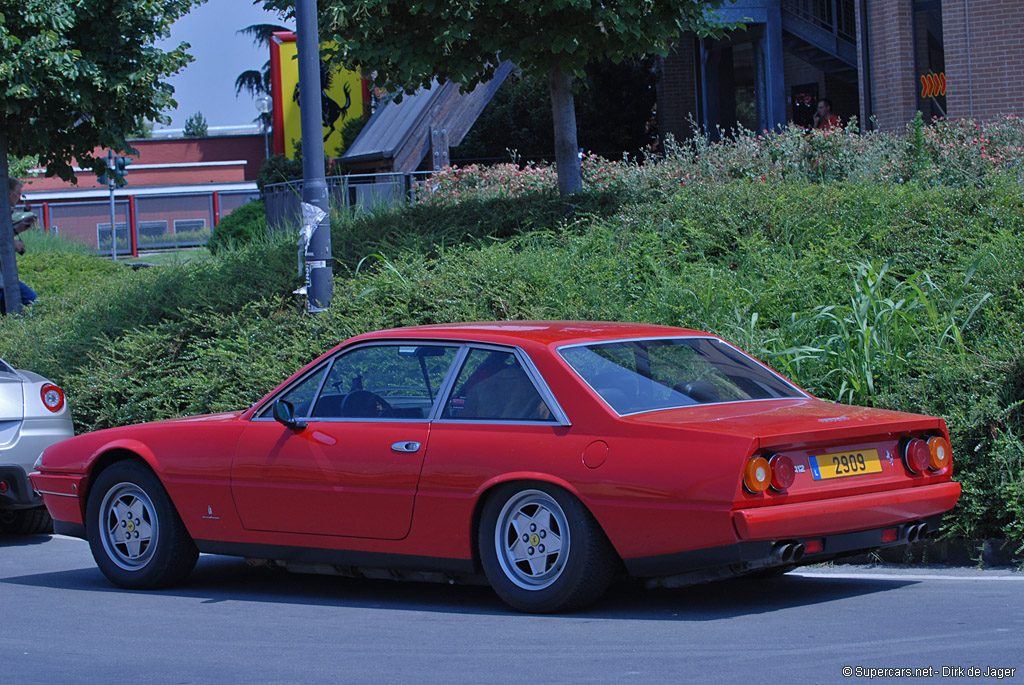
1985 Ferrari 412i

1985 Ferrari 412i

5. Ferrari 412i

Model Years: 1985–1989 (all models) / Units Produced: 576 Engine: 4.9 L V12 / Horsepower: 335 hp  / Price Guide: $40,000 – $60,000

This is probably the most unique looking classic Ferrari with its angular lines and non-curvaceous body. A total of 576 examples of the 412 model were produced during the production run (the 400 sold over 3,000 units over 16 years).

The 412 is the final evolution of Ferrari 400 model. Introduced in 1985 the 412 was a direct replacement for the 400 and saw the engine grow to 4.9-litres.  The 412 replaced the 400i. A higher boot line and deeper front spoiler were the most notable visual changes and a raft of other changes included new sill panels, new wheels, clear indicator lenses and black windscreen and window surrounds. The 412 was also the first Ferrari to offer Bosch ABS as standard.

While we love the 365GT4 2+2 with its large V12 and great handling coupled with luxurious leather interior, it was the 400 and later 400i that are our favorites because they added the automatic gearbox which better suited the cars characteristics. Peak power of 340bhp was also delivered at lower revs which made it more drivable day to day. Today, the 412i is great value and is one cheapest Ferraris you can buy.

See: Ferrari 412 in depth

1984→1991 Ferrari Testarossa

1984→1991 Ferrari Testarossa

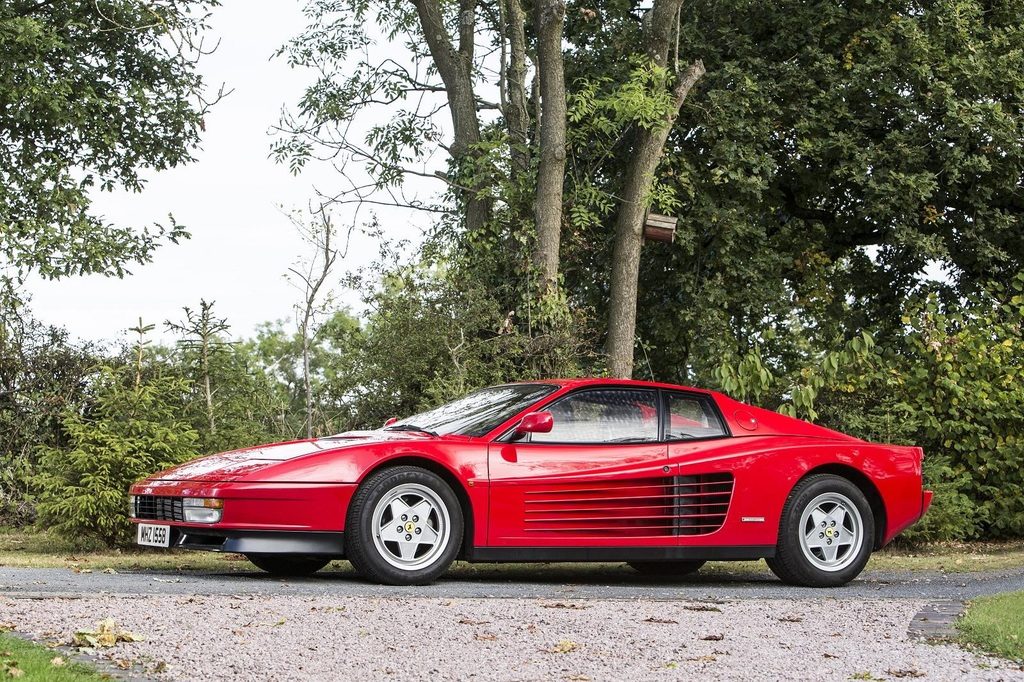
6. Ferrari Testarossa

Model Years: 1984-1996 / Engine: 4.9 L flat-12 / Horsepower: 385 hp  / Price Guide: $90,000 – $110,000

The Testarossa became the poster-car exotic for the late 1980s. Made famous for its role in Miami Vice and Sega’s Out Run, the Testarossa was Ferraris definitely the leading supercar in the mid-eighties. Its distinctive side strakes and ultra-wide rear track inspired many other supercar designs and they became a symbol of 1980’s retrograde culture.

Compared to the 512i BB it effectively replaced, the Testarossa was a larger car that accommodated mid-mounted radiators. This helped reduce cockpit heat and also had the effect of making the car much wider at the rear. It also provided more space in the front trunk.

The Testarossa was powered by a 4.9-liter version of Ferrari’s Boxer-12 which was effectively a 180º V12. Producing 390 bhp, 0–60 miles per hour was typically clocked at 5.2 seconds. Ferrari built 7000 units through 1991 when it introduced the 512TR, really an evolution of the car most notable for lowering the flat-12 engine in the chassis to improve handling.

The Testarossa can be purchased for just under $100,000 but nice examples go for $120,000 or more. We are seeing values increase too so this is solid investment for the first time Ferrari collector.

See: Ferrari Testarossa in depth

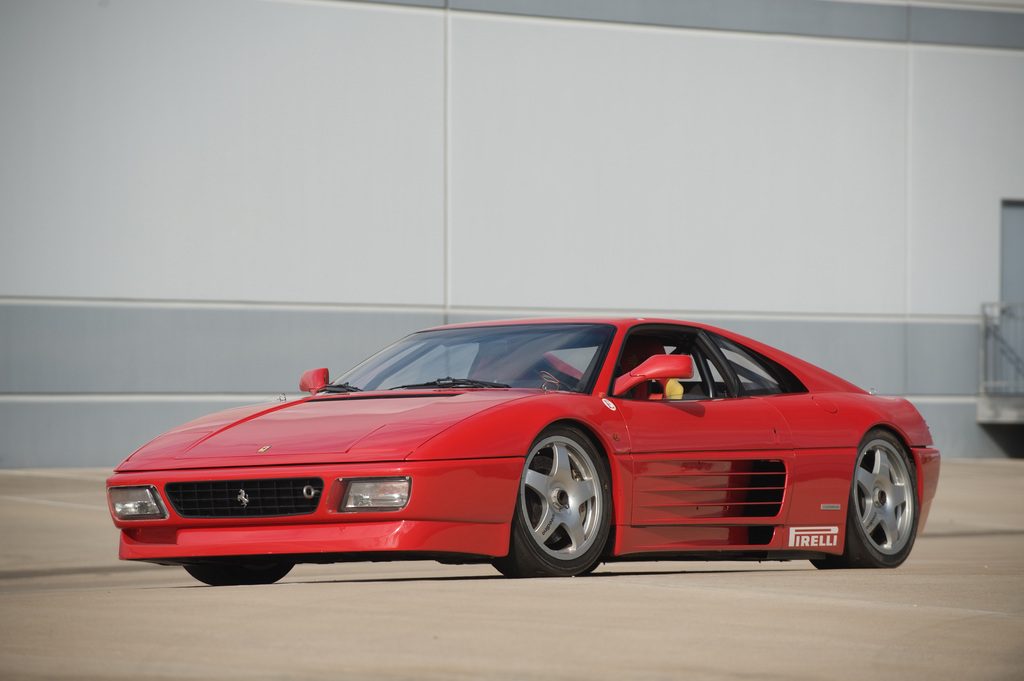
1993→1994 Ferrari 348 GT Competizione

1993→1994 Ferrari 348 GT Competizione

7. Ferrari 348

Model Years: 1989–1995 / Units Produced: 8,844 / Engine: 3.4 L V8 / Horsepower: 300 hp  / Price Guide: $40,000 – $60,000

Introduced in 1989, the 348 was a major departure for Ferrari’s successful road-going, mid-engine series of sports cars and it replaced two of the most popular Ferrari models in history, the 308 and the 328. The new car featured a pressed-steel monocoque chassis that helped to reduce mass and, in the style of the legendary 288 GTO, it combined a transversely mounted gearbox coupled to a longitudinally mounted engine allowing for a very balanced and agile sports car.

The 348 was luxuriously equipped with air-conditioning and a multitude of power features, making it a much more civilized overall package than its predecessor. It was a watershed design for Ferrari who, for the first time, incorporated innovations learned from Formula One Grand Prix development programs into the basic attributes and configuration of production road cars.

The 348’s 3.4 liter V8 generated 300 hp and sat amidship. The reality is that the 348 got trounced by the Lotus Espirit and Acura NSX in comparison tests. People complained that it looked bad, its seating position was horrible and the handling was atrocious. We say, it still looks and sounds like a Ferrari and can be bought for about $40,000. This is a great entry level Ferrari for somebody looking to get into prancing horse ownership.

See: Ferrari 348 in depth

8. Ferrari 456

Model Years: 1992–1997 (456), 1998–2003 (456M) / Units Produced: 3,289 / Engine: 5.5 L V12 / Horsepower: 436 hp  / Price Guide: $60,000 – $75,000

The Pininfarina-designed Ferrari 456 GT debuted in Europe in 1993 and was first available in the U.S. in 1995, and can be viewed as a replacement for the 365 GT 2+2 / 400 / 412 series. This front-engined 2+2 grand tourer had a 436 hp, 5.5-liter V-12 mated to a six-speed gearbox that propelled it from 0-60 in just over 5 seconds on its way to a top speed of 186 mph.

All of this performance could be managed from a cockpit that provided Connolly leather appointments for four (two of whom would almost certainly need to be children) and every other comfort expected of a $245,000 automobile, including a cockpit-adjustable suspension. Shortly after Ferrari introduced the 456 GT, the 456 GTA became available, the “A” signifying a four-speed automatic gearbox.

In 1998, Ferrari introduced an updated version, the 456M GT and GTA. This “Modificata” had a revised interior, some bodywork changes around the nose and hood, and a slight increase in horsepower to 442. The 456M GT remained in production until 2003, and in all just under 3,300 456 GTs and 456 GTMs were built until giving way to the 612 Scaglietti in 2004.

See: Ferrari 456 in depth

VIDEO: Custom One Off Ferrari Dino Is A Naturally-Aspirated Screamer

Stop What You’re Doing Right Now! Watch & Listen to The Ultimate (One Off) Ferrari Dino

[embedded content]

We love fanatic Ferrari car collectors and we love Petrolicious. Car collectors like David Lee buy, care for and actually drive amazing cars and want to share their world with us car fans. Petrolicious helps tell those stories and share those moments. That’s why when we saw that Petrolicious published a video of David Lee’s custom Dino it was going to be awesome.

It will take the real experts to see the visual differences. The wheels are a bit bigger than standard, the arches are more aggressive, the light covers are unique and there is a clear engine cover not seen on a regular Dino. Two seconds is all any person will need to immediately realize that this car has a unique engine. The sound is angry, deep and not very Dino-ish. Lee took an F40 block (2.9L), removed the turbos, bored it from 2.9 to 3.6L and added twin banks of velocity stacks. This is a naturally-aspirated screamer that combines modern performance with the Dino’s ageless style in a package that doesn’t compromise on either end.

Turn up the volume and sit back and enjoy. Don’t forget to support the folks that put this together and check out the full behind the scenes story at Petrolicious, with cool commentary and a full gallery of amazing images.

1962 Ferrari 250 GTO Sells for Record $48.2 Million – Most Expensive at Auction

RM Sotheby’s most anticipated Pebble Beach 2018 lot did not disappoint! The auction house had secured one of the most high profile sales of the weekend with a Ferrari 250 GTO. It is the second 250 GTO to cross the auction block in recent years and it smashed the record set by the previous version.

This particular 1962 Ferrari 250 GTO is now the most valuable car ever sold at auction. It hammered at a staggering $44 million, $48.4 million if you include fees. The car was eventually sold to a telephone bidder, one of three who provided fierce competition for the vehicle. the bidding was frantic at times, starting at $35 million and increasing in increments of $1 million at times.

So what makes this particular Ferrari 250 GTO, chassis number 3413 GT, so special. To start with, it is one of 36 examples built. It is a numbers-matching example offered with its original engine, gearbox, rear axle and factory Series II body. It had been owned for two decades Dr Gregory Whitten, prior to which it was campaigned as a Series I in the 1962 Targa Florio road race, winning 1st in class at the 1963 and 1964 events.

RM Sotheby’s also achieved more exceptional results including a 1957 Porsche 550A Spyder that achieved $4.9 million, and a 1956 Maserarti A6G/2000 Zagato which went for $4.5 million. The previous day, the auction house sold a 1963 Aston Martin DP215 Competition Prototype for $21.455 million.

Ferrari 250 GTO Sets Auction Record

I feel like every time we update our most expensive Ferraris ever list a week or two passes and it is time to update it again. This past weekend was one of those weekends with the sale of a 1962 Ferrari 250 GTO (chassis 3413 GT) during the 2018 RM Sotheby’s Monterey auction, held August 26th.

Everybody knows that Ferrari GTOs are considered the biggest trophies in the car-collecting world for their rarity, power, beauty and success on the race track. A 1962-63 GTO then sold at auction in California in 2014 for $38 million, but that was eclipsed this weekend with this sale making chassis 3413 GT the most valuable car ever sold at auction. 

It probably the coolest auction ever with five-time Le Mans winner Derek Bell stepping out of the car after driving it across the auction block in front of an a huge crowd. Bidding opened at (gulp) $35 million. Three collectors (over the phone) went back and forth for almost ten minutes until sold for $48,405,000 (with fees).  The Ferrari 250 GTO was offered with its original engine, gearbox, rear axle and factory Series II body after two decades in the collection of Gregory Whitten. This car was unique in that the GTO began its life as a Series I and was used as a test car by Phil Hill for the 1962 Targa Florio road race, before proceeding to win 1st in class at the event for the next two years. This led the car to claim the 1962 Italian National GT Championship, with victories in 9 out of 10 races. It is the third of a mere 36 examples built. That kind of racing pedigree is what drives prices for GTOs.

This astronomical auction price however was still not enough for this car to crack the top of the most expensive Ferraris ever list because when you take into account private sales, there are two more notable prices paid for Ferraris. Just this year (2018) the record was broken when a $70 million GTO was sold to David MacNeil (founder of WeatherTech). That car (one of only 36 that were made) won the 1964 famed Tour de France race and came in fourth at Le Mans. It’s painted in silver and yellow and despite a winning record on the track was never crashed, unlike many other GTOs. Previously the highest price for a car was $52 million, paid for a 1963 Ferrari GTO in 2013, also a private sale. 

All photos from RM Sotheby’s

Greatest Convertible & Open Top Ferraris Ever Made

The 25 Best Convertible & Open Top Ferraris

Today we are ranking the best open top and convertible Ferraris ever made by our friends at Maranello. The Ferrari lists we create are almost always controversial because any best of Ferrari models discussion is hard to have given the brands long history. Should a 488 Spider outrank a 355 Spider? Sure, it is much faster and more advanced, but is it truly better? How do you rank cars that we are never going to ever drive like the 250 GT SWB California Spyder? Lots of tough choices make these lists a fiery affair.

Before we get into the list, we want to talk about a few myths that annoy us. First myth is that Ferrari convertibles are not real Ferraris. Nonsense. I recently drove a Ferrari California and while it is no 488 dynamically it was the perfect daily driver. The California I drove was a friend’s car. He had traded in his 458 for a California because he never drove the 458. The California is more practical, has more space, more comfort and is gets used all the time. Like my friend, if I had to choose between a Ferrari I get to drive every single day and one that stays locked in my garage most of the time, I’ll take the former every time.

The second myth about Ferrari convertibles is that they are compromised performance cars. Nonsense yet again. Sure, back in the day open top cars were dynamically flawed but in the last decade we can’t think of a single open top Ferrari that hasn’t been anything but astonishing to drive. Technology, materials science and chassis design have all progressed to the point where a convertible Ferrari can match its coupe sibling pound for pound in the performance and fun stakes with none of the downsides.

Myths out of the way it is time to talk about our methodology for creating this list. Frankly, it was pretty simple. We went through every Ferrari model ever made, picked out the convertible and open top models and then ranked them. We then categorized them and only included the ones we believed deserved a spot on our list. Some on the list are old cars that helped define the brand while others are legitimate top of their game performance machines. We also included a few convertible Ferraris you can walk into a dealer and buy new, some bargain convertibles and some priceless Ferraris you can only hope to buy if you’re a billionaire.

Here are the best Ferrari convertibles and open top models our friends at Maranello have ever made:


New Ferrari Convertibles You Can Buy Today

Whenever we put these lists together we almost immediately get questions from readers looking to buy new cars wanting to know what they can waltz into the showroom to buy. If you are looking for a new Ferrari that is also a convertible there are only two options at the moment.

Ferrari 488 Spider

Ferrari 488 Spider

Ferrari 488 Spider

See: All Ferrari 488 Articles / 488 Spider In-Depth /

Priced from $280,900

This is the one car on this list you could drive every day and thrash on weekends and even take it to the track and its awesome at all three. It basically destroys every other car on this list in terms of outright performance (LaFerrari being the exception) thanks to its 3.9-liter twin-turbocharged V8 that churns 661 bhp and 560 lb ft of torque and just won engine of the year (again).

The 488 Spider is all the car you would ever need and it is better than its sibling 488 GTB coupe. Just as good as the coupe in terms of performance, speed, styling with all the benefits of open top fun. The 488 Spider is amazingly efficient, fast and enjoyable and there is a strong case to be made that the Ferrari 488 Spider is the single greatest modern automobile for sale today.

What about performance? Well the stunning drop-top version of the 488 GTB can sprint to 60 mph in about 3-second and hit a 205 mph top speed. Ferrari has produced another masterpiece with the 488 Spider.

Ferrari Portofino

Ferrari Portofino

Ferrari Portofino

See: All Ferrari Portofino Articles / Portofino In-Depth

Priced from $214,533

The new Ferrari Portofino is the de facto successor of the best-selling Ferrari in history – the Ferrari California T. Following in the steps of its predecessor, the Portofino is a grand touring, 2+2, convertible with its engine located in the front.

This entry level car has a cool retractable hardtop roof and a 591-hp twin-turbo 3.9-liter V-8. Add an electronic limited-slip differential, adaptive suspension and creature comforts like a 10.2-inch infotainment display and rear seats and you quickly realize that this is the kind of car you could use every day.

It is fairly obvious that Ferrari designed the Portofino to have more mass-market-appeal than the rest of its predominantly mid-engined, race-car-inspired-line-up. Ferrari wanted the car to be more relatable – attracting first-time buyers to the Ferrari brand with its (relatively) low price point, everyday driveability, comfort, and versatility. Purists would scoff at the notion of such a thing existing – so perhaps the real question should be “is it more entry-level or is it more Ferrari”?

We already know that if you want a faster and more performance oriented Ferrari, you wouldn’t be shopping for a Ferrari Portofino (try the 488 Spider above for that). However, the Portofino for what it is – is unquestionably a great improvement over its predecessor. Afterall, it has more power and less weight, while being more enjoyable to drive and arguably, better looking than the California T that it is replacing.

Auto journalists such as Car Magazine and Car and Driver note that the Portofino is very engaging to drive spiritedly, sans the desire to go around breaking any lap records. Ultimately, the Ferrari Portofino is the amalgamation of what it was designed to be – a Ferrari which offers a unique blend of daily driving practicality, performance, and luxury.


Open Top Ferraris for (Billionaire) Collectors

If you are reading this section and seriously considering buying any of the open top Ferraris on this list then congratulations on having more money than God. For the rest of us this is the section where we dream about what it would be like to buy the rarest, most expensive open top Ferrari’s ever.

Ferrari 250 Testa Rossa

Ferrari 250 Testa Rossa

Ferrari 250 Testa Rossa

See All Ferrari 250 Testa Rossa Articles / 250 Testa Rossa In Detail

On our list of the most expensive Ferraris ever there was a 1958 250 Testa Rossa that sold for $16.4 million and a 1957 example that went for $12.4 million. Clearly this is a rare, expensive and coveted Ferrari and tops our rate open top Ferraris list.

Only around 34 Testa Rossas were made and all were intended for racing. The 250 Testa Rossa was designed to offer customers already racing with the 500 TRC a much more powerful engine on a similar chassis to help retain the former model’s great handling. The FIA placed a three-liter limit on prototypes and as a result the reliable V12 from the 250 Gran Turismo was used (albeit with a radically tuned with six twin-choke carburetors). The engine’s top was painted red, hence the name testa rossa.

1967 Ferrari 275 GTS4 NART Spyder

1967 Ferrari 275 GTS4 NART Spyder

Ferrari 275 GTB/4 N.A.R.T. Spyder

See All N.A.R.T. Spyder Articles / N.A.R.T. Spyder In Depth

With only ten of this these NART Spiders were ever made (built to commemorate Ferrari’s North American Racing Team), it’s easy to say that the 1967 Ferrari 275 GTB/4 N.A.R.T. Spider is one of the rarest and most valuable Ferraris ever made. The ten Ferrari 275s officially from the Ferrari factory in spyder configuration were all made for Luigi Chinetti who was Ferrari’s North American Importer at the time.

Chinetti recognized the need for an alternative to the luxurious 330 GTS and reluctantly convinced Ferrari to deliver his own ‘NART Spyder’.

Chinetti first got the idea for the car at the Paris Motor Show when the 275 GTB/4 was shown. Ferrari at first denied his request to built a factory spider, but after talking to Sergio Scaglietti who manufactured the 275 bodies, Ferrari was finally convinced. Initially, Chinetti ordered 25 cars which were executed by the experienced craftsman at Sergio Scaglietti’s workshops. Although the chassis of the 275 relied on the body for rigidity no additional bracing was introduced with the NART Spyder. The 275 GTB/4 N.A.R.T. Spiders were equipped with a 3.3 L 4-cam V12 engine that produced 296 hp and 294 Nm / 217 lb-ft of torque. They reached speeds of 162 mph and could hit 60 mph in 5.6 seconds.

In the end, Ferrari only shipped 10 Spyders to Chinetti and they were all sold through his eastern USA dealership. The first of these cars came with aluminum body and was immediately put into race duty to promote the model. After the race, Chinetti had a hard time selling the cars and had to sell the final few at a marked discount. Recently, a NART Spider sold for a staggering $27.5 million at a California auction and was owned by a single family for over 45 years.

Ferrari 250 GT California Spyder SWB

Ferrari 250 GT California Spyder SWB

Ferrari 250 GT SWB California Spyder

See 250 GT SWB California Spyder Articles / 250 GT SWB California Spyder In Detail

In 1959, Ferrari debuted the shorter California Spyder on their stiffer short wheel base (SWB) chassis. These cars were superior as they had disc brakes, a more powerful engine, and a less bulk. Like the LWB model that preceded it, the SWB benefited from a competition-bred chassis and engine. The California Spyder was motivated by U.S. distributors Jon von Neumann and Luigi Chinetti who convinced Ferrari to create a performance convertible named after their best market. The California Spyder emerged with supercar performance and became highly desirable due to its limited availability.

Immortalized as the Ferris Bueller car, the California Spyder—of which only about 55 were made – each car was special too, and some examples came with competition-spec engines or the very rare factory hard top.

Sharing its drivetrain with the legendary 250 GT that won the Tour de France, the California Spyder was a car to get excited about. It had the same 140 mph performance and the same competition chassis as the Ferraris lapping the race tracks. Therefore, it only made sense to equip some examples with competition engines and aluminum bodywork to race at Le Mans and Sebring. These Spyder Competiziones did well in the GT class and tied all California Spyders to a sporting pedigree.

California Spyder bodies were hand crafted by Carozerria Scaglietti who built most of Ferrari’s competition bodies at the time. Inside, each Spyder car had a no-frills interior and a small heater was the only luxury. Behind the seats, a fabric top was installed which was tidy, and well proportioned when upright, but was made with no inner liner. These cars are prized by collectors as proved by recent record auction prices. Try $18.5 million on for size for a super rare 1961 Ferrari 250 GT SWB California Spider and $17.5 million for another a few months earlier. Combine vintage, rarity, and prestige and it clear that this is the convertible Ferrari for the billionaire.

Ferrari Testarossa Spider

Ferrari Testarossa Spider

Ferrari Testarossa Spider

The Testarossa Spider, serial number 62897, is the sole official convertible variant of the Testarossa commissioned in 1986 by the then Fiat chairman Gianni Agnelli to commemorate his 20 years of chairmanship of the company.

Ferrari wasn’t building a Spider version of its flagship Testarossa supercar since convertibles weren’t very popular at the time – so Agnelli had one commissioned just for him. The former Fiat boss received delivery of his unique Testarossa Spider in 1986, which featured a silver exterior with blue stripes and a matching dark blue interior. In case you’re wondering why Agnelli didn’t opt for a red Ferrari, “AG” is the periodic table’s symbol for silver which also happens to be the first two letters of his last name. Even the prancing horse was finished in the same silver. Rather than simply remove the roof and leave the car unchanged, Ferrari strengthened the floor and fitted an electrically operated hoop to support the soft-top.

Ferrari 365 GTS by Pininfarina

Ferrari 365 GTS by Pininfarina

Ferrari 365 GTS by Pininfarina

At the Geneva Motor Show in March 1966, Ferrari launched a new two-seat GT. The 330 GTC, and its open-bodied GTS sibling, were tremendously popular with more restrained sporting customers, offering elegant aesthetics and classic Ferrari performance. The 365 GTS “spider” replaced the 330 GTS model in late 1968. Visually it was virtually identical to its predecessor, apart from the omission of the exhaust air outlets on the front wing sides, which were replaced by a trapezoidal black plastic louvre panel close to each trailing corner of the bonnet.

The folding roof of the 365 GTS was retained by a pair of over-centre clips on the top screen rail when in the erected position, whilst a clip-on protective vinyl cover fitted over it when stowed in a recess behind the seats, otherwise it was identical to the sister 365 GTC model.

The engine was an enlarged version of that fitted to the 330 GTS, and identical to that used in the 365 GT 2+2 models already in production when the 365 GTS was announced. It was a single overhead camshaft per bank V12 unit, with factory type reference 245/C, of 4390cc capacity, with a bore and stroke of 81mm x 71mm. It was fitted with a bank of either three twin-choke Weber 40 DFI/5 or 40 DFI/7 carburettors, with a twin coil and rear-of-engine mounted twin distributor ignition system, to produce a claimed 320hp.

The first production 365 GTS completed, of just 20 examples produced was sold in Monterey in 2017 for $2.7 million.

Ferrari 400 Superamerica Cabriolet

Ferrari 400 Superamerica Cabriolet

Ferrari 400 Superamerica Cabriolet

When it arrived in 1962, the Superamerica Cabriolet was the most expensive car ever produced by Ferrari. Forget depreciation dreams because today they’re even more expensive. Try RM Auctions selling a pristine example for over $7.6 million. Definitely on the more expensive Ferrari convertible list then.

Before Ferrari supercars were top of the heap, Ferrari made GTs that ruled the top of the car market. Despite the classical good looks, cars like the Superamerica Cabriolet were known more for their powerful V12 engines and serious performance.

The 400 Superamerica had a 340 bhp, 3,967 cc 60-degree V-12 engine with three Weber 46 DCF carburetors, four-speed manual transmission, independent front suspension with double wishbones and coil springs, rear suspension with a live rear axle, semi-elliptic leaf springs, telescopic shock absorbers, and four-wheel disc brakes.

In the late 1950s and early 1960s, the Ferrari Superamerica was the last word in sporting elegance. It offered the very best in terms of luxury and performance and was the very best car money could buy. These cars often found their way into the garages of the world’s elite, with numerous heads of state, barons of industry, and other well-to-do individuals being the privileged first owners of Superamericas, putting them in the upper echelon of automobile enthusiasts.

Ferrari F60 America

Ferrari F60 America

Ferrari F60 America

See All Ferrari F60 America Articles / Ferrari F60 America In Depth

So we have seen some of the older, classic Ferrari open top cars and their multi-million dollar price points. But what if you have a few million to spend and want something a little more modern and equally as rare as the older models. As luck would have it, Ferrari built 10 units of the F60 America and this may be the one for you.  The F60 America is a dramatically revised version of the F12berlinetta with a new nose, wings, doors, a bespoke interior and a convertible top. And each will cost about $2.5 million new and probably a lot more in the used car market. With a 6.3-liter V12 and 730 hp all driven through the the rear wheels, it rockets to 60 mph in less than 3 seconds.

The F60 name was for Ferrari’s 60th-anniversary festivities scheduled to celebrate the maker’s diamond anniversary in the U.S.

The F60America’s bodywork adopts the classic North American Racing Team livery, and the special Ferrari 60th anniversary Prancing Horse badge on the wheel arches also appears on the tunnel in the cabin. That blue with a center white stripe livery of famed importer Luigi Chinetti’s NART outfit and the interior that gives a nod to old racing Ferrari with the driver’s side finished with red trim and upholstery while the passenger’s accommodations are black adds to the uniqueness of this special limited model.

1966 Ferrari 330 GTS Gallery

1966 Ferrari 330 GTS Gallery

Ferrari 330 GTS

See All Ferrari 330 GTS Articles / Ferrari 330 GTS In Depth

The 330 GTS was released in October at the 1966 Paris Auto Show. It was intended as an grand tourer that delivered quiet performance. The 3967 CC V-12 was a development of the engine used in the 400 Superamerica, and joined to the five-speed gearbox, provided flexible power across a wider range. The 330 GTS also introduced an improved mounting for the engine and rear transaxle, joining them with a torque tube to minimize vibration. Only 100 examples were made before the model was upgraded with a 4.4 liter engine in 1968.

The folding roof of the 330 GTS was retained by a pair of over-centre clips on the top screen rail when in the erected position, whilst a clip-on protective vinyl cover fitted over it when stowed in a recess behind the seats. Production of the 330 GTS model continued into late 1968, when it was upgraded with a 4.4-litre engine and minor cosmetic changes, to become the 365 GTS model.

1967 Ferrari 365 Spyder California Gallery

1967 Ferrari 365 Spyder California Gallery

Ferrari 365 Spyder California

See All Ferrari 365 California Articles / Ferrari 365 California In Depth

Shortly after the last 500 Superfast was made, the 365 California was announced as the model’s successor. It was the continuation of a series of limited production cars which included the 410 and 400 Superamercas. These cars were marketed to attract premium customers who demanded a more unique coachwork on their grand touring machines. To keep costs down, but exclusivity high, the 365 California was only offered to select VIP clients of Ferrari. That may explain why the rare 365 California models around today fetch big money.

To much success, the California title had been already been associated with the earlier 250 GT Series. Around one hundred 250 California Spyders were built with some light alloy competizione examples actually racing Le Mans and Sebring. Drawing on this rich heritage, Ferrari decided that new 365 Spyder would be marketed as the next California model.

Much like the 250, this 365 used a well developed chassis to provide a basis for the next California Spyder. Released alongside the 330 GTC at the 1966 Geneva Auto Salon, the long and low 365 California Spyder was basically a reworked 330 GT chassis featuring a striking Pininfarina body. As far as engineering was concerned the 365 California Spyder was uninventive, having a wishbone front suspension and live rear axle held by leaf springs.

Powering the 365 was a Columbo long block V12. This engine was common in the 365 range, being an enlarged version of the unit found in the 330 GT. Other evolutions of this engine powered the 365 GTB/4 Daytona, GTC/4 and standard 365 GT coupe.

2010 Ferrari 599 SA APERTA Gallery

2010 Ferrari 599 SA APERTA Gallery

Ferrari SA Aperta

See All Ferrari SA Aperta Articles / Ferrari SA Aperta In Depth

The SA Aperta is a special series model of which just 80 units were built. Ferrari chose to build 80 SA Apertas in celebration of Pininfarina’s 80th anniversary. The SA nomenclature also pays homage to both Sergio and Andrea Pininfarina whose company and work have been linked to the most successful road-going cars ever built at Maranello.

The SA APERTA is a true roadster which combines Ferraris signature front-engined V12 architecture in a completely open-top setting. In fact, it has just a light soft top designed to be resorted to only if the weather gets particularly bad. A low-slung windscreen and the fact that it crouches lower to the ground than our other models lend the SA APERTA an exceptionally aerodynamic sleekness. Its profile arches back from the A-post to two aerodynamic fins beautifully integrating the two roll-bars which themselves cleverly mimic the outline of the seats.

The chassis has been redesigned to deliver a standard of stiffness comparable to that of a closed berlinetta and there is a negligible weight difference also, thanks to work done on the chassis structure.

Thanks to the 670 CV engine beneath its bonnet, the SA APERTA beautifully embodies the sporty spirit of the 599, incorporating Ferrari’s most advanced technology to deliver absolutely benchmark performance and superb driving pleasure. Its interior too is stylishly sporty with particularly sophisticated materials, trim and colors used throughout. The virtually endless combinations available guarantee that each and every SA APERTA is absolutely unique.


High Performance Open Top Ferraris

This is the “have your cake and eat it too” group. We highlight Ferrari’s open top performance kings. These are the models that are serious sports cars at the top of the performance heap, that just happen to be convertibles too. They are uncompromising and give up nothing to their coupe siblings.

LaFerrari Aperta

LaFerrari Aperta

Ferrari LaFerrari Aperta

See: All Ferrari LaFerrari Articles

The official car of Ferrari’s 70th year was the LaFerrari Aperta, an open-top hypercar that Car Magazine said had a single purpose: “to remind the world that nobody does automotive hedonism better than Enzo’s squad”. Well said. There isn’t much written about the LaFerrari Aperta, but once again the folks at Car said it best: The LaFerrari is an astonishing embodiment of that philosophy. A machine of bewildering complexity, its defining brilliance is a driving experience of startling purity, one made magical by the unholy power and deviously clever electronics that could so easily have corrupted it.

The LaFerrari Aperta is basically the drop-top version of the LaFerrari supercar. The Aperta is limited to only 209 units and they were spoken for well before the car was even announced. It is the first time Ferrari has ever offered both coupe and convertible versions of its “supercar” line. On the outside, the Aperta looks a lot like the original car, save for the fact that, well, the roof comes off. It’s not a power-operated top, like in some rivals, but rather two carbon-fiber panels that have to be removed by hand. It’s not the most graceful solution, but it helps save weight — and reduce complexity.

Under the skin, you’ll find a carbon-fiber chassis, a dual-clutch automatic transmission and a 6.3-liter V12 with a hybrid component that combine for a total of 950 horsepower and 664 lb-ft of torque. The result is zero to 60 in under 3 seconds and a top speed of nearly 220 miles per hour — amazing numbers, even in today’s world of crazy exotic cars.

Of course, the Aperta is expensive — and, more importantly, it’s all sold out. The Aperta is reported to cost around $2 million, although one sold at a charity auction for $10 million.
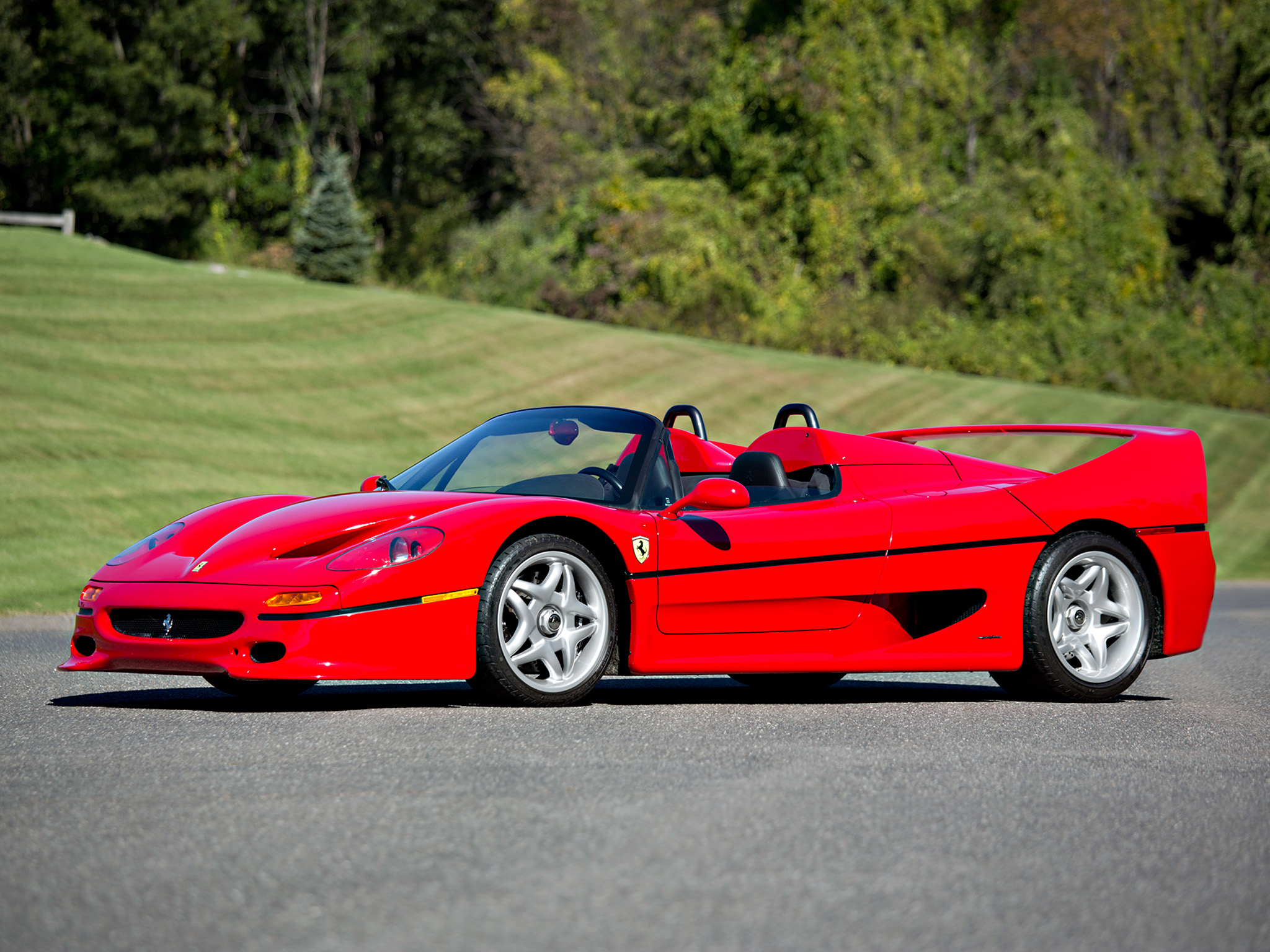
Ferrari F50

See All Ferrari F50 Articles / Ferrari F50 In Depth

Available with removable hard top, the open roof F50 supercar is one of the best drivers Ferraris ever despite a lukewarm reception at launch. The best thing about not having a roof on the F50 is the unfiltered sound of an Ferrari V12 right behind your ears.

You don’t see many F50s out and about because they’re really rare. Only 349 were ever made (four times as rare as the F40 and even rarer than the Enzo).

Both the 288 GTO and Ferrari F40 feature turbocharged V8s. The F50 is unlike these cars as it uses a engine motivated by the 1994 Ferrari 412T Formula One car. It features a narrow angle V12 which is similar to the one in the 1994 412T. The F50’s version has an increased capacity of 4.7 liters to offer increased torque and driveability. Power came in at 513.1 bhp @ 8500 rpm.

Many people have looked upon the F50 project as somewhat of a failure. I can see where they are coming from; the F50 didn’t receive a race program and never set any precedents in performance. It is this attitude that is usually held by people how have yet to experience the F50 in person, on track or, better yet, behind the wheel. While in static performance figures the F50 even loses to its younger F40 brother, it is the dynamic driving, and especially handling where the F50 Ferrari excels.
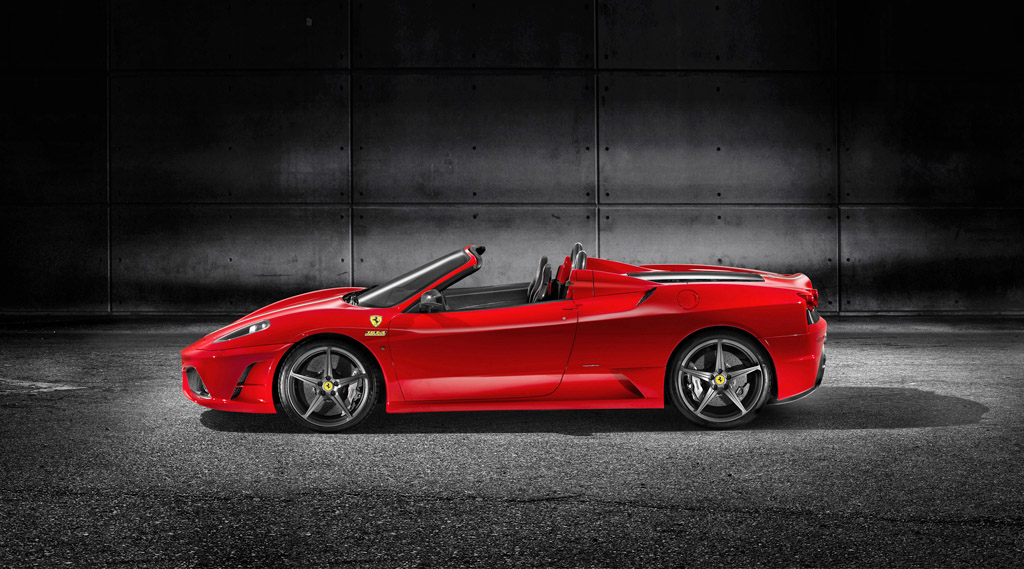
Ferrari F430 Spider 16M

See All Ferrari F430 Spider 16M Articles / F430 Spider 16M

To celebrate the 16th F1 championship Ferrari built the 430 Scuderia Spider 16M. Using the awesome F430 Scuderia coupe as its base this car was an absolute beast. It was a droptop Ferrari with all the go-fast parts of the 430 Scuderia, including a higher-compression version of the 4.3-liter V-8 making 503 hp and 347 lb-ft of torque (80 percent of which is available at 3000 rpm), a race-tuned suspension, serving-dish-sized carbon-ceramic brakes, and the F1-Superfast2 automated manual transmission that enacts a one-two shift in 60 milliseconds.

Just as in the 430 Scuderia, the interior is stripped of all comfort features. Carbon fiber and aluminum line the cabin. There is no carpet, just diamond-plate-style aluminum on the floor, accented by exposed welds. The carbon-framed seats are covered in weight-saving cloth and offer only manual fore-and-aft and seatback-angle adjustments. The doors are skinned with carbon fiber as well. The only concession to luxury lives in the dash: a horizontally docked iPod touch, the sound from which is delivered to occupants via six speakers (yup, there’s a sound system on a track-ready Ferrari).

With only 499 examples made it is a highly sought after car that goes for much more than its circa $300,000 price when new.
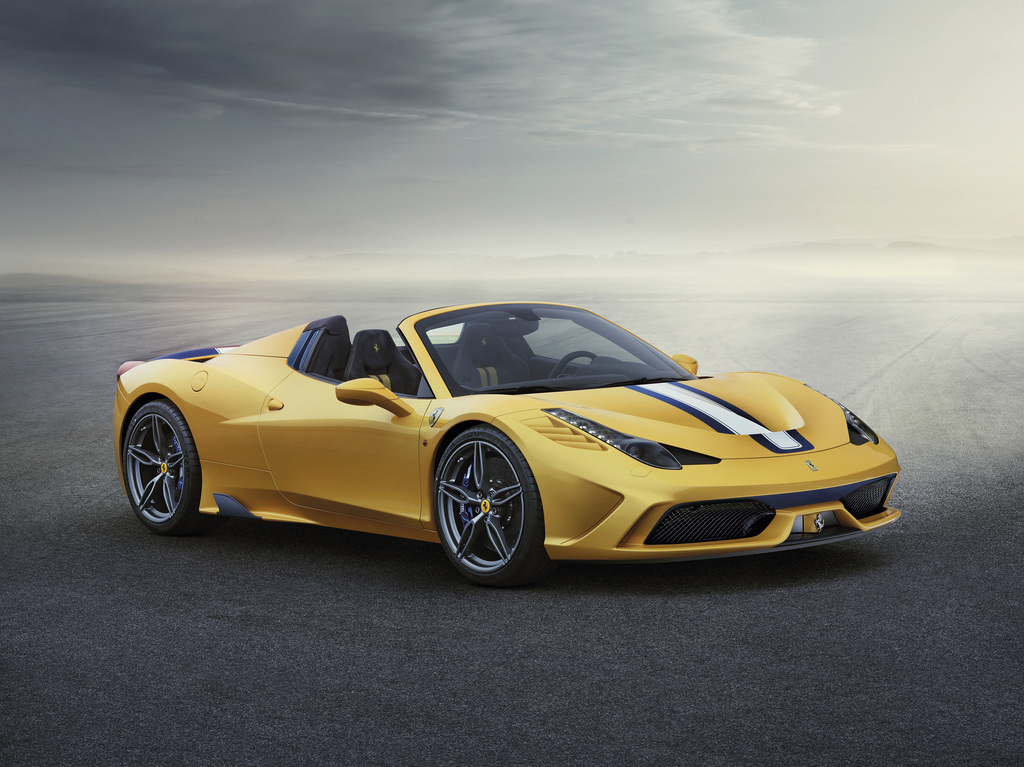
2014 Ferrari 458 Speciale A

2014 Ferrari 458 Speciale A

Ferrari 458 Speciale A

See All Ferrari 458 Articles / 458 Speciale A In Depth

If I had to pick one car over all others it would probably be the 458 Speciale. If I had to pick my favorite 458 Speciale it would probably be the Aperta (‘open’ in Italian). Naturally-aspirated, V8, mid-engined, 597hp at a stratospheric RPM and performance to blow your mind. It would take an F1 driver to tell the difference dynamically between the coupe and open top 458 Speciale so if it were my money it would be an easy decision.

With on 499 units made, the 458 Speciale A was the most powerful spider in Ferrari’s history (now surpassed of course). It combines effortlessly performance with the sublime pleasure of drop-top driving. Its aluminium retractable hardtop takes only 14 seconds to deploy or retract.

0-60 mph in under 3.0 seconds and a Fiorano lap time of 1’23”5 proves that this is no soft top with no guts, this is one of the most extreme performance machines on the planet. Add that seductively exhilarating signature Ferrari soundtrack and it is clear why this makes our list of best Ferrari convertibles.


Convertible Ferrari Bargains

If you are like us and can’t afford a new 488 Spider or Portofino and the hypercar convertibles or classic drop top Ferraris cost more than your house, then this is the list for you. These are the bargain Ferrari convertibles, the ones that can be had for reasonable money.
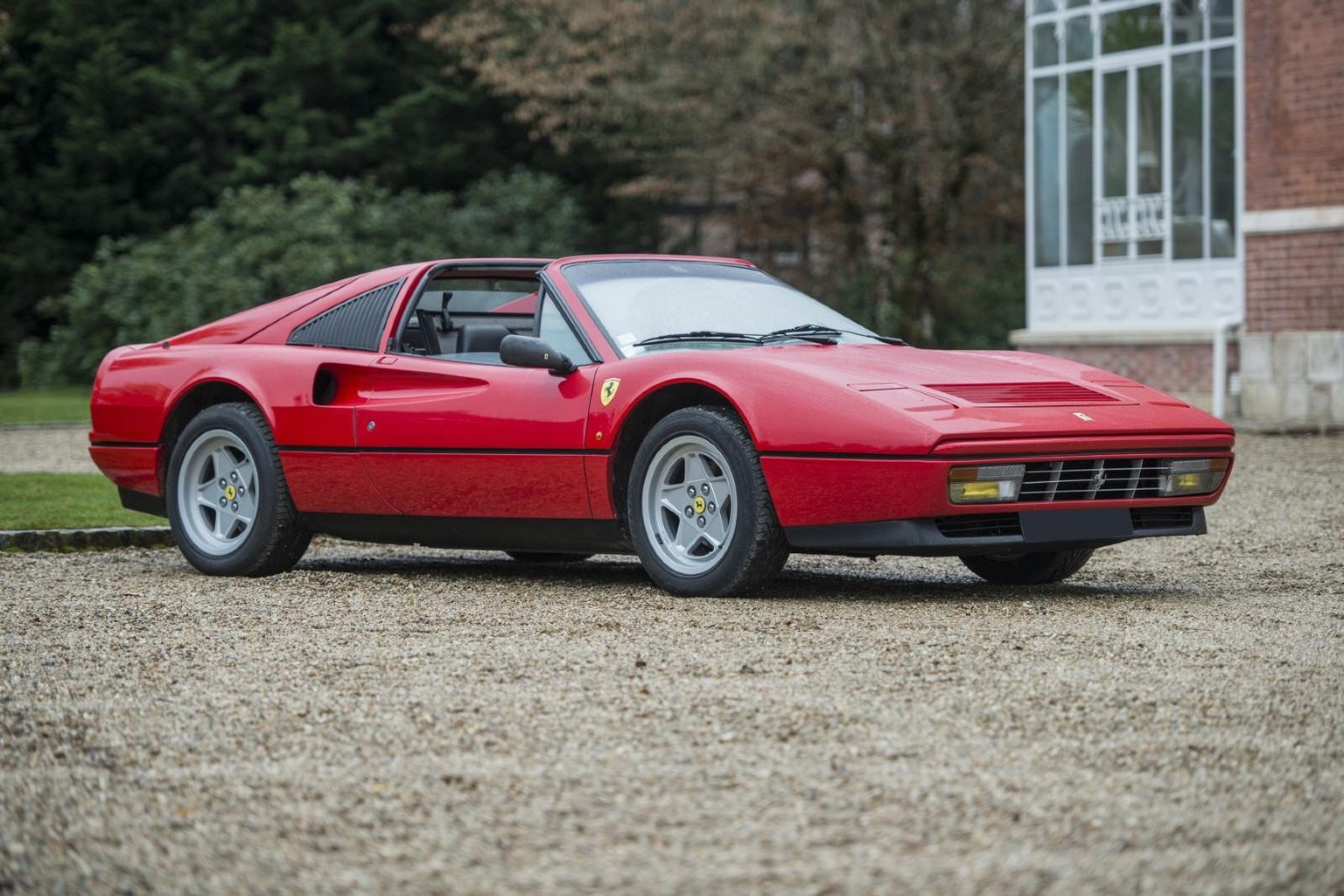
1986 Ferrari 328 GTS Gallery

1986 Ferrari 328 GTS Gallery

Ferrari 328 GTS

See: Ferrari 328 GTS In-Depth

Summer 2018 Price from $80,000

In the mid-80s, the elegant shape of the open-topped 308 GTS was further softened and rounded to become – once a 270bhp 3.2-liter engine had been fitted amidships – the 328 GTS.

The curvier body not only updated the looks, it also improved the aerodynamics. Inside the new drop-top, the now outdated 1970s seats and trim and switchgear were also thoroughly refreshed.

Launched at the Frankfurt Motor Show of 1985, the 328 GTS was an instant hit and – during the four years of its production – more than 6,000 cars were sold: around five times as many as its hard-topped brother, the 328 GTB.
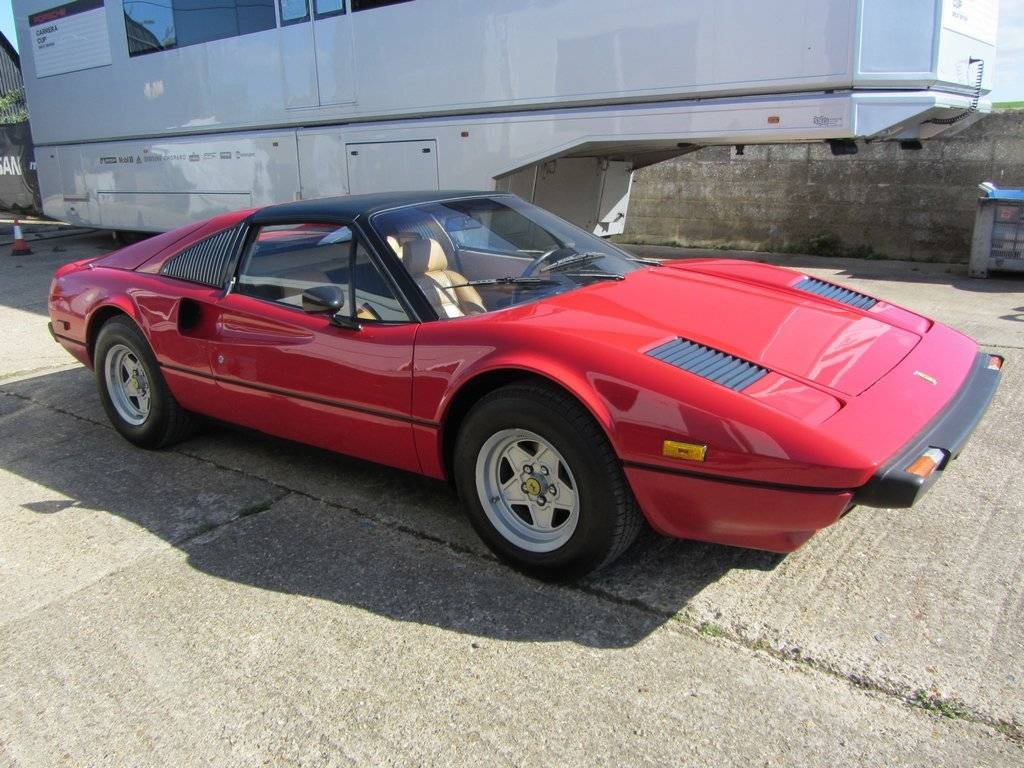
1981 Ferrari 308 GTSI

1981 Ferrari 308 GTSI

Ferrari 308 GTS

While we prefer the 328, the Ferrari 308 GTS – is the targa-topped version of Ferrari’s first mid-engined, V8 road car and it is also a bargain. The targa roof added a dash of extra good-weather glamour to the 308, just as it did with the earlier Dino.
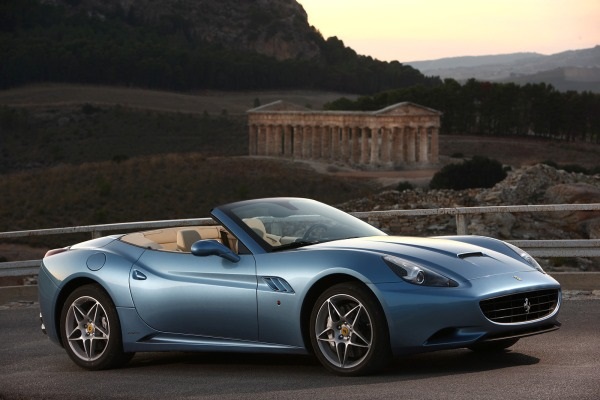
The Worst Ferrari Cars Ever Made - 2009 Ferrari California

The Worst Ferrari Cars Ever Made - 2009 Ferrari California

Ferrari California

See: Ferrari California In-Depth

Summer 2018 Price from $100,000 USD

Yes, this is a real Ferrari and yes it is a relative bargain these days. For under $100k gets you a Ferrari V8 you can drive every day. While it is often panned as not a real Ferrari, we can assure you having driven the California it is a great Ferrari. Sure, it isn’t a canyon carver like a 458 but it is the perfect daily driver and is easily the most practical Ferrari you can buy.

The California was first Ferrari road car to have a front-mounted V8 engine, the first to have a dual-clutch gearbox and came with an automated, fully retractable metal roof. It’s a softer, more approachable Ferrari which is why which 70 percent of California buyers so were new to the brand. If you want a Ferrari that is quick with a blend of everyday usability and outright enjoyment, then this might be the Ferrari V8 bargain for you.

While the California was made all the way through 2017 we suggest you focus on the earlier 2008 to 2012 models if you’re looking for a true bargain.
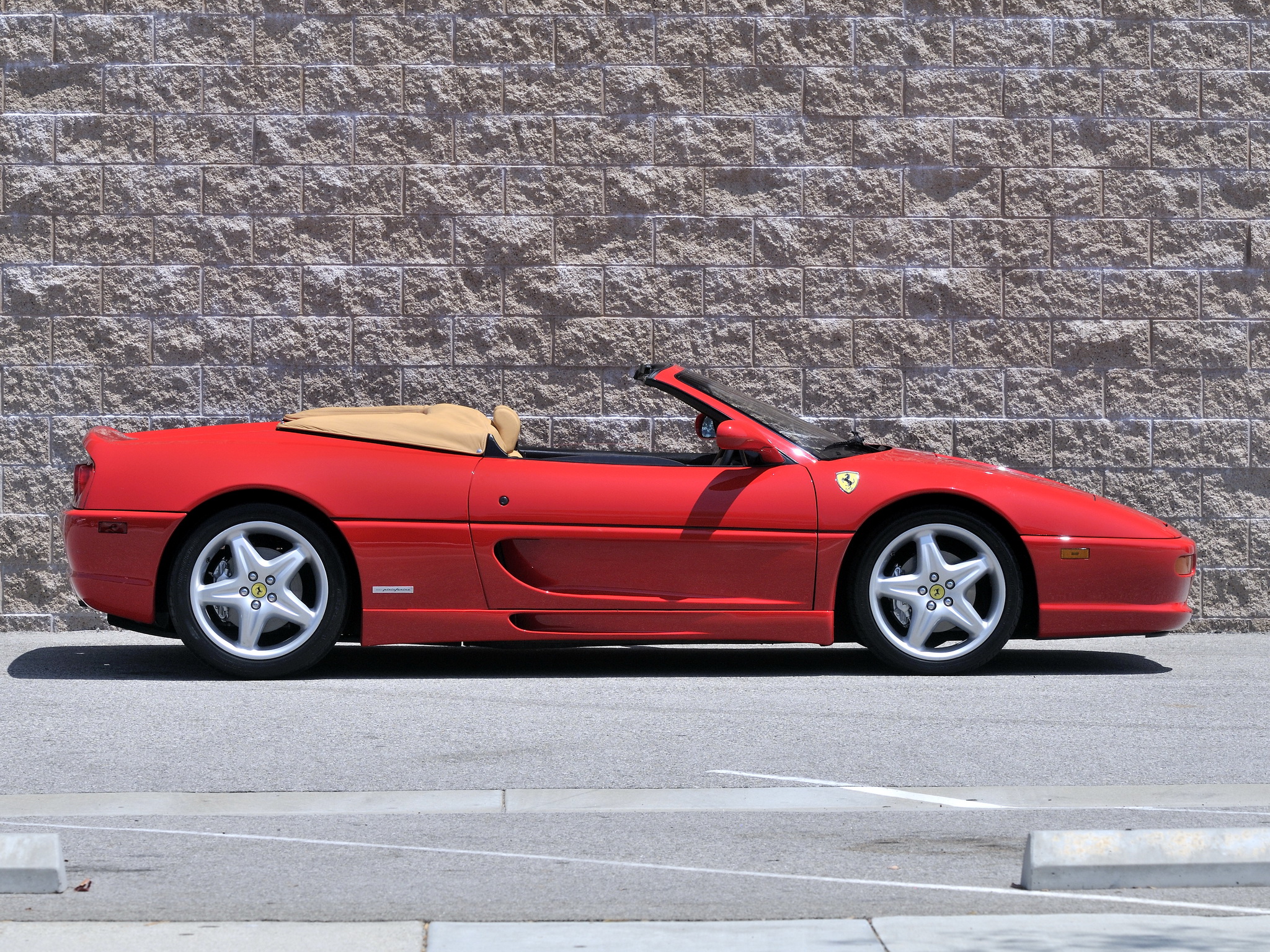
2009 Vaughn Gittin Jr. Mustang RTR-C

2009 Vaughn Gittin Jr. Mustang RTR-C

Ferrari 355 Spider

See: Ferrari 355 In-Depth

Summer 2018 Price from $70,000 USD

We love the F355 Spider and its on our shortlist of cars we’d buy tomorrow. In the U.S they’re going for $70k+ which is a bargain for this quality of car. The F355 Spider had a convertible top – fabric, and electronically powered for the first time and carried over the Berlinetta’s flying-buttress design. The convertible looks just as good as the coupe version.

The F355 was introduced in 1994 for the 1995 model year. The F355 righted all the wrongs of the preceding 348 starting with that fabulous V8. When the F355 went on sale, it had the highest specific output of any car on sale, squeezing 375 bhp from a 3.5-liter V8.

When it came to the F355, design was everything. It is easily one of the most beautiful modern cars ever designed. Where the Testerossa and 348 have aged poorly, the F355 is beautiful and looks amazing today.

The F355 also sounds amazing. When you step on the gas pedal in an F355 it just revs and revs and revs. The sound develops a hard edge and screams in true Ferrari tradition. Unlike modern Ferraris though, you won’t be doing immediate jail time speeds because while the F355 is fast it isn’t too fast. 0-62mph is covered in 4.7 second and a top speed of 183 mph was possible, so nothing crazy for 2018. EVO magazine nailed when they said: “‘Perhaps for the first time, Ferrari has managed to successfully combine age-old passion and heart-pounding emotion with state-of-the-art engineering and electronics.”

This is everything a Ferrari is supposed to be.


Our Other Favorite Convertible Ferraris

There is still more to go. The rest of the Ferraris on this list didn’t neatly fit into any of the groupings above. These are awesome Ferrari open top models that we absolutely love and we believe deserved a spot on our list. Simple.
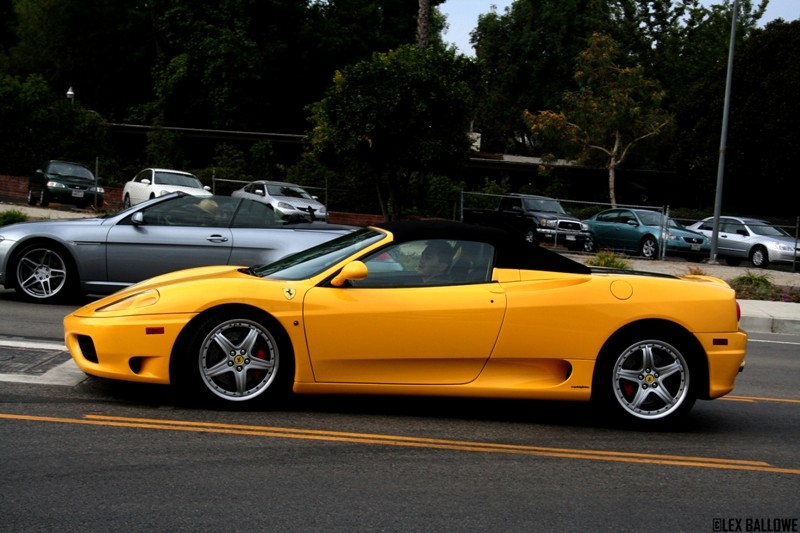
2001 Ferrari 360 Spider Gallery

2001 Ferrari 360 Spider Gallery

Ferrari 360 Spider

See All Ferrari 360 Modena Spider Articles / Ferrari 360 Modena Spider In-Depth

You can buy a 360 Modena for under US$100,000 these days and that feels like great value for a what was a giant leap over the F355. While the 360 hasn’t aged as well as the F355 in terms of design, the car was a technical masterpiece and drives much better than it looks.

The 360 Modena was a replacement for the F355. The mid-engine Ferrari 360 Modena had a 400 hp 3.6-liter V8 and transmission offered in both F1 paddle shift and six-speed manual. The Ferrari 360 Modena hit 60 mph in 4.4 seconds so it’s hot hatch territory fast these days, but it feels faster in person and has an exhaust note that will go down in history books as one of the best sounding cars ever. You could drive the F360 everyday, it is comfortable and relatively reliable while still being fun.

The Ferrari 360 used aluminium extensively which made it 130 pounds lighter than the F355 and increased rigidity by 64%. You can tell the difference when driving too, the 360 is easier to drive, more composed and more fun than the F355. If you want serious performance we’d recommend you opt for the F430 which is still a decent daily driver but significantly more hardcore performance machine.
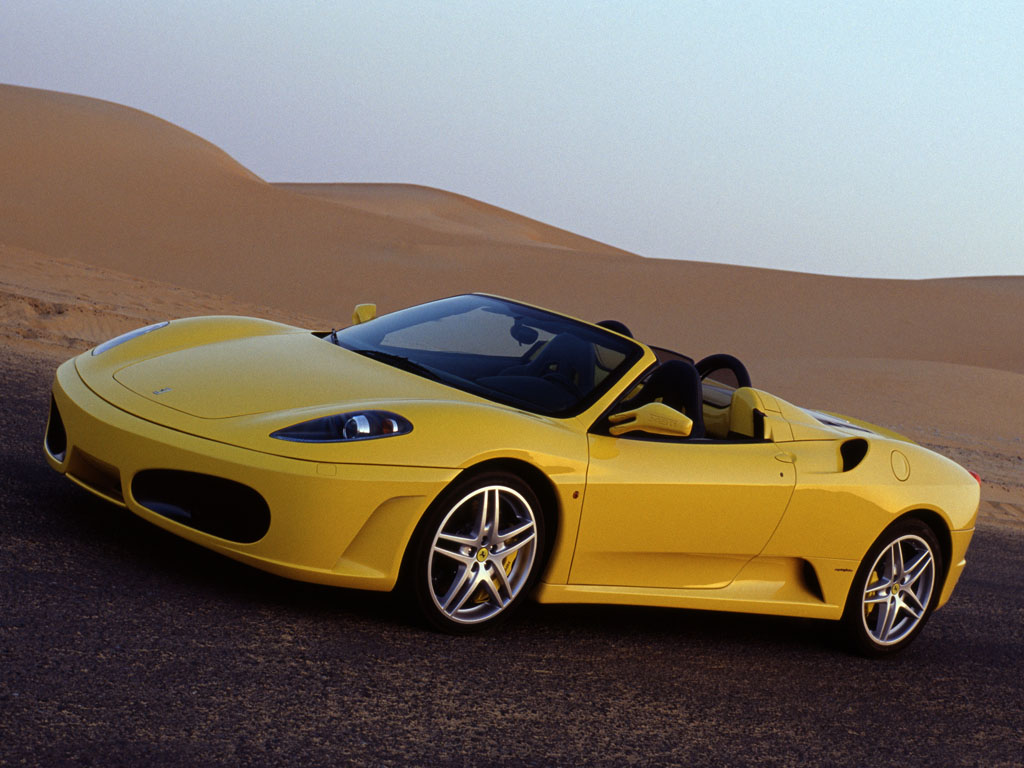
2005 Ferrari F430 Spider

2005 Ferrari F430 Spider

Ferrari F430 Spider

See All Ferrari F430 Articles / Ferrari F430 In-Depth

While the Scuderia is still not “bargain” money, the Spider and Coupe F430 versions are starting at just under $90,000 (that’s 991 Porsche money). Sure that isn’t cheap per se but remember we’re talking a proper Ferrari that is awesome and still modern enough that it doesn’t seem classic (Top Gear called it the best car in the world when they first reviewed it).

We recently drove a friends manual F430 and it is faster and more engaging than you can imagine. In this day and age of McLaren 720S absurdity, a F430 is probably the pinnacle in our minds of everyday driveability and sports car fun on the road before things really get out of hand. The F430 has a 4.3 liter naturally aspirated V8 and makes 490 horsepower at 8,500 rpm redline. It weighs 3,200 pounds and reaches 0-60 in 3.8 seconds.

Every review of the car glowed with praise. Handling was supposedly fantastic. This was the first car that started the now-cliche trope that the electronics actually helped the driving experience rather than detracted from it. Our pick is a manual car and we’d opt for the coupe over the spider personally. Behind the wheel of the F430 is a blast. It is teaming with feel, is flat in corners and is enjoyable on the street, mountain pass or the track. It is really comfortable and surprisingly easy to maneuver. The perfect Ferrari available used today? We think so.
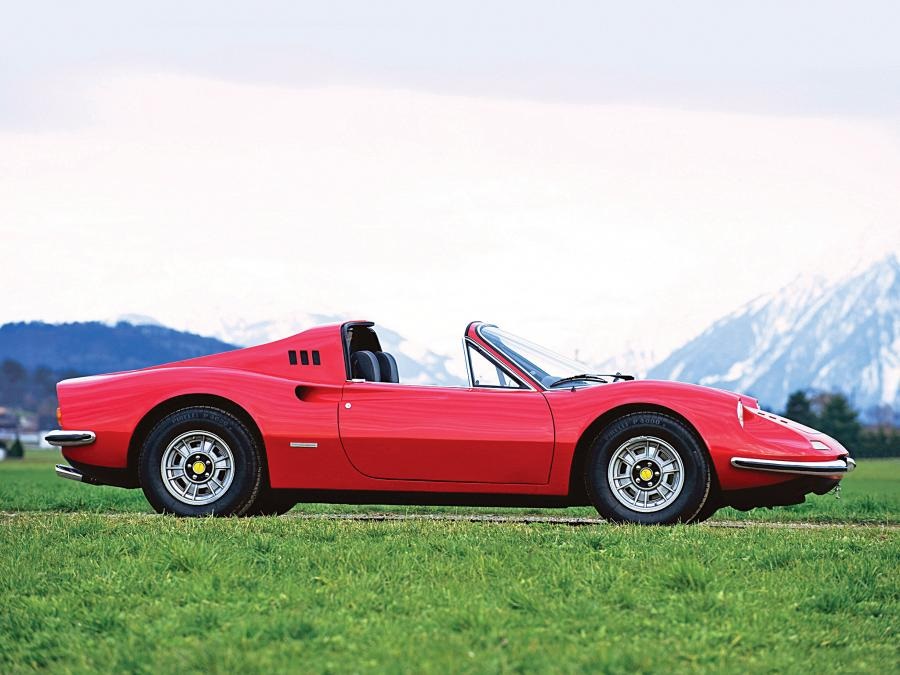
Dino 246 GTS

Dino 246 GTS

Dino 246 GTS

See All Ferrari Dino 206/246 Articles / 246 GTS In Depth

At the 1972 Geneva Motor Show, Ferrari released an open-top version of the Dino 246 called the GTS. Over 1200 examples were produced over a two year period. The 246 GTS had a removable roof panel similar to the 1967 Porsche 911 Targa. Both these cars copied the idea from the Surrey-Top Triumph TR4 which was the first to use such a panel.

The Dino line was created in honor of Enzo Ferrari’s son Alfredo Ferrari who was championing the V6 engine before his untimely death. The series began with a number of 206 sport prototypes and eventually the 246 road cars.

One of the ultimate specification Dinos was altered to accept 7½-inch wide Campagnolo wheels. These Chairs and Flares cars featured Group 4-inspired wheel arches and seats from the 365 GTB/4 Daytona.
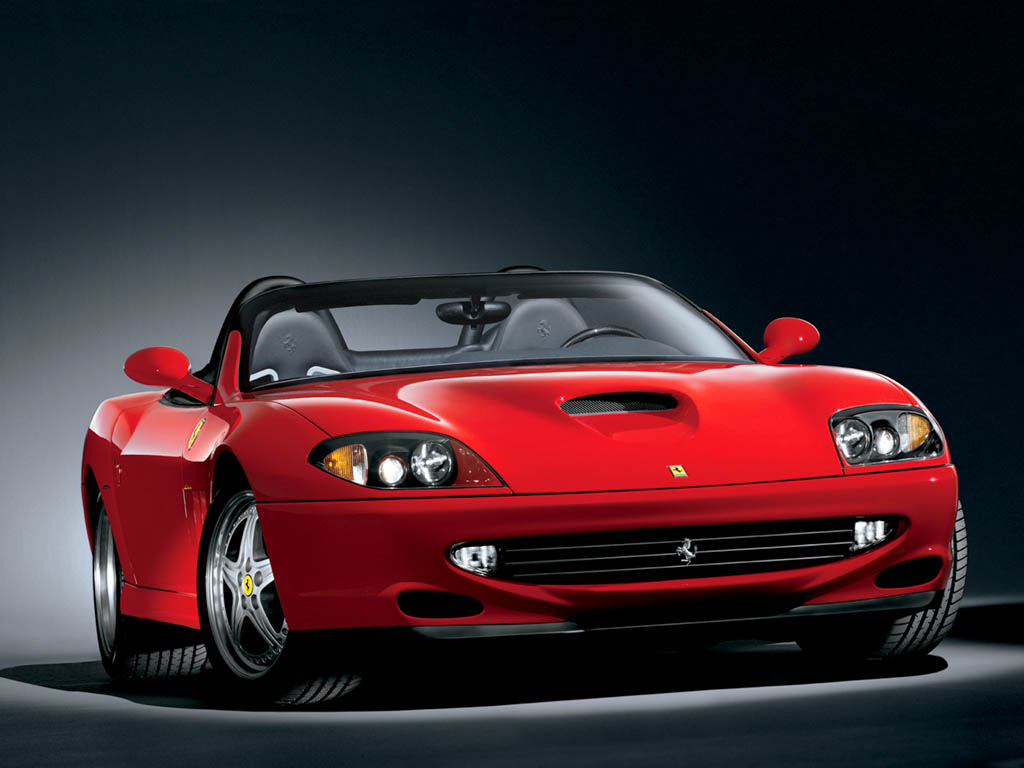
2000 Ferrari 550 Barchetta Pininfarina

2000 Ferrari 550 Barchetta Pininfarina

Ferrari 550 Barchetta Pininfarina

See All Ferrari 550 Barchetta Articles / 550 Barchetta In Depth

After a lapse of nearly 25 years, Ferrari returned to building powerful, luxurious, front-engined, V12-powered, two-seat grand touring cars with the 550. This limited-edition retro-styled roadster version was meant to evoke many of the iconic convertibles featured in this list especially the N.A.R.T. Spyder above.

Unveiled at the Paris show in 2000, the 550 Barchetta Pininfarina was so named to commemorate the 70th anniversary of ferrari’s coachbuilder and stylist. a strictly limited edition of just 448 numbered cars was built, with the last leaving the factory in december 2001. The 550 barchetta pininfarina was specifically designed to be reminiscent of legendary Ferrari road race stars of the likes of the 166 MM, the 250 GT California and the 365 GTS4 Daytona.

The aim, in fact, was to create an open-top front-engined 12-cylinder with a retro feel to it. The 550 Barchetta Pininfarina was designed and developed to be a unique interpretation of Ferrari’s purest and most extreme sports cars. In fact, it was a deliberate and provocative departure from the rest of the current range. As such, it was made available only as a limited edition. Each car was numbered and its number displayed on a special in-car plaque signed by Sergio Pininfarina.
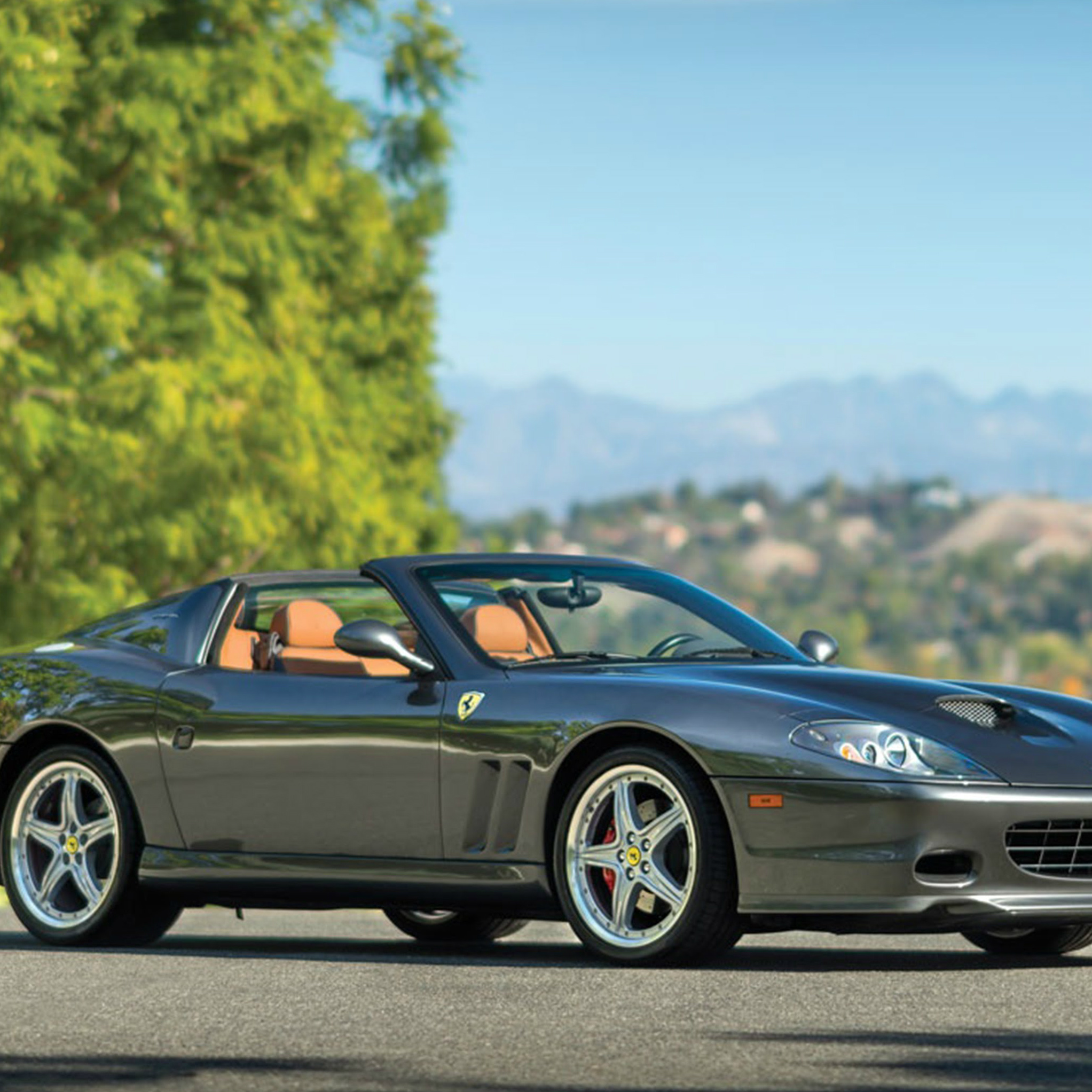
Ferrari 575M Superamerica

Ferrari 575M Superamerica

Ferrari Superamerica

See All Ferrari 575M Superamerica Articles / Ferrari 575M Superamerica In Depth

The roof on the Superamerica was made of electrochromic glass, which could adjust its tint from crystal clear to total blackout at the touch of a button. It could also flip back at the touch of another. Ferrari called it “Revocromico.” We call it stunning.

Introduced in 2005, the Ferrari Superamerica was a convertible version of the 575M Maranello; it featured an electrochromic glass panel roof which rotated 180° (both are production car firsts) at the rear to lie flat over the boot. Patented Revocromico roof incorporates carbon fibre structure that is hinged on the single axis with a luggage compartment lid, allowing the access to the latter even with an open roof. With the roof open the rear window, apart for holding the third stop light, also acts as a wind deflector. This roof design was previously used on 2001-designed Vola by Leonardo Fioravanti. The Superamerica used the higher-output tune of the V-12 engine, F133 G, rated at 533 hp (397 kW; 540 PS) and Ferrari marketed it as the world’s fastest convertible, with a top speed of 199 mph (320 km/h). The GTC handling package was optional.

A total of 559 Superamericas were built; this number followed Enzo Ferrari’s philosophy that there should always be one fewer car available than what the market demanded; only 43 of those had a manual gearbox.

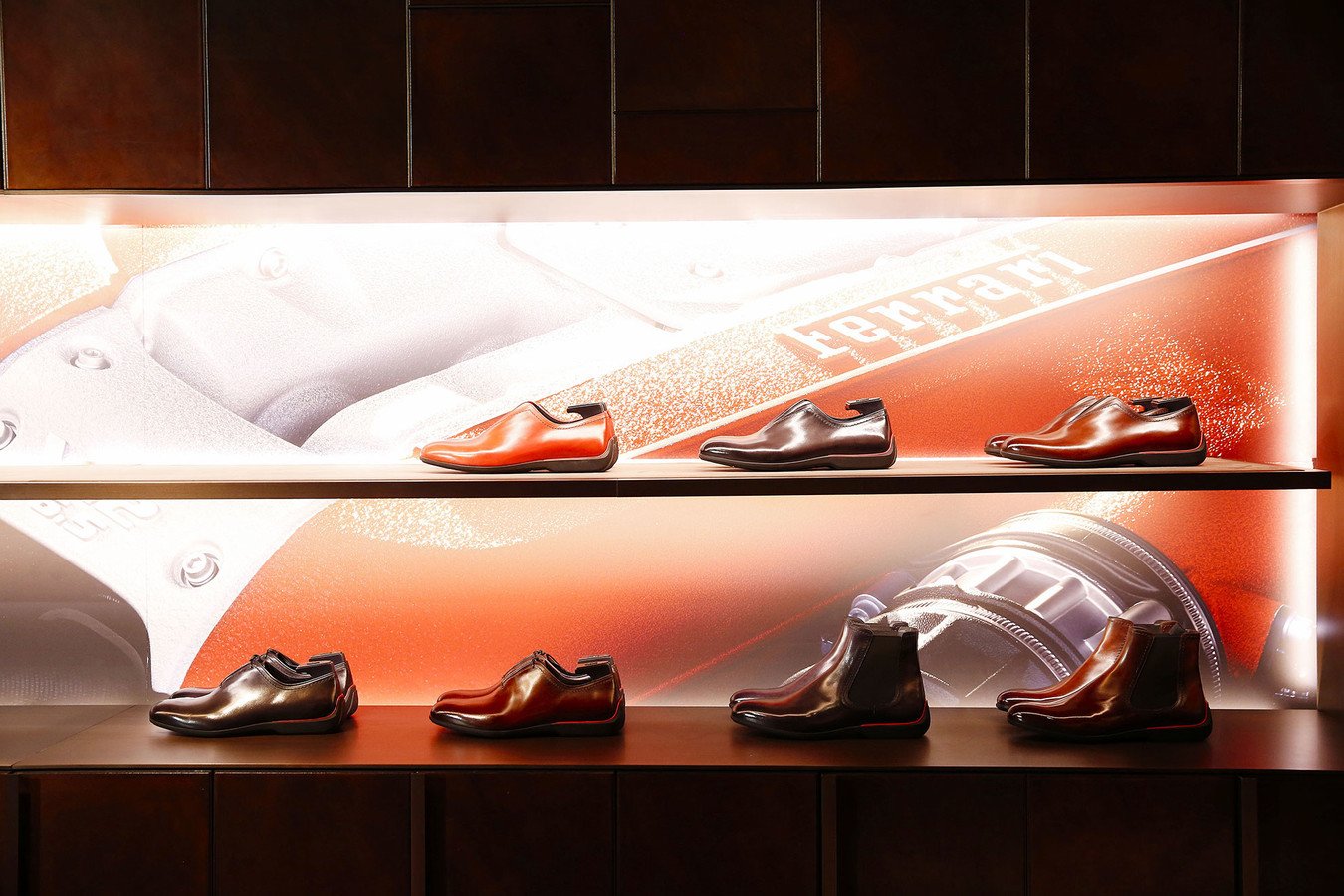
Ferrari Patents Mysterious Targa Top Model in Europe

A European Patent Office filing has revealed a new Ferrari targa top design. Our friends over at AutoGuide revealed that drawings showing the new targa top have been filed indicating that Ferrari might soon be thinking of bringing back the targa top for it’s mid-engineed mass-market products.

The Ferrari targa top renderings appear to show a Ferrari F430 using the new removable hardtop. The outdated Ferrari design has undoubtedly been used as an example to hide the true application of the patent.

The filing refers to a car with a “coupe body with a rigid roof that is removable and is supported at the front by the upright of the windshield and at the rear by a robust full-width roll bar”. It goes on to confirm that the Ferrari targa top is unique as it increases the height of the windshield so that it is higher than the rear anti-roll bar by approximately 3-5 cm, this allows the removal of aerodynamic turbulence.

It’s not without it’s downsides though. The filing reveals that “this solution involves a significant increase in the car’s front section and therefore an increase in the aerodynamic resistance of the car (i.e. a deterioration in both speed performance and fuel consumption).” Ultimately, the filing proposes that vent channels and a protection panel are used to mitigate this, and that is what distinguishes the Ferrari Design.

Ferrari has used the targa top sparingly over the last 20 years. The last time we saw it was on the Ferrari 355 Targa, yet it has also been offered in the form of the 575 Superamerica (which had an electronically operated glass top), the Ferrari J50 and the LaFerrari Aperta.

While the design’s might simply be protecting the intellectual property Ferrari employed to build the later two cars, it could also indicate that Ferrari is building up to a new Targa-style offering.

The granting of a patent can take a considerable amount of time which is why we can’t rule out the fact that this application might have been filed some time ago. The information provided on the website shows that the patent was filed in January 2018

The All Time Greatest V8 Ferraris Ever

The full list of Ferrari models is filled with amazing cars. Picking the best ones in any roundup is HARD.

Recently the new Enzo magazine ran a poll that garnered over 4,000 votes to decide the five most popular V8 Ferraris ever. Ferrari fans named the all-time top 5 greatest V8 Ferraris and the winner was the 458 Italia, winning over 40% of the vote. It was the last naturally aspirated Ferrari V8 ever produced before the turbocharging era of the 488 started.

In second place was the F355 with its longitudinal 3.5-liter V8 that really helped a new generation of Ferrari fans fall for the marque (thank that crazy RPM and flat plank scream). Next up is 488 GTB whose engine has won multiple engine of the year awards followed by the lovely F430 in fourth place.

A good exercise for sure, but we needed to go a little deeper. While Ferrari armchair fans know their stuff, we know nuances matter. Are we talking the F458 or are we talking 459 Speciale? 360 Challenge Stradale didn’t make the list, that seems odd.

So we decided to expand the list and gone a little deeper. We also wanted to explain why we think certain V8s were better than others and to help buyers decide on the best bang for your buck V8 Ferraris because what good is a list like this unless you can run out a scoop up a Ferrari bargain. Finally, we wanted to pay tribute the engines themselves, to dig into the designations.

Our 8 Favorite V8 Ferraris

Ferrari 458 Speciale

Ferrari 458 Speciale

1. Ferrari 458 Speciale

See: All 458 Articles / The Ferrari 458 In-Depth

Let’s start by saying that this is absolutely our favorite car ever so it was always going to make the top spot. Sure the “entry level” 458 was epic, but the Speciale amped everything up to 11, building arguably the best naturally aspirated sports car in history.

The 458 Speciale was the last naturally-aspirated V8 Ferrari and the engine was at its peak in terms of evolution. Mid-engined 4.5-litre V8 with flat-plane-crank, sky high 9,000 RPM redline, insane 597 bhp and 398 lb-ft of torque, the Speciale was one special Ferrari.

Performance was astonishing for a naturally aspirated car. The 0-62 mph sprint was over in 3.4 seconds and top speed was over 200 mph. More importantly, the Speciale does everything well. It took the already amazing 458 and somehow made it better, faster and more fun to drive.

The best V8 Ferrari ever? You bet, it’s not even close.

Ferrari f40

Ferrari f40

2. Ferrari F40

See: All Ferrari F40 Articles / F40 History, Specs & More

How the Ferrari F40 wasn’t included in that poll by Enzo Magazine is beyond us. Considered by many pundits the best supercar ever made it gets second place on our list of best V8 Ferraris.

The last Ferrari signed off by Enzo himself the F40 came at a time when the Porsche 959 had captivated car fans with its advanced technology and astonishing performance. To celebrate Ferrari’s 40th anniversary, it was decided that the company would produce a mid-engine, rear wheel drive, two-door coupe sports car and it would be the fastest, most powerful car the company had ever built, enough to eclipse the Porsche. This car, appropriately enough, would be called the Ferrari F40.

The Ferrari F40 was built from 1987 to 1992 and was intended as the successor to the Ferrari 288 GTO, which itself had been one of the fastest production Ferrari models ever built (up to that point in time.)

At its core, the car was powered by an enlarged, mid-mounted 2.9L (2936 cc) version of the GTO’s IHI twin-turbocharged V8 engine. In alignment with the development work performed on the “Evoluzione” variant of the 288 GTO, the F40’s future engine received a small increase in capacity, a slightly higher compression ratio of 7.7:1, a rise in boost pressure, and a number of other changes that resulted in a respectable improvement in the engine’s power output and torque. According to Ferrari, the engine was capable of developing 478 brake horsepower at 7,000rpm, a number that most experts agreed was far less than the engine’s true output. (In fact, most experts today claim that the engine’s true output was well over 500 horsepower.)

It made extensive use of composite materials (carbon-fiber tub, Kevlar body panels), and it offered a stripped-down interior (think Le Mans prototype and you’re close). Polarizing at the time, the Ferrari F40 would go on to become one of the most iconic supercars ever made.

Ferrari 360 Challenge Stradale

Ferrari 360 Challenge Stradale

3. Ferrari Challenge Stradale

See: All Challenge Stradale Articles

The Challenge Stradale was much more than a redressed 360 with extra power. Its bare-bones approach and subtle styling changes only hint at the thoroughbred under the skin: this is a road-legal car that is entirely race-ready and at home on track. It offered enthusiasts genuine race car performance and features in an accessible, street-legal package that is built on top of a standard production model doner car.

The main goal for the 360 Challenge Stradale was to take 3 seconds off the 360’s Fiorano lap record. He and his team succeeded.

Starting with the 360 Modena, Ferrari engineers removed all equipment deemed superfluous in order to shed weight, lowered and stiffened the suspension, and fitted massive alloy wheels. Inside, the two passengers were treated to bucket seats with racing harnesses and Plexiglas windows. The huge performance gains can largely be attributed to increase in power and a reduction in weight. Ferrari put the 360 on a titanium and carbon fiber diet which shed 243 lbs (110 kgs) off the car.

Having an all-aluminum monocoque and a flat-plane V8 whipping out 395 bhp, the 360 Modena had raised Ferrari’s standards from the preceding F355 that came before it. The Stradale took things further got the 3.6-liter V8 up to 425-hp. Fine tuning is how the engineers at Ferrari extracted more power. Higher-compression combustion chambers, polished ports, and a larger intake tract all contributed. Attached was a dual-flow exhaust which, by means of a valve bypassed most of the deadening for a blaring symphony of noise. This wail is distinctive of the Stradale and is enough of a reason for it to make our list.

F430 Scuderia

F430 Scuderia

4. Ferrari F430 Scuderia

See: All Ferrari F430 Scuderia Articles / The 430 Scuderia In-Depth

The F430 was the first Ferrari to feature the steering-wheel mounted Manettino switch – a fixture on all Ferraris since – that controlled a myriad of onboard systems, including mapping for the 4.3-litre V8 which developed 483bhp helping the F430 past 200mph.

The extreme version of that already awesome F430 and one of our favorite cars ever was the F430 Scuderia and it comes in at number four on our list of best Ferrari V8s ever. The 430 Scuderia was a truly high-performance 2-seater berlinetta that demonstrated how Ferrari’s Formula 1 know-how is carried across to its production cars. Fitted with a naturally-aspirated 4308cc V8’s and 510 hp at 8500 rpm it is one of the best engines ever.

Where the 458 took performance to another level and things have continue to escalate from then on, the F430 Scuderia feels like the real sweet spot in terms of cars that can actually be enjoyed and really tested on the road. It was the last Ferrari to use the “F1-style” paddle-shift transmission before they switched to dual-clutch so it has a level of engagement that later models are missing.

The key to the Scuderia performance gain over the F430 was the 220 pound weight loss program compared to the standard F430. No carpeting, no glove box, no radio, trim was carbon fiber, floor mats were out in favor of aluminum plating and so on. The result is a 2975-lb. curb weight powered by that magnificent V8.

Ferrari 488 Spider

Ferrari 488 Spider

5. Ferrari 488 Spider

See: All Ferrari 488 Articles / 488 Spider In-Depth

While the 488 Spider destroys every other car on this list in terms of outright performance, it was not enough to crack a top three place on our best of list. Make no mistake though, this is one great car. The 3.9-liter twin-turbocharged V8 churns 661 bhp and 560 lb ft of torque and just won engine of the year (again). It is arguably the best turbocharged engine ever made. Does this engine ever give you that same feeling you get deep inside when you wind up to 8,000+ rpm in the naturally-aspirated V8s in the back of the 458 Italia or F430? Nope.

While the 488 Pista exists, we don’t think it moved things on far enough from the base 488 GTB. We also chose the Spider over the GTB because this is all you need. It is just as good as the coupe with all the benefits of open top fun. The 488 Spider is amazingly efficient, fast and enjoyable and there is a strong case to be made that the Ferrari 488 Spider is the single greatest modern automobile for sale in all the world in terms of doing it all.

What about performance? Well the stunning drop-top version of the 488 GTB can sprint to 60 mph in about 3-second and hit a 205 mph top speed. Ferrari has produced another masterpiece with the 488 Spider.

Ferrari F355

Ferrari F355

6. Ferrari F355

See: Ferrari 355 In-Depth

The F355 was introduced in 1994 for the 1995 model year. The F355 righted all the wrongs of the preceding 348 starting with that fabulous V8. When the F355 went on sale, it had the highest specific output of any car on sale, squeezing 375 bhp from a 3.5-liter V8.

When it came to the F355, design was everything. It is easily one of the most beautiful modern cars ever designed. Where the Testerossa and 348 have aged poorly, the F355 is beautiful and looks amazing today.

The F355 also sounds amazing. When you step on the gas pedal in an F355 it just revs and revs and revs. The sound develops a hard edge and screams in true Ferrari tradition. Unlike modern Ferraris though, you won’t be doing immediate jail time speeds because while the F355 is fast it isn’t too fast. 0-62mph is covered in 4.7 second and a top speed of 183 mph was possible, so nothing crazy for 2018. EVO magazine nailed when they said: “‘Perhaps for the first time, Ferrari has managed to successfully combine age-old passion and heart-pounding emotion with state-of-the-art engineering and electronics.”

This is everything a Ferrari is supposed to be.

Ferrari 288 GTO

Ferrari 288 GTO

7. Ferrari 288 GTO

See: All Ferrari 288 GTO Articles / 288 GTO In-Depth

Thank Group B race regulations that led to the creation of one of Ferrari’s most iconic cars, the 288 GTO. The 288 was the first Ferrari to wear the GTO nameplate since the iconic 250 GTO. Group B was canceled before the 288 saw any competition so Ferrari just kept going to built the car anyway. producing the car.

From the outside the 288 looks like a 308 GTB that has had some steroids. It is not. Beneath the skin it had an advanced tubular chassis and was full of advanced composite materials like Kevlar and fiberglass.

The GTO was fitted with a 2.8L V8 with massive twin IHI turbos that produced 400bhp at 7000 rpm through a five-speed gearbox and a limited-slip differential. The GTO could hit 60 mph in just 4.9 seconds – nearly two whole seconds faster than the 308 – and would go on to 189 mph.

Ferrari still built 272 for homologation purposes so good luck trying to get your hands on one.

Ferrari 308

Ferrari 308

8. Ferrari 308/328

All Ferrari 208/308/328 Articles

As big fans of classic, raw and basic cars it is a bit surprising that the 308/328 isn’t higher on our list but I guess that says a lot about the competition for top honors in this prestigious list.

The Pininfarina designed 308 was the first of the mid-engined V8 breed to emerge from Ferrari and made its debut in 1975. While it is slow by today’s standards it is just a great car all around and so much fun.

The carb-fed 2.9-litre mid-mounted V8 packed 252 hp and hustled the ~2000 pound Ferrari to 60 mph in 6 seconds (not bad for 1975 actually). Top speed was 152 mph. The classic design is known by everybody and is still pretty modern with its wedge shape and vents.

Ferrari expanded the 308 lineup with several variants of the coupe and convertible models. Fuel injection arrived in 1980, a V8 with four valves per cylinder made its debut in 1982, and Ferrari gave its entry-level model a new 3.2-liter engine in 1985. The extra displacement warranted an updated design and a new name — 328 GTB. Our pick is the 328.


Bang for Your Buck: Bargain V8 Ferraris

While we would all love to buy a Ferrari F40 or 458 Speciale we know it that readers of Supercars.net want bargains. Good news then because we’re about to share the best bang for your buck Ferrari V8s, the ones you should scoop up quickly. Here are V8 Ferraris that you can buy today for reasonable money.

Ferrari 328 GTS

Ferrari 328 GTS

1. Ferrari 328 GTS

See: Ferrari 328 GTS In-Depth

Summer 2018 Price: [Price]

In the mid-80s, the elegant shape of the open-topped 308 GTS was further softened and rounded to become – once a 270bhp 3.2-liter engine had been fitted amidships – the 328 GTS.

The curvier body not only updated the looks, it also improved the aerodynamics. Inside the new drop-top, the now outdated 1970s seats and trim and switchgear were also thoroughly refreshed.

Launched at the Frankfurt Motor Show of 1985, the 328 GTS was an instant hit and – during the four years of its production – more than 6,000 cars were sold: around five times as many as its hard-topped brother, the 328 GTB.

Ferrari 360 Modena

Ferrari 360 Modena

2. Ferrari 360 Modena

See: Ferrari 360 Modena In-Depth

Summer 2018 Price: >$100,000 USD

You can buy a 360 Modena for under US$100,000 these days and that feels like great value for a what was a giant leap over the F355. While the 360 hasn’t aged as well as the F355 in terms of design, the car was a technical masterpiece and drives much better than it looks.

The 360 Modena was a replacement for the F355. The mid-engine Ferrari 360 Modena had a 400 hp 3.6-liter V8 and transmission offered in both F1 paddle shift and six-speed manual. The Ferrari 360 Modena hit 60 mph in 4.4 seconds so it’s hot hatch territory fast these days, but it feels faster in person and has an exhaust note that will go down in history books as one of the best sounding cars ever. You could drive the F360 everyday, it is comfortable and relatively reliable while still being fun.

The Ferrari 360 used aluminium extensively which made it 130 pounds lighter than the F355 and increased rigidity by 64%. You can tell the difference when driving too, the 360 is easier to drive, more composed and more fun than the F355. If you want serious performance we’d recommend you opt for the F430 which is still a decent daily driver but significantly more hardcore performance machine.

Ferrari F355

Ferrari F355

3. Ferrari F355

See: Ferrari 355 In-Depth

Summer 2018 Price: $70,000 – $80,000 USD

If you have $70k to $80k to spend you can buy yourself an Audi A6 or a Ferrari F355. I know which one I would choose, given me the best looking modern-day Ferrari every time. The good news is that there are lots of F355s out there with 11,273 units produced (our pick would be a six-speed manual in GTS (targa roof) spec and optional Fiorano handling pack).

Although closely related to those late-model 348s, the F355 was a massive step forward technically. and also heralded the return of the beautiful Ferrari after the brash brutality of the 1980s machines. There were Berlinetta (coupe), GTS (targa roof) and Spider (convertible) models available. Manual gearboxes we standard until 1997 with the launch of the F1 gearbox (a single-clutch automated transmission).

The F355 is a special car to drive. The flat-plane-crank V8 doesn’t actually sound that good when you’re cruising, but floor the throttle and get past 5,500 rpm and this is one of the finest engines ever made. It is an absolute delight to drive and you will wring it out every chance you get. While it is not that fast in today’s terms it still accelerates with real determination and is genuinely balanced and sporty in the twisty stuff. A malleable, exploitable and enjoyable Ferrari that is modern, looks stunning and has spine tingling flat-plane-crank V8. What’s not to love.

Ferrari F430

Ferrari F430

4. Ferrari F430

See: Ferrari F430 In-Depth

Summer 2018 Price: [Price]

While the Scuderia is still not “bargain” money, the Spider and Coupe F430 versions are starting at just under $90,000 (that’s 991 Porsche money). Sure that isn’t cheap per se but remember we’re talking a proper Ferrari that is awesome and still modern enough that it doesn’t seem classic (Top Gear called it the best car in the world when they first reviewed it).

We recently drove a friends manual F430 and it is faster and more engaging than you can imagine. In this day and age of McLaren 720S absurdity, a F430 is probably the pinnacle in our minds of everyday driveability and sports car fun on the road before things really get out of hand. The F430 has a 4.3 liter naturally aspirated V8 and makes 490 horsepower at 8,500 rpm redline. It weighs 3,200 pounds and reaches 0-60 in 3.8 seconds.

Every review of the car glowed with praise. Handling was supposedly fantastic. This was the first car that started the now-cliche trope that the electronics actually helped the driving experience rather than detracted from it. Our pick is a manual car and we’d opt for the coupe over the spider personally. Behind the wheel of the F430 is a blast. It is teaming with feel, is flat in corners and is enjoyable on the street, mountain pass or the track. It is really comfortable and surprisingly easy to maneuver. The perfect Ferrari available used today? We think so.

Ferrari 308 GT4

Ferrari 308 GT4

5. Ferrari 308 GT4

See: Ferrari 308 GT4 In-Depth

Summer 2018 Price: [Price]

We will be the first ones to say that buying a 1970s era Ferrari isn’t for the faint of heart. Initially badged as a Dino the 308 GT4 only officially became a ‘real’ Ferrari three years later. We love the cool ‘70s wedge-shaped car and it’s fun 250bhp V8. While 0-60mph in 6.9 seconds is not fast by today’s standard, we can say that driving this car is a real experience.

There is some historical value here too with this being Ferrari’s first V8 road car and the marque’s first mid-engined 2+2, but the 308 GT4 (‘3’ for 3 litres,‘8’ for 8 cylinders, ‘4’ for 4 seats). Even more historically significant was that this Ferrari was designer by Bertone rather than Pininfarina (which is really rare).

Ferrari Mondial

Ferrari Mondial

6. Ferrari Mondial

See: Ferrari Mondial T In-Depth

Summer 2018 Price: [Price]

The Mondial was one of Ferrari’s most commercially successful models, with over 6,000 examples produced over its thirteen-year run and that is good for second hand prices. The Mondial underwent many updates throughout its production with four distinct variants produced: the Mondial 8, Mondial QV, Mondial 3.2, and Mondial t. All but the Mondial 8 were released in both coupé and cabriolet (convertible) body form. It was the successor to the 308 GT4 and this time Pininfarina was in charge of design.

This is a practical Ferrari. It had a longer wheelbase which meant some more space for the back seats and, thanks to this and its greater levels of comfort. It is a genuinely useable Ferrari. Today, Mondial is a byword for an affordable – but still high-performance – classic Ferrari.

Our pick is the final Mondial variant, the Mondial t, released in 1989. This contained some of the biggest changes in the Mondial history, with an even-larger 3.4 l (210 cu in) engine, a substantial update to the exterior styling and interior ergonomics, and with an entirely new, albeit more complex to service, powertrain. Overall the Mondial t is considered the best vehicle in the range regarding overall performance and refinement, although it is often noted that this comes at the cost of greater maintenance.

Ferrari California

Ferrari California

7. Ferrari California

See: Ferrari California In-Depth

Summer 2018 Price: >$100,000 USD

Yes, this is a real Ferrari and yes it is a relative bargain these days. For under $100k gets you a Ferrari V8 you can drive every day. While it is often panned as not a real Ferrari, we can assure you having driven the California it is a great Ferrari. Sure, it isn’t a canyon carver like a 458 but it is the perfect daily driver and is easily the most practical Ferrari you can buy.

The California was first Ferrari road car to have a front-mounted V8 engine, the first to have a dual-clutch gearbox and came with an automated, fully retractable metal roof. It’s a softer, more approachable Ferrari which is why which 70 percent of California buyers so were new to the brand. If you want a Ferrari that is quick with a blend of everyday usability and outright enjoyment, then this might be the Ferrari V8 bargain for you.

While the California was made all the way through 2017 we suggest you focus on the earlier 2008 to 2012 models if you’re looking for a true bargain.


Ferrari’s Best V8 Engines

We’ve talked about the cars, but now it is time to talk about the actual engines themselves. Ferrari V8s are special and it is a story about how Ferrari continues to innovate, tweak and improve over time.

Consider the 458 Italia. The V8 in that car revved to an astronomical RPM for a relatively sizable (4.5-liter) engine, it boasted the highest average piston speed in production when it was launched, cracked the 130 hp/liter and 85 lb-ft/liter marks (all crazy insane numbers). In the Speciale it combined to create probably the best car on the planet over the last decade. This 4.5-liter V-8 is a last hurrah from the naturally aspirated masters at Maranello.

Then we started to see the likes of McLaren who were able to get more power from their turbocharged set up and comply with even stricter emissions regulations. The end of the naturally aspirated Ferrari V8 was clear and we were all nervous and apprehensive as the launch of the 488 neared. The introduction of the turbocharged 488GTB showed that Ferrari is still the best engine maker on the planet and they showed that they can make turbocharged engines fun. It won several engine of the year awards and Dean Slavnich, co-chairman of the IEOTY Awards said it best:

“In the 488 GTB, the 3.9-litre eight-cylinder was a near-perfect example of a high-performance turbocharged engine, setting the bar so high that it swept aside rival powertrains,” said Dean Slavnich, co-chairman of the IEOTY Awards. “But redeveloped and tweaked for the 488 Pista, the best engine in the world just got better. Without doubt, we’re looking at an engineering masterclass from Ferrari. No turbo lag, beautiful delivery, raw emotion, a furious growl and so much power – this Ferrari V8 is a work of art.”

That’s some high praise for an engine that produces 711 horsepower (530 kilowatts) and 568 pound-feet (770 Newton-meters) of torque. Ferrari says this is the most powerful V8 engine in its history. This is the third year Ferrari’s 3.9-liter engine won the award, bringing home an additional five awards this year. Since the award started 20 years ago, Ferrari has won a total of 27 trophies. That shelf is getting crowded.

Where does the Ferrari V8 go from here? No idea, but we cannot wait to see it.

Ferrari V8 Engines & The Models They Powered

Early in its history Ferrari dabbled with V8 engines for its racing cars. The first Ferrari V8 engine was derived from a Lancia project and was used in DS50 F1 race cars. A Chiti designed V8 was then used in 1962 to power the 268SP and 248SP cars and soon after in 1964 a Rocchi-Bellei V8 used for F1. More recently Ferrari’s V8 engines designed by Gilles Simon powered the F1 cars from 2006 through 2013 when the FIA changed the regulations, replacing the 2.4-litre V8 engines with 1.6 litre V6 turbo engines for the 2014 season.

Most of us don’t’ drive race cars though, so we’re going to focus on production and road car V8s. The Dino V8 family that had the longest run of any Ferrari V8, powering road cars from the early 1970s through 2004 when it was replaced by a new Ferrari/Maserati design known as the F136 engine. The F136 was a naturally aspirated gem but such is technical and emissions progress that it a newer, turbocharged F154 V8 was introduced. The F154 V8 ushered Ferrari into the modern turbocharged era.

Ferrari 360 Engine

Ferrari 360 Engine

Ferrari Dino V8 engine

Specs: 90° V8
Production: 1974 – 2004 .
Road Cars: 308 GT4, 308 GTB/GTS, 208 GT4, 208 GTBi/GTSi, 208 GTBi/GTSi, 208 Turbo, 288 GTO, 308 GTBi/GTSi, Mondial 8,  Mondial qv, 308 GTB/GTS qv, 3.2 Mondial, 328 GTB/GTS, F40, Mondial t, 348 tb/ts, GTB/GTS, Spider, F355 GTB, GTS, Spider, 360 Modena, Spider, Challenge Stradale

The Ferrari Dino engine was a range of V8 (and V6) engines in production for almost forty years and powered a lot of Ferrari cars over the years. It traces its roots right back to prototype racers of the early 1960s. It’s pinnacle was F131 for the Challenge Stradale, displacing 3.6L and with titanium on the inside producing 420hp at a furious 8,500 rpm, it is one of favorite naturally aspirated soundtracks of all time. This legendary V8 was also turbocharged for duty in the epic 288 GTO and F40.

The Dino V6/V8 engine range came about because the young Dino Ferrari urged his father to build it for F2 racing. The Dino V6 came first and was Ferrari’s first V6 engine. The Dino V8 engine came shortly afterwards.

The first car with the Dino V8 was the 1962 268 SP with the same 77×71 mm bore and stroke as the Colombo V12. In terms of road cars, the Dino V8 was first used in the Dino range (replacing the V6) in the 1973 GT4 and 1975 GTB “308” cars (the Dino & Ferrari badged 308 GT4s had engine F106AL while the 308 GTS/GTB had engine F106AB).  It wasn’t until 1980 that we saw fuel injection in the form of a 2.9L version of the engine used in the 1980 Mondial 8 (engine F106B) and 1980 308 GTBi & GTSi (engine F106BB).

The next iteration of the V8 was the Quattrovalvole, which added 4 valves per cylinder. Used in the 1982 308 and Mondial Quattrovalvole (or QV) (engine F105AB) it also saw duty in the 1982 308 GTB QV & GTS QV (engine F105AB). Turbocharging came in 1982 with the introduction of the 208 GTB Turbo and 208 GTS Turbo (engine F106D). While the GTB Turbos were fun, it was the 288 GTO that made the Turbo V8 Ferrari a real performance hero. The GTO was based on the mid-engine, rear wheel drive 308 GTB and the “288” refers to the GTO’s 2.8 litre engine displacement. Ferrari bolted two IHI turbos, a Behr intercooler, and Weber-Marelli fuel injection, to get the GTO up to 400 hp (in 1984).

A 3.2 liter version of the Dino V8 was used in 1985 for the 328 GTB, GTS and 3.2 Mondial. The V8 engine was essentially of the same design as that used in the 308 Quattrovalvole model, with an increase in capacity to 3185 cc, with a bore and stroke of 83 mm (3.3 in) x 73.6 mm (2.9 in) (engine F105CB). The engine retained the Bosch K-Jetronic fuel injection system of its predecessor, but was fitted with updated electronic ignition system that all combined to give it 270 hp at 7000 rpm.

Next up was the F40. It was powered by an enlarged, mid-mounted 2.9L (2936 cc) version of the GTO’s IHI twin-turbocharged V8 engine (engine F120A). The F40’s future engine received a small increase in capacity, a slightly higher compression ratio of 7.7:1, a rise in boost pressure, and a number of other changes that resulted in a respectable improvement in the engine’s power output and torque. According to Ferrari, the engine was capable of developing 478 hp at 7,000rpm, which most pundits agreed was conservative.

The Dino V8 continued to be improved and 1989 it was updated for the new 348 and Mondial t models. Bored and stroked to 3.4 L, power increased to 300 hp in the F129D/G, and revised as the F119H with 320 hp in later Ferrari 348s. The F355 saw the introduction of five valves per cylinder. This new head design allowed for better intake permeability and resulted in an engine that was considerably more powerful, producing 375 hp. The engine’s compression ratio was 11:1 and employed the Bosch Motronic M2.7 ECU (engine F129B). This was later changed to the M5.2 in 1996 through end of production (engine F129C).

The final model to use the Dino V8 was the F360 from 1999 through 2004. The 1999 360 Modena retained the 85 mm bore of the F355 engine, but increased the stroke to 79 mm, to raise the displacement again to 3.6 litre capacity and 395 hp. Modifications to the intake/exhaust and an increased 11.2:1 compression ratio produced 425 hp for the 360 Challenge Stradale.

Models Years Engine & Variant Displacement Notes
308 GT4, 308 GTB/GTS 1974 – 1980 F106AL, F106AB 2927 cc
208 GT4, 208 GTBi/GTSi 1974 – 1979 1990 cc
208 GTBi/GTSi, 208 Turbo 1980 – 1986 1991 cc turbocharged
288 GTO 1984 – 1985 F114B 2855 cc turbocharged
308 GTBi/GTSi, Mondial 8 1980 – 1982 F106B, F105A, F106A, F106A 2927 cc
Mondial qv, 308 GTB/GTS qv 1982 – 1984 F105A 2927 cc quattrovalvole
3.2 Mondial, 328 GTB/GTS 1985 – 1989 F105C 3185 cc 270 hp
F40 1987 – 1988 F120A 2936 cc 478 hp
Mondial t, 348 tb/ts, GTB/GTS, Spider 1989 – 1995 F129D, F119G, F119H 3405 cc 300 hp, 320 hp
F355 GTB, GTS, Spider 1994 – 1999 F129B, F129C 3496 cc 375 hp
360 Modena, Spider, Challenge Stradale 1999 – 2004 F131 3586 cc 395 hp

Ferrari 458 Speciale Engine

Ferrari 458 Speciale Engine

F136 engine (Tipo F136)

Specs:  F136, 90° V8, 4.2L – 4.7L, 385 hp – 597 hp
Production: 2002 – 2016
Road Cars: Ferrari F430, Ferrari F430 Spider, Ferrari 430 Scuderia, Ferrari Scuderia Spider 16M, Ferrari California, Ferrari 458 Italia, Ferrari 458 Spider, Ferrari 458 Speciale, Ferrari 458 Speciale A

The award winning F136 engine was a collaboration between Ferrari and Maserati. It spawned a family of engines between 4.2 and 4.7L with power ranging between 385hp and 597hp. The engines were 90° V8 designs that were all naturally aspirated, incorporate dual overhead camshafts, variable valve timing, and four valves per cylinder.

The F136 engine family has won a total of 8 awards in the International Engine of the Year competition. The F136 FB engine variant was awarded “Best Performance Engine” and “Above 4.0 litre” recognitions in 2011 and 2012, while the F136 FL variant won the same categories in 2014 and 2015.

Ferrari, Maserati and Alfa Romeo all used this engine. Ferrari saw the engine used for road cars like F430 (F136 E), California (F136 I) and 458 (F136 F) as well as F430 and 458 based race cars in the Challenge, GTC, GT2 and GT3 classes.

Model Years Engine & Variant Displacement Power
Ferrari F430 2007 – 2009 F136 E 4,308 cc 483 hp
Ferrari F430 Spider 2007 – 2009 F136 E 4,308 cc 483 hp
Ferrari 430 Scuderia 2007 – 2009 F136 E (F136 ED) 4,308 cc 503 hp
Ferrari Scuderia Spider 16M 2007 – 2009 F136 E (F136 ED) 4,308 cc 503 hp
Ferrari California 2009 – 2012 F136 I (F136 IB) 4,297 cc 454 hp
Ferrari California 2012 – 2014 F136 I (F136 IH) 4,297 cc 483 hp
Ferrari 458 Italia 2009 – 2015 F136 F (F136 FB) 4,499 c 562 hp
Ferrari 458 Spider 2009 – 2015 F136 F (F136 FB) 4,499 c 562 hp
Ferrari 458 Speciale 2013 – 2016 F136 F (F136 FL) 4,499 c 597 hp
Ferrari 458 Speciale A 2013 – 2016 F136 F (F136 FL) 4,499 c 597 hp

Ferrari 488 EngineFerrari 488 Engine

Ferrari F154 V8 engine (Tipo F154)

Specs: F154, 90° Twin Turbo V8, 2.9L 3.8L 3.9L, 552 hp – 710 hp
Production: 2013 – present
Road Cars: Ferrari California T, Ferrari GTC4Lusso T, Ferrari Portofino, Ferrari 488 GTB, Ferrari 488 Spider, Ferrari 488 Pista

First seen on the 2014 Ferrari California T, the F154 is Ferrari’s turbocharged V8 engine for the latest generation of cars. Ferrari’s naturally aspirated era V8s won a lot of awards and it looks like the switch to turbos hasn’t slowed down the folks at Maranello. The F154 twin-turbocharged flat plane V8 has won numerous accolades including the Engine of the Year three years in a row. In 2018, the 3.9-litre twin-turbo V8 found in the Ferrari 488 Pista again won the international Engine Of The Year Award, while the turbo-charged V8 is voted the best engine of the last 20 years. That says a lot when it comes from the guys who rate engines for a living. The 3.9-litre twin-turbo V8 in the Ferrari 488 Pista makes a whopping 711 bhp of peak power and an impressive 770 Nm of peak torque. The 488 Pista goes from 0-100 kmph in just 2.85 seconds and on to a top speed of 340 kmph! 0-200 kmph comes up in just 7.5 seconds.

This engine powers the standard 488 GTB and spyder and also does duty in a slightly detuned state in the likes of the Ferrari Portofino and GTC4Lusso T. The mid mounted engine is mated to a dual clutch gearbox that gets power to the rear wheels. The engine also features a sportier exhaust system with a more aggressive exhaust note to differentiate it from the standard 488 GTB.

There seems to be a lot of room for improvement as Ferrari gets better at turbocharged technology. In the 488 GTB, the engine was nearly without fault. In the 488 Pista it took it to the next level. No turbo lag, beautiful delivery, raw emotion, a furious growl and so much power. We’re excited as Ferrari continues to develop the F154.

The F154 V8 engines have a 90° angle between the cylinder banks, aluminium block and heads. The forced induction system uses two parallel twin-scroll water-cooled turbochargers supplied by IHI and two air-to-air intercoolers. The valvetrain consists of 32 valves actuated through roller finger followers by two overhead camshafts per bank; the timing chain is located on the flywheel side. All versions feature gasoline direct injection and continuously variable valve timing on both intake and exhaust side. Ferrari’s version (this engine is also used by Maserati and Alfa) has flat plane crankshaft and dry sump lubrication. In order to obtain equal length pipes, the exhaust manifolds are manufactured from multiple welded cast steel pieces; the turbocharger housing uses a similar three-piece construction.

Model Years Engine & Variant Displacement Power
Ferrari California T 2014 – 2017 F154 (F154 BB) 3,855 cc 552 hp
Ferrari GTC4Lusso T 2017 – present F154 (F154 BD) 3,855 cc 602 hp
Ferrari Portofino 2018 – present F154 (F154 BE) 3,855 cc 592 hp
Ferrari 488 GTB 2015 – present F154 (F154 CB) 3,902 cc 661 hp
Ferrari 488 Spider 2015 – present F154 (F154 CB) 3,902 cc 661 hp
Ferrari 488 Pista 2018 – present F154 (F154 CD) 3,902 cc 710 hp

New Ferrari Patent Is Intriguing

An interesting patent has come out of the Ferrari wheelhouse: a new engine layout. It has been reported by AutoGuide that they recently uncovered a possible four-cylinder engine for Maranello.

The concept itself isn’t a big deal as lots of vintage Ferraris had four-cylinder racing engines in the past, but it’s the way that it’s designed. Basically, they have an electronic turbine that works to reduce turbo lag and(!) to control exhaust pitch. Now, that’s the intriguing part,

[…] But whereas most exhaust valves operate by being either ‘on’ or ‘off ‘, the turbine wheel allows for greater differentiation in tone. Due to the generator that stores energy away, the engine won’t suffer a dip in performance if the electronic control unit slows the turbine wheel down in order to deliver the desired exhaust tone.

We posted the detailed patent application and it’s quite a read, to say the least. To sum things up, what we’re looking at here could be the next Ferrari four-cylinder or half of a hybrid V8 that has a way of controlling exhaust sound. Let’s see where the future takes us on this one.

Ferrari LaFerrari: Price, Specs, Videos, Images, Performance & More

Introduction

What happens when quite possibly the world’s greatest supercar and hypercar maker sets out to create its greatest model ever?

The Ferrari LaFerrari – that’s what.

Described at launch by company president Luca Di Montezemolo as “the maximum expression of what defines our company,” the LaFerrari was revealed at the 2013 Geneva Motor Show.

Limited to just 499 examples (although since an additional 210 Aperta open-top LaFerraris have been produced), the LaFerrari featured a Formula-One derived HY-KERS system – an electric motor teamed to a 6.3-litre V12. Some would shirk at the concept of a hybrid Ferrari, but while enhanced efficiency is a by-product of the LaFerrari’s powertrain, this was by no means Ferrari’s motivation with the system.

Following in the footsteps of legendary Ferrari halo cars as the 288 GTO, the F40, F50 and Enzo, the LaFerrari had its work cut out from the start. Add to that competition – yes, at this insane level of performance and prestige – from Porsche and McLaren with their hybrid hypercars, the 918 and P1, and this ultimate Ferrari model had a lot to deliver in order to stand out.

Design, Styling & Interior

The overall shape of the LaFerrari – inside and out – is dictated mainly by the car’s carbon fibre tub chassis. Up front, surfaces are kept to a minimum and what is there is minimised to aid aerodynamics, with every strafe and slice in the car’s bodywork having been optimised in the F1 Wind Tunnel. Ferrari sought to produce a shape with the highest degree its efforts have granted the hypercar with a drag coefficient of just 3.

Underneath the car, active aerodynamic features including diffusers and a guide vane team up with the rear spoiler to generate downforce, gluing the LaFerrari to the road or track. These active features are automatically controlled by the car’s computer brain, which analyses various parameters to adjust the systems to work optimally to the conditions.

Inside the LaFerrari, carbon fibre detailing dominates, with the two seats bolted directly to the tub. A bulky squared-off steering wheel greets the driver, with Formula-One inspired LEDs to indicate when to change gear and Ferrari’s now-familiar Mannetino drive mode selector nestled among the various controls on the wheel.

An in-house design team headed up by Flavio Manzoni handled styling for the Ferrari LaFerrari. Inspiration was gathered from the engineering team to ensure a form that reflected the functional elements of the car, as well as taking inspiration from various Ferrari racecars from over the years.

Performance

LaFerrari’s 6.3-litre V12 hybrid power plant produces 950hp (788hp at 6750rpm from the V12 and 160hp courtesy of the electric motor, which delivers the power to the differential). The car’s dry weight is a meagre 1255kg, and on a charge 0-60 is dispatched in under three seconds. Top speed is rated by Ferrari as somewhere north of 217mph.

Figures only tell a part of the story with this car, with the sensations and usability involved in that performance having been prioritised by Ferrari during the car’s development. Despite its obvious track potential the LaFerrari is reputedly fairly comfortable and compliant on the road. Ambling about town, the car’s double clutch automatic gearbox takes the onus of shifting away from the driver, while a surprisingly supple ride cossets the driver, despite the perceived harshness often brought on in vehicles fitted with carbon fibre tubs.

Get it to a track, however, and the LaFerrari will do its thing better than almost any other road car on the planet. Those who questioned the addition of the hybrid powertrain may be surprised to find out its fitment is mainly to help out on the racetrack – with lowered emissions just a byproduct of that.

The HY-KERS system ensures on-demand torque across the rev range, improving throttle response for the driver and making chasing that 9250rpm redline even more addictive.

Ride & Handling

Performance and track capability are almost a given in a car of this caliber, and those the LaFerrari has in cartfuls. Its really surprising party piece are its manners on the road.

Ferrari wanted the car to be usable on the road and its automatic gearbox is sedate and easy to live with around town as these systems go, according to reviews of this scarlet missile.

Visibility is good around the front three-quarters, while the ride quality is as good as you can expect in a hypercar with seats bolted directly to a super-stiff carbon fibre chassis.

Take things up a notch and the LaFerrari provides an involving experience, with the active aero and stability control system working in tandem to flatter the driver. Steering response is smooth and communicative; giving an enjoyable response on the road that also translates well to track driving. Many of the videos we have brought together include footage of LaFerraris in acrobatic tail slides, which the system allows to flourish – to a point.

On track, the LaFerrari impresses further with the full fury of the V12 and HY-KERS systems available to be exploited in a chassis that is more than up to the task. Gearshifts are reputedly so quick as to almost be seamless, and the balance of the package allows the car to simply erupt along straights and flow through corners.

Prices & Specs

If you’re looking for a LaFerrari, it will have to be used as the limited run of 499 hardtops and 210 Aperta open-tops all sold out, despite an initial asking price of around $1,420,000 for the coupe and no official price confirmed for the convertible.

Thanks to the exclusivity of this “ultimate Ferrari” prices have quickly skyrocketed to hilarious levels on the auction circuit, so if considering one then deep pockets and a chequebook long enough to fit at least six zeroes and a digit or two in front are a must.

Ferrari auctioned off the final “new” examples of the Aperta and coupe LaFerrari to benefit charity. The final coupe (car number 500) went for $7 million, in aid of reconstruction in Italy following 2016’s earthquakes.

More recently, the last of the run (210th) Aperta convertible broke records when it went under the hammer at RM Sotheby’s, fetching almost $10 million, with the proceeds of the sale going to Save the Children.

Ferrari LaFerrari Performance & Specs >
< Back To The Beginning

The 18 Best Limited Edition & One Off Specials Ferrari Ever Made

The Greatest Limited Edition & One Off Ferraris

Let’s start with the obvious. All Ferrari models are special. Ferrari is already one of the most exclusive carmakers in the world and just about everything that Ferrari builds can be considered limited and unique relative to other carmakers. If you own a Ferrari or want to buy one, you are in good hands so don’t freak out if you don’t see your car on this list.

However, there is a group of Ferrari cars that are extra rare and so limited that they are often a production run of one. When it comes to Ferrari, some models are more special than others. A one-off Ferrari has distinctive aura about it. It is untouchable.

To date we have counted almost fifty special edition Ferrari’s, which we define as being very limited edition or one-off Ferrari car that was built purposely as a limited edition model. If we had to pick we would say that production is no more than a few dozen cars max. Ferrari has offered numerous limited or one-off editions of its vehicles over the years. Some limited editions were built with a production run of as low as five units while the one-off models were built for some of the company’s most exclusive clients or as prototypes to gauge feedback. We don’t count early Ferrari cars that were made in low production numbers because Ferrari was just starting out. We also don’t count the supercar and hypercars that Ferrari builds because they are all made in greater than 100 units volumes and were never designed to be one offs.

Often Ferrari would commission a special edition to commemorate an anniversary (they are doing that more often these days too). Sometimes the cars are designer and built in-house while other times Ferrari relies on its long time design and coach-building partners to take the lead. In the 80s Ferrari one offs became very secretive. Many of the one off Ferrari cars were made for people like the Sultan of Brunei and even today it is unclear how many were made. In recent years the custom and ultra rare Ferrari model has become a part of the official Ferrari offering. In 2007, Ferrari announced its Special Projects program that gave their most prized and wealthy collectors the chance to create their own projects. Before that custom made Ferrari’s were very secretive.

If you want to see the full list of one-off and very limited edition Ferrari cars then you can check them out here. If you want to learn about the greatest very limited edition Ferraris then continue reading because we rank the top eighteen below:

Ferrari F60 America

Ferrari F60 America

18. Ferrari F60 America

The Ferrari F60 America is effectively an open-top version of the insane F12. Designed to celebrate Ferrari’s 60th anniversary in North America the soft-top is based on the 6.3-litre V12-engined F12 Berlinetta and Ferrari says that all 10 were sold before it was even announced. The F60 trades in the F12’s hardtop for a lightweight fabric roof useable at speeds of up to 80mph. But the F60 America is actually rather more than just a de-roofed F12. There’s fresh aluminum bodywork, too, with deeper side strakes, extra bonnet holes and more pronounced winglets. Ferrari’s gave no hint on price so you can safely assume it to fall into the ‘eye-watering’ category.

Learn more about the F60 America

2012 Ferrari SP12 EC

2012 Ferrari SP12 EC

17. Ferrari SP12 EC

The EC in the Ferrari SP12 EC stands for Eric Clapton, as the legendary guitarist allegedly spent £3 million on this one-off creation. For a Ferrari enthusiast and great musician like Eric Clapton a one-off car seems totally appropriate. Designed to pay homage to the Ferrari 512 BB – of which Clapton has owned three – the SP12 EC was based on the 458 Italia.

Designed by the Centro Stile Ferrari in collaboration with Pininfarina and the engineers from Maranello, the SP12 EC was created as homage to Clapton’s career and his long lasting experience as a Ferrari owner.

Learn more about the Ferrari SP12 EC

1953 Ferrari 250 Europa Coupé Vignale Gallery

1953 Ferrari 250 Europa Coupé Vignale Gallery

16. Ferrari 250 Europa Coupe Vignale

Arguably one of the prettiest Ferraris ever created, the 250 Europa Coupe Vignale was presented at the 1954 New York Motor Show. Designed by Michelotti and built by Vignale, the one-off beauty is gorgeous.

In late 1953 Ferrari commissioned Vignale to create bodies for two of the early 250 Europa chassis as a bid for eventual series production. Vignale used a design with sloping fastback profile that was typical of their coupes at the time. After Paris, both of Vignale’s show cars were sold new to the United States.

Learn more about the Ferrari 250 Europa Coupé Vignale

2014 Ferrari F12 TRS Gallery

2014 Ferrari F12 TRS Gallery

15. Ferrari F12 TRS

Taking inspiration from the Ferrari 250 Testa Rossa of the 1950s, the F12 TRS is the F12 Berlinetta’s extreme cousin. The one-off special edition retains the standard car’s V12 engine, but the car is stripped back to the bare essentials. Look, even the roof has gone.

The F12 TRS was developed at a client’s request as an extreme, two-seater, open-top sports barchetta. The F12 TRS is Flavio Manzoni and the Ferrari Style Centre team’s modern, innovative take on the legendary 250 Testa Rossa spirit and pays homage to it in its moniker. Like all one-off Ferraris, the F12 TRS is the product of Ferrari’s now-classic approach of creating a truly integrated design. From the leading edge of the typically sharp Ferrari nose, aggressively sculpted forms flow back over the bonnet, while a low, wrap around windscreen forms a long dark band of glass in contrast to the car’s body.

Learn more about the Ferrari F12 TRS

14. Ferrari Pininfarina Sergio

Originally designed by Pininfarina as a tribute to the late and great Sergio Pininfarina, Ferrari recently announced that it would be building six Pininfarina Sergios. If you’re reading this and you haven’t placed your order, you’re too late. Designed by Pininfarina, just six of this incredibly limited edition roadster are being built. The car was created to celebrate the spirit and core values of the historic Cambiano company in the 60th anniversary year of its collaboration with the Prancing Horse. Needless to say, Sergio was the only possible choice of name for the model, in homage to great Sergio Pininfarina, who sealed the unique, longstanding partnership with Ferrari.

Learn more about the Ferrari Pininfarina Sergio

2011 Ferrari Superamerica 45 Gallery

2011 Ferrari Superamerica 45 Gallery

13. Ferrari Superamerica 45

You know you’ve made it in life when you’re able to commission Ferrari to build a special edition commemorating the 45th anniversary of your first Ferrari purchase. But that’s exactly what a New York collector did in 2011 with the Superamerica 45. Highlights include a rotating one-piece carbon fiber roof.

Ferrari has revealed a one-off version of the 599 commissioned by New York-based art collector and property developer Peter Kalikow. Called the Superamerica 45, the new open-top car was created to commemorate the 45th anniversary of Kalikow’s first Ferrari purchase, a secondhand 400 Superamerica convertible. The design is bespoke, featuring a carbon-fibre rotating hard-top which incorporates a rear screen. The boot is entirely new to house the roof when open, and is now in carbon-fibre with a design optimized to reduce drag and increase rear downforce.

Learn more about the Ferrari Superamerica 45

2005 Ferrari GG50 Concept Gallery

2005 Ferrari GG50 Concept Gallery

12. Ferrari GG50

Technically this was a concept but we’re counting it as a one off special because it is so cool. Built to celebrate Giorgetto Giugiaro’s 50th year as a car designer, the Ferrari GG50 was based on the 612 Scaglietti.

“After fifty years and some hundreds of cars, just one was missing”, said Giorgetto Giugiaro to explain the GG50, the Ferrari he presented at the Tokyo Show after a half century in the design business. The name of the car is significant: GG50, where GG stands for Giorgetto Giugiaro, 50 the career goal he has reached.

All the mechanicals stayed the same but the body is all new and has been modified to a sleeker and sexier look. The other element that largely determines the new image is the decided tapering of the four corners that soften the contours of the car from above and that offer in three-quarter view a more compact feeling. The interior, which retains the same instrumentation but not the same dashboard as the 612 Scaglietti has been re-arranged ergonomically by working on a full-sized dummy. Amazingly, the concept – which was sketched by the great man himself – featured a hatchback and flat-folding rear seats. How very practical.

Learn more about the 2005 Ferrari GG50 Concept

11. Ferrari 575 GTZ Zagato

Only six Ferrari 575 Maranellos were treated to a Zagato body, but each one was unique and tailored to the individual needs of the first owner. For Zagato, the project represented an opportunity to celebrate the 50th anniversary of the Ferrari 250 GTZ of 1956.

The 575 GTZ has an all-aluminium body, and, as a tribute to Ferrari and to two-seater Italian sports cars, it has joined the exclusive group of cars that are the fruit of the tradition of custom-built cars. It sports two-tone paintwork with styling cues and volumes that explicitly refer back to the 1950s. The model is a sublime synthesis of prestige and performance, elegance and sportiness, to the point that it can boast the highest value of any car in the luxury period sports car market. The 250 GTZ has won numerous competitions and concours d’Elegance.

Learn more about the Ferrari 575 GTZ

2009 Ferrari P540 Superfast Aperta

2009 Ferrari P540 Superfast Aperta

10. Ferrari P540 Superfast Aperta

Do not adjust your computer screen, this is indeed a gold Ferrari. The Pininfarina-designed P540 Superfast Aperta was commissioned by the son of the chap who invented cable TV. According to Edward Watson, it was “the most special Christmas present of my life”.

Edward Walson approached Ferrari in 2008 to produce a modern reinterpretation of the gold-coloured car he had seen in an obscure Fellini film. “I had always dreamed of designing sports cars,” Walson explains, “and when I saw this film the decision came of its own accord: one day I would have ‘my’ Ferrari.” In accordance with the Special Project’s approach to producing such individual one-offs, the P540 Superfast Aperta respects all existing international safety and homologation requirements and is thus road legal. The car was designed by Pininfarina and built in Maranello, and the client was directly involved in each stage of its development.

Learn more about the Ferrari P540 Superfast Aperta

Ferrari SA Aperta

Ferrari SA Aperta

9. Ferrari SA Aperta

Ah, that’s better. Announced at the 2010 Paris Motor Show, the SA Aperta was a drop-top version of the Ferrari 599, with all 80 cars sold before it was unveiled. Is 80 too many for this car to be considered in our extra special limited edition list? Perhaps, but when it looks this good, who’s complaining?

Ferrari chose to build 80 SA APERTAs in celebration of Pininfarina’s 80th anniversary. The SA nomenclature also pays homage to both Sergio and Andrea Pininfarina whose company and work have been linked to the most successful road-going cars ever built at Maranello. The SA APERTA is a true roadster which allows its occupants to enjoy the superlative emotions afforded by our signature front-engined V12 architecture in a completely open-top setting.

Learn more about the Ferrari 599 SA APERTA

8. Ferrari 250 GT Berlinetta by Zagato

You have to hand it to Zagato, for it knows a thing or two about creating Ferrari-based masterpieces. Using the 250 GT Tour de France chassis, Zagato transformed the race car into a more opulent affair. Five were built – a Berlinetta (seen here), Coupe Corsa, Competizione, Lusso and Prototipo.

Learn more about the Ferrari 250 GT Zagato

7. Ferrari SP38

The SP38 – which uses the chassis and running-gear from a 488 GTB – was built for “one of Ferrari’s most dedicated customers” who has a “deep passion for racing”. The SP38 is a modified Ferrari 488 GTB, with a cool louvered cover for the twin-turbo V8 engine and a much more dialed-back, daggerlike front fascia. We sampled the 488 a few years back and were monumentally impressed.

Learn more about the Ferrari SP38

6. Ferrari FX

The FX was like many of the Sultan specials in that it used then current production car underpinnings to support newer and sometimes better bodies, interiors and drive trains. In the case of our feature car, it was modified so extensively, a new name was needed to distinguish it from the 512M it started life as. Not only is this an interesting vehicle in detail, but it is the fourth in a series of seven nearly identical cars. Each car started life at Pininfarina where the new body was fitted to the 512 superstructure. It was fabricated out of aluminum and, where possible, carbon fibre was used for panels such as the hood, doors and wheel wells.

Learn more about the Ferrari FX

5. Ferrari F90

After almost 18 years, Ferrari acknowledged that the F90 existed and six were made for the Sultan of Brunei in 1988. The project was managed by Enrico Fumia, the head of the Research and Development department at Pininfarina. At the time, the project was top secret, so much so, Ferrari didn’t know of the project. Fumia styled the car and said the F90 name reffed to it being a “Ferrari of the ’90s.”

Learn more about the 1988 Ferrari F90

4. Ferrari J50

Ferrari does really know how to surprise us. Their introduction of a brand-new ultra-limited-edition targa version of the 488 named Ferrari J50 definitely came out as a big surprise to everyone in the automobile industry. This is a more powerful version of the 488 and in addition to that, the J50 comes with more style and exclusivity to immediately make a good impression out of everyone.

The company decided to give the J50 a power boost although in our opinion the Ferrari 488 don’t really need such kind of improvement but they still did it anyway. The Ferrari J50 is a special limited-edition car that it completely based on the 488 but packs with more power thanks to the 3.9-litre V8 cranked up to 681bhp – 20bhp.

And you say special limited-edition, it definitely is a limited-edition car with only 10 production units being built to honor the Ferrari’s 50th anniversary in Japan. This means that this is car is going to be sold at a considerably high price tag and that it will be sold out before it can even come out of the factory.

Learn more about the Ferrari J50

1966 Ferrari 365 P Berlinetta Speciale Gallery

1966 Ferrari 365 P Berlinetta Speciale Gallery

3. Ferrari 365 P Berlinetta Speciale

Two recovered 365 P chassis received special bodywork and this white supercar, built on chassis 8971 was one of Sergio Pininfarina’s first designs. It was built in a pair of cars ordered by Fiat Boss Gianni Agnelli, and one was prematurely displayed at the 1966 Paris Motor Show without its full running gear on Pininfarina’s stand. The 365 P was a radical platform for a new design study as it was intended as a Le Mans contender. Located midship, the 4.4 liter V12 which powered this car, produced 380 horsepower, and that was in detuned form.

Internally at Pininfarina the car was known as Coupe Ferrari 3 Posti for its unique three seat design. Much like the modern day McLaren, it has a central driver’s position with two seats at each side of the driver. This layout is advantageous because it gives a high level of visibility to the driver and maximizes interior space. Pininfarina’s exterior design lent many traits from the Dino prototypes which were shown in 1965. Because of its numerous similaries, and hefty engine, the 365P Speciale can be seen as one of the father cars to the 206/246 production cars.

Learn more about the Ferrari 365 P Berlinetta Speciale

Ferrari 458 MM Speciale

Ferrari 458 MM Speciale

2. Ferrari 458 MM Speciale

Designed in-house by the Ferrari Styling Centre, the 458 MM Speciale was built on the chassis and running gear of the 458 Speciale. The special client was looking for extremely sporty lines and specified a ‘visor’ effect for the glasshouse: a black-painted A-pillar, very much in the style of the 1984 Ferrari GTO, helps provide a wraparound solution between the windscreen and side windows which thus meld into single, seamless glass surface.

Finished in Bianco Italia and complete with a livery that pays homage to the Italian flag, this unique coupé features all-new bodywork, handcrafted in aluminium with composite carbon-fibre bumpers front and rear. The 458 MM Speciale also boasts a new side air scoop, one of the most distinctive elements in an extensive revision of the aerodynamic package. The radically modified aerodynamic solutions are already evident on the front of the car, where the bodywork hugs the coolant radiators which are more steeply inclined and mounted closer together than on the 458 Speciale.

1. Ferrari P4/5 by Pininfarina

The Ferrari P4/5 (officially known as the Ferrari P4/5 by Pininfarina) is a one-off sports car made by Italian sports car manufacturer Ferrari but redesigned by Pininfarina for film director and stock exchange magnate James Glickenhaus. The so-called ‘Beast of Turin’ has an incredible backstory. James Glickenhaus was approached by Pininfarina to commission a one-off car. Glickenhaus agreed and demanded the car should be based on the last unregistered Ferrari Enzo. The car was initially an Enzo Ferrari but Glickenhaus preferred the styling of Ferrari’s 1960s race cars, the P Series.

The project cost Glickenhaus US$ 4 million and was officially presented to the public in August 2006 at the Pebble Beach Concours d’Elégance. Several websites were allowed to publish images of the clay model in July 2006. So impressed was he with the results, the then Ferrari chairman, Luca di Montezemolo agreed to have the Ferrari badge on the front.

Learn more about the Ferrari P4/5 By Pininfarina

Bespoke Ferrari 488 Pista Release

Big release from Maranello: To commemorate the 24 Hours of Le Mans, they have created a bespoke version of the 488 Pista, called the ‘Piloti Ferrari’. This tailor-made Ferrari was created and designed for the Ferrari enthusiasts who keep their cars past the showroom and into the race track.

It includes Italian livery, a carbon-fiber rear spoiler, and in four racing colors. If you think you can buy this off the lot, think again; the ‘Piloti Ferrari’ 488 Pista is only available to customers involved in Ferrari’s motorsport programs. It will still be powered by a 710 horsepower 4 liter turbo V8, but with more unique finishes that no other person can get.

Should be another amazing piece to collect and whoever spots one will be seeing something special.

Official Press Release

Maranello, 15 June 2018 – In occasion of the 24 Hours of Le Mans, the Prancing Horse is launching a unique “Piloti Ferrari” specification for the Ferrari 488 Pista.

This special custom creation, the latest from the exclusive Tailor Made programme, was designed to recognise the success of clients who race Ferraris and will make its debut on the eve of the legendary French endurance race at the Circuit de la Sarthe. Inspired by AF Corse’s no. 51 car, with which Alessandro Pier Guidi and James Calado won the 2017 FIA World Endurance Championship (WEC) Drivers’ and Manufacturers’ titles, this special finish for the new Ferrari 488 Pista is available exclusively for customers involved in the company’s motor sports programmes.

The exterior features a new livery with stripes in the colours of the Italian flag recalling the racing version of the 488 GTE, embellished by a laurel celebrating the WEC title, the logo of the championship and the word “PRO” indicating the class the car raced in. The Italian flag livery features again along the car’s flanks which are also adorned with the personal race number each client will be able to add. The version that will be unveiled at Le Mans carries the number 51 used by the world championship drivers. The matte black S-Duct and the natural carbon-fibre “dovetail”suspended rear spoiler and vent surrounds round off the personalisation of the exterior.

The”Piloti Ferrari” 488 Pista will be available in four different colours inspired by the world of racing: Rosso Corsa, Blu Tour De France, Nero Daytona and Argento Nurburgring.

The interior, in black Alcantara, includes seats upholstered with a special perforated version of the same material that incorporates the Italian flag in the central band of the backrest. The national colours are also clearly visible on the edge of the gearshift paddles and on the floormats which, like the carpeting itself, are made of a special technical fabric. The number that features on the external livery also appears on the base of the steering wheel, while all the carbon-fibre trim parts have a matte finish. The personalisation of the interior is completed by an exclusive identification plate and sill trim in carbon-fibre, the latter with the Tailor Made logo.

The “Piloti Ferrari” 488 Pista is powered by the latest 720-cv version of the 3.9-litre turbocharged V8 which has been voted best engine in the world for the third consecutive year at the 2018 International Engine of the Year Awards.

Ferrari Challenge WeatherTech Raceway Laguna Seca 2018

The Challenge

On May 4-6 the third of seven Ferrari Challenge races took place at the recently renamed WeatherTech Raceway Laguna Seca situated near Monterey, California. Beginning in January and ending in November, this series consists of five races taking place in the USA, one in Canada, with the last, Finali Mondiali, scheduled for the Autodromo Monza in Italy.

The other race tracks are Daytona, Daytona Beach, Florida, Circuit of the Americas, Austin, Texas, Watkins Glen International, Watkins Glen, New York, Road Atlanta, Braselton, Georgia, and Circuit-Gilles-Villeneuve, Montreal, Canada.

Ferrari at Laguna Seca

 Laguna Seca Track

 Laguna Seca Track

At Laguna Seca, the weather complied nicely with sun filled skies and a pleasant moderate temperature just cool enough to keep spectator’s energy high.

WeatherTech Raceway is made up of 11-turns and 180 feet of changes in elevation over its 2.24 undulating miles. The famed Corkscrew at Turns 8 and 8A, a precipitous drop corkscrew-style, lies track-opposite of the long straight.

Laguna Seca End Track

Laguna Seca End Track

Another notable point of the track is the Andretti Hairpin, Turn 2 just past the bridge and Media Center. During these races cars were generally circulating in several various sized groups, indicating some good battles on track.

Touring Ferrari’s Legacy

 599 GTB Fiorano

 599 GTB Fiorano

When not watching the practice sessions, the qualification runs, or the actual races, the Ferrari owners car corral is a good place for Tifosi (the Ferrari faithful), and others also, to explore Ferrari’s legacy.

Ferrari models dotting the decades can often be found there. Compare how Ferrari styling changed over time, model to model. There’s plenty of impact standing right next to the cars. Vehicle attendances in the corral peaks and dips over the course of the three-day event, so a schedule inquiry a few days ahead may suggest some best times.

 Mondial Black Historical Vehicle

 Mondial Black Historical Vehicle

I made several rambles through the Ferrari owners car corral and spotted a stunning 599 in candied-apple red, a black Mondial with California plates stating “Historical Vehicle”, and many more all worth a long look.

For sure, walking through the extensive paddocks is always a fascinating excursion. My several tours through different segments of the paddocks revealed plenty of activity – mechanics preparing the cars to race by mounting new rubber from tall stacks of fat, sticky tires, getting fuel into the tank, and doing the myriad of other activities required to get cars on the track. Often team members assist the driver in getting situated inside the car, which sometimes involves a lengthy discussion.

First Foray into the Corral

Team Preps 458 ready to go

Team Preps 458 ready to go

On my first foray, I found a mechanic temporarily unoccupied. I asked how Ferrari’s race cars differed from their streetcars. He explained, “Very little. The main differences are in the front and rear deck lids and the interior, which includes the roll cage”.

Obviously, Ferrari wants to demonstrate that their street cars are also track-worthy. And all of us have probably heard Ferrari say that racing is in their DNA. Totally believable! For more of the paddocks, see some of my photos of race cars there. Team members are welcome to watch but not impede their work.

Creative Paint on Ferrari 458 Italia

Creative Paint on Ferrari 458 Italia

It seems like the paint on the Ferrari Challenge race cars gets more decorative each season. Several Ferrari 488s in the paddocks really grabbed my attention with their exotic paint and décor, although at least part of the “paint” is usually a stick-on vinyl wrap. The wrap is literally indistinguishable from paint unless closely scrutinized.

Viewing the displays that Ferrari brings just for the event showcases the latest in styling, performance, and technology from the Prancing Horse. The display may be the actual model of a new supercar recently introduced, or the evolution of a current model, but I have never been disappointed.

The Race Models

This year Ferrari brought the 812 Superfast (2017 – present), the GTC4Lusso T (2017 – present), and a 488 Spider introduced at the Geneva Motor Show in 2018. Each was very impressive.

Ferrari 812 Superfast

Ferrari 812 Superfast Red

Ferrari 812 Superfast Red

The dazzling red Ferrari 812 Superfast had great lines and styling rich with complexity. Model 812 is powered by 6.5-litre naturally aspirated V12 that produces nearly 790 bhp at 8,500 rpm, and 530 ft-lb of torque at 7,000 rpm, delivered through a 7-speed dual-clutch gearbox.
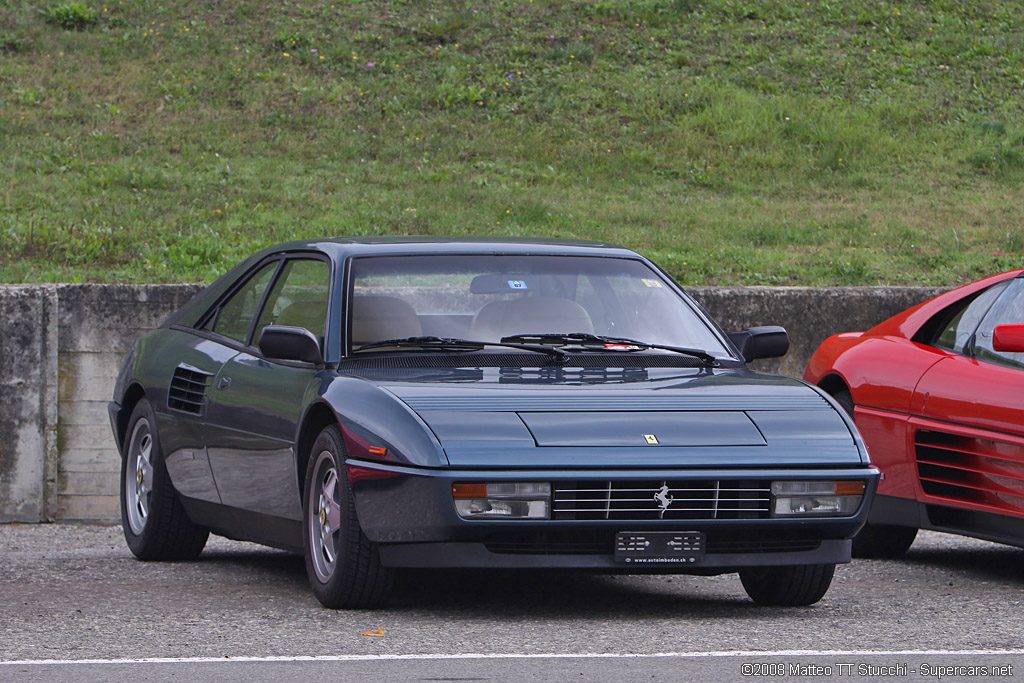
This Superfast appears to be the most powerful naturally aspirated petrol-powered production car engine that has ever been produced! With that kind of power, if it wasn’t for the Ferrari suspension even a wheel-stand wouldn’t be surprising.

Ferrari Superfast 812 Red Rear

Ferrari Superfast 812 Red Rear

The engine of this two-door Berlinetta grand tourer is mounted front-mid, meaning the engine’s center of mass is in arrears of the front axle. The car boasts a top speed of 211 mph and an acceleration time from 0–60 mph of very near 2.8 seconds, all with a curb weight of 3,594 lbs. Breathless!

Ferrari GTC4 Lusso-T

The Ferrari GTC4 Lusso-T four-seater is a follow-on version of the V12 all-wheel-drive GTC4Lusso. The T employs rear wheel drive and a 3.9-litre twin-turbo V8 producing 602 hp at 7,500 rpm, and just over 560 ft-lb of torque at 5,250 rpm. The T can achieve within a mile or two of 200 mph and accelerates from 0-62 mph in 3.5 seconds. Not too bad for a four-seater!

Ferrari 488 Spider

Ferrari 488 Spider in Red and Black

Ferrari 488 Spider in Red and Black

The 488 Spider is a twin-seat version of the 488 employing a folding hardtop. I like the folding hardtop concept. I once owned a rag-top convertible (not Ferrari). I eventually sold it due to wind noise with the top up, although some of my passengers didn’t notice the disturbance.

The Spyder at Laguna Seca appeared in all black. I usually prefer Ferraris in red, but there are other colors I think fits certain Ferrari models well. Of course, color is a personal preference. This Spider was radiantly-stunning in black. Performance numbers are very close to its predecessor, the 458 Spider.

Race Results

  • TP – Trofeo Pirelli
  • TP AM – Trofeo Pirelli AM
  • CS – Coppa Shell
  • CS AM – Coppa Shell AM

Race One, Saturday, Top Three

Race 1 – 458

Position Driver Team Vehicle Laps Total Time
1st Martin Burroues Ferrari Ft. Lauderdale 458 Challenge EVO 20 30:34.136
2nd Trevor Baek R Tonkin Gr Turismo 458 Challenge EVO 20 30:34.783
3rd F Priovanetti Ferrari Ft. Lauderdale 458 Challenge EVO 20 30:44.064

Race 1 – TP, TP AM

Position Driver Team Vehicle Laps Total Time
1st C MacNeil Ferrari of Beverly Hills 488 Challenge 21 31:24.919
2nd Marc Muzzo Ferrari of Ontario 488 Challenge 21 31:33.641
3rd Joseph Rubbo Ferrari of Long Island 488 Challenge 21 31:34.329

Race 1 – CS, CS AM

Position Driver Team Vehicle Laps Total Time
1st Thomas TIPPL Ferrari of Beverly Hills 488 Challenge 20 32:35.848
2nd Mark Fuller Ferrari Westlake 488 Challenge 20 32:36.556
3rd Richard Baek R Tonkin Gran Turismo 488 Challenge 20 32:37.344

Race Two, Sunday, Top Three

Race 2 – 458

Position Driver Team Vehicle Laps Total Time
1st Martin Burroues Ferrari Ft. Lauderdale 458 Challenge EVO 20 30:22.137
2nd Trevor Baek R Tonkin Gr Turismo 458 Challenge EVO 20 30:31.618
3rd Phil Trigiani Ferrari Ft. Lauderdale 458 Challenge EVO 20 30:55.769

Race 2 – TP, TP AM

Position Driver Team Vehicle Laps Total Time
1st Peter Ludwig Wide World Ferrari 488 Challenge 21 31:20.663
2nd Joseph Rubbo Ferrari of Long Island 488 Challenge 21 31:26.279
3rd Chris Cagnazzi Ferrari of Long Island 488 Challenge 21 31:29.480

Race 2 – CS, CS AM

Position Driver Team Vehicle Laps Total Time
1st Thomas Tippl SC Ferrari Beverly Hills 488 Challenge 20 30:17.126
2nd Chris Carel SC Ferrari Beverly Hills 488 Challenge 20 30:24.861
3rd M Fassbender Ferrari North America 488 Challenge 20 30:25.328

Ferrari Challenge Image Gallery

VIDEO: Ferrari 488 Pista 2019 Review – 710bhp supercar on road and track | Autocar

When Ferrari makes a track special of its mid-engined V8 supercar, it doesn’t tend to get it wrong. And so to the Ferrari 488 Pista, a car that, Ferrari says, has more motorsport in it than any of its other road cars. Subscribe now: http://smarturl.it/autocar

It has the engine and aerodynamics from the Ferrari 488 Challenge car, but, at 661bhp, it not only makes 50bhp more than the regular 488 GTB and 20% more downforce, it’s also up to 90kg lighter thanks to a widespread adoption of carbon fibre.

Does this mean, though, that it’ll have the measure of other low-volume, race-inspired cars like the Porsche 911 GT2 RS and Lamborghini Huracan Performante? Join us as we find out whether this is another Ferrari special that ticks every gorgeous box it should.

[embedded content]