All posts in “Cars”

Airstream Introduces the Nest, Its First Non-Aluminum Trailer Since the 1950s

Airstreams have long stood out as classic, dreamy travel trailers, but the Nest, announced Thursday, is a stylish step forward. The 16-foot trailer, which is the brand’s first experiment beyond aluminum since the 1950s, smartly packs a dinette, wet bath, galley, and bed into the interior, and still manages to weigh in at about 3,400 lbs, making it an easy tow for midsize SUVs.

Airstream’s newest foray actually started outside of the company, with Bend, Oregon-based designer Robert Johans. As the story goes, Johans was continually receiving orders from customers who wanted their fiberglass trailers redone in a high-quality, well-designed way. Eventually, he noticed there was a market for these types of trailers, but no product that met the need, so he elected to draw up some designs of his own. Johans posted them on his website, where they caught the eye of an Airstream designer, and the two forged a partnership to fully realize the trailer that would become the Nest.

The trailer checks boxes for campers and aesthetes alike, offering a smartly constructed interior with ample storage. There is rear entry door with a vertical window, six windows around the exterior, and a skylight, all meant to flood the interior with light. Buyers can choose from two floorplans, one of which includes the dinette and a folding bed, and the other that offers a full bed with Tuft & Needle mattress. The trailer is priced from $45,900, which slots it as the spiritual sibling to the $34,900 Airstream Basecamp, and it’s being rolled out at dealers nationwide now.

Today in Gear

The best way to catch up on the day’s most important product releases and stories. Read the Story

5 Car Enthusiast Blogs You Should Be Reading Daily

We try to cover as much of the car universe as possible to bring you the best news, reviews and insights concerning all-things automotive. But, there is a reason there are so many websites are dedicated to the car and motorcycle industries: it’s just too damn much to cover. There are a few stops any enthusiast should add to his daily beat.

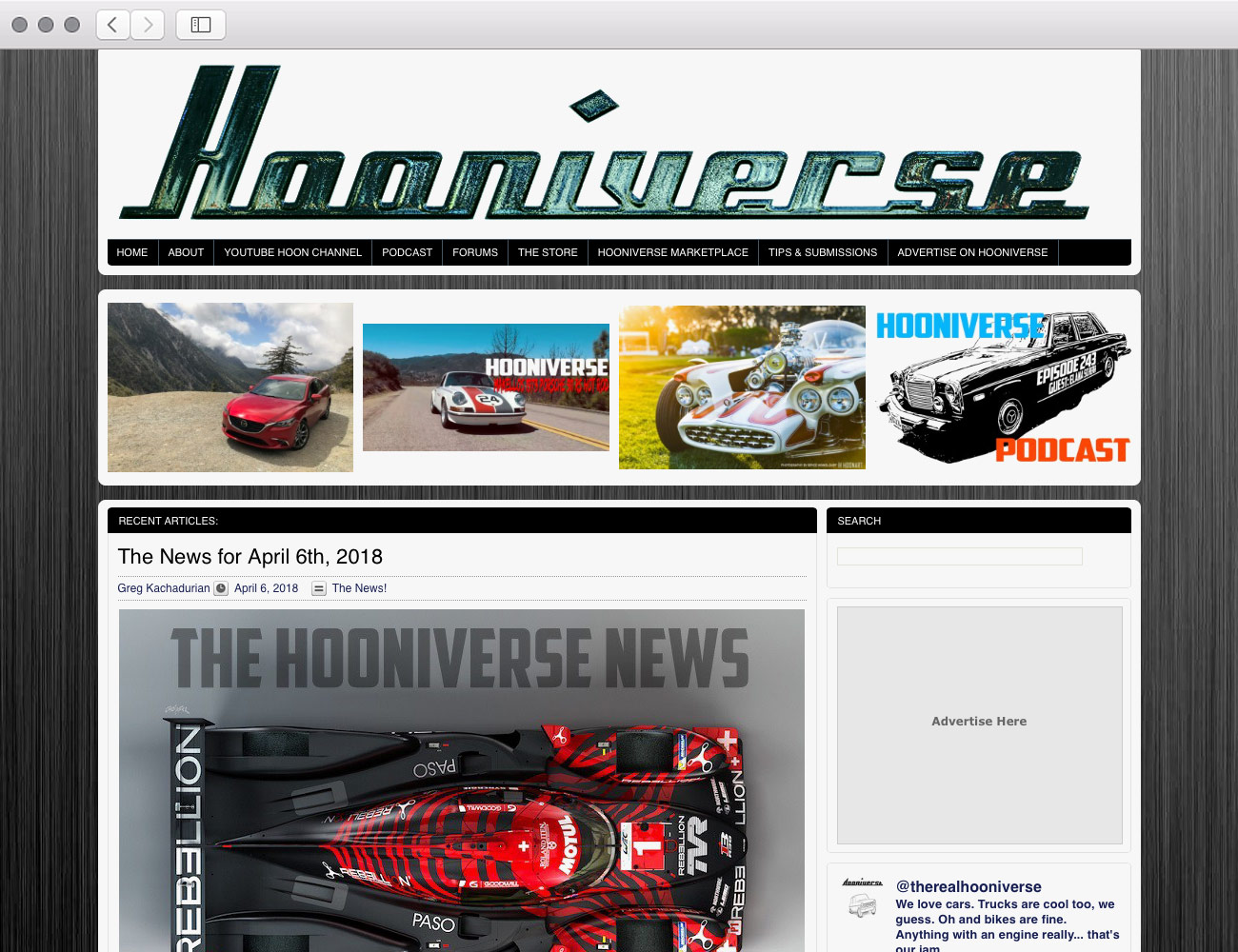
Hooniverse

Hooniverse has a little something for everyone, so long as you love driving — industry news roundups, car reviews (classic and new), caption contests and more. Hooniverse also runs a podcast and youtube channel that are worth a follow as well

Speedhunters

Speedhunters is one of the most internationally-focused car sites you’ll find on the web. Not only does Speedhunters feature professional contributors and photographers all over the globe, they also dive into nearly every form of car culture and motorsport, no matter how niche or obscure it may seem.

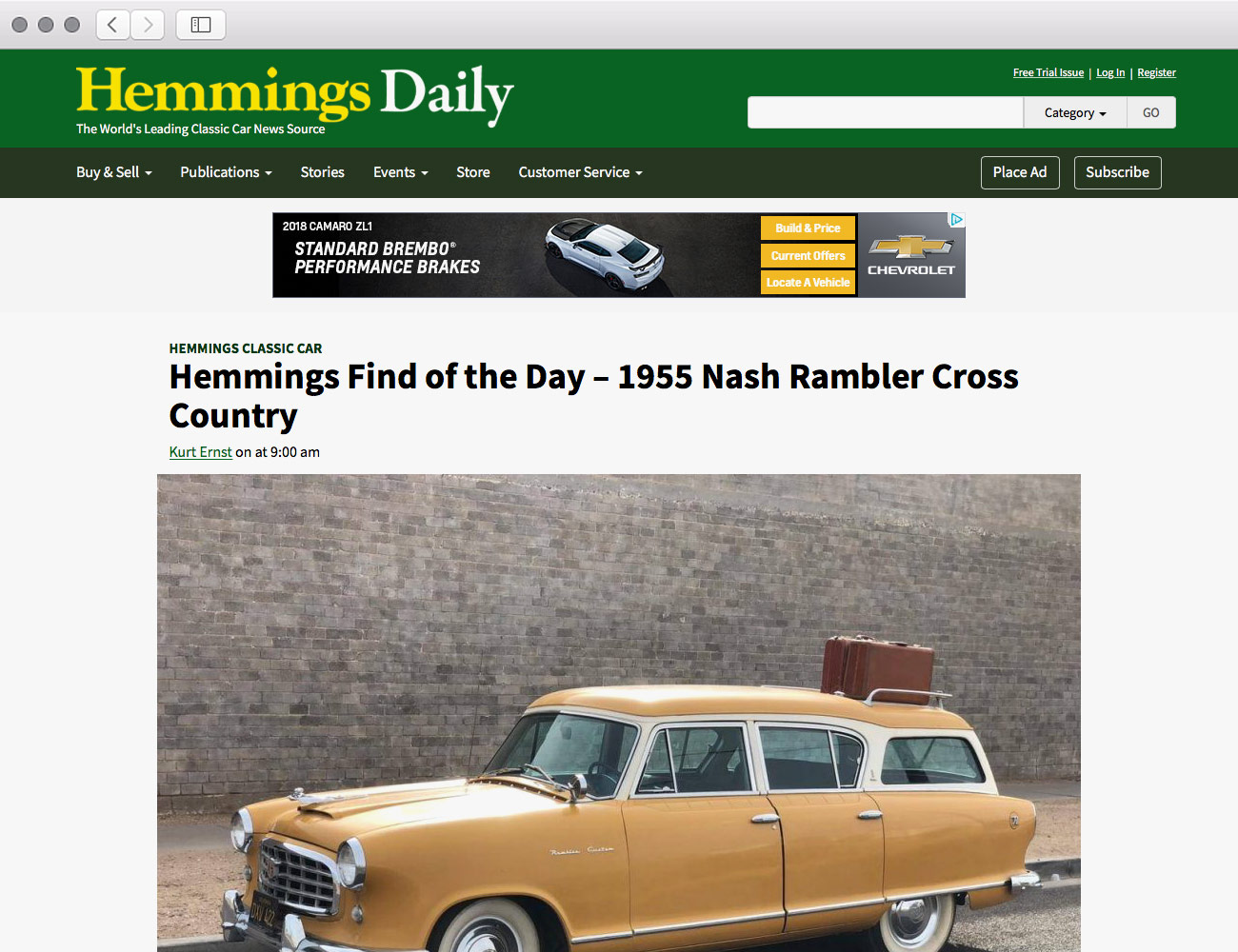
Hemmings Daily

Hemmings is best known for its classic auctions and car-culture community, but if you head over to Hemmings Daily, you’ll see it’s a lot more than just listings. Hemmings Daily will give you a dose of the stories behind barn finds, unique used cars for sale and stories on anything to do with the history of cars and motorcycles.

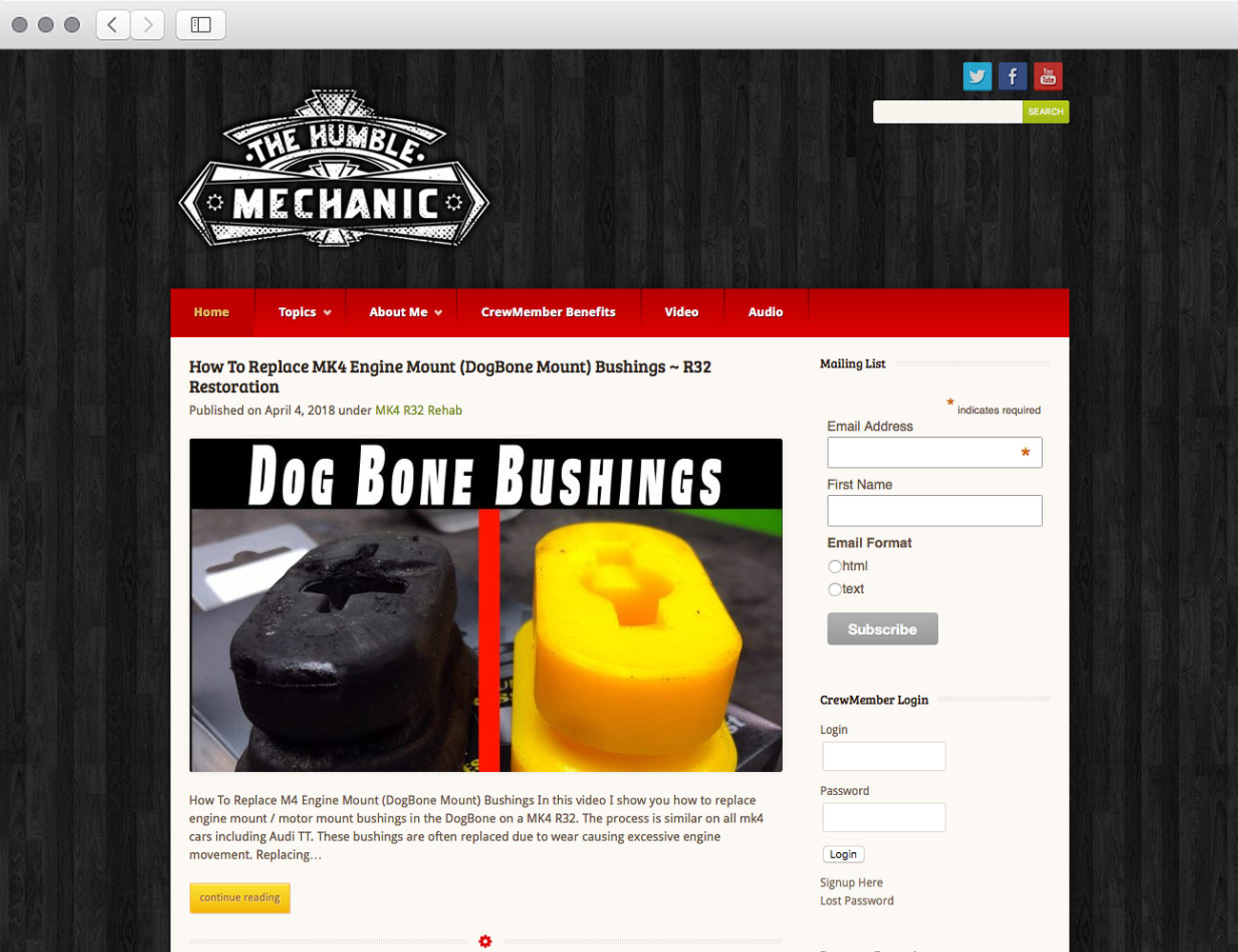
The Humble Mechanic

The eponymous Humble Mechanic used to be a professional Volkswagen mechanic and originally started the blog to help his customers. From there, his popularity grew to the point at which he began fielding questions from the internet at large. The Humble Mechanic features videos, podcasts and blog posts dedicated to how-tos and answering any questions his viewers have in a quest to help everyone become a little bit more car-knowledgeable.

The Truth About Cars

The Truth About Cars is best known for its no-holds-barred and borderline incindiary approach to the automotive industry news cycle. TTAC built its repuation on cutting through the fluff and BS you’ll find from bigger publishers and getting right to the point, no sugar-coating included.

Now For Dome Required Listening

Of all the ways to take in a car and appreciate it, the sound of the engine can not only be the most memorable. Headphones on, volume up – watch these cars in action and revel in the aural glory. Read the Story

7 Car Magazines You’re Not Reading But Definitely Should

When you think about car magazines, the popular “buff books” probably come to mind — Motor Trend, Road & Track and Car and Driver, to name a few. These monthly mags feature reviews of every trim of every car analyzed down to the last nut and bolt, and they make great reading, especially if you’re looking to stay informed on the industry or even doing extra research in the quest to buy a car. However, there is an entire realm of magazines out there that go further than purely educating readers. It’s probably not surprising that we love to pick up a beautiful magazine and read excellent automotive adventure prose that is accompanied by incredible photography. These are the magazines we’re reading now — not only for a good read but to inspire us — and you should follow suit.

Lollipop Magazine


You don’t have to be obsessed with Formula One to pickup an issue of Lollipop Magazine and appreciate the photography on its pages. It’s more than just the cookie cutter motorsport photography you see in every other publication — Founder, Editor in Chief and Photographer Joshua Paul uses a 1913 Graflex SLR 4×5 camera for most of his shots.

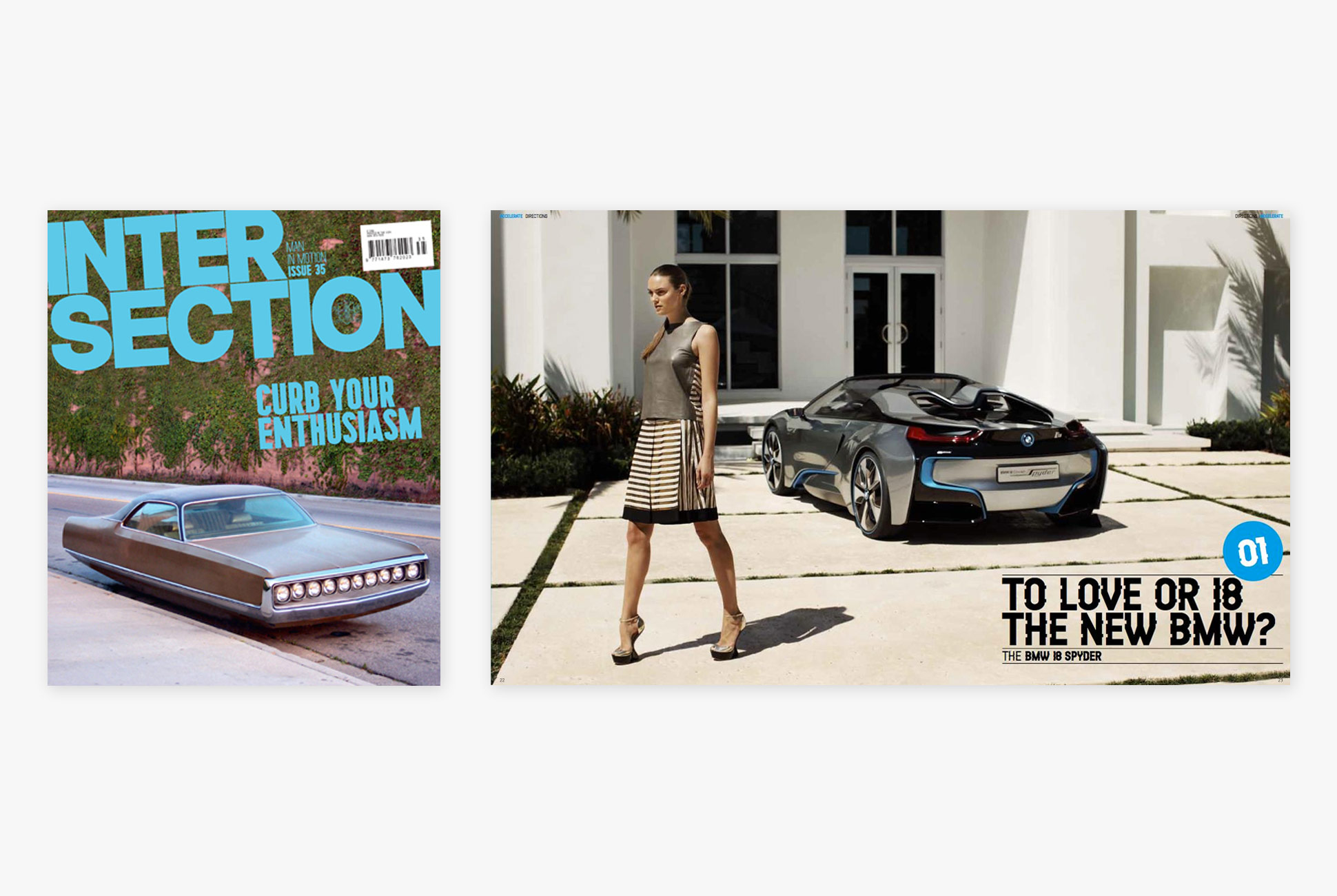
Intersection Magazine


The worlds of high fashion and automotive enthusiasm merge in equal parts in Intersection Magazine. In the past, Intersection featured a U.S. issue, but is now mostly distrubuted in Europe. Amazing photoshoots, feature stories and interviews litter the pages of every issue.

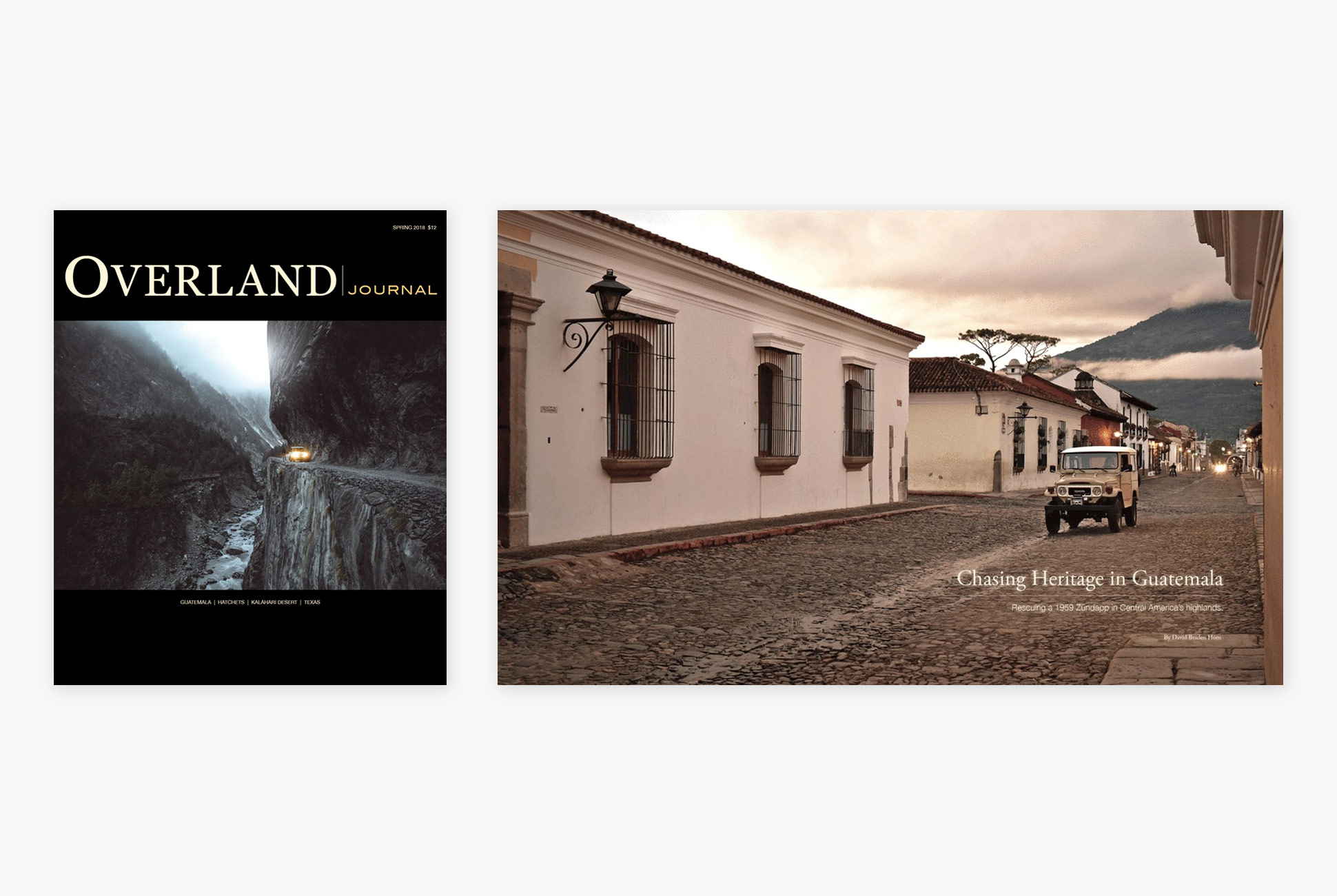
Overland Journal


When you’re stuck at your desk, day-dreaming of the dirty adventure bike or four-wheeler trapped in your garage, Overland Journal is worth a read for the escapism alone. Think of a modern version of The Motorcycle Diaries, but taking place at every corner of the globe, featuring any off-roading vehicle imaginable.

Total 911


The title of the magazine pretty much says it all this is, admittedly, is more of a die-hard Porschephile’s magazine. But, the car is a cultural icon; Total 911 writers are some of the most knowledgable and passionate people when it comes to the most famous of all sports cars.

Curves Magazine


Dreaming up a long weekend or week-long excursion via the best roads you’ve ever turned a wheel on? Curves Magazine is the place to start planning. Each story is filled with jaw-dropping photography of equally outstanding roads somewhere in the world.

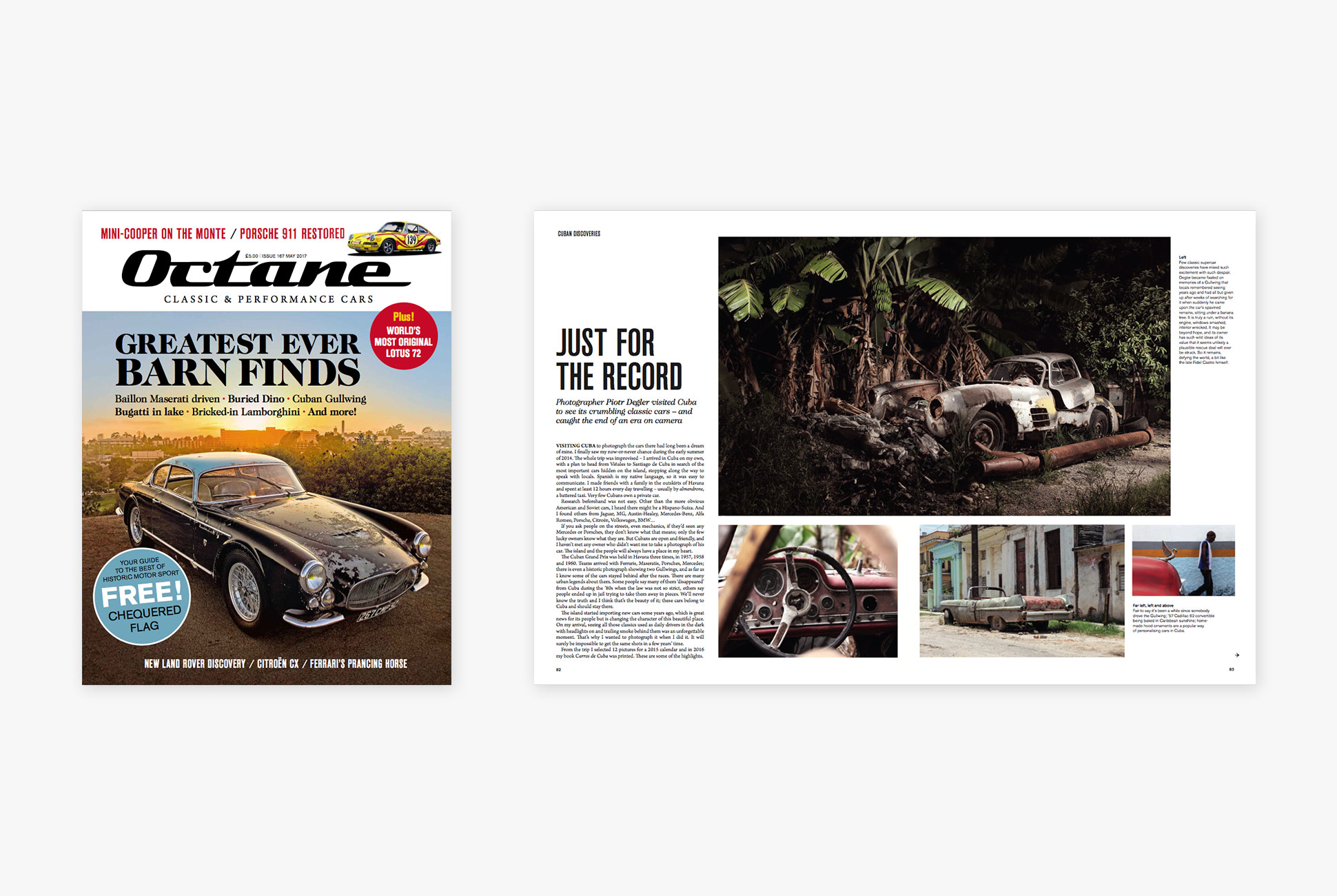
Octane Magazine


If you’re a fan of Petrolicious, Octane is in the same spirit. Here you’ll find features, reviews and interviews celebrating fine automobiles of the last century.

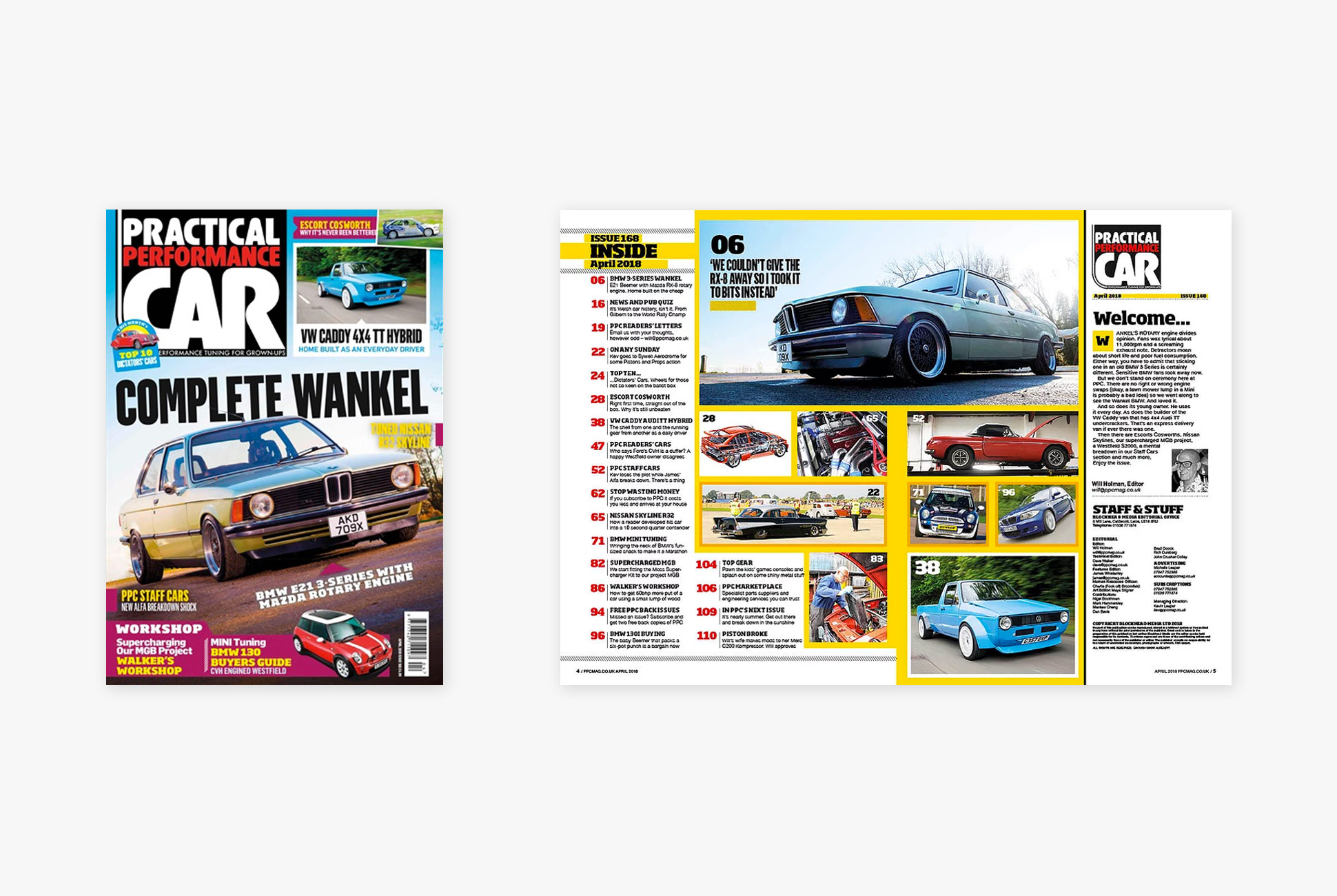
Practical Perfromance Car Magazine


Of all the magazines on this list, this is the most practical of suggestions — the title may have given that away. This magazine is for the wrencher, the DIY mechanic and anyone looking to do some light performance upgrades to their own car. Inside are stories of builds, how-tos, advice and in-depth looks at a life spent under a car.

25 Cars You Have to Hear

Of all the ways to take in a car and appreciate it, the sound of the engine can not only be the most memorable. Headphones on, volume up – watch these cars in action and revel in the aural glory. Read the Story

The 2019 Audi A6 Wagon is Cruel and Unusual Punishment for America

Get a good look at the 2019 Audi A6 Avant above, because, despite the resurgence of wagon offerings from nearly every other luxury car maker, Audi is not sending the A6 wagon to our shores.

We will, however, get the regular sedan, of course, but the longer-roof option just looks too good not to lust after. The S-Line trim pictured above gives us a clearer image as to what the inevitable S6 and RS6 will look like, but that only makes it worse.

After all, adding utility and cargo space to fender flares and more power is an incredibly more enticing deal than settling for the typical lose-it-in-a-crowd crossover choice. And we could talk about the 335 horsepower V6 that will pull the A6 wagon, too, but why bother?. With that said, we Americans do have the upcoming, top-of-the-line RS6 sedan to look forward to.

I spoke recently with current Bugatti President and former head of Audi Sport Stephan Winkelmann, who helped develop the next RS6 before he left. He said, “the RS6 is the balance, the center of the brand. And you’ll see, when the new one comes — it’s a great car.” The good news is that the upcoming RS6 that Winkelmann is alluding to will apparently get the same 4.0-liter twin turbo V8 from the Porsche Panamera Turbo and churn out around 650 horsepower and nearly 600 lb-ft of torque — close to what the Lamborghini Urus boasts. Is that salt on the wound, because we won’t get the wagon RS6, or is it a consolation prize? Either way, Audi needs to stop the cruel and unusual punishment and just give us not what we want, but what we need — the 2019 Audi A6 Avant.

More From the Ex-Audi Man

Volvo has yielded one of the best-looking and most proportional lift back designs I’ve seen in years. Read the Story

Everything Car Buyers Need to Know About Modern Safety Systems

T

he recent evolution of car safety systems has been a fascinating saga. While milestones were continuously achieved throughout the 20th the century — seat belts, crumple zones, anti-lock brakes — the last decade or so that has seen automotive safety cross over from mostly mechanical and electronic to overwhelmingly digital, bringing with it an almost clairvoyant ability to save our bacon when things go sideways, and accelerating in sophistication and capability like a 911 on launch control.

Just a decade ago, for instance, a Mercedes S-Class — the company’s six-figure, mack-daddy flagship sedan — had lane departure warning and blind-spot detection systems that were as vulgar and brutish as a first-gen iPhone’s vibration (while supposedly on “silent”). If you drifted across a solid-yellow or the dotted-white line or attempted to occupy the same space as that poor old Camry beside you, the car would shimmy and shake with a loud grinding noise and a flashing light as the wheel quivered in your hands. Now, the current S-Class delivers a subtle, dainty nudge with a perfectly tuned vibration and a soft hint of illumination in the side mirror to alert you that you may wish to pay slightly better attention.

As such, systems were honed and others materialized to help further populate company brochures with acronyms and variations of the same features. Thanks to the inclusion of radar, sonar, cameras, accelerometers and other sensors in the car, we now have obstacle detection, automatic emergency braking, pedestrian detection, rear cross-traffic alerts, lane centering, forward collision warnings, adaptive cruise control, adaptive headlights and other increasingly esoteric tech. (Left-turn crash avoidance!) Hell, you can even consider the flip-up rear spoiler that helps the $3 million Bugatti Chiron scrub off speed while braking down from 261 mph to be a safety feature.

Much of this, of course, is part of the industry-wide run-up to semi-autonomous and autonomous driving. The systems that help Tesla’s Autopilot, Cadillac’s Super Cruise and Mercedes’ Drive Pilot systems drive hands-free down the highway and sling themselves around turns all use essentially the same hardware as many of these systems, just more of it — and software, of course, that’s orders of magnitude more capable.

Also, much of this is stuff is wildly expensive. The three semi-autonomous drive systems above come in “technology” packages that include a wider array of features and which range in price between $5,000 and $10,000 — even if the core tech only costs an additional $3,000 to $6,000. But these semi-autonomous systems are also, arguably, more convenience features at the moment, even though they do contribute to safety by reducing fatigue and helping maintain improved situational awareness. Fortunately, while you tend to have to go all-in when upgrading a new car to such top-line systems, you can get many of the more conventional ADAS technologies — that is, advanced driver assistance systems — for much less. Which ones should you zero in on, and what will they cost you?

Buying Advice

Generally, there’s a baseline of safety systems that come included in a car’s standard purchase price, due to federal laws mandating their inclusion: anti-lock brakes, traction and stability control, airbags, and tire pressure monitoring systems. Starting in May of this year, backup cameras will also be required on all new cars. That leaves the more advanced systems — often optional equipment — that you’ll have to put some thought into. Here’s some guidance.

Expert-Recommended Tech

Forward collision warning flashes a warning on the display if the computer thinks you’re at risk of rear-ending another vehicle — though it won’t actually do the braking for you, as pricier systems will.

Automatic emergency braking will do the braking for you if you’re caught off-guard.

Blind-spot monitoring detects vehicles behind and to the sides of you and flashes a persistent warning of their presence on the mirror, and possibly a flashing variant if you try to scoot over to an occupied space.

Pedestrian detection identifies pedestrians and even initiate emergency braking.

Personally, I also consider adaptive cruise control to be an essential safety system, not just a convenience feature. On highway drives, this radar-guided system takes the edge off your fatigue and it helps ensure that your car keeps a steady, safe, predetermined distance from the one ahead of it. You still steer — unless you also happen to have lane-centering in the car — but it’s a measure of extra comfort and backup that provides its own safety dividends over longer and longer drives.

What’s all this going to cost you? As the systems both age a bit and trickle down from cars like the S-Class, their prices come down too — fortunately. Economy cars offer plenty of options. Being crafty marketers, of course, carmakers have no problem splitting up safety features into separate packages that each include assortments of non-safety features, such as heated steering wheels and assorted connectivity packages. So as always — do your homework and negotiate as much as humanly possible.

Economy Cars
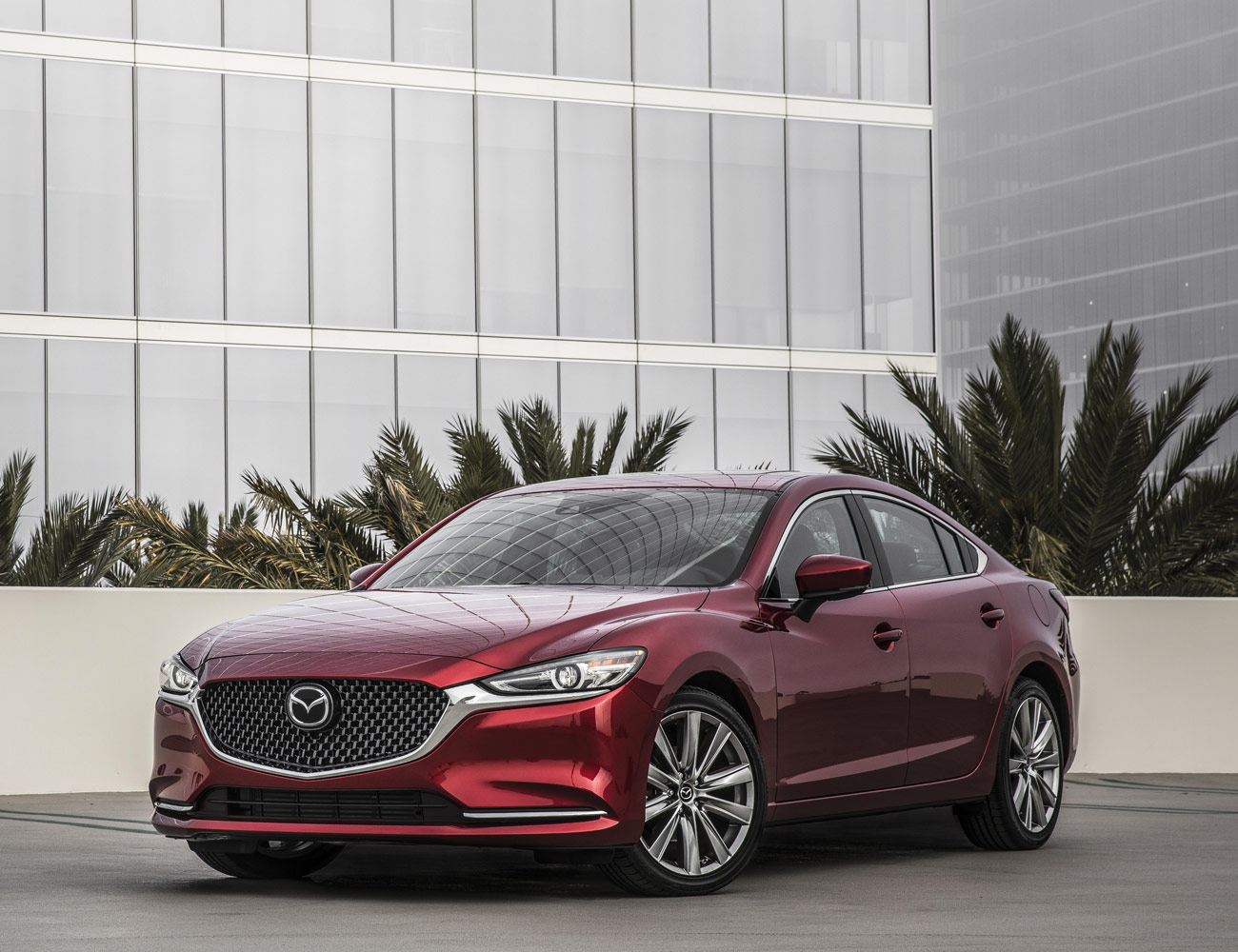
Mazda’s $21,950 (base) Mazda6 sedan offers its I-ActiveSense package with adaptive cruise, LDW, lane-keep assist, and collision warning, among other things, for just $625.
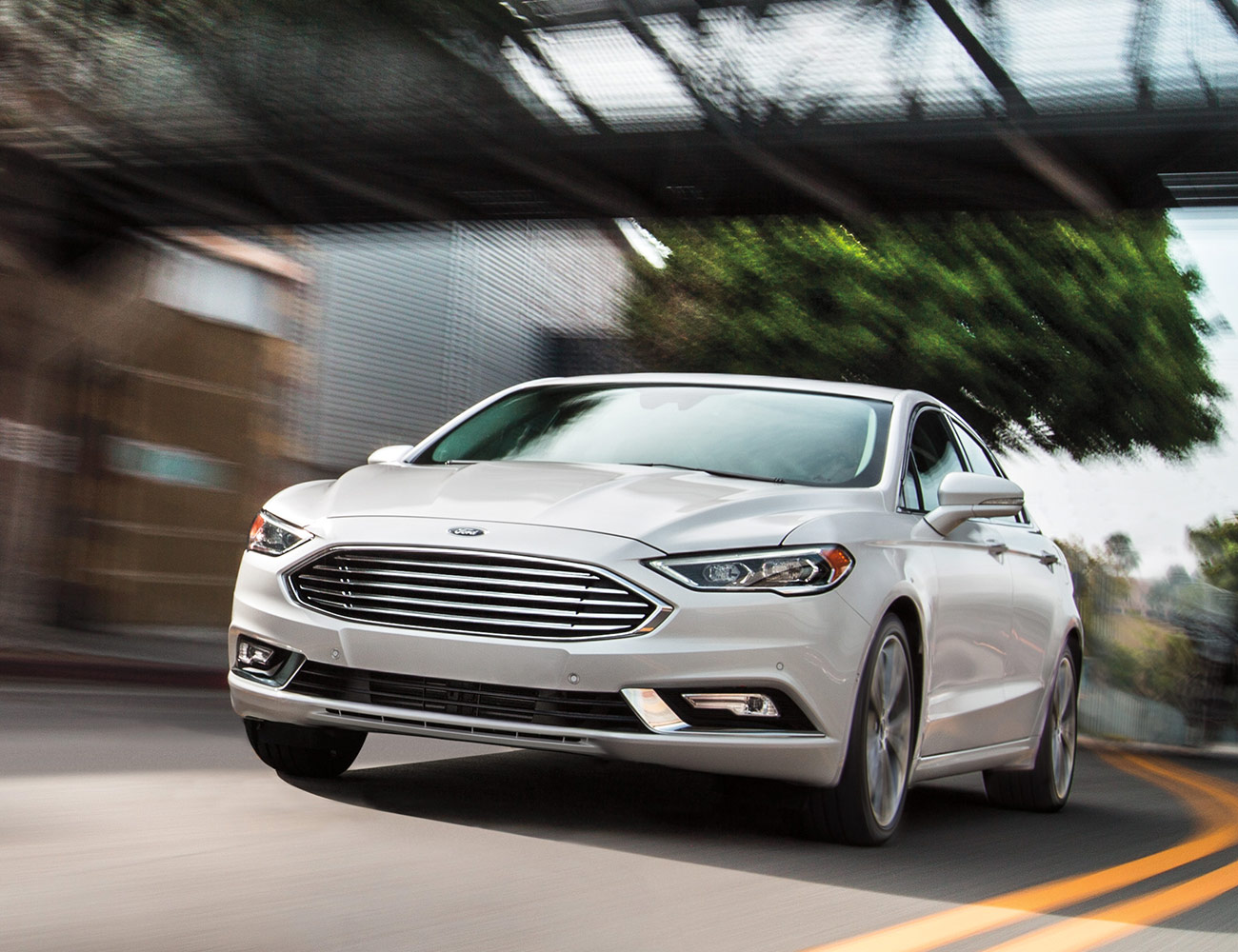
Ford’s $30,490 Fusion Titanium has a Driver Assist package that includes blind-spot and cross-traffic detection as well as lane-keep assist for $1,625, and for an additional $1,190 you can upgrade to adaptive cruise, collision warning, pedestrian detection, and active braking.

Mid-Range Cars

Going farther up the food chain, prices do tend to creep up, thanks to more refined and capable systems, as well as more inclusive packages.
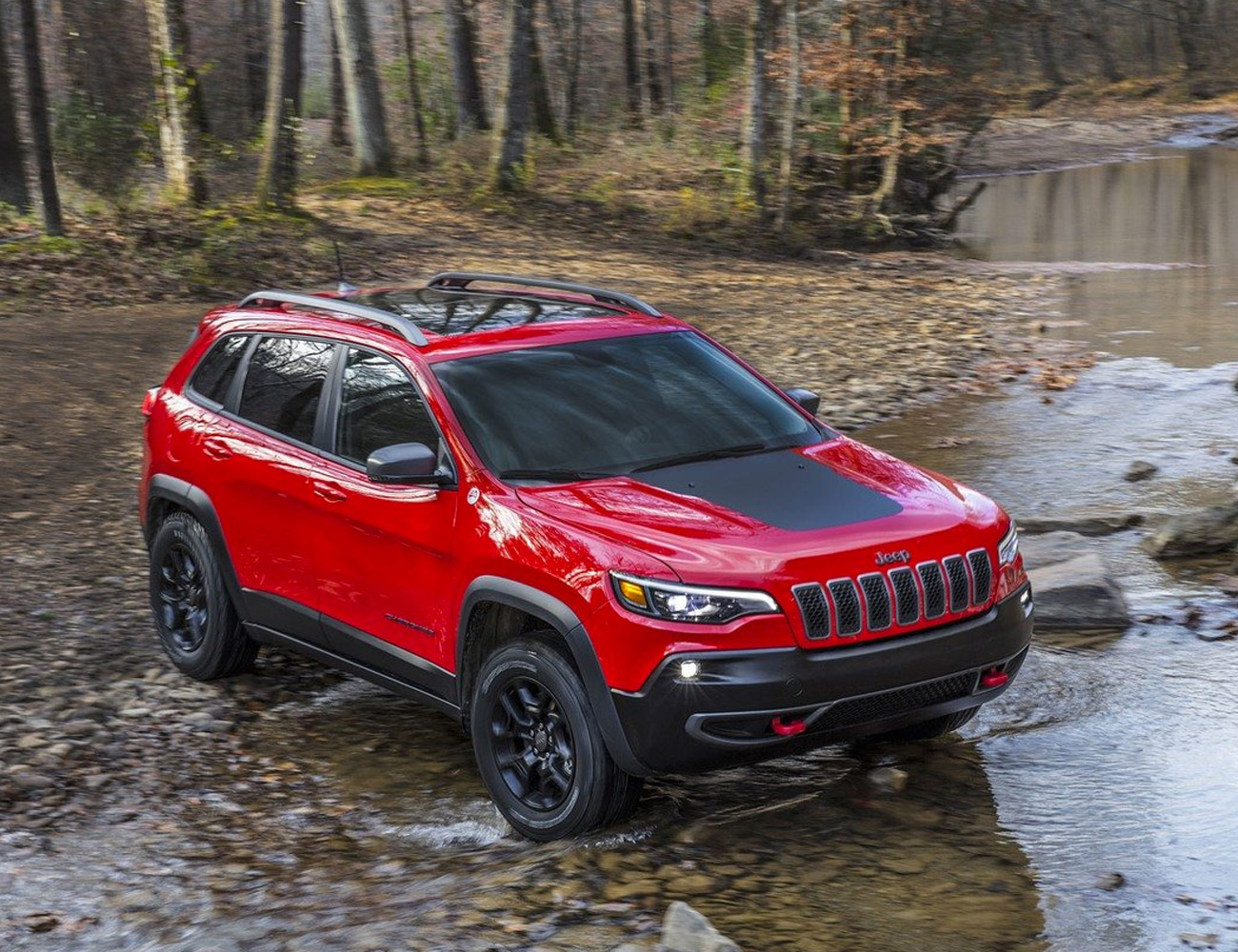
Jeep’s Cherokee Trailhawk offers a Technology Group package that includes collision warning, adaptive cruise, brake-assist, automatic high-beam adjustment, and lane-departure warning, among other things, for $1,645 — and for an additional $1,155 blind-spot and cross-path detection.
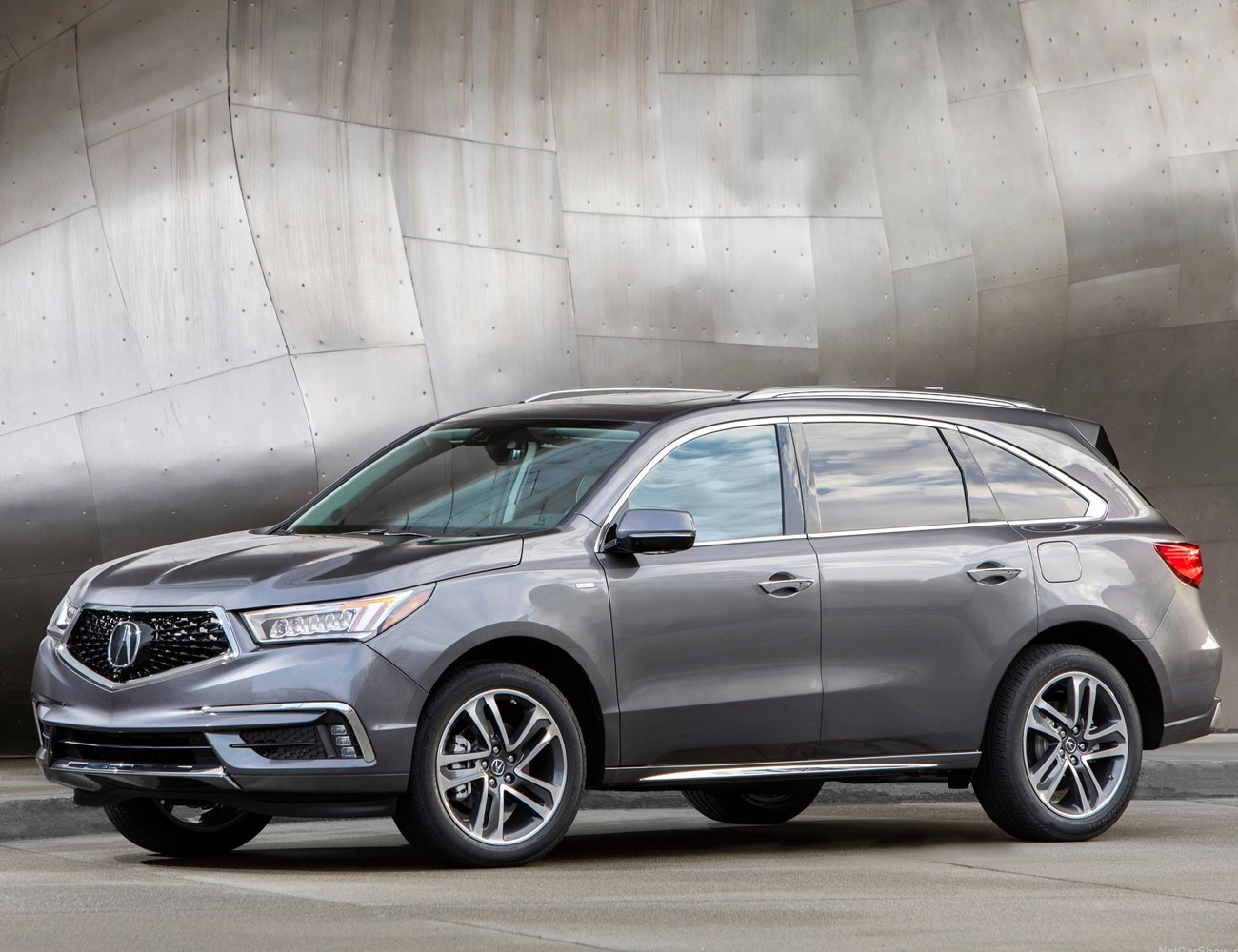
Acura’s upscale RDX SUV offers its AcuraWatch Plus tech package, including automatic braking, adaptive cruise, and lane-keep assist for a fairly economical $1,300 extra.

Premium Cars

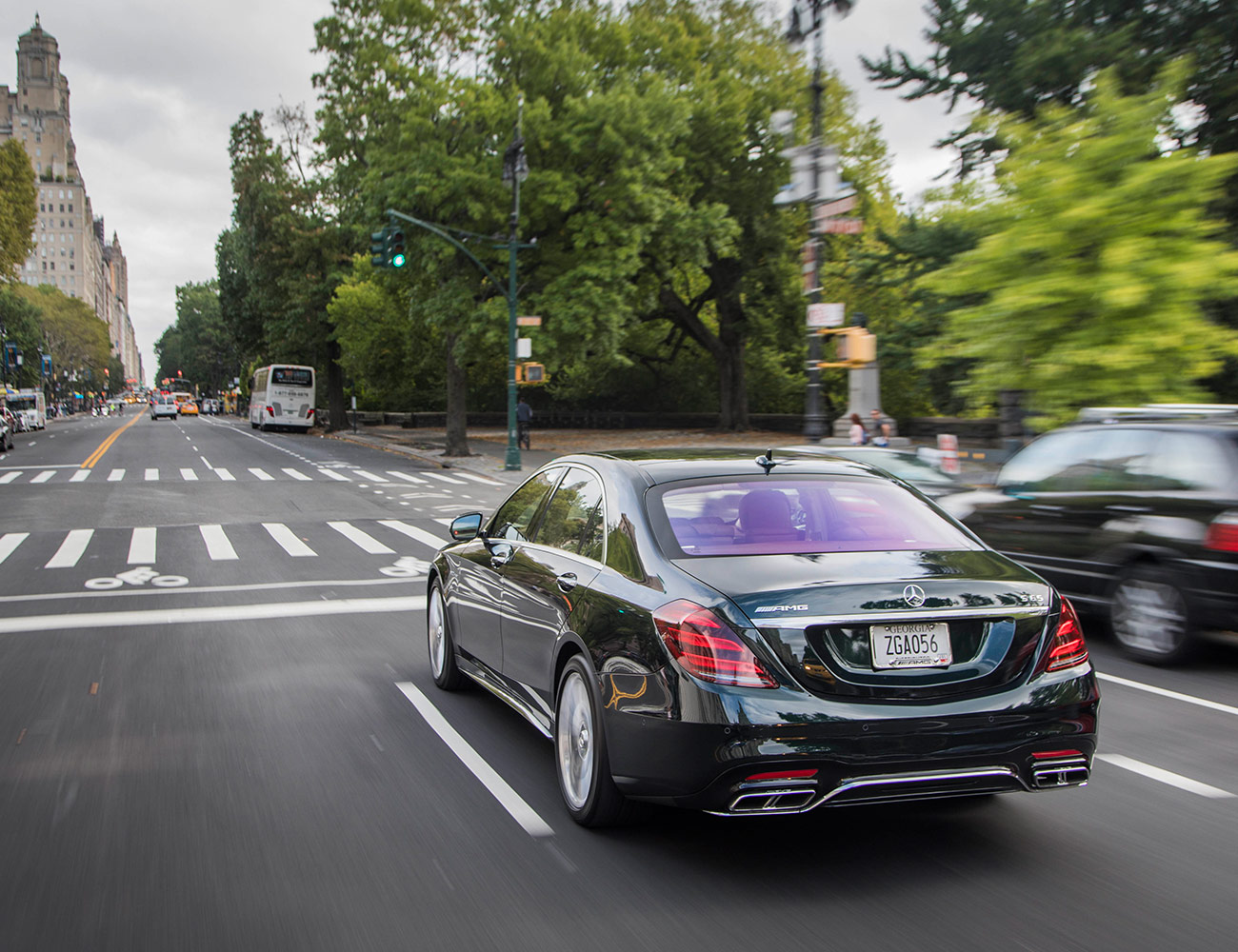
Then there’s the Mercedes-AMG S63 sedan — a $200,000 car, mind you — offers a neatly compartmentalized Driver Assistance Package that includes, well, everything, all the way down to Route-Based Speed Adaptation for automatically adjusting speed as your approach curves or intersections. Its complete suite of features — which adds to an already impressive list of standard features, such as blind-spot detection — comes in at a relatively modest $2,250. (Not bad considering the rear-seat entertainment option alone is $2,600.)
Naturally, these systems will continue to grow more robust and more capable as the technology evolves. But no matter what you have in your car, make sure you fully grasp how it works, what’s automatic and what isn’t, and what the systems can and cannot do. There’s very little standardization across manufacturers, so it’s on you to grasp the safety tech in the car you’re driving. To stay abreast of the advances in ADAS going forward, bookmark mycardoeswhat.org. Published by the National Safety Council, it provides details on how all these systems work and what you need to know about using them.

Know This: Head-Up Displays Are the Future of Automotive Tech
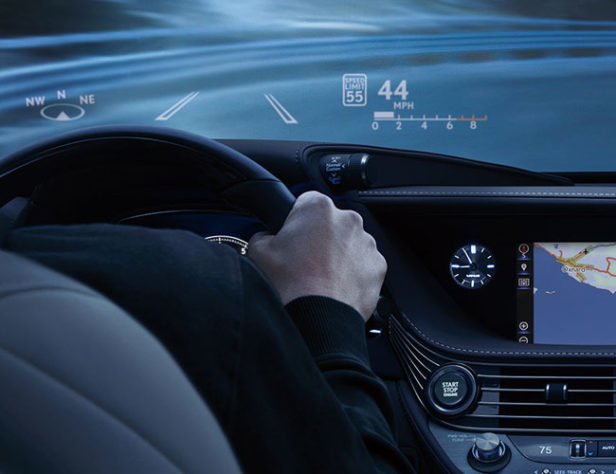
Eventually, car dashboards will disappear completely. We’re already close. Read the Story


A Quick Chat With the Man Who Reshaped Audi and Lamborghini

S

tephan Winkelmann, the newly appointed President of Bugatti Automobiles and arguably the best-dressed man in the automotive industry (rumor has it he’s never been seen in the same suit twice) has a resume few will ever replicate. He was President and CEO of Lamborghini from 2005 to 2016, the longest tenure in the brand’s history, where he saw record sales numbers and the launch of the Aventador V12 and the Huracán V10 supercars. Winkelmann then moved on to Audi’s new sub-brand Audi Sport in 2016 and oversaw a critical refresh and revitalization of the entire lineup of all RS models.

As of January this year, the Berlin-born and Rome-raised businessman sits atop one of the most exclusive car brands in the world. Bugatti has already unveiled the record-breaking 1,479 horsepower Chiron Super Sport under his watch. With a track record that speaks for itself and a clear modus operandi when it comes to shaking up and running high-end car companies, what does Winkelmann have in store for a storied manufacturer like Bugatti, a company that, on the face of it currently only makes two versions of one car? I sat down with him to piece things together and figure out where he’s taking his new team. – Bryan Campbell

Campbell:

Lamborghini has quite the vault of cars, do you have a favorite?

Winkelmann:

The Aventador. It was the very first one that I made from scratch with the team and it was very successful. It will always be something very close to my heart. I love the engine, the design and the fact that the monocoque was made out of carbon fiber, which at the time, was pure innovation.

Campbell:

And a favorite from Audi?

Winkelmann:

At Audi, for me, it’s the RS6. The RS6 is the balance, the center of the brand. And you’ll see, when the new one comes — it’s a great car. I drive two cars on a regular basis; one is the RS6 — the other is a Porsche 911 GTS Targa.

Campbell:

What about of all the cars on the road today, is there one that stands out for you?

Winkelmann:

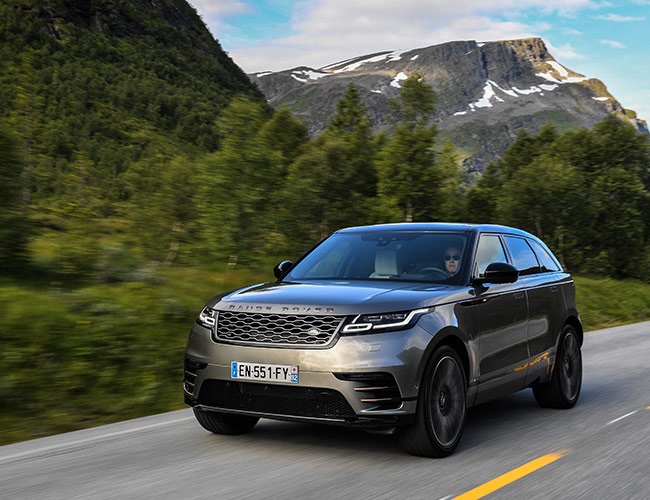
You know, there is a normal luxury car which I like. I think Range Rover has done a very good job in the past, which I admire in this sense. They did a great job with the Velar.

Campbell:

When you walked through the door on your first day at Lamborghini, what was the grand plan and how did that unfold for you?

Winkelmann:

At the beginning, we needed an assessment, and I recognized it’s important to work on the strategy for the base models, keep their life cycles short and always have news coming up. On the other side it was important to get the message out to prepare the [world] for more than just super sports cars. So, for me, it was to focus the brand, the products and to prepare the world for a company ready to do more. In 2012 I showed the first [Urus] concept car, in Beijing. So we already started thinking about the Urus in 2010-2011.

Campbell:

Did you use the same tact at Audi Sport?

Winkelmann:

Again, it was a strategy for the brand. We wanted to establish something which enabled us to have an overview, collecting all the sportiness of Audi — the racing, the R8 and RS models. Therefore, we needed one name within the company, which was Audi Sport. So we made that the umbrella. And then it was a matter of preparing the RS models for the future, to create a strategy.
How the products have to be developed by continuing being sporty; pick the right segments, the right body styles and have an exclusiveness. Because for me it was not about sales volumes — it was about the wow factor and the halo positioning for the rest of the Audi models.

Campbell:

Is it safe to assume we can expect a similar infusion of energy at Bugatti?

Winkelmann:

(Laughs) It’s too early to discuss. I’ve only been on the job three months, but what I can tell you is the team is extremely motivated and have a lot of passion for the company, for the brand, for the car. And I also think the brand is ready for more, but I cannot tell you now what we’re planning.

Another Casual Chat With a CEO

Aston Martin CEO Andy Palmer lives the life of a charmed gearhead: he owns and races Astons, travels the world talking about cars and under his watch, Aston Martin has become one of the fastest-growing automakers in the world. Read the Story

Chevy Is Going After The Honda Civic Type-R with… the Camaro?

It’s always the 600-plus horsepower Nürburgring-special cars with meaningless lap-times and quarter-mile runs making the headlines, especially when it comes to the Chevy Camaro. However, today all the excitement is around the base Camaro and the turbo four-cylinder motor bolted in under the hood.

Yes, you read that right. The base Camaro will come with a 2.0-liter turbo inline-four cylinder pumping out 275 hp and 295 lb-ft of torque. The Turbo 1LE Camaro also gets the track-tuned chassis from the V6 1LE including upgraded suspension, bigger brakes, drive modes and a six-speed manual transmission. That’s less than half the power you’ll find in the range-topping, track dominating Camaro ZL1, but when was the last time you needed 650 horsepower?

Now that there is a smaller, lighter engine up front, the base-Camaro overall is lighter and drives with a perfect 50/50 weight distribution, making the car better in the corners — where the real fun is. According to Moto1.com, Chevy benchmarked the new performance-focused Camaro against the Honda Civic Type R, VW Golf R and the Hyundai Veloster N. Pricing wasn’t announce, but based on the group Chevy is gunning for, expect the tuned four-cylinder Camaro to land somewhere around the $30,000 mark.

So, just to sum things up: the new Camaro is lighter, handles better, gets better gas mileage, has a six-speed stick shift and, with a new front-end redesign, looks good too? Did Chevy just make an outstanding enthusiast car? On paper, it looks like that way.

Today in Gear

The best way to catch up on the day’s most important product releases and stories. Read the Story

Everything We Know About the 2018 Ford Ranger Raptor, Plus Some Predictions

Ford Australia announced the price tag of the 2018 Ford Ranger Raptor at $74,990, or $57,457 USD. The excitement for a smaller version of the crowd-favorite F-150 Raptor is still at an all-time high here in the States, but there are still key details up in the air concerning what kind of truck we’ll end up getting.

Seeing as how the bigger Raptor starts at just over $50,000 stateside and the base model F-150 starts at $27,000, it’s safe to assume the US-bound Ranger will get a similar premium. Based on back-of-the-napkin math, the US-ranger Raptor will likely run just over $40,000, up from the base Ranger’s projected sub-$25,000 pricing.

All the architecture and suspension upgrades will probably come to our shores, like the Fox suspension with 11-inch ride height, skid plates and 17-inch wheels wrapped in BF Goodrich all-terrain tires. The biggest story is how the Ranger Raptor makes its power. In Australia, they have to make do with a 2.0-liter twin-turbo four-cylinder diesel good for 210 hp and 369 lb-ft of torque. The chances of America getting the same diesel are slim. While the EcoBoost V6 engine from larger F-150 Raptor would be ideal, keep in mind the Ranger already uses the 2.3-liter found in the Focus.

I know a turbocharged four-cylinder doesn’t sound like the most heroic engine ever for a suped-up performance truck, but the tuned RS 2.3-liter mill has 350 horsepower and 350 lb-ft of torque to play with. We’ll have to wait until later this year for everything to be confirmed.

The Big Brother

Ford completely redesigned their Raptor pickup to be many magnitudes more badass in every way. Read the Story

8 Essential Apps Made For The Modern Driver

Driving visceral vintage cars and knowing the finer points of working a manual transmission or changing your own tire will all get you in touch with your car — in the classic sense. However, you don’t have to be born with an affinity for analog tech to get the most out of your car. From navigation apps (other than Apple Maps) to apps that help you find where cheap(er) gas is, these are our favorite digital friends for the motoring enthusiast.

Waze

If you think navigation apps begin and end at the default Apple Maps or Google Maps, you’re holding yourself (and your driving) back. Waze actively and accurately re-routes you around traffic accidents and construction while alerting you to road hazards and police.

MileIQ

If you commute to or drive for work, chances are you write off the travel expenses for business and tax reasons. When that’s the case, you don’t want an app that is cartoonish and laden with bells and whistles you never need. MileIQ cuts to the chase and just tracks and records mileage in the background while you drive to make it easier when you go to file tax deductions and saves users an average $6,900 per year.

GasBuddy

GasBuddy is a way to find and share gas prices in your area. On top of that, if you join Pay with GasBuddy, you can save 15 cents a gallon on your first fill-up and 5 cents a gallon every fill up after that.

RoadTrippers

RoadTrippers can help you plan and record short weekend drives or cross-country road trips. Discover local dives, scenic points, national parks, and hotels along the way or take suggestions from friends directly through the app.

Castbox

Whether you’re a die-hard podcast listener or the local radio stations along your road trip route are all static, Castbox has you covered. With over 50 million episodes of podcasts from 27 different countries to listen to, Castbox works a lot like Spotify or Pandora, except purely for podcasts. Build a library of your favorite podcasts or discover something new with recommendations based on listening history and daily lists. Make the dread of the daily commute disappear.

Parkify

No one likes to forget where they parked. Even worse is when you download an app to help you remember, only to realize you forgot to turn the app on and mark your parking spot. Parkify uses the accelerometers in your phone to detect when you have parked and gotten out of your car after which it tags your car’s location — all without you ever opening the app.

Drivermatics Blackbox Dash Cam

Dash cams can be expensive, but they’re useful for a lot more than just recording meteor strikes in Russia. Drivermatics Blackbox Dash Cam records video, travel time, distance traveled, plus your average and top speeds for personal month-to-month comparisons, but that info can also come in handy for insurance purposes.

Dynolicious Classic

When car many magazines report 0-60 mph times, lap times, cornering forces and MPGs, oftentimes those stats are courtesy of test vehicles fitted with incredibly expensive data logging gear. If you want to head to the track or learn how to drive your favorite road to the fullest, that cutting-edge tech might not be fiscally possible. Dynolicious Classic does much of the same: it records all the data you could ever hope to know, is said to be accurate up to 1 mph and lets you share your bragging rights stats with friends via email and social media.

8 Ways to Breathe New Life into Your Old Ride

Save yourself the cash and separation anxiety. Refresh your old ride with a few affordable upgrades. Read the Story

5 Low-Mileage Off-Roaders Worth Bidding on Now

Editor’s Note: We love scouring the internet for reasons to spend money we don’t have on cars we daydream about owning, and these are our picks this week. All prices listed are bid amounts at the time of publishing.

Trucks and SUVs were made to take punishment, whether from off-roading through Moab or offloading the family at the mall. The big behemoths have time-tested endurance built into their architecture, and some have proven more likely to go the distance than other cars. So when you pick an SUV or off-roader with honest low-mileage (not the ones that just read low because the odometer has reset after 999,999 miles) it’s almost assumed that you’ll be driving it for quite some time — with proper care and maintenance. Here are five low-mileage off-roaders ready for a new home and many more miles to come.

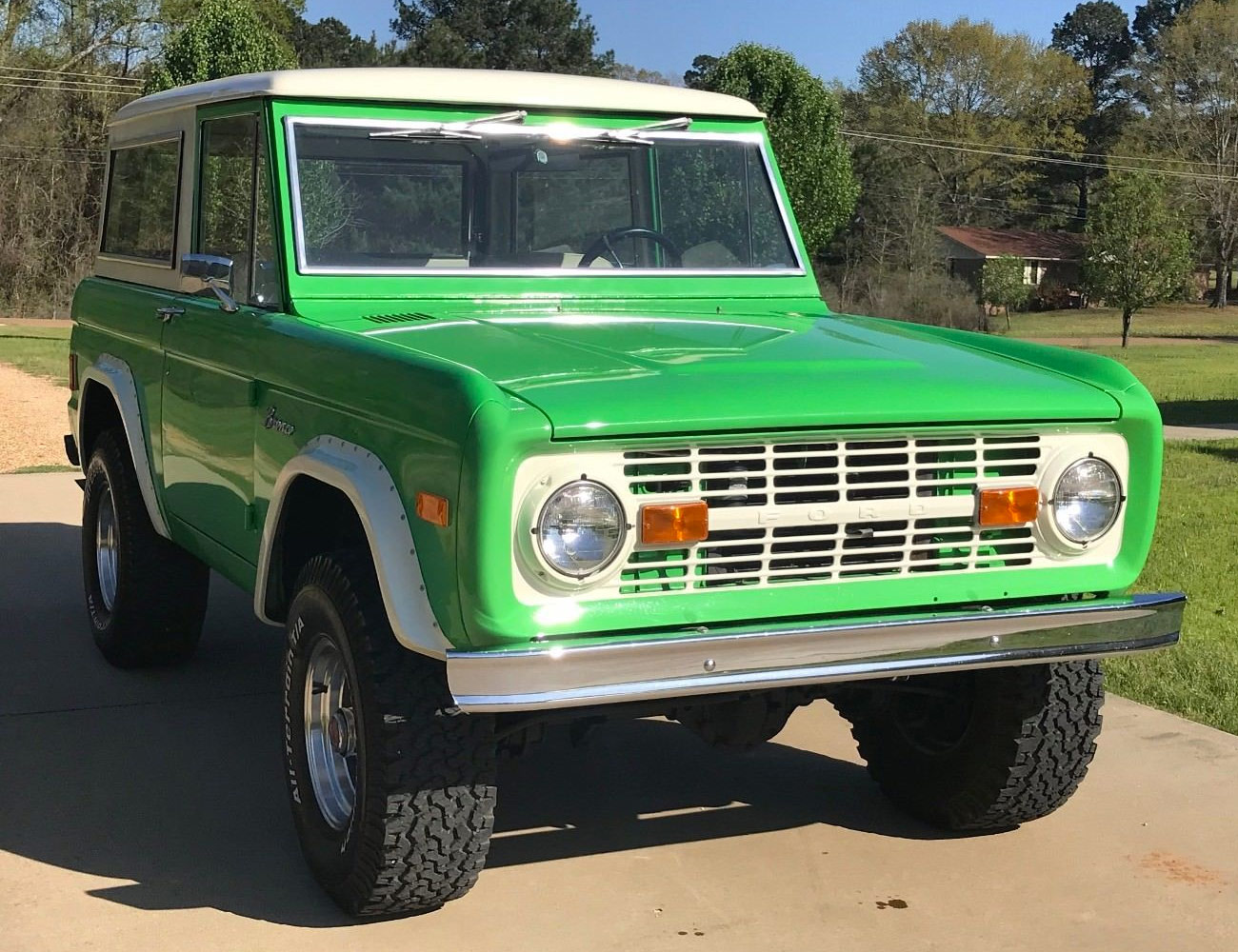
1977 Ford Bronco

Mileage: 40,679
Location: El Dorado, Arkansas

What we like: Finding Broncos of this era in all-original — and good — condition is rare. And as far as modified examples go, some can be unattractively outrageous. This example’s Hollywood green-screen paint job, an original Ford option (called Medium Emerald Green) will take some getting used to, but the rest of the car looks equally period correct enough to make a good-looking classic daily driver or weekend trail-pounder.
From the seller: “It has a great running 302 V8 that has been rebuilt [and has] less than 5,000 miles [on it]. It has an aluminum Edelbrock intake with a Edelbrock four-barrel carb.”
What to look out for: This Bronco is extensively restored and refurbished, so it’s tough to say what to look out for. Broncos in general are pretty spartan vehicles so not much can go wrong, but if minor parts do fail, there are few support sites available.
Expert opinion: “The Bronco’s ninety-two-inch wheelbase, too short
for serious towing, was ideal for both off-road rock crawling and around-town maneuvering. Unlike the CJ or the
Scout, the Bronco rode on coil springs up front rather than more common leaf springs, and it could be ordered with V8 power.” –David Zenlea, Automobile Magazine

1998 Toyota 4Runner

Mileage: 29,940
Location: Oakland, California

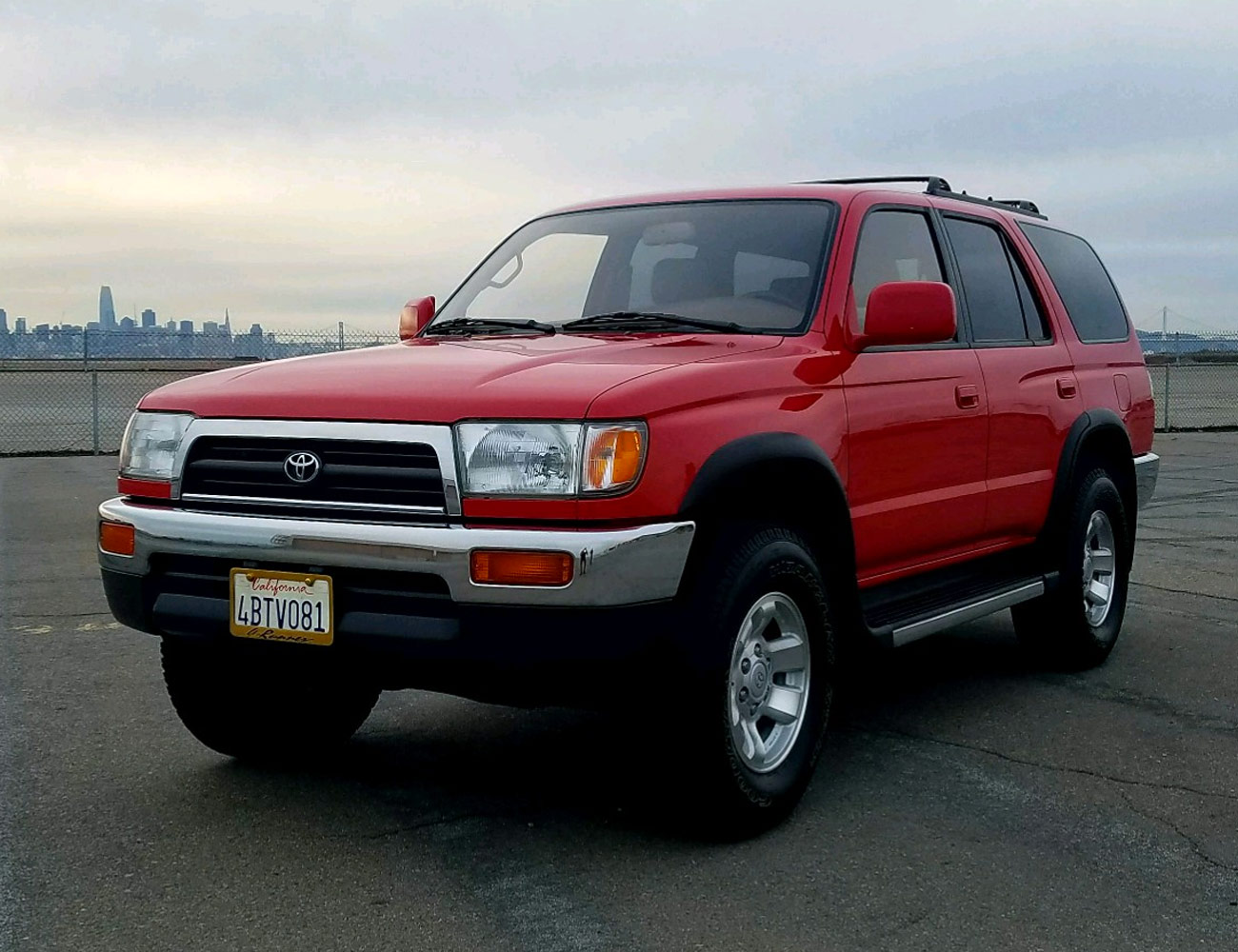
What we like: It’s crazy how SUVs like the 4Runner were built to tackle the road less traveled, yet end up being the truck less traveled. This Radiant Red 4Runner only has 30,000 miles on it and has the potential for at least 200,000.
From the seller: “The truck was ordered in Radiant Red over a cloth Oak interior with chrome running boards, carpeted floor mats, and the convenience package from new. Power comes from a 3.4L V6 that is backed by a four-speed automatic transmission and two-speed transfer case, and a clean Carfax report is provided.”
What to look out for: Frame rust is the most common complaint with this generation 4Runner, but considering the incredibly low mileage and condition, that doesn’t look like an immediate problem.
Expert opinion: “Great looks and ground-pounding performance make the 4Runner an ideal choice for people who love the great outdoors as well as those who just want to look like they do.” — Edmunds

1991 Mercedes-Benz 300GE

Mileage: 67,000
Location: Seattle, Washington

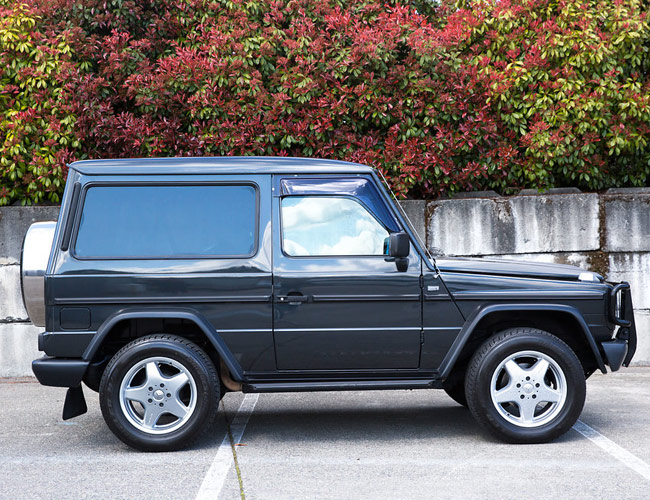
What we like: From right around the time G-Wagens started getting luxurious, this 1991 is nowhere near the level of today’s G-Wagen, but you can see it’s better than the Land Rovers and Land Cruisers of the day.
From the seller: “Additional equipment includes a brush guard bolted to the front bumper as well as a hard-shelled factory spare tire carrier. AMG five-spokes are mounted on a 94.5-inch wheelbase and wear 18-inch Bridgestone Dueler street tires. The braking system was refreshed in March 2018 with new rotors, calipers, and pads.”
What to look out for: Owners seem to log the most complaints about head gaskets and clogged radiators. The reason the radiators clog is that of the faulty head gaskets allowing fluids to swap — be preventative and change the head gaskets before any signs of trouble.
Expert opinion: “The first major refinements came in 1981 and included an auto’ box and air conditioning; a year later it got comfier front seats lifted from Benz’s car line-up, auxiliary heating and wider tires. Having generated some column inches with a Paris-Dakar rally win in ‘83, MB kept piling in the kit; by ‘87 it was fitting the G with electric windows, a power antenna and luggage covers. In 1989 it got its first full pimp out – to celebrate the G’s tenth anniversary, in came permanent four-wheel drive, wood trim, ABS, a top-spec interior and three electronically-locking differentials.” — Matthew Jones, Top Gear

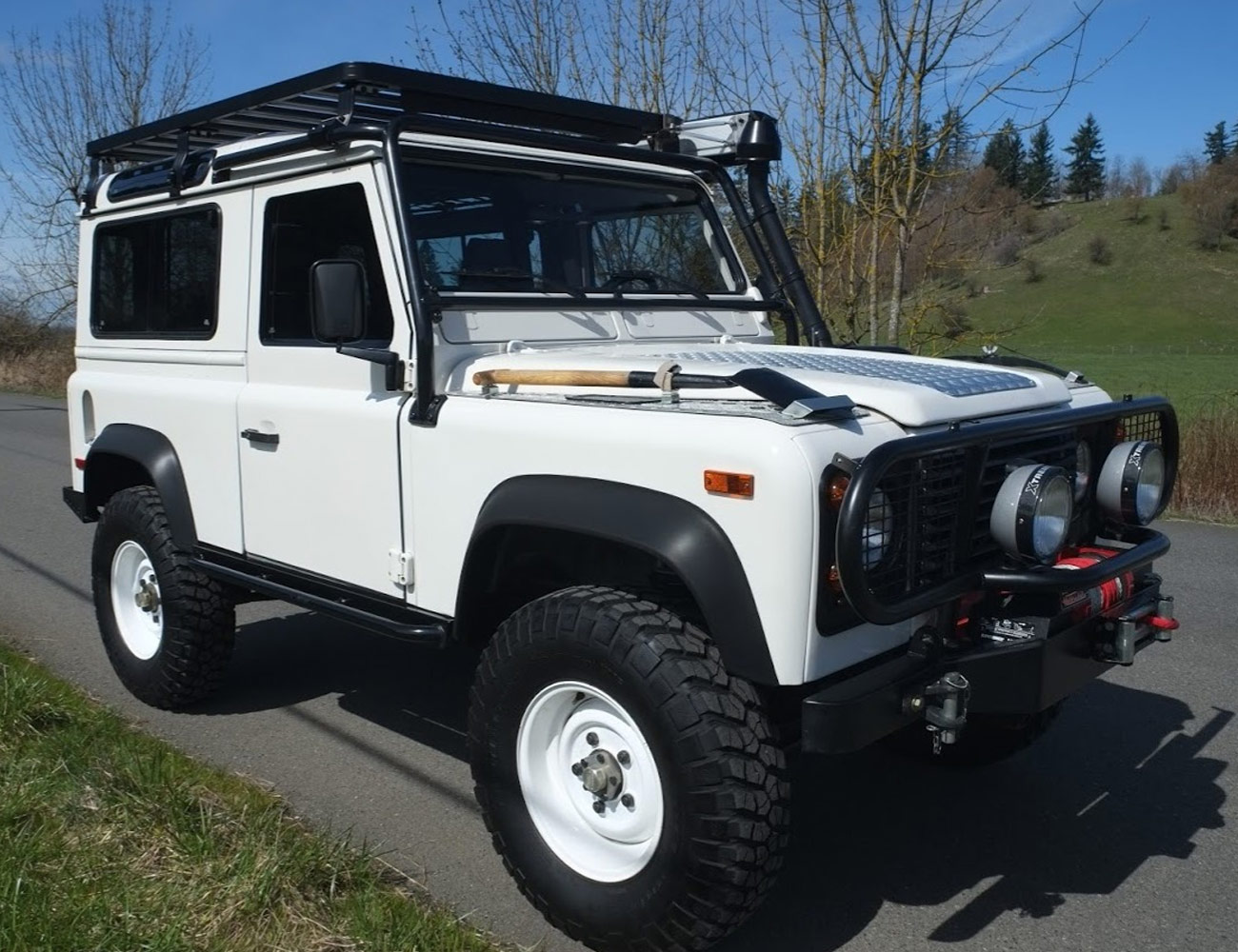
1995 Land Rover Defender 90 NAS

Mileage: 80,000
Location: Enumclaw, Washington

What we like: If you wanted to go out and get a bone stock Defender and then add on as much as this one is carrying in gear and accessories, you’d pay a whole lot more than what the going bid is.
From the seller: “Accessories include a Front Runner roof rack, body protection, an Old Man Emu lift kit, GBR axles, TrueTrac differentials, new VDO gauges, custom storage and more. Power is supplied to all four wheels by a 3.9-liter V8 and five-speed manual gearbox. This D90 is sold with its original window sticker, a clean Carfax report, maintenance records and a clear Washington title.”
What to look out for: This Land Rover’s mileage is still considerably low for its age but it’s up there. That said, this Defender underwent a considerable amount of refurbishment and all the problem areas look like they’ve been addressed already.
Expert opinion: “Those expecting to find an interior similar to those found in Land Rover’s other products will be greatly disappointed. The Defender represents the definition of bare-bones, with a simplistic dashboard designed in the mid-1980s and a utilitarian cabin fashioned to be more easily vacuumed out after a Serengeti trek.” — Edmunds

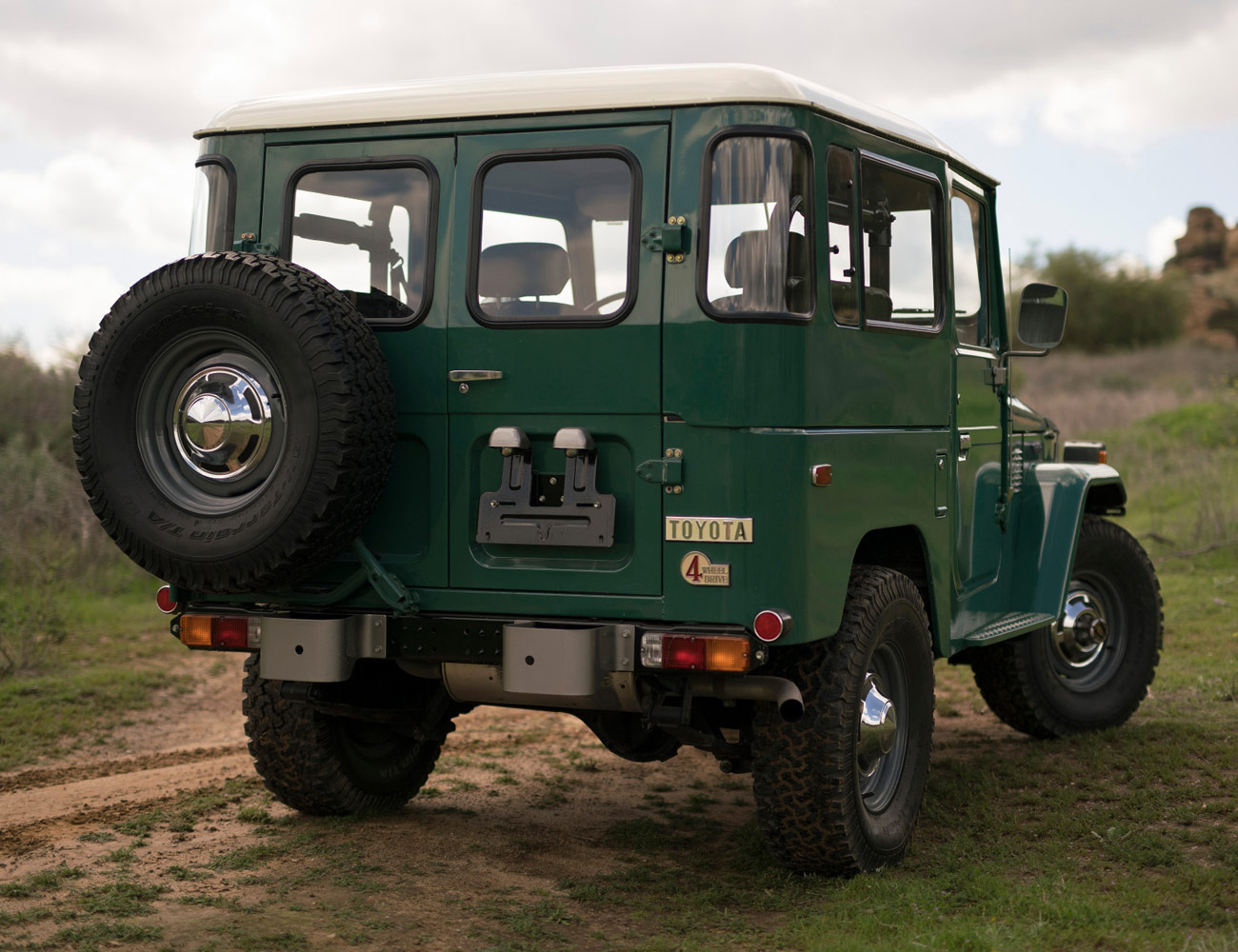
1978 Toyota Land Cruiser FJ40

Mileage: 5,265
Location: Chatsworth, California

What we like: This is certainly the ‘reach’ option on the list, but to have an FJ that’s practically brand-new might be worth the extra coin.
From the seller: “This FJ is in absurd original condition, with all original finishes, and not any signs of rust. This is considered the nicest example known in the world by experts in the marque.”
What to look out for: We’ve met the seller, Jonathan Ward. With is ridiculous attention to detail, if he says this thing is clean, you can believe it.
Expert opinion: “The ride is smooth, despite the short 90-inch wheelbase, but a relatively wide track and well sorted leaf spring suspension help keeps the driver feeling confident with the vehicle’s overall handling characteristics, although there is still some body roll due to the high centre of gravity and tall body structure. The manual steering is heavy at lower speeds, but the vehicle tracked straight and true at all times during my test drive. Power steering became an option in 1979.” — Russel Purcell, Driving

The Used Cars We’d Buy Right Now for $10,000

If we had a [limited] blank check, this is what we’d pick up. Read the Story

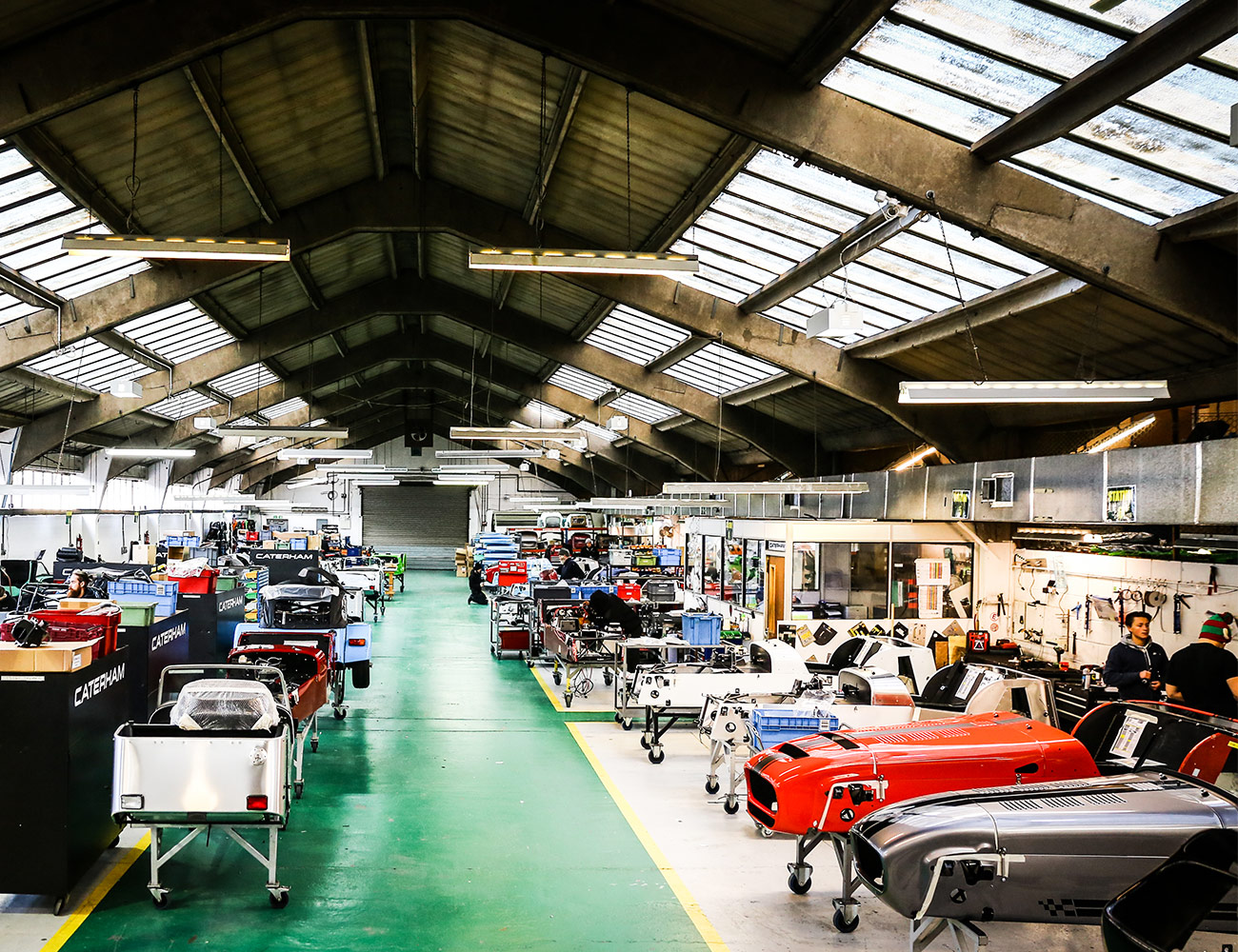
The Benchmark for Every Modern Sports Car Is the Caterham Seven

“Caterham is still the benchmark for many journalists around the world. If they drive any sports car, they always refer back to the handling, the ride, the performance and the weight of a Caterham. And I think all of these British low-volume sports cars now have all evolved from the Caterham ethos and they all in some way try to mimic what we do — to achieve the performance and handling of a Caterham.” — Graham MacDonald, Caterham Cars CEO

Every major modern car-making country has a calling card. For America, it’s muscle cars from Ford and Chevy. For Germany, corner tackling super sedans from Audi, BMW and Mercedes. Japan: affordable, high-strung performance coupes which punch above their weight from Toyota and Honda. For Britain, its core value-car isn’t as obvious. It’s not an SUV from Land Rover or a plush, V12 grand tourer from Aston Martin — it’s the low-volume, lightweight sports car. The most iconic of which comes from Caterham.

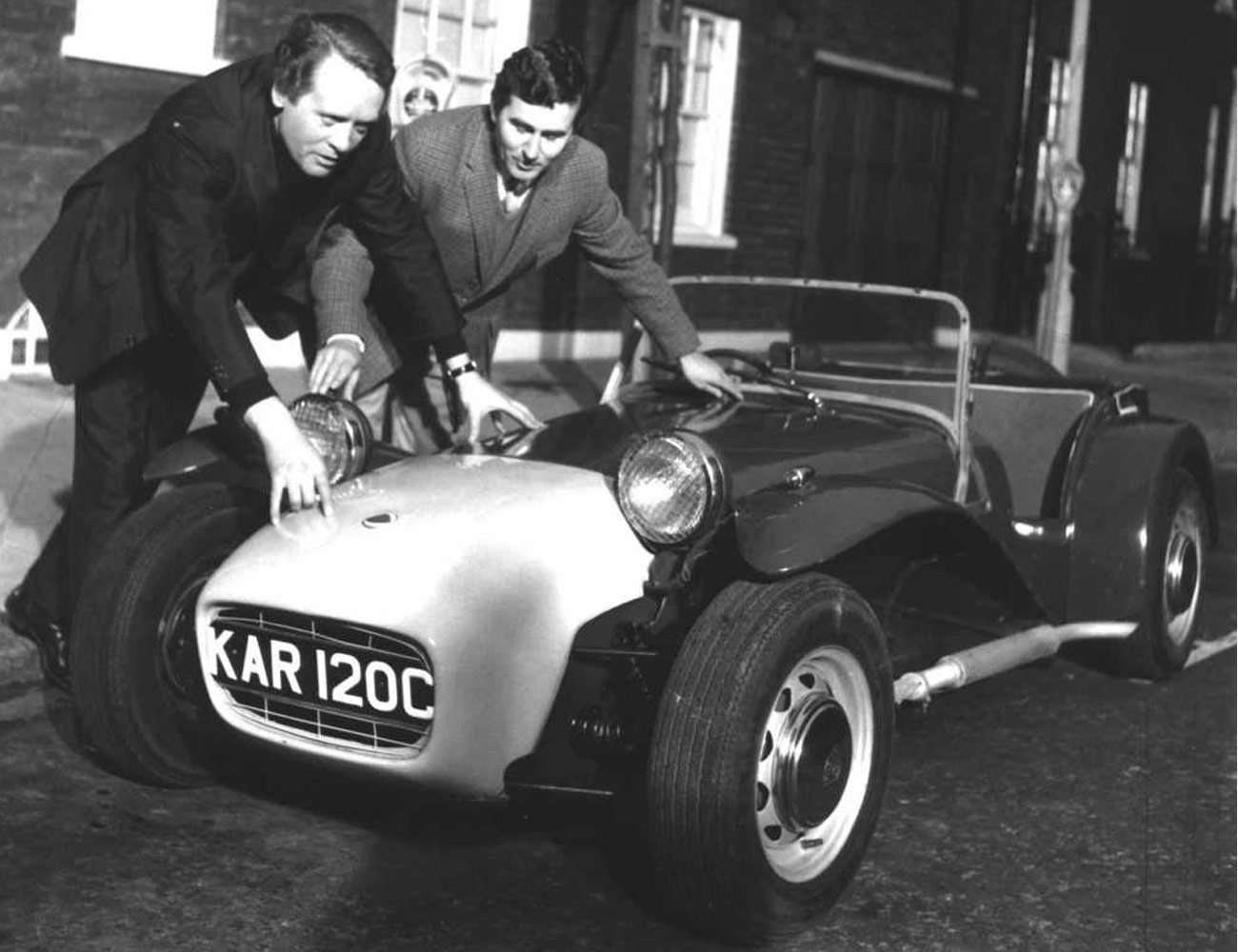
Back in 1957, Colin Chapman, the legendary founder of Lotus Cars, launched the series Lotus Seven Series 1. It was a lightweight, minimalist sports car that took after the cigar tube shape of the contemporary grand prix cars and was, most of all, affordable. It doesn’t take a mechanical engineering Ph.D. to know that formula is still a hit with enthusiasts, both on the track and public roads. After the success of his Series 1, Chapman went on to build the Series 2, 3 and 4. But, in ‘74, when the Lotus founder wanted to end production of the Seven, Graham Nearn, owner of Caterham Cars in Surrey, England, one largest Lotus Seven dealers in the ‘60s, bought the production rights and kept building the Series 4.

It would have been natural for Caterham to continue developing a Series 5, 6, 7, ad infinitum until the numbers got too big to paint on the doors (lest they start adding unnecessary weight). However, the Series 4 was the first modern styling departure in the Lotus 7 lineage, and its looks didn’t go over well. As current Caterham CEO Graham MacDonald puts it, “interestingly in the ‘70s, cars became an awful lot more square and boxy and cheese wedge-shaped. When they designed the Series 4, it was all fiberglass, very square and very boxy. While it was very fashionable and the business sold a few of those cars, there was a little bit of an uproar, and they went back to building the Series 3, which is the current version that we have and still build to this day.”

“It’s all modern engineering, just in a traditional, vintage-looking car.”

It’s not for lack of trying that Caterhams have a vintage design; if the fanbase hadn’t complained, Caterham might not have the signature look it has today. According to MacDonald, Caterham wants “to maintain the original product design, but just about everything has changed underneath. It’s all modern engineering, just in a traditional looking car. Because, whenever we try to change anything, there’s always a bit of resistance.”

Ironically, after selling off the Seven Series 1, Lotus moved on to making bigger, relatively heavier cars (the heaviest car Lotus Currently makes is the US-Spec Evora, which tips the scales at just 3,153 lbs). So, Caterham, sticking to Colin Chapman’s “performance through lightweight” mantra, realized his original vision in a more orthodox way than the company he founded.

And that’s not marketing B.S. The Caterham Seven 620R is the most powerful model the company makes, pumping out 310 horsepower. But, the 620R only weighs 1,345 lbs, giving it a power-to-weight ratio of 508bhp-per-metric tonne — nearly identical to the Bugatti Veyron. Granted, Caterham cars don’t come with ABS, airbags, heat or a spare tire as standard. (You’ll also have to spec a windshield in some cases too.)

Even though those old-school facts and figures are what lead to incredibly fun cars, our changing times are becoming impossible to ignore. “It would take a brave man to sit in my position and say we’ll be able to do that for forever and a day,” MacDonald said. Low-volume car manufacturers don’t currently have to follow as strict regulations as, say, Ford or BMW; hence, Caterham can sell cars without mandatory features like ABS or airbags or build crumple zones into the car’s design. But that’s changing.

The Obama administration passed the Low Volume Motor Vehicle Manufacturers Act of 2015, which opened regulations, making it easier for companies like Caterham, who produced only around 500 cars over the past couple of years. Recently, the Trump administration has been trying to tighten those regulations, making it tough for manufacturers like Caterham to sell cars in the U.S. To sell cars here, Caterham has to work loopholes in the laws, in that they ship the chassis and parts over — everything minus the engine — to a dealer network here in the States. The dealers then assemble the cars and drop in engines sourced here in America, which tend to be Ford 1.6-liter Sigma or 2.0-liter Duratec engines. Should regulations tighten further, dealers would no longer be allowed to build the cars, placing that burden on the customer.

Despite Caterham’s strict allegiance to the styling of the past, MacDonald is confident Caterham can move into the future without upsetting its core fanatics. “We are looking at alternatives. We always have one eye on what’s going on in the world, and the world is changing, very rapidly, around electric cars and autonomous vehicles. So who knows where we’ll go in the future.” Does that mean the manufacturer of one of the most engaging sports cars in history is going to start building SUVs or go all-electric? Hardly. “One thing that will be certain is we will continue to build the Seven in the way it is built today, for as long as we can, for as long as regulations allow us to do it.”

More Classic British Motoring

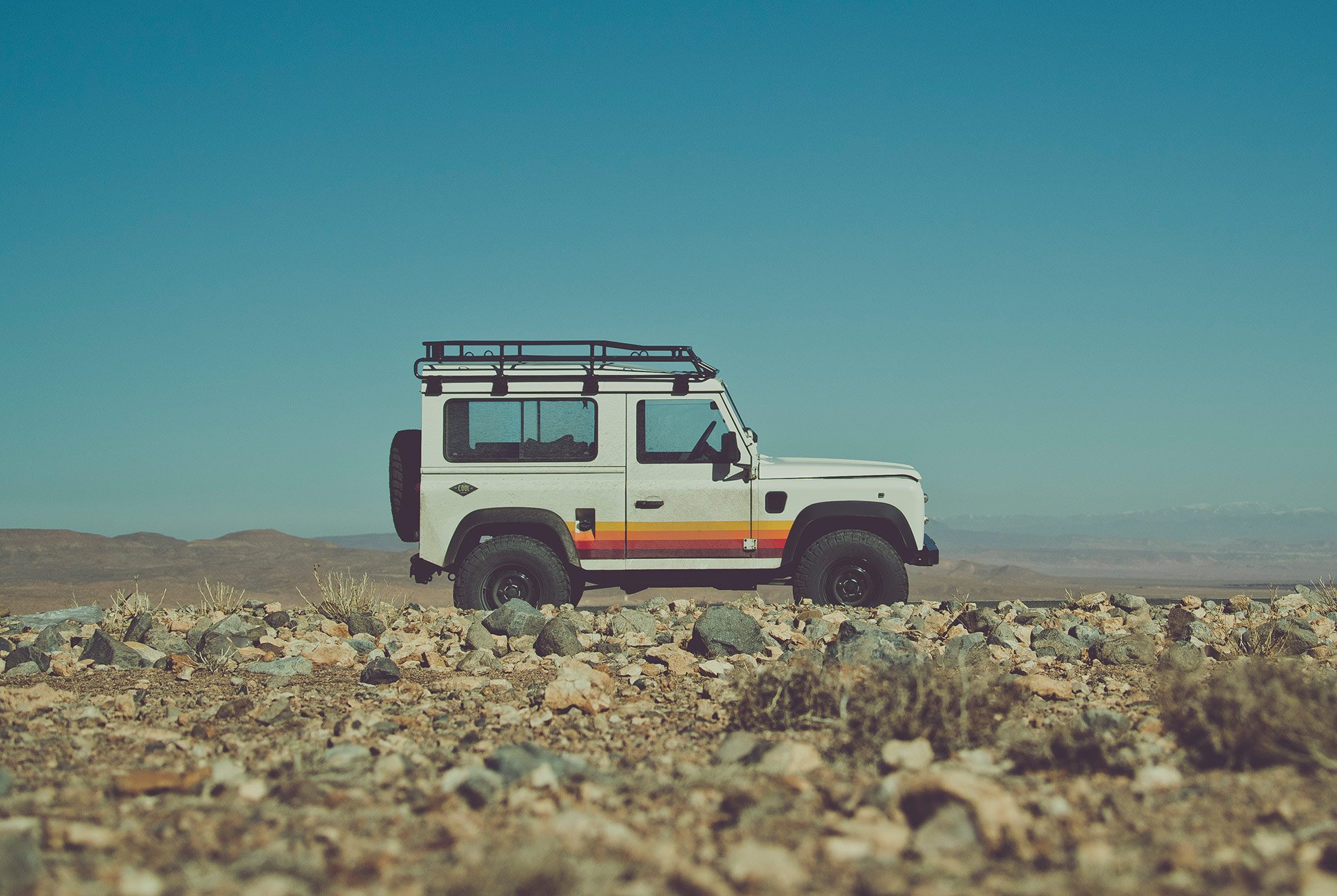
Sinuhe Xavier is a commercial director and photographer. His trip in Defender D90s took him from Chefchaouen over the Atlas Mountains and then south through the Sahara, looping back over the Atlas range into Marrakech. Read the Story

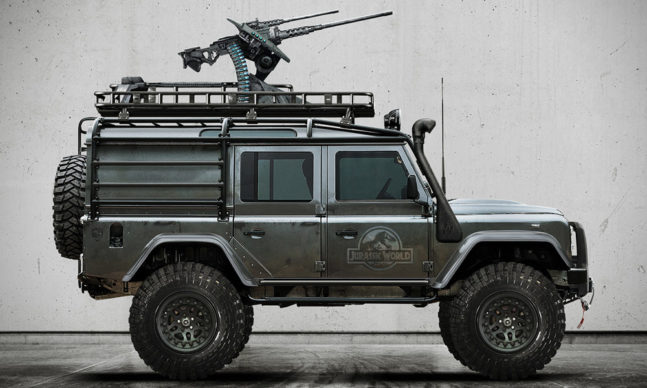
Island Defender Re-Imagined the Truck From ‘Jurassic World’ as a Land Rover

At some point, we’ve all thought about what would happen to a movie or a TV show if the cars the characters used were switched up. Markus Hammarberg of Stockholm Design decided to make that…

Now’s the Time To Buy an All-New Jetta Before Volkswagen Hikes the Price

When the redesigned all-new Volkswagen Jetta broke cover earlier this year, the first thing to jump out was how big of a leap the interior made over the current Jetta. Now, Volkswagen announced the pricing of the 2019 Jetta will be $18,545.

Of course, that’s only $100 down on the current Jetta’s price tag, but that price drop is more significant than you think. In 2010, the Volkswagen Jetta cost $17,605 before it received a redesign and dropped in price to $15,365 in 2011. In the seven years since the affordable sedan received no major mechanical or style updates yet the price tag swelled more than $3,000.

For 2019, the Jetta benefits from a design update, but the most significant selling point is how Volkswagen is bringing the Jetta’s interior on par with the base Audi A4. There’s more leather to run your hands over and the Volkswagen Digital Cockpit makes an appearance, raising the little four-doors game more than a few levels.

Based on how the Jetta’s price tag has fluctuated over the years — even considering inflation and market conditions — it’s safe to assume the next-generation Jetta will be at it’s most affordable as soon as it comes out. Otherwise, if you want a deal, you’ll have to wait for another five or so years until the eighth generation Jetta breaks cover.

Initial Impressions

Updates to the Volkswagen Jetta for 2019 might have you reconsidering going upmarket with an Audi. Read the Story

The Top 5 SUVs Most Likely to Reach 200,000 Miles

The Magazine

Let us take you on a journey of the world. Each issue of the Gear Patrol Magazine comes packed with adventures, guides and stories exclusive to the magazine. Stunningly designed, printed on high quality stock and ready for your coffee table. Subscribers received 15% off the GEAR PATROL STORE. Biannual. $35.

The Newsletter

Get GEAR PATROL in your inbox with the DISPATCH, including Today in Gear and all our new stories. Daily, 5pm. Free.

<!–

–>

These Beautifully Restored Defender D90s Overland Through Northern Africa the Right Way

Editor’s Note: Sinuhe Xavier is a commercial director and photographer with a particular fondness for vintage Defenders of the highest quality, as you can tell from his photos and stories here. Follow him on Instagram: @SinuheXavier.

“S

inuhe, we are in Morocco. If anything happens we’ll just take a taxi back to Lisbon. Portuguese style.” This is what Ricardo Pessoa said quite matter-of-factly after I quizzed him about any spares and recovery gear that might be in the back of the 1994 Cool N Vintage Resto-Mod D-90 we were driving across Morocco. I am used to the full arsenal of what-could-go-wrong contingencies being packed into the back of my truck, but that was not the case here. And “Portuguese style” was a phrase I would become very accustomed to in the next few days.

I’d spent the previous 48 hours flying from Los Angeles to Tangiers, then hopping in one of those taxis Ricardo mentioned, riding it to Chefchaouen — two hours through fields of olive trees to the mountains south. The rain had started coming down when the cab driver dropped me off outside the city walls. My French and Arabic were about as good as the driver’s English and Spanish, so I darted across the bridge with loose directions to my hotel. This was mid-January, off-season in Morocco, and the narrow streets were empty, its signs only in Arabic. It took me…more than a minute to find the hotel.

Ricardo drove from Lisbon to meet me and wasn’t due in until past midnight; he took the Ferry across the straights of Gibraltar with two Land Rover Defender 90’s in tow. Our plan was to drive over the Atlas Mountains and then south through the Sahara, looping back over the Atlas range into Marrakech. And while I was exhausted from the travel, I could barely sleep: driving a Land Rover on the continent of Africa had long been a dream of mine. So I sat with a steaming plate of vegetable and lamb tagine in a damp hotel located deep within an ancient village, only hours away from fulfilling that dream.

The morning was clear and the narrow blue corridors of Chefchaouen came alive with the sound of the morning prayer. The smell of burning wood and fresh baked bread wafted into my window. The clouds revealed lush green mountains — something I wasn’t expecting in this part of the world. (I later learned that the region was known for its cannabis cultivation.) As we drove east, the topography morphed from verdant green hills to the pine-covered Atlas mountains.

And as we reached our 12th hour behind the wheel, we came to a roadblock. Backtracking added two hours and 150kms to our already long day.

Once we were underway, from the start the trip didn’t always go according to plan. And as we reached our 12th hour behind the wheel, we came to a roadblock and were told that the route over the mountain pass was closed due to a snowstorm. Backtracking added two hours and 150kms to our already long day.

The western edge of the Sahara is marked by small villages, all connected by a modern highway built to spur tourism in the region. To the east, the vastness of the Sahara spread across the horizon, while to the west the Atlas Mountains sat covered in snow, highlighting the visual paradox of the area.

Our pace was extraordinary as we moved through the desert behind the wheel of Land Rover Resto-Mods. In other parts of the world we are consumed with the efficiencies of travel, how fast can we get to the next place. Here we were cruising along without urgency, pulling over to explore a side canyon or photograph the incredible vistas.

We rolled into Merzouga in the dead of night. This outpost on the edge of 100-meter high dunes is mostly a tourist attraction where volcanic black sand meets with the orange sands of the desert. This is the traditional land of the Berbers and their nomadic cousins the Tuareg. Driving through the dirt tracks, we passed camels tied to stakes in the ground and the odd date palm. Hidden under the blanket of the inky sky were the mythical sand dunes of the Western Sahara.

We were staying in nice places that Ricardo had researched on previous trips, as he had been making this trek into Northern Africa since 1998. By our third night, I was well-adjusted to the time difference and we had sunk into a rhythmic hotel check-in routine: upon arriving, we would dump our gear, grab a quick shower and reconvene in the restaurant for a drink. Morocco is a Muslim country, so the cocktail menu is usually pretty limited to Moroccan beer and wine. If you were really lucky there would be Crown Royal, or maybe Johnnie Walker. Over these drinks, we’d rehash the day, share the photos we took and wait on our food.

There is a stillness once you are in the dunes — a quiet like a snowy forest. The tires barely make a noise and all that could be heard was the thump of the 300tdi engines pulling us along.

The morning after our night in Merzouga, I made my way to the dining room in our hotel, anxious to get on the sand. Ricardo had arranged some pastries and coffee for our pre-dawn departure. When he originally asked me to join him on the trip I was expecting to be camping across Morocco; this whole ‘having breakfast made after rolling out of a warm bed’ procedure was nice. I was starting to understand Portuguese Style.

Ever since I was a child, the dunes of the Sahara have held a fabled place in my mind. So many great films came to mind: Michelangelo Antonioni’s The Passenger with Jack Nicholson, Werner Herzog’s Fata Morgana and of course Star Wars and Lawrence of Arabia.

We arrived at the base of the dunes just as the sun was creeping over the eastern horizon. The wet conditions made for nice compact sand and we only had to air down our tires to 21psi (or 1.5 Bar) to progress. There is a stillness once you are in the dunes — a quiet like a snowy forest. The tires barely make a noise and all that could be heard was the thump of the 300tdi engines pulling us along.

Driving large dunes takes a good deal of finesse and the ability to route-find on the fly. There is no direct route anywhere; you follow your instincts and hope you don’t get boxed in. It’s also exhausting. The driving and route finding physically wears on you. And that’s if you don’t get stuck — like we did.

When one of the 90s finally did get high-centered trying to crest a dune, it was easy enough with a snatch strap and two D-rings to yank it out and back on track. This was finally pure Portuguese Style; finally, I was starting to not only understand but to appreciate it. Our trucks were light on gear: no winch, no rooftop tent, no refrigerator, no pelican case full of spare parts or tools. It was like motorcycle touring but with Land Rovers — all we really needed was a credit card.

Ultimately, there was something gratifying driving about through ornate archways into Palais Mehdi in Marrakech with two dirty trucks. Three stately Dalmatians were posted by the gates guarding our hotel’s all-black fleet of Mercedes. We were greeted with fresh lemonade and showed to our suites. A perfect, satisfying end to our Portuguese Style trip.

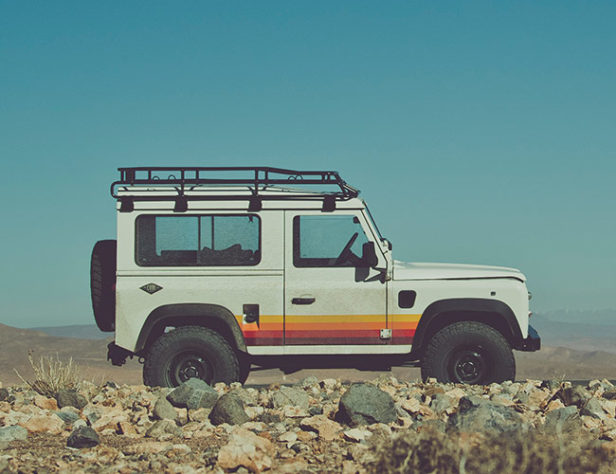
Cool N Vintage Land Rover Defenders
1994: hard top
1996: soft top
Engines: 300tdi
Restored: using all OEM parts
To be used: as pictured – these aren’t garage queens
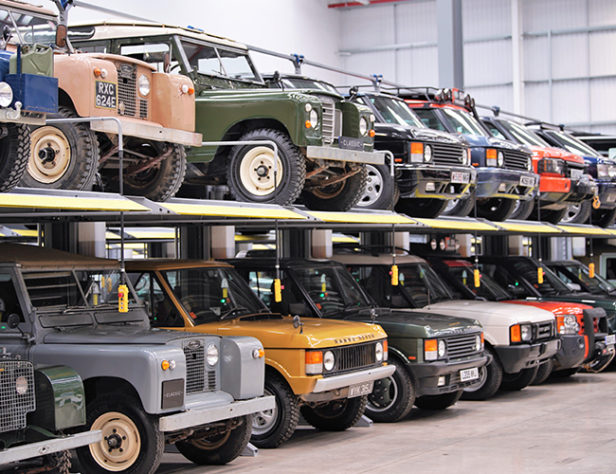
Jaguar Land Rover’s Restoration Shop Is What Vintage Car Dreams Are Made Of

Any owner can send their 10-year-old-plus car in for thoroughly modern service. Read the Story
The 2018 Chevy Tahoe Custom Midnight Is a Special Edition You Actually Want

For the most part, special editions are not worth the extra money. For a few extra thousand dollars, you tend to get a unique paint job and maybe a few trim pieces specific to the package. The 2018 Chevy Tahoe Custom Midnight certainly looks like it falls into that trope, at first, but there’s a healthy dose of practicality to go with the tactical paint scheme.

Similar to the Custom Edition introduced last year, the Midnight Tahoe benefits from a third-row seat-delete, opening up 54 cubic-feet of cargo room in the back. However, the Midnight Edition gets a secret-service-like all-black paint job, with a blacked-out grille and Chevy badges for style. But, where you might expect Chevy to bolt on massive 24-inch rims shod with ridiculously useless low-profile tires, it wen the other way. The Midnight package sits on 18-inch black wheels wrapped in rugged Goodyear Wrangler DuraTrac tires, which, on a truck this big, is the type of rubber you want anyway.

Chevy isn’t asking you to shell out any extra money you wouldn’t already be spending on a base Tahoe LS either, which starts at $48,795. So not only is the Midnight Edition the more practical way to spec a new Tahoe, but it also adds considerable style to a run-of-the-mill SUV.

Today in Gear

The best way to catch up on the day’s most important product releases and stories. Read the Story
This Original Japanese-Built Jeep Will Turn Heads at Next Year’s Easter Jeep Safari

Hearing there’s a Mitsubishi Jeep for sale, some might call blasphemy and others might label it a blatant knock-off, but the Japanese brand acquired the rights to produce the Willys CJ3B back in 1954 and continued pumping them out until 1998. Similar to how the Volkswagen Beetle and original Mini were built, largely unchanged, up until 2003 and 2000, respectively, this imported 1991 J53 isn’t far off from the 1954 model.

It was built in 1991, so don’t expect this Jeep to have any popular later-’90s amenities. The only significant changes over the course of its life were different engines and some sheet metal moldings, and there isn’t much to the interior besides the two front seats and rear side-facing jumper seats. The radio doesn’t even pick up FM signals.

What you do get is a black- and gold-colored body that still holds a great shine and sits on top of a chassis that is reasonably rust-free. The Bestop top is the only part listed as new, while the suspension is believed to be all original. Power comes from a turbocharged diesel engine and sends power through a four-speed manual gearbox and a manually-engaged transfer case for part-time four-wheel-drive.

Right now, this Mitsubishi Jeep shows just over only 38,000 miles on the odometer and is going for $5,800. That bid is sure to increase, and quickly.

Today in Gear

The best way to catch up on the day’s most important product releases and stories. Read the Story

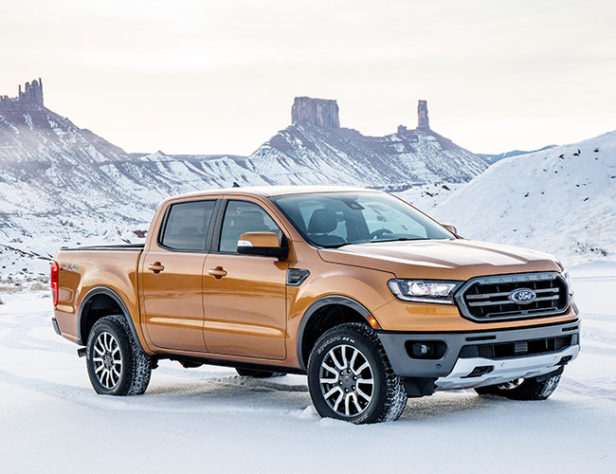
Ford Turned Its Ranger Pickup into an Insane Little Off-Roader

It was just last month that Ford revealed the new US-market Ranger at the Detroit Auto Show, and now the wraps are finally off the highly-anticipated Raptor version of the small truck. Like its big brother, this is a complete performance overhaul and has new suspension and engine components that should make this an indomitable off-roader. There is, however, one caveat: this one isn’t coming to the US.

No, the truck seen here is for Asia Pacific markets but it should give us a good idea what the Ranger would look like if it does come stateside. And we like what we see: the truck has a strengthened frame, Fox Racing Shox dampers, and a Watt’s linkage rear suspension with coilover springs that improve stability when ripping through the desert. The truck now boasts 11.1 inches of ground clearance and a solid 32.5-degree approach angle. According to Ford, the Ranger Raptor is built to “travel at high speeds off road and endure the punishment that off-road racing provides.” Good.

Powering the truck is a four-cylinder diesel with twin turbos churning out 210 horsepower and 369 pound-feet of torque. This is where a potential US-market truck would probably differ most from this version, given the US’s sheepish stance on diesel. But Ford has no shortage of small, powerful gasoline EcoBoost engines to shove under the hood in its stead. While we have no solid confirmation that we will see the truck in the US, a Twitter post from Ford’s North American Products Communication Manager Mike Levine states, “Today’s announcement is about the launch of the new Ranger Raptor in Asia Pacific markets. We’ll have more to share about Ranger Raptor at a later date.” Make of that what you will.

At Least We Have the Standard Ranger

grey_placeholder

The 2019 Ranger is back to finally give the American people what they’ve been asking for for years: a pickup that can fit in a suburban garage. Read the Story

The Very Best of the 2018 New York Auto Show

Year after year, the New York International Auto Show has a tough job on its hands. It’s the last big auto show of the season and has a tough act to follow: it lands on the calendar immediately after the Geneva Motor Show. Switzerland gets all the headline-grabbing supercar and sports car unveilings, and then New York is where they make their North American debut. However, the Big Apple had a few cards up its sleeve this year.

Near-identical crossovers graced most stands this year — it’s a sign of the times; we just have to accept that the crossover is the standard car for the world. But within the vast sea of blandness and new-in-Geneva cars are some real automotive treasures worth getting excited about. Oddly enough, the headlining acts are small hatchbacks, a sedan and an all-electric SUV. Typically, that wouldn’t set anyone’s hair on fire, and yet NYIAS 2018 gave us a handful of cars we can’t wait to drive.

Audi

Audi Sport continues to expand its line up with a four-door version of the incredible (and wonderfully green) RS5.

Cadillac

Earlier this week, Cadillac announced the arrival of the redesigned CT6 flagship along with the CT6 V-Sport and its 550 horsepower and 627 lb-ft of torque. The big luxury four-door is Cadillac’s latest attempt to take on the Germans but only time will tell if it can compete. Next to the new executive car, was the XT4, the brands newest compact SUV — Cadillac’s breadwinner.

Genesis

Genesis, Hyundai’s luxury sub-brand, took the covers of the G60 (the performance model) and the G90 (the luxury model) sedans. If you’d said a few years ago that Hyundai, in whatever capacity, would have cars to threaten the BMW 3-Series, you’d be laughed out of town. Ignore how similar it looks to the Kia Stinger — Genesis is looking more and more promising with every announcement.

Jaguar

It’s no secret the F-Pace is a damn good SUV. So why wouldn’t Jaguar give it the SVR treatment and stuff a big ol’ 5.0-liter supercharged V8 with 550 horsepower and 502 pound-feet of torque under its hood?

Land Rover

When Range Rover announced the $295,000 SV coupe, it almost looked too good to be true. The SV Coupe is one of the few cars making its ‘North American debut’ that’s worth seeing in person. It’s almost concept car-like — especially the elegantly simple interior replete with flowing walnut and sycamore trim.

Lincoln

Lincoln has been busy refining its lineup, and it’s paying off. The Aviator all-electric SUV and Nautalis crossover expertly adopt the brand’s new design language and level of refinement. while Cadillac is busy chasing the Germans for performance, Lincoln is quickly and not-so-quietly becoming America’s standard for luxury.

Mercedes-AMG

Mercedes’ new GT 4 Door Coupe super sedan made its debut in Geneva last month, but it’s another North American debut worth checking out. The sculpted, focused interior alone is worth a look in person.

Nissan

Longer, lower and wider, the 2019 Nissan Altima gets updated styling, borrowing heavily from the Vmotion 2.0 Concept. What isn’t immediately noticeable but even more important than the updates styling, is the engine. The 3.5-liter V6 is Nissan’s new groundbreaking variable compression ratio engine which offers a significant increase in efficiency and MPG over the old mill, not to mention 248 horsepower and 273 lb-ft of torque.

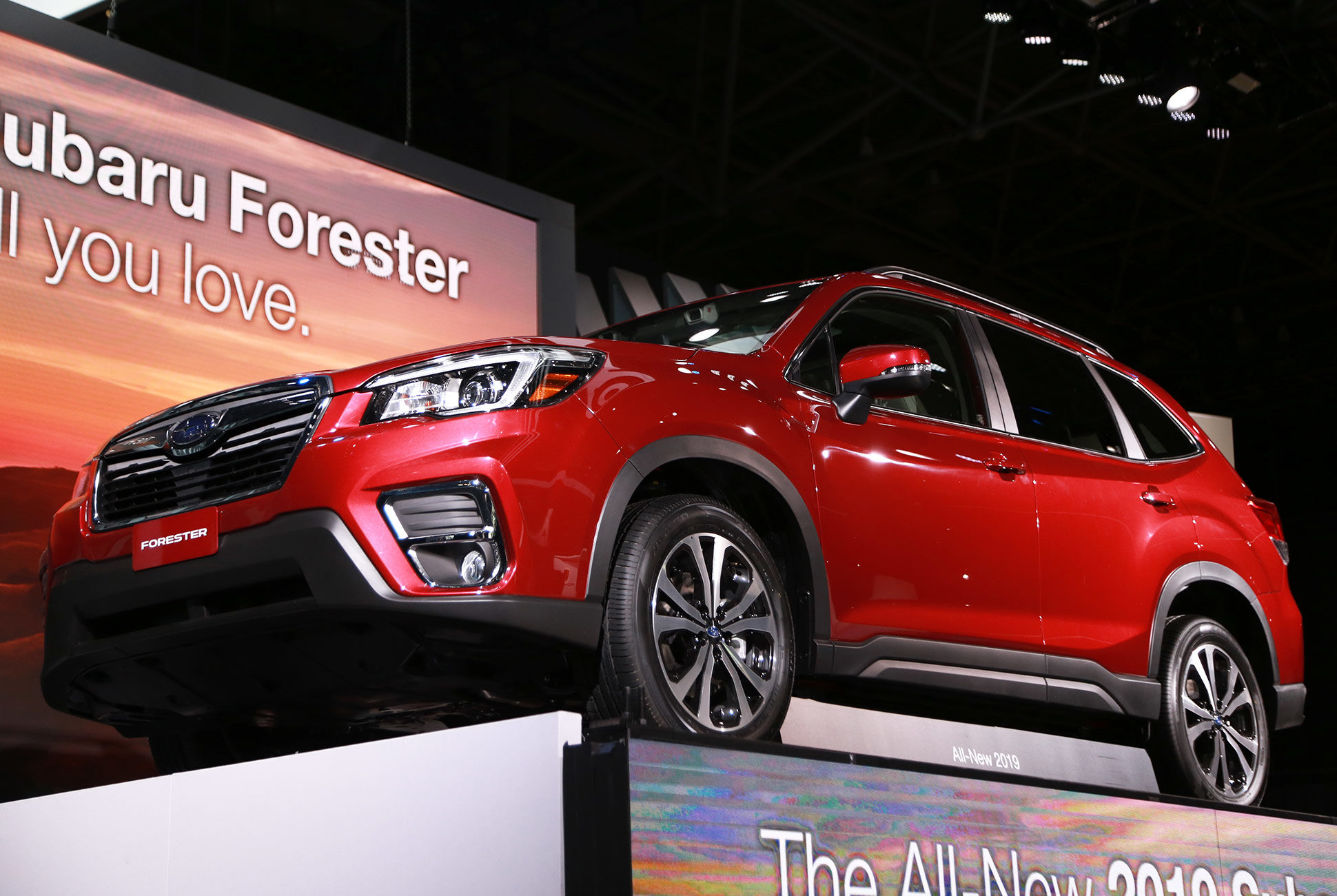
Subaru

Best-of-NYIAS-2018-gear-patrol-Subaru-slide-1
Best-of-NYIAS-2018-gear-patrol-Subaru-slide-2

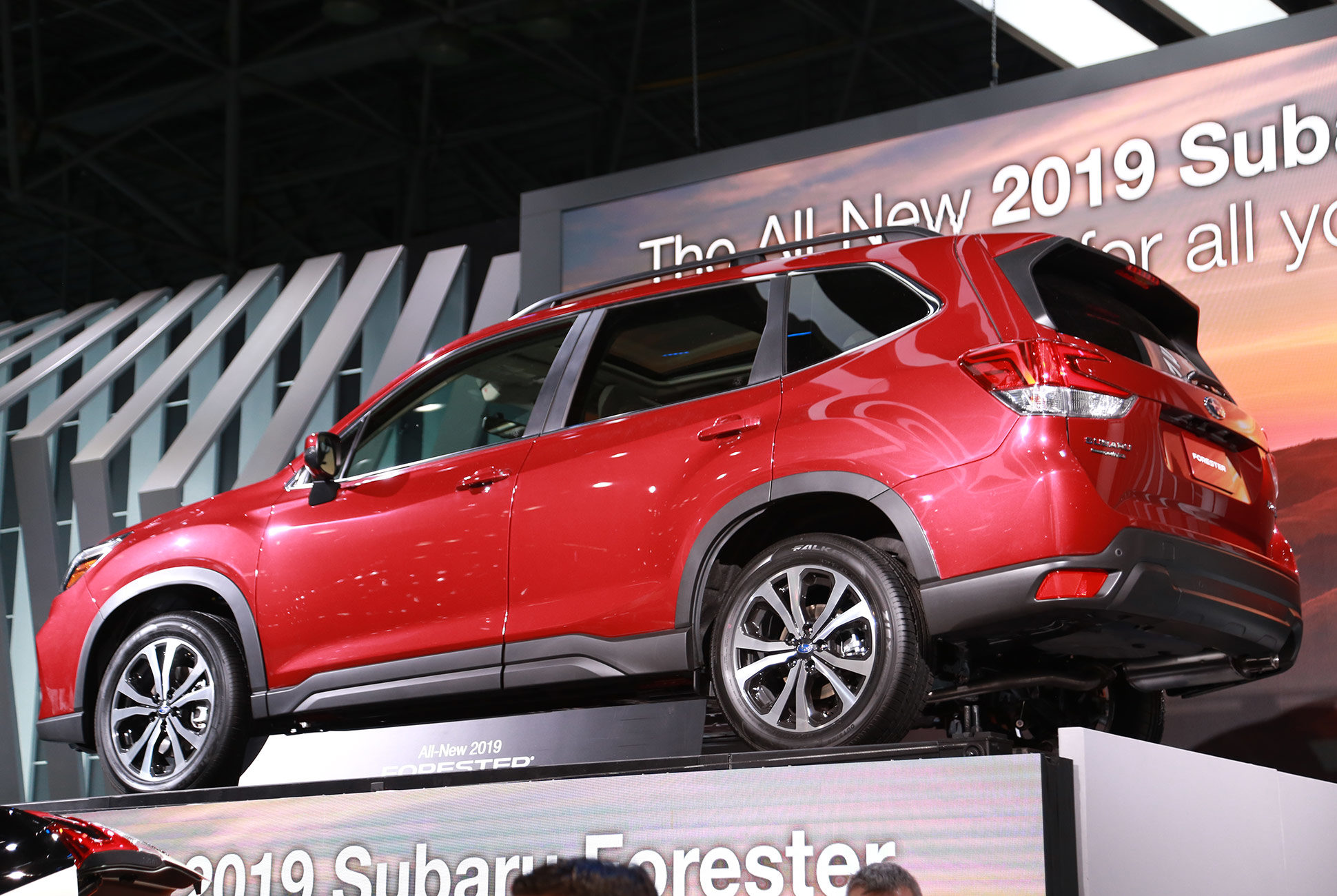
The Subaru Forester inflates in size for 2019. Subaru stretched and widened its top-selling SUV, so now it has more interior and cargo space.

Toyota

Toyota is on a tear as of late, and the Corolla hatchback is the latest car from the Japanese brand to garner a bit of fanfare. If this were only a few years ago, no one would care there is a new Corolla, but Toyota’s new performance-minded brand direction has the world paying attention. Toyota says it’s done making boring cars and the Ford Focus-baiting (that blue paint isn’t a coincidence), six-speed manual-having hatch is a statement of intent. The GT86 was the first offensive; the official announcement of the next Supra is a sign of things to come and the Corolla hatchback aims to fit in the family.

Volvo

The Volvo V60 makes its North American debut as well, so its stats and specs are no secret — it’s just too damn sexy to not to include.

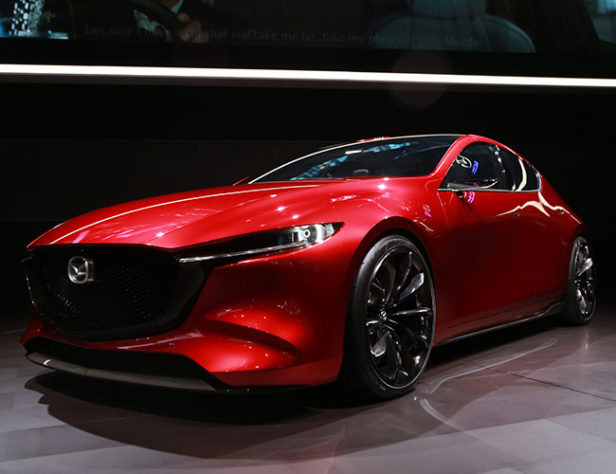
Mazda Has the Best Looking Car on Display at NYIAS 2018

The best way to catch up on the day’s most important product releases and stories. Read the Story
5 Affordable Vintage Cars Perfect For City Life

Editor’s Note: We love scouring the internet for reasons to spend money we don’t have on cars we daydream about owning, and these are our picks this week. All prices listed are bid amounts at the time of publishing.

Some might say owning a car while living in the city is a waste of money and time. However, the people who say that are probably the ones asking you for a ride out of town on the weekend. Choosing to own a car in the city is as big of a lifestyle choice as living in the city itself. And just like any other urban dweller, you know the best ways to make life easier, more efficient — that shouldn’t stop at your choice of wheels.

SUVs work fine out in the suburbs, but the hard-to-park behemoths lumber from light to light guzzling gas. Their imposing presence works against them and makes driving more of a hassle on tight city streets. What you need is relatively small, easy to park, nimble car that sips fuel and saves you money. A little style and grace wouldn’t hurt either. Here are five good-looking and affordable vintage cars that are perfect for life in the big city.

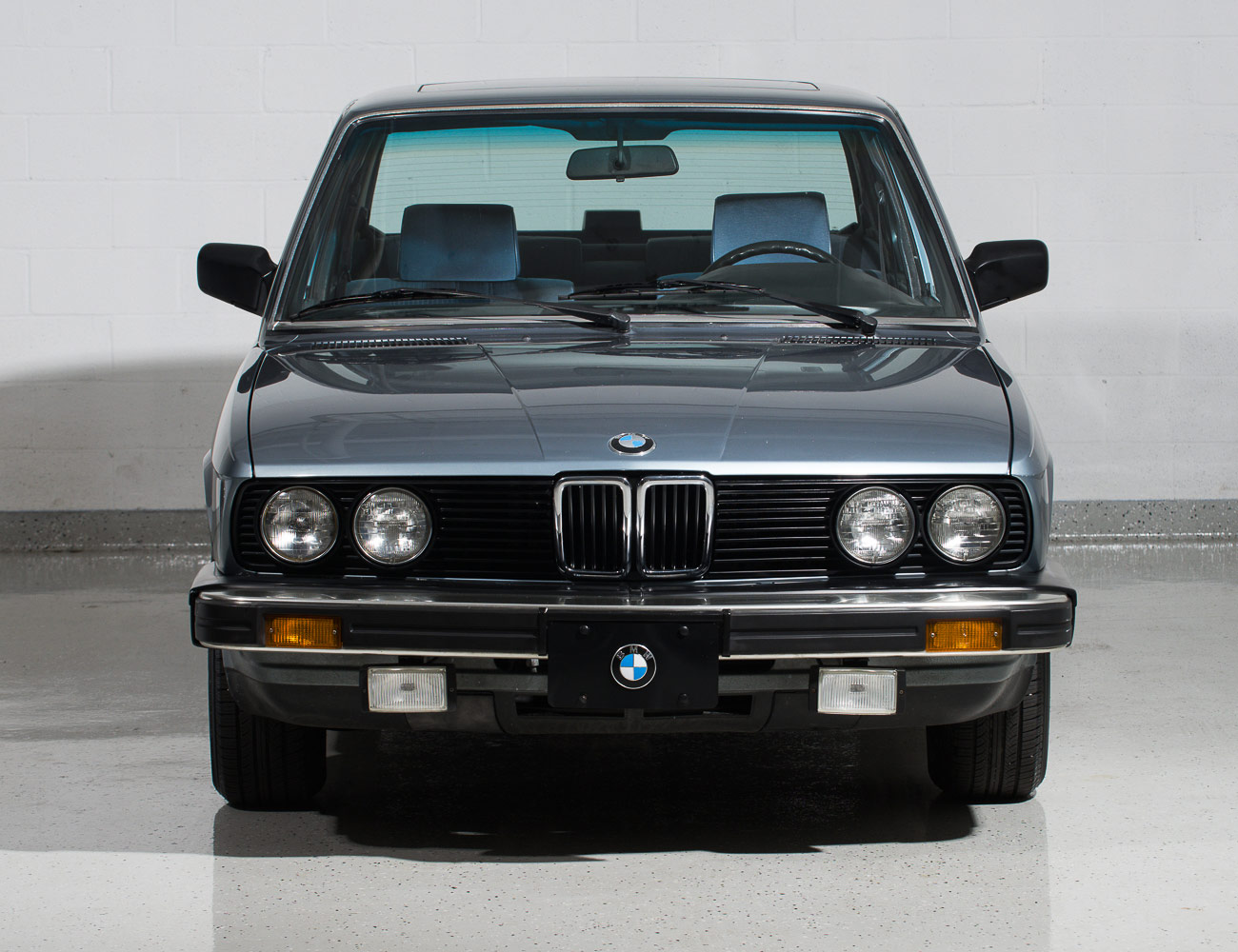
1988 BMW 528e

Mileage: 78,969
Location: Farmingdale, New York

What we like: At first glance, yes, the 528e is a dull car. In response to the oil crisis, BMW detuned the legendary M20 engine to get better mileage and as a result, has lower power. However, a happy result of that is the engine is under considerably less stress over the course of its life, which means it will last longer. You get the style of an E29 5-Series, a decent average MPG and a long-lasting engine — a perfect car for the city.
From the seller: “The 2.7-liter version of the M20 inline-six was tuned for fuel economy with a redesigned cylinder head, mild camshaft, and 4,500rpm redline.”
What to look out for: In most BMWs of this vintage, rust is a common problem if it wasn’t looked after. On the E28 5-Series, you’ll most likely find rust in the front wheel wells, if there is any. Keep an eye on the cam belts, too. They’re not faulty but just tend to crack with age.
Expert opinion: “These understressed engines seem to run happily for 200-250k miles or more. Everything is old-school Germanic: high-quality materials and components, and not that hard to fix. And the ambiance is, of course, classic BMW: compact, great visibility, terrific seats, good ergonomics, great handling; everything except for the MIA rev band from 4200 to 6500 rpm.” — Paul Niedermeyer, Curbside Classic

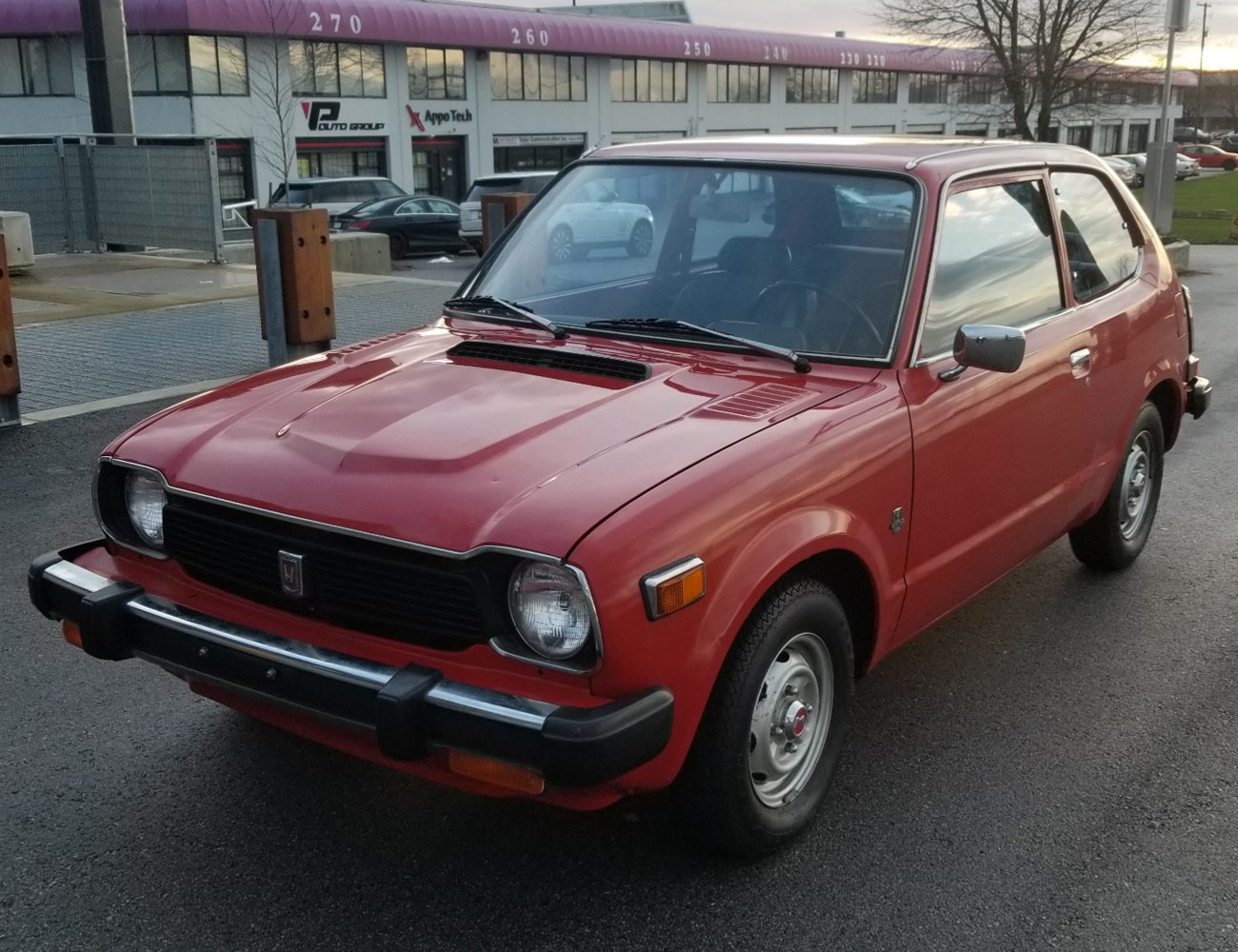
1978 Honda Civic

Mileage: 30,000
Location: Vancouver, British Columbia, Canada

What we like: The condition of this Civic is unbelievable. With only 30,000 miles on the clock and more than 200,000 miles in store, if well-kept, an original Civic will show you how Honda became synonymous with reliability. It won’t win any horsepower wars, but darting in and out of city streets and the ability to park in half-spaces makes this civic an urban warrior.
From the seller: “The seller is the second owner and describes it as very original with factory-installed upholstery, AM/FM radio, and 12? steel wheels. Service work performed within the past two years and 5k kilometers includes a replacement timing belt, water pump, and multiple oil changes.”
What to look out for: The first generation Civic was Honda’s first big stamp on the American market. It’s the car that earned it the reputation of being incredibly reliable. With that said, there’s not much to look out for on this car at just 30,000 miles and it was garage kept, so it’s practically brand new.
Expert opinion: ” It convincingly showed that it was possible to meet three seemingly impossible criteria (super compact size, super-efficient engine, low-emissions), right here and right now. And as perhaps the most important point of all, it was fun to drive.” — Paul Niedermeyer, Curbside Classic

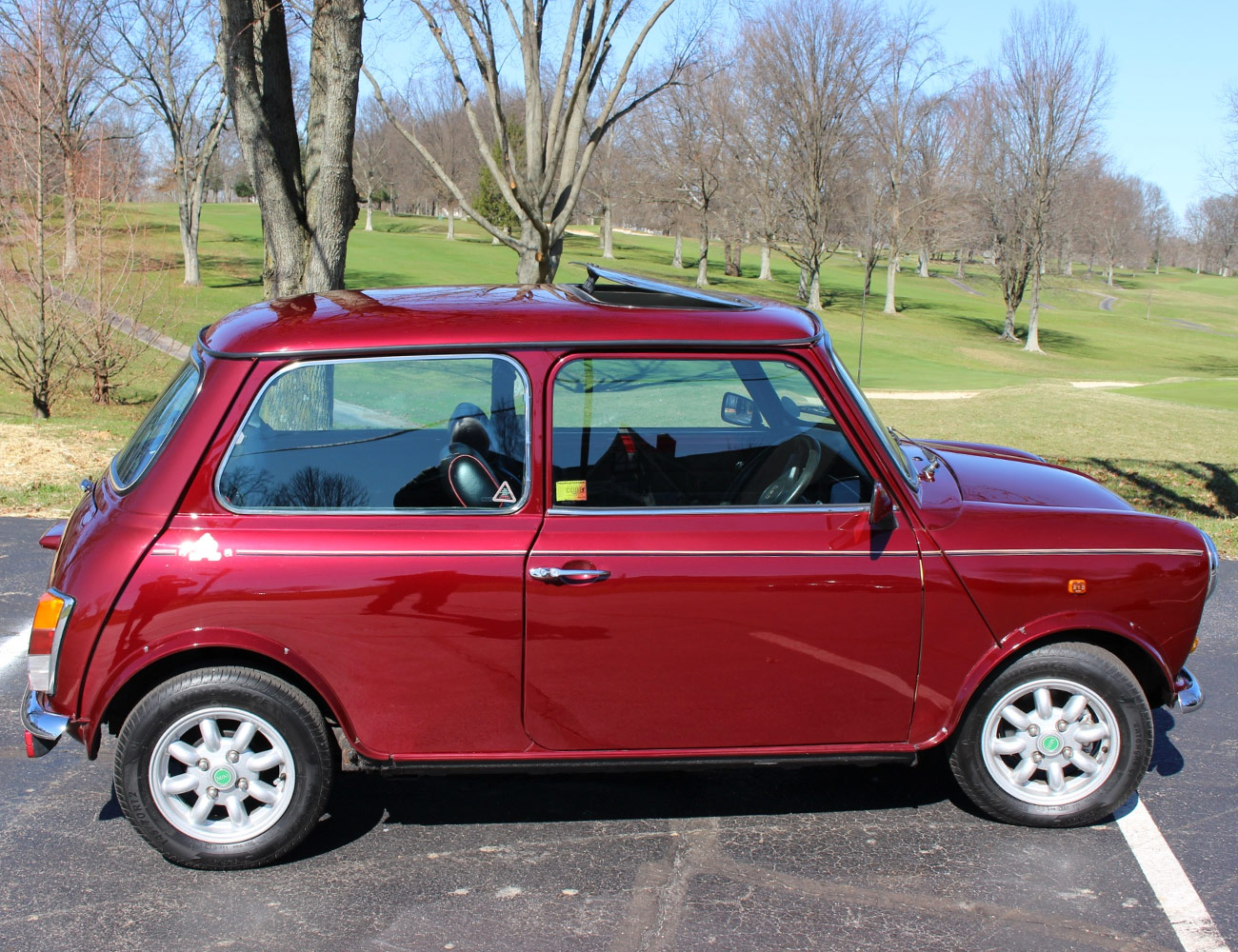
1989 Austin Mini 30th Anniversary Edition

Mileage: 59,000
Location: Cincinnati, Ohio

What we like: It’s hard not to like an older Mini. But as long as you don’t mind being completely dwarfed by everything else on the road — including some motorcycles — and want to be able to park perpendicular to the curb between parallel parked cars, the Mini is the city car you’re looking for.
From the seller: “This Mini was imported to the US in January 2018 following a Ministry of Transport inspection, and it is now being offered with the original bill of sale, the original number plate, a Mini-Thirty leather-bound book, service records back to new, the original order form, the original keys, a factory center console, and a clean Ohio title in the seller’s name.”

What to look out for: Look out for rust (no surprise there, it’s old and British) and for leaks from the radiator and water pump.
Expert opinion: “Because it’s a Mini, it’ll be part of the family, and will make you smile; what more do you need? If you’re considering one, you’ve probably already got a name for it. Being the original, it’s Mini as Moulton and Issigonis intended it to be – no add-ons, no frills, nothing to wow audiences, just simple, basic, family friendly tiny transport.” — CCFS.co.uk

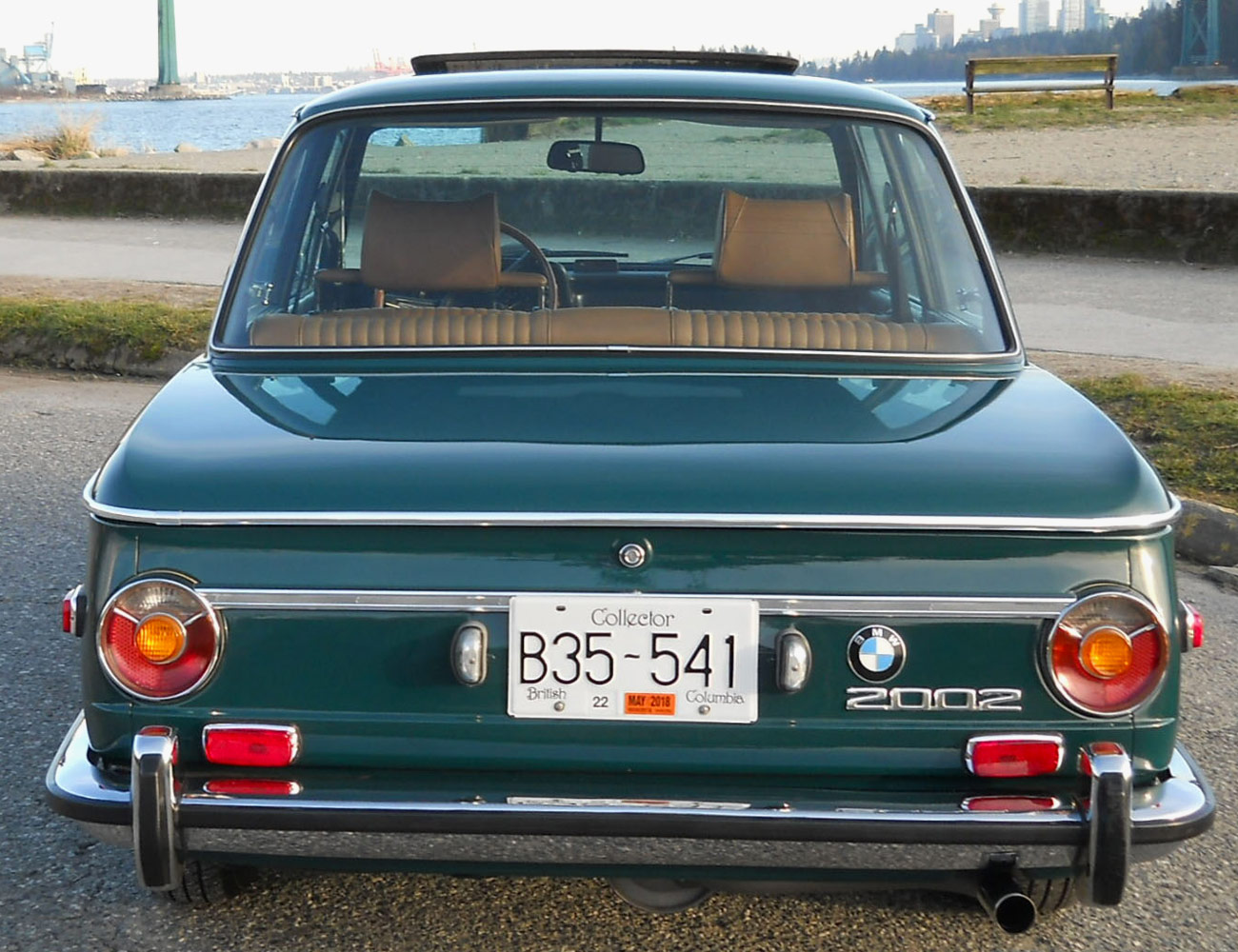
1973 BMW 2002

Mileage: 79,820 (TMU)
Location: Vancouver, British Columbia

What we like: Nothing beats green over tan.
From the seller: “Service records begin in 1995 and indicate three California owners before the car was brought to Canada by its previous owner. Modifications include the addition of a Weber carburetor, Crane Cams electronic ignition, upgraded springs and sway bars, and Bilstein shocks.”
What to look out for: This is an incredibly clean 2002, so rust doesn’t look like a problem, though common spots for it to crop up will be in the wheel wells, shock towers and suspension. Mechanically, a 2002 will start to burn mmore oil as they get older, or tend to run richer than usual due to a stuck choke.
Expert opinion: “The 2002 is happiest in point A to point B dashes, and the more trying the circumstances the better. The ride is not soft but admirably controlled. The car is sure-footed on rough roads and you’ll find yourself up-shifting, downshifting, keeping the revs up and angling through corners at speeds that will make passengers wish they had taken a bus and left the driving to anybody but you..” — Car and Driver, 1972

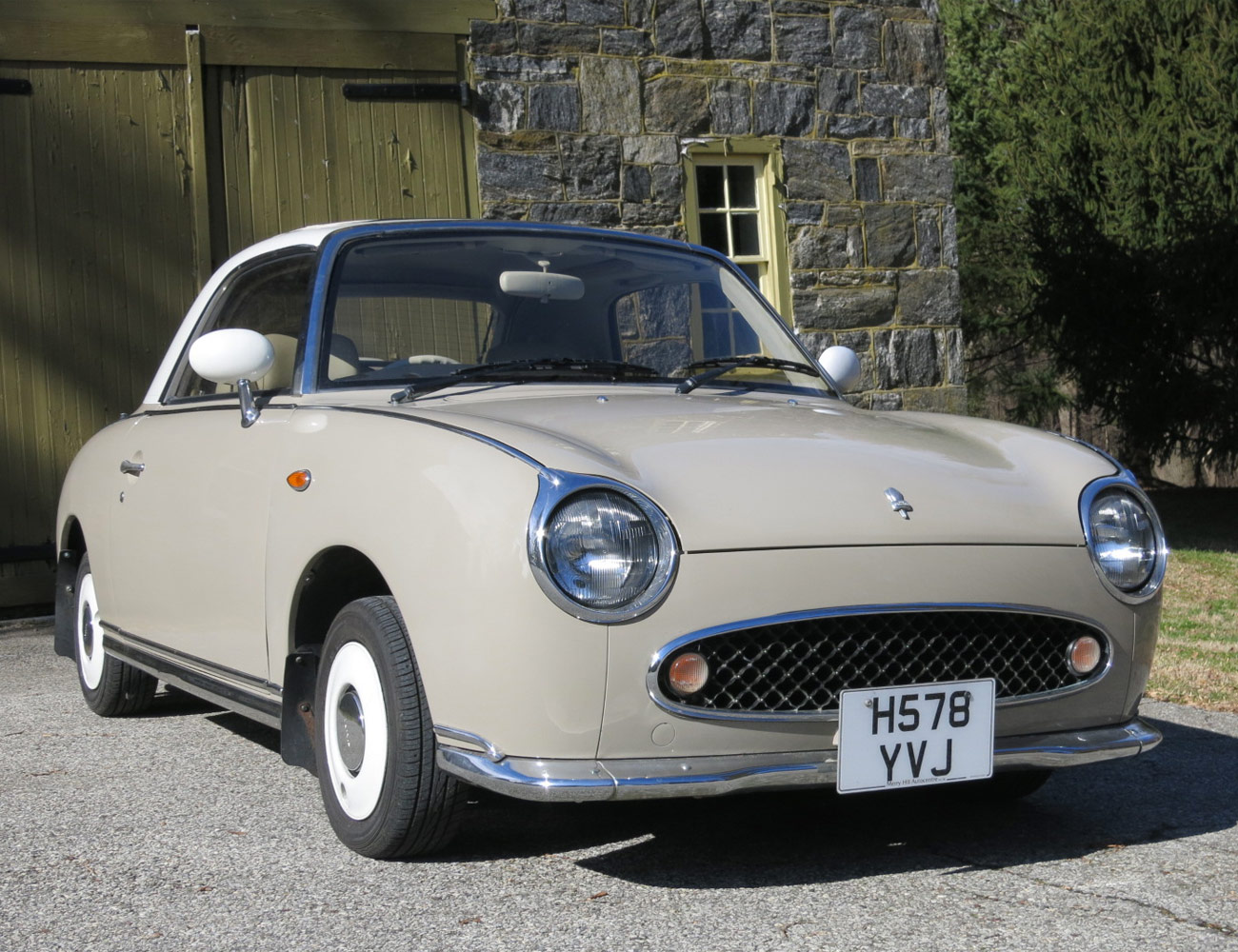
1991 Nissan Figaro

Mileage: 45,412
Location: West Chester, Pennsylvania

What we like: The Nissan Figaro prided itself on its ’50s styling and Kei car silhouette. Don’t be fooled, though; it’s a fairly modern car (for 1991). This refurbished Figaro was imported from the UK (originally from Japan) and is in immaculate condition, so as long as you don’t mind driving from the right side of the car, the Figaro was meant for city life.
From the seller: “Originally purchased in Japan, then shipped to the UK in 2009 where it received cosmetic refreshing and service with UK specialist The Figaro Doctor in Sutton. Work was performed between 2016-2017 and reportedly included a repaint in the original color, new bumpers, a new dash pad, reconditioned leather upholstery and general mechanical service.”
What to look out for: cam belts and water pumps should be first on the checklist, but rust in the rear wheel wells is also common.
Expert opinion: “The Figaro was luxuriously equipped, with leather seats, air conditioning, CD player and an opening fabric roof. 12,000 were eventually built, and prospective buyers had to enter a lottery to be able to buy one of these cars. It’s been particularly popular with city dwellers, who appreciate its ease of driving. Most are fitted with automatic transmission. If you’re looking for a classic without the tears, a Figaro could be what you need.” — Honest John Classics
Maybe New Cars Are Your Thing

It’s no easy feat picking the absolute cream of the crop automobiles in any given year. But the 82 journalists who act as jurors for the World Car Awards have chosen a slew of great picks. See their choices and read our reviews here, from Volvo, Land Rover, Audi and more. Read the Story