All posts in “Buying Guides”

7 Tax Refund Splurges Our Staff Is Ready to Buy

I do my own taxes, and when I click the “e-file” button each April I always close my eyes, picture Uncle Sam and mentally scream “PAY UP, SUCKA.” Depending who you ask, it’s better to not owe or be owed anything at all; regardless, what I know for sure is that getting a check from the government is very pleasurable. So what to do with that extra change?

After polling a few of my fellow Gear Patrol staffers, I found that we’re all on the same page: if you’re spending your tax return, spend it wisely. Spend on something you need, upgrade something essential, something very nice. The list below is what we’d get if we were to splurge with (and in some cases, spend more than) our refund.

In the event that you’d like to use this opportunity to give rather than to receive — or do a bit of both — these three organizations are highly rated, and we can’t recommend them enough.

Doctors Without Borders “Medical aid where it is needed most. Independent. Neutral. Impartial.”
Honor Flight Network “Our Mission: To transport America’s Veterans to Washington, DC to visit those memorials dedicated to honor the service and sacrifices of themselves and their friends.”
Cancer Research Institute: “Since 1953, we’ve led the field with support for immunotherapy research and clinical trials. Together with our donor, patient, and scientist communities, we continue to fund revolutionary breakthroughs to cure all types of cancer.”

The Splurges

A Suit You’ll Be Proud to Wear

Brooks Brothers Fitzgerald Modern Fit Suit
From the American-standard men’s clothier, a classic suit featuring a cut to keep up with the times.

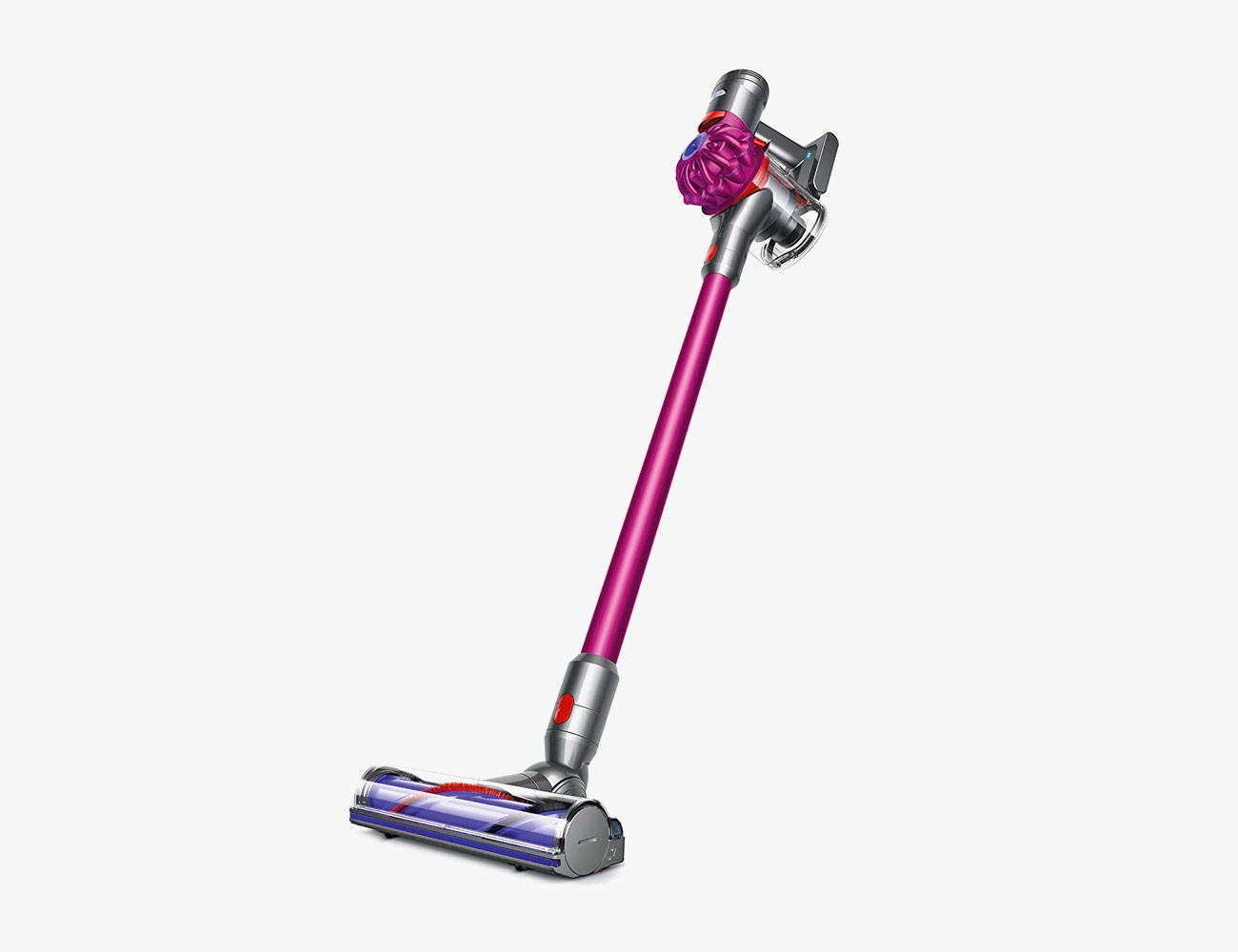
A Much Better Vacuum

Dyson V7 Motorhead Cord Free Vacuum
Cord-free, high-tech, and with enough power and charge to do all your chores in no time.

Replace Your Laptop With the Gold Standard

Apple MacBook
“Just get a MacBook.” In terms of performance and design, it’s almost impossible to beat the best in the business.

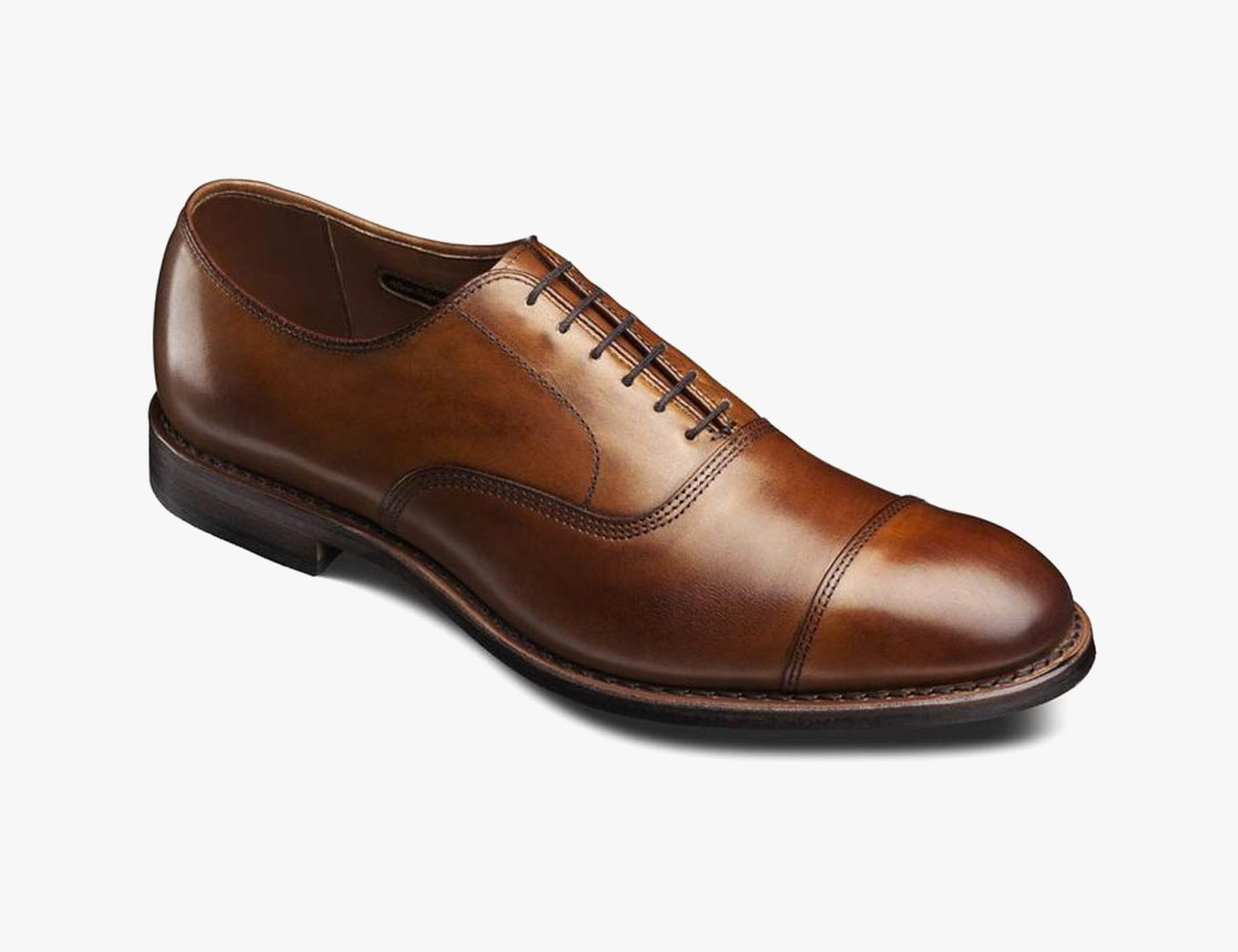
The Classic Dress Shoe

Allen Edmonds Park Avenue Cap-Toe Oxford
“Allen Edmonds makes plenty of iconic footwear, but perhaps none more so than the Park Avenue Cap-Toe Oxford — its best selling shoe for over thirty years. Made in the U.S., it features a calfskin leather upper and Goodyear welted construction.”

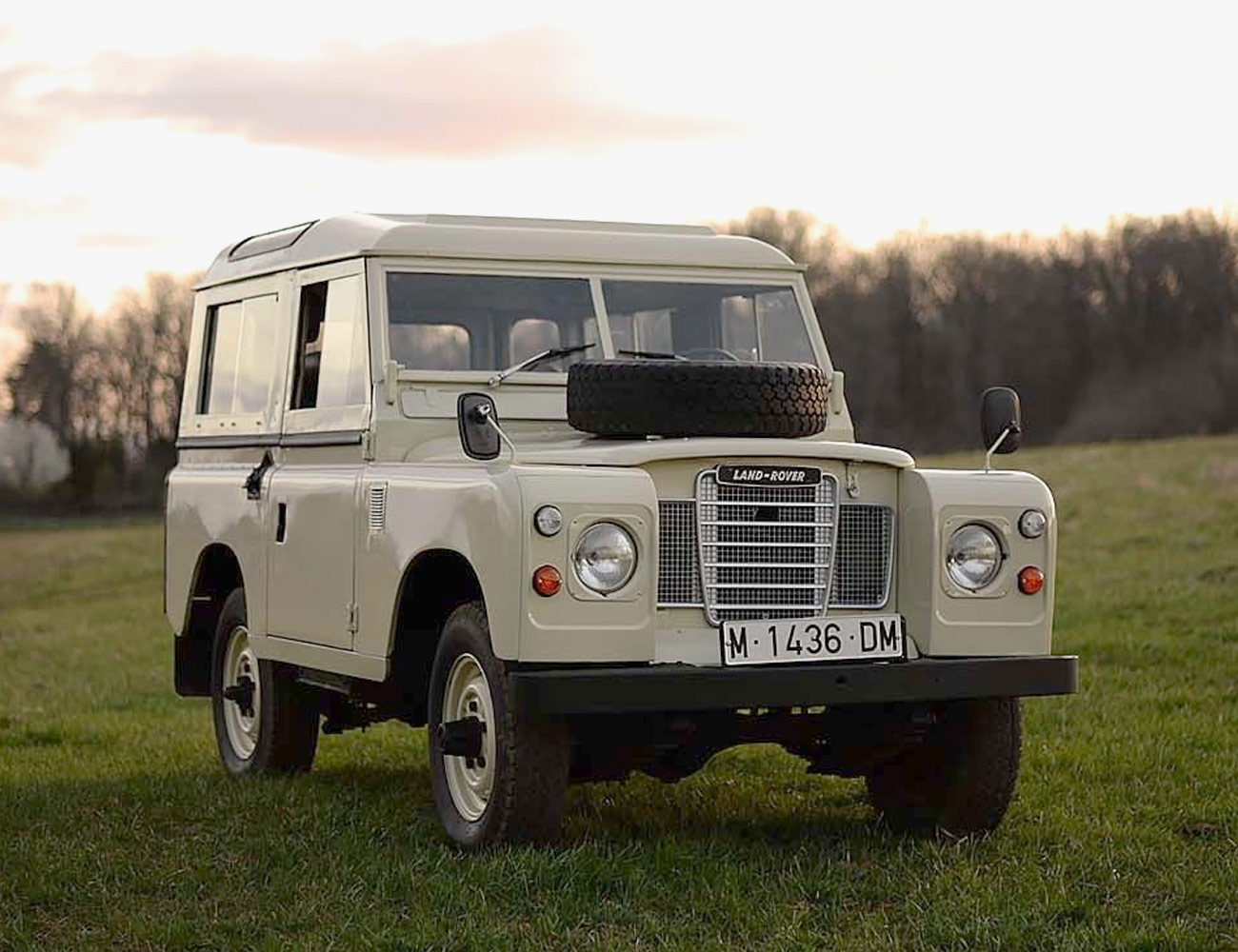
The Vintage Truck of Your Dreams

1979 Land Rover Defender Series-III 88 Santana
There aren’t many vehicles more iconic and badass and (figuratively) bulletproof than a vintage Defender. You may need to draw some cash to supplement your refund, but isn’t a dream car worth it?

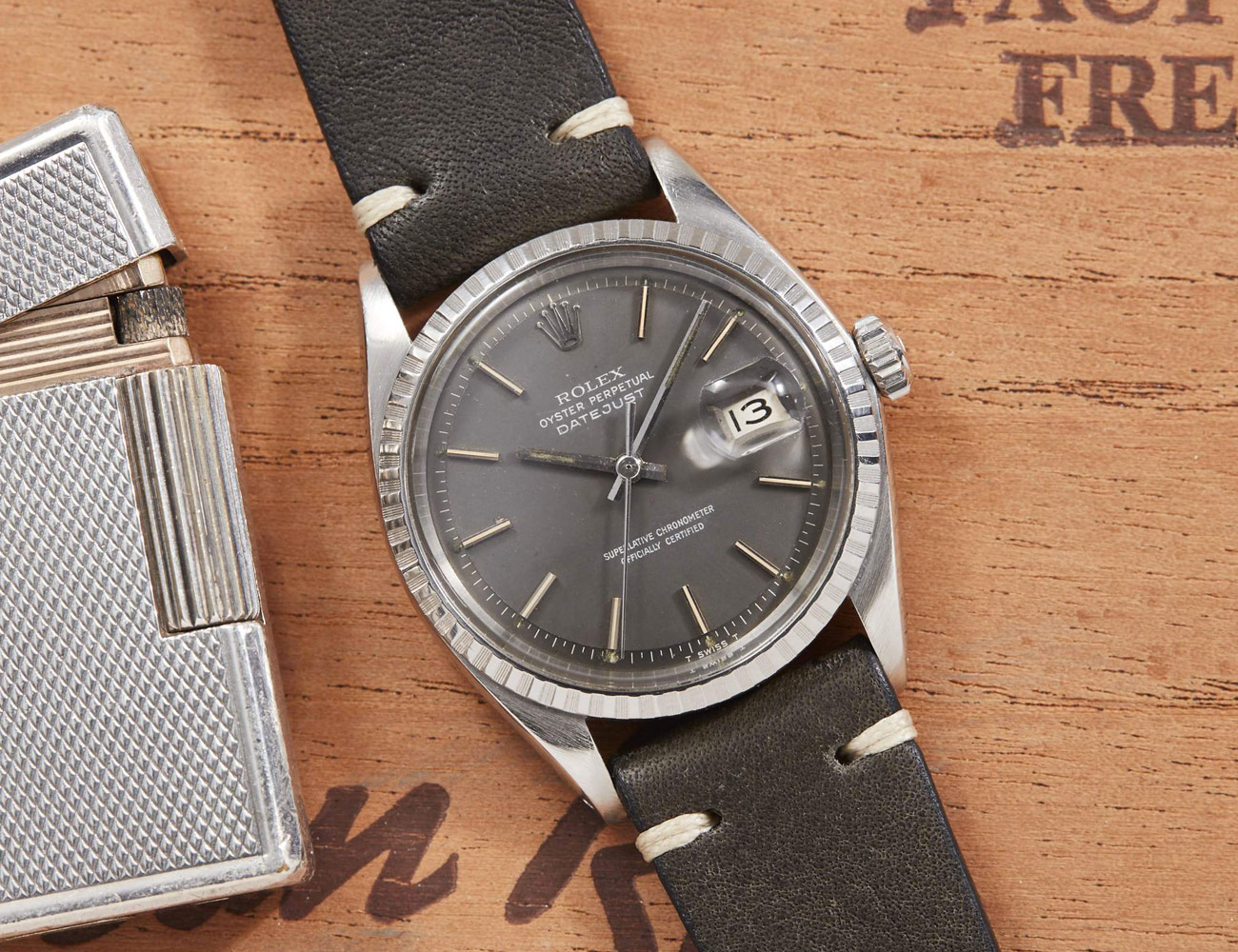
The Vintage Rolex

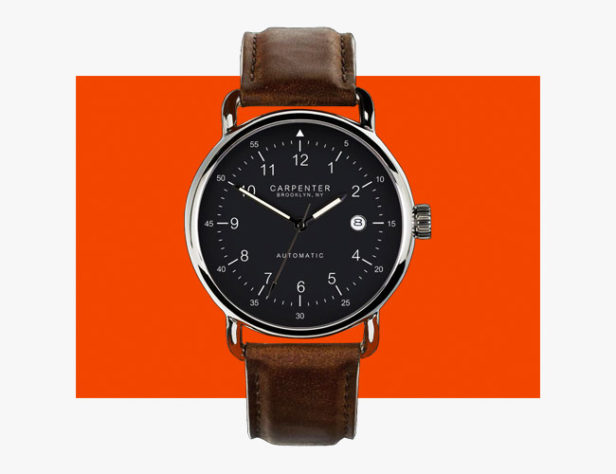
Rolex Datejust
“The DateJust is a classic design and one of the most attainable vintage Rolexes out there. This gray dial variant is relatively uncommon and far more interesting than one of its white or black dial counterparts.”

An Ultimate Road Bike

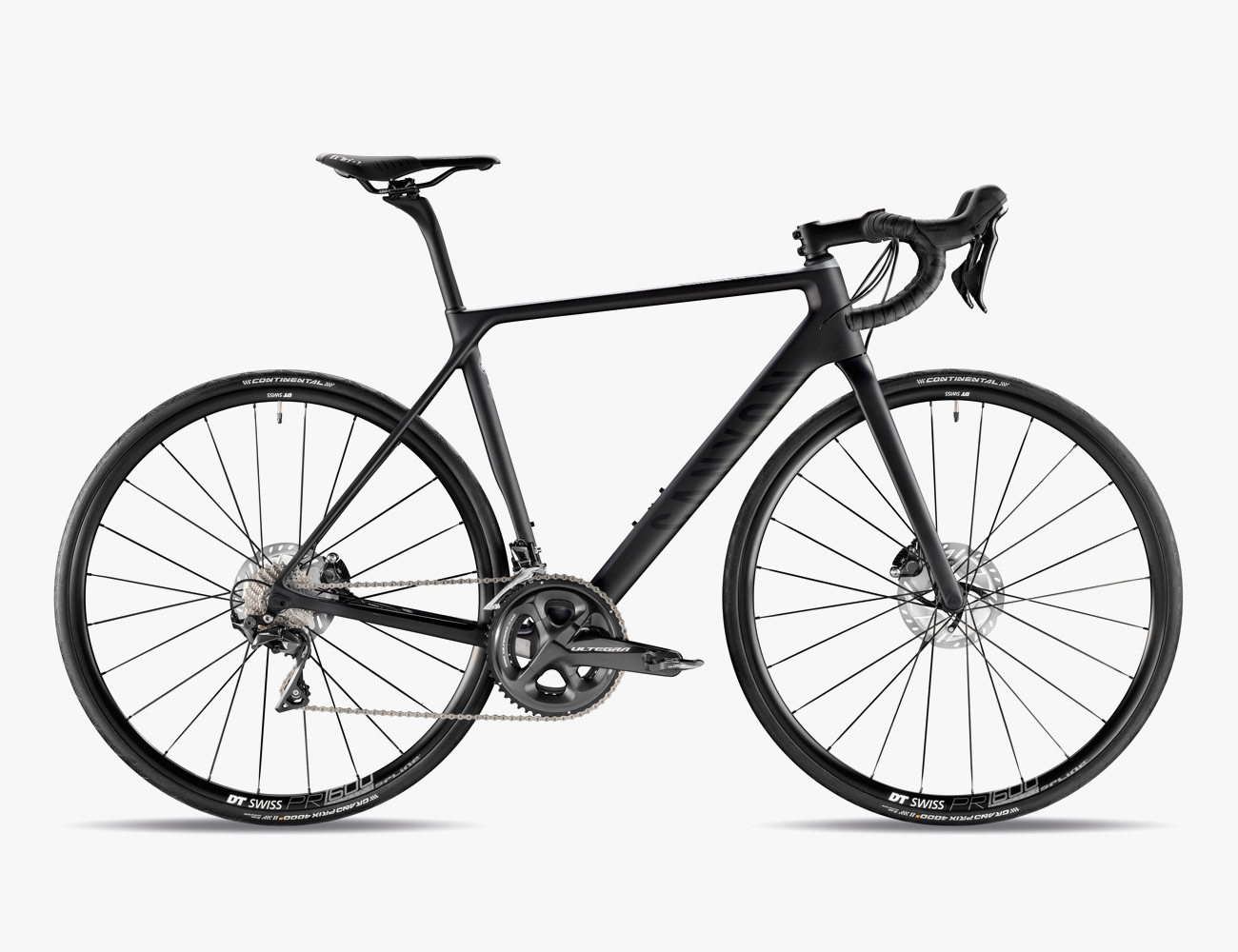
Canyon Ultimate CF SL Disc 8.0
“The right mix of racy, stiff, responsive, fast, with steady, secure, supple and comfortable.”

Kind of Obsessed: the Gear Patrol Staff Endorsements

All our personal, obsessive endorsements — all in one place. Read the Story

The 6 Best Rain Tires for Motorcycles

We can’t stress enough the importance of having the right rubber wrapped around your wheels for different conditions. For cars it’s at least helpful, but with motorcycles, the need for proper tire performance is paramount; if one motorcycle wheel loses grip, you don’t have another three keep you upright. This is why having a set of rain tires is one of the best investments a rider can make.

What’s more, motorcycle rain tires work as moderate all-season shoes, functioning well as both cold-weather tires and decent summer tires. Since motorcycles work on significantly smaller contact patches than cars, standard motorcycle tires make up the difference with minimal tread patterns. This is why summer performance tires for motorcycles are nearly slick; though they give you optimal grip on dry asphalt, low-tread tires can be deadly up against a puddle. Aquaplaning and losing balance and control of your bike is every rider’s worst nightmare. So, if you live anywhere that sees heavy rain — ever — it’s time you invest in a set of properly treaded tires and pump some of that water out of the way.

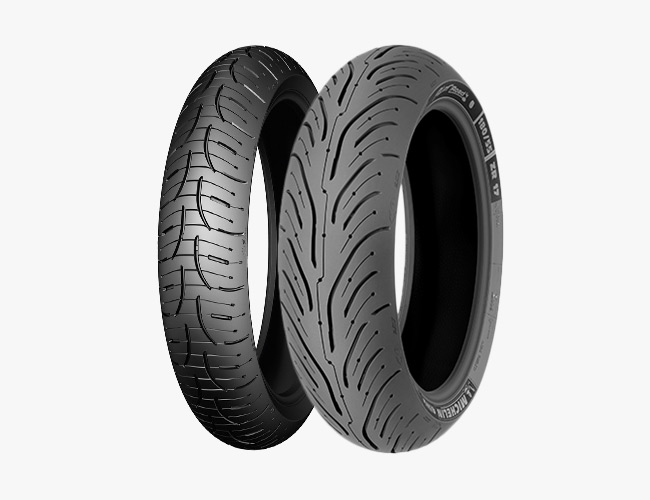
Michelin Pilot Road 4

moto-rain-tires-gear-patrol-michelin-pilot-

Best All-Round: The Pilot Road 4 is the gold standard when it comes to rain tires. Its tread pattern is second to none when it comes to pumping away water, and a dual-compound rubber construction pulls double duty extending the life of the tire on longer rides while still providing grip in the turns. If you commute on a sport or sport standard, the Pilot Road 4 is a no-brainer. There’s also the more stiffly constructed Pilot Road 4 GT and Pilot Road 4 Trail for heavier touring bikes and fully loaded ADV bikes, respectively.

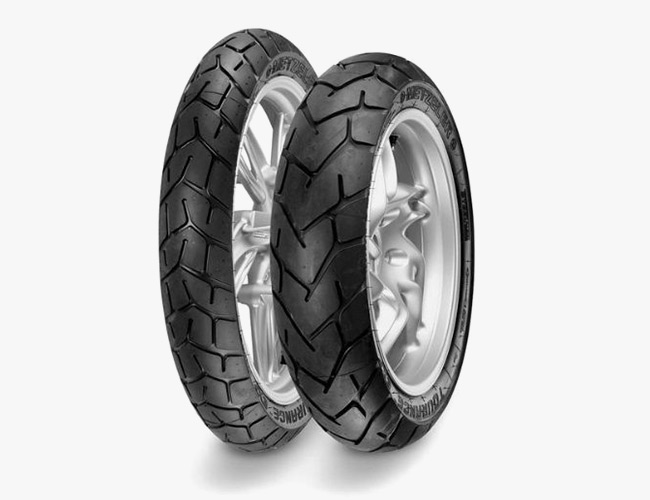
Metzeler Tourance EXP

moto-rain-tires-gear-patrol-metzeler-

Best Light Off-Road: Places like the Pacific Northwest, where some light off-roading is almost certain and rain is guaranteed, an adventure touring bike is a must-have. The Metzeler Tourance Next’s tread pattern allows for comfortable on-road riding in all conditions, but still provides traction on fine gravel and tame fire-service roads.

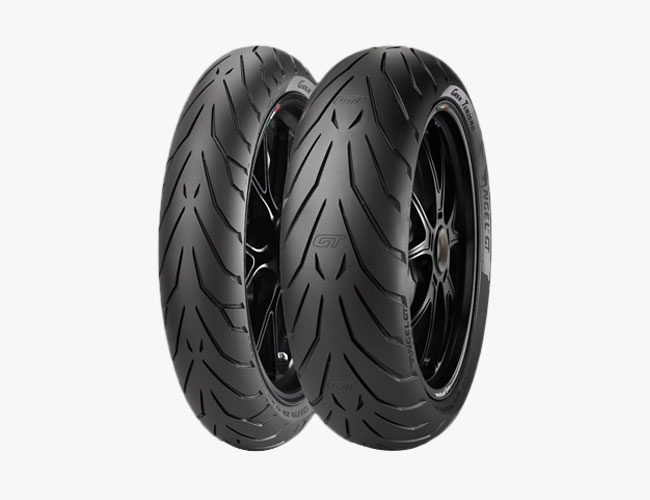
Pirelli Angel GT

moto-rain-tires-gear-patrol-pirelli

Best Street-legal Performance for Sportbikes: The silica content and aggressive tread pattern of the Pirelli Angel GT means that both straight-line and cornering performance aren’t compromised in wet or dry conditions. Specially designed longitudinal steel belting also helps to disperse heat in dry conditions while keeping the rubber soft for when the skies open up.

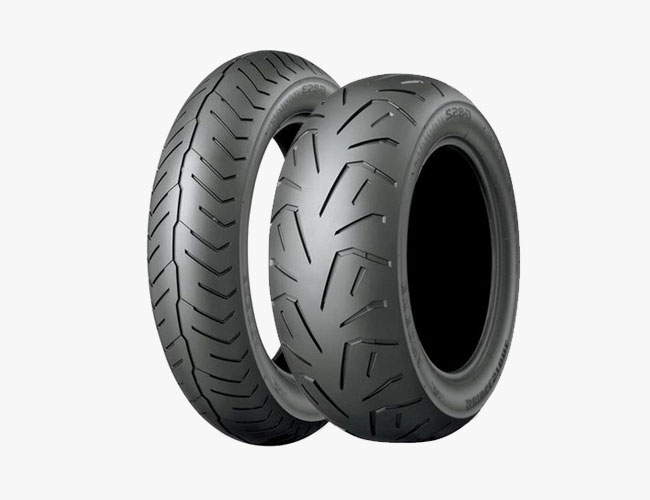
Bridgestone Exedra Max

moto-rain-tires-gear-patrol-bridgestone

Best Heavy Cruiser Tire: For bigger cruisers a stiff, durable tire is a necessity to take on heavy loads and V-twin torque day in, day out. But on longer rides where a proper tread and soft tire compound is needed, the Exedra Max fills the gap. Since the majority of long-distance cruises are spent on the center of the tire, the Exedra Max tread pattern provides straight-line stability in dry conditions, but pumps away standing water for when those conditions make a turn for the worse.

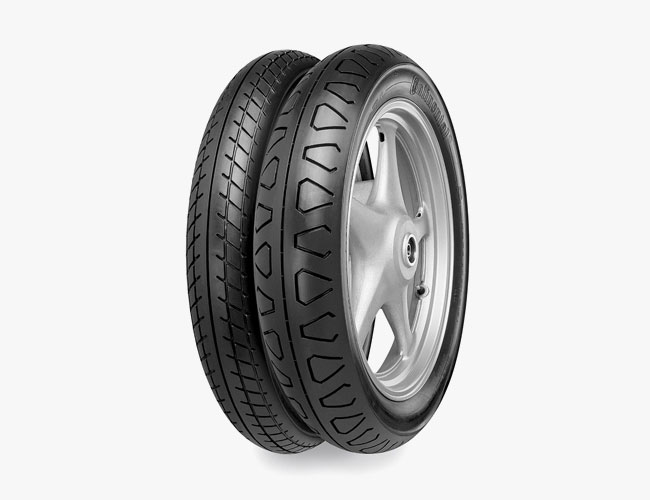
Continental Ultra TKV11/12

moto-rain-tires-gear-patrol-continental

Best Option for Older Bikes: Just because you have a classic bike doesn’t mean your tires should have equally outdated technology. But that’s not to say you have to make sacrifices and opt for a modern look that’s out of place on your “experienced” ride. The Continental Ultra TKV11/12 marries a classic-style tread pattern with modern performance in wet and dry conditions.

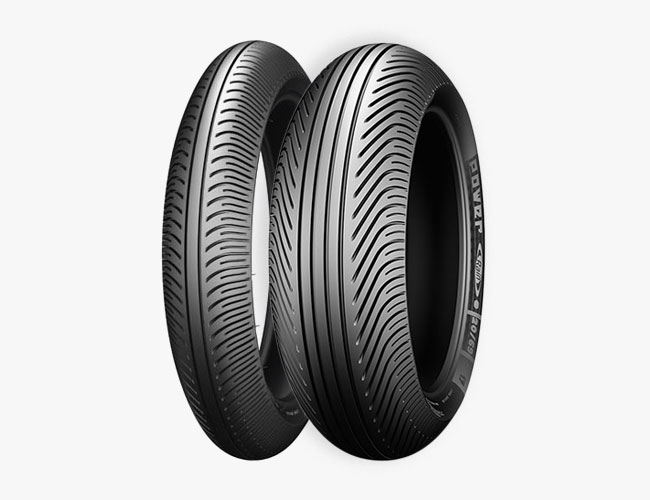
Michelin Power Rain

moto-rain-tires-gear-patrol-michellin-power

MotoGP Approved: Mother Nature is never one to cooperate, making a storm all too likely on the one day you scheduled three months in advance to hit your favorite track and drag a knee. The Michelin Power Rain tire is the best antidote for those rainy-day blues. It’s the same level of tire that MotoGP uses when the rain rolls in. If that’s not a shining endorsement, nothing is.

The 5 Best Urban and Commuter Motorcycles 2018

Navigating any concrete jungle can be hell — especially if you call the asphalt wilds your commute. These five bikes make riding through the city much easier for any kind of rider. Read the Story

Every Wool Product You Need to Try This Summer

Merino wool has been called “a miracle fiber” enough times to make it a cliché. The pithy turn of phrase stems from merino’s inherent characteristics that make it an ideal fiber for outdoor and everyday wear: it’s quick drying, static resistant, breathable, naturally antimicrobial and the high-quality stock doesn’t itch. It’s also a naturally-occurring, renewable resource that can be harvested sustainably without harming the animals it comes from (due to centuries of domestication, sheep need to be shorn to survive). Actually, the cliché works; merino wool is a miracle fiber.

One falsity about merino wool is that it’s just for cold weather use, just for winter. It isn’t! All of the qualities that make merino wool perform on frigid days make it well-equipped for warm weather too. Wool can absorb up to one-third of its own weight in water and disperse it (think sweat), keeping wearers dry even in soggy conditions (think heavy summer humidity), while also resisting bacterial growth (when you do sweat, it won’t stink).

Sure, many merino wool products are designed specifically for low-temperature use, but there are also plenty of products that are perfect for the warm, sometimes oppressive heat of summer.

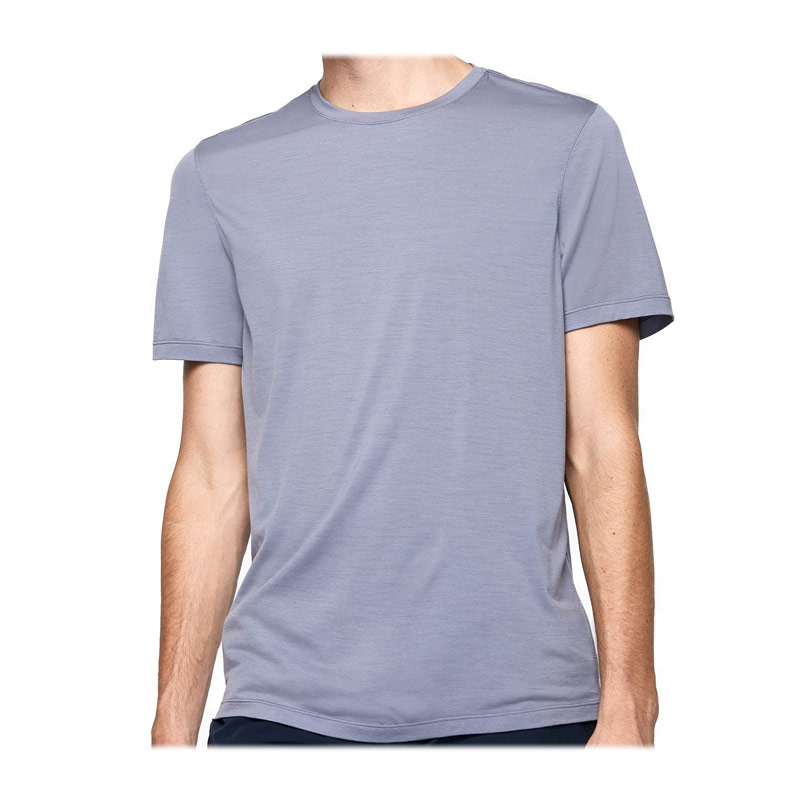
Merino Tee by Outdoor Voices $55

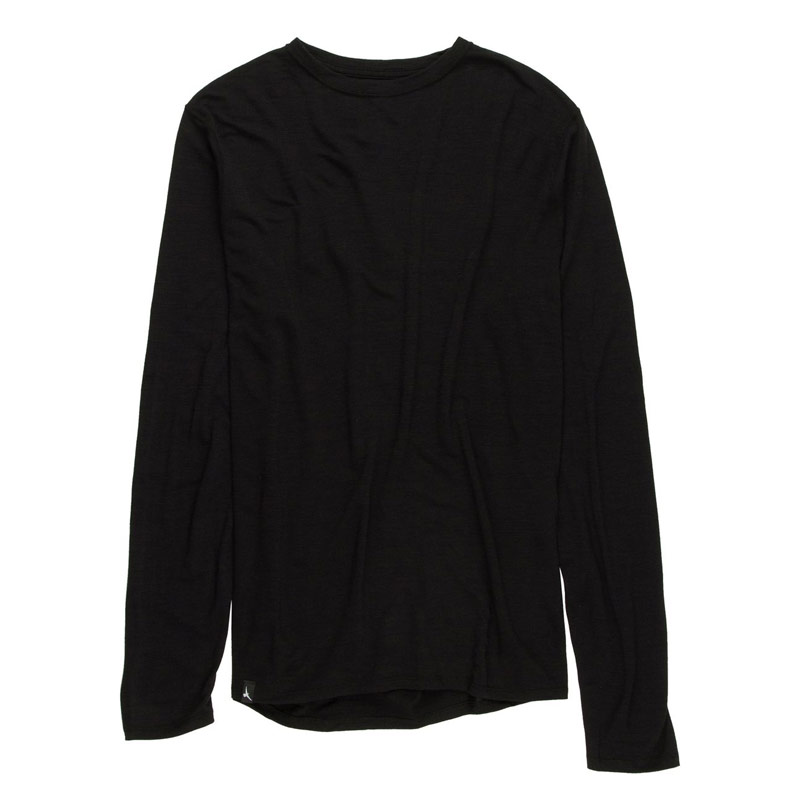
Maverick Crew by Duckworth $100

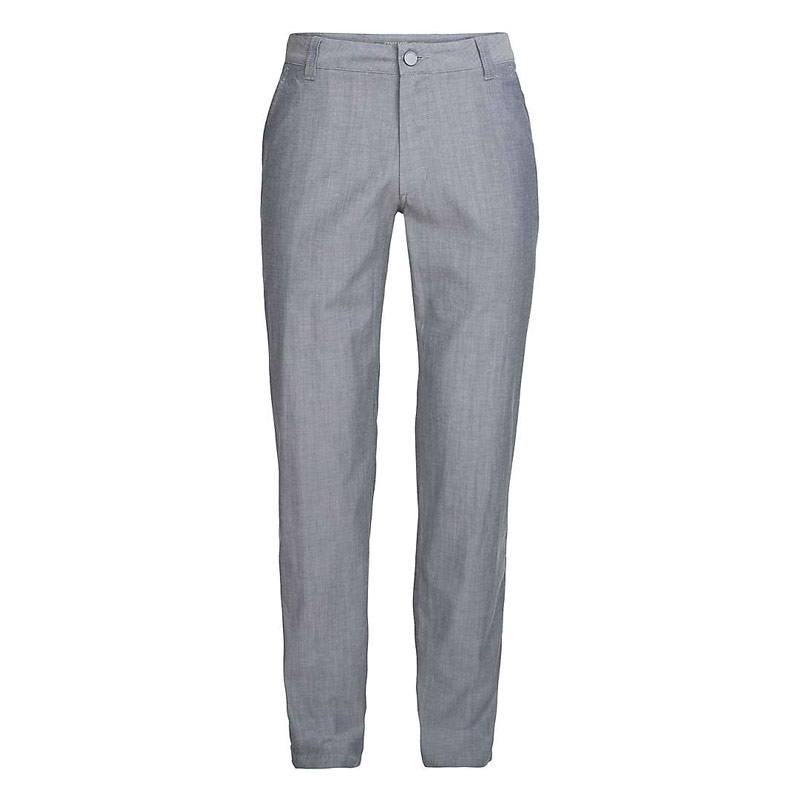
Perpetual Pant by Icebreaker $105

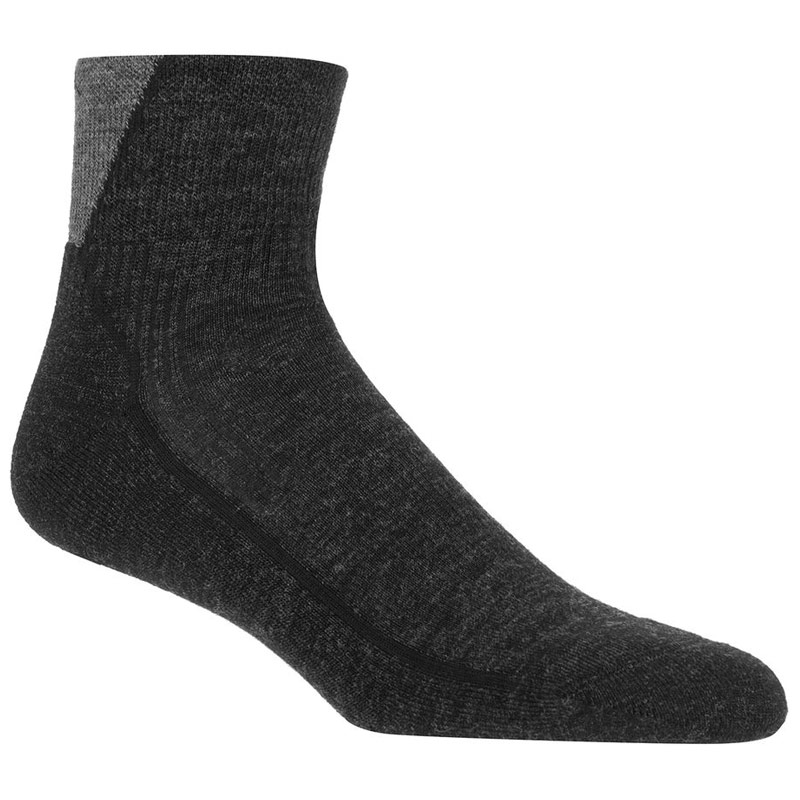
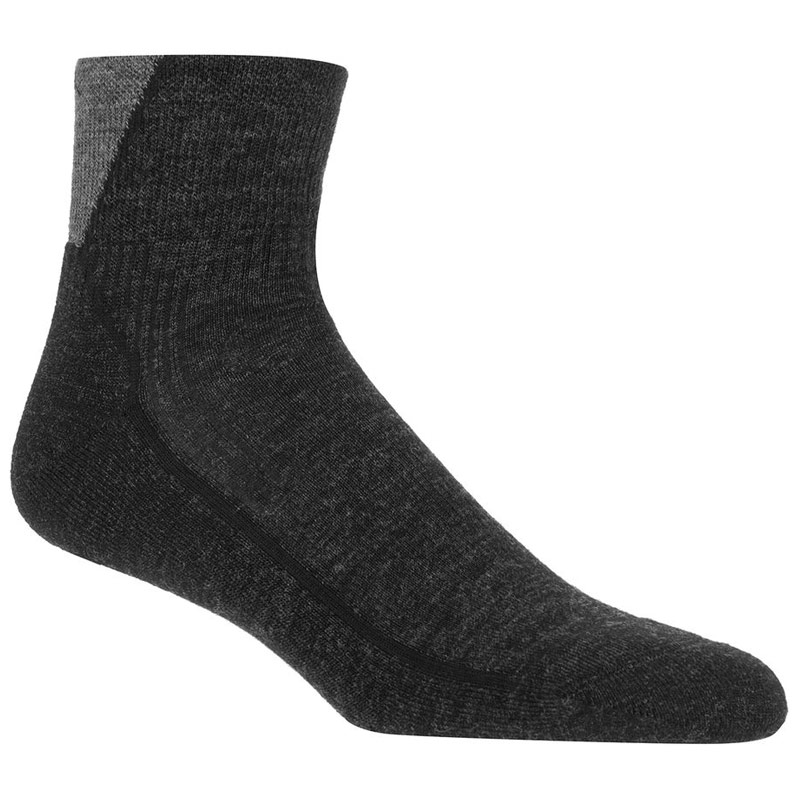
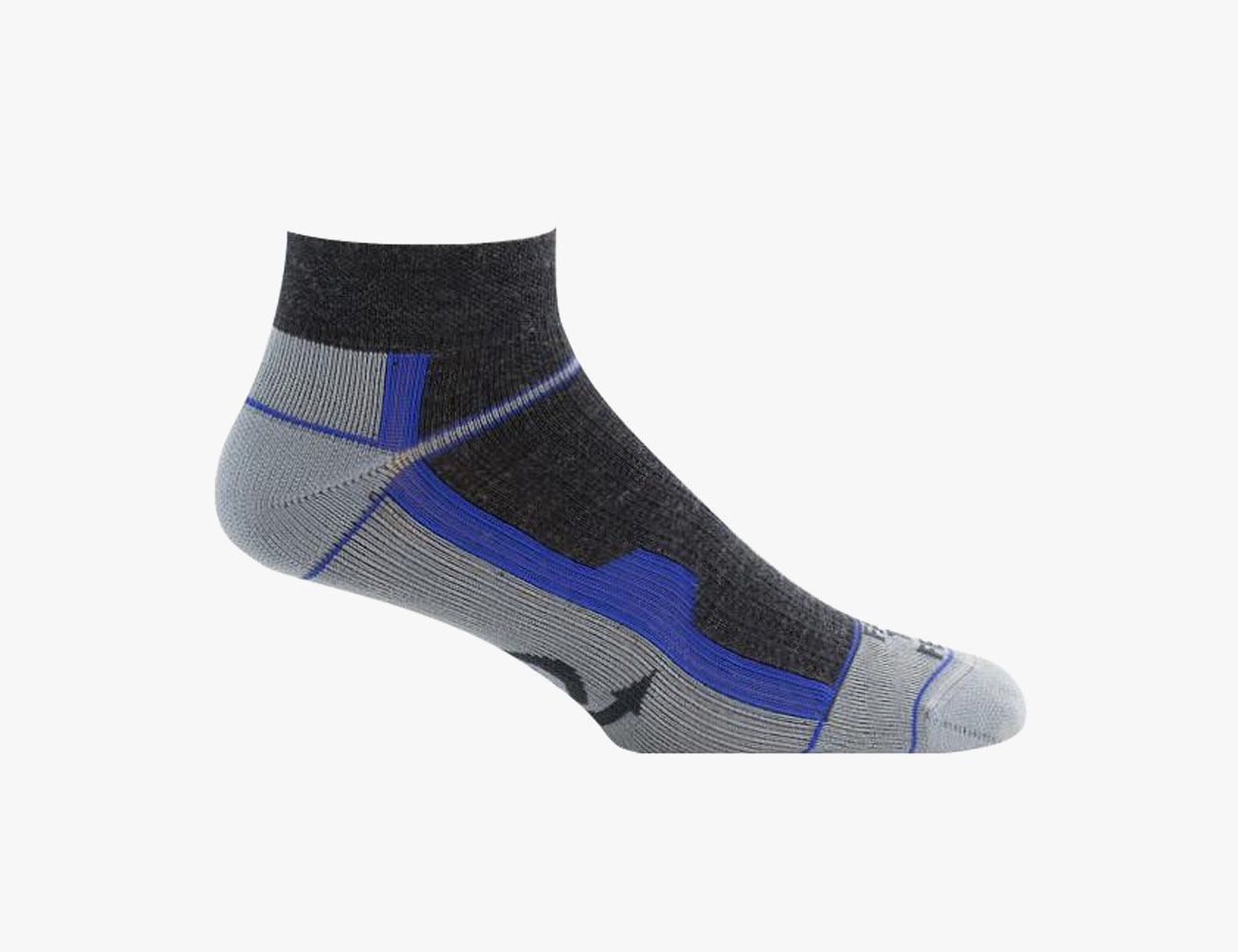
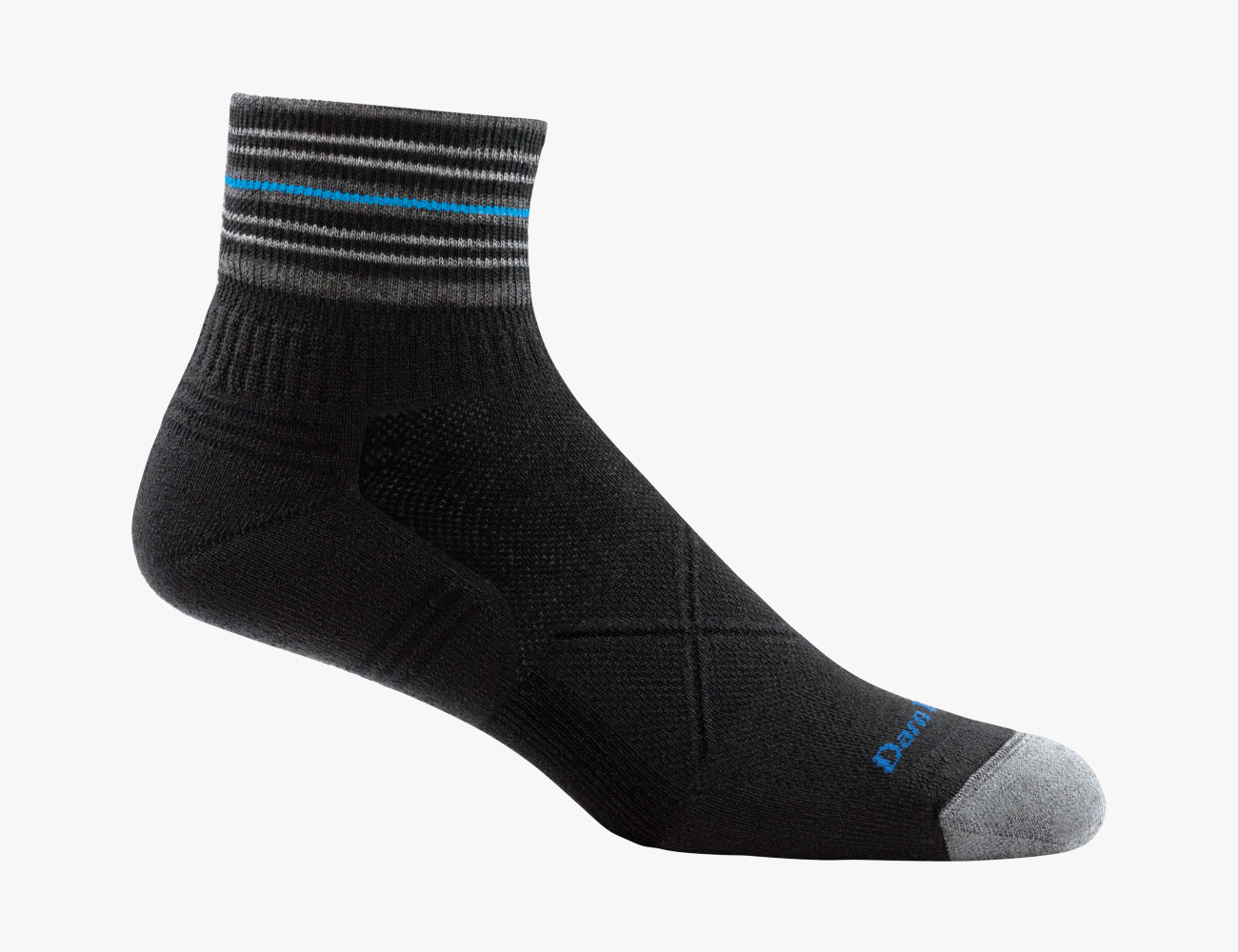
Hiker 1/4 Cushion Sock by Darn Tough $18

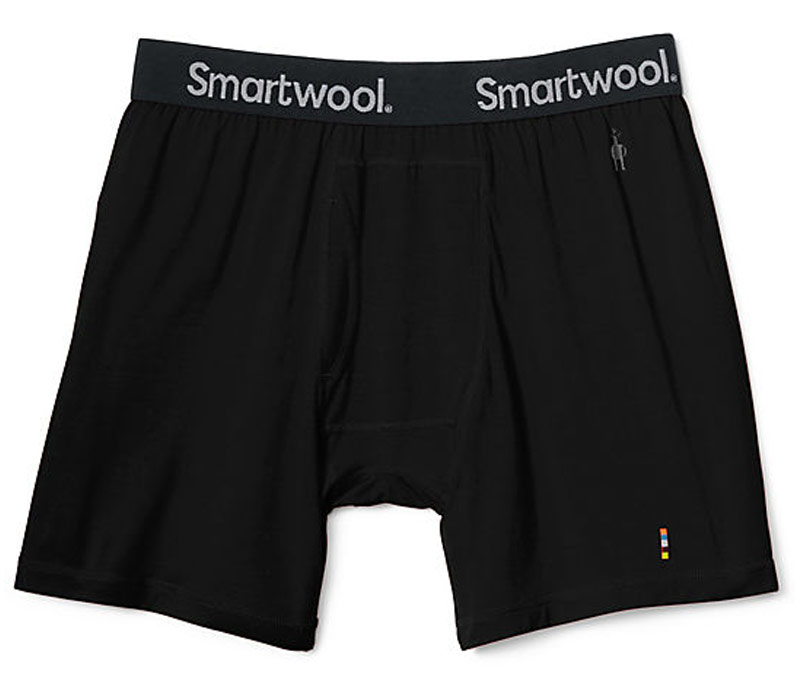
Merino 150 Boxer Brief by Smartwool $45
Note: Purchasing products through our links may earn us a portion of the sale, which supports our editorial team’s mission. Learn more here.
The Best Hiking Socks Money Can Buy

Keep your feet warm, dry and blister free. Read the Story

The 10 Best Shirt Jackets for Spring

What’s a shirt jacket? Sometimes known as an overshirt or “shacket,” (but never a “jirt”), the shirt jacket inhabits the subtle middle ground between button-up and outer layer. Shirt jackets are often made with a rugged exterior, like canvas, or something lighter and weatherproof, like ripstop nylon. They’re almost always lightly insulated, which makes them the perfect lightweight outer layer for the transitional weather that comes along with spring and fall. But shirt jackets are universal too — they can be worn under a thicker outer layer during the winter months, but they’re also perfect for enjoying freshly-brewed coffee outdoors on a brisk summer morning (or passing around a flask on a cool evening).

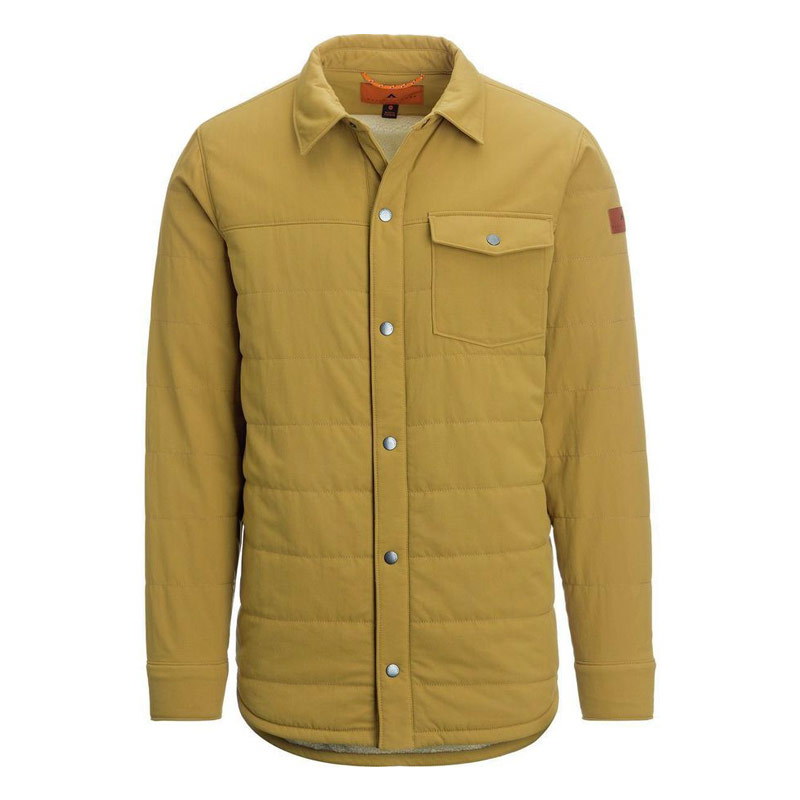
WoolCloud Insulated Snapshirt by Duckworth $295
Built with a nylon shell and Duckworth’s warm and breathable fluffy wool insulation.

Fjord Flannel by Patagonia $53+
A heavyweight flannel perfect for brisk temperatures.

Reyes Thermoball Shirt Jacket by The North Face $112
A water-resistant nylon shell stuffed with Thermoball insulation — a lofty blend of down and synthetic

Sherpa Divide Shirt Jacket by 686 $80
A fleece-lined polyester layer with a courderoy collar for additional style.

Lakeside Shirt Jacket by Pendleton $90
This cotton flannel is lightly insulated and lined with ripstop nylon to keep the warmth in.

Blanket-Lined CPO Jacket by Faherty $198
Made with a windproof cotton dobby exterior and a softer brushed cotton interior.

Rugged Flex Rigby Shirt Jacket by Carhartt $70
This shirt’s cotton canvas exterior is blended with Spandex for added stretch and lined with fleece for added warmth.

Breaker Shirt Jacket by Topo Designs $89
A stretchy nylon shirt jacket that’s treated with DWR for added water-resistance.

Sherpa PrimaLoft Shirt Jacket by Basin and Range $90
A casual jacket lined with extra-cozy PrimaLoft pile fleece and shelled with nylon.

Coverall Shirt Jacket by Goldwin $208
A classic Japanese workshirt made with a hearty wool and nylon blend.
Note: Purchasing products through our links may earn us a portion of the sale, which supports our editorial team’s mission. Learn more here.

5 Wool Products That Are Perfect for Summer

Merino wool has been called “a miracle fiber” enough times to make it a cliché. The pithy turn of phrase stems from merino’s inherent characteristics that make it an ideal fiber for outdoor and everyday wear: it’s quick drying, static resistant, breathable, naturally antimicrobial and the high-quality stock doesn’t itch. It’s also a naturally-occurring, renewable resource that can be harvested sustainably without harming the animals it comes from (due to centuries of domestication, sheep need to be shorn to survive). Actually, the cliché works; merino wool is a miracle fiber.

One falsity about merino wool is that it’s just for cold weather use, just for winter. It isn’t! All of the qualities that make merino wool perform on frigid days make it well-equipped for warm weather too. Wool can absorb up to one-third of its own weight in water and disperse it (think sweat), keeping wearers dry even in soggy conditions (think heavy summer humidity), while also resisting bacterial growth (when you do sweat, it won’t stink).

Sure, many merino wool products are designed specifically for low-temperature use, but there are also plenty of products that are perfect for the warm, sometimes oppressive heat of summer.

Merino Tee by Outdoor Voices $55

Maverick Crew by Duckworth $100

Perpetual Pant by Icebreaker $105

Hiker 1/4 Cushion Sock by Darn Tough $18

Merino 150 Boxer Brief by Smartwool $45
Note: Purchasing products through our links may earn us a portion of the sale, which supports our editorial team’s mission. Learn more here.
The Best Hiking Socks Money Can Buy

Keep your feet warm, dry and blister free. Read the Story

The 50 Best Wedding Gift Ideas of 2018

You’re getting married. There will be comments (jokes, hopefully) about your soon-to-evaporate social life, how soon you’re expecting children, how you tricked your spouse to-be into matrimony and so on. There are a great many items to consider before wedded life begins — not chief among them (that would be your spouse), but still tremendously important, is the wedding registry.

A registry is a collection of suggested gifts for the married couple, oftentimes items on it occupy an otherwise awkward buying space. What you request on your registry should be what you and your other half will get use out of together — whether that’s in the home, or within a shared interest or hobby. Oftentimes this takes the form of premium quality goods that you may want, but not typically be willing to spend top dollar on — think barware, pillows, an Instant Pot Ultra or a really badass cooler. There are some obvious, and some less obvious, go-to items that make up a great registry — below, we’ve outlined 50 of our favorite that span the length of the price gamut.

How do Wedding Registries Work?

Traditionally, a wedding registry is a collection of one to a small handful of stores where the engaged couple has registered. Larger retailers may offer discounts, dedicated registry customer service or benefits for registering there. The couple then makes a list of wants and needs from the stores and distributes that to the attendees. Upon visiting those stores (online or in-person), the attendees should be able to alert the store that their purchase is for the couple’s registry and both receive whatever discount they may be entitled to and be alerted if the item they’re buying has already been bought by another guest.

Where to Register

Amazon

Not a classic registry spot in the sense that it doesn’t have stores near all your potential guests, but it certainly has a further reach than any one store or chain of stores may have. Seeing as Amazon is basically ubiquitous and offers extended return policies on gifts, it’s a solid place to start.

Williams Sonoma, Pottery Barn, West Elm

The bread and butter of Williams Sonoma and its umbrella of brands is the wedding registry. Each has a large online presence, stores across the U.S. and plenty of your classic nest-building items. Registering with any one of them gives you benefits and access to all of them.

Bed, Bath & Beyond

Another huge brick-and-mortar retailer with an identically huge web catalog. Bed, Bath & Beyond will typically carry products at prices a rung under the Williams Sonoma tree.

Zola

This registry site has a webpage with 13 different reasons to use their service, but the gist is they offer price-matching, group buying on pricier items or experiences and carry loads of high quality brands like All-Clad, Le Creuset and Sonos.

Local Stores

Local stores without (or with little) web presence are not to be discounted. Whether you’re in a big city or a rural town, it’s not uncommon for small shops to offer a wedding registration system.

Look the Part with The Black Tux

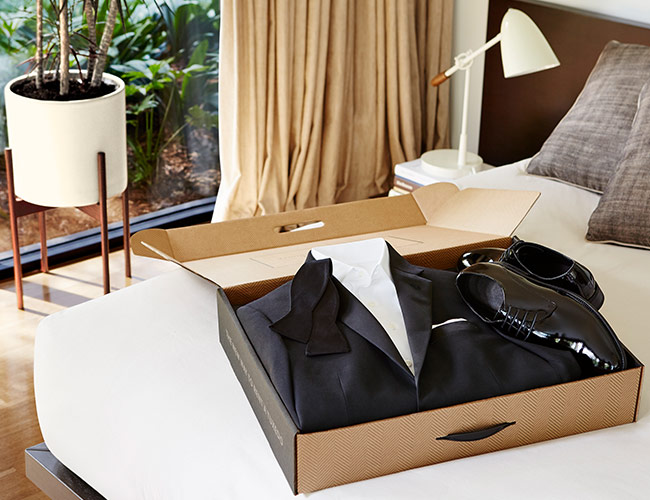
While building a registry is important, looking like you give a damn is inarguably more so. Apart from remembering vows and rings, few things at your wedding are more important and less understood than a clean, sharp tux. That’s where The Black Tux comes in — it’s a one-stop shop for renting made-to-order, quality tuxedos and modern-cut suits but at half the price of what even the budget rental companies offer. If you don’t want to look like a box with curtains draped over it on your wedding day, The Black Tux is worth a click. Learn More: Here

Best Wedding Gifts Under $50

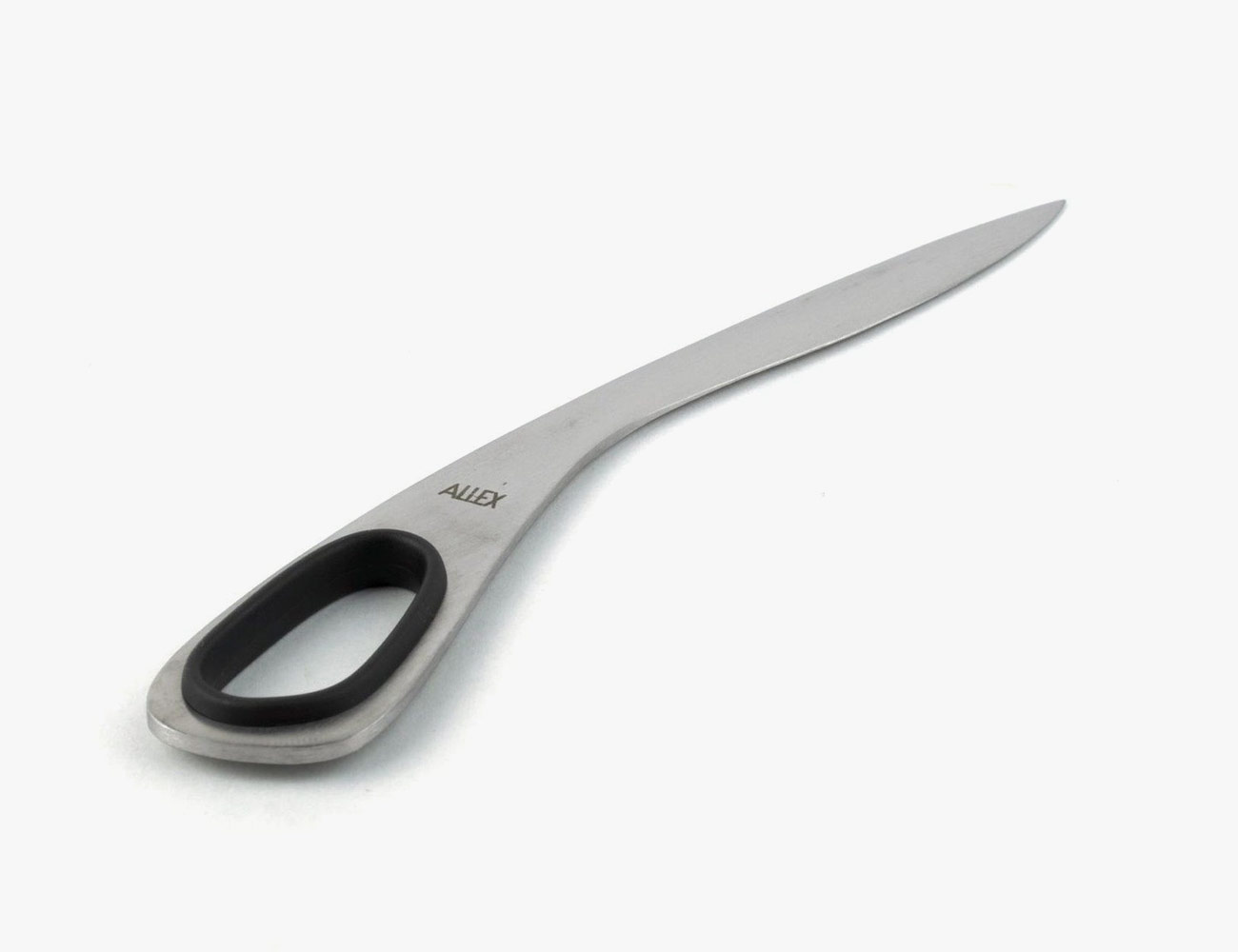
Allex Letter Opener

A winner of Japan’s prestigious Good Design Award and a damn fine tool to boot. Cut from a single sheet on stainless steel, the Allex Letter Opener is a design classic that sports a rubber-lined handle.

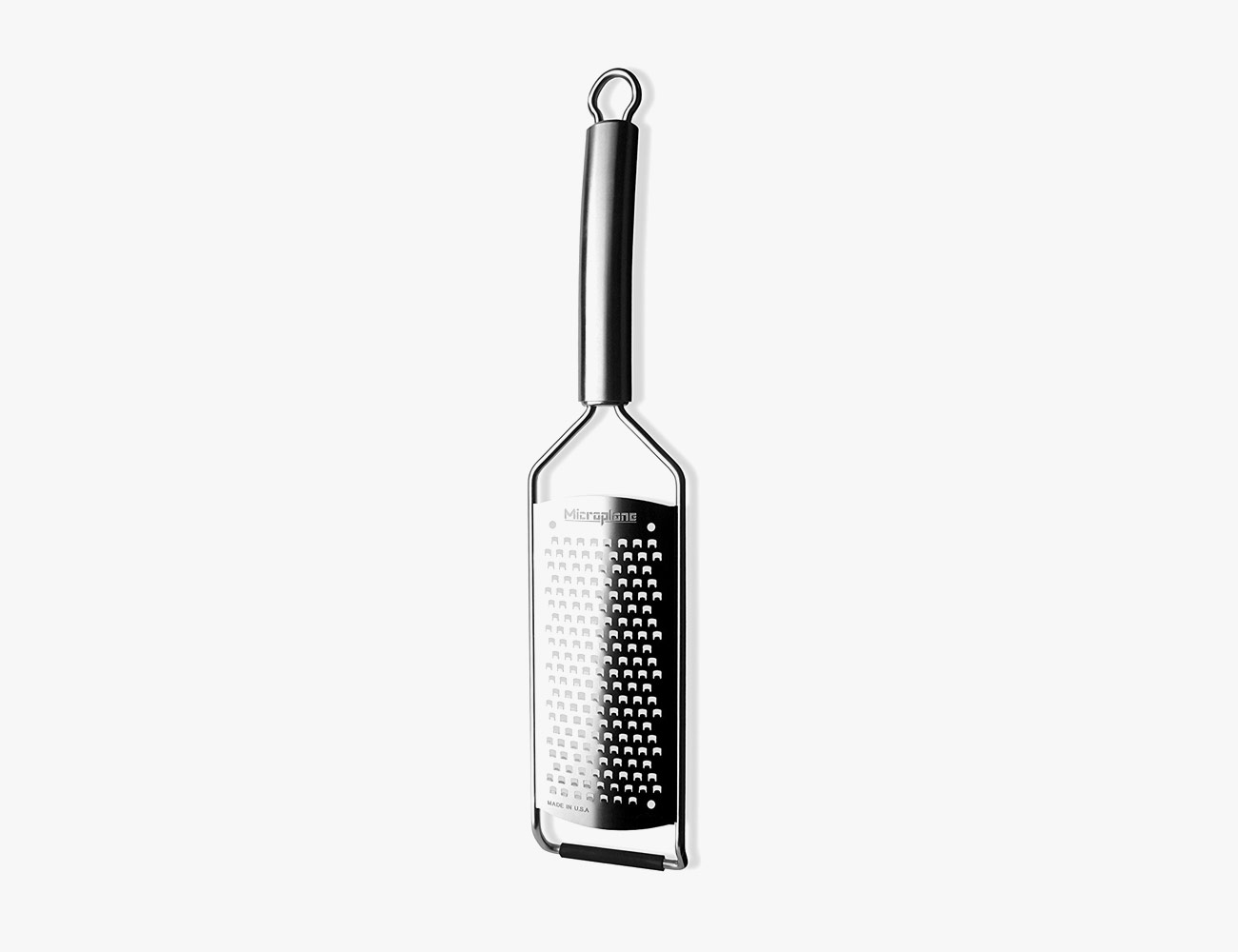
Microplane 38000 Professional Coarse Grater

Few kitchen tools offer more utility in a more space-efficient, low-cost package than a quality grader. Microplane’s version makes quick work of zesting and cheese-grating alike.

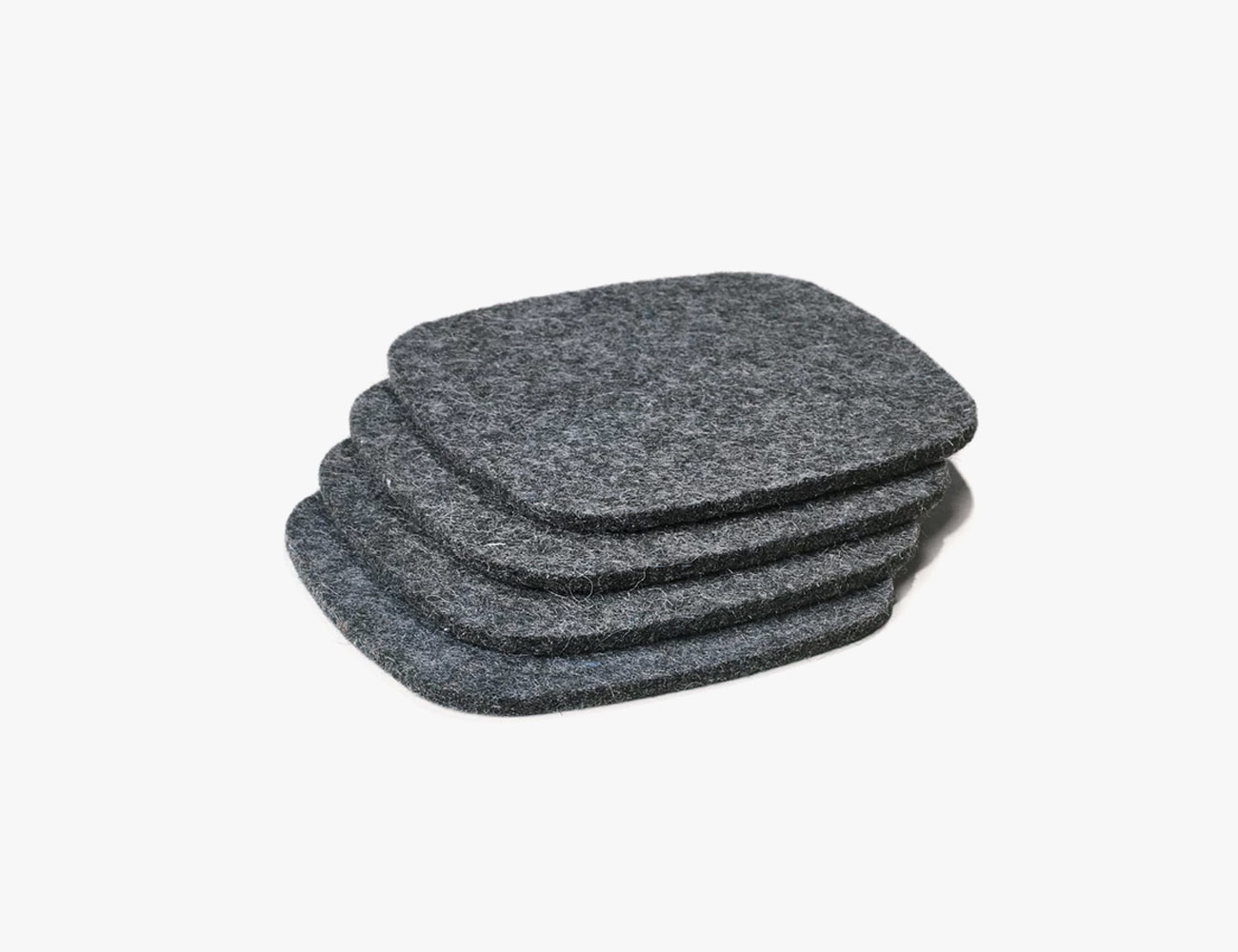
Grovemade Wool Felt Coaster Set

Made from natural merino wool, these felt coasters dry out on their own and won’t attach to your drink — whether it’s a hot coffee or something with a bit more punch.

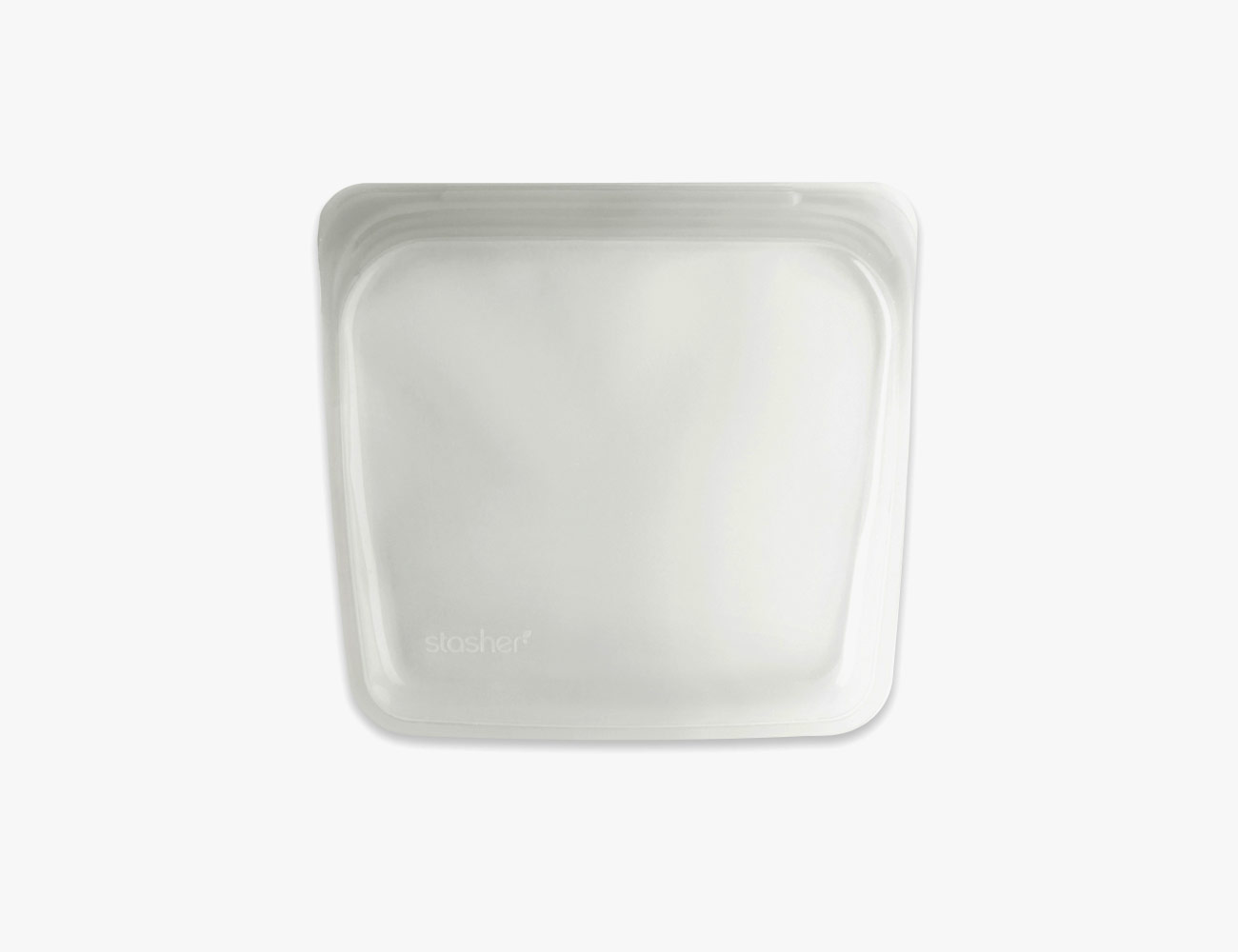
Stasher Reusable Silicone Bags

Not every gift needs to be sexy — these reusable silicone bags are winners of the Red Dot Design Award. Plus, they’re just plain useful. File this into the category of gift you use more than any other gift.

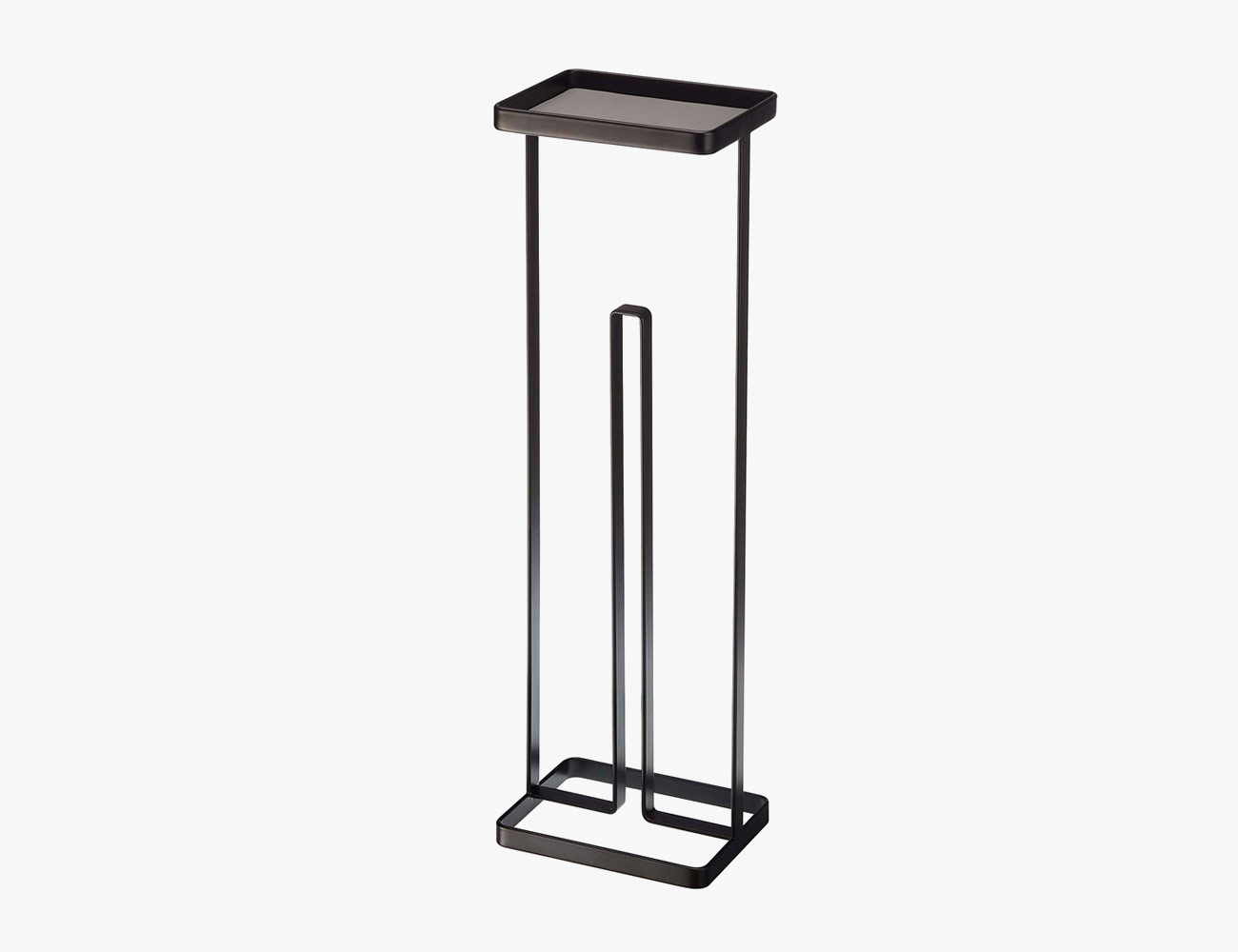
Yamazaki Tower Toilet Paper Stand with Tray

Add a touch of Japanese-grade organization to your home with this black stainless steel bathroom fixture. A subtle addition to your home that says “I’m an adult.”

Hasami Porcelain Mug

Hasami’s porcelain is world famous. These “natural” colored mugs, which are stackable and unpretentious, offer a speckled taupe look that’ll never go out of style.

Bormioli Rocco 17.25-Ounce Stackable Bodega Glasses

Speaking of things you’re going to use every day … these space-saving Bormioli Rocco glasses stack on top of each other and look good doing it.

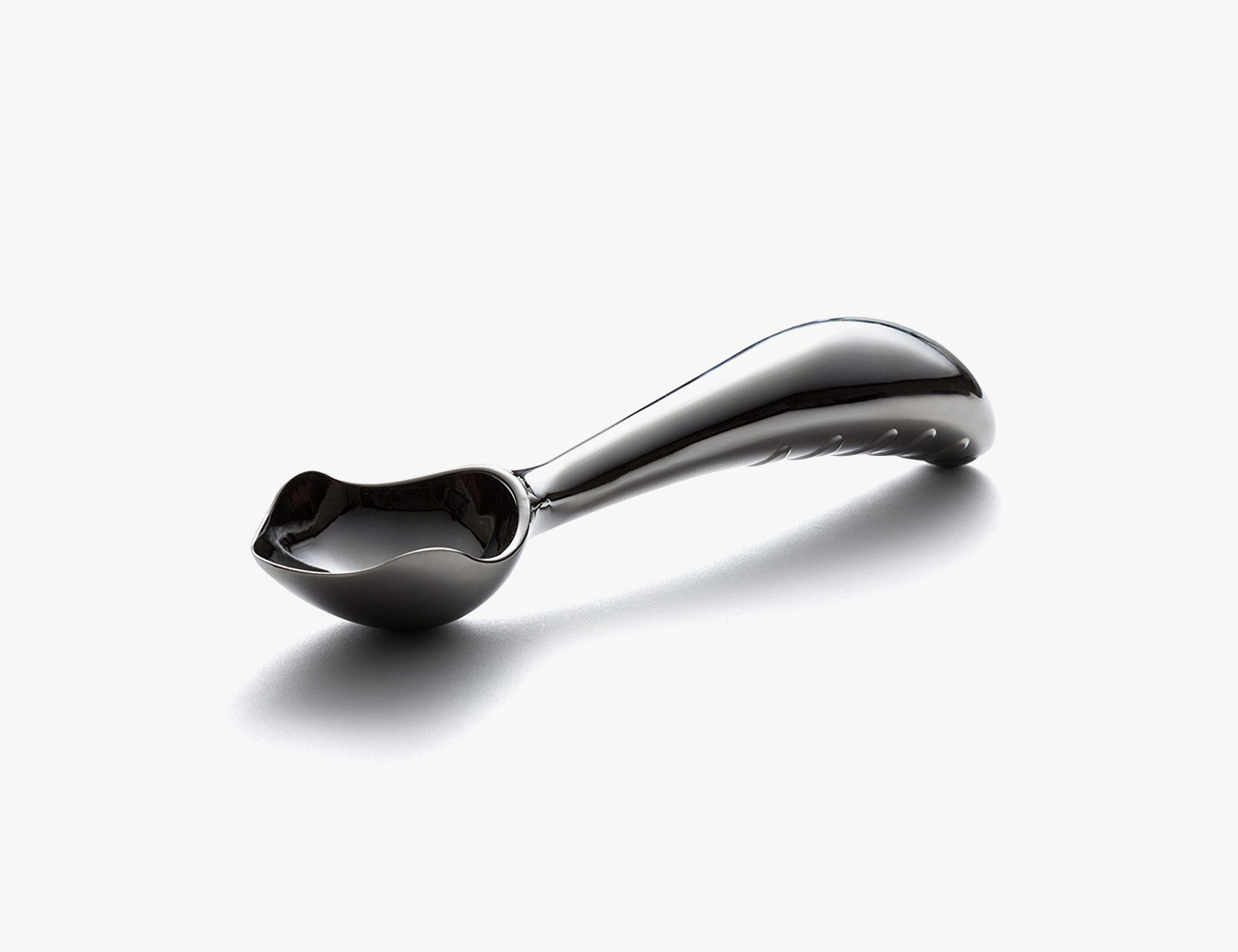
Midnight Scoop Ice Cream Scoop

Leave it to an aerospace engineer to make an ice cream scoop that’s actually helpful. Crafted with aerospace-grade aluminum, the Midnight Scoop acts more like a shovel than a spoon, granting you less time scooping and more time binging.

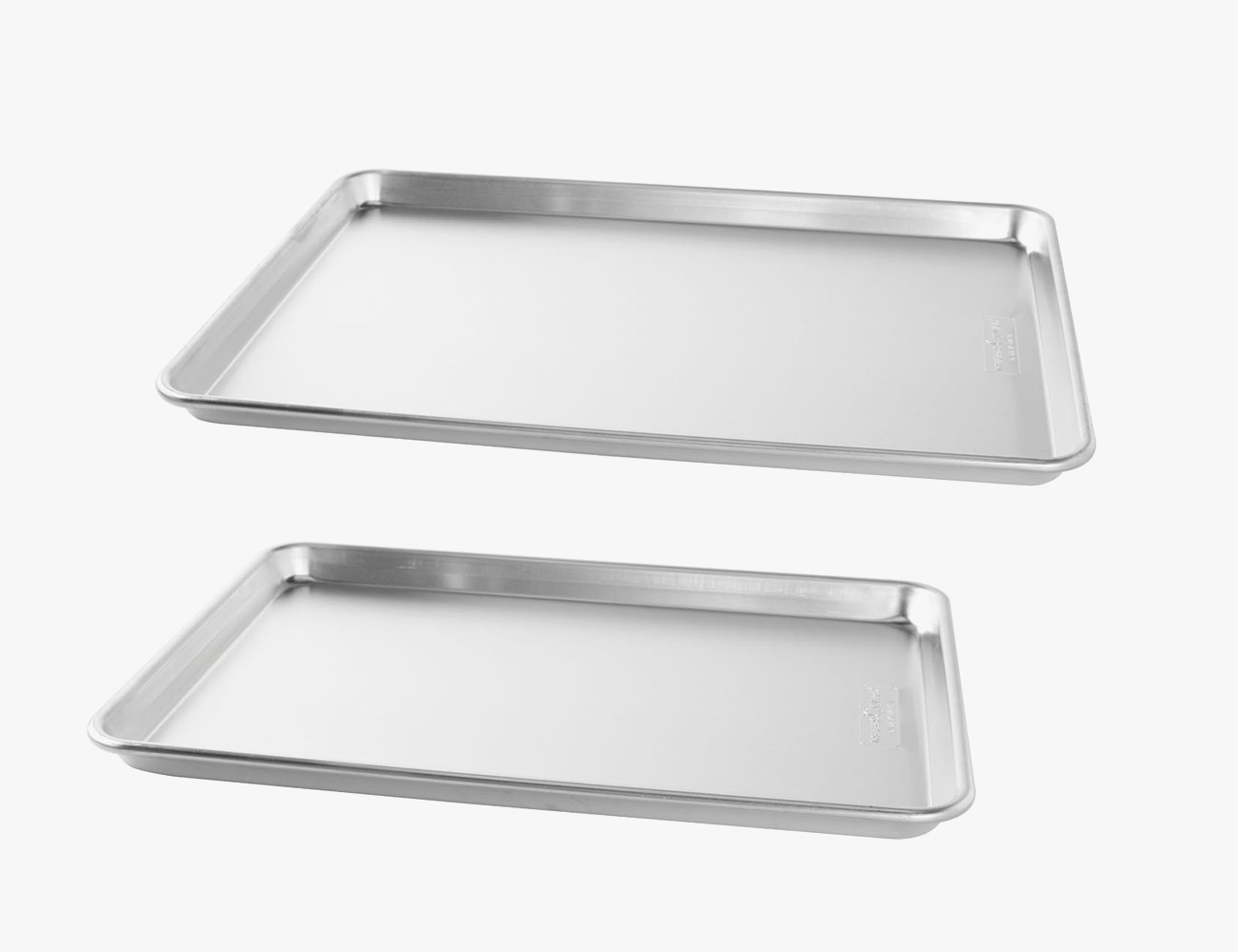
Nordic Ware Sheet Pan Set

These sheet pans are widely used in professional kitchens because they’re heavier than the flimsy pans that come when you buy an oven. Made of aluminum, they’re also quick to heat.

Soma 10-Cup Pitcher

An essential for anyone who’s not living in a place with quality water on tap. Its wood handle and minimal design help the Soma blend into any fridge.

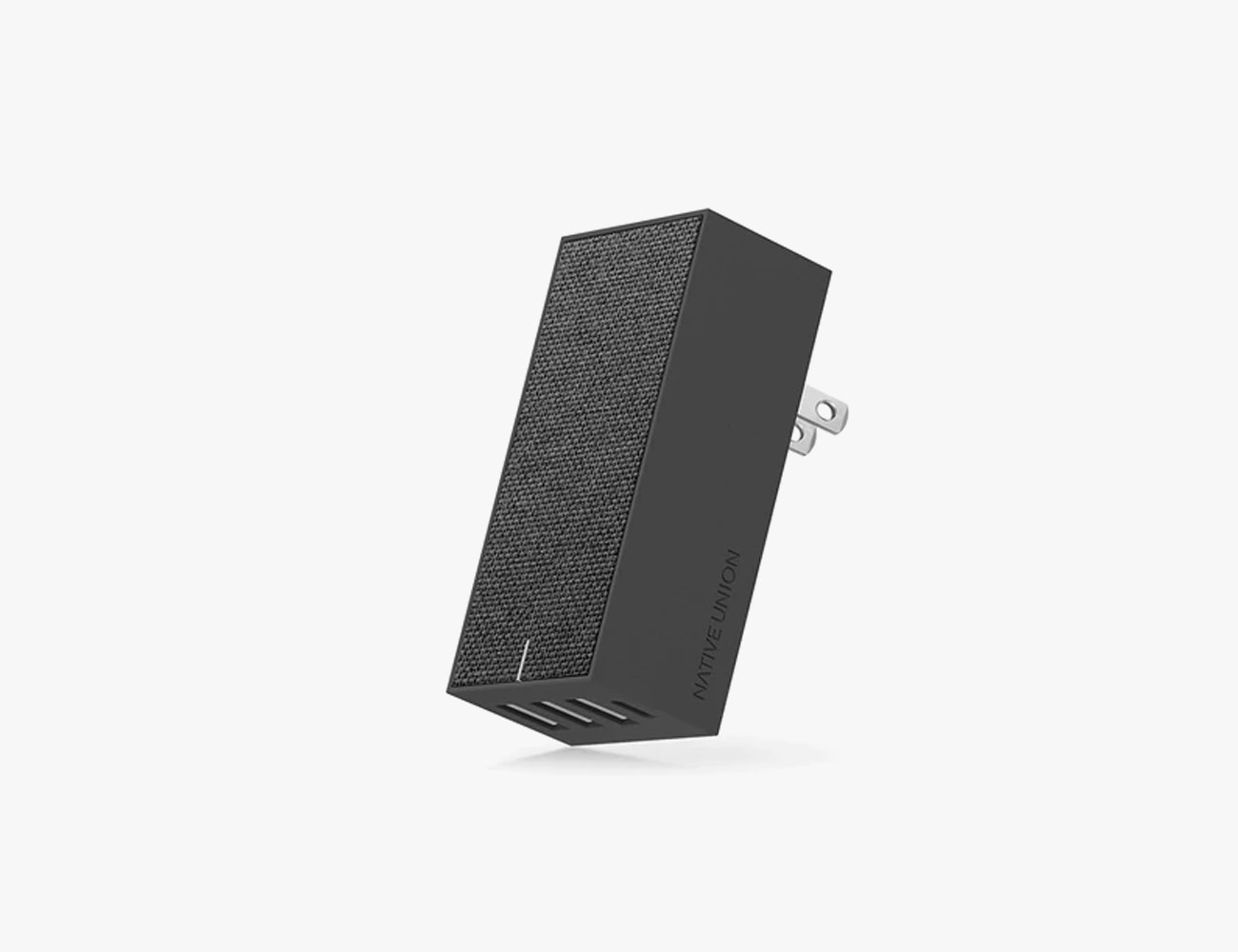
Native Union 4-Port USB Charger

Native Union’s badass wall-charging block detects your device’s input and automatically adjusts to charge it at full capactiy. It can also do that for four devices at once.

Classic Peugot Pepper Mill

It’s been the staple of pepper grinding for nearly 150 years and shows no signs of being dethroned. The French pepper mill easily adjusts grind size and has retained its iconic curvy look.

Chemex Classic Pourover

Because you and your guests deserve a better cup of coffee — even if you only use it on the weekends.

Norlan Glass

A tumbler with a snifter shoved inside. The Norlan glass leaves the casual drinker just as satisfied as the whiskey-obsessed.

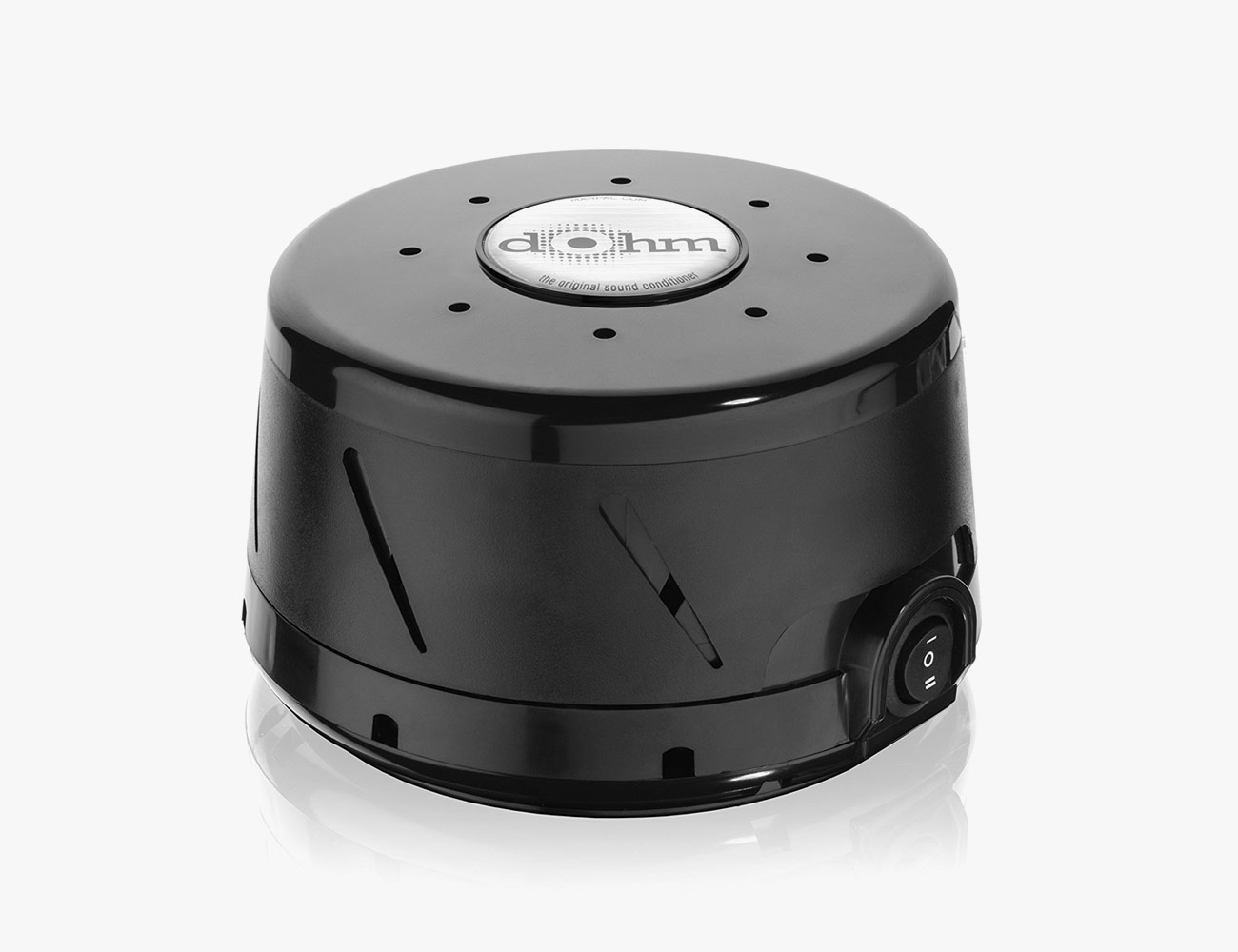
Marpac Dohm Classic White Noise Machine

The Dohm has a long track record in assuaging even the most rabid minds into some shut-eye. A staple whether you’re living in a loud city or just need an extra push to pass out.

Best Wedding Gifts Under $100

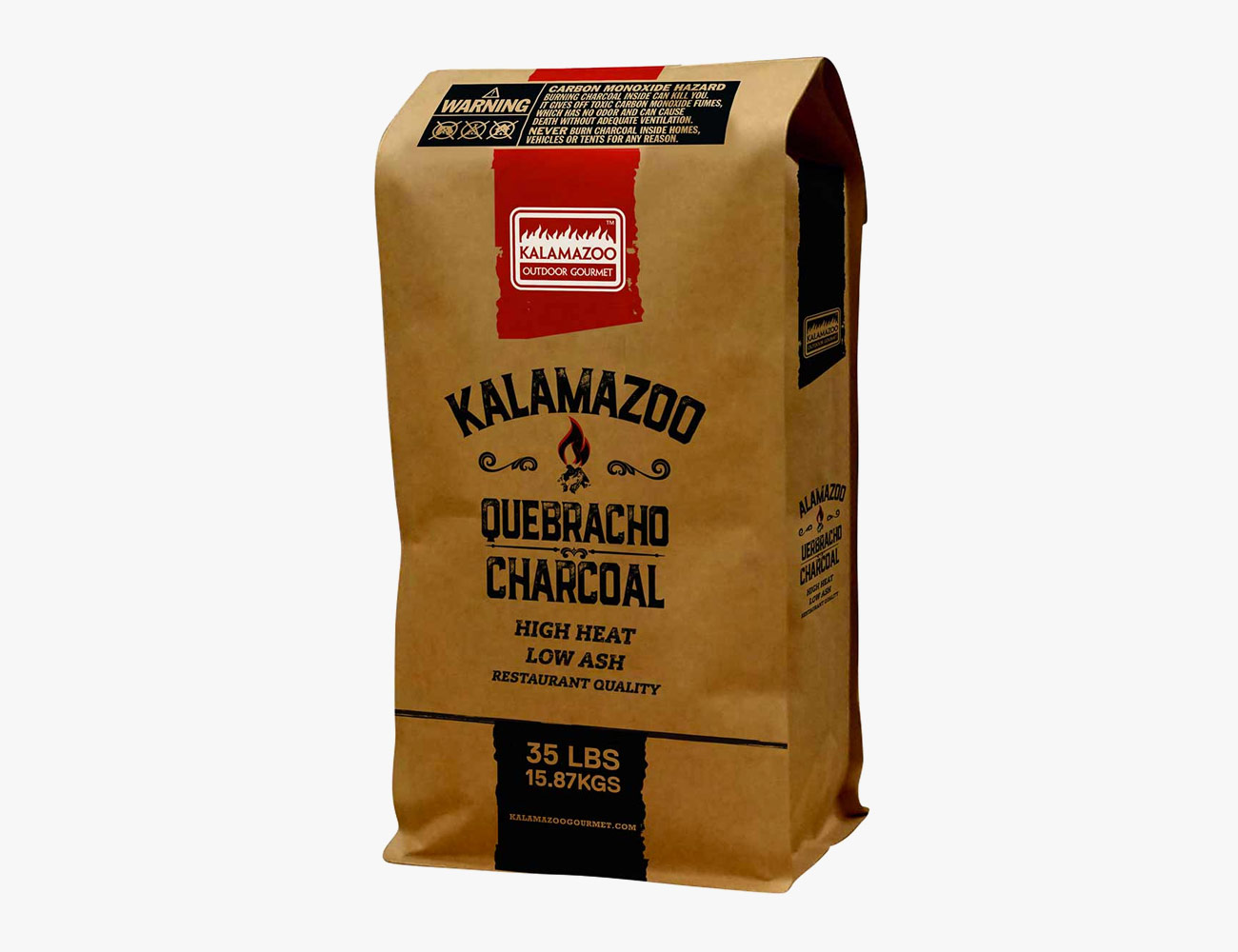
Kalamazoo Quebracho Charcoal

Quebracho charcoal is in a class of its own — it burns hotter, longer and cleaner than your typical lump charcoal. Kalamazoo’s is all-natural, low-sparking and low-smoking, too.

OXO Good Grips Stainless Steel Mixing Bowl Set

A trio of countertop-gripping mixing bowls that stack better than a set of Matryoshka dolls. OXO created these with the classic stainless steel interior for easy cleaning, but added a plastic exterior to shield your hands from heat when mixing hot ingredients.

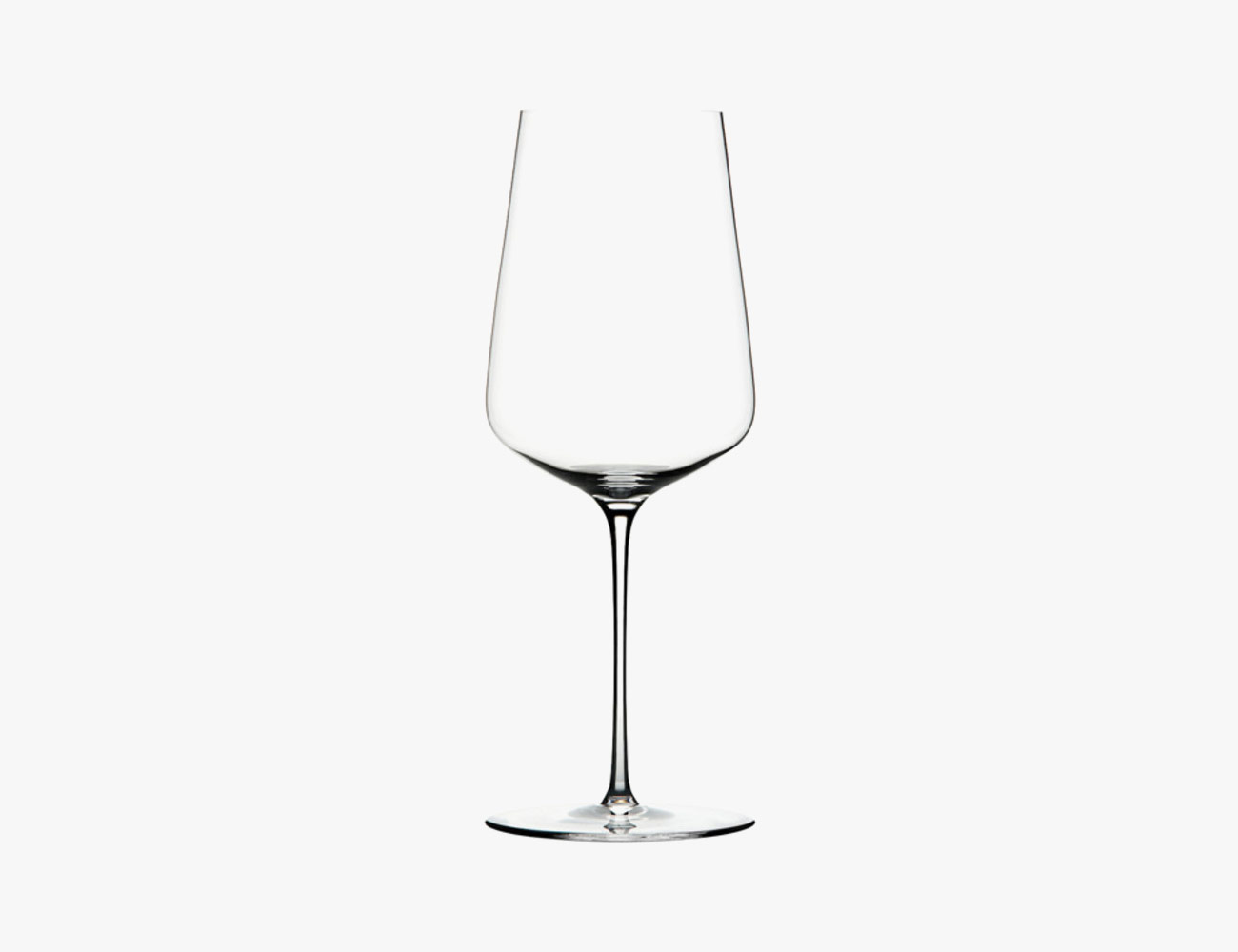
Zalto Denk’Art Universal Glass

A set of perfectly balanced, beautiful wine glasses is requisite to hosting your family and friends, and they know that, too.

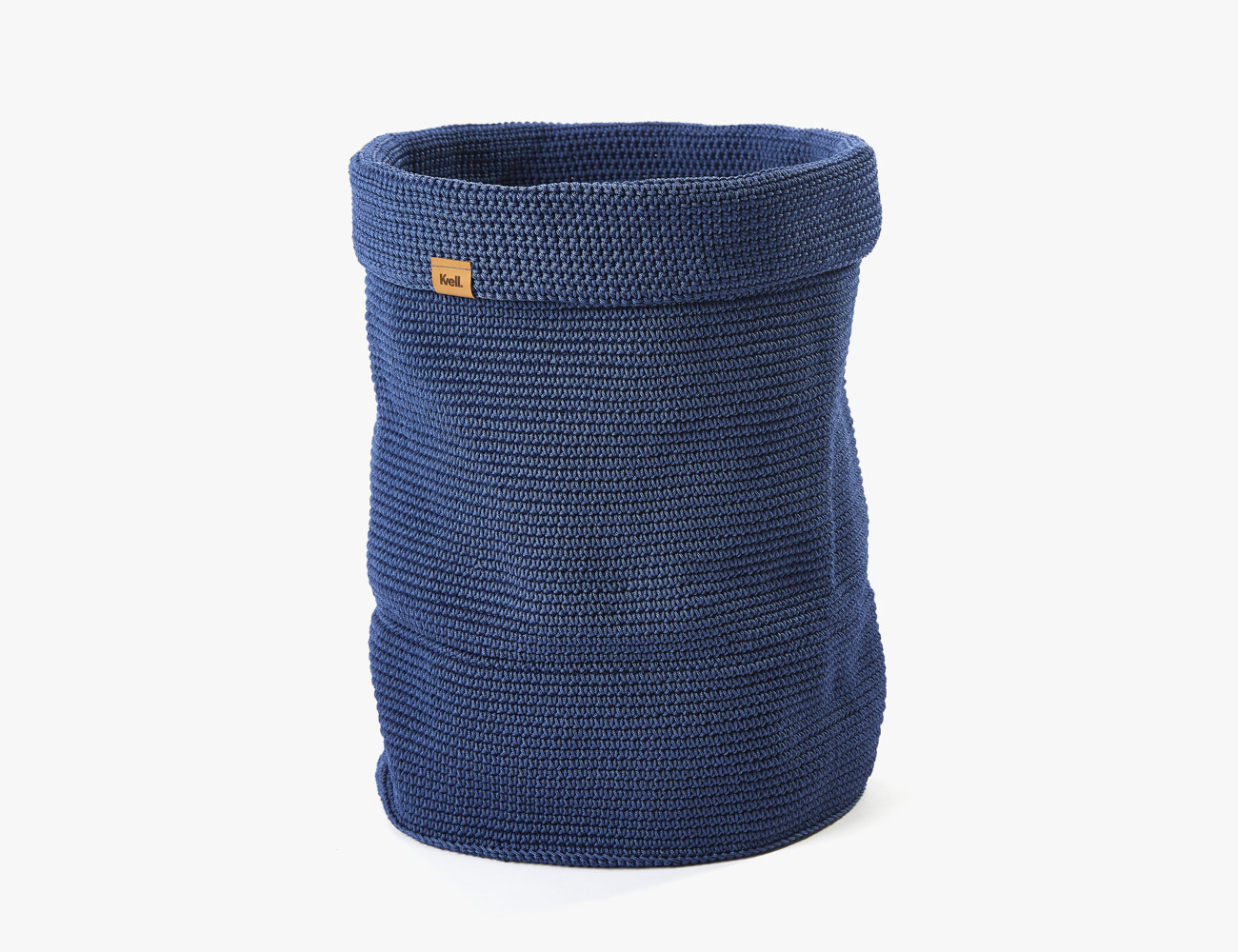
Kvell Rollo Hamper

A crushable, foldable, bendable synthetic fiber makes up this low-key laundry hamper. It also allows plenty of airflow, meaning it’ll take longer for your pile of dirty clothes to make their presence known.

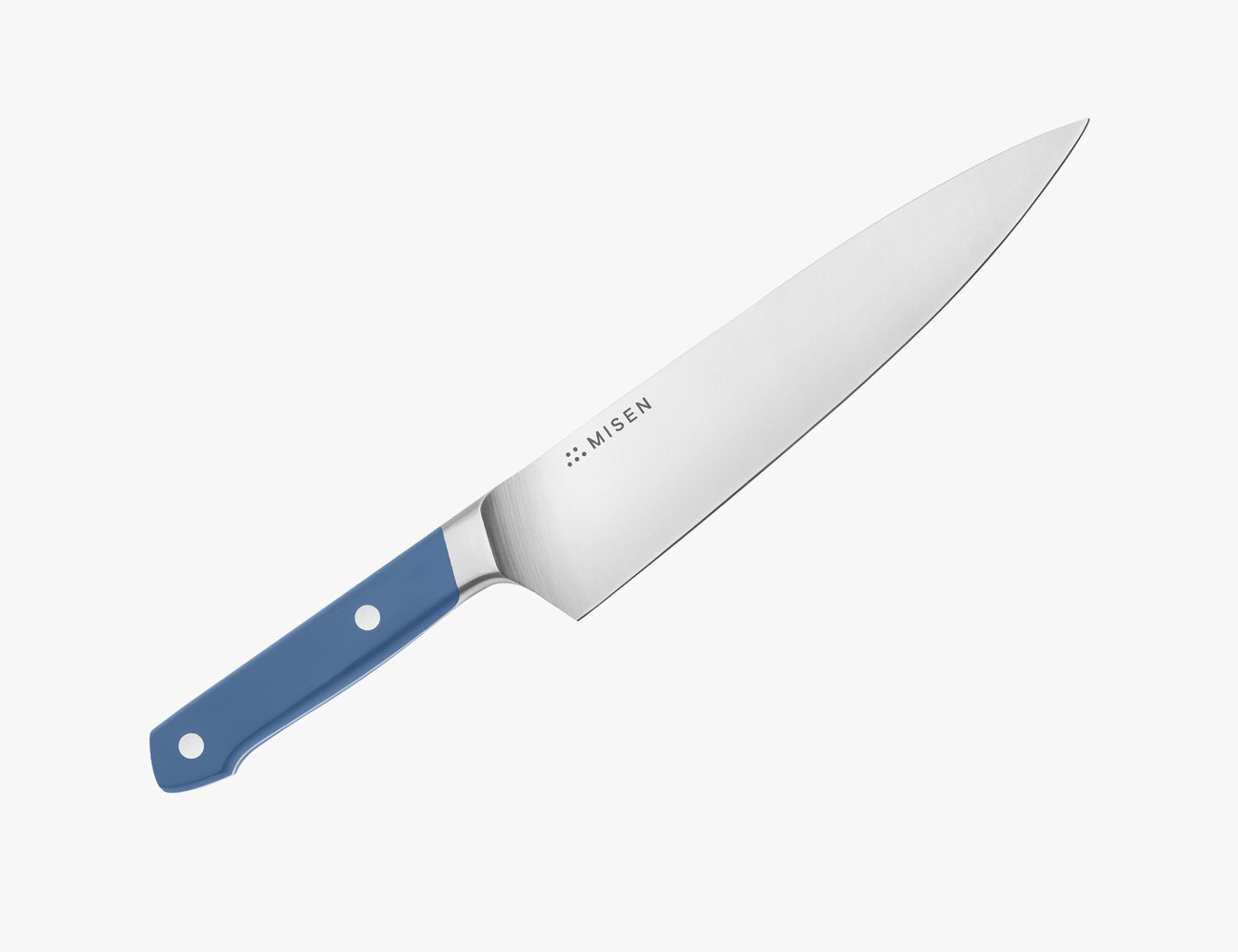
Misen Chef’s Knife

A western-eastern-hybrid of a chef’s knife from a Kickstarter-backed brand with loads of hype. Misen’s chef’s knives will last you however long you need, and won’t cost you an arm and a leg.

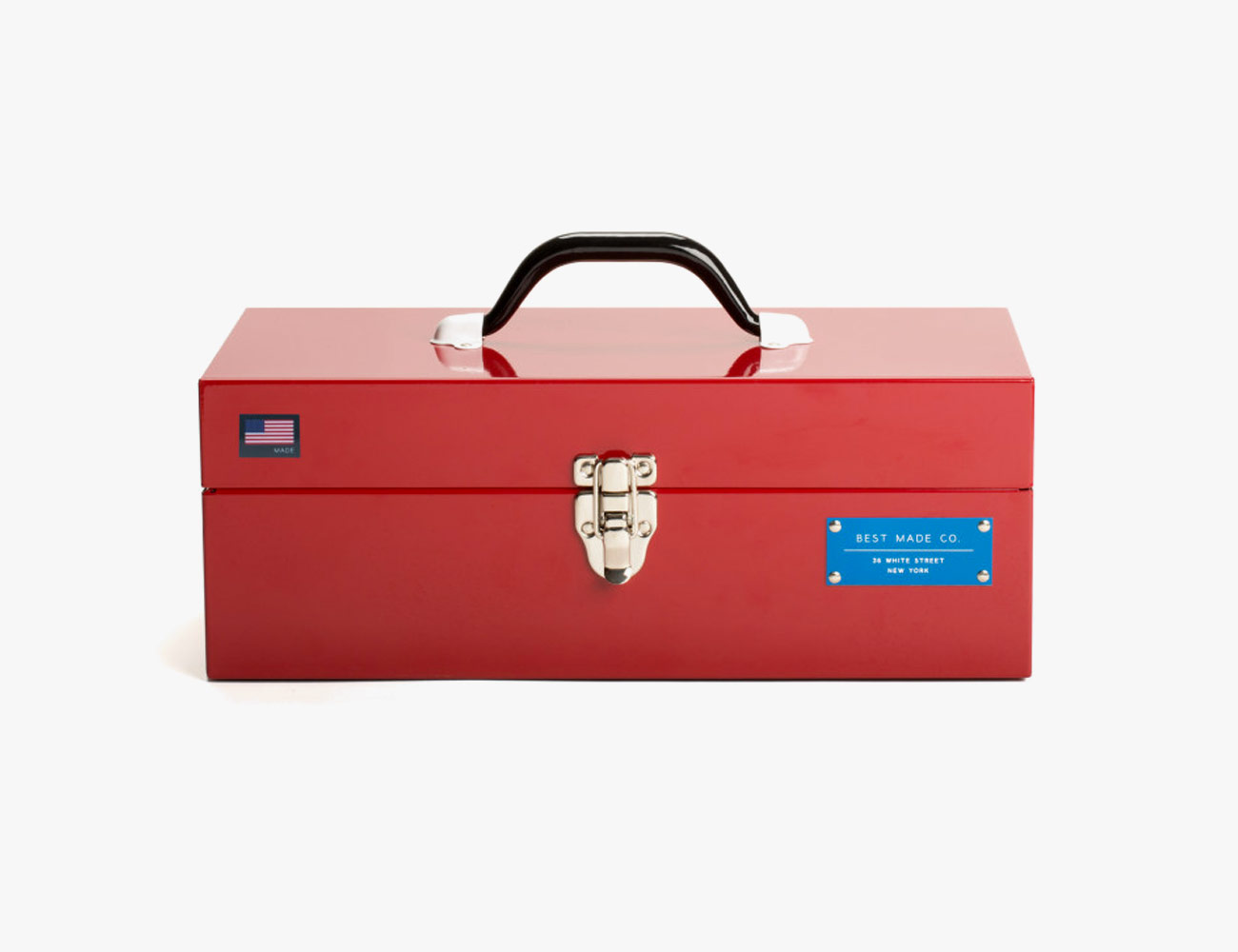
Best Made 15-Inch Toolbox

Whether for tools or art supplies, perhaps what’s most exciting about the humble tool box is its penchant for housing tools for creative endeavors. Best Made Co.’s simple tool box is made with 22-gauge powder-coated steel, so expect a lot of endeavors to come and go before you wear it out.

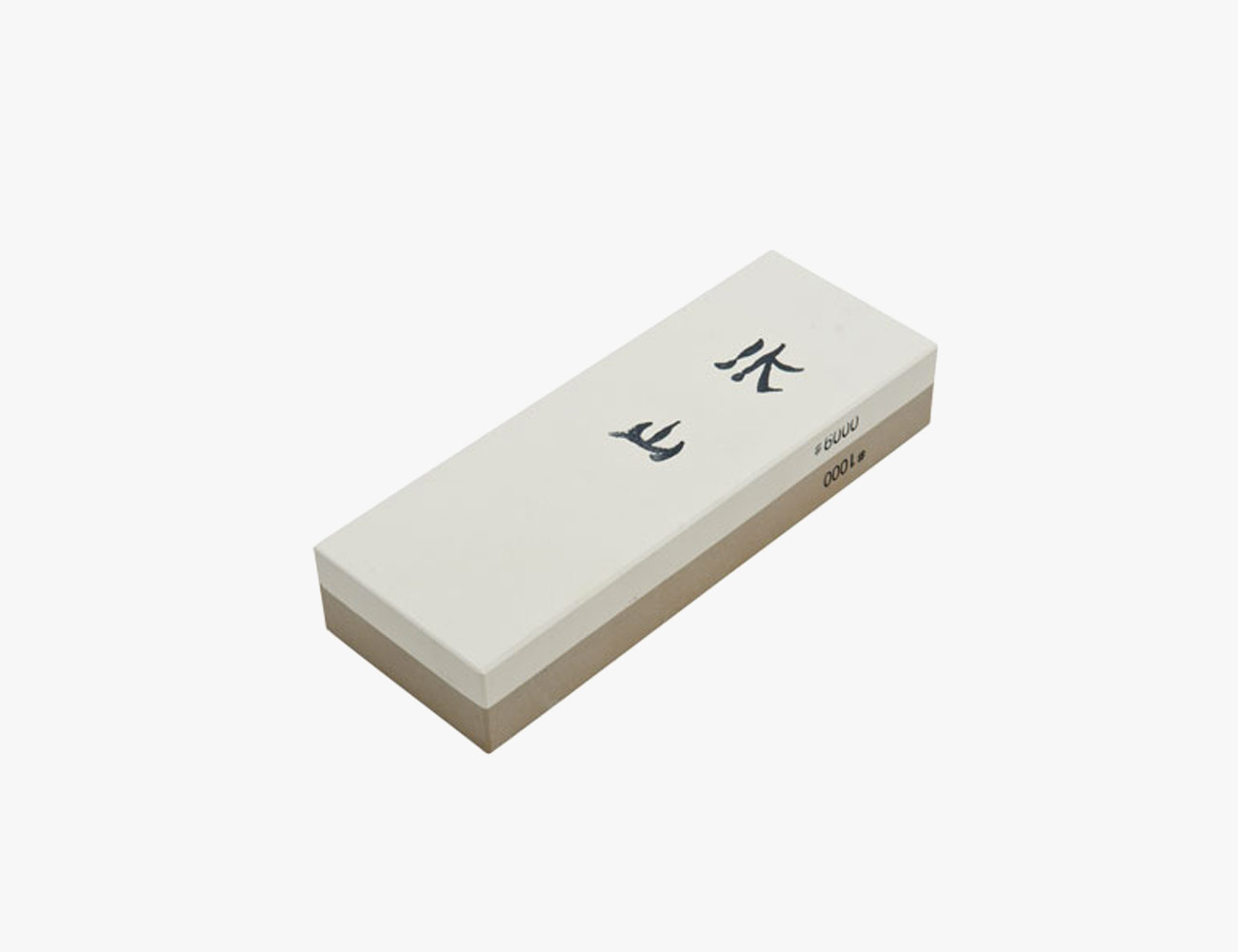
Mizuyama Two-Sided Sharpening Stone

Having a knife-sharpening tool isn’t admission that you’re using your knife wrong — it’s a statement that you use it all the time. This one was built for the beginner home cook, and employs a medium grit and fine grit sharpening zones.

Morihata Ishikoro Pebble Stone Bath Mat

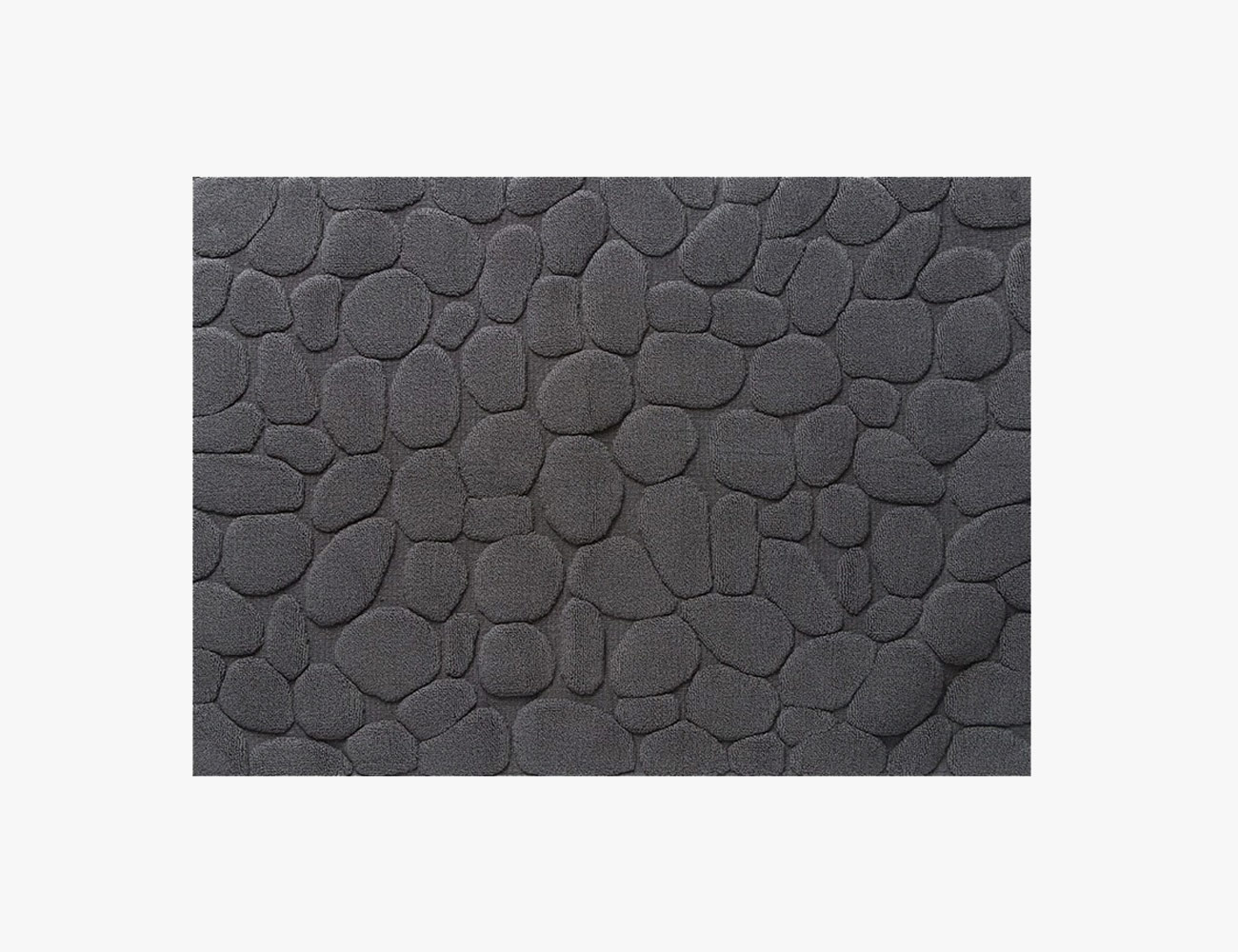
The pebblestone design of this terrycloth Ishikoro bath mat brings a subtle and interesting texture shift in an otherwise forgotten space of your home. Not to mention it’s far more absorbent than a typical bath mat.

IKEA Ogder Chair

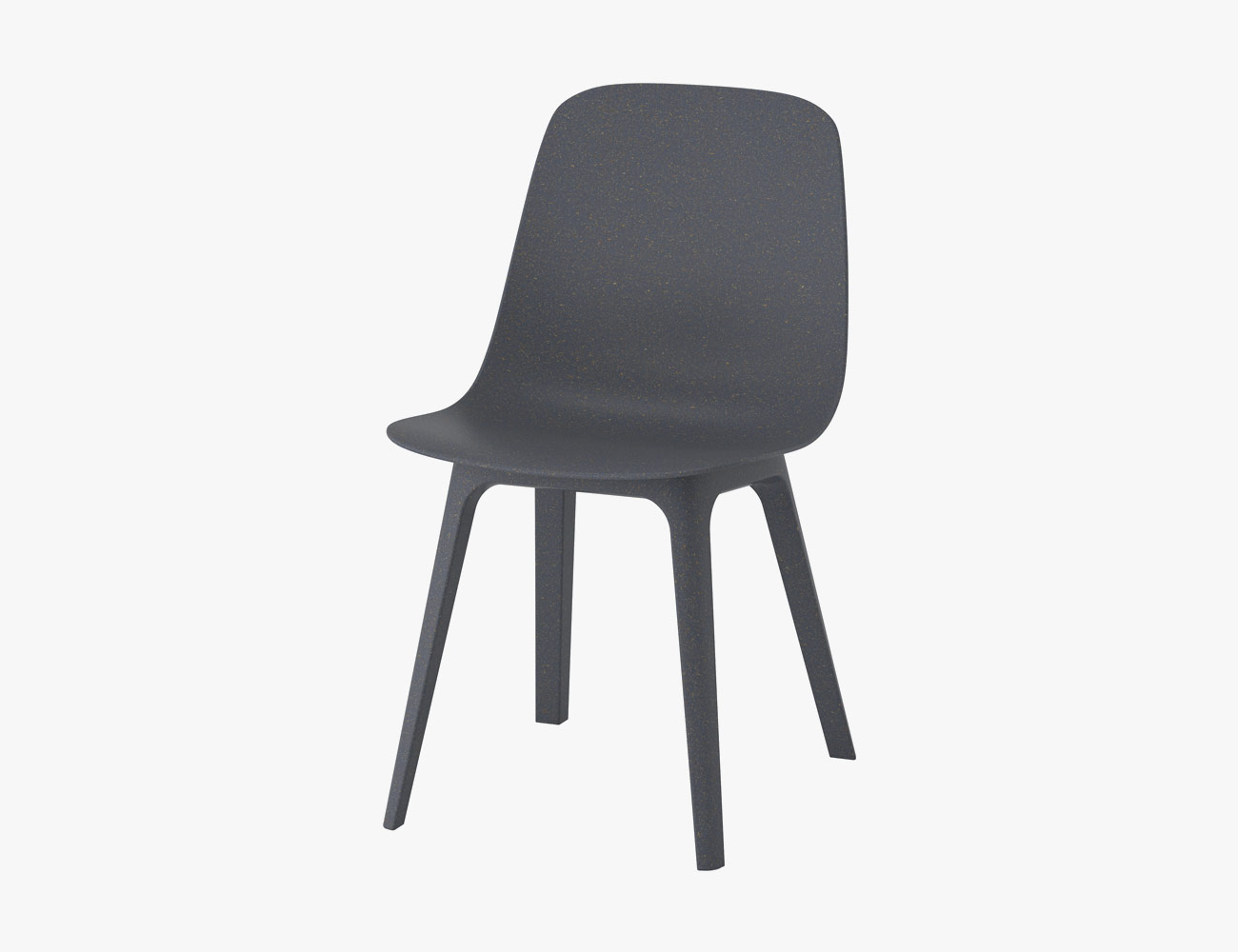
An IKEA product that’s easy to assemble? Yes. The Ogder requires no hex key, rocks a bucket seat and is nearly made entirely of recycled material.

Fellow Stagg Pour-Over Kettle

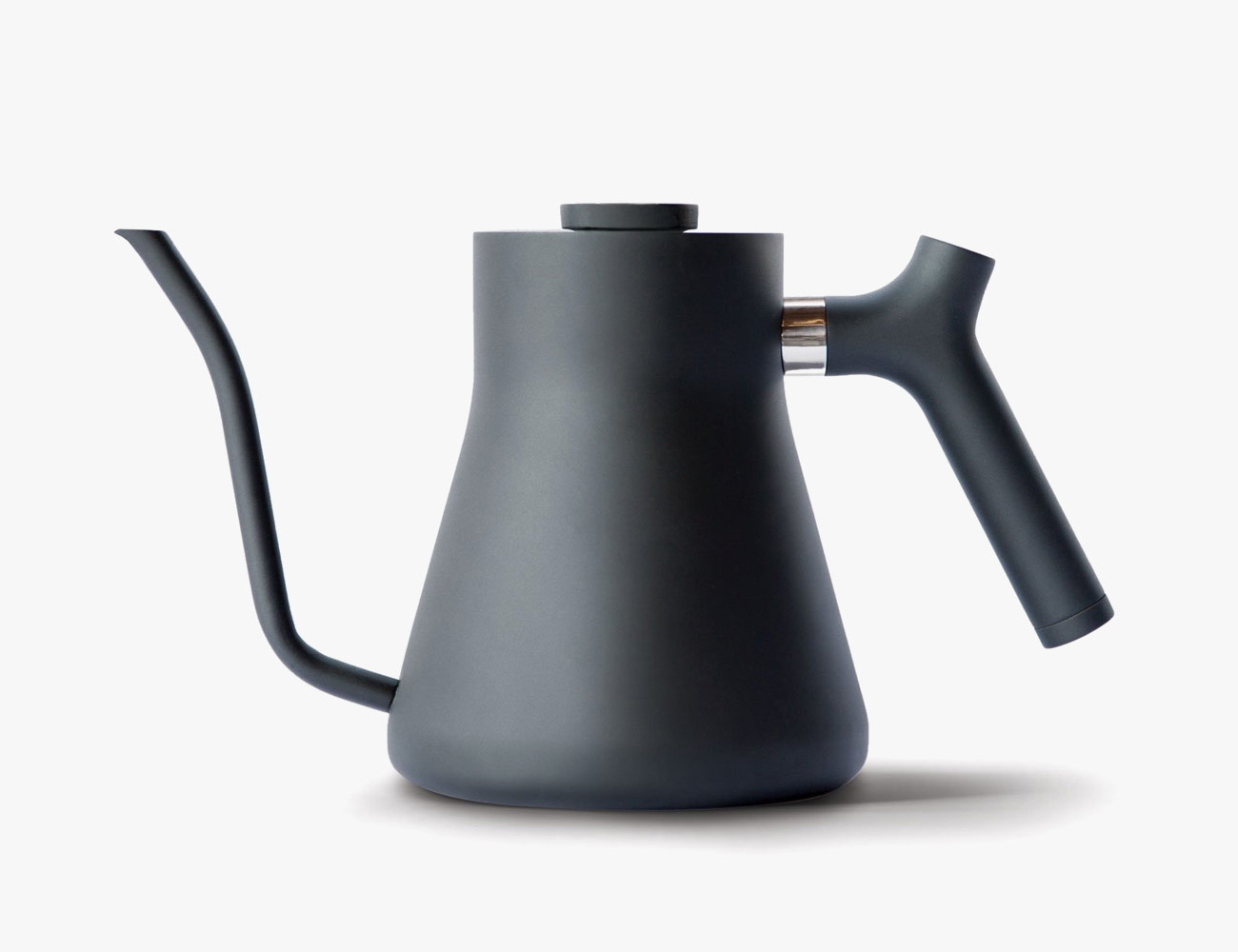
A pour-over kettle used by professional coffee brewers (it’s a thing) and for the most precisely-heated tea you can conjure up in a home kitchen. It doesn’t hurt that it looks better than any other kettle on the market.

Pilgrim Teo Ultrasonic Aroma Diffuser

An aroma diffuser that isn’t gaudy or hospital-plain is a hard thing to come by. Pilgrim’s Teo device — made of beechwood and handmade ceramic — sits pleasantly in the middle.

Field Company Skillet

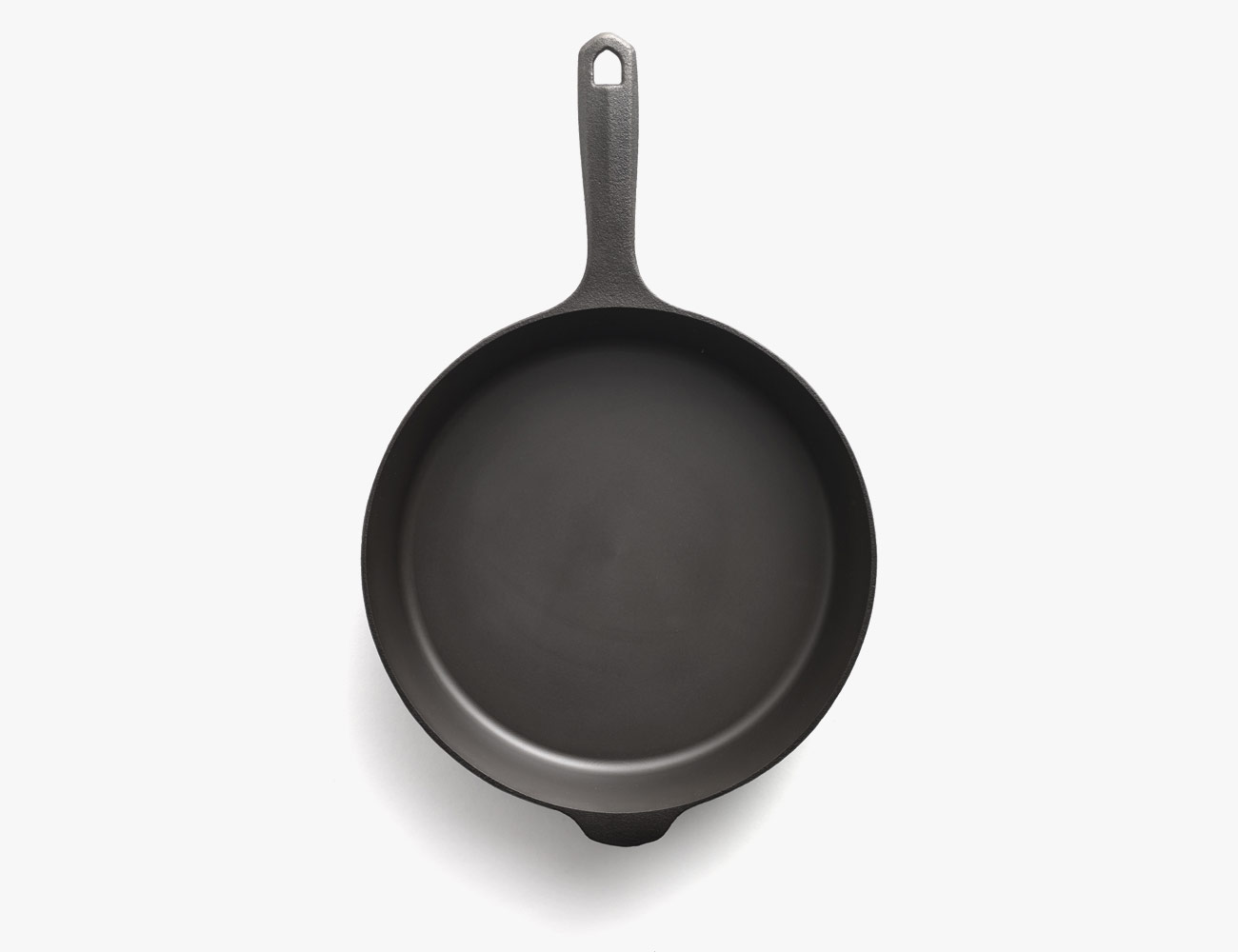
A machine-smoothed cooking surface and light in the hand, Field’s cast-iron skillet represents a value proposition that’s hard to beat: a use period measure in lifetimes at a price a fraction of its competition in boutique cast-iron.

Teakhaus End Grain Butcher Block

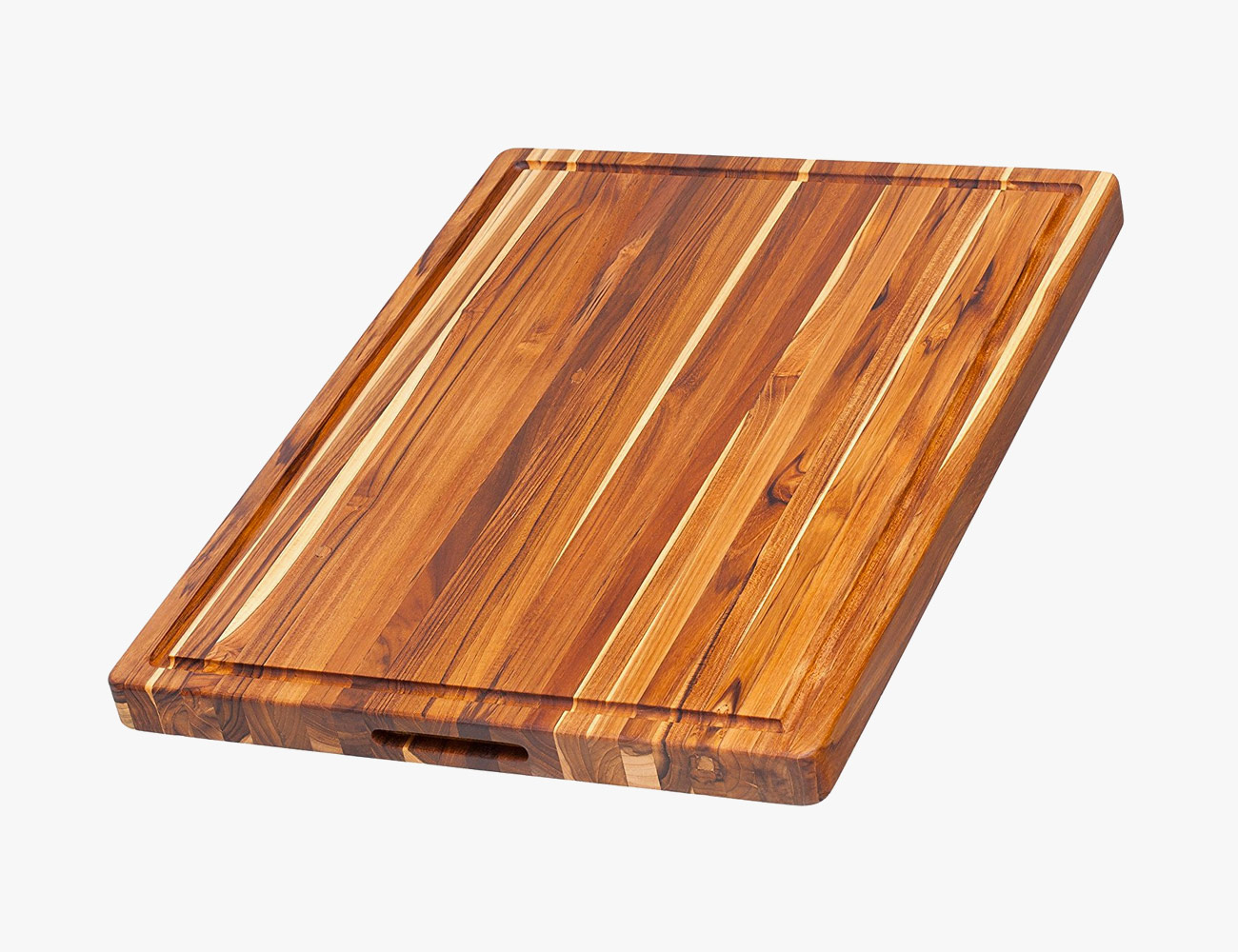
Cook’s Illustrated called the Teak end-grain cutting board “the last cutting board you’ll ever need.” We’re calling it a damn good-looking kitchen essential that doubles as a rustic charcuterie platter.

Best Wedding Gifts Over $100

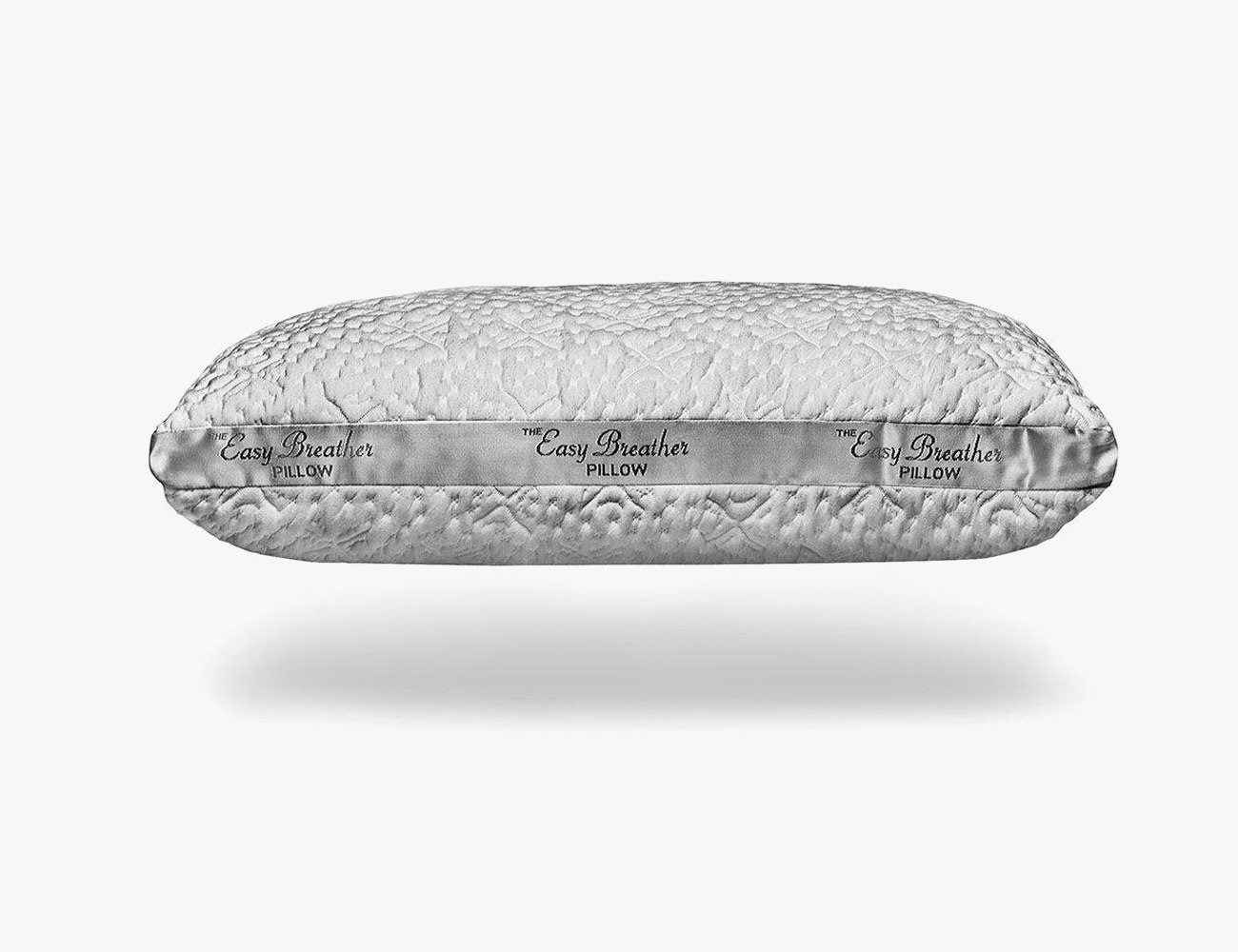
Nest Bedding The Easy Breather Pillow

A secret blend of materials creates a pillow that’s as soft and light as down yet supportive like memory foam, and if it doesn’t quite fit your comfort level you can easily remove fill.

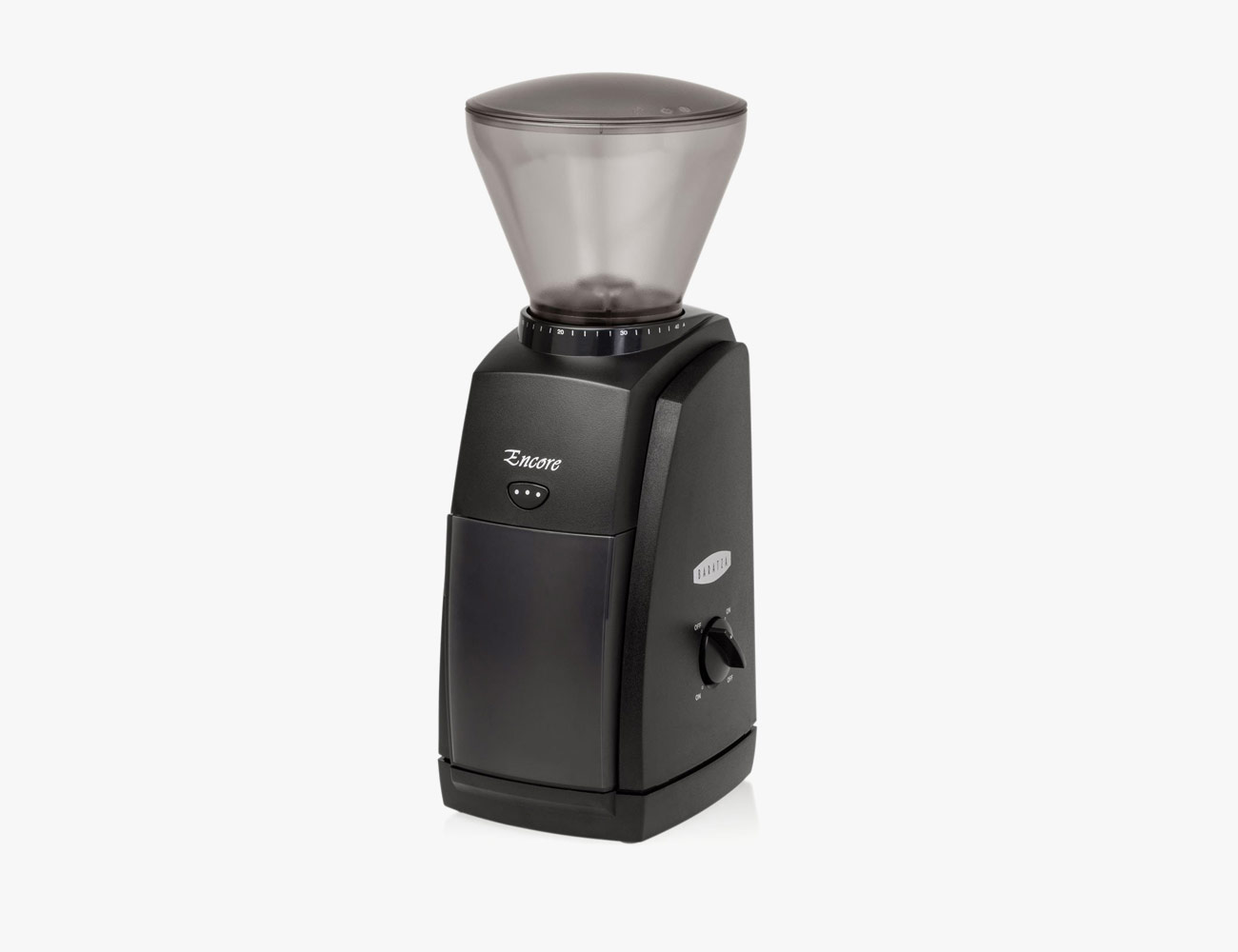
Baratza Encore Coffee Grinder

Ask any coffee nerd what bean grinder to buy and they’ll likely bring up the Encore. It’s the go-to gateway grinder, and it’s capable of 40 separate grind levels — coarse to ultra fine.

David Mellor Pride Flatware

The first set of flatware designed by famed British designer David Mellor (including the stoplights used across all of Brittain), they are thin yet heavy, and provide a quiet hint that you know what you’re doing.

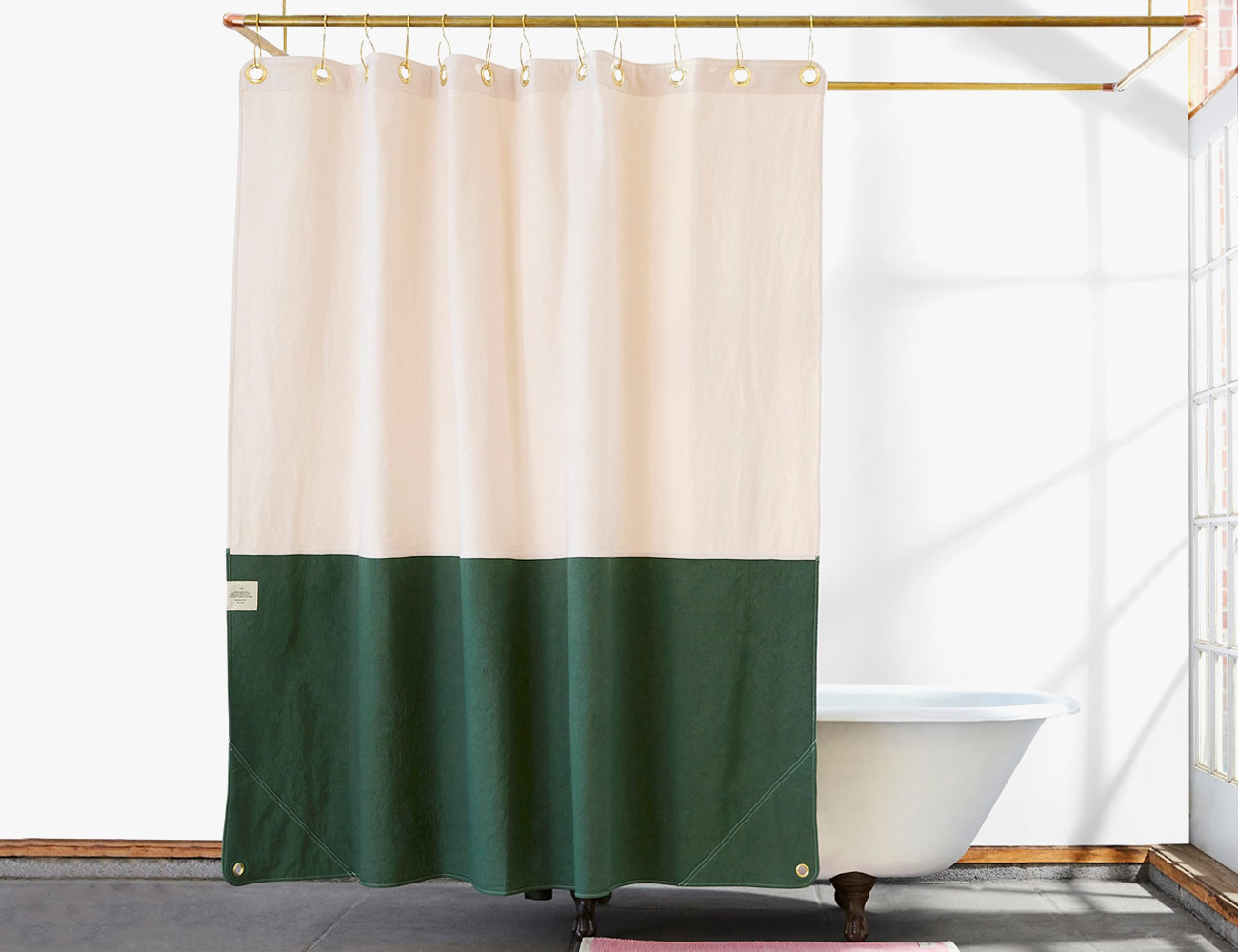
Quiet Town The Orient Shower Curtain

No one notices a shower curtain unless it’s either dirty or dirt cheap. This two-toned, Brooklyn-made curtain rocks pure brass grommets and a sturdy canvas material, ensuring it stands out just enough.

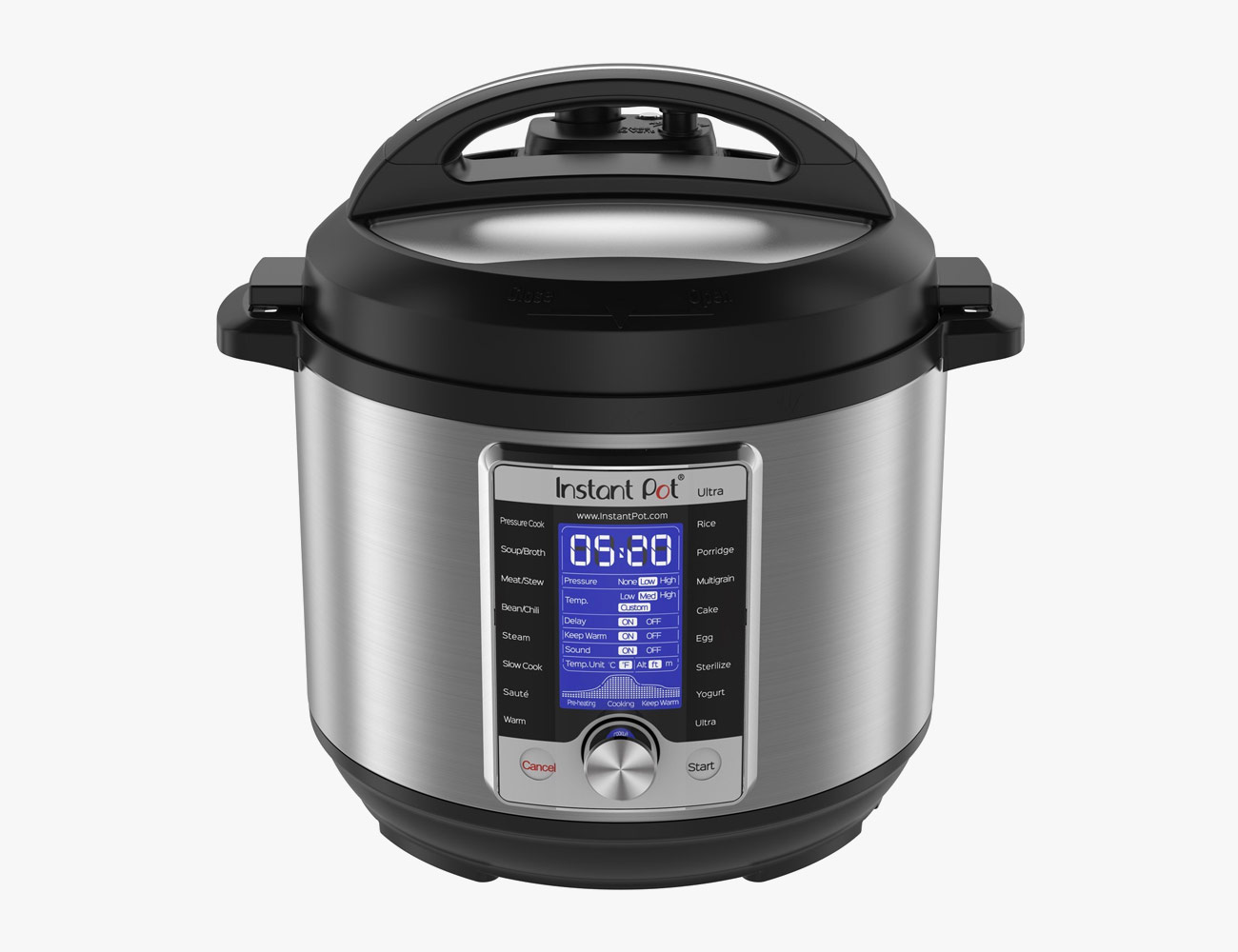
Instant Pot Ultra 6-Quart

By now you’ve surely heard of it. The Instant Pot is the machine that promises to replace 10 different kitchen tools, and actually delivers.

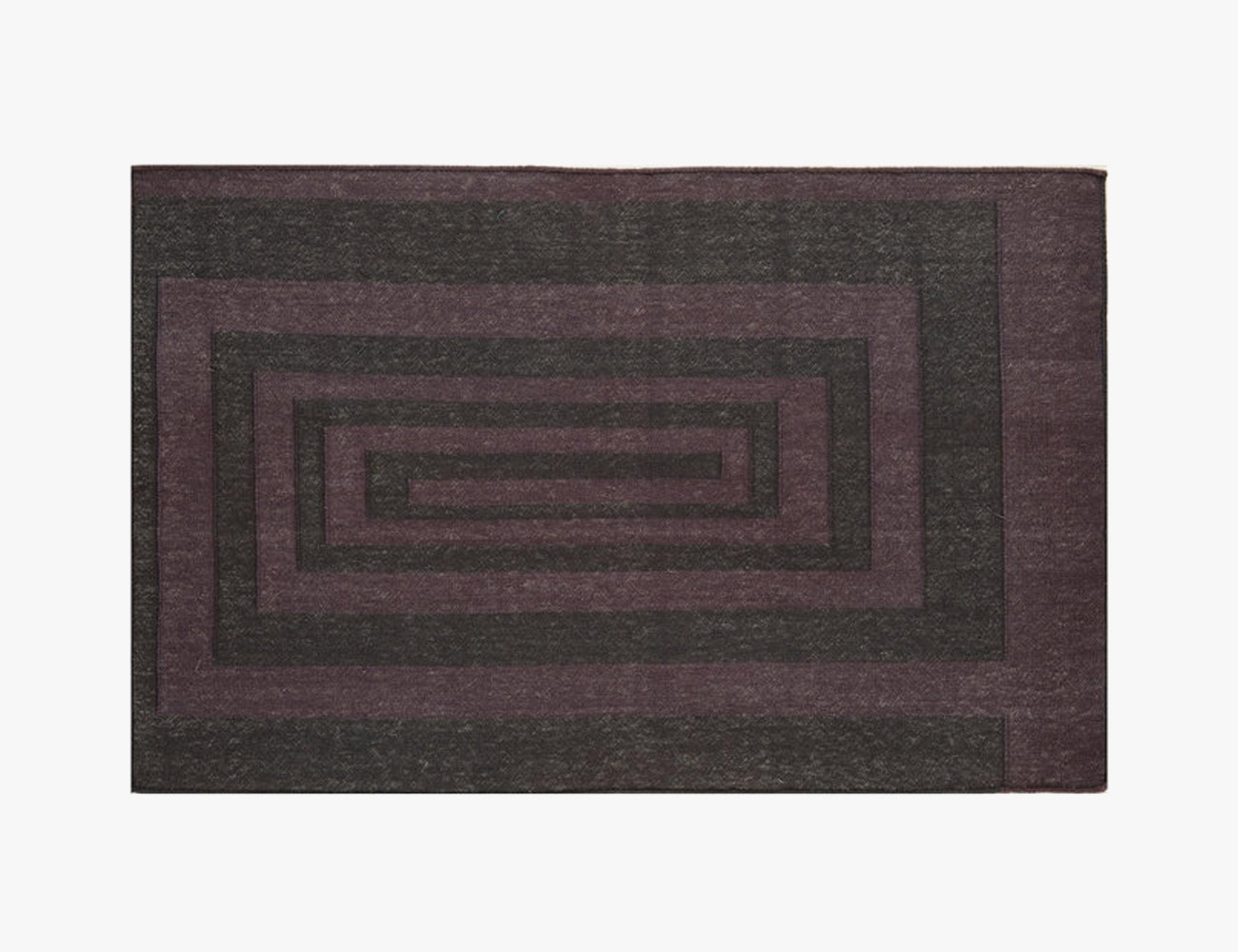
Tantuvi No. 8 Amethyst Hand-Loomed Indian Rug

Affordable rugs that don’t look like garbage are surprisingly difficult to find. Tantuvi’s are hand-loomed in a classic Indian style and employ minimal flourish in favor of striking colors and geometric design.

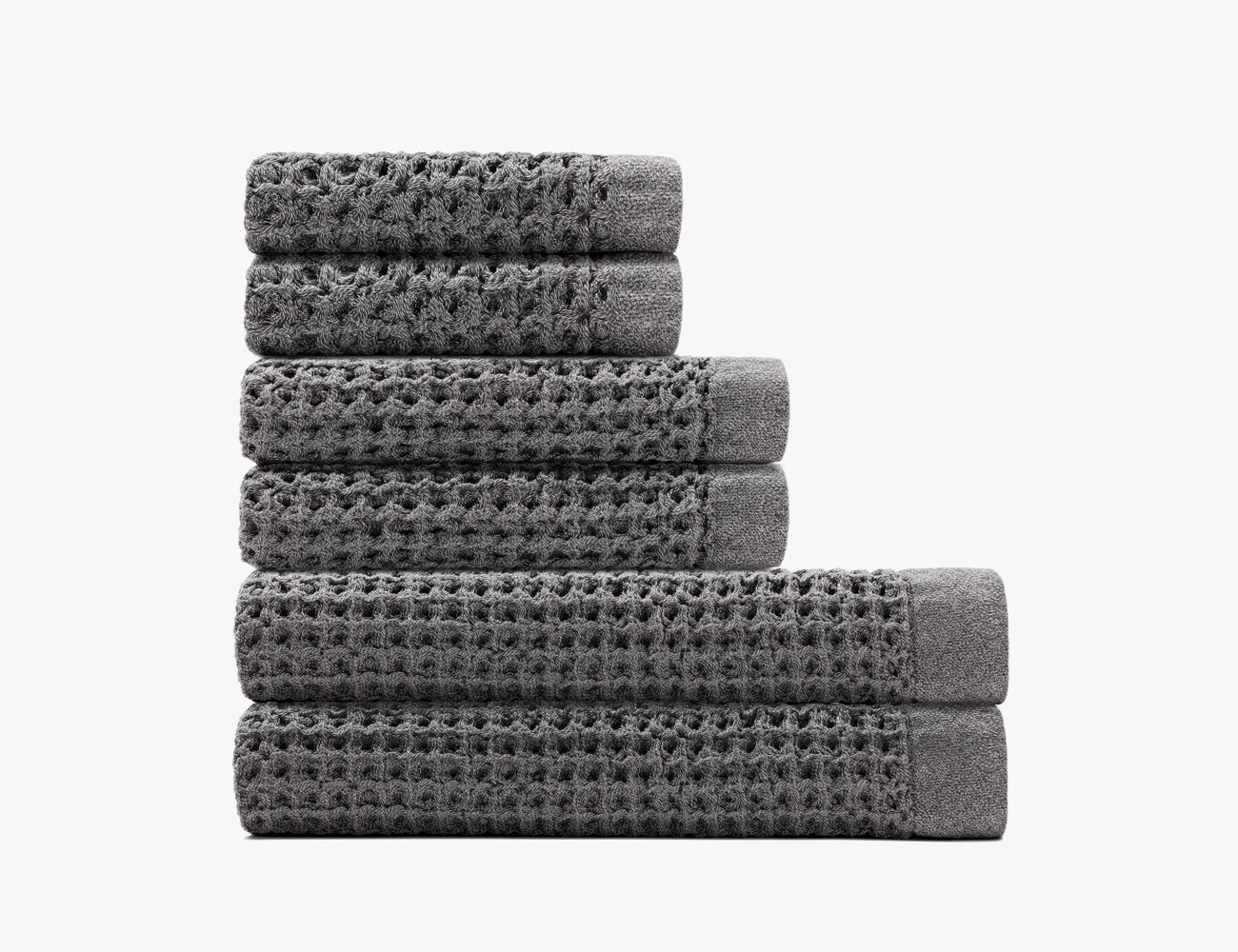
Onsen Bath Bundle Large Towel Set

Long-staple cotton is to thank for the weave on this waffle towel that’s equal parts airy and soft. Onsen’s bath towels dry you (and themselves) just as quick as any towel out there.

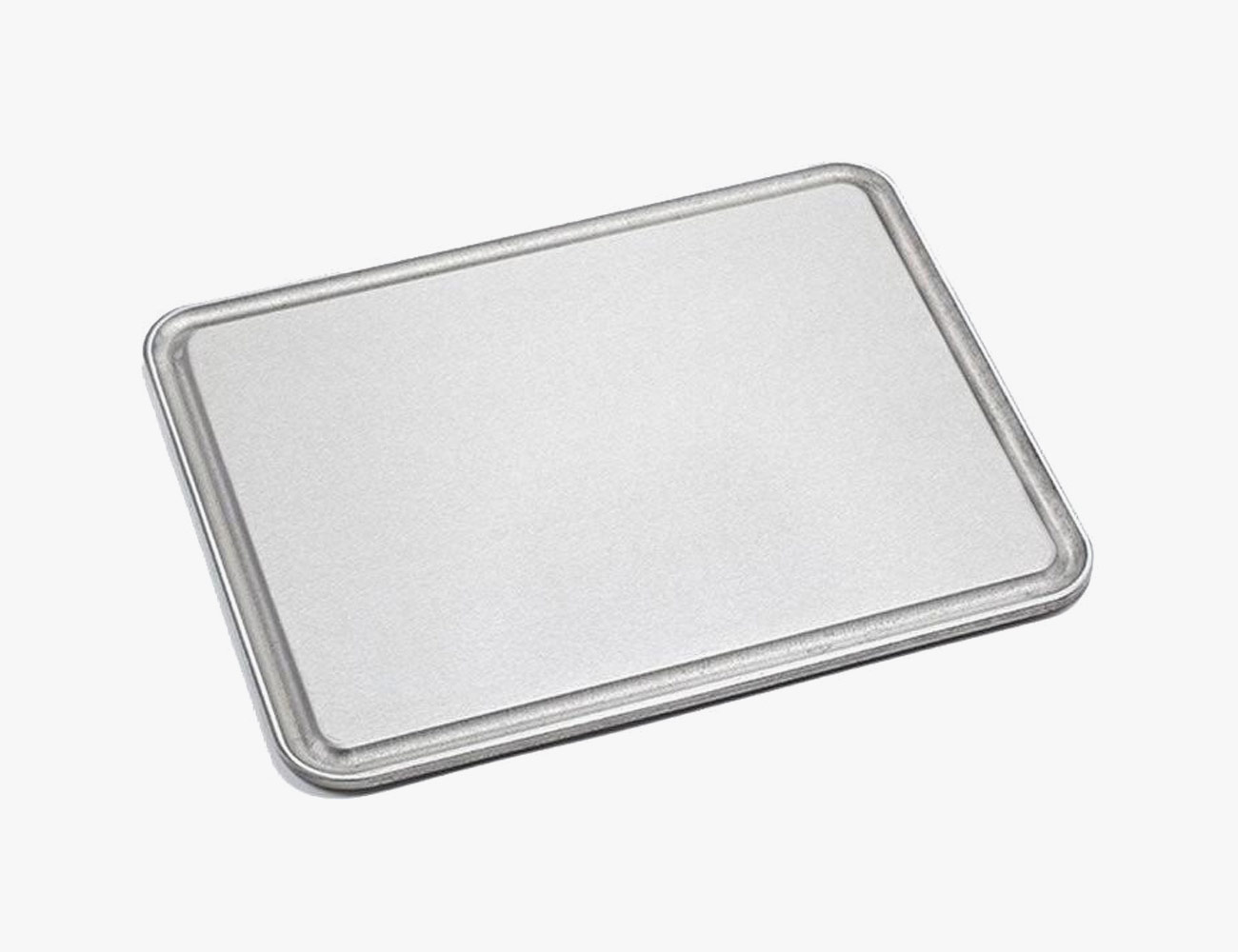
Baking Steel Double Burner Griddle

At nearly two feet long and more than 20 pounds, Maker’s double burning griddle is not for the compact kitchen. It is, however, for the couple who remedies a night of celebration with all the pancakes and bacon a crowd could eat.

Parachute Linen Sheet Set

Why linen sheets? They’ll last you longer, become softer over time and keep you cooler than any other bedding material. Parachute provides a great color selection on sheets that are garment-dyed, so every set it makes is ever so slightly unique.

Snowe Four-Piece Table Settings

Limoges porcelain is sourced from Portugal and made in France. This 16-piece set of dinnerware collection is lightweight and anti-fuss, fired at extreme heats to increase durability.

Sonos One

The Sonos One is a compact bluetooth speaker that’s simply a head above the crowd around it. It’s voice-enabled and has no restrictions on what apps you use to stream music.

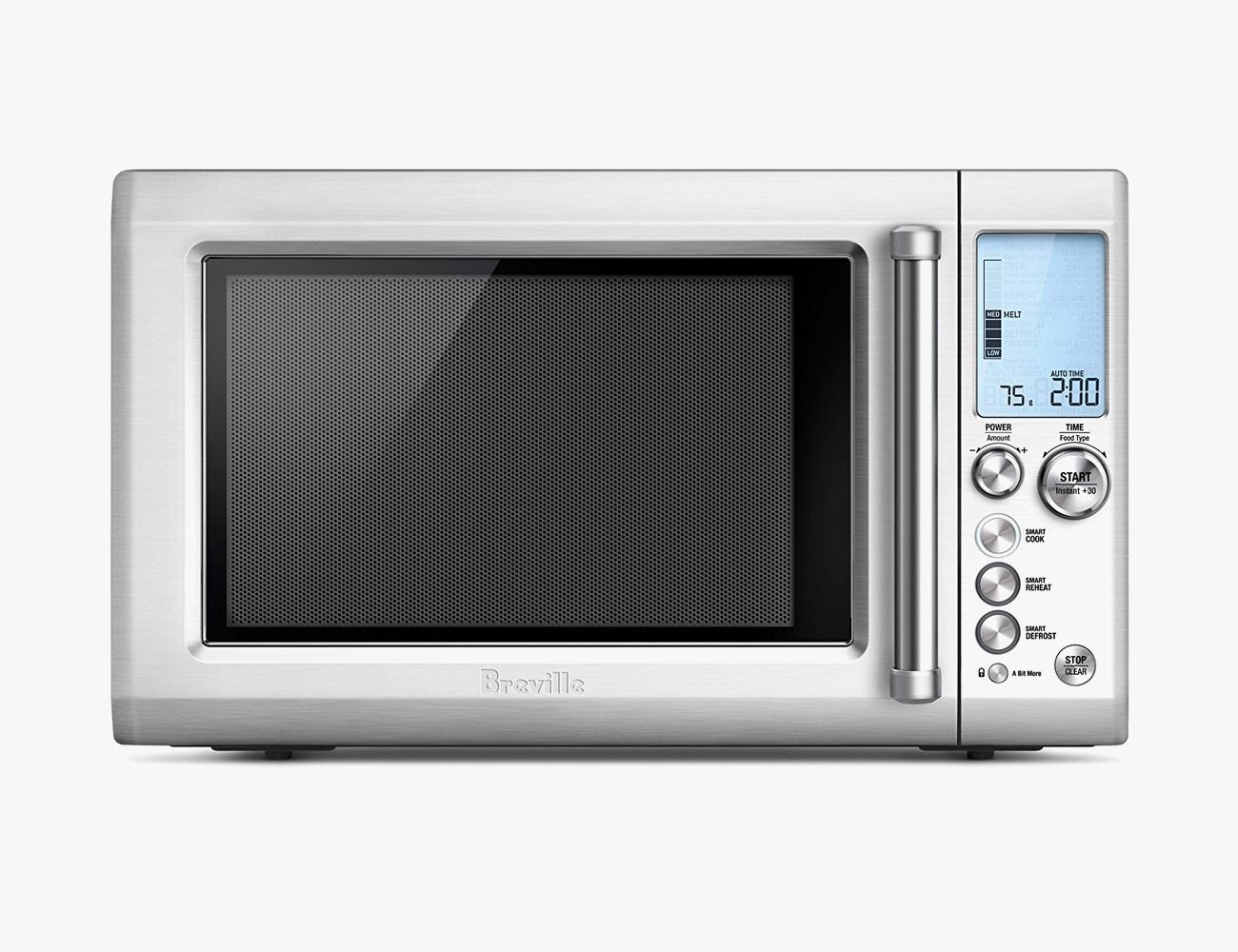
Breville Quick Touch Microwave

A dial adjusts the power level inside Breville’s Quick Touch microwave — or, leave it to the Sensor IQ system to weigh the food you’re reheating or cooking to automatically adjust cooktime and power level.

Nest Learning Third Generation Thermostat

A self-programming thermostat is the least threatening version of learning AI. Nest’s thermostat takes digital notes of your preferred temperatures during the day and reprograms itself based on that infomartion. Of course, you can take over and change it from anywhere through your smartphone.

Made In Starter Pack

Made In blends the low prices of a direct-to-consumer model with the reliability of a company that’s been run for decades. Its stainless steel cookware starter kit is made from premium, five-ply steel that’s fast to heat, and both oven- and dishwasher-safe.

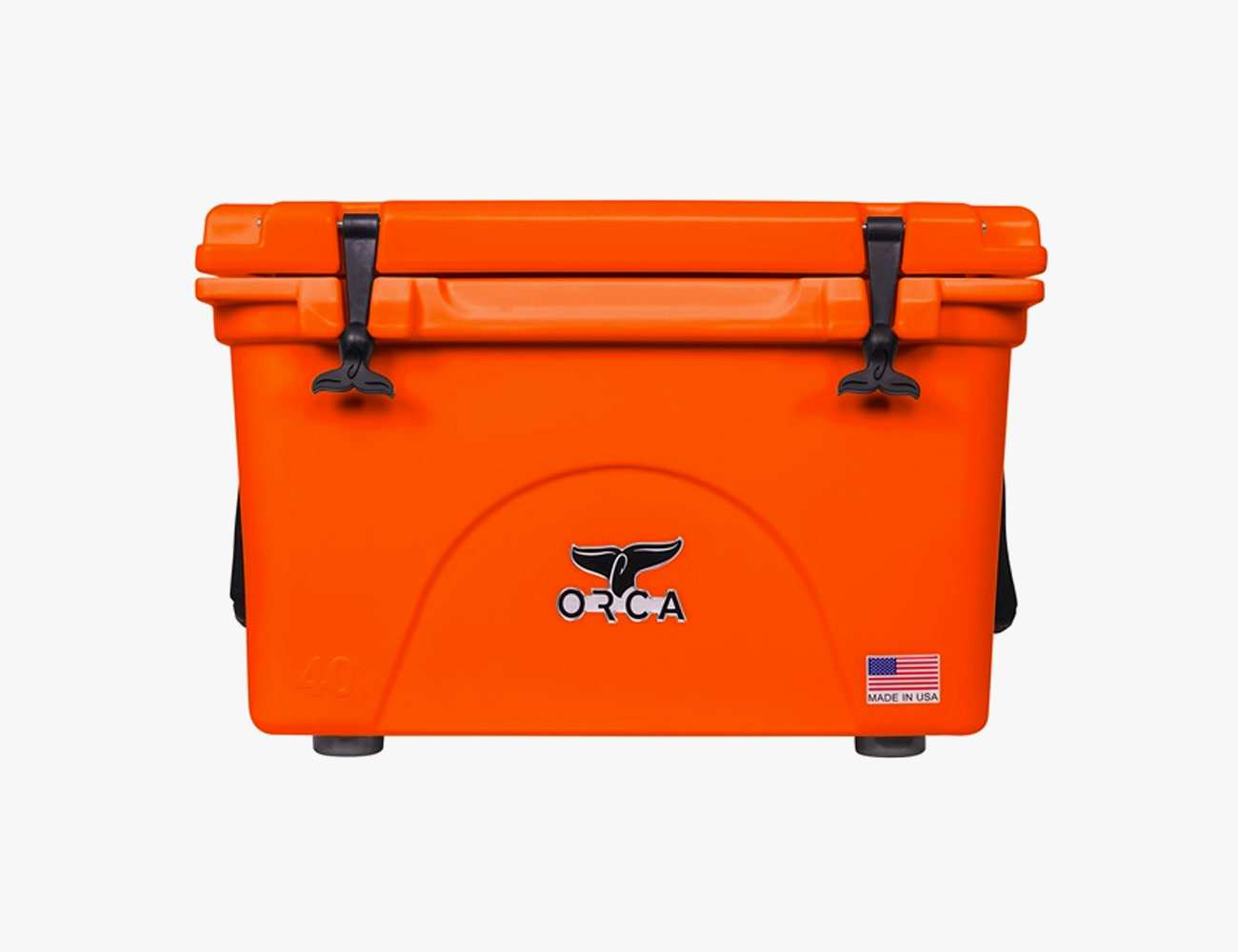
Orca 40-Quart Cooler

You can’t spend all your time indoors. Orca’s 40-quart, supremely insulated hauling cooler is the perfect third wheel for an outdoors trip.

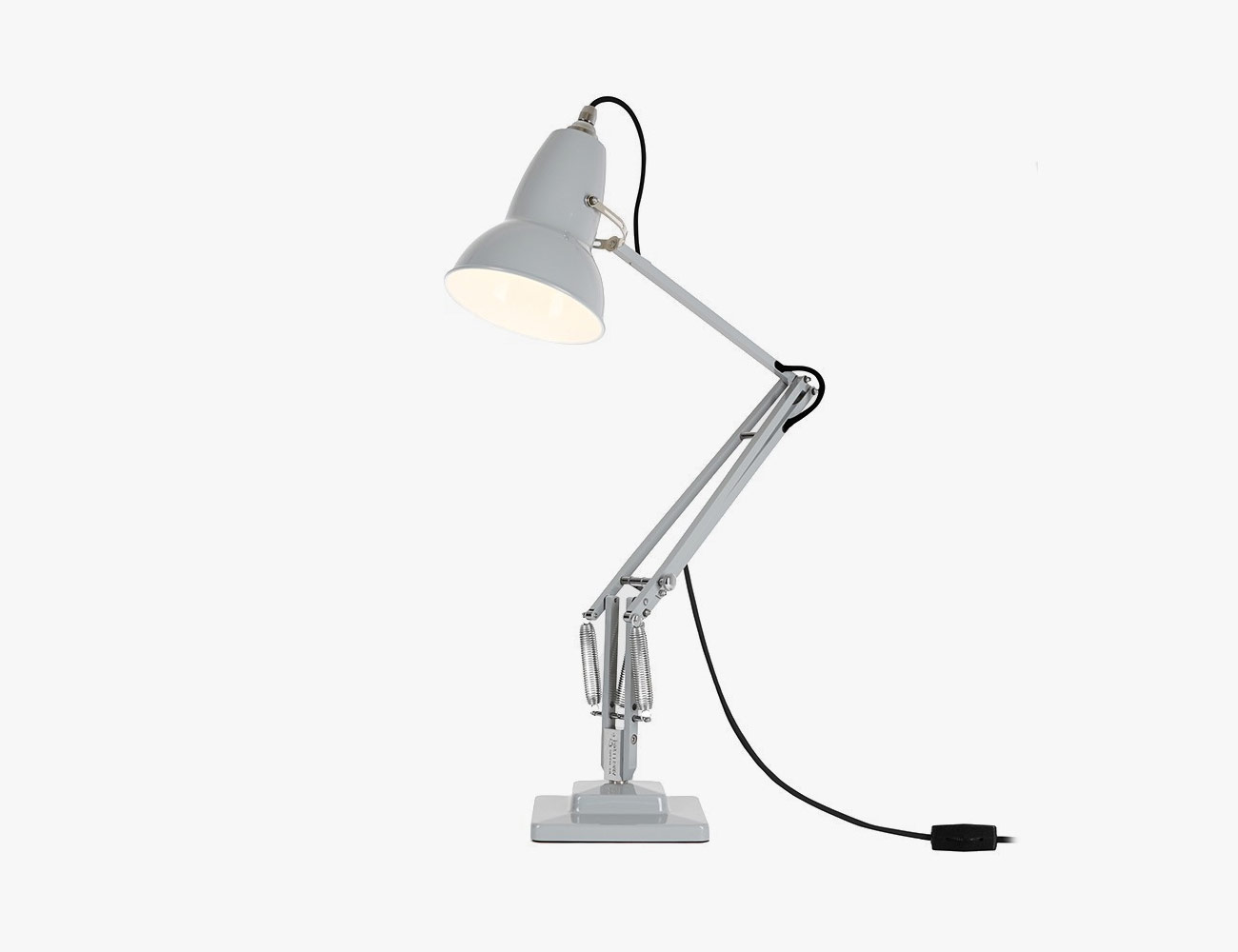
Anglepoise Original 1227 Desk Lamp in Dove Grey

This lamp’s bonafides span nearly a century. Designed in 1935, Anglepoise’s original desk lamp is heavyset, flexible and balanced.

Lighthouse AI Smart Security Home Camera

An AI security camera that can tell the difference between shadows, pets, your children, you and … strangers. You can set it up to send you as much or as little information as you want, from when someone walks up to your front door to a full recounting of what your dog did all day.

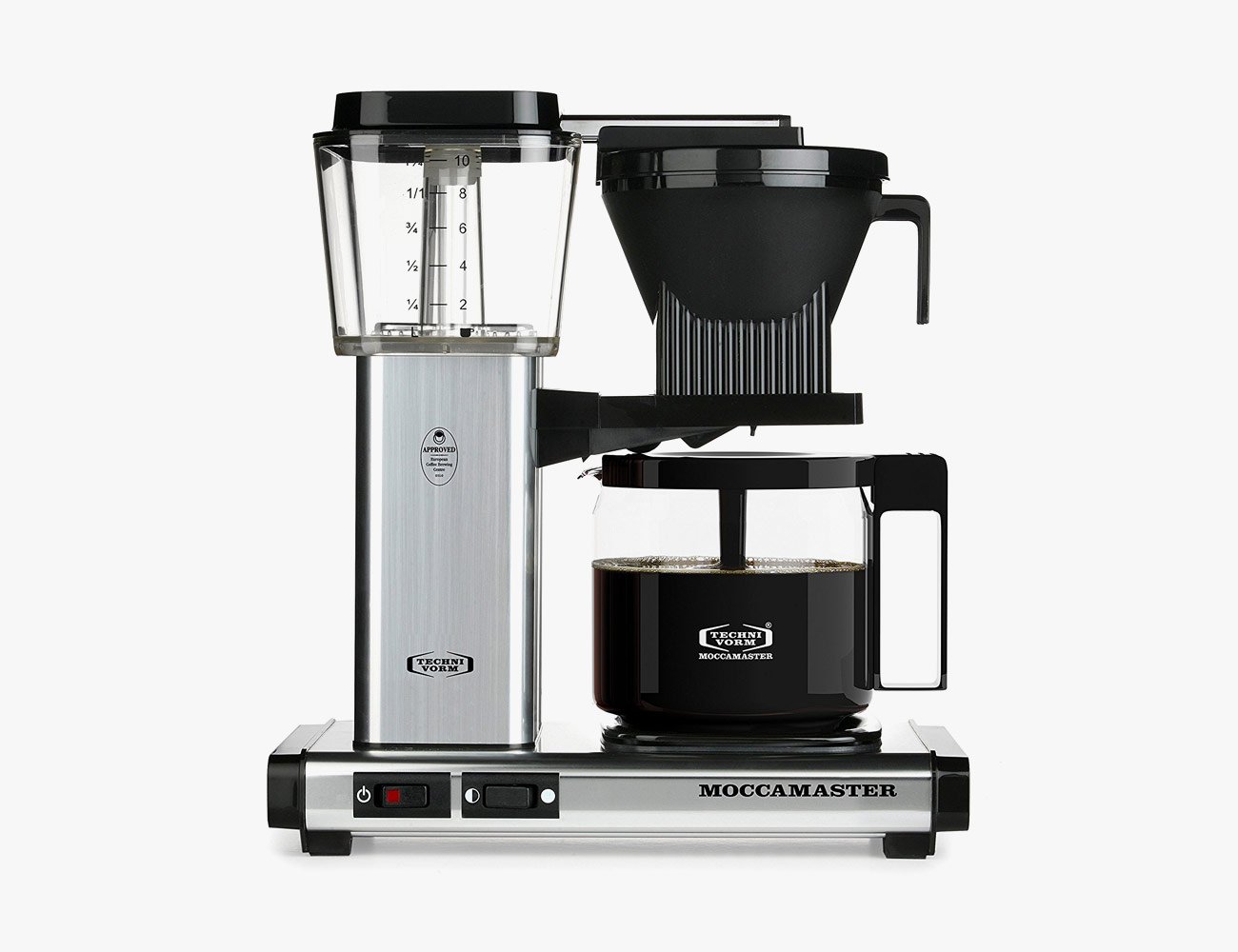
Technivorm Moccamaster 59616 KBG Coffee Maker

Technivorm’s home coffee brewer is among a tiny, elite group of coffee makers to be certified by the rigorous standards of the SCAA of Europe and America. It uses a proprietary copper heating technique to make absurdly precisely heated water far quicker than your typical brewer.

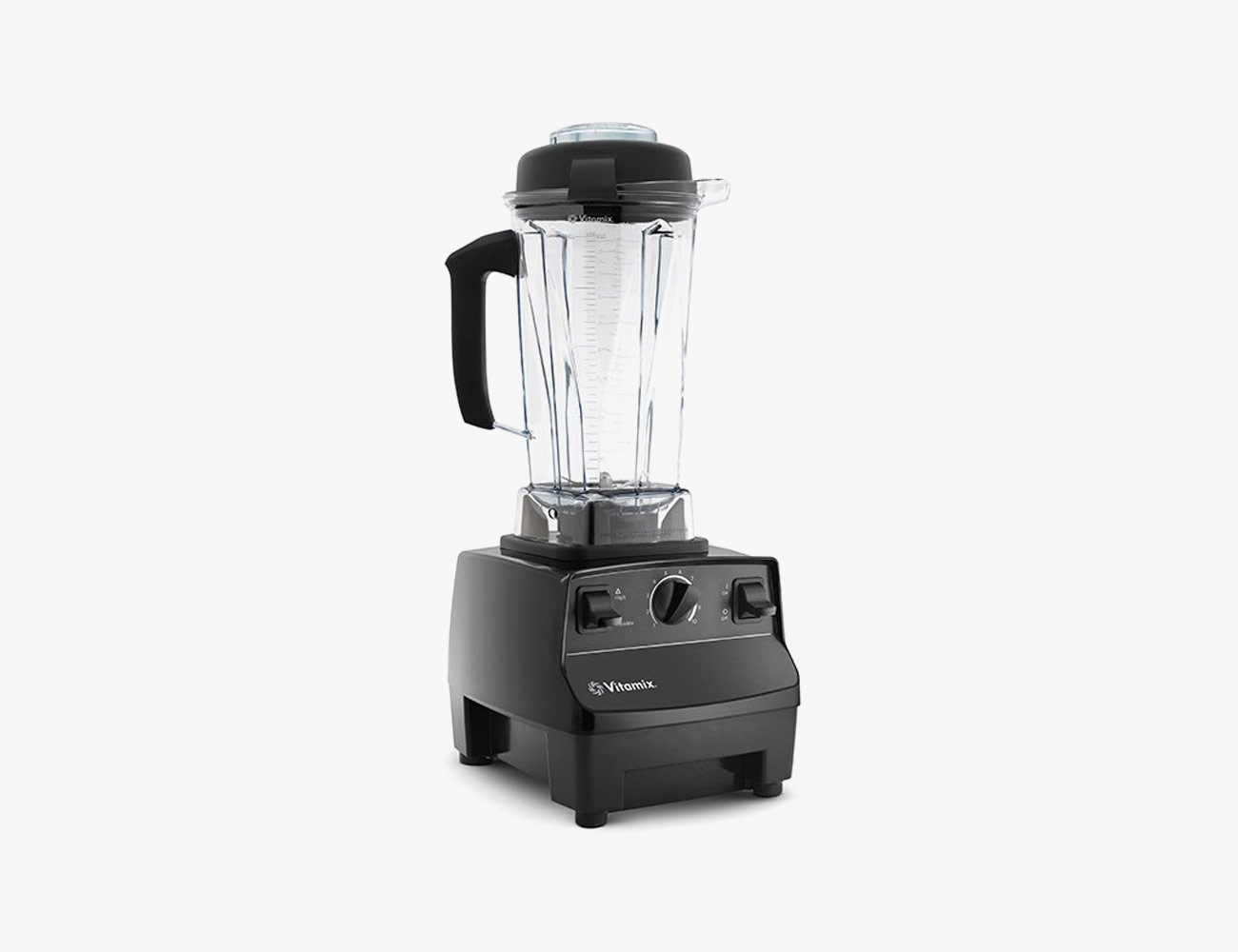
Vitamix 5200 Blender

The Vitamix 5200 is not just a blender. The blades in the 64-ounce container are capable of spinning fast enough to create enough friction to heat and make soups, pulverize seeds and easily make your own peanut butter. And yes, it will make a smoothie smoother than any machine out there.

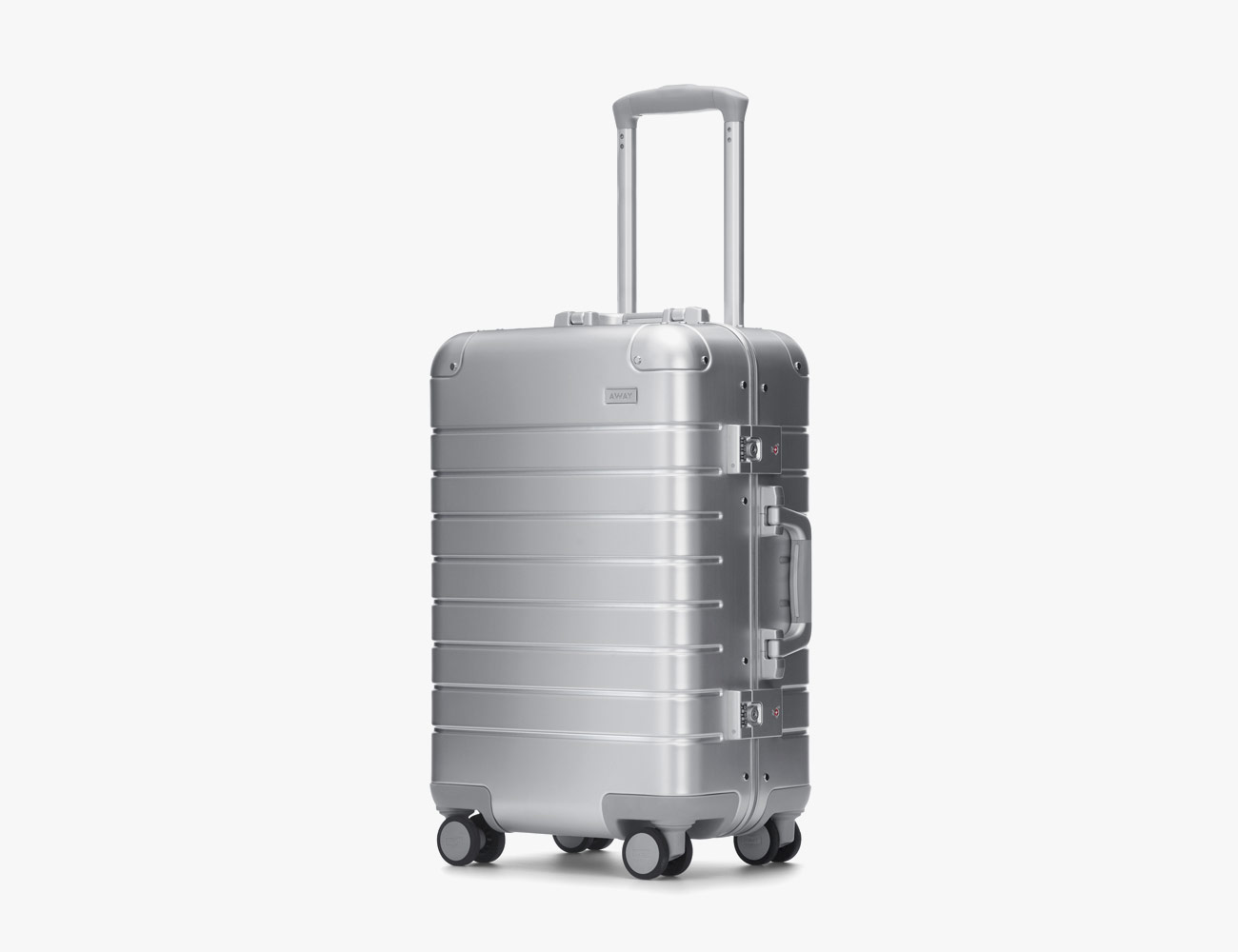
Away Carry-On: The Aluminum Edition

Away’s Aluminum carry-on is a game-changer. Where its competitors easily charge double, Away sells its new aluminum luggage at a price that’s less sweat-worthy.

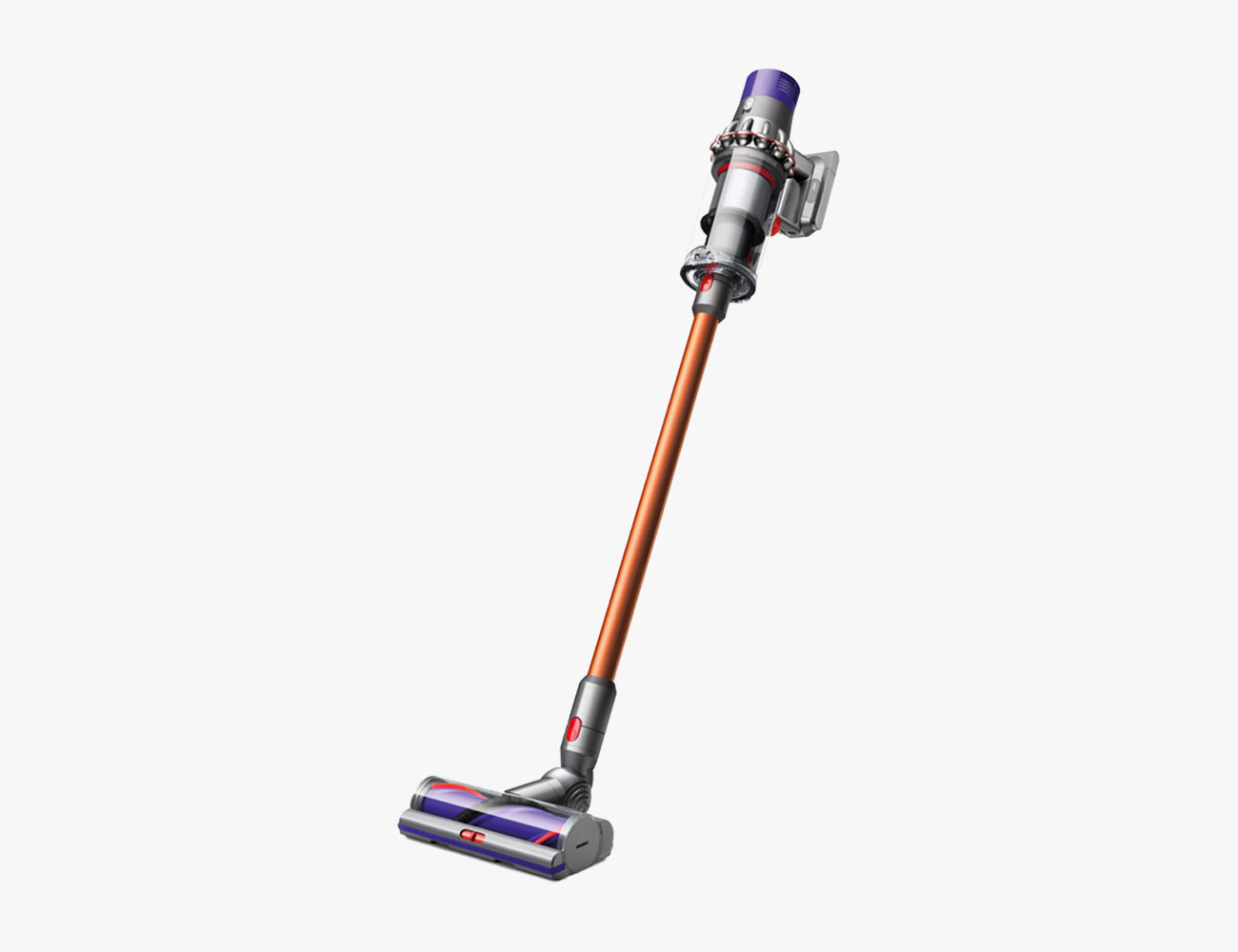
Dyson Cyclone V10 Vacuum

Pound-for-pound, this is easily the most powerful Dyson ever made. And the kicker? It’s a cordless handheld. The V10 Absolute weighs six pounds and comes with enough vacuum heads to clean every surface your home throws at it.

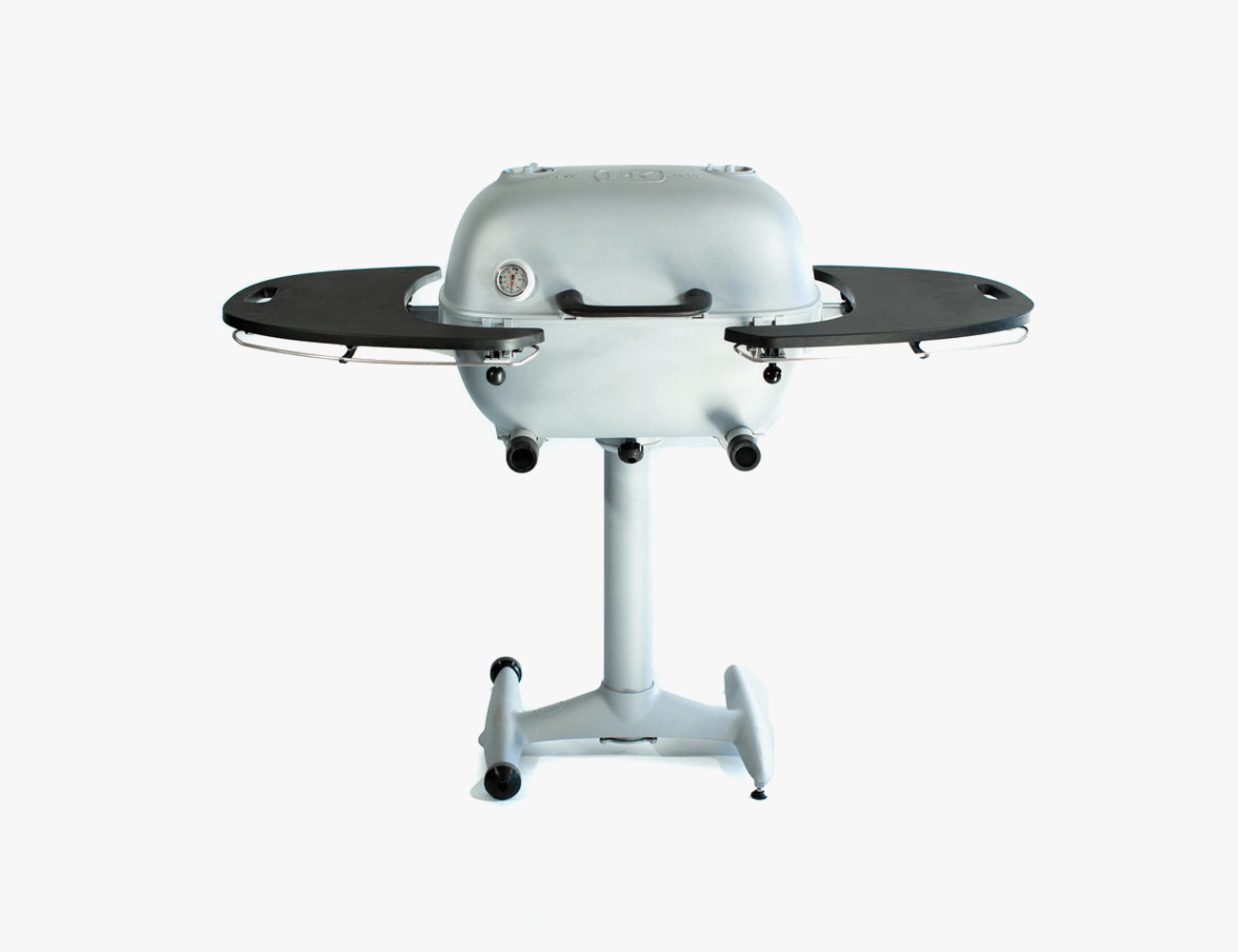
PK360 Grill and Smoker

Made from a single piece of heavy, rust-proof cast aluminum and sporting all Marine grade stainless steel racks and kit pieces, this charcoal cooking grill is a durable as it is functional.

The Best Rain Jackets of 2018

Last updated April 2018: We’ve added all-new picks for 2018 as well as two new sections designed to teach you how to re-waterproof a rain jacket and how to repair a rip. Prices and links have also been updated.

Editor’s Choice: BLACKYAK Gore-Tex C-Knit Jacket

I’ve waxed poetic about the quality, styling and innovation of BLACKYAK garments, so I’ll save you all here and just say that this is a damn good jacket. Every detail was scrutinized over, from the chest pockets integrated into a fold, to the stretch Gore-Tex panels on the shoulders to allow for a wide range of motion. Even the hood cinch, such a simple, seemingly meaningless feature, is impeccably designed and is the finest I’ve used on any jacket. To round out the jacket’s functionality, pit zips, a cinch-able waist gaiter and a two-way main zipper are added.

You may have noticed that I’ve yet to mention the jacket’s waterproofing, and that’s because a great rain jacket should work. You shouldn’t realize that it’s working. You shouldn’t notice it at all. The BLACKYAK is near-invisible in its waterproofing capabilities. AJ Powell

Weight: 14 ounces
Membrane/Laminate: Gore-Tex C-Knit
Shell Material: Nylon


Introduction

We live in a Golden Age of water-repellency; before nylon shells and Gore-Tex membranes humans devised hydrophobic clothing using vinyl, oiled canvas and before that, cured seal and whale intestines. Now, (thankfully) waterproofing happens at a molecular level with advanced membranes that keep water droplets out but let body vapor (think sweat) through. The advancements have allowed rain jackets to become lighter, more breathable, packable and no less rain-proof. Rain jacket technology keeps getting better too — today, companies are experimenting with new fabrics to make rain shells softer and more comfortable and adding stretch for increased mobility (and less of that trademark crinkly jacket sound). Style hasn’t fallen by the wayside either. The new class of rain jacket is light enough, durable enough, breathable enough and waterproof enough to handle multi-day treks through misting rain and as well as the inevitable deluge during commuting hours.

Additional contributions by Tanner Bowden, AJ Powell and Meg Lappe.

What to Know Before You Buy a Rain Jacket

About Rain Jacket Materials

The outer textile of most three-layer shells is made of a rugged nylon or polyester that’s coated with Durable Water Repellent (DWR). The inner membrane is a microporous fabric, typically made of ePTFE or Polyurethane that acts as the shell’s primary waterproof and breathable layer. It’s the secret sauce. The backer textile is a thin layer, usually gauze, that’s laminated to the back of the membrane, which eliminates the need for a liner.

While the waterproof and breathable technologies are all generally related in the way they function, several brands have proprietary technologies, among them Gore-Tex, NeoShell, eVent, Schoeller and Dermizax NX. Discerning one technology from another can be difficult, in part because the technology is kept under lock and key, but also because the technology requires an understanding of terms like “phase change” and how things work on a molecular level.

DWR Explained

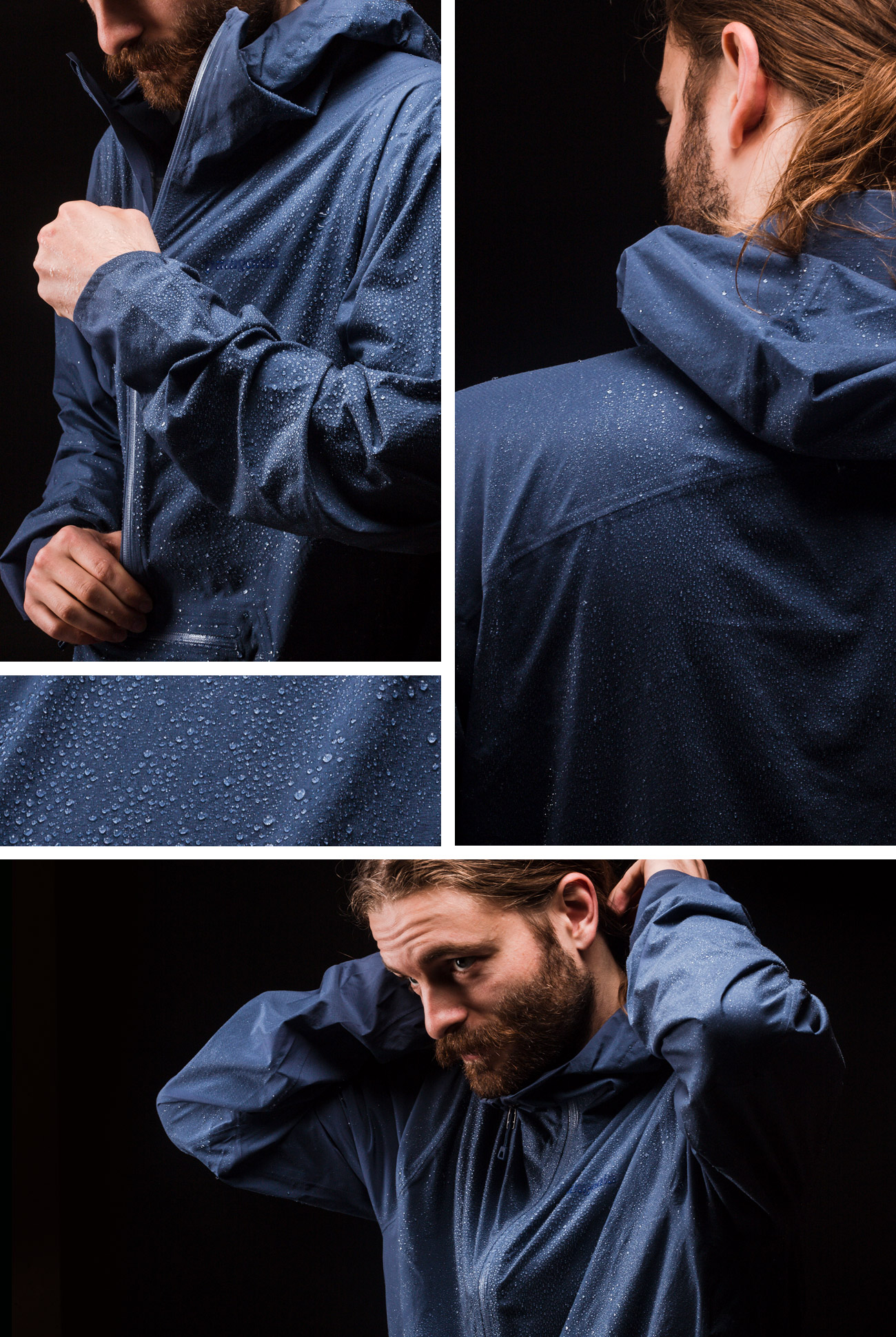
When you’re buying a rain jacket or any outerwear for that matter, you’ll often come across the initials DWR, which stand for durable water repellent. DWR is a coating applied to fabrics that lets them shed fluids, and they’re commonly used in conjunction with waterproof membranes. DWR works by making the surface of the exterior fabric spiky at a microscopic level, which forces water and other liquids into rounder, beaded forms. That helps them roll off the garment instead of saturating it. DWR isn’t permanent, but it can easily be revived.

The Best Rain Jackets of 2018

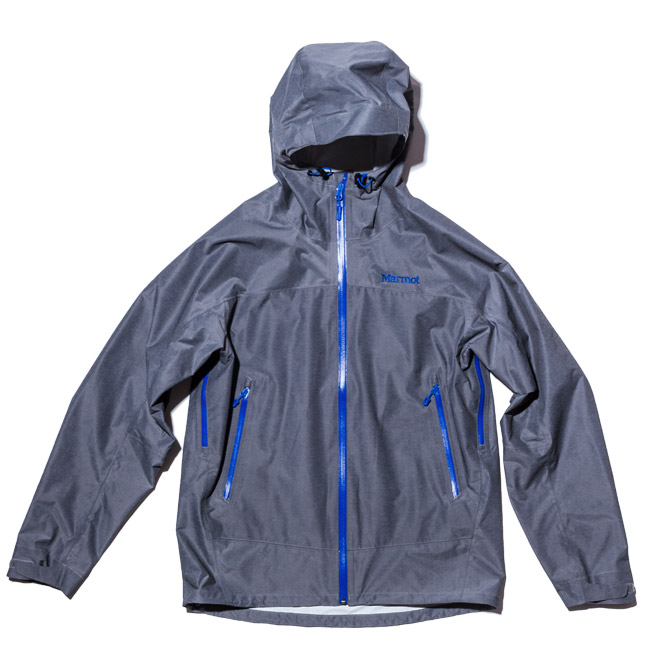
Best Waterproofing: Marmot Eclipse Jacket

The Eclipse Jacket is part of Marmot’s new EVODry Rainwear Collection, which uses a new environmentally-minded technology that Marmot developed in partnership with Green Theme International. All EVODry garments are constructed from upcycled industrial nylon waste, which minimizes waste while maintaining strength and longevity. Marmot and GTI also built in waterproofing by bonding the DWR to the yarn at the molecular level. That’s made EVODry jackets, the Eclipse included, highly waterproof and breathable. Furthermore, Marmot claims that the DWR will never deteriorate or require reapplication, which, if true, is a big leap forward in user-friendliness. We haven’t had enough time with the Eclipse to know if this is true, but the jacket is impressively water-resistant. It kept me dry through multiple storms this winter, and even when I try to force water past the DWR by rubbing it in with my finger, it remains resilient.

Beyond its built-in tech, the Eclipse is a solid, well-rounded rain jacket that’s built for the outdoors. Its two oversized hand pockets are high enough to go unimpeded while wearing a backpack hip belt, and their mesh interior helps them double as front-facing heat vents (there are also two zippered underarm vents). The Eclipse also has an adjustable hood and hem. Tanner Bowden

Weight: 13 ounces
Membrane/Laminate: MemBrain Eco 2.5 layer
Shell Material: 100% recycled nylon

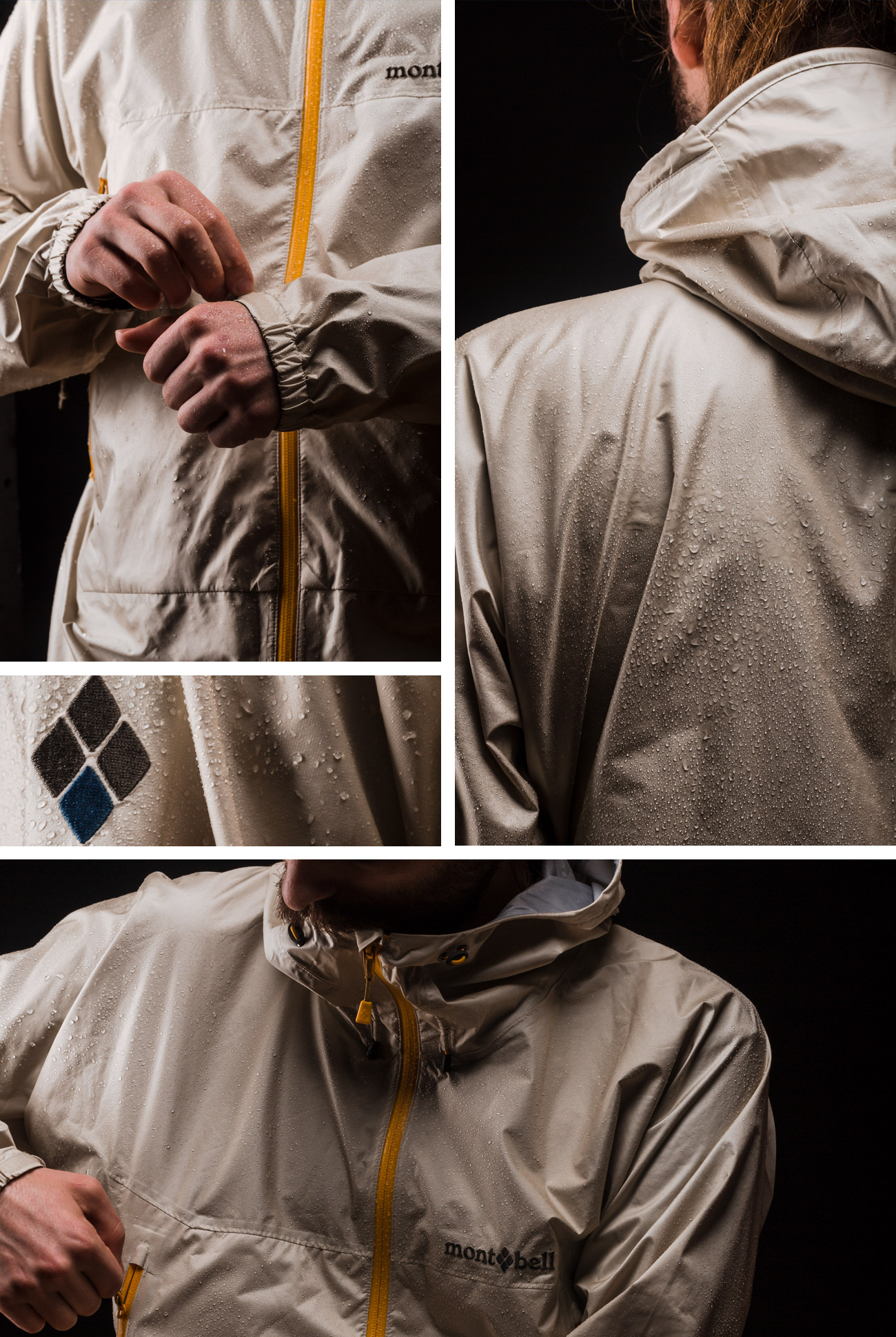
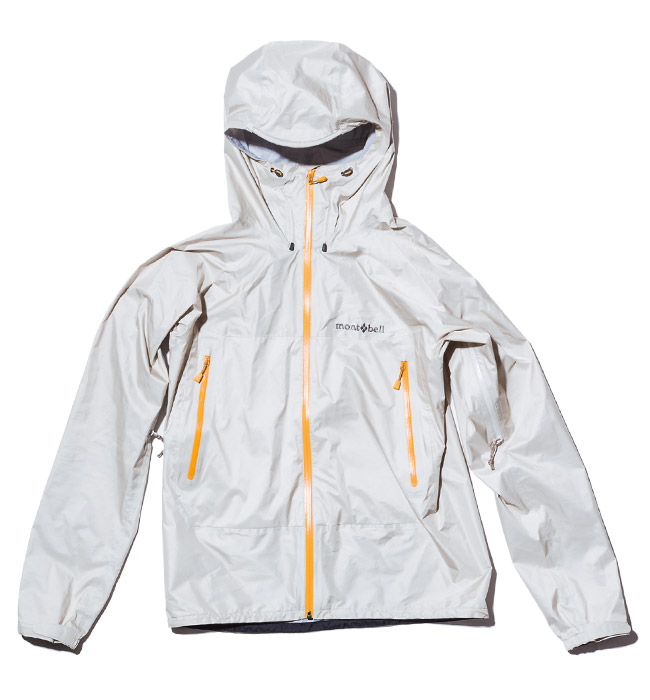
Best All-Around Rain Jacket: Montbell Rain Trekker Jacket

It’s rare that a jacket brings quality, performance and price to the table in such an elegant package, but staff-favorite Japanese brand Montbell managed to do just that. The Rain Trekker comes in at just $149, among the cheapest jackets on the list, yet performed among the top Editor’s Choice candidates. In keeping with the brand’s mission (ultralight gear for hikers), the Rain Trekker is among the lightest jackets on this list.

We’d be remiss if we didn’t also mention the color of the jacket, which is unique not only on this list, but also across the outdoor industry. Not quite white and not quite cream, the Off-White colorway is one of our favorites. AJ Powell

Weight: 10 ounces
Membrane/Laminate: Dry-Tec 3 layer
Shell Material: Nylon

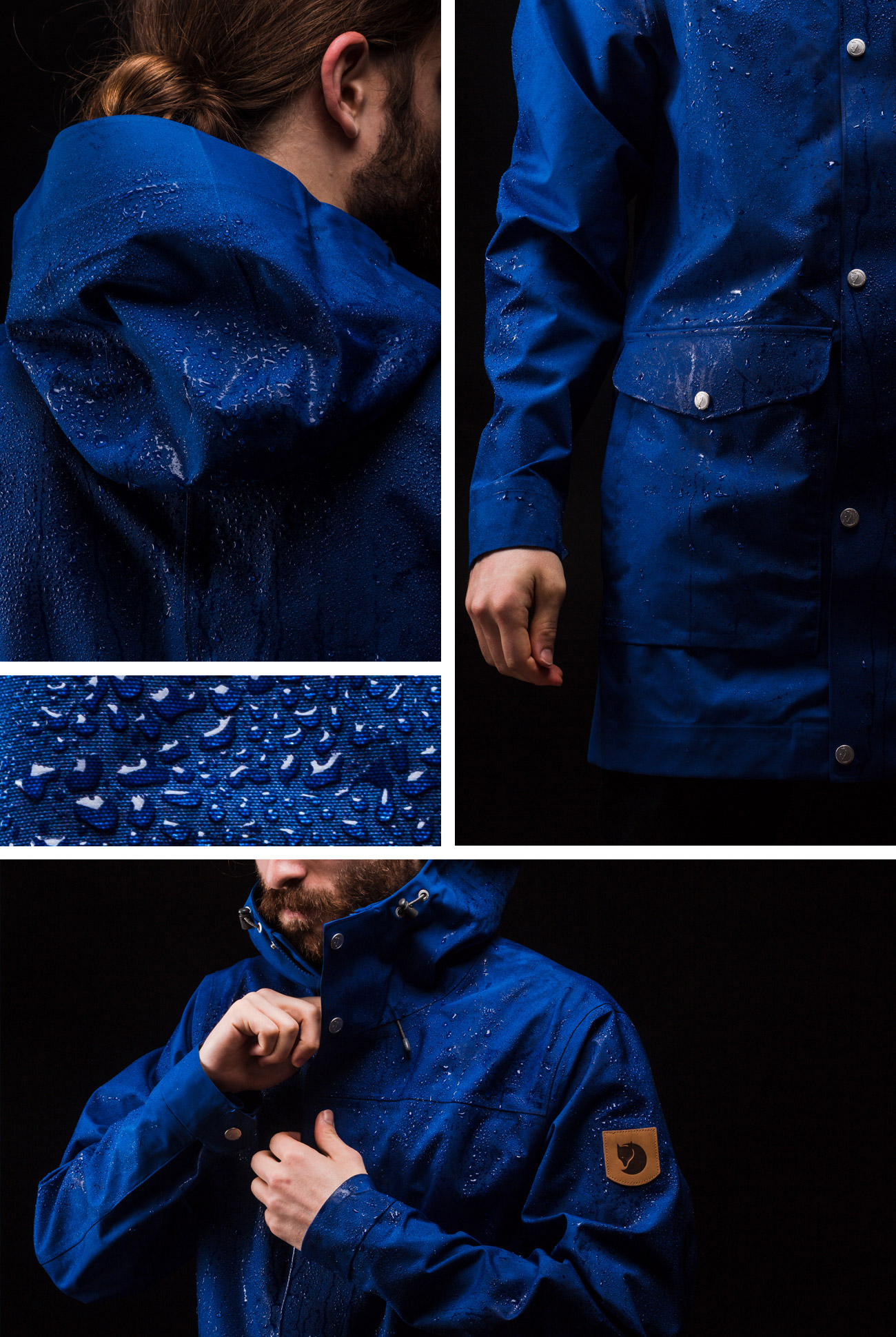
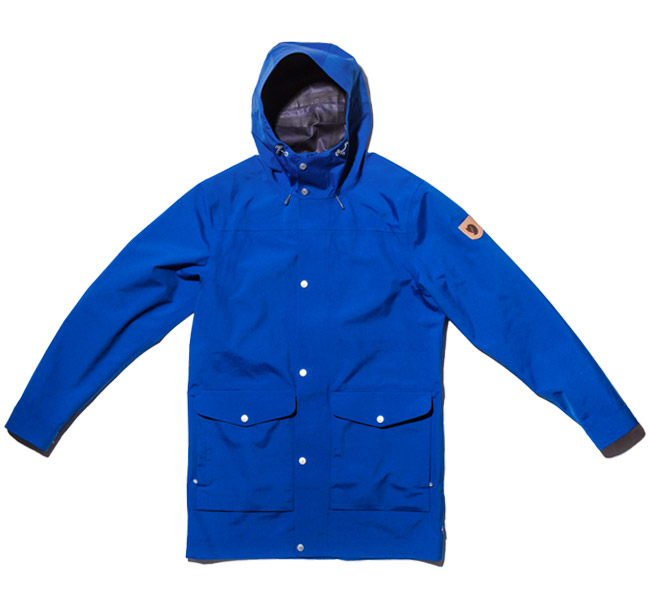
Most Stylish Rain Jacket: Fjällräven Greenland Eco Shell Jacket

It was an ill-equipped expedition to Greenland that led Åke Nordin to design the first Greenland Jacket in 1968. That jacket was made with Fjällräven’s G1000 material, which requires a bit of wax to become fully waterproof. The newly-updated Greenland Eco-Shell Jacket, however, does not. Fjällräven built it with its more-sustainable Eco-Shell fabric, which is the Swedish brand’s high performance waterproof and breathable shell. The material uses hydrophilic (water-loving) “corridors” within its membrane to transport moisture away from the body, while DWR keeps it from getting in on the outside. One of the benefits of this is that the material is less affected by dirt and oils that can clog and degrade other membranes.

The Greenland is cut like a heritage expedition coat — it’s long, with two oversized snap-flap front pockets — but it’s a style that isn’t out of place in towns and cities. The jacket’s two-way zipper helps to keep that longer cut functional by providing more freedom of movement (if you commute by bike, for instance, you can zip up the lower zipper to prevent the length from becoming restrictive). The Greenland is an outstanding everyday rain jacket for those who aren’t looking for a lighter, backpacking-specific style. Plus, it has lots of pockets, and that’s a good thing. Tanner Bowden

Weight: 27 ounces (size medium)
Waterproofing: PFC-free DWR
Shell Material: Polyester

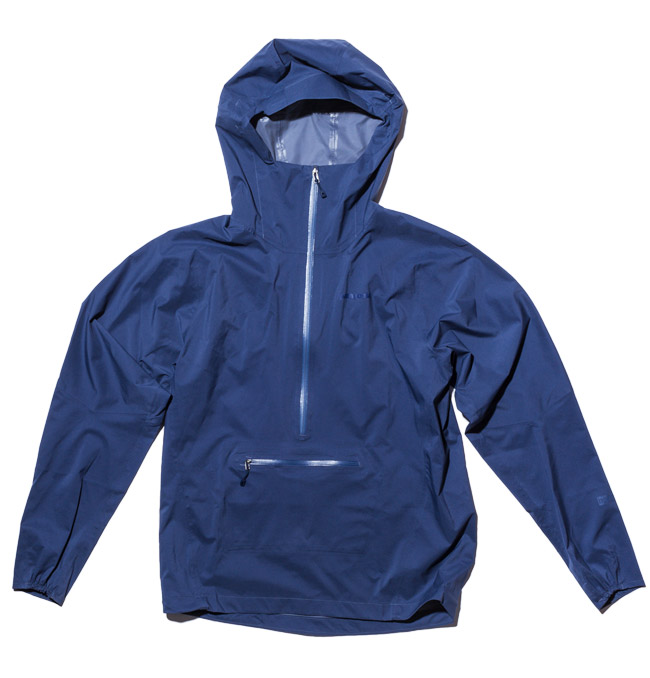
Best Ultralight Rain Jacket: Patagonia Stretch Rainshadow Pullover

Patagonia’s Torrentshell Jacket has garnered awards and sits at the top of many “Best Rain Jacket” lists, but the Stretch Rainshadow, available as both a full-zip and a pullover, is another exceptional storm-guard that weighs next to nothing. The Rainshadow is constructed with Patagonia’s proprietary H2No 2.5-layer waterproofing and 30-denier ripstop nylon. As its name implies, the jacket has a fair amount of stretch took, which is nice if you go for the pullover version. Its central zipper and kangaroo pocket are both sealed as well (and the latter doubles as a stuff sack for packing purposes). The hem cinches tight with an internal drawcord, and the hood is helmet-compatible. Another cool feature is the Rainshadow’s minimal cuffs, which don’t use velcro but instead expand with a short length of elastic. All of these small but useful features add up to an insubstantial seven ounces.

I wore the Stretch Rainshadow Pullover during one of New York’s March Nor’easters, and the jacket kept me dry on a longer-than-desired walk through Brooklyn, even as snow accumulated on its surface. Tanner Bowden

Weight: 7 ounces
Membrane/Laminate: 2.5-layer H2No Performance Standard (DWR plus a membrane)
Shell Material: Nylon

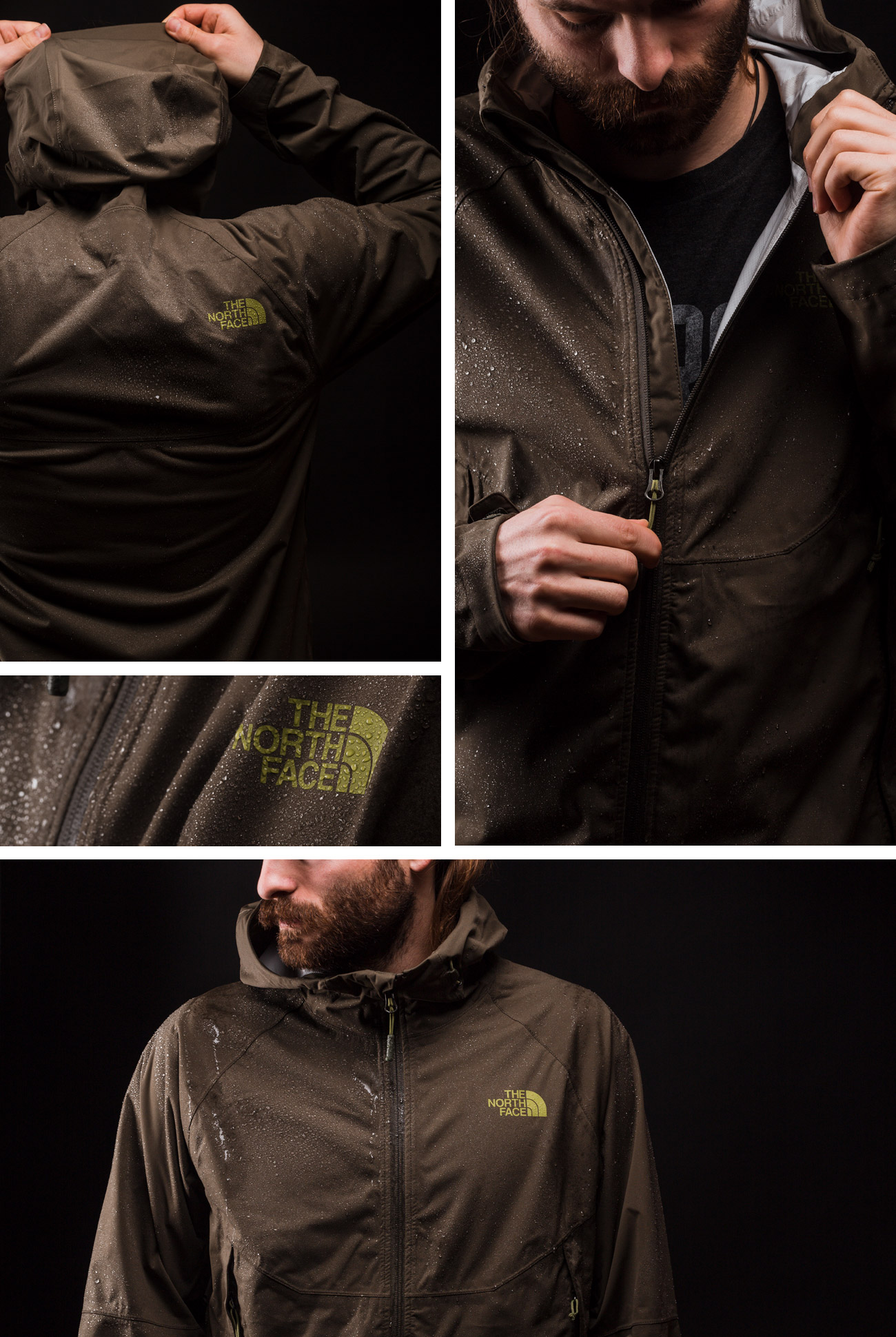
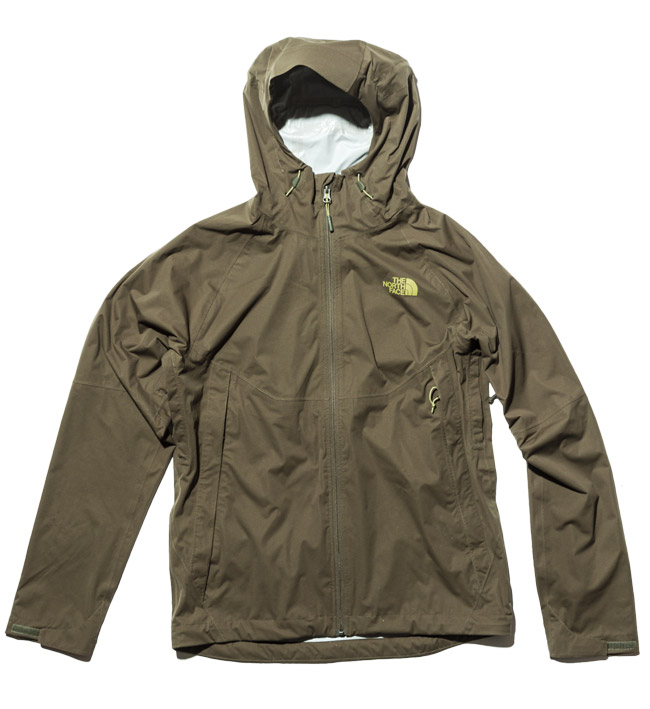
Stretchiest Rain Jacket: The North Face Allproof Stretch Jacket

Stretchy waterproof fabrics are one of the big themes for rain jackets in 2018, and The North Face’s Allproof Stretch wins the prize, easily, for the stretchiest available. Imagine the stretchiness of a balloon, and you’ve got the Allproof. In fact, while the jacket’s exterior is soft brushed nylon, its interior even feels like a balloon. At first, that rubbery texture felt off-putting (it lines the insides of the two hand pockets), but it was a notion that faded the more I wore the coat around town, and well worth it for the amount of stretch the jacket provides. That material also makes the rain jacket slightly less breathable than some of the others on this list, but it is equipped with underarm vents to help shed heat. The Allproof, made with The North Face’s DryVent 2.5-layer seam-sealed fabric, is as waterproof as any on this list and tends toward the lighter and more packable side of the weight spectrum. Tanner Bowden

Weight: 10 ounces
Membrane/Laminate: DryVent 2.5 layer
Shell Material: Polyester

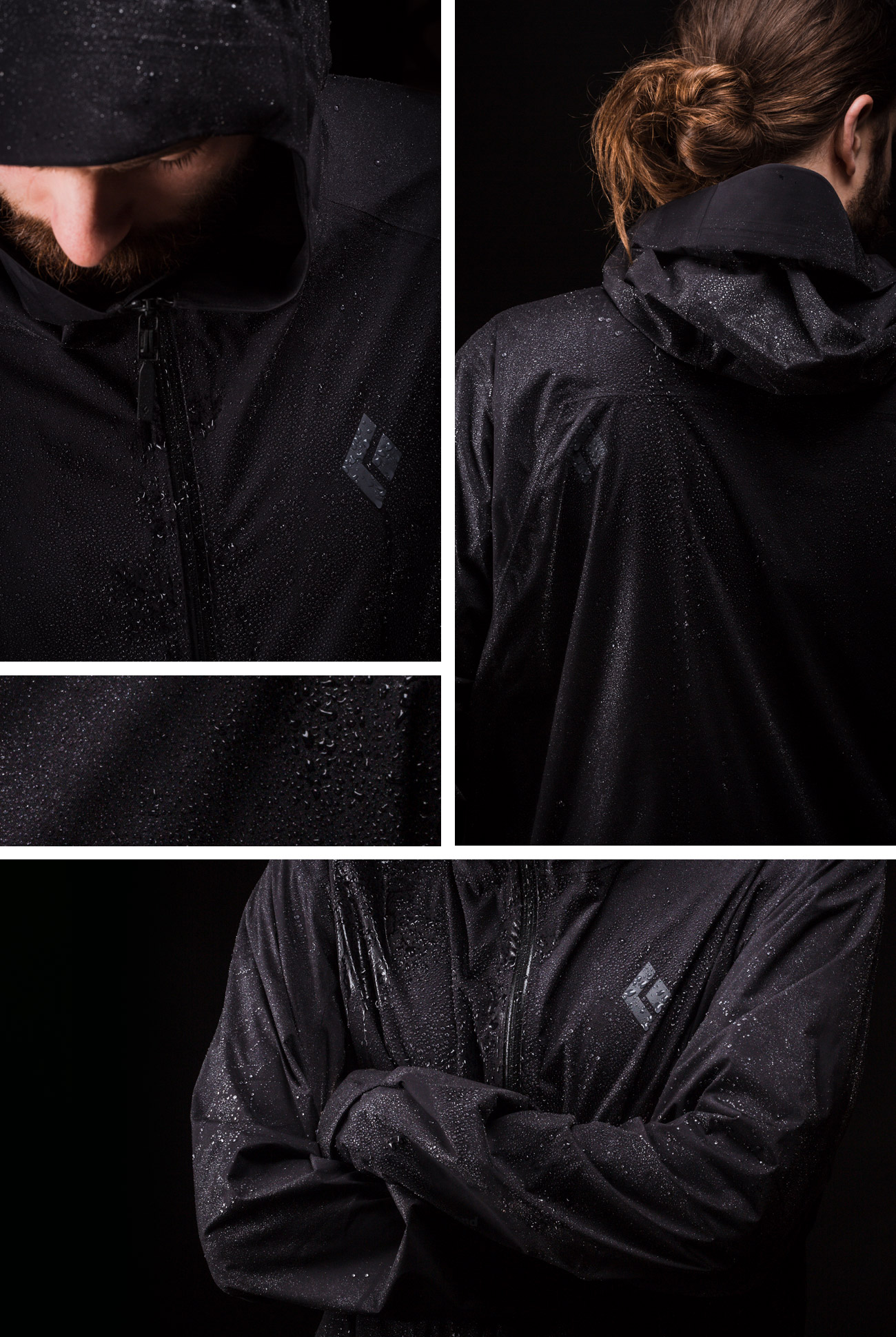
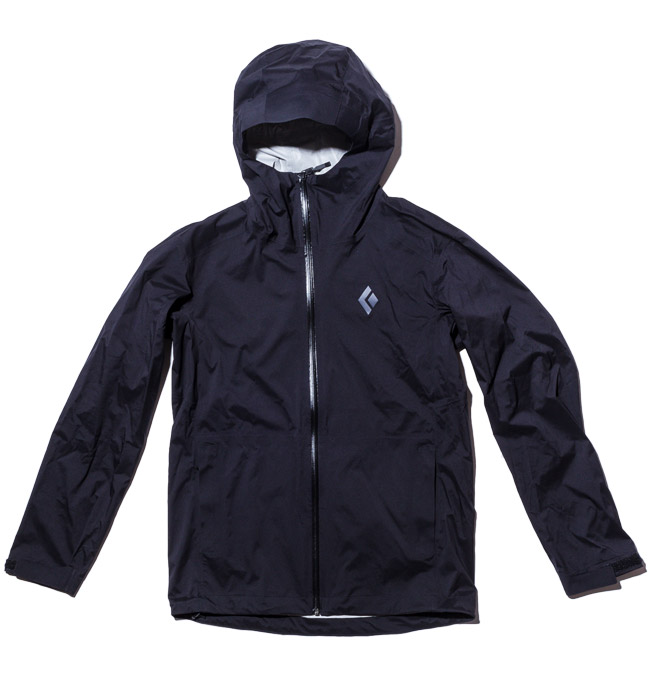
Most Affordable Stretch Rain Jacket: Black Diamond Stormline Stretch Rain Shell

Stretch is one of the biggest trends in outdoor rain jackets at the moment, and it’s easy to write that off as a feature only available on jackets at the upper end of the price spectrum. The Black Diamond Stormline Stretch shatters those preconceived notions. It’s impossibly stretchy, still offers 100-percent waterproofing that you’d expect in a high-end rain jacket and comes in at a price of just $149. Basically, bring your lunch to work for a week and you’ve paid off your jacket no problem.

But beyond price, Black Diamond brings some serious performance to the table with its BD.Dry waterproof breathable membrane. It beads water on par with more expensive jackets on this list, and while other features beyond stretch are sparse, you get far more than you pay for.

Weight: 11 ounces
Membrane/Laminate: BD.Dry 2.5 layer
Shell Material: 88% nylon, 12% elastane

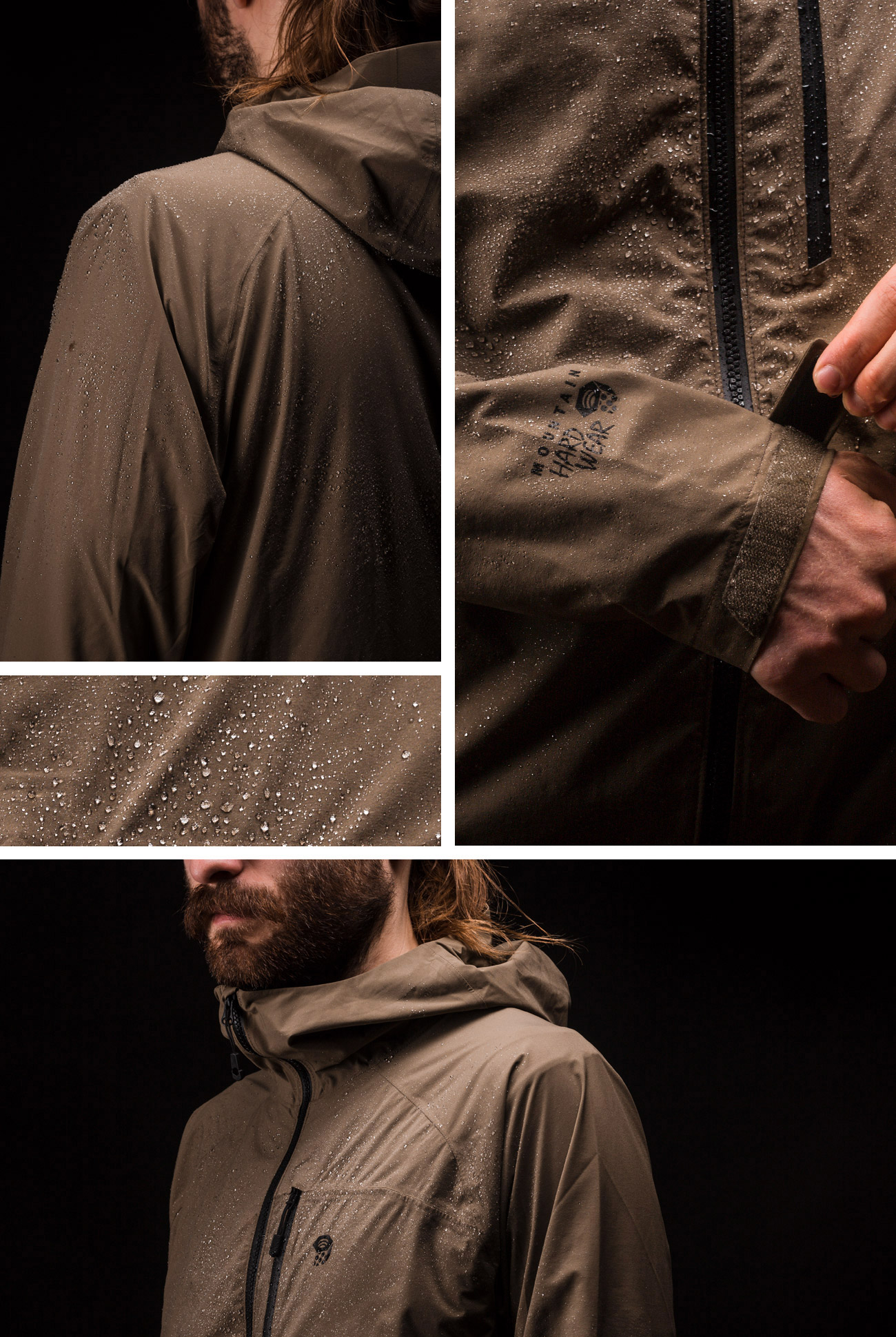
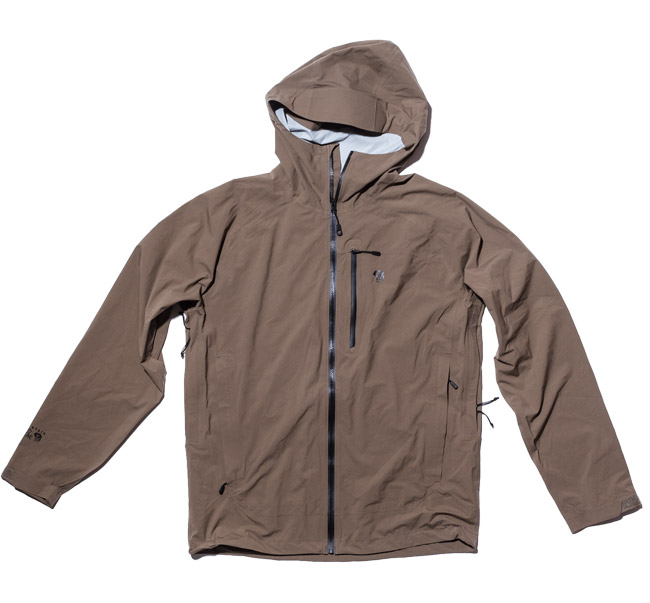
Best Rain Jacket for Hiking: Mountain Hardwear Stretch Ozonic Jacket

Like many of the jackets to make our list this year, Mountain Hardwear’s Stretch Ozonic Jacket is constructed with a stretchy and lightweight fabric that’s very unlike the unyielding rain slickers of yore. Also not characteristic of those older jackets is the Stretch Ozonic’s breathability. Mountain Hardwear employed its proprietary Dry.Q Active fabric, originally designed for aerobic activities like running, which makes the Stretch Ozonic ideal for hiking too.

The Stretch Ozonic is packed with vents. There are two large zippers under each arm that open wide, and the two hand pockets are lined with mesh on the interior and can be left open to allow additional heat to escape. The chest pocket is built in the same way. All of these features make this one of the most breathable jackets that we tested, and a weight of only 11 ounces keeps the Stretch Ozonic lightweight and very packable for longer trips and sustained overnights. Tanner Bowden

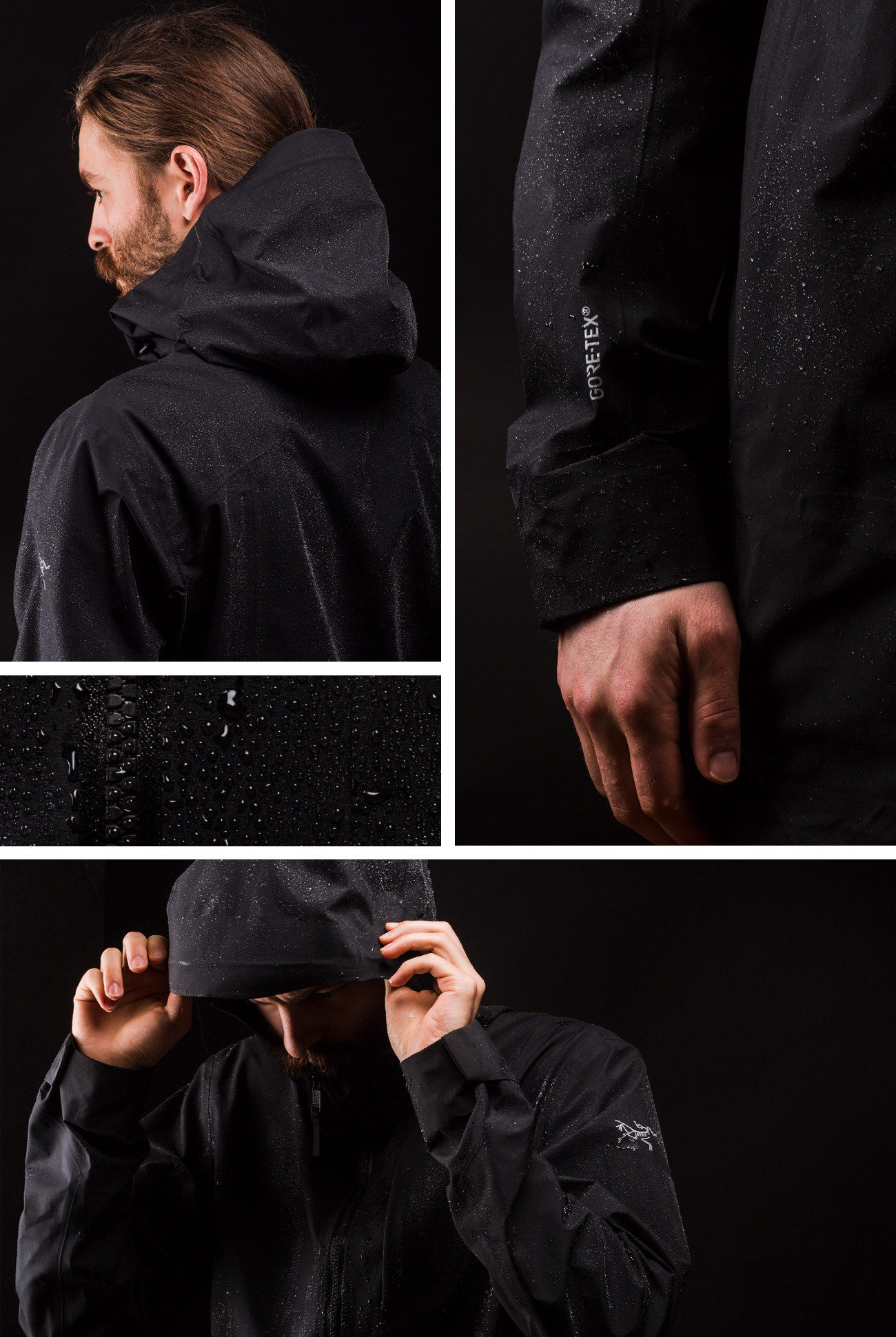
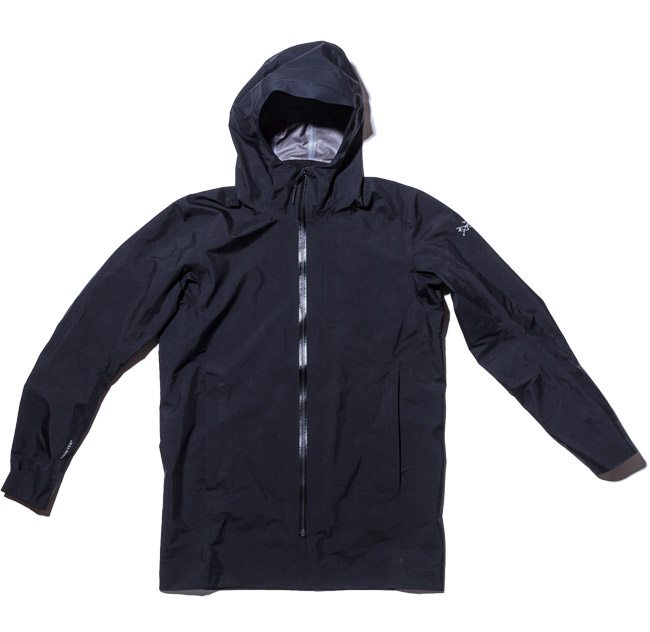
Best Urban Rain Jacket: Arc’teryx Sawyer Coat

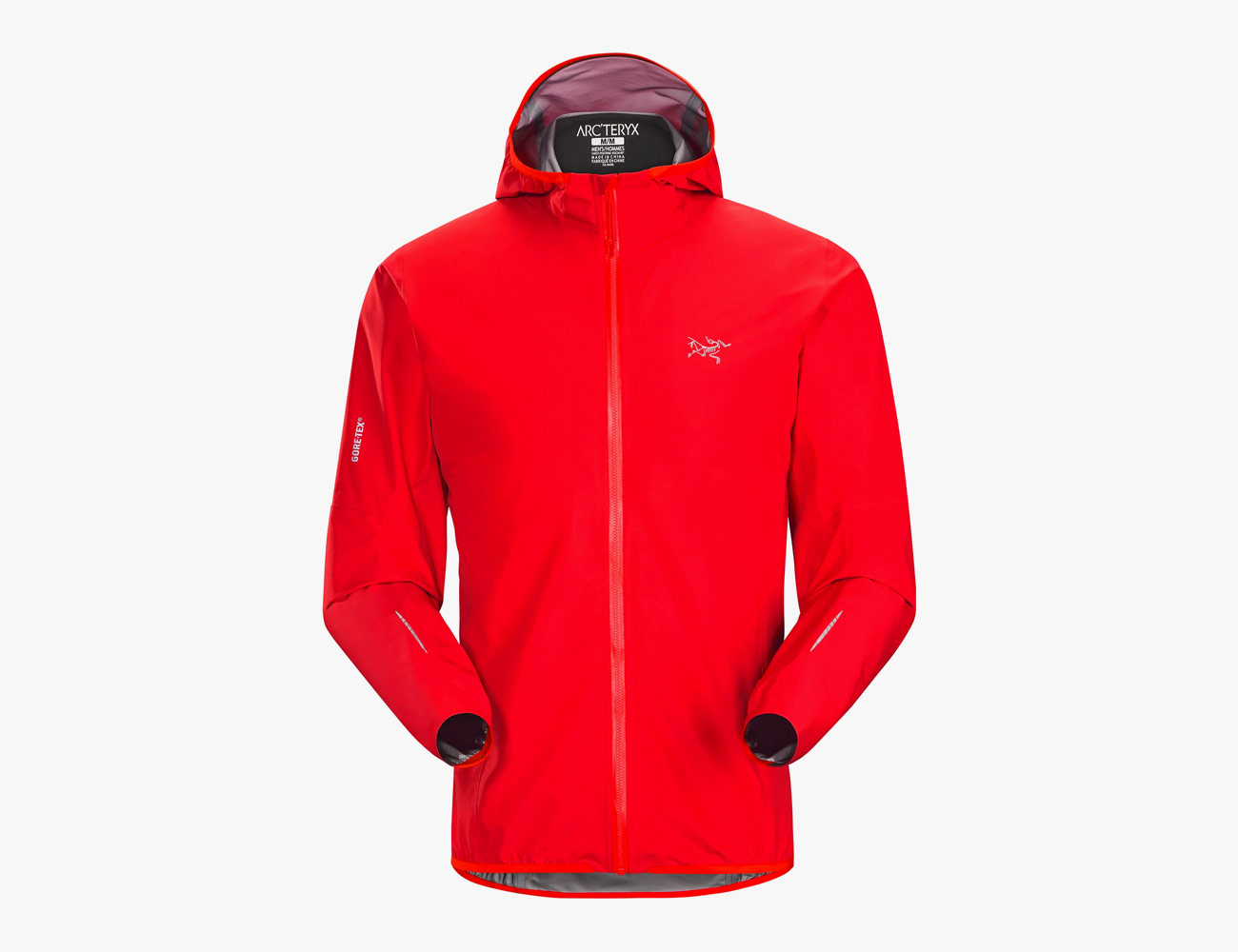
The sleuth detective in an outdoor-themed film noir film might don the Sawyer. It’s defining characteristic is its clean style, which stems from a logo-less front and a longer sub-hips length. Even the inside is a gunmetal gray instead of the white that’s traditional in most technical rain jackets. It’s not entirely unbranded though, Arc’teryx’s trademark archaeopteryx fossil is perched on the left shoulder, and “Gore-Tex” falls on the right forearm, perhaps the only two visible markers of the tech supporting this jacket. Drawing on Arc’teryx’s outdoor expertise, the Sawyer is completely waterproof, seam-sealed and lightweight given its length. It’s the perfect rain jacket for those who spend more time in urban environments than in the mountains. Tanner Bowden

Weight: 13 ounces
Membrane/Laminate: Gore-Tex 3 layer
Shell Material: Nylon

Editor’s Choice: BLACKYAK Gore-Tex C-Knit Jacket

I’ve waxed poetic about the quality, styling and innovation of BLACKYAK garments, so I’ll save you all here and just say that this is a damn good jacket. Every detail was scrutinized over, from the chest pockets integrated into a fold, to the stretch Gore-Tex panels on the shoulders to allow for a wide range of motion. Even the hood cinch, such a simple, seemingly meaningless feature, is impeccably designed and is the finest I’ve used on any jacket. To round out the jacket’s functionality, pit zips, a cinch-able waist gaiter and a two-way main zipper are added.

You may have noticed that I’ve yet to mention the jacket’s waterproofing, and that’s because a great rain jacket should work. You shouldn’t realize that it’s working. You shouldn’t notice it at all. The BLACKYAK is near-invisible in its waterproofing capabilities. AJ Powell

Weight: 14 ounces
Membrane/Laminate: Gore-Tex C-Knit
Shell Material: Nylon

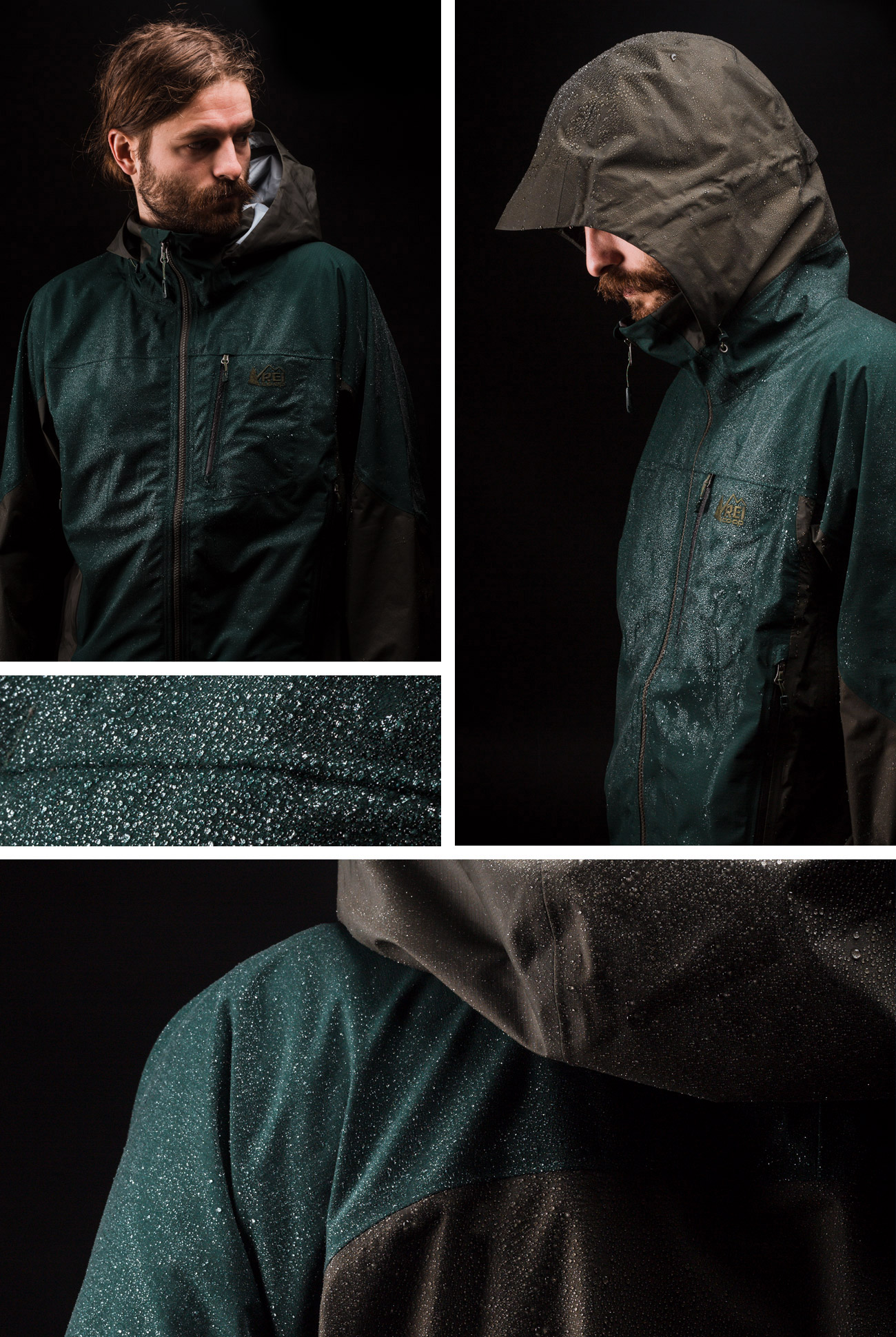
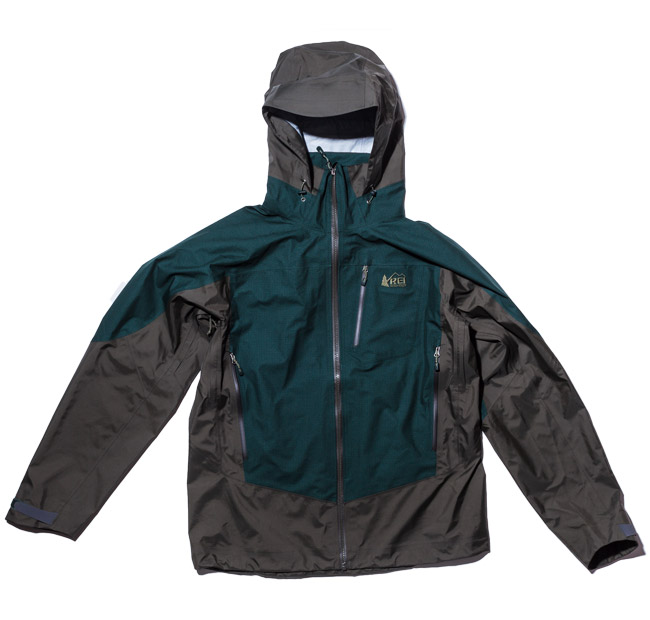
Most Durable Rain Jacket: REI Stormbolt Jacket

If you’re a serious outdoorsman, it can be easy to write off REI’s in-house brand as just that, an in-house brand. But much like Costco’s Kirkland brand, there’s a lot to love. For one, the Stormbolt is incredibly durable. I posit that you could rub it up against a rock face what feels like a few too many times and still come away with a jacket that looks and performs as if it were new. It brings a Gore-Tex three-layer construction to the table, which is the gold standard for waterproofing. The fit allows for layering underneath, which adds to the jacket’s versatility and allows it to be used as a ski shell in winter. If you’re an REI member, there isn’t much of a reason to look elsewhere. Add to your dividend and save for something on your wish list. AJ Powell

Weight: 15
Membrane/Laminate: Gore-Tex 3 layer
Shell Material: Nylon

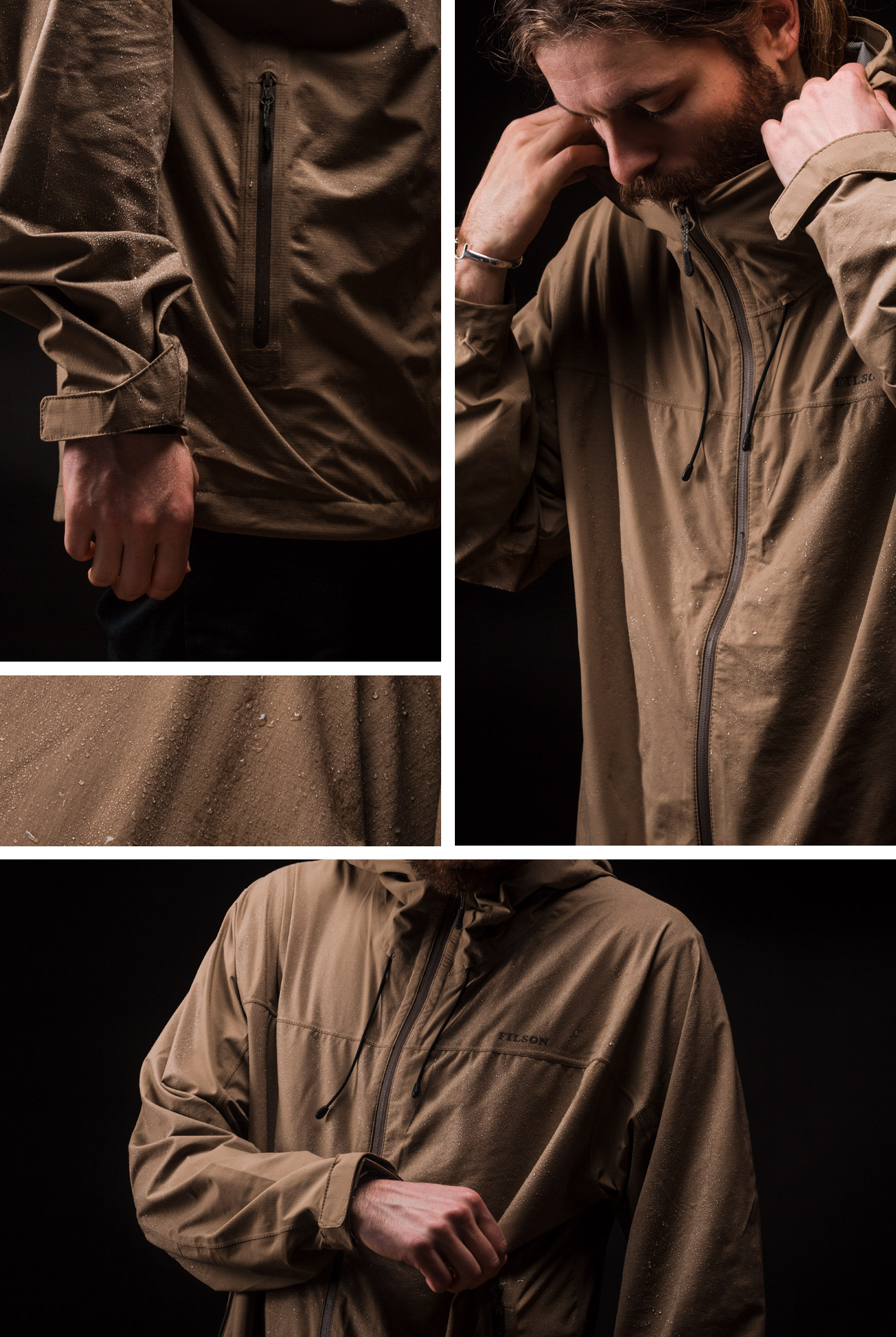
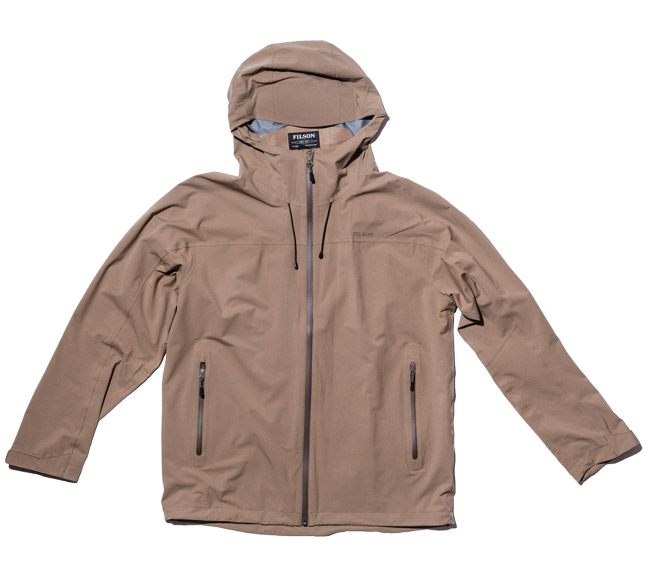
Most Comfortable Rain Jacket: Filson Swiftwater Jacket

Unlike Filson’s usual penchant for constructing sturdy and rugged products, the Swiftwater Rainshell Jacket is lightweight and flowy — and the most comfortable jacket that we tested. Filson built the Swiftwater with a 2.5-layer, DWR-treated ripstop nylon, waterproof zippers and fully-taped seams. The jacket provides a slight amount of stretch, but its interior has a less-rubbery feel than some of the other elastic rain layers we tested. The Swiftwater also has a looser fit that imparts a good-looking profile and makes it a good jacket for layering over a sweater or puffy jacket. Another comfy yet small detail is a panel of soft brushed fabric at the base of the hood on the Swiftwater’s interior (where the tag is) — this is a zone that frequently comes into contact with the skin, and the plush detail is a welcome addition. This material also lines the interior of the zipper hem, where the jacket might rub against the chin when fully zipped. Tanner Bowden

Weight: Unavailable
Membrane/Laminate: 2.5 layer
Shell Material: Nylon

Best Budget Rain Jacket: United by Blue Albright Rain Shell

Philadelphia-based United by Blue is continuously pushing the needle on recycled materials and how those materials can be used to give back to the planet. For every product sold, United by Blue picks up one pound of trash from the oceans and waterways. This rain jacket is made partially from recycled polyester that came from plastic water bottles. For just $128, the Albright is a quality buy that works well in the rain, while simultaneously looking sharp -— it doesn’t scream, “I’m a rain jacket.” The cut of the jacket looks sleek enough that you can comfortably wear it from the gym to business lunches without worrying about looking drab.

Pull tabs around the hood streamline the fit so you can tuck your chin down into the jacket on a windy day. The drop-tail hemline keeps any layers you’re wearing underneath the jacket dry. On breezy days, this cuts out the wind while remaining breathable. The somewhat flared sleeves stretch over wristwatches and fitness trackers, and secure with velcro to keep everything dry underneath. If you’re hopping on a bike, tighten both bungee cords along the hemline to cinch the waist and keep everything tidy. Meg Lappe

Weight: 11.2 ounces (size medium)
Waterproofing: Microporous coating with DWR finish
Shell Material: 41% recycled polyester, 59% polyester

How to Re-Waterproof Your Rain Jacket

If you haven’t washed or treated your waterproof-breathable jacket, and it’s seen a few seasons of use, you’ve probably noticed that it doesn’t keep you as dry as it used to. One of the biggest misconceptions with waterproof jackets is that you should never wash them. If you don’t wash them, your jacket’s pores can clog and it will no longer be breathable. The oils from your skin can also lead to delamination in the liner of your jacket. There is a simple process for washing your jacket and revitalizing its waterproofing that will help you get more out of your jacket and help to extend its life for a few more seasons.

Take a look at your jacket. The first step in the process of getting your rain jacket ready for spring is to take a thorough look at it. Start with the inside. If the lining is peeling or bubbling and separating from the membrane, it’s time to retire your rain jacket. The next few steps will help to prevent this from happening to your new jacket. Secondly, apply some drops of water to your jacket. Does it bead and roll off? If you shake it does it come off? If so, you’re all set. But if the water sits on the fabric and starts to seep into the fibers (the fabric will darken), then it’s time to revive your DWR.

Wash and dry your jacket. Before applying a new DWR with specialized detergents, clean your jacket following the instructions on its tag. Once dry, place in the dryer for 20 minutes on low to medium heat. This will revitalize your DWR. If it doesn’t, move on to the next steps to apply a new coat.

Wash your jacket. To wash your jacket, use a specially formulated detergent. We recommend Nikwax’s Tech Wash, though Granger also makes a suitable wash. Place your jacket in the washing machine. A good rule of thumb is one capful of detergent for each jacket. (In hard-water areas, Nikwax recommends adding an additional capful.) In a front-loading washing machine, make sure to remove any buildup in the detergent dispenser, then add the Tech Wash. For a top-loading washing machine, add the detergent once the machine has filled with water. Set the cycle to heavy (or synthetics if your machine has it) and warm water.

Wash your jacket again using TX Direct. After you have finished washing the jacket, wash it again following the same guidelines, this time using Nikwax’s TX Direct Wash-In. This will revitalize the waterproofing in your jacket’s membrane.

Dry the jacket. To dry your jacket, tumble dry it on low heat for no more than ten minutes. This will help to shake off most of the water and start the drying process. Take your jacket out of the dryer and hang dry it overnight.

Inspect your jacket for holes and tears. Look for any tears, pinholes, or abrasions in your jacket. If your jacket has a pinhole or tear, use Gear Aid’s Gore-Tex fabric patches to patch the hole. Cut the patch in either a circular or oval shape to reduce the chances of peeling. For a stronger bond, use an iron on its lowest possible setting for a few seconds on the patch to bond it to the jacket. (Be extremely careful using an iron. If the iron is too hot, it will melt your jacket.) For abrasions, use Gear Aid’s Tenacious Tape to cover the abraded areas. Again, cut the patches in circles or ovals to reduce the risk of peeling.

What You Need:
Nikwax Tech Wash $13
Gear Aid Gore-Tex Fabric Repair Kit $3
Nikax TX Direct Wash-In $13

How to Repair a Ripped Rain Jacket

Repairing a rip in your rain jacket can save you a ton of coin, and it’s better for the environment to keep a jacket’s worth of plastic out of the landfill. Plus, it’s dead simple. Thanks to brands like Gear Aid, even the least DIY-able person can repair a rain jacket in about 20 minutes.

Assess the damage. If it’s only small tear (about the size of a quarter), you’re in luck: This is much easier to repair, and chances are it will be a lasting fix. For a larger tear (bigger than a quarter), you still have a shot. Begin by cleaning up any loose fibers with scissors.

Use this time to inspect the lining of your jacket. If the lining is peeling or delaminating, then chances are your jacket isn’t worth saving. If you can, take your jacket to a recycling center. Most Patagonia stores accept well-loved rain jackets and will recycle them. Also, keep an eye out for abrasions and high-wear areas on the face fabric of the jacket, as those will be locations of future repairs.

Make sure your jacket is clean. If you haven’t washed your jacket in a while, throw it in a washing machine. Not only does regularly washing your jacket with a specially formulated detergent prolong its lifespan, but it also gives you the opportunity to re-waterproof the jacket. (Some pointers on that front.)

Make the repair. For a large tear, consider using a needle and thread before patching or taping. If you aren’t any good at sewing, this is best left to the professionals. Take the jacket to a tailor or seamstress to have the tear stitched back together. This can help make for a stronger repair, but if you aren’t careful, you can further damage your jacket.

In most cases, though, using only Tenacious Tape is suitable. Depending on which type of tape you have — e.g., a roll or pre-cut patches — step three will be different:

For the roll: Roll out a piece that will cover the tear with about an inch of space on all sides. Cut the tape from the rest of the roll. Trim the corners and round it out into either a circle or an oval.

For the patches: Pull the patch out of its container. Measure to make sure it will overlap the tear by about an inch on all sides.

Apply the Tenacious Tape. Peel the backing from the Tenacious Tape and carefully apply it to the outer fabric of your jacket. As you press down, start in the center and work your way out. This will help to avoid air bubbles. Allow the patch to set for 24 hours before using.

Repeat steps 3 and 4 on the inside of the jacket. While not completely necessary for small tears, adding a patch on the inside of the jacket can help to seal out water completely and make for a lasting repair. For a larger tear, this step is mandatory. Once the inner patch is applied, allow it to set for 24 hours before using.

What You Need:
Tenacious Tape Roll by Gear Aid $5
Tenacious Tape Patches by Gear Aid $5
Note: Purchasing products through our links may earn us a portion of the sale, which supports our editorial team’s mission. Learn more here.

The 8 Best Gym Shoes for Every Type of Workout

This guide to the best gym sneakers of 2018 covers the best shoes for weightlifting as well as mixed-use options.

Introduction

A good pair of shoes can make or break your gym-going experience. Whether you’re trying to get in shape or are looking for shoes to give you that extra edge in the weight room, this list has an option for you. While it can be tempting to use the same pair of sneakers for all your walking, running, jogging and gym-going, it’s ideal to have a pair of shoes that you use just for the gym. Beyond extending the life of your running shoes, swapping out that pair for a gym pair does a lot for your workouts. Shoes that are closer to the ground provide more support for your muscles and joints giving you better stability during unilateral (one-sided) moves, as well as operating as a proper platform for lifting heavy weights.

How We Tested Them

We tested 12+ pairs of shoes to bring you this list of the nine best gym shoes. There are a lot of sneakers that come across our desks at Gear Patrol. We put all of these to the test — we evaluated how they felt right out of the box, then hit the treadmill to test how they feel at a walk, jog, run and sprint. Following that we hit the gym floor and took each pair of shoes through a variety of movements and exercises to mimic the range of motion these shoes need to do as your go-to pair. Squats, alternating forward or reverse lunges, side lunges, single leg deadlifts, mountain climbers, planks and a range of stretches (runner’s stretch, pigeon, upward dog, etc.)

Get the Right Fit

When purchasing true running shoes, people often leave space in the toe box for toe splay. It makes sense and can improve your running form and performance. But in weightlifting shoes, it’s best to avoid unnecessary space in the toe box. You want the sneaker to fit tightly so that there’s support for your feet during unilateral moves. The more space between your toe and the end of the sneaker, the harder your body has to work to balance, which is unnecessary. Go with an exact fit.

Buying Guide

Best For Weight Lifting

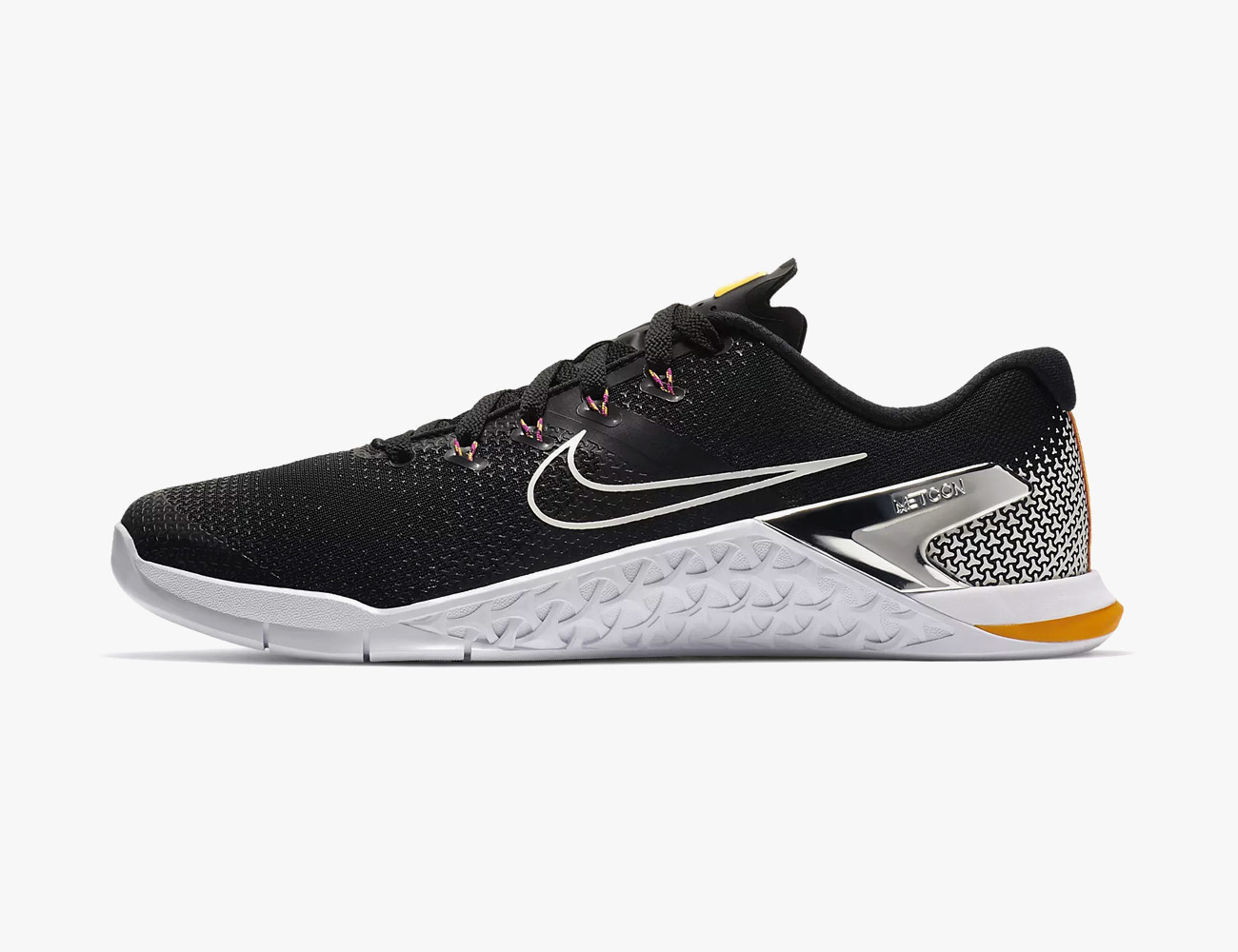
Nike Metcon 4

The Nike Metcon is always a top contender in the gym space — the fourth iteration of this sneaker is pretty darn close to the perfect weightlifting shoe. If CrossFit is your workout of choice, or you like to hit the gym and only lift weights, this is the shoe for you. The grip is tough and will help you crush sled pushes and pulls without slipping. There’s not much cushioning between your feet and the ground, so there’s more of a stable launch point for tuck jumps and power cleans — and the sneakers are a breeze to tighten with an added sixth lace loop option.

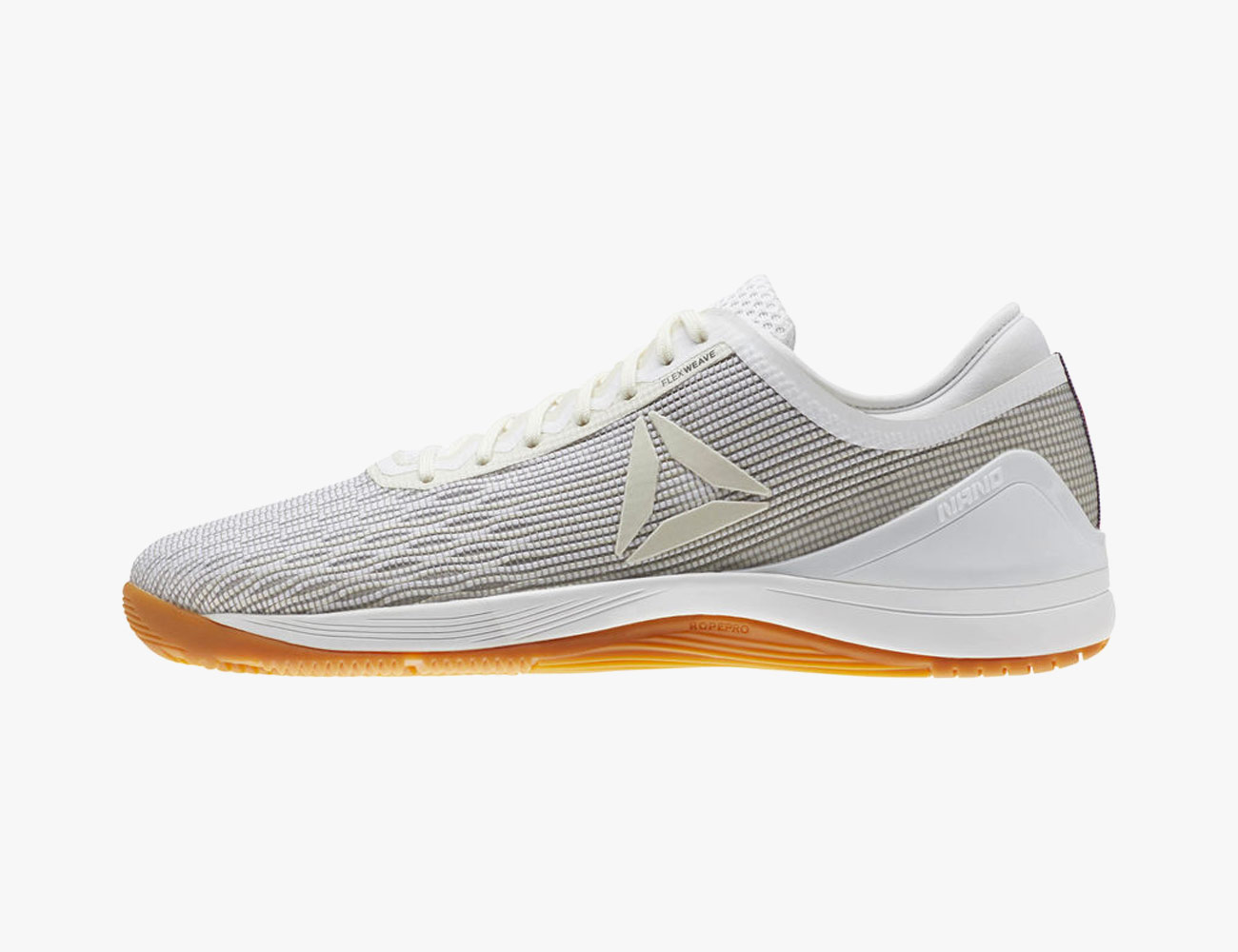
Reebok Crossfit Nano 8

Reebok’s new Flexweave material is more breathable, stable and durable than Nanos of the past. The unique dual-layered upper looks like a chainlink fence, but feels more like a rubber tire. This one fits like a glove and aids with stabilization during unilateral moves like lunges and single leg deadlifts. It also has a minimal drop outsole to keep your body close to the ground.

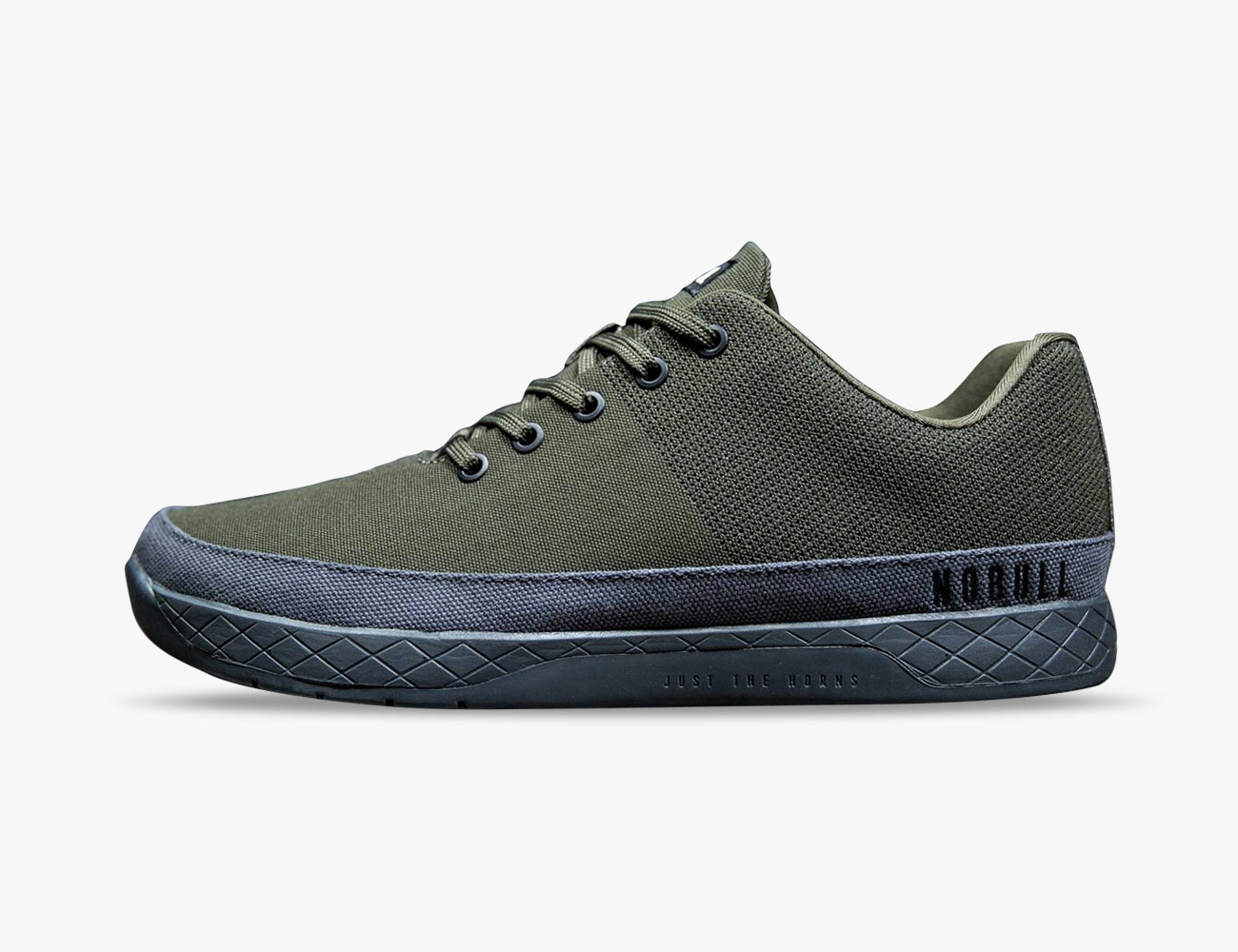
Nobull Canvas Trainers

At first glance, these canvas sneakers look like lifestyle shoes. And to be honest, you can wear them around all day long — they’re that comfortable. Don’t be deceived though, the perforated canvas is rough to the touch over the high carbon lateral and medial guards for added balance support. The lighter colored canvas gets dirty very quickly — especially in the weight room — but the forest green doesn’t seem to have the same problem. Similar to the Nike Metcons, there is a 4mm drop. These are the lowest price point in the category, coming in under $100.

York Athletics The Henry Mesh

These unisex sneakers felt light for the amount of support they provided — they weigh in at 8.3 ounces despite having the highest offset with a 9mm drop. Originally designed for fighters, the Henrys feature a mesh upper that is extremely breathable whether you’re box jumping, pistol squatting or throwing punches. I was concerned about how comfortable the mesh upper would be on the treadmill, but it’s nowhere near uncomfortable when running. There’s not much support underfoot, but there is enough to get through sprints and a boot camp class. The high heel pull tab didn’t rub during squats, lunges or mountain climbers. The toe box is large enough to offer room for toe splay to aid in balance, but not so wide it looks disproportionate or bulky. The textured lining is comfortable and minimizes heel slippage.

Mixed-Use Sneakers

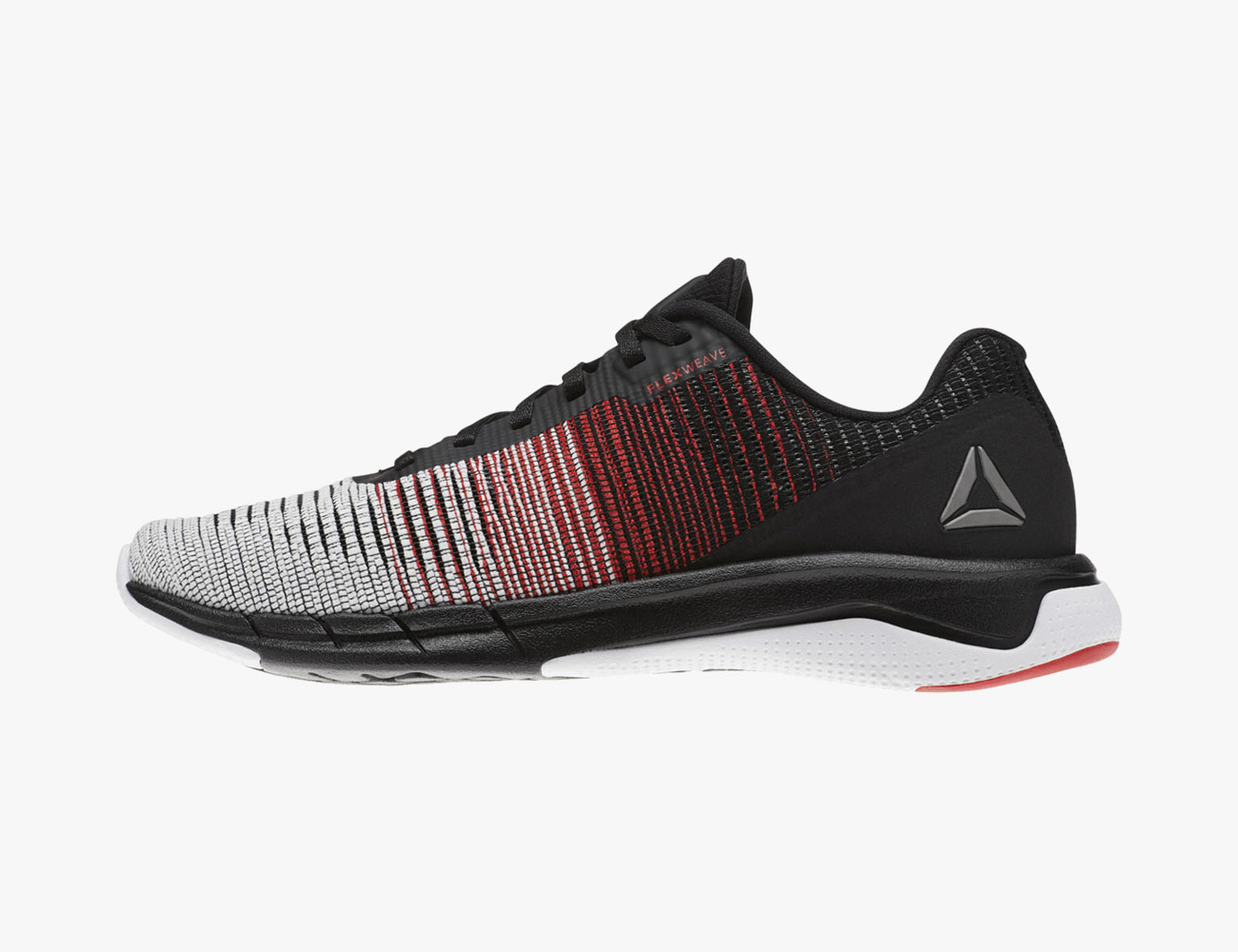
Reebok Flexweave Fast

I first tested the Flexweave Fast in a boot camp class which alternated running on a Woodway treadmill with total body weights on the floor, and the shoe performed admirably. The Flexweave Fast is made of the same material as the Crossfit Nano 8. It’s just as breathable, if not more so than the Nanos, and is a slightly looser sneaker to help with sprints and runs. I’d take this outside for a 5k or track workout, in addition to using it during HIIT workouts and for weightlifting. The flexible upper bends to match the natural movement of your feet during calf raises, jumping jacks and lunges. And you can run with these right out of the box — I had no blisters or hot spots after using.

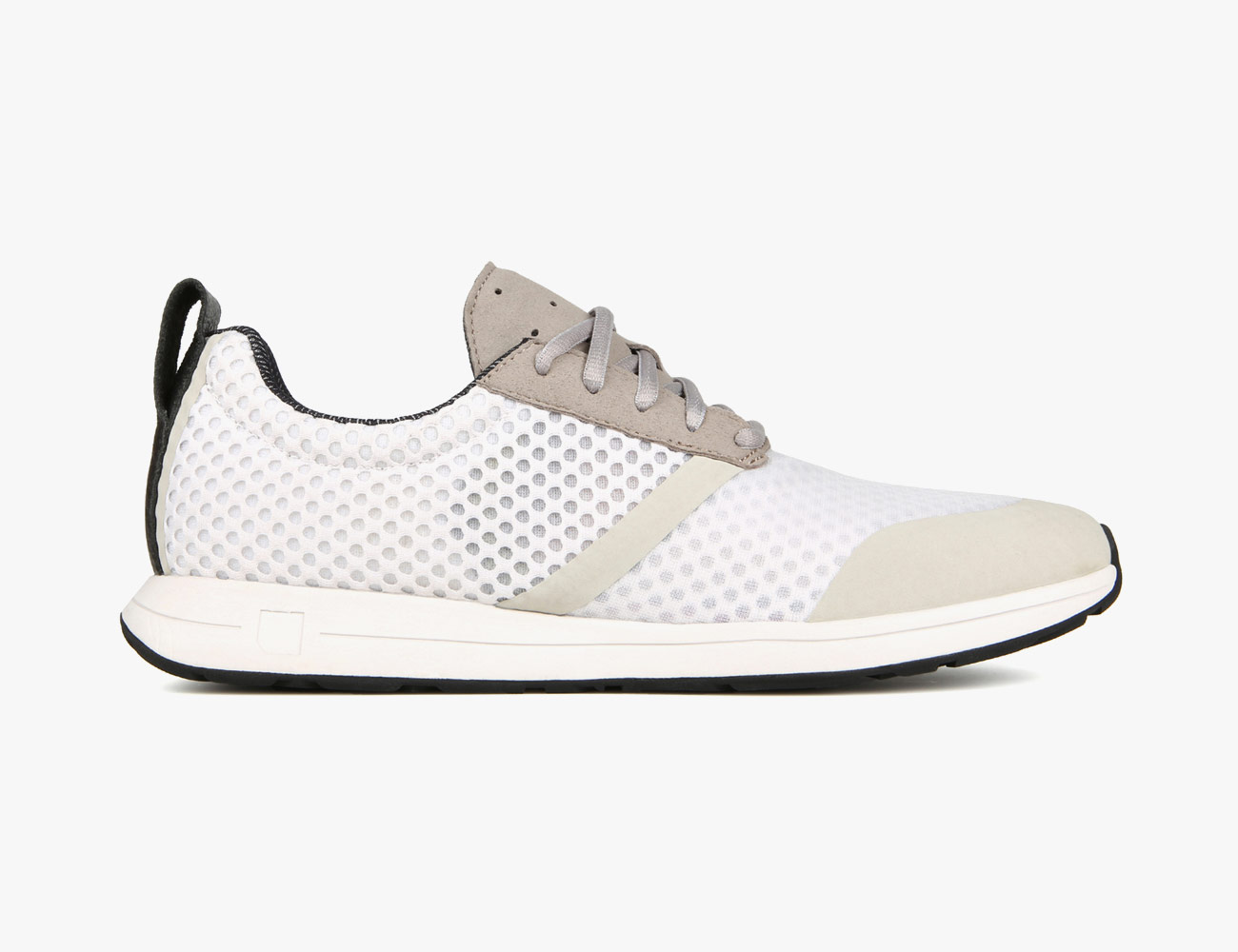
APL TechLoom Pro

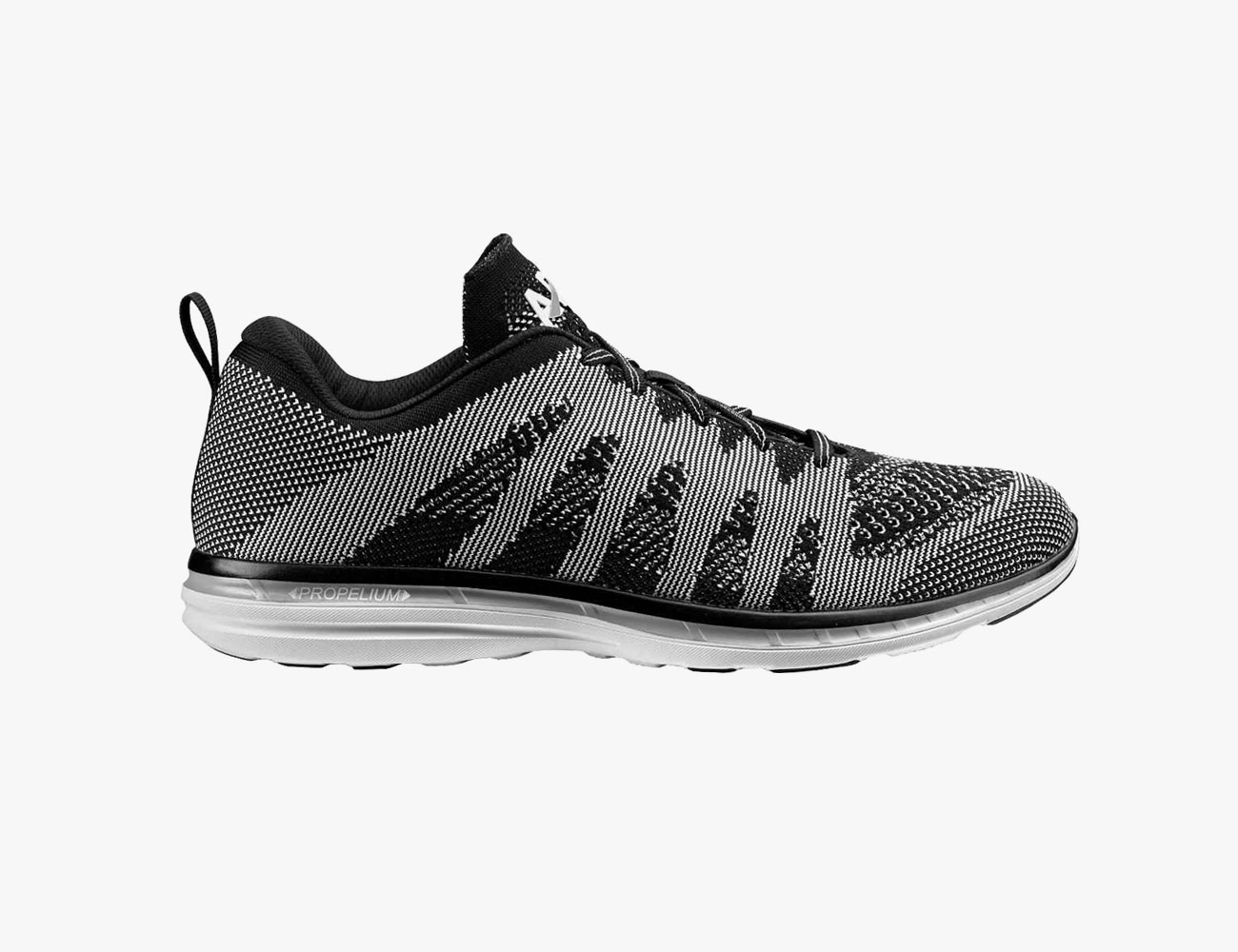
These are priced more like running sneakers, which makes sense since they lean slightly more in that direction. However, I wouldn’t run more than 3 miles in them, especially if you’re used to a more supportive stability sneaker like a Brooks or Asics model. The dual-layered woven upper is reinforced with a sock liner and has a neoprene-feeling tongue. The tongue is attached, so there’s no easy way to move it around, and the laces tie underneath it (which is easy to change, just pull them out) — a feature added with aesthetics in mind. The 8mm drop is slightly more than the other shoes on this list, but there were no performance issues when completing moves and exercises — squats, reverse lunges, mountain climbers and even spider planks.

Adidas AlphaBounce Beyond

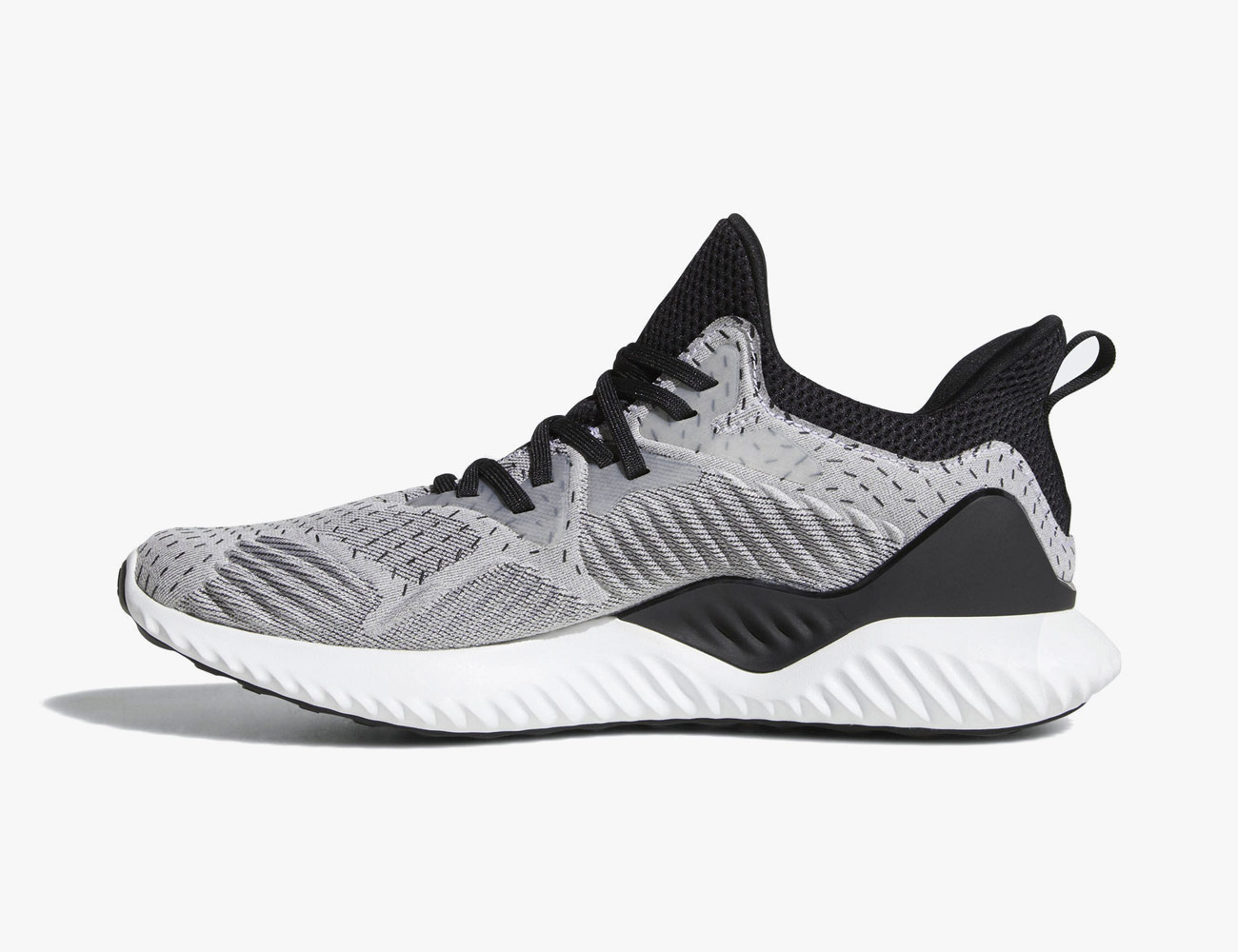
The cushioning on these sneakers is what sets them apart from the others on the list. They’re comfortable enough to handle miles on the treadmill and are most similar to the Reebok Flexweave Fast in that you can do a variety of activities in them. The grippy Continental rubber outsole means they’ll work just as well in the grass as they will on the mats at the gym. We highly recommend these for classes like Barry’s, as well as for your day-to-day gym trips.

New Balance LAZR

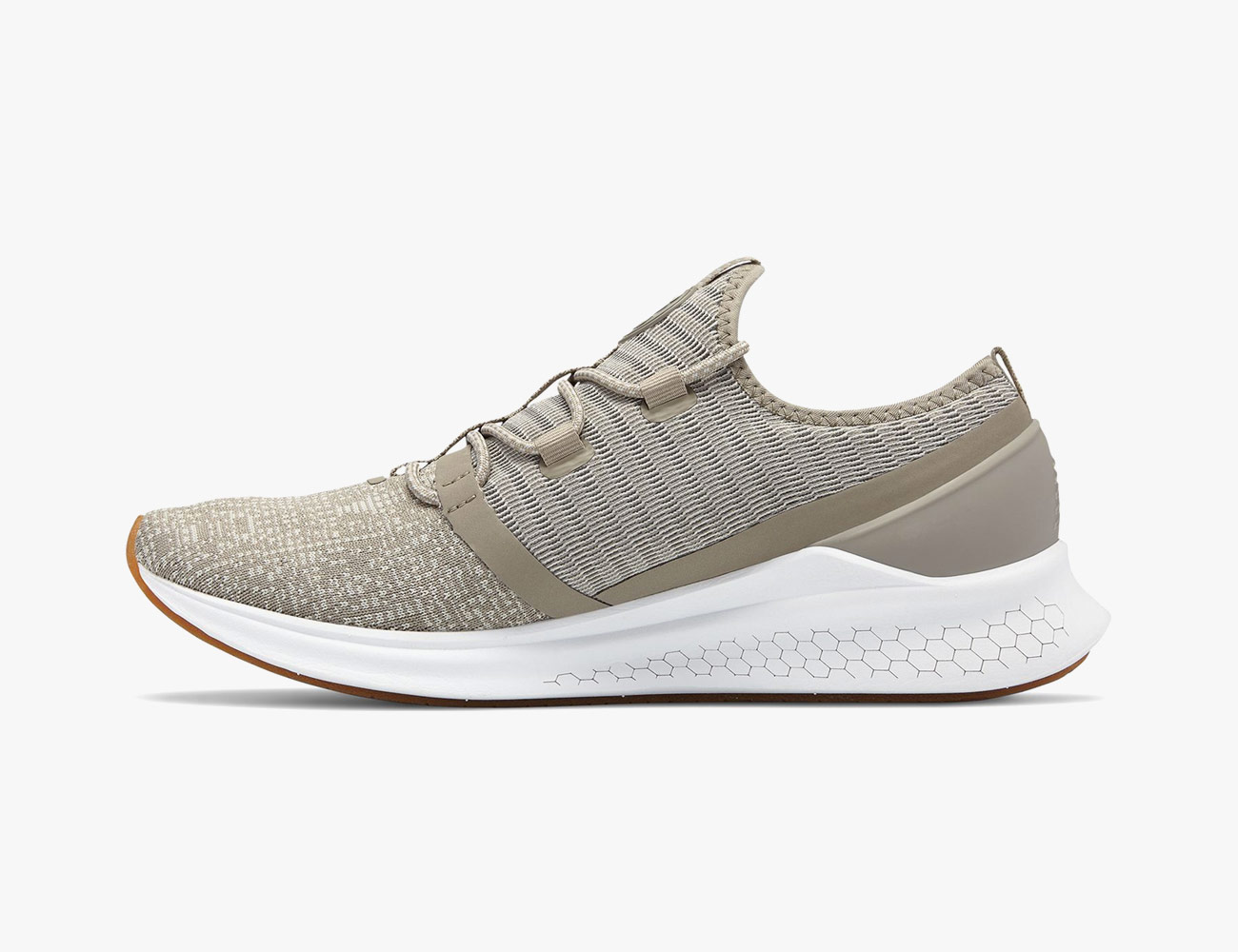
New Balance is known for its performance foam, Fresh Foam, and it slimmed down its typically plush cushioned running shoes to create the LAZR Sport, a sneaker that’ll work on the pavement for short runs, on the treadmill and in the gym for training sessions. The mesh upper is breathable and flexible with less give closer to the collar and laces. It’s hard to find a pair of sneakers at this price point with this amount of performance features.

Best New Running Shoes

This definitive guide to the best new running shoes of 2018 explores everything you need to know before buying new running shoes this year. Read the Story

Note: Purchasing products through our links may earn us a portion of the sale, which supports our editorial team’s mission. Learn more here.

The Best Beginner Road Bikes Under $1,000

This guide to the best road bikes under $1,000 provides eight awesome bikes and also offers tips and advice to know before you buy.

Introduction

If you’re looking to test the waters on whether or not you’re interested in road cycling, the $1,000 price point is a great place to start. You can get a bike that has high-enough quality where it won’t fall apart on you, without dropping two full paychecks. You won’t get a carbon frame, or electronic shifting, or top-of-the-line touchpoints, but what you will get is a feel for riding on skinny tires, tucking into the drop bars and feeling the wind in your face; the freedom that a road bike offers you.

Additional contribution by John Zientek

Important Tips to Know Before You Buy

Groupsets: When purchasing a groupset, price is affected by two elements: weight and quality (durability). As a rule of thumb, when the prices goes up, the weight goes down. Excluding top-tier racing parts, groupsets become more durable the more expensive they get. For the best racing components, durability is overshadowed by the need to shed weight — in other words, the highest-end products will break down faster, but offer top performance when in good shape. Personal taste comes into play when deciding which groupset to purchase, considering the way a rider interacts with the groupset — especially the shifters. Also, there is a certain feel associated with each brand: Shimano feels smoother and SRAM has a definitive “click” into each gear. Campagnolo is on the snappy side, with characteristic “touchiness.” One is not particularly better than the other in terms of performance — it’s more personal preference.

Crankset: A crankset is made up of one or more chainrings which are attached to crank arms. The pedals are attached to the cranks, but aren’t considered part of the crankset. Crank sizes can relate to frame sizes or be adapted to terrain needs, and range from 160mm to 185mm. The most common crankset for road bicycles is a 50/34 ratio, referred to as a compact chain set. The numbers refer to the amount of teeth on each ring (the big and small ring, respectively). The smaller the number, the easier it is to rotate the petals. Also available for road bikes are the larger 53/39 sets used by road racers (bigger number = faster speeds) and the 52/36, mid-compact.

Cassette: The cassette, or cogset as it’s sometimes called, is the set of sprockets that attaches to the hub of the rear wheel. For road bikes, the number of sprockets in a cogset can range from 8 to 11, and the teeth on those cogs can range in number from 11-23 to 11-32. The smaller the range, the more fine-tuned the shifting, where a wide range lends itself well to more varied terrain. The cassette works in reverse of the crankset, where bigger teeth numbers make the riding easier, smaller teeth numbers more difficult (but, of course, faster).

Maintain Your Chain: The size of a chain depends on the size of the cassette and crankset. As the price goes up, chains are made of better materials and are coated to last longer. To cut down on weight for high-end chains, the pins are hollowed out. Because it’s the item that gets the most wear and is often the first replaced, a quality chain and careful chain maintenance is an important part of a groupset. After each ride, it’s good to wipe and/or brush down your chain. If it’s light, warm conditions, that’s probably enough for a daily ride. But, weekly (depending on number of rides), it’s good to use a degreaser and brush to remove grit from the chain. After degreasing, apply a lubricant to the chain, one link at a time. Chain lubes vary depending on road and mountain and general ride conditions — it’s good to talk to a local shop about your particular lubrication needs.

How To Get The Right Fit

Fix Your Posture: While there is no substitute for a professional fit, many feelings of discomfort and soreness simply result from improper riding structure. To get a feel for how you should be sitting on your saddle, stand with your feet about as wide apart as they would be when clipped into your pedals. Bend your knees slightly and lean forward, keeping your back as straight as possible. You should feel the muscles in your lower back activate, along with those in your core. Sticking to this body position while on the bike will help to take the stress off your vertebrae, which is induced by leaning over and bending your spine. It also helps to keep your chest open, allowing for more efficient oxygen intake.

Start with the Saddle: If possible, try out a number of different saddles. Everyone’s body is shaped differently; what’s most comfortable for Chris Froome probably isn’t what’s most comfortable for you. Comfort is subjective, so the more saddles that you can try, the better. Tanner personally recommends Pro’s Stealth saddle, but it may not work for everyone. Saddles with center cutouts tend to be more comfortable when you’re sitting in the correct position with the correct posture on the bike.

Adjust Your Handlebars: As with saddles, it’s best to try out a number of different stem lengths if possible. While sitting with the correct posture, you should be comfortable reaching for the bars without putting too much weight on your hands. If you feel like you’re using too much muscle in your shoulders, or there’s too much weight on your hands, try adjusting your stem up or down using spacers and swapping to a shorter stem.

Buying Guide

Best Road Bikes Under $1,000

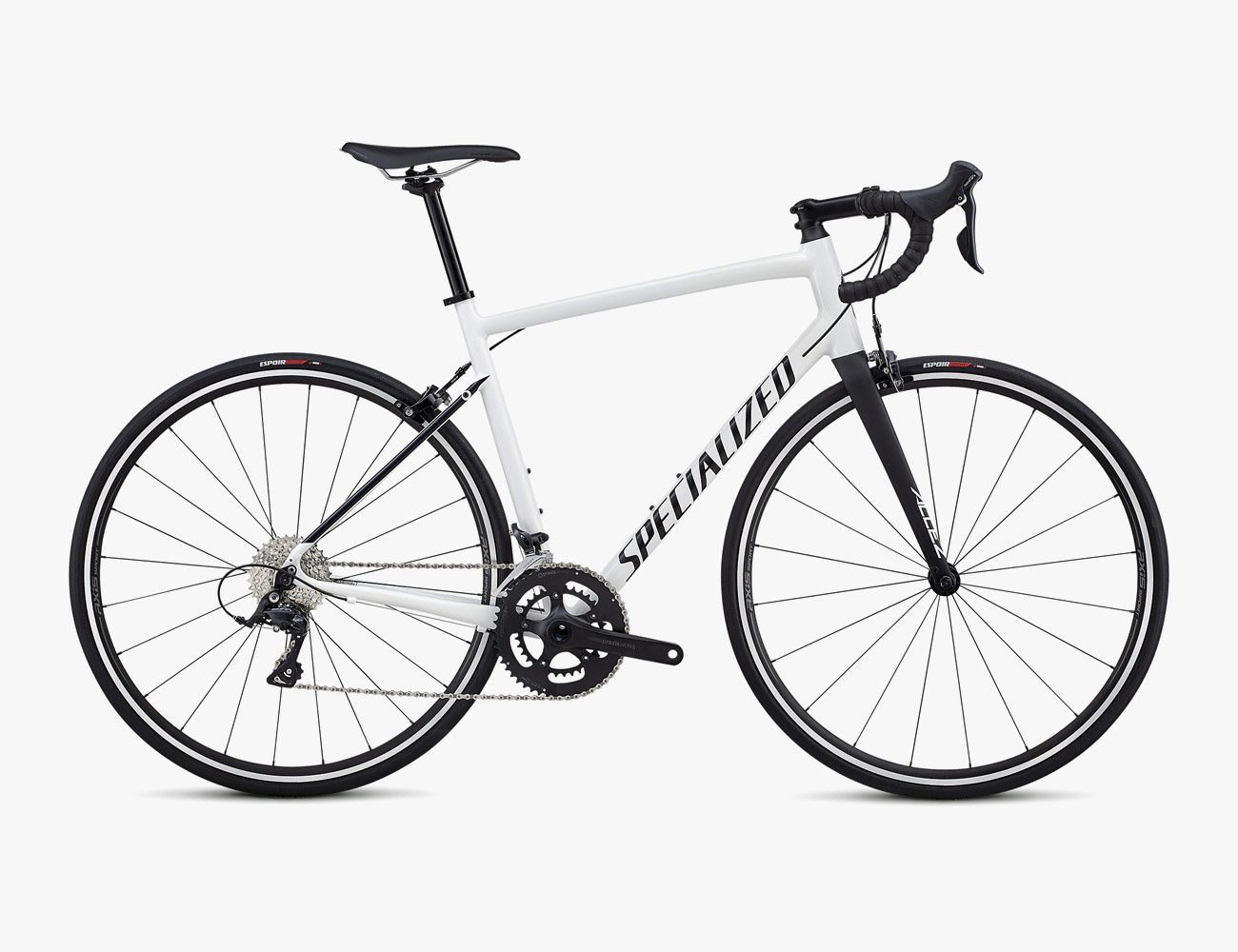
  • Specialized Allez Sport
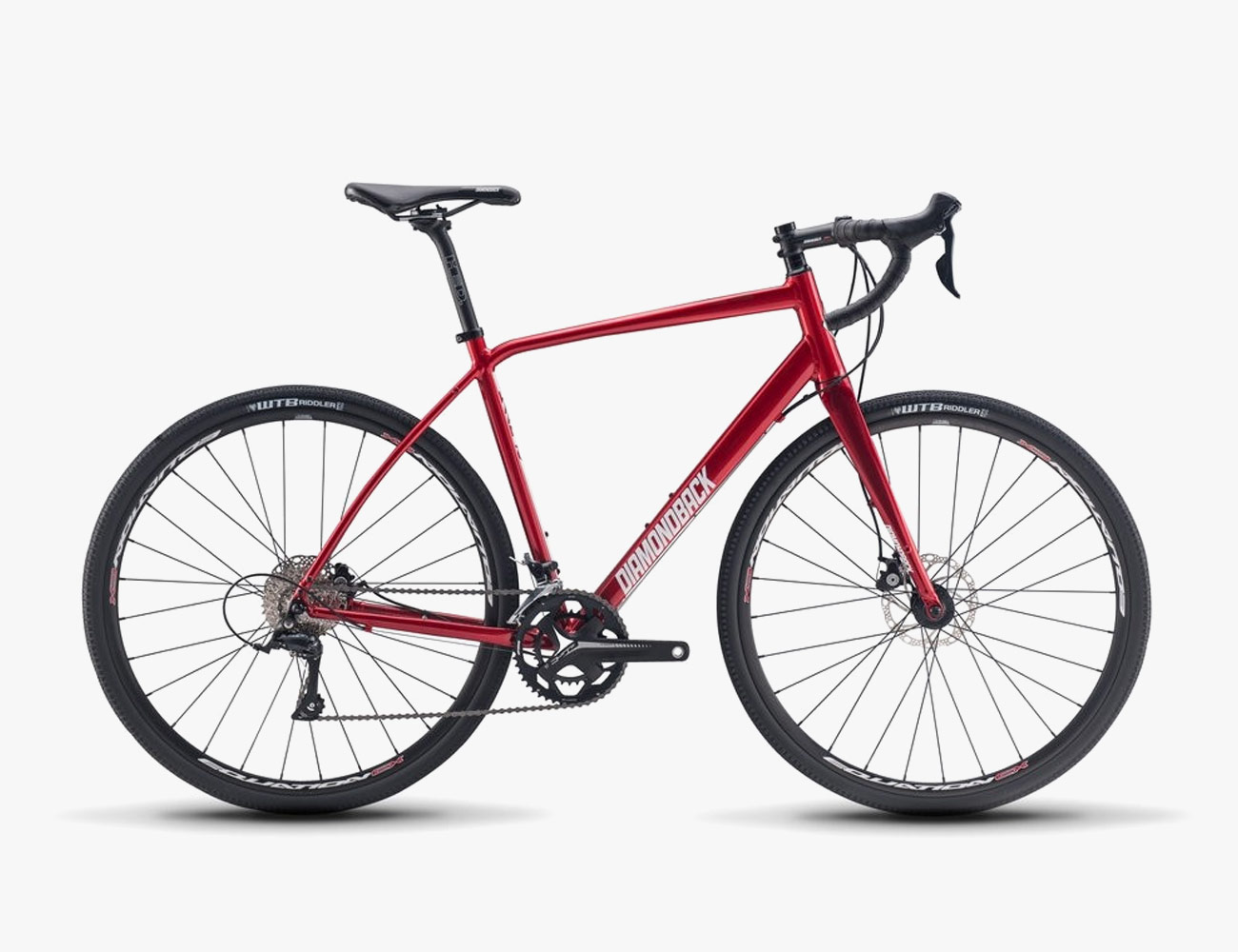
  • Diamondback Haanjo 3
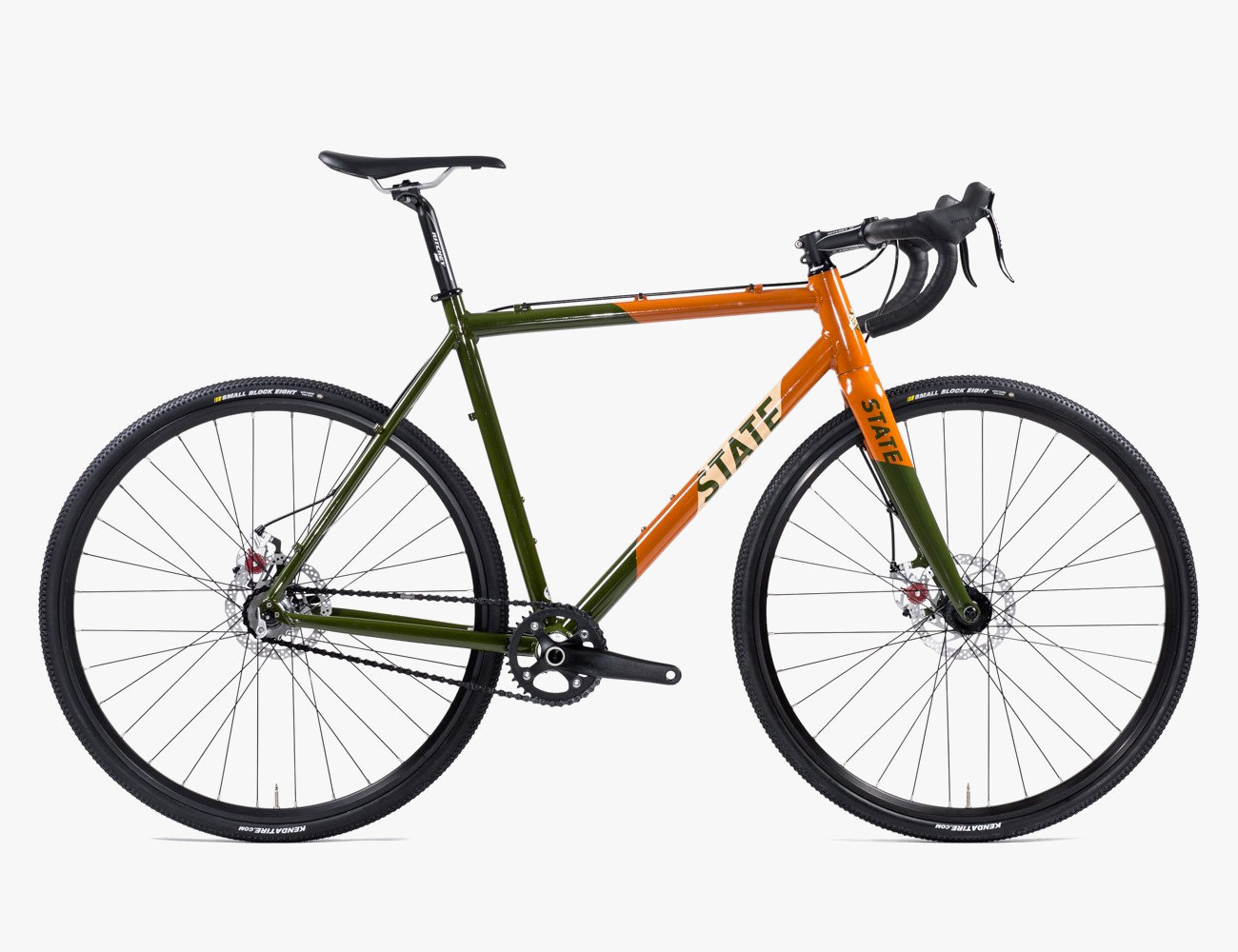
  • State Bicycle Co. Thunderbird
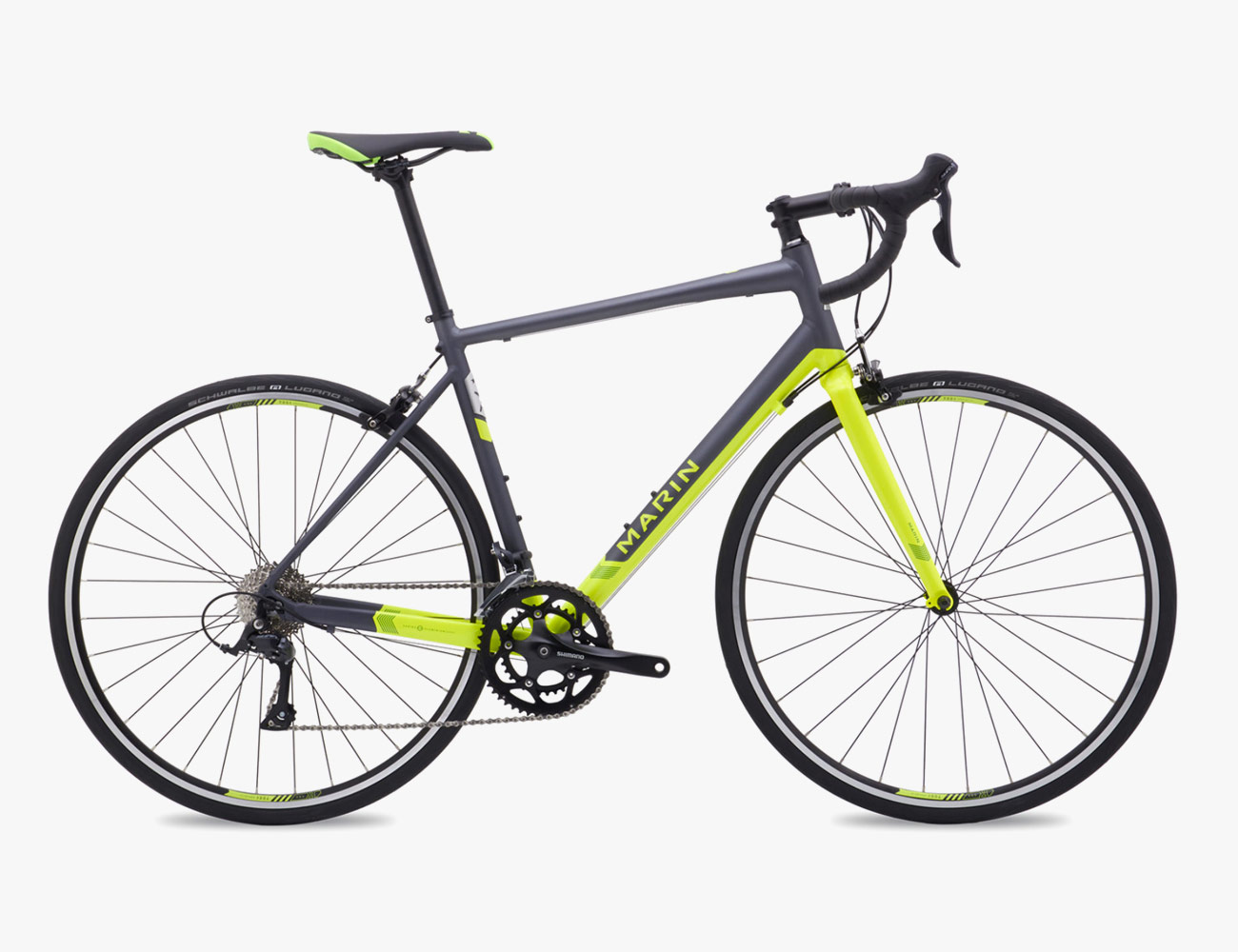
  • Marin Argenta Comp
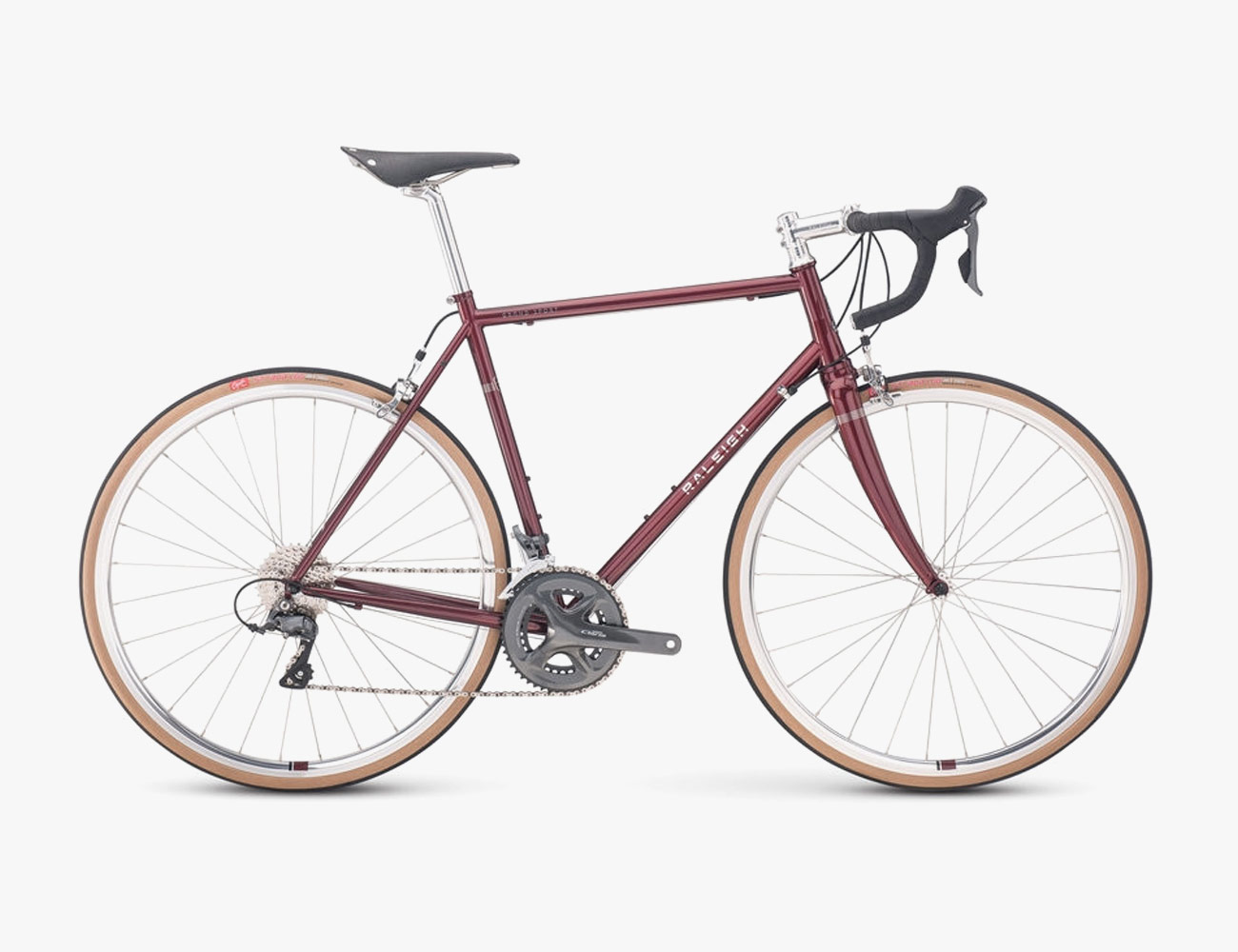
  • Raleigh Grand Sport
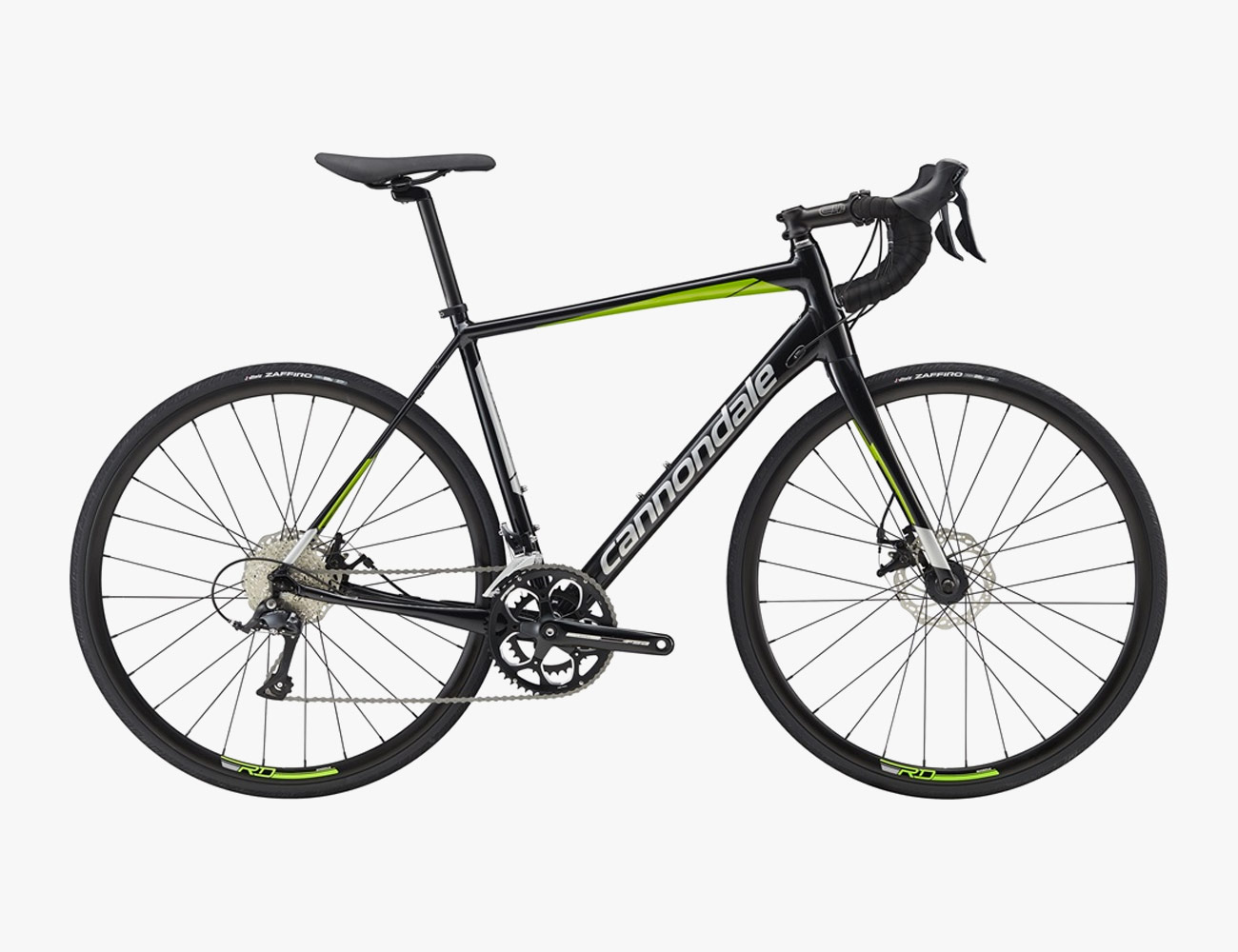
  • Cannondale Synapse Disc Sora
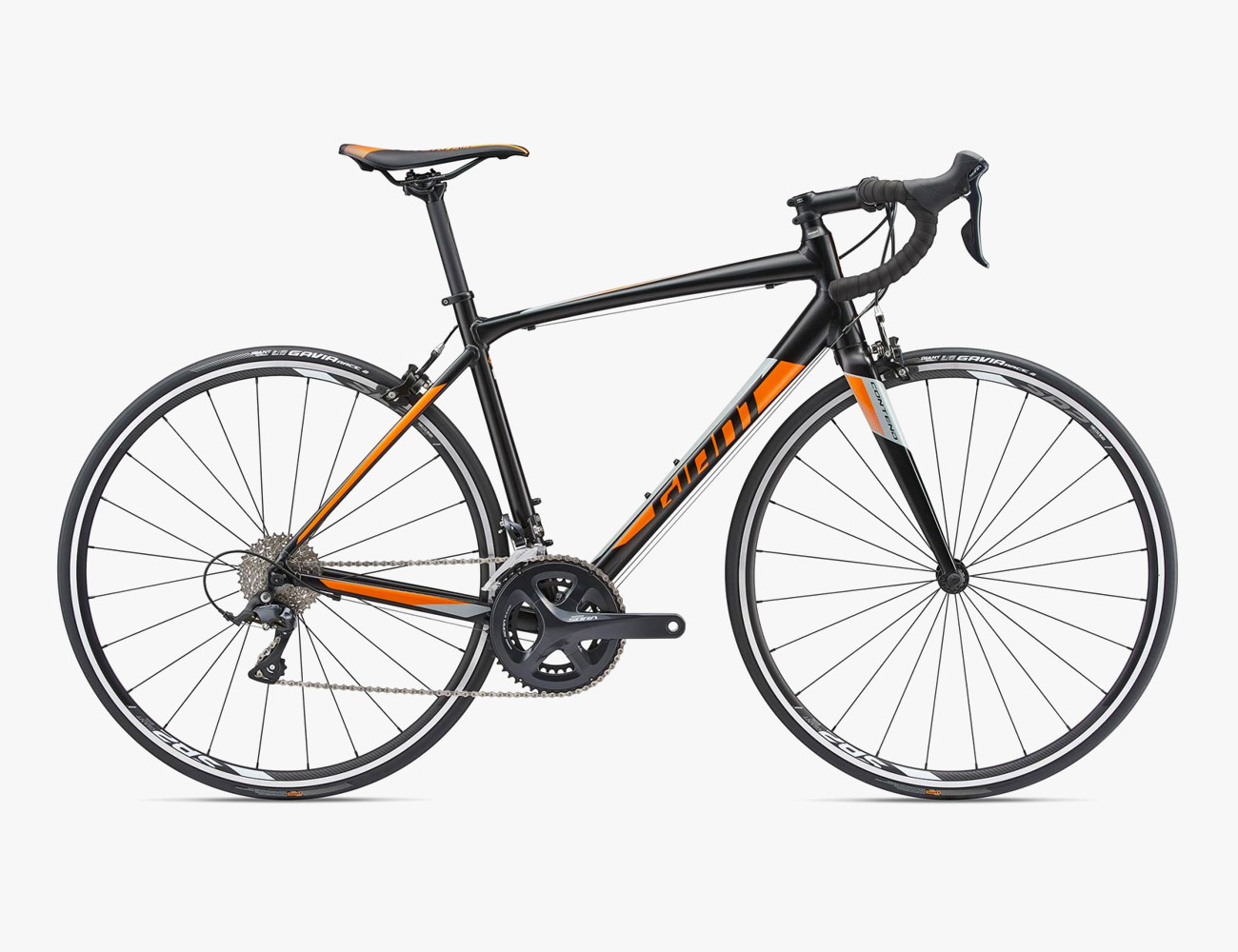
  • Giant Contend 1
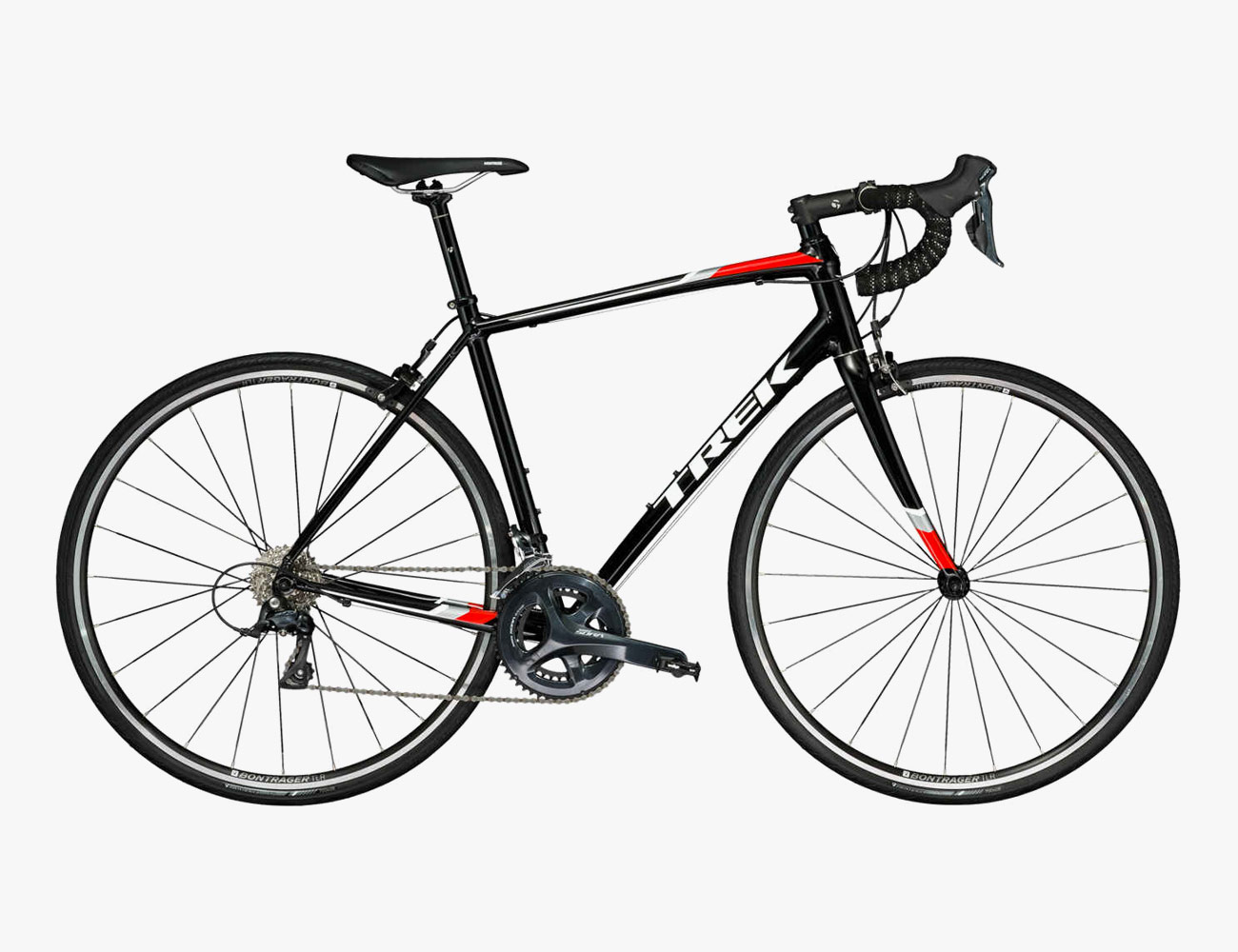
  • Trek Domane AL 3

Best Road Bikes Under $1,000

Editor’s Pick: Specialized Allez Sport

If you’re looking for the absolute best bike for your money in the under $1,000 price point, stop reading and go buy the Specialized Allez Sport. The aluminum SmoothWeld frame is one of the lightest in the category and still maintains great durability. It’s the ideal entry-level bike, and the available colorways (white with black accents or navy with blue accents) are attractive without being overly flashy.

Crankset: Praxis Alba 2D, threaded
Wheels: Axis Sport
Groupset: Shimano Sora, 9-speed

Diamondback Haanjo 3

If you are interested in exploring the burgeoning gravel segment in addition to road riding, the Haanjo 3 is your pick. It comes with wider, knobbier tires and disc brakes (which provide more consistent stopping power in wet conditions). The frame is made from 6061-T6 Alloy which is fully butted for strong welds.

Crankset: FSA Omega Adventure Mega, 46/30T
Wheels: Diamondback Equation
Groupset: Shimano Sora RD-R3000, 9 Speed

State Bicycle Company Thunderbird

For those with legs of steel, I give you the Thunderbird. It’s a single speed, meaning that there are no gears, so if you live in a locale with lots of hills you might want to avoid the Thunderbird. Like the Haanjo, the Thunderbird is well-kitted to take on both road and gravel. It also comes with a carbon fork, which is a nice upgrade at the under $1,000 price point.

Marin Argenta Comp

Marin’s Argenta Comp is about as standard as a road bike comes, but that’s the beauty of it. The 6061 aluminum frame is kitted with serviceable parts that won’t blow you out of the water, but will keep you pedaling for miles upon miles.

Crankset: Shimano R345 Compact, 50/34T
Wheels: Marin Aluminum Double Wall
Groupset: Shimano Sora 9-Speed

Style Rules to Ride By
1. Socks match the kit, match the bike, match the wheels.
2. Bibs always. Shorts never.
3. Keep your junk in your pockets. Nothing looks more disheveled than a tube hanging out the back.
4. Glasses over helmet straps.
5. Six-inch socks, the way the pros do.
6. If you’re wearing arm protection, mind the gap — don’t let the bicep show between jersey sleeve and arm protection.
7. Hats are cool and all, but keep the brim down, unless you’re in Italy.
8. If you’re not a pro, don’t wear a pro team’s jersey.
9. Boldness equates to speed. The faster you go, the more flare you’re granted.

Raleigh Grand Sport

Raleigh’s Grand Sport is an ideal touring bike. At first glance, there isn’t much to say, but take a closer look and you’ll find some truly high-end parts like a Brooks Cambium saddle and Clement Strada gumwall tires. The wheelbase is slightly long, which gives it a planted and stable feel, but also makes the bike feel a bit heavier than others on this list.

Crankset: Shimano Claris Compact 34/50
Wheels: Alloy, Double Wall, 23mm Wide
Groupset: Shimano Claris

Cannondale Synapse Disc Sora

To get a true road bike, with solid parts, a comfortable geometry, a quality alloy frame and disc brakes on top of it all for under $1,000 is pretty staggering. The Synapse Disc Sora is a cousin of the significantly more expensive carbon Synapse Hi-Mod disc, one of Cannondale’s best bikes.

Crankset: FSA Vero Crankset
Wheels: RD Disc, 28-hole
Groupset: Shimano Sora Group

Giant Contend 1

Like the Marin Argenta Comp, the beauty of the Giant Contend 1 is in its simplicity. It’s a basic road bike, Giant is known for making high-quality bikes across all of its verticals. In fact, Giant’s factories are so well regarded that they also make bikes for a host of other brands.

Crankset: Shimano Sora, 50/34
Wheels: Giant SR-2, Tubeless
Groupset: Shimano Sora

Trek Domane AL 3

If there is one brand name in the cycling space that virtually every person knows, it’s Trek. Based in Waterloo, Wisconsin, the brand is by far the most historic and important bike maker in the U.S., and the Domane AL 3 lives up to the brand’s reputation. At its core, the Domane AL 3 is a basic road bike, but it shares a pinch of DNA with Trek’s high-end flagship road bike the Domane SLR.

Crankset: Shimano Sora, 50/34 (compact)
Wheels: Bontrager Tubeless Ready
Groupset: Shimano Sora
Now, Get Some Clothes to Match

Stylish cycling clothes from Rapha, Café du Cycliste, Velocio and more. Read the Story

Note: Purchasing products through our links may earn us a portion of the sale, which supports our editorial team’s mission. Learn more here.

The 9 Best Treadmills for Every Space and Every Experience Level

This guide to the best treadmills of 2018 covers everything from entry-level, all the way up to bucket-list machines.

Introduction

Every home gym starts with a great treadmill. It’s an easy tool to use all the time — whether you plan to walk, run, or both. Depending on the type of treadmill, it can act as a coach of sorts. Programming on the machines has come a long way, and while you might still want to have a TV show streaming or music blasting, at the very least, these machines will provide a little variety into your routine.

Buying a treadmill is an expensive investment that you will need to replace in the long run — it’s not going to last your entire lifetime, especially if there’s more than one runner in the family. Maybe you’re not quite ready to splurge on the top of the line, but want something at an entry-level price point that will give you a taste of what owning a treadmill is like.

This guide offers three entry-level picks, three mid-tier and three to swoon over. Many variables come into play with the purchase of a treadmill — How much space do you have? Will you walk or mostly run on the treadmill? How much weight are you putting on the treadmill? Are you over 6’4″? — We’re making recommendations within the following parameters: you’re running a lot and you have space for a machine.

Tips From An Expert

We spoke with Josh Fly, senior fitness director and master personal trainer at Chelsea Piers, who recently ran 50 miles for charity on the treadmill, about how he picks a treadmill for clients, and himself. One thing to keep in mind, Fly says, is that “in order to mimic running on a trail, path, or race course it’s helpful and necessary to make subtle changes to the incline up and (down and the speeds) so as to replicate the random undulations you’ll encounter in the real world.” Your body adjusts without mentally recognizing it. So when you hop on the treadmill, make sure to change the elevation every so often.

Buying Guide

Entry-Level

  • Sunny Health & Fitness Treadmill
  • ProForm 505 CST
  • Sole Fitness F63

Mid-Tier

  • NordicTrack Commercial 1750
  • Life Fitness T3 Treadmill
  • Precor TRM 835

High-End

  • Woodway Mercury
  • Peloton Treadmill
  • Technogym SkillRun

Entry-Level

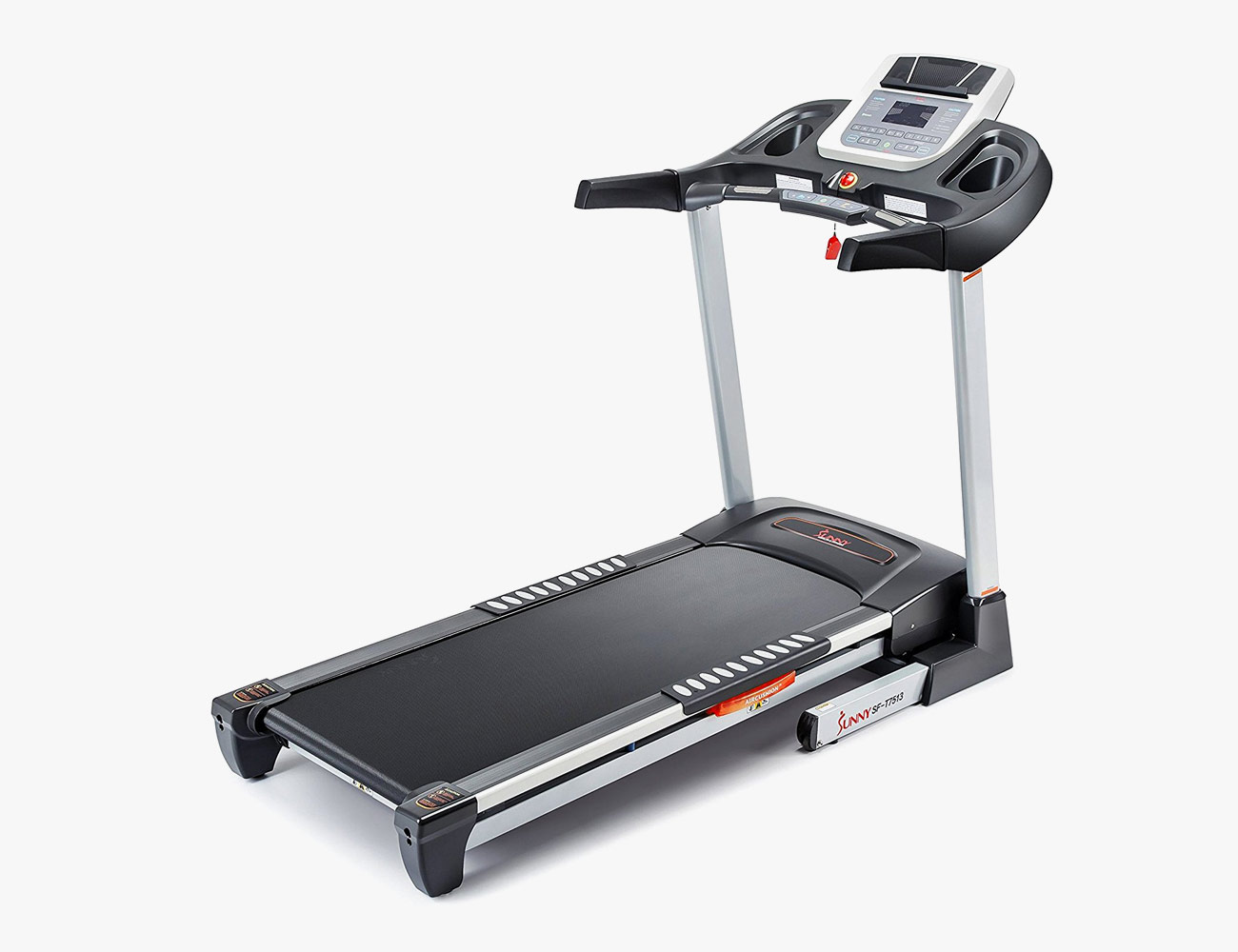
Sunny Health & Fitness Treadmill

For such a low-budget treadmill, the shock absorption is top-notch. Run at speeds as high as 12.5mph, while testing 24 different workout programs. There are 15 incline levels and a digital monitor screen with all the stats you want to see – distance, time, speed, calories, pulse, incline and BMI.

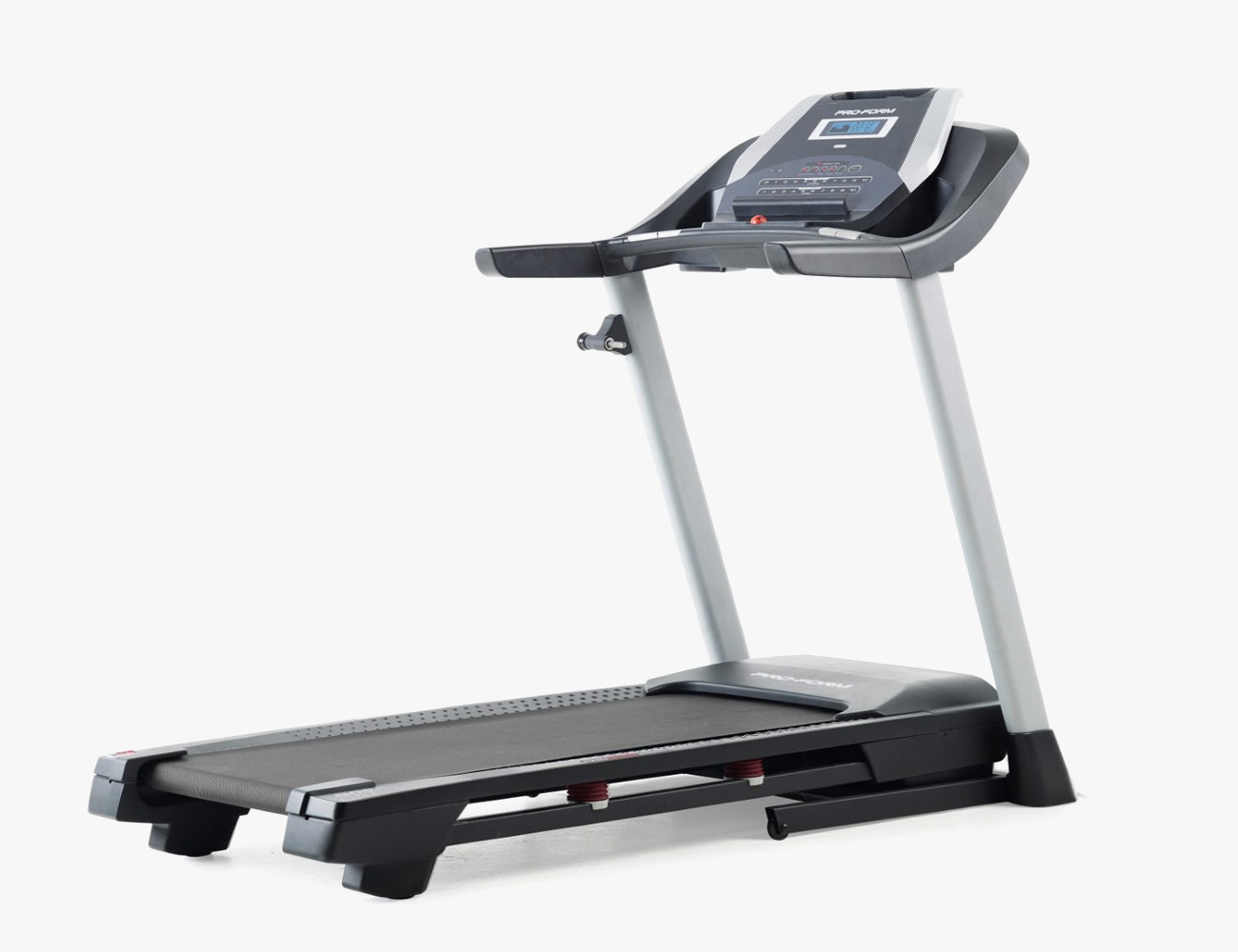
ProForm 505 CST

With 18-workout apps and a sound system that syncs up with your phone, this sub-$1000 treadmill is a smart place to start. The incline goes up to 10%, and it holds a max weight of 325-pounds up to 10 miles per hour.

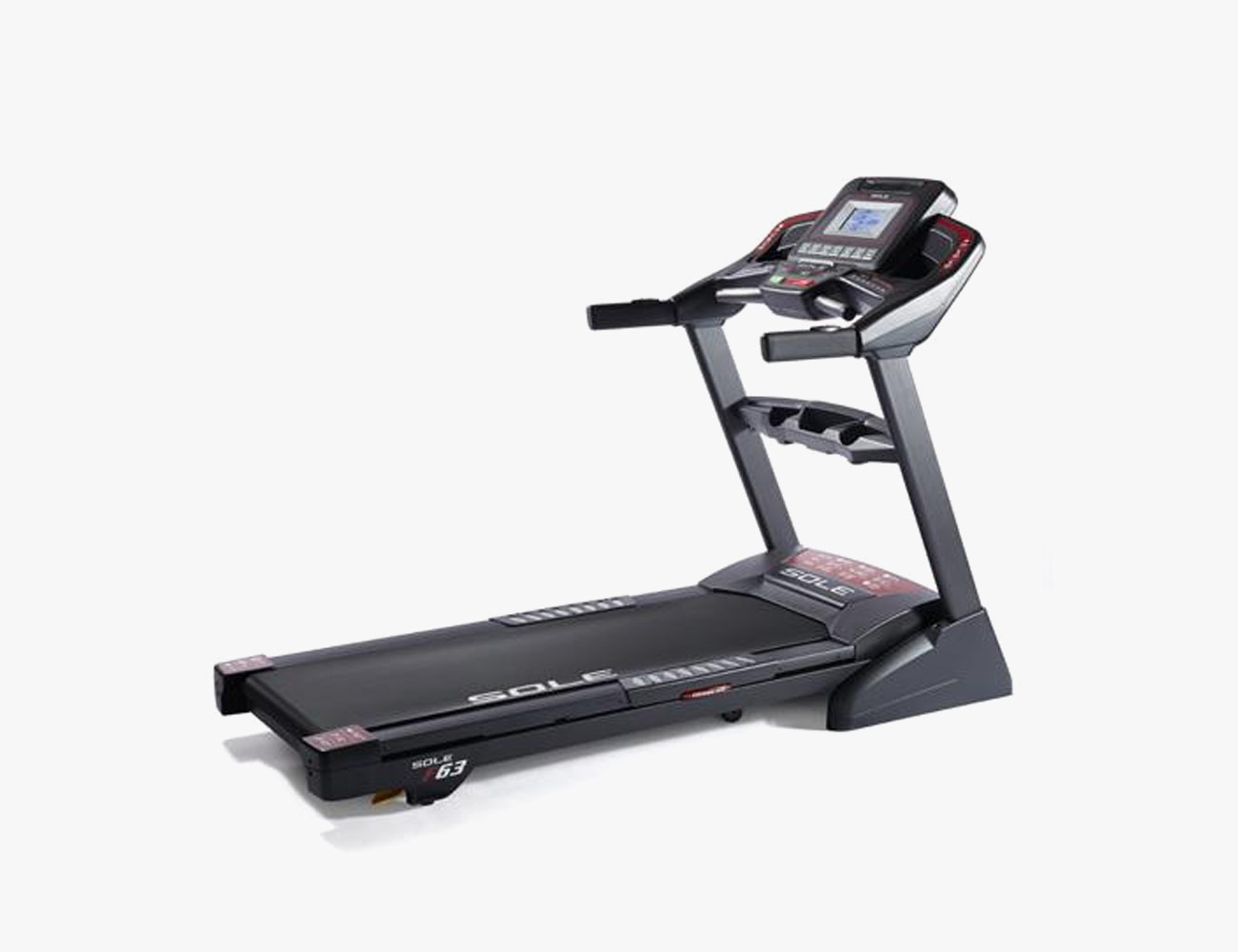
Sole Fitness F63

With just six standard, two custom and two heart-rate specific programs, this is one of the more basic models offered that’s still high-performing and squeaks in under $1,000. The belt folds up, so it doesn’t take up too much space in your home gym (it also makes it great for small apartments), and it holds up to 325-pounds. Run up to 12 MPH at inclines of 15% – and you can connect a chest-mounted heart rate monitor.

Mid-Tier

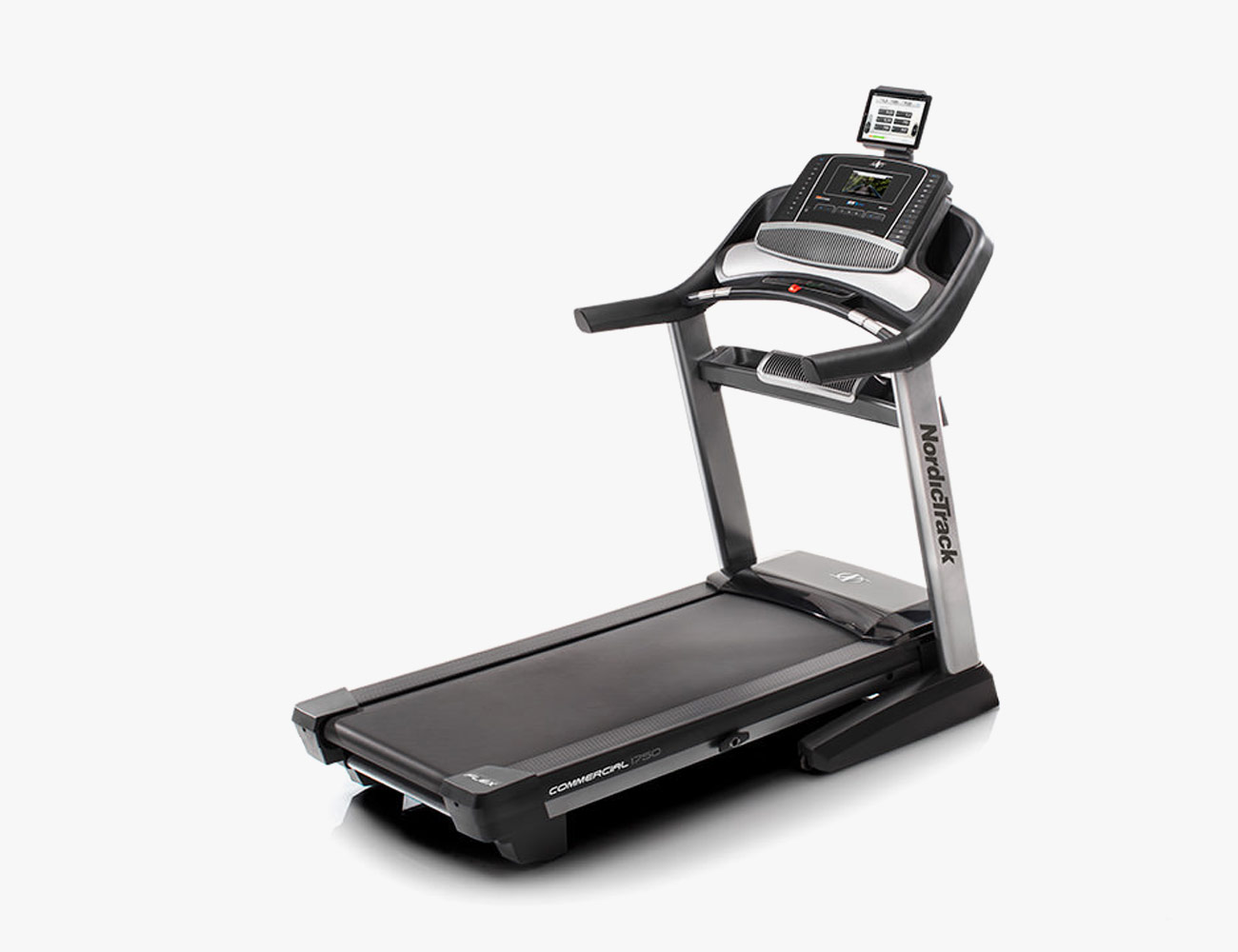
NordicTrack Commercial 1750

The 60-inch belt is great for those over six feet, and it’s two-ply, making it thicker and thus quieter than typical at-home treads. The 7-inch touchscreen is the real winner here with one-touch controls to join LiveCast Workouts (prerecorded studio workouts with trainers directly streamed to the tread) and two workout fans to cool you down for when you’re pushing it. It comes with a chest-mounted heart rate monitor, so you can wirelessly keep track of how hard you’re working. While the belt here is thicker than most entry-level treadmills, one more bump up would be the 2950 from NordicTrack that lets you customize the surface you run on to feel more like a track or a road.

Life Fitness T3 Treadmill

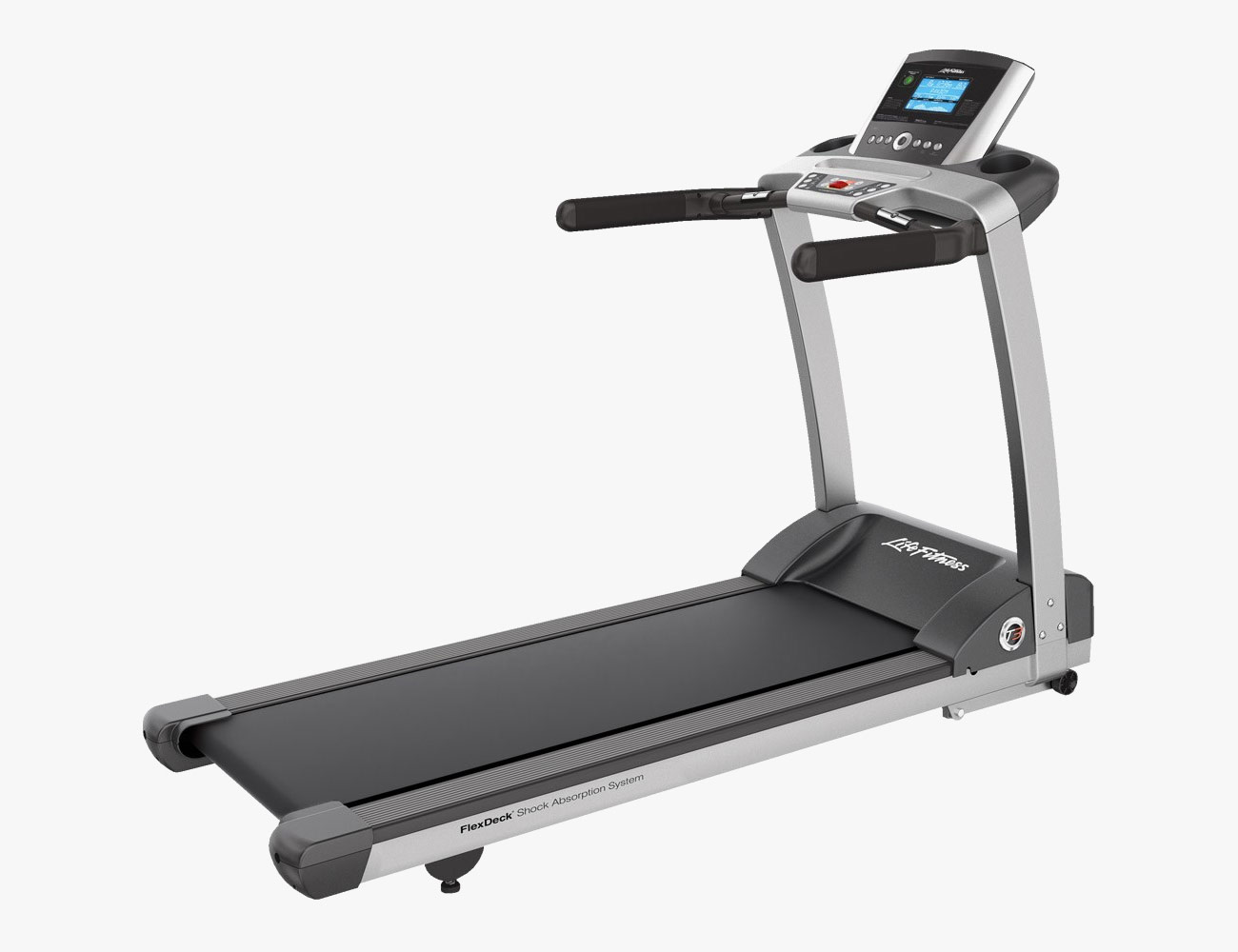
If you’re used to the Life Fitness machines many gyms offer (like Equinox, Blink and Chelsea Piers) you’ll likely enjoy another model under the Life Fitness arm. The next best thing for home use (you can’t get the in-gym model) is the T3 Treadmill, which surprisingly gives you slightly more shock absorption than a high-end Woodway treadmill — simply because of the nature of a belt over slats. It comes with a middle-of-the-road sized monitor filled with 13 workout programs in a range of speeds (up to 12 mph) and inclines (up to 15%).

Precor TRM 835

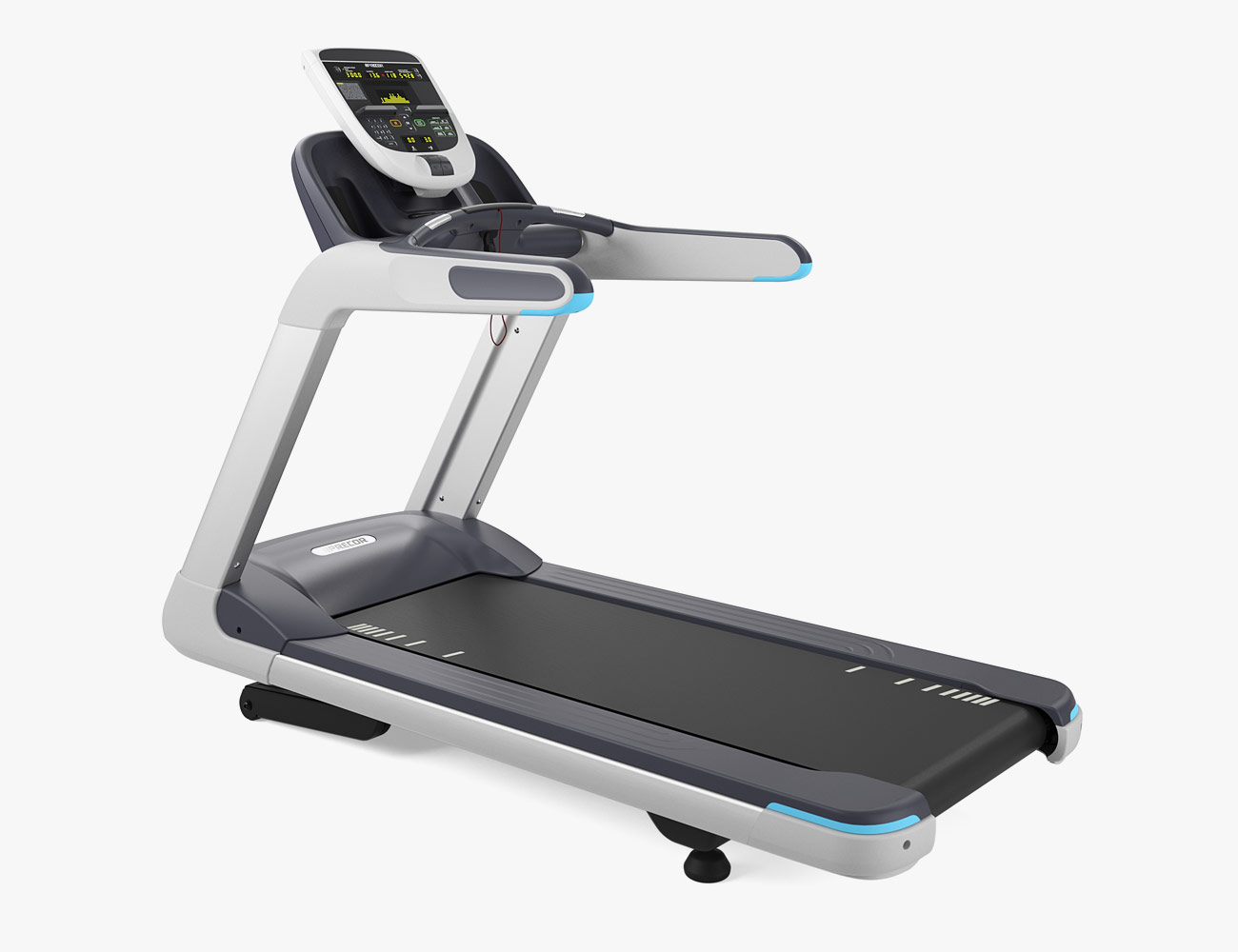
Similar to the commercial grade TRM 932i found at Crunch gyms across the country, this simple, yet durable treadmill is a step up from a fold-away. To control the speed and incline, merely push the dial away from you, and to slow down, tap the gear down. It’s not a touch-screen, but it’s easy to adjust quickly without having to punch in numbers and wait. The arms are a touch longer than some of the entry-level treadmills, so if you like to walk at an incline, or need to hop on and hop off during speed changes, it’s a breeze to grab them. Hit speeds of 15mph at max inclines of 15% – tough enough to exhaust any runner.

Splurge

Woodway Mercury

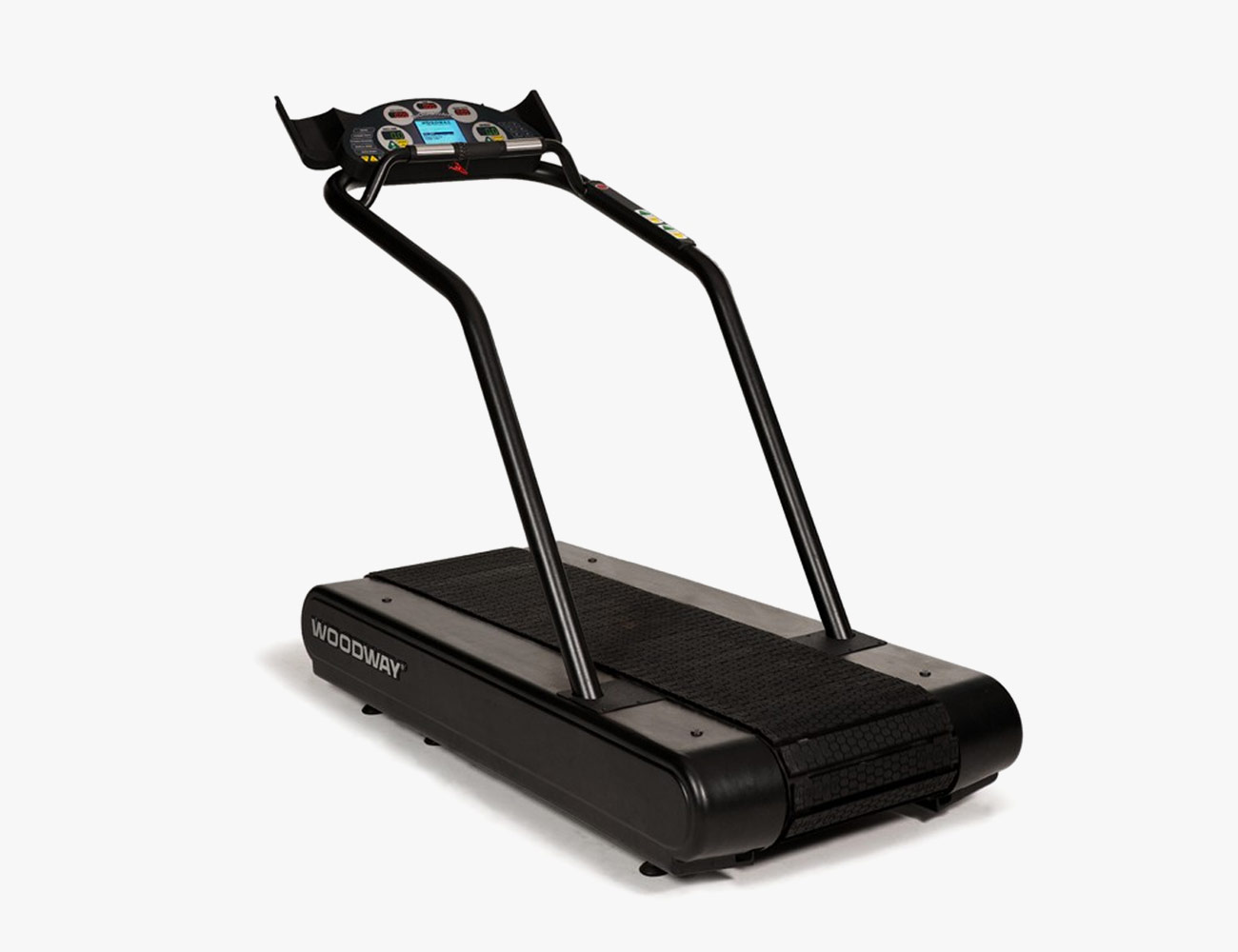
A version of these treadmills can be found in Barry’s Bootcamps across the country as well as at the indoor running class, Mile High Run Club in New York City. It’s much quieter than the typical treads found on many of the other machines here. While the model found in gyms offers more of a display, this one has easy-to-use speed, elevation and stop controls front and center, plus two water bottle holders. There’s no screen, so you’ll have to entertain yourself, but you’re paying for a higher quality treadmill that will last a lifetime (there’s no belt that needs tightening, aligning or lubricating).

Peloton Treadmill

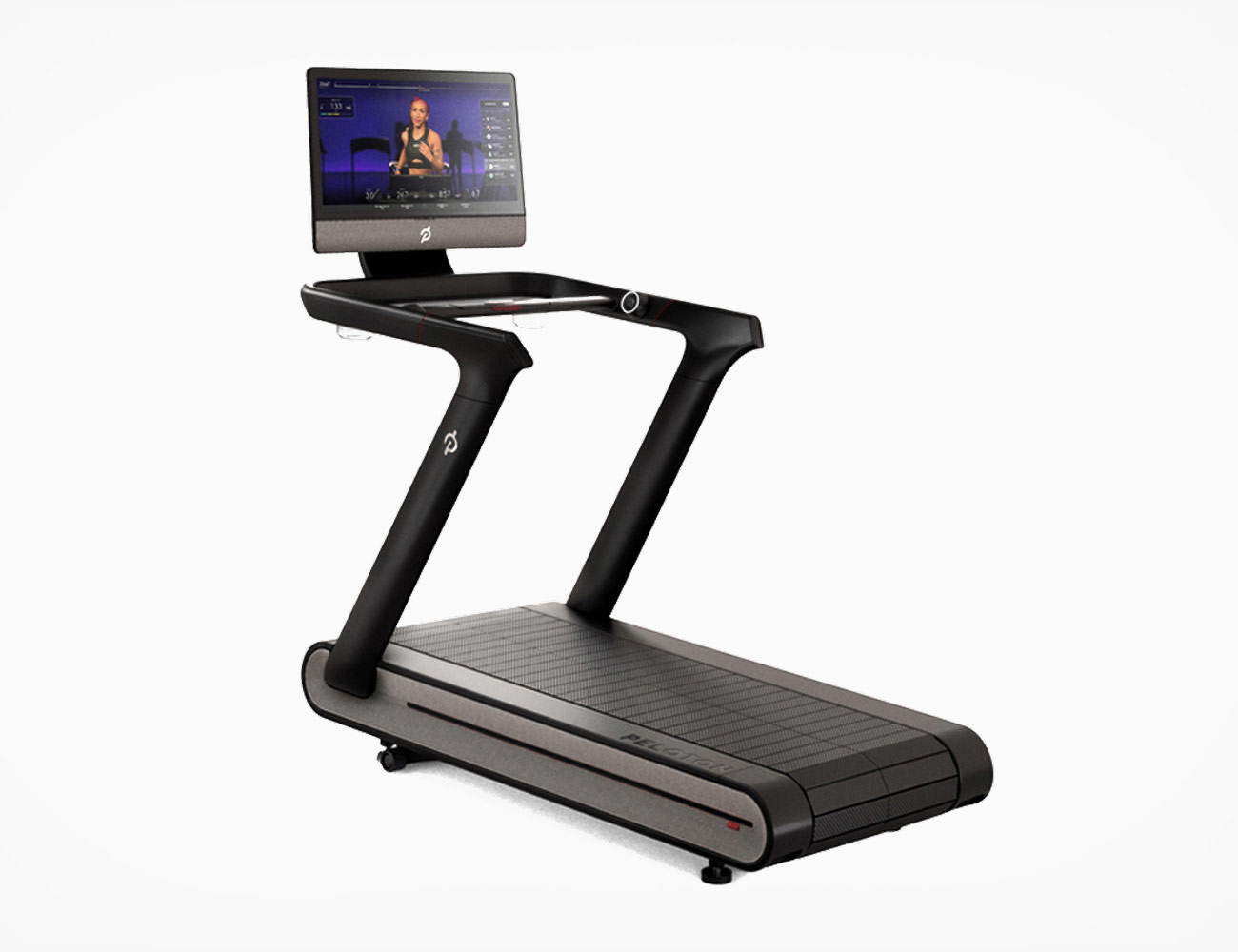
Technically, this treadmill isn’t for sale yet, but pre-sale is happening now, and it’s the flashiest machine we tested. We had a preview of what it’s going to look and feel like, and the test run proved the machine is intuitive, feels good and is high-tech with the capability to live-stream workouts both on and off the treadmill. While this treadmill won’t work for someone in a tiny apartment, it will work in a home gym.

Technogym SkillRun

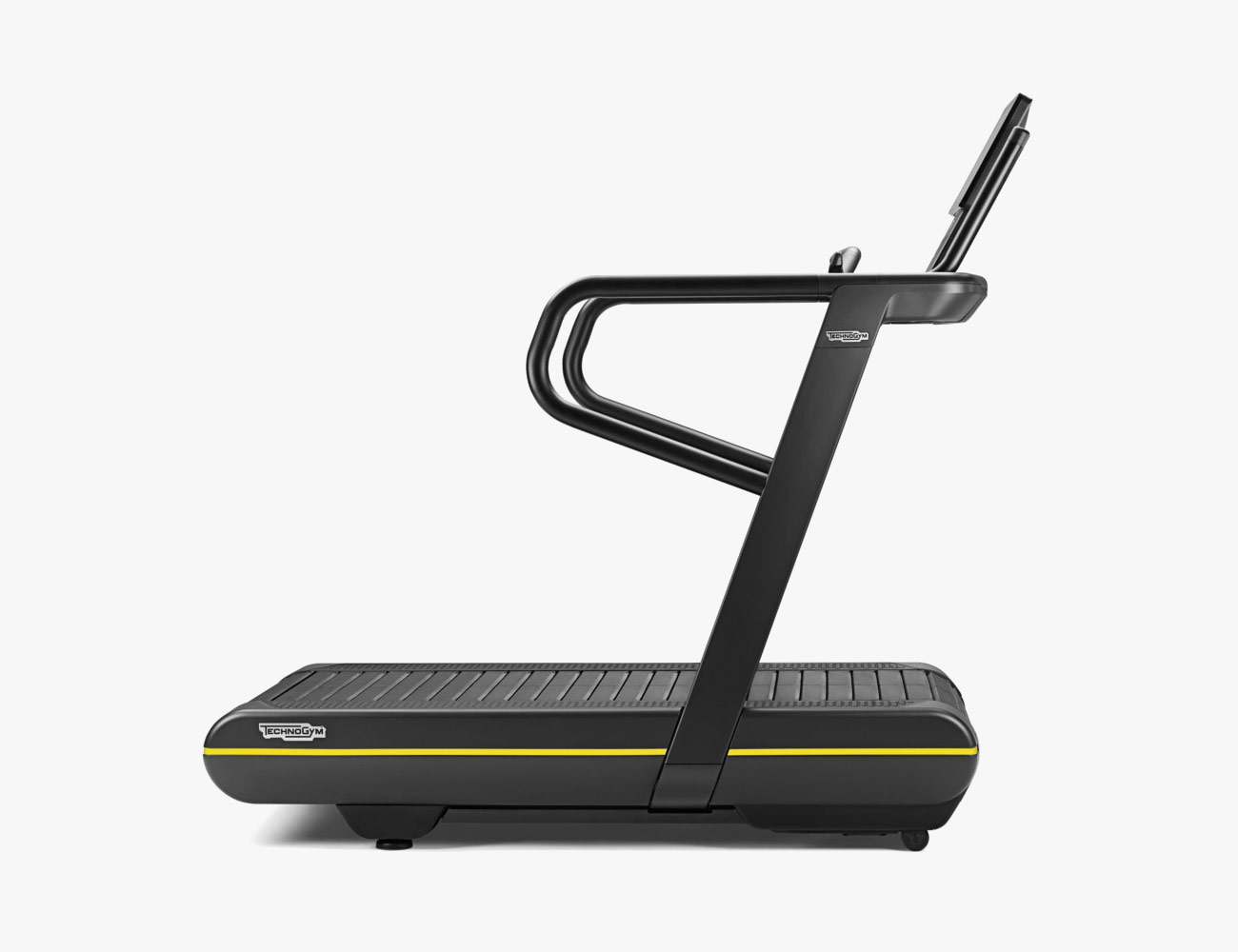
This machine is a one-stop-shop training machine. Used by Olympic athletes (Technogym has been the official supplier of fitness equipment dating back to the Sydney 2000 Games), this machine will provide you with some tough workouts. Hook yourself up to the back of the belt and work on your speed with training that mimics the feeling of running with a parachute on your back. Power up the resistance on the belt and practice explosive power with sled pushes. Run up to 18.6mph and toggle the incline from -3% to 25%. The variety of routines and workouts built-into the treadmill prevent all boredom and sync up quickly to the Mywellness app so you never lose training day stats.

Entry-Level

  • Sunny Health & Fitness Treadmill
  • ProForm 505 CST
  • Sole Fitness F63

Mid-Tier

  • NordicTrack Commercial 1750
  • Life Fitness T3 Treadmill
  • Precor TRM 835

High-End

  • Woodway Mercury
  • Peloton Treadmill
  • Technogym SkillRun
Now, Get Some New Shoes

There’s something for everyone. Read the Story

The Essential Outdoor Gear Picks from Devils Backbone Founder Steve Crandall

Devils Backbone Brewing Company is set in Nelson County, Virginia — just a short drive from mile marker 842 on the Appalachian Trail — and founder Steve Crandall (along with the entire outdoor-oriented DB team) are pretty tapped into the hiking community there. “We get great joy in meeting the 100s of hikers that stop by our place for free camping and some healthy carb-loading stop at our pub,” says Crandall. He started hiking the Appalachian Trail in 1966 at the age of 10 and that love of the outdoors inspired Devils Backbone to partner with the Appalachian Trail Conservancy by donating some of the profits from its Bavarian-style Hefeweizen Trail Angel Weiss to support preservation efforts on the AT. Since that love of the outdoors is part of the culture at Devils Backbone, Crandall shared with us a round-up of his personal must-have gear list for a day or two on the trail.

Pocket Rocket

“I have used everything from white gas stoves to the super fancy jet boils, but you just can’t beat the reliability, light weight and flexibility of this stove.”

Mountain Hardwear Ghost Sky 2 Tent


“I love this two man 65 oz. tent. It has two dry vestibules and allows each person to have his/her own entrance and storage outside the tent for muddy boots. Holds up well in wind and rain and is easy set up and take down.”

Kuiu Ultra Merino 210 Hoodie

“This is a great all season, mid-layer garment. I have taken this on many mountain hunting trips some with rain for days while hiking over fog and rain or snow covered mountain tops. Ultimately you’re going to be wet with sweat and rain leaking in. This hoodie keeps you warm and the hood keeps that precious heat in. If your feet are cold, put on a hat!”

Edmund Davidson Small Drop Point Hunter Knife-

“This 3 ¼ inch BG 42 steel knife in a leather sheath weighs more than a spring-loaded pocket knife, but hey, I am old school and a solid sheath knife goes whenever I am in the outdoors. I have a dozen or so of similar custom-made sheath knives but a man cannot have too many. Some might say these knives are too pretty to take into the timber but their looks are deceiving and they are workers. Buy one and it will last several lifetimes.”

Laphroaig 10-Year-Old Islay Single Malt Scotch Whisky and Arturo Fuente Chateau Series Cigars

“Lewis and Clark, on their journey across the western wilds, stockpiled whisky for their team along the way and for their return. They all lived. At the end of a thirteener (a mountain that exceeds 13,000 feet) or a long hike, I’m usually hurting. Setting up camp and having a tot or two (helpful to add 10,000-year glacial ice) changes the whole outlook of the day. It is good for the soul. The double Chaieaus, half as long as a normal cigar, not only complements the peaty scotch but is helpful in preventing you from burning your fly line in two as you cast to the risers. I learned this the hard way.

The Creator of Flipboard Shares His 7 Gear Essentials

Flipboard founder Mike McCue is a busy man. His day runs from 7 AM to 2 AM, and in that time, he manages to take his kids to school, bike to and from work, work, make it home for dinner, and find time to create. Or at least that’s his schedule when he’s not jet-setting between Flipboard’s offices in Palo Alto and New York City. As the creator of a premier tech product and also a frequent traveler, it isn’t surprising that McCue is also product nerd. “I love gear that is exceptionally useful and well-designed,” he says, and that mentality is reflected in the gear used in his daily life. His arsenal is practical, well-designed and minimal, much like Flipboard (which is influenced by one of his favorite products, the Leica M). Read on for his picks below.

Leica M


McCue loves products that are so well-designed that they force a person to rise to the level of the product. The Leica M is that product for him, which inspires him to be a better photographer.

Patagonia Nano Air Light Hybrid Jacket (Viking Blue)


This jacket accompanies McCue in his daily routine, as well as on weekend hikes. It’s the perfect jacket for California weather, and a great layering piece for his trips to New York.

Peak Design Everyday Backpack 20L


After years of searching, McCue found this backpack and hasn’t looked back. He uses it to carry his camera gear, iPad and everything else he needs without the bulk.

Notes App


The Apple Notes app is McCue’s notetaking app of choice. While on frequent flights from CA to NY, he turns everything on airplane mode, opens up a blank sheet in the app and thinks through key dimensions of his business and product.

iPad Pro


“This is where I spend a vast majority of my time,” McCue says. “It’s incredibly light and capable.” He barely uses his laptop unless he needs Keynote.

Specialized S-Works Epic Hardtail Bike


As someone who bikes much more than he drives, McCue considers his bike one of his most important possessions. Aside from the daily commute, this bike accompanies him on weekend adventures in Palo Alto.

Apple Watch


While not “a watch guy,” McCue he loves his Apple Watch (though he uses it mostly to tell the time).

Peet’s Coffee Lattes


For a person so busy, McCue doesn’t eat much. His secret weapon for getting through the day? A “steady diet of lattes.”

The Best Running Jackets Money Can Buy

Running in the rain can be exhilarating, but only if you have the right gear. There have been some significant gains in sweat-wicking and water-proofing technology since the invention of the poncho, and of all the running jackets on the market, some are more breathable than others and are therefore better suited to running. Durable fabric is also key to a running jacket worthy of your kit. But most importantly, the jacket needs to bring some serious waterproofing to the table along with those other features. Here are seven jackets that fit the bill.

On Running Weather Jacket

The Weather Jacket is feather-light, features sealed zippers and capped sleeves to keep the wind, rain and snow out — yet is still super breathable. The jacket is made from a protective and tear-proof fabric, and the upper portion and sleeves are coated with DWR to keep you dry. The mesh along the inside chest and the lining under the arms allow the jacket to stretch with you and further promotes breathability. While this is on the higher end of the price spectrum, it’s worth the extra coin.

Nike Shield Running Jacket

If you’re looking for a jacket that performs just as well in the snow as it does in the rain, look no further than Nike’s Shield jacket. When paired with a warm mid-layer, the Shield jacket can easily be added on top to keep you comfortable through the harshest of conditions. If you tend to run hot, the vents on the chest and upper back allow plenty of air-flow to cool you down. Small reflective details on the back of the hood and arms keep you safe in low light conditions.

Adidas Supernova Storm Jacket

Ideal for warm and wet weather, the Supernova jacket is Adidas’s finest running jacket. It has all the reflective detailing you could need along the arms for safety. There’s no hood, just a collar, but when zipped up fully, you can easily tuck your chin into the top of the jacket for added protection from the elements. The tail of the coat is slightly longer, which provides a bit of added coverage and protection from the wind and rain.

The North Face Hyperair Gore-Tex Trail Jacket

The North Face Hyperair is a lightweight rain jacket designed for specifically for runners. While it isn’t as breathable as other picks on this list, it’s completely waterproof and will keep you comfortable even in a complete downpour. As the rain falls, you can watch it bead up on the jacket.

Saucony Vigor Jacket

The Saucony Vigor is made from Flexshell fabric, which does an adequate job of blocking out the rain and the wind. Bonded seams and flaps over the pocket zippers mean that anything you toss in there stays dry.

Arc’teryx Norvan Jacket

Designed with trail runners in mind, Arc’teryx’s Norvan offers high-end technical performance thanks to a Gore-Tex C-Knit membrane. The jacket was developed for the conditions of North Vancouver (hence its name). The C-Knit fabric is soft and breathable, while still being guaranteed to keep you dry. The jacket is fairly tapered, so there’s no extraneous fabric. The elasticized hood won’t slip off, and the jacket packs up into itself making it easy to bring along on a run just in case.

Patagonia Storm Racer Jacket

The Storm Racer is a slim-fitting jacket made from nylon ripstop fabric and is coated with DWR to keep you dry. The Patagonia logo reflects on the front and back for added safety, and the jacket rolls up into its chest pocket, making storage easy. Plus, with Patagonia’s warranty and repair program, if you ever run into a problem with the jacket, Patagonia will repair it free of charge.

10 Stylish Waterproof Boots to Beat Bad Weather

Give inclement weather the boot.. Read the Story

10 Socks Guaranteed to Make Your Run More Enjoyable

Running socks can make or break a run. They can’t slip, need to withstand hundreds of miles, hold up in the wash and most importantly, wick sweat. On top of that, it doesn’t hurt for them to look good as well. Every running shoe brand makes running socks, but if a brand makes terrific sneakers, it doesn’t automatically mean its socks live up to the same standard.

Socks are your first line of defense against blisters, hot spots and the dreaded toenail loss situation. There are thick and thin socks, high and low and everything in between. What works best for you is a preference, but the below socks are some of our favorites — and some of the highest performing pairs on the market.

No-Show Socks

Nike Elite Lightweight No-Show

While many would write off Nike socks based on the all-cotton versions you’d find at your local sporting goods store, that would be a mistake. The Elite Lightweight No-Show is one of the best socks on the market. They’ve held up for one of our resident testers over the course of two years despite seeming rather thin.

Feetures! Elite No Show Tab

The Feetures! Elite No Show Tab is a great option if you like thin socks. The back tabs of these socks are double lined to provide added support from the collar — and help prevent injuries to the achilles. They also offer a seamless toe, so there’s no tugging at your socks to move the threads away from sensitive areas on the top of the toe.

Lululemon T.H.E. Sock Silver

The T.H.E. Sock features silver particles woven into the fabric, which destroys bacteria that causes feet to smell and prevents post-workout stink. Lululemon’s training and running socks are seamless, foot-specific (left versus right) and thin, yet provide enough coverage for sneakers with a high collar.

Quarter Height

Farm to Feet Roanoke Ultra Light Sport 1/4 Crew

The merino wool used in these socks is an adjustment from typical performance socks. While not itchy, the fabric has a slightly rougher hand-feel than many synthetic socks. Wool is naturally odor- and bacteria-resistant, so the socks work well in hot sweaty places, like running shoes. They’ll last for multiple days on trail runs without the need for a wash. One thing to note is that there’s very little padding in both the heel and toe.

FITS Light Runner – Low

While these fall just slightly below normal quarter sock height, they’re still comfortable and provide plenty of ankle protection. The tightness of FITS socks means there’s no extra fabric rubbing in places it shouldn’t, and the super-fine merino wool mixed with nylon and polyester makes them comfortable enough for even 10 milers. As one GP tester notes: “FITS are simply the best socks on the market — across the board.”

Darn Tough Vertex 1/4 Ultra-Light

For a brand named Darn Tough, these socks are thinner than you would think possible. But nevertheless, they defy their thin-ness and are virtually impossible to put a hole in. They’re guaranteed for life — if they’re not the most durable, comfortable and best fitting socks you’ve ever worn, Darn Tough will take them back or replace them.

Six-Inch Socks / Crew Socks

District Vision Sindo Performance Socks

These socks are one of District Vision’s first expansions into other markets. As with the brand’s sunglasses, there’s plenty of research and science behind them. But more importantly, they feel good. Three layers of fabric sound like a lot, but the socks are surprisingly thin. There is added cushion under the toe and heel, but on the calf, you’ll feel a slight compression of the thin fabric.

Feetures! Elite Light Cushion Mini Crew Sock

These Feetures! have graduated compression, which means they’re tight at your ankle, and get gradually less tight as they move up. They aren’t as tight as the District Visions (which also have graduated compression), which makes them an easy first step into the compression world. Don’t read too much into the ‘mini’ in the title — it’s just a quarter of an inch shy of the District Vision’s calf height (6″ from heel to top). The socks wick sweat well and stay cool throughout long distance runs. The fabric is fairly thin, reinforced in the toe and heel and is extremely soft to the touch.

Balega Blister Resistant Crew Sock

Slightly thicker than the other options on this list, the fabric on the Balega is better suited to cold weather runs. If you like plush and cushioned socks, these are for you. While the color options leave something to be desired, the rest of the sock is up to snuff. A thin layer of fabric surrounds the arch to keep the socks in place and even after a long day of wear, they don’t smell. Insider tip: These also work well for hiking.

Stance Sediment Crew

Stance is a brand whose socks look cool and still ace performance. The fabric prevents rubbing and chafing, and the reflective details are an added bonus for early morning and night runs. They also feature left and right articulated arch support that feels great when running at any distance.

Best Winter Running Shoes

TDon’t want to stop running outside, despite the cold? These five running shoes conquer ice and snow better than any other shoe on the market. Read the Story

Note: Purchasing products through our links may earn us a portion of the sale, which supports our editorial team’s mission. Learn more here.

5 Instant Coffees That Don’t Completely Suck

Confined to hiking expeditions, road trips without stops and particularly lazy mornings, instant coffee has, historically, had a tough go of it. Well, not anymore. The third wave coffee movement has now infiltrated even the most derided of coffee types, and with it, brought about a shift in what is and isn’t instant. From traditional freeze-dried granules to disposable pour-over contraptions, these five coffees are mobile, quick to make and relatively cheap. Most importantly, however: They taste pretty darn good, too.

Kuju Coffee

The product of a successful Kickstarter campaign, Kuju Coffee was founded by two brothers aiming to bring better coffee to your outdoor activities. Kuju employs single cup, one-time use packets of coffee grinds that fit in your pocket. Each one — available in traditional light, medium and dark roasts — has two “legs” that hook over the edges of your mug or cup, so you need only pour water and wait 120 seconds for some elevated trail coffee when you need it most.

Swift Cup Coffee

Swift Cup is like your classic instant coffee — dump in cup, pour water, stir, drink. However, the Pennsylvannia-based company uses a proprietary method to roast, brew and slowly freeze-dry their product. Swift Cup comes in varieties from the likes of Kenya, Ethiopia, Brazil and Colombia.

Dripkit

Dripkit employs a disposable one-time use pourover similar to Kuju, but instead of sitting in the cup, sits on top of it. Each batch of Dripkit’s current roast — La Basa No. 5, sourced from a family farm in Guatemala — is ground, roasted and package up at their Brooklyn HQ.

Equator Coffees & Teas X Sudden Instant Coffee

When the folks at Sudden Instant Coffee, a recognized name in the small but growing not-totally-trash instant coffee game teams up with one of the best roasters in the country, there’s something good afoot. Equator Coffee & Teas partnership with Sudden yielded some seriously powerful single-origin classic instant coffee. Each of the six test tubes of instant alertness in each order are exclusive to Huckberry’s site, and your mug.

Voilà Coffee

When Voilà opened up shop online in November of last year, they sold through their entire stock so quickly they had to disable the “shop” tab on their website. After a couple months of re-stocking, they reopened for business in January, with each individually portioned pack of instant coffee aiming to highlight the particular region each roast is sourced from.

How to Read a Bag of Coffee Beans

Three things that shape the flavor and quality of a bag of beans, according to Counter Culture Coffee’s Thomas Costello. Read the Story

The 8 Best Camping Blankets of 2018

When it comes to camp bedding, the sleeping bag reigns king. It makes sense — a sleeping bag’s mummy-style construction makes it adept at providing and maintaining warmth, even in sub-zero temperatures. But technical sleeping bags were designed with high alpine pursuits and extended backcountry jaunts in mind, and while they now come in a variety of shapes and temperature ratings, sleeping bags tend to be techy.

Enter the camp blanket. Often made using the same functional materials as sleeping bags — materials like water-repellent down insulation and ripstop nylon shells — camp blankets perform the same goal. They provide warmth away from the comforts of home, but beyond that, they offer more flexibility, and they do it with more style. Without the restriction of a zipper, camp blankets are ideal for summer camping. And in true contemporary outdoor lifestyle fashion, technical camp blankets easily transition from the tent to the living room sofa, to the cabin, to the van without much fuss. They aren’t specialized for a single environment like a zero-degree down sleeping bag might be; they’re versatile and practical, which is ideal for outdoorsmen and weekend warriors alike.

Editor’s Choice: Kammok Firebelly


Kammok may be best known for its hang-anywhere hammocks, but the Austin, Texas-based outdoor brand hit a homer in expanding into camp bedding. The Firebelly, available in both down- and synthetic-insulated versions is a lightweight, zipperless cover that’s fit to fill in for any sleeping bag in warmer weather. Hidden in the side of the blanket’s hems are tiny pockets that conceal velcro tabs and loops that allow you to connect one side to the other. That, paired with drawcord-equipped, cinching top and bottom hems, allow the Firebelly to close up almost entirely and become a virtual stand-in for a sleeping bag. Pro tip: use these features to create an enclosed foot box and sling it over the bottom of a sleeping pad so you, and the Firebelly, won’t slide off in the night.

Materials: Atmos nylon ripstop with DWR, Pinneco CC synthetic insulation (synthetic version)
Dimensions: 75 × 52 inches
Weight: 1.9 pounds (synthetic version)

Best Down Blanket: Rumpl Down Puffy Blanket


No company has embraced the outdoor lifestyle trend of the technical blanket more so, and quite as successfully, as Rumpl. Its Down Puffy Blanket is the most specialized in its line — Rumpl constructed the blanket with many of the same materials found in premium backpacking sleeping bags, including 600-fill down and a water-repellent 20-denier ripstop nylon face fabric. The Down Puffy Blanket packs down small enough to fit inside a backpack and comes with Rumpl’s signature styling that makes it fit for cabins and cars too.

Materials: 20D ripstop nylon, DWR finish, 600-fill down
Dimensions: 54 x 80 inches
Weight: 1.4 pounds

Best Indoor/Outdoor Camp Blanket: Nemo Equipment Puffin


If there’s one thing that most technical camp blankets can improve on, it’s looking and feeling less technical. Many of them still adhere to the aesthetic of a flatter, zipperless sleeping bag. One that walks the line strategically is NEMO Equipment’s Puffin. It is technical — the blanket is stuffed with plenty of synthetic insulation to keep you warm outdoors, it has a snap button “foot nook” — but its shape and wavy baffles allow it to traverse into the home as well. Its outer fabric, a water-repellent nylon micro-ripstop, prudently lacks that outdoorsy sheen of most technical fabrics, and it’s far less…swishy.

Materials: 40D nylon micro-ripstop with DWR, synthetic insulation
Dimensions: 57 x 85 inches
Weight: 2 pounds

Best Blanket for Couples: Therm-a-Rest Vela Quilt


Camp blankets are designed to dumb down the tech and make camping a more homey experience. Sleeping side-by-side in separate zippered sleeping bags is distinctively not homey, so Therm-a-Rest created the couple-friendly Vela. The Vela is a quilt, but that doesn’t mean it isn’t techy — Therm-a-Rest has learned a lot from making high-quality sleeping bags. The Vela is filled with 650-fill water-repellent down and has baffles that extend the length of its sides to help trap heat. Its footbox is also elasticized so that neither you or your partner’s feet will slip out during the night. The Vela also integrates with any other Therm-a-Rest products you already own (like sleeping pads) with side-mounted snaps and an included loop kit.

Materials: 20D Polyester Ripstop with DWR (shell), 20D Polyester Taffeta (liner), 650 Fill Nikwax Hydrophobic Down
Dimensions: 72 x 84 inches
Weight: 2.2 pounds

Best for Instagram: Pendleton National Park Collection Blanket


For nearly a century, Pendleton has paid homage to United States National Parks with wool dyed in stripe, block and chevron. Its National Park Collection blankets, made of 100% pure virgin wool and made in the USA, have become rightfully iconic. These blankets are thick, heavy and warm — perfect for those more concerned with appearances than keeping to the latest tech. While the collection has grown, the Glacier National Park Blanket is still the most recognizable.

Materials: Pure virgin wool
Dimensions: 66 x 90 inches (twin), 80 x 90 inches (full), 90 x 90 inches (queen)

Best for Your First Aid Kit: SOL All Season Blanket


Ok, yes, this is less of a camping blanket and more of a worst-case-scenario survival tool. But SOL — short for Survive Outdoors Longer — has beefed up the typical lightweight, foil-esque survival blanket for extreme versatility. It’s not something you’ll wrap up in on the couch when you aren’t out in the backcountry, but it can be used as a tent footprint, a makeshift shelter or a draggable, tarp-like hauler. And if you do decide to cocoon inside of the All Season Blanket, it’ll keep you nice and toasty.

Materials: polyethylene, vaporized aluminized coating
Dimensions: 6.5 x 2.4 x 11.25 inches (packed)
Weight: 1 pound

Best for Sleeping in the Car: Filson Mackinaw Blanket


Camping next to a car is one thing, but bedding down inside of it is something else altogether. Depending on how dedicated you are to #vanlife, a night in the car might mean sleeping on a platform in a truck bed or laying down the seats and making do in a wagon. In either case, cars offer ample shelter but little warmth. Many of these blankets will do in a car, but since you have the extra space, it can be worth it to go big. Filson’s heavy Mackinaw Blanket is 100% USA-sourced virgin Mackinaw wool, so it’ll provide plenty of warmth, even when damp. Like most Filson products it’s super durable, in this case thanks to a serged hem that won’t fray over time, which is handy because the Mackinaw Blanket will last for years.

Materials: 100% virgin Mackinaw wool
Dimensions: 72 x 90 inches
Weight: 5.5 pounds

Best for the Beach: Slowtide Zephyr Blanket


While you technically could use many of the blankets on this list to hang at the beach, you shouldn’t. Sand is more invasive than dirt and dust, it gets on anything and will stay there until the end of time. If you’re a dedicated beach-goer, it’s smart to have a dedicated beach blanket. Slowtide has nailed beach style with its line of printed towels and its blankets are up to snuff too. Made with Turkish-style chambray fabric, the Zephyr is big enough for a group outing. It’ll beat that old sheet you were planning to use any day.

Materials: Turkish style chambray fabric
Dimensions: 80 x 66 inches
Meet the Regulus

Nixon’s Regulus watch — shockproof and water-resistant to 100 meters — is built to withstand tough terrain, whether you’re on dry land, high in the mountains or out at sea. Designed with input from special ops personnel, the minimal, 46mm case is made from durable, fiber-reinforced TR90 and the sturdy timepiece is equipped with dual chronographs as well as a five-year battery life. Learn More

Note: Purchasing products through our links may earn us a portion of the sale, which supports our editorial team’s mission. Learn more here.

The 10 Best SUVs Under $50,000

This list of the 10 best SUVs under $50,000 serves as a guide to one of the most popular consumer automobile segments and includes important terminology and recommendations for almost every driver.

Prefer to skip directly to the picks? Click right here.

The Short List

Best All-Around SUV: 2018 Volkswagen Atlas
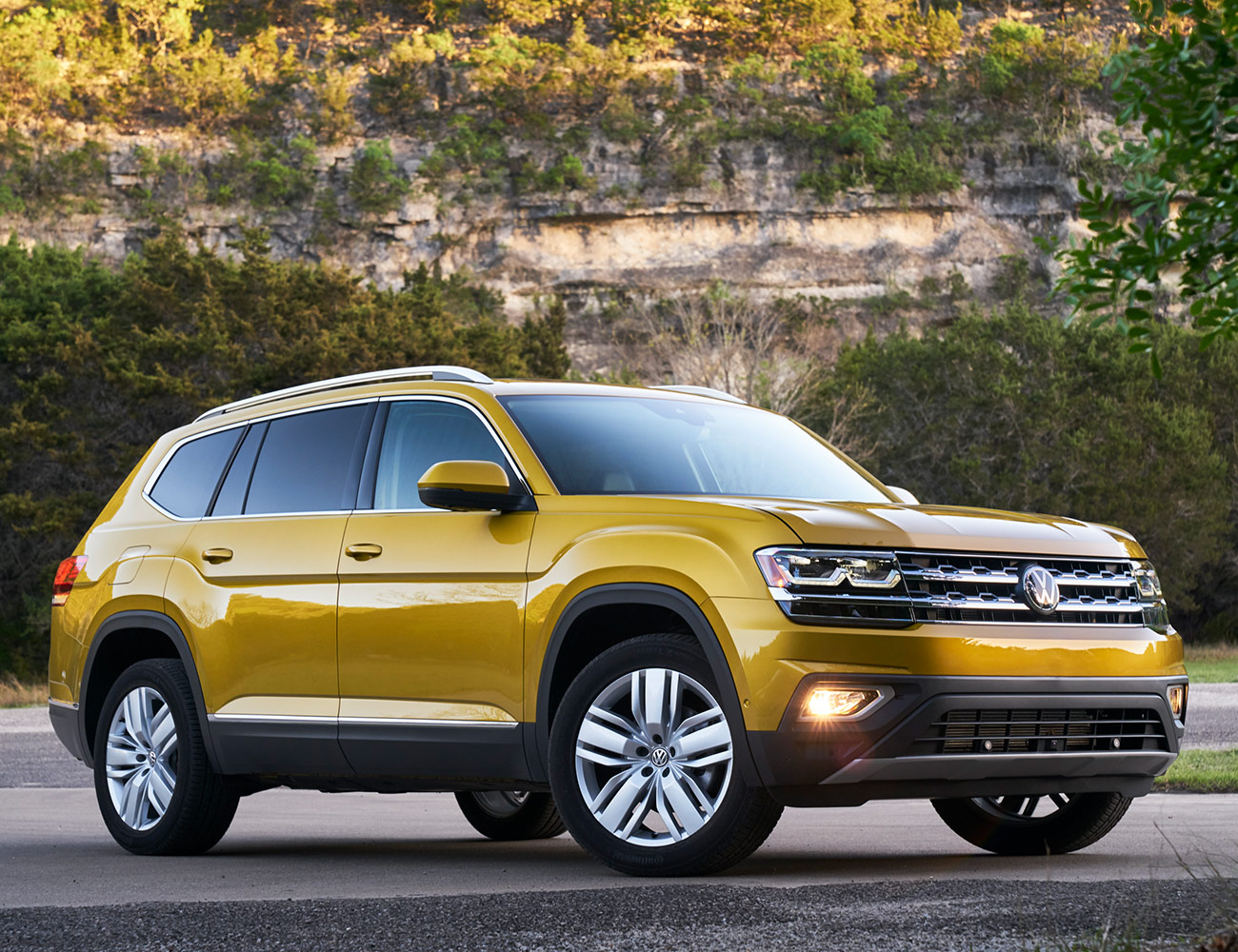
The Volkswagen Atlas was the German automaker’s first new model after the “dieselgate” scandal first erupted. The all-new three-row SUV was shouldering a lot of responsibilty, but when VW revealed the Atlas, it was hard to imagine the US-only SUV not being a success. The formula was simple: three-rows of seats, decent power, technology and options. VW aimed right for the heart of the American consumer and hit bullseye. If you want options, the Atlas comes in 12 different trim levels. But start with the V6 and opt for the Volkswagen Digital Cockpit (the same as Audi’s Virtual Cockpit) and you can’t go wrong. A full-size SUV from a reliable (if not totally trustworthy) brand at the just the right price point.

Who It’s For: Full-size SUV fans who want something slightly smaller, and early-adopter types who like a good deal.
What’s Good: Most everything. “VW has made an extremely drivable machine: smooth and quiet at highway speeds, remarkably flat in curves. The Atlas accelerates strongly, thanks to the 3.6-liter VR6 engine. And since the Atlas weighs a relatively svelte 4,500 pounds, it feels kind of light on the road.” Tech is strong, too: “there is a “digital cockpit” with its 12.3-inch TFT display, 480-watt Fender-sourced audio system, Apple CarPlay, Android Auto, full LED lighting and myriad driver aids. The AWD Atlas appears to have fairly respectable off-road capabilities, heralded by both the car’s off-road mode, which adjusts throttle and transmission characteristics to manage tricky traction scenarios, and a novel offroad ABS system. The last notable story is interior space. Atlas is roomy enough for tall adults in the third row. Behind the third row is 20 cubic feet of storage, and a full 97 cubic feet of cargo volume is at your disposal with all the rear seats folded.” – Eric Adams
What to Watch Out For: All-wheel drive is not available with the smaller, 235-hp turbocharged 2.0-liter inline-four engine. Towing capacity maxes out at 5,000 pounds.
Value: Strong. The Atlas features a base price of just over $30,000, which is on par with or lower than other popular seven-passenger SUVs like the Dodge Durango at $29,995, Honda Pilot at $30,900 and Audi Q7 at $49,900.
Design: Conservative and in line with Volkswagen’s look, but not outright gorgeous. “Under harsh light, the Atlas’s styling emerged as crisp and serious, and in general highly appealing. That said, I’m never a fan of any fender creases, like those on the Bentley Bentayga or Dodge Charger, that add ‘interest.’ Atlas has such lines, connected by a crease running the length of the doors, but I’ll admit there have been worse crease-crimes committed on cars.” – Eric Adams
Verdict: “It fills that well-loved, great big seven-passenger SUV niche American buyers love. It’s priced to sell, starting just above $30K. It’s attractive and distinctive and it packs a roster of smart decisions.” – Eric Adams
What Others Are Saying:
“Like its namesake, the Volkswagen Atlas can carry the world on its shoulders—figuratively speaking. Two adults fit comfortably in the third row with room for luggage behind them. Apple CarPlay and Android Auto are standard; 12-speaker Fender audio is optional. The base model comes with a 235-hp turbo four, front-wheel drive, and an eight-speed automatic. All-wheel drive is available if you choose the 276-hp V-6. Optional safety tech includes automated emergency braking and lane-keeping assist.” – Car and Driver
“If you’re constantly carpooling or taking long trips with friends and family, the Atlas is a great choice in the midsize SUV class. It has an above-average starting price for the class, but it comes with a good number of standard amenities, including smartphone integration and a 6.5-inch touch-screen infotainment system. Its available features list is even longer, with notable extras like forward collision monitoring and navigation.” – U.S. News and World Report
“The 2018 Volkswagen Atlas doesn’t do much to inspire emotion, but the three-row SUV is well-built and should satisfy most consumers.” – Road Show

Engine: 2.0-liter inline-four; 3.6-liter V6
Horsepower: 235; 276
Torque: 258; 266 lb-ft
Price: $30,075

Best SUV for the Value: 2018 Mazda CX-5 Grand Touring AWD
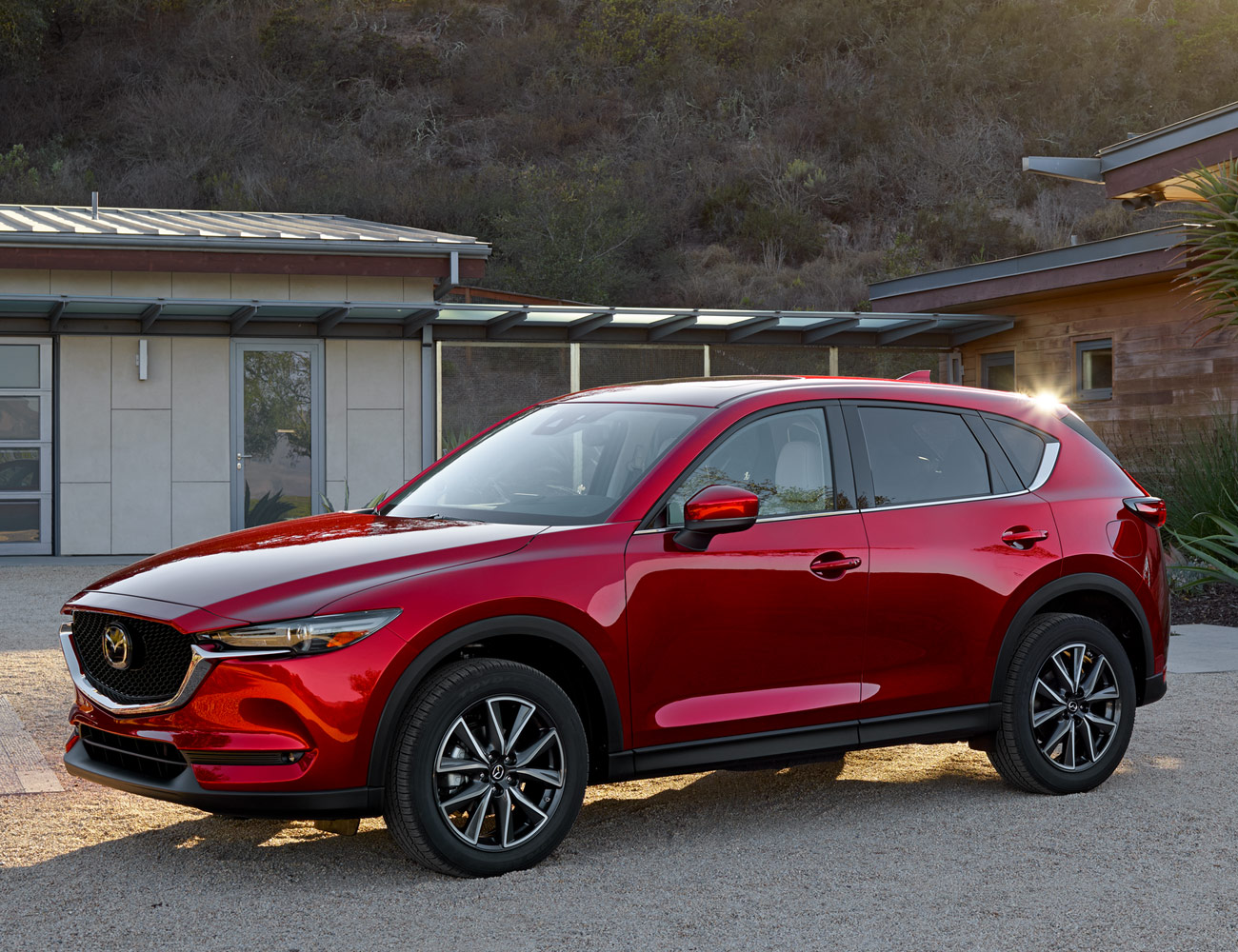
width=

Even at $31,000 you won’t get a barebones CX-5 — that’s only where the top trim level pricing starts. Select AWD, the most expensive paint and every single option offered and you’re still only looking at $36,425. Combine the incredibly affordable price with one the best designs to land on a compact SUV, then throw in Mazda’s signature crisp handling and it gives the VW Atlas a run for its money for the top spot. The CX-5 might just have snagged it, if only it had more power and an extra row of seats. But not everyone needs that much room — for you, this level of bang-for-your-buck can’t be beaten.

Who It’s For: Sports cars fans who need an SUV-sized vehicle’s capabilities.
What’s Good: Great looks and quality inside and out are hard to beat in this segment, but the CX-5, like all of Mazda’s offerings, is a blast to drive thanks to sharp handling.
What to Watch Out For: Mazda’s tech frustrates some reviewers, and cargo room is relatively scarce, at 30.9 cubic feet behind the second row. There is no third row.
Value: Fully loaded, the AWD CX-5 slots in around $36,000, including every tech gadget, trim package and optional extra you’d want. Considering that direct, yet upscale, competitors like the Mercedes-Benz GLC and Audi Q5 offer base prices starting thousands of dollars higher, the CX-5 is an objectively good deal.
Design: Excellent. Mazda takes some risks with its overall design language, and it pays off in spades, and translates extremely well to all of its vehicles, from the Miata to the larger CX-9 crossover.
Verdict: The CX-5 sits square at the intersection of fun and frugality, making it a prime choice for anyone with a pulse.
What Others Are Saying:
“As long as cargo space isn’t your main reason for buying a compact crossover, the 2018 Mazda CX-5 is an excellent, fun-to-drive choice.” – The Car Connection
“The marvelous Mazda appears more expensive than it is. [Its] pièce de résistance is a phenomenal chassis that combines precise steering with refined road manners. Based on the numbers, the CX-5 isn’t the best at anything. But it is the best-looking and best-driving compact crossover. That makes it a winner in our book.” – Car and Driver
“In a 2017 First Test, we noted that due to its additional curb weight, the new CX-5 is slower than its predecessor and it the non-defeatable stability control made it a handful during handling tests. We enjoyed the CX-5’s crisp steering, quick throttle response, and quieter cabin thanks to additional sound deadening. Its handling chops continued to impress where it felt right at home on winding roads and didn’t exhibit much body roll.” – Motor Trend

Engine: 2.5-liter inline-four
Horsepower: 187
Torque: 186 lb-ft
Price: $30,945

Introduction

Despite an overall drop-off in auto sales in the U.S in 2017, most SUVs actually saw a slight rise in sales. The people have spoken, and SUVs are what they want.

So, if you’re in the market for a new vehicle, there’s an incredibly good chance you’re considering an SUV. However, choosing one among the endless many is no easy task. Moreover, since the average price for an SUV 2017 was just under $40,000, it’s a decision that shouldn’t be taken lightly. To cover all the bases, we bumped the budget up to $50,000 and chose the best new SUVs you can buy in 2018.

Terms to Know

SUV: A Sport Utility Vehicle. What makes an SUV is subjective, as there is no official definition. In its strictest sense, an SUV is a body-on-frame vehicle, usually based on a truck platform, that features significant ground clearance, all- or four-wheel-drive and a closed rear section that serves as a passenger or cargo space. Classic examples of SUVs include the Chevrolet Suburban and Jeep Cherokee.

Crossover: This is a recently-coined term that describes a unibody vehicle, often based on a passenger car platform, that features elements common to SUVs: all- or four-wheel drive and raised ground clearance and ride height, among others.

Body-on-frame: Body-on-frame vehicles consist of a stiff structural frame, which could be considered the vehicle’s skeleton, onto which is mounted body components like fenders, roofs and doors. The industry has moved away from this type of construction, which was how vehicles were made for decades. Vehicles that still incorporate this style of construction are mostly utility-oriented, like heavy-duty trucks and buses, though many old-school SUVs, like the Toyota 4Runner, still utilize this method.

Unibody: Most modern vehicles are constructed using a unibody approach, in which the structural frame components are integral to body components.

Four-wheel-Drive (4WD):This simple system drives all four of a vehicle’s wheels simultaneously and with equal amounts of power, causing each wheel to spin at the same rate. Useful in situations like rock-crawling.

All-Wheel Drive (AWD): This complex system varies the amount of power sent to each wheel in real time, allowing the vehicle to find and utilize the maximum amount of grip possible. Generally, there are two different types of AWD: brake-vectoring and computer-controlled differentials. Brake-vectoring systems stop individual wheels from slipping by automatically modulating individual brakes, which allows power to flow to unbraked wheels with traction. Electronic differentials sense in real-time which wheels are slipping and which have traction and direct power toward the latter through physical differentials. More and more, AWD is featured in all types of vehicles, from wagons, like Volvo’s V90 Cross Country, to sports cars, like Audi’s TT.

Part-time Four-Wheel Drive and Part-time All-Wheel Drive: Almost all vehicles equipped with 4WD or AWD feature part-time systems, which allow the driver to switch the modes on and off at will. When 4WD or AWD is not engaged, vehicles are relegated to either front- or rear-wheel drive: most crossovers do the former.

Approach angle: The steepest angle, in degrees, at which a vehicle’s front tire can contact a surface without another part of the vehicle, like the front bumper, making contact with the surface. Taller suspensions and bigger tires (and, in some extreme cases, removing the bumpers) improve approach angle.

Departure angle: The steepest angle, in degrees, at which a vehicle can descend backward without any part of the vehicle other than the tires making contact with the surface.

Ride height: How far off the ground the lowest point of the vehicle is.

What Exactly Is an SUV?

The term “SUV” gets thrown around an awful lot. Used to be, an SUV, or sport utility vehicle, was a truck-based, body-on-frame vehicle with four-wheel-drive capability. SUVs were rugged and adventure-focused, sometimes military-inspired, and always center to the American Dream: a big, shiny, SUV was a symbol of classic stateside excess, and in the 1990s and 2000s, the country seemed to be a sea of high-roofed utes. This was the time of superlative Hummer H1s and Ford Excursions, which completely dwarfed almost everything else on the road, save actual utility vehicles. Prior to that, Broncos and FJs roamed the streets and woods and beaches. But because constitutes a sport utility vehicle has always been an inherently fluid concept, the marketplace continues to shift for various reasons.

As environmental restrictions have become necessarily tighter in recent decades, and especially after the economic collapse of 2008, a wake-up call has spread across the auto industry. Like the death-blow meteor that made extinct outsized reptiles millions of years ago, the challenges of our times have necessitated that even our biggest vehicles become more efficient and rely less on fossil fuels. In the SUV’s heyday, we didn’t care much about how much gas we burned in the name of big-vehicle excess. Those were traditional times; things aren’t so traditional anymore. SUVs have become car-like; crossovers were invented; the automotive evolution is constant.

We, the car-consumer public, still generally want large vehicles. But car companies have been forced to produce more efficient products as they are, more and more, held accountable for emissions. That, coupled with the notion that it’s much cheaper to mass-produce vehicles that share common, car-based architecture, has dictated that SUVs of yore — like the Mercedes-Benz G-Wagen and Toyota 4Runner — are endangered species. But this evolution hasn’t stopped us from calling big vehicles, be they crossovers or, in some cases even just tall wagons, SUVs, despite them not being simple trucks in the traditional sense.

So what is an SUV today? It used to be a rock-crawling, Jeep-like vehicle that could also on occasion ferry people in comfort. Now, it’s the opposite: an on-road automobile with a higher-than-normal ground clearance that can power all four of its wheels in the event it ever has to put a tire off the pavement. Today’s SUV still provides sport and utility, but it does so with different proportions and in different ways than in the past. Purists will scoff at the notion that a lot of the vehicles on this list are, in fact, on this list. But SUV purists are going the way of the old-school SUV in favor of the sport utility vehicle our times demand. And as you can see below, that is definitely not a bad thing.

The Future of SUVs

When Porsche launched its Cayenne SUV in the early 2000s, purist enthusiasts were at a loss. The SUV seemed to be all four horsemen of the apocalypse rolled into one: first, Porsche had taken away the air-cooled 911, and now an elephant-sized charlatan wore the Stuttgart crest. But consumer trends have dictated the Cayenne’s success: people want SUVs from premium and luxury sports car brands like Porsche just as much as they do from mainstream brands like Ford and Chevy. The Cayenne was just the beginning: prestige brand after prestige brand has jumped on the (lifted) bandwagon, breaking into the space for the first time.

Bentley, who launched its Bentayga SUV in 2016, becoming the first luxury automaker to do such a thing. In true form, the Bentayga is superlative luxury and refinement: an exotic and powerful W12 engine motivates a plush, materials-rich cabin that’s customizable with every type of wood and color of leather, not to mention an optional $160,000 clock. Already, Bentley is introducing V8 and hybrid versions of the Bentayga, a vehicle that shares a platform and many components with other vehicles in Volkswagen’s (the brand’s parent company) lineup, notably the Audi Q7.

Other luxury makers are rapidly following suit for their upscale customers with different takes on what an SUV looks like. In the last few months, Lamborghini, of all brands, launched its Urus, a production SUV based on a 2012 concept vehicle. The Urus departs from the brand’s current lineup not just in that it is not a sports car, but also in how it’s powered: an all-new 4.0-liter, twin-turbo V8 is under the hood, rather than a V10 or V12 seen in the company’s other road cars. Interestingly, the Urus is not Lamborghini’s first foray into SUVs — that honor goes to the military-inspired LM002, which was produced in limited numbers between 1986 and 1993 — but it is instead a more mainstream effort that’s likely to be more successful. Even more recently, Lambo’s cross-town rival got into the game officially. Sergio Marchionne (head of Fiat-Chrysler, which owns Ferrari) has said that a Ferrari SUV could come as early as 2019.

British marques Aston Martin and Rolls-Royce also have SUVs in the works too. The Rolls-Royce Cullinan is expected to debut any time now as both a continuation of the Brand’s ultimate luxury status and as another portfolio expansion for parent company Volkswagen. The Aston Martin “DBX” will debut in the next handful of years as one of many new cars the brand is launching.

Closer to the SUV’s roots, Ford Motor Company has recently announced plans to begin focusing on SUV and truck production, favoring bigger, taller vehicles due to their relative profitability. Even Volvo has just released its very exquisite city SUV, the XC40, in the hopes of cashing in on SUV hysteria.

So what does this mean for the future of SUVs? If the trend continues — and it will — vehicles will proceed to evolve into homogeneous car-wagon-van mashups with moderate all-wheel-drive capability until the outliers (body-on-frame SUVs and small, boxy sedans) are extinguished. What will set SUVs of the future apart from each other are branding and technology and performance.

Buying Guide

What’s in This Buying Guide

10 Best SUVs of 2018

Best All-Around SUV: 2018 Volkswagen Atlas

The Volkswagen Atlas was the German automaker’s first new model after the “dieselgate” scandal first erupted. The all-new three-row SUV was shouldering a lot of responsibilty, but when VW revealed the Atlas, it was hard to imagine the US-only SUV not being a success. The formula was simple: three-rows of seats, decent power, technology and options. VW aimed right for the heart of the American consumer and hit bullseye. If you want options, the Atlas comes in 12 different trim levels. But start with the V6 and opt for the Volkswagen Digital Cockpit (the same as Audi’s Virtual Cockpit) and you can’t go wrong. A full-size SUV from a reliable (if not totally trustworthy) brand at the just the right price point.

Who It’s For: Full-size SUV fans who want something slightly smaller, and early-adopter types who like a good deal.
What’s Good: Most everything. “VW has made an extremely drivable machine: smooth and quiet at highway speeds, remarkably flat in curves. The Atlas accelerates strongly, thanks to the 3.6-liter VR6 engine. And since the Atlas weighs a relatively svelte 4,500 pounds, it feels kind of light on the road.” Tech is strong, too: “there is a “digital cockpit” with its 12.3-inch TFT display, 480-watt Fender-sourced audio system, Apple CarPlay, Android Auto, full LED lighting and myriad driver aids. The AWD Atlas appears to have fairly respectable off-road capabilities, heralded by both the car’s off-road mode, which adjusts throttle and transmission characteristics to manage tricky traction scenarios, and a novel offroad ABS system. The last notable story is interior space. Atlas is roomy enough for tall adults in the third row. Behind the third row is 20 cubic feet of storage, and a full 97 cubic feet of cargo volume is at your disposal with all the rear seats folded.” – Eric Adams
What to Watch Out For: All-wheel drive is not available with the smaller, 235-hp turbocharged 2.0-liter inline-four engine. Towing capacity maxes out at 5,000 pounds.
Value: Strong. The Atlas features a base price of just over $30,000, which is on par with or lower than other popular seven-passenger SUVs like the Dodge Durango at $29,995, Honda Pilot at $30,900 and Audi Q7 at $49,900.
Design: Conservative and in line with Volkswagen’s look, but not outright gorgeous. “Under harsh light, the Atlas’s styling emerged as crisp and serious, and in general highly appealing. That said, I’m never a fan of any fender creases, like those on the Bentley Bentayga or Dodge Charger, that add ‘interest.’ Atlas has such lines, connected by a crease running the length of the doors, but I’ll admit there have been worse crease-crimes committed on cars.” – Eric Adams
Verdict: “It fills that well-loved, great big seven-passenger SUV niche American buyers love. It’s priced to sell, starting just above $30K. It’s attractive and distinctive and it packs a roster of smart decisions.” – Eric Adams
What Others Are Saying:
“Like its namesake, the Volkswagen Atlas can carry the world on its shoulders—figuratively speaking. Two adults fit comfortably in the third row with room for luggage behind them. Apple CarPlay and Android Auto are standard; 12-speaker Fender audio is optional. The base model comes with a 235-hp turbo four, front-wheel drive, and an eight-speed automatic. All-wheel drive is available if you choose the 276-hp V-6. Optional safety tech includes automated emergency braking and lane-keeping assist.” – Car and Driver
“If you’re constantly carpooling or taking long trips with friends and family, the Atlas is a great choice in the midsize SUV class. It has an above-average starting price for the class, but it comes with a good number of standard amenities, including smartphone integration and a 6.5-inch touch-screen infotainment system. Its available features list is even longer, with notable extras like forward collision monitoring and navigation.” – U.S. News and World Report
“The 2018 Volkswagen Atlas doesn’t do much to inspire emotion, but the three-row SUV is well-built and should satisfy most consumers.” – Road Show

Engine: 2.0-liter inline-four; 3.6-liter V6
Horsepower: 235; 276
Torque: 258; 266 lb-ft
Price: $30,075

Best SUV for the Value: 2018 Mazda CX-5 Grand Touring AWD

width=

Even at $31,000 you won’t get a barebones CX-5 — that’s only where the top trim level pricing starts. Select AWD, the most expensive paint and every single option offered and you’re still only looking at $36,425. Combine the incredibly affordable price with one the best designs to land on a compact SUV, then throw in Mazda’s signature crisp handling and it gives the VW Atlas a run for its money for the top spot. The CX-5 might just have snagged it, if only it had more power and an extra row of seats. But not everyone needs that much room — for you, this level of bang-for-your-buck can’t be beaten.

Who It’s For: Sports cars fans who need an SUV-sized vehicle’s capabilities.
What’s Good: Great looks and quality inside and out are hard to beat in this segment, but the CX-5, like all of Mazda’s offerings, is a blast to drive thanks to sharp handling.
What to Watch Out For: Mazda’s tech frustrates some reviewers, and cargo room is relatively scarce, at 30.9 cubic feet behind the second row. There is no third row.
Value: Fully loaded, the AWD CX-5 slots in around $36,000, including every tech gadget, trim package and optional extra you’d want. Considering that direct, yet upscale, competitors like the Mercedes-Benz GLC and Audi Q5 offer base prices starting thousands of dollars higher, the CX-5 is an objectively good deal.
Design: Excellent. Mazda takes some risks with its overall design language, and it pays off in spades, and translates extremely well to all of its vehicles, from the Miata to the larger CX-9 crossover.
Verdict: The CX-5 sits square at the intersection of fun and frugality, making it a prime choice for anyone with a pulse.
What Others Are Saying:
“As long as cargo space isn’t your main reason for buying a compact crossover, the 2018 Mazda CX-5 is an excellent, fun-to-drive choice.” – The Car Connection
“The marvelous Mazda appears more expensive than it is. [Its] pièce de résistance is a phenomenal chassis that combines precise steering with refined road manners. Based on the numbers, the CX-5 isn’t the best at anything. But it is the best-looking and best-driving compact crossover. That makes it a winner in our book.” – Car and Driver
“In a 2017 First Test, we noted that due to its additional curb weight, the new CX-5 is slower than its predecessor and it the non-defeatable stability control made it a handful during handling tests. We enjoyed the CX-5’s crisp steering, quick throttle response, and quieter cabin thanks to additional sound deadening. Its handling chops continued to impress where it felt right at home on winding roads and didn’t exhibit much body roll.” – Motor Trend

Engine: 2.5-liter inline-four
Horsepower: 187
Torque: 186 lb-ft
Price: $30,945

Best Luxury SUV: 2017 Mercedes-Benz GLC300 4Matic
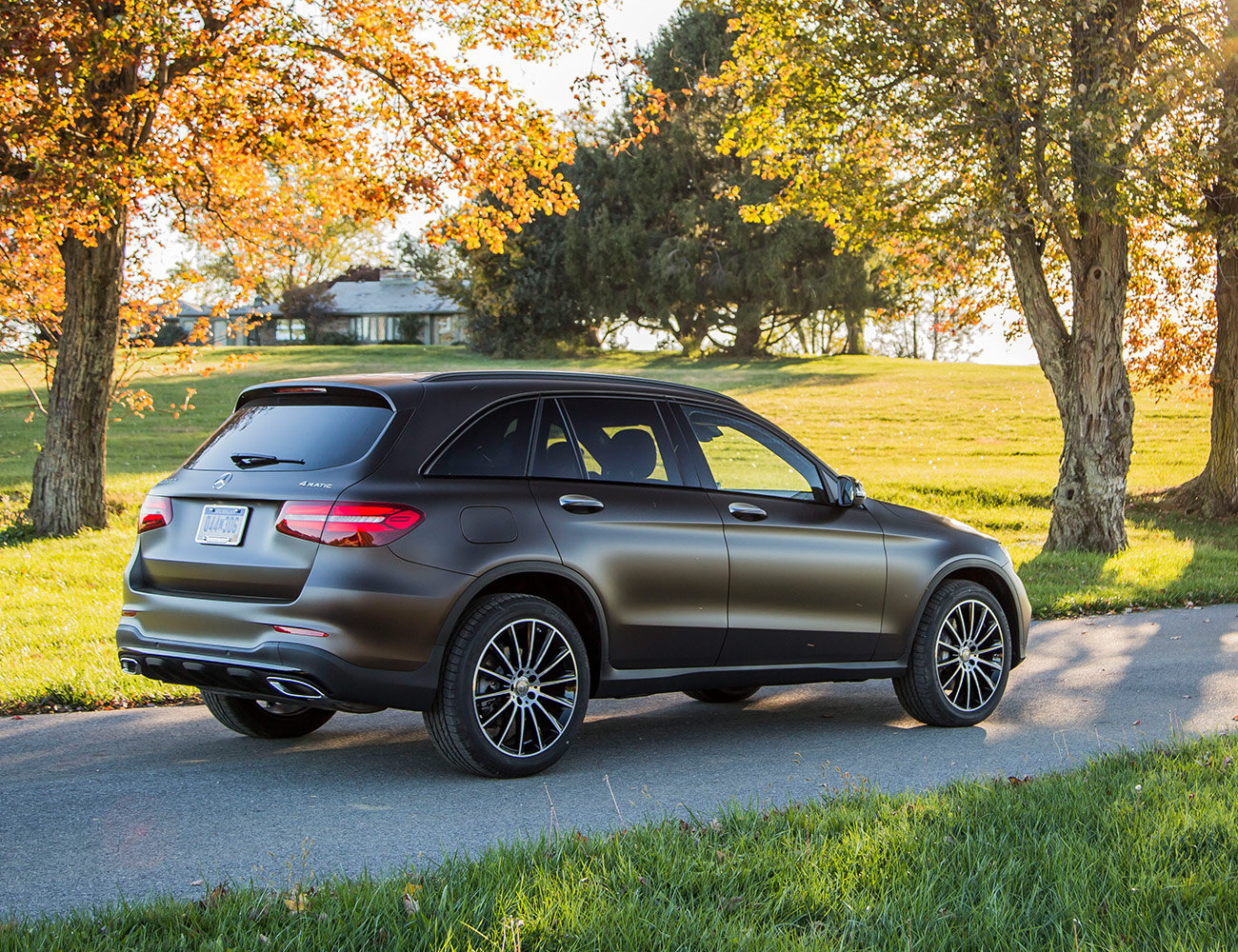
If there’s one thing Mercedes excels at, it’s providing a consistent level of luxury throughout its entire model range. The GLC might be further down the totem pole of Mercedes-Benz SUVs, but sit in one and there’s no doubt you’re in a Mercedes. The GLC is by no means the brand’s bare minimum, but even if it was, it’s still more luxurious than most of its competition. The compact SUV handles as well as any other with a three-point star, the only downside is to get the power you might want, there’s a serious jump in price to the next trim.

Who It’s For: The entry-level luxury crowd.
What’s Good: Signature Mercedes-Benz plushness paired with solid performance.
What to Watch Out For: Exterior styling doesn’t make the heart race, and there are still plenty of issues with M-B’s somewhat unintuitive COMAND infotainment system. Start adding options and the bottom line increases rapidly.
Value: At over $42,000, the all-wheel-drive Benz isn’t inexpensive by any means, and at least some of that markup is brand prestige. But it’s justified in many ways too — higher quality materials and refinement are nothing to shake a stick at.
Design: SOmewhat bland sheet metal belies Mercedes-Benz’s reliably pretty and satisfying inner cabin.
Verdict: In its stop-trim, high-performance AMG guise, we found the GLC is an incredibly fun car — though that almost goes without saying. If you stay under $50K with the GLC, you’ll still get a great, if not particularly exciting or beautiful, premium German experience.
What Others Are Saying:
“It’s an excellent choice if you want a luxury compact SUV. This Mercedes isn’t a class leader in every category; there are rivals that are more athletic, more fuel-efficient or have more cargo space. However, the GLC isn’t below average in any respect, and it still ranks among the class leaders in many areas.” – U.S. News and World Report
“The GLC-class has one of the most lavish cabins in the compact-luxury-crossover segment. Sharing much of its design with the C-class, the GLC’s interior employs top-notch materials and has pleasing and expensive-looking details throughout. Additionally, it has a comfortable and accommodating rear bench seat that offers generous headroom and legroom.” – Car and Driver
“The Mercedes-Benz GLC300 4Matic won our coveted title of 2017 Motor Trend SUV of the Year: ‘The GLC isn’t the sexiest choice for SUV of the Year, but it’s without hesitation the smartest. The design is solid, the interior is first-class, the engineering is as good as small SUVs get, and the value proposition is strong. We have no crash data yet, but the E-Class chassis that the GLC is based upon underpins one of the safest cars on the road. And despite surprising all of us with its power output, displacing just 2.0 liters means that the engine is also scarily efficient.’” – Motor Trend

Engine: 2.0-liter turbo inline-four
Horsepower: 241
Torque: 273 lb-ft
Weight: 4,001
Price: $42,050
Read our review of the Mercedes-AMG GLC 63 S here.

Most Modern: 2018 Audi Q5 Premium Plus
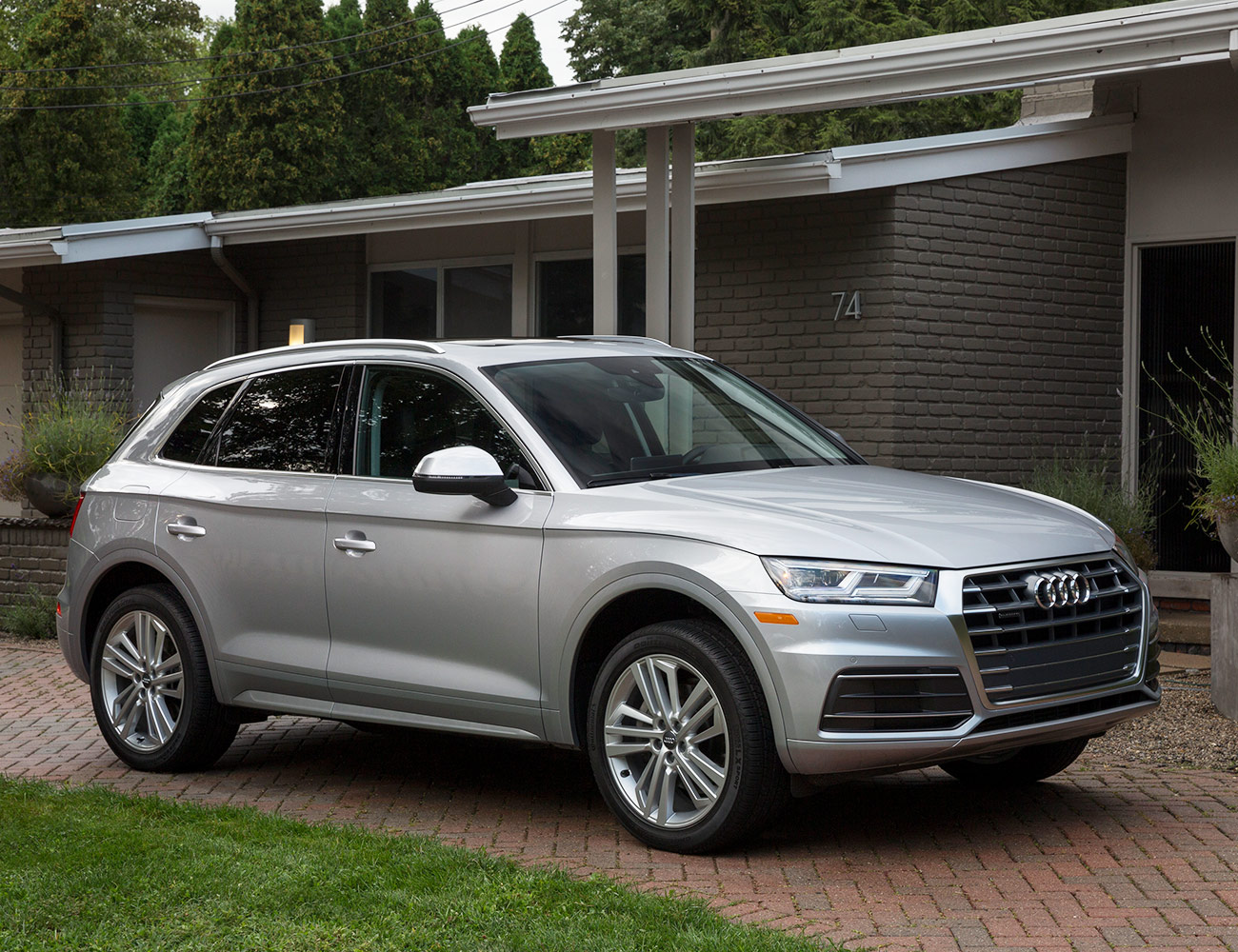
Now that tech like assisted braking is to become mandatory by 2022 (much like when ABS went from a luxury option to mandatory in 2013) and traffic-safety assist tech is nearly standard on many cars, base cars have set a new standard. Buyer satisfaction tends to be found in details and extras. If the trend continues, cheap plastics, clumsy console layouts and interior design won’t be tolerated at all, regardless of price point. Brushed aluminum, open pore wood inlays and the softest leather will be the bar for the lowest of entry. And if you want that luxury as standard now, the Q5 is your barometer. The small SUV was completely revamped for 2018; unless you opt for the performance-oriented SQ5, all Q5s are now equipped with a smooth 2.0-liter inline-four.

Who It’s For: Those in the market for a sophisticated, tech-laden small SUV.
What’s Good: The tech is strong with this one, heralded foremost by Audi’s Virtual Cockpit. Premium Plus is the SUV’s middle trim level — Audi predicts it’s the Q5’s most popular — that includes options like a panoramic moonroof and LED headlights, plus extra driver aids like a blind-spot monitoring system and automatic back-up braking. Audi is also renowned for its interior design and appointments, both of which are top-notch here, and also its superb quattro all-wheel-drive system.

What to Watch Out For: As advanced and lauded as it is, the Q5, despite its 2018 refresh, remains pretty bland. Its styling is derivative and its driving dynamics aren’t all that fun.
Value: The Q5’s value lies in its alignment with your personal tastes: if you appreciate high-tech, no-fuss, understated luxury, in this price range you likely won’t find anything better.
Design: Plain and barely different than past generations on the outside (the Q5 has been around for 10 years already). Interior design is without question top-tier, as Audis should be.
Verdict: Stereotyped as cars for architects, this is a very fine, stylish yet humorless SUV.
What Others Are Saying:
“The 252-hp four could easily be confused for a V6, except maybe for the soft, elongated growl as it rolls up to redline. Surely, though, no one will miss the six because this car is quick off the line and quick to drop gears with that dual-clutch transmission. ” – Autoweek
“For 2018, the Q5 finally gets its makeover, and many of the updates have been applied with a light and respectful touch. If you loved the look of the previous-generation Q5, you’ll feel a similar attraction to the new model. There’s a fresh front fascia, but many of the design cues tread similar territory as the old model. Beneath the skin, Audi makes some smart charges that heighten the Q5’s usefulness and appeal. Rear legroom has been increased, along with maximum cargo capacity. An upgraded suspension delivers improved ride quality.” – Daily News
“Up front, there’s good room for two, with comfortable seats swathed in leather on all models; most rivals clad base models in synthetic leather rather than real hides. Optional wood trims in glossy and matte finishes are available and, following Audi tradition, are reasonably priced. ” – The Car Connection

Engine: 2.0-liter turbo inline-four
Horsepower: 252
Torque: 273 lb-ft
Weight: 4,045 lbs
Price: $41,500

Best Off-Roader: 2017 Land Rover Discovery Sport HSE
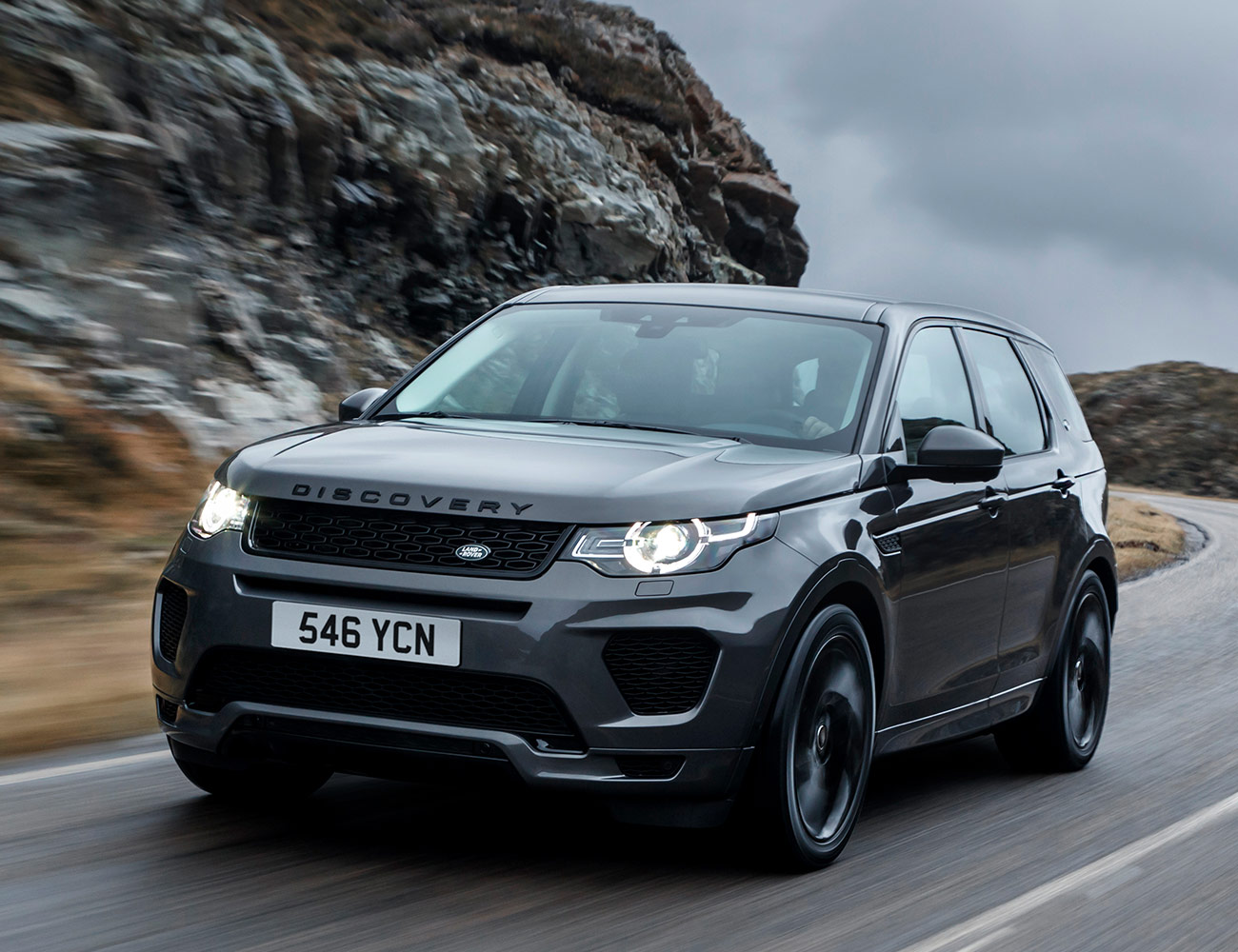
It’s true the Jeep on this list is incredibly capable off-road, but at the same price point the Land Rover affords a relatively high level of luxury. The Land Rover Discovery Sport isn’t just an SUV that will confidently off-road, but an SUV that cosset its passengers in the process.

Who It’s For: Off-roaders with families. “There are plenty of amenities for the average family; it’s absolutely a great road-tripper. But with Land Rover, it always comes back to brute capability. It’s ready for pretty much any mess its owners may get into, recreationally or accidentally.”
What’s Good: “Oodles of storage in lots of surprising spaces (two glove compartments!), seating for seven adults. The Activity Key wristband allows access to the car, should you want to leave your keys behind while out adventuring. There’s connectivity in spades, including no fewer than nine USB ports. On the road, the ride is exceedingly smooth and surprisingly quiet. The car has ample ground clearance, controllable via a generous air-suspension system. It’s got a laudable 34.5 inches of wading depth — seven more than the LR4. There’s the new All-Terrain Progress Control, like cruise-control for off-road noobs.” – Eric Adams
What to Watch Out For: Gasoline engine fuel economy is lackluster, and the diesel engine variant could use more power.
Value: A seven-seater, suburbia-oriented but capable off-roader isn’t exactly a common combo. There aren’t many super direct competitors in that specific regard, especially considering the brand’s heritage.
Design:“It’s arrived with a slightly lower and slightly wider physique that dials back the upright-ness of its immediate predecessors.” – Eric Adams
Verdict: “This is precisely the balance you want in a modern off-road machine. Its powerful and torquey V6 got me through the muck and up the dunes, while the turbodiesel version (also coming to the U.S.) excelled in thrusting the Disco over rocks and through general grunt work. (The diesel, it should be noted, failed pretty soundly at highway acceleration, such as passing semi-trailers. Keep that in mind if the fuel benefits of diesel are on your radar.) Both engines, in short, will likely get you through the worst of days. Of course, for most owners, the chances of finding the need for much of this hardcore off-road excellence are generally pretty slim.” – Eric Adams
What Others Are Saying:
“With a focus on luxurious off-road capability that the whole family can enjoy, the Discovery offers more advanced mechanicals than your average three-row crossover. In fact, if venturing into the wilderness is indeed your intention, Land Rover provides a complimentary two-hour off-road-driving course to all buyers of new Discovery models.” – Car and Driver
“On pavement, the Discovery drives smaller than it looks thanks to its good steering and independent suspension. Due to its size, the Discovery’s handling isn’t as confidence inspiring and the SUV can feel sloppy. Inside, we noted that the Discovery’s third row is usable for adults and that the second row can slide forward and back, giving it better flexibility.” – Motor Trend
“Its off-road ability transcends what the vast majority of buyers will ever ask it to tackle, yet it’s also so relaxed and refined on the road, it may well cannibalise a few Range Rover and Range Rover Sport sales when folks take account of its gorgeous cabin and extra utility. It’s not perfect. The styling is divisive, the infotainment sub-German, and there’s a nagging feeling the XXL treatment has simply jumped the shark of UK roads: the Disco may be too big for its home country now. Still, the weight savings have made it wieldier on the road, and should you have space for it, it’s difficult to think of any situation the Disco wouldn’t take to with aplomb.” – Top Gear

Engine: 2.0-liter Turbo inline-four
Horsepower: 237
Torque: 251 lb-ft
Weight: 4,150 lbs
Price: $42,395
Read our review of the Discoery here.

Best Performance SUV: 2017 Porsche Macan
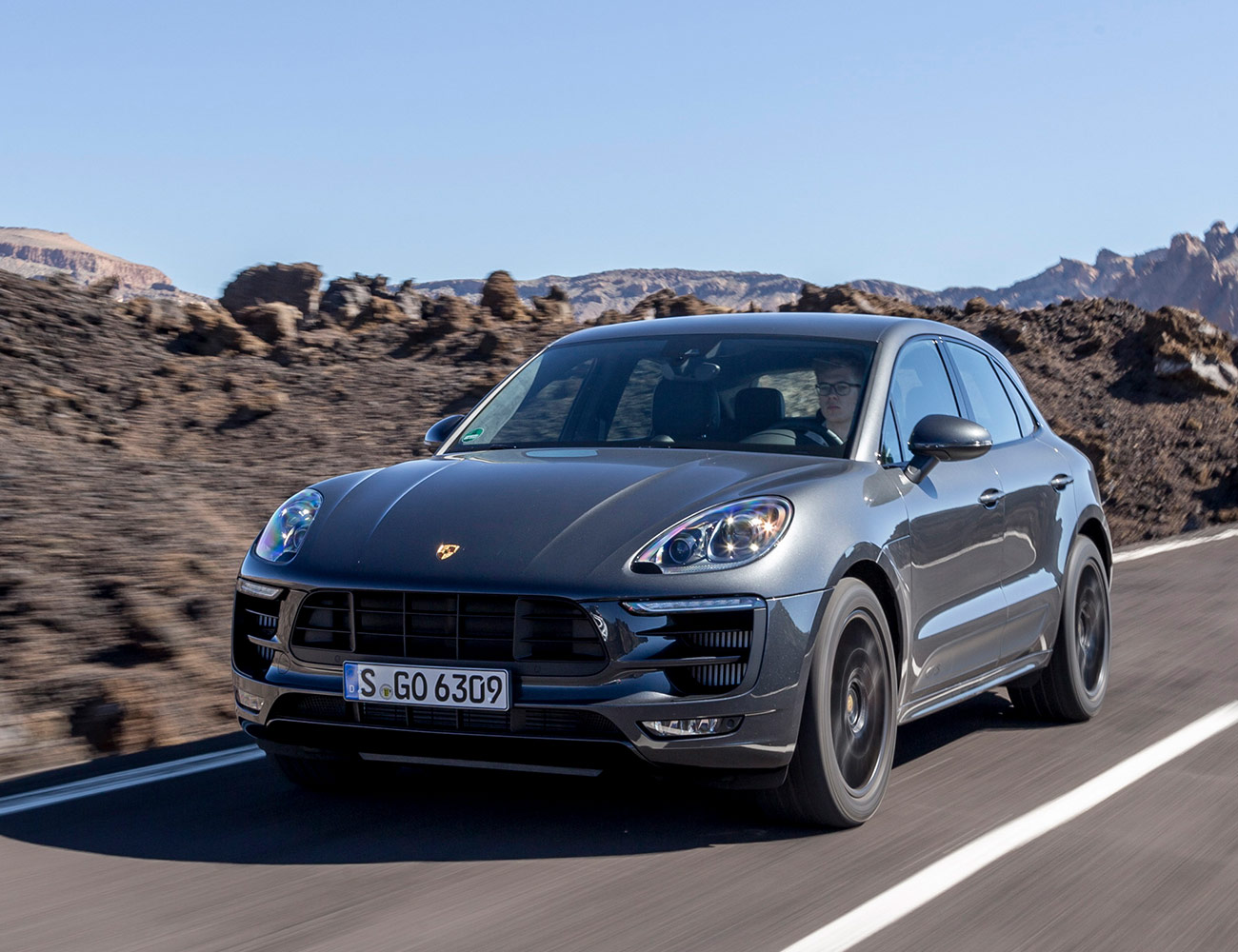
The Macan gets a lot of flak. People tend to think just because it’s a crossover, and therefore like all the rest — a compromise, a jack-of-all-trades and master of none. But, those who get a chance behind the wheel are instantly converted into believers. Porsche isn’t the sort of company that slaps its Stuggart shield on a lame vehicle and calls it a day — the Macan is a Porsche through and through. It’s a sporting ride, its throttle, steering, brakes and chassis all engineered for performance like all its siblings. And, like in true Porsche fashion, it may be of athletic build, but it’s still completely fine with the day to day duties.

Who It’s For: Enthusiasts who want a legit driver’s car but require, or simply desire, a higher seating position and more room for people and/or things.
What’s Good: It’s almost unanimously held that the Macan somehow blends sturdy, confident and smooth poise when cruising with levels of performance (in some trims) that are shockingly on par with 911s of the not too distant past.
What to Watch Out For: It’s Porsche tradition to charge exorbitantly for options; that is certainly true here. What’s more, to get true hot-rod sportiness, you’ll need to at least opt for the S trim level, which hits 60 mph in under five seconds.
Value: This one depends who you talk to. Explain to your teenage self that you want to buy an SUV that obliterates most vehicles from a stop, and he’ll grin; tell a highway patrol officer the same and you might find it harder to make a value proposition. Same with your insurance agent. But build and engineering quality are as strong as its performance.
Design: Porsche-esque. The brand has, by necessity, become homogenized as its lineup expands. The Cayenne looks like the 911 looks like the Panamera. But the Macan is certainly distinctive, and in the grand scheme is probably one of the better-looking vehicles in this segment.
Verdict: Fun as hell. Pricey. If you have kids but want a Porsche and also wear sunglasses a lot, this is your SUV. But if you spend under $50,000 for a Macan, you’ll probably wish you’d have spent a lot more for a faster one.
What Others Are Saying:
“The 2018 Porsche Macan offers families an impressive mix of utility and invigorating performance. If you desire a small-luxurious SUV that drives with the intensity and exhilaration of a sports sedan, you’ll like the 2018 Porsche Macan. It may be Porsche’s least expensive model, but it’s still a Porsche, which means it is beautifully built, impeccably tuned and fun to drive.” – Kelley Blue Book
“The struggle to come to terms with the rise of the crossover could last a lifetime for some automotive purists. The Macan may be the best compact crossover on the road today, but it’s still not as fun to drive as plenty of cheaper and smaller (albeit less practical) vehicles we could name. With no emerging alternative to the new world order, though, we are forced to live in it, one day at a time. So we’re glad the Macan is here to show the way.” – Car and Driver
“Options on the Macan are pricey, but standard kit isn’t that bad. Parking sensors, cruise control and LED daytime running lights are all included. Opt for the GTS model and you get black exterior trim as standard as well as the option for alcantara interior touches.” – Evo

Engine: 2.0-liter Turbo inline-four
Horsepower: 252
Torque: 273 lb-ft
Weight: 3,902 lbs
Price: $47,800
Read our review of the Macan GTS here.

Best Well-Optioned SUV: 2018 Jeep Wrangler Rubicon
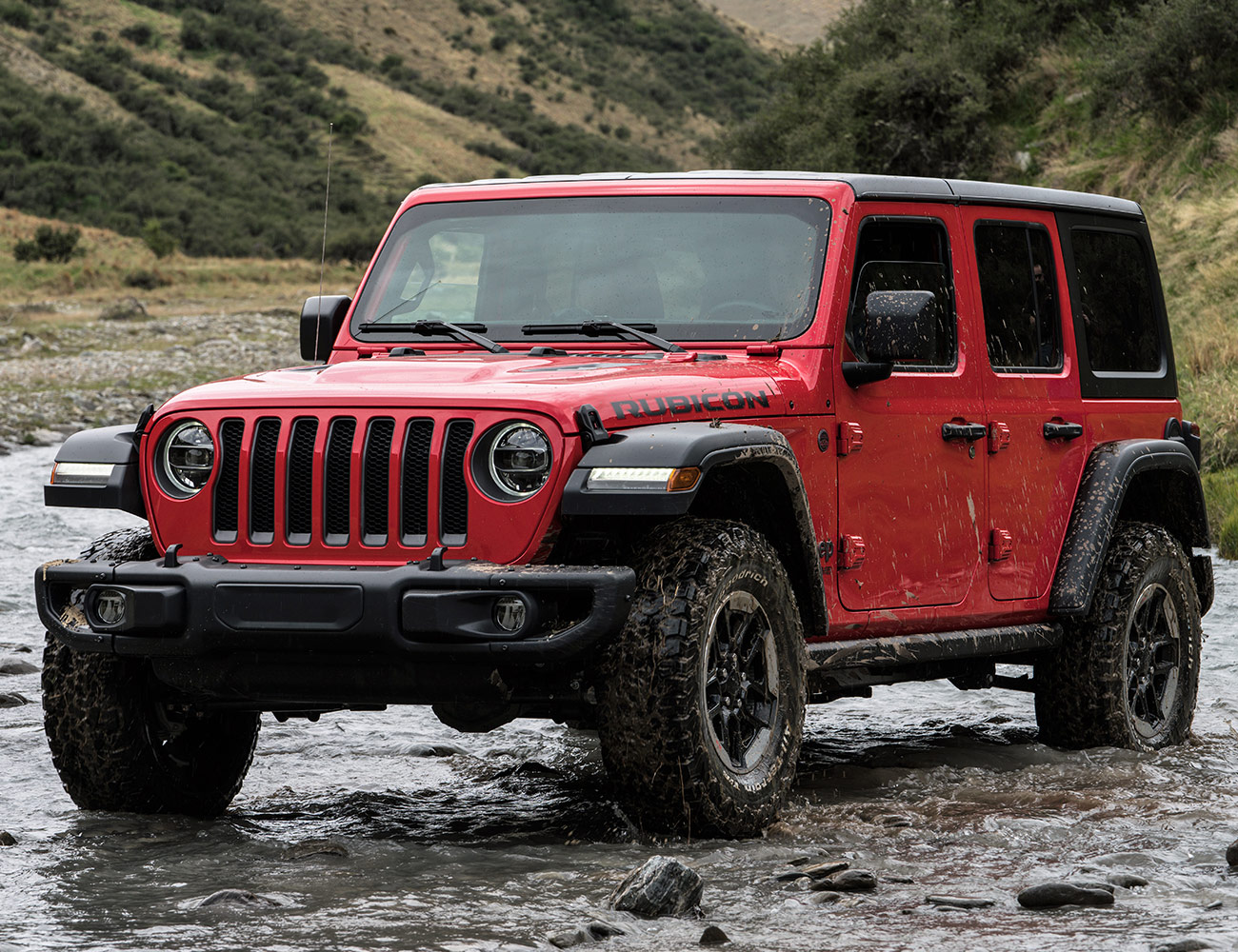
In its top factory guise, the Rubicon trim level, it’ll make quick work of both glacial deposits and the slipperiest of mountain passes. When modded by the armies of enthusiasts in the Wrangler universe, mountains tremble in this old-school SUV’s presence. To true off-roaders, the Wrangler is a tool, whether deployed right off the assembly line or deemed a mere starting point for upgrades. It’s a weapon for tackling all the challenges Earth can provide.

Who It’s For: Purists. Though it has undergone massive refinements in the decades since it first graced the trails, Jeep’s Wrangler is still a short-wheelbase off-road utility vehicle, not a comfortable road-trip cruiser. Owners should either truly want to extract all of the Wrangler’s utility or be willing to suffer somewhat in order to look like they’re hardcore offroaders. That said, the newest, completely-redesigned Wrangler is smoother and more livable day-to-day than previous generations.
What’s Good: Honest-to-god off-road cred. Dana 44 axles; knobby, 32-inch Goodrich A/T tires. A simple axle-lock toggle switch. Proper gearing and big torque from a smaller engine. And the return of Jeep’s signature fold-down windshield. Jeep has introduced a massive amount of tech into the Wrangler, bringing it in step with the other vehicles in its range.
What to Watch Out For: This is a very small, specific-purpose vehicle. Inch-for-inch and luxury-for-luxury, it costs way more than anything else on this list. So you’re not going to haul that much stuff or that many people.
Value: In terms of being well-optioned for off-roading, there isn’t anything better in this segment. You’re looking at a top-end rock-crawling machine for under $50K, and you’ve still got plenty of cash left over to mod it further.
Design: Improved, but not unfamiliar. It’s a bit bigger than the outgoing Wrangler, with more glass and better visibility all around. The interior is revamped too. Basically, you’re looking at an optimized, modernized and better-looking version of a truck that was already designed really well.
Verdict: The originator remains largely unchallenged. The Toyota 4Runner is cheaper, but it’s not as cool. The forthcoming new Ford Bronco is expected to challenge the Wrangler directly, but it’ll have to really bring it. This is a fun, refined, earth-eating machine.
What Others Are Saying:
“For decades, Wrangler fanatics have yearned for an optional V8 engine under the hood. But instead of the throaty growl of a Hemi, Jeep is offering a 2.0-liter turbocharged four-cylinder as the optional gas engine above the V6. We were skeptical. But after spending time with both engines on pavement and off, we found it to be a terrific powerplant. The V6 makes 285 hp up at 6,400 rpm. The 2.0-liter might make a bit less (270 hp) but it peaks at a lower 5,350 rpm. Even more telling, the four-cylinder develops bigger torque — a healthy 295 lb-ft at 3,000 rpm. The V6 develops just 260 lb-ft and does it way up at 4,600 rpm. The result, according to our informal stopwatch timing, is a 0-60 mph run that is consistently around a second quicker (7 seconds versus 8 seconds) in models equipped with the four-cylinder. And when driving trails, the four-cylinder delivers more torque, sooner. On Jeep’s hardcore 4WD test trail, we crawled the terrain in a Rubicon with this new four-cylinder and never felt it lacking for torque.” – AutoWeek
“There are tons of friendly new features. The pop-off doors are lighter, with a handy new lift point carved into the underside of the armrest. The hinges say T50, to remind you what size Torx bit disassembles them, and the pins are staggered lengths to make re-hanging the door easy. The canvas top, once a straitjacket of zippers, now slides together with tongue-and-groove fasteners. A spring-loaded mechanism makes flopping the roof open a one-person job, even on four-door models. There’s even an optional power-folding roof, basically a hardtop with a giant sliding canvas sunroof and removable quarter windows, so you can finally open your Wrangler at a stoplight.” – Road & Track
“The new Wrangler takes so much from its World War II ancestor, but thankfully, the cabin is no longer one of those things. My tester had the same excellent pair of screens found in high-end versions of the Compass and Cherokee, with a 7.0-inch display in the instrument cluster and an 8.4-inch touchscreen atop the center stack. It had dual-zone automatic climate control, and a heated steering wheel to go with its heated seats. And the lights were LEDs, which meant I could actually see at night. The Wrangler feels like a product of the 21st century.” – Motor Authority

Engine: 3.6-liter V6
Horsepower: 285
Torque: 260 lb-ft
Weight: 4,439
Price: $40,495

Best Design: 2018 Volvo XC60 R-Design
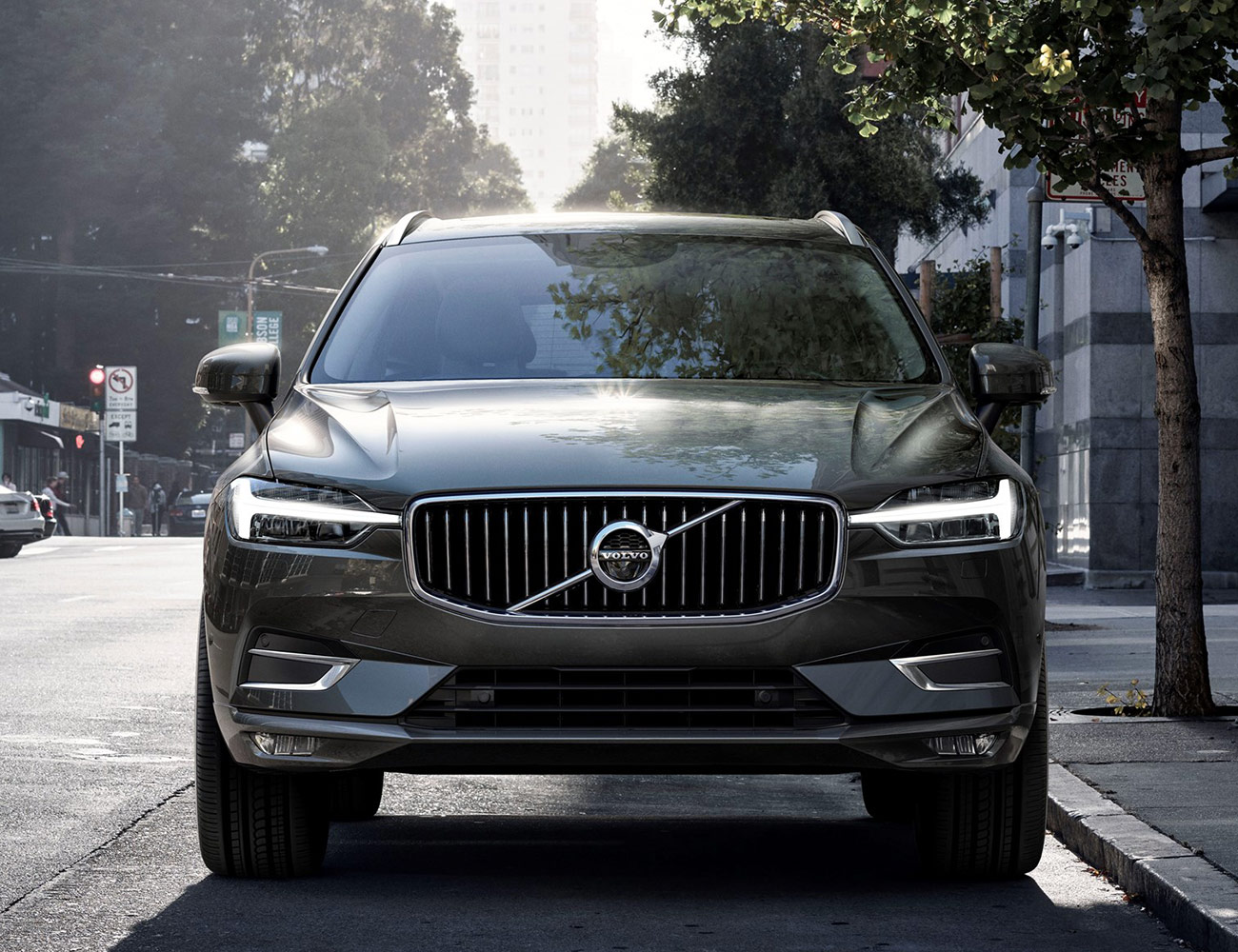
What the XC60 does well, it does extremely well. In keeping with the brand’s new design language, the XC60 falls in line with the drop-dead gorgeous XC90 SUV as well as with the S90 sedan and V90 wagon variants. (Since you’re wondering, the V90 Cross Country is the one to get, hands down.) It is stunningly beautiful amidst a background of bland competition — the sheet metal is outstanding, but inside design really shines, especially with the optional driftwood trim. It fits in equally well at a seaside Barcelona Hotel as it does in front of Gaudi’s La Sagrada Familia cathedral or the lush green, vertical peaks of Monserrat.

Who It’s For: Safety-minded drivers who want reasonable luxury, very good tech and an extremely pretty vehicle.
What’s Good: Literally almost everything. Far and away, the XC60’s best quality is its design. Volvo is on a well-planned tear: the XC90, the S90, the V90, the XC60, XC40 and now the V60: all gorgeous executions of modern styling, inside and out. The XC60 offers ample comfort and mostly lovely materials, with good fit and finish. Add to that intuitive tech and controls and you can’t ask for much more.
What to Watch Out For: Your mileage may vary, but our initial drive elicited negative feedback about the XC60’s steering. That said, the car performs admirably. It’s a very calm, plain cruiser with a comfortable ride; it simply lacks any sort of spunk. We recommend the R-Design trim level, however, which features a more sport-forward tune. This may remedy all steering faults.
Value: Volvo strikes a middle ground in terms of price. The XC60 is well-optioned as an R-Design model, yet costs only a couple thousand dollars more than relatively spartan competition like the Mercedes-Benz GLC.
Design: Impeccable. Don’t miss the little Swedish flag attached to the front seat backs. The sheet metal is unmistakably Volvo, but so completely forward-thinking. The brand is doing something different than the mainstream, and it’s working.
Verdict: A fantastic car with excellent safety systems, beautiful design, high-end tech and supreme comfort — so long as you don’t want to carve up canyon roads.
What Others Are Saying:
“Perhaps due to these initial impressions, my expectations for the XC60’s handling chops weren’t terribly high, but I thought it performed competently on my mountainous route, especially when placed in Dynamic mode. The steering doesn’t give much feedback, and the XC60 lacks the precision found in vehicles like the Audi Q5 or the Mercedes GLC-Class, but … not many people care about driving at even 7/10ths of a vehicle’s limits, so this is likely irrelevant to most XC60 shoppers.” – NY Daily News
“The XC60’s cabin is just lovely. Furnished with Blonde leather and Driftwood accents, my test vehicle’s minimalistic interior was airy yet cozy. A big, vertically oriented infotainment screen dominates the dashboard, adding modern and surprising element and warranting attention from everyone who enters. Most of the materials supported the test vehicle’s lofty price tag. Unfortunately, some cost cutting is evident as you start tapping some of the plastics on the lower portions of the interior, detracting from an otherwise premium environment. ” – J.D. Power
“Behind the driver and front passenger, 6-footers can fit with plenty of knee room and headroom, even with a standard panoramic roof. The XC60 can seat a third adult in the middle of the back bench for short rides, or a trio of car seats. A regularly shaped cargo area measuring 29.7 cubic feet hides behind the standard power tailgate. Fold down the rear seats, and the cargo bin expands to 68.7 cubic feet.” – <a href="The Car Connection

Engine: 2.0-liter turbocharged inline four-cylinder
Horsepower: 250
Torque: 258 lb-ft
Weight: 4,105 lbs
Price: $44,800
Read our review of the XC60 here.

Best Family SUV: 2018 Toyota 4Runner
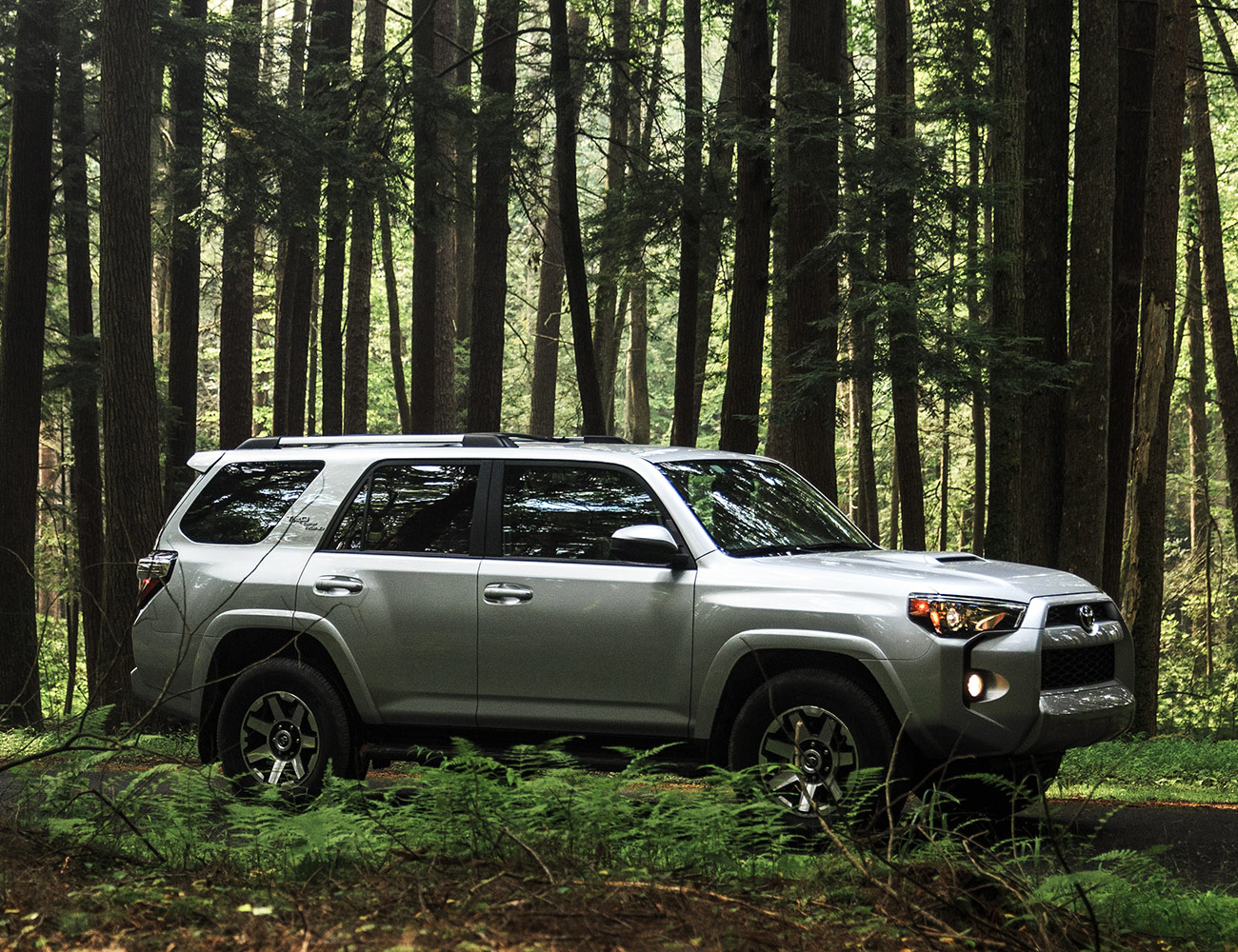
The 4Runner is among the prefered overlanders among modern off-road enthusiasts. It’s capable off-road right out of the box and if you spec it with the TRD Pro package, it’s even more capable. Why does it make the cut as ‘the best family SUV’? Considering the 4Runner’s three rows of seats, off-road skills and around town livability, it makes the perfect adventure vehicle to take the family on road trip and go camping with. Its very nature promotes quality family time — most importantly, outdoors. Toyota’s bulletproof reliability will keep your pocketbook in check too.

Who It’s For: Adventurers on a budget. The 4Runner is one of the last body-on-frame SUVs available; it also features a live rear axle. It’s a relatively affordable, truck-like option in a world of homogenous crossovers.
What’s Good: Three rows. Body-on-frame construction. Toyota reliability. Off-road capability.
What to Watch Out For: The 4Runner is far more utility than refinement. Inside, you’ll find less-than-par materials, and a lower comfort threshold; the truck doesn’t win any major awards for its on-road driving dynamics either.
Value: The 4Runner’s real competition is the Jeep Wrangler, whose base price is several thousand dollars lower. But the Wrangler doesn’t offer a third row. If you want cargo room and people room in a capable off-roader with passable on-road manners, this is it.
Design: Dated and simple. Again, this is a truck on a now — unfortunately or not — archaic platform. When the Bronco comes along, Toyota will need to respond in kind or it may find itself in a bit of trouble. That said, the 4Runner is currently enjoyed extensively as the overlander of choice among hardcore enthusiasts due to its out-of-the-box capability and the ease with which it can be modified.
Verdict: A solid, simple choice for someone who values capability on the trail over cruiseability around town.
What Others Are Saying:
“Throttle response is smooth and progressive, and the five=-speed automatic transmission shifts seamlessly. It would be better with another gear to choose from.” – Edmunds
“The two-row 4Runner we tested had an optional pull-out cargo deck designed to make loading and unloading heavy items
— up to 440 pounds’ worth — a little easier. It can also double as a tailgate for seating. This provides a flat load floor when the second-row seats are folded, but also robs the cargo hold of several inches of height. Still, we fit an impressive 14 carry-ons behind the second row.” – Car and Driver
“Not much has changed on the outside for the 2018 4Runner. In an effort to give the SUV a “more rugged and aggressive appearance,” Toyota has endowed the front fascia with large, boomerang-shaped indentations below the slanted headlights. If that gaping design is a deterrent, know that it doesn’t apply to the top-line Limited edition. The rest of the 4Runner successfully carries on the SUV’s rugged, boxy shape. We dig the 4-wheel-drive TRD model’s hood scoop and additional ground clearance that totals 9.6 inches. All trims feature a standard roof rack.” – Kelley Blue Book

Engine: 4.0-liter V6
Horsepower: 270
Torque: 278 lb-ft
Weight: 4,675 lbs
Price: $36,475

Best Compact SUV: 2018 Jaguar E-Pace

“The E-Pace rises to the challenge of meeting or exceeding Jaguar’s expected levels of luxury and performance. It handles sharply and smartly, feels appropriately cushy and comfortable and has that hint of presence that is easy to lose with a crossover — in spite of its literally elevated stature. A well-designed sedan has a way of commanding authority better than a crossover or SUV, which has to do with proportions; particularly, an abundance of rear legroom. But the E-Pace is a Jag as much in spirit as it is in name, which speaks exceedingly well of the effort.” – Eric Adams

Who It’s For: People who want a pocket rocket without compromising on comfort and design — one that can bail them out if they get into trouble while scampering off-road. – Eric Adams
What’s Good: “I only drove the 296-hp R-Dynamic variant which goes like stink. The car is brisk off the line and soaks up the turns like any similarly-pedigreed machine should, with minimal body roll and a seemingly endless tolerance for pushing harder and harder with each subsequent turn. Inside, Jaguar provides its InControl Touch Pro infotaintment system, which is among the most easily comprehensible and navigable of the luxury user-interfaces.” – Eric Adams
What to Watch Out For:
Value: The Jaguar will bring the most value to drivers who prefer stately presence and style with a dash of capability, should the stream next to their summer home flood over the driveway. Otherwise, “those that come closest to hitting the proper mix of off-road capability and on-road prowess are the Porsche Macan, which offers comparable performance if a different overall vibe; and the Mazda CX-3, which brings not-insignificant — and wholly underrated — design flair to the crossover, in addition to being at worst a great vehicle.” – Eric Adams
Design: “The front end. The vehicle is generally beautiful, with excellent proportions and a notably sporty visual vibe. But the fascia feels like a glum afterthought. The grill-to-headlight ratio is off, with just a hair too little headlight relative the grill, while both are too small relative to the lower air intakes. The grill, resplendent in shiny black, doesn’t match those lower intakes, which have more of a matte finish. The headlights, while striking in profile, are a bit too minimalist from the front, calling to mind an old Dodge Neon. This isn’t so much in their shaping as it is in their general timidness, which I fear won’t age well.” – Eric Adams
Verdict: “The E-Pace rises to the challenge of meeting or exceeding Jaguar’s expected levels of luxury and performance. It handles sharply and smartly, feels appropriately cushy and comfortable and has that hint of presence that is easy to lose with a crossover — in spite of its literally elevated stature.” – Eric Adams
What Others Are Saying:
“Although adjacent alphabetically in lists of major automakers, Jaguar and Jeep are polar opposites, but that isn’t keeping Jaguar from following in Jeep’s footsteps.” – Car and Driver
“Despite its compact dimensions, the 173.0-inch-long E-Pace weighs in at a portly 4,175 lb in R-Dynamic spec thanks in part to a largely steel construction. That’s a massive 500 lb more than our Four Seasons Mazda CX-5 and the Range Rover Evoque, 200 lb more than the Land Rover Discovery Sport, and even 160 lb more than the larger F-Pace.” – Automobile Magazine
“The E-Pace shows another side of the burgeoning JLR empire: ruthless, expedient, shamelessly pursuing global volume, baldly grubbing for profits.” – The Wall Street Journal

Engine: 2.0-liter turbocharged four-cylinder
Horsepower: 246
Torque: 269 lb-ft
Weight: 4,035
Price: $38,600
Read our review of the E-Pace here.
After 20 Years, the All-New Lincoln Navigator Is Finally a Worthy Competitor to the Escalade

Simply put, the Navigator does the “big luxury SUV” thing far, far better. Read the Story

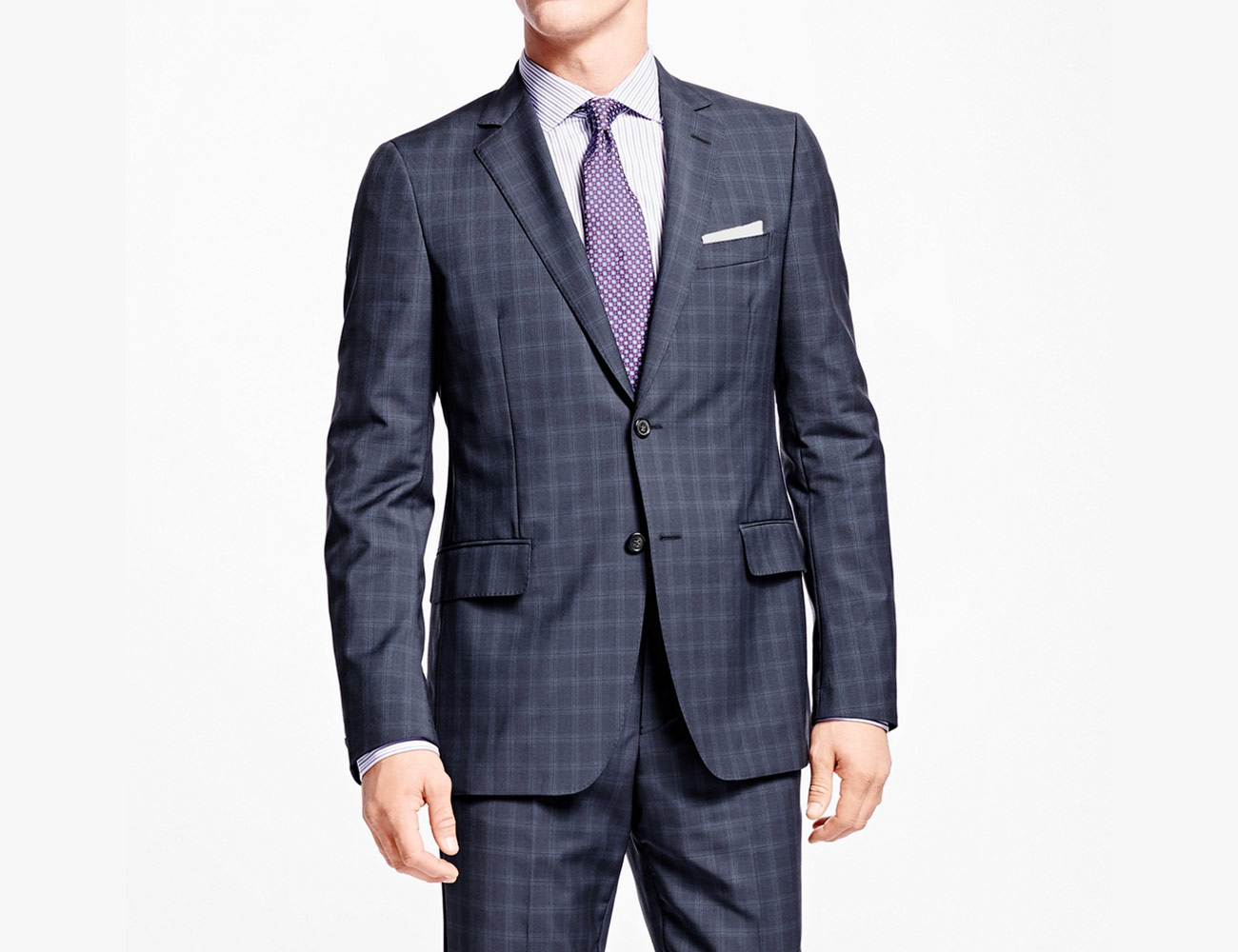
The 7 Best Cast-Iron Skillets You Can Buy in 2018

The only skillet on the list to appear twice, The Field is our pick for best everyday skillet. You get the smooth surface of premium cast-iron, you get a price that isn’t eye-watering, you get a skillet light enough to handle day-in-day-out and you’re not going to feel the world-ending rage you might if you drop a skillet three times its price off to the floor.
Cooking Surface: 8.75 inches
Total Diameter: 10.25 inches
Weight: 4.5 pounds

Introduction

R

e-embracing craftsmanship. A righteous exodus from the flimsy and mass-produced. A feedback loop of hipsters following each other’s tails. Call it what you will, one of the biggest stories in the wide world of products is the surge of the maker movement, and few industries have been revived more thoroughly than that of cast-iron cookware.

In the first half of the 20th century, cast-iron cookware hit its peak, reaching near-ubiquity in the American home kitchen. A great many of the brands of the time — Favorite, Vollrath, Wagner and Griswold — made skillets considered collector’s items now. These pieces were light, hand-smoothed specimens. Today, some sell for dollar amounts in the thousands.

The rise of mass-manufacturing — coupled with the introduction of cooking materials like aluminum, stainless steel and various permutations of non-stick — spelled a violent downturn for cast-iron in the ’60s and ’70s. Lodge, the sole widely-available, American-made cast-iron manufacturer to come out of this period alive, has remained as such since. But, the recent rekindling of interest in handcrafted goods has led to something of a renaissance, or at the very least a second life, for the heavyset kitchen tool.

Point of all this being cast-iron cookware hasn’t been this cool since before the first World War, so it’s about time you got on board. Here’s everything you need to know.

If You’re Getting a Cast-Iron Skillet, You’re Gonna Want a Steak Hook-Up

These days you can buy damn near anything online — including some of the country’s finest cuts of beef. Read the Story
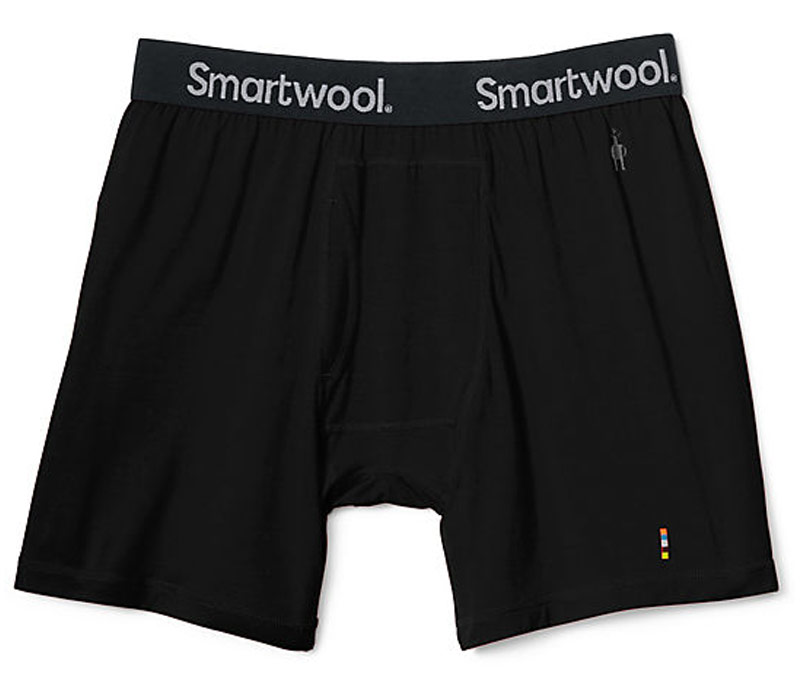
Important Terms

Cast-Iron: Iron made with around 1.7 percent carbon, giving it its classic heavy, brittle nature.
Seasoning: The layer of polymerized and carbonized fats between what you’re cooking and raw iron.
Pour Spouts: If present, small areas cast into both sides of the pan meant to easily discard (or save) sauces or excess grease.
Wall Slope: The gradient at which the walls of a cast-iron pan run into the cooking surface; the steeper the wall slope, the less tossing can be accomplished
Front Grip: A protruding area opposite the handle where you grab hold of the pan with your non-dominant hand; meant to make heavier dishes and pans less cumbersome.
As-Cast: The result of skipping the milling and polishing process on the cooking surface; when a skillet’s cooking area is rough and sandpapery, it is as-cast.
Rust: Also known as ferric oxide, a toxic result of the oxidation of bare cast-iron; avoided by a layer of seasoning, but easily fixable.
Smoke Point: The heat at which fats begins to break down and smoke; also the point you need to reach to properly season a pan.

How to Use a Cast-Iron Skillet

How to Heat Your Skillet

Get used to putting it on the stove (or by the fire) ten to fifteen minutes prior to cooking or applying oil. Iron is a terrible conductor, meaning it will take a few to get hot, but it’s rescued by tremendous heat insulation. Also be mindful that because it gets hotter than other cookware and can’t be quickly cooled by removing from heat, heavy smoking often occurs. You can cook nearly anything in cast-iron, but it shines brightest producing any dishes that are improved by a wicked crust: cornbread, pies, steaks, fried chicken and bacon are among the most popular dishes.

How to Clean Your Skillet

Cleaning is as simple as waiting a few minutes until after cooking (to let the pan cool) and scraping what you can out with a wooden spoon or spatula. All remaining bits and pieces are easily dispatched with a handful of kosher salt and light rubbing with paper towels or a dry sponge. If something is seriously stuck, a bit of water and even minimal soap isn’t going to destroy your seasoning.

How to Season Your Skillet

Crank your oven way up (self-clean cycle works wonders), grab your favorite fat (flaxseed is popular) and drop a very small amount on the cooking surface. Wipe the fat over all the cooking surface and various nooks and crannies of the pan, then wipe over that again with a clean paper towel. Too much oil and you’ll leave your pan sticky and not fully polymerized, and therefore not non-stick. Let your pan sit in the super-hot oven for an hour or more; you’re waiting to for the applied fat to exceed its smoke point, which is what causes it to attach firmly to the pan. If it looks shiny, leave it in longer. It’s as simple as that.

How to Remove Rust from Your Skillet

Rust isn’t a death sentence for cast-iron. If it’s flash rust — rust that forms after just a few minutes of iron exposure to air — you can usually just wipe it off and get it seasoned. Heavier layers of rust are removed by a soak in a vinegar solution (1:1 white vinegar to water), a wipe off, dry down and applying a layer of seasoning. If this isn’t effective and you’re game for a science experiment, look up “electrolysis.”

How to Store Your Skillet

Obviously, you’ll want to keep your skillet out of humid or damp areas. Beyond that, it’s not recommended to stack cast-iron pans in each other as they can easily scratch a hard-earned layer of seasoning away if twisted the wrong way. If you have room, simply tossing it in the oven after cleaning is an ideal storage spot.

How to Pick the Right Size

Consider what you want to cook in your cast-iron skillet, how often and for how many people. Then understand that a skillet’s cooking surface is smaller than the size it’s typically labeled as, so think of how much space whatever it is you’re wanting to cook will take up and ensure it will fit. Most 10-inch skillets have about nine inches of cooking surface, which is enough to comfortably cook one large ribeye but not quite a full pork loin.

If you want to cook full breakfasts, multiple steaks at a time, or just run a household with a few more mouths to feed, go bigger — something with at least 9.5-inches of cooking surface is a good place to start. Yes, the weight will climb the bigger you go, but don’t shirk yourself and your family out of quality food because you have to use two hands.

Non-Stick and Stainless Aren’t Created Equal — Here’s Why

Spoiler: your trusty non-stick couldn’t sear properly if its life depended on it. Read the Story

Buying Guide

Best All-Around Cast-Iron Skillet: Butter Pat Industries Heather Skillet

Best SUVs to Buy in 2018 Under $50,000

It doesn’t take a seasoned industry expert to tell you how popular SUVs are. Just take a look out your window and count how many vehicles you see that aren’t SUVs (it’ll be quicker than the alternative). In fact, despite the overall drop-off in auto sales in the U.S in 2017, most SUVs actually saw a slight rise in sales. The people have spoken, and SUVs are what they want.

So, chances are, if you’re in the market for a new vehicle, there’s an incredibly good chance you’re considering an SUV. However, now that all the manufacturers are getting in on the SUV cash cow and devoting more time and money than ever before to making as many as possible, deciding on a single SUV is no easy task. And since the average price for an SUV 2017 was just under $40,000, it’s a decision that shouldn’t be taken lightly. To cover all the bases, we bumped the budget up to $50,000 and chose the best new SUVs you can buy in 2018.

Prefer to skip directly to the picks? Click right here.

Table of Contents

The Short List

Best All-Around SUV: 2018 Volkswagen Atlas

The Volkswagen Atlas was the German automaker’s first new model after the “dieselgate” scandal first erupted. The all-new three-row SUV was shouldering a lot of responsibilty, but when VW revealed the Atlas, it was hard to imagine the US-only SUV not being a success. The formula was simple: three-rows of seats, decent power, technology and options. VW aimed right for the heart of the American consumer and hit bullseye. If you want options, the Atlas comes in 12 different trim levels. But start with the V6 and opt for the Volkswagen Digital Cockpit (the same as Audi’s Virtual Cockpit) and you can’t go wrong. A full-size SUV from a reliable (if not totally trustworthy) brand at the just the right price point.

Engine: 3.6-liter V6
Horespower: 276
Torque: 266 lb-ft
Price: $32,150

Best SUV for the Value: 2018 Mazda CX-5 Grand Touring AWD

width=

Even at $31,000 you won’t get a barebones CX-5 — that’s only where the top trim level pricing starts. Select AWD, the most expensive paint and every single option offered and you’re still only looking at $36,425. Combine the incredibly affordable price with one the best designs to land on a compact SUV, then throw in Mazda’s signature crisp handling and it gives the VW Atlas a run for its money for the top spot. The CX-5 might just have snagged it, if only it had more power and an extra row of seats. But not everyone needs that much room — for you, this level of bang-for-your-buck can’t be beaten.

Engine: 2.5-liter inline-four
Horespower: 187
Torque: 186 lb-ft
Price: $30,945

Buying Guide

What’s in This Buying Guide

10 Best SUVs of 2018

Best All-Around SUV: 2018 Volkswagen Atlas

The Volkswagen Atlas was the German automaker’s first new model after the “dieselgate” scandal first erupted. The all-new three-row SUV was shouldering a lot of responsibilty, but when VW revealed the Atlas, it was hard to imagine the US-only SUV not being a success. The formula was simple: three-rows of seats, decent power, technology and options. VW aimed right for the heart of the American consumer and hit bullseye. If you want options, the Atlas comes in 12 different trim levels. But start with the V6 and opt for the Volkswagen Digital Cockpit (the same as Audi’s Virtual Cockpit) and you can’t go wrong. A full-size SUV from a reliable (if not totally trustworthy) brand at the just the right price point.

Engine: 3.6-liter V6
Horespower: 276
Torque: 266 lb-ft
Price: $32,150

Best SUV for the Value: 2018 Mazda CX-5 Grand Touring AWD

Even at $31,000 you won’t get a barebones CX-5 — that’s only where the top trim level pricing starts. Select AWD, the most expensive paint and every single option offered and you’re still only looking at $36,425. Combine the incredibly affordable price with one the best designs to land on a compact SUV, then throw in Mazda’s signature crisp handling and it gives the VW Atlas a run for its money for the top spot. The CX-5 might just have snagged it, if only it had more power and an extra row of seats. But not everyone needs that much room — for you, this level of bang-for-your-buck can’t be beaten.

Engine: 2.5-liter inline-four
Horespower: 187
Torque: 186 lb-ft
Price: $30,945

Best Luxury SUV: 2017 Mercedes-Benz GLC300 4Matic

If there’s one thing Mercedes excels at, it’s providing a consistent level of luxury throughout its entire model range. The GLC might be further down the totem pole of Mercedes-Benz SUVs, but sit in one and there’s no doubt you’re in a Mercedes. The GLC is by no means the brand’s bare minimum, but even if it was, it’s still more luxurious than most of its competition. The compact SUV handles as well as any other with a three-point star, the only downside is to get the power you might want, there’s a serious jump in price to the next trim.

Engine: 2.0-liter turbo inline-four
Horespower: 241
Torque: 273 lb-ft
Weight: 4,001
Price: $42,075
Read our review of the Mercedes-AMG GLC 63 S here.

Most Modern: 2018 Audi Q5 Premium Plus

Now that tech like assisted braking is to become mandatory by 2022 (much like when ABS went from a luxury option to mandatory in 2013) and traffic-safety assist tech is nearly standard on many cars, base cars have set a new standard. Buyer satisfaction tends to be found in details and extras. If the trend continues, cheap plastics, clumsy console layouts and interior design won’t be tolerated at all, regardless of price point. Brushed aluminum, open pore wood inlays and the softest leather will be the bar for the lowest of entry. And if you want that luxury as standard now, the Q5 is your barometer.
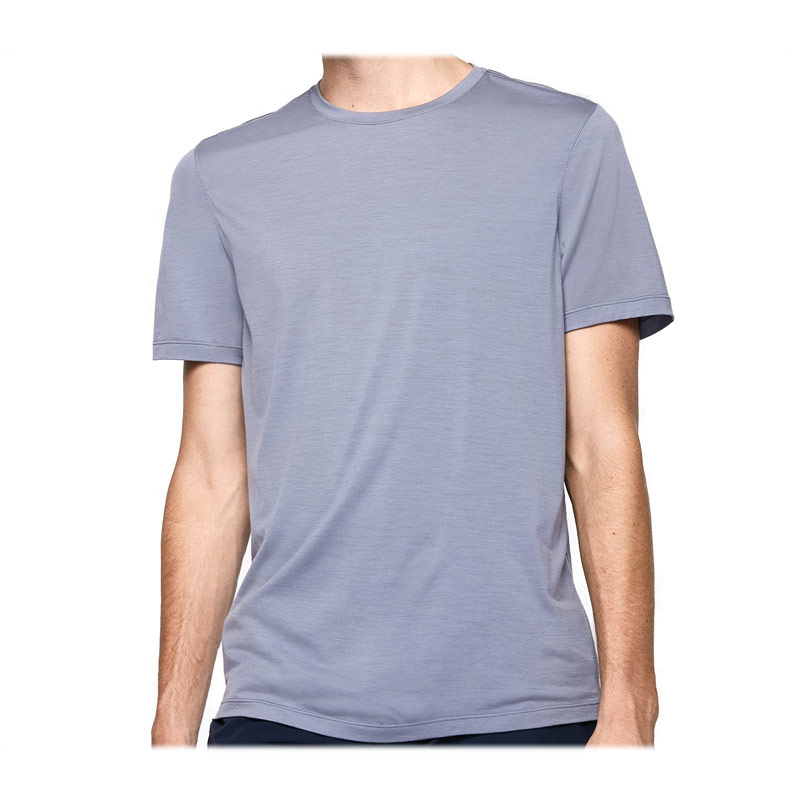
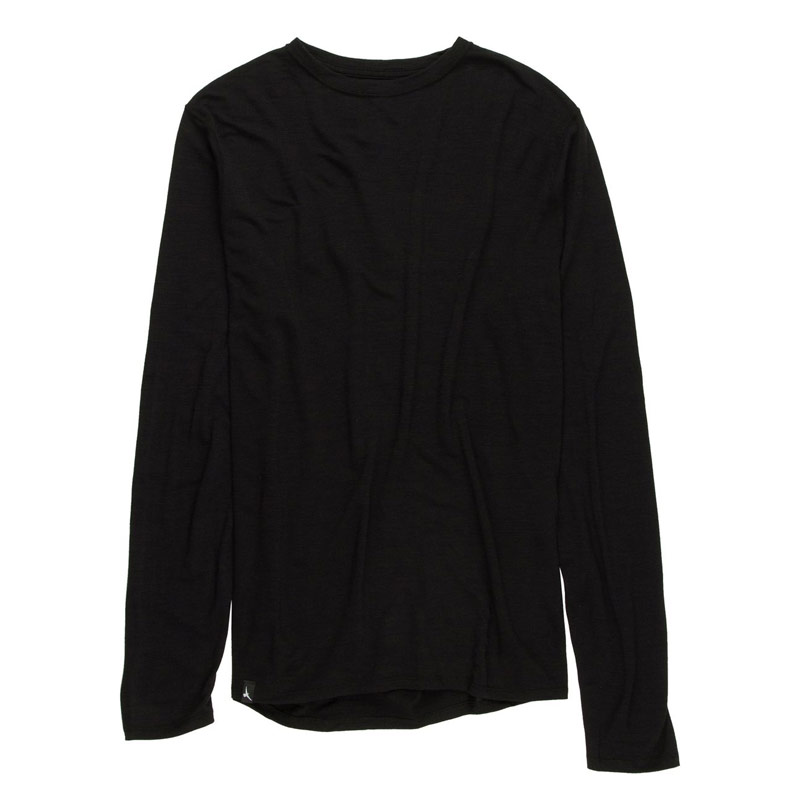
Engine: 2.0-liter turbo inline-four
Horespower: 252
Torque: 273 lb-ft
Weight: 4,045 lbs
Price: $41,500

Best Off-Roader: 2017 Land Rover Discover Sport HSE

It’s true the Jeep on this list is inredibly capable off-road, but at the same price pont the Land Rover is much moa relatively high level of luxury, the Land Rover Discovery Sport isn’t just an SUV that will confidently off-road, but an SUV that cosset its passengers in the process.
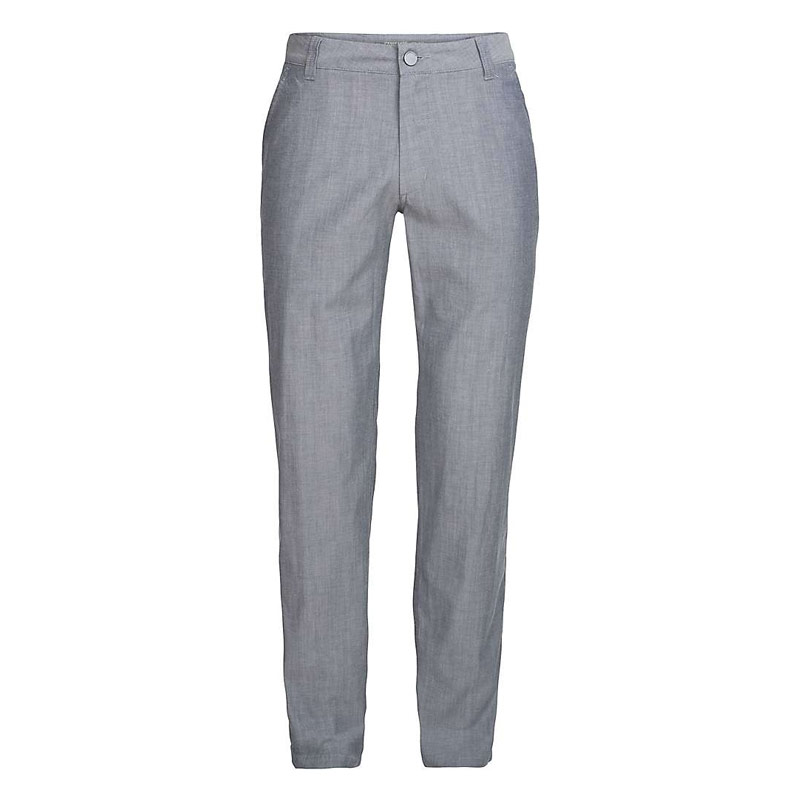
Engine: 2.0-liter Turbo inline-four
Horespower: 237
Torque: 251 lb-ft
Weight: 4,150 lbs
Price: $42,395

Best Performance SUV: 2017 Porsche Macan

The Macan gets a lot of flak. People tend to think just because it’s a crossover, and therefore like all the rest — a compromise, a jack-of-all-trades and master of none. But, those who get a chance behind the wheel are instantly converted into believers. Porsche isn’t the sort of company that slaps its Stuggart shield on a lame vehicle and calls it a day — the Macan is a Porsche through and through. It’s a sporting ride, its throttle, steering, brakes and chassis all engineered for performance like all its siblings. And, like in true Porsche fashion, it may be of athletic build, but it’s still completely fine with the day to day duties.

Engine: 2.0-liter Turbo inline-four
Horespower: 252
Torque: 273 lb-ft
Weight: 3,902 lbs
Price: $47,800

Read our review of the Macan GTS here.

Best Well-Optioned SUV: 2018 Jeep Wrangler Rubicon

In its top factory guise, the Rubicon trim level, it’ll make quick work of both glacial deposits and the slipperiest of mountain passes. When modded by the armies of enthusiasts in the Wrangler universe, mountains tremble in this old-school SUV’s presence. To true off-roaders, the Wrangler is a tool, whether deployed right off the assembly line or deemed a mere starting point for upgrades. It’s a weapon for tackling all the challenges Earth can provide.
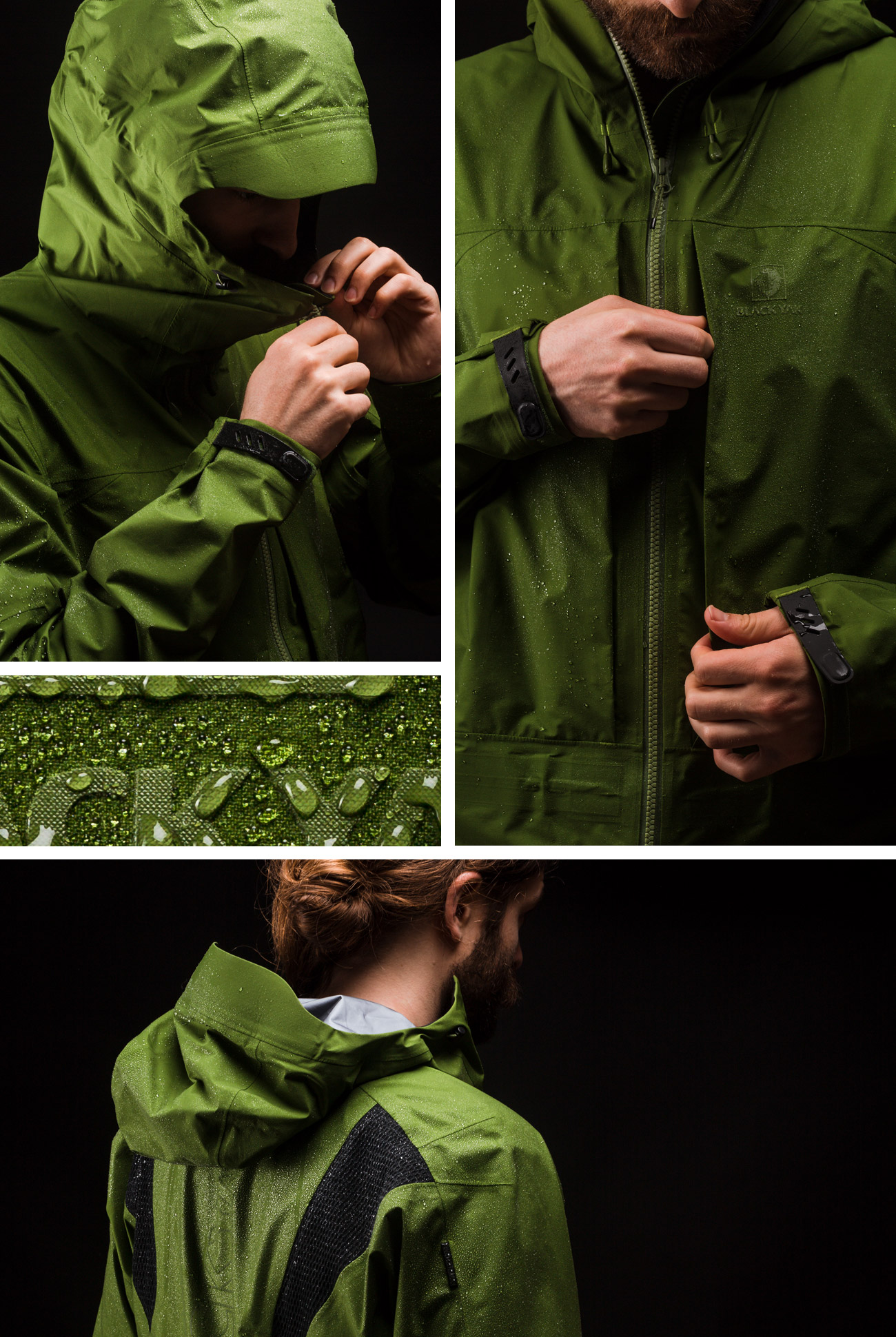
Engine: 3.6-liter V6
Horespower: 285
Torque: 260 lb-ft
Weight: 4,439
Price: $40,495

Best Design: 2018 Volvo XC60 R-Design

What the XC60 does well, it does extremely well. In keeping with the brand’s new design language, the XC60 falls in line with the drop-dead gorgeous XC90 SUV as well as with the S90 sedan and V90 wagon variants. It is stunningly beautiful amidst a background of bland competition. Inside design really shines, especially with the optional driftwood trim. It fits in equally well at a seaside Barcelona Hotel as it does in front of Gaudi’s La Sagrada Familia cathedral or the lush green, vertical peaks of Monserrat.

Engine: 2.0-liter turbocharged inline four-cylinder
Horespower: 250
Torque: 258 lb-ft
Weight: 4,105 lbs
Price: $44,800

Read our review of the XC60 .

Best Family SUV: 2018 Toyota 4Runner

The 4Runner is among the prefered overlanders among modern off-road enthusiasts. It’s capable off-road right out of the box and if you spec it with the TRD Pro package, it’s even more capable. Why does it make the cut as ‘the best family SUV’? Considering the 4Runner’s three rows of seats, off-road skills and around town livability, it makes the perfect adventure vehicle to take the family on road trip and go camping with. Its very nature promotes quality family time — most importantly, outdoors. Most importantly, Toyota’s bulletproof reliability will keep your pocketbook in check too.
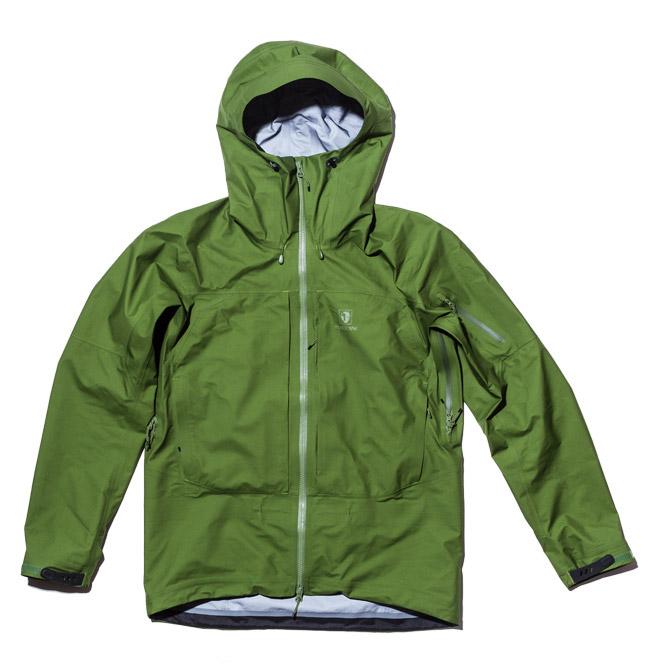
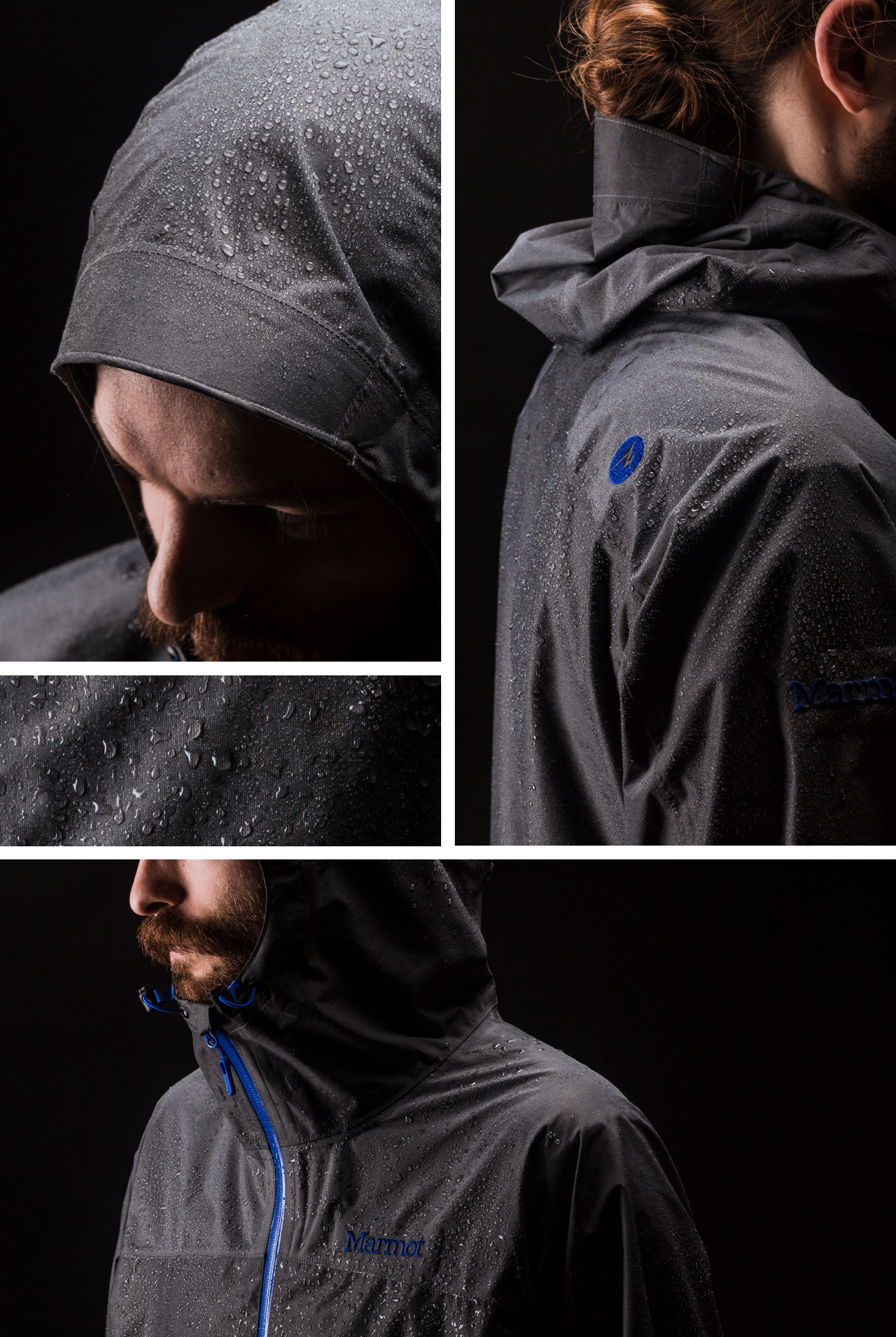
Engine: 4.0-liter V6
Horespower: 270
Torque: 278 lb-ft
Weight: 4,675 lbs
Price: $36,475

Best Compact SUV: 2018 Jaguar E-Pace

“The E-Pace rises to the challenge of meeting or exceeding Jaguar’s expected levels of luxury and performance. It handles sharply and smartly, feels appropriately cushy and comfortable and has that hint of presence that is easy to lose with a crossover — in spite of its literally elevated stature. A well-designed sedan has a way of commanding authority better than a crossover or SUV, which has to do with proportions; particularly, an abundance of rear legroom. But the E-Pace is a Jag as much in spirit as it is in name, which speaks exceedingly well of the effort.” – Eric Adams

Engine: 2.0-liter turbocharged four-cylinder
Horespower: 246
Torque: 269 lb-ft
Weight: 4,035
Price: $38,600

Read our review of the E-Pace here.

The 25 Best Cars Under $50,000 in 2017

The sweet spot for sedan buyers. Read the Story