All posts in “Events”

Mercedes’ new MBUX system will listen to you … and respond

Share

  • Pinterest

Mercedes showed off its new infotainment interface at CES, the Mercedes-Benz User Experience, or MBUX for short. Will owners call it M-bucks? Who knows? Regardless, it’s supposed to make life with your Benz all the better.

Mercedes calls it “an intelligent multimedia system.” Its features appear on the new high-resolution screen that is part of Benz’s “Widescreen Cockpit.” You can communicate with the MBUX several ways: There’s the touchscreen, a touch pad on the center console and touch-control buttons in the steering wheel. Or you can just talk to it and it’ll respond.

“Hey Mercedes” is one thing it’ll answer to, or “Hello Mercedes,” or just “Mercedes.” You can follow up with your request or, if you wait, it’ll ask what you want. We got a drive around the block at CES in Las Vegas to see the new interface in action. My German engineering hosts said to ask it a question.

“Will Bayern Munich take the cup this year?” I asked.

“You must ask it a driving-related question,” said one of my Mercedes hosts from the back seat. (Ha! So it does have limits!)
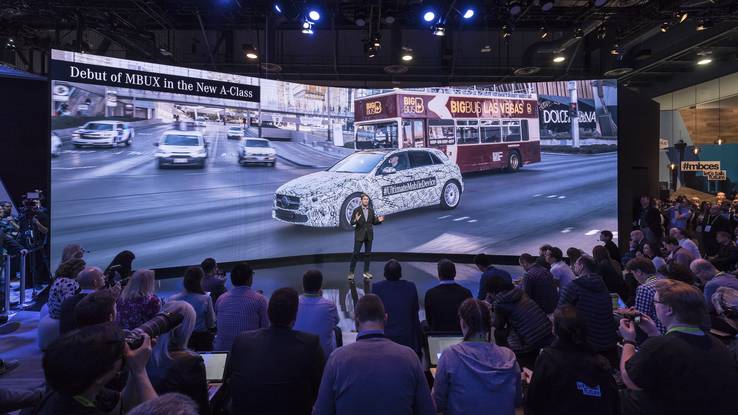
A-Class hatch in the streets of Vegas

We got a ride with MBUX in this A-Class hatch in the streets of Vegas, displayed here at CES during the system’s worldwide introduction.

My Mercedes driver then asked it, “Hey Mercedes, will I need an umbrella tomorrow?” This is something Mercedes engineers are particularly proud of with this new system — the fact that MBUX will respond to somewhat more vague colloquialisms. On the show stand the day before, a Mercedes exec asked MBUX, “Can I wear flip-flops tomorrow?” These particular questions result in a weather report update for the next day in Las Vegas.

“The language understands even if I say it indirectly,” my driver, Christoph, said proudly.

Subsequent questions usually resulted in an appropriate response from MBUX, though not every time. You have to learn to time things a little bit. But overall it seems promising.

The navigation system in our North American MBUXes will include every street in America and Canada, for instance, which Christoph demonstrated by asking for directions to the Vancouver Aquarium. MBUX replied by displaying the route in Mercedes’ “brilliant” 3-D maximum-resolution graphics.” Vancouver is a long way from Vegas.  
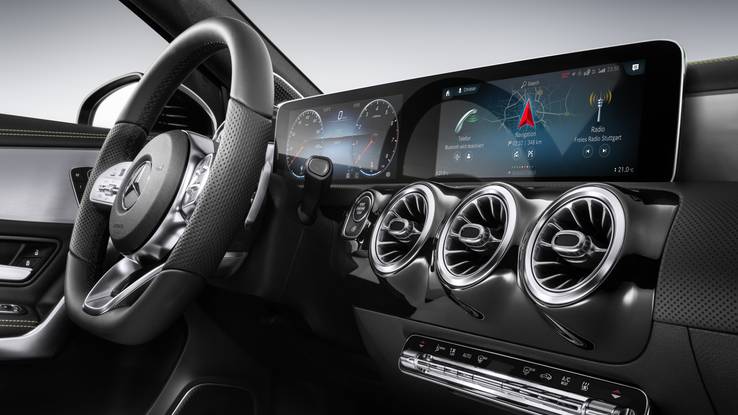
MBUX on the widescreen

MBUX on the widescreen

The widescreen displays information in three levels of information density. The first is the “Homescreen,” which shows the main apps like phone, nav and radio. From that, the “Basescreen” offers controls for specific applications, providing more detailed info on navigation or radio, for instance. Then the “Submenu” goes into even further detail. The system also offers gesture control for things like pinch/zoom of the navigation screen. You can even use handwriting on the screen if you want. The more you use it, the more it learns your favorite destinations and music preferences.

You can configure the screens -– including the instrument cluster — however you want. The screens’ 3-D renderings are highly detailed, thanks to a Nvidia chip previously used on gaming consoles. It’ll read your texts to you but you have to select which text by touching the screen. It won’t read your emails because that is considered “too distracting.” That previous point is still in discussion at MB. If they ever decide to let you read emails, for instance, an update could come via an OTA (over-the-air) upgrade.

“New technologies must focus on the people using them and make their life simpler,” board member Ola Kallenius had said the day before at the Mercedes show stand. “That’s why we combine intuitive and natural operation with intelligent and learning software in MBUX.”

“With MBUX, we have come another step closer to turning the vehicle into a mobile assistant,” said Sajjad Khan, vice president digital vehicle & mobility at Daimler. “The system’s ability to learn is spectacular and unique to date in the car industry. We are using artificial intelligence to give the user individual suggestions based on their habits. The algorithm we use for this is optimized for on-board use in the vehicle and exploits the opportunities afforded by the latest chip generation.”

MBUX debuts in Amsterdam next week in a production Euro-spec A-Class hatchback, which was the vehicle we got a ride in at CES. We in the U.S. will get MBUX in September in our own A-Class, a three-box sedan. We’ll try it out in more detail then. 
Ford Edge Sport becomes Edge ST for 2019, gets 335 hp from a 2.7-liter Ecoboost V6

Share

  • Pinterest

Ford is dropping the Sport name from its redesigned 2019 Edge crossover at the Detroit auto show and adding an ST badge, a new sporty grille, some new shoes and an upgraded 2.7-liter EcoBoost V6 making 335 hp and 380 lb-ft of torque connected to an eight-speed automatic.

Like the Fusion Sport, the Edge ST will come with a driver-adjustable sport mode that will change up the throttle position, shift patterns, electronic stability control and exhaust note. The Edge ST also gets paddle shifters and seats with more bolstering as well as slightly different front and rear styling, new side skirts and dual exhaust. It will arrive from the factory with a stiffer suspension tune and be available in four new colors, most notable of which is the Ford Performance blue that you see in the pictures.

Performance brakes are optional, as are 21-inch wheels and summer Pirelli tires.

Lower trim levels of the 2019 Edge will introduce a bunch of new safety features to the lineup, including standard post-collision braking, which helps reduce potential secondary impacts after a crash, optional evasive steering assist, which provides steering support in an emergency maneuver and optional adaptive cruise control with stop-and-go and lane centering.

On the technology front, all buyers will get wireless smartphone charging, a Wi-Fi hotspot and the Ford Pass app, which allows owners to start, lock/unlock and locate their Edge. A 12-speaker premium audio system by Harman is available, as is the Sync 3 infotainment system with an 8-inch screen.

The standard powertrain for non-ST Edge models is a 2.0-liter turbocharged four making 250 hp and 275 lb-ft of torque, also with an eight-speed automatic. Inside there’s a redesigned instrument panel with a rotary shifter and Ford with Alexa capability. That last item connects your car with your home Amazon assistant, allowing you to keep up with daily appointments, check for nearby points of interest and even make some purchases without ever leaving the driver’s seat.

All-wheel drive is standard on ST models, optional on the basic Edge.

The Edge was a strong seller for Ford in 2017. It was up in December and up for the year, and comes in second in the midsize CUV segment below the Subaru Outback but above the Hyundai Santa Fe.

The 2019 Ford Edge goes on sale late summer of 2018; we’ll get to see it in person next week at the North American International Auto Show.

Report: 2018 Mustang Bullitt all but confirmed for Detroit auto show

Share

  • Pinterest

Ford Motor Co. is planning a surprise reveal of a special edition, high-performance Mustang Bullitt GT at next week’s Detroit auto showAutomotive News has learned.

The Bullitt will be unveiled as a 2018 model, a source said, timed for the 50th anniversary of the eponymous Steve McQueen movie that made the car an icon among enthusiasts.

Ford spokesman Mike Levine on Wednesday said, “We don’t have any Mustang news to share today but we love the interest in America’s favorite muscle car.”

A Mustang Bullitt was not among the vehicles that Ford previewed for media earlier this month.

The 1968 movie Bullitt features an iconic car chase starring McQueen’s Highland Green Mustang GT 390 fastback.

The 2018 pony car likely will get similar dark green paint, as well as the five-spoke black wheels with a chrome lip that appeared in the movie, in addition to other unique cosmetic features. It’s unclear what the car’s performance numbers will be or how many Ford plans to produce in what is sure to be a limited production run.

Ford first sold a Mustang Bullitt in 2001. The car returned in 2008 and 2009.

Rumors of a 2018 Mustang Bullitt have been swirling for months.

Spied: This could be the 2018 Bullitt Mustang

Spied: Is this the 2018 Ford Mustang Bullitt?

A sharp-eyed member of the Mustang6G Forum spotted this dark green Ford Mustang with the ubiquitous five-spoke Torq Thrust-style wheels found on Bullitt-edition Mustangs. This is a …

Spy photographers caught what appeared to be a dark green 2018 Mustang filming a commercial in Chicago late last year. And earlier this week, a Mustang forum unearthed an auction-site listing for a “special new Ford Mustang” to be sold on Jan. 19. The listing says all proceeds will go to Boy’s Republic, an all-boys school in California that boasts a notable alumnus: Steve McQueen.

The article “Ford to reveal 2018 Mustang Bullitt at Detroit auto show” at Automotive News on 1/10/18.

By Michael Martinez, Automotive News

Official: 2019 Mini Cooper Hardtop and Convertible are here ahead of Detroit auto show unveiling

Share

  • Pinterest

Brace yourselves, Mini fans: The Cooper Hardtop and Convertible are coming to the 2018 Detroit auto show with a slew of updates for the 2019 model year, and they’re more German British than ever before.

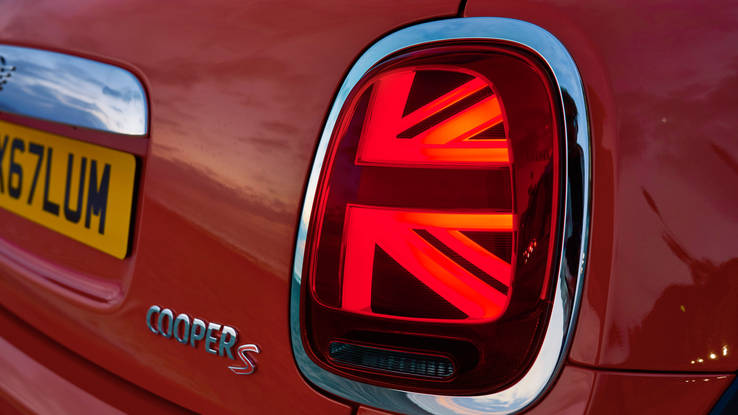
Off the top, new optional LED headlights help modernize the front end aesthetic and headlight performance of the Mini. The BMW-owned automaker didn’t stop with the front lights, however. No, it went and made the rear taillights light up in the pattern of the Union Jack. What’s next? Is a hologram of the Queen going to be projected into the sky soon?

Anyway, lighter wheels and a new barebones “Mini” logo round out the exterior adjustments made for 2019. The powertrain package carries over from before, so expect the same turbocharged three- and four-cylinder engines making 124 and 189 hp respectively -– the John Cooper Works version gets a brawnier 228 hp. There’s no indication of an electric version of the small Mini Cooper despite the Electric Concept it displayed at the 2017 Frankfurt Auto Show. We might have to wait a while longer for that to become a reality.

An updated infotainment system with a 6.5-inch display makes its way to the interior, with an 8.8-inch touchscreen display as optional. Support for Apple CarPlay is there, but not Android Auto. Wireless charging is making its way into many new cars nowadays, and the Mini adds it as an option for 2019 as well. 

Union Jack photo

You’ll know it’s a 2019 Cooper Hardtop if its brake lights are screaming Great Britain at you.

Finally, more choices in appearance options for the already extremely customizable Minis should thrill the unique fan base. Customers can design side scuttles, decorative interior strips, LED door sills and LED door projectors to their choosing — yes, that includes text customization. Mini then uses 3-D printing and laser engraving to make the custom work come to life.

Zac Palmer

Zac Palmer – Editorial Intern Zac Palmer has probably spent more time in a car than any other 21-year old in the country. He likes anything that can go around a corner, and is surely talking about a car wherever he might be.
See more by this author»

CES is a gold mine of weirdness; here are some of our top picks

Share

  • Pinterest

While the big car companies with their fancy technology concept cars get all the attention, there are hundreds of cool little items sprinkled throughout the almost 3 million square feet of Las Vegas Convention Center where CES buzzes for a full week. Here are some favorites from those hundreds.

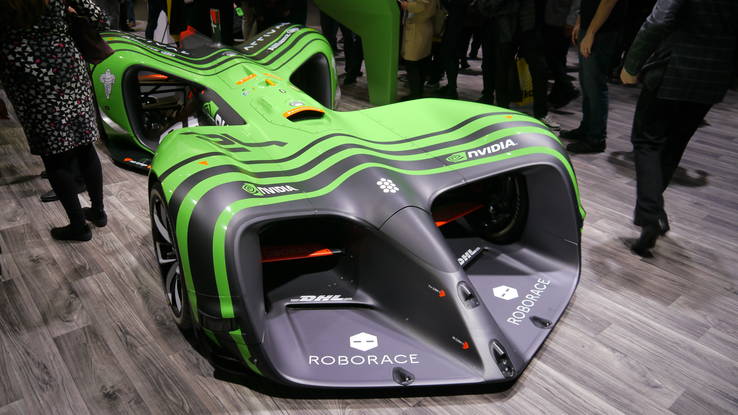
Nvidia Roboracer

Nvidia Roboracer

Roboracer

Roborace is a series planned for autonomous, driverless electric cars to be run on the same tracks used by Formula E. Formula E CEO Alejandro Agag announced in 2015 that the FIA’s only all-electric open-wheel race series would add a driverless, autonomous support series. While the Roborace series has hesitated and chugged and not yet gotten off the ground a few years later, the race cars themselves are really, really cool. One was parked at the booth of chipmaker and current series sponsor Nvidia at CES, and if it wasn’t all robot all the time, with no seat nor any accommodation for a human anywhere inside it, you’d want to jump in and take it for a few laps of the Convention Center’s North Hall.

The cars are just under 16 feet long, weigh just over 2,200 pounds and are powered by massive 540-kWh batteries. They are festooned with sensors, as robocars must be: 5 LIDAR, 2 radar, 1 GPS, 5 cameras and 15 ultrasonic sensors. There are electric motors in each of the four open wheels, which allows for all kinds of traction control and cornering tricks. Competition would come down to which team could best program its car to lap the track. In theory, it would be fast, close racing with no fear of injury to any driver. It sounds like a great new spectator sport. But, as noted, the series is still stalled in the pits.

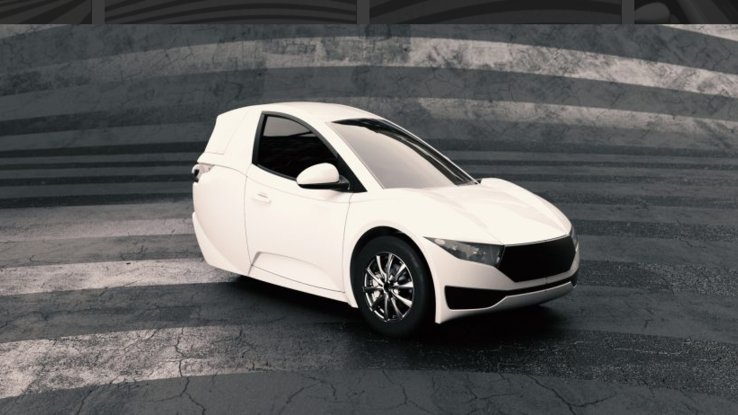
Electra Meccanica Solo

The Electra Meccanica Solo is a one-seat electric car that sells for $15,500. Or will sell. This year, they say.

Electra Meccanica

Remember Intermeccanica? The company that made the Imp, Apollo GT, Indra, Murena and the Italia now makes 356 and Kubelwagen replicas in Vancouver. That company was founded by Frank Reisner. Frank’s son Henry now runs it and is a partner with Jerry Kroll in making the car you see here, the Electra Meccanica. Since 2014, they have been developing this three-wheel, all-electric single-seater ultimate commuter pod. So the rig has provenance.

And while it sure looks similar to a Corbin Sparrow, company representatives I spoke with outside CES said it was not related to that ill-fated flop. This one has a 16.1-kWh lithium-ion battery, bigger than a Mitsubishi iMiEV’s, good for a claimed range of 100 miles. Top speed is listed at 82 mph, 0-60 at 8.0 seconds. The chassis is aluminum honeycomb. Plans are to build 2,000 of them this year in China and 75,000 a year by 2020. U.S. price will be $15,500. What could possibly go wrong?

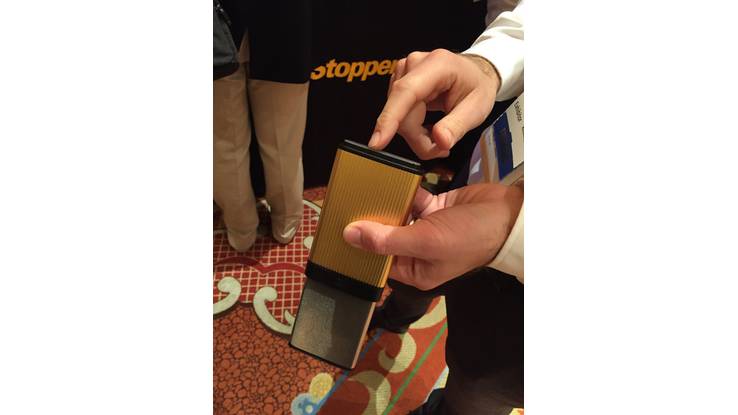
myfc

myfc makes a tiny fuel cell for recharging devices, but has plans to make fuel cell range extenders for electric cars.

myfc

While you may have the newest/most expensive/most whatever mobile phone, you probably still have to charge via one of those little Snickers bar-size portable batteries. And you call yourself a tech nerd! You haven’t charged until you have your own pocket-size fuel cell. Yes, a fuel cell smaller than a pack of Las Vegas playing cards. myfc is a Swedish company that makes this coolest of gizmos. You have a fuel card the size and shape of a credit card that houses water, salt and a proprietary mix of various scientific goop. You slide the card into the charger — the larger playing card pack-thing — and the resulting reaction makes hydrogen. The hydrogen goes through the fuel-cell stack that starts separating the electrons from everything else and voila, you’re making electricity! You will be King Nerd, with all the rights and responsibilities therein.

What does this have to do with cars? They are planning to make a fully working car powered by this technology this year. They can also make range extenders for electric cars using these. If you need me, I’ll be in Sweden.

Connected Signal

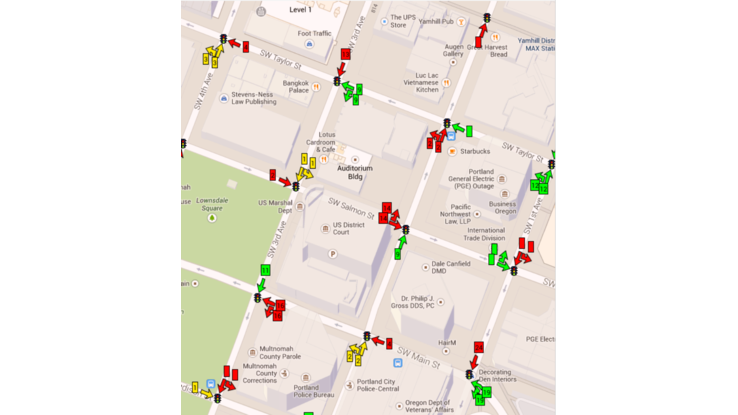
Connected Signal takes signal light data from municipalities and sends it to your phone so you never hit red lights!

Connected Signal

Do you hate red lights? Do you shake your fist and recite the same speech at every red light about how it’s a conspiracy against you and it only turns red when it sees you coming, and if we can put a man on the moon why can’t we use technology to turn lights green when there’s no one even coming from the other direction, etc.? I know I do. Well, by simply downloading this free app, you can have a readout on your phone that tells you what speed to drive your car to catch only green lights. Your life will be transformed.

How do they do it? It turns out that many, if not most, big cities control their traffic lights. That control information is available to the common man if you know where to look. Connected Signals takes that information and combines it with GPS so it knows where you are, which direction you’re going and what light you’re getting close to. It then sets a pace for you so you’ll never have to wait at a red light again. At least that’s what I hope it does.

The plan is to integrate this technology into onboard navigation systems and into autonomous cars for better traffic flow and to increase gas mileage. Yay!

Derive

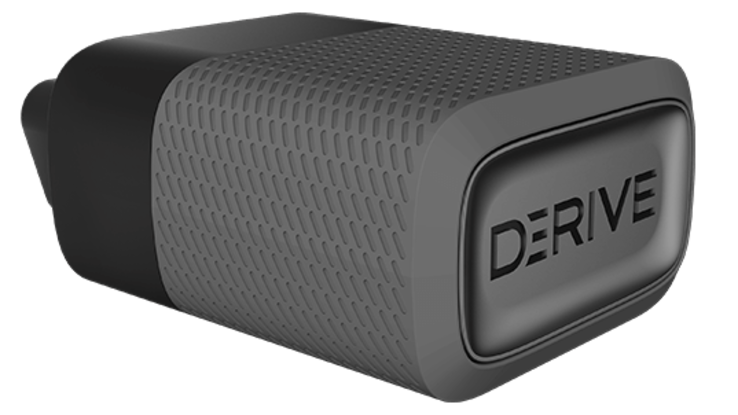
Derive stops the bad drivers in your family or company from driving bad. Or is it badly?

Derive

Don’t trust your teen behind the wheel? Don’t trust the kid you hired to deliver pizzas? Attach a Derive monitor to the car and the 16-year-old won’t be able to exceed the speed limit. Add enough Derives and they can all intervene in the fleet’s powertrains to keep the squadron of pizza delivery boys you’ve hired to run your pizza empire all under the legal speed limit. The Derive Automotive Platform upgrades your car’s software to dynamically cap top speed and/or keep drivers safe with seat belt-dependent ignition. The Derive VQ hardware plug-in uses 4G LTE and Bluetooth to offer things like crash detection, dynamic speed governors and even torque management. No more drag-racing delivery boys!

AEV Technologies electric truck

AEV Technologies electric truck

AEV Technologies electric trucks

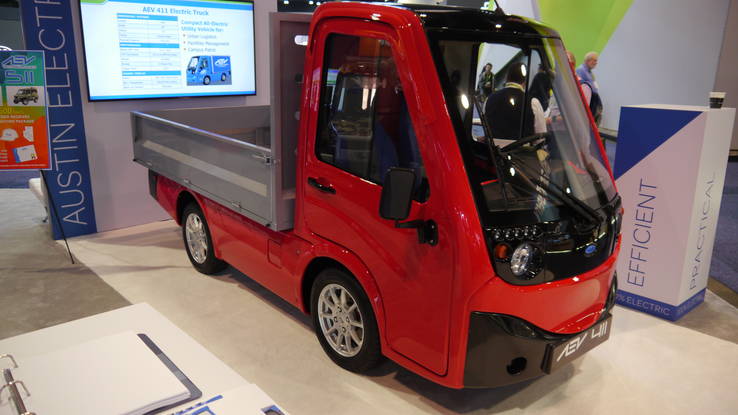
This is sooo cute! AEV Technologies makes little electric trucks that you can register for the street as Neighborhood Electric Vehicles. Granted, they don’t go over 25 mph, but it looks like maybe you wouldn’t want to go faster than that anyway. Pictured here is the AEV 411 with swing-down truck box. But you can also order it as a flat bed or a van box. You can even get a dump truck! The price starts at $14,999. It’s all-electric with a range of 50 miles from the 13.4-hp motor. There’s even AM/FM radio and a backup camera. The 511 model is AWD all-electric, while the 311 is a tandem-seat commuter with open sides. Did I mention that it’s cute?

Kia Niro EV Concept: This 238-mile-range electric crossover looks production-ready

Share

  • Pinterest

Kia is getting as much eco-mileage as it can out of its Niro, which already comes as a hybrid and a plug-in hybrid. Now the mini crossover has turned fully electric at CES 2018. Called the Niro EV Concept, it claims an impressive 238-mile range on a full charge and is capable of charging up to 115 miles in 30 minutes.

All this range is accomplished through a 64-kWh lithium-polymer battery pack paired with a single electric motor. No performance figures are available, but we’d expect it to be similar to the Chevy Bolt’s 0-60 at 6.5 seconds.

This one isn’t technically a production car, but it’s mighty close to what a Niro EV production car would look like. The body and shape is all Niro-like, but with some revisions to make it more tech- and future-focused.

Kia Niro EV interior photo

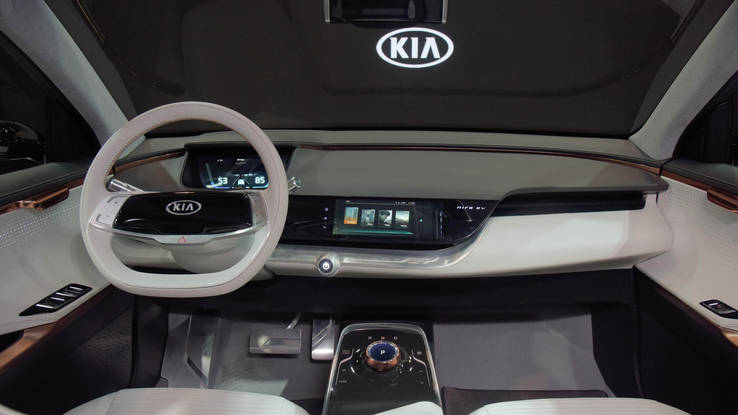
Kia’s human machine interface supports face and voice recognition that allows the car to recognize who’s piloting it, and then adjust the settings to their programmed preferences.

For this concept, Kia decided to come up with an active safety feature to warn pedestrians that a silent, electric vehicle is coming –- certainly a CES thing to do. A combination of front-view cameras, object recognition sensors and front speakers detect pedestrians or cyclists, then the car sounds an alert targeted at that person to warn them of the giant, rolling piece of metal about to run them over.

The interior of the car gets much more concept-like, with an airy, wraparound dash devoid of most the buttons you’re used to seeing on production cars. It looks pretty standard for CES, but don’t expect much of the interior to transfer over to the production car. Kia using a crossover for its first long-range electric is a sign of the times we live in where manufacturers are working hard to satisfy everybody’s tall-car needs.

Zac Palmer

Zac Palmer – Editorial Intern Zac Palmer has probably spent more time in a car than any other 21-year old in the country. He likes anything that can go around a corner, and is surely talking about a car wherever he might be.
See more by this author»

Here’s how the latest autonomous driving systems handle real-world scenarios

Share

  • Pinterest

The latest autonomous driver-assist systems now navigate busy city streets, responding to traffic lights, pedestrians, unexpected road closures and erratic driving by other cars. The Level 4 prototypes of today can make U-turns, steer themselves along with other cars on road surfaces with no lane markings, respond to hard-to-see traffic lights and make decisions when there are no traffic lights at all.

Indeed, there is a tremendous gap between the Level 2 cars of yesteryear — Tesla’s Autopilot driver-assist system is technically a Level 2 — and the decision-making requirements of Level 4 cars in a dense urban setting with the complexities of stop-and-go traffic, convoluted and contradictory traffic signs, and bicyclists and pedestrians sharing the road space. The computing power alone required to process it all and make decisions on the fly isn’t something many industry observers predicted being operational in 2018 — even in prototype form.

2018 Volvo XC40

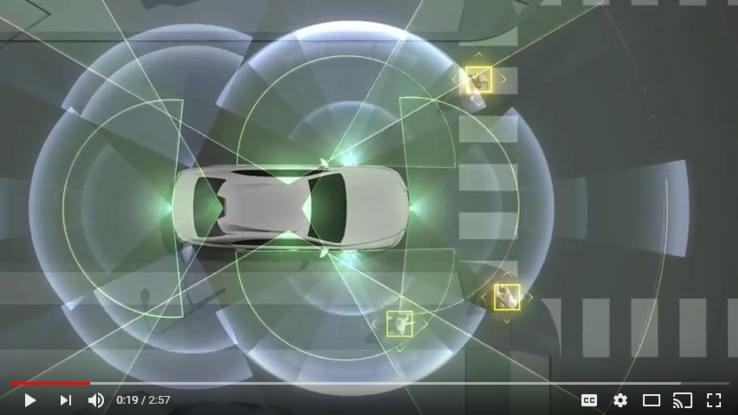
To see just how much progress autonomous driving systems have made, have a look at Torc Robotics’ Asimov Level 4 self-driving system in the video at the top. Torc uses LIDAR, cameras and radar, and is among the systems closest to being worthy of the once-shunned “self-driving” label in development today.

Still, there are plenty of traffic situations we can think of that would require action by the driver that some autonomous systems would have difficulty addressing, at least for now.

Is the best software in prototype stages today advanced enough to pull over when an emergency vehicle approaches from behind or in the opposite direction? Developers are working on systems that can detect the approach of emergency vehicles based on sound. Or how about a police officer stopped in the opposite lane, facing the opposite direction and holding his left arm out the window of his car to direct traffic in your lane to stop? Or a school bus that pulls over in the opposite lane or a couple lanes over to your right in the same direction of traffic as your car. And what about that not-uncommon situation where the car in front of yours stops at a red light and then backs up just a little, and you notice that the driver never engages the forward gear in anticipation of a green light. You would probably tap the horn a couple times, in the hope that the driver ahead of you gets the point before they mash the gas pedal in reverse gear as soon as the light turns green.

ZF TRW Highway Driving Assist

We go autonomous on the Autobahn

Autonomous vehicles are coming. A couple of months ago we went for a spin in a Freightliner 18-wheeler featuring the Highway Pilot system, an autopilot of sorts that lets the driver take his …

And then there’s the situation where another car flashes its high beams, which can mean a lot of things depending on the context: a signal to proceed, a signal to move over, a warning about a road hazard or a warning about a police officer up ahead measuring speed.

You probably have to deal with at least a couple of these nuanced situations at least once a week, not counting maneuvering in parking lots and queuing up at gas stations, and there are still plenty of situations in which LIDAR, radar and cameras may not be enough to detect signals or unusual hazards.

The latest autonomous driving systems are on their way to solving these complex but everyday traffic issues that might not stump a human but can be difficult for machines to comprehend and negotiate quickly and safely. In the video at the top, which Torc posted ahead the Consumer Electronics Show — during which it is demonstrating its systems in real-world Las Vegas traffic — you probably noticed that the Asimov software can already respond to unsure pedestrians who may look like they want to cross the street but then retreat back. These are the types of situations which the latest crop of autonomous vehicles is learning to solve and predicting the actions of unpredictable pedestrians is one of the most important tests that truly self-driving cars will need to solve daily.

Tesla Autopilot operation

2019 Chevy Silverado 4500HD and 5500HD are heading back to work in March

Share

  • Pinterest

General Motors will reveal its new Chevrolet Silverado medium-duty pickups in March at the Work Truck Show.

The automaker, nearly a decade after abandoning the segment during its 2009 bankruptcy, confirmed in September that it planned to begin selling 4500 and 5500 chassis-cab versions of its Silverado pickup in late 2018.

The trucks, which the company has said were built from the ground up and are not variants of existing trucks, are aimed at fleet and commercial buyers and can be upfitted with work-specific beds and boxes.

GM said the Silverado 4500 and 5500 will be offered in regular and crew cab varieties, as 4x2s or 4x4s, and with a range of weight ratings and wheelbases. They will be powered by a Duramax diesel engine and Allison transmission, a combination it has used on about 2 million trucks.

“The Silverado 4500HD/5500HD trucks are the flagship of our full-line commercial truck portfolio and we’ve designed them to be among the best in the industry in maneuverability, serviceability, visibility, quietness and comfort, diesel fuel economy and more,” said Ed Peper, U.S. vice president of GM Fleet, in a statement.

The trucks are expected to go into production in Springfield, Ohio, in late 2018, according to GM. The automaker partnered with Navistar International Corp. to develop and produce the trucks.

Additional technical specifications for the Silverado 4500HD/5500HD are expected to be released at the reveal.

The Work Truck Show, scheduled from March 6-9 in Indianapolis, is North America’s largest work truck event. More than 11,000 public and private truck fleet operators, dealers and equipment distributors are expected to attend this year’s show, according to GM.

The article GM’s medium-duty Silverado revival shifts ahead in March” originally appeared at Automotive News on 1/8/18.

By Michael Wayland, Automotive News

Hyundai NEXO proves hydrogen fuel cells still have potential

Share

  • Pinterest

Hyundai’s new fuel-cell vehicle finally has a name — NEXO — and a range — 370 miles. Details about the crossover SUV were revealed at the Consumer Electronics Show, underway now in Las Vegas.

The name is fine, sounds like you’re “next o” or something, but the 370 miles of range is a noteworthy improvement over the current Tucson fuel cell’s 265 miles. The extra mileage comes thanks to three big cylindrical tanks stowed under the NEXO’s floor and seats. Hyundai says the onboard tank farm doesn’t intrude on interior space, claiming the space inside matches that of a gasoline-powered equivalent CUV.

To make room for all that H2, Hyundai built an entirely new platform for this FCV, a not-inexpensive proposition. There was much debate internally as to whether it was worth investing all that money in what will at first be a low-volume crossover. But word is Hyundai chairman Chung Mong-koo wanted it and what Chung Mong-koo wants, he gets. So they built it. Hyundai doesn’t need the fuel-cell vehicle to meet California’s zero-emission vehicle mandate, since it sells enough ioniq electric cars to meet that requirement. So the company must see hydrogen as the future. Unless it sees electricity as the future, a propulsion option it offers in its ioniq and coming Kona EVs.

The NEXO is the latest in the recent line of “eco vehicles” from Hyundai, starting with the Sonata Hybrid in 2011, the fuel-cell-powered Tucson in 2013 and the ioniq in 2016.

“NEXO embodies everything we have learned in five years of the Tucson fuel-cell vehicle,” said senior vice president of Hyundai’s Eco Technology Center Ki Sang Lee.

2016 Toyota Mirai

Is Toyota’s bet on hydrogen paying off?

Toyota is one of several automakers experimenting with hydrogen fuel cell technology as a form of zero-emission transportation, and it’s one of just a couple offering hydrogen cars to the general …

The NEXO’s electric motor has a 120-kW output, or 161 hp, along with 291 lb-ft of torque, figures which Lee says are comparable to the company’s internal combustion engine for an equivalent-size CUV. It can also start at temperatures below minus-20 degrees Fahrenheit, which the Tucson fuel cell couldn’t do. The NEXO’s 0-60 time is 9.5 seconds, 20 percent faster than the Tucson FCV.

The NEXO will also feature a few technological functions recently developed by Hyundai like a blind-spot monitor that uses three cameras to show the driver rear and side views on the center cluster screen during lane changes. Lane Follow Assist keeps the NEXO between the lines at speeds up to 90 mph. With Remote Smart Parking Assist, it’ll even park itself with or without a driver in it.

NEXO is just one of 18 eco vehicles that Hyundai will market by 2025, including hybrids, plug-in hybrids, battery electrics and hydrogen fuel-cell vehicles. It plans to do this despite what Woong-chul Yang, vice chairman of Hyundai R&D, says is a money-losing deal.

“We lose money on every eco vehicle we sell,” he said during a roundtable at CES. “Selling product, losing money, it’s not good business.”

Unless his boss, Mong-koo, is right about hydrogen being the future. In that case, it’s a smart investment. Check back with us in 10 or 15 years and we’ll have an answer to that.

The Byton Concept SUV: A digital, self-driving EV from China washes ashore in the US

Share

  • Pinterest

With a focus on the digital experience over the driving experience, Byton is trying to make a splashy, yet believable, debut at CES.

The Nanjing, China, company introduced its debut vehicle concept at CES Sunday, rolling out its connectivity-focused electric crossover.

Byton’s unveiling comes one year after Faraday Future made a grandiose splash at CES, only to widely scale back its ambitions within months.

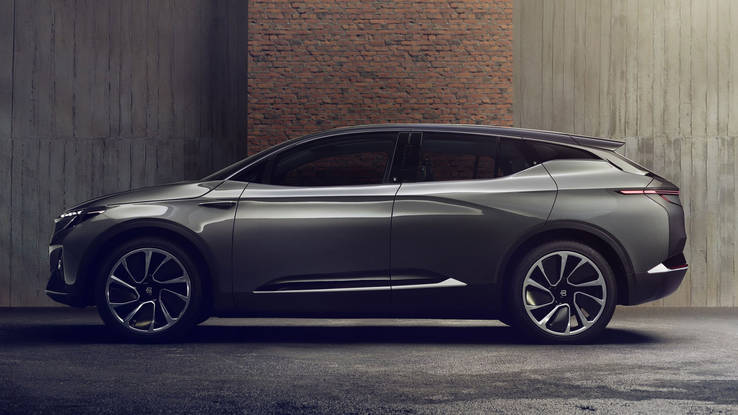
With wide infotainment screens and individual adjustable seats, Byton’s concept focuses on affordable comfort and utility rather than an ultra-luxury driving experience.

“Our first Byton is actually a high-tech digital space,” said Byton CEO Carsten Breitfeld.

Breitfeld and Daniel Kirchert, Byton’s president, drove one concept on stage, with two identical vehicles parked on either side. The executive then brought out his teenage son, Winston, to vouch for the concept’s usability.

“It’s as intuitive to operate as any smart device you’ve ever seen,” Breitfeld said.

Byton, which recently opened an office in Silicon Valley, plans to sell its first vehicle in China in 2019, and later begin sales in the U.S. The company’s first vehicle will be modeled after the CES concept, which the company said contains 85 percent of the same design and parts as the production vehicle.

Toyota brings toaster like transport to CESToyota e-Palette

The flagship crossover, which customers can reserve starting Jan. 7, will start at about $45,000, with an entry-level trim that will have a range of 250 miles, and a high-end trim with a range of 325 miles.

The concept’s sloping exterior replaces standard parts with “smart” technology. Instead of door handles, facial recognition sensors can detect drivers and passengers and open the doors accordingly. Side-view cameras replace mirrors. The crossover’s narrow headlights are placed high on its face, with three individual light “modules” per headlight. In place of a grille, a screen displays intersecting lines of light. Antennaes are flattened into the roof for cloud connectivity.

Autonomous driving

Byton said its first vehicles will be equipped with Level 3 autonomous driving capability — which means the vehicle can drive itself in certain conditions and under human supervision.

Byton photo

The Byton SUV will be built and sold in China before making its way to the US and Europe in 2020. Photo by Byton

The automaker expects to install Level 4 capability — which requires no human supervision under defined conditions — some time in the next decade through a partnership with an unnamed manufacturer, and has designed the concept’s interior with upcoming self-driving upgrades in mind.

A 49-inch screen that can be controlled by touch, voice or gesture spans the cockpit, and is customized for both the driver and the front-seat passenger, with an additional 8-inch touchscreen on the steering wheel. The vehicle can limit the amount of information available depending on whether a human or the vehicle is driving. The car will also be able to connect to passengers’ smart devices, such as phones and watches, for individual entertainment and other information.

Volkswagens ID Buzz to get artificial intelligenceVW ID Buzz

Alexa on hand

Byton is also working with Amazon to integrate the tech company’s Alexa virtual assistant into its vehicle.

The concept’s interior contains four seats, with front seats that can rotate 12 degrees inward, designed in collaboration with French supplier Faurecia.

Kirchert said the ability to personalize infotainment for each passenger primes Byton’s vehicle for both individual ownership and use in shared mobility services.

The article Chinese EV startup Byton unveils first concept at CES” originally appeared at Automotive News on 1/17/18.

By Katie Burke, Automotive News

Bigger than a breadbox: Toyota brings toaster-like transport to CES

Share

  • Pinterest

The pods are coming and Toyota is bringing them. They’ll haul people around, deliver things, and a cute little one will even bring a pizza to your door.

When, you ask? Someday, within a few years. It’s all very futuristic.

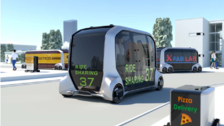
Toyota’s wildly futuristic e-Pallette Concept Vehicle was revealed at CES as part of “a new mobility service business alliance… designed to meet the demands of future multi-mode transportation and business applications.” As near as we can tell, that means it could deliver things and people.

The all-electric, eight-wheeled toaster-like transporter sits on a modular platform that can be built in three lengths from 13 to 23 feet. It is an upright, low-ground-clearance, multi-use vehicle designed for urban environments. Very urban. It looks like it couldn’t clear a decent-sized speed bump. But it’s a concept, not a production vehicle, so we’ll cut it some slack.

Akio Toyoda himself introduced the very upright, not-cross-wind-friendly e-Palette, which can be used for any number of portable business needs. It can be configured to carry people standing up as they would on a crowded airport shuttle or it can carry cargo to make deliveries. The idea is that it will bring business to the customer, Toyoda said.

“Imagine how great the e-Palette would be at Burning Man,” he said.

It’s not a standalone deal, though. It offers, “a suite of connected mobility solutions,” Toyota — the company — says. The e-Palette Concept Vehicle you see here is part of the e-Palette Alliance, which will “…create a broad-based ecosystem of hardware and software support designed to help a range of companies utilize advanced mobility technology to better serve customers.” Toyota says those customers include Amazon, DiDi, Pizza Hut, Mazda and Uber, all of which will “collaborate on vehicle planning, application concepts and vehicle verification activities.”

Yes, that description sounds like an MBA and a business thesaurus had a baby that started typing. Even Toyota has trouble explaining what its plans are here.

The idea was launched in 2016 when Toyota established a Mobility Service Platform (MSPF) “…to collaborate with various service providers, as well as telematics insurance.” Does that sound vague? Toyota clarified: “…the MSPF will have various functions to support mobility services, and leverage the Toyota Smart Center, the Toyota Big Data Center, and financial services.” So the exact applications are a little vague but nonetheless it’s a cool-looking toaster.

Rinspeed is showing a similar vehicle at CES, and just north of the convention center an autonomous shuttle is in regular public service, just four years after debuting at CES. Toyota and its partners will start using these e-Palettes in the early 2020s. The first time you see them might be at the Tokyo Olympics in 2020. By that time the Pizza Hut pizza might be a little cold.

Volkswagen’s retro I.D. Buzz van will be packed with artificial intelligence

Share

  • Pinterest

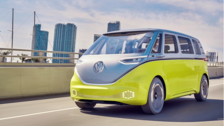
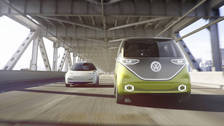
The coming Volkswagen I.D. Buzz microbus will be able to recognize your face as you approach it and set up the interior just the way you like it, thanks to the company’s first use of Nvidia’s artificial intelligence, it was announced at CES yesterday.

“In just a few years, every new vehicle should have AI assistants for voice, gesture and facial recognition as well as augmented reality,” said Jensen Huang, ceo of chipmaker Nvidia, which will power AI on the microbus. “Working with Volkswagen, we are creating a new generation of cars that are safer, more enjoyable to ride in than anything that has come before, and accessible to everyone.”

Last year Nvidia revealed its Xavier processor, a new chip that can power various AI features, including the Drive AV function that will allow self-driving cars. At this year’s Consumer Electronics Show Nvidia partnered with Volkswagen to introduce new features called Drive IX and Drive AR.

Are electric-modular vehicles with interchangeable forms the future of automobiles?

Volkswagen is calling one suite of features offered by Drive IX “Intelligent Co-Pilot,” which offers facial recognition that remembers your mug and unlocks the car for you as you approach. It will also remember what language you speak and set the voice recognition to match. Drive IX can also provide driver alerts for bicycles, gesture recognition for user controls and gaze tracking to combat driver distraction. It’ll even set up the seat just the way you like it.

Drive AR will offer augmented reality, which will enhance safety by highlighting various information for the driver.

The systems can be updated throughout the life of the vehicle via software updates, and can gain new capabilities as further developments are made in autonomous driving, Volkswagen said. Thanks to what is known as deep learning, cars will be able to assess situations and analyze the behavior of other drivers on the road, enabling your smart car to make the right decisions.

“Artificial intelligence is revolutionizing the car,” said Volkswagen CEO Dr. Herbert Diess. “Autonomous driving, zero tailpipe emission mobility and digital networking are virtually impossible without advances in AI and deep learning. Combining the imagination of Volkswagen with NVIDIA, the leader in AI technology, enables us to take a big step into the future.”

Ford F-150 diesel is finally here: 2018 Power Stroke V6 delivers 440 lb-ft of torque

Share

  • Pinterest

Ford added a diesel engine choice to its 2018 F-150 lineup a week before the Detroit auto show. The Power Stroke name will be applied to a turbocharged 3.0-liter V6 diesel making 250 hp and 440 lb-ft torque while returning a claimed 30 mpg on the highway in Ford’s best-selling half-ton pickup truck.

The 3-liter V6 is less than half the displacement of the company’s monstrous 6.7-liter Power Stroke V8, available in the F-250 and F-350 Super Duty pickups, but still promises up to 11,400 pounds of towing capacity along with 2,020 pounds of payload in the F-150. Ford says it was designed for the needs of North American buyers.

“For every truck owner who wants strong fuel economy while they tow and haul, we offer a new 3.0-liter Power Stroke V6 engine,” said Dave Filipe, vice president global powertrain engineering. “The more you tow and the longer you haul, the more you’ll appreciate how efficient it is at the pump.”

The new Ford diesel gets a graphite-iron block, forged steel crankshaft, aluminum-alloy pistons and a second fuel filter for extra fuel system protection. Peak power comes at 3,250 rpm while peak torque comes way earlier, at 1,750 rpm. A variable-geometry turbocharger increases responsiveness and reduces lag, says Ford.

To keep its new diesel cool, Ford uses a standard mechanical engine fan along with dual radiator shutters that open for improved high-temperature, high-altitude performance. In easier conditions the F-150 slows the fan speed using a viscous coupler and closes the shutters when necessary.

“We know that diesels with electric cooling fans have to dial back on power under extreme heat and altitude, so we decided on a viscous-controlled mechanical fan that has the capacity to move much more air across the radiator and intercooler in extreme conditions,” said David Ives, Ford diesel engine technical specialist. “This gives F-150 Power Stroke owners more power and more passing capability in harsh conditions.”

The new diesel F-150, in dealerships this spring, uses the company’s new ten-speed automatic transmission and auto stop/start comes standard. It’s available in 4×4 and 4×2 configurations in a selection of trim levels along with both SuperCrew and SuperCab bodies.

We’re still waiting on pricing, but the 2018 F-150 starts at about $28K and goes beyond $60K for the Limited model. It’s safe to expect the diesel to add at least a few thousand dollars to the price of a comparably equipped gasoline F-150’s sticker price.

Nissan’s brain-to-vehicle tech moves us one step closer to the Matrix

Share

  • Pinterest

Normally it’s the zombies that want your brains. But at next week’s Consumer Electronics Show it’ll be Nissan.

The carmaker will show off its latest developments in what’s called “brain-to-vehicle,” or B2V technology at CES. Nissan says B2V “will enable vehicles to interpret signals from the driver’s brain, redefining how people interact with their cars.” The technology “promises to speed up reaction times for drivers and will lead to cars that keep adapting to make driving more enjoyable.”

We saw that on Star Trek once. The original Star Trek, with William Shatner and Leonard Nimoy.

Drivers wear a device, like a skull cap with wires, that measures brain wave activity. The activity is analyzed by on-board autonomous systems. The “brain decoding technology” can tell when you’re about to stomp on the brakes and will stomp on the brakes for you before you would normally be able to do it – 0.2 to 0.5 second faster, while the system itself is supposed to remain “largely imperceptible.” Well, imperceptible except for all those wires coming out of your head.

“By catching signs that the driver’s brain is about to initiate a movement – such as turning the steering wheel or pushing the accelerator pedal – driver assist technologies can begin the action more quickly,” Nissan said. “This can improve reaction times and enhance manual driving.”

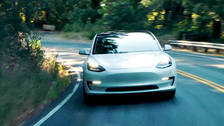
Tesla Model 3 delays

That’s fine as long as the driver’s anticipated action is the right thing to do at that moment. What if the driver is about to make a mistake? Will doing it faster be better? That question is not addressed yet by Nissan.

For autonomous driving, it can tell when the driver is “experiencing discomfort” and can adjust the driving configuration or driving style. It can even change the car’s internal environment. That means rather than you looking out at traffic backed up on the Lincoln Tunnel or on Tokyo’s traffic-clogged Metropolitan Expressway No.1, in autonomous mode you could be driving up California’s scenic Highway 1 or maybe the Blue Ridge Parkway. Doesn’t that sound nice?

“The potential applications of the technology are incredible,” said Dr. Lucian Gheorghe, senior innovation researcher at Nissan Research Center in Japan, who is leading the B2V research. “This research will be a catalyst for more Nissan innovation inside our vehicles in the years to come.”

The research is part of Nissan Intelligent Mobility, which is supposed to “transform how cars are driven, powered and integrated into society.”

The system will be on display at the Nissan stand next week at CES. I will try to try it out for myself and report back. Unless it steals my brain. Aiyeeee!!!

Fisker EMotion EV: Here’s the new 400-mile range luxe EV coming to CES 2018

Share

  • Pinterest

Fisker (yes, that Fisker) is coming to CES 2018 with a new electric car called the EMotion. The company’s claims are impressive: It will be able to cover a minimum of 400 miles on a single charge, top out at 161 mph and is launching at the very end of 2019.

The news here, however, is the EMotion’s claimed ability to charge to 125 miles of range after only nine minutes of being plugged in. Yes, it’s using lithium-ion battery technology, but Fisker is upping the ante above your typical battery pack.

“What we have done is we have packaged them (battery cells) in a new way, in a unique, proprietary battery module, where we have created a new cooling system. What it does is allow for us to probably have the most energy dense battery pack in the world because we have been able to put these cells very close together and still be to cool them very efficiently,” designer and company namesake Henrik Fisker says.

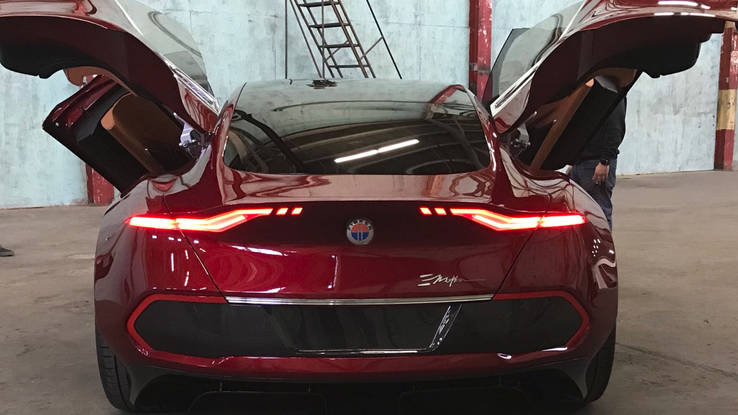
EMotion photo 1

The doors might turn some people off, but “out there” design elements seem to be the norm when making electric cars.

A 143 kWh battery is utilized to deliver the long 400-mile range, but Fisker says the significant battery weight doesn’t hurt the vehicle tremendously — he was able to take weight out with a simpler cooling system and lightweight construction of the battery case. It’s made out of a material used by the U.S. military, but Fisker isn’t ready to give away his secrets quite yet.

There’s a combination of sports car and GT car styling used on the EMotion, with a bit of Fisker flair as well. The four doors open up and out in an exotic style, and the rear end is distinctly Aston Martin-like. A LIDAR system is housed on the nose of the car to offer something close to autonomous driving — there’s no indication as to the level of autonomy yet though. Fisker says to expect some exotic materials throughout the car like carbon fiber, aluminum and various composites to keep the weight down.

CES 2018 preview: Here's what to expect at the Las Vegas tech show

“What we decided to do is — we are really calling it a low-volume car, which allows us to use a lot of exotic materials, we can use low-volume lower-cost tooling. Of course, that limits somewhat the amount of units we can produce, but it gives us a lot of flexibility in adding a lot of exciting new tech into the vehicle,” Fisker says.

The company claims the EMotion will be sold directly to consumers all across the U.S., and it plans to eventually have a network of about 400 service centers, all offering concierge service. No performance numbers are available as of now, but the base price is: $129,900. Of course, you’ll be able to option the EMotion with plenty of extras like carbon fiber wheels, an electro-chromatic roof and other as-yet-announced announced goodies.

Additional Fisker news involves an unannounced second high-volume vehicle that it wants to team up with a large OEM to make, and the solid-state battery tech it claims will allow for a much smaller battery, plus a zero-to-full charge in about a minute. Ambitious, but we look forward to further developments.

Zac Palmer

Zac Palmer – Editorial Intern Zac Palmer has probably spent more time in a car than any other 21-year old in the country. He likes anything that can go around a corner, and is surely talking about a car wherever he might be.
See more by this author»

Kia Niro EV concept: Another electric to join the fray at CES 2018

Share

  • Pinterest

The Kia Niro is already on sale in standard hybrid and plug-in hybrid forms (check out our reviews here and here), but it will take the stage as a full EV at CES 2018. Kia will preview a Niro EV concept at the show next week, and it’s showing us these teaser photos in the meantime.

We can see a new face/lighting scheme is being applied to the concept; this consists of some fancy-looking LEDs, plus a light-up badge and grille. The grille appears to showcase Kia’s “motion graphic” lighting technology (basically lights that change pattern and intensity) it will show at CES.

For now, Kia isn’t saying anything about potential specs, but we can make some good guesses since the Niro is based on the Hyundai Ioniq, which currently offers a pure EV option. The Ioniq has 124 miles of range while making 118 hp and 215 lb-ft of torque from its electric motor. At this point, those stats mean it’s a rung below something like the 238-mile-range Chevy Bolt. Everything is relative to price, however, and the Ioniq does undercut the Bolt there by about $6,000.

It’s possible Kia might use a larger battery in the Niro EV, but it has a long ways to go if it wants to compete on range with the Bolt and Tesla Model 3. We’ll have more next week from the CES show floor, but in the meantime, go check out our first drive of the 2018 Niro Plug-in Hybrid.

Zac Palmer

Zac Palmer – Editorial Intern Zac Palmer has probably spent more time in a car than any other 21-year old in the country. He likes anything that can go around a corner, and is surely talking about a car wherever he might be.
See more by this author»

Toyota’s automated driving research vehicle has eyeballs everywhere

Share

  • Pinterest

Toyota took the wraps off its latest autonomous research car ahead of the CES show next week, and it has managed to put tastefully designed eyebrows over the million eyes the car has.

The full name of the beast with a million eyes is “Automated Driving Research Vehicle Platform 3.0.” Toyota didn’t say how many sensors are festooned on the specially built Lexus LS 600hL, but we counted 17. That includes six forward-facing cameras, four or five of those LIDAR sensors and a bunch of what might have been radar outposts glommed onto the sides. We’ll get the exact number and identification of each sensor next week at CES. The result of all that sensing is a far-more efficient “vision” of the road on which the car will be driving itself. With all those sensors, it can “see” more than 650 feet in all directions, whereas the previous car, Automated Driving Research Vehicle Platform 2.0, could only “see” in front of itself.

“Platform 3.0 has a very sensor-rich package that makes it one of the most perceptive automated driving test cars on the road,” Toyota said. “The Luminar LIDAR system with 200-meter (656 feet) range, which had only tracked the forward direction on TRI’s previous test platform, now covers the vehicle’s complete 360-degree perimeter. This is enabled by four high-resolution LIDAR scanning heads, which precisely detect objects in the environment including notoriously difficult-to-see dark objects.”

LIDAR, which as you know stands for Light Imaging Detection and Ranging, is one of the car’s sensors. Short-range LIDAR sensors are what you see on the front quarter panels and front and rear bumpers. These can detect low-level and smaller objects near the car. Cameras also assist in “seeing” what is around the car. 


Toyota is also proud of the 3.0’s exterior design. The company’s CALTY design studio in California integrated the sensors into the body more smoothly than it did those found glommed onto the old 2.0 research vehicle.

“Automotive designers’ roles have been pivoting toward thinking deeper and greater on how to design and apply automated driving technology for drivers and passengers,” said Scott Roller, Senior Lead Designer at CALTY Design Research who worked on the project. “It’s exciting to integrate the components in harmony with the car’s design.”

Even the 3.0’s computational architecture for operating all those automated vehicle components, which previously consumed nearly all the trunk space, has been better consolidated into a small, artfully designed box in the trunk adorned with an LED-lit TRI logo.

Very limited production of the Platform 3.0s will begin this spring at the Prototype Development Center in Michigan, using stock Lexus LS cars. Some of them will get a dual cockpit control layout for testing TRI’s Guardian approach to automated driving, experimenting with effective methods to transfer vehicle control between the human test driver and the automated system while maintaining a safety driver as a backup. Single cockpit vehicles, like the one that will be on display at CES, are used to test Chauffeur, which is TRI’s approach to full vehicle automation. Both Guardian and Chauffeur test vehicles use the same technology stack of sensors and cameras and similar software.

When will all this be in showrooms for you to buy? Toyota ain’t sayin’. But these new research vehicles are a necessary step to getting there.

Hyundai’s unnamed, tech-dense fuel-cell vehicle shows off ahead of CES

Share

  • Pinterest

Ahead of its CES show debut, Hyundai is showing off its currently unnamed fuel-cell electric crossover. There aren’t too many details available for the new green machine, but Hyundai says the crossover will come with new Advanced Driver Assistance System technologies. The company isn’t clear about what exactly that means in terms of hardware, but it’s clear they plan to push its autonomous driving features.

We imagine the system will be similar to the semi-autonomous features found in vehicles from Mercedes-Benz, Audi and Volvo — think active cruise control and a lane keeping system powerful enough to a guide the car around a corner. Hyundai also says it’ll include an artificial-intelligence-enhanced voice command system, like your Google Home or Amazon Echo

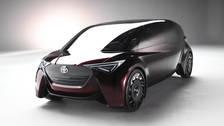
Toyota Fine-Comfort Ride previewed ahead of tokyo motor show

As with the name, Hyundai is being tight-lipped about important features like range, output and price, but any production fuel-cell crossover will get range and powertrain details similar to those of the FE Fuel-Cell concept. Hyundai claims that concept car, which debuted at the Geneva motor show earlier this year, was good for 497 miles before refueling.

We’ll get more information, and a name, when the folks at Hyundai peel back this car’s cover on Jan. 8 during its CES press conference. Until then, you can check out what it looks like above.

Does the Infiniti Q Inspiration concept preview a future flagship?

Share

  • Pinterest

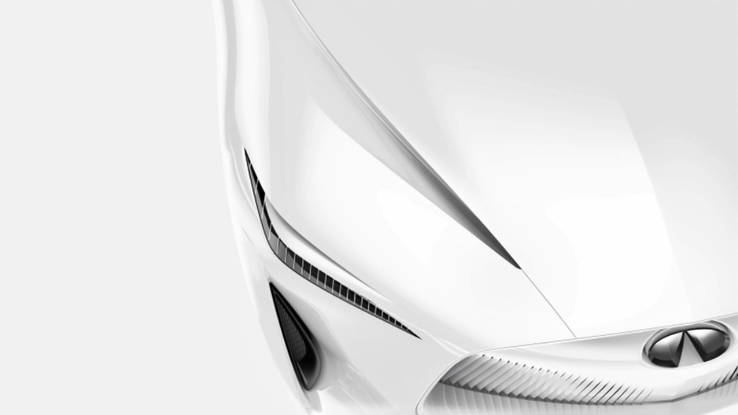
Infiniti is giving the world a glimpse at its next concept sedan, which it plans to unveil at the 2018 Detroit auto show in a matter of days. Dubbed Q Inspiration, this concept previews the marque’s latest design direction in the guise of a large sedan, hinting at a possible successor to the Q45 that was never quite followed up on after it left the lineup in 2006.

The concept is the first manifestation of the brand’s new design language “for an era of advanced powertrains,” the automaker said, hinting at electrification.

“We aim to take traditional sedan architecture to its next stage of evolution,” said Karim Habib, Infiniti executive design director. “The Q Inspiration offers an alternative form: something more flowing in appearance and muscular in stance, with an unusually long and balanced cabin. Experimenting with new proportions in an established segment with the arrival of smarter, compact powertrains, the Q Inspiration features a shorter hood and elongated body, with all the benefits to interior well-being, comfort and space that this layout entails.”

2018 Infiniti Q Inspiration concept hood

Infiniti says that the new concept is an example of the brand’s new design language.

The design appears crisper and visually lighter than the fluid, flowing lines of the Q80 Inspiration concept, which previewed a similar large sedan at the 2014 Paris motor show. There are a few common elements here and there, but overall the concept does indeed feature a distinctly new design direction for the brand, one which trades rounded shapes for sharper lines.

It’s too early to talk about production, but it’s notable that Infiniti has been without a true luxury sedan competitor to the likes of the Lexus LS, BMW 7-Series and Mercedes-Benz S-Class for over a decade. The current Q70 and Q70L hail from the M sedan lineup, which occupied the midsize category in Infiniti’s past naming convention — the Q70 is more of an E-Class, 5-Series competitor when it comes to size, and an aging one at that. Given the market’s current penchant for luxury SUVs it’s hard to blame Infiniti for skipping on a large, luxury sedan; if sales trends continue as they are, the Q Inspiration may remain just that — inspiration, for a future SUV.

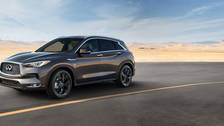
2019 Infiniti QX50 Semi Autonomous and Newly Variable

CES 2018: Here’s the car and truck tech coming to Vegas this year

Share

  • Pinterest

The new year has arrived, and with it comes the migration of tens of thousands of tech engineers, executives, analysts, media and other industry watchers to Las Vegas for the largest tech trade show of the year — CES. The show runs from Jan. 9 to 12.

While auto shows are the primary platform for manufacturers to show off their latest vehicles and detail short-term product plans, CES has become the forum for bombastic announcements on future technology.

In 2017, we saw Fiat Chrysler Automobiles’ Portal minivan concept and Toyota Motor Co.’s artificial intelligent assistant Yui, along with a string of announcements of partnerships between tech and auto companies.

This year, Ford, Nvidia, Intel and Baidu are expected to make announcements at the show, though the companies have been tight-lipped about their plans.

Honda photo

Honda’s products for CES 2018 certainly look suited for a show about “the future”

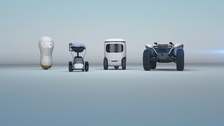
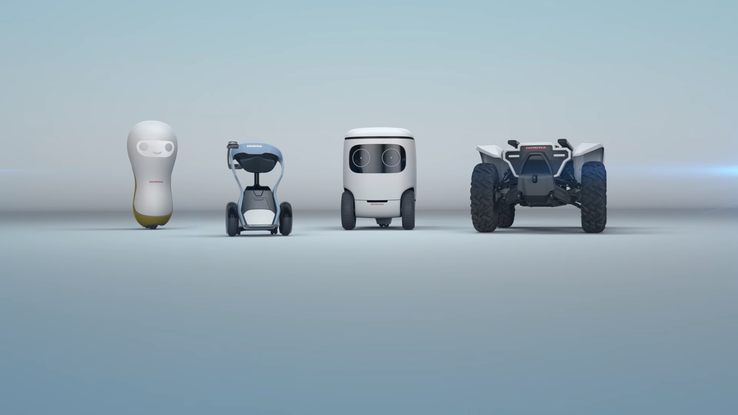
Honda 3E Robotics Concept

The Japanese giant is no stranger to humanoid robots and will showcase a bevy of bots that look pulled right out of a Pixar film. The 3E Concept — for “empower, experience, empathy” — looks like it will be more focused on robots as personal assistants than in automotive capacities. One of the robots, however, is an autonomous off-roader concept, designed to “support people in a broad range of work activities.”

Mercedes-Benz’s new infotainment system

Mercedes-Benz will debut an infotainment system for its compact cars. The Mercedes-Benz User Experience, or MBUX, will utilize artificial intelligence and be included in vehicles on sale as early as this year. The luxury carmaker also will bring the Concept EQA electric hatchback, the Smart Vision EQ ForTwo city car concept and the Mercedes-AMG Project One hypercar to Las Vegas.

Tesla Roadster

Rinspeed Snap

Swiss company Rinspeed has shown off some kind of out-there concepts at CES in the past, and this year will be no different. The company will show off its Snap Mobility concept, which has a bunch of different body types that can be “snapped” onto a platform. The platform, called a skateboard, will hold the computing system and parts such as the powertrain, but the upper “pod” will be interchangeable. And, of course, the concept will be electric and autonomous.

Toyota’s open-source entertainment platform

Toyota will showcase its Linux-based infotainment platform that will be included in the 2018 Camry. Automotive Grade Linux is an open-source project by The Linux Foundation, which is the official authority of one of the foundational programming languages for modern computing.

Faurecia self-driving vehicle interior

Faurecia will display a concept interior for self-driving vehicles in a modified Renault Espace minivan. The seats will have biometric sensors to monitor the passengers’ health. A dashboard screen will display videos and other infotainment options when the vehicle is in self-driving mode. And a control panel on the armrest will allow the driver to operate infotainment, climate control and other cockpit functions.

Nissan’s autonomous electric concept

The Japanese automaker will bring the IMx concept, which it unveiled at the Tokyo Motor Show, to the U.S. for the first time. The crossover is a preview of Nissan’s plans for mobility technology and is intended to be self-driving with at least 373 miles of battery range. Nissan also will showcase the second-generation 2018 all-electric Leaf.

Byton’s first vehicle introduction

After Faraday Future’s failed autonomous parking demo last year, expectations may be pretty low for Chinese EV startups showing at CES. However, Byton, a startup from Nanjing, China, run by two German automotive veterans, is hoping to change perceptions with the unveiling of its first vehicle, an all-electric crossover due in 2019. The company also will announce its partner for developing Level 4 autonomous driving, which requires no human supervision under defined conditions.

The article “CES Preview: Back to the future” originally appeared at Automotive News on 1/1/18.

By Katie Burke and Shiraz Ahmed, Automotive News