All posts in “Events”

Will Volkswagen greenlight Microbus-style electric MPV concept?

Share

  • Pinterest

After 16 years of concepts, teasers, vague promises and more concepts, Volkswagen is believed to be close to greenlighting a retro-styled “Microbus” MPV for production, Automotive News reports. VW brand chief Herbert Diess reportedly wants the concept to reach production, sources at VW told Automotive News, and the decision could be made within weeks.

The timing and an upcoming electric platform may have had more to do with this expected decision than public reaction to the latest in a long line of concepts, which was shown at the Detroit auto show just days ago: The impending production of the pure-electric MEB platform and the myriad vehicles that VW intends to put on the EV platform will have required a small MPV positioned under the commercial-looking Transporter.

As presented in Detroit in the form of the I.D. BUZZ concept, the latest in a line of pure-electric concepts that kicked off at the Paris motor show debut of the I.D. concept, the production version will reportedly follow the spirit and the design of the classic Microbus.

2017 VW I.D. BUZZ concept rear

The eight-seat BUZZ concept could be powered by one or two electric motors, one at each axle. Photo by Newspress

“The I.D. BUZZ is not a retro design on 22-inch wheels; rather, we have taken the logical next step forward in development using what is in all likelihood the most successful design of its kind in the world,” said Klaus Bischoff, Volkswagen head of design, prior to the reveal of the concept in Detroit. “The entire design is extremely clean with its homogeneous surfaces and monolithic silhouette. The future and origins of Volkswagen design DNA combine here to create a new icon.”

The Detroit concept is powered by two electric motors located at each axle producing a combined 369 hp, with a range of 372 miles on the European cycle on a full charge. That figure will inevitably change by the time the BUZZ reaches production — battery technology may not move fast but it does not sit still. VW’s aim for the range was 600 kilometers in the European cycle, but it was quick to temper expectations with an estimated 270-mile range as estimated by the EPA. Regardless of whether the EPA will still be around in five years, the 111-kWh battery that is integrated into the floor can be charged up to 80 percent in just 30 minutes, which will make the production BUZZ a capable road-tripper, as well as a range-anxiety-free commuter.

2017 Volkswagen I.D. BUZZ concept

“The I.D. BUZZ is a next-generation vehicle based on the new Modular Electric Drive Kit (MEB), offering comfort and plenty of space,” said Dr. Frank Welsch, Volkswagen member of the board of management responsible for development. “The overall concept of the I.D. BUZZ points the way to the future. This concept vehicle is the world’s first electric multi-purpose vehicle to be equipped with a fully autonomous driving mode. It carries the feeling of freedom of the Microbus over to a completely new era of mobility.”

When will fans of electric VeeDubs be able to buy the resurrected Bus? The latest reporting paints a 2022 or earlier debut for a production version of the BUZZ. In the year 2025, if man is still alive, a production version is likely to offer Level 5 autonomy, also known as full autonomy with eyes-off-the-road capability. That means you won’t even need to actually drive the Microbus; some machine will be doing that for you.

2017 Mini John Cooper Works Countryman All4: A versatile five-seater with style

Share

  • Pinterest

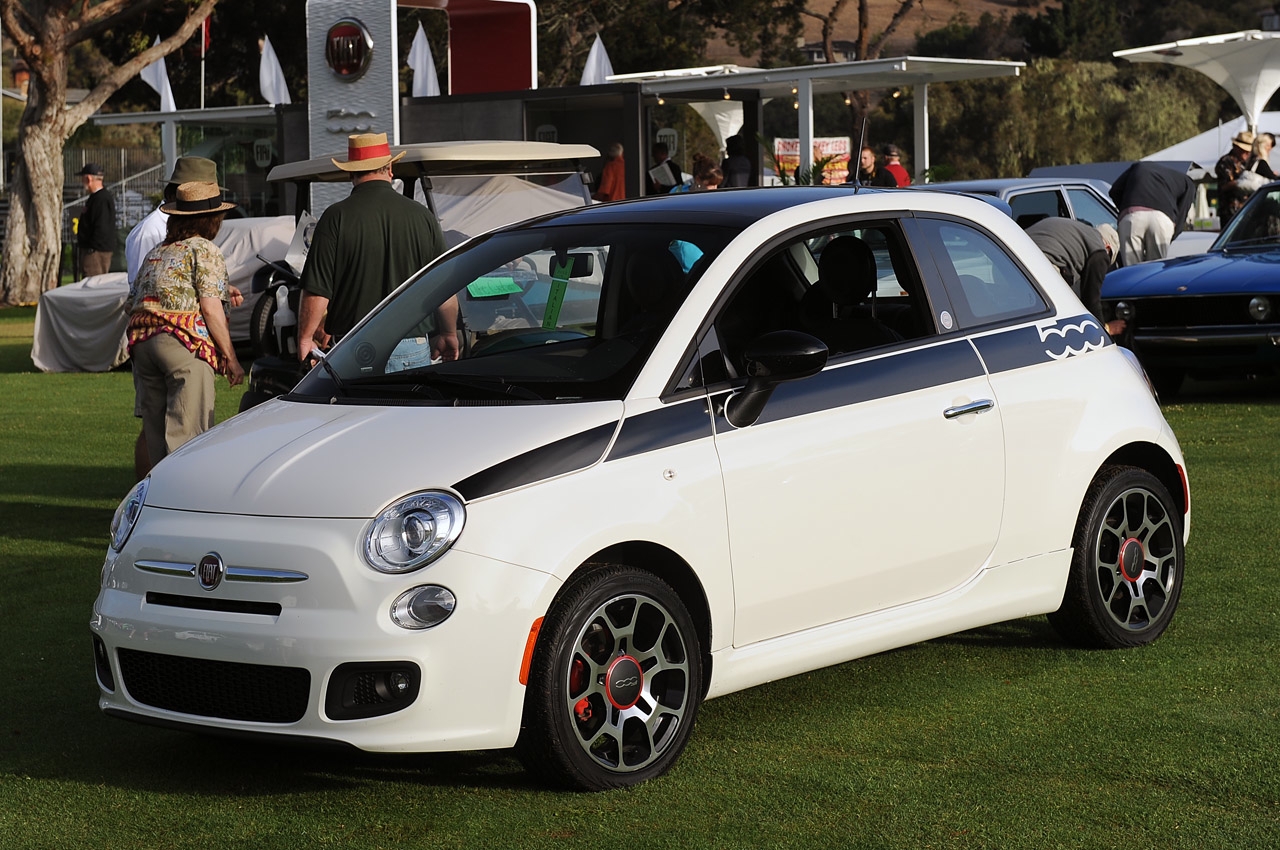
Unlike a horror franchise that’s 16 sequels deep in a direct-to-Blu-ray cash grab, Mini has a way of keeping its stable of runabouts fresh, stylish and new without tarnishing its storied reputation. The latest model to get a makeover before its wide release this spring to U.S. dealers is the 2017 Mini John Cooper Works Countryman All4, which sees a host of updates inside and out.
Lurking under the hood is a 2.0-liter turbocharged I4 engine up 20 hp to 228. Torque peaks at 258 lb-ft. Power is sent to all four wheels via Mini’s All4 all-wheel-drive system through either a six-speed manual or eight-speed automatic with paddle shifters. The automatic also has a launch-control function available. 0-60 mph takes 6.2 seconds while the top speed is 145 mph.

John Cooper Works 18-inch alloy wheels are standard while 19s are optional. Inside those wheels sit four-piston, fixed-caliper Brembo sport brakes. The Dynamic Stability Control system includes Dynamic Traction Control, Electronic Differential Lock Control, which acts as an electronic locking function for the front axle differential, and Performance Control, which governs output and brakes to each corner to ensure the car remains balanced during high-speed cornering.

2017 Mini Cooper Countryman S E ALL4 debuts at Los Angeles Auto Show

Visually, the John Cooper Works Aerodynamic Kit adds a little flare. There are large cooling inlets in the front fascia, occupying the area where the parking and fog lights would normally be found. Standard are roof rails and a unique roof spoiler. The body-side turn signals sport a red accent and a JCW logo, which also appears on the tailgate and hexagon grille.

Other standard features include LED headlights and daytime running lights, panorama glass roof, rearview camera and Mini Connected infotainment system with a 6.5-inch screen. Four non-metallic and six metallic colors are available. Inside, it is JCW everywhere — from the sport seats and steering wheel to the gear lever or shifter. Interior options include a Harman Kardon audio system and 8.8-inch touchscreen navigation system.

There is an optional Driving Assistant system that adds a host of nanny features like collision warning with city braking, camera-based active cruise control, pedestrian warning with initial brake function, high-beam assist and road sign detection. 

The 2017 Mini John Cooper Works Countryman All4 will make its public debut this April at the Shanghai motor show before hitting U.S. dealers the same month.

Will the 2018 LS500 drop with the same impact as the original?

Share

  • Pinterest

You might have to be older than 50 to grasp how audacious declarations about the all-new Lexus LS500 really are. It helps to be familiar with the polite modesty typical of Japanese business interaction, but if you’re grounded in the effect the 1990 LS400 had on the luxury-car market, you’ll have a better idea what this guy is saying:

“The pinnacle must go far beyond what the world expects from a luxury sedan,” chief engineer Toshio Asahi told AW through an interpreter, shortly after the fifth-generation LS was unveiled at the Detroit auto show.  “We expect to achieve the pinnacle and to present the same level of impact and accomplishments presented by the original (LS sedan). We set previously unachieved targets for this LS500 and pressed on until they were achieved.”

Car enthusiasts of a certain age and particularly original owners know the LS400 debuted as few cars ever have. Its noise, vibration and harshness management surpassed anything previously experienced, even at the upper reaches of the luxury market. Its attention to detail, build quality and (with time) reliability all set new, substantially higher benchmarks. The extent to which Lexus drove the evolution of luxury cars through the 1990s should not be underestimated — in terms of customer service, standard equipment, driveline smoothness and broadening application of V8 engines. By the mid-90s, the German brands were in crisis-management mode.

Photo 2

In the current subdivided and rapidly fluctuating market for new automobiles, it’s hard to imagine any new vehicle having that kind of impact. Lexus and its engineers insist the 2018 LS500 will.

The German luxury brands recovered, of course, and turned the tables, to some extent. They played to their deeper heritage, their reputation for taking care of the driver foremost and to a performance advantage honed through decades in motorsport. At some point, the LS went from trendsetter to Euro chaser, distinguished primarily by its application of Toyota Motor Corp.’s hybrid technology. As the 2000s rolled out, Lexus’ pursuit of perfection shifted to the pursuit of emotion — or maybe plain old sex appeal. It culminated with the LFA supercar and the LFA’s trickle-down effect on lesser Lexuses that followed.

Chief engineer Asahi notes that all production cars require compromise — or choices, at least — and he reminds us that engineers building the first LS400 were aware of that. Yet at the Detroit show, he conceded that LS400-style serenity can work at cross purposes to excitement — that a bit more rumble in the exhaust, a bit more reluctance to lean through curves or a bit more steering feel can lead to solutions that are different from what tranquil perfection dictates. Asahi also said this balancing made some decisions with the new LS more difficult, but his solutions were more likely to fall on the aggressive side.

Asahi was as boisterous as a Japanese chief engineer gets. The new LS achieves a balance of comfort and excitement yet to be seen in the marketplace, he said, and it is Euro-chasing no more. It represents a “deep, strong Japanese identity and approach to luxury,” just as the original did.

Photo 3

Then: The original LS400 set new standards in finish, form and presentation.

The 2018 LS500 does that with Lexus’ new large rear-drive platform, which recently debuted under the LC500 coupe. It has the same double-jointed suspension configuration as the LC, with enhancements to maintain appropriate rigidity on a 10-inch-longer wheelbase (including aluminum suspension towers in back). The LS will offer optional air springs, active stabilizer bars and rear steer. Its 123-inch wheelbase matches long-wheelbase versions of the Audi A8, BMW 7-Series and Mercedes S-Class, give or take an inch or two. Indicators suggest the LS could be lighter.

Its 3.5-liter twin-turbo V6 is new, with different spacing and bore/stroke ratio from Toyota’s familiar corporate 3.5. With 415 hp and 442 lb-ft of torque, it surpasses the current 4.6-liter LS V8 by 8 and 15 percent, respectively. The 10-speed torque-converter automatic was introduced in the LC, and Lexus promises that its largest sedan will go 0-60 mph in 4.5 seconds.

Technology highlights include active noise reduction and active pedestrian detection with autonomous steering within the lane. LS500s with air suspension will have an access mode, though this one raises the vehicle as opposed to lowering it. When it’s unlocked, the car will lift, and seat bolsters will spread and flatten.

Indicators suggest that the LS will not match Tesla or the new Mercedes E-Class in autonomous operating technology. Yet Asahi believes its driving aides are appropriate for anticipated market demand, and he says the new-gen LS is protected. In other words, Lexus won’t need to wait for the next wheels-up redo to add more autonomous operation.

Photo 4

Now: “I think you need only open the door to know you’re looking at an interior unlike any luxury car before.”

Then there’s the look. This LS500 is visibly lower, wider and less bulbous than the current LS, and it might be the most successful iteration to date of design themes introduced with the LFA, defined by Lexus’ spindle grille. As it was with Cadillac’s sharp Art and Science style, it seems that it’s taken Lexus a few tries to lose the goofier qualities and get things balanced.

“The LS is a bit softer, with more unifying lines, as is appropriate to a brand flagship,” chief designer Koichi Suga said in Detroit. “The mesh enhances the nature of the spindle grille. I think you need only open the door to know you’re looking at an interior unlike any luxury car before.”

More audacious declarations. Chief engineer Asahi certainly understands that the automotive landscape is different and more splintered than it was in late 1980s, when the first LS was developed. He notes that there were far more vehicles to benchmark this time, from old standbys like the S-Class to four-door “coupes” like the Audi A7 hatch or Mercedes CLS to four-door “sports cars’’ like the Porsche Panamera — not to mention the broadening range of SUVs and crossovers that are influencing what luxury buyers expect. Yet he isn’t backing down from his assertion that the next LS will deliver the same sort of impact the original did.

Photo 5

“We are setting our own direction again,” he said. “This will define the new-generation luxury car and embody Japanese tradition and culture. LS buyers will be surrounded by luxury on a steady basis, with an eye for authenticity to begin with. We wouldn’t turn their heads with a conventional premium sedan. As we get closer (to introduction), you will see.”

The opportunity to see more clearly should come by this summer.

Toyota Yaris WRC spawns a hot hatch

Share

  • Pinterest

Last month, we told you about Toyota’s new Yaris WRC car, with the giant, aircraft carrier wing, and intimated that the company will probably make a hot hatch version for the road. Now we have a few more details thanks to AutoExpress and Toyota’s Gazoo Racing. The new hatch will debut at the Geneva auto show in March, but no word on what it’ll be called or whether we’ll see it here in the States. We shot Toyota an email, and we’ll update if we hear back.

The Yaris-whatever gets stylized front and rear bumpers, new graphics that ape the rally car and a decent-size spoiler on the roof. We’re a little disappointed it doesn’t have the rally car wing, but we suppose that would just be overkill.

Toyota Yaris hot hatch heading to Geneva auto show

We’ll get our first in-person look at the Yaris in March.

The hot Yaris will be developed by the same team that created the GT86, according to AutoExpress. Last month, Toyota said that its Motorsport Unit Development and Sports Vehicle Management Divisions will merge into a Toyota Gazoo Racing Development Division.

At 210 hp, the hatch would sit even with the VW GTI, slightly ahead of the last Civic Si — we don’t know the new output yet — and a step behind the Ford Focus ST. Still, once this car is on the streets, the company will have two enthusiast-approved vehicles for purchase, five if you count the TRD truck trio. Might we be on the cusp of a new era of Toyota performance? We certainly hope so. We’ll find out more in the coming months.

Dodge Challenger SRT Demon is coming to raise hell

Share

  • Pinterest

Dodge will revive its long-lost Demon trim as the new addition to the Dodge Challenger SRT program and will place it above the popular Hellcat. While we’re unsure exactly what this means, it will probably be the name attached to the wide-body Dodge Challenger, which was speculated to be called the Challenger SRT Hellcat ADR.

The folks at Dodge didn’t say much more than it will be the new top-performance car for SRT program and is aimed squarely at the uber-enthusiast. Dodge’s head of Passenger cars, Tim Kuniskis, said: “The Dodge Challenger SRT Demon is conceived, designed and engineered for a subculture of enthusiasts who know that a tenth is a car and a half second is your reputation.” 

The new Challenger will likely be more powerful than the currently available 707-hp Dodge Challenger SRT Hellcat, but we aren’t sure by how much. Wringing 1,000 hp out of the supercharged V8 would be a feat, but would look great in advertising art. Dropping the output to a devilish 666 hp would also make for a good ad campaign, but would make it less powerful than the currently available Hellcats.

The new addition to the challenger lineup will make its global debut at the New York auto show but will be teased throughout a video series and weekly updates. The first video, dubbed “Cage,” is below.

We’re sad that Dodge didn’t return the Demon name with the proper Demon logo, but at least they’re diving deep into the company’s heritage for names. We’ll keep you posted as this car’s development progresses. 

[embedded content]

Teens steal and then immediately crash Dodge Challenger and Charger SRT Hellcats.

6 of the most significant vehicles at the 2017 Detroit auto show

Share

  • Pinterest

The 2017 edition of the Detroit auto show won’t go into the books for blockbuster introductions and eye-popping concepts. In fact, so many brands either didn’t show up or didn’t have formal press events (PorscheTeslaFiat ChryslerLand RoverJaguarMini and Mitsubishi among them) that you might wonder about the future of this annual event.

That said, a few vehicles in the show are important and significant, and I’ll point them out here. As for the hits and misses, I’ll leave that to colleague David Undercoffler, who shoots from the lip and rarely misses.

Here, then, is my list of the most important vehicles of the 2017 Detroit auto show.

1. Toyota Camry: The nation’s best-selling car for the past 15 years visited a plastic surgeon and got an injection of what Toyota believes is sportiness and style. Outside, the Camry gets a toned-down spindle grille, aerodynamic strakes on the hood and an accent line on the C-pillar. Some versions have sporty chrome quad exhaust tips. The inside is all sports sedan, with what Toyota calls a cockpit-like interior. Changing the shape and mission of the car that America has loved nearly every year this century is risky. Remember when Ford dramatically remade the Taurus into an oval blob in 1996? Sales fell off a cliff and never recovered. I don’t foresee anything like this happening to the Camry. But taking the car upmarket and giving it polarizing style could make it a harder sell. And what about those bread-and-butter sedan buyers who just want a roomy, affordable, unbreakable car that does not scream for attention? Where do they go?

2. Kia Stinger: To most eyes this is a great looking sporty sedan. It’s rear-wheel drive, looks muscular and has a roomy interior. Kia wants to move upmarket and the Stinger — on paper — looks like it has the chops to get the job done. Kia will offer two engines, a 255-hp turbo four and a 365-hp twin-turbo V-6, each combined with an eight-speed automatic transmission. The fastest Stinger is expected to reach 60 mph in just more than 5 seconds. In looking over the car, though, I wonder who will buy it. Does anyone look to Kia for BMW-like sports sedans? And isn’t this what Kia’s sibling, Hyundai, is supposed to be doing with the new Genesis brand? The Stinger could be the next Volkswagen Phaeton, a car that takes the brand to places it doesn’t belong.

3. Ford EcoSport: Ford rarely misses the market in utility vehicles, but it missed big on subcompact utilities and now is playing catch-up. Some competitors — Chevrolet with the Trax and Honda with the HR-V, for example — are established and selling well. We won’t see the stubby, Fiesta-based EcoSport in showrooms for another 12 months. But when it gets here, it should sell well. It carries the Ford corporate look well.

4. Honda Odyssey: It’s a new version, but you need sharp eyes to notice the changes on the outside. The jarring lightning bolt side trim remains and the size is the same, which is to say on the big side for a minivan. But under the skin, Honda engineers have installed an available 10-speed automatic transmission, a segment first. The V-6 engine is now up to 280 hp, and the inside is filled with innovative features such as a communications system that allows the driver to see and speak with rear-seat passengers. So, the battle lines are drawn: the Chrysler Pacifica — which just won North American Utility Vehicle of the Year — vs. the revamped Odyssey.

5. Chevrolet Traverse: Chevy toughened up the looks of its big front-wheel-drive family hauler. Traverse doesn’t make a lot of headlines, but it has sold well since the day it was introduced and that streak should continue with the new version.

6. Volkswagen I.D. Buzz: VW may be smarting — still — from the diesel crisis, but the company is moving forward on some fronts. The I.D. Buzz is another take on the classic VW Microbus of the ’50s and ’60s and it looks uber cool. It’s an electric vehicle with twin motors: one front, one rear. The interior is light and airy. It’s a neat piece of work, but will VW build it?

The article “The most important vehicles at the 2017 Detroit auto show” originally appeared on autonews.com

By Richard Truett, Automotive News

5 things we’re excited to try in the new Chevy Traverse

Share

  • Pinterest

One of the big announcements at the 2017 Detroit auto show was that Chevy is finally redoing the long-running Traverse three-row crossover. Coming for the 2018 model year, the new Traverse has some unique and interesting updates in addition to the overall interior and exterior styling. Here are five things about the new Traverse we want to try:

Cargo space

It might seem trivial, but the vast expanse inside the new Traverse is what a lot of customers will be looking for. With 98.5 cubic feet of space after you fold down all the seats, cargo room is down from the current-generation Traverse by 17.8 cubic feet. Still, nearly 100 cubic feet of space is impressive. For comparison, the Ford Explorer offers 81.7 cubic feet, and the Honda Pilot has 83.9 cubic feet. Still, if storage is your primary concern, skip the crossovers and go straight for a minivan — the Chrysler Pacifica offers almost 200 cubic feet of cargo volume … but it is a minivan. 

Twin-clutch all-wheel-drive system

On the High Country trim, the new Traverse comes equipped with a twin-clutch all-wheel-drive system. While a similar system can be found on other GM products, it’s finally coming to Chevrolet. The system works to find the tire with the most available grip and sends power to that wheel. Of course, the AWD system can be shut down for fuel-saving front-wheel-only operation.

Everything we saw at the Detroit Auto Show today

Everything we saw at the Detroit auto show Monday

We spent the day on the floor of Cobo Center in Detroit to bring you everything that happened at the North American International Auto Show. Here’s your rundown of all the reveals and new cars …

Third-row USB ports

If you’ve ever been on a long road trip and had the misfortune of being tucked away in the third row, you probably had to bother someone up front to connect your phone to a USB port after you spent three hours playing Candy Crush. Chevy placed a USB port in every row that should help make this SUV as passenger-friendly as possible.

The 2.0-liter turbocharged I4

Available in the RS and High Country trim, the Traverse ditches the standard 3.6-liter V6 and replaces it with a turbocharged 2.0-liter I4. While the 255-hp rating is down compared to the standard-issue mill by 50 ponies, the 2.0-liter’s torque figures are up by 35 lb-ft – bringing the I4’s peak torque to 295 lb-ft of twist. Not bad. We’re still curious to see how it does moving the 4,362-pound crossover around town, but previous experience with GM’s turbo four suggests it’ll be up to the task.

Eight-passenger seating

The new Traverse can come with either a second-row bench seat or second-row buckets. If you opt for the bench, this crossover will theoretically seat eight passengers. We’re looking forward to seeing how comfortable those eight folks will be when they’re packed inside the Traverse’s cabin. Who knows, you might have to haul your kid’s entire basketball team — but we’ll test it first so you know what you’re getting.

The Traverse is an important part of Chevy’s lineup, so we’re expecting first drives of the new crossover will happen soon. Stay tuned and we’ll bring you a full drive review as soon as we get behind the wheel.

Look out Jeep Wrangler, here comes the new Ford Bronco

Share

  • Pinterest

For the first time since the mid-1970s, Jeep’s Wrangler is going to have some real and very likely tough competition.

Ford on Monday confirmed Detroit’s worst-kept secret — the return of the Bronco in 36 months.

Journalists were not shown any pictures of the Bronco, so we don’t know how Ford’s designers will tap into the nameplate’s DNA.

But Ford has at least two big decisions to make with the new Bronco: styling and the number of doors.

No retro

The new Bronco likely won’t have many retro styling touches. Ford design director Moray Callum doesn’t do retro. Witness the new Ford GT, which doesn’t ape the original or the 2005 remake. Also, Ford has done retro before with mixed results. The 2002-05 Thunderbird, a homage to the 1955-57 models, sold poorly. But the 2005-14 Mustang, which paid tribute to the 1969-70 models, sold well.

The other big decision is whether it will be a two- or a four-door. Ford has never marketed a four-door Bronco. But two-door vehicles, especially off-roaders, don’t sell well. The Wrangler’s sales mix is roughly two thirds four-door, and more doors means Ford can charge a higher price. I’m going out on a limb and predicting the new Bronco will be a four-door only, at least at launch.

Ford confirms Bronco and Ranger

Ford confirms Bronco and Ranger

Ford finally confirmed what we’ve been hearing since last fall: Its Ranger midsize pickup and Bronco SUV are coming back! At the Detroit auto show, Ford said Ranger will debut in 2019, with the …

The original Bronco began in 1966 as a stripped-down, soft-top off-roader that sacrificed comfort and performance for massive off-road capability. It also came in several body styles, so Ford could add a wagon later. The Bronco’s run ended in 1996 when it was a bloated two-door version based on the F-150. Think of the O.J. Simpson Bronco.

Body-on-frame

Ford said little about the Bronco’s powertrains and suspension layout. But Ford’s Mike Levine confirmed that the Bronco and Ranger will share underpinnings and be body-on-frame vehicles. “That’s the only way you bring back the Bronco,” he said. Ford engineers can break new ground if they can engineer the new Bronco with independent suspension, instead of bulky solid axles.

Body-on-frame suggests the vehicle will be engineered to handle extreme off-roading, a notion put forth by Joe Hinrichs, Ford’s president of the Americas. “It’s capable of conquering everything from your daily commute to gravel roads and boulders,” Hinrichs said during Ford’s press conference.

So, now that Bronco is confirmed, it’s Land Rover’s turn to peel the curtain back on the upcoming Defender replacement. Land Rover’s U.S. dealers are begging the company to confirm the rugged off-roader for the U.S. in 2018 or 2019. But so far, Land Rover is saying little.

One thing is certain: SUV fans who take their vehicles off-road will have more choices in three years than they’ve had in the last 40.

Look out Jeep Wrangler, here comes the new Ford Bronco” was originally published at Automotive News on 1/10/17.

By Richard Truett at Automotive News

Here’s why GM is betting on diesel

Share

  • Pinterest

While some automakers are quitting diesels in the U.S. market and generally seeking to turn a page, others are taking a cue from European manufacturers when it comes to thrifty engines. Volkswagen recently announced that it will no longer offer diesel engines in the U.S. amid a flurry of new engine announcements by GM and other brands that will give U.S. buyers the diesel option in a number of unexpected vehicles.

One such unexpected vehicle is the 2018 GMC Terrain, which debuted on the first day of the Detroit auto show. When the redesigned crossover goes on sale, it will be available with a 1.5-liter turbocharged inline-four gasoline engine, a 2.0-liter turbocharged gasoline four, and a 1.6-liter turbodiesel paired with a six-speed automatic pumping out 137 hp and 240 lb-ft of torque. That’s the same 1.6-liter turbodiesel that will be under the hood of the new 2018 Chevrolet Equinox, a unit that first surprised industry observers after being announced for the Chevrolet Cruze, where it will be paired with either a six-speed manual or a nine-speed automatic transmission when it goes on sale in 2017 as a 2018 model-year vehicle.

Why the sudden turn to diesels?

As with the Oldsmobile diesels from more than 30 years ago — an episode GM hopes we have forgotten — the goal is fuel economy. EPA figures for the three GM vehicles have not been released yet, but the automaker hopes the Cruze will achieve better than 50 mpg highway with that 1.6-liter turbodiesel borrowed from Opel.

2018 GMC Terrain unveiled Downsized upgraded diesel powered

But the motivation for GM goes beyond mpg figures. Volkswagen’s departure from the diesel game left a sizable diesel audience to be catered to because TDI models made up a large chunk of sales for some of Wolfsburg’s cars.

“I am very optimistic about the diesel market in the U.S.,” Dan Nicholson, General Motors’ vice president for global propulsion systems told Automotive News earlier this fall. “It has been abandoned by others, and we are happy to step in and be the leader. Frankly, that’s what we’d like to do.”

According to Nicholson, the audience for diesels will not dissipate following VW’s withdrawal of TDI models, even as electric cars seep into multiple segments.

“There are a lot of diesel intenders and diesel-loyal people who are looking for a brand and vehicles to go after,” Nicholson added. “They tend to be more tech savvy than the average customer. And they won’t stop wishing for a diesel. And we’ll go after those customers.”
 

Chevrolet cruze diesel hatchback is confirmed

More than simply filling an empty niche, GM believes the U.S. is a growth market for diesel cars and trucks, even as it forges ahead with pure electrics like the Bolt. The Bolt may just be rolling into dealerships, but GM is seeing strong demand for diesel versions of the GMC Canyon and Chevrolet Colorado pickups.

GM isn’t the only one betting on diesel at a time when VW is walking away from the technology in the U.S. Jaguar Land Rover announced plans to field more diesel models in the months before the VW diesel scandal broke in fall 2015, with the intention of making diesels a major offering on this side of the pond.

Something tells us we’ll see the 1.6-liter turbodiesel in even more GM models soon.

Everything we saw at the Detroit auto show Monday

The new BMW 5-Series gets fast and loud at the Detroit auto show

Share

  • Pinterest

BMW took the wraps off the seventh-generation 5-Series today at the Detroit auto show — and threw in an M550i xDrive performance variant to boot. A 530e iPerformance model was also unveiled, but it’s the guttural-sounding M performance sedan that piques our interest.

Powering the M550i is a 4.4-liter twin-turbocharged V8, producing 462 hp and 479 lb-ft of torque. BMW says it’ll go 0-60 in 4.0 seconds or less. An optional M Sports exhaust system gives the car a proper V8 growl, which was demonstrated for us at the show.

Putting all that power down is a rear-biased all-wheel-drive system — no rear-wheel drive, but it does look like BMW might let you have some sideways fun with more power being directed to the rear wheels. An eight-speed automatic transmission is standard for the M550i, and sadly, there’s no mention of a manual for this sporty model. BMW does say this transmission has been tuned to offer quicker shifts all the way around, though, so we’ll reserve final judgment for the first drive.

An adaptive M Sport suspension lowers the ride height by 10 mm on the already aggressively tuned M setup. This car also takes advantage of the improvements made to the base 5-Series, like its reduced weight and plethora of technology. The new sedan drops up to 220 pounds over its predecessor depending on what trim you buy, hopefully making for a lighter and sprightlier-feeling sports sedan.

Engine options remain the same as before: The 530i gets BMW’s 2.0-liter turbo four-cylinder producing 252 hp, while the 540i sports the 3.0-liter straight-six making 340 hp. However, there is another 5-Series variant we didn’t have before, dubbed the 530e iPerformance. Similar to the 330e, this plug-in hybrid produces a combined 252 hp (184 hp from the gas engine and 95 hp from the 70kW electric motor). You’ll get up to 31 miles of fully electric driving before needing to use the gas engine, and with both the gas and electric motor in action, it’ll scoot to 60 in 6.2 seconds. 

The seventh-gen 5-Series also comes with the full suite of driver-assistance systems as optional, including evasion aid, cross-traffic warning system, lane-change warning and adaptive cruise control. A 10.25-inch display sits atop the dash and runs the latest version of iDrive from BMW.

Aesthetically speaking, the new 5-Series doesn’t strike us as a big image change — even the M550i doesn’t look too different compared to a 530i — but we’re hoping under the skin of the base model and M550i is a true sports sedan with improved handling and feel.

Expect the new base 5-Series sedan to roll into dealerships this February. If you’re more interested in the 530e or M550i, you’ll need to hold out until March.

Someone took a chisel to the Nissan Vmotion 2.0 concept

Share

  • Pinterest

At this year’s Detroit auto showNissan lifted the curtain off of its latest design concept: the Nissan Vmotion 2.0. The massive V-shaped grille takes the current V-motion grille you’ll see on virtually every Nissan at dealer lots today and cranks it up to 11. 
Nissan also borrows the floating-roof design from the current-generation Maxima, which could mean Nissan plans to throw the stylish roof on other upcoming products. The taillights, too, resemble those of the Maxima but are slimmer and more mature. We can only assume that the deep angular sculpted scallop on the car’s side is more of an auto show statement than something that will make its way to a production line. Still, it could be something that gets watered down and finds a home on the next-generation GT-R.

2017 Nissan Rogue Sport lands in Detroit

Of course, the futuristic interior and suicide rear doors probably won’t ever see the light of day. Though cool, rear-hinged rear doors don’t make sense anywhere outside of the show floor – save for your fourth-generation Lincoln Continental. The chic minimalist interior looks cool under the lights too.
The Sport Sedan concept previewed many of the styling cues we saw in the redesigned Maxima. We bet we’ll see the taillights and front fascia put to use within a few years, maybe on the R36 GT-R.

2018 Chevrolet Traverse blurs the line between crossover and SUV

Share

  • Pinterest

Chevrolet will lift the curtain on the next generation of its Traverse crossover at the Detroit auto show. For 2018, Chevy’s latest three-row crossover has more third-row space than before, aggressive styling that reminds us of the body-on-frame era and a new RS model.

Hoping to be the modern Family Truckster, the Traverse has USB charging ports in all three rows, 4G LTE wireless internet and middle-row seats that can flip forward to access the third row while holding a front-facing car seat. Of course, Apple CarPlay and Android Auto can both be found on the standard 7-inch infotainment touch screen.

The powertrain for the Traverse is pretty straightforward: Pop the hood and you’ll find a 3.6-liter V6 making 305 hp and 260 lb-ft of torque. That is, unless you opt for the Traverse RS. In the sportier trim, you’ll find a 2.0-liter turbocharged I4 making 255 hp and 295 lb-ft of twist.

Both engines feed that power to front wheels or the all-wheel drive system by way of GM’s nine-speed transmission. The V6-equipped Traverse crossovers should expect 18 mpg city and 25 mpg highway, while the I4-powered Traverse will do 20 mpg city and 23 mpg highway. Both engines come automatic start/stop, which can’t be defeated.

2017 GMC Acadia review with photo gallery and MSRP

The new Traverse’s suspension isn’t anything off the wall — MacPherson struts take care of the front and a five-link suspension controls tire movement in the rear. Steering is controlled by a variable-effort electric power steering rack.

Advanced safety tech like surround vision cameras, LED headlights, lane keep assist, automatic braking and forward collision alerts are optional. Teen driver tech, however, is standard issue on every trim level of Traverse in the off chance you flip the keys to an inexperienced driver.

While it’s about the same size as the Tahoe, Chevrolet’s full-size SUV, it doesn’t quite have the same towing capabilities. No, instead of trying to be an SUV designed for hauling race trailers, the Traverse will serve better at hauling folks around on road trips. 

Bigger, safer 2018 Volkswagen Tiguan debuts before Detroit auto show

Share

  • Pinterest

All right guys, this is getting a little bit offensive. Every time an automaker lengthens a wheelbase, adds a few giant-sized cup holders or easy-open doors, it says it’s “engineered for American customers.” We get it, we’re a lazy, wide, Big Gulp-drinking culture; you don’t have to rub it in.

The 2018 Volkswagen Tiguan is getting longer by 10.7 inches, more flexible with a sliding second row and safer with a bunch of active safety features. Those have the dual purpose of also making us lazier, because we don’t have to pay attention as much when driving. The new Tiguan made its debut Sunday before the 2017 Detroit auto show.

The new VW Tiguan continues to use VW’s MQB architecture and arrives with 57 percent more cargo space, thanks to those extra inches. For the first time, it will offer an optional third row of seats and Volkswagen’s new Digital Cockpit display with customizable viewing, smartphone integration and available premium Fender audio.

Facelifted Ford F-150 also gets diesel option at Detroit auto show

New safety features include adaptive cruise control (ACC), upgraded for use in stop-and-go traffic; forward collision warning and autonomous emergency braking with pedestrian monitoring; blind-spot monitor with rear traffic alert; and lane departure warning.

An updated version of VW’s 2.0-liter turbo four powers the Tiguan with 184 hp and 221 lb-ft of torque. An eight-speed automatic sends power to the front wheels, or all four with the optional 4Motion all-wheel drive system.

We don’t have pricing yet, but the 2017 Tiguan started at about $25,000, and we don’t expect it to be too much above that.

2018 GMC Terrain unveiled: downsized, upgraded, diesel-powered

Share

  • Pinterest

Bigger isn’t always better — or at least that’s what we’re taking away from the debut of the all-new 2018 GMC Terrain, which the automaker unveiled ahead of the Detroit auto show.

With its squared-off wheel arches and boxy fender flares, the GMC Terrain had previously been (for better or for worse) the most butch-looking offering in a segment of wind tunnel-tested, all-wheel-drive-equipped jellybeans.

That’s no longer quite the case: There’s a hint of the outgoing model in the new crossover’s wheel arches, but it’s more compact and a little more conventional-looking overall. The floating roofline (popping up everywhere from the Nissan Murano to the Aston Martin DB11) seems to be one of the new model’s defining design features; how it impacts rear visibility remains to be seen.

Terrain-buyers will have the choice of four trims — SL, SLE, SLT and extra-plush, 19-inch-wheel-equipped Denali — and will enjoy a slate of high-tech features, including Apple CarPlay/Android Auto comparability and an onboard 4G LTE Wi-Fi hotspot that can handle up to seven mobile devices at once (despite there being only five seats in the vehicle). You can upgrade the 7-inch touchscreen to an 8-inch model and tack on a suite of safety features, but GMC has not yet broken down all the various option bundles.

Mirroring its 2018 Chevrolet Equinox platform-mate, the Terrain offers three engine options: a 1.5-liter turbocharged inline-four (170 hp/203 lb-ft), a 2.0-liter turbocharged inline-four (252 hp/260 lb-ft) and, interestingly, a 1.6-liter turbodiesel (137 hp/240 lb-ft). The first two are paired with two slightly different nine-speed automatic transmissions, while the diesel gets a six-speed auto. Both front- and all-wheel drive will be offered.

2018 Chevrolet Equinox SUV slated for diesel upgrade

Like the redesigned GMC Acadia, the new Terrain shrinks a bit, with a 107.3-inch wheelbase and 182.3-inch overall length; compare to the 112.5 and 185.5 inches of the previous generation.

Small SUVs and crossovers are hot right now, but will this thing feel cramped inside? We won’t know until we spend some time aboard, but GMC claims the Terrain, now classified as a compact SUV rather than a midsizer, is nearly as roomy as its predecessor (there’s actually a little extra front headroom this time around) while offering only slightly less cargo volume — we’re talking 63.3 cubic feet with the rear seats folded, a loss of 0.3 cubic feet. That’s roughly 1.5 soccer balls, for what it’s worth (yes, we did the math). Plus, the front passenger seat folds flat in case you need to tote a kayak or something.

The big payoff is substantially reduced curb weight; with the base 1.5-liter engine and front-wheel-drive configuration, the 2018 Terrain weighs a stated 3,327 pounds, while the base FWD 2017 Terrain came in at 3,792 pounds. Fuel economy figures have not been released, but we’d bet there will be notable improvements there, too. And while corner-carving has never been the Terrain’s strong suit or mandate, if its trimmer, lighter incarnation is a little more fun to drive, so much the better.

The 2018 Terrain goes on sale summer 2017; expect pricing, fuel economy figures and first drive impressions in the coming months.
 

2018 GMC Terrain SLT and Denali debut before 2017 Detroit auto show

The 2018 GMC Terrain SLT (left) and Terrain Denali. Smaller, lighter and with the option of a 1.6-liter turbodiesel.

Graham Kozak

Graham Kozak – Graham Kozak drove a 1951 Packard 200 sedan in high school because he wanted something that would be easy to find in a parking lot. He thinks all the things they’re doing with fuel injection and seatbelts these days are pretty nifty too. Read more »
See more by this author»

Faraday Future drops new EV teaser

Share

  • Pinterest

Faraday Future, the Chinese-backed U.S. EV company that dropped the 1,000-hp FFZERO1 concept at last year’s Consumer Electronics Show, is teasing its new production vehicle ahead of its 2017 CES reveal.

Sadly, there is not much to see. We get a good look at the wicked lighting element that is splashed across the front that mimics what we saw the FFZERO1 concept. There is a logo in the lower grille, which looks neat, and the hood looks sleek enough for a production vehicle. Other than dropping details about its CES reveal and a stop at the Detroit auto show next month, no other specs were given.

Back in October, the automaker was allegedly $21 million behind on construction payments for its $1 billion Nevada factory. Construction on the factory was stopped in mid-November, according to Fortune. The financial troubles were thought to possibly delay the production car’s reveal, but Faraday seems to be soldiering ahead. Work on the plant is scheduled to resume in 2017.

Volkswagen previews its CC sedan replacement: Meet the Arteon

Share

  • Pinterest

Volkswagen previewed a successor to the brand’s aging CC sedan that a U.S. spokesman for the company says is “under consideration” for the U.S.

The automaker today released a sketch of the Arteon, a sedan with fastback styling that VW says previews the next era of VW design. The Arteon is to debut in March at the Geneva auto show and, according to German press reports, is expected to go on sale next summer in Europe for about $35,000.

The new model will sit above the Passat sedan and replace the CC in VW’s global lineup, yet its U.S. prospects are unclear, leaving VW with a potential gap at the top of its U.S. car lineup ahead of the planned wind-down of the CC.

The company is evaluating whether to sell the Arteon in the U.S., a VW of America spokesman said. If approved, the Arteon would likely arrive stateside in 2018, he said. CC production is scheduled to wind down in advance of the Arteon, which will be built at VW’s factory in Emden, Germany.

Volkswagen plans its long term recovery

What a VW recovery in the U.S. might look like

Herbert Diess’ first comprehensive global strategy for the Volkswagen brand pegs the U.S. as a critical market and production base to drive the automaker’s profitability in the next …

The Arteon’s styling echoes that of the Sport Coupe Concept GTE shown at the 2015 Geneva show. The production sedan is built on a stretched version of VW’s MQB platform that also underpins the Golf, Audi A3, upcoming Atlas midsize crossover and redesigned Tiguan compact crossover.

VW brand chief Herbert Diess said last week that the brand planned to intensify its focus on the U.S., in part by offering more SUVs and large sedans in the near term.

Meanwhile, sedan sales have waned as U.S. car buyers gobble up SUVs and crossovers amid low fuel prices, sending U.S. sales of midsize sedans tumbling 13 percent through October.

The CC is a low-volume model in the U.S. and globally. U.S. sales peaked at more than 29,000 CCs in 2011 before falling to fewer than 10,000 each year since 2014. This year through October, fewer than 2,600 CCs were sold in the U.S.

The article “VW previews CC successor Arteon, says ‘under consideration’ for U.S.” originally appeared on autonews.com

By Ryan Beene, Automotive News

Sx-Z | Cannonball 2000 Rally Entrants Show Off Cars & Raise Money For Charity

EVENT: Cannonball 2000 Rally Entrants Show Off Cars & Raise Money For Charity

Sx-Z | Cannonball 2000 Rally Entrants Show Off Cars & Raise Money For Charity

While many rallies are billed as “lifestyle events,” costing an exuberant participation fee, showing off high priced supercars and partaking in lavish end-of-day partying, the Cannonball 2000 kicked off their rally with an event held at the Beaulieu Motor Museum and supported children’s charity, Dreams Come True.

The Dreams Come True foundation specializes in giving “unforgettable experiences” to children with life-threatening and long-term illnesses. The Cannonball 2000 pre-rally event let participants interact with the children and their families, taking them for rides in exotic cars and introducing them to celebrities. The rally will also be sharing a portion of the event entry fees with Dreams Come True.

The Cannonball 2000 rally is set to kick off from London on September 5 – 2,000 miles will be covered – before ending the event in Paris.

The 2012 Cannonball 2000 is fully booked, but if you’re interested, plans are already underway for the 2013 event; visit the Cannonball 2000 website for details.

VIDEO | Lamborghini Uncovered

London, 18-24 June, 2012; six iconic Lamborghinis in four iconic London locations!