
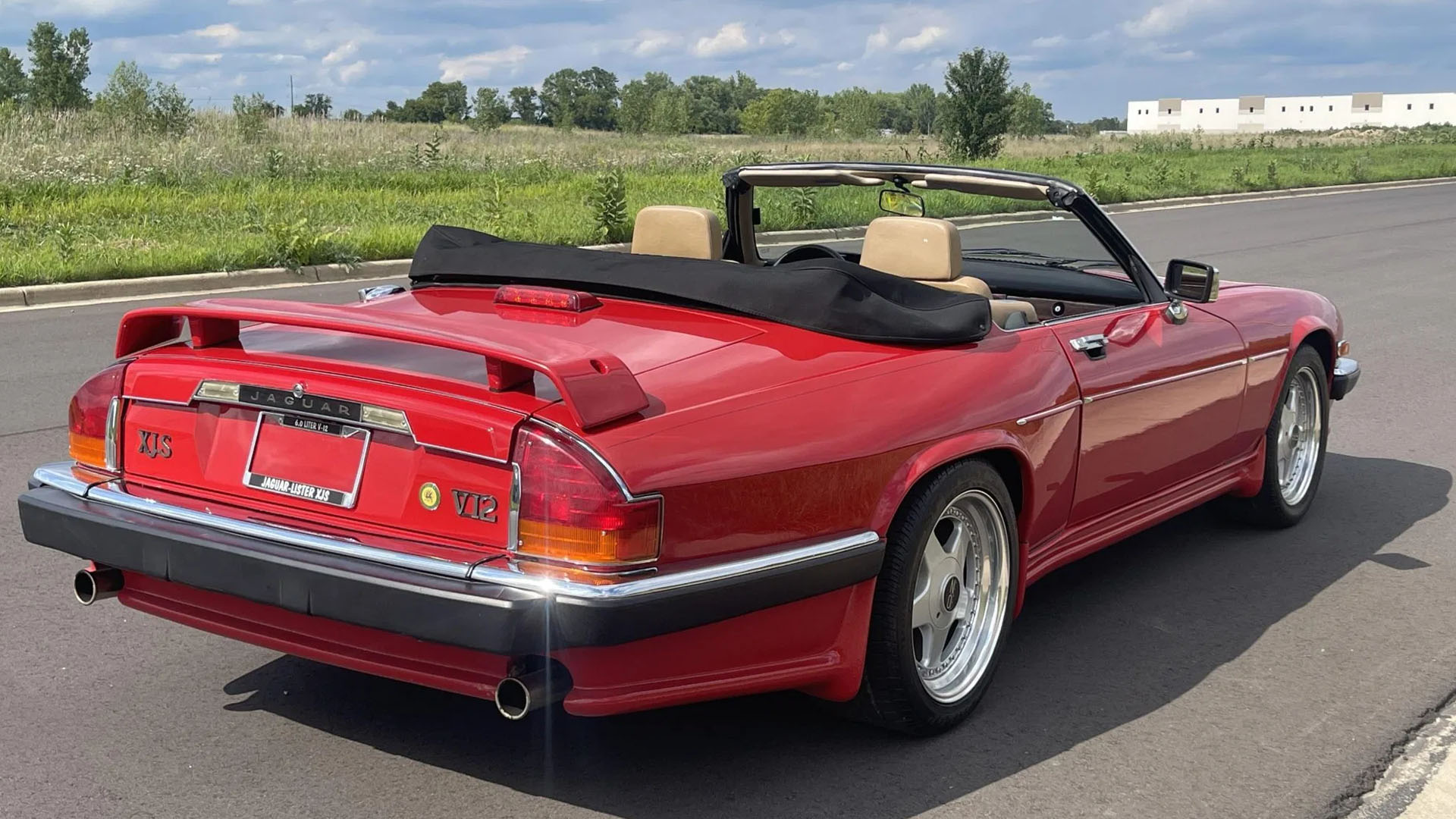
Hot Rod Jaguar XJS Convertible
The idea of driving a 6-Liter V12 convertible might be appealing to many, but cars like this usually tend to be in the six figures range, some even closing in on 7 figures … but if you are ok with getting an older, classic model, this 1990 Jaguar XJS Convertible might be an option, currently being listed on BringATrailer, at the time of writing the maximum bid is below $15,000 … so is this a bargain then?
I hope you take a close look at what you would be getting yourself into when you buy this car or any 30-year old classic for that matter, especially with a massive V12 engine under that long hood, while you could argue this is a classic car that will appreciate over time and become very valuable in the long run, right now it’s just an old Jaguar with a very limited interest on the car market, made even worse by the fact this one is a custom one.
A classic, collectible car first becomes just another old car at a certain point in its life, just like this 1990 Jaguar XJS Convertible, old cars don’t have a lot of value and sometimes end up in a car graveyard to die a slow death or become a parts car to keep other ‘old’ cars running. But at a certain moment in time, some old cars become classics, and then things get interesting as their value goes up, in some cases quite considerably might I add.
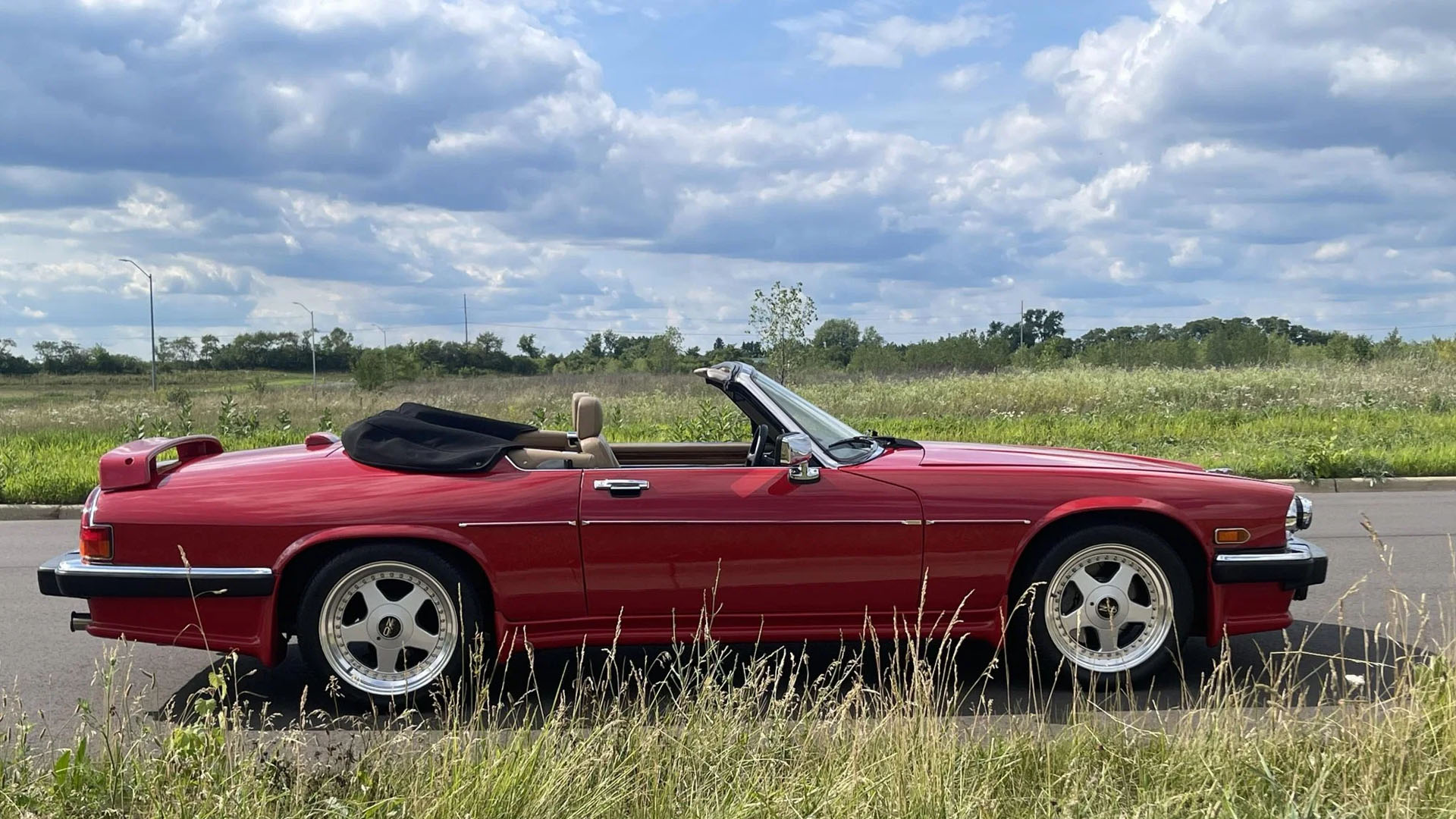
In the case of Jaguar, I’m sure we can all agree on the fact that the E-Type is a collector’s classic these days, and quite frankly the XJS models just haven’t reached that point yet, sure there are owner’s clubs out there for this big coupe from the UK, and some of these might demand a nice premium … but this red sample from 1990 with the original style taillights just won’t, and my guess is this specific one will never become a collectible classic either, sorry.
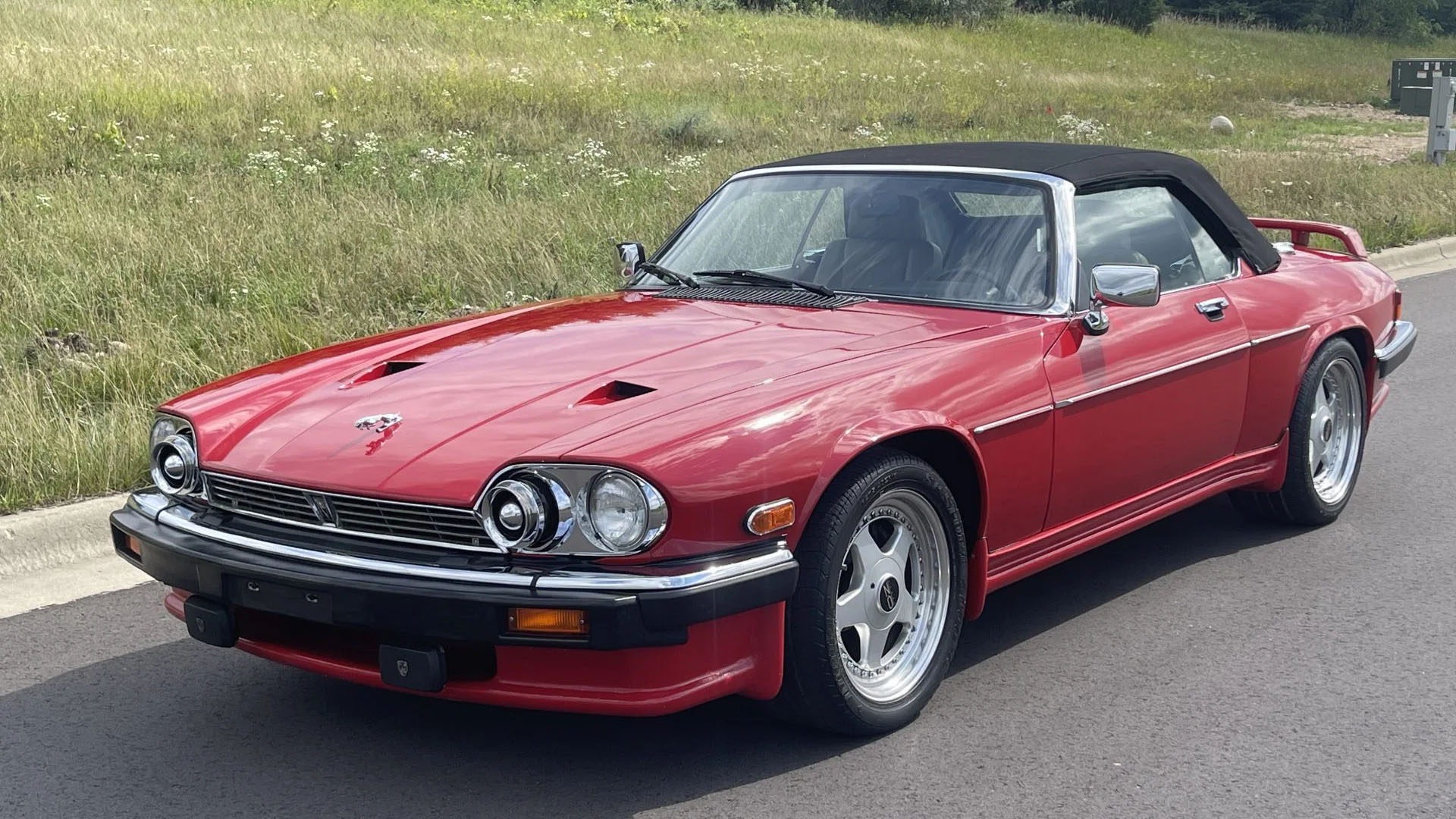
Personally, I rather like the styling and the idea behind the Jaguar XJS, being a successor to the E-Type, the XJS was intended to be a big, comfortable and luxurious GT, and the V12 engined ones were impressive in their own time, the top-of-the-line version, especially in convertible form like the 1990 model presented here … but that’s where the good news ends for this specific model, as in the long run only factory original cars will become collectible, and this red one has been heavily modified.
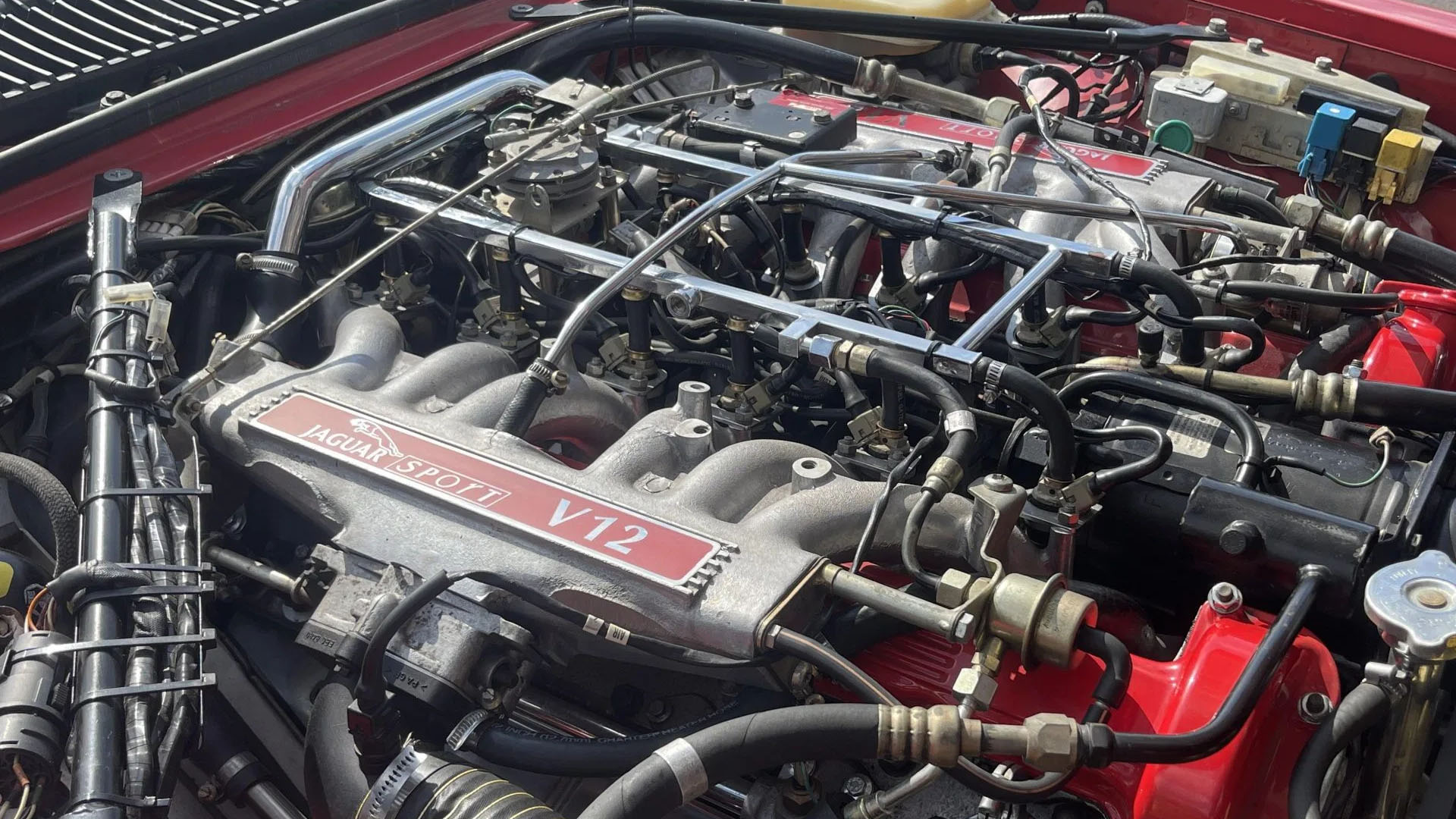
While this might have been a great idea when this car was ‘current’, owing an older customized car isn’t always a good idea, in this case, the original, numbers-matching 5.3-Liter V12 got destroyed and has been replaced by a more modern 6-Liter V12 engine, still from Jaguar, but taken from the XJR-S sedan, complete with Jaguar Sport cam covers, further upgraded by Hyper Engineering with a cold-air intake and a custom Zytek ECU for increased performance.
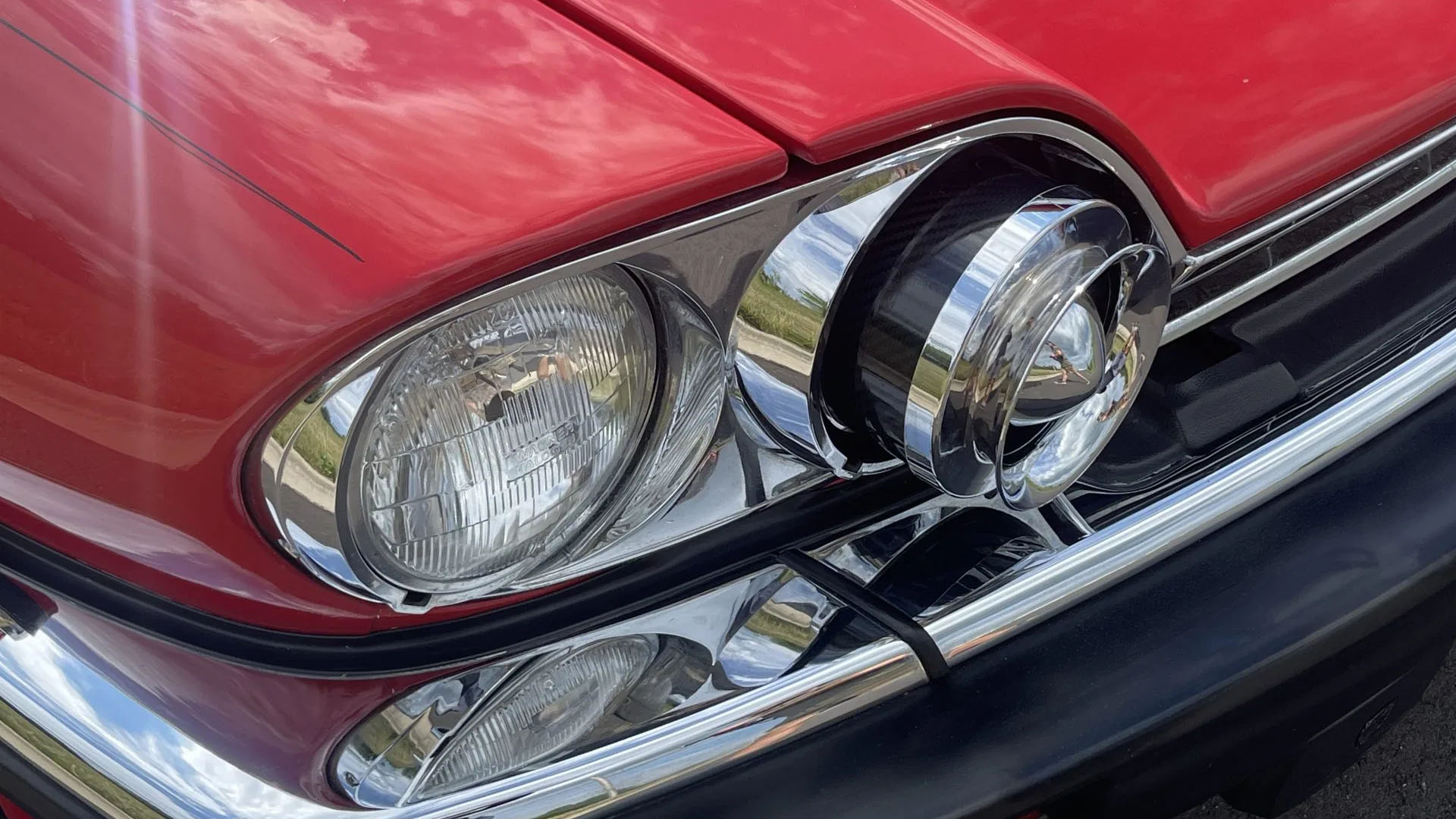
To get even more cool air into that Hyper Engineering intake, the headlight pods on this US-spec Jaguar XJS have been altered, the standard dual headlights have been replaced by single units, the inner headlight units were removed, and two custom-made Hyper Engineering cold air intake were fitted, fully chromed to match the rest of the front, and that was only the start of the customization on this XJS Convertible.
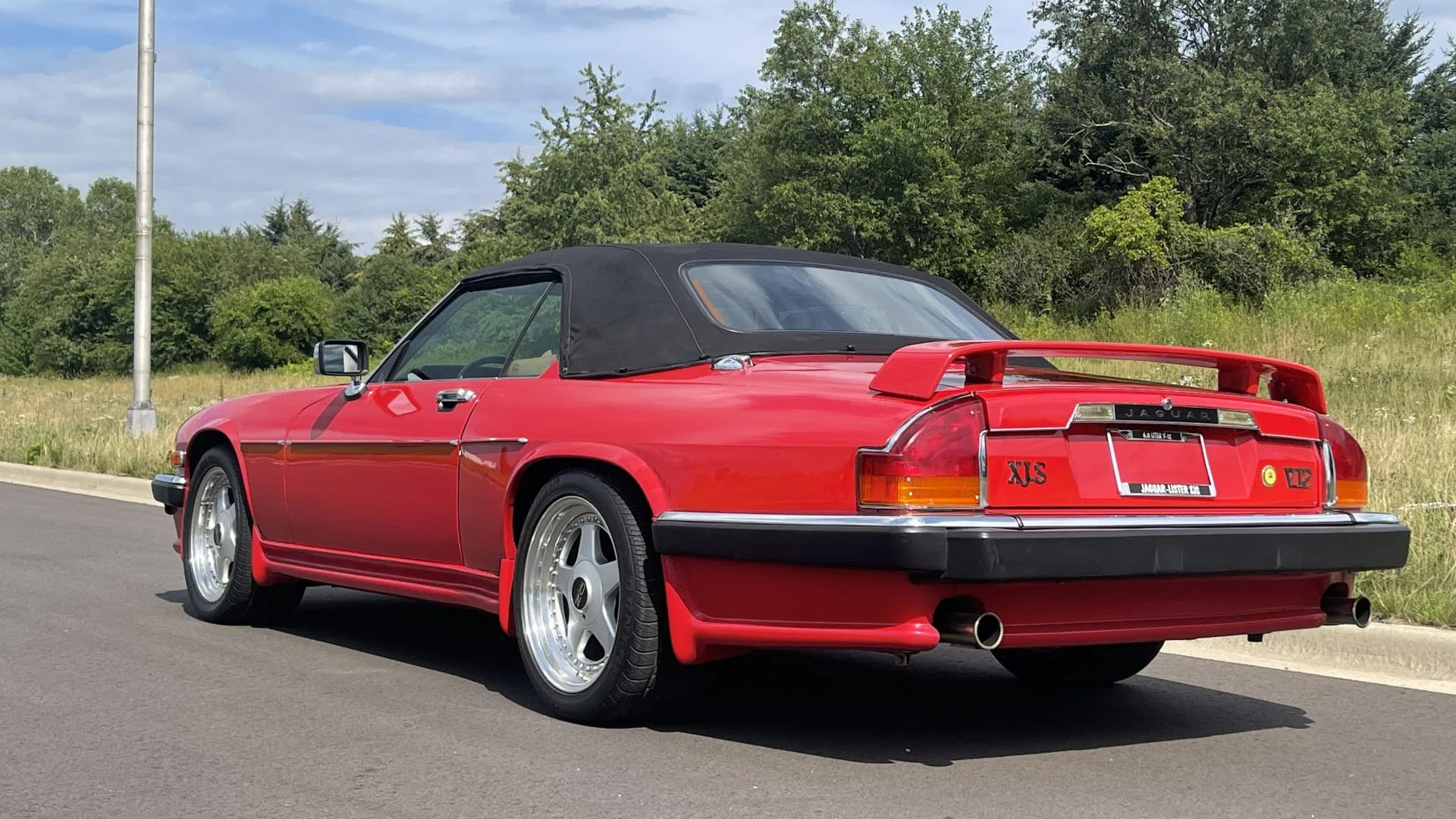
An extensive Lister aerodynamic kit was fitted onto this bright red convertible too, consisting of a deeper front spoiler, side skirts, wider rear fenders, a rear diffuser underneath the chromed bumper, and to complete the looks a rear wing sits on the luggage cover, with an opening for the automatic antenna, a very special touch courtesy of Lister is the new engine cover with dual NACA inlets for even more cool air for that large V12 engine.
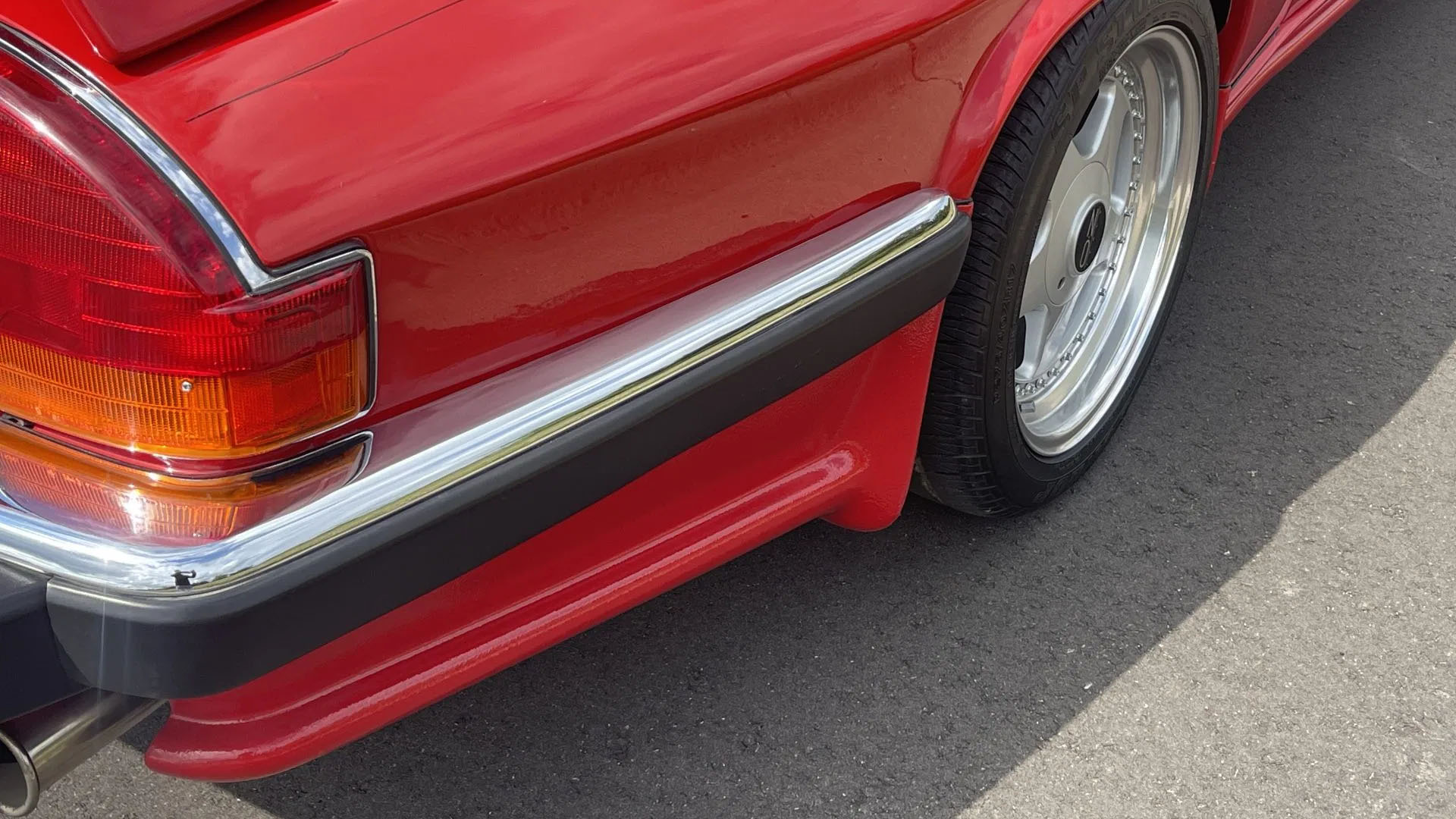
Many years ago these 17-inch OZ Racing wheels in multi-piece Futura design were very popular, but today they do look rather dated, tires are impressive Dunlop SP Sport 4000 units in a wide 275/40 size, the brakes have been updated in 2001 by Hyper Engineering together with beefier torsion bars … to make the car sound as good as it looked, stainless steel exhaust manifolds joined the replacement engine, and the original three-speed transmission was replaced with a five-speed manual unit from Gretag … it’s obvious not much of the 1990 XJS remains today.
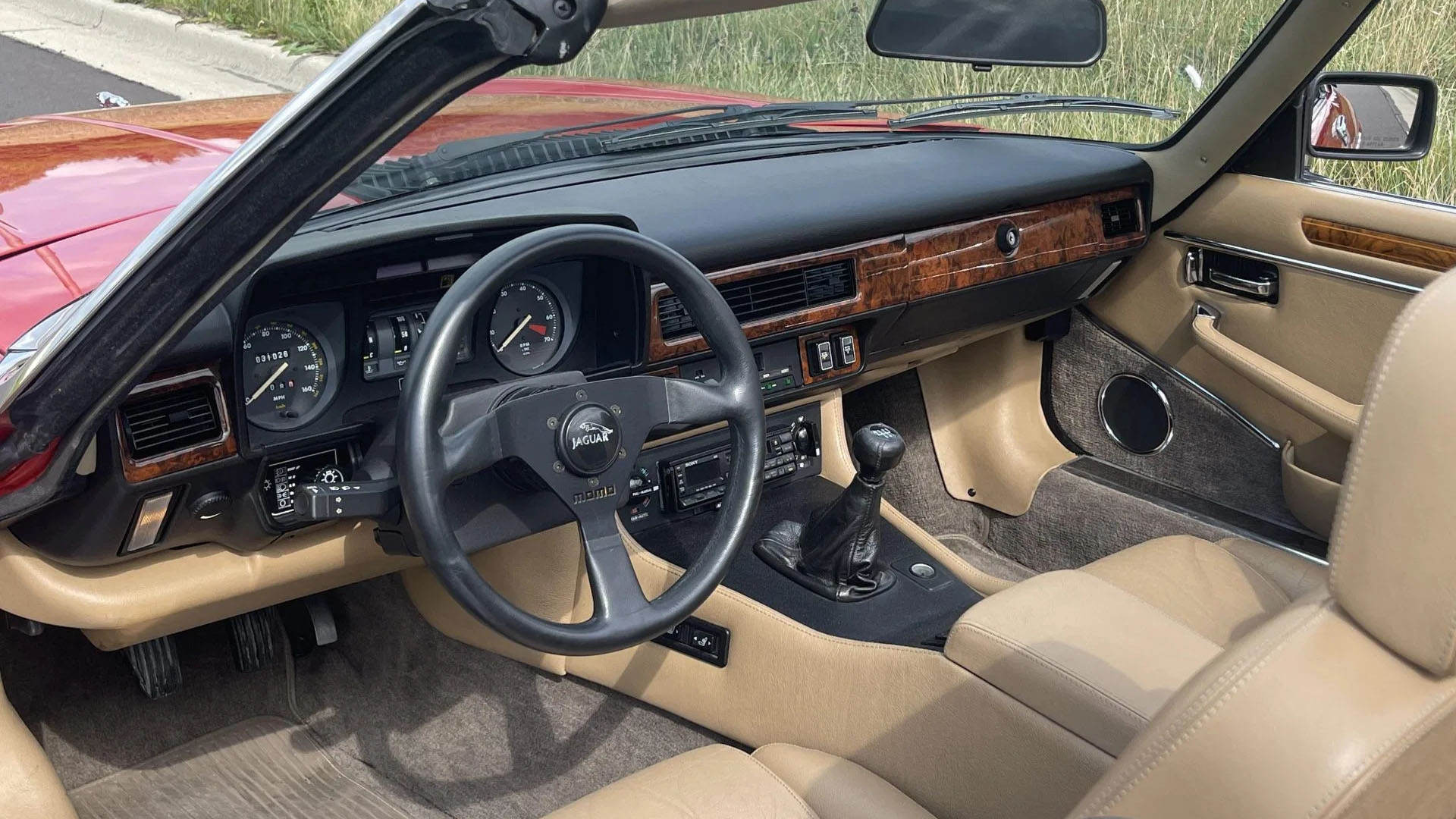
The interior inside this red convertible looks amazing, finished in tan leather on the seats, door panels, central console … there is soft leather and wood everywhere inside this classic Jaguar, with a period-correct Sony cassette stereo complete with a CD changer in the trunk, naturally this convertible GT comes with air-conditioning to keep cool when you close the black cloth roof, which is power operated as you would expect, a custom MOMO steering wheel matched the black leather on the top of the dashboard.
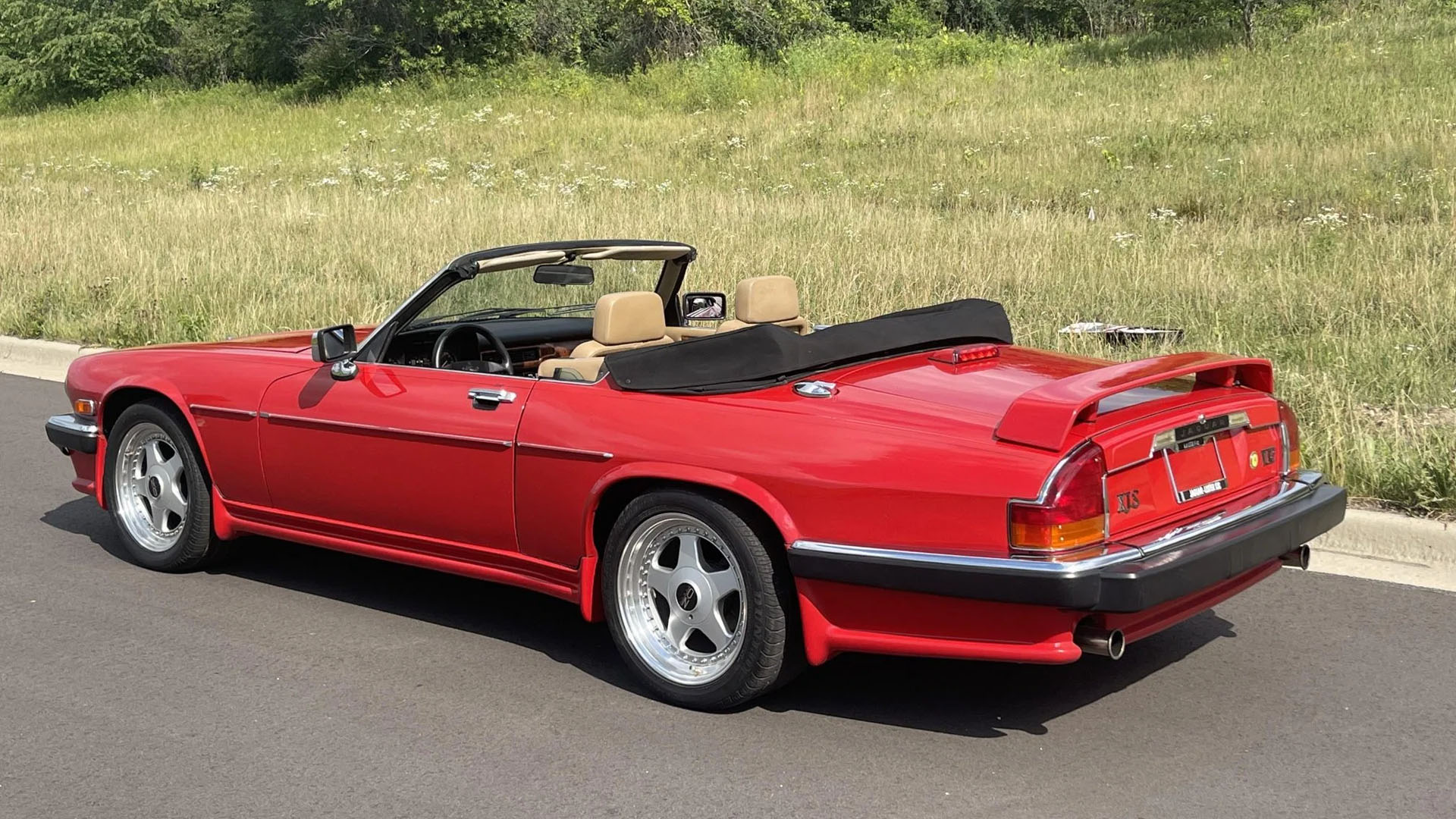
Chassis SAJNW4845LC172726 now has about 31,000 miles on the odometer, which comes down to 1,000 per year on average, and if you would buy this car today, you should just enjoy it, driving around with the top down under the sun, listening to that V12 engine. This isn’t a future collector’s item you should park in your temperature and humidity-controlled garage and just wait for the value to rise … that will not happen for this car, it’s been modified too heavily to become a classic that will be sought after by collectors in a decade or so, collectors look for numbers-matching samples in good condition, not a personalized interpretation like this … so this one is just about having fun with it while it lasts, enjoy it to the fullest and don’t worry about adding miles … just drive it.
Listen to the Gordon Murray T.50’s V12 exhaust note
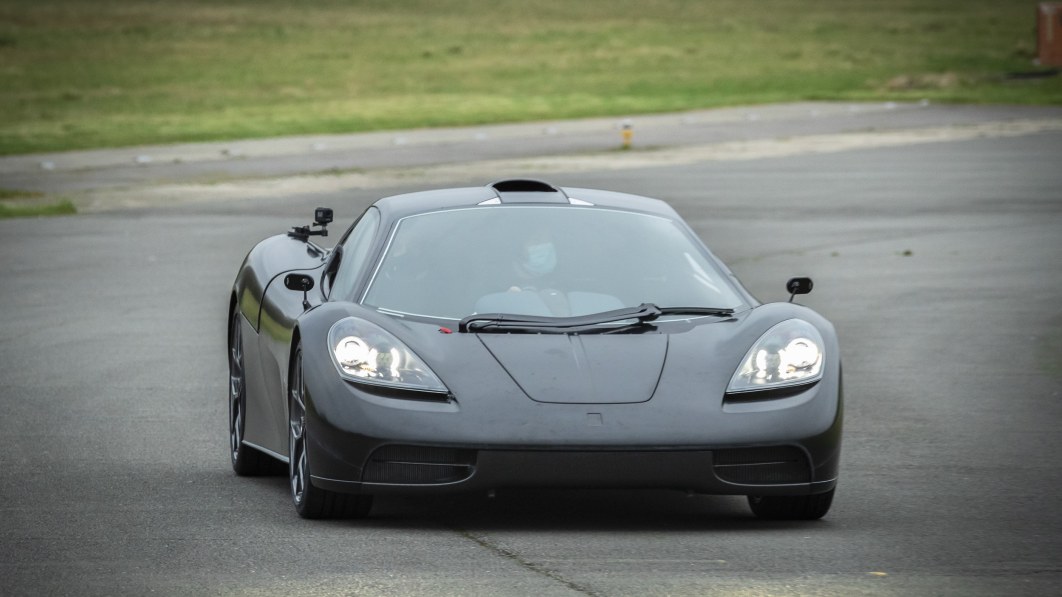
The Gordon Murray Automotive T.50, promised to be the greatest — and perhaps last — analog supercar, is still undergoing testing. When we last saw a T.50 prototype, its naturally aspirated, mid-engined V12 was rev-limited to low speeds. Now, GMA has released another video showing two test mules at slightly higher velocities, giving us a better idea of what kind of exhaust note we can expect.
The testing takes place at the Dunsfold, England, test track famous for its appearances on “Top Gear.” Though the Cosworth-built 3.9-liter V12 is said to have a redline of 12,100 rpm, in these tests it’s still limited to 5,000 rpm. Still, that’s enough to give us an idea of what kind of aural assault the car will deliver.
As it turns out, at low rpm there’s a lot of the baritone rumble that seems to be de rigueur in modern performance cars. At higher speeds, the engine provides a bit more of the high-pitched hum of the T.50’s spiritual predecessor, Murray’s McLaren F1, though overall the exhaust note is quite loud. There’s definitely more of a primal roar than the F1’s all-business precision engineering whir.
But while it may sound like other supercars, Murray has been adamant that the T.50 will remain the anti-supercar supercar. It will prioritize agility and handling over raw horsepower, with styling that’s more subdued than modern look-at-me-mobiles.
As such, Murray says the T.50 will be about the size of a 718 Boxster and lighter than a Mazda MX-5 Miata. Though the output of 654 horsepower at 11,500 rpm and 344 pound-feet of torque at 9,000 rpm may not win armchair bragging rights, its power-to-weight ratio should better the Ferrari LaFerrari’s.
Production of the 1+2 seater is slated to begin in 2022. A production run of only 100 units has been promised, so if you think you might want to drop the $3 million on the last pure naturally aspirated, internal combustion-only sports car by arguably the greatest living supercar engineer on Earth, you should act fast.
Fabio Lamborghini unveils Huber Era
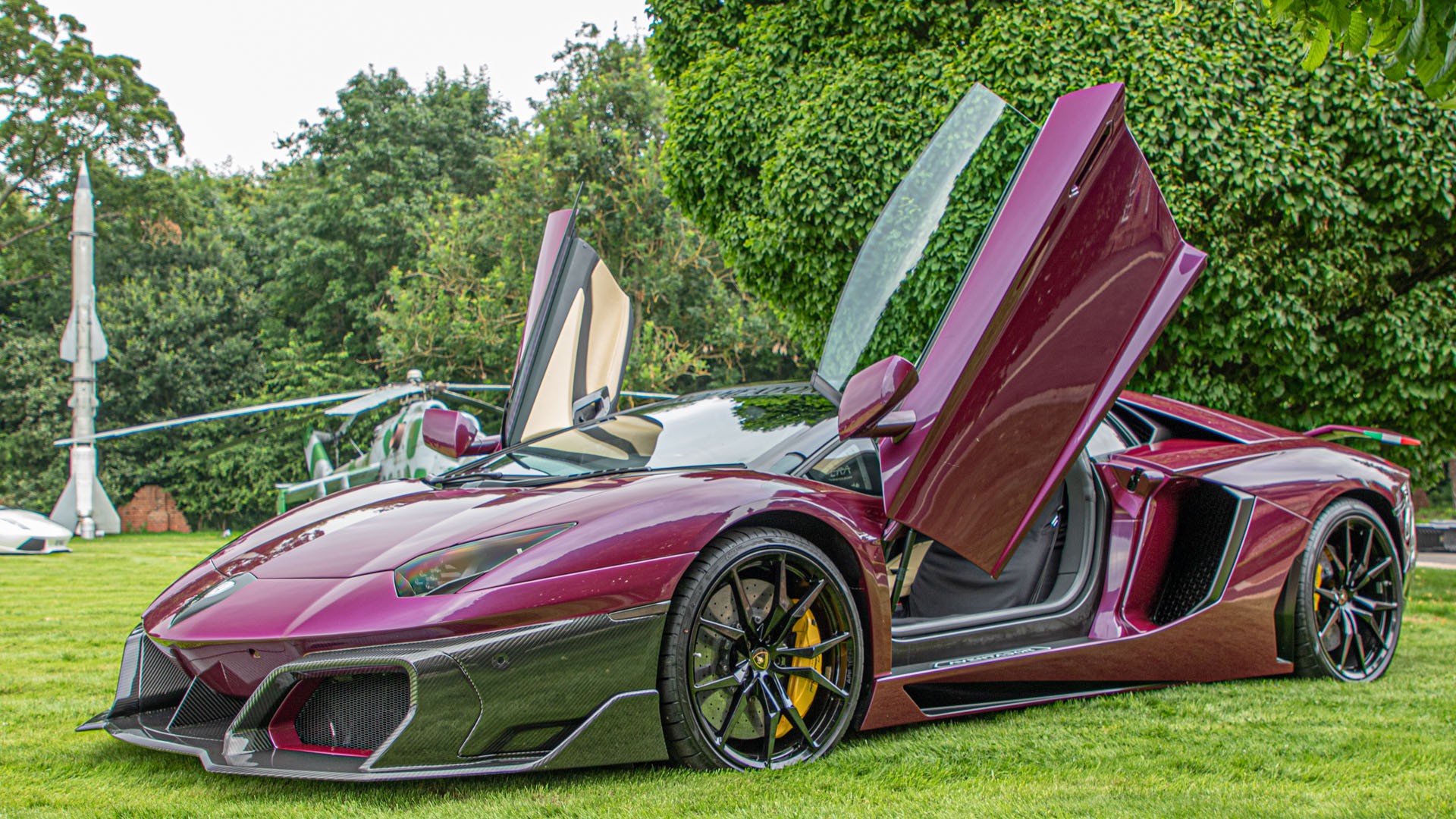
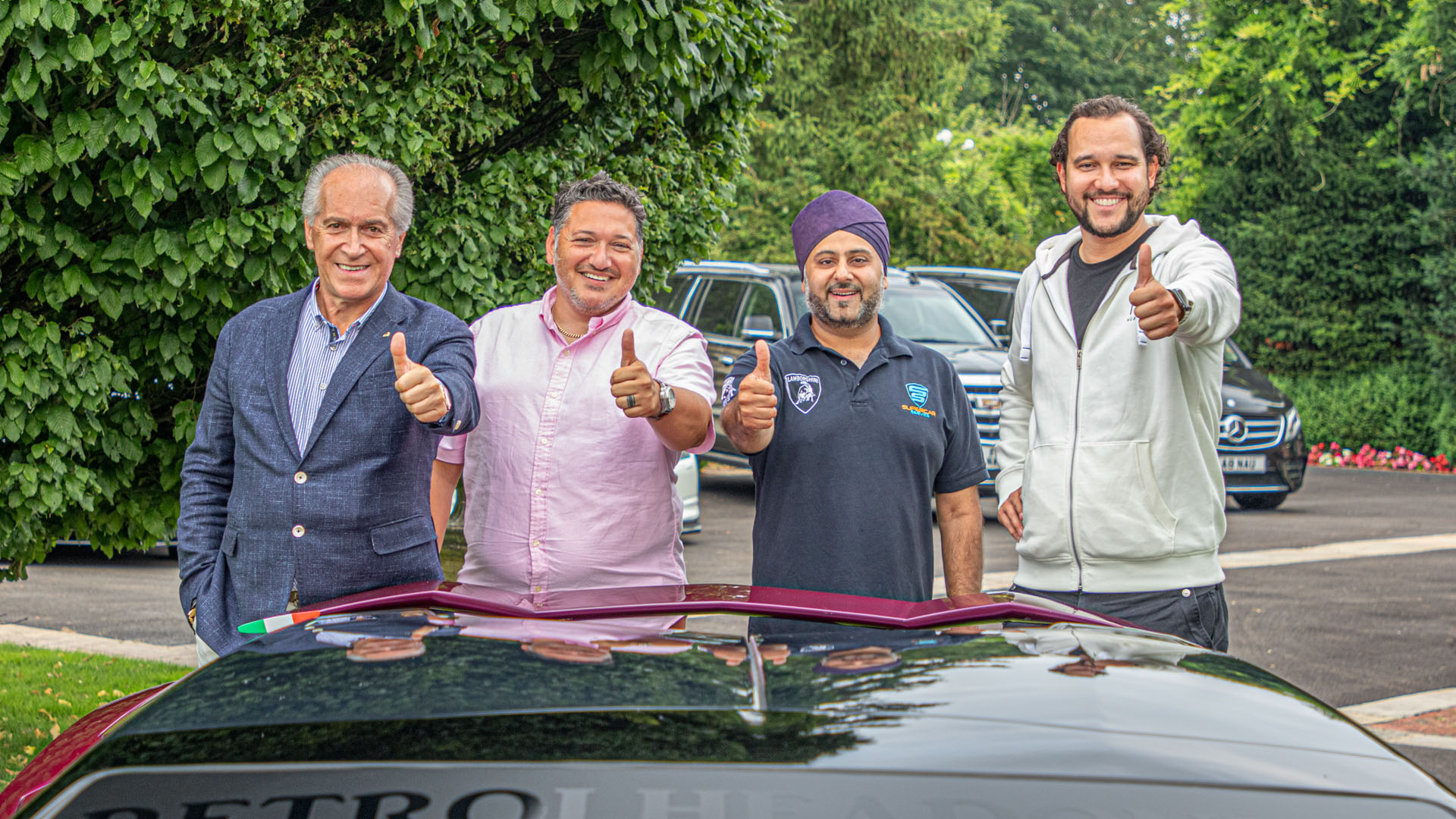
There will be only 21 of these Huber ERA built in the entire world, created by Sean-Peter Huber’s own coachbuilding company, the ERA is a facelift based on the Lamborghini Aventador, the first one of these Huber ERA has just been delivered to its owner in the UK, Ciro Ciampi, who is not only the membership Secretary for the Lamborghini Club UK, he is also the founder of the car community Petrolheadonism.
The unveiling of this impressive Lamborghini conversion was held at the former David & Victoria Beckham Estate, complemented by an amazing supercar collection on the grounds, and with the attendance of none other than Fabio Lamborghini himself, who together with Tonino Lamborghini, the latter being Ferruccio’s son, runs the family museum in Italy that showcases several Lamborghini that were important in history, or that actually belonged to Ferruccio Lamborghini himself.
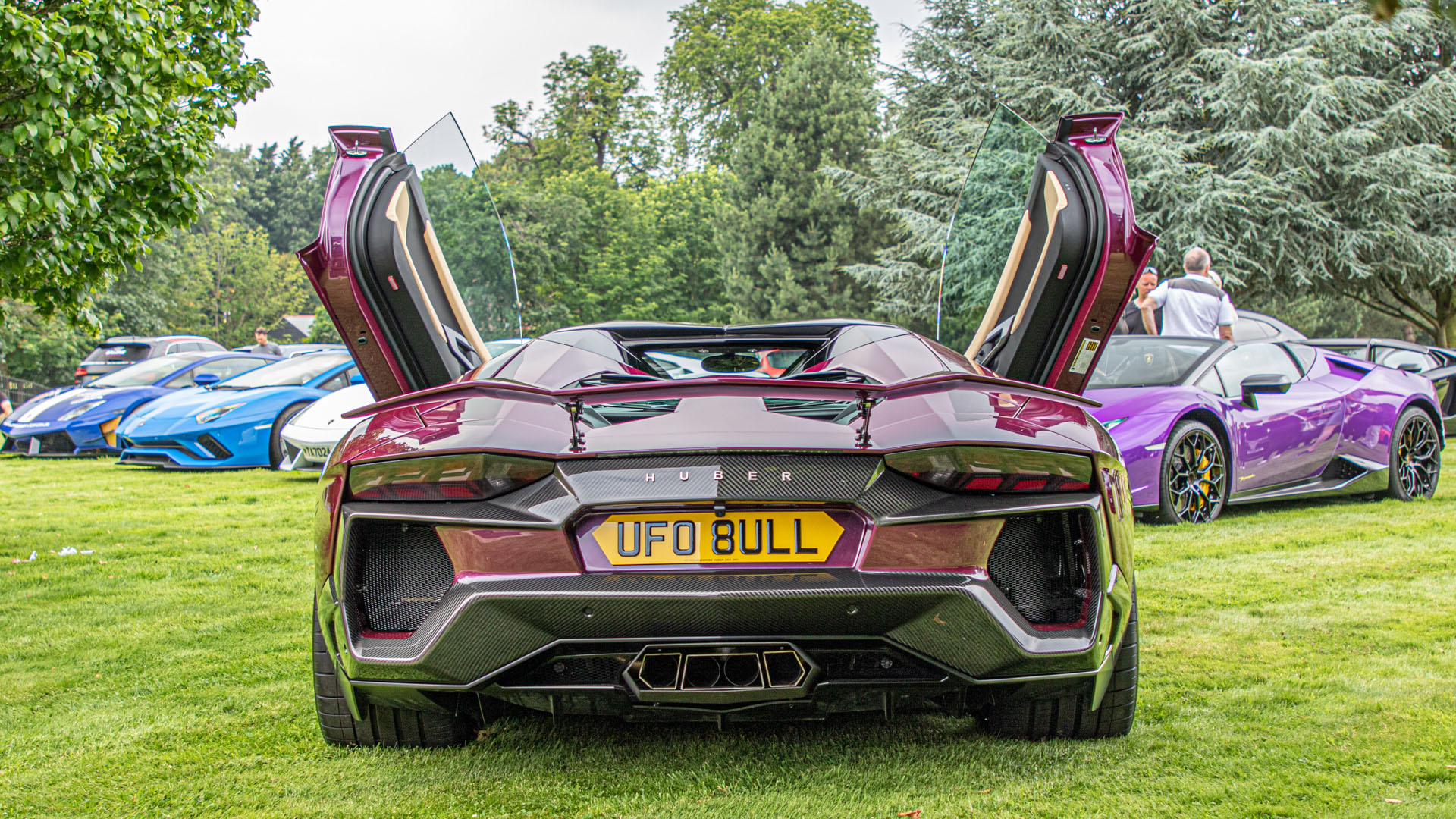
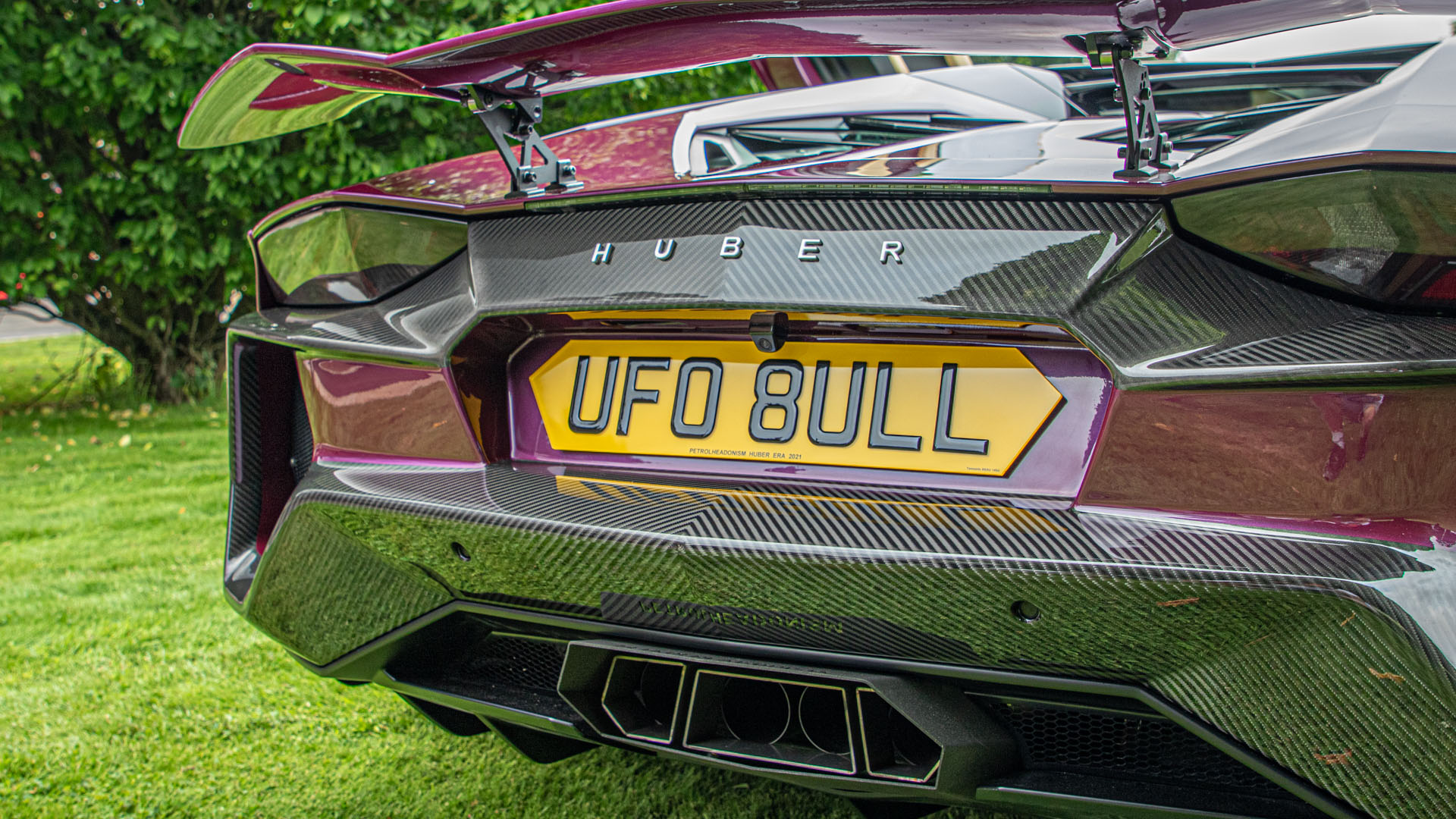
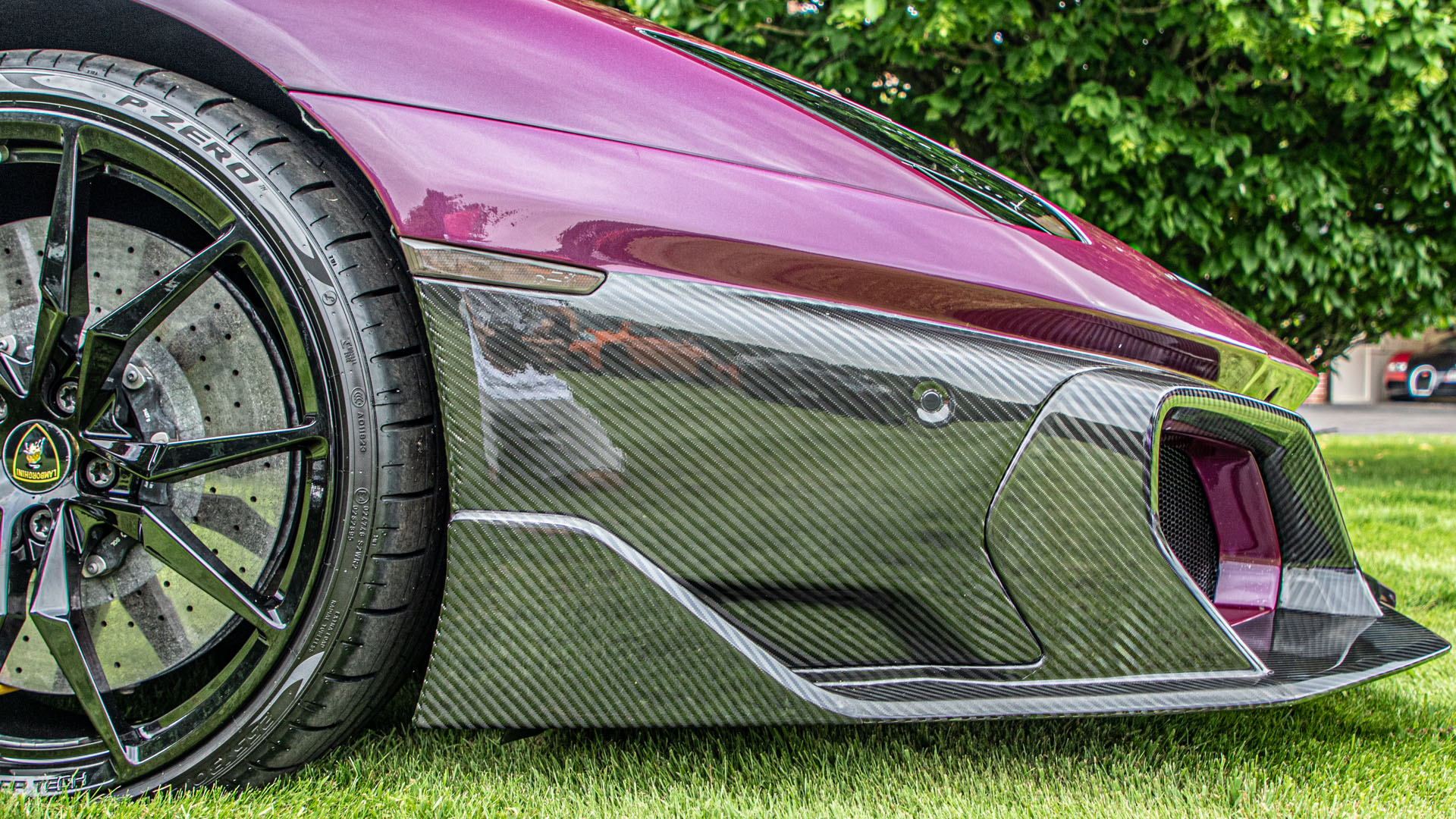
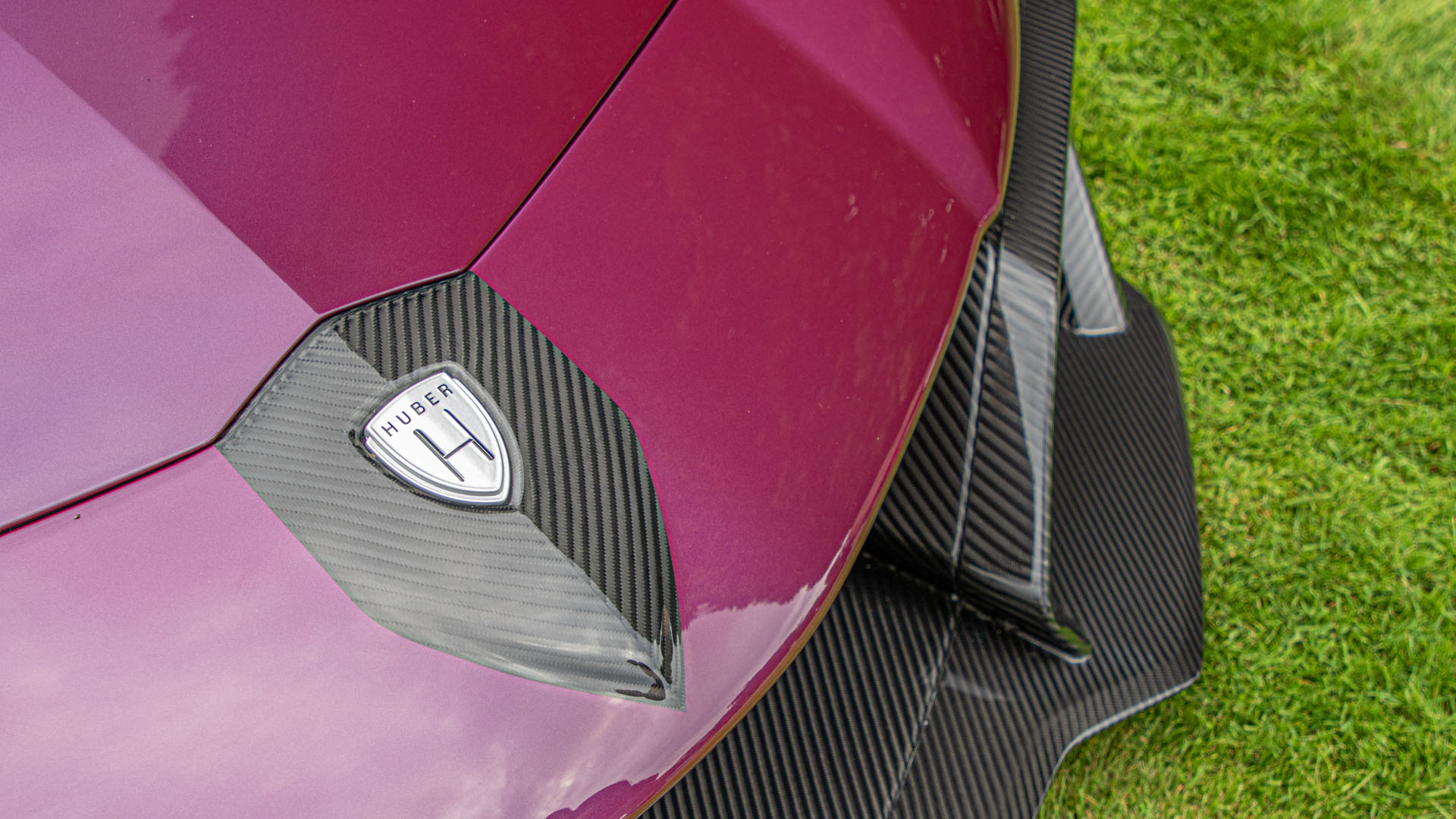
But back to the Huber ERA, created by a passion for car design this car is another homage to the ten year anniversary of the Lamborghini Aventador that was unveiled back in 2011, the ERA comes with replacement units for the entire front bumper, rear bumper right up to the taillights, and an optional trunk, all made from carbon fiber.
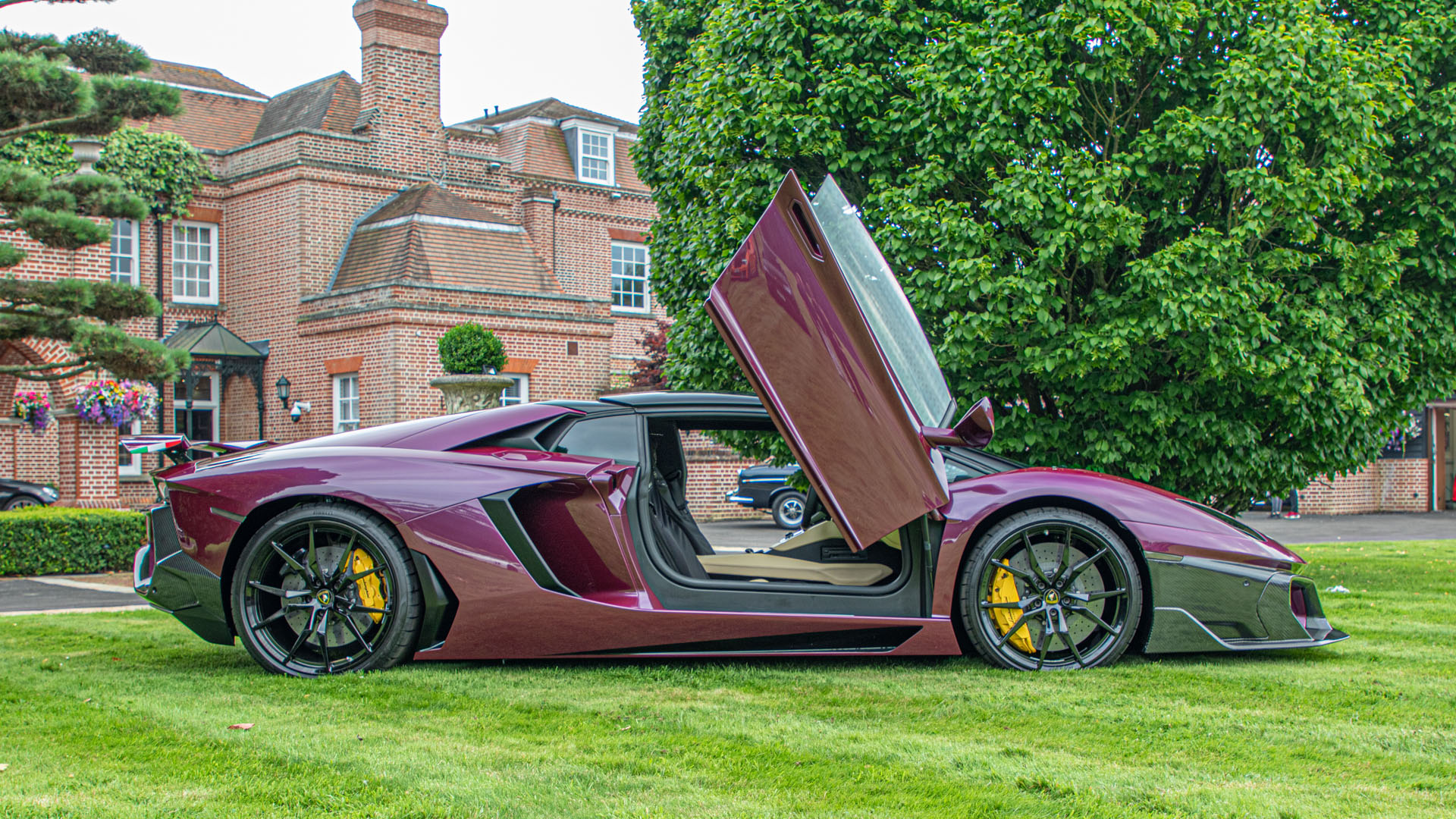
The first of only 21 units are already booked, note that the project is fully-funded and independent from Automobili Lamborghini SpA, pricing starts at €30,000 (just over US $35,000), the UK Distributor for Huber is renowned Supercar Service Ltd, who’s founder Raj Singh was very impressed with the ERA kit for integrating perfectly with the Aventador chassis, Super Service Ltd even offers a ‘Flying Partner’ service where they will fly out to you to make sure the Huber ERA kit is fitted exactly as it should assure quality control.
A closer look at the Viola finished Huber ERA
The new BRABUS 800 GLE Coupé
Personally, I still think the BRABUS B63S 6×6 is the most impressive ‘car’ this German tuner ever made, agreed, it’s ‘only’ 700 hp, but just look at this one for a second … it’s a six-wheeled, extremely tall Mercedes based beast with portal axles, what more could you ask for? Perhaps a little smaller and possibly less expensive? In that case, a BRABUS 800 based on the Mercedes G-Wagon might be an option, 800 hp in somewhat the same body style (not a pickup mind you), but lower than the 6×6, with regular axles, so less intimidating.
If you want to most extreme SUV possible you’ll be set with the BRABUS 900 ROCKET EDITION, their latest conversion based on the G63 model, limited to only 25 units worldwide at nearly $700,000, this is the one if you really want to have the comfort of a massive off-road vehicle, but still want to reach 100 km/h from a standstill in 3.7 seconds and have a car that doesn’t run out of breath until she reaches 280 km/h … in a car that’s styled like a brick house!
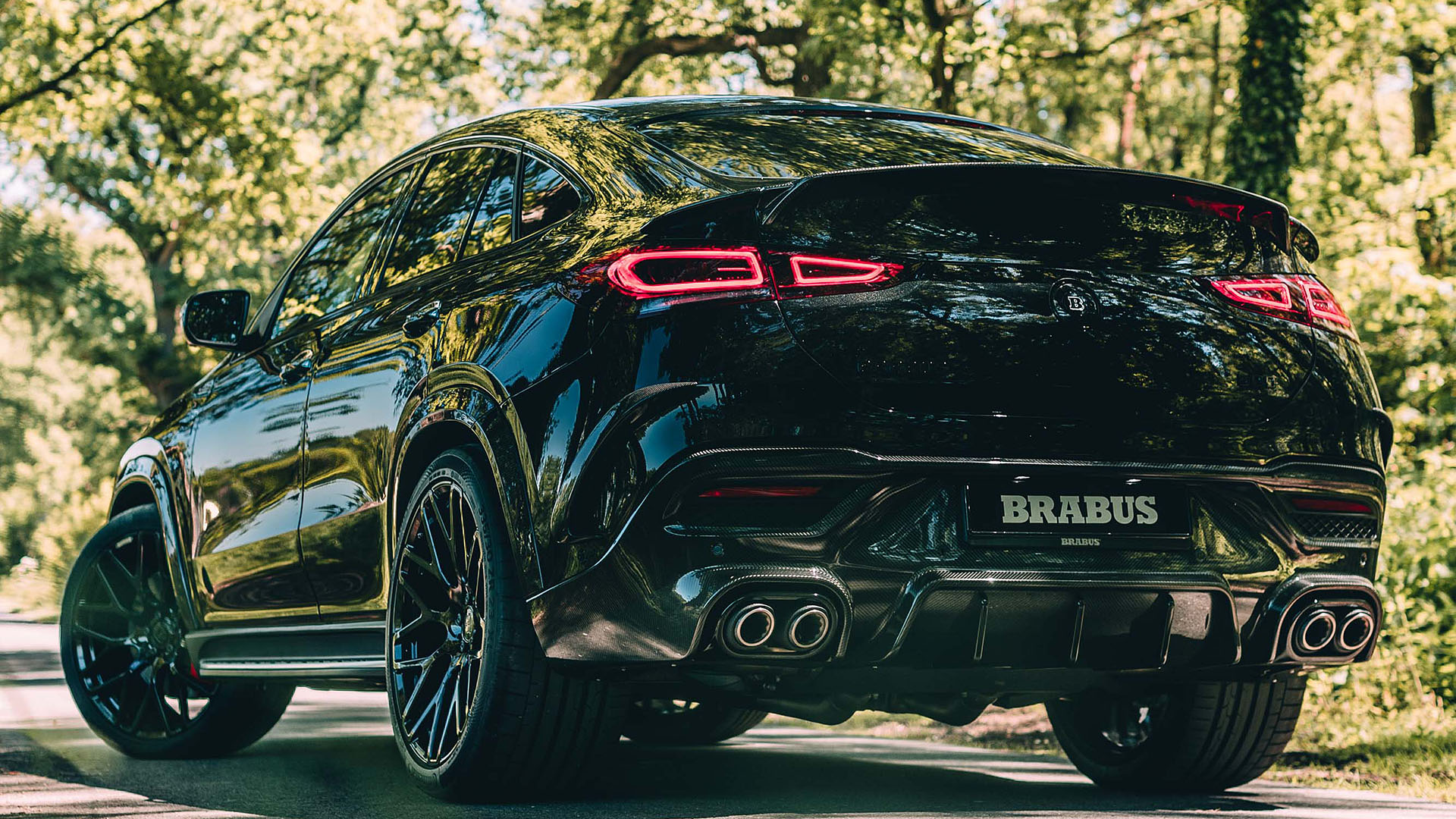
But for argument’s sake, let’s say you’re not a fan of the box-style found on the Mercedes G-Class vehicles … in that case, BRABUS now has an alternative for you, based on the Mercedes-AMG GLE 63 SMatic+ Coupé (try fitting that on the rear fascia in chrome lettering), called the BRABUS 800 SUV Coupe, and you’ve guessed it, this coupe-styled SUV comes with 800 hp from the big V8 engine at the front.
This one comes with a much rounder, more contemporary design compared to the big G-Wagon, and because it’s called an SUV Coupe, there is a sloping rear window, much like on a two-door car, now keep in mind that could mean a little less headroom for the rear seat occupants, but it does look cool nonetheless, something we’ve also seen on the BMW X6 model for instance, but back to the BRABUS 800 SUV Coupe now, which on these presentation photos is finished in black, the trademark color from BRABUS.
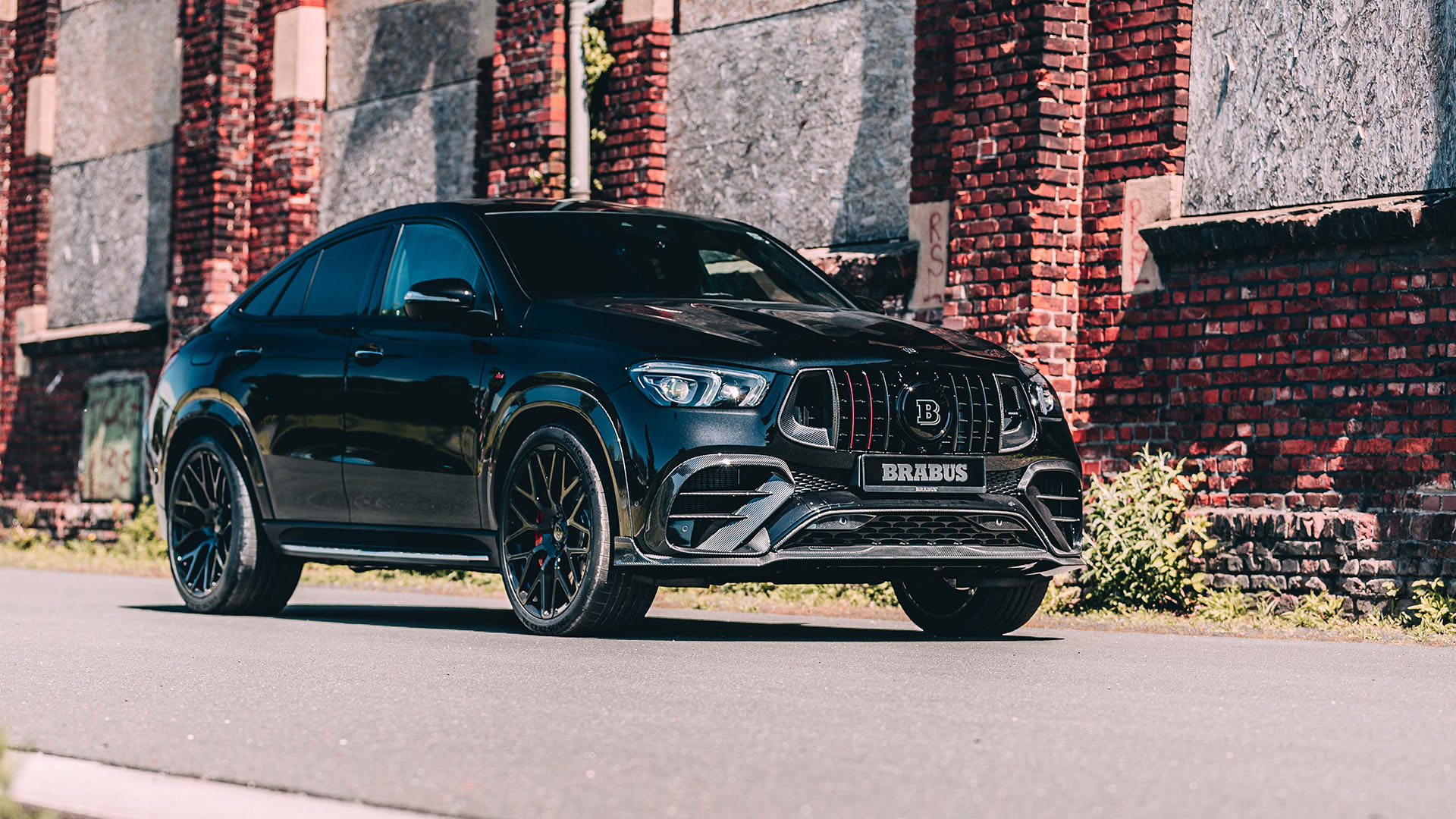
When you receive your Mercedes-AMG GLE 63 SMatic+ Coupé from the factory, there will be a 4-Liter V8 twin-turbo engine fitted with 612 hp and 450 kW of torque under your right foot pedal, which isn’t bad already … but it’s nothing compared to what BRABUS will give you after a visit to their workshop in Bottrop, Germany. A power increase to 800 hp (588 kW) and no less than 1,000 Nm of torque … and while this isn’t the 900 hp from the ROCKET G-Wagon version, this SUV Coupe takes only 3.4 seconds to go from 0 to 100 km/h (3 seconds less than the 900 ROCKET) and has it’s top speed electronically limited at 280 km/h (174 mph), so this black beauty will outrun the G-Class ROCKET by 10 km/h.
A lot of this power increase is thanks to the modifications to the base engine, BRABUS has over four decades of experience in this field, adding 188 hp or 138 kW to a modern engine might be more difficult than you imagine, and let’s not forget the base GLE 63 S comes with an integrated mild-hybrid starter generator, so any engine tuning has to take that into consideration too.
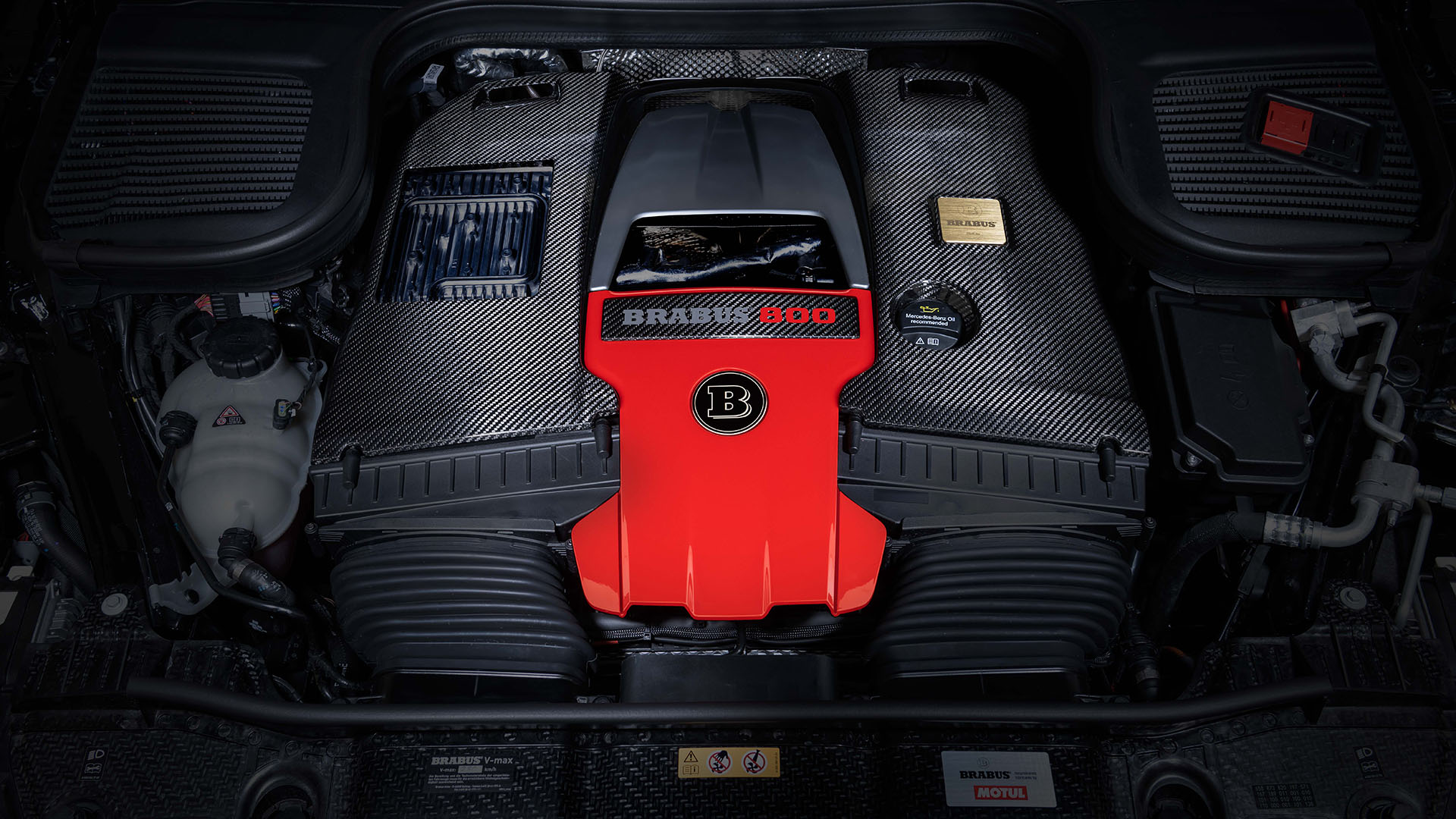
To get to a power output of 588 kW (800 hp) at 5,900 rpm and reach a peak torque of 1,000 Nm (737 lb-ft) at a low 3,500 rpm, custom turbos with larger compressor unit, modified core assembly, and reinforced axial bearings are required, these new units can produce a maximum boost pressure of 1.6 bar, add the BRABUS PowerXtra auxiliary control unit and the engine is remapped in terms of injection, boost pressure, and ignition. More importantly, BRABUS engine tuning comes with a 3-year/100,000 km (62,000 miles) warranty.
If you are not ready to go for the full BRABUS 800 package on your Mercedes-AMG GLE 63 SUV, there is also the BRABUS PowerXtra B40 option, this plug-and-play control unit will add 88 hp (64.7 kW) to the base engine effectively creating a BRABUS 700 model in that case, which is still not bad, but that 800 does sound a lot more impressive in the end.
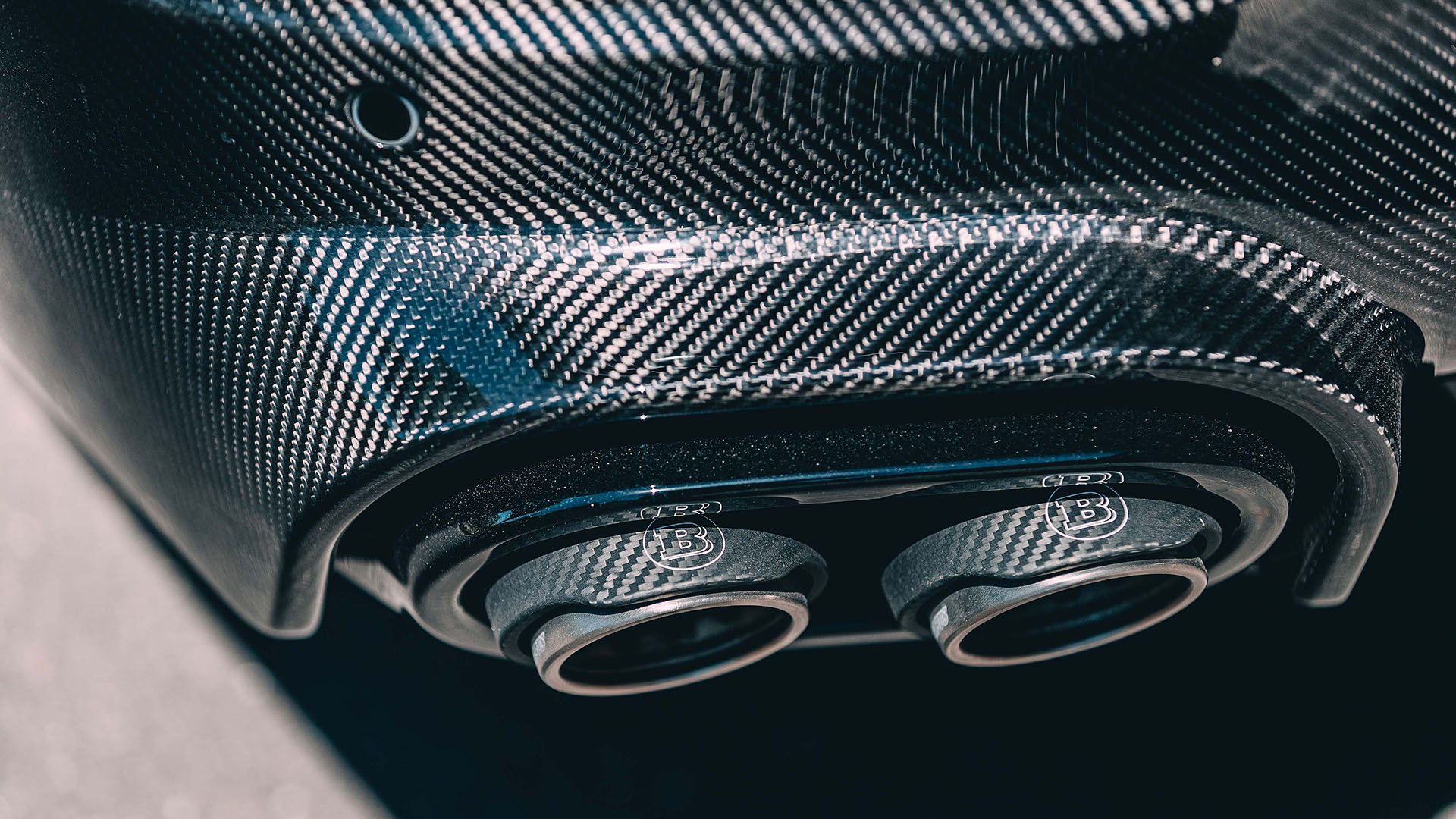
BRABUS engine tuning can be requested on its own, but you really should add their stainless-steel high-performance exhaust system to your order too, if you do something, do it right from the start, with actively controlled flaps in the pipes, and a quartet of massive 90mm (3.5 in) titanium/carbon fiber exhaust tips, I’m sure you’ll have the ‘Sport’ mode set all the time … except when you have to leave early in the morning or arrive late at night … and you are still on speaking terms with your neighbors… in that case, the ‘Comfort’ mode might be a good idea so you don’t wake them up.
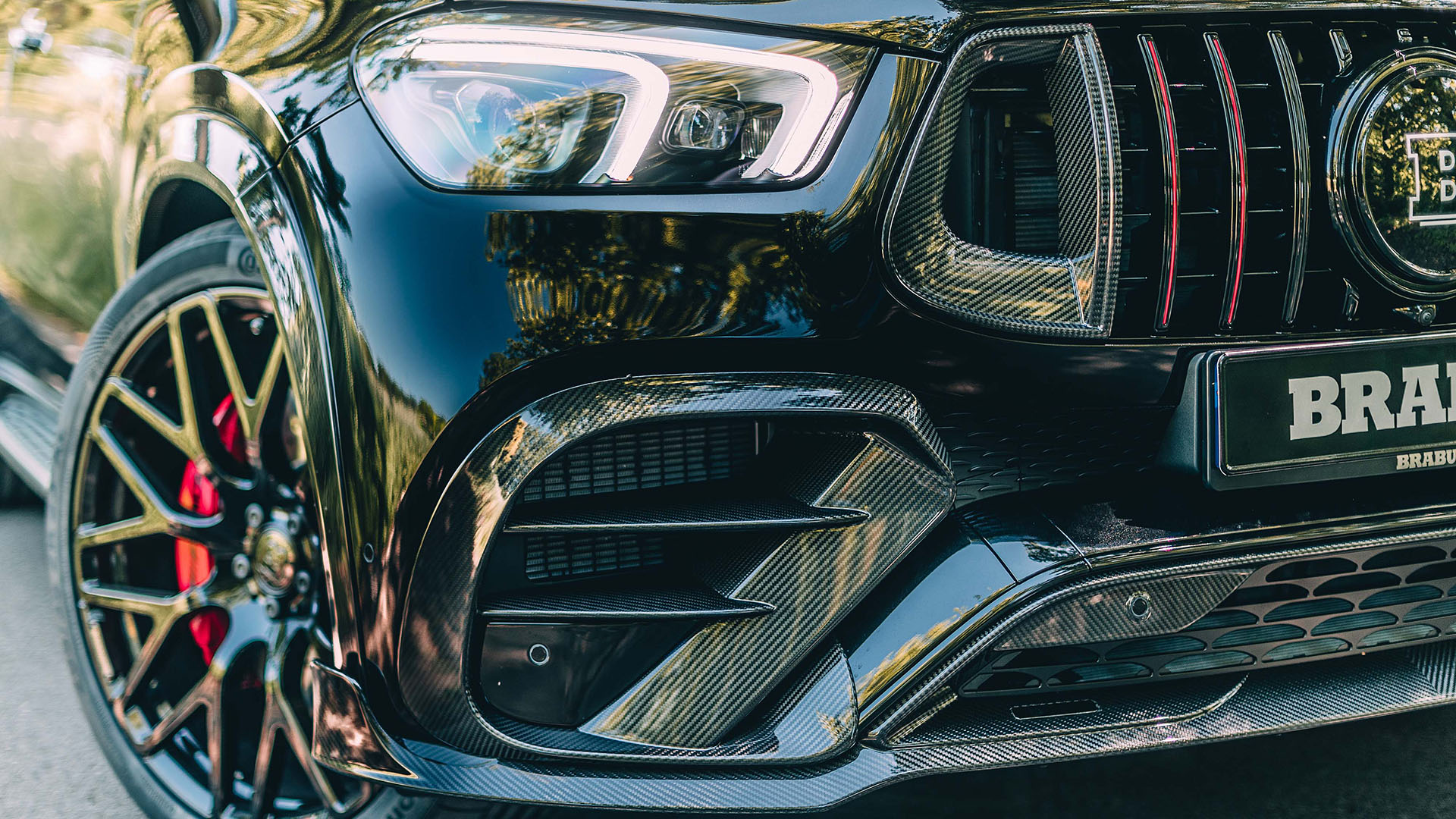
Now you have the power and the sound to match … so what’s next? The looks of course, and we wouldn’t be talking about this BRABUS 800 SUV Coupe if they didn’t have a nice aerodynamic package available too, available in either glossy or satin-finished, clear carbon fiber. For the front, you can get a lower spoiler that fits onto the factory original bumper, the BRABUS spoiler comes with vertical stabilizers on either side for that aggressive look, add the custom BRABUS front grille, with their touch of red on two spokes, and you’ve completely transformed the looks of your GLE as seen by your fellow drivers in their rearview mirror.
Air intakes for the front bumper made from carbon fiber are another option from BRABUS, as are the integrated intakes in the grille, on the driver’s side there is even a crosspiece with the famous BRABUS logo, complete with lights that are activated by pulling a door handle or when you approach the super SUV with the key card in its vicinity.
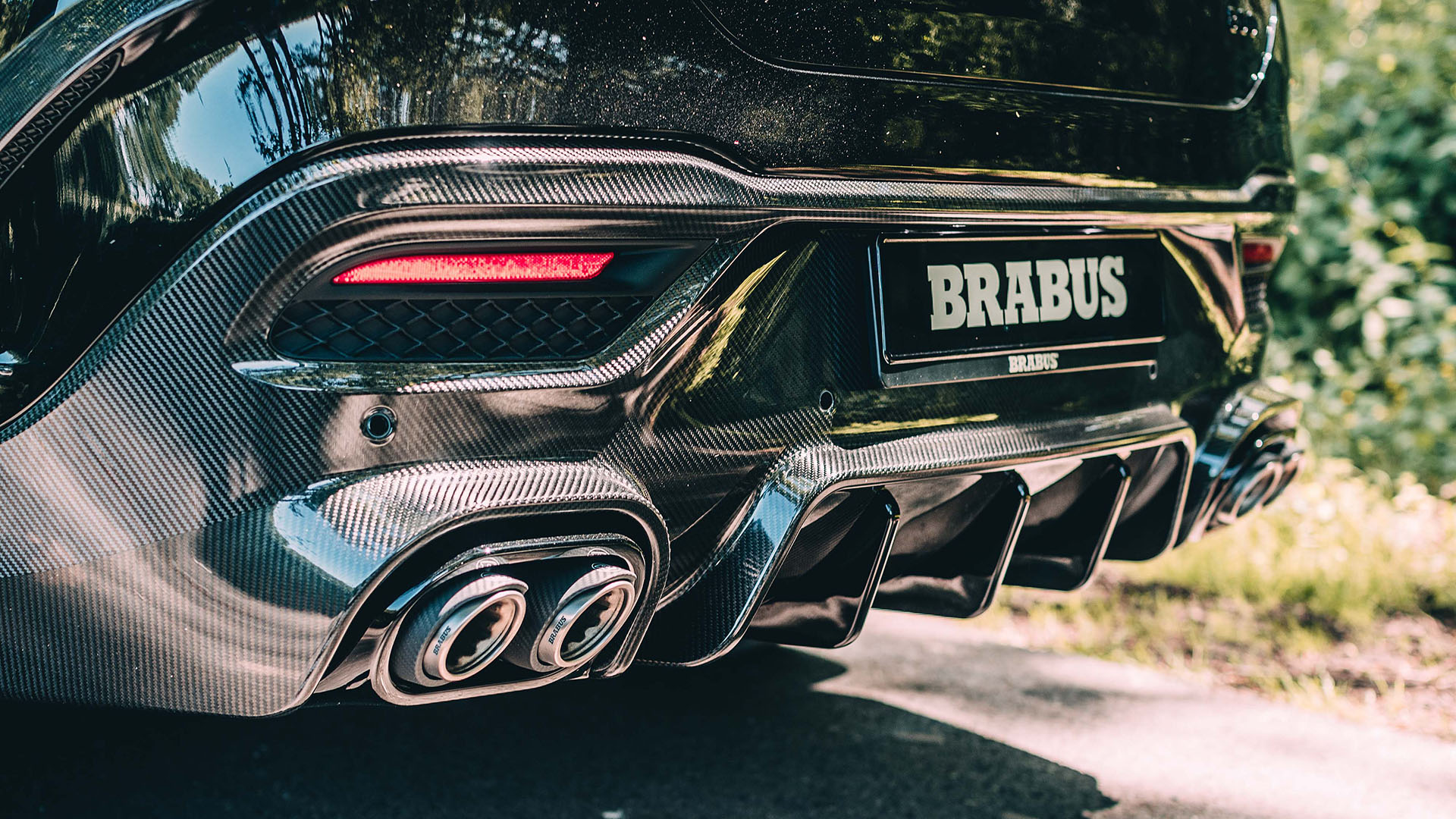
If you did opt for the BRABUS exhaust system, you might want to consider the custom rear diffuser too, made from visible carbon fiber, it is integrated perfectly into the factory original rear bumper, but more importantly, it comes with the perfect openings to fit those 90 mm exhaust tips from the BRABUS sport exhaust system. Beautiful carbon fiber side air vents for the rear bumper are another must-have, especially if you also fit the BRABUS exposed carbon fiber wheel arch extensions and the rear spoiler, which is a three-piece unit for this GLE 63 based BRABUS conversion.
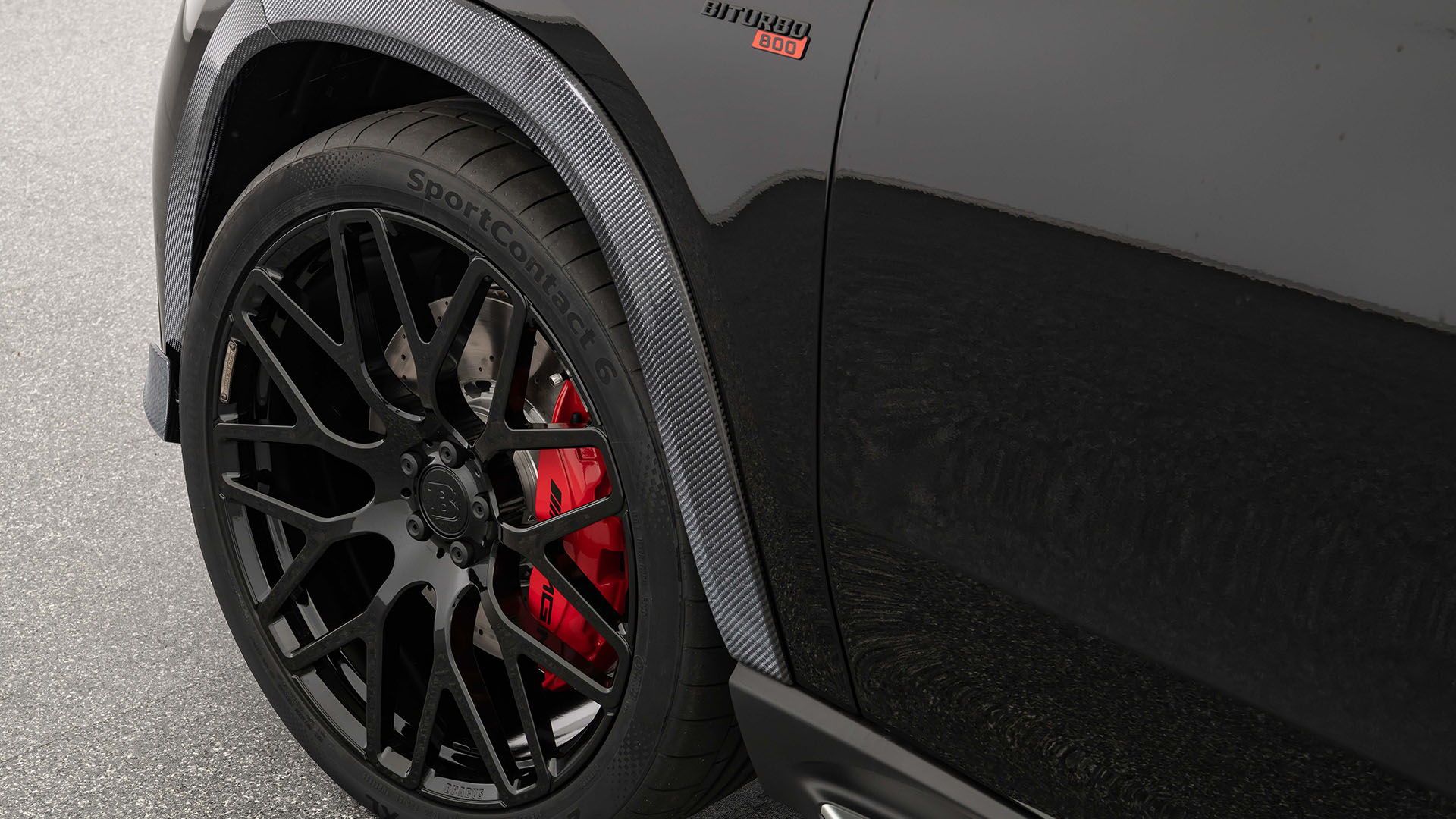
A BRABUS car wouldn’t be complete without a new set of shoes either, so you can choose between Monoblock alloys in different designs and sizes that go from 22 up to 24 inches, the show car on these photos rolls on a set of BRABUS Monoblock Y “BLACK PLATINUM” hi-tech forged wheels, 10×23 inch at the front and an even wider 12×23 on the rear axle, shed with 295/35 R 23 and 335/30 R 23 respectively so those wheel arches are nicely filled, especially with the BRABUS control module for the standard AIRMATIC air suspension that results in a 25 mm (1 in) lowered ride height.
The BRABUS 800 SUV Coupe can be bought as a complete BRABUS vehicle but you can also ship your GLE 62 S to them for conversion, both options are available, as is a complete interior overhaul with the finest leathers and custom stitching patterns, prefer Alcantara, no problem. Aluminum pedals, carbon fiber interior parts, tv screens for the rear … BRABUS can accomplish just about any request a client might have … and if you bring in your existing Mercedes-AMG GLE 63 S you can ask to convert it in stages, so you can save up for the invoice inbetween.
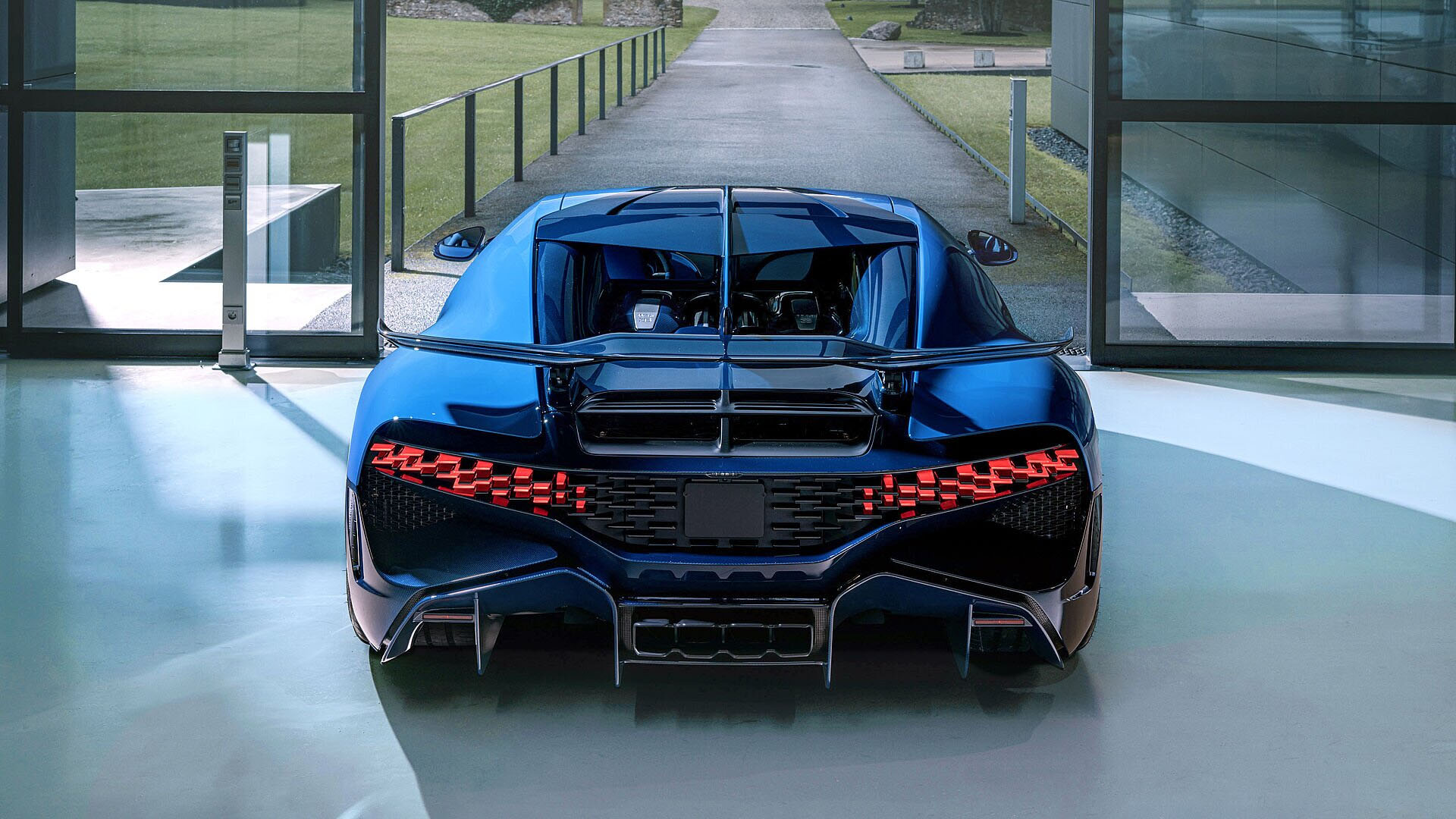
The last of only 40 Divo left the Atelier in Molsheim
Shortly after Stephan Winkelmann became President of Bugatti, he had the idea of reviving a successful Bugatti tradition. “I read a lot about it, took a look at the iconic bodyworks produced in the 1920s and 1930s, and began to wonder whether we could transpose this excellent asset to the company’s modern era,” Winkelmann recalls. After some interesting conversations with both existing customers and some of the official dealerships, going this route of an even more bespoke car would be a perfect concept.
The Bugatti Divo was ready to be shown in the spring of 2018, but not to the public yet, instead, they contacted existing Bugatti Chiron owners and showed a production prototype of the Divo, to be limited to only 40 units, so a lot more exclusive than a normal Chiron, and with a price tag of €5,000,000 (about US $5,400,000 at that time) you might think they would have a hard sale to find customers … think again.
Bugatti states that all 40 units of their Divo were sold out in a matter of weeks since the first customer appointment, people loved both the design and the coachbuilding tradition this car stood for, a 110-year old legacy created by Ettore Bugatti when he started building these excentric automobiles back in the early 1920s, with the Type 57 in various coachbuilding versions like the Galibier, the Atalante, and the SC Atlantic, Bugatti created iconic designs that would become automotive works of art ever since.
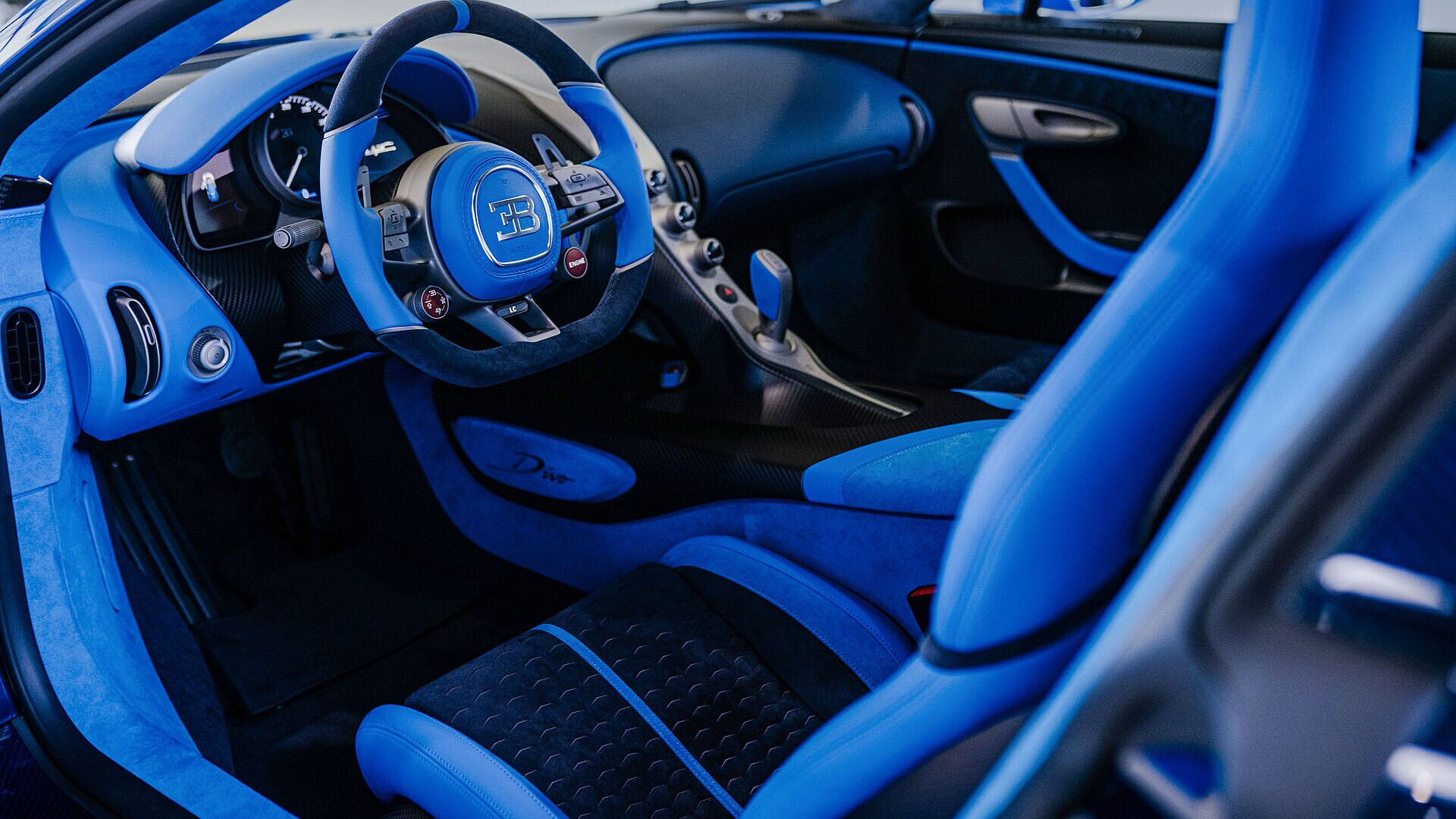
Today the last of the 40 Bugatti Divo was finished in Molsheim, a car that was ordered by a client in Europe, and one with impeccable taste, not only in cars but also in the history of these masterpieces, the main shade of Bugatti EB 110 LM Blue is a reminder of Bugatti’s last official Le Mans factory race car, while the contrast is made in Blue Carbon to bring the exclusivity and modern age to this future classic. For the inside, this customer opted for French Racing Blue with Deep Blue touches, combined with matte gray carbon elements, again a bridge between the past, the legacy, and the future.
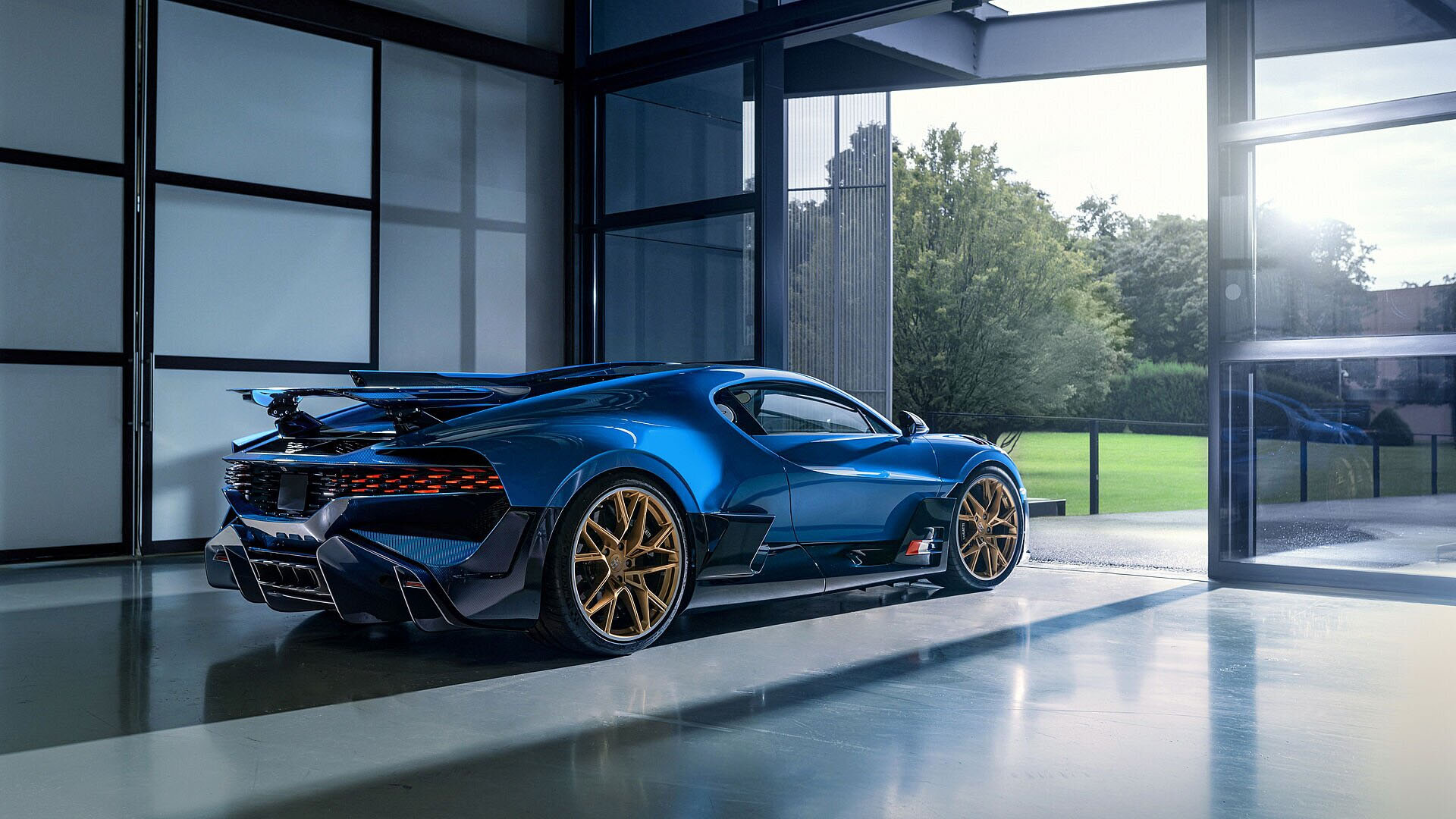
The ‘Divo’ name is inspired by the French race car driver Albert Divo, who during his 20-year racing career obtained multiple victories for Bugatti, including six Grand Prix races and two wins in the famous Targa Florio. To honor both this legendary race driver and the fact the Bugatti headquarters is located in Molsheim, a French flag is integrated into both left and right front fenders on the Divo.
Even with 40 units, none of these Bugatti Divo are the same, customers went out of their way to select very specific shades to be used just on their Divo, even going as far as asking for different materials or extreme paint schemes like the famous red ‘Lady Bug‘ in the United States, some clients even came up with their own design ideas … every single one of these 40 Bugatti Divo is a bespoke vehicle … upholding the coachbuilding tradition for Bugatti.
Audi Unveils Faster, More Powerful 2022 RS3
With the roll-out of the 2022 RS3, Audi reveals it has once again trimmed, tweaked & upgraded their smallest performance car with attention focused on the drive. With increased torque (& a new torque vectoring rear axle) from its 401-horsepower motor, it delivers a very respectable 0-62 time of 3.8 & top speeds hitting 180. The stance looks a bit meaner than the outgoing model & so does the blacked-out grill.
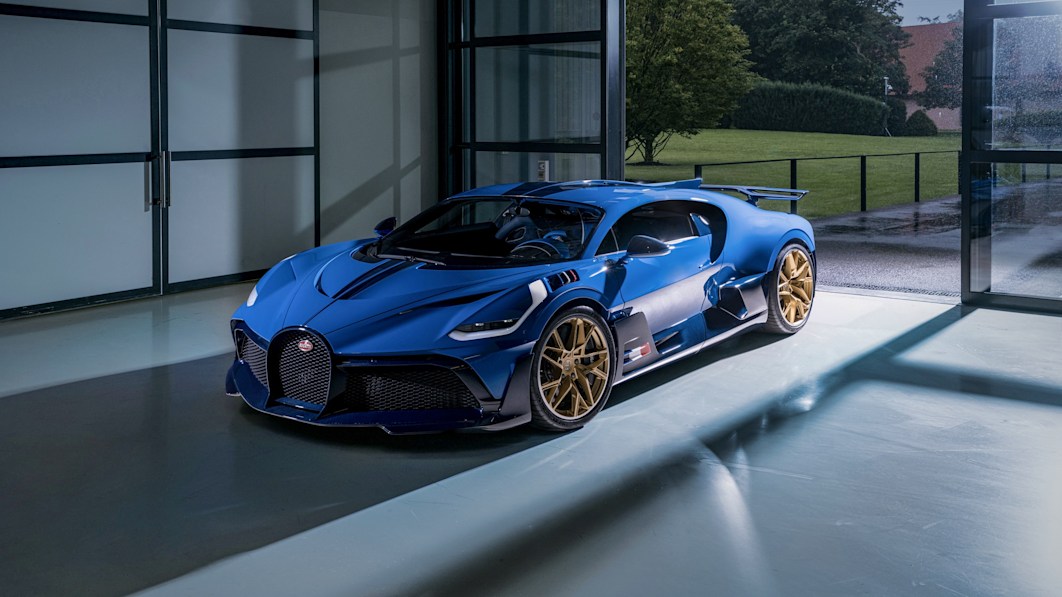
Bugatti’s final Divo is a tribute to its last official Le Mans entry
Bugatti’s last official Le Mans entry served as a source of inspiration for its final Divo. The last unit in a sold-out 40-car run left the French firm’s headquarters wearing a blue livery that echoes the track-bound variant of the EB110.
Unveiled at the 2018 edition of the Pebble Beach Concours d’Elegance, and priced at around €5 million (nearly $6 million) before customization options, the Divo stands proud as the first coachbuilt Bugatti released during the 21st century. It’s much more than merely a rebodied Chiron; it’s its own thing, and the two cars are technically different.
“As well as unique design, customers who buy a coachbuilt model enjoy a new, individual driving experience. Each small series undergoes the same degree of development as would a larger production run,” explained Pierre Rommelanger, the head of overall vehicle development at Bugatti, in a statement.
The final Divo’s anonymous owner wanted to channel the spirit of the EB110 that competed in the 24 Hours of Le Mans in 1994. Most of the exterior is painted in light blue, just like the race car, and the wheels are finished in gold. Parts of the lower body wear a darker shade of blue chosen to forge a link to the modern era, according to Bugatti.
Blue also dominates the interior. French Racing Blue and Deep Blue were used to wrap parts like the seats and the dashboard, though it’s interesting to note that the design isn’t symmetrical. The driver’s seat is lighter than the passenger’s seat. Elsewhere in the cabin, matte gray carbon-colored trim pieces provide a touch of contrast.
Spotting the final Divo won’t require a well-trained eye. Bugatti notes none of the 40 examples built were identical. Customers worked directly with the brand to customize the paint, the leather upholstery, the stitching, and the trim. What doesn’t vary from car to car is the engine: it’s an 8.0-liter W16 quad-turbocharged to 1,500 horsepower.
Selling cars is relatively easy; building them and delivering them on-time is harder. Bugatti ticked all three boxes, and the Divo project is finished. The one-of-a-kind La Voiture Noire (which reportedly cost $13 million) has been completed as well, so the French company is now working on bringing the EB110-inspired Centodieci to production.
Related video:
Most Sought After Ferraris of All Time
Economics 101 by Ferrari S.p.A
Supply: Ferrari produces an incredible car, often in very limited quantities.
Demand: Aforementioned incredible car is (predictably) highly desirable.
Price: Low supply, high demand drive up prices at an exponential rate over time.
So basically, this list could just as well have been titled “Most Expensive Ferraris of All Time” or “Rarest Ferraris of All Time”, but being the “most sought after” provides a happy medium that allows us to pick from a more well-rounded pool of cars. That’ll give us a good mix of collector cars and modern machines, since selections are not made solely on the highest sold-for prices and/or limited quantities built. Our focus is also on production and street-legal examples.
Here are 10 of the Most Sought After Ferraris of All Time.
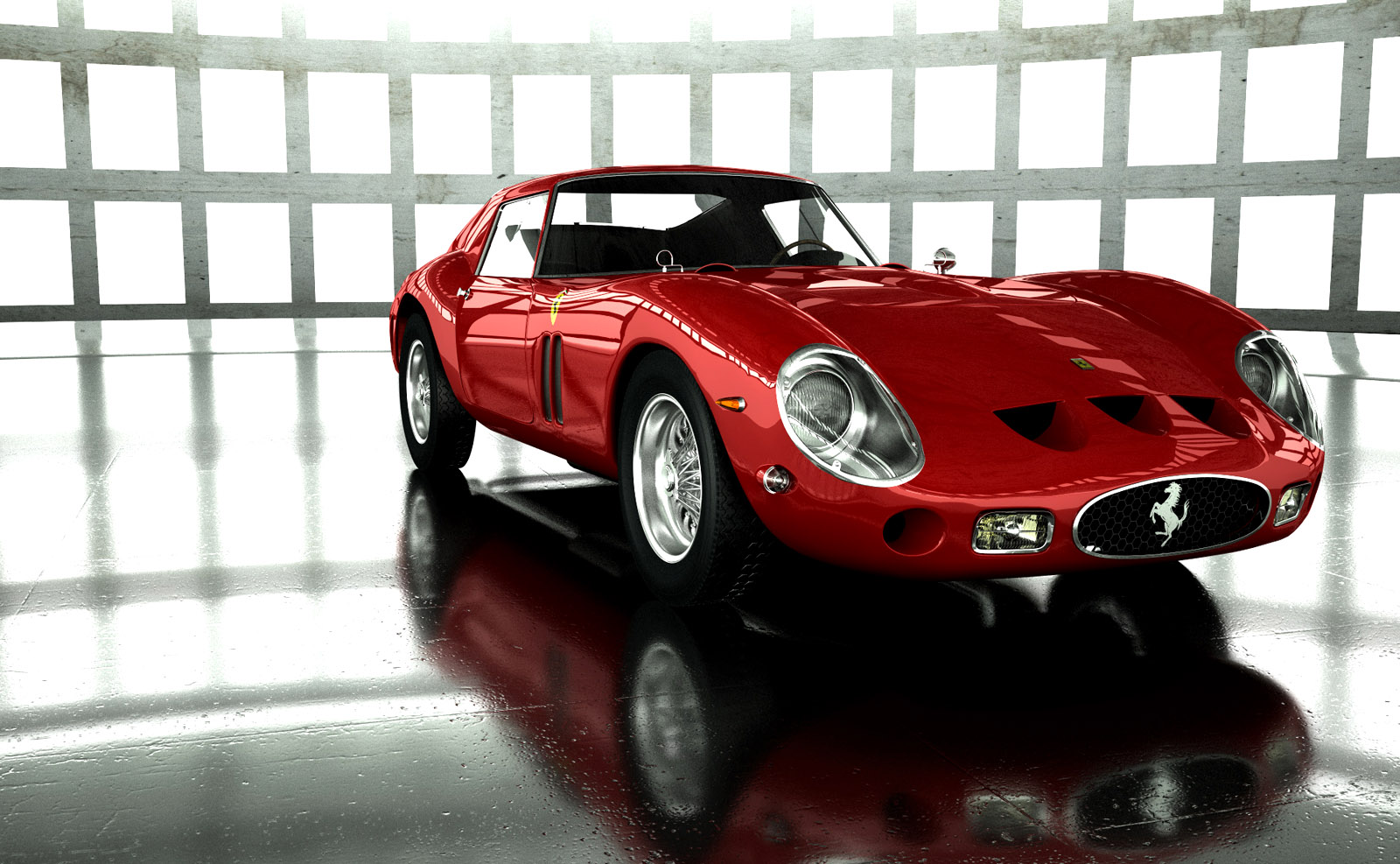
1962 Ferrari 250 GTO
 The Holy Grail of Ferraris.
Using hyperbole to describe the Ferrari 250 GTO is unnecessary. The car speaks for itself. Everybody knows that Ferrari GTOs are considered the biggest trophies in the car-collecting world for their rarity, power, beauty and success on the race track.
In 2018, the record was broken when a US$70 million 250 GTO was sold to David MacNeil (founder of WeatherTech). That particular car won the famed 1964 Tour de France race, followed by a 4th place finish at Le Mans. It’s painted in silver and yellow and despite a winning record on the track, it was remarkably never crashed – unlike many of the other GTOs which remain in existence. Prior to that, the highest price ever paid for an automobile was US$52 million, which was for another (1963) Ferrari 250 GTO in 2013.
1958 Ferrari 250 Testa Rossa
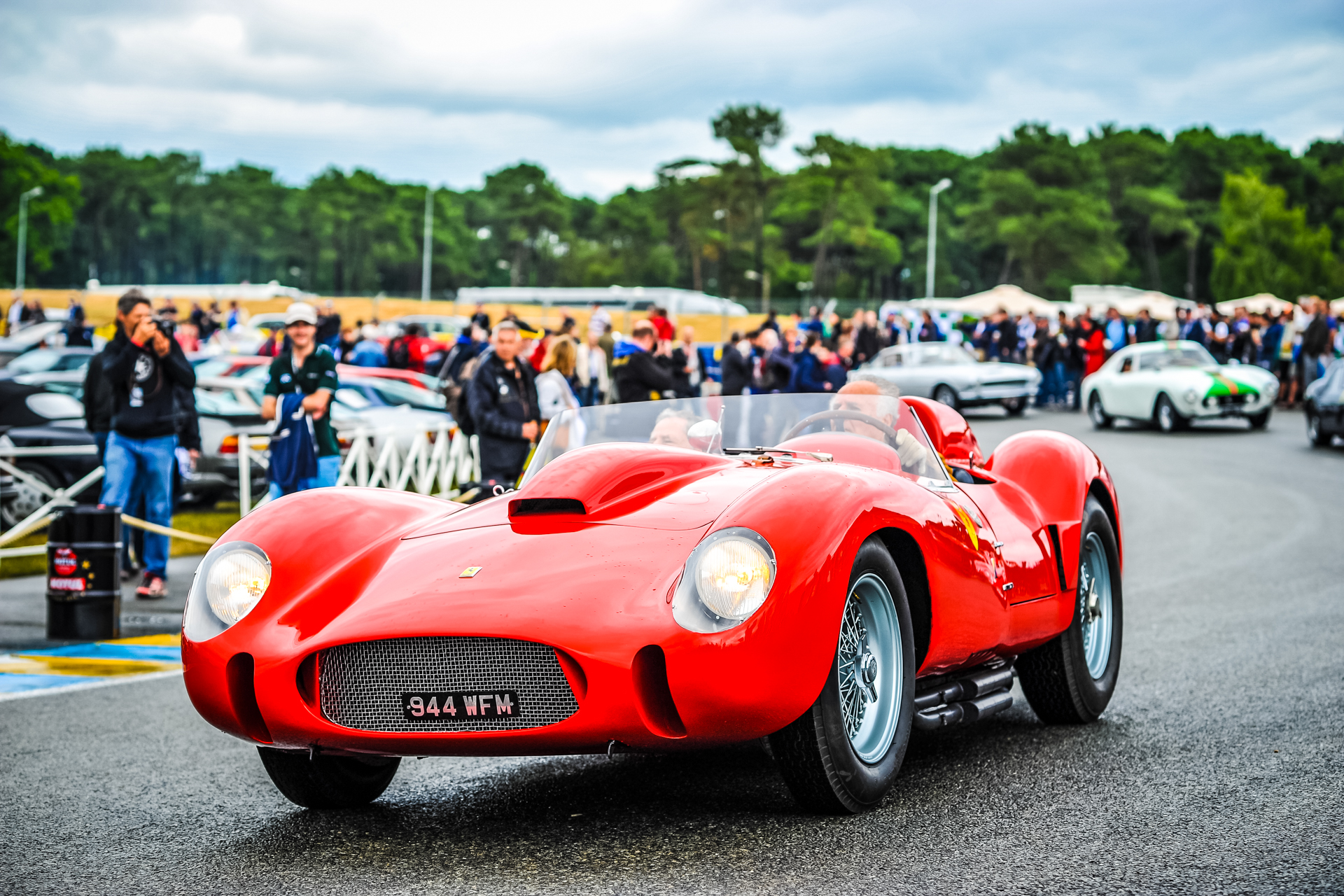 While Testa Rossas might bring back memories of the 1980s, Miami Vice, and a mid-engine supercar with massive side strakes, it’s this 1958 model which holds the more important place in Ferrari history. Not only was the 250 Testa Rossa (TR) one of Ferrari’s most successful race cars on the track, but it also had an unorthodox, but purposeful body by Scaglietti & C.
As released, the 250 Testa Rossa had seemingly modest engineering. The drum brakes or 250 engine were indeed old technology compared to the disc brakes and DOHC setups that were available. Also, compared to other cars of the era, the Testa Rossa chassis was made bulkier to take on many of the ditches and walls which these cars met. Such throwbacks followed the original design philosophy and helped the Testa Rossas endure to win many races.
1987 Ferrari F40
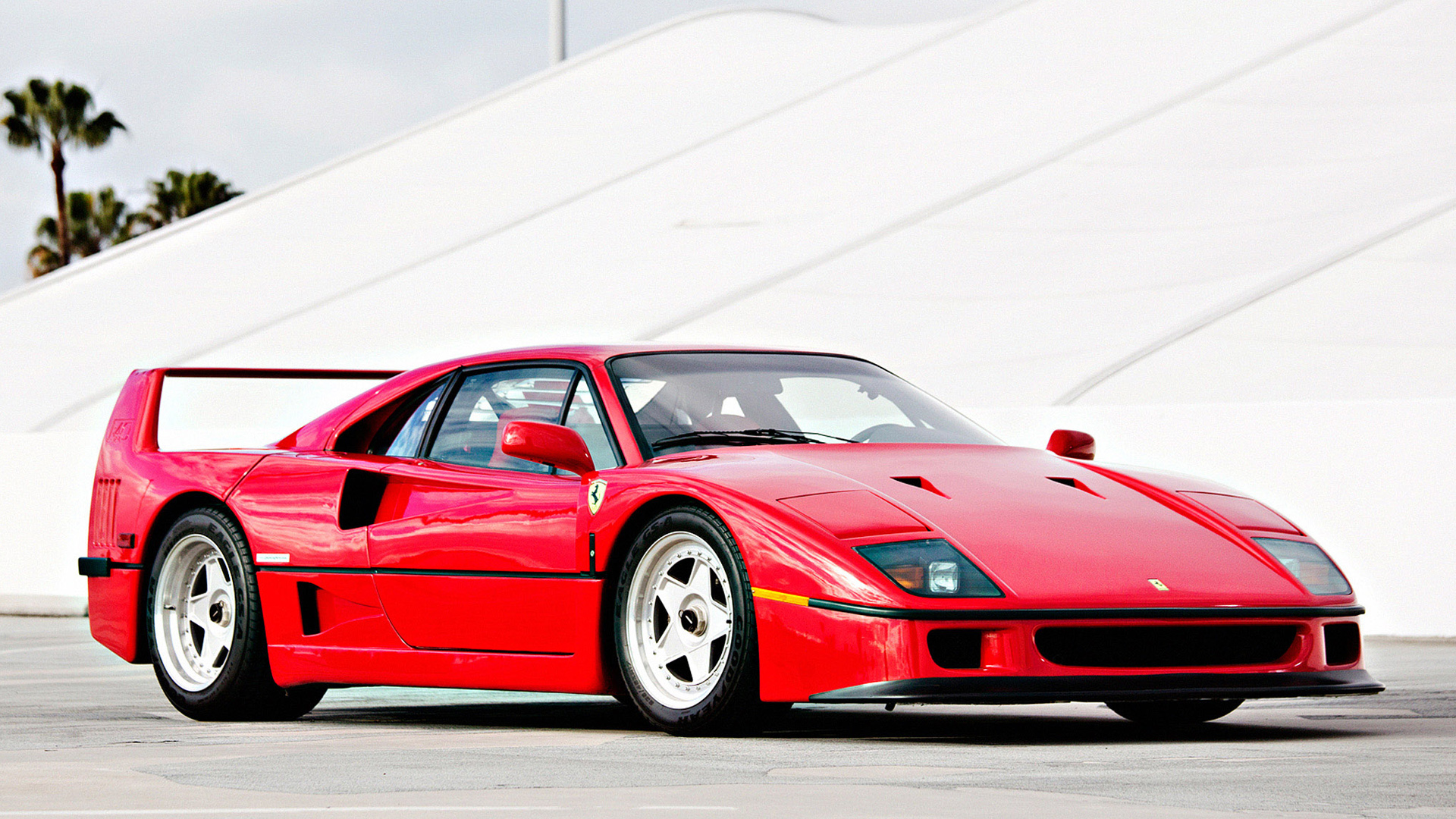 To celebrate 40 years of Ferrari, Enzo had his design team create a supercar that translated racing car technology to the road. Furthermore, it was built with only the most essential systems and in many regards is a supercar with functional simplicity. It was also the last car developed and built under Enzo Ferrari’s direct supervision before he passed away.
Although inspired by some of the cars that came before it, the Ferrari F40’s body was an entirely new design. Developed by the Italian Design and Engineering group Pininfarina, the F40 was unique not only in appearance but by the fact that it was the first series-production car ever to use mainly composite materials – including Kevlar, carbon fiber, and aluminum – for all of its body panels. The materials were chosen both for their durability and low weight.
2002 Ferrari Enzo
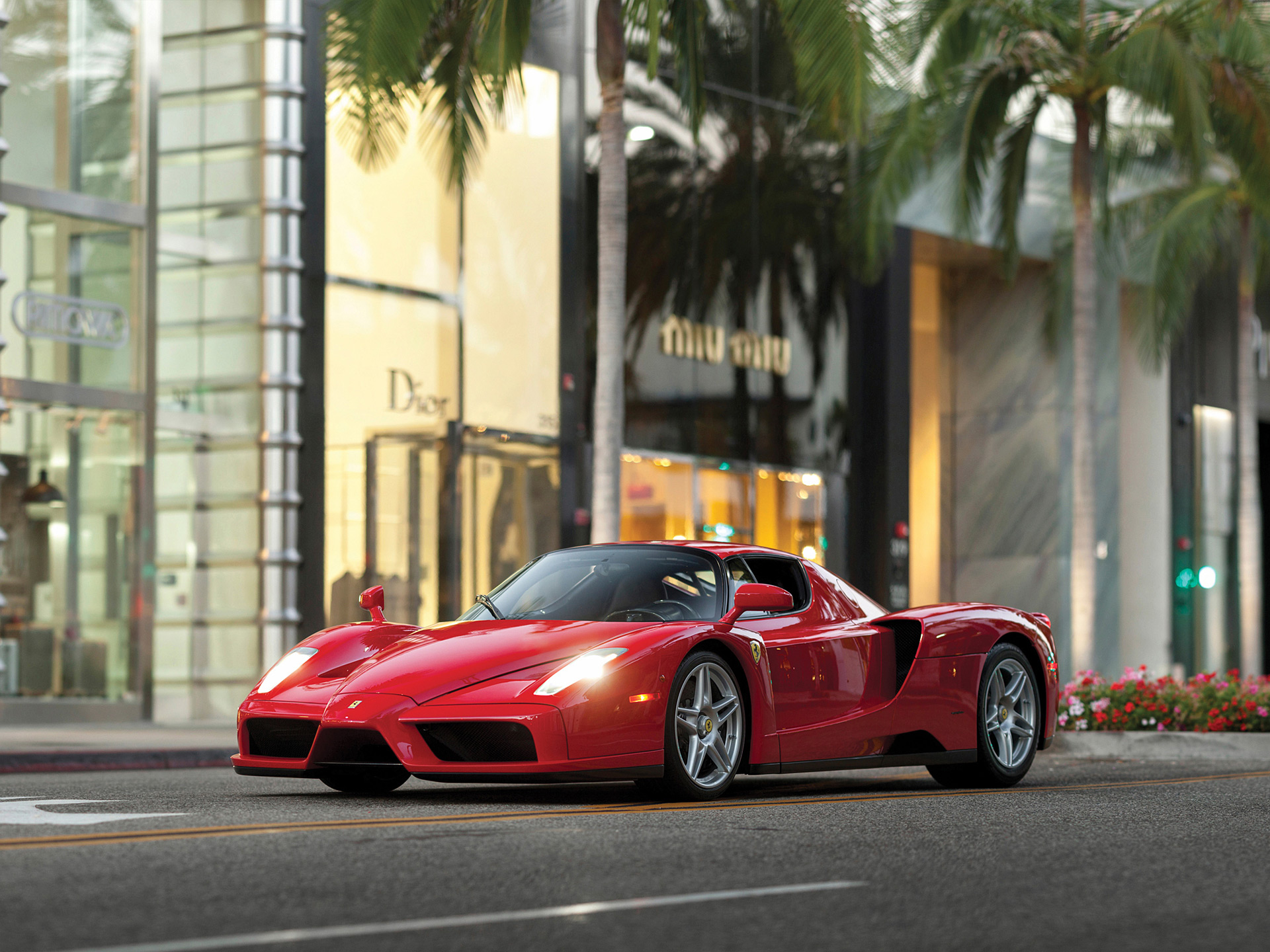 Inspired by Formula One technology, Ferrari’s new Gran Turismo benefits from over fifty years of Ferrari success. Named in honor of the company’s founder, the Enzo is one of a limited series of road cars including the 288GTO, F40, and F50. These cars represent Ferrari’s continuing desire to produce the most exclusive and technologically advanced road car. Branding race-derived technology to road cars is not a new idea, especially to Ferrari. Up until the late fifties, Ferrari’s road and racing cars were practically the same product. Since that time, safety regulations, manufacturing costs, and practicality have distinctly split the cars we race from the cars we drive daily. The goal of the Enzo was to bridge this gap.
During a period of great achievement for Ferrari, the Enzo reflects victories which include four consecutive F1 championships. The Pininfarina styling and semi-automatic, six-speed transmission trace their roots to the heart of motorsport. No doubt, Enzo Ferrari himself would be most proud of this limited series named in his honor. Unlike the Ferrari F50, the Enzo was made with compromises towards driver comfort. Fortunately, Ferrari has used sufficient active systems allowing the level of comfort to be adjusted from the driver’s seat. It is these sophisticated electronics, centered around Ferrari’s best road-worthy engine that makes the Enzo as special as it is.
2011 Ferrari 458 Italia
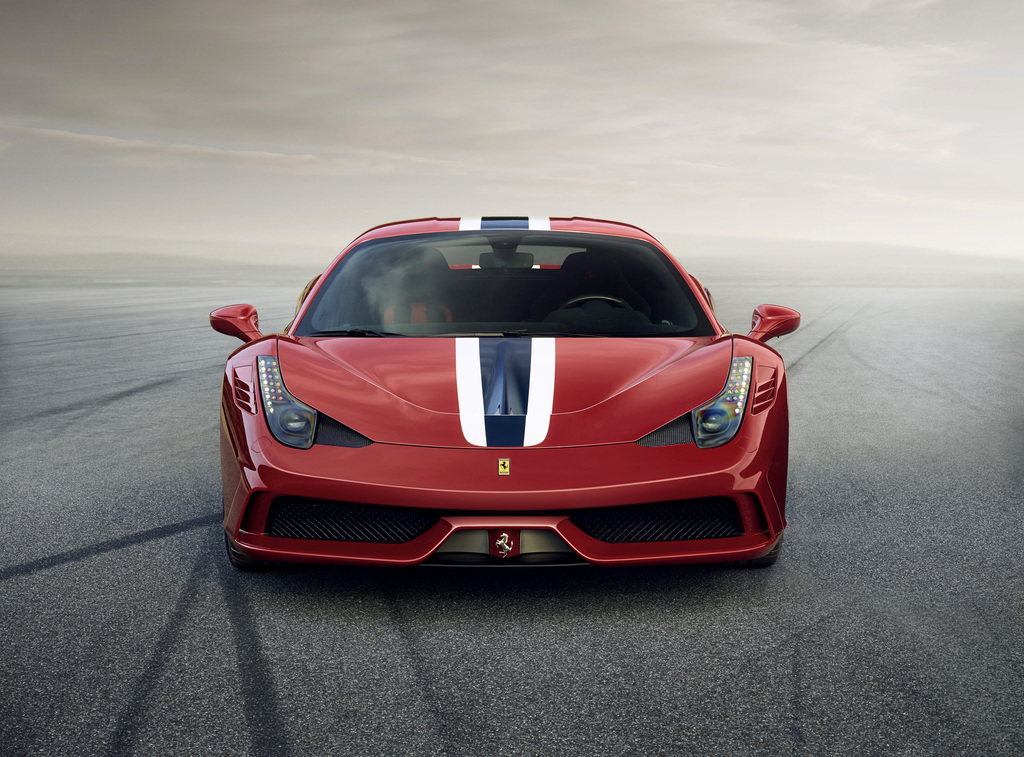 It really is no surprise that the Ferrari 458 Italia is being praised as one of the best cars Ferrari has ever made. Collectively, the Ferrari 458 Italia is one of our most-loved vehicles here at supercars.net. You wouldn’t have to dive very deep to find out why that might be the case, as even just a cursory glance at the car is more than suggestive enough. Whether it be its sleek and timeless Pininfarina design, or its epic 562 hp naturally-aspirated V8 engine with a 9,000 rpm redline; the 458 was destined for greatness the moment the first car drove off the production line. It has already become a modern classic.
In spite of having a naturally-aspirated engine with a 9,000 rpm redline, the Ferrari 458 Italia still isn’t one of the rawest and tactile Ferrari road cars out there. Mind you, we don’t consider that a negative when it comes to this car; one that truly feels greater than the sum of all its parts. But, the Ferrari 458 Italia is a car for the serious occasion – whatever occasion that might be – and it never fails to impress anyone. It gets full marks from us, while the sands of time reveal how iconic the 458 has become and will continue to be. The car is barely a decade old and it’s already a classic in our books. I mean, look at it: it’s timeless.
Subsequent models and trims such as the Spider, Speciale, and Challenge command varying degrees of premium over the original car.
2013 Ferrari LaFerrari
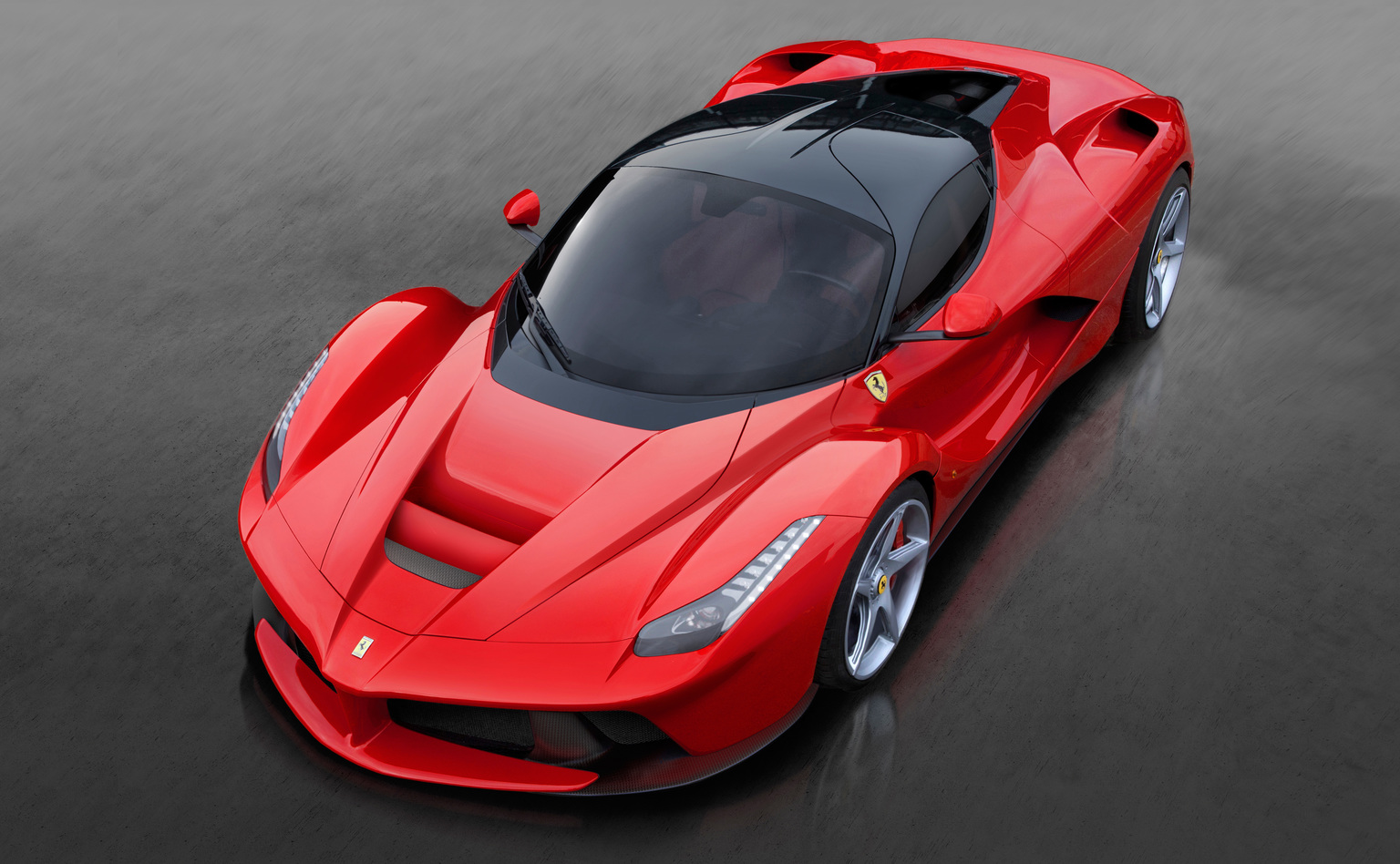 What happens when quite possibly the world’s greatest supercar and hypercar maker sets out to create its greatest model ever? The Ferrari LaFerrari – that’s what. Described at launch by company president Luca Di Montezemolo as “the maximum expression of what defines our company,” the LaFerrari was revealed at the 2013 Geneva Motor Show.
Limited to just 499 examples (although since an additional 210 Aperta open-top LaFerrari have been produced), the LaFerrari featured a Formula-One derived HY-KERS system – an electric motor teamed to a 6.3-litre V12. Some would shirk at the concept of a hybrid Ferrari, but while enhanced efficiency is a by-product of the LaFerrari’s powertrain, this was by no means Ferrari’s motivation with the system.
Following in the footsteps of legendary Ferrari halo cars like the 288 GTO, the F40, F50, and Enzo, the LaFerrari had its work cut out from the start. Add to that competition – yes, at this insane level of performance and prestige – from Porsche and McLaren with their hybrid hypercars, the 918 and P1, and this ultimate Ferrari model had a lot to deliver in order to stand out.
Ferrari auctioned off the final “new” examples of the Aperta and coupe LaFerrari to benefit charity. The final coupe (car number 500) went for $7 million, in aid of reconstruction in Italy following 2016’s earthquakes. More recently, the last of the run (210th) Aperta convertible broke records when it went under the hammer at RM Sotheby’s, fetching almost $10 million, with the proceeds of the sale going to Save the Children.
2015 Ferrari F12tdf
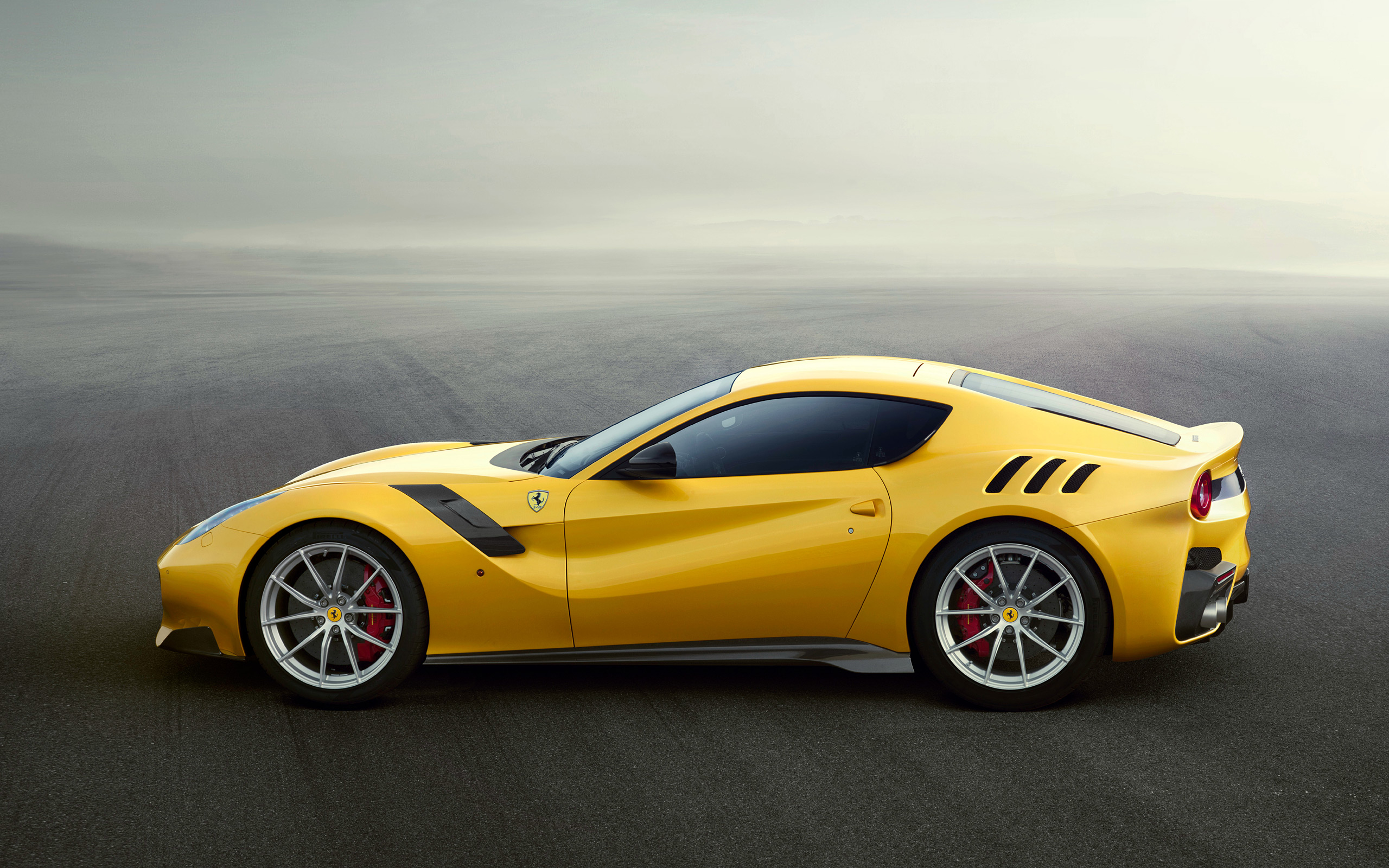 This is the Ferrari F12tdf – a faster, lighter, and more powerful special edition of the Ferrari F12 Berlinetta. Ferrari says the car has been created in homage to the legendary Tour de France road races, which it dominated in the 1950s and 1960s with the likes of the 1956 250 GT Berlinetta.
The F12tdf is described as “the ultimate expression of the concept of an extreme road car that is equally at home on the track”. Just 799 examples were built. The car keeps the same 6.3L naturally-aspirated V12 engine as the regular F12 Berlinetta, but power has been boosted from 730 bhp to 770 bhp at 8,500 rpm, while torque has increased from 509 lb-ft to 520lb-ft of torque at 6,750 rpm. But the changes don’t stop there. The F12tdf is a concentration of technical innovations which involve all those areas central to Ferrari’s DNA: engine, aerodynamics, and vehicle dynamics. As a result, in terms of acceleration, road holding, and agility, the new Berlinetta is second to none.
1957 Ferrari 335 S Spider Scaglietti
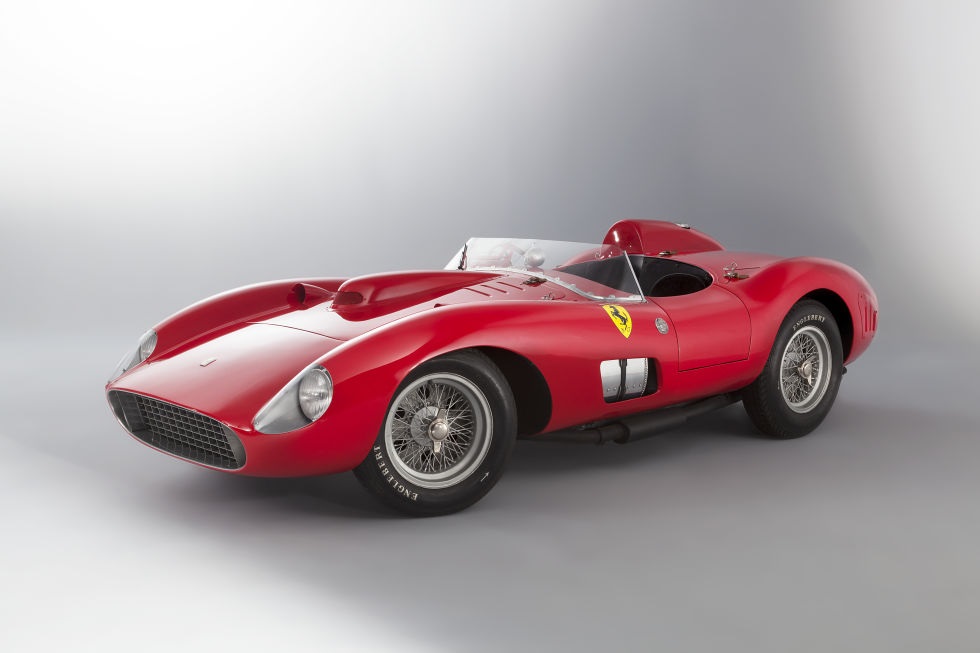 The 1957 Ferrari 335 S Scaglietti is one of the rarest and most expensive Ferraris in the world with only four ever made. The beast is equipped with a 4.1L V12 engine that produces 400 hp and can reach a top speed of 190 mph, which was unheard of in the 50s. Adding to its value is the fact that it was driven by some of the greatest Formula 1 drivers of all time, including Mike Hawthorne and Stirling Moss.
In 2016, a 335 S Spider Scaglietti sold at the Artcurial Retromobile auction in Paris, becoming the second most expensive car ever sold at an auction at the time. The US$35.7 million vehicle was compared to Picasso’s artwork by auctioneers, which was not an unreasonable tactic given what was at stake. While the car enjoyed only a brief existence during its day – with a mixture of successes and failures in motorsport – it nevertheless left a lasting impression in the world of racing and has unquestionable pedigree.
1959 Ferrari 250 GT California Spyder SWB
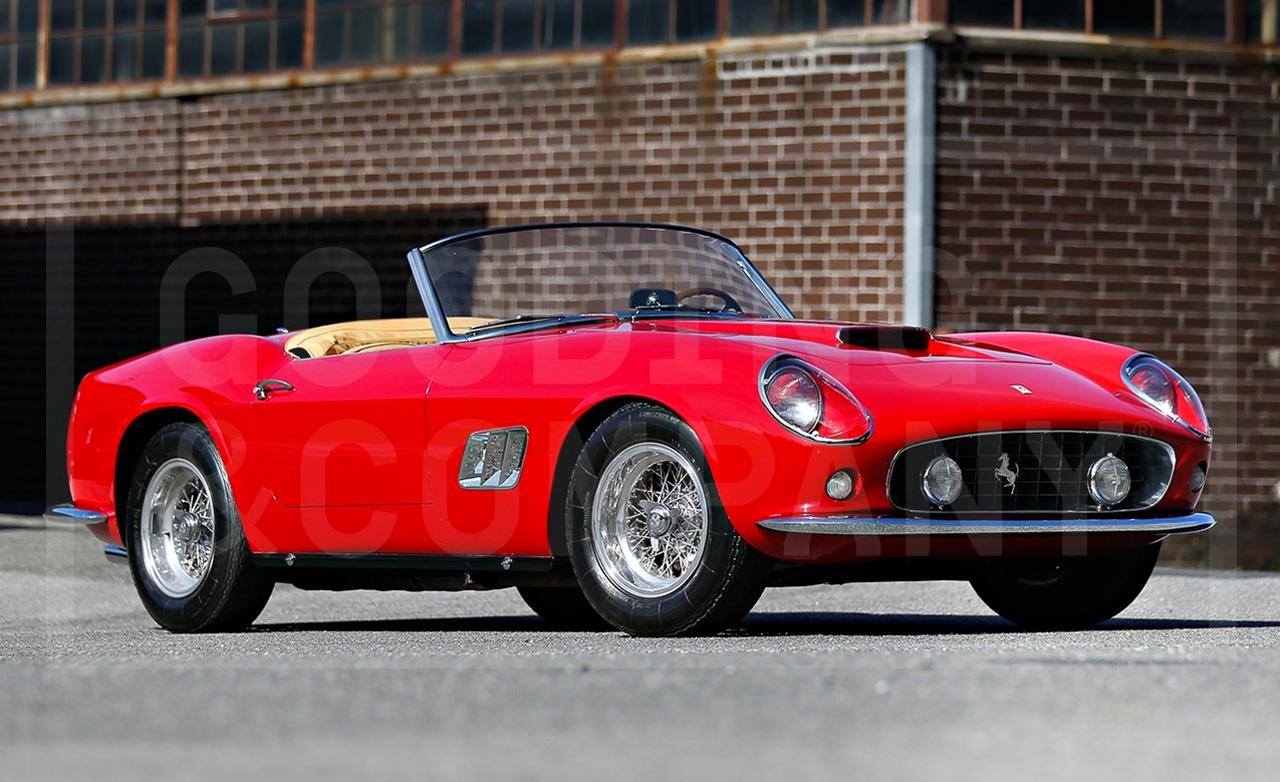 “Bueller. Bueller. Bueller.”
While the 250 GT was primarily a racing car, it did spawn a line of desirable road-going models, too. In 1959, Ferrari debuted the shorter California Spyder on their stiffer short wheelbase (SWB) chassis. These cars were superior as they had disc brakes, a more powerful engine, and less bulk. Like the LWB model that preceded it, the SWB benefited from a competition-bred chassis and engine.
Sharing its drive train with the legendary 250 GT that won the Tour de France, the California Spyder was a car to get excited about. It had the same 140 mph performance and the same competition chassis as the Ferraris lapping the race tracks. Therefore, it only made sense to equip some examples with competition engines and aluminum bodywork to race at Le Mans and Sebring. These Spyder Competiziones did well in the GT class and tied all California Spyders to a sporting pedigree.
It most famously made a cameo appearance in the cult-classic movie, Ferris Bueller’s Day Off – a 1986 American comedy film written, produced, and directed by John Hughes. These days, there’d be no argument in saying that the Ferrari 250 GT California Spyder SWB ranks alongside fellow 250 compatriots – the GTO and Testa Rossa – as one of the most sought after Ferraris of all time.
1947 Ferrari 125 S
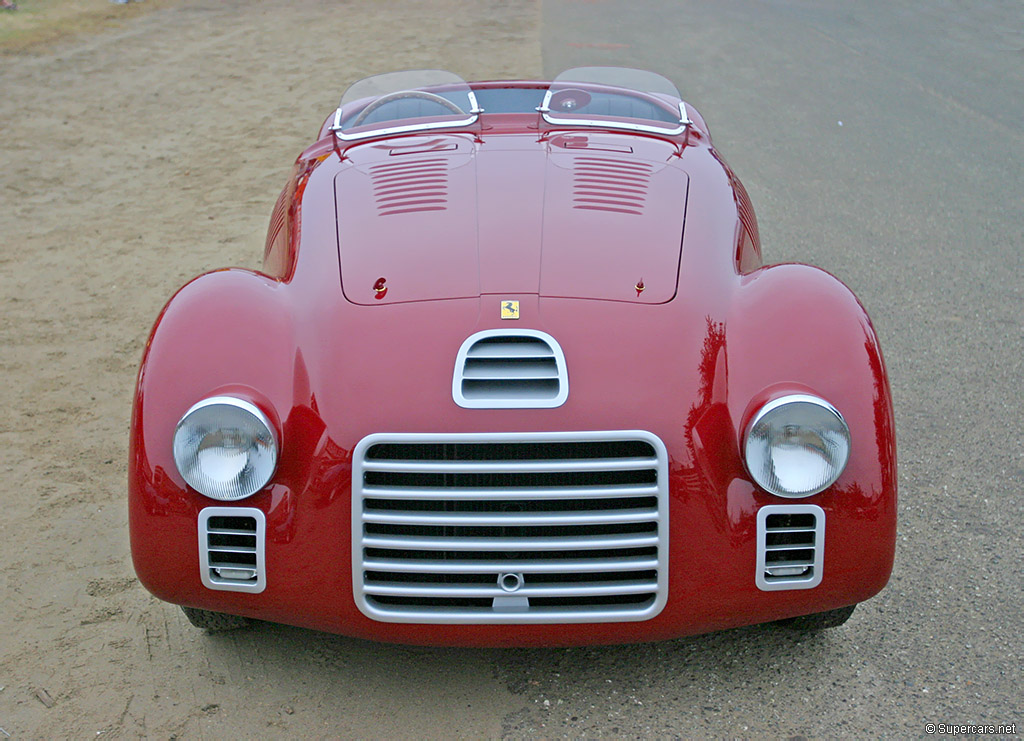 The Genesis of Ferrari (no, not of Hyundai).
The Type 125 Sport (or Tipo 125 S Competizione) was Enzo Ferrari’s first race car and the first Ferrari to win a race outright. It followed earlier projects such as Scuderia Ferrari – a talented racing crew that brought Alfa Romeo to the top of Grand Prix – and Auto Avio-Construzioni (AAC), Enzo’s immediate pre-world-war creation. Both of these helped shape the 125, which itself would become a testbed for good and bad ideas until the final specification was reached for the 166 Spyder Corsa.
Since enough time had passed since Enzo Ferrari signed his severance agreement with Alfa Romeo, the new car could finally bear his name and his name alone. It was conceived over two years beginning with a clean slate, and its overall design borrowed nothing from any other manufacturer of the day. As a highlight, it would use a V12 engine – being somewhat of a rarity at the time, the V12 was inspired by Packard’s unit and would garner necessary attention from customers that would eventually bear the fruit of an iconic automaker.
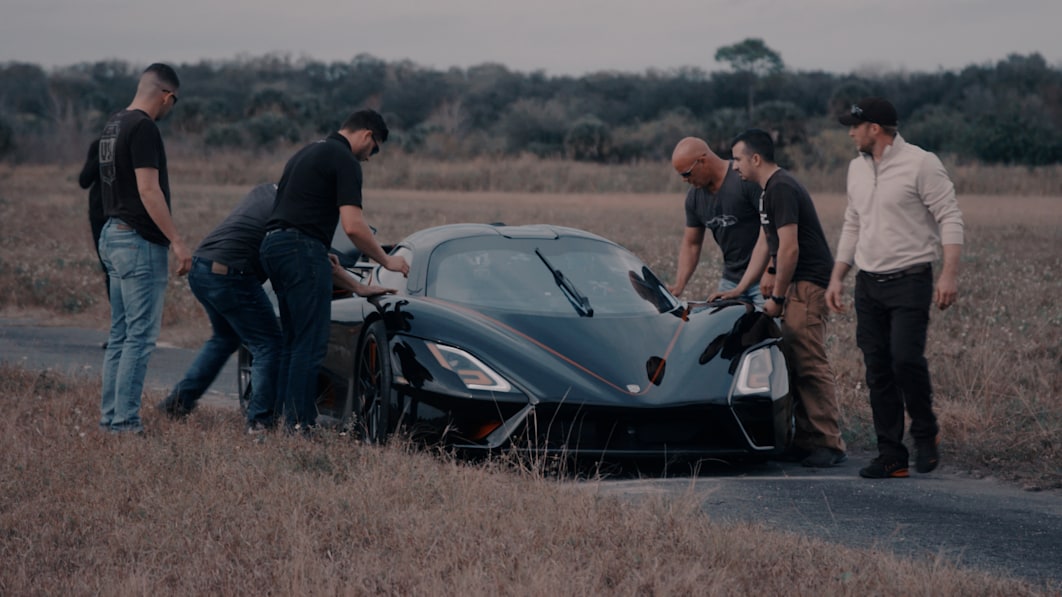
SSC officially owns up to its failed October top speed attempt
SSC acknowledged Wednesday that its Tuatara supercar did not reach the speed claimed by the company in October when it allegedly obliterated the Koenigsegg Agera RS’s then-record with a 316.11-mph run. While SSC didn’t outright apologize or completely explain the error, nor did the company reveal the Tuatara’s true top speed from last year’s run, the small supercar builder’s Instagram post is the first public admission that all was not as it seemed in the fall.
“We have seen your questions for months now and understand your frustrations. If it hasn’t been made clear up to this point, we would like to acknowledge officially that we did not reach the originally claimed speeds of 331 MPH or even 301 MPH in October of 2020,” the post said. “We were truly heartbroken as a company to learn that we did not reach this feat, and we are in an ongoing effort to break the 300 MPH barrier transparently, officially, and undoubtedly.”
“We also want to thank all of those who were supportive and understanding of our unexpected incident in April that has delayed our top speed efforts,” it continued.
Many cried foul after reviewing the video released by SSC which claimed to substantiate its top-speed run. The controversy prompted SSC to make a second (and ultimately unsuccessful) attempt. The third time turned out to be the charm, however the results were far less impressive, albeit still sufficient to knock off the Agera’s previous record.
The “unexpected incident” referenced near the end of SSC’s post occurred when their record-attempt car was seriously damaged in transit back in April. The company claims it will eventually set the record straight (so to speak), but when, where and whether that will happen are all still yet to be determined.
Related Video:
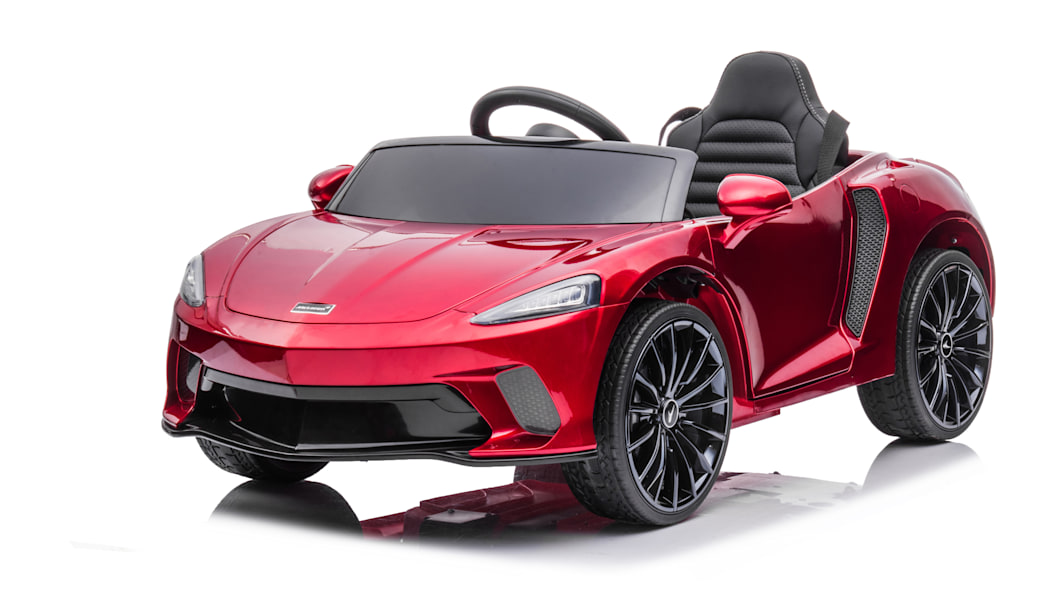
McLaren GT Ride-On joins the ranks of supercar toys
There’s a new McLaren Ride-On toy hitting the market, and this time McLaren made a kid’s toy out of the GT. This GT joins other McLaren Ride-Ons already made out of the P1, 720S and Senna.
Just like the actual McLaren GT, this one comes with a rear storage compartment behind the driver. You can stow additional Hot Wheels cars and/or stuffed animals aplenty in the compartment.
McLaren promises that three-to-six year olds will enjoy driving the car, too. The single seat is in the center like the McLaren F1 or Speedtail. There’s an actual key you use to start the vehicle. When you press the throttle to accelerate, a speaker plays revving sounds from the GT. Plus, the brake pedal is synced up with an actual brake light in the rear of the car. Whether or not other young drivers will pay attention to said brake light is up for debate, but it’s there to bring another level of reality to the experience.
Also taking after the road car, McLaren says it fit an “infotainment system” that allows you to play music files off a USB or SD card. An optional MP4 display screen is available if you want to watch videos, too. Apparently, distracted driving is less of an issue when you’re driving on a lawn.
We’re fairly impressed with the design details and the replication of an actual McLaren GT throughout the vehicle. You even get the GT’s dihedral doors to look extra cool hopping in and out of the ride-on.
If you want to buy one for your kid, the starting price is $230. Tack on some options (this is a McLaren we’re talking about here), and the price goes as high as $330. You can buy one in the following colors: Burnished Copper, Silica White, Onyx Black, McLaren Orange, Amaranth Red and Burton Blue. McLaren says the GT Ride-On can be ordered from select global toy retailers.
Related video:
Black Ferrari SF90 Stradale Gets Novitec Treatment
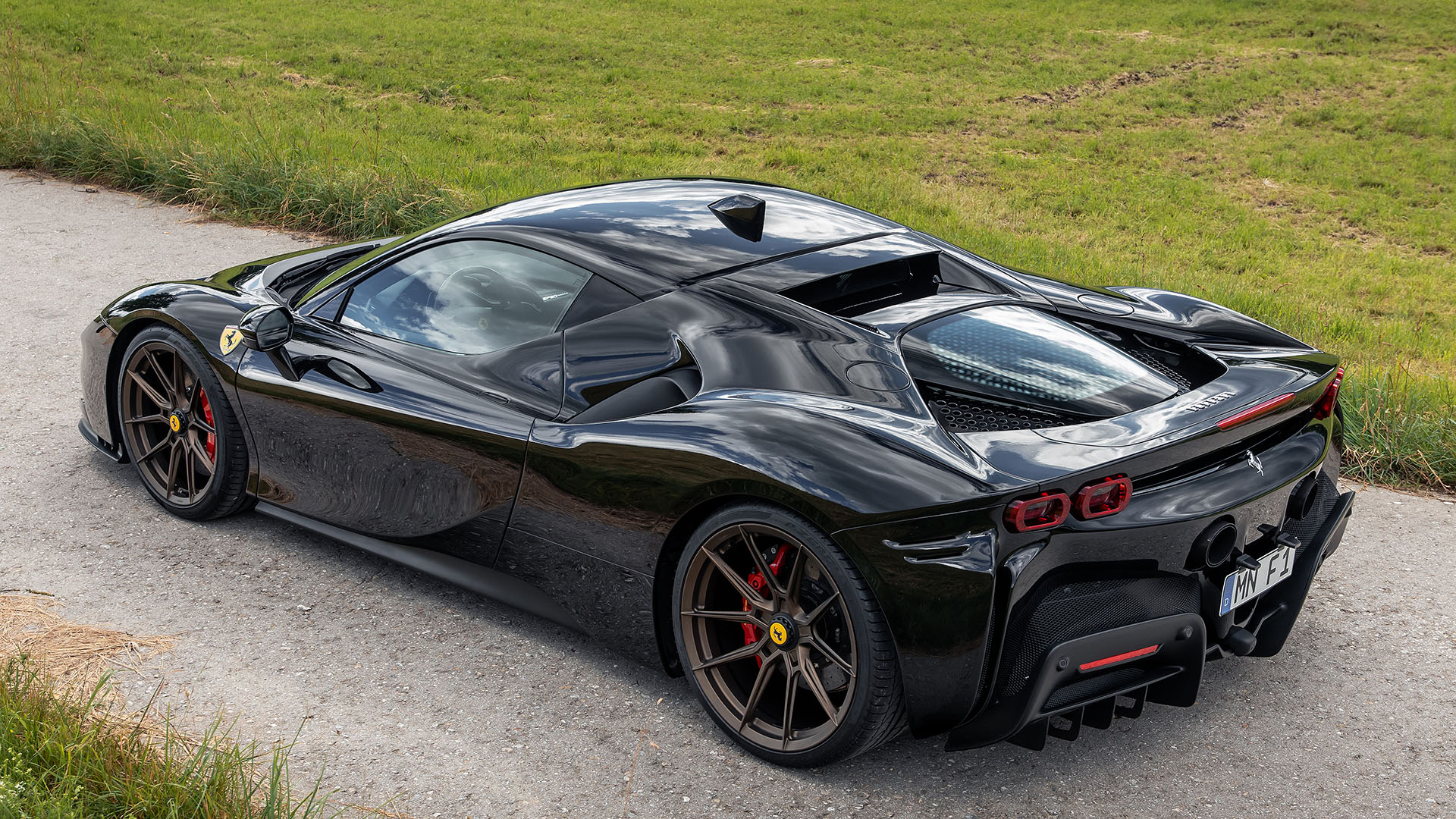
Novitec has revealed their take on the Ferrari SF90 Stradale. They have upgraded the features of the hybrid powertrain by adding a thrilling sound and boosting the performance of the vehicle, the engineers developed a calibrated high-performance exhaust system with 100-cell catalyst and two stainless tailpipes measuring 112mm for the sporty sound. The upgraded carbon embellishers at the rear enhance the sporty appearance of the vehicle.
In addition, various versions of exhaust systems with or without actively controlled exhaust flaps for sound management will be readily available from Novitec. This includes the INCONEL exhaust system version with lightweight materials similar to the ones used in developing the exhaust systems of F1 racers.
The exhaust flow which allows the engine with two turbochargers to get sufficient air is optimized by the Novitec system. Additionally, the fully thermally insulated system reduces the high temperatures at the engine bay which as a result improves the performance. 999 fine-gold plating is available optionally and can further reduce the heat emitted by the engine.
The vehicle is powered by a 4.0 litre eight-cylinder engine with two turbochargers. The engine delivers an output of 813 hp at 7,750 rpm instead of the standard 780hp and the peak torque has also been increased from 800 Nm to 858 Nm of torque at a low 6,100rpm. As a result, the maximum output of the Ferrari SF90 Stradale with the electric motors include is now 1,033 hp, the acceleration from 0-100km/h is achieved in 2.5 seconds and the top speed exceeds 340km/h.
The vehicle has been fitted with a set of Novitec NF 10 wheels finished in Bronzino hue. The pictured vehicle features a set of 9.5Jx20 wheels mounted on 255/35 ZR 20 tires at the front axle and 12Jx21 wheels with 325/35 R 21 tires on the rear axle. Additionally, the NF 10 alloy wheels with five filigree twin spokes are among the lightest wheels in king-size dimensions and they are available in 72 colors.
The Novitec sport springs lower the ride height of the vehicle by 25mm at the rear and 30mm at the front axle, this improves the handling and balance of the vehicle due to the lowered centre of gravity.
The interior of the vehicle can be created in leather or Alcantara and in any desired color.
La Maison Pur Sang certification by Bugatti
Last year five classic Bugattis broke records at the auction houses Bonham’s and Gooding & Company. Never before have the five most expensive cars sold at auction been produced by one single manufacturer, but with cars in this price range, authenticity is extremely important for collectors that are willing to spend millions, and that’s why Bugatti launched their ‘La Maison Pur Sang’ program back in 2020 at Rétromobile in Paris, a car show that has become so much more than just a display of classic cars.
 Photo credit Alex Howe for CAR magazine
When you have a Bugatti that passed the rigorous process in Molsheim, as La Maison Pur Sang will only go through cars at the company headquarters, you will get a certificate of authenticity from the company that actually built that car, not some expert somewhere in the world, no matter how knowledgable … La Maison Pur Sang will certify that your Bugatti is a ‘pure blood’ one, a Pur Sang.
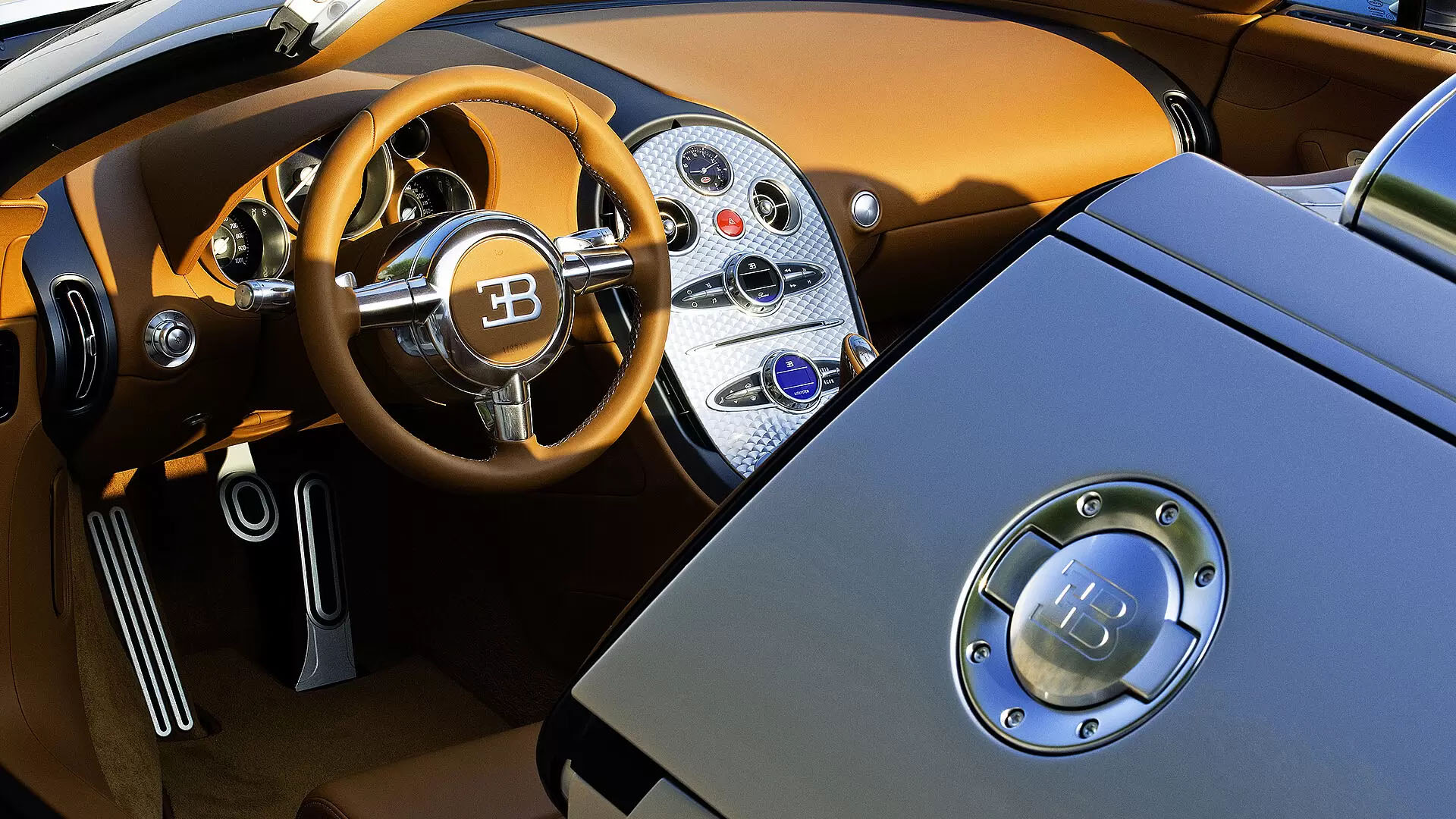 Photo credit Alex Howe for CAR magazine
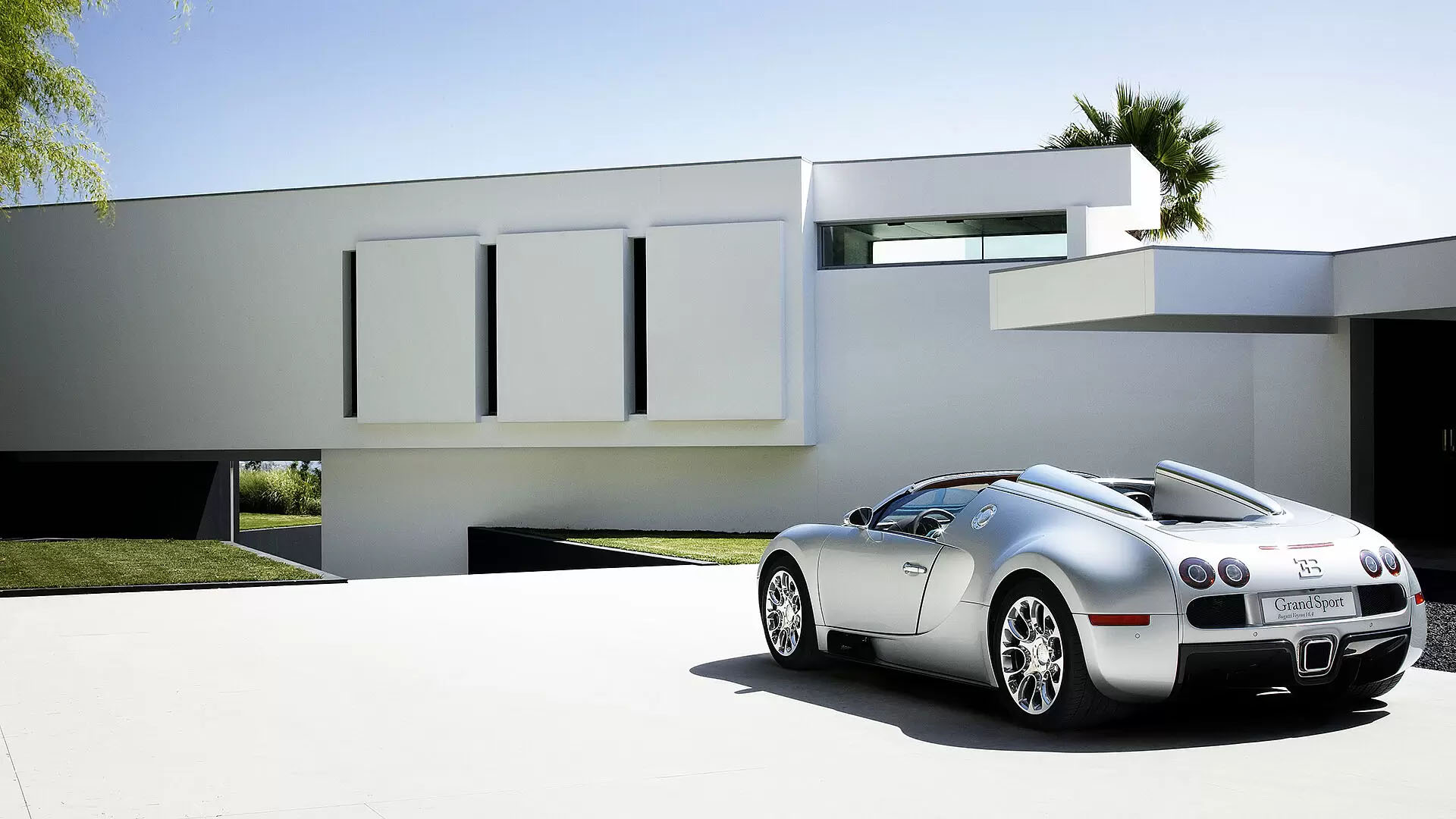
La Maison Pur Sang will be able to verify of your historic Bugatti is still correct to its origins, keeping in mind the 110-year history of Bugatti, that might not always be as easy as it sounds, but with the very limited production of classic Bugatti models, chances are there is still some kind of documentation or history of that specific car to be found, but La Maison Pur Sang will also certify the more contemporary models, and the very first Bugatti to complete this official factory certification is a 2008 Veyron 16.4 Grand Sport.
 Photo credit Alex Howe for CAR magazine
But the La Maison Pur Sang program hasn’t been started just to deliver certification to Bugatti’s models of all ages, they also offer clients and collectors the option of having their car restored to Ettore Bugatti’s original standards, to the highest possible technical, performance, and aesthetic level, to reach a harmony of speed, elegance, safety, and comfort that we’ve come to expect from a Bugatti throughout the decades, there is even the option to have your Bugatti ‘reconfigured’ on the factory ground.
“Due to our extensive research, archive material and the close contacts we enjoy with Bugatti clubs, historians and collectors all around the world, we can trace the history and determine the authenticity of any Bugatti model, regardless of age,” explains Luigi Galli, who heads the ‘La Maison Pur Sang’ program at Molsheim.
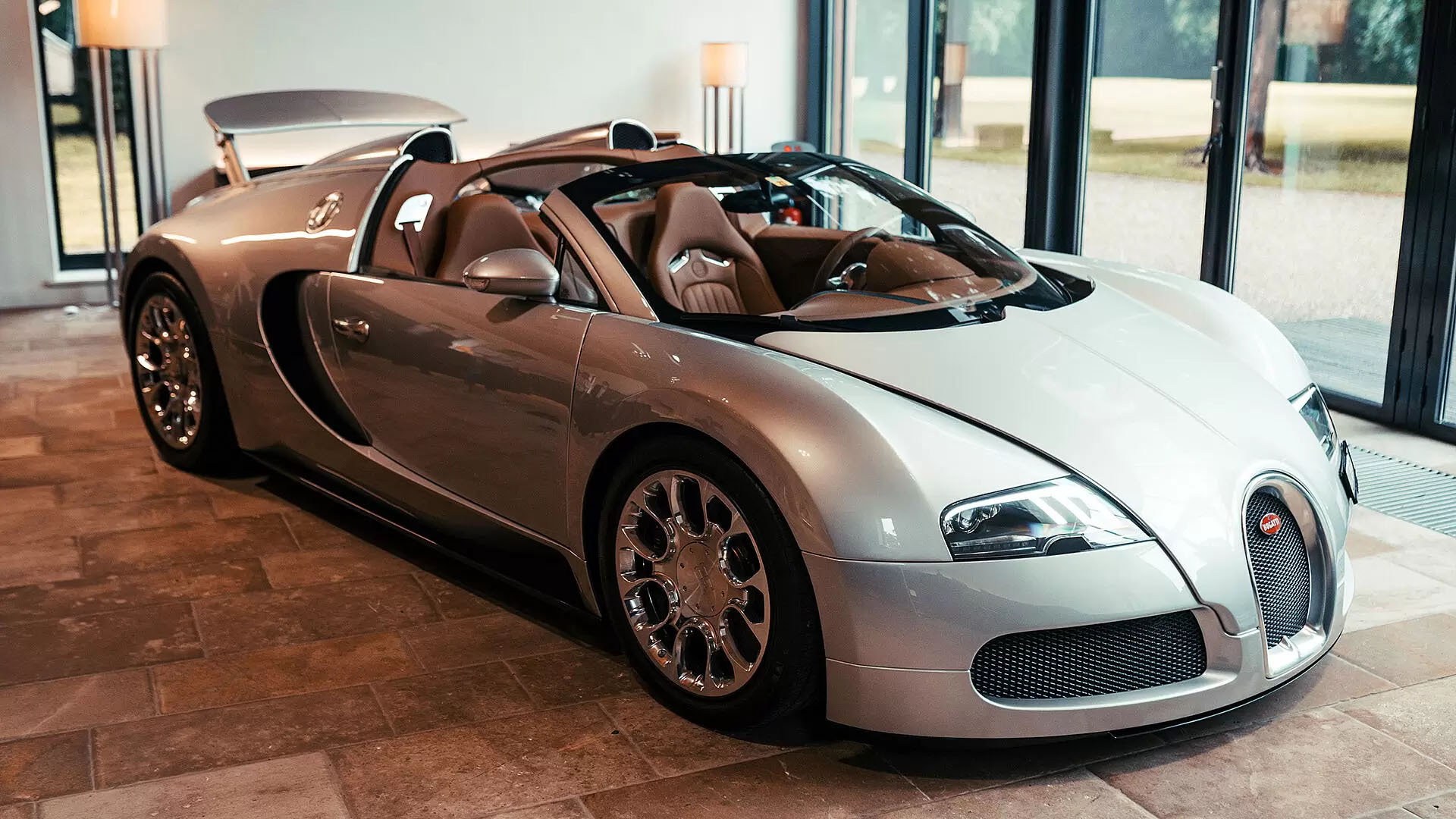
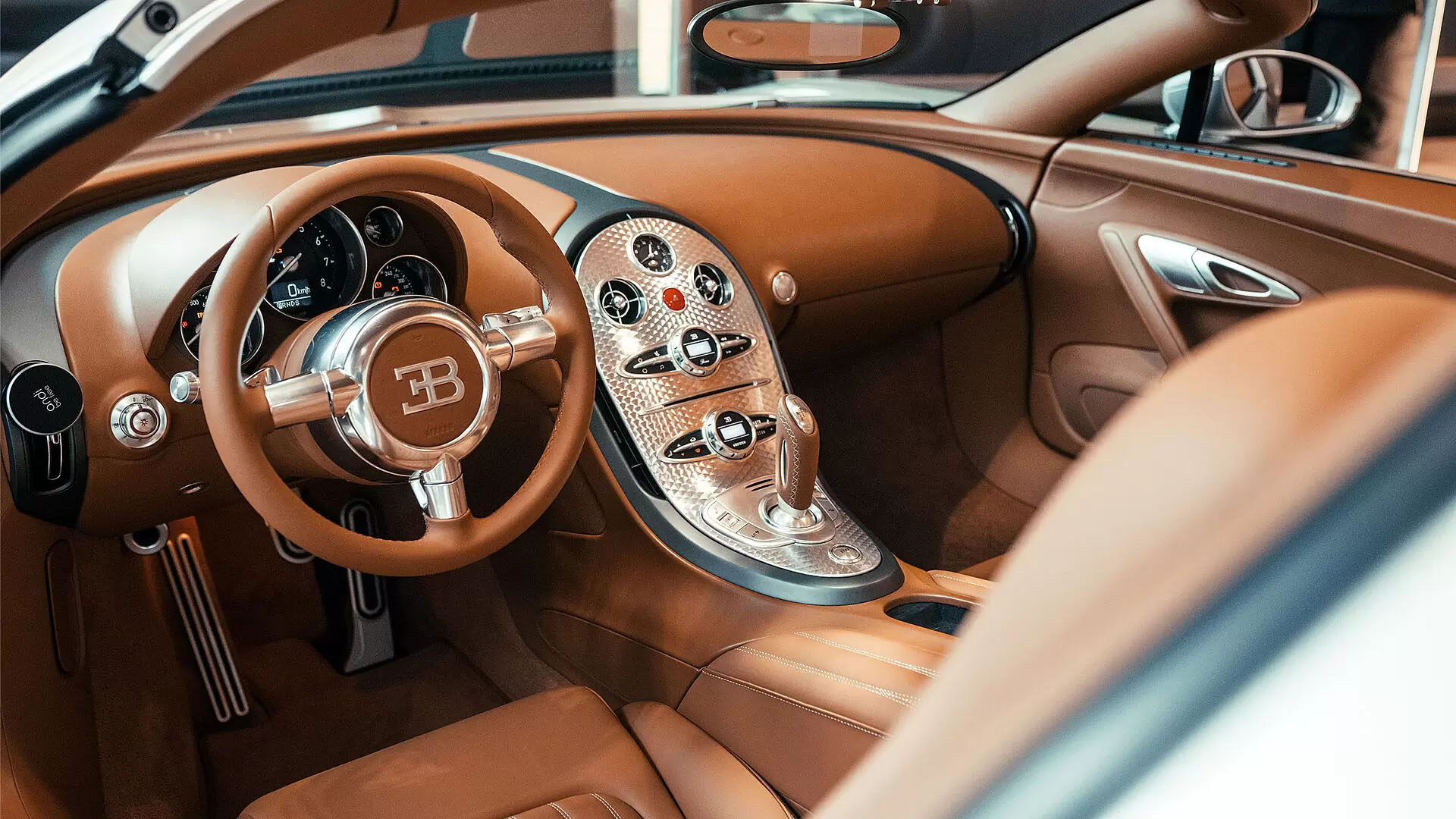
The first car to receive a certificate of authenticity isn’t just any Bugatti, it’s a 2008 Veyron 16.4 Grand Sport, and while convertible quad-turbo are a rare sight already, this one is even more special, it is the actual Veyron 16.4 Grand Sport prototype that was used for the unveiling of the Grand Sport version at the 2008 Pebble Beach event, this silver metallic over Cognac interior was called the Grand Sport 2.1 and was used to showcase the open-top Veyron in North America, Europe, and the Middle East … this car was never even registered during that time.
When this unique Bugatti came back to Molsheim in 2020, it would become the first car to get the ‘La Maison Pur Sang’ treatment, which in this case involved a complete strip-down so they could verify not only the chassis plate, which could easily be copied I guess, but they also check several identification numbers that were stamped on multiple components that are usually hidden from sight, and ofter overlooked in case of someone trying to pass a car as another one.
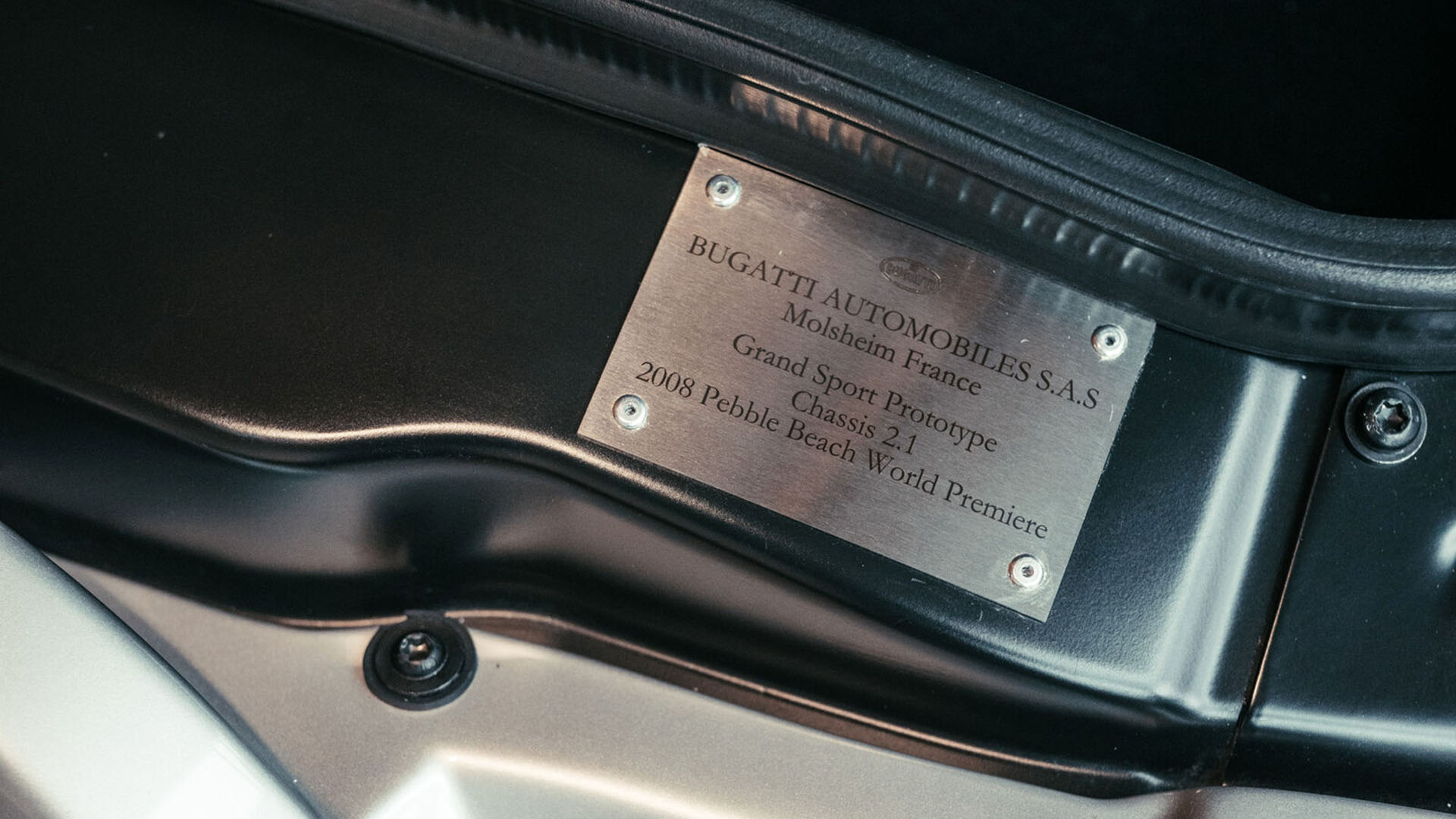
Over the next four months, this special Veyron Grand Sport was brought back to her 2008 launch specifications, a complete respray was executed while the interior received new Cognac hides and aluminum panels, they even had to fit a new central console to match the original 1.0 configuration … after the word got out La Maison Pur Sang confirmed the importance of this Grand Sport prototype it didn’t take long for an avid collector to add it to his, or her collection.
Owning a Bugatti is a goal on its own for many fortunate clients, but having an exclusive Bugatti with the official certification from La Maison Pur Sang will confirm its validity and offer reassurance for the owner or collector, and additionally, it will significantly enhance the value of the said automobile.
The New McLaren GT Ride-On: The Talk of the Playground
[unable to retrieve full-text content]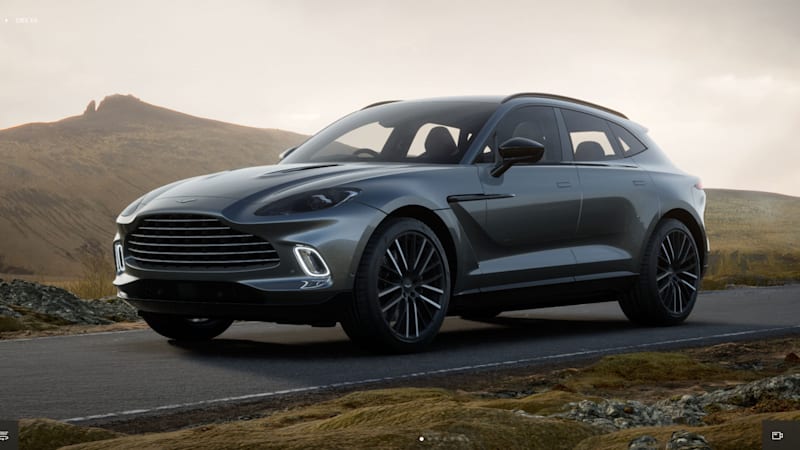
Aston Martin makes the DB11 and its configurator more powerful
Aston Martin sold 4,150 cars last year, but the luxury automaker said its configurator served up more than two million specification sessions. Going with the overwhelming numbers, for 2022 Aston Martin has focused on “the customer journey” for imminent and aspirational buyers by rolling out a new and highly featured configurator. At last, the firm greets potential customers and the merely curious with the kind of luxury one expects of the brand. This is especially important for a company working through its Project Horizon turnaround, and also because, as the official Safety Car and Medical Car sponsor of Formula 1, traffic to Aston Martin’s web site spikes every time its Vantage and DBX are called out on track during races.
The configurator’s been built using Epic Game’s Unreal engine, a digital creation tool building portals for everything from real estate to fashion, supplemented by Nvidia GTX graphics. In the present Phase One, visitors can place their chosen model in studio or outdoor environments, with daytime or nighttime lighting, and get high-res, zoomed-in beauty shots of their their vehicle details. Yet while Aston Martin poured new features into the configurator, it has reorganized and simplified the site’s use. For instance, individual elements such as exterior paint are broken into six color groupings like Blacks & Greys and Bronzes & Oranges, providing users a glimpse at the range of hues on offer without overwhelming them into analysis paralysis.
The surfeit of choice carries on inside, naturally — there are eleven carpet colors on offer and 12 shades of headliner. The simplifying rationalization carries on in the cabin, too, with three themes available to establish a quick baseline for personalization. The starter theme is called Create, showcasing ornate stitching on the seat bolsters, perforated, patterned seatbacks, door cards, and arm rest. Next up is Accelerate, which “will appeal to customers who wish for a more focused interior.” This one puts Alcantara all over, notably on the entire seat faces and bolsters, with leather trimming the seat sides and headrests. Create and Accelerate can be had in ten colors in monotone and duotone arrangements. Inspire, the topmost theme and “the epitome of luxury,” can be had in 38 colors and in monotone, duotone, and light duotone. This one comes with “the very best of material and color choices,” even more ornate stitching and broguing, trim inlays, and — get this — seatback veneers for anyone diminutive enough to curl into the back seat of one of the coupes to enjoy them.
As to the objects of configuration, Aston Martin has made a few tweaks to next year’s lineup. The DBX, which has provided half of the company’s sales so far this year, adds wireless charging and a new 23-inch wheel. The coupe formerly known as the DBS Superleggera becomes just DBS, and the V12 DB11 AMR sheds its AMR suffix, but nothing else. The 4.0-liter twin-turbo V8 in the DB11 gets a 24-horsepower boost to 527 hp, and a higher 192-mph top speed. Drivers intending to use all of that puissance should option the new Sport Plus Seats which provide more shoulder, torso, and leg support. Finally, the DBS and DB11 can be had with new 21-inch wheel designs.
The configurator is live now and has reported for service. Enjoy.
Related video:
Here’s the first Pininfarina Battista customer car
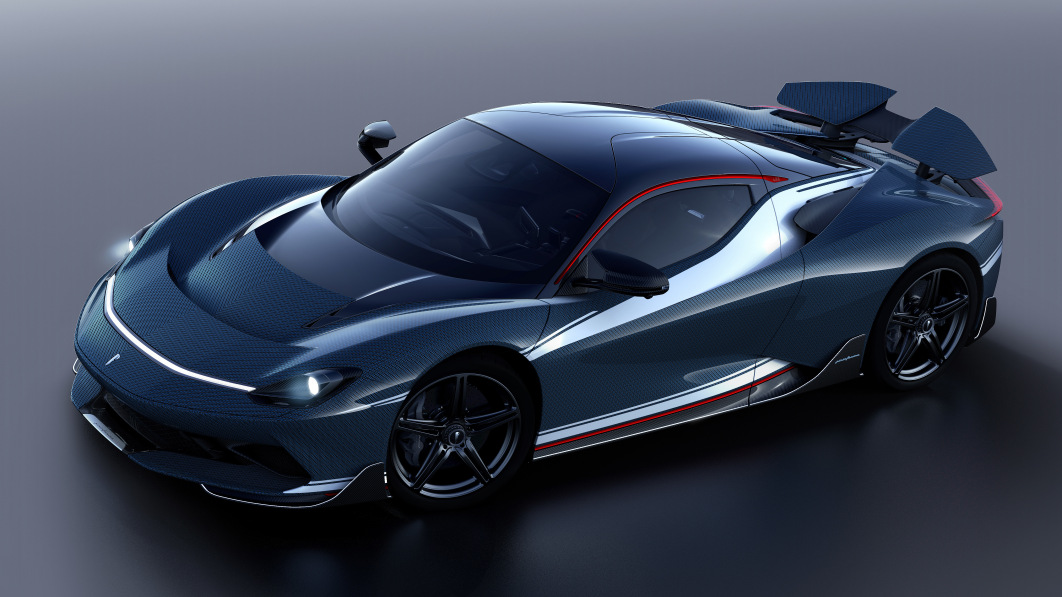
Pininfarina continues its slow drip of news about the electric Battista hypercar today with details about the personalization program and photos of the first Battista commissioned.
Above, you can see the Battista in question. Pininfarina didn’t reveal who the client was, but did say that the car’s appearance is “inspired by New York City.” The dominating exterior element is carbon fiber done in Iconica Blu thread. The carbon fiber is black, of course, but Pininfarina uses the Iconica Blu thread in it to make the car appear blue. It’s a rather dark shade of blue, but you can easily see the black carbon fiber weave underneath the paint, providing an extra pop. It drifts heavily into the ‘Murica theme with the red “Exterior Jewellery Pack” adorning the windows and side sills. Plus it also has hand-painted white stripes, adding some sparkle to the exterior. Pininfarina says the white paint for those stripes is named Bianco Sestiere Metallic.
The wheels are done in Dark Matt Grey and have a black center-lock ring to match the roof, rear diffuser and wing. Its final touch is a light-up Pininfarina logo in front made of brushed and polished anodized aluminum. Just like the owner of this Battista, anybody who orders one will get to personalize it from nose to tail. Pininfarina says its customization program allows for a total of 128 million combinations, so there shouldn’t be any Battistas that are exactly alike. You’ll choose from numerous paint finishes, carbon fiber bodywork, different exterior trims and so on.
Pininfarina didn’t show photos of this car’s interior, but it says the car will have black leather upholstery with Iconica Blu Alcantara inserts to match the exterior’s blue-and-black combo. Iconica Blu stitching is matched with more red and white stitching. Plus, it gets white seatbelts and the same Iconica Blu thread on the back of the carbon fiber seats.
There are very few stones left unturned — even the chassis plate engravings can be customized to whatever you’d like. Only 150 Battistas will ever be built, says Pininfarina, and every single one of them will have the owner go through a customization process that puts them at the actual location of production — the Cambiano facility — to make all of their build decisions.
Related video:
Christian von Koenigsegg walks us through the Jesko Attack
An official video from the Koenigsegg channel where Christian von Koenigsegg does a full walkthrough of the bright orange Jesko that was just finished, being a pre-production validation car, this one is very close to the actual production cars that they will start building, this Tang Orange Pearl with silver and carbon-fiber accents finished beauty reminds us of the Koenigsegg CCR color, did you know that back in the early 2000s about 50% of all Koenigsegg cars left the factory in Sweden in this orange shade?
Let’s just take a look at 15 minutes of automotive art … made in Sweden, by the way, this track focussed version no longer goes by the name Jesko, but they now call it the Jesko Attack, while the top speed version is still called the Jesko Absolut.
[embedded content] [embedded content]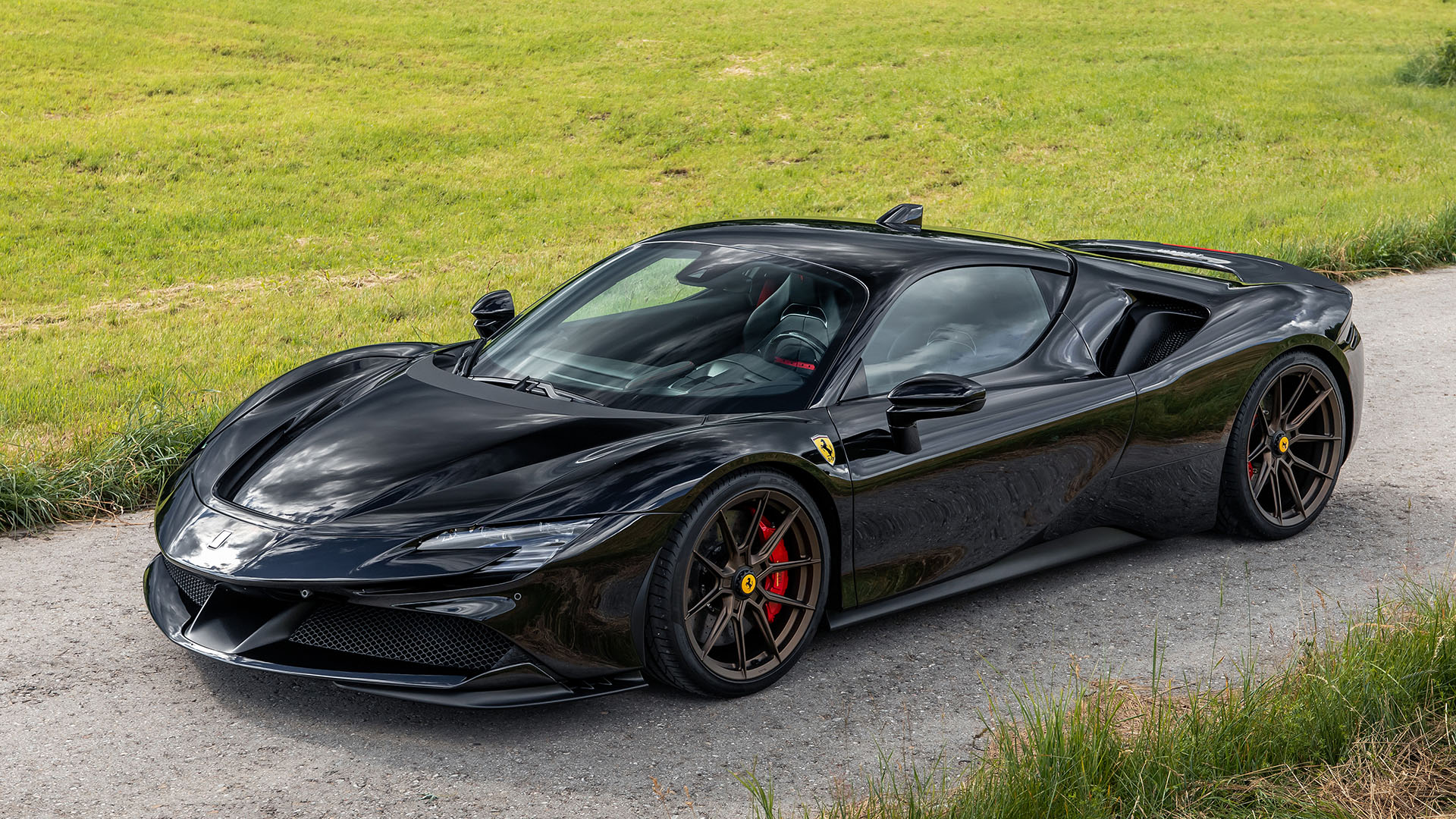
The Ferrari SF90 Stradale by NOVITEC
The Ferrari SF90 Stradale was actually a special model to celebrate the 90th anniversary of Scuderia Ferrari, and while the main power comes from a twin-turbo V8 engine, the SF90 also comes with three additional electric motors for a total power output of 968 hp (735 kW) with a torque figure of 800 Nm … surely impressive numbers straight from the factory in Maranello, Italy.
But we wouldn’t be writing about NOVITEC if they didn’t manage to upgrade the already potent Ferrari SF90 Stradale, the NOVITEC exhaust system with metal catalysts boosts the overall power to 1,033 hp (760 kW) with 858 Nm of torque, acceleration from 0 to 100 km/h takes only 2.5 seconds after a visit at NOVITEC with a top speed in excess of 350 km/h.
To achieve this increase in power, the NOVITEC exhaust system is created with 100-cell metal catalysts and twin stainless tailpipes that come with a diameter of 112 millimeters, complete with beautiful carbon exhaust tips, this system optimizes exhaust flow and because of the fully thermally insulated pipes the temperature in the engine bay is reduced … if you prefer even more heat control you can always opt for the NOVITEC 999 gold-plating.
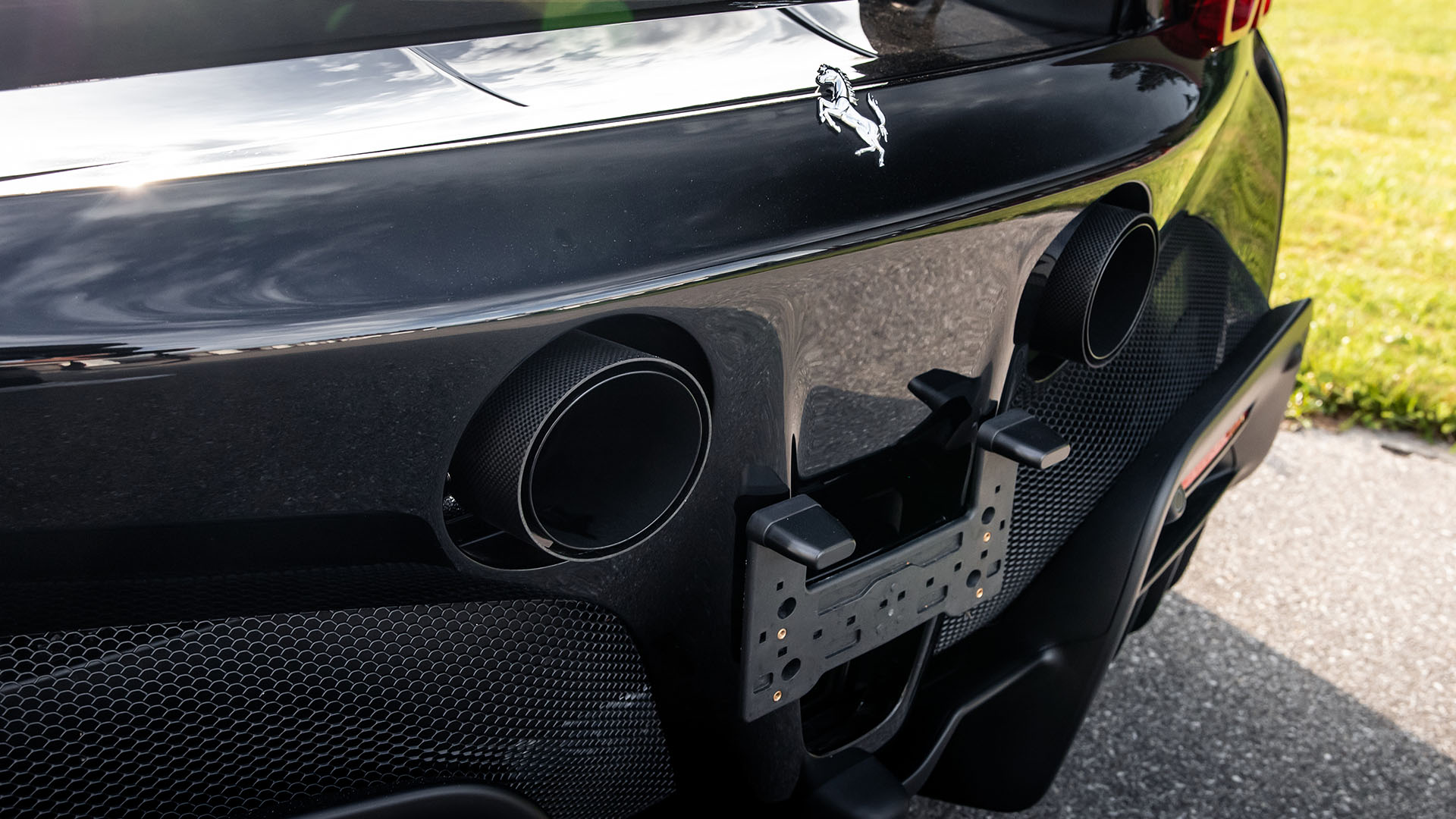
The NOVITEC exhaust system is available with, or without electronic sound management, you know, the active control flaps in the exhaust pipes to set the sound to ‘LOUD’ or ‘INSANELY LOUD’, if you want to get the lightest possible exhaust system for your Ferrari SF90 you should get the NOVITEC system in INCONEL, a lightweight material used on Formula One exhaust systems.
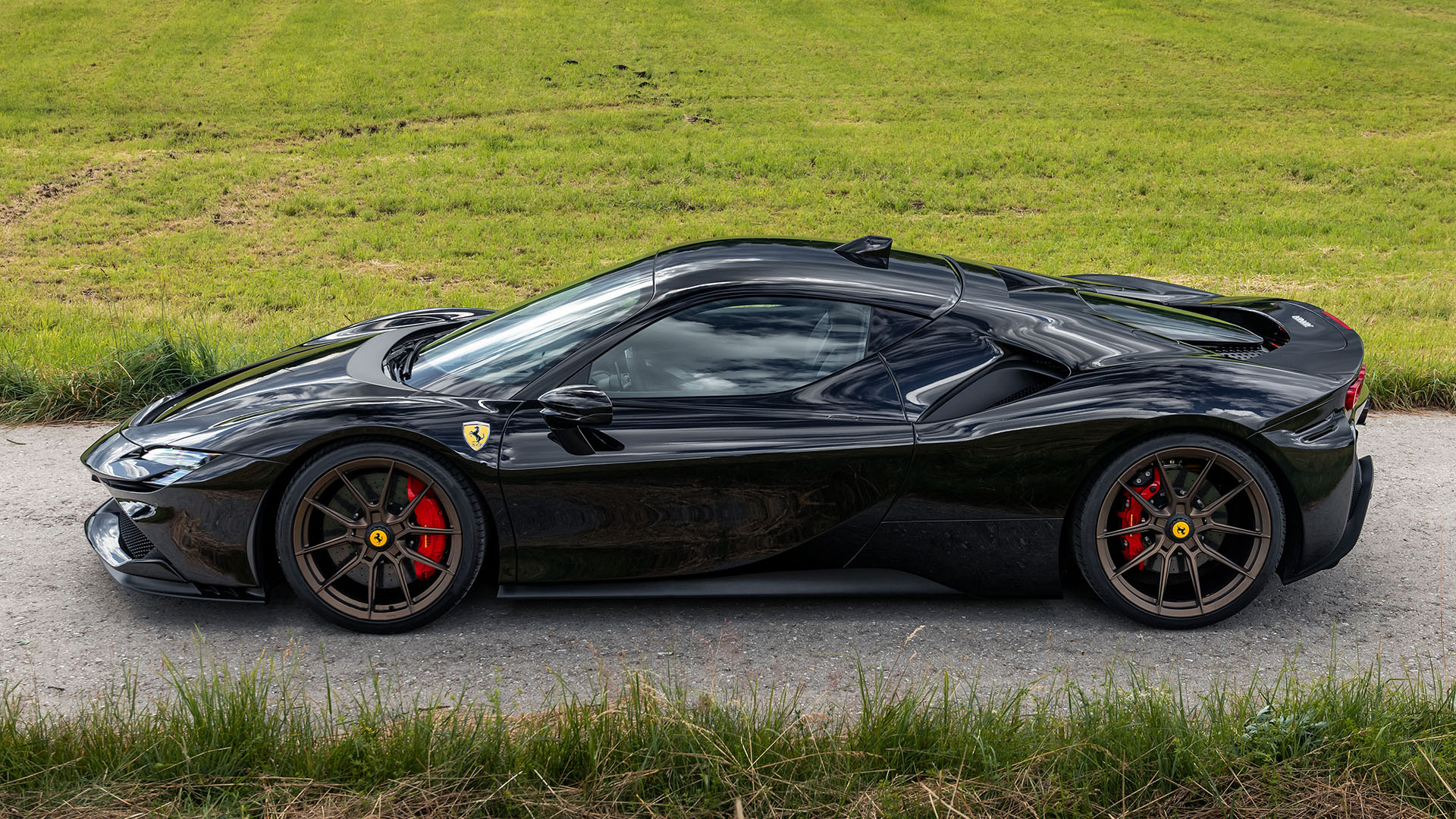
While the sound is extremely important, especially on a hybrid car, looks shouldn’t be forgotten other, and to that extend NOVITEC usually teams up with VOSSEN for their forged alloy wheels, and this black Ferrari isn’t any different, a set of high-tech forged wheels made in the USA are fitted, in this case, finished in ‘Bronzino’, but NOVITEC offers 72 different colors to their clients.
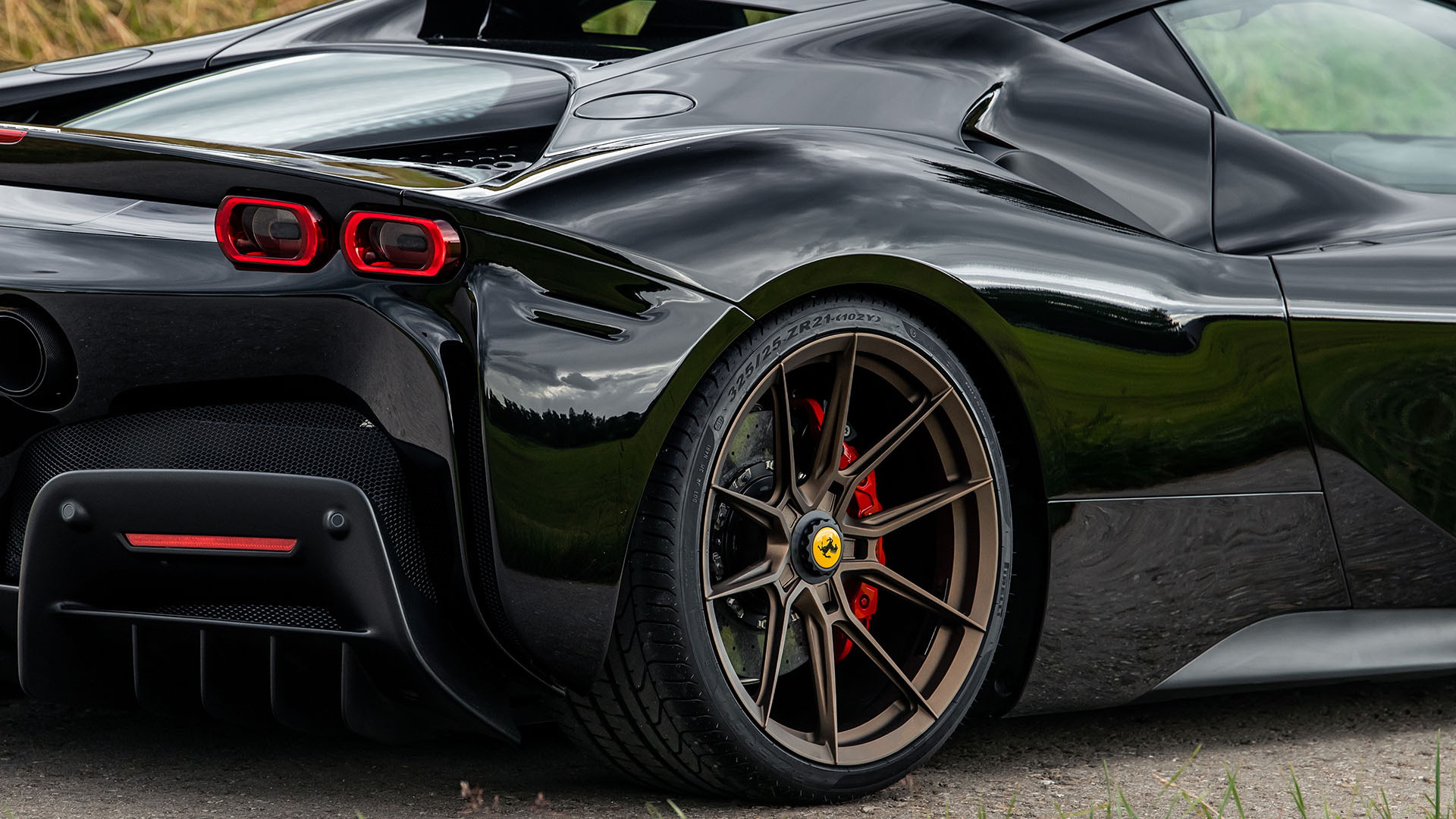
These NOVITEC NF10 wheels look like a ten-spoke design, but if you look closely it’s, in fact, a ‘double’ five-spoke design, and thanks to some amazing machining tech, VOSSEN managed to create a set of wheels that perfectly fill out the wheel arches on this Ferrari SF90 Stradale, 9.5×20 inch wheels at the front with 255/35 ZR 20 tires and bigger and wider wheels in 12×21 inch for the rear, this time with massive 325/35 R 21 tires fitted, the staggered dimensions emphasize the wedge shape of this Ferrari.
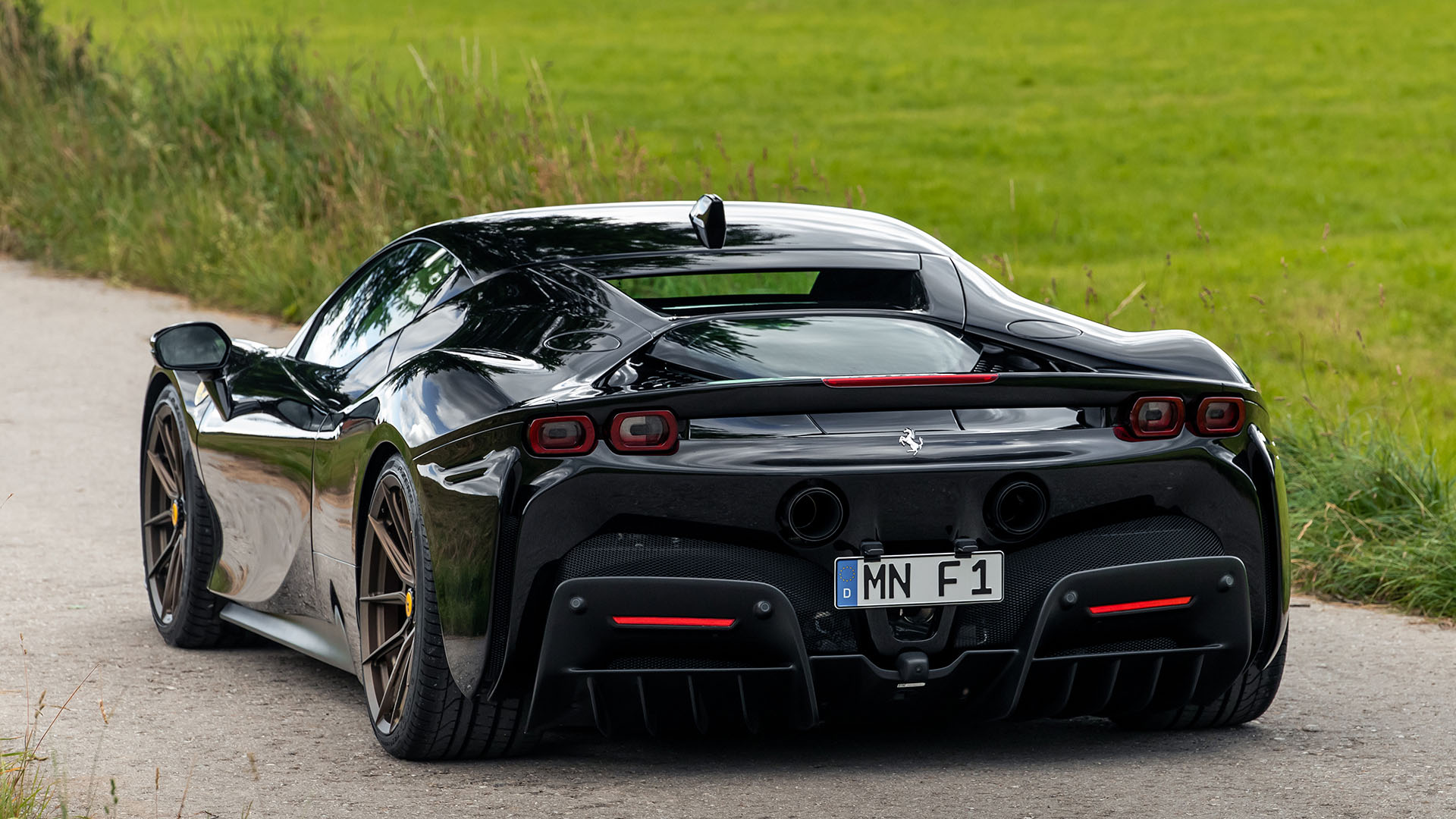
With custom wheels come the need for lowering a car in my humble opinion, and it seems NOVITEC feels the same way, they offer a set of lowering springs to bring the SF90 30mm lower to the street at the front and 25mm lower at the rear, just enough to make a visual impact, and by lowering the center of gravity, this also improves on handling.
NOVITEC also offers customization for the interior, offering the client the option to color match the leather or Alcantara upholstery to the color they selected on the wheels, but as usual, the demo car doesn’t show any custom interior treatment … I guess now it’s time to wait for NOVITEC to release an aero kit for the SF90, or perhaps even an N-LARGO limited edition.
Best V8 Engines Ever Produced
In almost all cases, manufacturers who choose to equip their cars with a V8 engine do so knowingly and deliberately. After all, such engines represent the first big step in crossing over a threshold to where performance becomes the sole focus; efficiency and economy are often not even invited as guests for a ride-along in the back seat.
With a quick glance at the back mirror, those pesky 4-cylinder and 6-cylinder engines begin to disappear into the horizon. Then, with the proverbial “pedal-to-the-medal”, the V8 power plant unanimously declares “all-in” with a loud roar – because this journey is all about thrill-seeking and checking things off the bucket list.
While high-performance V8 engines have normally been reserved for exotics – and muscle cars, in the more distant past – its application has been seen more in the mainstream these days. With the proliferation of automotive technologies, the V8 engine has become a gateway into the world of attainable supercar performance; each new engine is better than the one before it. But if you prefer roaring V10s, or hearty V12s, check these links out. However, if V8s are more your cup of tea, read on.
Here’s the shortlist of 10 such engines, curated for your reading pleasure:
Ferrari F106
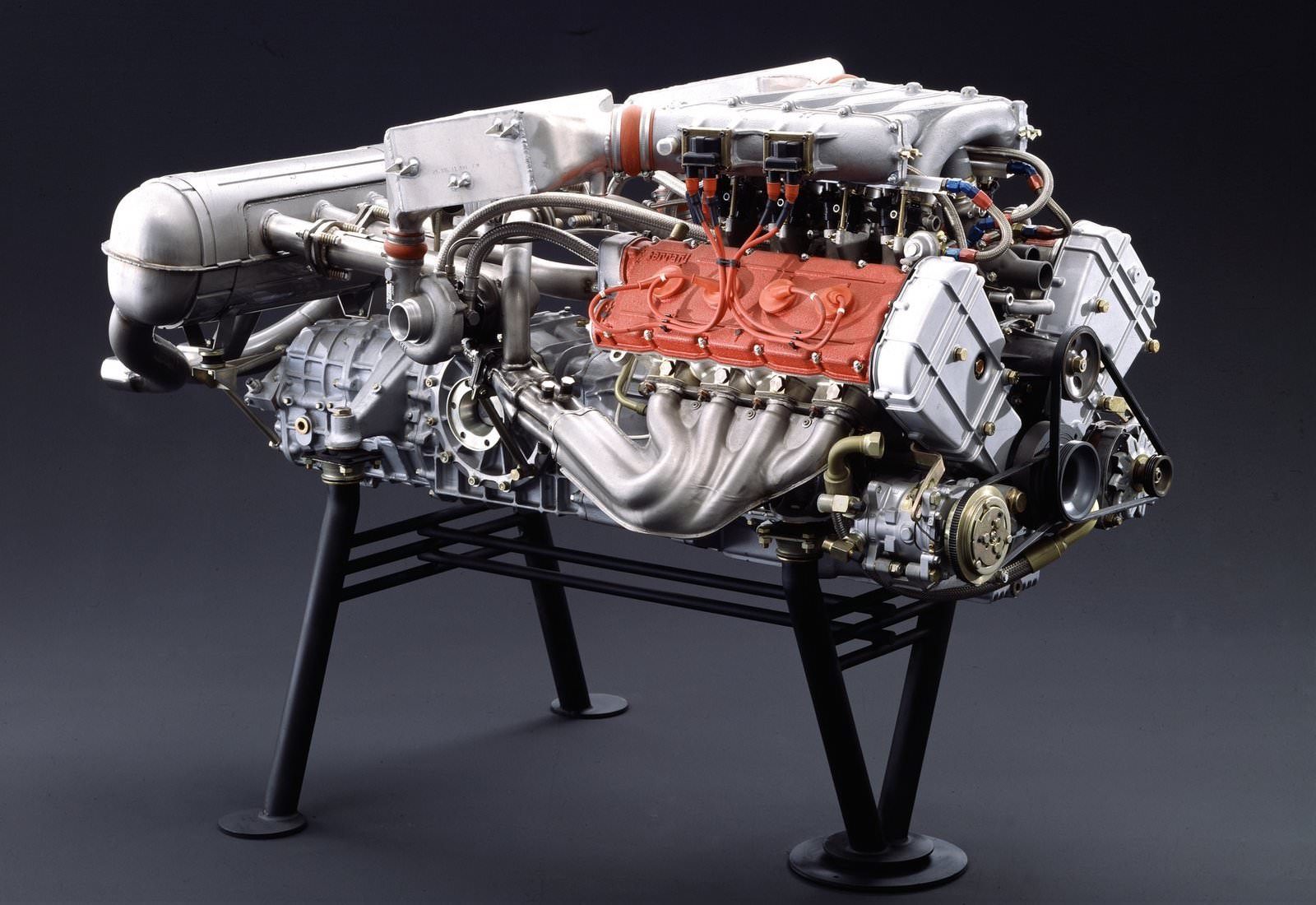
Ferrari’s F106 V8 engine dates as far back as 1973, where it first featured in the Dino 308 GT4. Right from the get-go, it produced an impressive 250 hp from a 2.9L naturally-aspirated engine, which featured a flat-plane crank and dual-overhead cams.
Such was the longevity and capability of the F106 unit, that it continued to be used – with significant updates and revisions along the way, including electronic fuel injection and multi-valve heads – for more than 30 years. Notable models which were equipped with the engine include the F355, 360 Modena, and arguably the most famous Ferrari of them all; the Ferrari F40, which fashioned a twin-turbocharged version of the F106 producing 471 hp.
Dodge Supercharged Hemi

Dodge’s Hellcat series of cars have really taken the world by storm, offering almost unfathomable power in a non-exotic production vehicle – or any vehicle for that matter. It’s truly a revival of the “American muscle” movement, with the supercharged Hemi able to produce as much as 807 hp and 717 lb-ft of torque via the Dodge Challenger Hellcat Super Stock. Handling, agility, and all that other kind of stuff aside, this makes the Hellcat Challenger/Charger the quintessential American sports car which can be had for well under the 6-figure mark brand new.
The automaker is now offering the 6.2L ‘Redeye’ V8 as a crate engine (aptly nicknamed ‘Hellcrate’) through Mopar. It can be purchased at a starting price of US$21,807. The ‘Redeye’ version comes with a larger supercharger than the previous Hellcrate engine and has been tuned for more boost, a slightly higher redline, and a host of other improvements. These are what has allowed it to improve from 707 hp and 650 lb-ft of torque to its current 807 hp state. An absolute unit.
BMW S63

Like other automakers on this list, BMW is no stranger to producing some of the world’s best V8 engines. The latest incarnation would be its masterpiece ‘S63‘ – a 4.4L twin-turbocharged engine that produces at least 600 hp and 553 lb-ft of torque in the current-gen BMW M5 sedan.
Though it’s true that this grants the quintessential luxury-performance saloon some serious supercar credentials, a look back to days gone by reminds us that engines such as the ‘S62’ and ‘S65′ deserve just as much recognition for their contribution to the Bavarians’ V8 platform. Respectively, each engine displaced 4.9L and 4.0L and were both naturally aspirated.
Lexus 2UR-GSE

The 2UR-GSE is the latest iteration of Lexus‘ increasingly iconic naturally-aspirated V8 power plant. Currently reserved for the marque’s high-performance models – such as the IS F, RC F, GS F, LC 500, and brand-new IS 500 – the 5.0L engine blends typical Lexus reliability with a high-revving Japanese character. In its most powerful configuration, the 2UR-GSE produces 475 hp in the Lexus LC 500. Amidst an ever-changing landscape shifting towards hybridization and electrification, we hope that Lexus’ legendary naturally-aspirated V8 lives on for as long as possible
Much like our other selections, the 2UR-GSE owes much of its distinctions to predecessors such as the 1UZ-FE which debuted in 1989. This 4.0L V8 engine has proven to be bulletproof over the test of time, in addition to the universal recognition it has received for being smooth, refined, and sufficiently powerful for its intended application. It has served as the platform upon which the formidable GSE would eventually be conceived.
Ferrari F136

The F136 succeeded the legendary F106, first appearing as a 4.3L naturally-aspirated engine in the 2004 Ferrari F430, producing 483 hp. Like the F106, the F136 would see widespread application throughout the Ferrari lineup; however, it was also featured on a number of Maserati models in concert with the relationship between the two marques.
Most notably, a 454 hp, 4.7L version of the F136 featured on the Maserati GranTurismo and is widely regarded as having one of the best engine/exhaust notes to come out of the V8. The F136 would reach its zenith in the Ferrari 458 Italia Speciale, where it cranked out a massive 597 hp from its 4.5L naturally-aspirated power plant.
Perhaps the most significant (and regretful) fact about the F136, is that it is the last naturally-aspirated V8 engine Ferrari would ever produce. It was replaced by the twin-turbocharged F154 V8 engine in 2015, where it debuted on the Ferrari 488 GTB.
McLaren M830T / M840T

Despite only producing V8-powered automobiles since as recently as 2011 (via the MP4-12C), you could argue that McLaren‘s engineers are truly the world’s V8 engine artisans, and few would dispute that. After all, it’s virtually all they know these days, with every single McLaren model – bar the V6-hybrid McLaren Artura – fitted with some adaptation of their M838T or M840T twin-turbocharged V8 motors.
The 3.8L M838T is found in its Sports Series range of cars, which includes the entry-level McLaren 540C and goes all the way up to the indomitable 666 hp McLaren 675 LT. The 4.0L M840T features on all of the Super Series cars, which covers the ‘700 range’ of models, plus the addition of the McLaren GT. In its Ultimate form, the 4.0L unit – dubbed the M840TR – produces 814 hp in the McLaren Senna GTR. The McLaren Speedtail hybrid ‘hyper GT produces some 1,035 hp through the combination of an M840T and electric motor.
GM Small Block LT1/LT2

Introduced in 2014 for the C7 Corvette, the 6.2L naturally-aspirated V8 LT1 engine is part of GM’s 5th-generation small block engine family. It continues to be used on the present-day Camaro, with a new version of the engine – known as the LT2 – carrying on the bloodline via the brand new mid-engine C8 Corvette. The LT2 retains the 6.2L capacity but is more powerful than the LT1, producing at least 495 hp and 470 lb-ft in its latest configuration.
This was achieved by designing more efficient air-intakes sand exhaust manifolds, while also featuring a better lubrication system and more resilient camshaft. While it’s not a monster-out-of-the-box like say, Dodge’s Hellcat engine, the lightweight naturally-aspirated powerplant remains perfectly suited for what the Corvette is the best at delivering – brilliant all-around performance at a fraction of the cost of comparable options. The still-relevant LT1 is now being offered as a crate engine via GM’s performance division, with its 460 hp on tap for under US$10,000. Project car, anyone?
Audi 4.2L FSI

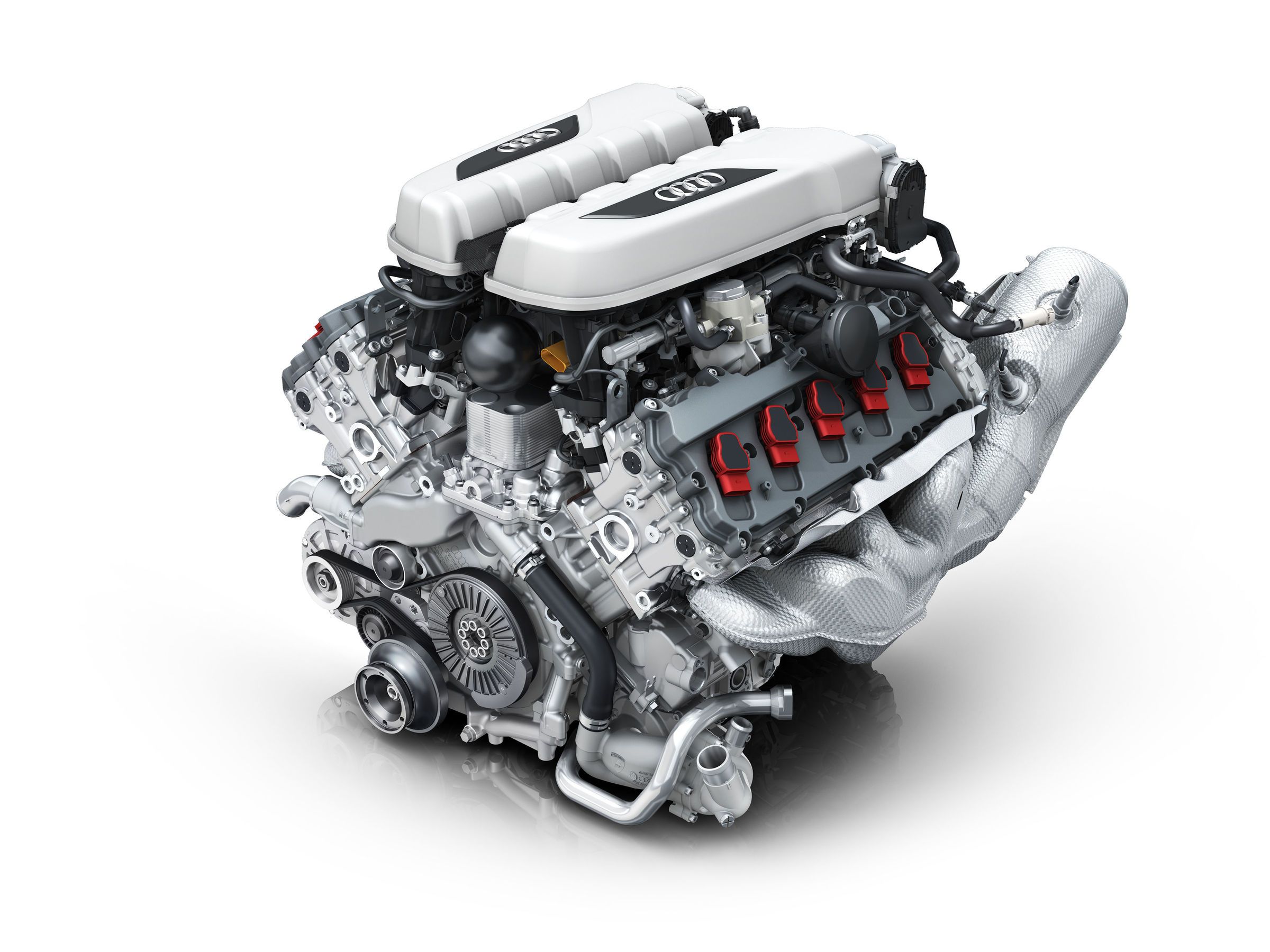
When Audi’s 4.2L FSI V8 engine was introduced, it was a bit of a departure from what Audi enthusiasts had grown accustomed to over the years. As one of the marques which helped to proliferate the use of turbochargers on production cars, the aforementioned engine first appeared in the 2006 Audi RS4 as a high-revving naturally-aspirated power plant.
Over time, it proved to be a fan-favorite in spite of its lack of forced induction and featured on such models as the RS5 and mid-engined R8. As a naturally aspirated unit, the FSI V8 was able to rev up to 8,250 rpm and had a distinctively exotic exhaust note, regardless of the model it was mounted in.
The engine remained naturally-aspirated up until its use in the 444 hp Audi RS5; since then, recent iterations of the engine are now turbocharged and produce up to 600 hp.
Mercedes-AMG M178

The modern-day Mercedes-AMG line-up is blessed with their omnipotent ‘M178’ 4.0L twin-turbocharged V8, which itself deserves all the plaudits and is a shoo-in for selection. While it’s the most advanced iteration of the automaker’s V8, our personal favorite would have to be the ‘M156’ 6.2L V8 first powered the 467 hp naturally-aspirated C63 AMG. Like its successor, the M156 would feature in almost every Mercedes-AMG model of that era, including the SL63.
The ultimate version of this V8 motor would be the ‘M159’, which was equipped in the automaker’s flagship SLS supercar, producing 622 hp. The SLS has since been succeeded by the Mercedes-AMG GT Black Series, which produces 720 hp from its twin-turbocharged ‘M178’, and recently set the new production car lap record at the Nürburgring.
Ford ‘Voodoo’ Flat-Plane

The ‘Voodoo’ engine produced by Ford is a 5.2L naturally-aspirated V8 which was made especially for cars such as the 526 hp Mustang Shelby GT350 and GT350R. Suffice to say, the Voodoo was a match made in heaven for the line-up’s most balanced and track-focused Mustang models. By utilizing a flat-plane crankshaft, the engine weighs less and revs faster and higher (to 8,250 rpm) than the otherwise standard engines in other models. Its configuration also gives it an almost-exotic exhaust note, border-lining on ‘un-American’ – but owners won’t mind, as their domestic car hangs just fine with the exotics and other high-end sports cars on the race-track.
Following the template of past flat-plane V8 engines, the Voodoo applies similar principles as engines that once powered hot-rods and muscle cars back in the 20th century – with impressive bang-for-buck, the engines produced big horsepower at a fraction of the cost of what was used in European sports cars and even domestic rivals. This provided owners with a rightfully potent automobile, and extra money left in the bank. It’s hard to argue with that!
Best V10 Engines Ever Produced
Most people probably don’t know it, but V10 engines are kind of the awkward middle child within the high-performance engine family. They are often overlooked for their smaller, more compact, and just-as-spirited V8 siblings, yet still somehow manage to cut a notably less brawny figure next to the larger V12 motors. In terms of outcomes, this is probably why even the most hardcore car enthusiasts will have a difficult time recalling more V10 production cars than you can count on one hand – there are fewer of them than you’re likely thinking, and perhaps there should be more of them for this reason, but that’s for a different discussion.
Interestingly, it’s the Volkswagen Group which currently has the monopoly on supplying this particular engine, via Lamborghini and Audi production models which are under the corporation’s umbrella (plus its namesake Volkswagen Touareg V10 TDI – more on that below). Meanwhile, you’d be forgiven for thinking that Ferrari would at the very least have delved into the art of the V10 -which they did, though only to produce such engines for Formula 1 cars from 1996 to 2005.
Quantifiably speaking, yes, there are fewer V10s out there than the other engines most closely related to it. However, each V10 engine mentioned on this list is undeniably iconic and rightfully potent, particularly when it comes to panache. So while this middle child might not always steal the spotlight, nor hog affection that goes to its siblings, it is in no way lacking any of the talent in its DNA.
Here’s the shortlist of 10 such engines, which we have curated:
Lamborghini / Audi 5.2L V10
Ever since 2008 – when the refreshed Lamborghini Gallardo LP 560-4 was released – all V10 engines used in the Lamborghini line-up have been based on the 5.2L architecture. This has carried over to the Gallardo’s successor – the Lamborghini Huracán – with each and every one of its models having been fitted with the aforementioned power plant, up to this point. In the current stage of its evolution, the 5.2L naturally-aspirated V10 is mechanically identical to Audi’s version of the engine (which uses ‘Fuel Stratified Injection) and is seen in Audi’s own R8 supercar; however, power outputs vary depending on the trim levels of the respective models.
Audi 5.0L V10 Biturbo
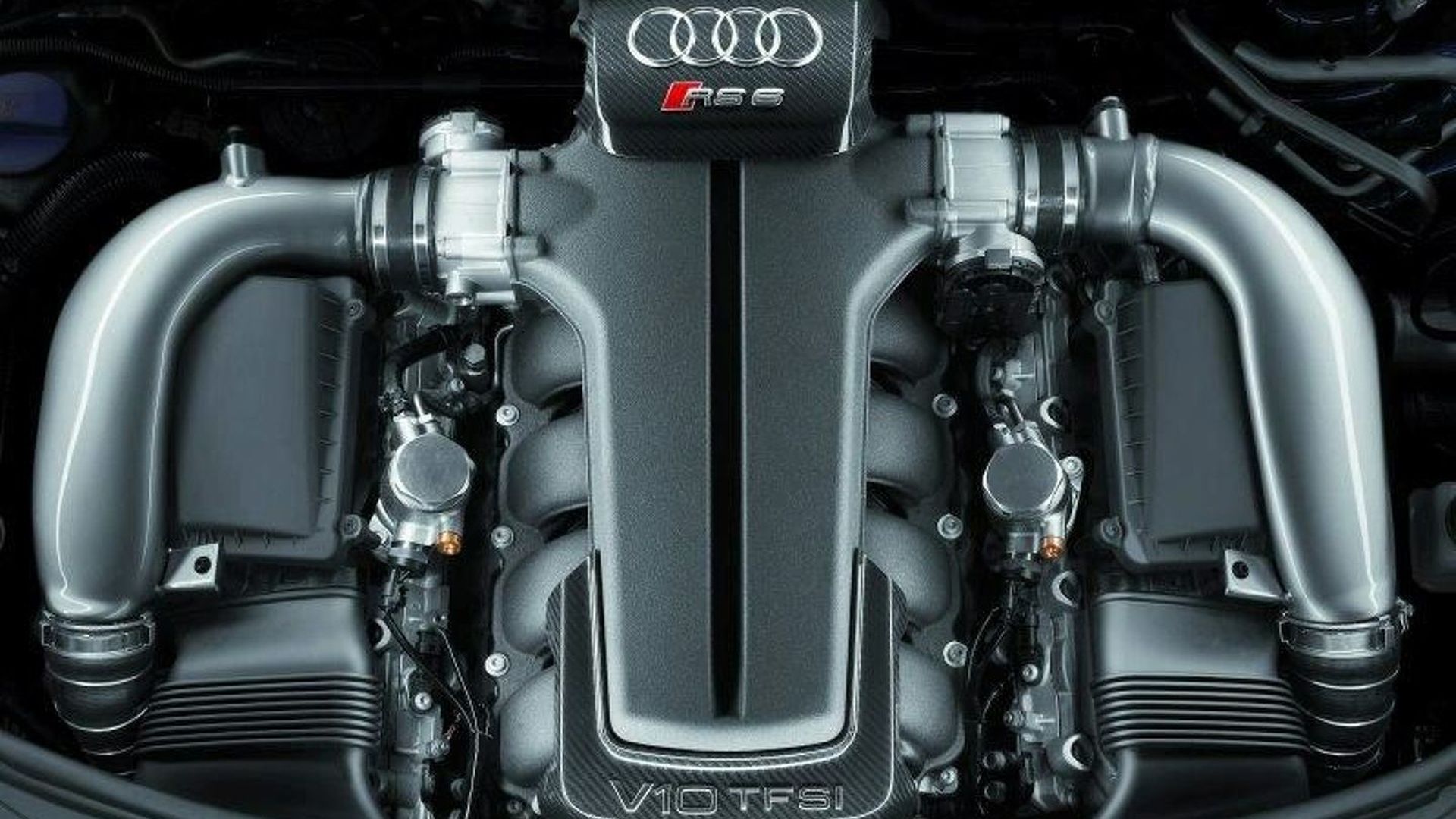
The sharing of tech (and a healthily-stocked pantry of engine parts) between Lamborghini and Audi spans back more than a decade now, and the engine used in the C6-generation Audi RS 6 has to go down as one of the best collaborations to date. Derived from the outgoing 5.0L naturally-aspirated V10 unit from the Lamborghini Gallardo, the motor in the RS 6 was repurposed with a pair of turbochargers. This allowed the super-wagon to produce 571 hp and 478 lb-ft of torque, on its way to becoming Audi’s most powerful car ever, in 2010. While it was handily more powerful than its competition – the BMW M5 and Mercedes-AMG E63 – it also cost quite a bit more (almost double, after conversion) which is likely the reason why it didn’t reach US shores.
Audi 5.2L V10 FSI 40V
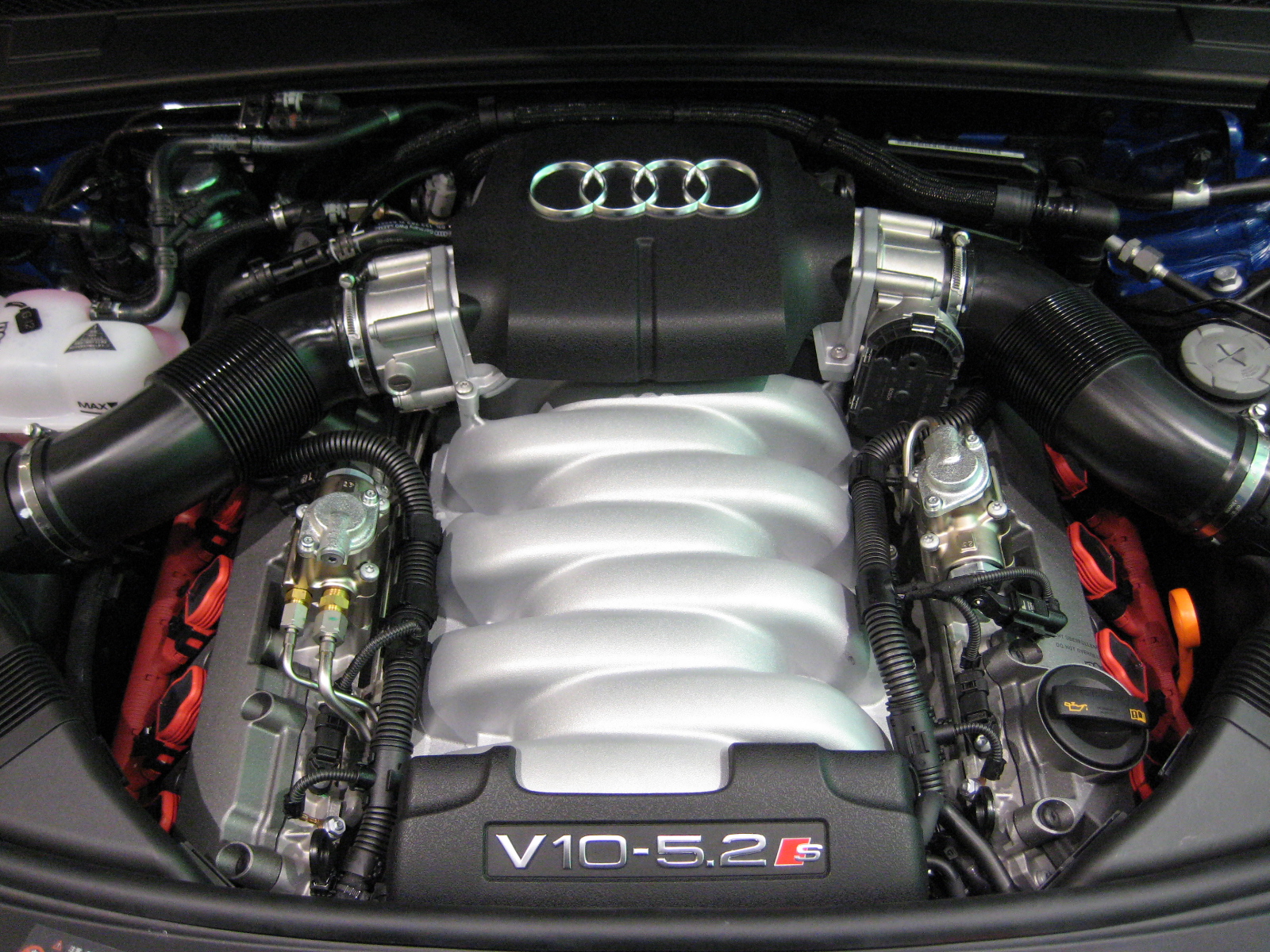
Unlike the C6-generation Audi RS 6, the 5.0L unit used in the third-generation Audi S6 is less related to a Lamborghini equivalent and has more in common with an Audi 4.2L V8. For starters, it has a longer stroke and wider bore than the Lamborghini 5.0L V10 seen in the Gallardo, making for the better low-end power which is more befitting of the larger sedan. When considering the internals, the 5.2L motor in the S6 more closely resembles the aforementioned 4.2L V8 which was once used in the B6-generation Audi S4. Thanks to the tweaks mentioned above, this engine was good for 444 hp in the four-ringed luxury sports sedan.
Lamborghini Huracán Performanté 5.2L V10
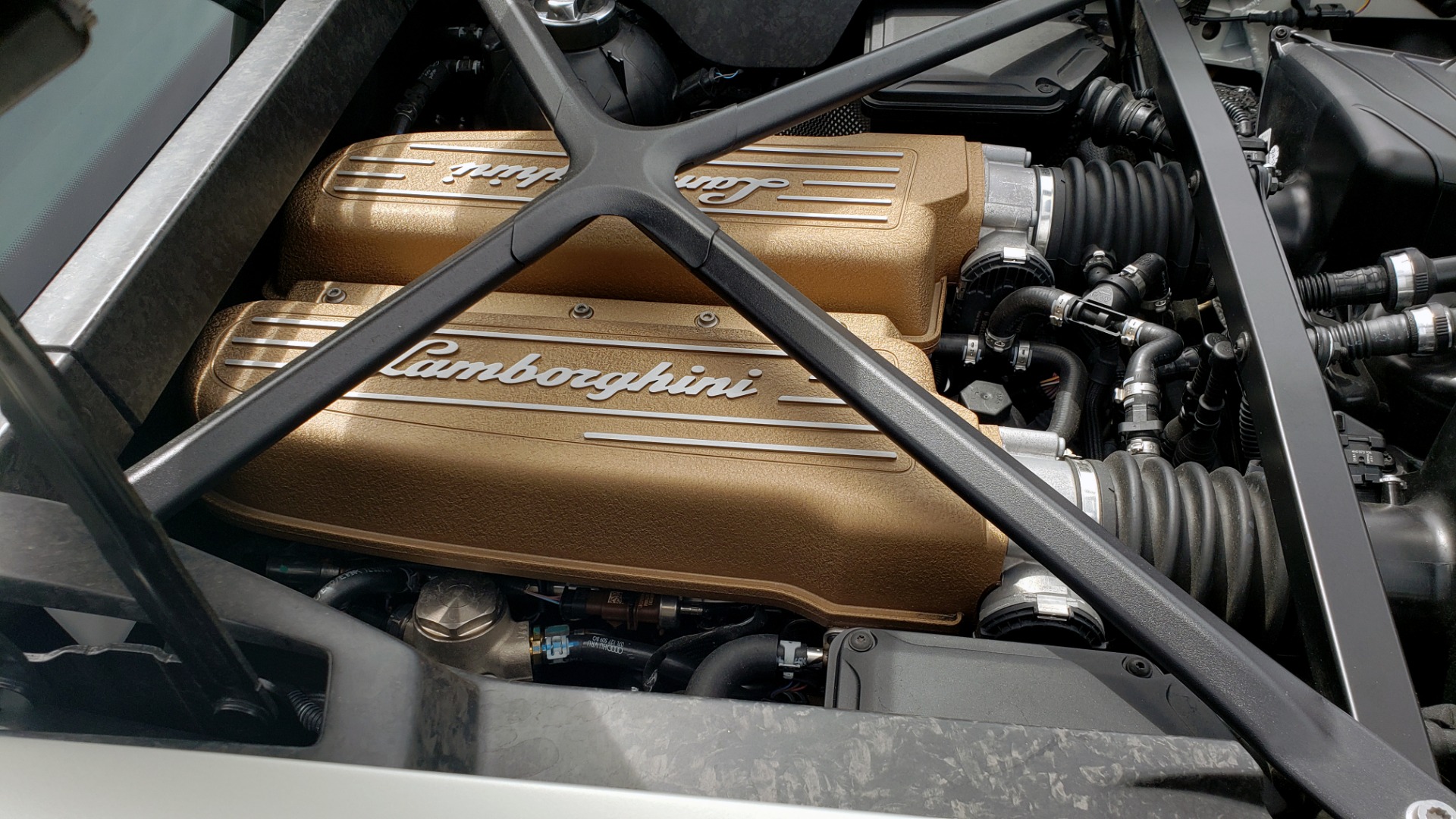
The 5.2L naturally-aspirated V10 power plant we’ve been speaking so much about in this list is at the peak of its evolution via the current Lamborghini Huracán Performanté. In this configuration, the engine produces 640 hp @ 8,000 rpm and 443 lb-ft of torque @ 6,500 rpm; this makes the supercar good for 0-100 km/h in 3.1 seconds and a blistering top speed of 325 km/h, all without the assistance of any type of forced induction. Augmented with the greatest technologies available today, the motor produces its power more efficiently than ever before as well, with more than 70% of its torque already available as early as 1,000 rpm.
Dodge Viper ACR 8.4L V10
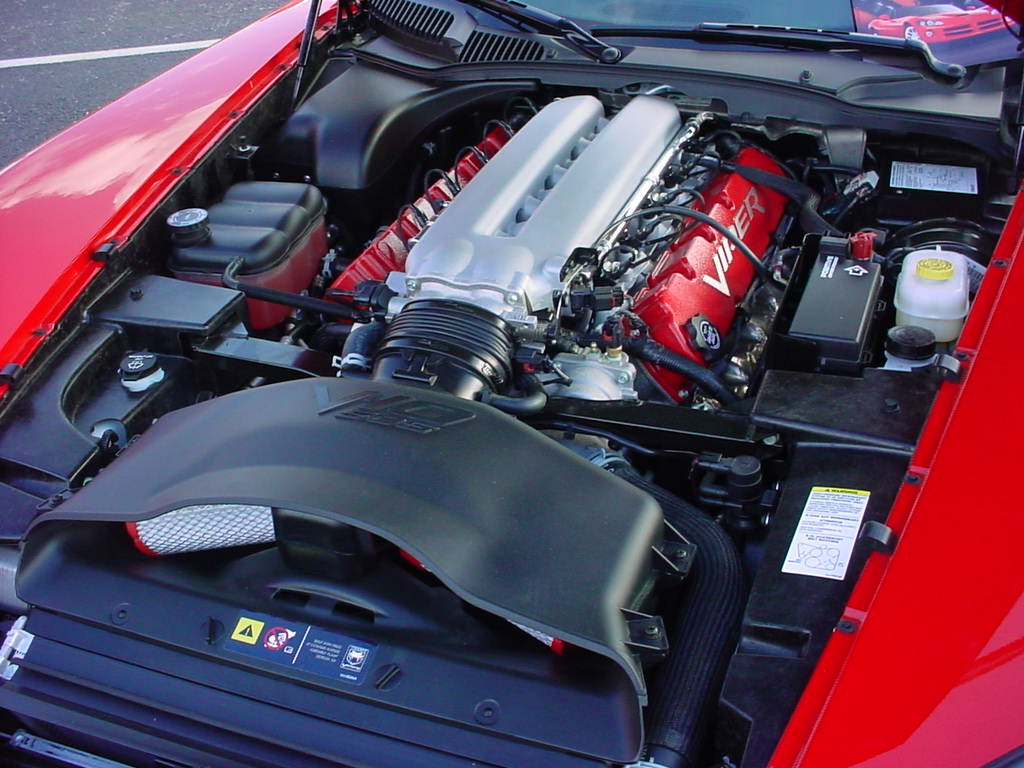
Even if the Dodge Hellcat is hogging all the headlines these days, there’s always something you have to admire about the lunacy of a naturally-aspirated 8.4L V10 engine. No, the Dodge Viper doesn’t do subtlety very well. Yes, it does happen to fall under the ‘Old Testament’ definition of “awesome”. With 640 hp and 600 lb-ft of torque being produced from that colossus of an all-aluminum engine, the Viper has the exhaust note of a semi-dormant volcano. It would make absolutely no sense at all if it wasn’t just so damn fast. Variants such as the SRT-10 and ACR-X took the road-going version of the car to the next level, with the latter being a turn-key, non-street legal race car that participates in Viper racing leagues around the world.
Lexus LFA 4.8L V10 (1LR-GUE)
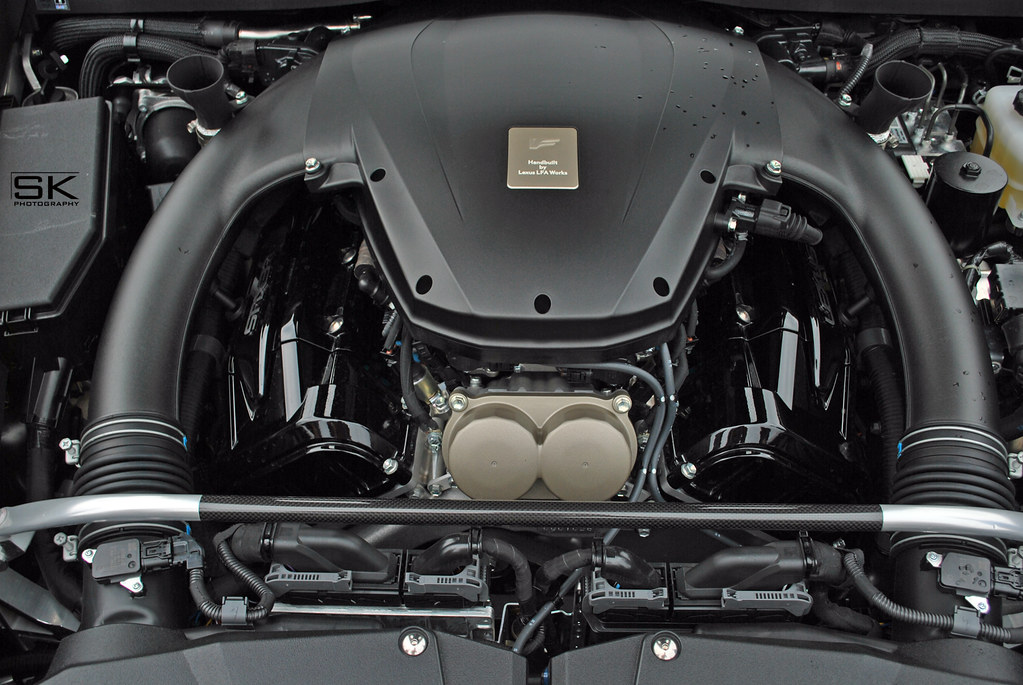
Many regard the Lexus LFA as one of the best supercars ever made. Lexus only made 500 units, and I assumed those 500 sold out quickly. I was wrong. Despite the fact that Lexus hasn’t produced the LFA since 2012, there are still seven brand new LFA supercars for sale in the US, according to Carscoops. With all that said, the LFA came with one of the best V10 engines ever produced by a Japanese automaker. The 4.8L naturally-aspirated V10 – dubbed 1LR-GUE – made 552 hp and 352 lb-ft of torque. Developed in collaboration with Yamaha, it was a free-revving engine with an exhaust note that is truly unlike any other on the planet. As the sole representative from Japan, the 1LR-GUE is certainly one for the ages.
Porsche Carrera GT 5.7L V10 (980/01)
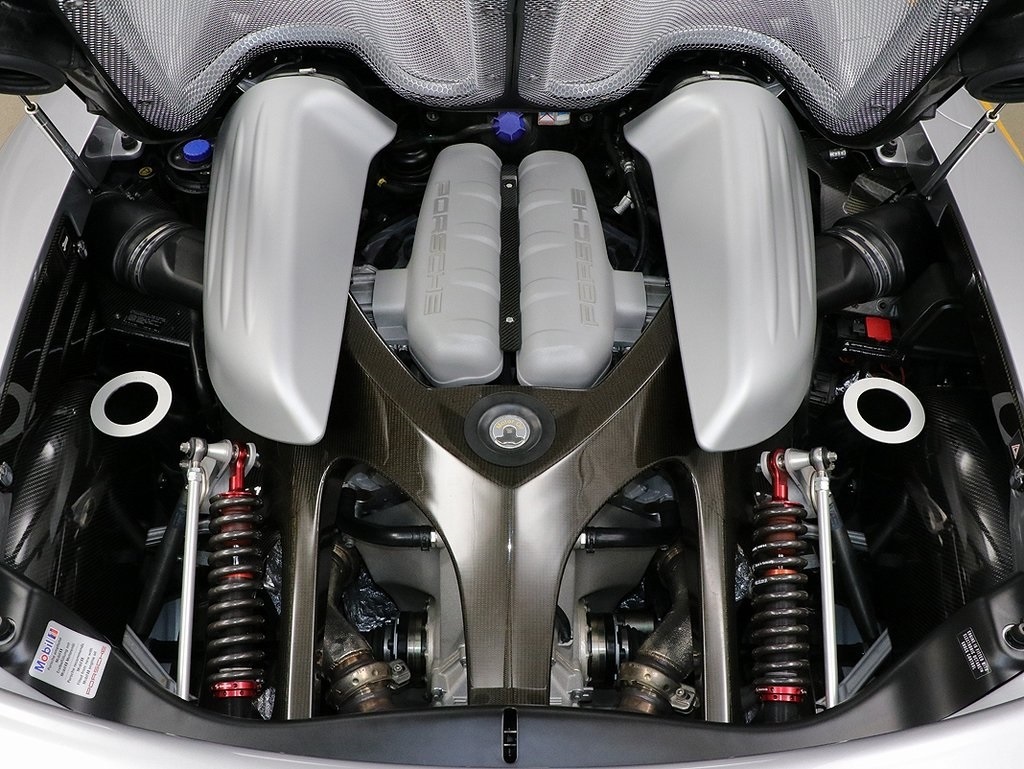
What makes the Porsche Carrera GT engine so special is that it is technically a race car engine. Not in that loosely-based sense – as is often used as a gimmick by salespeople – but in the true sense of the word. In the late 1990s, Porsche engineers in Zuffenhausen were assigned the task of developing a naturally-aspirated V10 concept engine, which was to later be used in a race car for the infamous 24 Hours of Le Mans endurance race. Sadly, the completion of that race car never came to fruition, but the efforts of the engine builders would not go to waste.
Porsche decided to adapt the engine for use in the Carrera GT and took the necessary steps to not only refine it in order to satisfy production car protocols but also managed to make it a more powerful version than the original unit. The result is a 5.7L naturally-aspirated V10 engine, which produces 612 hp @ 8,000 rpm and 435 lb-ft of torque @ 5,750 rpm. This allowed the Carrera GT to accelerate from 0-60 mph in 3.8 seconds and 0-100 mph in 6.9 seconds, with a top speed of 205 mph.
BMW M5 V10 (S85)
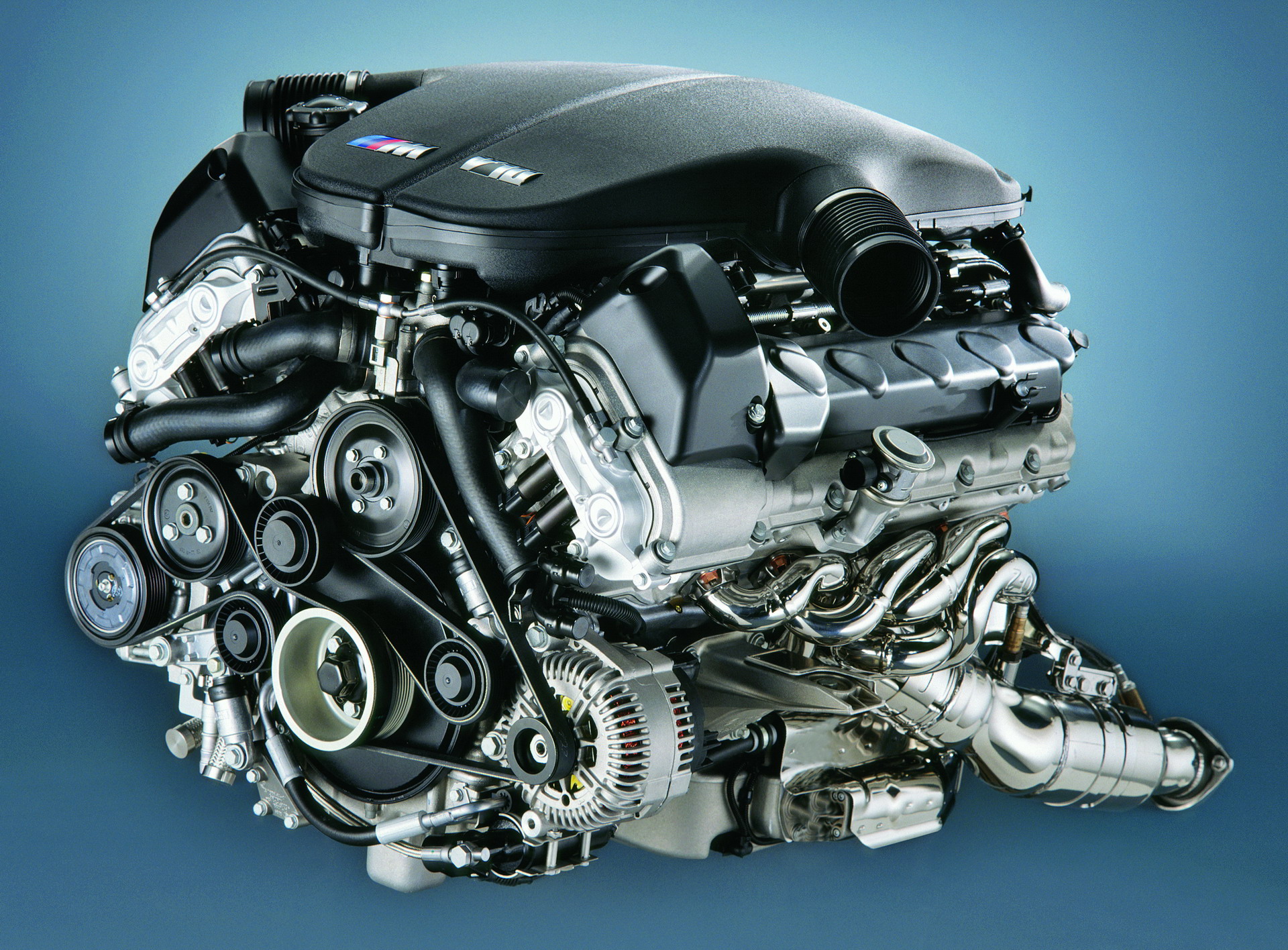
Released in mid-2005, the E60 M5 sedan featured a high-revving and ultra-powerful V10 engine, which was the only one of its kind in a series-production car at that moment in time (while also being the marque’s most powerful production car engine ever made). The 5.0L naturally-aspirated unit shared more than just the same number of cylinders as the Formula 1 engine that powered the BMW Williams F1 team. Technology forged in the heat of motorsport had enhanced the processes and components used in creating this new powerhouse. As you would expect from BMW M, this high-performance motor generates enormous pulling force over its entire speed range.
VW Touareg V10 TDI
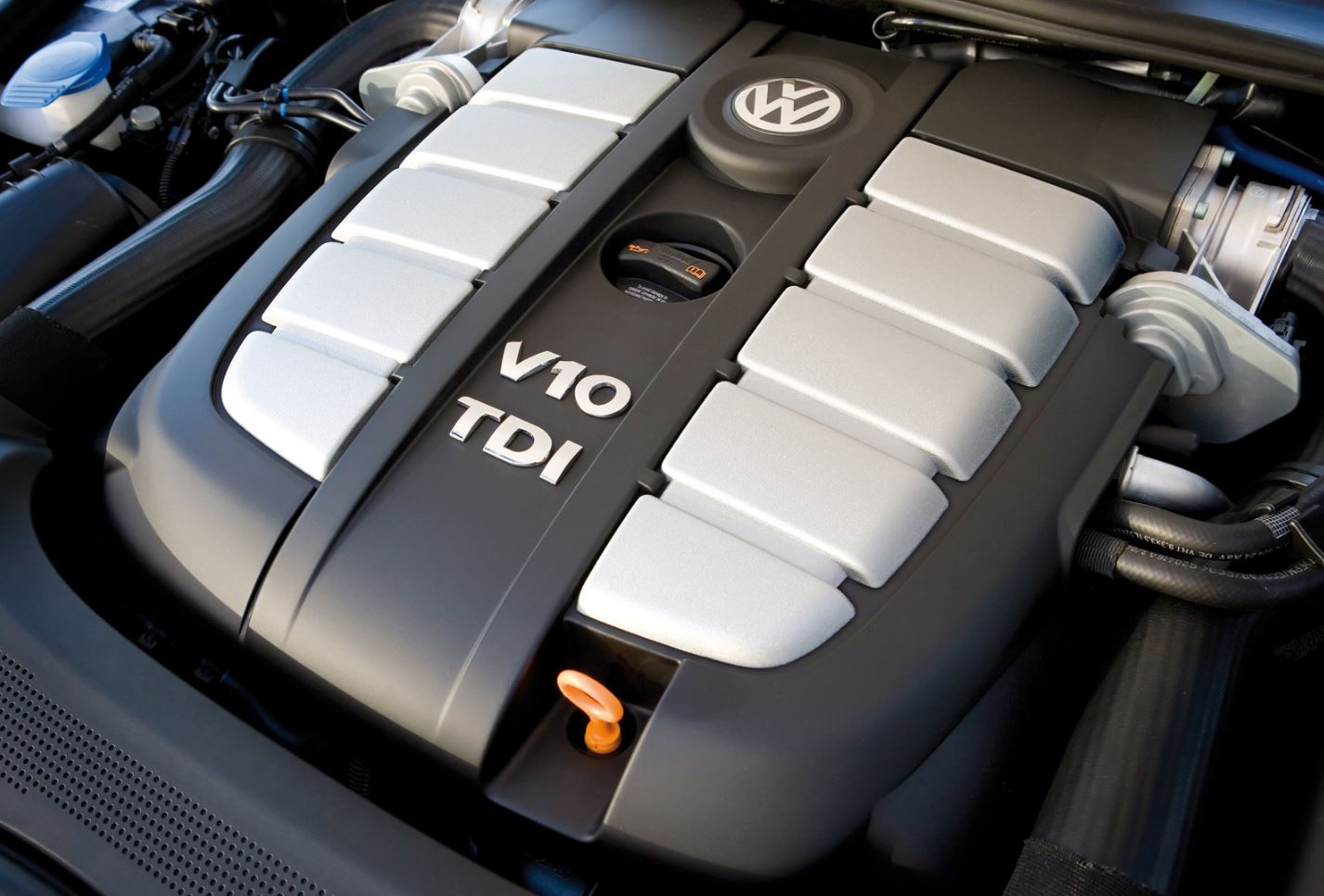
What makes this particular automobile so remarkable is not that it’s a Volkswagen, or an SUV, or diesel-powered, but that it’s all of those things with a twin-turbocharged 10-cylinder engine thrown into the mix. This Frankenstein-ish power plant would only feature for a couple of years before the whole Dieselgate fiasco, and had it not been for the calamity which ensued, it surely would have garnered more recognition than it has mustered to this day. All of its characteristics exude a bias towards low-end power, and the stats certainly reflect this – 309 hp and 553 lb-ft of torque @ 2,000 rpm. Oh, and don’t forget, a very utilitarian tow rating of 7,700 lbs.
Dodge Ram SRT-10 8.3L V10
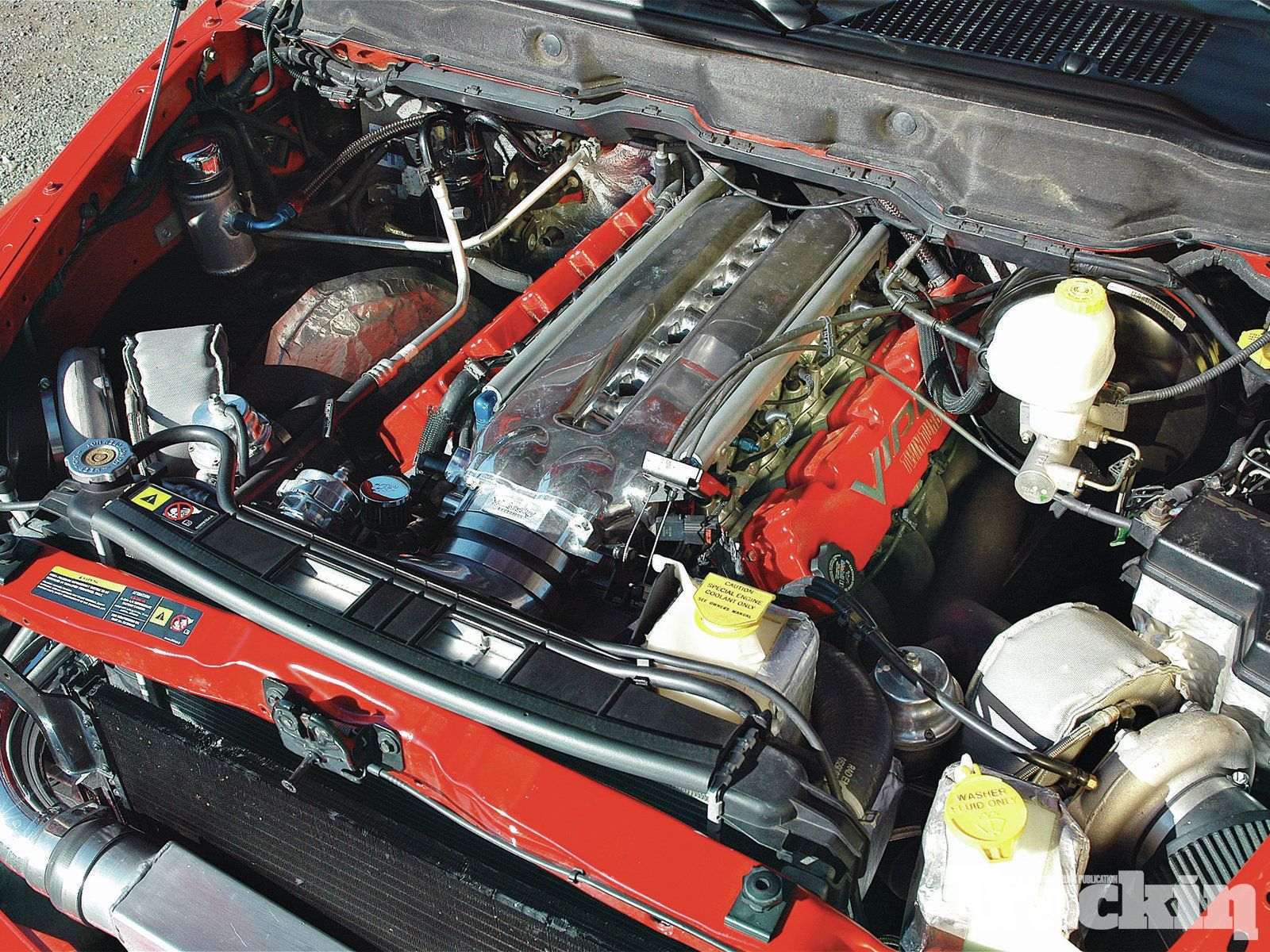
Imagine a Viper engine swapped into, then modified for use in a Dodge Ram pick-up truck, and voila. So what exactly does this magic trick entail? Well for starters, in July 2004, a Dodge Ram SRT-10 driven by NASCAR driver Brendan Gaughan, set the Guinness World Record (and the SCCA record) for the world’s fastest production truck when it achieved an average top speed of 154.587 mph. This was all possible with the help of the 500 hp and 525 lb-ft of torque that the naturally-aspirated motor produced, with 90% of its torque available at 1,500 rpm. It could even tow up to 7,500 lbs; though we would bet that most owners would forgo any procedures that might keep them from optimizing their 1/4 mile times.