All posts in “Cars”

30+ of Best Porsche Restomod & Restoration Shops in the World

The Pinnacle of Porsche Tinkerers, Here is Our List of The Best Restomod & Porsche Restoration Shops

Our interest in writing a post specifically about Porsche restorations began when we got feedback from readers about our greatest Porsches ever and best Porsche 911s lists. Readers told us we should include the Singer Porsche car on our lists since modifying Porsches is part of the  culture and that those custom Porsches are much a reflection of the brand as are the over one million production Porsche 911s that the company itself has made. We agree. Rather than include them in those top lists however we decided to dedicate a few posts to Porsche tuners, restomodders and restorers.

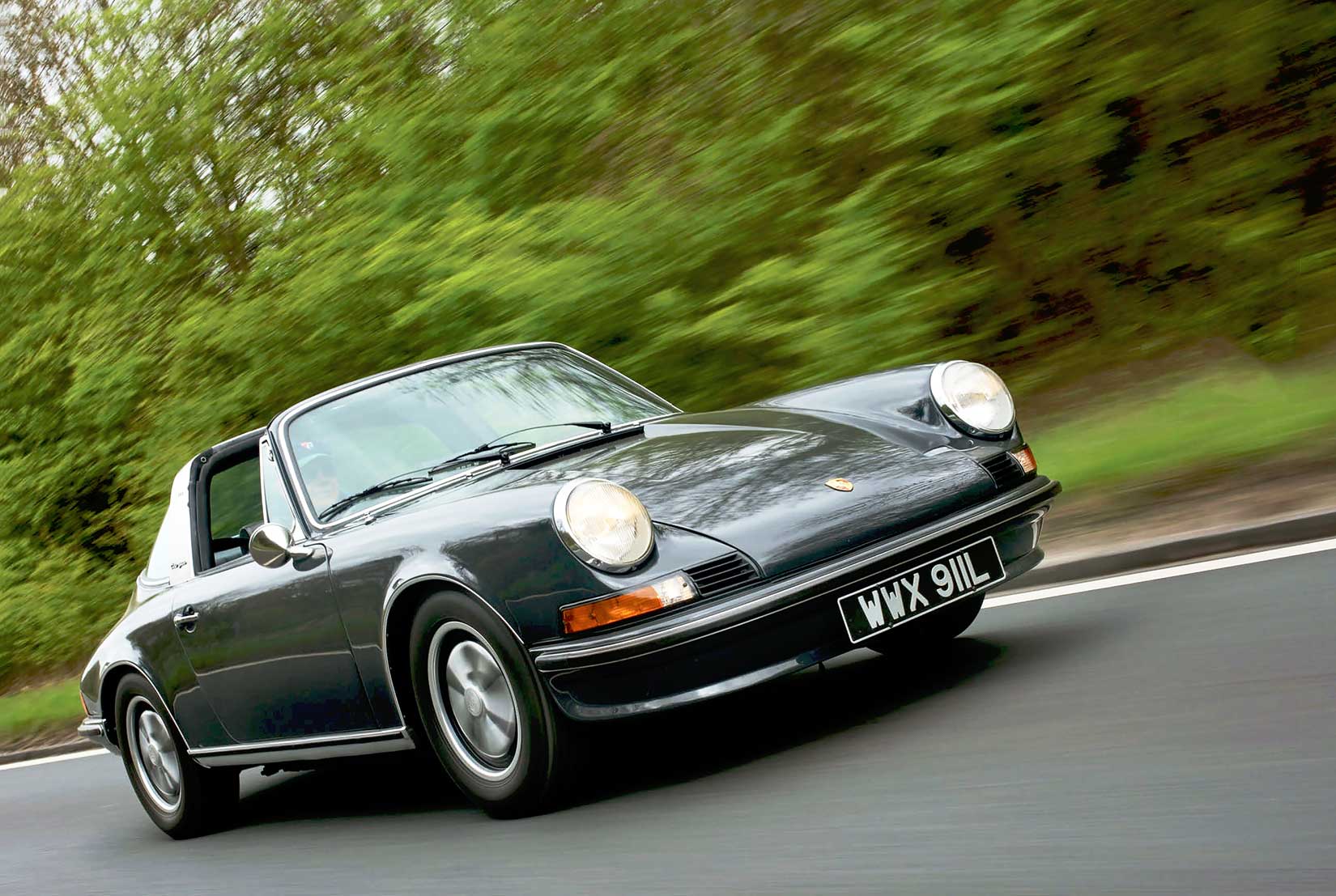
Porsches have always been popular cars for tuners and race teams looking to take a solid, top performing sports car and make it faster and more unique. One of the great things about models like the 356 and the 911 is just how easy the platforms are to modify and tune (especially the air-cooled generation where many parts are interchangeable).

More recently the restoration, restomodding and outlaw Porsche scene has absolutely exploded. Want your Porsche with a bit of classic flair but with totally new technology, then companies like Singer and a host of other restomodders can help. Want a Concourse level restoration of your early 911 or 356, then there are shops who have been doing it for decades that are busier than ever. It seems like everyone and their mother is creating, restoring and restomodding Porsche 911s or claims to be an approved Porsche restoration shop.

Whatever your style or desires, the decision to restore a car (or buy a restored car) is a serious commitment of time and capital. It is very important for you to determine what you would like to do with the car in the future and how you intend to use it. That, along with the available budget will determine the level of restoration you will choose and the type. We did some research and found an awesome selection of companies who restore and tune Porsches, each with a different approach, focus and price point. We are confident somebody on our list of the best Porsche restorations shops and restomodders is the right fit for your desires. Check them out, but first a primer about Porsche restoration.


porsche restorationporsche restoration
Image Source: Automobile Magazine

Porsche Restoration Comes in Many Flavors

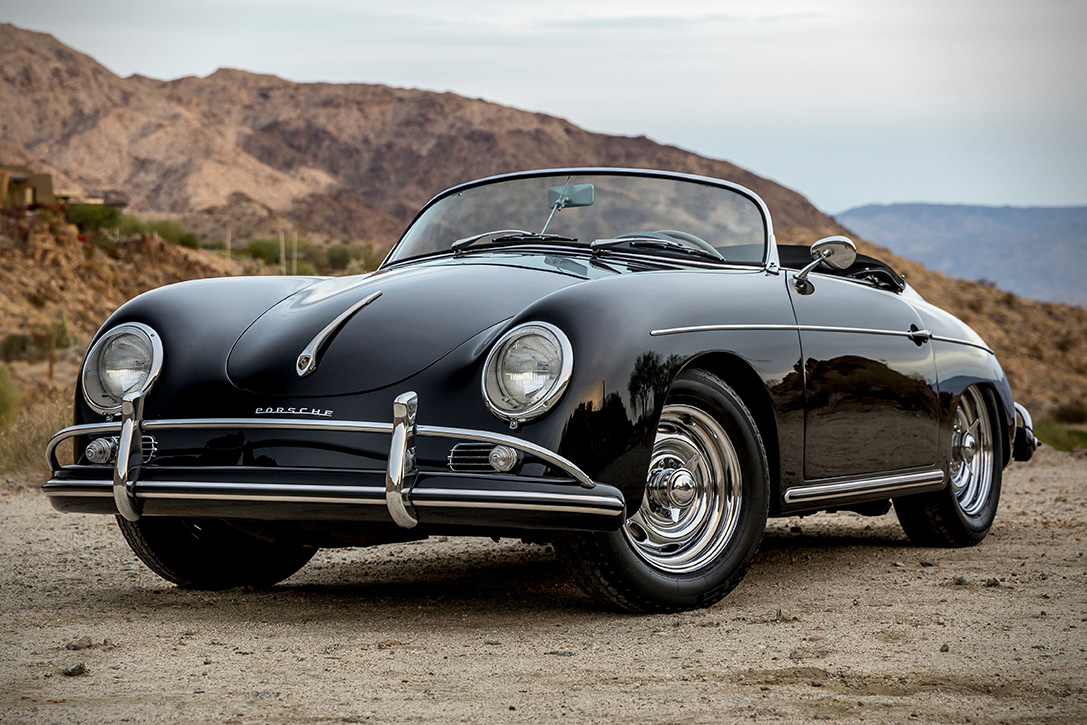
Porsche restoration essentially refers to taking a great classic Porsche and bringing it back to life with all (or most) of the original factory parts. The process involves repair of the visible parts (e.g., body trim, interior, etc.), as well as the parts not easily seen (e.g., electrical, suspension, brakes, etc.). The result is a beautifully preserved automobile in factory-new condition with authentic parts – just like it came off the showroom floor decades ago. Except things are not that simple, because the restoration industry has changed and now there are different types and levels of restoration. We will quickly tackle the types of Porsche restoration you can undertake for your prized possession.

Classic & Vintage Porsche Restoration

This is basically what we describe above. Taking a Porsche and bringing it back to life with all (or most) of the original factory parts. The main thing to note here is that just like there are different types of restorations there are also different quality restorations even when you are just trying to bring things back to production level. The type of restoration level you want is largely dictated by your budget and what you plan on doing with your car. The broad levels we will describe here are Full Concourse, Show quality and Driver level.

Full Concourse

These cars are perfect. A full concourse car means returning a car to its original factory condition. If you are building a full concourse car for show judging then your aim is to have the vehicle win top honors in its class at a formal concourse show. Candidly if you are building or buying a concourse level car then you are buying a piece of art and you are not driving it anymore. These are cars that are taken to events in closed trailers and are stored in temperature and atmosphere controlled environments. At this level, a restoration is about strict original authenticity.

The type of work done is also different, often using custom metal repair techniques and old school original tools. Every individual part on the car is refurbished. All assemblies are completely dismantled and rebuilt to ‘as new’ condition. Metal body panels are straightened to where there is no need for any plastic body filler and a minimum of lead filler. Perfect hides are used for the interior in exact colors and styles as original.

A lot of people think that this is the kind of restoration they want until money is mentioned. The level of master artisan and the thousands of hours needed to compete these cars means they are often out of reach for most collectors. We are talking the top 1%. Stories of restorations on very rare cars that have cost multiple million dollars is not uncommon.

Show Quality (Local Concourse)

Show quality restored cars look amazing. In fact, except for close inspection these cars look close to Level 1 Concourse cars. Up close these cars fall short (a little). The finish may show evidence of machine sanding and other defect in the paint or chrome and trim may not be perfect or non-original parts are used. This is a restoration suited for cars that are not collectible or rare and is more than enough for most car collectors.

A show quality car like this could place well in its class at most car shows, but would not do well at the biggest and highest acclaim shows (mainly because it would be competing against Level 1 cars). These cars definitely get driven often and is the perfect balance between wowing observers and still be a usable car.

Driver Level (Street Restorations)

Known as street level restorations this is what we typically see most often. These cars look great but the details are different than level 1 or 2 restorations. Typically, all deteriorated steel is replaced, door and panel gaps would still be nearly perfect and the use of minimal plastic body filler would be appropriate. Components that function would be refinished but not necessarily rebuilt. This kind of job may involve the use reproduction parts and interior seat and panel kits. These cars are mechanically sound and cosmetically attractive and are definitely cars that are used a lot by their owners. Everything works as it is supposed to and the owner can be confident of returning home after an enjoyable day. The car looks good and an appreciative audience will always gather around wherever the car stops.
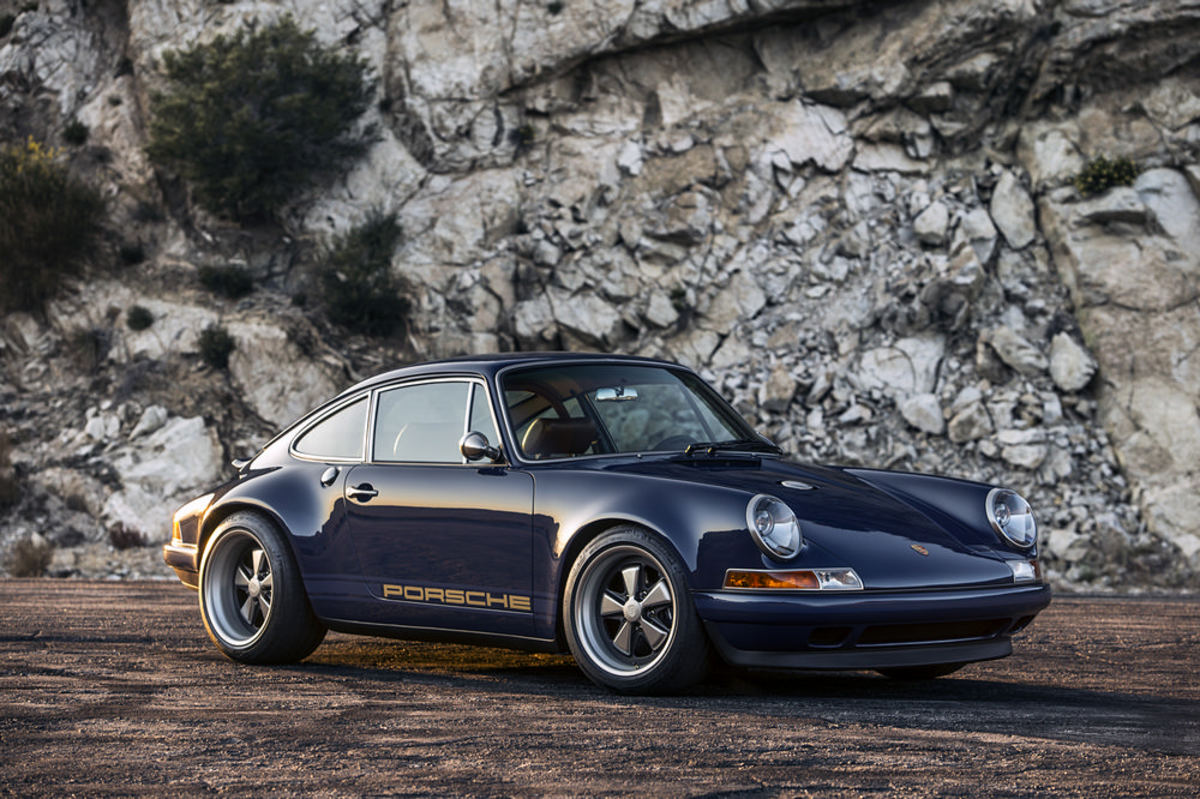
singer porschesinger porsche

Custom Porsche

Outlaw and restomod Porsches are different than restorations because they mix old and new. The goal is not to return a Porsche back to production spec. The idea is to create a unique Porsche, something custom and perfect for an individual buyer. As popularity for custom Porsches has skyrocketed recently, there is also a new breed of companies that is building “spec” production level customized Porsches and it seems every week a new company pops up that can offer you an off the shelf restomod Porsche to buy.

Restomod Porsches

The restomod is a relatively recent phenomenon (in terms of popular culture). These cars are all about mixing old with new, creating the best of both worlds. Typically it means taking classic styling with modern comfort, performance and reliability. Instead of using production parts, restomods use new parts designed to fit in stock locations. This way, the builder can add modern performance but also return the car to its stock state by refitting the original parts. What started as a few niche pieces like air conditioning kits and digital gauges has transformed into an aftermarket industry that provides parts to make classics truly usable as daily drivers and long-distance cruisers.

Like A restomod car has the timeless appearance of the original, but the outdated guts of the car have been replaced with the more modern, high-performance parts of today. You achieve the same great look, but your vintage car will be revved up with all the latest bells and whistles to create a much better ride for the owner.

Restomodding Porsches has skyrocketed in popularity in the last ten years. You can thank companies like Singer Vehicle Design who re-defined what an old 911 could be. The range of price points is quite wide in the restomodding space and as it matures as a restoration segment we are seeing companies pick niches they focus on. For over $500,000 you can buy a 964 based Singer Vehicle Designs Porsche or a 993 based Gunther Werks 400R. For a few hundred thousands dollars there are many shops that will sell you an off the shelf restomod or shops that will customize a restomod just for you.

Outlaw Porsches

Outlaw Porsches make people nervous. To collectors and old school aficionados they are a blight on the Porsche restoration scene. It all started in the 50s when Dean Jeffries modified his 356 Carrera’s body and ever since individuals have been modifying, customizing and making their cars faster. Unlike restomodders, outlaws fuse together vintage Porsche with classic looks with more modern components and body lines. They are not afraid to really alter the sheetmetal and change the look of cars. Like restomodding, outlaw Porsche demand has skyrocketed in recent years and everybody says they do it. Companies like Canepa, Emory Motorsports and Willhoit Auto Restoration are really the pioneers in this space and they continue to drive the segment forward.

While the term outlaw Porsche normally refers to the 356 (the whole industry is often known as “356 outlaws”), it is hard to ignore the 911 outlaws because they do exist. Perhaps the most well known outlaw 911 crew is the R Gruppe in California. They have help the phenomenon explode in popularity. The R Gruppe is the counterculture band of hot-rodders formed by the enigmatic Chris Huergas. They are a quasi-underground, semi-famous car club whose provocative devotion to hot-rodding early 911s that has earned it a reputation as the bad boys of the Porsche world.
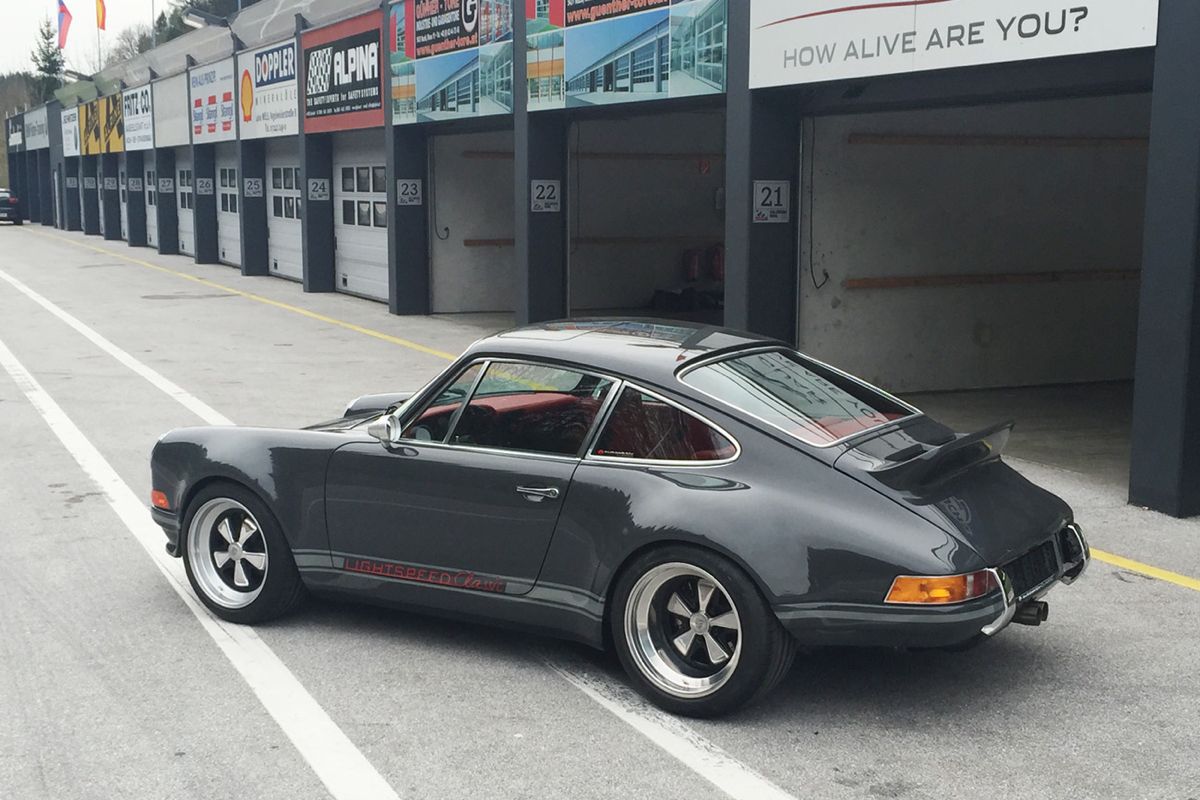

lightspeed classic 911lightspeed classic 911

Best Vintage & Classic Porsche Restoration & Restomod Companies

We have included our favorite Porsche restoration and restomod shops below. They are not in any particular order. Note that we also included some notable shops that aren’t as well known further down in this post, make sure to check them out too.
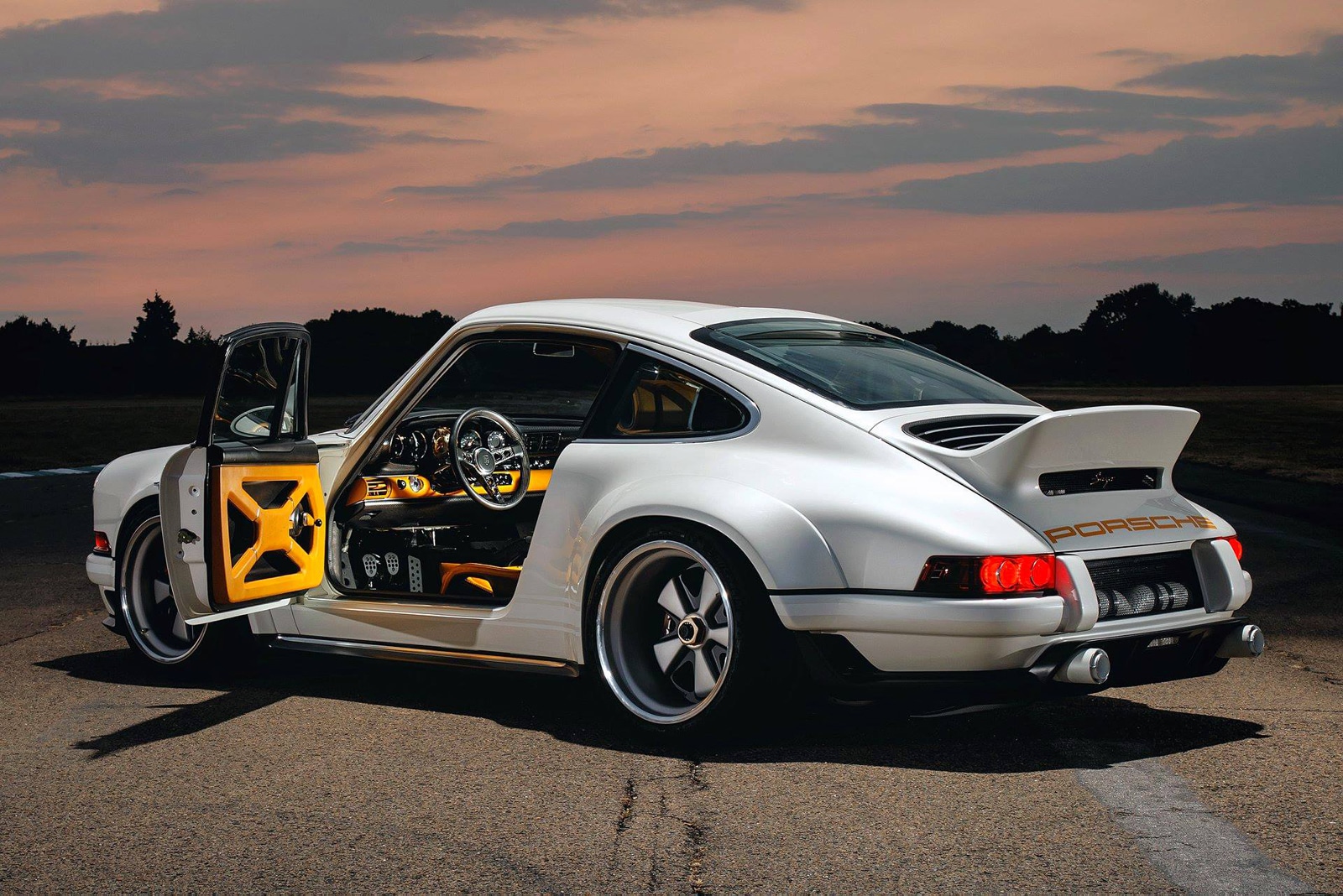
Porsche 911 SingerPorsche 911 Singer

Singer Porsche

Company: Singer Vehicle Design
Located: Los Angeles, CA (United States)
Website: Singer Vehicle Design

Singer Vehicle Design is Los Angeles based company that rebuilds and restores Porsche 911s. They are the very top end of the restomodding world. Founded by Rob Dickinson the company is known for its “re-imagined” 911. A totally custom Coupe or Targa Porsche 964 that takes restoration, customization and attention to detail to an entirely absurd level. The company’s gorgeously detailed interiors and painstaking engine work and ability to seemingly transform the 911 into something more, something better than it ever was has driven a lot of the excitement around Porsche restomod phenomenon.

After deciding to work with Singer, customers put down some money and turn over their 964 generation Porsche 911. Singer then goes to work and puts ~4,000 hours into restoring, tuning, and customizing it. That doesn’t come cheap. Singer Vehicle Design “basic” restoration services begin at $400,000 but average $600,000. To call it a restoration undersells it. For starters all the bodywork is replaced with custom carbon fiber body panels and the engine is reworked by engine manufacturers such as Cosworth and Ed Pink Racing Engines. The level of detail is astonishing, this is basically a new car, built from the ground up by artisans who would rather get it right than make money.

Singers most recent creation is an absolute masterpiece. Called the Singer Vehicle Design DLS (DLS stands for “Dynamics and Lightweighting Study”), it is a 1990 Porsche 964 whose owner requested Singer and Williams restore and modify his car with an emphasis on—you guessed it—reducing weight. The long hood of the Porsche 911 classic replaces the shorter hood of the Porsche 964. Relocated fuel filler and oil filler caps are a nod to historic Porsche race cars. The tachometer is colored in Singer Orange. Price point? Try $1.8 million.

The engine is a 4.0-liter naturally aspirated flat six worked on by Williams (yes, the F1 guys) and is good for 500 horsepower at 9,000 RPM. The motor boasts lightweight throttle bodies with supposedly F1-inspired upper and lower injectors, a unique oil lubrication system and it has dual overhead cams and four valves per cylinder. The suspension was also optimized by Williams.

The specs sound great, but the beauty of Singer cars is the detail. Just looking at them is an event. The interior is absolutely stunning, the body is perfect, the nuts and bolts and little things are just perfect. 75 examples of this $1.8 million restoration will be made available to customers. Selling my soul as we speak to get one.
canepa 959canepa 959

Canepa

Company: Canepa
Located: Scotts Valley, CA (United States)
Website: Canepa 959

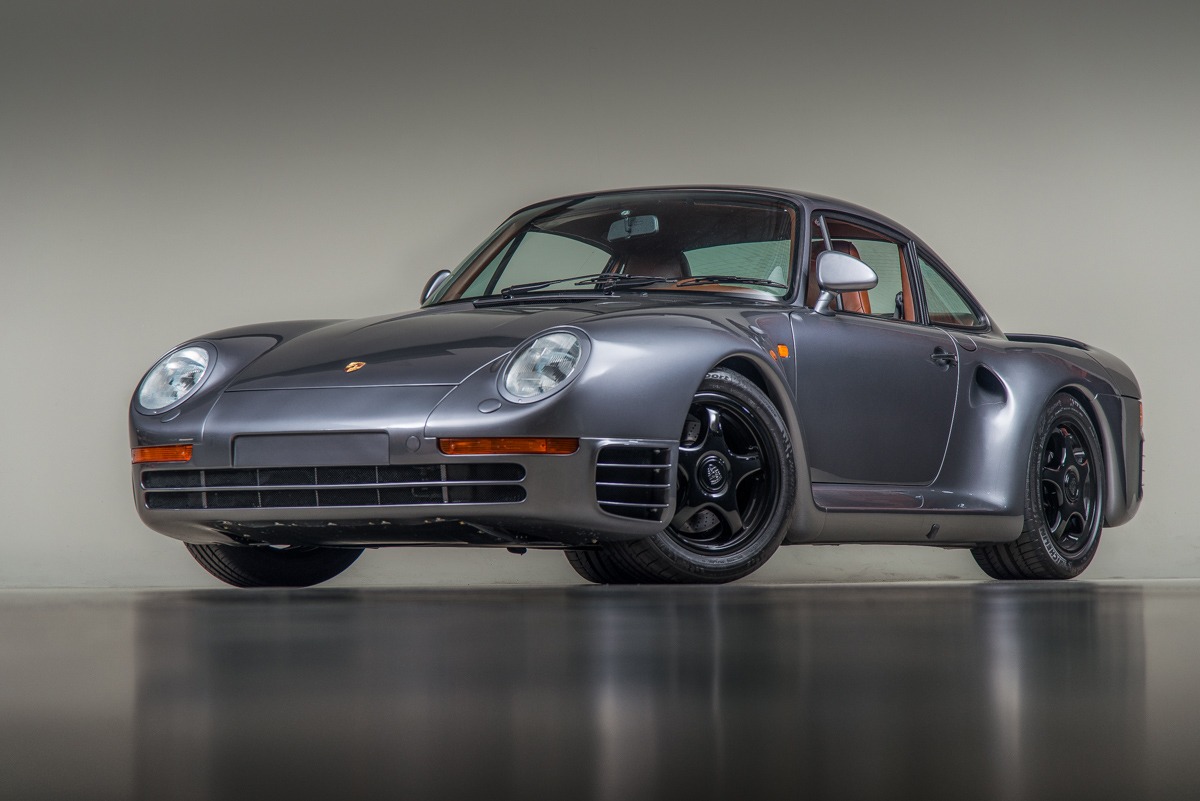
Longtime readers know we are huge Porsche 959 fans. We grew up in the era where the 959 came along and destroyed the competition. The car was initially developed to function solely as a B rally car. When it was introduced in 1986, the Porsche 959 was immediately identified as the world’s fastest street-legal production car. Production ended in 1988 with a total of 292 Porsche 959’s rolling off the assembly line. In total, 337 cars were built, including 37 prototypes and pre-production models.

While the 959 was a technical marvel in 1986, in 2018 it is easily beaten by the latest hot hatches. That’s where Canepa comes in to bring it up to spec and help it compete with today’s hypercars. In the world of Porsche 959s, few names are as recognizable as that of Bruce Canepa nut for those who don’t know, Bruce is a former race car driver and resto-mod master who helped get the 959 onto U.S. streets through the Show and Display law and has been restoring and modifying 959s ever since. Called the 959SC, Canepa’s latest restomod project thoroughly restores the original 959 and in the process adds boatloads more power. Porsche 959 owners in the U.S. can have Canepa perform all these upgrades for an undisclosed sum (ie if you need to ask how much…).

The highlight is a 763 hp engine upgrade. 15 years ago Canepa’s initial Gen I engine upgrade gave you 576 hp. A few years later the Gen II cars developed 640hp. In 2016, the all new Canepa Gen III system put out 763 hp and 635 lb-ft of torque. The 959s 2.8-liter twin-turbo flat six produced 444 horsepower in production trim, so clearly the 763 hp option is a big increase and isn’t far off the 878 hp 918 Spyder. The boost in power is thanks to new Borg-Warner turbos (now parallel and not sequential), a new engine management system, bespoke exhaust system, titanium heat shields, new fuel system, more powerful ignition system and a custom clutch pack. The added power results in a 0-60 mph time of just 2.4 seconds and a top speed exceeding 230 mph. That is modern hypercar performance.

Alongside the powertrain upgrades, the 959 restomod is much better to drive. Upgrades include a set of titanium coilovers mimicking the units that came as standard on the 959 Sport. Porsche built twenty-nine 959 S units with the S model extended the performance characteristics of the 959, including with a much more modern suspension system. The Canepa suspension upgrade begins with the factory S specification, and then incorporates modern suspension technology including a newly patented gas strut design and titanium coil-over spring componentry. Canepa even fits its own set of 18-inch alloys that replicate the look of the original but are made lightweight magnesium, thus reducing unsprung mass and aiding further in the handling department. With these suspension upgrades, Canepa says the “959 matches the handling and ride quality of any modern day supercar”.

Canepa doesn’t just focus on the engine and powertrain. Canepa has also restores the interior, outfitting it with brand new high end brown leather, carpets, floor mats and a hand-stitched steering wheel. A Porsche Classic audio/navigation system is also fitted (remember the 959 came out in an era where cassettes were still the thing to listen to). The bodywork is stripped down to the bare metal and repainted in any color the customer chooses – a nice benefit considering that Porsche only ever offered it in white, silver, or red. Plated components are recoated in zinc, the suspension is powder-coated (see below).

The restoration process entails over 500 hours spend on the bodywork alone (before it even enters the paint booth), and another 300 on the interior. Who knows how long it takes to get that engine upgraded. This is a complete restoration that takes a supercar and turns it into a hypercar.
Porsche Classic Project GoldPorsche Classic Project Gold

Porsche Classic

Company: Porsche
Located: Germany (with local partners worldwide)
Website: Porsche Classic Project Gold

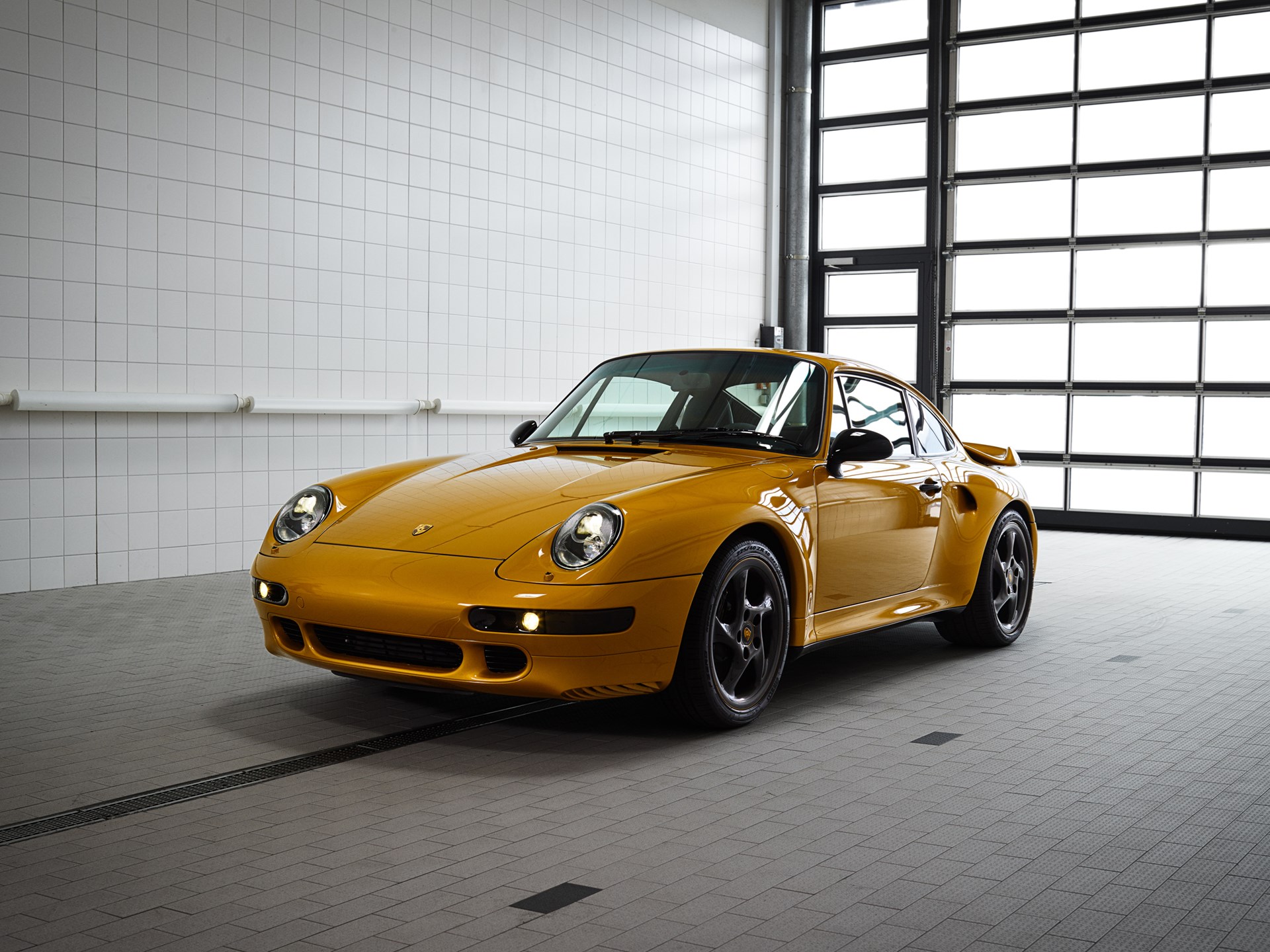
Porsche announced earlier this year that the marque’s 70th anniversary would in part, be celebrated with the release of a special ‘restomod’ car. Dubbed ‘Project Gold’, this endeavor was delegated to Porsche Classic, the company’s department in charge of restorations. The finer details of this project were kept under wraps, until it was finally unveiled during the 2018 Monterey Car Week taking place in Pebble Beach, California.

Backed by Porsche, this particular 993 Turbo is not your everyday restoration project – it is much, much more than the sleek new paint job and reimagined interior that are evident from a cursory glance. According to Porsche Classic manager, Uwe Makrutzki, Project Gold has been more than 2 years in the making and everyone involved was determined to create something very special with no compromises.

One of the first upgrades this 1998 Porsche 911 Turbo would receive is at the heart of the car – an air-cooled 450-horsepower 3.6L twin-turbocharged engine, from the higher-trim 993 Turbo S. While the replacement engine itself didn’t receive any modifications per se, it was taken apart, bored and rebuilt with newer internals. The engine is mated to a 6-speed manual transmission, delivering power to the car’s all-wheel-drive system. The suspension components also benefited from the project, with more modern shocks being retrofitted with original-style casings.

Inside, the car is a desirable blend of modernization and restoration. For example, the seats are bespoke and the use of carbon fibre and perforated leather is used throughout – however, to maintain the aura of the 993, Porsche Classic commissioned the same sewing machines used during that era to ensure that the stitching produced was the same length and pattern as the original cars. The attention-to-detail is remarkable.

As seen in promotional media, the color scheme is very much inspired by the new ‘Exclusive Series’ 991.2 Turbo S. Rear fender intake inlets were also fabricated onto the body by hand – a special team was entrusted with this task in order to enhance the car’s period-correctness.

Word has it that this 1 of 1, 1998 Porsche 911 Turbo will be auctioned off at a specially themed ‘70th Anniversary of Porsche’ RM Sotheby’s auction. Proceeds from the sale – which are expected to be in abundance – will be donated to the Ferry Porsche Foundation, which funds educational, social and youth development programs around the world.
ruf SCR 2018ruf SCR 2018

RUF

Company: RUF
Located: Pfaffenhausen, Germany
Website: RUF, RUF Restoration

Most people do not think of the RUF tuner company as Porsche restorers. They are known for building batshit crazy fast Porsches. The reality is the RUF is a soup to nuts Porsche shop that can do it all. They have more than 75 years of expertise in dealing with cars and have been working on Porsches since the 1960s. They define restoration as the faithful restoration of a Porsche to perfection. They have a division that focuses on this type of restoration, taking 356 and 911 models transforming them into perfect condition, both visually and technically.

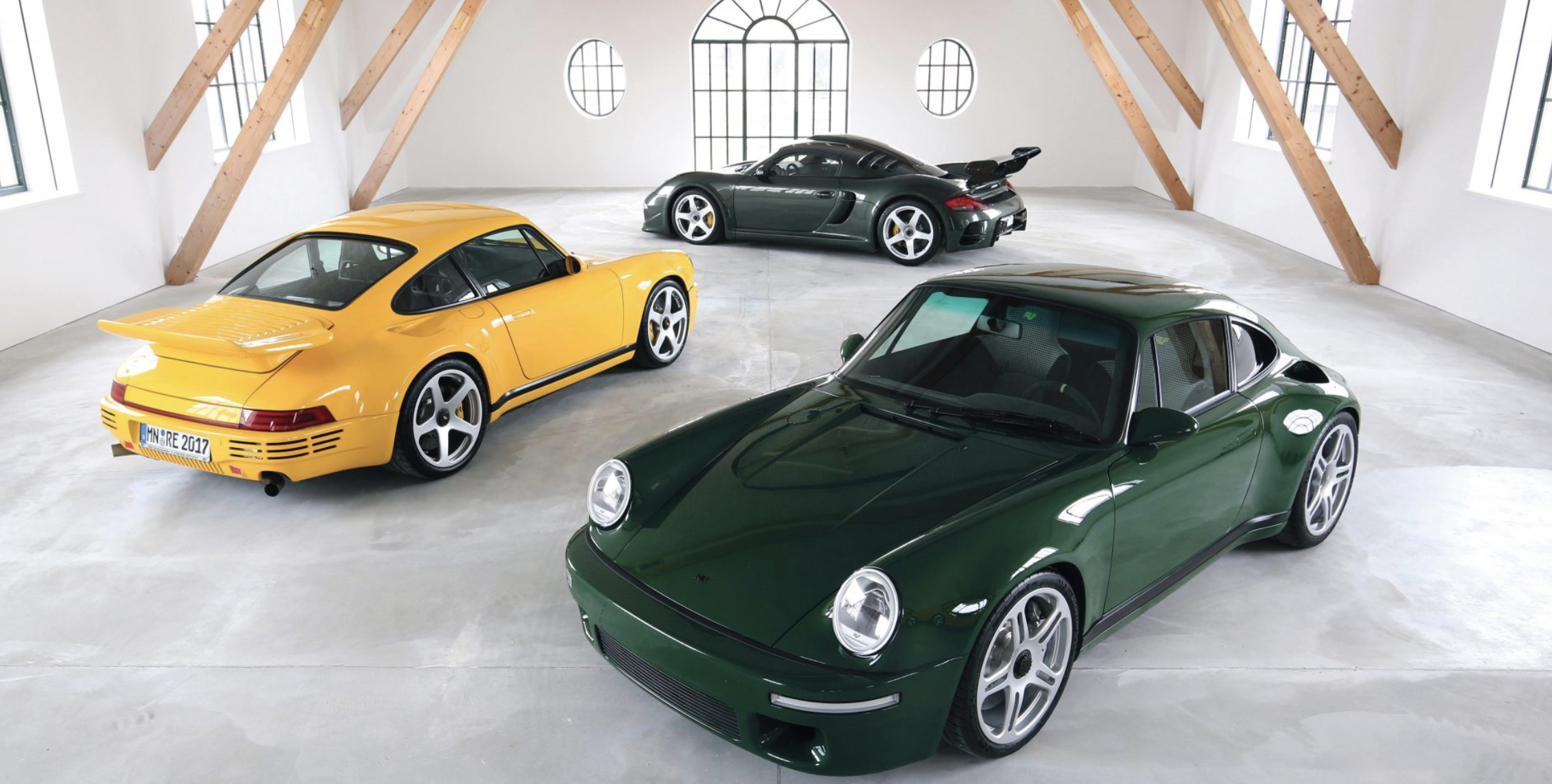
However, the cooler part of RUF is that they recently jumped into the restomodding bandwagon and developed a car we desperately want. Called the RUF SCR 2018 it is a stunner. More power, less weight, more driving safety and 4 liter naturally aspirated engine that have 510 hp, all wrapped in a classic Porsche 911 shape. Yes please.

Their goal with the SCR 2018 is to create a “unique state-of-the-art sports car for experienced connoisseurs and sports riders who do not want to miss the furioso of a naturally aspirated symphony”. The load-bearing structures, its chassis and body are uncompromisingly designed for its intended use. The carbon fiber monocoque is further reinforced by the integrated steel cage (IRC), pushrod suspension on all four wheels corresponds to the chassis of the Formula 1, and in the middle of the works more as a 500 hp six-cylinder engine with full four liters of displacement. Ready to drive, the new SCR weighs less than 1300 kilograms; The timeless and elegant body is made of a fantastically lightweight, solid composite material: carbon fiber.
Lanzante “F1 Engined 930”Lanzante “F1 Engined 930”

Lanzante

Company: Lanzante
Located: Petersfield (United Kingdom)
Website: Lanzante

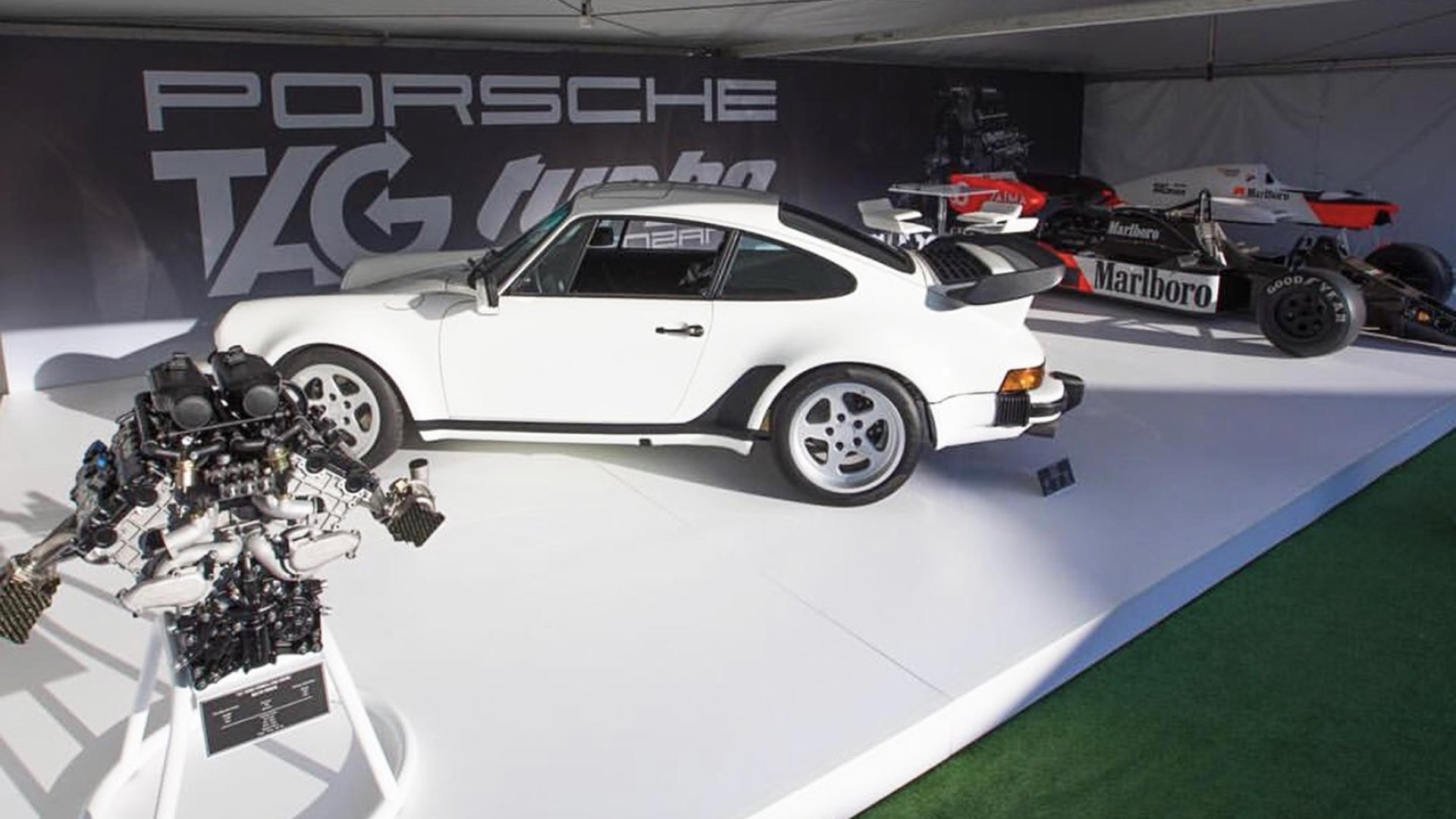
The ‘Widowmaker’ gets 1.5-liter turbo V6 TAG-Porsche engine with 750 hp. This is a name that will surprise knowledgeable car guys. Lanzante, the McLaren specialist is working on some cool restored Porsche ideas that peaked our interest. While it isn’t out in the wild yet, we’re so excited about it that it made our list anyway. Lanzante is very focused on outright performance. Remember that Lanzante Motorsport are the same people responsible for the McLaren P1 GT and the P1 LM so when they talk performance they know what they’re dead serious.

The English engineering firm is building 11 eighties-era Porsche 930s with genuine TAG-branded Porsche engines that the McLaren Formula One team used to win 25 races.

Yes, real V6 TAG F1 Turbo engines. Imagine being able to tell your friends at the pub that your classic Porsche is powered by an engine that has won an F1 race. Baller.

From 1984 to 1987, Porsche built a 1.5-liter twin-turbocharged V6, branded as the TAG-Porsche TTE P01, for the McLaren MP4/2 and MP4/3. The engine produced more than 1,000 horsepower in qualifying trim, and 750 hp in race spec. In its first three years on the grid, the engine powered McLaren to two Constructors Championships and three Driver’s Championships.

McLaren sold Lanzante the 11 engines for this run of restomod Porsches. Our friends at Cosworth are restoring the engines for the program and each of the 11 examples gets a plaque in the engine bay listing its engine’s race history.

Despite the insanity under the hood, the F1-powered Porsche 930 restomod is rather subdued in terms of looks (the first one was showcased at the Rennsport Reunion recently). Wearing just a set of RUF wheels it is understated. The interior is basic with a set of bucket seats and a bunche of new gauges including a 9,000 RPM taco (did we mention it is powered by a real F1 engine).

Lanzante hasn’t given us the headline numbers yet in terms of power, performance or whether these cars will even be road legal. Even if they are detuned a lot (which they will be) this is going to be a performance monster. The only thing we really need to think about is the nickname. If the 1984 930 was called the “Widowmaker” and it only had 330 hp, then what the hell are we going to call this?
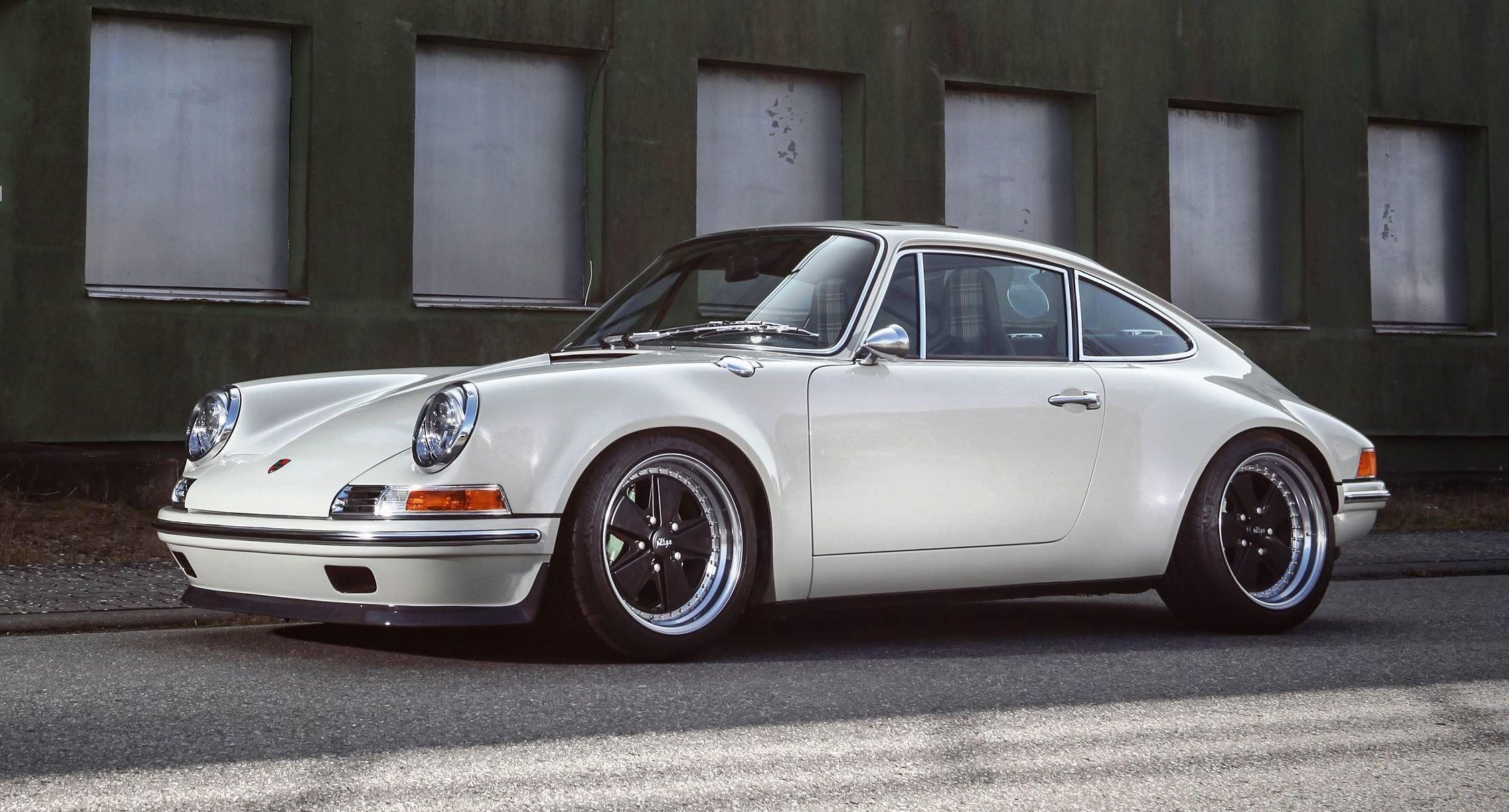
KAEGE RETROKAEGE RETRO

Kaege

Company: Kaege
Located: Stetten, Bavaria (Germany)
Website: Kaege Retro

Roger Kaege is our kind of guy. Roger (like the rest of us) saw a Singer Porsche in a magazine back in 2009 and was fell in love with the way it looked. He (like the rest of us) immediately checked out the price and said “oh shit that’s expensive” (I’m paraphrasing). As a vehicle and chassis engineer by training Roger decided (unlike the rest of us) to just build his own restomod Porsche. Like I said, Roger Kaege is our kind of guy. Roger wanted his own modern vintage so he went to work in his little garage. His Kaege Retro took the body of a 1972 911 combined with the platform and mechanicals of a rear wheel drive 993 and added 2,000 man hours building it into his perfect car.

We love the Retro because you get a modern, air-cooled platform with a stock 3.6-liter flat-six with 296 horsepower and a six-speed manual out of the box. Remove 400 pounds in weight compared to a stock 993 and it’s a tasty mechanical package. 296 horsepower doesn’t sound like a lot, but it provides solid performance in a car that weighs so little. He’s achieved the balance between modern performance and retro optics.

Rather than try to copy Singer, Kaege took his own approach and that made a big difference, especially in terms of costs. First of all, Kaege largely used series production parts versus custom parts and that means both lower cost and better reliability and to keep the cost down with the benefit of proven reliability and serviceability.

Kaege started with an F-Series 911 body and goes to work widening the body significantly. Kaege replaced many of the stock body panels like the front bumper, hood and rear end of the car in carbon fiber. Thanks to those carbon parts and the Kaege Retro tips the scales at 2,634 lbs (400 lb lighter than a stock 993). While the look is vintage 911, big three-piece Fuchs wheels, modern Osram LED projector headlights and a carbon-fiber front splitter add some aggressive modern touches to the exterior and really help with the Retro’s great stance.

On the inside there is a mix of parts from various generations of 911. The 996 steering wheel is ugly (needed for its airbags), but the two-tone, leather interior materials are a great upgrade. Recaro seats and a modern Becker Mexico radio with navigation round out the interior.

From a pet personal project to a now thriving restomod business, Kaege will now build you your own 911. Every Kaege Retro is built to spec so you can optimize it for your own retro 911 desires. If you’re looking for a relatively modern Porsche that you can easily use every day this may be the restored Porsche for you.
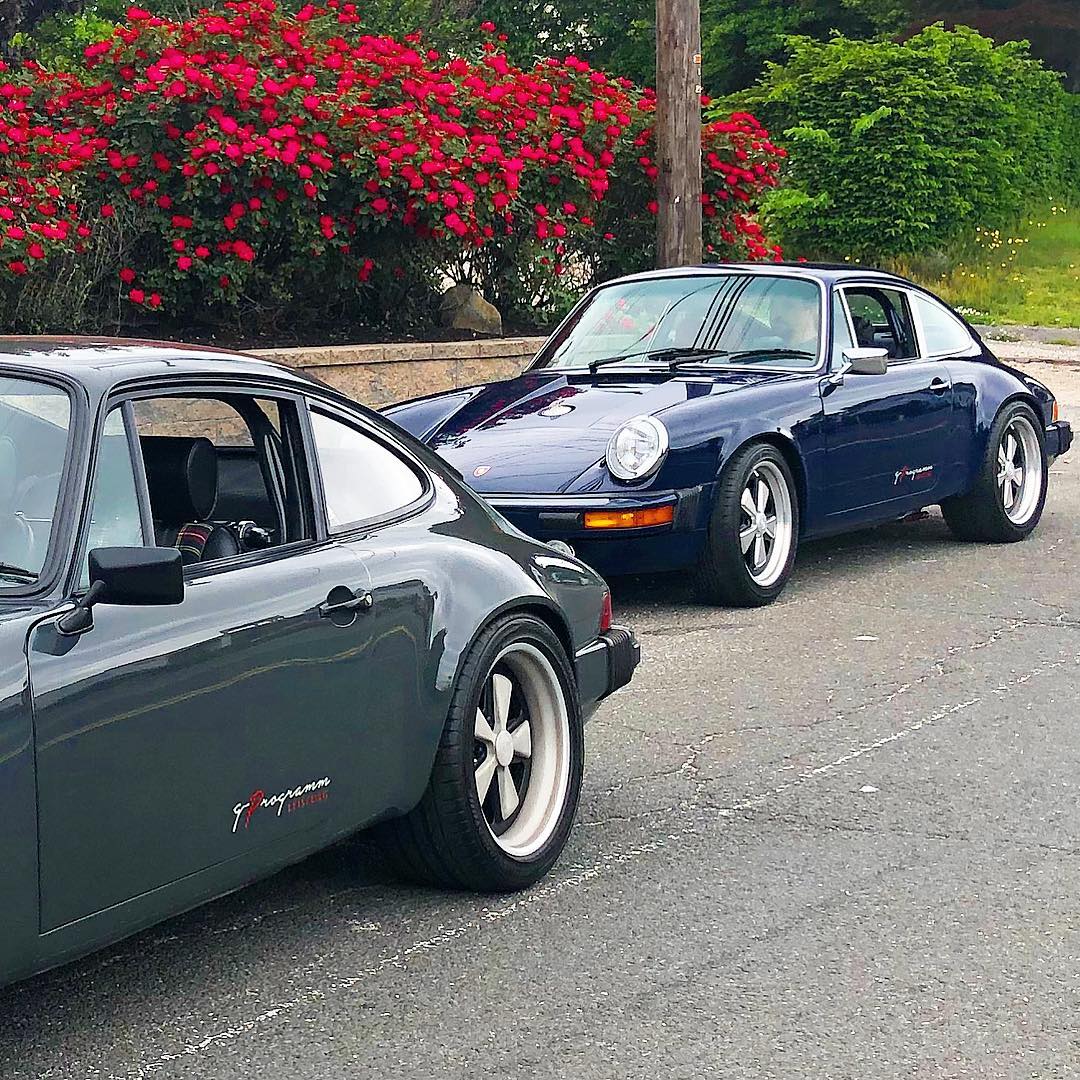
gprogrammgprogramm

gProgramm

Company: Collector Car Showcase
Located: Oyster Bay, NY (United States)
Website: gProgramm

Collector Car Showcase is a small company most Porsche fans may not have heard of yet, but if you’re a local living in Long Island New York like myself and into Porsche they are an outfit that have hit the car scene hard in the last five years and their GProgramm is impressive enough to make our list.

Based in Oyster Bay, New York the gProgramm focuses on really high quality restorations on G-Body 911s (built from 1973 until 1989). The team does full nut and bolt restorations and covers the “fun custom Porsche restomod project” through to “numbers matching correct restoration” range. Expect to pay between $200,000 and $260,000. While it isn’t Singer-money, it is still an expensive proposition for a Porsche owner. What GProgramm offers though is a great package for those who can afford it. You get look of the 70s and 80s impact bumper cars, more power than a stock 911 and higher end finishes and materials with quality workmanship and attention to detail at half the cost of a Singer.

While it is hard to locate the cars that gProgramm has created, Matt Farah did drive one a few years ago so let’s focus on that one. It is 1979 “G-Body” Porsche 911 that has been thoroughly updated.

The chassis is stripped to bare metal and rebuilt from the ground up. Each chassis undergoes the full reconditioning and repaint, as well as custom strength welding and front strut bracing.

The engine is totally built-to-order, with 3.2- and 3.4-liter options, a choice between carburetors or fuel injection, and a twin-spark option. Matt tested the 350-horsepower 3.4L “Twin Plug” flat-six and said it felt like a good power-to-weight ratio that is enough power to get yourself in all kinds of trouble It’s linear enough and it’s not overwhelming to the chassis. The gearbox is still a 915 version 5-speed. Remember that this is a 2300 pound car so it seems more than powerful and well balanced.

It isn’t just about a bigger engine either as this car handles. Gone is the torsion beam and in comes the full coil-over suspension with Bilstein dampers. Boxster Pistons at all four corners also ensures it stops well too. It gets slightly bigger and we’re 255 rear tire, Bridgestone Potenza Very direct steering, not power assisted.
The inside gives you a vintage-inspired interior with improved quality materials, a cool roll bar, and a nice Momo Prototipo steering wheel. It feels like a comfortable place to be.

gProgramm’s  mission sums up their position in the crowded restomod world: “Increasing every level of performance without disrupting the very soul of an early 911 Carrera RS was the driving experience we strive to achieve”. Their goal is to find the very special place where a visceral pure driving experience meets the modern day track capable/road designed sports car.
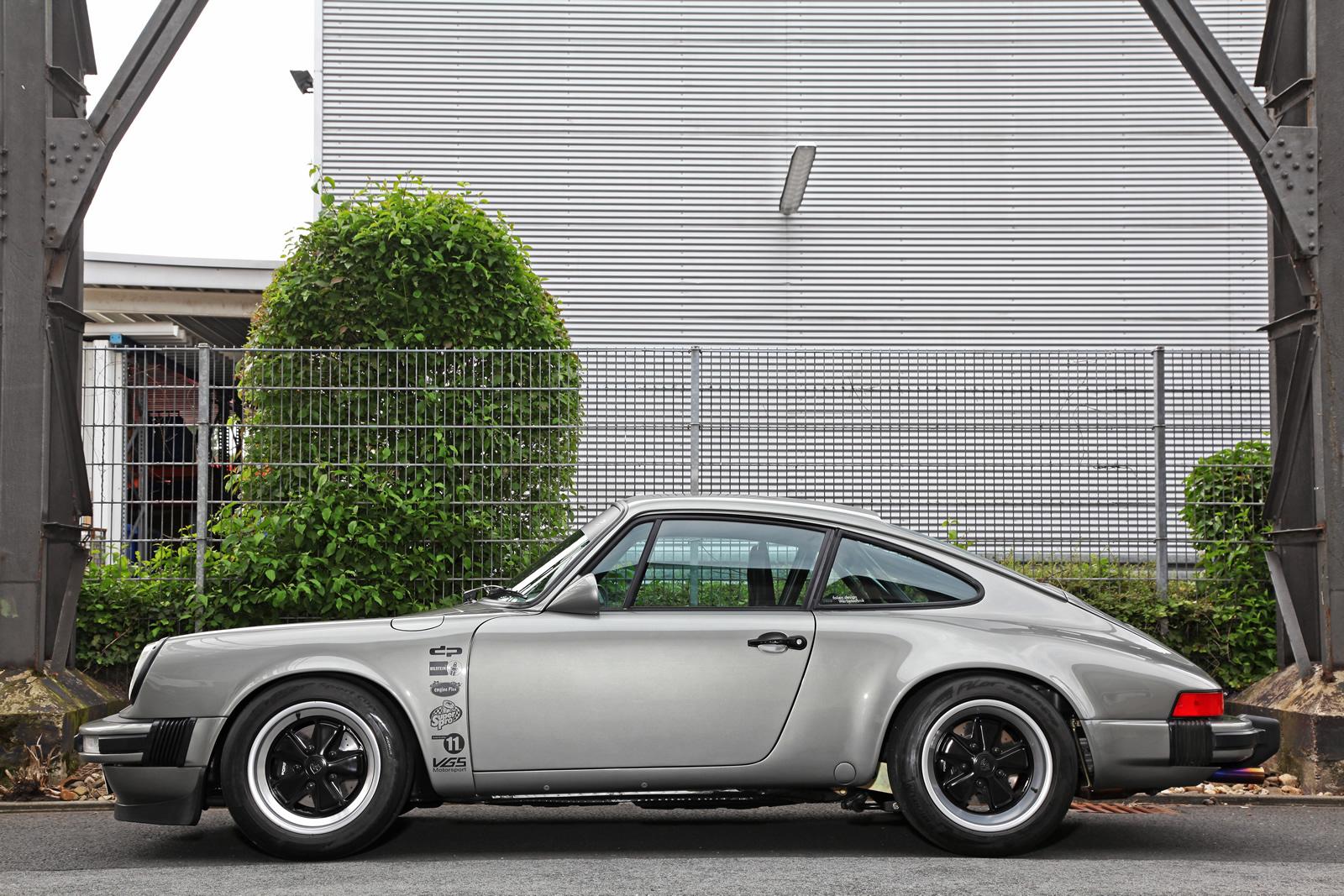
DP Motorsport PorscheDP Motorsport Porsche

DP Motorsport

Company: DP Motorsport
Located: Overath, Germany
Website: DP Motorsports

Based in Overath (near Cologne) in Germany, DP Motorsport was founded in 1973 by car nut Ekkehard Zimmermann. In the 1970s and 80s DP Motorsport built and modified Porsche 935s that raced the 24 hours of Le Mans and other championships, mainly for the famous Kremer and Joest teams. In 1983 DP Motorsport began producing street-legal Porsche 911 / 930 based Porsche 935 replicas (the cars had the slantnoses, wider bodies and much more power). With Ekkehard’s experience and success in racing the company was able to make street legal Porsches with serious racing-pedigree.

Over the past decade, DP has already delivered some epic Porsche 964 based restomods but their latest “Speedy Irishman” product has us most excited.

The latest DP Motorsport creation starts with a ’90s-era 964 Carrera 2. The body is widened to give it that aggressive stance we love while making the 964 look more like a first gen 911. The body is made of a carbon/Kevlar reinforced plastic and is painted an Irish-green (color code 213). Other external changes include new forged 17-inch Fuchs alloys that are wider than original as well as chrome trim everywhere.

Inside the DP Motorsport team refitted the interior with brown leather and upholstery. Recaro seats and a black Alcantara Momo steering wheel (matches the dashboard and center tunnel). There is even a cool layered wooden shift knob and a modern Porsche Classic 3.5-inch navigation entertainment system with Bluetooth to modernize the car further.

And as you might expect, the engine has been tickled too. The engine is a 3.8-liter flat six produces 325 horsepower channeled to the Michelin Pilot Sport rubber through a G50 five-speed manual gearbox with RS differential lock. Under the widened track and carbon-Kevlar fenders is an upgraded the suspension with KW Clubsport coilover shocks, Unibal strut bearings as well as the PU sockets on the front axle guides.

Overall the new Speedy Irishman looks like a great achievement by the guys at DP Motorsport. They have other options available too for those who want something different, with a full catalog of “backdated” variants. You can get  a simple, narrow F-model replica with 280hp or go the whole hog and get a 2.8 RSR with duck tail and 325hp.
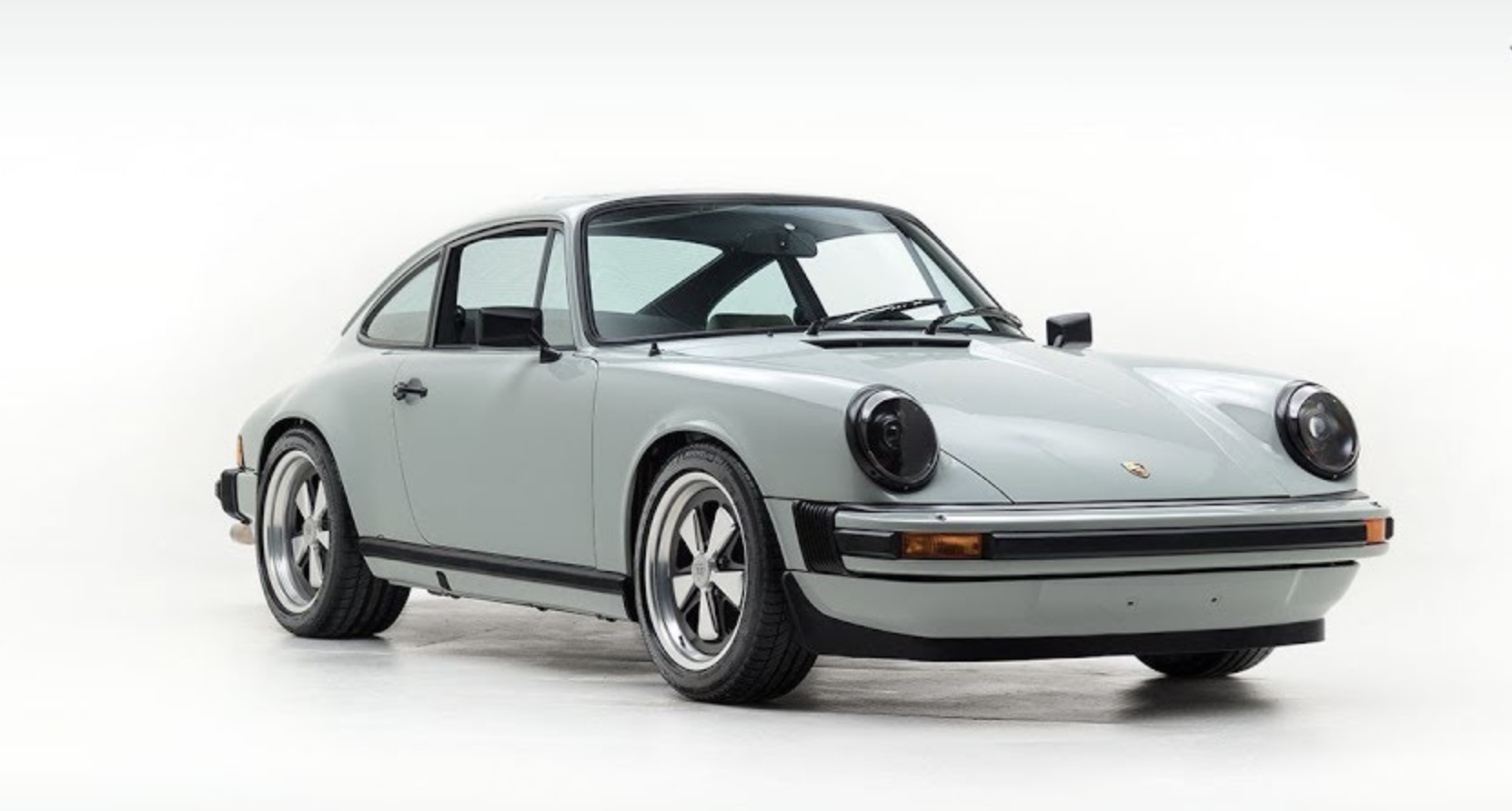
Straat PorscheStraat Porsche

STRAAT

Company: Straat
Located: Miami, FL (United States)
Website: Drive Straat

STRAAT is a premier restorer for Porsche 911s based in Miami. They build custom classic 911 restorations that aims for concours level quality. STRAAT does both full nut and bolt restorations as well as custom built 911s. While they don’t have a fixed “model” per se, they do sell restore (they even have the coolest online custom 911 builder tool). Whether you order a classic restoration or a full custom build, every Porsche 911 delivered from STRAAT begins with a full nut-and-bolt restoration. We document every step of the way, from the moment it enters our production facility to the day the new owner takes it home.

The team of mechanics at STRAAT has been restoring and customizing vintage cars for decades so they know their stuff. They are really picky too, staying away from hidden rust, a modified chassis, non-matching engines, serial ownership, and a poor maintenance history.

The restoration process is a tear down affair, completely disassembling the car down to its tub and then going through a thorough refinishing process. The power train, including the engine, transmission and clutch assemblies are overhauled. All sheet metal is powder coated, and all hardware is zinc plated or treated according to correct factory standards. The engine receives a complete cosmetic restoration so that it looks like it did when it was first built. They also fully disassemble, inspect, overhaul, reseal and restore the transmission. New Porsche factory foil decals are installed in the engine compartment, and all wiring and relay boards are removed and reconditioned. There is lots more too.

STRAAT ensures that only the highest quality parts and labor go into their restorations and you can tell from the finished products. One cool touch is that once STRAAT restored 911s are finished, they create an exhaustive photo and video portfolio for each vehicle, which is delivered to the new owner on a USB drive and hardcover coffee-table book. Having already documented the restoration process, one final studio photo session completes the extensive history they collect for each car. Very cool.
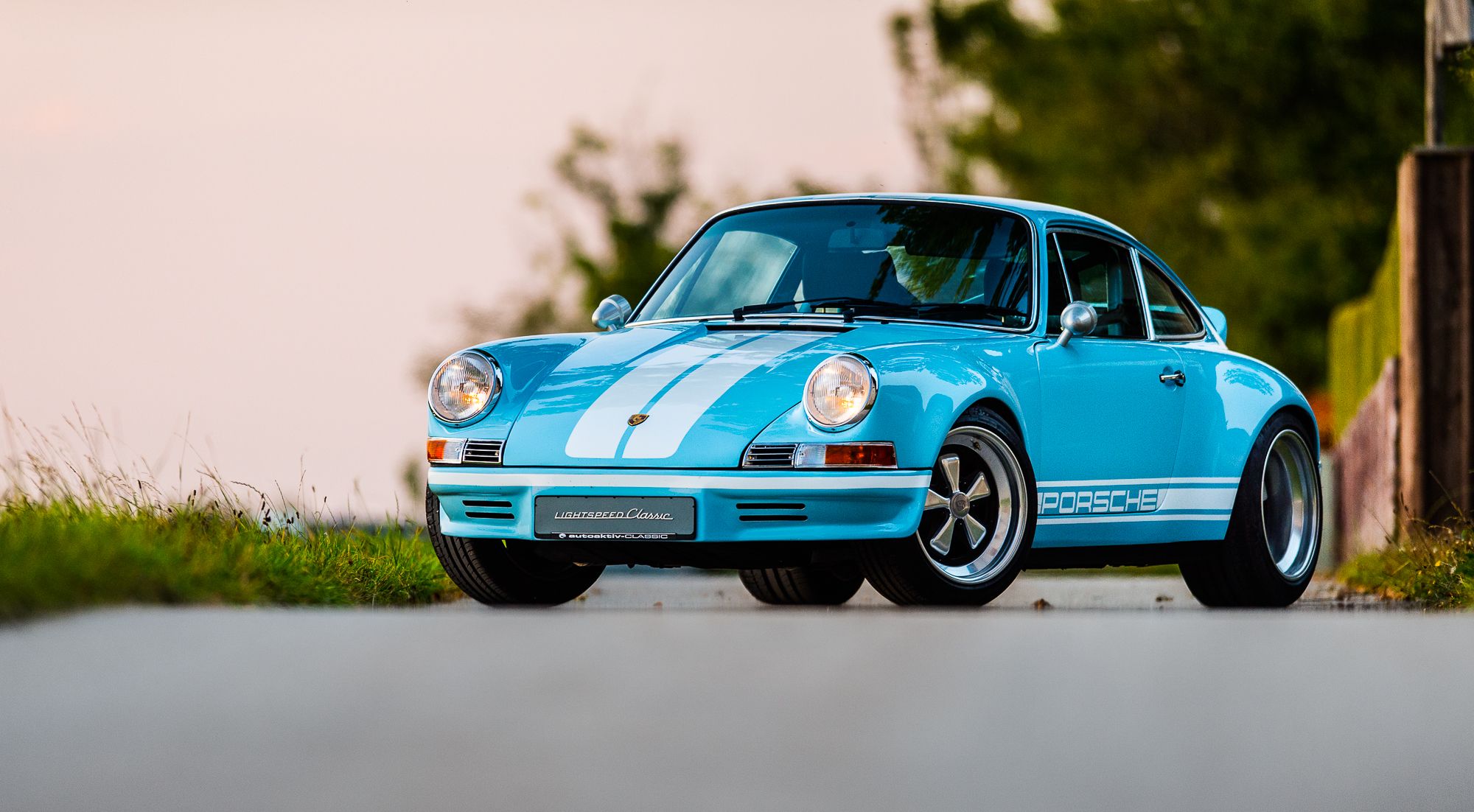
Lightspeed Classic PorscheLightspeed Classic Porsche

Lightspeed Classic

Company: Autoactive Motorsport
Located: Taufkirchen (Germany)
Website: Lightspeed Classic

Ralf Skatulla who founded and runs Autoaktiv Motorsport just outside of Munich knows Porsche well, having worked at the manufacturer during the mid 80s till late 90s. Ralf’s take on restomod Porsches is unique in that he wants his cars to be serviceable by any Porsche certified repair and maintenance shop. He does that by focusing his efforts on using modern parts throughout his builds. They formed Lightspeed Classic to focus on 911s and we can say we’re big fans.

The Lightspeed Classic 911 is a meld of ‘90s and 21st Century tech wrapped in a ‘70s look. The formula is simple – reduce weight, increase power and give cars that classic stance.

Like a lot of other Porsche restoration shops, the Lightspeed Classic crew likes the 964 as a startpoint. In their words it is the “first production 911 to use coil springs that can easily be swapped out for fully adjustable coilovers and other competition-based components and the 964’s G-Series derived bodyshell can be easily modified to evoke the look of the earlier long bonnet cars that my clients want.”

Lightspeed has achieved a very significant weight saving versus standard. While normal Porsche 911s used aluminum for the bonnet and door skins of their RS models, the Lightspeed Classic instead goes for carbon fiber units, made custom by an carbon fiber parts manufacturer who creates airplane parts for a living. The hood, front, and rear fenders all get carbon fiber replacements. At just over 2,100 lbs (depending on spec they can be a little more than that) this car is light on its feet. The weightsaving is even cooler when you notice that the car has been widened and that it’s nearly as wide as a 930 Turbo.

Couple the lightweight chassis with an engine that starts life as a 3.8 liter 964 RS unit that has been thoroughly fettled and we are starting to love this restomod. The engine gets titanium bits and upgrades throughout. It gets a 993 911 RS injector holder assembly, comprising of six injectors lifted from the 996 and adapted for the 993’s ECU. It also gets a new six-speed manual gearbox taken from a 996 Turbo and mated to a 997 GT3 RS’ clutch. Output is a healthy 340 horsepower at a 7,500 rpm redline.

On the inside there are fine details everywhere. The leather trim, lightweight door cards with chrome trims for the door openers, leather piping for all the carpets and the early style perforated leather on the horizontal dashboard insert all add up to make sitting in this car feel very special indeed. Details matter in this build so seeing the there are custom-made Porsche sports seats instead of standard Recaro race seats (that just don’t look right in a backdated car) is really cool.

You can get the restomod starting at around €100,000 and spend up to €170,000 for the top of the range spec, not including of course the fact that you need to bring your own 964 with you and drop it off.
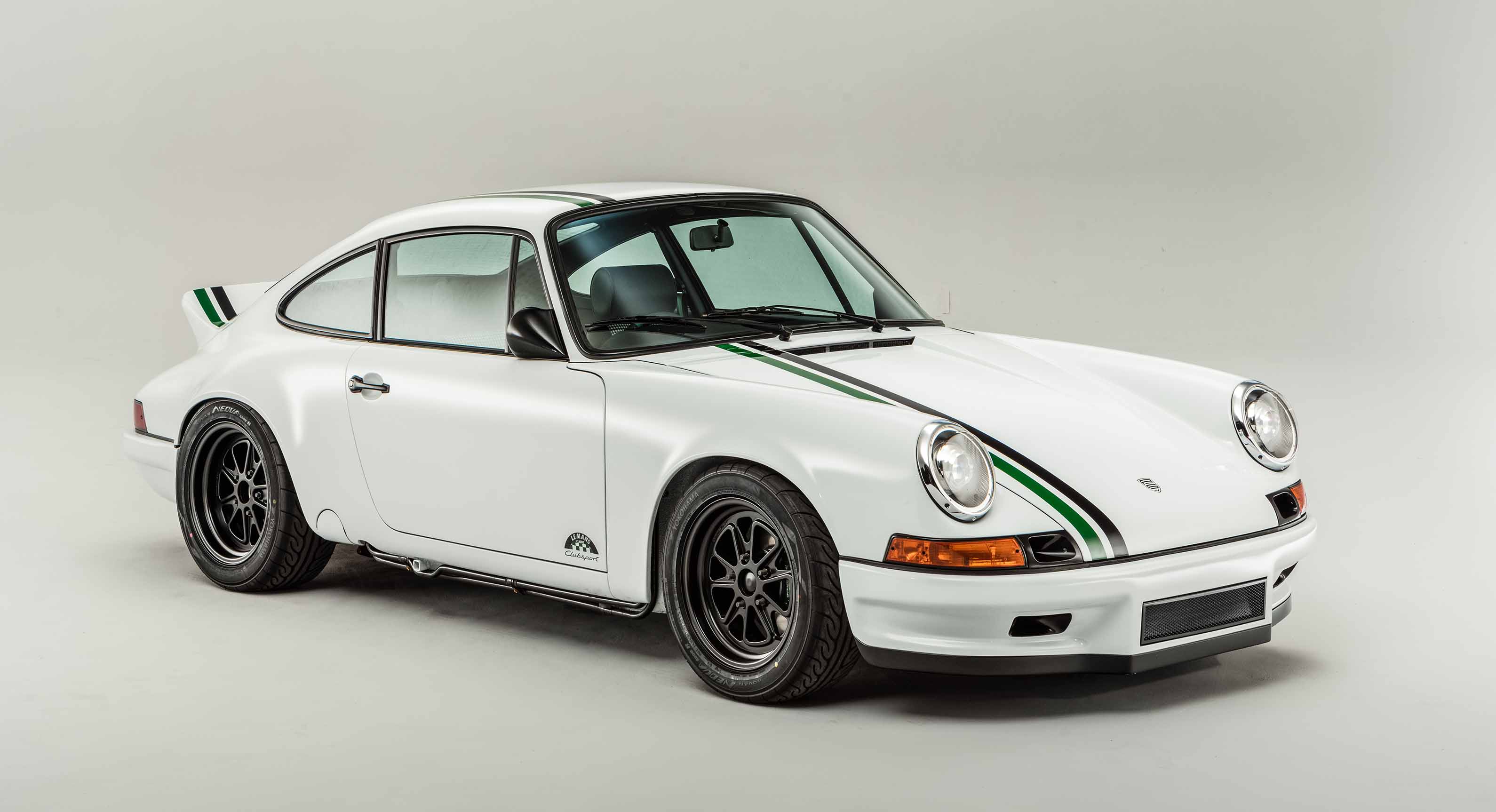
Paul Stephens Le Mans Classic ClubsportPaul Stephens Le Mans Classic Clubsport

Paul Stephens AutoArt

Company: Paul Stephens
Located: Essex (United Kingdom)
Website: Paul Stephens

Paul Stephens is considered THE Porsche guy in the UK. Restoration and restomodding is his forte and he has been doing longer than anybody else. His PS AutoArt range offers everything from restored cars with mild upgrades to custom Speedsters and very rapid lightweights.

The story goes that when Paul saw that 964 911s were so cheap that restoring them didn’t make financial sense, he began hot rodding them. With the help of some folks from Ginetta, he soon started building his own body panels, and by 2005, the first Paul Stephens 911, the PS 300R prototype was ready. It was the ultimate old-school 964-based 911. That was 13 years ago and he has been going strong ever since and helped start the craze we know as 911 restomodding.

His PS Lightweight R was one of our favorite restomods. A 964 with an aluminum hood, mirrors, trunk lid, lightweight bumpers and a thinner rear screen for a weight figure of 2,689 lbs. Powered by either a 250 hp 3.6 liter flat-six or 330 hp 3.8 liter flat-six with a performance exhaust, it uses aluminum wishbones all round. The wheels are Paul Stephens own Fuchs variants, brakes are from an RS while this model also comes with power steering, a performance exhaust and ABS as standard.

Recently, Paul Stephens shared his latest creation, the new special edition Le Mans Classic Clubsport. This $350,000 special-edition gives you a 300 horsepower 3.4 flat-six (courtesy of an advanced injection system, a reprogrammed ECU, GT3 RS-specification camshafts, a lightened and balanced crankshaft and lightweight conrods) connected to a G50 manual gearbox with lightweight flywheel and a limited-slip differential. 0 – 60 mph is over in 4.4 seconds and the Classic has a top speed 170mph. You also get a de-seamed roof panel, an aluminum bonnet, composite bumpers and engine cover, a ducktail and aerodynamically optimized mirrors. All this totals to a weight figure of 2138 lbs as long as you choose the Lightweight spec (instead of Touring).

This is a Porsche restoration and customizer with a lot of experience. PS AutoArt creations are hand-crafted and feature timeless style combined with modern features and performance, built to your individual specification from our proven ‘starting-points’ or to your own one-off vision.

Every AutoArt car combines classic and modern to give you an unrivalled driving and ownership experience. Starting with a fully restored bodyshell, mechanics are fully rebuilt and enhanced throughout, while the hand-finished interiors offer a visual and tactile delight. Practicality is important too. These are cars to use every day if you choose, with fully galvanised bodies, 12,000 mile service intervals and a 3 year / 60,000 mile warranty.
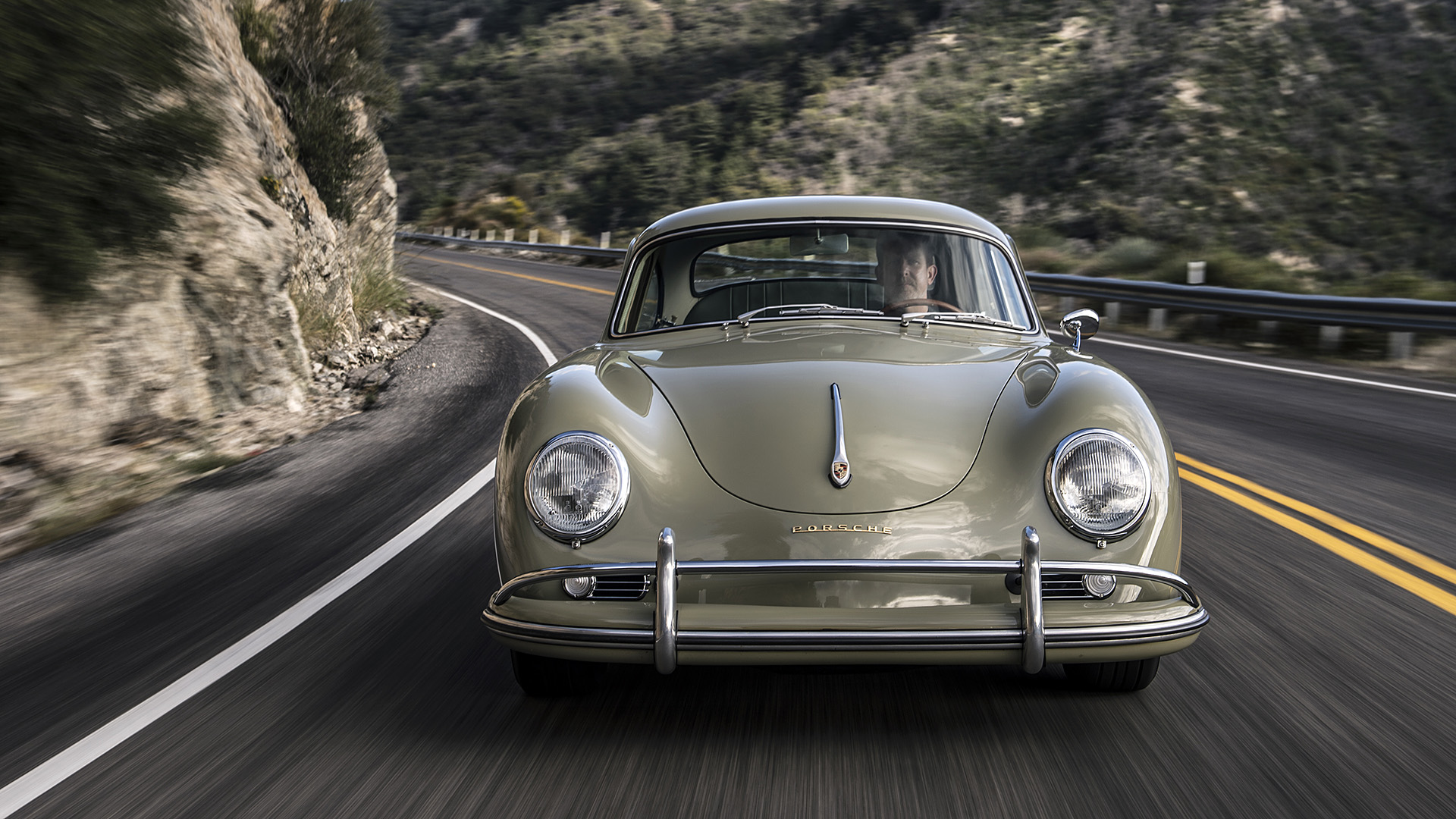
emory outlawemory outlaw
Source: drewphillipsphotography on autoweek.com

Emory Motorsports

Company: Autoactive Classic
Located: McMinnville, OR, N Hollywood, CA (United States)
Website: Emory Motorsports

This the the Porsche 356 restomodder you want. Emory Motorsports basically invented the Porsche “Outlaw,” rearranging 964-series Porsche 911 internals to fit under the Porsche 356 body.

Rod Emory has been building vintage Porsche Outlaws forever he started Emory Motorsports in 1996 with a few simple goals: to build the most iconic, yet personalized Porsche 356s on the planet and to deliver a customer experience unlike any other in the Porsche marketplace.

Over the years they have built over 170 Porsche 356 and 911 ‘Outlaws’ as they have come to be known.

They totally tailor build each car for their clients so they are unique in that they are not in the “stock restoration” business. Each restoration is a top to bottom affair from its metal unibody and exterior to its mechanicals and interior, everything gets touched. While they customize each car their broad product categories fit into the 356 Outlaw, Emory Special and Emory RS range.

The first and original category is the Emory Outlaw. Its body and chassis are all steel, just the way it left the factory in Germany. They perform a concours-quality restoration to the metal while stiffening the chassis in preparation for its modified 911 suspension and proprietary Emory-Rothsport 4-cylinder engine. Its styling cues are rally- or race-inspired, but the body shape remains stock in appearance. Within this category they can “Outlaw” the Coupe, Speedster or Roadster models. Every Outlaw is outfitted with an Emory-Rothsport Outlaw-4 engine as standard equipment.

Depending on the level of Outlaw you have selected, the build timeline typically takes 12-18 months from the time they begin the metalwork.
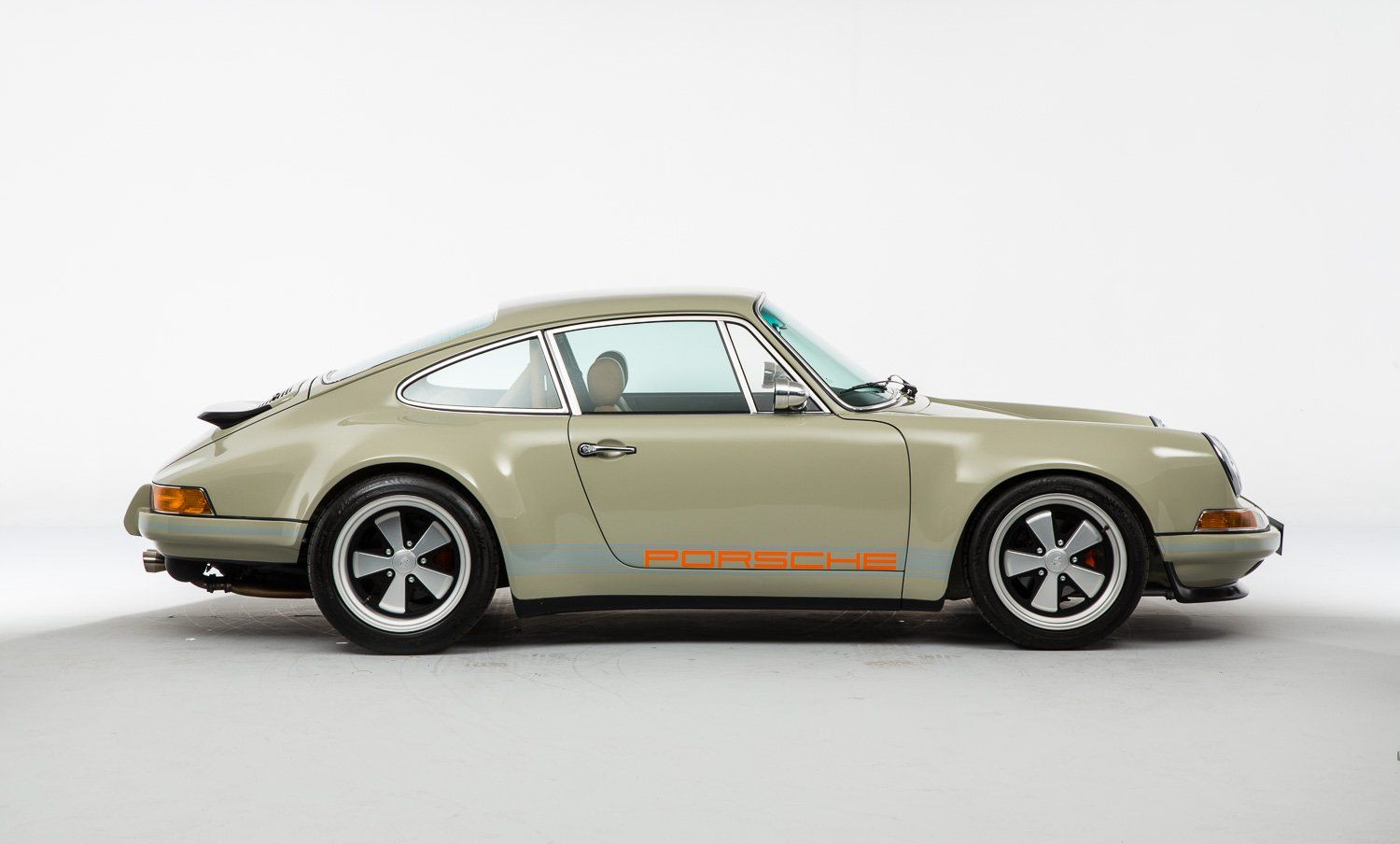
Theon Design PorscheTheon Design Porsche

Theon Design

Company: Theon Design
Located: Deddington (United Kingdom)
Website: Theon Design

A new name in town is Theon Design. They are UK based Porsche specialists who recreate, restore, source and sell the air cooled Porsche 911s.

Founder and Porsche fanatic, Adam Hawley has been a Car Designer for the last 15 years and it was always his dream to re-design and restore the cars he loves most and in 2014 that dream became a reality when he created a recreation prototype. The response to the car was phenomenal and resulted in setting up a prestigious workshop in Deddington, Oxfordshire that recreates and restores air cooled Porsche 911’s to the highest standards.

On the restoration front they focus primarily on pre-1974 Porsche 911s, and restore them back to exactly how they left the factory many years ago. However, whilst it is imperative to restore every last detail back to its original condition, they do utilise some modern materials to improve comfort like sound deadening and insulation.

On the recreation front they are going down the Singer route. Their pitch is that they offer reimagined Porsche 911s with Singer-ish looks and performance for half the price. If you think about them as coming up with carbon fiber 911s in the UK for less than half of Singer’s base price in the U.S then you are pretty close. The donor cars get stripped down to the pure metal and a total transformation goes from there. And once the body was got sorted, steel parts such as the fenders, the bumpers, the hood, the spoiler and the roof gets replaced by pre-preg carbon fiber panels. Engine choices start with a stock, but fully rebuilt 3.6 with 285 horsepower. If screaming naturally-aspirated flat sixes is your thing then there is also a mildly tuned stroked 3.8 with 350 hp, or a full blown four-liter with an RS crank producing 400 hp. Optional ceramic brakes, fully adjustable Öhlins dampers, a modified wiring loom for all the gadgets, double-stitched leather interior, or stereo delete and manual windows.
Gunther Werks 400R porscheGunther Werks 400R porsche

Gunther Werks

Company: Gunther Werks
Located: Southern California (United States)
Website: Gunther Werks

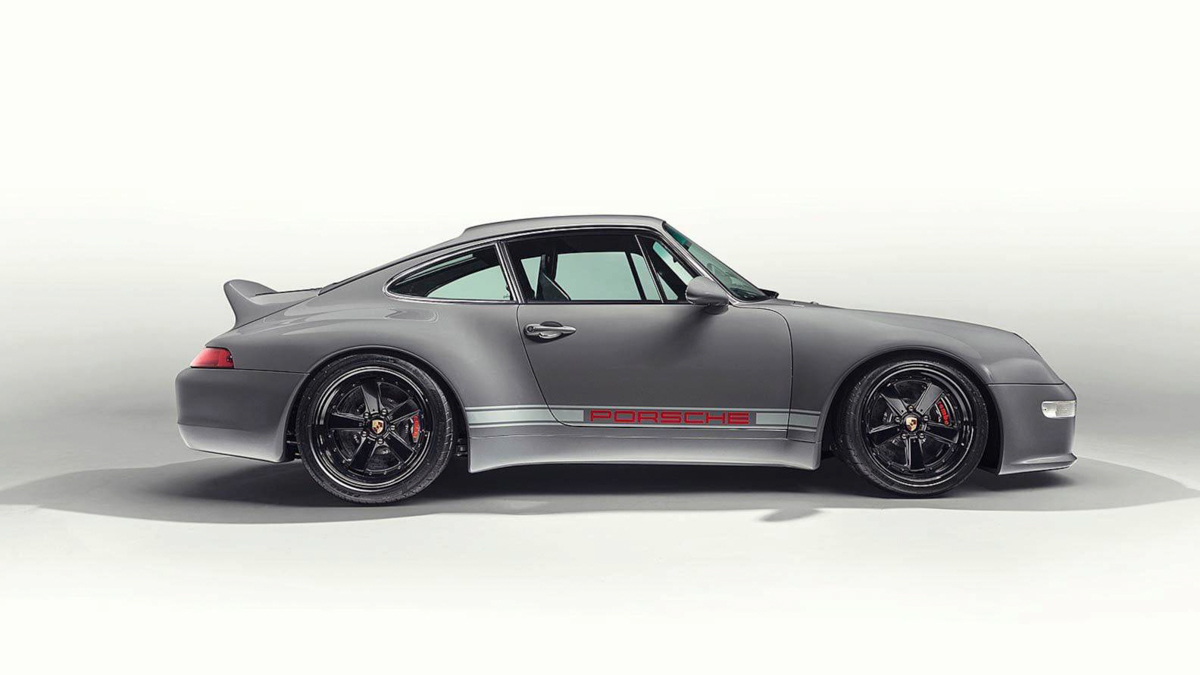
The Gunther Werks 400R is a modern version of Porsche’s last air-cooled 911 and is the first car from the new Gunther Works outfit based out of southern California. Limited to only 25 units and with a price point of $525,000 this is a seriously expensive and rare restomod.

Every 400R will be entirely one of a kind. Customers select the vehicle interior materials, accent colors, and finishes. Gunther Werks then create an interior that bridges the gap between modern and classic design.

Customers start with a 1995-1998 Porsche 993-era 911. The body and chassis of each 400R is meticulously disassembled and restored to a like-new condition. After the interior is removed including all carpeting and wiring the entire vehicle is media blasted down to bare metal. The vehicle is then primed using direct to metal primer before being sent to paint. The finished chassis improves on original as the use of modern coatings reduce weight and ensure improves durability, when compared to the original. Nearly all of the steel bodywork is thrown out; only the doors remain, and the rest is all carbon fiber panels, made in house. The car went on a diet and weighs about 2,660 lbs which sounds like a lot when compared to other restomods on this page, but remember this is a 993 with all the safety, ABS and modern systems that the 964s or early G-series 911s are missing.

A fully bespoke headlight system was developed to take advantage of the latest in LED technology. The entire lighting bucket is constructed from a combination of lightweight forged T-6061 aluminum components and carbon fiber to accommodate the larger Bi-LED projectors and active daytime running lights. The assembly is encased in a beautiful hand-polished aerospace grade glass housing, taking inspiration from the original 993 design elements.

Gunther Werks also has a custom 4.0-liter engine. Developed by Rothsport from Oregon it is a tasty high end machine. Mahle pistons to twin spark Motec Engine management, coil over plug ignition, individual throttle bodies, billet crankshaft, rods & barrels, no part of the engine is left untouched. The target is a 7800 rpm redline, 330 lb feet of torque and 400+ horsepower. The entire engine is balanced, blueprinted, color-matched to the exterior paint, broken in and tested on Rothsport’s engine dyno before installation. There is also a “Sport” mode with a valved exhaust.

By using the donor 993’s existing “motorsport” suspension mounting points, KW Clubsport coilovers, solid bushings and modified drop links, swaybars, and uprights, the 400R turns in nearly as hard as a brand new GT3 RS. Matt Farah may have summed it up best when he said “This is the one percent. I’m not here to say the 400R drives like a brand new RS, but with the revised rear suspension geometry, square track width, finely tuned dampers, and electric power steering (sourced from 993-era Porsche racing cars), it doesn’t feel remotely like a standard 993, either….First off, it’s fast. Like, really fast. We don’t have instrumented tests to go on, but with only 6.17 pounds-per-horsepower to push around, compared to the current GT3 RS’s 7.0 lbs/hp, by far the hold back is manual shift times. In gear, on the floorboard, the 400R goes like hell.” Got $525k to spend and want a modern restomod, then line up. If you miss out I wouldn’t fret because the Gunther Werks guys have more cars up their sleeve.


Other Notable Porsche Restoration Shops

While our above list was about the best restored Porsches, the reality is that it is really a list of the great Porsche restorers who have essentially created retail products that you can buy “off the shelf”. Most Porsche restorations still happen between an individual client and a Porsche specialist who tinkers away at vintage and classic Porsches in local garages around the world.

These shops don’t make Youtube or get plastered on internet or instagram so you would never know who they are. With that in mind we wanted to make sure to include a list of Porsche restoration shops that are worth talking to if you’re looking to have your Porsche restored or modified. This is not meant to be an exhaustive list but if you know of a shop we should include, let us know via our contact us page.

Porsche Restoration Shops in the United States

ROCS Motorsport

Company: ROCS Motorsport
Located: Belleville, NJ (United States)
Website: ROCS Motorsport

ROCS is a Porsche hotrod build shop, not a repair shop. This means your project won’t take a backseat to a valve adjustment. Twenty three years in the same location focused on designing and crafting special cars. Their experience, knowledge and artistic sense allow them to restore  and create unique cars such as the ones that have adorned the pages of publications like Excellence Magazine and sites like Petrolicious and Flatsixes. They can rebuild engines and gearboxes with an eye to getting them back stock or improving performance. They do not provide general repairs or service type work.

Manhattan Motorsports

Company: Manhattan Motorsports
Located: Roslyn NY (United States)
Website: Manhattan Motorsports Porsche Restoration

I stumbled up Manhattan Motorsports one morning when dropping my son off at an activity in Roslyn. Driving past a factory area I saw dozens of classic and modern Porsches and my jaw dropped. A little digging and I find out that Manhattan Motorsports is run by Bobby Singh, a man who has over 25 years of Porsche and exotic car experience. He is trusted in the industry for honest answers and commitment to the quality of each vehicle he works on.

At MMS, they pride themselves on dedication to the individuality of each car and its restoration. Whether a customer is in the market for a project car or already have a vintage Porsche and are interested in Porsche classic restoration, you can work with them to create your dream car.

Will Hoit Auto Restoration

Company: Will Hoit Auto Restoration
Located: Long Beach, CA (United States)
Website: Will Hoit Auto Restoration

Will Hoit is the Porsche 356 expert restoring and they don’t come cheap. The average price for a complete ground-up restoration is about $150-200K. There was a time when many 356s were restored as show pieces with little attention to actual function. At Will Hoit they have managed to combine both show winning attention to detail with extreme attention to function and performance. Of course, it’s completely possible to restore a car to fully original condition, with no upgrades to safety and driveability, but the crew at Will Hoit have found that most customers appreciate improvements that don’t compromise the look of originality and can improve the driving experience. A large selection of engine options that improve power and reliability including displacement increases to 1720cc, 1925cc, and 2002cc in original or

tuned appearance. Various transaxle upgrades, sport tuning of suspension for improved handling and exterior and interior customizations are available.

Metal Kraft Coachwerkes

Company: Metal Kraft Coachwerkes
Located: Cincinnati OH (United States)
Website: Metal Kraft Coachwerkes

MetalKraft CoachWerkes specializes in coach building and custom metal work for Porsche and European automobiles.

Esporesto

Company: Esporesto
Located: North Hollywood, CA (United States)
Website: Esporesto

Esposito Porsche Repair started with John Esposito working on his own, tucked away in a corner of a friends shop, slowly crafting, repairing and restoring beautiful cars – one at a time. As word got out that John had left the world of working for others to focus solely on his long beloved Porsche, the waiting list of patrons eager to have his hands on their cars grew.

With their team of certified mechanics and body technicians, servicing and restoring Porsche cars is the primary focus at ESPO Restoration. As a Certified Porsche repair shop, you can trust their highly trained and skilled technicians to take care of your state-of-the-art Porsche.

Vintage Sportscar Restorations

Company: Vintage Sportscar Restorations Inc
Located: Phoenix, OR (United States)
Website: vsrestorations

Vintage Sportscar Restorations is a small, family owned exclusive Porsche coachworks garage. VSR shares our genuine enthusiasm and commitment to the process of restoring a Porsche. Whether your project is the repair of coachwork or complete restoration, their team of artisans wants to exceed factory specifications. The team has a lot of experience.

Formula Motorsports

Company: Art-Restoration
Located: Long Island City, NY (United States)
Website: Formula Motorsports

Formula Motorsports is a full service Porsche shop in the heart of New York City. In the restoration space they focus on 356 and 911 models. Formula Motorsports restorations have been showcased at Porsche Cars North America (PEC) and Monterey-Pebble Beach Concours d’Elegance. Formula Motorsports also works with a worldwide network of model specialists and historians to ensure the most accurate information is utilized in restoring your vehicle. Formula Motorsports also restores modern Porsche factory built race cars from the ’60s, ’70s, ’80s, and ’90s, as well as Porsche vintage race cars with a successful competition pedigree.

Restore Porsche

Company: Restore Porsche
Located: South Florida, FL (United States)
Website: Restore Porsche

The Restore Porsche team of restoration specialists have been working with classic Porsches since 1986. It’s a labor of love for them. They focus their services to the restoration of only classic Porsche’s which allows them to gain an extensive knowledge-base of these cars, which their team is passionate about. Their experience is shown in the excellent craftsmanship and quality presented in a finished vehicle.

TLG Auto

Company: TLG Auto
Located: Hollywood, CA (United States)
Website: TLG Auto

TLG Auto is an elite, independent Porsche restoration and repair facility that has been serving the Southern California Porsche community for over 35 years. Founded in 1978 by Tony and Lois Gerace, TLG was born out of the need Porsche owners have for a superior level of service for their cars and a long-term, more personal relationship with their car’s mechanic. They picked up where the dealerships fell short and have continued to deliver. From regular maintenance and repair to complete ground-up restorations, TLG Auto does it all. Whether it’s a brand new 991, a Pre-A 356, or a totally custom Porsche hotrod, TLG has the tools, knowledge, and experience to provide your Porsche with the type of specialized care and personalized attention that it needs to run and drive its best.

Musante Motorsports

Company: Musante Motorsports
Located: South Windsor, CT (United States)
Website: Musante Motorsports

Musante Motorsports deals directly with Porsche and their OEM suppliers and have access to all technical specs and part numbers so if you need something specific they have it. They can also custom engineer parts whether you’re replacing worn parts or upgrading complete systems. Obviously they also do restorations for you and have decades of experience tuning and assembly of custom and stock turbo systems for those looking for it. Whether you own a Cayenne that sees 365 days of the year, a summer only driven Boxster, a vintage 356 speedster, a Carrera GT, or a Porsche competition race car, they can help.

CPR Classic

Company: CPR Classic
Located: Fallbrook, CA (United States)
Website: CPR Classic

CPR is a California based Porsche restoration company. They have been in the Porsche 356 and 911 restoration business for over 40 years and have restored some of the best cars in the world. CPR specializes in air-cooled Porsche 356, early Porsche 911 and Porsche 912 models. Whether it is a thorough restoration or minor repair CPR can make sure it will be done to original factory standards by Porsche experts. Factory parts are always used when available and if they cannot source original parts, they use the best quality reproduction and restored parts. CPR likes to stay true to original form. They don’t do Turbo clones or slant noses and when they wheel flare upgrades or tribute cars they prefer not to deviate from the original style designed by Porsche.

Road Scholars

Company: Road Scholars
Located: Fallbrook, CA (United States)
Website: Road Scholars

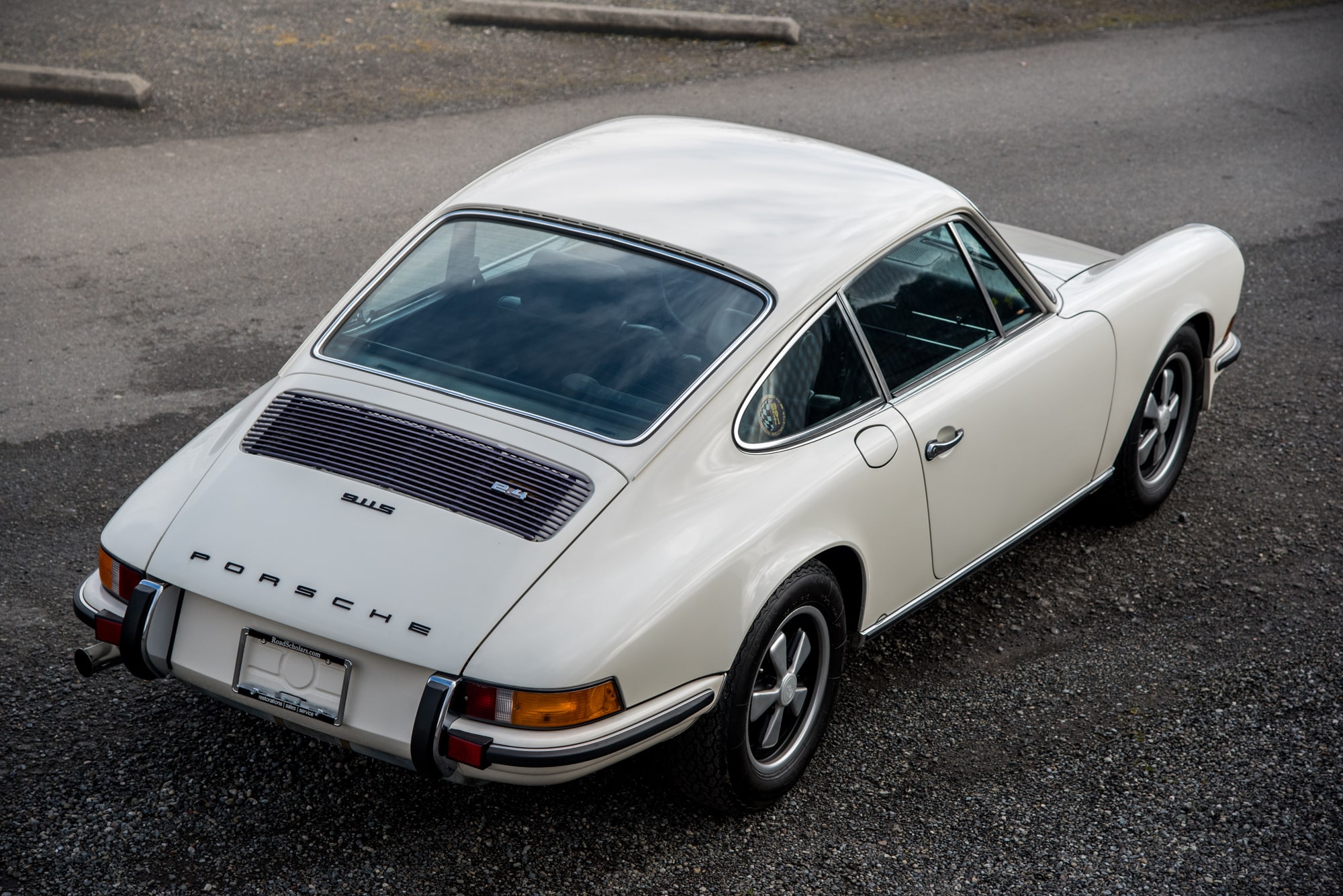
Road Scholars has been an award winning restoration shop since 2008. With over 50 awards so far (and counting) they are passionate about authentic restoration work and undertake only concours-winning restorations. As the study of the automobile and car collecting has just entered a new era of appreciation, it’s also clear that automobile restoration has evolved as well. The auto restorer’s job now is to conserve each project as a historical and cultural artifacts.

Since 2008, Road Scholars has won more than 50 awards, including Best in Class at  Pebble Beach Concours d’Elegance and recognized by the Historical Vehicle Association for excellence in automobile preservation work.

We undertake only concours-winning restorations and focus on only a few projects at a time. This means our restoration shop is highly organized and allows us to focus on every minute detail of the project. Our goal is to restore each car the way it came from the factory and not create fictional history (over restoration). It’s this attention to detail about which we are most passionate.

Unique in the automotive Restoration community, at Road Scholars we only undertake concours-winning restorations. Superior staff combined with original and correct parts, from major trim items down to bolts and screws, ensures your project is correct in every detail.

Eurowerks

Company: Eurowerks Incorporated
Located: Campbell, TX (United States)
Website: Eurowerks

The own of Eurowerks is a guy named Roy and he has been in full time restoration of Porsches since 1976 performing all aspects of full restoration. Alberto Segatore was apprenticed as a teenager in Argentina where he learned metal fabrication skills from master technicians and performed full body restorations in steel and aluminum fo over 45 years. Alberto has been involved with Roy for 25 years in the restoration of Porsches. Another team member is Billy Fronterhouse who has 20 years experience, 10 years exclusively on Porsche restoration specializing in paint and assembly of Porsche 356 & 911 models. Sometimes the team is what makes all the difference and clearly for the guys at Eurowerks that’s their unique advantage for those looking for a Porsche restoration.

CarparcUSA

Company: CarparcUSA
Located: Costa Mesa CA  (United States)
Website: CarparcUSA

CarparcUSA has over 30 years of Porsche expertise focusing on early Porsche 911 restoration and maintenance. Originally headquartered in the Netherlands they have since moved their base to Southern California where they built a small dedicated team of talented and passionate Porsche specialists. They specialize in the consignment, sales and restorations of very early Porsche 911’s.

Porsche Restoration Shops in the United Kingdom

Rennsport

Company: Rennsport
Located: Gloucestershire (United Kingdom)
Website: Rennsport

Rennsport talks a lot about recreating the driving experience of the iconic Porsche 911. They want their customers to enjoy the experience of building their own custom spec Porsche. Exclusivity is what makes a Rennsport Porsche so special because they are so focused on building cars to the exact tastes of each person. Every car at Rennsport has a completely rebuilt engine and gearbox and they work to a blueprint specification in standard form, giving a better build than the original from the factory. This is perfect for use in a road car and it is important that the selection of the right engine and gearbox for your car is made with the final use in mind. Depending on the use of the car, this can be done to an original specification for everyday road use through to stiffened dampers, bigger torsion bars and uprated brakes on a track car.

RPM Technik

Company: RPM Technik
Located: Hertfordshire (United Kingdom)
Website: RPM Technik Restorations

RPM Technik has been building bespoke Porsche’s and restoring them to factory originality since the inception of the business back in 2001. The Special Projects department is headed by Technical Director Ollie Preston. Ollie has vast experience with both air-cooled and water-cooled Porsche in both road going trims and full-on motorsport examples. His innovative approach to builds utilises the extensive knowledge pool of several veteran in-house Porsche techs. With an open mind to new ideas and technologies, the bespoke projects are constantly evolving. Experienced gained in race support over the weekends has enabled Ollie to amalgamate the best Motorsport has to offer and sanitise it into everyday usability. Each build process is meticulously documented and photographed to keep every customer updated throughout the build, and to create a build file showcasing the detail and effort which has been put into the car.

Roger Bray Restoration

Company: Roger Bray Restoration
Located: Devon (United Kingdom)
Website: Roger Bray Restoration

Roger Bray Restorations is a small business with a big reputation specialising in supplying parts and the restoration of classic Porsche 356, 911, 912, & 914 models. They have been around classic Porsche cars since 1985 and have a large amount of knowledge from dealing and working on these cars daily. They do full or part restoration for everyday drivers to concourse winning cars and competition work.

Tuthill Porsche

Company: Tuthill Porsche
Located: Oxfordshire (United Kingdom)
Website: Tuthill Porsche

Tuthill Porsche specialises in bespoke builds that retain the original appeal while delivering a major step up in performance. Many of their builds are inspired by vintage Porsche race car design: outward simplicity masking serious potential. Tuthill Porsche carries out all of its work in-house, from bare-metal fabrication and restoration to body modifications, paint and trim, engine and transmission repair and a full build from scratch. They can repair, restore and rebuild any classic Porsche 911. Specialising in interesting Porsche 911 builds, historic motorsport preparation for racing or rallying and unique Porsche adventures all over the world, Tuthill Porsche is one of the best-kept secrets in the world of classic Porsche. With over four decades in business it all started with a reputation built on building reliable rally cars cemented in 1977.

Porsche Restoration Shops in Europe

Art-Restoration

Company: Art-Restoration
Located: Holtzheim (France)
Website: Art-Restoration

Art Restoration Garage is run by Patrick Pugin. A Porsche enthusiast and mechanic he tinkered with and restored a number of his own cars. That turned into a decision to take his skills and turn it into a job. After initial training in the automotive trade and 18 years of other work experience he now runs Art-Restoration.

Freisinger Motorsport

Company: Freisinger Motorsport
Located: Karlsruhe (Germany)
Website: Freisinger Motorsport

It all began back in 1967 in a small garage in Karlsruhe Durlach. Day and night work went on, little by little pieces were added. A clever idea began to take shape. Freisinger has now been in business for 40 years and has been able to make a good name for itself amongst dealers all around the world. They focus on restoring all historic Porsches back to their original condition. To get the job done they are backed by the world’s largest selection of spare parts and more than 40 years experience.
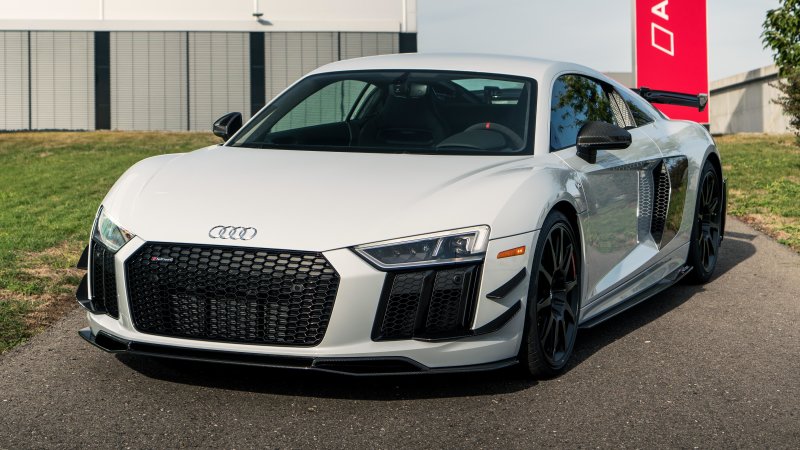
2018 Audi R8 V10 Plus Competition Package is a hardcore, ultra-rare R8

While the the Audi R8 RWS was a pretty rare beast when it was revealed, Audi has released yet another, even rarer R8. It’s the 2018 Audi R8 V10 Plus Competition Package, and only 10 of them will be sold in the United States.

There are a few things that differentiate the car from a regular R8 V10 Plus. Immediately noticeable are the various aero aids appended to the Audi. They include a front splitter, canards, rear diffuser, and a big rear wing. They’re very functional, doubling the regular R8 Plus’s downforce at 93.7 mph (150 kph) for a total of 114.6 pounds. At the car’s top speed of 196 mph, the aero parts provide 220.5 pounds of downforce.

The Competition Package R8 is lighter than a normal V10 Plus. Audi says it’s 28.6 pounds lighter in total, with 2.2 pounds coming from lightweight carbon ceramic brake pads with titanium backing plates, and 26.4 coming from the milled aluminum wheels. To flesh out what is basically an extreme handling package, Audi also gives this model three-way adjustable coilover suspension.

All 10 of the R8s will be painted Suzuka Gray, which looks like white to us. The interior is kept plush with full leather trim, an Alcantara steering wheel, carbon fiber shift paddles and even a 550-watt Bang and Olufsen sound system. It’s certainly a different approach than the ultralight R8 RWS.

Also different from the R8 RWS is the price. While that rear-drive special was the most affordable R8, this Competition Package model is more, a lot more. It rings in at $238,750 with destination fee, which is a $43,100 premium over the standard V10 Plus it’s based on. It’s also $98,800 more than the R8 RWS.

Related Video:

The Future of Porsche Will Be Priced to Fight Tesla

Porsche revealed the Mission E concept back in 2015, sending a clear warning shot to Tesla. Now Porsche has revealed that its production version, the Taycan, will be priced around the $90,000 to slot under the Panamera sedan. In other words, Porsche has gone from warning shot to clear target-lock on Tesla.

Tesla, regardless of build quality issues or small design faults, is the de facto benchmark in every aspect of electric vehicles. Still, performance, style and design were never going to be a worry with Porsche — whether an SUV, crossover or EV, Porsche refuses to let anything leave the factory unless it handles like ein Porsche and bleeds the brand’s design language. As such, the Taycan will be one of the pioneering EVs with the first 800-volt battery on the market — more power, quicker charging. It’s claimed to produce the equivalent of 600 horsepower and a range of 310 miles overall; when using a 350 kW charger for just 20-ish minutes, it should have a 250-mile range. For reference, the Tesla Model S 75D claims 518 hp a 300-mile total range; after 30 minutes on a Tesla Supercharger, it will yield 170 miles of range.

Porsche has the means to build a better Tesla than Tesla — that’s almost inarguable. The uphill battle Porsche faces is against Tesla’s well-established and ever-expanding Supercharger network around the country and the world. The Taycan will only charge as fast as the charger it’s hooked up to and standard EV charging points can’t handle that sort of speed. The numerous Tesla superchargers can give Tesla owners that kind of speed, but Taycan owners will have to resort to finding a Porsche dealership until the brand’s own network expands. Moving into the all-electric space takes a delicate balance of performance, design and style but also, crucially, customer support, given the still ever-present range anxiety factor. The Porsche Taycan is poised to steal a big chunk of the market from Tesla, but it also runs a real chance of failing right out of the gate.

2019 Jeep Grand Cherokee Trackhawk Review

The Trackhawk is a riddle to most people. They have trouble grasping it’s purpose, it’s very existence. This is because it completely flies in the face of everything that Jeep has every marketed itself to be. For decades, Jeep has held itself out as the manufacturer of the most capable off-roading, go-anywhere, do-anything vehicles in the world. “Trail Rated” has been their tagline and it has reinforced that image of rugged, capable machines that will keep it’s owners safe in the worst of conditions. If a zombie apocalypse occurs, Jeep is the vehicle you want to be driving. Heck, if the actual Apocalypse occurs, Jeep is the vehicle you want to be driving.

The Trackhawk though….the Trackhawk is something different. Something new. And while it may seem out of place in Jeep’s line-up, it’s really not.

The Jeep Grand Cherokee has been around for a few decades now. One of the original luxury SUV’s, it quickly developed a following among the upwardly mobile executive set at a time when the Western world was taking an interest in the environment and the outdoors again. Its capable on-demand four-wheel drive made it an excellent choice for middle-class buyers in America’s snowbelt and the empty stretches of the mountainous West. It’s comfortable and stylish interior and safety features made it an excellent choice for everyone else. While the Grand Cherokee is capable, most never leave paved roads. They are comfortable daily drivers that promise capability and safety while carrying the family and a load of groceries or towing the boat to the lake for the day. Someone at Jeep probably used their Grand Cherokee to tow their race car to the track on weekends, then – as these things usually happen – after a few beers and some good pizza, began to wonder if you could modify the Grand Cherokee so that it could actually RUN at the track.

This idea was probably furthered during a late night at the office while working on another project. Other Jeep and Chrysler engineers probably enthusiastically jumped onboard the “What If” session and the ideas started flowing. The end result is incredible. What they ended up with was a Grand Cherokee with an electrically adjustable Bilstein active-damping race suspension system, massive Brembo anti-lock performance brakes, and sticky steamroller-width Pirelli P-Zero performance tires. But what to power it with? Why not the 707 hp supercharged 6.2L Hemi V8 SRT Hellcat engine? That should move the heavy SUV along with some pep. I suspect that many beer cans were bumped together to cheers over this idea. But how to sell it to management? One good double-dog dare later and the project was green lit for production. God bless America and the employees at Fiat-Chrysler.

That, in a nutshell, is what we have here. It defies all your pre-conceived notions of what a Jeep is, what a Jeep should be, what a Jeep CAN be. People we explained it to were confused, scared even. “707 hp in a Jeep?! That’s ridiculous! That sounds dangerous!” It does actually. But does it work?

Good Lord, does it ever! We’re flying down a tree-lined backroad, exceeding the speed limit by a quite a lot but there’s so much power left to play with that it’s mind-boggling to consider too deeply. And anyway, we’re too busy looking waaaaaay up the road, watching for trouble. The suspension beneath us feels solidly planted. The roar of the engine explodes through the quiet country air, leaving it torn to ribbons of wind and sound as we weave through the curves on this delightful road. We pull the left paddle behind the steering wheel – yes, it has paddle shifters for its 8-speed transmission – to drop a gear as we approach a curve. There’s little lean through the corner and as soon as we’re through it we mash the throttle and the Grand Cherokee shoots up the road even faster before we upshift. Upshift again. The engine note drops but the sound is still ferocious. A squirrel starts to cross in front of us, but then thinks better of it and literally leaps back off the road. It wants no part of the Trackhawk or the incredible sound the big supercharged V8 makes. It sounds awesome. We’re impressed and having a ball.

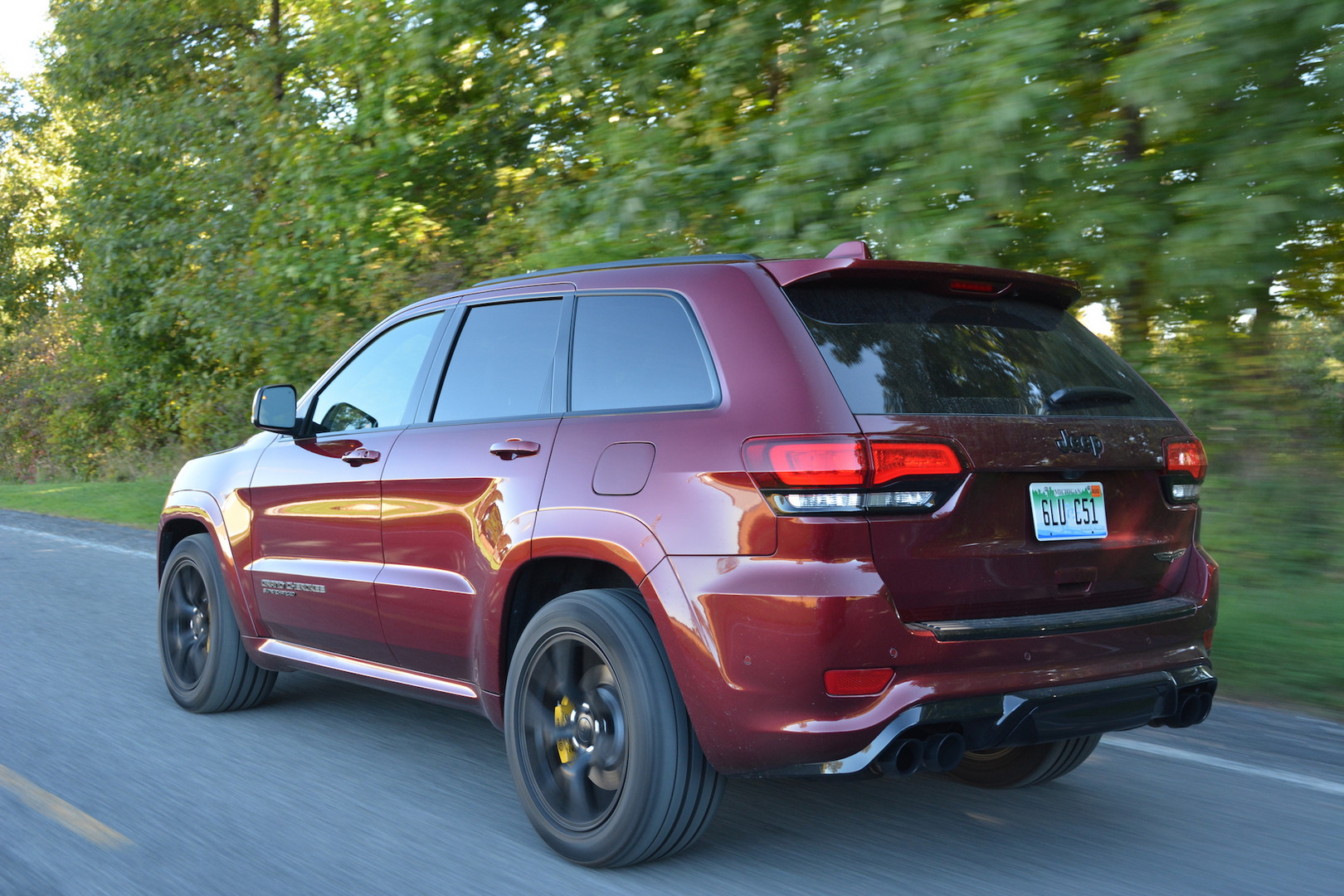
On the outside, it’s easy to overlook the Trackhawk’s defining features that make it distinct from it’s more, ah, normal siblings. The black 20” wheels and the massive slotted brake discs and shoebox-sized yellow Brembo brake calipers are the biggest giveaways. The low stance is another. Only the most eagle-eyed observers will notice the four large exhaust pipes jutting out from under the rear valence. The slots in the front grill are shorter in height than on the standard model. There are an additional three horizontal slots beneath them. The other openings are all larger to duct more air into the hot engine bay. Overall, it’s a very sharp and aggressive looking SUV.

Inside you’ll find highly-bolstered leather seats, a thick grippy steering wheel, paddle shifters, and a very high-end feeling interior. Everyone who climbed into it immediately commented on how nice the interior was. And they’re right. It IS nice. It’s the kind of car you could drive all day and not grow weary. Especially with electrically-adjustable heated and ventilated front seats, a 19-speaker Harmon Kardon sound system, a heated steering wheel, heated leather rear seats and a huge cargo area. So it’s very luxurious. Is it practical? It sure is. With the rear seats folded flat, the cargo area is enormous.

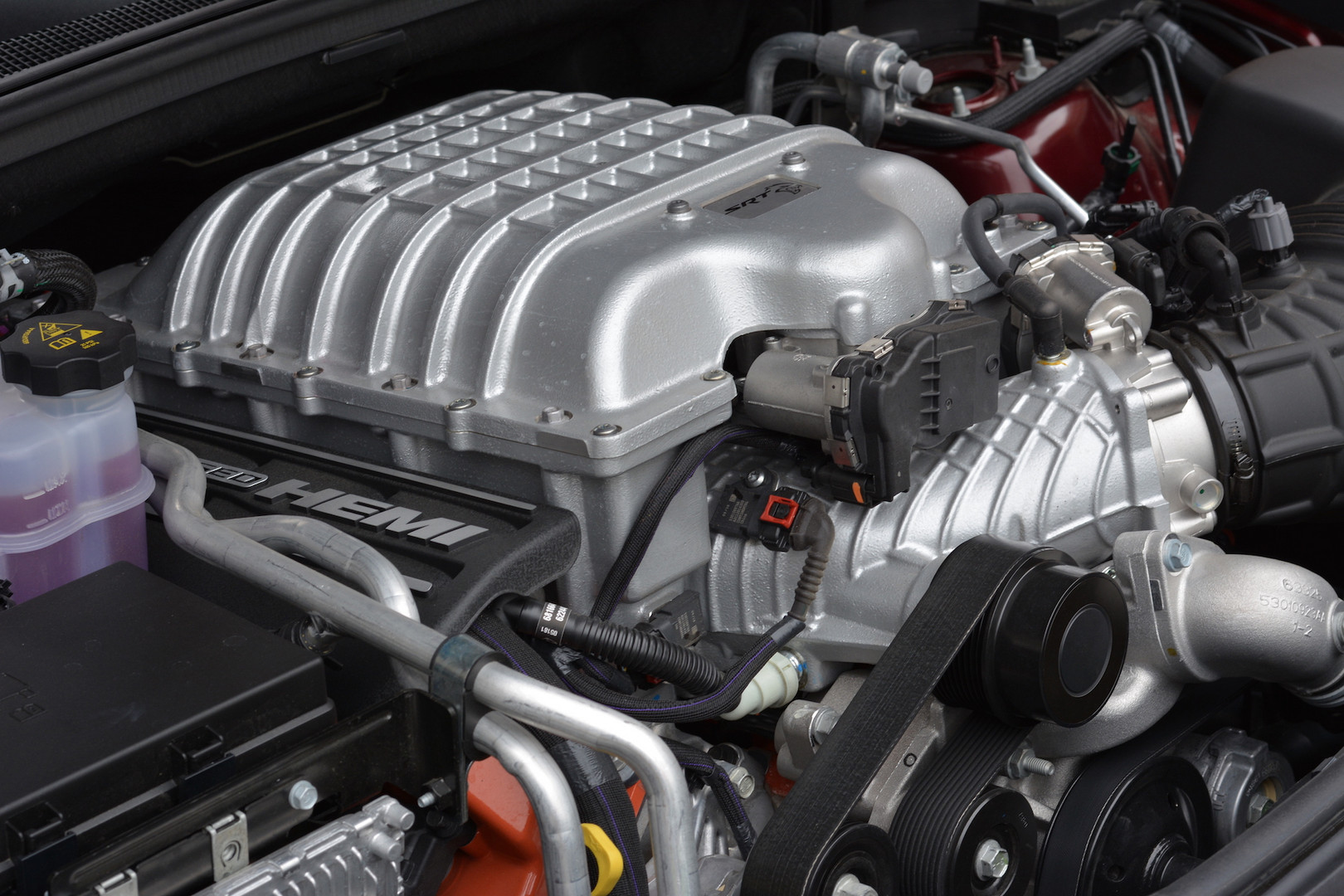
As nice as the Grand Cherokee is, the main attraction in the Trackhawk is the massive engine under the hood. The SRT Hellcat engine is amazing. Not terrifically fuel efficient, but amazing nonetheless. I’ve come to the conclusion that there’s no problem in life that seven-hundred (and seven!) horsepower and six-hundred and forty-five lb-ft of torque can’t overcome and render a faint memory once you’ve stomped the throttle. It simply explodes up the road. With launch control engaged, we managed a 3.7 second time to 60 mph. Mind you, this is in a 2.5 ton SUV. Utterly mind-boggling. Launch control will literally scramble your neural synapses, leaving you confused but giddy as a schoolgirl with a new crush, as it accelerates away from a dead stop. Passing distance isn’t an issue. Mash the throttle and by the time your foot hits the carpet, you’ve already passed the slower car. Jeep says it’ll hit 180 mph and while i didn’t attempt it, I certainly believe it. And the sounds it makes – WOW. My knees get weak just listening to it idle. Make it roar and I nearly faint.

2019 Jeep Grand Cherokee Trackhawk Interior

The Hellcat engine is mated to FCA’s burly 8-speed automatic transmission that allows the driver to utilize paddle shifters behind the steering wheel. Left in automatic mode, it intelligently cracks off shifts and knows what gear to be in before you do. Eight speeds helps a bit with fuel economy, but it can only do so much with the thirsty Hellcat engine. We averaged 10.5 mpg while driving it, which is only a few mpg less than EPA estimates.

Bilstein’s active damping race suspension is also nothing short of amazing. It keeps the ride firm but not harsh, eliminates almost all of the lean through corners, and virtually eliminates squat and dive. Bumps and potholes come through a soft jostles but aren’t harsh at all. There are 5 drive modes that you can dial in: Normal, Sport, Race, Snow, and Tow. Sport and Race respectively up the ante as far as reducing computerized traction and stability control while quickening the responses of the throttle, steering, and transmission. Snow dulls that responsiveness and actively splits the torque 50% front and 50% rear to more capably and safely handle inclement weather and bad roads. This is different from the normal “4wd-on-Demand” that sends power to the front axle when needed. Lastly, Tow helps you pull a trailer by keeping the transmission in the torque band and using the engine to brake the load as much as the brakes themselves. It’s capable of pulling 7200lbs, which isn’t too shabby.

Did I mention the Brembo brakes? They stop this smooth but heavy brute easily and quickly. The six-piston calipers are enormous and straddle equally large slotted rotors that completely fill the empty space inside the barrel of the 20” wheels. They can be a little grabby at low speeds but man do they work well when you need them. The braking power can literally hang you up in the seat belts.

What flaws does it have though? Well, besides the abysmal fuel economy, none that we could find. And we weren’t that put off by the fuel economy when we were reduced to hysterical tears of laughter every time we mashed the throttle.

2019 Jeep Grand Cherokee Trackhawk

The Trackhawk starts at $86,200. Our test vehicle stickered at $101,610. Not cheap, but it’s a LOT of car for the money and there are few family haulers as capable and versatile as the Trackhawk. You probably can’t name another luxurious track-capable, towing-capable, family hauler that will do 0-60 in 3.7 seconds and top out at 180mph with a load of groceries and two kids late for soccer practice; let alone at that price.

I’m really not sure how the Jeep Grand Cherokee Trackhawk managed to get built but I’m glad it did. If it all started as I theorized, with an engineer wondering if a Grand Cherokee could make a decent track car, I’m sure he’s pretty pleased with his little experiment. Trackhawk owners will be just as pleased with his idea. It seems crazy to build a 707 hp Jeep with serious track credentials, yet here it is and it’s just that great. Here’s to the engineers at Fiat-Chrysler for their enthusiasm that keeps we gearheads grinning.

5 RV Essentials For Your Next Camper Experience

‘Roughing it’ these days, is more of a sliding scale. You can, of course, keep it minimalist, face the elements and test your outdoor skills and patience. But between the luxury campers and fully-stocked tow-behind trailers, it’s quite possible to haul into the wilderness what amounts to a decently appointed city apartment.

And yet, somehow, even as decked out and well-connected as a new Airstream can be, it doesn’t have everything. If you’re going on a camper weekend with a towable home-away-from-home, you might as well complete the experience.: wen the skies are clear and the stars are out, just begging for Instagram-worthy long exposure shots, you’ll want to settle in and get comfortable. Here are a few essential extras you’ll need to bring along your luxo-camper most likely doesn’t have — you know, besides Wifi, a TV, lounge, bed, shower, full-kitchen…

Kamoto OpenFire Pit by Primus $130

Camp Blanket by Pendleton $150+

Lounge Lizard Mesh Camping Chair by TravelChair $180

Camp Table by Alps Mountaineering $100

Blast by Ultimate Ears $105
Note: Purchasing products through our links may earn us a portion of the sale, which supports our editorial team’s mission. Learn more here.

ATS introduces Launch Edition of its rare GT supercar

The reborn Italian sports car maker Automobili Turismo e Sport has announced a special Launch Edition of its new GT model after showing the car at events in the United States, both on the West and East Coast. Like the original ATS 2500 GT, the 2018 car will also get a 12-unit production run as the Launch Edition. The new GT is the first production ATS in about 50 years.

ATS says the car is “built on one of the best carbon fiber chassis and powertrains available on the market today,” which we have taken to mean the car is in fact a carbon-fiber rebody of something existing, most likely the McLaren 650S. The company explains that interior and exterior are its own design, and the car has new electronics, infotainment, engine calibration and headlights, among other custom features. The twin-turbo V8 engine directs our thoughts in that direction, too, even if the ATS release doesn’t call out McLaren as a technology partner. Still, ATS could choose worse when shopping for a running gear for the GT, and depending on customer needs, the power output of the GT Launch Edition ranges from 730 to 830 horsepower, which is plenty for a supercar. Brembo carbon-ceramic brakes are available as an option to keep all those horses in check.

There is a custom three-muffler “Sistema-Trio” hand-welded titanium exhaust system, the sound of which can be adjusted by selecting different drive modes, Viaggio, Sport and Corsa; from daily driving to track use. Those modes also affect the engine, suspension and gearbox responses, toggled from a CNC machined module. ATS also lauds its open-linkage gearlever setup, the feel of which can be fine-tuned to match the driver’s requirements. The transmission is likely to be the McLaren seven-speed dual-clutch unit with automatic and manual modes.

The development has included a comfort-oriented cockpit design, with emphasis on soundproofing and a relaxing long-distance driving atmosphere — part of that is a bespoke planar-magnetic sound system ATS calls “Prima Orchestra.” And in addition to that, buyers of the Launch Edition — ATS says there are three so far — can get their names carved on the car’s steering wheel. Prices start from $850,000.

Related Video:

Lamborghini Murcielago SV reverse-engineered by a team from Iran

Iranian engineers successfully made themselves a copycat Lamborghini Murcielago SV. In looks, if not in performance, that is. The most interesting aspect behind the project is that they say it was created using Lamborghini’s original data. They took a serious left turn when it came to the powertrain though, because sitting behind the driver is a 3.8-liter Hyundai V6. Not quite the 6.5-liter V12 monster in the actual Murcielago SV.

Massoud Moradi, the director of the project, thinks that nobody would be able to tell the difference between this car and Lamborghini’s from an appearance standpoint. “All parts of the body, inside the car and precise mechanics of the car are manufactured and mounted based on the original … Murcielago platform. Its chassis is also one and one with the original,” Massoud says. One of the reasons Massoud and his team embarked on this project was to learn how Lamborghini made its supercars. They made their replica after taking apart a real Murcielago and designing new parts based on the original Lamborghini bits.

The project to make this thing started four years ago, and the team didn’t spend “any time planning or testing the car.” Now that’s a clear indication you probably don’t want to drive this thing. Just because it’s designed to be a copy of the Murcielago doesn’t mean it’s going to perform anything like it on the road.

[embedded content]

We’ll admit the exterior design is pretty spot-on compared to the actual Murcielago SV, as you can see in the video above (which comes from RT, a network funded by the Russian government). Everything apparently lines up to the original dimensionally, and it uses a bunch of carbon fiber and composite components throughout. Moradi claims a top speed of at least 174 miles per hour — there’s no word on what, if any, modifications have been done to the Hyundai engine and transmission to achieve such a speed. So count us skeptical for the time being.

The Iranian team wants to make more of them too. Moradi suggested that the small company could make 50-100 units per year if they were to go into production. He’d like future iterations of the car to have larger V8 and even V10 engines, too. Might we suggest some testing first? And what does Lamborghini think of this whole operation? These guys purposefully copied one of Lamborghini’s designs with an intent to eventually make money off of it. There are plenty of questions to be answered here, but hey, now there’s an Iranian super(ish)car. Sort of.

Related Video:

Mercedes-AMG One delayed: Surprise, Formula One engine not ideal for emissions

Putting a Formula One engine into a road car has always felt unrealistic, and now that Mercedes is actually trying to do it in the AMG One, the engineers are finding out how difficult it really is. Passing emissions is the biggest roadblock. In total, the car formerly known as the Project One fell prey to a nine-month delay in development because of the challenges faced with this specific issue.

In an interview with Top Gear, Tobias Moers, CEO of AMG, says that finding a stable idle was the toughest part.

“Getting a stable idle at 1,200 rpm, that’s challenging. To give you a simple example. You have leakage in the throttles in Formula One, and nobody cares, because it runs at a 5,000 rpm idle. At a 1,200 rpm idle, you have to meet the emissions regulations. You need a stable, proper idle. If it’s unstable, your emissions are unstable.”

When the objective is to make maximum power, emissions don’t matter all that much. Still, a 1,200 rpm idle is really high for a road car. It’s clearly worth it to AMG and its customers to make it work with this engine, though. Here’s what Moers said about feedback from the people who are waiting for their cars: “You know what they tell me? ‘Make sure that the car works. Because of what we experienced in the past with hybrid cars, take your time.'”

So, Mercedes still intends on delivering an incredible hypercar with a modified Formula One engine, but it doesn’t appear to be going silky smooth. We don’t think anybody’s surprised about that, though; Formula 1 engines were never intended for a road car application.

Related video:

The Best Car of 2018 According to Jeremey Clarkson

Jeremy Clarkson isn’t back on our screens just yet, but in between filming and hosting the third season of The Grand Tour, he found some time to name the 2018 Huracan Performante as the Best Car of the Year for The Sunday Times and The Sun newspapers.

The Lamborghini Performante isn’t merely a special-edition with a commemorative paint scheme — when you spend the $274,390 to get one, you’re getting the latest and greatest Lamborghini’s engineers can come up with. The 5.2-liter naturally aspirated V10 can be counted on for 630 hp and 443 lb-ft of torque, enough to get the Lamborghini from zero to 60 mph in 2.6 seconds. It helps the engineers were able to shave 90-lbs off the car’s weight through the liberal use of forged carbon fiber to get it down to 3,493lbs.

Admittedly, the power bump and weight drop aren’t exactly the most breathtaking differences from the standard Huracan’s specs. If you’re still looking for the Performante’s party piece, it’s because technically, you can’t see it at all. Under the rear wing, under the floor of the car and at the very front of the car are vents and ducts which make up the Aerodinamica Lamborghini Attiva, the company’s active aerodynamic system.

Depending on how fast you’re moving around a corner, which direction you’re turning or how much throttle or brake is being applied, the Huracan Performante’s brain opens and shuts those vents to best optimize the airflow around the car, increasing grip. It’s not a ground-breaking concept, but on a car already as stellar as the Huracan, you get a winning combination. There was a lot of stiff competition for picking ‘The Best Car of 2018,’ but there’s no denying Clarkson is on to something with the Performante — it’s an amazingly complete package.

Techart Reveals Carbon Package for Porsche 991.2 GT3 RS

It is subtle tweaks this week for Techart. They have had hands on the Porsche 991.2 GT3 RS for the first time. The result is a subtle package of carbon fibre with gives slight enhancements, but, overall, an extra element of individualisation.

The Techart Carbon Sport Package is fairly straightforward to install and promises to add some unique features to the sports car. Techart offer a new front spoiler lip, front airblades, a roof spoiler, front air outlet louvers, rear wing end panels, side air intake trims, rear spoiler winglets, new side skirts, NACA air inlets, a rear deck lid cover, new mirrors, a window triangle, diffuser and apron shaft panels.

These parts are all new or replace existing components. They are made of high quality carbon fibre, produced inhouse at the Techart manufactory. Finishes can be applied in either matte or high-gloss with individual color matching using translucent clearcoats.

As a rough idea of cost, Techart have indicated that the visible carbon front lip starts at EUR 6,750.00, the front air outlet louvers at EUR 1,450.00, the front spoiler is EUR 2,790.00 and the diffuser is EUR 1,590.00. All prices are excluding VAT.

5 Iconic American Military Motorcycles

As far as iconic U.S. military vehicles go, the Willys Jeep, Humvee and P-51 Mustang immediately come to mind (maybe even the Sherman or Abrams M1 tanks, if you know your stuff). But one of the unsung motorized heroes of the American military is the motorcycle. Though it may have faded in and out of fashion with the armed forces, the military has been utilizing the motorcycle’s simple and nimble functionality since the Mexican Revolution. From leading the charge with mounted machine guns and V-twins to special ops running silent with all-electric bikes, motorcycles have seen their fair share of combat.

Harley-Davidson Model 17F/J

Border War

Harley-Davidson-Model-17FJ-Gear-Patrol

Originally part of an order of just a dozen, Harley-Davidson specially developed the Harley-Davidson Model 17F/J for General Pershing to combat Pancho Villa in the “Border War.” Though U.S. forces weren’t successful in capturing Villa, the way the Model 17F/J traversed the desert was so impressive, the military upped the order, and by the end of WWI nearly half of all Harley-Davidsons were in military service — 20,000 units’ worth.

Engine: 1,000cc Flathead V-twin
Horsepower: 16
Duty: Hunting Pancho Villa

Indian Powerplus Big Twin

WWI

Indian-Powerplus-Big-Twin-Gear-Patrol

Although the Harley-Davidson was in service in WWI at the same time, the Indian Powerplus Big Twin was the favorite of the armed forces, with 50,000 units in service. However, those production numbers meant Indian was dedicating nearly their entire production effort to the war from 1917 to 1919. Patriotic though it may have been, that meant the civilian dealers had little, if anything, to sell, causing the company to fall on harder times than rival Harley-Davidson after the war.

Engine: 1,000cc Flathead V-twin
Horsepower: 18
Duty: Armored Dispatch / Cavalry

Harley-Davidson WLA “The Liberator”

WWII

Harley-Davidson-WLA-Gear-Patrol

Because of advancements in weaponry between the World Wars, motorcycles disappeared from the front lines — a complete lack of armor will do that. Instead, they were reassigned as military police vehicles and utilized by dispatch riders for their speed and agility. By the end of WWII Harley-Davidson had built almost 60,000 units, but they continued to produce WLAs for civilians. However, when WLA’s were under civilian butts, the windshield, extra panniers and body work proved to be overkill, so they chopped them off — thus creating the chopper.

Engine: 740cc V-twin
Horsepower: 23
Duty: Dispatch / Military Police

Kawasaki KLR650

Desert Storm

15th MEU Marines Load into Helo

WWII was the heyday of military motorcycles; they didn’t see much action again until the ’80s. And when Desert Storm broke out the Kawasaki KLR became a popular choice, albeit in a heavily modified form. The military KLR, known as the M103M1, was versatile enough to either run on jet fuel or burn diesel and return a hearty 96 MPG.

Engine: 651cc single-cylinder
Horsepower: 45 (civilian spec)
Duty: Scouting / Patrol

Zero MMX

Classified

Zero-Motorcycles-MMX-Gear-Patrol

The MMX was developed specifically for special ops and the military because of Zero’s near-silent electric motor. Zero says that while on recon the MMX has a range of 71 miles under hard city riding, but the battery itself can last for 4,130 hours. With no exhaust and a 0-60 time of 4.4 seconds, you’d never know what hit you.

Engine: 6.5 kWh lithium-ion battery and brushless motor
Horsepower: 54
Duty: Recon / Rescue / Covert Ops

TopCar Gives Mercedes-Benz GLC Coupe New Look

We’re always blown away by TopCar’s tuning projects. They have created some very high quality products in the past, based upon Porsche and Mercedes-Benz models. Their latest is based upon the Mercedes-Benz GLC Coupe and sticks largely to the established script.

The Mercedes-Benz GLC Coupe Inferno gets a 12 piece carbon fibre package. It consists of a carbon front bumper, a carbon bonnet with a power bulge, carbon side skirts, a huge carbon rear bumper diffuser, a carbon spoiler and small fender extensions finished in carbon too.

Finishing touches include a carbon fibre front grille and Inferno forged wheels measuring 21 inches. The body kit fits to all versions of the GLC Coupe. TopCar also offer custom paintwork for all elements of the Inferno package.

Parts can be ordered as a package at a cost of €13,950, or individually. Installation costs €2,590 with the forged wheel sets starting at €4,850.

This Is the Car Nissan Desperately Needs to Bring Back

Small, light, fun and affordable cars are enjoying a low-key resurgence. Between the Subaru BRZ/Toyota GT86, the refreshed Mazda MX-5 and Fiat 124 Spider and Toyota Corolla Hatchback, it’s wildly apparent horsepower isn’t the sole quality of a good driver’s car. One name that’s noticeably absent from the small sports car group is Nissan, who needs to bring back the Silvia to not miss out entirely.

The Silvia, or 240SX here in the States, was in its day overshadowed by the more powerful Z cars and simply disappeared. Now, with the current 370Z – and its 350 horsepower V6 and $30,000-plus price tag – there’s a clear opening for a new entry-level sports car to slot in underneath. A new Silvia isn’t that far-fetched of an idea, either, since it wouldn’t even have to change all that much as far as specs go. Back in 1991, the Silvia pulled its 2,800lbs around with a 200 horsepower 2.0-liter inline-four. Slap a $25,000 price point on that baby and it’d give the BRZ and MX-5 a serious run for their money.

This 1991 Silvia, going for $10,995, only has 46,000 original miles — it’s over 25-years old and it can still make its modern counterparts sweat. Silvias and 240SXs, like other affordable Japanese sports cars of that era, were a big hit with tuners because their engines were essentially blank canvases for performance exploitation. To find an example as untouched as this, in such impeccable condition and with such a rare factory paint color is high-quality find. The world needs more lightweight sports cars like it.

2018 Ford GT Review | Our first real-world drive of this future classic

When our editor-in-chief first drove the Ford GT in May of last year, he walked away thinking of the GT as Ford’s ultimate halo car, infused with legitimate motorsport mojo. A supercar that, even if it wasn’t beating road-going Ferraris or McLarens in any particular metric, had the panache to park next to them at any track event or car show. Even if you were ignorant of the original GT40‘s history, the GT is, in its own right, an impressive machine.

That was a chilly Utah morning, a mix of frigid track time and a little time on the street. This summer, we had a GT for a whole day, and all of Los Angeles was our playground. We made a beeline for Angeles Crest Highway, partly because the Maricopa Highway north of Ojai was closed due to fires, and partly because the San Gabriel Mountains are much closer. The goal was to use the GT in a different way, to step away from any comparison with its predecessors or competitors, to unleash it on a mountain road, to hear it roar a bit.

2018 Ford GT

Would this track-bred, track-raised machine hold up on real-world roads? Angeles Crest is fun, but as a public road it can be a bit unpredictable. It’s narrow and sinuous, minefields of gravel and dirt can appear mid-corner, guardrails aren’t always where you want them. Nor is it a place where the GT can safely exceed its limits — you drive to the road, not the car, or risk going over the edge.

What we found out, as you’ll see in the video above, is that the GT is shockingly multifaceted. I spent an hour in agonizing stop-and-go traffic — classic LA gridlock — and the GT was unfazed, even if I was frustrated. At moderate speeds cruising up to the mountains, it proved noisy but endearing. Frankly, the EcoBoost twin-turbo V6 and dual-clutch gearbox make a racket — and each individual sound is raw, perhaps nasty. But taken together, it’s a chorus of pure, joyful power. Same goes for the interior. Look too hard and you’ll see workmanship that I would unfavorably call Lotus-like. But the overall design is so bold, so deliciously purposeful, that it’s a wonderful place to spend time.

2018 Ford GT

And the exterior … the depth of the curves, the remarkable negative space under the buttresses. Black is perhaps the worst possible color to show off the incredible sculpture of the GT’s lines, but nothing we could do about that.

We already knew what the GT can do on track, both in road-going and full-race form. What this trip showed us is that this is no one-trick supercar. It is fun without being demanding on real public roads. It doesn’t fall on its face when forced to sit in traffic. It’s not intimidating to drive hard on gravel-strewn roads. Most importantly, you don’t need to take the GT right to the edge of its capabilities — nigh impossible on public roads — to have a ton of fun.

The only unfortunate thing about the GT is how unobtainable they are unless you have a wallet too thick to sit on, and that you — the reader — can’t hop in next to me and experience what I’m talking about. We hope the video above gets you a little closer to that real-world experience.
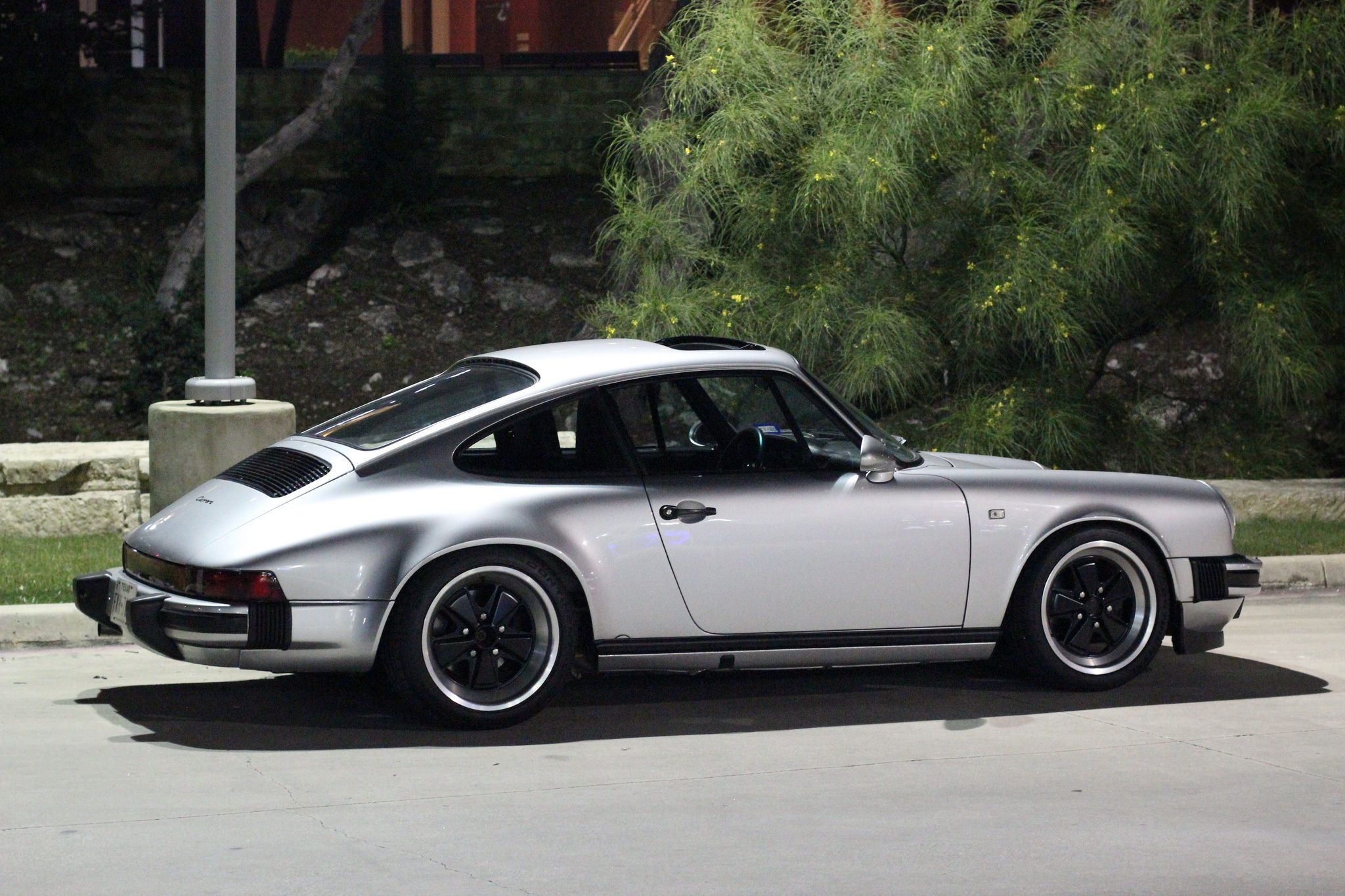
2017-2018 Ford GT recalled for fire risk

The Ford GT is a really hot car, and apparently it can get hotter. Ford announced a recall for 2017 and 2018 Ford GTsupercars for an issue that can lead to a fire. Apparently some valves at the base of the hydraulically actuated rear wing can start leaking fluid. This fluid can then drip down to the exhaust where it can ignite and start a fire.

According to Ford, one GT has caught fire, in Germany. The company said no one was hurt.

The recall is for Ford GTs built between December 20, 2016, and July 31, 2018, which includes 176 examples in the U.S. and 18 in Canada. The issue, apparently, is that there’s occasionally too much pressure in the hydraulic valve block below the wing, which forces fluid out. The fix uses a software update to prevent too much pressure from being applied. Some models will also be fitted with a hydraulic check valve and filter, as well as new O-rings if needed.

Related Video:

Details Emerge about Ferrari Monza Cost and Production Run

The cost and availability of the new Ferrari Monza has finally been revealed. The Italian company announced the speedster a few weeks before the Paris Motor Show 2018 began. While much of the technical information was available immediately, the release was particularly thin on details such as how much it would cost and how many would be available.

Interviews given during the Paris Motor Show 2018 have finally revealed the cost of the Monza to be €1.6 Million. With the help of a calculator, and confirmation that Ferrari plans to sell 499 of them, it is clear that Ferrari stands to generate revenue of €794.4 million.

While the headline figure sounds impressive, the profit that Ferrari generate from each car will be significantly less. To get that figure, the price of production, 22 percent value added tax and dealership profits would need to be taken into account.

The first of the special series cars, a new production line that Ferrari has developed, the Ferrari Monza is completely sold out. The choice of SP1 or SP2 will be left to the customer, although Ferrari is expecting an equal split across the two versions.

Ferrari have confirmed that the Monza has been developed without adhering to any particular set of rules. As a result, it will be street legal in Europe but not in the United States or in Asia. Customers in those regions will need to use their cars on closed circuits or on race tracks.

Sources have also confirmed that the Monza SP1 and SP2 will take up 2 years of production run. They will be assembled in Maranello as part of a new production line which will continue past those two years for upcoming Icona models.

History of the Porsche 911

Porsche Prepares To Evolve Beyond The 356

By the early 1960’s, with the commercial success of the 356 (in all of its variants) over the past decade, Porsche had garnered a reputation for building quality, high-performance vehicles that handled equally well on-and-off the race track. At the same time, Ferry recognized that the 356, for as much as it had evolved, was fifteen years old, and was due for a major redesign.

1956 Porsche 3561956 Porsche 356

Instead, Porsche felt it was time to introduce the world to the successor of the 356. In September, 1963, at the Internationale Automobil-Ausstellung (the Frankfurt Motor Show) in Frankfurt, Germany, Ferry Porsche presented the successor to the 356 as the Porsche 901.

The early development of the 901 was centralized around a proven concept – develop another air-cooled, rear-engine sports car, but this time equip it with a more-powerful six-cylinder “boxer” engine. Much as his father had done for him a generation earlier, Ferry entrusted the body design of the Porsche 901 to his eldest son, Ferdinand Alexander Porsche (F.A.).

The decision to utilize Ferdinand Alexander created an upheaval within the Porsche organization. It had been assumed that Erwin Komenda, who had developed the body design for the Porsche 356 and led the body design department up to that point, would be responsible for the 901’s design. F.A. Porsche complained that Komenda made unauthorized changes to his design and caused internal strife within the group. As the design took shape, Ferry Porsche took his son’s drawings to neighboring chassis manufacturer Reuter to fabricate the first prototypes of the Porsche 901 design.

1963_Porsche_9011963_Porsche_901

The car’s success at the Frankfurt Auto Show proved unequivocally that production of the 901 would begin as soon as the Porsche facilities could re-tool to begin production. There were still a good number of 356 C orders to be filled, and while production of the 356 C would continue for at least another year while additional engineering was completed on the 901, public appeal for the new car seemed very promising.

In September 14, 1964, production on the new Porsche 901 began and over the following week, a total of 82 cars were manufactured. One of the Porsche 901 prototypes was transported to the Paris Motor Show in October, 1964, and was once more well received by almost everyone – except for the executives of the French car manufacturer Peugeot.

Peugeot objected to the “901” designation because they too had patented a three-digit numeric designation for one of their cars that contained a zero as the middle digit. They asserted that they had ownership over the naming convention and had already sold many models in multiple markets bearing the same designation. Porsche’s solution? Change the middle “0” to “1” and call the car the Porsche 911.

Officially, the 901’s that had already been constructed were used for testing and for additional exhibitions, and Porsche never sold any of the original 82 units to private customers.

Porsche 912

In 1963, Porsche assigned the development of a new, horizontally-opposed, four-cylinder engine to Dan Schwartz, then Chief Departmental Manager for Development of Mechanical Systems. This engine was to be utilized as the powerplant for the 912 (originally Type 902), a variant of the Porsche 911, and was specifically intended to produce higher performance numbers than Porsche’s 356 SC engine. Moreover, the engine would be less costly and complex than their Carrera 2 engine.

Given time restrictions and developmental concerns, another option that was considered was to increase the displacement of the 1.6L engine (Engine Type 616) from the Porsche 356 to 1.8L, add Kugelfischer fuel injection, and modify the engines valve and cooling systems.

Again, given cost and scheduling concerns, both of these ideas were ultimately abandoned in favor of tailoring the exiting 1.6 liter Type 616 engine to the Porsche 912.

The Porsche 912 was not intended to replace the Porsche 356, but rather offer consumers who had appreciated the 356 as an option to buy a car at the same price point. The Porsche 911 (originally Type 901) was developed specifically as the successor to the 356 line, but because of the increases in technology and performance, including a larger, more powerful engine, Porsche recognized that the 911 would also cost considerably more than the outgoing 356 had, and so the 912 was introduced to bridge the gap between the outgoing 356 and the 911, the car that was to carry the Porsche brand forward.

As production of the 356 began to wind down in early 1965, Porsche officially began production of the 912 coupe on April 5th of the same year. Styling, performance, the quality of construction, the car’s reliability and the price made the Porsche 912 a very attractive alternative to the outgoing 356, and was well received by both old and new customers alike.

The Porsche 912 was manufactured by Porsche between 1965 and 1969 as their entry-level model. In that time, Porsche produced nearly 30,000 Porsche 912 coupes and roughly 2500 912 Targa top automobiles.

Although technically a variant of the 911, the 912 was a more nimble-handling compact performance 2+2 sports car, delivering 90 SAE horsepower at 5,800 RPM. Because of its highly-efficient flat-4 cylinder engine, low curb weight and low coefficient of drag, the Porsche 912 was capable of achieving up to 36 MPG, a number not commonly associated with any performance car of that era.

By 1969, Porsche executives made the decision that continuing production of the Porsche 912 would not be viable, due both to internal and external factors.

  • For one, the production facility that was utilized for manufacturing the 912 was to be reallocated for a new model, the Porsche 914-6.
  • Second, the 911 platform had returned to Porsche’s traditional model of offering three performance level options – a base model 911T, a fuel-injected 911E and a high-performance 911S.
  • Third, by 1969, the United States had started implementing more stringent emission control regulations that would require re-engineering all of Porsche’s offerings – and given the optional, multi-tiered 911’s available combined with the pending introduction of the 914, it was determined that the 912 was not worth the effort.

Porsche 911

Perhaps the most famous sports car in the world today, the Porsche 911 was not initially regarded as the “gold standard” of sports cars. That’s not to say that the car was ill-received. In fact, when showcased at the Frankfurt Auto Show under the model Type 901, it was considered a triumph in design. The challenges facing the 911 was that it was the successor to the wildly popular Porsche 356 (pre-A, A-C), and, because it was considerably more expensive than its predecessor, it took some time for the car to establish itself for the performance machine it is recognized for today.

As previously stated, the Porsche 911 started its life as Porsche Type 901. It traces its roots directly back to sketches drawn by Ferry’s son Ferdinand Alexander Porsche. From its inception, the Porsche 911 was developed to be a more powerful, larger, more comfortable replacement for the Porsche 356.

The Porsche 911 was developed with the proof-of-concept Type 745 engine – a boxer six-cylinder, twin-cam, overhead-valve engine. However, early Dyno results weren’t as promising as Porsche had hoped. The engine was only capable of 120 horsepower. To bolster performance, the engine was reworked to a 2.2L engine to achieve the desired engine output of 130 horsepower, but compromises had to be made that included utilizing long, flexible pushrods that put competition-grade power out of reach with the OHV six-cylinder.

After driving an early 911 equipped with the 745-powered T7 engine (as it was officially classified), Ferry Porsche reportedly banned further development of new pushrod engines.

Instead, Ferry turned to Hans Mezger’s team to develop an overhead-cam variant of the flat-six engine. Mezger had worked under Fuhrmann straight out of university and had gained a great understanding of Fuhrmann’s approach to engine design. Over the next year, Mezger’s team would develop the boxer powerplant that would ultimately be used in the first iterations of the 911. By late 1963, the air-cooled Type 901/01 2.0L flat-six “boxer” engine was ready for production.

Production of the Porsche 911 began in September 1964.

The 1964 911 featured a four-seat configuration, although the rear seats were small – and considered too small to be used by anyone but a small child. As such, the car was designated as a “2+2” rather than a true four-seater.

The Porsche 911 came equipped with either a four- or five-speed manual “Type 901” transmission. The outward styling of the car maintained the conceptual elements originally drafted by Ferdinand Porsche, with many elements ultimately added by Erwin Komenda (who initially objected to Ferdinand’s involvement with the design).

By the 1960’s, the popularity of the Porsche 356 had won over the hearts and imaginations of many Americans. While in its humble beginnings Porsche may have initially focused on developing its automobiles for a European market, a large focus was placed on marketing the 911 to the United States. Left-hand drive Porsche 911’s began production almost immediately and the first 911’s were marketed to the United States in February, 1965.

In 1966, Porsche introduced the more powerful 911S, which featured the Type 901/02 engine capable of producing 160 horsepower (120 kW/160 PS). Forged aluminum alloy wheels from Fuchs, with a five-spoke design, were offered for the first time.

Porsche 911 A

In August, 1967, Porsche began production of the 911 A series which included some notable improvements over the previous models. To start, the 911 A featured dual brake circuits and widened (5.5J-15) wheels paired with Pirelli Cinturato 165HR15 CA67 tires.

More significant was the introduction of the Targa top version of the car. The Targa top variant featured a stainless steel-clad roll bar that was intentionally introduced because of the common belief by automobile manufacturers that rollover safety requirements enforced by the U.S. National Highway Traffic Safety Administration (NHTSA) would make it difficult for fully open convertibles to meet regulations for sale in the United States.

The designation “Targa” came from the Targa Florio sports car road race in Sicily, Italy. Porsche had participated in this event for many years, and scored many victories in a number of race-equipped variants of their production vehicles until the event was discontinued in 1973. The last win for Porsche was accomplished in a 911 Carrera RS against prototypes entered by Ferrari and Alfa Romeo. The road-ready 911 Targa was equipped with a removable roof panel and a removable plastic rear window.

Porsche 911 Series B – F

Porsche Series B

The Porsche 911 B series began production in August, 1968, replacing the A-series 911L model with the 911E, one of the first 911’s to be introduced with fuel injection. It remained in production until July, 1969.

Porsche Series C

The Porsche 911 C series was introduced just a year later in August 1969 and featured an enlarged 2.2-litre engine. The wheelbase for both all 911 and 912 models was increased from 87.0 inches to 89.3 inches (2,211mm to 2,268mm). The decision to increase the wheelbase was made because of the 911’s instability when running wide open at full throttle. While the overall length of the car did not change, the rear wheels were re-positioned further back. Fuel injection was introduced to the 911S and a new mid-level Porsche 911 was introduced.

In addition to the above, a semi-automatic Sportomatic 911 model was introduced. This variant featured a torque converter, an automatic clutch mated to Porsche’s time-tested four-speed transmission. A lot of people questioned the introduction of the Sportomatic to the 911 stable. Afterall, the 911 was an enthusiast’s car, and most driving purists chastised the inclusion of an automatic transmission in any sports car, but most especially a Porsche!

Porsche’s rationale was simple. Traffic in metropolitan areas grew more and more congested year after year. The people moving into those metropolitan areas where there to stay. Those people drive cars. Cars congest/clog the interstates. As anyone who has ever driven a manual transmission will confess, stop-and-go driving is a hassle and even die-hard sports car buffs were known to grow weary of driving a manual transmission-equipped car in congested traffic.

Apparently, the majority agreed with Porsche’s rationale. Despite criticism from both automotive enthusiasts, critics and journalists alike, Porsche’s Sportomatic 911 sold well for over a decade until the decision to continue the platform was made in 1980, when the gearbox for the transmission was changed from a four-speed to a three-speed.

Porsche Series D

The 911 D series was introduced in August, 1970 and produced until July 1971 with no notable changes over earlier variants save for some minor refinements to the powertrain.

Porsche Series E

However, the Porsche 911 E series, which was produced from August 1971 to July 1972 for model years 1972 and 1973 brought some notable improvements to the 911 lineup. While the E series featured all the same models, they all came equipped with a new, larger 2.3 liter (2,341cc) engine. The engine is known as the “2.4 L” engine, despite its displacement being closer to 2.3 liters.

The 911E (Type 911/52 engine) and 911S (Type 911/53) featured Bosch mechanical fuel injection (MFI) in all markets. For the 1972 model year, the 911T (Type 911/57) was carbureted, except in the U.S. and some Asian markets where the 911T also came equipped with fuel injection (MFI.) Those variants became known as the 911T/E (Type 911/51 engine) and featured an increased horsepower rating of 140 HP, compared to their European counterparts, which were still rated at 130 HP.

Because of the power and torque increases, the 2.4-liter cars also received a new, stronger transmission. This transmission, identified as Type number 915, was derived from the transmission originally introduced in the Porsche 908 race car.

The Type 915 transmission did away with the 901 transmission’s “dog-leg” style first gear arrangement, opting instead for a more traditional “H” shift pattern, with first gear up to the left, second gear beneath first, third gear up and to the right, and fourth below third.

The Porsche 911 E series had an unusual oil filler behind the right-side car door, with the dry sump oil tank relocated from behind the right rear wheel to the front of it. This decision to relocate the tank was made to move the center of gravity slightly forward to improve handling. An extra oil filler/inspection flag was located on the rear wing, and for this reason it became known as the “Oil Klapper” or “Vierte Tür” (fourth door.)

See Also: Our Porsche Hub, Porsche Model List & Stats and Recent Porsche Posts.

Porsche Series F

The Porsche 911 F series, which was produced from August, 1972 to July 1973 (for the 1973 and 1974 model years) received a few more, but equally noteworthy changes.

To start, the dry sump oil tank was moved back to its original location behind the passenger side rear wheel. This reversal was performed in response to numerous complaints received by Porsche from consumers stating that gas-station attendants often mistook the oil filler door as the fuel filler door, and would fill the oil tank with gasoline.

The G-Series 911

A decade into the 911’s life and Porsche decided an update was needed and gave the 911 a big makeover. Known as the ‘G-model’ 911 it sold almost 200,000 vehicles and was the longest running 911 series, being produced from 1973 to 1989. In addition to a Coupé and a Targa version, a Cabriolet was also available.

There were meaningful design changes to the 911, most notably a new raised bumper design with black plastic bellows (designed to meet U.S crash test standards). Between the tail lights of the G models is a red panel and a Porsche logo that is red or black, depending on the model year. The rear number plate is flanked by two large rubber buffers with integrated number plate lighting. Inside, the G Series 911 came with added safety features to appease U.S regulators and consumers, including three-point safety belts fitted as standard and seats with integrated headrests.

The base 911 model had a 2.7 liter flat-six engine with 150 hp that increase to 165 hp for model year 1976. The 911 S delivered an output of 175 hp.

The defining 911 of this era came in 1974 and was the original 911 Turbo. The 930 911 Turbo had a 260 hp engine (and the coolest rear spoiler ever). Its advanced 3 liter turbo engine had technology like charge pressure control on the exhaust side (previously available only in race cars) which prevented unwanted excess pressure during partial load or overrun. When charge pressure was needed again during an acceleration phase, the bypass valve closed and the turbine could work to its full capacity in the exhaust stream. With its unique combination of luxury and stonking performance the ‘Turbo’ became a synonym for the Porsche brand. The Turbo got a major update in 1977 when power jumped to 300 hp from a bigger 3.3 liter engine. It was easily the most powerful and high performance car in its class and further grew the 911 legend. Innovation wise the new Turbo had a charge-air cooler.

In 1983, the naturally aspirated 911 Carrera superseded the SC; with a 3.2 liter flat six that had 231 hp but more importantly it was also when the you could order the 911 with no roof. Yuppies united everywhere and a new love for Porsche emerged amongst the well healed. In terms of special models, the 911 Carrera Speedster was launched in 1989 and had a unique look that paid homage to the 356 speedster of the 50s.

The Next Generation Of The 911

In 1990, even as production continued in earnest on the Porsche 944, and pre-production design was well underway on the upcoming 968 model, the executives at Porsche were preparing to unveil the latest iteration of the all-wheel drive 911 Carrera 4 and the rear-wheel drive 911 Carrera 2.

While these cars were badged as 911’s, they contained virtually none of their predecessor’s architecture. In fact, this latest version of the 911 Carrera shared a mere 15% of the parts found in the earlier iteration of the car.

Officially identified as Type 964, the new Porsche 911 was a contemporary take on the classic two-door sports car. It featured a 3.6- liter boxer engine that produced an impressive 250 horsepower.

Externally, the new Porsche 911 (Type 964) looked virtually the same as its predecessor, save for the introduction of aerodynamic polyurethane bumpers and an automatically-extending rear spoiler which replaced the “whale tail” found on the 911 throughout the 1980’s.

Looking inward, the interior was an almost entirely reimagined Porsche 911. The new model featured a design that was intended to blend performance with comfort. The new 911 featured many creature comforts that had been lacking in earlier versions of the car including: ABS, a Tiptronic automatic transmission, power steering, and airbags.

While the entire lineup of new Porsche 911 models was well received by consumers, it was the introduction of an all-wheel drive Carrera 4 model that really captured the attention of the automotive community as a whole.

The all-wheel drive option, while relatively commonplace today, was revolutionary for its time because it enabled consumers the opportunity to purchase a 911 that was far more adaptable to varying road conditions. When any of the drive wheels slipped during operation, the power was automatically transferred elsewhere, ensuring that the driver could maintain a greater degree of control whenever the driving environment became less manageable.

The 911 Turbo

In addition to the base model Carrera Coupe, Cabriolet and, Targa versions, the 1990 Porsche 911 offerings also included a Type 964 Turbo option. When first introduced in March, 1990, the 911 Turbo initially featured a turbocharged 3.3- liter boxer engine that was carried over (with updates) from the previous 911 Turbo model, albeit with reduced turbo lag.

However, in 1992, the Porsche 911 Turbo was upgraded to a more powerful 3.6- liter power plant. The updated engine produced 320 horsepower and could catapult the 911 Turbo to a top speed of 169 miles per hour, with a 0-60 mph (0-100km/h) of just under 5.0 seconds. The 3.6- liter engine would serve as the standard engine for the 911 platform for many years to come.

Porsche 911 (Type 993) – The Last Air-Cooled Model

The Porsche 911 (Type 993) was developed by the Porsche AG company as the replacement to the Porsche 964 model (which had been introduced in 1990 as a successor to the earlier 911 platform.)

Considered by many Porsche enthusiasts as the “ultimate 911”, the type 993 represented a unique blend of power and simple elegance.
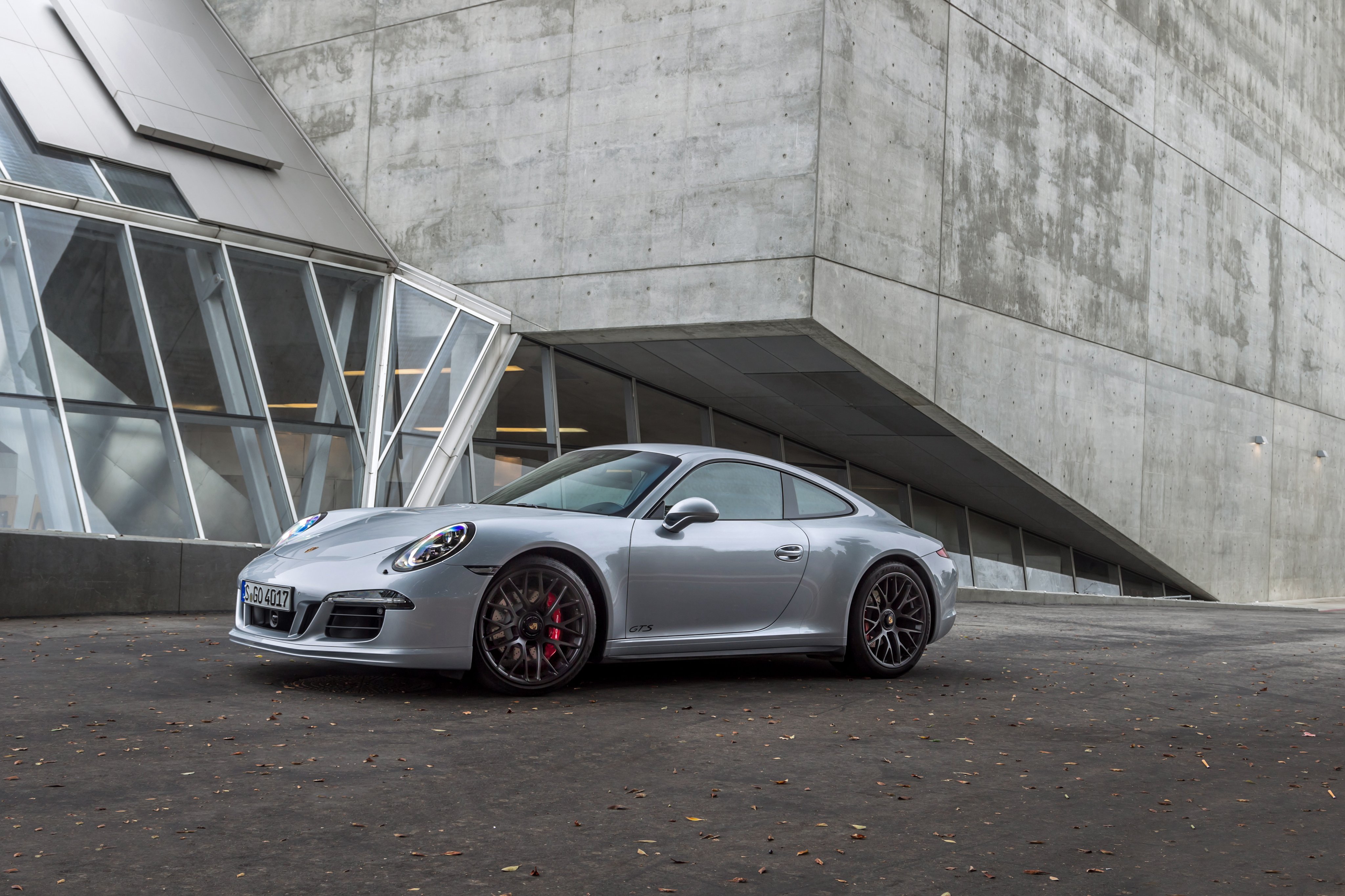
The car featured integrated bumpers which underscored the new, more streamlined look of the Porsche 911. The front end of the car is “lower slung” than earlier versions of the 911, due in large part to the poly-ellipsoid shape of the redesigned headlights. These headlights, which have become an integral part of the iconic and immediately-identifiable 911 brand, represent the integration of design elements that made the Type 993 such a refined automobile.

Even before its commercial introduction in 1995, the Porsche 911/Type 993 gained a reputation for exceptional dependability and reliability. The air-cooled engine was mated to a standard six-speed manual transmission – making the 993 the first-generation of 911 to feature a six-speed transmission (all earlier variants had either 4- or 5-speed gearboxes.) The Carrera, Carrera S, Cabriolet and Targa models were also available with an optional Tiptronic 4-speed automatic transmission (the same automatic first introduced in the Type 964 Porsche 911.

The Type 993’s optional all-wheel-drive system was revised, eliminating the three-differential setup that had been used in the Type 964 car and replacing it with a revised setup reminiscent of that found on the Porsche 959 supercar.

The 993 also received a redesigned suspension system. This new suspension system was specifically developed to produce improved handling characteristics during inclement weather while retaining the stability offered by the aforementioned all-wheel drive system. The revisions made to the suspension system resulted in an overall weight reduction to the car.

The newest 911 was praised by critics for being incredibly agile, due toin the overall curb weight reduction from the previous 911 model (Type 964). The Porsche 911/Type 993 was sold between January 1994 and early 1998 (with U.S. based models going on sale from 1995-1998.

A Turbo-version of the Type 993 Porsche 911 was also introduced in 1995. It featured a bi-turbo engine, giving the 911 the distinction of having the lowest-emission stock automotive powertrain in the entire world. The car also featured hollow-spoke aluminum wheels. These wheels had never been used before on any vehicle, and marked an important innovation when they were introduced on the 1995 Porsche Type 993.

The discontinuation of the Porsche 993 in 1998 officially marked the end of the air-cooled Porsches.

The Type 993 variant of the Porsche 911 has often been referred to as “the best and most desirable of the 911 series, not only because of its beauty, but also because of its great performance, even by modern standards.”

Much of the reverie behind this car is the air-cooled engine, though Porsche purists celebrate the 993 as “the last complete ‘modern classic.’” For many Porsche collectors, the 993 is also acknowledged and celebrated as the Holy Grail of any Porsche collection.

The New 911 (Type 996)

The Porsche 911 (Type 996) was a new design developed by Pinky Lai. While the car incorporated the classic lines and tear-drop shape of all the 911’s earlier iterations, Type 996 was nearly a complete reimagining of the 911 sports car, and carried very little over from its predecessors.

Type 996 featured all-new bodywork, a reimagined interior, and the first water-cooled engine ever used in a 911. The only carry-overs were from the earlier 911 (Type 993) from which the front suspension, rear multi-link suspension, and a six-speed gearbox were repurposed after some revisions to make them current.

The 911/996 was introduced in early 1997, following the successful roll-out of the Porsche Boxster. Like the Boxster, it was well received and praised for “retaining all the character of its classic heritage.”

When introduced in 1997, the first 996 models were available as either a rear-wheel-drive coupe or cabriolet (convertible). Later development of the model would re-introduce an all-wheel-drive variant of both versions of the car.

The new 911 featured a 3.4 liter, flat-6, and a naturally-aspirated engine that produced 296 horsepower (224 kW), thanks to the introduction of its four-valve cylinder heads. Moreover, the new boxer engine broke new ground in terms of reduced emissions, engine noise, and fuel consumption.

Although Porsche had identified an opportunity to streamline production of both the Boxster and the 911 by the sharing of components between the two models, the initial response from 911 owners was the criticism that the “lower priced car looked just like theirs did.” This complaint would not register with Porsche for many years – although it ultimately resulted in some minimal design changes – including reimagined headlights – in 2002.

The 996 Turbo And GT2/GT3 Platforms

996 Turbo

The Porsche 911 (Type 996) Turbo debuted at the Frankfurt Auto Show in September 1999.

Unlike its naturally aspirated counterpart, the 996 Turbo featured a water-cooled, twin-turbocharged/intercooled 3.6- liter engine that was derived from the 1998 Le Mans-winning GT-1 Porsche 911. This new engine produced 415 horsepower at 6,000 rpm and 415 lb-ft of torque.

The 996 Turbo featured all-wheel drive and came equipped with either a 6-speed manual or a5-speed Tiptronic automatic transmission.

The 996 Turbo also featured revised body styling and a wider stance than its other 911 Carrera counterparts. It also came equipped with new bi-xenon headlamps.

Models exported to the United States featured a rear spoiler that would automatically ride at 76 mph (122 km/h) and lower at 36 mph (58 km/h). While the spoiler purportedly helped to reduce lift at higher speeds, the size and width of the spoiler were deemed too small to provide any beneficial downforce.
The 911 GT2 And GT3

GT3

Given the 911’s earlier successes in the GT-1 class at Le Mans, the Porsche 996 platform was used as the foundation for two lightweight, track-ready variants of the car. The first of these variants was the GT3.

The GT3 was based on the standard 996 Carrera, but it was stripped of any extraneous equipment to reduce the car’s overall weight. The car featured a stiffer, though adjustable, suspension platform as well as upgraded brakes. The bodyshell that was developed for the all-wheel-drive version of the 996 was selected because it provided greater front-end stiffening.

Two versions of the GT3 were manufactured. The first, which is commonly referred to as the Mk.I GT3, was released in 1999 to all markets except North America. This version of the car featured a naturally aspirated 3.6L flat-six engine that produced 360 horsepower (270kW). This was the same engine that was shared with the 996 Turbo and was based on the engine used in the 911 GT1.

The Mk. II GT3 variant was based on the second generation of the Porsche 996. It featured updated aerodynamics and a more powerful version of the aforementioned 3.6L engine.This new variant of the engine produced 380 horsepower (280 kW). With this revised powerplant, the Mk.II GT3 could accelerate from 0-60 mph in just 4.0 seconds. Equally impressive was the 1.03g it produced on the skidpad.

This second variant of the GT3 platform had the unique distinction of being the first GT3 class Porsche marketed in North America

GT2

The second iteration of the racing-class Type 996 Porsche 911 was dubbed the GT2.

Like the GT3, the GT2 was a rear-wheel-drive variant of the current 911 platform. Also like the GT3, the reasoning behind a rear-wheel-drive (versus all-wheel-drive) configuration was two-fold. First and foremost, GT2 Class racing rules mandated the use of a rear-wheel drive platform. Second, and equally important, was the fact that the rear-wheel-drive solution weighed less than the all-wheel-drive option.

The GT2 996 received additional aerodynamic modeling to many of its body parts. It also received a re-tuned version of the 996 Turbo’s 3.6- liter twin-turbocharged engine which included larger turbochargers and intercoolers, a revised intake and exhaust system, and re-programmed engine control software. When tested, the GT2 996 produced 489 horsepower and 484 lb-ft of torque, which was enough to propel the car from 0-60 mph in just 3.9 secondswith a top speed of 198 mph (319 km/h).
Both the GT2 and GT3 variants of the 996 came equipped solely with a six-speed manual transmission.

The Porsche 911 GT3 became one of the highlights of the 996 era when it was introduced in 1999. It was celebrated by Porsche enthusiasts for “keeping the tradition of the Carrera RS alive. Conversely, the Porsche 911 GT2, the first car to be equipped with ceramic brakes as standard equipment, was marketed specifically as an extreme sports vehicle capable of track-level performance. It was released to the marketplace in fall, 2000.

Evolution Of The 996

In 2002, the standard models of the Type 996 underwent minor re-styling (911 996.2 model name), which included switching out the integrated headlamps that had long been shared between the 911 and Boxster models) with the Turbo-style headlamps. All variants of the car also received a new front fascia.

Mechanically, all variants of the 996 were standardized on the 3.6- liter engine, which yielded gains of 15 horsepower to the naturally aspirated models.

Also in 2002, Porsche introduced both the 996 based Targa, which featured a sliding glass roof reminiscent of the one found on the 911’s Type 993 predecessor. That same year, Porsche also introduced the Carrera 4S model. The C4s, as it has become known, shared the same wide-body look of the 996 Turbo as well as the same braking and suspension systems previously introduced ion that model.

Porsche Type 997

In July, 2004, Porsche again unveiled another iteration of the 911 Carrera and 911 Carrera S models. Known as the Porsche Type 997, the car featured the same classic silhouette as all earlier variants of the Porsche 911, and included design cues – most especially a return to the clear, oval headlights with separate blinkers – that were found on older 911 models.

While the Porsche 911 Type 997 featured a refined, race-inspired appearance, the car was hailed for being a true high-performance vehicle. The base Carrera featured a 3.6- liter boxer engine that produced an impressive 325 horsepower while the new 3.8- liter, six-cylinder engine found in the Carrera S produced an incredible 355 horsepower.

At the Geneva Auto Show in 2006, Porsche introduced the 911 Turbo, the first gasoline-powered production automobile to include a turbocharger with variable turbine geometry,a technology that allowed the aspect ratio of the turbo to be altered as conditions changed.

They also introduced the next-generation Porsche 911 GT3. The new 911 GT3 was equipped with a 3.6 liter, naturally aspirated engine that produced 415 horsepower. The Porsche 911 Type 997 received another update in late-fall 2008 (called the 997.2). Porsche engineers further improved the car’s fuel efficiency by introducing direct fuel injection and a dual-clutch transmission.

Never in Porsche’s long history of building incredible driving machines had the company allowed as many owner-selectable preferences as they had with the Type 997, and with the Carrera, Targa, Cabriolet, rear or all-wheel drive, Turbo, GTS, special edition models and road versions of the GT race cars, the Porsche 911 stable was now comprised of 24 different model versions.

Porsche 911 Type 991

As with the earlier generations of the Porsche 911 that had come before it, the Porsche Type 991 was a revolutionary step forward for the 911 brand. The car continued to feature the same characteristic teardrop shape for which the 911 is immediately recognizable to just about any automotive enthusiast. However, two unique design principles were followed that helped refine the character of the car.

First, the arch of the roofline was reduced and re-design to taper gradually to the rear of the car.  Second, the front wings (the assembly that includes the headlight and surrounding structure) were now placed higher than the lid.

Compared to the outgoing 997, the 991 was a slightly larger vehicle, with a wheelbase that was increased by approximately 3.9 inches (100 millimeters), and the overall height was increased by 2.8 inches (70 millimeters).

A new transaxle was developed so that the rear wheels could be moved 3 inches (76 millimeters) backward in relation to the position of the engine, which dramatically improved the car’s weight distribution and cornering performance.

Carrera And Carrera S (2011-2016)

Base models were introduced in September 2011 at the Frankfurt Motor Show. The Carrera came equipped with a 3.4- litre boxer engine with direct fuel injection, 345 bhp (257 kW) at 7,400 rpm and 288 lb⋅ft at 5,600 rpm. The Carrera S received a 3.8- litre engine with 395 horsepower (294 kW) at 7,400 rpm and 325 lb⋅ft at 5,600 rpm. The convertible model of the 991 was announced in both Carrera and Carrera S versions, at the LA Motor Show in November 2011.

In September 2012 at the Paris Motor Show, all-wheel-drive variants – the Carrera 4 and 4S, were added to the line-up.

911 Carrera GTS (2014–2015)

Introduced in November, 2014, at the LA Motor Show, the 991 Carrera GTS was developed as the mid-level model between the Carrera S and GT3 edition 911s.

Base options included a 424 horsepower (316 kW) PowerKit, a Sport Chrono Package, a Sport Exhaust System, Dynamic Engine Mounts, 10mm lowered suspension, Porsche Torque Vectoring (PTM) system, LED daytime running lights with Porsche Dynamic Lighting System (PDLS), Sport Design Front Spoiler, Sport Design Rear Mirrors, GTS badging, and 20″ Centerlock wheels. When optioned with PDK, 0–60 mph is achieved consistently at 3.8 seconds with the help of Launch Control.

911 Targa 4 And 4S (2014–2015)

At the Detroit Motor Show in January 2014, Porsche introduced the Targa 4 and Targa 4S models. These new derivatives came equipped with an all-new roof technology that still incorporated the original Ttarga design, now with an all-electric cabriolet roof along with the B-pillar and the glass ‘dome’ at the rear.

On January 12, 2015, Porsche announced the 911 Targa GTS at the North American International Auto Show in Detroit. Similar in appearance to the existing Targa 4 and 4S models, the GTS added the 424 horsepower (316 kW) engine plus several otherwise optional features.

Type 991.2 & The Era of Turbocharging

2015 marked a new milestone in Porsche’s history with development of a turbocharged flat engine that gave the world’s best-selling sports car a significant boost in power as well as considerably lower fuel consumption. Porsche gave the Carrera and Carrera S models these flat six turbo engines which were previously sold as normally aspirated only. There was initial pushback from enthusiasts that seems to have now dissipated.

On the outside there weren’t many changes for the 991.2 range. Slightly different bumpers with larger air intakes, new rims and different rear hood vents, with the slits now being placed longitudinally and different rear lights. The interior stays pretty much the same, but it does get a new touchscreen infotainment system also compatible with Apple CarPlay. Mechanically, apart from the extra power and better fuel economy provided by the two little turbos, the 911 Carrera gets wider wheels, new shock absorbers and standard PASM active suspension.

The new 3.0-litre twin turbocharged six-cylinder flat engine developed 370 hp in the 911 Carrera and 420 hp in the 911 Carrera S, up 20 hp over the prior versus the 991.1. Torque was up a lot more and that is where the new turbo engine was a real hit, transforming the 911 from a “rev to the sky to get performance” machine to a “just put your foot down in any gear” affair. You can decide if that is better or worse depending on what you enjoy I guess. Other improvements in the 991.2 range included not just more power, but updated Porsche Active Suspension Management (PASM) chassis and optional rear axle steering improved the best time of the 911 on the Nürburgring-Nordschleife to 7.30 minutes. Ten seconds faster than its predecessor and with an even greater lead over the competition.

All the same models from the 991.1 series were still available (24+ models) with the addition of an entirely new variant called the Carrera T. This is a first-order driver’s car, a basic 911 equipped with purposefully selected, road-annihilating hardware. The point of the T (for Touring) is to be a spartan model equipped with only the necessities that a dedicated driver might want. It has the same 370hp as the base 911 mated to the (good) seven-speed manual transaxle. Add shorter gearing and a limited-slip differential and this is a tasty package.  The Carrera T also gets two-mode PASM sport suspension and a custom Sport Chrono package. There are other weight saving measures that add up to 44 pounds in less weight than a standard Carrera. Shorter gears, LSD, thinner glass, no rear seats plus a preselected mix of the base 911’s best hardware, now that’s our kind of 911.

In terms of special models, they all got some tasty upgrades, but the move to turbocharging for the broader range makes them seem less special on paper (clearly paper lies). For example, with the PDK and the launch control system activated, the 2018 Porsche 911 GT3 gets to 62mph in 3.4 seconds. With the manual gearbox, a similar sprint takes 3.9 seconds. That makes the GT3 barely faster than the 911 GTS which is a better daily driver and a 580-hp 911 Turbo S is an entire second faster to 60 so why would you choose the GT3 over these models. It’s easy. It is how it drives and how it makes you feel. The good news is that the GT3 and GT3 RS both are still the best handling I’ve ever experienced. Fast, loud, firm, surgically precise and no body roll, these cars deliver full sensory overload at slow speeds around town and an almost religious experience at speed on track. There is nothing better. Well, maybe there is because in the 991.2 Porsche decided to bring back the manual gearbox in the GT3. Called the Touring and it is the exec’s GT3. There’s the deletion of the regular GT3’s fixed wing replaced with a classic pop-up rear deck, albeit embellished with a ‘GT3 Touring’ badge and a unique lip spoiler on the trailing edge. It only comes with a six-speed manual and inside the trim is kept classic – all-leather and cloth, no Alcantara. Other than that, it’s as per the GT3, with all the same options (ceramic brakes, nose lift, LED headlights, Chrono Package, audio upgrades), which is great news. A subtle-looking GT3, maybe I need to rethink the earlier daily driver comment.

992 Arriving Soon & Changes Are Coming

The upcoming 992 Porsche is not yet been released and we already know it is going to evolve the 911 concept and continue to push things uncomfortably (but awesomely) forward. A mild hybrid powertrain with brake regeneration is expected as well as 48 volt electrical system. A plug-in hybrid Porsche 911 is nearly a certainty to join the lineup in 2023 or 2024. According to a rumor, there will possibly be a pair of hybrid versions, including one at the very top of the range with performance on par with the 911 Turbo.

There have been seven generations of Porsche so far and one on the way. One thing for sure is that the next generation will be similar and yet will be defined by how it moves the game forward.

Apollo IE Production to Start Next Year

We recently received an update on the development of the Apollo Automobil Intensa Emozione “IE”. It was first announced at the Goodwood Festival of Speed 2017 and has been in development since. The work is being carried out by HWA AG, the company that powers the Mercedes-AMG racing division.

We are told that the Apollo IE is closer to production. It recently completed a multi-day endurance test at the Lausitzring Circuit in Germany. Two IE’s were put through their paces, a road car and a car set up in ‘race’ configuration.

Testing in recent months has apparently focused on collecting data to analyze the thermal and aero dynamics.

Apollo Chairman, Normal Choi said: “We are very pleased with the progress at this recent test as another round of dynamic development in collaboration with our technical partner, HWA AG is completed. This program is operating at the highest level and we are thoroughly testing the cars in both road and track use cases prior to beginning production. It is a pleasure for us to share a peak behind the scenes to the public and our many fans so they can get a better sense of the magnitude of the program and the process.”

For those unfamiliar with the Apollo IE project, it was born out of Gumpert, the defunct German supercar manufacturer. Gumpert filed for bankruptcy in 2013 and was purchased by a Hong Kong consortium in 2016. Since then, the company have been working on a successor to the Gumpert Apollo in collaboration with some of the industries biggest names.

The Apollo IE will be available in a limited production run of 10 cars. Each car is spoken for already at a cost in the region of €2,300,000. Power comes from a 6.3 litre V12 engine which produces 790 hp and 561 lb ft of torque. The bodywork is entirely carbon fibre with the chassis using some steel, aluminium and titanium components. Apollo targets a 0 to 97 km/h time of 2.7 seconds, with a projected top speed 335 km/h.

Guide to the 911: All The Porsche 911 Generations Explained

The Evolution of the Porsche 911

Born in 1963, the Porsche 911 has become a legend. An iconic design that is constantly evolving.

With over one million cars sold, the Porsche 911 is the most successful selling sports car in the world. Beyond sales success however, its cultural impact is even broader. Modified by private teams and by the factory itself for racing, rallying, and other forms of automotive competition. It is among the most successful competition cars. Add dozens of technological firsts and 55 years of development and improvements and it is clear this is a special car. In the 1999 international poll to determine the Car of the Century, the 911 came fifth. It is one of two in the top five that had remained continuously in production.

In this post we trace the iconic Porsche 911’s lineage through the ages. We are less focused on the illustrious 911 history and more on helping you understand each of the Porsche 911 generations and what makes them unique. Most Porsche buyers start by deciding which generation they want first and then drilling down to the model. Pub conversations usually go something like this: “I want the classic shape and modern chassis so I’m going for a 993 Porsche” or “screw the new turbocharged flat six in the 991.2, I’m going naturally aspirated 991.1”. Most non-Porsche experts know little about each generation and what makes them special so we hope this guide to the Porsche 911 is helpful.

Basic Concept Unchanged

No other car is more instantly recognizable so lets start with the design. The Porsche 911s iconic design and silhouette have remained the same since the car was first unveiled in 1963 at Frankfurt show as the Porsche 901. Almost 60 years later and just about anybody can tell you when a 911 passes by, no matter what year it was made. All 911s look like 911s, that is a no brainer.

What else makes a Porsche 911 a Porsche 911. All 911s are two-door, 2+2 high performance rear-engined sports cars. That formula is unaltered so far in almost 60 years of development. The 911 is always made in Germany and has been since the first model rolled off the production floor in 1963. All 911s have a rear-mounted six cylinder boxer engine and all round independent suspension.

The 911 It has undergone continuous development, though the basic concept has remained unchanged. And yet, for all the familiarity in the 911, a lot has changed…

Constant Change & Evolution

We would argue that the key to the Porsche 911s success over six decades is how it evolves, its ability to be ahead of the curve and to drive the car industry forward by making big, bold and often unpopular (at the time) bets is its defining trait across eight generations of the 911 model. Each generation of 911 has a big technical advancement that upsets the “true fans” and then a few years later we all turn around and say “damn, Porsche was right”.

The 911 began with change in mind. By the early 1960’s, Ferry Porsche recognized that the 356, for as much as it had evolved, was fifteen years old, and was due for a major redesign. Porsche felt it was time to introduce the world to the successor of the 356 and 1963 Ferry presented the successor to the 356 as the Porsche 901. The early development of the 901 was centralized around a proven concept – develop another air-cooled, rear-engine sports car, but this time equip it with a more-powerful six-cylinder “boxer” engine. The car maintained the 356’s fastback design, and utilized an air-cooled flat-six that produced 130 bhp.

The next big change came in the G-Series with the most significant move made in this time being the introduction of turbocharging to the 911, arriving in 1975 with 260 horsepower powering the rear wheels. The 964 was another technical leap forward. It introduced all wheel drive and took chassis and suspension to the next level. The 993 added an all-aluminum multilink rear suspension and an all-aluminum subframe, standard six-speed manual, a new all wheel drive system and it was the first 911 with a twin turbo engine. The 996 certainly changed things forever. For decades, 911s used an air-cooled, rear-mounted flat-six engine in naturally aspirated or turbocharged form and then the 996 comes along and switches the flat six to water cooling. More recently the 991.2 model moved away from natural aspiration to turbo flat-six engines for the main variants.

The upcoming 992 Porsche is not yet been released and we already know it is going to evolve the 911 concept and continue to push things uncomfortably (but awesomely) forward. A mild hybrid powertrain with brake regeneration is expected as well as 48 volt electrical system. A plug-in hybrid Porsche 911 is nearly a certainty to join the lineup in 2023 or 2024. According to a rumor, there will possibly be a pair of hybrid versions, including one at the very top of the range with performance on par with the 911 Turbo.

There have been seven generations of Porsche so far and one on the way. One thing for sure is that the next generation will be similar and yet will be defined by how it moves the game forward.


Porsche 911 Generations Explained

Porsche 911 - First Generation (1963-1989)Porsche 911 - First Generation (1963-1989)

Porsche 911 – First Generation (1963-1989)

Model Year: 1963–1989
Units Produced: 81,100
Body Styles: 2-door coupé, 2-door targa top (1966–89), 2-door convertible (1982–89)
Engine Type: Air-cooled flat-6
Engines: Nat Aspirated (2.0 L, 2.2 L, 2.4 L, 2.7 L, 3.0 L, 3.2 L), Turbo (3.0 L Turbo, 3.3 L Turbo)
Transmissions: 5-speed manual, 4-speed automatic
Wheelbase: 87.0 – 89.3 in
Length: 168.9 in Width: 66.9 – 70.1 in Height: 51.2 – 51.6 in
More Info: 911 Early Years (1963-1973)

This first generation 911 had by far the longest run (series A through F) and included the introduction of the four-cylinder 912 in 1965, the more powerful 911S in 1966, the removable-roof Targa in 1967, the de-tuned 911T (which became the 911L, and later, 911E), the motorsport-homologated Carrera RS in 1973, the feisty 930 Turbo in 1975, and the 911SC in 1978. Though the 911 grew in power, displacement, length, handling prowess, and popularity over its first 26 years, it wasn’t until 1989 that big changes began taking shape. We broke up the first generation 911 into the original 901 (before the name change), the 912 Porsche, the Early Years which included models from 1963 till 1973 and then the G-Series from 1973 till 1989.

Porsche 901 - The Original (1963-1964)Porsche 901 - The Original (1963-1964)

Porsche 901 – The Original (1963-1964)

Model Year: 1963–1964
Learn More: Porsche 901
Units Produced: 82 units

The massive undertaking of replacing the 356 began as early as 1959 with Ferdinand Alexander “Butzi” Porsche largely responsible for the project. By 1961 the first clay models were being made and in July of 1964 the first prototypes were being made. At the 1963 Frankfurt show the public saw Porsches new direction.

Compared to the 356 it had a longer wheelbase, a more compact suspension setup and much more power from the flat-6 engine. It was named the Porsche 901. Peugeot claimed exclusive rights to three-number vehicle names with a “0” in the middle  so in the end, Porsche ceded and settled on the 911 nameplate. Officially, the 901’s that had already been constructed were used for testing and for additional exhibitions, and Porsche never sold any of the original 82 units to private customers.

Notable models: 1963 Porsche 901

Porsche 912 - Bridging A Gap (1965-1969)Porsche 912 - Bridging A Gap (1965-1969)

Porsche 912 – Bridging A Gap (1965-1969)

Model Year: 1963–1964
Learn More: Porsche 912
Units Produced: >32,000 units

The Porsche 912 was not intended to replace the Porsche 356, but rather offer consumers who had appreciated the 356 as an option to buy a car at the same price point. Porsche recognized that the 911 would cost considerably more than the outgoing 356 due to increases in technology and performance, including a larger, more powerful engine, so the 912 was introduced to bridge the gap between the outgoing 356 and the 911.

Styling, performance, the quality of construction, the car’s reliability and the price made the Porsche 912 a very attractive alternative to the outgoing 356, and was well received by both old and new customers alike.

The Porsche 912 was manufactured by Porsche between 1965 and 1969 as their entry-level model. In that time, Porsche produced nearly 30,000 Porsche 912 coupes and roughly 2500 912 Targa top automobiles.

Although technically a variant of the 911, the 912 was a more nimble-handling compact performance 2+2 sports car. Its highly-efficient flat-4 cylinder engine, low curb weight and low coefficient of drag meant it was capable of achieving up to 36 MPG, a number not commonly associated with any performance car of that era. By 1969, Porsche executives made the decision that continuing production of the Porsche 912 would not be viable, due both to internal and external factors.

Notable models: 1965 Porsche 912

Porsche 911 - The Early YearsPorsche 911 - The Early Years

Porsche 911 – The Early Years (1963 to 1973)

Model Years: 1965–1973
Units Produced: 81,100
Learn More: 911 Early Years (1963-1973)

Porsche wanted to offer a larger, four-seater version of its 356, specifically its expensive and complicated Carrera 2. The all-new car featuring a new chassis with MacPherson struts, semi-trailing arms and torsion bar springs, and a brand-new air-cooled, OHC flat-six “boxer” engine mounted in the rear of the car and coupled with either a four or five-speed manual gearbox.

Assembled in Leipzig, Germany, the 911 initially made 128 horsepower from its 1,991cc engine and a top speed of 131 mph.

The Ferdinand Alexander “Butzi” Porsche designed car had clear 356 lineage with its fastback design. However, the now-infamous final form was unique to the brand and industry. From a driving perspective the 911 was unique. Distinguishing the 911 from anything else on the road was its short wheelbase, rear weight bias and semi-trailing arm rear suspension and those things meant that from the start the 911 demanded a driver that knew what he/she was doing. With its relatively short wheelbase, rear-engine layout and semi-trailing arm rear suspension, it was an easy car to drive wide and have the tail totally slide out. Porsche tried a number of engineering fixes for this big issues including a set of front “bumper reinforcement” weights and a modest wheelbase stretch. It didn’t work.

The first Porsche 911 series came in five engine configurations, ranging from 2.0 to 2.4 liter and producing between 128 and 190 horsepower as time passed by.

Almost immediately the Porsche 911 was modified by numerous other companies and tuning firms for racing competitions, recording important wins in events all around the world. The legend had begun.

Notable models:
1970 Porsche 911 S 2.2 Targa, 1970 Porsche 911 S 2.2 Coupé, 1967 Porsche 911 L Coupé, 1965 Porsche 912, 1967 Porsche 911 T Targa, 1967 Porsche 911 T Coupé, 1967 Porsche 911 Targa, 1972 Porsche 911 T 2.4 Targa, 1972 Porsche 911 T 2.4 Coupé, 1970 Porsche 911 T 2.2 Targa, 1970 Porsche 911 T 2.2 Coupé, 1971 Porsche 911 S/T, 1972 Porsche 911 S 2.4 Targa, 1972 Porsche 911 S 2.4 Coupé, 1966 Porsche 911 S, 1967 Porsche 911 R, 1967 Porsche 911 L Targa, 1972 Porsche 911 E 2.4 Targa, 1972 Porsche 911 E 2.4 Coupé, 1970 Porsche 911 E 2.2 Targa, 1970 Porsche 911 E 2.2 Coupé, 1964 Porsche 911, 1964 Porsche 911

Variants:
2.0-litre – O, A, B series (1964–1969), 2.2-litre – C, D series (1969–1971), 2.4-litre – E, F series (1971–1973), Carrera RS (1973, 1974)

Porsche 911 - G-Series (1973-1989)Porsche 911 - G-Series (1973-1989)

Porsche 911 – G-Series (1973-1989)

Model Years: 1965–1973
Units Produced: 198,414
Learn More: 911 G-Series (1973-1989)

A decade into the 911’s life and Porsche decided an update was needed and gave the 911 a big makeover. Known as the ‘G-model’ 911 it sold almost 200,000 vehicles and was the longest running 911 series, being produced from 1973 to 1989. In addition to a Coupé and a Targa version, a Cabriolet was also available.

There were meaningful design changes to the 911, most notably a new raised bumper design with black plastic bellows (designed to meet U.S crash test standards). Between the tail lights of the G models is a red panel and a Porsche logo that is red or black, depending on the model year. The rear number plate is flanked by two large rubber buffers with integrated number plate lighting. Inside, the G Series 911 came with added safety features to appease U.S regulators and consumers, including three-point safety belts fitted as standard and seats with integrated headrests.

The base 911 model had a 2.7 liter flat-six engine with 150 hp that increase to 165 hp for model year 1976. The 911 S delivered an output of 175 hp.

The defining 911 of this era came in 1974 and was the original 911 Turbo. The 930 911 Turbo had a 260 hp engine (and the coolest rear spoiler ever). Its advanced 3 liter turbo engine had technology like charge pressure control on the exhaust side (previously available only in race cars) which prevented unwanted excess pressure during partial load or overrun. When charge pressure was needed again during an acceleration phase, the bypass valve closed and the turbine could work to its full capacity in the exhaust stream. With its unique combination of luxury and stonking performance the ‘Turbo’ became a synonym for the Porsche brand. The Turbo got a major update in 1977 when power jumped to 300 hp from a bigger 3.3 liter engine. It was easily the most powerful and high performance car in its class and further grew the 911 legend. Innovation wise the new Turbo had a charge-air cooler.

In 1983, the naturally aspirated 911 Carrera superseded the SC; with a 3.2 liter flat six that had 231 hp but more importantly it was also when the you could order the 911 with no roof. Yuppies united everywhere and a new love for Porsche emerged amongst the well healed. In terms of special models, the 911 Carrera Speedster was launched in 1989 and had a unique look that paid homage to the 356 speedster of the 50s.

Notable models:
1976 Porsche 934, 1973 Porsche 911 Turbo Prototype, 1989 Porsche 911 Turbo Limited Edition, 1987 Porsche 911 Turbo ‘Flachbau’, 1979 Porsche 911 Turbo 3.3 Coupé, 1987 Porsche 911 Turbo 3.3 Cabriolet, 1974 Porsche 911 Turbo 3.0 Coupé, 1978 Porsche 911 SC Targa, 1984 Porsche 911 SC RS, 1978 Porsche 911 SC Coupe, 1983 Porsche 911 SC Cabriolet, 1973 Porsche 911 S, 1974 Porsche 911 G, 1988 Porsche 911 Club Sport, 1974 Porsche 911 Carrera RS 3.0, 1973 Porsche 911 Carrera RS 2.7 Lightweight, 1987 Porsche 911 Carrera 3.2 Clubsport, 1974 Porsche 911 Carrera 2.7 MFI, 1974 Porsche 911 Carrera, 1983 Porsche 911 Cabriolet, 1973 Porsche 911 Carrera RS 2.7 Touring

Variants:
2.7-litre – G, H, I, J series (1974–1977), Carrera 2.7 – G, H (1974-1975), Carrera 3.0 (1976–1977), Turbo (Type 930) (1974–1989), SC – L, M, A, B, C, D series (1978–1983), 3.2 Carrera – E, F, G, H, I, J, K series (1984–1989)

Porsche 930Porsche 930

Porsche 930 (1975-1989)

Model Years: 1975-1989
Units Produced: 1975 – 1977 (3.0 L) 2,819 produced; 1978 – 1989 (3.3 L) 18,770 produced
Learn More: 930 Turbo

This is a special mention model series we are lumping under the original 911. It was the top-of-the-range 911 model for its entire production duration and, at the time of its introduction, was the fastest production car available in Germany. More importantly, it set the tone for 911 Turbo models moving forward. Luxurious, effortlessly fast and the top of the 911 range. That trend continues to this day.

It all began in 1972 when Porsche began development on a turbocharged version of the 911. Porsche originally needed to produce the car in order to comply with homologation regulations and had intended on marketing it as a street legal race vehicle like the 1973 Carrera 2.7 RS.

In 1974 Porsche introduced the first production turbocharged 911. Although called simply Porsche 911 Turbo in Europe, it was marketed as Porsche 930 in North America. It was visually unique with wide wheel-arches, bigger wheels and tires and a large rear “whale tail” spoiler. The 911 Turbo was put into production in 1975 and while the original purpose of the 911 Turbo was to gain homologation for the 1976 racing season, it quickly became popular among car enthusiasts. Starting out with a 3.0 L engine with 260 hp, it rose to 3.3 L and 300 hp for 1978. Only in 1989, its last year of production, was the 930 equipped with a five-speed gearbox. The 930 was replaced in 1990 with a 964 version featuring the same 3.3 L engine. There have been turbocharged variants of each subsequent generation of 911.

Notable models:
1976 Porsche 934, 1989 Porsche 911 Turbo Limited Edition, 1987 Porsche 911 Turbo ‘Flachbau’, 1979 Porsche 911 Turbo 3.3 Coupé, 1987 Porsche 911 Turbo 3.3 Cabriolet, 1974 Porsche 911 Turbo 3.0 Coupé

Variants:
Porsche 930 (US Models), Porsche 911 Turbo (European Models), Flatnose (Slantnose 930S)


Porsche 911 - 964 Generation (1989-1994)Porsche 911 - 964 Generation (1989-1994)

Porsche 911 – 964 Generation (1989-1994)

Model Year: 1990-1994
Units Produced: 74,008
Body Styles: 2-door coupé, 2-door targa, 2-door convertible, 2-door speedster
Engine Type: Air-cooled flat-6
Engines: Naturally Aspirated (3.6 L, 3.75 L); Turbo (3.3 L turbo, 3.6 L turbo)
Transmissions: 5-speed manual, 4-speed automatic
Wheelbase: 89.4 in
Length: 168.3 in Width: 65.0 – 69.9 in Height: 51.6 – 52.0 in
More Info:  911 964 (1989-1994)

In 1989 Porsche came out with the 911 Carrera 4 (964). The new 911 was a contemporary take on the classic two-door sports car and came at a time when many were predicting the end of the 911 (the company was producing the 944 and working on the upcoming 968). The long run of the previous 911 meant the 964 needed a major update and Porsche delivered on that promise with 85% new components and virtually none of the predecessor’s architecture used.

Save for the introduction of aerodynamic polyurethane bumpers and an automatically-extending rear spoiler which replaced the “whale tail” found on the 911 throughout the 1980’s, externally, the 964 kept the same style as the classic 911. The interior was an almost entirely reimagined Porsche 911 with more modern design that was intended to blend performance with comfort. The new 911 featured many creature comforts that had been lacking in earlier versions of the car including a Tiptronic automatic transmission, power steering, dual front airbags, dual-mass flywheel, ABS, retractable rear spoiler and twin-spark ignition.

The 964 rode on a completely redesigned chassis with rear suspension switching from torsion bar to trailing arms with Porsche’s “Weissach” rear axle, which added self-steering elements to reduce the chance of oversteer. It featured a naturally aspirated 3.6 liter boxer engine that produced an impressive 250 horsepower.

It was the introduction of an all-wheel drive Carrera 4 model that really captured the attention of the automotive community as a whole. The fully mechanical all-wheel drive system was revolutionary for its time, sensing wheels slippage and automatically transferring power elsewhere, ensuring that the driver could maintain a greater degree of control whenever the driving environment became less manageable.

After the 964 Carrera 4 was introduced, effectively solving many of the oversteer tendencies of the previous generation, a rear-wheel drive Carrera 2 was added 6 months later. The Carrera 2 was actually the rear-wheel drive version of the car which packed almost the same technical specifications as the base model. The engine was the same 3.6 liter unit which produced 250 horsepower and a maximum speed of 260 km/h while the 0 to 100 km/h acceleration was made in 5.7 seconds.

In addition to the base model Carrera Coupe, Cabriolet and Targa versions, the 1990 Porsche 911 offerings also included a Type 964 Turbo option. When first introduced in March, 1990, the 911 Turbo initially featured a turbocharged 3.3 liter boxer engine that was carried over (with updates) from the previous 911 Turbo model, albeit with reduced turbo lag. In 1992, the Porsche 911 Turbo was upgraded to a more powerful 3.6 liter power plant delivering 320 horsepower. At the end of 964 production in 1994, the Porsche factory had some 90 Turbo chassis left and gave them the Porsche Exclusive treatment to create a very special Turbo 3.6 S model with 380 horsepower.

Several other special edition 964s were made and they are some of the most sought after cars in the classic car market today. In 1992 there was the America Roadster which was essentially a turbo-bodied cabriolet. It had the standard electric spoiler and turbo guards and mechanically was the same as the standard model apart from 17″ cup wheels and the brakes and suspension. Only 250 of this variant were produced. There was also the Porsche 964 Speedster which came in two distinct incarnations. The first was the 1989 model year Speedster which was basically a 930 turbo under the covers. The “true” 964 Speedster was the 1994 Speedster which was based on the 964 Carrera 2 platform. More than three quarters (641) of the 800 built had the “Turbo look” wide-body option. Porsche planned to build 3000 examples of the 1994 Speedsters in 1992, but only 936 examples were built and sold.

In 1992, Porsche produced a super-lightweight, rear-wheel-drive only version of the 964 dubbed Carrera RS for the European market using their “Carrera Cup” race car as a base. It featured a revised version of the standard engine with 260 bhp and lightweight flywheel coupled an upgraded gearbox with closer ratios, asymmetrical Limited Slip Differential and steel syncromesh. A revised (track focused) suspension, no power steering and stiffer springs, shocks and adjustable stabilizer bars made it a real performer. It went a diet too with the interior totally stripped out and all creature comforts removed. Lightweight wheels, body parts and thinner windows also helped the Carrera RS weigh 345 pounds less than a Carrera 2. There was also a heavier Touring variant (with sound deadening, power seats (optional), undercarriage protection and power windows) and an N/GT racing variant with a stripped, blank metal interior and a roll cage. A later ultra-limited production version, the Carrera 3.8 RS featured the Turbo body and a 300 bhp, bored out 3.8 liter motor was sold briefly in Europe. The Carrera RS was not sold in the United States.

Notable models:
1993 Porsche 911 Turbo S 3.3, 1994 Porsche 911 Turbo 3.6 S, 1993 Porsche 911 Turbo 3.6 Coupé, 1990 Porsche 911 Turbo 3.3 Coupé, 1989 Porsche 911 Speedster, 1992 Porsche 911 RS America, 1992 Porsche 911 Carrera RS Competition, 1992 Porsche 911 Carrera RS, 1990 Porsche 911 Carrera Cup, 1990 Porsche 911 Carrera 4 Leichtbau, 1990 Porsche 911 Cabriolet

Variants:
Carrera 2 Coupe & Cabriolet, Carrera 4 Coupe & 4 Cabriolet, Carrera Turbo Coupe, Carrera Turbo S Coupe, Carrera Turbo S LM-GT, Carrera RS, 964 Speedster, America Roadster


Porsche 911 - 993 Generation (1994-1998)Porsche 911 - 993 Generation (1994-1998)

Porsche 911 – 993 Generation (1994-1998)

Model Year: 1994-1998
Units Produced: 67,535
Body Styles: 2-door coupé, 2-door convertible, 2-door targa top, 2-door speedster
Engine Type: Air-cooled flat-6
Engines: Naturally Aspirated (3.6 L – 3.8L); Turbo (3.6 L twin turbo)
Transmissions: 5-speed manual, 6-speed manual, 4-speed automatic
Wheelbase: 89.45 in
Length: 167.7 in Width: 68.3 – 70.7 in Height: 50.4 – 51.8 in
More Info:  911 993 (1994-1998)

Porsche introduced the Porsche 911 (Type 993) in 1994 as the replacement for the 964 model. Considered by many Porsche enthusiasts as the perfect 911, the 993 represents a unique blend of power and simple elegance with great driver engagement and modern performance and technology too. It shared less than 20% of the parts from the 964 and was the first 911 to have a real reputation for exceptional dependability and reliability. The 993 911 was sold between January 1994 and early 1998 (with U.S. based models going on sale from 1995-1998). It was also the last of the air-cooled 911’s so it holds a special place in many enthusiasts minds.

From the outside, the car had a more streamlined look and was lower slung than earlier versions of the 911. It is smaller looking than the 996 onward 911s and this gives it a compact and tight design with almost perfect proportions. The front end had redesigned headlights that have now become instantly recognizable as part of the 911 design language. It is easily our personal favorite 911 design. A new all-aluminum multilink rear suspension and an all-aluminum subframe, engine weight reduced by 14 pounds and other weight saving made it lighter than the 964 models while having body-structure rigidity increase by 20 percent.

The air-cooled flat six developed 272 horsepower in base trim, with the Carrera 4S and Carrera 2S both getting slightly more powerful 285 horsepower output. The engine was mated to a standard six-speed manual transmission – making the 993 the first-generation of 911 to get a six-speed transmission. An automatic Tiptronic transmission was also available as an option.

The 993 also received a redesigned suspension system for better ride and handling. This new suspension system was specifically developed to produce improved handling characteristics during inclement weather while retaining the stability offered by the aforementioned all-wheel drive system. The revisions made to the suspension system resulted in an overall weight reduction to the car. The Type 993’s optional all-wheel-drive system was revised, eliminating the three-differential setup that had been used in the Type 964 car and replacing it with a revised setup reminiscent of that found on the Porsche 959 supercar.

A Turbo-version of the Type 993 Porsche 911 was also introduced in 1995. It featured a twin-turbo engine, permanent all-wheel drive, and nearly 400 hp. The car also featured hollow-spoke aluminum wheels. These wheels had never been used before on any vehicle, and marked an important innovation when they were introduced on the 1995 Porsche Type 993. A Turbo S followed in 1997 with more power, a larger spoiler, and better cooling. It was rare with only 183 cars ever made.

In terms of special edition 993 911s, there were a few awesome machines. The Speedster model, was a variant of the 993, with a lowered roof, and a redesigned interior. In contrast to the G-model and the 964, Porsche never officially offered the 993 in a Speedster body style. However, two were built by the factory/

The 911 Carrera RS nameplate returned as a light-bodied, limited-run car. It had a naturally aspirated 3.8 liter engine with 296 hp. It has a massive fixed rear wing, small front flaps and 3-piece 18 in lightweight wheels. Rear seats were removed, other creature comforts erased and special racing seats added. Soundproofing was almost non-existent.  It was street legal in European and many other countries around the world, but was not approved for export to the United States.

Porsche actually went berserk in 1997 and introduced a 911 GT2 (57 examples made for the road). The race-homologated monster made 430 hp (450 hp in 1998) and could hit 60 mph in less than 4.0 seconds, and was one heck of a swan song for the 993 generation. This was the pinnacle of the 993 911 and with the discontinuation of the Porsche 993 in 1998 officially marked the end of the air-cooled Porsches.

Notable models:
1997 Porsche 911 Turbo S, 1995 Porsche 911 Turbo, 1996 Porsche 911 Targa, 1994 Porsche 911 Speedster, 1998 Porsche 911 GT2 Evo, 1995 Porsche 911 GT2, 1998 Porsche 911 GT2, 1996 Porsche 911 Carrera RS 3.8 Clubsport, 1995 Porsche 911 Carrera RS 3.8, 1995 Porsche 911 Carrera Cabriolet, 1995 Porsche 911 Carrera 4S, 1994 Porsche 911 Carrera 4, 1994 Porsche 911 Carrera, 1994 Porsche 911 Cabriolet

Variants:
Carrera Coupe & Cabriolet, Targa, Carrera Turbo Coupe, Carrera Turbo S, Carrera 4S, Carrera S, Carrera RS, GT2, Speedster, Carrera Turbo Cabriolet


Porsche 911 - 996 Generation (1998-2004)Porsche 911 - 996 Generation (1998-2004)

Porsche 911 – 996 Generation (1998-2004)

Model Year: 1997–2004 (2005 for 911 Turbo S, GT2 and GT3 models)
Units Produced: 179,163
Body Styles: 2-door coupé, 2-door convertible, 2-door targa top
Engine Type: Water-cooled flat-6
Engines: Naturally Aspirated (3.4 L); Turbo (3.6 L twin turbo)
Transmissions: 5-speed auto, 6-speed manual
Wheelbase: 92.6 in
Length: 174.5 – 174.6 in Width: 69.5 – 72.0 in Height: 50.2 – 51.4 in
More Info:  911 996 (1998-2001),  911 996.2 (2001-2004)

The Porsche 911 (Type 996) was a new design developed by Pinky Lai. While the car incorporated the classic lines and tear-drop shape of all the 911’s earlier iterations, Type 996 was nearly a complete reimagining of the 911 sports car, and carried very little over from its predecessors. The 996 featured all-new bodywork, a reimagined interior and controversial (ugly) headlight shape (which mimicked the entry-level Porsche Boxster). It was also the first water-cooled engine ever used in a 911.  The 996 shared no body panels, no underbody structure and no major mechanical components with previous 911s. The only carry-overs were from the earlier 911 (Type 993) from which the front suspension, rear multi-link suspension, and a six-speed gearbox were repurposed after some revisions to make them current.

First launched in 1997, the 996 911 range received a minor facelift in 2001 when Porsche made a few slight changes to the base models. The 996 range was discontinued in 2004 when the German carmaker rolled out the Type 997 model which re-adopted the round headlights.

Porsche 911 996.1 (1998-2001)

When introduced in 1997, the first 996 models were available as either a rear-wheel-drive coupe or cabriolet (convertible). Later development of the model would re-introduce an all-wheel-drive variant of both versions of the car. The new 911 featured a water cooled, naturally aspirated 3.4 liter flat six engine that produced 296 horsepower thanks to the introduction of its four-valve cylinder heads, variable valve timing, integrated dry-sump oiling and new variable resistance intake system. Moreover, the new boxer engine broke new ground in terms of reduced emissions, engine noise, and fuel consumption.

The 996 Turbo had a water-cooled, twin-turbocharged/intercooled 3.6- liter engine that produced 415 horsepower at 6,000 rpm and 415 lb-ft of torque. The 996 Turbo featured all-wheel drive and came equipped with either a 6-speed manual or a 5-speed Tiptronic automatic transmission. The 996 Turbo also featured revised body styling and a wider stance than its other 911 Carrera counterparts.

Porsche 911 996.2 (2001-2004)

In 2002, the 996 went through a restyling exercise. Known as the 996.2 range the big visual changes included changing the integrated headlamps that had been shared between the 911 and Boxster models with the Turbo-style headlamps. All variants of the car also received a new front fascia. The most important upgrade was the standardization around an upgraded 3.6-liter engine (up from 3.4 liters in the 996.1) which is now able to provide no less than 320 horsepower (up 15 horsepower over 996.1).

In 2002 Porsche introduced both the 996 based Targa (featuring a sliding glass roof) and the Carrera 4S model which shared the same wide-body look of the 996 Turbo. The range was also expanded with sportier versions such as the RS and GT3 as well as the GT2. Designed as a road-legal take on the racing GT3, the model was essentially a stripped down, naturally aspirated treat, with 360 hp at its disposal in 1999 (more power was added later).

Porsche 911 996 Specials

Let’s dive into the special editions a little more. Given the 911’s earlier successes in the GT-1 class at Le Mans, the Porsche 996 platform was used as the foundation for two lightweight, track-ready variants of the car. The first of these variants was the GT3. The GT3 was based on the standard 996 Carrera, but it was stripped of any extraneous equipment and featured an upgraded adjustable suspension platform as well as upgraded brakes. The bodyshell was the wider all-wheel-drive version of the 996. Two versions of the GT3 were manufactured. The first, which is commonly referred to as the Mk.I GT3, was released in 1999 to all markets except North America. This version of the car featured a naturally aspirated 3.6L flat-six engine that produced 360 horsepower. The Mk. II GT3 variant was based on the second generation of the Porsche 996. It featured updated aerodynamics and a more powerful version of the aforementioned 3.6 liter engine with 380 horsepower and could accelerate from 0-60 mph in just 4.0 seconds. Equally impressive was the 1.03g it produced on the skidpad.

The second iteration of the racing-class 911 was the GT2. Like the GT3, the GT2 was a rear-wheel-drive variant of the current 911 platform. Also like the GT3, the reasoning behind a rear-wheel-drive (versus all-wheel-drive) configuration was two-fold. First and foremost, GT2 Class racing rules mandated the use of a rear-wheel drive platform. Second, and equally important, was the fact that the rear-wheel-drive solution weighed less than the all-wheel-drive option. The GT2 996 received additional aerodynamic modeling to many of its body parts. It also received a re-tuned version of the 996 Turbo’s 3.6- liter twin-turbocharged engine which included larger turbochargers and intercoolers, a revised intake and exhaust system, and re-programmed engine control software. It made 489 horsepower and 484 lb-ft of torque, which was enough to propel the car from 0-60 mph in just 3.9 seconds with a top speed of 198 mph. Both the GT2 and GT3 variants of the 996 came equipped solely with a six-speed manual transmission.

The Porsche 911 GT3 became one of the highlights of the 996 era when it was introduced in 1999. It was celebrated by Porsche enthusiasts for “keeping the tradition of the Carrera RS alive. Conversely, the Porsche 911 GT2, the first car to be equipped with ceramic brakes as standard equipment, was marketed specifically as an extreme sports vehicle capable of track-level performance. It was released to the marketplace in fall, 2000.

Notable models:
2004 Porsche 911 Turbo S Coupé, 2004 Porsche 911 Turbo Cabriolet, 2004 Porsche 911 GT3 RS, 2003 Porsche 911 GT3, 2004 Porsche 911 GT2, 2000 Porsche 911 Turbo, 2001 Porsche 911 GT3 RS, 2000 Porsche 911 GT3

Variants:
Carrera Coupe & Cabriolet, Carrera 4 Coupe & 4 Cabriolet, Carrera 4S Coupe & 4S Cabriolet, GT2 Coupe, GT3 Coupe, Targa, Turbo Coupe & Turbo Cabriolet, Turbo S Coupe & Turbo S Cabriolet


Porsche 911 - 997 Generation (2004-2011)Porsche 911 - 997 Generation (2004-2011)

Porsche 911 – 997 Generation (2004-2011)

Model Year: 2005–2012
Units Produced: 215,092
Body Styles: 2-door coupé, 2-door convertible, 2-door targa top, 2-door speedster
Engine Type: Water-cooled flat-6
Engines: Naturally Aspirated (3.6 L, 3.8 L, 4.0 L); Turbo (3.6 L twin turbo, 3.8 L twin turbo)
Transmissions: 5-speed automatic, 6-speed manual, 7-speed PDK
Wheelbase: 92.5 – 92.9 in
Length: 174.2 – 177.0 in Width: 71.2 – 72.9 in Height: 50.0 – 52.2 in
More Info:  911 997 (2004-2008), 911 997.2 (2008-2011)

In July, 2004, Porsche unveiled the Porsche Type 997. It featured the same classic silhouette as all earlier variants of the Porsche 911, and included design cues – most especially a return to the clear, oval headlights with separate blinkers – that were found on older 911 models.

While the Porsche 911 Type 997 featured a refined, race-inspired appearance, the car was hailed for being a true high-performance vehicle. Most notably, the 997 also marked a big growth in the Porsche 911 product line in terms of sheer options and sales volumes (the 997 became the best-selling generation of 911 to date). There was a 997 911 model for every taste, with over 24 models available in every performance, body style and combinations imaginable.

Model improvements came in late 2008 made the 997 even more efficient thanks to direct fuel injection and a double-clutch transmission and was known as the 997.2 series, running till the series ended in 2012.

Porsche 911 997 (2004-2008)

When the 997 came out fans of Porsche were happy to see the return to round headlights and the style they missed in the earlier 996. Rounded headlights, a slick shape and all the modern tech you could point a stick at combined with absurdly strong performance leapfrogged it past the competition of the time. An updated interior was welcomed and was more important than it seems because at the time other carmakers had really beaten Porsche in this area in previous years.

Porsche offered two engine displacements for first time since 1977 to better differentiated the base Carrera and more potent Carrera S models. The base Carrera featured a 3.6 liter boxer engine good for 321 horsepower while the Carrera S got a larger 3.8 liter unit with 350 horsepower. The X51 Powerkit was available for S, 4S, Targa models, which increased engine power.

Not only did the 997 look “right,” it also performed on par with the world’s best sports cars, especially in terms of acceleration and handling. Bigger brakes, a lowered suspension, and Porsche’s new stability control system earned the 997 immense respect among fans. While the main models were quick it was the 911 Turbo that was the true straight line beast. It was first production car to get a turbocharger with variable turbine geometry.

In terms of special editions, Porsche introduced the next-generation Porsche 911 GT3 and GT3 RS. The new 911 GT3 was equipped with a 3.6 liter, naturally aspirated engine that produced 415 horsepower and had an absurd 8,400 RPM. The GT3 RS got the same engine but was set up for the track primarily. The 997 GT2 was also launched and was the most powerful and fastest road-going 911 ever to have been sold to the public.

Porsche 911 997.2 (2008-2011)

The midlife update came in 2008 (2009 model year) for the 997 and was known as the 997.2 model series. The exterior featured slight modifications as compared to the 997.1 models. For 2009, both 3.6-liter and 3.8-liter engines receive direct injection; new PDK dual-clutch seven-speed transmission replaced the Tiptronic S automatic. The Carrera’s engine had 345 hp on tap while 385 hp was made available in the Carrera S. Other changes included a revised suspension system, revised front bumper with larger air intakes, headlamps with newly optional dual HID projectors, a new LED taillamp design, and LED turn signals, a new Porsche Sports Exhaust (PSE) and updated PCM system with optional touch-screen hard-drive navigation and Bluetooth.

Along with the Carrera and Carrera S, Porsche also introduced new all-wheel-drive versions in 2008 (Carrera 4 and 4S). The Targa now had a glass roof made of a special glass that repelled UV rays from entering the car. The 911 Turbo got a completely new 3.8 liter twin turbo flat six with 490 hp and 480 lb⋅ft of torque thanks in part to newly revised BorgWarner variable turbine geometry (VTG) turbochargers. The 911 Turbo S that was introduced in 2010 made 523 hp and was capable of 0-60 runs of less than three seconds. Available with only a 7-speed PDK transmission and carbon ceramic brakes along with the Sport Chronograph package as standard it was a straight line monster.

In 2011, Porsche launched a new 911 that was basically the perfectly specced Carrera S. The Carrera GTS was available as both a coupé and cabriolet and got a wider body and track and an upgraded 3.8-litre engine generating with 413 horsepower.

The updated GT3 was a cracker. The car had better airflow to the radiators, a larger rear wing, forged pistons, lightweight valves and hollow camshafts in order to make the engine lightweight. A special 6-speed manual transmission with rev matching technology was the only transmission option. Total downforce was doubled. Power output was now rated at 429 hp at 6,000 rpm and 317 lb⋅ft of torque from the new 3.8-litre flat-6 engine. The GT3 RS was once again the high performance version of the GT3 with a higher engine power output, lower weight and shorter transmission ratios, as well as having upgraded body and suspension components, designed for homologating the race version of the 911 GT3. Porsche added the “RS” treatment to its new GT2, which meant 612 hp, a 205 mph top speed, and a lap time of 7:18 – a record at the time – on the famed Nurburgring circuit.

In terms of other limited run special editions the 997 did not let us down. In 2011 there was a 365 unit run of a new 911 Speedster variant which as always brought back the historic model and sold out fast. It was the 600 unit limited edition 911 GT3 RS 4.0 which was the final evolution of the 997 that we love. It featured a 4.0-litre engine with 493 hp at 8,250 rpm and 339 lbf⋅ft of torque and took a lot of the GT2 RS learning Porsche Motorsport team had into effect. It was near perfect and is a collector car these days.

Notable models:
2007 Porsche 911 Turbo Cabriolet, 2006 Porsche 911 Turbo, 2007 Porsche 911 GT3 R, 2007 Porsche 911 GT3, 2010 Porsche 911 Turbo S Coupé, 2010 Porsche 911 Turbo S Cabriolet, 2010 Porsche 911 Sport Classic, 2010 Porsche 911 Speedster, 2012 Porsche 911 GT3 RSR, 2011 Porsche 911 GT3 RSR, Porsche 911 GT3 RS 4.0, 2010 Porsche 911 GT3 RS, 2009 Porsche 911 GT3, 2010 Porsche 911 GT2 RS, 2010 Porsche 911 Carrera GTS Coupé, 2010 Porsche 911 Carrera GTS Cabriolet, 2009 Porsche 911 Carrera 4S Coupé

Variants:
Carrera Coupe & Cabriolet, Carrera 4 Coupe & 4 Cabriolet, Carrera 4S Coupe & 4S Cabriolet, Carrera GTS Coupe & GTS Cabriolet, Carrera S Coupe & S Cabriolet, GT2 Coupe, GT2 RS Coupe, GT3 Coupe, GT3 RS Coupe, Targa 4 & Targa 4S, Turbo Coupe & Turbo Cabriolet, Turbo S Coupe & Turbo S Cabriolet


Porsche 911 - 991 Generation (2011-2019)Porsche 911 - 991 Generation (2011-2019)

Porsche 911 – 991 Generation (2011-2019)

Model Year: 2012–2019
Units Produced: Still going
Body Styles: 2-door coupé, 2-door convertible, 2-door targa top, 2-door speedster
Engine Type: Water-cooled flat-6
Engines: Naturally Aspirated (3.4 L, 3.8 L, 4.0 L)  ; Turbo (3.0 L twin-turbo, 3.8 L twin-turbo)
Transmissions: 6-speed manual, 7-speed manual, 7-speed PDK
Wheelbase: 96.5 – 96.7 in
Length: 176.8 – 178.9 in Width: 71.2 – 74.0 in Height: 50.0 – 51.3 in
More Info: 911 991 (2011-2015), 911 991.2 (2015-2018)

Longer, sleeker, and with more powertrain and drivetrain options than ever, the 991 generation Carrera is the seventh generation in the Porsche 911s history (the third platform for the 911 since the car’s inception). It was larger and more refined than the outgoing 997 as well as being lighter and more powerful. The car continued to feature the same characteristic teardrop shape for which the 911 is immediately recognizable to just about any automotive enthusiast. However, two unique design principles were followed that helped refine the character of the car. First, the arch of the roofline was reduced and re-design to taper gradually to the rear of the car.  Second, the front wings (the assembly that includes the headlight and surrounding structure) were now placed higher than the lid. The interior and technology was a big upgrade over the 997 due largely to the increased competition in the segment and competing marques with luxurious interiors.

Compared to the outgoing 997, the 991 was a slightly larger vehicle, with a wheelbase that was increased by approximately 3.9 inches (100 millimeters), and the overall height was increased by 2.8 inches (70 millimeters).

A new transaxle was developed so that the rear wheels could be moved 3 inches (76 millimeters) backward in relation to the position of the engine, which dramatically improved the car’s weight distribution and cornering performance.

The 991 features a smaller, yet more powerful, 3.4-liter engine that has auto stop/start, PDK transmission and much better fuel economy. A completely new chassis with longer wheelbase, greater track width and beefier tyres to improve high-speed stability. Redesigned suspension and new rear axle for enhanced ride and handling while electric power steering took some of the feel away that we were used to. Porsche Torque Vectoring was included too which helped tracking stability. The 991 range is available with either a seven-speed manual transmission (a first for the industry) or a PDK dual-clutch unit.

The (by now) expected midlife update was meaningful in that Porsche switched from naturally aspirated engined to turbocharging for most models. Called the 991.1 series, enthusiasts initially shuddered. Porsche however delivered a cracker, with the 3.0 liter twin turbo flat six engine developed 370 horsepower in base Carrera trim. The 991 model is approaching its end in 2019 as Porsche has been testing the upcoming 992 model update.

Porsche 911 991 (2011-2015)

The completely redesigned seventh-generation sports car icon is stepping into the limelight with its sleek and stretched silhouette, exciting contours and precisely designed features. Yet from every angle it is unmistakably a 911. In engineering terms this 911 was all about Porsche Intelligent Performance: even lower fuel consumption and even more power and using a hybrid construction method (steel/aluminium), which led to a considerable reduction in weight. Therefore despite the 991 being larger than its predecessor 997, it was also lighter by 110 pounds, and more powerful.

Base models were introduced in September 2011 at the Frankfurt Motor Show. The Carrera came equipped with a 3.4- litre boxer engine with direct fuel injection, 345 bhp at 7,400 rpm and 288 lb⋅ft at 5,600 rpm. The Carrera S received a 3.8 liter engine with 395 horsepower at 7,400 rpm and 325 lb⋅ft at 5,600 rpm. The convertible model of the 991 was announced in both Carrera and Carrera S versions, at the LA Motor Show in November 2011. In September 2012 at the Paris Motor Show, all-wheel-drive variants – the Carrera 4 and 4S, were added to the line-up.

Introduced in November, 2014, at the LA Motor Show, the 991 Carrera GTS was developed as the mid-level model between the Carrera S and GT3 edition 911s. Base options included a 424 horsepower PowerKit, a Sport Chrono Package, a Sport Exhaust System, Dynamic Engine Mounts, 10mm lowered suspension, Porsche Torque Vectoring (PTM) system, LED daytime running lights with Porsche Dynamic Lighting System (PDLS), Sport Design Front Spoiler, Sport Design Rear Mirrors, GTS badging, and 20″ Centerlock wheels. When optioned with PDK, 0–60 mph is achieved consistently at 3.8 seconds with the help of Launch Control.

At the Detroit Motor Show in January 2014, Porsche introduced the Targa 4 and Targa 4S models. These new derivatives came equipped with an all-new roof technology that still incorporated the original Ttarga design, now with an all-electric cabriolet roof along with the B-pillar and the glass ‘dome’ at the rear.

On January 12, 2015, Porsche announced the 911 Targa GTS at the North American International Auto Show in Detroit. Similar in appearance to the existing Targa 4 and 4S models, the GTS added the 424 horsepower (316 kW) engine plus several otherwise optional features.

As expected Porsche released several special edition cars during the 991 cycle. The GT3 came first, introduced at the Geneva Motor Show in 2013. The 991 GT3 got a new 3.8 litre direct fuel injection flat-six engine developing 475 hp at 8,250 rpm and for the first time no manual gearbox, instead it had a PDK dual clutch unit as well as rear-wheel steering. Performance was awesome with the GT3 going from standstill to 60 mph in 3.1 seconds, hitting the quarter mile in 11.2 seconds and lapped Nürburgring in 7 minutes and 25 seconds. The 991.1 GT3 RS was next up in 2015 and as expected was an even more focused track day machine. Louvers above the wheels and the rear fenders now include Turbo-like intakes, rather than an intake below the rear wing and the roof was made from magnesium. The 3.8-litre unit found in the 911 GT3 was replaced with a 4.0-litre unit with 500 hp and 339 lb ft of torque. The transmission is PDK only. It was enough to help the GT3 RS do the Nürburgring in 7 minutes and 20 seconds.

Porsche finished off the 991.1 series by building the greatest 911 ever, the amazing 911 R. Think of it as a manual GT3 RS and you’re pretty close. The limited edition (991 units were made) is the perfect Porsche on paper with its 500 hp 4.0-liter naturally aspirated flat-six engine, 6-speed manual transmission, exotic lightweight materials and lots of cool Porsche motorsports tech like rear-axle steering, dynamic engine mounts, PASM, PSM and Porsche Torque Vectoring all standard. Yes please.

Porsche 911 991.2 (2015-2018)

2015 marked a new milestone in Porsche’s history with development of a turbocharged flat engine that gave the world’s best-selling sports car a significant boost in power as well as considerably lower fuel consumption. Porsche gave the Carrera and Carrera S models these flat six turbo engines which were previously sold as normally aspirated only. There was initial pushback from enthusiasts that seems to have now dissipated.

On the outside there weren’t many changes for the 991.2 range. Slightly different bumpers with larger air intakes, new rims and different rear hood vents, with the slits now being placed longitudinally and different rear lights. The interior stays pretty much the same, but it does get a new touchscreen infotainment system also compatible with Apple CarPlay. Mechanically, apart from the extra power and better fuel economy provided by the two little turbos, the 911 Carrera gets wider wheels, new shock absorbers and standard PASM active suspension.

The new 3.0-litre twin turbocharged six-cylinder flat engine developed 370 hp in the 911 Carrera and 420 hp in the 911 Carrera S, up 20 hp over the prior versus the 991.1. Torque was up a lot more and that is where the new turbo engine was a real hit, transforming the 911 from a “rev to the sky to get performance” machine to a “just put your foot down in any gear” affair. You can decide if that is better or worse depending on what you enjoy I guess. Other improvements in the 991.2 range included not just more power, but updated Porsche Active Suspension Management (PASM) chassis and optional rear axle steering improved the best time of the 911 on the Nürburgring-Nordschleife to 7.30 minutes. Ten seconds faster than its predecessor and with an even greater lead over the competition.

All the same models from the 991.1 series were still available (24+ models) with the addition of an entirely new variant called the Carrera T. This is a first-order driver’s car, a basic 911 equipped with purposefully selected, road-annihilating hardware. The point of the T (for Touring) is to be a spartan model equipped with only the necessities that a dedicated driver might want. It has the same 370hp as the base 911 mated to the (good) seven-speed manual transaxle. Add shorter gearing and a limited-slip differential and this is a tasty package.  The Carrera T also gets two-mode PASM sport suspension and a custom Sport Chrono package. There are other weight saving measures that add up to 44 pounds in less weight than a standard Carrera. Shorter gears, LSD, thinner glass, no rear seats plus a preselected mix of the base 911’s best hardware, now that’s our kind of 911.

In terms of special models, they all got some tasty upgrades, but the move to turbocharging for the broader range makes them seem less special on paper (clearly paper lies). For example, with the PDK and the launch control system activated, the 2018 Porsche 911 GT3 gets to 62mph in 3.4 seconds. With the manual gearbox, a similar sprint takes 3.9 seconds. That makes the GT3 barely faster than the 911 GTS which is a better daily driver and a 580-hp 911 Turbo S is an entire second faster to 60 so why would you choose the GT3 over these models. It’s easy. It is how it drives and how it makes you feel. The good news is that the GT3 and GT3 RS both are still the best handling I’ve ever experienced. Fast, loud, firm, surgically precise and no body roll, these cars deliver full sensory overload at slow speeds around town and an almost religious experience at speed on track. There is nothing better. Well, maybe there is because in the 991.2 Porsche decided to bring back the manual gearbox in the GT3. Called the Touring and it is the exec’s GT3. There’s the deletion of the regular GT3’s fixed wing replaced with a classic pop-up rear deck, albeit embellished with a ‘GT3 Touring’ badge and a unique lip spoiler on the trailing edge. It only comes with a six-speed manual and inside the trim is kept classic – all-leather and cloth, no Alcantara. Other than that, it’s as per the GT3, with all the same options (ceramic brakes, nose lift, LED headlights, Chrono Package, audio upgrades), which is great news. A subtle-looking GT3, maybe I need to rethink the earlier daily driver comment.

Let’s also talk about the GT2 RS. It is still mental. The 991.2 GT2 RS is powered by a 3.8 L twin-turbocharged flat-6 engine that produces a maximum power of 700 PS (515 kW; 690 hp) at 7,000 rpm and 750 N⋅m (550 lb⋅ft) of torque, making it the most powerful 911 ever built. Unlike the previous GT2 versions, this car is fitted with a 7-speed PDK transmission to handle the excessive torque produced from the engine. Porsche claims that this car will accelerate from 0 to 60 mph in 2.7 seconds, and has a top speed of 340 km/h (210 mph). It is by far the most expensive and extreme 911 available and is really only useful on track.

Finally, it seems the 991.2 will end its run with the limited edition Porsche 911 Speedster. The concept cars’ body is based on the 911 Carrera 4 Cabriolet, with front and rear bonnet are made from lightweight carbon fibre composite while the chassis was taken from the 911 GT3. Couple a naturally-aspirated flat-six engine developing more than 500 hp and a manual gearbox in that classic speedster design and I’m sure all 1,948 units of the open-top two-seater will be sold pretty quickly.

Notable models:
2013 Porsche 911 Turbo S Cabriolet, 2013 Porsche 911 Turbo S, 2013 Porsche 911 Turbo, 2014 Porsche 911 Targa 4S, 2014 Porsche 911 Targa 4, 2013 Porsche 911 RSR, 2014 Porsche 911 GT America, 2016 Porsche 911 GT3 RS, 2016 Porsche 911 GT3 R, 2013 Porsche 911 GT3 Cup, 2013 Porsche 911 GT3, 2012 Porsche 911 Carrera S Cabriolet, 2012 Porsche 911 Carrera S Aerokit Cup, 2014 Porsche 911 Carrera GTS Coupé, 2014 Porsche 911 Carrera GTS Cabriolet, 2012 Porsche 911 Carrera Coupé, 2012 Porsche 911 Carrera Cabriolet, 2012 Porsche 911 Carrera 4S Coupé, 2012 Porsche 911 Carrera 4S Cabriolet, 2014 Porsche 911 Carrera 4 GTS Coupé, 2014 Porsche 911 Carrera 4 GTS Cabriolet, 2012 Porsche 911 Carrera 4 Coupé, 2012 Porsche 911 Carrera 4 Cabriolet, 2013 Porsche 911 50th Anniversary Edition, 2018 Porsche 911 Carrera T, 2018 Porsche 911 GT3 RS, 2017 Porsche 911 R, 2018 Porsche 911 GT2 RS, 2018 Porsche 911 GT3, 2016 Porsche 911 Targa 4S, 2015 Porsche 911 Targa 4 GTS, 2016 Porsche 911 Targa 4, 2016 Porsche 911 Carrera S Cabriolet, 2016 Porsche 911 Carrera S, 2016 Porsche 911 Carrera Cabriolet, 2016 Porsche 911 Carrera

Variants:
Carrera Coupe & Cabriolet, Carrera T, Carrera 4 Coupe & 4 Cabriolet, Carrera 4S Coupe & 4S Cabriolet, Carrera GTS Coupe & GTS Cabriolet, Carrera S Coupe & S Cabriolet, GT2 Coupe, GT2 RS Coupe, GT3 Coupe, GT3 RS Coupe, Targa 4 & Targa 4S & Targa 4 GTS, Turbo Coupe & Turbo Cabriolet, Turbo S Coupe & S Cabriolet


Porsche 911 - 992 Generation (2019 - )Porsche 911 - 992 Generation (2019 - )

Porsche 911 – 992 Generation (2019 – )

Coming Soon ?


How To Tell Porsche 911 Generations Apart

We started to write about the evolution of the Porsche 911 and realized sometimes a picture is worth a thousand words. We are putting together a Porsche 911 through the years image that compares all the generations and traces the iconic Porsche 911’s lineage through the ages. Stay tuned.