All posts in “Cars”

41′ AMG Carbon Edition

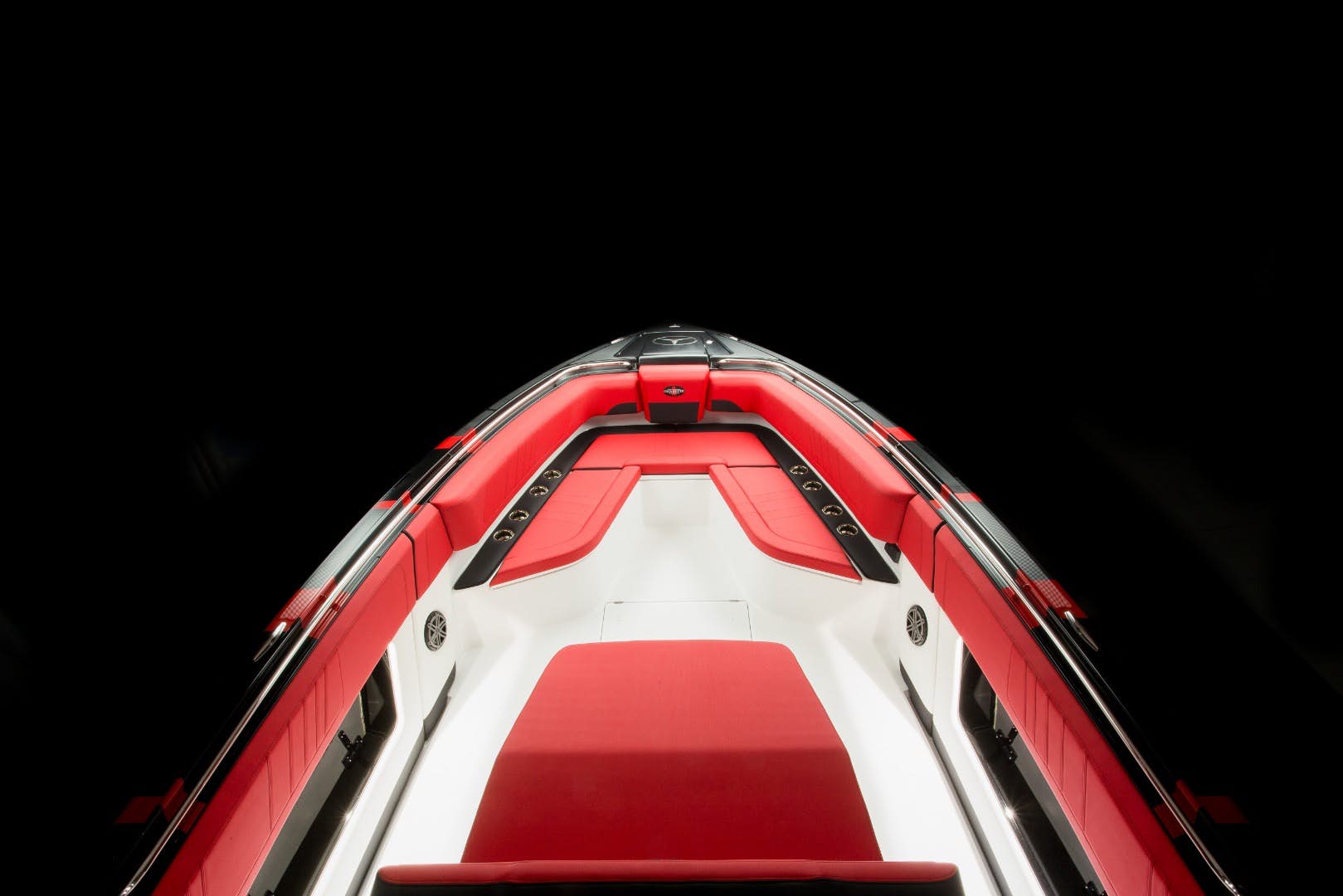
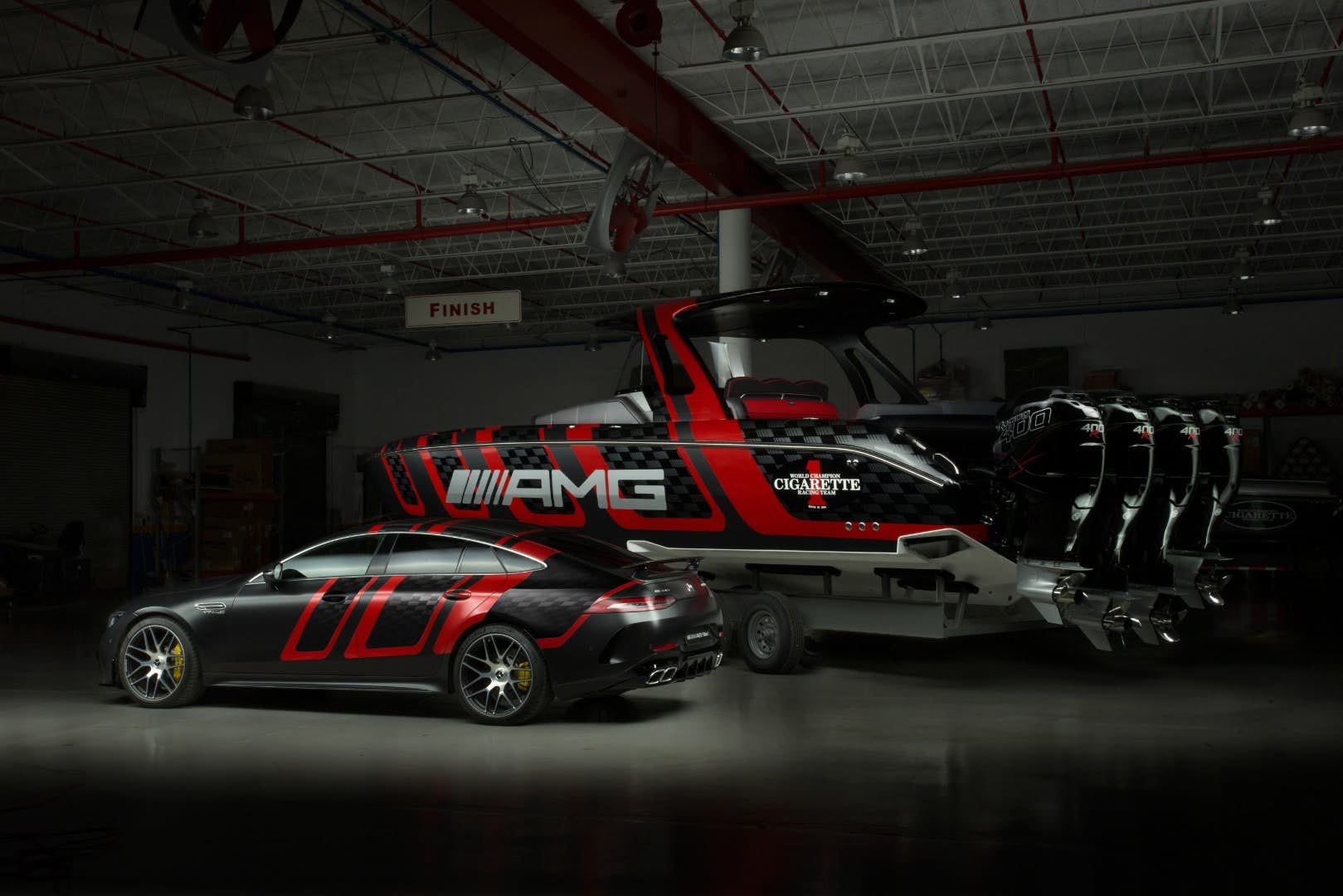
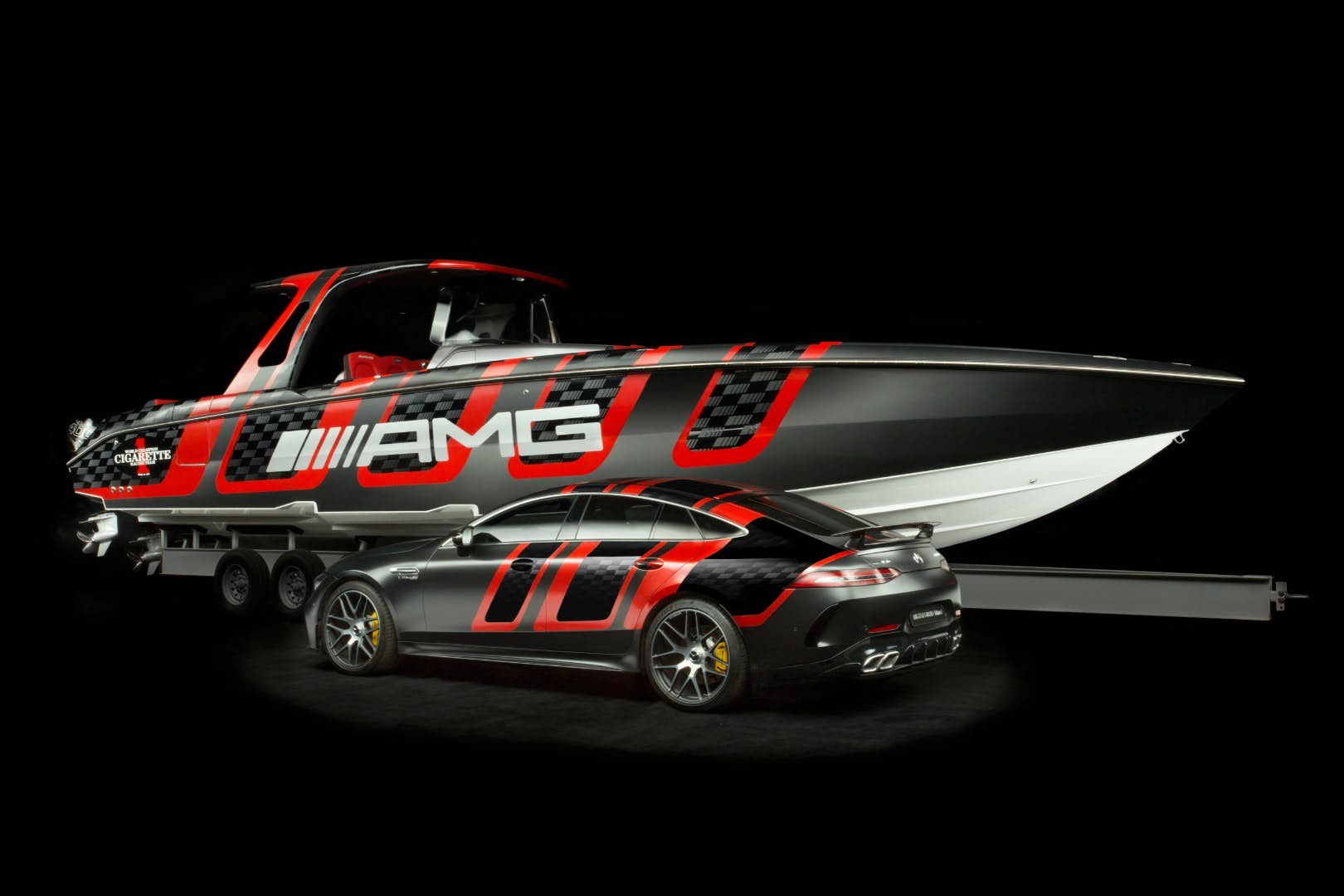
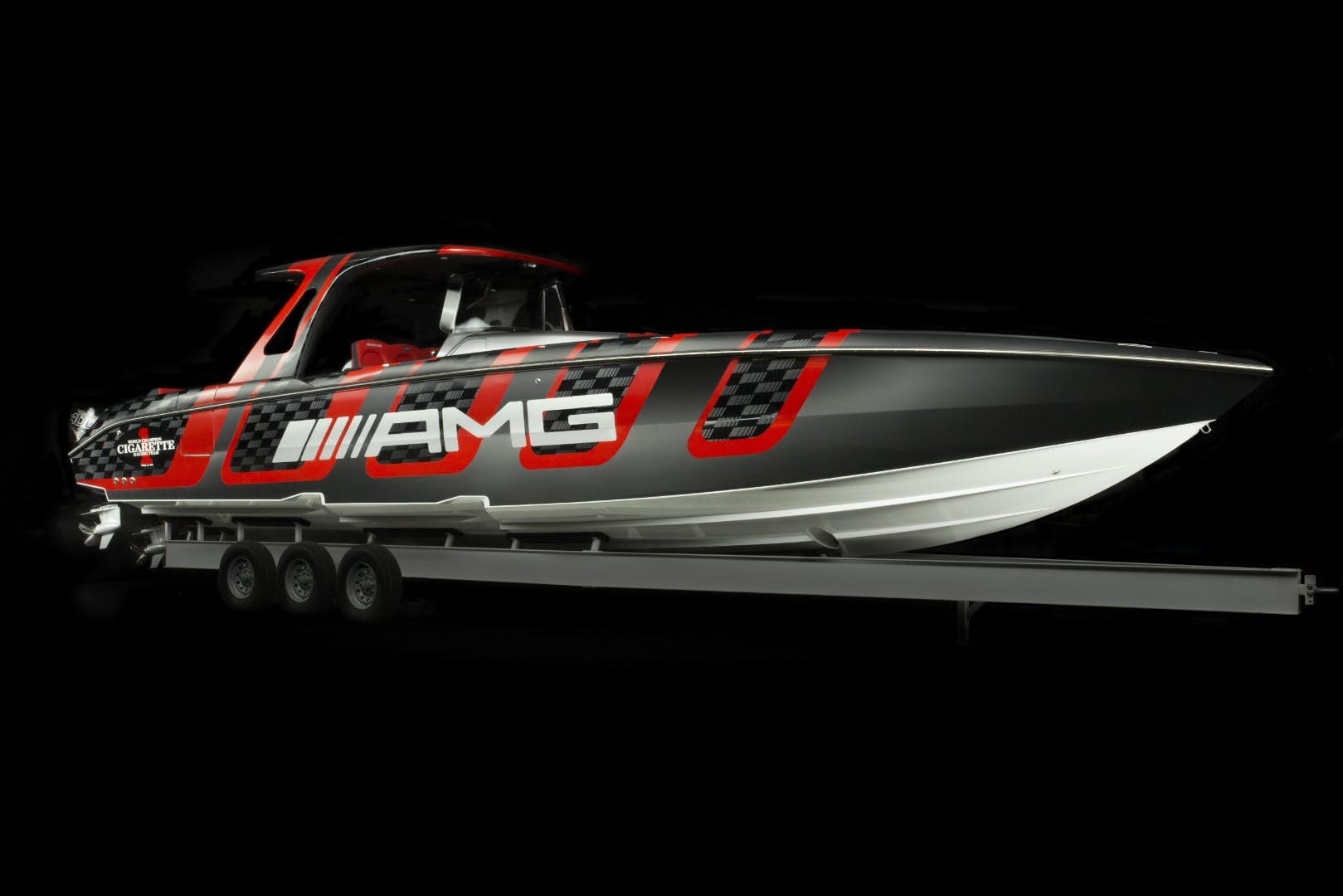
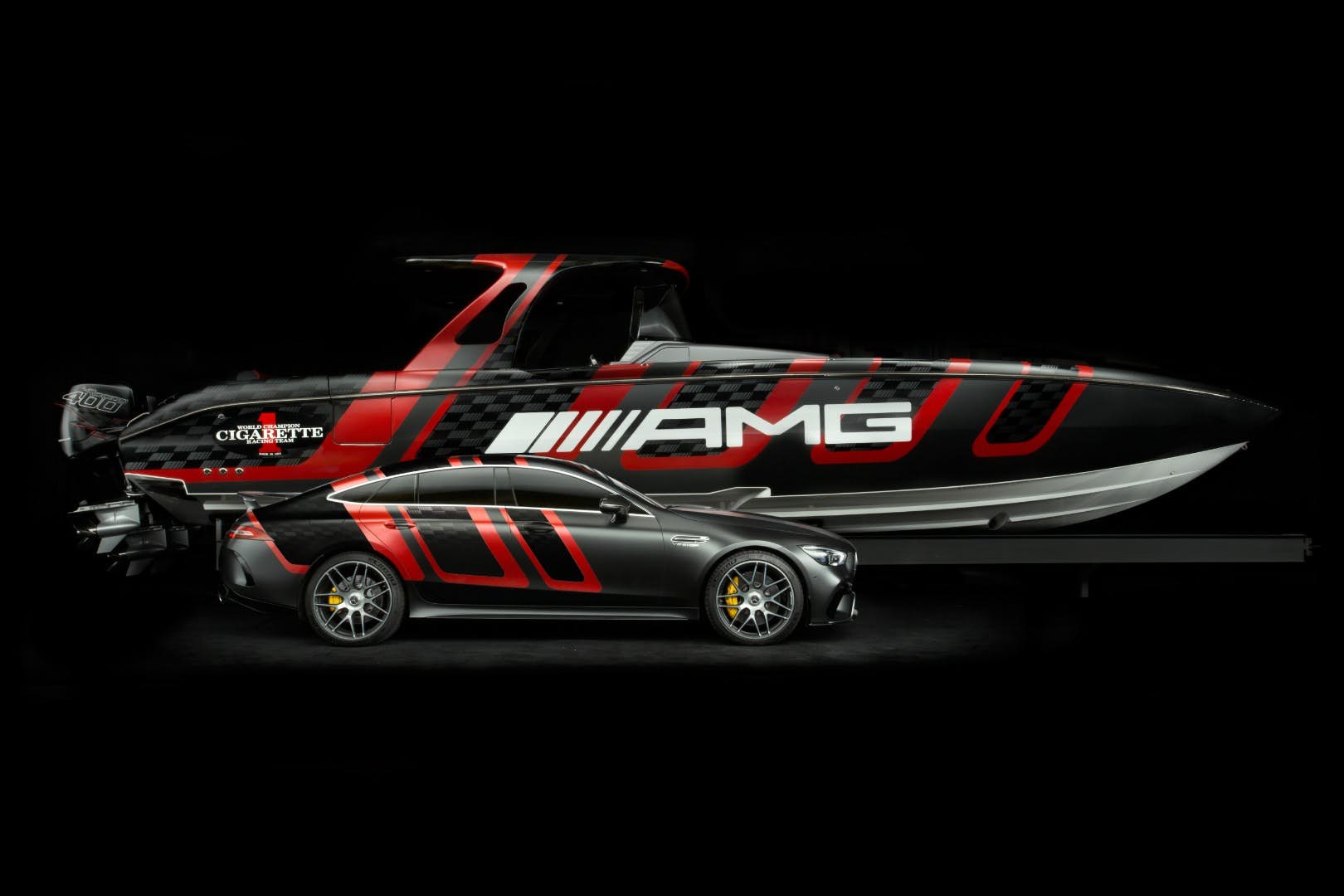
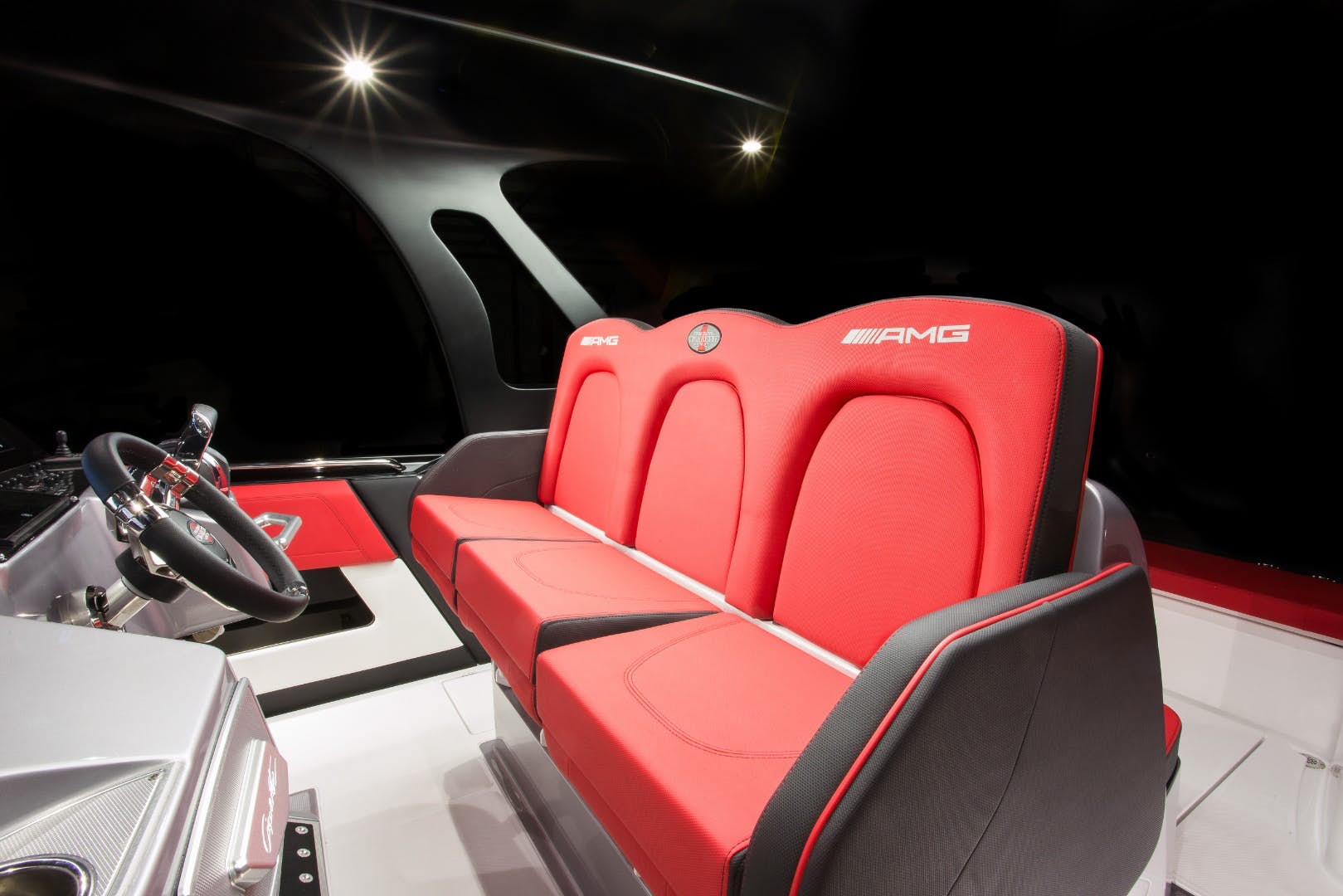
In 2018, the Mercedes-AMG GT 63 S was a big hit among car enthusiasts. One of its biggest features is the 630-horsepower engine that pushes it up to 195 mph. Fans of the German marque have nothing but praises for this very capable machine. The fact that it’s so rare to encounter a performance car with four doors, makes it such an awesome ride. The automaker is ready to take the hype up another notch with the introduction of a special item. The 41′ AMG Carbon Edition is about to make a big splash of its own and we are trembling with excitement.

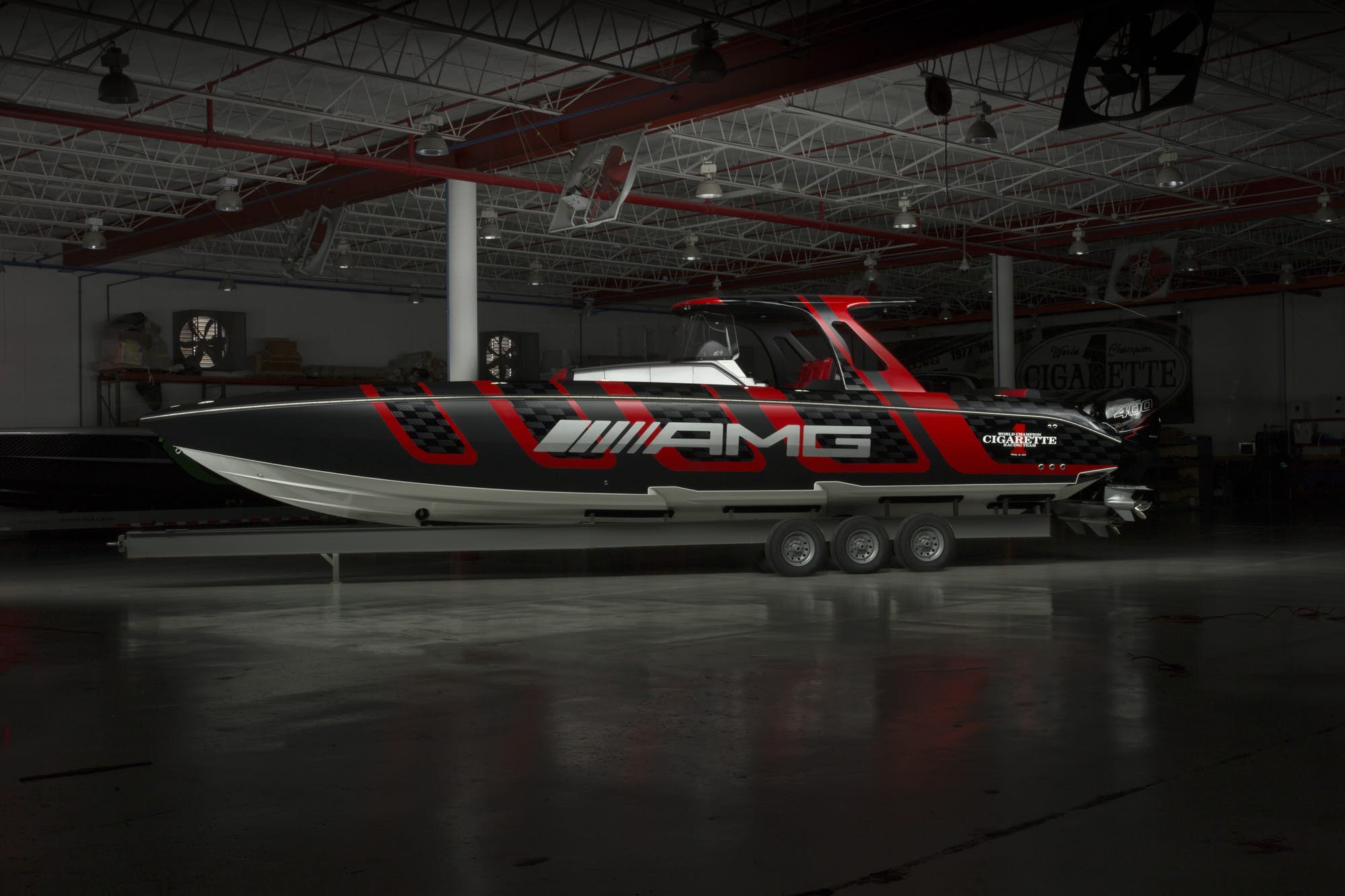
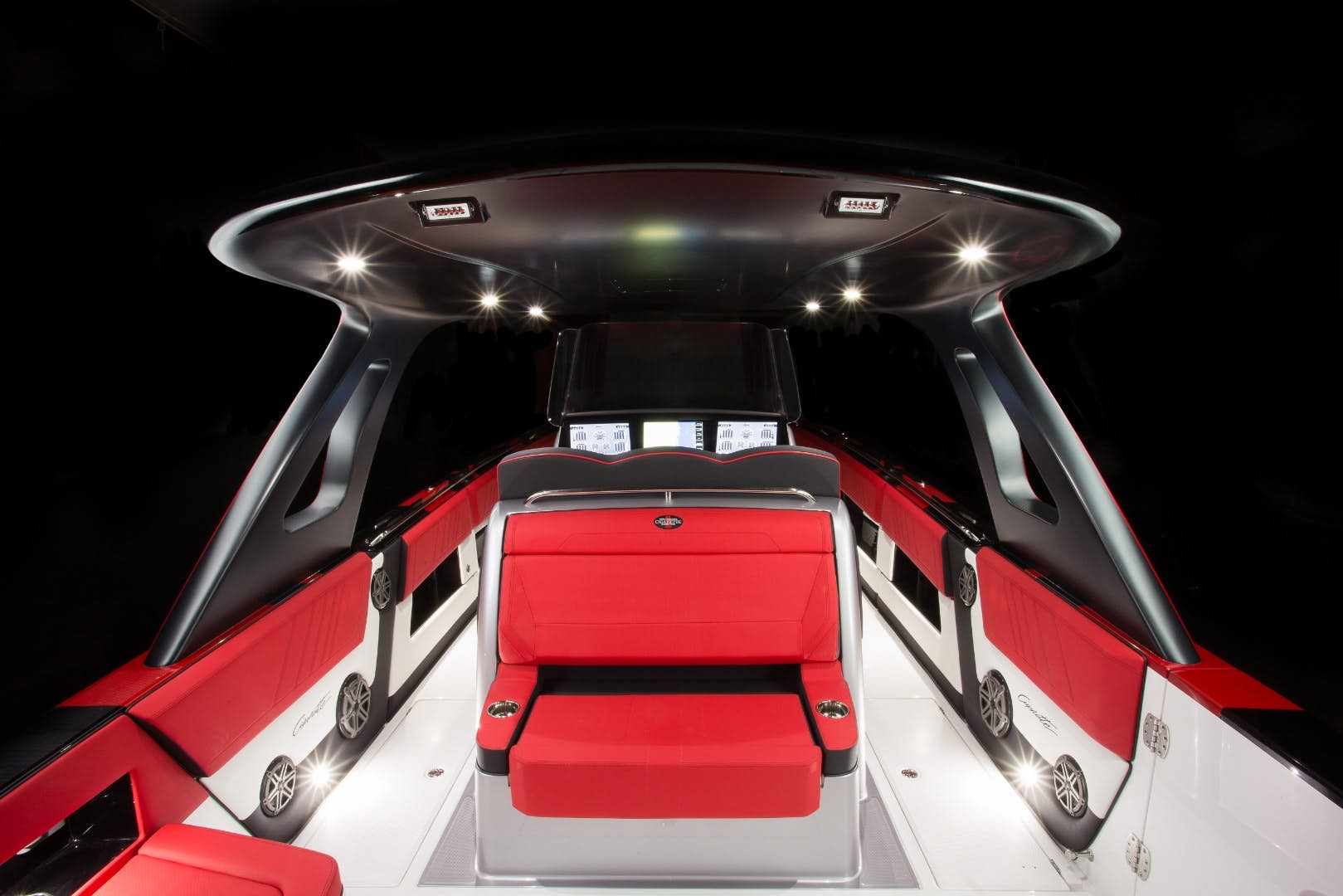
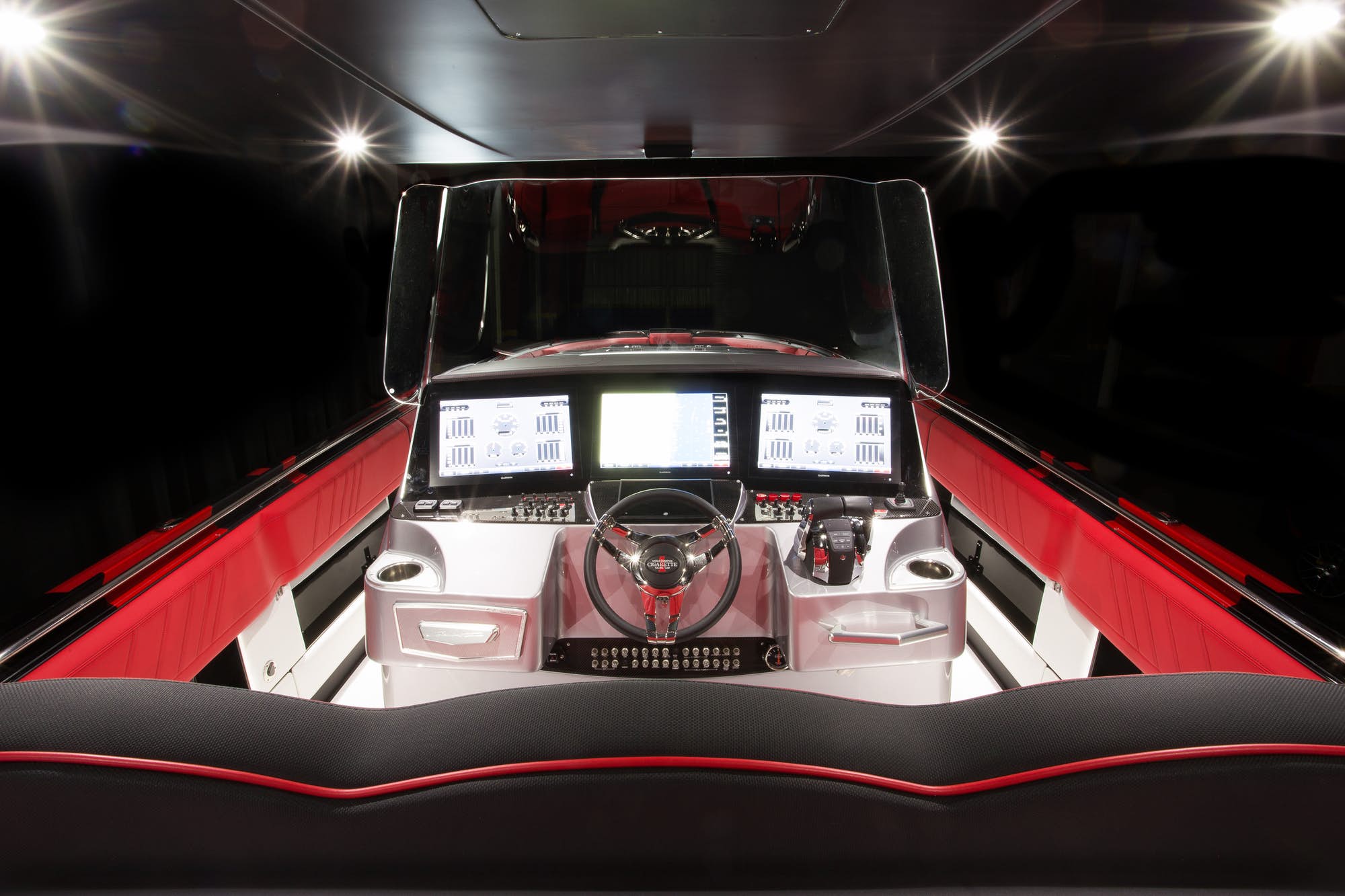
The sleek and sexy speedboat made its debut at the 2019 Miami International Boat Show. It’s actually the eleventh collaboration project together with Cigarette Racing. Drawing inspiration from the Mercedes-AMG GT 63 S, the upcoming vessel will showcase top-notch handling, versatility, and performance. This stunning watercraft flaunts it racing roots with four Mercury Racing 400R outboard engines. The quadruple configuration produces a total of 1,600 horsepower, which more than enough to push it up to 72 knots.

The 41′ AMG Carbon Edition boasts a lightweight construction thanks to the generous use of carbon fiber and composite materials. Overall, its approximately 250 kg lighter than the company’s 2017 GT R Performance boat. Sources indicate that uses an innovative sandwich construction structural laminates to keep its hull rigid and durable. Moreover, this lightweight approach also lowers the vessel’s center of gravity to improve its handling. To commemorate its release, the carmaker also reveals a companion vehicle with matching red and black livery.

Images courtesy of Mercedes-Benz

Learn more here

RemetzCar Tesla Model SB

Custom Shooting Brake Model S To Feature at Geneva Motor Show

I am personally a big fan of wagons and shooting brake vehicles. The notion of a vehicle that has the utility of an SUV and the performance dynamics and styling of a sports car, for some odd reason, has yet to really take off in North America. Elsewhere in the world, these vehicles make up a much more significant portion of the cars you see on the road.

While Tesla itself – being an American motor company – has yet to embrace the idea of a wagon/shooting brake model as far as producing one, a European coachbuilding company (no surprise) has taken on the responsibility of pioneering this into a reality. Last May, we were first treated to a shooting brake conversion concept designed by Dutch custom builder RemetzCar.

Though RemetzCar is responsible for fabricating the conversion, we really have Dutch car collector Floris de Raadt to thank as being the one who commissioned this project. As a car collector and self-proclaimed shooting brake and electric car enthusiast, de Raadt’s vision of a Tesla Model S Shooting Brake satisfies more than just a personal taste. It could be something that could scale at an international level, especially if Tesla decides to take it up – perhaps a simple tweet to Elon Musk could set things in motion…

The world will see the first rendition of the shooting brake conversion, dubbed the Model SB, at the Geneva Motor Show taking place in March 2019. Although RemetzCar has since shut its doors, Niels van Roij – original designer of the conversion – says that other coachbuilders are capable of building additional examples using his design schematics.

Such is his belief that more will be made, that van Roij has stated that the Model SB is indeed ‘for sale’ and that conversions will start at around €107,000 ($121,000 USD), which includes the base car in the price.

RemetzCar Tesla Model SB Image Gallery

2019 McLaren 600LT Spider

McLaren Unveils Drop-top Version of the Sensational 600LT

Back in late 2018, I had the pleasure of writing a comprehensive guide for the 2019 McLaren 600LT following its reveal. The car which I still believe is the best McLaren has ever made – and quite likely the best supercar ever made – is now available in convertible configuration. In following with traditional, the car is aptly named the Mclaren 600LT Spider.

The new 600LT is based on the McLaren 570S, and is the latest rendition of the “Longtail” Sports Series cars, hence the moniker. Essentially, the 600LT is designed to possess nearly 3 inches longer of aerodynamic bodywork and is given a slight power bump, weight reduction, and other performance upgrades. While these changes may appear to be rudimentary, the intricacies of each improvement sum up to make the 600LT a car in its own right.

As is the case with most things McLaren does, they’ve gone on and defied traditional notions of automotive engineering when it came to adding the power-retractable roof mechanism to the Spider.  While unavoidably weighing in at more than the Coupe version – by about 50 kg – the sacrifices to performance are negligible and certainly unnoticeable to anything that can’t realistically discern over milliseconds.

The carbon fibre tub chassis used for the 600LT dubbed Monocell II, does not depend on an upper support structure to add rigidity. This essentially means that the convertible is no less sturdy than the fixed-roof version, with the only meaningful differences being weight and aerodynamics (particularly with the roof down).

The Spider shares the same 3.8L twin-turbocharged engine as the Coupe, which produces 592-horsepower @ 7,500 rpm and 457 lb-ft of torque @ 5,500 rpm. Overall this results in a 0-60 mph time of 2.8 seconds – identical to the coupe – and a top speed of 201 mph, which is only 3 mph off the pace.

The 600LT Coupe and Spider also share the same shortcomings, which are few and easily overlooked when considering what the car was truly designed to do. For example, both trims employ a laggy and cumbersome infotainment system that precludes a sense of refinement and convenience that such devices are supposed to provide.

The 2019 McLaren 600LT Spider is simply just a convertible version of the coupe. Nothing more, and nothing less – and that’s exactly what makes it so amazing. Take what is arguably the best driver’s car ever made, and add a retractable roof in an unassuming fashion. No big deal, but still a really big deal.
[embedded content]

2019 McLaren 600LT Spider Image Gallery

Can Rivian Actually Beat Ford and GMC to the EV Punch?

Automobile manufacturers are redefining themselves as tech firms. Tech may be the best prism for understanding the past few months at nascent EV startup Rivian.

Rivian had roused some skepticism among automotive media members. Rivian had received hundreds of millions in venture capital funding, recruited executives from McLaren and bought a factory. The company also went about a decade without producing a car. For much of that time, Rivian maintained media silence. Interaction was limited to vague vision statements on the website. Doubt filled the vacuum. Not for the first time, media members were wrong.

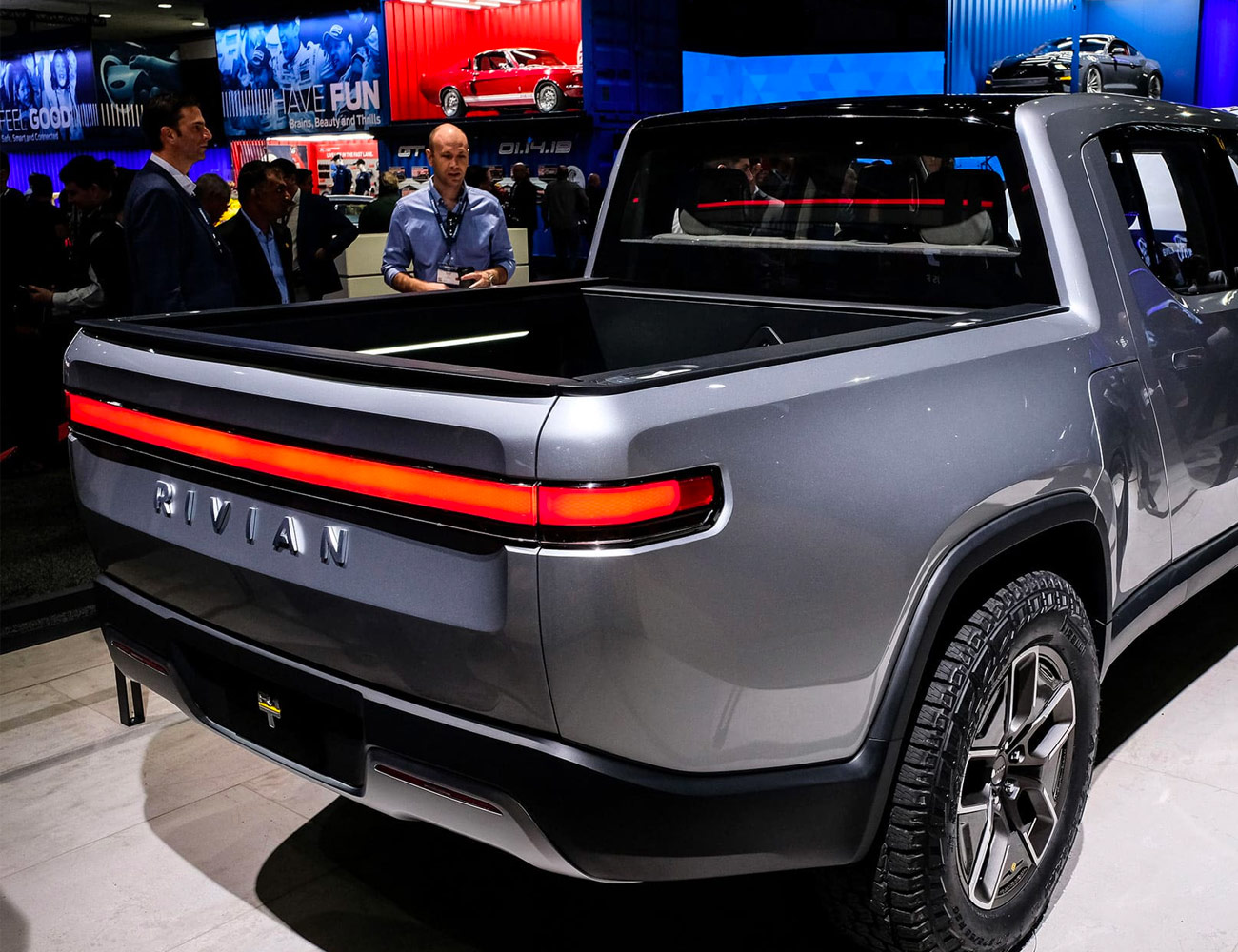
The product launch came, finally. Rivian killed it. Their “electric adventure vehicles,” the R1T pickup and the R1S SUV, were the talk of the L.A. Auto Show. They were cooler, more capable and closer to production than anticipated. Rivian exhibited real potential to redefine crucial automotive segments and, potentially, our relationship with the automobile.

As in the tech world, a successful launch made Rivian an acquisition target. Per reports, two established giants in tech (Amazon) and automotive (GM) plan investments that would value the company in the billions. Despite initial efforts to extinguish such talk, people can’t help but bandy Rivian about as the next Tesla. Founder and CEO R.J. Scaringe will have to step up his Twitter game.

Why this sea change? Start with the performance. Even in the EV world, Rivian’s numbers pop. The top end trucks will produce around 750hp and 800-plus lb-ft of torque. They will accelerate from 0-60mph in a supercar quick 3.0 seconds. Remember these are full-sized vehicles. They will be formidable off-roaders with up to 14 inches of ground clearance and a rating for one meter of water. They will be proper trucks, capable of towing up to 11,000lbs.

The most startling number is the range. Rivian has promised its high-end trucks with the 180kWh battery pack will travel more than 400 miles on a charge. That’s significantly better than Tesla and other EV companies have achieved. That’s also better than many cars running on gasoline will do between fuelings.

Rivian, fittingly for a company originally named “Mainstream Motors,” is not creating a stylized niche. They are going for the heart of the automotive market. The full-sized pickup and SUV segments are the most competitive, and vital in the American market. Whether it’s Ford, Mercedes or Porsche, carmakers depend on one of those two segments for profits. Those vehicles have been laggards improving fuel efficiency and have gotten away with it thanks to low oil prices. Rivian could enter those segments with paradigm-altering performance and zero emissions.

Crucial to that effort, for Rivian, will be keeping down the price. That has been a struggle for every EV company and major manufacturer investing in EVs. Rivian lists pre-federal tax credit base prices for the R1T ($69,000) and R1S ($72,000). Those price points would put Rivian in play for Sierra Denali or Range Rover buyers. But, how soon Rivian can get down near that base price remains to be seen. The promised $35,000 base price for Tesla’s Model 3 has been more of an aspiration goal than reality so far.

Rivian having any success in full-sized pickups and SUVs could make them a catalyst for change in the market. Even the specter of Rivian seems to be having some impact. Ford confirmed an EV F-Series was coming in January. GM has already walked back comments suggesting there would be no EV pickups.

Like a tech firm, Rivian’s potential is as significant (if not more so) than its present. Selling its vehicles is just part of the business. Rivian also has its versatile skateboard platform. That platform can underpin an array of Rivian vehicles. It can also be licensed out to other manufacturers, producing profits and, with widespread adoption, reducing component costs. Pininfarina’s upcoming electric Battista hypercar reportedly will use Rivian tech. There’s a reason a VW exec muted a similar plan for the company’s MEB platform. For GM, collaborating with Rivian would provide a leg up over bootstrapping a Silverado EV. The company has had enough trouble trying to make gasoline engines more efficient.

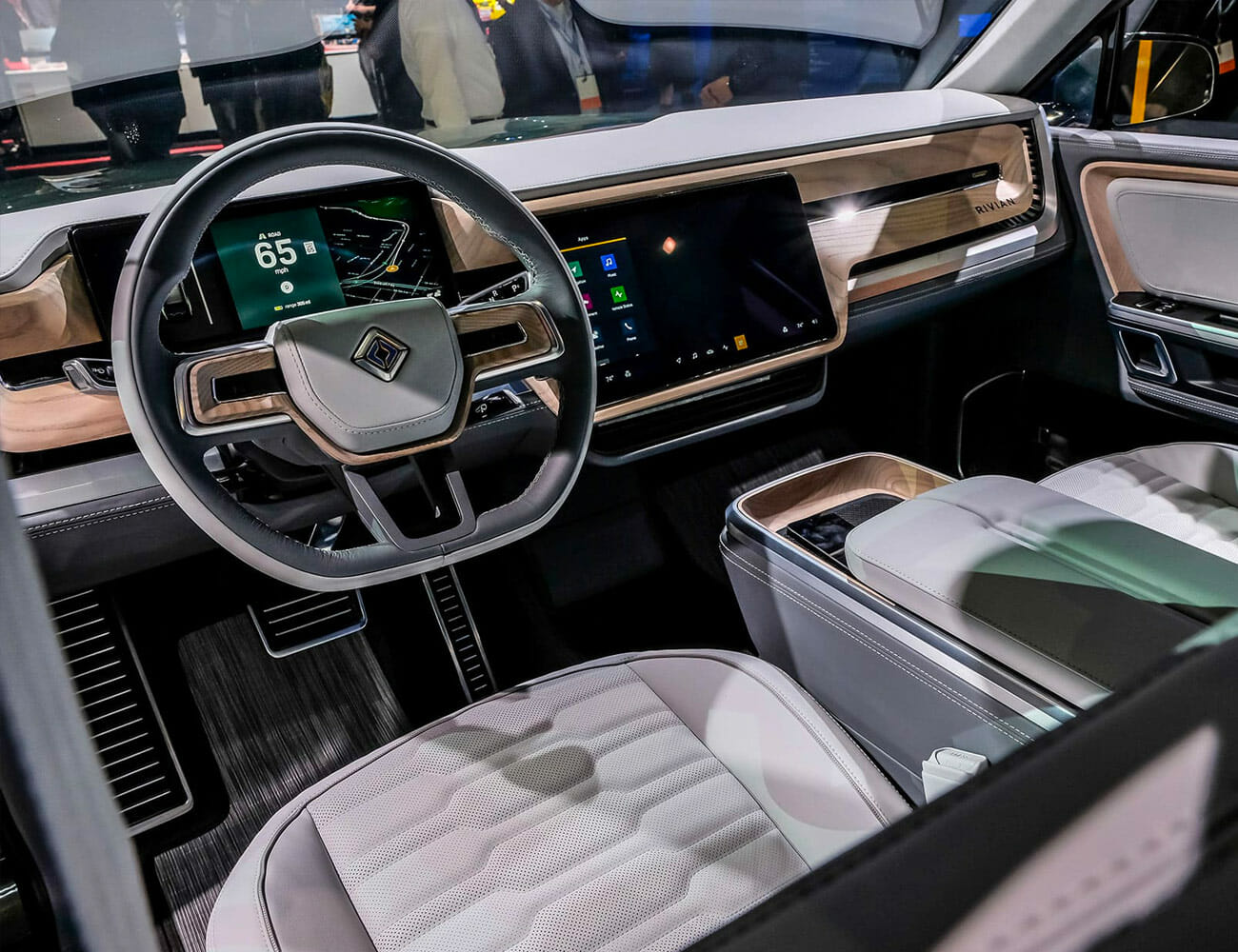
Rivian also has a purportedly unhackable cloud architecture. While encouraging buyers to leave the pavement and civilization behind, Rivian will still have one of the American market’s most connected vehicles. The potential applications supersede autonomous driving and simulated flatulence. Rivian could incorporate novel things like over-the-air performance upgrades and video game-style leveling up. A Rivian may even be able to take you on a guided, Jurassic Park-style tour of national parks. One could see how Rivian’s advances in that realm would align with Amazon’s mission for cloud-based world domination.

In tech, stocks and, indeed, media coverage, potential is more exciting than present reality. There’s a strong tendency to conflate the two. The reality for Rivian is still a long, hard slog to scale up to production, to meet quality demands, and to create a national sales and service infrastructure from scratch. Whatever the employee count this week, Rivian is about 1/60th the size of Tesla. It’s a long way to becoming the discerning vehicle choice in Aspen, Jackson Hole and Nantucket, let alone sparking dramatic recalibration and development in the rest of the automotive industry.

But, Rivian’s potential is real. Additional investments from established corporate partners like Amazon and GM will help them realize it. There may be a lot more to look forward to than the rally hatchback. Though, please, keep working on the rally hatchback.

Aston Martin’s Valkyrie has 1,160 hp and 664 lb-ft of Torque

A High-Revving Powerhouse

The Aston Martin Valkyrie final horsepower and torque numbers are in. The hybrid powertrain in the car features a Cosworth-built 65-degree naturally aspirated 6.5-liter V12 paired with a Rimac-sourced battery electric system. That powertrain is good for a whopping 1,160 hp and 664 lb-ft of torque. 

The battery electric system from Rimac produces 106 hp and 206 lb-ft of torque on its own. The Cosworth V12 supplies the rest of the power. Aston Martin worked with Red Bull Advanced Technologies on the car. It noted that its partnership produced the powertrain as it is. Aston lists the high-revving F1 cars of the 1990s as a key influence.

According to Aston, the gasoline engine’s maximum horsepower is reached at a screaming 11,100 rpm and peak torque comes at 7,000 rpm. From there, the electric power system can add to the power output. The electric power system and the engine don’t operate separately, though, they augment each other and work together for maximum efficiency and maximum performance.

More Than Just a Power Mill

The V12 engine and gearbox both work as structural elements of the vehicle. This helps keep weight down and provides superb structural rigidity. Through the use of this unique construction, Aston has removed the need for an additional subframe. This highly unique feature alone would make the car special.

Vice President & Special Vehicle Operations Officer, David King seemed confident the new car would not disappoint. He said:

Aston Martin Valkyrie is set to be the ultimate hypercar in the automotive world and these performance figures underline that statement. Red Bull Advanced Technologies, Cosworth, Rimac and Integral Powertrain Ltd. have been fantastic partners in the development of this powertrain, ensuring that we have already created a hybrid system that is emissions-compliant and ready to begin fitting to our first physical prototypes. I am, as I’m sure the rest of the world is, incredibly excited to see and hear the first of these cars on track.

The British automaker said the development will continue on the car. Aston is currently building the prototypes of the car. It will be interesting to see how this project continues to progress as things move forward.

Spanish Hispano Suiza teases 1,000-horsepower Carmen luxury EV

Last week we wrote about a new 1,070-horsepower Hispano-Suiza twin-turbo V10 supercar that will hit the market this spring, priced at about $2.5 million. This isn’t it.

Instead, this Hispano Suiza in the teaser image is the Spanish carbon fiber grand tourer with electric power, named Carmen. There are apparently two competing Hispano Suizas in existence right now, with both iterations saying they have rights to the legendary name; the Spanish version seems to do without a hyphen in its name. For the end user — we believe there will be an end user — it will merely come down to choosing whether they want their hyper-luxury supercar to be powered by gasoline or electricity.

And the Carmen also comes with a lot of power, 750 kW or 1,019 horsepower to be exact. The 3,726-pound production car is promised to hit 62 mph in less than 3 seconds, propelled by two PMSM or permanent-magnet synchronous electric motors, one for each rear wheel. There’s a 80 kWh lithium-ion, in-house battery pack arranged in a T-shape behind the occupants, with a claimed power density of 230 Wh/kg. The company says more power is on its way, anticipating a 300 Wh/kg battery pack good for 105 kWh. Range is projected to be beyond 250 miles.

As for the design, the teaser reveals little more than a retro teardrop shape, with lights housed in the negative area of the cut-off tail. We will know more when the wraps come off in Geneva.

Related Video:

Aston Martin Valkyrie officially makes 1,160 horsepower

The Aston Martin Valkyrie hypercar will have a total system output of 1,160 horsepower and 664 pound-feet of torque. We knew the raw figure from the naturally aspirated V12 engine was 1,000 horsepower, but a few details on the KERS-style hybrid assistance system were released today. In doing the math, this means the single electric motor mounted in the gearbox is responsible for adding 160 horsepower and 207 pound-feet of torque to the equation.

Aston says the electric motor and battery pack were developed with the help of Integral Powertrain Ltd and Rimac as suppliers and partners. We all know Rimac for its ridiculous electric supercars it has made, so it looks to be a smart partnership for now. Peak combined power is made at a dizzying 10,500 rpm, with peak torque coming in at a still-high 6,000 rpm. If you missed out on the engine breakdown from this past December, then know the 6.5-liter V12 will keep spinning until 11,100 rpm. We’re guessing this race-car-like number drops your jaws, just as it does ours. Cosworth and Aston Martin teamed up to create this beauty of an engine — sound clips of it running make us think we’re listening to historical Formula 1 footage; it’s that good.

This news comes ahead of the 2019 Geneva Motor Show next week, which could prove itself a launching pad for even more information to be learned about the Aston Martin hypercar. At this point we know there will be an even more exclusive AMR Pro track-only variant and a track pack option for the “normal” Valkyrie, which isn’t all that normal itself. It’s expected to weigh a light 2,200 pounds and have an unrestricted top speed of 254 mph. Aston appears to be continuing development on the car, so don’t consider those final quite yet.

Related video:

Makellos Classics 1978 Porsche 911SC ‘Safari’ Is a Tough-Looking, Beautiful Work of Art

A True Head Turner

We included a car from Makellos Classics in a list of our favorite Porsche custom cars in 2018, so when we were alerted of their most recent build we were pretty excited. The team at Makellos Classics got its hands on a European-spec 1978 Porsche 911SC. They knew just what to do with it, and the Safari build began.

The team went through the entire car updating the frame, suspension, transmission, engine, wheels, brakes, and interior. Makellos Classics customized the car wherever needed to build it into the Safari vehicle of your dreams. It added 9eleven Raven S headlights, hood-mounted Cibie rally driving lights, a vintage-style roof rack, fiberglass ducktail spoiler, and so much more.

[embedded content]

The 1978 Porsche 911SC ‘Safari’ is as much a piece of art as it is a true off-road hooligan. As you can see in the video above, the car looks amazing, but its performance matches up to those looks. Makellos Classics didn’t design and build this car to be just a showroom piece, and it didn’t cheap out on spare any expense in the name of excellence. The car is a fantastic example of what a 1978 911SC can become with considerable skill, good planning, and a true vision.

To learn more about the specifics of the build, check it out on Makellos Classics website. While there, you can see some of the company’s other builds and services. While the Safari build is the most recent one that caught our eye, there’s plenty more to see. You can also check out the gallery of images for this specific build below.

Classic Car Investments Made Easy: The Rally Rd. App

“Making money while you sleep,” and “having your money work for you” are phrases everyone wishes could describe their financial situation. But outside of investing in the stock market – and getting lucky doing so – or breaking into the world of high-end art and collector cars, it’s rarely a reality. The idea of buying something, or at least a piece of something, and watching it appreciate as you passively rake in the money sounds straightforward; to actually make money, however, it helps to have in-depth knowledge of the market you’re buying into, which isn’t so easy. That’s precisely why Chris Bruno co-founded Rally Rd., an SEC-registered app: to lower the bar for entry into the world of classic car ownership while at the same time adhering to familiar share-based marketplace principles.
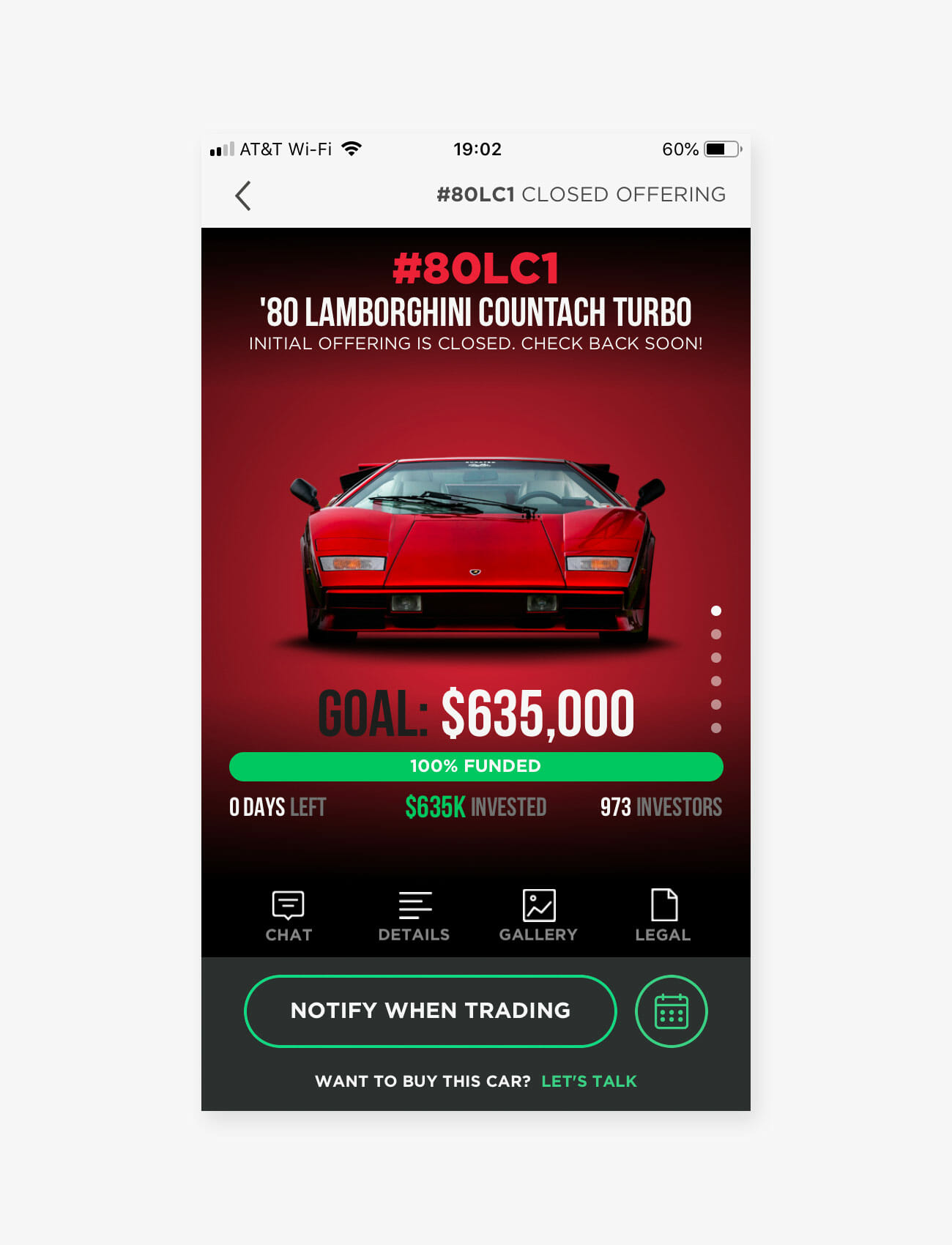
“I never felt comfortable in the traditional equities markets,” said Bruno. “I never felt like I knew as much as everyone else, or certainly as much as the professionals focusing on that market.” Jumping into the deep end of any new industry can be daunting and intimidating, especially if your own money is involved. When it came to investing his own money, Bruno went with what he knew: classic cars. But to invest in a classic car the traditional way means purchasing an entire car and oftentimes hundreds of thousands of dollars. “When I was younger I had some money, the question was ‘how am I going to deploy it?’ The options were all-in no matter what. Real estate: all-in on one house. Collector cars: it’s all-in on one or two cars for the same price [as that house].”
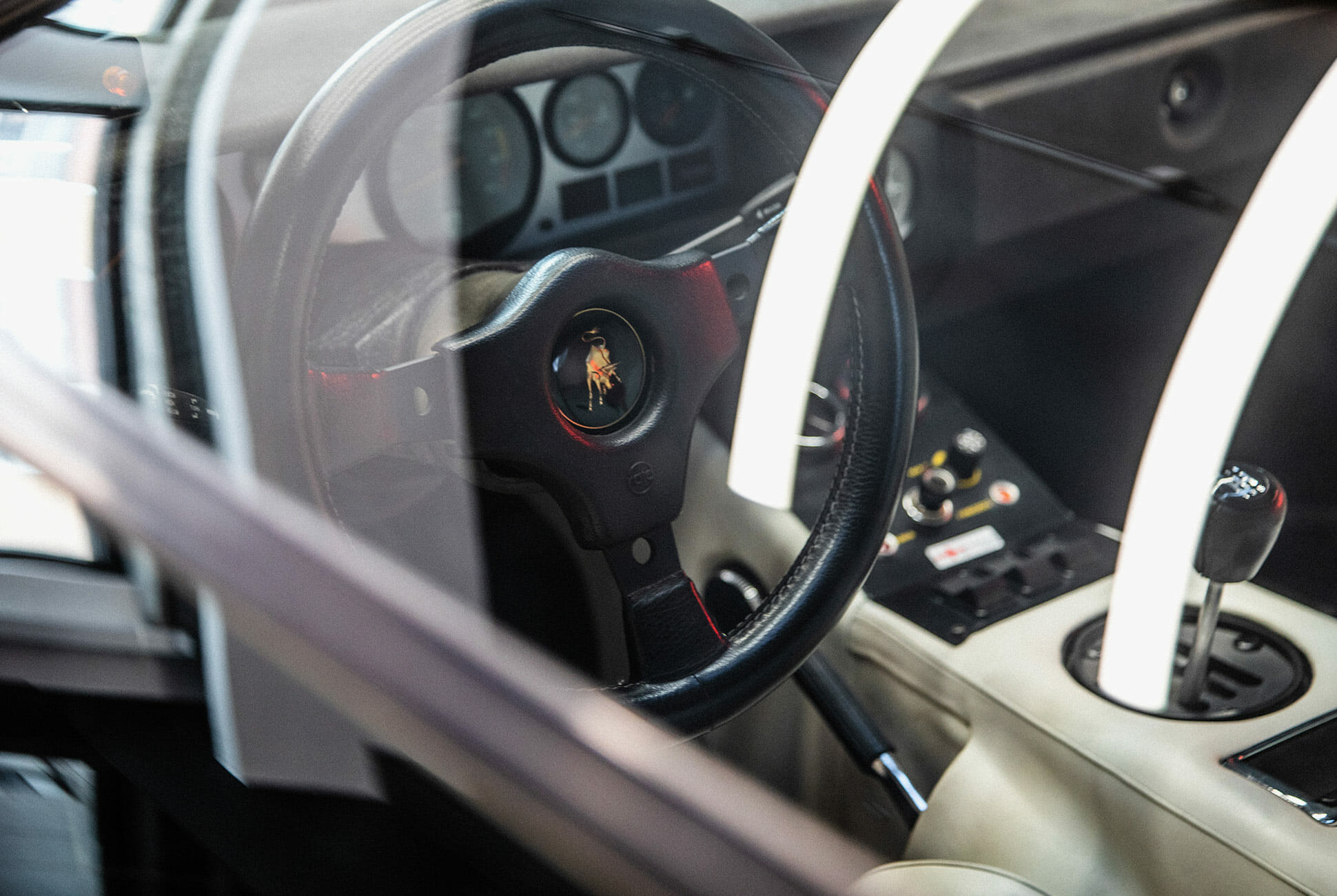
Only a small portion of the population can play with money at that entry point. What Rally Rd. does is break down the ownership of the cars into shares so, say a ‘94 Lamborghini Diablo Jota valued at $600,000 capped at 3,000 shares would be worth $200 per share. “There are no set minimum share purchases or obligations to participate or trade,” says Bruno. “You can feasibly own part of a ‘94 Lamborghini Diablo Jota for $200. Through the Rally Rd app, you can track the car’s value, history and get eyes on the car’s legal documents like sale history, appraisals, valuations, service records, and inspections.

So then, all the reward and none of the risk? Just lay back and make money while you sleep, right? Well, not entirely. Just like any other investment, obviously, you still have the potential to lose money. “We don’t make any guarantees that everything goes up and to the right.” And even though the number of shares are capped for each car at the initial offering, Bruno says, “If a catastrophic event like transmission failure happens, additional shares will be sold to cover the cost.” Which means shares for that car result in dilution and a devaluation.
As a precaution, the investment cars are stored in private warehouses in Upstate New York and Pennsylvania. “The cars are kept in turnkey condition. They’re not even registered for road use.” But, Rally Rd. has a team of workers constantly maintaining the collection, occasionally running the cars, driving them on the private roads around the warehouse. And as for the actual initial value of each of the cars, Bruno says Rally Rd has “assets priced by a network of advisors and industry experts to ensure accuracy.” Additionally, the company claims that “all the information – public auctions, verified private transactions – are available all in-app, and we price and value the cars relative to others on the market.”

But what happens when you want to sell your shares? Whether to cash in or to offload your piece of a car that’s dropping in value, it’s all done peer-to-peer, within the app. Which is both the beauty of Rally Rd. and a potential setback. If a car is a going up in value, you can sell your shares to another Rally Rd. member at an agreed price, and if it’s higher than what you bought it for, that helps determine the live value of the car. The problem comes when you want to sell your shares, and there’s no one willing to buy. Unlike the NYSE, the Rally Rd community is much smaller, so finding a willing buyer becomes a little more tricky. “In some cases, we would play the buyer as a last resort to help out in that situation,” said Bruno. “It’s not a guarantee that we will do that but in some cases, we would.” But, as Bruno said, they “don’t make any guarantees,” just as in any other share-based market.

In the ideal situation, cars keep gaining value over time. Because the Rally Rd. community is small and the values don’t fluctuate as rapidly as the real stock exchange, trading windows on cars are only open for 30 days. Then, they’re closed for 30-60 days to gestate. That way, shares aren’t scalped for ridiculous prices for prospective buyers who missed the IPO or trade window.
In the end, should the car’s value reach a plateau, or should someone make an offer to buy the car outright, an offer can be made, in-app, to buy out all the securities on that car. In that case, all the “owners” are consulted to gauge overall interest in selling the car — this includes Bruno and the owners of Rally Rd, too, who buy into each car with their own money, up to 10 percent. Then, it’s left up to the board of advisors and industry experts, which Bruno says is “the most democratic way to go about it… We expect all the cars at some point to leave the platform.” Bruno went on to say “What we [don’t] want to do is indicate we’re going to hold this for ‘exactly five years’ and then sell it.” Mainly because any set indication of a sale can taint the legitimate price of the car, which is why Bruno says “everything on Rally rd. is always for sale.”

Bruno believes that “up to a certain level, it’s too difficult and it’s financially irresponsible to manage the utility component. And at that point, you don’t have enough capital to buy the best of the best, the rarest of the rare, and that’s where most of the returns are driven.” In that respect, Rally Rd. has arguably done what it set out to do: lowered the bar for entry to the world of classic car ownership, as far as making a profit is concerned.

But, just because a new world of trading, buying, and sharing ownership is now as easily accessible as opening your smartphone, the market has the chance to be just as volatile as the art world, real estate or the NYSE. But like those markets you have to keep a close eye on trends. When it comes to cars, Bruno says he has a knack for doing just that and has confidence in his new market. “People said I was crazy to put all my money into collectible cars. They said ‘buy a house. That’s what normal people do.’ So I bought a house. Ten years later it’s still worth exactly what it was when it bought it. And the exact two cars I was looking at, which would have been the same exact amount as the house, all-in… one is now eight or nine times what it cost. The other was a $250,000 car. Today it’s worth $1.8 million.”

Audi R8 V10 Decennium: 10 Years of Uninterrupted V10 Engine

Rumours continue to circulate about the viability of a third generation Audi R8. Clearly though, there remains a strong demand for the current generation model. To celebrate 10 years, the special edition Audi R8 V10 Decennium has been revealed. The central focus of these 222 models is the V10 engine!

The Audi R8 V10 Decennium uses the 5.2 litre V10 engine. For this special model, Audi Sport have tuned the engine to generate 620 hp and 580 Nm of torque. The 100 km/h (62.1 mph) sprint takes just 3.1 seconds and a top speed of 331 km/h (205.7 mph) is also possible.

In terms of styling, the Decennium gets matt look Daytona Gray paintwork. Alternatives include pearl effect Daytona Gray, metallic Suzuka Gray, metallic Floret Silver, metallic Mythos Black, metallic Ascari Blue, or metallic Kemora Gray. The wheels and the intake manifold are finished in contrasting bronze. The front spoiler, the side sills, the diffuser and the badging are painted in gloss black. The side blades and exterior mirrors are finished in carbon fibre.

Inside, the Audi R8 V10 Decennium gets a complete black interior with accenting carbon fibre inserts. The quilted rhombus pattern stitching is finished in black with copper contrasting stitching. The steering wheel, center armrest, the door armrest and the door rail all feature contrasting copper stitching. A “Decennium” logo is to be found on the centre console, carbon door jambs, and the door lights.

The Audi R8 V10 Decennium will be available from Spring 2019 with a 222.000 euro price tag in Germany.

5 Awesome Things About the Ferrari F8 Tributo

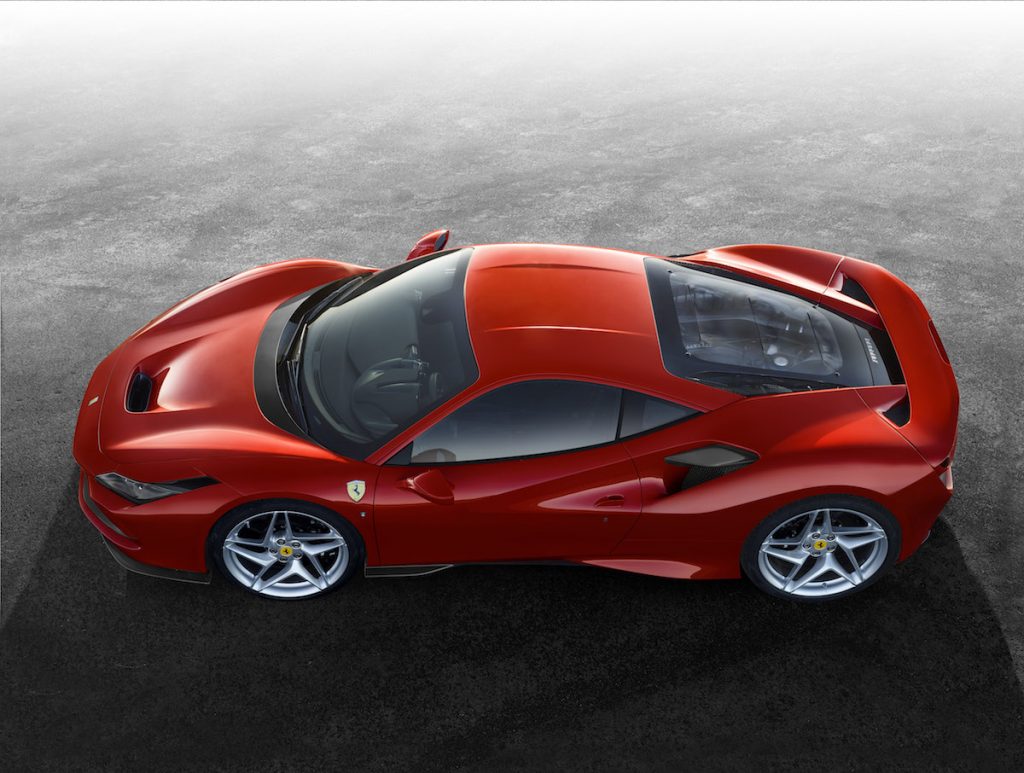
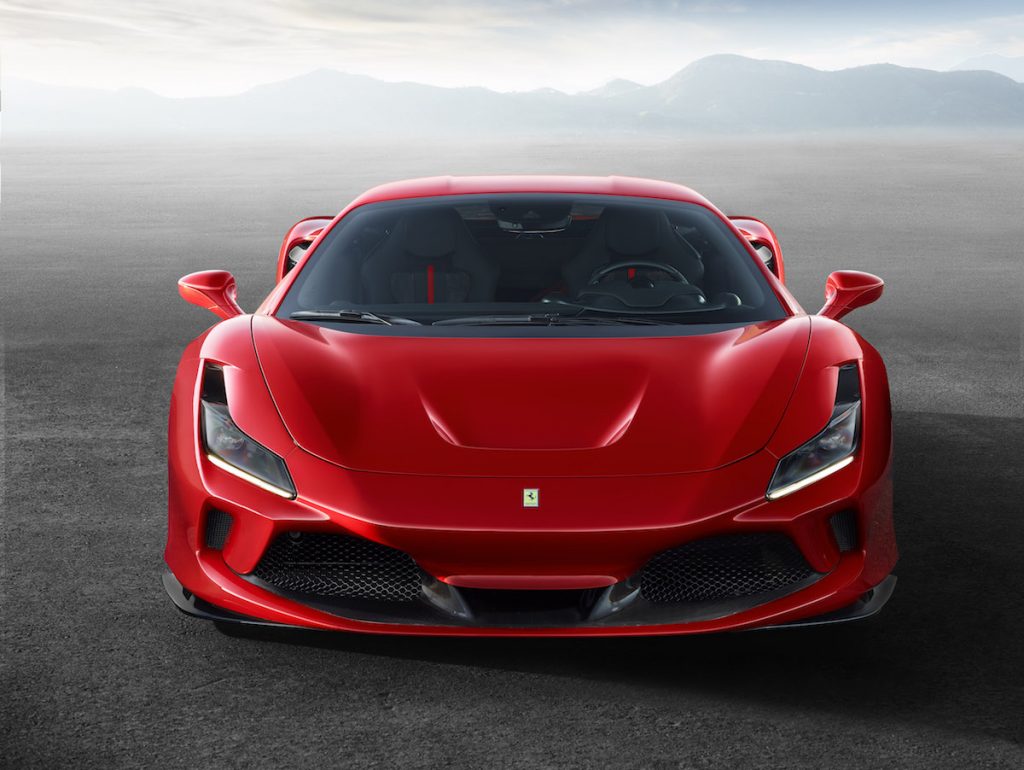
Ferrari just released the new F8 Tributo. Critics say it’s too much like the 488 GTB, but we’re of the mind that this is a meaningful step forward for the mid-engine, two-door Berlinetta in Ferrari’s lineup. The car looks absolutely stunning and the engine and aerodynamic improvements are nothing to ignore. The F8 Tributo is a force to be reckoned with, and there’s plenty to like about it. Here are five things that stand out.

1. The Turbo V8 Makes 710 hp

F8 Tributo

F8 Tributo

Ferrari went with a turbocharged V8 engine in the F8 Tributo, and we can’t blame them. The engine is a 3.9-liter twin-turbo V8 to be exact. It manages to punch out a whopping 710 hp and a super strong 568 lb-ft of torque. That’s enough to be right on par with the competition from McLaren and Lamborghini.

2. 0 to 60 mph in 2.9 Seconds, 211 mph Top Speed

F8 Tributo

F8 Tributo

Speaking of being right on par with the competition, the F8 Tributo can make the 0-60 mph sprint in as little as 2.9 seconds. It can continue on in its run and hit 124 mph in just 7.8 seconds. The car’s top speed is 211 mph, and that’s right up there with the best from McLaren and Lamborghini.

3. It’s More Aerodynamic Than Ever

F8 Tributo

F8 Tributo

The F8 Tributo takes what former Ferrari mid-engine supercars have done in terms of aerodynamics and gone a bit further. The car is more aerodynamic than ever and features what Ferrari calls an “S-Duct” on the front of the car. This directs air over the front and forces the nose of the car down. It is supposed to increase downforce by 15 percent.

4. There’s a Louvered Lexan Engine Cover

F8 Tributo

F8 Tributo

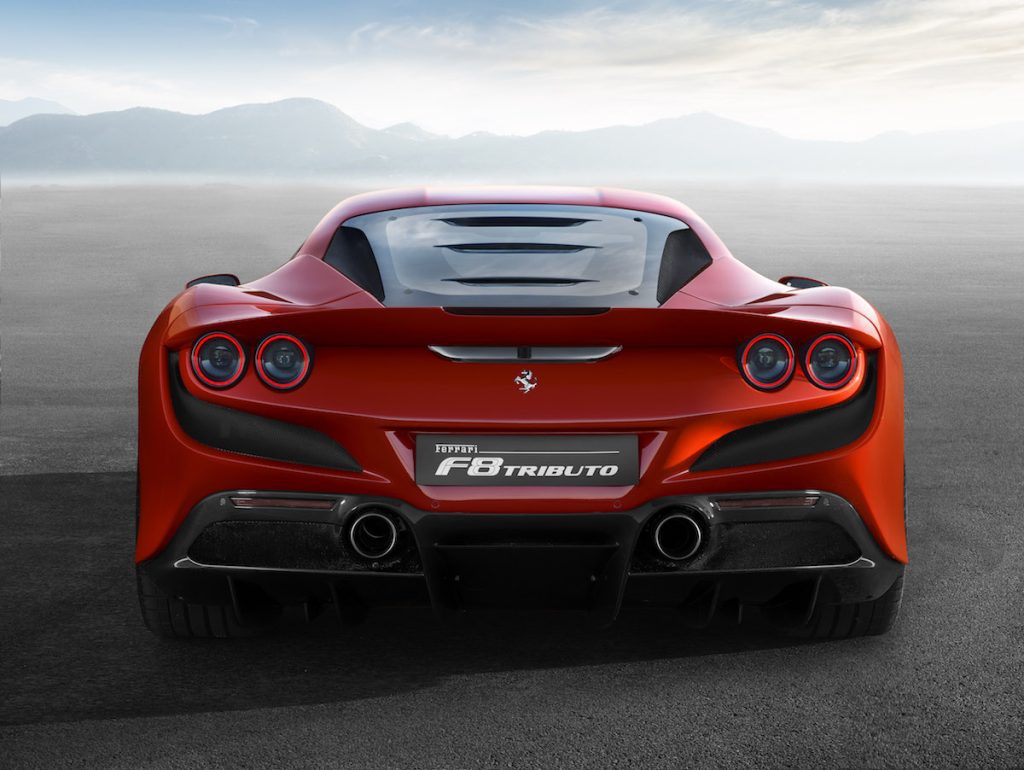
This is a feature that comes straight out of the Ferrari history books. The legendary Ferrari F40 featured a similar engine cover, and the addition of this to the new F8 Tributo is a not so subtle head nod to that car. The louvered Lexan engine cover will likely go down as one of the key standout features of the F8 Tributo, and we can’t imagine anyone not loving the look. It lets you get a peek at the engine while still keeping the car’s sleek lines.

5. The Interior Has a Classic, Driver-Focused Appeal

F8 Tributo

F8 Tributo

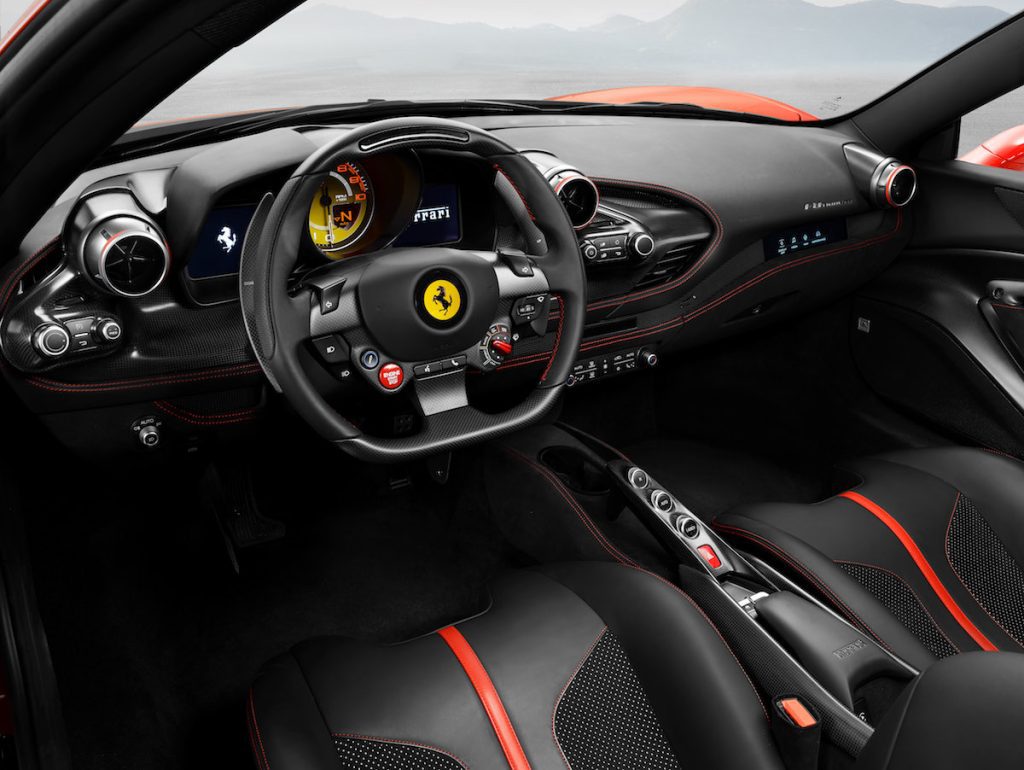
Too often automakers try to really pack in the technology and features, and it makes the car look rather silly on the inside. When you look at the F8 Tributo’s interior you see a simple (by contrast) interior that’s extremely attractive. It’s all black, and the instruments inside the cabin are all driver-focused. It’s not a huge departure from the 488 GTB, and that’s fine. 

Overall, the F8 Tributo is a killer car and a move forward for Ferrari. It’s a significant change from the 488 GTB while still utilizing much of what worked well in that car.

Automobili Pininfarina to Bring 3 Battista Hypercars to Geneva

A Trio of Electric Hypercars

Prepare yourself for the Geneva Motor Show. It’s going to be full of unique and crazy advanced cars. Among all of the vehicles we’ve recently reported on, Automobili Pininfarina will unveil the Battista hypercar. With that said, the company will not just bring one car to the show. It will bring three.

In a recent press release, the company shared that it would bring three of the new Battista electric hypercars to the show. The models are set to make their debut on March 4. At this time, most of the details are still shrouded in secrecy but some of the goodies were included in the company’s release.

One of the cars will come with Grigio Luserna exterior. It will feature Blu Iconica accents and anodized aluminum details. The interior for that car will be black and tan. The second car will have a Blu Iconica exterior, front and rear wings, and special carbon fiber on the hood and mirrors. The third car will come with a Bianco Sestriere exterior and include red aluminum accents. 

Automobili Pininfarina Formula EAutomobili Pininfarina Formula E
Image from Automobili Pininfarina

In addition to the three Battista hypercars, Pininfarina will showcase a Battista-inspired Formula-E car (shown above) built specifically for Mahindra Racing. The cars actually look nothing alike, but Pininfarina said that the involvement in Formula-E helped with the Battista’s development and testing.

The Battista will come with an electric powertrain capable of 1,874 hp and 1,696 lb-ft of torque. Those power numbers, and it’s overall light weight mean it’ll do 0-62 mph in fewer than two seconds. The car can then go on to hit 182 mph in less than 12 seconds. It’s supposed to be able to do 280 miles per charge. That’s one seriously fast EV with a good range.

Ferrari F8 Tributo: 488 Successor Revealed with 720hp!

Out with the old, in with the new: today Ferrari unveiled the F8 Tributo – the successor to the 488 GTB. Though the 488 was hardly an outdated car (it was launched merely four years ago at the Geneva Motorshow), Ferrari has retired the Gran Tourismo Berlinetta to make way for the company’s most powerful mid-engined V8 supercar ever produced in Prancing Horse history. In typical Ferrari fashion, the nomenclature “F8 Tributo” is intended to celebrate the brand’s acclaimed 8-cylinder lineage.

Under the quintessential louvered Lexan engine cover, reminiscent of the legendary F40, lies a 3.9-liter twin-turbocharged V8, tuned to deliver 710hp and 568 pound-feet of torque, sent directly to the rear wheels via a 7-speed dual-clutch transmission. The F8 haymaker is claimed to complete the 0-100km/h sprint in merely 2.9 seconds, and the 0-200 km/h mark will be reached in merely 7.8 seconds. Flat out, the F8 will keep the fun going until 340km/h – matching the performance of the 488 Pista. Ferrari’s heritage of self-aggrandizing statements makes its beloved return too, with the company pledging the F8 Tributo exists “without the slightest hint of turbo lag”.
Compared to its predecessor, the F8 is 40 kilograms lighter with a total weight of 1,330kg.

Fashionably Italian, the F8 Tributo embodies a stylish design language that we can expect to see more of in the future. The prime focus, according to Ferrari, is centred around performance and streamlined aerodynamics, but certainly hasn’t compromised on its stunning appearance. Ferrari appears to have taken all that is good from past models, and interwoven it into one pretty package, with styling cues from many predecessors apparent from different angles. The front fascia of the F8 is characterized by the S-Duct, a feature that made its debut on the 488 Pista and contributes an impressive 15% to the overall increase in downforce compared to the 488 GTB.

Ferrari F8 Tributo

The interior layout is a story of subdued progress and you’d be forgiven for thinking it was just borrowed from the 812 Superfast. Although very similar to its predecessor, the interior of the F8 Tributo has (inconspicuously) revamped almost every element of the interior cabin. The infotainment system now includes an 8.5” touchscreen display for the passenger, and a downsized steering wheel for better handling. Featured on the steering wheel is the famed Manettino dial that controls the driving modes selector, which can now enable the Ferrari Dynamic Enhancer (FDE+) to be activated when in Race mode. Introduced on the 488 Pista, the FDE+ adjusts brake calliper pressure to help maintain control during lateral acceleration, making the car more playful in the corners.

No details on pricing have been made public as of yet. Stay tuned for the Geneva Motorshow where we will keep you updated on all that is new with the F8 Tributo.

Ferrari F8 Tributo brings the best of the 488 Pista to the masses

This is the Ferrari deemed worthy of replacing the 488 GTB, called the F8 Tributo. Let’s start with the red meat: 3.9-liter twin-turbo V8 producing 710 horsepower and 568 pound-feet of torque. Those numbers sound familiar? They’re the same as we got from the special edition 488 Pista, and they outdo the 488 GTB by 49 hp and seven pound-feet. The F8 Tributo warps itself to 62 miles per hour in a Pista-matching 2.9 seconds, takes two tenths longer to reach 124 mph at 7.8 seconds, but runs all the way to the same 211-mph top speed.

What’s more, the F8 Tributo weighs 2,932 pounds dry when graced with all of the lightweight options. That’s 111 pounds more than the Pista, but an 88-pound diet compared to the 488 GTB.

Rear-slanted radiators frame an evolution of the Pista’s S-Duct to redefine the front end. Ferrari said the under-over airflow trick delivers a 15-percent increase in downforce compared to the retiring 488. Redesigned headlights take a horizontal stance, making room for brake cooling ducts that obviated needing to fit larger brakes.

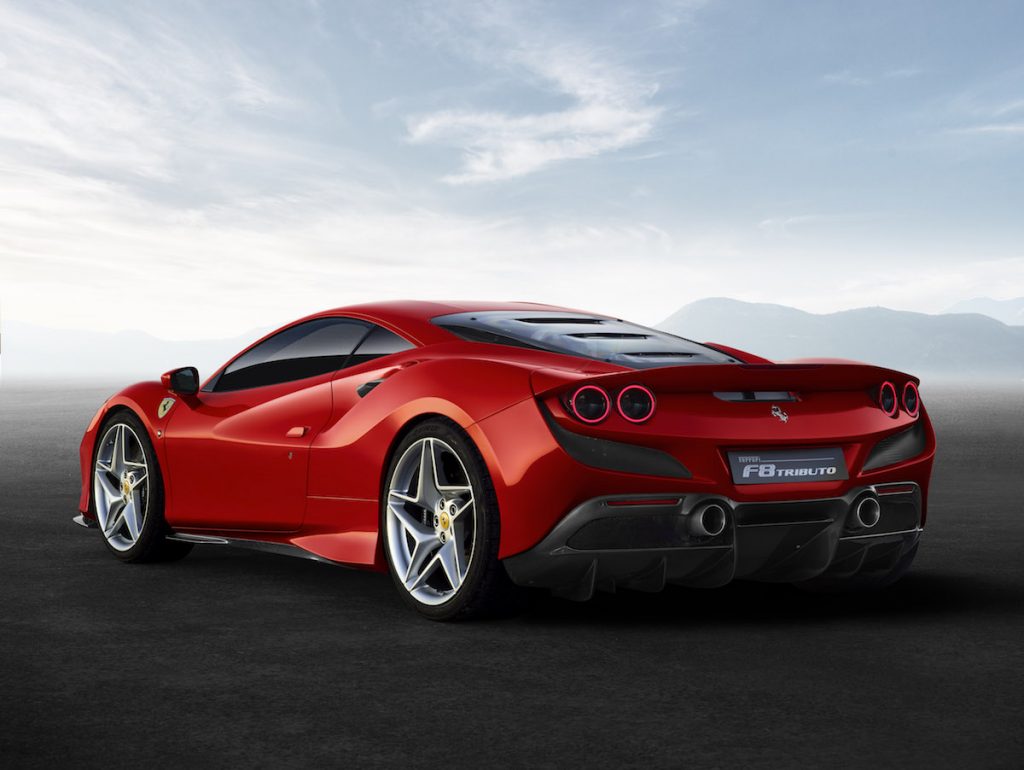
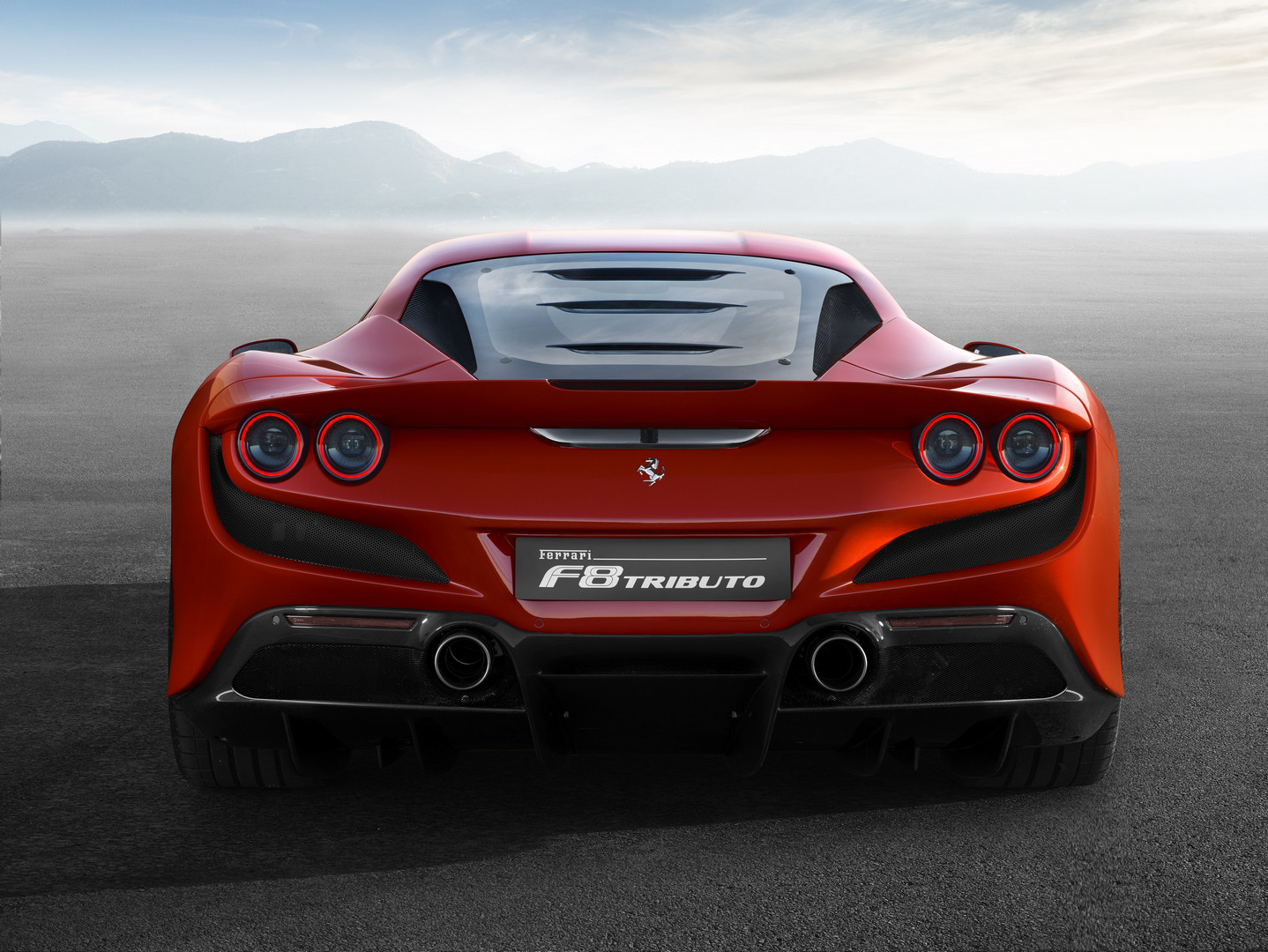
The Lexan engine cover and its three subtle louvers hearken to the F40, and the quad taillights hearken to Gran Turismo Berlinetta Ferraris of yore. The enlarged spoiler hunkers over that light cluster in 812 Superfast fashion, above a rear fascia that incorporates curved mesh grilles. Ferrari says the overall look is “the bridge to a new design language.” As a side benefit, it confers a 10 percent improvement in aero efficiency compared to the 488.

Ferrari’s updated its Side Slip Angle Control (SSAC), and made the revised Ferrari Dynamic Enhancer (FDE) available in Race mode “to make performance on limit easier to reach and control for greater number of drivers.” SSAC allows for more drifty attitudes, the FDE adds automatic braking inputs to reduce the need for sudden countersteering. Formerly, FDE was only available with the steering wheel manettino control in the CT Off position.

The cabin’s been overhauled, starting with a smaller steering wheel dotted with a couple of additional buttons for hands-free phone operation. The former oblong vents give way to round ones, there’s a new digital interface for the driver and 8.25-inch touchscreen for the passenger, and new door cards. We will be taking a much closer look at all of it come Geneva.

Related Video:

Ferrari F8 Tributo Details Released

Say Goodbye to the 488 GTB

Ferrari promised to reveal new info about its 488 GTB replacement and here it is. The car’s named the F8 Tributo and it carries on what makes the two-seater Berlinetta so good. The F8 Tributo keeps a V8 engine and some of the sexiest curves we’ve seen in a while.

At first glance, the car’s 3.9-liter twin-turbo V8 engine may not seem all that impressive in the age of hybrid-powered supercars, but then you see the power numbers and smile. The engine produces 710 hp and 568 lb-ft of torque. Also, the peak torque comes earlier in the rev range, letting you more easily access all of that power.

This means the F8 Tributo will shoot from a standstill to 60 mph in as little as 2.9 seconds. It’ll hit 124 mph in just 7.8 seconds and 211 mph flat out. The car features the Ferrari Dynamic Enhancer and Side Slip Angle Control. The vehicle appears to borrow quite a lot of equipment from the 488 Pista, which isn’t a bad thing considering that car’s prowess on a racetrack.

The F8 Tributo has a similar overall shape the car it’s replacing. With that said, it doesn’t look the same. The aero kit, headlights, taillights, and the body look different, but the car utilizes the same platform as the 488 GTB. The completely redesigned interior of the car looks breathtaking, but it, too, is similar to the outgoing car. Nothing is the same, but it has a very similar overall layout with improvements where needed.

The F8 Tributo takes its place in Ferrari’s lineup as the best V8 Berlinetta yet to come from the brand. It’s a notable improvement over the 488 GTB without throwing away everything that car got right. Ferrari will bring the car to the Geneva Motor Show where you can see it in person.

Bollinger Motors: a Refreshingly Traditional 4×4 Company

Car manufacturing tends to be a Byzantine process. Protocols stifle. People pour out of every building crevice. There’s a patina of fastidiousness while the broad vision gets lost. Bollinger Motors operates a bit differently. Its flat brick building is tucked away in a nondescript industrial park in Ferndale, Michigan. There’s no front desk, just a sign on the glass to ring the doorbell; one of the 15 or so employees will let you in.

The entryway contains modern furniture and the precise amount of artful, black and white photography one would expect. But, the greeter is an enthusiastic, tennis-ball wielding canine named Paco. The person who takes your coffee order is the CEO you’re there to interview.

Robert Bollinger launched Bollinger Motors in 2014. The company unveiled its B1 SUV in New York in 2017 and a B2 pickup version last fall. After completing the move to Metro Detroit, Bollinger Motors is moving toward production. The company will begin taking deposits in 2018 with the goal of getting the first truck off the line by mid-2020.

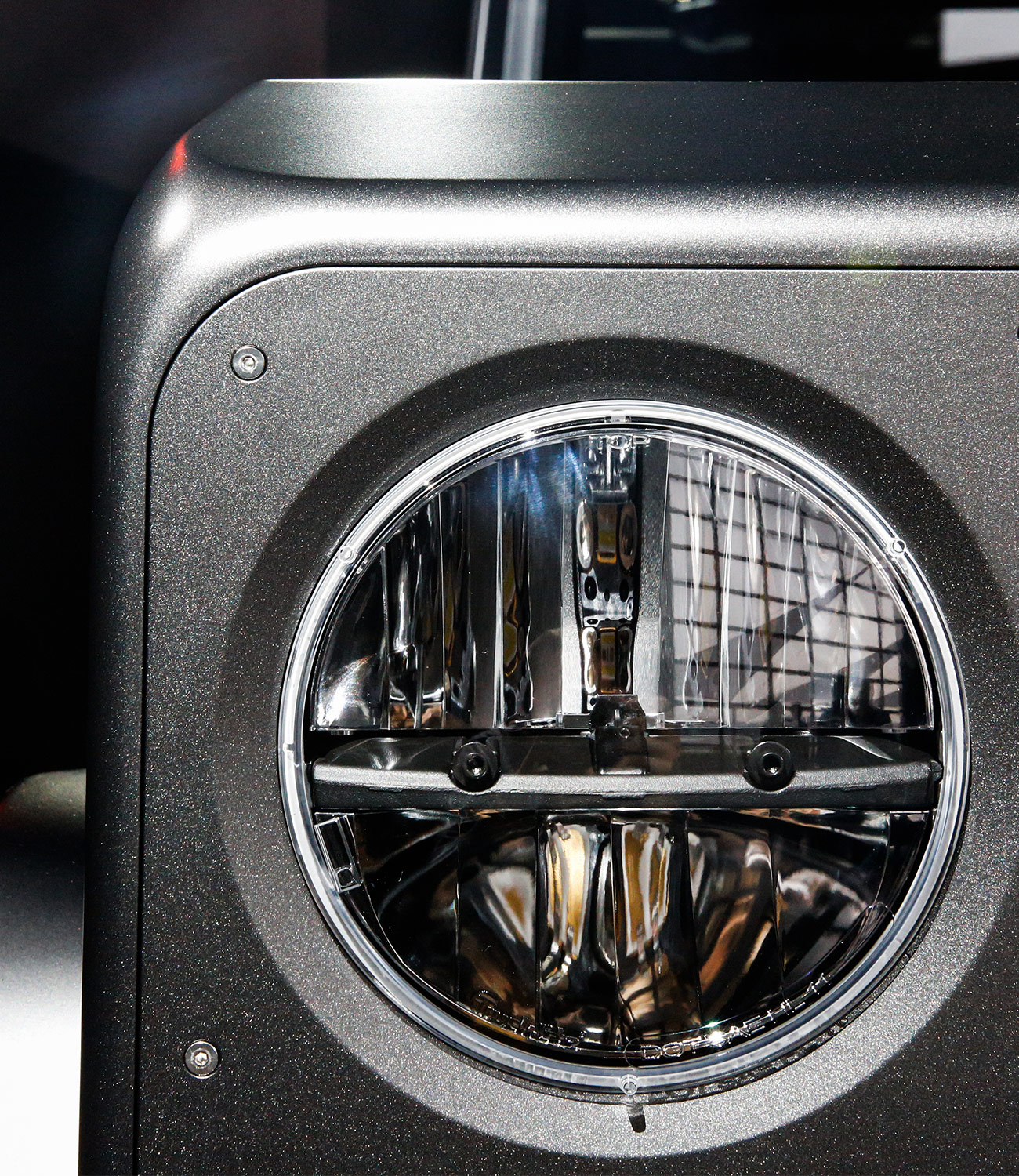
The place to start with Bollinger Motors is the company’s distinctive aesthetic. The B1 doesn’t look like an EV concept or like anything else rolling off a line. It looks like an old Ford Bronco or Land Rover Defender — a lot like them. The B1 will remind you more of those traditional SUVs than either of the remakes that debut this year.

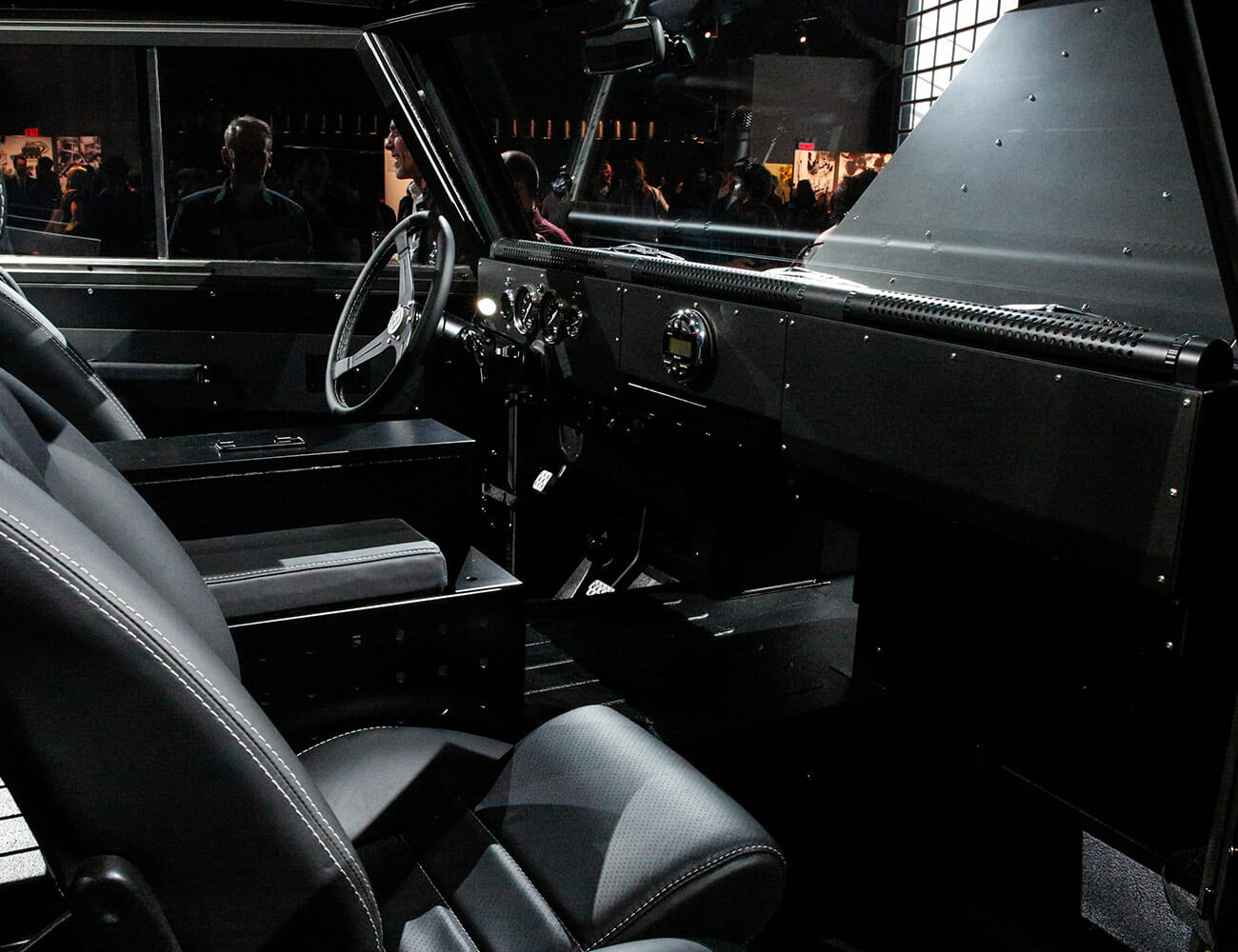
Bollinger Motors went classic and boxy for the look. But, it was also a necessary byproduct of the production process. “We wanted to make it ourselves by hand and not stamp pieces,” Bollinger said. “So, once you have flat sheets that you’re bending, you’re in that camp. It limits you, but in a good way I think.”

With established players and other nascent startups preparing to crowd the EV truck and SUV market, Bollinger believes the appearance of the B1 and B2 will help the company build and maintain its niche. “Even though it harkens back to classic design, we’re bringing that back knowing that no one else will probably do that,” Bollinger said. “We are comfortable being the opposite of what other people are doing and that’s kind of our thing.”

The B1 and B2 won’t just look the part. A drool-worthy spec sheet highlights should be supreme overlanding performance. The dual motor system will produce 614hp and 668lb-ft of instant electric torque. The trucks will accelerate from 0-60mph in 4.5 seconds and reach a top speed of 100mph. The range will be about 200 miles, a bit more in city driving with regenerative braking.

Both vehicles should be spectacular off the pavement. The battery packs in the floor offer a low center of gravity. An all-Aluminum body cuts weight. The B1 and B2 will have near equal (45/55) weight distribution. They will have 15 inches of ground clearance and bigger approach (52 degrees), break over (30 degrees), and departure (43 degrees) angles than a Jeep Wrangler. The B1 and B2 will be rated for a 5,000lb payload and towing up to 7,500lbs. Not having an engine or firewall permits a storage pass-through from trunk to frunk.

While other manufacturers fetishize connectivity, Bollinger Motors plans to sever the digital connection. The B1 and B2 won’t offer autonomous capability. There are no current plans for a digital cloud infrastructure. The trucks will have manual windows and door locks. Driving a B1 or B2 won’t be a pure ascetic throwback. You’ll be able to connect your phone to the stereo. But, the goal is to offer an escape.

“You’re not going to feel like you’re in prison,” Bollinger said. “Heated seats will be an option, that kind of thing. But, we want to keep it all about being hands on so, when you want to leave the rest of the digital world behind, our truck is the one that you leave it in.”
Sticking with the purity of vision will help Bollinger Motors carve out a niche. But, it may also keep the trucks as niche vehicles. There’s no bench seat in the second row for a fifth passenger and there won’t be one. The B1 and B2 won’t have airbags. Federal safety requirements for a Class 3 Truck can be met using seatbelts. That should not bother vintage Defender owners who already do without. But, it may limit the B1’s appeal as an over-qualified kid transporter. “If someone really, really wants airbags,” Bollinger said. “They don’t need to buy our truck.”

Scaling up for production will be a significant challenge in 2019. Bollinger Motors plans to double its employee count in the coming months, to about 30. While outsourcing engine production (with in-house tuning) and battery production, diminishes staff requirements, that’s still tiny. The company also must finalize plans for its manufacturing facility.

Another issue, typical for any EV company, will be getting the cost down. The cost of battery tech remains, in Bollinger’s words, “ridiculous.” He believes established automakers investing billions in EVs will help bring the cost down. Taking a cue from Tesla and GoFundMe, Bollinger Motors is considering offering a more expensive Founders Series of trucks to start. “If we’re super low volume and the first 1,000 limited edition is this much, and this will help us succeed to start making them, I think people understand that,” Bollinger said.

Battery tech is also a prime reason Bollinger Motors will only offer the four-door B1 to start. With present battery density, they need the floor space from a longer wheelbase to achieve the 200-mile battery range. Bollinger does not think this will be too much of a sacrifice. Market research suggested a number well north of 50 percent of buyers would choose the four-door option anyway. “It worked out perfectly,” Bollinger said. “We didn’t have to give up something. This is probably what people are going to choose anyway, and we need the space. So, this is a great way to start.”

The B2 pickup, which shares architecture with the four-door B1 through the C-pillar will be the “obvious next step” in the production sequence, both for ease and because Bollinger, a truck enthusiast, wants it. Bollinger Motors plans to double back with the two-door B1 after that, potentially as a lower range (100 miles or so) runabout.

Bollinger promises the company will reveal pricing in 2019. He is still confident about meeting the goal of producing a first production B1 by summer 2020. “It all works out on Excel and calendars,” Bollinger said. “We just have to stick to it.”

Mercedes-Benz GLC Facelift Revealed With New Engines and Tech!

The Mercedes-Benz GLC facelift has been revealed. The 2020 model is an expected release for the Geneva Motor Show 2019. The success of the previous generation makes the facelift model an important release. With BMW and Audi both vying for position within the segment and a recent onslaught of premium SUV’s in other areas of the market, Mercedes-Benz will be hoping that the GLC Facelift will endear it to a new generation of customers.

The exterior design of the Mercedes-Benz GLC facelift receives a beefier look. LED headlamps are now standard with a new ‘torch-design’ daytime running light. The radiator grille is also redesigned with new double louvres and diamond lattice. The paint palette is also increased with a new graphite grey option and four different options are available for the wheels ranging from 17 through to 19 inches.

At the rear, the bumper has been redesigned with new exhaust shrouds. The LED tail lamps are new too and chrome surrounds for the skid plate finish the look. An AMG-line specification adds a chromed diamond grille, AMG specific front apron and angular exhaust tips with additional options such as 20 inch wheels.

The Mercedes-Benz GLC facelift gets a new range of engines. All are 4-cylinder for now. The GLC 200 4Matic puts out 197 hp and the GLC 300 4Matic, 258 hp. Both use a 48-volt on-board power supply and belt-driven starter-generator, recovering up to 10 kW of energy and saving fuel. The diesel models come without the hybrid technology, the GLC 200d 4Matic produces 163 hp, the GLC 220d 4Matic 194 hp and the GLC 300d 4Matic 245hp. The diesel models come equipped with the 9G-Tronic transmission.

Inside, the Mercedes-Benz GLC facelift uses the latest MBUX infotainment system. It starts with the new multi-function steering wheel with multi-touch control. The MBUX system is familiar by now with a wide range of operating possibilities ranging from touch through to gesture control. On the GLC, two high resolution displays have been fitted. The instrument cluster measures 12.3 with either a 7 inch or 10.25 inch central display.

2020 Mercedes-Benz GLC Facelift

The Mercedes-Benz GLC facelift also adds further assistance systems. Dynamic Body Control and Dynamic Select receives modified settings. Active Distance Assist and Active Steer Assist have been modified to help support the driver. The GLC facelift also utilises Active Braking Assist, Active Parking Assist, Trailer Manoeuvring Assist and Car-to-X Communication, a swarm-type technology.

We recently drove a prototype out in Northern Sweden. You can read that story here. We will be looking to follow it up with a drive on tarmac after the official reveal in Geneva next week!

Ferrari is debuting a new car Thursday

In a social media blast across its Twitter, Instagram and Facebook accounts, Ferrari released a seven-second teaser for a new car that is set to debut Feb. 28. A few subtle details hint at what it might be.

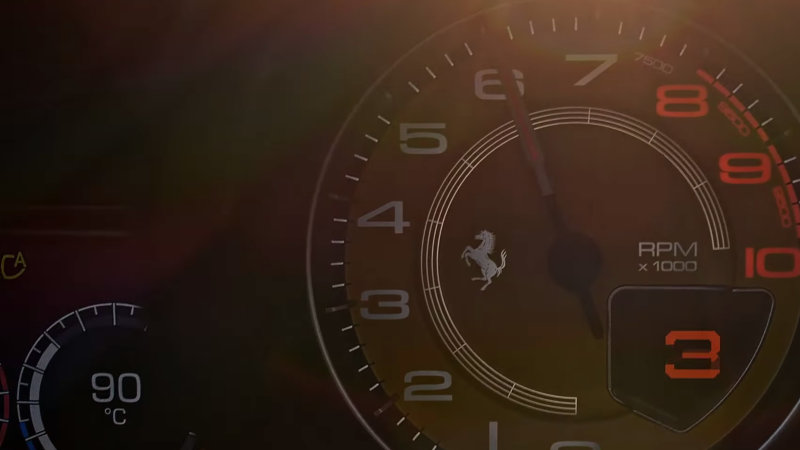
Accompanying the short teaser clip were two short sentences: “Tomorrow, the Prancing Horse family welcomes a new member,” it says. “Make room for new thrills.” The clip flashes several up-close parts of the car including a grille, an air intake, a steering wheel with paddle shifters, a drive mode selector, a tachometer, and the top of an engine.

The engine is the most revealing part of the clip. It appears to be the V8 from the 488 Pista, which separates itself visually with carbon fiber covers, rather than the red covers seen in other Ferraris. If it is indeed that V8, it could potentially align with the report that Ferrari would be debuting a hybrid V8 supercar this year. This would just be sooner than we were expecting it.

Ferrari Tease

A secondary intriguing part of the video is the gear selector. The clips shows the normal modes seen on other Ferraris, including Wet, Sport, Race, CT off, and Esc off. But there’s a sixth blurry white spot, which could be absolutely nothing, or it could indicate another type of driving mode. What would be important enough to add a driving mode? Maybe a hybrid?

All we can do is speculate, but thankfully, only for a day more. Check back for the full reveal and full information on Feb. 28.

Related Video:

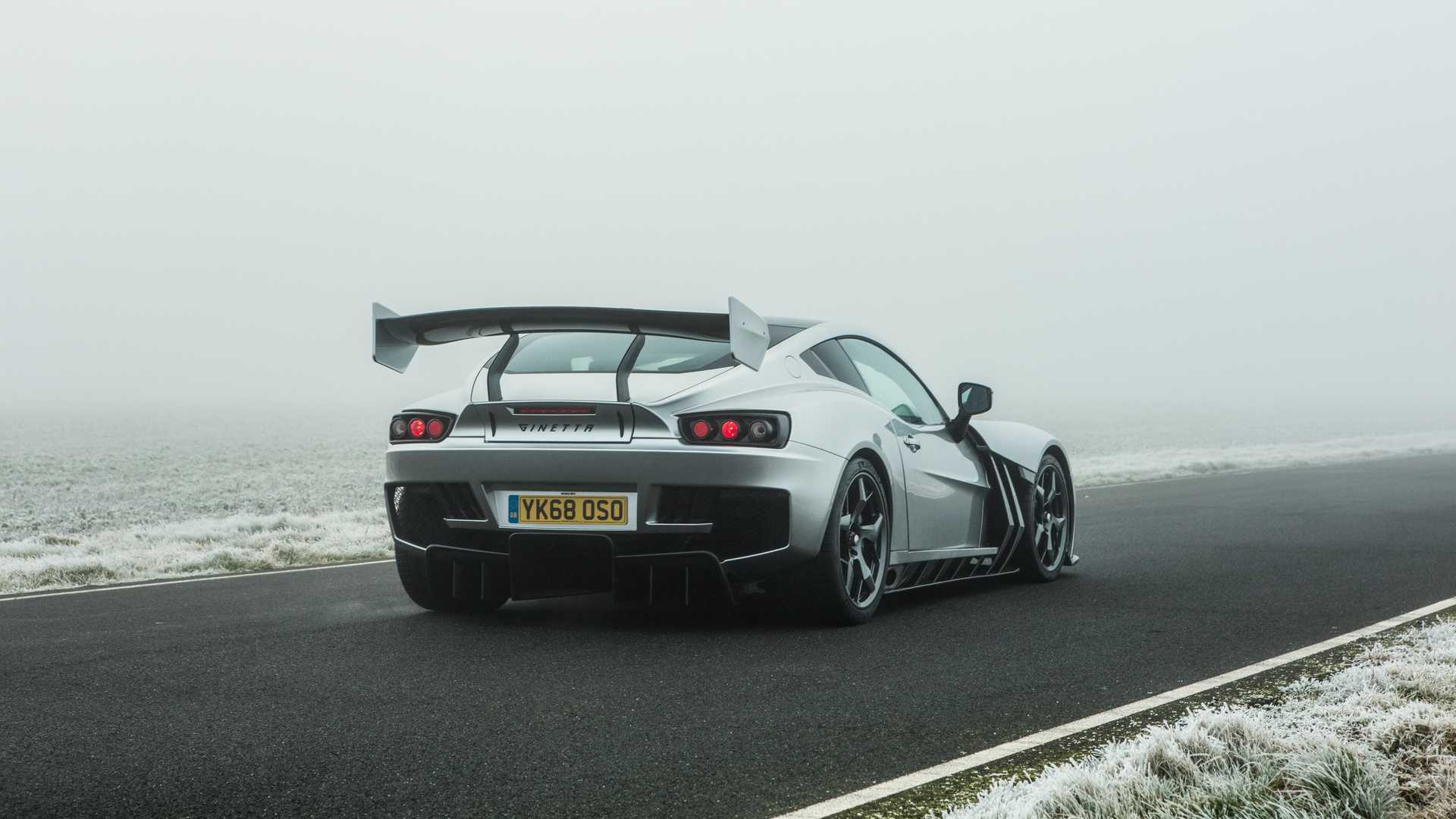
Ginetta Reveals Radical 600hp Supercar

Ginetta has released a new supercar in time for the Geneva Motor Show 2019. The supercar currently has no name, furhter details are promised at the Swiss motor show. Despite the challenging looks, the spec sheet looks impressive.

The new supercar has been designed and manufactured in-house at Ginetta’s headquarters in Leeds. Visually, the supercar blends the traditional shape of the Ginetta G55 with Ginetta’s G58 LMP1 prototype race car.

This Ginetta is mid-engined which allows the British company to fit a deep front nose. At 100 mph, its aerodynamic profile is enough to produce 376 kg of downforce.

The Ginetta supercar gets a 6.0 litre, naturally aspirated V8 with 600 bhp and 700 Nm of torque. The power is routed through a six-speed sequential paddle-shift gearbox supplied by Hewland Engineering with a carbon propshaft. The side exit exhausts look incredible.

Weight is just 1,150 kg thanks to a carbon fibre monocoque and carbon fibre bodywork combination. The weight is distributed 49% to the front and 51% to the rear. The rear wing features the same aerodynamic shape as the Ginetta LMP1 racer. The bodywork also includes a full underbody diffuser and ducting. Despite this, the boot consumes 675 litres of luggage.

2020 Ginetta Supercar

The Ginetta supercar has carbon ceramic brakes. The wheels are designed and manufactured by Ginetta. They measure 19 inches at the front and 20 inches at the rear. The suspension features an adjustable pushrod activated double wishbone system lifted from the LMP1 car. The steering is hydraulic power assisted and the steering wheel is an LMP1-inspired carbon fibre unit.

The interior is finished in Alcantara, carbon fibre and billet aluminium. There is enough technology to compete with most rivals. ABS, traction control, reverse camera, automatic headlights, park sensors, air conditioning, heated screens front and rear and wireless phone charging are all available.

The Ginetta supercar will be limited to just 20 examples with production set to begin in 2020. 12 have already been sold leaving enough space for a further 8 customers. Owners will get a bespoke experience from a tailored seat fitting, extensive factory warranty and “immersive ownership experience”.