All posts in “Cars”

BMW X7 Review

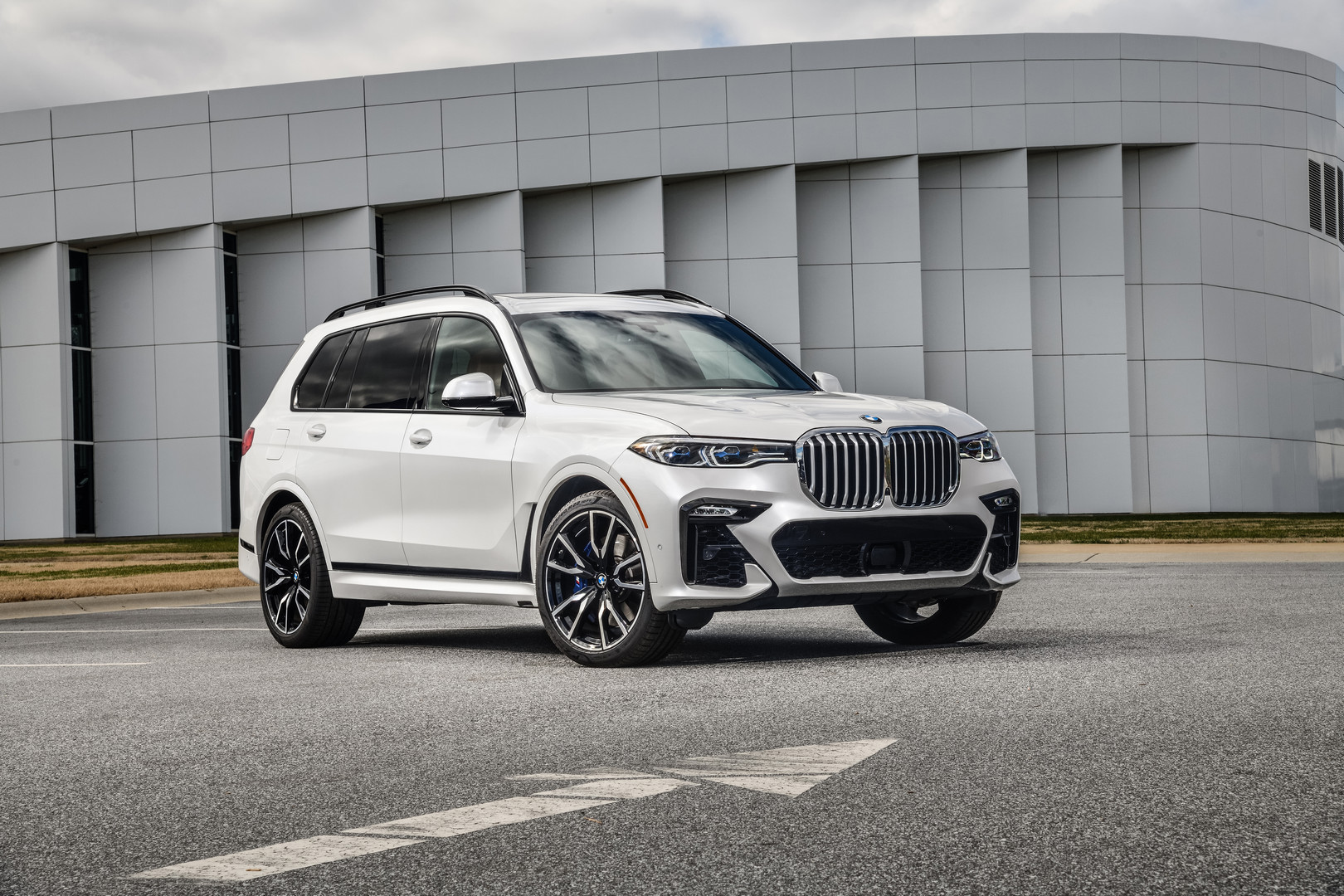
There is a new kid on the block! The BMW X7 is BMW’s new space ship. A car for people that need the space of a MPV but want the looks and luxury of a SUV.

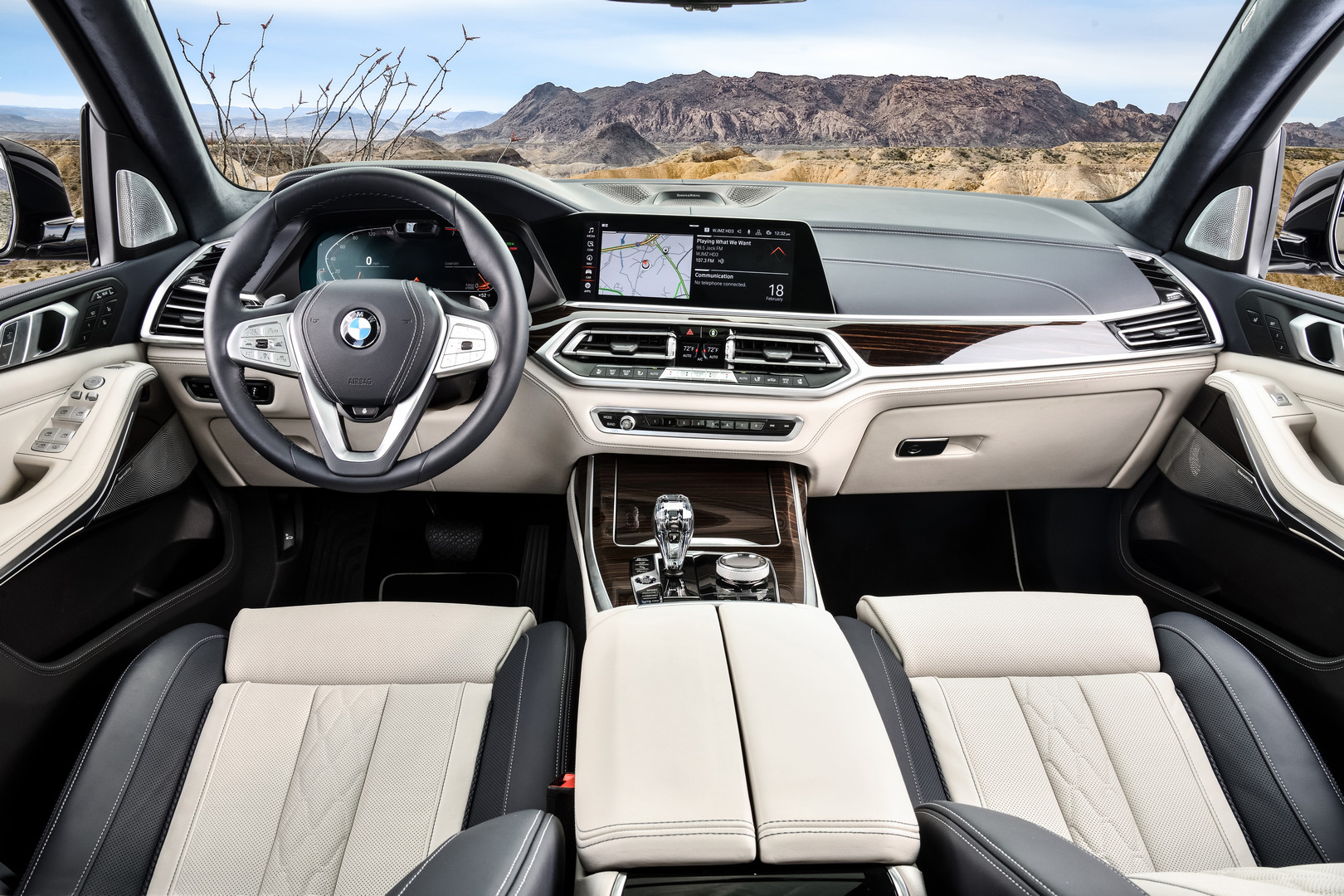
The BMW X7 comes standard with three seating rows and a range of high-end features like a panoramic sunroof, all electric seats and high-end infotainment. As an adult the third seat row is not really usable – I did not even dare to try climbing over the folded down second row seat to get myself stuck in the last row. But there is a six seater option with two separate seats on the second row which gives better access to the third row and it looks and feels a lot more luxurious too.

The X7 is as much about luxury as it is about versatility. If you tick some boxes on the list of optional extras you can equip the new XXL SUV pretty much as luxurious as you like. Massage seats? No problem. Rear seat entertainment? Done. Bowers & Wilkins high-end audio? You got it! The available luxury makes the X7 a very pleasant travel companion as we experienced on our journey from Los Angeles to Palm Springs.

The new BMW X7 will be available with four different engines from launch. Two diesel engines and two petrol engines. All come with an eight-speed Steptronic transmission.

2020 BMW X7 xDrive50i

The entry-level diesel X7 is the BMW X7 xDrive30d. It comes with a 3 liter six-cylinder in-line diesel engine producing 265 hp and 620 Nm. Acceleration from 0 – 100 km/h takes 7.0 seconds and the X7 30d has a top speed of 227 km/h. The BMW X7 M50d is the top of the range diesel variant with a 3 liter six-cylinder in-line diesel engine producing 400 hp and 760 Nm of torque. Acceleration from 0 – 100 km/h is done in 5.4 seconds and the top speed is limited to 250 km/h.

The BMW X7 xDrive40i comes with a 3 liter six-cylinder in-line petrol engine which produces 340 hp and 450 Nm of torque. Acceleration from 0 – 100 km/h is done in 6.1 seconds and the X7 xDrive40i tops out at 245 km/h. The BMW X7 xDrive50i is sadly not available in Europe although sources hint at another V8 variant to celebrate its European debut later this year. The xDrive50i we drove in the United States comes with a 4.4 liter V8 petrol engine pushing out 462 hp and 650 Nm of torque. The sprint from 0 – 100 km/h is done in a very respectable 5.4 seconds and the X7 50i will keep going until an electronically limited top speed of 250 km/h.

During our test drive in California we had the opportunity to drive the two petrol variants. About the engines I can be very short; they provide sufficient power, torque and smooth gear changes. Paddles behind the wheel allow you to override the automatic gear changes although there is very little need to do that. The six-cylinder variant has a nice soundtrack already but for more emotion and power opt for the turbocharged V8.

Handling wise it is the typical direct BMW steering and stiffer ride that defines the X7. The limits of what it can do on twisty mountain roads are rather constraint by the brakes and lack of side support from the seats rather than it’s acceleration or cornering capabilities. But in the end hardly any customer will move this 2.4 tonnes+ luxury people carrier like the way we did on the press launch. For it’s purpose as a family daily driver and long haul machine it is pretty close to perfect.

The design of the new X7 is a hot debate topic and especially the new grill polarizes like no other design in recent years. I for one like the new more bold design. It is less subtle as BMW designs from the last decade but fits to a growing group of confident (young) buyers from the US and China in particular.

2020 BMW X7 xDrive 40i

The infotainment system is packed with options but can take some getting used to. The iDrive system was perfect when cars had infotainment systems with 100 functions but now that the available functions go into the thousands it is operating beyond it’s limits. It is time BMW creates a new OS from scratch that brings usability and logic on par with that of a smart phone – or Daimler’s MBUX for that matter.

The X7 also includes the latest driving assistance systems including adaptive cruise control and the latest version of the BMW traffic jam assistant which allows the car to accelerate, brake and steer without driver input up to a certain speed. Due to a recent UNECE regulation which put the EU and other countries back to the 20th century this system is only available in the US and China which did not sign the rule.

The BMW X7 is an interesting addition to the BMW portfolio and caters to a group of customers were not yet served with other products in the BMW line-up. The direct competitor is the Mercedes-Benz GLS but a comparison would be unfair at this point as the current GLS is at the end of its life-cycle. But the new one will be unveiled at the New York Auto Show in just a few weeks. So time will tell if the BMW X7 has what it takes to take the crown in this niche segment of XXL luxury SUVs.

Lego built a full-size McLaren Senna, and it’s glorious

Lego is not slowing down with its forays into the automotive scene. Today we bring you news of a full-size McLaren Senna model, built as a collaboration between Lego and McLaren. This brick supercar is built using 467,854 individual pieces, which if anybody is counting, is about 200,000 pieces more than Lego used to create the life-size 720S from awhile back. It’s still not as complex as the over 1 million-brick Bugatti Chiron project, though.

Construction took 2,725 hours from start to finish, while the design and development took just over 2,000 hours. The car itself is built to an exact 1:1 specification in size, and includes a ton of bits from the actual Senna. Borrowed parts include a seat, steering wheel, pedals and infotainment system. Those in the driver’s seat are able to operate the lights and play around with the big center infotainment screen. When you push the “start button,” an engine simulation plays over the speakers to try and convince you that the twin-turbo V8 is actually behind you.

Real McLaren badges right off its cars are fitted anywhere you’d normally see one. Then the wheels and Pirelli tires from the Senna are mounted to the chassis. Getting in and out through the Lego dihedral doors is apparently a bit difficult, but they’re removable to allow easy access to the seats. In total, the Lego Senna weighs a hefty 3,348 pounds, which McLaren says is 1,102 pounds more than the real Senna weighs. Keep in mind that this one doesn’t even have an engine. It also took nine times longer to produce than a road-going McLaren Senna takes (which is 300 hours if you were wondering).

The details and structures to make this thing stick together are impressive, especially that huge wing hanging out the back. McLaren fitted some properly insane aero to the production Senna, and replicating the shapes and angles with Legos couldn’t have been easy. Sadly, this one doesn’t appear to have any real ability to drive at low speeds like the Chiron does with its electric motor. McLaren plans to show it off at car shows and events like the Goodwood Festival of Speed this summer.

The Next Porsche Hypercar Might Be An EV and Involve Rimac

The 918 Successor Would Sit Atop the Lineup

Porsche’s 918 successor is in the works, but it’s a long way from coming out even in concept form. The team is still deliberating on how to make the vehicle and what it should be. According to CEO Oliver Blume in a recent interview with Top Gear, the car could be a fully electric model. 

“It has to be the best in the market, the highest performing… right now we haven’t got a concept for that car. But might it be a pure-electric car? Yes,” he said.

Porsche is not unfamiliar with EV technology and fully electric cars by any means. The all-electric Taycan is coming out in September, and it’s adding EV and hybrid versions of many of its models in the future. The Taycan is pretty much already a success with over 20,000 customers placing a roughly $2,800 deposit for the car. As long as it’s as good as it looks, Porsche’s future may be electric. 

According to Top Gear, Porsche is kicking around the idea of making the next generation Cayenne all-electric. This could depend on where solid-state battery technology is at that time. That type of battery technology is expected to push electric cars to the next level.

Bentley Wants the Pike’s Peak Production Car Record

It’s Going to Use the Continental GT

In an attempt to set the world production car record at Pike’s Peak, Bentley will bring the Continental GT and let Rhys Millen pilot the car along the route, according to Carscoops. Bentley previously set the SUV record with its Bentayga, and now it wants the car record as well.

The Continental GT wouldn’t be our first choice to make the run. Sure, it’s an amazing car, but it’s also heavy. It weighs somewhere around 4,800 pounds. However, the car comes with a W12 engine that produces 626 hp and 663 lb-ft of torque, so that weight is moved easily. Also, the car has all-wheel drive, which it’s going to need because Pike’s Peak is one of the most challenging courses out there. It’s no straight shot up a hill.

The record for the fastest production vehicle was once held by a Land Rover Range Rover Sport. A 2014 model, to be exact. The Bentayga blew that vehicle away. It made the run roughly two minutes faster with a time of 10:49.9. The Continental GT should be able to crack the 10-minute mark. 

There are many production cars more extreme than the Continental GT, but many manufacturers don’t bring their production cars to Pikes Peak. That means the Continental GT has fewer competitors and a better chance of claiming the title the company seeks. We wish them well in their efforts. There’s nothing like watching a Bentley racing along at high speed.

Now Is the Time to Buy a Vintage Rolls-Royce Silver Shadow

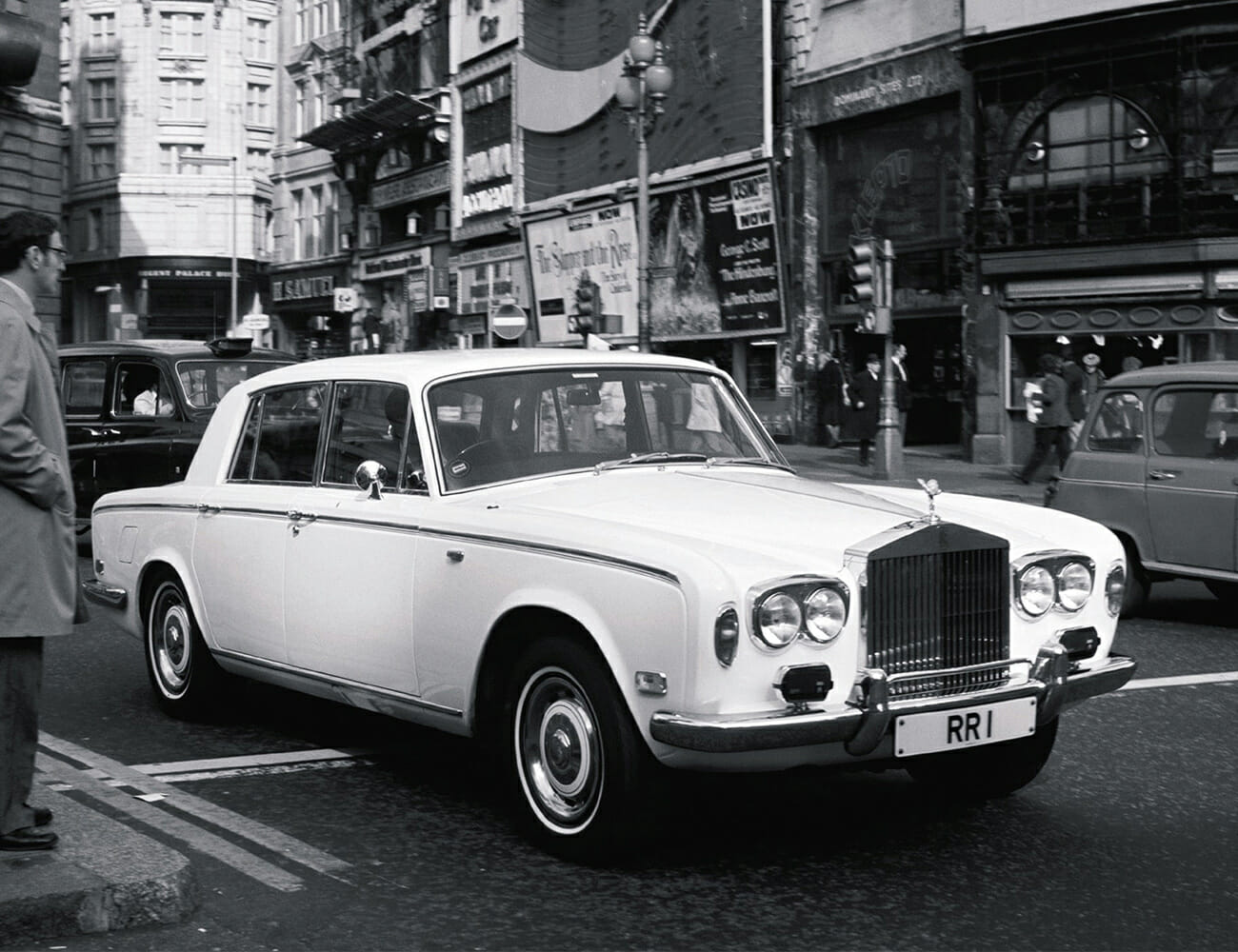
A Rolls-Royce is fabulous wealth, automotified. The materials are luxe. The craftsmanship is exquisite. The very ethos of the brand is unattainability. What if I told you a Roller was, in fact, very attainable? The Silver Shadow is one of Rolls-Royce’s defining vehicles. It’s a pure distillation of everything that has made Rolls-Royce great. Buying one has become almost stupidly reasonable compared to much of the luxury car market.

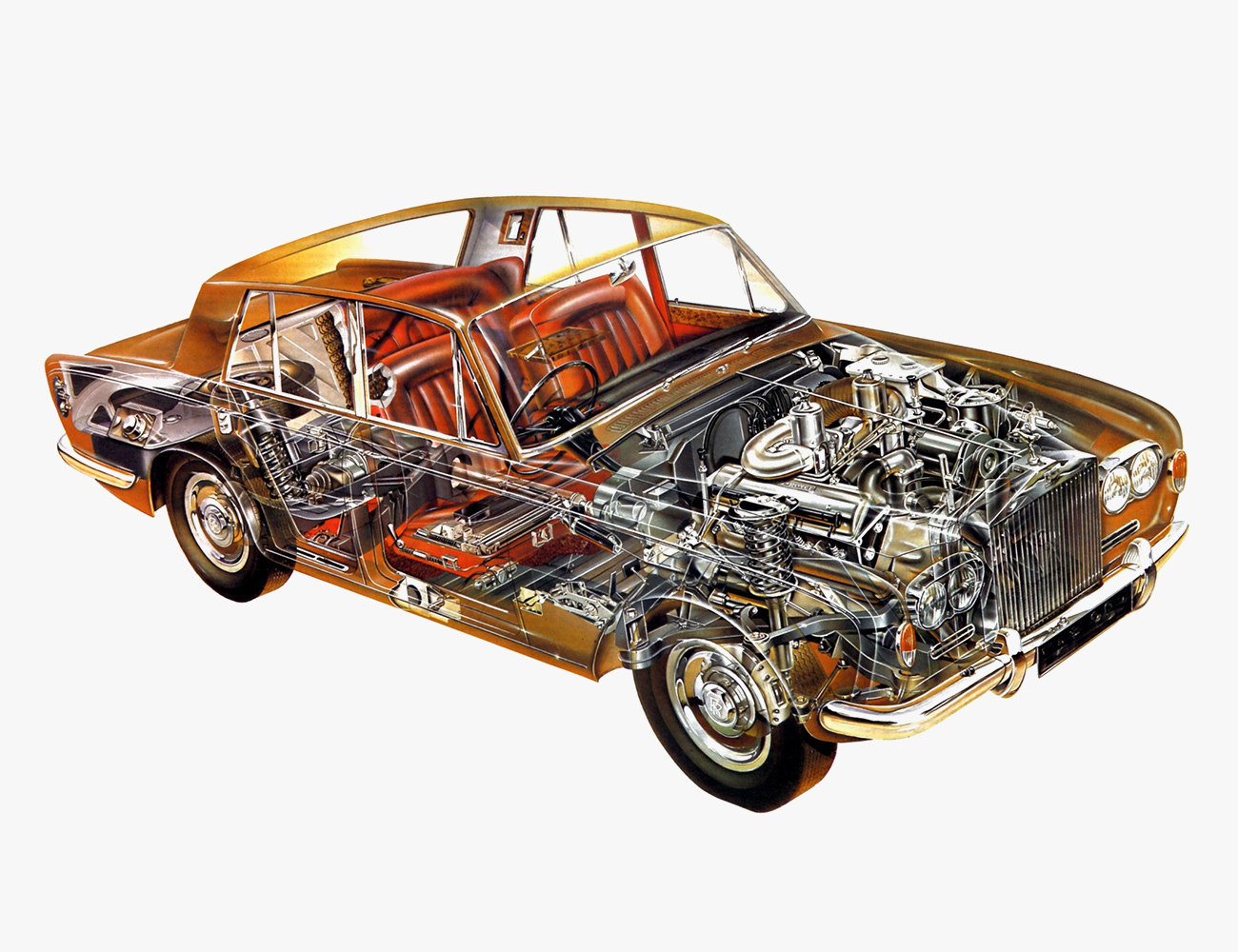
Rolls-Royce produced the Silver Shadow from 1965 to 1980 in sedan, coupe, and convertible forms. It represented a shift from coach building to modern car production and was the first Rolls-Royce to use a unified body/chassis construction. This allowed Rolls-Royce to reduce the size and shed bulk while offering more passenger and cargo volume. It had a Citroën-sourced hydropneumatic, self-leveling suspension delivering impeccable ride quality.

Aesthetically, the Silver Shadow is a classic Rolls-Royce with lacquered wood on the dash, sumptuous leather seats, and the Spirit of Ecstasy above the grill. But it’s refined. It strikes the right balance of being opulent without being gaudy. Unlike some of Rolls-Royce’s present range, you don’t need to be addressed as “Crown Prince” or “Kardashian” to pull off owning one.

Is the Silver Shadow cool? Yes. Steve McQueen drove one in The Thomas Crown Affair. While that famed arbiter of car coolness never owned a Silver Shadow, both Freddie Mercury and Andy Warhol bought 1974 Silver Shadows. Tellingly, neither ever sold theirs.

You can find a Silver Shadow for super cheap. Still running, auctionable examples can go for less than $15,000. You can find Silver Shadows for even less. Even a barely broken-in, sub-10,000 mile version can gavel for less than $30,000. The price isn’t a knock on the car’s quality. It’s a testament to it. Rolls-Royce ended up making more than 30,000 Silver Shadows because demand was so high.

A Silver Shadow will need some TLC. Vintage luxury parts don’t come cheaply. You will be dealing with 40-50-year-old British electrical work. But, it’s also getting a vintage car with stateliness and elegance for much less than, say, an SL Pagoda Mercedes would set you back. A Rolls-Royce stored in a wealthy person’s garage has probably taken much less of a beating than say a manual transmission BMW M5 will have.

With that TLC, a Silver Shadow can still be quite formidable. English car collector Harry Metcalfe took the 1969 wedding duty cruiser he bought on eBay for about $5,400 on a 2,000-mile trek to the Arctic Circle during winter.

The Ferrari P80/C Is a Crazy One-Off Project

A 330 P3/P4 and the 1966 Dino 206 S Inspired Car

Ferrari calls the P80/C “the most extreme one-off design ever,” and we’re inclined to believe it. Based on the 488 GT3 chassis the car’s design begins with one of the best racing chassis of all time. Of course, it’s going to be the most extreme when you do that, and we’re sure glad the company did.

The P80/C is a car that shares some parts with the GT3, but the body and the front splitter are entirely unique. Ferrari made the body entirely of carbon fiber. Many of the functional parts and components of the car are left out in the open and unpainted. What is painted gets a gorgeous coat (likely several) of Rosso Vero.

The car features the best styling elements of several historic Ferraris, including  250 LM, the Dino 206 S and 330 P3/4. The more you look at the car, the more you can see little bits of other beautiful Ferrari models in this special one-off project. It’s a simply stunning car from all angles. 

It’s safe to assume the car features the 3.9-liter twin-turbo V8 engine, but Ferrari didn’t reveal the specifications for the vehicle. The engine is just one small little piece of the whole package here anyway. Ferrari got to design and build a car without the need to comply with specific standards, which allows the design team to really experiment.

The car features an aerodynamic shape like no other. It’s curvy and sleek and timeless. The huge carbon fiber wing dominates the rear visually. Once you get past it, you see all the other little details. You notice the massive exhausts, the rear diffuser, and the view of the engine.

Ferrari didn’t name the customer. It only said that he was a “great connoisseur of the Ferrari world.” The customer wanted Ferrari to build a “modern sports prototype.” He also wanted the car to come in two configurations. He wanted a racing package and an exhibition package. The car you see in the photos is obviously the racing package. It’s absolutely gorgeous, and we can’t wait for Ferrari to release the technical specifications. 

Ferrari P80/C one-off built for 330 P3/P4, 1966 Dino 206 S fanatic

For more than four long years, one person has kept a major secret with Ferrari. The company and the client were working on a project that Ferrari calls its “most extreme one-off design ever.” Inspired by the 330 P3/P4 and the 1966 Dino 206 S, the P80/C is a new-age take on a track-focused sports prototype.

Typically for these types of specialty builds, Ferrari does as they’ve done in the past and reshapes a new exterior over an existing car from the for-sale lineup. But because it is a track car, Ferrari used the 488 GT3 as a starting point, and made “radical changes” to the equipment from there. It not only has a slightly longer (about two inches) wheelbase than the 488 GTB, but it also has a cab-forward design rather than the 488 GTB’s centrally located cabin. Ferrari says this allowed for more creative freedom and played a major part in how the design took shape.

Flavio Manzoni and the Ferrari Styling Center set out to make what they described as a “Hero Car.” The client’s direction was to make a “modern sports prototype” with design cues from the 330 P3/P4 and the 1966 Dino 206 S. These two cars carry significance in Ferrari’s design history, as they impressed on the track but also influenced future road cars such as the Dino 206/246 GT. With heavy involvement from the client during the process, Ferrari has been working on this car since 2015, the longest the company has ever spent on developing a one-off.

Starting from the ground up, aerodynamics played a major part in the appearance of the P80/C. A gigantic front splitter, which is specific to this car, snuggles the ground and extends beyond the dimensions of the body. Visually, it carries on along the flanks with aero skirts, and circles around the rear with a bulky exaggerated diffuser. The lower kit is left in exposed carbon fiber, creating a two-piece look that’s separate from the Rosso Vero body paint. Ferrari says only pieces that were strictly functional were highlighted with bare carbon and that the car has a five percent aerodynamic improvement over the 488 GT3.

For the designers, the P80/C was a safe space of opportunity and experimentation. It is a track car that does not fall under racing regulations, but it’s also a customer production car that is not forced into road-ready restrictions. This allowed for unique features such as the extremely tiny slit headlights, a feature inspired by the air intake housings in the grille of the 330 P3/P4, that are integrated into the car’s catamaran-style nose. The appearance is mimicked in the rear lights for a cohesive design.

The P80/C is robust with dramatic swoops and sharply tucked lines. The diving face, which is largely shaped by two massive radiator cooling vents, grins at the corners over the wheels before dropping back down into the belt line. It has a wraparound greenhouse that bleeds into the rear quarter air vents and creates the look of a floating visor roofline. Whereas the roof typically extends over the engine on Ferrari’s road cars, the P80/C’s roof cuts off behind the cabin, a feature seen on the historic race cars.

A pinched body flows into a wide rear that would make Liberty Walk proud. Another rarity is the dual wing setup. A gargantuan pedestal wing dominates a mostly exposed rear, while a second wing lies just behind the roof above the engine cover. Ferrari notes the concave rear windscreen and the louvres seen on the engine cover are additional references to the 330 P3/P4.

Although the car can only be used in one environment — the track — it has two different setups. One includes the massive rear wing and has 18-inch single-nut wheels, while the other highlights the form the car, removing “aerodynamic appendages,” and adding 21-inch wheels.

The inside reflects the track-focused intentions, as it is specced with carbon fiber paneling, an integrated roll cage, a racing style instrument panel and steering wheel, and blue racing seats. Although a performance machine, Ferrari made no mention of the powertrain in its announcement.

[embedded content]

Ford GT becomes first street-legal car to hit 300 mph in standing mile

A street-legal car has officially broken the 300 mph barrier in the standing mile. This 2006 Ford GT, run and modified by M2K Motorsports, hit 300.4 mph at the Texas Mile event over the weekend. There isn’t a whole lot of street left in this Ford GT, but now it can be said that they beat Hennessey, Bugatti and Koenigsegg to the feat.

This exact Ford GT held the previous standing-mile record at 293.6 mph before, but why not try for 300, right? Even with the car’s approximately 2,500 horsepower, it’s still legal to take on the streets. We say approximately, because M2K Motorsports is unable to provide an exact horsepower rating due to dyno limitations. It’s still using the 5.4-liter V8 engine that came in the car from Ford, but it’s twin-turbocharged now. These turbochargers produce a walloping 45 psi of boost, and the engine itself runs on methanol. So yeah, it’s pretty bonkers.

You can see the car hit the triple century mark in the video up above on its last run of the day at Victoria Regional Airport. It sounds as wicked as you might expect a 2,500-horsepower V8 engine to sound, and needs a parachute to effectively stop from the high speeds. Funnily enough, the Ford GT still uses a six-speed manual transmission to reach those speeds. For some context, the car had a 205 mph top speed from the factory.

Forget Hennessey and Koenigsegg, Watch this Ford GT Break 300 MPH

A Car From 2006 Pulled it Off

While Hennessey and Koenigsegg are working hard to make a car that can top 300 mph, the guys at M2K Motorsports took their 2006 Ford GT and rocketed past the 300 mph barrier. The team took their street legal Ford GT all the way up to 293.6 mph a few years ago, according to Motor1, and now they’ve toppled the barrier that supercar manufacturers were trying to get past.

The top speed was achieved in three runs at the Texas Mile event organized at the Victoria Regional Airport. Yep, the car only had one mile to hit the speed. As you can see in the video, it gets close before it actually goes over. The car did a run at 299 mph. Then it topped out the next time at 300.4 mph. 

[embedded content]

With only a mile of pavement for each run, it makes you wonder how fast the car would have gone had it had more room to stretch its legs. Obviously, the 2006 Ford GT that made the 300 mph run was not a stock car. It is street legal, though, according to Motor1. 

Koenigsegg, Hennessey, Bugatti, and all the other automakers out there trying to make a production car that can do 300 mph might not be too happy about this, but the thing about this particular Ford GT is that there’s only this one car. While there are other Ford GTs out there that could be made to go this fast, the other hypercar manufacturers will have their rides go that speed from the factory floor.

Why Exotic Super SUV’s Are The Way Of The Future

Less than a decade ago, the distinction between SUV’s and other vehicle types was clear. The introduction of SUV cross-overs brought about a new breed of SUV. An off-shoot of these cross-over SUVs came to being once sports car manufacturers entered the SUV market, creating the “Super SUV.”

The idea was to provide everything in one vehicle – a powerful engine, elegant design, luxury interior, and unparalleled performance with a 4×4 option. Lamborghini came up with the term Super SUV in 2017, when they released the concept of the Lamborghini Urus.

Following in their footsteps, other major sports car manufacturers also joined in.

The S-SUV Future

Range Rover Super SUV
[Image via Autocar]

Sports cars have traditionally featured two-seats, with some exceptions offering four passenger options as well. However, that’s not enough for some people. Super SUV’s are 5-7 seater vehicles, boasting powerful engines that make light work of the added weight.

Super SUVs deliver a faster, more comfortable off-road experience. Imagine sitting in the luxury of a Bentley while crossing the Himalayan plains, or cruising through the desert with a Ferrari roaring under you. As these super crossovers make their way into the mainstream, maintaining these vehicles also doesn’t demand much effort.

For instance, in Arizona, you can explore the Apache Trail in your S-SUV, or cruise the historic Route 66.

There’s no worry if you damage your windshield because SunTec’s Scottsdale windshield replacement crew will have you sorted in no time! SunTec Auto Glass specializes in repairing and replacing windshields and auto glass on exotics, supercars, and of course Super-SUV’s.

The future is all about convenience and this is precisely why Super SUVs are set to take over the automobile industry. An all-in-one option is an automotive enthusiast’s dream come true — spacious cabins, higher seats, and more driving options.

Eventually, it is estimated that future S-SUV’s will be more affordable, providing a luxurious and powerful alternative to sports cars and SUV’s alike.

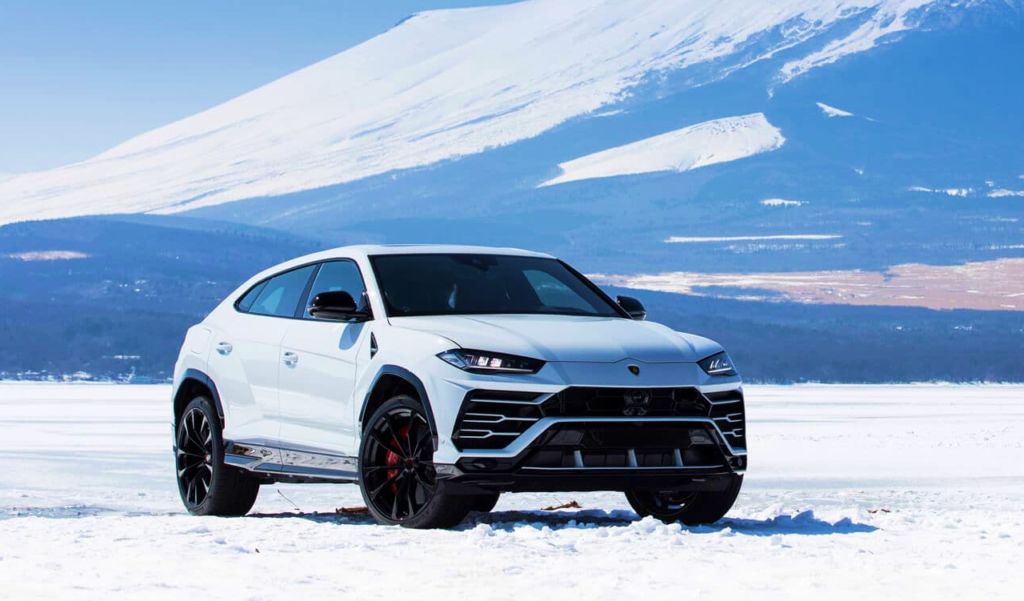
The Lamborghini Urus

Lamborghini Urus Super SUV
[Image via Lamborghini]

Lamborghini’s first attempt at an SUV caused ripples across the automobile industry. A combination of Lamborghini’s classic style coupled with outstanding performance, the Urus starts out at $200,000.

Its twin-turbo 4.0-liter V-8 delivers a whopping 641 horsepower on an all-wheel configuration alongside an eight-speed automatic transmission. This powerful engine boasts a 0-60mph time of 3.2 seconds!

The interior has a classic Lamborghini jetfighter-style design that has all the hallmarks of a luxury SUV and sports car. From leather seats to adjustable gauges, go from luxury to raw power in seconds, literally.

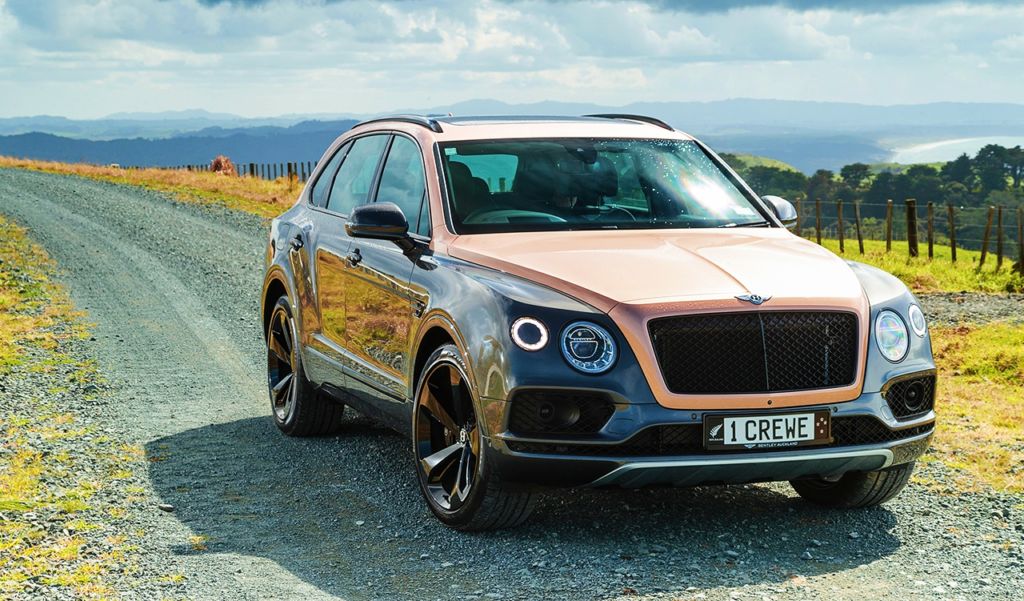
The Bentley Bentayga

Bentley Bentayga Super SUV
[Image via Bentley]

Bentley was looking to rock the SUV world and their introduction of the Bentley Bentayga blew everyone away with a top speed of 187 mph! With a price tag of $197,725, the Bentayga is a supercar in an SUV’s body – the very definition of a Super SUV.

A twin-turbo 6.0-liter W12 engine under the hood delivers a robust 600 horsepower. Along with the eight-speed automatic transmission and all-wheel drive, the Bentayga goes 0-60 mph in 3.6 seconds.

The entirely leather interior comfortably seats 5 people. The full-option Bentayga also offers 22-inch alloy rims as well as an absolutely ridiculous 1,950-watt, 20 speaker audio system and back-seat entertainment tablets.

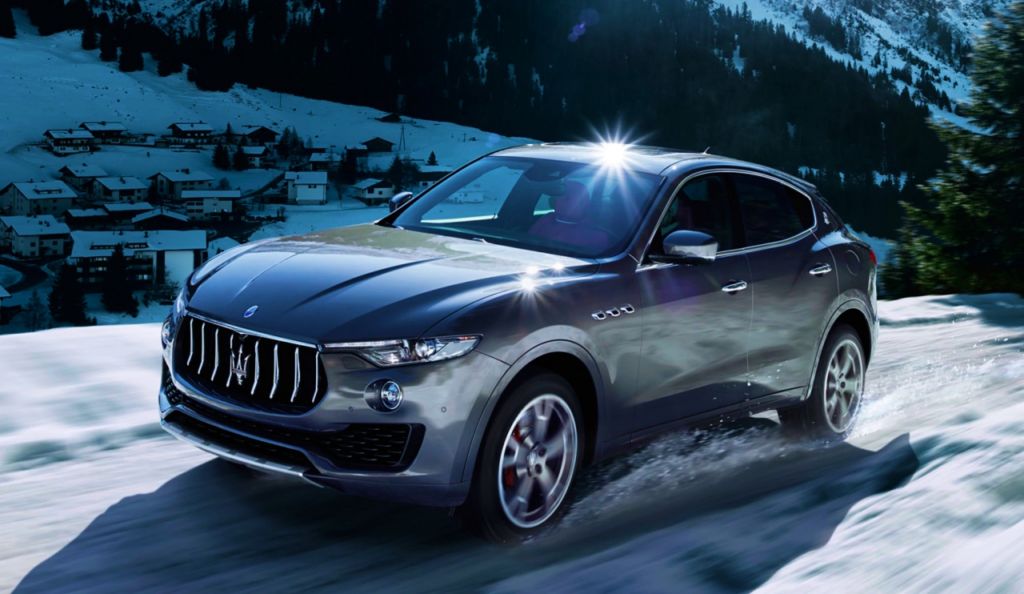
The Maserati Levante

Maserati Levante Super SUV
[Image via Motor Trend]

Following the trend of Super SUV’s, Maserati came up with the relatively cheaper Levante starting at $77,475. Positioned as the reinvention of Italian luxury, the Levante is available in four varieties with individual engine capacities and features.

The base version has a twin-turbocharged V-6 capable of 345 horsepower. Maserati’s Trofeo version put out an unimaginable 550 horsepower but also costs an eye-watering $171,475. The all-wheel base version goes 0-60 mph in 5.1 seconds, rivaling mid-tier sports cars.

With a specific focus on the leather-intensive interior, Maserati has also splashed out on a fully automatic, state-of-the-art, all-inclusive infotainment system. While the Levante cuts corners on trunk space, it offers a world-class luxury experience.

The Complete BMW Buying Guide: Every Model, Explained

BMW produces the “ultimate driving machine.” It distinguishes itself from the other German luxury brands by being sporty and driver-centric. The classic BMW is a powerful, well-handling, RWD sedan with a manual transmission. However, BMW has adjusted to the modern car market. Manuals are harder to come by with each passing model year. BMW offers an array of Crossover/SUVs it terms “sport activity vehicles,” lest anyone accuse a BMW of utility. BMWs are most recognizable for their dual kidney grilles: tow amorphous radiator intakes set into the front of the car.

BMW History

BMW stands for Bavarian Motor Works (Bayerische Motoren Werke in German). The company, formally BMW AG, was founded in Munich in 1916. The company began as a WWI airplane engine manufacturer. BMW did not produce its first car until 1928. Only after the Second World War did automaking become the primary business. Sedans such as the 2002 and subsequent 3 Series laid the foundation for BMW to become a luxury powerhouse and performance hallmark in the 1980s and beyond.

How BMW Names its Cars

BMW uses a Germanic alphanumeric naming system. Basically, models have a Series No. 1-8. (Note that series names are not hyphenated like Mercedes-Benz classes: 3 Series versus E-Class.) Larger odd numbered series means a bigger car. Even numbered series tend to be body style variants. The second two numbers in a model name indicate how big the engine is – they used to directly track engine displacement but no longer do. However, bigger number does equal bigger engine. The letter after the number (e.g. 340i) indicates what type of engine the car has. “X” models are SUVs. “Z” models are roadsters.

The system has some idiosyncrasies. The letter “i” can mean electric (e.g. i3, i8). But, if it comes after the number (340i) it stands for “fuel injection” and means a gasoline engine. The letter “X” can mean an SUV or it can mean AWD. There are “M cars” designed by the M division and cars with “M” in the title that just have some special tuning and styling. There’s also a separate company, Alpina, that produces high-performance BMWs made and sold by BMW.

If you speak BMW, “X6 xDrive50i” concisely tells you exactly what the car is. It’s also a mouthful.

BMW Terminology

ALPINA: Alpina is a separate manufacturer that builds modified vehicles based on BMW models. The cars are assembled on BMW lines and for practical purposes (buying, warranty, repair) function as BMWs.
Bimmer: Pronounced “bee-mer.” A caolloquial nickname for BMW cars.
Gran Coupe: A four-door coupe with a sleek, sloping roofline.
Gran Turismo: A four-door sedan with a higher roofline in the rear for more trunk space. Some might term this a “hatchback.”
Hoffmeister Kink: Named for a former BMW design chief, this is a signature BMW design element defined as “a low forward bend at the C-pillar or D-pillar in the case of touring vehicles or SUVs.” Basically, the rear passenger windows curve forward at their lower-rear corner. It’s been copied ubiquitously in the automotive design space.
i: BMW’s “i” series (i3,i8) models have an electrified powertrain. When “i” appears after an engine number (540i) it stands for fuel injection and denotes a gasoline engine.
M: These cars are modified by BMW’s “M” motorsport division. There are “M” cars that have been redesigned by the M division (M3 or X3 M). There are also “M” performance vehicles (M340i) that are not full M cars but have distinctive styling and tuning.
sDrive: This car has a two-wheel-drive setup. BMW cars are traditionally RWD, though some new models are FWD
Sport Activity Vehicle: What BMW calls its SUVs (traditionally “Sport Utility Vehicle”).
xDrive: BMW’s AWD system.
X: This car is an SUV/Crossover.
Z: This car is a two-door roadster.

Buying Guide

2 Series
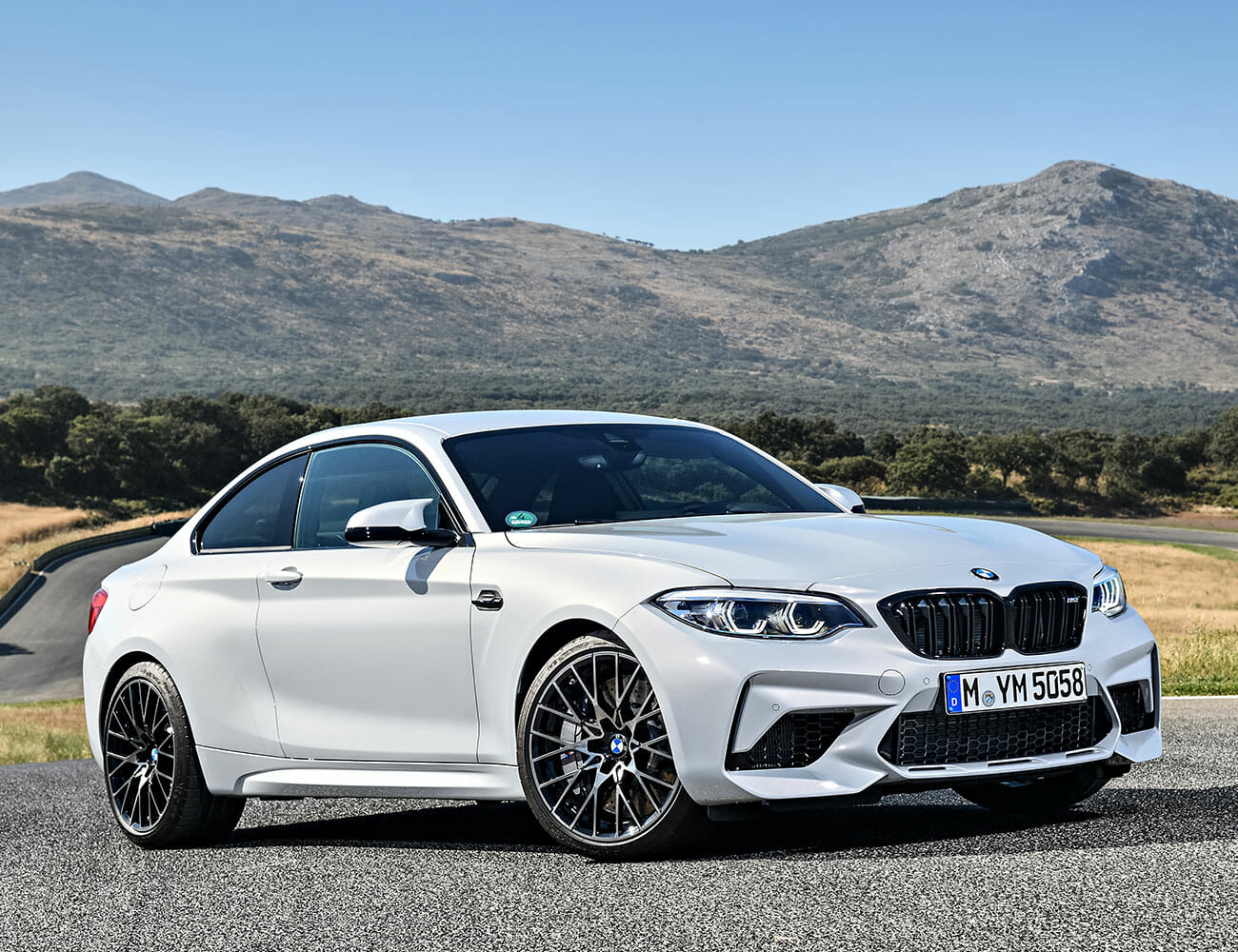
The 2 Series is BMW’s sporty, entry-level subcompact vehicle in the U.S. It comes in both coupe and convertible body styles. There are three versions. BMW offers a quick 248hp 230i versions. There’s a very quick 335hp M240i version. Both can have RWD or AWD. RWD cars can be optioned with a manual.

Those with more cash and the same minimal space requirements may opt for the very, very quick M2 Competition Coupe ($58,900). It draws 405hp from the inline-six engine. It does 0-60mph in four seconds flat. It comes with a six-speed manual. For the Nurburgring fans, the M2 Competition Coupe lapped it in 7:54.

Body Style: Coupe, Convertible
Models:

• 230i
• 230i xDrive
• M240i
• M240i xDrive
• M2 Competition Coupe

Engines:

• Turbocharged 2.0-liter inline-four
• Turbocharged 3.0-liter inline-six

Read our review of the BMW M2

Base MSRP: $35,300

3 Series
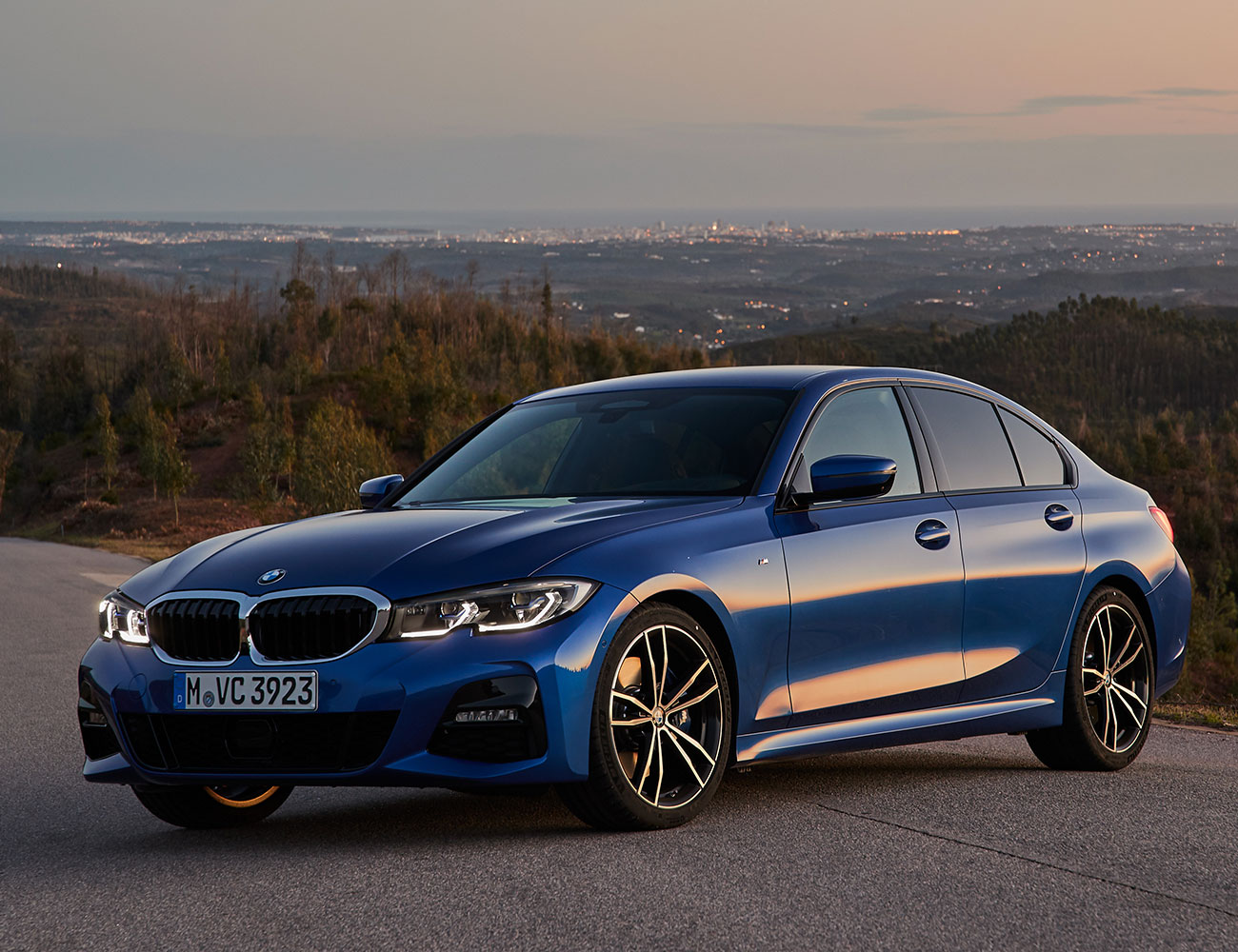
The 3 Series compact sedan is the quintessential BMW. It has been a standout for decades since its 1976 debut. It is BMW’s best-selling vehicle of all-time. BMW has made a host of new performance improvements for the 7th generation coming in 2019. Two controversial changes are ditching the wagon and the manual transmission in the U.S. market. It comes in a base four-cylinder 255hp 330i or a six-cylinder 382hp M340i form.

The M3 ($66,500) has been the gold standard sports sedan since its introduction in 1985. The present version produces 425hp and 411lb-ft of torque. It accelerates from 0-60mph in 3.9 seconds. Speculation was rampant, but the M3 still has a manual option.

Body Style: Sedan

Models:

• 330i
• 330i xDrive
• M340i
• M340i x Drive
• M3

Engines:

• Turbocharged 2.0-liter inline-four
• Turbocharged 3.0-liter inline-six

Read more about the BMW 3 Series here

Base MSRP: $40,250 [Manufacturer price of lowest model]

4 Series
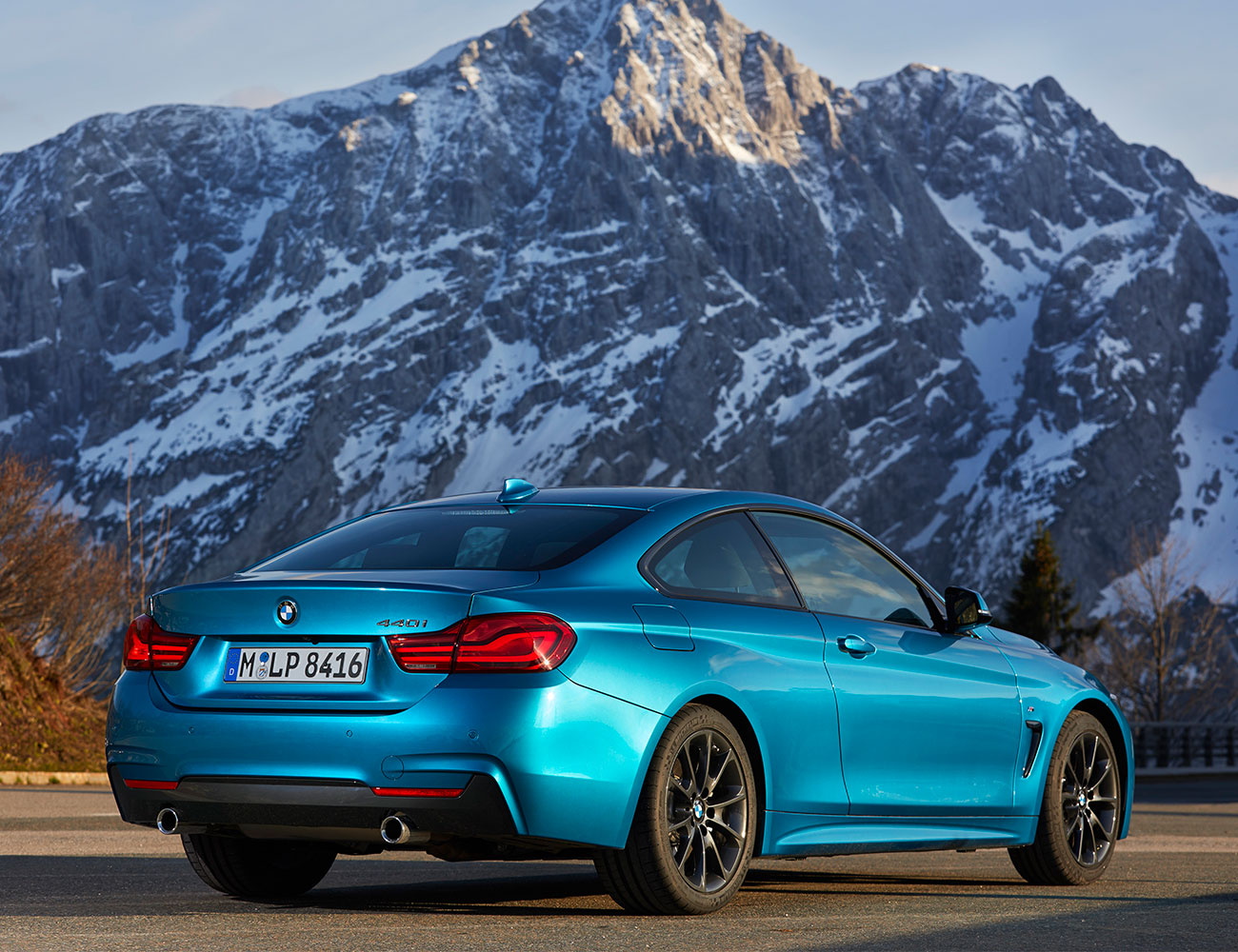
BMW created the 4 Series in 2014, breaking away 3 Series body style variants into a new series. It comes in two-door coupe, four-door gran coupe and convertible editions. BMW claims they offer “uniquely beguiling” traits. It comes in 430i (248hp I-4) and 440i (320hp I-6) versions. For the 430i, the RWD Coupe and Gran Coupe can have a manual transmission. So can both RWD and AWD versions of the 440i Coupe.

The M4 ($69,150) is, similarly, a body-style variant of the M3. It can be both a two-door coupe and a convertible. Both are available with manual transmissions.

Body Style: Coupe, Gran Coupe, Convertible

Models:

• 430i
• 430i xDrive
• 440i
• 440i xDrive
• M4

Engines:

• Turbocharged 2.0-liter inline-four
• Turbocharged 3.0-liter inline-six

Base MSRP: $44,600

5 Series
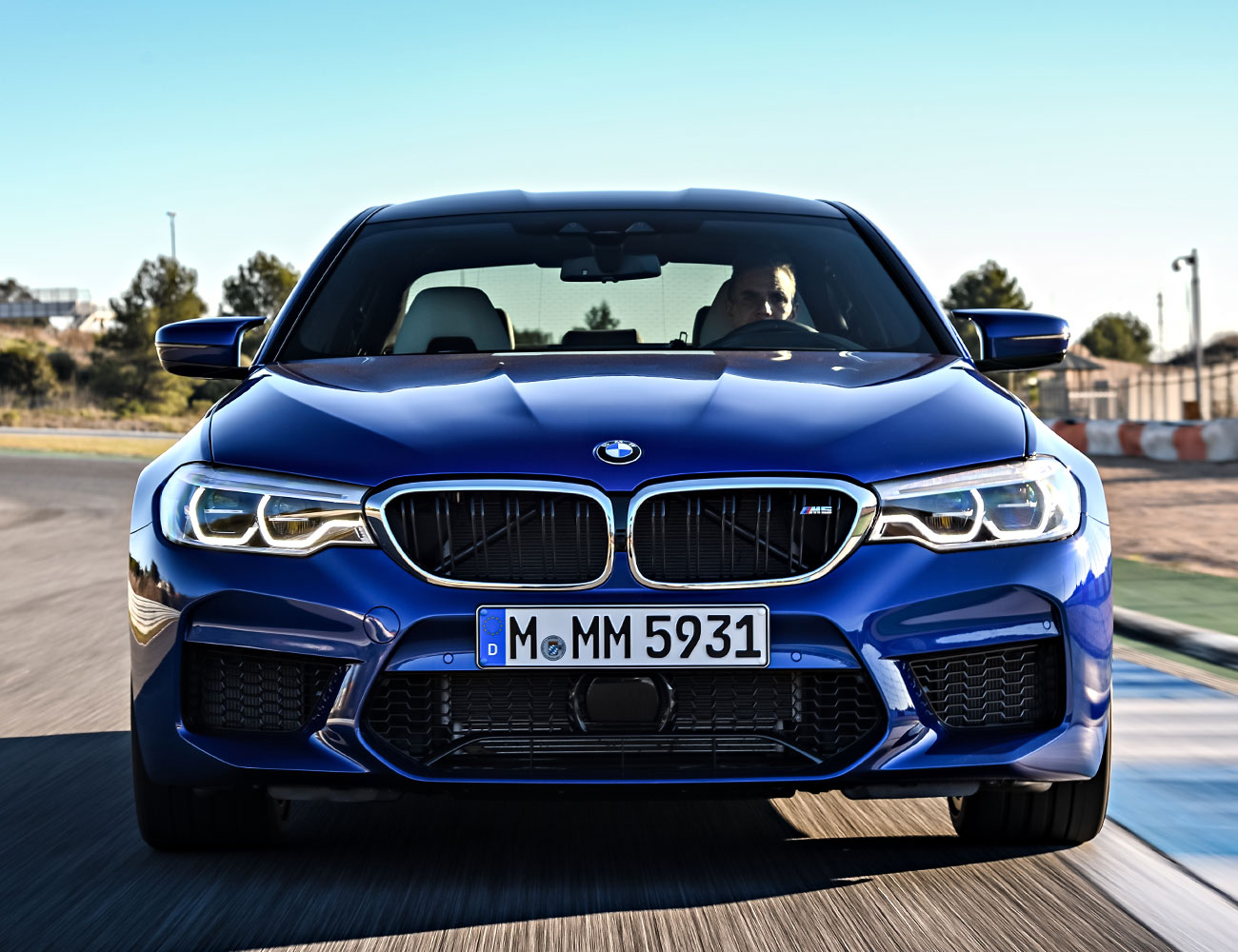
The 5 Series is BMW’s midsize sedan. Debuting in 1972, it was the first numbered series in BMW’s lineup. The 5 Series comes as a sedan only in the U.S. market. It can be paired with an inline-four, an inline-six, or a V8. There’s also a hybrid-electric version of the four-cylinder.

The M5 ($102,700) is one of BMW’s legendary cars. The company describes it as “a quintessential performer on road and track.” We have yet to see the public roads built to contain this 600hp monster at full-tilt. There’s a $110,000 “Competition” edition for those that need an extra tick from 0-60mph. Big changes for the latest generation: AWD and no manual transmission.

Body Style: Sedan

Models:

• 530i
• 530i xDrive
• 530e iPerformance
• 530e xDrive iPerformance
• 540i
• 540i xDrive
• M550i xDrive
• M5
• M5 Competition

Engines:

• Turbocharged 2.0-liter inline-four
• Turbocharged 2.0-liter inline-four with an integrated electric motor
• Turbocharged 3.0-liter inline-six
• Turbocharged 4.4-liter V8

Base MSRP: $53,400

Read our BMW M5 review

6 Series
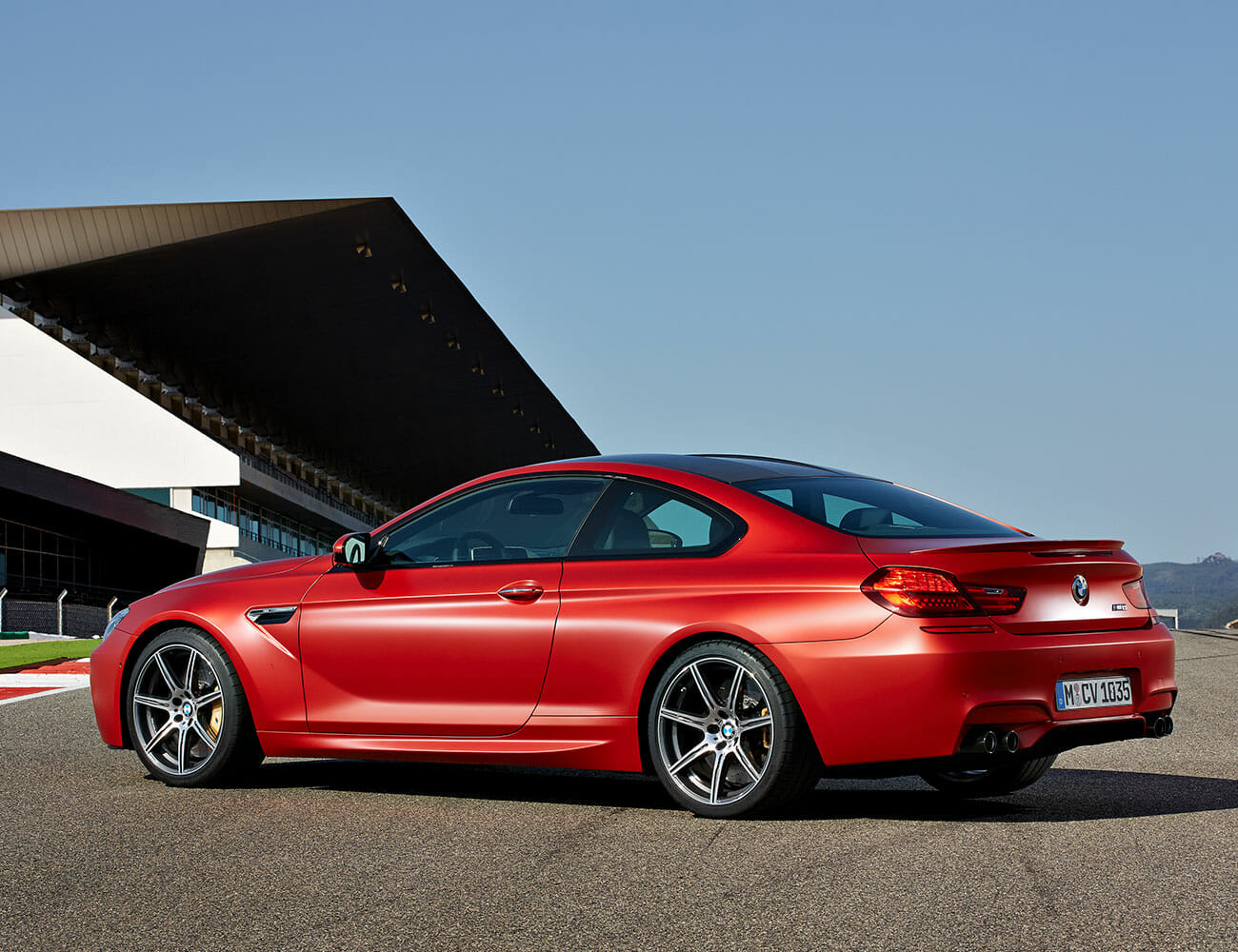
The 6 Series has meant different things at different times for BMW. Currently, it is “curves that captivate, power that astounds, and the attitude to capture attention” from 5 Series body style variants. The 6 Series comes as a four-door “Gran Tourismo” hatchback or a four-door gran coupe. There are six and eight-cylinder versions with both RWD and AWD.

BMW offers dueling high-performance editions of the 6 Series. There’s the 560hp M6 Gran Coupe ($119,900). There’s also the 600hp Alpina B6 Gran Coupe ($124,400) that is a half-second quicker from 0-60mph (3.6sec).

Body Style: Gran Turismo, Gran Coupe, Alpina B6 Gran Coupe

Models:

• 640i
• 640i xDrive
• 650i
• 650i xDrive
• M6
• Alpina B6 xDrive

Engines:

• Turbocharged 3.0-liter inline-six
• Turbocharged 4.4-liter V8

Base MSRP: $70,300 [Manufacturer price of lowest model]

7 Series
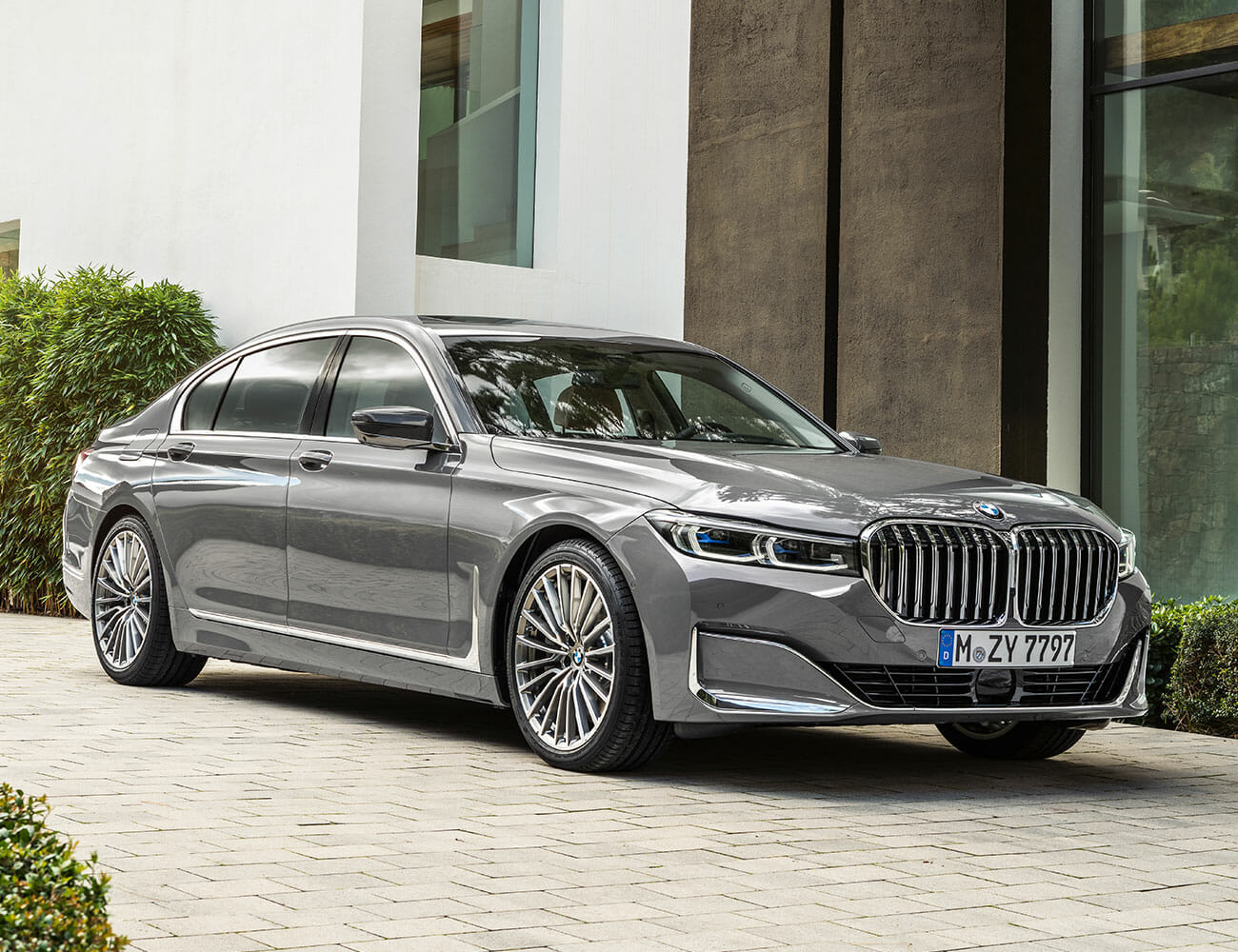
The 7 Series is BMW’s flagship full-size luxury sedan. BMW terms owning one living “life at the apex.” That may be a bit strong. The 7 Series can be ordered in six-cylinder, eight-cylinder, and twelve-cylinder (601hp) versions. Buyers can also choose a 322hp combined four-cylinder hybrid electric.

Alpina produces a 600hp B7 ($139,350). The current edition is limited in the U.S. to 192mph. Without the limiter, it has a top speed north of 200mph and lays claim to being the world’s fastest sedan.

Body Style: Sedan

Models:

• 740i
• 740i xDrive
• 740e
• 750i
• 750i xDrive
• M760i xDrive
• Alpina B7 xDrive

Engines:

• Turbocharged 2.0-liter inline-four with an integrated electric motor
• Turbocharged 3.0-liter inline-six
• Turbocharged 4.4-liter V8
• Turbocharged 6.6-liter V12

Base MSRP: $83,650 [Manufacturer price of lowest model]

Read our review of the Alpina B7

8 Series
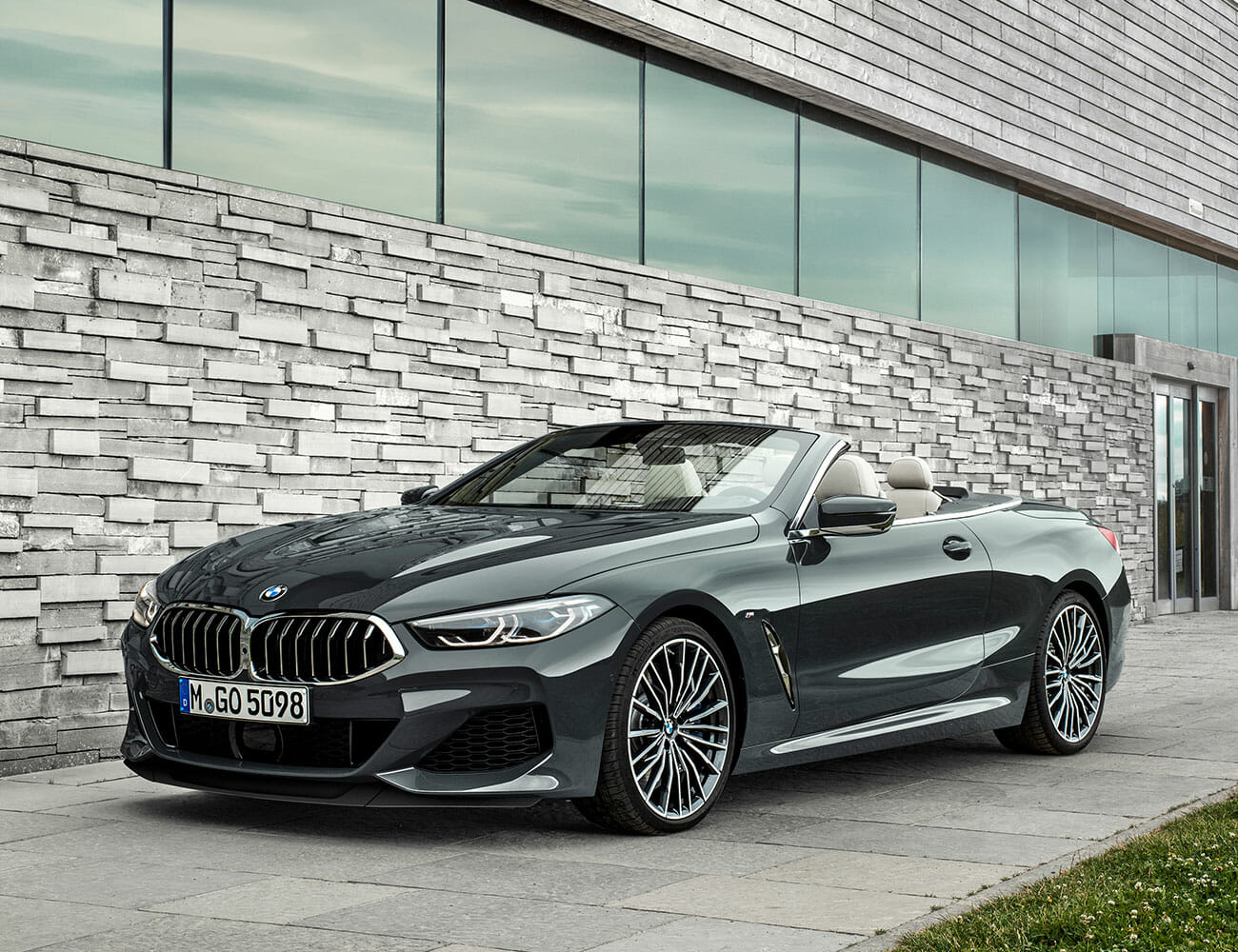
The 8 Series is BMW’s luxury grand tourer. It’s available in both coupe and convertible body styles. With a 523hp version of the 4.4L V8 engine, the 8 Series can accelerate from 0-60mph in 3.6 seconds.

Body Style: Coupe, Convertible

Models:

• M850i xDrive

Engines:

• Turbocharged 4.4-liter V8

Base MSRP: $111,900

Z4
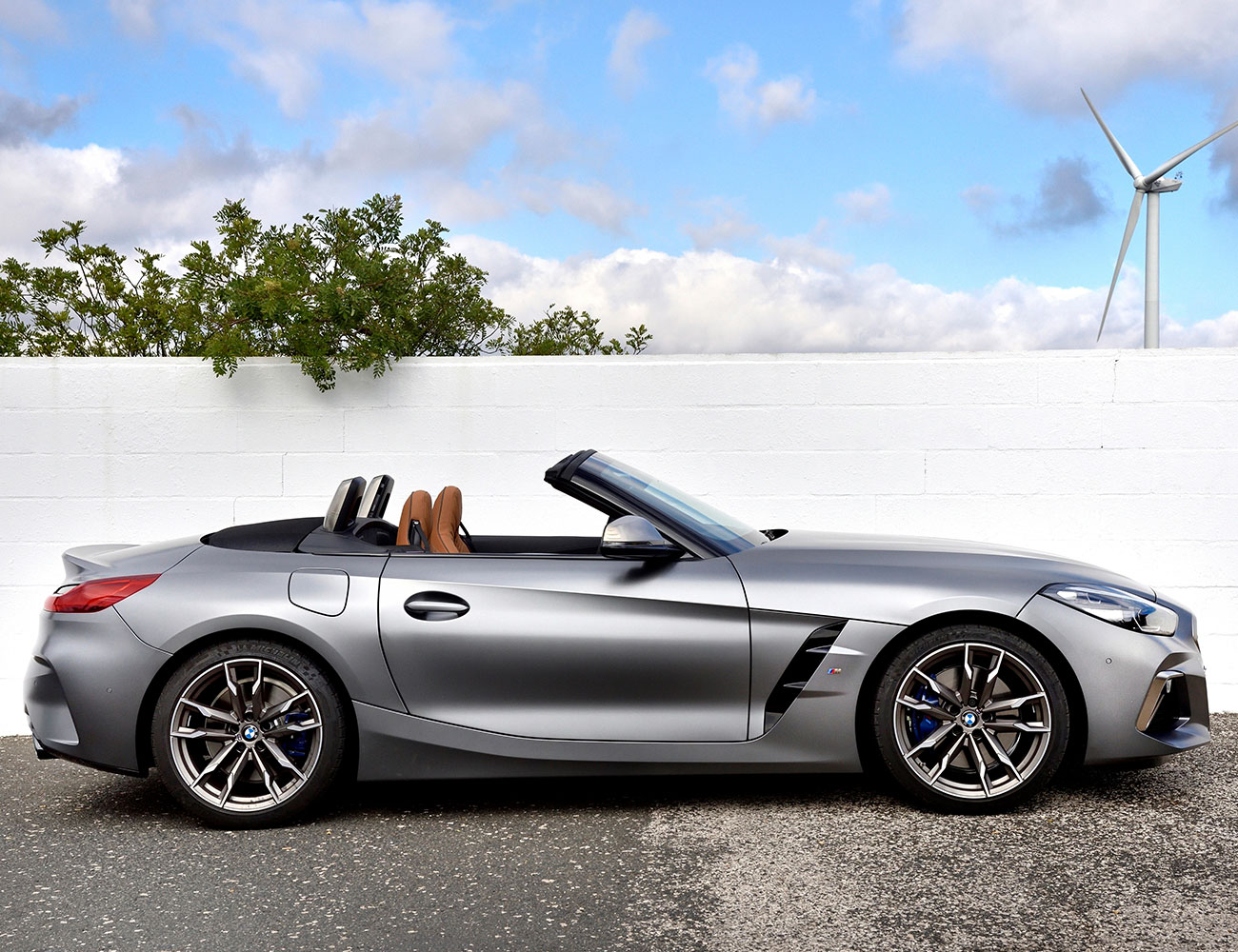
The Z4 is BMW’s small roadster. It’s a descendant of the BMW Z3 that appeared in Goldeneye, which was a movie before becoming perhaps the greatest video game of all-time. The “Z” stands for “zukunft,” the German word for future. It’s only available as a RWD four-cylinder with 255hp and 295lb-ft.

Body Style: Roadster

Models:

• Z4 sDrive30i

Engines:

• Turbocharged 2.0-liter inline-four

Base MSRP: $49,700

Read more about the BMW Z4

X1
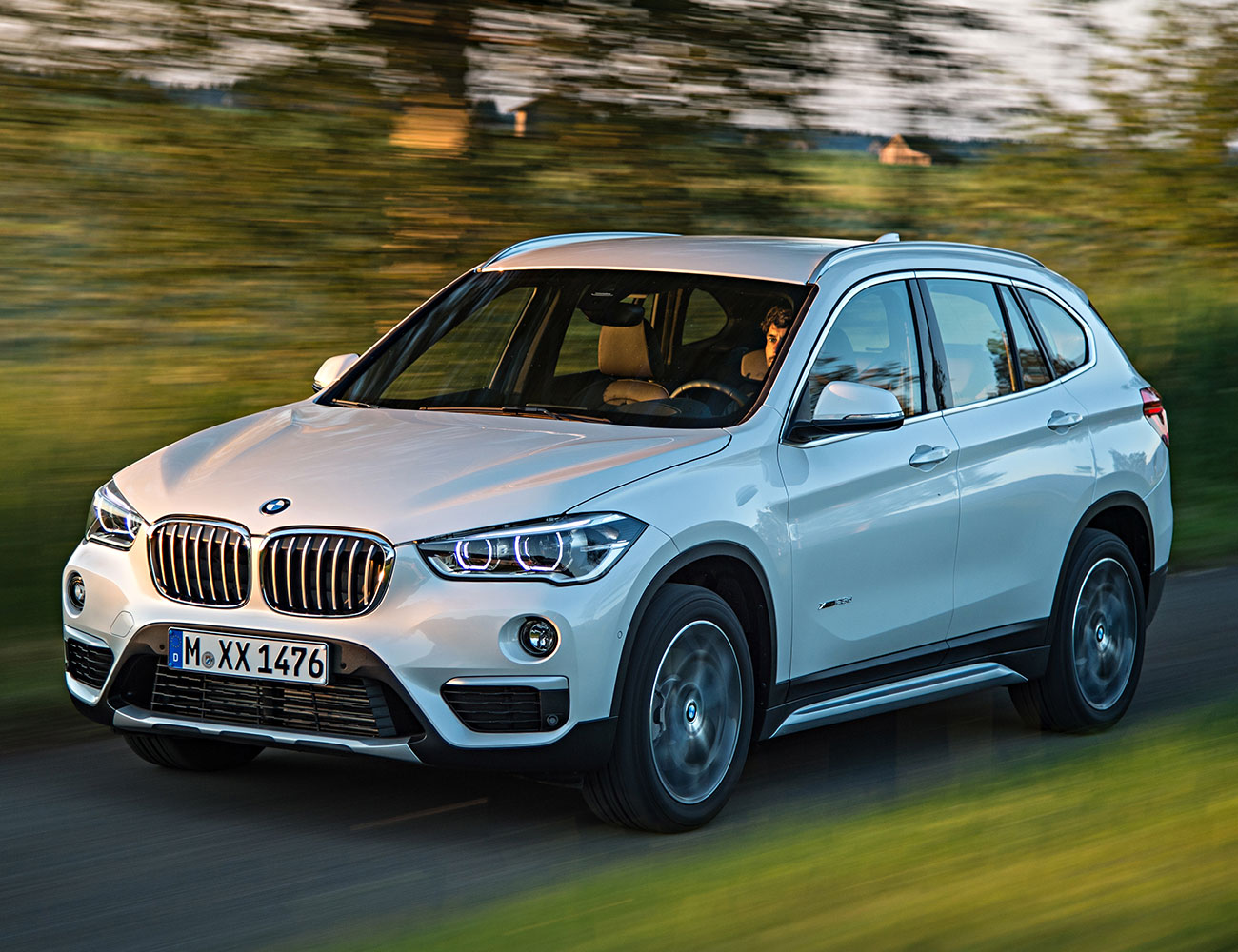
The X1 is BMW’s entry-level subcompact crossover. It uses a 228hp four-cylinder engine, is available in FWD and AWD variants, and has a base MSRP below $35,000. Car and Driver named it one of their 10 best Trucks and SUVs for 2019.

Body Style: Crossover

Models:

• X1 sDrive30i
• X1 xDrive30i

Engines:

• Turbocharged 2.0-liter inline-four

Base MSRP: $34,950 [Manufacturer price of lowest model]

X2
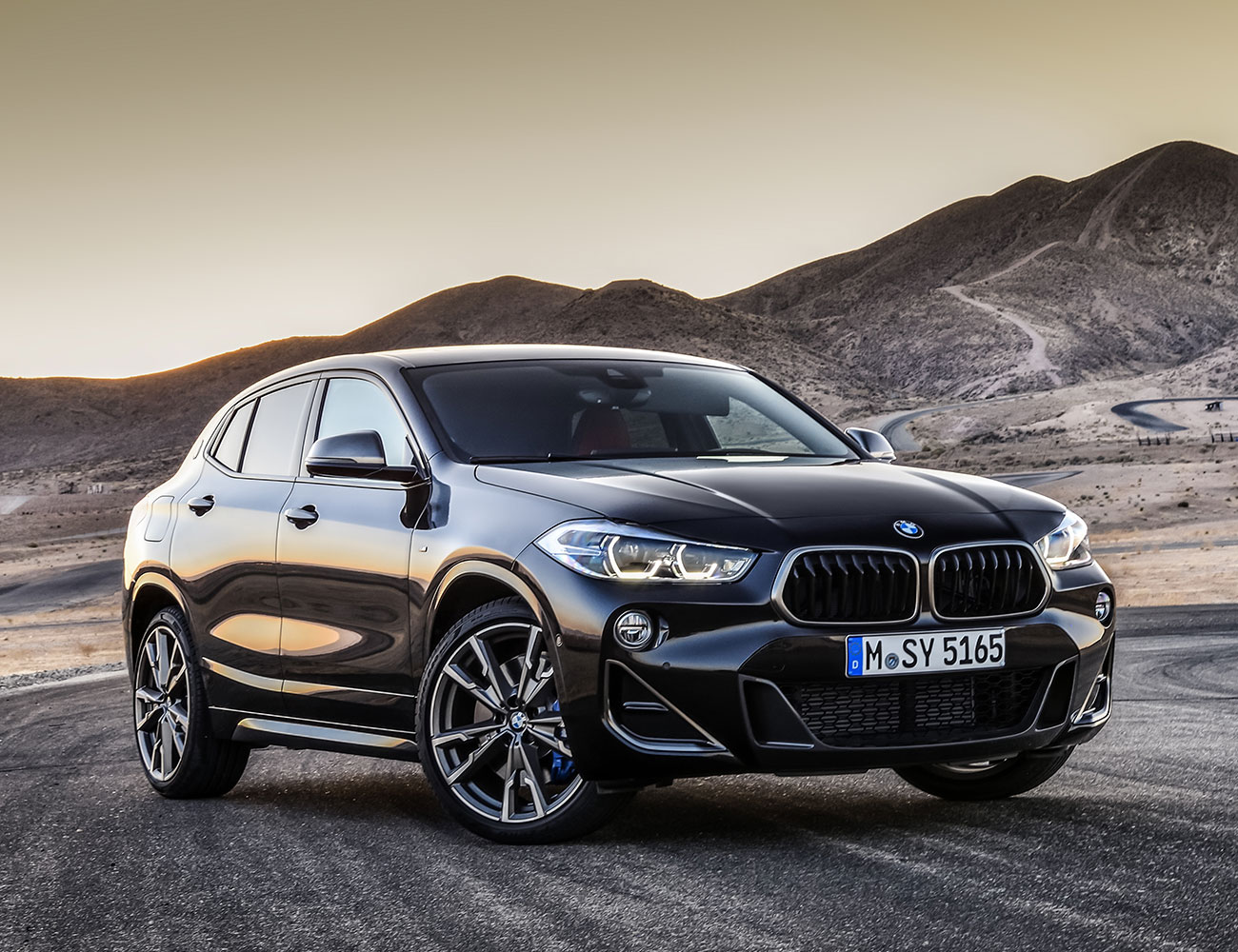
The X2 is BMW’s sportier, driving-oriented, and more BMW-y subcompact crossover. It’s lower to the ground than the X1. It has a sleeker “coupe” body shape and less cargo space. The base models come in FWD and AWD. The X2 M35i (AWD) has a tuned up version of the four-cylinder producing 302hp and 322lb-ft and accelerating from 0-60mph in 4.9 seconds.

Body Style: Crossover Coupe

Models:

• X2 sDrive28i
• X2 xDrive28i
• X2 M35i

Engines:

• Turbocharged 2.0-liter inline-four

Base MSRP: $36,400

X3
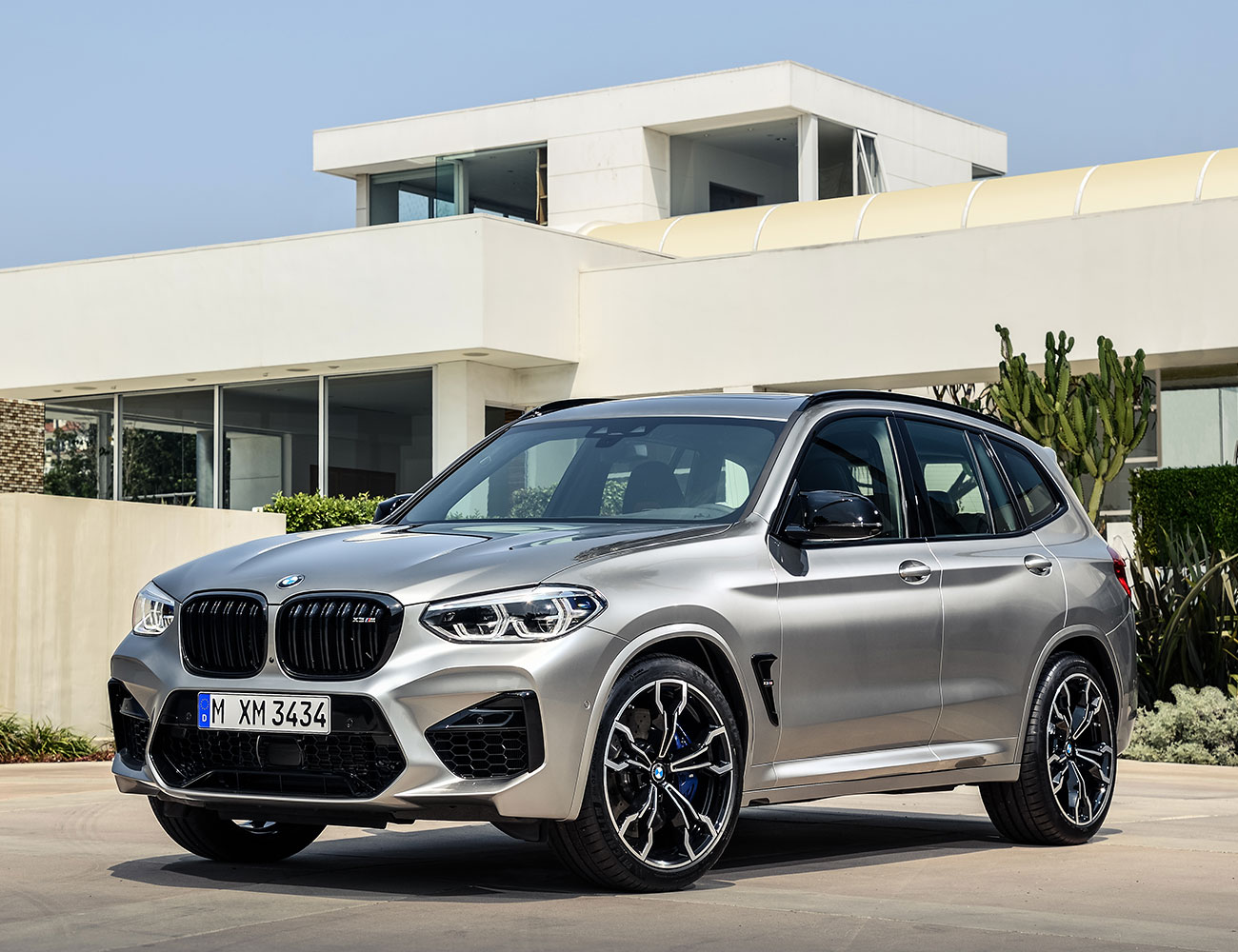
The X3 is BMW’s compact SUV. BMW first introduced it in 2003 as a smaller version of the X5. The third generation was introduced for the 2018 model year. The base four-cylinder model comes in both rear and all-wheel-drive. There’s also a 355hp m40i version. BMW plans to introduce X3 M and X3 M Competition models in the 2020 model year. The latter will have more than 500hp.

Body Style: Crossover

Models:

• X3 sDrive30i
• X3 xDrive30i
• X3 m40i

Engines:

• Turbocharged 2.0-liter inline-four
• Turbocharged 3.0-liter inline-six

Base MSRP: $41,000

Read more about the BMW X3 M and X4 M Competition models

X4
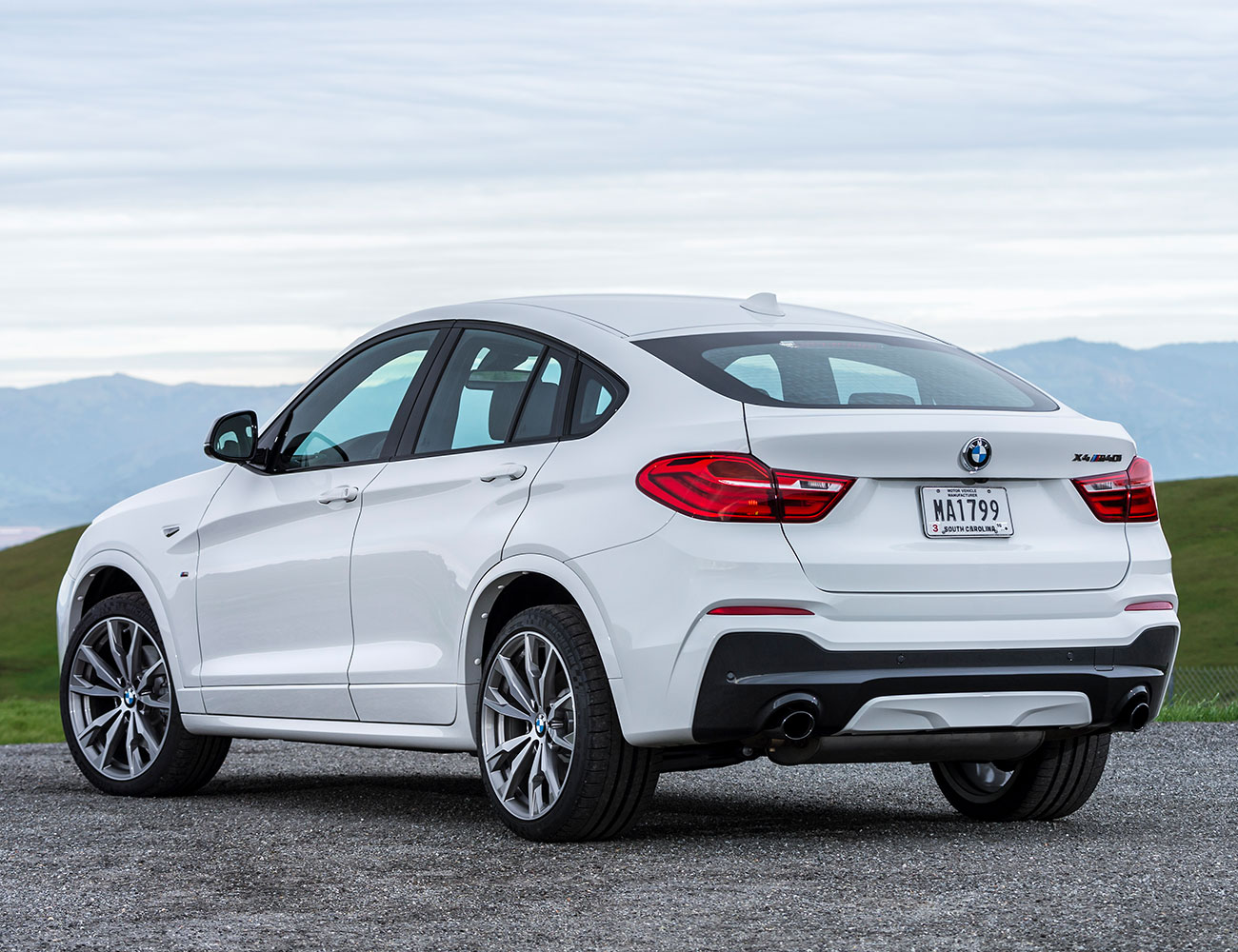
The X4 is a sportier version of the X3 compact crossover. It has a sloping coupe body style. As with the X3, there are four-cylinder (248hp) and six-cylinder versions (355hp). Though, the X4 only comes with all-wheel-drive. There’s also an X4 M edition coming in the 2020 model year.

Body Style: Crossover Coupe

Models:

• X4 xDrive30i
• X4 m40i

Engines:

• Turbocharged 2.0-liter inline-four
• Turbocharged 3.0-liter inline-six

Base MSRP: $50,450

X5
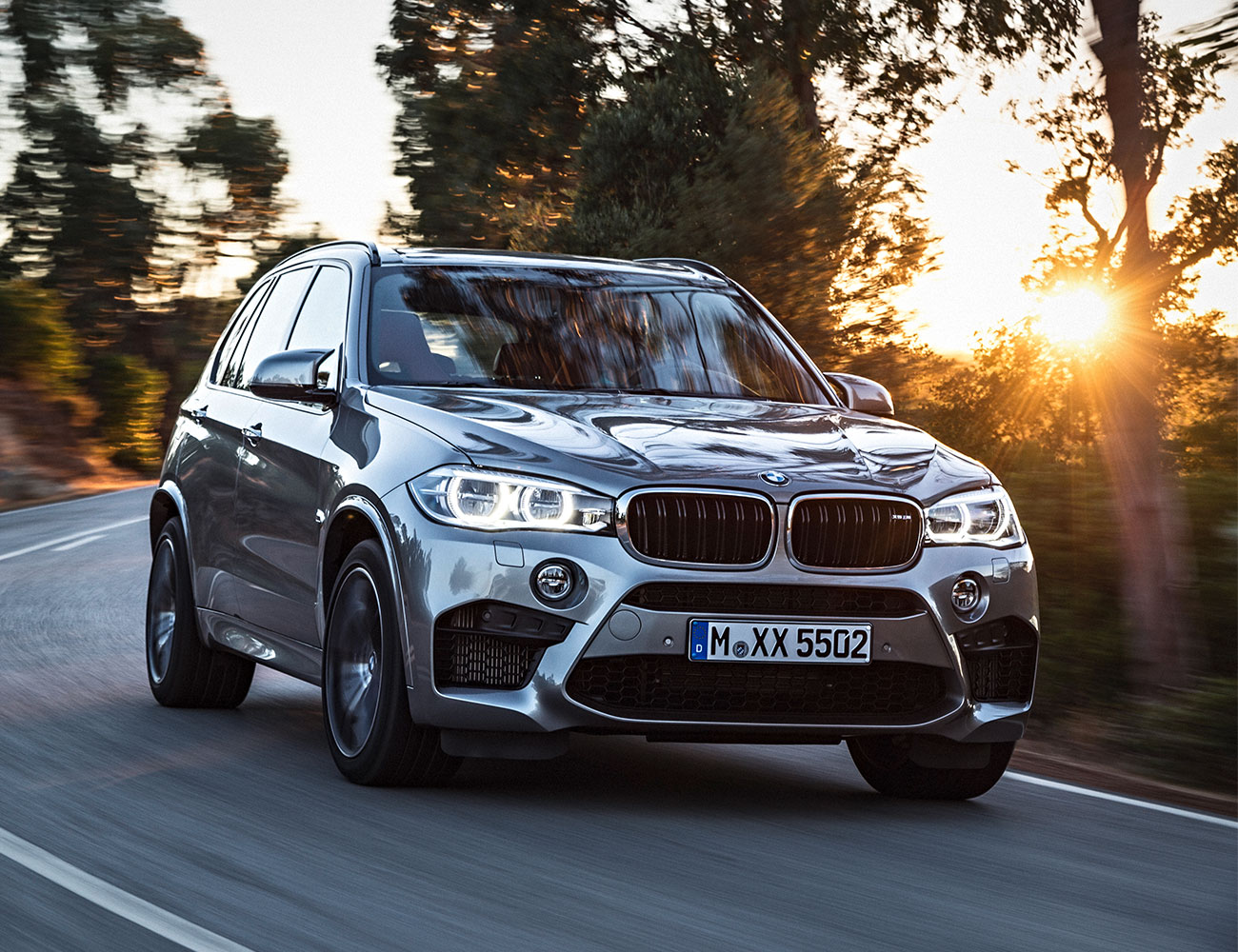
The X5 is BMW’s midsize SUV. It was the first SUV BMW introduced in 1999. It was one of the first SUVs to use a more crossover-like unibody architecture while the Mercedes-Benz M-Class and others were still light trucks. It comes in inline-six and V8 versions. The X5 M ($101,700) tunes the 4.4-liter V8 to 567hp and 553lb-ft of torque. It accelerates from 0-60mph in 4.0 seconds, perfect for when you need to get the kids to school very aggressively. Notably, the X5 M doesn’t follow typical ‘M’ nomenclature, which would make it the ‘MX5’, because Mazda already makes a vehicle by that name: the MX-5 Miata.

Body Style: Crossover

Models:

• X5 xDrive40i
• X5 xDrive50i
• X5 M

Engines:

• Turbocharged 3.0-liter inline six
• Turbocharged 4.4-liter V8

Base MSRP: $60,700 [Manufacturer price of lowest model]

Read more about the BMW X5

X6
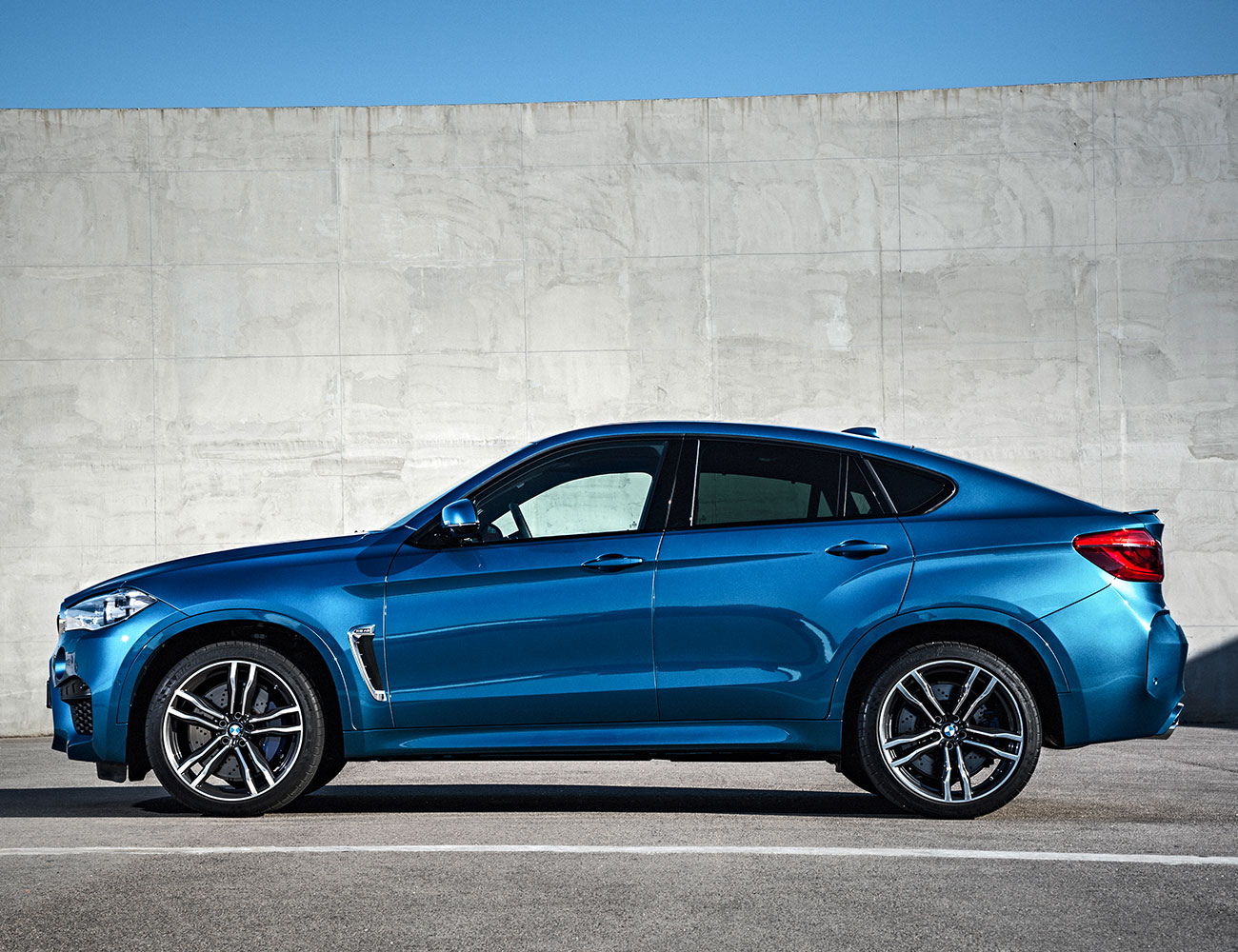
The X6 is BMW’s midsize crossover coupe. BMW says it is the “commanding sports activity coupe” with “striking looks, aggressive stance, and large proportions.” The base six-cylinder (300hp) engine is available with either all-wheel-drive or rear-wheel-drive. There’s an eight-cylinder version with 445hp. BMW’s X6 M ($105,700) receives the same tuning as the X5 M to 567hp.

Body Style: Crossover Coupe

Models:

• X6 sDrive35i
• X6 xDrive35i
• X6 xDrive50i
• X6 M

Engines:

• Turbocharged 3.0-liter inline six
• Turbocharged 4.4-liter V8

Base MSRP: $63,550

X7
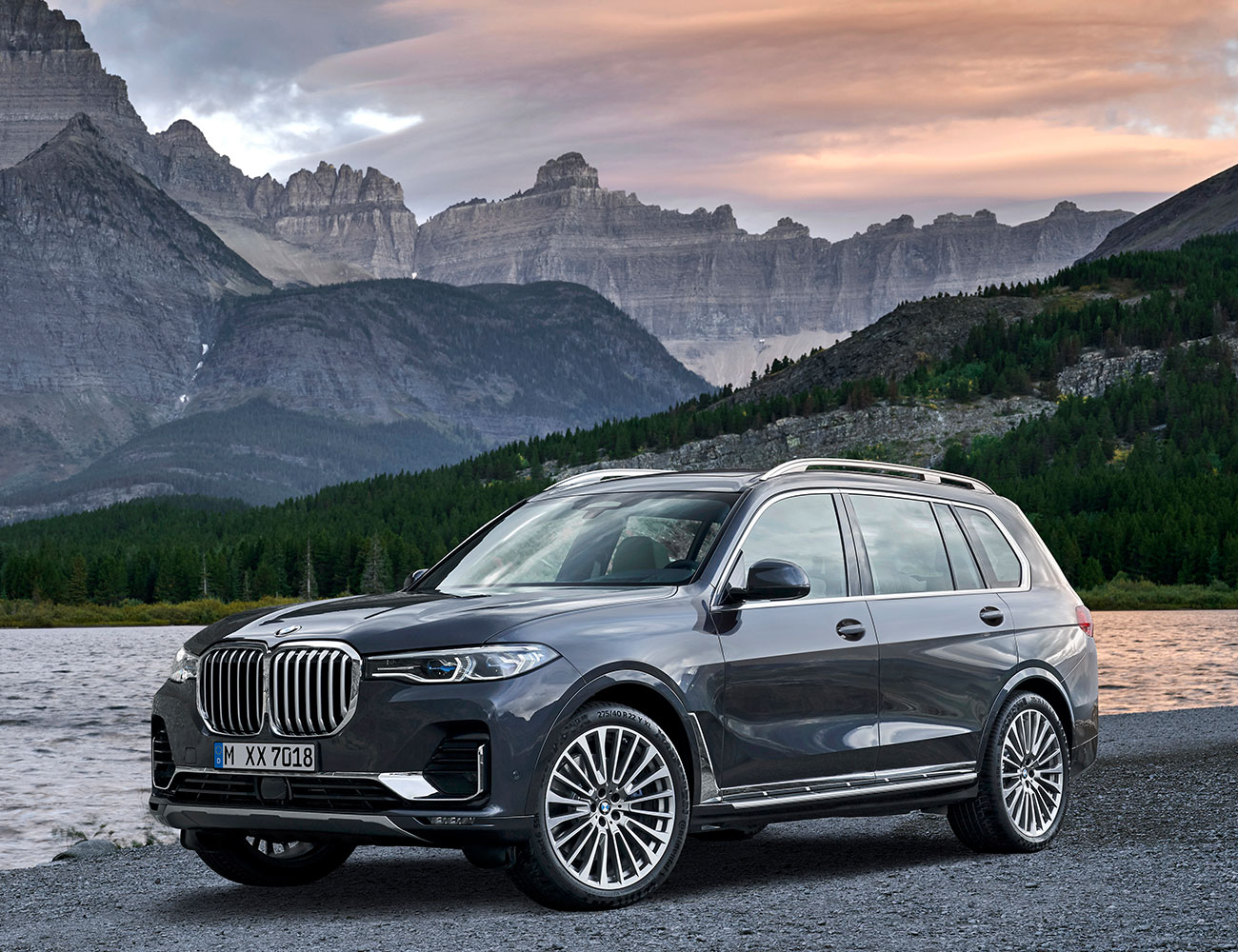
The X7 is BMW’s full-size three-row SUV debuting in the 2019 model year. It’s the largest BMW ever built. BMW describes it as “the culmination of comfort, luxury, and powerful living.” BMW offers six-cylinder and eight-cylinder versions. The X7 can be optioned as a seven-seater or as a six-seater with second-row captain’s chairs. Those living powerfully need captain’s chairs.

Body Style: Crossover

Models:

• X7 xDrive 40i
• X7 xDrive 50i

Engines:

• Turbocharged 3.0-liter inline six
• Turbocharged 4.4-liter V8

Base MSRP: $73,900

i3
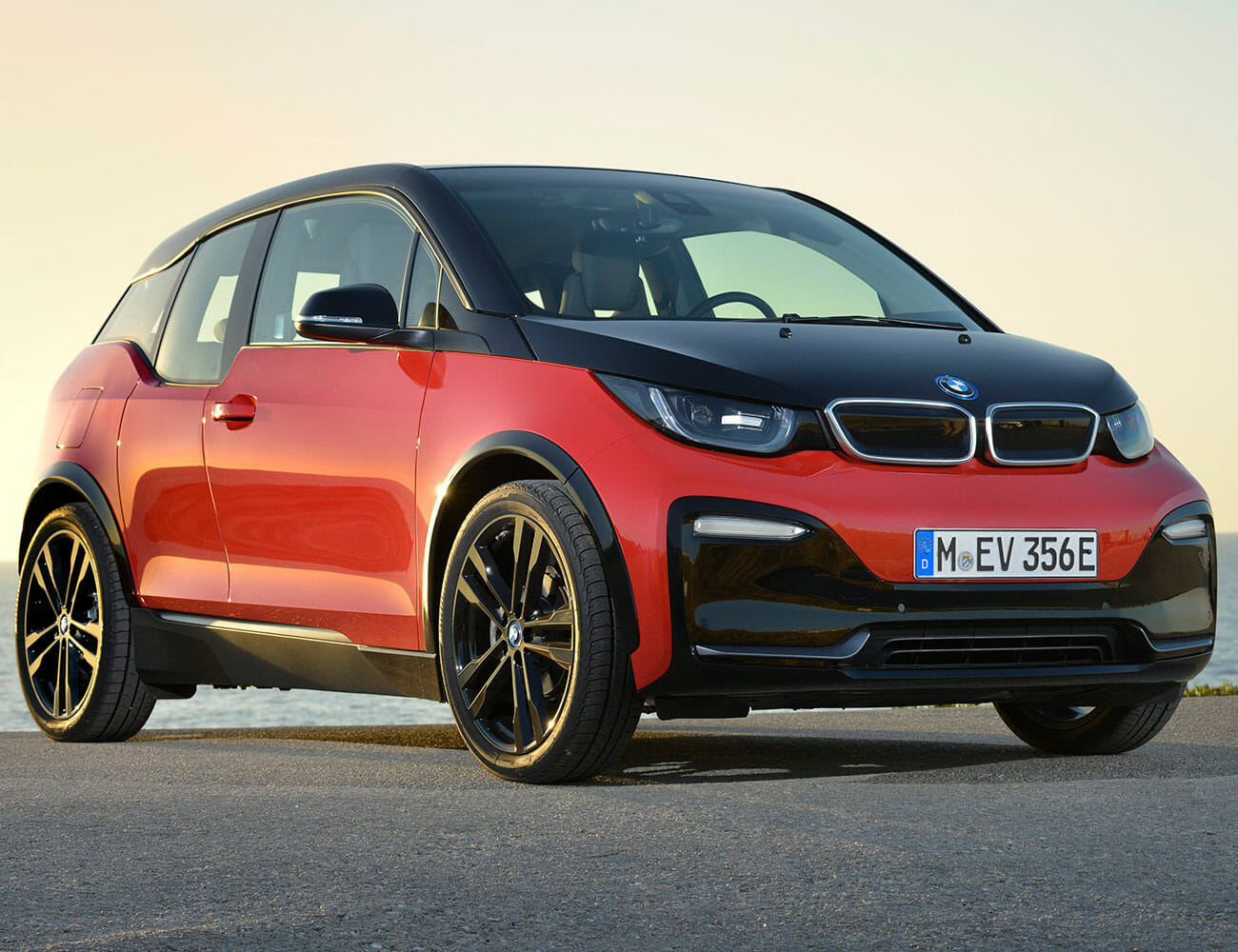
The i3 is BMW’s subcompact all-electric vehicle. Per BMW it “turns the everyday into the adventurous.” We’re still not sure whether that’s a good thing. Basically, it’s a high-roofed hatchback EV. It looks like what people in the early 2010s thought an EV would look like. The i3s is a slightly more powerful version. Both versions can be equipped with a two-cylinder gas range extender that can stretch the range to about 200 miles. Its price is competitive with the Tesla Model 3. Its performance is not.

Body Style: Hatchback

Models:

• i3
• i3 w/range extender
• i3s
• i3s w/range extender

Engines:

• 170hp AC Electric Motor
• 181hp AC Electric Motor

Base MSRP: $44,450

i8
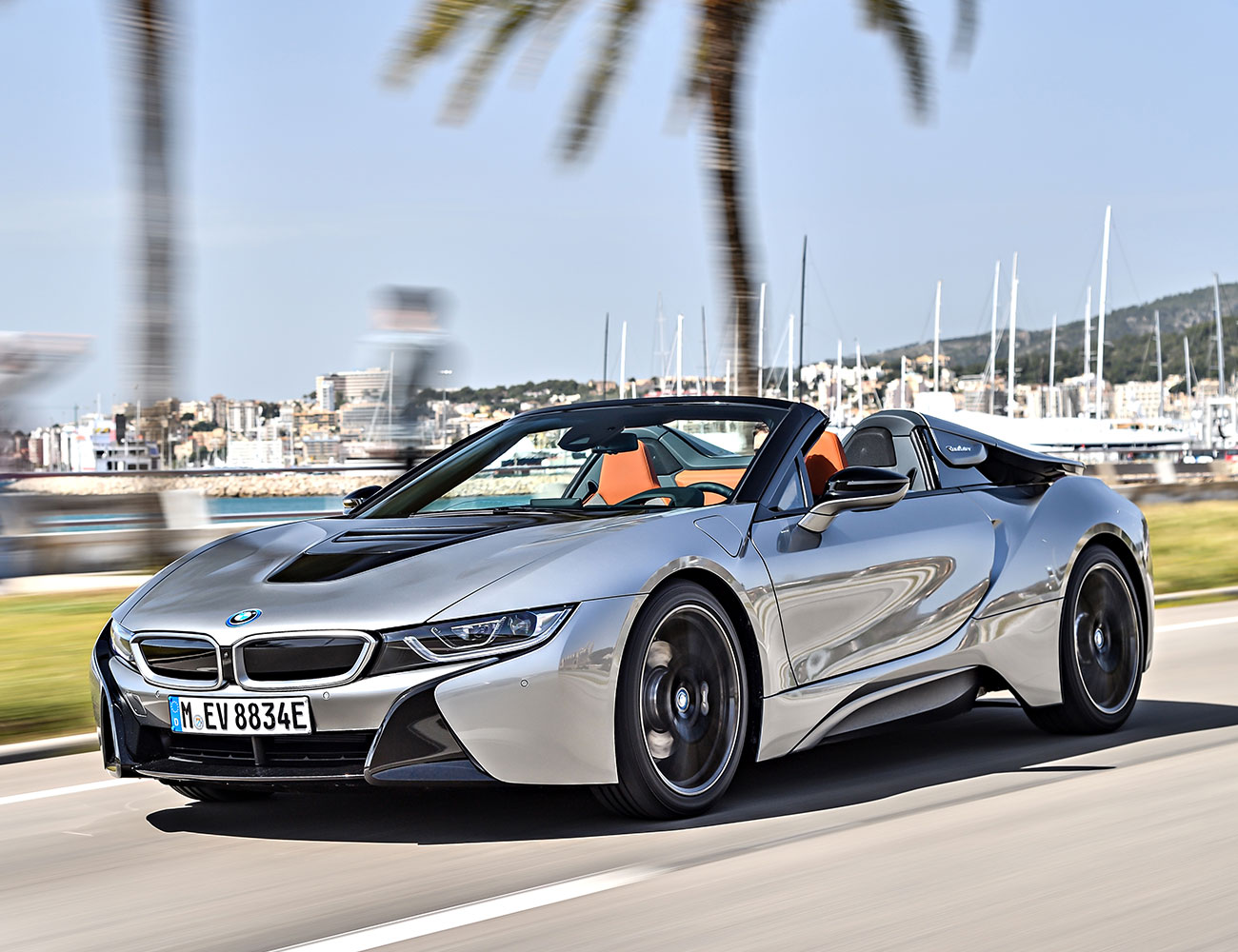
The i8 is a plug-in hybrid performance roadster BMW launched in 2014. It comes in both Coupe and Roadster editions. The electric and gas motors produced 369hp combined. The i8 Coupe can accelerate from 0-60mph in 4.2 seconds. It looks like the future. Skeptics will note that it doesn’t perform quite like a supercar, doesn’t get great mileage in real driving conditions with a small battery, and costs $15,000 more than a maxed out Tesla Model S Performance.

Body Style: Coupe, Roadster

Models:

• i8 Coupe
• i8 Roadster

Engines:

• AC Synchronous Motor with Turbocharged 1.5-liter three-cylinder

Base MSRP: $147,500

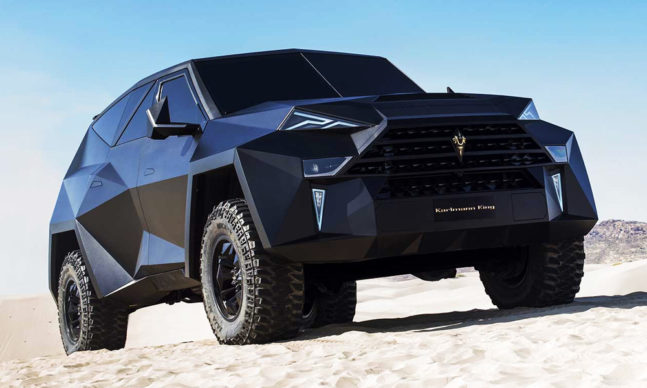
The Karlmann King is the World’s Most Expensive SUV

If you have a bank account as deep as the Marianas Trench, and you fancy yourself sitting in an SUV that looks Batman’s Tumbler made love with a Stealth Fighter, the Karlmann King was made…

Cadillac Introduces 2020 CT5 Sedan

Cadillac is still betting that not everyone wants an SUV or crossover, as evidenced by the obvious effort that went into the 2020 CT5. The full-size luxury sedan got a nice design: a low hood, wide grill, and overall aggressive look.  Inside it features high-end wood trims, a rotary infotainment controller, and is available with a 2.0-liter turbocharged four-cylinder and a 3.0-liter twin-turbo V6, both paired to a 10-speed automatic transmission. Both rear-wheel & AWD models will be offered.

Aston Martin Vanquish to Have Volante and AMR Pro Versions

You Definitely Need Both

The Aston Martin Vanquish will compete in the supercar market with the Ferrari F8 Tributo, Lamborghini Huracan EVO, and McLaren’s vehicles. That meant to the folks at Aston that they’d better offer both the Volante and AMR Pro versions of the cars. In a recent interview with Top Gear, Aston Martin’s CEO Andy Palmer discussed the details. 

Palmer said his company hopes to pull sales from its competitors. He also said that the Volante will go up against the competing spider models and the AMR Pro, which will be a more hardcore version of the car will take on the Huracan Performante, McLaren LT, and the Ferrari Pista replacement.

The Vanquish is still a few years away from debuting, but when it does, it will be a force to be reckoned with. The car will feature an aluminum V6 engine paired with an electric motor. This hybrid powertrain will place it securely in the modern age and help it compete with the other big names in the supercar segment. 

Additionally, Palmer discussed Aston Martin’s aspirations for selling more models. He told Top Gear that the company wants to sell 7,000 units per year. Aston just built a new facility to make the DBXs and Lagonda. Palmer would like to see another 7,000 models sell from that facility, too. Palmer said that Ferrari wants to sell 14,000 units. “What works for Ferrari works for us.” That would mean Aston is upping its volume considerably. With that said, the company seems to be putting the product portfolio to do it.

Watch the 1,200 HP Twin-Turbo Dodge Demon Tear Down the Drag Strip

A True Speed Demon

We don’t hit enough of the crazy drag cars that are out there, but we couldn’t overlook this Dodge Demon build. A carbon fiber Demon. This car uses that same carbon fiber body by Speedkore that was unveiled at SEMA in 2018. There’s a video of it taking to the dragstrip and laying down some seriously impressive times posted by That Racing Channel.

If you’re unfamiliar with Speedkore’s carbon body Demon. The car has all carbon fiber body panels. Yep, that means bumpers, fenders, hood, roof, quarter panels, door panels, front splitter, mirror caps, trunk lid, trunk spoiler, and fender flares. That transformation left it significantly lighter weight, but Speedkore hasn’t said how much lighter the car is.

[embedded content]

Under the hood of this particular car is the Demon engine but with some serious tweaks to it. The team added a custom twin-turbo kit built in-house attached to 7675 Precision turbos. The team also added a new torque converter, a carbon driveshaft, and diff brace, proprietary intake, and a CO2 boost controller. This car does away with the Demon’s original supercharger.

As you can see in the video, the vehicle is a blistering fast machine, hitting quarter-mile times under 9 seconds. Its fastest time is an 8.7-second run at 162 mph, which is a new record for a Dodge Demon. That’s a seriously fast car. What’s cool about it is that it still has a full interior. The team left the interior, infotainment, air-conditioning and everything else still intact, meaning you could drive it around on the street if you wanted to. We want to.

‘Top Gear’ takes us inside the Aston Martin Project 003

Top Gear” magazine’s Jack Rix might be the ideal lad to lock in a room with a cool car and a camera. After taking us on tours of the Mercedes-AMG One and Honda Urban EV concept, he’s wandered into another anteroom with the Aston Martin Project 003 and Vanquish. When we saw the mid-engined coupes at the Geneva Motor Show, it looked like Aston Martin programmed the Valkyrie family’s design language to “softer” on the RMB-003 and “softest” for the Vanquish. We wanted more details.

Cue Mr. Rix. The deputy editor fills us in on trivia like the combined weight of the Project 003 headlights and taillights being less than the weight of a single DB11 headlight. He also shows us how the NASA-aided FlexFoil wing works, and where the potential rear-view cameras would be mounted.

Then he gets inside an interior that’s “a bit more civilized” than that on the Valkyrie for not putting hip level beneath knee level. However, notice that here, too, the seat is built into the carbon fiber tub — the end of the seat bolster is flush with the footwell. And check out those vents that triple as speakers and ambient lighting.

Rix can only walk around the Vanquish, since that car’s not due until 2022, a year after the Project 003. Nevertheless, there are plenty of Easter eggs to share, like how design elements from front-engined Aston Martins have been integrated throughout the mid-engined bodywork.

As a bonus feature, Aston Martin has taken a separate look at Valkyrie development through the eyes of high-performance test driver Chris Goodwin. The racer explains how he’s using the Red Bull Formula 1 team’s simulator to tune the Valkyrie road car’s handling, active suspension, and aerodynamic systems. Goodwin was McLaren Automotive’s test driver and worked on the Speedtail, so it could mean something when he says of the Valkyrie, “It’s going to be a substantial gap between this car and what’s currently available on the market.”

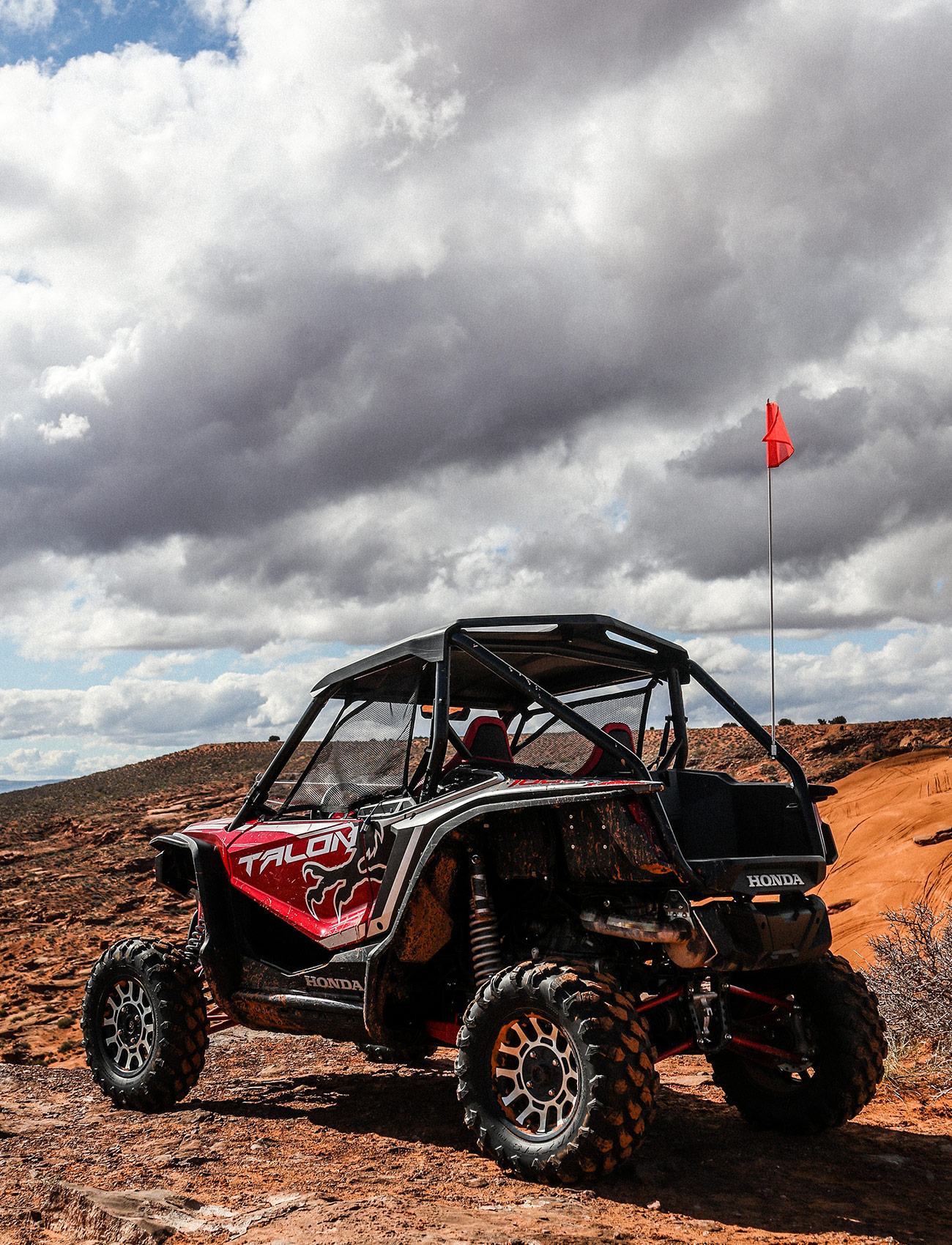
2019 Honda Talon Review: a Bold First Attempt Raises the Bar for Sport Side-by-Sides

Honda’s no stranger to either off-roading or powersports, which makes it odd the company took so long to jump into the sport side-by-side market. But the Talon 1000X and 1000R mark the brand’s entrance into the hi-performance SxS sandbox for 2019, and those machines come with a segment first: a dual-clutch transmission. From the powertrain and suspension to the styling and durability, Honda wasted no time flexing its know-how in this fast-growing segment.

The Good: The performance and balance from the Talon 1000R’s suspension beggar belief. Plowing over washboard trails, skipping over dips and small jumps, a two-seater SxS should feel more chaotic. A short wheelbase can get swallowed up between high-frequency crests in the tail, upsetting the whole machine, but the adjustable Fox Podium shocks soak up everything for a stable, planted ride.

Who It’s For: There’s intense brand loyalty in the SxS segment — in fact, it seems Honda’s banking on it with the Talon duo, betting most customers looking to buy a Talon won’t be first-time Honda buyers, whether that means past cars, motorcycles or any other of the countless machines Honda manufactures. The Japanese brand’s first sport side-by-side is positioned to lure the faithful into the lifestyle, and if they happen to sway a few buyers away from Can-Am and Polaris, all the better.

Watch Out For: The slightly more affordable Talon 1000X starts at $19,999, which is a lot of money for what the Talon brings to the table. The similarly priced Polaris RZR Turbo and Can-Am Maverick X3 Turbo are, as their names suggest, turbocharged and more powerful. Honda claims the competitors’ CVT belt transmissions bleed horsepower and their final figures aren’t accurate, but buyers who swear by the spec sheet may not be convinced, and there’s no arguing with Honda’s sparse interiors. Honda justifies its price tag by claiming their engineering and architecture is more durable, but you’ll have to take an expensive plunge to prove them right.

Alternatives: Honda was upfront that they benchmarked the Talon against the Polaris RZR and Can-Am Maverick. The turbo-powered machines are segment stalwarts; if there’s a crown to be stolen, it’s coming from one of those two machines.

Review: In the world of side-by-sides it all comes down to weight, power and control. Style and aesthetics take a back seat: nail the first three and it doesn’t matter what the machine looks like. The Polaris RZR and Can-Am Maverick are hideous handfuls of plastic, metal, and rubber, but expertly bolted together and some of the most capable off-road machines I’ve ever driven. As Honda’s first foray into sport side-by-sides, the Talon needs to come packing heat. Luckily, Honda has a deep and storied well of engineering expertise from which to draw.

When Honda announced the Talon, its dual-clutch transmission grabbed the headlines. A DCT is hardly a new invention — it’s been shifting car gears for years, and Honda already features the technology in its utility-minded Pioneer side-by-side — but on the sport side of the SxS market it’s a first, and a big deal.

For years, the continuously variable transmission was the law of the land in the segment. Many still swear by it, but it has its drawbacks. From a performance standpoint, the CVT uses a belt and pulley system that tends to slip under hard acceleration, which can cause power loss, overheating and, eventually, belt failure. Moreover, there’s no engine braking, so you can’t rely on the compression of the engine under deceleration to help slow you down. Lastly, without defined gears a CVT invariably imbues an engine with an unlovely droning sound. So Honda’s DCT is rightfully seen as a game changer in the sport SxS market.

At crawling speeds the DCT is a little jerky, constantly compensating for the lack of power input to keep the engine from stalling. But once up to speed and clicking through the gears, it’s hard to imagine going back to a CVT and not dying of boredom. The transmission is specially tuned for the Talon, adjusted for holding higher revs and shifting more aggressively than in the Pioneer from which it was pulled. Plus, there’s engine braking enough to bring the 1,545-pound machine to a relatively quick halt, even on loose surfaces. Going into sweeping turns or medium speed corners, the brake pedal isn’t even needed; just lifting off the throttle is enough to adjust the Talon’s speed.

The DCT may have been the story when Honda first paraded the Talon around the EICMA and IMS shows, but the machines poise when hauling over dunes and through turns is the real story. The 1000R gets a longer wheelbase, wider stance, and more suspension travel over the X; it’s designed for high-speed desert blasts. The narrower and lower (though barely) 1000X isn’t a lesser machine, it’s just designed for tight trails and quick cornering. The 1000R has bigger, more impressive numbers, but whether it’s a better machine depends most on where you’ll be driving the thing.

You’ll have to trust Honda’s claims of better build quality and durability to justify, along with that DCT gearbox, a near-$20K price tag for something that looks at a glance to be a $16K machine. But it’s true that the Polaris and Can-Am competitors don’t come with as much standard equipment, look cheaper, and are plagued with breakdowns and recalls (CVT belts are the most replaced parts on both machines). Honda’s deserved reputation for mechanical reliability and longevity should reasonably apply to the Talon as well — but only time and distance will tell.

Verdict: Honda took its sweet time joining the sport SxS party, but such a delay can have its advantages. While the Talons were under development, Can-Am and Polaris dominated the space until Yamaha came out with the YXZ1000R and its non-CVT sequential gearbox. Those machines may have had more time to gain a reputation in the market, but Honda’s reputation means it has a leg up when it comes to establishing the Talon name — whether it’s your high school buddy’s ’95 Civic, your neighbor’s CB500X, or the gas generator your dad uses to keep the lights on during a storm, Honda products are known to just work, every time. Add an exciting application of DCT technology and it’s fair to say that while the Talon 1000R and 1000X aren’t necessarily game changers, they’ve sure as hell raised the bar.

What Others Are Saying:

“The brakes, seldom used due to significant engine braking, are wonderfully grabby with lots of feel. The essential takeaway here is that when you romp on a Talon, with some room to play, there’s a deliciously seamless interplay between steering, suspension, and power.” —Alex Kierstein, AutoBlog

“With both eyes open we hit the whoops and pressed the pedal down until we reached our takeout and just a tap on the brakes got the front of the Talon in shape to make the righthand turn… The FOX Podium 2.0 shocks soaked up the hits well and I was really impressed.” —Rick Sosebee, ATV.com

2019 Honda Talon Specs

Powertrain: 999cc Paralell Twin, Six-speed Dual Clutch Transmission
Horsepower: 104
Ground Clearence: 13 in. (1000R)
Weight: 1,545 lbs
Top Speed: 74 MPH

Honda hosted us and provided this product for review.

Read More Gear Patrol Reviews

Hot takes and in-depth reviews on noteworthy, relevant and interesting products. Read the Story
Note: Purchasing products through our links may earn us a portion of the sale, which supports our editorial team’s mission. Learn more here.

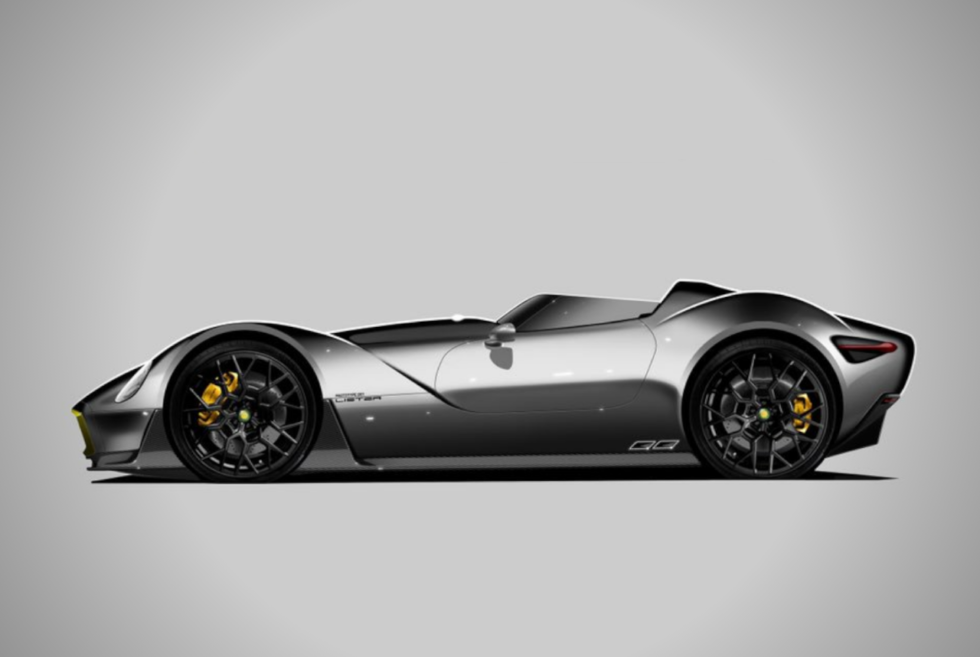
2020 Lister Knobbly

It’s been a while since we saw a new version of Lister’s iconic Knobbly racecar, so this new teaser should well sprinkle some new life into our parched hopes for a new entry. The British racing builder’s co-owner and CEO Lawrence Whitaker shared an image on Twitter just recently showing off what he calls “the new Lister Knobbly concept we’ve been working on.”

There’s no information beyond the image and the chief’s short caption, but the image shows a great deal of promise. If the forthcoming Lister Knobbly ends up being anything like the thing you see above, expect to see a stunning modern flourish to the classic racer.

While futuristic-looking, what’s great is the car retains the Knobbly’s signature cockpit. And who can overlook those slick-looking camel-hump wheel arches. They’re toned down a bit in this iteration, though, more blended into the car’s smoother lines.

Even still, it’s a great display of what could be the next evolution of the Lister Knobbly. Lister appears to have made the car hover much lower to the ground. We don’t know how racecar enthusiasts feel about that, but we’re loving it, if purely for an aesthetic standpoint. Unlike many vintage cars Lister has developed for vintage racing events, this one is top-to-bottom modern.

It’s not clear when Lister plans to share more details about the car, but make sure to check back with Men’s Gear as we learn more. The car is most likely spending some time in the design phase as we speak, so it might take a while before a prototype, let alone a purchasable model, arrives.

MORE INFO FROM LISTER

Power Wagons By Legacy Classic Trucks Are Made for Work

If any machine could claim the title of “official” vehicle of Jackson, Wyoming, it’s the Legacy Power Wagon. Both, after all, have a way of camouflaging wealth with actual hard work. In Jackson, for instance, this remote town, famed for its skiing and natural beauty — Grand Teton National Park sits just to the north — packs ranches instead of estates, denim in lieu of khakis. Similarly, the Legacy Power Wagon, a restoration/modernization (a.k.a., resto-mod) of Dodge’s famously tough postwar utility vehicles, melds hardscrabble functionality with a gentlemanly elegance that their original owners, 70-odd years ago, could be forgiven for not noticing. Each somehow pairs affluence and earthy grit with a rare degree of harmony.

The local preference became obvious when I had the pleasure of driving a pair of newly restored extended-cab Power Wagons around Jackson with company founder Winslow Bent in early October, at the same time I was in town to drive the new Rolls-Royce Cullinan SUV. When parked in front of the Hotel Jackson — another smooth integration of posh luxury into a decidedly rougher vernacular — locals passing by couldn’t help but gape at the pairing, They overwhelmingly directed most of their gushing toward the Power Wagons, though. They fit the personality of the town and its people much more perfectly. Though both get points for being rare, if not the only, production SUVs with proper, full-sized suicide rear doors, the high-riding vintage pickups beat the Roller to a pulp.

Bent launched Legacy Classic Trucks a decade ago, intent on breathing new life into the historic vehicles. His team of engineers and craftsmen track down candidate samples in restorable condition, strip them down to the bones, then refurbish and rebuild them, modernizing them along the way in a process that stretches to 1,000 hours for each truck. The chassis, cab and body panels are restored from the original parts, but the engine, transmission, brakes and electronics get robust upgrades. Out go the old flathead sixes and in come 430-horsepower, 6.2-liter Chevrolet LS3 small-block V8s mated to four-speed automatic transmissions or a 3.9-liter Cummins turbo diesel with a five-speed manual. Dana and Dynatrac axles, ARB locking differentials and Warn locking hubs ensure the trucks will function on the ranch, and on any other terrain, as needed, with high clearance and bead-locked wheels there for good measure. They also add a dominating profile, perfectly countered by the original curving lines of the Power Wagon’s cab, hood and fenders. The trucks are larger than life.

The conversions start at $185,000, and each is built to order. “Our customers tend to actually use the trucks as they’re intended,” Bent says. “They aren’t garage queens.” Further evidence, in case you need it: the Warn winch in the front, for helping clear trails or haul your buddies out of trouble, as well as many options the owners can spec out, from gun racks to stainless steel toolboxes to snowplows and snowblowers. Need an onboard welder or a cab-mounted shooting rest? Done.

It’s really a good thing that the Legacy Power Wagons are driven vehicles because doing so around Wyoming proved what a unique thrill the experience is. The trucks are easy enough to command, and the massive tires sure-footed on any terrain, but the whole vibe is appropriately old-school and understated. There’s some wind noise and tire roar, and the stereo could use a few extra watts to overcome them, but the wood steering wheel, vintage-styled gauges, wide-angle perspective from the vertical windscreen — where you can see both front corners clear as day — and occasionally jumping out to manually lock in the four-wheel-drive before going off-road, all keep you locked into the original era from whence this truck came.

Really, it’s not a bad place to be.

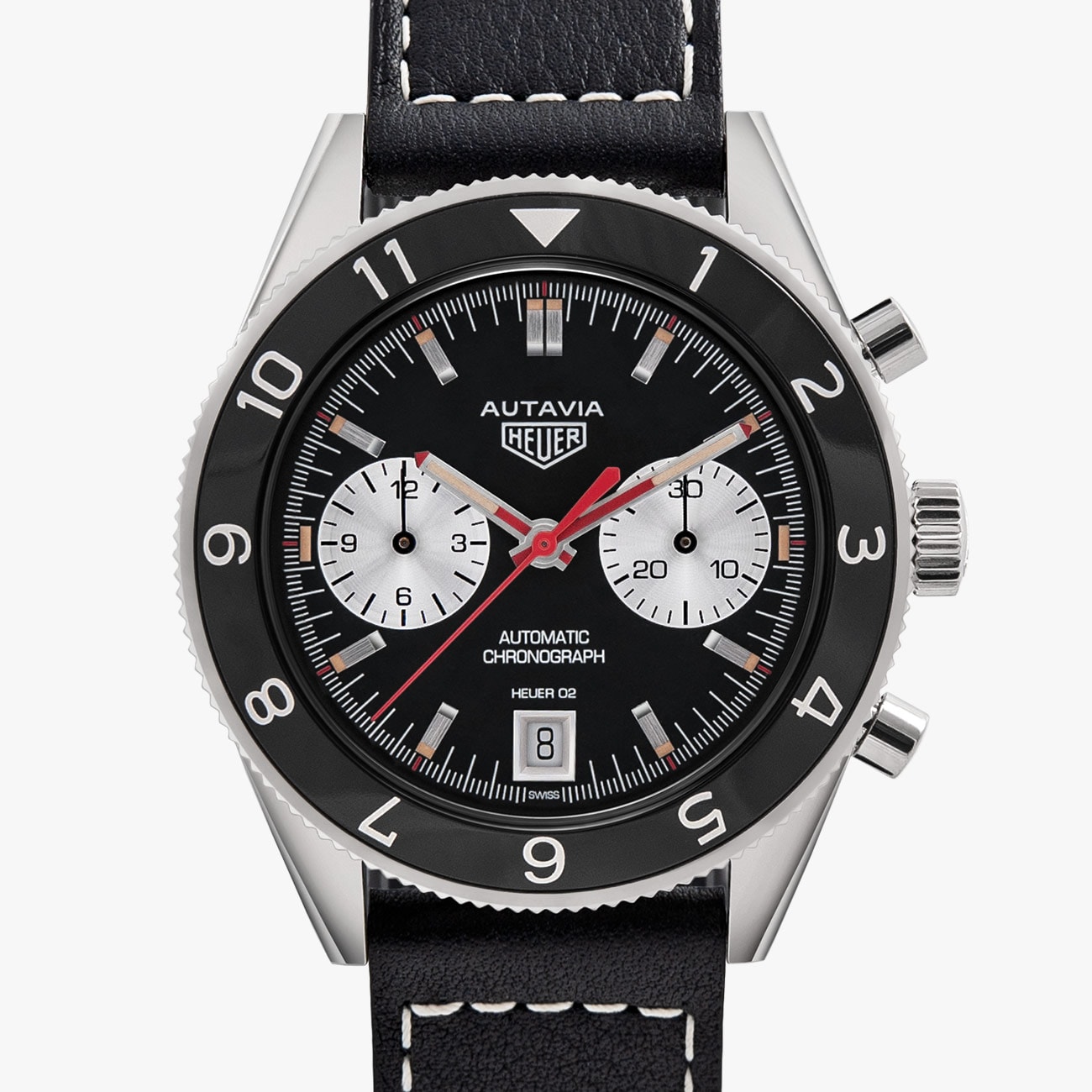
TAG Heuer Autavia 1972 Re-Edition

Most watches have some sort of heritage built into them. But the TAG Heuer Autavia 1972 Re-Edition has more than most. The name Autavia comes from TAG Heurer’s history in auto racing and aviation — “AUT” from “auto” and “AVIA” from “aviation.” The 42mm 1972 Re-Edition is fashioned after the iconic 1972 Heuer Autavia 1163V Viceroy but contains modern updates like a two-register dial layout, a sapphire case back and a date window at 6 o’clock. This modern automatic chronograph update is a commendable addition to the Autavia family. Learn More: Here

Porsche Cayenne Coupe: The 911 of SUVs

With the Cayenne, Porsche has invented the sporty SUV. But the SUV coupe was invented by BMW – more than a decade ago, with the X6. Since then, BMW has taken the concept one class below, with the X4, and Mercedes-Benz has followed with the GLE Coupe and GLC Coupe. Even Audi has launched a sporty SUV – in the form of the Q8. But now Porsche wants to best them all – with the new Cayenne Coupe, which launches tonight.

Porsche has kept the sporty front end of the regular Cayenne intact, the differences begin with the A-pillar: The windshield has a lower angle, the roof describes a graceful arch and ends in a relatively low tail. The rear doors and fenders are pushed out to cover a wider track. And the side windows are shaped like the 911’s, even though the Cayenne Coupe is a four-door SUV.

The overall effect is successful, almost spectacular. Visually, there is not a sportier SUV on the road. The Cayenne Coupe oozes 911-ness and brand heritage.

Despite its relatively low-slung looks, there is plenty of interior space. In fact, rear headroom is virtually identical with the regular Cayenne. You sit perfectly in all four seats (a regular three-seat rear bench can be specified, too), and the trunk shrinks just moderately.

But to achieve this much space while keeping a beautiful silhouette, Porsche has resorted to three tricks: First, the rear seats are now fixed in a slightly lower position instead of laterally moveable. And second, the Cayenne Coupe actually features a somewhat bulbous roof. But this fact is masked, because it appears glossy black: A vast panoramic glass roof is standard – and a glossy carbon-fiber roof is available as part of a very attractive light-weight sport package. Thirdly, there is a very prominent roof spoiler that actually has purely cosmetic function.

The spoiler that’s actually functional sits lower: The area above the taillights can rise up like on the 992 or the Panamera, and it’s graced with a slim Gurney flap. And it is needed because this is an extremely fast SUV. Even the standard version, powered by a 340-horsepower 3.0-liter V-6, can manage 243 kph. The top-of-the-line Cayenne Turbo Coupe is fitted with a 550-horsepower 4.0-liter V-8 for a 0-100 kph sprint in 3.9 seconds and a 286 kph top speed.

Down the road, Porsche will offer a Cayenne S Coupe with a 440-horsepower 2.9-liter V-6, and there will be both a V-6 hybrid with 462 horsepower and a V-8 hybrid with at least 680 horsepower, like on the Panamera. Sadly, there will be no diesel. Originally, the Cayenne was supposed to be offered with a V-6 and a V-8 diesel, before the brand’s questionable decision to kill all diesels and emphasize electrics.

The Cayenne Coupe models will come to market in Europe in mid-May; the US will have to wait until mid-October. Prices in Germany are 83 711 and 146 662 euros for the regular and the Turbo models; the US prices are USD 75 300 and 130 100, respectively. Considering the Sport Chrono package, large wheels, the panoramic glass roof and a few other goodies are standard on the coupe, the decision whether to opt for a regular Cayenne or a Coupe amounts to a matter of taste. For us, the choice would be clear. This is the 911 of SUVs.