All posts in “McLaren”

Supercars.Net’s Comprehensive Guide To The 2019 McLaren 600LT

Introduction

It is by no means a stretch to say that when McLaren releases a new car, that car becomes the best they have ever made. The British supercar maker has an impeccable track record in this regard, thanks in huge part to its unclouded focus on producing only exotic sports cars; no dubious SUVs, no ornate saloons, no cumbersome grand tourers – only performance-extraordinaire.

The new 600LT is based on the McLaren 570S, and is the latest rendition of the “Longtail” Sports Series cars, hence the moniker. Essentially, the 600LT is designed to possess nearly 3 inches longer of aerodynamic bodywork and is given a slight power bump, weight reduction, and other performance upgrades. While these changes may appear to be rudimentary, the intricacies of each improvement sum up to make the 600LT a car in its own right.

In fact, the McLaren 600LT is considered by many to be gateway car to the top of the line Senna, providing drivers with the sensation of its driving dynamics, at one-quarter of its price. After all, upgrades such as the electric vacuum pump and carbon bucket seats, are borrowed from the Senna.

If we were to create a reference point for this car – in a comprehensive line up of McLaren sports cars, exotics and halosthe 600LT would be more akin to a Senna-lite than a 570S-plus. With a base price of $242,500 USD, eyebrows will certainly be raised; not for its outright price, but for its inherent value considering what you get for that kind of money.

These credentials certainly put the 600LT in the running to be the ‘best McLaren ever made’.

Engine & Performance

At the heart of the McLaren 600LT is an evolved version of the 3.8L twin-turbocharged V8 found in the 570S. An extra 30-horsepower and 14 lb-ft of torque are wrung out this industrious engine, bringing the 600LT’s final figures to 592-horsepower and 457 lb-ft of torque. Not an astronomical change by any means, which gives you the hint that this relatively modest, but important upgrade is a part of something greater and is nothing to balk at.

This boost in power along with a more instant throttle response is greatly attributed to its shortened exhaust which greatly reduces back pressure. Inspired by the Senna, this exhaust is actually even shorter and more extreme than the one used by its role model.

Delivering the power to the wheels is a 7-speed dual clutch transmission. While the transmission is a robust unit which slots into each gear like a race car, its overall brutality in doing so precludes it from any sense of refinement at lower speeds where drivers will experience some jerkiness.

Overall the numbers are ultimately impressive, with the McLaren 600LT achieving a power-to-weight ratio of 481-horsepower per tonne (with every weight reduction option added) and a 0-62 mph time of 2.9 seconds.

Chassis & Handling

It is in these areas of the car where the more significant changes were made over the 570S. No consideration was spared with particular regards to weight reduction, braking, and suspension. At the heart of it all is McLaren’s carbon fiber MonoCell II chassis and lightweight aluminum body panels.

Naturally, a carbon fiber diet is a huge part of the order with new sport bucket seats, and much of the front and rear bodywork made of the lightweight good stuff. Other servings such as new 10-spoke ultra-light wheels, A/C delete, a stainless steel top exit exhaust and suspension components borrowed from the 720S, combine for over 96 kg in extracted mass. This is quite significant in the grand scheme of things, considering that the 570S was no porker, to begin with, and now has a more powerful engine to boot.

The 600LT has a wider track and lower ride height than the car it has now become loosely based on. Thanks to components such as redesigned dampers with forged double wishbones, upgraded anti-roll bars, and firmer engine mounts, the car has become lighter, stiffer and more precise in its handling. Spring rates have been increased 13 percent in the front and 34 percent in the rear, though McLaren insists that streetability and comfort in this regard have not been compromised.

The standard carbon-ceramic brakes are borrowed from the 720S, measuring 390mm and 380mm and accompanied by six-piston and four-piston aluminum calipers in the front and rear respectively.

This braking system is a perfect match for the Pirelli Trofeo Tires which should instill an extraordinary level of confidence in the driver. The overall transformation of the chassis allows the car to change direction and speed with such favorable track manners, making for a more balanced vehicle than the 720S, and a less overwhelming machine than the halo Senna. It remarkably gives you the best of both worlds, or more accurately, the best in one McLaren.

Design, Styling & Interior

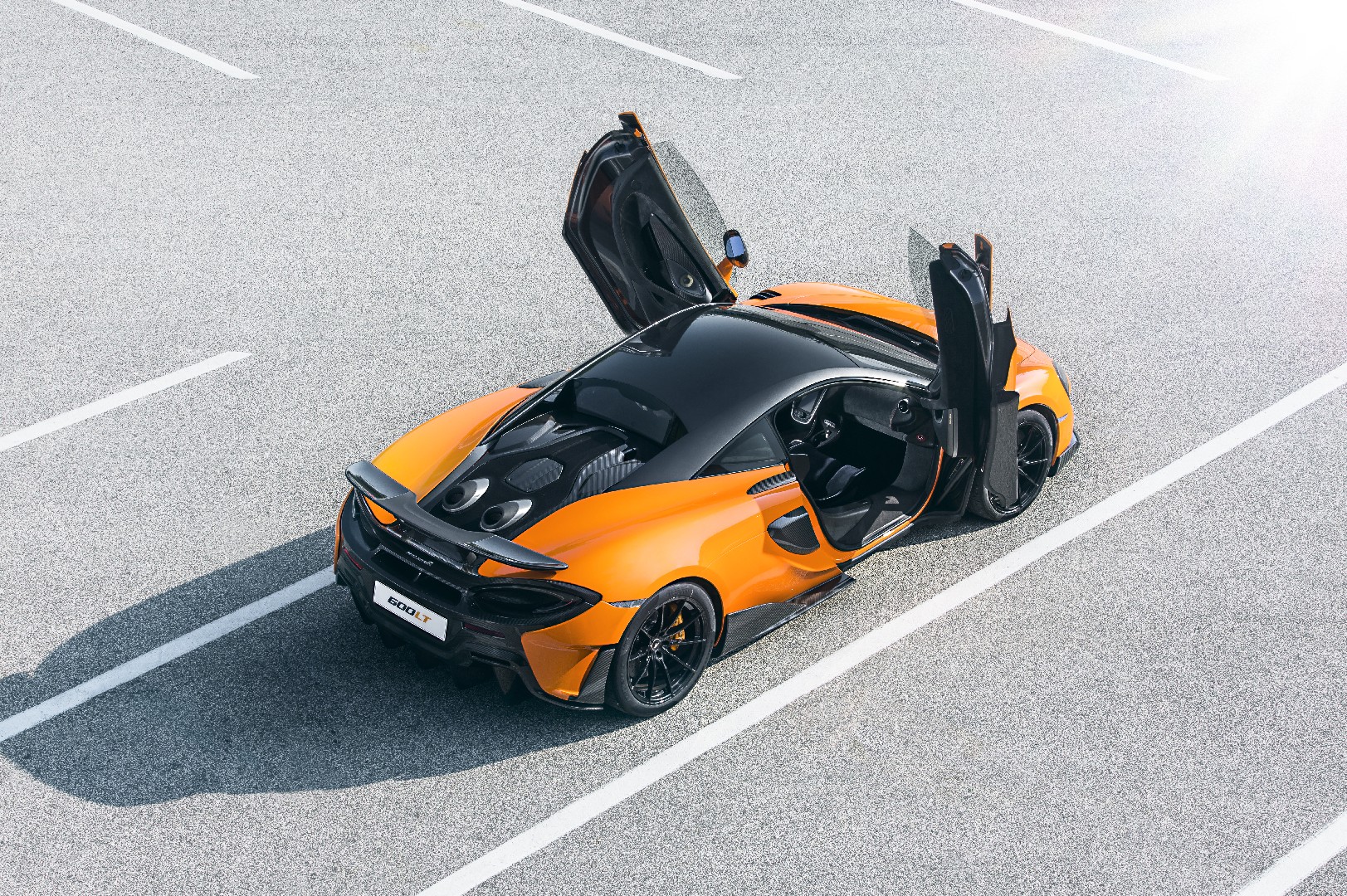
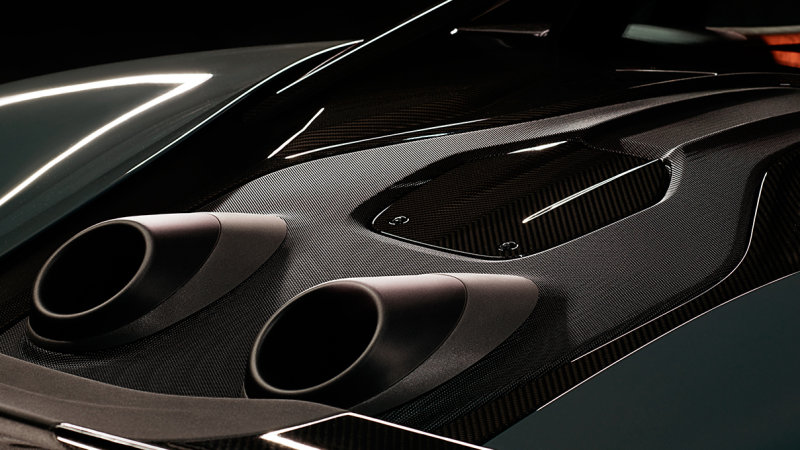
The most notable design cue in the 600LT would likely be the exhaust exits at the top of the engine cover, rather than through the rear bumper. Far from just being a crowd pleaser, this setup also saves weight and allows room for a larger rear diffuser which works in conjunction with the rest of the car’s aero pieces to produce over 220 pounds of downforce at 155 mph.

McLaren was preemptive in cooling any areas of concern, quite literally, by coating the rear wing in a ceramic material which deflects heat – very necessary as that area of the car can get as hot as 210 degrees Celsius when the exhaust is on full blast. A more aggressive front splitter, side skirts and “aero planes” more efficiently channel airflow across the body and assist with downforce.

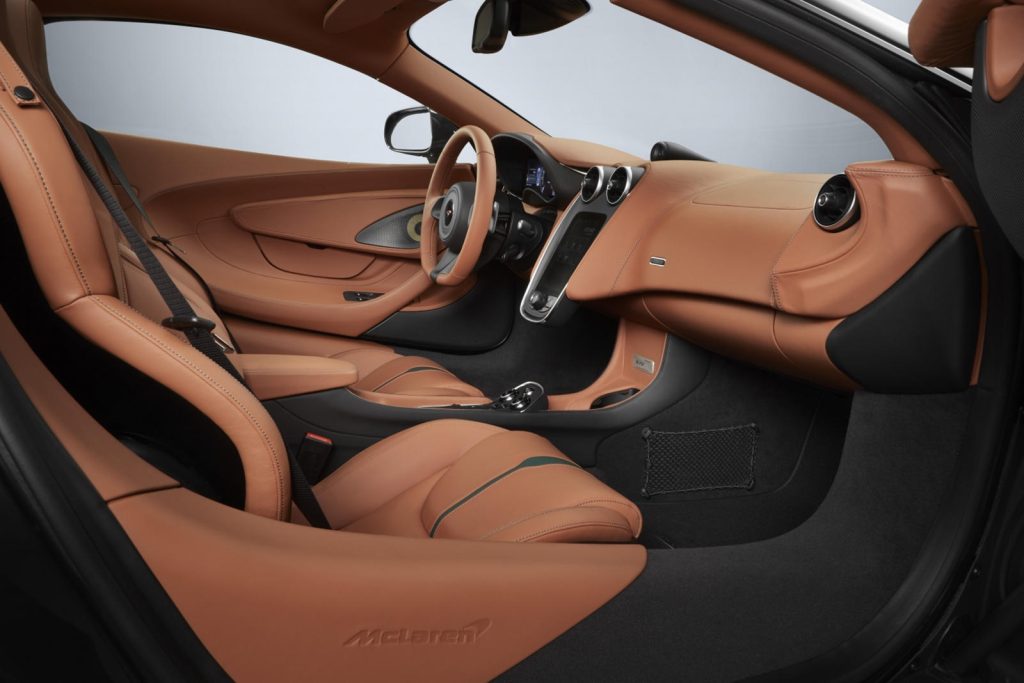
With weight reduction being a key design philosophy for the 600 LT, amenities such as A/C, interior carpeting and a sound system are forgone; they can be added as no-cost options. Should buyers opt for such practicalities, they would have to do with about 16 kg of added weight. To offset some of this weight, or take the base car to the next stage, the MSO (McLaren Special Operations) Clubsport Pack adds a carbon fibre roof and fenders, titanium wheel lugs, the same bucket seats used in the Senna, and other lightweight fixtures which altogether cost $25,000 USD and shed around 5 kg.

The McLaren 600LT with every lightweight option fitted, measures in at just 1,247 kg.

Pricing

Base price of the 2019 McLaren 600LT is $242,500 USD and should be well within the $300k mark even when specced with some of the pricier options.

This means that in terms of pricing, the 600LT slots in between the Porsche 911 GT3 RS and the Lamborghini Huracan Performante – both naturally aspirated cars. For buyers who have a soft spot for high revving turbo-less engines, both those cars may become tough competitors.

The GT3 RS can be had for $40k less. Although the Porsche may lack the wow-factor of the more exotic 600LT, this is something that can be remedied by spending an extra $30k for the V10 Lamborghini.

At the end of the day, it is no secret that McLaren’s Sport Series range of cars, which now includes the new 600LT, can tussle with cars that are well above its price point – even within the McLaren line-up. In current times, this includes the likes of the Ferrari 488 GTB, the aforementioned Lamborghini Huracan Performante and McLaren’s own 720S and million-dollar Senna, which it mimics with considerable veracity.

For those who know exactly what they want in a car, the McLaren 600LT would be a bargain if all the right boxes are checked; and considering everything the car has to offer compared to its competition.

Performance & Specifications Summary

Model & Price Info

Make McLaren
Model 600LT
Generation Sport Series
Sub-Model Longtail
Car type Coupe
Category Series Production Car
Built At Woking, UK
Introduced 2019
Base Price (US) $242,500
Base Price (UK) £185,500
Units built TBD

Chassis, Suspension & Powertrain

Curb Weight 1,356 kg (2,989 lbs)
Layout Mid-engined, rear-wheel drive
Body / Frame Carbon fibre MonoCell II monocoque, with aluminium front and rear crash structures
Suspension Independent adaptive dampers, dual aluminium wishbones. Normal, Sport and Track modes
Steering Electro-hydraulic; power-assisted
Brakes Carbon Ceramic Discs (390mm front; 380mm rear); Aluminium Calipers (6-piston front; 4-piston rear)
Tires

Pirelli P-ZERO™ Trofeo R (P-ZERO™ no-cost option)

Front: 225/35/R19; Rear: 285/35/R20

Transmission 7 Speed SSG. Normal, Sport and Track modes

Engine & Output

Engine V8
Displacement (Litres) 3.8L
Position Longitudinal
Aspiration Twin-turbocharged, intercooled
Power (hp) 592 hp @ 7,500 rpm
Power (hp) / litre 155.8 hp / litre
Power (hp) / weight 0.44 hp / kg
Torque 457 lb-ft @ 5,500-6,500 rpm
Average Fuel Consumption 11.7 L/100 km (combined)

Performance, Acceleration & Braking Stats

Top speed 204 mph
0 – 60 mph 2.8 s
0 – 62 mph 2.9 s
0 – 124mph 8.2 s
0 – 186mph 24.9 s
¼ mile (standing) 10.4 s
124 mph – 0 384 ft
62 mph – 0 102 ft

Gallery & Videos

Image Gallery

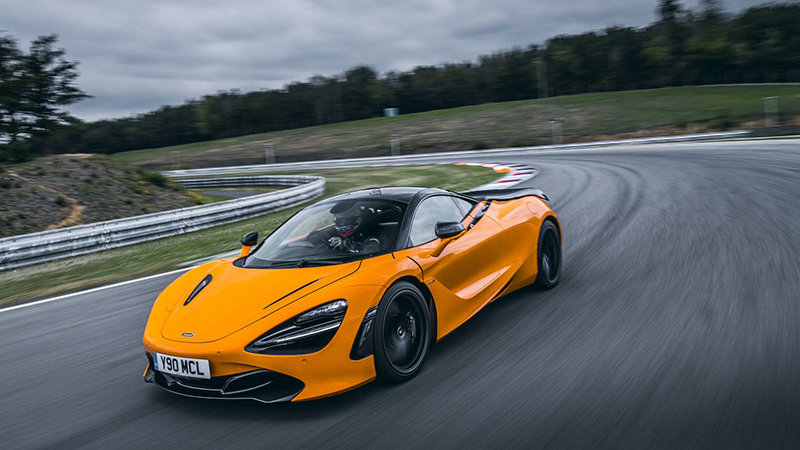
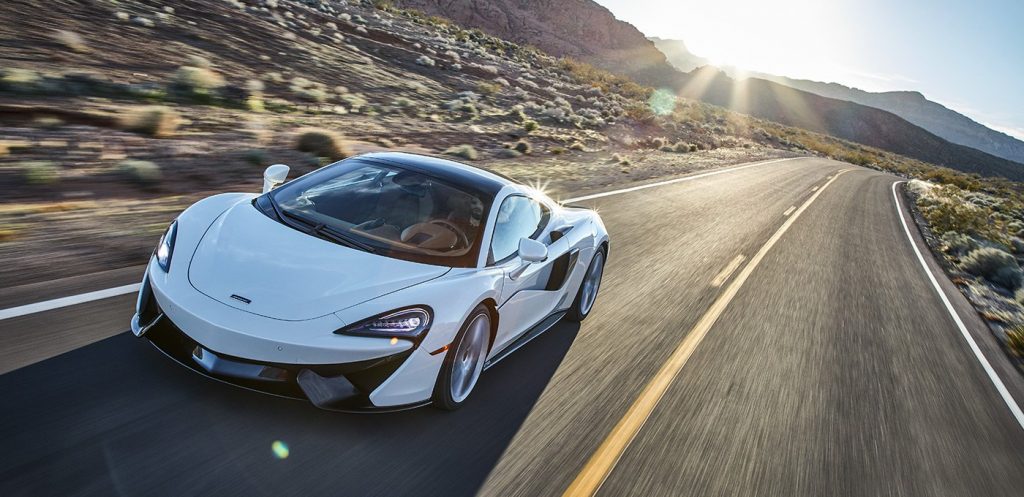
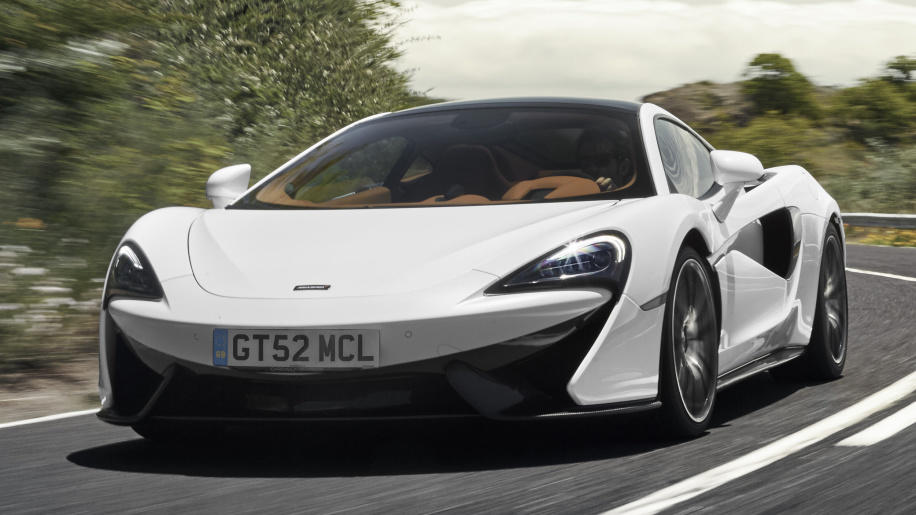
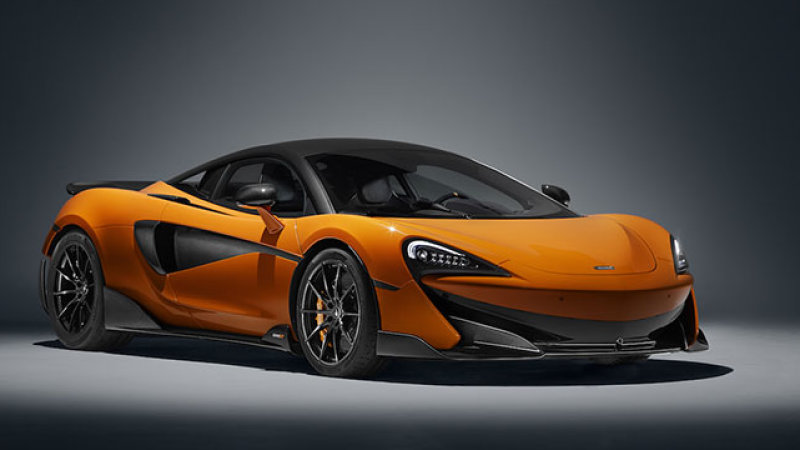
McLaren has taken the 570S to the next level, with some reimagined design elements to set the 600LT apart from its donor. Weight savings, aerodynamics, cooling and a bit of showmanship are all emphatically bundled into this package.

In my opinion, the McLaren 600LT’s extroverted looks are as beautiful as they are functional – making for a car that radiates the pinnacle of McLaren’s current offerings.

Video Review Gallery

Here are some YouTube video reviews from some of my favorite car reviewers and auto personalities. All of them provide feedback from an “everyday guy” perspective – but aren’t afraid to thrash the car around a racetrack when given the opportunity – providing commentary that is both technical and easy to absorb.

First up is Top Gear Magazine’s Jack Rix, providing his expert opinion on the 600LT. He goes into detail about what makes this car so great.

[embedded content]Next, Steve Sutcliffe from Auto Express takes the 600LT around the Hungaroring GP circuit. It is clear that he thinks that this car is something quite special.

[embedded content]

Here we have Carfection’s Henry Catchpole having a chance to take the McLaren 600LT on the track in Portugal. His commentary is both technical and emotionally engaging.
[embedded content]

Last but not least is McLaren’s beautifully cinematic official ad for the car.

[embedded content]

Original Press Release

World debut for new McLaren 600LT at Goodwood Festival of Speed, plus full technical details and new images of the quickest, most extreme road-legal Sports Series McLaren

11 Jul 2018

  • The lightest, most powerful and quickest road-legal Sports Series McLaren makes its world dynamic debut on July 12 in the UK, at the Goodwood Festival of Speed
  • 600PS and 620Nm ensures blistering acceleration: 0-100km/h (62mph) is the equal of a McLaren 675LT at 2.9 seconds (0-60mph in 2.8 seconds); 0 – 200km/h (124mph) in just 8.2 seconds
  • New aerodynamic carbon fiber bodywork – including front splitter, side sills, extended diffuser, and fixed rear wing – contributes to 100kg of downforce at 250km/h (155mph)
  • 100kg lighter* than 570S Coupé DIN kerbweight, with a lightest dry weight of 1,247kg giving a power-to-weight ratio of 481PS/tonne
  • Optional Clubsport and Clubsport Pro packs available from McLaren Special Operations (MSO) for even lighter weight and more track-focused features
  • Nearly a quarter of McLaren 600LT parts new compared to McLaren 570S Coupé, including unique top-exit exhaust system and two all-new, ultra-lightweight alloy wheel designs
  • Forged aluminum double wishbone suspension derived from the McLaren Super Series combines with stiffer anti-roll bars and an 8mm reduction in ride height to help deliver enhanced dynamic performance and new heights of driver engagement
  • Bespoke Pirelli P Zero™ Trofeo R tires work in harmony with increased downforce to generate circuit cornering speeds that exceed those of a McLaren 675LT
  • Latest-generation lightweight brake calipers, carbon ceramic discs and a McLaren Senna-inspired brake booster ensure precise pedal feel and phenomenal stopping power: 200km/h to standstill in just 117 meters
  • 600LT opens next chapter in the McLaren ‘Longtail’ (LT) story; production volume strictly limited
  • Available to order now, priced from £185,500 with taxes (UK), which includes** a Pure McLaren Road Owner Track Day experience with driver training

The quickest, most powerful and most track-focused – yet road legal – Sports Series McLaren will make its dynamic world debut tomorrow (July 12) at the 2018 Goodwood Festival of Speed. The arrival of the new 600LT, which is built to excel on roads and race circuits alike, marks both the beginning of the next chapter in the McLaren ‘Longtail’ (LT) story and the setting of a new benchmark for super-sportscar performance.

“The new McLaren 600LT is our most extreme road-legal Sports Series model and possesses the optimized aerodynamics, increased power, reduced weight, track-focused dynamics and enhanced driver engagement that are the hallmarks of any McLaren LT. Only the fourth McLaren in more than two decades to be designated a ‘Longtail’, the 600LT redefines expectations of super-sportscar performance, delivering astonishing acceleration and outstanding track cornering speeds with a truly extraordinary dynamic connection between driver and car.”

Mike Flewitt, Chief Executive Officer, McLaren Automotive

The new McLaren 600LT epitomizes the McLaren philosophy of producing lightweight super-sportscars that deliver extreme performance and are exceptionally rewarding to drive. With the engine management system of the 3.8-litre twin-turbocharged V8 recalibrated and less back pressure from a top-exit exhaust system that is even shorter and more extreme than that of the McLaren Senna allowing the engine to breathe more freely, the 600LT can call on peak power of 600PS (592bhp) at 7,500rpm and a maximum torque output of 620 Nm (457 lb ft) at 5,500-6,500rpm.

These outputs deliver astonishing levels of performance: 0-100km/h (62mph) takes just 2.9 seconds, matching the acceleration of the revered McLaren 675LT Super Series model. 0-200km/h (124mph) is achieved in a remarkable 8.2 seconds and the 600LT can continue gathering speed to a top speed of 328 km/h (204 mph).

Inspired by the renowned McLaren 675LT models and their iconic ‘Longtail’ McLaren F1 GTR racing predecessor, the new addition to the LT family has all the physical hallmarks of a true McLaren ‘Longtail’, including an extended front splitter, lengthened rear diffuser, fixed rear wing and elongated silhouette – in this case by 74mm compared to a McLaren 570S Coupé.

The unique bodywork optimizes aerodynamic performance, working in conjunction with the flat carbon fiber floor of the 600LT to produce the 100kg of downforce at 250km/h (155mph) that generates more grip and greater high-speed stability and is a significant contributor to the car’s excellence on a track.

Extensive use of carbon fiber – including for the monocoque chassis that is some 25 percent stiffer than a comparable aluminum chassis and for the new aerodynamic features– together with lightweight materials throughout the track-focused cockpit, helps the McLaren 600LT to achieve a lightest dry weight of 1,247kg and equivalent power-to-weight ratio of 481PS/tonne. With the optional Super-Lightweight Carbon Fibre Racing Seats developed for the McLaren Senna fitted, the 600LT weighs 100kg less than a 570S Coupé – a remarkable reduction that delivers tangible benefits in every aspect of the car’s performance.

McLaren 600LT buyers wanting to go to another level of weight-saving can specify the MSO Clubsport or MSO Clubsport Pro packs from McLaren Special Operations. The MSO Clubsport Pack, which adds £24,170 to the price of a new 600LT, features the Super-Lightweight Carbon Fibre Racing Seats; a Carbon Fibre Interior Upgrade that includes extended gearshift paddles and steering wheel spokes and switches and IRIS display surrounds in the lightweight material; Carbon Fibre Roof and Cantrails, Visual Carbon Fibre Fender Louvres in gloss finish; and titanium wheel bolts.

The MSO Clubsport Pro Pack, which adds an MSO Defined Harness Bar and 6-Point harness for track use, in either black, blue, red or McLaren Orange, is priced at £28,480. The Super-Lightweight Carbon Fibre Racing Seats are available as a stand-alone option, costing £4,990.

The remit of any McLaren ‘Longtail’ model is to engage and excite to the absolute maximum, encouraging – and enabling – drivers to fully exploit the dynamic performance inherent in the car. The ethos underpinning every aspect of the development of the McLaren 600LT was, therefore, a determination to deliver the purest possible connection between car and driver.

To this end, the 600LT has lighter and stiffer suspension components from the McLaren 720S, the adoption of the forged aluminum double wishbones and uprights not only improving dynamic capabilities but also reducing weight by 10.2kg. Ride height is reduced by 8mm over other Sports Series models and front track is increased by 10mm, to deliver a more precise driving experience.

The independent, continuously variable adaptive dampers and front and rear anti-roll bars featuring on all McLaren Sports Series models have been retained but are significantly re-engineered to work with the new suspension geometry and create the track-focused performance demanded of the new 600LT.

The adoption of the braking system from the McLaren Super Series, which features lightweight aluminum calipers and stiffer carbon ceramic discs, reduces weight by 4kg, working in conjunction with an all-new brake booster developed using learnings from the McLaren Senna, the result is incredibly responsive and progressive pedal feel during braking and a 200km/h (124mph) to standstill distance of 117m – just 1m more than a McLaren P1™.

Two new designs of ultra-lightweight aluminum alloy wheels – 10-spoke as standard and a 5-spoke alternative as a £4,080 option – are the lightest wheels ever fitted to a Sports Series, the reduction in unsprung weight bringing a noticeable benefit to the dynamic qualities of the car.

Bespoke P Zero™ Trofeo R tires – developed with McLaren Technical Partner, Pirelli – feature for the first time on a Sports Series model and this unique track-focused tire is a crucial element in the enhanced dynamic abilities of the McLaren 600LT. Tuned to deliver the immediacy and steering feel for which McLaren is renowned, as well as excellent rear axle stability, the ultra-high-performance tire features a softer sidewall structure than is usual to improve compliance and so grip levels by ensuring the contact patch with the ground is maintained, even on less-than-perfect surfaces. By contrast, the belt construction of the Trofeo R tire is stiffer than on any previous Sports Series, to enhance lateral acceleration and improve cornering ability.

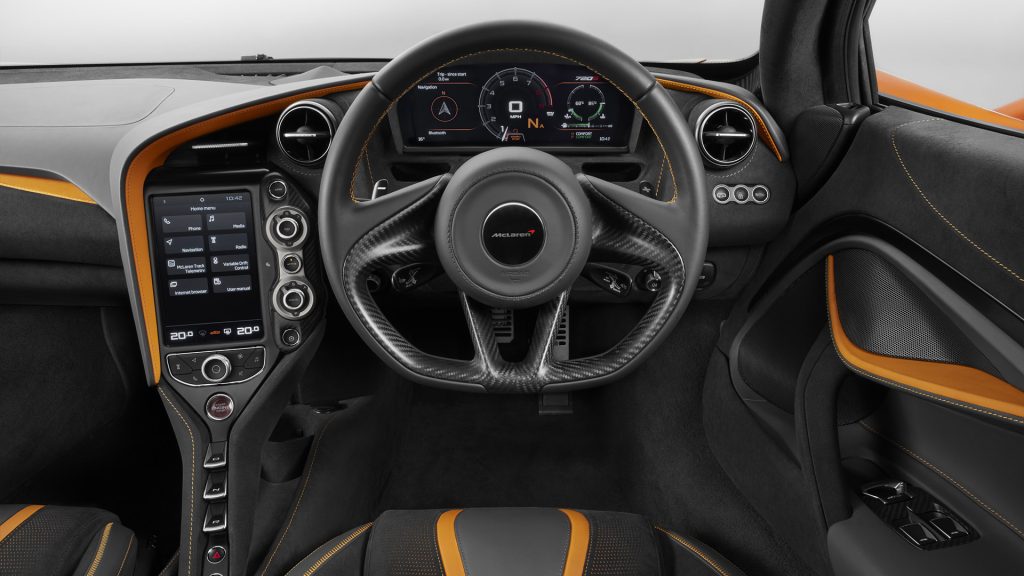
The cockpit of the McLaren 600LT exemplifies both weight reduction and a driver-focused environment. Lightweight Alcantara® trim material is used extensively throughout and the absence of carpet in the driver and passenger footwells and beneath the seats saves 5.7kg, while also exposing the carbon fiber beauty of the MonoCell II chassis construction.

The glovebox has been removed and the door pockets replaced with lightweight nets; air-conditioning, satellite navigation, and an audio system are all available as no-cost options, not being fitted as standard. Carbon fiber Racing Seats, first seen on the McLaren P1™ and subsequently used in the McLaren 675LT, are standard-fit and save a remarkable 21kg.

Production of the 600LT Coupé will begin in October 2018 and last for around 12 months, with build slots scheduled around existing Sports and Super Series models, as well as the sell-out Senna, Senna GTR and BP23. Availability will be strictly limited, the carbon fiber body panels that require specialist tooling just one of the reasons that the new ‘Longtail’ will be rarer than its Sports Series brethren. Available to order now from McLaren retailers – subject to availability – the 600LT Coupé is priced from £185,500 with taxes (UK), which includes** a Pure McLaren Road Owner Track Day at a race circuit, with expert driving tuition.

To discover more about the new McLaren 600LT, visit McLaren.

A film showing the car in action can be viewed here:
[embedded content]

Ends

* with optional Super-Lightweight Carbon Fibre Racing Seats fitted

**Included in North America and European markets (including UK). Please confirm further details with a McLaren retailer.

Final Verdict

As my fellow Supercars.net colleague, Nick Dellis once remarked, “The world is full of armchair commentators when it comes to cars. At Supercars.net we have a number of journalists and automotive publications we rely on when we want to get unbiased opinions from people we admire.”

Below are snippets from some of our favorite car reviewers and automotive personalities regarding the McLaren 600LT. As always, we ask that you support the amazing publications they release, so that the automotive community continues to benefit from the hard work and enthusiasm they put into providing us with content that we love.

Evo – “More powerful, more raw, more pure – McLaren’s Sport Series at its best yet.” – 5/5

2019 McLaren 600LT profile2019 McLaren 600LT profile

Adam Towler from Evo had high expectations going in, despite the 720S rewriting the supercar rulebook and being awarded ‘Evo Car of the Year’ in 2017. The 600 LT’s “increased focus on driver thrills might just make it our favorite McLaren yet.”, he says.

Direct comparisons to the car it is based on – the 570S – were always going to be made, and Adam remarks that “impressive as a 570 is, every aspect of that car feels tempered with a nod to usability. With the 600LT this restraint has been removed and you feel as if you are gaining access the Sports Series’ raw ingredients. There’s no hint of vagueness, of squidge and imprecision, instead, everything the 600LT does is ruthlessly, but delightfully, transparent and true.”

He goes on to summarize that based on its price and offerings compared to its competition, that “McLaren has, therefore, found a rather handy niche for the 600LT, and has filled it with an extremely desirable and capable supercar. ”

The Good

  • Natural, sharp and transparent driving connection
  • Beautifully balanced cornering attitude
  • Top-mounted exhaust that spits flames

The Bad

  • There’s nowhere to store your travel sweets
  • Almost too fast for the streets

More: Read full review

Motoring Research – “It’s very probably the best driver’s car of the year” – 5/5

2019 McLaren 600LT frontal view2019 McLaren 600LT frontal view

Tim Pitt from Motoring Research was one of a few lucky journalists to track the 600LT on the Hungaroring. He can’t help but note that “Even for a supercar, it looks special. Forget the joy of specs for a moment: the 600LT looks sensational. From upwards-opening dihedral doors to an exuberant paint palette, its styling screams ‘supercar’. An Audi R8 seems plain by comparison.”

At the end of the day, Tim, who is an obvious Porsche fan and admits that “the obvious stumbling block here is the Porsche 911 GT3 RS, with its equally talented chassis and fearsome, 9,000rpm flat-six.” However, he goes on to say “But since you can’t actually buy a ‘991.2’ RS unless you’re one of the favored few – or prepared to pay vastly over the odds – the McLaren claims victory by default. Well played Woking”.

The Good

  • Ultimate driver’s car
  • Special looks
  • Both agile and docile

The Bad

  • Rudimentary media system and creature comforts
  • Expensive options for a tiny bit of extra weight reduction

More: Read full review

Auto Express – “McLaren’s best road car yet” – 5/5
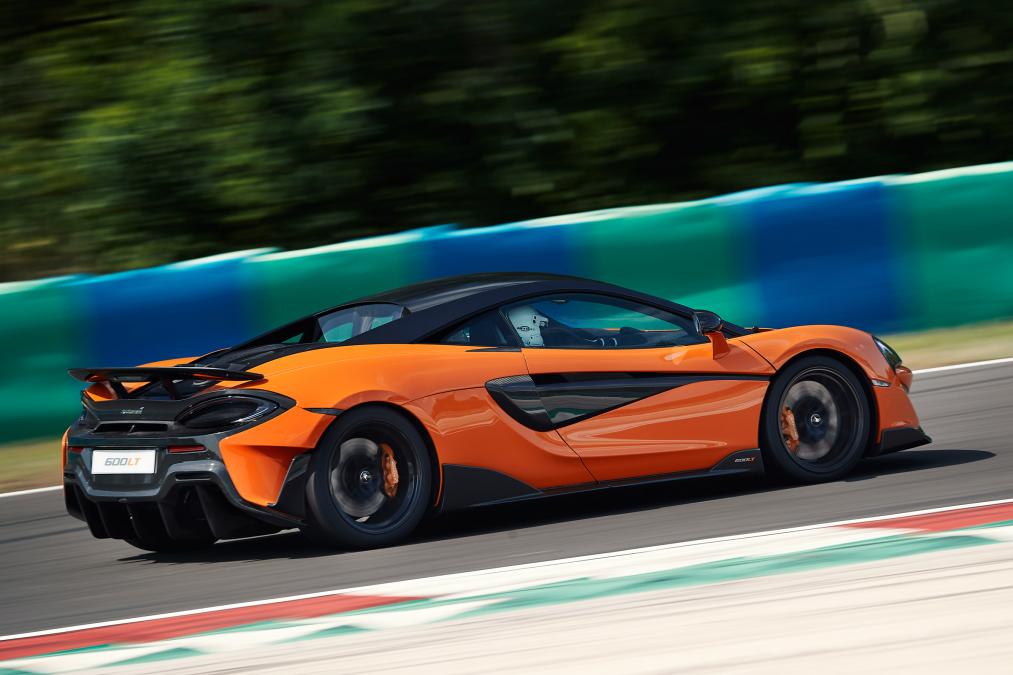
2019 McLaren 600LT side view2019 McLaren 600LT side view

Steve Sutcliffe from Auto Express is another reviewer who believes that the 600LT is the best car McLaren has made to date.

“The new 600LT is sensational on a track and far sharper than the regular 570S. But it also appears typically usable and impressively civilized. While we’re yet to try the car on the road, it’s immediately obvious the 600LT is more than just a sometime track-day weapon. McLaren has hit the bullseye once again.”

The Good

  • Best McLaren road car ever made
  • Not too hardcore or over the top

The Bad

  • Could still be mistaken for a 570S from afar

More: Read full review

My Final Verdict – 5/5

There is no doubt that amongst contemporaries, the McLaren 600LT is quite simply the best McLaren road car, and arguably the best driver’s car on the market.

McLaren improves its remarkable track record of producing progressively better cars, with a focus on designing them to deliver at the highest echelons of performance while being refined enough for daily driving.

The McLaren 600LT does all that, pretty much to perfection. This is all without yet mentioning that with pricing considered, the 600LT can be likened to a giant-killer with its relatively modest costs, which allow it to punch above its weight class.

Perhaps the biggest compliment that is being paid to the 600LT is its likeness to the Senna – McLaren’s million-dollar halo car. The 600LT delivers the same driving dynamics and arguably more fun factor, at a third of the cost of the aforementioned. Knowing that someone would have spent a million-plus to keep up with you and have as much fun as you on the race track, says that this car is something quite groundbreaking indeed.

In my opinion, the McLaren 600LT is a car that is really going to shake up the $200,000-ish supercar segment. Competitors are going to have to step up their game and look very closely at their strategies if they don’t want McLaren to become the de facto car of choice for pragmatic supercar buyers. The McLaren 600LT might not just be the best McLaren ever made – it may also be the best supercar ever made.

Rivals

Lamborghini Huracan Performante
Ferrari 488 Pista
Mercedes AMG GTR
McLaren 720S
Porsche 911 GT3 RS

McLaren 720S Spider Teased ahead of December Reveal

McLaren have announced a date for the reveal of the upcoming McLaren 720S Spider. The second Track25 car will debut on the evening of Saturday 8th December 2018, presumably during McLaren’s annual Christmas party!

Keen McLaren fans will remember that McLaren used its annual Christmas party to debut the McLaren Senna last year. Deliveries of that car have only recently began. While it might seem strange timing to release a convertible, in the depths of winter, it does ensure that McLaren will be able to begin deliveries in time for summer 2019!

The new McLaren supercar will be revealed online at 20:10 GMT on Saturday December 8, 2018.

In terms of what we expect to see, this is fairly predictable. It will use the 4.0 litre V8 twin turbocharged engine with a power output of 720 hp and 770 Nm of torque. It should manage 100 km/h in around 3 seconds and a slightly reduced top speed over its Coupe brother.

The McLaren 720S Spider is expected to follow in the footsteps of the 650S Spider in the sense that it will get a folding electric hardtop. The 720S was most likely designed with a convertible in mind which means that the engineering work required to realise the chopped top will be minimal.

McLaren Speedtail Begins One Year Testing Ahead of 2020 Deliveries

McLaren have officially begun testing the Speedtail. Photos released this weekend show the first prototype, nicknamed ‘Albert’, which will commence testing at a closed-facility and on public roads from December 2018.

The Speedtail was officially unveiled last month. The third model in McLaren’s Ultimate series, it intends to capture some of the magic of the McLaren F1. The first prototype has been codenames ‘Albert’, named after Albert Drive, Woking, Surrey, the road where the McLaren F1 designs were originally sketched. Internally, the prototype gets the designation MVY02 combining McLaren’s usual MV project initials with the letters Y0 which signify the lateral central point in the XYZ axis for Computer Aided Design.

The Speedtail will be tested in Europe, North America and Africa on a mixture of bespoke automotive test facilities and on public roads. With the Speedtail, McLaren are promising customers the most aerodynamic and luxurious McLaren to date. Albert gets a production-specification chassis and an, as yet, unspecified petrol-electric hybrid drivetrain.

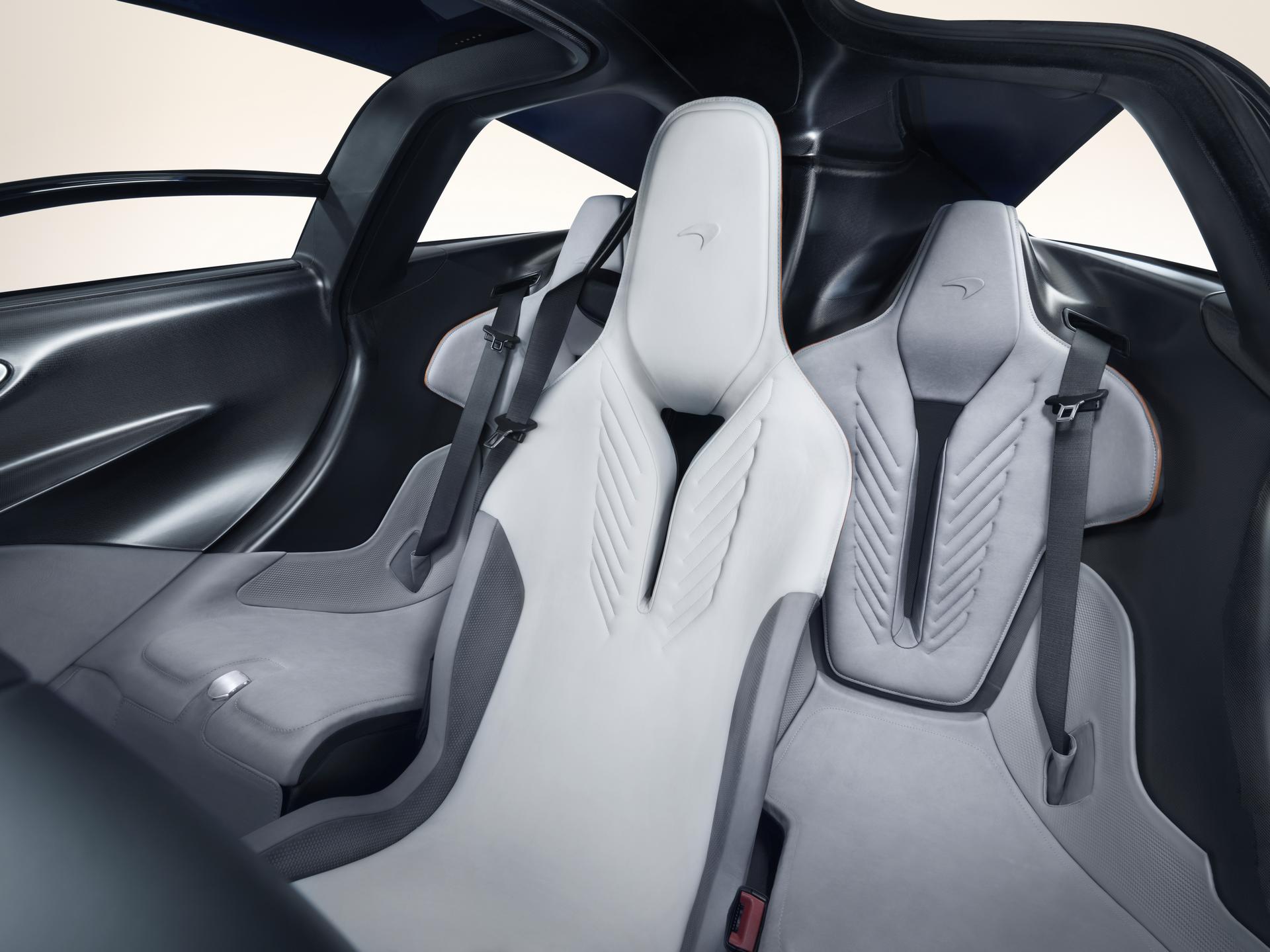
The Speedtail will prove unique with a three-seat cockpit and central driving position. Power output will be 1,050 PS with performance potential of up to 403 km/h. Replacing Chris Goodwin as McLaren Automotive’s Chief Test Driver, Kenny Bräck will take care of most of the high speed testing. Those with a keen eye for detail will notice that the front end of this particular Speedtail is that of a 720S.

5 McLaren Speedtail mules exist, Albert is the sixth. The existing mules will continue development alongside Albert until customers take first deliveries in early 2020. 106 cars will be made available at a cost of £1.75 million (plus local taxes). All examples are sold out.

VIDEO: Porsche 911 GT3 v McLaren 570S Track Pack

[embedded content]

I am a big fan of Steve Sutcliff’s video reviews. He gets cars and you can tell just how genuinely excited he is to be behind the wheel. In this video he focuses on comparing the GT3 and the McLaren 570S Track Pack. It’s funny because we talk a lot about choosing cars here at Supercars.net and we often struggle with this very choice and whether McLaren can unseat the GT3 as our favorite all round car. Watch this video to find out.

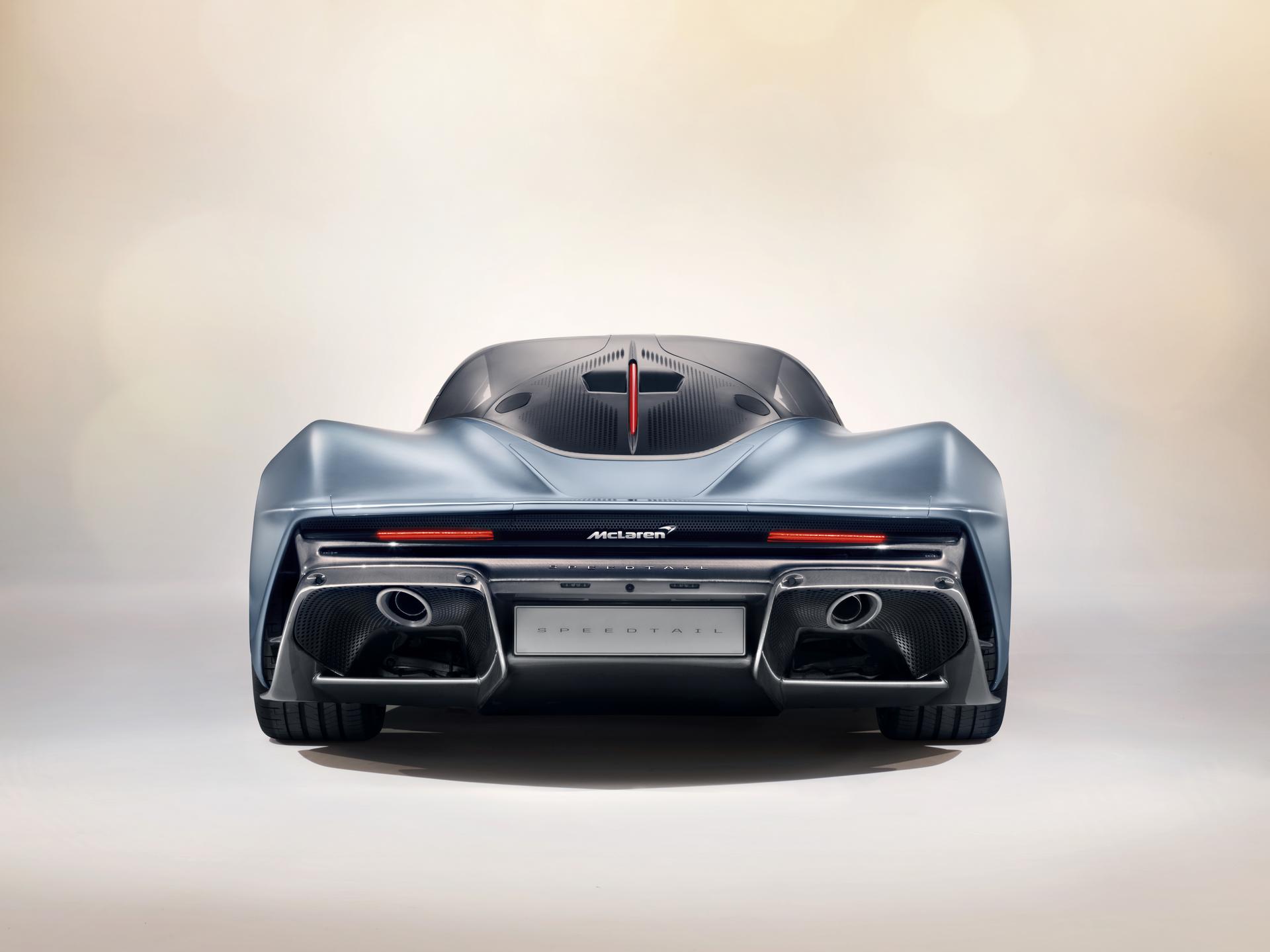
Introducing the New McLaren Speedtail: 250+ mph, 1000+ HP, $2.2M Pricetag. Wow.

Meet the new Speedtail – an aptly-named addition to McLaren’s Ultimate Series. This limited-edition car, of which only 106 examples will be built, represents McLaren’s unyielding pursuit of top-speed.

As of today, only three cars fall under McLaren’s Ultimate Series designation: the P1, the Senna, and now, the Speedtail. The Speedtail is also the first of 18 new models that McLaren intends to unveil between now and 2025.

Whereas other McLaren’s blend handling, acceleration, top speed, and driving dynamics in a harmonious package, the Speedtail has a more singular focus. And that focus is speed. Ludicrous amounts of it.

The Numbers

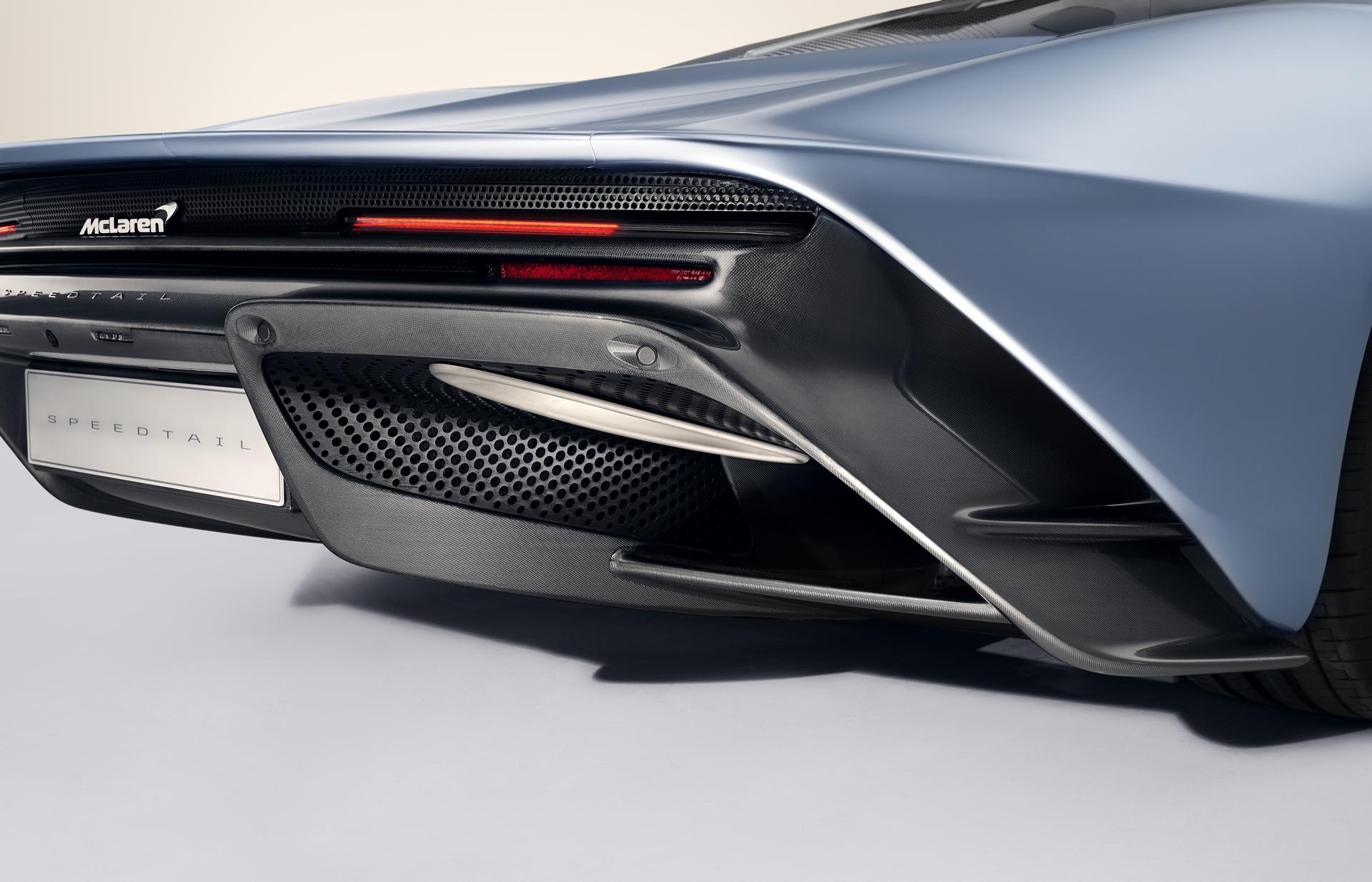
McLaren Speedtail Rear EndMcLaren Speedtail Rear End

What we know so far:

  • Power: 1,035 horsepower from a yet-undisclosed hybrid powertrain
  • Top Speed: 250mph (or more)
  • Acceleration: 0-186mph (300 kph) in just 12.8 seconds.
  • Weight: Approximately 830 kg
  • Price: $2.2 million price tag
  • 106 examples that are 100% sold

The Speedtail is a Blend of Sweeping Lines, Aggressive Bodywork, & Incredible Opulence

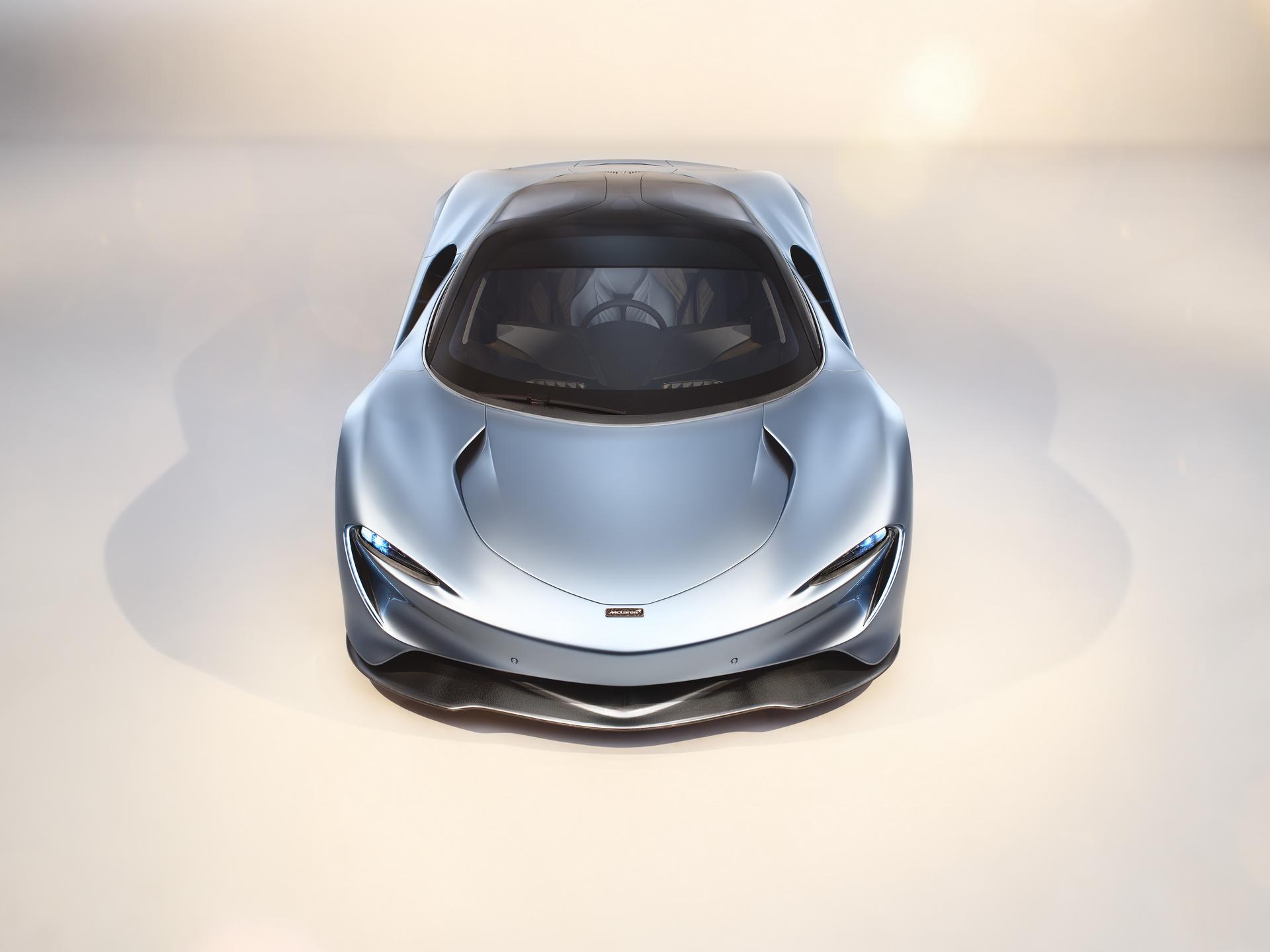
McLaren Speedtail Front EndMcLaren Speedtail Front End

Exterior

Looks are subjective and because of that I rarely oogle or outright proclaim how good looking a thing is (especially a car). We all have our tastes.

But an exception must be made for this McLaren. It is simply gorgeous and awe-inspiring on its own right; even if I didn’t already know that it was a machine capable of reaching speeds that no sane person would dare take it, on looks alone that message would be received loud and clear.

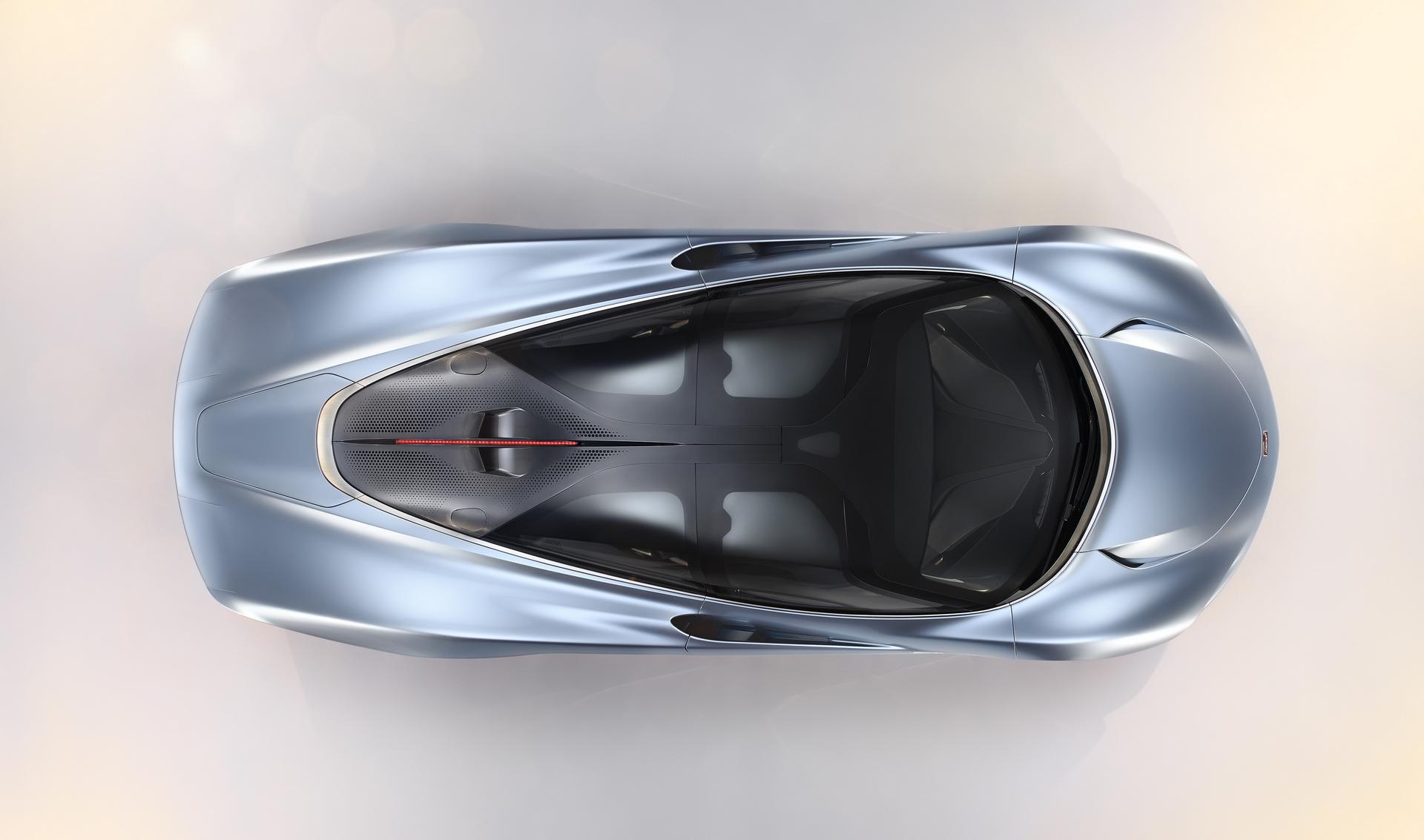
McLaren Speedtail Top ViewMcLaren Speedtail Top View

It’s one of the few cars today that elicits an inherently emotional response. One replete with all the superlatives you can think of, and perhaps those wouldn’t be enough to do the Speedtail justice.

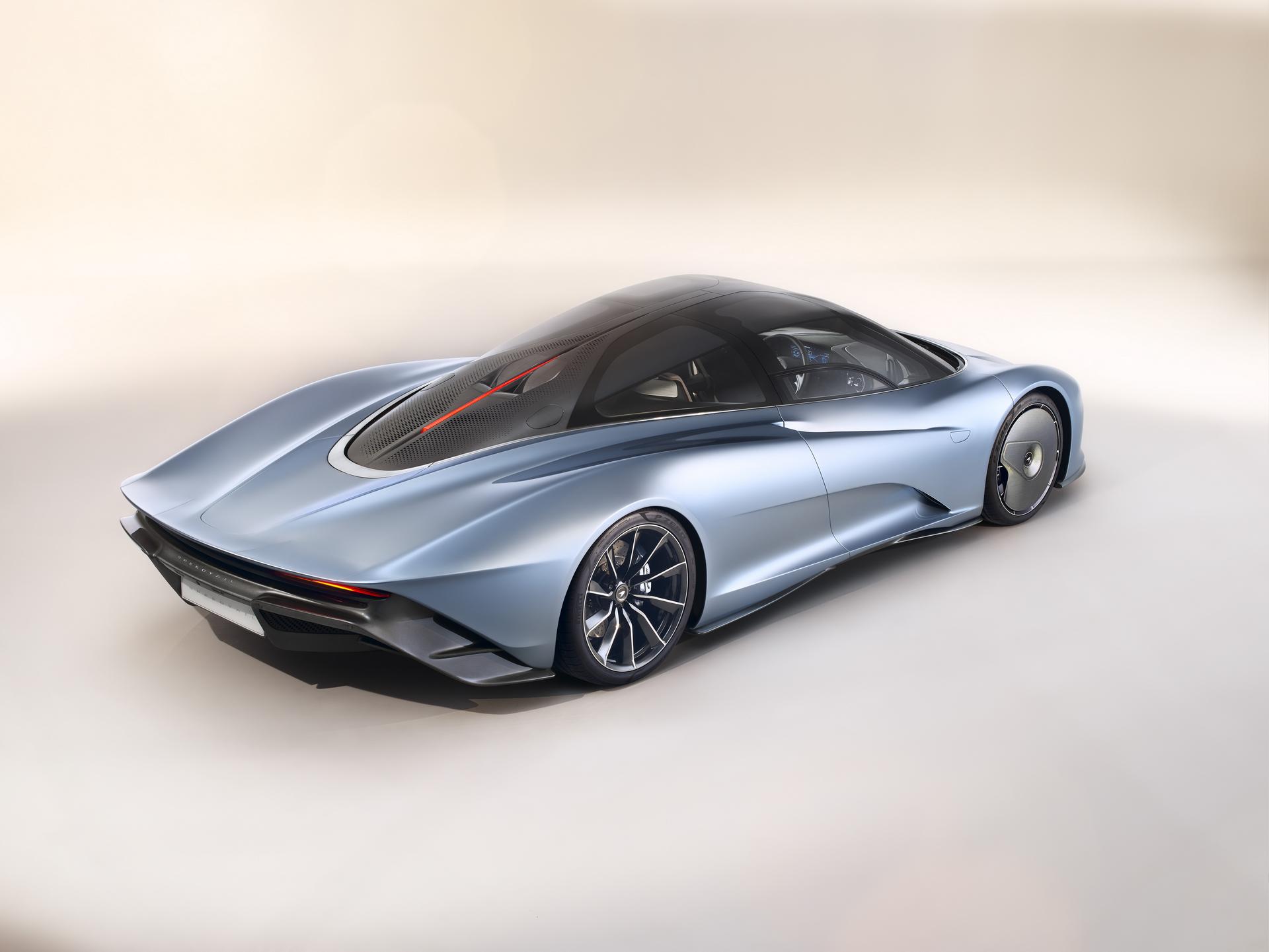
McLaren Speedtail Rear 3/4McLaren Speedtail Rear 3/4

Its silhouette sweeps from the front of the car to the extended rear – a teardrop shape that is the key to its exceptional aerodynamics – with side accents that add an organic edge to its smooth profile. The front rims are enclosed – for maximum top-speed – while the rears remain exposed. The entire care oozes elegance, class, and barely-contained power that the lucky driver will be able to unleash.

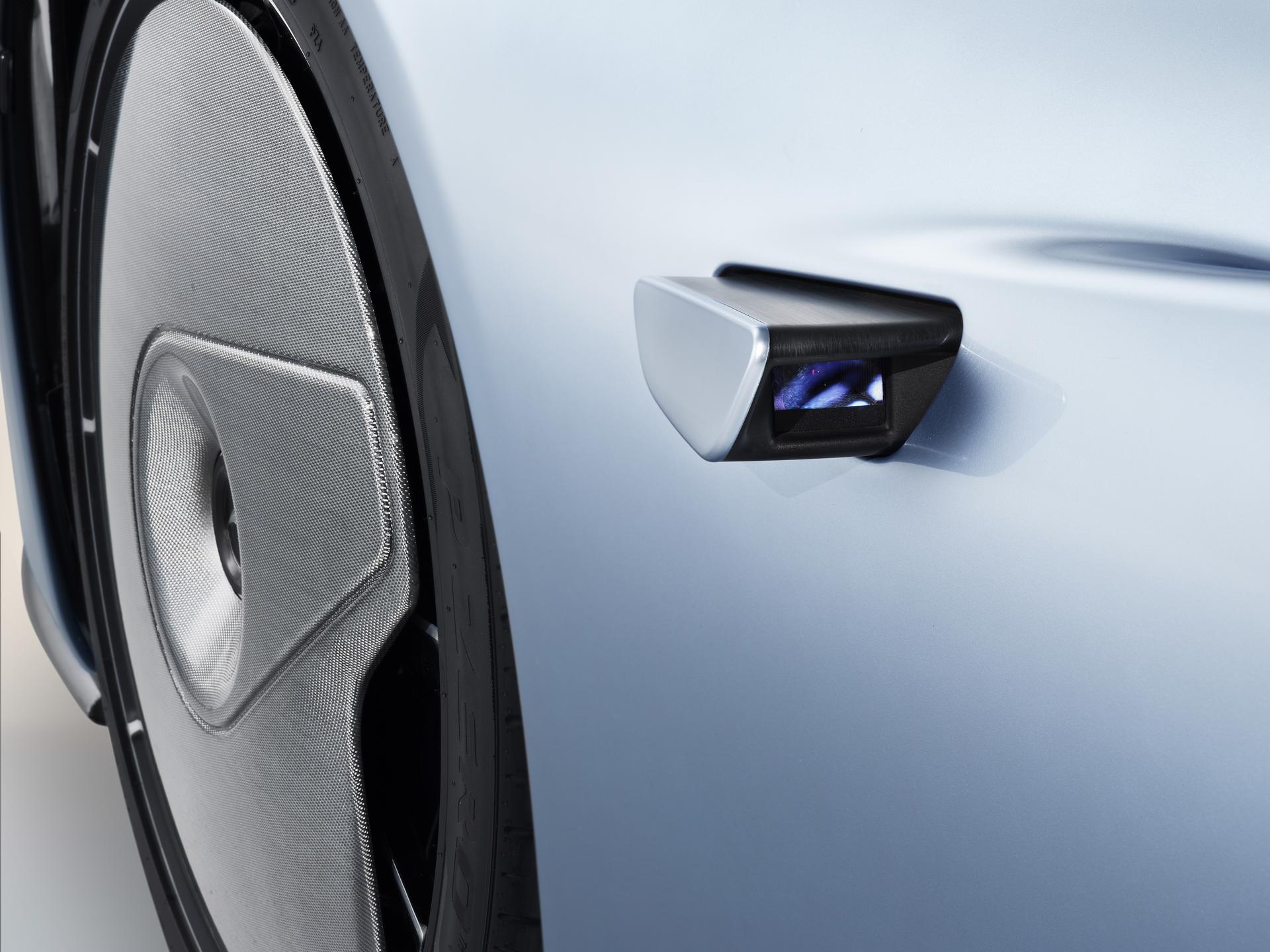
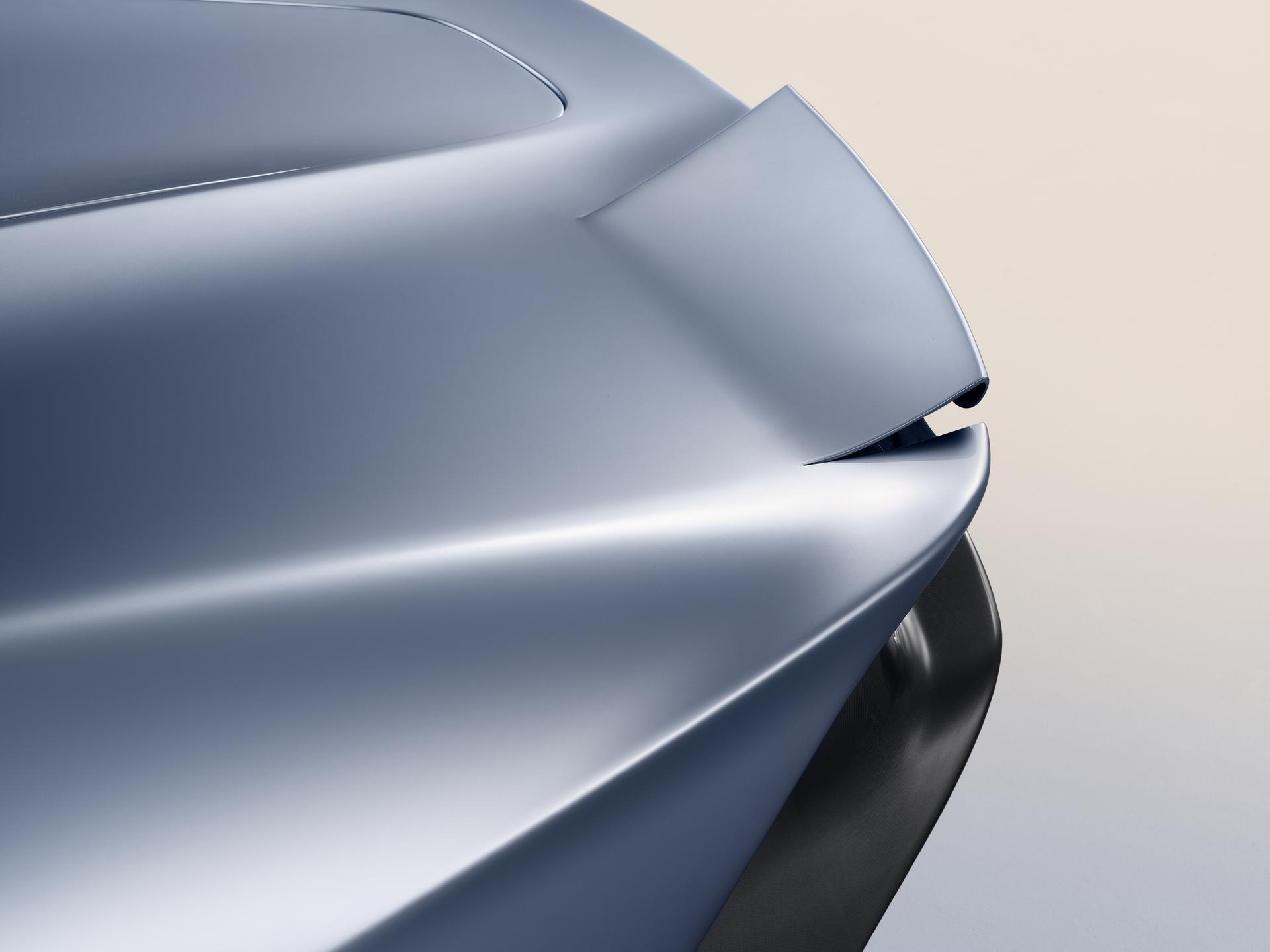
McLaren Speedtail Door HandlesMcLaren Speedtail Door HandlesThe Speedtail features hidden door handles and dual rear ailerons that blend seamlessly into the bodywork. Panel gap tolerances of 1mm remove any visual break, resulting in a single smooth line that follows the car from head to tail.

This type of precision is possible thanks to new technology that incorporates flexible carbon fiber- the bodywork will move and bend with the car as it accelerates.

Because of this, there is no turbulent air. No drag. No loss of speed. No break for the eye to get distracted by.

McLaren Speedtail Rear AileronsMcLaren Speedtail Rear Ailerons

That unleashing of power, by the way, will take place in ultimate luxury. Let’s look inside.

Interior

McLaren Speedtail InteriorMcLaren Speedtail Interior

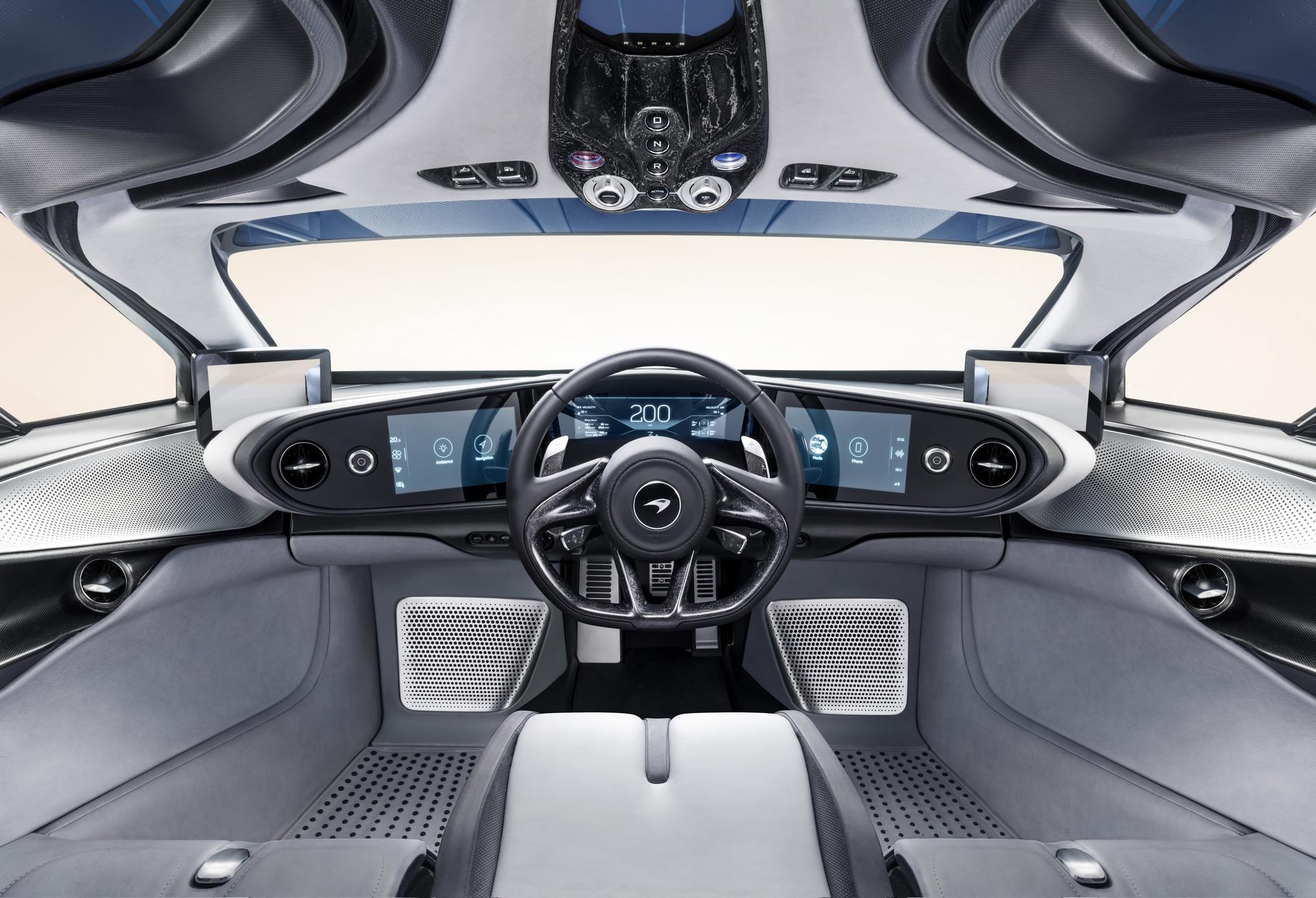
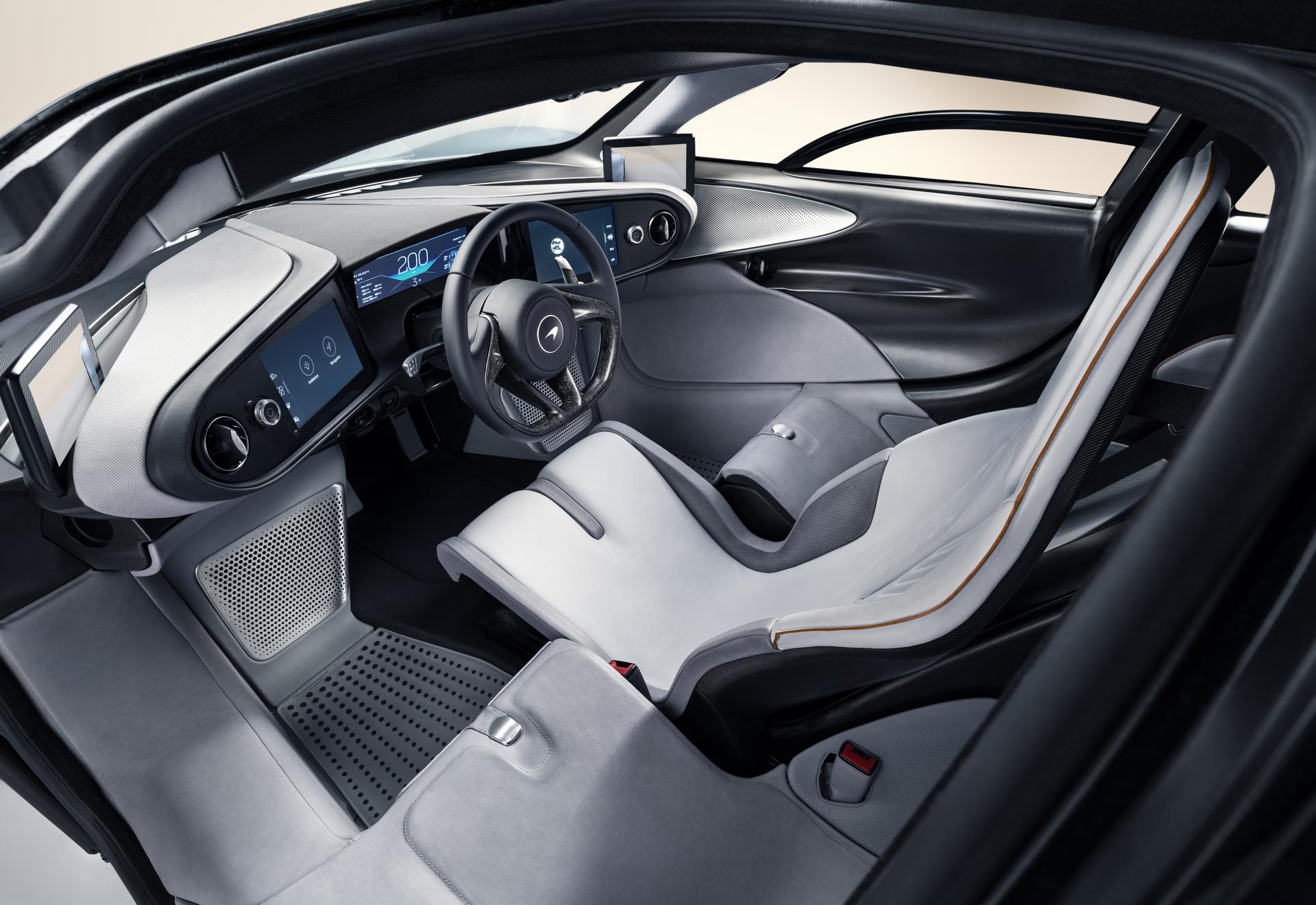
The cabin is perhaps the best example of luxurious minimalism taken to the nth degree. The center-aligned driver’s seat – reminiscent of the venerable F1 – gives the driver a commanding view of the road ahead. Slightly flanking the driver on either side are two passenger seats. The world’s fastest GT car is once again a three-seater.

McLaren Speedtail InteriorMcLaren Speedtail Interior

McLaren has managed to pay homage to its past while demonstrating how the future should look and feel. Three big screens make up the majority of the dash, and bleeding-edge technology is seamlessly incorporated throughout the car. Even the windshield, which features an electrochromic top section that can dim on command, is an example of the technological ability of the Speedtail.

McLaren Speedtail InteriorMcLaren Speedtail Interior

Long Live the Hyper GT

McLaren Speedtail Rear End`McLaren Speedtail Rear End`

McLaren has labeled the Speedtail a Hyper GT, which seems fitting given the excess of the car and its abilities. This is a car that’ll take you to 250mph, and then to the Opera, on the same set of tires (to paraphrase McLaren spokesperson Wayne Bruce).

More than that, the Speedtail is a car that reminds us that the automotive world serves to inspire and excite us as much as it does to move us from one place to the next. Though, in the case of the Speedtail, it very much moves us.

Video Overview

Care of Carfection.

[embedded content]

Gallery

McLaren Senna Crashes in Munich Shortly After Delivery

All of the downforce in the world would not have stopped this brand new McLaren Senna from crashing into a wall in Munich. The supercar looks to have been delivered on Saturday this week if a Facebook post made by McLaren Munich on Saturday is to be believed. The accident happened on Saturday, hours after deliver, in the Munich suburb of Grünwald.

The photos show the scene of the accident. Judging by the tyre marks left on the tarmac, it looks likely that the drive lost control of the rear end. The front seems to have buried itself in a wall although the extent of the damage is not known.

The driver of the car was said to be a 43 year old businessman from Grünwald. The car was said to have sent a signal to the dealership who were on hand within minutes to recover the car. It had less than 100 kilometres on the clock at the time of the accident, however, the damage is not thought to be severe enough to cause a write-off.

The McLaren Senna is a limited edition Ultimate Series McLaren. Just 500 will be produced and McLaren is currently working on delivering the production run to its customers. While it’s 800 hp twin-turbocharged V8 is impressive, it is in the handling department where the car really excels.

The Senna produces a staggering 800 kg of downforce at 250 km/h, making it a potent tool for the track. We drove it recently, read our review of the McLaren Senna by clicking the link. Rear the official details of the McLaren Senna by clicking through.

McLaren upgrades 720S arsenal with a Track Pack Specification

Two years ago, McLaren Automotive permitted owners to sharpen the 570S coupe with a new Track Pack, which brought the added benefit of lopping 55 pounds off the already svelte two-door. The carmaker says 10 percent of buyers choose it. Earlier this year, the Track Pack migrated to the droptop 570S, eliminating 73 pounds of performance-blunting mass. With the 720S GT3 customer race car testing throughout Europe as you read this, McLaren has announced a Track Pack Specification for the 720S road car.

McLaren made the announcement in the UK, but the circuit bundle is certain to make its way here, following the previous two. When it does, you can also expect it to cost roughly the same as a decently powered track car. That’s because to get to the Track Pack, you first need to option the Performance Pack, which appends hood and rear fender intakes, carbon fiber exterior mirror caps, and ambient lighting in the engine bay.

Outside, the Track Pack combines the so-called “MSO Defined Gloss Finish Visual Carbon Fiber Active Rear Spoiler” with a sports exhaust and “super-lightweight” forged 10-spoke wheels. Inside, a pretzeled titanium bar spanning the cabin secures six-point harnesses for the driver and passenger lightweight carbon fiber racing seats. The driver grips an Alcantara-rimmed steering wheel, and the bespoke division puts its 18th-century-novel naming scheme to work again with the “MSO Defined Satin Visual Carbon Fiber Extended Gearshift Paddles.”

No changes are made to the 4.0-liter twin-turbo V8. Nevertheless, when it’s time to win the track-day trophy, the properly equipped 720S driver can make best use of that engine with the McLaren Track Telemetry (MTT) system, which marries data-logging software to three video cameras around the car.

When it’s all assembled, adding equals subtracting: the £28,360 price (about $37,000) is less than the price of optioning Track Pack components individually, and returns a 47-kilo (53-pound) drop in curb weight. (And pushes total cost to about $293,000.) For our purposes, the 570S Track Pack added $20,615 in cost in 2016. Escalate that with a respectable premium for the march of time and the fact of the superior 720S. Or rather, have your private banker do the escalations, eh?

Related Video:

McLaren 600LT Review

McLaren continues its rapid model range expansion with the introduction of the fourth model to carry to ‘Longtail’ name. The McLaren 600 LT follows in the footsteps of the legendary F1 GTR Longtail race car, the 675 LT Coupe and the 675 LT Spider. This obviously sets high expectations for McLaren’s latest performance model, can it live up to it?

The McLaren 600 LT is based on the 570S which was the first McLaren to occupy a position in the Sport Series. The 570S has evolved an entire family since it was launched and now includes a Spider, GT and entry-level 540C. The new McLaren 600 LT is the halo model for the Sport Series. All 570S-based models use the same carbon fibre monocage and 3.8 liter V8 turbocharged engine. The similarities between the 600 LT and the rest of the family stop there. Over 25% of the parts used in the new 600LT, including many key components like brakes, suspension, seats and the 600 LT body, are completely new.

The ultimate goal was to make the 600 LT significantly lighter than the 570S. By using parts developed for the 720S, P1 and the McLaren Senna, engineers have managed to shave 100 kg off of the weight, bringing the total down to 1,247 kg. The weight can be reduced even further by choosing some of the carbon fibre components from the optional extras package.

The Longtail is not just nostalgic name. The 600 LT is actually 74mm longer than the 570S. It has a fixed rear wing and a new, wider, deeper and taller diffuser. The exhaust has been shortened and moved up to just over the driver’s shoulder. The 600 LT sits 8mm lower to the ground, combined with the new front splitter and larger air inlets, these attributes give the 600 LT an agressive visual appearance.

The engine has been tweaked to produce 600 hp and 620 Nm of torque. 0-100 km/h takes just 2.9 seconds, 0-200 km/h, 8.2 seconds and if you keep your foot down the 600 LT will eventually top out at 328 km/h. I wasn’t able to test the top speed of the 600 LT but what I was able to do is to put the McLaren 600 LT through its paces on one of the most technical circuits on the F1 calendar; the Hungaroring just outside Hungary’s capital Budapest.

The first thing you notice when you open the butterfly doors are the new seats. Carried over from the McLaren P1 they are a whopping 21 kilograms lighter than the seats in the 570S. For those that want to save even more weight, the new Senna seats are available as an optional extra and shed an additional 5 kg.

Navigation and climate control are available as no-cost options but they come at the price of adding a few kg back. On a hot and sunny day in Hungary, I’m happy to report that my grey 600 LT had climate control.

Accelerating out of the pits to the first corner, the V8 howls loud. The reduced noise isolation and stiffer engine mounts clearly do their job, improving the audible experience. Yet there is something more striking than the sound of the 600LT coming into the first corner and that is the brakes and their feel. Carried over from the 720S they are a huge improvement over the 570S.

The brakes are not the only thing carried over from the Super Series, the double wishbones along with the lower ride height and 10mm wider front track are key to the improved stability of the 600 LT. It is a real joy driving the McLaren 600 LT at the Hungaroring. Especially through the technical twisty and interlinked back end of the circuit. It suits the LT very well.

The 600 LT bridges the gap with the Super Series and despite a small power deficit, it is better and at least as fast around the track as the 675 LT. It is a reminder of the speed at which McLaren develops and introduces new and improved components. It feels lightyears ahead of McLaren’s original MP4-12C. That car was released less than a normal 7-year car-cycle ago. The quick model succession has not always been without criticism but the owners of the 600 LT reap the benefits from the steep learning curve and rapid development at McLaren through the last 7 years.

Talking about lifecycle – production of the McLaren 600 LT starts this October and will run for exactly one year. Production is limited, although it is not clearly defined exactly how many will be build. This has to do with overall production plans for 2019, but it is certain that McLaren dealers around the globe already have a bigger waiting list than what the factory will be able to fulfill. Luckily McLaren have already confirmed that a 600 LT Spider will follow the Coupe next year.

McLaren divulges Ultimate Series Speedtail hypercar will make more than 986 hp

With as much as we know about the McLaren Speedtail, we’re still missing the finest, most important details. Now that hypercars are no longer unicorns but regularly released products, upper three- and four-digit horsepower figures need to be placed in the context of the segment and technical aspects to make the most impact. However, the latest morsel of news on the Speedtail is another step in the right direction. McLaren Automotive CEO Mike Flewitt told TopGear magazine at an owner’s club gathering that the next Ultimate Series champion would produce “more than 1,000 PS,” meaning at least 986 horsepower.

Flewitt would only say about the rest of the engine that it will employ a recognizable architecture and “a slightly different hybrid application” than in the P1. We’ll take that as euphemism for the 4.0-liter twin-turbo V8 that features throughout the Sports and Super Series ranges, making 426 hp in the 570S GT4 and 710 hp in the 720S. The P1 used a 3.8-liter twin-turbo V8 making 727 hp, helped by an electric motor adding another 176 hp, for 903 in total.

We’re not sure how much any owner will feel the 83 hp difference between his P1 and his Speedtail, but Flewitt said the company’s focused “on attributes rather than engines.” What an owner will register is the Speedtail being much faster than the P1; the latter was limited to 217 miles per hour, the English automaker has already pledged the Speedtail will be the fastest-ever McLaren, which means eclipsing the 243 mph that the F1 achieved.

It’s likely that the 106 Speedtail owners will also note the three-seat coupe is more comfortable than both than its spiritual inspiration the F1, and the P1. Flewitt said his team’s developed a hypercar that’s “super comfortable, super to drive,” and a “better driving proposition” than some of the multi-million-dollar competition going for top speed records.

Speaking of top speed records, the McLaren Speedtail won’t be going for any. The horsepower wars might not be over, but when an Aston Martin road car makes 1,130 hp, the battle’s effectively been won by everyone who can take the field. Upstarts are turning their armaments on the physical walls of top speed, and Flewitt wants none of it. On Hennessey’s hunt for 300 mph with the Venom F5, Flewitt demurred, “I might come out with John and take the opportunity to do a high speed run with our car, but we’re not chasing a top speed for the sake of it,” adding that his Speedtail “is more rounded than that.”

McLaren’s latest wonder doesn’t start deliveries until next year, but we’ve heard there’ll be more Speedtail news coming in October.

Related Video:

2018 McLaren 570S & 570GT

McLaren 570S & 570GT – Different Trim Levels Offer a Bespoke Experience

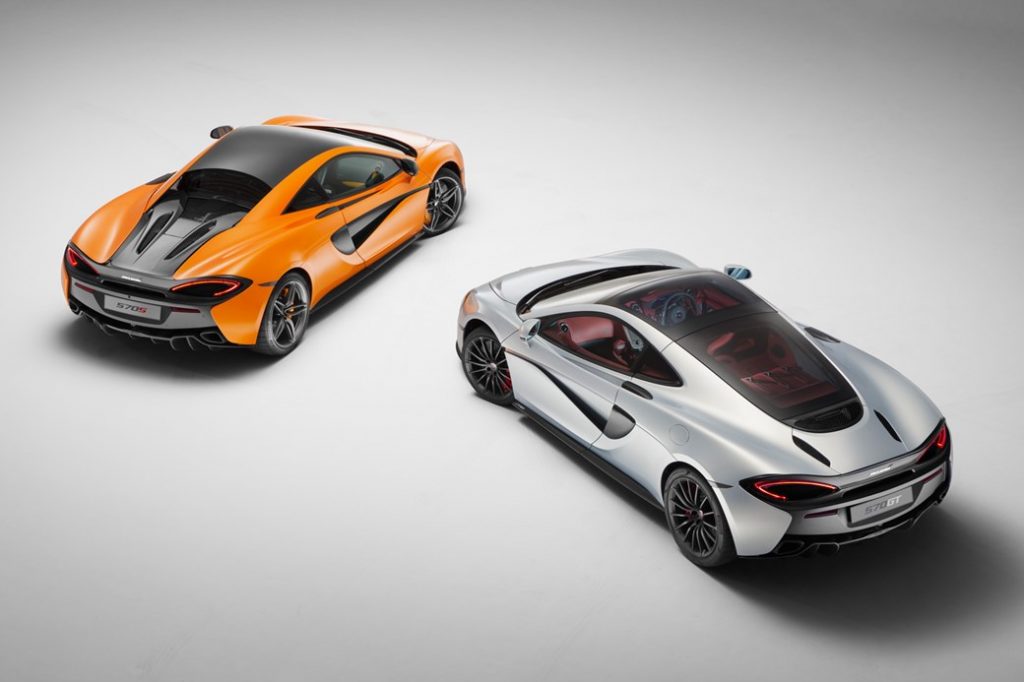
At the outset, the 570 models don’t look particularly dissimilar from each other, or anything else in the McLaren line up for that matter. Not necessarily a bad thing, but it would take a keen eye and knowledgeable enthusiast to distinguish it from its stablemates, of which it shares the same sleek design cues and carbon-tub chassis.

The S trim comes in a coupe and spider (convertible) configuration, while the GT is offered only in coupe format with a panoramic roof and modified rear glass hatch that offers additional storage space. The GT trim also offers a plethora of customizations which allow for custom paint schemes, interior detailing and even one-off builds and bespoke options via the MSO (McLaren Special Operations) department.

Features and Highlights

Engine

Both the S and GT employ the same mid-mounted 3.8L twin-turbo V8 powerplant – delivering 562-horsepower @ 7,500 rpm and 443 lb-ft of torque @ 5,000-6500 rpm to the rear wheels – which is mated to a 7-speed SSG (seamless-shift gearbox) transmission.

The engine has been praised for its linearity, and although peak numbers are achieved after 5,000 rpm, the car also has plenty of low-end grunt and responsiveness. The end result is a 0-62 mph time of just 3.4 seconds and a top speed of 204 mph (S trim).

Chassis

Thanks to the use of McLaren’s infamous carbon-tub chassis, the 570S weighs in as little as 1,350 kg, with the spyder and GT trim being slightly heftier with the benefit of extra equipment.

Carbon-ceramic brake discs and Pirelli P Zero Corsa tires come standard on all trim levels, and the aforementioned Sport Pack ($5,950 USD) exclusive to the GT, includes dynamic handling options which essentially give the GT an identical chassis setup to the S. Adaptive dampers allow the driver to control stiffness and rebound settings by offering Normal, Sport and Track modes.

Exterior

The 570 model, like all other McLarens, was designed to be aerodynamic perfection. The body is adorned with shrink-wrapped aluminum body panels, while the teardrop-shaped cockpit reduces drag and offers a one-off, McLaren-exclusive design cue.

The most notable stylings come in the form of the slimline ‘light blade’ LED tail lights, flying rear buttresses which seamlessly connect the roof to the rear, signature Dihedral doors, and contoured front nose.

The GT trim incorporates a higher rear lip spoiler compared to the S, with the most significant difference being that the GT has slightly taller roofline thanks to its panoramic roof and rear glass hatch which together, offer more stowage, headroom, luxury, and comfort.

Interior

A wide range of choices for colorways, designs, and finishes allows you to truly customize the interior for either of the trims.

The TFT Instrument Cluster and Intelligent Entertainment touchscreen continue to be the focal point of information relay, displaying vitals such as speed, engine rpm, gear selection, operating temperatures and infotainment controls.

For the audio system, a 4-speaker 240W and 8-speaker 320W setup comes standard in the S and GT respectively, with a Bowers & Wilkins 12-speaker surround system optional for both trims.

Verdict

Producing supercars that can capably negotiate the demands of everyday, real-world driving are nothing new, nor exclusive to one marque – but it should be said that McLaren leads the industry in this regard.

We now live in an era where consumers expect their new supercar or hypercar to be as comfortable fetching groceries as it is at carving out the racetrack – one car for every occasion. Throughout the entire line-up, McLaren shows remarkable consistency and innovation in its implementation of this increasingly important parameter.

For the 570 line, the GT now offers the best of both worlds with the introduction of the Sport Pack option. With every new update and revision, McLaren inches closer to perfecting the “everyday supercar”, and the new 570 models are amongst the latest and greatest examples of this.

In my opinion, this should make the 570S and particularly the 570GT, one of the most desirable new supercars in this new-age market.

Specifications and Performance Summary

Pricing and Model Info

Make McLaren
Model 570
Generation 2016 – Present
Sub-Model S/GT
Car type Coupe (S/GT) or Spyder (S)
Category Series Production Car
Built At Woking, England
Base Price (USD) $191,100

Chassis and Powertrain

Curb Weight 1,350 kg (2,976 lbs) for S Coupe
Layout Mid-engine
Driven wheels Rear-wheel drive
Suspension Specially tuned adaptive dampers and springs
Brakes Lightweight composite brake system with aluminum hubs and iron discs
Engine V8
Aspiration Twin-turbocharged
Displacement 3.8 Litres
Transmission 7-Speed SSG
Tires Pirelli P Zero Corsa

Engine Output

Power 562 hp @ 7,500 rpm
Power / litre 148 hp / litre
Power-to-weight ratio 5.30 lbs / hp
Torque 443 lb-ft @ 5,000-6,500 rpm

Performance

0-62 mph 3.4 seconds
0-124 mph 9.8 seconds
¼ mile 11.1 seconds @ 132 mph
Max speed (S coupe) 204 mph

Photo & Video Gallery

[embedded content] [embedded content] [embedded content]

Novitec Reveals Upgraded McLaren 720S

What happens when you take the top performing supercar on the market today and let one of the best tuning companies have their way with it? Novitec is here to let us all know. On their latest project, the German tuning company decided to up the ante with a car that leaves nearly all its competitors in the dust. The McLaren 720S does not fall short on power without additional aftermarket modifications, by any means. If there’s anything to say about the British supercar, it’s that it is blisteringly quick. So its only makes sense to give it a Novice treatment, right?

As the name suggests, the standard McLaren 720S boasts 720 horsepower coming from a 4.0 litre V8 propelling the car from 0-200 km/h in 2.9 seconds, and keeping the fun going until 341 km/h. Now, Novitec places the 720S firmly in hypercar territory with a conversion that rockets it to 100km/h in just 2.7 sec, to 200km/h in 7.5 seconds, and on to a sensational 346km/h maximum speed. Bear in mind that all this is coming from a super series McLaren – that is to say not a limited ‘ultimate’ or ‘legacy’ series car that costs an arm and a leg. In fact, this kind of street legal performance usually comes at price tags above €1 million, whereas the 720S has an MSRP south of €300,000.

The options list for the 720S tune extends to a three-stage engine conversion programme for up to 806hp (592kW), along with 878Nm of torque, sport exhaust systems, carbon-fibre aerodynamic components, suspension upgrades, and the distinctive Novitec MC1 forged alloy wheels.

The available aero package includes headlamp inserts, a full width front spoiler with a more pronounced lip, air splitter, side fins and longer air intake surrounds to improve the channelling of ram air. All those external modifications are of course in carbon fibre. Completing the carbon-fibre madness is a set of optional and purely decorative components including the air intakes for the front bonnet, rear engine cover, rear bumper side trims, side air intakes, sill entrance panels, and door mirror caps.

Novitec hasn’t released a price for the tune yet, but we think it’ll worth the upgrade!

McLaren Special Operations Announce Line-Up For Salon Privé 2018

McLaren have been on a bit of a hot streak with their latest models. Every car rolling off the production line has redefined the benchmarks in their respective categories, this has been reflected in the strength of the British manufacture’s sales figures that have been boosted with the 720S. With more McLarens on the streets, a number of owners are turning to MSO (McLaren Special Operations) to buy into more exclusive or unique cars to really stand out.

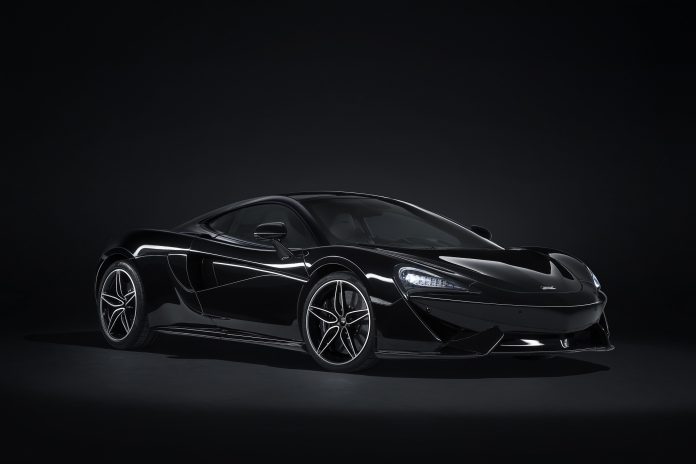
This is nothing new, we have seen a plethora of cars emerge from MSO and wow crowds at motor shows from Beijing to Los Angeles – now it’s time for Salon Privé to be bestowed with the presence of two MSO machines. The first car is a 570GT from the MSO Black Collection. The name gives the game away with black being the consistent theme in and out. Only 100 will be made and all feature MSO Bespoke Carbon Black exterior paint, MSO Titanium Exhaust and the sports dynamic handling pack that sets the suspension set up back to that in the 570S. Inside it is business as usual with lashings of soft leather and alcantara, it’s all very delicious.

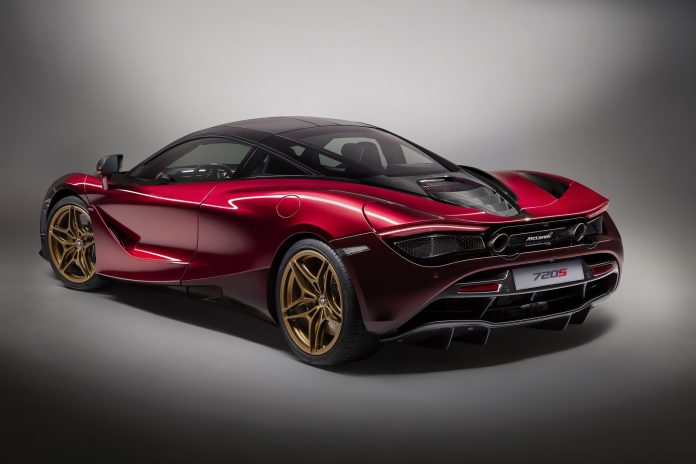
If bold and bright is more your thing, the 720S ‘Velocity’ is for you with much punchier paintwork. There are actually two different colors on the body of the car – Nerello Red on the front and upper panels, including red carbon, that transitions into a spellbinding Volcano Red covering the sides and rear of the body. Still not drooling? MSO have opted to complete the car with metallic bronze wheels and a plethora of carbon fiber parts. The red bleeds into the interior too with Harissa Red leather.

You’ll only be able to see the cars together at Salon Privé between August 30th and September 2nd!

First U.S. McLaren Senna has green carbon fiber body

The McLaren Senna is one of the hottest cars of 2018. Named after one of the greatest racing drivers, the British automaker’s latest and greatest is an immensely fast machine. It certainly looks the part, too, with a giant rear wing, shin walloping front splitter and all manner of other aero aids. Today, McLaren released a batch of images of the first car heading to North America, and it’s finished in one of the most beautiful shades of carbon fiber we’ve ever seen.

Some lucky owner in New York City will be taking delivery of a new Senna with emerald green bare carbon-fiber bodywork and a white-leather interior. The car, like all bespoke McLaren models, was customized through McLaren Special Operations. The car bares the MSO logo on the headrests. Nearly every exterior panel is finished in green. McLaren says the bodywork consists of 67 panels and takes nearly 1,000 hours to produce. Other exterior design touches include blue and red wheel locks and ball-polished wheels.

The Senna is powered by a 4.0-liter twin-turbo V8 making 789 horsepower and 550 pound-feet of torque. It can hit 60 mph in just 2.7 seconds and 124 mph in 6.8 seconds. There isn’t much mass to move around thanks to a dry weight of just 2,641 pounds.

Related Video:

McLaren to go full hybrid by 2025 as part of plan for 18 new models and derivatives

A few months ago, McLaren Automotive CEO Mike Flewitt provided some insight on the future lineup at the English carmaker. He told Autocar we could expect the next generation of sportscars to feature hybrid powertrains and some measure of self-driving capability. In comments this weekend at the Goodwood Festival of Speed, Flewitt appears to expand on and clarify a few aspects from the earlier report, based on updates to the company’s business plan. First, instead of the earlier report that the Super Series and Sports Series would go all by hybrid by 2022, that won’t actually be complete until 2025.

As with the ubiquitous 3.8-liter V8, a single hybrid powertrain will come in different outputs in different models. Flewitt wouldn’t confirm whether the hybrid would be based around a V6. He did say, however, that the system is “designed… to have more differentiation than we have had out of the current package,” and performance variety would come from tweaking the electric portion of the powerplant, not the ICE. He didn’t expand on that point, but that could mean a wider range of driving characteristics within each series, or a greater power spread between series’, or both. The carmaker’s working on batteries that can do 30 minutes of track use, suggesting a potent pack with a high degree of tunability.

The 2025 deadline for hybridization could be due to a rollout of 18 new models and derivatives. Right now, McLaren makes six cars, five in the entry-tier Sports Series, the lone 720S in the Super Series; we don’t count the Senna because it’s sold out. Even overhauling the entire lineup, and counting the BP23 and the P1 successor in 2025, that still leaves ten new and offshoot models in the next seven years. Whatever they are, they’ll help McLaren reach its increased target of 6,000 sales a year by 2025.

Flewitt also took the chance to swap the word “autonomy” for “augmentation” when speaking of future driver assistance technology. In the Autocar report, the CEO said the lineup would need autonomous features “designed in for safety, legislation, and emissions.” At Goodwood, he recast the driver aids as “‘augmentation’ technology,'” the focus on helping the driver be better behind the wheel instead of taking the wheel for him. “Imagine,” said COO Jens Ludman, “having a virtual coach who could show you how to improve on a track.”

Related Video:

The New McLaren Longtail is Here!

News from Woking is that the new McLaren 600LT is out and about, ready to eat asphalt! With new carbon fiber body, a fixed wing, it got slightly longer but still looks cool. The 600 stands for 600 metric horsepower or 600PS. It has a twin-turbo V8 engine, pushing out… Well, 600 metric horses.

It’s iconic because only a select McLaren cars get the honor to be called a ‘Longtail’. Focused for track aerodynamics, a McLaren LT is all about speed and the driver. Bare bones fun, it’s going to be an epic car. We’re just so happy that McLaren is pushing out hit after hit in the last 5 years or so.

Decked out in carbon fiber everything, and integrated exhausts, the 600LT is bound to catch someone’s eye. It starts out at over $200,000 and good luck trying to get an allocation. Here’s what it looks like sideways,

[embedded content]

McLaren Senna: Track Review – Carfection

Join Henry Catchpole at Estoril for some track time with the McLaren Senna Hypercar. Is it a brutal road car or a true racing car? Sit back and enjoy our track review.

[embedded content]

Mclaren 570S-based track car spied at the Nurburgring

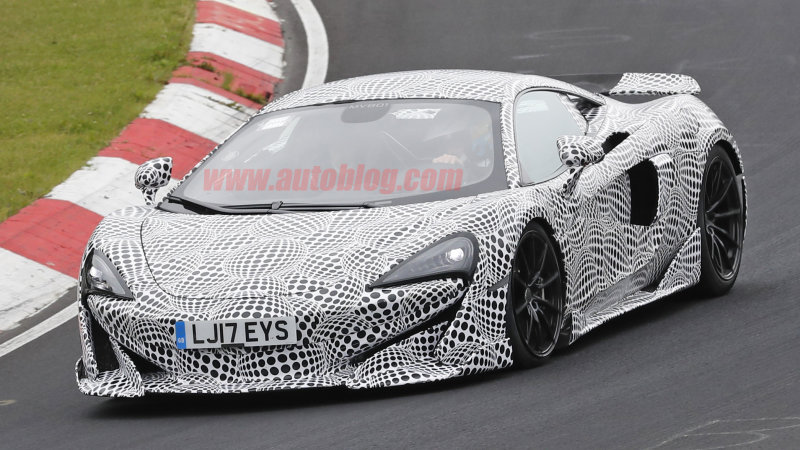
We’re just a few days away from the reveal of Mclaren’s latest car, a track vehicle of some sort, but new spy shots give us a sneak peek at the new car. It’s unquestionably based on the McLaren 570S and its Sports Series variants. It also looks like a pretty hardcore machine.

We can tell this is the car McLaren has been teasing the last few weeks because it has the same top-mounted exhaust, and the same taillights and extreme diffuser. There are a number of details we weren’t able to see in the teaser images, though. A big one is the big rear wing on the back. It’s matched by deep side splitters with tall fins for channeling air. And of course there’s a deeper front splitter to finish things off. It also appears that the intake scoops on the sides are a bit larger than on the normal 570 models.

McLaren hasn’t revealed any specifics about this new vehicle. All the company has said is that this will be a serious, no compromises track car. It’s a safe bet that it features a number of suspension upgrades to go along with the aerodynamic changes. It’s possible that it has more power, too, just as the 675LT had more power (and a revised name) compared with the 650S. We won’t have long to wait for the details, since McLaren will show the car on June 28, and it will be driven at Goodwood on July 12.

Related Video:

McLaren reveals top-exit exhaust of new model, announces launch date

McLaren just released some more tidbits of info about its next car, including a new teaser image. This one explains the lack of the exhaust in the last photo: The exhaust comes out of the top of the engine cover. Two big outlets sit at the back and center of the engine cover, and it looks like they’re just ahead of the retractable rear spoiler. They certainly look cool, probably sound cool, and we wouldn’t be surprised if there’s a performance reason behind this placement.

Besides the sneak peek at the exhaust, McLaren made a few broad statements about the car. It said that it will be more powerful and lighter than whatever it’s based on.The company also indicated earlier that the car will be very hardcore and uncompromised. From the previous teaser, we’re fairly certain the car is based on the Sports Series McLarens that include the 570S, 570GT and 570S Spyder in the U.S., and the 540C in other markets. Since the names of the cars are based on horsepower, and this one will make more than the current 570 models, it probably won’t use the 570 moniker.

We also won’t have to wait too long to see the car revealed. The company will show it off on June 28 at 7 a.m. Eastern time. We’ll then get to see it in action when it heads up the hill at Goodwood Festival of Speed on July 12.

Related Video:

2018 McLaren 720S – The Best of Britain

Blurred Lines

While romping around in the new McLaren 720S, things around you quickly become a blur as you accelerate from 0-60 mph in 2.5 seconds. Pavement markings aren’t the only lines being blurred though – thanks to the 720S, so too is the line between supercars and hypercars.

These days, the McLaren 720S is leading the charge of a growing number of cars – a raucous gang of automobiles which are causing a disturbance to the metrics in which we define what a hypercar is. Government restrictions and traffic laws put a ceiling over just how far a road-worthy car can go, and the 720S – a supercar – pushes ever closer to that limit.

2018 McLaren 720S

The great thing about the McLaren 720S is that it perfectly blends the best of both the supercar and hypercar worlds – you get all the performance (if not more) of today’s ridiculously expensive hypercars, but at a relatively low supercar-price.

Starting at $288,845 USD the 720S looks like the bargain of the century, as you quickly realize that a million-dollar budget won’t necessarily net you a more capable car. In fact, even when fully optioned out, it remains less than a third of the price of most “entry-level” hypercars.

With such pedigree, the successor to the 650S gets to rub shoulders with some very elite company. It completes the quarter-mile in 10.1 seconds (227.7 km/h)faster than a Bugatti Veyron – and according to Motor Trend, is the fastest purely gasoline-powered car they’ve tested.

Only hybrid hypercars such as the Porsche 918 Spyder and Ferrari LaFerrari are running the stretch just fractions of a second quicker.

It is also remarkably refined and amenable, making it comfortable enough for daily use. McLaren engineered the 720S to be a supercar which begs to be driven under all circumstances and conditions while precluding any notion of being a ‘garage queen’.

The McLaren 720S could very well be the new template for the modern (and future) supercar.

Features And Highlights

Engine

The 720S employs a twin-turbocharged 4.0L V8 engine, which produces 710-horsepower @ 7,500 rpm and 568 lb-ft of torque @ 5,500 rpm.

As the numbers suggest, you do need to keep the revs above 5,000 rpm to really get the most from the engine. That is not to say that the car feels in anyway gutless in the lower range – the 720S surges forward with smooth linearity throughout the rev range, transitioning into peak power in a progressive, yet dramatic way.

Chassis

The engine is mated to a 7-speed dual-clutch transmission. This gearbox is a technological marvel – upshifts and downshifts are completed in the blink of an eye in either automatic or manual shifting mode.

McLaren engineers also delivered some programming ingenuity into the transmission’s behavior while in Track mode. Dubbed ‘Inertia Push’, the clutch slams shut for the next cog during high rpm upshifts, enabling the engine to spin slightly faster than the input shaft. According to McLaren, this “uses the inertia of the rotating engine components to deliver a torque pulse to the wheels that improves acceleration”.

The 720S’ Comfort mode allows for a car that feels just as capable of daily driving as it does for track use. Suspension dampers are hydraulically linked and each has two pressure sensors. There are twelve additional sensors which analyze data in real-time for each of the car’s driving modes to determine the best damping settings in each situation.

Carbon-ceramic brakes and Pirelli P-Zero Corsa tires respectively provide the stopping power and grip required to harmonize with the overall performance of the car, while perfectly weighted and world-class steering feedback allows the driver to conduct the chassis with true precision.

Design & Interior

The 720S is inundated with functional exterior body parts which improve aerodynamics, air-flow efficiency and cooling – the aggressive front spoiler, bonnet gills and active rear wing amongst the many parts working in harmony to generate up to 50 percent more downforce, double the overall aerodynamic efficiency and 15 percent more efficient cooling over its predecessor, the 650S.

Underneath the cornucopia of its predominantly carbon fiber shell, is the ‘Monocage II’ chassis structure which incorporates an upper structure and windscreen surround, making it more rigid than the 650S. It also lowers its center of gravity by 3 percent and is the lightest of the Super Series cars, with a dry weight of 1,286 kg – over 135 kg lighter than a Ferrari 488 GTB.

Inside, the 720S is deftly ergonomic and comfortable, while the driver’s seating position and visibility are terrific. This is thanks in part due to the bubble-style cabin and A-pillars with transparent roof panels. The butterfly doors and center cutouts also make it easier for driver and passenger to enter/exit the vehicle.

The interior is adorned with high-quality Nappa leather, carbon fiber and Alcantara trim finishing. Cleverly appointed digital instruments provide key vehicle data and infotainment for the driver.

Verdict

Compared to its most obvious rivals – the Lamborghini Huracán Performante ($274,390 USD) and the Porsche 911 GT2 RS ($294,250 USD) – the McLaren 720S is priced right in the middle at $288,845 USD.
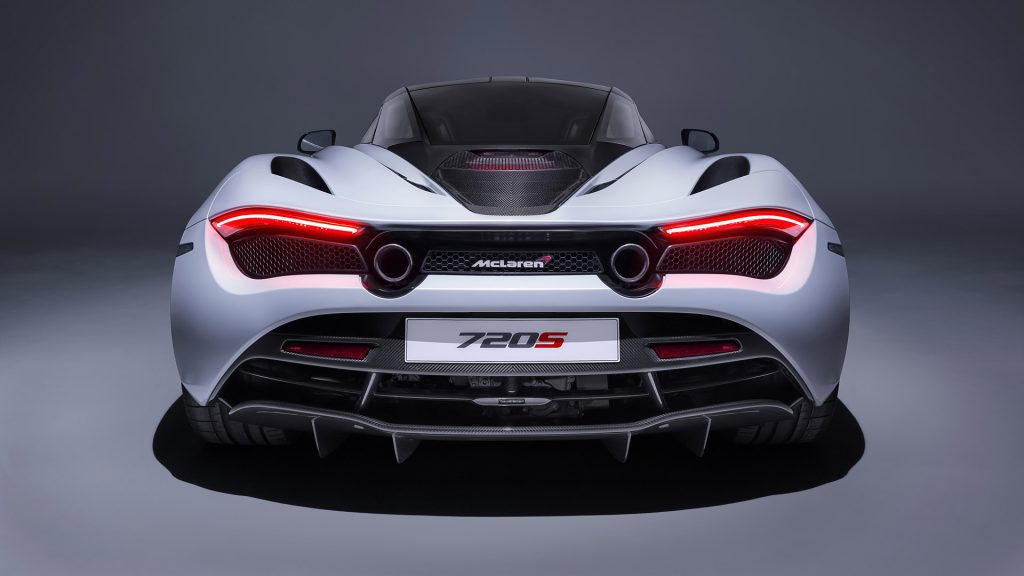
In my opinion, the 720S offers the most daily-usability and its performance, to put it lightly, is not lagging behind its competition. This makes it more approachable and all-around-capable than any other supercar in its class.

Then we also must remember how it fares against cars that should be out of its league. Million-dollar cars (in some cases, twice over) barely manage to cope with the 720S’ performance arsenal.

If not for an undying loyalty to the more historic marques, or a decades-long love affair with a certain poster car, the 720S is the pragmatist’s choice.

The McLaren 720 is the complete supercar.

Specifications And Performance Summary

Pricing And Model Info

Make McLaren
Model 720S
Generation 2017 – Present
Car type Coupe
Category Series Production Car
Built At Surrey, UK
Base Price (USD) $288,845

Chassis And Powertrain

Curb Weight 1,434 kg (3,161 lbs)
Layout Mid-engine
Driven wheels Rear-wheel drive
Engine V8, aluminum block and heads
Aspiration Twin-turbocharged
Displacement 4.0 Litres
Transmission 7-speed DCT

Engine Output

Power 710 hp @ 7,500 rpm
Power / litre 177.5 hp / litre
Power-to-weight ratio 4.45 lb / hp
Torque 568 lb-ft @ 5,500 rpm

Performance

0-60 mph 2.5 seconds
0-100 mph 5.3 seconds
¼ mile 10.1 seconds
Top Speed 212 mph (342 km/h)m

Photo Gallery

Video Reviews

[embedded content] [embedded content] [embedded content]

Lady Driver Walks Away from Horrific McLaren 720S Crash in Las Vegas

As far as horrific accidents go, this McLaren 720S wreck which happened this weekend during the Corsa Rally 2018 has to be high up there. The event took place just outside Las Vegas in the Mohave Desert. The driver of the McLaren reportedly walked away from the accident, the carbon fibre crash cell protecting her from injury. The car was less fortunate.

The photos show a car that has evidently rolled a number of times, crushing the passenger side A-Pillar and causing a small engine fire which looks to have been smothered quickly. The wreckage makes the 720S look completely unrecognisable, save for those tell-tale doors.

The driver took to the forums to explain that she misjudged a corner and lost control of the car. She reckons it rolled twice causing her passenger very minor injuries and her, some broken ribs. She makes the point that the car’s final act was to prove just how safe it was. The strength of the carbon fibre cell evidently superior to that of a normal steel construction example.

It remains to be seen whether the owner will order a replacement car. We suspect she might having walked away from this horrifying accident with a minimal amount of injuries!

By way of reminder, the McLaren 720S features a 4.0 litre twin-turbocharged V8 producing 720 hp and 770 Nm of torque at 5,500 rpm. It manages a 100 km/h sprint in 7.8 seconds with 300 km/h in 21.4 seconds and a top speed of 341 km/h.