
Ferrari plans to keep the V12 alive for as long as regulations allow it to

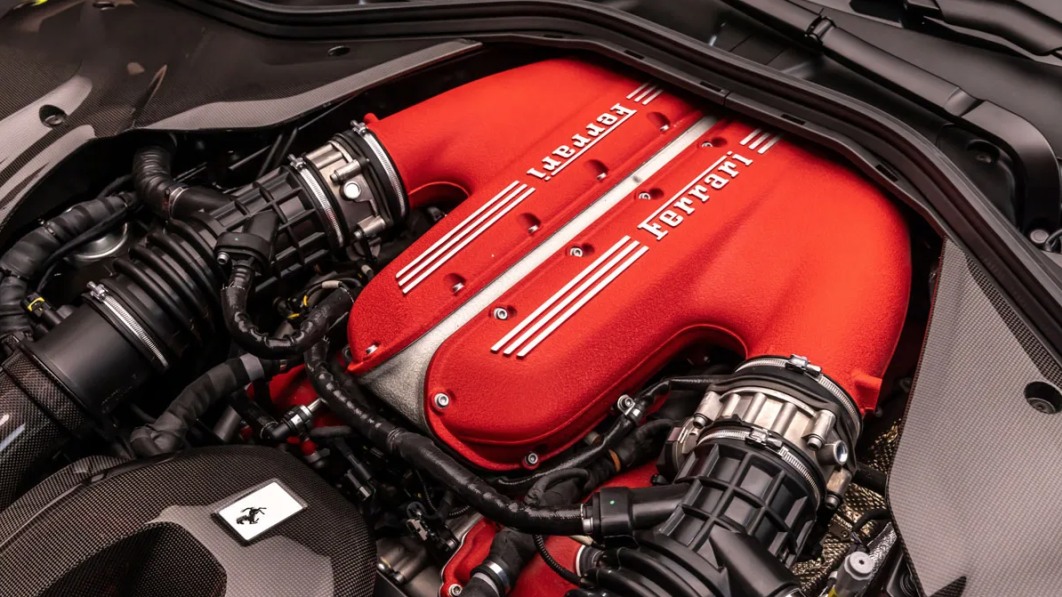
Ferrari’s entry-level model is a V6-electric plug-in hybrid, but the company stressed that downsizing won’t spread across its entire lineup. It plans to keep the naturally-aspirated V12 engine alive for as long as possible, even as it prepares to release its first electric supercar.

“We will produce naturally-aspirated V12s until the law [no longer] allows us to,” confirmed Emanuele Carando, Ferrari’s global marketing director, in an interview with Australian website CarExpert. He added that synthetic fuels could help extend the 12-cylinder’s shelf life.

Arch rival Lamborghini remains committed to the naturally-aspirated V12 as well, but how long these companies can continue making 12-cylinder engines without summoning a dark cloud of disapproval from regulators remains to be seen. In the European Union, the sale of new piston-powered cars will be illegal in 2035, though a last-minute exemption was made for some synthetic fuels. Lawmakers in the United Kingdom have settled on 2035 as well. Our market isn’t quite there yet, but much stricter emissions regulations are looming on the horizon.

Interestingly, the executive revealed that Ferrari considered giving the 12Cilindri, its new V12-powered GT, hybrid power. Ultimately, the car made its debut without electrification. “We wanted to be true to our roots,” he said, adding that “a naturally-aspirated engine with a combination of electric components, according to our feeling, adds weight without really improving the performance so much.”

That doesn’t mean Ferrari believes electric motors are only useful to move windows and wipers. The company is working on its first series-produced electric car, an enigmatic model tentatively due out by the end of 2025, and early details are beginning to trickle out. Executives stress that the EV will be a “true Ferrari,” which is hardly a surprise — can you imagine one of them saying it’s going to be a bogus Ferrari?

Carando told Australian website Drive that his team isn’t concerned with making the fastest or quickest EV on the planet. “We have never been following speed as a key reason for [marketing] our cars,” he said. “We want to have a fast, agile, and fun car to drive.”

While some brands leverage an electric drivetrain’s silence as a major selling point, Ferrari believes its EVs should make noise. It won’t be a fake noise that mimics a V12 or a V8, however. It will be “authentic,” Carando said, which suggests it will be tailored to some aspect of an electric drivetrain’s operation. The motor’s whine, perhaps? Other details, like the segment that the EV will fall in, also remain to be seen.

Ferrari isn’t going 100% electric. It expects that, in 2030, EVs will represent about 40% of its sales. Plug-in hybrids will represent 40% as well while the remaining 20% will be non-electrified gasoline-powered cars. As for what’s next, it depends on regulations and on market demand.

“It’s going to be the clients who decide whether to buy an internal-combustion natural [non-hybrid] engine, a plug-in hybrid, or an EV.”

Lamborghini Countach 13-inch Lego replica features scissor doors and a V12

Lego launched a replica of the Lamborghini Countach years ago as part of its Speed Champions collection, but the model is more of a toy than a collector’s item. The brand has since announced a second Countach, and this time it’s a huge model with scissor doors and a V12 engine.

Designed for adult builders, the kit consists of 1,506 parts that come together to make a Countach that’s approximately 13 inches long, 6.5 inches wide, and 3.5 inches tall. Lego included a stunning amount of detail: the scissor doors — one of the Countach’s defining styling cues, which Lamborghini still uses on its modern-day flagship models — swing up to reveal a red interior with two seats, a wide instrument cluster with Lamborghini-branded gauges, and climate control buttons on the center console. Lego even remembered the matching door panels.

The proportions are Countach-like and about as accurate as you can hope for when working with bricks. The NACA ducts on both sides, the air intakes located right behind the doors, and the massive rear spoiler are all present. The rear wheels are wider than the front ones, like on the real car, and the front ones turn with the steering wheel. There’s a replica of the 5.0-liter V12 stuffed in the engine bay as well.

Lego’s replica of the Lamborghini Countach will go on sale in stores around the world on July 4. It’s priced at $180 excluding tax. For context, the smaller and less detailed Countach costs around $25, while putting the real thing in your garage can easily cost over $500,000.

McLaren Automotive CEO admits there’s a plan for an SUV

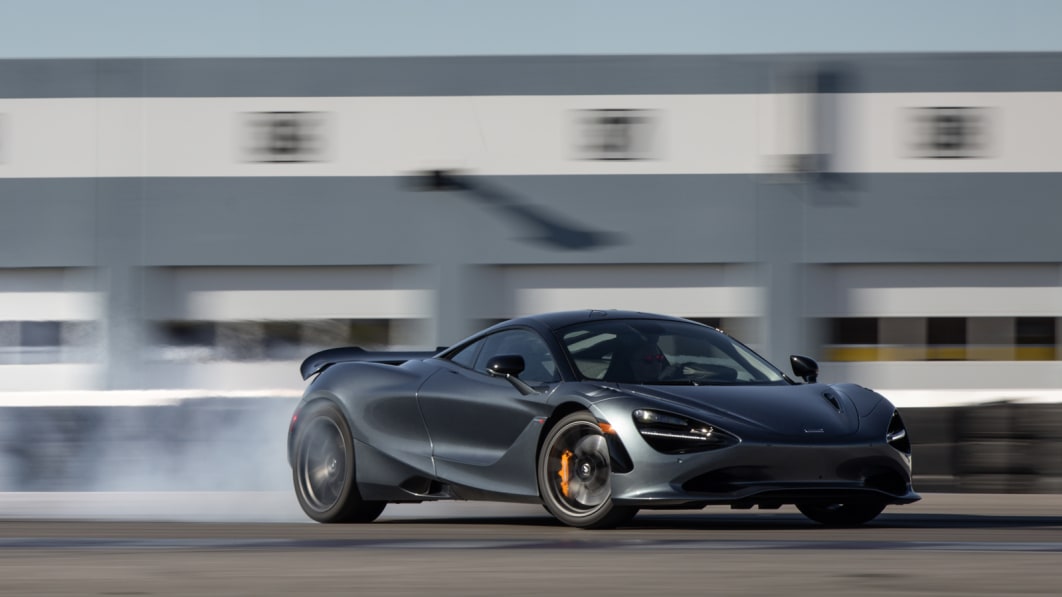
Road & Track put McLaren Automotive CEO Michael Leiters through his interview paces, trying to assess how the ex-Ferrari man wants to return the carmaking operation to the top of the charts. Leiter, in place since late 2022, has mainly finished patching the holes in the ship like some organizational issues, delays with the Artura, and securing enough money to stay in business. There’s a long way to go to restore the glow of 12 years ago, when the MP4-12C impressed all with its combination of capability and drivability, however. The company still makes great cars, but of the current lineup, it’s the 750S and 765LT that shoulder McLaren’s aspirational allure; the GTS and Artura haven’t been nearly as convincing to the supercar set, and the balance sheet shows it. RT says 2023’s full-year loss of more than $1 billion on 2,137 global sales equated to McLaren losing more than $500,000 per car.

Naturally, Leiters didn’t get into how the current products might change to address that, but he vowed that supercars and Ultimate Series cars like the P1 and Senna would remain the “first focus.” The CEO believes one way McLaren can hit the front of the pack is by achieving what no competitor has so far: A lightweight EV supercar. There’s one such in development, the curb weight target is around the same 3,300 pounds as the Artura PHEV. “For me, a supercar that weighs two tons is no supercar,” he said. For comparison, the Lamborghini Revuelto is claimed to weigh about 3,900 pounds, the Rimac Nevera comes in at 5,100 pounds.

He also admitted that McLaren’s working on an SUV. Rather, the automaker’s working on a vehicle with “shared performance,” meaning it will fit more than two people, because SUV is still a bad word among superluxury makers until the first SUV is out the door making big bucks. The CEO’s ideal powertrain would be a plug-in hybrid based on a McLaren engine, but the car might not be a solo project, Leiters open to partnering with another automaker to “create synergies” so long as the result makes sure “not to lose anything which is core to McLaren and the DNA of the brand.” The idea’s familiar, we’ve just rarely seen it pulled off at this price point — something around $400,000, supposedly — outside of the Volkswagen Group. 

The CEO had more to say on a range of topics, from too much serial production to too many limited editions, why an EV supercar could still make sense despite a softening market, and why the next Ultimate Series car doesn’t need to be all-wheel-drive even if it’s more powerful than the 903-horsepower P1. Head to RT for the full interview.

McLaren Information

2025 Ford Mustang GTD reveals the view into its ultra-cool ‘suspension window’

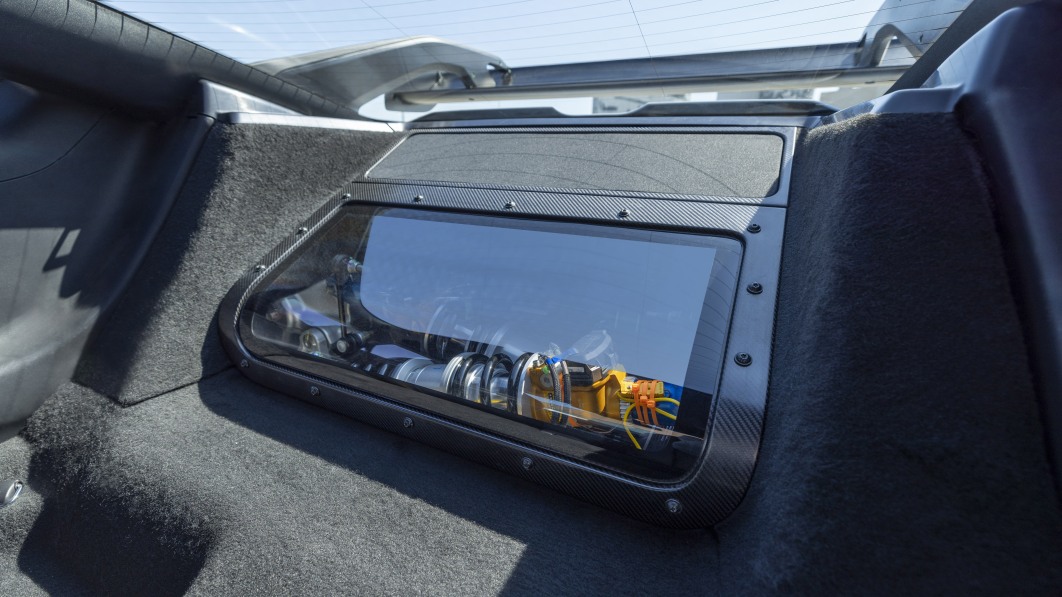
The 2025 Ford Mustang GTD makes use of a race car-inspired pushrod-actuated inboard rear suspension, which is very cool. But what’s even cooler than that? Being able to see the beautiful engineering at work.

Today, Ford revealed that the GTD will feature something it’s calling the “suspension window,” as that’s quite literally what it is. Positioned where you might otherwise find the rear seats, the GTD has a 24-inch-wide and 10-inch-tall piece of polycarbonate that allows you to look back and see the Multimatic adaptive spool valve shock absorbers in all their blue and gold glory. As a passenger, you could even look backwards and see them in action over the road. The glass itself has a scratch-resistant coating applied to both sides to avoid it being marred.

“The rear suspension is designed for purpose, but it’s also just a beautiful thing to look at,” said Jim Owens, Mustang GTD marketing manager. “It would have been a shame for us to hide it away never to be seen.”

Ford says the Multimatic shocks are capable of going from their softest to firmest setting in just 15 milliseconds and continuously adapt to the road surface to maximize the tire contact patch. Each of the dampers has two springs – activating Track mode hydraulically compresses one of the springs to double the spring rate and lower the ride by 1.6 inches.

Just as we learned recently, Ford reaffirmed its goal of setting a sub-7-minute lap on the Nürburgring later this year. We also expect to see the GTD make appearances at big motorsports events throughout the year such as the 24 Hours of Le Mans and the Goodwood Festival of Speed.

Related video:

Ford Mustang Information

Ford Mustang GTD heads to Europe for testing prior to Le Mans

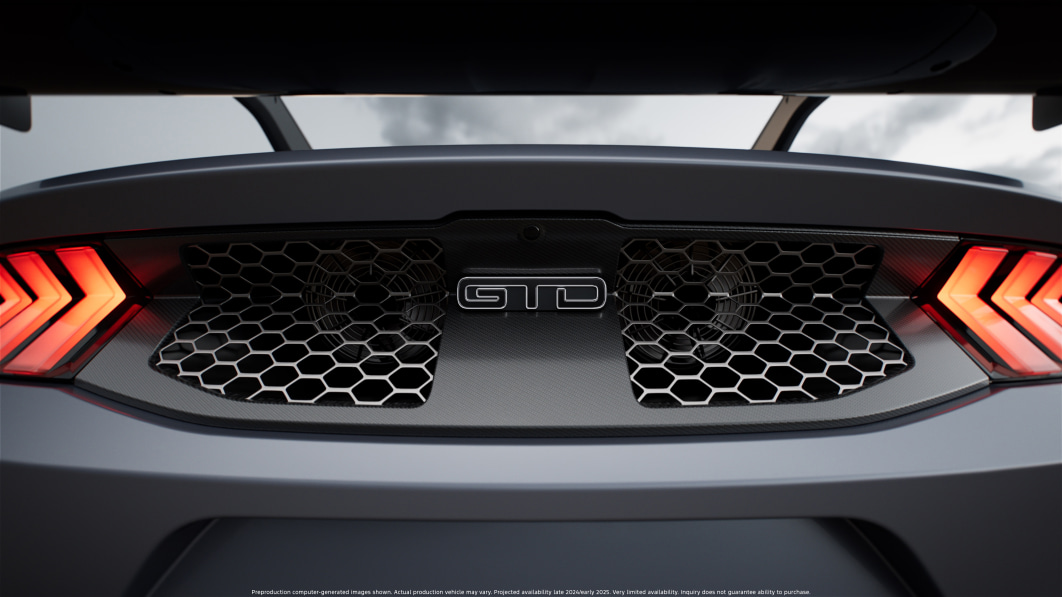
The new Mustang GTD was forged to be the weapon with which Ford intends to conquer international road racing. On the quest to elevate its high-performance pony car, Ford is taking the GTD on a European tour to coincide with its debut at the 24 Hours of Le Mans on June 21. To commemorate it all, Ford is kicking off a new digital series that documents the GTD’s development. The CGI images comprising the gallery above are the first components of that online narrative. 

“These images and videos show high-performance equipment in ways that match the high-performance nature of the Mustang GTD,” Ford’s announcement said. They will be released via various social media channels, including YouTube and TikTok, suggesting that the campaign will likely progress beyond still CGI images to video content. 

“We’ve tested the Mustang GTD in North America extensively, including laps at Sebring International Raceway and Virginia International Raceway. This has all been in service of engineering a car that can lap the Nürburgring in under seven minutes,” said Mustang GTD Chief Program Engineer Greg Goodall. “Moving onto European roads and dedicated test sessions at the Nürburgring is the next step, ahead of a timed run later this year.”

And by later this year, Goodall means Q4, following the GTD’s appearances at the 24 Hours of Spa and the Goodwood Festival of Speed. Ford’s hype engine is coming online just in time for European customers to start requesting reservations for the GTD; details of that are to follow in June. More than 7,500 customers raised their hands for allocations of 2025 and 2026 GTDs; how European enthusiasts will respond to the opportunity remains to be seen. 

Ford Mustang Information

Nilu27 teaser video shows off high-tech hypercar from Sasha Selipano

There’s a lot more we don’t know about this mysterious hypercar than there is that we do. But one thing is certain: With automotive designer Sasha Selipano behind the project, it’s going to be wild. Selipano announced a new brand called Hardline27 a little less than a year ago, hailing it as “a new automotive design and branding studio with operations in Berlin and Los Angeles.” With automotive design credits to his name that include the likes of Lamborghini, Bugatti, Koenigsegg and some of Genesis‘ recent droolworthy concepts, we understandably have high hopes for whatever this new brand called Nilu27 will cook up.

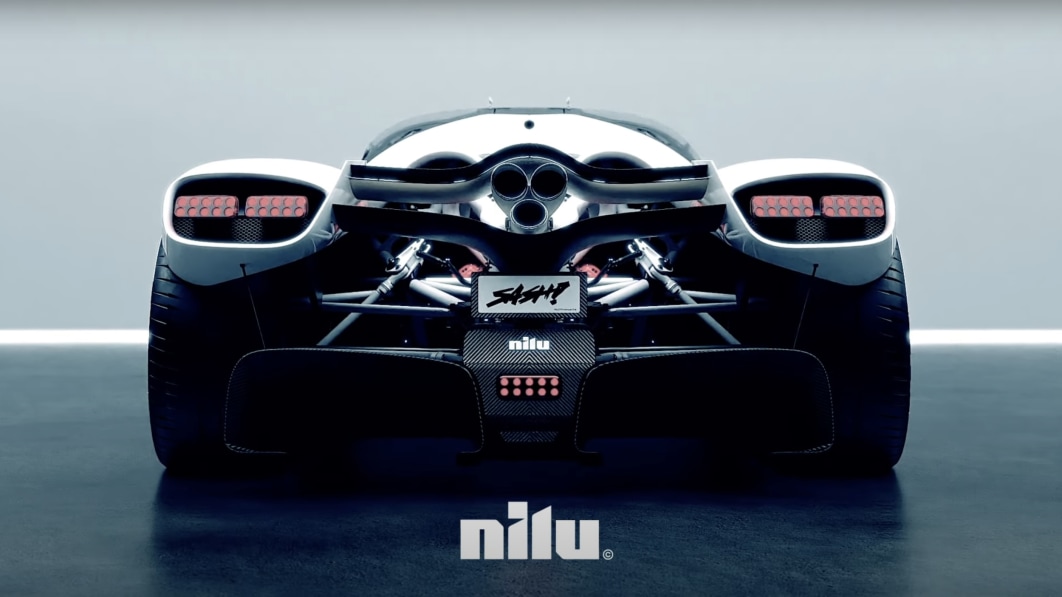
Fortunately, we won’t have to wait long to see the first fruits of this new hypercar venture — a new teaser on YouTube highlights an unveiling at Pebble Beach on August 15. We only get a glimpse of the rear of the debut vehicle, but we can see some awfully impressive hardware. The first highlight of the teaser video are what appear to be small gullwing doors, followed closely by a trick-looking dual-pane rear wing that arches over triple exhaust tips that slowly come into focus. We’re treated to a nice view of what looks to be a high-tech pushrod-based suspension setup, a heck of a lot of carbon fiber, rear diffusers that hint at massive aerodynamic underbody designs and what could be a tubular spaceframe chassis.

And then we hear an engine. We can just barely make out some red bits that may or may not be valve covers splayed in a wide-V shape, and the exhaust note sounds like what we’d expect from a high-strung V8 engine. All of this is pure speculation, of course, but our interest is certainly piqued. Is this a pure concept vehicle, or something intended for limited production? Will it be designed for the street, or as a track-only special? Pure combustion, or fortified with electrification? We’ll see. Check the video out for yourself up above, and stay tuned for Monterey Car Week in the dog days of summer for a full reveal.

Lamborghini confirms 800-hp V8 for hybrid Huracán successor

Lamborghini went to significant lengths to keep the naturally-aspirated V12 engine alive, but its naturally-aspirated V10 has nearly reached the end of its life cycle. Instead, the yet-unnamed model that will replace the Huracán will downsize, adopt forced induction, and electrify.

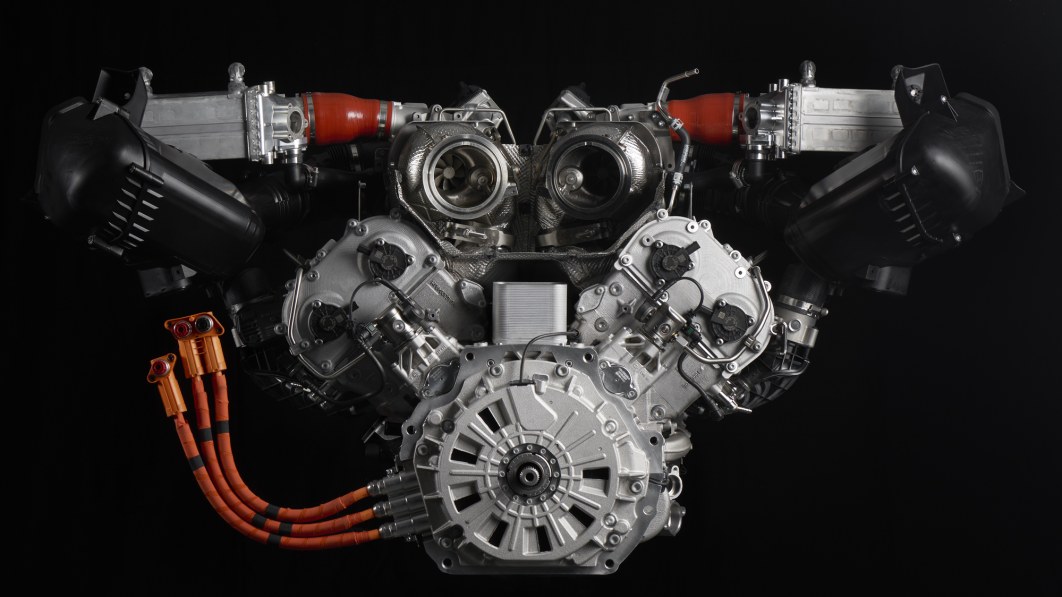
Code-named 634 internally, the Huracán’s successor will get a 4.0-liter twin-turbocharged V8 rated at about 800 horsepower and 538 pound-feet of torque and linked to an eight-speed dual-clutch automatic transmission. For context, the 10-year-old Huracán uses a naturally-aspirated 5.2-liter V10 tuned to develop 631 horsepower and 441 pound-feet of torque in its most powerful state of tune and the Revuelto’s V12 makes 814 horsepower. The hybrid part of the drivetrain will consist of three electric motors and a battery pack whose capacity and chemistry haven’t been announced. The system’s total output also hasn’t been revealed, but it should check in well above 800 horsepower. 

Before rumors begin to fly, let’s get an important detail out of the way. Lamborghini is part of the Volkswagen Group, and several of its sister companies — including Porsche — offer a twin-turbo 4.0-liter V8, but this is not what you’ll find in the Huracán’s successor’s engine bay. The brand claims that the eight-cylinder is new; it was developed in-house on a blank slate. Its delivers its peak horsepower output between 9,000 and 9,750 rpm, it provides its peak torque output over a broad range that stretches from 4,000 to 7,000 rpm, and it revs to an un-turbo-like 10,000 rpm. The pistons are linked to flat-plane crankshaft, too. On paper, it sounds like Lamborghini developed a racing engine. 

The dual-clutch automatic is a version of the transmission developed for the Revuelto, which made its debut in 2023 as Lamborghini’s first series-produced plug-in hybrid super-sports car. Details about the electrified part of the drivetrain remain relatively vague: all we know at this stage is that one of the three motors is sandwiched between the V8 and the eight-speed transmission. Fear not, the model won’t sound like the average hybrid. It will likely be capable of driving on electricity alone for short distances, but Lamborghini stresses it spent a great deal of time tuning the engine’s exhaust note to ensure it sounds the way a modern supercar with a flat-plane crankshaft and a high redline should.

Lamborghini will unveil the Huracán’s successor later in 2024, and we expect to hear more about it in the coming months. When it lands, it will complete the company’s shift to an all-electrified line-up: it will join the Revuelto and the plug-in hybrid Urus SE unveiled in April 2024.

Lamborghini Information

Rimac says demand for electric hypercars has dropped

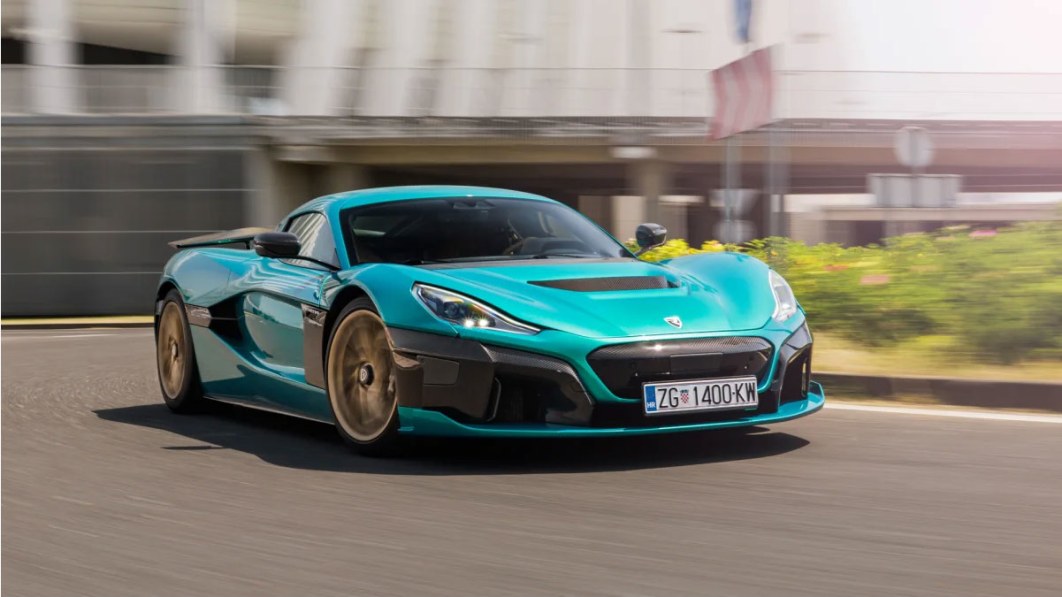
Unveiled in 2021, the 1,914-horsepower Rimac Nevera is limited to 150 units, and about 50 of those have already been spoken for. Part of the reason why two-thirds of the planned production run remains available is that demand for electric hypercars has dropped, the brand said.

“We started to develop the Nevera in 2016/2017, when electric was cool,” company founder Mate Rimac explained during the Financial Times Future of the Car conference in London, England. Fast-forward to 2024 and electric technology has become a lot more common; electrification is legally mandated across Europe, and nearly every company regardless of market positioning offers at least one EV.

“The regulators and some OEMs push it so much that the narrative has changed. They’re pushing stuff on us that we don’t want, so people get a little bit repulsed by it, this whole forced application. I’m always against it. I think everything has to be based on merit, so the product has to be better,” he added. Regular motorists don’t have a choice, but those who can afford a hypercar want one with a gasoline engine.

In turn, this shift is driving demand for electric hypercars — like the Nevera, the Pininfarina Battista, and the Lotus Evija — down. They’re more powerful and usually quicker than comparable gasoline-burning models, but companies are realizing that a sub-two-second zero-to-60-mph time isn’t enough to make a car appealing. Buyers with a seven-digit sum to spend on a car want analog technology, Autocar reported.

Rimac used the Apple Watch as an example.

“An Apple Watch can do everything better. It can do 1,000 more things, it’s a lot more precise, and it can measure your heart rate. But nobody would pay $200,000 for an Apple Watch,” he said. He noted that the Nevera remains the best-sold electric hypercar, however.

This realization at least partially explains why the Bugatti Chiron’s successor isn’t electric; it will be powered by a new V16 engine. Rimac, which owns Bugatti, said a battery-powered model’s sales figures would be “nowhere near” what it has planned for the V16-powered car. And, the shift will likely have an effect on Rimac’s product pipeline: it doesn’t expect demand for electric hypercars will go back up.

Rimac remains committed to electrification, it notably has partnerships with several carmakers including BMW and Hyundai, and it’s not about to stuff Bugatti’s new V16 engine in the Nevera to boost sales. Looking ahead, it wants to experiment with other types of drivetrain technologies. “It’s not about being electric; it’s about doing things that other cars can’t do and giving a unique experience,” the CEO said.

One project brewing behind-the-scenes in the brand’s Croatian headquarters is a nanotube-powered drivetrain capable of running on diesel, LPG, or hydrogen. It’s a system that heats “chemically different” liquid fuels to generate the electricity needed to zap a motor into motion.

Red Bull’s Adrian Newey leaves F1 team, shifts focus to RB hypercar

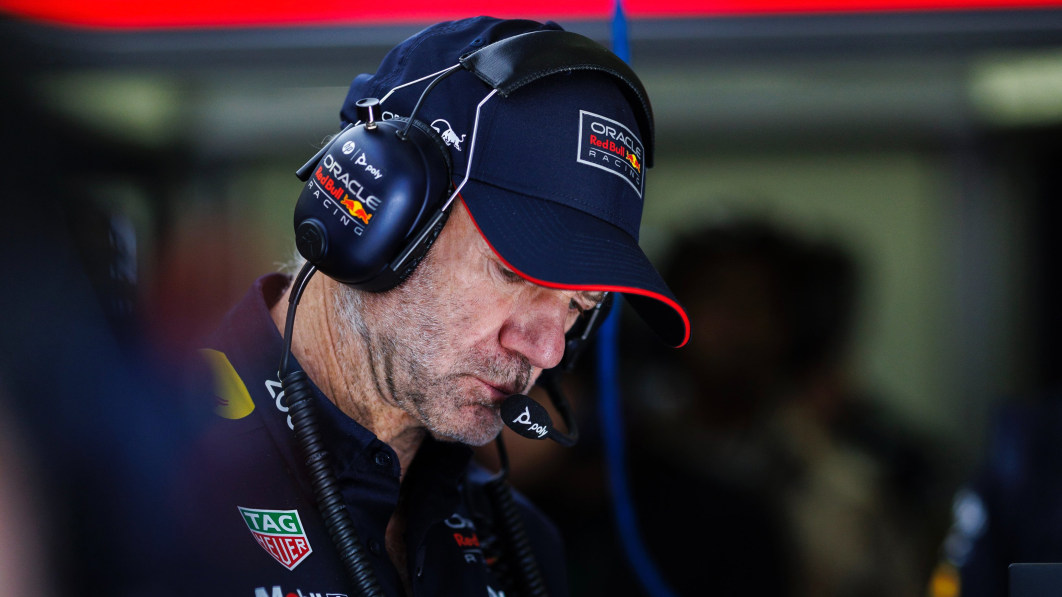
Red Bull Racing’s Chief Technical Officer Adrian Newey is officially departing the team in the first quarter of 2025. Rumors of his departure have swirled for the past few days, and now the news is official. But there’s more. Red Bull also revealed that Newey will be shifting his focus to the RB17 hypercar (a road car project) and seeing that project out through its completion.

It’s been 19 years of Adrian Newey designing Red Bull Formula 1 cars, and in that time he’s been a part of seven F1 Drivers’ titles, six Contructors’ championships, 118 victories and 101 poles. Those are the sort of numbers that make you a legend of the sport, especially considering that Red Bull was merely a startup F1 team when he joined. 

“Ever since I was a young boy, I wanted to be a designer of fast cars,” Newey said in a statement. “My dream was to be an engineer in Formula 1, and I’ve been lucky enough to make that dream a reality.”

Of course, the real question everybody wants the answer to is where Newey is headed next. Ferrari and Aston Martin are the two teams that seem to be in the running going by the most recent rumors. However, there’s no real sure indication of where he might eventually land, assuming he stays in Formula 1.

As for why Newey is leaving, the official statement follows below.

“For almost two decades it has been my great honour to have played a key role in Red Bull Racing’s progress from upstart newcomer to multiple title-winning team,” Newey starts. “However, I feel now is an opportune moment to hand that baton over to others and to seek new challenges for myself.”

Of course, there are the reported reasons of him leaving due to being unsettled by the Christian Horner misconduct investigation that stole headlines leading up to this season of racing. Newey’s statement upon leaving mentioned Horner calling him a “business partner but also a friend to our respective families.”

We’ll be waiting impatiently for further news on where Newey might be headed once the dust at Red Bull has settled, because where he goes, success in Formula 1 is almost sure to follow.

Pininfarina whips up a Batman-inspired Battista and B95 speedster

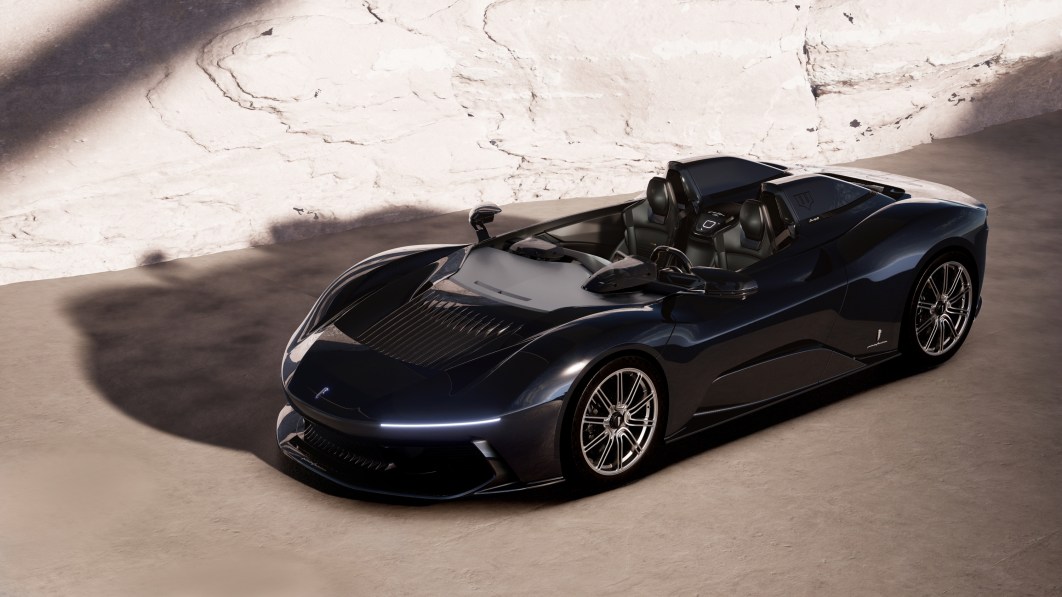
Albert, Harry, Jack, and Sam Warner founded Warner Bros. Pictures Incorporated in April 1923, 101 years ago. Artist Bob Kane and writer Bill Finger first put Batman into Gotham in an issue of Detective Comics (DC) on March 30, 1939, 75 years ago. Warner Bros., which owns DC Comics (and Discovery owns Warner), has gifted the ageless Dark Knight a mighty present for his diamond jubilee year: special editions of the Pininfarina Battista coupe and Pininfarina B95 speedster. Two trims of each, in Gotham and Dark Knight trims, make four cars in total. Every one of them gets the Battista’s standard powertrain, a 120-kWh battery charging four motors that make a combined 1,877 horsepower and 1,696 pound-feet of torque good for getting to 60 miles per hour in under two seconds and rated at 300 miles on a charge in the U.S.

The Italian automaker debuted the B95 Barchetta last year, a speedster in the mold of the Aston Martin V12 Speedster and Ferrari Monza SP1. At the time, the company said deliveries would begin in 2025 for the ten units it planned to produce. We’re not sure if these Batman editions are part of the ten or added to the ten.   

The Gotham variants reflect Bruce Wayne’s sophisticated side. Fronted by backlit Pininfarina badges, they’re painted Argento Vittorio Gloss paint with contrasts in Nero Torino Gloss and a Goccia roof. A redesigned roof and door junction on the coupe adds more curved glass, letting more light into the cabin, while new louvers in the wheel arches pass more air out of aerodynamically sensitive areas. The staggered wheels on the coupe get Prezioso Evoluzione Gloss Black faces with a matte black rim. The B95 Gotham is differentiated by having a matte black inner ring and and gloss black outer ring. Cabins in both cars are dressed in tan leather and tan stitching with quilted center panels in the seats.

The Dark Knight flavors express Bruce’s tech-intense side, enabled by the boffins at Wayne Enterprises. These come in Nero Profondo Black paint with a Nero Torino Goccia roof and rims in Glorioso, over a cockpit in black leather and Alcantara.

Special touches include a new skin for the infotainment system, voiced by Bruce Wayne’s butler, Alfred Pennyworth, as well as discreet Wayne Enterprises badging inside and out.

The cars are part of a real-life lifestyle division called Warner Bros. Discovery Global Consumer Products, which is rolling out a range of branded products for living the Bruce Wayne life, from these vehicles to luxury residences and “rarely seen, life-enhancing technologies and limited edition products.” You read that right. You can find out all about it at www.BruceWayneX.com, and apply for an allocation of any of these four cars right now. Pricing:

McLaren’s next ultra-exclusive flagship revealed at the end of this year

McLaren will be show the next installment in its Ultimate Series later this year — the range that claims the Senna, Senna GTR, Speedtail, and Elva at the moment. But really, we’re talking about a successor to the cars with a 1 in their names, as in F1 and P1. An Automotive News story says the latest superstar from Woking, England, is expected to cost about $2 million when it arrives in 2026.

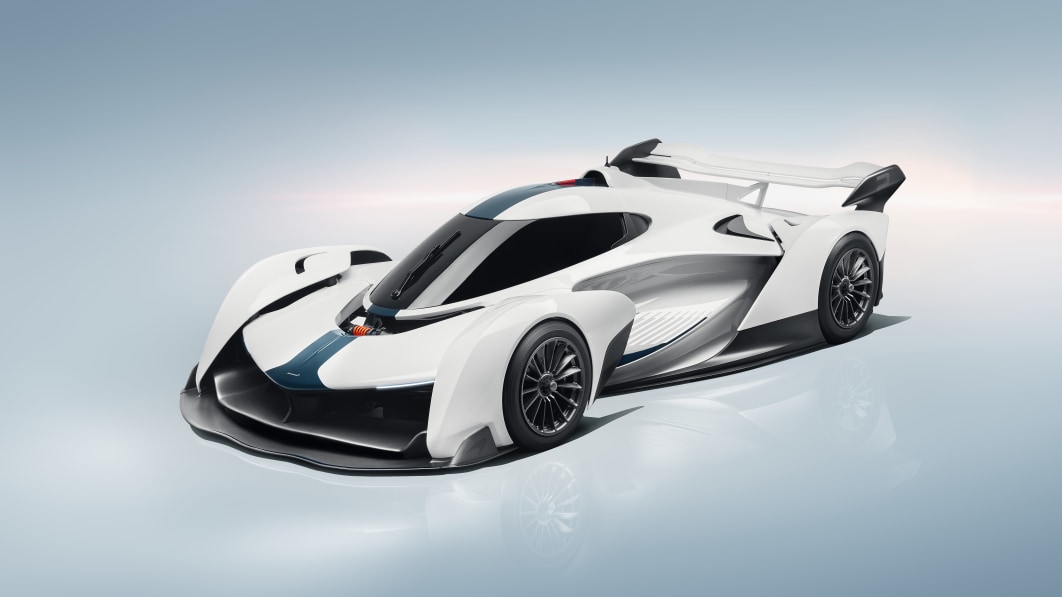
It will be sold out long before then, however, if it isn’t already, because McLaren’s only making 400 of them. On top of that, the selection process has gotten more exclusive, McLaren saying those who bought the $2.5M Solus GT track car (pictured) will be offered the first chance to buy the Ultimate Series car. The Solus GT was originally a Vision Gran Turismo fiction that the English firm made 25 real-life examples of, each powered by a 5.2-liter V10 making 829 horsepower and 479 pound-feet of torque.

Dealers emerging from company meetings in Las Vegas told AN that McLaren showed a rendering of a new car codenamed P18 that combines the more graceful lines of the P1 with “the technical aspects of the Senna.” The car won’t feature the company’s hallmark butterfly doors, either, but is fitted with gullwing doors instead. The police sketch description mentions a new eye-socket headlight design, “floating fenders,” intakes in the hood plus a snorkel in the C-pillar and more intakes at the rear buttresses, and active aero around the hem that includes a front splitter, the rockers, and a deployable wing with a “jewel-like” extension mechanism.

The P18’s powered by an all-new V8 hybrid powertrain unrelated to any other current McLaren product. The internal combustion engine is said to be developed with Riccardo, the hybrid system is said to be 70% lighter than the hybrid unit in the Artura GT. The battery is a “high-density, lightweight” unit derived from the pack in McLaren’s F1 race car. And it sounds like steering precision will be just as fine as ever, McLaren sticking to hydraulic steering to go with a new hydraulic suspension. 

As for a market name, CarBuzz clocked four trademark applications McLaren filed in the UK: W1, MP1, U1, and H1. Any of these could make the grade, or none of them might. And with the reveal not planned until Q4 this year, it’s possible more filings are inbound.

In a separate interview about McLaren’s remade design language, new chief design officer Tobias Sühlmann told Car magazine, “There will be a bigger portfolio, possibly, and we need to look into different power technologies. Is there more than two seats? Yeah, possibly. And we need to develop a form language that separates each model from each other – that is quite important.”

Based on persistent rumors, it’s possible that by the time the new Ultimate Series car arrives in early 2026, we’ll know more about a new McLaren or two that forms the basis of the bigger portfolio of models with more than two doors and two seats.

Lamborghini applies to trademark ‘Huracan STJ’ for another limited edition

When Lamborghini showed the 60th anniversary Huracans at Milan Fashion Week last April, automaker CEO Stephan Winkelmann said “The special editions of the Huracán not only celebrate the 60th anniversary of our brand, but also give our customers maybe the last chance to purchase an otherwise sold-out V10-powered Lamborghini.” We wrote at the time that we thought “maybe” was a vital qualifier. The Huracan’s twin-turbo V8 hybrid-powered successor isn’t due until the end of this year; 18 months is a long time for the Sant’ Agata brand to go without a special edition for the growing legion of buyers ready with six or seven figures sight-unseen. CarBuzz might have restored order to the world and proved us right, finding a couple of trademark applications with the European Union Intellectual Property Office (EUIPO) for a vehicle called the Huracan STJ.

The J is for “Jota,” the Spanish pronunciation of the letter “J,” representative of the FIA rule book’s Appendix J detailing sports car racing and homologation regulations (a connection that might or might not be true), and of Lamborghini’s most focused road-going models for retail customers going back to the Miura Jota prototype in 1970. Since then, there’s been a Miura SVJ, Diablo SE30 Jota, Aventador J one-off speedster and the Aventador SVJ.  

The short money says this is a turned-up version of the Huracan STO, itself the most raucous version of the Huracan that sold out through the end of production more than a year ago. The long money says this could be a track-only coupe, despite every previous J designation being legal for the street. The fans of all things bully at Lamborghini Talk say there will only be ten made, one for each of the automaker’s global regions, and all are sold out. One poster wrote that in December and January, Lamborghini approached prospective buyers with the chance to purchase the sole unit for their region. Our bet is that nary a “No” was heard. 

It’s possible the public will get its first and perhaps only look at the Huracan STO — outside of Pebble Beach or an RM Sotheby’s auction — at Lamborghini’s takeover of Italy’s Imola Circuit on April 6 and 7. The festival is called Lamborghini Arena, the automaker calling it “The most extraordinary event in our brand’s history.” Could make a worthy entrance for an extraordinary new J.

Related video:

2025 McLaren Artura Spider loses roof, gains power and performance

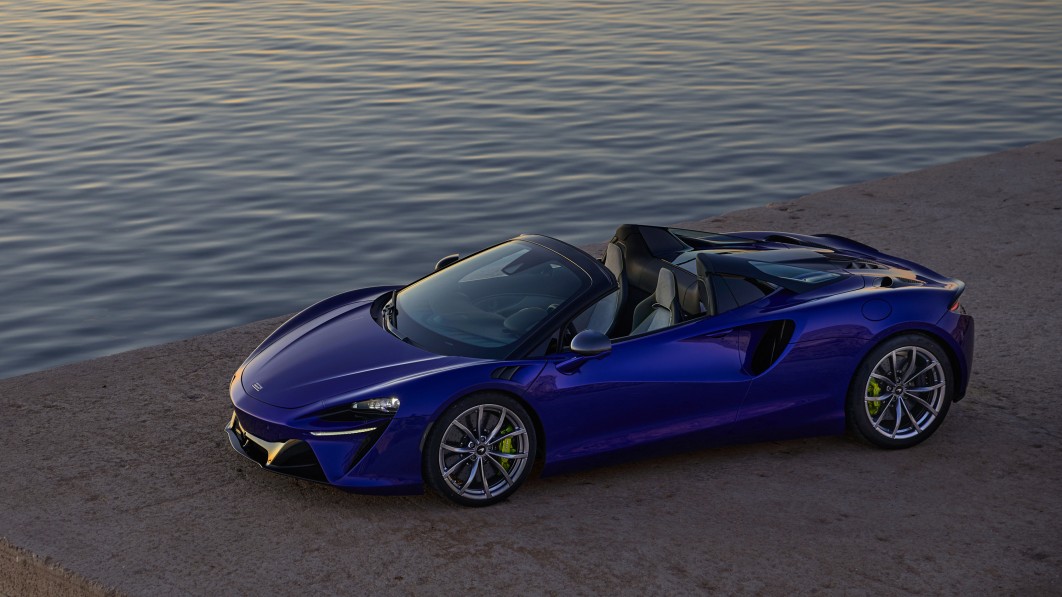
Hitting the one-year mark for a new McLaren hardtop model means it’s time for a convertible version. The timeline got fudged with the Artura, the hardtop delayed a tad while McLaren worked out some technical issues. But here we are, the Artura Spider not only packing a clear view to the sky, but 19 more horses from its 3.0-liter V6 and a brace of additional performance tweaks. The mid-mounted engine has been tuned from 577 hp to 596 hp, torque unmoved at 431 pound-feet. Working with the electric motor in the transaxle, combined output is now 690 hp and 531 lb-ft. 

New engine mapping boosts torque delivery, and the retuned gearbox improves shift speeds. McLaren said the eight-speed dual-clutch transmission now keeps the hydraulic fluid pressurized to near the “kiss point” that activates a gear change. Called “pre-fill” in company parlance, swapping cogs takes 25% less time than before. Using launch control, the Artura blitzes from 0 to 60 miles per hour in a claimed 3 seconds, and on to an electronically limited 205-mph top speed. A new feature called Spinning Wheel Pull-Away — which sounds like a Saturday afternoon kung-fu movie move — is the opposite of launch control, allowing the driver to work up a rooster tail of smoke when pulling off the line or out of a car meet. 

Eight motors stow or restore the top panel in 11 seconds, at up to 31 mph. The standard panel comes in carbon fiber, while an electrochromic unit can cycle through five stops from opaque to transparent. Curved polycarbonate panels in the buttresses improve three-quarter visibility and help direct air into the revised vent arrangement on the engine cover. 

Elsewhere, new mounts provide better restraint for the powertrain, revalved rear dampers provide better responsiveness, and recalibrated ABS provides shorter threshold stopping distances. More valving work done to the stock exhaust, and new conical, upward-facing pipes, are said to create cleaner, richer sound.

Standard equipment grows with the inclusion of lane-departure warning and road-sign recognition, the Bowers and Wilkins audio gains new rear speakers and, just for the Spider, a center speaker between the seats. The lithium-ion battery is more efficient with its 7.4-kWh usable capacity, enough to increase pure-electric range in European testing to 21 miles, but not here, holding at 11 miles. And at the corners, there’s a new silver 15-spoke wheel as standard fit, plus an optional gold finish for the wheel range.

All of the changes made under the skin are new to the 2025 Artura Coupe as well. Even better for Coupe owners making do with lesser output, a visit to the McLaren dealer gets a free engine upgrade to add the 19 horses.

Order books are open, and deliveries commence later this year, the Spider starting at $273,800.

1988 Porsche 959 SC with famous history headed to Amelia Island auctions

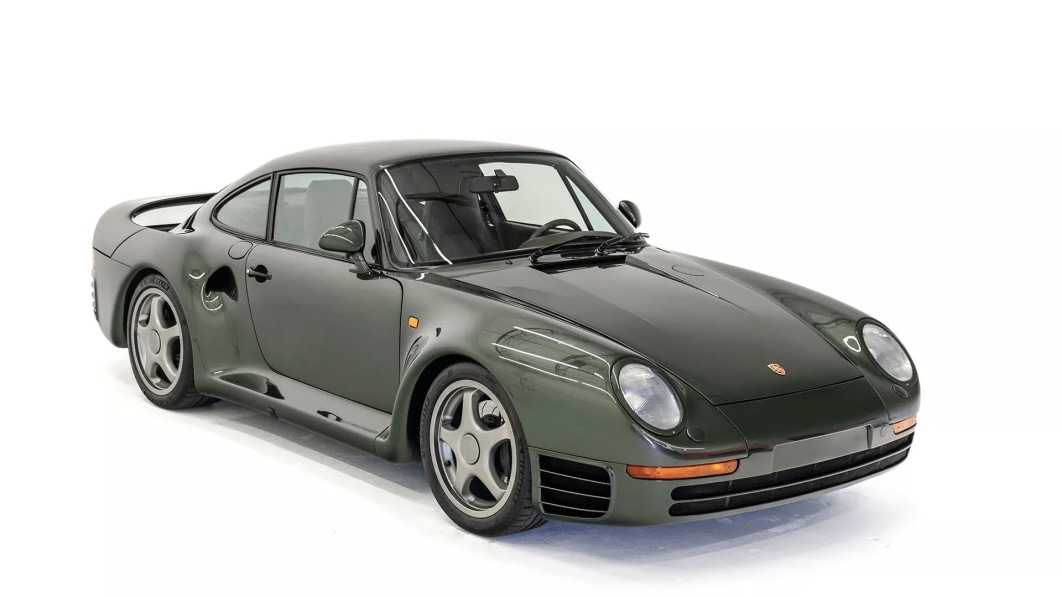
Broad Arrow Auctions is taking a 1988 Porsche 959 SC Reimagined by Canepa to this year’s sales at the Amelia Island Concours d’Elegance, this example even more special than the average 959. The first bit of plumage setting this bird apart is documentation that shows it was a benchmark car Nissan bought to develop the all-wheel-drive system in the R32 Skyline GT-R. The second splash of color, literal and otherwise, is a four-year overhaul from Porsche specialists Canepa finished in metallic green. Both of those items contribute to a pre-sale estimate of between $3.25 and $3.75 million.

The Skyline-959 connection is a favored bit of lore in the GT-R’s history. However, the GT-R’s connection to Porsche goes well back before the R32. In 1964, a Porsche 904 beat the factory team of Prince Skyline S54 GT cars fielded by Japan’s Prince Motor Company. Prince engineers, including Dr. Shinichiro Sakurai, returned to their offices to design a new engine and a new car that could beat Porsche. The Prince R380 did that two years later at the 1966 Japanese Grand Prix, its engine becoming the basis for the S20 inline-six that would power the first Nissan Skyline GT-R that debuted in 1969 but only lasted until 1973.

Fast forward to 1984: Nissan, which merged with Prince in 1966, was looking at its tech-heavy but unloved R31 Skyline, at Porsche’s monumental 959, at a trophy cabinet lacking silverware from the top class, and at a corporate bank account filling with Bubble Economy profits. Naganori Ito, said to be Sukurai’s “number one student,” was put in charge of developing the R32 Skyline that returned the GT-R badge to the market.

To help him do that, the engineering team wanted to study a Porsche 959; a Nissan engineer would tell Car magazine at the R32’s debut, “We reckon Porsche makes the best-handling cars. And the 959 is reckoned to be the most advanced supercar ever made. We wanted to beat the 959.”

But Porsche wouldn’t sell Nissan a 959. So a Belgian national bought a 959 Komfort on behalf of the Japanese engineers, Belgian dealer D’Ieteren Brothers shipping the car to Yokohama. The fruit of this subterfuge became the GT-R’s Advanced Total Traction Engineering System (ATTESA ET-S), tuned to dial out understeer and maintain agility with the help of Super HICAS all-wheel steering. 

The Porsche 959 harvest continued closer to home as well, the tech in that car previewing what would come for the 911 range like water cooling, AWD, and the twin-turbo setup.

The paperwork shows that this 959 ended up in the hands of one of the GT-R engineers, who never registered it and so barely drove it. After having it for 30 years, he sold it to someone in the U.S. In 2019, that owner sent it to Canepa’s shop for the SC treatment with less than 900 miles on the odometer. The nuts-and-bolts teardown and rebuild took four years and cost $950,000. Canepa rebuilt the twin-turbo 2.8-liter flat-six engine with its Stage III kit, featuring gear like titanium con-rods, ceramic-coated headers, Borg-Warner turbos, and a two-stage titanium and stainless steel exhaust that increases output to more than 800 hp and 650 pound-feet of torque, compared to the original engine’s 444 hp and 369 lb-ft. The Komfort’s adaptive suspension was switched to the lighter, simpler 959 Sport setup riding Penske shocks and titanium springs. The custom 18-inch wheels hide upgraded brakes, a necessary step when the coupe needs just 2.5 seconds to hit 60 miles per hour and top speed is a claimed 230 mph.

Bruce Canepa says he’s only doing 50 of his SC-spec cars, limiting his builds to low-mileage examples. Each owner is asked to choose a unique color combination, this one finished in an unusual, unforgettable Oak Green over tobacco leather.

Lot 220 hits the block March 1-2 at Amelia.

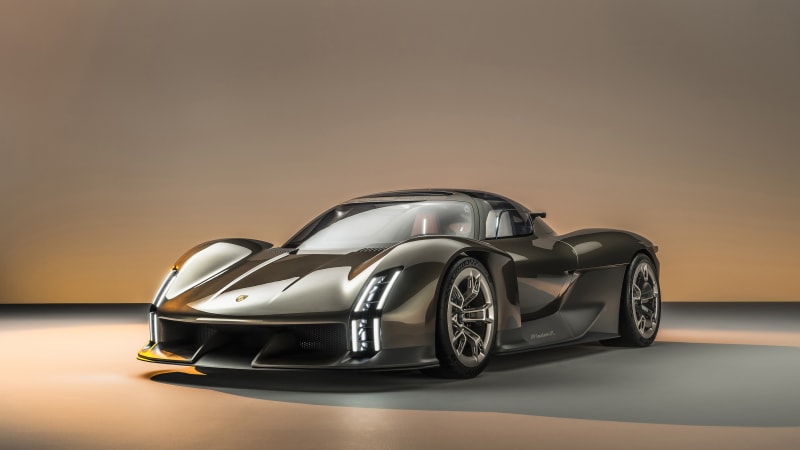
Porsche will soon decide whether to build the Mission X hypercar

Porsche hypercars don’t come around very often. In the 21st century, we’ve seen the V10-powered Carrera GT and the plug-in hybrid 918 Spyder. The brand hinted at what a follow-up could look like with the Mission X concept, and executives will soon decide whether to build it.

“With the concept, we have shown the technology we want to put in the car, the performance profile, and the feedback we got at our 75-year celebration was massively positive, so it’s a great motivation for us to do the car,” company boss Oliver Blume told Australian site CarSales.

Of course, putting a car on the path to production takes more than motivation. Feasibility will ultimately play a major role in deciding whether the Mission X will be remembered as a wild-looking concept car or as the 918 Spyder’s successor. It helps that the coupe looks far more realistic than the average design study; it wouldn’t take much tweaking to turn it into a production car, at least from a design perspective. 

Technology is another hurdle the Mission X needs to clear. The concept is electric, and while Porsche didn’t detail the drivetrain it noted that the system offers a power-to-weight ratio of “roughly one horsepower per 2.2 pounds.” It also promised more downforce than the current 911 GT3 RS and quick charging thanks in part to a 900-volt electrical system. However, these claims remain hypothetical, and Blume has previously suggested that the performance his team envisions for an electric hypercar can’t be achieved with the current battery technology.

None of these issues are insurmountable: battery technology is improving at a rapid pace, and we’re sure that a production-bound Mission X would sell out quickly even if it comes with a seven-digit price tag. Porsche has historically done well with limited-edition cars. Blume told CarSales that “the idea is to make the decision this year,” so we should learn more about what the future holds in the coming months.

Related video:

The Apple Car Is Delayed Again: Will It Actually Happen?

apple watch available at retail locationsEric Thayer

The Apple Car is Delayed Again: Will It Actually Happen?

A new report says Apple’s mysterious Project Titan is being scaled back.

For several years now, Apple has been working on an on-again, off-again car project called Project Titan. Even by the standards of one of the world’s largest companies, Apple has poured a ton of money into the project. It’s purported to be a potential “next big thing” for the brand to follow iconic consumer products like the iPhone. 

That is, if it ever actually comes to fruition. According to a report from Bloomberg, the oft-postponed Apple Car project has been delayed yet again —and it may not be as cool as many people had hoped.

The Apple Car has reportedly been pushed back to 2028

Apple was purportedly prepping to launch the Apple Car in 2026, which seemed wildly ambitious considering how long new vehicle development takes. Per Bloomberg, the vehicle will now arrive in 2028 at the earliest. 

And the Apple Car won’t be self-driving … at least, at launch

A major leap forward for the Apple Car project, according to reports, was that it was supposed to offer Level 4 autonomy, which would mean the car could drive itself on public roads. Apple could even potentially launch such a vehicle without a steering wheel and pedals. 

According to Bloomberg, Apple has ratcheted back those ambitions. The plan is now to launch the Apple Car with Level 2+ driver assistant software — similar to GM’s hands free Super Cruise technology. The plan would be to eventually move to a Level 4 system.

tesla model 3 2024 in gray on a road in front of a mountain
An eventual Apple Car could start at more than twice the price of a Tesla Model 3.
Tesla

How much will the Apple Car cost?

It’s expected to be pricey. Apple reportedly lowered its target price, from more than $120,000 to just below $100,000. That would still make the Apple Car more expensive than a Tesla Model S Plaid and more than twice the price of a Tesla Model 3. 

Is the Apple Car really going to happen? 

That is the question. On the one hand, not predicating the car’s arrival on Level 4 autonomy makes an Apple Car arrival in the 2020s much more realistic. But on the other, not having that cutting edge, paradigm-altering technology makes it harder to see why Apple would want to build a car at all.

Developing a car is expensive. Building cars at scale can be a painstaking logistical nightmare … particularly if you’re building supply chains up from scratch. If the only novelty Apple plans to add is sleek aesthetics and a more seamless user interface front, it’s not hard to see Apple execs wondering why they should bother.

,

This Budget Moon Watch Contains a Piece of Actual Space Rock

a watch in outer spaceBulova

Every product is carefully selected by our editors. If you buy from a link, we may earn a commission. Learn more

This Budget Moon Watch Contains a Piece of Actual Space Rock

From the moon to meteors.

When it comes to the “cool” factor of watches, it’s hard to beat watches that have been to outer space. Why do you think Omega has built up the Speedmaster Moonwatch as its flagship model over the past half-century? But Omega isn’t the only watch brand to have gone to space, nor is the Speedmaster the only watch to have been worn on the moon.

For the past few years, enthusiasts in the know have recognized Bulova’s Lunar Pilot as a great budget alternative to the Speedy. It’s based on a Bulova prototype that was worn on the lunar surface by astronaut Dave Scott during 1971’s Apollo 15 mission after the crystal popped off his NASA-issued Omega. Bulova’s modern reissue of that watch has proven to be a hit and is fast becoming the American heritage brand’s own flagship watch. And now Bulova has made the Lunar Pilot even cooler by adding a real artifact from outer space to the watch.

Moon, meet meteorite

The latest version of the Lunar Pilot features a dial made from a slice of the Muonionalusta meteorite, a 4.5-billion-year-old former celestial object that crash-landed on Earth over a million years ago and was discovered near the border of Sweden and Finland in 1906.

Meteorite dials have popped up on watches from many brands, but the Lunar Pilot’s connection to outer space makes this release extra interesting (for what it’s worth, you can also get a Speedmaster with a meteorite dial). Meteorite dials have more going for them than just their otherworldly origin. They also feature a striated crystalline pattern called the Widmanstätten texture that is unique to every watch and can’t be replicated, making each meteorite dial an original work of art.

The individual patterns of the Widmanstätten texture make each meteorite dial unique.
Bulova

But wait, there’s more

Bulova didn’t just slap a meteorite dial on the Lunar Pilot and call it a day (though that probably would’ve been enough, to be honest). This new Lunar Pilot also features a case made from Grade 5 titanium. It’s the second time we’ve seen the lightweight, premium material used for a Lunar Pilot case — the first being a titanium and gold anniversary edition in 2021 that has since sold out — and the first time the material has shown up on a Lunar Pilot in the smaller, more wearable 43.5mm case size that was introduced in 2022.

The watch also comes on a black NATO strap made from leather rather than nylon, but inside is the same familiar high-frequency quartz chronograph caliber that powers the other Lunar Pilots. A Bulova-exclusive movement, the HPQ NP20 caliber beats at a whopping 262khz, providing a perfectly smooth sweep for the chronograph hand and making the watch accurate to within a few seconds per year.

Sounds expensive…

Indeed, these premium changes don’t come cheap. The Bulova Lunar Pilot Meteorite is limited to 5,000 numbered pieces and is priced at $1,495, which is more than double the SRP of the standard Lunar Pilot 43.5mm on a strap.

Bulova Lunar Pilot Meteorite

Specs

Case Size: 43.5mm
Movement: Bulova HPQ NP20 high-frequency quartz chronograph
Water Resistance: 50m

Toyota’s Gazoo Racing GT trademark could point to new supercar

Who would’ve guessed that in 2024 Toyota would be the company churning out a wide variety of performance cars? Once considered the epitome of A-to-B commuter devices, Toyota now has several exciting cars under its Gazoo Racing banner, and a new trademark filing could mean yet another. 

AutoGuide unearthed Toyota’s filing for the GR GT trademark with the European Union Intellectual Property Office. The “GT” moniker, usually reserved for elite performance models, immediately fueled speculation that it would be for a range-topping track weapon. A super-Supra sports car, if you will.

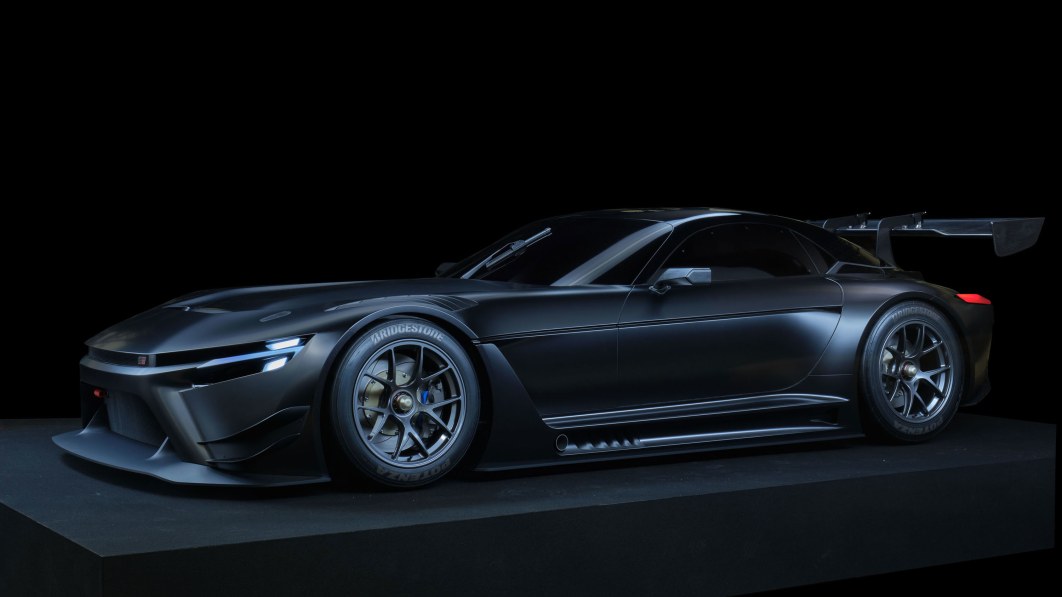
The obvious candidate would be the street-legal version of Toyota’s GT3-class race car. We’ve already seen patent renderings of it and an actual concept. The car was originally scheduled for a debut in the 2025 World Endurance Championship season, but last summer the team director said that the race car was being delayed one year to align with the production car’s launch in 2026. WEC homologation rules stipulate that 300 road cars must be built in order for the race car to compete.

There was some question of whether the car would be branded a Toyota or a Lexus. The team believed at the time that the powers that be were leaning toward Lexus. The appearance of the GR GT trademark could mean that the decision makers have changed course and that the GT3 racer will be a Toyota. Or it could mean both Lexus and Toyota will each get a version.

But given that Lexus is trying to go all-electric, the Toyota branding makes more sense. Also, we would be remiss if we didn’t mention the GT3 concept’s uncanny resemblance to the Mazda RX-Vision. We know Toyota is fond of partnering with other carmakers to build sports cars and Toyota owns 5% of Mazda. Do with that information what you will.

No matter what it’s named, a camouflaged version of the car has already been spotted testing at Fuji Speedway in central Japan. With the GR86, GR Yaris, GR Corolla and GR Supra already on the docket, as wells cars like the IS 500, RC F and LC 500 in the Lexus stable, Toyota is an unlikely manufacturer committed to keeping enthusiasts’ cars alive.