All posts in “Supercars”

How McLaren is rewriting the electric supercar formula

HEADLEY DOWN, England — There’s nothing quite like the roar of a revving McLaren engine to set a petrolhead’s pulse pounding, or the full-throated scream as it tears across the tarmac.

Yet new gas-fueled engines like McLaren’s could be illegal in many countries by 2030. The supercar maker, like all automakers, has to go electric — but that’s easier said than done for a niche player that can’t compromise the performance, and racing experience, that supports its rarefied pricing and exclusivity.

McLaren could probably produce a fully-electric vehicle tomorrow, said Ruth Nic Aoidh, the British carmaker’s executive director for purchasing. But the weight of today’s batteries “would kill all of the attributes that make a McLaren a McLaren”.

So instead, Nic Aoidh says McLaren is taking more time to rethink the way it builds vehicles from the wheels up. It is also looking to overhaul its business model, to generate revenue from selling some of its new technology to other automakers.

The people it ultimately has to keep happy are affluent enthusiasts like Steve Glynn, who make up McLaren’s base.

A racing driver, Glynn teaches others how to drive their supercars around private tracks, where the combination of raw speed and precise handling separate McLarens and Ferraris from cars that cost a tenth as much.

Glynn just bought his fourth McLaren, a black 620R, in January. He declined to say what he paid for it, but the 620R starts at around 250,000 pounds ($346,000).

“I’m a petrolhead through and through, but I think we have to accept the future of electrification beckons everyone,” he said at his home in Headley Down, a village in southern England less than hour’s drive from McLaren’s Woking headquarters.

“But an electrified McLaren would still have to put that same smile on your face.”

Even for deep-pocketed behemoths like Volkswagen AG, developing electric vehicles is an expensive proposition that is taxing their capital resources.

Other smaller premium carmakers like Volkswagen unit Bentley or Tata Motors Ltd’s Jaguar Land Rover, which both plan to electrify their model lineups by 2030, can rely on their owners’ financial backing to make the switch.

But for niche manufacturers like McLaren, lack of scale is a major challenge. Last year McLaren said it would cut 1,200 jobs – more than a quarter of its workforce – as it dealt with fallout from the COVID-19 pandemic.

McLaren’s cars start at around 120,000 pounds and range up to 750,000 pounds. It sold 4,662 vehicles in 2019, but thanks to pandemic shutdowns the company said in November its 2020 sales would hit around 1,700 cars and its revenue could fall by up to half.

McLaren will reveal some of its progress toward it electric ambitions with the Artura, a hybrid model, launching on Feb. 16.

ALL ABOUT THE WEIGHT

Weight is of paramount importance to customers.

To cut cost and help reduce its vehicles’ weight 15% in order to carry heavy batteries, McLaren has developed a new in-house process to make a carbon composite chassis, or “tub”, in minutes at a 50 million pound site in Rotherham, England.

“If McLaren are going to take the electrified route to a supercar, they’ll need to maintain the light weighting as much as possible,” said Andy Abbosh, who owns a pearl white McLaren 650S Spider.

McLaren’s new chassis will be used in the Artura, and by 2026 all its cars will be hybrids using this chassis, Nic Aoidh said. The carmaker aims to have fully electric models on the road towards the end of this decade, she added.

The process has brought mass production of carbon composite parts a step closer and McLaren is talking to other carmakers and manufacturers in other sectors on how to monetize the technology, according to Nic Aoidh.

“The way companies like ours will find our way to electrification is through innovation,” she said. “That will potentially open up doors for return on investments.”

McLaren will also develop its own batteries, which could also generate fresh revenue streams, she added.

‘WE’RE SELLING EMOTION’

Electric hypercar maker Rimac, which aims to bring its C-Two model to market later this year, plans something similar.

The company plans to build four of the cars per month and has its first year of production sold out, according to founder Mate Rimac.

He said the market for these vehicles was limited and would probably hit a ceiling of around 100 vehicles per year, worth several hundred million euros.

But where he sees a far greater business opportunity is to operate as an auto supplier, where it licenses, develops and manufactures systems and components for other carmakers, as it does already for Aston Martin and a number of others.

“We want to showcase with our cars what’s possible, then help carmakers build exciting electric cars and make the transition to electric faster,” Rimac added.

But it remains to be seen whether supercar makers like McLaren, with reputations forged on gas-guzzling race tracks, can successfully reinvent themselves for an electric era.

Pietro Frigerio, dealer principal at McLaren Newport Beach in southern California, worries a McLaren electric car without the famous throaty growl of a combustion engine could get lost in a crowd.

“What we’re selling here is emotion,” Frigerio said. “When you come to spend $300,000-plus on a car, you want it to look different and feel different.”

Related Video:

A pink and white Bugatti Chiron Sport is one of the most outrageous Valentine’s Day gifts we’ve ever seen

Valentine’s Day is coming up, and while you may have something special planned for your significant other, it’s probably not as wild as what one Bugatti customer has done (though, depending on your significant other, that might be a good thing). The supercar builder revealed the pink Bugatti Chiron Sport above, which is a gift from the buyer to his wife.

The car features a one-off paint scheme combining a matte white front half with a Silk Rosé metallic rear half. The shimmering pink paint finish is carried to parts of the wheels as well as the engine covers. The interior is wrapped in leather and Alcantara all in a very light gray hue. The upholstery features pink contrast stitching, and the “Comfort”-style seats have the name Alice embroidered into the headrests. Presumably, that’s the name of the customer’s beloved wife. If not, there could be some explaining to do.

Besides the flashy color combo, this Chiron Sport seems to be just like any other Chiron Sport. That’s not a bad thing, though, since it still packs 1,479 horsepower from its quad-turbocharged W16 engine. It also weighs 40 pounds less than the regular Chiron and gains stiffer suspension and torque vectoring.

An exact price tag for this pink beast wasn’t given. The base price for a Chiron Sport is a little over $3.2 million, and the customizing probably added a not-insignificant chunk of change to that figure. We don’t know about you all, but we’ll probably stick to more modest Valentine’s Day gifts and events.

Related Video:

New Porsche sports car design shown in recently-filed patent

It looks like there could be some supercar (or new sports car) cogs turning over at Porsche. Maybe, if you take a recent patent Porsche filed seriously. A member at the TaycanEVForums discovered that Porsche filed and was granted a patent with the European Union Intellectual Property Office for a design of a new sports car not currently in Porsche’s lineup

One look at the images associated with this patent will instantly remind you of the Le Mans Living Legend design study (below) that was only just revealed late last year. The vehicles look nearly identical in proportions and design details alike. Photos of the car in the patent make it look like an awkwardly elongated and flattened 911, but the real-life car that Porsche put together for its design study is significantly better looking with a more cohesive overall look.

It’s intriguing to see that Porsche just filed for the patent now. Whether or not this will lead to an actual production car is anybody’s guess. Car companies file for patents of things all the time that don’t result in any sort of a production vehicle. Seeing as how Porsche has thought this one out enough to release photos of a design study, there could be something brewing here.

Porsche doesn’t make many supercars. The most recent two are the Carrera GT and 918 Spyder. If built, this car looks like it could fall into a similar limited-run hypercar/supercar category. As for the possible powertrain, the Le Mans Living Legend Concept is powered by an eight cylinder engine. It’s hard to imagine Porsche developing a brand-new V8 or horizontally-opposed eight-cylinder engine today, but it’s worth pointing out the possibility. A more likely scenario would be to leapfrog off the 918’s hybrid powertrain, use a smaller combustion engine and develop a stronger electric portion of the powertrain.

If the car ever does get made, we hope the gullwing-style doors stick around. At this stage, we haven’t spied any Porsches with a design looking like this one, but we have no idea where Porsche might be in the process, if any engineering process has even begun. Now that Porsche has half showed its hand with the patent, though, we’ll be on the lookout for an extra sleek sports car from Stuttgart.

Related video:

McLaren Artura hybrid officially set for February 16 reveal

The long-awaited hybrid-powered McLaren Artura will be revealed next Tuesday, February 16. There’s a special showcase video that McLaren is putting on from Woking, England, that will come online at 7:01 p.m. ET that day. McLaren promises folks from its team and “brand personalities” (i.e. celebrities) will be introducing the car.

To catch the event, McLaren says you’ll want to visit this site that will be streaming the video live at reveal time.

We don’t have all the information as it concerns the Artura, but we do know some vitals. McLaren says it will be powered by a hybrid powertrain that features a completely new V6 engine. This will be the first McLaren since the brand’s road car reinvention with the MP4-12C that isn’t powered by a twin-turbo V8. It’s unclear how many electric motors will supplement the gas engine, but a previous report from Autocar predicted at least two with power going to the rear wheels exclusively. The Artura will also use McLaren’s new Carbon Lightweight Architecture that is specifically designed for electrified models. 

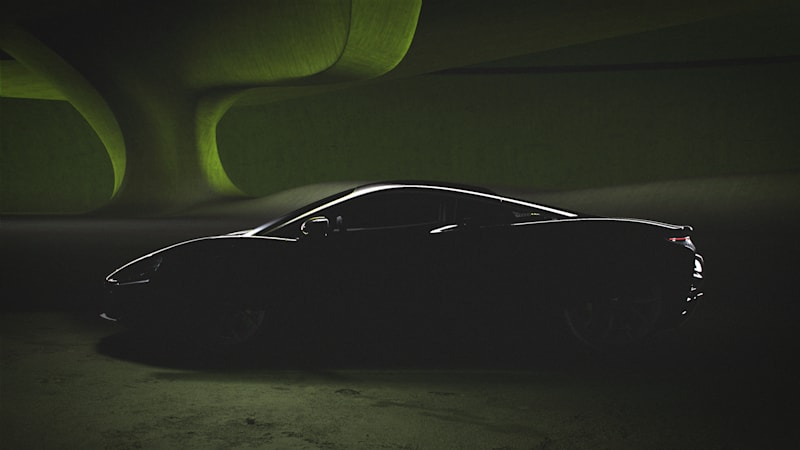
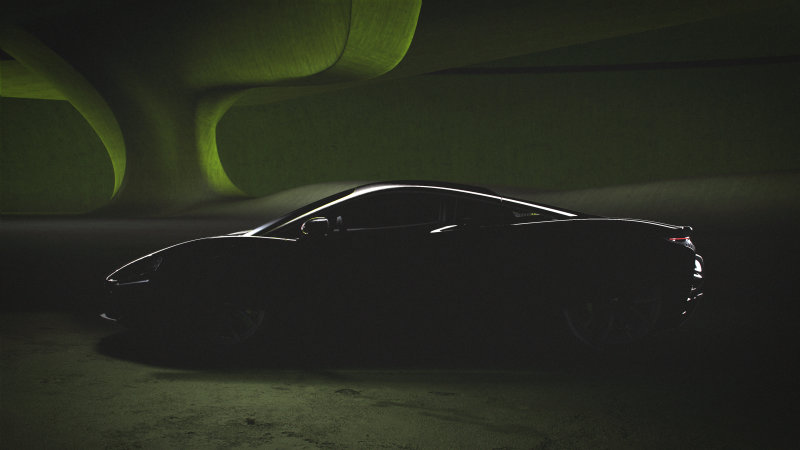
Above, you’re looking at the single teaser image that McLaren released with its announcement today. It’s unmistakable as a McLaren in profile, as the shape looks a whole lot like the 570S.

To see the car in full view (but slathered in concealing camouflage) check out McLaren’s preview photos in this post here. And if you’d like to see the car’s full reveal, make sure to circle back here to this link right before the reveal is meant to begin.

Related video:

Another Ford GT gets Mansory’s controversial Le Mansory treatment

Mansory turned heads, for better or worse, when it transformed the Ford GT into a creation dubbed the Le Mansory. It announced plans to make three examples, and it unveiled the trio’s second member in 2021. While we don’t know who ordered it, we wouldn’t be surprised if “Bruce Wayne, aka Batman” appears on the title.

It looks like the visual modifications are identical to the ones made to the first Le Mansory shown in June 2020, so they include a fully redesigned front end with recessed LED headlights and a diverse array of aerodynamic add-ons. Air scoops popped up from the GT’s roof, while the rear wing and the rear diffuser have both grown significantly. Specific wheels with y-shaped spokes complete the look. The person who ordered this car requested a rather Batmobile-like black paint job with red accents and a checked flag-like finish for the carbon fiber. 

Splitting the public’s opinion is one of Mansory’s specialties, and the Le Mansory is not an exception to the rule. It wears a look that most will either love or hate. We can’t help but wonder what Moray Callum, the soon-to-be-retired Ford designer who led the team that styled the GT, has to say about the new-look front end.

Passengers are reminded of the car’s new name as soon as they open the door, because Le Mansory (chosen to honor the car’s success at Le Mans) appears on the Alcantara-upholstered sills. Inside, the buyer requested a combination of red and black upholstery with numerous carbon fiber accents. It matches the exterior well.

Mansory’s mechanical updates are less controversial than the visual changes; nearly everyone agrees with more power. It kept the twin-turbocharged, 3.5-liter EcoBoost V6 and tuned it to 700 horsepower and 620 pound-feet of torque, compared to 647 and 550, respectively, for the stock model. Still bolted to a seven-speed dual-clutch automatic transmission, the six-cylinder sends the Le Mansory to a top speed of 220 mph (four more than stock).

Pricing information remains under wraps, but it’s reasonable to assume that the person who commissioned this Le Mansory received a seven-digit bill. Now that two of the three cars are spoken for, what remains to be see is how the third one will be configured — it could be relatively subtle, or it might get an outlandish design.

Related Video:

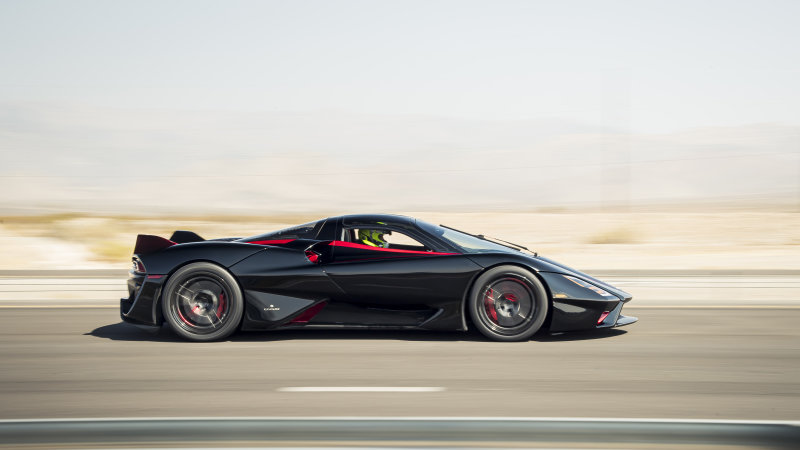
SSC says the Tuatara broke the top speed record again, for sure this time

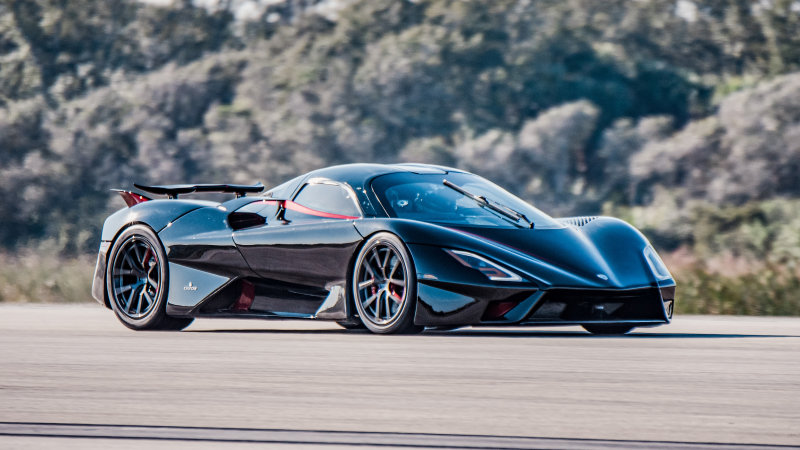
SSC just completed a third attempt at taking the record for the fastest production car in the world. The first attempt was marred by controversy after controversy (video footage inconsistencies and GPS calibration issues). The second attempt never really got off the ground due to problems with the car. Third time’s the charm, right?

According to SSC, yes, it is. Jerod Shelby and the SSC team are once again saying the Tuatara beat the Koenigsegg Agera RS for fastest production car in the world. This time, the margins are much closer, though. SSC says this latest attempt ended with a two-way average of 282.9 mph, which is just 5 mph more than the Koenigsegg’s two-way average of 277.9 mph.

The top speed runs took place on the Johnny Bohmer Proving Grounds at the Kennedy Space Center in Florida. An initial northbound run saw the Tuatara hit 279.7 mph, and in the southbound run, it hit 286.1 mph.

SSC says it used many different GPS data acquisition units to be sure of its numbers. Equipment from Racelogic, Life Racing, Garmin and IMRA were all in the car for the run. The Racelogic box was the primary logger, and the others were in the car for comparison’s sake to make sure everything came out rosy. The North American director for Racelogic, Jim Lau, both installed and verified the data that it captured. Racelogic put out a press release in conjunction with SSC today, underlining and verifying the results for the Tuatara’s record run.

Racing driver Oliver Webb wasn’t driving the Tuatara this time around. Instead, SSC had the actual owner of the Tuatara make the record attempt, Dr. Larry Caplin. He had much less space to bring the Tuatara up to speed due to the length of the runway. The whole run took place in 2.3 miles, versus the 7-mile stretch Webb had at his disposal in Nevada. Of course, this necessitated much more aggressive acceleration up to speed for there to be space to stop. SSC says that Dr. Caplin used 1.9 miles for acceleration, and the rest of the runway as a braking zone.

[embedded content]

Video of the two runs can be found above.

We asked Jerod Shelby a number of questions about the Tuatara’s latest run, and his answers can be found below. The big takeaway is that SSC is far from done with its hunt for top speed supremacy.

“This current release is really just an update on the progress of our current, and ongoing, top speed testing,” Shelby told us. “Although we did just complete an actual official and verified record, it certainly was not our last official attempt of the near future.  We are currently in the planning stages to return this spring to continue testing and attempt to break our own record and surpass 300 MPH at this same venue.”

Hitting 300 mph isn’t anywhere close to the 331 mph it was initially claimed to hit in Nevada, but any speed starting with a 3 is still nothing to scoff at. Shelby thinks it’s completely within the realm of possibility, as the team only gave Dr. Caplin full power in seventh gear on his final pass when he hit 286.1 mph. Theoretically, Shelby believes there’s a lot more in the tank for this specific location.

We also asked Shelby to give us a full download and explanation for how it went about capturing the data with all of the equipment.

“My public commitment this time was to utilize multiple GPS/Measurement groups, so that there were multiple levels of redundancy and to make sure that staff from those companies were in charge of installing, monitoring, reporting and validating the equipment and the speeds and distances that they produced,” Shelby said. Since Racelogic is highly respected in the automotive industry, we basically used all the other measurement devices to see if they aligned with the multiple Racelogic VBox devices that were onboard the Tuatara. The end result was … they all aligned.”

Shelby also released an official statement in a press release sent out with the latest news.

“We took a different approach this time in accelerating the car to the higher speeds. Larry Caplin, who owns the car, used a ‘drag race’ style of acceleration during the record runs, pulling full throttle and boost for 40-50 seconds. Back in October we were leaning into the speed much slower and used only about 20-25 seconds of full throttle and boost during the run. The difference is impressive both performance and operation wise. Larry pulled off a run that was far more difficult, at least by a factor of four, than what we attempted in Nevada.”

SSC put out a short statement from Caplin himself, too: “I got a taste of full power in the top of seventh on the last run. I am excited to come back and break 300 mph.”

So, SSC will definitely be back again. It sounds like we’ll need to wait for spring to hear more, but the next runs will be about extending the Tuatara’s lead. We’re sure Koenigsegg is watching.

This story will be updated with more details as we learn them from SSC and Jerod Shelby.

Looking for a deal? Check out your nearest Acura dealer

For the fourth time in the last year, an Aston Martin out-discounts all other automakers by offering the largest monetary savings off the retail price of an automobile in America. This time, though, the discount isn’t on the aging (though still beautiful) Rapide sedan or range-topping DBS Superleggera, it’s for the DB11 sports car. For those keeping track, the DB11 also led this discount list back in May of 2020.

This time, though, the price is even lower than before. Right now, buyers of the Aston Martin DB11 are seeing discounts of $24,330. That’s a 12.1% cut off the car’s average retail price of $201,820 and it means buyers are paying an average transaction price of $177,490. Still expensive, but really not bad for a drop-dead gorgeous machine with as much as 630 horsepower.

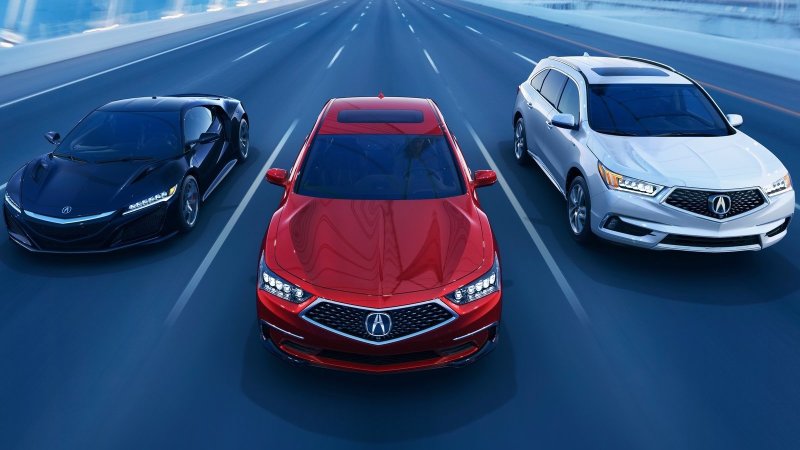
Next in line is a familiar face, the Acura NSX. As impressive as the Japanese hybrid supercar may be, Acura has been running big rebates on the NSX for as long as we’ve been running these lists. This month, the NSX buyers are seeing discounts of nearly 14% for an average transaction price of $138,648.

The third biggest discount this month shows up on the most expensive vehicle on the list. The Rolls-Royce Phantom carries an average sticker price of $537,500. But buyers are getting about 4% off that for an average transaction price of $516,333. It may not be a massive discount when measured by percentage, but when the asking price is so high, even a small discount equals big bucks.

Related Video:

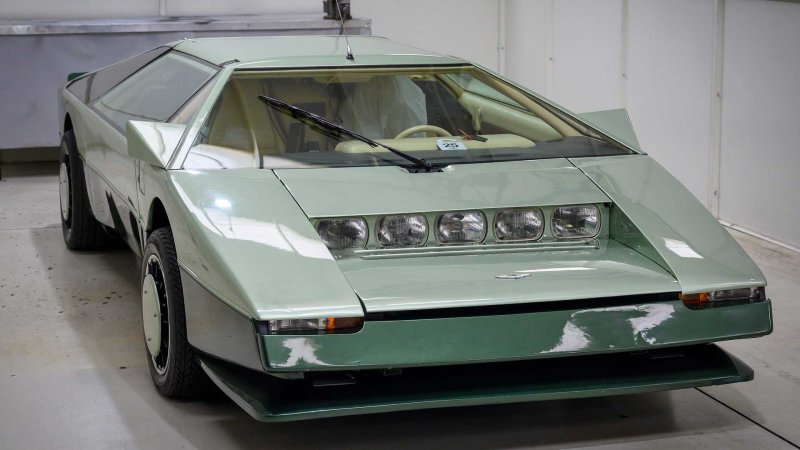
1980 Aston Martin Bulldog concept will reattempt to break the 200-mph barrier

Aston Martin’s 1980 Bulldog concept will receive a second chance to break the 200-mph barrier after it emerges from a complete, 18-month restoration. It was developed with all-out speed in mind — the British company had hoped the coupe would become the fastest car in the world, but it missed its target before getting shelved.

Had things gone as planned, car-crazed kids in the 1980s would have grown up with a picture of the Bulldog on their bedroom wall. Aston Martin wanted to hoist itself up the exotic car pecking order by building the fastest car in the world, though it didn’t envision more than a limited production run of 15 to 25 cars. Penned by William Towns, who also drew the Lagonda, the Bulldog looked like nothing else on the road (let alone in the Aston Range) due in part to its five center-mounted lights, and it broke with tradition by adopting a mid-mounted engine.

Engineers floated a top speed of 237 mph, according to The Drive, but the Bulldog ran out of breath at 191 mph. Victor Gauntlett axed the project shortly after taking the top job at Aston Martin in 1981 because the numbers didn’t add up; the firm wasn’t in a position to chase speed records. Now, 40 years later, it’s almost time to try again.

Classic Motor Cars began the lengthy process of restoring the Bulldog on behalf of a private owner in 2020, and it enlisted the help of Aston Martin factory driver Darren Turner to see if it can break the 200-mph barrier once it’s back in one piece. Richard Gauntlett, the son of the company’s former boss, is overseeing the project. We don’t know precisely when or where the speed run will take place, but Classic Motor Cars aims to have the Bulldog running by the end of 2021. In a statement, it said that the car is “well on the way to being restored.”

Restoring any exotic car from the early 1980s is a meticulous, expensive, and time-consuming process, and bringing a one-off concept car back to life increases the number of challenges exponentially. Classic Motor Cars can’t order parts from Aston Martin, for example, and it’s not able to study another example to find out how a specific panel is welded. It helps that the Bulldog hasn’t been significantly modified over the past four decades, though some parts (like the door mirrors) were added later, and that it was complete when it arrived at the shop.

Power for the Bulldog comes from a 5.3-liter V8 that’s twin-turbocharged to 600 horsepower, figures that are still respectable in 2021. Classic Motor Cars won’t make any major mechanical modifications to the drivetrain, so the Bulldog will need to attempt to reach the 200-mph mark in its original configuration, but the shop is sidestepping originality in the name of safety by adding an internal roll bar that it plans to conceal under the sheetmetal.

“What has been revealed is that the basic structure showed a lack of torsional rigidity by today’s standards, and a complete lack of rollover protection. For a vehicle with such enormous performance, we felt this was an essential safety improvement to allow the car to be driven in the manner for which it was designed,” the shop wrote.

Reaching the 200-mph mark will be an impressive feat for the Bulldog and for the folks giving it a new lease on life, but it will no longer be enough to claim the world’s top-speed crown. That honor ostensibly goes to the SSC Tuatara, which averaged 316 mph in October 2020. YouTubers called the record into question after noticing irregularities in the video, and SSC aborted its second attempt in December 2020 due to mechanical issues but plans to try again.

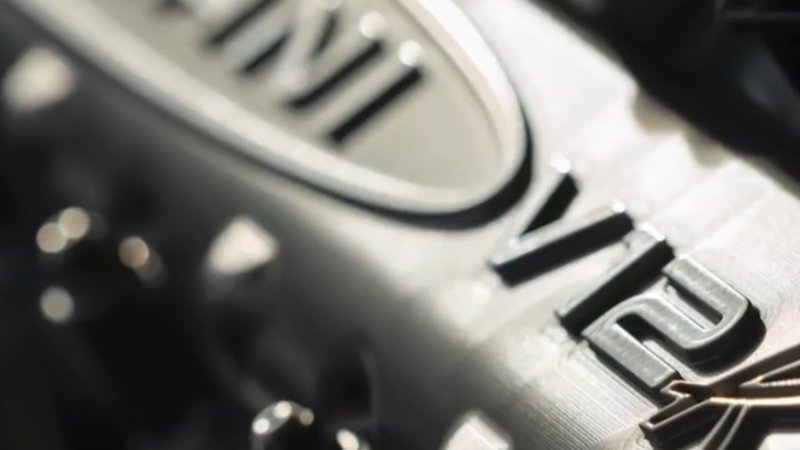
Pagani’s track-only Huayra R sounds like it will pack a naturally-aspirated V12

Pagani’s Huayra is preparing to put on a racing suit, just like its predecessor, the Zonda, did in 2009. And a video posted on the firm’s social media channels suggests engineers may have ditched the turbos.

Listen to the short video in the Instagram post embedded below. It’s the Huayra R’s V12 engine singing its heart out. While the actual footage reveals little that we don’t know, the soundtrack seemingly comes from a naturally-aspirated engine. We don’t hear a pair of turbos spooling up. That’s unusual, because the regular Huayra is powered by a Mercedes-AMG-sourced 6.0-liter V12 that’s twin-turbocharged to over 750 horsepower.

Pagani hasn’t given any specs on the engine, though. Previous reports have suggested the engine will have more than 900 horsepower and the ability to rev beyond 9,500 rpm. Certainly the video supports the high-revving prediction. We would expect Pagani to be using a version of the 6.0-liter AMG V12, as it has on all of its supercars, though without turbochargers. And that’s not just because Pagani has always used AMG engines, but because there aren’t many companies with a V12 in its parts bin, and developing one from scratch would be extremely expensive for a small company like Pagani.

Pagani will release more details about the Huayra R in the coming weeks, and we expect the model will make its official debut online during the first half of 2021. It will likely arrive as a limited-edition car with a seven-digit price tag, and we wouldn’t be surprised if every available example is spoken for by the time it breaks cover. It might be the last variant of the Huayra, too. Production of the Roadster has already ended, and the next Pagani hypercar is currently being developed. It’s tentatively scheduled to break cover before the end of the year.

Related Video:

Roll like His Airness in this Mercedes SLR McLaren previously owned by Michael Jordan

Often called the greatest basketball player of all time, Michael Jordan also has an interest in fast machines, as evidenced by the recent announcement that he would be establishing a NASCAR team, 23XI Racing, together with Denny Hamlin and featuring Bubba Wallace behind the wheel. It’s hardly surprising, then, that he would also be an owner of multiple supercars, many of which could be seen in the ESPN documentary The Last Dance. One of Jordan’s previous supercars, this 2007 Mercedes SLR McLaren, is now up for sale on eBay Motors.

Besides its celebrity provenance, this Mercedes SLR McLaren is special for another reason: It’s the special 722 Edition, built to commemorate the 1955 Mercedes-Benz win at the Mille Miglia. That winning Mercedes-Benz 300SLR racer, piloted by Sir Stirling Moss and Denis Jenkinson, was car #722 (so designated because of its 7:22 a.m. start time).

The SLR McLaren 722 Edition features a 650-horsepower supercharged 5.5-liter V8 engine and is able to accelerate from 0 to 62 mph in 3.6 seconds. Top speed is 209 mph. Good thing the front splitter and rear diffuser are modified for increased downforce at high speeds. The ride height also is lowered and the suspension stiffened compared to the regular car, and larger brake rotors are fitted. The interior brings leather and Alcantara upholstery along with gloss-finished carbon fiber trim. Special black wheels and subtle red “722” badges complete the picture.

This car has 1,038 miles on the clock, so it must not have been in heavy rotation with Jordan’s many other rides. At this writing, the car has a bid of $35,100 with the reserve not met. We’d guess bidding has a way to go before someone has a realistic chance of driving this baby home, since the Buy-It-Now price is $695,750.

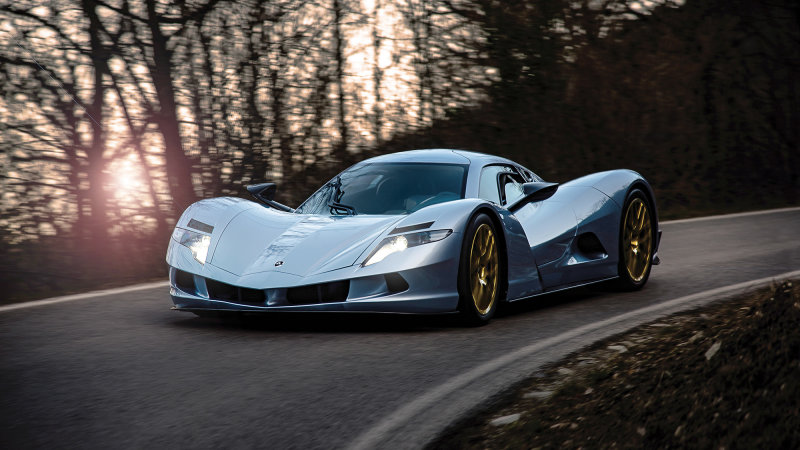
The Aspark Owl, dubbed the fastest accelerating car in the world, is now on sale

The Aspark Owl, a 1985-horsepower electric hypercar that has been dubbed the fastest accelerating car in the world, has gone on sale. A showroom opened in Aspark’s hometown of Osaka, Japan, yesterday, and the company is taking orders from Europe and North America as well.

In October, the Owl set a claimed 0-60 time of 1.72 seconds during testing at Misano World Circuit in Italy. Though that time was achieved using one-foot of rollout (typical of many publications’ 0-60 times), it should still obliterate anything in the next lane over. Previous tests of a prototype have alleged a 0-60 time of 1.87 seconds on race tires, but the latest time was clocked with street-legal Michelins.

Production will start with a limited run of 50 units, with 20 planned for Europe and 20 for Asia and the Middle East. That leaves 10 for North America, whose sales will be handled by The Gables Sports Cars, which seems to be a used exotic car dealership in Miami, Florida.

One of the things that seems to be holding the Owl back is that it’s not a dedicated car company. It’s an industrial engineering firm that has built a hypercar as a side project. As such, it has no sales network, seemingly very little in terms of PR or marketing, and an inconsistent website.

Parts of the site still say that the 0-60 time is 1.69 seconds, while horsepower ranges from 2,012 to 1,985. The latter number seems to be more recent, so we’ll go with that. One thing we do know is that the Owl has four electric motors. Aspark says that motor’s rotation speed of 15,000 rpm “should be” the fastest in the world.

The company also says the Owl makes 1,475 lb-ft of torque, has a range of 400km (249 miles), and tops out at 400 kph (249 mph). Back in March, a press release teased a second project from Aspark to be revealed in a few weeks, but as far as we can tell it hasn’t been announced.

If you would like to own an Owl, you can fill out an application on the Aspark website. It’ll set you back $3.56 million at today’s exchange rates. It’s a machine that piques our curiosity, but hopefully the company can get its messaging act together so we can have more faith in the car itself. 

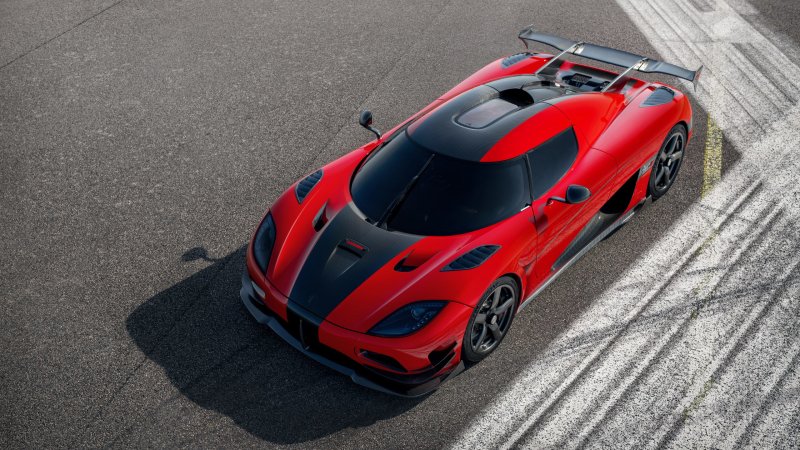
Koenigsegg re-engineers a 2017 Agera RS at the request of a customer

Buyers who order a Koenigsegg are encouraged to personalize their car by working directly with the company to select unique paint colors and trim materials. One customer took the customization process to the next level by commissioning the company’s little-known Aftermarket division to re-engineer a 2017 Agera RS.

Twenty-five units of the record-breaking Agera RS were available, and production ended in 2018, so it’s too late to buy one new. Instead, an owner approached the Swedish firm with a simple request: He wanted to add air vents similar to the One:1‘s to his car’s hood. From there, the project escalated into a relatively long list of upgrades.

Koenigsegg explained that after adding the pair of vents, it redesigned the carbon fiber hood and fitted additional winglets on either side of the front bumper. It then turned its attention to the back of the car, where it added an air scoop that’s also inspired by the One:1 and an updated adjustable wing controlled by the in-car software. Black paint on the logos, on the exhaust outlet, and even on the visible bolts add a finishing touch to the design.

Inside, the anonymous customer requested a digital instrument cluster named SmartCluster in Koenigsegg-speak. Borrowed from the Regera, it takes the form of a big, driver-configurable screen that neatly replaces the three digital gauges and the small clusters of warning lights fitted to the Agera RS when it was new.

Koenigsegg initially estimated that implementing the customer’s request for additional vents would take a month, but it ended up spending longer than half a year making the aforementioned changes to the Agera RS. It stopped short of revealing how much it charged the owner to re-engineer a car that cost more than $2.5 million when it was new.

SSC Tuatara tries for top speed record again, but runs into heat issues

A number of months have gone by since the SSC Tuatara controversy broke, and ever since Jerod Shelby announced a second attempt, we haven’t heard much of anything out of SSC. We still haven’t heard anything from SSC directly, but they’ve been busy.

According to a YouTuber by the name of Robert Mitchell, SSC had a second go at the record attempt earlier this month. Unfortunately for SSC, nothing has come of it due to mechanical issues with the Tuatara.

Mitchell was invited to SSC’s record run because he was one of the initial YouTubers who analyzed the original run and questioned SSC’s results. Shmee150 and Misha Charoudin were also invited, but couldn’t make it due to travel restrictions. This second attempt took place in Florida, and Oliver Webb was not behind the wheel. Instead, the owner (Dr. Larry Caplin) of this Tuatara decided he was going to drive it himself. No explanation was given for Webb’s absence.

SSC ran into problems with the car the day before it planned to go flat-out for the record attempt. Mitchell offers a full explanation in the 30-minute video above, but long story short: The Tuatara ran into heat issues that eventually led to two spark plugs failing. Running multiple runs to well over 200 mph without sufficient cooling eventually saw the Tuatara get far too hot, leading to the Tuatara eating a pair of plugs. Caplin allegedly got the Tuatara up to 251 mph in his final run, but he aborted the pull when he felt the car wasn’t accelerating like it should have. Of course, it wasn’t accelerating like it should have due to the heat soak issues that had already caused its damage.

SSC threw in the towel after discovering there were problems, and never made another attempt. Mitchell says SSC is planning to try again at some point after Christmas (he plans to attend again), so we’ll be on the lookout for attempt number three.

Related video:

[embedded content]

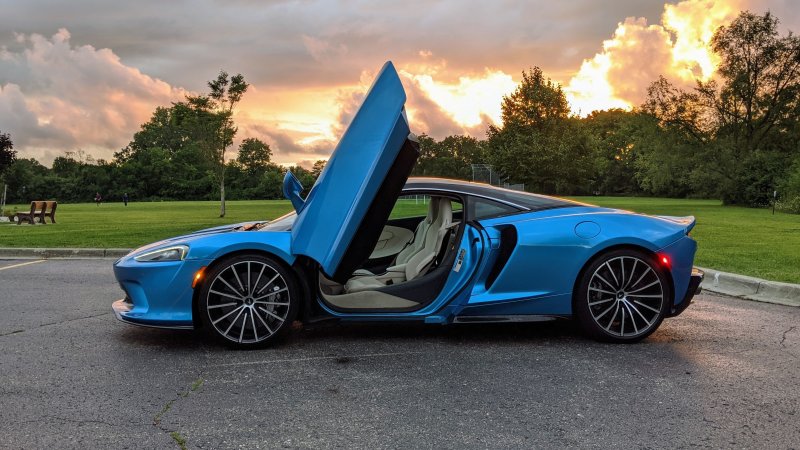
2020 McLaren GT | Grand Touring, with an edge

As the winter settles in, I find myself reflecting on the most memorable cars that I’ve tested this year. Chief among them, the McLaren GT.

I drove the GT on a damp midsummer evening. After a lengthy heatwave, temperatures dipped into the low 60s and it was raining lightly. Not the ideal time to drive a $263,000 supercar. And yet, it was impossible not to be excited and curious. 

McLaren has come a long way in a short time. With a decade under its belt as a standalone automotive operation, the company is delivering on ambitious growth plans and now counts four product lines in its portfolio, ranging from the Ultimate to this GT.

It’s a surprising trajectory considering McLaren is best known for making shooting stars, like the 1990s F1 that captured the zeitgeist for supercars of that era. The F1 was followed by the indelible Mercedes-McLaren SLR from 2003-2010. 

It wasn’t until 2011 that McLaren Automotive — freshly spun off from the racing team — attempted a credible road-going car that could actually be purchased and driven by normal enthusiasts. That car, the 12C, was a first step that ultimately led to proliferation of vehicles and technology for McLaren.

After a few hours of spirited driving the GT, my conclusion boiled down to one word: maturity. It over-delivered as a grand tourer, though the car is about as much of a GT as the Ford GT, which is to say, not much. My back was a little tight when I returned home, fatigued but not abused. The McLaren GT is a driving workout on par with an Audi R8 or Lamborghini Huracán.

Performance? It has plenty. But also notable, the fit-and-finish is solid, the looks are striking and it felt like the product of a company that’s been doing this for awhile, which McLaren hasn’t. Certainly competitive with Ferraris and Lamborghis and interesting in its own way. A small shop like McLaren is always going to face challenges achieving scale and consistent prosperity, and the pandemic wreaked havoc on the automaking and racing units. Still, the GT is indicative the company can expand without overreaching.

As I parse my notes from that drive, here’s three takeaways that remain with me, months later, crystallizing the GT’s place in the modern performance world.

2020 McLaren GT

Exterior design: More than just the doors

The GT is one of the best-looking McLarens of this or any era. The cowls on the side behind the doors give the car a sinister, almost Decepticon vibe, but the rest of the car is relatively subtle. The proportions are near perfect. The GT reminds me of some of the best Pininfarina stylings for Ferrari’s mid-engine cars. As dusk settled and I raced to get in a quick photo shoot, qualities like the LED headlights and pencil-thin taillights naturally stood out. The front diffuser and vents are simple, especially in black. Along with the striking wheels, the GT’s features nicely accent its silhouette. 

Oh, and of course, this and all McLarens have dihedral doors. It’s easy to speak a soft design language when the doors shoot straight up in the air. Make no mistake, the GT stands out, but to my eye, it’s a holistic approach, rather than the gluttonous buffet of carbon-fiber and copious style creases favored by other brands.

Interior: Simple, but not cheap

Another neat feature: ambient lighting that displays light flecks on the dash and armrests. It’s not visible at first, but as the golden hour faded to total darkness, the GT’s cabin reassured me with a soft glow. Oh, and the Bowers & Wilkins sound system is excellent. I almost missed that. The GT is the rare car that demands your full attention, entertains you with its sounds and creates an atmosphere for the drive, which in a supercar like this can border on sublime. But hey, who doesn’t like music? As I sat in my driveway I toggled among the studio, live and driver-focused sound settings as I listened to a couple of old Springsteen tracks.

Driving experience: Not an abuse of power

The 4.0-liter twin-turbo powerplant does not disappoint. With 612 hp you can hit 60 mph in 3.1 seconds, which is a legit figure, and the seven-speed dual-clutch holds gears aggressively but smartly.  

As my drive continued, I began to push the McLaren a bit, playing with more aggressive drive settings and getting quicker on the throttle. The reflexes are outstanding, returning an almost instant and powerful bite from the brakes. The steering is more direct than the Aston DB11, but lighter than some Ferrari and Lamborghinis I’ve tested. McLaren does a good job of making the driver respect the car without being abusive. Things like great visibility help.

To draw things together …

Despite the GT billing, this car feels much more like a supercar. Considering its powerful engine and carbon monocell, it is one, as far as I’m concerned, but the GT was reasonably forgiving over metro Detroit’s broken roads. I meandered west over the area’s ‘mile’ roads, then up and down Woodward Avenue, finding myself at the M1 Concourse, a 1.5-mile road course anonymously tucked into the suburbs. I pulled up to the private entrance for members, thinking I might get waved in by a guard (If someone pulled up to a racetrack in a McLaren, I’d probably let them in), but it was after hours and the gate was closed, so I turned back.

I completed my stint with a sprint across town and then up Interstate 75, alternately accelerating hard, clacking through gears with the paddles and then docilely falling back in traffic. The GT doesn’t have a split personality, but it can adapt to any situation an enthusiast might present it with, even on a damp summer drive in the middle of a pandemic. This is a decent GT and an excellent performance car, which is the right formula for McLaren.

McLaren Sabre revealed with over 800 horsepower and 218-mph top speed

The McLaren Sabre is out and ready for business. While McLaren hasn’t provided its usual full information drop and detailed set of photos, McLaren of Beverly Hills has posted the first customer car on its website and released some details about the car.

One thing to know off the top is exclusivity: There will only be 15 Sabres built, and all of them are headed to the U.S. It was designed and personalized by McLaren Special Operations (MSO) to exacting U.S. standards, featuring “ideas and innovations that global homologation would not permit.” What those features and ideas are, McLaren isn’t specifically disclosing (we asked). All McLaren could do was suggest that some of the aerodynamic elements and body work would not pass European or Asian homologation requirements.

The Sabre is packing more power than any other non-hybrid McLaren, beating out the Elva by 20 horsepower for a total of 824 ponies and 590 pound-feet of torque from the 4.0-liter twin-turbo V8. Acceleration figures aren’t available, but top speed is 218 mph. That makes it the fastest two-seat McLaren ever. Given the Senna-like huge aero all throughout the Sabre’s body, we imagine it’s rather lethal on a racetrack, too.

McLaren says it involved the future owners in development of the Sabre more than any car previous. The 15 folks buying got to have a close relationship with the MSO team of designers, engineers and test drivers in an effort to personalize each car to their preferred specifications. McLaren flew out test mules for buyers to get behind the wheel of at the Thermal Club. Then, they got to tell McLaren what they thought of the drive. Typically, feedback comes after owners take delivery of the finished car, so this is rather unusual.

There’s no official price from McLaren on the Sabre, but it hardly matters. All 15 cars are spoken for and sold, so nobody else will need to mull over the likely exorbitant MSRP.

Related video:

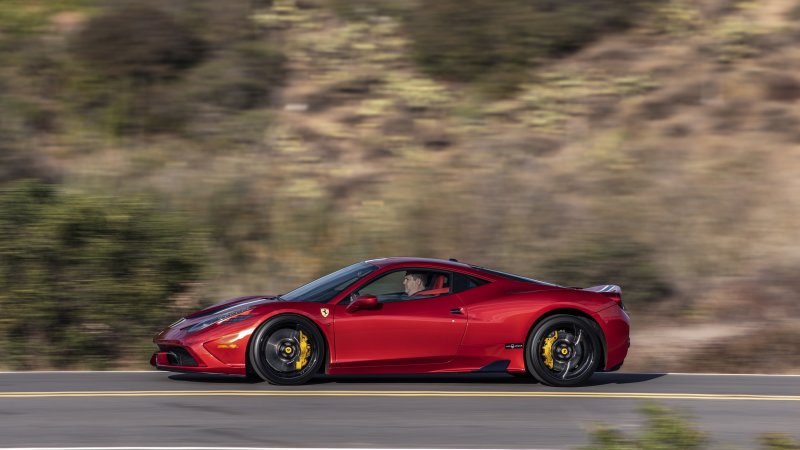
AddArmor’s Ferrari 458 Speciale is a 605-horsepower safe on wheels

Exotic cars and armored cars are often found in the same garage, but they’re positioned on opposite ends of the automotive spectrum. AddArmor leveraged the latest developments in armoring technology to build a Ferrari 458 Speciale that can survive .44 Magnum impacts while posting a sub-three-second sprint from zero to 60 mph.

Founded by military and law enforcement veterans, the California-based firm explained it wanted to build an armored Speciale without sacrificing the model’s performance or handling. It’s much more difficult than it sounds, because the simplest and most straight-forward way to make a car bullet-proof is to add heavy metal plates to it. For example, Brabus unveiled an armored G63 earlier in 2020 that weighs a hefty 8,400 pounds.

“Heavy vehicles tend to be slow, and a slow target is an easy target. In situations where clients need to be protected, speed is always an advantage,” reasoned company president Jeff Engen.

AddArmor upgraded the 458 Speciale with a type of light armor that’s 10 times stronger and 60% lighter than ballistic steel. It achieved a B4 level of armor, meaning the mid-engined supercar can withstand bullets fired by a handgun. It’s offers relatively basic protection; an AK-47 or a high-powered rifle can pierce right through it. It adds 156 pounds to the Speciale’s weight, so AddArmor offset it by ticking every carbon fiber option offered by Ferrari, including exterior and interior parts plus bits in the engine bay. It also fitted a custom exhaust system provided by Capristo that further reduces weight while adding 40 horsepower and 65 pound-feet of torque.

All told, the armored 458 weighs 67 pounds more than stock. It still posts a 2.8-second sprint from zero to 60 mph, and it’s still capable of reaching 202 mph. We’re told it handles like a non-armored model, too. If you lose the heat, all of the armored extras can be removed to end up with a lighter 458 with a 40-horsepower bump.

AddArmor stressed its 458 Speciale is a one-off prototype built to showcase how far armoring technology has come, and what’s possible in the exotic car segment. If it were to sell it, it would charge about $625,000 for it.

Related Video:

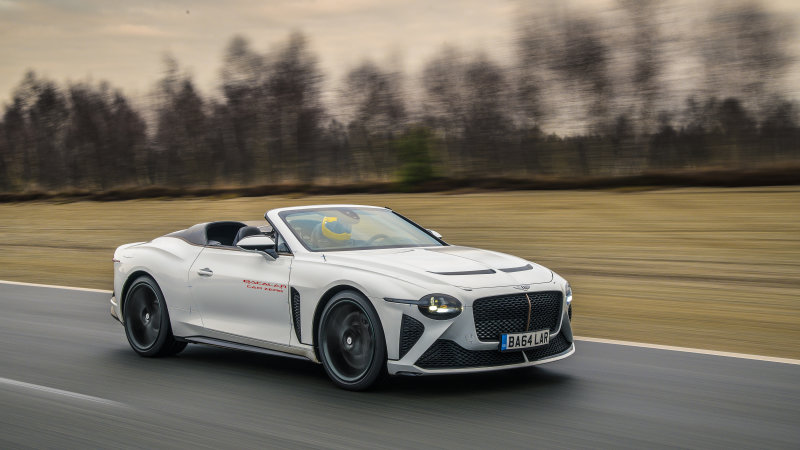
Bentley starts testing the sold-out, 200-mph Bacalar roadster

Bentley took the limited-edition Bacalar from a sketch to a 200-plus-mph roadster in nine months, a shockingly short amount of time. Its engineers are now putting the first car through its paces at the same break-neck speed.

Although the Bacalar is based on the Continental GT, the British firm explained nearly everything the driver will see and feel is specific to the car. Bentley developed over 750 new parts for it, including 40 built with carbon fiber, and the roadster shares no body panels with other members of the company’s range. All of these components have to meet the same stringent quality standards as those created for regular-production models.

Bentley gave its team 20 weeks to fine-tune the first prototype (pictured), which it calls car zero. Testing started earlier in 2020, so the car has already been put through a wind tunnel and pushed to the limit at triple-digit speeds — it’s as stable and quiet as customers expect. Next, test drivers will pile on the miles to see how it holds up over time. They’ll then test it at up to 176 degrees, and the final step will be validating the electrical system.

Power for the Bacalar comes from a twin-turbocharged 6.0-liter W12 engine, which produces 650 horsepower and 667 pound-feet of torque. It spins the four wheels through an eight-speed automatic transmission.

Bentley hasn’t revealed what it will do with car zero at the end of the testing phase. Production is scheduled to start in 2021, and the 12 examples planned have already been spoken for. Each one will be unique; buyers will be invited to work directly with the company’s design department to configure the interior and the exterior.

Related Video:

Pagani Huayra Tricolore celebrates Italian Air Force aerobatic team with aeronautic features

The Italian Air Force’s aerobatic team, known as the Frecce Tricolori, is celebrating its 60th anniversary next year. To celebrate, Pagani has created the Huayra Tricolore, a very limited-edition variant of the open-top Huayra supercar. Only three will be built, and each features design inspiration from the Aermacchi MB-339A P.A.N. jets flown by the Frecce Tricolori, plus performance upgrades from the Huayra Imola. It all makes for one impressive machine.

The first and most obvious connection between the Huayra and the jets that inspired it is the color scheme. It has a blue translucent carbon fiber finish with bright green, white and red stripes along the sides. Other details tying the vehicles together are the rear wing with supports modeled after the plane tail fins (also, it’s a wing), turbine-style wheels, and billet aluminum parts inside and out in a blue anodized finish. Each car gets a number representing a member of the team, too, with 0 for the team commander, 1 for the lead formation pilot, and 10 for the solo flyer. The aeronautic showpiece, though, is the pitot tube on the nose that is fully functional and measures air speed. This is then displayed on a meter in the cabin with information in knots and mach speed.

[embedded content]

There are other changes to the Huayra Tricolore that aren’t quite as obsessed with the idea of being a land plane. The car gets a deeper front splitter and a revised front bumper with new air vents to increase intercooler efficiency. A new roof scoop is fitted for better airflow to the engine bay. The interior also gets blue and white seats with green, white and red inserts that are similar to the Zonda Tricolores built for the Frecce Tricolori’s 50th anniversary. The seats and the four-point harness buckles also feature the emblem of the aerobatic team.

Backing up the bold design are engine and chassis upgrades from the Huayra Imola track car. The engine is the same twin-turbocharged AMG-developed V12 making 829 horsepower and 811 pound-feet of torque. The stiffer chassis comes from the track car, as does the interlinked electronically controlled suspension. So in many ways it’s a roadster version of the Imola.

It also happens to be more expensive than the Imola. The price is 5.5 million Euros, which comes to $6.75 million at current exchange rates. That doesn’t include tax, either.

Related Video:

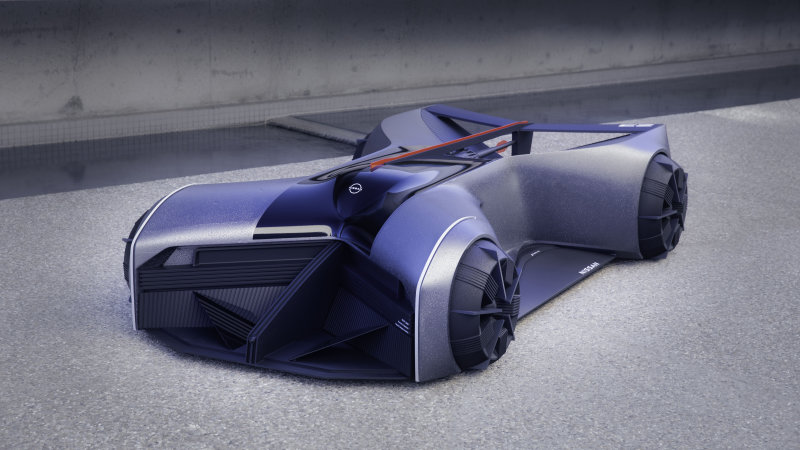
Nissan GT-R (X) 2050 envisions what a GT-R of the future could look like

Most of our Nissan GT-R thinking energy these days goes toward wondering about what the R36 has in store. Nissan is out here thinking about what the GT-R will be like in 2050. If we continue along at the R35’s production timeline pace, it might still be the R36 then. We kid, but hey, the R35’s been out for over a decade now with no end in sight.

As an answer for what the future of Nissan performance looks like, Nissan has brought an intern’s thesis project to life. It’s called GT-R (X) 2050, and it’s a fresh take on our dystopian future of sports cars. Jaebum Choi, a former student at ArtCenter College of Design in Pasadena, Calif., set forth to design a vehicle for car enthusiasts in the age of self-driving cars (whenever that may be). Instead of leaving the project on paper and computer renderings, Nissan Design America decided to bring it to life in the form of an official Nissan concept vehicle.

The GT-R (X) 2050 is a tiny car — two feet high and 10 feet long — meant for just one person, and most of the details require some stretching of the imagination. For starters, the operator “sits” in the car in a prone position, laying on their stomach with their limbs in an X position. The exterior design is meant to mimic the body in this position, which explains why it looks like an X from an aerial perspective. Of course, there are some GT-R elements tossed in there, too. The distinctive quad circle taillights sit in back. It uses a very broad, slab-sided design like the R35, and the V-Motion front end style is noticeable from head-on. The rest of the vehicle has a very tenuous grip on what we might typically envision a vehicle to be.

The driver “sees” out via a special VR helmet that you connect to the car’s extensive camera system. There is one window, but it’s at the top and doesn’t provide a view forward. It’s not a fully autonomous vehicle either. Choi told media in a presentation that he envisions drivers steering via controls operated by moving your hands and arms that are splayed outward. You’re meant to “wear” the car to the extent that it feels like an extension of the body.

“Exo-skeletons today make people stronger by wearing mechanical structures. I tried to fit the size of a person’s body as much as I could, as if I were wearing a car,” Choi explains.

As for what makes it go, Choi says he took inspiration from Iron Man when he envisioned an “arc reactor” type of power source. This would create electricity for the motors. Nissan didn’t provide performance figures, likely because the powertrain is far too nebulous to even make any predictions. Being a GT-R concept, though, it’s meant to be extremely quick. Choi says it’s meant to be more supportive than a superbike, but not much more than that. All design priorities go toward making it a pleasing and fun time for the operator after all.

You might be wondering about the wild looking wheels, and Choi has an answer for those, too. The wheel/tire combo is a one-piece unit that, due to its shape, allows the car to turn 360 degrees. Its design is meant to help the wheel cool down quickly when driven hard. It even has an active wing that pops up to promote more downforce.

We turn further to fantasy land with Nissan’s Brain-to-Vehicle technology it showcased at CES a few years ago. Choi believes that the GT-R (X) 2050 would use this technology that interprets signals from a human’s brain to make the vehicle an even better self-driving car than ordinary computer-controlled ones. But you wouldn’t be forced to use the autonomous mode all the time.

“Choi has essentially envisioned a new mode of transportation that people could experience like clothes, “wearable,” instead of a traditional vehicle “carriage,” says David Woodhouse, Nissan Design America (NDA) VP. “It is the kind of breaking-the-mold thinking that has always been encouraged here at NDA. We’ve been honored to help bring Choi’s vision to life.”

Related Video:

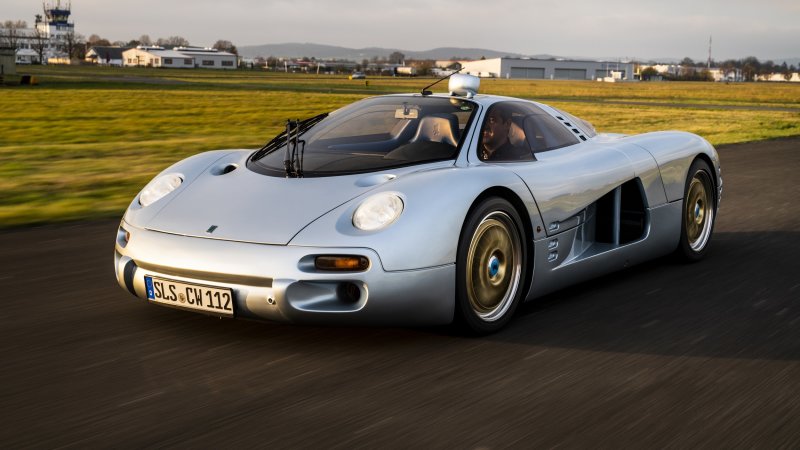
One-off 1993 Isdera Commendatore 112i supercar will cross the auction block

If you live in a zip code where a Bugatti Chiron is a common sight, and all of your neighbors already have a Pininfarina Battista on order, auction house RM Sotheby’s has just what it takes for you to stand out. It’s selling a 1993 Isdera Commendatore 112i, which is a one-off supercar that elevates esoteric design to an art form.

While its name sounds Italian, and it was indeed chosen as a tribute to Enzo Ferrari, the Commendatore 112i was the brainchild of German engineer Eberhard Schulz. RM Sotheby’s explained he landed a job in Porsche’s design department by driving a home-made sports car he named Erator GTE to the company’s headquarters and showing it off to anyone willing to give him a few minutes of their time. He left Porsche and worked for a small firm named B&B before forming Isdera, which is short for Ingenieurbüro fur Styling, DEsign und RAcing.

Schulz’s dream was always to make a modern version of the Mercedes-Benz 300SL, and Isdera’s first car explored what the coupe might look like in the 1980s. Its second model, the Commendatore 112i, was developed to be more extreme than its predecessor in every single way, ranging from design to performance. Instead of a V8 engine, Isdera borrowed the 6.0-liter V12 that Mercedes-Benz put in the S-Class (W140) and the SL (R129) — and that later ended up in the Pagazi Zonda — and stuffed it right behind the passenger compartment.

Isdera wanted a stick-shift, and Mercedes-Benz didn’t have a suitable transmission in its parts bin, so the young carmaker sourced a five-speed manual transmission from famed Porsche tuner RUF and added a sixth gear to it. When all was said and done, the 400-horsepower 12-cylinder sent the 112i to a top speed of 211 mph.

BBS and Bilstein helped Isdera develop an active suspension system that lowered the ride height by three inches at high speeds to reduce drag. Schulz went as far as making his own windshield wipers for the Commendatore rather than using off-the-shelf components, and he fitted a periscope instead of side mirrors to improve its drag coefficient. RM Sotheby’s points out the young carmaker wanted to enter its newest creation in the 24 Hours of Le Mans. Many start-ups talk endlessly; this one created a fully functional and surprisingly impressive car.

Had everything panned out, we may be writing about Isdera’s plans for the 2020s, or looking at how its newest model fares against the competition. However, a big chunk of the company’s funding came from Japan, and it vanished when the Japanese economy slowed down in 1993. There would be no Le Mans entry, no low-volume supercar, and no magazine covers. Isdera went silent, but the 112i’s story doesn’t end there; far from it.

Swiss investors courageously attempted to reboot the project by putting the Commendatore in “Need for Speed II” released in 1997 for the original PlayStation and PC. Later, they made a handful of visual changes to the car, like replacing the submarine-like periscope, and displayed it at the 1999 edition of the Frankfurt Motor Show, where it was presented as the Silver Arrow. It was sold, and it went through the hands of several owners before Isdera purchased it and returned it to its 1993 specifications. It’s now selling the Commendatore for the second time.

RM Sotheby’s notes that the odometer reads about 10,500 kilometers, which represents around 6,600 miles, and that the car is currently registered in Germany, meaning it’s theoretically street-legal anywhere in the European Union. It was previously registered in Switzerland, so can be re-registered there, too, but enthusiasts who want to drive it on American soil will need to either apply for a show and display permit or wait until it turns 25.

What’s a one-off supercar in like-new condition being sold by the people who built it worth? RM hasn’t provided a pre-auction estimate, so the bidders in the room (physically or virtually) when the Commendatore crosses the auction block in Paris in 2021 will ultimately decide its value. There’s no reserve, so someone is taking it home.

Related Video: