All posts in “Supercars”

Virtually attend ‘The Quail, A Motorsports Gathering’ via our high-res photo gallery

While the description of the yearly “Motorsports Gathering” at the Quail may sound a bit odd to many of our readers at first blush — it’s basically a huge garden party for wealthy automotive enthusiasts to get a look at vintage and newly available vehicles targeted at their healthy checking accounts — there’s no arguing that the vehicles on display are worthy of attention. And since most of us either weren’t invited or couldn’t afford to attend (or both), the next best thing to being there is scrolling through our high-res gallery of live photos taken at the event.

Visitors to this year’s event were treated to the usual grade of high-end machinery that we’ve come to expect, which is to say the best, most desirable and most expensive in the world. Our gallery is filled with vintage racers from Ford, Ferrari and Jaguar, classic Trans Am competitors and even a gaggle of Volkswagen-based dune buggies. More modern machinery was also on display from Lotus, Pagani, Koenigsegg, Pininfarina and Acura.

Electric vehicles are becoming more commonplace at high-end events, and this year’s gathering at The Quail was no exception. In addition to a strong showing from Rimac and Lotus we mentioned earlier, Lucid was in attendance as was Gateway Bronco (see here for more on that). We also got shots of things you may never have heard of like the Delage D12 and Radford Type 62-2. Oh, and the return of the Lamborghini Countach, too.

For those who keep track of such things, this year’s Best of Show winner was a 1938 Mercedes-Benz 540K Special Roadster. You’ll see all that and more in our high-res gallery above. Enjoy!

Related video:

Bugatti Bolide gets a 40-unit production run

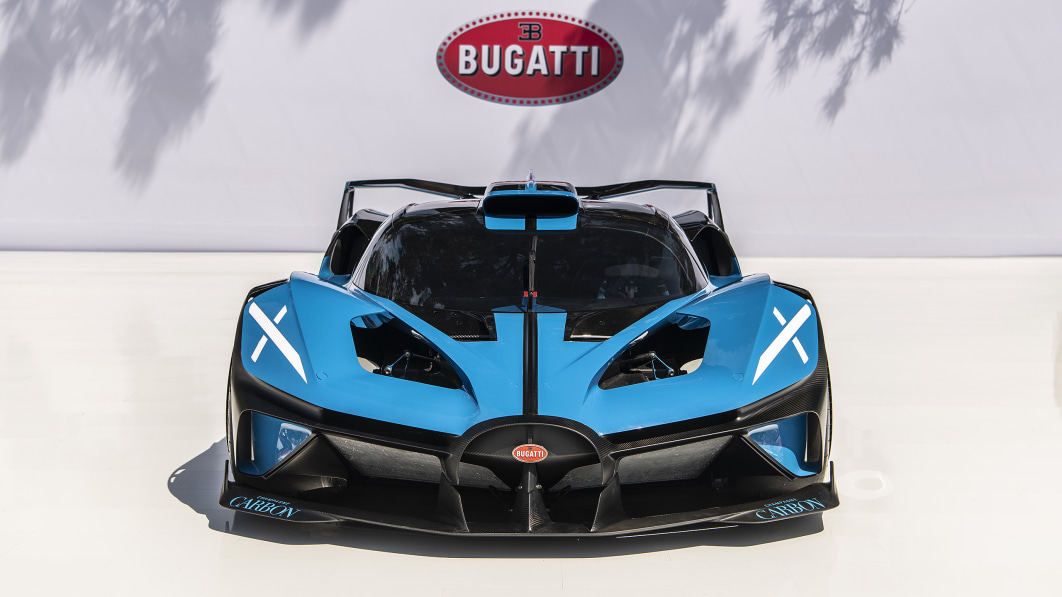
At some point in the past couple of years, Bugatti asked itself, “What if we built a radically light vehicle around the legendary 8.0-liter W16 engine?” Keep in mind that “radically light” is in comparison to the Chiron, which weighs about 4,500 pounds. The luxury firm from Molsheim, France, answered its question with a concept it called the Bolide, a track-only two-seater with an appetite for aero and downforce. Scooped-out bodywork, intense massaging, and throwing luxuries out the wraparound canopy dropped its weight to 2,737 pounds. That’s less than a Subaru BRZ for a car producing 1,824 horsepower on 110-octane race fuel. Bugatti called the Bolide a one-off, but guess what happens in a car market where someone throws $140,000 at a 1994 Toyota Land Cruiser? Potential buyers made Zoom calls to Molsheim from their bank vaults while sitting on pyramids of money like the Joker in “The Dark Knight.” So now Bugatti is making 40 Bolides, the same number it made of its last track superstar, the Divo.

CEO Stephan Winkelmann was at The Quail, A Motorsports Gathering to announce the production version. Bugatti said it is honing the Bolide’s aerodynamics and handling, and adding FIA-standard safety systems. The center-lock wheels will see production, as will a fuel bladder and pressurized refueling, a six-point safety harness with HANS compatibility, and an automatic fire extinguishing system.

There are prices to pay beyond MSRP for making dreams come true, though. The production vehicle gains some weight, coming in 460 pounds over the concept at 3,197 pounds. Changes to the engine tune mean horsepower takes a hit, too. The concept got its 1,824-hp puissance from 110 octane. The production W16 will drink far more accessible 98 RON gas, which is about 94 octane in the U.S., topping out at 1,577 hp and 1,180 pound-feet of torque. That drops the power-to-weight ratio from 0.67 to 0.49 — just behind the track-focused Koenigsegg Jesko at 0.51. Oh, the humanity.

The company says Bolide development and production will take place over the next three years, the first example scheduled for delivery in 2024. The price: 4 million euros, or roughly $4.7 million U.S. at the moment, and a million euros less than the street-legal Divo. What’s the French word for “bargain?”

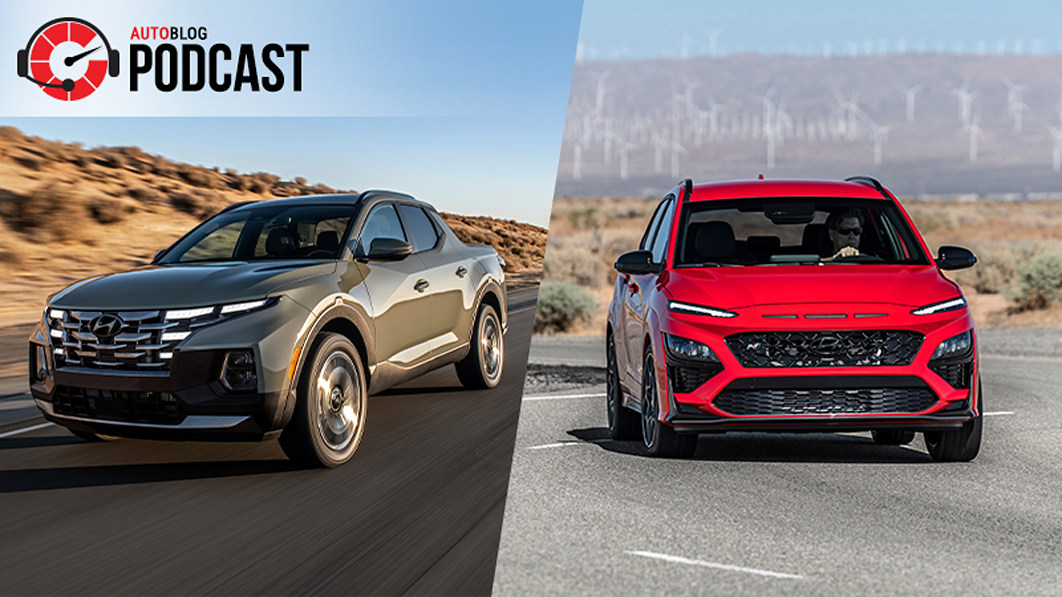
Hyundai Santa Cruz, Kona N and Elantra Hybrid | Autoblog Podcast #691

In this episode of the Autoblog Podcast, Editor-in-Chief Greg Migliore is joined by West Coast Editor, James Riswick. They’ve been driving a lot of new cars, including the 2022 Hyundai Santa Cruz pickup, 2022 Hyundai Kona N, 2021 Hyundai Elantra Hybrid, 2021 Acura TLX Type S and 2022 Hyundai Genesis G70. Lamborghini revealed a modern interpretation of the Countach, for better or worse. Finally, they heelp a listener replace a 2013 Ford Edge in this week’s “Spend My Money” segment.

Send us your questions for the Mailbag and Spend My Money at: Podcast@Autoblog.com.

Autoblog Podcast #691

Get The Podcast

  • Apple Podcasts – Subscribe to the Autoblog Podcast in iTunes
  • Spotify – Subscribe to the Autoblog Podcast on Spotify
  • RSS – Add the Autoblog Podcast feed to your RSS aggregator
  • MP3 – Download the MP3 directly

Rundown

Feedback

Autoblog is now live on your smart speakers and voice assistants with the audio Autoblog Daily Digest. Say “Hey Google, play the news from Autoblog” or “Alexa, open Autoblog” to get your favorite car website in audio form every day. A narrator will take you through the biggest stories or break down one of our comprehensive test drives.

Related Video:

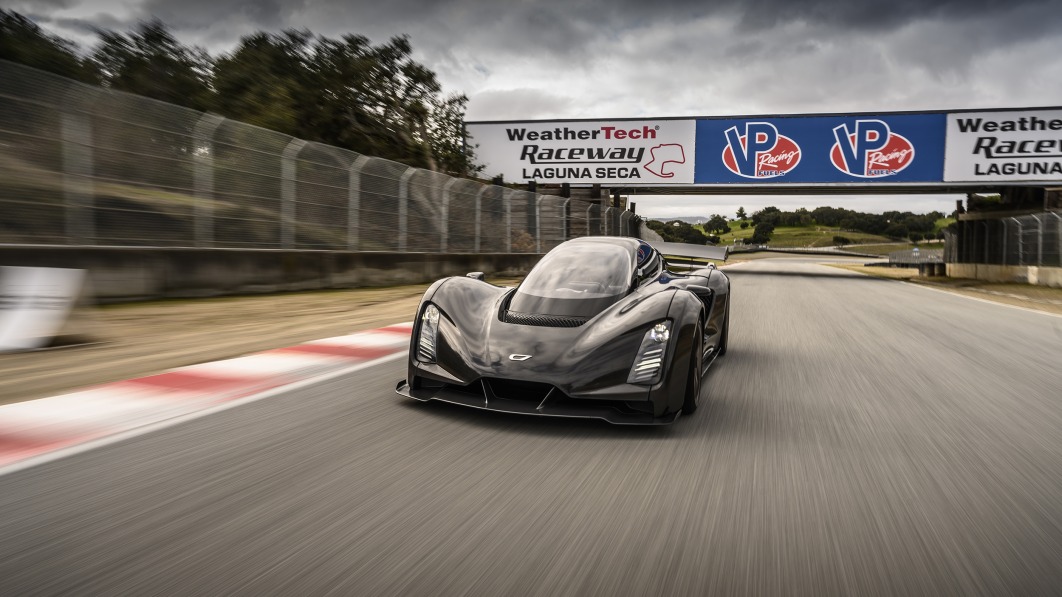
3D-printed Czinger 21C supercar breaks Laguna Seca lap record

Los Angeles-based supercar builder Czinger claims to have broken a Laguna Seca lap record with a prototype of its 21C. The time of 1:25:44 is said to have been set by driver Joel Miller, and eclipses the old track record of 1:27.62, set by Randy Pobst in a McLaren Senna.

The time would seem to back up the ambitious specs laid out by the supercar startup. The strong hybrid electric is powered by a 2.9-liter twin-turbo V8 and dual electric motors for an output of 1,331 horsepower. The entire car will weigh less than 2,800 pounds, putting 0-62 times at what the company says is just 1.9 seconds, on its way to a top speed of 268 mph.

The Czinger was engineered to be built via 3D-printing, allowing for dramatically shortened development times and cost savings. Advantages include being able to produce, say, a suspension arm without having to manufacture the tooling first. Still, each tandem-seater supercar takes 3,000 to 4,000 hours to make.

Only 80 units will be made, for a price of about $1.7 million. Included in that tally is a more track-oriented widebody version. The car was supposed to be shown to the public in 2020, first at its Geneva Motor Show debut, and then at the Goodwood Festival of Speed, but both of those events were canceled due to the COVID-19 pandemic. During the downtime, however, Czinger says they’ve been making incremental improvements to the car.

Production has been delayed, partially due to the chip shortage caused by the pandemic. After 21C production ends, Czinger says they’re looking to offer three additional models. Some will utilize what they’ve learned in making the 21C for a lower-priced model.

The Laguna Seca lap record proves that the car has solid design behind it. We look forward to seeing what production looks like when it begins in 2022.

2022 Acura NSX Type S is revealed as the most powerful NSX ever

The 2022 Acura NSX Type S is here, and it’s the most impressive NSX the company has created. It now makes 600 horsepower and 492 pound-feet of torque, increases of 27 ponies and 16 pound-feet. But that’s only the tip of the many little changes Acura has done to make this the ultimate NSX.

Gaining that extra power involved quite a few little changes. The engine now gets larger turbochargers borrowed from the GT3 race car. The various intakes have been changed for improved cooling and airflow. The main front grille has been enlarged to allow more air into the radiators, and the outboard grilles now feature ducting for air curtains that help direct air to the side intakes. Those intakes feed more efficient intercoolers. The batteries even feature greater capacity.

Power isn’t the only area to receive upgrades. The Type S gets a carbon fiber roof for slightly less weight and a lower center of gravity. The aerodynamics have been tweaked with a new carbon fiber splitter, side skirts, rear spoiler and a GT3 race car-inspired rear diffuser, all of which help with downforce. The adjustable suspension, all-wheel-drive system and transmission have all been retuned for sportier driving. The latter shifts faster now and has a Rapid Downshift mode that allows you to shift to the lowest possible gear with one half-second paddle pull. Even the tires are stickier Pirelli P-Zeroes designed specifically for the NSX Type S. All of these improvements mean that the Type S is a full two seconds faster around Suzuka than a regular NSX.

And if you need just that little bit more in the performance department, there is a Lightweight Package. It costs an extra $13,000 and adds carbon ceramic brakes, a carbon fiber engine cover and carbon fiber interior parts. Total weight savings is 58 pounds.

Acura did pay some attention to styling, too. On top of the more aggressive aerodynamic bits, the grille has a new shape that has hints of the corporate pentagonal grille. The grille mesh is even steel instead of plastic now. The lights get dark lenses, and all the badging, mirrors and door handles are finished in black. Type S decals adorn the rear fenders. Inside, there’s an Alcantara headliner and NSX and Type S logos embroidered in the seats and dashboard. One of the cars in the gallery at top is painted in an exclusive Gotham Gray matte metallic color, which will only be applied to 70 cars.

To get into an NSX Type S, you’ll need to be ready to fork over $171,495 including destination charge. Acura is taking orders now. You’ll want to be quick: 350 units are on offer, and 300 of those are for the U.S. You can put in your order at this link.

Related video:

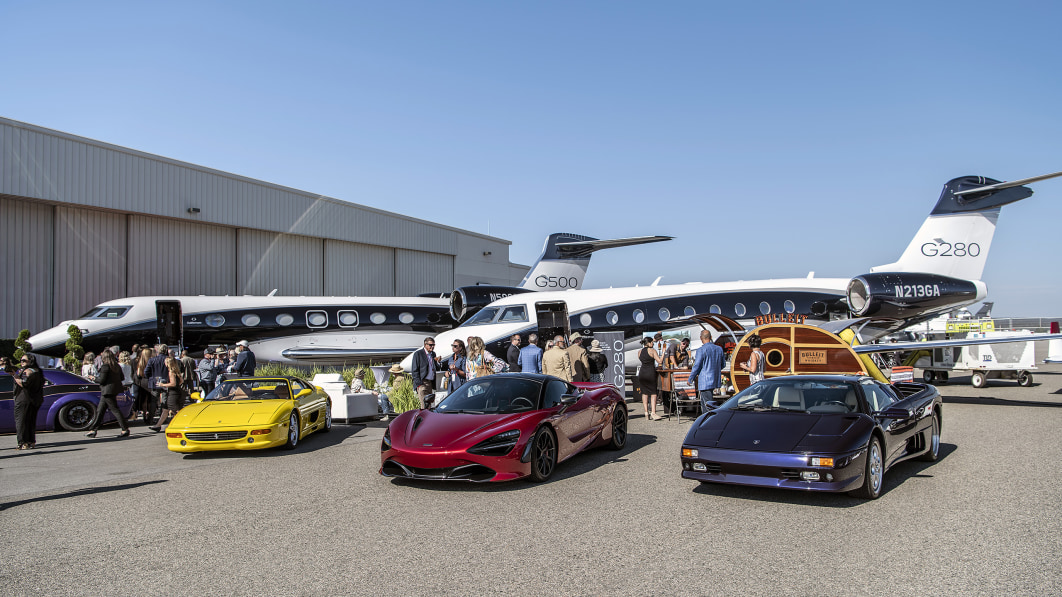
McCall Motorworks Revival Photos | Monterey kicks off with fancy airport party

Yesterday, the McCall’s Motorworks Revival happened, for the 30th time no less, kicking off Monterey Car Week. Which is another way of saying it happened before most people showed up. 

So what is it? Fancy cars parked among fancy planes while fancy people walk about with fancy food and cocktails. This differs from other Monterey events, such as the Pebble Beach Concours d’Elegance and The Quail, A Motorsports Gathering, in that it takes place at an airport rather than a golf course. It’s also more of an evening affair than a garden party, complete with a DJ, a band and dancing. Oh, and the cars are less impressive. That, admittedly, says more about the prime metal displayed elsewhere, especially at Pebble. There’s still a lot to ogle, even if you didn’t get to enjoy the fancy food and cocktails. We dispatched ace photographer Drew Phillips to take it all in and to put down an offer for us on that Citation Longitude. 

Amongst the new cars on display, most brought there by their manufacturers, we see a Corvette Stingray, Lucid Air, Aston Martin DBX, Land Rover Defender, Polestar 1, Hennessey Venom F5, Ruf 911s, and a big showing by Ford with a GT500, a Mustang Mach-E, a Bronco and multiple GTs. Two were done up to match an original parked alongside it, while the Bronco flanked an original prototype from 1966. Neat. Hopefully no one spilled Perrier Jouet on it. 

Classics? There were aplenty, but frankly, we’re most fond of the two VW buses: one towing the No. 22 1957 Denzel 1300SS Roadster in front of that Citation Longitude and another from Meyers Manx supporting an adorable flying boat with “Smiles for Miles” written on the side. Now that’s the kind of private plane I could get behind.  

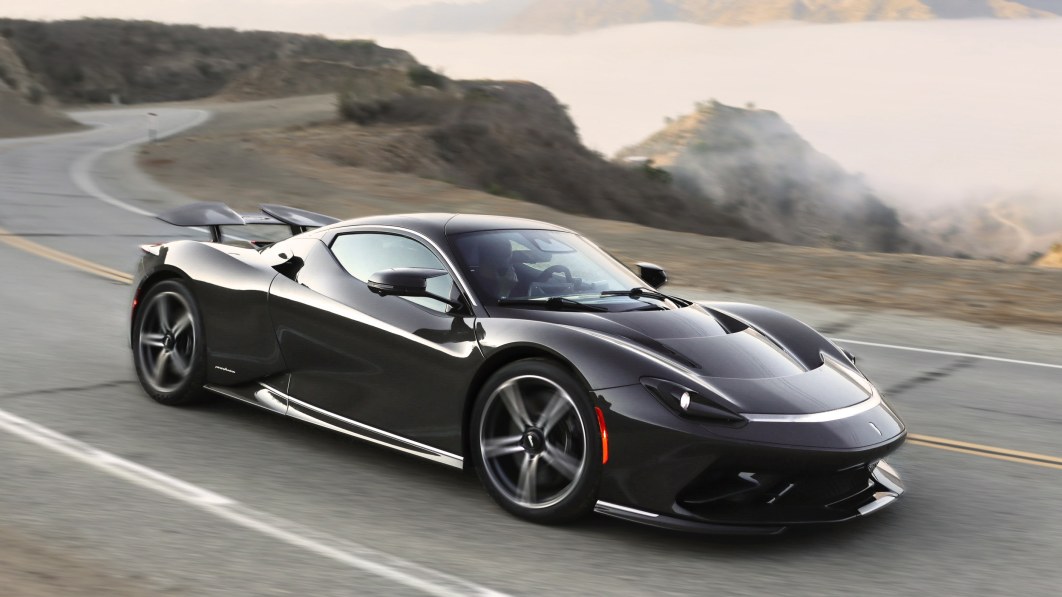
Pininfarina Battista production car revealed to kick off Monterey Car Week

The Pininfarina Battista is officially here in production form. Pininfarina released the first images and video of the production car today, tooling around Southern California roads ahead of it being displayed during Monterey Car Week.

There are no additional specs or figures available beyond what has already been announced. The Battista will produce 1,900 horsepower from its four electric motors, have a range of about 280 miles on a full charge and hit 60 mph in “under 2 seconds.” Those in Monterey will have a chance to see the exposed carbon bodywork in person for the first time. Plus, potential clients will be provided the opportunity to go for a ride.

It’s not just this single Battista that will be shown, either. Pininfarina says it will also be debuting a Battista Anniversario. This special edition of the Battista will have “aerodynamic enhancements and tailored detailing producing a uniquely dynamic personality.” It will also be limited to just five total vehicles worldwide. Seeing it at Monterey may be the first and last chance you get to ever lay eyes on one.

The one nugget of information Pininfarina gave us today besides the new photos is detail on the Battista’s sound. It takes after a sound philosophy conceived by Italian composer Giuseppe Verdi. Any multiple of 432 Hz is said to be a “pure sound” according to Verdi, so Pininfarina used 54 Hz (a multiplier of 432) as the core frequency of noise for the Battista. As you accelerate, the frequency will continue to increase in multiples of 54 Hz to keep the in-cabin sound pure and consistent with Verdi’s principles. How very Italian.

“Every driver has an emotional bond with a car, and the sound of Battista will nurture this connection, not by replicating a familiar car sound, but with one that radiates the beauty of Battista’s design both inside and out,” says René Wollmann, product platform director for sports cars at Automobili Pininfarina. “This way, the Battista will not only impress with its aesthetic appeal and performance, but also on a new emotional level enhanced through the sound. We look forward to the input we will receive from clients in the U.S. as we fine-tune Battista’s sonic experience.”

We’ll look forward to hearing the sound ourselves one day. For now, the wait is on to see the ultra-exclusive Battista Anniversario. Look out for more Pininfarina news soon as Monterey Car Week revs up.

Related video:

New Lamborghini Countach teased again with three images

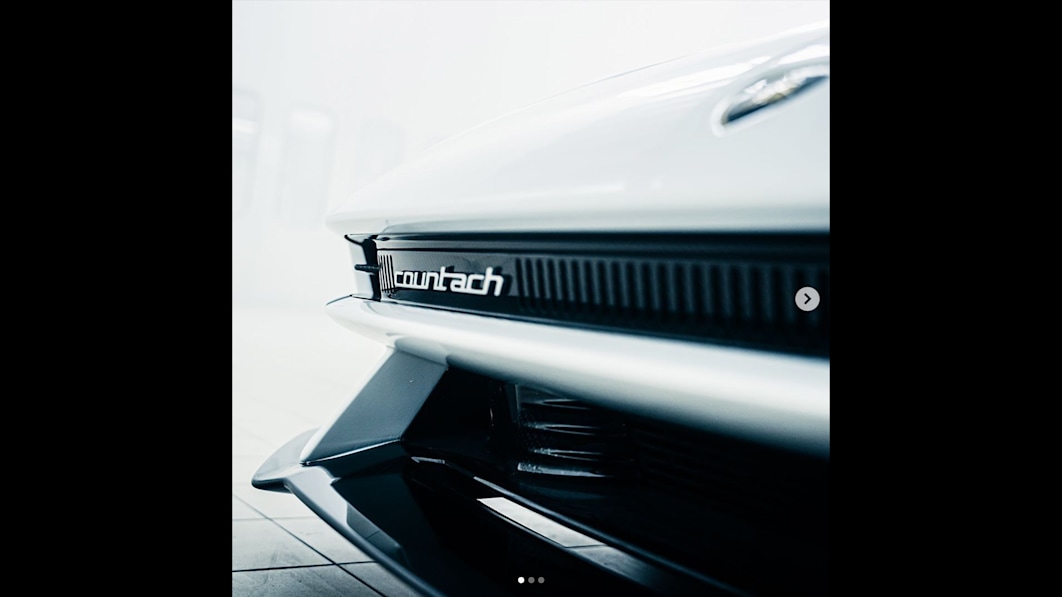
Lamborghini posted three more teaser photos of the coming Countach resurrection to its Instagram page. We’ll have to let the pictures do most of the talking since we don’t have any more information than we did when the first tease dropped a couple of days ago. We get a shot of a nose unlike any other Lamborghini in the current stable. A narrow black grille just inches wide splits the upper and lower section of the front fascia, recalling the area where the original exotic placed its black front bumper and fog lights. The name “Countach” appears on the right side of the coupe, in all lowercase letters just like the original, but stretched and angular befitting the brand’s modern design language.

A second shot exposes the engine cover, this a new design based on the clear cover that can be fitted to the Aventador. Three flat hexagon panels, thickly bordered in black, step down from the roof to the tail. Beneath them is the longitudinal and posterior V12 portion of the LPI 800 powertrain. The initialism stands for Longitudinale Posteriore Ibrido, and we’re still waiting for any information on that last bit, the hybrid. The V12 in the Lamborghini Sian FKP 37 received help from a supercapacitor, but that special edition didn’t get official designation as a hybrid. The last car from Sant’Agata to do so was the 2014 Asterion LPI 910-4 concept from the 2014 Paris Motor Show. The Asterion hid a V10 in back for the rear wheels, and two e-motors with a combined 296 horsepower on the front axle powered by a lithium-ion battery. The Sian produces about 785 horsepower, the Countach will deliver about 789, the Aventador S makes 690. So Lamborghini isn’t using electricity to chase gaudy numbers. Yet.  

The last pic presents the area behind the side window. This is a slightly tighter shot of an image that a site called Lamborghini Specs posted a few days ago, snagged somehow from the automaker’s customer-only site, Lamborghini Unica. This reveals a Huracan-like intake treatment, the opening descending from the roof to the rear fenders. Ahead of the intake, a row of slats harks back to Gandini’s Countach prototype that arranged a flat row of vents along the fender, just behind the glasshouse. The fender is decorated with a cap that could be the fuel filler or a charging port or something else.

Way back in 1987, Lamborghini worked up a Countach Evoluzione prototype to test new technologies that made their way into the last of the production Countach run and the successor Diablo. This Countach could be doing something similar. The brand has already been taking orders for whatever’s coming, so there’s an excellent chance it will be sold out by the time it debuts on Sunday, August 15, at Monterey Car Week.

Ford GT test mule spied, and rumors of a new engine are swirling

This isn’t what we expected to see today, but one of our spy shooters just caught a Ford GT mule rolling around Allen Park, Michigan. We’d all but put the Ford GT off to the side at this point, as production was expected to wrap up shortly. 

There’s always the chance of a special edition-something at the end, but we didn’t expect to see any GTs with emissions testing pipes driving around Ford’s test laboratory where it performs EPA testing on future vehicles. The longstanding assumption, of course, was that the GT would use its 3.5-liter twin-turbo V6 engine until the end. Any suggestion otherwise seems easy to dismiss and semi-unfathomable at first blush. However, the presence of this test mule, and some recent reports that we’ll get into, throw this assumption into doubt.

We’ll start with a recent Ford Authority report, wherein they cite an unnamed source telling them Ford is testing a GT in metro Detroit with an engine other than the twin-turbo V6. The report goes on to say that this mystery powertrain GT sounds “very different” from the V6 we’re accustomed to at this point.

Next up, our spy shooter is also telling us he’s heard rumors of a different engine making its way into the GT. The rumor, and we’re not giving it any more credit than that, points to the 7.3-liter Godzilla V8 with a pair of turbos strapped to it — there are even more rumors to back this rumor up. It sounds fairly far-out to us, but do keep in mind that the 7.3 is a significantly more compact pushrod motor, not a DOHC design like the 3.5-liter V6 is. Maybe Ford could make it work.

Where is any kind of evidence for these musings? Well, the spy shots do indicate that Ford is up to something with the GT’s powertrain. For one, this engine’s oil cap (circled in red in the closeup) is sitting atop the glass where a standard GT’s trunk would extend to. That’s a clear hint that all isn’t normal underneath the engine cover. Plus (and it’s very difficult to tell), the exhaust routing in and around all of the chassis and suspension components doesn’t look identical to that of a regular GT. The blurriness of the photo and general mess going on underneath keep us from getting a super clear comparison, but some of the twists and curves in the exhaust appear slightly changed. All that said, we’ll need a better photo comparison to come to any grand conclusions.

All of the above put together is enough to put us on high alert for Ford GT news. Ford is up to something with its mid-engine supercar, and it seems certain at this point that it won’t be letting the GT go silently into the night.

Related video:

Toyota reportedly cancels its street-legal Le Mans-inspired hypercar

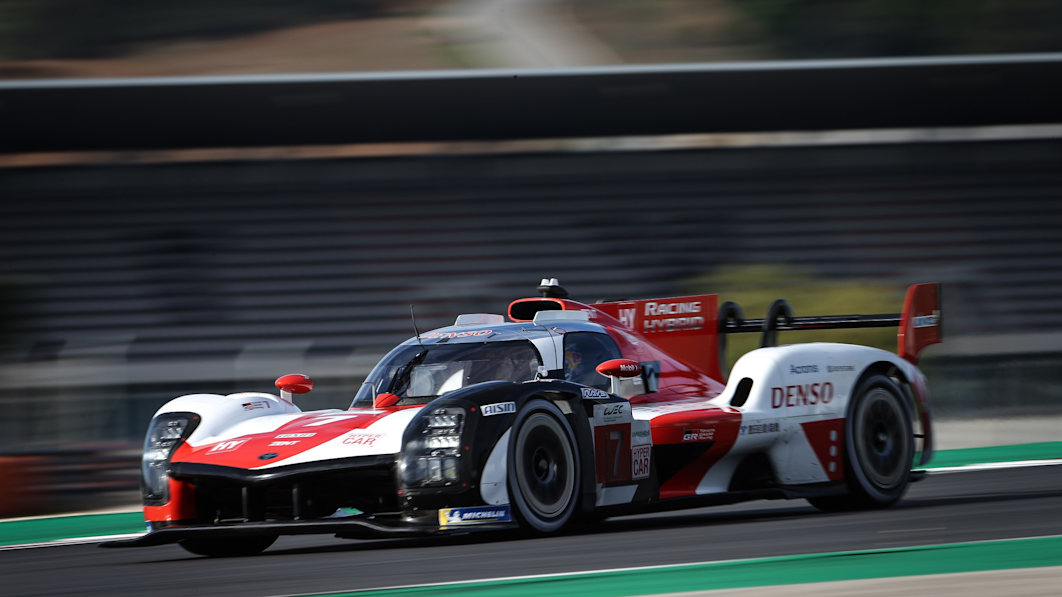
Toyota has placed its first street-legal hypercar on the back burner, according to a recent report, after a fire destroyed a prototype during testing. But the race variant isn’t in danger.

Although official details about the Japanese carmaker’s hypercar program are few and far between, Racer learned the street-legal version of the GR010 (pictured) unveiled earlier in 2021 was canceled because of what’s described as a “serious incident” that took place on the Fuji Speedway. One of the pre-production cars Toyota was testing was badly damaged by a fire, according to the publication. The source of the blaze remains unknown outside of Toyota.

If the report is accurate, it means Toyota has chosen to consign about three years of research and development to the automotive attic; the issue must have been a seriously alarming one. Details about the hypercar haven’t been released yet, so all we know is that it should have been closely related to the Le Mans-bound race car and that it would have been built in strictly limited numbers. For context, the track version of the GR010 uses a gasoline-electric hybrid powertrain rated at 938 horsepower, though race regulations cap its total output at 670 horses.

Some feared the incident would put an end to Toyota’s involvement in the World Endurance Championship (WEC), but anonymous sources told Racer that’s not the case. The firm doesn’t need to build a pre-determined number of road cars for homologation purposes; it can if it wants to, and that was the plan until recently, but it’s not required.

While those saving up for a GR010 will be disappointed, Toyota might have a consolation prize. It’s allegedly considering entering the GR010 in the WeatherTech SportsCar Championship in 2023. Racing in two similar yet fundamentally different series isn’t as expensive as it sounds because the  Automobile Club de l’Ouest (ACO), the Fédération Internationale de l’Automobile (FIA), and the International Motor Sports Association (IMSA) aligned their technical regulations to let manufacturers compete in events on both sides of the pond without going through the resource-sapping process of developing a specific car for each series. Dodge is considering taking advantage of the new rules as well; it would race its own version of Peugeot’s Le Mans car.

We’ve reached out to Toyota for additional details about the GR010, and we’ll update this story if we learn more.

Watch a Ferrari Roma get trapped in a narrow Italian street

The Ferrari Roma is named after one of the most beautiful cities in Italy. In an odd turn of events, an Italian city could have a street named in honor of the Roma (if its mayor has a sense of humor) after one got stuck in a narrow street. Footage showing the $225,000-plus grand tourer scraping its sides on centuries-old buildings surfaced on YouTube.

Where the video was shot is up in the air. It was taken in a small street that’s partly paved with cobblestones and located somewhere in Italy. There are thousands of strade that meet this description. They’re picturesque, and we fully understand the temptation to explore them, but what the driver seemingly forgot is that the Roma is not a small car. At 77.7 inches wide, it’s about three and a half inches narrower than a Chevrolet Suburban. And, while “low clearance” signs are common around the world, “tight street” indications are rarer.

It looks like the Roma fit (barely) until the narrowest part of the street trapped its quarter panels. Seeing the coupe stuck, a bystander tried to help the driver through but stopped when a presumably very angry woman came running with her hands in the air. At that point, the bystander calls it: zero for the Ferrari and one for the street.

The video doesn’t show the aftermath, so we can only guess how the Ferrari was freed and how much damage it drove (or was hauled) away with. What’s certain is that the driver now understands why small cars reign supreme in Italy. And, nothing suggests the street will be named after the Roma, but it would be a creative way to spur tourism.

While it’s tempting to blame this incident on human error, especially when we’re talking about a car that costs more than the average house, it’s important not to forget about the possibility that technology played a role in embedding the Roma into its home country’s architecture. Navigation apps don’t know that your Ferrari is too wide for the street they’re sending you on. You’re ultimately responsible for how you drive, where you turn, and which detours you take, but the main takeaway here might be “don’t blindly follow directions” rather than “don’t blindly assume it fits.”

Related Video:

A new Lamborghini Countach is coming soon

Lamborghini just announced that a new Countach is coming. Let us repeat. Lamborghini just announced that a new Countach is coming!

OK. Let that soak in for a few seconds, or minutes, however long it takes. We’re a bit shocked over here, too.

There’s one teaser image to go off of, and Lamborghini hasn’t let loose any details beyond giving us the name. You can see the car under a car cover and shrouded by haze in the photo above. However, there’s a video that’s been posted to Twitter that you can watch below.

We get some great engine noises, and the new Countach appears to be parked a long way away from the camera at the end of the video. It appears to be painted white, but that’s all we can tell about it from that distance. There’s no doubt that Lamborghini is leaning heavily into nostalgic feelings, as you see original Countach posters pinned up to a kid’s room in the video. Lamborghini seems intent on recapturing that wild, exotic magic that the old Countach brought to the supercar landscape. It’s tough to say what the styling will be like besides being a wedge like most Lambos. It could be a very retro design, sort of like the Miura concept from over a decade ago. It could also be a thoroughly modern Lamborghini design that happens to have a classic nameplate attached. For what it’s worth, Lamborghini’s design boss seemed to be against anything overtly retro as of a few years ago.

For the time being, our best guess is that this could be the car housing a hybrid V12 powertrain. The Italian supercar maker has said the only way to keep the V12 alive is to hybridize it. Starting off with a hybrid V12 Countach sounds like one hell of a way to kick off a new era of hybrid Lamborghinis. Plus, with an anticipated launch date of 2023 for a hybrid, the timing would be pretty good for the new Countach.

We’ll just have to wait and see what it is before we get too far ahead of ourselves, though. Lamborghini says it “is coming,” but doesn’t say when. For now, all we can say is stay tuned.

Related Video:

Watch as Devel begins testing a prototype of its Sixteen hypercar

It’s taken over a decade, but Dubai-based Devel has started testing the Sixteen hypercar it claims can reach 310 mph. Footage of a prototype undergoing shakedown tests on a track in Italy was published recently on YouTube.

If you need a refresher course, the Sixteen was shown to the public for the first time as a concept car in Dubai in 2013, though its development reportedly started in the late 2000s. It was revealed in its final form in 2017, and footage of it driving on a desert road surfaced in 2019. We haven’t heard much from the company since, which is hardly a surprise; 2020 was a difficult year for major carmakers, so smaller firms took an even meaner punch.

And yet, against any and all odds, Devel is back. Its prototype is unpainted and unfinished, the turbo system hasn’t been installed yet, but it runs, drives, and stops, which is a major accomplishment for the company. While no specifications were released, Devel outlined plans to build three versions of the car in 2019. First, a base model powered by a 2,000-horsepower V8. Second, a mid-range variant with a 3,000-horsepower, quad-turbocharged V16. Finally, a range-topping configuration with a quad-turbocharged, 12.3-liter V16 engine tuned to develop 5,000 horsepower. Yes, five thousand; that’s not a typo. It’s unclear which engine powers the car shown in the video.

Photos posted by Devel on its official Instagram account show the Sixteen being tested in Pininfarina’s wind tunnel, so the car is seemingly inching towards production. How many examples will be built, where, and how much each one will cost remains to be seen. What’s certain is that this hypercar could be a lot more real than many assumed.

Sweet 16

If the Sixteen reaches production, Devel will join the short list of manufacturers that have built a car with 16 cylinders. One of the most famous 16-cylinder models is the Cadillac V-16, which was built from 1930 to 1940. It was offered in a dizzying number of configurations, and many examples were fitted with a coachbuilt body. BMW briefly experimented with a V16-powered, E32-generation 7 Series in the early 1990s, at about the same time Italy-based Cizeta was putting the final touches on the Marcello Gandini-designed V16T. Only a handful were built.

In recent years, the glorious 16-cylinder layout has been associated exclusively with Bugatti. Different evolutions of its 8.0-liter, quad-turbocharged W16 have powered the Veyron, the Chiron, and few-offs like the Centodieci.

McLaren Speedtail ‘Albert’ has a paint job you absolutely must see

There’s no McLaren Speedtail that looks as wild and exotic as this one. Say hello to the “Albert” Speedtail, made as an homage to the first Speedtail testing vehicle.

That initial test vehicle featured a similar look, only done using crude vinyl body wrap. This Speedtail was meticulously painted and sweated over by the McLaren MSO team. The Albert name is derived from McLaren’s 1992 F1 test mules — those testers were given the name Albert, as the name of the road where the F1 was designed and built was called Albert Drive. Since the Speedtail is another three-seat McLaren, the name stuck.

The paintwork for this specific Speedtail took 12 weeks total to complete. McLaren broke that down into two weeks of masking, six weeks of painting and the remaining time for drying and reassembling. The MSO team also spent a good deal of time practicing and preparing to paint the actual car before it started. All the masking had to take place on the fully-built car, too, as painters had to ensure everything flowed around the vehicle with panel alignment and the wheels.

The final colors chosen for this project are Magnesium Silver and Ueno Gray. That silver is the first color the F1 was ever shown in, and the gray is the color of the 1995 Le Mans winning F1 GTR. The Speedtail’s teardrop shape lends itself to this sort of patterning and design better than most, and we absolutely adore it. This car already looks like a spaceship on wheels, and adding this paint job only elevates the feeling.

McLaren of Beverly Hills originally commissioned this car, and it will make a official public debut at a Beverly Hills Cars and Coffee this Sunday, August 8, in case you were curious to see it in person. Lastly, McLaren noted that this is one of the final Speedtails in the 106-car production run, so McLaren is almost done with this hypercar.

Related video:

Aston Martin Valkyrie is set to lose its roof at Pebble Beach with roadster variant

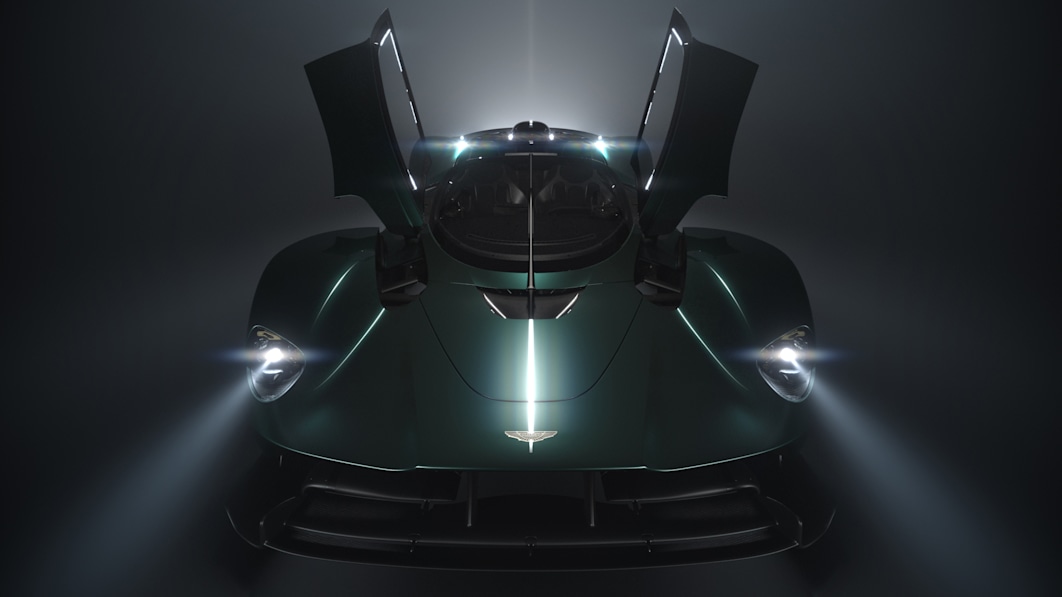
Aston Martin is coming to Monterey Car Week with a new car reveal. The specific model name isn’t explicitly mentioned by Aston, but one look at the “teaser” gives us all the information we might need to suss it out.

The Valkyrie is losing its roof for a new Roadster variant that will join the existing hardtop and racing-only AMR Pro model. You must look rather closely at the roof area of the teaser, but upon inspection, the roof of the Valkyrie shown here is missing. Additionally, the doors have a new design to accommodate the missing roof. Instead of opening via the roof in gullwing fashion, they appear to be scissor doors. Beyond these details, we’re left to guess at the rest. The car looks similar to the standard coupe up front, and the convertible appears to keep the roof scoop, too.

Aston says the wraps will officially be taken off this new model on Thursday, August 12. After being revealed at a private event, the car will be available to see by invitation-only beginning the following day at the Aston Martin Club 1913. All Aston will say about the model so far is that it’s “a new product from the brand which extends the company’s performance credentials a step further.”

In addition to the new Valkyrie, Aston is also bringing the Valhalla supercar to North America for the first time. You can read all about that mid-engine car here, and then go check it out on Pebble Beach’s 18th fairway. If you want one, Aston just made its production run official — only 999 Valhallas will be built over the next two years.

Related video:

McLaren 765LT Spider drops the roof on the 755-horsepower supercar

The McLaren 765LT Spider is here, and just like the coupe, it’s a total monster. In fact, it’s a near carbon copy of the 765LT coupe in every way that it could be.

We’ll start with what’s new and different about the Spider. The power retractable roof is a single slab of carbon fiber. McLaren says it completes the opening or closing procedure in just 11 seconds at speeds up to 31 mph. The roof mechanism is also far more refined than McLaren Spiders of the past, as McLaren promises the mechanism produces half as much noise as the 675LT Spider’s roof does.

McLaren LT cars are known for shedding pounds, and this 765LT Spider is no different. It weighs 176 pounds less than the 720S Spider it’s based on. This weight savings is accomplished through a variety of means. The LT’s forged wheels drop 49 pounds. The carbon fiber seats shed another 40 pounds. A lightweight battery drops 6.6 pounds. All the new carbon bodywork offers 11 pounds of weight savings. Deleting the floor carpet loses another 5.3 pounds. The titanium exhaust weighs 40% less than the standard stainless steel system. And lastly, McLaren deletes the air conditioning and radio as standard, dropping another 22 pounds and 3.3 pounds respectively. You can option both A/C and the radio back on as no-cost options, which is something we’d recommend you do.

Of course, making a removable roof version of the coupe means adding weight back. McLaren says the Spider is 108 pounds heavier than the coupe, a relatively light penalty for losing the roof. McLaren says the inherent stiffness of its carbon monocoque is enough that it didn’t need to add in a bunch of additional stiffening to keep the car rigid. Acceleration times are hardly diminished with the added weight. It has an identical 0-60 time as the coupe at 2.7 seconds. Unfortunately, the 0-124 time is reduced by 0.2 second to an agonizingly long 7.2 seconds (/sarcasm). Top speed is a coupe-matching 205 miles per hour.

Those bonkers acceleration capabilities come courtesy of the same mega powerful engine used in the coupe. The 4.0-liter twin-turbo V8 makes 755 horsepower and 590 pound-feet of torque. You can listen to the exhaust via the powered rear window that brings you closer to the noise even if the top is up.

Just like the coupe, the Spider gets bespoke wheels, tires and brakes to add performance. All the aero enhancements for increased downforce are impossible to miss on the car’s heavily modified exterior — it makes 25% more downforce than the 720S Spider. Plus, the suspension is enhanced with more bespoke LT parts for the springs and dampers. It also gets a wider front track, lower ride height and unique suspension tuning above and beyond the 720S Spider. 

Getting your hands on a 765LT Spider coupe prove difficult due to the low production run McLaren is setting. Only 765 will be sold around the world, and McLaren says one-third of the production will come to the U.S. The starting price is $382,500. That’s $24,500 more than the coupe for those who are keeping track.

Related video:

Listen to the Gordon Murray T.50’s V12 exhaust note

The Gordon Murray Automotive T.50, promised to be the greatest — and perhaps last — analog supercar, is still undergoing testing. When we last saw a T.50 prototype, its naturally aspirated, mid-engined V12 was rev-limited to low speeds. Now, GMA has released another video showing two test mules at slightly higher velocities, giving us a better idea of what kind of exhaust note we can expect.

The testing takes place at the Dunsfold, England, test track famous for its appearances on “Top Gear.” Though the Cosworth-built 3.9-liter V12 is said to have a redline of 12,100 rpm, in these tests it’s still limited to 5,000 rpm. Still, that’s enough to give us an idea of what kind of aural assault the car will deliver.

As it turns out, at low rpm there’s a lot of the baritone rumble that seems to be de rigueur in modern performance cars. At higher speeds, the engine provides a bit more of the high-pitched hum of the T.50’s spiritual predecessor, Murray’s McLaren F1, though overall the exhaust note is quite loud. There’s definitely more of a primal roar than the F1’s all-business precision engineering whir.

But while it may sound like other supercars, Murray has been adamant that the T.50 will remain the anti-supercar supercar. It will prioritize agility and handling over raw horsepower, with styling that’s more subdued than modern look-at-me-mobiles.

As such, Murray says the T.50 will be about the size of a 718 Boxster and lighter than a Mazda MX-5 Miata. Though the output of 654 horsepower at 11,500 rpm and 344 pound-feet of torque at 9,000 rpm may not win armchair bragging rights, its power-to-weight ratio should better the Ferrari LaFerrari’s.

Production of the 1+2 seater is slated to begin in 2022. A production run of only 100 units has been promised, so if you think you might want to drop the $3 million on the last pure naturally aspirated, internal combustion-only sports car by arguably the greatest living supercar engineer on Earth, you should act fast.

Bugatti’s final Divo is a tribute to its last official Le Mans entry

Bugatti’s last official Le Mans entry served as a source of inspiration for its final Divo. The last unit in a sold-out 40-car run left the French firm’s headquarters wearing a blue livery that echoes the track-bound variant of the EB110.

Unveiled at the 2018 edition of the Pebble Beach Concours d’Elegance, and priced at around €5 million (nearly $6 million) before customization options, the Divo stands proud as the first coachbuilt Bugatti released during the 21st century. It’s much more than merely a rebodied Chiron; it’s its own thing, and the two cars are technically different.

“As well as unique design, customers who buy a coachbuilt model enjoy a new, individual driving experience. Each small series undergoes the same degree of development as would a larger production run,” explained Pierre Rommelanger, the head of overall vehicle development at Bugatti, in a statement.

The final Divo’s anonymous owner wanted to channel the spirit of the EB110 that competed in the 24 Hours of Le Mans in 1994. Most of the exterior is painted in light blue, just like the race car, and the wheels are finished in gold. Parts of the lower body wear a darker shade of blue chosen to forge a link to the modern era, according to Bugatti.

Blue also dominates the interior. French Racing Blue and Deep Blue were used to wrap parts like the seats and the dashboard, though it’s interesting to note that the design isn’t symmetrical. The driver’s seat is lighter than the passenger’s seat. Elsewhere in the cabin, matte gray carbon-colored trim pieces provide a touch of contrast.

Spotting the final Divo won’t require a well-trained eye. Bugatti notes none of the 40 examples built were identical. Customers worked directly with the brand to customize the paint, the leather upholstery, the stitching, and the trim. What doesn’t vary from car to car is the engine: it’s an 8.0-liter W16 quad-turbocharged to 1,500 horsepower.

Selling cars is relatively easy; building them and delivering them on-time is harder. Bugatti ticked all three boxes, and the Divo project is finished. The one-of-a-kind La Voiture Noire (which reportedly cost $13 million) has been completed as well, so the French company is now working on bringing the EB110-inspired Centodieci to production.

Related video:

SSC officially owns up to its failed October top speed attempt

SSC acknowledged Wednesday that its Tuatara supercar did not reach the speed claimed by the company in October when it allegedly obliterated the Koenigsegg Agera RS’s then-record with a 316.11-mph run. While SSC didn’t outright apologize or completely explain the error, nor did the company reveal the Tuatara’s true top speed from last year’s run, the small supercar builder’s Instagram post is the first public admission that all was not as it seemed in the fall.

“We have seen your questions for months now and understand your frustrations. If it hasn’t been made clear up to this point, we would like to acknowledge officially that we did not reach the originally claimed speeds of 331 MPH or even 301 MPH in October of 2020,” the post said. “We were truly heartbroken as a company to learn that we did not reach this feat, and we are in an ongoing effort to break the 300 MPH barrier transparently, officially, and undoubtedly.”

“We also want to thank all of those who were supportive and understanding of our unexpected incident in April that has delayed our top speed efforts,” it continued.

Many cried foul after reviewing the video released by SSC which claimed to substantiate its top-speed run. The controversy prompted SSC to make a second (and ultimately unsuccessful) attempt. The third time turned out to be the charm, however the results were far less impressive, albeit still sufficient to knock off the Agera’s previous record. 

The “unexpected incident” referenced near the end of SSC’s post occurred when their record-attempt car was seriously damaged in transit back in April. The company claims it will eventually set the record straight (so to speak), but when, where and whether that will happen are all still yet to be determined. 

Related Video:

McLaren GT Ride-On joins the ranks of supercar toys

There’s a new McLaren Ride-On toy hitting the market, and this time McLaren made a kid’s toy out of the GT. This GT joins other McLaren Ride-Ons already made out of the P1, 720S and Senna.

Just like the actual McLaren GT, this one comes with a rear storage compartment behind the driver. You can stow additional Hot Wheels cars and/or stuffed animals aplenty in the compartment.

McLaren promises that three-to-six year olds will enjoy driving the car, too. The single seat is in the center like the McLaren F1 or Speedtail. There’s an actual key you use to start the vehicle. When you press the throttle to accelerate, a speaker plays revving sounds from the GT. Plus, the brake pedal is synced up with an actual brake light in the rear of the car. Whether or not other young drivers will pay attention to said brake light is up for debate, but it’s there to bring another level of reality to the experience.

Also taking after the road car, McLaren says it fit an “infotainment system” that allows you to play music files off a USB or SD card. An optional MP4 display screen is available if you want to watch videos, too. Apparently, distracted driving is less of an issue when you’re driving on a lawn.

We’re fairly impressed with the design details and the replication of an actual McLaren GT throughout the vehicle. You even get the GT’s dihedral doors to look extra cool hopping in and out of the ride-on.

If you want to buy one for your kid, the starting price is $230. Tack on some options (this is a McLaren we’re talking about here), and the price goes as high as $330. You can buy one in the following colors: Burnished Copper, Silica White, Onyx Black, McLaren Orange, Amaranth Red and Burton Blue. McLaren says the GT Ride-On can be ordered from select global toy retailers. 

Related video: