All posts in “Reviews”

Maserati Levante GTS and Trofeo Review: Can Ferrari Power Make You Ditch Your Porsche Cayenne?

Maserati has an established identity: the Italian carmaker produces luxury performance vehicles, with a strong emphasis on the luxury. A Maserati offers the opulent style of an idealized Italian villa, along with the quirks of owning a real life Italian villa. It would not be a true Maserati without the finest pieno fiore leather. It would not be a true Maserati without at least one vital switch located in a bizarre position invisible to the driver.

Despite that clear identity and a litany of interesting, memorable cars over the decades, Maserati has seldom found firm footing. Multiple owners have tried reviving and reinventing the Trident mark with different priorities. Maserati has usually struggled to grow beyond its small base of enthusiasts. FCA wants to rebrand Maserati again — this time with a healthy dose of Ferrari technology.

The Prancing Horse will maintain its exclusivity, chasing F1 titles and building supercars for princes, footballers and layabout Hawaii-based private eyes. Maserati will be the practical arm, bringing Ferrari technology to more mundane concerns. In the future, that may mean a slate of mind-blowingly quick electric cars. Right now, it is expanding into the hottest of high-end markets: luxury SUVs.

Maserati unveiled the Levante SUV in 2016. The 2018 SUV fleet will see a major upgrade with two specially modified versions of Ferrari’s 3.8-liter twin-turbo V8. Maserati trotted out the 590-horsepower Levante Trofeo in March, with “Corsa” mode, launch control and premium detailing. There will also be a cheaper, but still potent 550-horsepower Levante GTS. The SUVs will accelerate from 0-60mph in 3.7 and 4.0 seconds respectively; both will have top speeds exceeding 180 mph.

Is it time to cast aside your Land Rovers and Porsche Cayennes for a Ferrari-powered but still family friendly future? That depends on what type of person you are.

The Good: The Levante looks spectacular. Maserati translated its characteristic styling to the SUV realm seamlessly. The Levante is eye-catching, elegant and has more than a whiff of Maserati’s Alfieri concept from earlier this decade. There’s the classic fine leather and wood paneling. It’s a car that demands your attention in what can be a bland and lifeless market segment. The Q4 intelligent all-wheel-drive system gives you rear-wheel drive for everyday performance and all-wheel drive when you need it.

Watch Out For: While bulky, the Levante is more of a “crossover” or “raised hatchback” road cruiser than an “SUV,” especially if opting for the Trofeo and the 22-inch wheels. It does have an adjustable air suspension that can raise the height for off-roading. It’s uncertain whether any Maserati owner has deployed that feature in the wild. The car feels wide with a low-riding driver’s seat. If “commanding ride height” is your thing, you should look elsewhere. Some of the buttons and shifters feel wonky – this is a Maserati – and look like they were cribbed from more common FCA vehicles.

Value: The Levante is using Ferrari power to match the market, not redefine it. The GTS, starting at about $120,000, is about the same price as a turbocharged Range Rover, a Mercedes G-Class or a Porsche Cayenne Turbo. It’s a little more expensive than the BMW X6 M. The Trofeo, starting at $170,000, will be significantly cheaper than the Lamborghini Urus. About the same cost as the competition delivers about the same performance. All of these cars offer V8s in the mid-500s, similar track times and similar fancy sounding leather seats. The difference is a matter of taste. The Levante isn’t a practical or economic purchase. But, a Maserati shouldn’t be that.

Verdict: The $50,000 upgrade to the Trofeo over the GTS seems quite steep for 40 extra horsepower, more aggressive details and track features you may never use. If you’re considering the GTS, why not stay within the FCA family and spend $40,000 less on the Alfa Romeo Stelvio Quadrifoglio? It’s still Ferrari powered, albeit with a V6. It has more than 500hp. It’s faster off the line (3.6 seconds to go 0-60mph). It has the Q4 system. It has the sleek Italian styling. Worried you may miss the Maserati experience? The money saved will be almost enough to buy a few years-old, mildly used GranTurismo that is all but identical to the new one.

Read More Gear Patrol Reviews

Hot takes and in-depth reviews on noteworthy, relevant and interesting products. Read the Story

Note: Purchasing products through our links may earn us a portion of the sale, which supports our editorial team’s mission. Learn more here.

Fellow Stagg EKG Kettle Review: The Best Damn Kettle for the Coffee-Obsessed

Browse various specialty and craft coffee Instagram accounts for more than 5 minutes and there’s a pretty good chance you’ll run into one of Fellow’s line of Stagg water kettles. It makes sense for Instagram — it is beautiful, reflects light softly and shows that, yes, even something as traditionally banal as a water kettle must look the part.

But the Stagg kettles aren’t boring, no, quite the opposite — they look like the product of some wormhole collaboration between the Sith and Muji’s design team. And they’re packed with function, too. Virtually every competition brewer, café owner and specialty coffee big wig know what they are, and there was near-ubiquitous praise for it. We got our hands on the Stagg EKG kettle to test, compare and see if we could figure if a kettle could warrant the price of a solid home grinder, or a dozen bags of coffee.

The Good: The point is worth belaboring — the Stagg EKG looks dope. The matte black body with a mirror stainless steel interior is further elevated by the soft glow of the digital display. It’s quite easy to use as well; one knob and two small switches handle all functions from adjusting desire temperature, changing from Celsius to Fahrenheit, initiating temperature holding mode (up to 60 minutes) and the built-in brew timer.

From a performance angle, the kettle is quite fast at bringing water to that desired temperature (significantly faster than its competition). The lid fits snugly without being sticky or difficult to remove, and the handle, though strange, fits into the handle well. The gooseneck pour is smooth, slow and precise.

Who It’s For: A $150 electric kettle is not for the Keurig owner, the French press owner or perhaps even some pour over brewers. It’s for the intrepid home coffee maker who gets satisfaction from a product that nails looks and performance. A slightly more specific note — I’d recommend it far more for pour over brewers using smaller brewing mechanisms, namely V60s or Kalita Waves, as the pour is fairly slow, which made brewing a large batch on a Chemex tedious.

Watch Out For: The Stagg EKG is $150 when most of its competition is nearly $100 less. Though it’s packed with functionality, not much of it is truly groundbreaking. It does the same things that other electric kettles do, only better. Apart from this, the handle, though it fits in the hand nicely, could’ve used some love, material-wise — it’s a sort of chintzy plastic that feels like it should’ve been rubber (or another heat dissipating material). Another small issue with the handle arises from the tiny stainless steel ring that connects it to the kettle, which gets quite hot during brewing and is easily scraped over.

Alternatives: If you want something to compete with the Stagg’s looks, you’re out of luck. Nothing does. But, Bonavita’s 1-liter electric kettle is a good alternative. It doesn’t have the same emphasis on form but it has a timer, gooseneck spout, digital temperature selection and so on. It’s a minute or slower to pre-heat a full kettle (less so with less water), and at 140 to 212 degrees, its temperature options aren’t as wide as the EKG’s (105 to 212 degrees). It is, however, anywhere from $50 to $100 less expensive and frequently on sale. If the big price tag of the Stagg EKG gives you cold feet, flag the Bonavita and wait for a deal — we’ve seen it as low as $50.

Review: When I unboxed this product at our office there was audible ahhh-ing. It’s sleek. But the form is only important if the thing works. In short, it does, and it passes with flying colors.

Pre-heating three different amounts of water — one-quarter liter, half a liter and .9 liters (max volume) — it reached temperature faster than the Bonavita did. A function of materials and a more juiced up power system, I imagine. The larger the amount of water, the larger the gap in pre-heating time, though that gap at its biggest was only a bit more than a minute.

The product functions almost entirely from a knob on the front, and it’s for the better. There’s not a dozen buttons and wheels and what have you on it — just plug it in, click the button and turn to whatever the needed temperature is. Once it’s set, the screen flashes briefly, it shows the current temperature and the machine begins to whir. A short time later, the water is ready. Two tiny switches are found on the backside of the base — one to change between Celcius and Fahrenheit, the other to enable temperature-holding mode, which will keep the kettle at whatever level you decide for up to an hour.

When pouring, as noted previously, there is one real drawback, one potential drawback and one mildly annoying detail to keep in mind. Burning the top side of my pointer finger happened a few times until classical conditioning took hold and I no longer wanted to touch the shiny metal bit on the grip. The gooseneck pour is quite slow, even when holding it as steep as possible. This was fine for smaller brew batches, but it may present problems with a Chemex, as saturating the full bed in a consistent manner was a bit trickier than expected (this is remedied by employing a brew method with one or two very, very long pours instead of big pulse pours, but I digress). Finally, why the handle feels so cheap is beyond me — again, I’m assuming the plastic used is ideal for quashing heat before it reaches the hand. All the same, it feels like an odd slip-up in an otherwise considered product.

The count-up timer is also turned on by the knob (please, companies everywhere, give us more knobs) and does what a timer does well. It’s not a huge plus, but proper pour-over brewing requires timing and this alleviates the need to use your microwave timer or something else.

Verdict: It is the kettle for the coffee-obsessed. If you are that, get it. If you know someone who is almost that and you wish them to become that, get it for their birthday or another gift-giving season. Its functions, though not revolutionary, all perform at a higher, broader level than its competition and are wrapped in a package you’ll be proud to put on your countertop. If you’re on the fence about pour over, or are short on cash at the moment, get Bonavita’s rock solid, slightly less attractive option.

What Others Are Saying:

• “Overall this kettle is great. It’s quick, it’s simple, it’s attractive when, in my opinion, essentially no electric kettle is. It has the most important feature for an electric kettle in my opinion: variable teperature control to the degree. It goes as low as 104° which I do occasionally have use of. It’s really well thought out and executed for the most part which is why I’m going to pick on it a little harder for where I think it falls short.” — John, Amazon Customer Review

• “The kettle holds water at your temperature of choice for up to an hour, and a built-in stopwatch counts the extraction or steep time. And there’s an Easter egg: Take the kettle off of the base, toggle its switch between Celsius and Fahrenheit, and a retro-looking game called Wormy will pop up to play as you brew.” — Lauren Levy, The Strategist

Key Specs

Weight: 4.5 pounds
Dimensions: Base is a 6-inch square, height is 8 inches with kettle on base
Max Volume: .9 liters
Power: 1200 Watts

What Makes This Coffee Maker One of the Best?

The Specialty Coffee Association does not pull punches when testing the coffee makers that eventually wind up in your kitchen. Read the Story

Note: Purchasing products through our links may earn us a portion of the sale, which supports our editorial team’s mission. Learn more here.

Specialized Stumpjumper Review: An Adaptable Trail Chameleon

The Stumpjumper is not new. It’s been around since 1981 when Specialized introduced it as the first mass-produced mountain bike to hit the market. The bike has held a fixed position since and has acted as a benchmark for the category, but in its 37-year run, it’s also changed a lot (that first bike was constructed with a welded steel frame with no suspension and cost $750).

The latest entry is really three — in addition to the standard Stumpjumper, there’s the ST, which has less travel for increased agility and the EVO, which is slacker and more downhill-oriented. Each bike is optimized for particular riding styles and trail types, but all shoot for versatility — the bike employs a highly-innovative redesign that makes it capable of handling a range of riding styles from cross country to enduro. For this review, we rode the Stumpjumper ST and the Stumpjumper.

The Good: Specialized has worked to make this iteration of the Stumpjumper the most well-rounded and approachable yet. Offering three different versions is one-way address this — another is by making the frame both lighter and stiffer, improving both its uphill and downhill capabilities. The most notable design difference contributing to this is the asymmetrical sidearm that connects the rear end and shock to the front triangle. The company got to the final design by way of an approach that brought suspension designers and frame engineers together from the start.

There’s a lot to love when not riding too. For instance, Specialized has simplified the internal cable routing on the bike, making maintenance easy and mechanics happy. Specialized also did away with proprietary components that blocked customization in previous iterations — now, swapping shocks is fair game, as are tires up to three inches wide. Specialized also reverted from a press-fit bottom bracket back to the threaded BB system, and there’s additional adjustability supported by a “Flip Chip” system that changes the height of the bottom bracket by six millimeters.

Who It’s For: These days, there’s enough variety in mountain bikes that it’s hard to prescribe one specific model to a particular type of rider; personal preferences reign supreme and the smallest difference between any two bikes can create the largest impact. That being said, the 2019 Stumpjumper makes a hard play at casting a wide net through sheer versatility. Ride cross country or technical trails with equal parts up and down? The ST covers both. And if your tendencies skew more toward the downhill end of the spectrum, go for the classic. Both are fun everywhere.

Watch Out For: It’s hard to rag on mountain bikes for being expensive because many of them are, but the full-spec Stumpjumpers, which are the models we rode in our test, are pricey pieces of machinery. Another thing — if you’re a fan of Specialized’s Auto-Sag feature know, that you won’t find it here. Other than that, there’s not much to dislike.

Alternatives: For a good chunk less money, you can get Canyon’s Spectral CF 9.0 SL, which is an equally versatile trail bike and a point of comparison to the Stumpjumper (it’s also one of our recent favorites). Another good option is Yeti’s SB4.5 C, which is equipped with less travel, like the Stumpjumper ST, and can handle a wide variety of trails on 29-inch wheels.

Review: On a map, there is a place in the upper right corner of Vermont that’s far from major cities — the nearest is Montreal — and is characterized by towns that, even by Vermont’s standards, are small. There are a few notable geological waypoints here, including Lake Willoughby, a deep and frigid depression carved into a fjord-like appearance by a mile-thick sheet of ice that covered the region roughly 13,500 years ago. Farming and sugaring is the way of the land. The Northeast Kingdom is its name.

The NEK, as it’s often shortened to, is also home to something unique: a system of mountain biking trails over 100 miles altogether that winds its way up ridges and down valleys, through open fields and tight trees — all of which is land held privately by more than 90 owners. It’s a mountain biker’s utopia, and it’s maintained by a non-profit organization called Kingdom Trails that works with the community to build new features and routes every year.
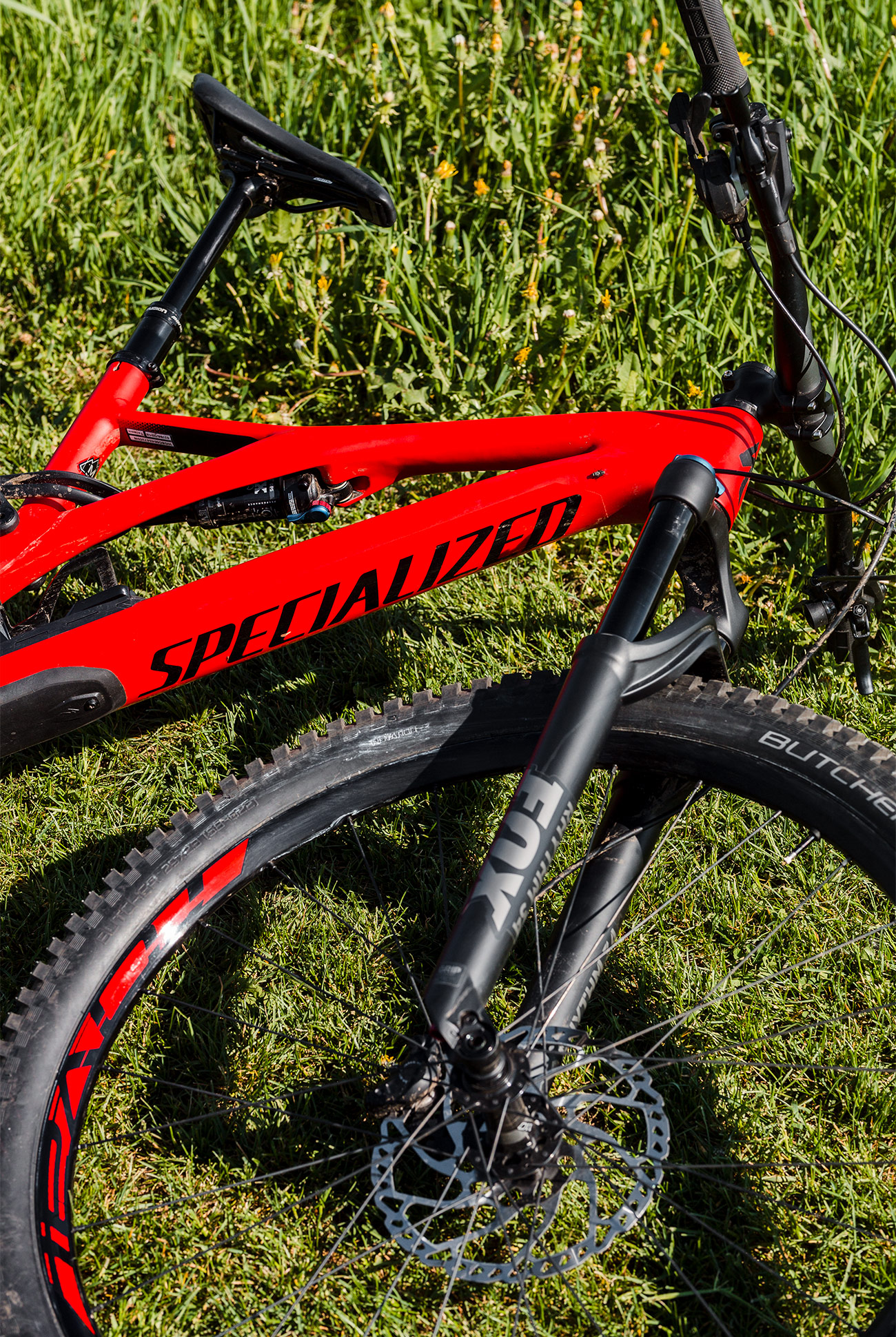
It was also the perfect place to pit two of the new Stumpjumpers against each other. I started with the Stumpjumper ST. This “short travel” mountain bike has a 130-millimeter fork and 120 millimeters of rear travel and was described to me as “the perfect bike for the trails” in the area. With that bit of knowledge, we started the day on a double-black diamond trail called “Burnham Down.” The route winds its way down through swampy woods, so there are lots of twisting bridges and where there aren’t bridges, there are roots and rocks.

The light and stable ST handled Burnham magnificently. Riding bikes through Vermont’s woods is a lot like skiing through them; the trees are tight, and line of sight doesn’t extend very far — you have to be on your guard, and you have to be able to react quickly. It helps to have a responsive steed, which the ST proved to be.

I won’t say that I didn’t fall off the narrowest of the bridges as they wound their way through the forest, but I will say that I don’t believe it was the bike’s fault — it held its line across the bridges as they wound their way through the trees and chugged right through the sporadic gnarl of roots and rock found between. The cockpit seemed to provide a Goldilocks Zone of control and comfort. I didn’t get that “on top of a machine” feeling that I had known before when riding Specialized’s S-Works Enduro.

As the trail bottoms out into the valley, it gets drier, and there are a few banked turns to lock into — no bottoming out, even with the shorter travel suspension here. We coasted down the pavement into downtown East Burke, where a knockout round of rock-paper-scissors decided that I’d be the one to make the mile-and-some slog up the road to retrieve the car while the rest of the team sipped ice lattes in the AC of Cafe Lotti. The bike’s lightness and the added stiffness of the sidearm frame design came to aid at this point, and I was glad not to have additional millimeters of suspension; actually, I didn’t need it on the downhill either.

After lunch, I swapped the ST for the fully-loaded Stumpjumper. The main difference between the two models is that which is denoted in their names — the ST has a 130mm fork with 120mm rear travel and the classic packs 150 millimeters up front and 140 millimeters in the back (in the 29-inch wheel models). That’s not all that separates the two though; the ST has a slightly steeper geometry, and 2.3-inch wide wheels instead of the classic’s 2.6.

Our primary goal for the afternoon was the halfpipe known as Sidewinder, but getting there involved traversing the width of the valley. As we began that journey, we encountered the first of a series of buffed-out downhill bank turns and I unintentionally discovered what the difference in suspension between the two bikes actually means, gracefully laying myself out on the trail as the new bike continued to flex deeper through the turn than its ST counterpart. Mental note taken.

After finishing off the downhill with a series of hairpin switchbacks, we cut across town, huffed our way up the paved Darling Hill Road and rode through manicured farmland to reach the woods again, and the top of a trail called Tap and Die. Unlike the morning’s ride, no bridges were involved here — just fun downhill, berms, a scattering of opportunities for air and a fast runout. The Stumpjumper ran this course fast and true — it locked into turns and snapped out of them and hopped over knolls and bumps like a thoroughbred. My apprehension that maybe this was too much bike for the trails receded far behind.

After that, our journey required us to link traverse-y downhills with not-so-mellow uphills. The destination is worth it though; those in the know will freely offer a travel tip: “Headed to Kingdom Trails? Make sure to hit Sidewinder.” What starts as a fairly-normal jaunt through the trees transforms into a serpentine luge up and down the walls of a steep gully in which the boundaries of skill and suspension are prodded at with shots of compressed gravity. It is, by any measure, a lot of fun.

I was glad for the Stumpjumper’s suspension every time I hauled into the vertex of the gully and, at the point where gravitational forces topped out a less-capable bike might bottom out (my teeth clenched at the thought of the hardtail I rode in college) it seemed to slingshot me through and back up to the apex of my next arc. The bike seemed to want this, and I was happy to provide

Our mission complete, we made our way back to our temporary headquarters by way of linking as many fun trails as possible. We rode up switchbacks on West Bench, over more bridges on Jaw (including one that shrinks from roughly two feet to a few inches in width), under active sap lines on Sugar Hill and eventually to the classic end-of-day sprint down Kitchel, a machine-made downhill featuring head-high berms and a series of jumps. It was here that the Stumpjumper shined brightest, pumping through every available transition.

Alex Valdman, the creative director at Rapha, once told me that the best designs are the ones that go completely unnoticed. He was talking about road race kits, but I think the statement applies generally. Once I got over the original jar of swapping bikes out midday, my ride felt supremely natural. I was impressed with the range that both bikes cover, handling the variety of terrain and features that Kingdom Trails has to offer with style and ease. The solid new frame, precision handling and beefy components make it easy to ride, and that’s a good thing. If the Stumpjumper was noisy, I didn’t notice it — probably in part due to the smart new chainstay protector, a small detail and one of many that make this update great. I rack my brain trying to think of something to be critical about, a relative flaw in the new redesign, but the only disappointment was that neither bike was mine to keep.

Verdict: It’s fun; it’s versatile; it’s awesome. The model you choose should depend on the trails you most frequently ride, but either can handle a wide range of riding. The ST is, as promised, nimble and capable of going up as well as down. The classic Stumpjumper is worthy of these tasks too but is more in its element when moving with the flow of gravity.

What Others Are Saying:

• “The mix of a super-stiff carbon chassis, great suspension performance, nimble handling and very capable 2.6in tyres makes for an incredibly fun yet capable ride that encourages you to hit truly reckless lines. That the bike is easy to live with and highly adaptable thanks to its threaded bottom bracket shell, the easiest internal cable routing I’ve ever come across and clearances for 3.0in tyres is just the icing on the cake. With that said, I doubt many will be jumping to change this bike from the off — the build is bang on (as you would hope of a $9,500 bike) and if I was speccing my own 140mm travel trail bike, it would look a lot like this.” — Jack Luke, Bike Radar

• “It comfortably tackled long and draggy and steep and techy climbs, fast and loose and tight and technical descents, confirming it has all the capabilities required to be a good all-round trail bike that can handle a wide range of trail types. The trail bike category is heating up at the moment, has Specialized done enough to ensure its Stumpjumper makes it onto your shortlist? First impressions are good, but we’ll reserve judgment until we’ve spent a lot more time on the bike on trails that we’re a bit more familiar with.” — David Arthur, Pink Bike

• “All in all, it’s impossible to say that the new Stumpy is better than the old one—it’s just different. It felt more like the 2014 Enduro 29 than its 2016 predecessor. That similarity speaks volumes about broader trends in the mountain bike market. As frames and parts get lighter, bikes continue to become more capable and aggressive, making riding that much easier.” — Aaron Gulley, Outside

Read More Gear Patrol Reviews

Hot takes and in-depth reviews on noteworthy, relevant and interesting products. Read the Story

Note: Purchasing products through our links may earn us a portion of the sale, which supports our editorial team’s mission. Learn more here.


An Indie Watchamaker’s New Diver Can Swim With the Big Brands

Nick Harris has gone far in what feels like a short amount of time. It wasn’t so long ago that he first made a name for himself modifying one-off Seikos for customers in his bedroom; now he’s finishing up a two-year stint in one of America’s few watchmaking schools. To pay his way through the program, Harris took his craft to the next level, creating Orion Watches and his first from-the-ground-up design. Now, with graduation looming, and with a desire to revive a lost industry of American watchmaking (which is no small feat), Harris has launched a new model, the Calamity, a dive timepiece as ambitious as his aspirations are.

“The Calamity is a much more serious watch. I pushed my manufacturer to up all the tolerances and quality, and I’m using a Swiss movement,” Harris tells me over the phone. “All that manufacturing I need to do is very expensive. The first Orion’s goal was to get me through school — and it did that — but the Calamity is the watch that will fund [the next phase].”

The Good: The Calamity is a watch that puts fit and finish above all else. This ethos manifests itself mostly in the case which, in addition to featuring some excellent finishing, is sculpted and designed to be thin, detailed and comfortable. This means that it looks refined in a way many dive watches don’t, and it feels great to wear, too. There’s more to the Calamity than the well-designed case (a quality movement from ETA and a ceramic bezel insert are other highlights), but it’s by far the thing that makes it stand out most and reason enough to consider it over a dive watch from an established brand.

Who They’re For: Somebody willing to take a chance on — let’s be honest here — an unknown brand if they favor detail, comfort and refinement over brand recognition. The Calamity is not a cheap watch, especially in the realm of micro-brands, but that doesn’t mean that it isn’t worth the price. It just means that it’ll have the most appeal to a very detail-oriented buyer.

Watch Out For: The Calamity is, for the most part, a solid watch, but there are a couple of small quibbles worth noting. For one, this watch doesn’t feature a date window on the dial (no doubt to appeal to the enthusiast crowd) but the movement inside retains its date wheel. This means that when you pull the crown out to set the time there’s still a secondary crown position for setting the date. It’s a small qualm, but a qualm nonetheless. Some reviewers have also criticized the bracelet clasp for feeling somewhat sub-par. I can kind of see where they’re coming from, but it’s a small point of contention and hardly a deal-breaker.

Alternatives: There are, quite frankly, many different routes you could go here, but I’ll name two. In the boutique brand camp, you have Christopher Ward and the recent C65 Trident Diver which is cheaper ($795) and similarly thin at about 11.5mm high, though it uses a hand-winding movement from Sellita. You also give up 50 meters of water resistance, though this is probably not a problem for most buyers. The Oris Divers Sixty-Five is another great option if you want something from an established watchmaker, but it costs a few hundred more than the Calamity, and you’re only getting 100 meters of water resistance and a profile that’s not quite as slim.

Review: Slip the Calamity over your hand and on to your wrist, and you notice that it’s thin. Very thin. And not just thin for a dive watch, but thin for an automatic watch, period. At its highest point the Calamity is 11.2mm, but if the watch’s sapphire crystal weren’t domed, it’d be merely 9.5mm, according to Harris. As he sees it, this is a sort of innovation in and of itself. “Dive watches today are very bulky and huge, and while they can look great top-down or head-on, when it comes to wearing them they’re slab-sided,” he says. “I also think it’s a crutch. It’s easy to get a lot of water resistance out of [something thick], but making a thin watch with a lot of water resistance? That’s hard to do.”

There’s more to the case than that, however, and Harris was able to pack it full of tons of detailing work. For one, it features polished beveled edges that flow along the entire side of the case, top to bottom, while the crown guards at three o’clock taper to a point, showcasing more of the crown’s knurled texture and making it easy to grab. The lugs are slender and have a gentle downward curvature, contributing to an elegant design. More interestingly, the transparent case back is curved to better align with the wrist of the wearer. The effect is a watch that sits very flat and comfortably on the wrist, and given that the Calamity is a light watch to begin with, the whole thing feels suspended, almost weightless.

On the surface, the rest of the watch feels like it borrows much from dive watch design tropes, but there’s a reasoning behind each element. The hour indices, for example, are thicker versions of the ones you’ll see on the first Orion watch, merely made larger to accommodate more lume. The second hand? A lance-like design, inspired by Harris’s vintage Omega Admiralty. The marker at twelve o’clock on the bezel (which is made from ceramic, by the way) is a rounded chevron design, inspired by, but not meant to imitate, the triangle you’ll find on many divers.

The watch is available in black, blue and the pictured green, which Harris said wasn’t originally supposed to be on offer. “Some of the curves and angles of the case kind of reminded me of Master Chief and his armor, and his aesthetic, and I just sort of had that in my head,” Harris says. “When we were designing them, we were playing with colors, and I said ‘I want to do this in green, like the drabbest green.’ We ended up doing a couple of different ones, and it turned out fantastic.”

To achieve such a thin case, Harris had to upgrade to a higher-end movement than he’s used to working with, an ETA 2892, a slimmer, more refined counterpart to the ubiquitous ETA 2824-2. Harris explains the higher cost of the watch is a result of the movement upgrade, but without it, his vision wouldn’t have come to light. And while he understand that some people might take issue with the price, he know’s he’s justified in asking for it. “It’s a very expensive movement. It’s got a very elaborate case shape. To get a watch that’s functional to those specs, that’s not cheap,” Harris explains. “Most people critically compare it downwards, to cheaper watches. People who compare it to watches in the same price point, you can see where it can hang in the ring with those guys.”

Verdict: I’ll agree with Harris on this one. We do these sort of mental gymnastics and exhaustive justifications when it comes to expensive watch purchases constantly. And much of the time, we have an established brand name to fall back on. The Calamity doesn’t have that convenience, but the fact that it doesn’t need it is further proof that microbrands like Orion can build a captivating product, even at a higher price point.

What Others Are Saying:

• “There’s no arguing that the $1,495 asking price might be considered a barrier to entry for a fairly young brand without the track record to prove they can compete happily alongside more well-established names. However, it’s also clear that this is a well-designed and executed watch.” — Brad Homes, Worn & Wound

• “I find it very impressive to see this watch take things to the next level in today’s saturated microbrand world. To witness so many “cash grab” micros pop in and out of the scene is really disheartening…a product like the Calamity is refreshing and potential buyers will also quickly realize the dedication Nick puts into his designs and every aspect of his business.” — Michael Pinate, A Blog to Watch

Key Specs

Movement: ETA 2892-A2
Winding: Automatic
Case diameter: 40mm
Case thickness: 11.2mm
Water resistance: 200m

Read More Gear Patrol Reviews

Hot takes and in-depth reviews on noteworthy, relevant and interesting products. Read the Story

Note: Purchasing products through our links may earn us a portion of the sale, which supports our editorial team’s mission. Learn more here.
Shinola Bookshelf Speaker Review: Our New Favorite Lifestyle Speaker System

Shinola’s audio division — Shinola Audio — has been slowly building out its product line since it announced the Runwell Turntable back in 2016. Since then, it’s released the Runwell active bookshelf speakers and a series of over-ear and on-ear headphones. The company is now replacing its original active bookshelf speakers with new ones, simply called the Shinola Bookshelf Speakers, which have been re-engineered from the ground up with the help of Barefoot Sound, a leading manufacturer of pro-audio recording monitors. The new speakers are designed to sound even better than the older Runwell speakers, while also having built-in Bluetooth. Like Shinola’s first bookshelf speakers, these have numerous analog inputs.

The Good: This is powered active speaker system so you don’t need to connect them to a receiver/power amp play music — it’s hi-fi made easy. There’s no app to deal with, either. The speakers have numerous inputs and ways to connect, including Bluetooth, so pretty much anybody can walk up to the speaker and figure out a way to play music. There’s also a USB Type-C audio port, which is rare and an ideal option for those who have Android smartphones that have ditched the traditional headphone jack. The speakers look great and are entirely made and assembled in the US.

Who They’re For: These are beautiful lifestyle speakers, designed to bring high-resolution sound into your home while also matching the rest of your interior decor. They’re really optimized for people who are just getting into high-end audio as they’re basically plug-and-play speakers. If you have a turntable, especially Shinola Audio’s Runwell turntable, these wooden speakers look and sound great with that, too.

Watch Out For: Like Shinola’s other audio products, these speakers blend reference-quality audio with premium materials and therefore they aren’t cheap. There’s no app or wi-fi connectivity, so the only to wireless stream music is via Bluetooth. It could be an issue that specific to our review units, but there’s a pop/thud/boom sound every time the speakers would power on or connect to an audio source, which was frustrating and made me feel like I was going to blow them out.

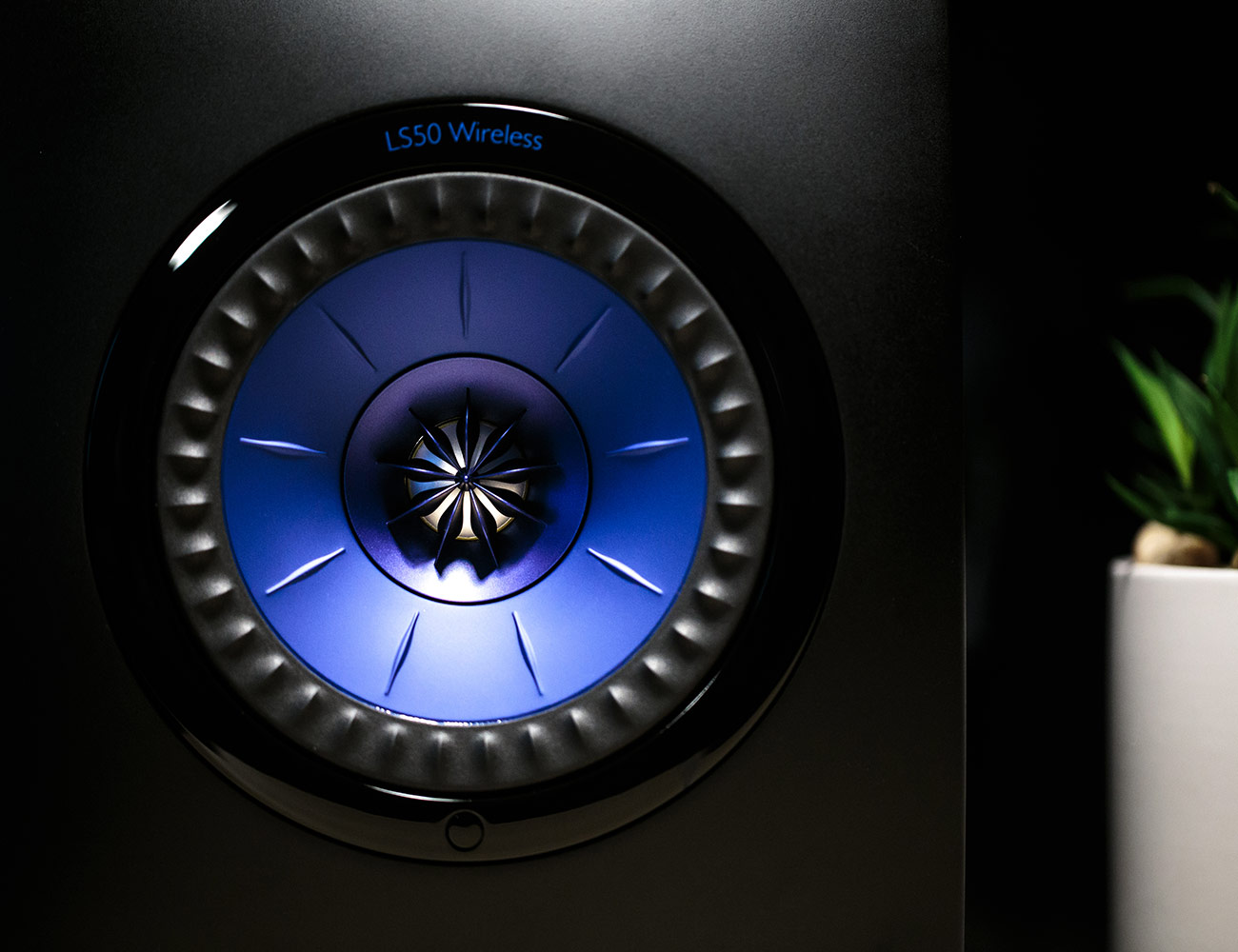
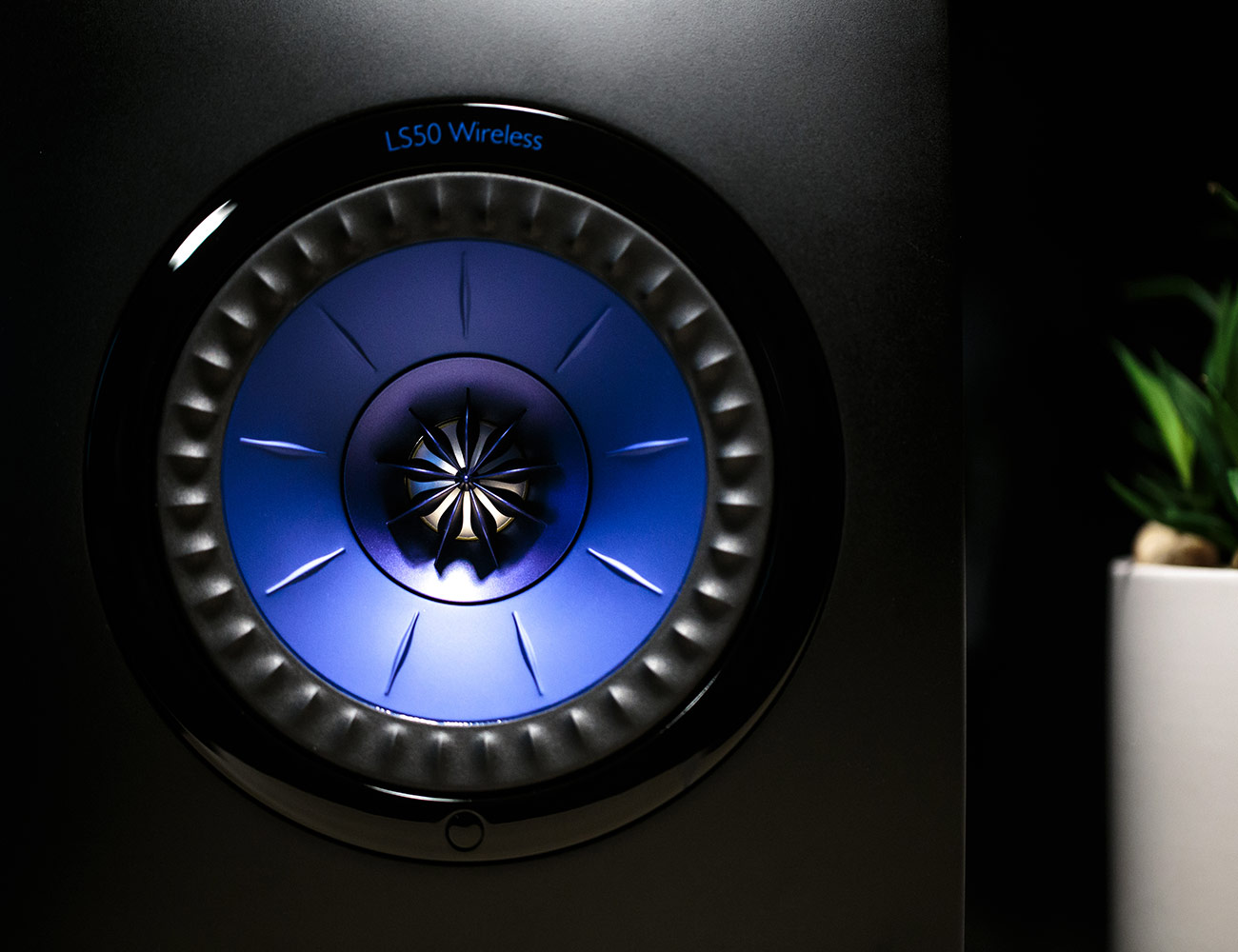
Alternatives: Powered bookshelf speakers with Bluetooth streaming are en vogue right now. Take the new Audioengine A5+ Wireless ($499+). They aren’t as powerful as these Shinola Bookshelf Speakers, but they sound terrific and are only $500. If you’re looking for the ultimate speaker system, check out the KEF LS50 Wireless ($2,200). Each speaker has its own power amplifier and is able to handle 230-watts per channel, so it’s a step up from Shinola’s offering, but it’s not that much more expensive.

Review: To be fair, right before reviewing Shinola’s new Bookshelf Speakers I had been listening to what may be the pinnacle of stereo sound in an all-in-one speaker system — the KEF LS50 Wireless speakers. I know that’s a different beast, being a dual-powered speaker system instead of the one-active-one-passive speaker system, like the Shinola Bookshelf Speakers (and many other powered monitors), but I was still pleasantly impressed. Shinola’s latest all-in-one speaker system doesn’t have the same power or wi-fi connectivity (or modern/intimidating aesthetic), but still sounds accurate and can still make the room — even large rooms — tremble.

The clarity of the audio is a credit to Shinola Audio’s collaboration with Barefoot Sound, makers of some of the best reference studio monitors out there. The Shinola Bookshelf speakers actually mark the first time that Barefoot Sound has worked on a speaker pair that wasn’t exclusively designed for music professionals. Compared to the original Runwell bookshelf speakers, these new speakers have been re-worked entirely and, according to the company, deliver wider dynamic range and better bass extension.

As I haven’t listened to the original Runwell speakers, I can’t accurately compare the two. Instead, I can just tell you that the bass on these new speakers hits hard without killing the rest of the track. It’s really noticeable in “This Is America” by Childish Gambino and “Devastated” by Joey Bada$$. Still, soothing tracks by Enya and tracks by Gareth Coker, which is what I listen to while working, sound polished even when played loudly. The piano and other instruments, as well the vocals, all sound great.

The majority of my time listening to these speakers was via Bluetooth and connected with included USB Type-C audio cable. The latter of which was pretty satisfying. In some ways, this “future-proofed” the speakers, as many smartphones going forward won’t have a traditional 3.5mm audio jack, but I was able to connect the speakers directly to my Galaxy S9+ and play Spotify. Pretty neat.

As mentioned above, there was an issue with my review units; there was a pop noise every time I turned them on, which my editor and I tried to find a solution for (making sure the volume on the speakers and audio source was turned all the way down, and so on…), but ultimately we think the speakers need a manual firmware update.

Verdict: Shinola’s latest offering is a beautiful and excellent-sounding active speaker system, but it’s pricey. The lack of wi-fi connectivity and companion app is both a blessing and a curse, meaning that the system is easy to use — the addition of Bluetooth and a USB Type-C port means that anybody can figure out how to play music on them — but updating the speakers requires a manual update. Still, if you love the look of these speakers, as well as the sound (you will), these are lifestyle speakers worth paying for.

Key Specs

Type: active bookshelf speakers
Power output: 300-watts total
Connectivity: 3.5mm stereo jack, RCA L/R, SPDIF, USB Type-C, Bluetooth
Tweeter: 1.5-inch soft dome tweeter
Woofer: 6.5-inch custom high-excursion surround
Impedance: 4 Ohms
Frequency response: 60Hz – 22kHz (-3dB), 40Hz – 22kHz (-10dB)
Amplifier: High Efficiency Class D

Review: Shinola Canfield Over-Ear Headphones

At around $600, you’re paying for an experience and design. But how do they sound? Read the Story

Note: Purchasing products through our links may earn us a portion of the sale, which supports our editorial team’s mission. Learn more here.
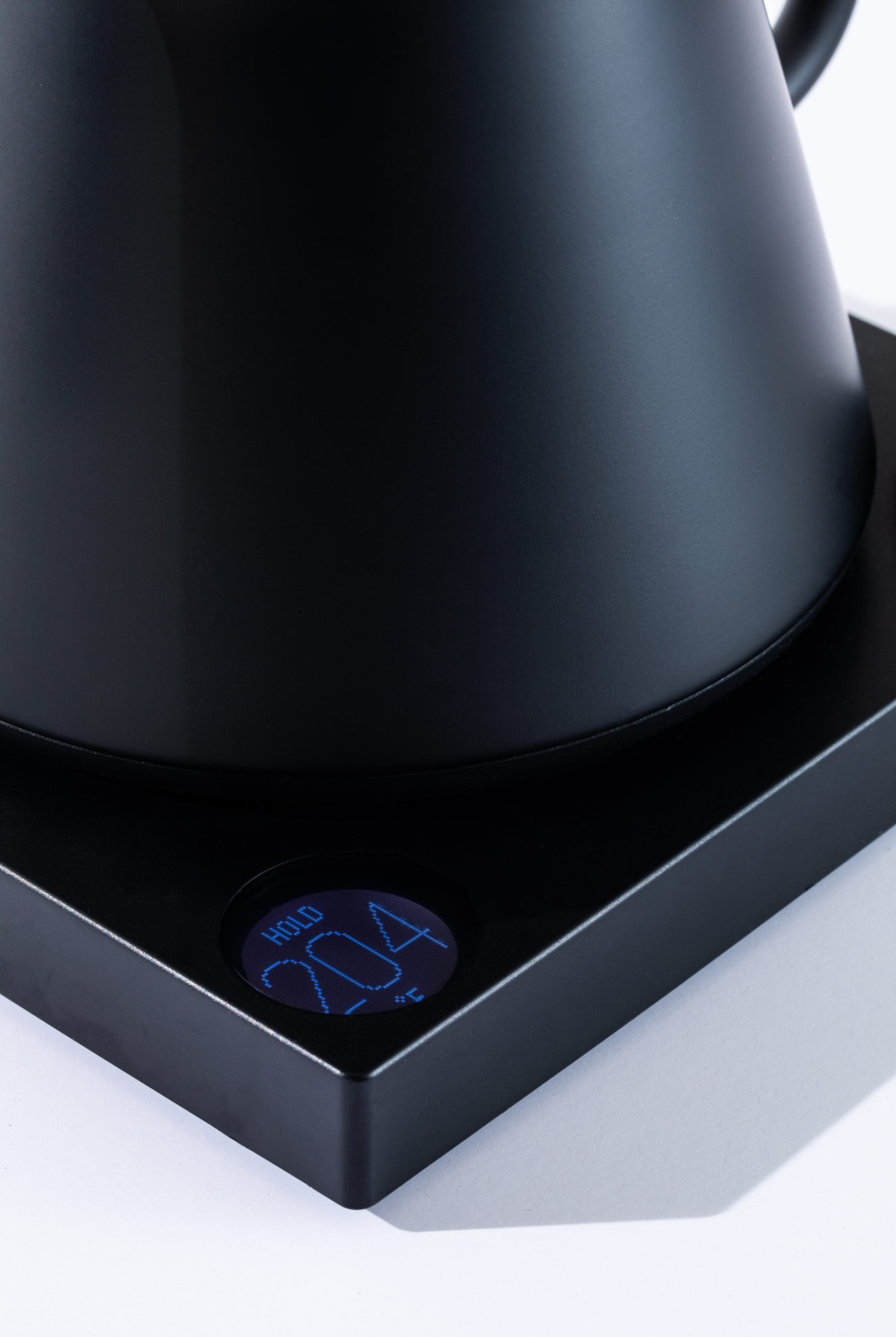
Jabra Elite Active 65t Review: Truly Wireless Earbuds With Sweat-Proof Sound

The Jabra Elite Active 65t ($190) are the company’s newest truly wireless earbuds. Released in late May 2018, the Jabra Elite 65t Active are the next evolution of the company’s other truly wireless earbuds, the Jabra Elite 65t, which I reviewed early this year. They’re virtually the same as the Jabra Elite 65t, but are enhanced in three ways. 1.) They have a grippier outer layer so they stay in your ears better. 2.) They’re slightly more sweatproof (IP56 vs IP55). And 3.) they have an integrated motion sensor (aka accelerometer) that adds more tracking features. Essentially, the Jabra Elite Active 65t are more sports-focused (and more expensive) versions of their excellent predecessors.

Fun fact: the “65” is the highest number, and therefore the most premium, earbuds in Jabra’s Elite line. The “t” stands for truly wireless. The “e” in last year’s Elite 45e stands for earbuds since they are technically wireless neckbuds, connected by a wire.

|

The Good: The Jabra Elite Active 65t earbuds sound just as good as the Elite 65t earbuds that came before it — same drivers, same fit — and that’s notable because they’re some of the loudest and most accurate-sounding truly wireless earbuds that I’ve tested. The Sound+ app comes with some nifty features that allow you to adjust the EQ or find your earbuds if they’re misplaced. You can also turn on HearThrough (lets you hear ambient sounds) too, which works very well and is a good safety feature for those commuting to work. In the app, there’s a “Find My Earbuds” feature, which shows you the last place your earbuds were located (in case their battery is dead). The four-mic array (two in each earbud) means that these are among the best truly wireless earbuds for talking on the phone. The charging case is compact and well designed. They’re more sweat-proof than the original Jabra Elite 65t earbuds.

(Note: The IP55-rating of the Jabra Elite 65t means that the earbuds are good against dust and water. The IP56-rating is good against dust, water and sweat. According to Jabra, salt leads to corrosion and the Jabra Elite Active 65t are specifically designed to fight that.)

Who They’re For: Anybody who wants the best-sounding, non-AirPod truly wireless earbuds, and is willing to pay a little extra for them. Also, these are very versatile earbuds, adept for every day use and working out. (AirPods are not sweat-resistant, so even though I see many people working out and running with them, I wouldn’t recommend it.)

Watch Out For: There are very few truly wireless earbuds that are more expensive than the Jabra Elite Active 65t, and if you’re not going to exercise with them, there’s really little reason to buy them rather than the Jabra Elite 65t earbuds. The fit is tight and they don’t come with adjustable silicone ear-wings (which are different from silicone ear tips), like the Sony WF-SP700N, so some people might find them uncomfortable to wear for long listening sessions.

Alternatives: For running and working out, my three favorite truly wireless earbuds are still the Sony WF-SP700Ns, the Samsung IconX (2018), and the Jaybird Run. None of those offer the same level of sound quality as the Jabra Elite Active 65t, but they’re more comfortable in my opinion, and they come with more silicone earbud and ear-wing options, meaning you can get a more customizable fit.

Review: I cringe everytime that I see somebody running with AirPods. Why? I’ve ruined too many pairs of EarPods by doing just that, and AirPods and EarPods have virtually the same housings — neither is sweatproof. Apple is rumored to be making sweat-proof AirPods, but those won’t be released until 2019, earliest, which is why, even you love your AirPods, you should really consider getting a pair of sweat-proof earbuds to run with.

The Jabra Elite Active 65t are designed as full-on AirPod replacements. They’re more expensive, granted, but you wear them commuting to work and working out. They don’t have the easy pairing that the W1 chip provides for iPhone owners, but so what? One you pair these to your iPhone (or Android), they’ll automatically pair to your phone again when you take them out of their charging case. And they’re way more feature packed than Apple’s truly wireless earbuds. The app offers everything you’d want (aside from Google Translate), from an ambient mode to tweaking the EQ so that the audio sounds best for you, to quick access to Siri (or Alexa) and other on-ear controls (physical buttons instead of swipe gestures).

Some of its features I found superfluous, however. One of the things that differentiate these from their non-Active siblings is the Jabra Elite Active 65t’s built-in motion sensor. The sensor essentially counts your steps, which you can turn on/off in the Sound+ app. There’s no built-in GPS, so it’s difficult to know how accurate the step counter is; and since there’s no built-in heart-rate sensor, which several of Jabra’s wired in-ear headphones have, the Jabra Elite Active 65t aren’t able to measure calories burned, which many exercise enthusiasts would probably want.

It’s a little thing, I know, but when you’re paying an extra $20 bucks (compared to the Jabra Elite 65t) for a feature that you probably won’t use, it’s a tough sell. The Jabra Elite Active 65t earbuds also have a slightly grippier outer layer than their predecessor, which I was able to sense. They felt slightly more secure in my ears while running, but if I’m being honest, both pairs of earbuds stayed pretty snug.

Verdict: The Jabra Elite Active 65t earbuds are exactly as advertised: more sweatproof versions of the Jabra Elite 65t truly wireless earbuds. Essentially, these are the perfect truly wireless earbuds for the active professional. They sound better than most other alternatives, with accurate midrange and highs, and they’re able to produce a sound that feels big, which is partly due to their snug fit and natural noise isolation. They work well for taking calls and exercising, too. Some people won’t like their very snug fit, but I’m guessing most people will actually like it since there is less likelihood of them falling out.

If you like the style and the fit of the Jabra Elite 65t, and are cool paying the extra $20, which is essentially just an insurance policy against sweat, then these are great. Otherwise, you could buy the non-active alternatives and love them just the same.

What Others Are Saying:

• “As I said about the Elite 65t, I didn’t find much to complain about with these earphones — they’re as good as you’ll get for a truly wireless headphone at this time. Are they worth $20 more than the standard Elite 65t? They are if you plan on sweating on them a lot, but otherwise not. The quick-charge feature has some appeal but the motion sensor doesn’t seem like a must-have at the moment. Perhaps if Jabra ties additional features to it I’d see more value in it.” — David Carnoy, CNET

• “Where many fully wireless headsets settle for mediocre fidelity, the Elite Active 65t actually sound quite good — akin to a set of wired headphones that cost about half the price. Nothing has changed between the Elite Active and original model, both of which showcase the deep and punchy bass and shimmery treble we already enjoyed earlier this year.” — Parker Hall, Digital Trends

• “One area where the Jabras stand head and shoulders above the Bose and the Sony buds is in on-ear controls: it has very nice push-button controls for things like pause, fast forward, rewind and Siri/Google assistant activation. Bose has more limited controls that are woefully difficult to use; Sony has limited controls (no volume or Google Assistant) that can be a little difficult to use..” — John Davidson, The Australian Financial Review

Key Specs

Battery: five-hour per earbud, 10 hours from the charging case
Support: Siri, Amazon Alexa, Google Assistant
Connectivity: Bluetooth 5.0
Battery: five hours per earbud; 15 total hours with charging case
Water Resistance: IP56

|

Read More Gear Patrol Reviews

Hot takes and in-depth reviews on noteworthy, relevant and interesting products. Read the Story

Note: Purchasing products through our links may earn us a portion of the sale, which supports our editorial team’s mission. Learn more here.
2018 Toyota Tacoma TRD Off-Road Review: the Best Overall Off-Road Truck Available

Many car models have successful runs. A select few – think Porsche 911 or the Jeep Wrangler – fill an emotive niche we previously did not know existed. These models inspire a passionate, perhaps sometimes too passionate, base of enthusiasts. Sales numbers are immune from market forces. Used car values surpass anything resembling common sense. Updates are few and far between, and that’s how the fans prefer it. Count Toyota’s beloved and durable “Taco” among that few. And the Tacoma TRD Off-Road is a prime example.

The Good: Off-road capability. The TRD Off-Road perks up like an eager puppy when you leave the pavement behind. With true high and low gears, a specially tuned suspension, Bilstein shocks and Kevlar-reinforced Goodyear Wrangler tires, it is well outfitted for elementary off-roading. For the more ambitious, it also features crawl control, hill start assist, multi-terrain select settings and an electronically locking rear differential. Competitors may offer a token 4×2 manual with a base engine. Toyota will give you a stick with the V6 and the higher-end trims.

Who They’re For: Someone energetic and outdoorsy whose 9-5 gig is a means to get them to the beach, the trail or their remote cabin in the woods on the weekend. He or she may be parting, begrudgingly, with a first or second generation Taco.

Watch Out For: The Taco is not as eager on pavement. Even the 3.5L V6 putting out 278 horsepower and 265 lb-ft of torque can prove downright truculent when pushing the throttle or climbing a hill. Toyota tuned the automatic transmission to shift at low revs, and it can be spotty in highway driving. Fuel economy numbers, 18/23 mpg in city/highway driving, underwhelm and were hard to match in real conditions. The cabin can be tight, especially when you throw an infant car seat into the mix. While classified as a mid-size, this is far from a compact vehicle. Larger configurations leave the TRD Off-Road within inches of the length of a full-sized truck (and with similar parking anxiety).

Alternatives: The Chevrolet Colorado ZR2 ($40,360) is as close an off-road competitor as can be found on the current market. Until Ford’s new Ranger comes along, these two will duke it out on the trails. The ZR2 starts at $5,000 more than the Taco Off-Road, but does offer some attractive equipment, like front and rear locking differentials (the Tacoma offers only a rear locker) and an optional diesel engine. (See Chevy’s comparison chart between the ZR2 and the top-end Tacoma TRD Pro here.) Given Toyota’s traditional reliability and longevity, and given the Tacoma’s relative affordability, we feel it comes out on top.

Value: Tremendous, at the back end. Initial pricing and features are comparable to others. The advantage comes through the avid, loyal Tacoma fanbase. Tacomas hold their value better than just about any other American automobile. Per Kelley Blue Book, they have a 61.1 percent resale value after five years. You can “go places,” and still end up with a nice pile to put toward your next Tacoma.

Design: The curb appeal is spectacular. The Taco’s sporty, muscular exterior with a whiff of shark at the front end is a refreshing departure from the boxiness, overbearing grilles and eccentric headlight detailing favored by American competitors. Inside is a different matter. An eclectic interior and flimsy plastic buttons and paneling evoke the early 2000s more than the future of pickup trucks.

Tech: Bells and whistles proliferate. There’s a smart key system, push button start, dual climate control and wireless charging. Toyota’s Safety Sense P offers multiple features as a standard upgrade for 2018. The Premium and Technology package includes blind spot monitoring and rear cross traffic alert systems. The seven-inch touchscreen and rear-view camera were adequate. Phone connection was seamless through a USB cord. That said, Toyota’s Entune infotainment system, like almost all proprietary systems, felt wonky and limited. Apple Carplay and Android Auto were notably absent.

Verdict: We could prattle on about comfort, performance, and fuel economy. But, ultimately, style, fun, and that little bit of je ne sais quoi are primary reasons people buy trucks and fall in love with them. Avoid the four-cylinder. Sacrifice some of the techy features for the six-speed manual. The Pro trim is a bit fancier. But, the money saved buying the cheaper Off-Road trim can go further in the Tacoma’s robust aftermarket.

What Others Are Saying:

• “The Tacoma is like a punk-rock band—an edgy alternative to more sophisticated, grown-up mid-size rivals. Its iconic off-road cred is demonstrated by definitive trail-ready trims and packages featuring rugged equipment and impressive capability.” — Car and Driver

• “The combination of a double cab and long bed in this Tacoma results in a 225.5-inch truck — that’s nearly 19 feet long! So this particular model is not parallel-parking friendly, and you have to stop and chuckle at the fact this is technically considered a small truck. It’s a truck. One with an over 6-foot-long bed capable of carrying 1,120 pounds. And one that can tow 6,400 pounds.” — Autoweek

• “After the nukes fall, all that will remain are the ruins of our cities, cockroaches, and people selling 10-year-old Toyota Tacomas for $25,000.” — The Drive

Toyota Tacoma Off-Road Key Specs

Engine: 3.5-liter V6
Transmission: six-speed manual or six-speed automatic; electronically controlled four-wheel drive
Horsepower: 278
Torque: 265 lb-ft
Towing: 6,400 pounds

Read More Gear Patrol Reviews

Hot takes and in-depth reviews on noteworthy, relevant and interesting products. Read the Story

Note: Purchasing products through our links may earn us a portion of the sale, which supports our editorial team’s mission. Learn more here.
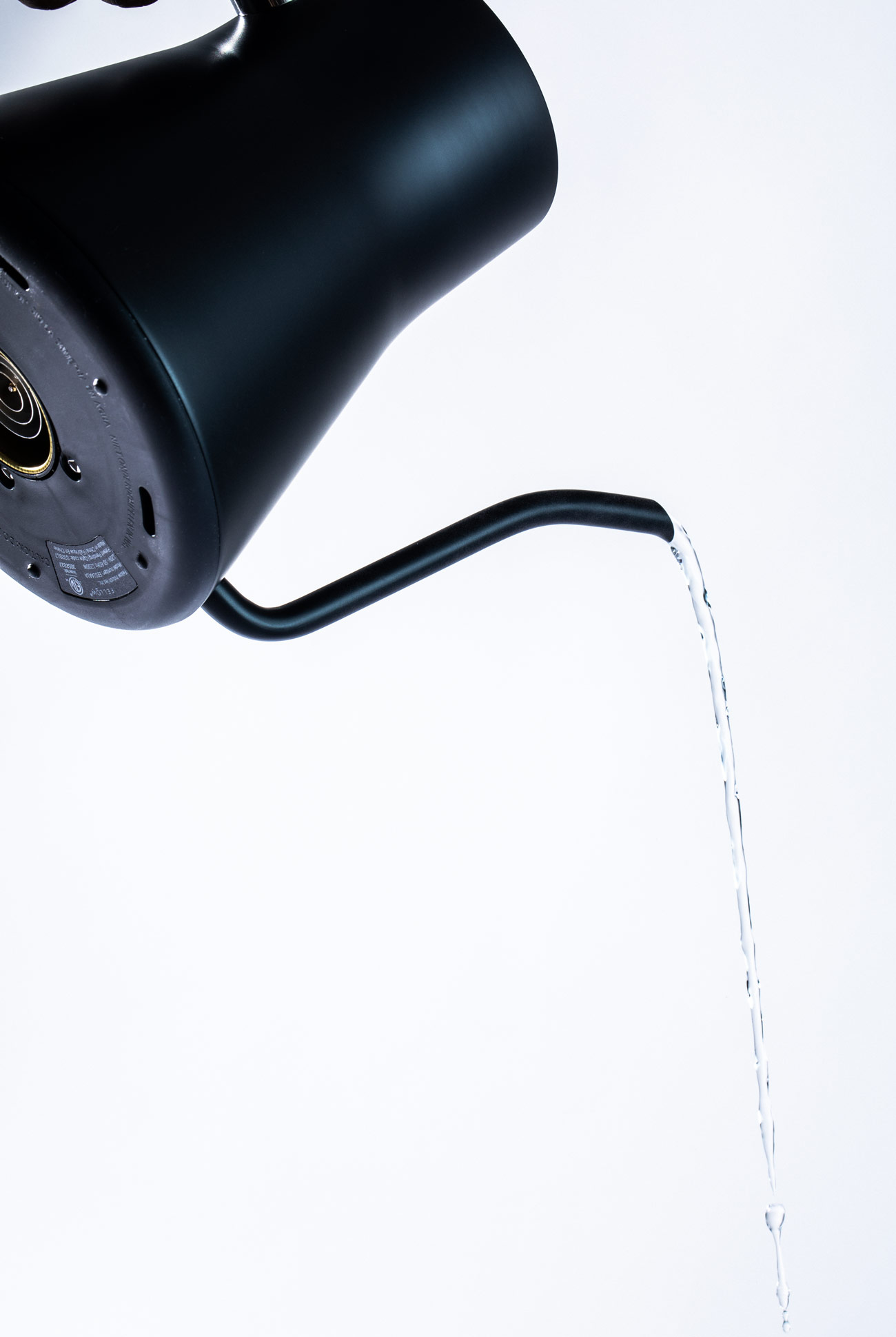
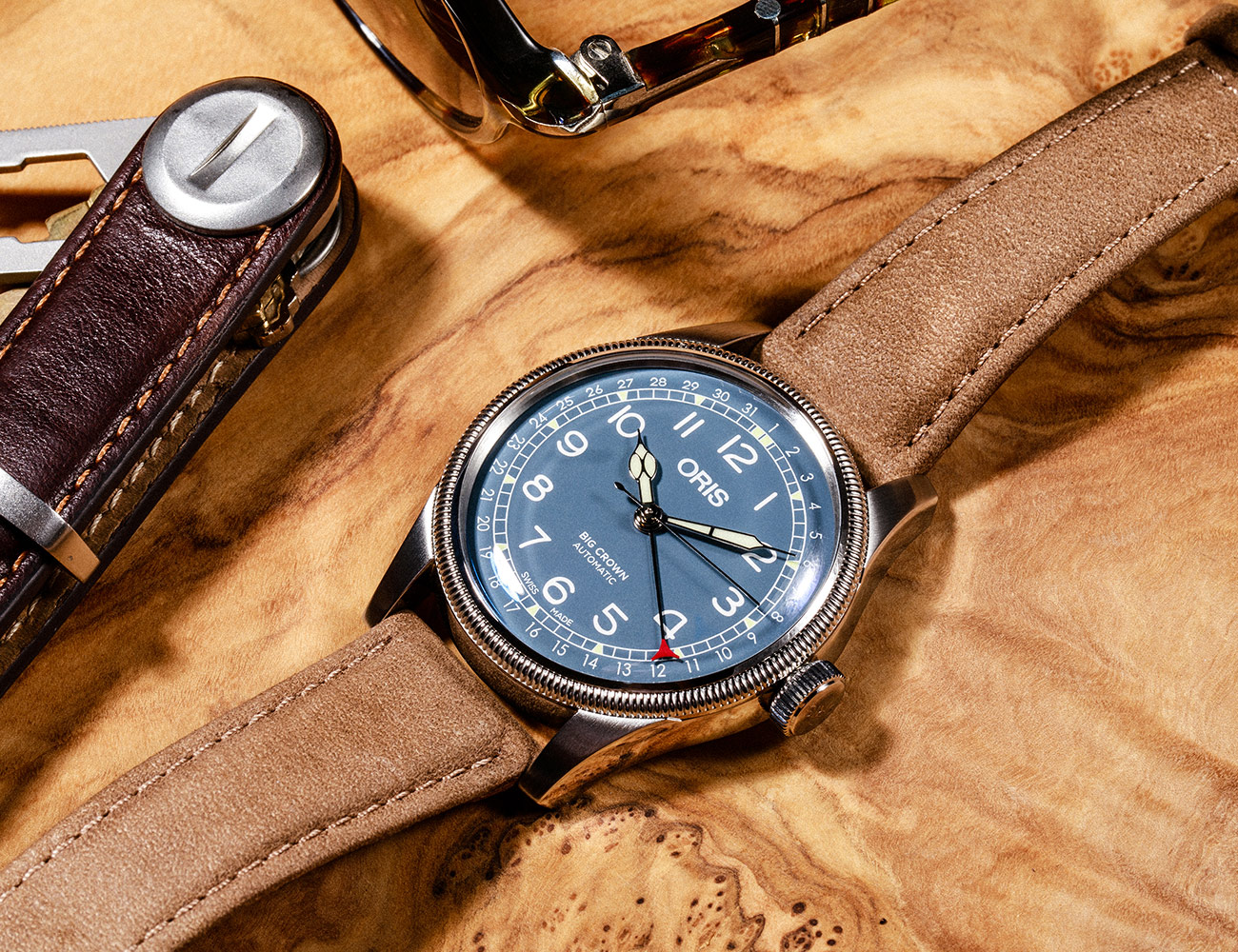
Oris Big Crown Pointer Date: If You Only Want to Have One Nice Watch, This Could Be It

Oris has been making a pointer date watch, in one form or another, since 1938, and the timepiece you see here is its freshest iteration, launched at Baselworld earlier this year. The pointer date is a complication deeply associated with the Swiss watchmaker and also something of an oddball today. Save for the Mido Multifort Datometer, you won’t find any other mainstream manufacturer selling one today. Yet it’s a complication that makes a lot of sense.

You don’t have to look very far online to find enthusiasts complaining about the more ubiquitous date window disrupting the flow of the dial. However, watch companies defend the date complication as an essential and useful addition for buyers who likely don’t identify as hardcore enthusiasts. The pointer date — which uses a hand that, well, points to the day of the month around the outside of the dial — is the perfect middle ground, leaving the dial clean and retaining the practicality of the date complication.

This, however, is just scratching at the Big Crown’s “Goldilocks” quality – this is a watch that thrives in the middle ground. The Big Crown is full of wonderful contradictions and capable of making compromises that, well, don’t actually feel like compromises.

The Good: The Big Crown Pointer Date somehow feels convincingly vintage, yet distinctly modern – dressy when it wants to be, casual everywhere else. It both stands out, yet can blend in. This is because Oris stuffed the watch with tons of little details that play to the watch’s heritage and then paired them with others that subvert the idea of the super-accurate vintage reissue (albeit with pastel-like dial colors). And since the basic design takes inspiration from a pilot’s watch from the 1930s, it certainly has enough roguish charm to be considered casual, but there’s so much dignity and refinement present here that it’ll play nicely with a sweater or a suit. This is to say nothing of the fact that it’s packing an obscure mechanical complication and will cost you only $1,600.

Who They’re For: Any person looking to dip into luxury watches who doesn’t want to spend very much money. Spending $1,600 on a watch is undoubtedly a big step into watch ownership, but most of the finishing here is on par with similar watches that would cost hundreds or even thousands more. Further, given the Big Crown’s versatility, it could work for any occasion, precluding the need to spend more money to build up a more varied collection.

Watch Out For: For those who want to bellyache about the 40mm size being too big, the additional 36mm option is far more in line with vintage tastes, but it comes with a caveat: you can’t get the blue dial. The 36mm is only available in green or black; conversely, the 40mm is only available in blue or black. So, while Oris gives you decent choice for color and size, you can’t spec it exactly how you want. Giving consumers more flexibility in this regard would only be a boon to the Pointer Date’s already massive mass appeal.

Alternatives: If you want another pointer date watch, your only real alternative is the aforementioned Mido Datometer. Like the Oris, it’s available in 40mm (though only 40mm) but it runs a stock automatic pointer date movement from ETA. Given the Mido comes with a PVD rose gold-colored case, a faux alligator strap and a more austere dial design, it’s the decidedly more dressy option and thus lacks the Oris’s formal/casual duality.

Review: When I was in college, I would run the same five-mile route every other day, passing the home of a seemingly very well-to-do individual with a penchant not just for good cars, but interesting ones, parked right outside. Highlights included an early ’90s Alfa Romeo Spider and a pristine Subaru SVX, but the crème de la crème was an ’80s Porsche 911 done up in a fabulous slate blue. That car, and more importantly, its color, has remained seared in my gray matter ever since. Seeing that car on a regular basis never failed to induce a smile, its gorgeous hue a highlight amidst a sea of silver SUVs, white Priuses and rusty collegiate economy cars.

Looking at the dial of the Big Crown Pointer Date, I feel like it’s a slate blue Porsche in a town full of drab-colored cars. It’s not that watchmakers don’t play with color at all- it’s just that there seems to be an overall aversion to new hues. Blue dial watches have been a thing for some time, but there’s a freshness to the Oris’s reserved, Pantone-esque dial. It feels genuinely new, and I can’t tell you how much it does wonders for this watch. Oris could’ve given it just a plain black dial to try and echo the original, and we’d be sitting here talking about how it’s an inaccurate reproduction of a classic. (At this point I should reiterate that you can in fact get the watch with a black dial, but with its chocolate-brown undertones, it’s far from “plain.”)

But what this watch truly is, is a reinterpretation. There are other modernizing finishes to meld with the watch’s otherwise classic aesthetic. The crystal, for example, is domed like a vintage watch, but its lines are less boxy, and more smooth and sleek. Its lugs are chunkier, sportier and given an industrial-like satin finishing. The dial font is inspired by early mid-century typefaces, but it’s still very crisp and contemporary. The strap, oddly enough, feels very modern, too — it’s made from an all-natural vegetable tanning process (millennials love sustainability!) and seems like the kind of thing you’d pay $150 for on Mr. Porter or Hodinkee.

Then there’s the old-school stuff: the coin-edge bezel. The cathedral hands. And, well, the fact that the pointer date complication is old-timey as all hell. All these flagrantly 1930s elements somehow manage to blend so well with a modern aesthetic. That pointer date movement, by the way, is not some fully off-the-rack engine. It’s a Sellita SW 200-1 automatic, modified by Oris to accommodate the date complication.

The Big Crown wears well on the wrist. The 40mm version will probably be the most popular and doesn’t feel gratuitously large like many upsized throwback watches often do. Its lugs contour to the wrist, and though the watch is maybe a bit thicker than I like, most of the height comes from the domed crystal, which is to say the case doesn’t feel slab-sided. The sizing plays to the Big Crown’s “just-right” ethos, and the 40mm will probably suit a lot of people’s wrists. If it doesn’t, there’s always that 36mm version.

Verdict: The Big Crown Pointer Date is hard watch not to love, and sure enough, I had no fewer than three watch-obsessing colleagues express admiration for the Oris. It’s a handsome watch, but it also feels like a practical one, one you can wear it to the office, to the park, to fancy parties, and pretty much anywhere else. If you want to have one nice watch, and only one nice watch, the Big Crown is as good an option as any.

What Others Are Saying:

• “There are times when you can accurately judge the general appeal of a watch from images, and there are times when you really need to put it on your own wrist. For me and the new Oris Pointer Date models, it was definitely a case of the latter. Managing to blend both sporty and more traditional elements into one stylish design, the Pointer Date is simply excellent on wrist. While I think that the 40mm version is the best fit for my wrist, the 36mm packs a ton of charm and certainly the more vintage feel of the two.” — James Stacey, Hodinkee

Key Specs

Movment: Oris 754 (Sellita SW200-1 base)
Winding: Automatic
Case Diameter: 40mm (as tested); 36mm
Water Resistance: 50 meters
Notable Features: Pointer date, pastel dial colors, available bronze case (36mm)

Read More Gear Patrol Reviews

Hot takes and in-depth reviews on noteworthy, relevant and interesting products. Read the Story

Note: Purchasing products through our links may earn us a portion of the sale, which supports our editorial team’s mission. Learn more here.
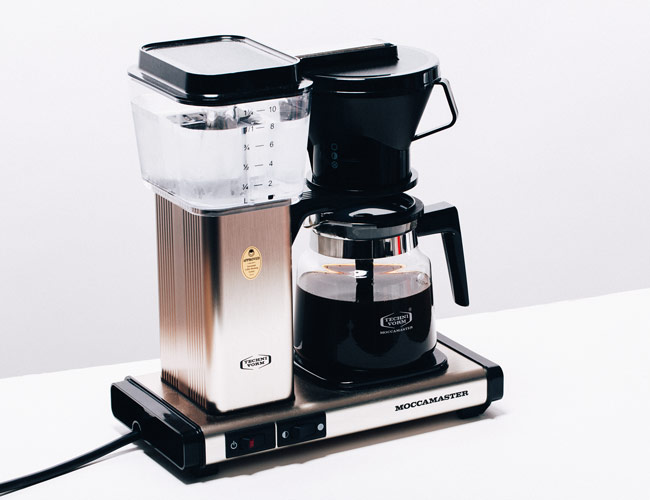
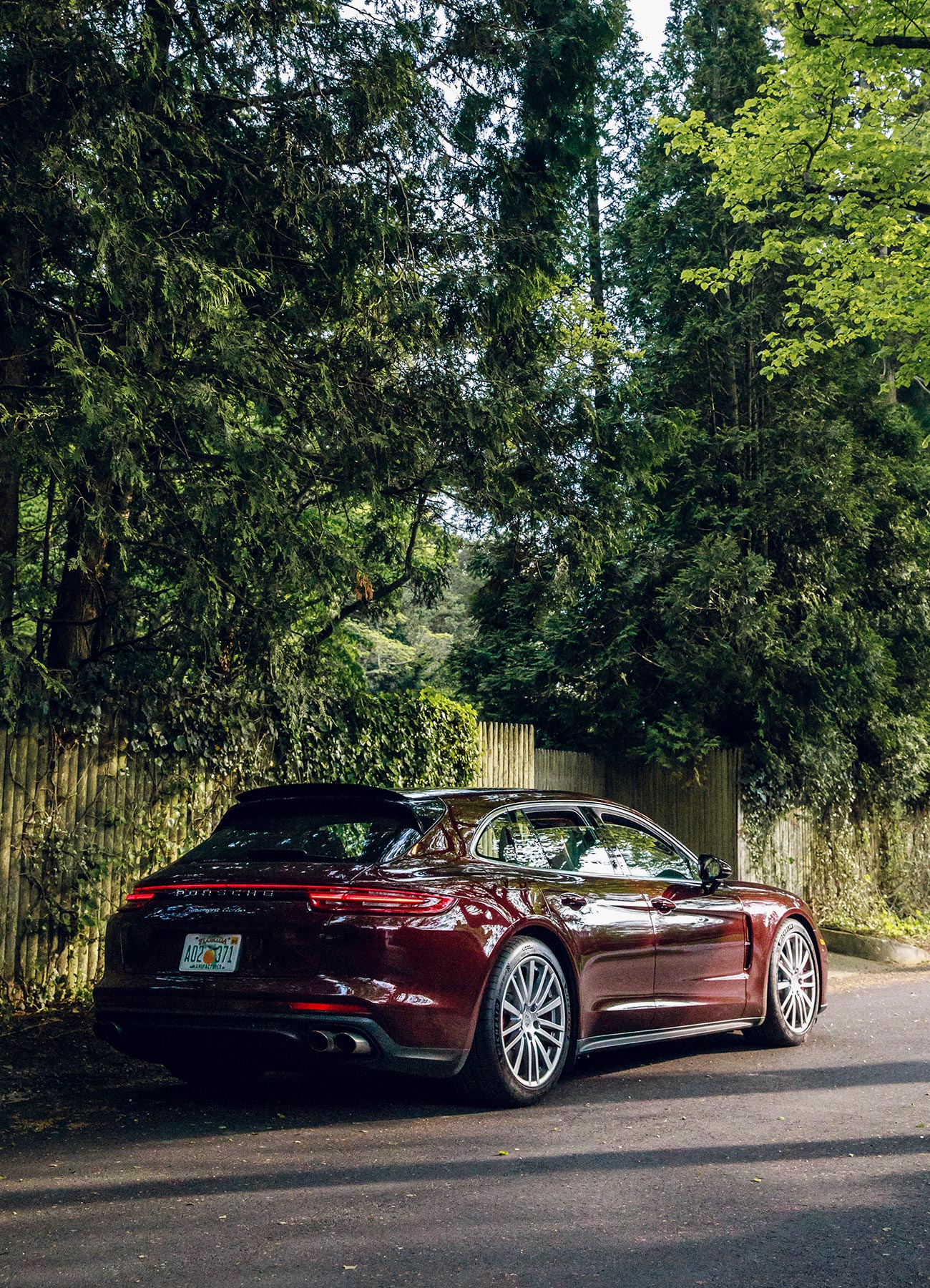
Porsche Panamera Sport Turismo Turbo Review: Who Exactly Buys an Aggressive, High-Performance Wagon?

The Porsche Panamera Sport Turismo Turbo ($154,000 base; $174,740 as tested) is the top-end, high-performance version of the latest iteration of Porsche’s popular premium, 911-esque sedan. Instead of the Panamera’s usual trunk-hatch, it features a decidedly wagon-like rear liftgate and wider, deeper load floor. There’s more car over the rear axle and slightly more room in the easier-to-access cargo area. The Sport Turismo Turbo seats five in a pinch, thanks to a middle seat in back, and in Turbo trim is powered by a 550-horsepower, twin-turbo V8 that moves all four of the wheels through an eight-speed automatic transmission. At $96,200 (base MSRP), the “standard” Sport Turismo — there are four models, one of which is a hybrid — is not an inexpensive proposition, even in non-Turbo guise, so… why not go for it and spend 60 grand more? (Only kidding, but if you enjoy a life so obscenely absurd that you could conceivably make that happen… wow.)

There has been a lot of heated (as Slack conversations go) debate in the Gear Patrol office over whether the Sport Turismo is indeed a station wagon. Some highlights from the six of us:

Is the Porsche Sport Turismo a Wagon?

Two think it’s not a wagon.

“To me, the window between the C and D pillar is not big enough. The Sport Turismo is just a big Porsche hatchback.” – Bryan Campbell
“NO IT IS NOT A WAGON” – AJ Powell

Two think it is, in fact, a wagon.

“If it’s a hatchback that’s not an SUV and a pair of skis placed lengthwise don’t go past the rear seats it’s a wagon.” And: “If the angle between roof panel and the D-Pillar is less than 125 degrees, it is a wagon.” – Henry Phillips
“I’m going to say it’s a wagon [because there’s] a D-pillar. Doesn’t it just feel _right_ to call the Panamera a wagon?” – Andrew Connor

We others are not sure.
“Psuedo wagon.” – Hunter Kelley
“I am not sure.” – Me

But what I do know is that the Sport Turismo Turbo is a thing that I like a lot. It has very few flaws, and I even kinda like those too.

The Good: Porsche. Turbo. Lots of tech, lots of sports car-derived engineering. Probably perfect handling and dynamics for a car shaped like this. Fast as a goddamn streak. Luxurious and comfortable (opt for massaging seats at all four corners). One guy in Manhattan leaned in my passenger window at a freshly green light and told me it was ‘the best Panamera he had ever seen. Having driven the standard sedan version, the top-tier of which Eric Adams just spent some time with, I’m inclined to agree. There’s a little more room and an attractive je n’ais se quoi that has to do with its [possibly] being a wagon.

Who It’s For: The part of the money-is-not-a-huge-object crowd that either has a strong practical streak or only wants one vehicle. And also wants the option of outrunning the cops. Families, probably four-person squads and not five, unless the fifth is relatively small or just very bad at sticking up for themselves. And the anti-SUV crowd. I spent my time with the Sport Turismo Turbo in the Hamptons, where it felt very, very much at home. This is a four-person grand tourer and stuff-hauler for those with good but fun taste.

Watch Out For: It’s not a sports car. The Sport Tursimo Turbo is lightning fast — faster than it has a right to be — but it would be far from my first choice for carving up canyon roads. That’s because it’s also big, as in ‘seats four full-grown adults comfortably’ big and, unless you missed the above bit, it has a wagon-like hatchback. It should also be noted that though it can fit that many people, there isn’t a whole lot of leg or arm room — big car, medium interior. It doesn’t sound quite as gnarly as I’d hoped — this is, no doubt, to cater more directly to the refined luxe crowd, but if my Porsche says “Turbo” on the decklid, it had better bark.

Alternatives: Hot wagons: the automotive journalist’s dream segment. The reigning champ here is probably the Mercedes-AMG E63 ($106,950, base). It’s been a bonkers car since its inception, and the latest version is no slouch. We’ll have a review soon, but suffice it to say, the E63 is shaped like an actual wagon — it hangs farther off the rear axle than the Sport Turismo Turbo does. Or, you could lean harder into the sedan-ness angle and opt for an Audi RS7 ($113,900, base), which is more of a hatchback and one of my favorite cars ever (it’ll do at least a buck-fifty-five in the Vegas desert — I think). Lastly, you could give convention a solid “fuck it” and pick up a Ferrari GTC4Lusso ($369,172 as tested) for yourself. It’s a four-seat, four-wheel-drive, V12-powered hatchback and sounds like it, thankyouverymuch.

Review: My time with the Porsche began with a trip east from Brooklyn, which should have taken far less than two hours but took five. After through city bumper-to-bumper, I must have averaged only 25 miles an hour until I was literally (literally) parked on an off-ramp for the better part of 30 minutes. This was halfway through my trip, which should have been very frustrating. It absolutely, one hundred percent sucks to be made to idle in a Very Fast Car. It. SUCKS. But Porsche has done a wonderful thing with its interiors, especially on higher-end models like this one: they’re objectively great. When I was told weeks prior to my drive that I’d get a burgundy red car with a tan interior, I literally (figuratively) fell asleep on the phone. It sounded so L-A-M-E for a brute-force Porsche sturmwagen. But, as I found out later, there would be time to rev the engine and go fast. Sitting in this delicious, tech- and leather-riddled cabin is a delight for the driver.

After I ironically resigned myself to the navigation system’s “dynamic route” setting — supposedly, it finds not necessarily the fastest turn-by-turn, but one that avoids traffic to at least keeps you moving — I began to enjoy being captive in the Sport Turismo Turbo. I began to feel… the Wagon Effect: that feeling you get as a driver when you feel fully in control of a vehicle that is exactly the right size. For my money (figurative, sadly), Porsche got the proportions right. The Panamera sedan affords just over 17 cubic feet of cargo room behind the rear seats; the Sport Turismo Turbo adds only about a cubic foot overall, but because its load floor is wider and more easily accessible, the car’s shape is drawn backward and to some might look a bit heavy or disproportioned. That’s probably because it’s not quite typically wagon-sized. Instead, it’s somewhere in between, and I like the extended roofline and more rounded butt. The Sport Turismo is just long enough that folks might not even realize the difference.

I missed dinner by a long shot, but I knew the beer I brought was still cold — I’d stored it in the cargo area in a burly cooler. And speaking of cooler, I felt the Wagon Effect (which is a thing now) as I retrieved my things — I had to walk just a little farther, and I didn’t have to contort to reach things at the back of a trunk. I had no passengers, but in that moment I knew two things: that I could fit a small family and lots of stuff in this wagon-esque wonder, and that this car could absolutely wallop most sports cars in a straight line. Over the weekend, I’d drive that point home a bit more — after Saturday rains cleared, I found dry pavement to give the Launch Control a go, and… it went. Hard. The Sport Turismo Turbo, despite having “only” 550 horsepower, when prompted, puts it down in a violent way, like Paul Bunyan traded his axe for a sledgehammer and cracked me on the ass.

Driving dynamics are mostly great. I used the car’s presets — Comfort, Sport and Sport Plus — and was pretty pleased. As fast as it is and as sharply as it does handle, the Sport Turismo Turbo does one thing even better: it doesn’t let you forget you’re in a big, long car. Fast in a straight line? Yes. It might even be wild fun on a track, though less than effective. This is not a car you want to whip about around sharp bends and mountain passes all day long. You can do that for a little while, but it never goes full-tilt supercar on you. It’s made for cool dads — the type who would roll their eyes at teen drag racers but then absolutely destroy them at a stoplight; the kind who would never dream of going a mile per hour faster than the limit when his own kids are on board. Reckless double standard? Yes, but that’s what a Porsche Turbo wagon is supposed to be.

Reckless or not, the Sport Turismo Turbo’s performance credentials are solid. Porsche Active Suspension Management — the company’s trick suspension system — is standard and controls an adaptive air suspension. Rear-wheel steering is available, as are carbon ceramic brakes. When used in concert with Launch Control, all of these bits do a tremendous job making you forget what planet you’re on. Further, the interior is a techno-luxurious affair, with well-placed and nicely designed buttons to control most everything, and a 12.3-inch multi-touch infotainment screen that is gorgeous, smart and intuitive.

Having no kids or passengers to speak of on my return trip, and fearing the worst, I left early in the day to avoid knots of honking commuters. And made the trip in just over an hour. (Must have taken a wormhole shortcut? Unclear.) Those days with the car proved interesting, for sure, but also a bit enlightening. I further defined what the Wagon Effect means to me: it means a practical car that you can sort of melt into and get used to and appropriately take for granted. I almost forgot at times that I was driving a screaming hot rod Porsche, and I guess that’s sort of cool in and of itself — especially since there were moments when I remembered what the car could do and I found myself profoundly satisfied.

So the question is: Who buys this? Not a station wagon purist. It’s not someone who wants to squeeze off quarter-mile runs at the strip and make Ferrari owners blush. This is, plain and simple, a superlative wagon for the non-stuffy sporting enthusiast who can stand to drop a couple hundred Large on a car his whole family can enjoy. It’s total luxury, a lot of sport and literally (literally!) a fantastic combination of both.

Verdict: So, now I think the Sport Turismo is a wagon. But it isn’t a boring, staid Country Squire from some Waspy Americana catalog. It bucks tradition just a little bit — like a notch lapel tuxedo jacket, or when a comedic actor absolutely crushes a dramatic role out of nowhere. You expect a wagon, yet you get a muscle car that gives off a Wagon Effect without being dull or too adherent to norms. I like the Panamera line as a whole, and I really like wagons as a rule; this seems the perfect marriage. Especially for someone who wants a little utility, a good bit of luxury, a heaping helping of sport and a dollop of panache. Or, as they say these days, “Wagon Effect.”

What Others Are Saying:

• “Perched on the Sport Turismo’s roof is an adaptive rear spoiler, the first for an estate car says Porsche. At speeds below 106mph it stays in its most retracted position of minus-seven degrees, at speeds above this it rises through eight degrees to plus-one degree to deliver up to 50kg of additional downforce depending on your speed. If the optional panoramic roof is open and you are travelling above 56mph the spoiler adopts an angle of 26 degrees to reduce wind noise inside the cabin.” — Stuart Gallagher, EVO

• “Though the Turbo delivers more cohesively engaging high-speed handling, the 4-E Hybrid’s quiet coasting and discreet power reserves offer a novel combination of city-friendly EV power and balls-to-the-wall grunt when you want it. The standard Panamera’s updated styling already lends the four-door a certain appeal, but the Sport Turismo adds an element of inscrutable whimsy.” — Basem Wasef, Automobile

• “I think of it as analogous to a small crossover because a) that’s kinda become the standard for two-box passenger vehicles nowadays, and b) it has AWD, whereas most small hatchbacks and wagons don’t. But yeah, you’re technically correct. [It’s a wagon.]” — The Drive

2018 Porsche Panamera Turbo Sport Turismo Specs
Engine: 4.0L twin-turbocharged V8
Transmission: eight-speed dual-clutch automatic (PDK); all-wheel drive
Horsepower: 550
567: lb-ft
0-60 mph: 3.4 seconds
Top Speed: 188 mph
Seats: Five; 40/20/40 rear seat split
MSRP: $154,000 (base); $174,740 (as tested)
Read More Gear Patrol Reviews

Hot takes and in-depth reviews on noteworthy, relevant and interesting products. Read the Story

Note: Purchasing products through our links may earn us a portion of the sale, which supports our editorial team’s mission. Learn more here.
We Tested 3 New Cooler Backpacks to Find the Best One

If Summer 2017 was characterized by the fall of James Comey and the rise of Cardi B, then let the recent solstice mark the start of the Summer of the Cooler Backpack. Yes, while you’ve been face-down in your phone attempting to predict this year’s song of the season and identify the fashion trend that’ll replace oversized clothing, soft-sided coolers with adjustable backpack straps dealt pop culture a sucker punch and took the reigns into their own hands.

A trend wouldn’t be a trend without the participation of multiple parties, and this spring three of the biggest names in cold-keeping each revealed a different take on the same product. It’s no surprise that Yeti, which has maintained its acclaimed collection of soft-sided Hopper coolers for multiple years, would add backpack straps to the build. OtterBox was waiting in response with the Trooper, a soft cooler that follows up the company’s decision last year to break further into the outdoor category with an emphasis on customizable features. New to the cooler market entirely is Hydro Flask, an Oregon-based company known for making some of the best insulating water bottles available — now it too has a cooler backpack.

The question that remains is, which one of these new adventure-prepped cooler packs is the best? To find out, we put these three bags lid-to-lid, ranking them according to three traits: cold retention, ease of carrying and overall construction. Here’s what we found.

Cold keeping:

Keeping cold things cold is the primary function of any cooler, and if it can’t succeed at that, then every other feature is superfluous. We performed a low-tech test to figure out which of these backpacks does it best: each cooler was filled with the same quantity of ice and left under the same conditions until fully melted.

The ice in the Hydro Flask cooler was the first to revert to liquid water. This occurred roughly 40 hours into our test, just shy of the bag’s claimed 48-hour threshold. Both the Yeti and OtterBox coolers surpassed that mark but were mostly liquid. The OtterBox cooler performed slightly better than the Yeti, but not by much.

Carry:

Second to cold-retention for this group of coolers is the self-imposed backpack carry function. Each boasts that backpack straps offer convenience enough to haul a full load down a trail. But to do that well, the system has to be comfortable.

All three coolers feature padded straps and back panels to facilitate this, but after carrying each extensively while full, we’re giving the win to the OtterBox Trooper LT 30. Its straps are wider and slightly angled, creating the most ergonomic fit.

Construction:

All three of these coolers are built with FDA-approved, BPA-free interiors and abrasion-resistant exteriors that have reinforced bases. The difference in construction then, comes through operation.

The OtterBox is unique in that it uses a plastic clamp to open and close. The mechanism allows it to open wider than the rest but somehow feels slightly cheap, and potentially prone to breaking. Both Yeti and Hydro Flask employ watertight zippers, but Hydro Flask’s is easier to operate.

All three coolers are also built to stand freely on their own, a claim that was proven true through our testing. Yeti’s Hopper Backflip revealed an unexpected convenience through this ability in that it can also function as an extra table-like surface when hanging out in camp, thanks to its flat top. Neither of the competing coolers offers this ability. Overall, we think the Yeti offers the best construction, which is no surprise given the brand’s reputation.

Features:

Generally speaking, if coolers favor function, then backpacks favor features, and each of these straddles both in some ways. Yeti’s Backflip is the most spartan of the group, with webbing attachments that can support carabiners and a small collection of accessories such as a dry pouch or a bottle opener. OtterBox’s Trooper offers the same modular functionality with durable plastic mounting points, but also features two built-in zipper pockets for essentials such as keys or a wallet.

Hydro Flask’s cooler is the most backpack-like of the group. On one side is a small zipper pocket and on the other a stretchy mesh sleeve that can accommodate a 24-ounce water bottle. The cooler’s lid also features a zip pocket that’s big enough for larger items like sunscreen or extra snacks. Plus, it does all this without requiring the purchase of additional accessories, which is nice.

Aesthetics:

This category is entirely subjective, but we like Hydro Flask’s sleek and minimal appearance over the bulky and over-built look of its competitors.

Verdict:

This is the moment you’ve been reading for, but — and if you skipped the rest of this article and scrolled to this point for a quick answer, sorry — we have to offer slightly disappointing news: it’s a toss-up.

Each of these backpack-style coolers is great for a different reason and excels in some areas over others. If you want the most stable and durable cooler available, go for Yeti’s Hopper Backflip. If you want the biggest and most comfortable cold bag, OtterBox’s Trooper 30 is it. Hydro Flask’s backpack holds its own against the other two, is more stylish, has more built-in pockets and is $25 cheaper.

Don’t take this as an excuse for indecisiveness — any of these coolers is a good choice and will make a suitable addition to your gear closet. They perform so similarly that a choice between the three will be determined by personal preference. That frees you to pick based on the function you prioritize most, whether it be pockets or zippers or available liters. And if none of that matters to you, there’s no harm in choosing the one that comes in your favorite color (or the hue that’s trending this summer, which we don’t dare predict here).

| |

Note: Purchasing products through our links may earn us a portion of the sale, which supports our editorial team’s mission. Learn more here.
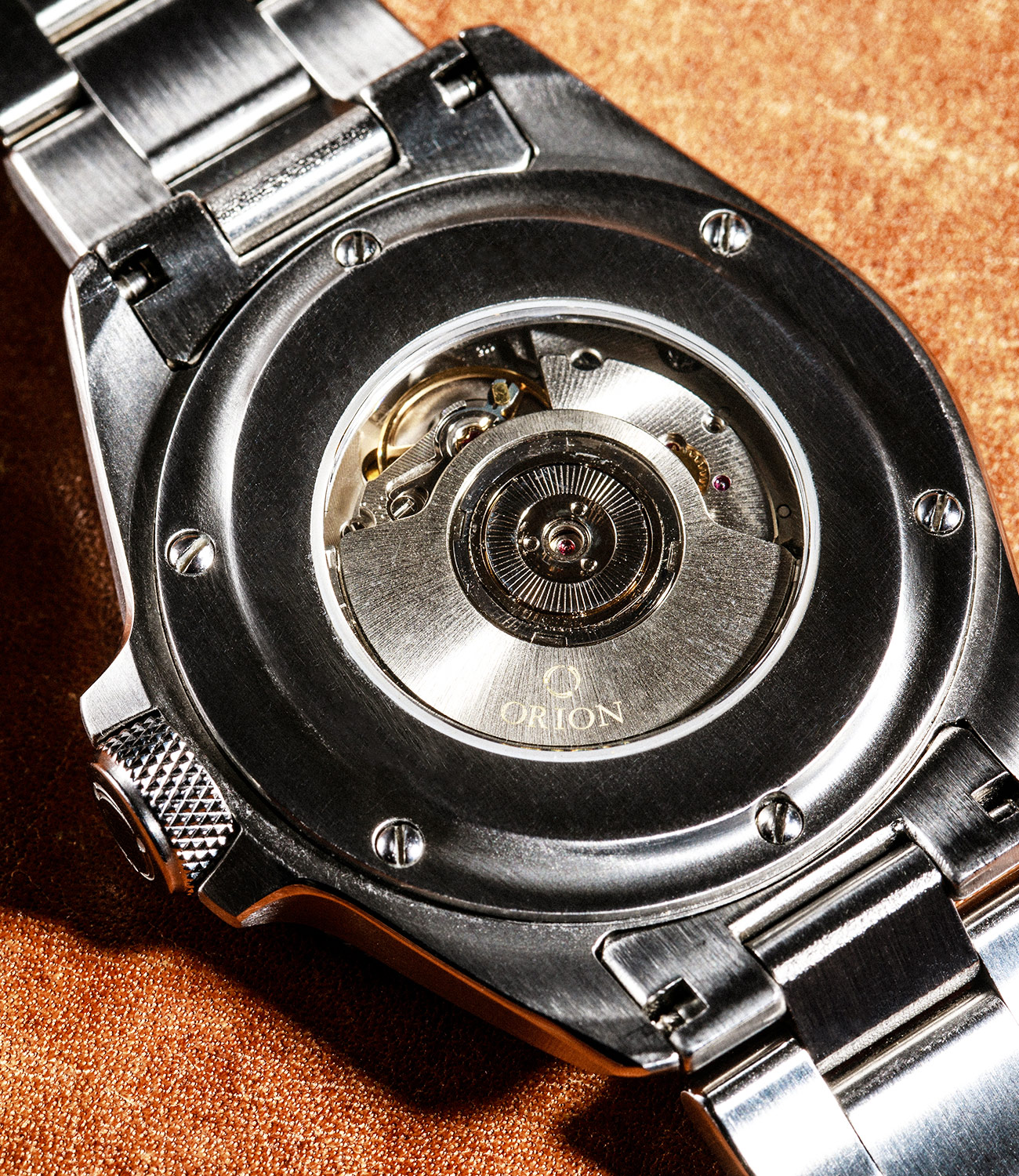
KEF LS50 Wireless Review: The Perfect Hi-Fi All-in-One Speaker System

The KEF LS50 ($1,300/pair) has been regarded as some of the best desktop monitors (or hi-fi speakers, for their size) that you could buy since their release in 2012, but the British audio manufacturer has since released the KEF LS50 Wireless ($2,200/pair). Despite the likeness in name, the LS50 Wireless speakers are more than just Bluetooth- and wifi-enabled versions of the LS50. They are active powered speakers, unlike the passive KEF LS50, meaning each speaker has its own power amplifier built-in. But each LS50 Wireless speakers has two amplifiers, one for its tweeter and one for its woofer, and a dedicated DAC (up to 24-bit/192kHz) and DSP for each.

|

The Good: The KEF LS50 Wireless speakers offer the best of both worlds: a bonafide audiophile-grade stereo speaker system that can play up to 24-bit/192kHz audio files and can also be used as a traditional Bluetooth (aptX) speaker. Each speaker is built around KEF’s signature Uni-Q driver (comprised of a tweeter and woofer) and a hefty cabinet, which, in tandem, and with 230-watts per channel, are able to produce powerful, detail-rich audio that has virtually zero distortion — these speakers sound tremendous. The app is primed for Tidal and Spotify subscribers, and you can stream to the speakers directly through their respective apps. And there are numerous other wired connection options, including optical, USB-A and analog RCA inputs.

Who They’re For: If you want an all-in-one hi-fi system that sounds truly incredible, and doesn’t make you deal with separate stereo components, the KEF LS50 Wireless speakers are a great value for right around $2,200. The speakers also give you the option to connect a separate subwoofer, in case its natural bass isn’t enough (it probably is).

Watch Out For: The KEF LS50 Wireless speakers are a one-stop-shop hi-fi system, so if you have a separate stereo receiver, these aren’t the type of speakers for your setup. They’re not designed to be integrated into a home theater system, either. Both of the speakers are powered, so you’ll want to make sure they there’s open outlet space wherever you place them.

Alternatives: The KEF LS50 Wireless are a step above any other powered bookshelf speakers. Period. And there’s nothing really out there, in this price point, that’s like-for-like.

Review: Prior to testing the KEF LS50 Wireless, I was testing Audioengine’s new A5+ Wireless speakers, which are terrific-sounding, powered bookshelf speakers in their own right — especially for $500 — but it shouldn’t come as much of surprise that the KEF LS50 Wireless speakers are an entirely different animal. The level of detail you get from tracks just from Bluetooth streaming is, again, incredible. And then when you use the app and connect them to wi-fi, these speakers reach their true potential (if you’re streaming Tidal).

We spent most of the time streaming over wi-fi, from Spotify and Tidal, and the separation between the treble and mid-range is exceptional. In songs like “Downtown” by Majical Cloudz and “Gravity” by John Mayer, you can hear the vocals and individual instruments, especially percussion and strings, and it sounds like each is coming from their own separate place — it creates a soundstage that’s special, especially among stereo speakers.

The magic of the KEF LS50 Wireless, other than those unique drivers, is that there are two custom amplifiers and two built-in DACs in each speaker. This, along with an intuitive app that lets you adjust the DSP and other settings, means that the KEF LS50 Wireless is capable of producing an accurate audio experience that’s all their own. If the speakers are up against a wall or in a large room, or if you want more bass or treble, you can adjust the audio easily all in the app.

There are several features, not specifically related to audio quality, that are charming. Similar to the original KEF LS50, these new wireless speakers sort of look like the Death Star. And on the right speaker is an OLED touchscreen — plus a fantastic “click” noise when you turn the speaker on — and allows you to toggle through things like Bluetooth and wi-fi, along with allowing you to adjust the volume levels without breaking out your smartphone.

Verdict: $2,000 might seem like a lot to spend on a pair of bookshelf speakers — and it is — but the KEF LS50 Wireless offers so much more than your average high-end bookshelf speakers. They’re an engineering feat all in themselves, fitting individual amps, DACs and other electronics inside a cabinet that’s essentially the same size as the older LS50 speakers. They can be used as desktop monitors or an all-in-one hi-fi speaker system. And, best of all, anybody can use them: the app and a wi-fi connection allow Tidal tracks to play in all their high-resolution glory, or with the tap of the Bluetooth button anyone can play whatever they like — no instructions needed.

What Others Are Saying:

• “While I’ve been visited by no little birds, I will venture to say that this approach — fully active, with digital controls, integrated streaming, and the like — can and probably will be found in future KEF products. It really is just too simple to pass up. Simple — not in construction or execution — but in life. The lack of wires and extra bits means that the LS50W can go just about anywhere. Like the living room. An office. A bedroom. A dorm room! Though, maybe not the latter without some optional anti-theft deterrents, because these will draw not just eyes but outright lust..” — Scot Hull, Part-Time Audiophile

• “Put simply, for the £2000 you’ll pay for this ‘all-in-one’ setup, you’ll only get better by spending the same on hi-fi separates. The electronics and circuitry [are] so tailored to work perfectly with one another that the sound is spot-on – even pairing the LS50 passive speakers with a talented amplifier up to the same price can’t top it.” — Verity Burns, Trusted Reviews

• “We liked the speakers best, though, when rendering acoustic instruments — especially percussion. You know when the pop of a conga pulls you back into the room for its sheer presence, something is going right. One of our favorite moments came in the LS50 Wireless’ rendition of Ripple by the Grateful Dead. We’ve heard this song dozens of times over the years, but the speakers bring something really special to the table. The acoustic guitar at the intro sounds almost visible in space on the left side, while the rest of the instruments curl around in their own distinct locations within the stereo image. At the chorus, the dual mandolins are near magical in their precision — you can actually hear the room echo flutter between each click of the frenzied strumming.” — Ryan Waniata, Digital Trends

Key Specs

Speakers: Fully active speakers with built-in streaming preamp
Drivers: Uni-Q driver combo: 5.25-inch woofer, 1-inch aluminum tweeter
Frequency Range: 40Hz – 47kHz
Frequency Response: 45Hz – 28kHz
Max Volume: 106dB
Streaming: Tidal, Spotify, Bluetooth aptX support
Connectivity: wi-fi, Bluetooth 4.0 aptX, RCA, subwoofer
Weight: 22.5 pounds (each)

|

Read More Gear Patrol Reviews

Hot takes and in-depth reviews on noteworthy, relevant and interesting products. Read the Story

Note: Purchasing products through our links may earn us a portion of the sale, which supports our editorial team’s mission. Learn more here.
The Performance Shirt Get’s an Upgrade, and We’re Smitten with It

Colby Cohen, a former Boston Bruins player, is no stranger to putting workout gear through the ringer. In 2015, he decided to put his knowledge of what makes great workout gear to use by founding Endeavor Athletic, a company gaining traction in the high-performance and boutique worlds of fitness clothing. Its main selling point? A new-to-market material called DryForce.

The Good: In short, DryForce wicks sweat, is comfortable for all-day wear and can actually be seen working. In testing in both 70-degree heat and 55-degree temperate mornings, the DryForce kept me dry — helping me stay at a comfortable temperature. Unlike some sweat-wicking shirts, from the first wear to the fiftieth the DryForce fabric feels like butter when you put it on and it doesn’t deteriorate in the wash. I’m normally uncomfortable in my gear when I first start sweating — that in-between phase of lightly sweating and full-on sweating is awkward — but with this fabric, I felt comfortable from my first pedal stroke to my last all-out sprint thanks to the perforated side panels. Each piece is the perfect amount of stretchy (no tight body-builder fits here) with a Polygiene anti-microbial treatment built-in to prevent stink.

Who It’s For: While the fabric is made for the everyman athlete, it’s been tested by elite athletes and trainers who have long worn products from bigger name brands. Endeavor Athletic’s gear is for the guy who is tired of showing up to the gym looking like everyone else on the treadmill or in the weight room. The understated apparel works well for a variety of activities thanks to all of the built-in performance features. The shirts are slightly heavier-weight than your typical go-to running tee, and will work at the gym, as well as on the trail. If you’re tired of shirts splashed with a large company logo, Endeavor addresses that too with a small logo on the left chest (where a pocket would fall) or in a circle no bigger than your fingernail along the bottom hemline.

Watch Out For: The technology on these shirts is top notch, but the design is pretty basic — there are no patterns, and most of the pieces are simply offered in black or grey. If you’re a snappy dresser and like your gym kit to match your life kit, you might want to step it up and try a variety of other brands.

Also, keep in mind that although the shirt is quick-drying, it doesn’t work instantly when you sweat through it. For workouts like yoga, pilates or light stretching, the minimal amount you sweat will be wicked away while you’re in class. For something like an indoor cycling class, where your back is soaked through with sweat, it can take much longer for the water to evaporate from the outside of the shirt. After a 45-minute indoor cycling class, the shirt feels dry from the inside, but is visibly wet.

Alternatives: There are a lot of running and performance shirts out there. It depends what activity you’re doing. For running, Tracksmith or Asics both make good options. If you’re hiking, Patagonia and The North Face are the way to go. If you want a shirt you can sweat in and still wear all day without stinking, the Outdoor Voices Merino Tee is your best bet.

Review: At first touch, the shirt is supple and soft, similar to the initial feel of a brand new leather jacket, but one that’s already worn in. While that sounds terrible to sweat in, it’s cooling as soon as you pull it over your head. It’s definitely a bit heavier in comparison to a shirt like the New Balance Q Speed or the Patagonia Windchaser, but is more durable. After wearing and washing at least fifteen times, the shirt retains its excellent hand feel.

The cut of the shirt, along with the reflective hit on the back and perforated side panels, are standard features for most gym shirts — but the DryForce technology is what sets it apart. The material comes from a mill in Korea that Endeavor Athletics has partnered with. It’s a material used throughout the entire garment to help with sweat-wickings. The material pulls the sweat (or water) from your body onto the inside of the shirt, and then through an osmosis (of sorts), the fabric pushes it to the outside of the shirt so it can evaporate quicker. You feel drier because the inside of the shirt stays pretty dry, while the outside of the shirt can be damp. The nylon and spandex ratio isn’t all that different from other performance shirts. Nylon is one of the most durable fabrics used in fitness apparel, but it’s not absorbent at all, so the DryForce technology that’s infused into the garment is what makes all the difference. The technology is infused into the fibers before the fabric gets spun.

When you pour water on the fabric, it doesn’t immediately sink in. Similar to other performance fabrics, you have to let the water soak before it starts to drip through the material. Once a bead of sweat hits the shirt, the water forms a webbed hexagon on the inside of the shirt. The DryForce technology instantly spreads the moisture out from the concentrated bead of sweat into these beehive-like formations. From there, the water is pulled through to the exterior of the shirt to keep the inside cool and dry. In one weekend, I washed the material every single day to re-test it the following day, and no matter how many times it went through the laundry, it was still possible to see the technology in action with a simple bead of sweat, or drop of water.

I wore the DryForce technology to a variety of indoor cycling, tabata and core classes, and ran up to 20 miles in New York City in temperatures ranging from 55 degrees to 75 degrees. Chafing was a non-issue, and even when I started to sweat, the fabric still felt buttery and never sticky. The most significant difference I felt between the Endeavor fabric and its competitors was the possibility to wear the shirt all day long. In classes like yoga or pilates, I can typically leave right after class and not worry about showering since there’s not much sweating involved. But, with classes like indoor cycling or running, I normally have to change immediately after, simply due to the uncomfortable feeling that comes with walking around in damp clothes. The rapid sweat-wicking properties of the Endeavor shirt meant that even after an extremely sweaty class (i.e. boxing or indoor cycling), I felt dry — even if the shirt looked wet.

Verdict: Overall, if you’re looking for a shirt that you can wear to the gym and workout hard seven days a week, and feel your sweat disappear, this is the shirt for you. The DryForce technology doesn’t wash out, and the shirt doesn’t feel like it’s going to disintegrate if you decide to wear it for your speed workout or your 15-mile run. It’s not going to spark any creative discussion at the water cooler, but the simplicity of the shirt is why we like it so much. It’s a worthwhile investment and an understated garment that’s going last.

Key Specs

Nylon: 86%
Spandex: 14%

Read More Gear Patrol Reviews

Hot takes and in-depth reviews on noteworthy, relevant and interesting products. Read the Story

Note: Purchasing products through our links may earn us a portion of the sale, which supports our editorial team’s mission. Learn more here.

KEF LS50 Wireless Review: The All-in-One Speaker System That’s Audiophile-Grade and Easier Than Sonos

The KEF LS50 ($1,300/pair) has been regarded as some of the best desktop monitors (or hi-fi speakers, for their size) that you could buy since their release in 2012, but the British audio manufacturer has since released the KEF LS50 Wireless ($2,200). Despite the likeness in name, the LS50 Wireless speakers are more than just Bluetooth- and wifi-enabled versions of the LS50. They are active powered speakers, unlike the passive KEF LS50, meaning each speaker has its own power amplifier built-in. But each LS50 Wireless speakers has two amplifiers, one for its tweeter and one for its woofer, and a dedicated DAC (up to 24-bit/192kHz) and DSP for each.

|

The Good: The KEF LS50 Wireless speakers offer the best of both worlds: a bonafide audiophile-grade stereo speaker system that can play up to 24-bit/192kHz audio files and can also be used as a traditional Bluetooth (aptX) speaker. Each speaker is built around KEF’s signature Uni-Q driver (comprised of a tweeter and woofer) and a hefty cabinet, which, in tandem, and with 230-watts per channel, are able to produce powerful, detail-rich audio that has virtually zero distortion — these speakers sound tremendous. The app is primed for Tidal and Spotify subscribers, and you can stream to the speakers directly through their respective apps. And there are numerous other wired connection options, including optical, USB-A and analog RCA inputs.

Who They’re For: If you want an all-in-one hi-fi system that sounds truly incredible, and doesn’t make you deal with separate stereo components, the KEF LS50 Wireless speakers are a great value for right around $2,200. The speakers also give you the option to connect a separate subwoofer, in case its natural bass isn’t enough (it probably is).

Watch Out For: The KEF LS50 Wireless speakers are a one-stop-shop hi-fi system, so if you have a separate stereo receiver, these aren’t the type of speakers for your setup. They’re not designed to be integrated into a home theater system, either. Both of the speakers are powered, so you’ll want to make sure they there’s open outlet space wherever you place them.

Alternatives: The KEF LS50 Wireless are a step above any other powered bookshelf speakers. Period. And there’s nothing really out there, in this price point, that’s like-for-like.

Review: Prior to testing the KEF LS50 Wireless, I was testing Audioengine’s new A5+ Wireless speakers, which are terrific-sounding, powered bookshelf speakers in their own right — especially for $500 — but it shouldn’t come as much of surprise that the KEF LS50 Wireless speakers are an entirely different animal. The level of detail you get from tracks just from Bluetooth streaming is, again, incredible. And then when you use the app and connect them to wi-fi, these speakers reach their true potential (if you’re streaming Tidal).

We spent most of the time streaming over wi-fi, from Spotify and Tidal, and the separation between the treble and mid-range is exceptional. In songs like “Downtown” by Majical Cloudz and “Gravity” by John Mayer, you can hear the vocals and individual instruments, especially percussion and strings, and it sounds like each is coming from their own separate place — it creates a soundstage that’s special, especially among stereo speakers.

The magic of the KEF LS50 Wireless, other than those unique drivers, is that there are two custom amplifiers and two built-in DACs in each speaker. This, along with an intuitive app that lets you adjust the DSP and other settings, means that the KEF LS50 Wireless is capable of producing an accurate audio experience that’s all their own. If the speakers are up against a wall or in a large room, or if you want more bass or treble, you can adjust the audio easily all in the app.

There are several features, not specifically related to audio quality, that are charming. Similar to the original KEF LS50, these new wireless speakers sort of look like the Death Star. And on the right speaker is an OLED touchscreen — plus a fantastic “click” noise when you turn the speaker on — and allows you to toggle through things like Bluetooth and wi-fi, along with allowing you to adjust the volume levels without breaking out your smartphone.

Verdict: $2,000 might seem like a lot to spend on a pair of bookshelf speakers — and it is — but the KEF LS50 Wireless offers so much more than your average high-end bookshelf speakers. They’re an engineering feat all in themselves, fitting individual amps, DACs and other electronics inside a cabinet that’s essentially the same size as the older LS50 speakers. They can be used as desktop monitors or an all-in-one hi-fi speaker system. And, best of all, anybody can use them: the app and a wi-fi connection allow Tidal tracks to play in all their high-resolution glory, or with the tap of the Bluetooth button anyone can play whatever they like — no instructions needed.

What Others Are Saying:

• “While I’ve been visited by no little birds, I will venture to say that this approach — fully active, with digital controls, integrated streaming, and the like — can and probably will be found in future KEF products. It really is just too simple to pass up. Simple — not in construction or execution — but in life. The lack of wires and extra bits means that the LS50W can go just about anywhere. Like the living room. An office. A bedroom. A dorm room! Though, maybe not the latter without some optional anti-theft deterrents, because these will draw not just eyes but outright lust..” — Scot Hull, Part-Time Audiophile

• “Put simply, for the £2000 you’ll pay for this ‘all-in-one’ setup, you’ll only get better by spending the same on hi-fi separates. The electronics and circuitry [are] so tailored to work perfectly with one another that the sound is spot-on – even pairing the LS50 passive speakers with a talented amplifier up to the same price can’t top it.” — Verity Burns, Trusted Reviews

• “We liked the speakers best, though, when rendering acoustic instruments — especially percussion. You know when the pop of a conga pulls you back into the room for its sheer presence, something is going right. One of our favorite moments came in the LS50 Wireless’ rendition of Ripple by the Grateful Dead. We’ve heard this song dozens of times over the years, but the speakers bring something really special to the table. The acoustic guitar at the intro sounds almost visible in space on the left side, while the rest of the instruments curl around in their own distinct locations within the stereo image. At the chorus, the dual mandolins are near magical in their precision — you can actually hear the room echo flutter between each click of the frenzied strumming.” — Ryan Waniata, Digital Trends

Key Specs

Speakers: Fully active speakers with built-in streaming preamp
Drivers: Uni-Q driver combo: 5.25-inch woofer, 1-inch aluminum tweeter
Frequency Range: 40Hz – 47kHz
Frequency Response: 45Hz – 28kHz
Max Volume: 106dB
Streaming: Tidal, Spotify, Bluetooth aptX support
Connectivity: wi-fi, Bluetooth 4.0 aptX, RCA, subwoofer
Weight: 22.5 pounds (each)

|

Read More Gear Patrol Reviews

Hot takes and in-depth reviews on noteworthy, relevant and interesting products. Read the Story

Note: Purchasing products through our links may earn us a portion of the sale, which supports our editorial team’s mission. Learn more here.
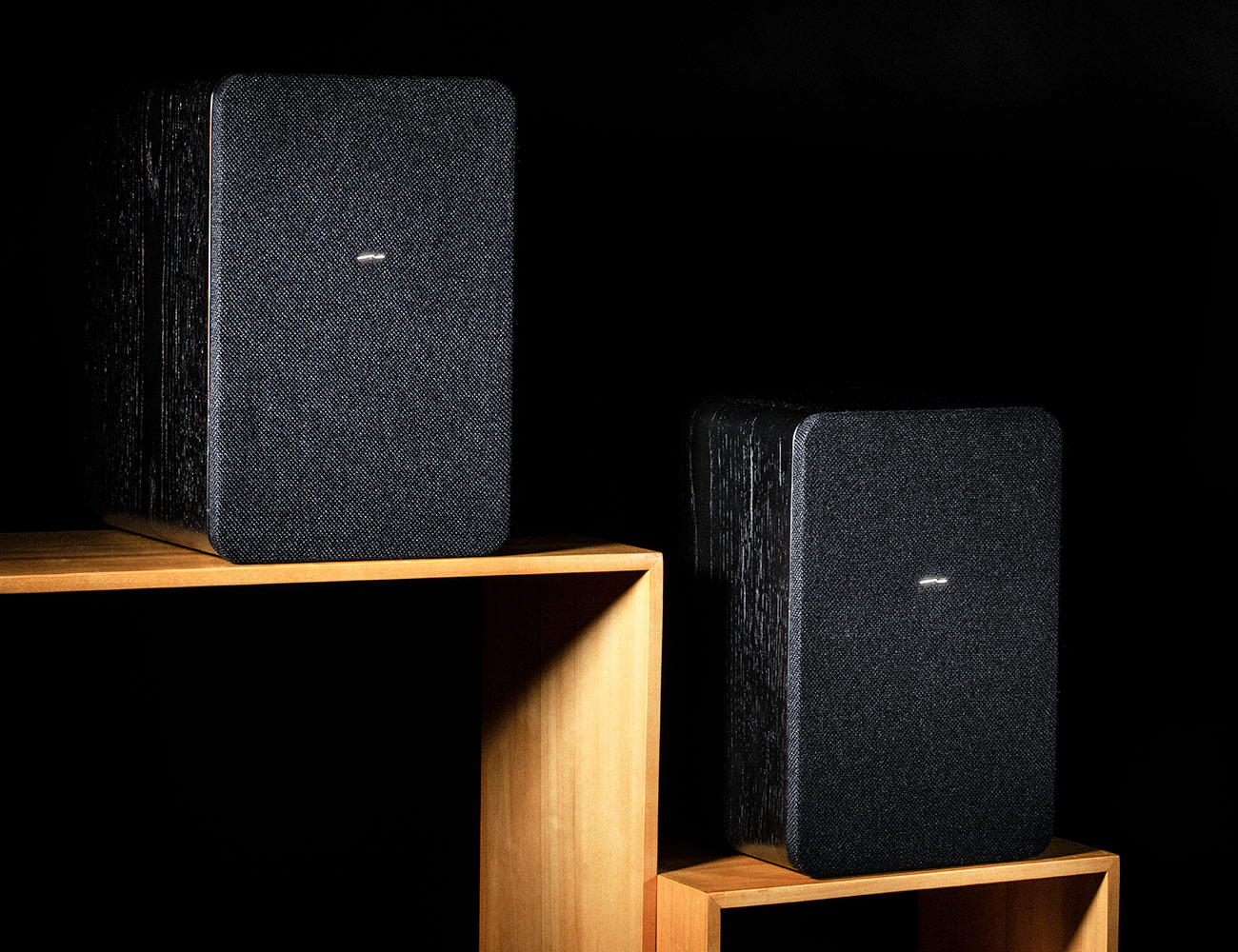
These Are the Best Board Shorts Money Can Buy

Board shorts are a staple of warm-water surfing. The trunks’ design has developed in tandem with the sport as it expanded through the latter half of the 20th century. Now, an infusion of new materials and technology offer performance that traditional nylon board shorts just can’t match. Bonded seams, water-resistant treatments, stretch fabric, and laser-cut details are defining the new breed of performance trunks. One of the latest of examples is the Apex Trunk from Outerknown — Kelly Slater’s signature board short. While the price — the solid black colorway costs $125 — is far greater than traditional trunks, the features and performance follow suit. These aren’t your traditional trunks, and that’s a good thing.

The Good: These board shorts are lightweight, flexible and breathable. Because they feature bonded, stitch-free seams, they eliminate chances of seam-chafing, something bound to happen while living in your trunks on a surf trip or long weekend. The slimmed-down construction also allows these to be packed into their back pocket for travel, an efficient way to bring your trunks anywhere. On top of the well-thought-out design, the Apex Trunks fit into Outerknown’s sustainable ethos of ethical manufacturing and responsible materials.

Who They’re For: As the price implies, these aren’t your everyday board shorts. They’re designed for someone who spends a lot of time in the water and needs a lightweight and durable short that won’t slow them down. The added stretch — 14 percent Spandex — allows for a ease of motion both in and out of the water. These aren’t a hybrid short designed for all-day wear and lack functional lifestyle features like a working fly and side pocket — they’re made for performance in the water.

Watch Out For: Make sure you check Outerknown’s sizing chart before ordering because these aren’t as adjustable in the waist as traditional board shorts. I found that they fit true-to-size, but it’s worth double-checking your measurements before ordering. As these are designed for performance, they don’t have side pockets. So if that’s a deal-breaker, check out some of the other Outerknown options. For a trunk focused on stitchless construction, there is one anomaly: the care tag is stitched to a small portion of the inner waistband. While it didn’t cause irritation when I used the trunk, it may for some people.

Alternatives: If you’re looking for board shorts without stitched seams, Quicksilver makes a couple options with bonded seams including the New Way High ($150) and the Highline New Wave Pro ($200). If you’re looking for a less expensive option, the Volcom Plasm Plus Mod boardshorts cost $80 and have heat-sealed and welded seams, but parts of the shorts are still stitched. If you’re into Outerknown’s sustainable mission and don’t need a board short that’s so performance-oriented, they make more affordable options that are stitched including the Nomadic Stretch Trunk and the Modern Scallop Trunk — both retail for $68.

Review: The waves in the New York area haven’t been anything to write home about lately. The Atlantic’s gone flat as a lake. There’ve been a few times to get out, though, and I made sure to bring the Apex Trunks with me to test. And full disclosure: I’m not a highly gifted surfer who’s devoted his life to the waves. I was introduced to surfing relatively late, comparatively, but it’s become a significant part of my life. Over the years I’ve worn a number of different board shorts in the water, but most recently I’ve been alternating between a traditional pair of Birdwell’s and a modern pair from Volcom. The Apex Trunk from Outerknown is at another level though.

Designed by 11-time surfing world champion Kelly Slater, the trunks are made from a 4.9-ounce recycled-polyester fabric that features four-way stretch (14 percent Spandex) and PFOA-free DWR treatment. This performance fabric is both stretchy, water-resistant and in line with Outerknown’s sustainable practices. Another significant feature is the stitch-free bonded seams that make chafing a thing of the past. To help with ventilation, the trunks also include laser-cut details at the side seam.

The Apex Trunks are sleek and minimal; they aren’t weighed down with details aimed at the casual beachgoer. The only pocket they include is a stitch-free back pocket that includes an Aquaguard zipper and internal key ring. A cool aside is that the trunks pack into the back pocket for travel, a condensed way to transport your board shorts. Available in five colorways, the trunk retails for $125 (blacked-out colorway) and $145 (color-blocked options).

Using the Apex trunk was a bit of a revelation. While the Atlantic’s waves weren’t pumping, I still managed to spend long days at the beach with my groveler. The trunks were comfortable and non-restrictive. They remained light after hours in the water and the fit was ideal. Fastening with both velcro and a double-lace closure, the trunk didn’t falter under through hours of use. I honestly didn’t even think about them after a while, but that’s perhaps the best part. They allow you to focus on yourself, the ocean and the next set of waves.

Verdict: If you’re someone who spends a lot of time in the water during the warmer months, these shorts are hard to beat. They offer performance-driven features, modern design and ethical manufacturing in a package that’s very fairly priced compared to the competition. If you suffer from chafing in traditional shorts, you’ll definitely appreciate these stitch-free seams. While they certainly cost more than traditional styles, you’re getting a lot more for your money.

What Others Are Saying:

• “Awesome boardshort super comfortable and fast drying. Feels like you aren’t wearing anything I highly recommend these to everyone. Have two pairs plan on getting more!” — Eric B., Outerknown

• “We’re looking at 9/10 for overall use and 10/10 for this amazing construction, for an eco-friendly premium boardshort.” — Goofyfoot George, YouTube

• “Yep, they are expensive. But they are also worth every penny. Material is durable yet lightweight, seamless, fly is well done, and just overall super comfortable. Best boardshorts on the market.” — Robby F., Outerknown

Key Specs

Material: 86 percent recycled polyester, 14 percent Spandex with PFOA-free DWR
Construction: Bonded, stitch-free seams
Pocket: Welded back pocket with an Aquaguard zipper and internal bungee key ring
Length: 19-inch outseam
Colorways: Five

Read More Gear Patrol Reviews

Hot takes and in-depth reviews on noteworthy, relevant and interesting products. Read the Story

Note: Purchasing products through our links may earn us a portion of the sale, which supports our editorial team’s mission. Learn more here.
Sonos Beam Review: The Perfect Entry-Level Soundbar, for Most People

The Sonos Beam ($399) is the company’s newest soundbar that, similar to the Playbase ($699) and the Playbar ($699) that came before it, integrates your TV with your existing Sonos speakers. If you have a multi-room setup you can play the TV’s audio throughout your whole house, or you can configure your other Sonos speakers as satellites and/or rear channels and thus have a complete Sonos surround sound system.

That said, the Sonos Beam is much more than a smaller, more affordable version of those other soundbars. It’s a smart speaker with Alexa built-in, like the Sonos One, so you can ask Alexa to play music or control your smart home devices. And since it’s connected to your TV, you can use your voice to control your TV, too, which is a first for Sonos. For TV control, the Sonos Beam will work best for those with an Amazon Fire TV (or a TV with an Amazon Fire TV dongle), allowing you to ask Alexa to turn on the TV and even go to specific shows or channels. Also, unlike Sonos’s larger soundbars, the Sonos Beam can be either wall mounted or left to rest on your media console. (The Playbase needs to rest under your TV while the Playbar is designed to be wall mounted.)

|

The Good: The great thing about any Sonos speaker, other than its sound quality, is that it comes with great software and an intuitive companion app — and the Sonos Beam is no different. You just plug the soundbar in, and then the app walks you through how to correctly connect it to your TV. The app also tunes the soundbar so that it’s optimized for your room, using its Trueplay tuning software, same as other Sonos speakers. If you own an Amazon Fire TV (or dongle), the Sonos Beam will be able to control your television almost completely. It plugs into to your TV through HDMI ARC port and it supports CEC, so you can use your TV’s remote to adjust the volume if you don’t feel like asking Alexa.

One of the most intriguing aspects of the Sonos Beam is that Sonos promises that it will eventually support all major virtual assistants, including Alexa (built-in), Siri (mid-July) and Google Assistant (by end of 2018). Not only that, but the Sonos Beam promises “cross-platform voice control,” meaning, as it pertains to music streaming, you’ll be able to ask Siri to play a song, then ask Alexa what song was playing. (This is an example that Antoine Leblond, Sonos’s VP of software, showed off at the Sonos Beam’s launch event in early June). You’ll be able to do other things like this eventually, but the conditions need to be perfect for it to work — certain virtual assistants won’t work with certain streaming services, for example. These cross-platform voice controls aren’t available at launch, so I wasn’t able to test them, but knowing they’re coming is a good thing. (It makes the product “future proof.”)

Who They’re For: At launch, there are two ways of looking at the Sonos Beam. Either 1. you’re buying it because you have other Sonos speakers and you want to integrate your TV into the mix, or 2. you want one smart speaker to rule your home — it can greatly improve the sound of your TV while also being a darn good speaker for streaming music. In the latter instance, the Sonos Beam is effectively taking the place of any quality sounding smart speaker, like the Google Home Max or Apple’s HomePod.

Watch Out For: The Sonos Beam is a plug-and-play, entry-level speaker that’s designed to work well with other Sonos speakers, but if you have a home entertainment system that includes an A/V receiver and non-Sonos satellite speakers, this is probably not the soundbar for you. (You could integrate them all with a Sonos Connect:AMP, but that gets messy and expensive.) If you don’t have an Amazon Fire TV, you won’t be able to control your TV with Alexa as completely as you might expect. And if you use your TV’s optical port instead its HDMI-ARC port, you won’t be able to turn the TV completely on/off with Alexa. Even though the Sonos Beam sounds very good with its wide stereo separation, it won’t sound as immersive as other soundbars with Dolby Atmos or DTS Virtual:X that creates three-dimensional sound using virtual height channels.

Alternatives: The Playbar ($699) and Playbase ($699) are the two other soundbars that Sonos makes. Both are louder than Sound Beam and probably better options for larger rooms. The main difference, other than size and cost, is that neither of those soundbars is a smart speaker that’s integrated with a virtual assistant: you can’t summon music or you control your TV (in any capacity) with your voice.

If you’re just looking for a soundbar that doesn’t need to sync with other Sonos speakers around the house, there are a number of great-sounding and more affordable options to choose from; the Yamaha YAS-207 ($300), for example, is affordable and supports the latest surround sound technologies by DTS and Dolby Audio.

Review: For the last week I’ve had the Sonos Beam hooked up to my Vizio M-Series (2017 model) and I can tell you, right off the bat, that the Sonos Beam won’t be for everybody. If you have an A/V receiver and two satellite speakers that are normally connected to your television, like me, you’re not going to be able to easily integrate the Sonos Beam into your home theater without a Connect:AMP, which is expensive. I didn’t have one, so I reviewed the Sonos Beam as a standalone soundbar. That said, you’re not going to buy the Sonos Beam to integrate it into your non-Sonos home theater system. It’s a soundbar that’s meant to work by itself or with other Sonos speakers. And that’s what it’s great at.

The Sonos Beam is a 3.0-channel soundbar that can be integrated into 5.1 surround sound system if you add two Sonos One (or two Play:1) speakers and a Sonos Sub. However, I’m guessing that most people looking at the Sonos Beam aren’t going to have those other Sonos speakers — yet — and are instead just looking at it as a great-sounding, versatile and entry-level soundbar. It sounds very good, with a wide stereo separation that isn’t as immersive as other immersive technologies (like Dolby Atmos or DTS Virtual:X), but still makes you feel like in the movie or show (especially if you’re watching in a small-to-medium-sized room). Using the soundbar is exactly like talking to an Amazon Echo or a Sonos One speaker. You can select from the same default music streaming services (Amazon Music, Spotify, Pandora), but the Sonos Beam just sounds bigger and better than those other smart speakers.

The other difference is that the Sonos Beam is obviously a big upgrade over your television’s speakers. When you turn on the television, the sound comes out of the soundbar and movie nights or just watching ESPN become instantly better. Worried about a tedious setup process? Don’t be. The Sonos app walks you through the whole thing, from using an optical dongle if your older TV doesn’t have an HDMI output for audio, to turn off your TV’s default speakers — it’s all really easy.

Again, the Sonos Beam excels as a soundbar and as a smart speaker. The last thing that Sonos Beam can do is control your television, and this is where it gets a little iffy. If you have an Amazon Fire TV (or dongle), it works wonderfully. In a private demo, I witnessed the Sonos Beam turn the television on and off, open up to specific shows, and pause and rewind those shows. Boom. Amazing.

I don’t have an Amazon Fire TV, though. I have an Apple TV 4K and an Xbox One, both of which are connected to the TV in my room, and I wasn’t able to utilize many Alexa commands. I was able to adjust its volume and I was also able to switch to specific channels and programs (like ESPN’s “Get Up” show in the morning) on the TV that’s in our living room, which is where our Verizon Fios cable box is connected. So if you don’t have an Amazon Fire TV, but your Sonos Beam is connected to a TV with a cable box (Sonos supports all the major providers), you’ll be able to ask Alexa to go to specific channels. But you still won’t be able to open apps on the Apple TV, like HBO Now or Netflix, until support for Airplay 2 launches in the coming weeks.

(Note: When support for Airplay 2 launches this July, anybody with an Apple TV will be able to ask Siri to play specific apps and shows. You’ll have to speak to Siri directly through your iOS device or Apple TV remote, however, and not directly through Sonos Beam like you can now with Alexa.)

Verdict: The Sonos Beam promises a lot, especially when it comes to cross-compatibility. If it’s actually able to understand and work with Alexa, Siri and Google Assistant, all at the same time, then that’s great. Better than great, actually. But I wasn’t able to test that and in my experience, when virtual assistants from one company start controlling devices from a different company, things get complicated and they never work as well as you think they should. (Siri still won’t be able to identify a song playing on Spotify, for example.)

Sonos is known for not being complicated, however. You just plug in its speakers, follow the in-app instructions and they just work. So instead of looking the Sonos Beam as this ambitious speaker for the home, even though it could turn out to be just that, I think it’s better to look at what you’re guaranteed to get out of it. And that’s an audiophile-grade smart speaker, rivaling the Google Home Max or an Apple HomePod, and that’s a terrific entry-level soundbar. Throw in the fact that it’s going to be able to work with most future smart devices, and $399 is a pretty good deal. If you have an Amazon Fire TV, it’s a steal.

What Others Are Saying:

• “At a high level, all of this means that the Sonos Beam will offer an exchange between competing voice assistants in a way that no other smart speaker on the market does. But to Jones’ point, there are still limitations around how all of that will work, due to the way the individual cloud services work. While I was at the company’s offices, Sonos more than once used an example where you’re using Siri to initiate a song and then asking Alexa to identify which song it is. In reality, that will work only if you’re playing Apple Music. Switch to Spotify and Siri can’t be used for song search or initiation, only playback and volume controls.” — Lauren Goode, Wired

• “At $399, the Beam isn’t cheap, but it’s markedly less expensive than Sonos’ other TV speakers. It’s the same price as the Google Home Max and only $50 more than Apple’s HomePod. But because it also works as a soundbar, it offers more utility than either of them. And because Sonos is trying to mediate between all these different ecosystems, it works (often better) with more services than either of them.” — Dieter Bohn, The Verge

Key Specs

Drivers: four full-range woofers, one tweeter, three passive radiators
Channels: 3.0
Key features: five-microphone array,
Compatibility: Amazon Alexa, Siri/AirPlay 2 (July), Google Assistant (sometime in 2018)

|

Read More Gear Patrol Reviews

Hot takes and in-depth reviews on noteworthy, relevant and interesting products. Read the Story

Note: Purchasing products through our links may earn us a portion of the sale, which supports our editorial team’s mission. Learn more here.
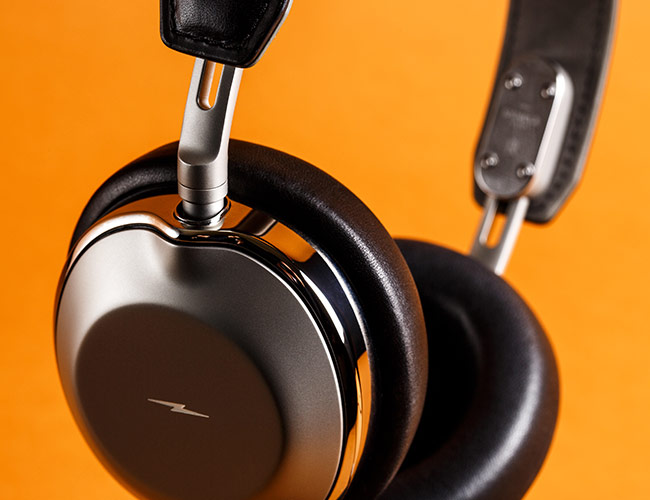
Diamondback’s Release 5C Is the Best Deal in Mountain Biking

True value in mountain bikes is a hard thing to find. Direct-to-consumer brands like Canyon and YT are looking to change that, but they still have a ways to go before they take on the Specializeds and Treks of the world. Thankfully, Canyon and YT aren’t the only companies bringing value to the world of overpriced trail bikes. Diamondback, a brand that you probably haven’t thought about since you were still eating Fruit Roll-Ups, is taking a bigger stake in the trail bike game with a serious proposition: a carbon trail bike that rips well above its weight class for only $4,399. Best of all, like the other guys, you can get it delivered, nearly fully built, right to your doorstep.

The Good: My first impression of the Release 5C is that it is cheap. Like, dirt cheap. It’s even cheap in comparison to its alloy brethren. The 5C comes in at just $4,400. When the alloy version launched in March of 2016, it retailed for $4,500. By some form of wizardry, Diamondback has managed to produce the same bike in carbon for cheaper than they did in alloy — with a better parts spec, to boot. If you’re really pinching pennies, you can get the same new carbon frame with a cheaper parts spec for $2,999, an absolutely astonishing deal.

The geometry is comfortable, and even out of the box, the bike took very little adjustment to dial in. I typically need to swap or adjust the stem, swap the handlebars and tweak the saddle position; I didn’t have to do any of this on the 5C. This may just be dumb luck, but I like to believe it’s Diamondback finding a middle ground in the geometry that fits a wide range of riders. For comparison, the geometry numbers are surprisingly similar to Trek’s Slash 9.8 — a monster 29’er enduro bike, which says a lot about what this bike is capable of. Riding it, it feels as though you’re sitting in the frame, rather than on top of it. There are bikes out there, 29er’s in particular, that feel as though you’re perched on top of a stool that could topple over at any minute. The 5C is the exact opposite, like a hobbit that can somehow run as fast as Usain Bolt and jump as high as OBJ — but, like, in a good way. It feels planted, confident and light-footed.

Who It’s For: The Release 5C is for anyone who wants a rowdy carbon trail bike, but doesn’t want to spend $6,000. If you’re a discerning trail rider that appreciates modern geometry and a high-end parts spec, you’ll find the 5C well worth your money.

Watch Out For: There’s not much to cry foul of with the Release 5C. In an ideal world, Diamondback might have a wider dealer network. And it’s only available in one color: red. If you don’t like red, you’re out of luck.

Alternatives: In a similar price range, you can pick up Canyon’s Spectral CF 9.0 Pro, though we’re partial to the parts spec on the Diamondback. Outside of that, you’re looking at a fairly significant jump in price at $5,000 for Trek’s Fuel EX 9.8 Plus (yes it’s a plus-sized bike, but it occupies a similar place in the market to the Release 5C). The Fuel EX also comes with a Fox 34 fork versus the Release 5C’s Fox 36 (we prefer to take the weight penalty with the 36 over the 34 due to its increased stiffness.

Review: In all honesty, it’s a been a while since I’ve been this excited about a trail bike. As a journalist in the outdoor/cycling industries, I don’t own a bike. I tend to cycle through test bikes and frankly, I’m a bit spoiled; no price tier is off limits. A year or so ago, I reviewed Diamondback’s completely redesigned full suspension bike, the Release. In my review, I found it a bit heavy and sluggish. The suspension platform had potential, and overall the bike was fun, but hindered by aluminum. Thankfully Diamondback answered my prayers and built a carbon fiber version of the same platform, a bike the brand is calling the Release 5C. Alongside the new bike comes a redesigned logo and a bit of a rebrand, two signs that Diamondback is back in the game and investing in building truly capable, spry and affordable trail bikes — an underserved section of the market that doesn’t often get the attention that it deserves.

I’ve spent a number of weeks riding the Release 5C in both Deer Valley, UT and the local trails in the NYC area (much more fun and much more challenging than they sound). Neither location is forgiving for a trail bike. Deer Valley offers everything from fast flowing roller-filled rippers to steep, technical, lung-busting climbs. The trails around NYC consist of rock gardens from hell. Rarely is there a reprieve from the rocky madness, and off camber corners are there to throw you off at every turn. We tested it on both types of terrain, and have concluded that the Release 5C is, in the simplest terms, the best deal in mountain biking.

First, let me say that I’m not the type of rider to charge off the biggest jumps in the bike park, rocking a full-face helmet and pads. If you’re familiar with Deer Valley’s mountain bike park, Fire Swamp and Tsunami are far from go-to trail choices. Holy Roller and Tidal Wave are just fine. Bowhunter, Road to Ruby and Flagstaff Loop are all suitable as well.

For those unacquainted with Deer Valley’s trails, that’s a broad range of terrain covering everything from groomed berms and jumps to tight technical single track. During initial testing, I was shocked at just how bottomless the 130mm of rear travel felt — thanks in no small part to the Fox Elite Float DPX2 rear shock which is often found on bikes that cost thousands of dollars more. The bike was developed with Eric Porter, who loves to get airborne, and it shows. From the small amount of air I was getting, the bike feels at home and natural. It’s playful, thanks to the short rear chainstays and fairly slack head tube angle. I found myself seeking out little jumps and features along the trail that wouldn’t typically catch my eye on another bike.

The trails north of New York City are a hellish labyrinth of rocks, roots and all manner of flow-crushing obstacles. They not only teach you to appreciate the flowy ribbons of dirt found in other locales, but they also instill great bike handling skills. They’re the types of trails that will eat even the most advanced and expensive trail bikes and shit them out the other end in a heap of carbon fiber bits and H4 screws.

Even with a solid bit of riding the 5C under my belt in Deer Valley, I was apprehensive taking it to the local NYC trails, a place where short-travel 29’ers reign supreme and most mid-travel 27.5 trail bikes wither and die. Within minutes of leaving the trailhead, the 5C shattered all apprehension. It ate everything I threw at it. While it didn’t quite hit the same high notes as Yeti’s SB 4.5C (a short travel 29’er), I constantly had to remind myself of the Diamondback’s price point. Given its performance, it’s not difficult to label the Release 5C as the best deal in mountain biking.

In talking with Luther Beale, the industrial engineer behind the rear suspension platform (who also designed suspensions for Evil and Fuji/Breezer), the lower link in the dual short-link system (two pivot points that allow for a solid rear triangle) is designed to sit parallel to the chain when the bike is in sag from the rider’s weight, hence Level Link. This allows for the upper link to move more independently of the lower one and increases pedal efficiency. That equates to a system that is supposed to isolate the bumps produced by pedaling from the bumps produced by the terrain.

In practice, Beale’s design holds true. The bike’s pedaling efficiency is impressive. Even compared to my all-time-favorite trail bike, Yeti’s SB 4.5, the Release 5C is no slouch.

For the full spec list, click over to Diamondback’s website. I’ll be focusing on the most important parts, starting with the Fox 36 Performance Elite Float. For a trail bike, the 36 is an interesting choice. Many would argue that the 36 isn’t worth the extra weight over the 34. For me, the stoutness and burliness of the 36 is worth having. It offers 150mm of travel to pair with the 130mm of travel in the rear — provided by Fox’s Elite Float DPX2 shock. Race Face ARC30 wheels are acceptable. They aren’t the best wheels on the market, but they certainly aren’t the worst either. A SRAM XO1 Eagle drivetrain and Guide RS brakes leave little to be desired in the power and power-stopping departments. At this price point, it is near impossible to beat the spec on the 5C.

The Verdict: If you’re in the market for a full-suspension trail bike, buy this now. You won’t find a better deal. You can scrub eBay for months trying to find a deal on a bike with more prestige, but who cares? This bike rips and leaves enough coin leftover in your wallet to guzzle down a month’s worth of craft beer and pizza.

What Others Are Saying:

  • “With a build kit that, for once, leaves nothing extra to be desired, Diamondback hits the nail right on the head.” — Max Ritter, Teton Gravity Research
  • “In contrast to most modern enduro bikes, where plowing through the rough stuff is the name of the game, the Release carbon felt sporty and lively, and when really working could be ridden quite ridiculously.” — Russell Eich, Bike Radar
  • “…not only does the Release Carbon enter Diamondback into the running among other top-end bikes, it does it in a way that isn’t simply trying to take a piece of an already crowded pie. This bike brings something bravely unique to an often homogenous lineup of trail bikes. ” — Travis Engel, Bike Mag
The Best Mountain Bikes of 2017

From hardtails to enduro weapons — even the rowdiest of trails are no match. Read the Story

The Perfect Entry-Level Soundbar for Most People

The Sonos Beam ($399) is the company’s newest soundbar that, similar to the Playbase ($699) and the Playbar ($699) that came before it, integrates your TV with your existing Sonos speakers. If you have a multi-room setup you can play the TV’s audio throughout your whole house, or you can configure your other Sonos speakers as satellites and/or rear channels and thus have a complete Sonos surround sound system.

That said, the Sonos Beam is much more than a smaller, more affordable version of those other soundbars. It’s a smart speaker with Alexa built-in, like the Sonos One, so you can ask Alexa to play music or control your smart home devices. And since it’s connected to your TV, you can use your voice to control your TV, too, which is a first for Sonos. For TV control, the Sonos Beam will work best for those with an Amazon Fire TV (or a TV with an Amazon Fire TV dongle), allowing you to ask Alexa to turn on the TV and even go to specific shows or channels. Also, unlike Sonos’s larger soundbars, the Sonos Beam can be wall mounted or left to rest on your media console.

The Good: The great thing about any Sonos speaker, other than its sound quality, is that it comes with great software and an intuitive companion app — and the Sonos Beam is no different. You just plug the soundbar in, and then the app walks you through how to correctly connect it to your TV. The app also tunes the soundbar so that it’s optimized for your room, using its Trueplay tuning software, same as other Sonos speakers. If you own an Amazon Fire TV (or dongle), the Sonos Beam will be able to control your television almost completely. It plugs into to your TV through HDMI ARC port and it supports CEC, so you can use your TV’s remote to adjust the volume if you don’t feel like asking Alexa.

One of the most intriguing aspects of the Sonos Beam is that Sonos promises that it will eventually support all major virtual assistants, including Alexa (built-in), Siri (mid-July) and Google Assistant (by end of 2018). Not only that, but the Sonos Beam promises “cross-platform voice control,” meaning, as it pertains to music streaming, you’ll be able to ask Siri to play a song, then ask Alexa what song was playing. (This is an example that Antoine Leblond, Sonos’s VP of software, showed off at the Sonos Beam’s launch event in early June). You’ll be able to do other things like this eventually, but the conditions need to be perfect for it to work — certain virtual assistants won’t work with certain streaming services, for example. These cross-platform voice controls aren’t available at launch, so I wasn’t able to test them, but knowing they’re coming is a good thing. (It makes the product “future proof.”)

Who They’re For: At launch, there are two ways of looking at the Sonos Beam. Either 1. you’re buying it because you have other Sonos speakers and you want to integrate your TV into the mix, or 2. you want one smart speaker to rule your home — it can greatly improve the sound of your TV while also being a darn good speaker for streaming music. In the latter instance, the Sonos Beam is effectively taking the place of any quality sounding smart speaker, like the Google Home Max or Apple’s HomePod.

Watch Out For: The Sonos Beam is a plug-and-play, entry-level speaker that’s designed to work well with other Sonos speakers, but if you have a home entertainment system that includes an A/V receiver and non-Sonos satellite speakers, this is probably not the soundbar for you. (You could integrate them all with a Sonos Connect:AMP, but that gets messy and expensive.) If you don’t have an Amazon Fire TV, you won’t be able to control your TV with Alexa as completely as you might expect. And if you use your TV’s optical port instead its HDMI-ARC port, you won’t be able to turn the TV completely on/off with Alexa. Even though the Sonos Beam sounds very good with its wide stereo separation, it won’t sound as immersive as other soundbars with Dolby Atmos or DTS Virtual:X that creates three-dimensional sound using virtual height channels.

Alternatives: The Playbar ($699) and Playbase ($699) are the two other soundbars that Sonos makes. Both are louder than Sound Beam and probably better options for larger rooms. The main difference, other than size and cost, is that neither of those soundbars is a smart speaker that’s integrated with a virtual assistant: you can’t summon music or you control your TV (in any capacity) with your voice.

If you’re just looking for a soundbar that doesn’t need to sync with other Sonos speakers around the house, there are a number of great-sounding and more affordable options to choose from; the Yamaha YAS-207 ($300), for example, is affordable and supports the latest surround sound technologies by DTS and Dolby Audio.

Review: For the last week I’ve had the Sonos Beam hooked up to my Vizio M-Series (2017 model) and I can tell you, right off the bat, that the Sonos Beam won’t be for everybody. If you have an A/V receiver and two satellite speakers that are normally connected to your television, like me, you’re not going to be able to easily integrate the Sonos Beam into your home theater without a Connect:AMP, which is expensive. I didn’t have one, so I reviewed the Sonos Beam as a standalone soundbar. That said, you’re not going to buy the Sonos Beam to integrate it into your non-Sonos home theater system. It’s a soundbar that’s meant to work by itself or with other Sonos speakers. And that’s what it’s great at.

The Sonos Beam is a 3.0-channel soundbar that can be integrated into 5.1 surround sound system if you add two Sonos One (or two Play:1) speakers and a Sonos Sub. However, I’m guessing that most people looking at the Sonos Beam aren’t going to have those other Sonos speakers — yet — and are instead just looking at it as a great-sounding, versatile and entry-level soundbar. It sounds very good, with a wide stereo separation that isn’t as immersive as other immersive technologies (like Dolby Atmos or DTS Virtual:X), but still makes you feel like in the movie or show (especially if you’re watching in a small-to-medium-sized room). Using the soundbar is exactly like talking to an Amazon Echo or a Sonos One speaker. You can select from the same default music streaming services (Amazon Music, Spotify, Pandora), but the Sonos Beam just sounds bigger and better than those other smart speakers.

The other difference is that the Sonos Beam is obviously a big upgrade over your television’s speakers. When you turn on the television, the sound comes out of the soundbar and movie nights or just watching ESPN become instantly better. Worried about a tedious setup process? Don’t be. The Sonos app walks you through the whole thing, from using an optical dongle if your older TV doesn’t have an HDMI output for audio, to turn off your TV’s default speakers — it’s all really easy.

Again, the Sonos Beam excels as a soundbar and as a smart speaker. The last thing that Sonos Beam can do is control your television, and this is where it gets a little iffy. If you have an Amazon Fire TV (or dongle), it works wonderfully. In a private demo, I witnessed the Sonos Beam turn the television on and off, open up to specific shows, and pause and rewind those shows. Boom. Amazing.

I don’t have an Amazon Fire TV, though. I have an Apple TV 4K and an Xbox One, both of which are connected to the TV in my room, and I wasn’t able to utilize many Alexa commands. I was able to adjust its volume and I was also able to switch to specific channels and programs (like ESPN’s “Get Up” show in the morning) on the TV that’s in our living room, which is where our Verizon Fios cable box is connected. So if you don’t have an Amazon Fire TV, but your Sonos Beam is connected to a TV with a cable box (Sonos supports all the major providers), you’ll be able to ask Alexa to go to specific channels. But you still won’t be able to open apps on the Apple TV, like HBO Now or Netflix, until support for Airplay 2 launches in the coming weeks.

(Note: When support for Airplay 2 launches this July, anybody with an Apple TV will be able to ask Siri to play specific apps and shows. You’ll have to speak to Siri directly through your iOS device or Apple TV remote, however, and not directly through Sonos Beam like you can now with Alexa.)

Verdict: The Sonos Beam promises a lot, especially when it comes to cross-compatibility. If it’s actually able to understand and work with Alexa, Siri and Google Assistant, all at the same time, then that’s great. Better than great, actually. But I wasn’t able to test that and in my experience, when virtual assistants from one company start controlling devices from a different company, things get complicated and they never work as well as you think they should. (Siri still won’t be able to identify a song playing on Spotify, for example.)

Sonos is known for not being complicated, however. You just plug in its speakers, follow the in-app instructions and they just work. So instead of looking the Sonos Beam as this ambitious speaker for the home, even though it could turn out to be just that, I think it’s better to look at what you’re guaranteed to get out of it. And that’s an audiophile-grade smart speaker, rivaling the Google Home Max or an Apple HomePod, and that’s a terrific entry-level soundbar. Throw in the fact that it’s going to be able to work with most future smart devices, and $399 is a pretty good deal. If you have an Amazon Fire TV, it’s a steal.

What Others Are Saying:

• “At a high level, all of this means that the Sonos Beam will offer an exchange between competing voice assistants in a way that no other smart speaker on the market does. But to Jones’ point, there are still limitations around how all of that will work, due to the way the individual cloud services work. While I was at the company’s offices, Sonos more than once used an example where you’re using Siri to initiate a song and then asking Alexa to identify which song it is. In reality, that will work only if you’re playing Apple Music. Switch to Spotify and Siri can’t be used for song search or initiation, only playback and volume controls.” — Lauren Goode, Wired

• “At $399, the Beam isn’t cheap, but it’s markedly less expensive than Sonos’ other TV speakers. It’s the same price as the Google Home Max and only $50 more than Apple’s HomePod. But because it also works as a soundbar, it offers more utility than either of them. And because Sonos is trying to mediate between all these different ecosystems, it works (often better) with more services than either of them.” — Dieter Bohn, The Verge

Key Specs

Drivers: four full-range woofers, one tweeter, three passive radiators
Channels: 3.0
Key features: five-microphone array,
Compatibility: Amazon Alexa, Siri/AirPlay 2 (July), Google Assistant (sometime in 2018)

Read More Gear Patrol Reviews

Hot takes and in-depth reviews on noteworthy, relevant and interesting products. Read the Story

Note: Purchasing products through our links may earn us a portion of the sale, which supports our editorial team’s mission. Learn more here.
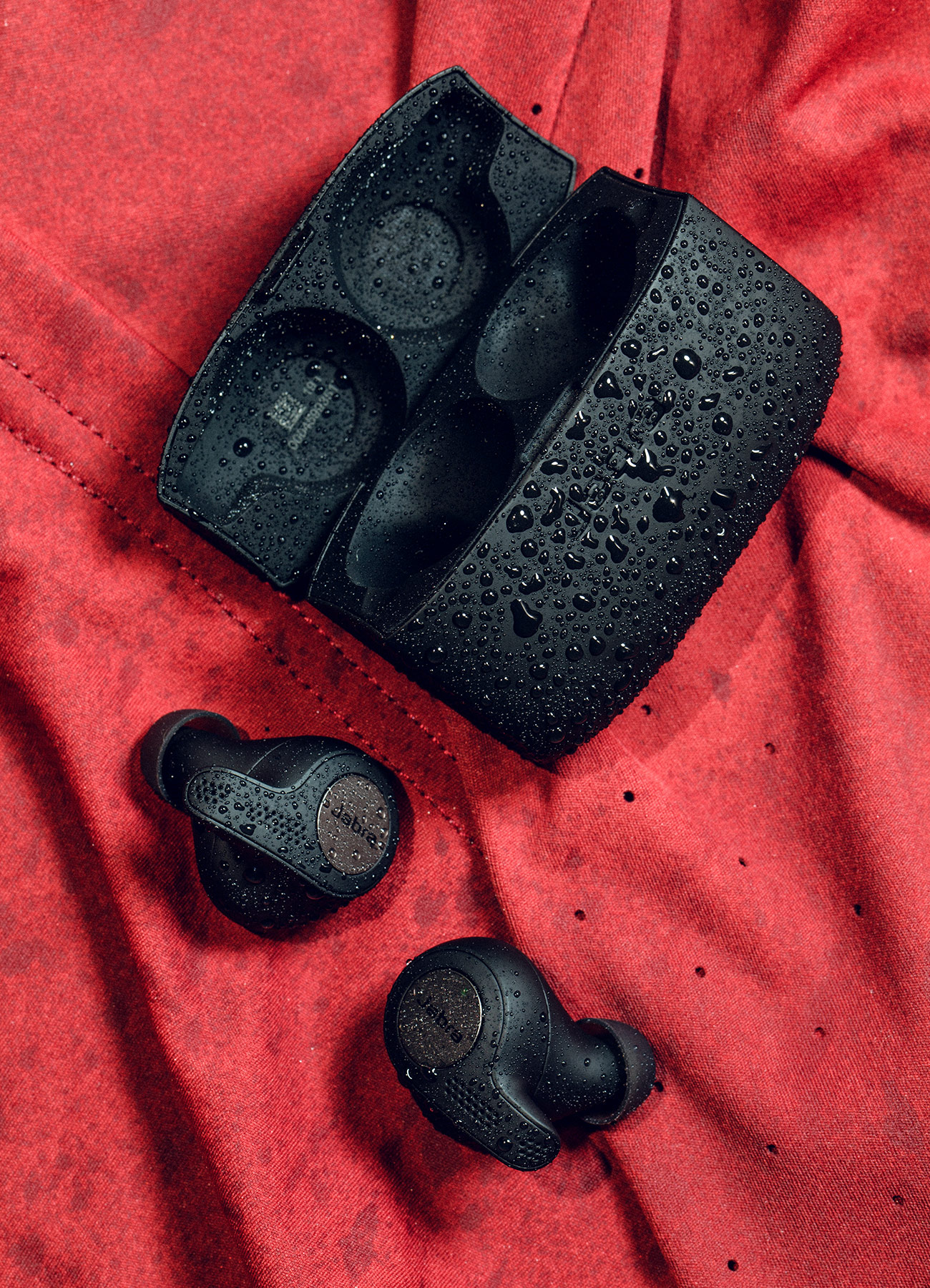
Testing Garmin’s Most Affordable GPS Watch at Golf’s Most Famous Course

“You won’t need that — you’ve got me.” That was the first thing my caddie Tony said as I turned on my Garmin S10 while standing on the first teebox of The Old Course at St. Andrews. After 18 holes at the home of golf, I found myself impressed with the accuracy of both of my advisors. The Garmin S10 watch won’t tell you what club to hit to avoid the water (or beat the wind) — it will, however, provide you with all the distances you need to keep your round on track while keeping some green in your pocket.

The Good: As a baseline, the S10 is Garmin’s most affordable golf watch model to date. Plus, it unquestionably earns its keep every round. The data is crisp, sharp and easily visible on the screen, even in full sunlight. It also gives you all the necessary data packaged in a simple and minimal watch that you’ll forget you’re wearing on the second hole. Golfers will spend endless amounts of cash on gadgets to gain an advantage. This watch gives you an edge without blowing your month’s savings. This is the Honda of golf GPS watches. It’s not fancy, but it’ll get you where you need to go without much fuss.

Who It’s For: Any golfer who’s looking for an affordable, reliable GPS watch. It provides all the necessary data you need, including front, back and middle green distances. The S10 also provides bunker and hazard distances at the press of a button.

Watch Out For: The S10 will automatically locate your course, and toggle to the next hole when you approach the tee box. But it’s worth noting that on tighter, links-style courses (like St. Andrews), the watch will detect the incorrect hole at times, which may require you to keep a closer eye on the screen before teeing off.

Alternatives: There are a few watches in the sub-$200 category worth considering, but buyer beware. With each unit, you’ll gain a feature while losing another. The Golf Buddy WT6 GPS Watch wins on price ($100), but loses on functionality and design. The screen display is almost too simple, with basic block letters and numerals, along with a clunky face. There’s a pretty significant dropoff with watches that are cheap, but provide neither reasonable function or impressive design. Your next best bet is to purchase an older model when it’s on sale. Garmin’s S20 model can be had for $130.

Review: After charging the watch, I strapped it to my wrist at the practice green near the first tee. I hadn’t turned it on since arriving in Scotland, so this was a complete dice roll. Will this thing work? Will it know where I am or force me to turn it off and play in the dark? I pressed the “on” button, started the round and saw the name of the most relevant course in the game pop up on the screen. We’re in business.

Throughout the round, I glanced down at the watch for quick distance reminders and cross-referenced my yardage with Tony. I was impressed by the data both provided. This little watch packs tons of important features — the shot distance measuring, score keeping and round duration are just the beginning. It also provided sunrise and sunset times to maximize every minute of daylight. The battery life is impressive as well – I squeezed in another 18 holes the following day on the same charge.

Verdict: There’s no shortage of quality GPS watches on the market, especially from Garmin. This watch provides all of the essentials in a smart package, and most importantly at a great price. Tony and the watch ended at a draw on distance measurement, but the watch couldn’t hold a candle to Tony’s knowledge of the wind and shot shaping guidance. If you find yourself in Northern Scotland, definitely bring your GPS watch — then ask to be paired with Tony.

What Others Are Saying:

• “Garmin has added an entry-level golf watch to its growing number of wearables for those who love the sport but aren’t obsessed enough to shell out two Benjamins for one of the brand’s other devices..” — Mariella Moon, Engadget

• “The focus is on giving you the yardages to the front, middle and back of each green, and it doesn’t have other fitness features like some watches that include step counting or heart-rate monitoring. This is just about the golf.” — Keely Levins, Golf Digest

• “You can play in the rain or take the Approach S10 into the shower, as it’s waterproof to 5ATM, and after each round of golf it will show the distance traveled, time played and score, as well as allowing you to upload your stats to the Garmin Golf app’s weekly leaderboard.” — James Rogerson, Tech Radar

Key Specs

Weight: 1.2 ounces
Battery: 12 hours (GPS mode)
Pre-Loaded Courses: 41,000 (worldwide)
Display Resolution: 128 x 128 pixels
Water Rating: 5 ATM
Available Colors: Black, Powder Gray, Granite Blue

Read More Gear Patrol Reviews

Hot takes and in-depth reviews on noteworthy, relevant and interesting products. Read the Story

Note: Purchasing products through our links may earn us a portion of the sale, which supports our editorial team’s mission. Learn more here.
Oru Kayak Coast XT Review: The Original Origami Kayak Just Got an Upgrade

It was a profile of master origamist Dr. Robert J. Lang found in the pages of The New Yorker that inspired Anton Willis to create a foldable kayak. His first iteration, made of the same corrugated polyethylene used to make election lawn signs and US Postal Service tote boxes and duct tape, sunk in less than a minute.

Willis kept at it and eventually launched the Oru Kayak in what was at the time the most successful crowdfunding campaign for an outdoor product, ever. Oru now makes three models, the Beach LT, Bay ST and Coast XT, all using that same material in different sizes, for different uses.

At 16 feet, the Coast XT is the biggest of the fleet. Its design is inspired by Arctic kayaks, and with lots of internal storage and deck rigging, the boat is capable of handling multi-day expeditions. Last April, Oru announced a new update to the Coast XT through an Indiegogo campaign that raised over $250,000 (yes, it was a success).

The Good: The benefits of Oru’s origami-inspired design are plain. It’s super-light and storage-friendly; you can fit it in the trunk of a sedan or inside of your apartment. It makes owning a 16-foot boat an actual possibility for city dwellers.

The Coast XT has been around for a couple of years now, but the 2018 update makes some key changes that have a significant impact. The first and foremost of these is the new closure system, which uses a “zipper channel system” to seal the boat (this happens on the kayak’s top, running from the cockpit toward the tip of the bow and stern). The previous iteration used clips that required a fair amount of wrestling — the new method is much easier to assemble.

There’s also the addition of thigh braces for increased control of the boat, which paddles much better than you’d think a fold-up kayak could.

Who It’s For: With the new improvements that make folding the kayak from box to boat, the Oru will be appreciated by anyone that loves paddling. Apartment dwellers and small car owners will get the most out of the storage-friendly shape. More adventurous kayakers will find benefit in the Oru too, as its portability makes it easy to check on a flight and a separate backpack strap accessory makes hard-to-access lakes much more reachable.

These facts are true for all of Oru’s kayaks. In addition to them, I’ll say that the Coast XT is optimized for touring and expedition use, and those who favor short paddles will benefit more from one of the brand’s smaller boats.

Watch Out For: Despite the welcome improvements, the Coast XT still requires a small effort to put together, so be prepared for that. Do not throw away the instruction book either, because it isn’t exactly a straightforward operation (but it doesn’t take more than one or two times to get it down pat).

Storing gear inside the boat must be done before the zipper channels are applied and the hull is closed, and is a bit of a puzzle — overstuff it, and sealing the rig will be very tricky. Additionally, the seat can be quite uncomfortable after even just an hour or two on the water.

Lastly, an issue that’s good for them bad for you: these boats are in high demand and sell out quickly — if you want one, keep an eye on Oru’s website and sign up for its email newsletter.

Alternatives: Some, mostly foreign, companies have knocked-off the Oru kayak in the years since its creation, but none come close to the original. Inflatable kayaks like the NRS Outlaw I ($695) offer an alternative take on the storage-friendly kayak, but in many ways function as more of a separate category of boat.

Review: Shortly after acquiring a new job and moving to a new city, my editor asked me if I’d like to go on a trip. I said yes. Then I learned my destination: the Florida Everglades, where I’d be spending three days paddling through alligator-populated mangroves in a kayak made of corrugated, foldable plastic. I was delighted.

After a plane ride and a drive across the pan part of Florida with eight or so kayaks in the back of a pickup truck (try that with a boat that doesn’t fold) we arrived in our place of embarkment, Everglades City. The following morning we launched our fleet of Orus into Chokoloskee Bay.

Getting into an Oru kayak for the first time is somewhat of an exercise in trust. The hull material is light and thin (that’s the point), and I couldn’t help but feel close to the water, and everything in it. That feeling quickly went away though as I began to trust the kayak to do what it was designed to do: paddle like any other kayak. The coastal channels and winding rivers and bays of the Everglades mangrove region are remote and exposed to many of the elements encountered at sea. The wind was a major factor during our trip, and the kayaks handled it slightly worse than other boats might, due to their low weight, but expertly still.

We paddled roughly 18 miles in the first day, 12 the second and seven on the morning of our last. The main issue I discovered with the boat was that the padded seat included with the boat is minimal at best — most of our group opted for a semi-inflated sleeping pad as an extra cushion for our long days paddling against the wind. The corrugated plastic also marks easily but doesn’t damage, a trait that can be visually alarming, especially when paddling through waters inhabited by alligators and sharks. Again, it’s a matter of getting used to a new piece of equipment and trusting it to fulfill its designed purpose — think about the first time you gave your weight to a climbing rope for a rappel. We had zero issues with the kayaks during the entire trip (and we didn’t handle them daintily either).

Having already experienced the origami kayak in Florida, I didn’t need to build trust during a recent weekend I took the 2018 Coast XT camping on a reservoir in northern Vermont. I did, however, have to put it together by myself this time. (In the Everglades we worked as a team to get the kayaks put together to get into the water as quickly as possible).

Luckily, the kayak comes with a set of step-by-step instructions that are very clear. The Coast unfolds from its box mode into a flat-ish eye-like shape with various straps and clips attached. Stand-alone pieces, including the seat, bulkheads and zipper channels are all stored loosely inside the box. The process involves many small steps — clip the cockpit to the hull, cinch the tension straps at bow and stern — and their order of operations is necessary.

As the boat takes shape, and closing the hull with the zipper channels looms, packing must be considered. Once the hull is closed, it’s closed, and most of its interior storage can only be accessed by opening it up again. (There is a small space behind the seat, and the majority of the bow can be accessed via the cockpit.)

Closing the hull is the principal upgrade in the new XT. The previous iteration of the Coast, which we used in the Everglades, sealed with a series of clips and lots of downward pressure; this is where more than one person came in handy. The zipper channels — long pieces of black plastic — close the boat zipper style (hence their name) from bow or stern to cockpit, minimal elbow grease required. While on my first trip I was loath to open the kayak to access my gear, this time around there was little deterrent. The seat could still use some work, but it’s nothing a half-inflated sleeping pad or another aftermarket cushion can’t fix.

With the coals of our fire extinguished behind us, there was one thing left to do to close out the weekend in Vermont: transform the Coast XT back into a box. The instructions to do this are a magnitude less in length, and the feat is easily done without them. Unclip every buckle, loosen every strap, remove every stand-alone piece. Push the colored arrows to the corresponding targets. That, is basically it.

Verdict: If you’re an avid kayaker with a home, a garage or shed and a car that can transport a non-folding boat, you’ll likely still find a good use for the Oru Coast XT. It truly is a unique product born from a simple problem, and despite its inherent complexity, solves that problem in the simplest method. Its issues are few and small. Folded up, it’s the portable box that it promises to be. Re-folded into its kayak form, it’s a kayak much like any other, if not a bit futuristic in appearance.

What Others Are Saying:

• “Overall, the great value of an Oru Kayak is clear. Yes, it’s not a traditional kayak, and you’ll likely be able to feel some of the shortcomings of that, but it opens up doors that a traditional kayak simply can’t. For those traveling to far-off waters for paddle trips, or for my kindred spirits living in urban basement apartments, but dreaming of rivers and lakes, I’d absolutely recommend looking into an Oru Kayak.” — Korrin Bishop, Misadventures

• “The boat handles rough water fine, whisking a paddler over waves. On flat water, it tracks fairly straight for a short boat without a rudder. A full-size sea kayak with a rudder would steer better in wind, but don’t forget, this thing will fold up and fit in the trunk of your car.” — Sean McCoy on the 2017 Bay ST, Gear Junkie

Key Specs

Weight: 36 pounds
Length: 16 feet
Box Mode Dimensions:
Max Load: 400 pounds

Read More Gear Patrol Reviews

Hot takes and in-depth reviews on noteworthy, relevant and interesting products. Read the Story

Note: Purchasing products through our links may earn us a portion of the sale, which supports our editorial team’s mission. Learn more here.

2018 Mustang GT Performance Pack 2 Review: Is It Worth the $6,500 Upgrade?

The Ford Mustang has come a long way since it reinvigorated American muscle with its “retro-futuristic” refresh in 2005. Those in doubt of that statement will do well to remember that the new Mustang’s impact was so great, it brought both the Camaro and Challenger back from the dead. Since then the standard ‘Stang has seen a great deal of evolution: larger power bumps, a switch from a live rear axle to an independent rear suspension, and making its way across the pond — the Mustang is a global vehicle now.

Its latest refresh sharpens up the fascia, includes an all-digital dash and busts the door open with customization options. Along with hammering home the personalization aspect, Ford wants to make it clear that you don’t need to go full GT350 to get serious performance out of your car. To wit, the 2018 Mustang now offers Performance Pack 2 (PP2), an options package that can be added to Mustang GT trim levels (that means V8-only; no EcoBoost allowed). The package, available as an enhancement to the already substantial Performance Pack 1 options, includes a litany of goods.

Performance Pack 2 Upgrades:
• Bigger 19-inch x 10.5-inch (front) and 19-inch x 11-inch (rear) wheels
• 305/30 Michelin Pilot Sport Cup 2 tires
• Brembo six-piston front calipers, larger rotors
• Supplementary gauges, aluminum instrument panel
• New front splitter, new rear spoiler
• Strut tower brace, K-brace; upgraded springs and sway bar
• Larger radiator
• MagneRide damping system
• 3.73 Axle Ratio, TORSEN differential
• Performance-tuned chassis, stability control and brake settings

The Good: It’s a subtle upgrade, but the unique front splitter goes a long way in making the Mustang pop. The already aggressive Mustang looks meaner, grabbing a lot of attention in a way that a standard GT otherwise wouldn’t. I was genuinely surprised how many people went out of their way to either compliment or inquire about my test car during my time with it. The trade-off, of course, is the enhanced anxiety brought on by cement parking barriers, driveways with a subtle incline, and anything else that threatens to chip the lip.

All of that outward aggression is backed up by everything on the inside. The 460-horsepower V8 revs for days and the exhaust note is one of the best ones out there. The car is tighter and more capable around corners than a “normal” Mustang is expected to be.

Who They’re For: Anyone who is intrigued by the current Mustang but wants some extra seasoning. Performance Pack 2 adds enough spice into the mix to heat the GT up in terms of looks and handling. It doesn’t get to GT350 levels of performance, but it also doesn’t ask for a GT350 level price.

The 2018 refresh also brings about an all-digital gauge cluster. It displays the same menus that the previous generation showed and though it’s not as dynamic as, say, Audi’s Virtual Cockpit, the digital tach and speedo are crisp in their presentation. The package also adds a shift light bar displayed when in track mode, which is handy. Definitely a solid step forward.

Watch Out For: Choosing to add PP2 to the Mustang means abandoning some degree of subtlety. The optional active valve sport exhaust heralds your arrival even in its most docile state and though you can attempt some level of stealth by abstaining from any of the alarmingly bright paint options, you’ll still hardly go unnoticed. This is to say that if you’re looking for an all-rounder to suit every occasion, this isn’t it. Furthering that is the snappy clutch that favors quickness over smoothness. The Mustang’s eager to jump off the line and the steep contact point makes daily low-speed driving a chore.
Don’t let the 2+2 nature of the car think that the car fits four. Any persons relegated to the back seats will never forgive you.

Alternatives: Chevy’s Camaro will be intertwined with the Mustang in eternal conflict. Specifically, in this instance the Camaro SS 1LE that gives the V8 Chevrolet similar track-forward fittings as the PP2 Mustang: magnetic ride control on a performance-tuned suspension, Brembo brakes and track-ready rubber. This current-gen Camaro has proven to be a supremely balanced, thanks to its current platform. The battle rages on.

Review: Saying a Mustang isn’t meant to be on a track is throwing out over 50 years of the car’s presence in motorsport. That said, if you went back in time just a handful of years to say to car fans that the 2018 Mustang would share a four-cylinder EcoBoost engine with the Fusion, married to a 10-speed automatic, and also have an independent rear suspension, nobody would believe you.

But even with the evolutions that have kept it up to date with our current performance demands, the Performance Pack 2 upgrades are still surprising in how high they elevate the Mustang without having to delve into special edition models. There’s always been a version of the Mustang available outside the normal offerings to scratch a particular performance itch, be it the Boss 302 or the current GT350, but this pack mitigates that particular sensation of FOMO.

First off, you’re getting the Mustang in its purest form: a 5.0-liter naturally aspirated V8 hitched to a six-speed manual gearbox. PP2 comes with everything included in Performance Pack 1, as one would expect. This nets you the specific chassis tuning, stability control and electronic power steering optimized for performance. You also get six-piston Brembo brakes in the front, larger rotors, a K-brace for superior stiffness and a larger radiator.

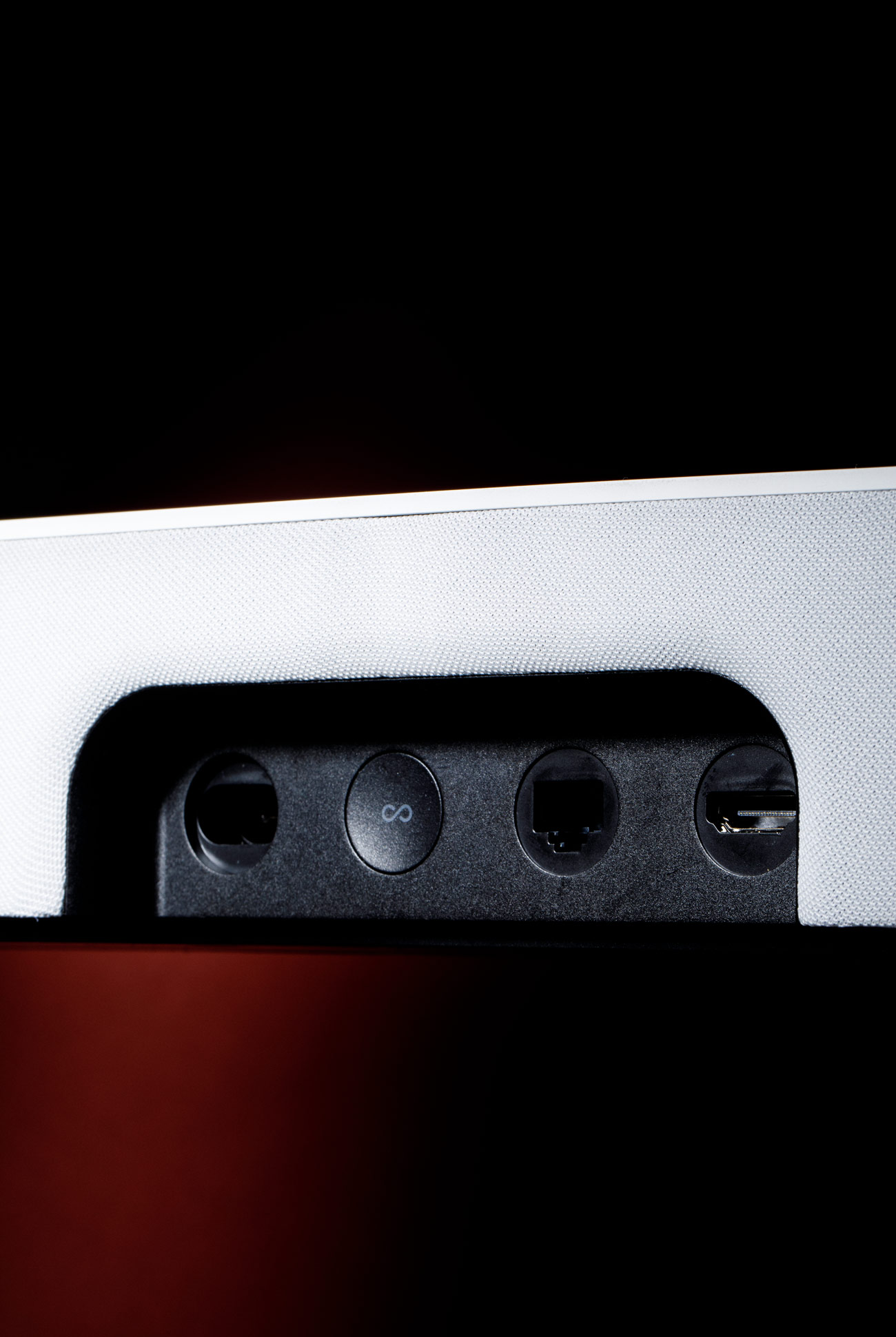
Performance Pack 2 doesn’t add any power bump to the V8’s 460 horsepower and 420 pound-feet of torque, but it does make it easier to keep all that grunt on the track. Visually, the Mustang gets a sharp front splitter that juts out menacingly enough separate it from the rest of the pack. It sits half an inch lower to the ground and rocks 19-inch aluminum wheels shod in Michelin Pilot Sport Cup 2 Tires. These are an inch and a half wider than the ones that come with the first pack. PP2 also adds stiffer front and rear stabilizer bars, stiffer springs and a redesigned rear spoiler.

On the road, the car feels impulsive. It wants to take off and you’ll want to let it. Bolstered by the sport seats and rumbling exhaust, the whole car begs for its leash to be removed. The PP2-saddled Mustang also demands your attention to things that you might consider routine. The springy clutch pedal will make a chump out of the most experienced manual driver if they’re not giving it their full attention. Its contact point feels incredibly narrow to help you fire off gear shifts. That’s great on the track, but driving around town or on the highway, it makes small things a chore.

The Pilot Sport Cup 2 tires are again ideal for the track but bring the wrong thrills to daily driving. Keen to track with every groove in the pavement, the tires literally go with the grain and can juke the car to either side if the driver is comfortably aloof at the wheel. They certainly communicate a great deal of road feel to the driver, but their report is too unabridged for general usage. All of these are overlooked, however, when it’s time to take the car past town speed limits because it is thrilling.

Redlining at 7,500 rpms, the Mustang stays in gear for what feels like days, with room to spare. This fantastic breadth is incredibly satisfying to have on hand when flying through backroad switchbacks or letting the motor sing on highway stretches. All the added stiffness is immediately tangible when put into practice which is often done with a dollop of hesitation… because Mustang. Even with the switch to the independent rear, it won’t be confused with a high-performance sports car. With the added rigidity and sticky tires, though, the corners can be held once you’re brave enough to tackle them.

At this moment, the Mustang feels like how I imagine flying the P-51 fighter plane of the same name must feel: heavy, loud, and powerful, but still able to perform sharp, acrobatic turns when needed. Again, everything is very solid and deliberate, though in a performance setting, it’s very satisfying when executed.

On longer drives, the Mustang holds up, even with the added firmness. I spent a day driving a friend visiting from out of town to points in New Jersey, which required some substantial seat time. I expected the sport seats to be my ruin, but I wasn’t burdened by the extended wheel time at all. In fact, I was mostly preoccupied with the attention the car would garner as it chaffed under even the higher turnpike speed limits.

The newest Performance Pack adds $6,500 to the GT Premium trim level’s $3,905 base price. Options like the Sync 3-powered touch-screen navigation and the active valve exhaust bumped the final price of my test vehicle to $51,185. For a relatively small price bump, PP2 takes an already agreeable muscle car and adds the right amount of extra flavor to it. It’ll certainly quiet the “yeah, but can it corner?” crowd. The car wants to run. You want to let it. And when it does, the PP2 pack makes the indulgence worth it.

Verdict: The main problem with the Performance Pack 2 equipped Ford Mustang is that every day isn’t a track day. Its wasted on daily commutes but would make weekends a special occasion. It can certainly be daily driven but things like the low front splitter and track-eager tires would intensify common inconveniences in the wrong ways. In a pure performance context, however, it’s all the things anyone would dream to do make their Mustang track-ready — Ford just went ahead and took care of the extra legwork and bundled in a tidy package.

What Others Are Saying:

• “The front steamrollers tramline along worn pavement grooves a little, but far less than expected. On the track, the steering feel is superb, with absolutely linear chassis response, negligible body roll, and a reasonable sense of road-surface grip coming up through the wheel rim.” — Frank Markus, Motor Trend

• “On longer straights, we appreciated the revised V-8’s higher redline, and the Brembo brakes feel strong underfoot as they haul the car back down again.” — Joe Lorio, Car and Driver

• “For a car that’s supposed to bridge the gap between the regular GT and the GT350, the PP2 comes pretty close to eclipsing its Shelby sibling. If it wasn’t for the 350’s screaming flat-plane cranked V8, I’d probably recommend the PP2 over it right now.” — Pat Devereux, Top Gear

Key Specs: Mustang GT with Performance Pack 2

Engine: 5.0-liter V8
Transmission: 6-speed Manual
Horsepower: 460 hp
Torque: 420 ft-lbs
Weight: 3,705 lbs curb weight
MSRP: $51,185 as tested

Read More Gear Patrol Reviews

Hot takes and in-depth reviews on noteworthy, relevant and interesting products. Read the Story

Note: Purchasing products through our links may earn us a portion of the sale, which supports our editorial team’s mission. Learn more here.