All posts in “luxury”

2023 Chevrolet Corvette Z06 production numbers increased

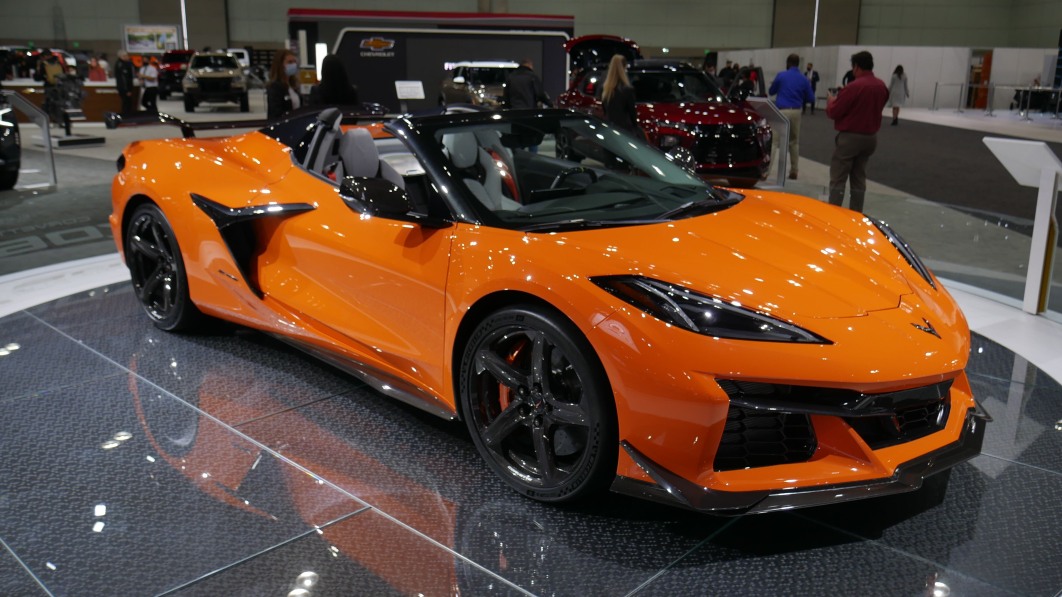
The headlines say Chevrolet has re-opened order books for the 2023 Corvette Z06 after closing them in July. Those headlines should come with asterisks. What the small print explains — and should have always explained, even here — is that GM gatekeepers lowering the drawbridge means practically nothing for anyone who didn’t get on a dealer list a long time ago. When GM stopped taking orders in July, it stopped taking names off of dealer’s lengthy lists of reservation holders. The production process seems to be going better than planned, so “re-opening the order books” means GM has increased the number of cars it plans to build for the 2023 model year and has asked dealers to submit more names for orders to fulfill. A GM spokesperson told Motor1, “We had previously shared with dealers and the public that we had accepted enough Z06 orders to fill the number of Z06 production slots we had for calendar year 2022, so we stopped elevating dealer orders to accepted orders that the plant would build. Now we are saying we’re going to accept more dealer orders to continue filling the pipeline of Z06 production through the end of model year 2023.” 

We don’t have any details to explain any of this nor put it in context. GM didn’t reveal its initial production estimate, and it hasn’t said how many orders it will add to the previous mysterious number. It was thought GM’s conservative production window had to do with a supply constraint, but even that’s not clear. We don’t know how many reservations there are, either, although a thread at Mid-Engined Corvette Forum lists more than 100 dealers and suggests just eight of them have easily more than 6,000 reservations combined. One dealer would only say its reservation list was “out to 2025.”

GM built 39,940 of the C7 Z06 from 2014 to 2019, averaging a touch under 8,000 units per year. Dealers know this, so for one to say they’re booked until 2025, the order rolls must be relatively staggering. There’s no reason for dealers to be in a hurry to get cars built, either, with some charging anywhere from $35,000 to $100,000 over the base $106,395 MSRP per vehicle according to posters.

As for verified production, Corvette Blogger wrote a week ago that 41 customer Z06 orders have been built as of the end of October, 22 of them the 70th Anniversary Editions. On top of that, it’s said 216 Z06s have been built for GM’s Captured Test Fleet used for proving and data capture. The first customer deliveries have been made, including Rick Henderson acquiring the first one off the line, a Carbon Flash 70th Anniversary Edition he bought for $3.6 million at a charity auction in January of this year.

Maurizio Reggiani talks racing, forced induction, and Lamborghini V12s

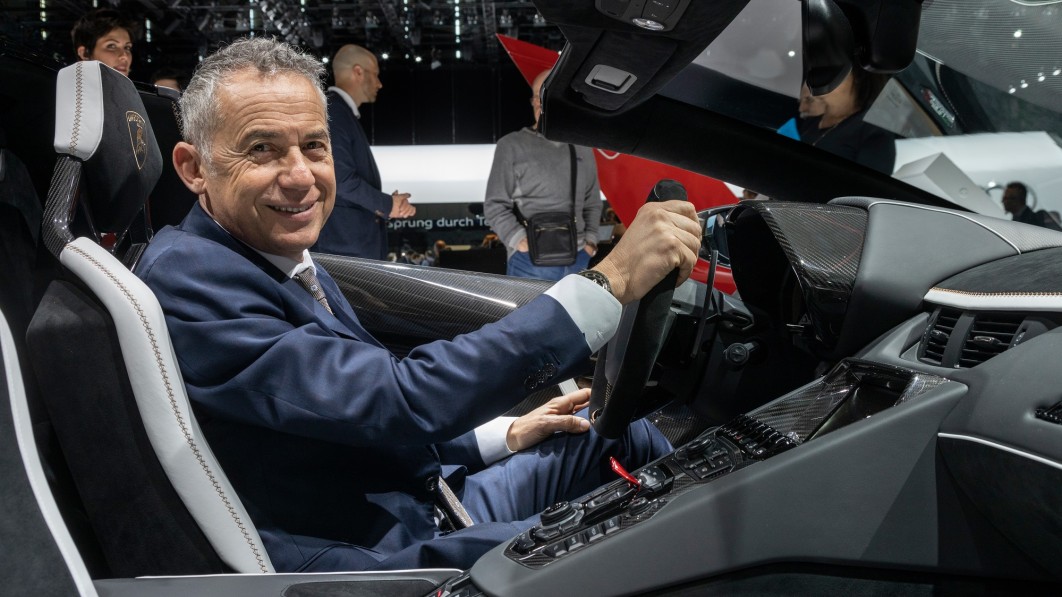
Maurizio Reggiani deserves his own chapter in Lamborghini’s history.

He joined the Italian company in 1995 and rose to the position of chief technical officer in 2006; he notably led the development of some of Lamborghini’s greatest modern-day engines, including the 6.5-liter V12 that powers the Aventador. His time as the head of Lamborghini’s research and development department ended earlier in 2022 and he now serves as vice president of motorsport. His successor, Rouven Mohr, is tasked with implementing an ambitious and far-reaching electrification strategy called Direzione Cor Tauri and outlined in 2021.

As Lamborghini prepares to enter a new era, I sat down with Reggiani for a behind-the-scenes look at nearly 30 years of V12 development.

[The following has been edited for clarity.]

RG: Lamborghini has made other engines and other companies have made V12s. Why is the V12 so often associated with Lamborghini?

MR: In a time when everybody started talking about downsizing and reducing cylinder count, we continued to say that the V12 is the flagship of the super-sports car. We were born with this: Lamborghini has made a V12 during every year of its history. We also did V8s in the time of the Jalpa, for example, but the V12 was every time the main pillar of this company. If you want to be considered the pinnacle of super-sports cars, no other engine can really speak to purists like a naturally-aspirated V12 can. In terms of power, in terms of sound, in terms of emotion, and in terms of, let me say, the coolest engine that’s possible in terms of engineering definition.

RG: What projects have stood out to you during your time at the head of Lamborghini’s R&D department?

MR: When I started my career, 40 years ago at Maserati, I worked in engine development. At Bugatti, I was responsible for powertrain, which of course includes the engine. For me, an engine is kind of like a first love, and you remain in love for all of your life. To look at an engine, to look inside, to discuss the components, to have an opinion, and to give a suggestion was my way of working every time.

One of the projects that excited me the most was the Diablo GT. For the first time, we decided to put a single throttle per cylinder, and it was a level of sophistication that was more or less never used before by Lamborghini. You take experience from the past and try to apply it to [the present]. This improved a lot the performance, and it was really super exciting. The engine in the Aventador is another highlight: it was designed together with the Aventador. That was a completely new car, we started from scratch, and you can imagine how exciting that was.

RG: You’ve taken the V10 racing; why not race a V12?

MR: We had a big discussion about this when we first started out in racing. We initially launched a one-make series in 2009, and after that we decided to also engage in the GT3 series, and the main point of discussion was that in every competition related to GT you have a balance of performance. There’s no sense to take on the weight and packaging of the V12 if after you need to put a restrictor that penalizes a lot of the performance. We decided the best compromise in order to match the balance of performance was the V10. At the end, you need to take an engine where even with the balance of performance you are close to maximum power. If you take an engine with a big output and you move its curb of efficiency to a lower part [of the graph], you cannot be competitive.

RG: Was adding forced induction, whether it’s a turbocharger or a supercharger, ever considered?

MR: We never [used forced induction] because our vision was that the sound of the V12, the frequency of the V12, cannot be done with a turbo. Clearly, today you have so many filters in the exhaust system that the sound is reduced. That are new rules that came from California where you cannot exceed a given decibel during the test. Years ago it was only in the default [driving] mode; now in all of the modes you need to be below a certain level. It’s important to maintain the frequency of the sound.

Also, the power was, let me say, enough. We reached 350 kilometers per hour (about 217 miles per hour) with the Aventador SVJ. We put much more attention to the use of the power and the shape of the torque curve because we were sure this is what customers ask. We want to give the V12 a response that’s as similar as possible to a motorcycle’s. On a motorcycle, when you twist the accelerator you have the impression that the engine is able to catch 10,000 RPM *snaps* like this. In a V12, which is a big engine, the enemy is to be able to move up and down [the rev range] as quickly as possible. This depends a lot on the weight of the pistons, the connecting rods, the crankshaft, and of course electronics. You need to tune everything as much as possible and what gives this perception is the sound you hear. 

RG: I spoke to you about carbon fiber connecting rods in 2016. What happened to that project?

MR: The parts were done in Seattle, at the University of Washington. The complexity in terms of the materials used, the necessity to have metal inside, and the difficulty of bolting the connecting rods because you need to put an insert inside of them [were issues]. And, after that you have dilatation. We built a prototype and tested it but it remained at the research level. We have several examples of development work that run, but at the end every time you need to do a decision sheet where you decide economics, reliability, reproducibility, and cost, and what we work on in R&D can’t reach production every time.

RG: What should we expect from the next V12?

MR: The V12 is part of Lamborghini’s DNA. We already announced the Aventador’s successor will keep the naturally-aspirated V12, though it’s a V12 that is radically new compared to what we have today. We use this new engine to correct some of the peculiarities that can be related to the weight and that can be related to the RPM in order to have the best level of thermal dynamics coupled with a hybrid system.

Related Video

Ferrari lifts profit forecast after strong Q3, keeps cautious stance on margins

MILAN — Luxury sports car maker Ferrari said on Wednesday it was improving its forecasts for full-year results, including for core earnings, after beating expectations in the third quarter, supported by a double-digit increase in shipments.

The company however struck a more cautious tone on the margin on those core earnings, now seen at around 35% for this year, versus a previous guidance of over 35%.

It said industrial costs and research and development expenses increased in the past quarter mainly due to higher depreciation and amortization and cost inflation.

Ferrari said its adjusted earnings before interest, tax, depreciation and amortization (EBITDA) would grow this year to over 1.73 billion euros ($1.71 billion), versus an already improved forecast of 1.70-1.73 billion euros it provided three months ago.

After briefly turning positive following the release of the results, Milan listed shares in Ferrari fell as much as 2.4%. By 1235 GMT they were down 1.4%.

In the third quarter, adjusted EBITDA rose 17% to 435 million euros, topping analyst expectations of 418 million euros, according to a Reuters poll.

($1 = 1.0107 euros)

(Reporting by Giulio Piovaccari; Editing by Keith Weir)

Related video:

1,204-hp Hennessey Venom 1200 is the new kingsnake

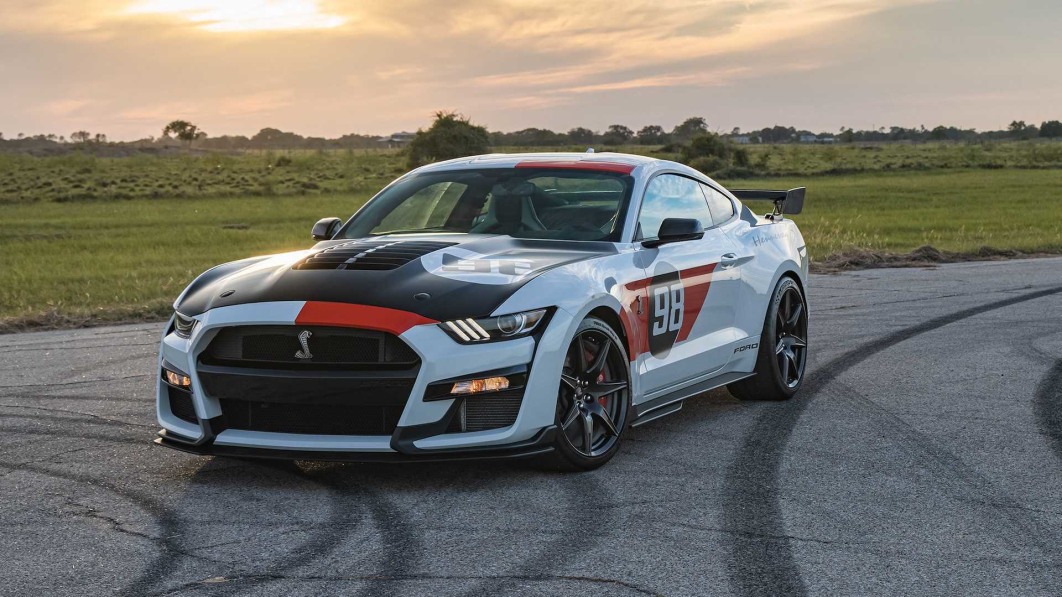
In 2019, Texas tuner Hennessey Performance did some open heart surgery on a Ford Mustang Shelby GT500, swapping the supercharger on the Mustang’s 5.2-liter Predator engine for two turbochargers. The result waved a fast goodbye to the GT500’s stock 760 horsepower and 625 pound-feet of torque. Available in two outputs and called the Venom 1000 or Venom 1200, the latter made 1,200 hp at 7,000 rpm and 1,000 lb-ft of torque at 4,800 rpm. You know what they say about one good turn, so say hello again to the Venom 1000 and Venom 1200, this time with one (really big) screw instead of two compressors. Hennessey removed the 2.65-liter supercharger from the stock GT500, laying in a 3.8-liter unit. Final specs for the bigger boy are 1,204 hp at 7,600 rpm and 902 lb-ft of torque at 5,200 rpm.

Engineers breathed on the drivetrain from the intake to the exhaust. There’s a new high-flow induction system and intercooler, upgraded belts, fittings, lines, and tensioners, an air/oil separation system and a recalibrated dual-clutch transmission to swallow all that extra oomph. Of course, new anodized billet fuel rails and injectors convey a lot more fuel from tank to nozzle. Speaking of which, the new Venoms can run on pump gas; however, the 1200 will only corral 900 horses on basic premium. They need E85 to get out the whole herd. 

The Venom 1200 conversion costs $59,950 on top of the price of a new GT500, a dealer showroom GT500 starting at $80,815 before options and all the rest. The previous Venoms weren’t capped, but the reboots are, Hennessey saying there will be just 66 of them, the number tied to Ford winning the 1966 running of the 24 Hours of Le Mans. Customers who want to make that connection public can check the box for the livery in black, red and white for $4,950. It honors the Ford GT40 Mk II that won the French race. We can’t exactly call these prices a bargain, but they’re a lot less than a similar rework Shelby American’s done to the GT500 and called the Code Red. Going the twin-turbo route, the Code Red makes 1,300 hp and 1,000 lb-ft on E85, or 1,000 hp and 780 lb-ft on pump gas. There are only 30 of them, ten a year for three model years, making them more than twice as exclusive as the Venom 1200. They’re also more than twice as costly, the stewards of Carroll Shelby’s legacy charging $209,995 for the Code Red, which doesn’t include the donor coupe. But the Code Red is sold out, making the Venom 1200 the kingsnake for now.

Related video:

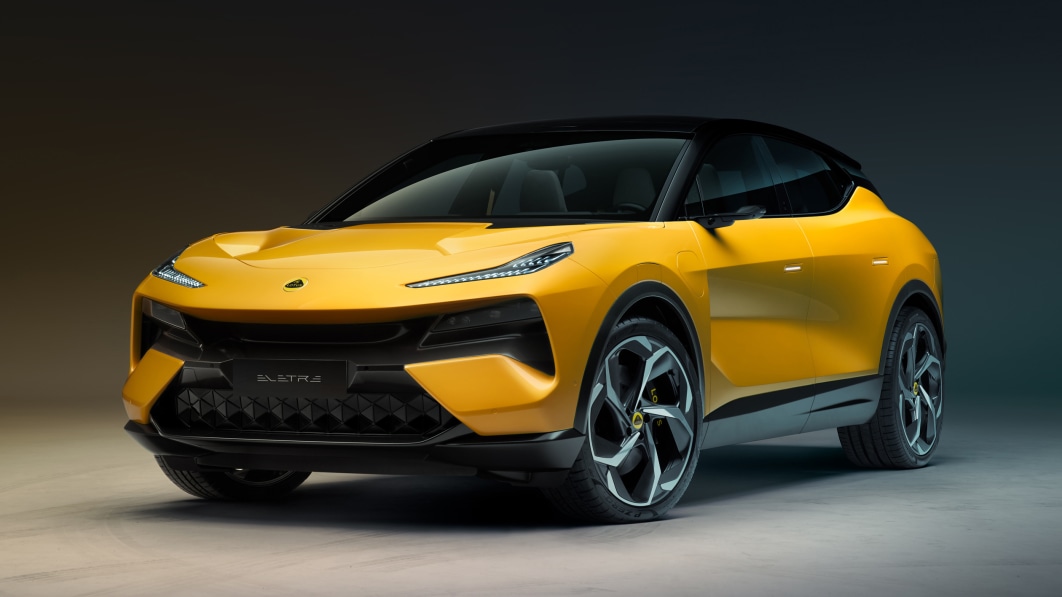
Lotus Eletre electric SUV will rock close to 900 horsepower

Eight hundred and ninety-three.

That’s the announced horsepower of the Lotus Eletre, from the venerable British house of Lotus, and it’s not attached to a difficult-to-climb-into sports car, but a “hyper” all-electric SUV. Other notable numbers: 726 pound-feet of torque, 0-to-62 mph in a hair under 3 seconds, and a top speed of 165 mph.

Due to arrive next summer, the flagship Eletre R is a wild departure from a company that regularly built featherweight cars with no more than 100 horsepower. According to Britain’s Autocar, the most powerful Eletre will cost 120,000 pounds (about $140,000) when goes on sale in the U.K. next summer.  It will likely be exported to the U.S. and China as well.

Standard equipment includes active air suspension, torque vectoring, an active front grille, LED headlights and a set of 22-inch wheels. Inside, all Eletres are fitted with electrically adjustable seats, wireless phone charging and four-zone climate control. 

Among the Eletre versions are a base model and the Eletre S making 603 horsepower and using a single-speed gearbox. The Eletre R will be the only model with a Track Mode, which lowers the ride height and gives it more aggressive damping.

Lotus, which is owned by the China-based Geely group, was founded 74 years ago by Colin Chapman. Under his direction, Lotus won seven F1 constructors’ titles and six Drivers Championships.

Looking to reserve an Eletre? The Lotus website suggests you contact your local dealer (and offers a dealer locator). Lotus says that the R model is to be the first of four that are to come from the company by 2025,

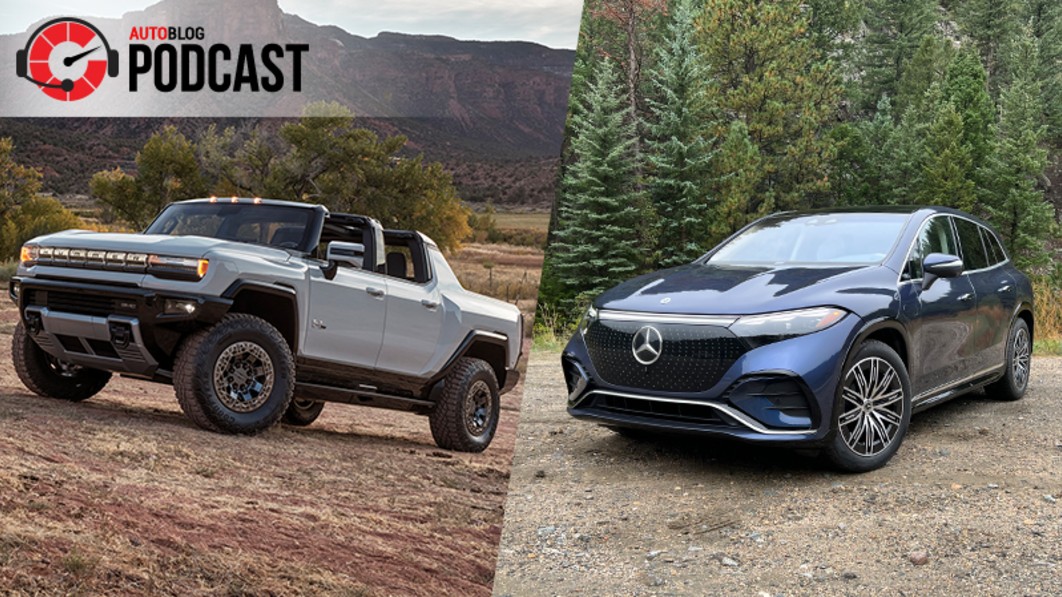
Driving the GMC Hummer EV and Mercedes-Benz EQS, EQE, EQS SUV | Autoblog Podcast #750

In this episode of the Autoblog Podcast, Editor-in-Chief Greg Migliore is joined by Senior Editor, Green, John Beltz Snyder. This week, they talk about driving Mercedes‘ fleet of EQ electric vehicles, including the EQE Sedan, the AMG EQS Sedan and the EQS SUV. They also talk about piloting the Acura NSX Type S. Next, they discuss the reveal of the 2024 Maserati GranTurismo, including the all-electric Folgore trim, as well as the Ferrari SP51 roadster. Finally, they talk about some of the best (including some unusual) car features for kids.

Send us your questions for the Mailbag and Spend My Money at: Podcast@Autoblog.com.

Autoblog Podcast #750

Get The Podcast

  • Apple Podcasts – Subscribe to the Autoblog Podcast in iTunes
  • Spotify – Subscribe to the Autoblog Podcast on Spotify
  • RSS – Add the Autoblog Podcast feed to your RSS aggregator
  • MP3 – Download the MP3 directly

Rundown

Feedback

Autoblog is now live on your smart speakers and voice assistants with the audio Autoblog Daily Digest. Say “Hey Google, play the news from Autoblog” or “Alexa, open Autoblog” to get your favorite car website in audio form every day. A narrator will take you through the biggest stories or break down one of our comprehensive test drives.

Related video:

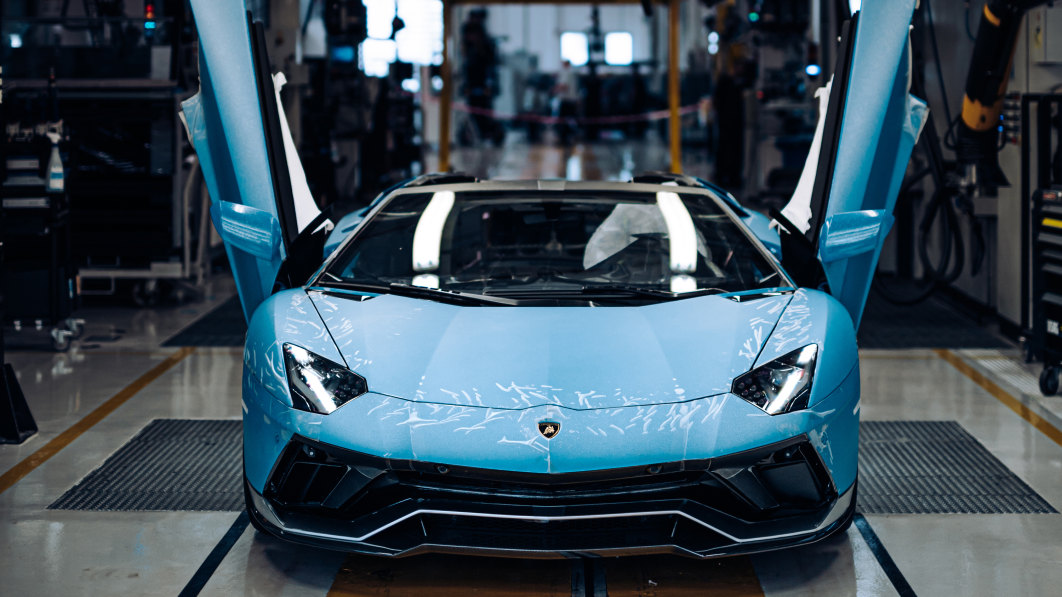
Lamborghini Aventador Ultimae Roadster ends non-hybrid V12 production

To quote Hall & Oates: “She’s gone,” the “she” here being the Lamborghini Aventador. The last of the scissor-doored supercars with a naturally-aspirated V12 rolled off the line in LP 780-4 Ultimae Roadster form colored an Ad Personam light blue, headed for a quiet life in Switzerland. That also closed the chapter on the 350 coupes and 250 roadsters made in Ultimae spec. This is a belated end-of-life, the Italian concern restarting production lines after 85 Lamborghinis, 15 of them Aventador Ultimaes destined for the U.S. market, got torched on the cargo ship Felicity Ace in March of this year. The final tally for the latest V12 spreadsheet counts 11,465 cars delivered in 11 years, more than doubling the entire sales count of its predecessor, the Murcielago, and exceeding the combined sales of every one of Lamborghini’s V12 models since the 3.5-liter V12 in the 350 GT in 1964. 

What began with the 6.5-liter 12-cylinder with 691-horsepower and 509 pound-feet of torque in 2022 ended with that engine making 760 hp and 531 lb-ft in the Ultimae. The official 0-to-62 mile per hour dash came down a tenth of a second in that time, depending on where you look, from 2.9 seconds to 2.8. Top speed rose from 217 mph to 220. Plenty fast then, plenty fast now. Between those yardposts there have been more than 10 one-offs and limited editions. The former group includes the Jota, SVJ Xago, and the SC18 Alston track car. The latter group counts the Anniversario, Veneno, Centenario, and Sian FKP 37. There were also innovations like the enclosed carbon fiber monocoque supported by “flying doctors” that traveled the world to help diagnose and repair damage that benefited owners. There was the pushrod suspension that turned a heavyweight into a flickable canyon runner, benefiting all drivers. There was the Independent Shifting Rod (ISR) single-shift transmission, which Lamborghini says was “chosen for lightweight compactness and the most emotive shift.” Given its tidal shifting motion and occasionally clumsy changes under partial throttle or when trying to figure out what the driver wanted in changing conditions, we never figured out who that benefited.

What comes next will be a hybrid V12 powertrain wrapped in looks that, based on spy shots, will evolve the latest design language with details like new lights, bladed B-pillars, and high-rise exhaust. Shouldn’t be long to wait now. But no matter what comes, to paraphrase Hall & Oates on the Aventador again: There can never be what she was to us.

Related video:

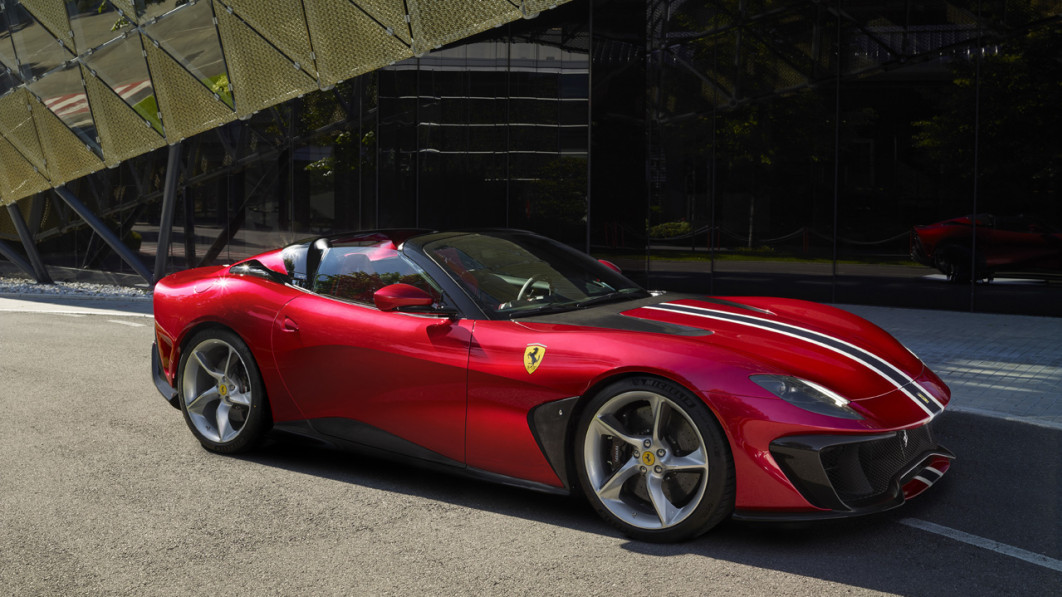
Ferrari SP51 is a V12 roadster with gorgeous paint based on the 812 GTS Spider

Ferrari says it spends an average of two years on its one-off Special Project cars such as the SP48 Unica from earlier this year, which was based on the F8 Tributo. Here’s another before the year is out, the SP51 that rides on the bones of the 812 GTS convertible. A Taiwan-based client and collector had the idea and the funds to make it happen, working with the Ferrari Styling Center on a highly advanced and proper roofless roadster that nods to historical Ferrari roadsters as well. A reshaped front fascia houses a black, carbon fiber insert below smaller headlights. Another large section of exposed carbon fiber piece below the windshield reaches forward to the hood vents, framing the center of the hood. Along the flanks, the 812’s upswept sculpting is redirected, scalloped sides rising gently to the middle of the door then descending toward the rear wheels. Above that, a pair of flying-buttress-like cowls help shape the dark lines of rear intakes behind the cabin. A carbon fiber wing runs across the car above the cowls, concealing the roll hoops.

A custom set of rims are set off by carbon fiber wing profiles in the front fenders. In back, the quad taillights peek out from below the decklid spoiler and above the deep, layered diffuser. Ferrari said it took a heap of “CFD simulations, wind tunnel and dynamic testing” in order to imbue the “ultimate in comfort in the cabin, but also the same standard of acoustic comfort and wind feel as the car that inspired it.”

That color seen outside and in is Rosso Passionale, a custom hue applied in three layers. The blue and white stripes running over the body and through the cabin pay tribute to the blue and white livery inspired by a 1955 Ferrari 410 S, an early race car powered by a 5.0-liter V12. A 410 S with chassis number 0592CM shows off that paint scheme, the roadster driven by Carroll Shelby to wins in Palm Springs the year it was delivered to owner Tony Parravano.

The cabin continues the blue and red theme, with Rosso Passionale offset by blue striping and white cross stitching on the instrument panel lower, seats, center tunnel, and doors. It can’t be bought so the price doesn’t matter, making the only real question: Would you have this, or the Ferrari Special Projects roadster from 2014, the F12 TRS

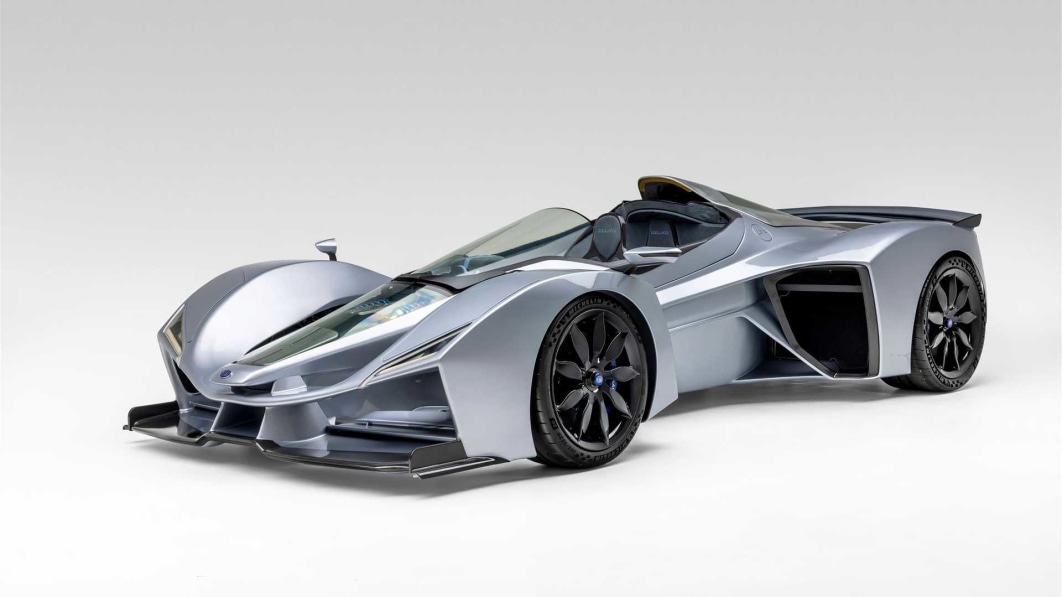
Delage D12 gets two new open-top treatments, Speedster and F1

Delage spent a long, hot American summer showing its D12 to local audiences. The reborn French brand wants to sell nine cars here and one in Canada, and it seems the job is nearly done, with CEO Laurent Tapie saying seven of the U.S. offerings have been spoken for. Unlike in other parts of the world, American owners will need to import their cars under the Show and Display exemption. Tapie said his company has already starting filling out the forms on behalf of future owners that will compel their D12s to be driven no more than 2,500 miles per year and to be stored in secure locations when not in use. We suspect those prohibitions won’t be difficult for any supercar owner to obey.

It’s possible that Delage’s stirring up the model mix helped move a few more cars. We knew there would be GT and Club versions, a 7.6-liter naturally aspirated V12 sitting behind the tandem cockpit in both. In the 3,086-pound GT, it makes 990 horsepower by itself and is aided by a 110-hp electric motor, sending the combined 1,100 hp through an eight-speed single-clutch automatic to the rear wheels. The Club’s electric motor only adds 20 horses, but the Clubsport is 200 pounds lighter than the GT and faster around a track, its e-motor for street driving, reversing, and parking. A more relevant stat for the Cars and Coffee crowd is a claimed 0-to-60 mph time of 2.4 seconds thanks in part to carbon fiber wheels wrapped in Michelin Pilot Sport Cup 2 R rubber.

The new variation is that the roof can come in three treatments. There’s the standard coupe that’s been shown, joined by two open-top versions. The D12 Speedster turns into a targa, losing the portion of its roof aft of the windshield. The D12 F1 option (pictured) sheds even that full windshield, making do with a wind deflector and a fancy helmet, which will be required when driving. Those options cost $190,000 apiece, but they are modular, so they can be bundled for the low, low price of $260,000. 

Delage still plans on production commencing before the end of this year, deliveries to start in the last quarter of next year. Each of the 30 examples Delage will make for global consumption will cost €2 million ($1.94M U.S.). It’s possible that before delivery, Delage will make the Nurburgring passenger car lap record attempt we’ve been hearing about. The Porsche 911 GT2 RS wears the crown now with a time of 6:43.300. Tapie said he wants the D12 to stop the clock at 6:40.

An assortment of emblematic supercars is headed to auction

Auction house RM Sotheby’s is giving enthusiasts the chance to bid on the supercars that they had posters of when they were kids. It’s organizing a live sale in Miami, Florida, in December 2022 that’s limited to 60 high-end models built between the 1970s and the 2010s.

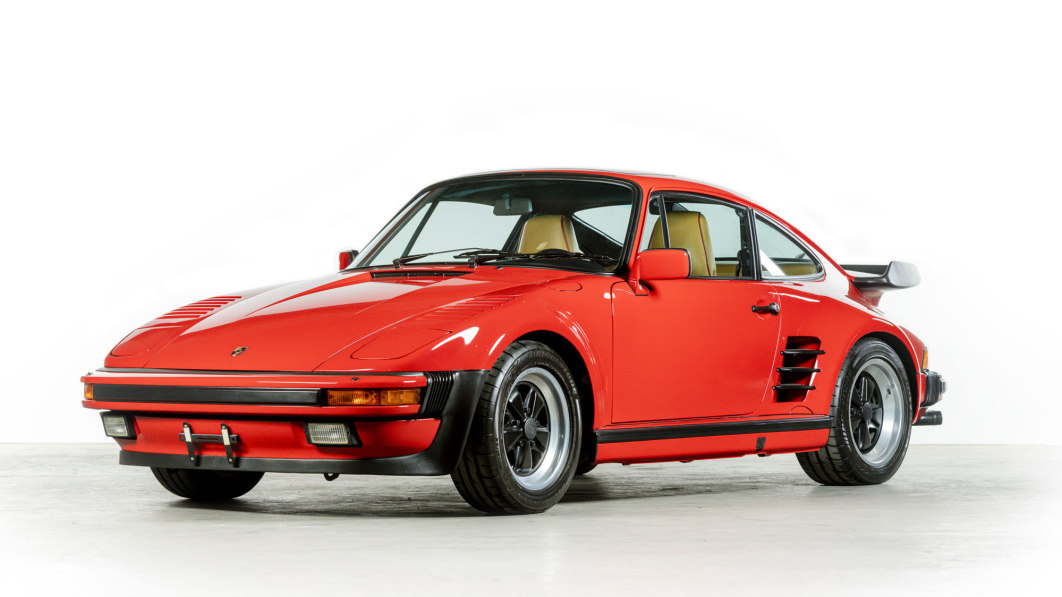
The oldest car in the catalog is a V12-powered 1974 Jaguar E-Type, though keep in mind that only 20 of the 60 available slots have been filled so far. At the other end of the spectrum, the newest model is currently a 2014 BMW M5. If your automotive tastes are firmly anchored in the 1980s, there’s a wide selection of cars to choose from such as a 1989 Lamborghini Countach 25th Anniversary Edition and a 1987 Porsche 911 Turbo with a flat-nose conversion. If your heart belongs in the 1990s, RM’s sale includes a 1990 Lamborghini LM 002, a 1995 Ferrari 512 M, and a 1996 Porsche 911 Turbo. Bentley models and a 2008 Mercedes-Benz SLR are among the newer classics.

Carmakers weren’t alone in pursuing speed, style, and extravagance in the 1980s; tuners fought hard for a piece of the pie as well, and RM’s sale reflects that. Collectors will get the rare opportunity to bid on a number of pre-merger AMG models like a 1982 Mercedes-Benz 500SL 5.0 (R107), a 1987 Mercedes-Benz 560SEC 6.0 (C126) with a wide-body kit, and a 1989 Mercedes-Benz 560SEL 6.0 (W126). BMW-based Alpina models are well represented, too: RM accepted a pair of 6 Series-based 1987 B7 coupes and a 3 Series-based B6 2.8. 

There are several slots left so it’s not too late to submit your car. If you’re a buyer, plan on being in Miami on December 9 and 10, 2022. We suggest clearing up space in your garage first: every car is offered with no reserve, so the selling price will be the highest bid.

Related Video

Williams Advanced Engineering reveals EVR electric hypercar platform

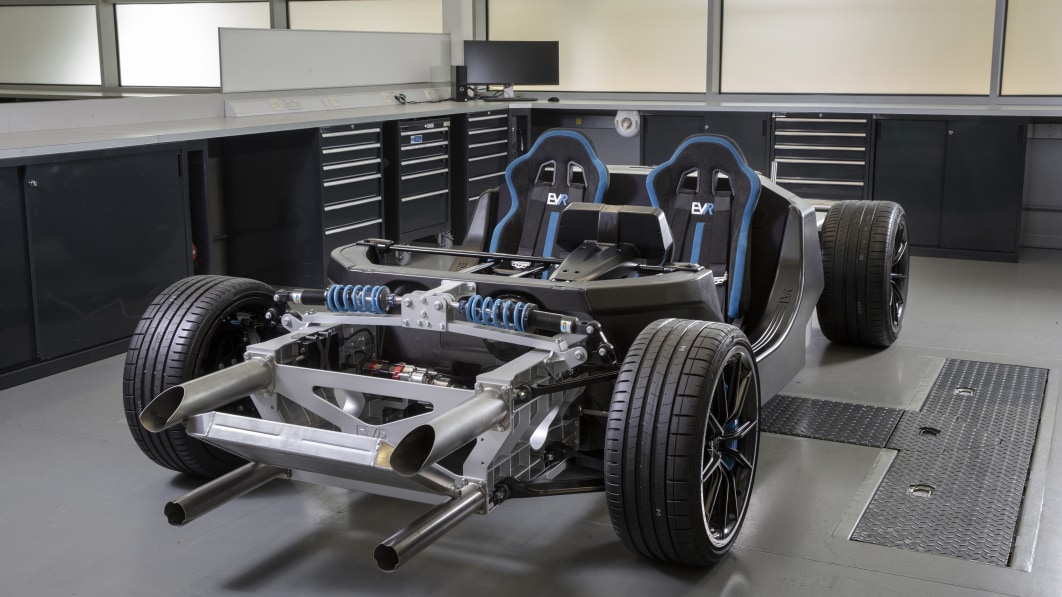
Deus announced its Vayanne electric hypercar earlier this year as conceived in Austria, designed in Italy, and electrified in the UK. That last bit refers to the battery-electric powertrain sourced from Williams Advanced Engineering (WAE), which we now have more information on. WAE took its new EVR turnkey electric vehicle platform to the Cenex Low Carbon Vehicle Show for a full reveal. Designed specifically for hypercars, the targets were versatility, lightness, power and speedy recharging. It appears the only fixed element for the time being is the 85-kWh battery set into a carbon housing between the wheels, and two motors. WAE says it can be refilled in less than 20 minutes, and powers a range of up to 279 miles. After that, OEMs and boutique makers can choose rear-wheel drive or all-wheel drive, hardtop or targa body styles, and road-legal or track-only configurations.    

Peak output is 2,213 horsepower from the dual motors, explaining Deus’ publicized target of more than 2,200 horsepower for the Vayanne earlier this year. Depending on body style and aero, WAE believes the platform could push a hypercar to 248 miles per hour given an ideal form. We’re told it will be possible to build a finished product with such specs that weighs less than 3,637 pounds, carbon being used for everything from the pack enclosure to the double wishbone suspension. For comparison, the 640-hp Porsche 911 Turbo S weighs 3,636 pounds.

The list of in-house innovations on the EVR chassis includes a Scalable Battery Module that opens up flexibility for custom packs and sub-pack systems, controlled by battery management software that rationalizes the amount of electronics needed to run the powertrain. The company says each module has a capacity of 1.08 kWh at 50 volts maximum or 43 volts nominal, and an energy density greater than 240 Wh/kg. The individual cells are wrapped in carbon fiber, too, claimed to improve crash resistance. Battery cooling is run through the energy-absorbing side sills.

Theoretically, a purchaser could cut prototype development time to 12 months, and entire vehicle development time to 24 months. The Vayenne will provide the first test, Deus having said it will go into production in 2025. WAE has a hydrogen fuel cell version of the EVR on the way next.

Related video:

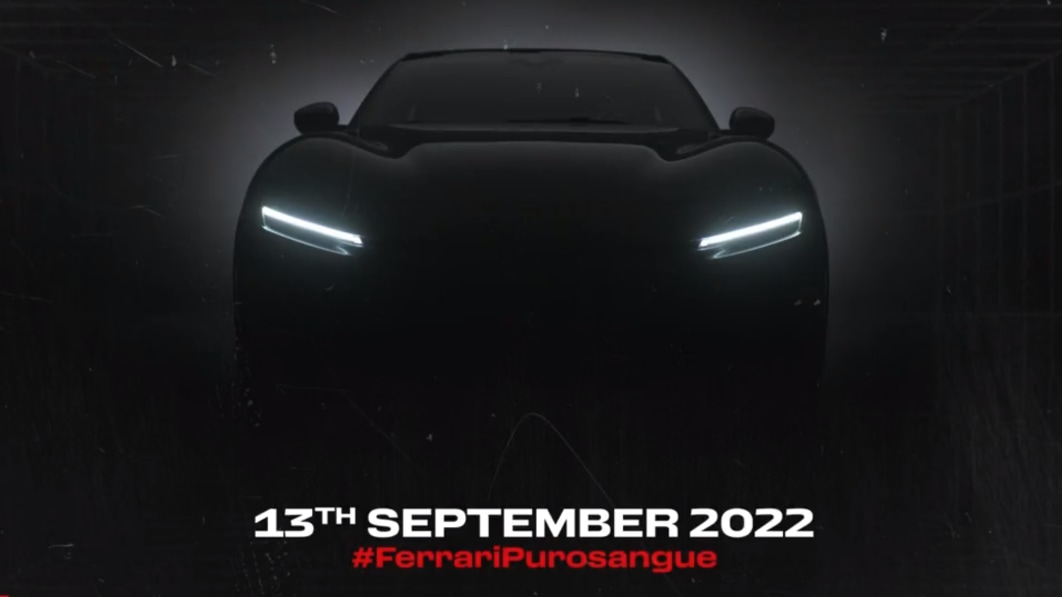
Ferrari teases Purosangue exhaust note before September 13 debut

We’ve been talking about a Ferrari SUV for more than five years, when ex-CEO Luca de Montezemolo said the Maranello automaker would never build one and then was let go not long after. We’ve known there would be a Ferrari SUV for four years, when the brand’s product road map ID’d what would come to be nicknamed the Ferrari Utility Vehicle. Barring a late switcheroo, we’re betting on the official name to be Purosangue. During a year of teasers and spy videos, at last, we have less than a week to see what all the fuss has been and will be about. On September 13, Ferrari shows its new four-door, four-seat family car, and teased the arrival with a clip of the exhaust note.

Although muted, we expect that sound to be emerging from a naturally aspirated V12, the engine CEO Benedetta Vigna confirmed the Purosangue will offer. It’s possible Ferrari’s twin-turbo V8 will join the options, but we don’t know if or when that happens. With spy videos showing what appears to be a slightly lifted wagon-esque form, the Purosangue’s focus on road manners could vault it to the top of the competitive set in the horsepower column. The company’s 6.5-liter V12 makes 819 horsepower in the 812Superfast, easily besting the 697 in the Aston Martin DBX 707 and the 657 horses in the Lamborghini Urus Performante. Even Ferrari’s twin-snail V8 would clear the bar, that engine producing 711 hp in the F8 Tributo. Or, it’s possible Ferrari could turn the wick way down, aligning the Purosangue with its tourers, the 611-hp Roma and 612-hp Portofino M convertible.

Sounds like no matter the specs, the Purosangue won’t be the easiest Ferrari to get into for reasons beyond the current industrial snarls. A Ferrari presentation during Capital Markets Day this year explained the Purosangue’s “yearly average contribution to shipments will remain below 20% over its lifecycle.” Volume that low indicates a cap enforced by the company; SUVs introduced among other super sports car makers have run directly to the top of the brand’s sales charts. We will not be surprised to see that figure rise in the coming years, or Purosangue’s being flipped for obscene amounts over its entire run.

It’s quite the month for lusty cars, the Pagani C10 debuting the day before the Ferrari, the seventh-gen Ford Mustang arriving the day after. 

Related video:

Pagani C10 teased before September 12 debut

The third movement in Pagani’s symphony of supercars is headed our way in an online debut from Milan come September 12. It’s called the C10 for now, which could be a provisional name, its full final name, or a portion of the final name; the Zonda that put the Modena manufacturer on the map launched as the Zonda C10, the codename for the Huayra during development was C9. Pagani posted another teaser of the coupe to Facebook, finally giving us hints of the thing in the, er, carbon fiber. The only surprise we can make out so far is the headlight treatment. Previous products have placed each light element in its own pod, the Zonda boasting three, the Huayra two. The C10 tucks its two headlight beams together under a clear cover. 

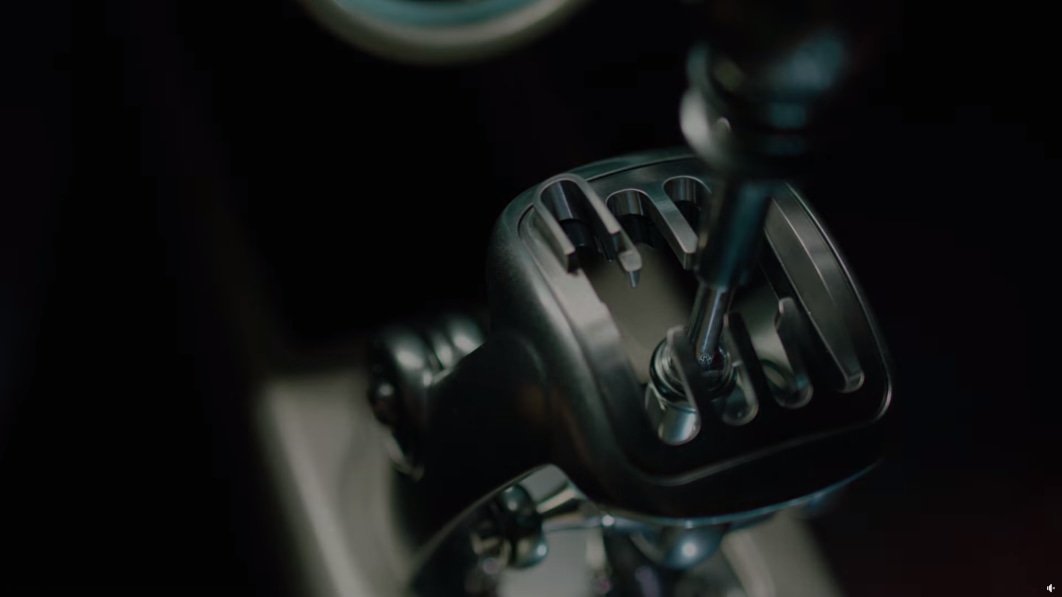
The good news beyond that is the return of the manual transmission, which wasn’t available on the Huayra. Eponymous founder Horacio Pagani is said to have discovered that some customers passed on buying a Huayra because of the omission. The C10 tease shows the six-speed row-your-own perched between the front seats, its linkage exposed like we used to see on Spykers. Note, the Huayra shifter featured an exposed linkage, but its rods and springs connected to an Xtrac seven-speed sequential gearbox. The C10 will offer a sequential transmission for those who want it.

Another AMG-sourced 6.0-liter V12 sits behind the cockpit, said to have been upgraded from the unit in the Huayra. The former car made 730 horsepower and 738 pound-feet of torque. The special edition Pagani Codalunga made 840 hp and 811 lb-ft. The C10 is expected to produce in the area of 880 horsepower and about as much torque. 

The rest we’ll find out about next week. Spy shots of prototypes show what looks like a tasty blend of Zonda-specific cues within the overall flowing shape that recalls the Huayra. The front intake looks more like a Zonda, as do the scoop-less rear fenders and the triple taillights set at an angle in the rear fascia. The almost uninterrupted flow from front to rear, and the tailless rear end are all Huayra. The return of side view mirrors looking like lazy leaves and quad exhaust tips inset in a round opening establish more continuity. It’s possible the car goes back to the traditional door openings of the Zonda, forsaking the gullwing apertures of the Huayra. Pagani said the focus of this car has been weight reduction and handling, so we shouldn’t be surprised to see a curb weight below the 2,976 pounds of the Huayra.    

There are only going to be about 300 C10s among all variants — coupe, convertible, and special editions — and every one has been sold. As if that weren’t the case with just about every seven-figure car nowadays, those of means will be especially keen to get in here since it’s thought to be the last pure combustion Pagani before the firm moves into electrification.

Related video:

Aston Martin Valhalla interior debuted in Monterey

Aston Martin began releasing estimated specs for the Valhalla supercar last summer. The figures described the thoroughly overhauled car, redrawn with just as dramatic yet smoother lines than the original concept from 2019, and repowered with a plug-in hybrid V8 sourced from technical partner Mercedes-Benz instead of the in-house straight-6. The quick summary describes a mid-mounted 740-horsepower flat-plane-crank V8 with an e-motor in back and another in front contributing 201 horsepower. The front electric motor can pull the coupe for up to eight miles of pure electric running, reversing is also done under electric power, not via the eight-speed dual-clutch transmission. Curb weight of 3,417 pounds pairs with a top speed of 217 miles per hour, the firm hoping its charge can lap the ‘Ring in 6:30, which would be a record for a production car. Deliveries are expected to commence toward the end of next year.

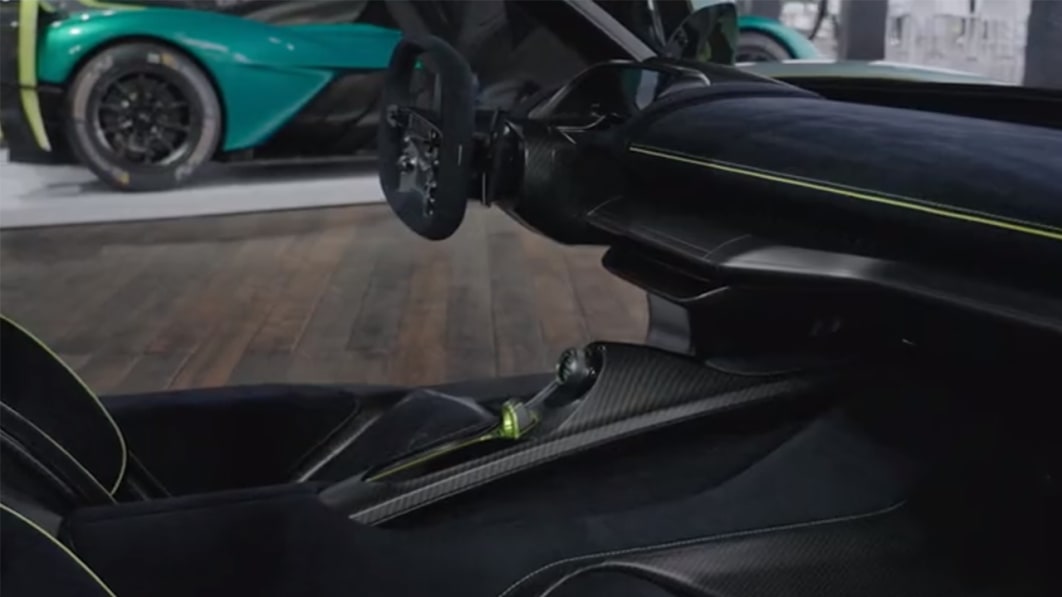
We still hadn’t seen the inside of the car last summer, though. Aston Martin finally lifted the dihedral doors on the show inside during the recent Monterey Car Week. Chief Creative Officer Marek Reichman described the cockpit as being “pure,” “about driver focus” and “concentration,” and “dedicated to the mastery of driving.” So despite an exterior update that injected “a more mature” road-going road ambience into the Valhalla’s silhouette, the cabin makes strong ties to the F1-inspired and track-consuming Valkyrie. These are seats that emphasize the “bucket” in “bucket seats,” supporting driver and passenger such that their heels lie above the level of their hips. The driver grabs a square wheel that’s jettisoned the central display in the Valkyrie’s square wheel. In fact, for those decrying the explosion of screens lately, here is your safe space. A slim rectangle ahead of the driver serves as dash display, and the infotainment screen can be hidden away, which it is in the short Twitter vid. We can see it staying stowed more often than not, in fact. Even if the V8 doesn’t pour its 7,200-rpm flat-plane note into the cabin — along with roof scoop inhalations and rubber-band-thin Michelin thrumming — the passenger quarters cannot be the kindest space to design a stereo for.

We’d been wondering about the production run, Autocar suspects Aston Martin won’t make more than 1,000 examples of the Valhalla. The potential good news for the few who’ll get to own it is that the carmaker might have reduced the price; Autocar heard that instead of costing somewhere around £1 million ($1.3M U.S.), MSRP could fall somewhere between £600,000 ($725,866 U.S.) and £700,000 ($846,844 U.S.).

Related video:

Rimac engineer says 0-60 ‘below one second’ is possible

Monterey Car Week encourages all kinds of questions that are answered with outrageous numbers. How much is the Pebble Beach lawn worth? How many metric tons of palm fronds were sacrificed to make the toquilla straw that make the numberless Panama hats? And how fast can a fast car go? The Drive spoke to Rimac Nevera Chief Program Engineer Matija Renić at The Quail about that last question, wondering what Renić believes is possible for a 0-60 time. His answer: “Below one second.” There aren’t many things humans can complete in less than a second other than say three-word sentences like “Below one second.” The idea of being at rest as one’s lips purse for the “B,” and traveling 60 miles per hour by the time the tongue comes off upper alveolar ridge to finish the “d” is, frankly, absurd.

Regrettably, either The Drive didn’t probe Renić as to what technologies will make the feat possible, or it decided not to repeat Renić’s words. All we have is the oracular pronouncement and little way to conceive of how it could happen, along with lots of questions about tires.

See, people like Engineering Explained who do math for a living have figured that, for a street vehicle on street tires on a regular street, about 2.05 seconds is the lower limit of the stoplight drag. When the Tesla Model S Plaid ripped off a 1.85-second teleport to 60 mph for Motor Trend, that was on “the super sticky VHT-coated surface of Auto Club Famoso Raceway.” On a non-prepped surface, Motor Trend got that down to 2.28 seconds, Car and Driver pruned it to 2.1 seconds. But C/D bettered the Tesla’s time in a Ferrari SF90 Stradale, hitting 0-60 in 2.0 seconds flat.

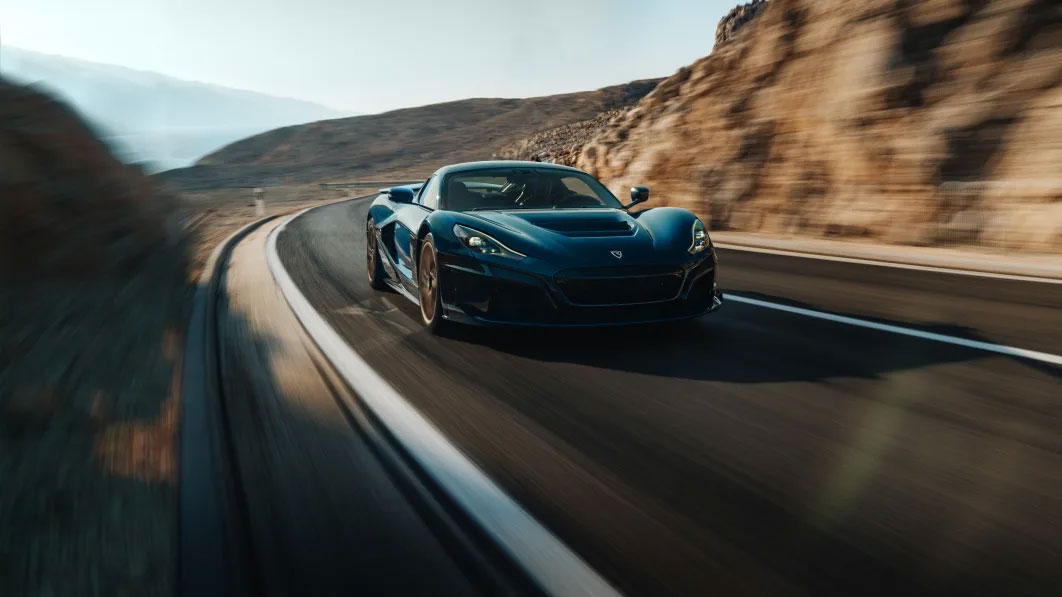
Rimac claims the Nevera will hit 60 miles per hour in 1.85 seconds, a time also achieved on a prepped drag strip, but we haven’t seen instrumented proof of that yet. Among YouTube videos of the Nevera running the quarter mile, one dedicated thrill seeker pulled off a 2.13-second rip to 60 mph.

Speaking of drag strips, top fuel dragsters are the go-to monsters for hitting 60 miles per hour in under one second, doing the deed in roughly 0.7 to 0.9 seconds. In 2019, Jalopnik tried to figure out the G forces involved in such dashes, the math concluding that getting from zero to 60 in 0.86 seconds put a 5.3-G strain on the body. Having that potential in your street car would be like having your own roller coaster, and what we imagine would be a monumental bill for tires. Until we see such things possible for the regular (rather wealthy) driver, we’ll be paying even closer attention to what what Rimac has coming.

Related video:

Bugatti plots PHEV Chiron successor with more athletic proportions

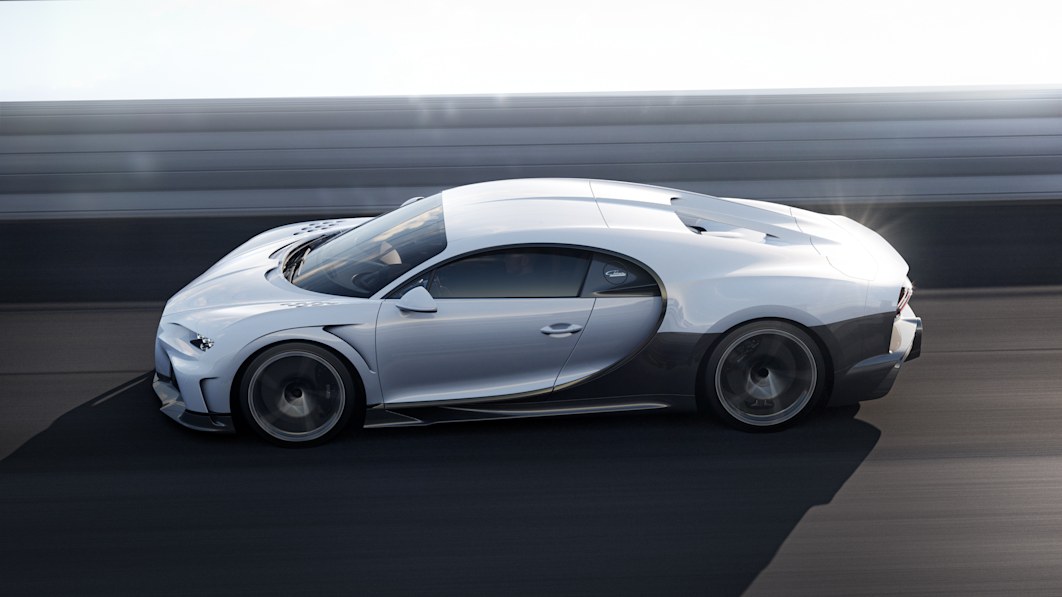
Bugatti is ready to close the W16 chapter of its history; the Mistral roadster it unveiled in August 2022 is the final street-legal car powered by the quad-turbocharged engine. What’s next remains shrouded in secrecy, but the French firm gave Autoblog a few hints of what to expect.

First, let’s dispel a myth: The Chiron’s successor will not be electric. Achim Anscheidt, Bugatti’s design director, confirmed that the model — whose name hasn’t been announced yet — will be powered by a plug-in hybrid powertrain. Rimac has previously described the drivetrain as “heavily electrified,” but precise technical details such as horsepower and layout haven’t been made public. All we know for sure at this stage is that the W16 won’t return and that many key components under the body (including the monocoque and the subframes) will be new.

In terms of design, it sounds like Anscheidt instructed his team to balance evolutionary and revolutionary approaches.

“[The car] will certainly be tailored to one or the other aspect of a hybrid. We see the potential to improve the overall automotive gesture of the car,” he said.

Dialing in new proportions is something his team wasn’t able to do when it designed the Chiron, because parts like the monocoque and the doors were carried over from the Veyron. Beyond the overall shape, Anscheidt noted he’d like to see Bugatti’s design language get leaner and more athletic, but there’s a limit to this stretch. Regardless of what the Chiron’s successor looks like, it needs to stay true to the ambivalent character of “the automotive Beauty and Beast” and be instantly recognizable as a Bugatti

“In comparison to other hyper-sports cars, Bugatti always created its own sovereign segment. It was always slightly different, never trying to be a race car for the road. It is the ultimate GT. That should not change from one day to the other. We don’t want to become somebody else, but we’re opening a new tech chapter which is a challenge as well as an opportunity,” he clarified.

The cabin will evolve as well, but it won’t necessarily follow the industry’s ongoing shift toward wall-to-wall screens.

“When you look at today’s cars, it becomes very apparent that there are screens everywhere. Where is this leading us? Yes, I think that customers deserve to have full entertainment in their daily driver. This is the [interior design trend] of the automotive industry, and we don’t want to question that. However, I wonder: who still has an iPhone 3? Nobody, and you probably don’t want to have one anymore. It likely doesn’t work. What happens to those cars when they are 20 or 30 years old? Do those screens still work? Did one do all of the updates?”

Anscheidt and his team actively debate what this means for Bugatti and its customers as they shape the Chiron’s successor. Not all companies worry about whether the technology they put in their cars will work in two or more decades, but Bugatti is in a unique position: its cars are instant collectibles. They’re rolling works of art created to be enjoyed and admired by enthusiasts who aren’t born yet.

“Bugatti models need to sit on the lawn at Pebble Beach in 50 years and work. Just like we see pre-war luxury automobiles that still work. What a disaster it would be if a Bugatti would sit there and there are only black screens [inside].” We’ll need to be patient to find out the solution that Anscheidt comes up with. “We’re carefully thinking about this. I’m not saying that we have the ultimate answer, but I’m saying there is something that makes precious cars and precious brands worth thinking about for the sake of future generations,” he summed up.

Czinger 21C gets a V Max variant with new bodywork for top speeds

Even salesmen with delicious cuts of meat to offer know that you sell the sizzle, not the steak. That’s what Czinger went to Monterey Car Week to do with a third version of its tandem two-seater 21C and its planned Hyper GT. We’ll start with the 21C, which, remember, launched with two body styles. There was a road version and a track version whose aero accoutrements provided three times the downforce of the road car. The 21C V Max takes the road car in the opposite direction of the track car, streamlining and elongating the bodywork to trade drag for velocity.

The package should make more speed from the 2.88-liter twin-turbo V8 that sits behind the cabin in all 21Cs, aided by the two electric motors on the front axle. Founder Kevin Czinger said in Monterey the 1,233-horsepower powerplant enables the same sub-two-second 0-60 time as the other variants. Having reworked everything from the front splitter to the rear diffuser, the Vmax should be even faster than the claimed 27-second sprint from zero to 250 miles per hour and back to zero for the regular 21C. Claimed quarter-mile time is 8.1 seconds, claimed top speed is 253 miles per hour.

The V Max will be part of the 80-unit build of the 21C, giving buyers three flavors to choose from at a cost of $1.7 million per. First deliveries are planned for the end of next year.

At some point after the 21C begins deliveries, Czinger plans to have its second vehicle headed to production, known for now as the Hyper GT. It’s powered by the same hybrid setup as the 21C but with the ICE put up front and — we assume — the e-motors in back. Czinger says this will be “the most powerful grand tourer ever produced” and “by far, the top performing GT ever built and ever put out on the street” that also happens to have room for four adults and their luggage; those occupants will enter via gullwing doors, because you can’t see the wow factor of 1,233 hp at the valet stand.

Being so far out from production, we’re not sure what the interior will hold. But the company plans to produce 1,000 of the Hyper GT at its Los Angeles headquarters, each costing between $750,000 and $1 million, and then follow it up with a battery-electric model sometime before 2030. Czinger told Autocar, “The original conception of Czinger was to produce that ultimate road-track car [the 21C] that could set all of the records.” After the reception to the 21C and breaking the Laguna Seca lap record, he said, “Then the idea was ‘This could be a really, really cool brand,’ with the father-son combination [referring to his son and co-founder Lukas], that creates a whole series of the most off-the-hook vehicles in each of the categories.” 

Bentley Mulliner Batur celebrates the W12, previews EV style

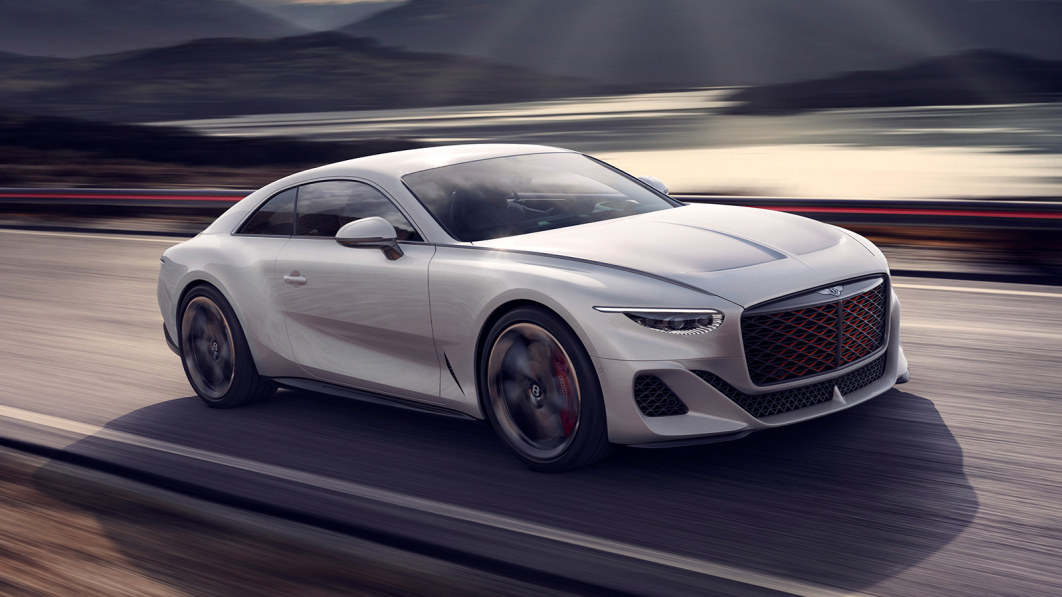
Bentley has revealed its second special Mulliner coach-built model, and it represents a crossroads for the brand. It’s called the Bentley Mulliner Batur, and it’s a sendoff for the core engine for Bentley, the twin-turbo W12. It’s also a sign of things to come. The styling you see here will be adapted for Bentley’s future electric cars.

The car is clearly Bentley right from the get-go. It has the long front end, the prominent, rounded rectangular grille, rearward placed cabin and wide, flowing rear fenders. But it has a more aggressive look than some recent Bentleys. The grille looks as though it’s leaning more forward. Instead of round headlights, it has sweptback units that look like eagle eyes. The rear glass, instead of kicking up, stays low along the belt line. The tail has almost a boattail look and has slender taillights. It’s Bentley, but it’s also new.

The inside is clearly closely related to the Continental GT, which is no bad thing. But it can be set apart with special materials. Buyers of the Batur will have the ability to customize almost every aspect of the car with different leathers from different locations, different interior trimmings and upholstery designs. Bentley is offering some very unique materials, too. Metal pieces such as the organ stop vent switches can be made from titanium or even 3D-printed 18-karat gold. Some of the interior trim can be made from a natural fiber composite, which is like carbon fiber, but made from naturally occurring fibers rather than synthetically created carbon. The natural fiber can be used for the front splitter, side skirts and rear diffuser as well. And of course the exterior can be customized with just about any paint and graphics imaginable.

Bentley says that the Batur is powered by the most powerful iteration of the twin-turbo 6.0-liter W12 yet. It makes 730 horsepower and 738 pound-feet of torque. It’s paired with adaptive air suspension, active anti-roll bars, all-wheel drive, four-wheel steering, an electronic limited-slip differential and torque vectoring to help it handle as well as it can go in a straight line. Stopping it are a set of carbon silicon carbide brakes with 10-piston front brake calipers and four-piston rears.

Only 18 Baturs will be built, and they’re all spoken for. Pricing started at 1.65 million British pounds, or $1.95 million. Though there will only be a few of these Baturs, keep an eye out for its design to show up in the Bentley EVs that are coming starting in 2025.

Related video:

1,600-hp Bugatti Mistral roadster marks the end of the line for the W16 engine

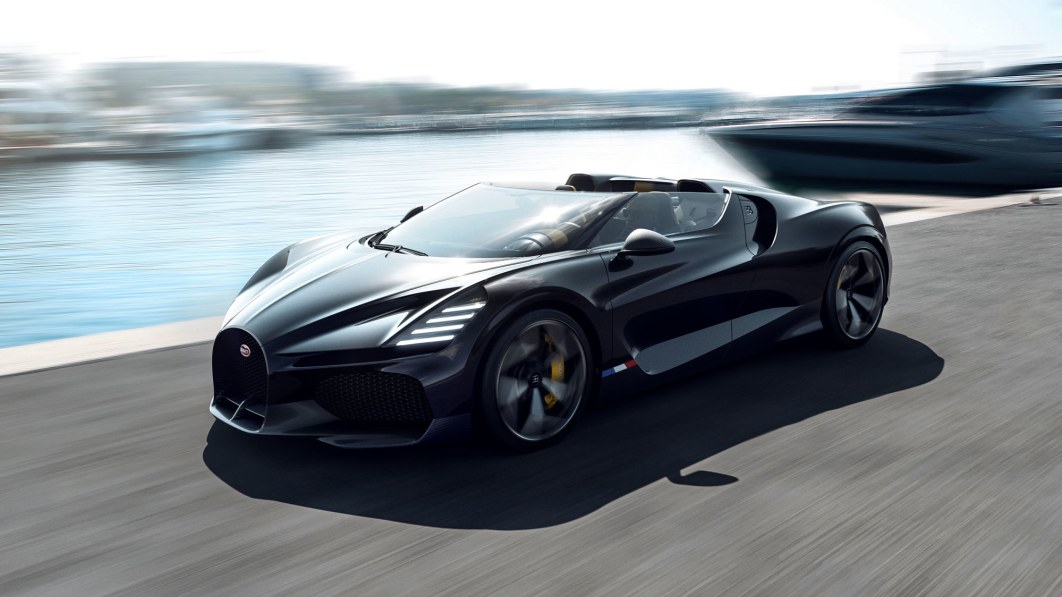
Bugatti’s mighty W16 engine will retire in the coming years, but it’s not sailing off into the sunset quietly. It will power one final street-legal car: a roadster named Mistral that stands proud as the first convertible of the Chiron era. Built due to customer demand, the Bugatti Mistral is a striking, limited-edition model that looks ready to add another speed record to the French firm’s trophy case. I sat down with some of the people who created it, including Bugatti design director Achim Anscheidt and head of design Frank Heyl, to get the droptop’s full story.

“For the final road-going appearance of Bugatti’s legendary W16 engine, we knew we had to create a roadster. Well over 40% of all Bugatti vehicles ever created have been open-top in design,” said Bugatti-Rimac CEO Mate Rimac. Heyl added that customers “begged” Bugatti to create a Chiron-derived convertible, and that granting them this wish was a “bucket-list” item for the members of his team.

Power for the Mistral comes from the same 8.0-liter, quad-turbocharged 16-cylinder engine that propelled the Chiron Super Sport 300+ to a record-breaking 304.773 mph in 2019. It’s rated at 1,600 horsepower, and it spins the four wheels via a seven-speed dual-clutch automatic transmission. Bugatti estimates that the Mistral’s top speed will check in at approximately 261 mph (420 kph). Will this number get verified? Hell, yes! “There can only be one goal in mind: to become the fastest roadster in the world once more,” Bugatti pledged in a statement.

While the Mistral is Chiron-based, Bugatti made several important structural changes to offset the inevitable loss of structural rigidity caused by chopping off the roof. Heyl explained that the monocoque’s sills and transmission tunnel were reinforced and that the a- and b-pillar structures are new, though the front crash structure is the same. And, the two models intentionally share no exterior styling cues.

“We had the pressure of creating something that is precious and valuable in a car collector’s garage. It’s not just a fashion statement: ‘Oh, let’s do a roadster!’ Or, even worse, ‘Let’s take a Chiron and just cut it open,’ which would have looked terrible. This burdens us with the responsibility that this is the last of its kind of that generation and how that’s going to sit in those collections,” Anscheidt told Autoblog.

Up front, the Mistral wears a redesigned rendition of Bugatti’s horseshoe grille and headlights with four LED strips (a configuration chosen as a tribute to the four-wheel-drive system and the four turbochargers) while the X-shaped lights characterize the rear end. There’s a lot more to the design than initially meets the eye, however. Heyl explained that his team added air curtains behind the headlights, for example. And, they separated the intakes that feed air into the engine from those that feed air into the oil coolers to avoid making the Mistral too wide. The former are now right above the front passengers, while the latter remain on the quarter panels. This setup brings a few unexpected benefits.

“The driver hears the air intake system and the turbo blow-off valves, and it’s very nice stylistically; it reminds us of the Vitesse,” Heyl said.

Interior designers kept the Chiron’s basic layout with a handful of exceptions such as new, more ergonomic seats. Check out the gear selector, too: It’s made of wood and features an amber insert with a replica of Rembrandt Bugatti’s “dancing elephant” sculpture. Bugatti told me this part is “just a proposal for the show car,” though it added that it will find a way to bring it to production if customers request it.

What if it rains? Act fast; The Mistral will come with what Anscheidt described as an “emergency roof” but it will not feature a fixed top.

Bugatti will cap Mistral production at 99 units, though it will build an additional car for testing purposes. Pricing is set at €5 million before taxes and options are factored in (about $5 million at the current conversion rate) and the entire production run is already spoken for. And, while many hypercars are only street-legal via loopholes, Bugatti went to significant lengths to fully homologate the Mistral around the world.

Is the Mistral the end of the W16? Sort of. It’s the last W16-powered street-legal car, Anscheidt explained that ever-stricter regulations are escorting the big engine off the stage, but the engine will also power the limited-edition Bolide that was developed exclusively for track use.

“To be honest, I can do all of the design talking that I want, but if we didn’t have the W16 engine [these cars] would not be worth half the money,” Anscheidt said. “The W16 is the ultimate [unique selling proposition] for the modern-day Bugatti brand, from 2005 to today. It means something to us. [The Mistral] is a tribute to this engine, and now we go on to the next generation and think about something else,” 

Related Video

Koenigsegg livestreaming debut of ‘latest family member’ at 12:00 EDT Friday

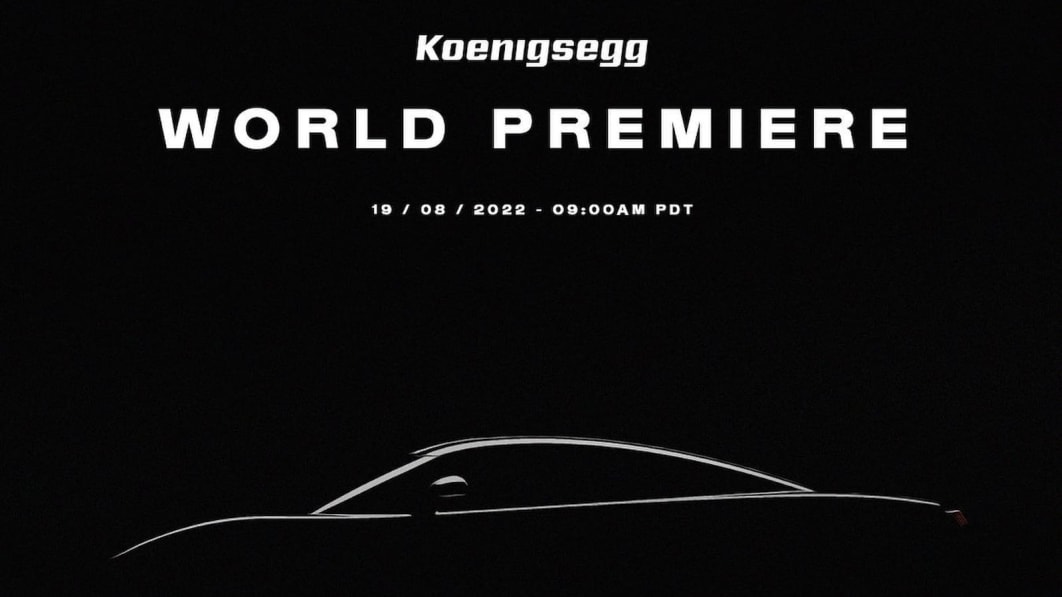
On January 1 this year, Koenigsegg teased a new vehicle on Instagram with the caption, “Dear 2022, here’s our New Year’s resolution – More ultimate performance through clever engineering and optimal design.” The company broke its ensuing silence Thursday night by teasing a live debut to begin at 12 p.m. Eastern / 9 a.m. Pacific in Pebble Beach. The teaser image boasts a silhouette that looks like the CC8, the Swedish manufacturer’s first car, with the addition of a roof scoop. Beyond that, we have nothing more than gathered speculation as to what it could be.

There’s the entry-level Koenigsegg that founder Christian von Koenigsegg has said for a while that he wanted to release. There’s the CC12 project with Swiss retailer and supercar garage Carage, which appears based on the CC8S production prototype and would satisfy the note about “ultimate performance and clever engineering,” but the timing is off; in April, Carage owner Kim Struve said the CC12 would “be released in a year’s time.” The Supercar Blog has heard this new thing could be Christian’s 50th birthday gift to himself, called the Annira or the CC850S, packing more than 1,300 horsepower into a 1,300-pound curb weight and fitted with a “magic transmission.” Some surmise it’s Koenigsegg finally reckoning with a battery-electric vehicle, but we think that’s the longest shot of all. He told CarBuzz two years ago, “It actually would be much easier for us to just do a pure electric car, because we could throw away complexity but add weight. But I’d rather have complexity in the super expensive sports car than add weight.”  

That seems to us to be enough guessing for today. The only other rumors we’ve heard that we would believe true are that there will be a tiny production run and every unit is already sold out. We have but a few hours to find out what’s really happening. Based on the company’s products since, oh, ever, it will probably be special.

Related Video