All posts in “Home”

The Complete Buying Guide to Lodge Cast-Iron Skillets and Cookware

It goes like this: Blacklock Foundry began as a 25-man iron casting company making kettles, pots, broilers and skillets in South Pittsburgh, Tennessee. After a fire destroyed the facility in 1910, its founder, Joseph Lodge, reopened with a new name: Lodge Manufacturing.

In the 120 years since, Lodge has become the name in cast-iron cookware. Unlike many of today’s small-production manufacturers, Lodge proudly makes its cast-iron skillets, ovens, griddles and grill presses for the masses. Here’s your guide to its most notable offerings, today.

Cast-Iron Skillets

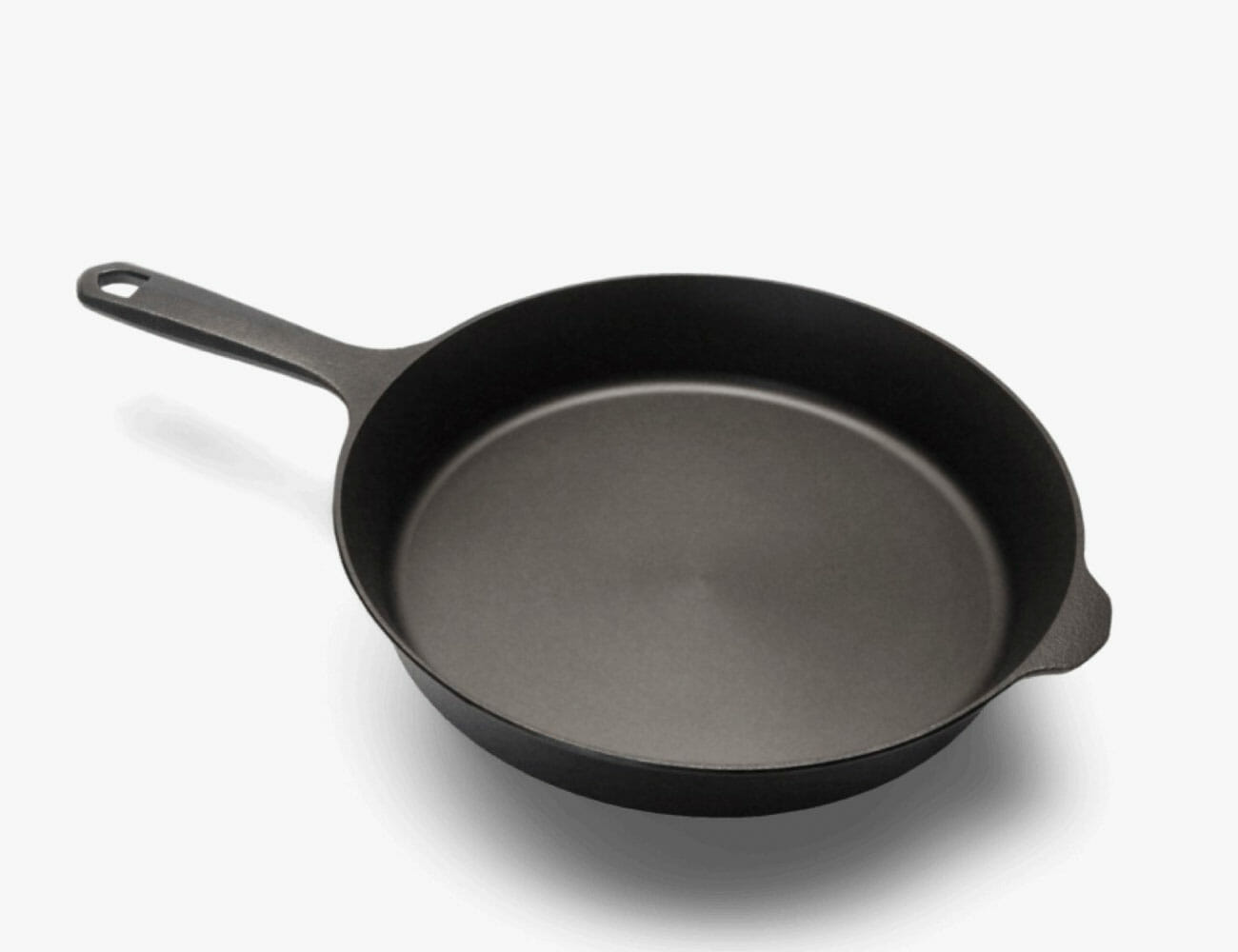
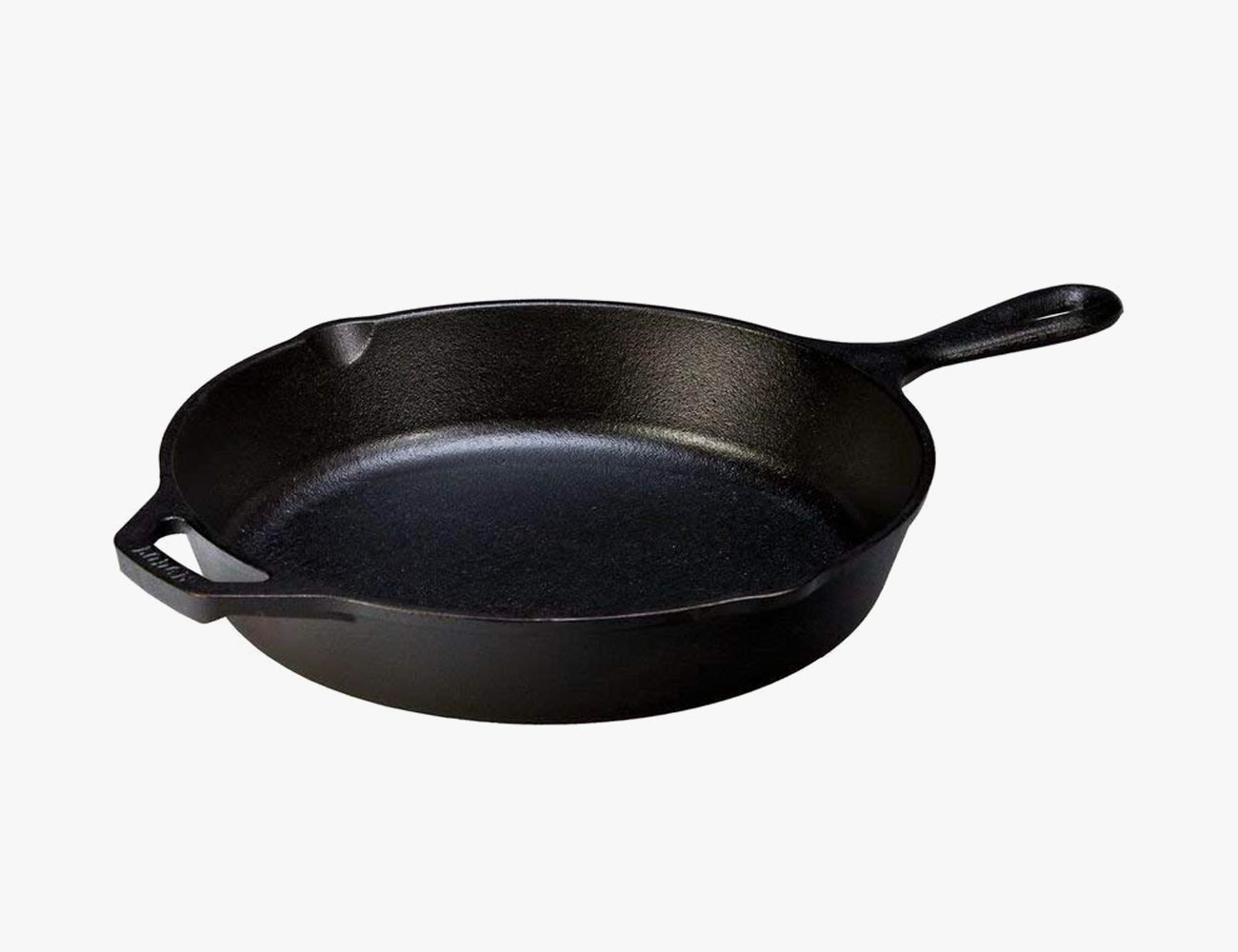
Cast Iron Skillet
Lodge’s bread-and-butter product seems like it’s been around for ages. It hasn’t. The company shifted from a hand-poured casting system to total machine casting in 1950, and it wasn’t until the early 2000s that Lodge began pre-seasoning all of its standard cast-iron skillets. Both were good moves. In the last two decades, Lodge has quadrupled its manufacturing capabilities to meet a new demand for cast-iron cookware. The standard skillets are heavy and a little rough around the edge. But they come pre-seasoned and start at all of five bucks. You won’t find a more accessible combination in all of cookware.

Sizes Available: 3.5-inch to 15-inch

Chef Collection Skillet
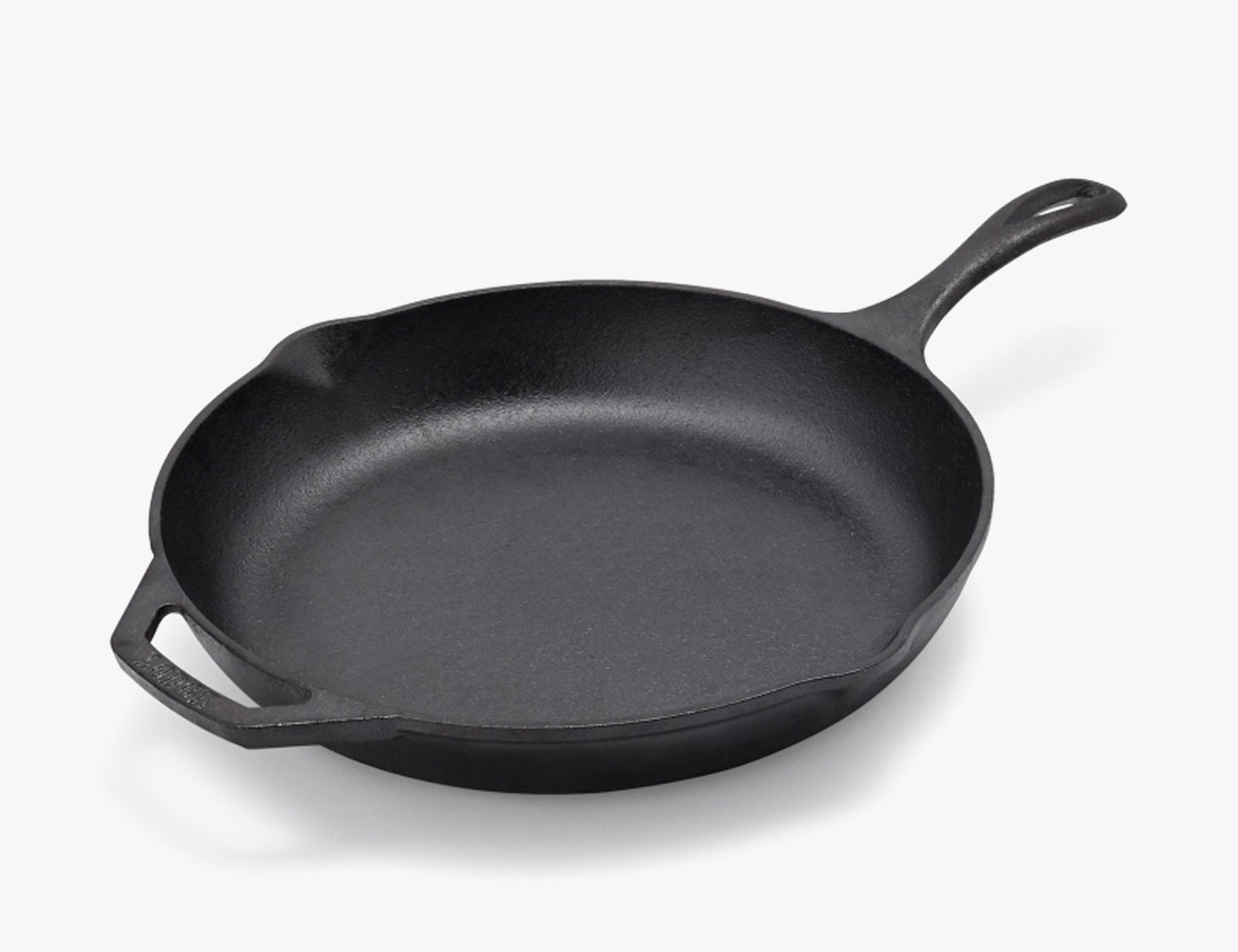
Sizes Available: 10-inch, 12-inch

The newest of Lodge’s skillets, released in early 2019, is 15 percent lighter than its standard skillet — a cut that drops half a pound from the 10-inch pan and more than a pound from the 12-inch. The Chef Skillet also sports longer handles with a more ergonomic taper and more gently sloping side walls. Altogether, the Chef Skillet is a slightly pricier, more maneuverable cast-iron skillet.

Pro-Logic Cast Iron Skillet
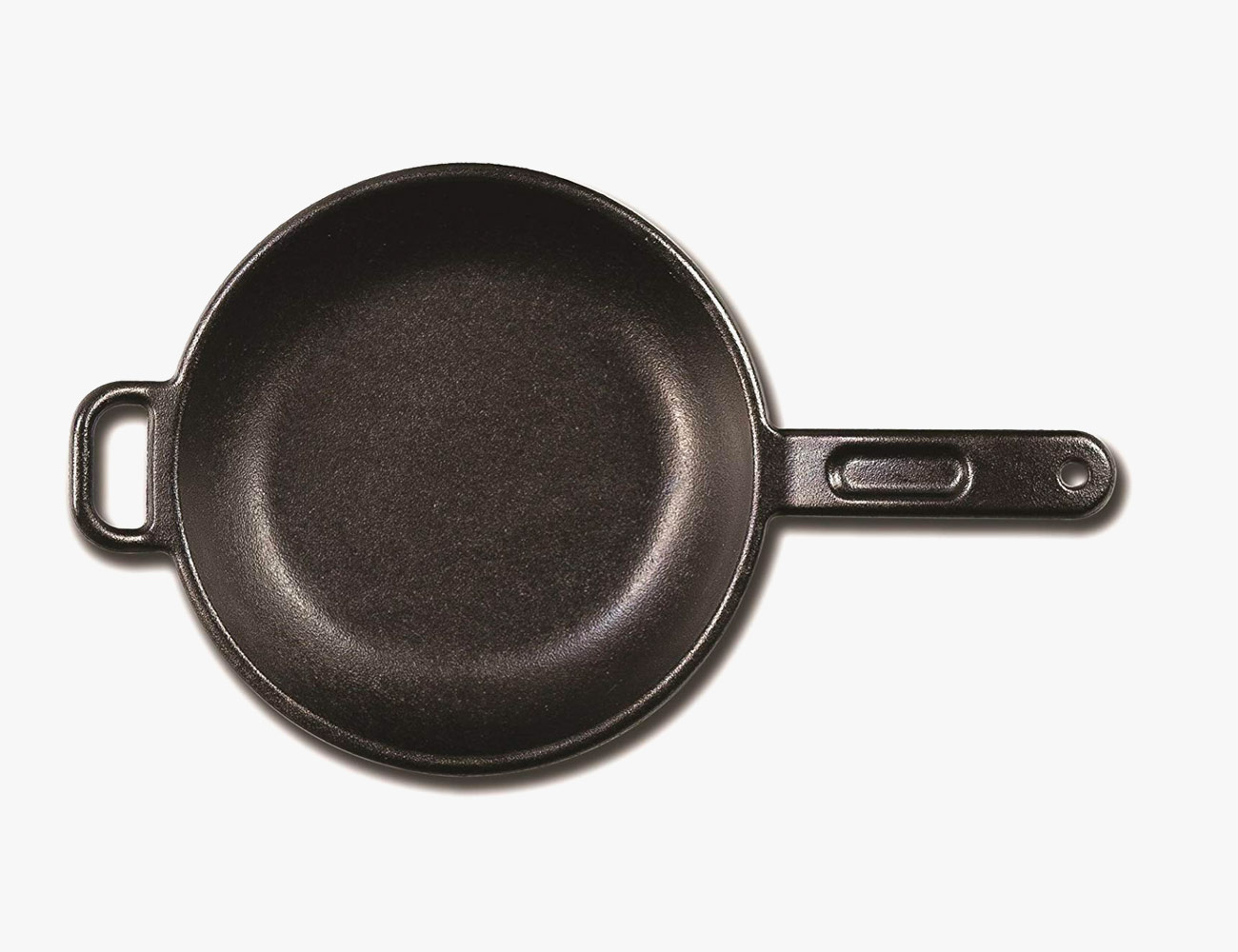
Sizes Available: 10-inch, 12-inch

Released in 2002, the Pro-Logic pan is something of an anomaly. It’s the only Lodge skillet that doesn’t feature the company’s trademark teardrop handle eyelet; it was also the very first cast-iron skillet to come pre-seasoned, a feature that’s since become industry standard. It’s also got a much more pronounced, upward-bending front grip and much more naturally sloping walls compared to the standard skillet.

Deep Skillet
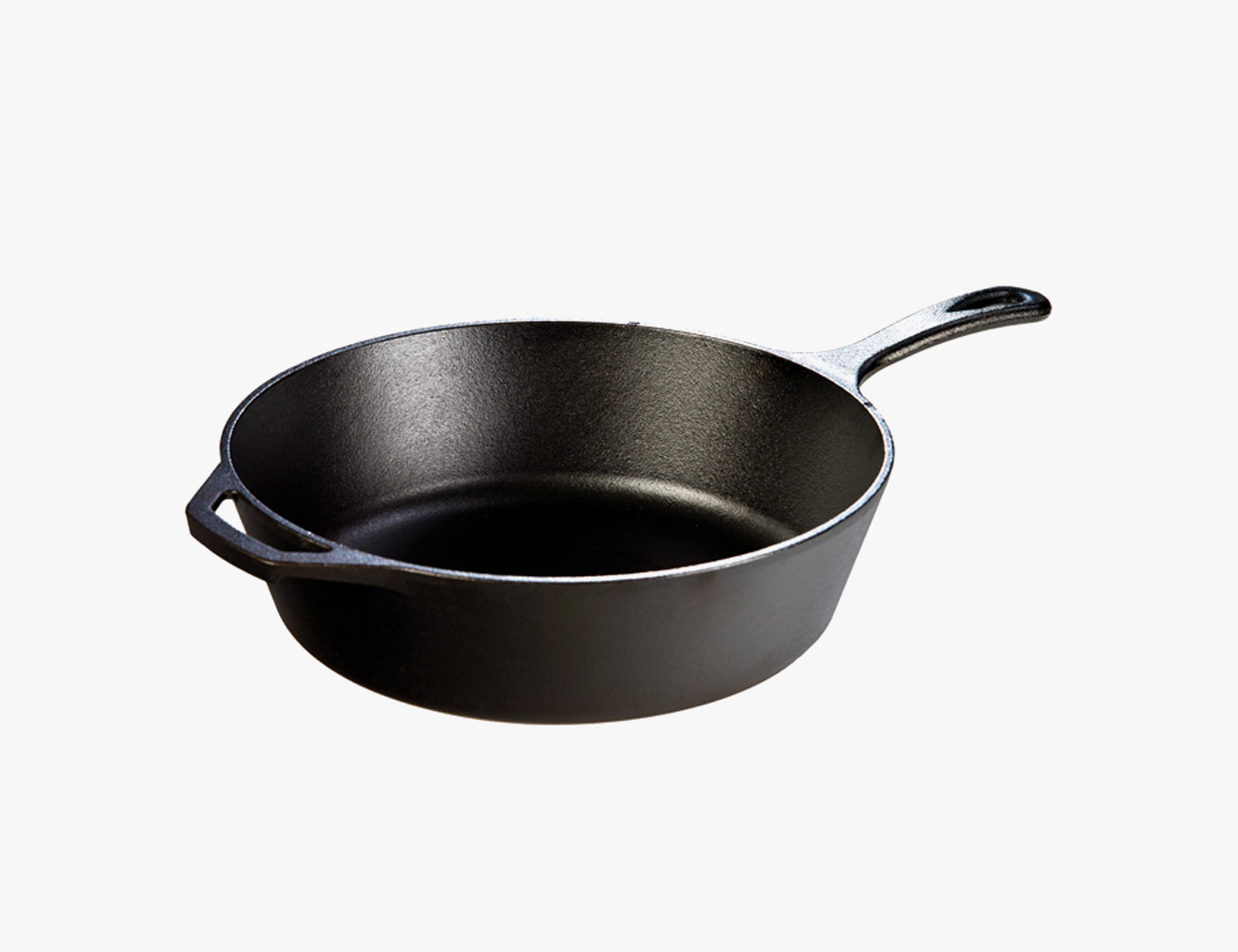
Sizes Available: 10.25-inch, 12-inch, 3.2-quart, 5-quart

The deep skillet is the most straightforward of the bunch — think of it as Lodge’s standard skillet with higher walls. That increases the weight but also your cooking options. Deep skillets can act as vessels for true deep frying, baking breads, deep dish pizza and just about everything else.

Pans

Cast Iron Pan
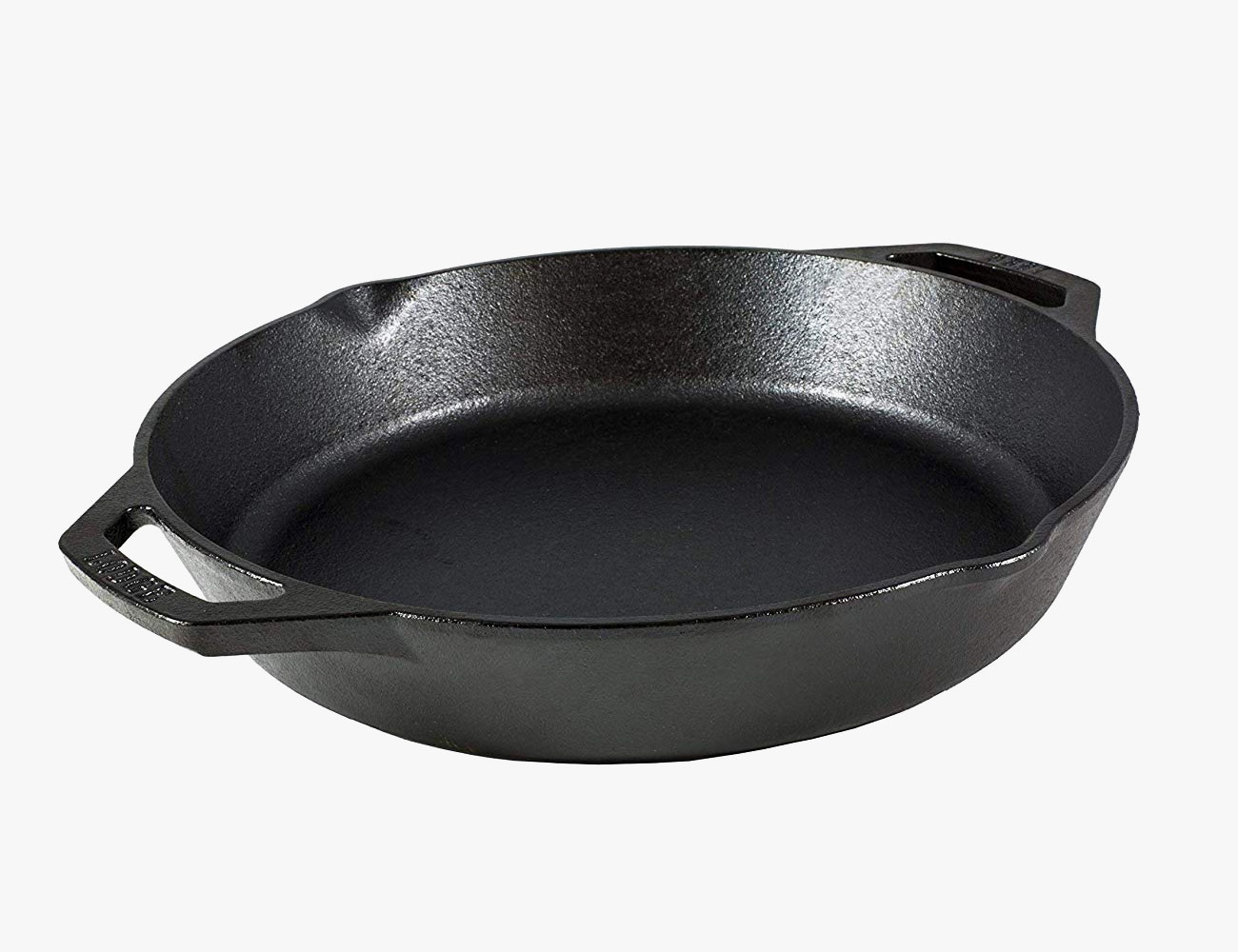
Sizes Available: 8-inch, 10.25-inch, 12-inch, 17-inch

Pans are not skillets. Lodge’s cast-iron pans are handle-less and instead sport grips on either side. Why? The lack of handle means it takes up less space — making it an especially adept baking tool (where space is limited) or stovetop sitters. The dual grips are especially useful with the larger sizes, too, as you’re not going to be able to lift a 17-inch skillet with one hand anyway.

Chef Collection Everyday Pan
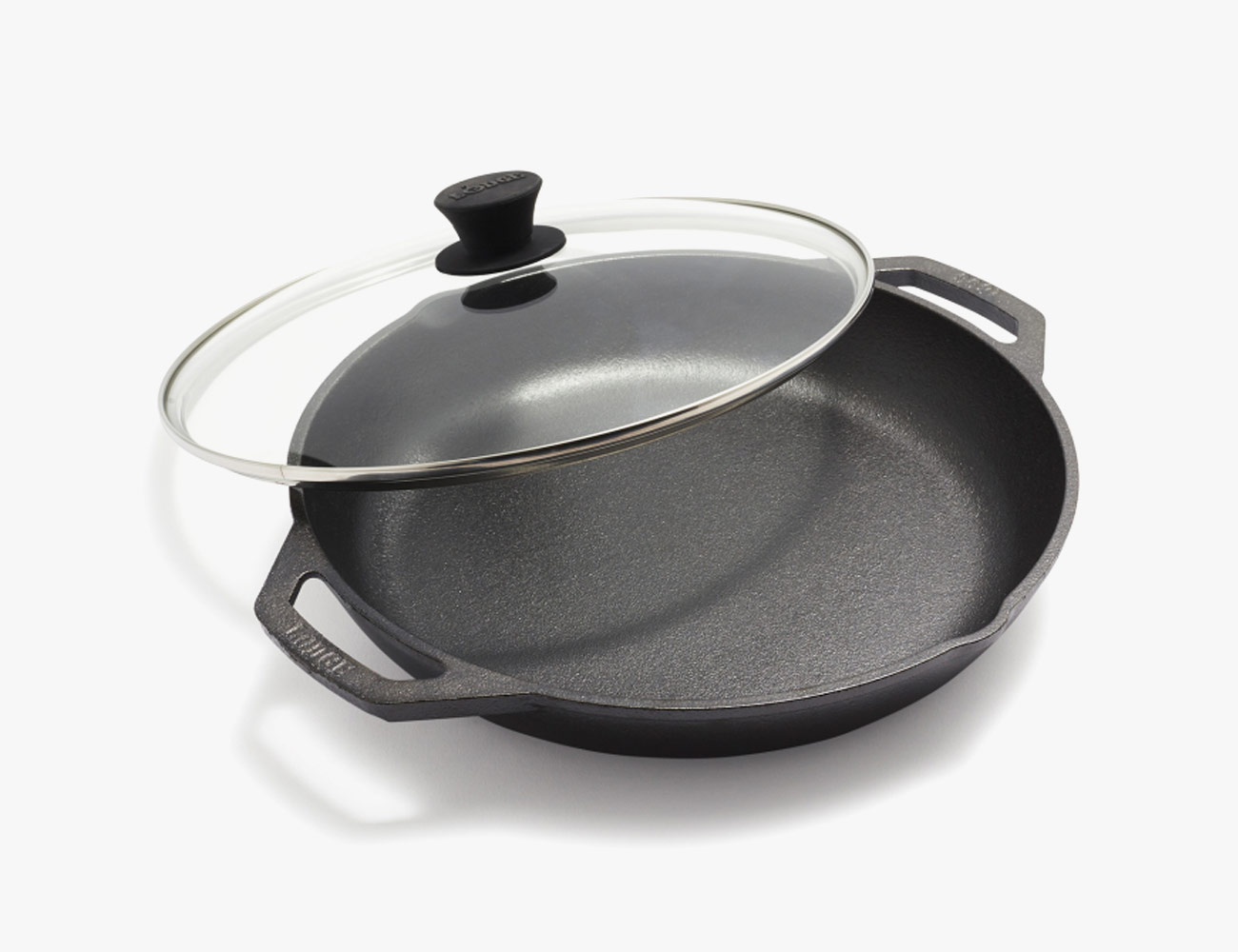
Sizes Available: 12-inch

The lighter, lid-toting cousin of the standard cast-iron pan adds pour spouts and is a lot more expensive. Like all Lodge pans, it comes pre-seasoned and ready to cook out of the box.

Dutch Ovens

Dutch Oven
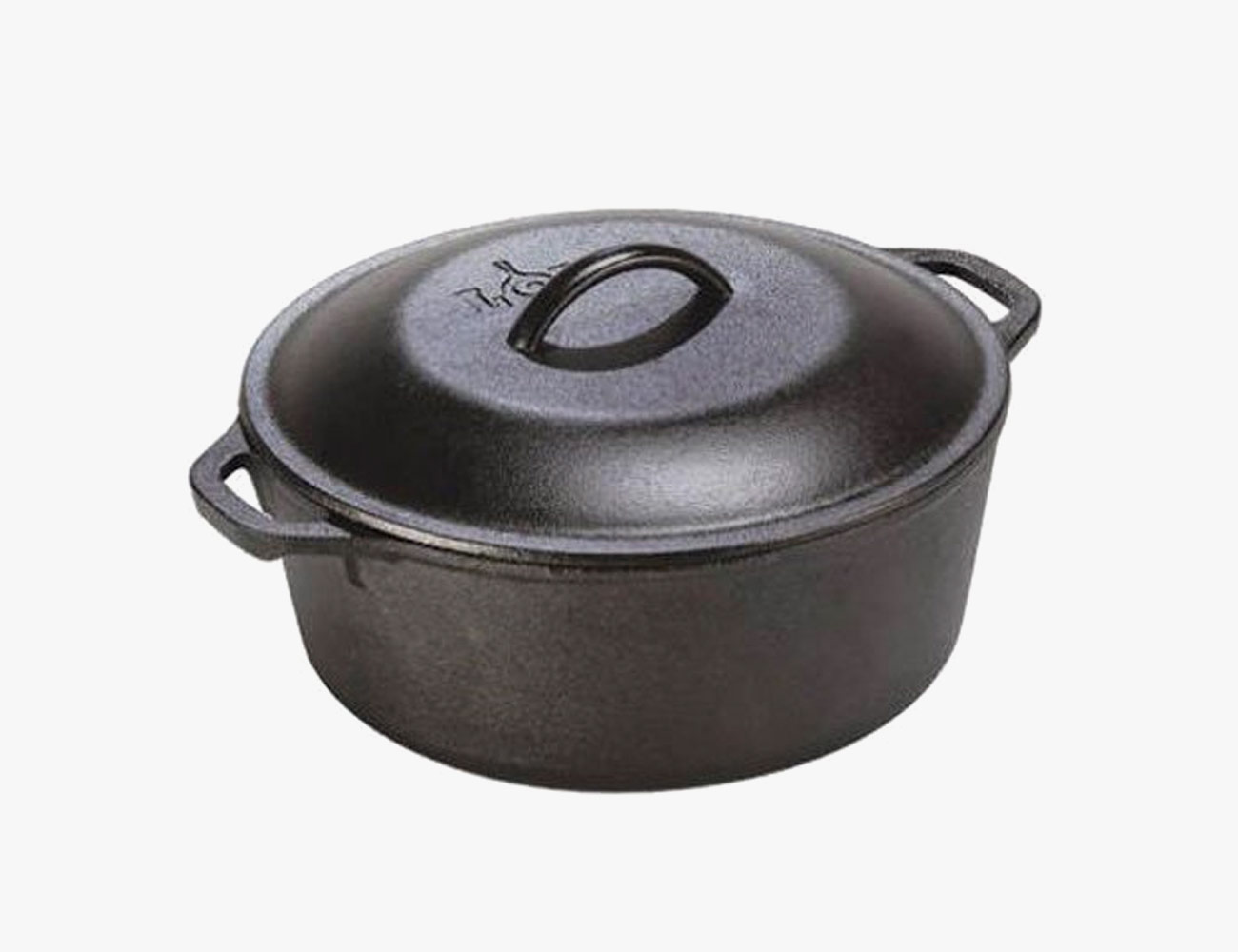
Sizes Available: 2-quart, 5-quart, 7-quart

Unenameled Dutch ovens feel a bit antiquated nowadays. Enameling means you don’t have to season anything and you can clean with all the soap your heart desires. But, unenameled iron still outshines its enameled counterparts when it comes to searing (enameling lowers the cookware’s heat ceiling) and cooking outdoors. Why? Potential chipping issues aside, has anyone ever brought a $300 Le Creuset to a campsite?

Enameled Dutch Oven
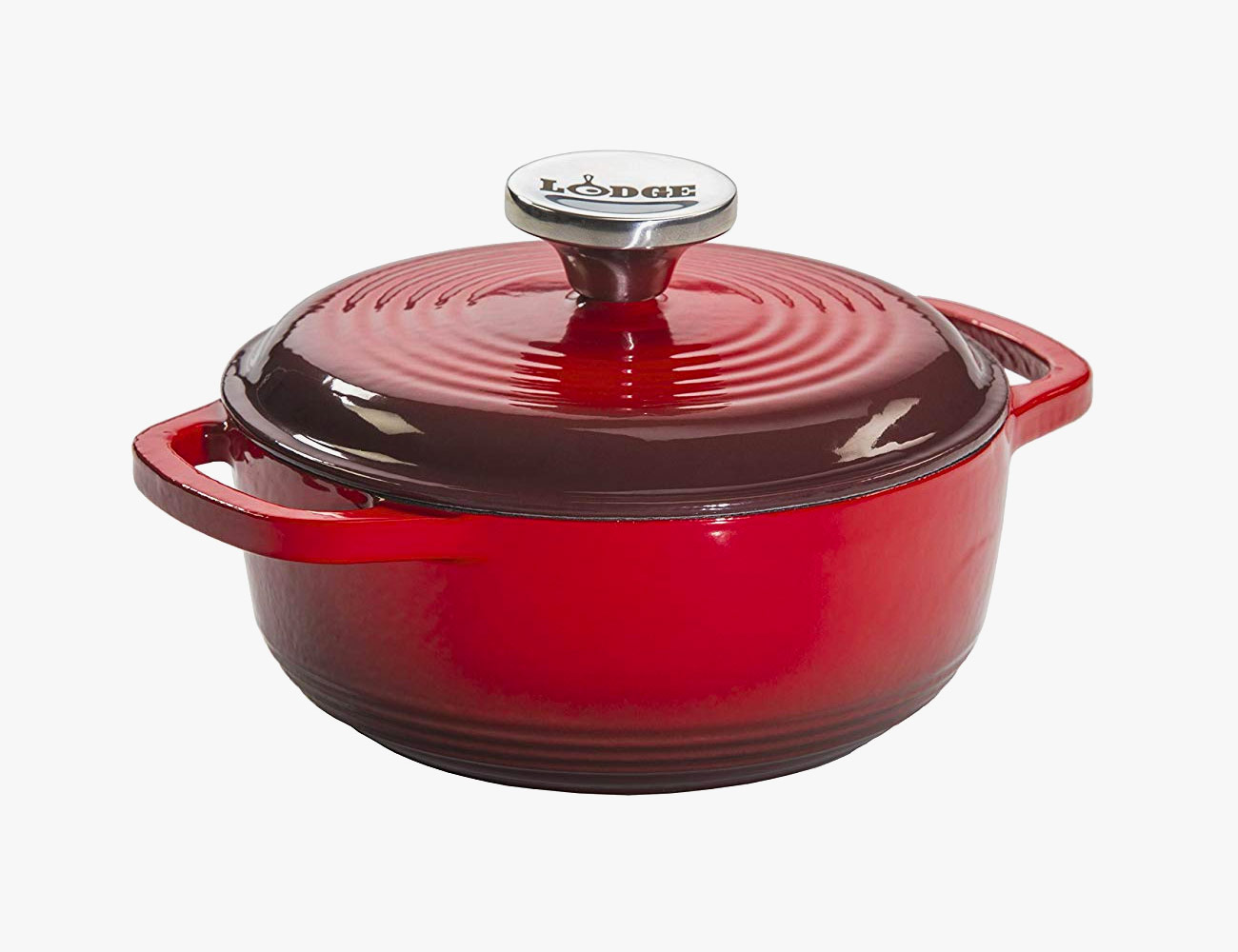
Sizes Available: 1.5-quart to 7.5-quart

Lodge did to the classic Dutch oven what it did to the cast-iron skillet: it took an expensive market and turned it on its head. Where Staub, Le Creuset and others of their ilk charge hundreds for a single pot, Lodge’s full-sized enameled Dutch ovens run in the mid-$50 range. There’s plenty of color and size options, too.

Double Dutch Oven
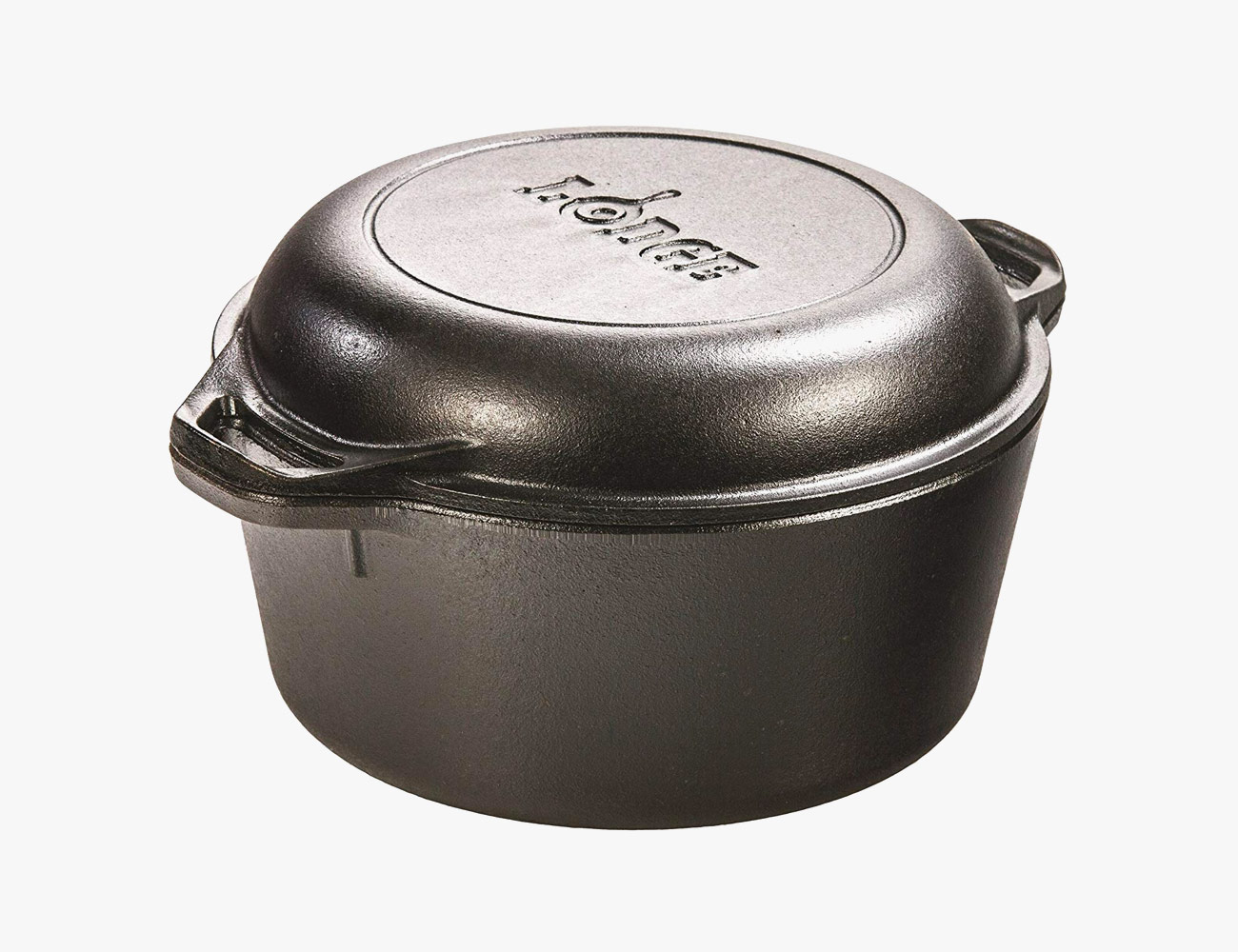
Sizes Available: 5-quart

What’s different about this unenameled pot? Its domed lid is also a cast-iron pan. Other than the obvious value of having both, it also makes for a much more rounded lid top, a helpful attribute for those baking high-rising breads.

Camp Dutch Oven
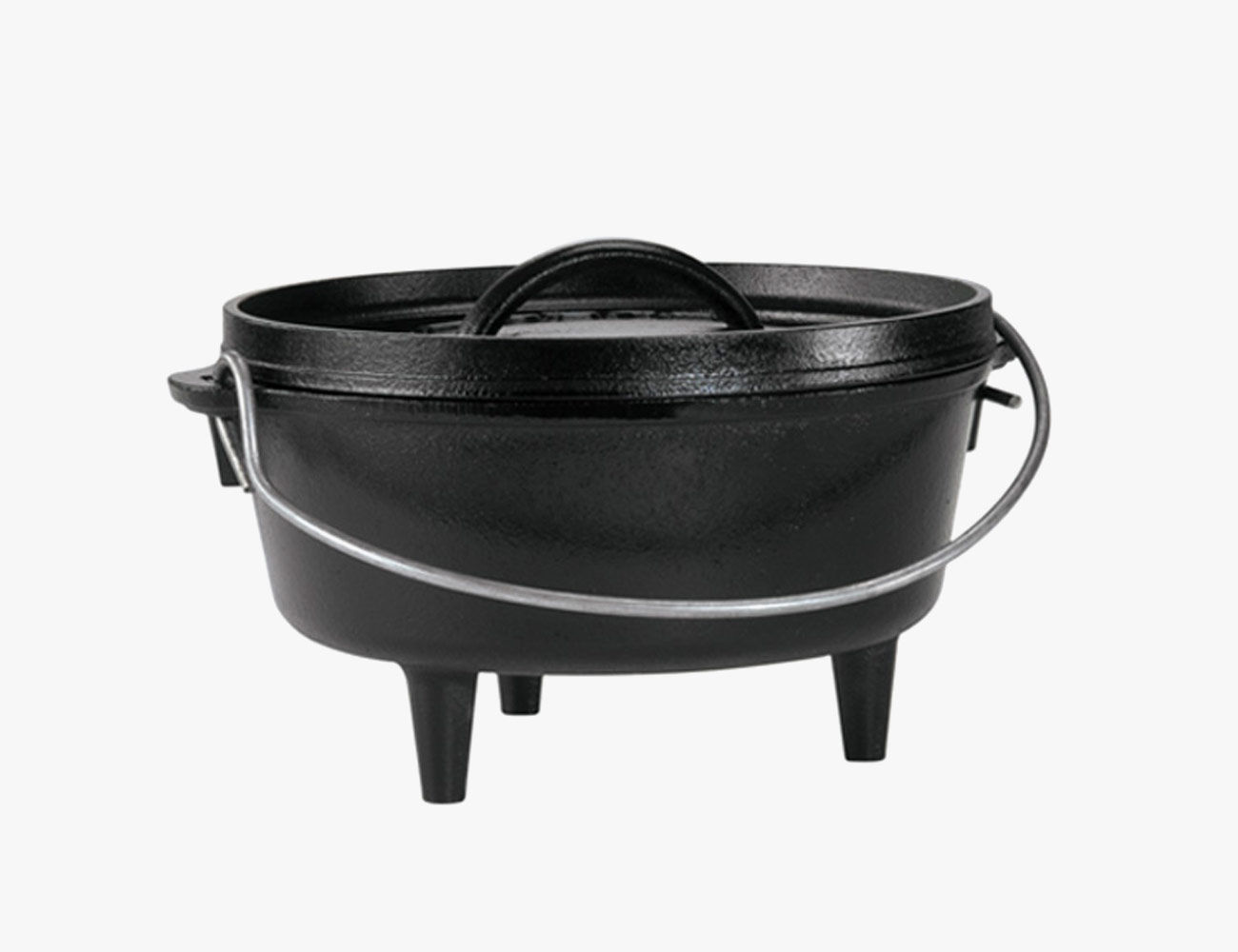
Sizes Available: 1-quart, 2-quart, 4-quart, 8-quart

A campfire staple. Lodge’s big, heavy, affordable camp oven comes with a ridged lid to place hot coals onto, legs to keep it stable and a handle to hang it over a roaring fire beneath. The lid flips over into a griddle, too. A word to the wise: be careful not to put the pot too far into a larger fire — temperatures that high can very easily melt what seasoning you’ve developed on your rig.

Pro-Logic Dutch Oven
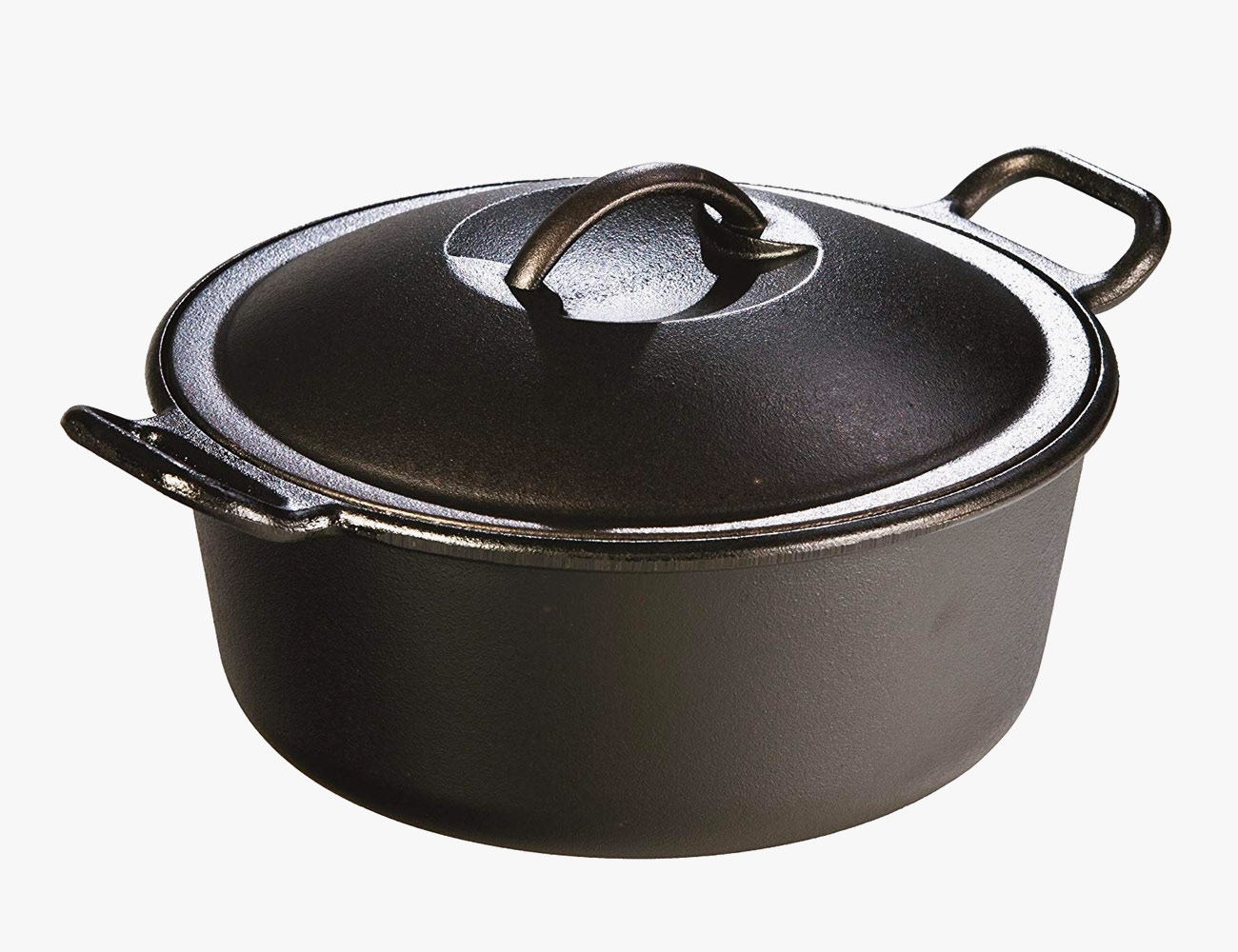
Sizes Available: 4-quart, 7-quart

The Pro-Logic version of the unenameled Dutch oven is more or less the same, but built with a more ergo-focused lid and side grips.

Specialty Cast Iron

Grill Pan
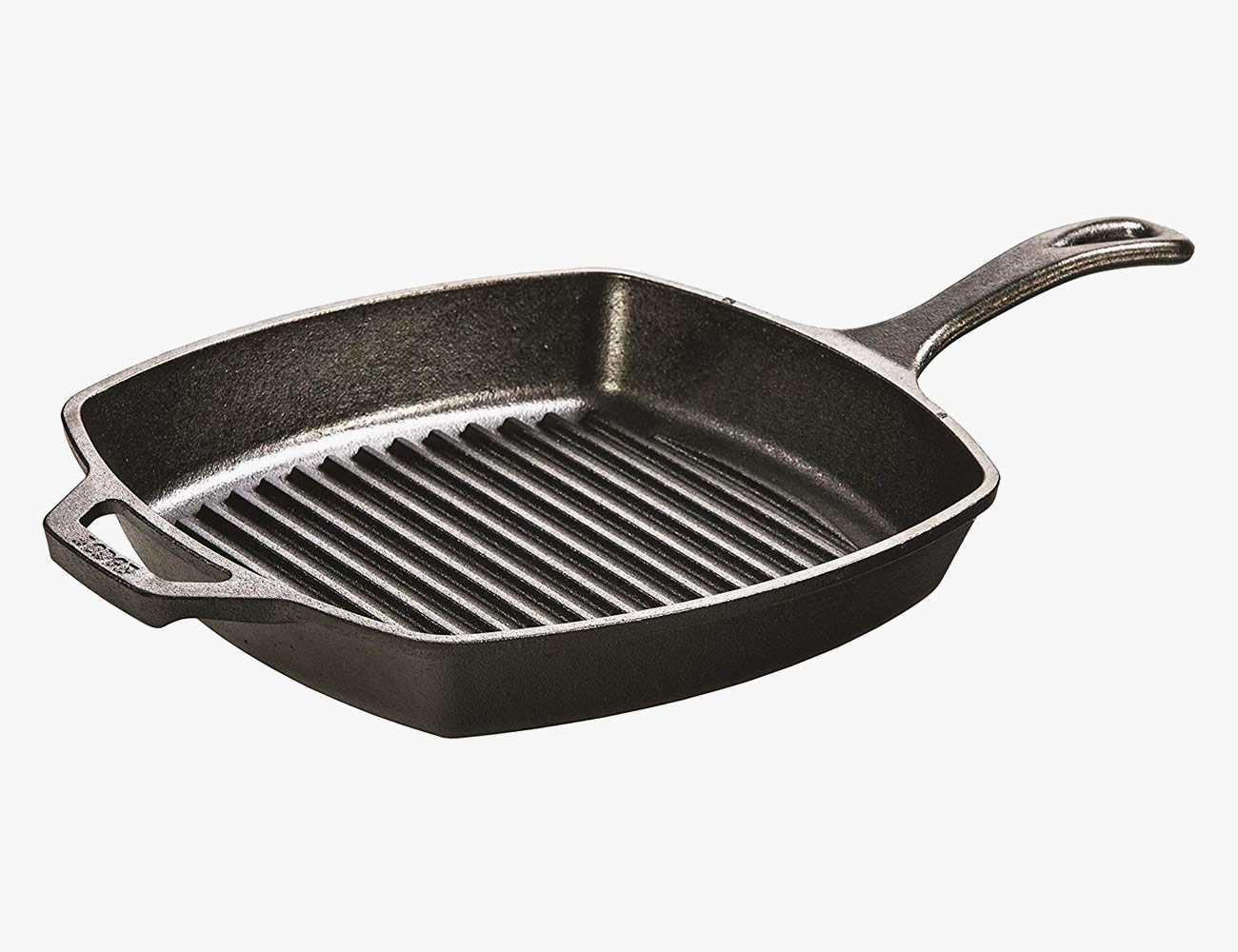
Sizes Available: 10.5-inch

Other than applying aesthetically pleasing grill marks to steak, pork chops and all manner of vegetables, the grill pan is different from the everyday skillet in that it renders fat away from food instead of cooking food in it. Hot tip: buy the grill pan-specific scrapers.

Grill Press
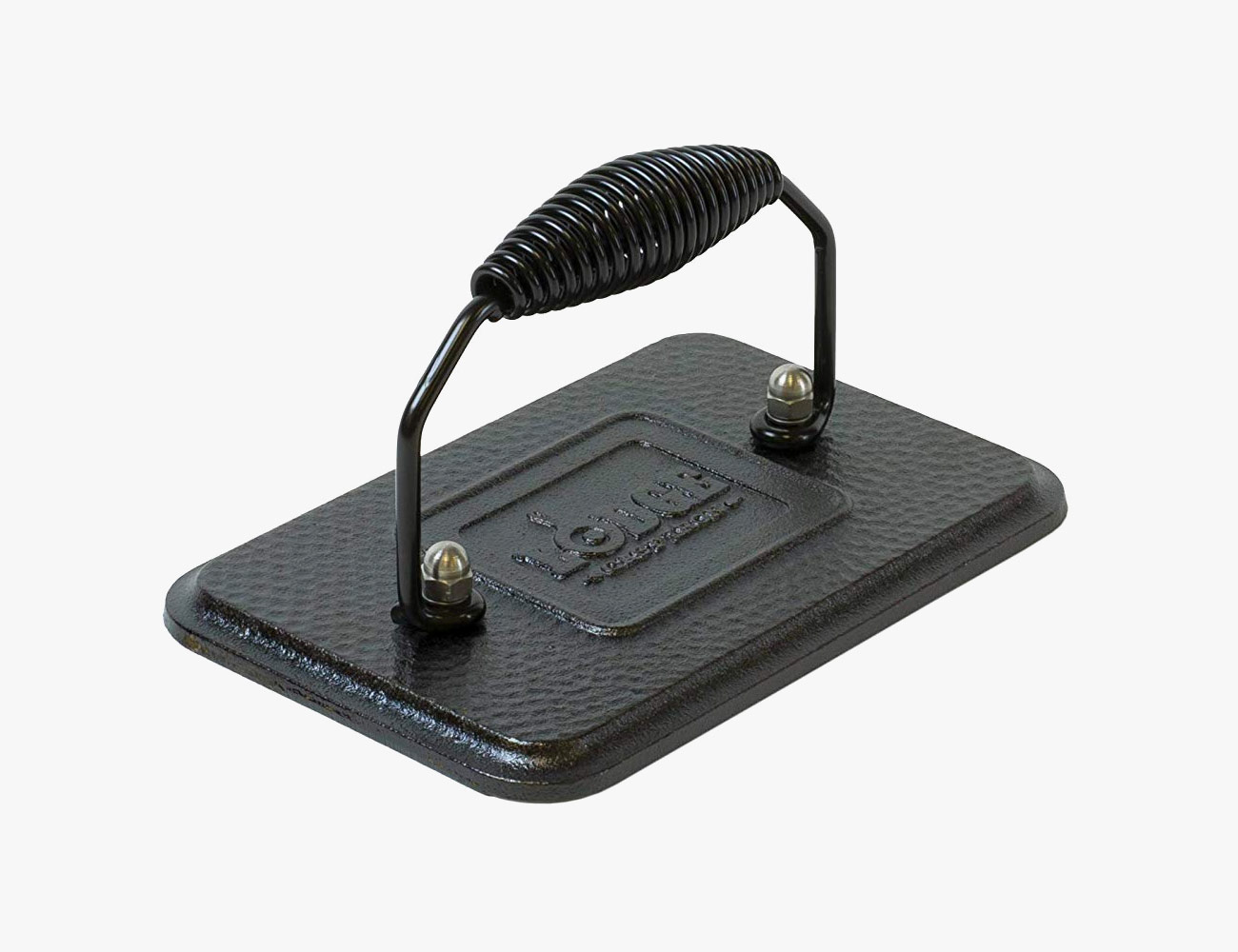
Sizes Available: One size

This three-pound weight flattens curly bacon, pork chops and weirdly shaped chicken thighs. Beyond ensuring a more even sear, it also levels out the thickness in larger cuts of meat, so especially meaty chicken breasts will cook a bit more evenly.

Reversible Grill and Griddle Combo
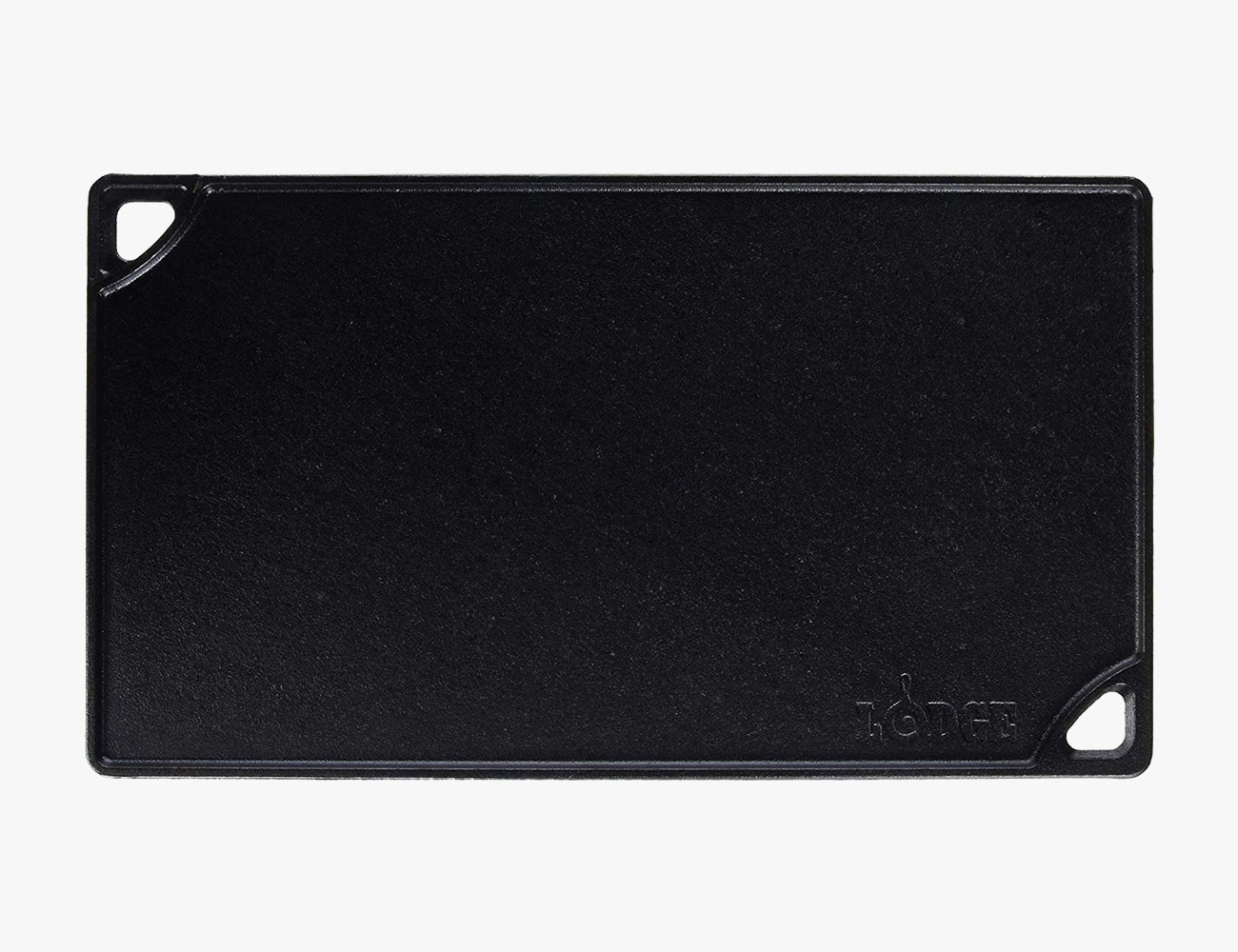
The simplest way to turn your kitchen into a diner? Place the heavy-duty combo griddle over adjacent burners and crank out pancakes, paninis and bacon with room to spare. Uuse the flip side when the weather is too bad to go outside. Pairs perfectly with the grill press.

Aebleskiver Pan
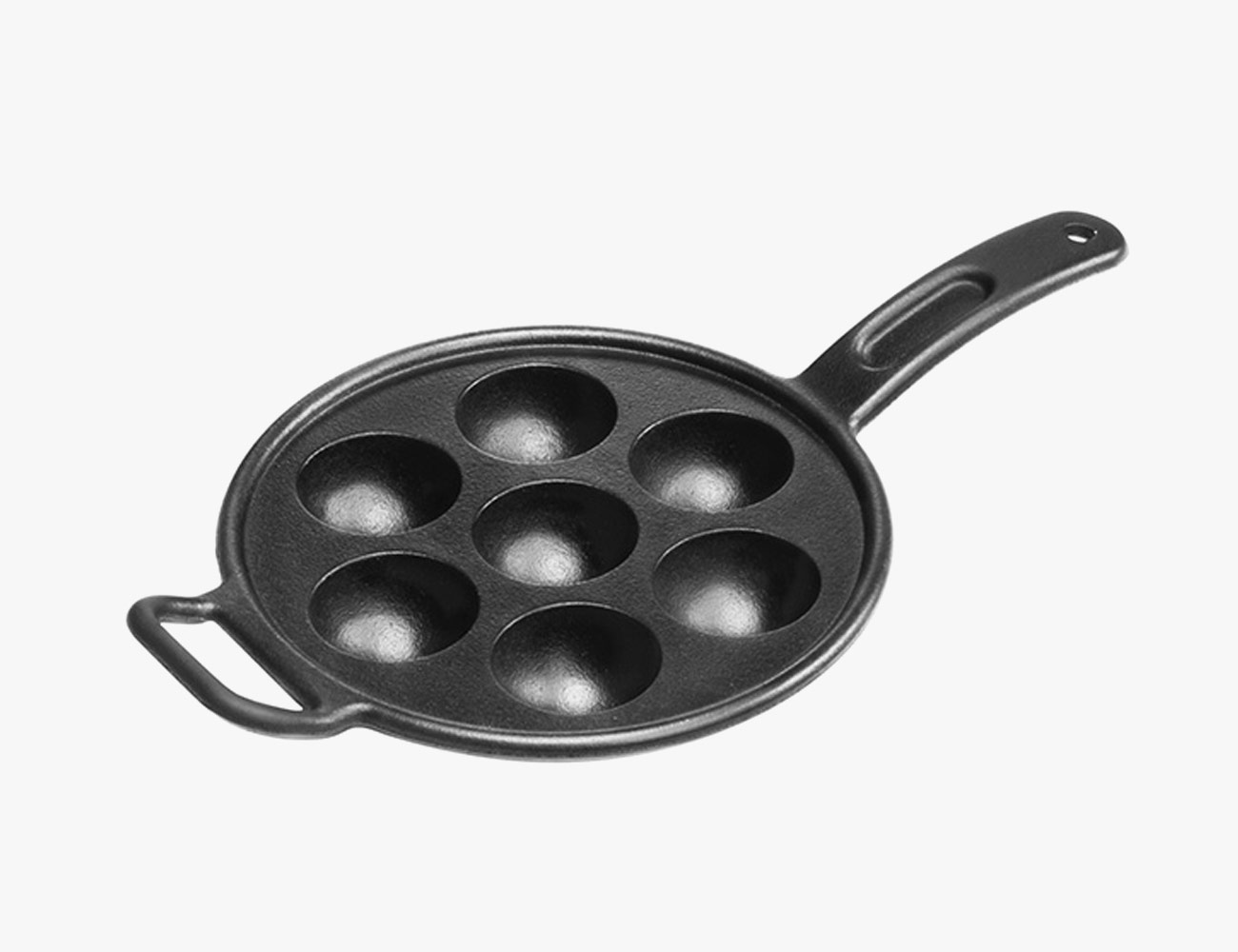
Single-use cookware isn’t usually Lodge’s thing, but its Aebleskiver pan is an exception. And if you don’t already know about the fluffy Danish pancake balls, you have some reading to do.

The 7 Best Beer Glasses You Can Buy in 2019

In quality, snootiness and overall variety, specialty glassware has risen hand-in-hand with the craft beer industry. Where once there were few options beyond beer steins and pint glasses, drinkers will find a wealth of options. From cheap restaurant glasses to Zalto’s beer-toting perfection, these are the best beer glasses you can buy right now.

Rastal Teku


The Teku glass is beer’s equivalent of the Zalto Universal wine glass. This is to say, it’s the benchmark by which every other glass is measured. Its wide base and narrow, thin-lipped top act to flush beer smells to the nose, and running against most other stemware, the glass is thick and won’t chip or break easily.

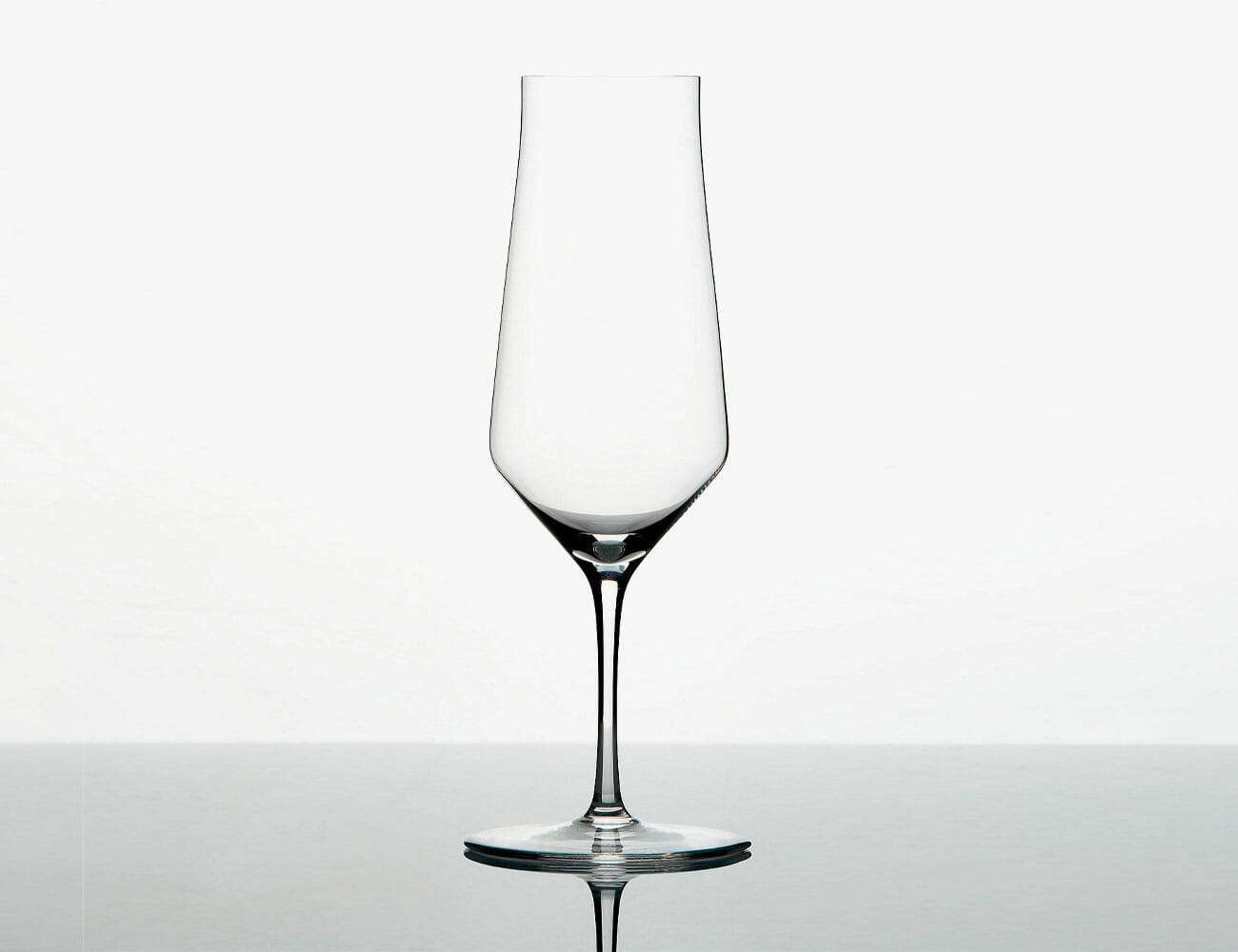
Zalto Beer Glass


If Teku glasses are the Zaltos of the beer world, Zalto’s own glass is something else altogether. Its blown by hand using the same lead-free glass as its other stemware, yet manages to be crack- and chip-resistant. The classic deep tulip shape is ideal for pilsners and their ilk.

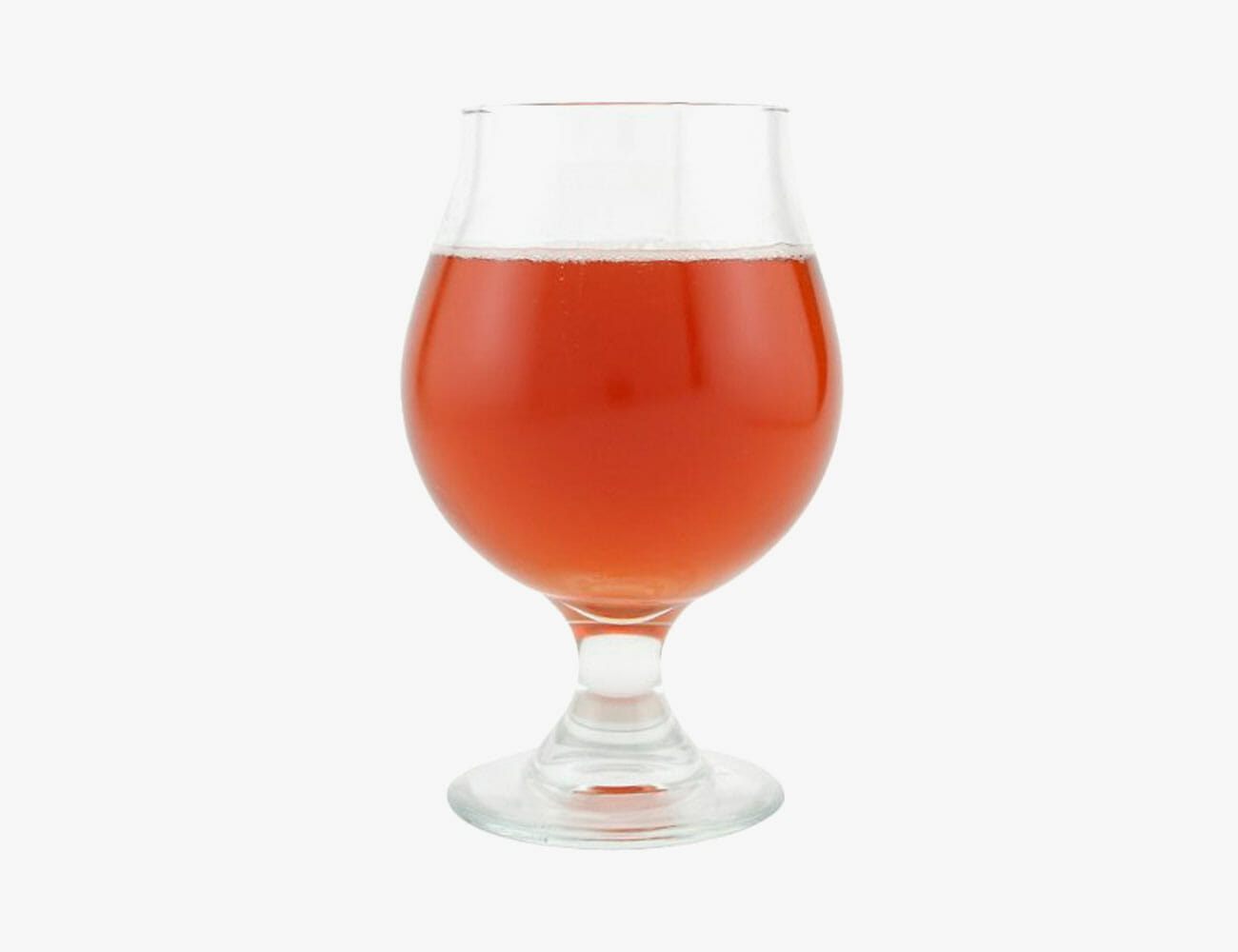
Libbey Belgian Beer Glass


Meant for the endless varieties of Belgian beer, these wide and short glasses allow room for the drinker to swirl, agitate and sniff what it is they’re about the throw back. This specific glass is significantly thicker and sturdier than most Belgian-style glasses — if you want something with more finesse look toward Bormiolo Rocco’s brandy glass.

Spiegelau IPA Glass


Lead-free, lightweight, thin and especially adept at flushing heavy hop notes to the nose, the IPA glass is an aggressive departure from what folks expect from a beer glass. Though it’s questionable whether the peculiar honey wand-shaped base aerates your beer as some avid fans say, it’s still a pretty excellent glass.

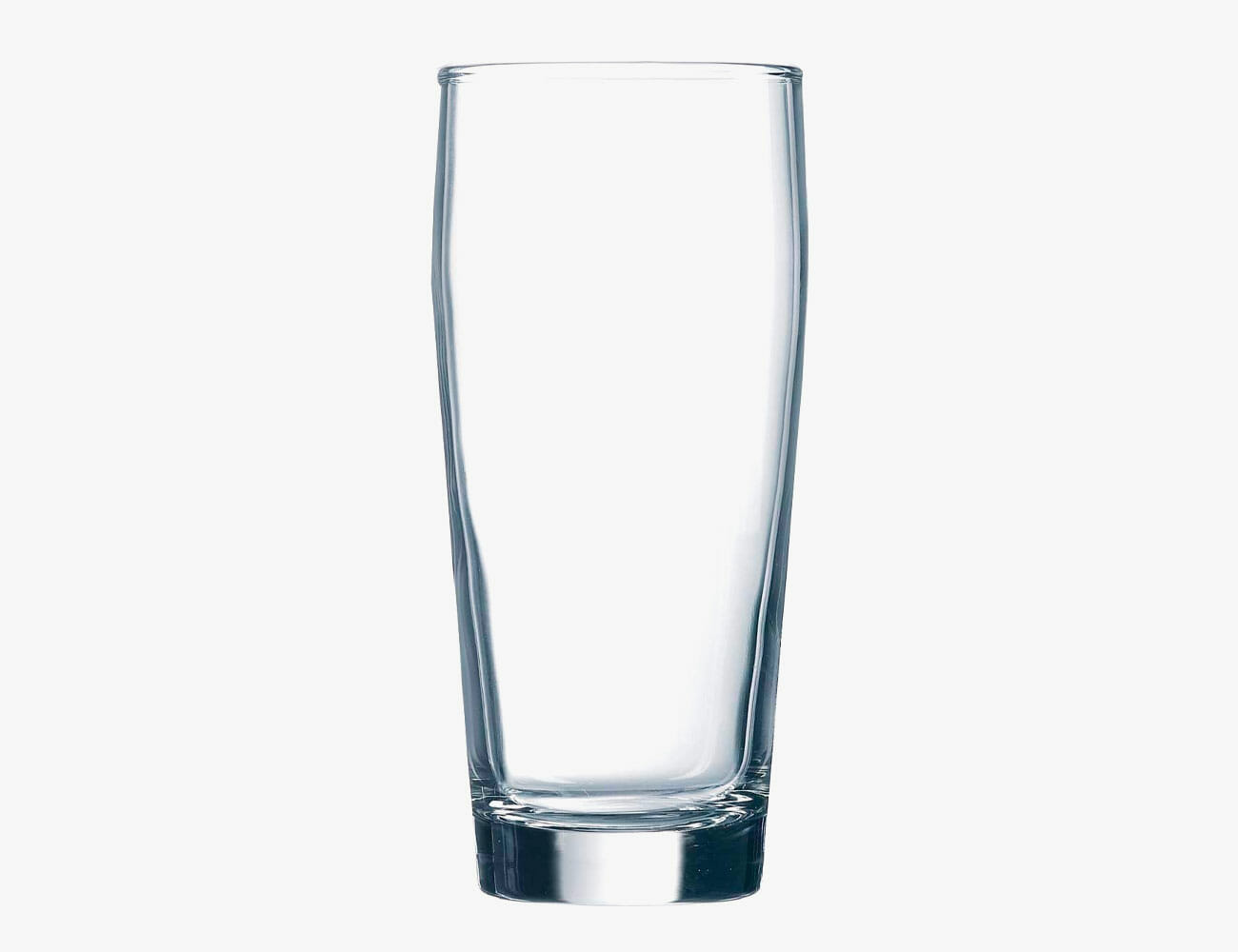
Willi Becher Tumbler


The Willi Becher is a shift away from the classic conical pint glass into something more elegant — a pint glass with a heavier base and slightly tapered silhouette. It’s ideal for pilsners and lagers, and it has managed to worm its way into many a taproom in the U.S.

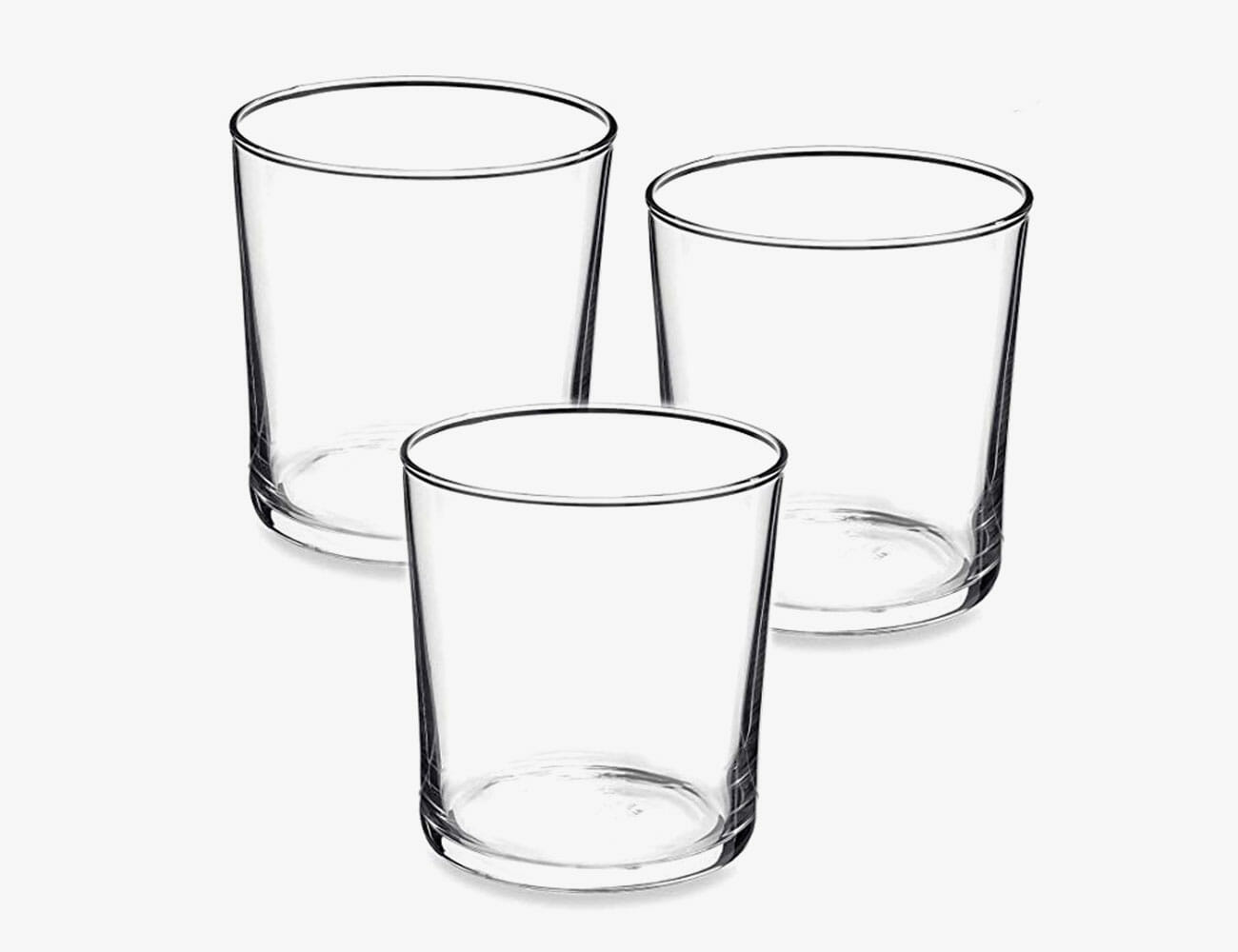
Bormioli Rocco Bodega Glasses


Apart from looking good, the best part of Bormioli’s excellent glasses is that they’re not just for beer. Long popular with bars and restaurants for their toughness and low cost, the Bodega glass is starting to pop up in even the most orthodox of beer joints.

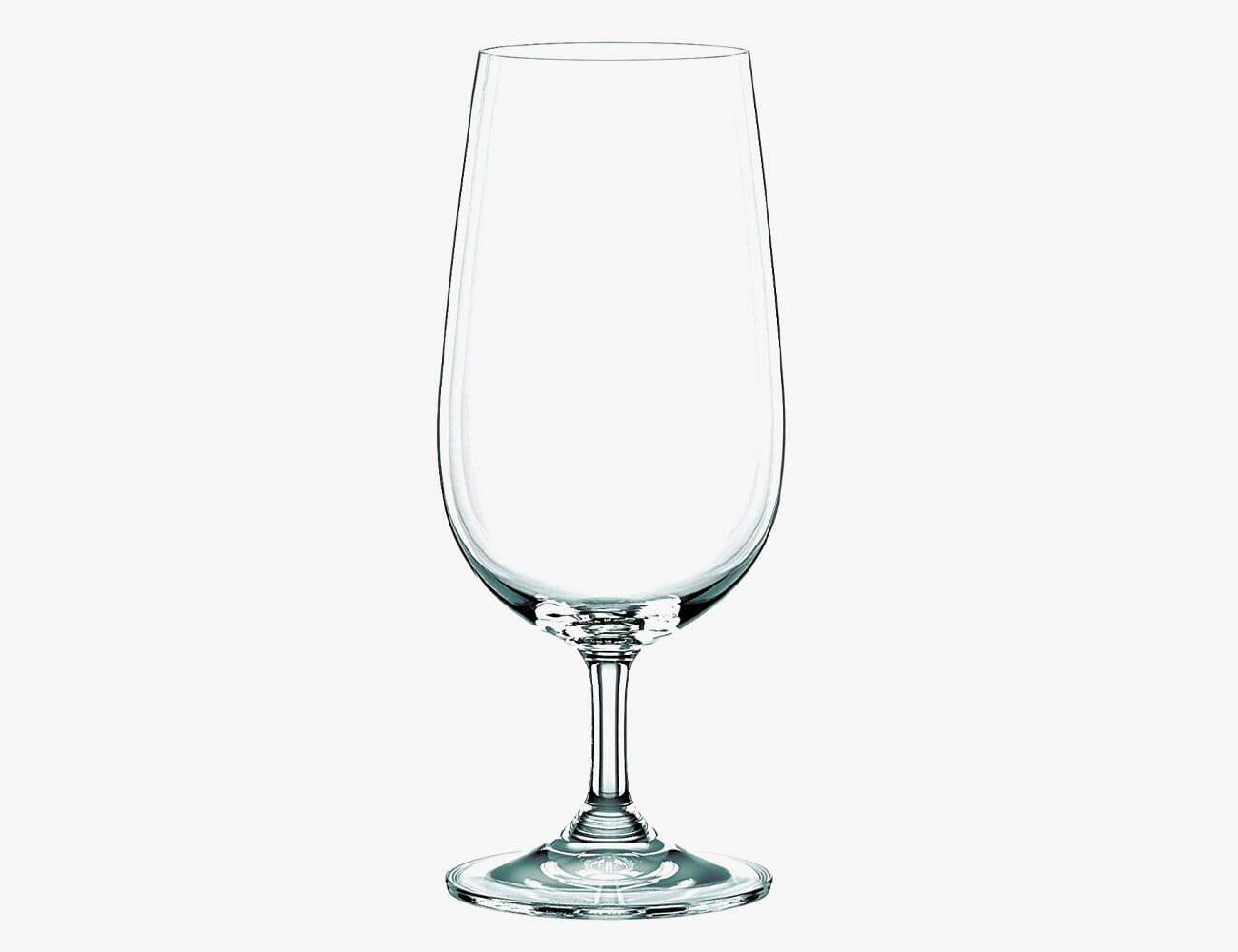
Nachtmann Vivendi Stemmed Pilsner Glasses


Do you need Riedel’s higher-end, gorgeous stemmed glasses to drink pilsners and lagers? You don’t. But if a hushed Bauhaus-inspired flex and supreme beer clarity matter to you, they’re worth a look.

The Orijin Sponge Will Change the Way You Shower

When was the last time you actually devoted some thought to your shower routine? You’ve got your pre and post shower products and routine all set at this point, but the actual shower itself needs…

Which Instant Pot Is Best? Read Before You Buy.

There are a now quite a few Instant Pot models, and once you decided it’s time to give them a shot, you’ll want to know which model to go for. This is our guide to the Instant Pots we most recommend — and the ones we don’t.

Best Instant Pot Cookers

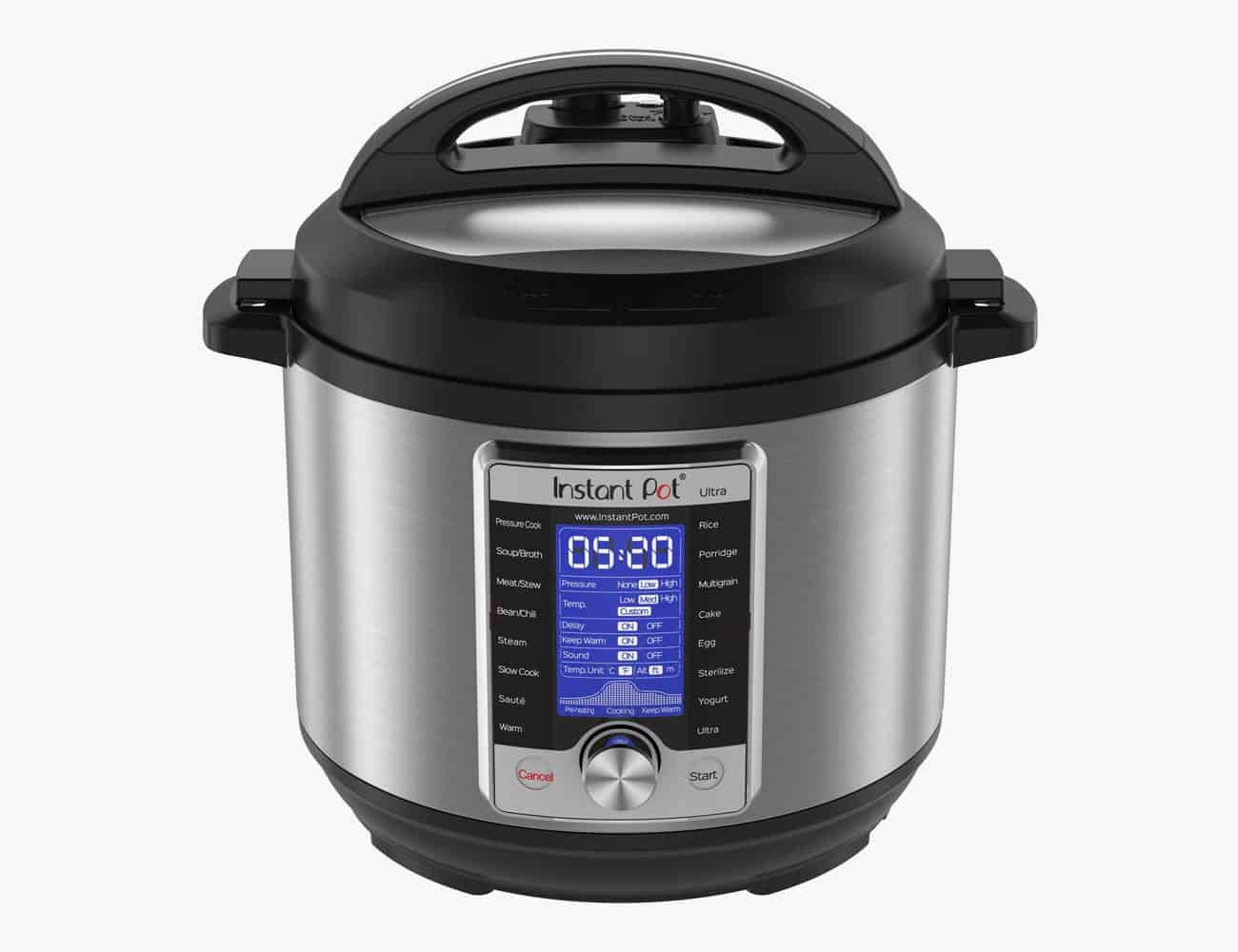
Best Instant Pot: Instant Pot Ultra


Other than the Instant Pot Max, this is the most recent and decked out Instant Pot. It’s also the one with the most useful features to offer beyond what’s expected out of a multi-cooker.

Other than those basics — plenty of pre-set cook options, steaming rack, ample powers, etc. — the Ultra boasts a nice and easy to read LCD display (most helpful for displaying the progress of your meal, from preheat to pressure release), the most customizable cooking options in any Instant Pot (this is the “Ultra” function) and a helpful and simpler to use operational knob.

It’s also the only Instant Pot that takes your altitude into account with cook times and pressure levels (you will have to input your rough elevation level before first use), something new pressure cooks often forget and become confused by. (Note: though the Ultra has a “Sterilize” button, we can’t recommend it be used for sterilization. Currently, there are no official guidelines to sterilizing in an electric pressure cooker.)

The Ultra is available in 3-, 6- and 8-quart options, and typically retails at $120, $150 and $180 respectively. It does go on sale every few months or so, but usually not a steep sale like you might see for our alternative recommended model.

Key Features:
• Tons of preset cook times and temperatures (egg and cake are unique to the Ultra model)
• “Ultra” mode allows customization — temperatures, pressure, cook time — no other Instant Pot model does
• Full LCD screen (it’s not a touchscreen)
• Automatically adjusts to elevation pressure differences (after one-time user input)

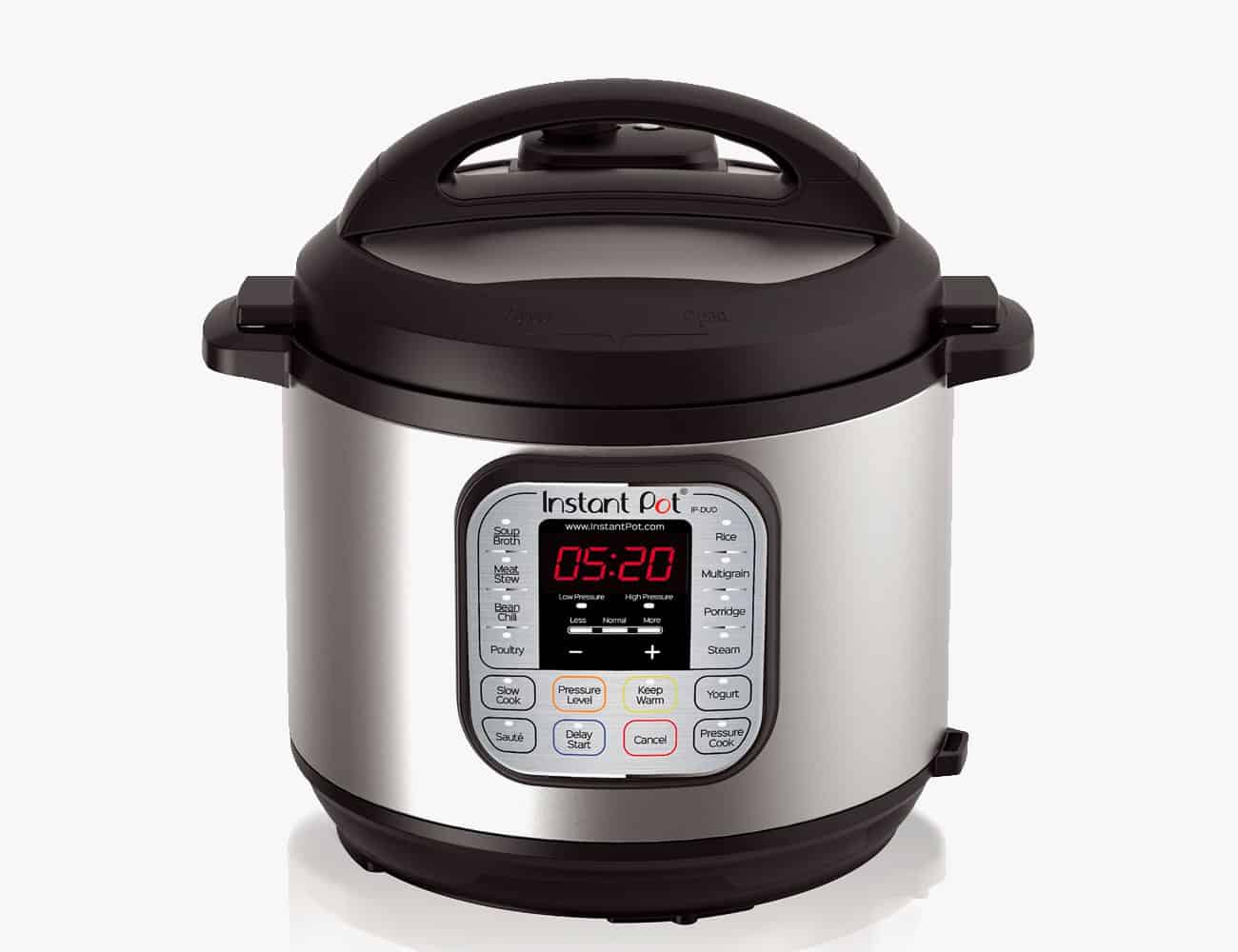
Best Budget-Friendly Instant Pot: Instant Pot Duo


The Duo is the best Instant Pot for most people. It lacks the Ultra’s LCD display, a few of the preset cooking modes and an array of custom recipe options, but the loss isn’t enormously significant from a functional standpoint. The Duo allows pressure cooking on high and low settings, something lower tier Instant Pot models do not offer, and though its utility isn’t as wide as the default high-pressure setting, it is excellent for boiling eggs to a tee and delicate fish. Upon release, the Duo was also the first Instant Pot to feature a yogurt preset, something all more premium Instant Pots feature.

It features the “keep warm” preset — a helpful addition if you’re finishing another part of your meal elsewhere — and features a slightly upgraded pressure release system (it’s still a flawed design, given you are still putting your hand right next to the valve). Finally, a small but clever slot cut into the handle allows the lid to sit upright on the pot instead of your countertop.

The Duo is available in the usual 3-, 6- and 8-quart options, and typically retails at $70, $100 and $110 respectively. The Instant Pot Duo goes on sale frequently on Amazon, with price dips as far down as $68 for the ever-popular 6-quart model.

Key Features:
• Preset cook modes aplenty (the cheapest model with the yogurt preset)
• The first and cheapest Instant Pot to offer high and low-pressure cooking options
• Frequently discounted

Instant Pots to Avoid

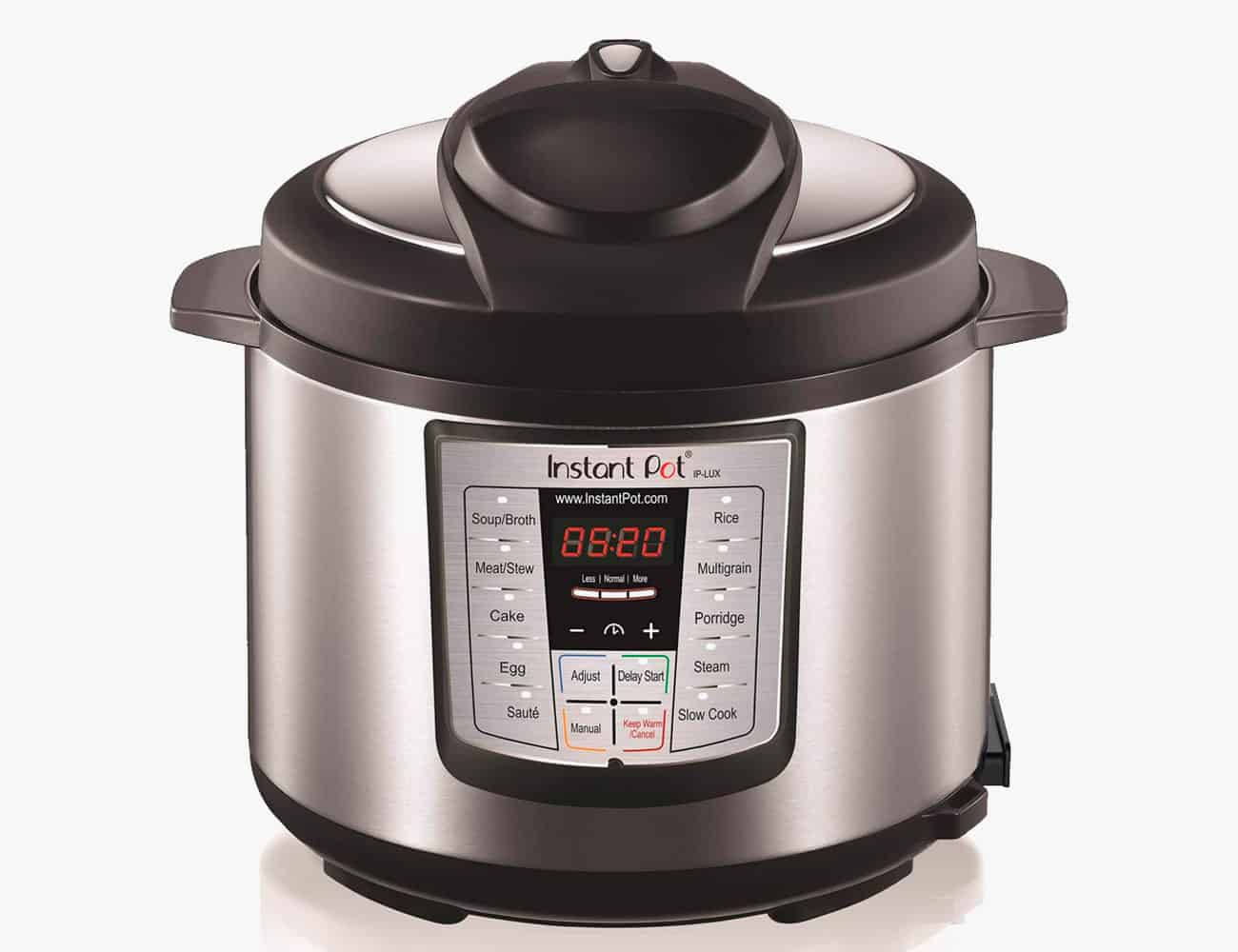
Instant Pot LUX


There is nothing definitively wrong with the LUX model, it just lacks one or two features that its successor, the Duo, has. The Duo allows for pressure cooking on high or low levels, the LUX does not. The Duo has a yogurt preset, te LUX does not. The Duo also has that nifty lid holder built into its handles, where the LUX does not.

Are these game breaking features? No. But the LUX is only a few dollars more expensive, and the added features are well worth the extra $10 to $15 you’ll spend on getting the Duo instead.
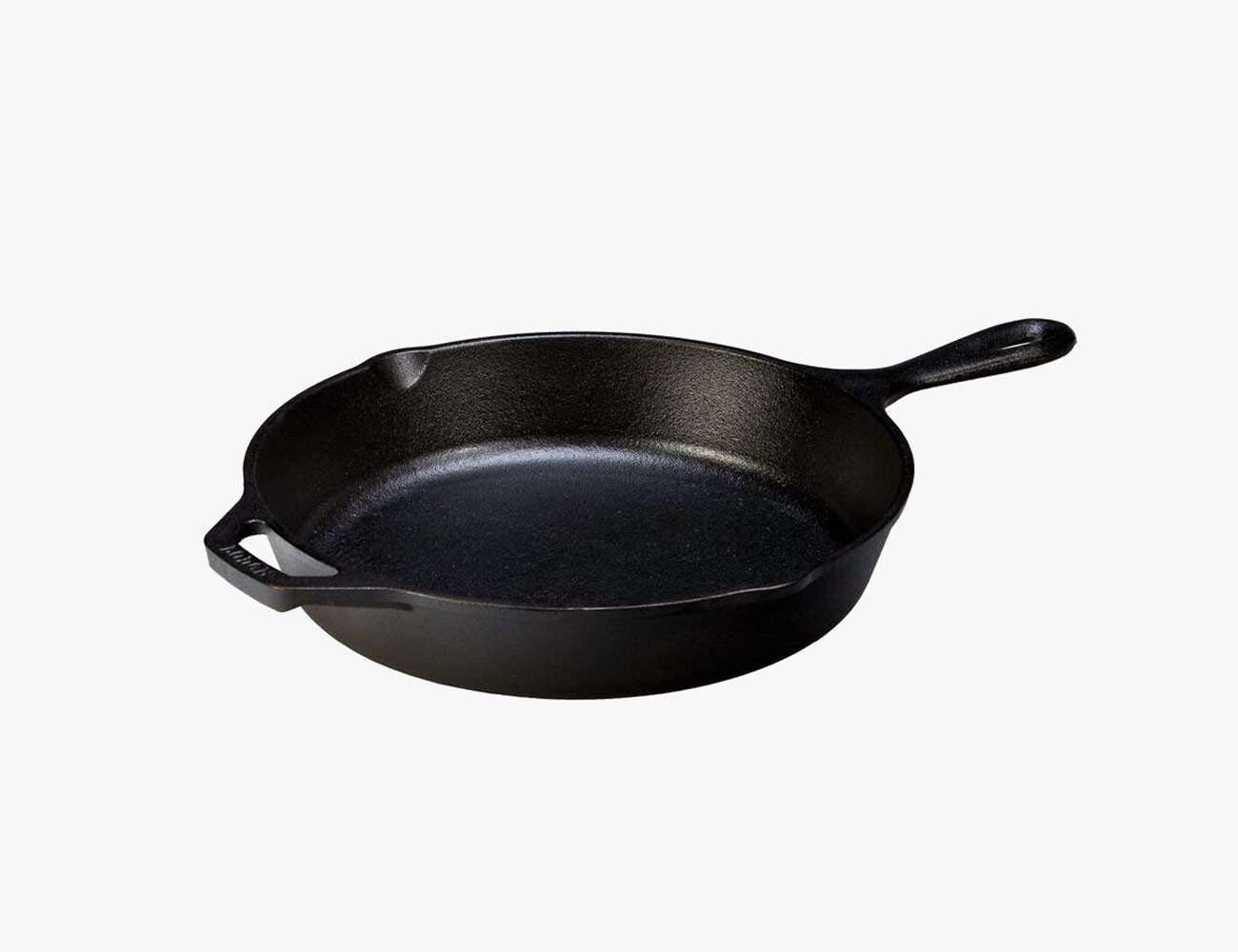
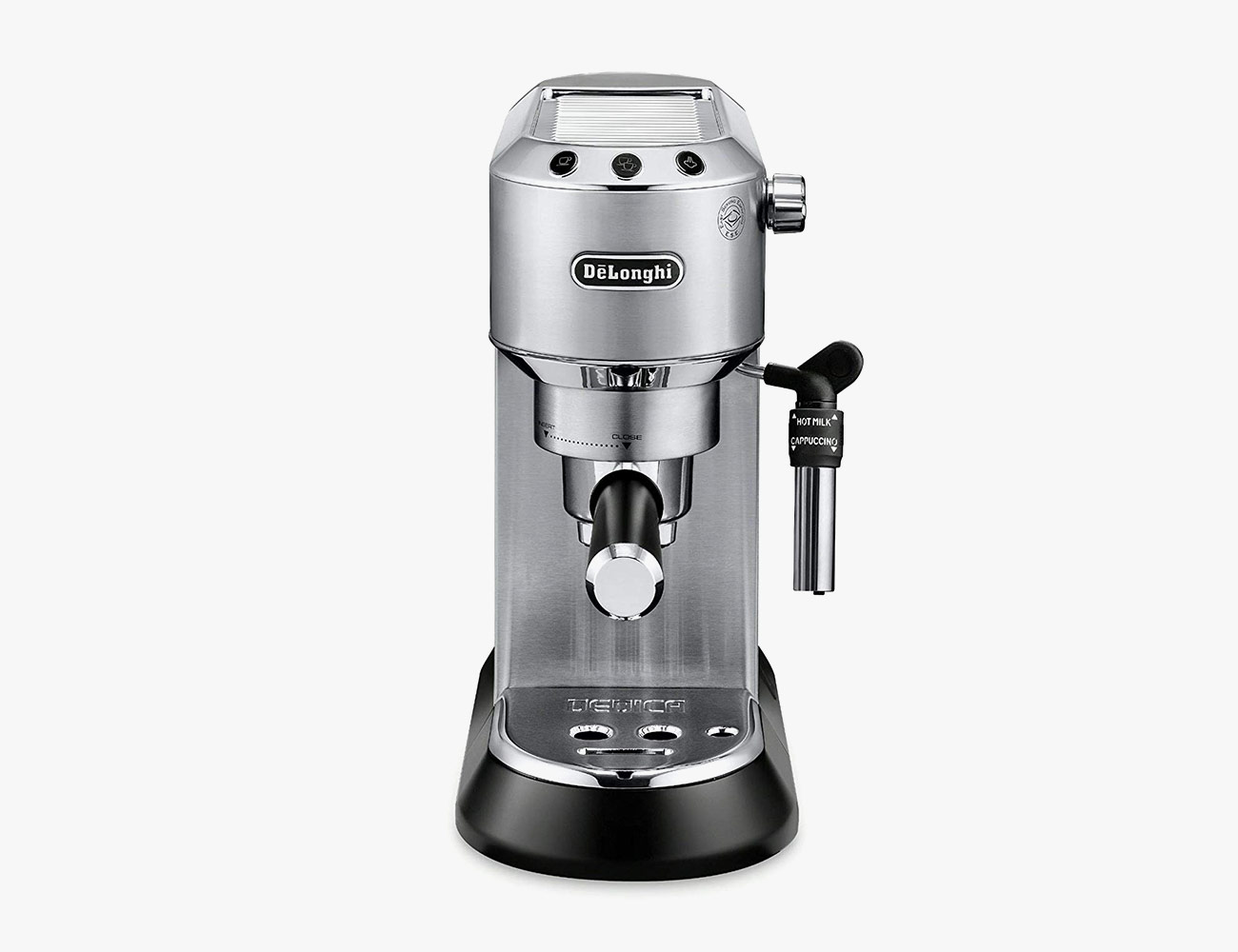
Instant Pot Duo Plus


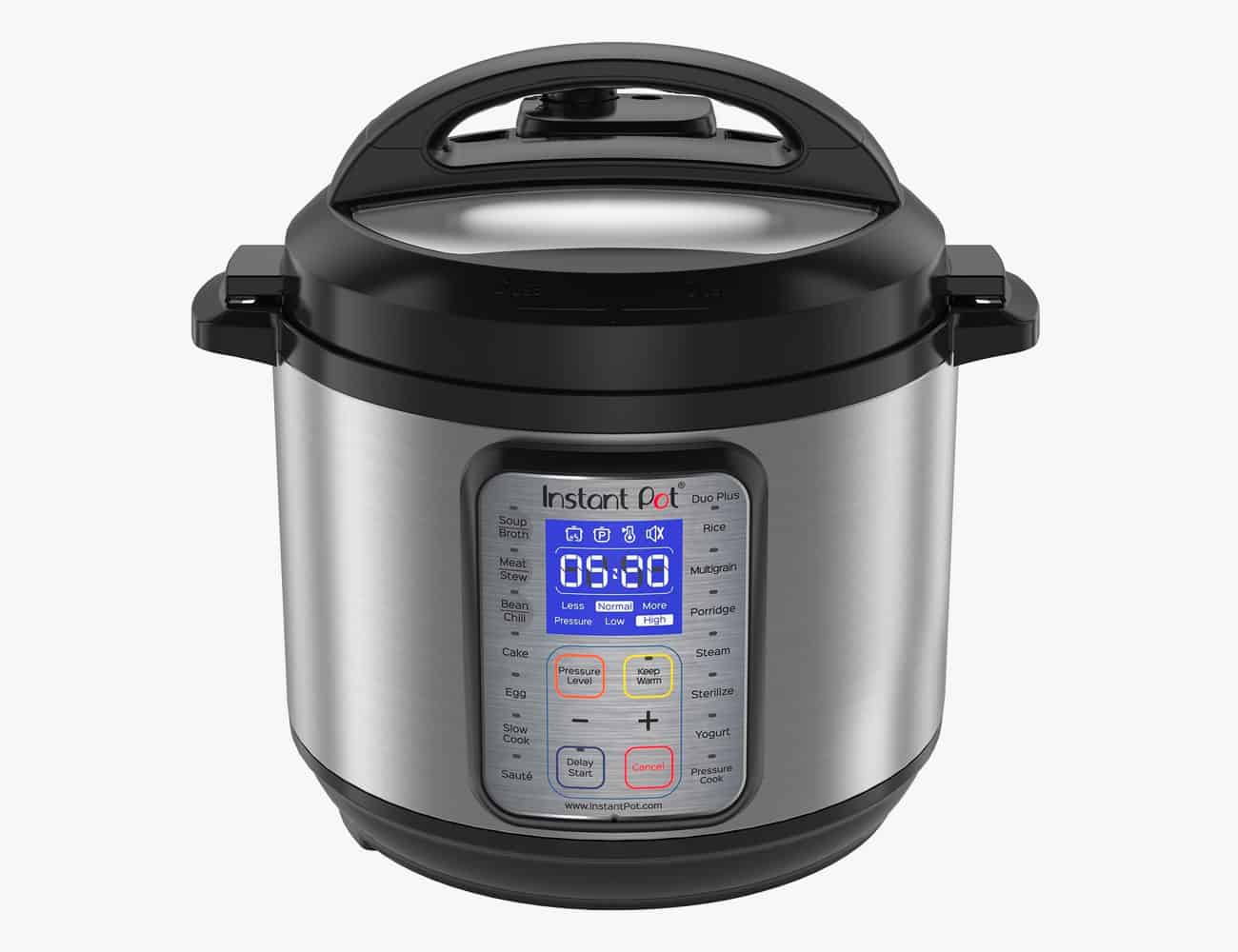
In brief, the Duo Plus adds the following to the regular Duo model: a mini-LCD screen, a sterilization function and a few other odds and ends that aren’t entirely noteworthy. As noted previously, there are no official guidelines to sterilization in electric pressure cookers, so we can’t recommend using this functions yourself, and the LCD screen is nice, but not $50 or so nice. The Duo Plus also goes on sale more irregularly than the Duo, and is not discounted as deeply. If you really want the LCD screen, just go up to the Ultra model and use the more useful add-ons unique to that model.

Instant Pot Max


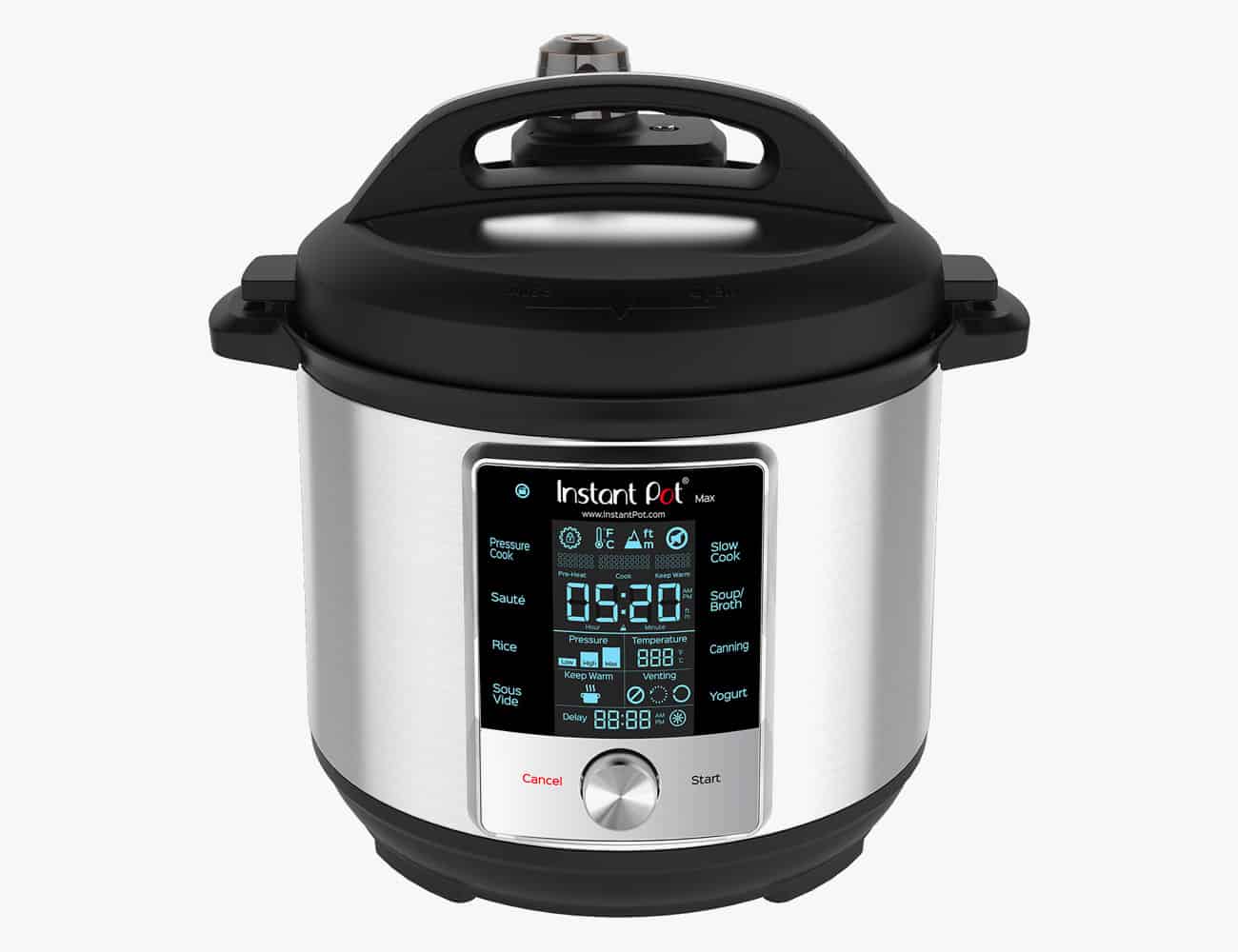
The Instant Pot Max is not available yet (though it was originally slotted for a Spring time release), but it will be, upon release, the most expensive Instant Pot to date — $200 and up. We got our hands on a model before its forthcoming release and tested its new features — sous vide, canning and increased power most notably.

In tests, cook times were not significantly changed from older models to the Max. We can’t recommend the canning functionality, as the National Center for Home Food Preservation has not properly verified electric multi-cookers as a safe method of canning, writing “We do not know if proper thermal process development work has been done in order to justify the canning advice that is distributed with these pressure multi-cooker appliances. What we do know is that our canning processes are not recommended for use in electric pressure multi-cookers at this time.”

The sous vide function does work well and consistently in our tests, but the best upgrade for the Max is its hands-free pressure release system — requiring a push on the screen of the machine to open the valve (it offers different levels of release as well: immediate, delayed and burst).

All told, waiting for the release hype to die down and prices to follow is probably the smart move.

Bruce Willis’ $33Million Turks and Caicos Compound Is for Sale

It doesn’t matter if you throw him into a terribly written and poorly directed film, Bruce Willis always makes things interesting. He’s spent an entire career making cool movies, and he’s done pretty damn well…

Your Guide to Cast-Iron Skillet Sizes, and How to Choose the Right One

If you’re scratching your head over which skillet size is right for you, fret not — this is the easiest decision to make when it comes to cast-iron cookware. After all, there are only three sizes you should even consider: the 8-, 10- and 12-inch skillet. Here’s how to pick between the three.

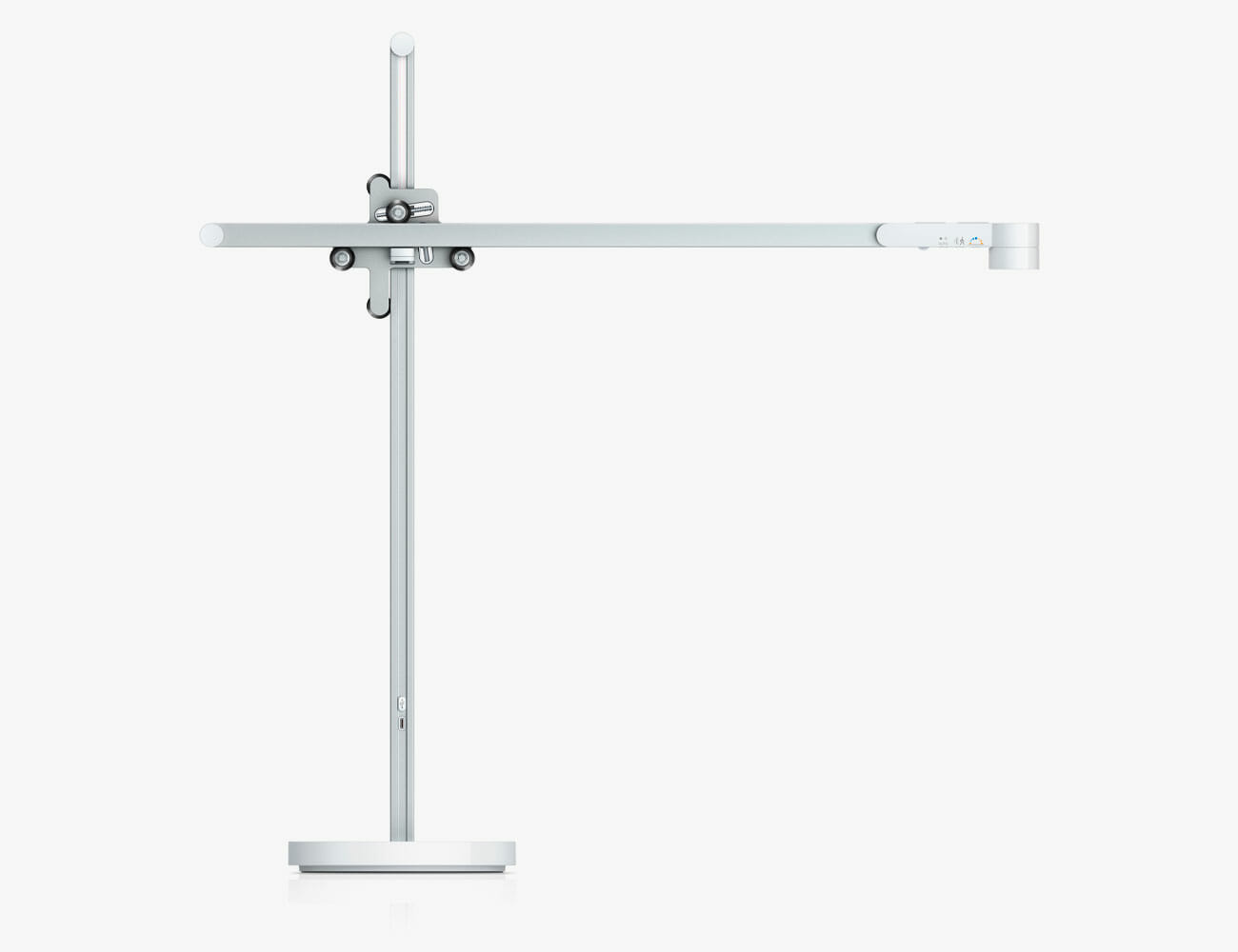
8 Inches

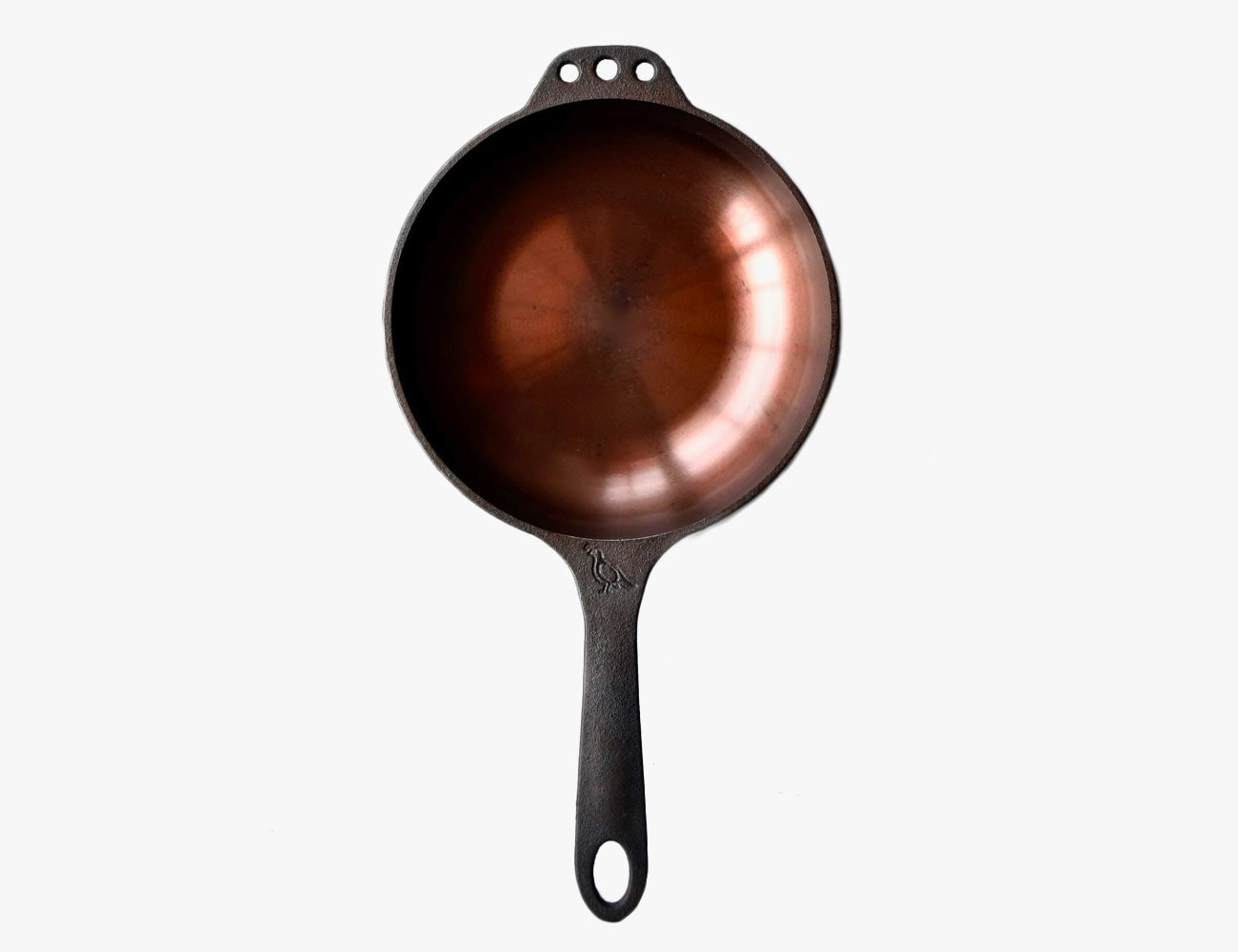
Our Pick: Smithey No. 8 Cast-Iron Chef’s Skillet ($100)
Feeds: 1 person
Eight-inch skillets are large enough to sear two normal sized chicken thighs, one eight-ounce steak or fry three or four eggs at a time. Go any smaller and you start to lose utility. Because of their smaller stature, eight-inch skillets shine with foods that require tossing — think green beans or fingerling potatoes. But make no mistake, this is a bachelor’s skillet, and optional at that.
10 Inches

Our Pick: Field Company 10-Inch Cast-Iron Skillet ($125)
Feeds: 1 to 2 people
The first size pan any would-be cast-iron skillet maker develops is a 10-inch. The classic size is perfect for one extra-large ribeye, a couple of filets, several chicken thighs or two big chicken breasts. It’s also the closest skillet size to the standard pie tin, so you wouldn’t have to do much recipe conversion work if you were to use it for baking. This skillet is perfect for cooking most meals for two people, or full sides for larger groups.

12 Inches

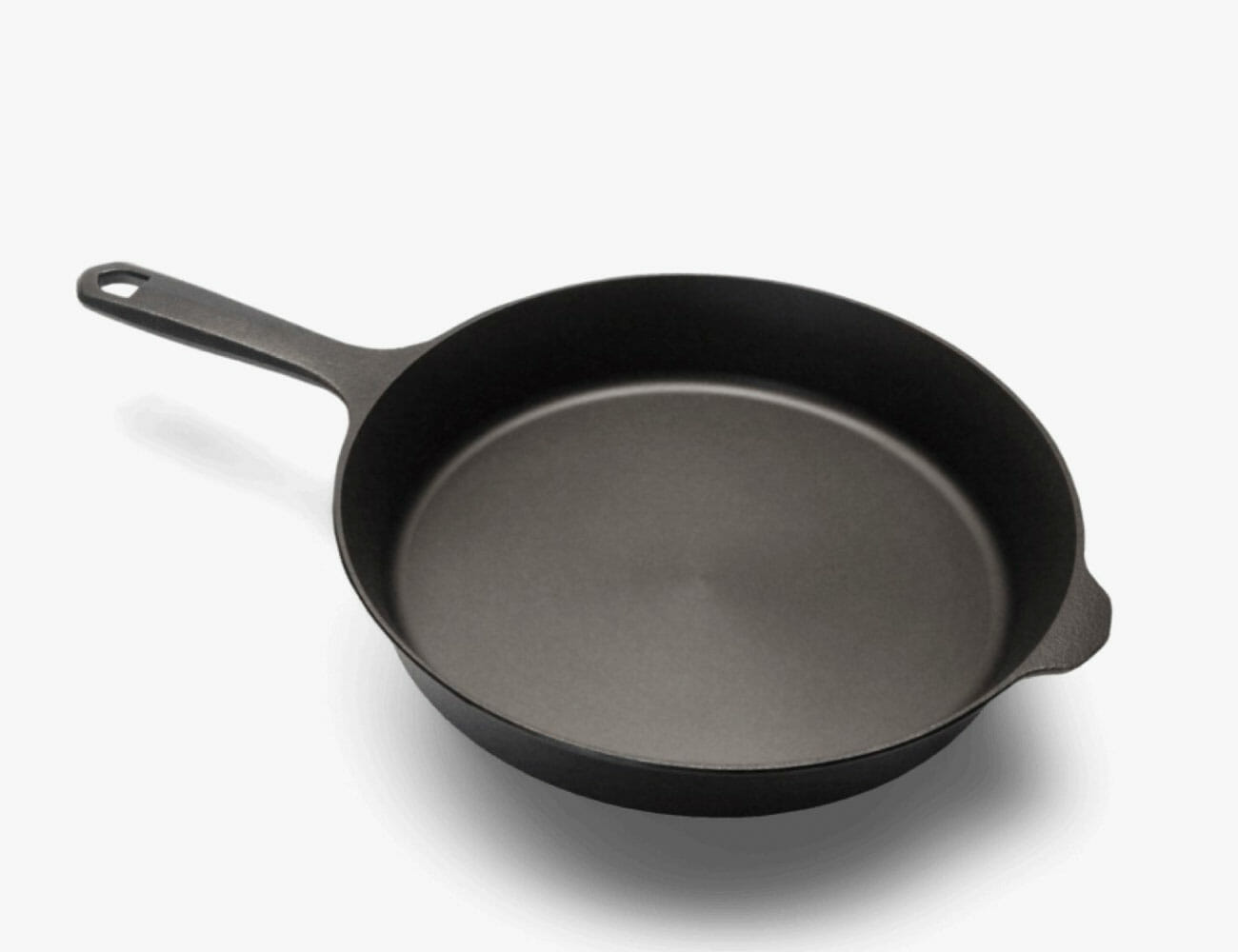
Our Pick: Lodge 12-Inch Cast-Iron Skillet ($30)
Feeds: 2 to 4 people
Go any bigger than 12 inches of pan and you’ve got a cooking surface with hot and cold spots. This size can pull off two large steaks, whole chicken sears and even most pork tenderloins. The largest downside is the weight — they’re too heavy to toss food in and some might strain to lift them one-handed. But it’s the ultimate skillet to just leave on the stove until you’re ready to use it again.

Note: Purchasing products through our links may earn us a portion of the sale, which supports our editorial team’s mission. Learn more here.

Need a Cheap Outdoor Patio Setup? Today’s Your Lucky Day

The Magazine

Each issue of Gear Patrol Magazine is a deep dive into product culture. Inside, you’ll find seasonal buying guides, rich maker profiles and long-form dispatches from the front lines of product design. The stunningly designed Gear Patrol Magazine is ready for your coffee table. Quarterly. $39

The Newsletter

Get the best new products, deals, and stories from across the world, in your inbox daily.

The Best Home Espresso Machines Under $1,000

Sometimes regression is the best form of innovation — like wearing a mechanical watch, driving a manual-shift car or pulling a shot from a semi-automatic espresso machine. These five models will give you a more rewarding morning ritual than you’ll ever get from a pod. Not to mention better coffee, too.

DeLonghi Dedica Deluxe

The Dedica Deluxe is no wider than a typical pod machine, so it won’t hog counter space. The milk frothing wand is easy to use and yields perfectly satisfactory foam. Pull out the drip tray and there’s a secondary tray for larger coffee cups, which is helpful for lattes. The machine can live in standby mode until and requires very little start-up time. A pre-infuser douses the grounds before extraction for a more even brew. While not a statement piece, the Dedica Deluxe gets the job done. And done well.

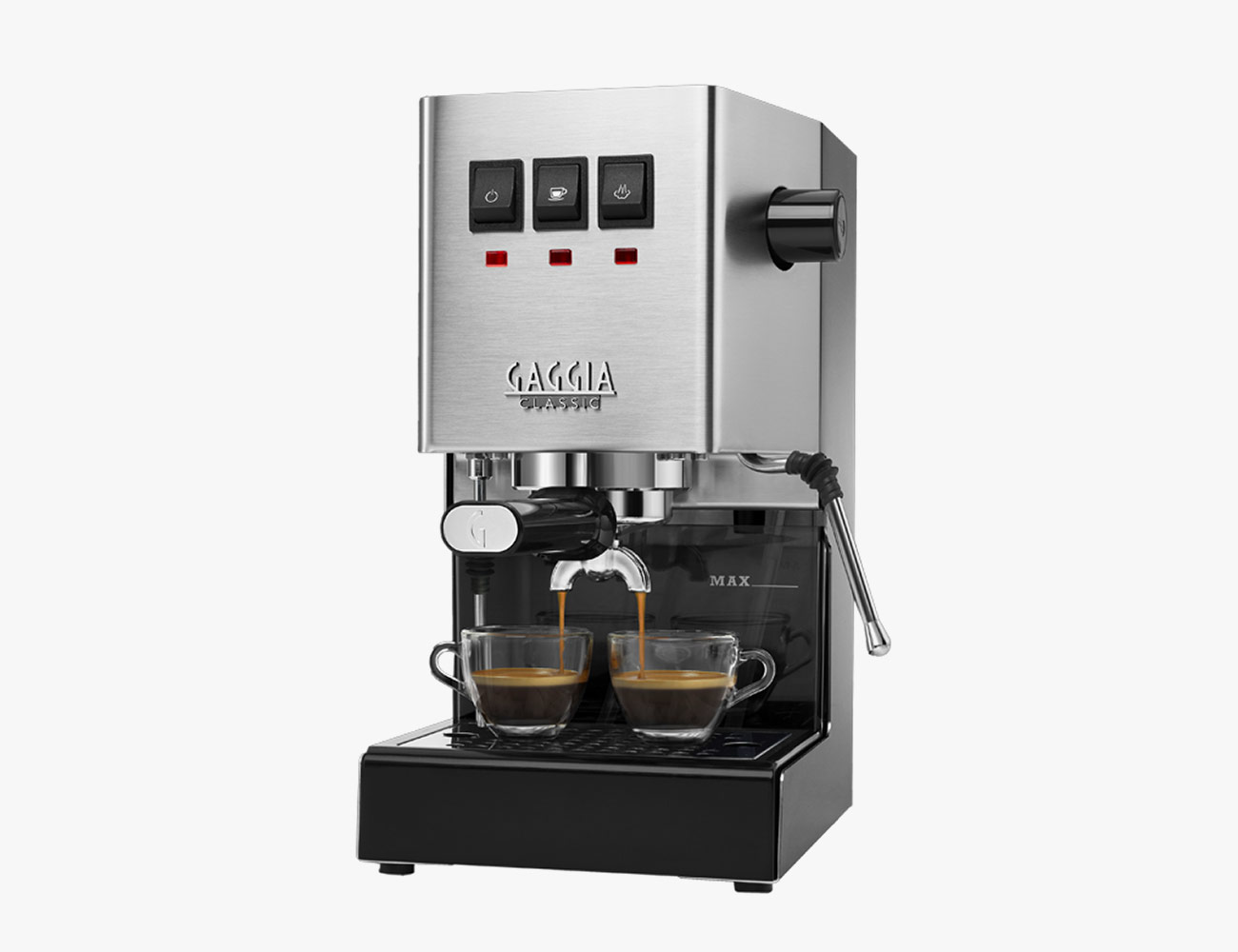
Gaggia Classic Pro

The Gaggia Classic is the tool watch of espresso machines — it has everything you need and nothing you don’t. The machine’s squared-off stainless steel body occupies a rarely visited era of euro-90s nostalgia, and the angular black rocker buttons would be at home on the dashboard of a 1990 Ferrari F40. A weighty 58mm commercial portafilter and group head are both made of chromed solid brass. For the price, there’s no machine with as much street cred. It requires a tending hand like the pro machines but delivers shots with dense crema at a solid value.

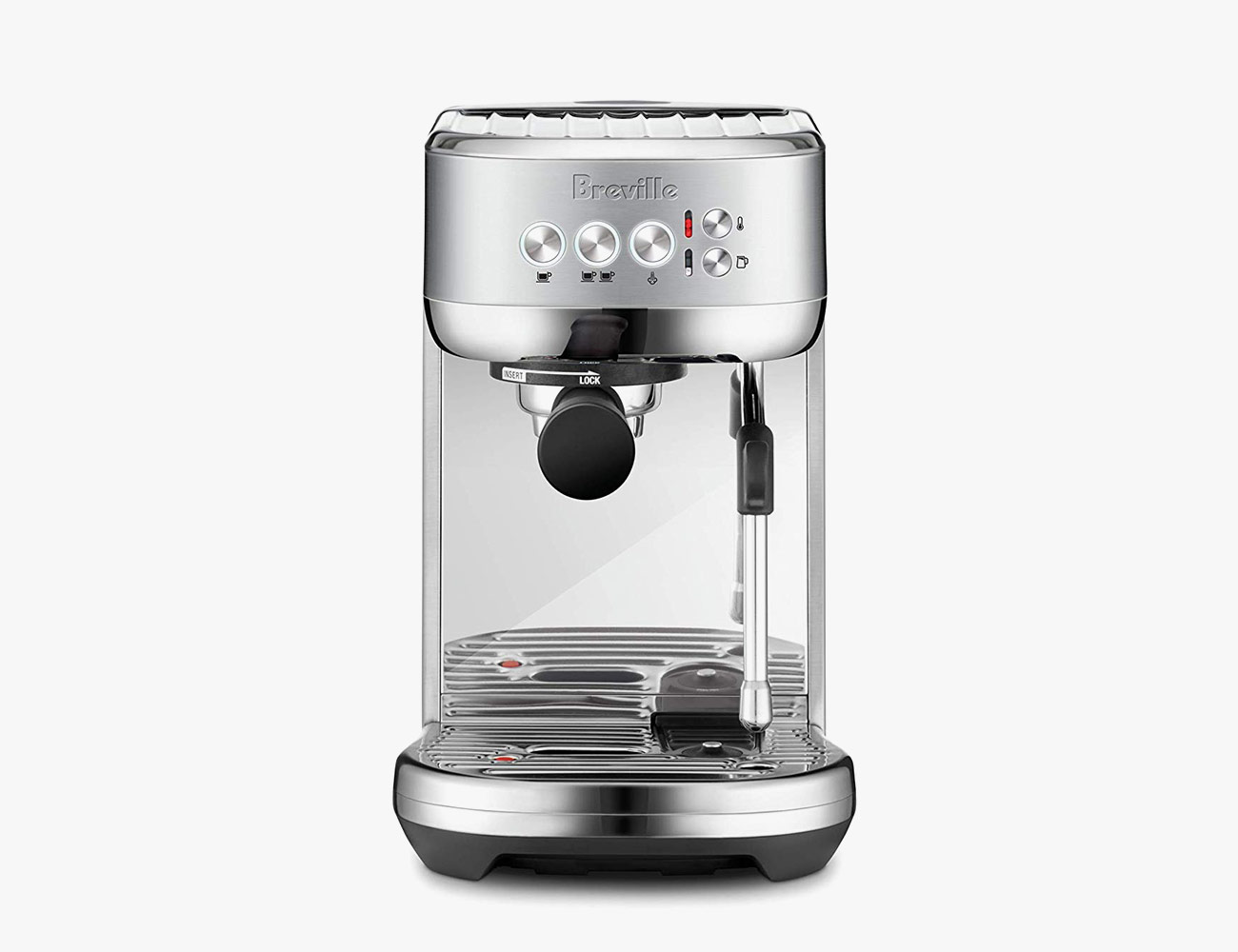
Breville Bambino Plus

Perhaps the prettiest Breville espresso machine, the Bambino Plus is a compact countertop adornment loaded with convenient features. Like the DeLonghi, the single and double shots are pre-timed and only take one push of a button. The machine pre-infuses the grinds, and the automatic milk frother has a heat sensor, so you can leave the frother on the drip tray to go put your toast in the oven and it will shut off when it’s ready, then automatically purge the steam wand for easy cleaning. It comes with a steel frother and a quality tamper — the only machine on this list to include both. It can accommodate mugs, with even more clearance than the DeLonghi’s lower-deck latte tray.

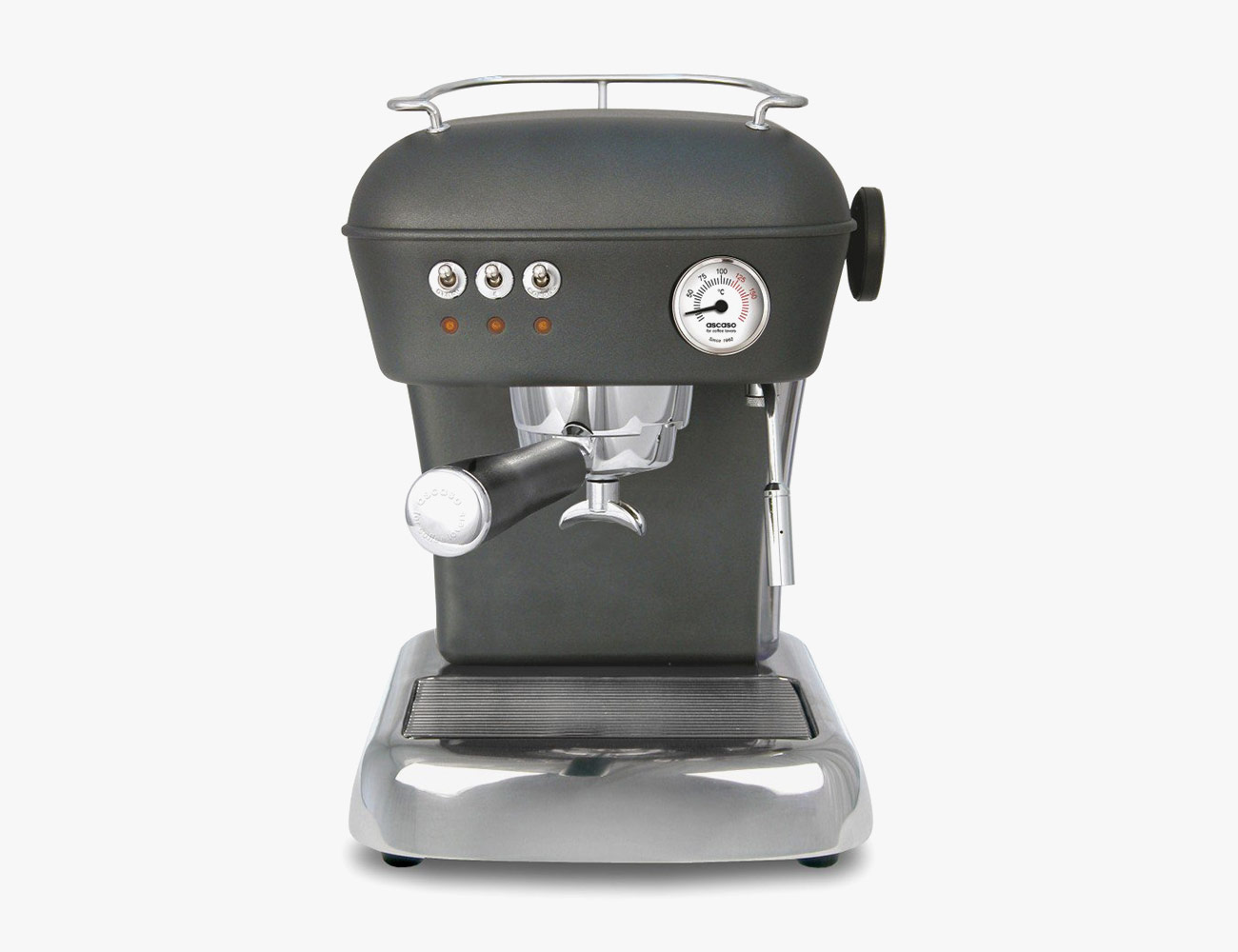
Ascaso Dream

The Spanish-made Ascaso Dream is a thing of beauty — the polished aluminum version looks like it could hatch an Airstream trailer. The portafilter is solid and the machine comes with a double-sided solid aluminum tamper. We love the retro temperature gauge and the heavy click of the metal toggle switches. Like many machines north of $500, the Dream takes a little getting used to; once you bring it up to steam temperature, don’t expect it to quickly backtrack to brewing temp. It sure is nice to admire while you wait for it to simmer down, though.

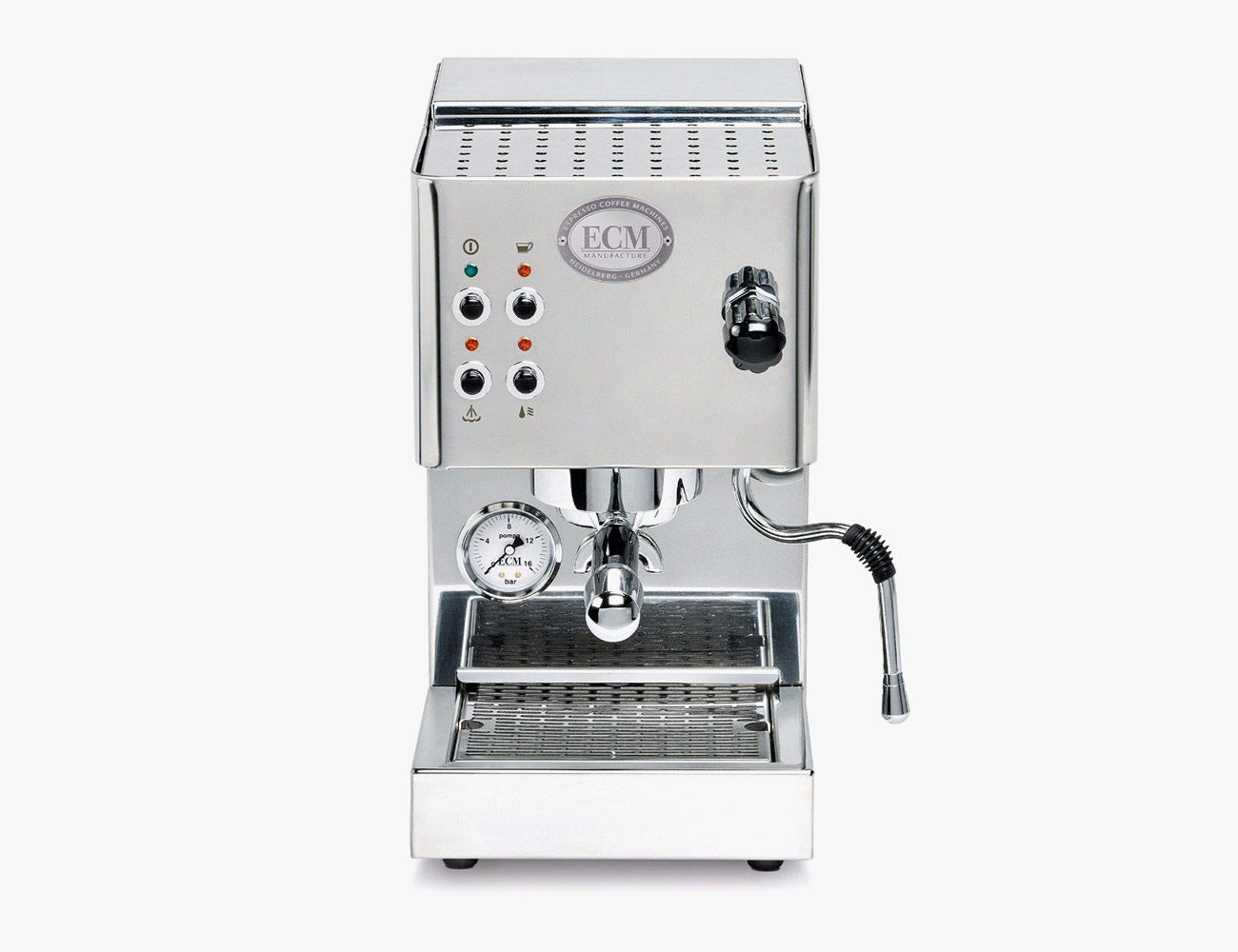
ECM Casa V

A buck shy of a grand, this model by German company ECM (Espresso Coffee Machine) is by hand in Italy. The Casa V shrugs off over-packed grinds that would stop lesser machines in their tracks, while the steam wand is commercial grade and makes a searing froth in a matter of seconds. It takes a few more minutes to heat up than the others, but once it does, it exudes a power beyond all others on the list. Buyers beware: the machine is large, so it will take some decent counter space for it to look to-scale in a kitchen.

Don’t Forget the Grinder

Whatever you’ve budgeted for an espresso machine, throw half of it toward a good grinder. Think of it as a lens for your camera — you will not get the most out of one without spending some money on the other. Here are three we like, at prices we love.

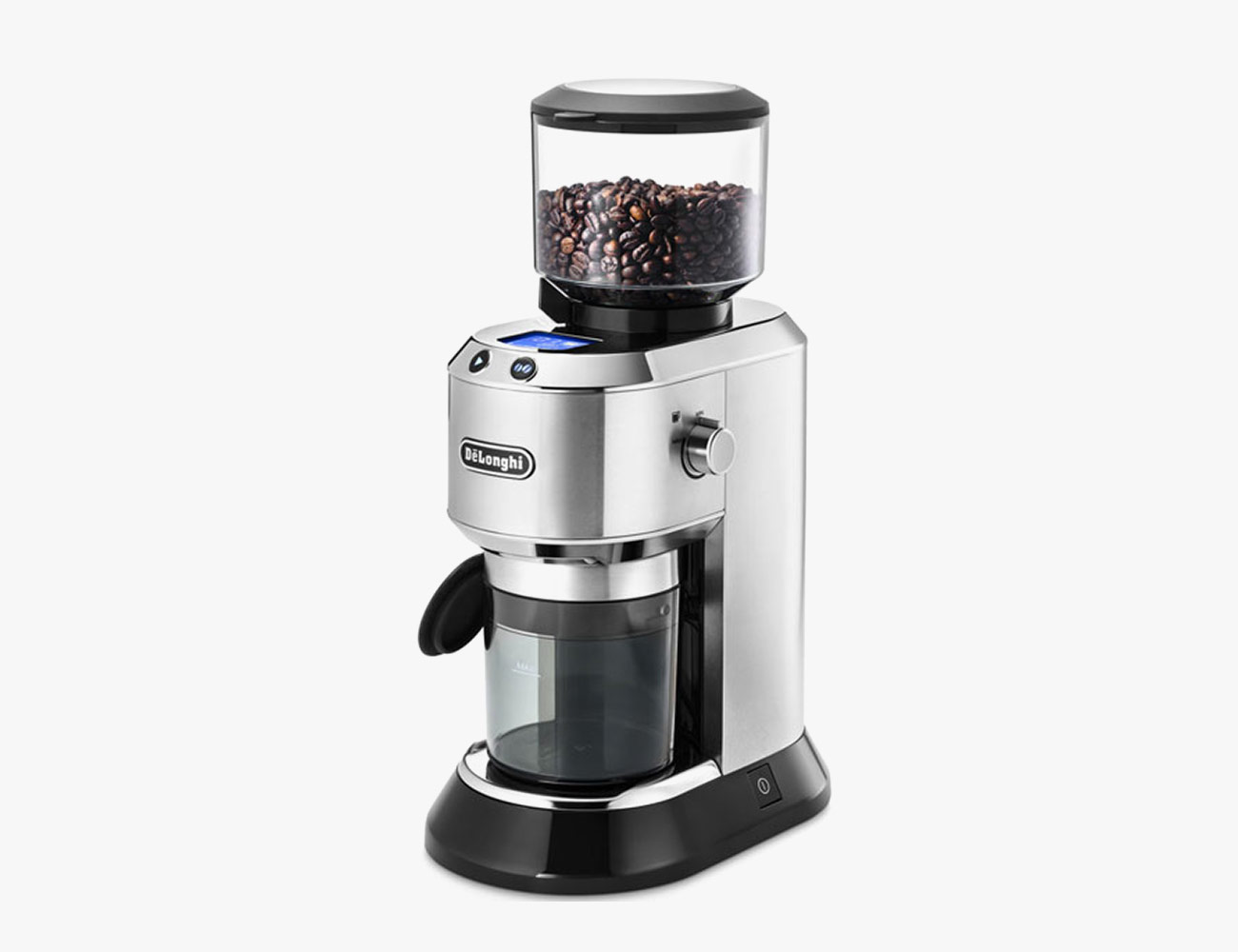
DeLonghi Dedica

The stainless-steel-clad DeLonghi Dedica grinder is better looking than most in its price range; its espresso setting works well with pressurized and non-pressurized baskets; and it can grind directly into a DeLonghi portafilter. That said, it can’t grind as finely as the others on the list, so proceed with caution.

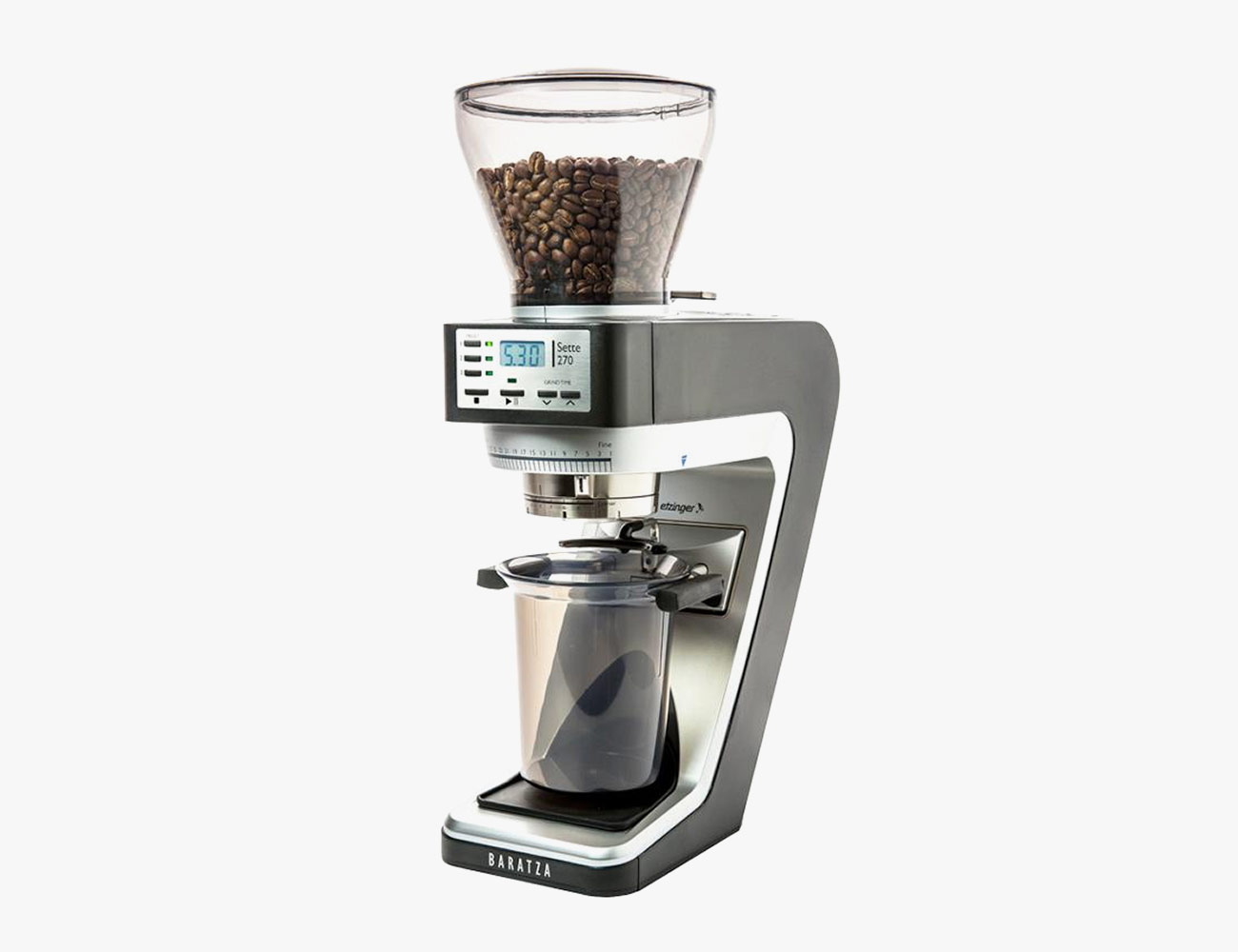
Baratza Sette 270

The Sette 270 is also micro-adjustable like the Eureka Mignon. The modern angled design of the Sette series is downright Bauhausian. Baratza is also a company that makes nothing else but grinders, which provides a certain comfort.

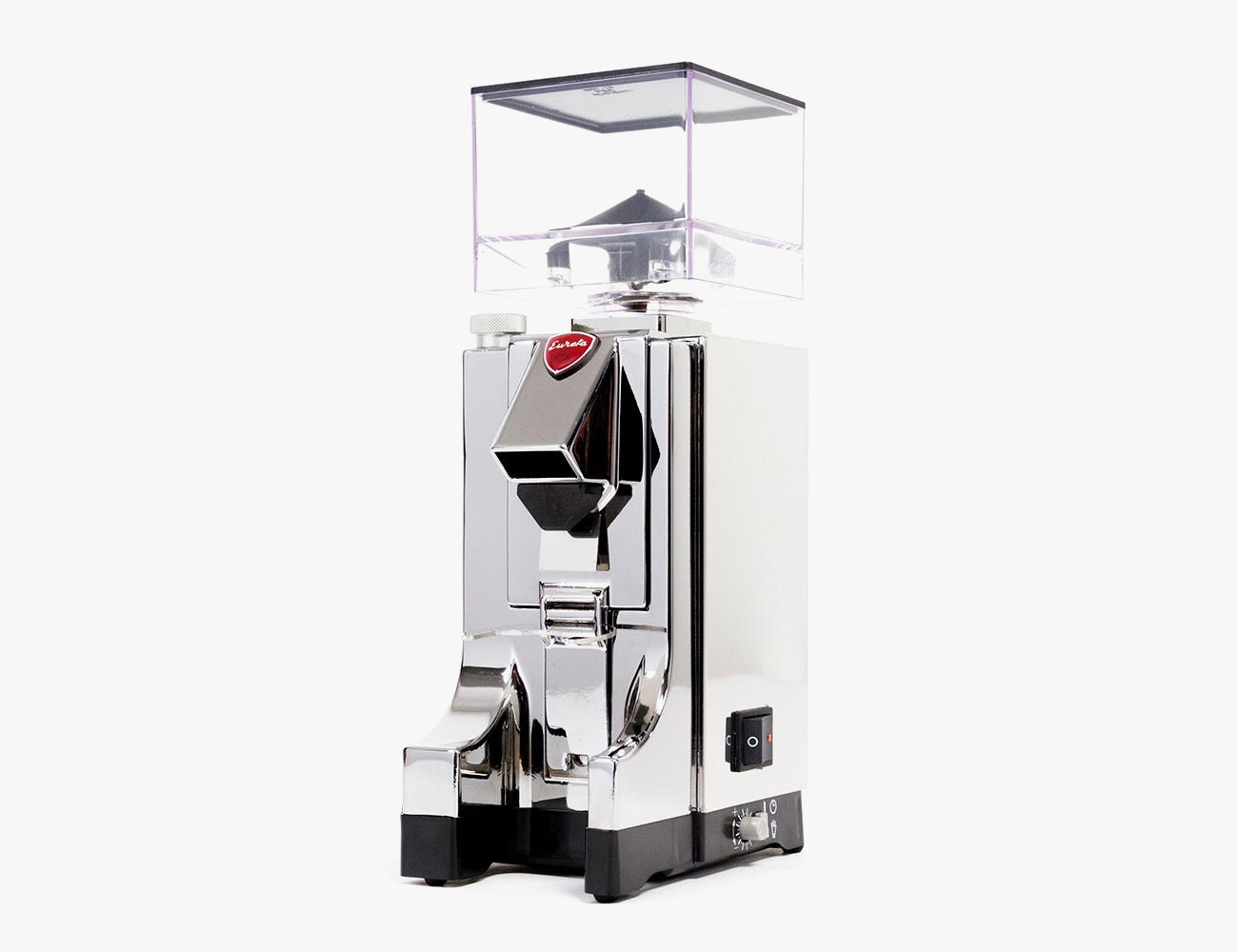
Eureka Mignon

Small but mighty with a classic Italian look. There are no numbers on the grind dial, so the machine is micro-adjustable. Yes, it’s pricey, but with its timeless chrome cladding and a powder-fine grinds, this could be your forever grinder.

Note: Purchasing products through our links may earn us a portion of the sale, which supports our editorial team’s mission. Learn more here.

The Best Cast-Iron Skillets You Can Buy in 2019

This definitive guide to the best cast-iron skillets of 2019 explores everything you need to know before buying your next favorite piece of cookware, including important terminology and the best skillets for every budget.

The Short List

Best All-Around Cast-Iron Skillet: Field Company

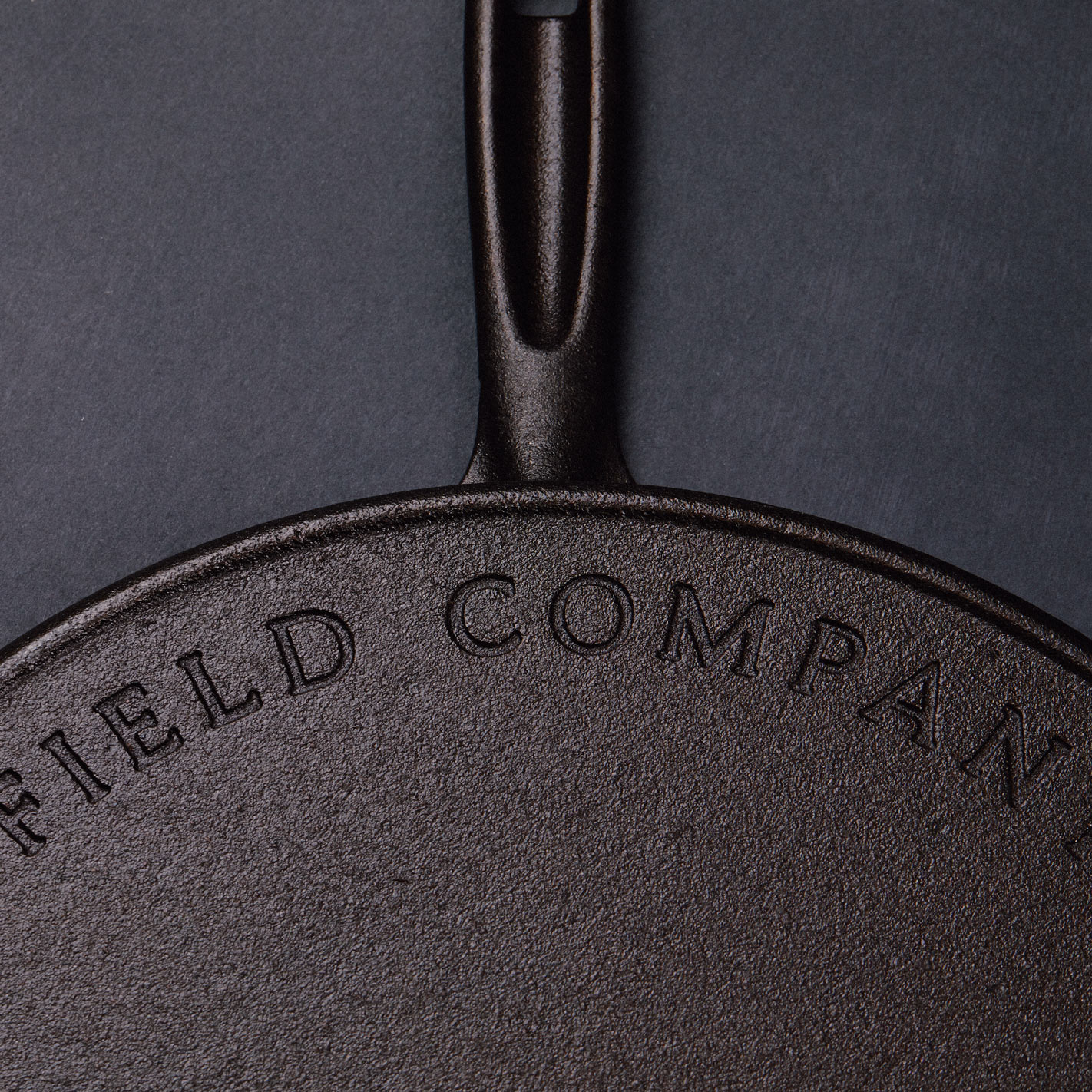
Field Company’s cast iron is lighter, smoother and simpler than most of the new breed of pan makers. It also manages to keep its prices lower relative to some of its higher minded competition. Plus, the grapeseed oil pre-seasoning it came with out of the box out-performed every other pan we tested.
Available sizes: 10-inch, 12-inch, 13-inch

Best High-End Cast-Iron Skillet: Butter Pat Industries

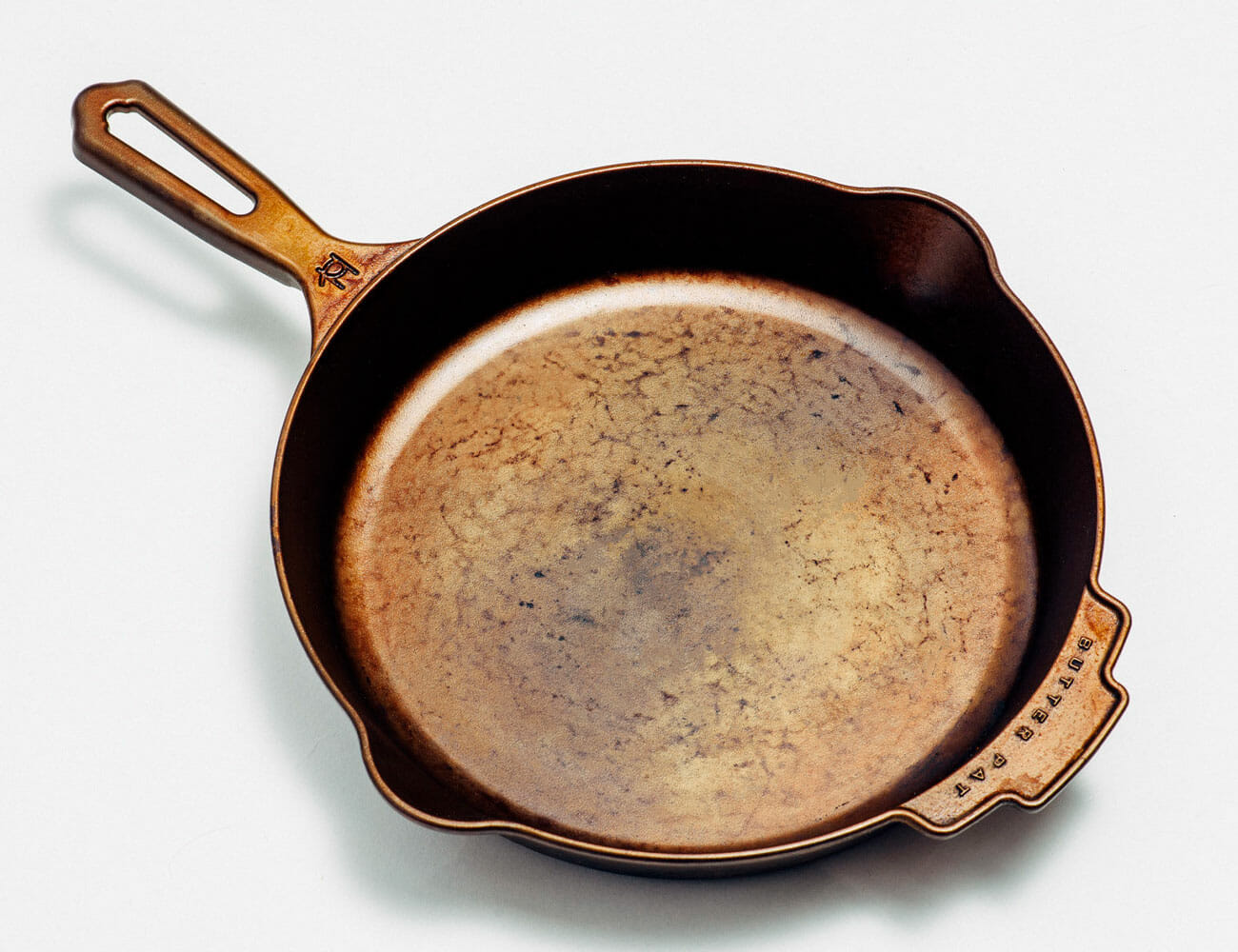
Where to start? Butter Pat’s skillets were the smoothest and most non-stick out of the box of any we tried. Beyond making flip-easy fried eggs (or flip-easy anything, for that matter), the surface makes cleaning that much easier, as everything cooked in it was a towel wipe away from clean. A proprietary hand-casting method allows the piece to be thin where it can be and heavy where it needs to be, making for a lighter than usual skillet.
Available sizes: 6-inch, 8-inch, 10-inch, 12-inch

Best Value Cast-Iron Skillet: Lodge

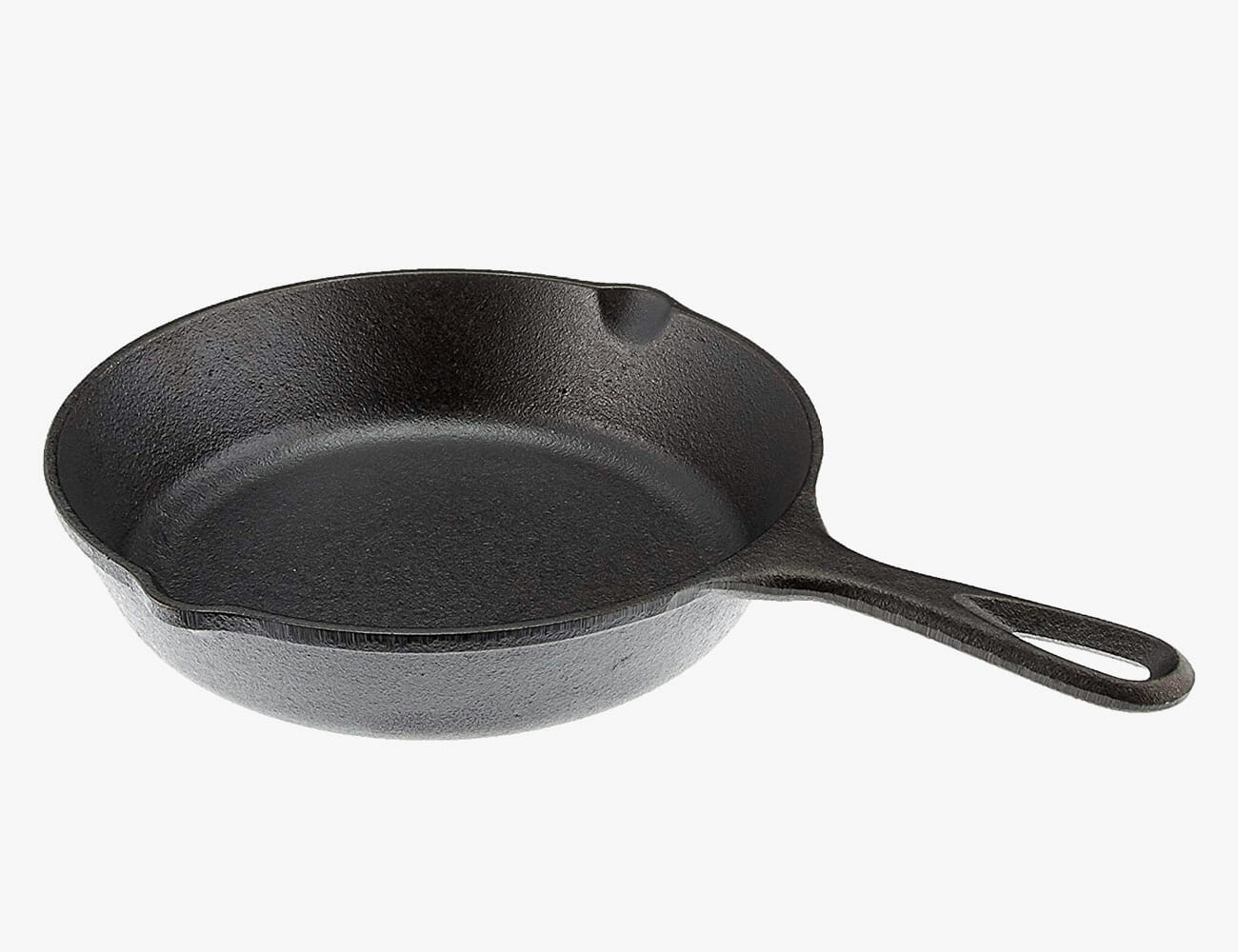
The Lodge of today is not in the business of making a pretty skillet, it’s in the business of making a workhorse skillet. The surface is grainy, rough and coated in a black pre-seasoning. It’s probably not as slim and trim as others on this list. But in terms of value for your money, Lodge’s American-made cast-iron skillets are unrivaled. Starting at $10 for an 8-inch pan (the smallest size you’d want to cook on), its cast iron is made of the same hefty, heat insulating iron that the boutique brands are using and the only serious trade-off is cooking surface and craftsmanship.
Available sizes: 6.5-inch to 15-inch

Butter Pat’s proprietary hand-casting method allows the piece to be thin where it can be and heavy where it needs to be, making for a lighter than usual skillet. Not to mention it has the smoothest cooking surface out of the box that we saw.

Terms You Should Know

Cast-Iron: Iron made with around 1.7 percent carbon, giving it its classic heavy, brittle nature.
Seasoning: The layer of polymerized and carbonized fats between what you’re cooking and raw iron.
Pour Spouts: If present, small areas cast into both sides of the pan meant to easily discard (or save) sauces or excess grease.

Wall Slope: The gradient at which the walls of a cast-iron pan run into the cooking surface; the steeper the wall slope, the less tossing can be accomplished

Front Grip: A protruding area opposite the handle where you grab hold of the pan with your non-dominant hand; meant to make heavier dishes and pans less cumbersome.

As-Cast: The result of skipping the milling and polishing process on the cooking surface; when a skillet’s cooking area is rough and sandpapery, it is as-cast.

Rust: Also known as ferric oxide, a toxic result of the oxidation of bare cast-iron; avoided by a layer of seasoning, but easily fixable.
Smoke Point: The heat at which fats begins to break down and smoke; also the point you need to reach to properly season a pan.

“It doesn’t have a practical purpose anymore,” Isaac Morton of Smithey Ironware says of the ridge along the bottom edge of some skillets. “But if you look at pieces cast before 1900, you typically had this heat ring, which helped the pan fit into the indentations on the top of the stove. It’s just an homage to some of the cool old cast iron designs.”

The 7 Best Cast-Iron Skillets to Buy

Lodge Cast Iron Skillet

Lodge’s pans are the first a would-be cast iron nut gets into. They’re cheap, rough to the touch and you don’t need to treat them preciously. But don’t let low prices imply low performance — Lodge skillets are still heavy, heat-insulating cast iron, and they can certainly cook side-by-side with skillets ten and twenty times their cost. We just wouldn’t cook eggs, fish or anything too delicate before you have a serious base of seasoning.
Available sizes: 6.5-inch to 15-inch (everything in between)

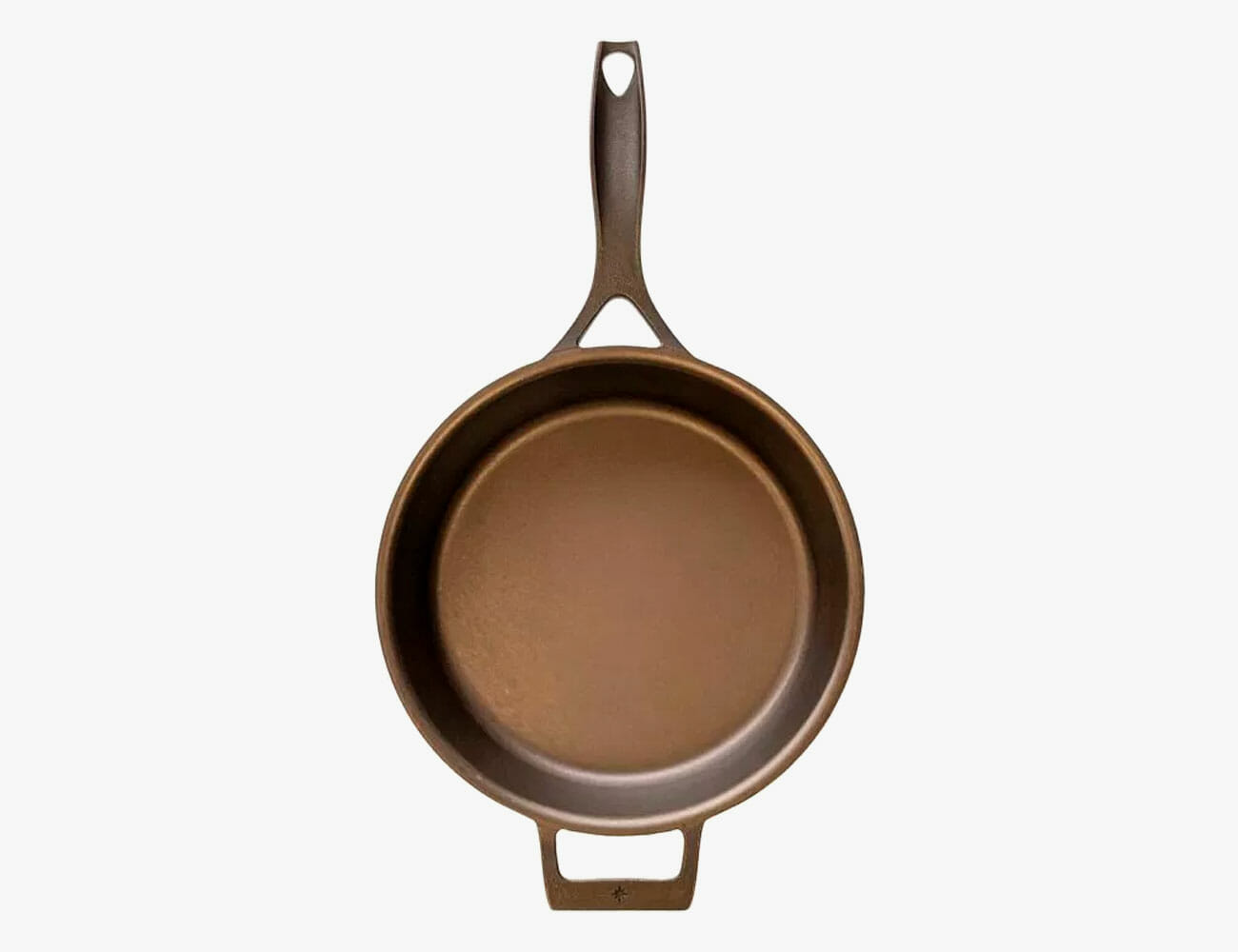
Stargazer Cast Iron Skillet

Though it’s hard to place it as absolute best at any one thing, the Stargazer is a great blend of all buying factors. High-sloping walls with a unique and fairly dramatic lip around the edge mean you can toss veggies and home fries up and back down with little oil splash. The seasoning it shipped with was excellent, but you can order it unseasoned if you prefer. It’s middle of the pack in weight, and it has a large square-angled front grip that is easy to get a hold of when you’re wearing an oven mitt.
Available sizes: 10.5-inch to 12-inch

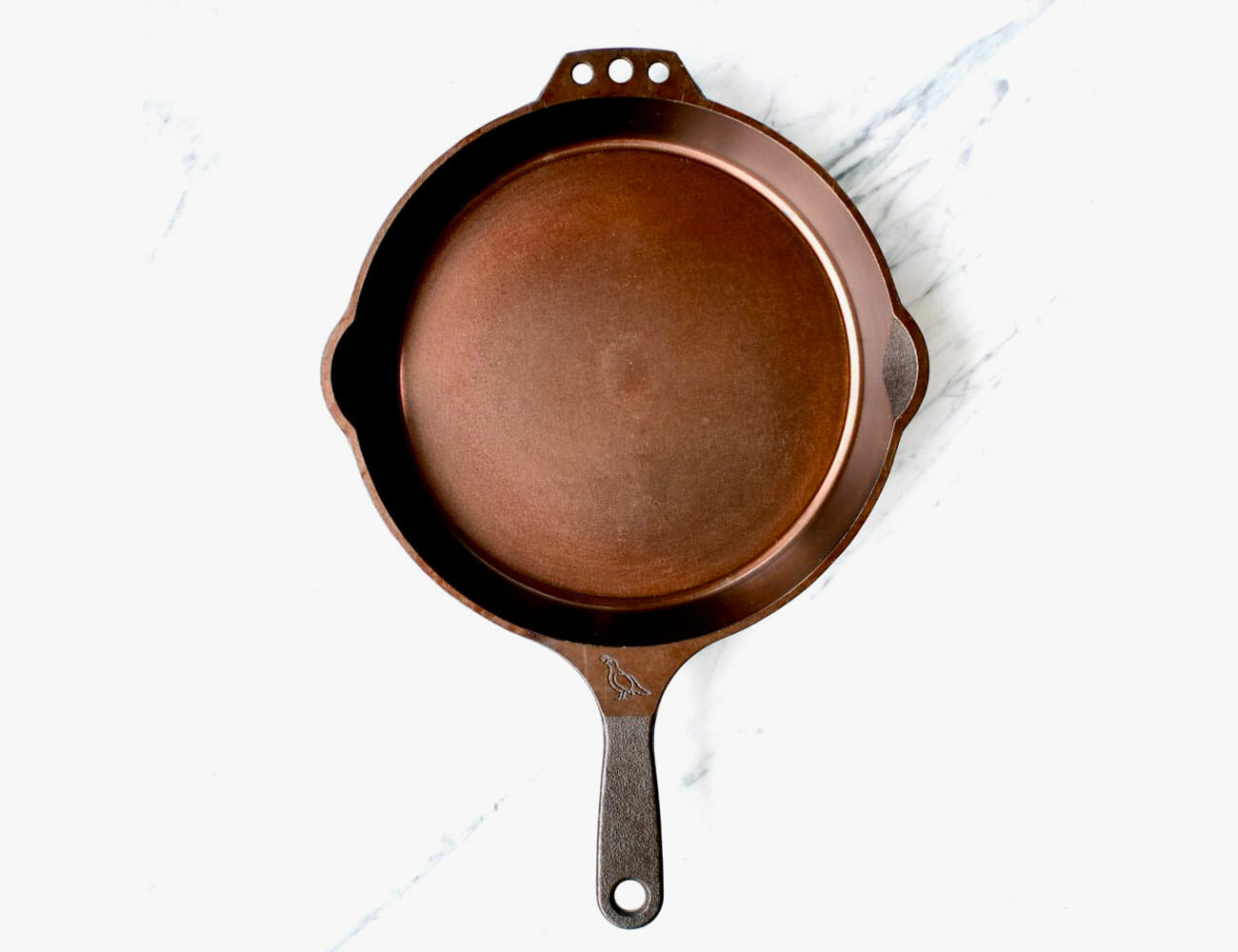
Smithey Ironware Company Skillet

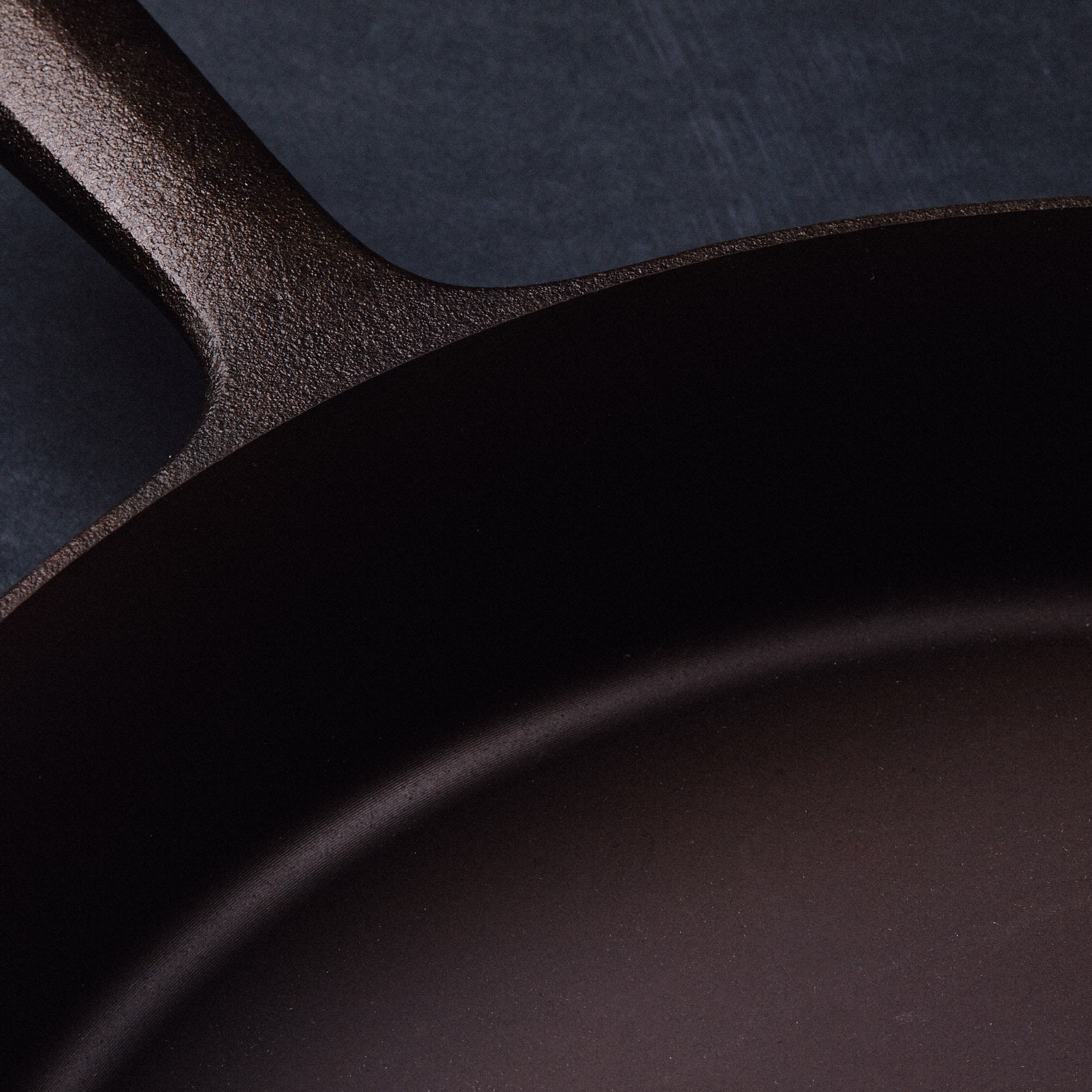
In most industries, retrospective homages to products past are meant more to trigger nostalgia than perform to the day’s standards. This is not so in cast-iron. Smithey’s skillets are made with heavy gauge iron, a three-finger front grip and an exquisitely milled down, pre-seasoned cooking surface. There’s even a heat ring on the base of the pan, so if you somehow find yourself standing in front of an old indented wood stove, you’ll fit right in.
Available sizes: 8-inch, 10-inch 12-inch (everything in between)

The Field Skillet

There are two attributes requisite to all gear that works indoors and out: durability and packability. Field’s skillet is both of these things. It’s light and skips out on extra features in the name of simplicity. There are no pour spouts, the front grip is very small, and the handle isn’t elevated or elongated in any way. These sound like marks against it until you remember it has to fit in your backpack.
Available sizes: 10-inch, 12-inch, 13-inch

Finex Cast Iron Cookware Company Skillet

The Finex pan sports a similar machine-smoothed cooking surface as others on our list. The corners create many areas to pour out sauces or excess grease, yes, but there isn’t much out there on its proficiency in the oven. This particular skillet’s cooking surface is also just a quarter-inch shy of standard pie size. The base of Finex pieces are thicker than your typical cast-iron base, providing more balanced cooking temperatures. This is useful when dealing with the longer cook times baking often entails. The trademark corners are absolutely ripe to wedge spatulas into to lift your hard work out of the pan. You can even get a lid for the thing.
Available sizes: 8-inch, 10-inch, 12-inch

Butter Pat Industries Skillet

Idyllic sloped walls, pour spouts, a comfy front grip, an insanely smooth cooking surface and Butter Pat’s surprisingly nimble weight makes it just about as good as it cast-iron gets. Our sole complaint — the handle tends to be a bit short on the largest size, making for an especially difficult time toting it around by the handle alone. This really only affects your ability to toss something your sauteeing in the pan.
Available sizes: 6-inch, 8-inch, 10-inch, 12-inch

Borough Furnace Skillet

Based in Owego, New York, Borough Furnace has its eye trained on unique skillets. Its pans feature low walls that allow more air flow than any other on this list, an extra-large front grip and a really, really heavy base. But it’s also the most eco-minded skillet maker out there. The whole facility is run off wind off-sets and solar power, and every skillet is made with recyled iron. The only downside? The handle’s unique shape isn’t a very comfortable grip.
Available sizes: 9-inch, 10.5-inch

You Can Get Into Pour-Over Coffee for All of $10 Right Now


Though we hold drip coffee machines in high regard, any coffee diehard will tell you the purest, most flexible way to brew coffee is in a pour-over brewer. Pour-over brewing allows the brewer to adjust water temperature, volume, pouring pattern and even number of pours cup-to-cup. The rabbit hole is deep.

Today at Best Buy, Bodum’s standard pour-over brewer is marked down 50 percent — good for a modest $10 savings. If you go for it, we recommend picking up a scale and grinder, too.

Gear Patrol also recommends:
Hario V60 ($20)
Kalita Wave 185 ($25)
Chemex ($37+)
More Deals, Served Up Fresh Every Day

Deals, discounts and drops on products you actually care about and want. Curated by the Gear Patrol Editors. Start Saving

Note: Purchasing products through our links may earn us a portion of the sale, which supports our editorial team’s mission. Learn more here.

The 16 Best Sofas and Couches You Can Buy in 2019

The couch is the centerpiece of a home. It’s a place you, guests and roommates are naturally drawn. Thus, a good couch pulls double duty: not only does it have to be comfortable, but it also has to look good. Whether you’re balling on a budget or not, these are the best sofas and couches to squeeze through the front door.

The Short List

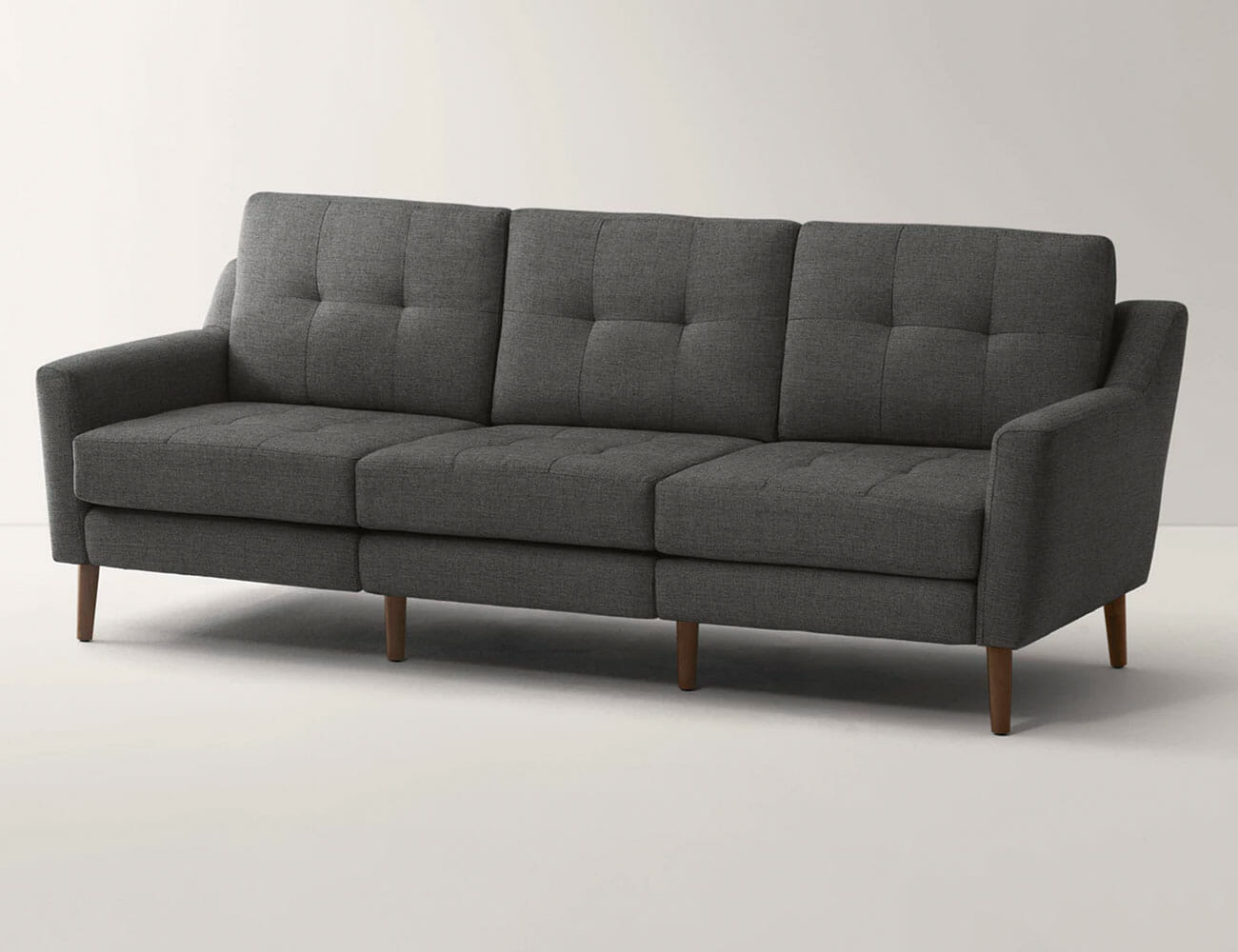
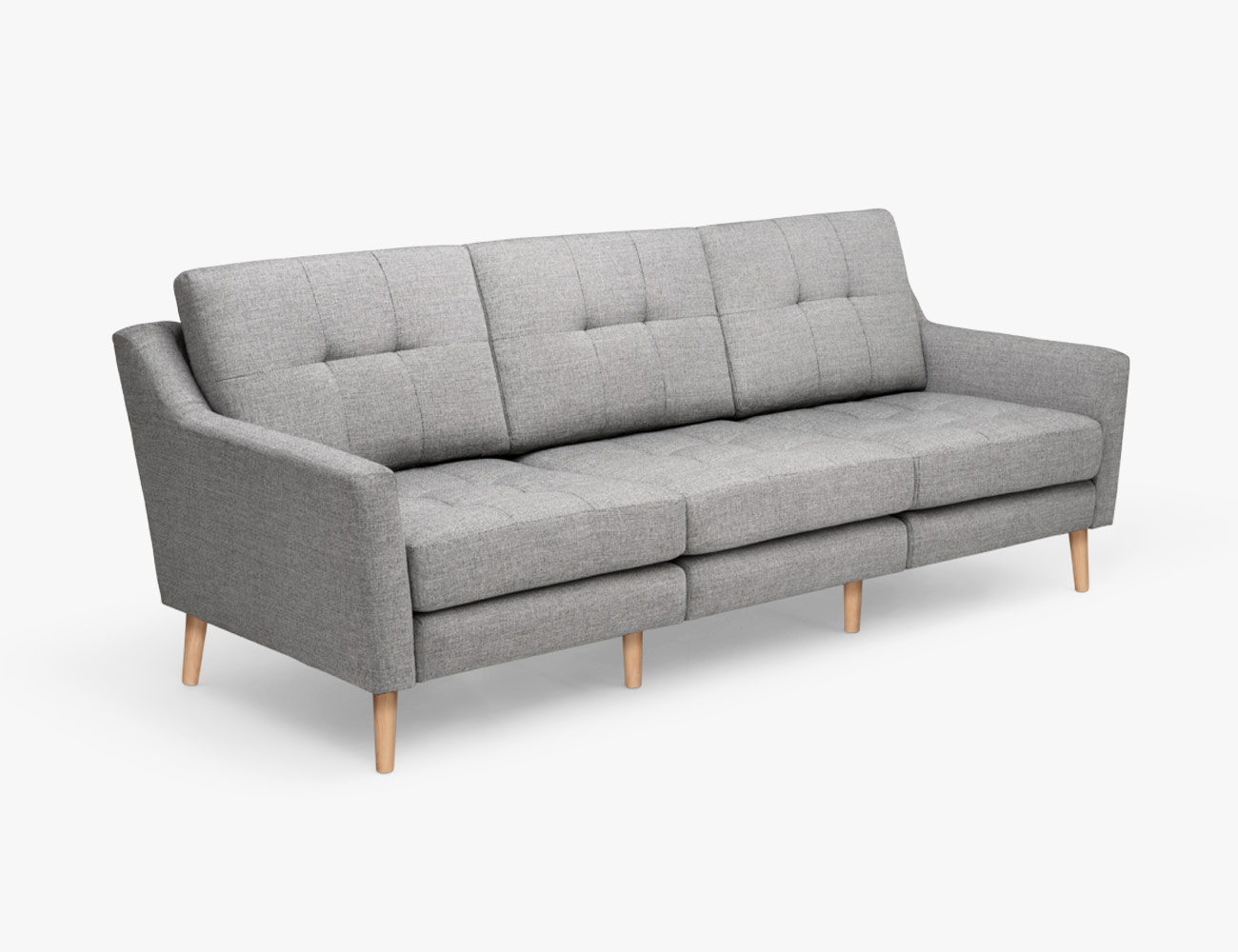
Best Overall Sofa: Burrow Sofa

Burrow offers the best combination of all possible features in a couch or sofa that’s not wildly expensive. It’s sturdy, comfortable, customizable, modular and ships within a week of ordering. On top of that, its upholstery fabric is remarkably stain-resistant, there’s a charging cable built into it and its quietly mid-century aesthetic is pretty easy to fold into most living situations. It does all of this and keeps the price for a full-size, fully customized sofa just over $1,000.

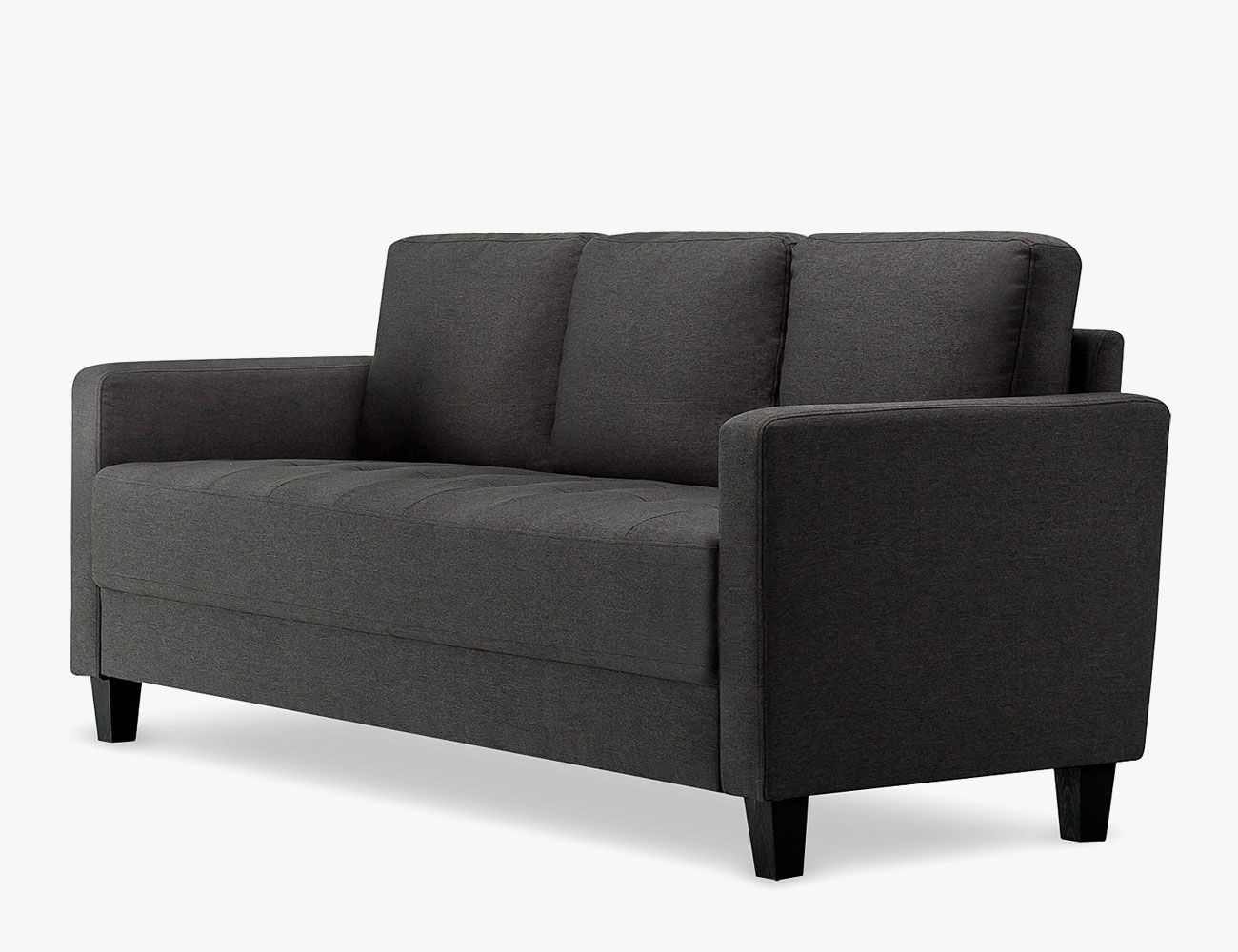
Best Sofa Under $500: Zinus Sunny Modern Sofa

Buying a super-cheap sofa can be risky, but not everyone can throw down a thousand bucks on a couch. Zinus’s relatively new sofas are a lot like their memory foam mattresses — exceptionally affordable and surprisingly cushy. The Sunny Modern has a low-key look, single tufted foam cushion and high rub count upholstery. Plus, there’s a 100-day trial period and it ships free.

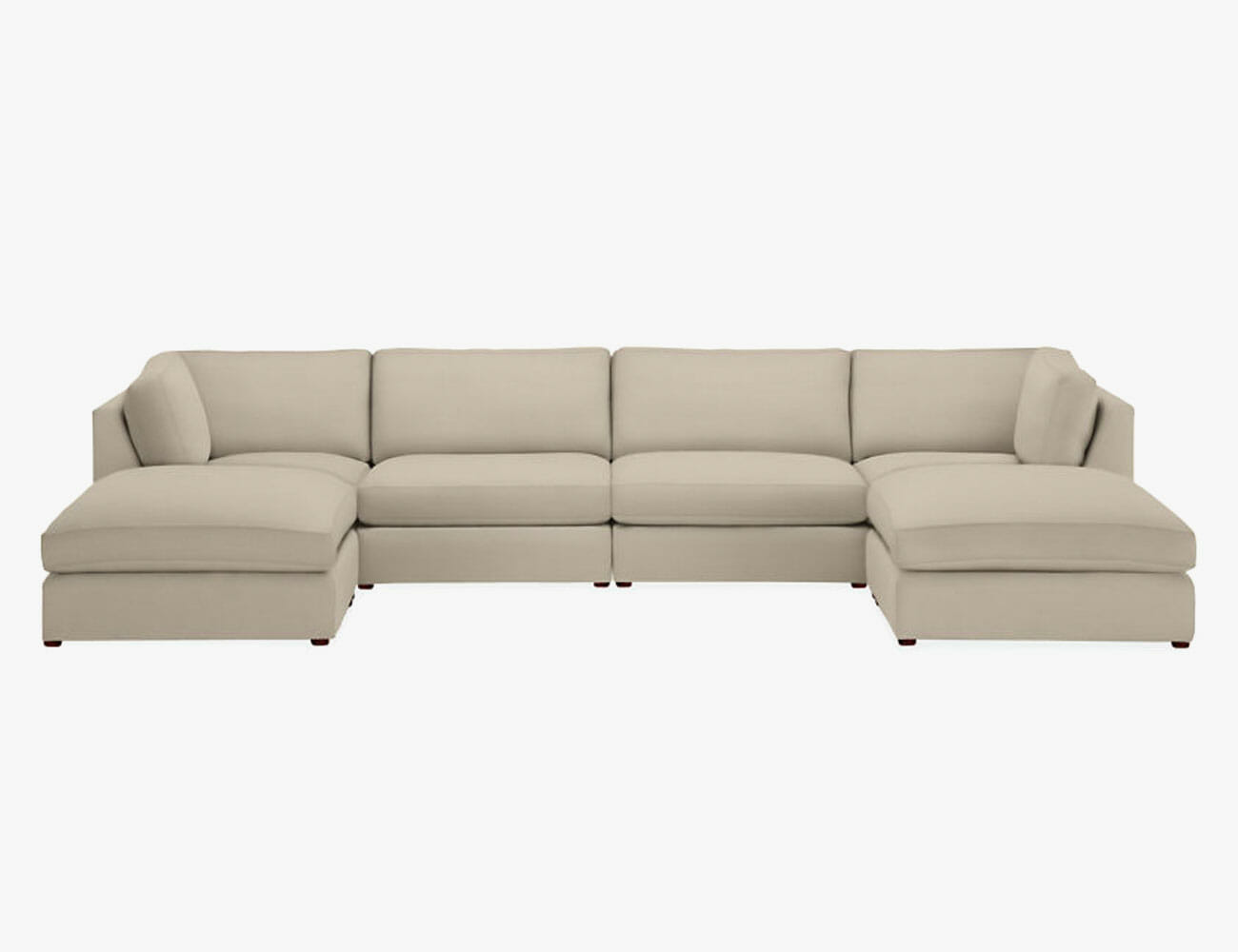
Best Sectional Sofa: Room & Board Easton Sectional

Room & Board may seem antiquated compared with newer and shinier furniture-making companies, but those other companies have nothing on R&B-level quality. The frame of its Easton Sectional is made by hand from kiln-dried hardwood. The cushions are spring, foam, down and feathers. The Easton Sectional comes in various sizes and colors and is fully modular. On top of that, R&B makes a case for the most transparent furniture company out there — no lies about ship dates, availability or price. In other words, you get what you pay for.

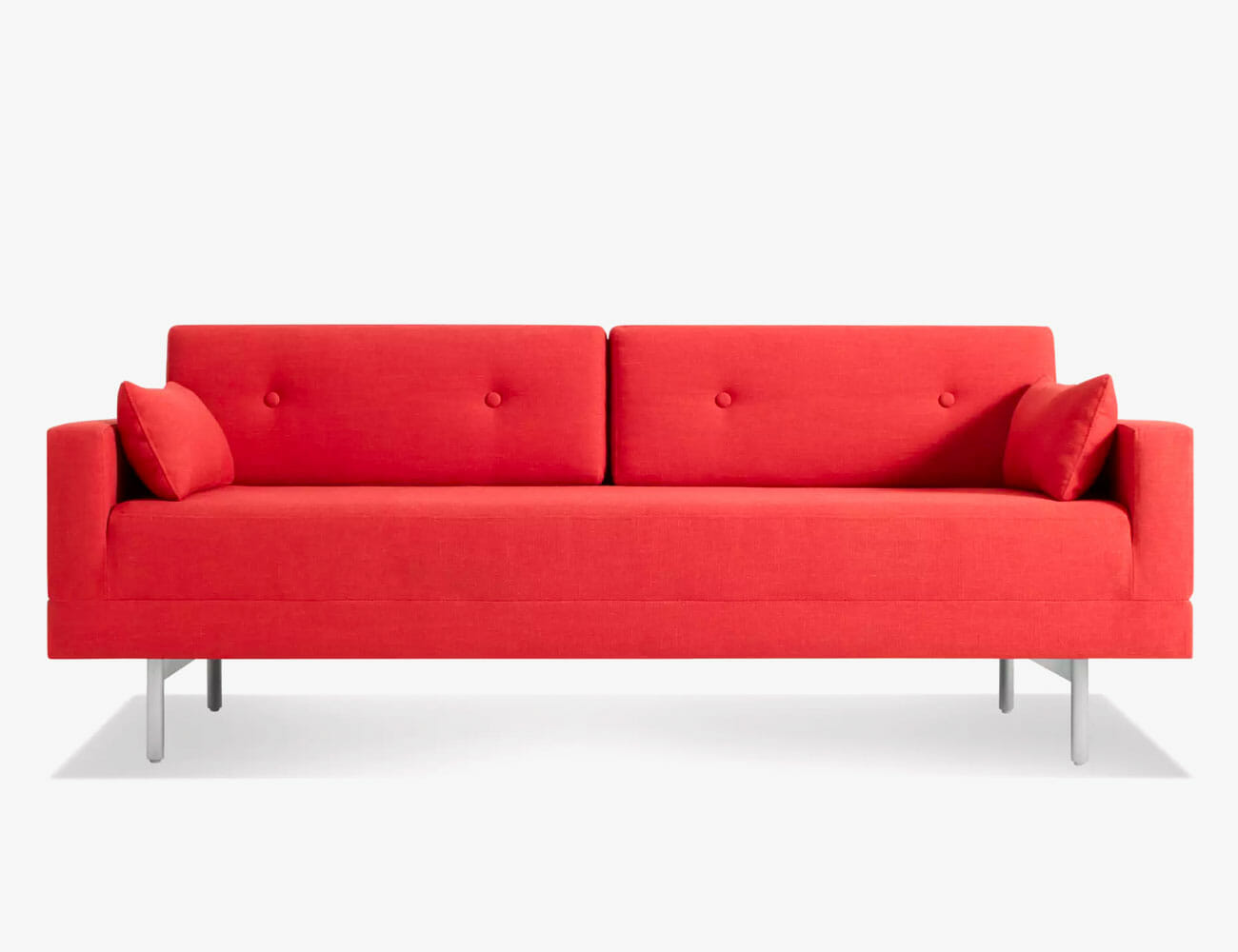
Best Sleeper Sofa: Blu Dot One Night Stand

Sleeper sofas tend to be blocky, space-consuming eyesores, which runs against the space-saving nature of a sleeper sofa. Blu Dot’s playfully named option is the opposite. Instead of an enormous base with a pull-out mattress or a trundle bed situation, Blu Dot decided it’d be easier to take the pillows off and flip the seat forward, instantly creating a queen-sized mattress with legs in your living room. It will be difficult to find a more efficient sleeper couch than this one.

he 16 Best Sofas and Couches of 2019

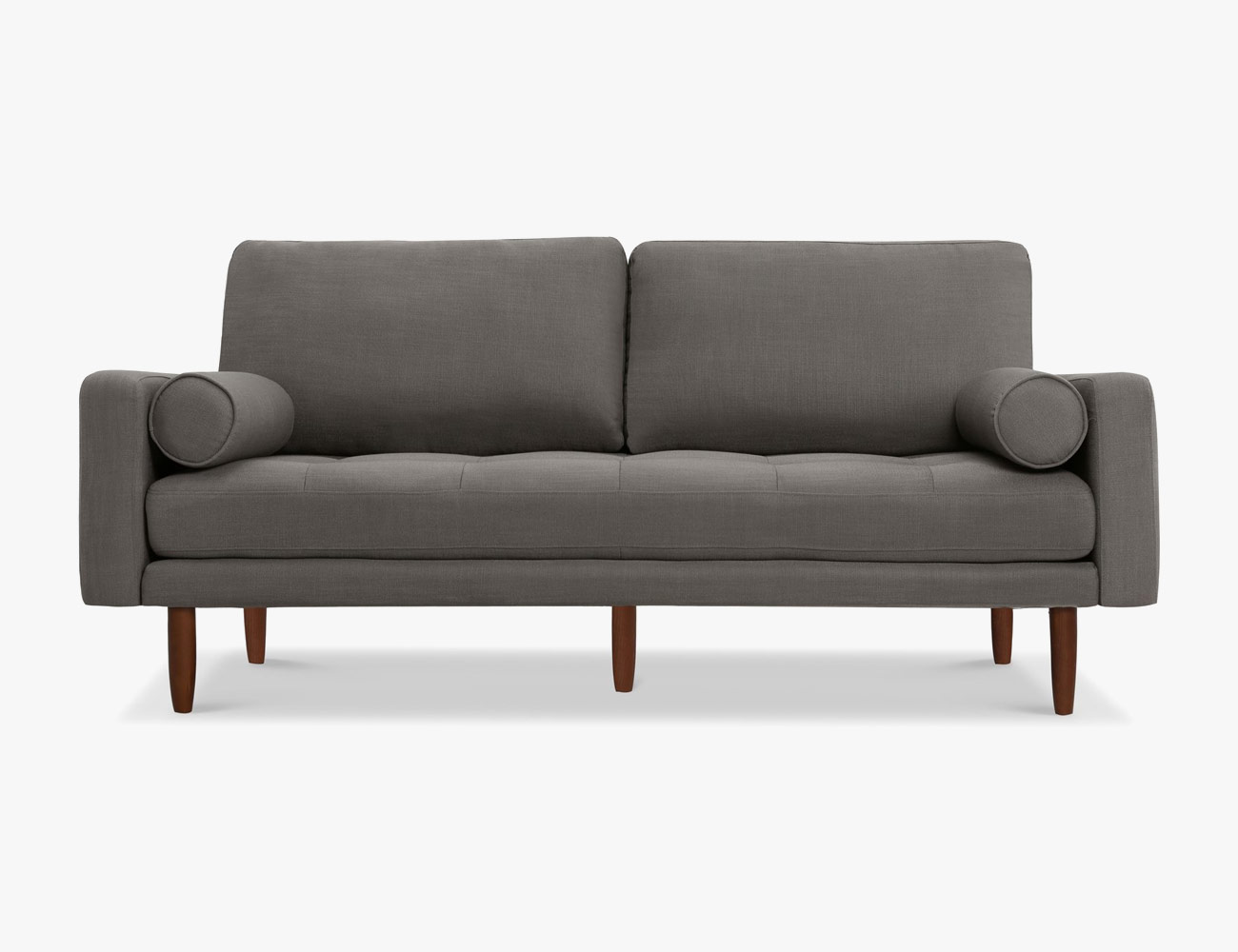
Capsule Home Brooklyn Mid-Century Sofa

Capsule Home’s specialty is making furniture for the design-conscious and very broke young adult. All it’s offerings ooze mid-century and many, like this one, feature other tech add-ons like built-in USB ports. A pair of bolster pillows and a bench cushion round out this ultra-affordable option.

Zinus Sunny Modern Sofa

Though Zinus is better known for their ultra-cheap mattresses, the company makes ultra-cheap sofas, too. The wood-frame Sunny Modern Sofa features tufted foam cushions, a 100-day trial period, free shipping (all in one box!) and a soft hit on the wallet. In short, it’s a nice first couch, and the perfect stand-in until you arrive at greener pastures.

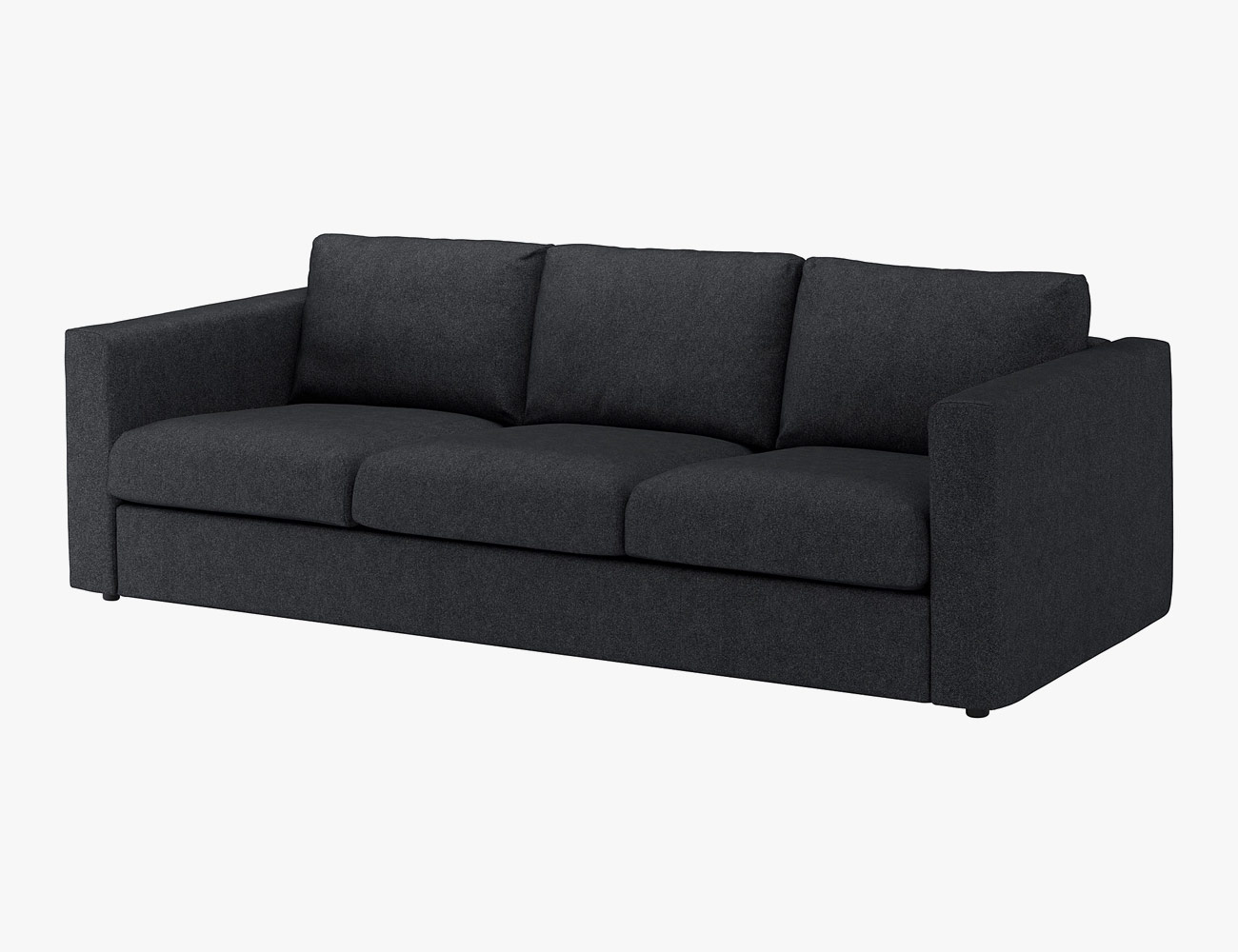
Ikea Vimle Sofa

Super simple, super available, super affordable, probably not super easy to assemble — yep, it’s an Ikea product. Its upholstery can be zipped off and washed in a machine. It also comes in a slew of colors, has a 10-year warranty and is probably the most plain couch on this list, but that’s not a failing of the sofa. Not all furniture need be statement pieces — this sofa lets the rest of your living room shine.

Burrow Sofa

Go to Burrow looking to pick up a small chair to sit in the corner of your living room and leave with a new king sectional (free shipping, too). A patently absurd level of customization combines with fair prices and a very nappable cushion for a recipe to a living room dripping with mid-century goodness.

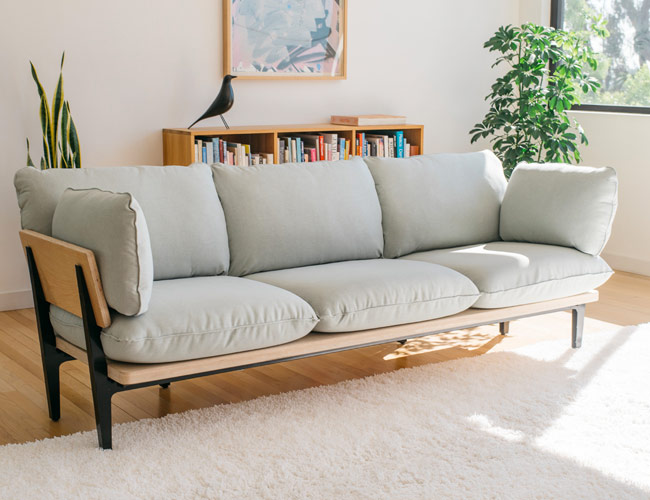
Floyd Sofa

Well-made, no-nonense furniture that ships easily and looks just a touch different to everything else out there — that’s the quickest way to describe Floyd’s value proposition. Its sofa breaks down into a pile of very packable pieces. As such, it’s probably the most shipping friendly unit on the market. Thanks to a bench frame and armrests that double as pillows, it’s very much its own thing.

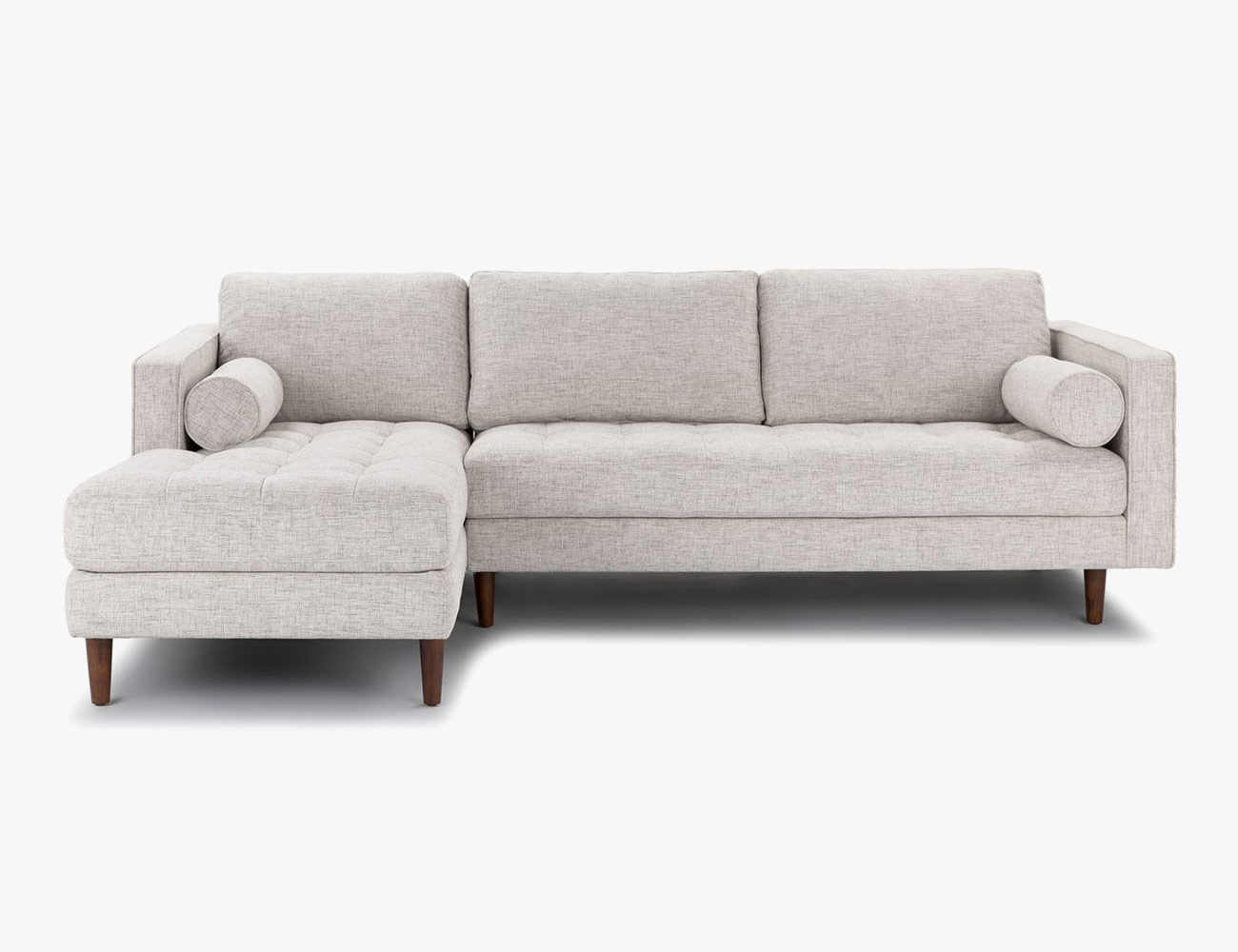
Article Sven Birch Sectional

The most popular sofa on a site with an actual mountain of options. Article’s Sven sectional (pictured here in birch ivory) sports tufted bench cushions, clean lines, bolster pillows and an unmistakeably mid-century look. It ships to your house shortly after ordering and takes all of five minutes to assemble. With a couch like this, you won’t need a reading chair.

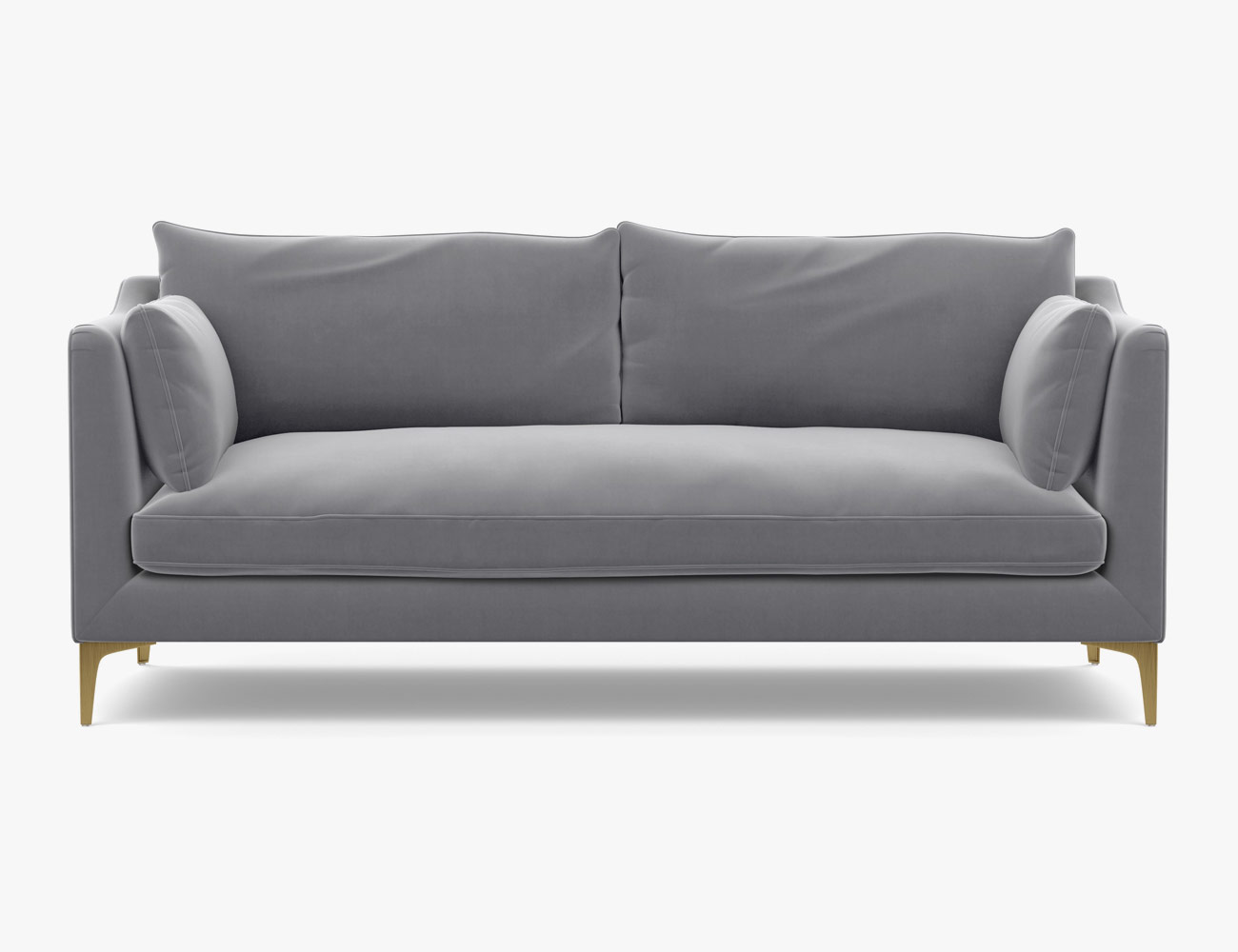
Interior Define Caitlin by The Everygirl

Soft edges, aggressively romantic upholstery and customization abound in this couch named after Interior Define’s first intern. Change the upholstery fabric, the color, the legs, the length and add an ottoman. The Caitlin melts into your first apartment just as seamlessly as it does your last. If you don’t go for the mod velvet upholstery, you should reconsider your design taste.

Blu Dot One Night Stand Sleeper Sofa

Blu Dot is as close as American design has come to an original mid-market furniture maker. In other words, there are dozens of big box stores making derivative furniture at a variety of price points, there’s what’s sold at DWR, then there’s Blu Dot sandwiched between. This skinny, minimal sofa doubles as a spontaneous guest bed — just throw the pillows on the ground and flip the cushion out.

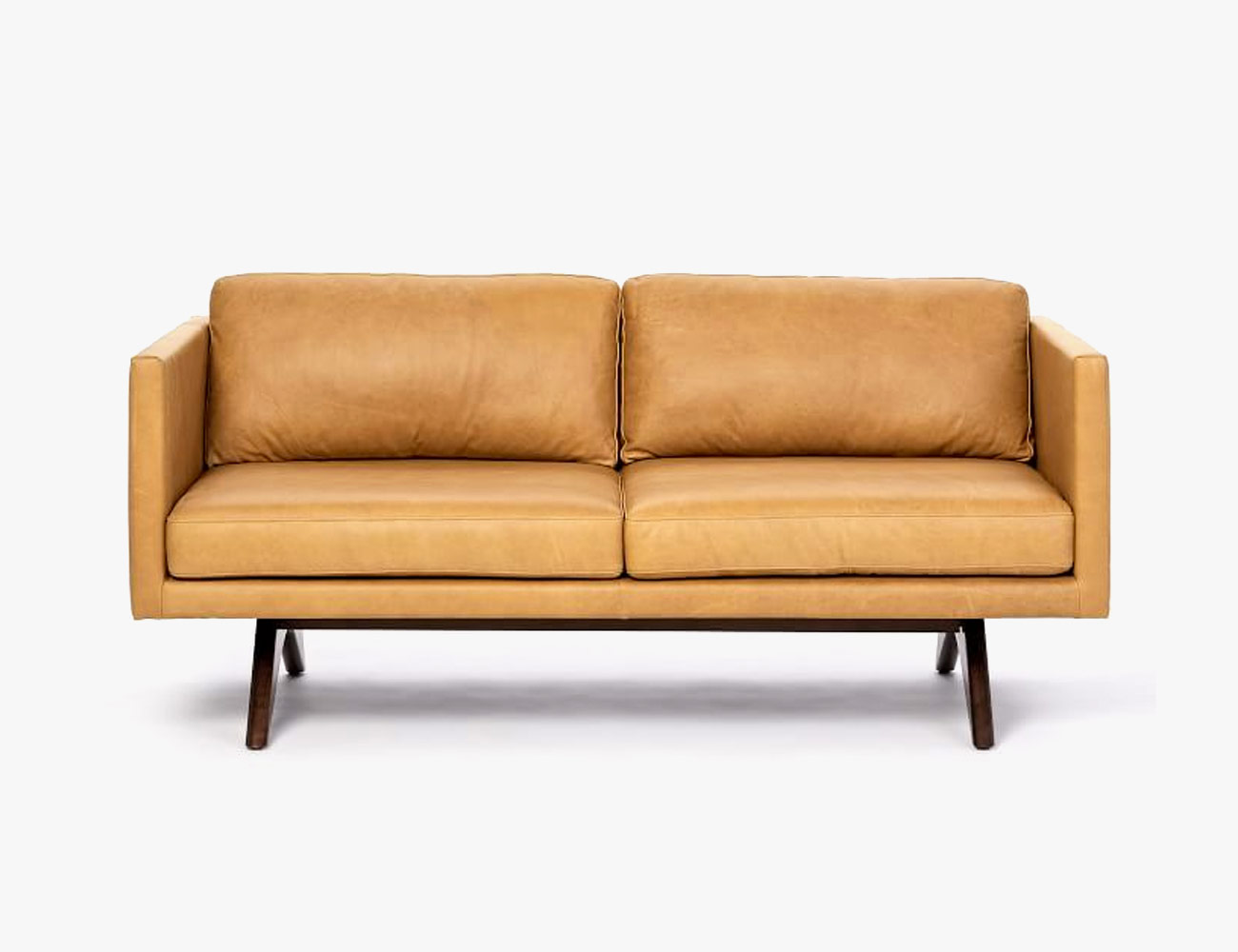
West Elm Brooklyn Leather Loveseat

A compact sofa with looks that get better with wear. The aniline top-grain leather starts off shiny and neat and develops scuffs, folds and a deep patina. Like the perfect pair of jeans, this couch speaks volumes without showing off.

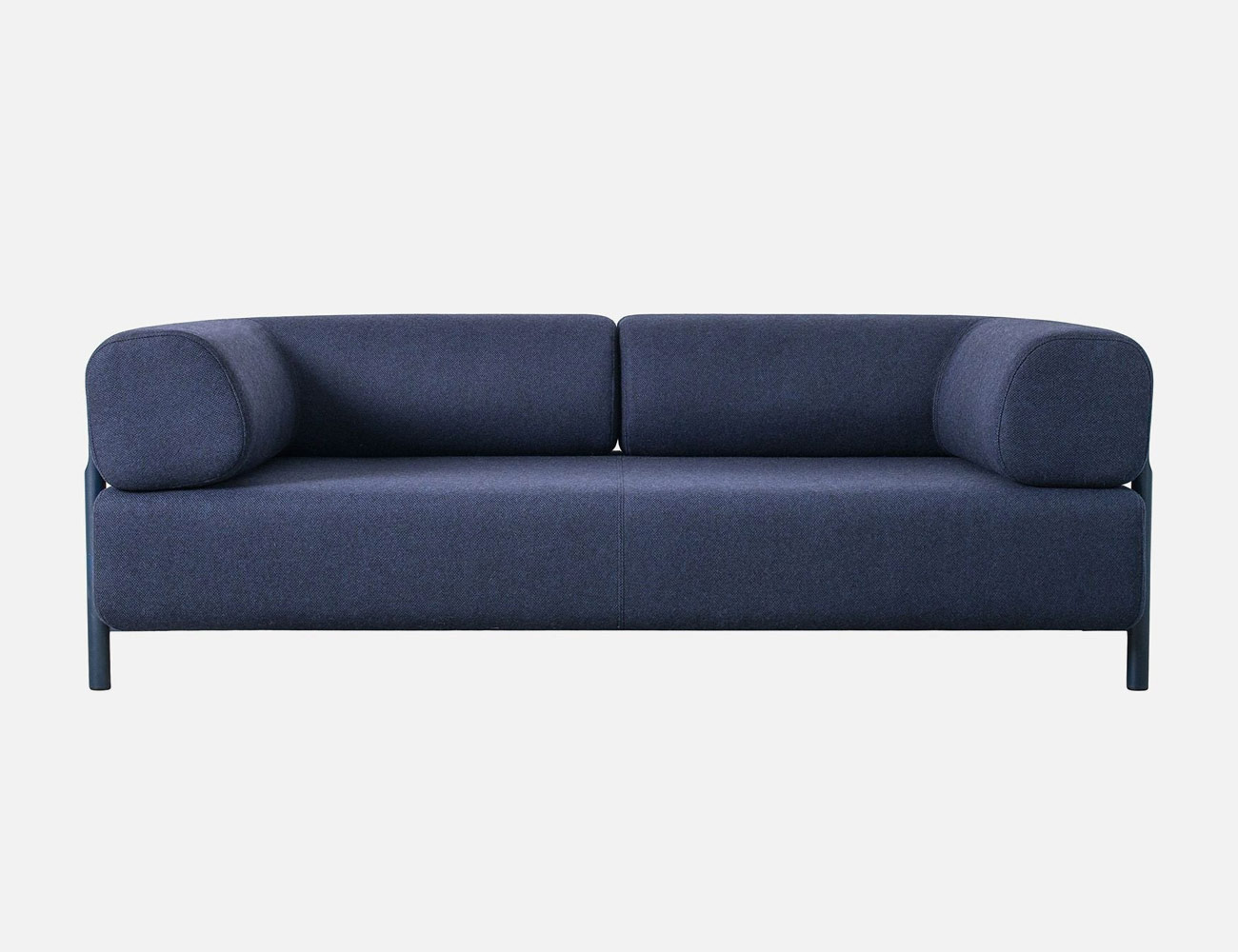
Hem Palo Two-Seater

Hem’s house-designed love seat looks like it’s about to give its sitters (or nappers) a hug. Made with a wool-poly blend, its upholstery is as sturdy as it is soft, and its lifted, cushioned sides make for armrests that double as pillows.

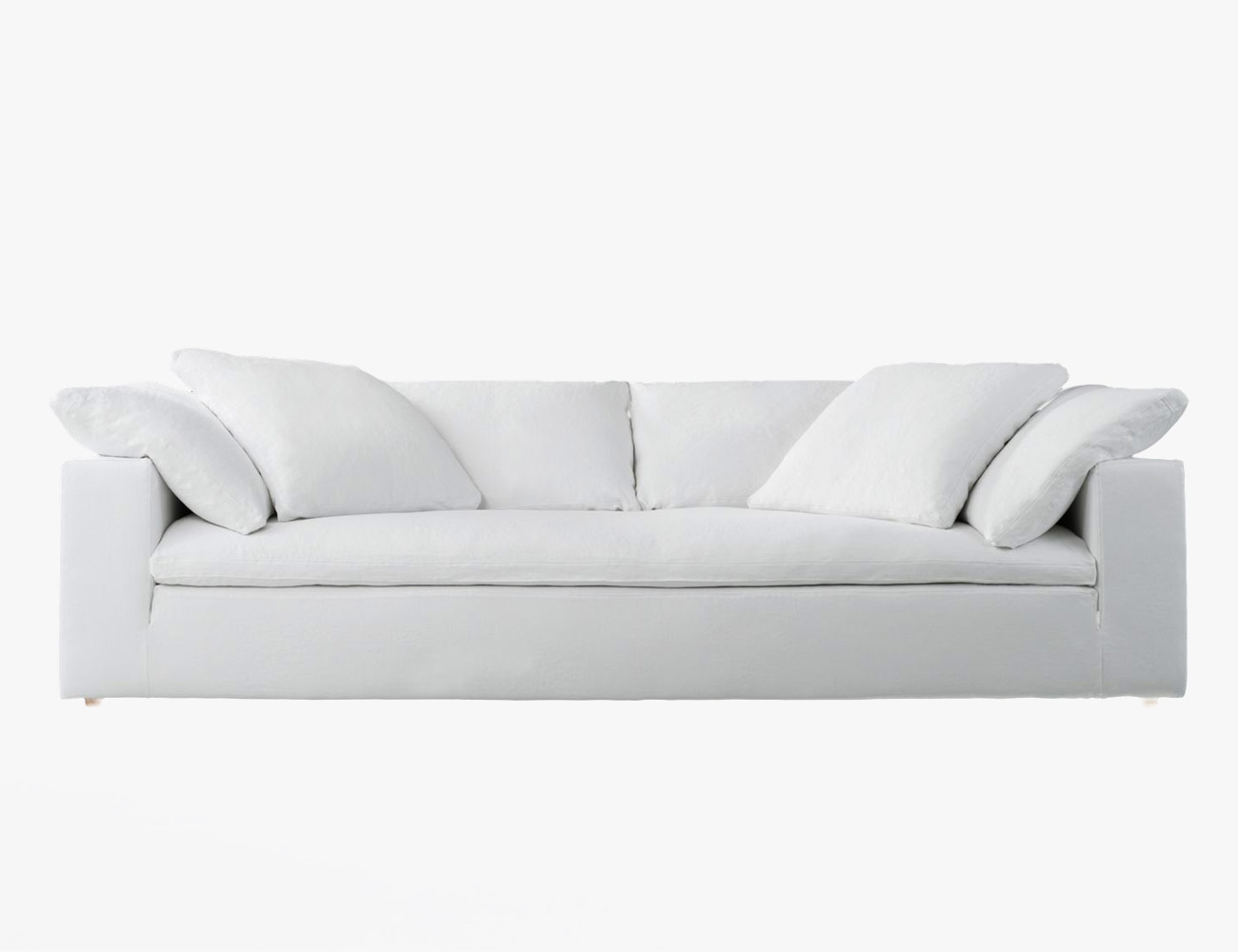
Restoration Hardware Cloud Sofa

The Cloud Sofa is one of the most comfortable sofas you can buy. Cushions made with either 100 percent goose down or a core of goose down absorb your weight without being all sink and no support. RH stocks three upholstery variations but offers almost 200 options via special order.

Room & Board Easton Sectional

Room & Board makes furniture wth staying power. Its Eason Sectional is modular, a bit modern and can be upholstered in many colors. More importantly, it’s held up by kiln-dried hardwood frame joinery, hardwearing spring suspension and cushions with pitch perfect levels of sink.

Rove Concepts Borge Mogensen 3-Seater

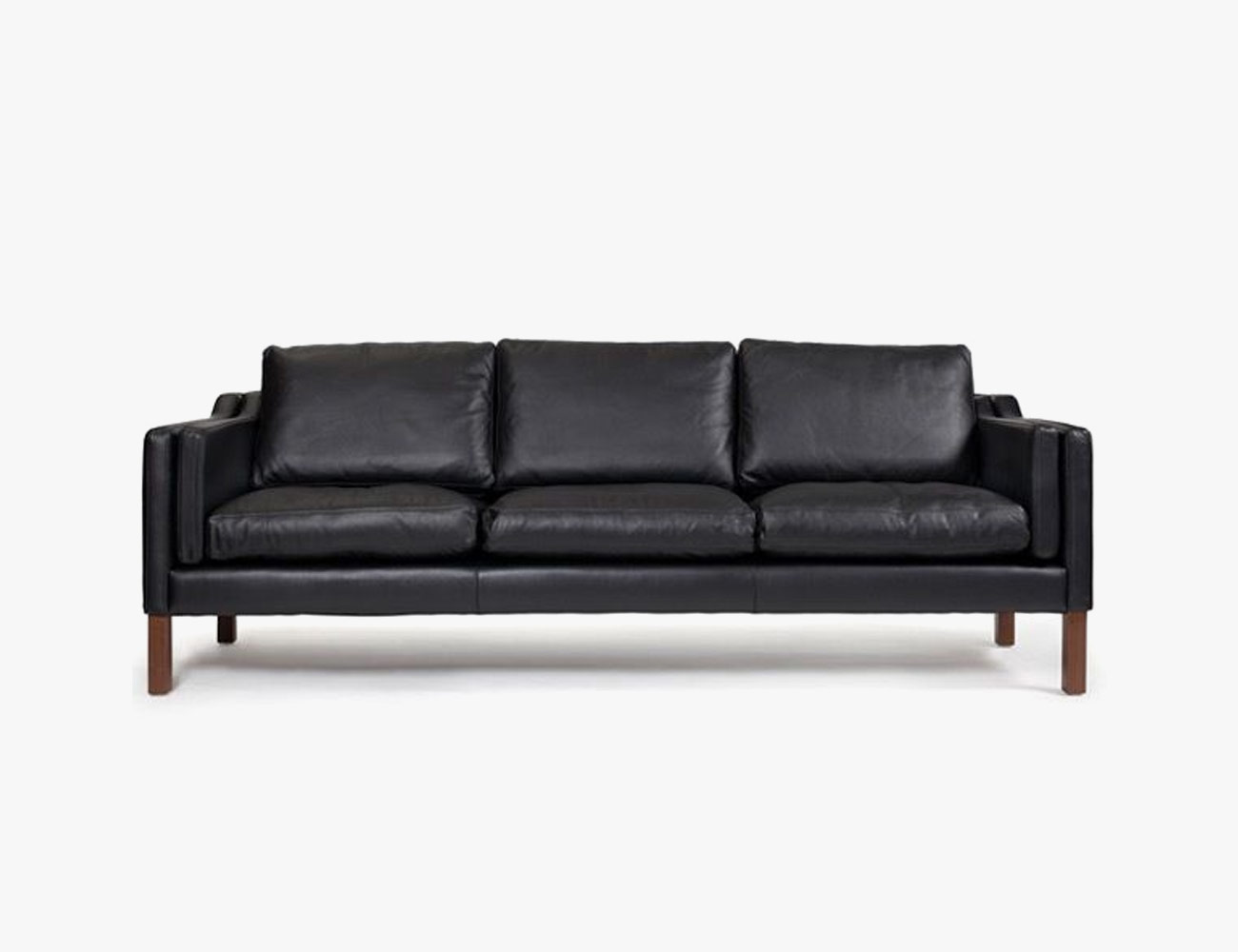
Icons of Danish design, Borge Mogensen’s sofas are as cozy as they are pretty. Available in 19 different leather upholstered finishes, this three-seater is made up of ultra-dense memory foam, a hardwood box frame and solid walnut legs.

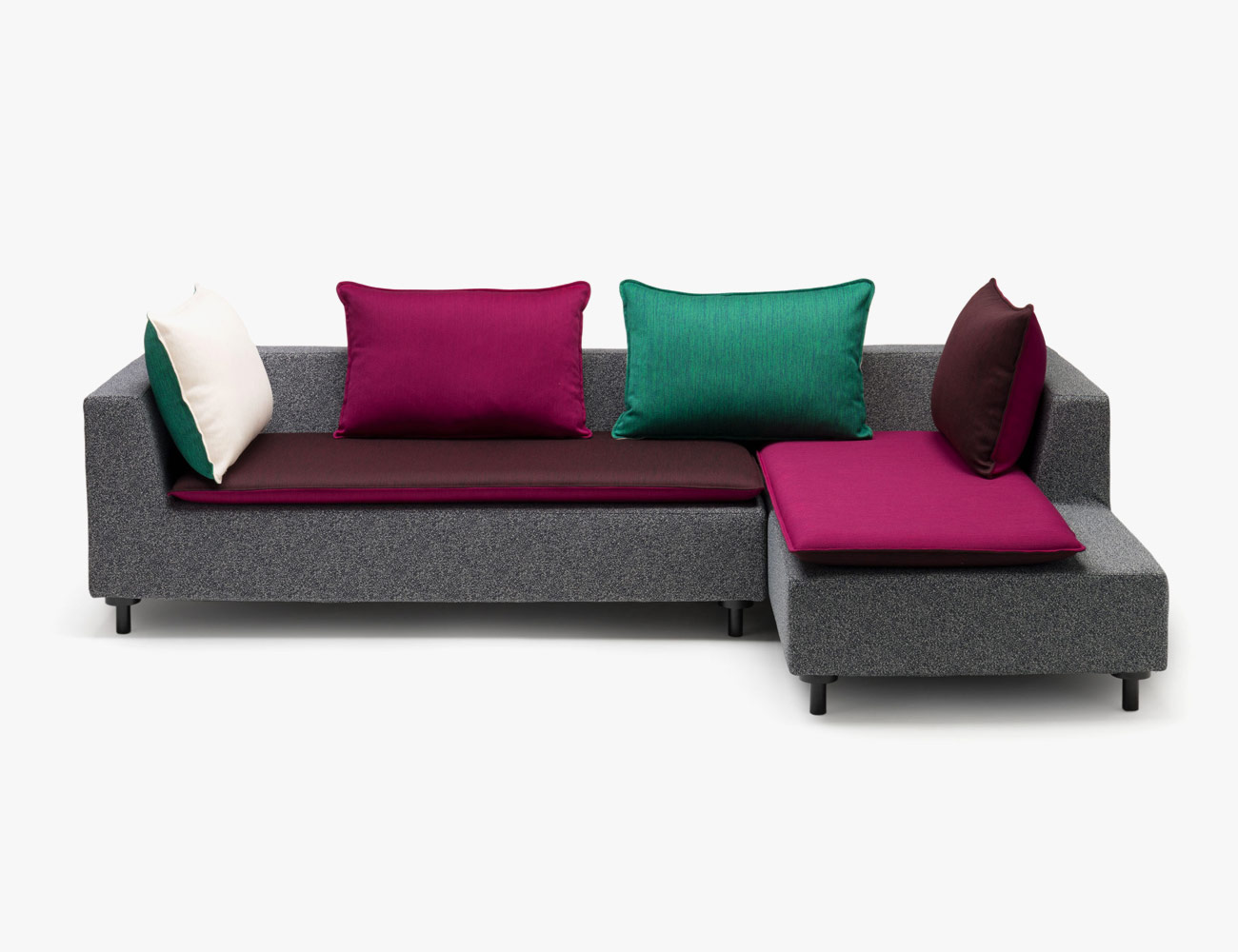
Normann Copenhagen Swell Sofa

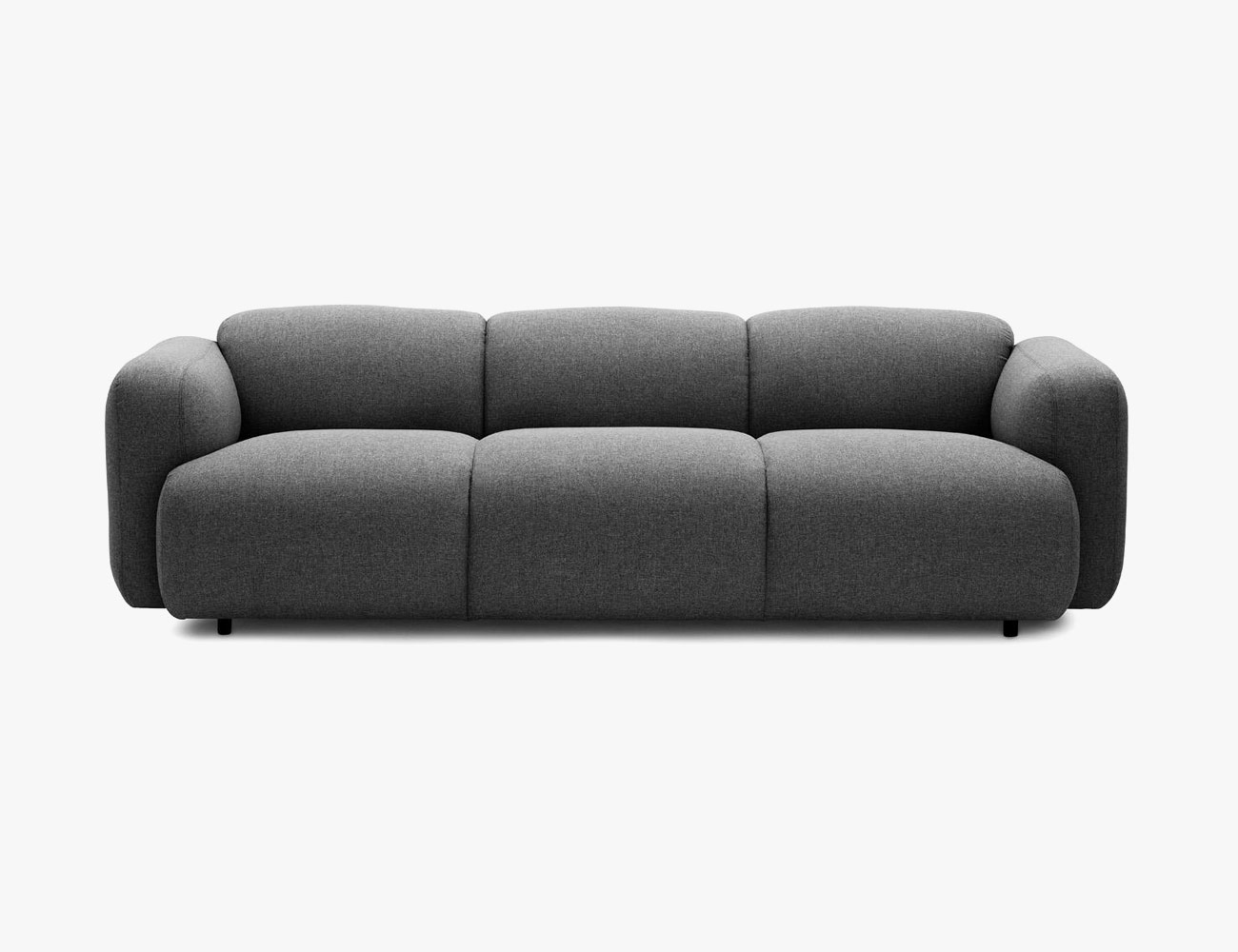
Normann Copenhagen is one of the biggest European design outlets in the world, and its Swell Sofa is a prime example why. It does away with clean lines and sharp form, and instead opts for a super-cushy, beanbags-in-couch form approach. The cushioning (which covers the whole thing) is a special memory foam specifically designed to optimize air flow, keeping you cooler all year round.

Civil Noord Three Seat Sofa

Don’t groan at the price yet. Civil’s directive is direct-to-consumer gone luxe — 100 percent cotton or leather upholstery made in Italy, strong warranties and high (but quiet) technology. This specific sofa has a “Magic Box” attached, which is a coy name for a floating side table where the entire surface is a charging pad. Also, the whole Noord collection is modular, so it grows with you.

Barcelona Couch

What kind of couch list would leave out a couch fit for kings? Designed in 1930, Ludwig Mies van der Rohe’s Barcelona chair was pencilled from notebook to throneroom with Spanish royalty in mind. Today, it’s made the same way was then, with Spinneyback cowhide leather, an African sapele frame and lots of TLC.

10 Timeless Wall Clocks to Anchor Your Living Room

The first successful attempt at mass-produced clocks happened early in the 19th century when three inventors from Connecticut developed an economical system powered by interchangeable parts. The home clock would go on to thrive for nearly 200 years, becoming a ubiquitous item of modern life. That is, of course, until the arrival of cable boxes and smartphones. Though many industrial designers continue to turn their backs on the home wall clock, a handful of iconic and contemporary designs continue to stand the test of time.

Additional contribution by Jack Seemer and Andrew Connor.

Braun Classic Analog Quartz Wall Clock

minimal-wall-clocks-gear-patrol-braun

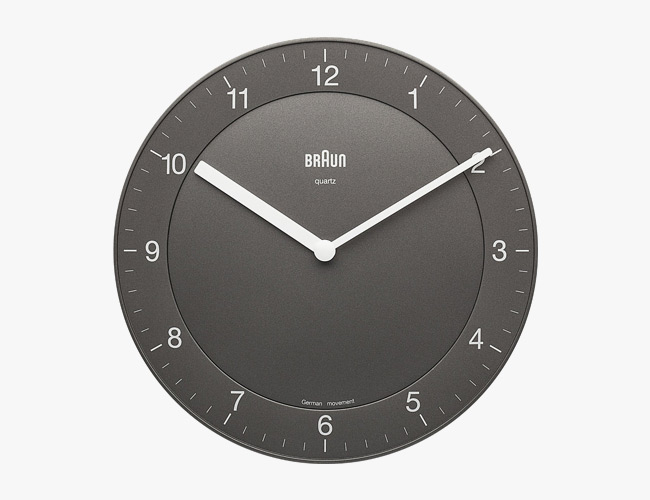
This sleek wall clock, available in black, white and gray, follows the same aesthetic principles established at Braun by Dieter Rams and Dietrich Lubs in the 1950s, ’60s and ’70s. That is, functional, thorough (“less, but better”) and unobtrusive.

Diameter: 7.9 inches
Thickness: 1.3 inches

Hay Analog Clock

minimal-wall-clocks-gear-patrol-hay

Designed for HAY by the Sweden-based designer Shane Schneck, this aluminum wall clock was inspired by the aesthetic of classic barometers. The face of the clock curves inward, giving depth that’s expressed by the shadow of the minute and hour hands.

Diameter: 10.5 inches
Thickness: 6.5 inches

Riki Watanabe Hibiya Clock

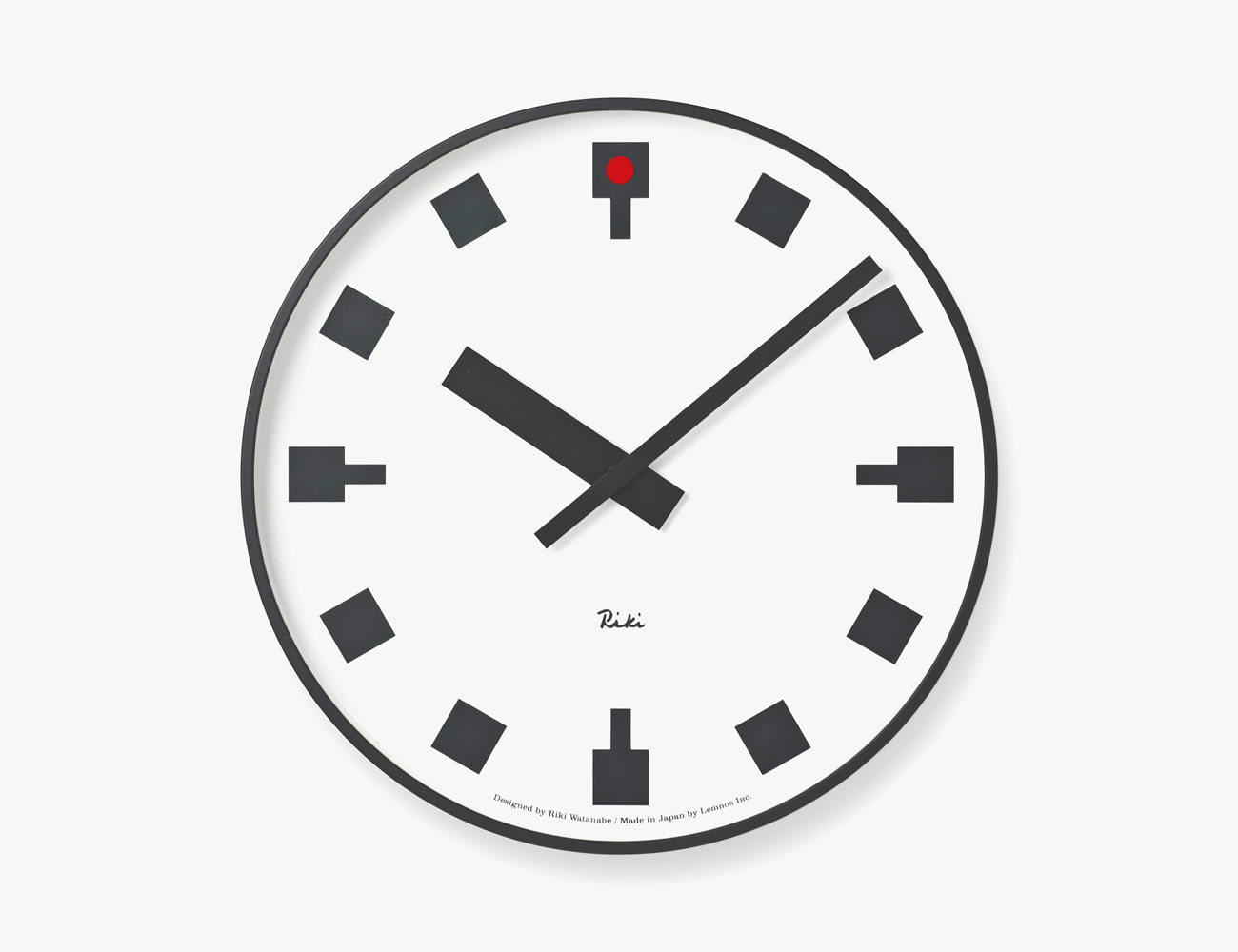
Riki Watanabe is considered a pioneer of post-war Japanese industrial design, and the pole clock he designed for Hibiya Crossing in Tokyo during the 1970s is thought to be one of his most defining works. This recreation for the home has the original’s dial — complete with thick blocky numerals — and encapsulated within a matte black aluminum case.

Diameter: 12 inches
Thickness: 2.5 inches

Lemnos Drops Draw the Existence

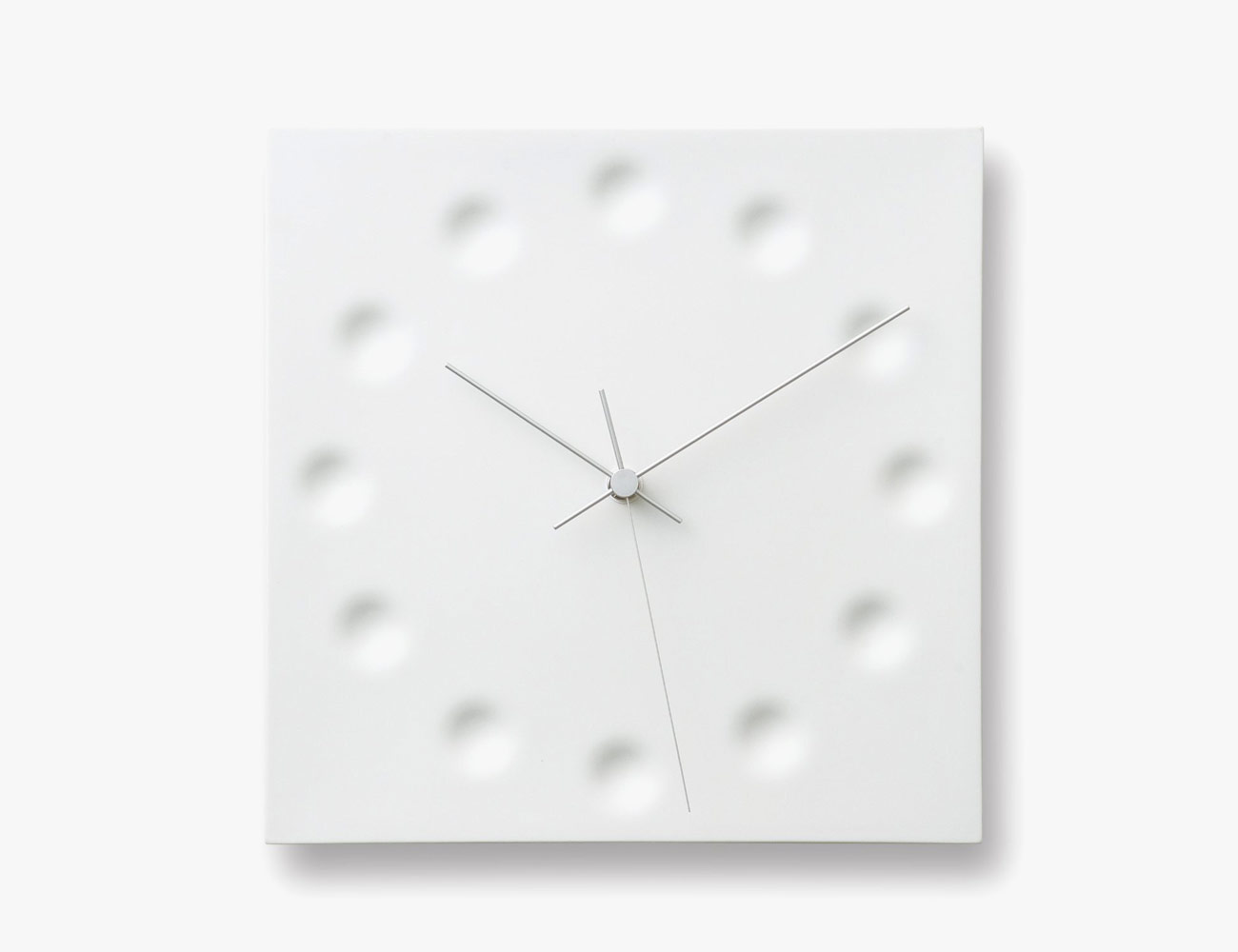
Its clunky name aside, this Lemnos wall clock is based on a Red Dot Award-winning table clock by Japanese designer Kanaé Tsukamoto. It’s made from beautiful white porcelain and features rounded indents in place of traditional numerals or indices, which are inspired by droplets of water.

Width: 10 inches
Thickness: 2 inches

Menu Marble Wall Clock

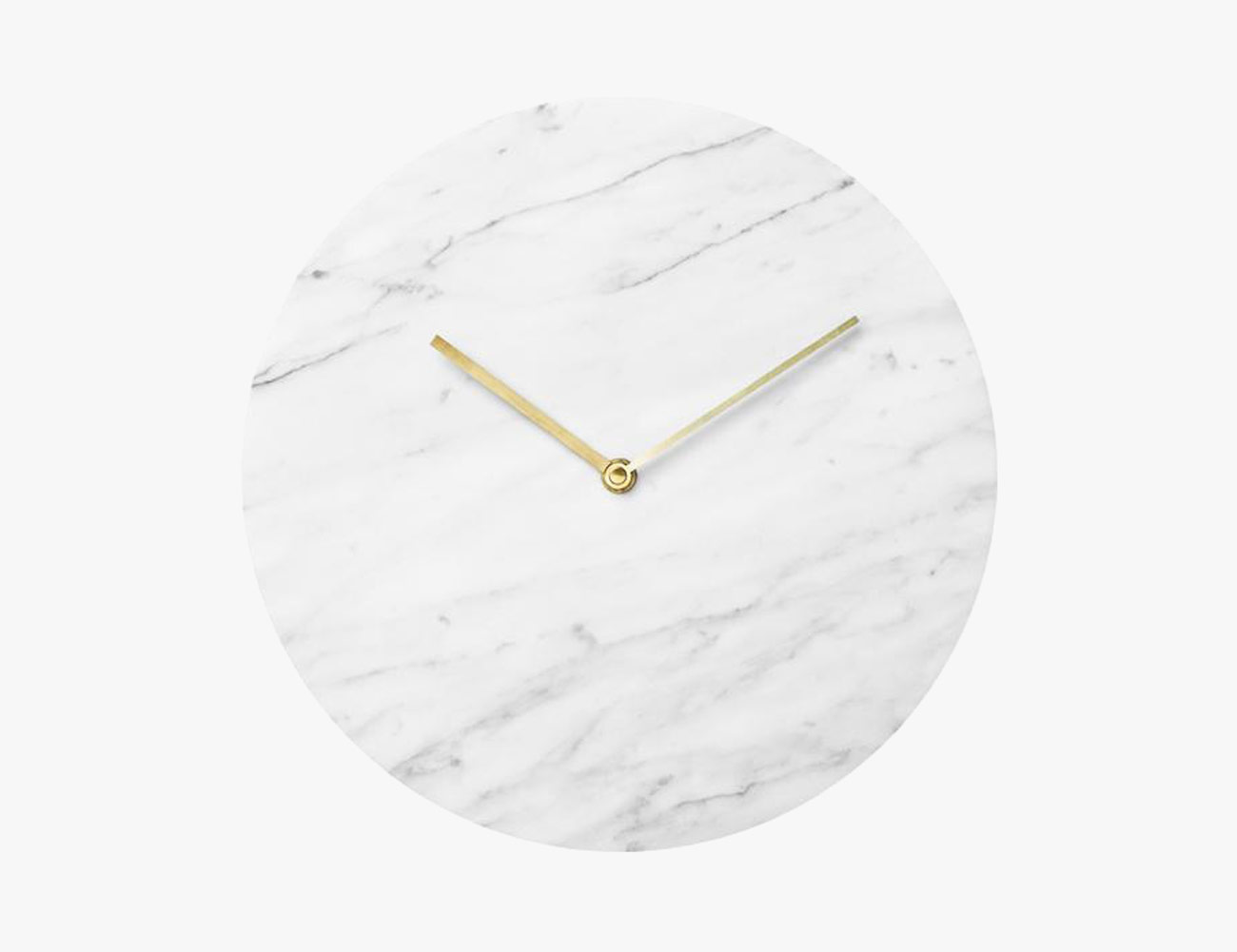
Menu’s better-known timepiece is its funky tumbler alarm clock but the brand’s created one hell of a wall-mounted showpiece with the Menu Marble Wall Clock. It lacks the hour markers you’d find on most clocks but that only allows you to admire the big disc of stone making up the core of the piece. Its available in white, grey or black, and comes with lacquered brass hands.

Diameter: 11.8 inches
Thickness: 3.9 inches

Schoolhouse Electric & Supply Co. IBM Standard Issue Clock

minimal-wall-clocks-gear-patrol-ibm

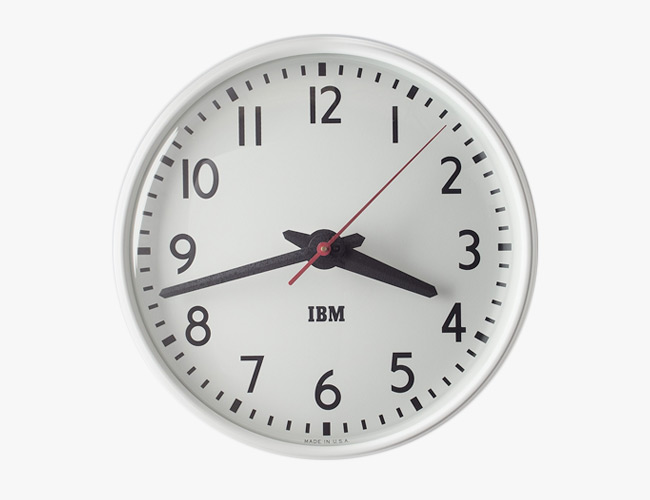
Hand-assembled in Portland, Oregon, this wall clock is a faithful reproduction of the iconic IBM clocks once found in offices and schoolhouses across America in the ’50s and ’60s. It’s operated by a quartz movement with a continuous second hand that glides rather than ticks.

Diameter: 13.5 inches
Thickness: 4 inches

Junghans Max Bill Wall Clock

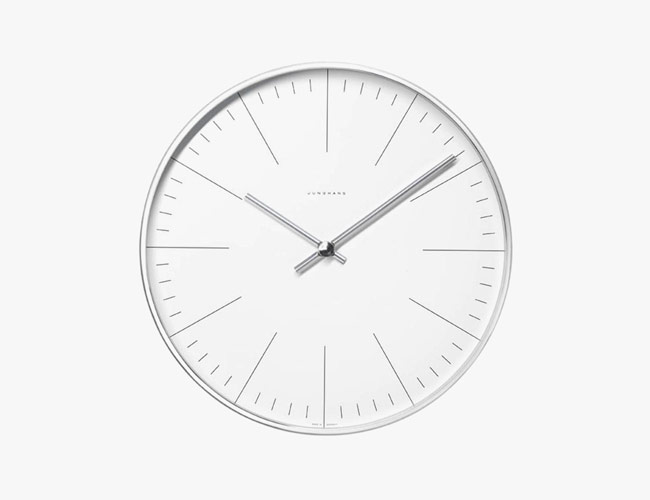
The Bauhaus-trained designer Max Bill has a portfolio stuffed with work, but some of his most memorable products were timepiece designs for Junghans. While the designs live on today mainly in the brand’s wristwatch collection, many of Bill’s earliest Junghans timepieces were clocks. This modern clock maintains Bill’s austere Bauhaus aesthetic with thin, elongated markers set against a field of white.

Diameter: 12 inches
Thickness: N/A

Rosendahl Timepieces Banker’s Clock

minimal-wall-clocks-gear-patrol-bankers

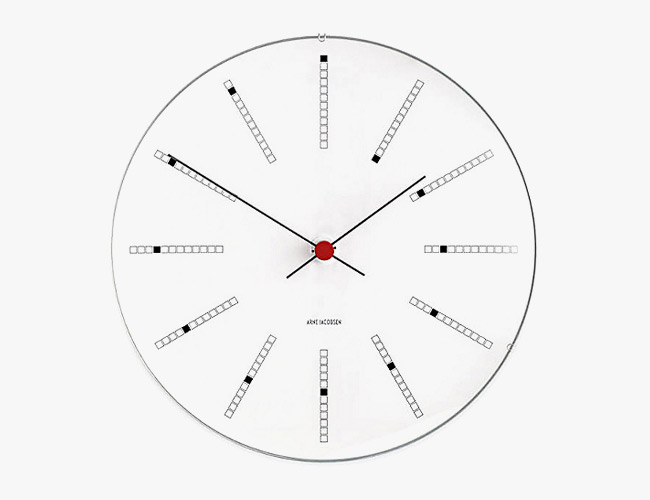
First introduced in 1971 by Arne Jacobsen, the Danish designer who also created the classic three-legged Ant chair, this clock was devised for the Danish National Bank in Copenhagen. In place of numbers, the face features a series of white boxes that are filled out in succession to indicate the time.

Diameter: 11.5 inches
Thickness: 2 inches

Vitra Nelson Spindle Clock

minimal-wall-clocks-gear-patrol-vitra

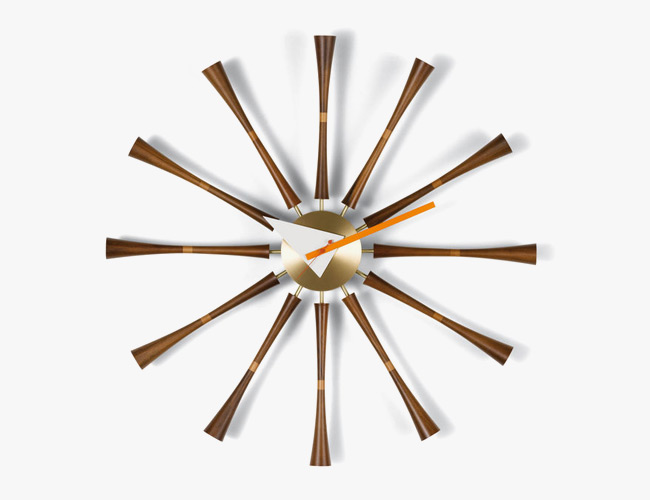
An icon of mid-century modernism, the Spindle Wall Clock is one of more than 150 clocks designed by George Nelson Associates between 1949 and the mid-1980s. This one was designed in 1957 by American designer Lucia DeRespinis, one of the very few women designers at the time.

Diameter: 23 inches
Thickness: 2.5 inches

Architectmade FJ Clock

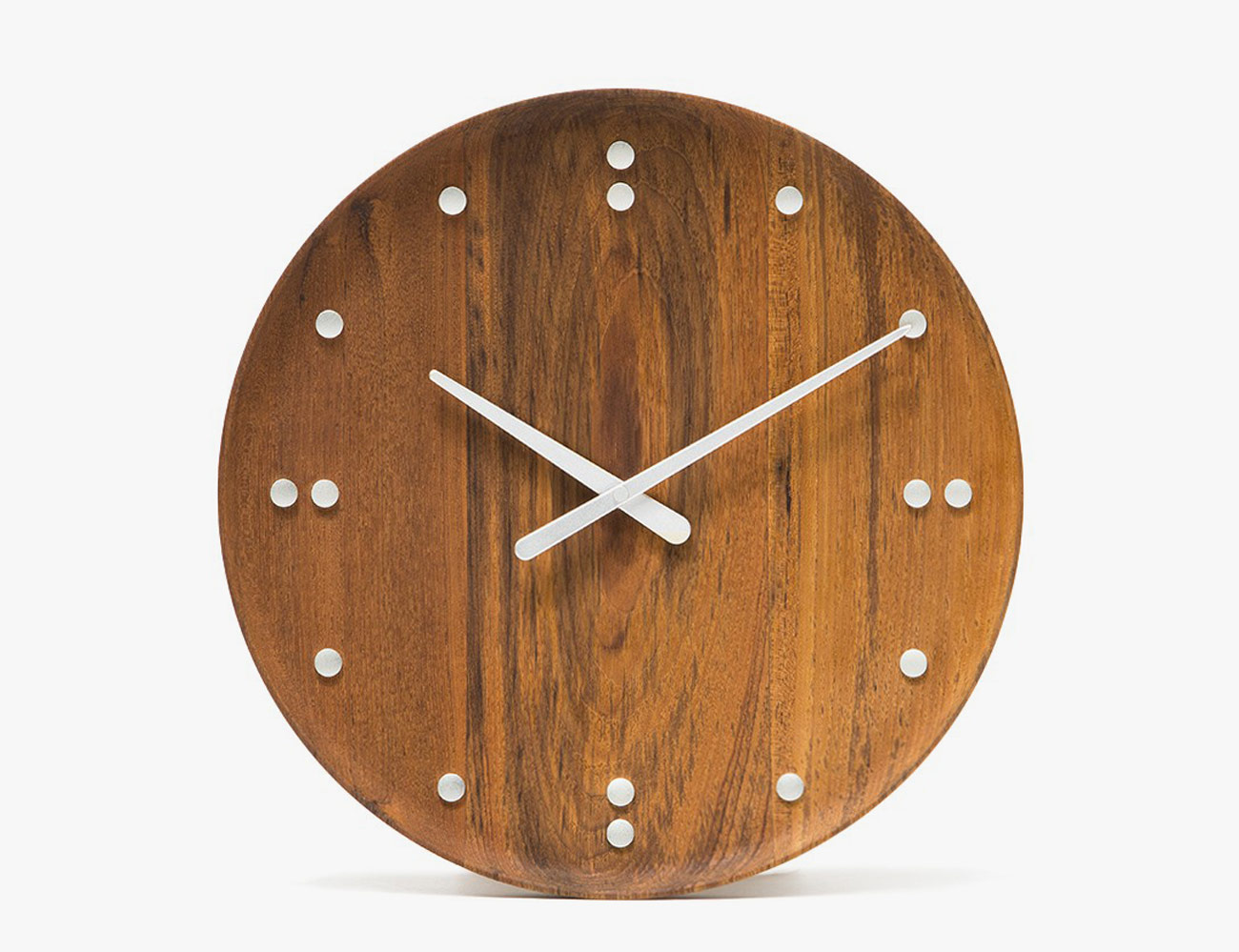
Architectmade’s FJ Clock is is a faithful recreation of a design made by renowned Danish architect Finn Juhl for the United Nation’s Trusteeship Council Chamber (which remains hanging on the wall). The clock is made from a dished slab of beautiful teak and is adorned with aluminum indices and hands — only 1,000 pieces will be made.

Diameter: 13.75 inches
Thickness: N/A
Your Smartphone Alarm Is Ruining Your Sleep — Time to Go Analog

These handsome, tabletop alarm clocks make the case for ditching your smartphone’s alarm. Read the Story

Note: Purchasing products through our links may earn us a portion of the sale, which supports our editorial team’s mission. Learn more here.

This One-Button Coffee Maker is $100 Off Retail

Automatic coffee machines hand-crafted in Portland from die-cast aluminum, borosilicate glass and real hardwoods. The Ratio brews pour-over quality coffee, so you don’t have to.

These Are Some of the Best Coffee Roasters in the US, According to Experts

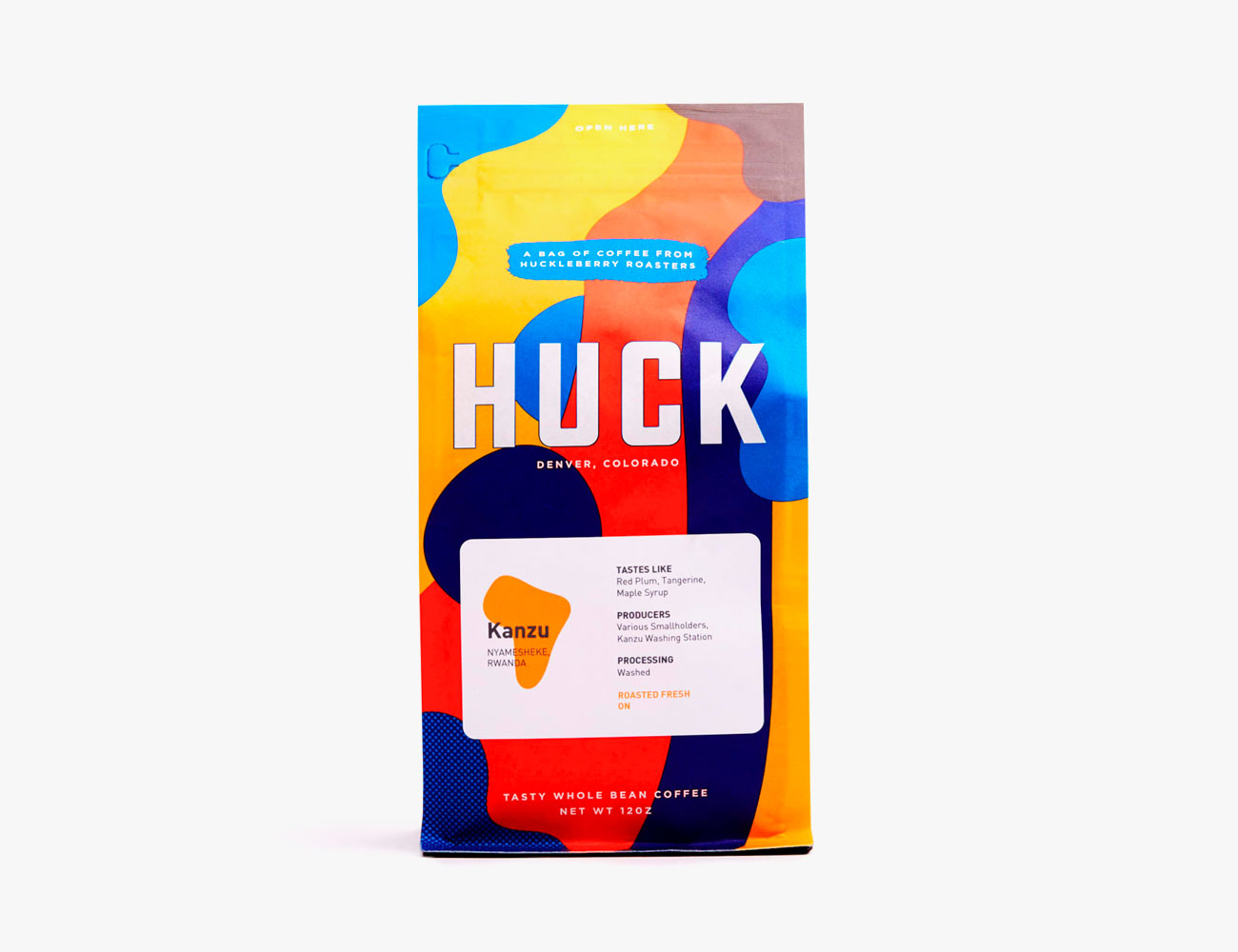
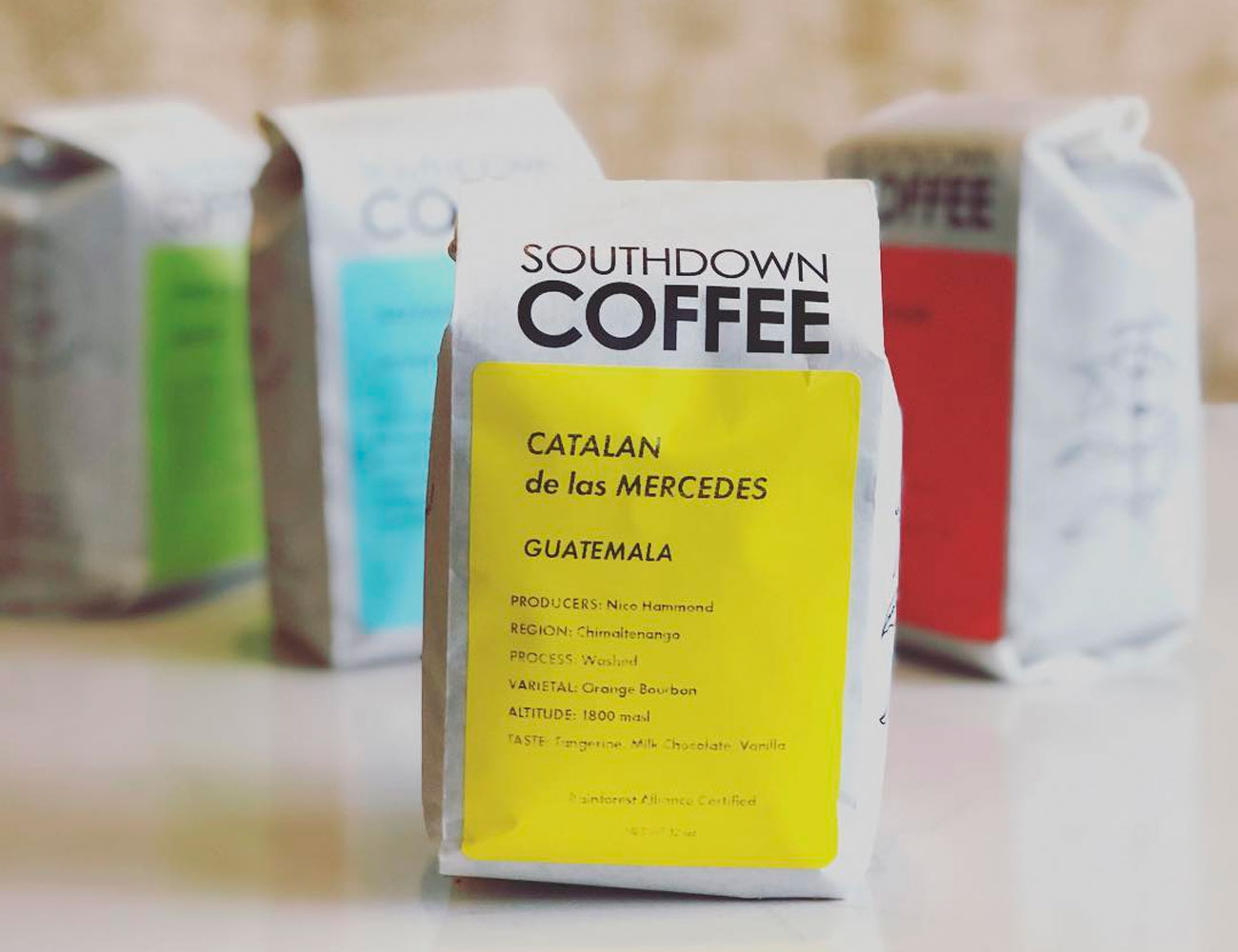
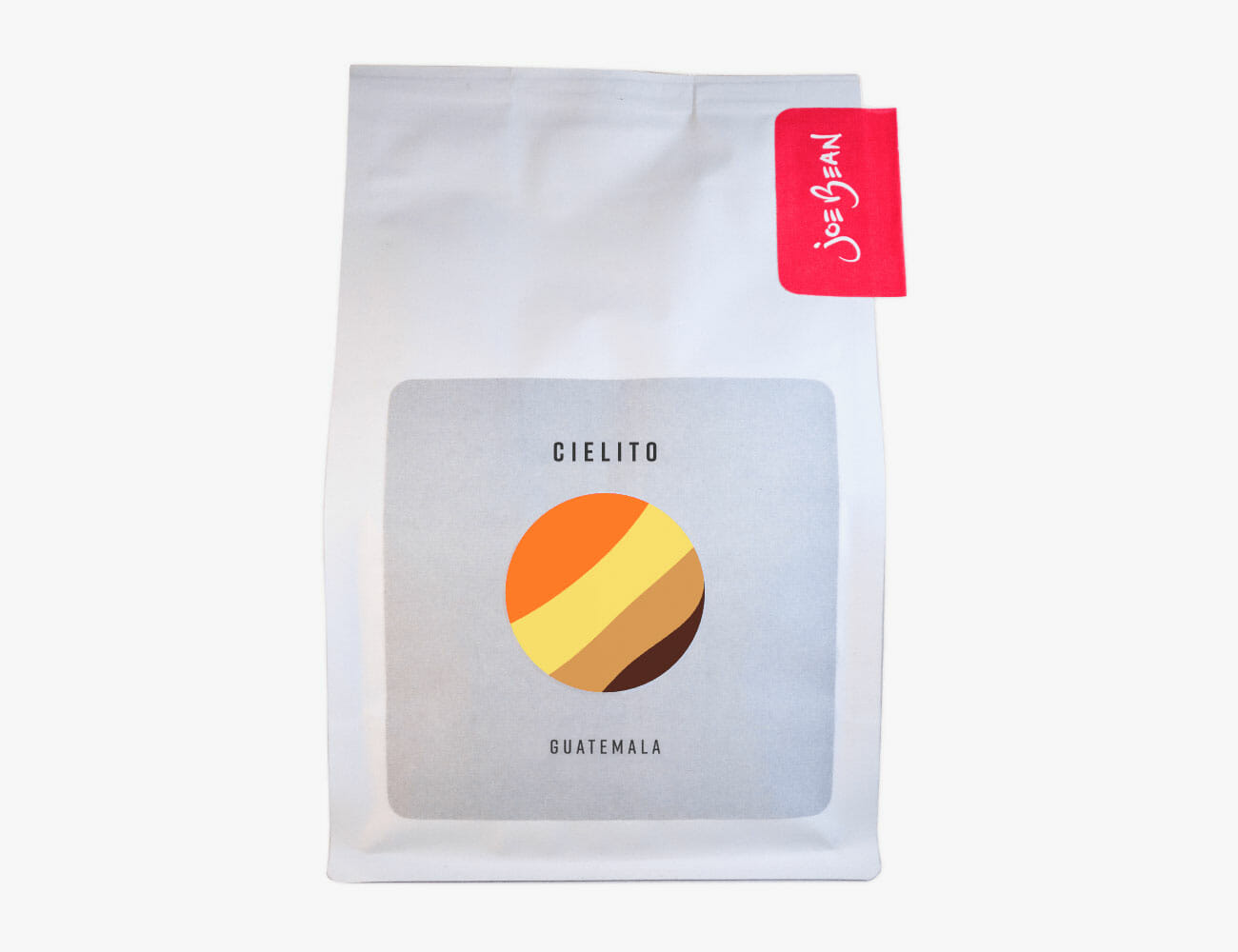
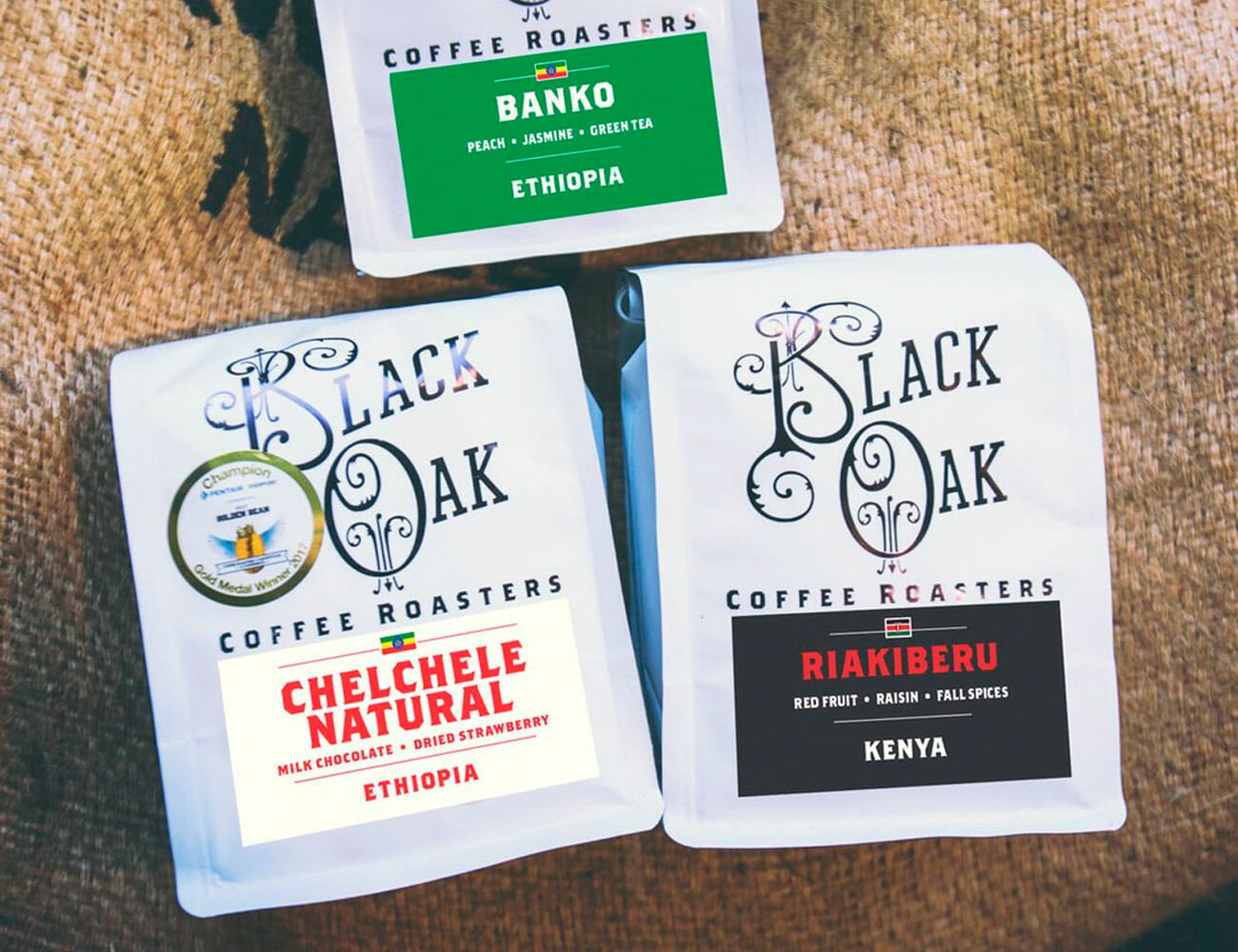
First reported by Daily Coffee News, the U.S. Roaster Championship results are now final. Finalist roasters at the national competition were required to grade beans, build a roast plan, roast the coffee and serve it to a panel of five expert judges — all in quick succession at the event. Scored on every stage of the process, 24 finalists were whittled down to the top 6 coffee roasters in the US. The best part? You can buy bags from each roaster online.

Shelby Williamson, Huckleberry Roasters

1st Place: Based in Denver, Huckleberry Roasters has grown from a garage roaster to a global micro-farm sourcing powerhouse. Huckleberry offers plenty of single origins, blends and decaf options at varying roast levels — in other words, it doesn’t discriminate against your taste in coffee.

Hugh Moretta, La Colombe Coffee Roasters

2nd Place: Known for a far-reaching and experimental collection of roasts, La Colombe is one of the specialty coffee old guard. What started in the mid-90s as a single shop in Philadelphia is now one café and roasting empire that’s spread to Chicago, New York City, Washington D.C. and more.

Mark Boccard, Southdown Coffe

3rd Place: Native to Huntington, New York with another location in Oyster Bay, Southdown coffee prioritizes flavor clarity and balancing adventurous roasts and origins with more familiar flavors.

Janine Cundy, Joe Bean Coffee Roasters

4th Place: This Rochester, New York roaster is so deep into the coffee thicket it’s making tea out of the dried skins of coffee cherries. They stock the reliably great stuff, too.

Steve Cuevas, Black Oak Coffee Roasters

5th Place: One of NorCal’s finest coffee roasters describes coffee as “practically a religious experience.” They’ve also got a wealth of blended, single origin and even canned coffee to pick from.

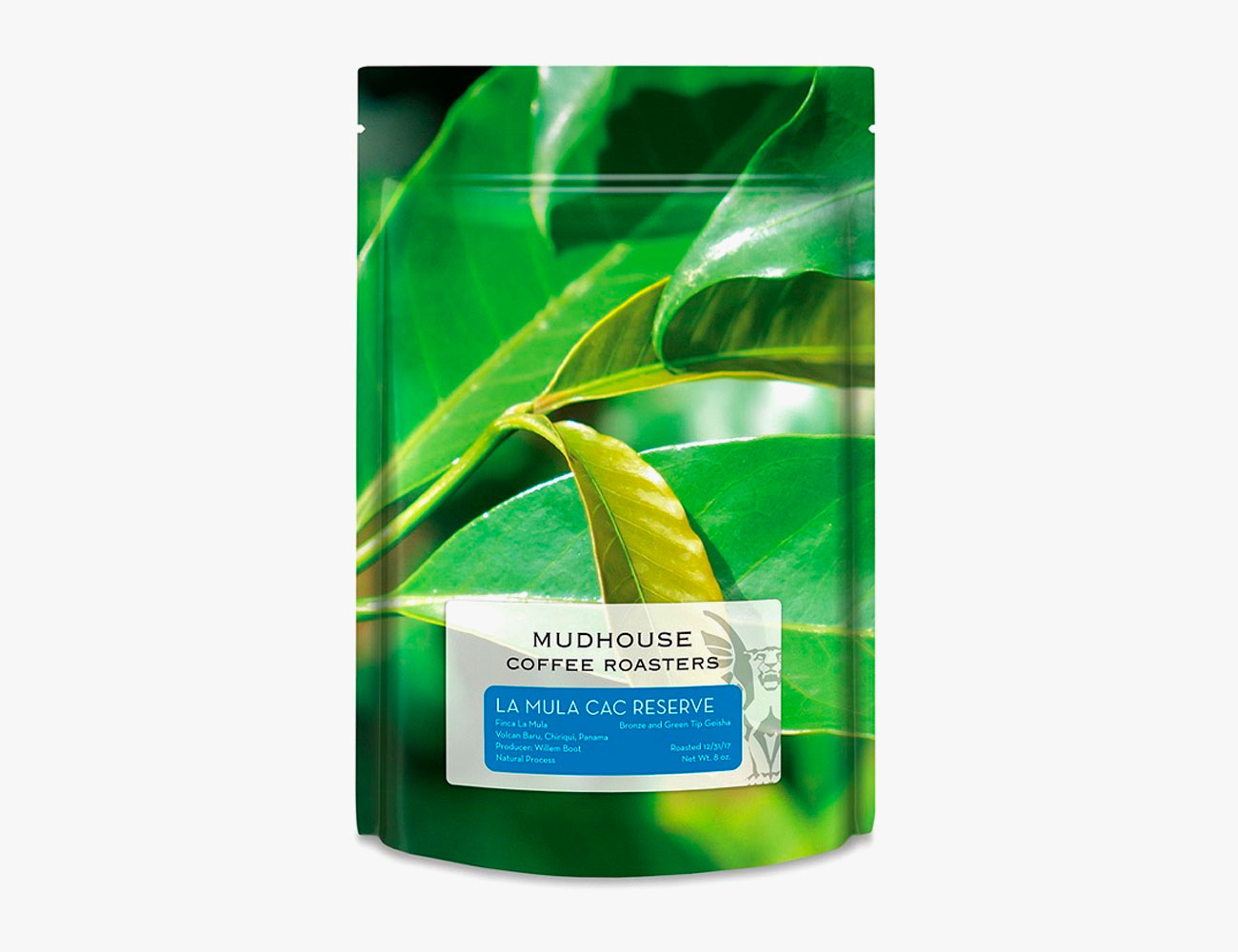
Eric Stone, Mudhouse Coffee Roasters

6th Place: Based in Charlottesville, Virginia, Mudhouse offers everything from bags of decaf to ultra-premium, naturally processed Geisha varietals.

Gear Patrol also recommends:
Go Get ‘Em Tiger
Onyx Coffee Lab
Tim Wendelboe

New Gear from Dyson: Lights That Help You Sleep, a Super-Charged Vacuum and More

It may come as a surprise that Dyson makes things other than vacuums. The British engineering and design company started with vacuums in 1983 and stayed the course until 2009, when it started to branch out. Today, Dyson dropped three new products in three very different categories. Here are the highlights.

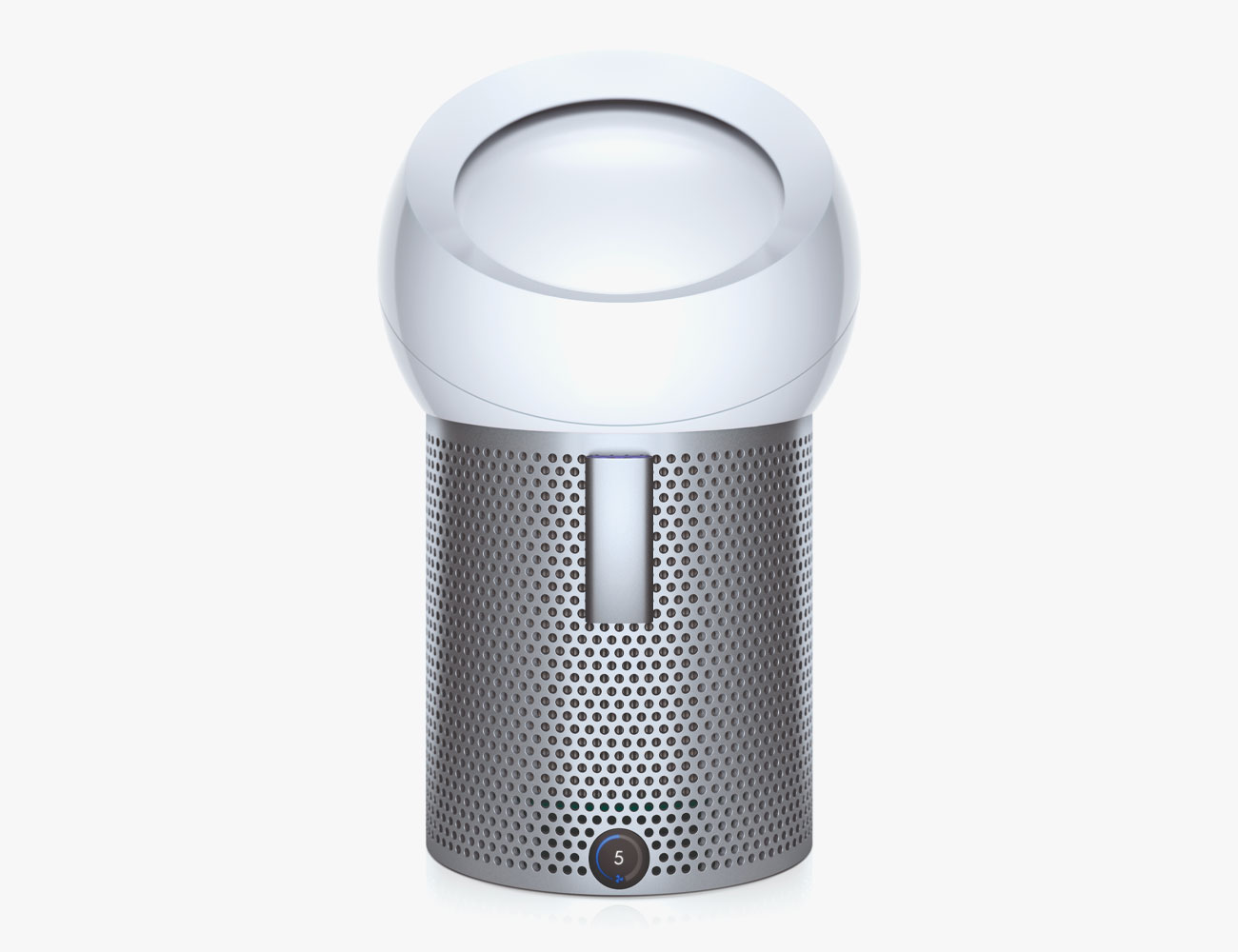
Dyson Pure Cool Me

The latest in Dyson’s array of air-blowing products is its first personal air-purifying fan. The Pure Cool Me sucks in the surrounding air, cycles it through a series of progressively finer filters (including a HEPA-certified filter) and pushes a steady stream of cool, 99.97 percent particle-free air in your face. The Pure Cool Me is available now for $350 in Dyson’s white-silver colorway.

Dyson Lightcycle Task Light

The Lightcycle lamps are a lot like Dyson’s CSYS lamp, except for one thing — color temperature. The Lightcycle tracks the daylight in your timezone and adjusts the color temperature of the light accordingly, meaning Lightcycle is always matching the exact glow of the natural light in your area. Dyson engineers say this was developed with the expressed purpose of minimizing eye strain and keeping people in their natural circadian rhythms, but you’re still able to adjust brightness and temperature manually if desired. Starting at $600, Dyson is accepting pre-orders for the Lightcycle now. It comes in white or black.

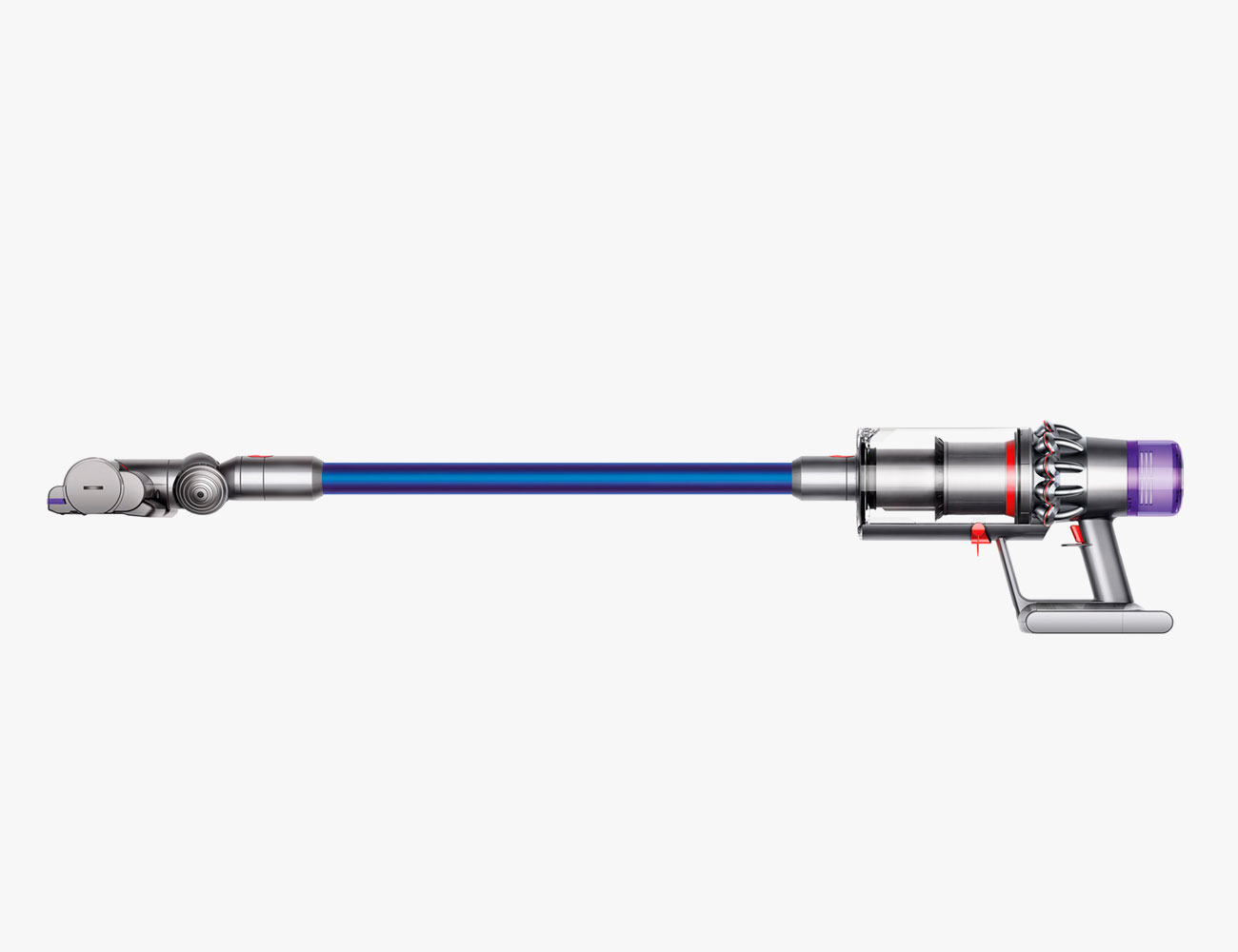
Dyson V11

The V series got smarter so you can be dumber. The new on-board computer tests pressure on the head of the vacuum more than 300 times a second and changes the power level accordingly. Basically, it throttles up or down for you based on whatever floor type you’re cleaning — lower power levels for hardwoods and low pile rugs and higher power levels for thick carpet and high pile rugs.

Also new: a small screen on the back that shows how much juice is left in the battery, troubleshoots potential issues and allows you to set power levels manually. The V11 is available through Dyson’s site now for $599.

A Better Version of the Big Green Egg Is $500 Off Right Now

The Magazine

Let us take you on a journey of the world. Each issue of the Gear Patrol Magazine comes packed with adventures, guides and stories exclusive to the magazine. Stunningly designed, printed on high quality stock and ready for your coffee table. Biannual. $39.

The Newsletter

Get the best new products, deals, and stories from across the world, in your inbox daily.

Which Oil Should You Use to Season a Cast-Iron Skillet? Four Experts Weigh In

What is the best way to season a cast-iron skillet? There is no question more divisive in the world of cast iron cookware. Everyone has their tricks and their tools to build a nice foundation of seasoning, but no one can seem to agree on the best method, much less the best oil. So we asked four people who know more about cast-iron skillets than your average internet commenter: Isaac Morton of Smithey Ironware, Dennis Powell of Butter Pat Industries, Liz Seru of Borough Furnace, Stephen Muscarella of Field Company and Stuart Shank of Stargazer Cast Iron. Here’s what they had to say.

The Best: Grapeseed Oil

Every expert praised grapeseed oil. Stuart Shank of Stargazer Cast Iron says its strength comes from a high smoke point and low saturated fat content, which make for a “slick, durable seasoning.” Smithey Ironware’s Isaac Morton, meanwhile, likes its neutral odor, and he uses it to season every pan he sells. Stephen Muscarella of Field Company asked himself what oils would be useful in applications other than seasoning, are relatively easy to obtain and carry a neutral odor and taste. This led him to grapeseed.

“We like organic, cold-pressed oils for environmental and health reasons, and the chemistry is clear that oils high in polyunsaturated fats are the best at crosslinking into a durable coating,” Muscarella said. Another highlight: it’s affordable.

Good: Butter and Animal Fats

While grapeseed oil is great, Dennis Powell of Butter Pat Industries prefers the classics: saturated fats like butter and animal fats, which season your pan naturally during the cooking process. The benefits of doing it this way should be obvious: you don’t have to buy a special oil for seasoning and you don’t need to apply dozens of layers of seasoning. The downside is your pan won’t have the best-looking seasoning (expect some streaks and dark spots) and it may be slightly uneven. But once you’ve seasoned this way enough times the whole pan will turn black anyway.

Also Good: Flaxseed Oil

Flaxseed oil is an odd choice, but a popular one among some cast iron experts like Liz Seru of Borough Furnace. It has a very low smoke point — the temperature at which oil begins to polymerize to the pan — but it’s also one of very few food-safe “drying” oils, meaning it dries out naturally. The main drawbacks are price, smell and precision. Compared to common cooking oils, flaxseed oil is expensive and typically only found in pharmacies and health food stores. There are also many examples around the web of flaxseed oil being a bit finicky, with some testers reporting long-term durability issues. And it smells pretty bad.

Bad: Olive Oil

No expert recommended America’s most popular cooking oil. “Olive oil is tougher because its smoke point is usually so low,” Morton says. In other words, every time you heat than pan up near or above its smoke point, the seasoning can begin to degrade if it’s not perfectly adhered.

Our Favorite All-Around Cast-Iron Skillet Is $45 Off Right Now


Butter Pat Industries makes skillets you could rightly call modern heirlooms. The cooking surfaces are buttery smooth, they come without machining marks and weigh less than skillets of the same size from other companies. The rounded pour spouts are probably the most effective of any skillet we’ve tested.

Today, the company’s 12-inch skillet is marked down a modest $45. Butter Pat pans don’t go on sale often, so jump now if you want a skillet that can be in your family forever.

Gear Patrol also recommends:
Lodge 12-Inch Cast-Iron Skillet ($30)
Stargazer 12-Inch Cast-Iron Skillet ($112+)
Field No. 10 Cast-Iron Skillet ($160)
More Deals, Served Up Fresh Every Day

Deals, discounts and drops on products you actually care about and want. Curated by the Gear Patrol Editors. Start Saving

Note: Purchasing products through our links may earn us a portion of the sale, which supports our editorial team’s mission. Learn more here.

This New High-Tech Grill Will Be on Every Father’s Day Wish List

Traeger invented the wood pellet grill more than 30 years ago. Now it’s on its way to perfecting it.

The all-new Ironwood and redesigned Timberline and Pro series are all outfitted with features new to the grilling world. “Wifire” tech allows you to control the grill without the need for a shared, local Wi-Fi connection — this means you could throw a pork butt on the grill, run to the grocery store to pick up all the sides you forgot and monitor internal temperature, ambient temperature and smoke levels the whole time.

Traeger’s D2 Direct Drive is a new pellet-pushing mechanism that allows for the production of blue smoke (the good, thin smoke you want when grilling) at a wider temperature range. It also hastens the longer pre-heat times associated with pellet grilling, a common complaint from new wood pellet grill owners.

For newcomers, wood pellet grills work by way of an auger pushing tiny hardwood pellets into flames. Traeger’s grills can be set anywhere between 165 and 500 degrees for hours on end. The result of this is a grill that’s able to operate as both a highly precise smoker and a traditional grill, using natural woodsmoke to bring more flavor than a gas grill ever could.

Traeger’s new and updated grills are available online through its site and at select retailers across the country.

Gear Patrol also recommends:
Traeger Ranger ($400)
Green Mountain Grills Daniel Boone ($499)
Traeger XL Elite ($2,000)

This $6 Amazon Buy Is Used in Almost Every Coffee Shop in America

The Magazine

Let us take you on a journey of the world. Each issue of the Gear Patrol Magazine comes packed with adventures, guides and stories exclusive to the magazine. Stunningly designed, printed on high quality stock and ready for your coffee table. Biannual. $39.

The Newsletter

Get the best new products, deals, and stories from across the world, in your inbox daily.