All posts in “Editorial&Opinion”

This Is the Perfect Desktop Accessory for iMac

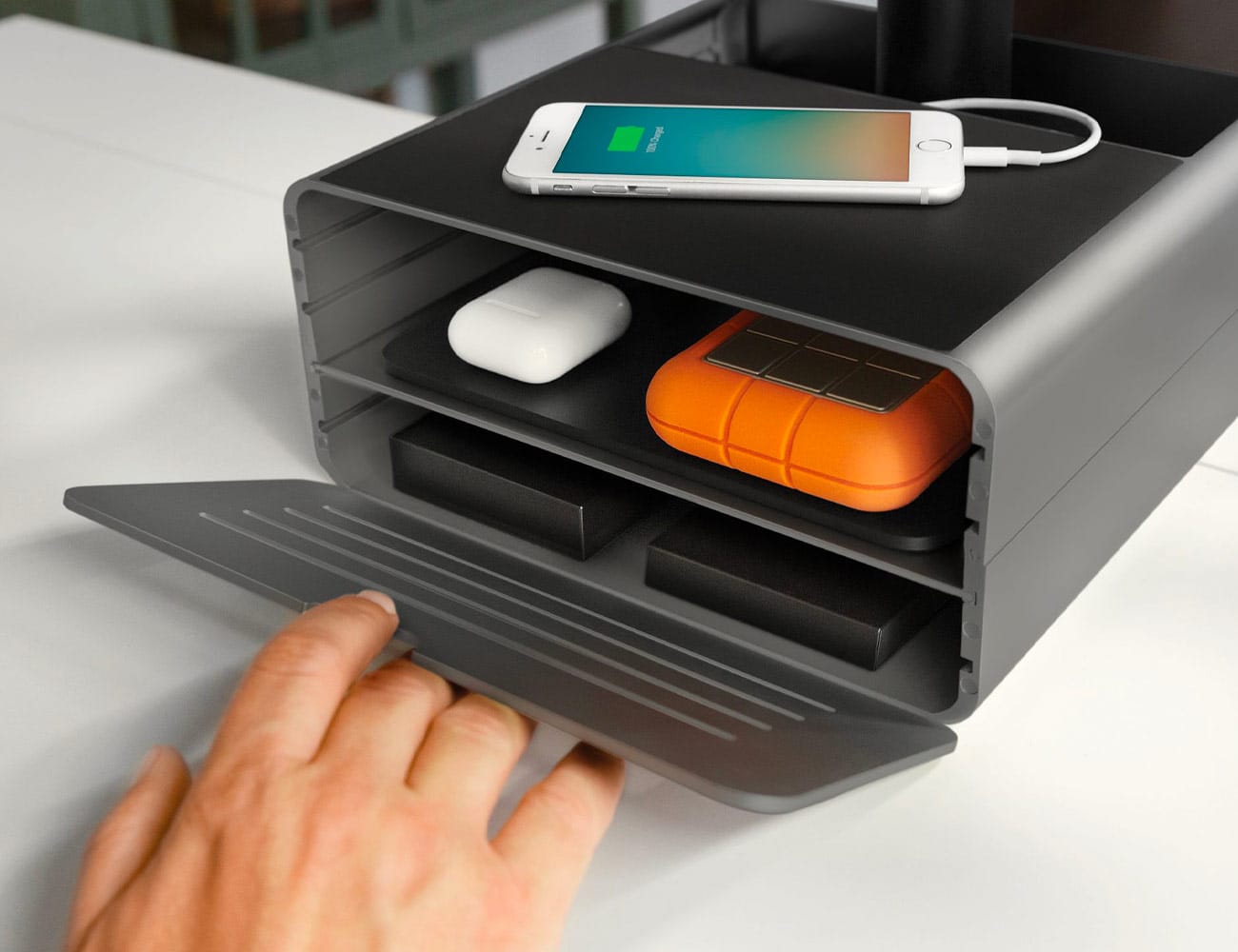
There are nearly infinite ways to arrange and accessorize your desktop workstation. The goal, no matter your setup, is to help you be your most efficient and productive self. Whether you’re really organized, or maybe less so, you should take a bit of pride in how it all comes together, too. For anybody with an iMac desktop computer – or really a laptop and external monitor setup – I’d argue that this HiRise Pro ($150) is the perfect centerpiece for most setups.

If you’re not well acquainted with Twelve South, the company makes accessories for Apple products and only Apple products. And they’re good at it. Scattered around our New York offices, you’ll find a multitude of their desktop stands for MacBook Pro – called Curve for MacBook ($50) – for those of my colleagues who have a setup with a laptop, external monitor and wireless keyboard and mouse. But I’m one of the few people to still use an iMac – it’s a comfort thing, I guess – so I needed something else.

Theoretically, I could’ve just used a stack of magazines, but Twelve South’s new stand is the optimal solution. It’s a little adjustable, so you can raise the computer screen and tweak the viewing angle if you like, but more so it’s is just the perfect size to hold an iMac or an external display. The stand has an open back, too, to help organize all your charging cords. And there’s a storage cabinet, complete with a reversible and magnetic front plate, in case you like the wooden or metal aesthetic.

Of course, there are a plethora of different desktop stands out there to choose from. If you’re looking for something more affordable, Satechi actually makes some pretty nice ones – here – and if you’re looking for something a little more crafted, I really dig Grovemade’s Desk Collection – here – which is all handcrafted out of wood and other natural materials.

The special thing about Twelve South’s stand is that is was designed for iMacs; that’s why that large base still slots easily into the top. There’s also a rumor that a certain company in Cupertino thought these Twelve South stands were perfect and they decked out most of their employees with one. Apple certainly likes it enough to sell on its website. Just saying.

Whether you have a traditional iMac setup like me, or you have a laptop with one or dual external monitors, and you’re willing to spend $150 (which is a little pricey), I think you’ll like this stand. I certainly do.

|

Note: This is not a paid endorsement from Twelve South, although they did supply a review unit. Purchasing products through our links may earn us a portion of the sale, which supports our editorial team’s mission. Learn more here.

The Athleta for Men Has Arrived and We Love It

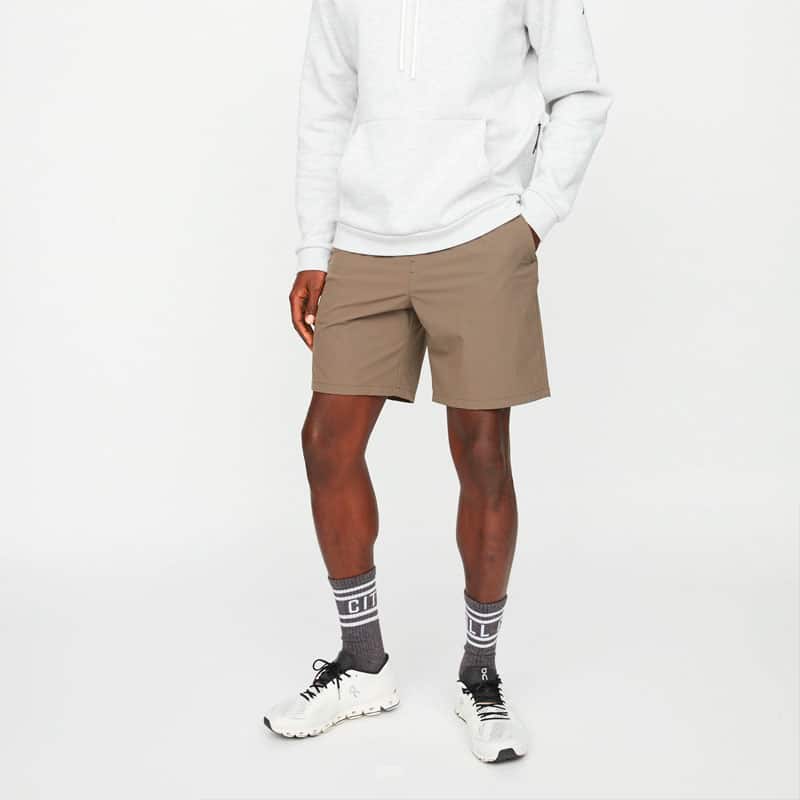
In 1969, Gap Inc. opened up its doors in San Francisco and since then the brand has churned out classics for young men, dads and retirees alike. In addition to the Gap label, the brand also produces clothing under the Athleta, Old Navy and Banana Republic labels. As of the end of September, Gap added another label to its portfolio: Hill City. The high-performance brand focuses on crafting gear for the athletically minded guy, whether he’s running errands after a gym session, hiking through the woods or taking his kids to soccer practice on the weekends. It’s basically equivalent to Gap’s Athleta, just for men.

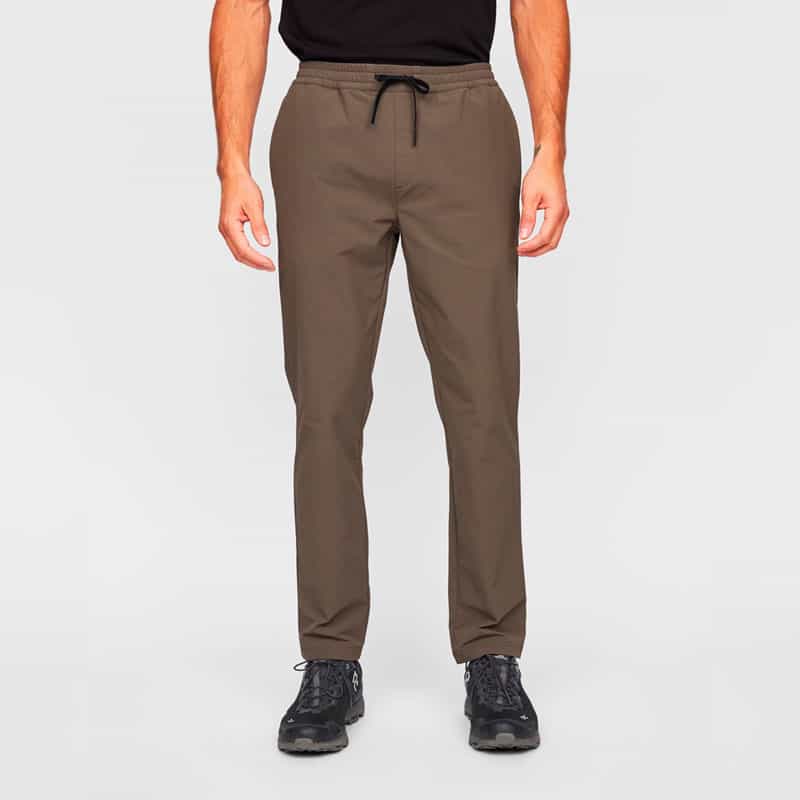
Gap named eleven-year veteran Noah Palmer the general manager of Hill City and under his leadership, the team created a 50-plus piece collection. Men can find pants, shorts, tees, sweatshirts and sweaters as well as outerwear, underwear and accessories. Three-quarters of the line falls under $100, with 90-percent of the items coming in at under $150. Each piece is made with performance in mind, taking cues from archetypal guys that the brand identified. “Jeff Johnson has served as a point of inspiration for Hill City,” Palmer says. “He embodies all of those things we stand for: highly active, ageless, family-first, unique sense of personal style and has built a career around the lifestyle he aspires to have.”

With those ideas in mind, Hill City is looking to create a one-stop head to toe destination. The brand is looking to eliminate the need to go to a store for your gym shorts and a separate one for your pants, and yet another one for your suits.

It seems like there’s a traditional retail store closing practically every week, but Gap seems to have figured something out, as they’re adding stores and have no plans of stopping anytime soon. The Hill City line already has another season of gear in the works, and the brand is looking to work with gear testers — an unusual way of communicating with your target audience for a company like Gap. Hill City wants to work with real men to send them products from the line in exchange for viable and detailed feedback about the activity, durability and reliability of each piece. The brand will lean into what consumers say, and translate the feedback into changes and tweaks to its clothing.

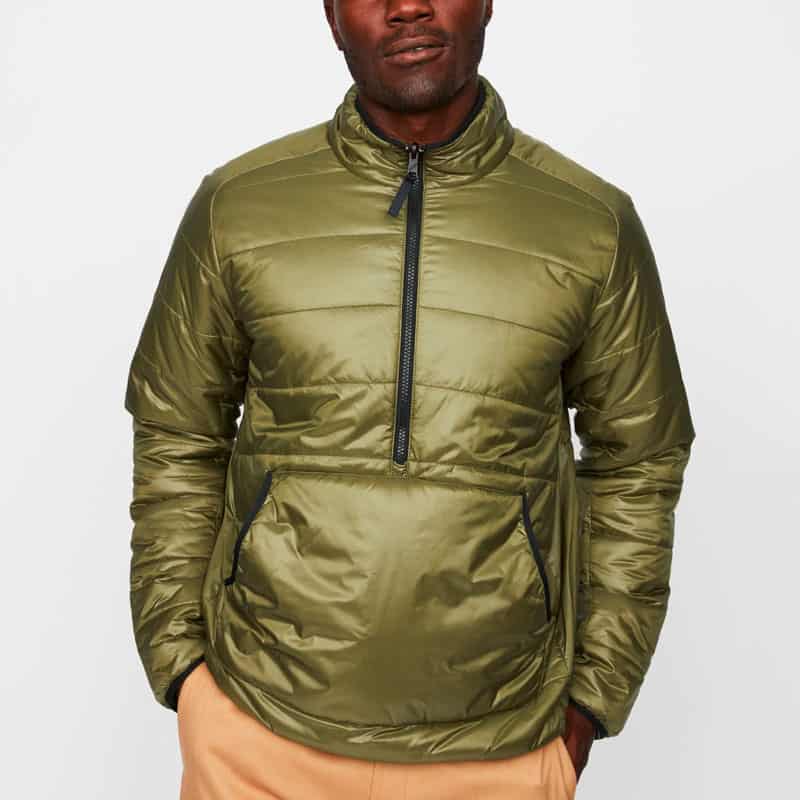
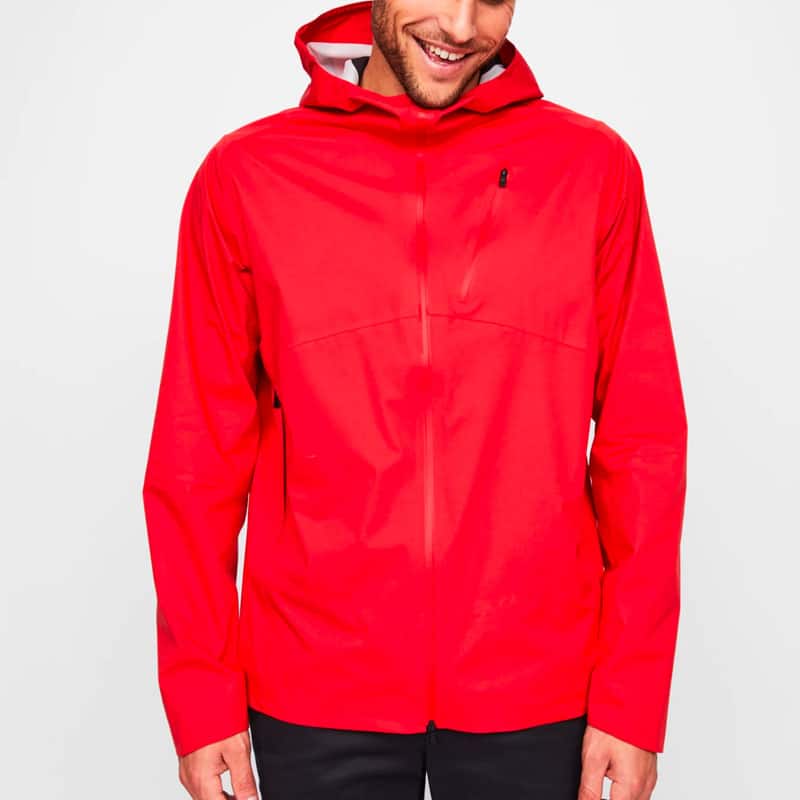
In testing, the clothing lives up to its marketing materials. One tester noted that the Thermal Light Shirt Jacket is like any other shirt jacket, but in puffy jacket form. As for the Hooded Trail Shell (pictured above) it more than fulfilled its purpose. In fact, our testers noted that the jacket performed well above its $198 price point.

As for what lies ahead for the brand? “Hill City is not specific to a season,” Palmer says. “For spring, we’ll be expanding our offering in training, shorts and introducing swimwear.” There’s still more to come from this young brand with the backing of an iconic American-classic.

Buying Guide

Reversible Puffer by Hill City $168

Hooded Trail Shell by Hill City $198

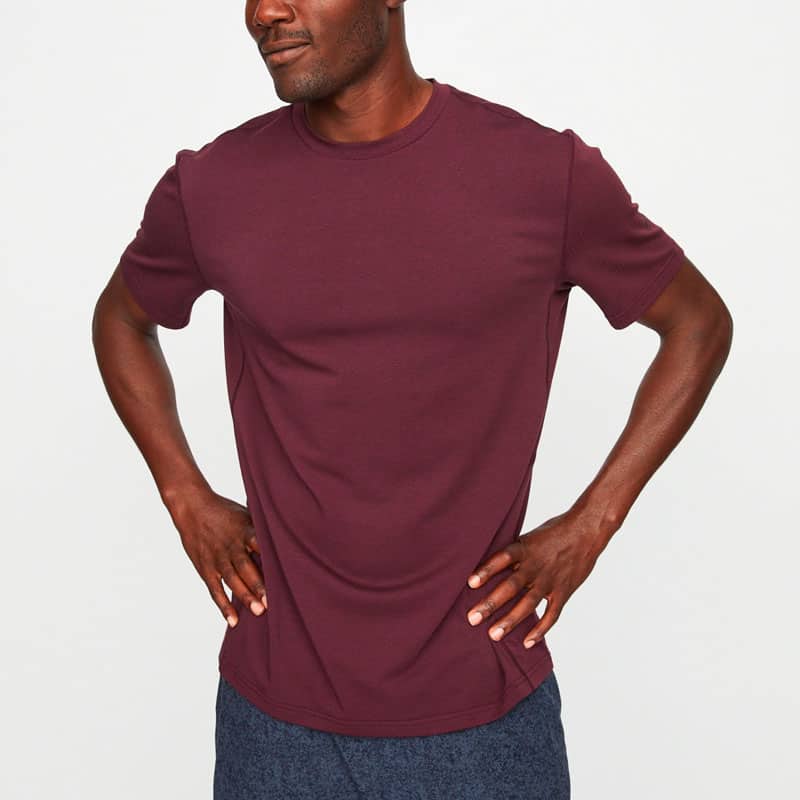
Bodymap Train Tee by Hill City $48

8″ X-Purpose Short by Hill City $58

Hybrid Trail Pant by Hill City $108

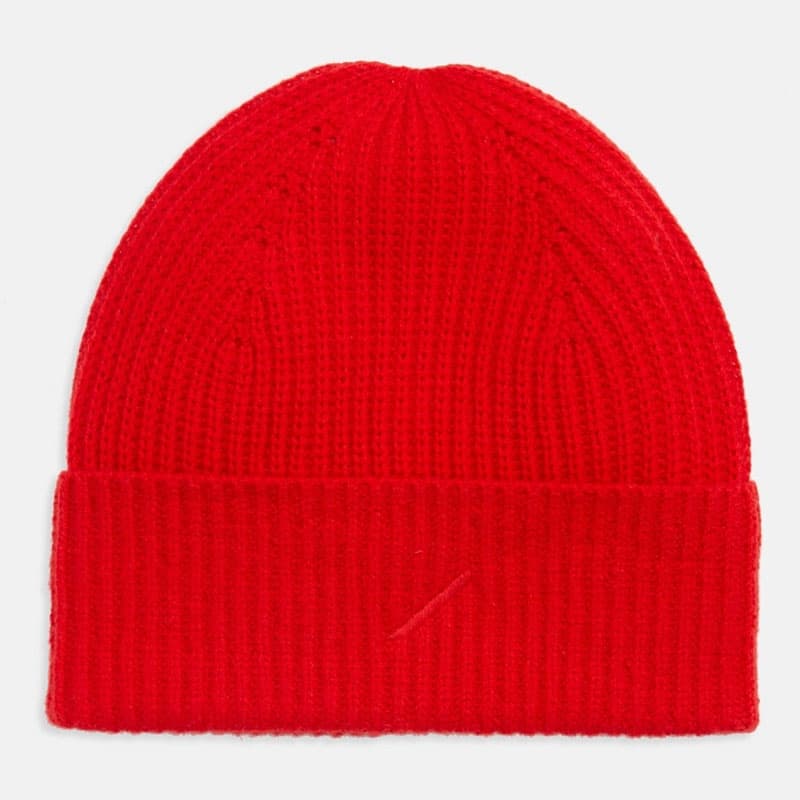
Merino Cashmere Beanie by Hill City $48
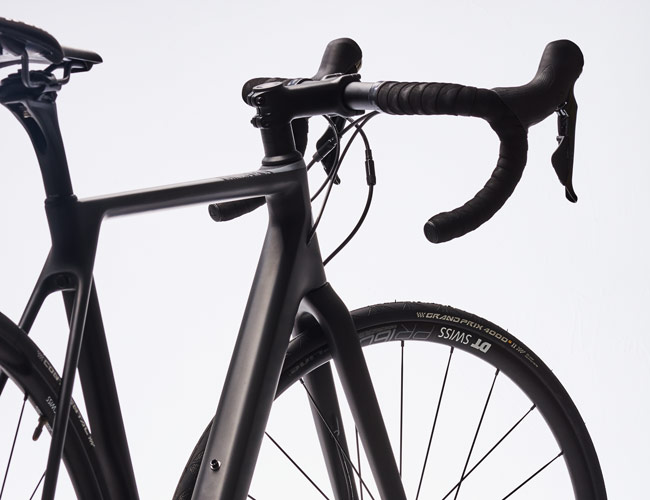
Best Road Bikes

Whether you’re looking for an entry-level bike, or a top of the line purebred cycling machine, you’ll find what you’re looking for here. Read the Story
Note: Purchasing products through our links may earn us a portion of the sale, which supports our editorial team’s mission. Learn more here.

The Story Behind Three of the Most Popular Spinning Bikes

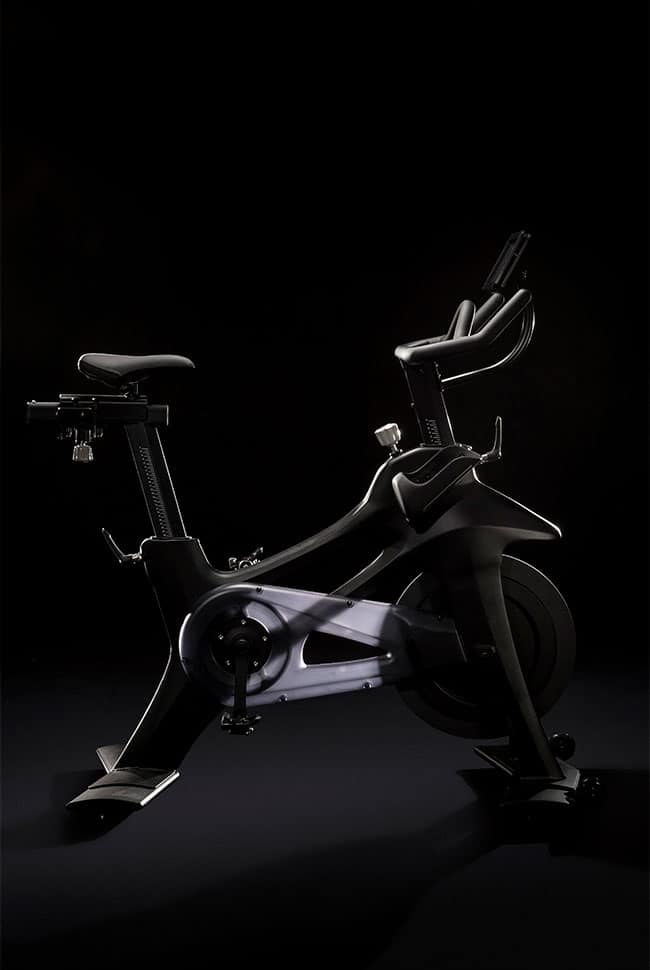
SoulCycle, Peloton and Studio Three are the most popular indoor cycling studios across the country. Each ride and class appeals to a slightly different audience, yet they all have two things in common: Each workout takes place (mostly) on an indoor bike, and each of those bikes was designed by one man, Eric Villency. The self-described active individual was approached about eight years ago to design SoulCycle’s first proprietary bike, and since then has also created Peloton’s and most recently, Studio Three’s. The little details we’ve come to expect from an indoor cycling bike all started with one man.

“I’ve always been really into wellness and fitness, but focused primarily on the interior and prop design,” Villency says. “SoulCycle was a tenant in the boutique mall I built, and that was the entry into it. They were interested in product development and asked if I knew anyone. I said, ‘Well actually, we can do it.’ And that was the genesis of how that worked.” Once Villency had the in with SoulCycle, the brand trusted him. He was also a user at the time, so he understood what the brand was looking to design. After the SoulCycle design completed, word spread and more fitness studios wanted to work with Villency and his team on other ideas they had — including Peloton.

When Villency first started with Peloton, the brand was focused primarily on the tech side of things, and brought him in to focus on the hardware. “They didn’t even have a logo yet,” he recalls. “Our design team brings our own experience [to the table], we’re huge fans of fitness and live it,” Villency explains, which is why it was easy enough for the brand to produce another bike in an entirely different fashion than the first.

When you look at both the Peloton and SoulCycle bikes, you’re looking at two very different designs. “They’re all different, and we never want to repeat ourselves, which is the fun part of each project,” Villency says. But it goes beyond just the skin of the exterior. Especially with bikes, there are different handlebars, seats and sweat guards. “If you look at the SoulCycle bike that was originally out there, it was a great bike at the time, but it has manual resistance with brake pads, and now everyone does magnetic resistance. It was also the first bike to put the weights behind the seat and use an outdoor seat on an indoor bike.”

And as you might guess, both brands have expanded tremendously, taking their proprietary bikes and thrusting them into the spotlight. “We were always getting calls. ‘Hey, can I buy a Peloton or SoulCycle bike?’ [our answer was] ‘Well, no,’” Villency explains. “We make them for the brands.” Eventually, after all the phone calls, the team decided it was time to make a Villency-designed bike, sold by VDG. “We’d love to make a bike that is our design, and also can be customizable for brands.” Think of all the smaller studios that are happy with just one to two locations, but don’t want to have to deal with a stock bike for eternity.

The team paired up with Studio Three, based in Chicago, to create a new bike that will also be sold to a variety of different brands. “We’re launching [the new bike] with Studio Three, but it’s something made for multiple brands that can be skinned differently so that the consumer might not realize it’s the same platform. Cosmetics are changeable, but the basic underlying great frame is still there.” With the power to sell this bike to more than just one studio, the VDG went all-in and pulled a lot of design cues from road bikes. “One of the most inspiring things, no matter what we’re working on, is outdoor bikes. They’re gorgeous, carbon fiber, they’re on our mood and inspiration boards. So we said, how do we bring that outdoor, indoor?”

Beyond the functional limitations that an indoor bike has, it needs a stable platform. Similar to an outdoor bike, the team created a split frame. Typically, this type of design is expensive because the mechanical engineering behind it has to be durable. Some clients or brands might not want to spend the money associated with that level of engineering. “Since it’s our project, we invested in it and created it. We wanted to get as close as we could to an outdoor bike.”

After the frame change, the team looked to the service team to hear what was breaking the most, or what studios were calling about to get fixed. After all, “no one likes a bike that’s broken,” Villency says. Getting on the bike, you can feel just how stable the base of it is. While you can still wheel it around, it’s one of the heaviest out there at over 300 pounds. The water bottle holders were the other faulty piece of previous bikes. People stuff as many personal items into those as they possibly can, and it’s one of the first parts of a bike to break. “We created something that’s super flexible and can hold a weight.” They’re rubberized, so you can hang what you want on it as well. Slight design tweaks have created what might be the best new indoor bike on the market. And now it’ll be sold across the country to boutique studios everywhere.

This Briefcase Convinced Me to Ditch My Backpack

I’ve been a backpack user for as long as I can remember, so when it came time to start the commute from Brooklyn to midtown Manhattan via the dreaded MTA subway, I gave little thought to what I’d use to tote my daily necessities. I tested a number of packs: Patagonia’s Black Hole 25L, Millican’s Smith the Roll Pack 25L and eventually Evergoods’s CPL24 (my all-time favorite backpack). I thought I had things dialed; separate laptop compartment, plenty of space in the main compartment, sleek exterior and minimal branding. That was, until I tried Bellroy’s Laptop Brief.

For those unfamiliar with Bellroy, the Australian brand is known for crafting high-quality leather goods that many Gear Patrol employees swear by. The brand recently launched a full line of bags, including the Laptop Brief, which I’ve been testing for a little over a month. In that time, the Brief brought to light flaws in my unwavering dedication to the backpack that I’d never even considered.

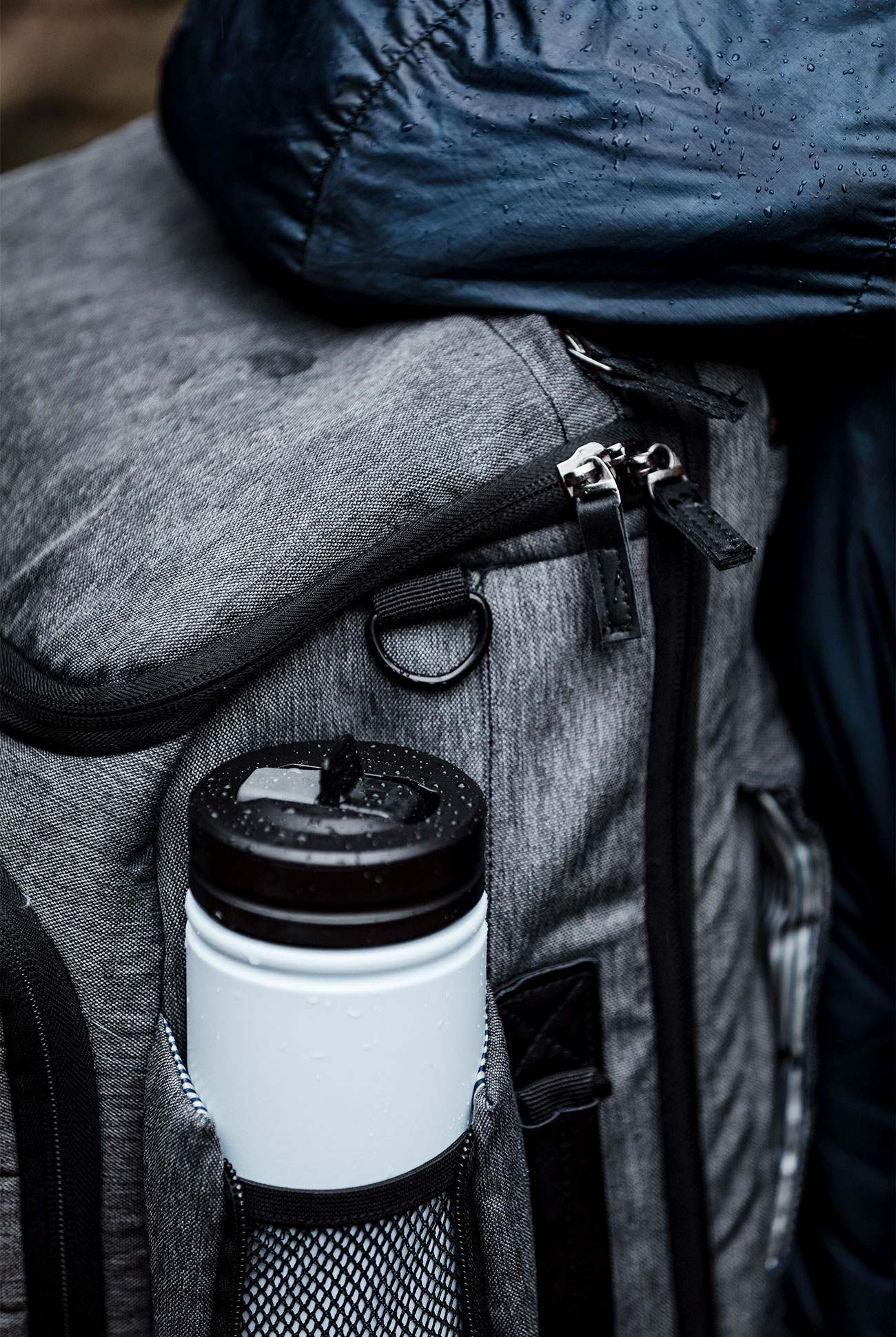
For one, 90% of the time I don’t actually carry that much stuff. My laptop, a notebook and my Yeti Rambler 20oz that I use for my morning cold brew is about all that comes with me on a daily basis. Second, as my commute has gotten increasingly more crowded with the looming shutdown of New York City’s L train, space in the subway cars is at a premium. The Laptop Brief’s slim profile allows me to squeeze into that last bit of real estate in a crowded train, a place where a backpack is nothing but a hindrance. Lastly, the bag just looks sleek and sophisticated. No, it isn’t leather (though it does feature environmentally certified leather handles), but a leather briefcase carries a certain stigma. The Bellroy Laptop Brief features materials that I’m immediately familiar with — technical and durable fabrics that wouldn’t feel out place on a waterproof jacket or a durable travel duffel. And they function in the way that you’d expect them to function in an outdoor setting; the shell material of the bag is highly waterproof.

I have yet to find a flaw in this bag, and those who know me would consider that praise enough. But I’ll go one further. The Bellroy Laptop Brief is the best commuter bag I’ve ever used, and I’d be hard pressed to say that I’ll ever go back to using a backpack.

Note: Purchasing products through our links may earn us a portion of the sale, which supports our editorial team’s mission. Learn more here.

Bellroy provided this product for testing.

When Was the Last Time You Properly Sanitized Your iPhone?

You don’t need a separate, dedicated device to clean your iPhone, especially one that’s as expensive as some of PhoneSoap’s products. If you take care of your iPhone properly — meaning that you regularly wipe it down and disinfect it (by carefully using rubbing alcohol and a microfiber cloth) — you shouldn’t have to employ any sort of machine. But if we’re honest, can you remember the last time you wiped yours down? Probably not.

PhoneSoap claims that the average smartphone has 18 times more bacteria on it than a public restroom’s door handle or sink, which seems slightly ridiculous, but also not really that unrealistic. How often do you use iPhone when you’re sitting on the toilet and eating lunch? (Actually… don’t answer that.) The company has created a line of products that capitalize on people not realizing how disgusting their smartphones are and, once they do, freaking out enough to pick up a gadget that kills 99.9-percent of bacteria – which is exactly what PhoneSoap’s products do, by blasting your iPhone or other gadgets with germ-killing UV light.

I’ve used the PhoneSoap XL, which is the largest product that company makes, for a few weeks and it hasn’t changed my life – but it has definitely given a little extra piece of mind. The PhoneSoap XL, which many people online have called it a “tanning bed” for your gadgets, was designed for iPads and iPhones, but it’s actually capable of cleaning anything that can fit in it. I used with my wireless keyboard, mouse, MacBook Pro, Nintendo Switch and headphones — basically, any piece of tech that I often touch with my hands.

So how do you tell if your device is clean? Since I wasn’t doing in-depth experiments to make sure the PhoneSoap was actually doing its job and killing the gross bacteria that was undoubtedly on my stuff, it definitely required a bit of trust. That said, other users have done some pretty deep dives on PhoneSoap, even growing their own bacteria (here) to see how much the product kills. Bottom line: it works.

The PhoneSoap XL isn’t a complicated product. To use it, you just open the door, place your device inside, close the door and it’ll automatically start. There’s no button to push or switch to hit. You just need to make sure that the PhoneSoap XL is plugged in – it has a 2.4A USB port on its back for power – and then, after it has run for about 15 minutes, the blue light on the door will turn off and you’re free to open it up and remove your newly clean gadget from inside. If you want to charge the gadget while you’re cleaning, you can do that too: the PhoneSoap XL has a small opening in its back through which you can slip any charging cable.

Once PhoneSoap has done the cleaning, there is no “wow” moment. It’s a fairly anticlimactic process. You just simply slide out the device and trust that it done its job. I was able to feel a little tactile difference on my iPhone and 13-inch MacBook Pro – they felt drier, not quite as slick – but I couldn’t tell that gadgets were obviously cleaner just by looking at them. Lastly, PhoneSoap makes several smaller devices that don’t cost $120 that are designed just for your smartphone, in case you don’t think your larger gadgets need a blue-light bath.

What it comes down to, in my eyes, is how much you worry about bacteria and germs being on the devices that you use every day. Chances are, it’s not a lot. If you were really worried about it, all you’d need was a cloth, rubbing alcohol and careful hand and you wouldn’t have to worry about spending $120 on a device that cleans your gadgets. But that would take more time and be way more meticulous. As ridiculous as a dedicated device to clean your gadgets will sound to most people, this PhoneSoap is probably the best (and most definitely the easiest) way to make sure your smartphone, laptop and tablet are a little less nasty.

|

I Found My Favorite Travel Backpack

Usually, when I go away for a weekend, I’ll throw a couple of jeans and shirts in a duffel. Or if it’s winter and I need more than one pair of boots and room for bulky sweaters, I’ll default to an Away carry-on. Lately, there’s a new bag in my life that’s caused my duffel to start collecting dust. The Briidg Supply Co. travel backpack began life on Kickstarter, quickly surmounting its $10,000 goal with a total of $34,253. When one of the co-founders reached out and sent me a sample, I thought it was a nice-looking backpack, but that I would have no reason to use it, and assumed that one of my colleagues would want to test it out as they seem to love backpacks. But I was wrong.

Labor Day Weekend came around, and I was going out to New Jersey for four days. I needed a bag to pack that could fit all the clothes I needed, plus my work gear. Typically, I’ll stuff a duffel and then still carry a canvas bag (or something similar) over my shoulder. I started playing around the Briidg bag and realized there was a separate back pocket for my laptop and plenty of zipper pockets for all my extras — keys, chapstick, phone chargers, sunglasses, etc. When laid flat on its back, the bag unzips from the middle, so you can open it up and look down into it, like a duffel. I was pleasantly surprised with how much it fit. When I stuff backpacks, they overpower me and look absurd on my back, but Briidg’s looked like one of my gym bags, just a little spiffier.

Photo: Chase Pellerin

Then I took the bag to Africa with me and realized its full potential. The sneaker pocket at the bottom of the bag handled my extra sweatshirt for the plane, while the interior held two changes of clothes, my toiletries, a couple of books, magazines and a journal — and the laptop sleeve held our itinerary (yes, it was printed out) along with a guidebook for the trip. The top pocket near the handle was just the right size for my keys, phone and passport, while the pocket on the outside of the bag worked for my Airpods, mini charging cord and battery pack. When I didn’t feel like wearing it on my back any longer (I stuffed it), the detachable shoulder straps presented the option of carrying the bag as a duffel. I also packed my Away suitcase for this trip, and the Briidg bag fits like a glove over my rollaboard via a slot that slides down over the handle. No back aches for me, thank you. It’s now made the journey with me to upstate New York as well, carrying three pairs of trail hikers and runners as well as library books, notebooks and my laptop. From Africa to Lake Placid, this backpack has changed my mind about travel backpacks.

Briidg Supply Co. provided this product for testing purposes.

The Company That’s Making Fitness Equipment Cool

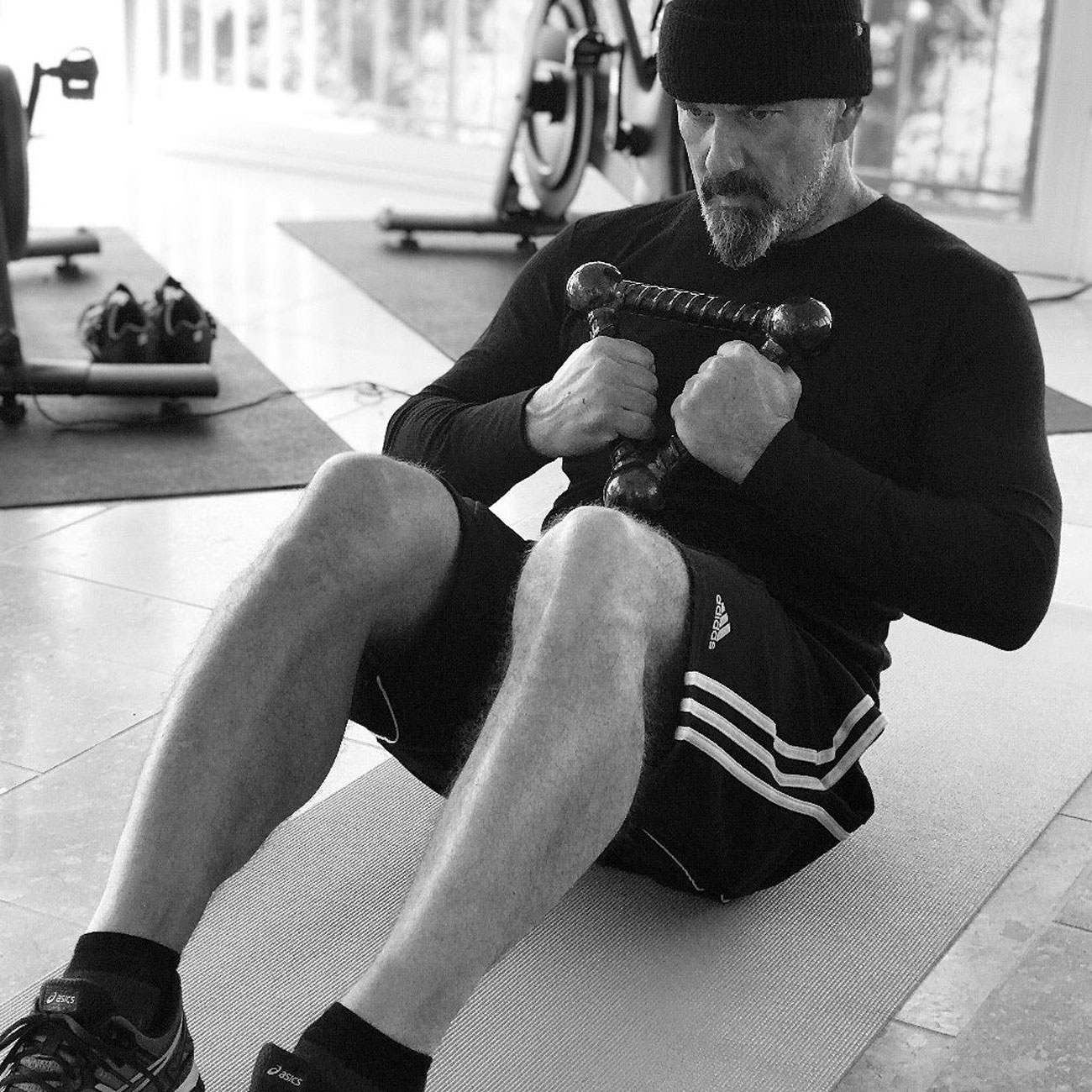
Fitness gear hasn’t changed much in the past 100 years. The weights you find in gyms don’t differ too much from their original form. The downside, though, is that sometimes doing the same thing over and over again with the same tools gets pretty boring. Mark Ruddy understands that — after all, he’s the creator of Acme Sledgeworks, a mace and hammer metalworks company built for fitness. These aren’t your typical weights. Ruddy’s company picks up old rebar at construction sites and handcrafts it into maces, sledgehammers, dumbbells and triads. The hefty metal pieces feature a distinct all-black look that is as equally suited to a solid workout as it is to being hung on a wall.

The development of the sledgehammer stemmed from Ruddy’s first venture, Vendetta Deluxe. In 2001, Ruddy combined his love of design and architecture to create the company. “I work with architects and designers doing furniture and architectural elements, [as well as] lighting,” Ruddy says. “It’s really a combination of working with other techs and design firms to focus on what clients need and how we can make it happen.” And it was Vendetta Deluxe that prompted him to start working out of a 2,000-square foot hangar on a private airport in Merin County, California. His job requires a lot of tools — forges, welders, hammers and grinders, to name a few — but the design of the sledgehammer was “really out of necessity and utilizing my craft to make the tools I was building with,” Ruddy explains. “I was making wrenches and varying sizes of hammers, and I had to recycle and reclaim the materials I was using on job sites.” What started as a pet project quickly turned into something larger.

Once people began seeing the unique sledgehammers, Ruddy was continually asked for them. “Then it kind of became a fitness craze with the sledges and maces, so I was approached to make some for that.” From Ruddy’s hangar, he could build them in his spare time — all by hand. But he quickly realized the tools could be so much more than that. “Two years ago, I decided to form a side company that would focus on custom handcrafted sledgehammers, maces and weights.” His very first product was the 20-pound sledge, no small weight to throw around.

Acme Sledgeworks founder Mark Ruddy with the brand’s Triad weight.

Beyond having a product, Ruddy needed a logo and the name. A hand wrapped around a sledge with ACME across the hand’s knuckles, was “something that came together out of trial and error,” but the name was more steeped in history and recognition. Remember the Road Runner and Wile E. Coyote cartoons that featured loads of mishaps with Acme Corporation goods? The fictional corporation is a “notable and recognizable name” in the industry, according to Ruddy. As for ‘sledgeworks’ — “that’s what we do,” he says. “The original product was a sledge.”

The fitness pieces are made from roughly 80 percent reclaimed rebar, picked up at scrap yards, metal recycling facilities and job sites. And if he’s looking for something to fulfill a vintage request from a client, he’ll hunt around for specific sledgehammer heads. Each piece is handmade by Ruddy, so when you order, you’re getting something special.

While the majority of people ordering custom maces and sledges are putting it on the wall or mantle, there are many people that are hooking them onto the back of Peloton bikes or using them for rotational exercises. There’s no playbook with each piece of equipment, but Ruddy re-posts how other trainers and clients elect to use each piece. “It’s really just playing and experimenting,” Ruddy says. “I use kettlebells, so I’ve been utilizing a lot of the function of the kettlebell with the triads.” The larger and longer pieces, like the 50-inch mace is better suited for something like flow exercises.

So, what’s next? Ruddy’s personalized fitness gear already sells nationwide, and he’s beginning to work with more trainers and experts to share how to use the tools. In the meantime, he’s working on apparel, gym and trainer partnerships and a multitude of colors for the sledges and maces. When a brand continues to sell out of products faster than they can make them, there’s only one way up.

This Beast Is the Biggest Portable Battery You Can Legally Fly With

Last week I was in the Outerbanks, North Carolina – before the hurricane hit – and it was beautiful. The weather was in the low 90s, clouds were few and far between and the water was glorious and warm. Yes, I was on vacation, but that didn’t mean I wasn’t using my electronics constantly — I was on my phone at the beach and streaming music to a Bluetooth speaker. I was in the car playing Nintendo Switch while also using my phone and assisting in navigation (it’s an eight-hour one-way trip from New Jersey). And I was using my laptop to read the news, watch Netflix and check fantasy football scores. It’s strange, really, how sometimes we tend to use our electronics more when outside the office, right?

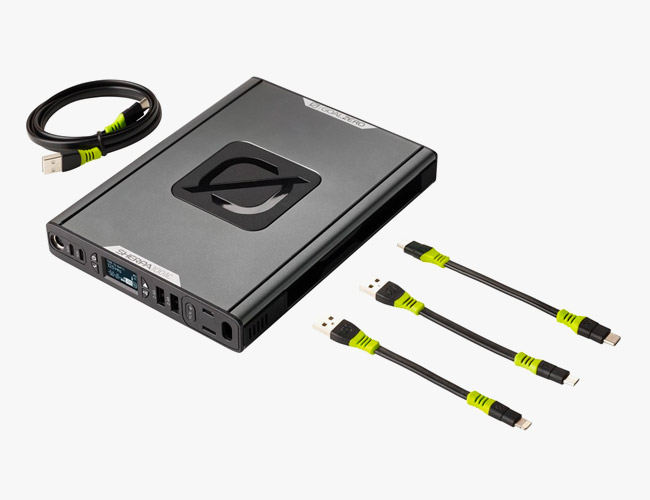
Anyway, during my vacation, I used the new Goal Zero Sherpa 100AC ($300) to charge all my devices. Yes, all of them. It’s a portable battery, in simplest terms, but it’s a far cry from the little Mophie and Anker that you stick in your pocket and use to charge your phone. This thing is a beast. It weighs two pounds and packs a 25,600mAh capacity, which the company claims is enough to charge your smartphone eight times over. But that’s just the tip of the iceberg for Sherpa 100AC.

It packs pretty much every charging port you’d want: two USB-A ports (2.4V) and two 60-watt USB-C ports, both of which support Power Delivery (PD), meaning that they can charge your laptop; and the Sherpa 100AC has a built-in AC inverter. For me, what that meant was that I could take my MacBook Pro’s wall adapter (61-watt, USB-C) and charge the Sherpa 100AC with it, but I could then take that same wall adapter, plug it into the Sherpa 100AC and charge my MacBook Pro. There wasn’t a need to mess around separate charging cables, which was nice.

I used the Sherpa 100AC mainly to charge my MacBook Pro, which it had enough juice to do about twice over before needing to be recharged. And that’s pretty good for something that’s about the half the size of my 13-inch laptop (even if it’s way heavier). It was also able to charge everything else I had with the Sherpa 100AC: Nintendo Switch, AirPods, iPhone, Galaxy Note 9, Bose SoundLink speaker, Sony RX100 III compact camera and Master & Dynamic MW07 wireless earbuds. I used it to charge my Mophie power banks, too. (Yes I travel with a lot of devices.) And you can charge several of these things all at a time.

The Sherpa 100AC has an internal fan, allowing it cool down when it starts running too hot. But to be honest, in all my testing I never heard the fan turn on as I assume it never got warm enough to be a problem. And that’s when I was using it charge my iPhone, MacBook Pro and Nintendo Switch all at the same time.

There are several other things that make this thing special. Its OLED display, though tiny, tells you everything you need to know while using the charger. It tells you its battery life along with how much juice is currently being sucked out of each port. It also lets you know how much juice it has left before needing to be recharged. (It takes just three hours to recharge using USB-C PD, FYI.)

The Sherpa 100AC comes with a variety of short charging cables (micro-USB, USB-C, Lightning) so you don’t necessarily need to remember to bring your own. And there are rubber pockets on either side of the Sherpa 100AC that you can store two of these short charging cables at a time, too, meaning they could easily come with you.

Over the last few years, portable power banks have become really popular and I’ve seen many come and go. It’d be foolish to say that the Sherpa 100AC is clearly the best. It’s not the most powerful, but at 94.7Wh (watt-hours), it’s actually right at the max to still be allowed on an airplane. (According to the FAA, the carry-on limit for a battery is 100Wh.) So, it’s technically one of the most powerful batteries that you’re allowed to travel with. And although it’s a beast, the Sherpa 100AC isn’t really rugged. I wouldn’t take it anywhere where sand, water or dirt can creep into its crevasses.

Listen, $300 is no small amount for a portable charger. If you’re just looking to charge your smartphone, there are much cheaper and more practical options. There are also cheaper and more practical options if you’re looking to charge your laptop (just look for the portable power banks that support PD, like this one by Anker.) And if you’re looking for a portable generator that has even more battery capacity than the Sherpa’s 25,600mAh – those are out there, too.

But if you’re looking to fly with it, and the $300 price tag doesn’t scare you away, the Sherpa 100AC is everything and more that you could want in a companion for your travel gadgets.

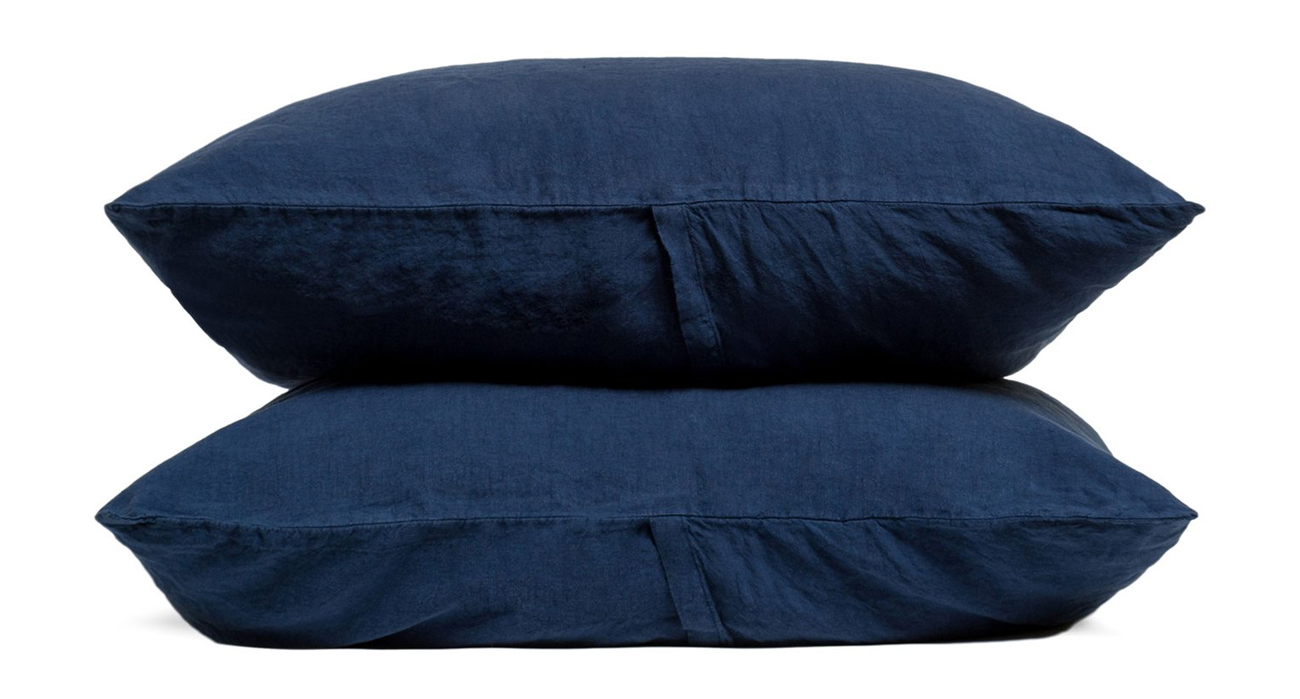
4 Reasons You Should Be Sleeping with Linen Sheets

From Issue Six of Gear Patrol Magazine.
Discounted domestic shipping + 15% off in the GP store for new subscribers.

There’s not a home product more misunderstood than linen sheets. Turns out they’re easier to clean and far more versatile than most people assume. Here’s everything you need to know about dressing your bed in linen — from someone who actually makes the stuff. We spoke with Ariel Kaye, founder of the wildly popular Los Angeles-based bedding company Parachute.

Seasonality Be Damned

Linen comes from flax, which makes for thicker fibers than cotton. This means linen bedding is actually heavier than its cotton counterparts. “Yes, there is an airiness to linen, but because of its weight, it’s plenty insulating for winter months,” Kaye says. “And its ability to wick moisture makes it good for hot sleepers.”

Better With Age

Linen has a reputation for being rough and textured, but according to Kaye, it really only takes a couple washes to soften up. “This is a barrier to entry for some,” she says, “but once it’s broken in it’s incredibly comfortable.”

What About Thread Count?

According to Kaye, most thread count claims are marketing ploys to drive up costs. “It’s measured by the amount of vertical and horizontal threads woven into a square inch of fabric, and there’s plenty of ways to fabricate your way to a sort of arbitrary higher number,” she says. A good rule of thumb: “Anything more than 400 is a sign of up-selling, particularly with linen, where you’re dealing with much, much thicker threads and lower counts as a whole,” Kaye says.

Low Maintenance

Wash linen in cool water without other items — that eliminates a lot of wrinkles. “Keep drying times low and run with low or no heat,” Kaye adds. “It’s not particularly different than cotton bedding, frankly. It also happens to be naturally stain resistant.”

Lasts Forever

“Due to flax being more expensive and the difficulty of removing impurities from it, linen definitely costs more,” Kaye says. “But if you buy good linen, it should outlast cotton and will only get better with age, where cotton sheets will show more wear. It’s an investment.”

This Brand’s 5 Year Plan Included Olympic Athletes and Ironman World Records

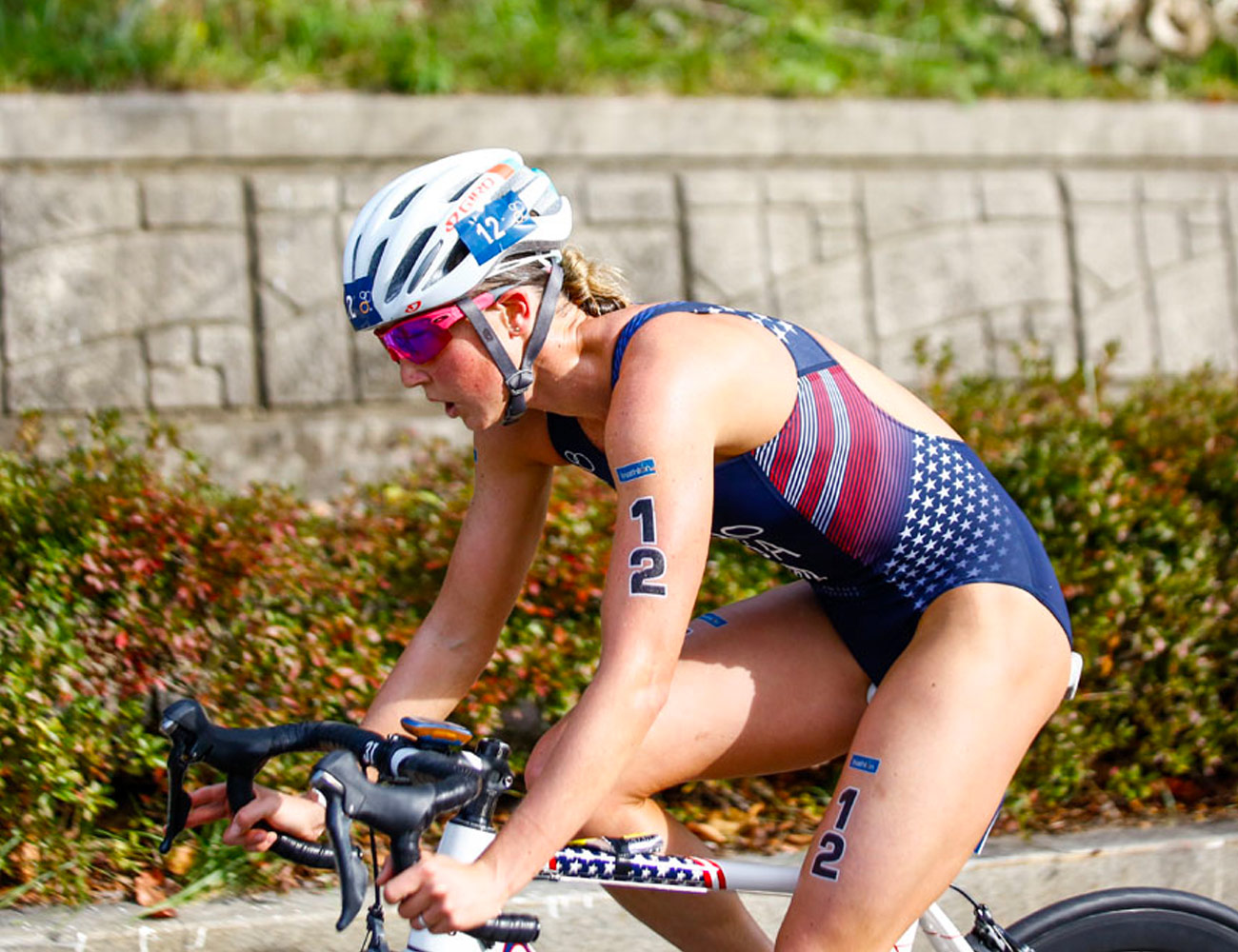
Swimming uphill is hard. “The goal is to swim downhill,” Rob Canales tells me while explaining how Roka’s wetsuits work. When swimming, your body is naturally buoyant in the chest — thanks to your lungs — but your legs tend to sink in the water, making your body feel like it’s swimming uphill. Add more buoyancy to the legs and all of a sudden you’re on a more even plane, or even better, your legs are above your head and you’re swimming downhill. A logical proposition, it wasn’t the norm before Roka popped onto the scene five years ago. “If you can get a suit to do that for you naturally, it doesn’t stress your muscles as much,” Canales explains, making the swim easier and helping you get faster in the water. Roka makes wetsuits and sunglasses — and they’re nowhere near done creating. “People have asked us from the beginning, ‘What’s your goal?’” Canales says, “and we’ve said all along, we want to build a healthy sustainable business that helps people go faster and feel more confident in themselves.” In those five years, they’ve changed the landscape of the triathlon and cycling world and are looking to expand even further.

Canales is one half of the duo that started Roka. Kurt Spenser, the other co-founder, and Canales met at Stanford on the swim team. Canales swam the 200 individual medley (and was an Olympic trials finalist) and Spenser was an All-American freestyler. “We’re not Michael Phelps-prototypical swimmers,” Canales says. “We’re relatively small guys, barely cracking six feet, and the way we were competitive in college was that we were students of the sport.” So ten years later when the two were challenged to do the half Ironman (or a 70.3) in Austin, they both felt they could easily wing the swim, fake the bike and walk on the run. So they got to work, purchasing boatloads of gear (as one does for a triathlon) and immediately realized there was a huge problem with the wetsuits that were aimed at swimmers. “We put on the expensive wetsuit, but we knew what fast swimming felt like and instantly knew it was not right,” Spenser says. “We didn’t have time to redesign a wetsuit from scratch, but something stuck in our heads.”

After the two competed in the race, they were ‘bitten by the bug,’ and the next year they completed roughly a dozen races. “We started prototyping and cutting up suits in my garage, and used my grandma’s sewing machine to try and figure out how we could hodgepodge something to be more comfortable and faster,” Canales says. What they came up with was a suit that cut down on shoulder fatigue and lifted the legs more than the chest. After testing the suit themselves, with friends and Jesse Thomas, who was an up and coming triathlete at the time (now a two-time Ironman Champion and 70.3 Champion), and Meredith Kessler (a 10-time Ironman Champion), it was time to release it to the public. In the spring of 2014, Canales and Spenser launched the Maverick Pro and quickly disrupted the triathlon space, attracting top talent (the likes of Javi Gomez and Gwen Jorgensen use Roka product).

Product came first, and the brand name came second (which is a reflection of Roka’s dedication to making the best product available). The team found the name Roka through a long brainstorm, and it has a variety of meanings that the team has been told are both correct, and not. “It’s the loose translation of the word in Japanese that references filtration and that white bubbly crest of the wave,” Spenser says. “As far as the wetsuit goes, that spoke volumes — that’s what this is all about.” It’s the feeling of freedom, easy speed and effortless purpose. “It also is a translation of the word fox in Hungarian, which we thought was interesting,” Spenser says. “A fox is considered to be clever and a super creative animal, so it worked.”

In 2016, Roka was ready to push forward with something new. Brand ambassador and professional athlete Jesse Thomas had recently won the Wildflower Cult Classic Triathlon in California in a pair of gas station aviators, which sparked an idea for the co-founders. Since Roka already worked with Thomas, there was many a conversation around eyewear. “We went through an intake process with Jesse, about what he needed and why a pair off-the-shelf wasn’t working for him, and it was fairly simple,” Spenser says. “They can’t fall off his face, they can’t bounce around — optics have to be world-class and they have to be insanely lightweight.” Essentially, the eyewear has to disappear. Roka launched its eyewear line with three styles, the Phantom, Kona and the Vendée. The classic silhouettes aren’t the only style the brand offers these days. This fall, it’s expanding with 15 to 20 more styles.

And Roka isn’t slowing down anytime soon — “there’s always a market for better [product],” Canales says. The product mix has evolved organically from wetsuits to eyewear, and as for what’s next? “We want to continue to work with athletes that inspire and challenge us. We just worked with a speed skater who won gold and [another] that won bronze. We’re working with cyclists that competed in the Tour de France, and a bunch of others. We’re going to continue to take on challenges from elite athletes, but we think it can have a big effect and big impact on broader audiences out there,” Spenser says. “What can we learn from [athletes’] mindset and how we can bring those innovations down to the first time triathlete — or down to a first time dad like me who wants to get back in the game. How can I improve the experience of those athletes?

Note: Purchasing products through our links may earn us a portion of the sale, which supports our editorial team’s mission. Learn more here.

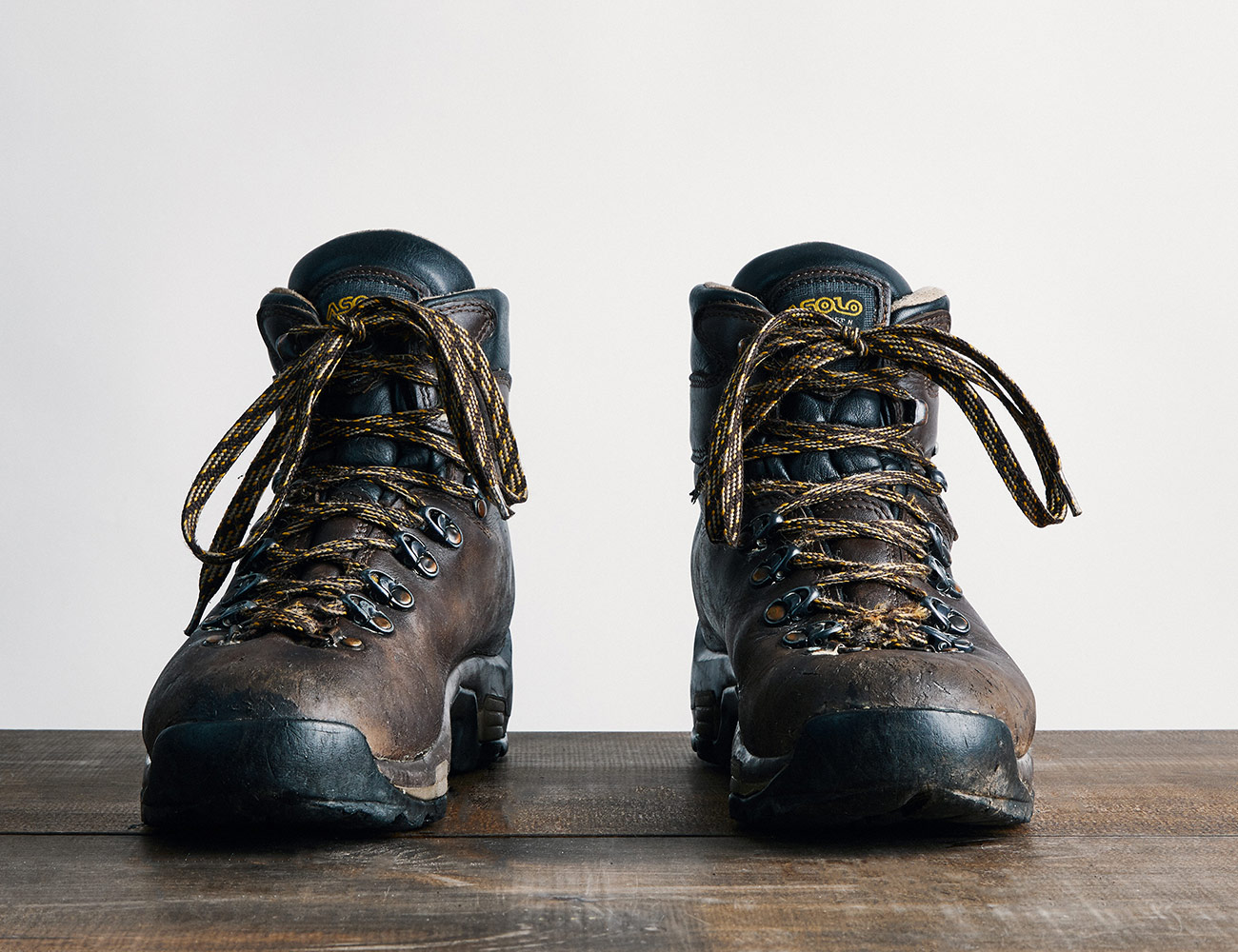
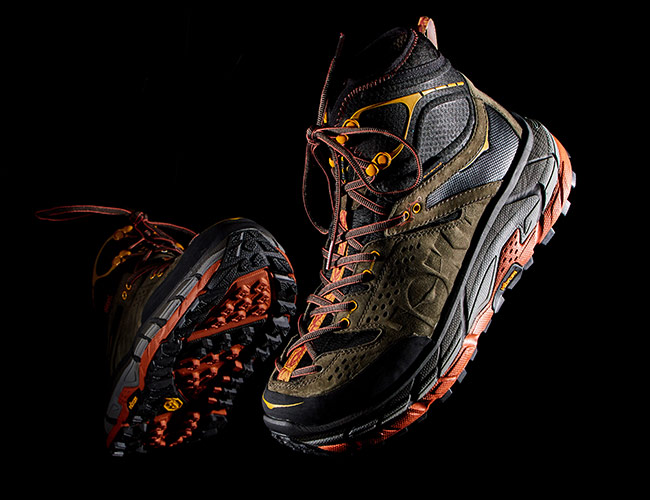
Do You Really Need Waterproof Hiking Boots?

We exist in a Golden Age of outdoor gear. Even items that angle more toward lifestyle than technical prowess meet a high bar of performance standards. Lightness, packability, versatility, durability, breathability and weather resistance are among the top driving factors continually pushing outdoor equipment to higher platforms. The result of this is that we’re now accustomed to items that offer impressive amounts of function but we often don’t wonder if we really need it.

Waterproofing in hiking boots presents a clear example. Hiking boots that are labeled as waterproof almost always have a water-repelling membrane made by Gore-Tex or other companies sandwiched into the layers of leather or synthetic material. It seems like a no-brainer that you’d want this extra barrier to protect you on the trail, but it comes at the price of breathability, turning the issue of choice into a compelling debate. Here, two members of Gear Patrol’s Outdoors Desk weigh in on the subject in an attempt to put it to rest.

The Argument for Waterproof Hiking Boots

“I live and die by the Gore-Tex diamond logo when it comes to outdoor gear. It stands for uncompromising waterproofing and breathability, and in many of my outdoor adventures, those things are crucial — especially in hiking boots. But nonsuch outdoor adventure proved my point more than 30 days in Norway’s arctic wilderness. Of the 30 days I was there backpacking across the tundra, it rained for 27 of them. Everything got wet. Even my Gore-Tex hiking boots eventually had water find its way over the tops of them when I had to ford rivers. But, short of those river crossings, my feet stayed perfectly dry through mud, tall grasses and shrubs. My socks remained dry and my feet toasty. I was even able to wear my socks to bed most evenings.

It is because of this experience that I recommend everyone purchase waterproof hiking boots. You never know when you’ll need to tread through a muddy puddle or be hiking through an unexpected rain storm. You might as well prepare for it. And just because you don’t need it for every hike you go on, it doesn’t mean you never will.” AJ Powell, Assistant Editor

The Argument Against Waterproof Hiking Boots

“There is a time and place for everything, but when it comes to hiking, I’m of the mind that waterproof membranes inside your footwear is more often than not unnecessary. I can think of instances when it would come in handy — winter hikes, trails that pass over shallow streams, hikes in generally-wet environments — but they’re few and specific. Even in these cases though I’m not sure that waterproof boots actually keep your feet dry.

For one, unless you’re wearing gaiters, any crossing above the top of your cuff will fill your boots with moisture. The same is true for rain, although it’ll happen much more gradually as moisture runs down your legs and into your boots’ cuffs. Hiking shoes — meaning low cut models that leave your ankles free — are more prone to this. But my main reason for being against waterproof membranes in hiking boots is sweat. Any membrane, be it Gore-Tex, eVent or otherwise, will severely cut breathability and in warm weather, and that means sweaty feet. If you’re going to get wet either way, I’d rather have an option that’ll dry quicker on the trail, and that’s a boot without waterproofing.” Tanner Bowden, Associate Staff Writer

Verdict: Truthfully, we thought this debate would rage on and require more scrolling, but we each found the other’s case to be compelling while refusing to give up any ground. The decision comes down to personal preference; how your body works, how you hike and where you live will all come to play in deciding whether to go waterproof or not. Hopefully, our brief argument has shed some light on the pros and cons associated with either choice.

The Best Hiking Boots of 2018

Unlike concrete sidewalks and gravel paths, the trail calls for hardened and supportive footwear to combat dirt, mud, jagged rocks and streams. The answer is hiking boots and hiking shoes, and these are the best available. Read the Story

It’s Only $40: I’m Convinced There’s No Better Trench Coat Than This One from Uniqlo

Uniqlo’s Blocktech Convertible Collar Coat

It’s Only $40: I’m Convinced There’s No Better Trench Coat Than This One from Uniqlo


Last weekend, I found myself walking through a torrential downpour, completely unprepared. I popped into Uniqlo to buy an umbrella but a sleek navy trench caught my eye. I took it off the rack, tried it on and copped it immediately. If you’re in the market for a new trench (or find yourself caught in a rainstorm) this is the jacket to get. Here’s why.

It’s cut perfectly, tailored with just enough room in the shoulders. I’ve worn it by itself as well as with a blazer underneath. Zero complaints. The material is sturdy, yet light enough to fold down in a suitcase. Taped seams are complemented by its hidden zipper. My favorite detail, however, is the hood, attached with award-winning Sun Grip snaps from Japan. For $100, I’m convinced there’s no better jacket. Now that it’s on sale for $40, it’s a must-have.

10 Stylish Waterproof Boots to Beat Bad Weather

Give inclement weather the boot.. Read the Story

This Non-Essential Accessory Helps Me Sleep in the Woods

Years ago, had you asked me my opinion on camping pillows I probably would’ve replied merely, “they’re excess.” It wasn’t always my view though; when my experience in the outdoors first began to evolve, mostly with boat camping trips in the lakes of upstate New York and overnight forays into the backyard, full-size pillows were usually present. It made sense to attempt to transfer the comforts of the bed at home into adventures.

As I began to wander farther (and carry all of my own gear), I learned that maybe, just maybe, that bulky feather pillow wasn’t worth its volume or weight in added comfort. I don’t remember exactly when, or if it was a fully-conscious decision, but I quit bringing pillows into the woods cold turkey. My new system was flexible: some nights I amassed a small pile of spare clothing to raise my head off the sleeping bag and on others I skipped the idea of a pillow entirely, resting my head directly on the mat. The most thoughtful iteration of the method involved stuffing my sleeping bag’s compression sack with my softest jackets and fleeces for the night, a tactic I used and found quite sufficient for 77 nights in a row during an extended expedition in the backcountry of New Zealand.

Never again. A few years ago, I discovered the camp pillow: a miniature, lighter, sometimes inflatable, sometimes foam version of the cushion we all use at home. I brought it on a backpacking trip, and it was as if I had relieved stress that I wasn’t consciously aware that I carried. My sleep outdoors grew deeper and less interrupted. The change became markedly more noticeable on the nights that I forgot the pillow, tossing and turning during the night and cursing my alarm in the morning. I know that it’s a subject of debate amongst backpackers, but my personal view is that no night spent in the wilderness will be comfortable without a pillow; I’ll never camp without one again.

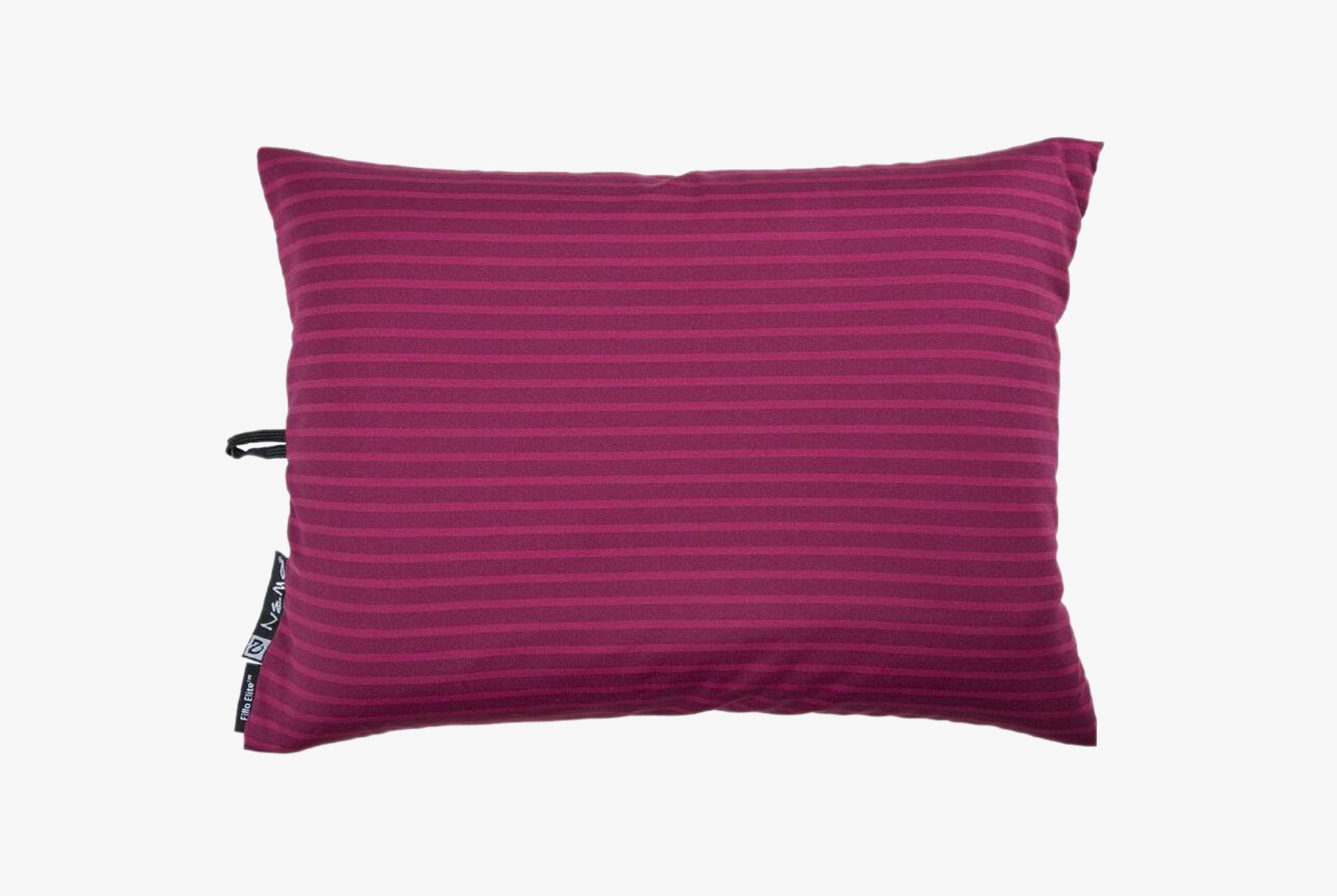
My Pick: Nemo Fillo Elite


Camp pillows need not be overly-plush. Nemo Equipment’s Fillo Elite is essentially an inflatable cushion with a soft casing, but it’s enough to provide that additional level of comfort that I dare not forgo if I want a solid night’s sleep in a tent. Plus, it packs down to be about as big as a lemon, and it’s a lot lighter than that too; I stash it permanently in my sleeping bag so that it’ll never go forgotten.

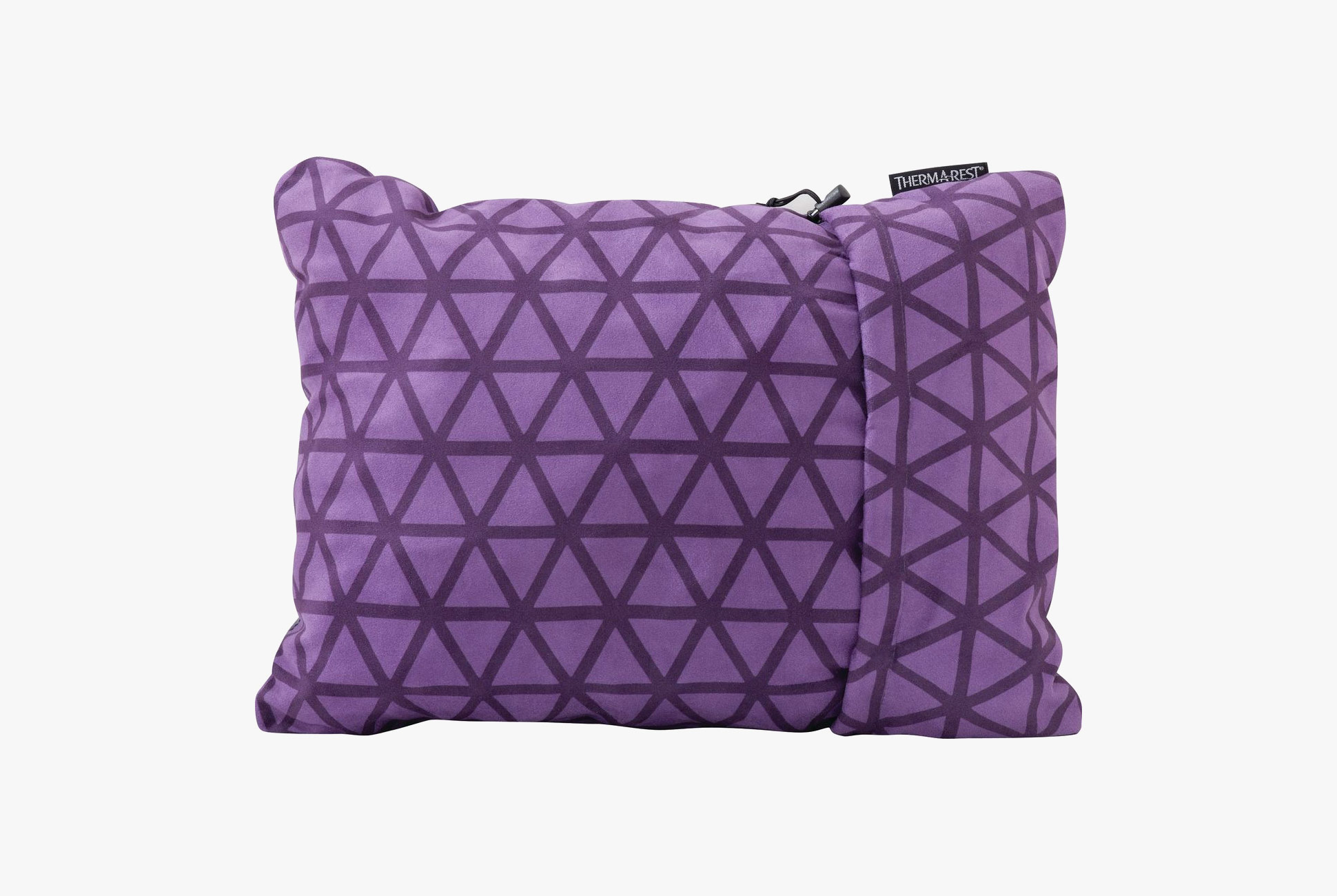
Therm-a-Rest Compressible Pillow


I actually have one of these as well. It’s available in multiple sizes — I have a medium, which is too big for backpacking but comes in handy on red eye flights and long drives — and is made of comfy foam, so there’s no inflation required.

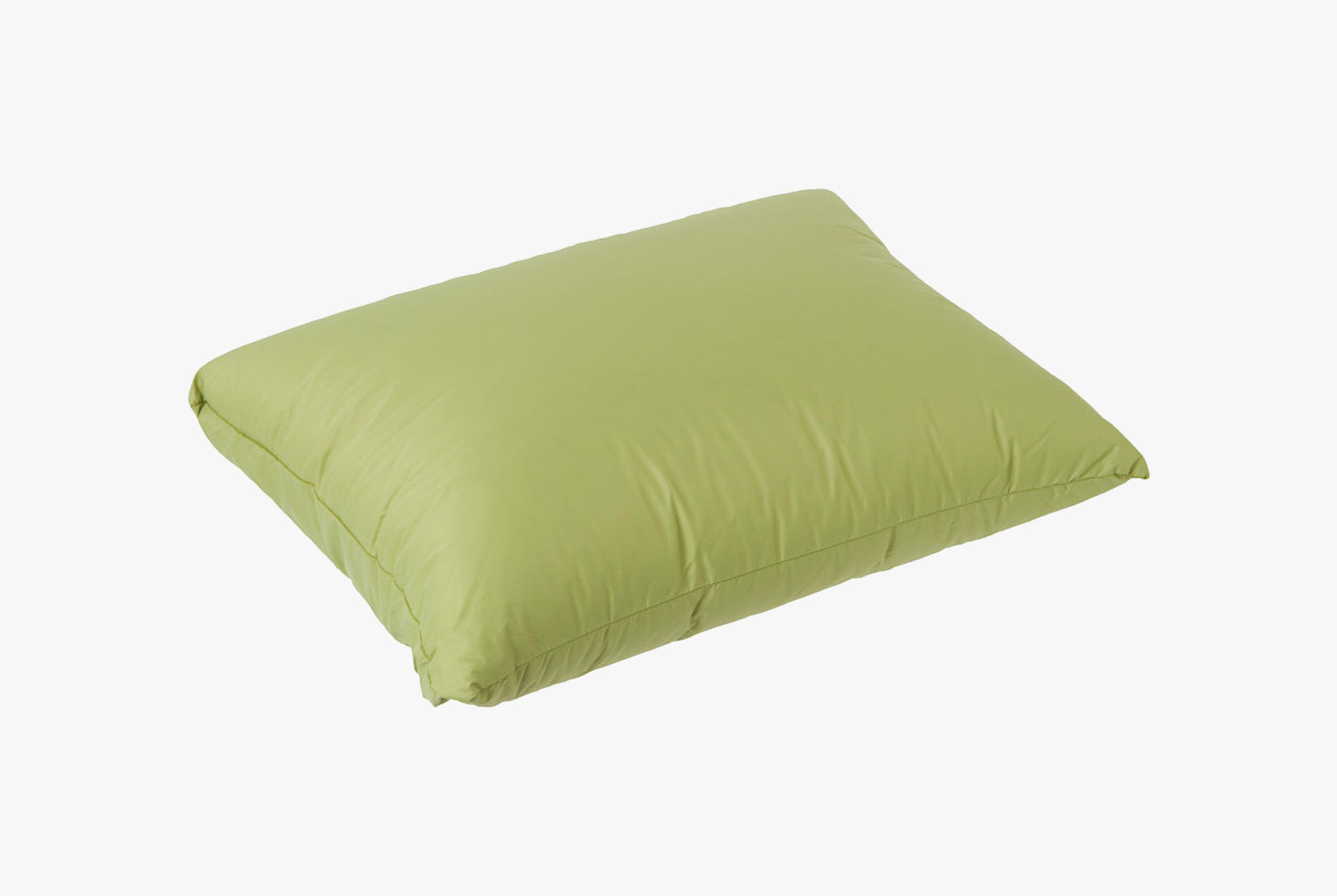
Western Mountaineering Cloudrest Down Pillow


Western Mountaineering is known for its lightweight down products and that includes this pillow. It’s stuffed with 800-fill goose down, and scrunches down like a sleeping bag for easy packing.

Sea to Summit Aeros Premium Deluxe Pillow


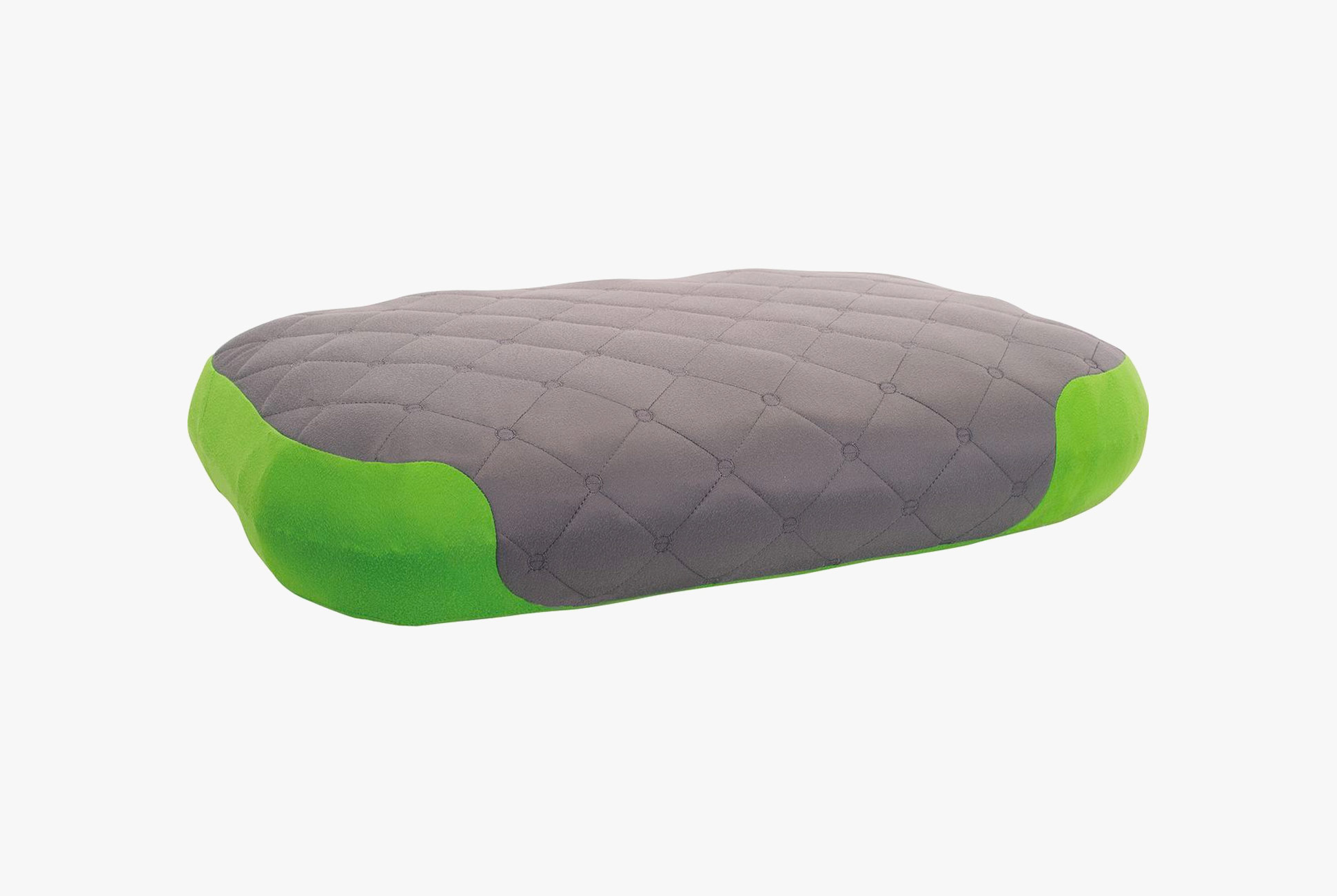
This is Sea to Summit’s largest inflatable pillow, but it still packs down small enough to squeeze into a backpack. The air bladder is covered with a quilted polyester for comfort.

Sierra Designs DriDown Pillow


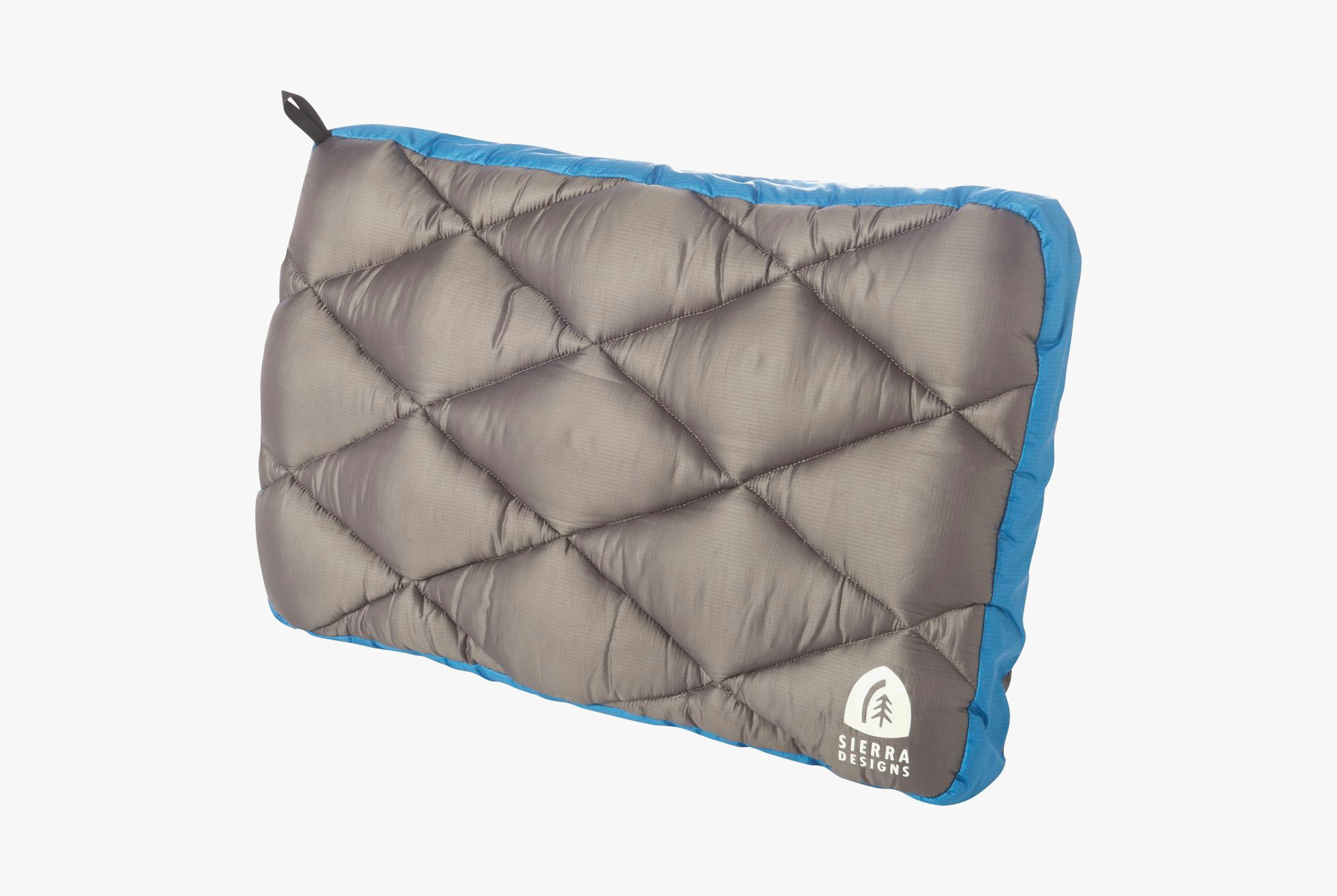
This down-filled pillow is a good budget option, and it comes with a washable case.

Note: Purchasing products through our links may earn us a portion of the sale, which supports our editorial team’s mission. Learn more here.

My Favorite Soap Has a Super-Weird Backstory

“Absolute cleanliness is Godliness!” my soap bottle proselytizes each time I enter the shower. “ALL-ONE OR NONE! ALL-ONE!”

Our grooming habits are our own. Mine didn’t fully develop until a point in high school that those close to me still might call “unforgivably recent.” Before that, a quick dip in the swimming hole near my house might suffice, or even a midnight dunk in the neighboring inn’s private pool. They evolved slowly. Overuse of shampoo was bad, I heard, so I made a point to use it no more than twice a week. The bars of Irish Spring that my dad purchased in bulk from Sam’s Club seemed functional, so I pilfered them.

Shortly after this period, I put off college in favor of spending three months in the backcountry of New Zealand, bathing without soap or shampoo in rain and rivers, and inadvertently discovered what some call the “no-poo” method of hair washing. The idea is that shampoo strips the hair of its oils and the scalp compensates by making more of it. Stop using shampoo, and those oils will return to their natural state of equilibrium and self-clean.

This was not, I learned, a sustainable method to live by upon returning home (at least not for me). I retreated to my generics.

Just weeks later, a friend — let’s call him Jamie — introduced me to Dr. Bronner’s 18-in-1 Hemp Peppermint Pure-Castile Soap. Jamie was a neo-hippy; a lover of nature, jam bands and marijuana; a free-willed busboy with a big van. (He was also I might add, a solid student and a fantastic soccer player and skier.) I’ll never forget the sight of him standing waist-deep in the middle of a pond that extended no farther than four feet at its maximum depth, scrubbing himself while thousands of others floated around and stood on the shore nearby — this was at a music festival.

I think Dr. Bronner would’ve approved. The soap is meant to be used everywhere — it’s for the hair, the face, the body, clothing, dishes, mopping the floor; whatever. It’s also made with Fair Trade and organic ingredients, doesn’t contain any detergents and is 100% biodegradable. The flavor I regularly stock in my home, peppermint, leaves a lingering cooling sensation that’s pleasantly refreshing, especially when lathered into the scalp.

[embedded content]

I was doing just that one day when I happened to catch a glimpse of the bottle’s text-heavy label: “Stimulate body-mind-spirit.” Okay, sure, it does that. I rinsed the suds off my face and picked it up off the shelf for a closer look. Exclamation points abound throughout. “ALL-ONE!” “Listen Children Eternal Father Eternally One!” “Only if constructive-selfish I work hard perfecting first me, like every arctic owl-penguin-pilot-cat-swallow-beaver-bee, can I teach The Moral ABC.”

It doesn’t all make sense, but everything about the soap seems aimed at good; aiding the environment, helping others, teaching, making. And yet on first impression, it did seem a tad culty. I’m not one to abandon a product I love over the perceived chance of conspiracy though — good thing we have the Internet. Emanuel Heilbronner, born in Germany in 1908, received his Soapmaking Master certificate from the guild system there and entered the family trade. His strong views, which were influenced by Zionism, caused a rift between him and his family, so he set out for the United States. Once there, he acted as a consultant to soap manufacturers while back home the Nazis destroyed his family’s business and sent them to Auschwitz. Emanuel Heilbronner became the self-stylized Dr. Bronner around this time and growing more impassioned in his teachings, was institutionalized at Elgin State Insane Asylum by his very own sister.

It’d be tragedy on a Shakespearean level if he hadn’t escaped and hoofed it all the way to California, where he began making his peppermint soap until his eventual death in 1997. Dr. Bronner’s wife and sons joined the business before that, as did his grandsons afterward, and together the family have helped translate the kooky panderings on the bottle into real good through charitable donations and advocacy (plus the company has expanded the line of soaps into different scents and forms, including bar soap, which I also love).

But it does percolate back to that label, which carries his purportedly “insane” ideas about achieving world peace, which made it very appealing to real hippies in the sixties and seventies, which made it attractive and interesting to would-be hippies like Jamie, and here I am. So hell yes I’m going to use that soap because even if it wasn’t at its core the most philanthropic bottle of bubbles I’ve ever come across, it’s still just good soap. I’ve taken it with me into the wilds of Patagonia to use while backpacking, and at home, I use it to clean bacon grease from my stovetop.

As a final note, I’ll leave you with my favorite quote from the label: “…teach: A fire, a mist, a planet, a crystal, a cell, a jellyfish, a dinosaur, caves where cavemen dwell! Then a sense for work-love-song-art-play-law-beauty, a face turned up from the sod!”

Note: Purchasing products through our links may earn us a portion of the sale, which supports our editorial team’s mission. Learn more here.

The One Pair of Sunglasses I’m Wearing All Summer Long

Summer is pretty much the highlight of my year. I pride myself on being able to recite any plans (by memory) for the next 12 weekends. From summer Fridays to annual family vacations, I’m a big proponent of scheduling time away from the city. With that amount of travel (and play) comes a succinct packing list. While my packing list is nearly perfect, I always had trouble finding a versatile pair of sunglasses. I need something that stays in place while I run, doesn’t move if I sweat and doesn’t make me look like an alien when I’m meeting up with friends for a drink. It’s a surprisingly hard task to ace. That was until I tested a pair of Under Armour’s latest sunglasses.

Before testing them, Under Armour’s Road Getaway wouldn’t have been my first choice. I tend to lean towards a slightly more round Ray-Ban style with smaller frames. Aviator-style frames can sometimes be intense, thanks to the association with the military and fighter pilots, but for some reason, I felt I could pull these off.

Beyond protecting my eyes from the UV rays, these sunglasses also feature a handful of helpful features. The silicone nose pads and temples provide enough traction for these lightweight sunglasses to stay in place while I run, hike and bike. Both the nose pads and the silicone tips on the gunmetal temples adjust to fit my face. Regardless of how much I sweat, the glasses never move. They’ve already survived countless drops from my bike-to-work commuter bag, been thrown on boat docks and have been dunked in the ocean — all with no sign of wear and tear.

I tend to switch up my sunglasses depending on my activity, but since May, I’ve only carried this pair. They’ve held up through bike commuting, up the side of a mountain and even out to drinks with friends. This classic style works for just about everything. It doesn’t hurt that I feel like it ups my cool-factor (which now that I’ve mentioned it, has plummeted). Regardless, these are the sunglasses I’ll be wearing all summer long.

Kind of Obsessed: This Under-the-Radar Mechanical Watch Made Me A Watch Nerd

This automatic mechanical watch launched my full-blown watch obsession. Read the Story

The Joys of the Dirt-Cheap Watch

Every once and awhile I’ll unearth some article online explaining how a very expensive Swiss watch is actually an incredible investment, a damn near necessity if you’re mechanically inclined and have “an appreciation for craftsmanship.” Why, for just the cost of a down payment on a car, you too could own a metallic chunk of The Grand Swiss Tradition and wear it on your wrist! And it has soul. It’s a bargain!

Of course, these arguments don’t fall on deaf ears. I like watches. Fancy ones at that. But when I hear these fervent justifications, or hear enthusiasts refer to their six-figure timepieces as their first “real watch” purchases, I can’t help but feel like we’re saying an entire strata of the watch industry is unsuitable for enthusiasts. I’m talking not about watches that cost hundreds instead of thousands, either. I’m talking about most dirt-cheap pieces out there, the watch you can pick up for under $100 then wear until it dies – which could very well take a long time.

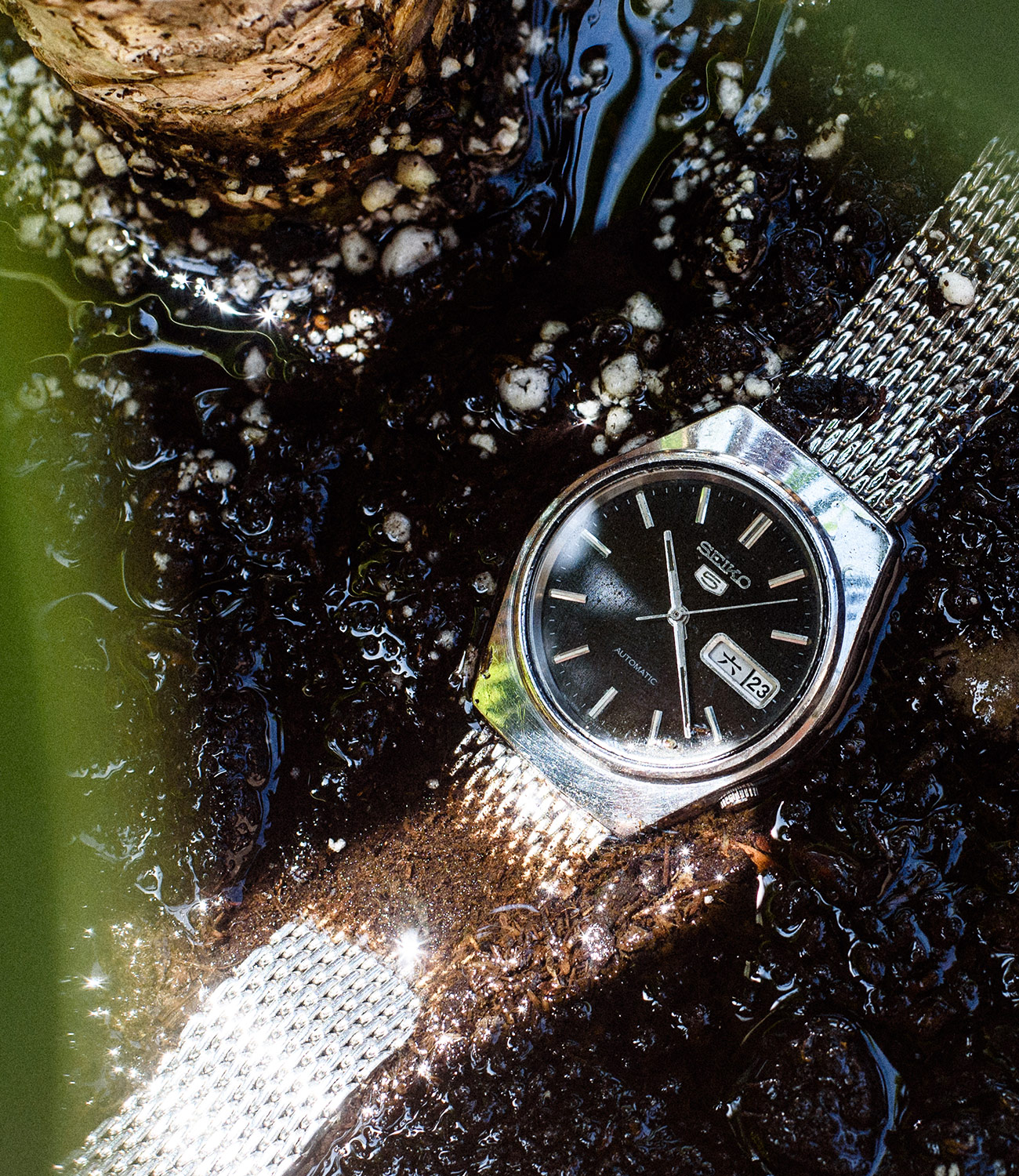
For example, just Google “Seiko 5” and you’ll turn up plenty of opinion pieces and forum posts about Japan’s trusty little bargain-bin timepiece. Amazon has no shortage of new models that retail somewhere in the $60 range, and even if that’s too rich for your blood, you can turn to eBay and find scores of vintage models for less money. My Seiko 5, a reference from the 1970s, arrived at my doorstep after drunkenly perusing eBay one night in college and subsequently parting with $25.

I’ve worn it sparingly in the years since, mostly because I have a plethora of watches to choose from, but I’ve worn it anywhere and any time I didn’t want to wear anything more valuable. Beach trips. Gardening. Taking care of puppies with a tendency to bite everything within snout’s reach, even if said thing is made from solid stainless steel. For an old mechanical watch, it continues to function exceptionally, often better than many of my more expensive vintage watches which have all proven to be fussy in one way or another.

The Seiko 5, I once was told by a Seiko employee, is essentially a “third-world watch,” meant to function and function properly for years in areas where getting a battery change in a quartz watch isn’t as easy or straightforward as it is elsewhere. Its sort of an anomaly in this regard as there aren’t many other mechanical watches in this price range, though it’s far from the only one: Orient similarly makes the Tri-Star, a stupidly-simple automatic you can regularly find around $80; Citizen even makes the NH8350, a dressy automatic that will cost you a bit over $100.

But do you have to buy mechanical to have something cheap with a perceived sense of “soul”? I don’t think so, and there are plenty of Timexes, solar-powered Citizens and Casios you can buy at similarly low prices. They strive to offer a degree of functionality and design at equally dirt-cheap prices. Timex’s Aluminum Camp Watch is one such example; you likely won’t find another aluminum-cased watch for $80. Meanwhile, for $40, Casio will sell you a digital watch with an alarm and chronograph that will refuse to die, even when you hit it with a hammer or maliciously throw it from your balcony.

That alone is indicative of what makes these cheap watches so loveable. They just quietly and competently do their job, and you can carry on your day without worry. If you’ve ever worn a pricey watch, you’ll know that there’s always a creeping sense of anxiety. Every retaining wall and every door jamb is an opportunity to scuff that perfectly-finished case or scramble that meticulously assembled mechanical movement.

And we should expect a mechanical watch that costs thousands of dollars to feel special. But with super cheap watches, the expectation is only that they tell time, without any mental gymnastics or further justifications needed. This in itself is freeing, but more often than not these super-cheap watches can exceed these expectations. A Casio that survives hammer blow after hammer blow and a three-story fall exceeds expectations, and a vintage, $25 mechanical watch that continues to properly function certainly exceeds expectations, too. Will they appreciate in value or win you admiration in the collector’s community? Probably not. But they’ll still find a way to burrow themselves deep in your heart. That alone is impressive.

Meet the Designers Changing Running Sunglasses for the Better

From Issue Six of Gear Patrol Magazine.
Discounted domestic shipping + 15% off in the GP store for new subscribers.

A

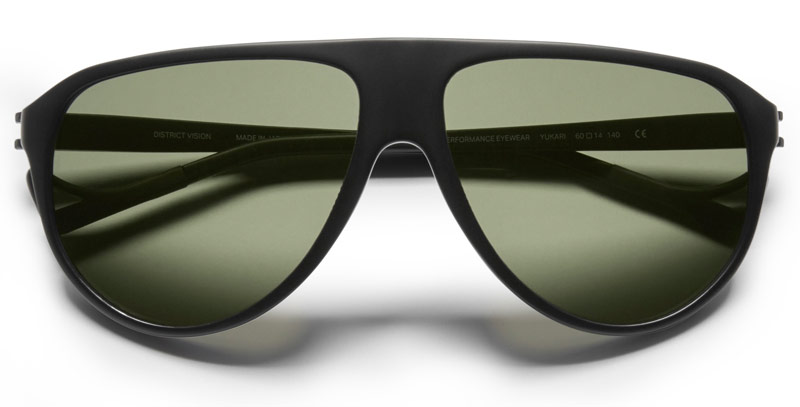
t the intersection of meditation and running you’ll find Tom Daly and Max Vallot, two men with fashion backgrounds who fell in love with running and created District Vision — a brand known for making superlative, fashion-forward running sunglasses. Daly and Vallot met 15 years ago at business school in London. “We were the only ones with long greasy hair,” Vallot says. “I guess that’s how we found each other.”

The pair moved to New York City in 2009. Daly had followed a woman and Vallot had secured an internship. They followed similar career paths in fashion, at brands like Yves Saint Laurent and Acne Studios, but ultimately stepped away in search of creative license and a new challenge.

They launched District Projects, a creative agency that has worked with brands like Balenciaga and Nike, which they parlayed into the launch of District Vision in 2015. Their first product was the Keiichi, a Japanese-made, running-focused pair of sunglasses unlike anything else on the market. The line has since expanded to include seven unique designs.

Today, District Vision is expanding into books, launching interchangeable lens frames and working on a wearable designed to measure breath capacity. For a brand founded on eyewear, District Vision has vast plans with Daly and Vallot at the helm.

Q:

Where did the concept for District Vision come from?

TD:

Through a strange series of events, we were introduced to one of the oldest eyewear manufacturers in Japan, who is also a long distance runner. I went to Hawaii and ran the marathon with him and realized we all share this passion.

MV:

Around the same time, we realized that we’ve always been eyewear nerds and that there’s nothing interesting in sports eyewear. So it was a natural progression to try to address a need.

Q:

What does District Vision mean?

MV:

We went into [fashion] thinking it was the most creative thing we could do, and after six years we realized it was so far removed from creativity. We were frustrated. We started to see how people work in a place like Mexico City, where you have artisans sitting in shops making stuff, and you can buy it right there. Everything is so raw — it inspired us to do something. In Mexico everything is called distrito, the different districts, and we really got into the name. How can we apply this more holistic mindset and modern vision for active, conscious living to different districts?

Q:

What made you decide to get involved in the performance-running business?

TD:

I think when the community aspect of running became so clear, it felt like an exciting movement to explore. I started running with a team and exploring that [aspect] of New York. It kind of replaced nightlife, honestly. You can’t really go out partying [and run the next day], so it was that transition in life.

MV:

My journey came more from yoga and meditation. [Tom and I] used to run together in London. I naturally connected with runners, so we started exploring that intersection.

Q:

Where does the technology behind each frame come from?

TD:

The area we work with [in Japan] is famous for titanium construction, which we use in the frame [with nylon]. Anything that’s multimaterial with metals is really interesting. There’s a general approach to making product called kaizen, this concept of continuous improvement. Products play such a different role in your life in Japan — they really seek a different type of relationship with things they own.

Q:

Beyond technology, there’s a distinct style to District Vision frames that sets them apart from other performance sunglasses. Why is the styling so different?

MV:

We always think of functionality first, but equally we want the design and aesthetic to be as simple and streamlined as possible. Other sports eyewear is heavily branded, so we decided to go the other way and keep it really understated.

Q:

Where do you find the inspiration for new frame styles?

TD:

I think it really starts with athletes in performance conditions. When we shot the [last press images in Colorado], we all went and stayed in the 10th Mountain Division Huts. You run twenty miles between each hut from nine to ten thousand feet [of elevation]. When you’re living in that way, you quickly become aware of what type of product you need and whether yours is good or not. People, especially runners, really know what they’re looking for and they’re acutely aware of materials and construction — how the product wears over time.

MV:

None of this has ever been an ego show for us. It’s about truly listening to what people email us every day. [We hear] the frames are slightly too big, too small, too masculine, too feminine… it’s really studying feedback and growing out of the community we built.

Q:

Where do you see the company in five years?

MV:

The biggest step we’re taking this year is truly growing into a multicategory business. Eyewear will always be our technical core, but what we’ve learned in the first two years is that our audience really expects more from us than just eyewear.

TD:

It’s about honing in on where we think we can genuinely make a difference for the modern runner and seeing where we can add the most value. It’s intense. There’s good product out there, so we feel a big responsibility to deliver something that’s truly complementary.

From the Portfolio

Yukari Windshield by District Vision $199

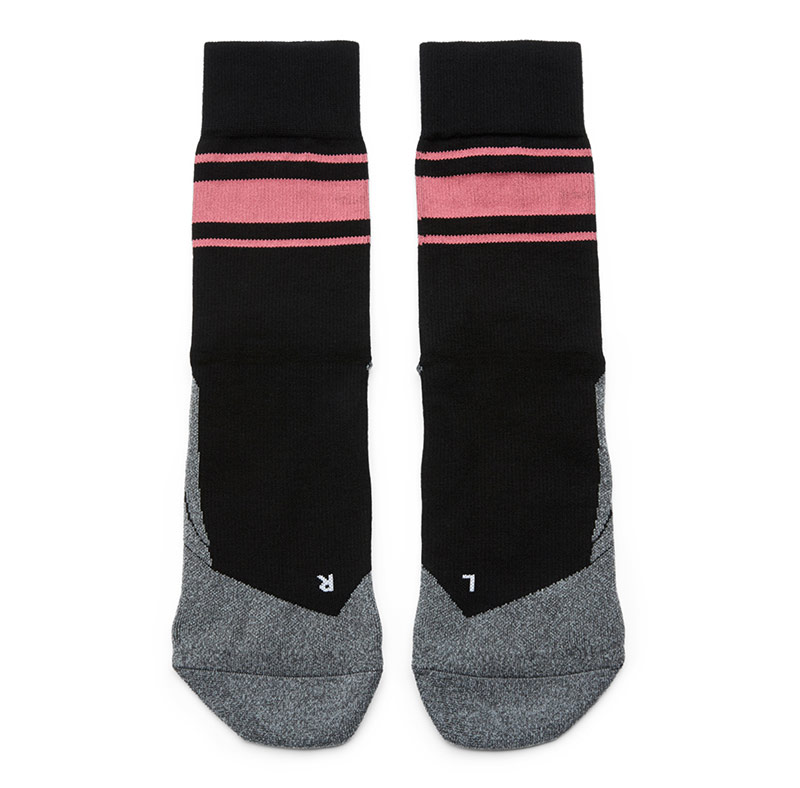
Sindo Performance Socks by District Vision $28

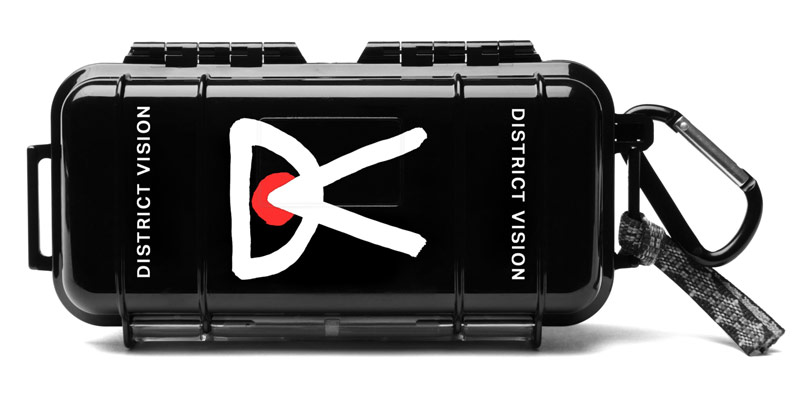
Knox Trail Running Case by District Vision $60

I Hate Rain Jackets But I Wear This One All the Time

I don’t like rain jackets. This isn’t because I don’t like rain, or getting wet — actually, I love the rain as long as it doesn’t persist for too long, and petrichor is on my list of favorite vocabulary words. My dislike for rain jackets doesn’t come from any single or multiple of their physical qualities either; I don’t mind that their hoods can look goofy or that they make me sweaty the instant I traverse the space between outside and indoors. I don’t like rain jackets because I believe that they’re shamelessly vindictive.

Let me explain. Before I leave my house for an extended period — be it for eight hours or 10 days — I check the weather. That forecast informs what I wear or pack, and other than temperature, the chance of precipitation is the most important stat to examine. It’s often a clear choice whether to bring or leave behind a rain jacket (my threshold hovers around a 50 percent chance or more, sometimes depending on additional information gathered from other sources, or a glance at the sky).

But when that potential for raindrops to 40 or 30 percent, confidence wavers. Do I mind getting caught in a passing drizzle? Do I risk wearing/carrying around a jacket all day for no reason? Rain jackets know this; they can sense a lack of conviction in a wearer the same way a horse can in a novice rider. But unlike the noble horse, rain jackets have no shame; they prey on this indecisive.

My own experience provides the proof. Last summer, I ventured to an out-of-the-way neighborhood in search of a coveted slice of pizza that required four or more hours of waiting in line (worth it). The chance of precipitation was 40 percent, but the skies looked friendly. I left the jacket behind, it never rained.

On a recent weekend, I traveled with friends to a reservoir in northern Vermont for a long weekend of camping. Our site was roughly three hours away from the parking lot, accessed only by kayak or canoe. The forecast called for rain all weekend, but we never felt a drop. The jacket stayed at the bottom of my bag for the duration of the trip.

Earlier this spring, I attended a bike race not far from my neighborhood. Chance of rain was low, Zeus seemed at ease in the skies above, and I only planned to be gone for a matter of hours. The starting buzzer had barely ceased its shrill whine when a bank of dark clouds began its takeover of the horizon. It was a scene from an early 2000s disaster film, it was apocalyptic, and no, I was not prepared.

In that moment of horror, I knew that my rain jacket had plotted this devious move for years. Outwardly I was drenched, but inwardly, I vowed to seek revenge. Shortly after that evening, I began a search for a more perfect rain jacket, one that would be heavy enough to stand resolute in a downpour but would also be as light as a windbreaker, and even more packable. I sought a jacket that I could take everywhere, without remorse if it went unused.

I believe that I’ve found that Goldilocks of coats in Patagonia’s Stretch Rainshadow Pullover. The Rainshadow is constructed with Patagonia’s proprietary H2No 2.5-layer waterproofing and 30-denier ripstop nylon. It’s waterproof and durable, and as its name implies, the Rainshadow has a fair amount of stretch, which makes it more comfortable and forgiving than other obstinate rain jackets.

The Stretch Rainshadow is also super lightweight — it weighs 7.4 ounces — and it goes practically unnoticed in a backpack. To further assure me of its willingness to minimize its effect on my life, the jacket also packs away readily into its own pocket for even easier storage in a bag.

Irrational paranoia aside, the Stretch Rainshadow Pullover is an excellent outer layer, in any weather. It’s light and breathable enough to use as a wind layer but plenty protective in a real storm. I’ve skied in it, hiked in it and have worn it for warmth around town. Now, I stash it in my bag habitually, before checking the forecast. I don’t know if I’ll ever fully trust rain jackets after all the duplicitous grief they’ve caused me, but I’ll give this one the benefit of the doubt. Don’t get me started on umbrellas though.

The Best Rain Jackets of 2018

A lot has changed since heavy, unbreathable plastic rain slickers were standard all-weather apparel; today’s rain jackets are lighter, softer, more breathable, stretchy and more waterproof than ever. Read the Story

Note: Purchasing products through our links may earn us a portion of the sale, which supports our editorial team’s mission. Learn more here.

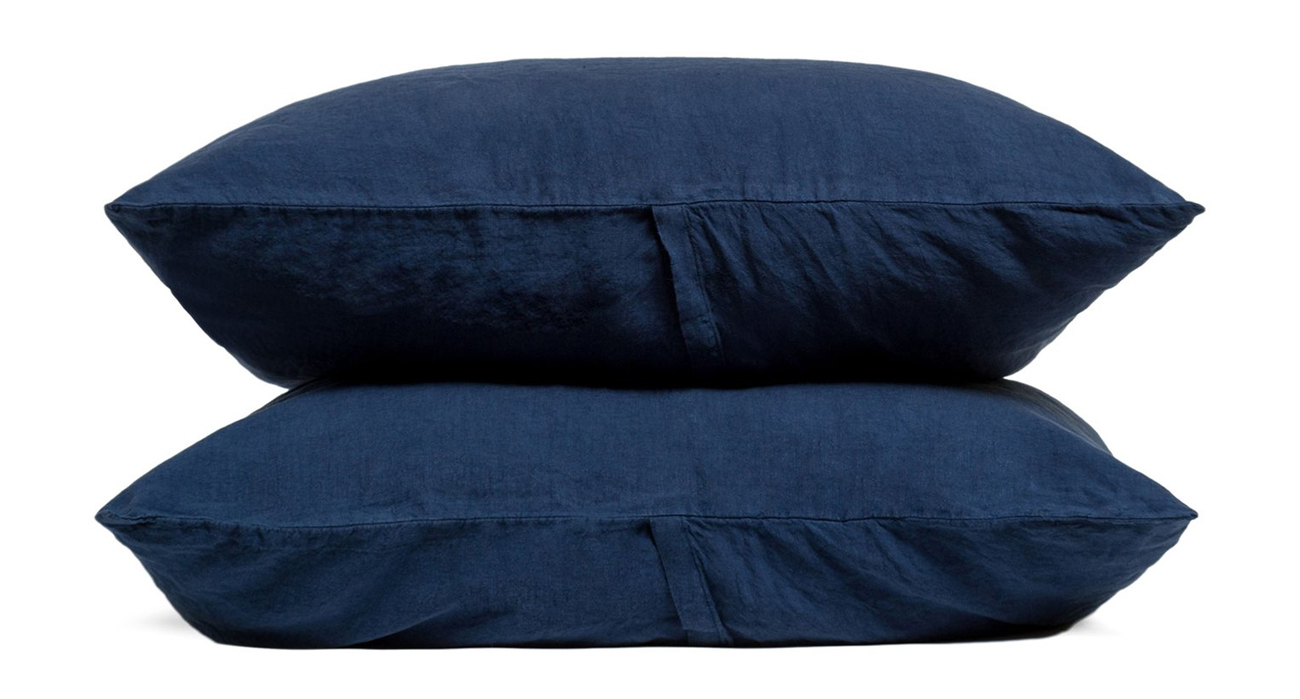
4 Reasons to Buy Linen Sheets This Summer

From Issue Six of Gear Patrol Magazine.
Discounted domestic shipping + 15% off in the GP store for new subscribers.

There’s not a home product more misunderstood than linen sheets. Turns out they’re easier to clean and far more versatile than most people assume. Here’s everything you need to know about dressing your bed in linen — from someone who actually makes the stuff. We spoke with Ariel Kaye, founder of the wildly popular Los Angeles-based bedding company Parachute.

Seasonality Be Damned

Linen comes from flax, which makes for thicker fibers than cotton. This means linen bedding is actually heavier than its cotton counterparts. “Yes, there is an airiness to linen, but because of its weight, it’s plenty insulating for winter months,” Kaye says. “And its ability to wick moisture makes it good for hot sleepers.”

Better With Age

Linen has a reputation for being rough and textured, but according to Kaye, it really only takes a couple washes to soften up. “This is a barrier to entry for some,” she says, “but once it’s broken in it’s incredibly comfortable.”

What About Thread Count?

According to Kaye, most thread count claims are marketing ploys to drive up costs. “It’s measured by the amount of vertical and horizontal threads woven into a square inch of fabric, and there’s plenty of ways to fabricate your way to a sort of arbitrary higher number,” she says. A good rule of thumb: “Anything more than 400 is a sign of up-selling, particularly with linen, where you’re dealing with much, much thicker threads and lower counts as a whole,” Kaye says.

Low Maintenance

Wash linen in cool water without other items — that eliminates a lot of wrinkles. “Keep drying times low and run with low or no heat,” Kaye adds. “It’s not particularly different than cotton bedding, frankly. It also happens to be naturally stain resistant.”

Lasts Forever

“Due to flax being more expensive and the difficulty of removing impurities from it, linen definitely costs more,” Kaye says. “But if you buy good linen, it should outlast cotton and will only get better with age, where cotton sheets will show more wear. It’s an investment.”

This Company Wants to Make Sure You’re Prepared for Any Disaster

U

ncharted Supply Co. is on a mission to help you prepare for everything from the Zombie apocalypse to the next earthquake. That’s a grand idea, and surprisingly, it came from an occurrence most of us deal with daily — sitting in traffic. After missing meetings and adding hours to his drives getting out of California, Christian Schauf realized that even if he was prepared for some sort of catastrophic disaster, it seemed like no one else was. “95 percent of all survival situations are solved in 72 hours. But if you don’t have the right stuff, that 72 hours can be deadly,” Schauf says of the one statistic that has stuck with him after all these years. “People don’t need a bunker with $10,000 of supplies, they don’t need five years of food, just 72 hours to cover everything.” With that in mind, Schauf set about to figure out what exactly it is that everyone would need in an emergency situation to survive — and nothing more.

Luckily, Schauf had a list of unique life experiences to help him put together that list of necessities. He played in a band that took him abroad to Iraq 39 times. While there, “surface air missiles, sniper fire and car bombs were all just regular life,” Schauf recounts. For trips like these, Schauf would pack only what he needed to get in, play a show and get out. “There’s only so much gear you can take on an airplane. You leave in the morning, pack your backpack and fly there, and plan to come home that night — but there might be a sandstorm or a fire and you might get stuck there for two days. These places do not have extra supplies, so you’re on your own,” Schauf says. After playing over 150 shows in Iraq, Schauf made friends, who he enlisted for help in putting together his disaster survival kits. “I asked the experts, ‘What would you give your elderly parents to help them?’”
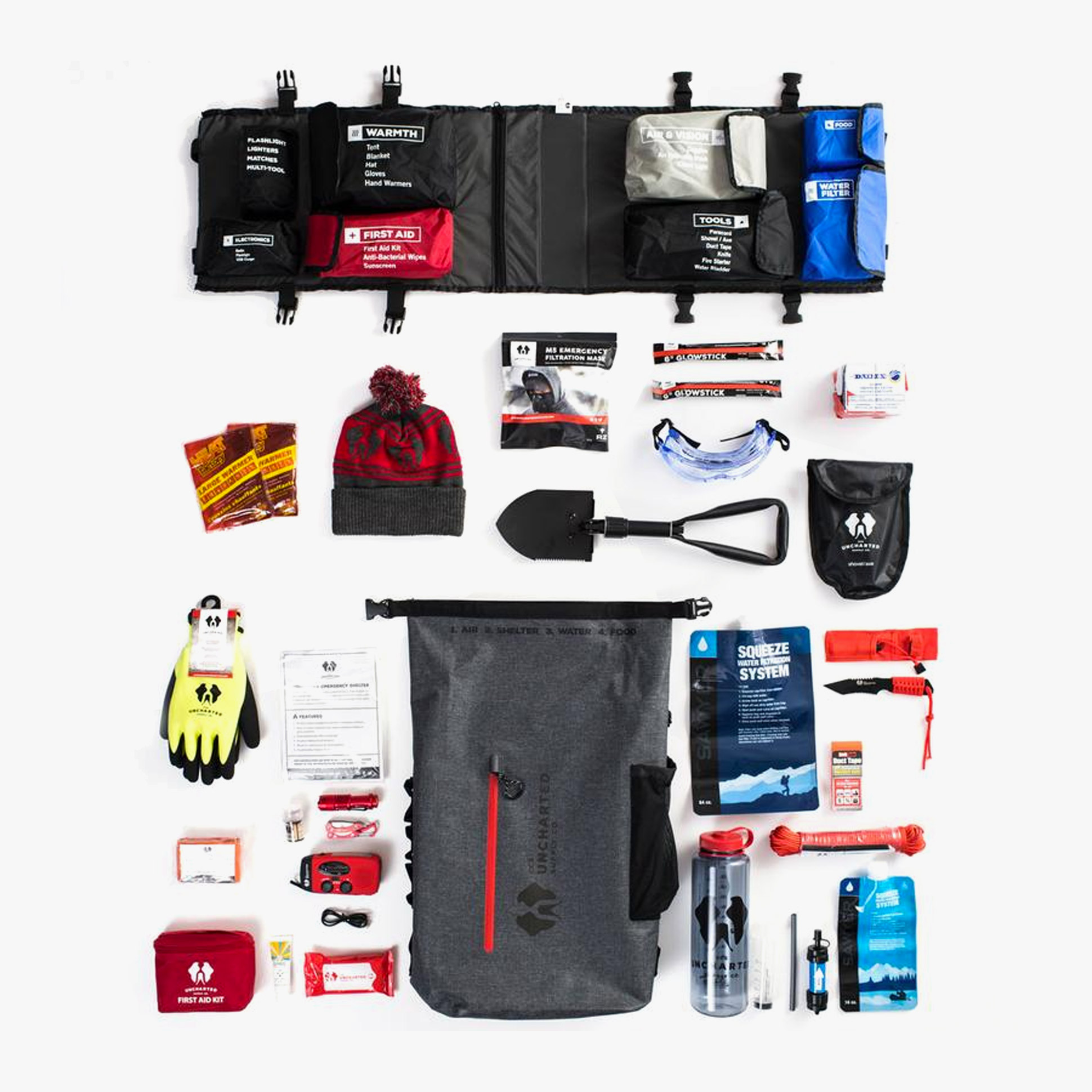
From there, Schauf searched for the most durable and reliable materials and products to fill the bag — which turned out to be extremely difficult. “I was disappointed with what was available. A lot was poorly executed and low quality,” he says. In the survival kit market, there were two extremes: “You may spend $80 to check a box, but deep down now know it’s not going to save your life. Or it’s a couple of thousand dollars for military-grade [items], and you don’t know what half of the gear is,” Schauf says. He wanted to fill that void, the space between these two opposite ends of the spectrum, and help educate people about what they would really need if a disaster were to strike.

The product Schauf finally landed on has over thirty-five pieces — the majority of which he and his team had to assemble themselves. “We put different batteries in the flashlight, and matches in the case — everything was super high touch,” Schauf says.

After crafting and curating the go-bag, Schauf decided to try an Indiegogo campaign to launch his product. It was right before the holidays in 2016, and Schauf took a gamble. “I ordered 1,000 units before even turning the Indiegogo on. I sold my townhome and bought $3,000 of inventory before I even told anyone what I was doing.” With marketing in his blood from his days at Crispin Ciders (which he later sold to MillerCoors) and then at Pear Sports, the name came together naturally. “For me, I wanted a word that represented being in an unknown place, but not being fearful.” The St. Bernard logo represents what the brand was to Schauf when he first started. “St. Bernards used to go out and find people — the Bernard Pass — the monks sent them out and they would find weary travelers and lead them back to the lodge. I love the idea of a big dog that sits by the fire, you send it out, and it’ll do its job until death,” Schauf says. With a plan, and logo and a product, Schauf dubbed his survival kit the Seventy2.

“I thought if I have to drive around and sell them out of the back of my truck for a year, I will. But in two weeks they were gone.”

The Seventy2 campaign raised $491,406 in total, or 1,649% funded as of January 1, 2017. “We were the highest-funded survival product of all time, which was nice,” Schauf says. And then he realized it meant he (Schauf being the sole member of the team at that point) had to build 1,400 more orders. “It got real very fast for one guy,” he quips.

To help get those orders filled, Schauf brought in a few friends, who are still involved in the business today. Eric Janowak, Mike Escamilla, and Josh Anderson were now a part of the Uncharted Supply Company and between the four of them, they had a web developer, product designer, someone to look over contracts, and Schauf (who took the lead on the marketing side. “We were just grinding,” he says.

All in, it’s been about 18 months since the inception of the product, yet the brand has seen tremendous growth. Even the FBI, CIA, Nike, and Paypal have purchased the Seventy2. The brand even sells 5- and 10-pack bundles to help outfit entire companies. With that growth, Schauf’s been able to take time to develop other gear that can help you survive disaster — everything from a hideaway jacket, to a car kit, to kits for families. “We’re really looking at how you fill every moment of the day, because you never know what’s going to happen,” Schauf says. “The more prepared you are, the safer the world is.”

“Our brand is the buddy that will give you shit, but is also experienced and someone you trust.”

Schauf’s not trying to capitalize on the doom and gloom of what the news can seem like these days, but he is real about the possibility of disaster. “I’m not a doomsday guy. I’m a guy that wakes up and the sun is shining, and I’m ready to explore. I might prep for a day that never happens, but people skin their arm, or forget sunscreen on a hike, or forget water millions of times a day, and this kit will plug all of those holes. It’s a go-to bag.”

Meet Margo Hayes

Margo Hayes is single-handedly changing the climbing game, and she’s only 20. Read the Story