All posts in “Cars”

Welcome to the New Painfully Awful Era of Car. It’s All Your Fault

Yesterday, Ford dropped the bomb that it will no longer invest in sedans or small vehicles for the U.S market. That means, outside of the upcoming “Focus Active” crossover and the eternal-Ford-flame Mustang, the only vehicles that will carry the Blue Oval beyond 2020 will be trucks and SUVs of varying sizes. It’s all in the pursuit of profit, despite Ford raking in $1.7 billion last quarter. The company still wants to make more money — crossovers and SUVs are where they’ll find it.

Sadly, Ford isn’t alone. Volkswagen recently announced a similar initiative and swirling speculation says Cadillac pushed out Johan de Nysschen as CEO because he wouldn’t convert the lineup to crossovers fast enough. Ladies and gentlemen, we’re now on the precipice of the neo-modern, fully-lame Malaise era.

In the early ‘70s, American car manufacturers reacted to incredibly inflated oil prices, emission restrictions and new safety regulations by downsizing engines, making smaller cars and scaling back on big, expensive designs. The goal was to compete with the already small, efficient European imports, but America was coming off of a nearly insurmountable diet of 6.5-liter V8s and sub-20 mpg ratings — it didn’t go well.

Along with those government restrictions, and based on the way consumers were drifting towards European and Japanese imports, American manufacturers thought that by pinching pennies, they’d turn a profit. The result was cookie-cutter cars powered by lifeless engines, lacking any design inspiration and giving zero reward to the driver. During the ‘70s and into the ‘80s, in an effort to chase profit, instead of investing money in making a better product, American car manufacturers sold their soul and ripped us off. It was an era in which Cadillac earned the reputation it’s still trying to shake off 30 years later: making boring cars for retirees.

Flash forward to 2018, and the SUV and crossover market is booming in America. Every manufacturer, not just in America, has introduced crossovers and SUVs of different sizes in order to cash in. But, once again, American manufacturers like Ford are being pressured by investors and the general market to make a quicker return, so they’re cutting off what they see as dead weight. Instead of investing man hours, ingenuity and creativity into making, say, a better sedan to compete with the likes of BMW, Mercedes and even Toyota (the Camry is the best selling car in America), Ford is scaling back and pinching pennies. And you can bet good money GM isn’t far behind with a similar plan of action. It’s the ‘70s all over again.

So, like in the ‘70s and ‘80s, when we said goodbye to iconic American luxury land-yachts and heart-pounding muscle cars, and welcomed forgettable, awful masses of metal Ford and GM called cars, we’re now saying goodbye to cars with any discernible style and design. Over the next year or two, America will slowly transition into only producing awkwardly proportioned, lackluster crossovers while the rest of the world pumps out fun, exciting and inspiring vehicles. Sorry to say, it’s all the average consumer’s fault because crossovers are essentially for people who are indifferent about what they drive.

The US will once again become a land of forgettable cars designed to save money and bolster profit. Hopefully the rest of the world’s manufacturers don’t follow suit, and instead continue building beautiful, desirable cars. And, hopefully, we won’t have to wait 25 years to import them.

Buy Now, While You Can

There are 265 car models available in the U.S. market; thus, there are choices. We help narrow them down. Read the Story

An Relatively Affordable Armored Car Small Enough to Fit in Your Garage

Armored vehicles aren’t just for the military. Plenty of private citizens purchase military-spec trucks every day, though those particular customers probably have more zeros in their bank account than there are words on this page. They also likely have a garage (lair?) to fit their metal-plated behemoths. What about the rest of us? Plasan, the Isreal-based manufacturer might have a solution: the Yagu.

The Arctic Cat Wildcat 4 1000-based Plasan Yagu gets power from a 1.0-liter V-twin, which sends 95 horsepower through a selectable four-wheel drive transmission. After all its B6+ level carbon fiber-Kevlar composite armor is bolted on, the relatively little UTV jumps from just under 1,700 lbs to 1.48 tons in weight. Now, that might slow you down a bit, but not nearly as much as high-powered rifle ammunition — if the Yagu’s armor didn’t stop it dead. Options also include a light weapon mount and an integrated drone, if you feel so inclined.

Plasan didn’t mention the price tag, but as far as the ‘if you have to ask’ policy goes, it’s still a petty good bet the Yagu is more affordable than, say, a tank.

Today in Gear

The best way to catch up on the day’s most important product releases and stories. Read the Story

How To Keep Pollen, Dirt and Grime from Ruining Your Car’s Paint

Aside from, you know, the whole “we need flowers and bees to make honey and to keep the environment happy” thing, pollen totally sucks. It makes me sneeze, for one, but it also coats everything — most notably, cars — in a gross, chalky, yellow film. Pollen can turn a white car banana-colored and a black car a puke-like chartreuse. But flower “dust” (to put it politely) is almost entirely unavoidable and it can be much more than just an eyesore — it puts your precious paint at risk.

To get the skinny on the best way to keep a car clean, I turned to Mike Stoops, the Senior Global Product & Training Specialist at Meguiar’s, who pretty much has a lock on car care. Stoops spoke at length about the dangers of pollen, the best way to clean a car, towel management and his specific product recommendations. Good luck, and may your car — and your sinuses — remain as pollen-free as possible. – Nick Caruso

How Pollen Can Damage Your Paint

Because it is naturally occurring material and it’s got that more of an ability to decompose that just regular dirt, [it can] stick to the paint more tenaciously. Even in very tiny fragments, it will stick and bond to the paint. After that happens, it doesn’t come off when you wash the car. This is one of the components that will make your paint feel like 80-grit sandpaper after you’ve washed it. Then you need to step up to using a clay bar or something similar to remove that material.

It can also be hard and a little scratchy. It’s on a very small scale, obviously. But if you don’t have the proper lubrication and you’re not using a microfiber towel to really pick it up and pull it into the towel, you start to put really fine little micro scratches into the paint.

Can Pollen Damage Be Prevented?

Preventing is actually really simple: leave the car in the garage. [Pollen is] natural airborne fallout — there’s no way to prevent it from accumulating on a car.

We get similar questions about brake dust. There’s no product you can apply to your wheels that… won’t let it land on the surface. You’re stuck with the same situation when it comes to pollen. If you’re going to use the car for what it was intended — getting out and driving the thing — it’s going to get dirty.

The biggest thing you can do ahead of time is keep a good coat of wax or synthetic sealant on the paint at all times. This will help to prevent things from sticking quite as dramatically to the paint surface and should make cleanup easier each time you do it.

If you don’t let your car get really dirty, you can wipe it down [easily].

How to Clean Your Car

Move to the shade. Work in the shade on a cool surface. If you mist a product onto [hot paint] it will evaporate almost immediately and will do you no favors. Pull into the shade. Any product will work better there.

Top-down. Always work from the top of the car down.

Let it soak. You’re going to want to wet the area reasonably well. With a standard quick detail spray, it’s just a quick mist onto the panel and you wipe with a towel. Let the product sit a couple seconds before you wipe.

Fold your towel. Fold the towel into quarters and wipe in a straight line. On the leading edge of the towel… there will be a line of dirt.

Roll, Wipe, Roll. Roll the edge back a little so the dirt stripe is pulled out of the way. If you do [it right] three or four times, you end up with tiger stripes on the towel.

Follow-up Towel. Take a second towel that’s also folded in quarters. Wipe back over the area with that fresh, clean towel just to pull off the last bit of product.

Swap towels. Continue unfolding and refolding that towel and following behind with the clean towel. Once it gets to the point that you… feel that towel is no longer safe to use because there’s so much dirt embedded in it, set it aside. What had been your second towel — upgrade it to your first towel and get a clean towel for your secondary wipe.

How to Care for Your Car Interior

One of the best ways to keep your car looking showroom-fresh is by cleaning and maintaining the interior. Read the Story

A Word on Towel Management

If you think you’re going to go in and use one towel to wipe down the whole car, you’re sadly mistaken. Good quality microfiber towels are designed to grab and hold onto stuff. A lot of people think ‘I want to use a microfiber towel on my paint because it’s really soft.’ That’s true, but… the real benefit to a microfiber towel is that they grab and hold on to stuff and pull it up into the towel so that it’s no longer interacting with paint.

Don’t be afraid to use three, four, five, six towels depending on how big the car is and how dirty it is.

Never. Ever. Scrub.

One thing you never want to do is scrub hard. Scrubbing hard on your paint is just never a good idea. Let the ingredients in the car wash soap or spray wash do their job and break down and emulsify that dirt so you can safely remove it from the surface.

Caring for a Classic Car

We do a lot of hot rod shows, vintage car shows. A lot of these owners don’t want to take out a bucket and hose — I get that. Old cars like to trap water in places. Or they don’t like to use soap for some crazy reason.

I’ve seen guys with really expensive… custom-built cars that are doing nothing more than taking — and this terrifies me — a cup of water and an old terrycloth washcloth. They just dip the cloth in water and just wipe the panel down. To them, they’re removing the dust, they’re not using any soap and they’re not flooding the car.

But what they don’t realize is that water is a terrible lubricant. And that old cotton towel… has quite a bit of aggressiveness of the cotton loops. You’re going to scratch the paint. You’re doing something fairly horrible to the car. The one positive thing they’re doing is cleaning frequently. The problem is, their frequent process is not the safest process.

Buying Guide

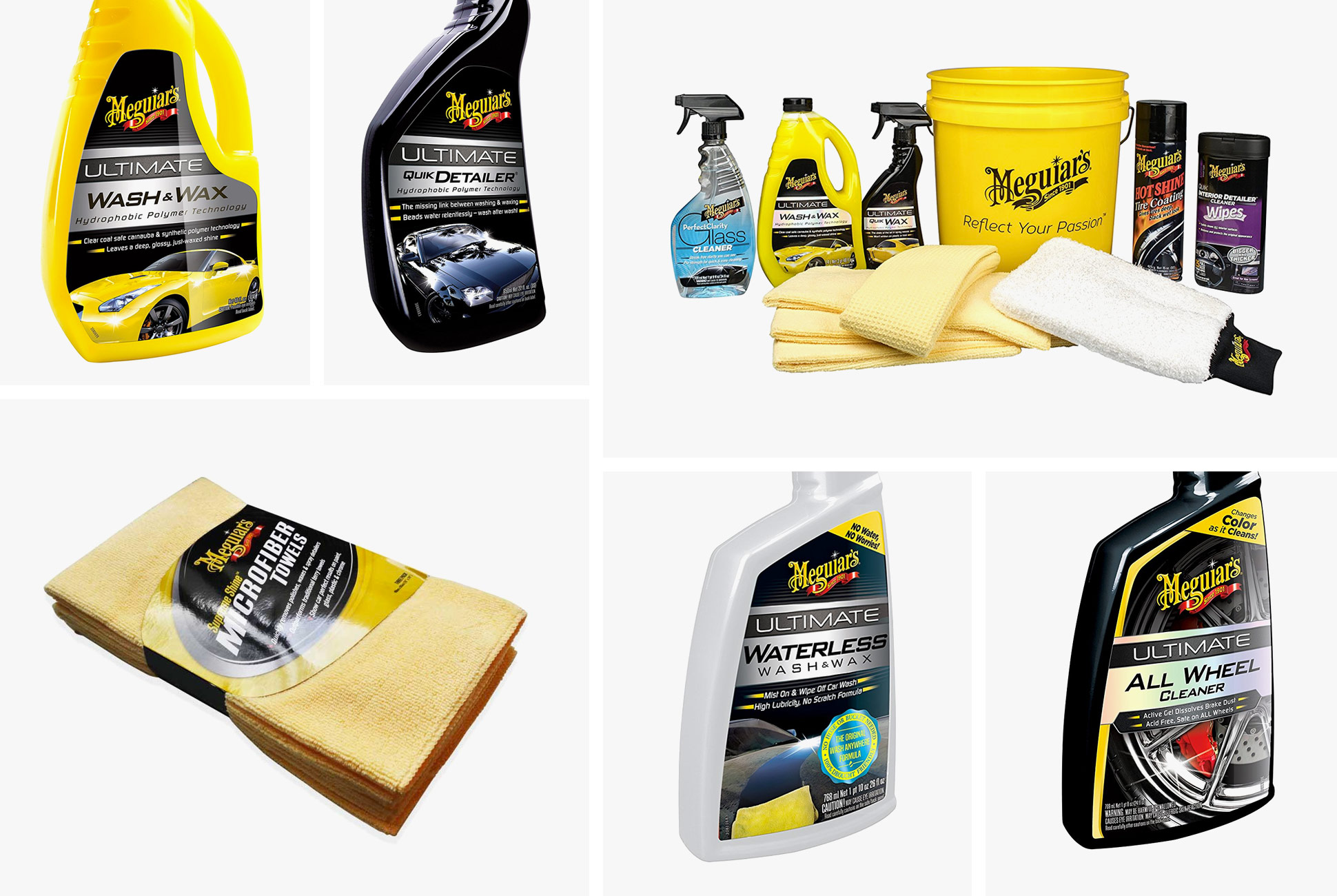
Quick Detailer Spray by Meguiar’s $8
“Great for light dust.”

Ultimate Wash and Wax by Brand $12-$17
“Quick detail spray that’s been amped up with more bells and whistles. It’s like a car wash in a bottle. Amazing how dirty a vehicle can be and you can still wipe it down to remove dirt and road grime.”

Ultimate Waterless Wash & Wax by Brand $10
“A durable synthetic polymer that’s very slick, so it’s going to give us our longest lasting and best protection.”

Ultimate All Wheel Cleaner by Brand $13

Essentials Car Care Kit by Brand $65

Supreme Shine Microfiber Towels by Brand $5

100 Gorgeous Details that Showcase the Best of Automotive Design

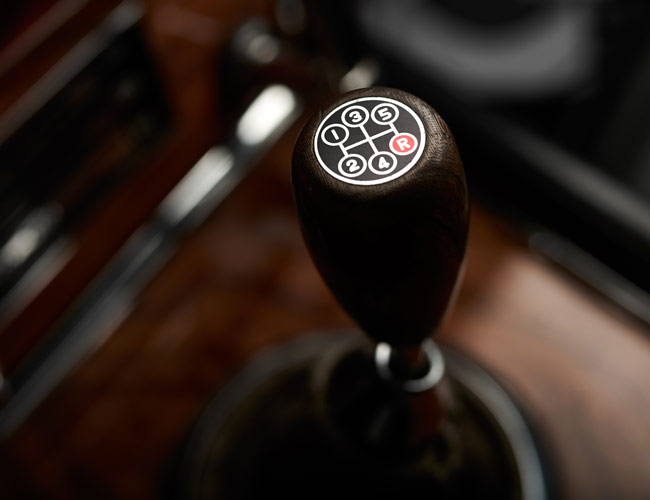
Car guys love every aspect of cars, from the way they run to the people who make them to how they smell and feel and… how they look. Here’s a collection of just some of our favorite details, from wheels to shifters and beyond. Read the Story

Save on Gear From Front Runner Outfitters and Stack Your Roof Rack


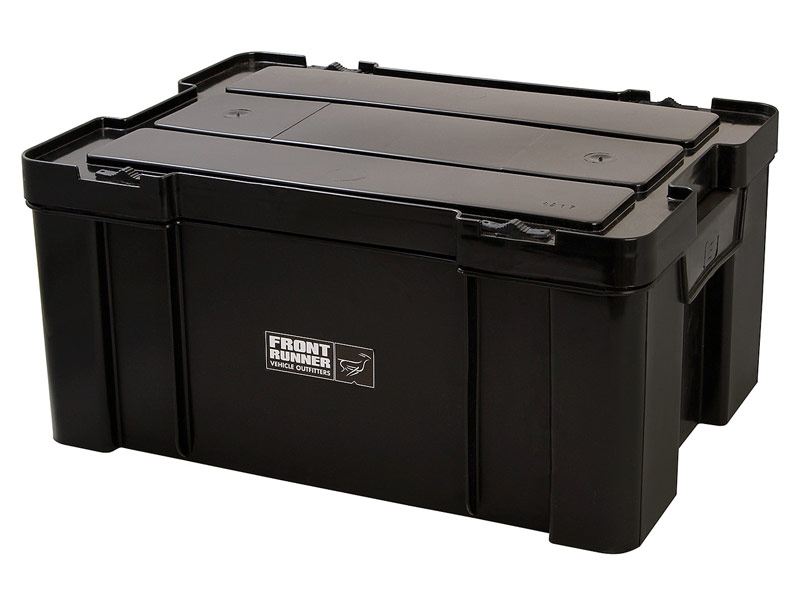
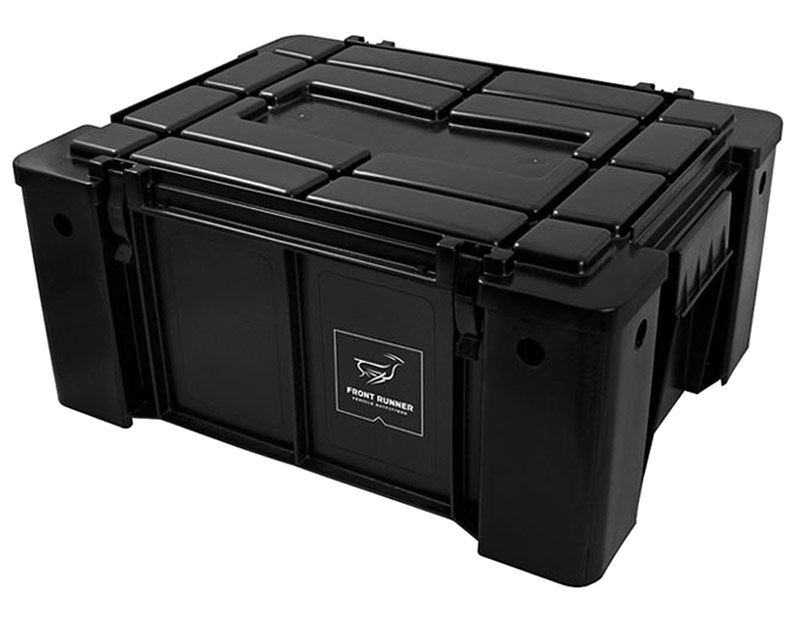
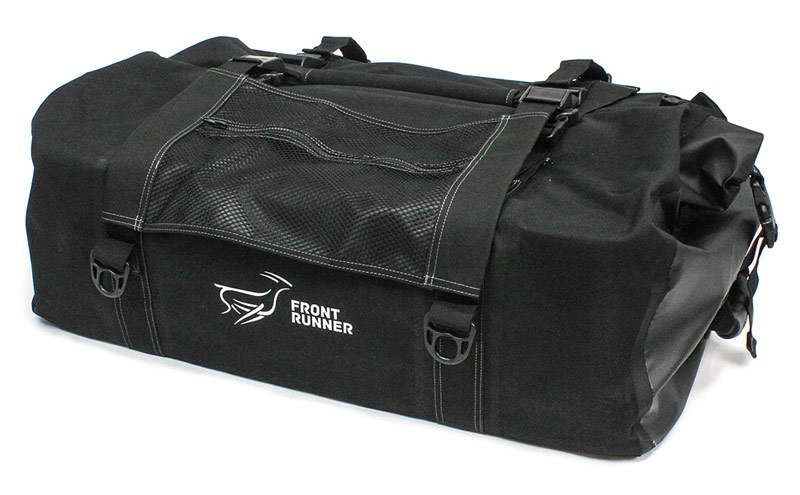
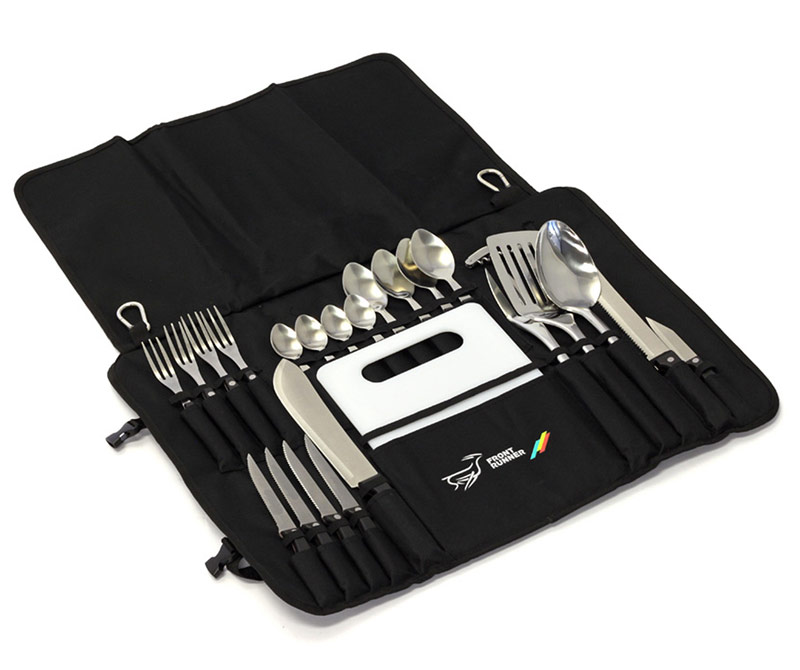
When you go overlanding, you want as much useful gear as you can bring without overburdening yourself. Which is why the roof and trusty roof rack make some prime overhead real estate: it opens up crucial space on the inside of the vehicle. But putting gear outside of your rig means it needs to be able to withstand the elements. In other words, it needs to be tough. Front Runner Outfitters stackable cargo boxes and dry bags, were developed by a group of friends who just happened to be engineers, designers and most importantly, off-roading enthusiasts. They knew what they needed and wanted from their gear, so they went and built it. And today on Huckberry you can get Front Runner Outfitter gear on sale.

cub Pack 19-liter by Front Runner Outfitters$44 $37

Wolf Pack 31-liter by Front Runner Outfitters$48 $40

Monsoon Waterproof Bag 90-liter by Front Runner Outfitters$79 $150

Flat Pack 25-liter by Front Runner Outfitters$36 $30

Stratchits Tie Down Straps by Front Runner Outfitters$36 $30

Camp Kitchen Utensil Set by Front Runner Outfitters$72 $60
More Deals, Served Up Fresh Every Day

Deals, discounts and drops on products you actually care about and want. Curated by the Gear Patrol Editors. Start Saving

Note: Purchasing products through our links may earn us a portion of the sale, which supports our editorial team’s mission. Learn more here.

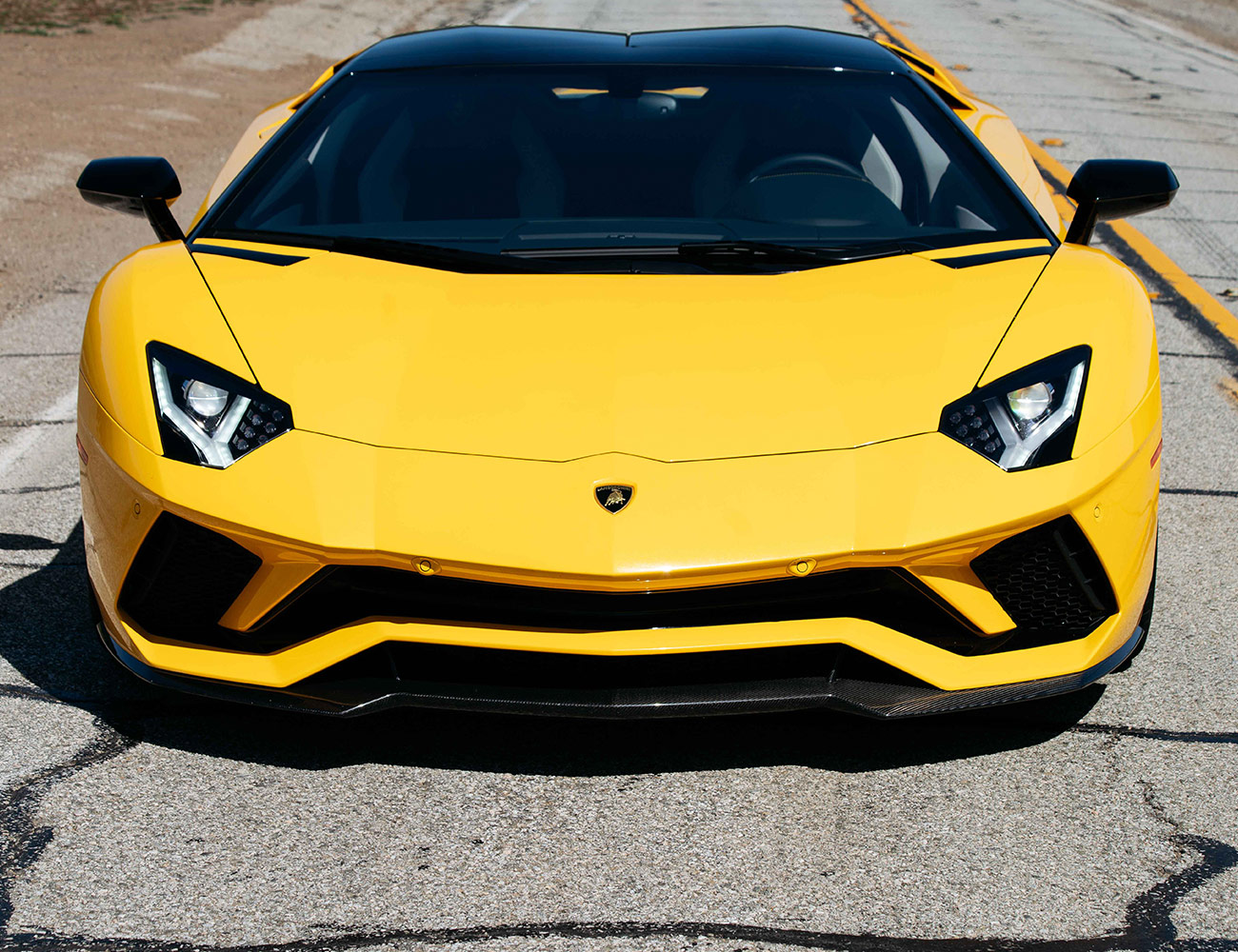
21 Things We Learned After Driving the Lamborghini Aventador S Roadster

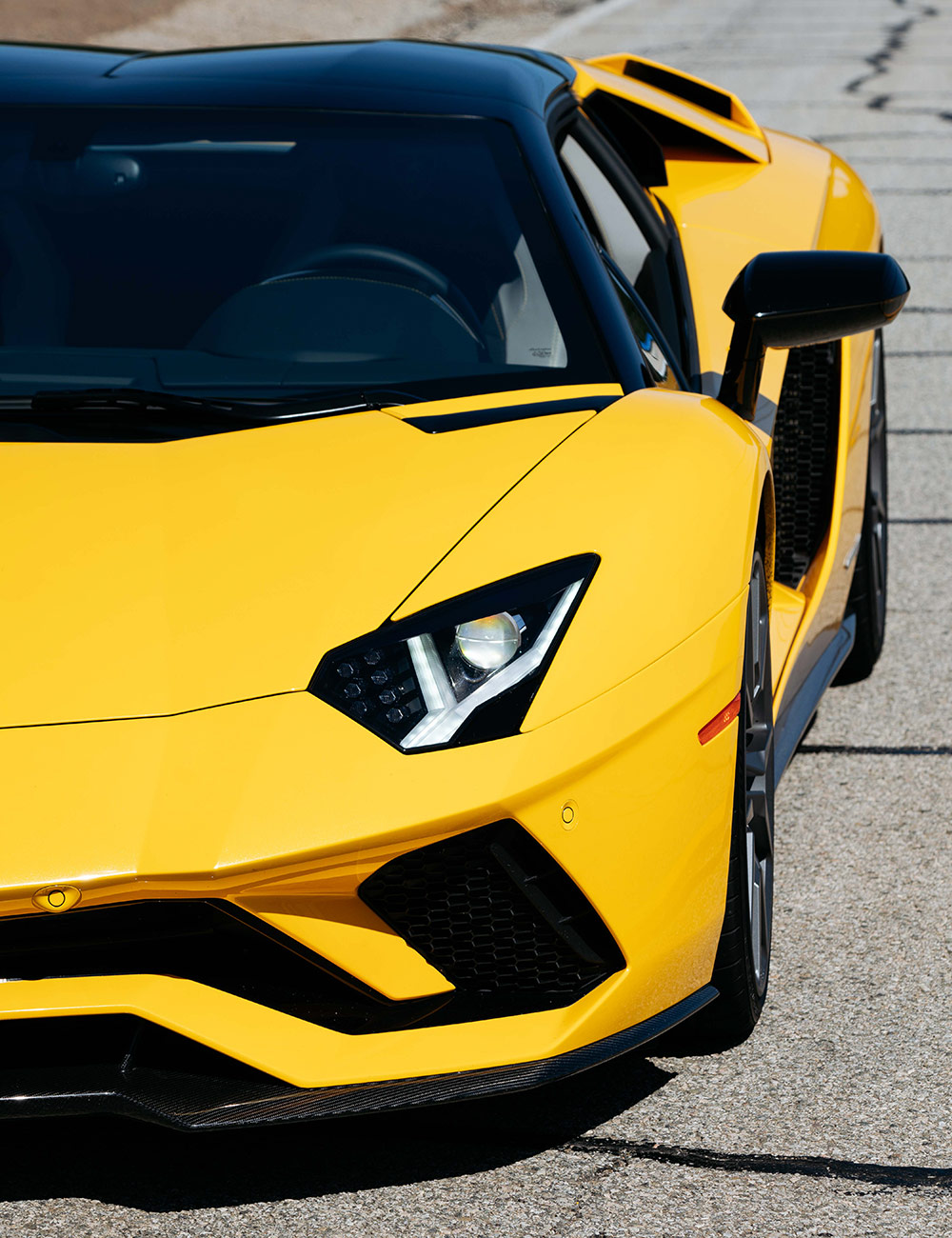
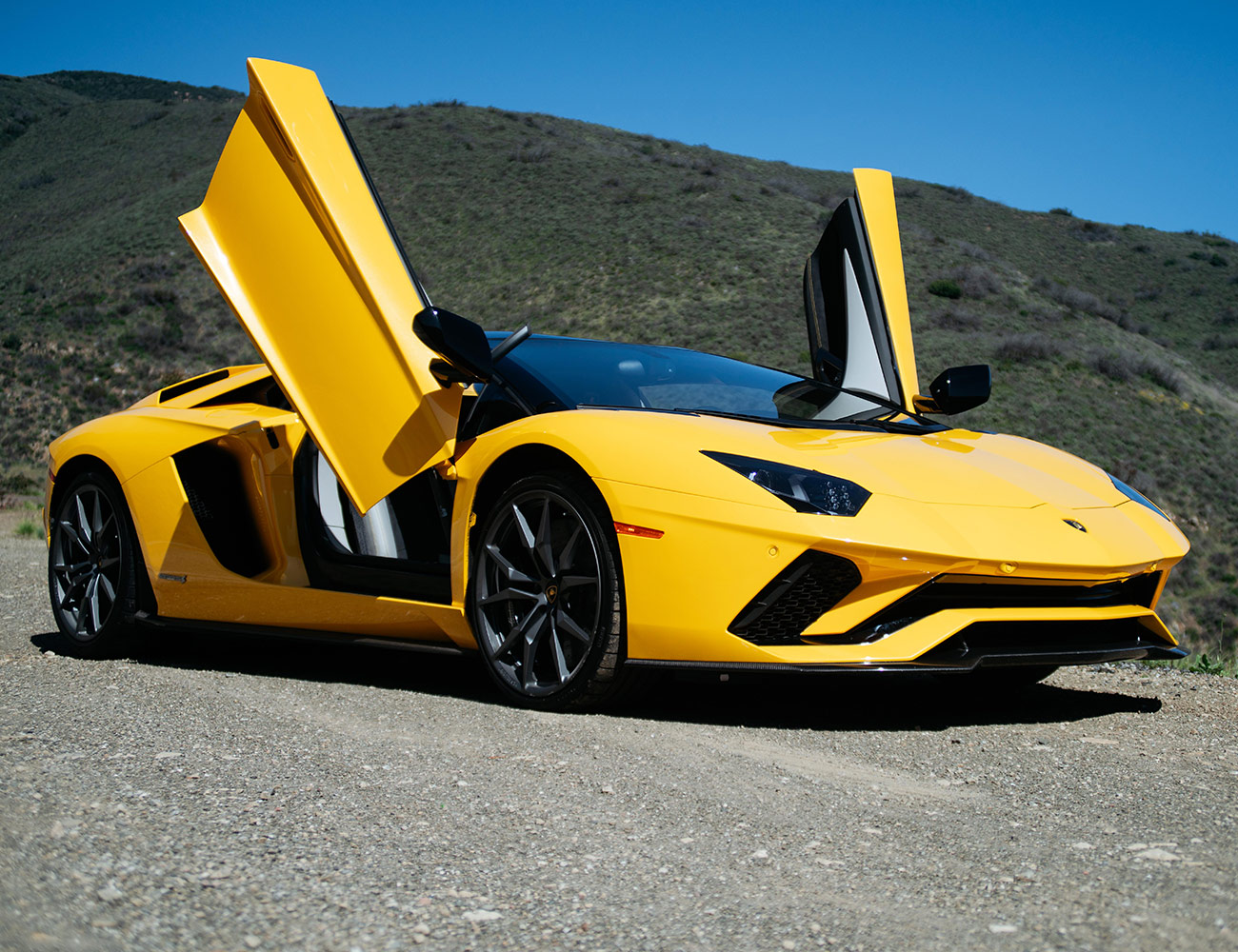
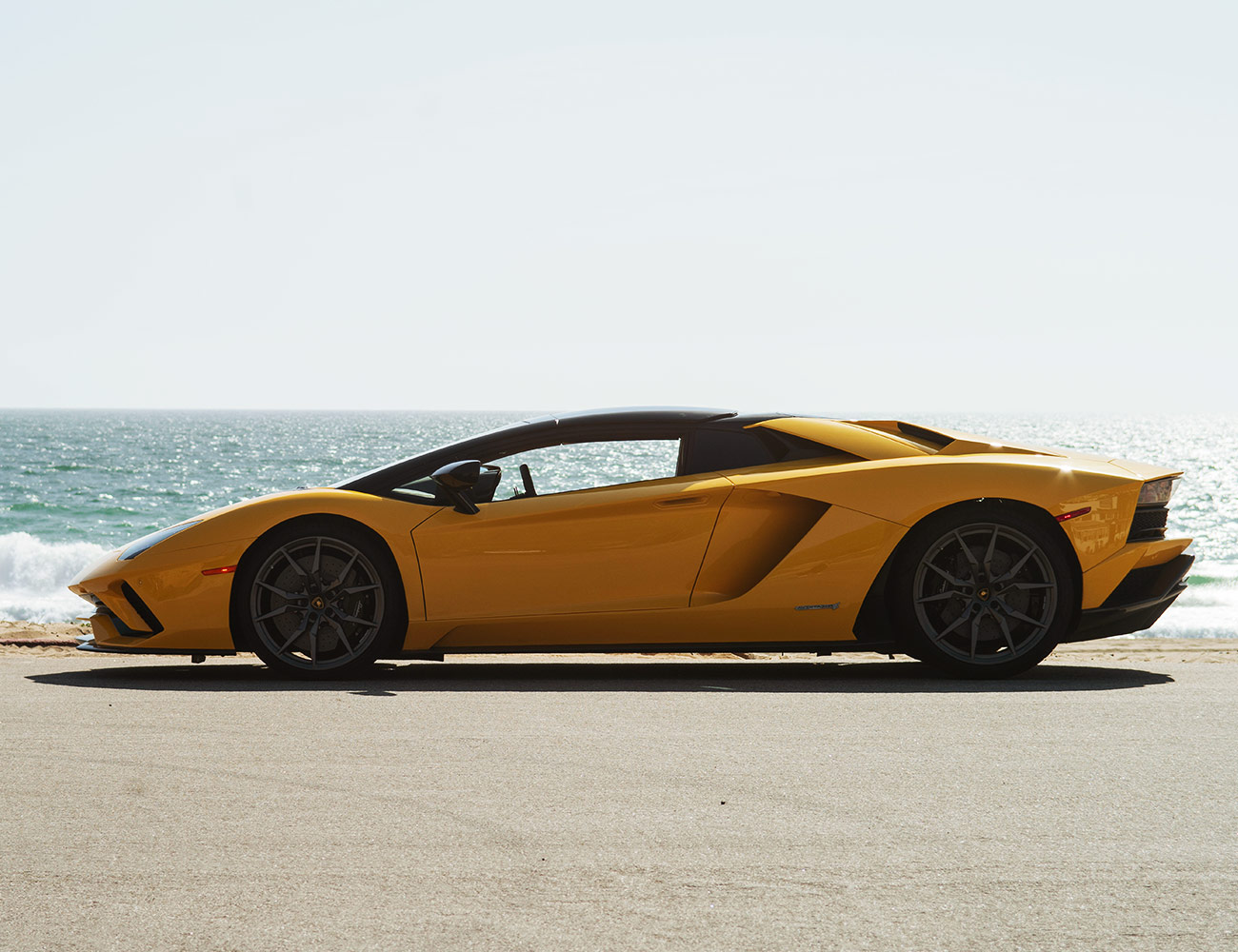
If the Lamborghini Aventador S coupe is akin to an earthbound fighter jet, the Roadster ($460,247) is a cigarette boat for the road. There is nothing like an open cockpit for two located just ahead of a naturally aspirated V12, and there never will be. Nothing can prepare you for slipping behind the wheel of a vehicle like this — you just do your best to comprehend what’s happening and put your faith in whoever designed the damn thing. When I did just that, it took all of a few minutes behind the wheel to find that my faith was well placed. On the surface, this car is intimidating as hell, but it doesn’t want to kill you. It just wants to play all day until you’re exhausted. And then do it all again when you’re back on your feet. This is everything we learned about the Lambo.

Crazy and Crazy-Fast

The Lamborghini Aventador S Roadster will do 0-62mph in 3.0 seconds flat and continue on to a top speed of 217 mph with the roof off. It’ll also eat your lunch, mow your lawn and take your sister out to nice dinner, then never call her again.

Smart Suspension

Tar snakes proved to be no match for the active front and rear steering systems. The front adapts to speed and the selected driving mode and becomes more passive, while the rear uses two electromechanical actuators that steer the axle parallel to the front at high speed, which virtually lengthening the wheelbase. The craziest part is you can actually notice it doing its job. That feeling is quite reassuring in a $460,000 car.

Tailwind Tuning

Not just more pretty carbon fiber for the sake of carbon fiber, the rear diffuser reduces drag, generates downforce and amplifies airflow by utilizing vertical fins.

Advanced Braking: Standard

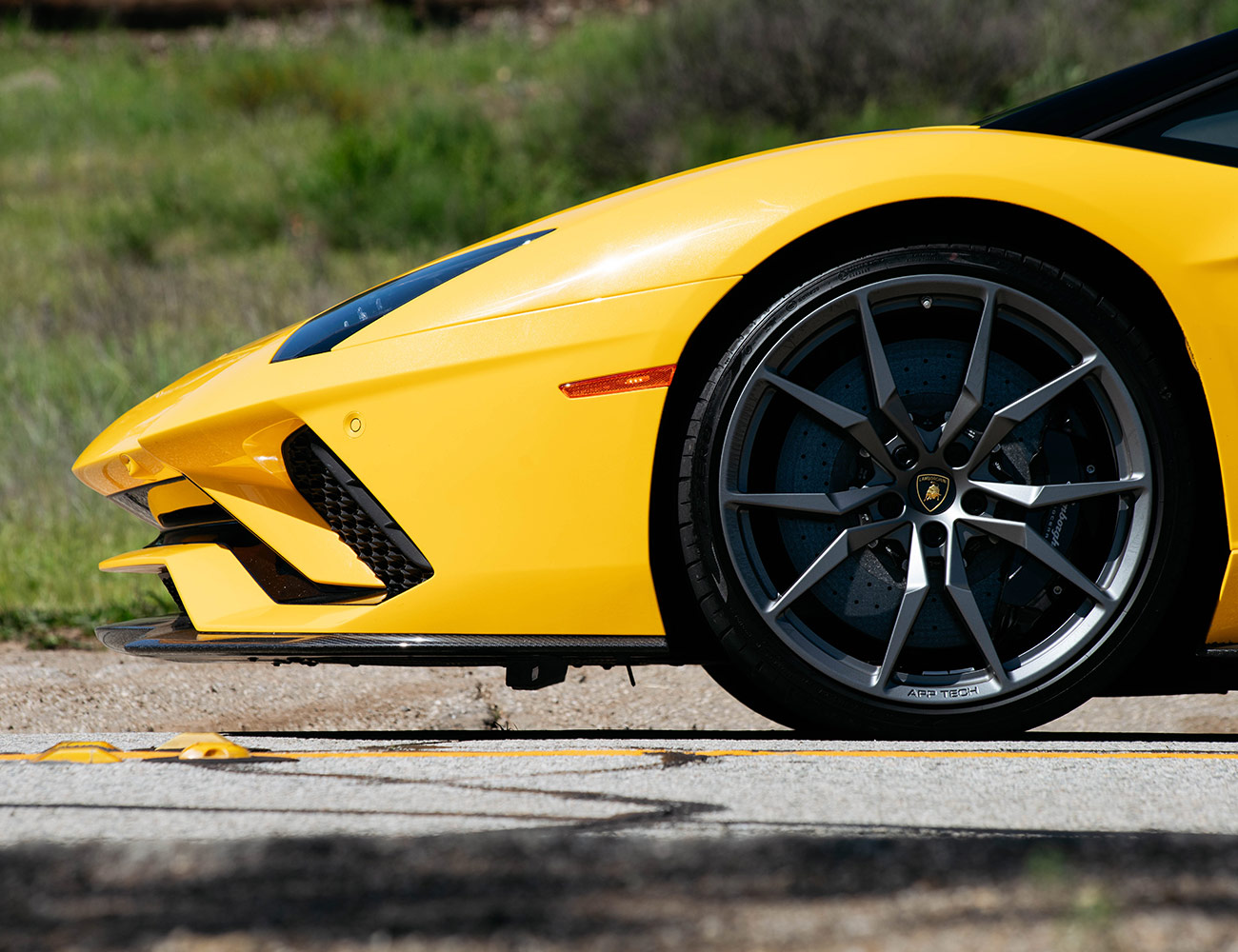
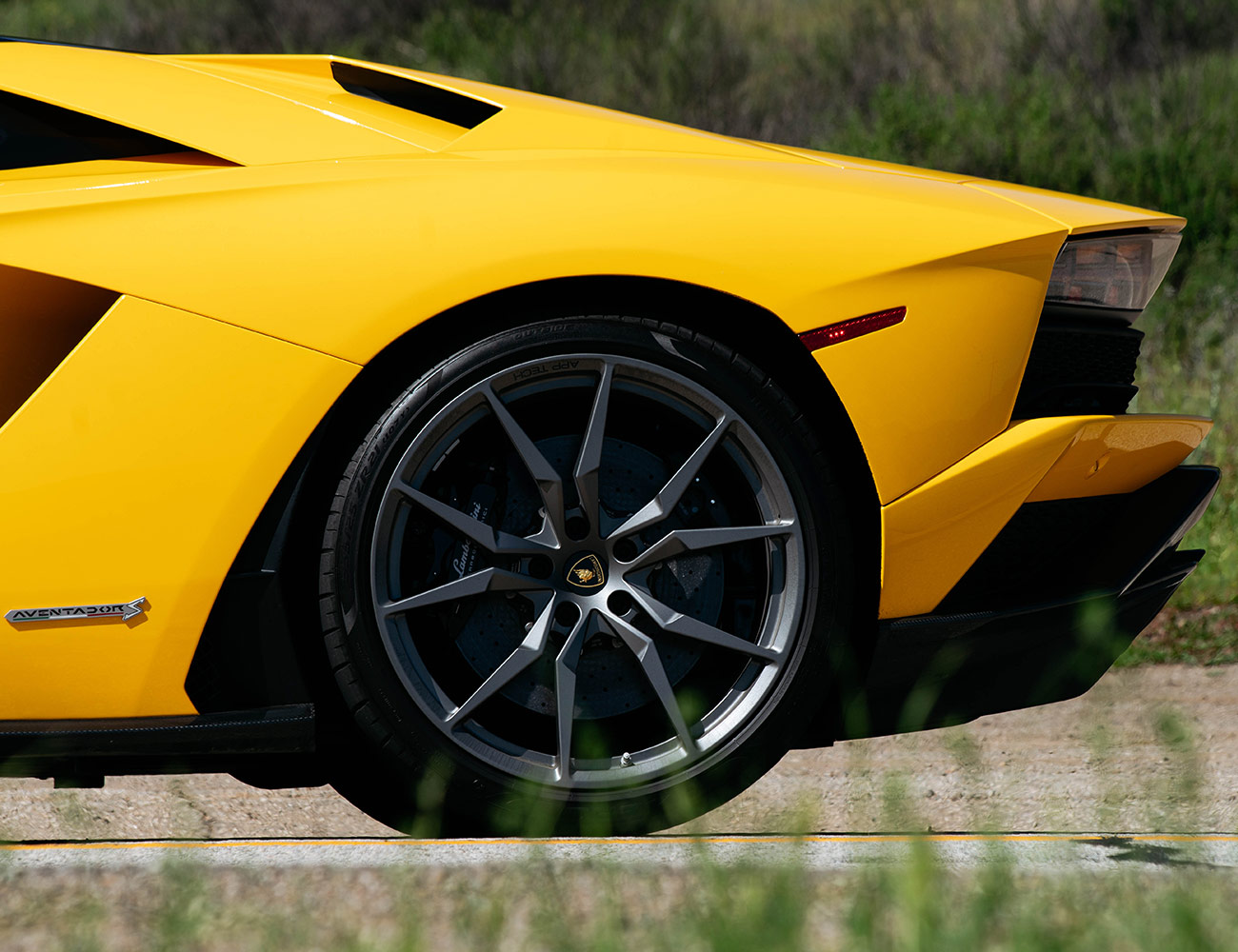
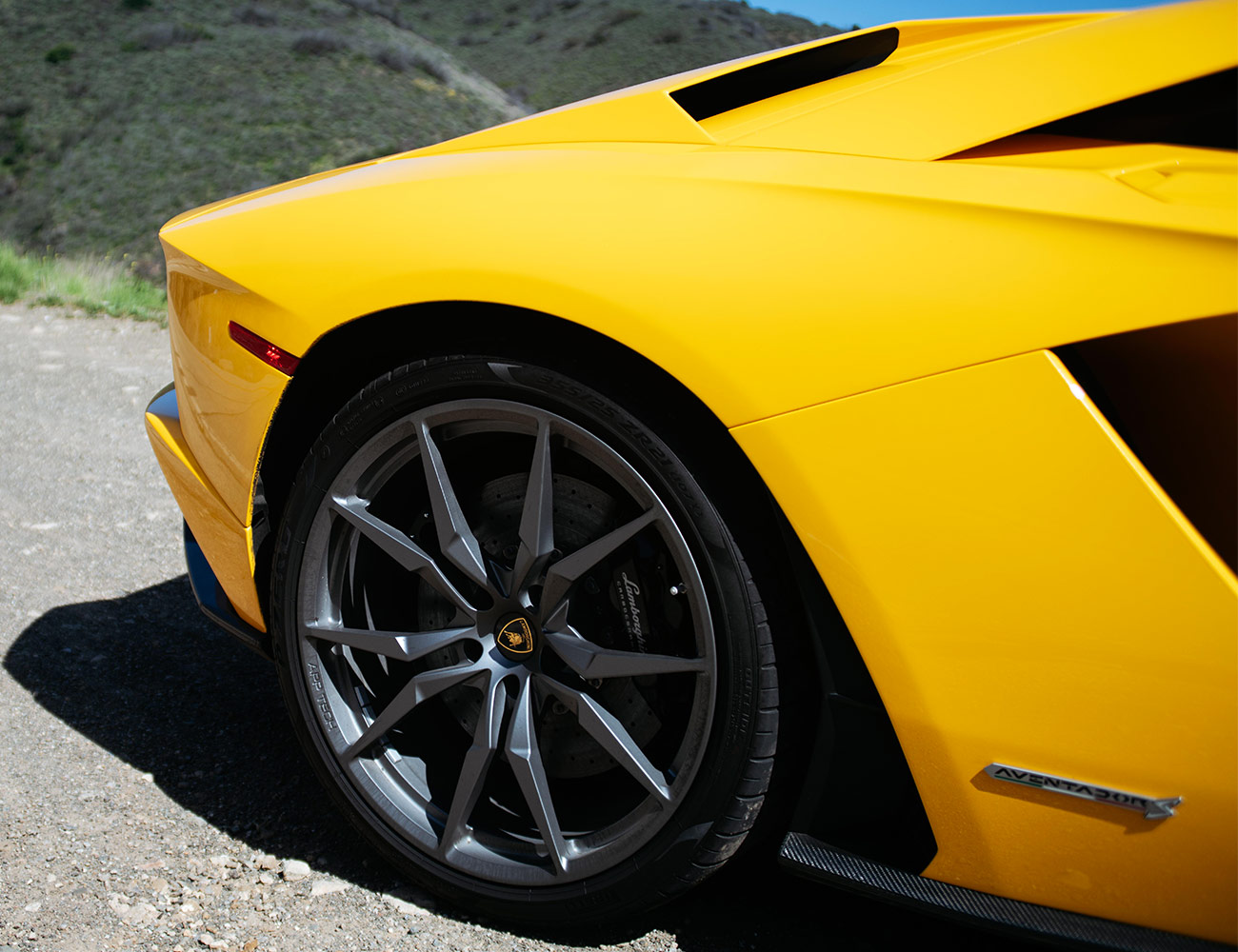
Standard carbon ceramic brakes are tucked away under 20-inch/21-inch front/rear Dione rims wrapped in bespoke Pirelli P Zero tires. They work very, very well.

The Sound Matches the Fury

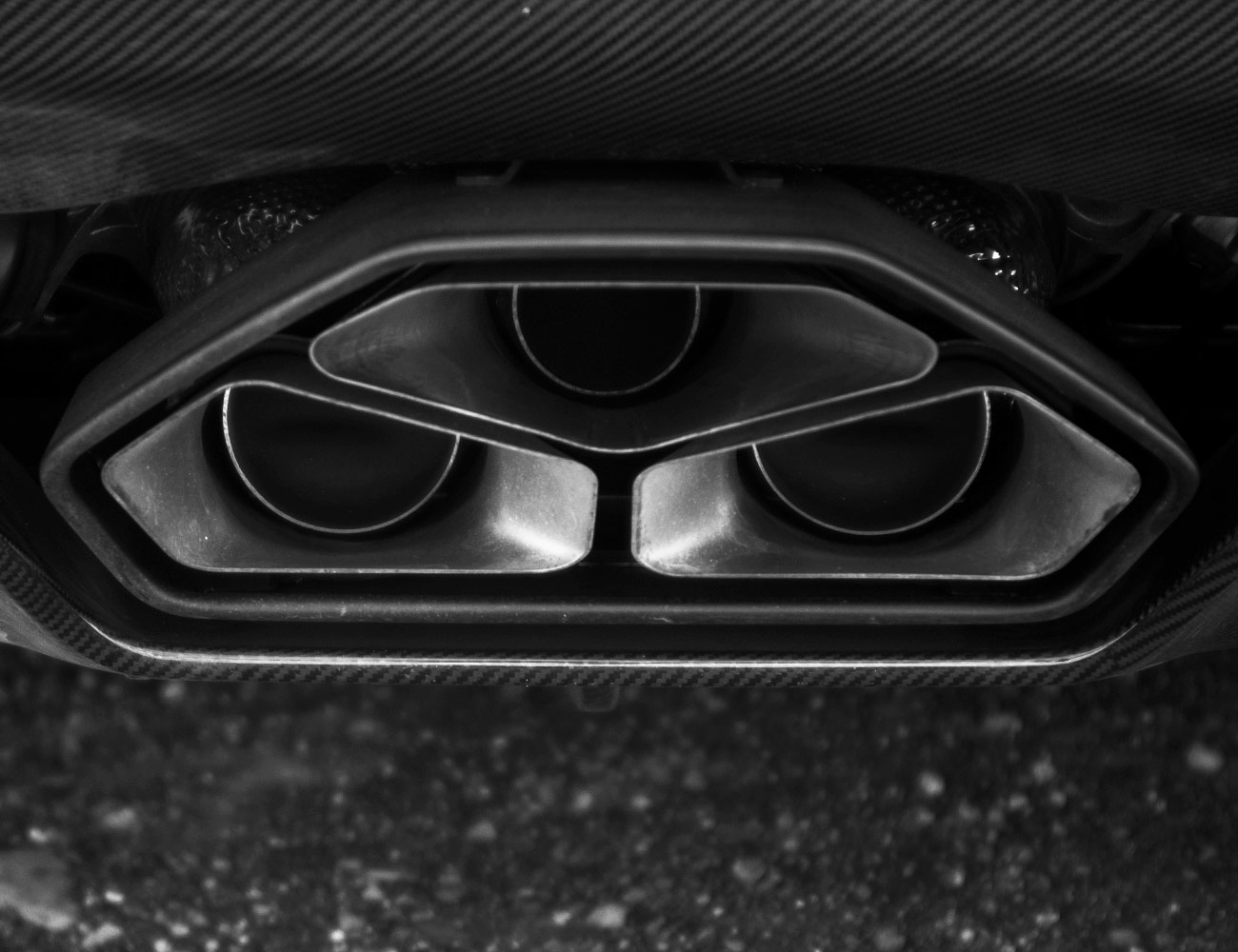
The triangle offense, greater than the Pyramids of Giza: the new triple outlet exhaust of the Aventador S Roadster. Surrounded by carbon fiber and tuned to perfection, these three pipes unleash a most glorious assault on any ears within a few mile radius. 20 percent lighter than its predecessor, this beautiful exhaust system produces the kind of noise usually reserved for on-track competition.

Rear Window

This window at the rear of the cabin is effectively a volume knob for the 6.5-liter naturally aspirated V12 mounted just behind the two seats. Opening it all the way fills the cockpit with the sound of pure motorsport. It is my favorite feature of the car.

No Junk in The Frunk

With the roof panels on there’s enough storage space up in the frunk for two efficiently packed weekend bags. With the panels in their slots, you’re either using the passenger seat for luggage or wearing a single outfit.

Opt for Lower Seats

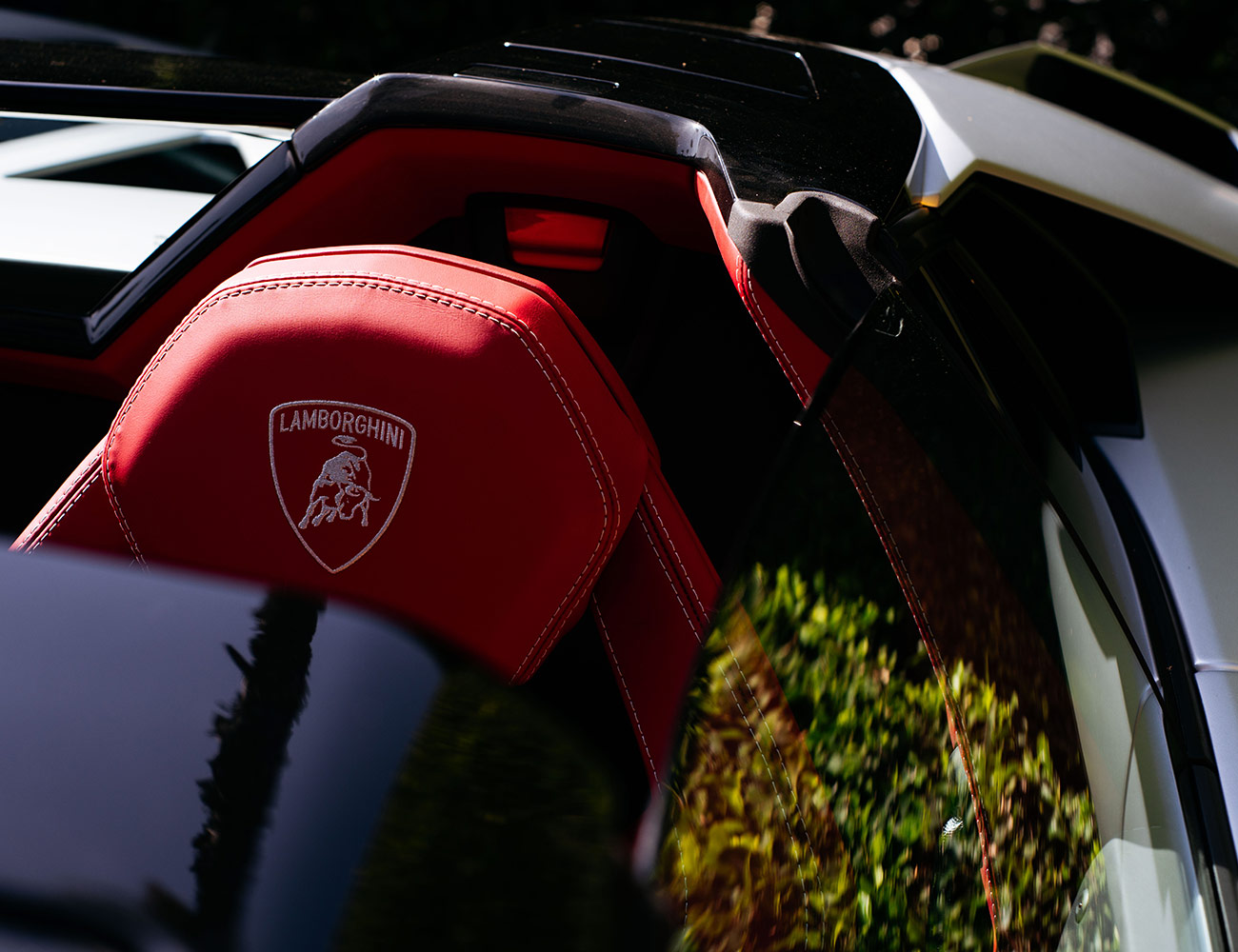
While the seats are crazy comfy, I’d recommend the lower, optional mounting rails available though Lamborghini’s personalization program, Ad Personam, in order to reduce the likelihood of loose gravel or any other road debris connecting with your head.

Going Clear: Optional Engine Cover

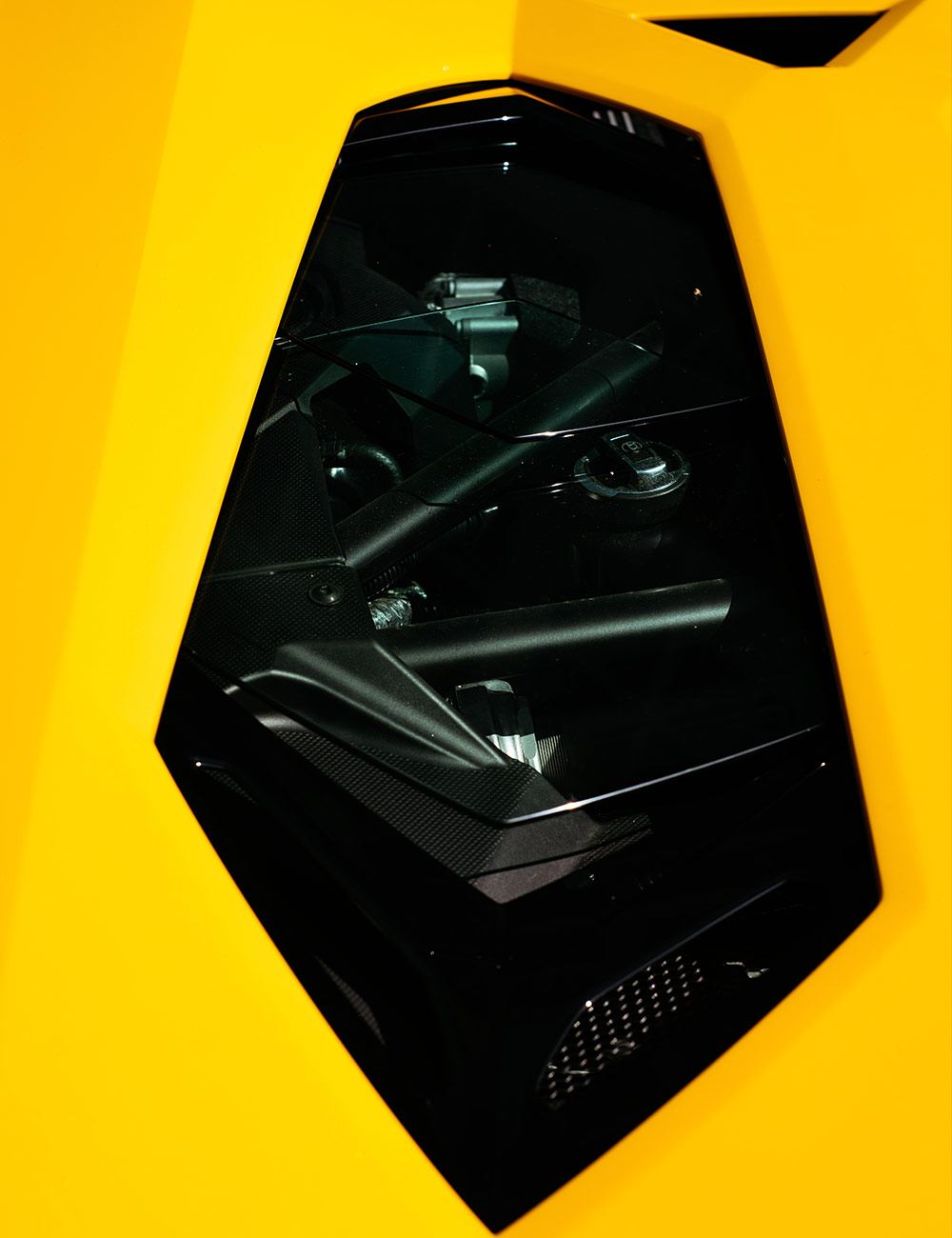
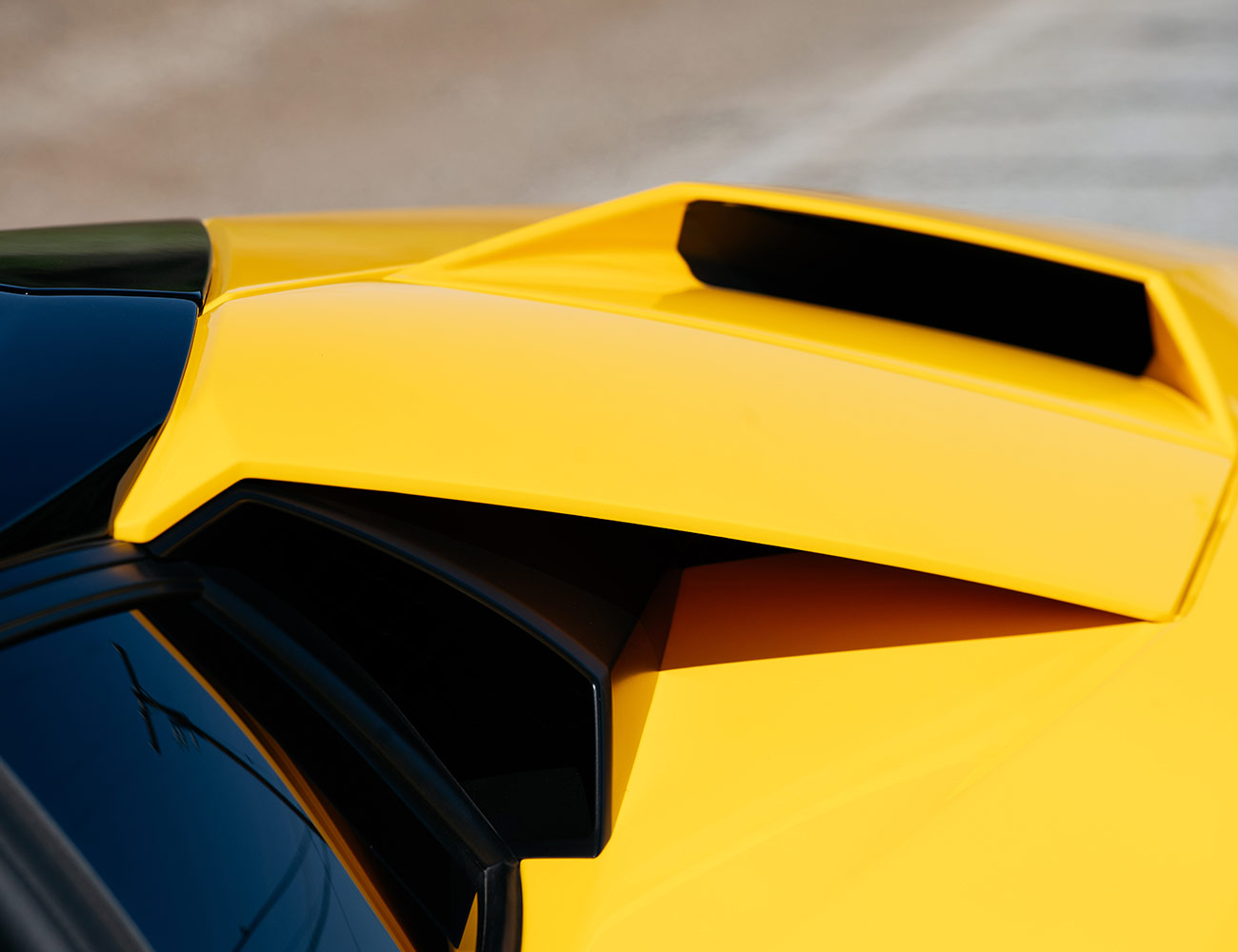
While the standard matte black carbon fiber engine cover blades are quite impressive, you can’t argue with transparent blades that let you have a peek at the power plant hidden below.

Command Center

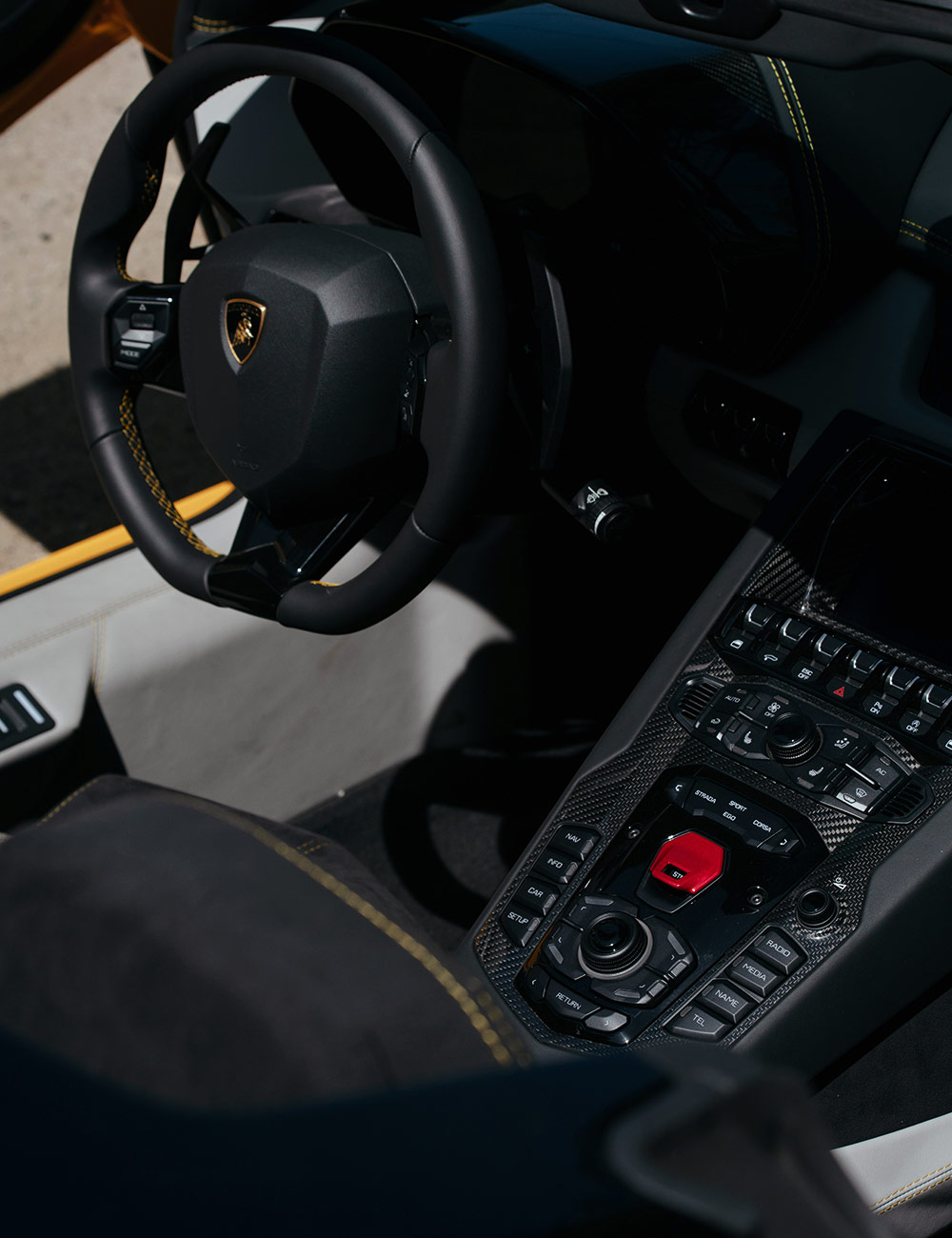
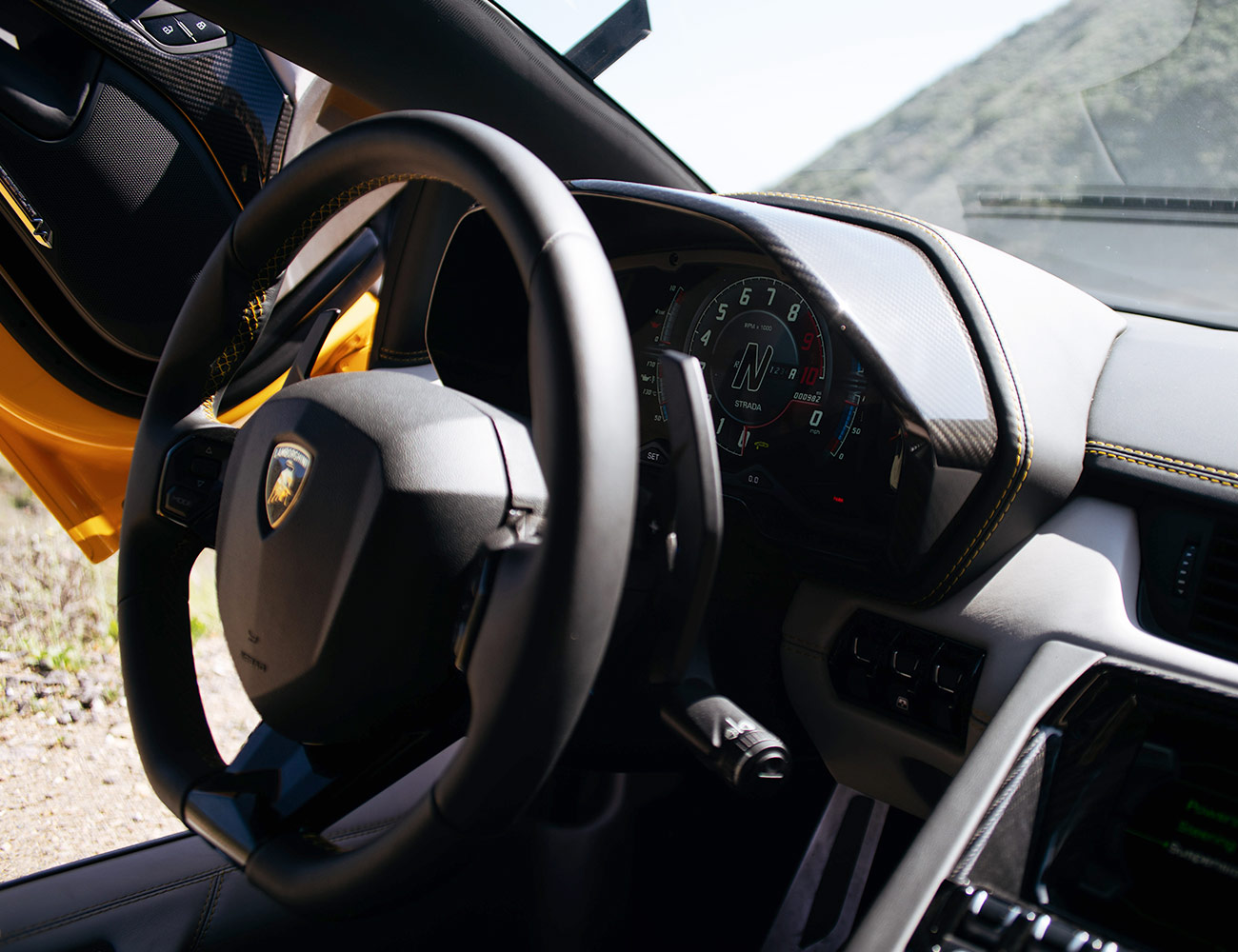
The fighter jet-style center console is your point of access to the LDVA vehicle dynamics system via four selectable driving modes including the customizable “EGO” mode.

Carbon Fiber Monocoque

Extensive use of carbon fiber throughout the vehicle, starting with its entire monocoque shell, keeps the dry weight of the Aventador S Roadster down to 3,583 pounds — just 10 pounds heavier than the coupe.

Up and At ‘Em

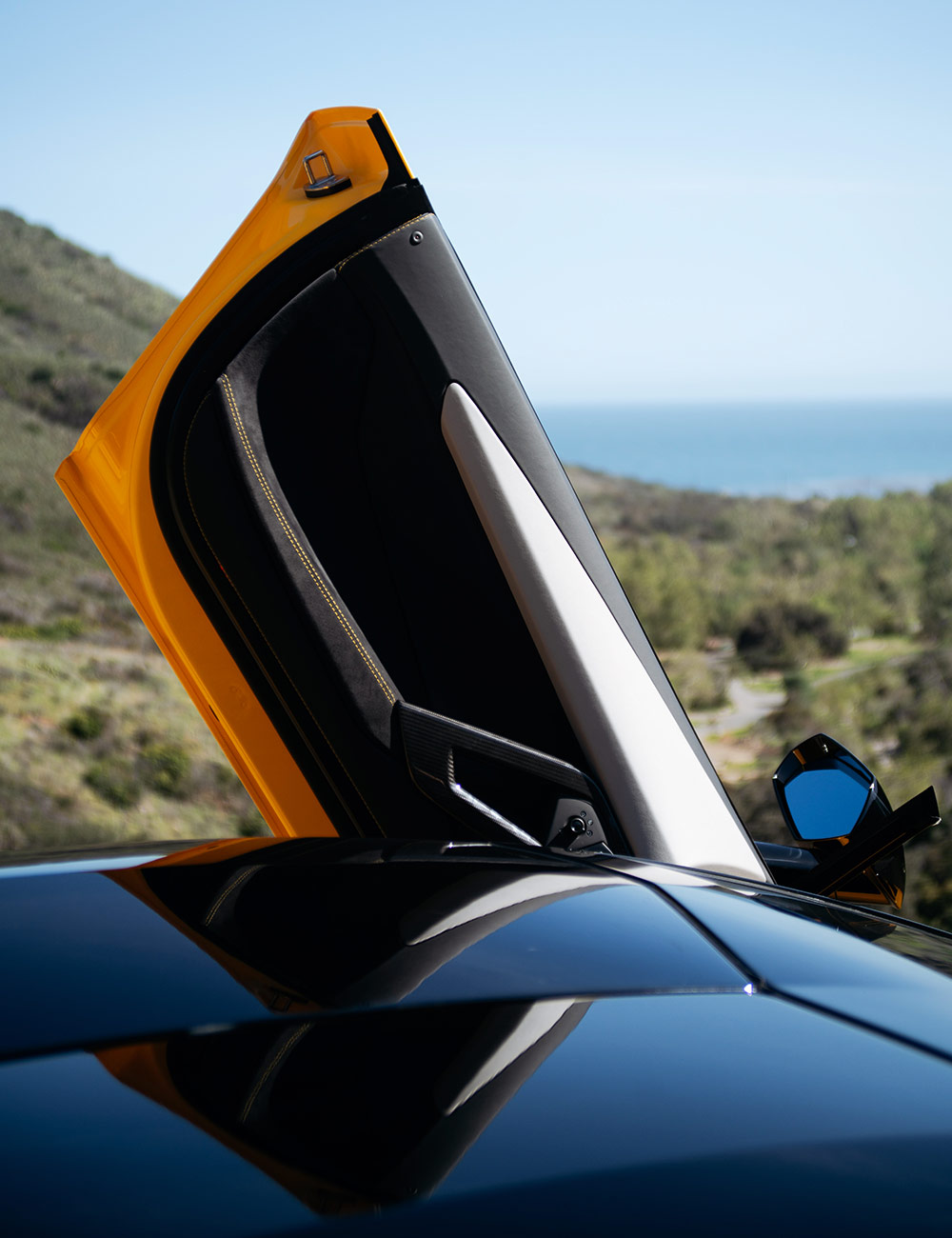
The doors aren’t the only thing that go up on the Aventador S Roadster. With the push of a switch you can raise the front end to give you an extra two inches of ground clearance for a total of seven inches overall.

Removable Roof

If you want to shield yourself from the sun or the million camera phones aimed at you, just grab the lightweight roof panels out of the frunk and pop them on. The convex molding allows for a surprising amount of headroom and the damn things weigh less than 13 pounds. As an added bonus, when installed, they trap all the engine sound let in by the rear window for maximum auditory brain scrambling.

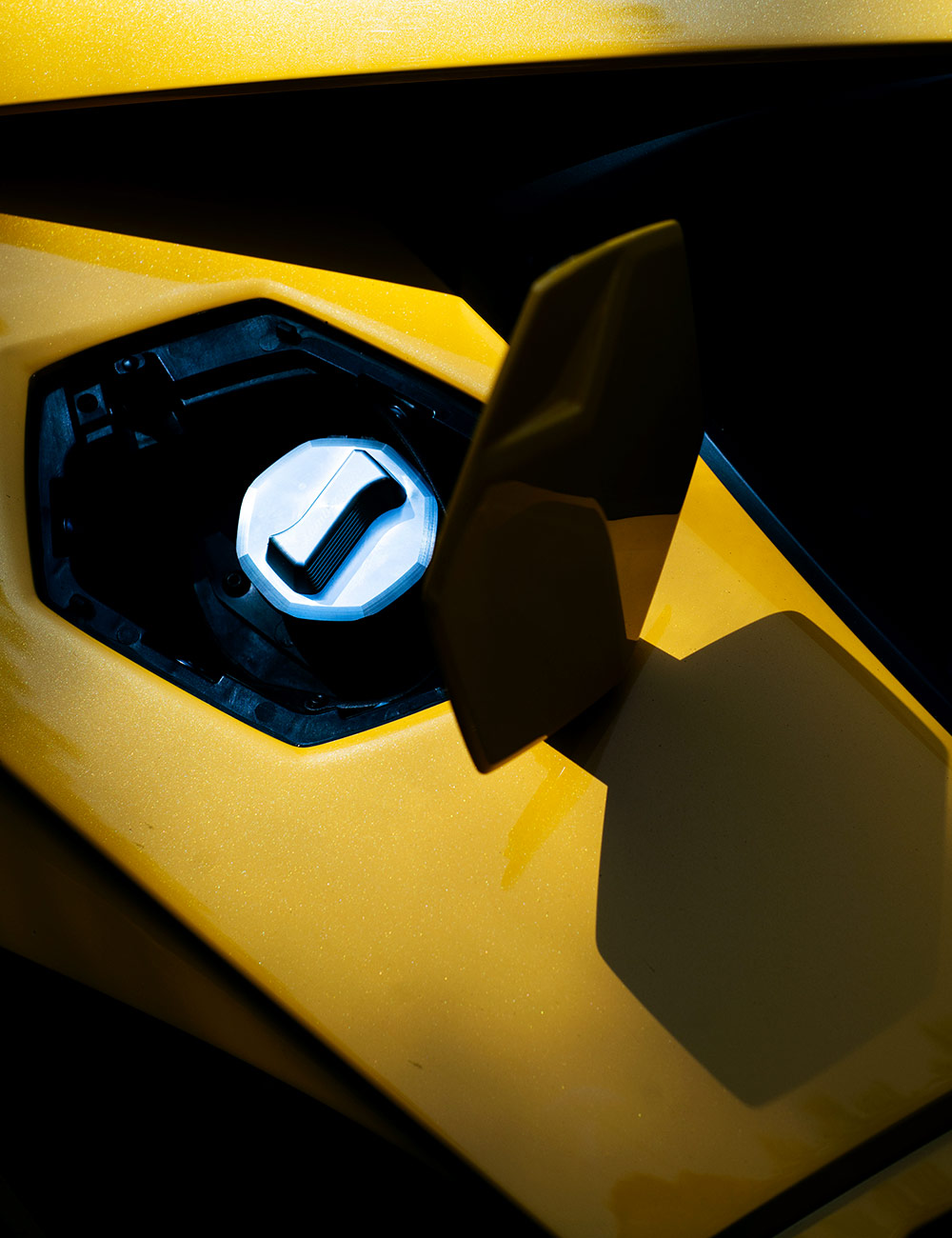
Unbeatable Fuel Door Design

Name a more iconic fuel door and tank cap, I’ll wait.

Four Driving Modes, Including EGO

There are four dynamic driving modes to select from: Strada, Sport, Corsa and the new EGO mode, which allows you to select elements of the other three for a total of 24 possible combinations.

Roadster-Specific Aero

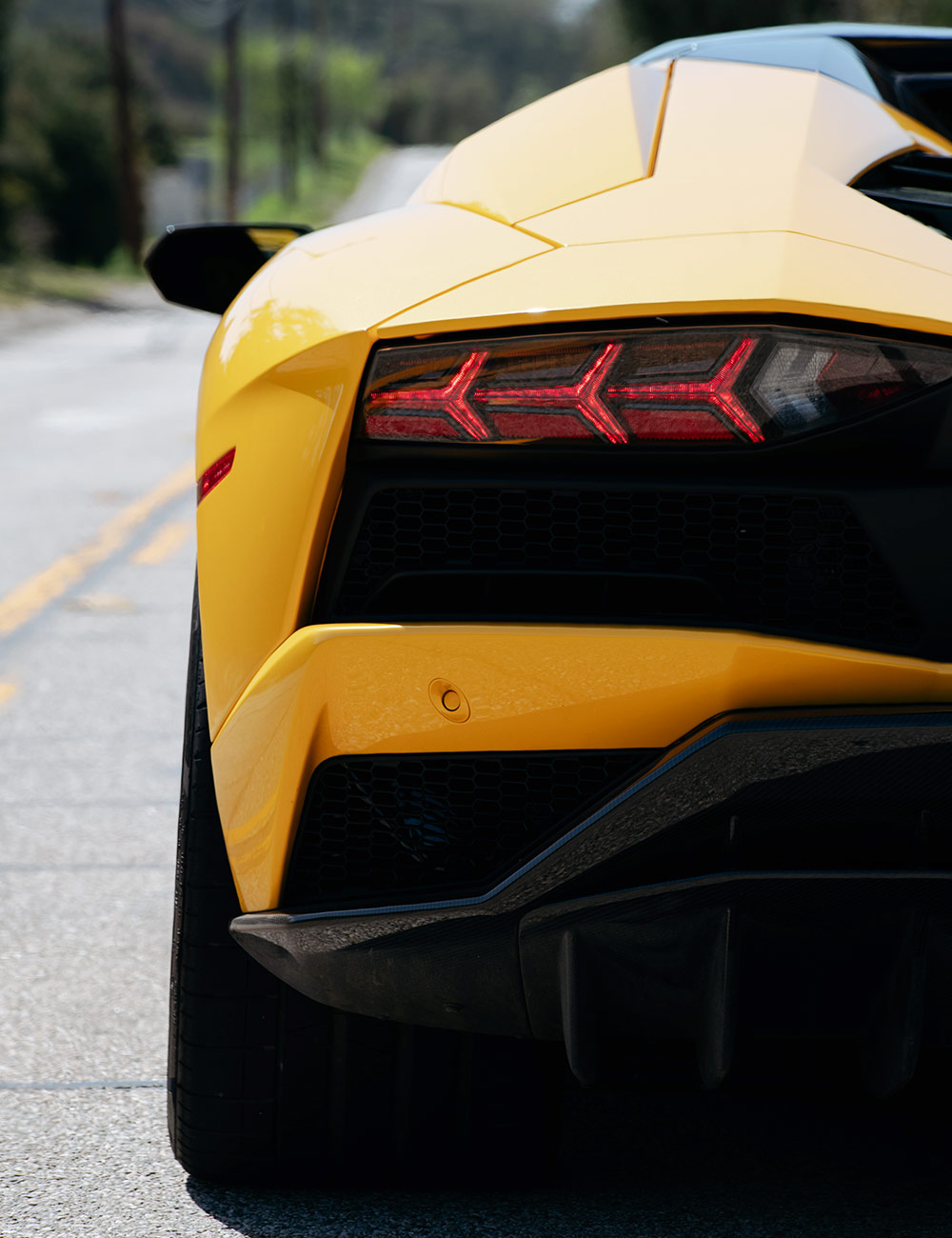
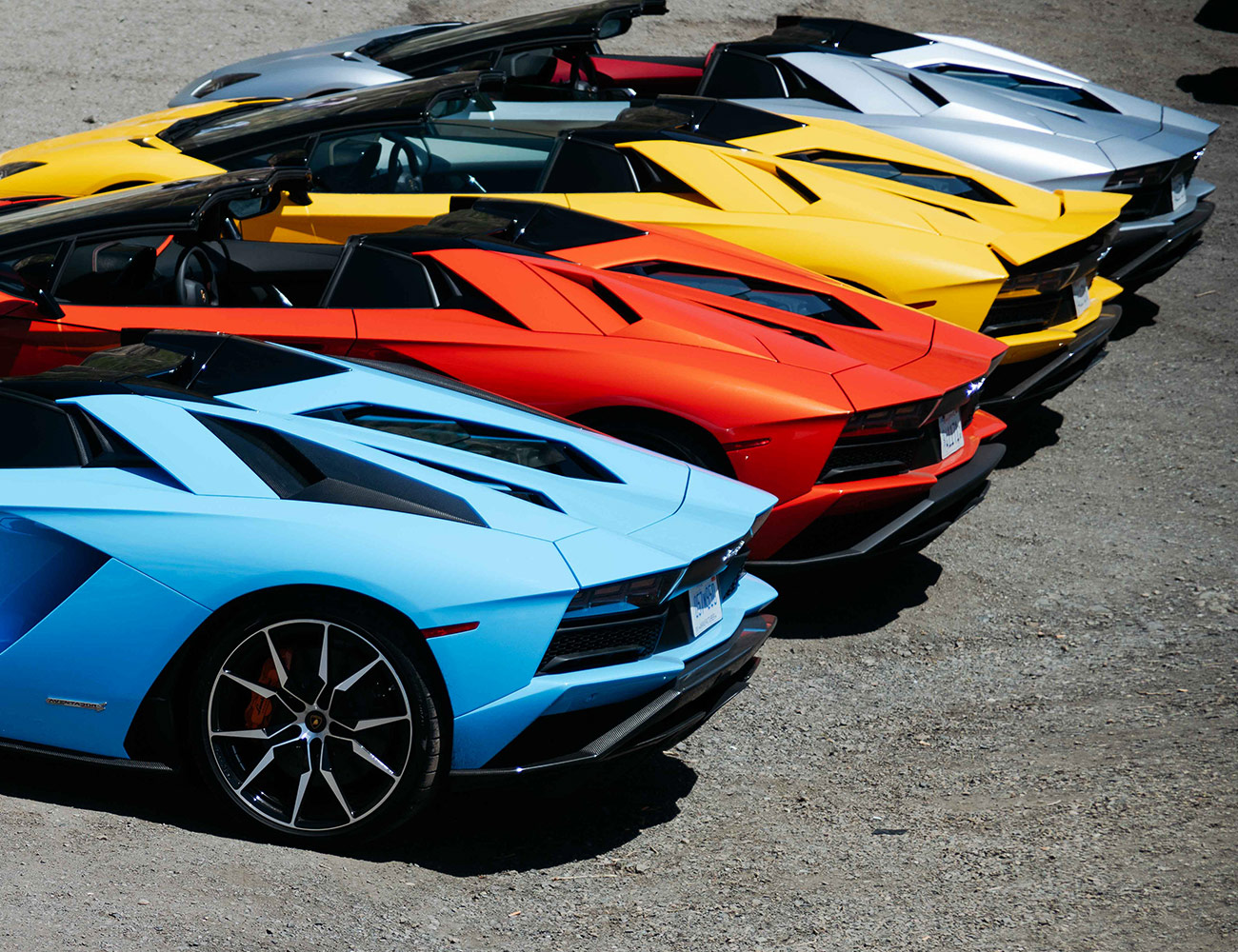
Although appearing similar to the coupe, the styling of the rear of the Aventador S roadster is tailored to the aerodynamic needs created by an open cockpit. Its shape is dictated largely by extensive aero testing. Airflow to the rear radiators has been optimized by use of ducts in each side of the front bumper that reduce aerodynamic interference from the front tires.

Force-Fed V12

Not just a nod to the original Countach, the rear of the Aventador S Roadster is dominated by air-sucking pods that feed cold air to the mid-rear-mounted V12.

Upholstery Is Up to You

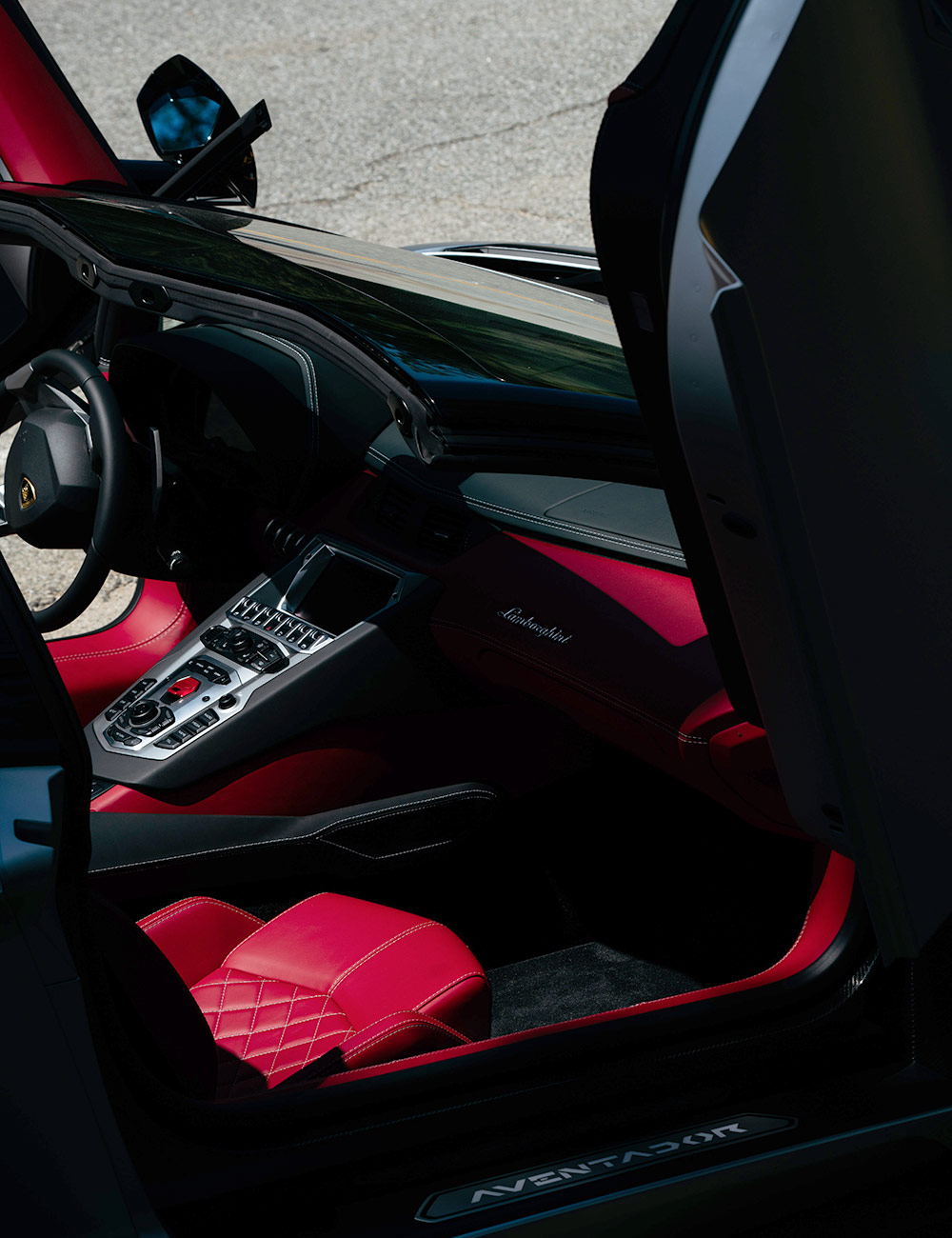
I was quite a fan of the restrained grey/black/Giallo Spica (yellow) color scheme in this car, but being a Lamborghini, buyers get crazy with colors thanks to the Ad Personam program.

Rear-Steer

I wasn’t sold on rear-wheel steering until experiencing it in this car. The Aventador S Roadster is not small, but its wheelbase seemed to shrink while weaving around tight corners as the system more than did it’s job, offering outstanding grip and making placement easy.

Paddle Yourself

A very satisfying click denotes each gear change executed by the seven-speed single-clutch automatic gearbox. While it’s capable of ripping off 50 millisecond shifts at full tilt in “Corsa” mode, driving the Avendator S Roadster like a manual — removing your foot from the throttle during changes — makes for a much smoother and enjoyable driving experience.

All Wheels Go

One car, many ways to enjoy it. Strada mode utilizes a 40/60 front/rear torque split and makes the car as easy to drive as any generic compact. Sport mode allows up to 90 percent of torque to go to the rear wheels, making things rather entertaining in the oversteer department. I found it to be the sweet spot for the suspension and steering as well. Select Corsa for track use: it uses a maximum 20/80 torque split to achieve optimal balance and performance.

Specs:

Engine: 6.5-liter V12
Transmission: seven-speed automatic; all-wheel drive
Horsepower:
Torque: 507 lb-ft
0-60: 3.0 seconds
Top Speed: 217 mph
MSRP: $460,247

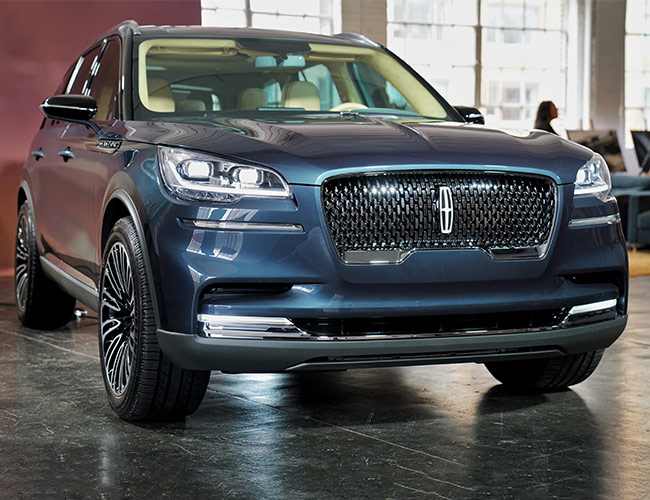
More Design Analysis: Lincoln’s Gorgeous New Aviator

Lincoln Design Director David Woodhouse, during a walk-around preview of the new SUV ahead of the auto show, cited the Hughes H-1 Racer as a particular influence. Read the Story

4 Wildly Impractical Vehicles I Want to Buy Right Now With My $10,000 Budget

Editor’s Note: We love scouring the internet for reasons to spend money we don’t have on cars we daydream about owning, and these are our picks this week. All prices listed are bid amounts at the time of publishing.

In the most regrettable way, I’m back in the market for a car. Suffice it say that flash floods, deceptive standing water and a hurried morning commute do not mix. (More specifically, buckets of rainwater and the engine of my now dead 2002 BMW 325i.) Could I have taken a different route? Taken my time? Not assumed it was a fordable depth for a sports sedan? Yes, yes and… duh. Hence, “regrettable.”

So this week’s Found is, admittedly, a bit selfish. The best catharsis I can manage right now is to share my next-car search. In the long run, these are wildly impractical, but at the moment seem fun enough actually to pull the trigger on. Would any of these turn into their own source of regret after, say, a month of daily use? Perhaps, but they’re pretty tempting right now.

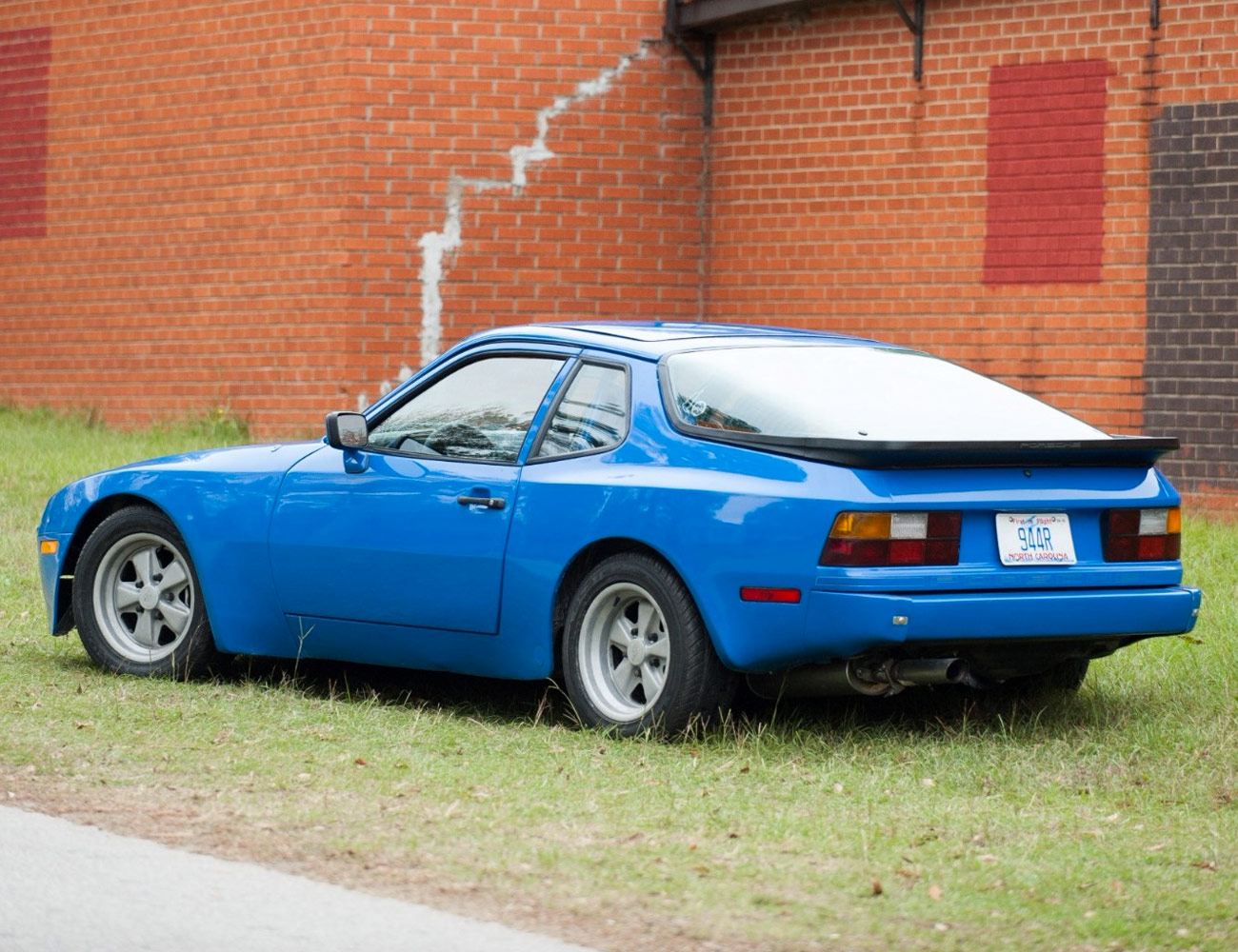
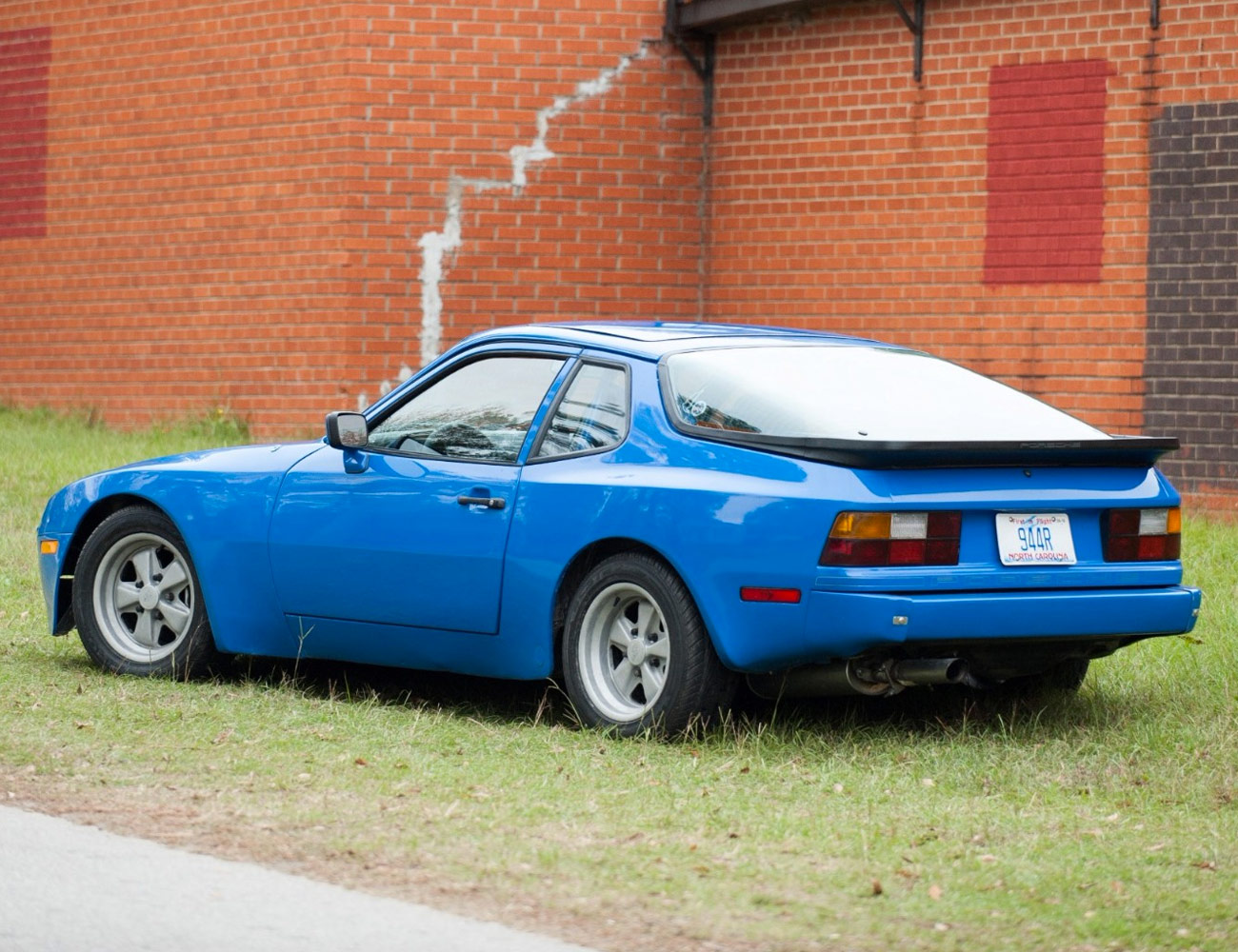
Modified 1984 Porsche 944

Mileage: 29,000 (TMU)
Location: New Hill, North Carolina

What I like: Most of the car is refurbished, replaced or rebuilt to look like what you’d get if Porsche had built an ‘R’ version of the 944 (which they should have done). It reminds me of the Cayman GT4 — one of my favorite cars of all time.
From the seller: “This 1984 Porsche 944 was purchased by the seller five years ago and subsequently built into a street-legal track car. The 2.5-liter inline-four was rebuilt to stock specs and sends power through a torque tube to a five-speed manual transaxle. A new clutch was also installed, much of the suspension was rebuilt, the brakes were gone through, a repaint in a custom color was conducted, and a four-point roll bar was installed.”
What to look out for: Like you should for any car this age, keep an eye out for bad seals and leaking fluids. In regards to the 944 specifically, there have been a few recalls worth noting.

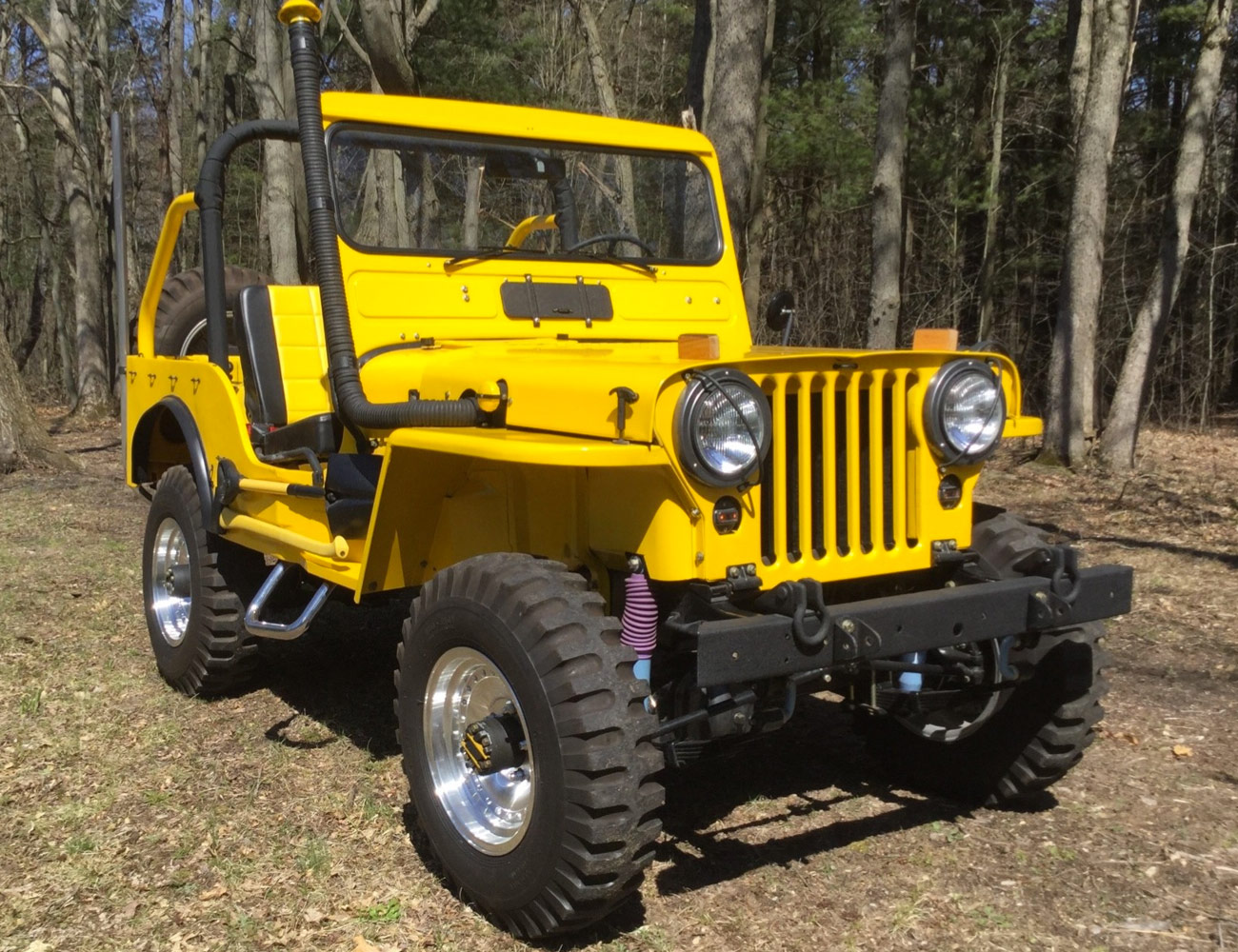
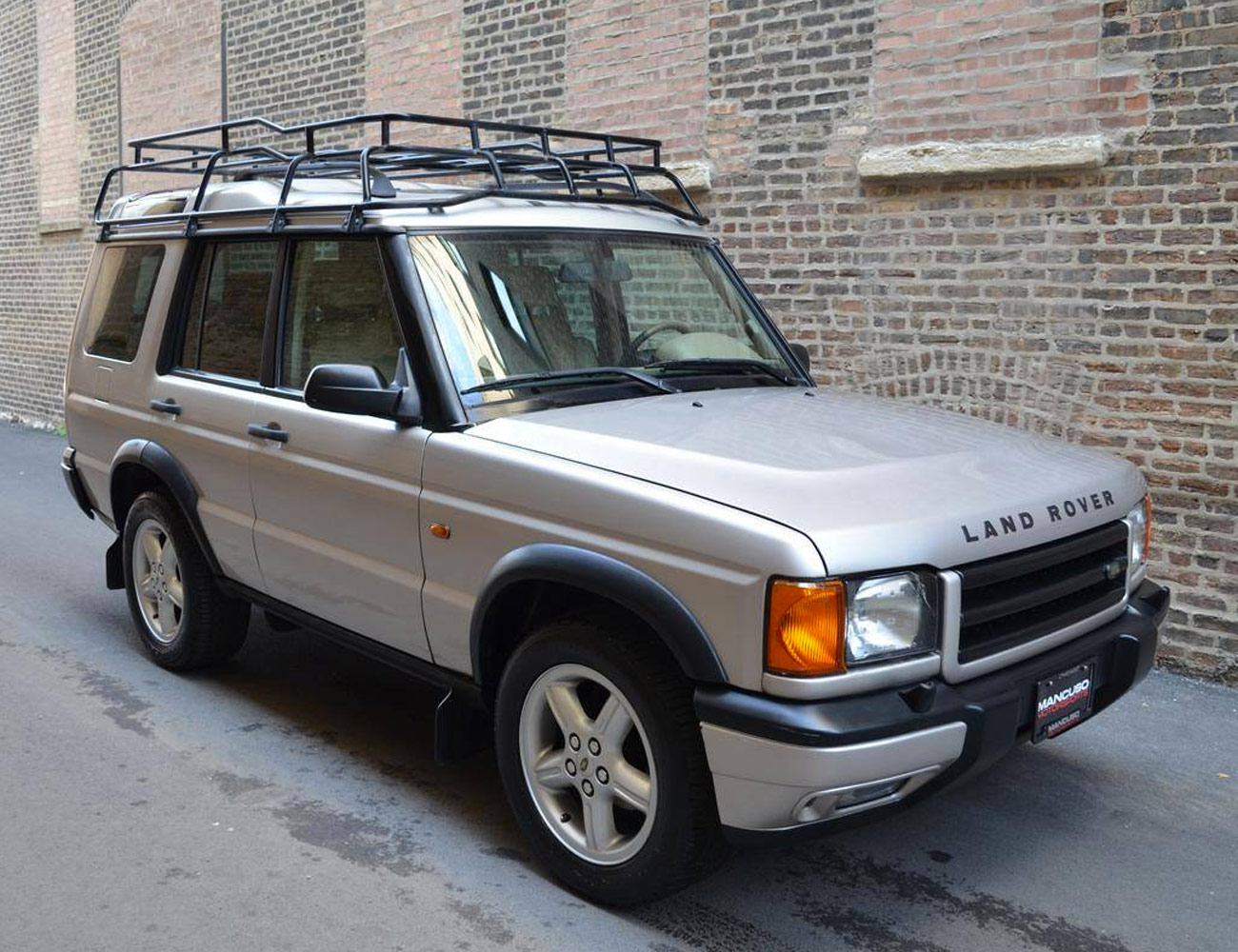
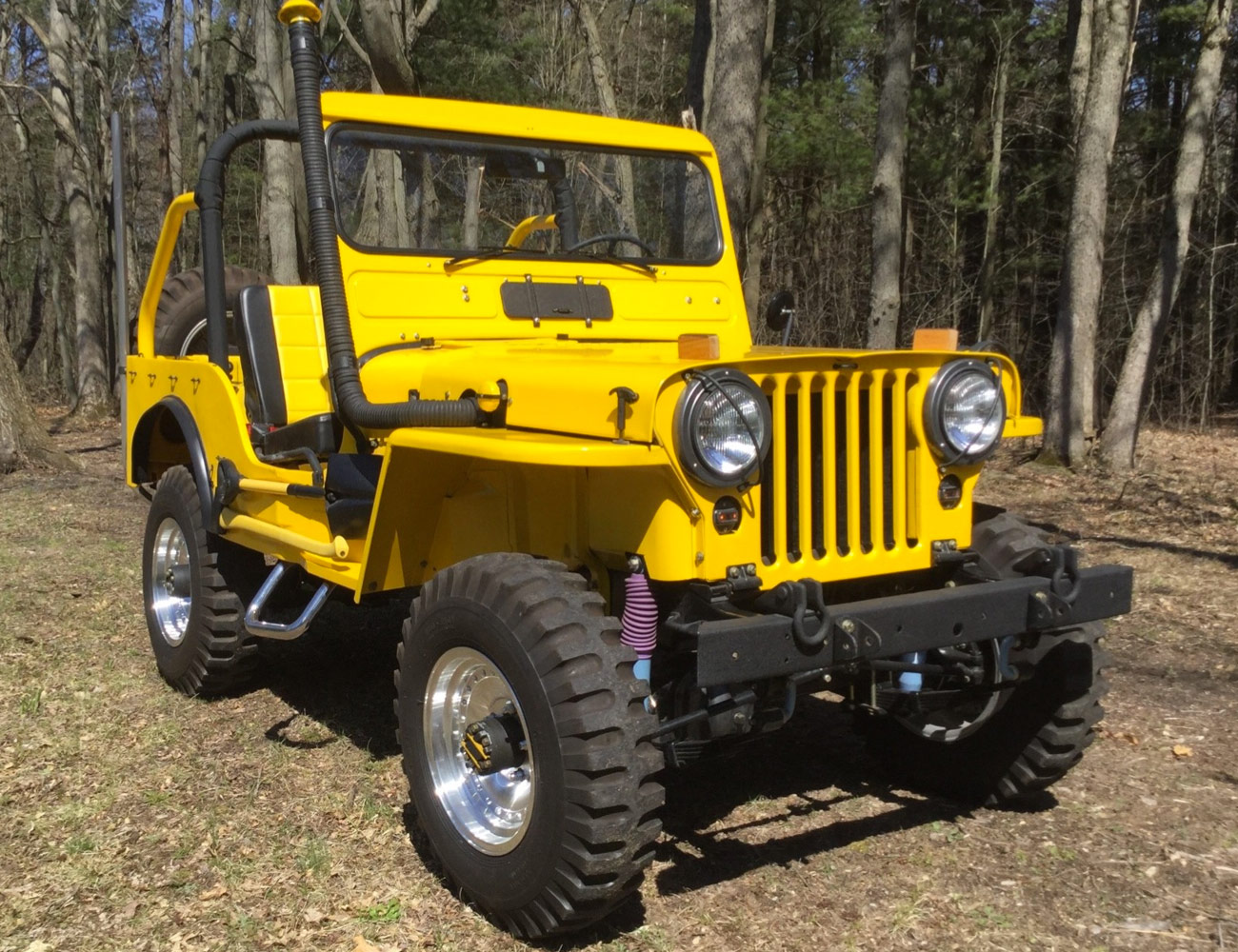
1952 Willys M38

Mileage: 462 (TMU)
Location: Comstock Park, Michigan

What I like: I’ve recently come to admire snorkels.
From the seller: “This 1952 Willys M38 was purchased as a military-spec example by the seller in 1996 and subsequently underwent extensive refurbishment to its exterior sheet metal, tub, frame, brakes, steering, exhaust and 24-volt electrical system. Modifications include a new old-stock military deep-water fording kit as well as modern gauges, lighting, and wheels.”
What to look out for: Typically, the electrical systems on old Willys are the main headache, but this particular lil’ guy under went a full refurbishment, including an electrical system swap.

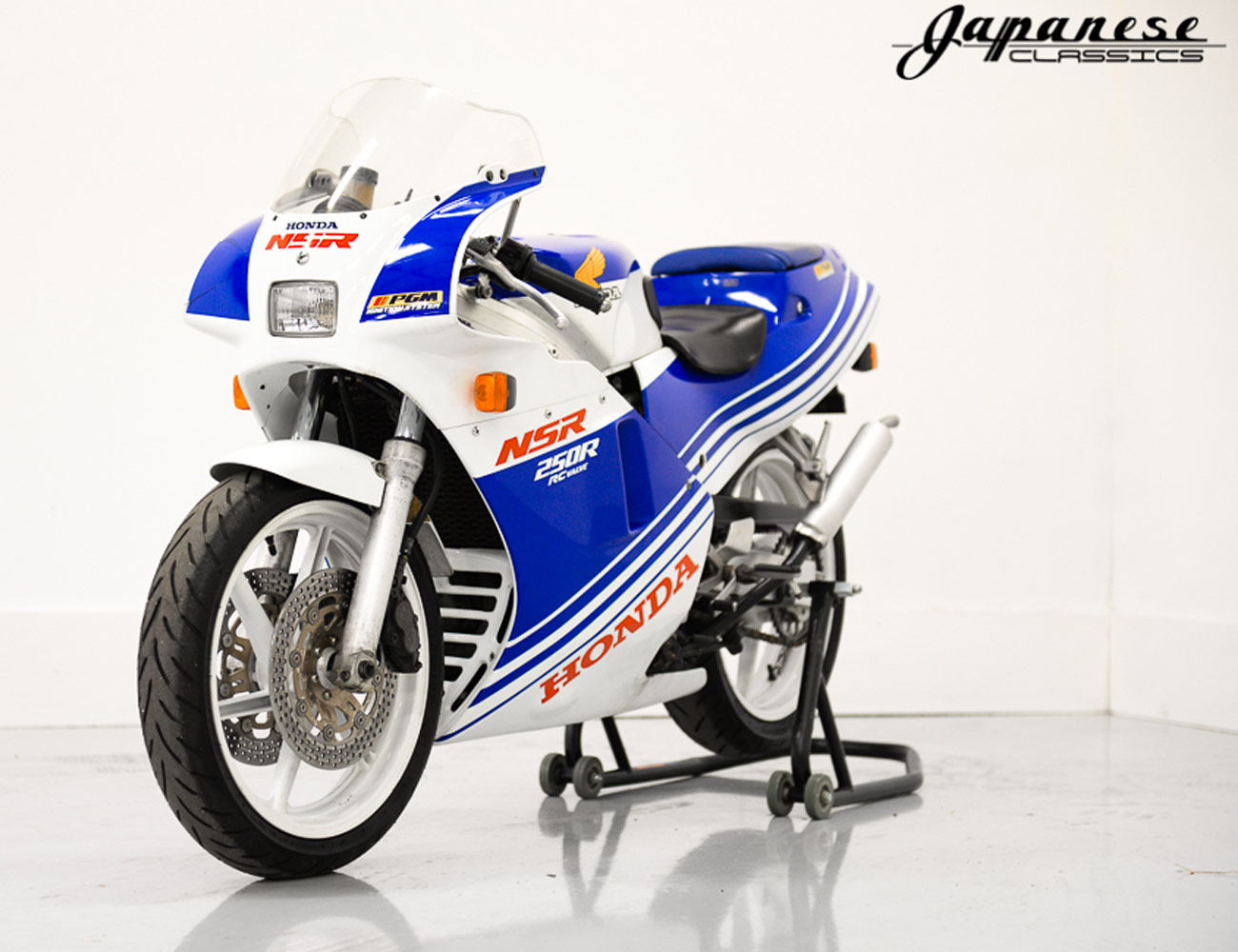
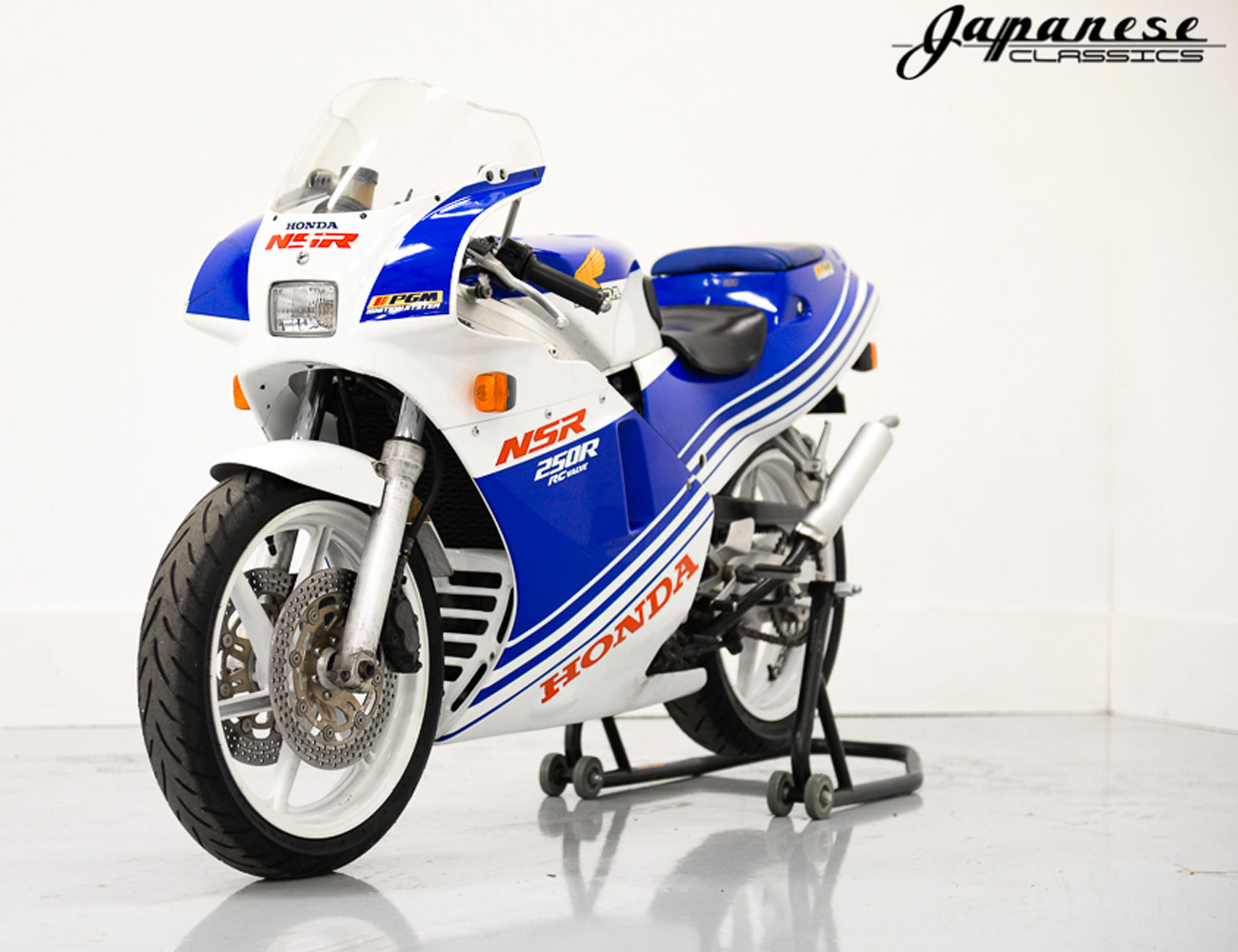
1989 Honda NSR250R

Mileage: 7,000
Location: Richmond, Virginia

What I like: The late-’80s styling is hard to resist, even if it is a two-stroke — I’d be mixing my own gas everytime I fill up. Still, a 249cc 90° V-twin with an 11,500 rpm redline is a pretty fantastic and rare sound this side of the pond.
From the seller: “The NSR is powered by a 249cc 90° V-twin liquid-cooled two-stroke with crankcase reed valve induction via twin naturally aspirated carburetors. The two-stroke is fitted with a kick start that fires right up and idles nicely. The 11.5K redline comes up quickly with the rev-happy V-Twin.”
What to look out for: The main problem with an imported bike like this is when you do need parts you’ll be waiting for them to ship from the other side of the globe via small mail-order operations. If you spot certain parts starting to show their age, anticipate the worst and order ahead.

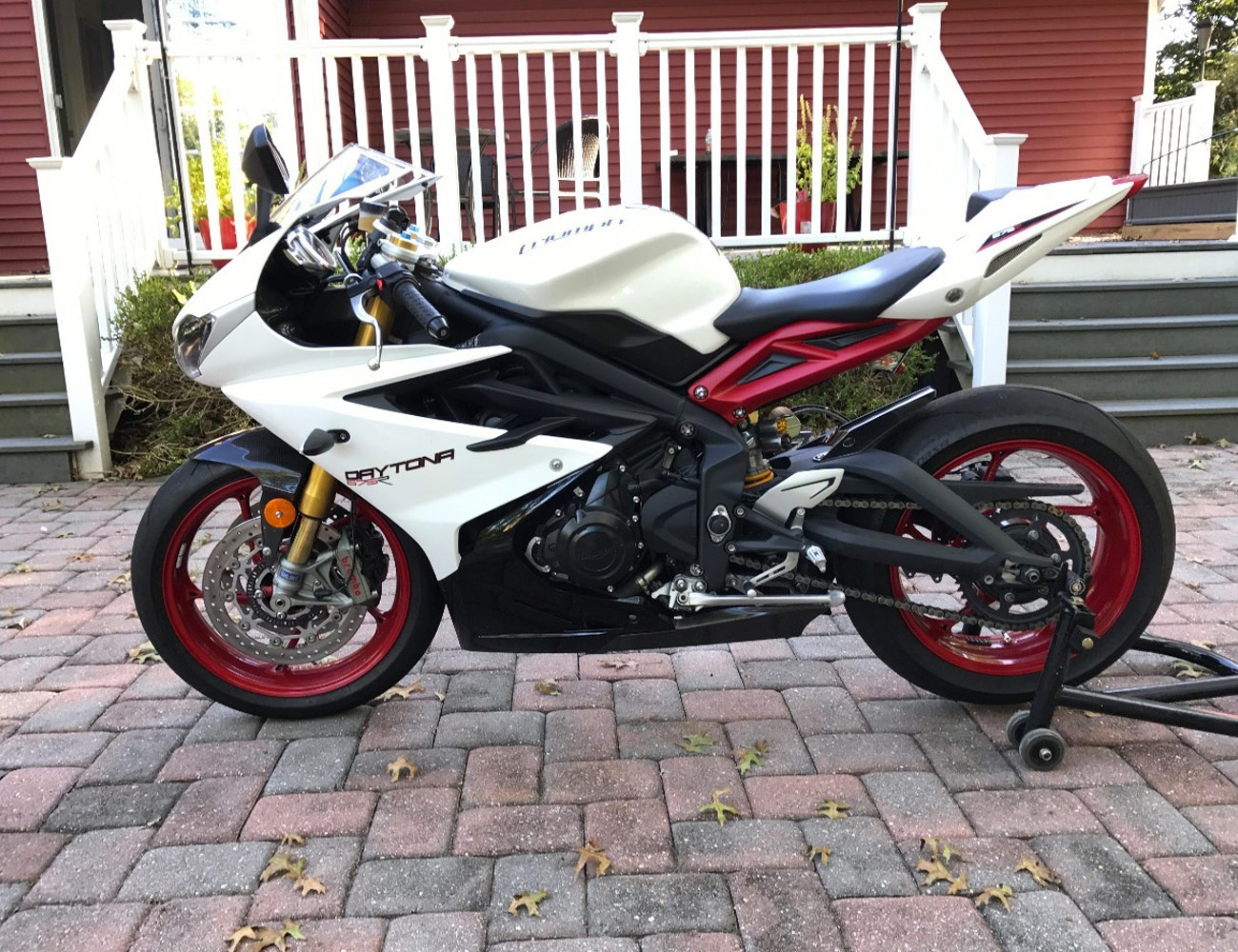
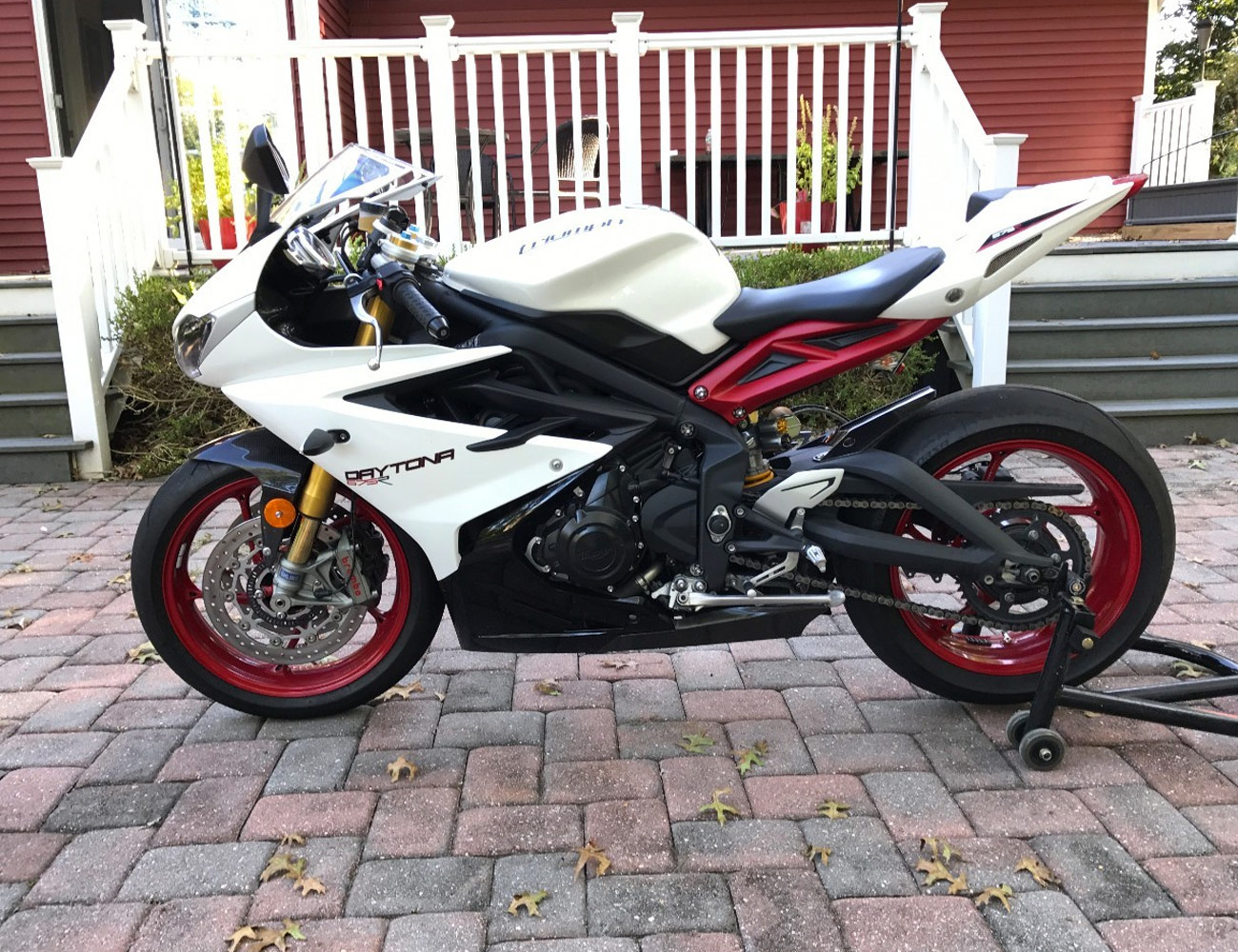
2014 Triumph Daytona 675R ABS

Mileage: 9,000
Location: Freehold, New Jersey

What I like: I was never a fan of the way 600cc inline fours sound — they’re just too whiny, but the Triumph’s triple gets away with sounding like a bigger engine than it actually is. I’m also a sucker for red trellis frames.
From the seller: “Extras include Triumph painted seat cowl, trickle charger, rear stand, rubber tank grip, R&G rear bobbins, Competition Werks rear fender eliminator and Taylor Made … carbon fiber bodywork [and] racing exhaust system, reducing overall weight by about ten pounds. All stock parts are included. Mechanically and cosmetically flawless, never laid down or tracked. Garaged and covered, professionally maintained with all scheduled services performed and documented.”
What to look out for: Most of what goes wrong on the ’14 Daytona 675R is reconciled by a recall. It’s a fairly young bike to find massive part failures at this point in its life.

What the Rest of the Team WOuld Get for $10,000

If we had a [limited] blank check, this is what we’d pick up. Read the Story

4 Wildly Impractical Vehicles I Want to Buy Right Now With a $10,000 Budget

Editor’s Note: We love scouring the internet for reasons to spend money we don’t have on cars we daydream about owning, and these are our picks this week. All prices listed are bid amounts at the time of publishing.

In the most regrettable way, I’m back in the market for a car. Suffice it say that flash floods, deceptive standing water and a hurried morning commute do not mix. (More specifically, buckets of rainwater and the engine of my now dead 2002 BMW 325i.) Could I have taken a different route? Taken my time? Not assumed it was a fordable depth for a sports sedan? Yes, yes and… duh. Hence, “regrettable.”

So this week’s Found is, admittedly, a bit selfish. The best catharsis I can manage right now is to share my next-car search. In the long run, these are wildly impractical, but at the moment seem fun enough actually to pull the trigger on. Would any of these turn into their own source of regret after, say, a month of daily use? Perhaps, but they’re pretty tempting right now.

Modified 1984 Porsche 944

Mileage: 29,000 (TMU)
Location: New Hill, North Carolina

What I like: Most of the car is refurbished, replaced or rebuilt to look like what you’d get if Porsche had built an ‘R’ version of the 944 (which they should have done). It reminds me of the Cayman GT4 — one of my favorite cars of all time.
From the seller: “This 1984 Porsche 944 was purchased by the seller five years ago and subsequently built into a street-legal track car. The 2.5-liter inline-four was rebuilt to stock specs and sends power through a torque tube to a five-speed manual transaxle. A new clutch was also installed, much of the suspension was rebuilt, the brakes were gone through, a repaint in a custom color was conducted, and a four-point roll bar was installed.”
What to look out for: Like you should for any car this age, keep an eye out for bad seals and leaking fluids. In regards to the 944 specifically, there have been a few recalls worth noting.

1952 Willys M38

Mileage: 462 (TMU)
Location: Comstock Park, Michigan

What I like: I’ve recently come to admire snorkels.
From the seller: “This 1952 Willys M38 was purchased as a military-spec example by the seller in 1996 and subsequently underwent extensive refurbishment to its exterior sheet metal, tub, frame, brakes, steering, exhaust and 24-volt electrical system. Modifications include a new old-stock military deep-water fording kit as well as modern gauges, lighting, and wheels.”
What to look out for: Typically, the electrical systems on old Willys are the main headache, but this particular lil’ guy under went a full refurbishment, including an electrical system swap.

1989 Honda NSR250R

Mileage: 7,000
Location: Richmond, Virginia

What I like: The late-’80s styling is hard to resist, even if it is a two-stroke — I’d be mixing my own gas everytime I fill up. Still, a 249cc 90° V-twin with an 11,500 rpm redline is a pretty fantastic and rare sound this side of the pond.
From the seller: “The NSR is powered by a 249cc 90° V-twin liquid-cooled two-stroke with crankcase reed valve induction via twin naturally aspirated carburetors. The two-stroke is fitted with a kick start that fires right up and idles nicely. The 11.5K redline comes up quickly with the rev-happy V-Twin.”
What to look out for: The main problem with an imported bike like this is when you do need parts you’ll be waiting for them to ship from the other side of the globe via small mail-order operations. If you spot certain parts starting to show their age, anticipate the worst and order ahead.

2014 Triumph Daytona 675R ABS

Mileage: 9,000
Location: Freehold, New Jersey

What I like: I was never a fan of the way 600cc inline fours sound — they’re just too whiny, but the Triumph’s triple gets away with sounding like a bigger engine than it actually is. I’m also a sucker for red trellis frames.
From the seller: “Extras include Triumph painted seat cowl, trickle charger, rear stand, rubber tank grip, R&G rear bobbins, Competition Werks rear fender eliminator and Taylor Made … carbon fiber bodywork [and] racing exhaust system, reducing overall weight by about ten pounds. All stock parts are included. Mechanically and cosmetically flawless, never laid down or tracked. Garaged and covered, professionally maintained with all scheduled services performed and documented.”
What to look out for: Most of what goes wrong on the ’14 Daytona 675R is reconciled by a recall. It’s a fairly young bike to find massive part failures at this point in its life.

What the Rest of the Team WOuld Get for $10,000

If we had a [limited] blank check, this is what we’d pick up. Read the Story

New Jaguar Sedans Get Enticing Style Upgrades

Manufacturers dressing up their standard cars with the all the superficial bells and whistles but none of the performance gains from top-end high-performance versions is nothing new — BMW calls it the M-Sport package and Audi, the S-Line. Mainly they’re all style and no substance, one option box that never seems worth ticking. Today, Jaguar introduced its own version of a performance-dressed trim level with the XE and XF Sport 300 — with enough extra style to actually matter.

Similar to the way the Audi S-Line cars pull styling from S and RS models and the BMW M-Sport trim borrows from M cars, Jaguar’s new Sport 300 models take from its own S models. But, where Audi and BMW add extra wings and vents, the Jaguar upgrades clean up the look of the car. The standard chrome grille and outline and extra chrome winglets on the lower bumper are replaced with more subtle matte grey accents and deleted, respectively. It’s a stylistic change, but one that’s more befitting of the rest of the Jaguar’s simplified design language. On the inside, you get more brushed aluminum surfaces and switchgear, contrast stitching on the leather and, of course, Sport 300 signage where possible.

As mentioned, there’s no power increase so both the XE and XF Sport 300 get the same turbocharged two-liter four-cylinder engine good for 296 horsepower and 295 lb-ft of torque. Pricing wasn’t announced for the US, but figures from the UK suggest the Sport 300 option will add a $2,000-$3,000 premium over the base trim. Is it worth it? Well, that depends on how far up style is on your list of priorities when it comes to your daily ride. At least Jaguar’s version of the trim makes the car look better than the German options.

Today in Gear

The best way to catch up on the day’s most important product releases and stories. Read the Story

Mercedes Raises the Bar With an Insane New Interior for the GLS SUV

Until now, it wouldn’t be a stretch to say the interior of a Mercedes-Maybach S-Class wasn’t all that different from the ‘standard’ Mercedes-Benz-level S-Class. Yes, the Maybach has fully-reclining rear seats, yards more quilted leather, including throw pillows, but it still seemed like more of an ‘all-options ticked’ situation than a full-on, next-level model. However, if the teaser video of the new 2019 Mercedes-Maybach GLS interior is anything to go by, the Maybach line will soon be more than just quilted leather and chilled cupholders in Mercedes’ “halo of halo” models.

Mercedes giving its biggest SUV the Maybach treatment shouldn’t come as a surprise since ultra-luxury SUVs are multiplying at an insane rate. Bentley kicked it off with the Bentayga, Roll-Royce has the upcoming Cullinan and Range Rover’s new SV Coupe is the new kid on the block. Disregarding the ridiculous G 650 Landaulet, Mercedes can’t be left out in the cold when it comes to a segment like this.

From the quick teaser video on Mercedes’ Facebook page, there’s certainly more than just sumptuous leather. Keeping with Maybach’s modus operandi, it looks like Mercedes deleted the GLS’ third-row seats in favor of more rear passenger leg room and to make way for the fully-reclining seats. What looks like rose gold, lines the back of the front seats, a tea set stores in the leather-lined transmission tunnel and if you look close enough, there is a large white flower between the passenger seats — which better be a standard feature.

As far as what’s under the hood, the twin-turbocharged 4.0-liter V8 engine from the S560 isn’t confirmed but is the most likely candidate, which could give the chauffeur 469 horsepower to play with after he drops off his employer. Mercedes didn’t announce pricing either but a base price of around $200,000 wouldn’t be out of the question and considering the possible available options, you can bet most 2019 Mercedes-Maybach GLSs will go for closer to $250,000 or more.

Today in Gear

The best way to catch up on the day’s most important product releases and stories. Read the Story

BMW’s Best Performance Car Just Got a Lot More Hardcore

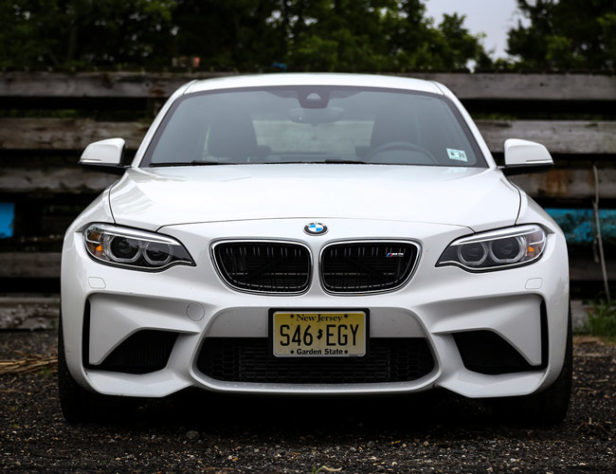
The “standard” BMW M2 is not a car wanting for more oomph, its acceleration brutally swift and its power delivery refreshingly raw. Yet BMW was seemingly unsatisfied with the 365 horsepower and 369 lb-ft of torque produced by the turbocharged 3.0-liter inline-six and replaced it with….a different turbocharged 3.0-liter inline-six. But this new mill is borrowed from the M2’s bigger brothers, the M3 and M4, and comes packing an extra turbo and a walloping 405 horsepower and 406 lb-ft of torque.

The resulting beast — the BMW M2 Competition — is supposedly a bit quicker to 60 mph, with BMW quoting a four-second-flat time for the DCT-equipped car and 4.2 seconds for the six-speed manual (a 0.2-second improvement for both). Naturally, improvements to the chassis were made to accommodate the boost in power, like aluminum-intensive front and rear axles and a carbon fiber strut brace, all ripped from the M3 and M4. Bigger brakes were also added, and the stability control system and power steering were recalibrated. Hopefully, the latter has been made to feel less numb, one of the few sticking points on the otherwise excellent standard M2.

The new Competition is not an added trim to the M2 lineup but rather a full-on replacement for the M2. Which will be interesting. The beauty of the original M2 was not just its hardcore interpretation of the German sports saloon but also its balance. Overpowered cars may seem fun on paper, but in the real world, they can be too much of a handful. In an era of the automotive industry that’s dripping in horsepower, a 40 horsepower boost may not seem like much, but we must ask: could it prove to be too much for the M2’s relatively tiny chassis? And will it really be worth the almost-certain price bump from the standard M2’s $52,500 MSRP? We’ll only know for sure once we have a chance to get behind the wheel.

The Original M2, Reviewed

grey_placeholder

BMW’s smallest, cheapest M Car is quite possibly its best, thanks to a much-needed dose of simplicity. Read the Story

Essential Knowledge and Gear for Off-Roading on Sand

Off-roading can be incredibly intimidating, particularly if you’re completely new to it. On pavement, barring inclement weather, asphalt is pretty consistent, meaning you don’t need to modify or adjust your car just to tackle your daily commute. When you take things off-road, the ground underneath your tires can change in an instant, surfaces can shift, grip comes and goes and the better prepared you and your vehicle are, the better time you’ll have. To learn absolute essential knowledge for driving on sand, we spoke to the Marketing Director and part owner of Main Line Overland Tom Henwood. The start of spring has us thinking about the beach, so we picked his brain about tips driving on sand and any essential pieces of gear to pack.

Tire pressure is paramount. When you air-down (deflate) your tires … they’re getting longer, almost like tank tracks. When this happens, your contact patch becomes larger, and you distribute the vehicle’s load better over the loose surface. But if you have a larger vehicle, you don’t want to air down too much — the tire will rip off the rim.

You want some sidewall bulge, indicating the longer tread, but a safe bet is to keep it above 20 psi. If you’re still struggling for traction, 12-15 psi should do it but any lower and you risk unseating the tire. It’s also important to make sure you inflate your tires as soon as you get back on to a harder surface — not doing so is a quick way to destroy your tires.

Carry momentum and have a plan of attack. When driving on sand, you don’t want to start and stop a lot. Look down the trail or path to see where you’re going an make sure you can carry momentum through soft, deep sand so you don’t get bogged down, bury your tires and beach your truck.

Smoother inputs. In the desert, on softer, lighter sand like dunes, you want to steer with the throttle, almost like a rudder, using minimal steering input. Getting the wheels at too sharp of an angle can cause them to dig in, slow you down or worse case scenario rip the tire off the rim. Or, if you’re going fast enough unsettle the truck, [you’ll] roll.

Slow steering. Slow, steady steering goes hand in hand with smoother inputs. If you’re aired down, have lower tire pressures and start ripping at the steering wheel, again, you’ll pop the tire right off the rim.

Straight up, Straight down. When it comes to dunes, especially steep ones, attacking it straight on and with momentum will give you the best shot. But, you won’t always be able to make it up and over on the first go. If you stall out halfway, don’t try to swing the front around. Reverse straight back. If you try to get your nose pointed back down the dune, as soon as you get sideways, you’ll unload the suspension, dig in and most likely flip.

Buying Guide

Use only if necessary


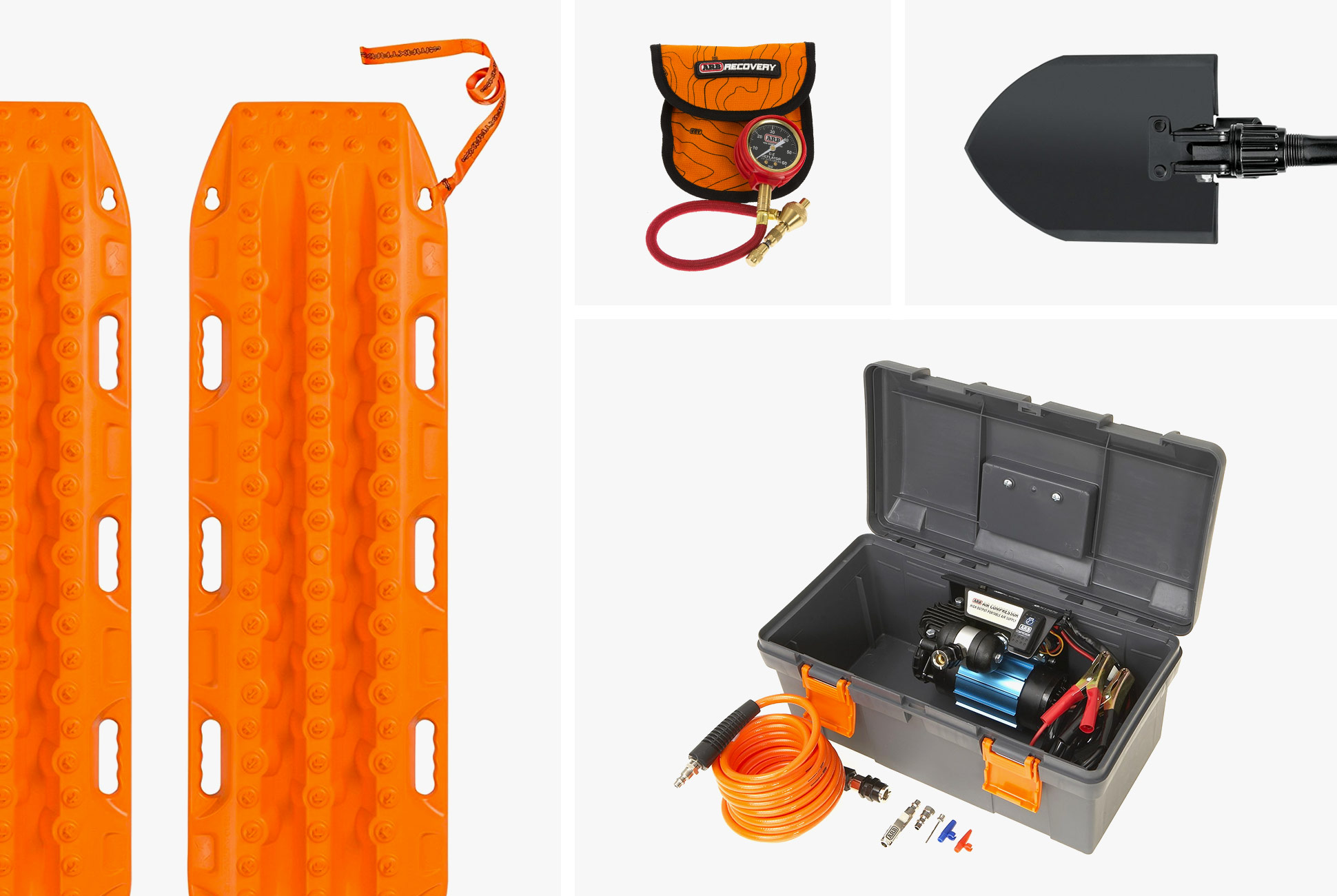
Of course it always helps to have the right tools for the job before you head out. hat is, unless you plan on digging your truck out by hand and want to try and re-inflate your tires with your mouth. This is the desert off-roading gear Henwood suggests.

E-Z Deflator Kit by ARB $42
High-Performance Portable Air Compressor by ARB $352
E-Tool Folding Spade by Gerber $75
MKII by MaxTrax $325
More Gear For Overland Adventures

You’ve got your camping supplies and your truck — now here’s the gear to keep from getting stranded. Read the Story

10 Used Sleeper Cars That Are Massive Performance Bargains

If a car has performance figures worth bragging about, nine times out of 10 you can tell from miles away. Flared arches, massive hood scoops, cavernous cooling vents and, of course, an overzealous rear wing — all billboards announcing spec-sheet prowess to the world. Automotive peacocking at its finest.

But, if you’re one of those people who prefer subtlety and chart-topping performance, the “sleeper” is the car for you. The sleeper car doesn’t broadcast that it has enough horsepower to make a supercar blush, nor that it can hunt apexes like a Le Mans winner. No, at first glance it’s unassuming, hidden high performance — until it’s needed. Sleepers are the “quiet ones” you have to look out for. Below are 10 sleeper cars from the past decade that patiently, quietly yearn for when the light turns green.

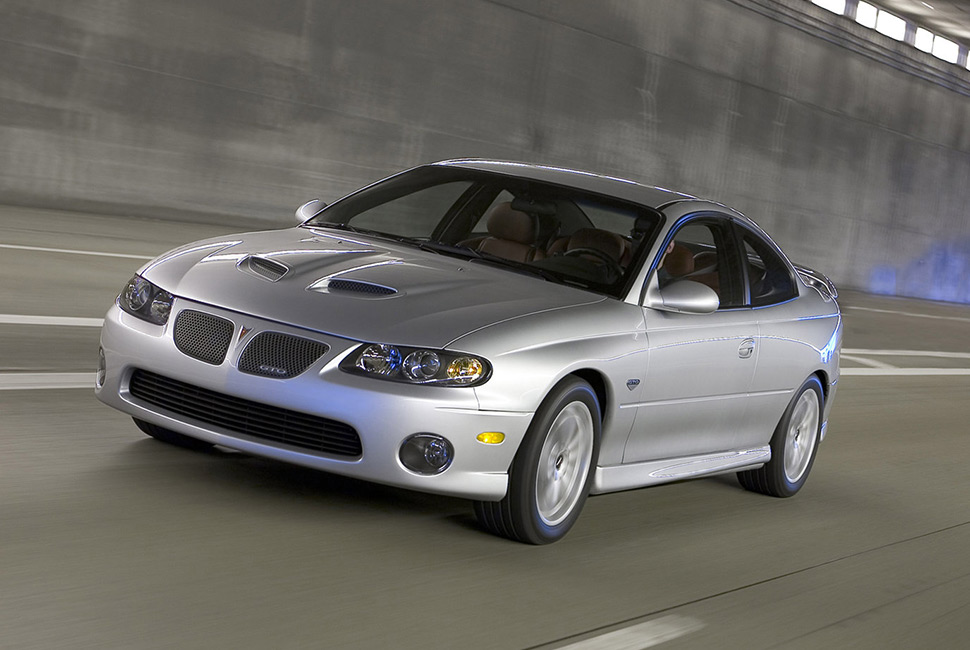
2006 Pontiac GTO

Pontiac-GTO-Sleeper-Gear-Patrol

Essentially a two-door Chevy Lumina with a 6.0-liter Corvette engine, the ’06 GTO, gave no impression that it could compete with cars at twice the price (other than its historic name).

Horsepower: 400
0-60 mph: 4.6 seconds
Expect to Pay: $6,000-$20,000

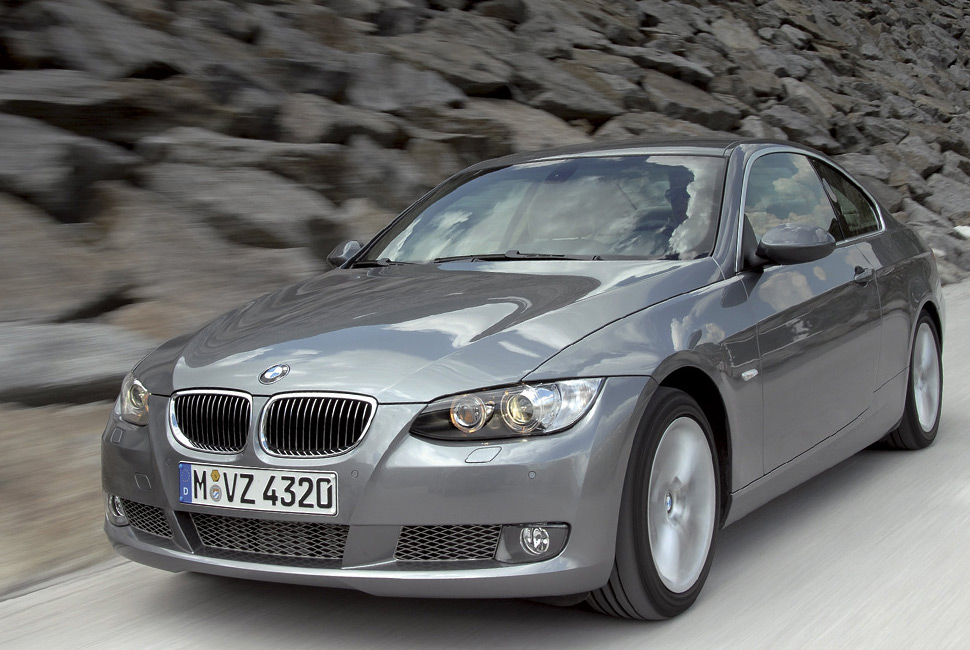
2007 BMW 335i

BMW-335i_Coupe-Sleeper-Gear-Patrol

Just because a 3 Series doesn’t wear an M badge doesn’t mean it can’t hang. The 335i sat just below the M3 in the lineup and was considered the benchmark “standard” German sport sedan.

Horsepower: 300
0-60 mph: 4.8 seconds
Expect to Pay: $9,000-$15,000

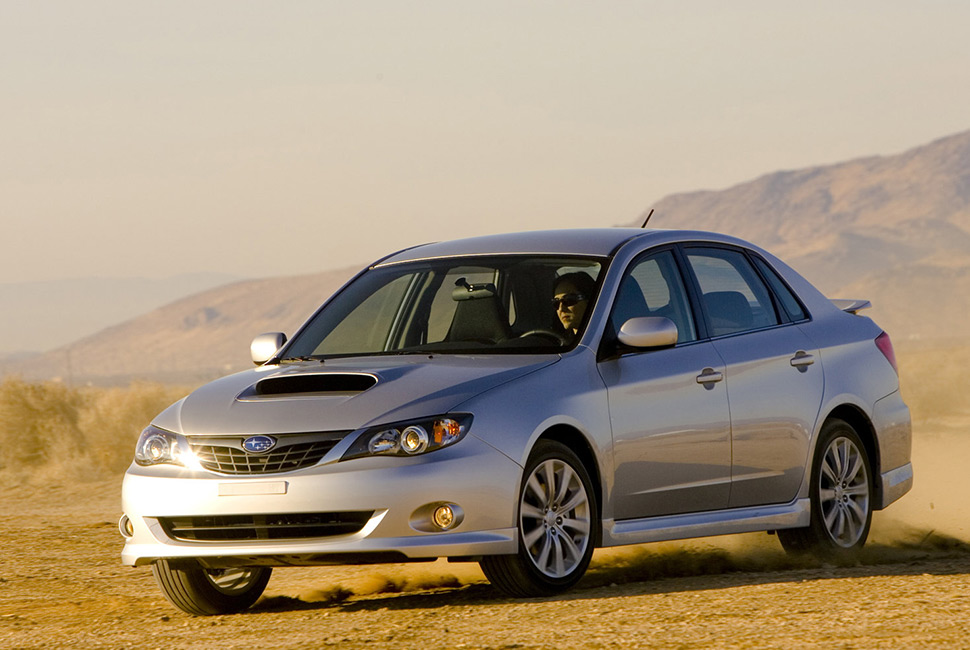
2008 Subaru WRX

Subaru-Impreza_WRX-Sleeper-Gear-Patrol

The WRX STi may get all the attention, but considering the price-to-performance ratio, the standard WRX is the better deal. And in 2008, Subaru did a full redesign on the Impreza line, which dialed back the massive hood scoop — making it much more restrained and even better looking.

Horsepower: 224
0-60 mph: 6.2 seconds
Expect to Pay: $12,000-$25,000

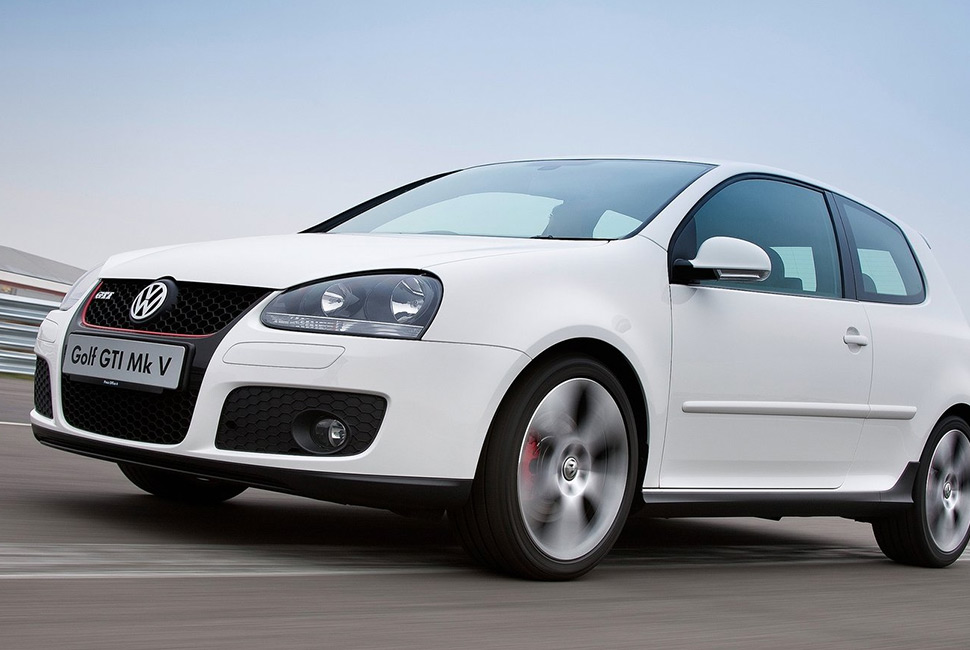
2009 Volkswagen GTI

VW-GTI-Sleeper-Gear-Patrol

At first glance the GTI may look like a sensible family hatchback, but this VW is one of the founding fathers of the hot-hatch segment. And while other cars that fall into the hot-hatch group are usually adorned with big spoilers and flared wheel arches, the GTI’s only obvious performance indicators are the red highlights around the grille.

Horsepower: 200
0-60 mph: 5.6 seconds
Expect to Pay: $6,400-$15,000

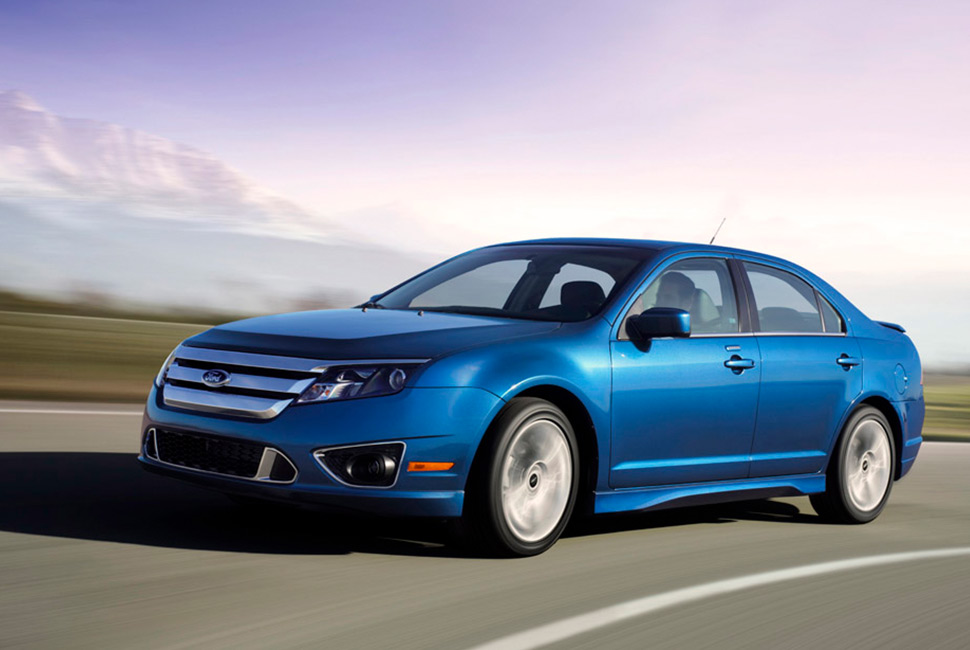
2010 Ford Fusion Sport AWD

Ford-Fusion-Sleeper-Gear-Patrol

In 2010 Ford redesigned the already mundane Fusion, but no one really paid any attention. And when no one was looking, Ford slapped a “Sport” badge on and gave the Fusion AWD and a 3.6-liter V6. No SHO marketing or “race proven” associations — just a next-level trim you’d miss if you didn’t know it existed.

Horsepower: 263
0-60 mph: 6.7 seconds
Expect to Pay: $9,600-$15,000

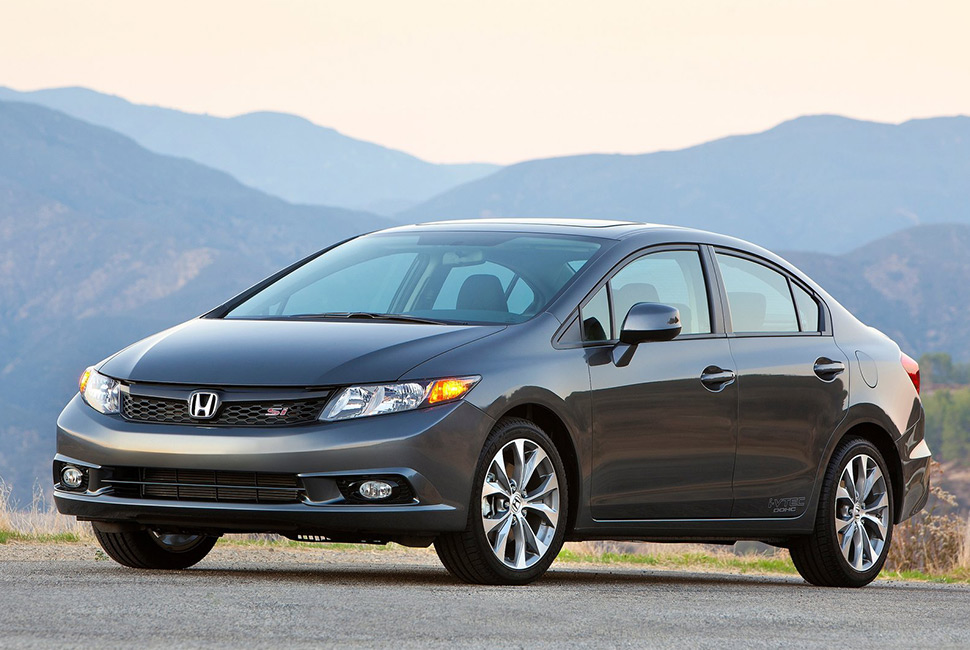
2011 Honda Civic Si

Honda-Civic_Si-Sleeper-Gear-Patrol

To the untrained eye, the 2011 Civic Si would look like any of Honda’s other lose-it-in-a-crowd cars. But if you spot the Si badge, you’ll know it has an 8,000 rpm redline and i-VTEC engine tech — a combination that calls for drivers with heavy right feet.

Horsepower: 197
0-60 mph: 7.0 seconds
Expect to Pay: $9,000-$12,500

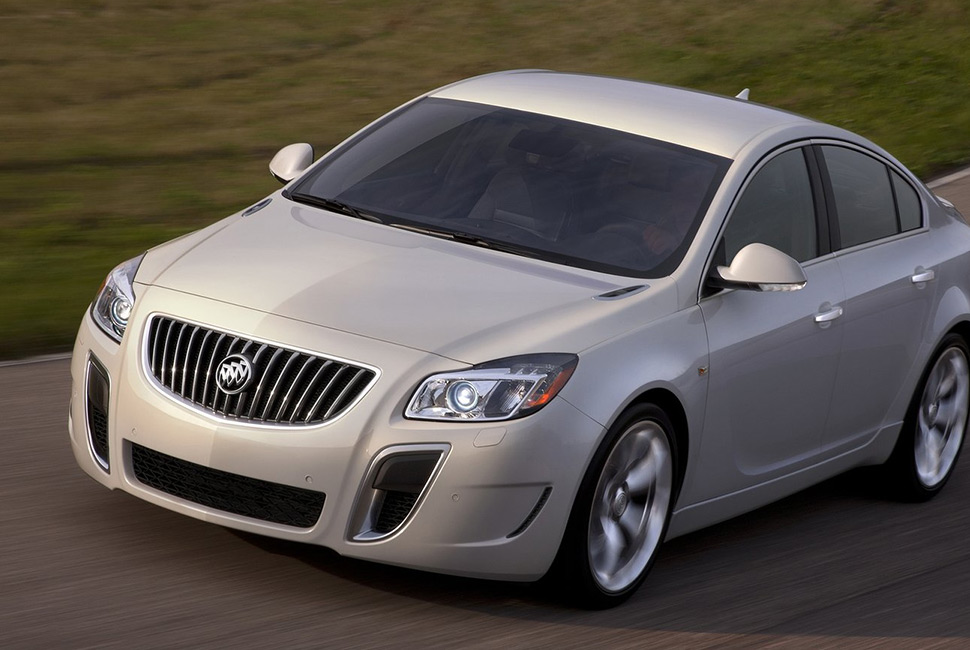
2012 Buick Regal GS

Buick-Regal_GS-Sleeper-Gear-Patrol

If you want to talk about “under the radar,” look no further than the Buick Regal GS. The Buick badge is the perfect smokescreen for hiding Brembo brakes, a six-speed manual and sticky Pirelli P-Zero tires — that came standard.

Horsepower: 270
0-60 mph: 6.2 seconds
Expect to Pay: $9,000-$15,000

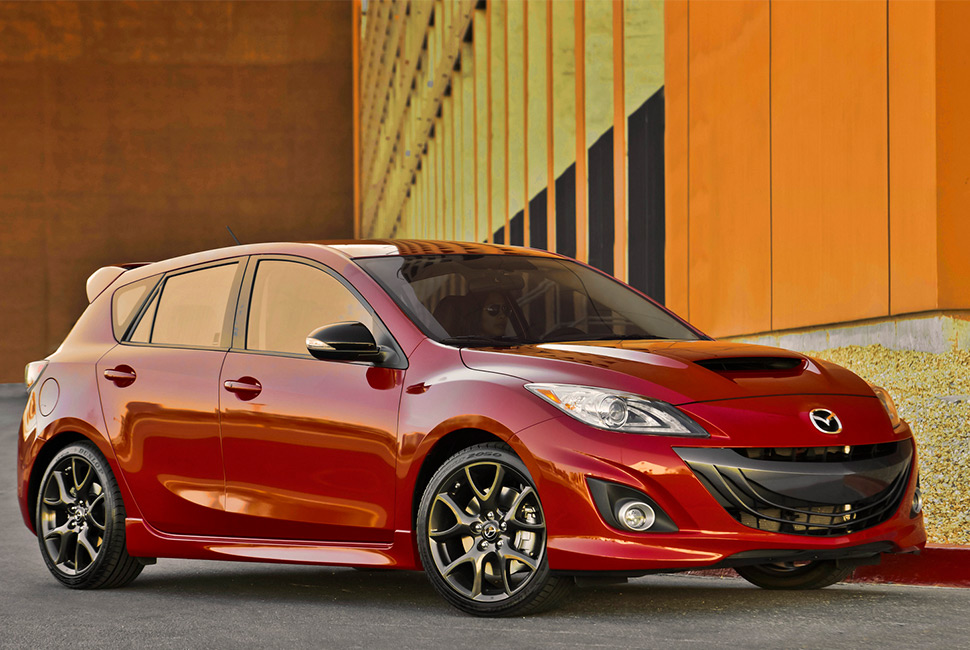
2013 Mazdaspeed3

2013_mazda_mazdaspeed3-Sleeper-Gear-Patrol

Almost all of Mazda’s cars fly under the radar, but the smaller Japanese car maker produces some of the best bargain performance cars on the market. And when they attach “speed” to the name, all bets are off.

Horsepower: 263
0-60 mph: 5.2 seconds
Expect to Pay: $12,000-$18,000

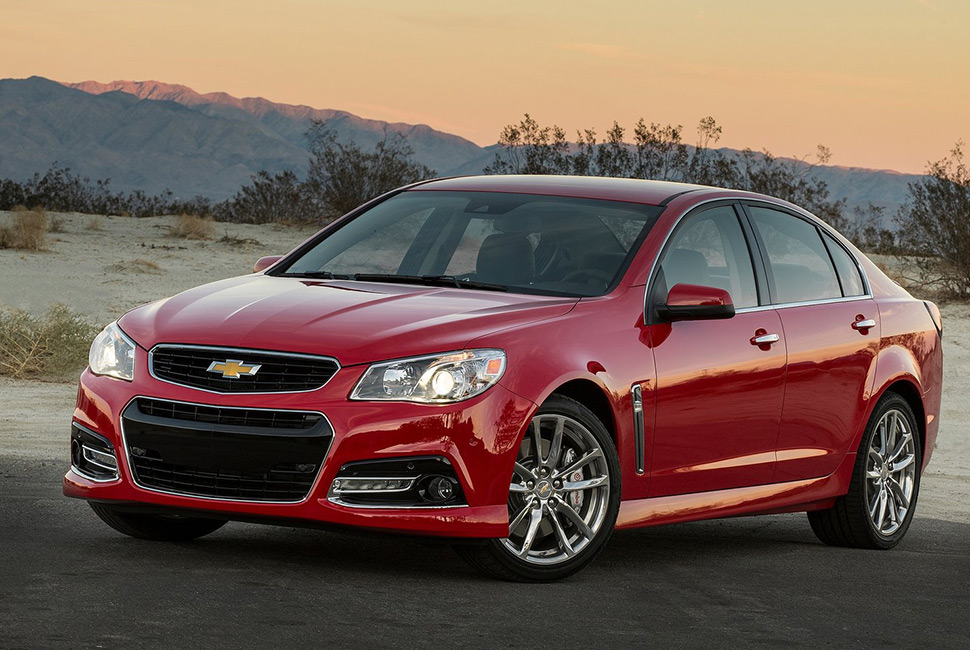
2014 Chevy SS

Chevrolet-SS-2014-Sleeper-Gear-Patrol

The SS may look like just another gray Chevy, but under the sedated styling is a working man’s Cadillac ATS-V powered by an LS3 Corvette engine.

Horsepower: 415
0-60 mph: 4.6 seconds
Expect to Pay: $29,000-$35,000

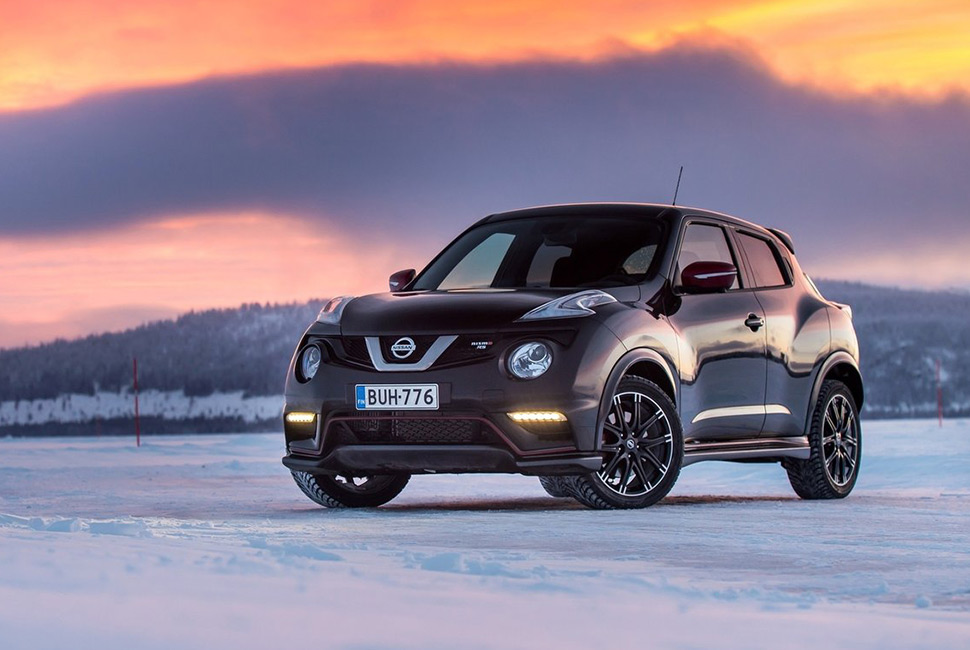
2015 Nissan Juke Nismo RS

Nissan-Juke_Nismo_RS-Sleeper-Gear-Patrol

Laugh if you will at the Nissan Juke, but the Nismo RS version has the same AWD system Nissan originally developed for Nissan’s fire-breathing GT-R. Think of it as an oddly proportioned, road-going rallycross car.

Horsepower: 215
0-60 mph: 6.7 seconds
Expect to Pay: $19,000-$22,000

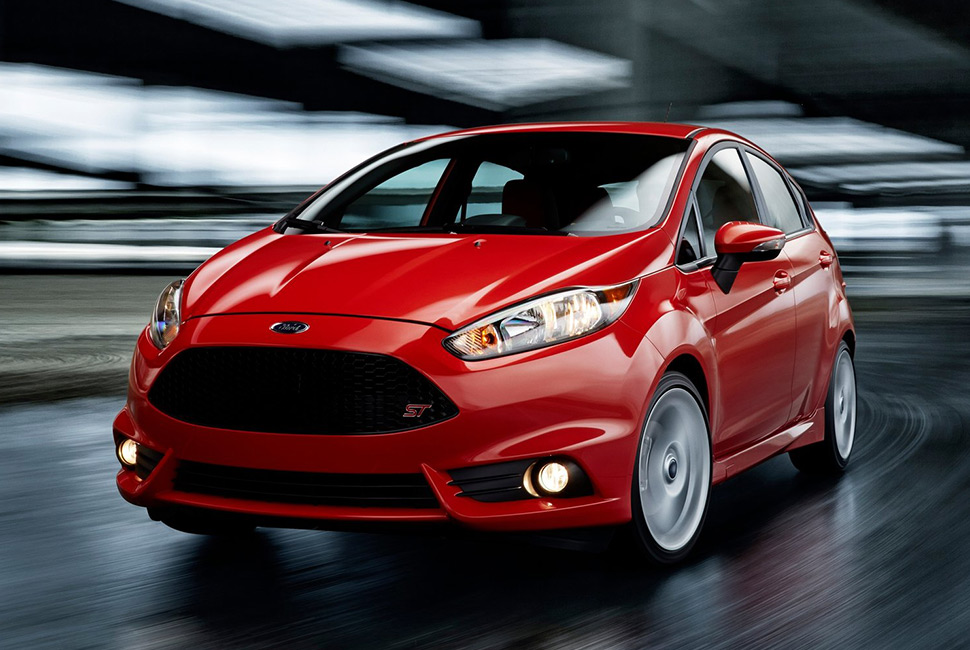
2016 Ford Fiesta ST

Ford-Fiesta_ST-Sleeper-Gear-Patrol

Don’t let the pint-sized Fiesta ST fool you. Any rally driver worth his weight in flying gravel will tell you the Fiesta ST is a force to be reckoned with as far as FWD is concerned.

Horsepower: 197
0-60 mph: 6.9 seconds
Price: $15,000-$20,000
The Top 5 SUVs Most Likely to Reach 200,000 Miles

Ideally, you want to keep a vehicle as long as possible, so you’re not in a dealership signing for a new ride as often as you change your socks. ISeeCars.com determined the longest-lasting SUVs available today. Read the Story

Every Automotive Emblem, Explained

I

t’s nice to believe that cars are purely about performance — that what matters is track times and vehicle specs, not superfluous details like the assembly of letters that make a name. But it’s not. The automotive world works on many levels, even those that can be the most superficial. Every car bears a name and every brand has a badge. And that name and badge make a difference.

Behind the creation and evolution of automotive emblems there’s often tradition, folklore and mystery. So we’ve compiled a bit of history on the most famous automotive emblems — from Alfa Romeo to Volvo. We can’t cover every car brand, but we can give you the skinny on the major names. True identification in the sea of cars on the road is what every automaker wants, so let’s shed some light on how identification is best achieved.

A Quick Primer on the Hood Ornament
Not every brand has a fancy, protruding hood ornament, nor can every brand pull one off. Companies like Bentley and Rolls-Royce lead the pack when it comes to sculpted hood candy, while brands like Jaguar and Cadillac no longer slap sleek leaping cats or wreathed crests (respectively) on their cars. The hood ornament started when radiator caps were located on the outside of the car, rather than in the engine compartment. Companies started making the cap the visual focal point, giving rise to iconic hood ornaments like Bentley’s Flying B, Packard’s Winged Woman or Pontiac’s Indian Chief. Hood ornaments can take the form of a three-dimensional representation of the brand’s emblem, like Mercedes-Benz’s three-pointed star on the E-Class, or they can be completely separate from the brand emblem, as is the case with the 1978 Ford Thunderbird’s model-specific ornament. Hood ornaments today are viewed as overwrought and detrimental to aerodynamics, to the ornamentalists’ chagrin.

Alfa Romeo
Alfa-Romeo-Gear-Patrol

One of the more intricate and dramatic automotive emblems, Alfa Romeo’s is rife with Italian tradition. The original was created by Romano Catteneo, an Italian draughtsman, and the emblem employs Milanese elements, including the Biscione (shown on the right side of the emblem), which signifies the house of Visconti, Milanese rulers in the 14th century. The left side shows a Milanese red cross on a white background. In 1918, the badge was changed to include a dark blue surround ring with the words “Alfa-Romeo Milano”, along with two Savoy dynasty knots for the kingdom of Italy. In 1925, it underwent further change to include laurels that signify the Alfa P2’s win at the Automobile World Championship, and in 1945 when Italy’s monarchy ended, the Savoy knots were removed. Though at first glance it appears that the crowned serpent is shooting red flames out of its mouth, it’s actually a man being swallowed. This part of the symbol has been very controversial, seemingly symbolizing the Crusades, wherein the Christians defeated the Moors. Suffice it to say the folks at Alfa Romeo don’t much talk about that part.

Aston Martin
Aston-Martin-Gear-Patrol

Carmakers love wings, and Aston Martin is no exception. The British carmaker was founded in 1913 by two gents, Lionel Martin and Robert Bamford. While they were selling Singer cars out of their Bamford & Martin shop, they came up with the idea to produce their own vehicles. Some years later, the name transitioned from Bamford & Martin to Aston Martin Motors, born from Martin’s name and the Aston Clinton Hillclimb in Buckinghamshire, where Martin would drive from time to time, no doubt spiritedly. The logo itself denotes speed (hence the wings), but it has evolved over the decades from simple superimposed A and M letters within a circle to, in 1927, a V-shaped winged logo and then, in 1987, to what is essentially the modern version. The emblem today employs straight wings and the Aston Martin name front and center, and it’s one of the more elegant brand emblems in existence today.

Audi
Audi-Gear-Patrol

Don’t make the mistake of thinking that Audi has anything to do with the Olympic Games. The four silver rings symbolize the 1932 merger of the four oldest car manufacturers in Germany: Audi, DKW, Horch and Wanderer. These four companies formed what is known as the Auto Union, and initially, only Auto Union-specific cars bore the four-ringed badge, while the individual carmakers used their own logos. In 1985, the Auto Union name disappeared forever and the Audi name (a Latin derivative of founder August Horch’s last name, meaning “to hear”) carried forth the same German auto-making spirit. It also carried forward the iconic emblem that lives on today, largely unchanged. Rumors have floated around claiming that the emblem symbolized four driven wheels from the Quattro all-wheel-drive system, but that claim has no historical merit. Still, Audi occasionally has made reference to the connection, capitalizing on a bit of synchronicity.

Bentley

Bentley-Gear-Patrol

There are few names in the automotive industry that carry as much panache and gravitas as the British manufacturer Bentley Motors. The emblem shows a bold “B” surrounded by a set of spread wings. The hood ornament is similar, with a large capital B and aviary wings that flow backward. The significance of the emblem is the “B” reflecting the Bentley name, after Walter Owen Bentley, who founded the company in 1919. The winged design links to the original company name, Bentley Aero; the company originally manufactured rotary engines for planes during World War I.

BMW
BMW-Logo-Gear-Patrol

Among Bimmerphiles, the meaning of the BMW Roundel — as it’s officially called (BMW Car Club of America’s magazine title carries the same name) — stirs up a bit of controversy. The latest interpretation (latest being the 1920s) is that the emblem signifies a propeller against a blue sky, representing BMW’s early history of making airplane engines. As attractive as this explanation is, the truth behind the Roundel is far different. When Bayerische Motoren Werke AG (Bavarian Motor Works) was formed out of Rapp Motorenwerke airplane manufacturing in 1928, the emblem reflected the BMW name within a black outer circle, and the blue-and-white Bavarian flag’s panels were placed within a concentric circle at the center. It’s evolved somewhat over the years, but the changes have been minor — font, font color and the appearance of relief in the Bavarian flag checks at the center.

Bugatti

Bugatti-Gear-Patrol

Ettore Bugatti’s initials live on today in his emblem, though an independently held Bugatti company died along with Ettore in 1947. Buggatti was born in Italy, but started his company in 1909 in the Alsace region in France. His cars evoked deep and fluid sculpting, fitting for the Bugatti family’s artistic leanings. After Ettore died, there would be no successor to carry on his name due to the earlier death of his only son. Fewer than 8,000 Bugattis had been built, but the name would not only stand in the record books, but also be revived by Volkswagen, who have since built some of the most exotic automobiles ever made, like the EB110 and the insane Veyron hypercar.

Cadillac
Cadillac-Gear-Patrol

The Cadillac emblem you see today is a modern rendition, yet its initial roots are still easily recognizable. The original emblem represented a family name, belonging to Le Sieur Antoine De La Mothe Cadillac (luckily, the cars weren’t called “La Mothe”). Monsieur Cadillac founded the city of Detroit, Michigan in 1701, and the Cadillac brand bears more than just his name; the emblem bears the resemblance of the Cadillac coat of arms.

Like many other automotive emblems, it has evolved over the years, and its original form was far more complicated than what you see today. The Cadillac coat of arms doesn’t show a shield like the automotive emblem does; rather, it was completely round and displayed trios of merlettes (birds), a symbol of knightly participation in the Crusades, along with a black bar (or “fess”) that also symbolized service in the Crusades and a red band for boldness. In 1905, Cadillac adopted the symbol for its cars, and since then it’s morphed quite noticeably to the modern version that bowed in 2000, largely influenced by the Dutch painter Piet Mondrian. In 2014, the emblem made its most recent change, losing the laurel leaves that encircled the crest and further simplifying the emblem while remaining easily recognizable.

The 18 Most Gorgeous Shifters to Ever Grace an Automobile
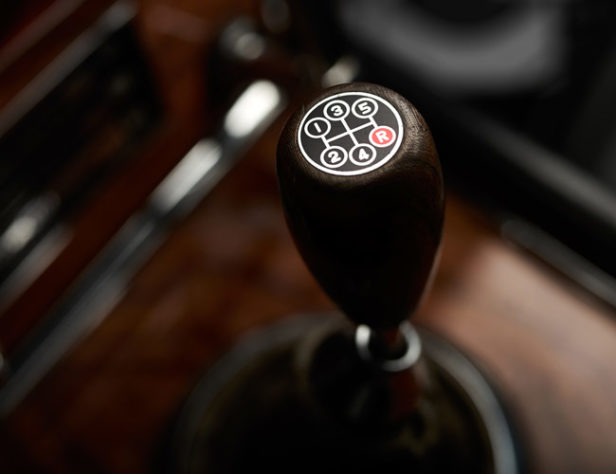
The shifter is, literally and figuratively, the centerpiece of a car’s cabin. Read the Story

Chevrolet
Chevrolet-Gear-Patrol

The jury’s still out on the origin of Chevy‘s bowtie. As it’s supposedly remembered by William C. Durant, co-founder of General Motors and Chevrolet, Durant was inspired by a repeating pattern on the wallpaper of his French hotel room. His wife, however, disputes that claim, stating that he was inspired by a newspaper ad for Coalettes that showed the same bowtie outline. There are other claims that Louis Chevrolet designed the bowtie as a modified Swiss cross, in honor of his parents’ homeland. Whichever story you believe, the bowtie stuck. It’s evolved throughout the years, going from a royal blue color phase to the current gold.

Chrysler
Chrysler-Gear-Patrol

It’s now officially known as Fiat Chrysler Automobiles, but the Chrysler name lives on in the Chrysler logo and badging. Originally based on the Kruessler family crest, the Chrysler seal emblem — mated with flanking wings in the 1930s — was meant to represent quality, hence the royal-style wax seal. In the ’50s, Chrysler employed what’s known as a “Jet Age” style log, with two chevrons superimposed onto one another, but it didn’t last long given its temporary trendiness. In 1962, Chrysler’s longstanding five-triangle “Pentastar” logo was created with the idea that it should be timeless and global. It was a logo that was easily identifiable and became synonymous with the ubiquitous K-Car and LeBaron. Then, in the ’90s, the Chrysler seal and wings returned, but with longer and wider wings. The Pentastar came back shortly thereafter, then disappeared forever from Chrysler cars in 2009, when a thin, wide and elegant winged badge took its place. After all the changes, it now looks like the wings are a permanent fixture in the Chrysler logo.

Ferrari
Ferrari-Gear-Patrol

The Cavallino Rampante, or “Prancing Horse” in Italian, is the proud icon of one of the most prolific performance automobile manufacturers in the world, Ferrari. And, in good form, the story of the emblem’s creation is nearly as exotic and storied as the carmaker itself. Enzo Ferrari, the namesake, told a story of his victory at the first Savio circuit, where he met Count and Countess Enrico and Paolina Baracca, parents of an Italian fighter pilot who had flown with a prancing horse emblazoned on his plane. The son had passed, but Enzo was told the symbol would bring him luck (talk about prescience). The horse was adopted and a yellow background was used to represent the town of Modena, the Ferrari factory’s location. But the emblem could not be used for the cars, initially — it was seen only on Ferrari’s publications and papers since Alfa Romeo technically owned the cars. The shield emblem debuted in July of 1932 at the Spa 24 Hours, and in 1963, Ferrari also began to utilize a relief version of the Prancing Horse, which you still see today.

Ford
Ford-Gear-Patrol

The Ford Motor Company’s emblem hasn’t gone through too many changes since 1903, as they’ve stuck with the Blue Oval from 1927 to now. The original emblem was busy and bore the entire “Ford Motor Co. Detroit, Mich” wording in an amorphously shaped black-and-white background. The script, which has stood the test of time, was penned by Ford Chief Engineer Childe Harold Wills in 1909. The Blue Oval was added nearly two decades later, making the badge what it is today.

Honda
Honda-Gear-Patrol

Though there’s nothing particularly original or mysterious about the basic but attractive silver Honda “H” emblem, what the symbol represents is crucial to understanding Honda. The company is named after Soichiro Honda, the company’s founder — a mechanic, tuner and racer who eventually turned Honda into the largest builder of motorcycles in Japan and the second-largest Japanese automaker. Honda’s consumer engines are direct derivations of the versions built for racing, and their quality and reliability are as solid as the stance of their simple but prominent logo.

Hyundai
Hyundai-Gear-Patrol

At first glance, you wouldn’t give much credit to Hyundai for their emblem. But the South Korean company created it to be more than just a Honda logo that underwent a taffy pull. The Hyundai “H” represents the name, but it’s encased in an oval to reflect the perpetuity that Hyundai pursues internationally. The “H” itself is designed to symbolize two people shaking hands (how friendly!). And we know that based on Hyundai’s affordable yet quality automobiles, the symbol does not signify a customer handing over his wallet to the salesman.

Infiniti
Infiniti-Gear-Patrol

One of the more original but simple modern automotive symbols out there, Nissan’s luxury brand utilizes a partial oval surrounding a road that narrows into the distance, or to…infinity. It’s a tasteful badge and, thankfully, it conveys an actual connected meaning between the brand name and the logo. The logo is similar to Oldsmobile’s logo, which also shows a road driving off into the distance (but Oldsmobile’s road veers to the right). Infiniti has to be around a bit longer before they can lay claim to any iconic cars, but they are well on their way to making some very dramatic statements.

Jaguar
Jaguar-Gear-Patrol

The Jaguar emblem began with a nod to the Swallow Sidecar Company, who produced the SS Jaguar in 1935. The emblem featured the characters “SS” in a hexagon on top of an eagle’s wings and tail. The leaping cat emerged in 1945 and hasn’t changed much since then. There’s nothing mysterious or multi-layered about its meaning. The use of the Jaguar cat is meant to convey power and agility, and Jaguar has done an incredible job of communicating that ethos to the automotive world, especially with cars like the new F-Type.

Lamborghini

Lamborghini-Gear-Patrol

Lamborghini’s logo traces back to founder Ferruccio Lamborghini’s 1962 visit to Don Eduardo Miura’s ranch, where fighting bulls were bred. So heavily influenced by the power and presence of these animals, Lamborghini adopted the bull as the emblem for his cars. Soon after, he began to use the names of fighting bulls and bullfighting terms for his cars (except for the Miura, which was named after the breeder). Names like Islero, Espada, Urraco, Jalpa, Diablo, Murcielago, Gallardo and Aventador evoke the snorting bull emblem. We’re still trying to figure out the Countach, however.

Lexus
Lexus-Gear-Patrol

We’d love to elaborate on the meaning of the Lexus emblem, but due to the company’s somewhat limited history (Toyota’s luxury brand made its introduction to the world in 1989) and the simplicity of the emblem, there’s really not much to tell. There was initially some speculation behind the Lexus name, claiming that it stood for “Luxury Exports to the US”, but the truth is that Lexus is derived from the name Alexis, which was the originally planned name. It eventually morphed into “A Lexus” and then just plain “Lexus”. The emblem itself is just a stylized “L” within an oval, nothing more to tell.

Lotus
Lotus-Gear-Patrol

Lotus cars, founded by Anthony Colin Bruce Chapman (British enough for you?), had their start as racing and road cars. Chapman’s initials are found on the Lotus emblem, which has been essentially unchanged since 1952 when Lotus Engineering Ltd. was formed. The Lotus name’s origin is unknown. British Racing Green (BRG) is found in the background, largely due to the color’s popularity during Chapman’s era. The surrounding yellow embodies the sunny perspective that Chapman saw for his future. Lotus cars achieved much fame, especially in Formula 1 racing, but the company struggled in the ’70s and early ’80s, then was rescued by the sale of the famed Lotus Esprit Turbo in the US market. Sadly, Chapman died at the early age of 54; but his company, after changing hands a few times, now produces some of the best-handling cars around, namely the Elise, Exige and Evora.

Maserati

Maserati-Gear-Patrol
The Maserati Trident logo has remained largely unchanged since it first showed up on the 1926 Tipo 26. The iconic statue of the god of the sea stands in the Piazza Maggiore in Bologna, Italy, where Oficine Maserati was first headquartered. Neptune stands atop a fountain, powerfully wielding his famous trident scepter — and the statue served as inspiration for the emblem along with Bologna’s colors, red and blue.

Mazda
Mazda-Gear-Patrol

The Mazda logo dates back to 1936, when it presented as a triple-stacked M for “Mazda Motor Manufacturer”. The logo was allegedly inspired by Hiroshima’s own emblem, as it’s company’s hometown, and it was flanked by some very Van Halen-esque wings that symbolized “agility, speed and the ability to soar to new heights”. Then, in 1959, when Mazda began manufacturing passenger vehicles, they introduced a simplified logo with an “M” in the middle of a circle. In 1975, Mazda transitioned to a new brand image and used only the Mazda name as car badging, a blend of uppercase and lower-case letters at the same height. In 1992, the Japanese automaker introduced a brand symbol that was comprised of a circle in the middle of a curved diamond shape and encased in a larger ovular shape that supposedly represented wings, sun and a circle of light. Then, in 1997, Mazda created the logo that’s still used today: an “M” within a squarish oval that also incorporates a “V” shape and an upturned wing style to symbolize the company’s desire to soar into the future. It’s easily their most attractive logo to date.

Mercedes-Benz

Mercedes-Benz-Gear-Patrol

Mercedes, a division of Daimler-Motoren-Gesellschaft (DMG), needed a trademark back in the early 1900s. DMG founder Gottlieb Daimler had passed in 1900, and his sons Paul and Adolf used their father as inspiration — calling upon the star symbol on Gottlieb’s home that represented future prosperity for his growing company. The symbol was well received by the board at Daimler in June of 1909, and both the now-famous three-pointed star and a four-pointed star were registered as trademarks under the Daimler name. It’s the three-pointed star that survived, representing Daimler’s goal of using their motors to power vehicles on air, land and sea. In 1916, the star was centered within a circle and has undergone only small changes, ending with its current silver star in a silver circle.

Nissan
Nissan-Gear-Patrol

Nissan’s current logo is a chrome badge with simply “NISSAN” in a silver rectangle centered on a silver circle. Its origins began with the Nissan’s control of DAT Motors, formerly Datsun. The Datsun logo utilized the Datsun name in a blue rectangle over a red circle — Japan’s “Rising Sun” symbol, which appears on the national flag. The existing Nissan logo came about in 2001, utilizing a more modern interpretation of the original emblem, with chrome representing sophistication, modernism, creativity and perfection in Nissan’s products.

Porsche
Porsche-Gear-Patrol

It would be hard to find a more attractive emblem than the famous gold, black and red Porsche crest. It is easily one of the most enduring emblems in automotive history, barely changing since its introduction in 1952 when Ferdinand Porsche set out to create an iconic emblem. Its most obvious connection is with the city of Stuttgart, where Porsche is headquartered. The city originated on a stud farm, hence the centrality of the horse. The antlers and the red-and-black stripes in the surrounding quadrants of the shield represent the Kingdom of Württemberg, a former state of the Federal Republic of Germany (Stuttgart is the capital). The unchanged appearance of the Porsche crest over the past several decades is consistent with the enduring legacy of its most iconic model, the 911, where the crest is displayed at the tip of its legendary flat nose.

Saab

Saab-Gear-Patrol

Saab’s heritage dates back to airplane production in the mid 20th century. The company Svenska Aeroplan AB (translated “Swedish Aeroplane Limited”) started producing cars in the 1950s, but the original logo symbolically bore the front of an airplane propeller. Eventually, it changed to a red Griffin with a golden crown sandwiched between the Saab-Scania name. The red Griffin is inspired by a Swedish coat of arms and is also based on the logo of Vadis-Scania’s, the truck manufacturer that partnered with Saab’s parent company to form Saab-Scania. The most recent emblem, revised when GM took over in 2000, shows only the Saab name.

Subaru
Subaru-Gear-Patrol

Subaru actually means “The Pleiades” in Japanese, referring to the the star cluster in the Taurus Constellation. The Subaru badge only shows six stars (Electra, Maia, Taygete, Asterope, Celaene and Alcyone) because those are the most prominently visible to the naked eye (depending on location, ambient light, etc.). In 1953, five companies merged as one: Fuji Heavy Industries Ltd. The five small stars represent the merged companies, and the larger sixth star represents the bigger firm.

Toyota
Toyota-Gear-Patrol

Most interpret the Toyota emblem as an artistic, albeit bloated interpretation of the letter “T”. The emblem, however, actually bears significant meaning. The ovals overlap one another, symbolizing trust between the automaker and its loyal customers. The white space that occupies the emblem signifies Toyota’s future potential. And the three ovals together represent the collective hearts of the customer, the cars and the technological opportunities ahead.

Volkswagen

VW-Gear-Patrol

One of the largest automotive manufacturers in the world, Volkswagen, happens to have one of the simplest emblems in the business. Once again, an automaker uses an automotive emblem wrapped up in the ubiquitous circle, this time with a V for “volks” (people, in German) and the W for “wagen” (cars), with the former stacked on the latter. It’s appropriate, of course, for the people to ride on the cars, as opposed to the other way around.

Volvo
Volvo-Gerar-Patrol

The Volvo name isn’t Swedish, despite the car’s origins. It stems from the Latin word “Volvere”, for “roll”. Volvo means “I roll”, which aptly captures the intentions of a car company. Volvo’s original emblem from 1927 was a blue oval with the Volvo name centered on the logo and Gothenburg, Sweden, the manufacturer’s location, on a banner beneath the name. Then, in 1930, Volvo began using its now-famous iron alchemy/Greek male/Mars, god of war symbol: a circle with an arrow pointing up and to the right. Volvo only recognizes the first association, of course. It’s meant to symbolize strength, protection of its customers, forward thinking and innovation. In 2014, Volvo simplified their already crisp emblem by moving the Volvo name completely inside the circle, as opposed to laying across its width. On its cars and SUVs, Volvo’s emblem is always coupled with an angled crossbar that matches the direction of the arrow, providing an easily recognizable face to their lineup. The fact Volvo hasn’t changed their brand image even after being purchased by Geely of China reassures that their priorities — safety and longevity — remain very much intact.

Our Favorite Engine Bays Under the Emblems
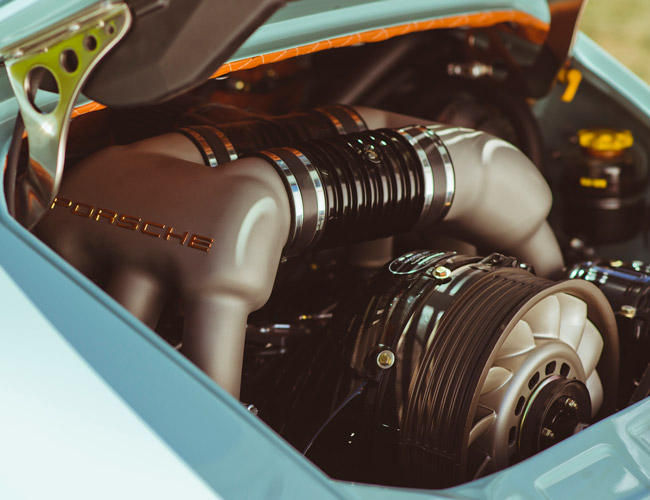
Out of sight? Who cares. Make it beautiful anyway. Read the Story

If You’re Sick of Modified 911s, Alfaholics is Your Remedy

Resto-modification: Also known as resto-modding, this is the practice of modernizing an older car with an updated engine, suspension, brakes and other parts while generally keeping the car appear as stock as possible.

So many great classic cars have been overshadowed by the hype for classic Porsche 911s. The valuation bubble that older 911s have enjoyed recently is so expansive that even lesser Porsches like the 912 and 914 have even seen a slight uptick in values, purely due to proximity to Porche’s flagship sports car. And though 911 prices have stabilized somewhat, there’s no denying the rear-engined sports car’s consistently meteoric rise in popularity over the last couple decades. When that popularity seemed to reach terminal velocity, Singer Vehicle Design, the famous 911 re-imagination firm, came onto the scene and experienced equally impressive growth in reputation and notoriety. Like the 911 did to other incredibly capable cars of the same era, Singer’s resto-mod operation stole the spotlight away from other small-batch wrench works — most notably, Alfaholics and its Alfa Romeo-based GTA-R.

The GTA-R, however, is just the tip of the Alfaholic iceberg. The company was officially founded in 2000, but its spirit, dedication and love for the little Italian cars have been gestating for nearly half a century. It really started in 1977 when Richard Banks wanted to go racing in Alfa Romeo’s then-new 2.0-liter GTV, so he bought one. Banks loved the car so much — the way it handled, the way it was balanced — that he purchased a used 2000 GTV and fixed it up. But, as his son Max Banks puts it, his dad “was a cash-strapped race team owner trying to find money. He put the car in the Sunday papers and it sold almost immediately.” Richard Banks found his funding: in trading fixing and Alfa Romeos.

Through the ‘80s and ‘90s Richard put his knowledge of Alfa Romeo cars to use restoring old Alfas, in an unconventional way. He became one of the most prominent Alfa Romeo restorers in the U.K, but not because clients came to him. Max said his father “tried that, never liked the constraints of what one person may or may not want to do with their car. He liked to control his restorations and get the quality exactly where he wanted it to be and make the cars perfect.” So Richard Banks went out and bought other cars, then restored them and flipped them. But due to the economic downturn in the early ’90s, Alfa values plummeted and put the restoration business to the test. After Banks realized it wasn’t viable anymore, he dialed back on restoring cars and focused his energy and knowledge into providing parts as a mail-order outfit for Alfa owners the world over. That’s when the Alfaholics name became official.

Richard never stopped building, restoring and racing Alfas for himself. In 1996 Richard fixed himself up a Sprint GT, modified it to look like a GTA — as the first car built under the new mail-order parts company, he called it an Alfaholics GTA replica. As Max recalls, “it was number one. It was the first time we took a Sprint GT with all aluminum boot, bonnet and doors, [and] put all the GTA grilles and panels on it. We called it the Alfaholics GTA replica. And that’s how we raced it.” At that time, Max’s problem was, since he’s the younger of the two sons, that first car was more his older brother Andrew’s simply because he was old enough to drive it and race it.

“The phones kept ringing and ringing. I then realized I had to turn the whole business back full-circle and go back to what my dad was doing in the ‘80s: start up the restoration shop.”

It wasn’t until Max turned 18 and the prospect of owning his own rebuilt Alfa became too enticing. He decided to tap into the Banks family resources for his own personal enjoyment (who wouldn’t?). “When I turned 18, I said ‘well, I’d like to do a car,’ except I focused on making it a road-based car. So I took everything we learned from our race car and made a road-based version — trimmed it nicer, trimmed it with leather, trimmed it with refined bits and pieces.” Banks documented the whole build process and put it on the Alfaholics website, getting into the nitty-gritty. He showed in detail how they developed their roll cage and the installation of performance parts. Then he took the car on tour.

Banks made trips to the Nürburgring and Dijon, France, and when he uploaded the videos he quickly built a following. “Pretty soon the phone started ringing, and people told me ‘I want you to build me a car like yours.” The only problem was he was up to his neck in the mail-order business while racing simultaneously. “At the time I didn’t have the capacity to do it, but the phones kept ringing and ringing. I then realized I had to turn the whole business back full-circle and go back to what my dad was doing in the ‘80s: start up the restoration shop.”

Alfaholics continues the mail-order parts business and regular restorations, following the same business model the elder Banks stuck to in the ‘80s and ‘90s. Recently the small-batch Italophile car maker was launched into the international spotlight after introducing the ‘R-line.’ R-line builds are the result of “in excess of 3,000 hours of handcrafted love and attention.” The result is an ‘Alfaholics GTA replica’ resto-mod treatment on an Alfa Romeo Coupe, Ti or Spyder. What Max Banks stresses though is, “we’ve gone about things in a different way than a lot of companies. It’s all been a pure organic growth — there’s never been a sit-down meeting of board members saying “ok, this is what we want to do with the business. This has been a family business that’s grown since the late-’70s. We’ve evolved and adapted, and we’ve ended up coming back full circle.”

“Driving at its very best.”

The Banks family never reached out to journalists when they started the GTA-R program. It was always a side project; there was no time to promote it with the restorations and mail-order parts business. But now Alfaholics has been busy trying to evolve its product and get the GTA-R where it wants to be and, perhaps serendipitously, that coincided with particular publications taking notice. “Dicky Meadon, who we’ve raced against for years said “we’d like to have you as part of our ‘evo Magazine track Car of the Year.’ And then Chris Harris who we’ve also known for years said, ‘it’s about time I drove your car for Top Gear.” Harris, after having driven the GTA-R called it “driving at its very best.”

Banks made a point to say “we’re not just about building the GTA-R. Our real workshop is the parts business, and we restore as many historically significant Alfa Romeo GTAs … as we can.” That’s rare — most resto-modding outfits’ business models revolve around the cars themselves. Maybe that’s secret to the stellar level of quality found in every Alfaholics build not just the GTA-R. For Alfaholics, the love is in each door handle, carburetor, manifold and every nut and bolt holding them together — the whole is equal to the sum of its parts, and it’s all the better for it.

More British Small-Batch Builders

Every major modern car-making country has a calling card. For Britain, it’s the low-volume, lightweight sports cars. Read the Story
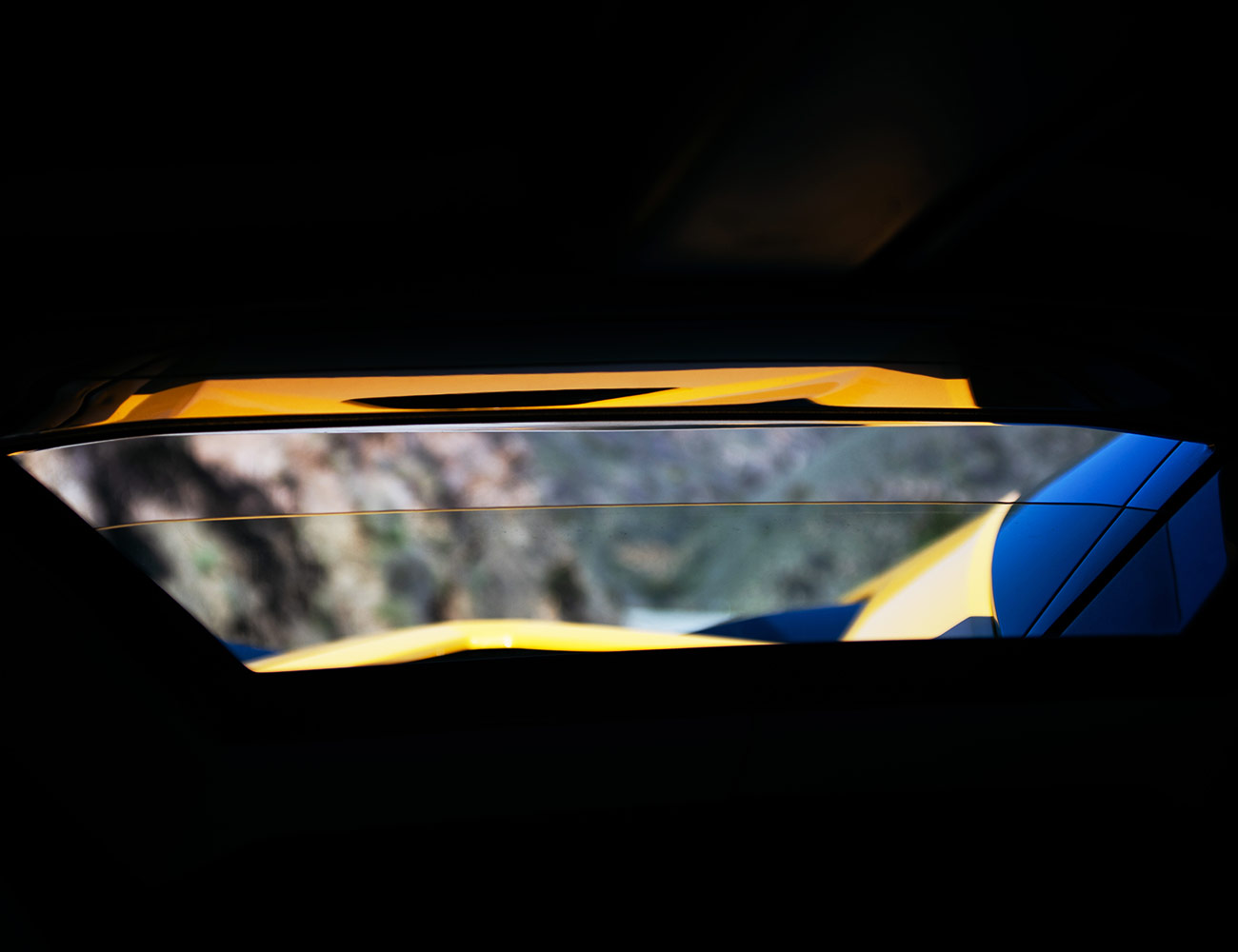
4 Used High-Performance Sedans With Subtle Style

Editor’s Note: We love scouring the internet for reasons to spend money we don’t have on cars we daydream about owning, and these are our picks this week. All prices listed are bid amounts at the time of publishing.

Traditional sedans might be slowly disappearing from manufacturer lineups as they take up less and less market share, but that doesn’t stop them from being some of the more practical and better-looking cars on the road. Unlike their two-door counterparts, sedans make more sense for a family of four or so, but what happens after the kids are dropped off and the long, winding route home beckons? That sort of lifestyle calls for an older performance sedan. The latest super sedans seem to pride themselves on shouting about their performance cred, signified by massive vents, wide fender flares and even wider wings. There’s a beauty in balancing subtle style and maturity with wild-eyed, corner carving abilities. These four sedans prove it’s possible.

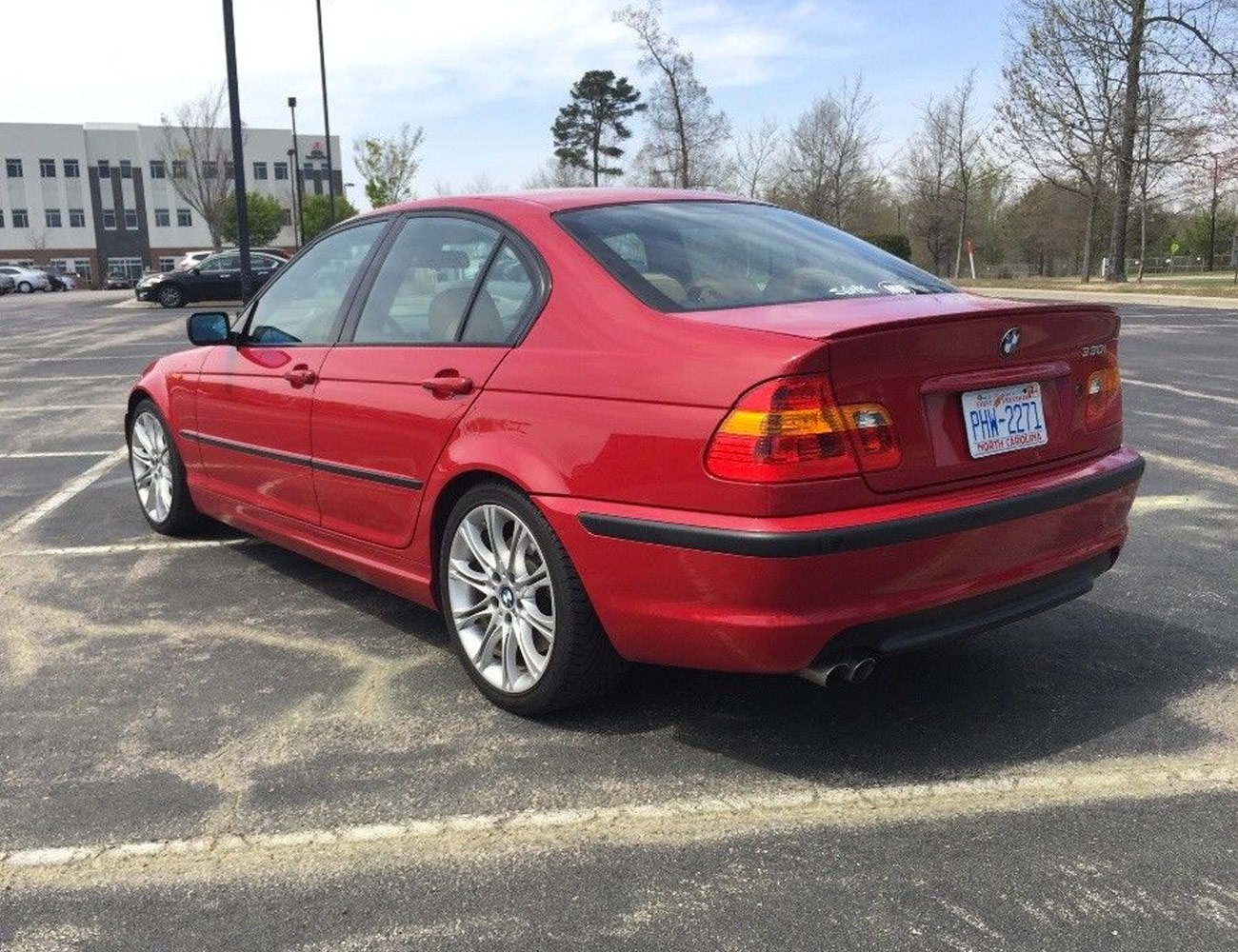
2004 BMW 330i ZHP

Mileage: 96,000
Location: Raleigh, North Carolina

What we like: Ok, so a fire engine red (sorry, Imola Red) BMW isn’t exactly subtle, but nobody around you would know your 330i would give an M3 a run for its money. The ZHP package bridges the gap between the more pedestrian 3-Series cars and the top-of-the-line M3 with suspension tuning and a higher redline, plus a tad more horsepower, courtesy of hotter cams. There are a few visual upgrades but nothing like the litany of M badges you get on the M3.
From the seller: “Vehicle is in ZHP package-exclusive Imola Red and has natural brown leather, power and memory seats, power moonroof, Harmon Kardon sound, Premium Package and Performance Package, Navigation and Parking Sensors.”
What to look out for: After about 60,000 miles valve cover gaskets may start to leak, causing oil to burn. Luckily parts to repair this problem only cost between $200-$300.

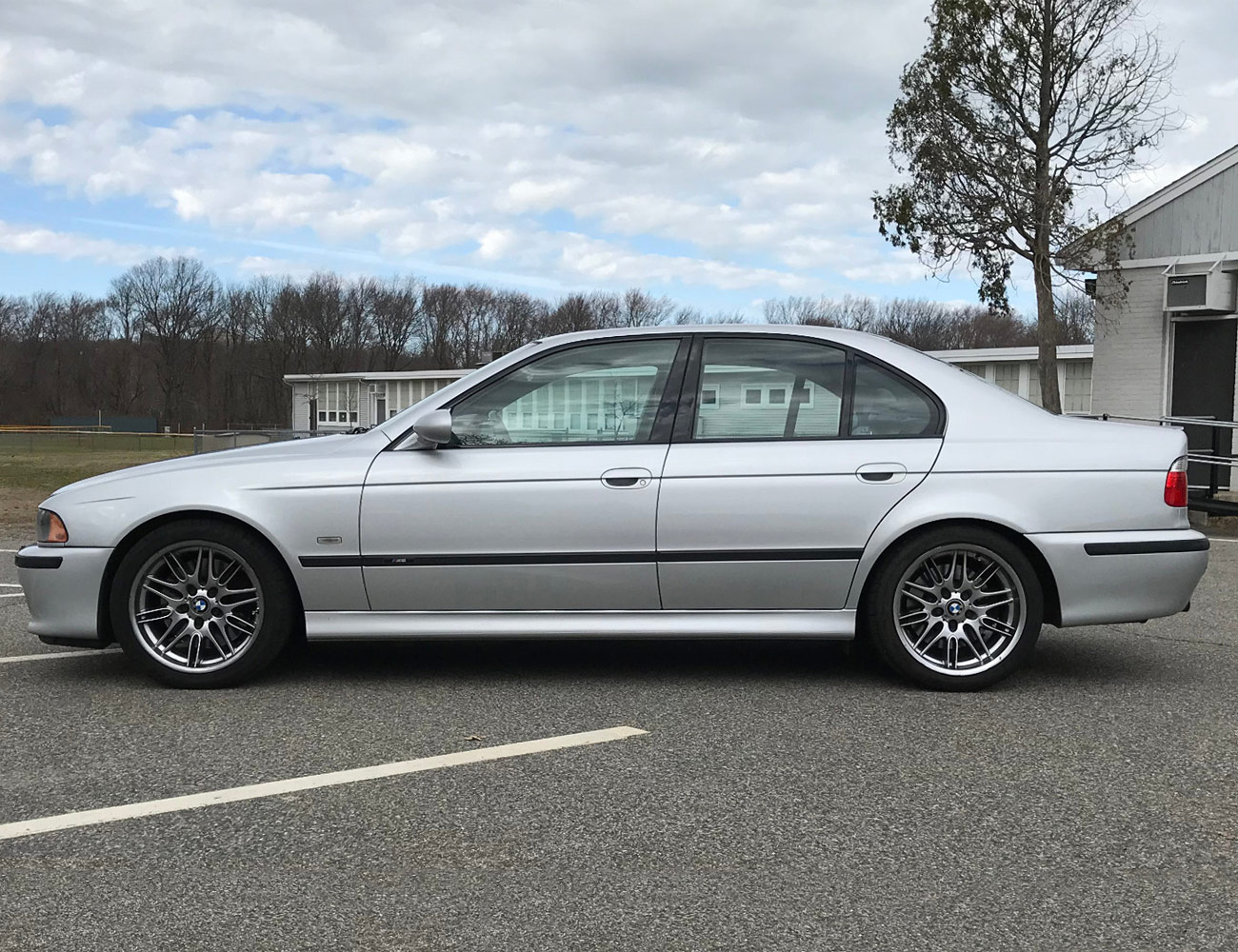
2001 BMW M5

Mileage: 162,000
Location: Quincy, Massachusetts

What we like: The first generation M5 is one of the founding fathers of the modern factory sleeper sedan. The later E39 generation seen here continued that tradition — the only real giveaway that there’s some extra grunt under the hood is its solitary M badge on the trunk and the tiny M5 bade on its door strip. You can never go wrong with a classy silver paint job that comes with a 4.9-liter V8 and six-speed manual — ‘iron fist in velvet glove’ comes to mind.
From the seller: “This 2001 BMW M5 is finished in Titanium Silver over black Heritage leather and was purchased by the seller from the original owner in 2014. The car shows just under 162k miles and is powered by a 4.9-liter S62 V8 paired to a six-speed manual transmission, and maintenance performed under the seller’s ownership included a new clutch kit, rear main seal, driveshaft flex disc, fuel pump, water pump, oil change and more.”
What to look out for: The most commonly reported problem with the 2001 M5 is the tension strut bushings failing. It’s not a catastrophic problem, but it will give the suspension a more mushy feel.

2003 Audi RS6

Mileage: 97,000
Location: Atlanta, Georgia

What we like: Like the M5 above, this RS6 does a good job at misdirection thanks to a subtle silver paint job. Wider wheels and tires and its lower stance are bigger giveaways, but to the untrained eye, the 4.2-liter twin turbo V8 secret is safe — well, at least until the throttle pedal goes straight to the floor at every green light.
From the seller: “This 2003 Audi RS6 is powered by a twin-turbocharged 4.2L V8 paired with a five-speed Tiptronic gearbox and was previously sold in a 2016 BaT auction. The seller purchased the car in April 2017 and has since adjusted the ride height for improved ride quality, rebuilt the front CV axles, rebuilt the front Brembo brakes and performed cosmetic work to correct paint blemishes and interior faults.”
What to look out for: There was a massive recall for this generation S6. It centered around the fuel tank: a valve can develop a crack that causes a fuel leak which, of course, is a fire hazard.

2001 Mercedes-Benz E55 AMG

Mileage: 58,000
Location: Katy, Texas

What we like: At this point in the list, you’ve probably noticed the Germanic theme going on. These days the Big Three’s super sedans come with big grilles, ducts, vents and wings, but the Germans used to embody the ‘speak softly, carry a big stick’ approach. The ’90s and early ’00s were arguably the golden age of the super sedan genre, and this E55 AMG is a prime example.
From the seller: “The car was optioned with xenon headlights as well as Parktronic distance sensors, which can be seen on both bumpers. AMG Monoblock 18-inch alloys wear Bridgestone Potenza tires.”
What to look out for: Instrument cluster failing is one of the more reported problems with this year E55 AMGs. Unfortunately, it’s not just a matter of a simple fuse swap. The entire instrument panel needs swapping, so make sure that’s rectified before purchasin.

Looking to Sell Your Car?

If and when you decide to dive into the used car market to sell, either to upgrade or make a lateral purchase, of course, you want to get every penny for it that you can.Read the Story

This Is the Stripped-Down Land Cruiser We’ve Always Wanted

Depending on your propensity for torturing yourself emotionally with things you aren’t allowed to have knowledge of non-US-market cars, you might be familiar with the Toyota Land Cruiser Prado. If you aren’t, it’s essentially a smaller version of the standard Land Cruiser sold in virtually every area of the globe (both as a four-door and two-door) except for North America. On the bright side, I guess, we get the four-door version in the form of the Lexus GX, a leather-and-wood-swaddled luxury variant, but in other areas of the world, the Prado is a much more humble machine. Toyota, however, just announced this week that the Prado is about to get a lot humbler, with the introduction of the Prado Utility Commercial.

So how humble is it? Well, it comes rocking steel wheels and a cloth interior, while the torquey, 2.8-liter diesel engine sends its power to the wheels via a six-speed manual gearbox. Meanwhile, the rear seats have been removed, offering up a cavernous cargo area for hauling mulch or, I don’t know, maybe a pack of bandana-wearing golden retrievers? The only limits are your imagination and the 78 cubic feet and 56 cubic feet of cargo space in the long-wheelbase and short-wheelbase versions, respectively.

Ostensibly, these Land Cruisers are made for commercial purposes, but being stripped of their luxuries, they’d make a great blank slate for an overland build. The short-wheelbase version is an especially lust-worthy machine, seeing as smaller off-roaders are easier to wrangle into tight, off-road spaces. Given that Ford is bringing back the Iconic Bronco (potentially in two-door guise) and the next generation Land Rover Defender will be making its ways to our shores, Toyota could certainly use a small, capable and simple two-door off-roader like this to satiate America’s growing lust for such a thing. Bringing it over here is probably just wishful thinking on our part, but it’s okay to dream.

Today in Gear

The best way to catch up on the day’s most important product releases and stories. Read the Story
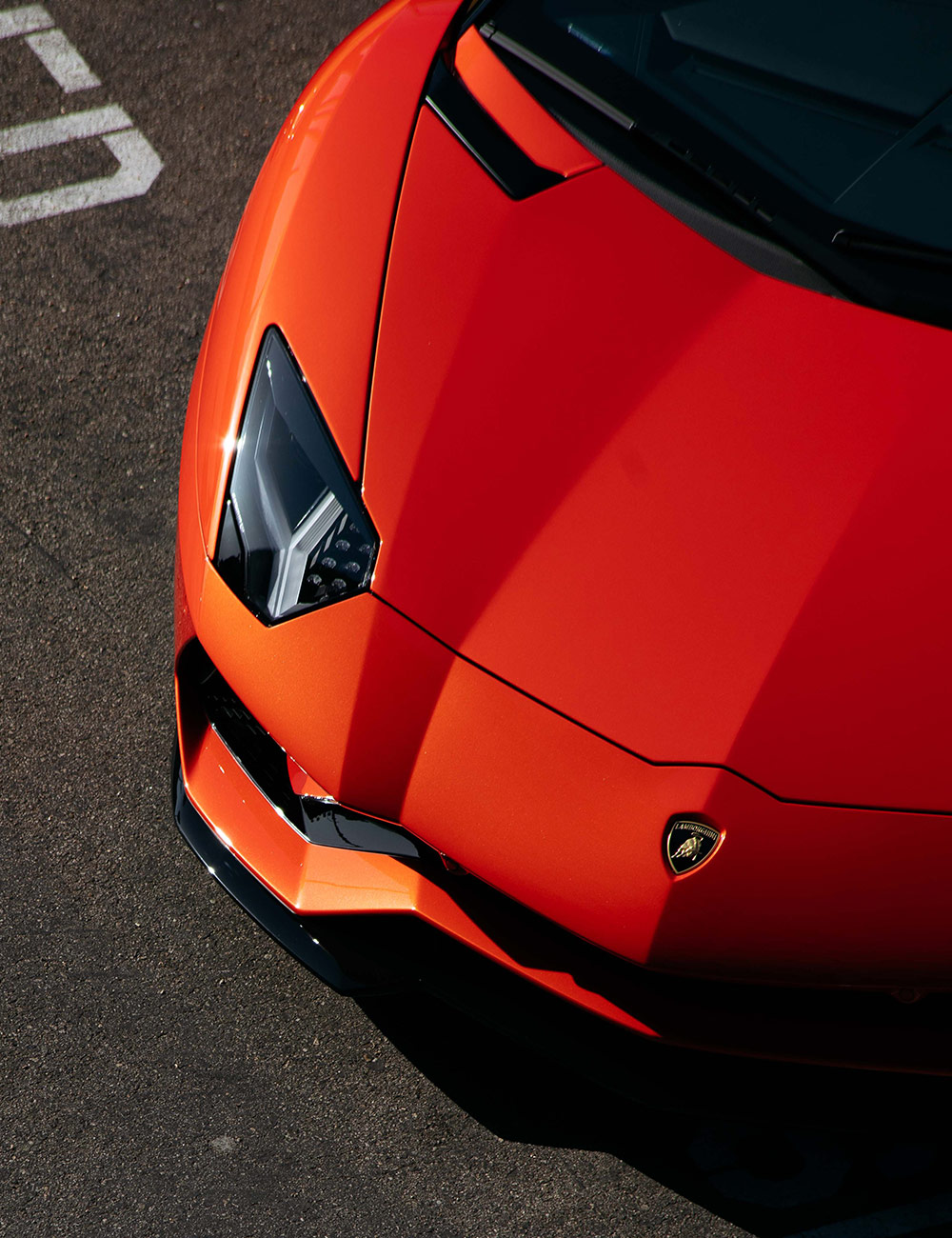
The Best Look at the 2020 Ford Bronco

Last year we spoke to an engineer who had insider information on the development of the upcoming 2020 Ford Bronco. A few weeks ago, Ford released the first official images of the 2020 Bronco, except for the fact that it was under a sheet. It was the best look at what Ford’s legendary SUV will look like, or at least its silhouette — until this morning. Today, Road and Track released its own renderings of what they think the Blue Oval’s off-roader looks based on lighting and the way the cover hangs off its body.

At the time, our source said Ford “just commissioned another design study, because they feel it looks too much like a Wrangler.” He went on to describe it as similar looking to “the [Ford] Troller, out of Brazil,” and that “it’ll look like a four-door version of that.” But a lot can change in a year and, if Road and Track’s renderings are as accurate as we hope they are, there will be a two-door version.

Based on the information given to us last year from our source, Ford also “want it comparable [to the Wrangler] in every way,” which is a win for the consumer considering how capable the Wrangler is both on and off-road. And even though everyone wants to see a big V8 pulling the Bronco around, it’s unlikely, especially if Ford already ditched the V8 for the Raptor and gave it a turbo V6. With that said, even the 2.3-liter four-cylinder that’s possibly going in the Ranger wouldn’t be a bad idea seeing as how there’s a possible 350 horsepower and 350 lb-ft of torque on tap.

As was the case last year, and even with Road and Track’s clever renderings, everything is still pure speculation. We reached out to Ford for comment, but haven’t heard back. We’ll update the story if and when that changes.
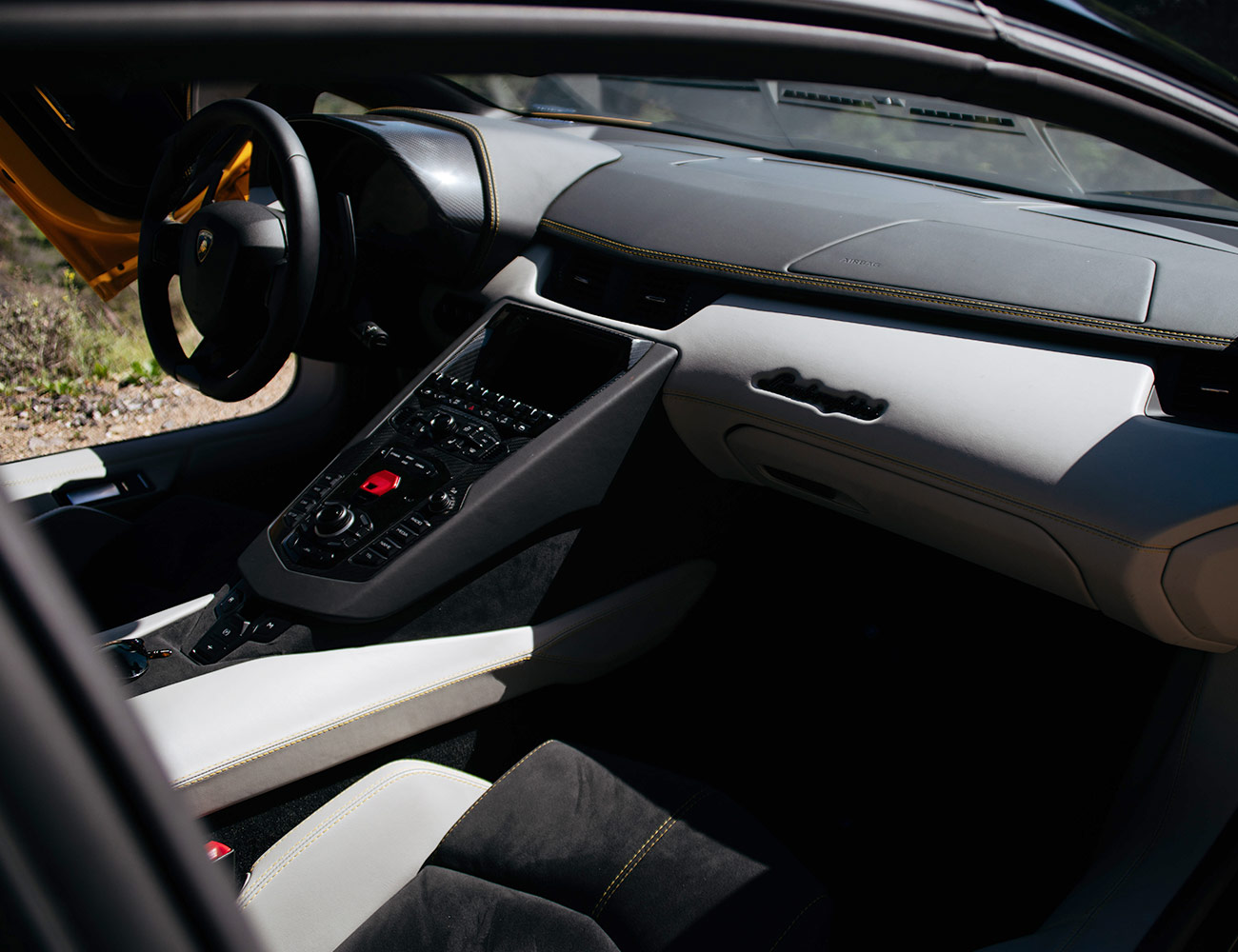
Details on the 2020, From a Ford Engineer

A Ford insider close to the project sheds light on the hotly anticipated 2020 Bronco. Read the Story