All posts in “Cars”

This Low-Mileage 1993 Mazda RX-7 Is Just as Affordable as a New Miata

Editor’s Note: We love scouring the internet for reasons to spend money we don’t have on cars we daydream about owning, and these are our picks this week. All prices listed are bid amounts at the time of publishing.

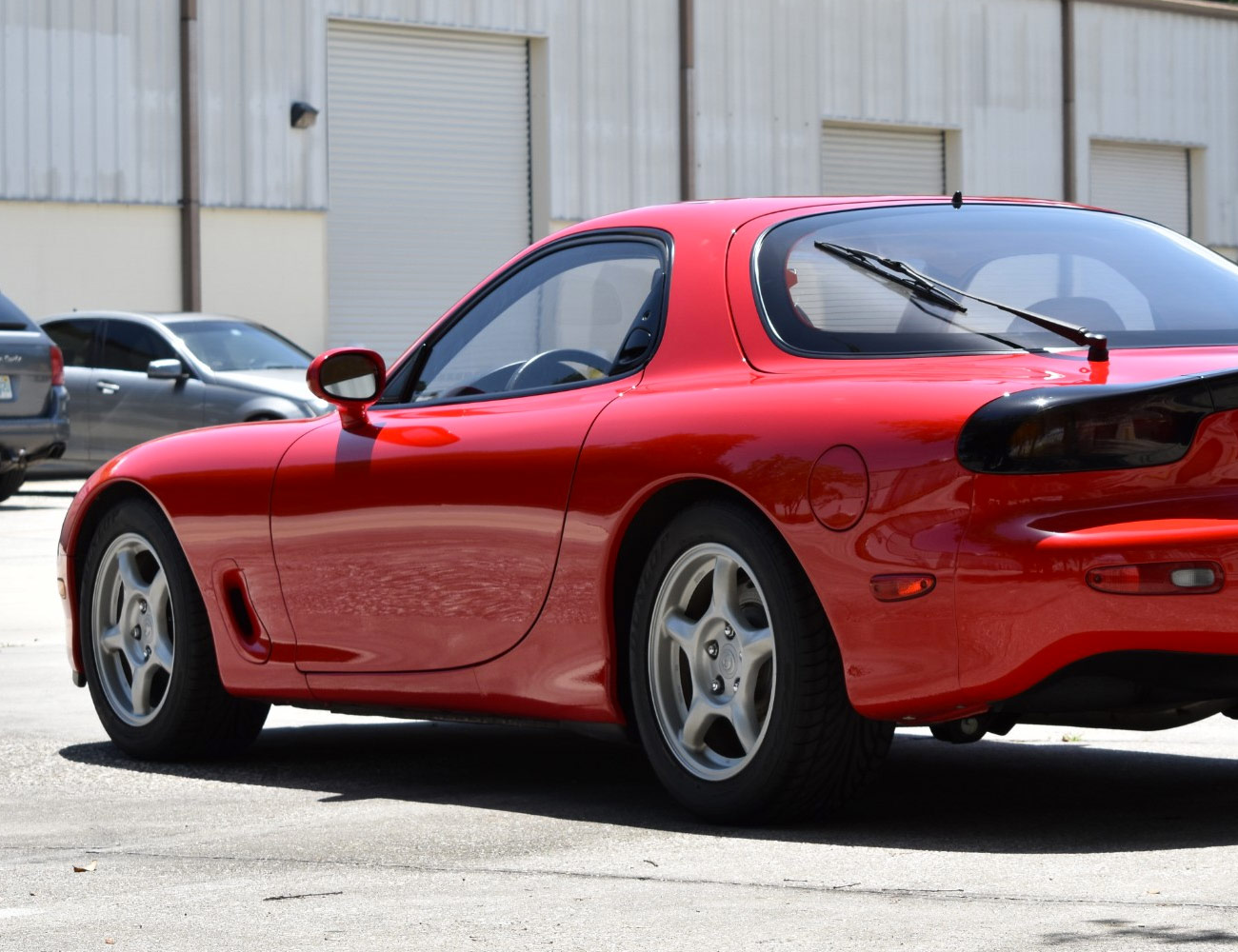
To quote modern lexicon, ‘only ’90s kids will remember’ that 20-years ago, Japan was the leader in affordable performance. Cars like the Acura NSX and Integra Type R, Nissan 300ZX and Honda Civic Si went wheel-to-wheel with their European counterparts and finished on top. Out of all of them, however, the Mazda RX-7 (immortalized by Dom Torretto in the original Fast and Furious) was arguably the best all-rounder. Despite its temperamental reputation, the low weight, 250-odd horsepower and 7,500 rpm redline made it a driving icon of its day. And today, you might be able to pick one up for the same price as a new Mazda Miata.

What We Like: Now that Japanese sports cars are earning vintage car status and others are outside of the 25-year law limitation, they’re seeing a boom in popularity again. The RX-7 holds a special place in a lot of enthusiasts’ hearts, not just because it was Dom Toretto’s original ride, but because, from stock it was an outrageous performance car. This example here has such low-mileage that it might as well be 1993 again. This is one of the cleanest and, most importantly, unmodified FD RX-7s to surface in a while, which might be why it costs almost the same as it did when it was new.

From the Seller: “The seller recently purchased the car from a dealer in St. Louis, and it currently has 21k-miles. This Touring package equipped example features a sunroof, rear wiper, fog lights, 16-inch alloys, a black & tan interior, and Bose Acoustic Wave sound system. Power comes from a 1.3L twin-turbocharged dual-rotor engine paired with a 5-speed manual transmission.”

Watch Out For: The twin-turbocharged rotary engine pulling the FD RX-7 was legendary for its ‘explosive’ temperament. Between the high-revving, fragile characteristics of the rotary engine, the volcanic levels of heat from the sequential turbos and the smaller-than-needed cooling system, the RX-7’s engine was prone to overheating and leaks. This is a very low-mileage example, so it’s most likely in fantastic shape, but that means the problems are on their way. A common way to get ahead of the potentially catastrophic headache, or at least mitigate it, is to install a larger aftermarket intercooler.

Original Review: “The guys on the RX-7 team leave several clues they were aiming through the crosshairs at Acura‘s NSX, particularly in some areas of performance. Mazda’s claiming 0-60 mph in a blistering 4.9 seconds and a quarter mile in 13.5. The last time we tested a manual NSX, it made 60 in 5.4 seconds and the quarter in 13.7. They aren’t direct competitors. At over 60 grand, the NSX will burn down roughly twice as much money as the RX-7. And the RX-7 will lack the NSX’s stunning conceptual brilliance. But make no mistake. The RX-7 will kick some tail and take
some names.” — MotorTrend

Alternatives: In the ’90s, there was a flood of affordable sports cars coming out of Japan. Though the RX-7 is often cited as the best all-rounder, it was hard to go wrong when picking a performance car from the island nation. The Acura Integra Type R was down on power from the RX-7, but being $10,000 cheaper was a significant lure. Perhaps the Mazda’s most direct competitor was the Nissan 300ZX, although that came with a $10,000 premium over the RX-7. Most surprisingly, the RX-7 could best the Acura NSX in the 0-60mph contest by about a half-second and was $30,000 cheaper to boot.

Engine: 1.3L Twin-Turbocharged Rotary
Transmission: Five-Speed Manual
Location: Jacksonville, Florida
Mileage: 21,252
Price When New: $32,900

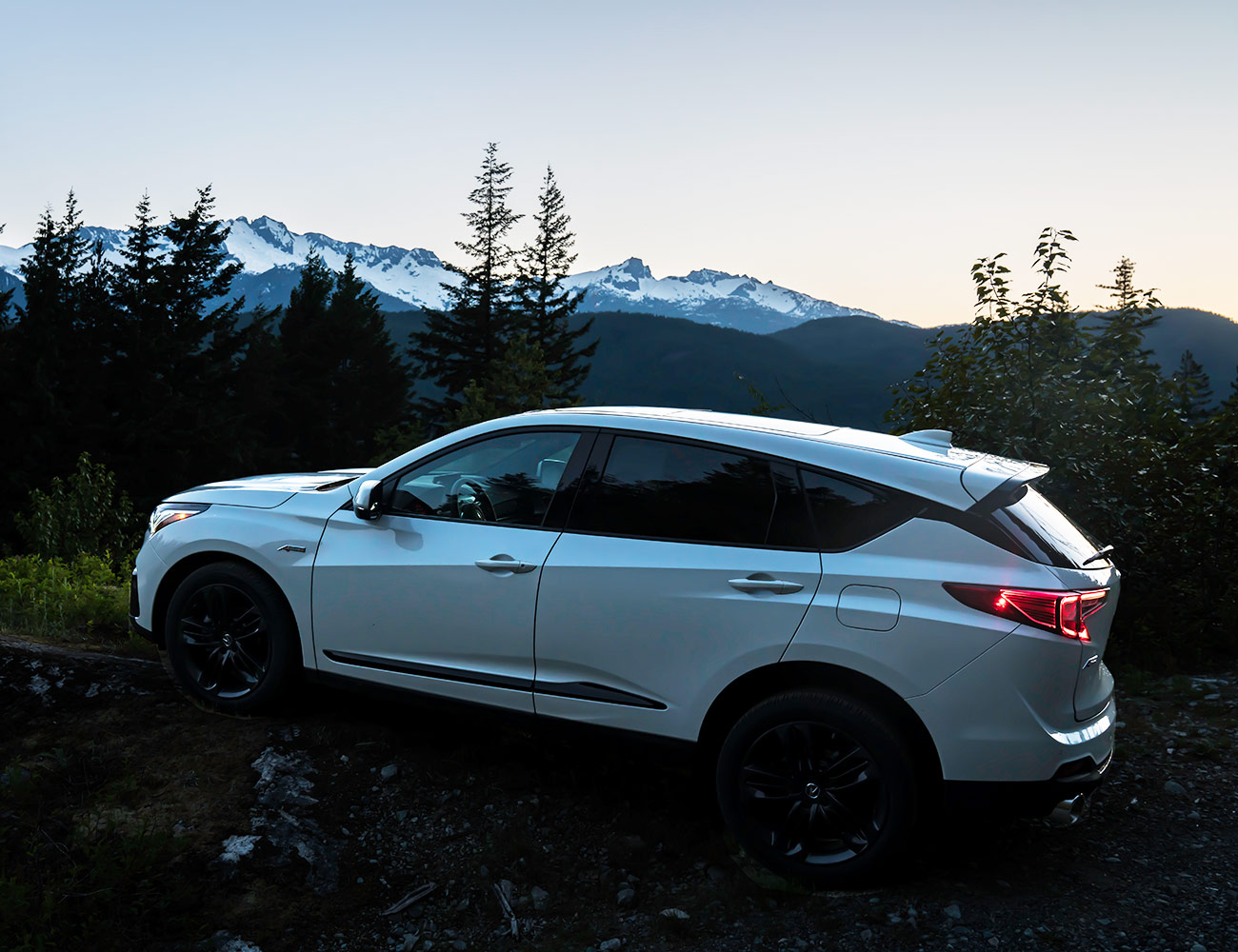
Acura’s New True Touchpad Interface Provides the Least Frustrating Infotainment Experience on the Road

T

he new Acura RDX crossover has a lot going on: crisp styling, brisk performance that turns surprisingly intense in sport mode, and a revised Super Handling All Wheel Drive system, with 100-percent torque vectoring in the rear, that will make you wish you could take a crack at the old unpaved version of the Pikes Peak Hill Climb. It’s an admirable rebirth of the nimble little ride and loads of fun.

But the RDX’s most vital achievement isn’t in comfort, driving dynamics or outward appearance. Rather, it’s in a square little pad right at your fingertips. The new True Touchpad user interface is probably the first infotainment control mechanism that didn’t make me want to bash my head on the steering wheel in frustration. But more broadly, it’s the first that got the touchpad idea really right. Though there’s a learning curve, after many hours of use while driving the car around Whistler, British Columbia, using it became seamless and intuitive — and refreshingly brisk.

The system deploys an industry-first use of a touchpad technique called “absolute positioning.” In most touchpad systems, you steer a cursor around the main display by dragging your finger across the touchpad, which is usually mounted in the center console in front of the armrests or tucked in next to cupholders. It’s essentially a remote control. That’s true, as well, with the True Touchpad setup, but instead of having to place your finger on the pad to “wake up” the cursor and then steer it around to whatever tile or icon or tab you want to hit — a process that tends to draw your eyes away from the road longer than it should — the cursor materializes in a spot that corresponds precisely to where your finger lands on the pad. In short, the small blank pad replicates the screen, and if your finger lands on the center of the pad, the cursor shows up in the center of the screen.

The result is that, once your brain and fingers internalize the pad’s position and dimensions, you instinctively learn to aim your finger right at the function on the screen you wish to activate, without even looking. So you eyeball the 10.2-inch HD display, see the buttons for navigation, entertainment, calls, etc., and then just tap away as if you’re tapping the screen itself. But you’re not, see?

The new True Touchpad user interface is probably the first infotainment control mechanism that didn’t make me want to bash my head on the steering wheel in frustration.

True, you kind of have to experience it yourself. But while Acura states that the system is immediately intuitive, that’s not necessarily true, especially if you’ve grown accustomed to conventional touchpad interfaces. The absolute positioning thing takes some getting used to, as do the “swiping” movements you can use to quickly flick between screens or functions. But other things — like the crazy-good character recognition that allows you to quickly enter addresses in the navigation system and the natural-language voice recognition — are spot-on. Regardless, the learning curve ends quickly. Messing around with the system in a dealership will give you the gist, but actually taking it on the road is where the magic happens. Everything is quite literally at your fingertips. In fact, the touchpad is even gently parabolic, so your finger is naturally in steady contact with it. Your hand barely has to move at all.

The organization of all the actual stuff in the display is also greatly improved in the new system. The pad includes two zones that match two separate zones on the display, and you’re able to quickly swap them. (If, for instance, you want to sling the navigation screen to prominence for a moment and then bring the entertainment screen back once you’ve gotten your bearings with the map.) The system offers a mind-boggling degree of customizability, allowing owners to program the information present in both the main display and the smaller instrument cluster display — though people who are easily overwhelmed by tons of options might give up immediately. If you stick with it, though, as owners likely will, you can have this infotainment system dialed in just as you like it, with hand-in-glove precision.

Once I did that and took it out on the road, it became clear that this is easily the most finely-tuned and tunable interface on the road. True, it has its own unique logic and its own quirks, but at the end of the day, no other system really comes close.

The 6 Cars We Love to Hate

D

esign is subjective; beauty is in the eye of the beholder; one man’s trash is another man’s treasure. There are dozens of ways to say, “Yeah, well, that’s just, like, your opinion, man.” But when it comes to cars, opinions around the office can get pretty passionate. Maybe it’s because cars are such a large part of our culture and we interact with them on a daily basis. Some just end up hitting a nerve in a way other modern conveniences can’t.

Gear Patrol staffers can agree on when car companies knock it out of the park, but opinions split over utter automotive failures — the worst cars ever. It could be a regrettably unforgettable personal experience, a car company seemingly giving up or just the sight of a car inexplicably conjuring up disgust, nausea and a hint of rage. Whatever the reasons, these are the cars we love to hate.

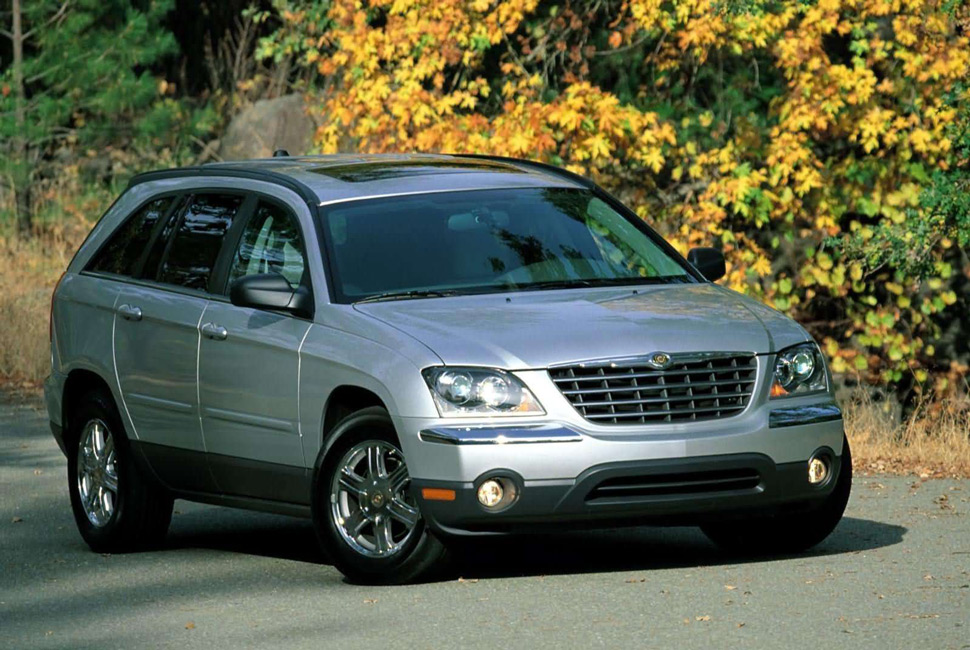
2004 Chrysler Pacifica

Chrysler-Pacifica-Gear-Patrol
Reason for hate: Picture an SUV, a minivan, a crossover and a wagon tossed into a blender, made into a paste, then baked at 550 degrees until you have a solid object. That’s the most accurate description of the 2004 Chrysler Pacifica. The car quite frankly didn’t have a good angle and, because it lacked a true identity (not in a good way like a BMW M coupe “clown shoe.” Is it a coupe? A hatch?), it fell completely flat. It’s no wonder that when Chrysler opted to bring back the potato-esque dog of an automobile in 2017, it ditched the original platform altogether and instead built a minivan — what they should have done in the first place.

Chrysler projected sales of the Pacifica to hit 100,000 per year, a number which it didn’t even come close to. While the ride quality was decent, it lacked any other redeeming qualities when driving. It offered a measly 250-horsepower 3.5-liter V6, which barely moved the 4,500-pound behemoth out of its own way, and the engine was paired with an already outdated four-speed automatic transmission — as if its gut-churning looks weren’t enough already. — AJ Powell

The Better Alternative: The Porsche Panamera Sport Turismo Turbo — a Dad Car we can get behind

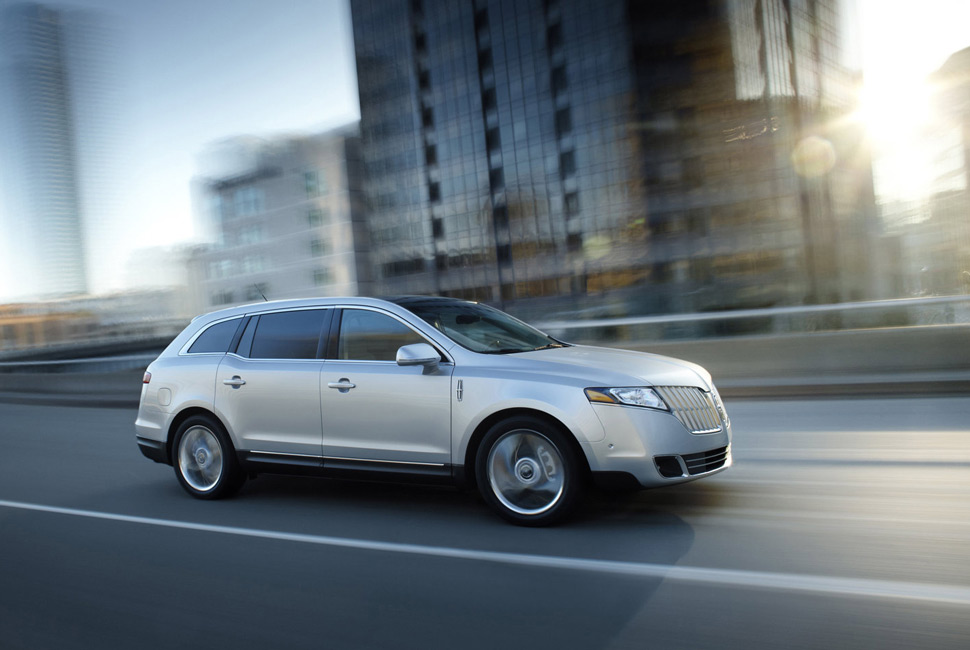
2009 Lincoln MKT

Lincoln-MKT-Gear-Patrol
Reason for hate: This car just makes me want to cry. It’s ungainly and ugly, with a huge maw and an inexplicable narrowing of the rear side windows that makes it — especially in black — look like a hearse. Ford seems to think so, too, since it even offers a hearse version of this beast. Frankly, I wouldn’t be caught dead in one. — Eric Adams

The Better Alternative: The 2018 Navigator — a far, far better Lincoln

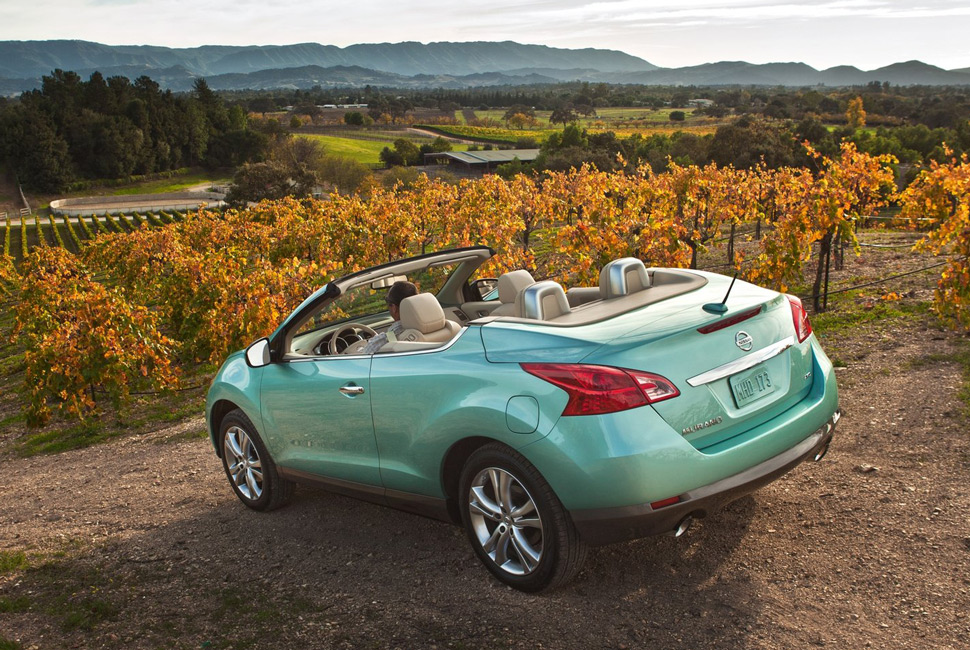
2011 Nissan Murano CrossCabriolet

Nissan-Murano_CrossCabriolet-Gear-Patrol
Reason for hate: The only way to make a cheese-grater-looking compact SUV worse is to make a convertible out of it — which Nissan did. I remember being at the New York International Auto Show, at the car’s reveal. Since it was media day, and most car journalists have similar taste, there was an audible gasp and silence. How did Nissan approve this? They are prime unicorn-spotting material…though not in a good way. — Bradley Hasemeyer

The Better Alternative: A Convertible SUV That’s Actually Desirable

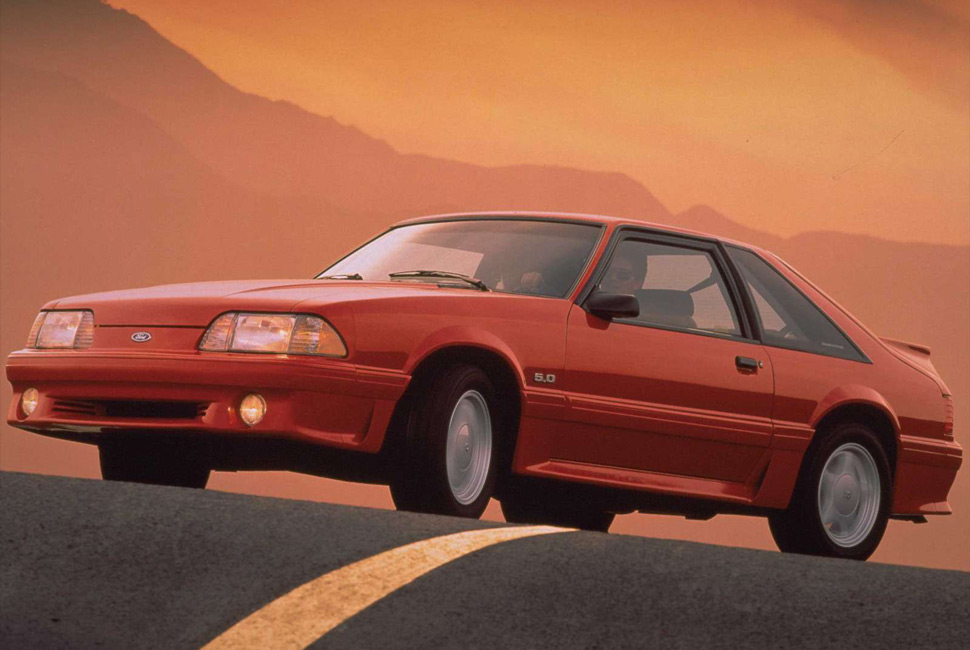
Every Fox Body Mustang

Ford-Fox-Body-Gear-Patrol
Reason for hate: I once sat at a dinner table with Dave Pericak, Director of Ford Performance, along with the editor in chief of Mustang Monthly, and flanked by half a dozen Mustang devotees, and, with a straight face told them the Fox Body Mustang was nauseatingly hideous, and that the much-maligned Mustang II was far prettier by comparison. I got a few death stares and a “you can’t be serious,” but I held my ground. The guy to my right pulled up a picture on his phone of his own Fox Body Cobra: his pride and joy. With a glowing smile and twinkle in his eye, he asked me again if I still thought the Mustang II was prettier. If you’ve ever told anyone their child looks like they shaved a dog’s butt and taught it to walk backwards, you know exactly how the mood transformed at the table.

But I’m not wrong. The Fox Body is such an embarrassment to the Mustang name, Ford didn’t even give it a galloping horse icon, as if the mere association would tarnish the its heritage. From the factory, it either got an inline-four from a Pinto or an 18-year-old 140-horsepower 4.9-liter V8 that Ford marketed as a 5-0. What a joke. But the most annoying part about the Fox Body Mustang pig-faced rolling pile of malaise-era garbage is how much it’s defended as a “proper Mustang.” Then again, you’ll never hear any parent actually admit their child is ugly, but they will show you pictures of them and try to convince themselves otherwise. — Bryan Campbell

The Better Alternative: A Modern Mustang GT

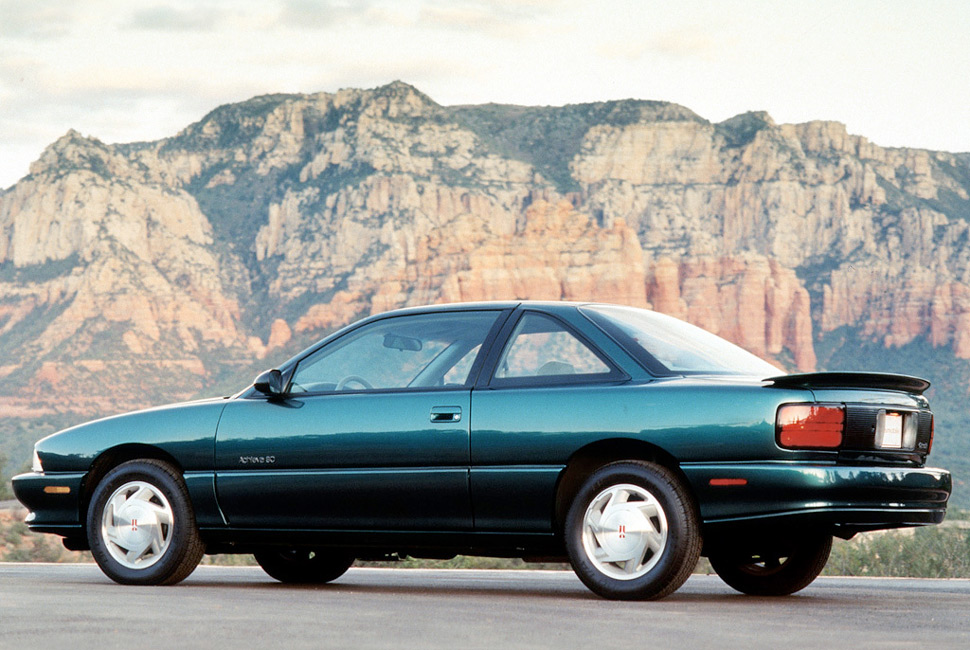
1992 Oldsmobile Achieva

Oldsmobile-Achivia-Gear-Patrol
Reason for hate: Clearly, in the creative brief for this car, GM executives titled their commission, “To Achieve Milquetoast, Maybe.” I like a silver lining as much as the next guy, but with the Oldsmobile Achieva, there simply isn’t one. And that’s the rub: it had potential, but like so many clunkers that hail from the end of the 20th century, the Achieva did a fantastic job of doing absolutely nothing. It simply represented an era of interminably boring vehicles.

Sure, you want to grieve the Achieva for its oh-so-subtle fender skirts (seriously?), Pep-Boys bargain-bin wheels, or its “yep, I’ve given up” interior. Or, lo, its peach of a drivetrain combination: a Quad 4 engine (what the hell does that even mean? “Four 4?”) mated to a turbo-hydramatic 3-speed transmission pulled straight out of the bathwater of shitbox transmissions. And the grille… goddammit it makes me mad just thinking about the grille. All this perpetuates the problem: the lack of inspiration in every aspect. It’s not even bad design, it’s simply no design.

In high school I knew someone who owned an Oldsmobile Achieva. It was white, dusty, and endlessly unkempt — just like the one you remember from down the block. Every time you saw it drive by you just wanted to HF it even before you knew what that meant. It was that loathsome. I’ll refrain from using Sam’s last name, but he rightfully called it the Underachieva, and to this day I’ve never once heard a more appropriate superlative. — Eric Yang

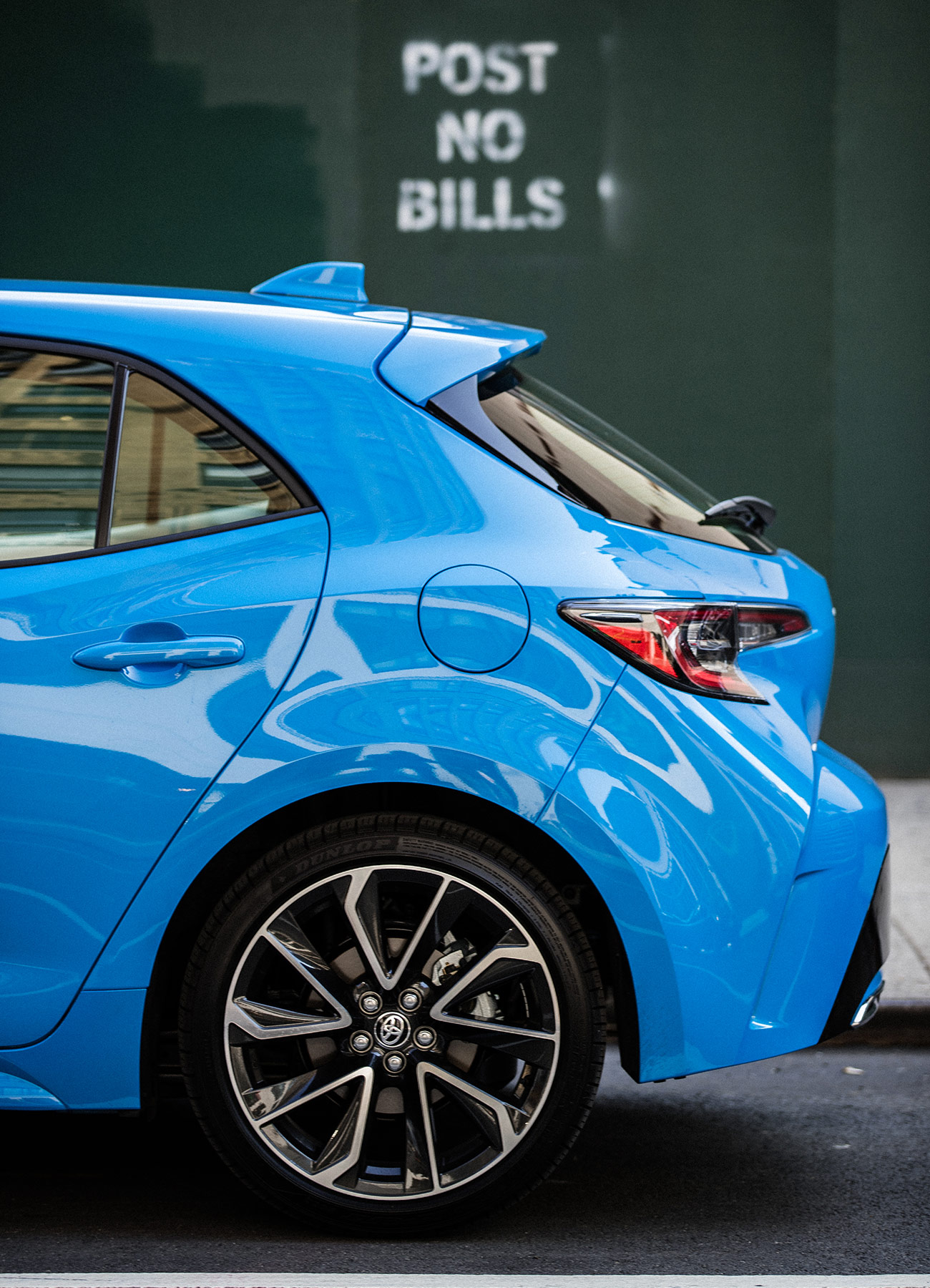
The Better Alternative: The New Toyota Corolla is…excellent

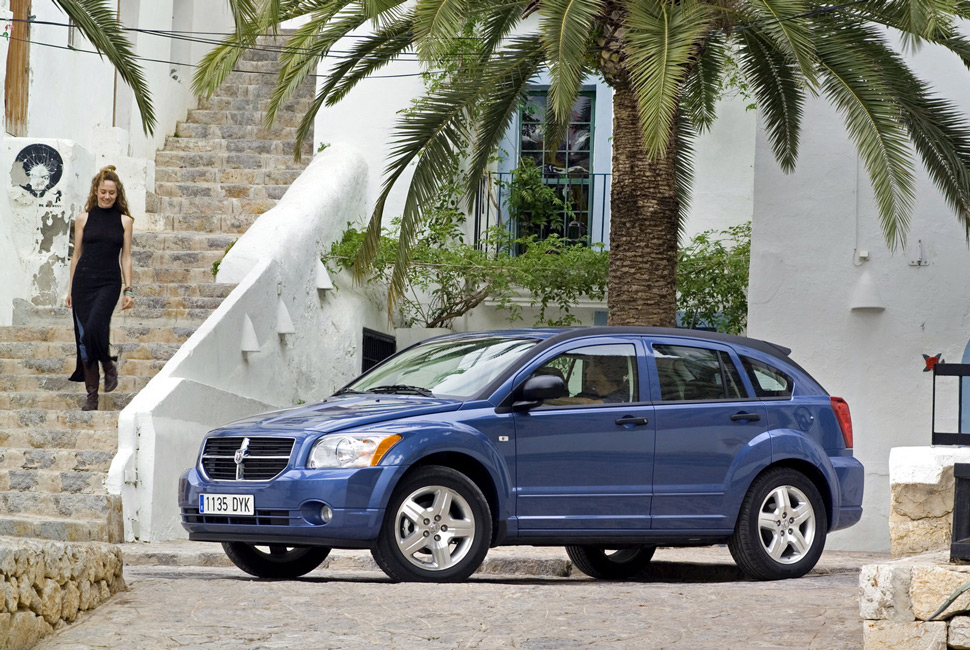
2006 Dodge Caliber (Rental Spec)

Dodge-Caliber-Gear-Patrol
Reason for hate: My family had gathered for a wedding in idyllic Santa Barbara, a mecca of all things luxurious and beautiful. Whichever rental agency handed over the keys to this thing (a) had a strong sense of irony and (b) should have apologized to my dad for Dodge’s wicked, plasticky transgressions. The cabin was tacky and plain and would have made an airline barf bag look sumptuous. If the overall concept of the filing-cabinet-on-wheels didn’t turn my stomach, being relegated to the backseat did — literally. The high rear belt-line made it impossible to use the window beyond absorbing through it only a hint of sunlight, that one ray being the only reason to go on living through the putrid, claustrophobic mire that was the car’s clinical, gray rear bench.

The hamster wheel under the hood was underpowered by a massive long shot; its anemic groan was a disappointment that cannot be overstated. Angles without end; preposterous, faux-aggressive cladding; fender “flares”; small wheels with hubcaps. It was uncomfortable beyond imagination, the materials sucked, it was cramped…I could go on. Needless to say, that crap-box didn’t qualify as anything close to “high caliber,” as its name might imply — more like “wet cap-gun caliber.” — Nick Caruso

The Better Alternative: The Dodge Demon – a car that actually lives up to its name

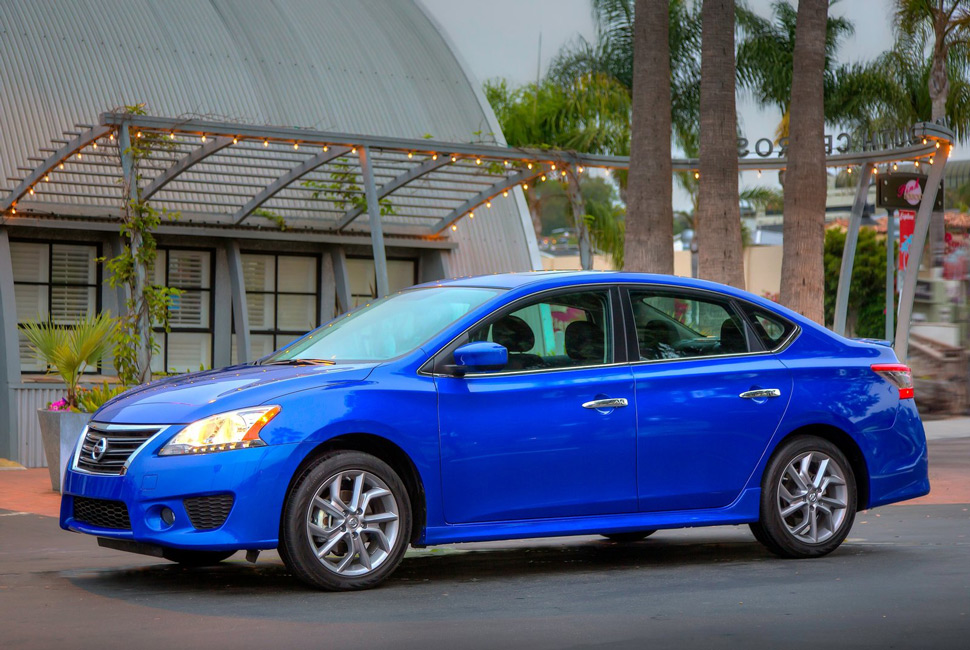
2013 Nissan Sentra (Rental Spec)

Nissan-Sentra-gear-patrol
Reason for hate: Do you want to know what it looks like when a car company gives up? Drive a rental-spec Sentra — I, unfortunately, did. If there was one impressive thing about the Sentra it was how astoundingly unremarkable it looked. An ugly car I can stomach, but there wasn’t even a hint that anyone involved with the car’s design actually cared. It didn’t get better on the inside. I can admire a cheap car’s simplicity, but there was nothing redeeming about the Sentra’s interior. The seats were appallingly stiff (and gray), the dash was cheap and plastic (and gray) and the center console looked massively outdated (it, too, was gray). I didn’t even get the impression that better upholstery and tech could have concealed this car’s bland, lazy shittiness.

Nissan is also one of the few manufacturers to really try and make continuously variable transmission a thing across their lineup. And fine, I get it. Technically a CVT is a great idea but, in a car as lazily engineered and unrefined as the Sentra, it only highlights the car’s pitfalls: it’s noisy, feels disconnected and makes the engine feel, somehow, more anemic than it is. All this in a package that, to drive, felt as rickety and unappealing as drunkenly fucking on an IKEA coffee table. — Andrew Connor

The Better Alternative: The Nissan GT-R – probably the only Nissan that matters

The Nürburgring Nordschleife Race Track: a Story of Porsches Setting Records

From Issue Three of the Gear Patrol Magazine.

We’re resurfacing this story in honor of Porsche smashing its own all-time Nürburgring record (6:11.13) in the new 919 Hybrid Evo race car — which just set a record of 5:19.546. That’s an astonishing 52 seconds quicker: the car achieved an average of 145.3 mph and top speed of almost 230 mph. — Ed.

I

t causes helmeted brows to weep sweat; it makes men tremble with fear, with adrenaline. It makes an elite few cars into legends; most into failures. It is a Great White Whale, chased with roaring, burning obsession; it is the “Green Hell,” revered by the pious. It is a benchmark. It is the Nürburgring Nordschleife.

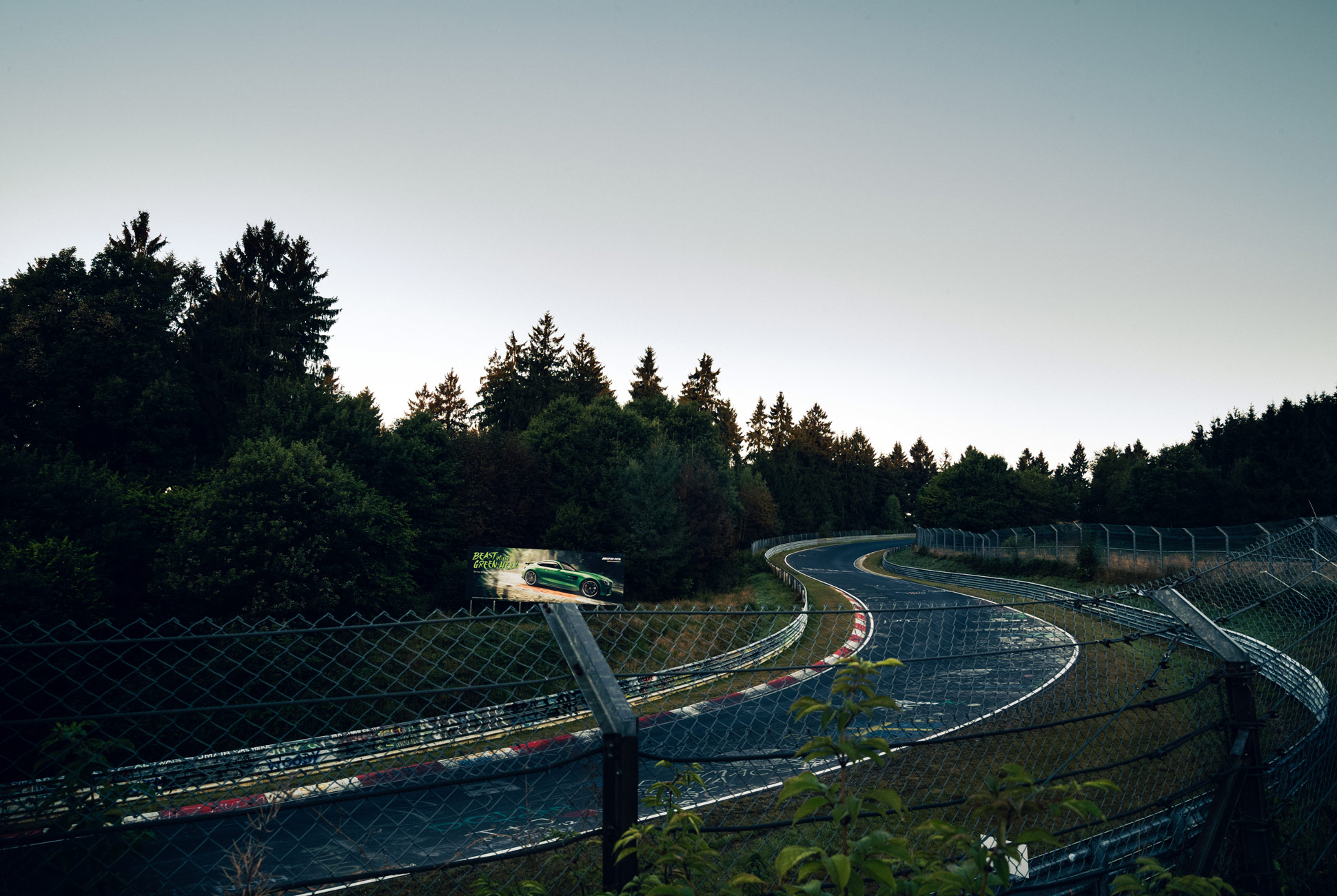
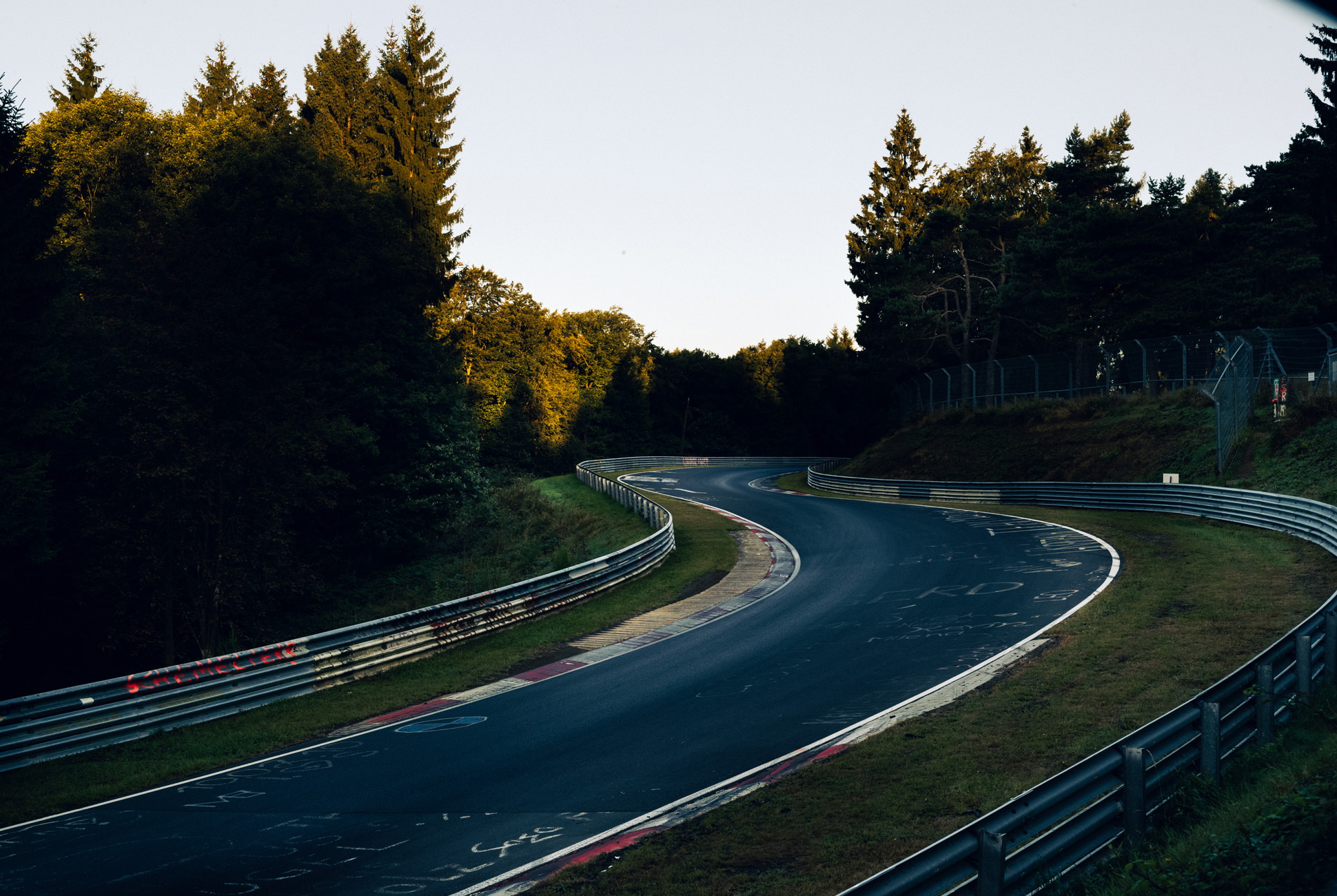
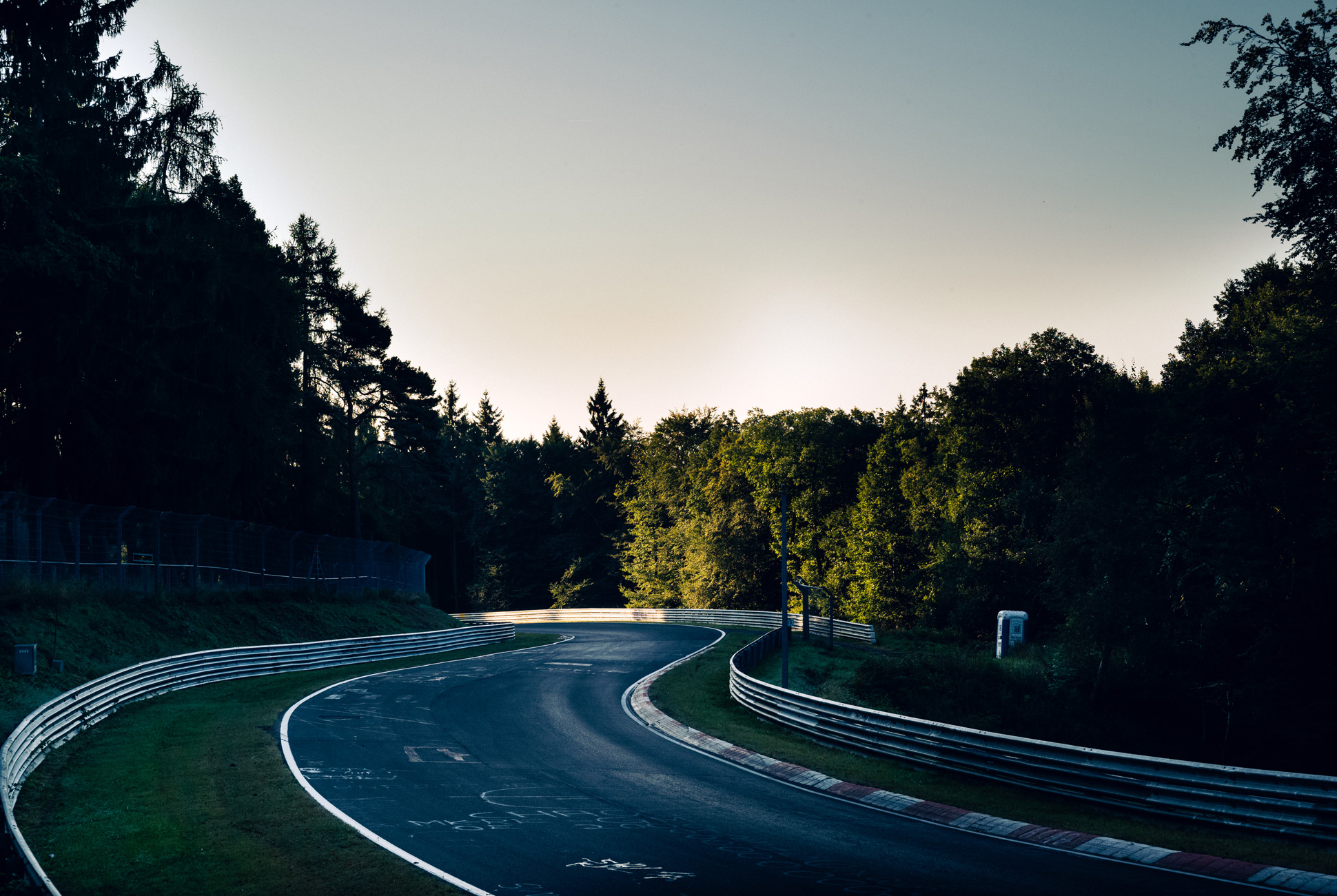
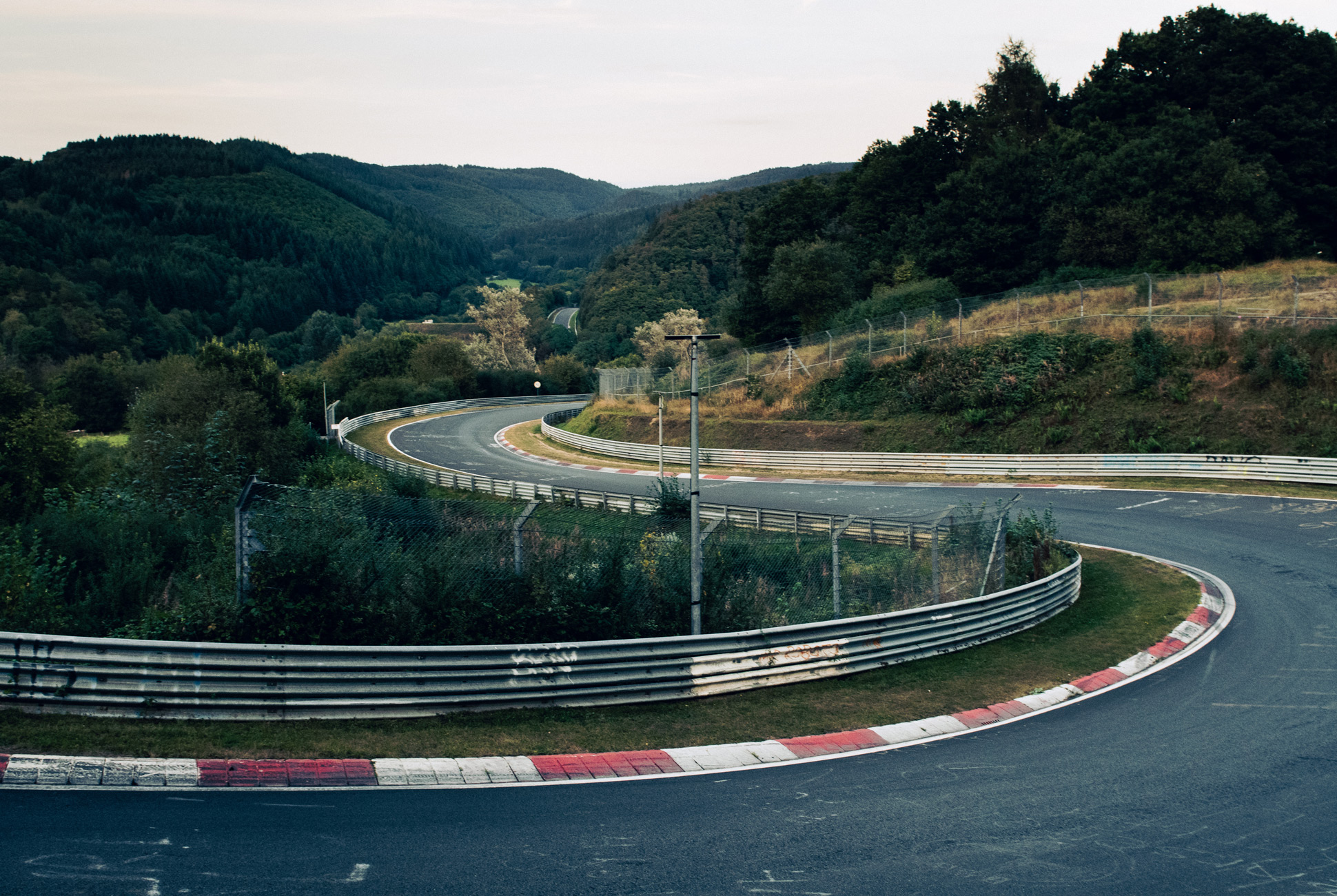
The small town of Nürburg is tucked into the foothills of western Germany’s Eifel mountains. The quintessentially European roundabouts dotting its roads are modest and calm; motorists give way to each other and mind their manners and putter past. In all, the town covers less than 1.5 square miles. On the nearly century-old racetrack that dominates the surrounding environs, life is markedly different. The gargantuan Nordschleife covers roughly 11 square miles of countryside and wends through stands of trees, over hills and past roadways, its smooth, maintained surface a slurry of tire rubber and graffiti. Indeed, it is a colossal, complicated wonder: 73 turns and 1,000 feet of elevation changes spread over 13 miles of aggressive, hungry tarmac.

Before the original track was completed in 1927, races took place on the roadways in and around the Eifel Forest — a practice that was deemed too dangerous. Designed to showcase the glory of German engineering prowess, the Nürburgring delivered thrills for decades. Automotive capability improved rapidly, however, and soon cars were too fast to make driving the Ring (as the track is known) a reasonably intelligent endeavor. Parts of the track were reworked, and the end result is what we have today.

The Nürburgring is divided in two sections: the Grand Prix circuit and the North Loop, or Nordschleife. The Grand Prix circuit — rebuilt a few decades ago in the name of safety — butts against a massive complex, complete with grandstands and a visitor’s center with a roller coaster and casino inside. There’s an entire Lindner resort hotel attached to that section, where fans can rent rooms with windows and balconies that offer views of the GP track, making the area a self-contained tourism ecosystem.

Jackie Stewart, the famed British Formula One racer commonly thought of as one of the best drivers to ever live, nicknamed this track the “Green Hell,” as a nod to its beauty and risks.

The Nordschleife is something else entirely. Here speed is democratized — at certain times anyone with a car can drive to the track, pay a fee and experience the thrill; race events take it a step further, pitting professional driver against professional driver. But regardless of proficiency and experience levels, the Ring treats all comers equally: as foes. It is menacing, brutal. Jackie Stewart, the famed British Formula One racer commonly thought of as one of the best drivers to ever live, nicknamed this track the “Green Hell,” as a nod to its beauty and risks. Some estimates put death tolls at around 80 since 1928, including competitors and spectators; others say there are at least 10 deaths every year. It’s an objectively perilous place, especially considering the number of amateur drivers who go lap for fun. Except for a few corners, there’s no runoff, which means no empty area to skid into should you leave the track. If you do go off, you’re going to hit something. At racing speeds, this is a terrifying notion.

Story Continues After The Photos

Which, counter-intuitively, is what draws people to the Ring. To defeat this track is to be the best. It is fantastically, arrestingly beautiful; it is technically challenging and remarkably dangerous; it is a necessary evil in the car world. So amateurs and racers come to learn or to compete — to prove themselves. But there isn’t a feat more extreme than battling the track directly, alone, for it is a crazed, unforgiving, serpentine devil. Solo missions to conquer the Ring and become a lap record holder are momentous undertakings that amount to much more than just bragging rights. Automakers bring their best cars and their best drivers here because the Nordschleife’s combination of turns and elevation changes make it the most intimidating, demanding track on the planet. If you and your car slay this giant, then you officially achieve legendary status.

Proficiency at the Ring is measured in minutes, seconds, tenths of seconds. If your car is fast, it’ll do a lap in under eight minutes. If your car is very, very fast, it will break seven minutes. If your car is astonishingly fast, it will hold the all-time lap record at 6:11.13. At the time this was written, Porsche held 23 of the top 100 production-car lap records on the Ring, besting all other automakers by double digits. If there is a winning Ring-conquering formula, Porsche has found it.

Cars configured like the record holder started at $929,000; its battery and combustion engine hybrid system drives all four wheels and generates 887 total horsepower.

That 6:11.13 time, for instance, also belongs to a Porsche: the 956 Group C prototype racing car, which scorched the track during a qualifying lap in 1982. Racing is important to the automobile industry — without the technology developed for racing, we would have incapable, boring cars across the board — and the 956’s record is a long-standing testament to the extremes that Porsche can achieve. But race cars are supposed to be fast. What’s surprising is that as far as production cars (generally, mass-produced cars that the public can buy and drive) are concerned, the fastest to ever lap the Ring is a hybrid.

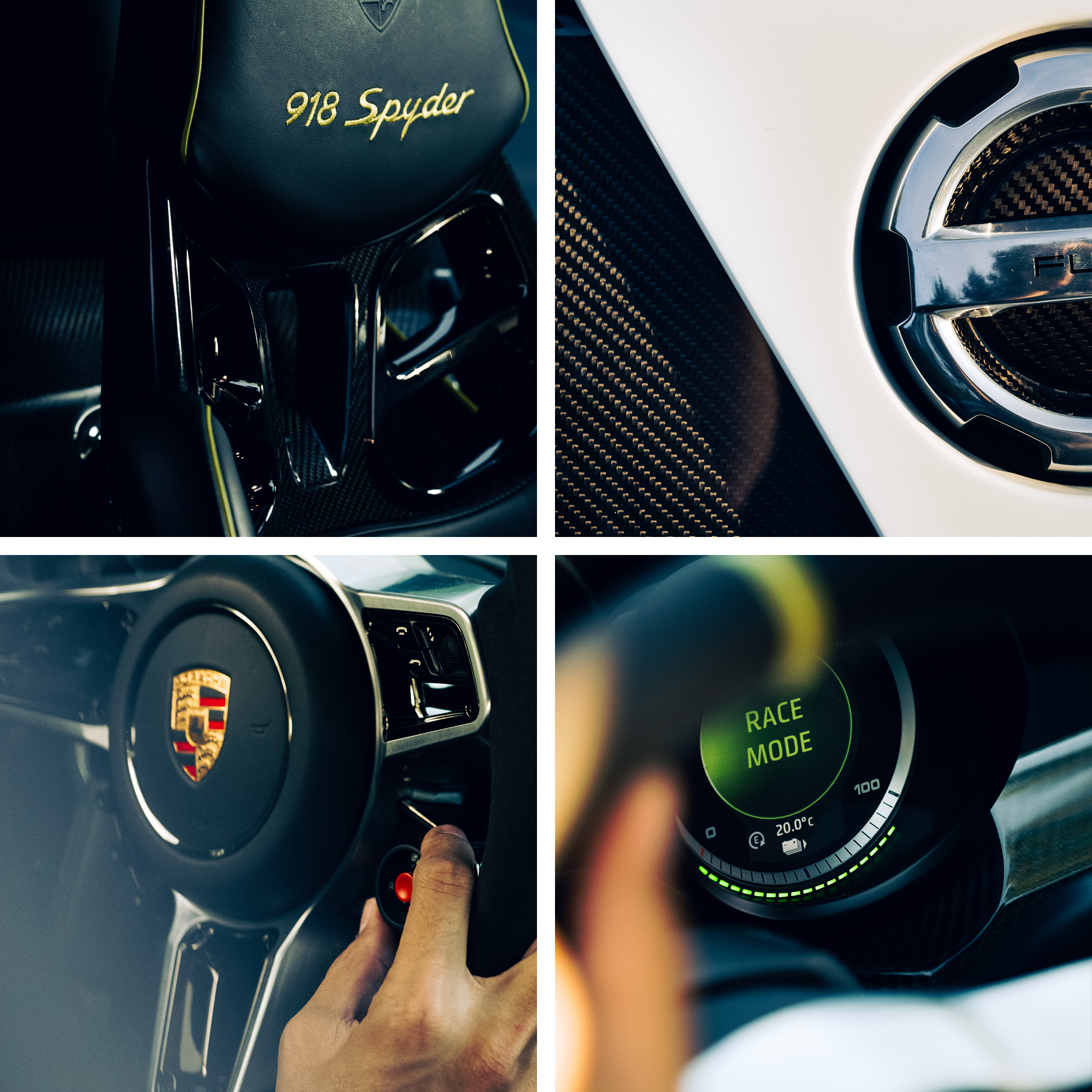
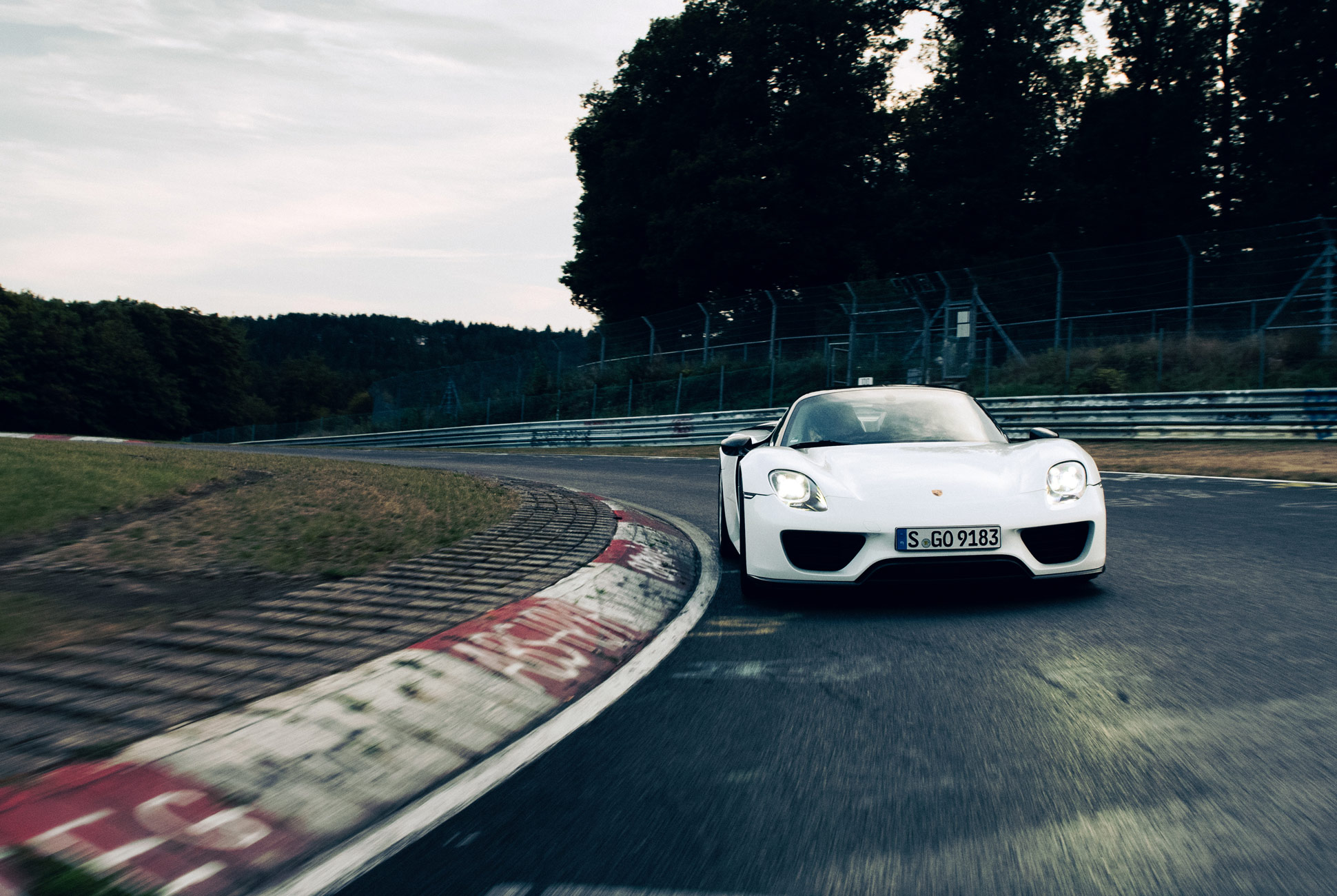
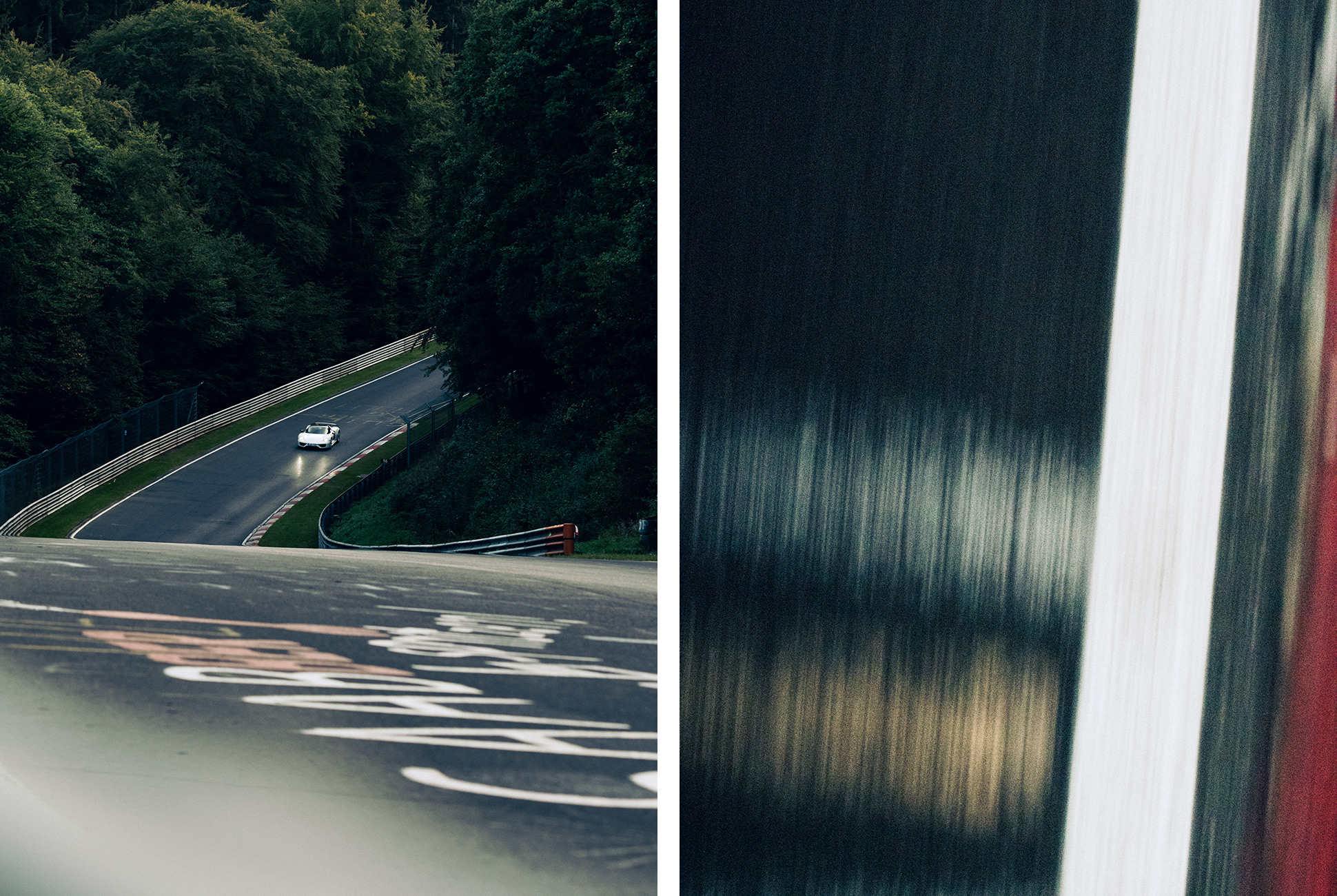
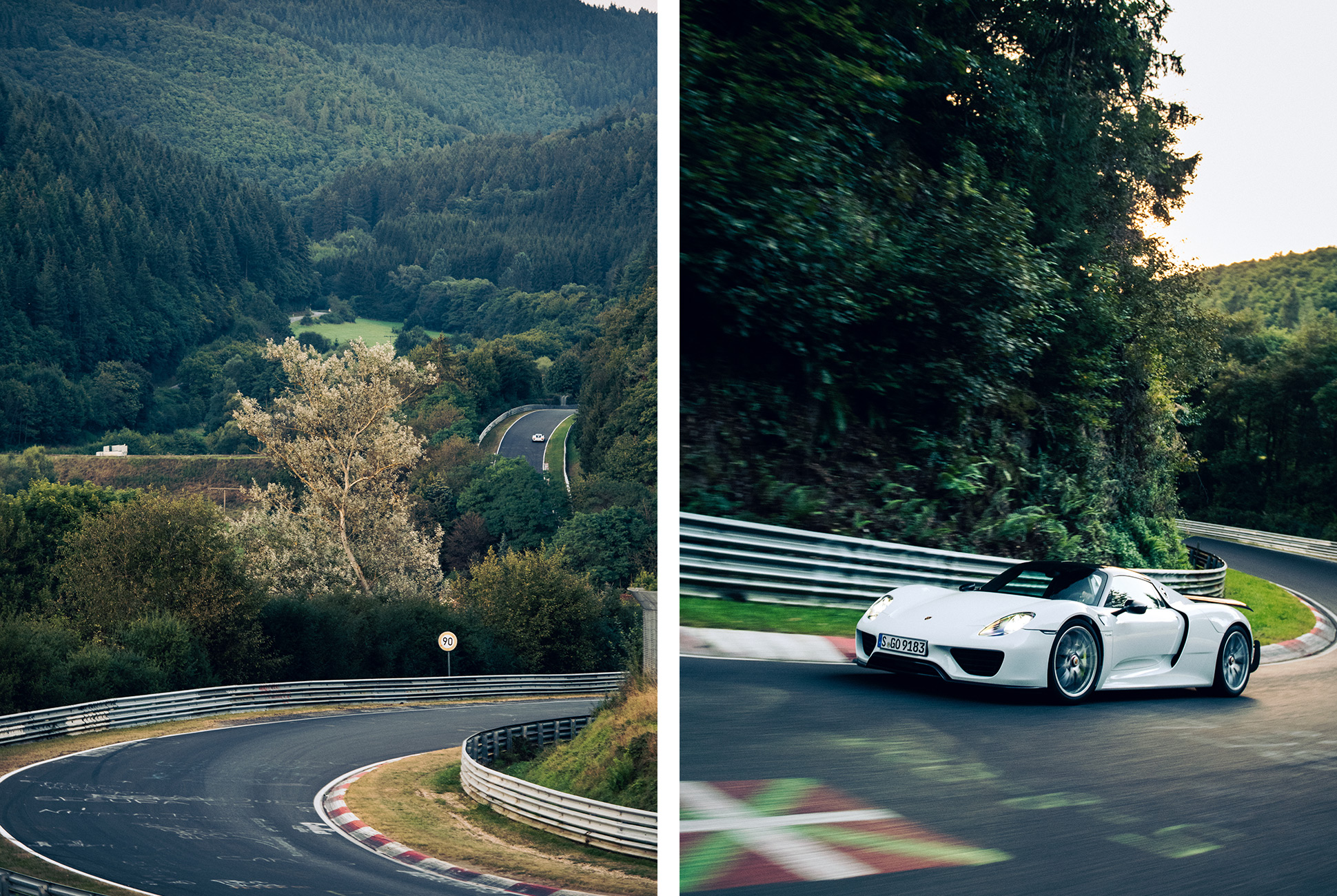
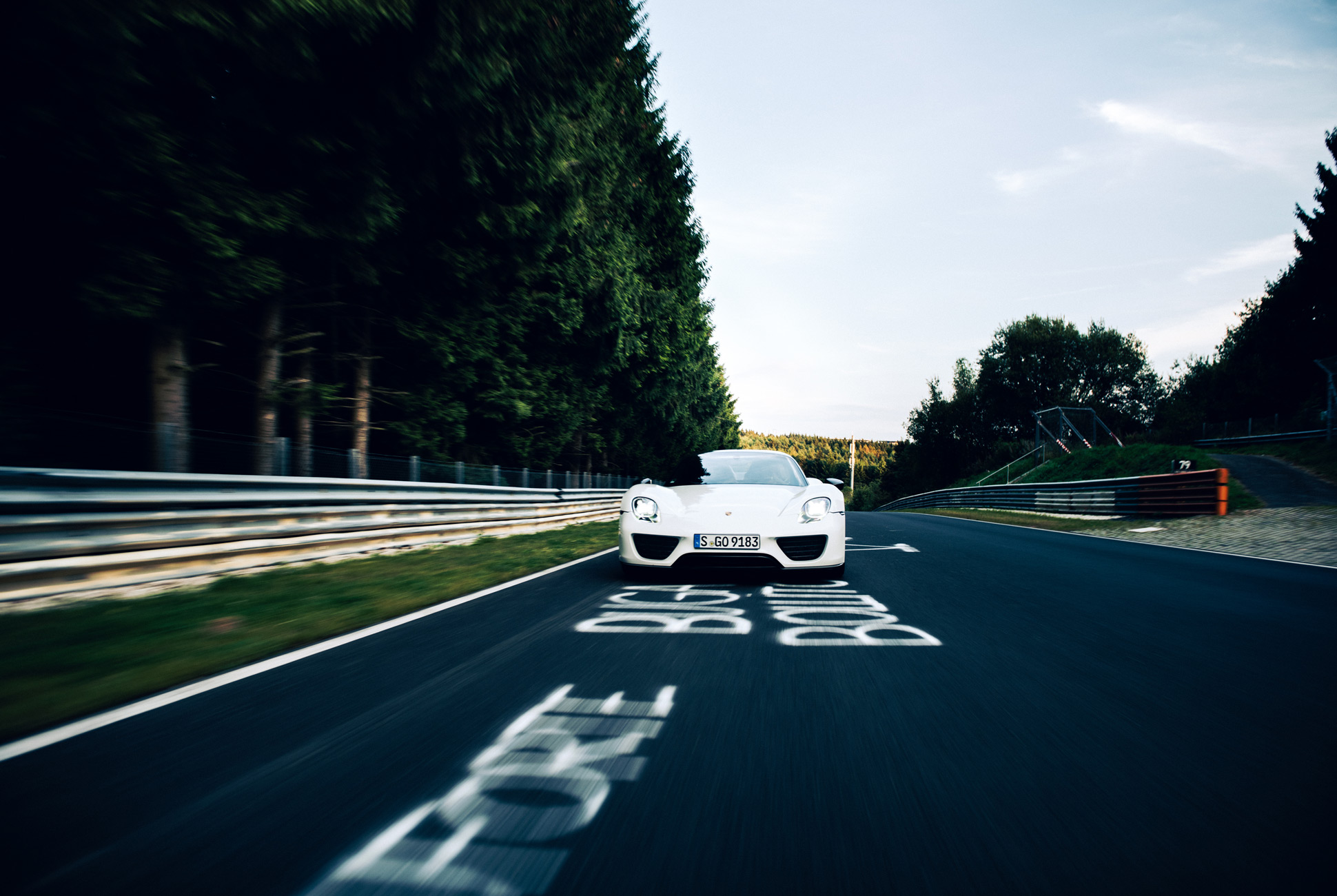
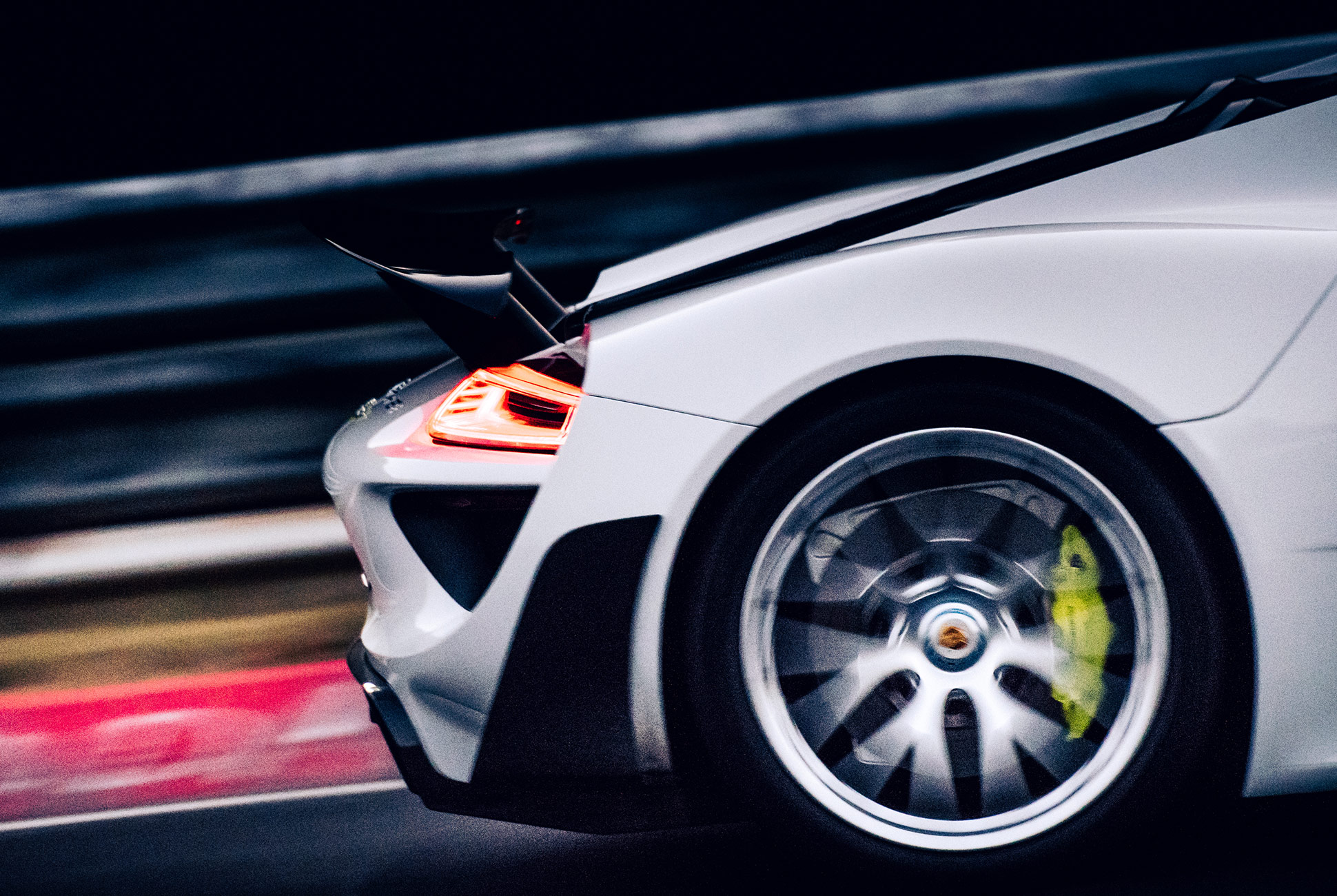
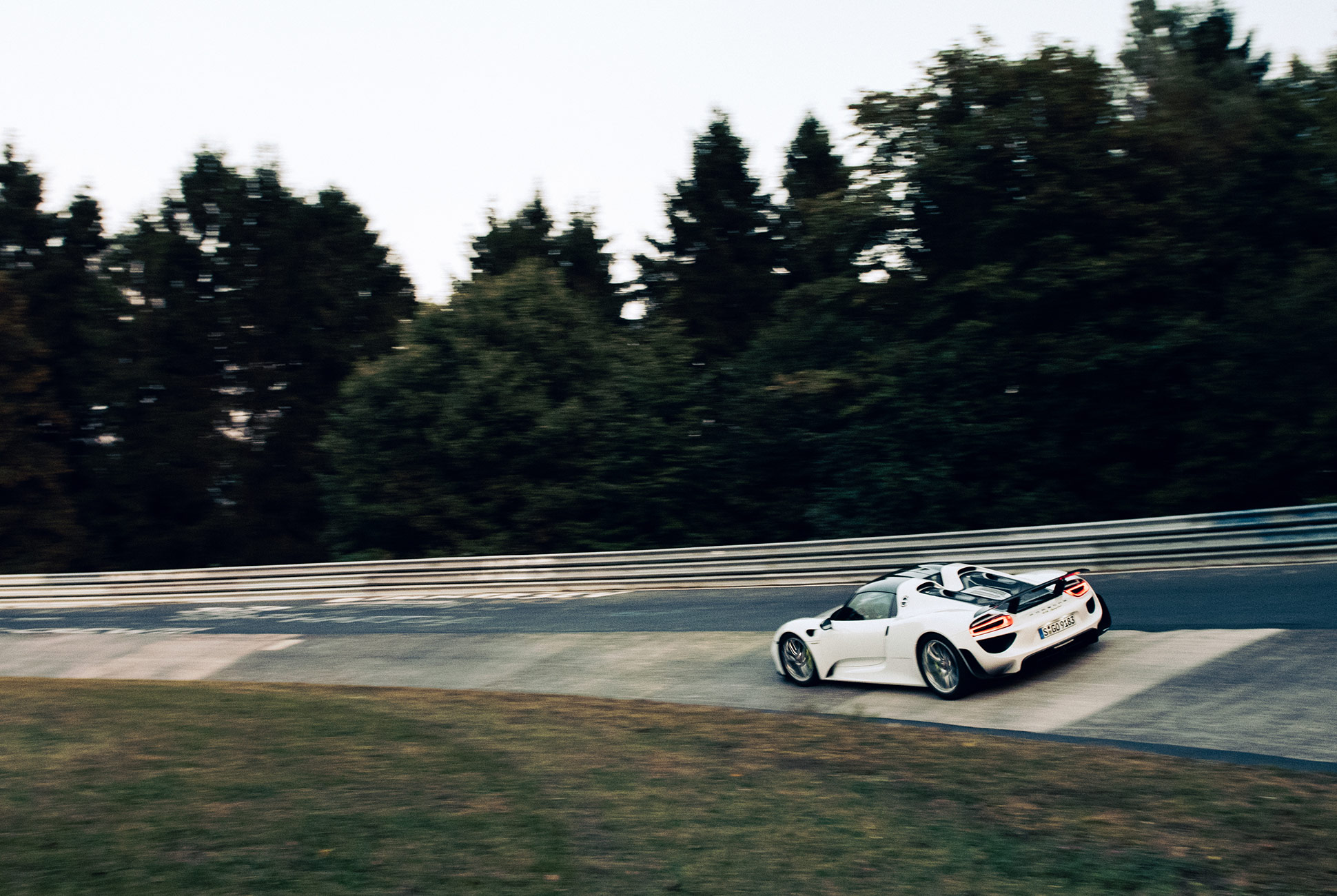
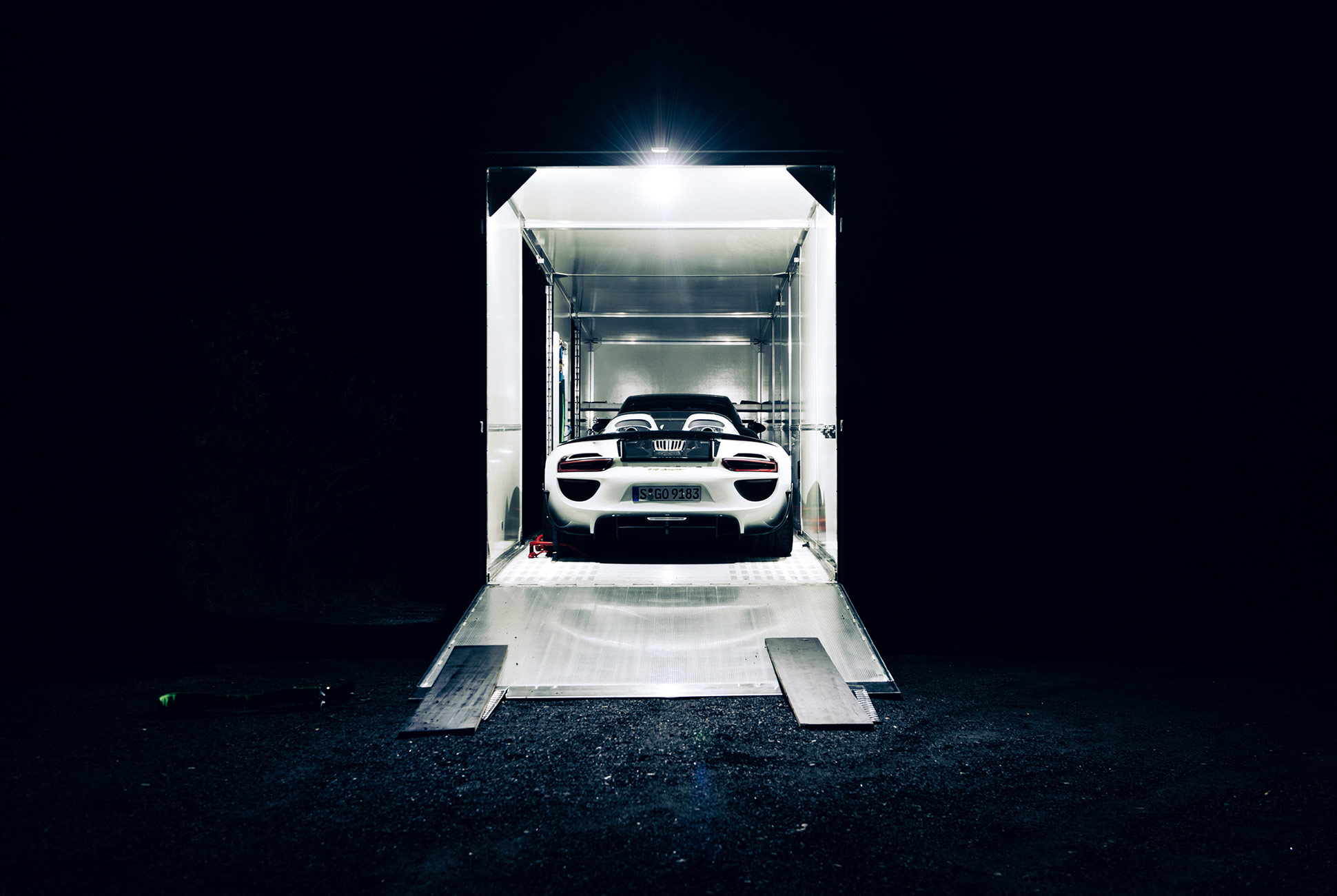
Porsche’s 918 Spyder was sold in limited numbers (918, to be exact) in 2014 only. Cars configured like the record holder started at $929,000; its battery and combustion engine hybrid system drives all four wheels and generates 887 total horsepower. But the numbers that really matter surround the 918’s dance with the track. Besting the previous lap record by an eye-watering 14 seconds, the hybrid hypercar conquered the Nordschleife with a time of 6:57. It was the first production car to break seven minutes and retains the top honors despite other, newer attempts.

Which drives home what it means for a manufacturer to test at the Ring. If a car-maker can engineer and endeavor to conquer this track, their products will have the Nordschleife in its DNA. If you buy a Porsche, you know that your car has in some nearly direct way been developed on the most important race track in the world — on an entity that forces automobiles to be great.

By nature, records are always trading hands, though at unpredictable intervals. The 918 broke a four-year-old record to become reigning production-car champ. The 956’s record has yet to be touched, even after more than 30 years. Porsche’s incredible new luxury performance sedan, the Panamera Turbo, held its title as the fastest four-door to lap the Ring for only a few months, until being unseated by the new Alfa Romeo Giulia Quadrifoglio; when an even more sporting Panamera inevitably comes along, it will likely capture that title again.

To be honest, I was really scared before the record lap. It’s always a thing to go for record laps. You know how dangerous this place is.

“It’s a special layout with these fast corners, some slow corners, blind corners, bumps, elevation changes, small jumps,” said Marc Lieb. “It’s so unique that you can’t find it anywhere else in the world. If you know that the car is quick on the Nordschleife, you know that it’s performing really quite well on all other tracks, and on the road as well.” Lieb is a pro racer who has a storied career: an overall win at the Spa 24 Hours endurance race in 2003, class wins and an overall win in 2016 at the 24 Hours of Le Mans, and four championships at the 24 Hours Nürburgring, among many other victories.

His wins on the Nürburgring made him the ideal candidate to conquer the Ring on Porsche’s behalf. Lieb set the record lap in the 918 Spyder, a feat which, despite his pedigree and accomplishments, was still daunting. “To be honest, I was really scared before the record lap. It’s always a thing to go for record laps. You know how dangerous this place is. The Porsche 918 was well prepared and safe to drive. But to be honest, beforehand, I was not so relaxed.”

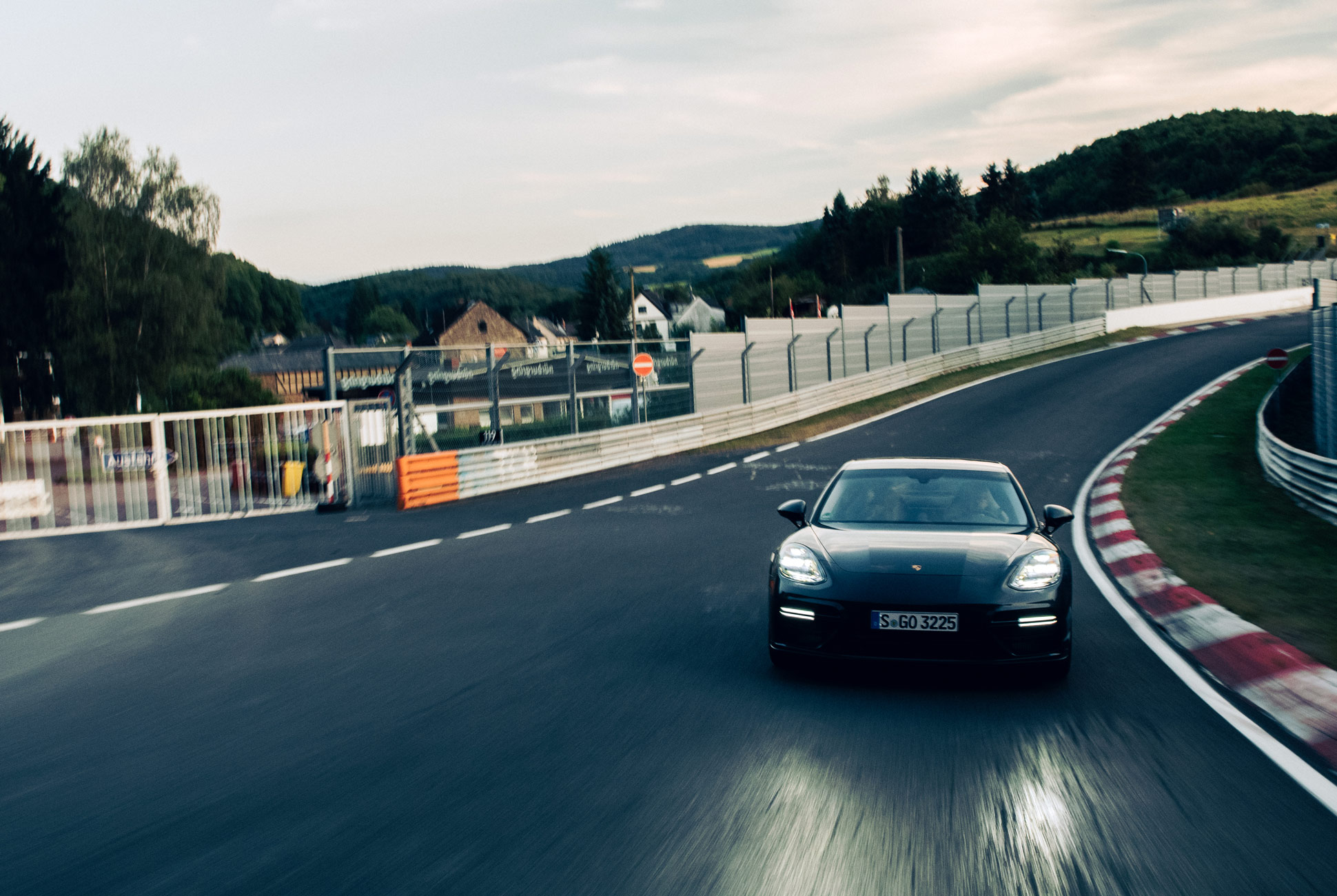
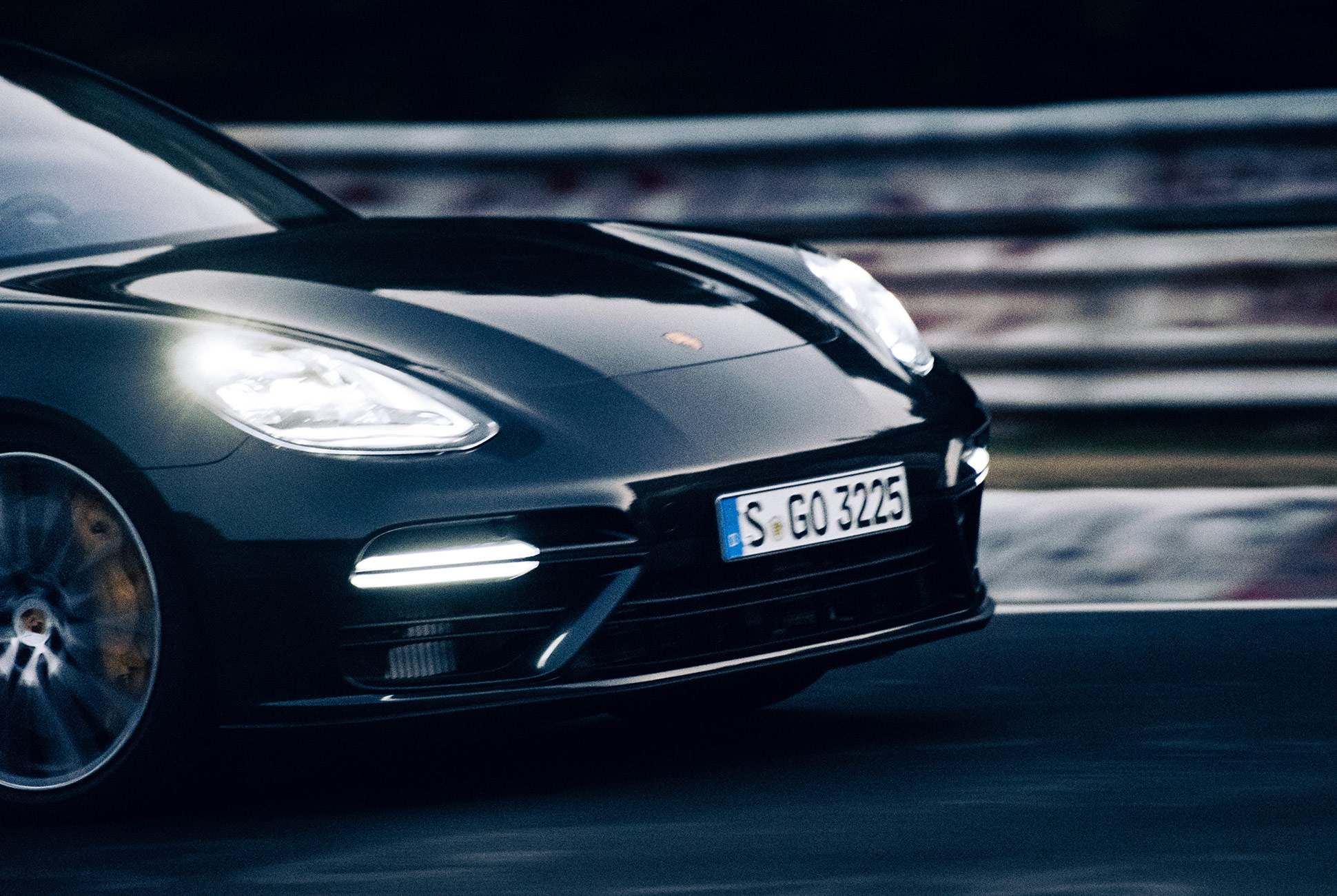
Little could illustrate the Ring’s intimidation factor better than a champion driver getting butterflies before a drive there. Lars Kern, the Porsche test driver who earlier this year drove the Panamera Turbo sedan to lap record victory (for a four-door luxury car, at 7:38), was nervous. “The simulation we ran said 7:38 should be possible — or is possible. But with the simulation you can never see the conditions — temperature, whatever. You are always under pressure.”

Story Continues After The Photos

As far as the Ring is concerned, track conditions unsettle drivers most. The elevation changes, size and location of the track mean that the weather can literally change from one section to another — clear and balmy here, cool and rainy there. This is good for testing the capabilities of a car in stressful, abnormal conditions. It’s not so great if you’re going for an all-out lap record. “We ended up having really bad track conditions,” said Dr. Gernot Döllner, head of the Panamera model line. “It rained for two weeks, so all the rubber was washed off. It wasn’t really totally dry. And it was a little bit too cold. [But] we ended up with a time almost exactly where we calculated.” Could they have put down a faster time? “With better conditions,” said Döllner.

We had limited time, we had a long shot-list — we had shit to do.

“It was going well and going good, but I always had one little mistake or two little mistakes,” says Kern of his record lap warm-ups. “It’s really quite impossible to have a perfect lap. And this is what makes it so challenging. There’s no room for mistakes. If you have a mistake, usually it’s a big [amount of time] off. This is what also makes it dangerous.”

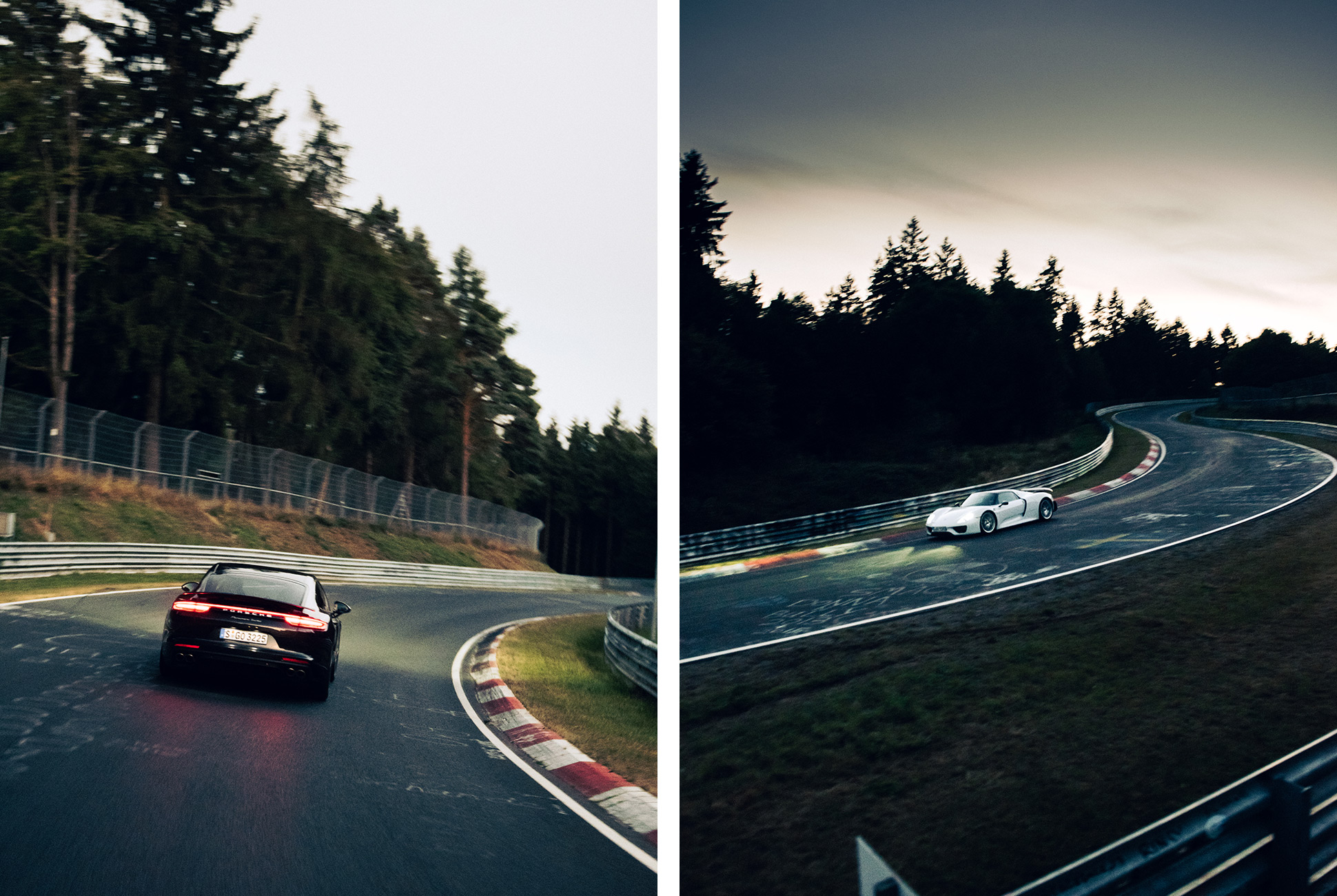
On the topic of danger, Lieb doesn’t mince words about driving the Ring. “Be respectful of the track. If you go down and you think you will conquer the Nordschleife easy and you will conquer it with one hand, you will have a big crash at the end.” I drove the Ring. The pictures accompanying this story document the hour I spent there. We had limited time, we had a long shot list — we had shit to do. The time crunch and malfunctioning walkie-talkies dictated that I rocket between our photographer and the professional drivers in our 918 and Panamera many, many times over long, sweeping sections of the Ring. It was my first time on the track and I didn’t have time to be wowed or intimidated; I just had to drive it. I felt a foreboding sense of power as I took blind corners hard and plunged into violent dips with forceful compression. I saw the majesty and the allure of this track; I felt its grip, its evil finger beckoning me forward faster, faster. I think about it a lot now, and I want to go back. I wasn’t wearing a helmet. I didn’t have a performance car. I probably didn’t exceed 50 mph. But I caught a glimpse of the wild dragon and felt the urge to tame it. It’s the urge that thousands of amateur racers feel each week when they pass through the gates and pay their low entry fee. It’s the addiction they feed with every pass, every time their brakes lock or the tail wags, mistakes they’ll swear to correct on the next lap. The need to dominate this unbridled beast and its 73 turns, to perfect their skills and polish their machine.

And that really hits the nail on the head. Performing on the Ring isn’t about fun or bragging rights. It’s about domination. Domination over physics, over mental strain, over the actual weather. Domination over this circuitous, wild, 90-year-old road and its massive scale and manic layout.

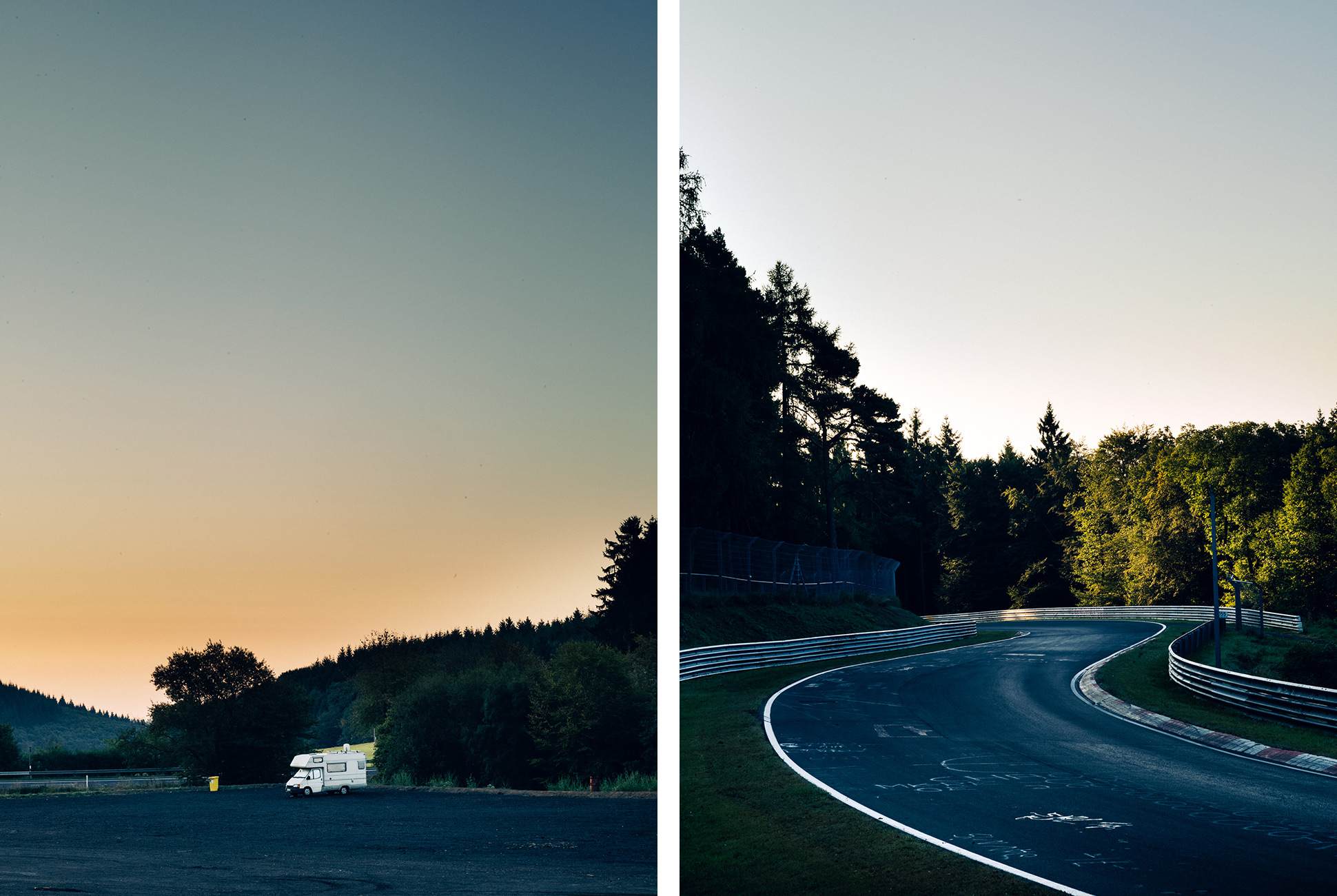
On the track, alone, late in the evening, it’s hard to imagine the madness that happens there. It’s a different world entirely, watching the sun glow orange and pink just over the horizon, while standing on the silent main straight, with its clockwise vanishing point ahead and to the left, and a silly string explosion of curves back to the right. Even then, in the quiet, there’s an ethereal hum of potential energy. I could close my eyes and feel the scream of a redlining engine, taste the high-octane fumes that filled the daytime air, at this place where pistons and wheels ascend to the Pantheon or sink to the wayside. This is where physical effort and engineering might and clutches are maxed out. It is a battlefield, conquerable. It is the Nürburgring Nordschleife.

Want a Used Off-Roader You Can Daily-Drive? This Is It

Editor’s Note: We love scouring the internet for reasons to spend money we don’t have on cars we daydream about owning, and these are our picks this week. All prices listed are bid amounts at the time of publishing.

Owning a vehicle for every occasion is a luxury very few of us get to enjoy. There’s no doubting the ideal situation is grabbing the keys to an old 911 to go canyon carving in the morning, switching to two-wheels to pop into town for lunch, then the four-door land yacht to head out for dinner at night, but that’s not the average day for most. C’est la vie.

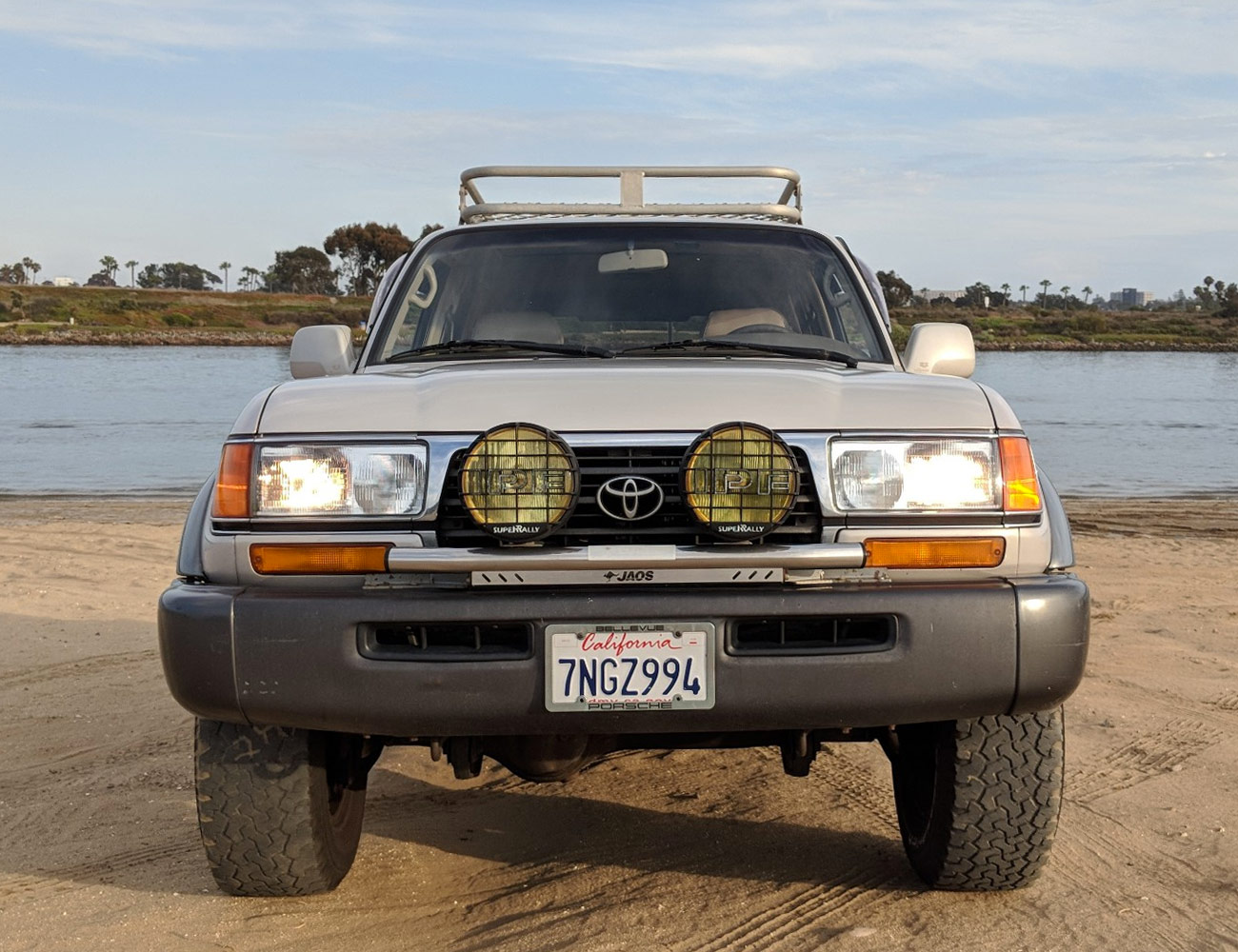
For most of us, our cars are compromises — multiple vehicles in one, if you will. You can make that old Porsche your only car, but I wouldn’t suggest doing school runs, carpooling or the occasional offroad excursion. However, if you want a car that checks all of those boxes and is actually quite pleasant to live with on a daily basis, this modified 1997 Toyota Land Cruiser might be what you’re looking for.

What We Like: 234,461 miles can seem like a massive turn-off when it comes to any car, let alone one modified to go off-road, but this Land Cruiser does a decent job of putting any worries about that to rest. Looking at the service record, this high-miler was well-looked after with most, if not all, the common problems associated with Land Cruisers of this age are taken care of. The upgraded suspension, rally lights and cage roof rack only entice off-road adventures even more. This Toyota isn’t Concours-ready; however, that makes it all the easier on your conscience, if and when you do go off-road and you add a couple more scratches and dings yourself.

From the Seller: “A steel roof basket is fitted along with a rear-mounted access ladder. A JAOS light bar includes a pair of IPF Super Rally lights mounted to the OEM front bumper. A stock-height Old Man Emu suspension kit was installed by San Diego Trux in California and includes new shocks and coils.”

Watch Out For: In higher-mileage examples (at 234,461 miles this one definitely qualifies) the power steering pumps tend to leak. You may also see non-responsive power windows and mirrors due to a common electrical issue.

Original Review: “The Cruiser is a substantial vehicle but it’s not a monster, and will probably feel fairly modest in size, for all its mass. Ride comfort is good; it’s a great vehicle for a long highway drive, providing all-day comfort and a strong sense of security… Handling, within the context of size, height and weight, is sure, stable and precise, albeit ponderous. Off-road or on the slippery stuff, the Cruiser is simply awesome.” — New Car Test Drive

Alternatives: By 1997 the market here in the States was filled to the brim with trucks and SUVs. Unsurprisingly, the Ford Expedition was one of the most popular, but on the luxury front, the Land Rover Discovery was a direct foe. However, the Toyota came with a price tag of around $41,000 — $10,000 more than the Land Rover. To the Toyota’s credit, it was arguably the best off-road, while still maintaining the luxury factor.

Engine: 4.5-Liter Straight-Six
Transmission: Four-Speed Automatic Transmission
Location: San Diego, California
Mileage: 234,461
Price When New: $41,188

The Porsche Panamera Executive Successfully Competes With the Big Boys from Benz

P

orsche has always focused closely to the performance aspect of the Panamera — as it should. After all, its customers don’t generally want a luxury sedan that goes sorta fast; they want a fast car that’s sorta luxurious. That, in a nutshell, is the Panamera: two extra doors and a few extra square feet of leather, sure, but still a Porsche at heart. Driven hard, the current generation leaves little to the imagination.

For that reason, it’s rarely spoken of in the same breath as the likes of the Mercedes S-Class, the BMW 7 Series, and the Audi A8. All of these flagship luxury sedans can certainly be called sporty, but they excel mostly in their waftiness — that ethereal, cloudlike quality that allows them to float down the road with the kind of unflustered poise that would make grandma comfortable when you pick her up for tea on Sunday morning. They’re also reserved and somber in the right context, the kinds of vehicles that can pitch in at a state funeral. Panameras? Not exactly mourning-mobiles.

But that doesn’t mean they can’t pull other executive duties — as Porsche itself clearly believes, considering its top-line variant is dubbed the Panamera Turbo S E-Hybrid Executive (from $194,800 — for reference, the base non-hybrid Panamera begins at $85,000). That’s a mouthful, and also a handful: The $194,800, 680-horsepower sport sedan is the second most pricey and powerful car in Porsche’s entire lineup, behind only the 911 GT2 RS. That car clocks in with just 20 extra horses, but a steep $100,000 extra dollars above the top-dog Panamera — but it’s nearly pure racecar.

The $194,800, 680-horsepower sport sedan is the second most pricey and powerful car in Porsche’s entire lineup, behind only the 911 GT2 RS.

So what does the “Executive” label reward buyers with, and, more importantly, is it enough to make the Panamera a true S-Class competitor? I spent several days bombing down the German autobahn and touring around the mountain hairpins of the northern Italian Dolomites in one to find out. The first thing I learned: it has tables.

That’s right — tables. In a Porsche. They’re in back, of course, presumably for signing large checks or approving spreadsheets on laptops. We’re not just talking trays that fold out from the front seats, like in a Bentley Mulsanne or a Boeing 737, but actual tables that spring up out of nowhere and allow you to perch whatever you need on them securely. While waiting for the weather to clear so I could shoot some photos, I climbed into the back to spend a few hours using the Panamera Turbo S E-Hybrid Executive as my mobile office. The tables came in handy — one as a laptop perch, the other as a place to stash my iPhone and some snacks and drinks. Eventually, I switched it up, stowing the tables and just putting my feet up on the center console, with my laptop on my lap, as the Maker intended. The Executive happens to have seat massagers at all four corners, so I was able to work while having my kinks worked with sublime effectiveness. I had to admit, it was very S-Classy. The seats aren’t quite as cushy — the engineers opted to err on the side of support rather than plush comfort, given the car’s ability to spontaneously corner like a Sidewinder missile — but they’re infinitely adjustable, and both chilled and heated, as are the front thrones.

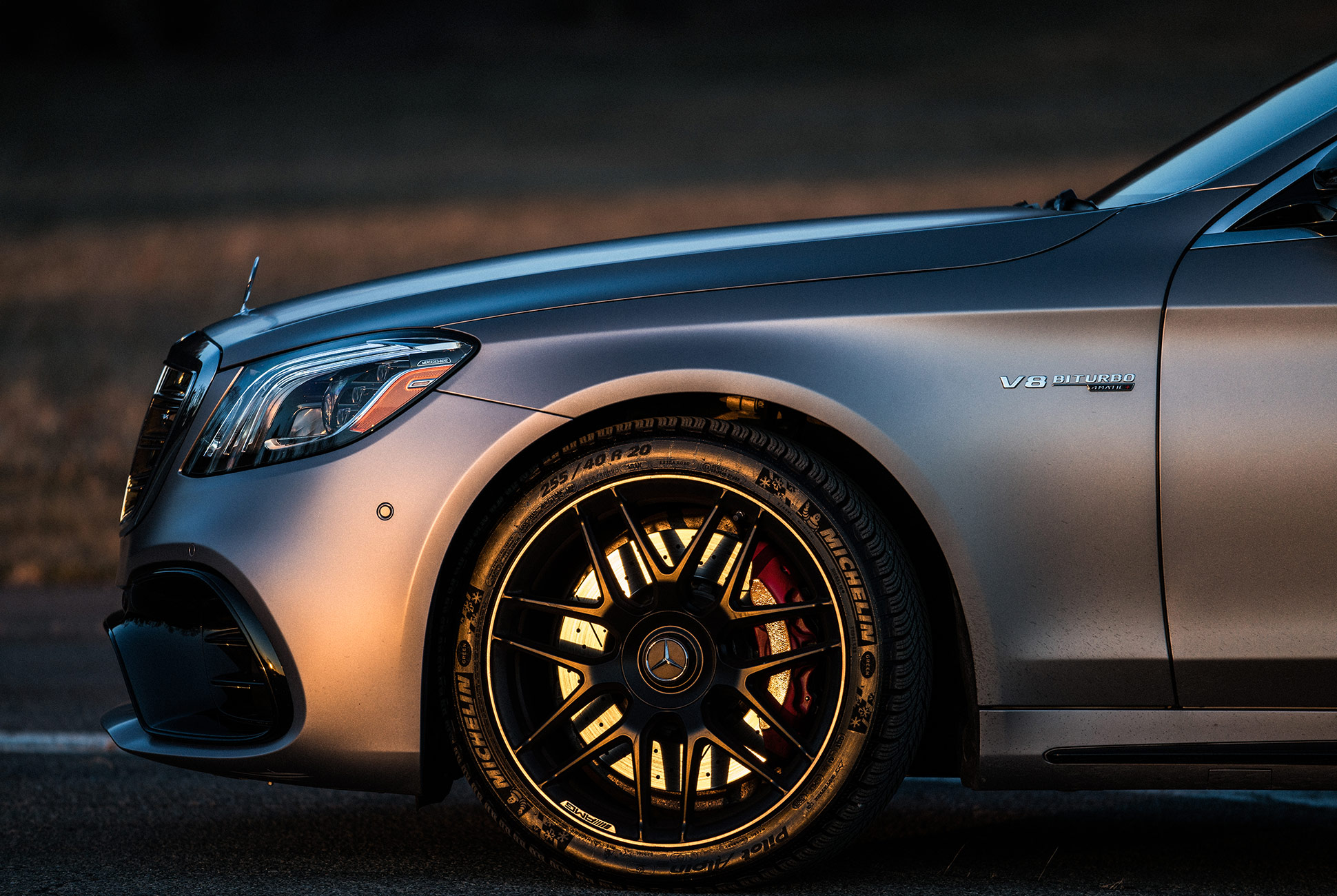
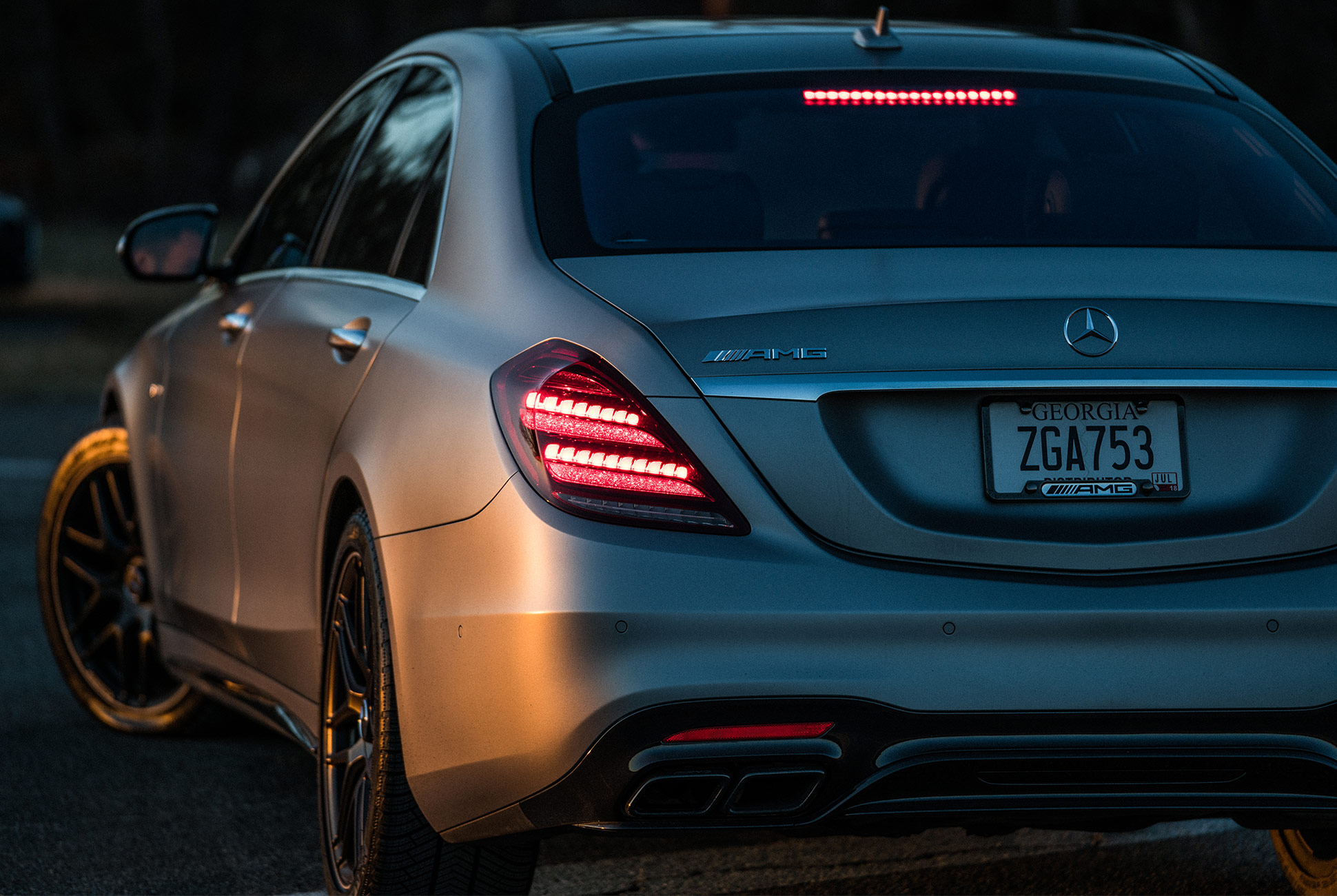
On the road, the E-Hybrid element of the car does much of the (muted) talking, giving the Panamera a nice glide down the highway if you have enough juice in the battery for all-electric cruising. When the engine wakes up to supplement power, it’s present but not obtrusive until you really get on it. At that point, it fully becomes the kind of grand tourer that would scare the bejeezus out of grandma in the back, but which makes it indisputably a Porsche. It happens that I also drove the Mercedes-AMG S63 within a few weeks of the Panamera, and it represents perhaps the closest analog in price and capability, with 603 horsepower, similar performance and a price tag that can quickly knock on $200k’s door. The Mercedes wins when it comes to its gaping, effortless strides down the road — and absolutely in that true luxury quality — but the Porsche wins in terms of handling and the feeling of precision performance. While cruising down the highway, it still feels fairly tightly wound, even in the most docile comfort mode and while going easy on the throttle. You never forget you’re in a Porsche.

But that’s a very good thing. The Panamera is certainly comfortable and luxe enough to ferry your clients and C-Suite colleagues to the airport without making them feel like they’re slumming it. As for the true CEO-types? Depends on their personality — some will feel empowered and emboldened by the fighter-jet-like quality of the Panamera, others will crave the imperial grandstanding and sepulchral quietude of the S, the A8, or the Seven. My call: It’s close enough. A $200,000 sedan that’s merely slung a little lower and torqued a bit higher certainly rates in this crowd, and it’s got its own edge that the others can’t touch. After all, you can take the car out of the track, but you can’t take the track out of the car.

2018 Porsche Panamera Turbo S E-Hybrid Executive
Engine: 4.0-liter, twin-turbocharged V-8; permanent-magnet synchronous AC electric motor
Transmission: eight-speed dual-clutch automatic; all-wheel drive
Horsepower: 550; 136 (680 combined)
Torque: 567 lb-ft; 295 lb-ft (626 lb-ft combined)
0-60: 3.3 seconds
MSRP: $194,800

The Cars We Love — Even Though Everyone Else Hates Them

It’s quite easy to pick sides in the BMW versus Audi debate, or over whether Ferrari wins out over Lamborghini or in the fraught Mustang-vs-Camaro showdown. Whichever you pick, it’s guaranteed at least half the car world’s population will agree — consequently, you’ll have an alarming amount of people saying you’re wrong. But that ratio becomes totally skewed against you when it comes to defending your love for a widely disliked car.

That terrible car isn’t terrible — not to you. Maybe it’s the car you learned to drive in, maybe you took a formative cross-country road trip in a crap box. Regardless, you know — and appreciate — its unique attributes more intimately than anyone else. Whatever the reason for unconditional love, these are the cars we’ll always defend, despite how terrible the rest of the world thinks they are.

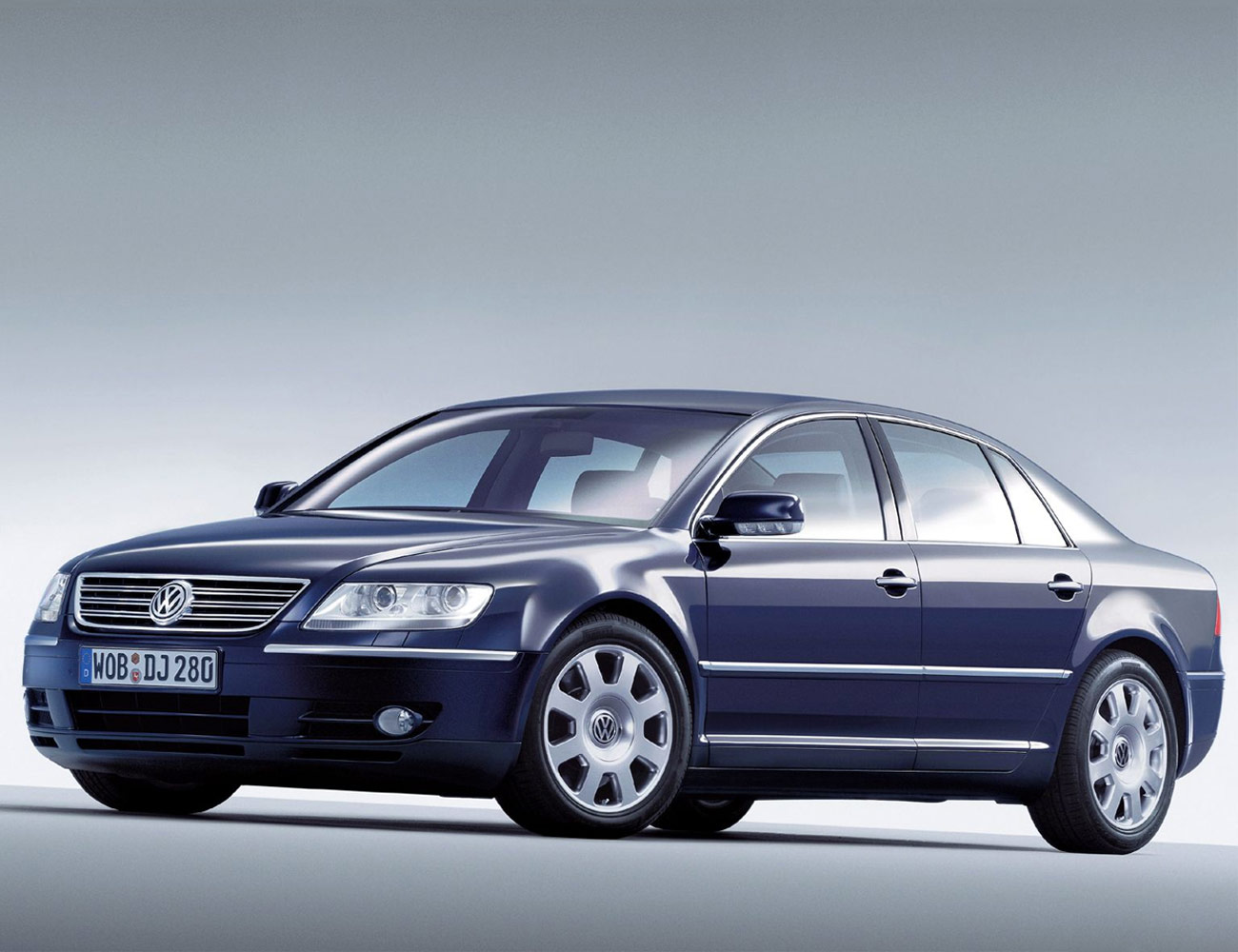
2005 Volkswagen Phaeton


Why I Love It: The luxury flagship Phaeton, just 2,000 of which were sold here between 2004 and 2006, got dinged from every angle -— too expensive, “looks like a big Passat,” must be crappy quality, etc. The truth is that it’s simply a fantastic car. I’ve had mine for 10 years and it’s been the most reliable, high-quality thing I’ve ever owned. (This matches most forum chatter about the vehicle.) It’s also elegant — it doesn’t look like a Passat any more than a 7-Series looks like a 5—series. It’s sublimely comfortable and filled with ahead-of-its-time features, from a self-leveling air suspension to advanced climate control to four-seat massagers.

Most importantly, it’s still great fun to drive on long road trips, with smooth road manners and whisper-quiet acoustics. It was, after all, the development mule for the Bentley Flying Spur, not a parts-bin rebadging of the Audi A8. Haters can whine all they want, but the truth is I paid $17,000 for an $80,000 car 10 years ago, and it’s still a better driving experience than most new vehicles today. I haven’t looked back for a second.– Eric Adams, Contributor

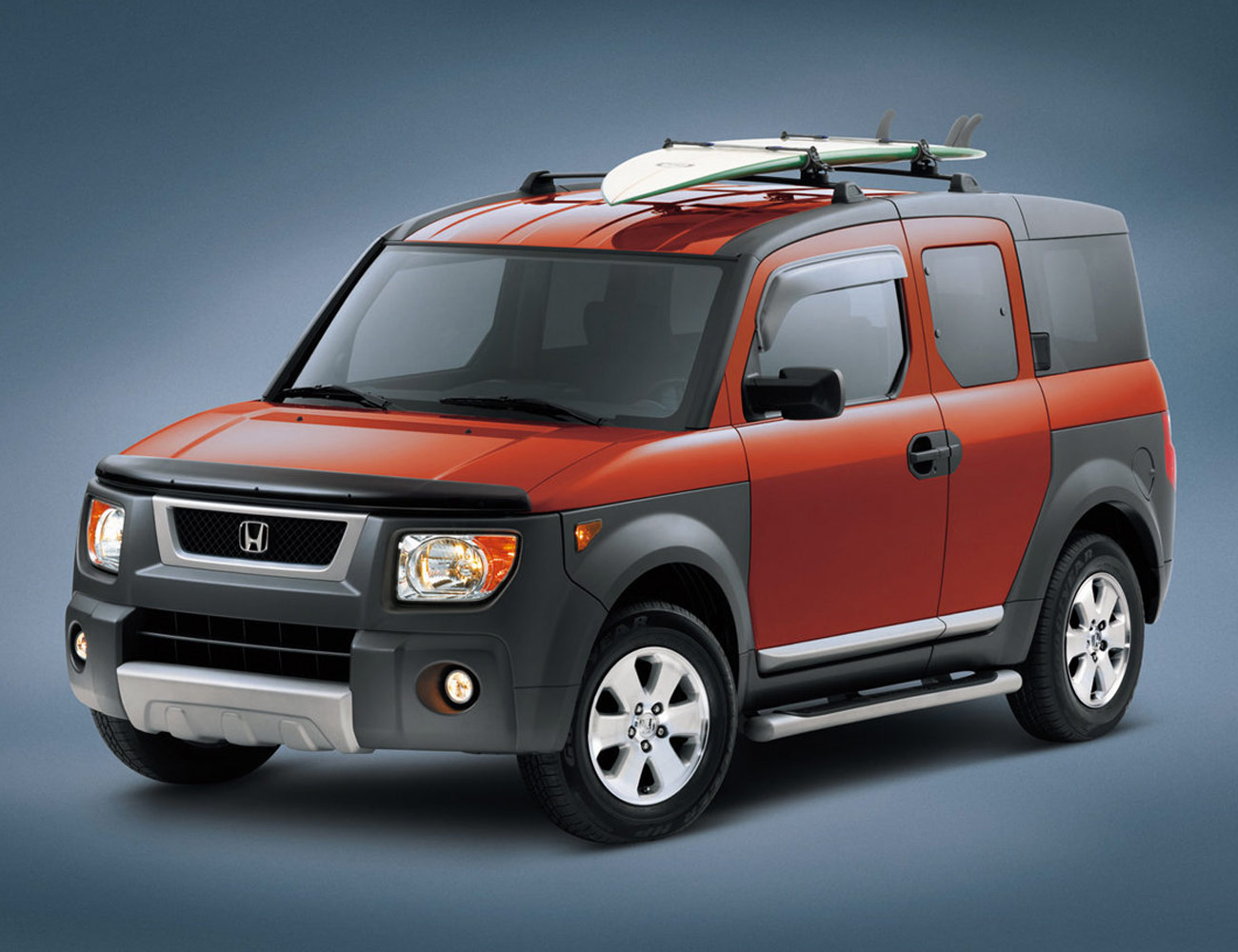
2003 Honda Element


Why I Love It: For whatever reason when I first saw the Honda Element back in 2002 at the New York Auto Show, I was smitten. Maybe it’s my love for boxy cars. Maybe it was the fact that it had 4WD and suicide doors. Maybe it was the fact that the rear seats detached and mounted to the walls to allow for a better camping surface or more space to store outdoor gear. It’s likely a combination of all of those things, but in my eyes the Honda Element can do no wrong. Except maybe for that oddly bulbous shift knob. — AJ Powell, Assistant Editor

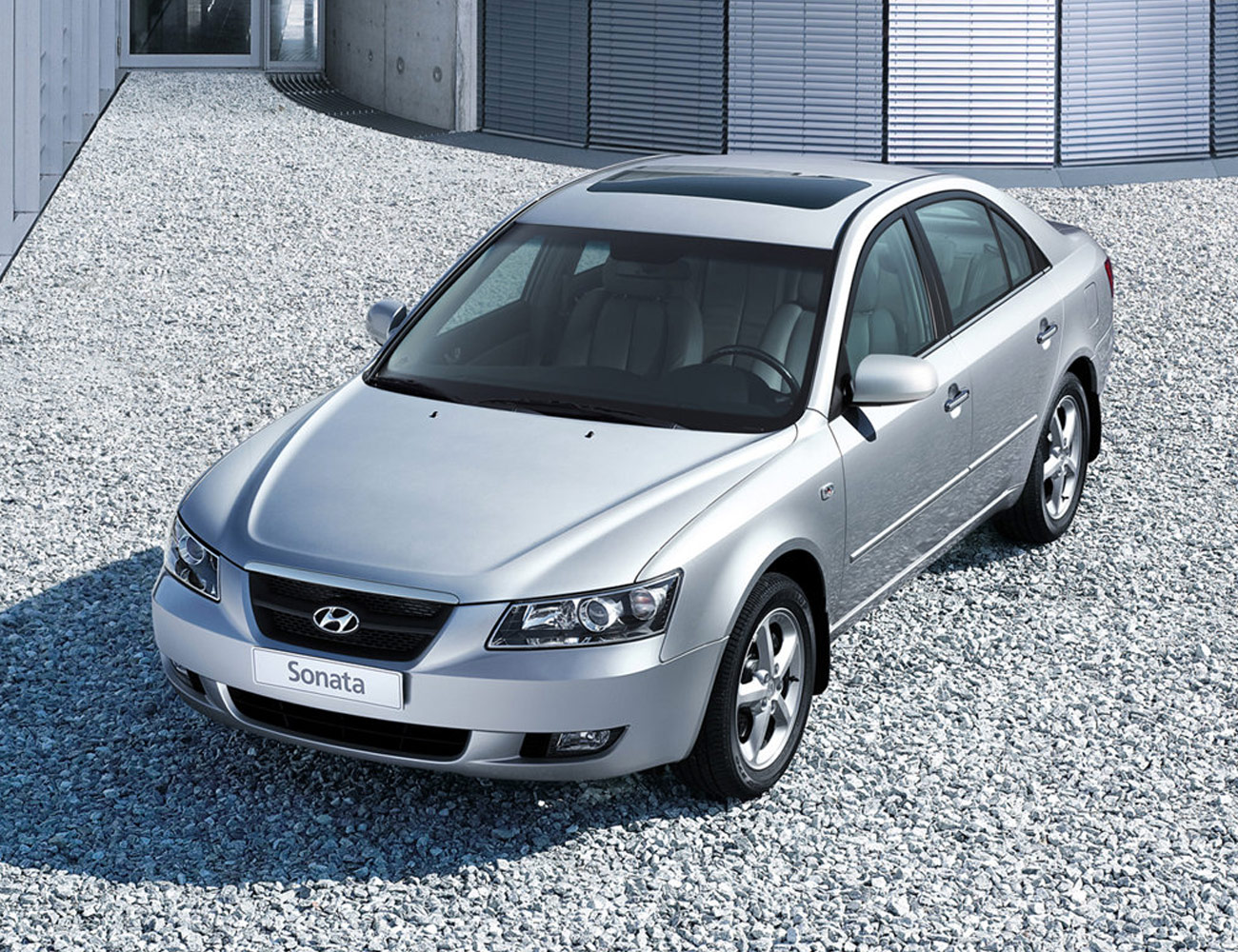
2005–2009 Hyundai Sonata


Why I Love It: This was, I believe, the first car I rented. A few friends and I split the cost for a road trip back to our college homecoming and, of course, I was eager to do 100 percent of the driving. Perhaps biased by my pride, I found the Sonata to feature everything I could want: a good radio, spacious seating and it gave the impression of refined affordability. I distinctly remember playing the ‘mileage game’ with myself too — could I drive smooth enough to creep the average MPGs over 30? (I did.)

Beyond that, I think this generation Sonata — after years of weird, bubble styling and before the next generation’s swoopy/melty styling — looks particularly, genuinely handsome. I say I hate to love this Sonata because it is objectively bland; a rental-car-grade, good-first-car-if-you-find-one-used-for-five-grand car. Still, a good-looking economical and amenable ride is nothing to shake a stick at. Fight me. — Nick Caruso, Associate Editor

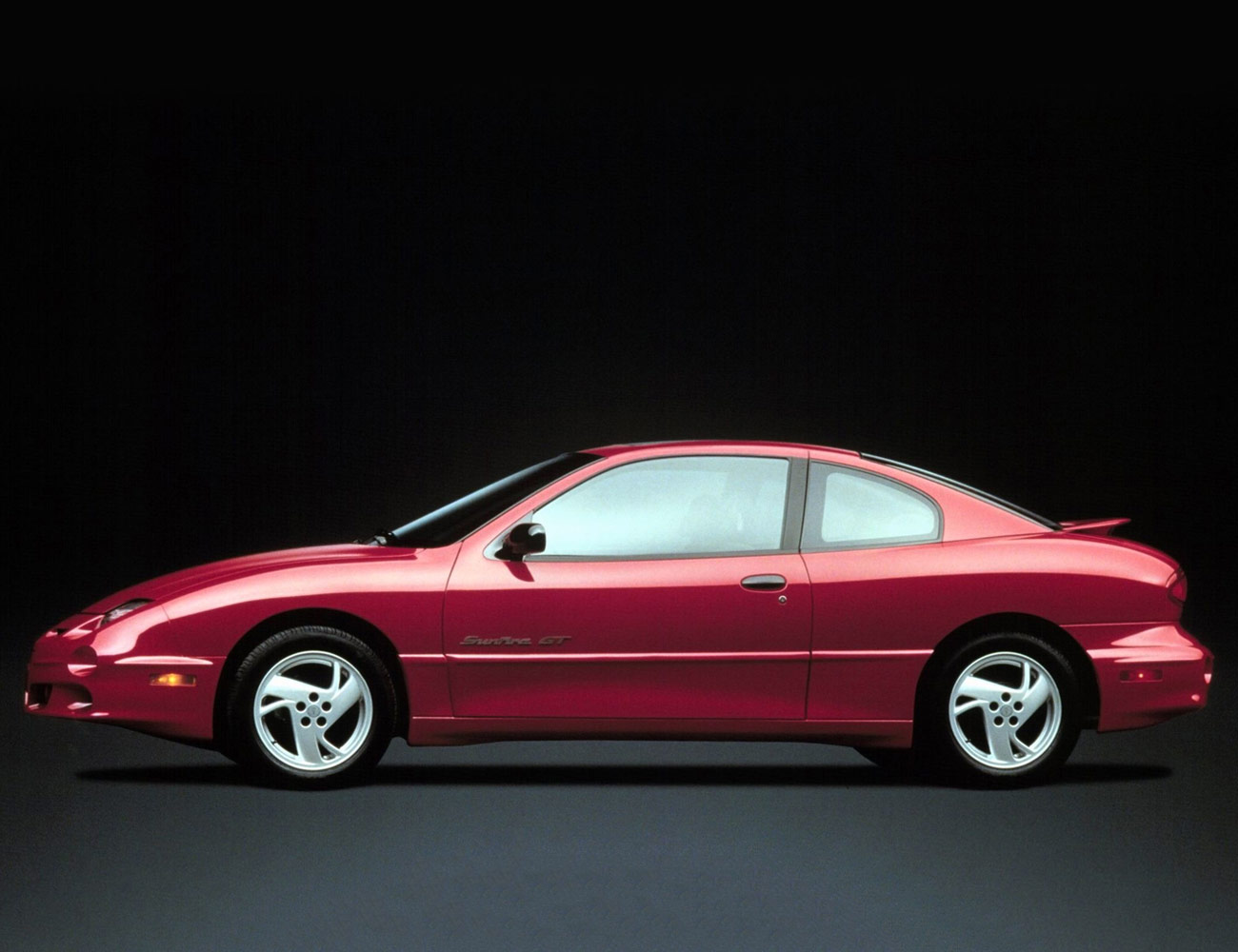
1996 Pontiac Sunfire Coupe


Why I Love It: Everyone has some level of attachment to the car they first learned to drive. The 1996 Pontiac Sunfire coupe, was not only that car for me, it was also how I learned to drive a manual transmission (in empty parking lots with my dad) a few years before I even had my permit. But, I specifically love the coupe. It might have been front-wheel-drive and powered by an anemic GM four-cylinder, but there was close to no weight over the back axle. That came in handy when I discovered the age-old rite of passage known as handbrake turns.

As far as I was concerned, it was a sports car: Firebird-esque styling, a five-speed manual and a back end with the tendency to get loose when prodded, even at tame speeds around my neighborhood. When the discussion of driving a “slow car fast” comes up, I always reference the Sunfire. It represents my humble beginnings as a self-proclaimed enthusiast — whether my neighbors liked it or not. — Bryan Campbell, Staff Writer

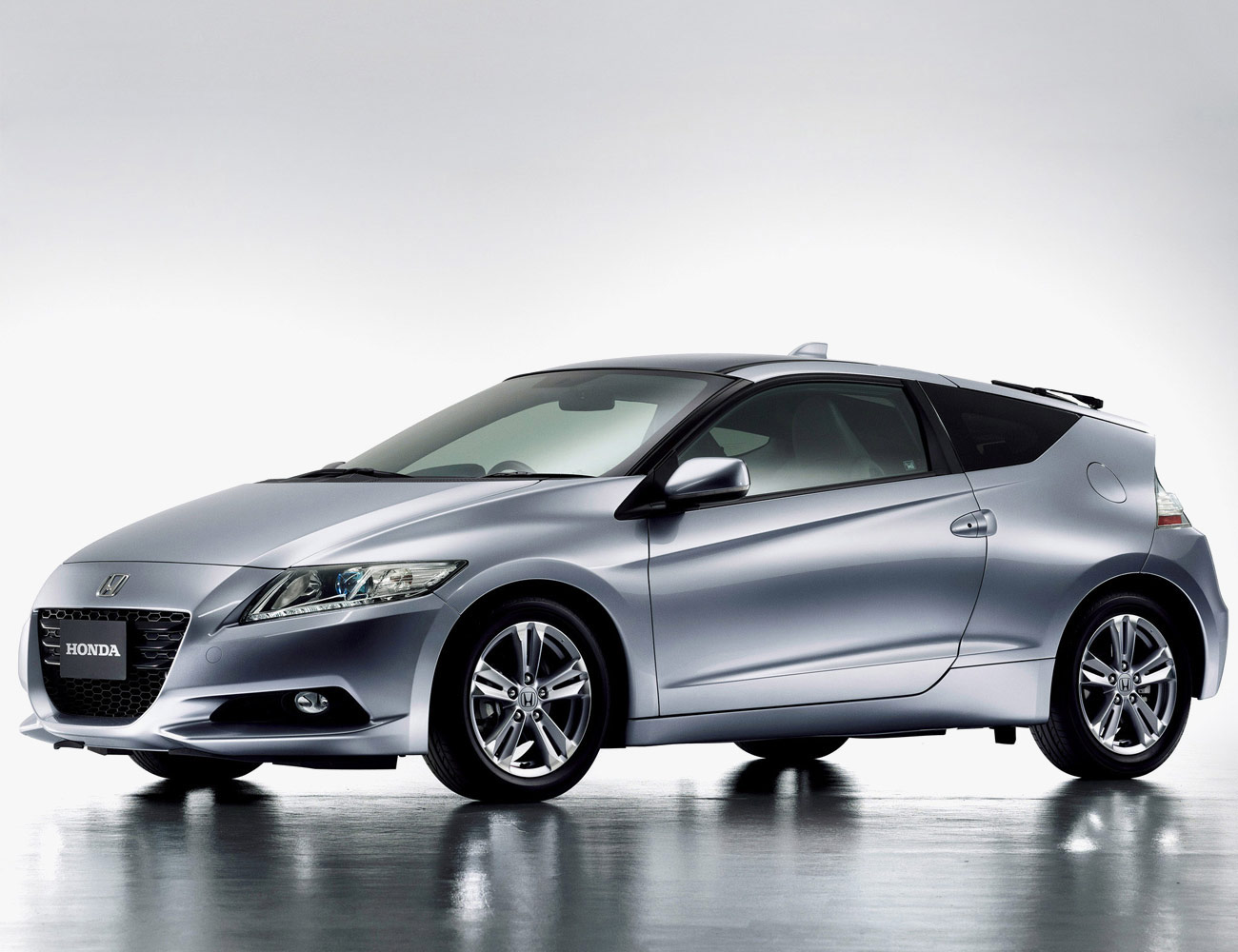
2010 Honda CR-Z


Why I Love It: The shade you’ll see thrown at the Honda CR-Z is usually tethered to praise for its predecessor, the Honda CR-X, a car that decades ago convinced every slack-jawed dudebro wearing a white tank top and flat brim cap that any car adorned with the “H” badge was inherently magic. It’s almost too easy to frame the CR-Z’s shortcomings in the rose-tinted context of what is arguably one of the most beloved hatchbacks to be sold in the US, but if we try and look at the CR-Z without the specter of its big brother hanging over it, was it really all that bad?

I guess I try to consider the automotive landscape in which the CR-Z was debuted: a time in which hybrids were perceived as a conveyance for monied, holier-than-thou neo-Hippies (whether or not that was actually true). The CR-Z attempted to make the idea of a fun, affordable hybrid a reality. By all means, it was mostly that. It was the only hybrid at the time with a manual transmission, it had a funky, novel design and most reviewers conceded that it was relatively fun to chuck into corners and slam through all six speeds. It got reasonably high gas mileage at the time, too. But in the end, most critics found the gas mileage wasn’t high enough for a hybrid, and its dynamics weren’t hot hatch-y enough. But it was a pioneer, even though its concept was fundamentally compromised. What did we expect? But the most important thing was that the CR-Z tried, god damn it. To pan something or someone for trying something new is to make a mockery of the very concept of human endeavor. Maybe that’s why I feel the CR-Z deserves more respect than it gets.– Andrew Connor, Staff Writer

How to Import Japanese Classic Cars to the US

From Issue Six of Gear Patrol Magazine.
Discounted domestic shipping + 15% off in the GP store for new subscribers.

I

n 1989, Gary Duncan had a seemingly life-altering experience. Duncan, who had been a dealer of foreign cars since the age of 19, scored a trip to Japan to visit that year’s Tokyo Motor Show. It was there he first laid his eyes on the Nissan Figaro concept car: an aggressively retro convertible just over 12 feet long, five feet wide and powered by a one-liter engine putting out barely more than 50 horsepower. “I thought, ‘Man those are cool… I gotta have one,’” says Duncan. “I didn’t know at the time that it would take twenty-five years.”

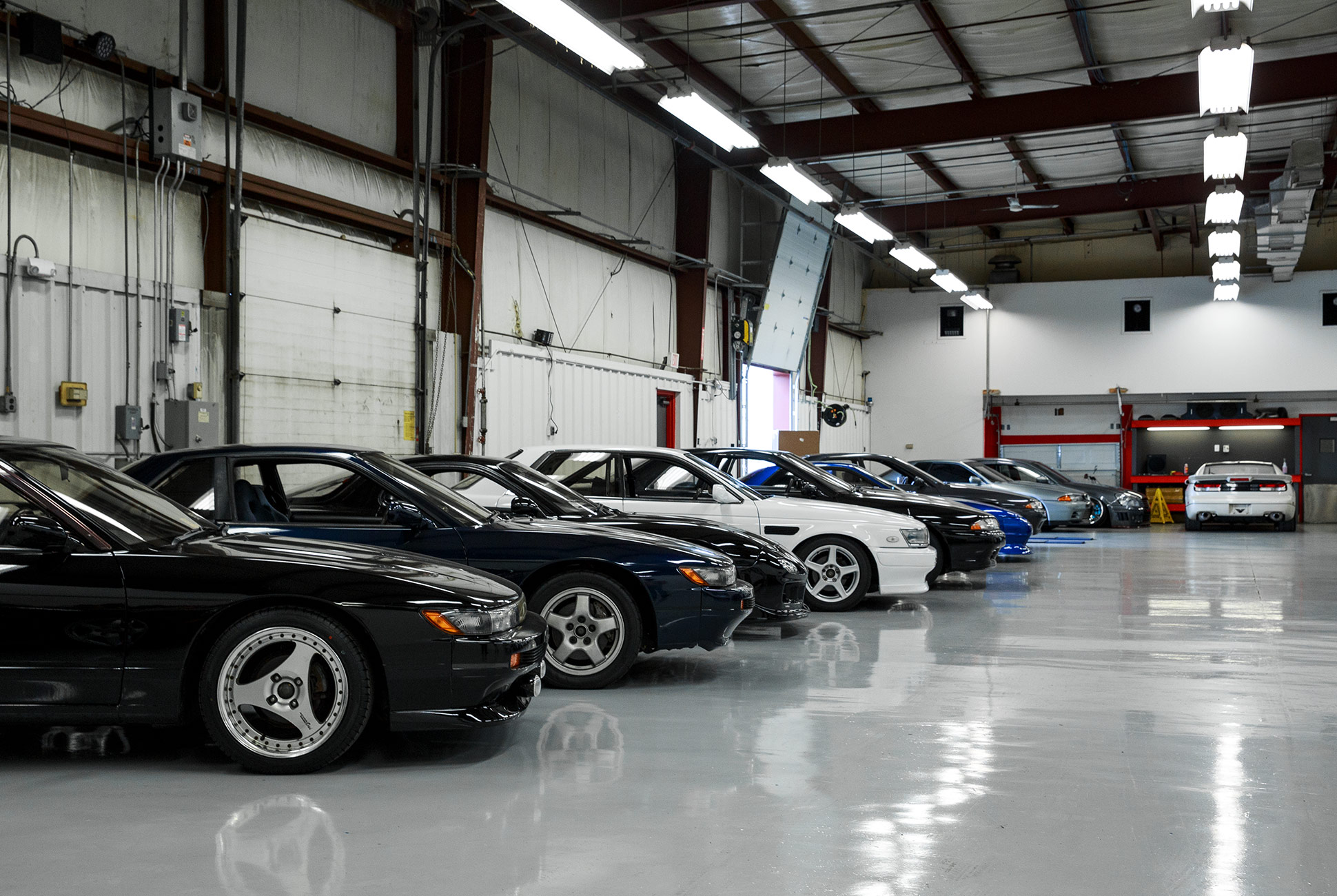
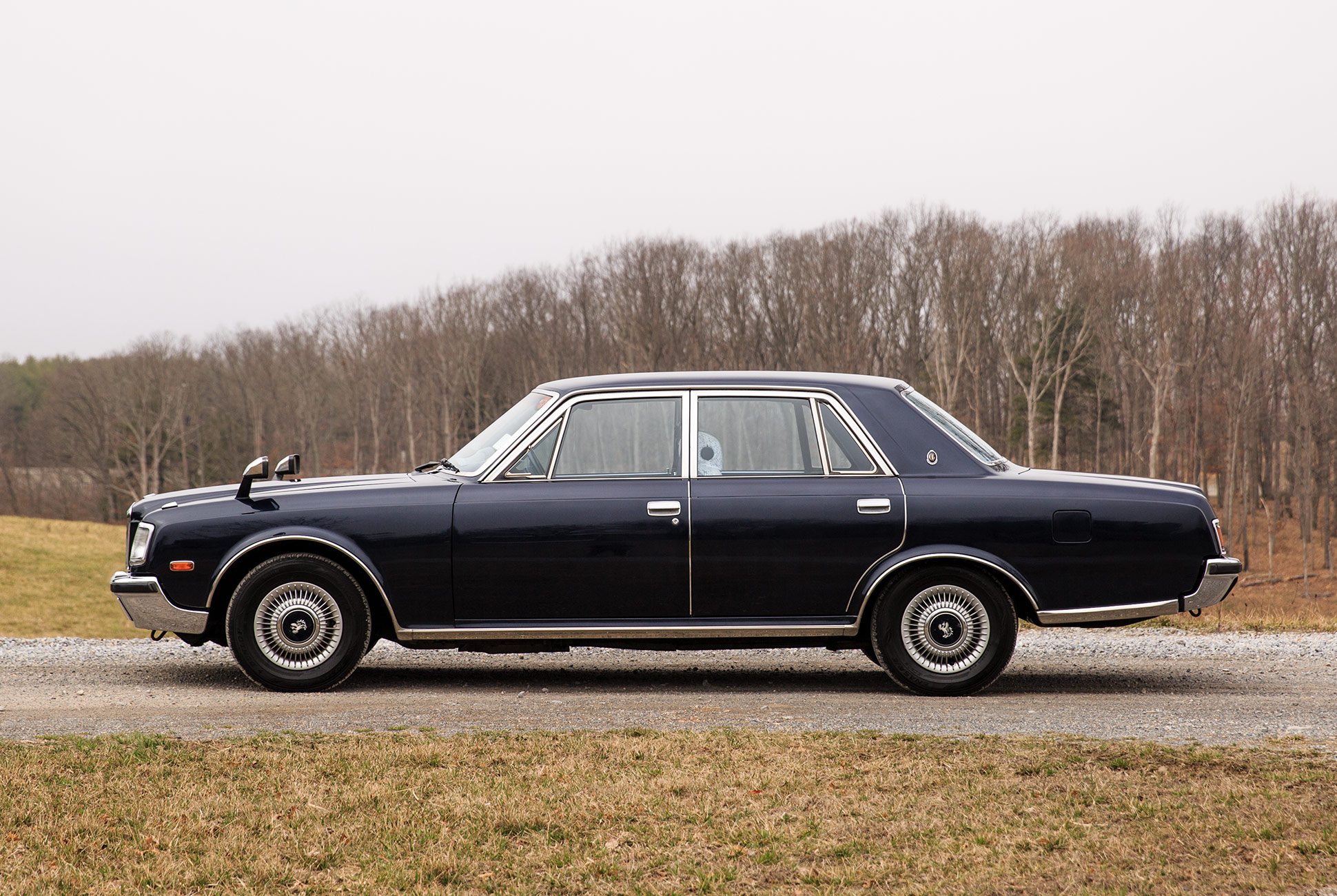
Today Duncan, now 65 years old, has his Figaro. In fact, as of writing, he has 150 of them, along with hundreds of other Japanese cars and trucks from the ’80s and ’90s, parked in his warehouse in Christiansburg, Virginia. By Duncan’s estimate, he has the largest collection of Japanese-market cars in North America. Most of them are for sale.

His diverse collection of over 600 Japanese vehicles comprises sports cars, kei cars, vans, trucks, luxury cars and even hearses. It is a staggering representation of an auto-industry era that was marked by innovation, creativity and excess, and which was long withheld from a generation of American automotive enthusiasts who were unable to legally experience it in person, having to settle for vicarious exposure through video games and movies. Over two decades later, thanks to people like Duncan — and an allowance in a 1988 piece of legislation called the Import Motor Vehicle Safety Compliance Act — these cars are finally getting their due.
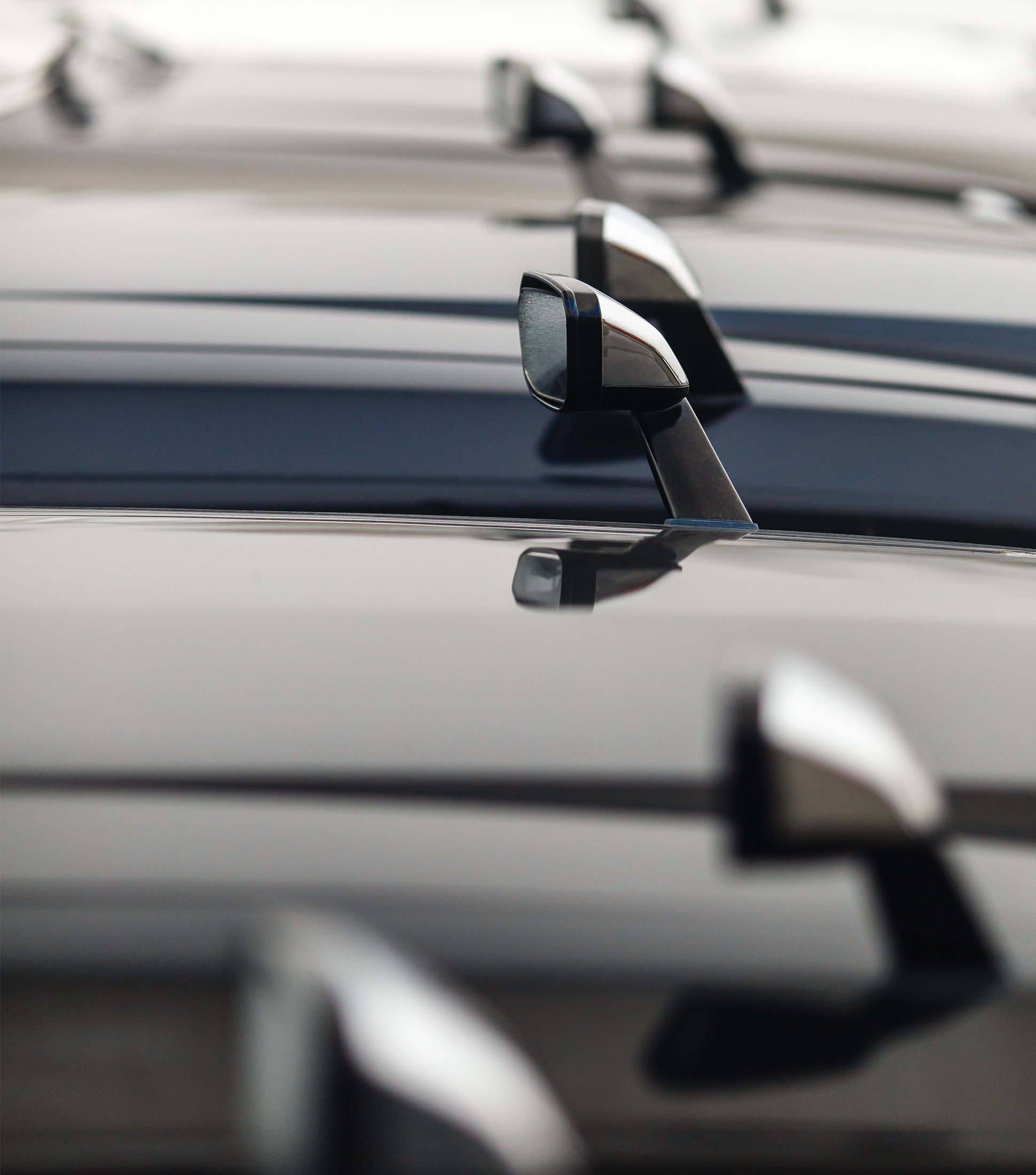
T

oward the end of 1985, after decades of steady economic growth, Japan began to experience an economic bubble driven by a stronger yen, low interest rates and aggressive speculation, resulting in a massive inflation of stock prices and real estate. This prosperous time emboldened Japanese automakers to think bigger, invest heavily in their R&D and chase a growing segment of increasingly wealthy consumers. No niche was too obscure to fill, and no technology was too outlandish to pursue. Compact cars with gull-wing doors. Four-wheel steering. Gyroscopic navigation systems. Triple-rotary engines. Competition between the Japanese automakers only fanned these flames of innovation.

As such, the Japanese automotive industry experienced a golden age. Until this point, most Japanese cars were well-built albeit staid mass-market cars, but now every automaker had a performance car, luxurious land yacht or quirky economy car. Some of these cars — like the Honda NSX (known in the US as an Acura) and Mitsubishi 3000GT — were sold stateside, but many remained exclusive to the Land of the Rising Sun. Although Japan’s bubble economy had burst by 1992, its halo cars would continue to be produced and sold deep into the decade.

Around the same time that Japan’s economic bubble was inflating, the US automotive market was experiencing its own shift. As domestic manufacturers struggled to compete with imports, demand for European cars from brands like Mercedes-Benz and BMW was growing. Because the US has its own standards for emissions and safety, these offerings from European automakers had to be engineered specifically for the United States domestic market (USDM). This meant some models and trims — many of which were deemed more desirable by enthusiasts — weren’t sold here because manufacturers thought the profits wouldn’t justify the added expenses.
This, in addition to a then-strong US dollar, led thousands of foreign-car buyers to the “gray market.” Gray-market cars were bought in Europe, shipped to the US and then brought into compliance with US standards in shops. This way, a car buyer in the US could have a Euro-market trim — often at a substantial savings — even after spending thousands to import the car from overseas and modifying it to comply with US regulations.

Unsurprisingly, automakers didn’t like losing US sales to this workaround, and in the late ’80s, Mercedes-Benz led a lobbying effort to stifle the importing of gray-market cars. In 1988, the Motor Vehicle Safety Compliance Act was passed, making it virtually impossible for importers to bring non-USDM cars into compliance. Today, importers need to perform expensive crash testing to prove non-USDM cars are safe enough to enter the United States, or obtain an official letter from a manufacturer saying they’re “substantially similar” to those officially sold in the US.

But there was one small concession made to car enthusiasts within the Imported Motor Vehicle Safety Compliance Act: any car can enter the US, fully exempt from federal safety and emissions standards, so long as it’s 25 years old (according to the date of manufacture, not the model year). For those patient enough to wait two and a half decades, the 25-year rule was the only beacon of hope to owning automotive forbidden fruit.

T

he stars have begun to align for US car enthusiasts now that the 25-year window lines up with Japan’s golden era of cars. Japanese domestic market-only (JDM) imports appear to be a fast-growing part of car-collecting culture in the US. According to the United States Department of Commerce, in 2013, approximately $9.36 million worth of used cars made their way to the US from Japan. In 2017 that figure surged to a whopping $72.6 million.

“We started out with fairly low volume, [selling] about four or five cars a month,” says Chris Bishop, who started his importing business, Japanese Classics LLC, in 2011. “But I’d say about twenty-five to thirty is the average right now. Part of it was availability — there weren’t a lot of exciting cars that had a ton of demand when we started.”

According to Bishop, the number of importers hoping to capitalize on the nostalgia for these cars has also hugely increased. “When we first started, I think there were probably four other companies, max, that had similar businesses importing cars from Japan, specifically sports cars,” he says. “There are probably a hundred of them now.”

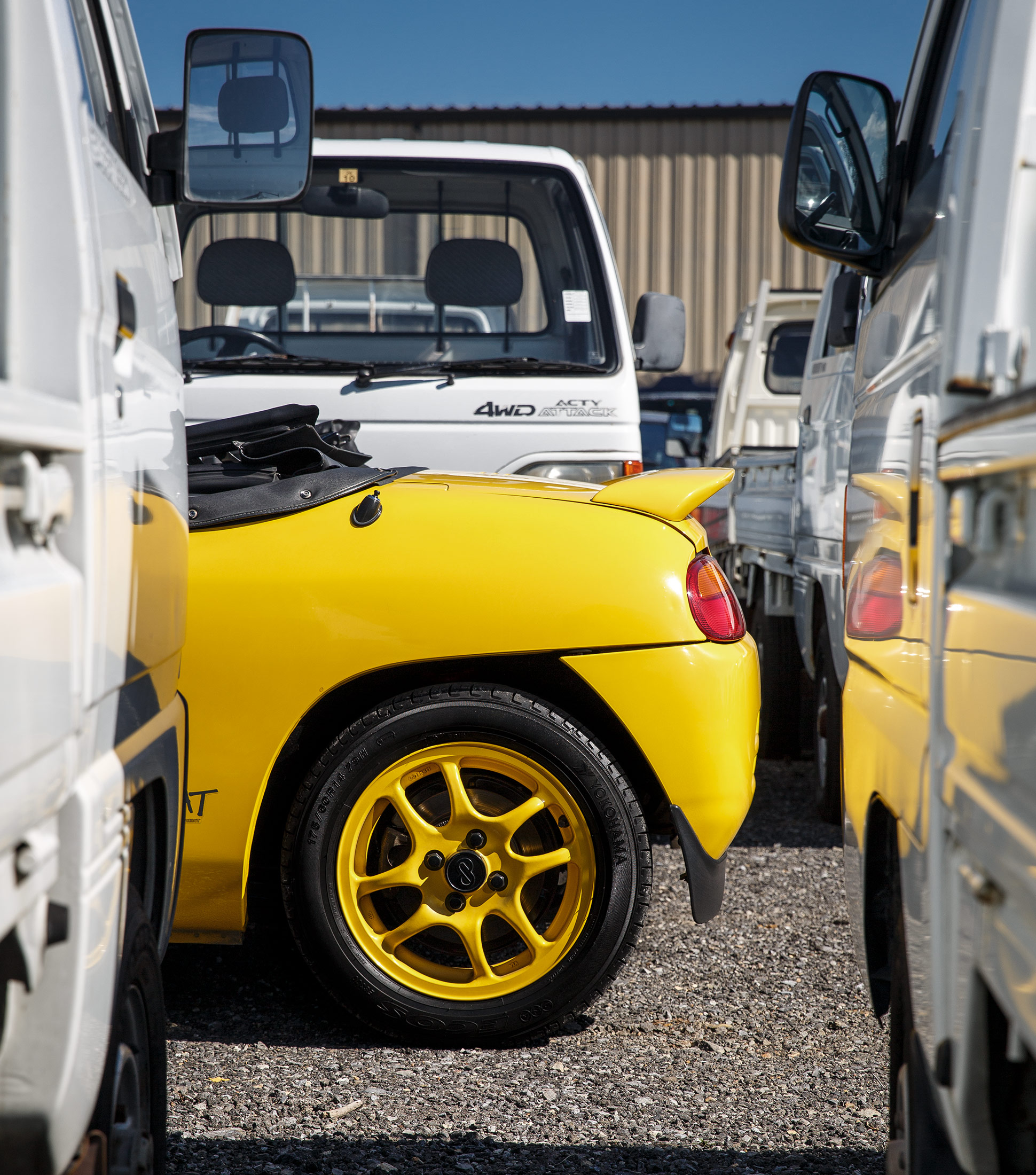
But for Bishop, Duncan and other importers, perhaps the hardest part of the whole thing is the very first step. “People say, ‘Oh, I’m gonna fly to Japan and find a car and buy it.’ But it’s really not that easy,” says Bishop. “Driving around, you generally don’t see old cars…it’s pretty few and far between where you see something interesting. We import over three hundred cars a year, so we have to pull from every source available — private sellers, dealers, wholesalers, auctions — to do that kind of volume.”

It’s a pain echoed by Duncan: “When I came to Japan, I had this preconceived notion that I knew more about finding cars than the Japanese did and that we needed to be knocking on doors and seeing dealers,” he says. “But I quickly learned over there that the cars usually get sold to the dealer then end up at auction.”

Used-car auctions are massive in Japan, generally featuring thousands of cars on a daily basis. But not just anyone can actually bid on them. To keep transactions orderly, only dealers and exporters can register to bid, so would-be car importers must hire someone to buy a car on their behalf. Duncan and Bishop both say it’s wise to inspect the car in person, or have a trusted proxy do it. For these reasons, both Duncan and Bishop have employees or brokers on the ground in Japan to scout, inspect and buy vehicles.

O

nce an importer has secured a car, a web of red tape and logistical challenges lie ahead. It’s almost by design an intimidating process, but it’s far from insurmountable. “Retrospectively, it seemed daunting at first, but it was a bit easier than I had thought it would be,” says Bishop, recounting the first time he imported a car from Japan.
Shipping needs to be arranged to get the car to port where it will wait to embark. During this time, shipping insurance should be arranged, and the car needs to be steam cleaned before it’s shipped (the US Department of Agriculture requires all foreign soil be removed from the undercarriage). Similarly, any personal items or junk needs to be removed. “Your car is not a shipping container,” the US Customs website bluntly states.

Shipping is done in either a container or “ro-ro” (roll on, roll off) where it’s driven onto the ship deck, strapped down and exposed to the elements. Container shipping is usually more expensive than ro-ro; while it does keep your car protected from storms during the multi-week trek across the ocean, Duncan notes that out of the hundreds and hundreds of cars he’s had shipped ro-ro, only a handful have been damaged in transit.

Next comes the exciting stuff: paperwork. Even though a 25-year-old car is exempt from DOT and EPA regulations, DOT form HS-7 and EPA form 3520-1 need to be completed to clear Customs. A bill of lading, a bill of sale and a foreign registration (or in the case of Japan specifically, an export certificate) that’s translated into English are also needed to file entry. The importer of the car must be present to file entry once the car arrives at port, though it is considerably easier for the buyer to hire a customs broker to do this instead. A government-issued import bond is also required — this document ensures US Customs will receive payment of all duties and fees. Passenger vehicles require a 2.5 percent duty while light trucks are saddled with a 25 percent tariff.
But even if a car arrives at port in the US with all necessary forms filled out, there are still no guarantees that everything’s good to go. There’s a possibility a car will be randomly inspected to make sure it is, in fact, 25 years old and free of any smuggled goods. If a car is selected for random inspection, its importer is on the hook for a storage fee during that time. According to Bishop, about 20 percent of his cars get flagged for inspection.

“It doesn’t happen every time, but it happens more than people think,” says Bishop. “They’ll go through a lengthy process, including a visual inspection, just making sure the car is what it looks like… that it’s twenty-five years old, that there hasn’t been a VIN swap.”

Inspections may be random but they happen for a reason: some unscrupulous importers will attempt to smuggle in cars younger than 25 years old. Often this is done by bringing in parts piecemeal, assembling them, then claiming the built car is a “kit car.” Others will swap the VIN of an older car onto a new car being imported.

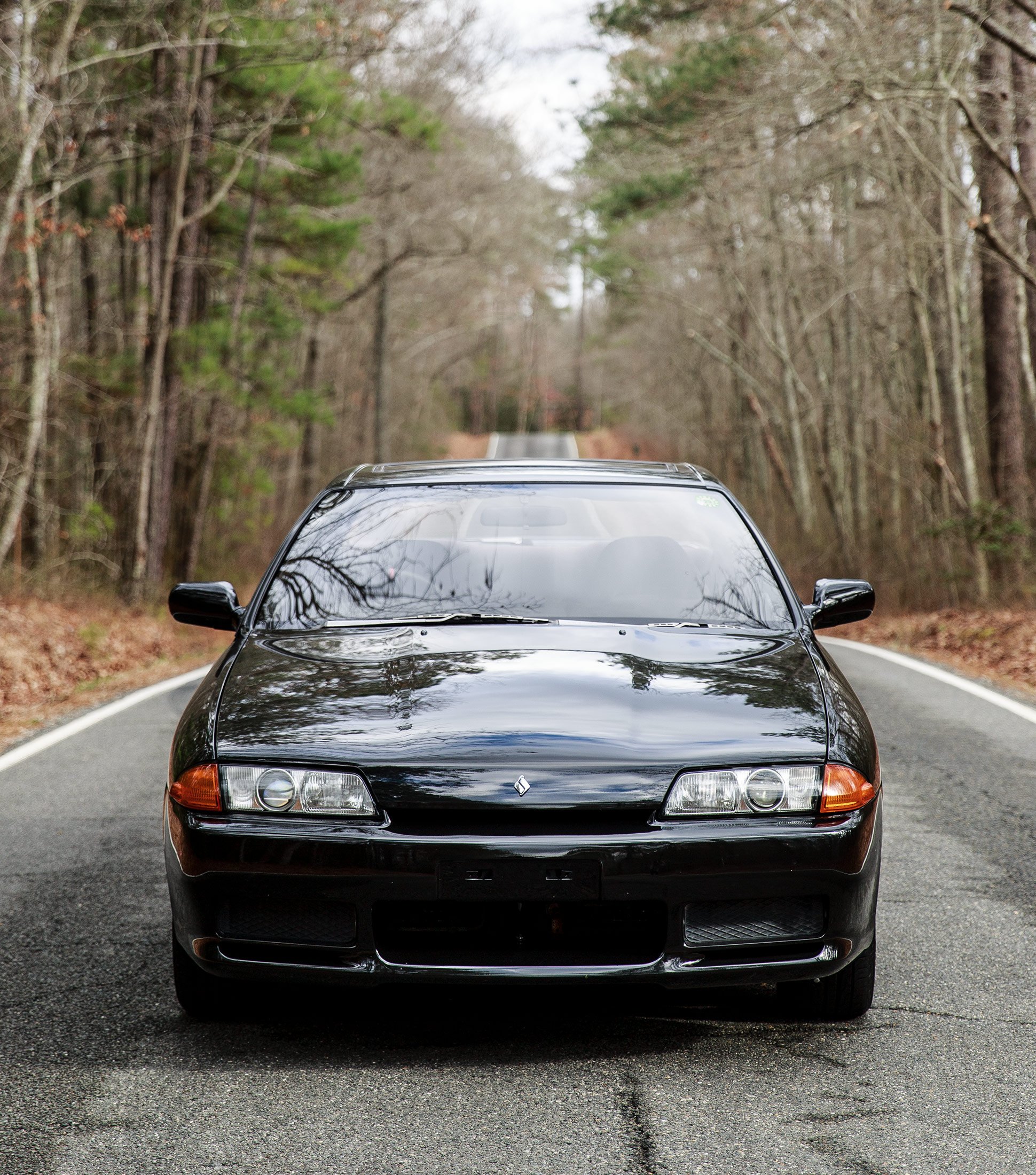
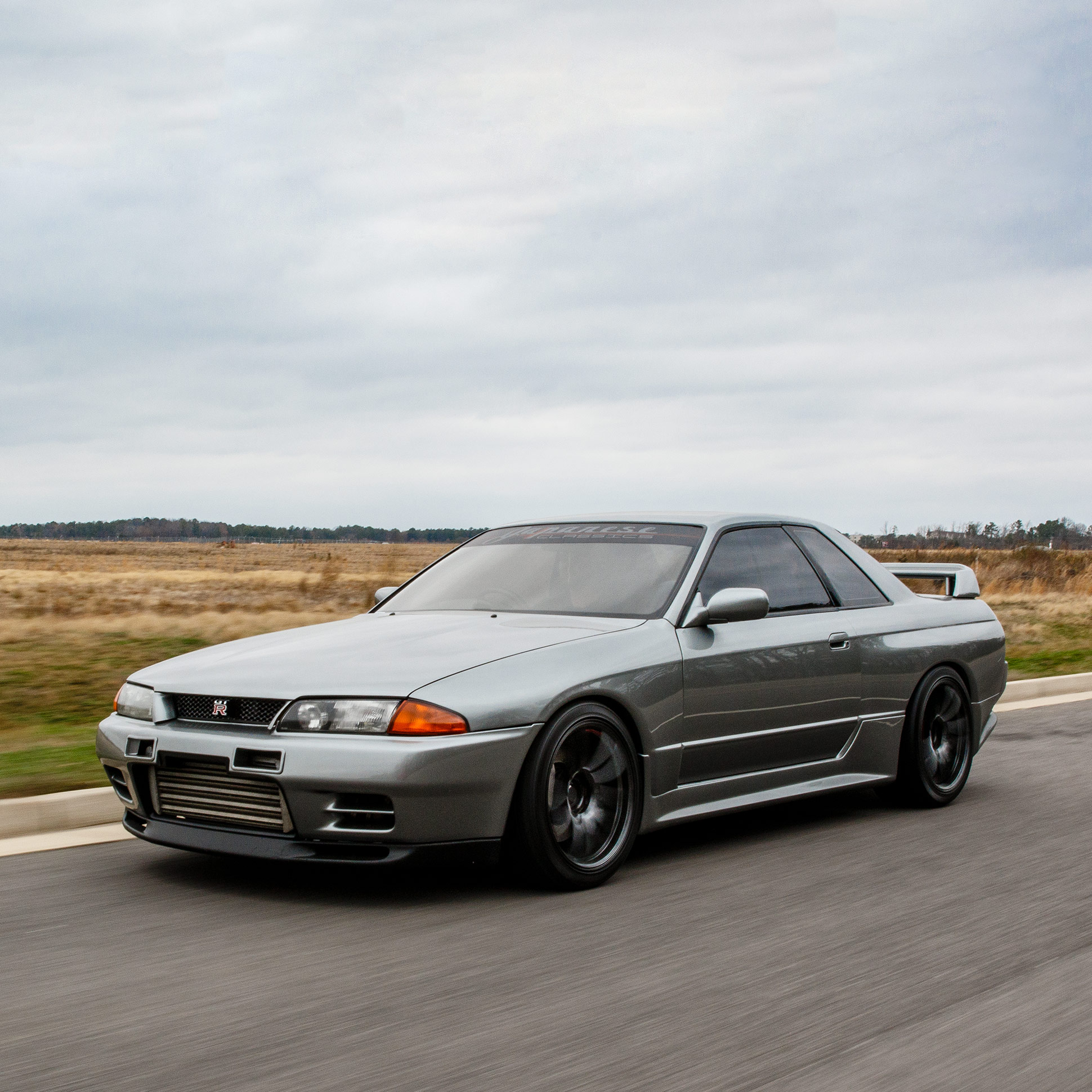
The “kit car” trick has become common among shady JDM importers, particularly with newer Skyline GT-Rs, while the VIN swapping is more common with long-running models coming from Europe, like the Austin Mini or Land Rover Defender. These illegally smuggled cars may make their way into the US, but if they’re ever found out (be it at the port or after the fact) they’ll be seized and crushed.

For that reason alone, it pays to be patient and wait until a car is 25 years old. Assuming the importer does everything by the book, the car can then be titled at the DMV. This can be a frustrating process, as most DMV workers are flummoxed by the foreign paperwork required to title an imported car — Bishop said it took him four hours to title his first import. But the car will, eventually, get a title. And it will, eventually, get to be driven in the US after two and a half decades of waiting.
T

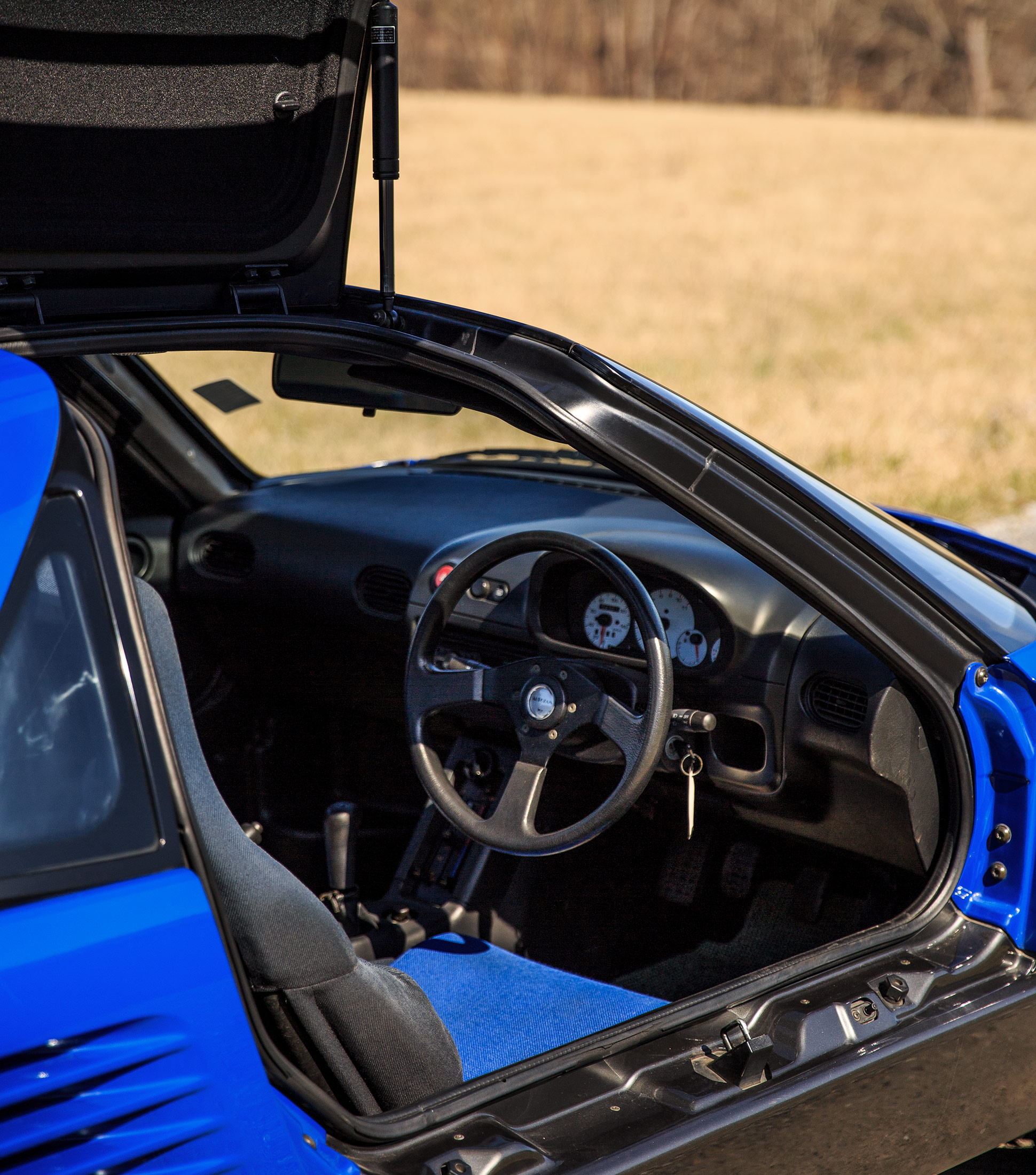
o non-enthusiasts, it probably seems idiotic to endure the stress and bureaucracy of this import process, but to a generation of car enthusiasts, it’s more than worth it. Car collecting exists as a persistent cycle of nostalgia, wherein each generation buys the idolized machines of their youth, decades after the fact, when they have the means to afford them. For Boomers, it’s classic Americana and muscle cars. For Gen Xers, it’s the high-strung European performance cars of the ’80s. For millennials, it’s the forbidden fruit from Japan’s glorious golden era.

“Tons of guys come in here saying ‘I remember playing Gran Turismo and I had this car and I always wanted it,’” says Bishop. “A lot of people have connections with these cars that I would compare to guys with muscle cars. People that are twenty to thirty-five have that same connection with Japanese cars, but the cars were never here… you have this nostalgic connection to this thing you’ve never actually seen before.”

Of course, you don’t need to be in your 20s or 30s to love these cars. Duncan, after all, is in his 60s, and he was just as capable of forging a personal connection with the Figaro he saw at the Tokyo Motor Show all those years ago. Maybe, then, it’s about the enduring charm of these outside-the-box machines. Or maybe it’s about the unrelenting desire to have something you’ve been unfairly denied for so long.
“It is really satisfying [to finally have one],” says Duncan. “Think of it this way: You and I can go to a Cars and Coffee and ride in with any of these right-hand drive cars from Japan. A guy sitting across the parking lot has a fifty- or hundred-thousand-dollar Porsche. And you’re sitting over here with your ten-thousand-dollar Figaro. Who do you think is gonna get the most attention?”

That vindication is why these cars are worth the rigmarole. After 25 years of waiting in anticipation, the headache of paperwork, steam cleaning, shipping logistics and a 2.5 percent duty may seem like the final slap in the face to enthusiasts who have wanted these cars for so long. But in the grand scheme of things it’s entirely worth it when you come to find that the car is every bit as great as you hoped it would be.

The 707-Horsepower Trackhawk Is an Accessible, Envelope-Pushing SUV

Sometimes I wonder if the word “or” will disappear from our native tongue in the coming decades. Honestly, it wouldn’t surprise me, given our affinity for “and.” The former indicates a choice is to be made, but Americans hate making choices — it means we’re not getting everything we want. The latter — and — means we get it all, and boy do we love more. Forget “having our cake and eating it too.” We’ll take our cake baked inside a pie, topped with a banana split, please and thank you.


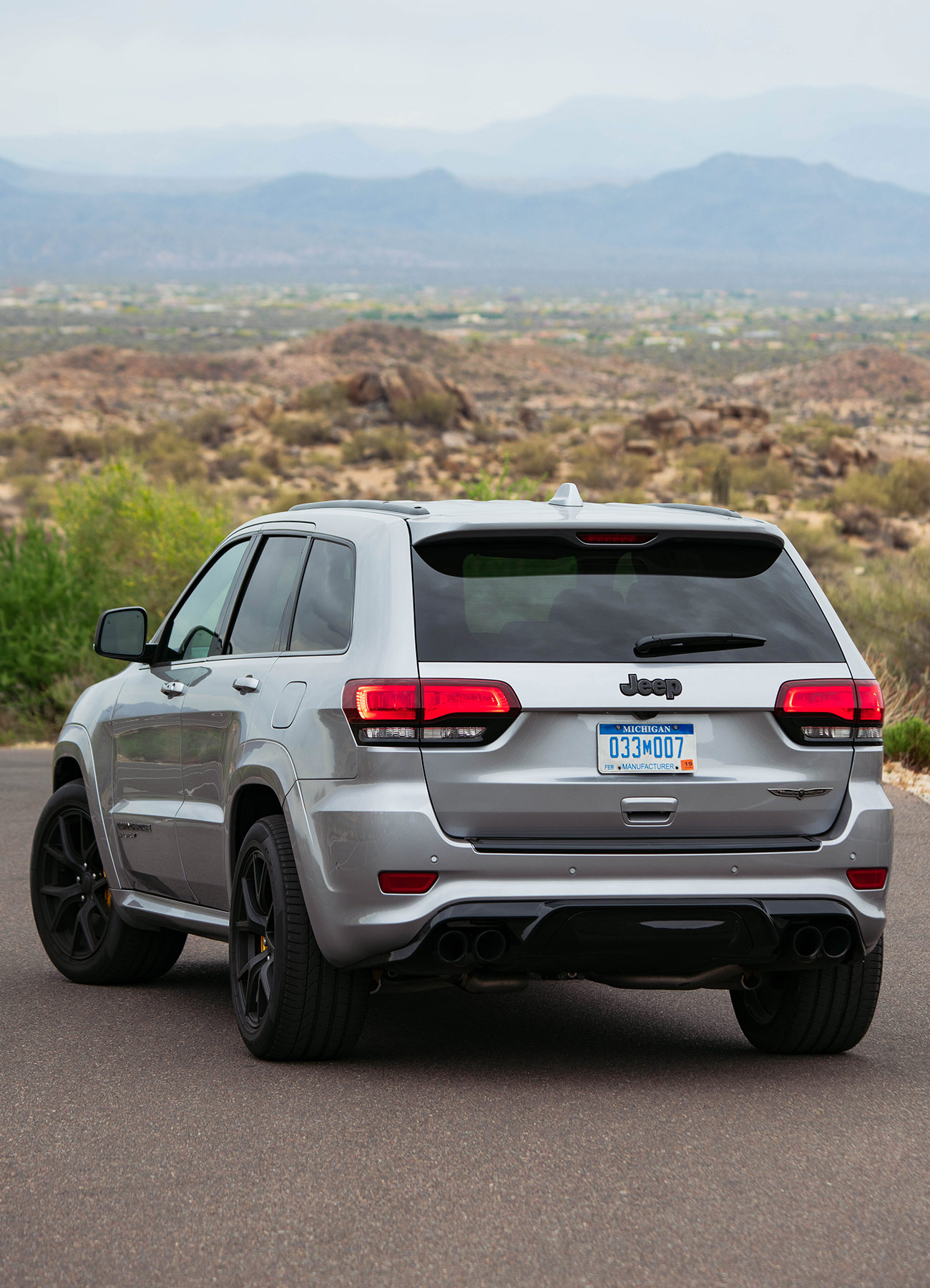
Automotively, the Jeep Grand Cherokee Trackhawk ($86,200) is one of the latest physical manifestations of this mentality. It’s a batshit crazy muscle car baked inside an excellent SUV, topped with handling capabilities that would surely elicit an eyebrow raise from even the sternest clipboard-wielding German engineer. It’s unapologetic in its purpose, which is to be the most wildly entertaining SUV on sale — to make people reconsider what Jeep is capable of. That’s not some marketing jargon either. Those are my own words, after having spent some time on a track and then doing a road trip between Phoenix from Los Angeles.

The Trackhawk is one of those special vehicles that doesn’t put me at a loss for words; rather, it brings them, accompanied by a range of emotions, flooding into my consciousness. My friends, pinned back in their seats when I took us from an urban crawl up to freeway passing speed in a matter of seconds, experienced an emotional range too: terror and joy. I found myself an opportunity to find the car’s “limit” in a straight line, and subsequently couldn’t stop laughing. (It’s been awhile since I’ve hit the fuel cutoff in a vehicle.)

I can easily imagine a future in which we have a Jeep that does 200mph. That’s a future I want to live in — a future I can believe in. Given that the Trackhawk’s top speed is only 20 mph lower, I won’t be the least bit surprised when that mark is hit and likely passed.

Back here in the present day, we don’t have it so bad though. The Trackhawk is among a very small group of vehicles that have utilitarian roots but are now as entertaining as any ground-hugging supercar. It’s a different brand of entertainment than driving a sports car or a supercar, one that’s ultimately far more accessible to the average person looking for a rush. The joy of running a race car around a track is tough to convey to someone who has never done it themselves. Turn loose the Trackhawk with a couple friends in the back and they’ll get a general idea. You’ll want to clarify that “No, race cars don’t normally have cooled front and rear seats” or “No, race cars can’t comfortably carry a Bernese and a Yeti cooler.”

However, there’s plenty you won’t have to explain because the car does it all for you: it’s equipped with on-demand vehicle performance data and a supercharged engine that’s cut out for hours and hours of abuse. As it turns out, the Trackhawk has more in common with a race car than it does with its peers in the mid-size SUV segment. It falls into that elite class of vehicle that is envelope-pushing while remaining relatively accessible in the same vein of the Raptor or Corvette ZR1. Unlike those two vehicles, however, the Trackhawk is primed for use in daily life in a city. It excels at being comfortable, manageable transportation and it just so happens to excel at accelerating quickly. Really, really, really quickly. Right up to the limit.
2018 Jeep Grand Cherokee Trackhawk Specs:
Engine: 6.2-liter supercharged Hemi V8
Transmission: eight-speed auto
Horsepower: 707
Torque: 645 lb-ft
0-60: 3.5 seconds
Top Speed: 180 mph
MSRP: $86,200 (base)

If You Want a Vintage Volkswagen Westfalia, This Is the One You Crave

Editor’s Note: We love scouring the internet for reasons to spend money we don’t have on cars we daydream about owning, and these are our picks this week. All prices listed are bid amounts at the time of publishing.

When it first hit the road in the late ’50s, the Volkswagen Westfalia Camper immediately stood out for aggressively going after the adventurous and outdoors-loving customer base. Today, that market has absolutely exploded into an entire industry centered around light off-roading and camping. (Do a quick search for #vanlife and Westfalias will be your top hit.) However, like a lot of classic and vintage off-roaders, an old Westfalia can seem appealing but can give any new owner a rude awakening after just a few miles.

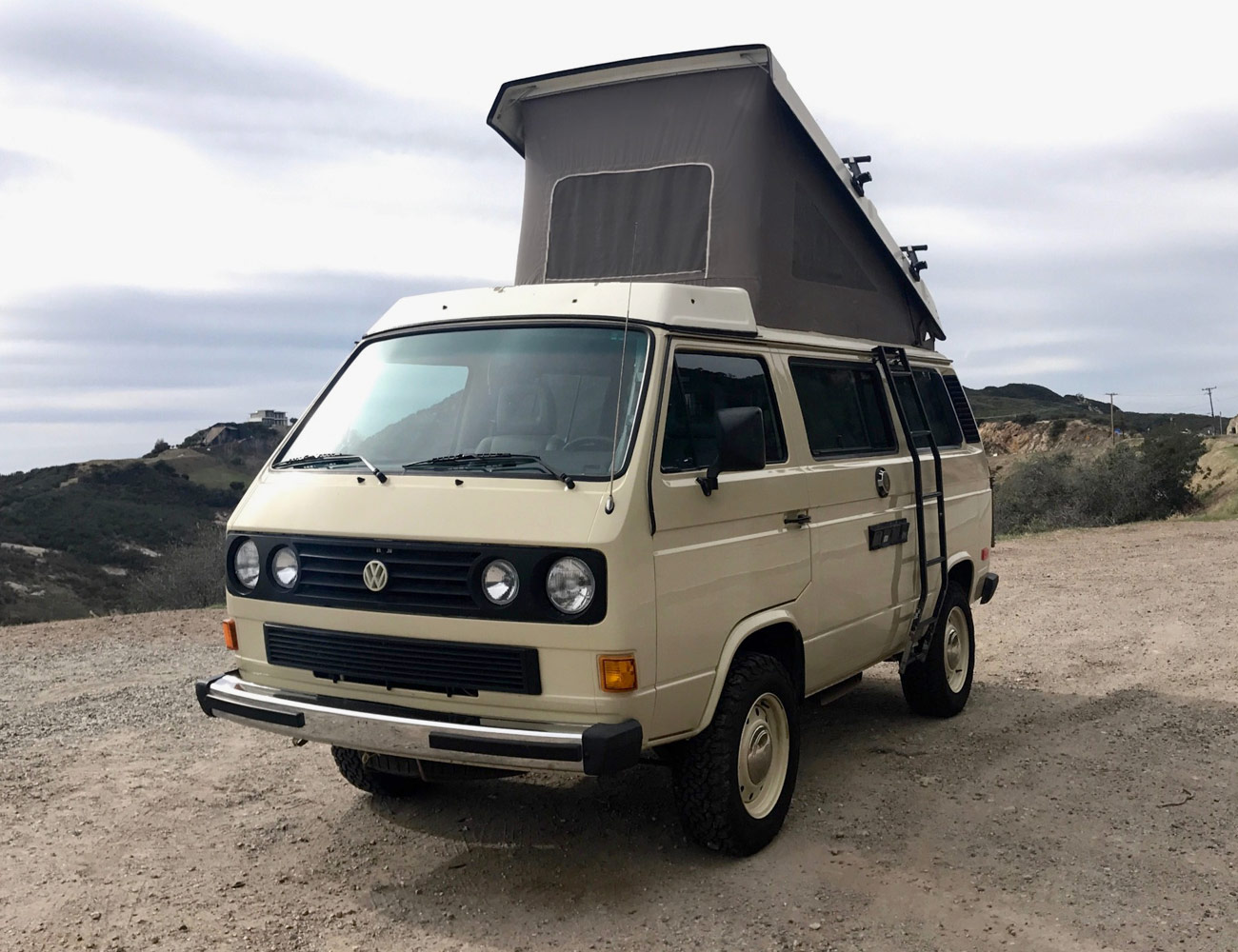
Throughout the years, Westfalias did a lot of things wonderfully. VW saw fit to give later models bigger tires, taller suspension and optional Audi-derived 4WD on top the fully kitted-out interiors but the vans were always short on power. Brand-new, top-of-the-line Vanagons were making just over 100 horsepower and featured torque figures more common in the motorcycle industry. For that reason, you’ll see a lot of old Westfalias with engine swaps. When you daydream of an overlanding van camper, this is the one you picture: it has the power and few other necessary modifications to make life easier.

What We Like: Most vintage off-roaders like Defenders and Scouts, although decently adept in the dirt, make terrible everyday cars. After all, they were originally built for farm work and are subsequently very spartan (making them easy to work on when they break down). This Westfalia, on the other hand, can not only tackle a fire service road or two but is essentially a mobile campsite. The original Westfalia’s biggest problem was the engine and lack of power — this example fixes that and then some.

Pushing this Vanagon is the 3.3-liter flat-six engine from a Subaru SVX sports car, which, at 230 horsepower, more than doubles the VW’s original output. In addition to the engine, the previous owner also bolted in Fox Racing shocks, lifting springs, differential locks and bigger-than-stock BFGoodrich All-Terrain tires. You can take off your vintage rose-tinted glasses now; this is the real deal.

From the Seller: “Westfalia full camper amenities include a kitchenette, tables, curtains, sleeping room for four, cabinetry and more. An aftermarket mini-fridge was installed in 2016 place of the propane-powered original. Electrical work included installation of a GoWesty solar charging system with a fourth outside access panel, power inverter, Megatron battery, voltage monitor and battery selector.”

Watch Out For: When it comes to Westfalias, rust generally isn’t a massive concern, but this particular model has 250,000 miles on the chassis. Regardless, always check the frame rails, under the floor mats and where the pop-up roof meets the rest of the body. Furthermore, make sure whichever Westfalia catches your eye comes with extensive service records (like this one). Due to the layout of the vehicle, the cooling system can develop small issues over time and the fueling system tends to erode with age as well.

Original Review: “The Vanagon was never intended to be a Rubicon-runner, but VW engineers ensured it could at least tackle the deeper snow and rutted roads that customers might encounter in the Black Forest or the Black Hills. ” — Motortrend

Alternatives: As far as vehicles that came from the factory, built and marketed towards camping and outdoor activities, the VW Vanagon Westfalia was in a league of its own back in the day. You might be able to make the argument for the Ford Transit or the Toyota Motorhome which was a big player in the market but was nowhere near as compact, subtle or stylish as the VW. Today, there are third-party companies that will make excellent decked-out vans and trucks to go camping and off-roading. If you’re looking for a simple, modern-day van you can live in and tackle rough dirt roads with, the Mercedes-Benz Sprinter 4×4 is your best bet. It’s also incredibly well-equipped to receive tons of mods to make it a true mobile campsite.

Engine: 3.3L Subaru SVX Flat-Six
Transmission: 4-Speed Manual Transaxle
Location: Topanga, California
Mileage: 250,000 (Chassis Miles)
Price When New: $18,670+

How to Sell a Used Car On Craigslist

The thought of parting ways with your beloved ride can be pretty daunting. It’s a fairly substantial life decision, seeing as how much money you might stand to make (depending on what condition your car is in). One of the next big hurdles is where to sell your car. You could go the easy route and trade it in at the dealer, but you won’t get the maximum amount of money there since the dealer has to flip your car and make a profit of its own. If you have a rare, unique or classic car, a site like Bring a Trailer or Hemmings might be the best place. But for the majority of cars out there, the most popular, accessible and user-friendly online outlet is Craigslist.

Which begs the question: how to sell your car on Craigslist, the go-to classified section of the internet. Because Craigslist is so popular and easy to use, the low bar for entry is both a blessing and a curse. Countless users simultaneously selling cars means there’s a vast sea of ads buyers need to sift through before landing on yours. And if you’ve ever spent more than five minutes on Craigslist, you know a lot of the ads out there are uninformative, unhelpful or just plain shady. When someone comes across your car, you want to stand out in the best way possible, and, luckily, that’s incredibly easy to do, if you follow a few simple steps.

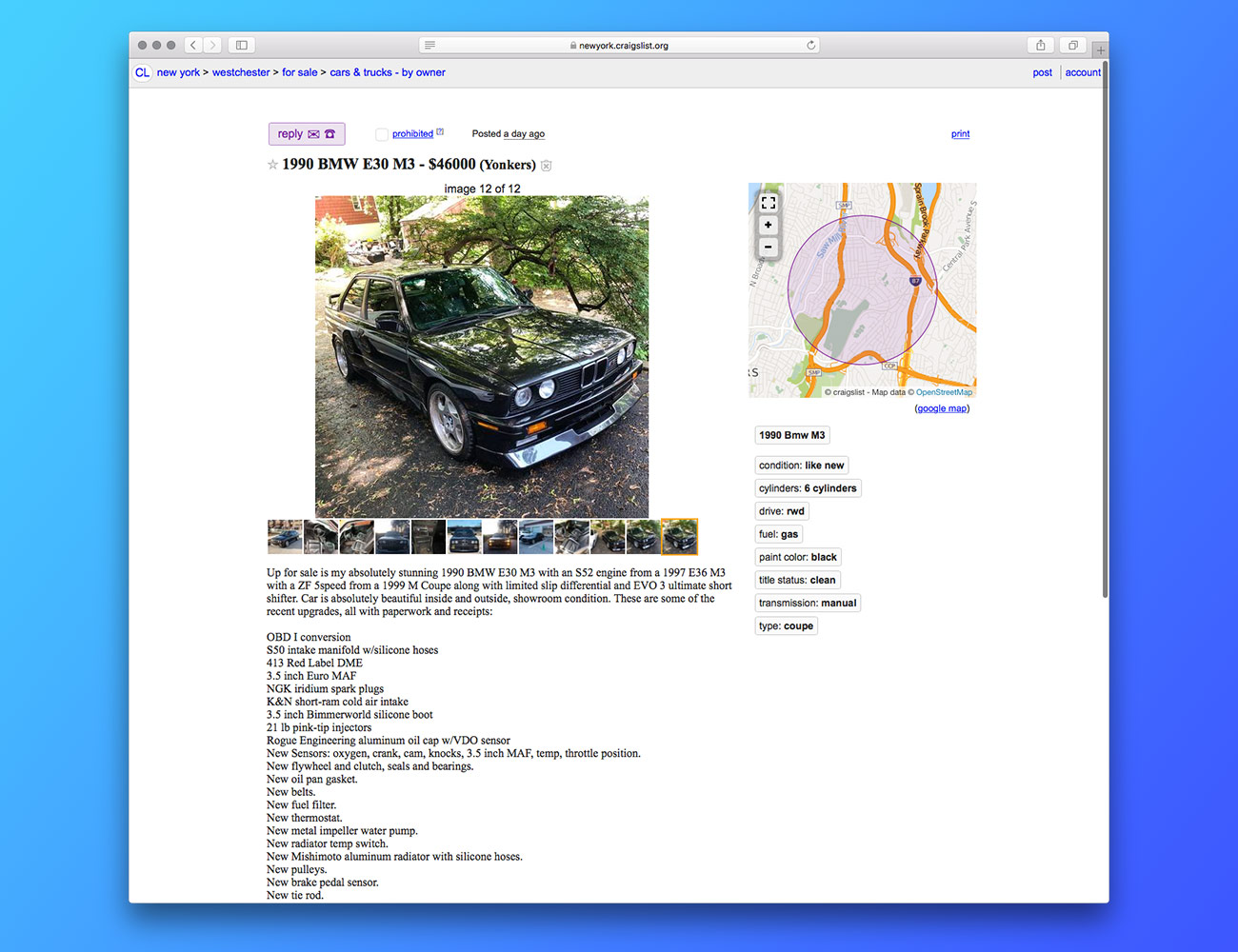
Take extensive and exhaustive photos. An immediate red flag for any car shopper is a single-photo ad or no photos of the car at all. Lacking significant, clear pictures makes it look like you have something to hide. The trick to gaining that first, tiny bit of trust is to photograph as much as you can (Craigslist has a 12 image limit). Being honest and upfront will only help in the long run.

Read Up: Car Photography Tips
• Know your surroundings
• Balancing the whole image is key
• Simple camera gear can make the difference

Details matter. Describe the hell out of your car. If the pictures are worth 1000 words, add 1000 more. Just as your photos should hide nothing, in-depth details about the car — its basic history, any mechanical problems or accidents — are monumentally helpful. You can never be too extensive.

Read Up: How To Maximize Profit When Selling Your Car
“Make sure you have documentation to show any work that’s been done on your car. Make sure you have addressed existing recalls. If there is something you don’t know about your car, someone can easily find that out, and that puts you at a disadvantage in the negotiation.” — Matt Delorenzo, Kelley Blue Book

Provide history — both good and bad. It’s one thing to show how great a condition your car is currently in, but maintenance records and Carfax reports detailing any recalls, scheduled work or otherwise is also critical. Think of all the things you would like to know about a used car’s history, and then provide that in the add.

Read Up: How to Sell a Car Successfully
“Given that a lot of these cars transact long-distance, the more information out there, the better. You don’t want any mystery or weird questions remaining — bidder confidence is what makes the price go up. Historical records are really important.” — Randy Nonnenberg, founder, Bring a Trailer

Be thoroughly responsive to any prospective buyer’s questions. If you are serious about selling your car, it’ll take some time and dedication. When potential buyers email or call with questions, you should be ready to answer them. The most frustrating hurdle in buying a new car is finding one you love only to have the seller flake out.

Have patience. Keep in mind this is Craigslist. The site is full of scams and false ads; similarly, you’ll run into fake buyers. Legitimate buyers will come asking realistic questions — use your best judgment when it comes to engaging other users.

Volvo Rolls Out Re-Designed S60 for 2019

Volvo does a lot more than make the world’s safest cars, their Polestar performance models are consistently cool and impressively powerful. For 2019, they’ve totally re-designed the mid-size S60 sedan. Overall, it’s got a more angular & muscular look and is available in a range of performance & trims, including a 415HP T8 Polestar edition.

The New Suzuki Jimny Is the Tiny Off-Roader of Our Dreams

Though spy shots have been around online for some time, official images and details of the upcoming fourth-generation Suzuki Jimny have finally hit the web, and they give us our best look yet at what the Japanese automaker’s endearingly tiny and barebones off-roader will look like when it returns to the market refreshed. If you’re familiar with the current third-generation Jimny, you know that it’s barely changed in the 20 years that have passed since it debuted in 1998, for better or for worse. The tiny little overlander is beloved by some for retaining its pared-down charm but loathed by others for feeling woefully unrefined and outdated.

Based on what’s been unveiled thus far, the Jimny might be able to accommodate the desires of both camps. The former will appreciate the fact that Jimny will ride on a ladder frame with solid front and rear axles and feature a part-time 4WD system with a two-speed transfer case. The latter will appreciate the fact that the new Jimny will feature modern technology, most notably a large infotainment display and an autonomous emergency braking system.

Everybody, hopefully, can agree that the design itself is utterly magnificent. While the boxy retro aesthetic has been compared by many outlets to the opulent Mercedes G-Wagen, the design is clearly inspired by the first-generation Jimny, an honest and pure little off-roader that debuted long ago in the 1970s. Purportedly, two iterations appear to be available: the standard Jimny, a 660cc narrow-body variant to be sold as a Kei car in Japan and a wider Jimny Safari meant for export markets. Reports indicate the Safari will receive a 1.5-liter gasoline powered engine. That’ll be connected to either a four-speed automatic or five-speed manual.

Given that Suzuki bowed out from the United States auto market back in 2012, we have a snowball’s chance in hell in getting the delightful-looking new Jimny in America. Which is a shame. Given that the market has seen growing demand for small crossovers and SUVs, one wonders if there’s good business sense for it in America amongst the “city-to-mountain” crowd. Imagine packing your little Jimny up with camping gear, mounting a set of mountain bikes to the roof, then escaping the urban jungle for a weekend of trail riding and driving, only to return once more to packed city streets, maneuvering in and out of traffic to find a small but accommodating street spot.

It’s a nice dream, but alas, that’s all it is. A dream.

Today in Gear

The best way to catch up on the day’s most important product releases and stories. Read the Story

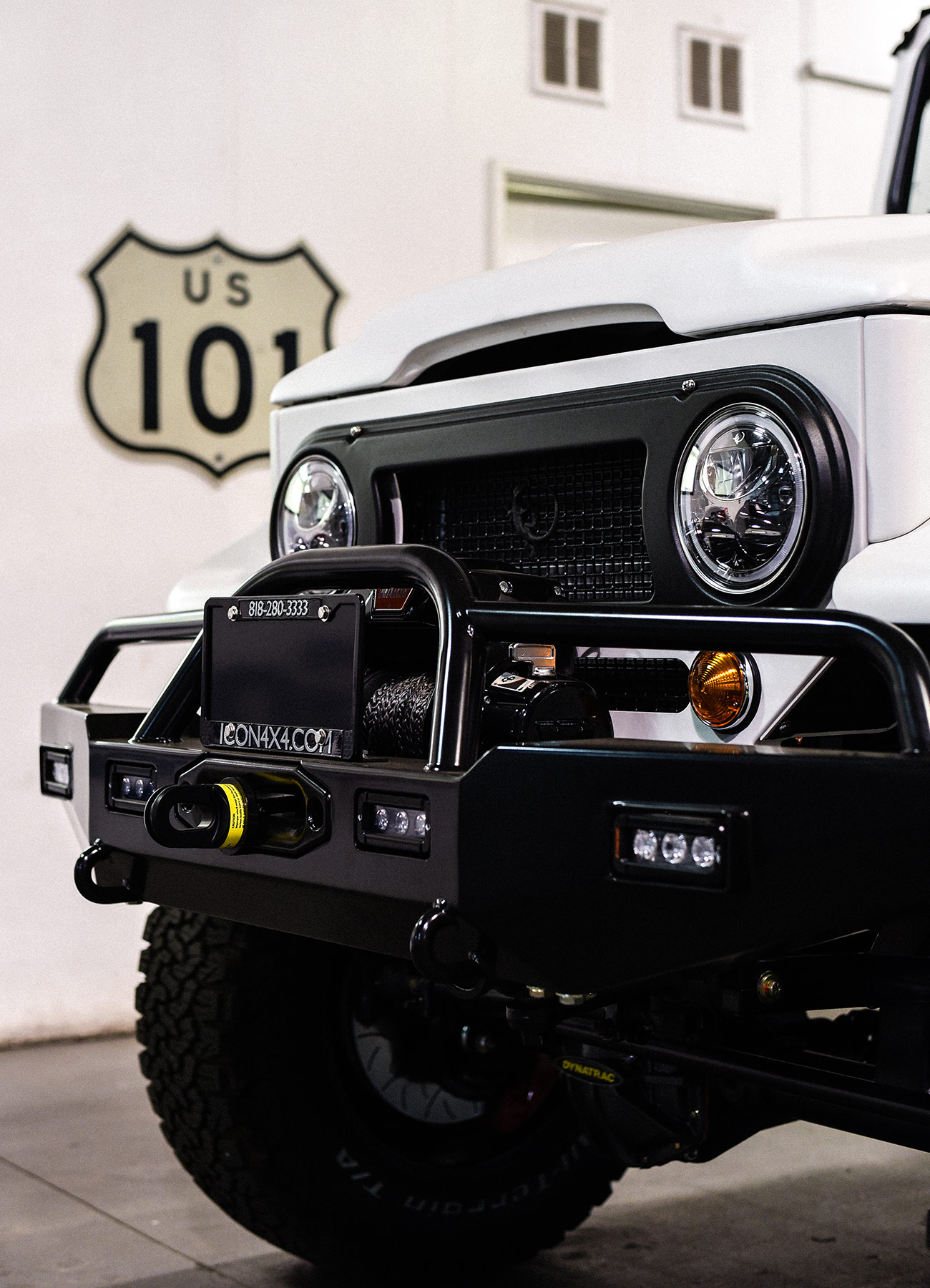
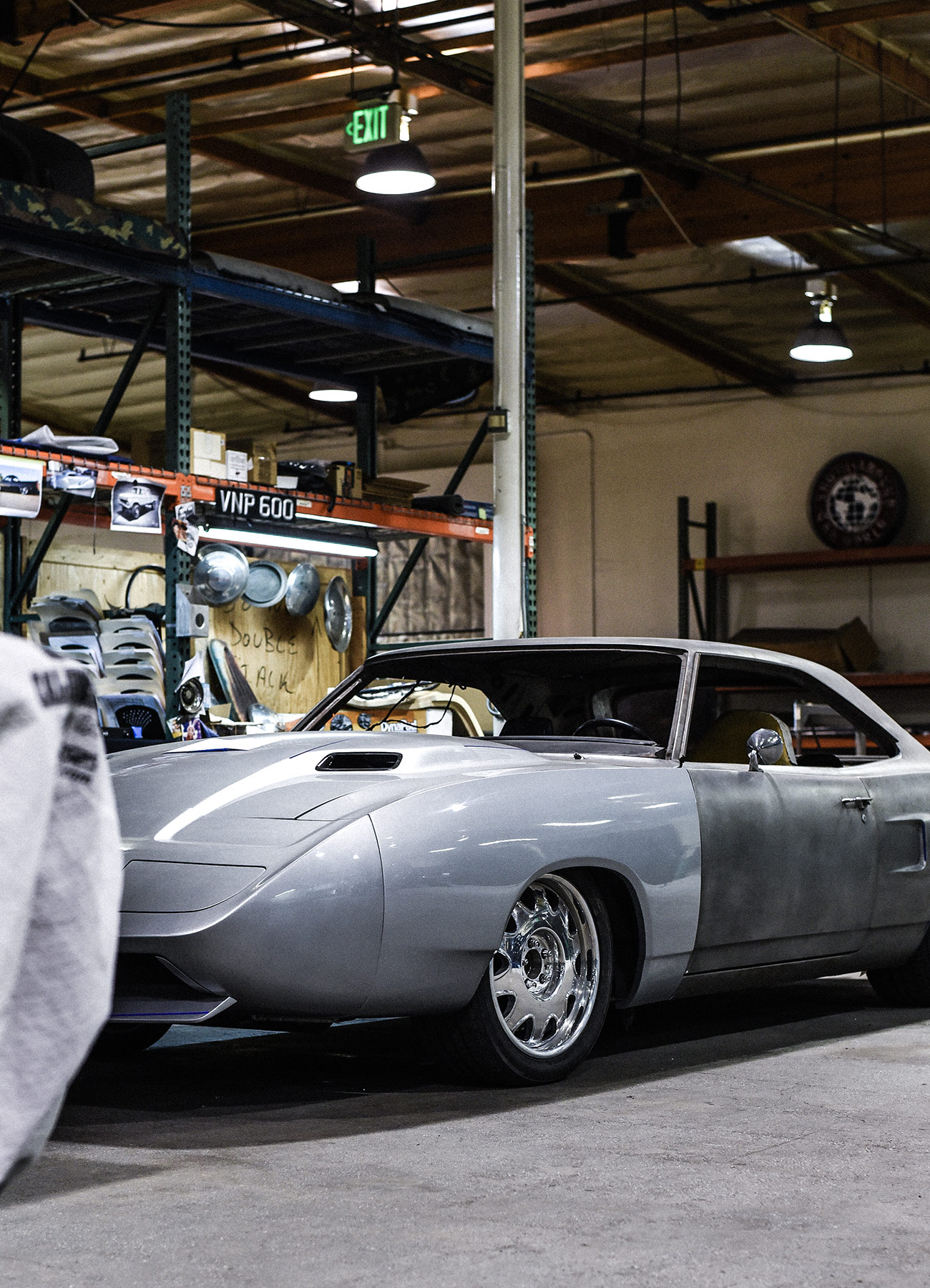
A Look Into the ICON 4×4 Factory Shows How Absurdly Detailed Its Resto-mods Are

When Jonathon Ward opens the door of one of his FJ restorations, the first thing that catches my eye is a dongle hanging from the zipper holding the window closed. They’re little white and black balls, woven from a string of nylon, and they hail from a village in South America, Ward tells me, as part of a micro-loan program meant to create business opportunities in the region. Ward added them because he hates the clinking sound the zipper would otherwise make when the truck is in motion. As for the zippers themselves, Ward tells me “in my world, just trying to get zippers to a specific length and gauge… its fuckin’ impossible!”

Ward is truly a next-level perfectionist.

The rest of the interior is equally over-engineered. Ward expresses deep loathing of plastic, so he goes out of his way to make sure he can replace original plastic parts with metal: the air-conditioning vents, knobs, handles and switches — to name a few — are all CNC’d stainless steel. The console is also custom made my ICON, albeit begrudgingly. “The biggest US console maker is totally asleep at the wheel. I designed this and handed it to them and asked ‘Please can you make this? How about a double-DIN? How about gas shocks for the lid? How about stainless steel? How about, USB power ports and serviceable cup holders?” And they said ‘Well, no one else is complaining’ So that forced me into making our own.”

If you’re familiar with ICON 4×4 — and if you love off-roaders and overland-ready rigs, you really should be by now — you’ll know that its trucks usually cost six figures and, thus, are popular with celebrities and the just-plain monied. You’ll probably know that his restorations are all powered by brand new crate engines, feature extensive chassis modifications and badass matte paint jobs.

But what most people don’t always realize is the level of detail that goes into making the trucks absolutely perfect inside and out. Many shops will use whatever automotive parts are available but Ward wants his restorations to use the best materials possible, and he often has to go outside the automotive industry. The sun visors, for example, are made by a company that makes OEM parts for Learjet. The interior cargo netting isn’t automotive grade, but sports grade supplied by Nike — it’s more durable, according to Ward, and he uses it so it doesn’t look like “blown-out underwear” after a few years of use. The wooden beds of his Thriftmaster hot rods — some of which have Horween leather interiors — he likes to play around with, but the example he shows me uses carbon-dated, 5,000-year-old Irish bog-wood. “Fuckin’ nuts,” he exclaims. Fuckin’ nuts, indeed.

Similarly, the interior upholstery in the FJ Ward shows me is made by Chilewich, which specializes in high-traffic runners, outdoor upholstery and placemats for the restaurant industry. According to Ward, the material used in his trucks has a 100,000 “double rub” count — used to test the durability of a material over repeat uses. Apparently, the acceptable count for traditional automotive materials is 10,000. But the FJ I’m seeing is just a mainstream model for ICON. Things get far more bonkers — and more expensive — when you commission a one-off ride.

For example, one of Ward’s latest one-off creations is an artfully resto-modded, 1965 Kaiser Wagoneer. Ward circles the completed truck, exclaiming “this is wrong, these are wrong, these are wrong,” referring to various exterior parts like the wood trim and wheels pulled from different Wagoneer models. But the idea, I’ve gleaned, is to make the ultimate Wagoneer that still looks like it came from the factory, just with better engineering all around. The interior door cards, for example, are the same design as stock, but Ward CNC’d the base (originally just cardboard) to give it more strength and depth. The dash is custom but “you wouldn’t really know it,” Ward says proudly. The interior — a very of-the-era stripe design — is upholstered with patio fabric from Knoll.

Parked just a few feet away is the shell of a Plymouth Superbird, arguably one of the rarest, most desirable muscle cars America’s ever made. And what’s inside? A 707-horsepower Hellcat engine. Ward climbs inside the shell, fires up the engine, and its thunderous roar fills his workshop. I notice a bright screen light up behind the wheel. Ward’s kept the Hellcat’s original CAN bus system and the final product will have the same modern interface you’d find on a present-day Challenger. That is, once Ward’s figured out how to design a hood that’ll clear the Hellcat’s exceptionally tall block while still looking aesthetically pleasing, a much harder job than it sounds, Ward assures me.

These are just highlights from Ward’s impressive operation that runs out of Icon’s Chatsworth, California shop that, if it weren’t for the dozens of derelict Land Cruiser and Broncos out front, would look just like any other unassuming warehouse in a Northern LA township. But Ward and his 50-some employees are doing some of the most incredible automotive fabrication work I’ve ever laid eyes on, from stuffing batteries into a patina’d Hudson, overbuilding Land Cruisers, and hot-rodding Chevy Thriftmasters. And each and every one will be fully redesigned and reconsidered, made like they should’ve been from the get-go, with each part thoroughly geeked-out on. Right down to the fuckin’ zippers.

This Is The Most Important Car Toyota Has Built In the 21st Century

Toyota CEO Akio Toyoda is a racer, through and through — a motorsport enthusiast with high-octane fuel coursing in his veins. So why, with someone like Toyoda at the helm, does most of America look at Toyota as a milquetoast car company? Especially despite the brand’s incredibly capable off-roaders like TRD (Toyota Racing Development) versions of the Tacoma and 4Runner, not to mention the ridiculously entertaining GT86? Because last year alone, three-quarters of one million Americans bought either Toyota Corolla or a Camry — cars not exactly known for their pulse quickening features. Not enough of the general public is buying the exciting vehicles Toyota keeps pumping out. That’s about to change.

It’s safe to assume all performance cars should handle well, but not all great-handling cars are necessarily ‘performance’ cars. It’s easy to get swept up in the mythology and iconography of classic cars like the Datsun 510, BMW 2002, original Nissan Skyline or Alfa Romeo Giulia, which by today’s standards are revered as ridiculously well-handling cars but labeled as ‘enthusiast cars’ as a result. Consuqeualty, brands capitalized on that with modern reincarnations built as expensive, high-performance machines for a small group of die-hard fans familiar with the history — the modern cars couldn’t be more unrelated to the originals. They forgot about the customer base that made them so successful: the average buyer.

The key to all those cars’ initial successes — the 2002, the Skyline, the Giulia — was that they handled well and were affordable and approachable to the average buyer. That’s what Toyota is trying to bring back with the Corolla Hatchback. They want to bring a good handling car of their own back to the people. Sure, the GT86 can hustle, and the hype around the second coming of the Supra will in all likelihood follow through, but only a handful of people will buy those cars. The trick is to make the car 330,000 Americans are already buying a blast to drive.

The Good: Three critical factors have to work together to create an inspiring and entertaining car: the engine, the transmission and the handling. If the engine is a piece of crap, you’ll dread every waking minute your foot has to venture towards the gas pedal; if the transmission lags behind the engine — even if it’s a good engine — it’s the same story. Likewise, if the car can’t take a turn to save its life, it’ll be no fun to move around. Luckily for the new Corolla Hatchback, all three work together wonderfully.

Exterior design and interior styling also get top marks. Compared to its Civic and Golf competitors, the Corolla’s bodywork lands in a relieving middle ground. That is to say, it’s not nearly as over-designed as the Civic, but carries more character lines, creases and angles than the minimalist Golf. Inside, thankfully, Toyota employed some cloth upholstery. While there is some leather, the driver and passenger seats get a nicely woven cloth in crucial areas on the seat and lower back.

Who It’s For: Not the enthusiast street racer, thankfully. The new Corolla hatch is intelligently aimed at the average buyer, someone who wants a small, affordable city car. It just happens to handle in a class above. And it’s about time this demographic experienced that.

Watch Out For: I’m not sure if it was because of the Corolla XSE I drove was a pre-production prototype or not but the infotainment system and interface was noticeably laggy. When changing satellite radio stations or inputting any other commands directly into the center-dash interface, there was a delay between hitting the button or screen prompt and the action actually happening.

Even though the Corolla isn’t trying to go tit-for-tat with the Civic Si, the passenger legroom in the back was old-school hatch cramped. If a new or younger driver has their friends in the back, it might not be a problem, but for the adult owners using this as a city car or commuter, I wouldn’t recommend volunteering to drive the office carpool — unless you hate your coworkers. Additionally, as a city car or people carrier, the stiffer suspension is something to get used to. It’s not a deal breaker, but the low profile tires will cause a few wincing moments if you don’t keep an eye out for deep potholes ruts.

Alternatives: The segment Toyota is going after with Corolla Hatchback XSE is no cakewalk. Diving into these waters means the Corolla Hatchback will have to outdo a more affordable, more spacious Honda Civic SI ($24,100) and the performance the Volkswagen Golf GTI ($26,415). Although the last generation Toyota Corolla was one of the best selling cars in America, it never actively went after these two segment stalwarts. Now that Toyota has upped the Corolla Hatchback’s game, Honda and VW should keep an eye on their sixes.

Review: It could have been easy to start marketing the new Corolla hatch directly at the enthusiast crowd by boasting about how good the handling is, or by making it manual-only, etc. But at the same time, Toyota would have set impossible standards for itself. Marketing the Corolla as a regular car and letting the astonishing handling and surprising performance speak for itself is the smartest thing Toyota could have done — not just for the Corolla, but for their brand.

The 2.0-Liter inline-four has enough punch and grunt to keep things interesting but not so much so to get a new or inexperienced driver into any sort of trouble. Connect that to Toyota’s Dynamic Shift CVT, which has a separate first gear to get the car moving off the line quicker than a conventional, lethargic CVT. A point worth making too is when you use the steering-wheel-mounted paddles and call on the next gear, it actually shifts — and rapidly too. Not just for a CVT, but compared to any other semi-automatic transmission out there. Finally, and critically, the Corolla Hatchback can hustle in and out of turns with ease. The sport-tuned suspension and low-profile tires skate the line of almost too stiff on pitted city streets, but going around any turn — combined with all four wheels positioned as far to each corner of the car as possible — the Corolla feels planted and stable at every direction change.

Not only did I thoroughly enjoy my time in the Corolla slicing through city traffic and cutting across northern New Jersey’s sweeping, rolling highways, but I also got a handful of compliments and intrigue from pedestrians as well. It might have been the electric blue paint or the low, sharp, angular design — or a combination of the two — but I kept wanting to say, “you know it’s just a Corolla right?” — a simple, sub-$30,000 hatchback, not some track-tuned weeknight swap-meet special.

Verdict: Toyota knows the Corolla Hatchback XSE won’t go punch for punch with the Civic Si, but that isn’t the mission. What Toyota did with the new Corolla is what they should’ve been doing all along — incorporating the performance knowhow it builds into the GT86, its race cars and the upcoming Supra (which has been a 10-year-plus project) into the cars it sells in the hundreds of thousands. Customers who typically buy cars like the old Corolla and Camry probably don’t put performance and handling at the top of their car-characteristic priorities, but that doesn’t mean the cars should go without them.

Accessibility and approachability are what the Toyota does so damn well. Yes, Toyota could have gone full force on the performance and enthusiast crowd and sling the manual hard in its marketing, but not everyone is buying a manual. In fact, hardly anyone is. It’s important Toyota simply offers a manual — it shows Toyota’s intentions and openness to the analog die-hards — but it’s twice as crucial for the CVT can keep a smile on the driver’s face too. As far as the brand’s reputation is concerned, the Corolla, a big part of its North American bread and butter, is a dynamite car — in much the same way legends from BMW, Nissan and Alfa Romeo got their start.

What Others Are Saying:

• “It’s been a very long time since the Corolla could truly be called sporty, but this hatchback takes steps in that direction. Built on Toyota’s TNGA platform and riding on a sport-tuned suspension, the 2019 Corolla hatch has moves that place it in another class of responsiveness and fun above the American-market sedan. It’s no Civic Type R, of course, nor is that the Corolla hatchback’s mission.” — Zach Gale, Motor Trend

• “Competing at the most price-sensitive end of the market, Toyota couldn’t afford to splurge on the interior pieces. But almost counterintuitively, the discipline of keeping costs down has resulted in an exceptionally clean design executed with restraint.” — John Pearley Huffman, Car and Driver

• “But it was on curvy roads that we found the Corolla Hatchback to feel most in its element. We were surprised by its entertaining handling for a Corolla, as it took corners without hesitation, with nicely responsive steering, around our test track.” — Mike Monticello, Consumer Reports

Key Specs

Engine: 2.0-Liter Inline-Four
Transmission: Dynamic-Shift CVT
Horsepower: 168 horsepower @ 6,600 RPM
Torque: 151 lb-ft @ 4,800 RPM
Drive: front-wheel-drive
Price: $20,910+ ($27,025 as tested)

Read More Gear Patrol Reviews

Hot takes and in-depth reviews on noteworthy, relevant and interesting products. Read the Story

Note: Purchasing products through our links may earn us a portion of the sale, which supports our editorial team’s mission. Learn more here.

A Look Back at 25 Rare and Extreme Overlanders, Off-Roaders and 4x4s Announced in 2017

You know what’s great? Sports cars and convertibles and luxury sedans. And especially grand tourers — I love grand tourers. They’re all wonderful because they’re unnecessary; way more opulent or fast or fancy than anyone has need for. But they’re not raucously bad-ass. They can’t gnash on boulders or go toe-to-toe with tanks. Hardcore, built-to-last-and-then-some vehicles like those below will never go out of style — there will always be an outsized desire for ultra-capable, intimidating trucks and SUVs. These are some of our favorites from 2017. — Nick Caruso

There’s Still Time to Win this Vintage Defender Commissioned by Orvis and Barbour

There’s Still Time to Win this Vintage Defender Commissioned by Orvis and Barbour

Orvis commissioned a custom Land Rover build through East Coast Defender and partnered up with Barbour North America to make it happen.

The Ares X-Raid Is Over the Top, Luxurious and Succeeding Where Other Custom-Built SUVs Fail

The Ares X-Raid Is Over the Top, Luxurious and Succeeding Where Other Custom-Built SUVs Fail

Projects like the X-Raid are what modern coachbuilding is supposed to look like.

This 1970 Ford Bronco Is One of Monterey’s Many Weekend Auction Gems

This 1970 Ford Bronco Is One of Monterey’s Many Weekend Auction Gems

So precious that it’s also equipped with a Lojack theft recovery system.

The Last Land Rover Defender You’ll Ever Need

The Last Land Rover Defender You’ll Ever Need

One of the surviving Land Rover Defenders from Spectre.

The Best of the 2017 Jeep Heritage Expo

The Best of the 2017 Jeep Heritage Expo

England has the Land Rover, Germany has the G-Wagon, Japan has the FJ, and the U.S. has the Jeep.

The Greatest Collection of Vintage Jeeps Doesn’t Even Belong to Jeep

The Greatest Collection of Vintage Jeeps Doesn’t Even Belong to Jeep

Some are rare and unique, some are fairly run-of-the-mill — but all are in wildly pristine condition.

This Hot Rod Vintage Land Cruiser Is What Dreams Are Made Of

This Hot Rod Vintage Land Cruiser Is What Dreams Are Made Of

For many, a custom Toyota FJ40 Land Cruiser is a dream car. For one owner, this is now a dream come true.

Russia Won’t Stop Building Insane Overlanders

Russia Won’t Stop Building Insane Overlanders

Russia seems to have a penchant for building ridiculous all-terrain vehicles.

Purists Be Damned, This Defender Has a Corvette Engine and a Gator-Skin Interior

Purists Be Damned, This Defender Has a Corvette Engine and a Gator-Skin Interior

If you’re passionate about faithful, numbers-matching, period correct Land Rover Defenders, avert your eyes.

When the Ford F-150 Raptor Isn’t Hardcore Enough, There’s the MegaRaptor

When the Ford F-150 Raptor Isn’t Hardcore Enough, There’s the MegaRaptor

It’ll eat an F-150 Raptor for breakfast.

The Best Vintage Off-Roaders from Overland Expo 2017

The Best Vintage Off-Roaders from Overland Expo 2017

The Overland Expo is one of the greatest gatherings of adventure vehicles in the world.

This Land Rover Discovery Was Built to Save Lives

This Land Rover Discovery Was Built to Save Lives

One of the world’s most capable SUVs will be put to use in disaster situations.

This Is Exactly How Vintage Ford Broncos Were Meant to Look

This Is Exactly How Vintage Ford Broncos Were Meant to Look

Baby blue, fast as hell and guaranteed to be flawless — the vintage 4×4 of our dreams.

The Jeep Concepts You’ve Been Waiting for All Year

The Jeep Concepts You’ve Been Waiting for All Year

Every year Jeep brings a few new concept cars to the Moab Easter Jeep Safari. 2017 will be one for the history books.

Buy a Vintage Range Rover, Basically Brand New

Buy a Vintage Range Rover, Basically Brand New

Land Rover is now restoring Series I Range Rovers to factory spec. Today is a good day, indeed.

It’s Official: The Mercedes-Maybach G650 Landaulet Is the Gauche SUV of Our Dreams

It’s Official: The Mercedes-Maybach G650 Landaulet Is the Gauche SUV of Our Dreams

It’s got portal axels, a V12 and cupholders that heat your drink.

The Most Insane Jeep Wrangler Money Can Buy

The Most Insane Jeep Wrangler Money Can Buy

It’s packing a lot more than just a lift kit and a matte black paint job.

The 4×4 to End All 4x4s

The 4×4 to End All 4x4s

Straight from Stuttgart, the seven-foot-tall colossus made to swallow compact cars whole.

The Extreme, $178,500 Rezvani Tank Is the Overlander Batman Would Build

The Extreme, $178,500 Rezvani Tank Is the Overlander Batman Would Build

Well, here’s the craziest thing on wheels you can buy today.

Your New Favorite 4×4 Overlander Is Rugged As Hell and American

Your New Favorite 4×4 Overlander Is Rugged As Hell and American

Alternate power, unique looks, exceptional performance.

A Classic Toyota FJ Re-engineered To Meet the Demands of Modern Driving

A Classic Toyota FJ Re-engineered To Meet the Demands of Modern Driving

All the pleasure of a classic car with all the perks of a modern SUV.

Found: Stop Waiting for the Jeep Wrangler Pickup and Get This 1984 Land Cruiser Instead

Found: Stop Waiting for the Jeep Wrangler Pickup and Get This 1984 Land Cruiser Instead

It still has a lifetime of mileage to go before it starts to show its age.

Found: 7 Perfectly Pristine Overlanders to Enjoy the Outdoors With This Spring

Found: 7 Perfectly Pristine Overlanders to Enjoy the Outdoors With This Spring

As the outdoors warm, they beg to be explored: start with the right vehicle.

For Less Than $11,000, You Can Buy the Ultimate Dad Car

In car-loving culture, I’ve witnessed an interesting tendency to reject the SUV and crossover as the de facto modern dad cars, replacing them instead with the humble, practical minivan, which has oodles of interior and cargo space — perfect for the family man. But, for the longest time, the minivan has been the poster child for super-lame dad-status. Not as macho as an SUV, not as fun or svelte as a sports sedan. I get that, I really do, especially if you love cars. Maybe more enthusiasts will warm up to the idea of the minivan as so-practical-it’s-cool — not unlike the Hypebeast’s love of dad-wear — but in the meantime, I can safely say there is one minivan that is undeniably and irrefutably rad as fuck.

That’d be the Mitsubishi Delica Star Wagon, a name that so beautifully fits with its ’80s Space Shuttle aesthetic it brings a tear to my eye. It’s a Japanese Domestic Market (JDM) minivan that’s now finally old enough to bring stateside. It has seating for seven. It has four moonroofs. It has rear seats that swivel so the entire back half of the cabin can become a delightful ’90s lounge, complete with curtains. More specifically, this Star Wagon comes with an honest-to-god 4×4 system with a two-speed transfer case, making it a legitimate force off-road. In fact, in Canada, where JDM cars can be imported after they’re only 15 years old (not 25 like in the US), the Delica has long been a prime choice for proto #vanlifers.

So much more than just a school-and-Costco-runner, this Delica is your shuttle to the great outdoors. More importantly, it is a shuttle for you and your kids. Imagine the connections you’ll forge and the memories you’ll make, as you drive it into the wilderness, gear and provisions in tow. You’ll longingly gaze at nature’s beauty and not your iPads. This is something you cannot do with a Honda Odyssey or Crysler Pacifica, which is exactly why most people think they’re lame but think Range Rovers and Land Cruisers aren’t — even if a mere fraction of their owners actually drive them into the shit.

Then, on Monday, you can pull into the school drop-off zone, your van still caked in mud from your weekend off the grid. Your fellow dads will look at your filthy Mitsubishi in wide-eyed confusion and envy, loudly inquiring “What is that!?” You’ll then calmly and cooly reply, “It’s a Star Wagon, sir,” and continue on with the rest of your life with the kind of satisfaction you won’t get from a modern and ubiquitous crossover, SUV or minivan. Congratulations, you’re officially The One True Rad Dad, and it cost you less than $11,000.

Today in Gear

The best way to catch up on the day’s most important product releases and stories. Read the Story

You Don’t Need a Big SUV to Tow These New Lightweight Adventure Trailers

The world of overlanding needs more lightweight adventure trailer options. And the offerings from new guys on the block TetonX are looking pretty damn enticing. Bolting a full camper onto your roof or in the back of your truck is an incredible luxury to when overlanding, but it isn’t always an option. However, that’s not to say you’re heading up the famous creek without a paddle. An excellent alternative to is an adventure camper you can tow behind your rig.

You may immediately associate sleep-in adventure trailers with being heavy, necessitating a gas-guzzling 4×4 to give you any hope of just getting down the driveway. The trailers from TetonX, though, start at just 700lbs with the ultralight Jake model. Meaning, the bare minimum machine you need is a halfway decent side-by-side. Move up to one of the larger, more complex 10-foot Hybrid popup trailer, and you’re still only looking at 2,400lb worth of camper to pull. The Off-Axis model, the middleweight of the group, can sleep up to four people comfortably, yet tips the scales at a scant base weight of 1,350 lbs — no problem for a Jeep Wrangler.

The secret to any decent adventure trailer is a healthy amount of lightweight composites, wood and aluminum. The TetonX trailers have that in spades on top of all the customizable options you can tack on, like an outdoor kitchenette for the smallest trailer and a rooftop racks and tents for the bigger models. The versatility of the lack of weight is really what opens these trailers up to a wider audience, though. It means you can tow a TetonX with a simple sedan, but the side-by-side is the most intriguing option — take it further up the fire road, farther off the grid and make a real adventure out of your weekend. If you’re on the east coast August 9-12, TetonX will also be in attendance at this year’s Mid Atlantic Overland Festival. And if last year’s outing was anything to go by, TetonX will be joining in on one hell of a party.

Today in Gear

The best way to catch up on the day’s most important product releases and stories. Read the Story

You May Want a Vintage Defender, But Get This Used Toyota Tacoma

Editor’s Note: We love scouring the internet for reasons to spend money we don’t have on cars we daydream about owning, and these are our picks this week. All prices listed are bid amounts at the time of publishing.

When it comes to off-roading and overlanding, it’s easy to fall into the trap of over-romanticizing old Land Rover Defenders, Ford Broncos and G-Wagens. But in reality, trucks like early Defenders are horrible to live with. The idea of a bare-minimum interior is nice at first, but after you try to have a conversation with your buddy riding shotgun for the first time but can’t hear him over the transmission whine and old-school engine and keep belting your elbow on the naked metal door, it quickly loses its appeal. Oh, and that’s before it starts leaking oil on to the hot manifold, sending fumes into the cabin, causing your eyes to constantly tear up. There’s a reason all the old Defenders you see online are refurbished, rebuilt or completely rest-modded — just sayin’.

If you’re really looking to get into the overland or off-road lifestyle, an already modified, affordable, slightly banged up Toyota Tacoma is what you want. There’s nothing on it so fragile or expensive to fix that you’ll constantly worry about scratches — if something does break, modern parts are cheap and easy to find. A used truck like this 2002 Toyota Tacoma TRD is the pragmatic man’s overland rig.

What We Like: This Tacoma has been banged up over its lifetime and seen its fair share of miles, but that just proves how tough these trucks are. At least the truck has been looked after maintenance-wise, having recently received new belts, brake rotors, filters and axle shafts. As far as modification and upgrades go, it has all the basics you’d want for an simple off-roader, like a three-inch suspension lift, transmission coolers, a bed-liner, rear rack and all-terrain tires. This Taco sure won’t win any Concours awards anytime soon, but it’s most certainly ready to play in the dirt as soon as you are.

From the Seller: “The seller is a Mercedes-Benz master mechanic who has personally maintained and modified the truck during his six-year ownership. He is reportedly the second owner and has added approximately 75,000 of the 116,000 indicated miles. Recent maintenance included a timing belt replacement along with the installation of new tires, front brake rotors, axle shafts, sway bar links, belts and filters. Modifications consist of a three-inch lift, Bilstein shocks, a Borla muffler, transmission coolers, LED lighting, bed liner.”

Watch Out For: There was a Tacoma recall for excessive ball joint wear that affected this truck, but at 116,000 miles, one of the previous owners should have take care of that issue. On higher mileage examples like this, the automatic transmission might have difficulty shifting. Not to worry, however — it’s like only caused by a shifted solenoid or a throttle position sensor needing adjustment. No major transmission swaps or overhauls should be needed.

Original Review: “When Toyota launched the 3125-lb S-Runner in 2000, TRD saw it as an open invitation to take sport trucks to the next level. By mounting a screw-type blower (set to a conservative six psi of boost) atop its 3.4L V-6, power bumps up 64 ponies for a respectable 12.5:1 power-to-weight ratio. Facing the timing lights, the Toyota beat the Dakota to 60 by a full second at 6.07, pulling an impressive 14.96 at 93.96 in the quarter mile.” — Dan NewHardt, MotorTrend

Alternatives: As far as small-ish pickups that are upgraded from the factory to be better-suited off-road go, pickings were slim in 2002. But, if you wanted a truck with factory-tuned power to modify yourself for off-roading, the Dodge Dakota R/T and Ford Lightning, while both street-focused sport trucks, would make incredible foundations for off-road projects.

Engine: 3.4-liter V6
Transmission: automatic
Location: Colorado Springs, Colorado
Mileage: 116,253
Price When New: $27,364

4 things to Know About Portal Axles, the Secret to the Mercedes 4×4’s Badass-ness

The Mercedes-Benz G 550 4×4 ($227,300), or “4×4 Squared,” is seven feet, four inches tall. Even with my gangly, six-foot-tall frame, entering the cabin is a chore: I have to heave my foot higher than is naturally acceptable, grab the steering wheel and pull myself into the luxuriously-appointed driver’s chair. With a few distinct and diamond-quilted differences, this is, no doubt, what it’s like for semi-truck drivers to enter their trusty steeds. And like a semi-truck, the 4×4 is taller and wider than almost everything on Manhattan roads.

But, while this truck, which is based on the Mercedes-Benz G-Class “Geländewagen,” is weirdly, perfectly at home in the big city, it really belongs in the wilderness. The massive SUV is, after all, capable of scrambling over terrain that is completely inaccessible to 99 percent of the “off-road” SUVs on the market. This capability, most visible in its extreme ground clearance, is possible thanks to an old-school mechanical wonder: the portal axle. Below, four things you must know about the portal axle, which also happen to be required knowledge for appreciating the Mercedes-Benz 4×4 squared.

The Axle Doesn’t Connect Directly to the Wheel Assembly

In most vehicles, axles — the shafts that run between opposing (front and front, back and back) wheels — are essentially one uninterrupted component. At the end of the conventional axle is a wheel hub, a gearing system that allows the axle’s motion to be translated at a 90-degree angle and, consequently, to turn the wheel. It’s all one arrow-straight system.

In a portal axle, the axle shaft is above the wheel hub. At the ends of the axle is a more complex system of gears that translate motion downward to the wheel hub — an added step that allows the axle shaft to be higher than the center of the wheels. Essentially, the axle rotates on a higher plane than the wheels, which allows, among other things, for higher overall ground clearance.

Higher Ground Clearance

The obvious benefit inherent in a portal axle setup is more ground clearance. The axle — an unbroken, horizontal shaft — is raised above the mechanism that controls each wheel, so the lowest point in the center of the vehicle is higher than normal. That’s the case with the Mercedes-Benz 4×4. It affords a maximum of 17 inches of ground clearance as opposed to the current “normal” Mercedes-Benz G-Class, which has a still above-average 9.5 inches.

[embedded content]
Video: Eric Adams

Humvees Feature Similar Mechanisms

The now-iconic and outmoded AM General Humvee, used as the US military’s long-serving wartime vehicle, employed a similar system in its design. Its helical gear-reduction hubs allowed for top-mounted axles that provided a ground clearance of 16 additional inches. In conjunction with the Humvee’s raised central driveshaft (which, coincidentally, is at least partially responsible for the Humvee’s truly massive width), this allowed for extreme capability in off-road situations. Still, it should be noted, the Mercedes-Benz 4×4’s system is good for an extra inch overall.

Increased torque

Simply put, the portal axle setup allows for less work in the differential and axle mechanism to translate to more torque at each wheel. The axle half shafts can spin at a greater speed but generate less immediate torque, meaning less work at the outset and more productivity at the end of the machine. Differentials, then, can be smaller, thus further increasing ground clearance, which, coupled together, provides more overall capability off-road.

Mercedes-Benz G 550 4×4 Specs:

Engine: 4.0-liter twin-turbo V8
Transmission: seven-speed automatic; four-wheel drive; three locking differentials
Horsepower: 416
Torque: 450 lb-ft
0-60 MPH: 7.3 seconds
Combined fuel economy: 11 MPG
Overall height: 88 inches
Overall length: 77 inches
Curb Weight: 6,825 pounds
Towing Capacity: 7,000 pounds
MSRP: $227,300