All posts in “Cars”

This High-Performance Hatchback Should Be a BMW But It’s Not

At the 2017 LA Auto Show, Mini parked the John Cooper Works GP concept front and center on its show stand. The GP concept looked like a championship rally car with the number of wings, turning vanes and its massive diffuser hanging off the back. It seemed there was no way Mini was going to greenlight it for production – we stand corrected. Mini just confirmed John Cooper Works GP for 2020. It’s fantastic to see Mini bringing something a wild, race-bred hot hatch to the market, and you can certainly see the influence of BMW bubbling to the surface with an injection of old-school ‘ultimate driving machine’ bloodlines.

The massive front splitter is big enough to eat lunch off of, and a cavernous rear diffusor and an imposing rear wing bookend what’s essentially a road-legal race car. Flared fenders are louvered with a handful of wings and on the inside, the cabin is stripped out and replaced with racing bucket seats and a roll cage. Keep in mind this is still all just a concept, so how much Mini decides to translate to the production version is still up in the air. The bare-metal race car interior might be a bit much, but all fingers crossed the bodywork gets the go-ahead.

As for the engine, the JCW uses a 2.0-liter four-cylinder making 228 horsepower. With a lightened chassis and tuned suspension, you wouldn’t need more than that but a little more push couldn’t hurt. If the new JCW GP goes over well, it’d be nice to see BMW cherry pick a few elements and apply them to the 1- or 2-Series, purely for entertainment reasons. BMW does own Mini after all, so it wouldn’t be out of the realm of possibility for the Germans to get a little envious of its British hatchbacks.

This Is the All-New Jeep Gladiator Pickup Truck

Ever since we got our hands on the newest Jeep Wrangler late last year, we immediately started asking when the pickup version would out. Jeep teased the two-door Jeep Gladiator pickup back in 2005 and has been on our minds ever since. Well, now it’s here in all its glory. This is the 2019 Jeep Gladiator.

While the Gladiator looks like it shares a lot with the standard JL Wrangler, underneath there’re an entirely new and unique frame, plus a bigger set of axles, brakes and wheels to go along with. Up front, the Gladiator gets power from the current Pentastar V6 – it’s good for 285 hp and 260 lb-ft, and can tow up to 7,650 lbs and carry a 1,600-pound payload. But, if you hold out until 2020, you’ll have a second engine choice: the 3.0L EcoDiesel which pumps out 260 hp and 442 lb-ft.

Also unique to the Gladiator is a new Overland trim – it sits above the standard Sport and Sport S and below the Rubicon flavors – though at first glance it seems the new trim only offers slightly bigger rims and a unique option when it comes to all-terrain tire choices. The latter presumably makes it a worthy in-between option considering a Sport S and the full-bore off-roading Rubicon. The Rubicon gets Fox aluminum-bodied shocks, full-length rock sliders to protect the longer frame, optional steel bumpers and optional 33-inch mud-terrain Falken M/T tires. The Gladiator is also the only convertible pickup on the market and looks decidedly badass with all the top down, all the doors off and the windshield folded over the hood.

Now that the Gladiator is officially known – and the mid-sized truck segment grows by one – we feel vindicated in thinking that Jeep was always bound for the off-road pickup fight too. The Toyota Tacoma TRD is used to ruling the roost, but now it has the Chevy Colorado AEV Bison and Gladiator as competition. The Jeep, however, with its 43.6-degree approach angle, 26-degree departure angle and 11.1 inches of ground clearance, put it at the top of the segment.

Jeep didn’t mention any pricing, but with the extra sheet metal and steel needed it’s easy to assume the entry-level sport will be in mid- to upper $30,000 range. The Chevy ZR2 Bison starts at $48,045, which is where the Rubicon will likely land, but we’ll know for sure early next year.

The All-New 2020 Lincoln Aviator Is Impressive, Gorgeous and Will Be Stupidly Powerful

Earlier this week, I got a sneak peek at the new Lincoln Aviator in a small Manhattan studio. Its physical presence, led foremost by an indulgently long hood, blends into a smooth, masculine body that will undoubtedly set a new visual benchmark in its segment.

That’s not an easy thing to do – this is Audi Q7 and Range Rover Discovery territory – but on design alone the Aviator will be in the upper echelon. That design leadership continues what Lincoln has been doing for a couple years now, as it calmly and constantly reinvented itself as a crisp, progressive premium brand, first with the Continental and then with the Navigator. The latter is in many way leaps and bounds ahead of its direct competition – in terms of driver and passenger (and passerby) experience, Lincoln knocked it out of the park. The Aviator furthers that trend, pushing Lincoln into low Earth orbit. Its crisp, pleasing lines lack excessive chrome and incorporate clever shapes and a sloping roofline that gathers in the back to accent the brand’s now signature wraparound taillight.

Performance

My in-person experience was with the top-end Aviator Grand Touring, a plug-in hybrid version that, in combining a 3.0 twin-turbo V6 (good for 400 horsepower and 400 lb-ft of torque on its own) with electric motors, will produce 450 horsepower and 600 goddamn lb-ft of torque. In a leather-swathed, probably relatively affordable crossover cruiser. But that doesn’t mean it’s a floaty locomotive; Lincoln is introducing a smart, adaptable air suspension in the Aviator that will sense terrain and adjust accordingly, help tackle curvier sections of road and automatically lower both as a driver approaches the vehicle and once it reaches highway speeds. Moreover, and perhaps most importantly, the Aviator will ride on a new rear-wheel-drive platform, which promises deft handling.

Interior

Inside, the Aviator shines brighter than even the new Navigator, with an athletic but airy cabin that is whisper-quiet with the hatches all battened. To fill the silence, an available 28-speaker Revel sound system is on offer as well. Opt for high-end packages, which Lincoln calls Black Label, and you’ll get fantastic leather and wood options that expertly call to mind vintage dashboards and consoles, but very effectively modernize the look. Captain’s chairs can be outfitted in the middle row too, and even my gangly long legs could cross with room to spare. Though I’d likely want to spend most of my time in the driver’s seat.

Tech and Design

Also new in the Aviator is Phone As A Key. Cumbersomely named, this tech allows drivers (or, perhaps, “users”?) to forego a physical key fob completely, and instead start, unlock, open and drive their car using only a smartphone app. Notably, Lincoln is not actively targeting “younger generations” or ‘Millennials,’ a cringey, condescending marketing strategy that other brands have utilized quite a lot recently. Instead, Lincoln simply introduces features that we, the youth, have come to expect in every part of our lives. Not a bad move.

In addition to tricky tech, Lincoln will also make available new safety and driving assist systems, which keep the vehicle in its lane, initiate emergency braking and maneuvering, will scan the road ahead for potholes and the like in order to prime the suspension and can mostly take over driving duties in traffic jams or in regular cruising. A couple other neat features: notice the rear windshield wiper is seemingly nonexistent – it lives in the housing above the glass to provide increased visibility; the door handles don’t move, but ar fitted with squeezable buttons that pop the door open.

Whether you like the idea of a crossover or not, this is the way forward. And, folks, the Aviator is making a big, bold statement in terms of style, available tech and brand identity. No word on pricing, but the Aviator will slot in above the five-seat Nautilus, whose top-tier Black Label packages start at $57,000. I’d wager you’ll need to spend at least $70K for the Grand Touring setup, and would guess base models will be available at around $45-$50K.

The Superformance MKIII Is a Direct Connection to the Past

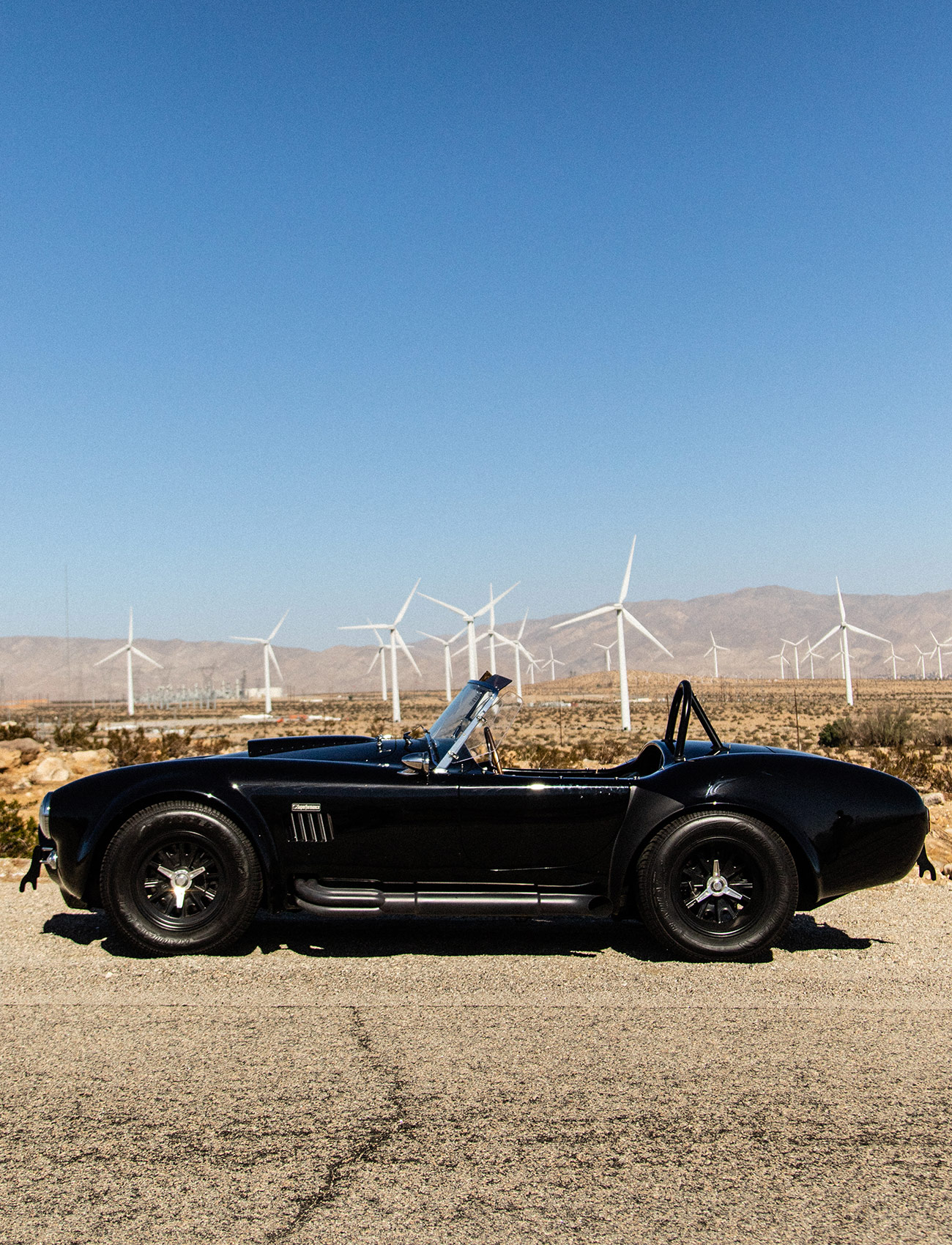
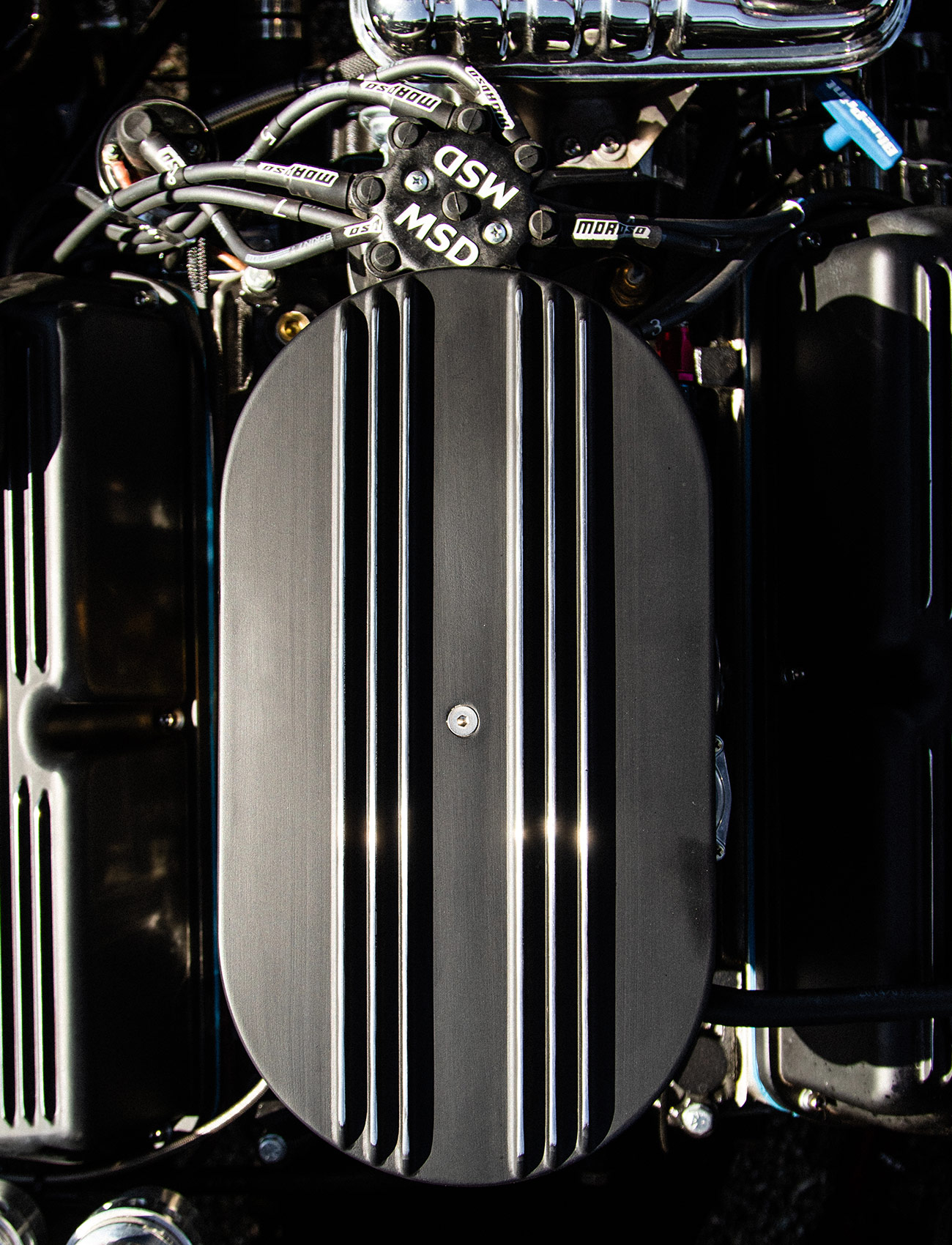
It’s some time before 8 AM on a Sunday in Indio, California. I roll over on the couch of my Airbnb to fight off the morning sun slapping me in the face. Factor in the dry desert air and a friend’s wedding the night before and it’s a miracle my headed isn’t splitting open. After a while I collect myself — breakfast is in order. This quiet little neighborhood would prefer I not do this, but I need a chorizo and eggs Benedict from Sloan’s diner and the 7.0-liter V8 in the Superformance MKIII Shelby Cobra I’m driving needs warming. Half wincing, half smiling, I turn the key — saying “sorry” in my head to the neighborhood — and pump the throttle, trying to coax the engine to life with the starter. There’s a throaty bark and then a steady drum solo from under the hood. A car alarm sounds off from inside a closed garage down the street. Adrenaline and dopamine are fending off any hint of a headache. This car is that good just idling, sitting in a driveway.

Two words come to mind when Superformance crops up in conversation: sacrilege and caveat. There are countless ways to get your hands on a car that looks like an original Shelby Cobra MKIII. Do a quick search, and you’ll find professionally-assembled replicas and home-built kit cars litter classifieds across the internet. They may come with the same curvaceous mid-century styling and familiar soundtrack but rumble up to a Vintage Sports Car Club of America gathering, and you’ll be scoffed at or, worse yet, met with outspoken condescension: “Oh, it’s not a real Shelby MKIII?” According to these folks, if your Cobra wasn’t built at the original shop on Princeton Avenue in Venice Beach or Shelby American’s Hanger near Los Angeles International airport, it’s a false idol and sacrilegious. The caveat? Superformance is the only outfit building Cobras and Daytonas with an official license from Shelby American and official approval from the legendary, late Carroll Shelby himself — think of Superformance cars as new ’65 models. Nonetheless, continuation cars like those Superformance builds are incredibly polarizing.

The original AC Cobras were born out of the hot-rodding spirit sweeping the US in the ’50s and ’60s. The British manufacturer AC Cars was bolting straight-sixes in the front of its factory coupes, but Carroll Shelby approached them asking to drop in a V8 so he could go racing. AC agreed to the job; Shelby just had to source his own engines. He asked Chevrolet, but in fear of competition for the Corvette, GM turned him down. Naturally, he went down the road to Dearborn next, where Ford obliged and gave Shelby a new small-block Windsor V8. The cars weighed next to nothing, put down more power than drivers knew what to do with and took turns like they were on trolley tracks. You can absolutely see why outfits like Superformance, Factory Five or any of the companies selling build-it-yourself kits never want this car to disappear from the road.

Late in the day before my friend’s wedding, when a friend picks me up at LAX, we make our way to Hillbank Motor Corporation, a Superformance distributor in Irvine, California. It’s dark by the time we get there. The massive aluminum warehouse doors might as well be pearly gates — they open to a warehouse full of GT40s, Cobra coupes and Daytonas parked fender to fender, glistening in blinding fluorescent light. The shopkeeper walks us over to an all black MKIII — black gloss body, black wheels, dual side-exit matte black four-into-one exhausts, and a matte black roll hoop. He does a walk around, fires it up to warm up the engine, and I’m already thinking about making a run for the border with it. I’m also already nervous and intimidated.

As with the original Shelby Cobras, the Superformance MKIII has neither ABS nor power steering and dishes out 427 horsepower and 480 lb-ft of push for my feet to play with. It’s already desert night-cold, and it’ll be pitch black by the time we get to the mountains. The headlights only have two settings – off or high beam – there’s no roof and the heater doesn’t work. There’s just a single driver’s side mirror no bigger than the bottom of a pint glass, plus a rear-view mirror no wider than a letterbox opening which vibrates enough to provide me a mini laser-light show in the reflection… and not much else. None of that bothers me. Thanks to my experience riding a motorcycle, I can handle the cold and the raucous ambiance of the highway, even being eye-level with the underside of an 18-wheeler. I’ve been dreaming of driving a 427 Cobra – replica or real-deal – since my automotive obsession sparked to life.

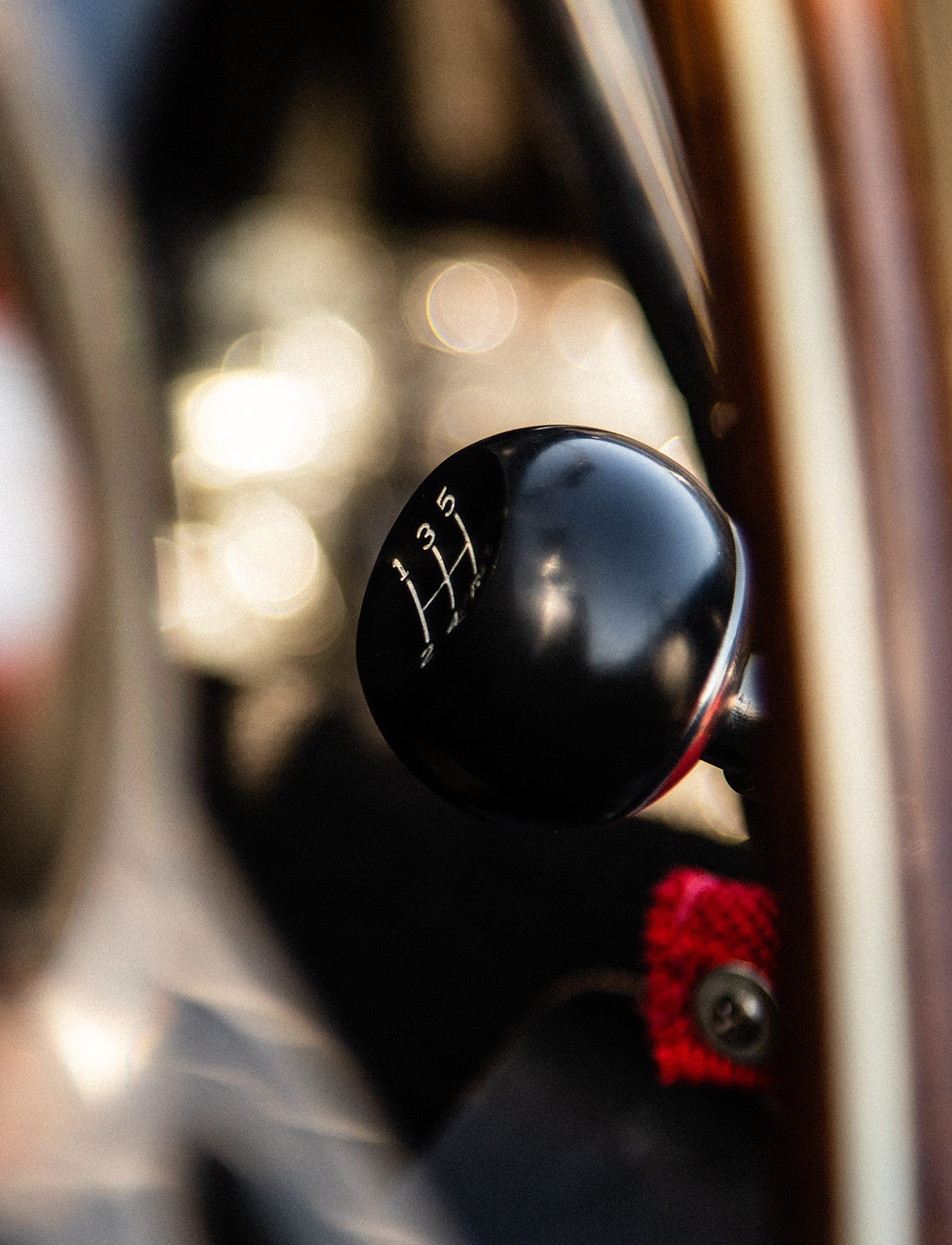
I never believed one should never meet your heroes. As long as you know what you’re going into and keep your expectations realistic, it should all pan out fine, right? Pulling away in a high-performance “vintage” car, I expected the clutch to be heavy and fight back with every shift — but it’s Miata-light. I assumed the steering would be heavy, for it to take two hands to wrestle — but it’s effortless. With a direct cable connection to the throttle, the pedal is a little heavy, but nothing is lost in translation when power is demanded. Gearing in the five-speed transmission is long and sublime for long highway drives and perfect for keeping all that torque on a leash. Just a couple of traffic lights from the garage and we hit our first on-ramp, the first taste of violent acceleration.

The way this machine gathers speed is an absolute assault on the senses. There’s no electronic drive-by-wire throttle or luxurious sound insulation to numb the experience. Open the taps full bore and there’s no doubt that thousands of explosions are going off three feet in front of your chest. The note firing out of the exhaust, just an arm’s length away, tickles your brain and strains your eardrums while the bucket seat bolted to the floor shoves you forward into it all. If you could combine the front-row seats of a rock concert and a roller coaster, you’d have something close. It’s an intoxicating and addictive sensation.

Sunday after the wedding, I promised to drive my buddy from Indio back to his place in Brentwood on the other side of LA. Afterward, I’d snag some photos and capture some video in the mountains on the way back to Indio, drop the car off in Irvine the next morning and catch a flight. How bad will it be? On the way to Brentwood I started doing the math: to make my flight I’d have to leave Indio before 5 AM. And I completely underestimated LA traffic, the distance and how much sooner the sun sets and the temperature drops in the mountains. My itinerary quickly devolved into a long loop from Indio to Brentwood, Brentwood to Indio via the San Bernadino National Forest (for video), back to Irvine to drop off the car and then back to Brentwood to crash at my friend’s place. Nearly 430 miles all said and done.

Riverside. The sun is dipping and the temperatures are dropping. My only regret is underestimating nighttime desert temperatures and wearing only a t-shirt in a car with no roof and a worthless heater. Making my way up route 243, Idyllwild can’t come soon enough — it’s pitch black and freezing and there are massive dropoffs a few feet from the road shoulder. I think about pulling over and using the engine or exhaust to warm myself. I push on through and make it to town, where I buy a coffee, a flannel and down jacket.

Nearly four hours after I leave Brentwood, I make it back to Indio. Dehydrated, hungry, a dry mouth, cracked lips — I feel more hungover from the drive than I did the wedding. I take a breather, take some heat from my friends for planning this out like an idiot, grab a 3×3 at In-and-Out and dread the drive back to Irvine. I pack my bags, graciously accept a wool hat from my friend and set off on the two-hour drive. Once I’m back on the highway, I start to feel like new. It might be the extra layers of down and wool or the mess of burger patties and Animal Sauce in my stomach, but I think it’s the car. A little hair of the dog mainlined through the throttle and exhaust pipe.

Some people are fine paying $1.5 million for the experience. But if you’re not hellbent on a genuine 1965 427 Cobra, Superformance will deliver to you a Carroll Shelby-approved 2018 MKIII for around $60,000. If you love cars and driving, it being an original Shelby shouldn’t matter. A car like this transcends period-correctness, numbers-matching parts, superficial nitpicking. The raw involvement with this car; the way each gear change is partnered with a solid thud; the direct, unfiltered connection with both the stopping power, thrust, and the accompanying orchestral sound is a mental and physical workout. It’s exhausting and so damn rewarding.

More Classic Car Reviews

It’s hard to think of another car that offers such a distinct driving experience, which I think has a lot to do with why the 2CV has become canonized as an automotive icon. Read the Story

The New Rivian R1T Truck Is A Direct Challenge to Land Rover

Rivian unveiled its first “electric adventure vehicle,” the R1T truck. Due to arrive in “late 2020,” it will be the first Rivian vehicle on the company’s R1 platform (an SUV will be soon to follow). This reveal offered Rivian an opportunity to define its brand or, perhaps as importantly, define how Rivian was different from Tesla. Rivian describes itself as the upmarket electric performance brand that can get dirty (beach and trail sense, not ‘dirrty‘ like Christina Aguilera) and clean up afterward. Rivian does not want Tesla’s market. The electric upstart wants to challenge Land Rover.

How does one get attention for a new EV? Release eye-popping performance numbers. The R1T rundown will widen some pupils. The 135 kWh version will deliver 754hp and 826lb-ft of torque. That version will accelerate from 0-60mph in three seconds and 0-100mph in less than seven seconds. The 180 kWh version sacrifices a bit of performance but will have a range of more than 400 miles to the 135 kWh version’s 300-plus.

Besides being a flat track demon, Rivian plans for the R1T to be an impressive off-roader. The air suspension can provide up to 14.2 inches of ground clearance in off-road mode. The R1T can climb a 45-degree slope and wade through a meter of water. Truck stuff? Truck yeah. The R1T can support a 1,764lb payload and tow an 11,000lb trailer, with an unmentioned cost to battery life.

The R1T is where performance meets practicality. Rivian’s skateboard platform tucks almost all the R1T’s hardware below the wheel line. That leaves more than ample storage space. There’s a grocery haul sized frunk and a “gear tunnel” between the cabin and bed that can hold snowboards and up to 185cm skis. There are storage compartments underneath the seats and beneath the truck bed. Rivian optimized The flooring, mats, and vegan leather seats for maximal cleanability and durability.

Rivian won’t disappoint on the 2020s tech front either. The R1T will have a “high-speed ethernet backbone” enabling over-the-air software updates and performance upgrades. It will also enable “Level 3” self-driving on the highway for those who need a respite on their way home from all that adventuring.

Crucially, the R1T prototype does all this while looking like a pickup. It’s not something out of an Elon Musk Blade Runner fantasy. While aerodynamic, it is clean and well proportioned. It would not look out of place among Tacomas and ZR2s.

The critical aesthetic difference is the front grille. That’s a distinctive feature on trucks and off-roaders. The R1T does not have one. It seeks an “identifiable face” with lights. Mission accomplished, though perhaps not the way Rivian intended. The oval headlights feel a bit too friendly. When someone inevitably points out they look like the Michelin Man’s eyes, you won’t be able to unsee that.

So, per Rivian, we have an electric Land Rover-like sport truck. It drives like a Corvette on-road and romps like a Wrangler off-road. It’s more practical than a Subaru. Its battery capacity virtually eliminates range anxiety. That’s paradigm shifted, then. Give Rivian all your money? Maybe.

Scaling up will be a tough challenge for Rivian. The company has about 560 employees. For perspective, that’s nearly 200 fewer than McLaren. Not McLaren Automotive. It’s almost 200 fewer staffers than McLaren’s F1 team that does not build the engine. Tesla is about 90 times larger. Even with funding and a factory, Rivian must build retail and maintenance infrastructure as well as supply chains from scratch.

Late 2020 will also be an interesting time to enter the marketplace. That’s two more years for Americans to accept EVs and for third parties to build up fast-charging infrastructure. But, that’s also two more years for established luxury manufacturers to build similar products. While Tesla carved out its own niche, Rivian will be competing against established manufacturers in what should be a saturated segment.

The Best Gifts for the At-Home Mechanic

At-home mechanics are essentially hyper-focused DIYers, so anything that makes garage life and work easier is a surefire holiday-gift win. A brand-new full socket set to replace and supplement their existing collection? You bet. A light bar with lumens that give sun a run for its money? Definitely. A magnetic telescoping pick up tool to get in the most unreachable places? You better believe it. These are just some of the best gifts for the at-home mechanic — you can’t go wrong with anything below.

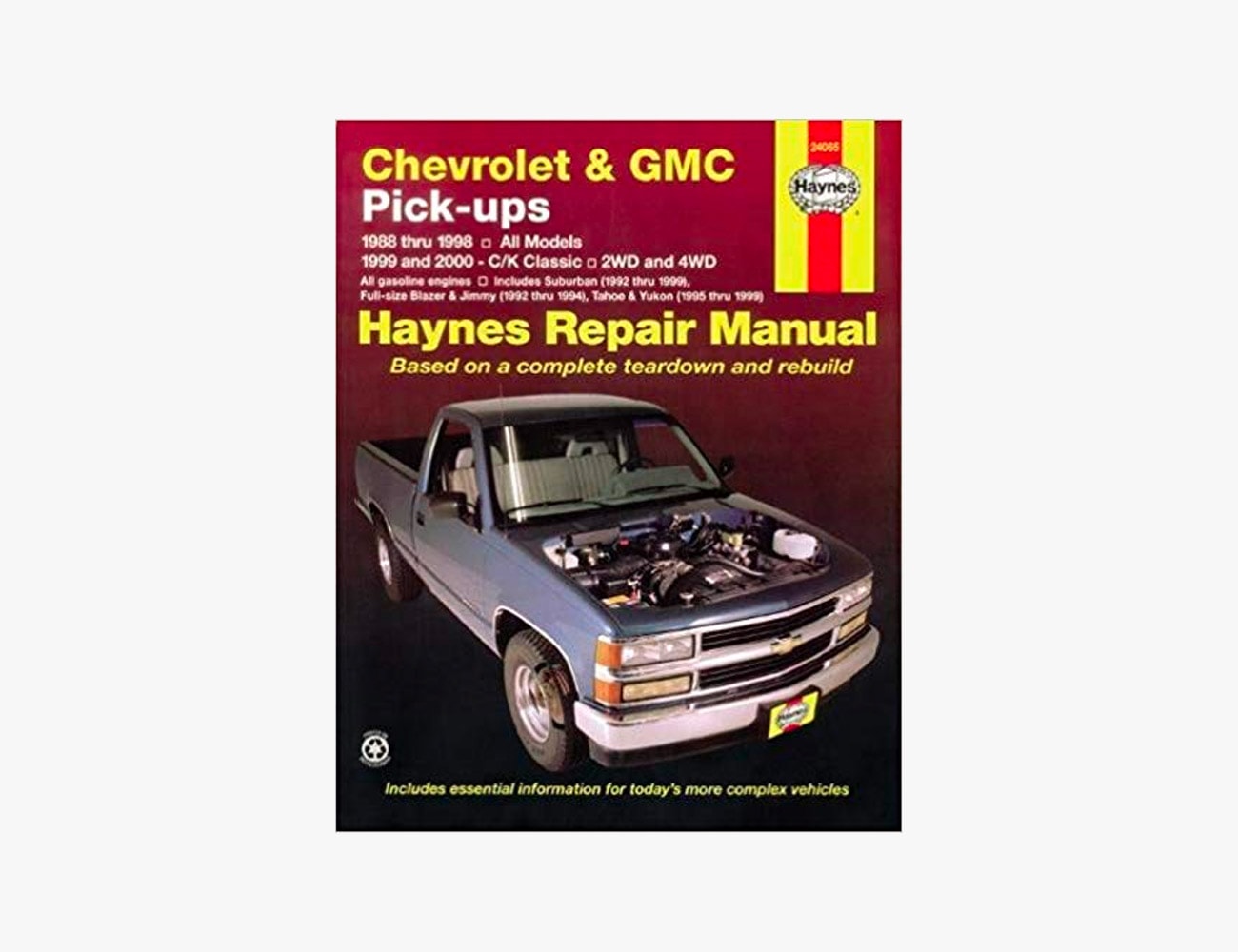
Haynes Manual

Factory repair manuals can get pretty pricey and most likely have more information then you’ll ever need, which is why Haynes Manuals are a staple in any at-home mechanic’s garage. There’s still plenty of information to help you repair your car, but it comes at a veery reasonable $30.

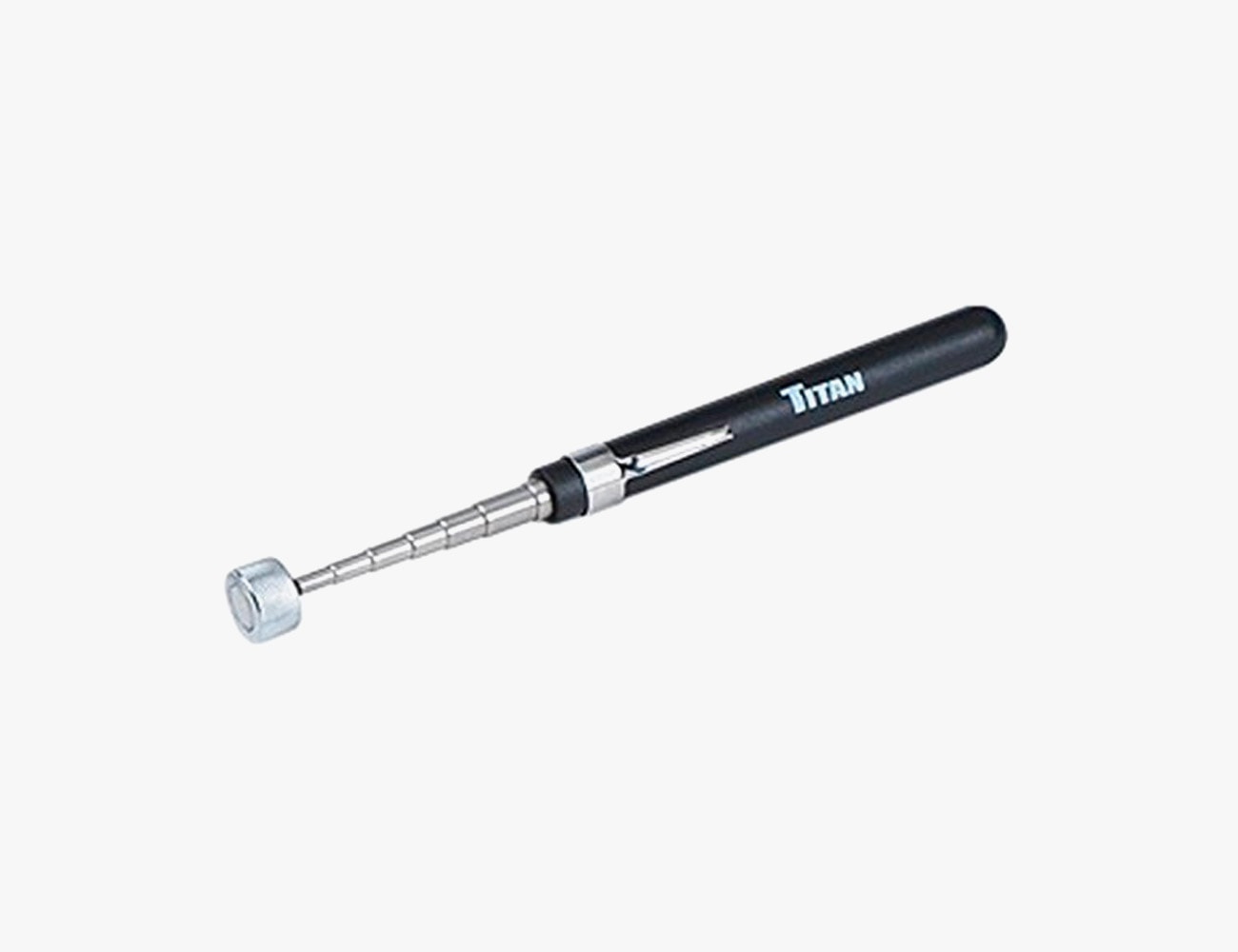
Telescoping Magnetic Pick Up Tool

The bane of all mechanics’ existence is dropping a socket, bolt or washer into the dark abyss of a full oil pan or down a narrow chasm in the engine bay. A telescoping magnet is incredibly simple but wildly helpful.

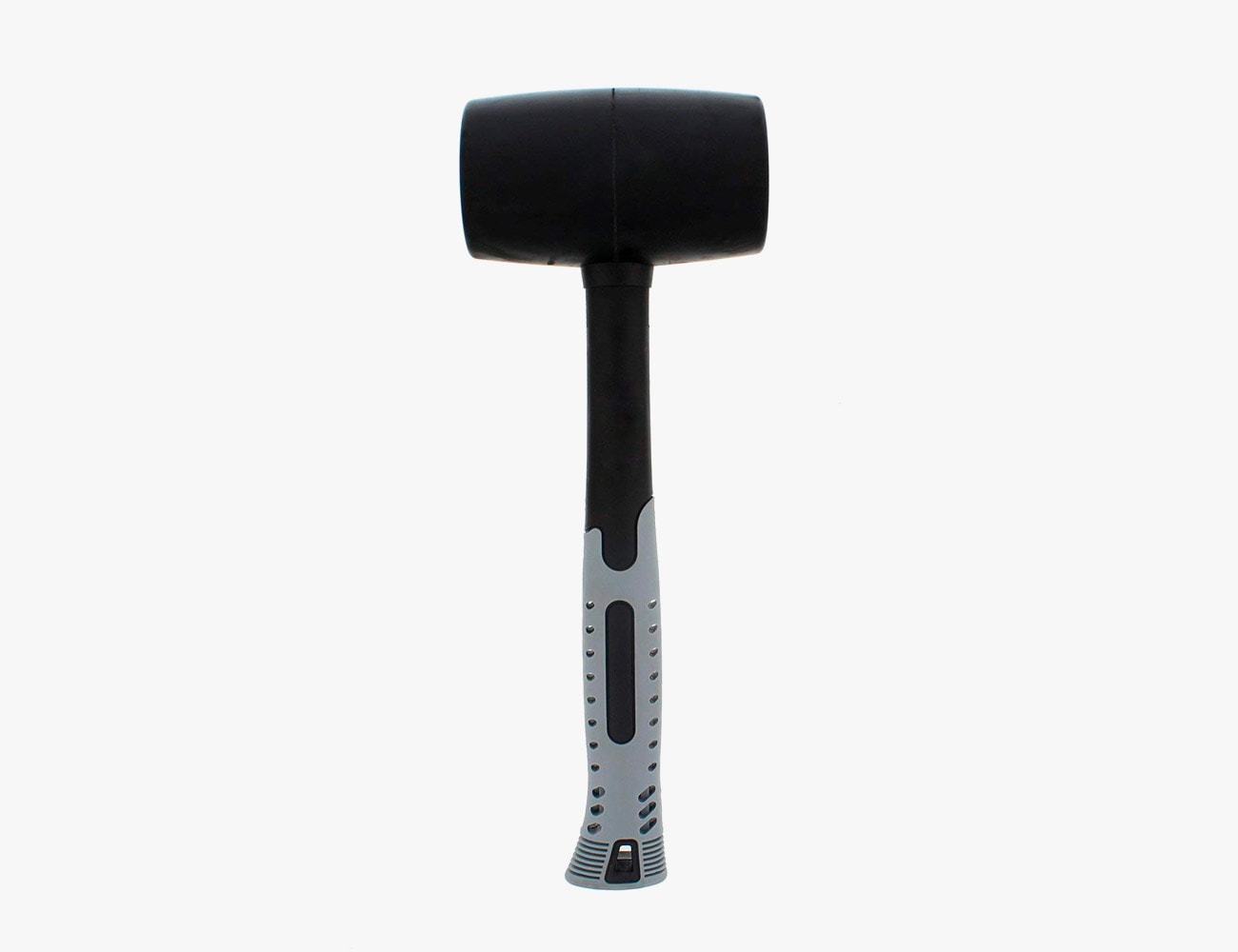
Shock Absorbing Rubber Mallet

There are very few times in at-home mechanic’s career where the sound of a metal-on-metal impact is welcomed. When the job does call for a hammer, a little more finesse is usually required. A rubber mallet not only takes the sting out of the energy traveling through the handle, but it also is kinder on metal and painted surfaces.

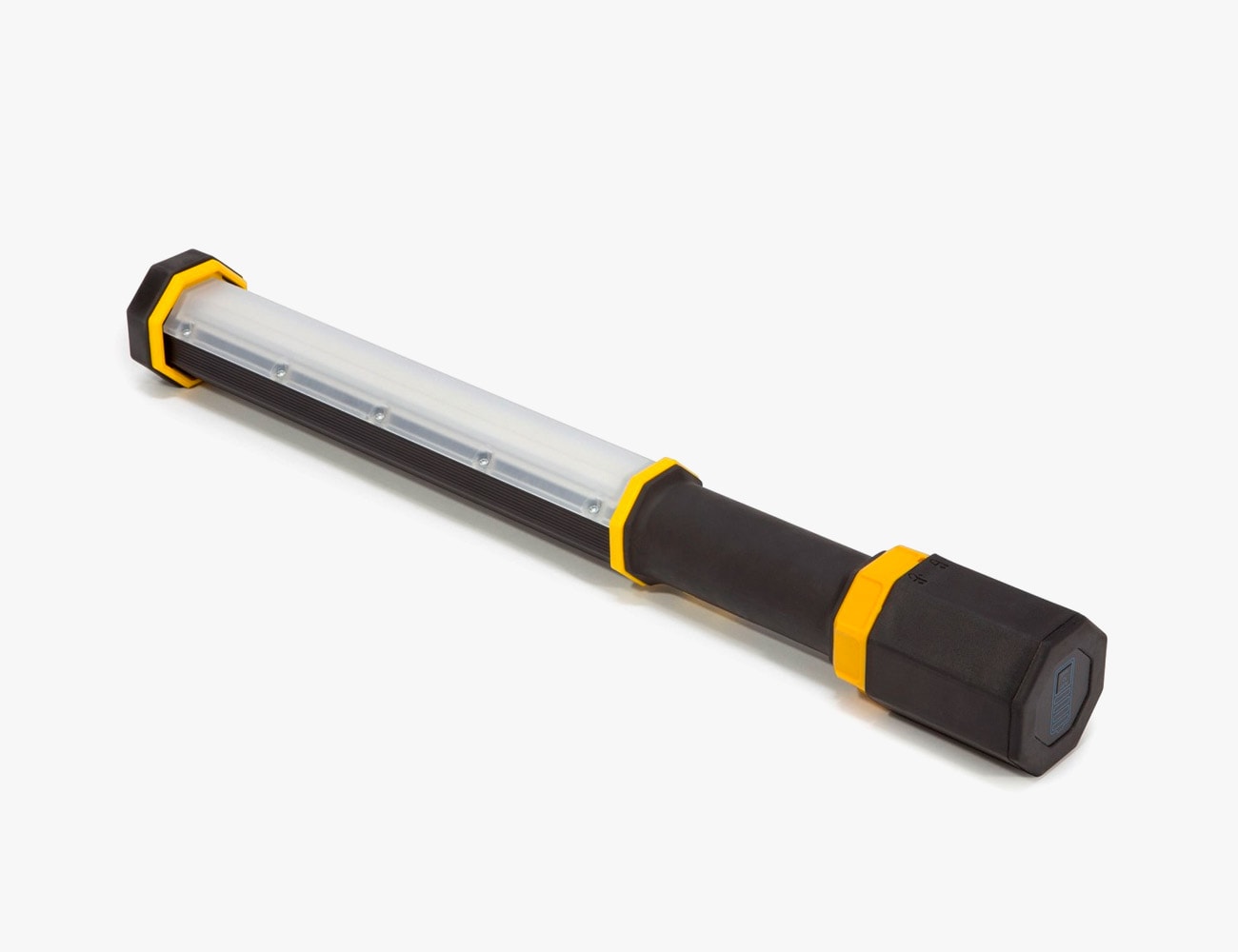
Big Ass Light Bar

Six leveles of brightness, a 5,000 lumen output and a chemical resistant body pretty much ensures the Big Ass Light Bar will replace any flashlight you currently have – and will be the last one you ever need.

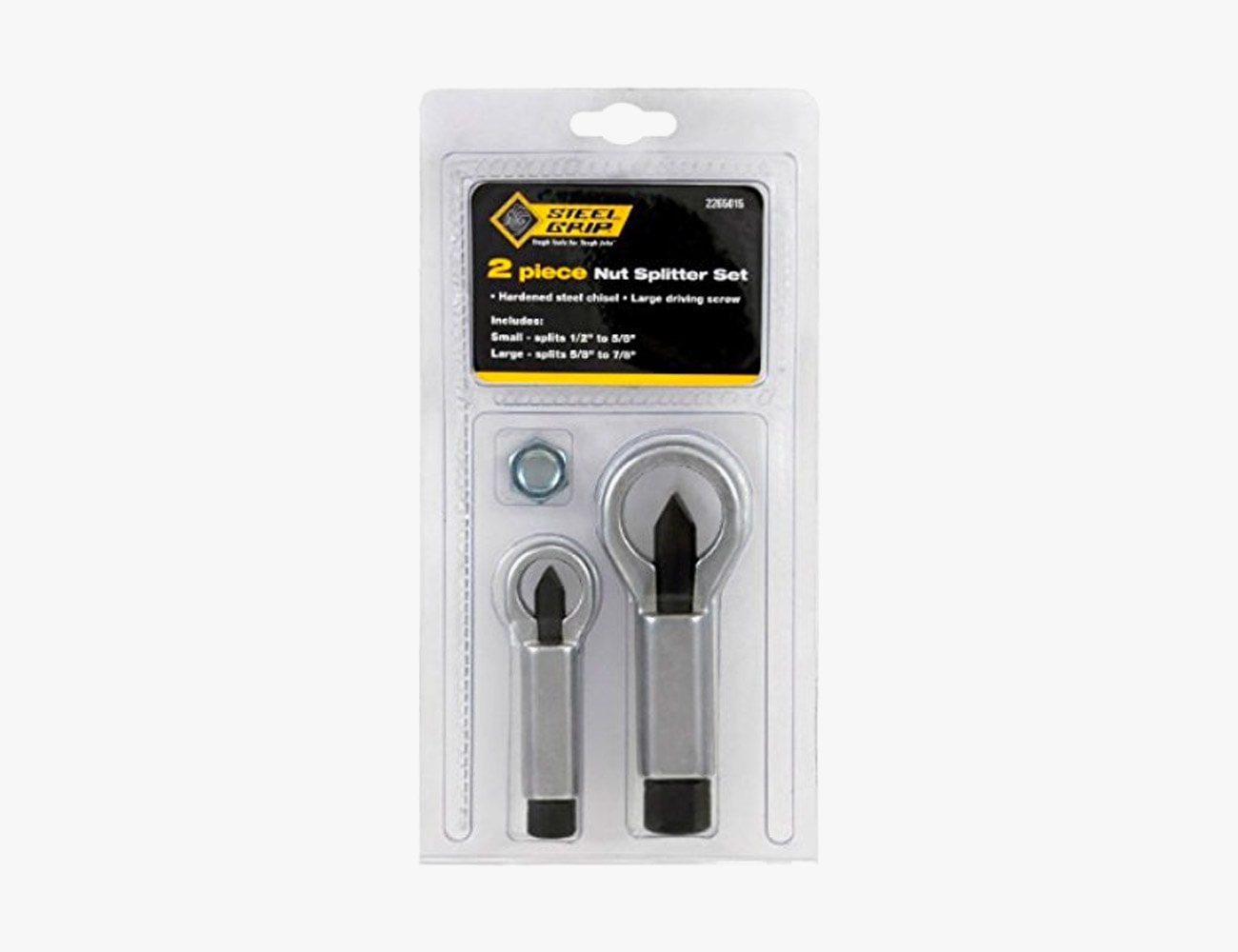
Steelgrip Nut Splitter Set

When all the conventional methods of loosening a seized nut fail but defeat is not an option, a nut splitter will finish the job. Using a point splitter and focus pressure, the nut splitter does exactly what its name entails and cracks the nut of the bolt, allowing for easy removal.

Magnetic Fender Cover

If you look into the garage of any professional mechanic shop you’ll see fender covers up and down the maintenance bays. It’s important to protect the fenders from accidental scratches caused by tools and clothing while leaning and working under the hood.

Streamlight Enduro Pro Headlamp

When a job requires two-hands (spoiler: most of them do) and you need a light source a headlamp is the way to go. This one from Streamlight gives you bright LED light exactly where you need it.

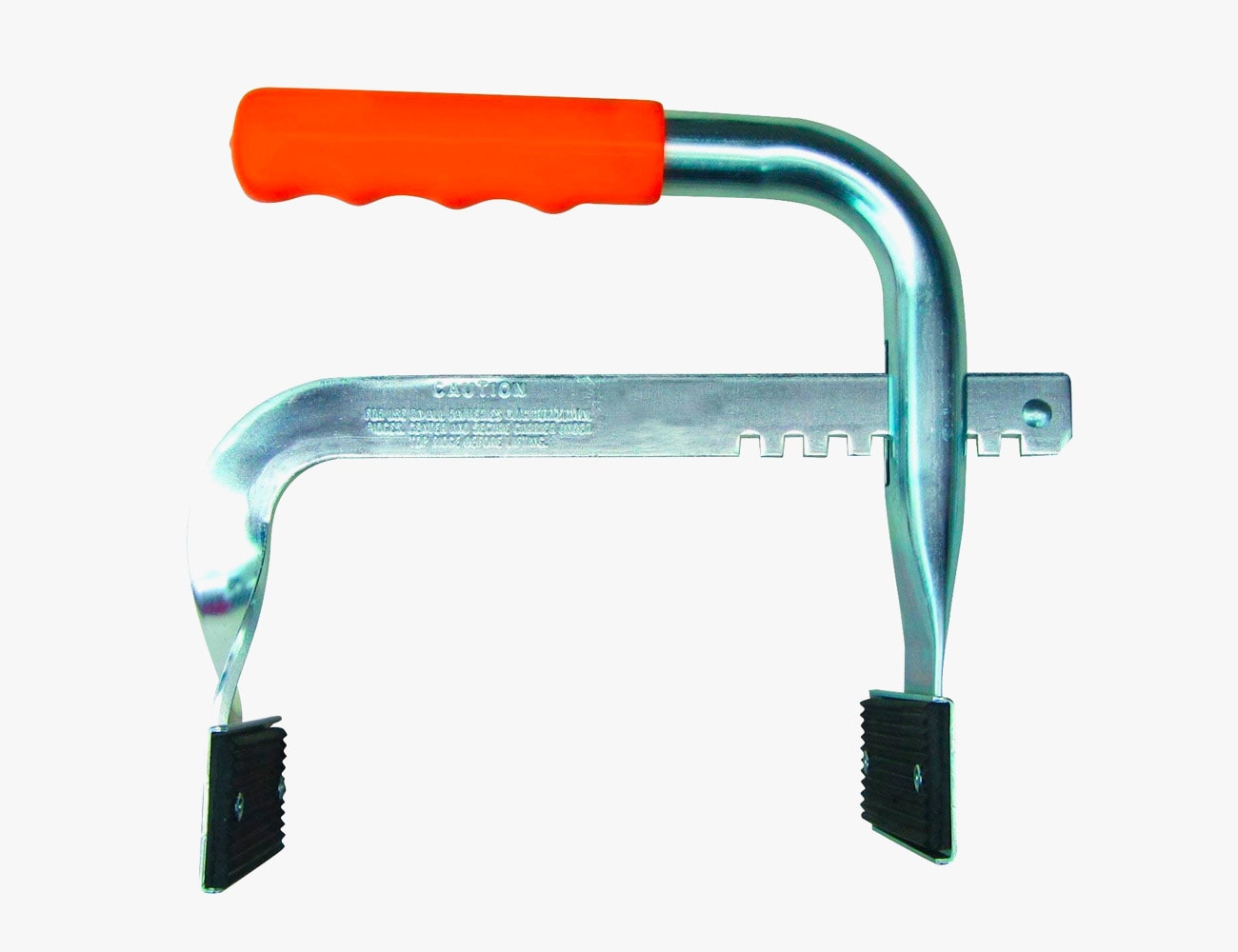
Car Battery Carrier

Most batteries live in tight quarters, which means getting a grip on them when they need replacing isn’t so easy. A car battery carrier makes life less difficult and lets you get into tighter spaces on the sides of the battery. It also is a great way to handle older or damaged batteries without directly touching them.

Utopia Shop Towels

Red shop towels are fairly iconic – every home mechanic knows they’re a must in every garage. They’re not tough on hands or skin but do an amazing job of scrubbing greasy surfaces and cleaning any spills. They’re also machine-washable, and so a pack of 100 Utopia Shop Towels can go a long way.

Mechanix Wear Original High Abrasion Gloves

As much as the home mechanic likes to work under the hood of their car, it’s not the most friendly place for bare hands. Hard, sharp surfaces and edges are everywhere, and if you’ve ever slipped a wrench in a tight space in an engine bay, you’ll appreciate the protection of high abrasion gloves. Made with extra grip on the fingers and abrasion-resistant material, they’re an essential defensive weapon in an at-home mechanic’s arsenal.

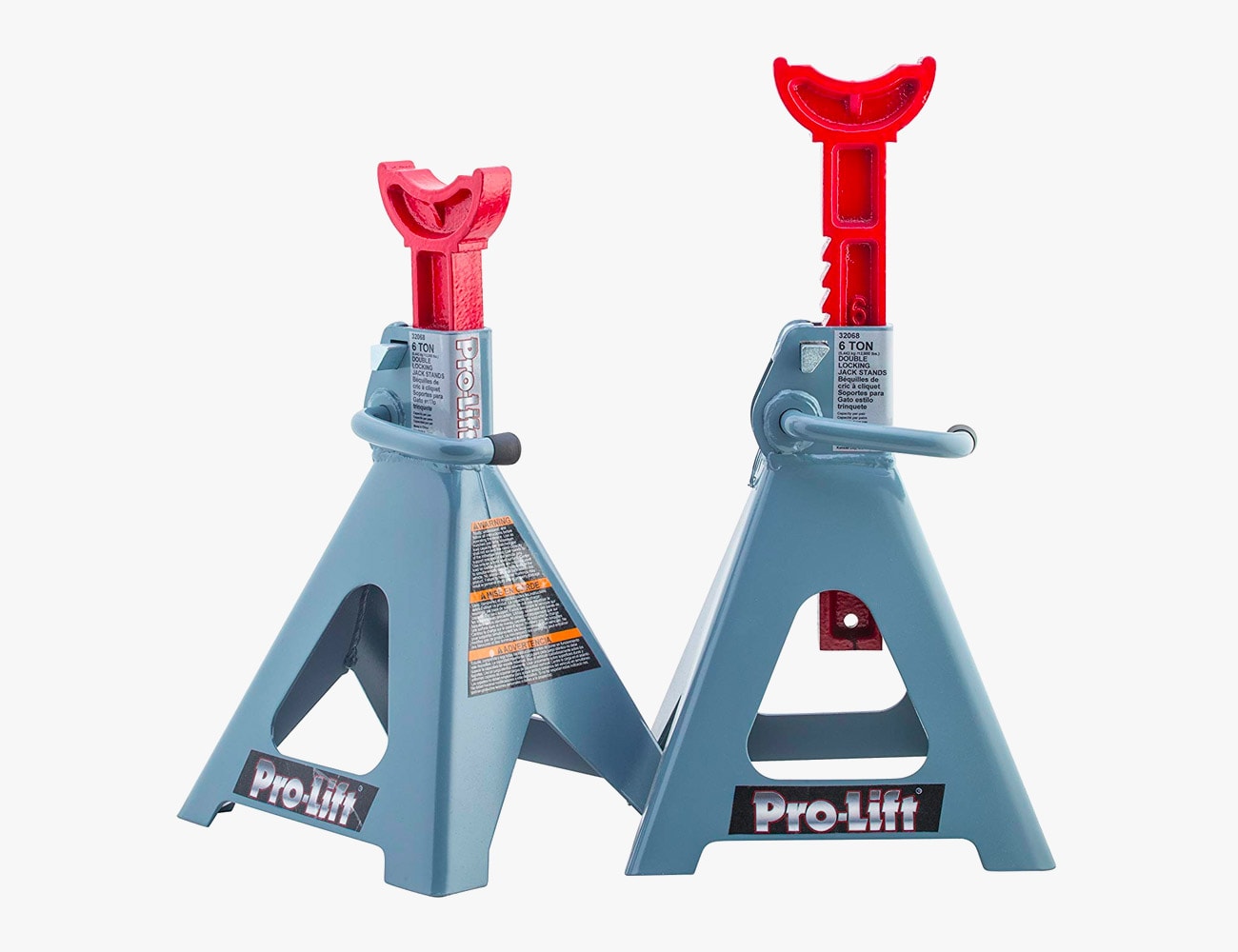
Pro-Lift Double Pin 6-Ton Jack Stand

Unless you’re one of the fortunate ones and have a full car lift in your garage, jack stands are a must. Each Pro-Lift Double Pin Jack Stand can hold up to six tons, so having one at each corner of the average car, truck or SUV is more than enough support.

Black+Decker Rotary Tool

Getting into tight spaces to clean and polish a surface or cut a bolt or shear an edge is a regular activity in thee garage. The Black+Decker Rotary Tool’s slim body and 27-piece set turns laborous, time consuming chores into simple, stress-free tasks.

Pro-Lift Foldable Mechanic’s Creeper

For the longest time, the creeper wasn’t much more than a plank of wood with a few wheels bolted on the bottom. The Pro-Lift Foldable Mechanic’s Creeper not only has six three-inch polyurethane, oil resistant, full-bearing casters for a smooth ride across the shop floor, it also folds up and becomes a stool, eliminating crouching and hunching for jobs like tire changes.

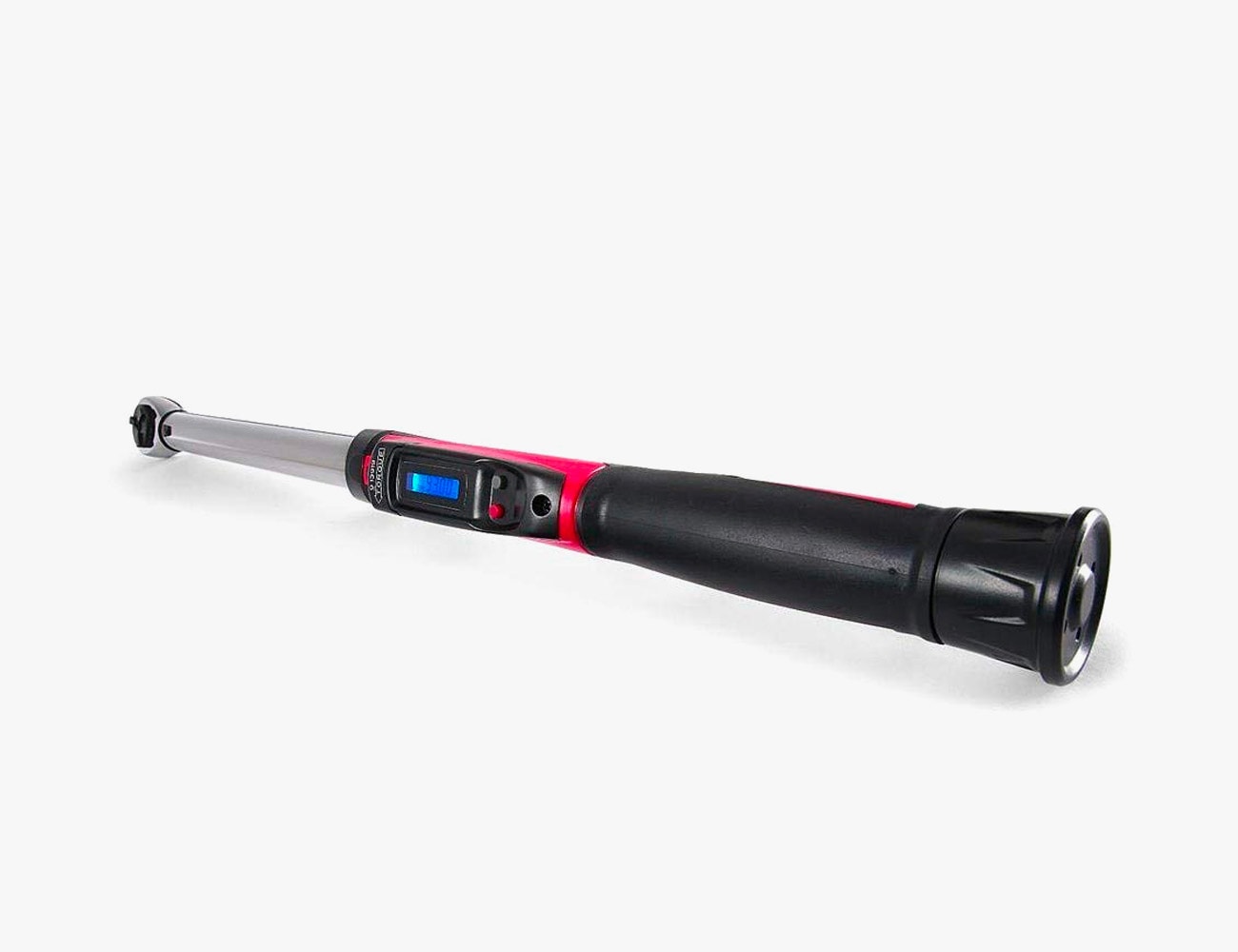
Craftsman Digital Torque Wrench

A torque wrench is an essential tool for any mechanic looking even to do simple maintenance. When using a conventional torque wrench, you’re essentially eye-balling it – converting foot-pounds to inch pounds or Nm on the fly. The Craftsman Digital Torque Wrench takes the guesswork out of the equation by doing all the conversions at the touch of a button and displaying the exact force you need on an LED backlit screen.

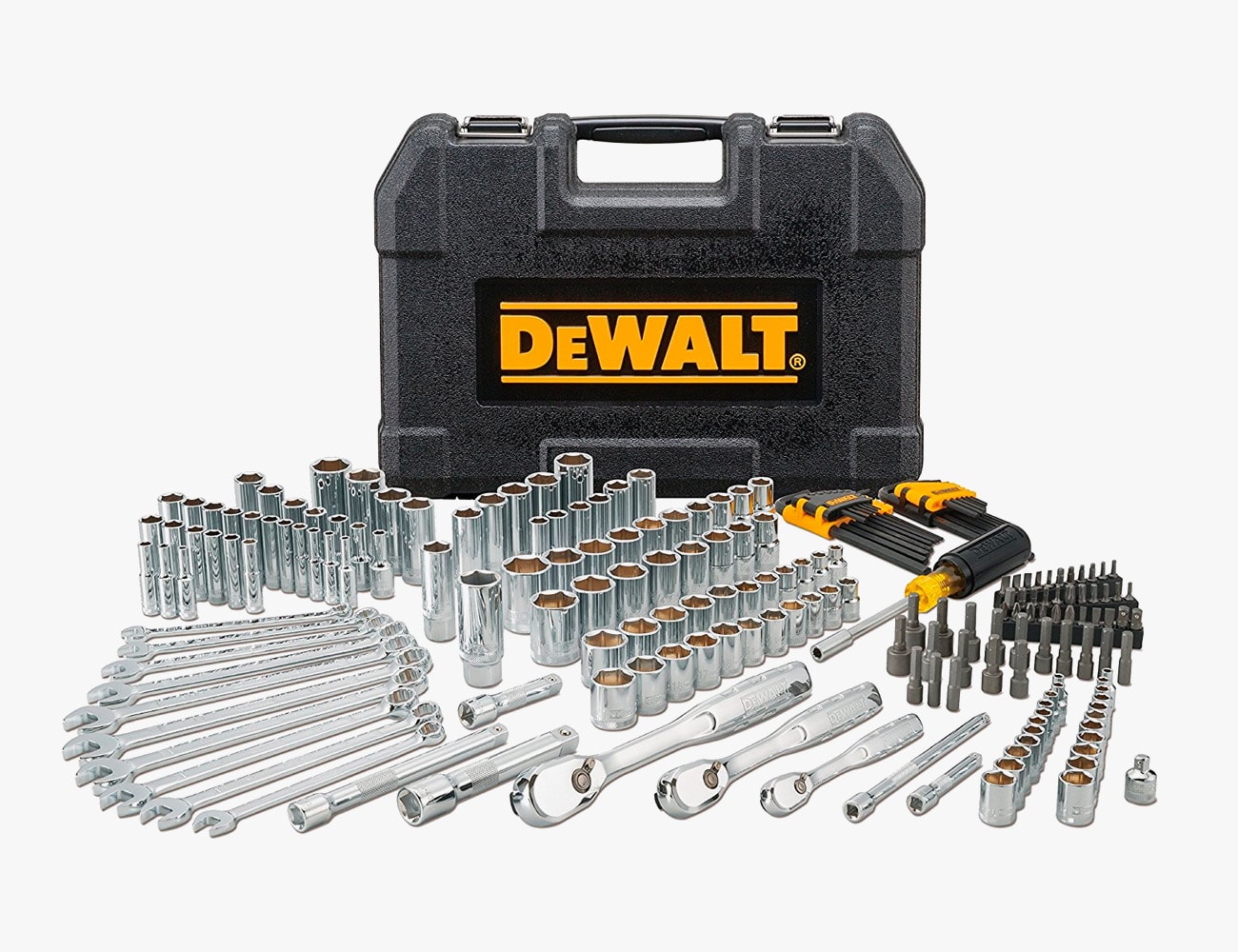
Dewalt 168-Piece Mechanics Tool Set

There’s nothing worse than setting out to do a job only to find you don’t have the sockets you need. With a Dewalt 168-Piece Mechanics Tool Set, there’s a good chance you’ll have every size socket to take your entire car apart and put it back together.

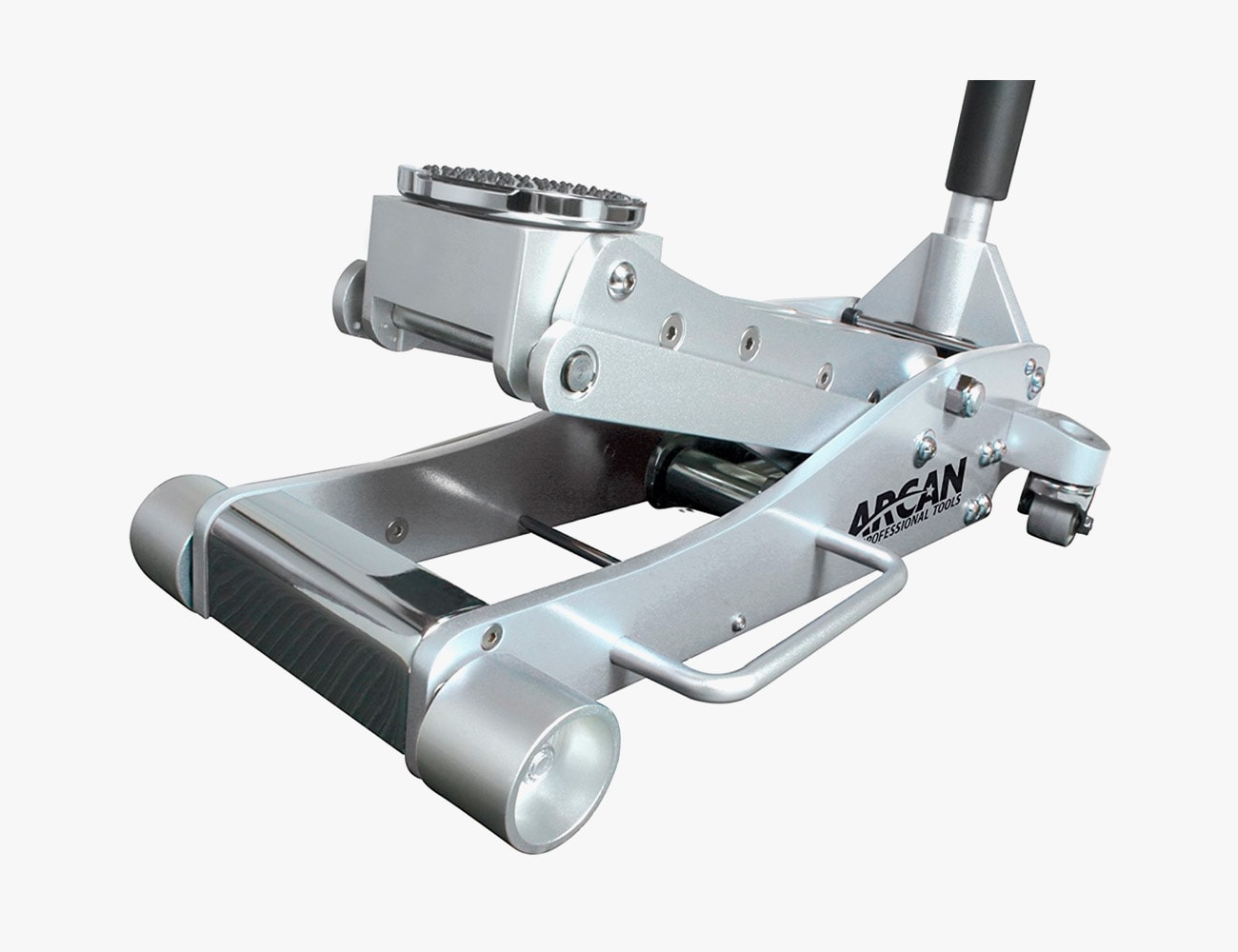
Arcan Aluminum Floor Jack

Again, unless you’re one of the fortunate souls to have a full lift or drive over bay, you’re going to need a floor jack. The Arcan Aluminum Floor Jack has a three-ton capacity and is relatively light at 65 pounds, so it’s not a complete workout moving it across the garage floor.

Note: Purchasing products through our links may earn us a portion of the sale, which supports our editorial team’s mission. Learn more here.

This Is the Ultimate Defender. It Has Every Essential You’ll Need. Honestly

Custom Land Rover Defender run rampant on today’s roads. Some are hot-rodded to hell and back. Others are simply period-correct restorations to back to the original glory. You might consider some of them too much and over the top or not enough and slightly uninspiring. This modified 1989 Defender 110, on the other hand, doesn’t fit into any of those categories — this glorious green wagon just might be the perfect Defender.

When you peel away all the romanticism and legendary pedestal-earning stories, the average Land Rover Defender is just primitive farm vehicle, a tractor with doors, a roof and a heater (which probably works, sometimes). To get a Defender to a tolerable daily-driver status, you have to upgrade it, give it better suspension, swap out the electronics and wiring, replace the all the seals and clear out all the rust. With that said, a stock Defender is more like a blank canvas, ready to become the car you want it to be.

I’m here to say this 1989 Land Rover Defender 110 V8 is now the bar to which all future Defenders will be measured. As a baseline, it’s painted a deep Keswick Green with custom tan canvas and leather seat covers. Under the hood, there’s a rebuilt 3.5-liter V8 connected to a new exhaust and accompanied by a new transfer case, brakes and wheels fitted with BFGoodrich Mud-Terrain KM2 tires. All pretty standard stuff.

What makes this Defender standout among the rest isn’t the Front Runner full-length roof rack or the Big Country 4×4 clamshell tent mounted on top. It’s not even the bull bar, LED flood lights, rock sliders, high lift jack and snorkel. Which, by the way, all make fantastic additions to any Defender. No, the pièce de résistance is the Big Country 4×4 sliding storage system, National Luna refrigerator/freezer, 10-gallon freshwater tank replacing the rear jump seats, air compressor and custom bar fitted in the rear window which is opened with a ‘Keep Calm & Drink Beer’ button.

Half of the fun of overlanding is taking in the whole experience, enjoying life and relaxing with friends while you’re doing. This Defender is perfectly equipped to handle all of that. Take the road less traveled out to the middle of nowhere, set up camp and crack a beer with friends. You won’t find a more idyllic Land Rover Defender for $30,000.

The 100 Best Products of 2018, Now in Print

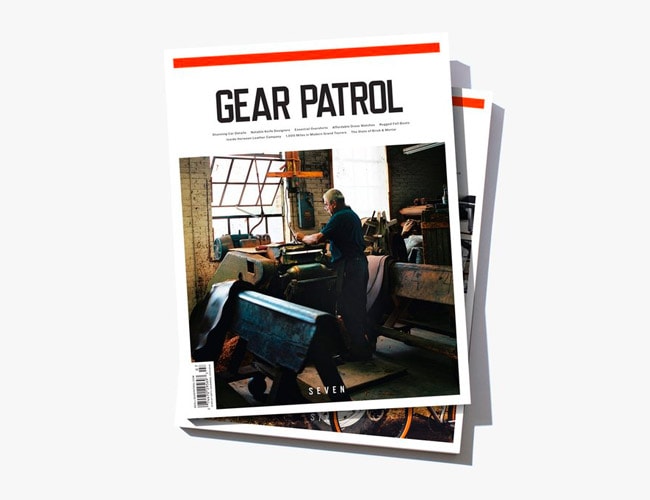
Introducing Issue Eight, the sixth iteration of the GP100 and the first-ever in print. Get Your Copy Today

Citroen 2CV: A Classic Exercise in Profound Minimalism

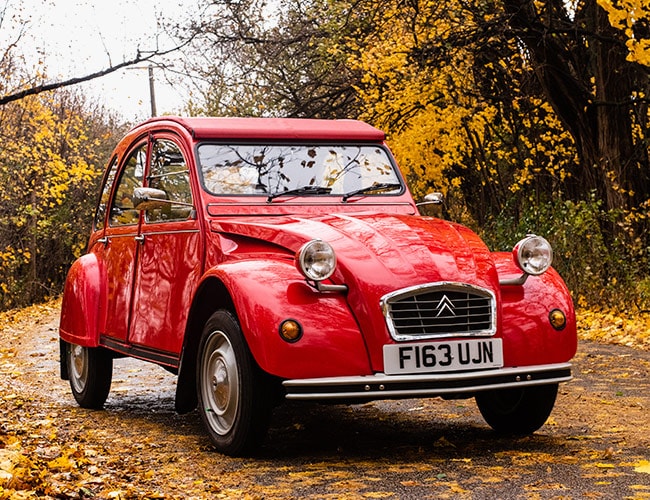
On October 8th, 1948, the Citroën 2CV debuted at the Paris Motor Show to an unimpressed crowd. One American purportedly remarked upon its reveal, “Does it come with a can-opener?” Meanwhile, a correspondent for Autocar called it “the work of a designer who has kissed the lash of austerity with almost masochistic fervor.” Despite the kneejerk criticism, though, the 2CV was a hit with the buying public and remained in production for over 40 years. Today it is as synonymous with France as a Breton shirt, the Eiffel tower, a smoky corner cafe or a flaky croissant.

Of course, austerity was pretty much the entire point of the 2CV, and to fully understand why, you’d have to go back to the very beginning of its development: 1936, a time when the rural dwelling French still relied on horse-drawn carriages, and even the humblest cars were priced out of reach. Wanting to create a true car of the people, Citroën Vice-President Pierre Boulanger challenged his team to create an “umbrella on wheels” of sorts, a minimalist car that was cheap to buy and so stupidly simple it could be easily repaired and maintained, even on a shoestring budget.

His design brief went something like this: The car should carry four people, and 50 kilos of potatoes (or a keg of beer, depending on who you ask) at 60 kph while consuming three liters of fuel for every 100 kilometers. Similarly, it should be able to traverse rugged terrains and drive through a freshly-plowed field without cracking a basket of eggs. Looks were more or less irrelevant.

The product of this brief was the TPV (Toute Petite Voiture, or “Very Small Car”), a rudimentary, aluminum-bodied car with hammock-like seats that hung from the interior ceiling. The TPV was set to debut at the 1939 Paris Auto show, but once France had declared war Germany, the project was scrapped. All working prototypes of the TPV were either dismantled, buried or hidden away. Boulanger didn’t want to see his creation seized and become a part of the Nazi war machine.

After the war, France was in much worse position to mobilize its people, and just about 100,000 of France’s two million pre-war cars in France were left. What’s more, the government instituted a “Plan Pons” to regulate car production with scarce materials which, in short, limited Citroën to only producing the more upscale Traction Avant. It wasn’t until the government disbanded this plan that the 2CV could come back to fulfill its original vision, though revised with a redesigned steel body (aluminum was too expensive at this point), steel-tubed seats with rubber support (instead of roof-mounted hammocks) and a 375cc air-cooled flat-twin engine producing nine horsepower and achieving a top speed of around 35 miles per hour.

Basic though it was, the car resonated with a recovering Europe and eventually went on to be a success in export markets like South America, Africa and Asia. All in all, nearly 9 million 2CVs were built, and production lasted until 1990. Though the 2CV was bound to change somewhat with the times — more “luxurious” features and larger engines would eventually enter the mix — the car stayed true to its humble roots.

That much is obvious when driving one of the 2CV’s later iterations. In my case a mid-’80s “Club” model. Step in, and you can tell that there are a few small upgrades made throughout, including a more ergonomic steering wheel, better interior trim pieces and, most notably, a finer plaid upholstery with the look and texture of a Penfield flannel.

That said, even with these improvements, the car is still an exercise in profound minimalism as it was on the original. The body panels are crêpe-like thin, so much so that the hood flexes upon opening. Air conditioning is reduced to two small, vents above the dash that channel oncoming headwinds into the cabin aimed at your face and upper torso. The seats can be removed and used to have a roadside picnic, if you like. The windows open by flipping upward and out, and the vinyl roof manually peels all the way back, the like top on a tin of sardines, to expose the interior to the kiss of the sun on a warm summer day.

But the most notable addition to this later 2CV is the engine, the 602cc flat-twin that became the standard on late model 2CVs making around 30 horsepower which bestowed it with the ability to (barely) hit modern highway speeds, though I’m not entirely sure how badly I wanted to test that out. My time in the 2CV was mostly concerned with around-town driving, and even then the sensation of speed was amplified well beyond the reality shown on the speedometer.

The best analog I can think of is an old two-stroke moped. You really need to push and rev to eke out every smidge of power, and with that come vibrations and noise that combined with its light weight make the whole experience feel weirdly visceral despite how slow you’re going. Amplifying that is the four-speed manual which is unlike anything you’re likely to experience in another car. The 2CV has a standard(ish) H-pattern with a dogleg layout (which means first gear is down and to the left) but rather than pushing a lever forward and back, you’re pushing the shifter in and out of the dash while twisting it.

It goes something like this: Twist the lever to the left so it’s angled towards you, then pull out to go into first. Then, push it back inward while twisting it to the right (so the knob is standing straight up) to go into second. Pull it straight back to go into third. Then, twist the shifter to the right (so the knob is angled away from you) while pushing back inward to put it into fourth. Make sense? No? I’m sorry.

But whatever. It takes about thirty seconds after ham-fistedly trying it in person to make sense, and the shifting action (at least in this lovingly cared for example) is crisp, intuitive and satisfying. That, combined with the fact that you have to drive the car at ten-tenths all the time (remember: moped) yields a decidedly raw driving experience. What’s more, that soft, long-travel suspension — the one designed to save a basket of eggs from Humpty Dumpty-esque fate — provides both a smooth ride and a… unique cornering experience. This thing leans. You haven’t truly experienced body roll until you’ve driven a 2CV, yet the car has proven nigh impossible to topple, even during hard driving.

It’s hard to think of another car that offers such a distinct driving experience, which I think has a lot to do with why the 2CV has become canonized as an automotive icon. Yes, we tend to measure cars regarding their overall performance and their backstory, but these are figures and yarns that are more often than not regurgitated, telephone-style, by the enthusiast community. But our most distinguished automotive memories, more than anything, are characterized by the tactile experiences we have in a car and the personal stories we share.

Consider this: the owner of this 2CV, whom hails from the Netherlands, acquired it because she had one in her family growing up. She and her sister would drive it from Amsterdam to the South of France in the summertime. Just imagine that, more than 700 miles — one way — through the French countryside, the top rolled down and sun beaming, the thrum of a flat-twin engine reverberating throughout the tin-like cabin, with the car vigorously leaning into every corner.

Her story is just one of, literally, millions — and there really are millions because of the 2CV’s initial raison d’etre as a simple, affordable car for the people. Today we have much more modern, safer and better-appointed cars to fulfill that mission. And that’s fine. Because today, I could imagine owning a 2CV as fun, daily runabout, driving it to the store to buy brie cheese and a baguette, inspiring smiles both from drivers and pedestrian along the way. The car still lives on, a sublime little umbrella on wheels, still creating stories.

Viva la 2CV.

6 Beautiful Car Design and Engineering Details

From Issue Seven of Gear Patrol Magazine.

It makes sense that a beautiful car would be made of beautiful parts. And while the smaller components of some luxury vehicles aren’t aesthetic masterpieces in their own right, they’re often interesting works of engineering (and proper middle fingers to design conventions). It’s only a bonus, then, that the following elements are attached to uniquely desirable automobiles. Here’s a handful of notable details that, in a sea of relatively homogenous vehicles, stand out as beacons of style and design.

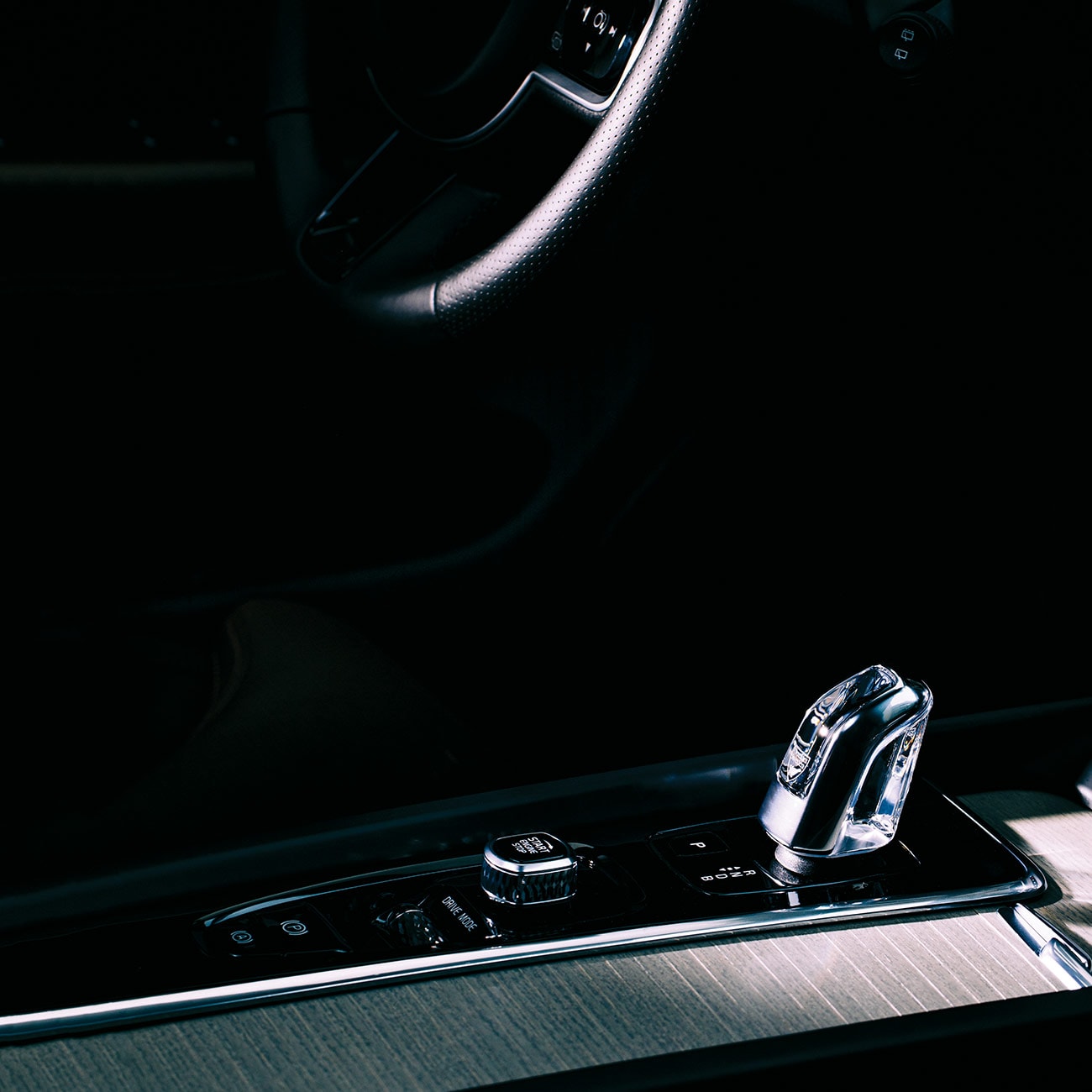
Volvo Gearshift by Orrefors

Leave it to a decidedly Swedish premium automaker to offer an attractive yet understated crystal shift knob on top-trim levels of select vehicles. Volvo has been killing it design-wise as of late, with gorgeous new models debuting in rapid succession. But its attention to detail doesn’t stop at the sheet metal. Inside the spartan yet luxurious cabin of Volvo’s XC60 T8 is a crown jewel handmade by the Swedish crystal makers Orrefors. The brilliantly clear, stubby shifter in this top-end, four-seat SUV is as pleasing to the eye as in the hand. There have been many superb shift knobs and levers in the history of the automobile, but as modern examples go, this one is king.

XC60 Inscription T8 Specs
Engine: supercharged and turbocharged 2.0-liter inline 4; 9.2-kW-hr lithium-ion battery-powered electric motor
Transmission:8-speed automatic; all-wheel drive
Horsepower: 313; 87; 400 combined
Torque: 295 lb-ft; 177 lb-ft; 472 lb-ft combined
Price: $57,695

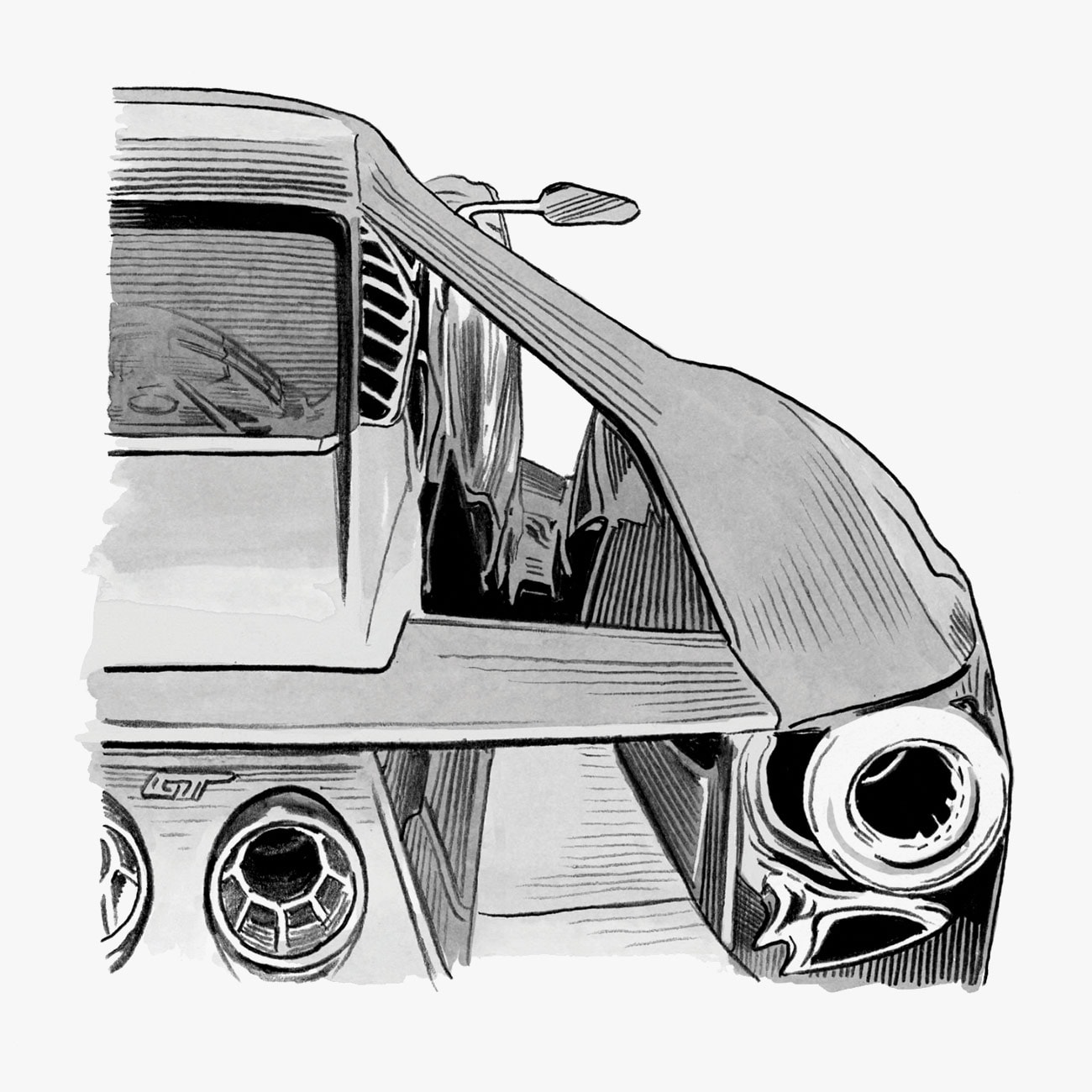
Second-Generation Ford GT Buttress

At once aerodynamically functional and outrageous, this buttress is unlike almost anything else you’ll find on a road car. It connects the rear-wheel housing to the main cabin, giving what would otherwise be a relatively skeletal carbon-fiber body the appearance of having much more surface area. It also allows you to see straight through the side of the car. In addition to looking alien, the buttress diverts airflow, reduces drag and increases downforce.

Second-Generation Ford GT Specs
Engine: 3.5-liter twin-turbocharged V6
Transmission: 7-speed dual-clutch; rear-wheel drive
Horsepower: 647
Torque: 550 lb-ft
Curb weight: 3,354 lbs
0-60 mph: 2.8 seconds
Top speed: 216 mph
Price: ~$450,000
Total built: 1,000

Bentley ‘Organ Stop’ HVAC Vent Knobs

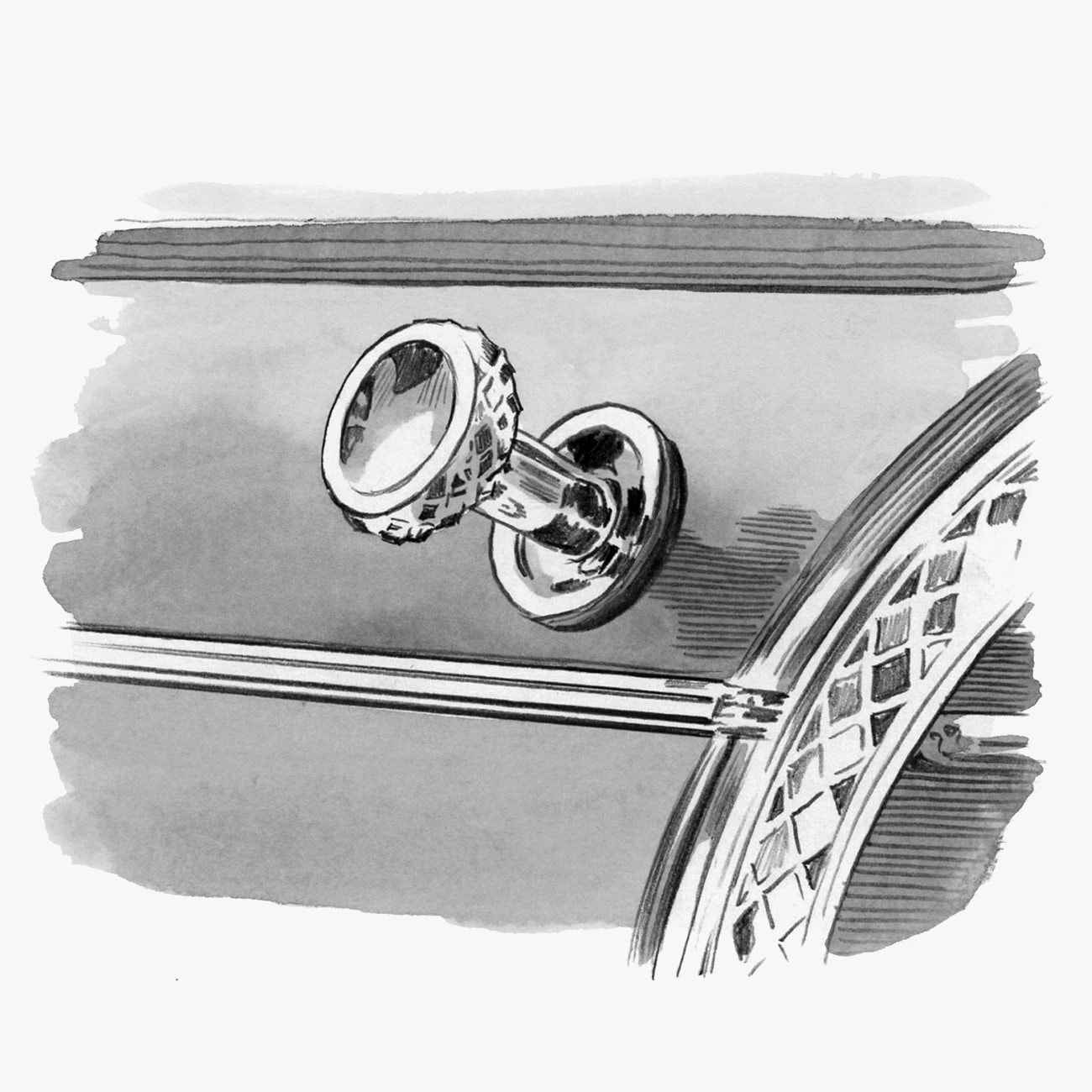
Bentley’s charming, stodgy British nature shines through in this detail. Instead of a small flip-style tab like you’d see in virtually any other car, these organ-stop pulls open and close each HVAC vent, giving an otherwise plain dashboard a lot of blingy texture. They also harken back to a time when everything on a car — whether it was on a coach-built Bentley or a Model T — was handcrafted and manually operated.

2019 Bentley Continental GT Specs
Engine: 6.0-liter, twin-turbocharged W12
Transmission: 8-speed dual-clutch
Horsepower: 626
Torque: 664 ft-lbs
Curb weight: 4,947 lbs
Top speed: 207 mph
0-60: 3.6 seconds
Price: $214,600

Koenigsegg Dihedral Doors

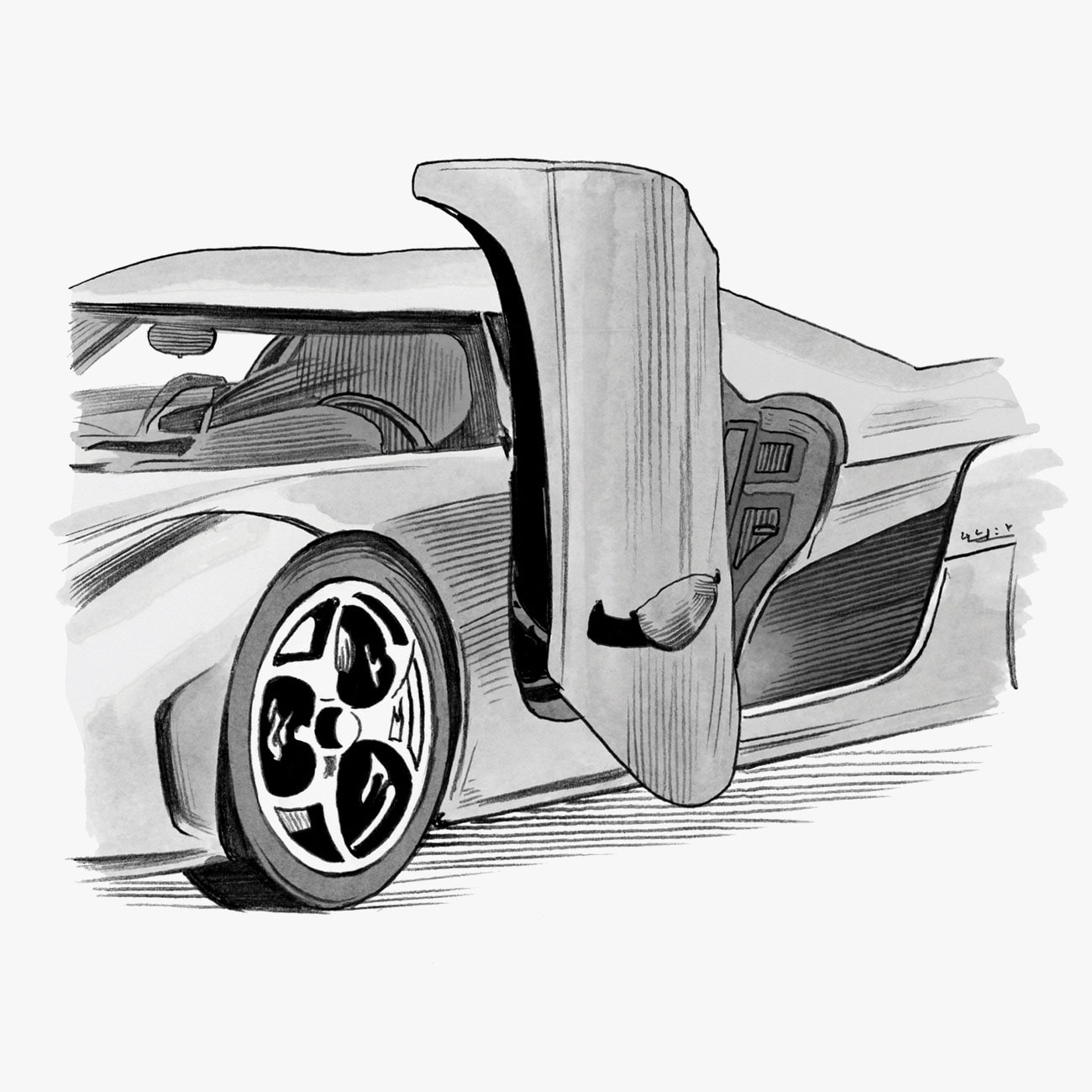
Unconventional door hinges can be functionally necessary — there isn’t room in the real world for a wide supercar’s doors to swing outward — but sometimes their existence is nothing but ostentatious peacocking. The Koenigsegg dihedral doors are mostly the former, but with a tangible dose of the latter: they push outward horizontally then rotate around an axis, eventually settling at a 90-degree angle.

Koenigsegg Regera Specs
Engine: 5.0-liter twin-turbocharged V8; three electric motors
Transmission: Koenigsegg Direct Drive; rear-wheel drive
Horsepower: 1,500 (V8 and electric motors combined)
Torque: 1,475 lb-ft
Curb weight: 3,510 lbs
Top speed: 250+ mph (est.)
0-60: 2.8 seconds
Price: $1.9 million (est.)

Lincoln 30-Way Perfect Position Seats

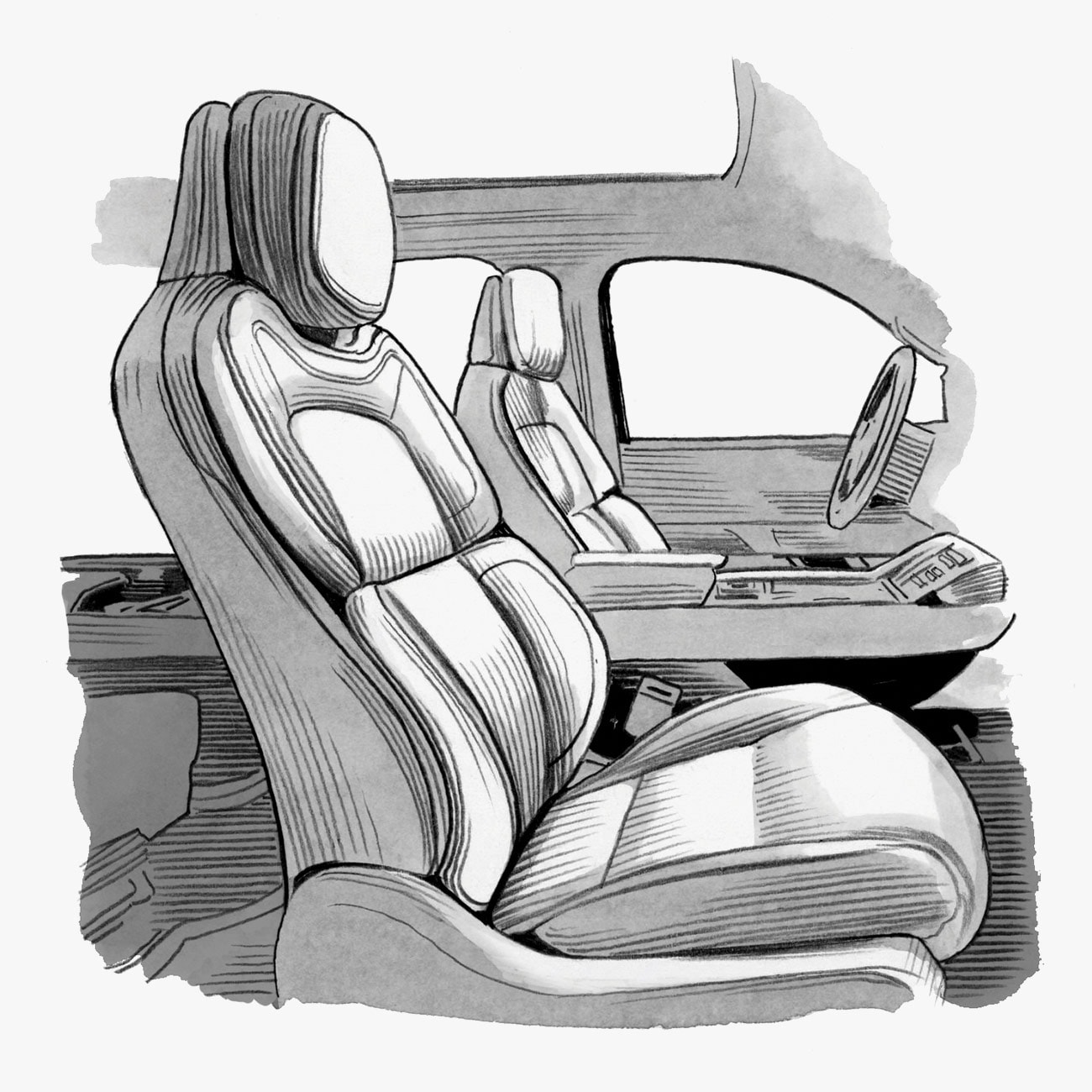
Most rental-car seats adjust four ways (they recline and slide forward and backward), while your dad’s “nice” car may have an eight-way seat that also rises and lowers. Thanks to 11 separate air cushions, Lincoln’s seats are customizable in 30 directions, meaning you can almost literally find the perfect position for your posterior (and back). Their articulation and appointment are second to none.

2018 Lincoln Navigator Specs
Engine: 3.5-liter twin-turbocharged V6
Transmission: 10-speed automatic; four-wheel drive
Horsepower: 450
Torque: 510 lb-ft
Top speed: 115 mph
0-60: 5.5 seconds
Towing capacity: 8,700 lbs
Price: $72,555 (base)

Alpina B6 Gran Coupe Wheels

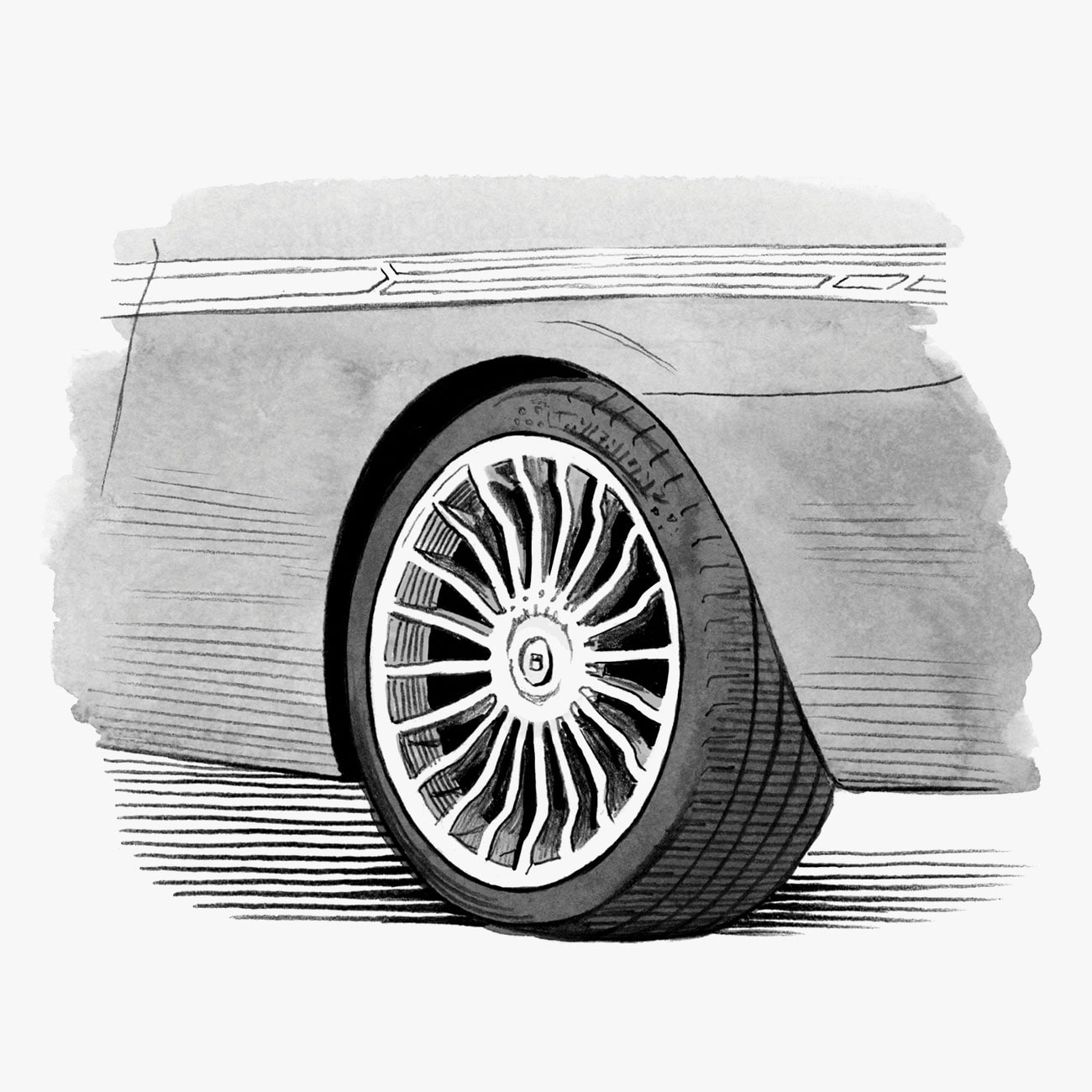
Alpina-modified BMW cars are hyperbole on wheels. Faster than a streak, these cars are big and brash, but they tend to feature minimal bodywork and solar additions. The wheels of the BMW Gran Coupe, however, are a dead giveaway that car has been magicked into something special. The 20-spoke rims look magnificent at speed, but standing still is when they truly shimmer.

Alpina B6 Gran Coupe Specs
Engine: 4.4-liter twin-turbocharged V8
Transmission: either-speed automatic; all-wheel drive
Horsepower: 591
Torque: 590 lb-ft
Curb weight: 4780 lbs
Top speed: 199 mph
0-60: 3.6 seconds
Price: $124,000 (base)

2019 Jaguar F-Type Coupe Tail End

In an homage to the inimitable 1960s Jaguar E-Type, the F-Type is a modern miracle of retro design. It doesn’t look hokey, as some other recent retro-inspired vehicles have, but instead offers a contemporary take on a very sexy shape. The rear end lifts to such a sharp point that it impinges on trunk space; the kind of impracticality only the most dedicated enthusiasts accept.

2019 Jaguar F-Type SVR Coupe Specs
Engine: 5.0-liter supercharged V8
Transmission: 8-speed automatic; all-wheel drive
Horsepower: 575
Torque: 516 lb-ft
Top speed: 200 mph
0-60: 3.5 seconds
Price: $122,750 (base)
Note: Purchasing products through our links may earn us a portion of the sale, which supports our editorial team’s mission. Learn more here.

Lincoln Navigator Review: After 20 Years, the All-New SUV Is On Top of Its Game

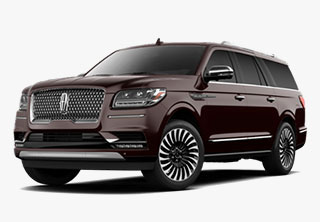
It’s an obvious assertion that the new Navigator is aimed squarely at Cadillac’s bling-king SUV. The long and short of that discussion is that the Navigator is, without a shred of doubt, leaps and bounds better in every discernible way. Regardless of your take on that rivalry, what’s more amazing to me is who else Lincoln is now successfully competing with: in terms of luxury, capability and technology, the 2018 Navigator, the first complete redesign in the vehicle’s 20-year history, is worthy of comparison with much, much bigger dogs, like Mercedes-Benz’s GLS and Bentley’s Bentayga. This is a serious, serious SUV — an absolute mic-drop benchmark for its price range. Though Cadillac, et al. likely aren’t scared, I do imagine they’re quickly wearing through plenty of whiteboards with furious brainstorm scribbles.

Lincoln’s goal is to make “the ultimate family vehicle.” Now, I don’t have a family, per se, but I do have opinionated adult friends; instead of suburbs and daycare runs, at my disposal are the beautiful environs of upstate New York. We loaded up early in the day and hit the road in earnest, covering hundreds of miles of highways, country roads, small towns, driveways, parking lots, narrow city streets and light gravel lanes. Even when a three-hour, late evening traffic jam impeded our return, there was nary a complaint.

This completely new, titanic vehicle is replete with technology and comfort and convenience features that are, simply put, on par with those found in the quarter-million-dollar luxury stratus. This is where super upscale competitors should take note. The seats are cosseting thrones, positioned and appointed so well that no one gets shorted on space or of the full-on comfort experience. In between the optional second-row captain’s chairs is a console that rivals some furniture pieces in my actual apartment in terms of size. Like the middle console between driver and passenger, it also features a storage compartment that swallowed a camera bag, a liter of water and shopping bag full of snacks, and it had room to spare. It’s a comfortable, beautiful, airy, bright and spacious living room on wheels (with 11 standard power outlets). My friends, guys whose heights hover around six feet, could all easily cross their legs in even the power-reclining third row.

2018 Lincoln Navigator Black Label

Engine: turbocharged 3.5-liter V6
Transmission: 10-speed automatic
Horsepower: 450
Torque: 510 lb-ft
MSRP: $73,055 (base)

Beholding the interior of the new Navigator is an endless exercise in appreciation of design, though my favorite element is the horizontal dash section on the passenger side, which stands out as a singular and deeply emotional detail. Opt for the high-end wood trim in your Navigator and every wood applique will be sourced from the same tree, meaning their grain matches flawlessly. This is something you’ll only find in vehicles twice the price of the Navigator and it’s best showcased on the marvelous center console. The piece de resistance, however, is the Lincoln insignia inlaid on the far right end — a proud nod to Lincolns of yesteryear.

The Navigator’s overall design draws more heavily on the concept-vehicle version touted a couple years back than I expected it would; most manufacturers only tease hints of their future vehicles with auto-show art pieces. Save a few concept-car features, like a retractable side staircase and gullwing doors, this is essentially the same vehicle Lincoln revealed at the 2016 New York Auto Show. There are horizontal lines galore, mostly inside, drawing your eye from left to right over pleasantly varied materials. Outside, there is absolutely no mistaking this for anything but a Lincoln Navigator. The roof stands higher than I do, and the emblem on what seems like a ten-acre chrome grille is a full nine inches tall. The shockingly large wheels, reminiscent of an airplane’s spinning prop, really do give a sense of motion when standing still.

And yet it’s not ostentatious. Bold? Yes, very. But in a sensical, moderated fashion. In the same way Lincoln’s ’60s Continental was a monolithic — but not gaudy — brute of a luxury sedan, the Navigator doesn’t exhibit wince-inducing tackiness. Instead, it’s handsome and properly impactful and draws admiration of form more than it does attention for attention’s sake. I have a strong feeling that this is what a big, progressively styled SUV should look like. It’s a design win.

Lincoln’s desire to make the new Navigator an “ultimate” SUV translates into a vehicle that drives very, very well

Lincoln is also heavily emphasizing the literal experience of being in the Navigator more than any other element. This starts, of course, with the driver. Different drive modes are available — it does seem a little irresponsible to put such a large vehicle into anything like a sport mode, but it’s there mostly to keep the powertrain responsive should conditions call for it. A key feature is the heads-up display (HUD), on which vital data like speed, miles-to-empty and more projects onto the windshield in front of the steering wheel. Most anything the driver needs to know can be displayed there, on what Lincoln claims is the “biggest and brightest” HUD on the market. It’s also intelligently designed and intuitive: when you move a function to the HUD, it’s gone from the standard physical digital gauge cluster, eliminating redundant distractions.

Most importantly, Lincoln’s desire to make the new Navigator an “ultimate” SUV translates into a vehicle that drives very, very well. The steering has proper weight and, combined with a premier seating position and visibility, offers a supreme sense of command. Its twin-turbocharged V6’s 450 horsepower feels like nuclear propulsion when coaxed with the throttle. What the Navigator doesn’t feel like from the front left seat is a big, loping truck. It drives big, but it’s manipulated as easy as a family sedan half its size.

While I was busy enjoying driving dynamics, my “family” was constantly noting, in half-whispered, awed voices, observations like “even the windows are smooth.” The panoramic glass roof is so large they figured it must be several massive sliding windows put together. Discovering the rear-seat entertainment tablet/Bluetooth headset combos was like a gateway drug — the second-row friends, who acted, I assume, much like eagerly curious children, continued to find new features and delights until I dropped them off late into the evening.

I, frankly, have almost no complaints beyond the quality of very few interior materials — for instance, molded plastic “knurling” on some knobs is unfortunate but totally fine for the price range. It’s not right to complain about the sheer mass of the thing — here, mass is, of course, necessary and unavoidable since its goal is to transport full-sized adults in total comfort. Others who prefer small vehicles will be very satisfied when using the 360-degree camera system for parking maneuvers. In something this big, they’re a godsend when you’re trying to… navigate.

The big question: Is it worth it? The Navigator will start around $73,000, and top-end models like the one I drove will sticker for just under $100,000, a price comparable to the Navigator’s main competition, the Escalade. And yet, that’s less than half what the top-tier competition charges. The Bentayga starts around $225,000, for instance, and while that premium is deserved for many reasons, the price delta cannot be overlooked. In fact, it should be heavily considered by any luxury SUV buyer. Escalade shoppers, though, should know this: the Navigator is a worthy entry into the “big luxury SUV” thing; it does the whole “experience” thing better; it looks better; drives better. It’s just better. So yes, the Navigator is absolutely worth it — just ask my family.

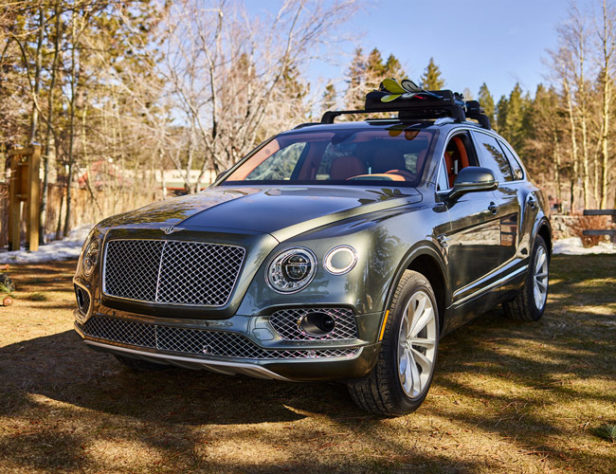
Still Not Convinced? 15 Reasons to Immediately Sell Your House and Buy a Bentley Bentayga

Your IKEA furniture does not count as “handbuilt.” A Bentayga, though… Read the Story

Can Truly Beautiful Car Designs Even Exist Anymore?

From Issue Seven of Gear Patrol Magazine.

Imagine if Jaguar unveiled the E-Type this year. But a bloated, modernized version of the classically beautiful 1960s automotive icon, akin to the rebirth of the Dodge Challenger, say, or the Ford Mustang. Those vehicles just vaguely echo the shape and spirit of their predecessors but possess nothing that remotely approaches their actual visual or visceral experience. No, picture Jaguar literally coughing up the original E-Type on the podium in Geneva, with its wistful lines, diminutive presence and soul-enriching ride. Sure, it would have a modern suspension, finely tuned carbon brakes and an efficient engine that will turn over instantly 30,000 times in a row — but generally the same car.

Could they build it? Could they generate something so simple, elegant and purposeful, a vehicle that seems to have bent the world to its will? Chances are no — but the reasons are more complex than you might think. First and foremost, you have the U.S. Government. Beginning in the 1950s and then accelerating in the 70s, government regulations have forced carmakers (necessarily, thankfully) to make their vehicles safer and more efficient. They’ve achieved this via thousands of rules and regulations mandating everything from bumpers to airbags to anti-lock brakes to levers you can pull to pop yourself out of a trunk and regulating such minutiae as headlight placement and the field-of-view in rearview mirrors. The regulations also go into great detail about crash-worthiness, requiring manufacturers to design steering wheels that won’t impale drivers during a front-end collision and glass that won’t turn into sharp flying daggers when punctured, among many dozens of other rules.

This alone has changed vehicle design drastically, to some extent homogenizing it by stipulating various minimums and maximums, but also dulling it thanks to prohibitions against, for instance, shiny chrome bumpers that can slice and dice pedestrians in a collision. Over the years, we’ve thus been left with vehicles that have grown larger, heavier and more complex, with fewer and fewer possibilities for truly creative design work. So producing a Jaguar E-Type, or something like it, in the same approximate packaging as the original would require herculean engineering prowess.

Such a purity of design is also frequently stymied today by the many masters of modern vehicle production, which go far beyond even the government’s regulatory requirements. Designers must answer to the practical needs demanded by a given vehicle’s category — comfort, visibility, storage and other factors. They must also yield to — or at least do battle with — the accountants over the cost of their grand visions, the customers whose whims can make or break even the most brilliant and bold visions and the engineers who ultimately determine the manufacturing feasibility of a given component or entire design. For instance, while it’d be lovely to have a full electrochromic glass canopy enveloping the entire passenger compartment instead of a boring roof with A, B and C-pillars, producing such a thing would be outrageously expensive, if not impossible for safety reasons alone. The same is true for many such fantastic visions recently exhibited at auto shows — from the massive gullwing doors in the Lincoln Navigator concept to the 49-inch display screen in the dash of the Byton electric crossover. Just because you can draw it doesn’t mean you can make it, too.

Despite overwhelming constraints, great automotive design still exists and not all cars are dull Soviet monstrosities.

Finally, new challenges tend to spring up in the wake of design flourishes, insofar as they demand further modifications elsewhere in the vehicle to accommodate them. For instance, massive 24-inch wheels look wonderful when artfully integrated into a design, given their ability to instantly bump up proportionality to intensely satisfying levels. But big wheels can be heavy, take up space in the wells and limit turning radii — so they require larger, more expensive and heavier brakes, more complex suspension systems to accommodate all of those enhancements and compromises elsewhere to accommodate them spatially. Once you’ve fit them, you have to beef up the chassis to deal with the extra ballast at the corners and the unique performance dynamics of larger wheels and, finally, ask the consumer to pay over and again for wildly expensive tires to fit. In the end, seemingly simple changes can propagate across the entire vehicle and beyond, so designers today must defend and negotiate every stroke of their digital pens.

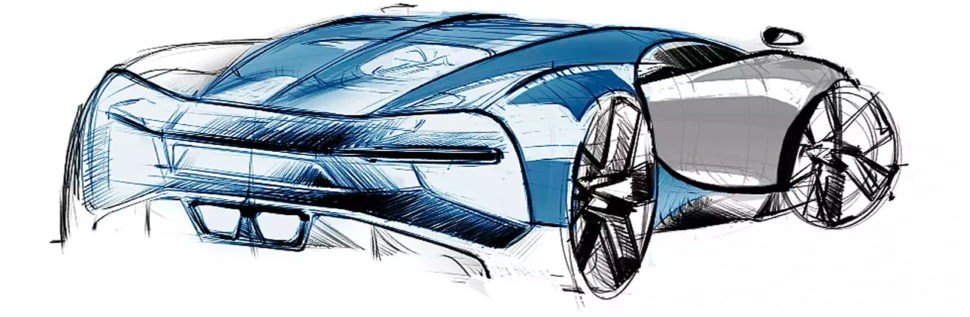
Photo: Bugatti

But all is not lost. Despite overwhelming constraints, great automotive design still exists and not all cars are dull Soviet monstrosities. Somehow, ultra-functional if visually bland Avalons and Impalas occupy the same roads as Aventadors and Chirons — machines that manage to wriggle through the government gauntlet and deliver startling, utterly magnetic compositions. Even vehicles in traditionally formulaic categories can hit you like a visual sledgehammer, such as the Range Rover Velar, with its subtle sculpting and masterful control of proportion and shaping.

The future may hold even more promise. As we draw nearer and nearer to the steady hand of autonomy — and even its precursor, augmented driving — our collective grip on design may loosen. “By 2035, the things that we have to do now from a structural point of view might not be necessary,” notes Oliver Heilmar, the global Head of MINI Design and the former head of BMW Designworks. “As cars are able to avoid crashing altogether, you’re freed up to design more and more as you wish. Vehicles can weigh less without all the reinforcement and because there’s less weight, you won’t need to have these heavy brakes. Lighter cars also waste less energy, so the motors don’t have to be as strong and are themselves lighter and smaller. All of that opens the door to new, exciting designs.”

Imagine, then, setting off for work in something with the style and grace of that old E-Type, or the simple utility of an old-school Land Rover Defender, with all the benefits of modern engineering and safety, but none of the added bulk. Or imagine something new and completely different, the likes of which we haven’t seen before, made precisely as the designer envisioned.

The Best Gift Ideas for Car Guys

Buying a gift for a car guy doesn’t have to be as daunting as getting caught in a conversation about the differences between horsepower and torque or why slow cars are more fun to drive. When it comes down to it, they’re some of the easiest to shop for. Keep it simple and classy but purposeful and you’ll see their faces light up like the headlights of an E46 M3. To help get you off to the right start, we curated some of the best gift ideas for car guys.

Forza Horizon 4

The latest installment to the Forza Horizon series might be the most ambitious yet. You get free reign over the open countryside of Britain with over 450 cars at your disposal. And, for the first time in a racing game, you’ll have to deal with changing seasons and the weather that comes with it.

Dyson V7 Car+Boat Cord-Free Handheld Vacuum Cleaner

The Dyson V7 is compact and cordless, but most importantly it has the power to keep any-sized car dust, dirt and crumb free.

Meguiar’s Complete Car Care Kit

If keeping the interior clean is high up on the car guy’s priority list then making sure the exterior shines and glistens is even higher. Meguiar’s Complete Car Care Kit is a 12-piece cleaning arsenal complete with everything needed to make sure every inch of the exterior shines. It also comes with a few sprays and wipes to put some final touches on the interior as well.

Oak & Oscar The Jackson Chronograph

The Oak & Oscar The Jackson Chronograph gets its name from America’s first road race, called the Chicago Times-Herald, which ran from Jackson Park to Evanston in 1895. Cars only averaged a blistering 7 mph over 54 miles, but it still needed to be timed. The Jackson is a 40mm manually wound chronograph with a 60 hour power reserve, date function and a stacked register.

LEGO Creator James Bond Aston Martin DB5

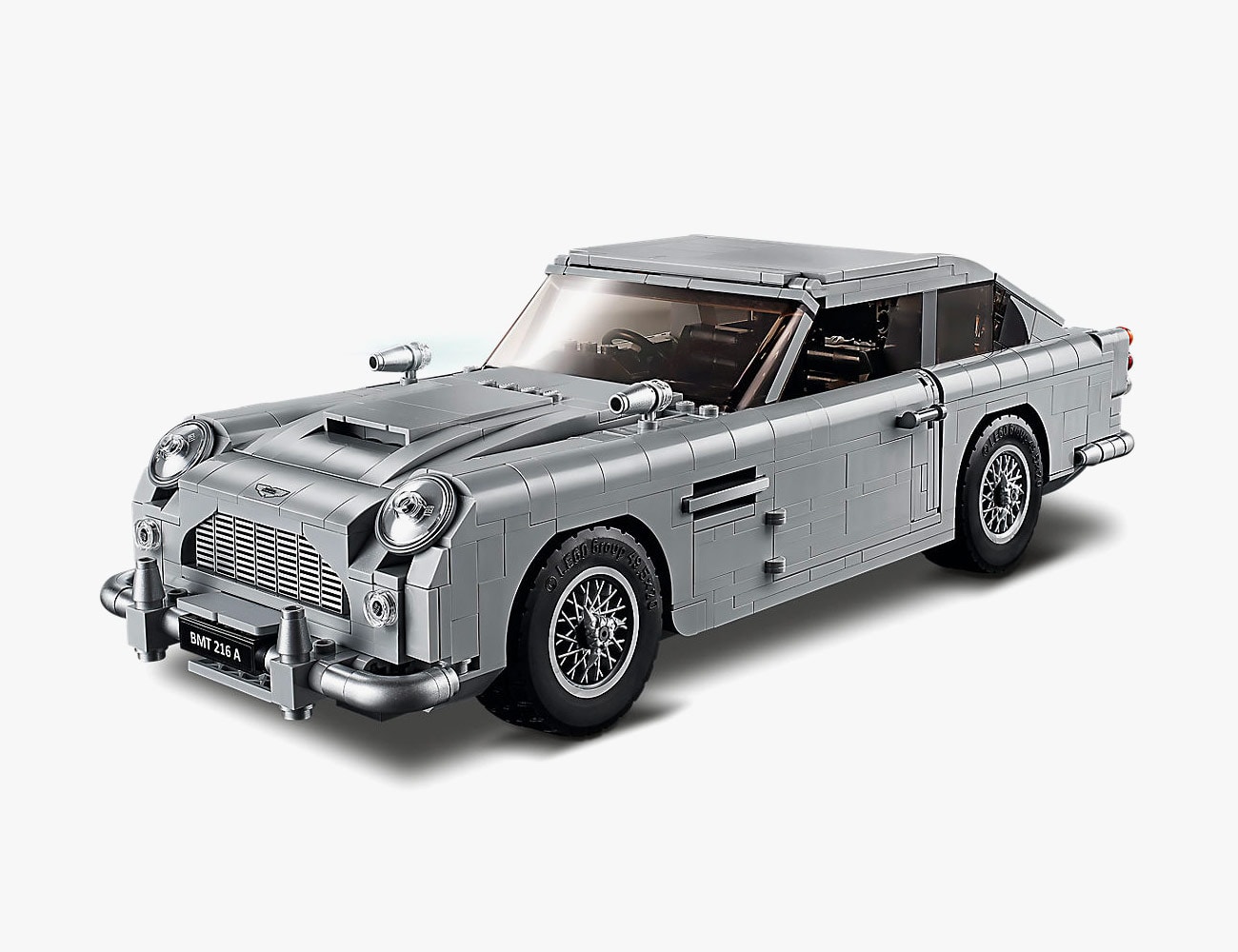
There are Lego recreations of Hollywood cars, and then there’s the LEGO Creator James Bond Aston Martin DB5. When all is said and done, 1,290 pieces come together to make the most iconic Bond cars of all time, complete with hidden machine guns, tire scyths and revolving number plates.

Porsche Design Lacie 2TB Hard Drive

Porsche Design isn’t a random wing of the German brand that pumps out key chains just for the sake of it. If ‘Porsche’ is branded on it it you know it’ll be designed to the highest standard and come with an equal amount of perfromance. Case and point: this two-terabyte Lacie external hard drive.

Peugeot Nostalgie Walnut Coffee Mill

Before it made cars, Peugot was in the business of coffee mills and bicycles. So if your car guy loves coffee, this manual coffee bean grinder is an easy win.

Schott Asset Leather Jacket

Schott is one of the most iconic leather jacket companies in the world; their most notable collection is the Perfecto series, whiched warmed the shoulders of Marlin Brando in the The Wild One. It’s safe to say the rest of its line is just as iconic, too. The Asset café racer-styled motorcycle jacket, with its four zippered front pockets, black metal trim & 100 percent wool herringbone lining, is an obvious choice.

Range Rover Classic County

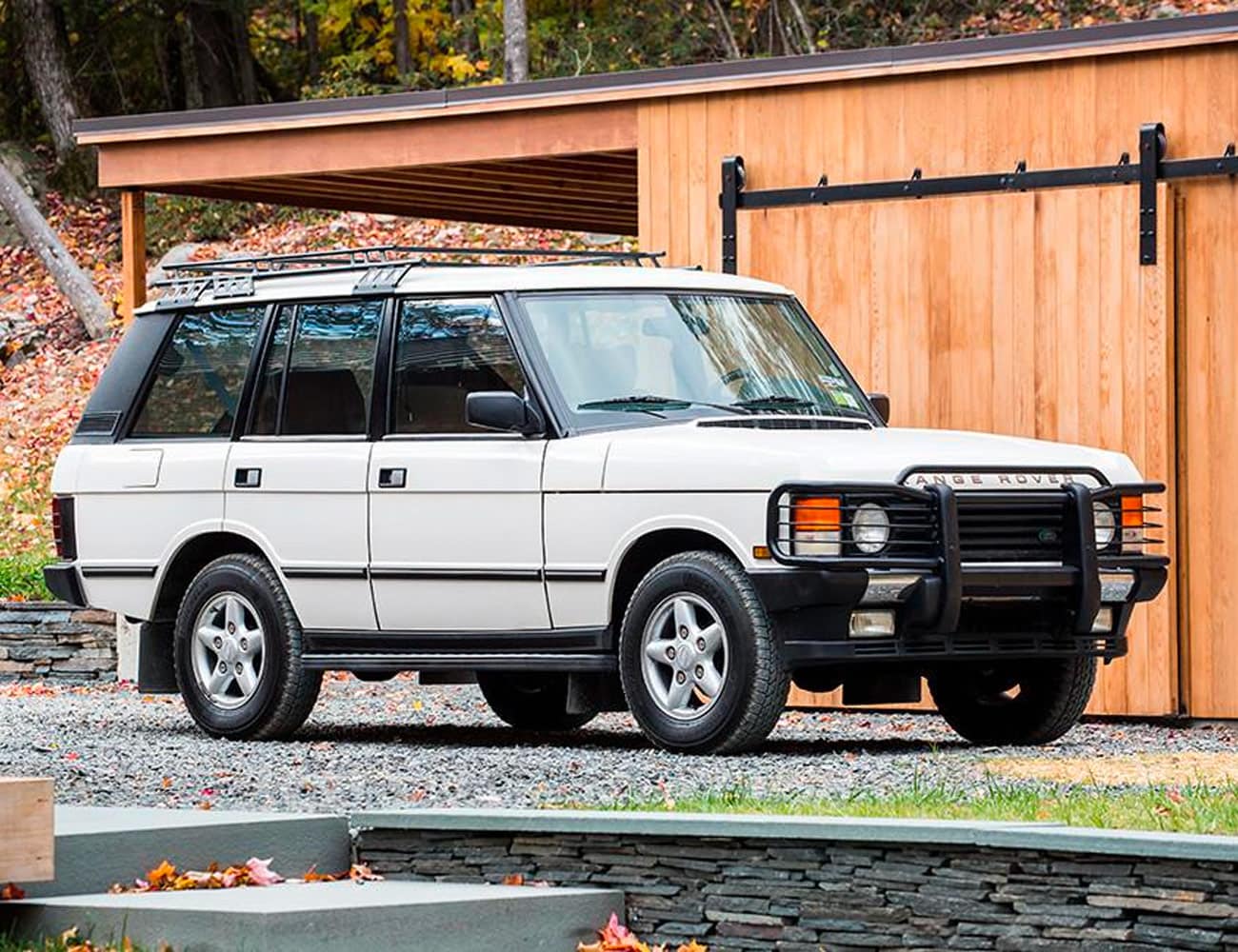
This Range Rover was meticulously maintained by an American dealership with only Land Rover OEM parts; it has since been garage kept. As it sits now it can make an ideal daily-driver or a the perfect chariot for weekend get-aways off the beaten path.

Craighill Nocturn Catch Valet Tray

Valet trays might one of the more underrated home accessories to the general population, but leave it to the car guy to place his keys on a pedestal. A sturdy walnut Craighill Nocturn Catch Valet Tray won’t go unappreciated by a true car and definitely won’t go unnoticed by his friends.

Harman Spark

The Harman Spark is an incredibly easy way to bring older cars up to date (1996 or newer). The Spark fits right in the OBD II outlet and immediately gives your car features like emergency services, 4G LTE hotspot WiFi, theft alert and location tracking.

L.L.Bean Signature Leather Duffel

A good leather duffel bag is essential up to the countryside for the weekend. The 44-liter L.L.Bean Signature Leather Duffel is made of oiled cowhide leather with a cotton canvas lining. In other words it’s made to last and look good its entire life.

Deakin & Francis Steering Wheel Sterling Silver Enamelled Cufflinks

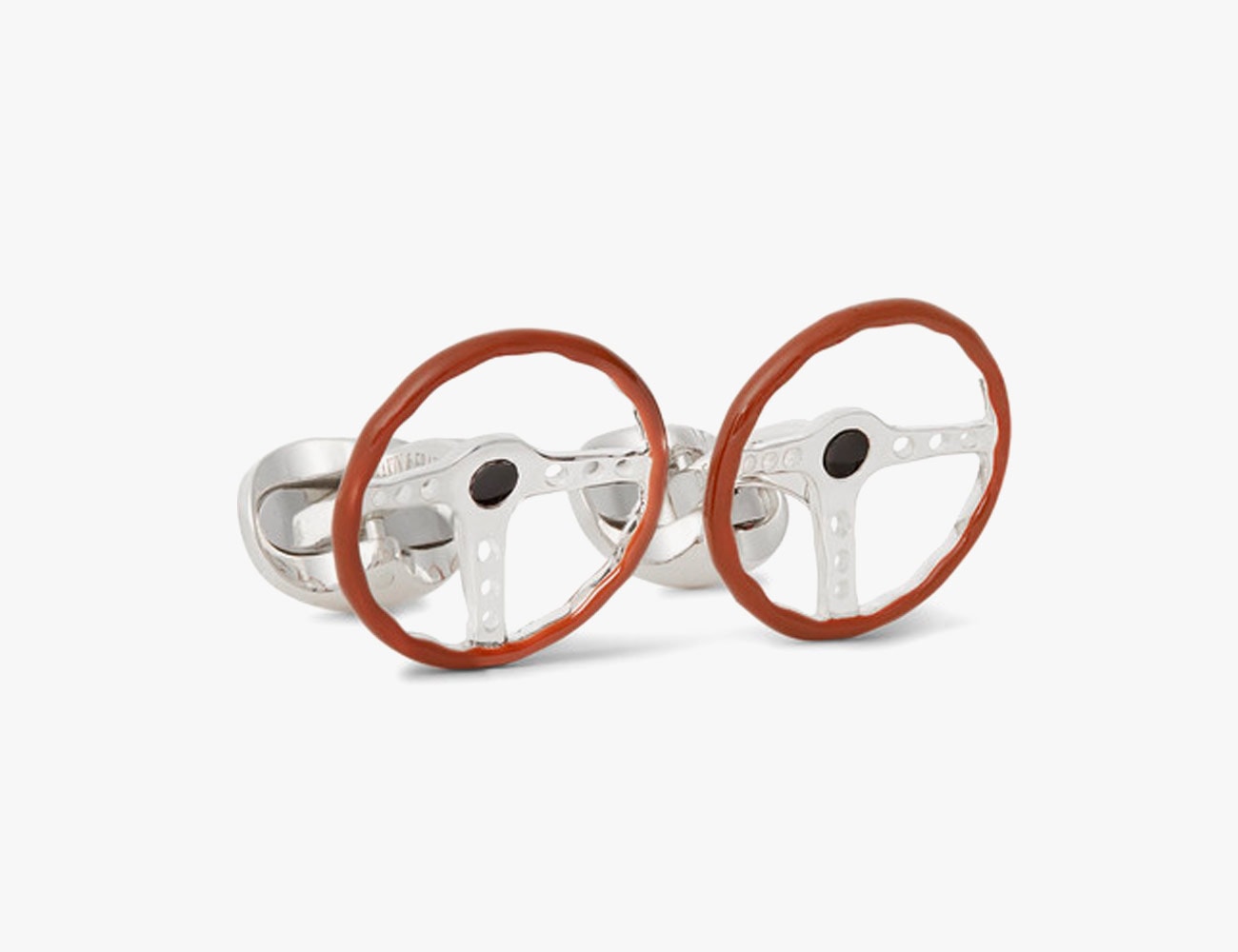
Car guys are all about the details – that includes how they dress. Steering Wheel Sterling Cufflinks by Deakin & Francis are a subtle sterling silver and enamel way to show off a love of cars.

If You’d Just Let Me Finish by Jeremy Clarkson

If you think a book by Jeremy Clarkson is just a long, one-sided conversation about cars, you’re sadly mistaken. Give this man enough time and space to get his thoughts down and you’ll hear rants about “How Blackpool might be improved by drilling a hole through it, the problem with meditation, a perfect location for rebuilding Palmyra and why Tom Cruise can worship lizards if he wants to.”

Gear Patrol Magazine

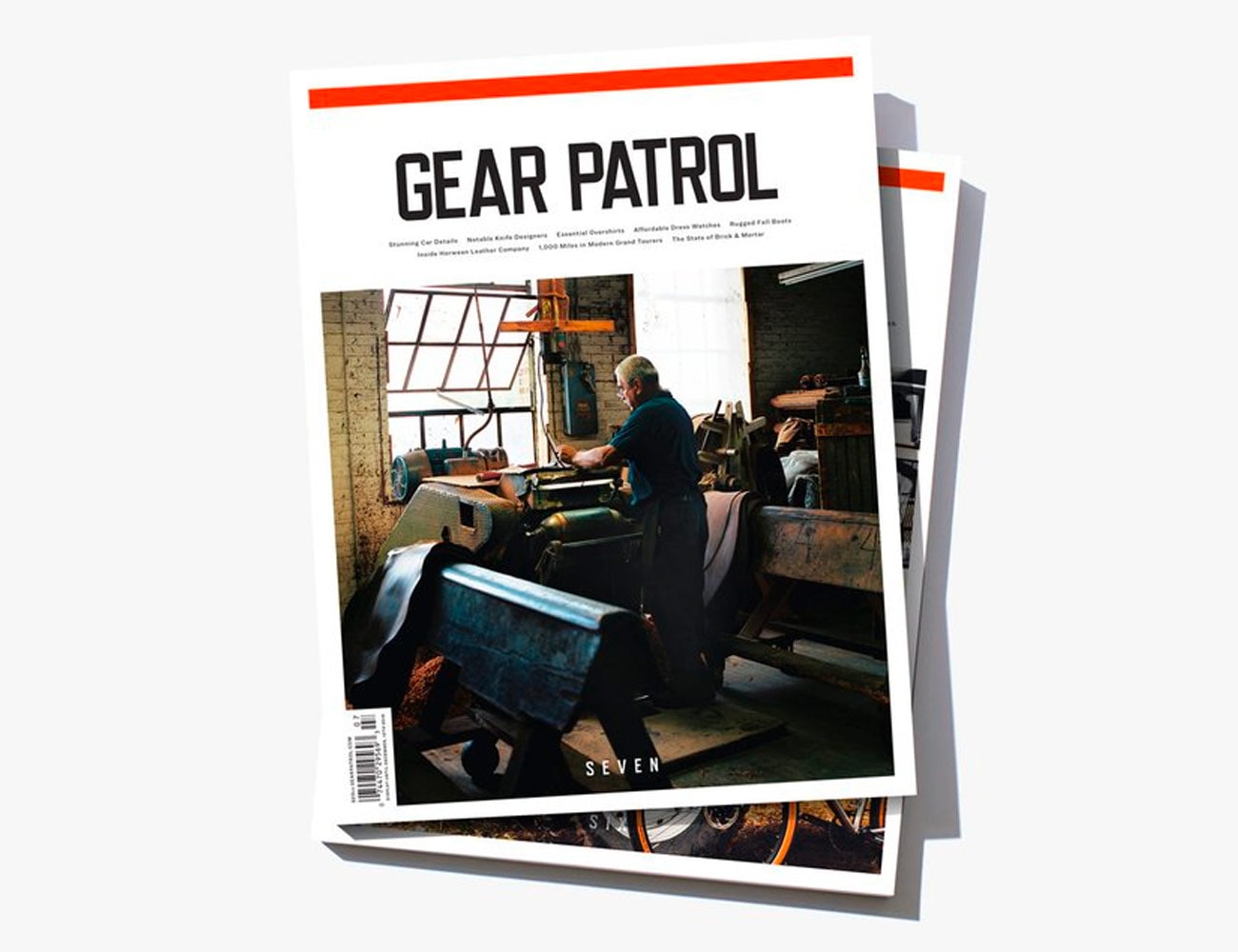
Perfect for whoever is manning the back seat. Inside its 200-plus pages, we explore what it takes to turn an office chair into a thing of beauty, an accidental invention into a culinary essential and a 1970s French automobile into one of the most evocative cars of the last century. Plus much more.

Note: Purchasing products through our links may earn us a portion of the sale, which supports our editorial team’s mission. Learn more here.

Opinion: Ford Promises Great Cars, But Consistently Disappoints

SFord’s story has been the same the past couple of years. The company teases a cool new car in the works. Rumors emanate. Excitement builds. Then, nothing. Ford kills the project outright. Ford opts not to sell it in the United States. Or, Ford never makes it happen. One might say Ford has been America’s ultimate car tease.

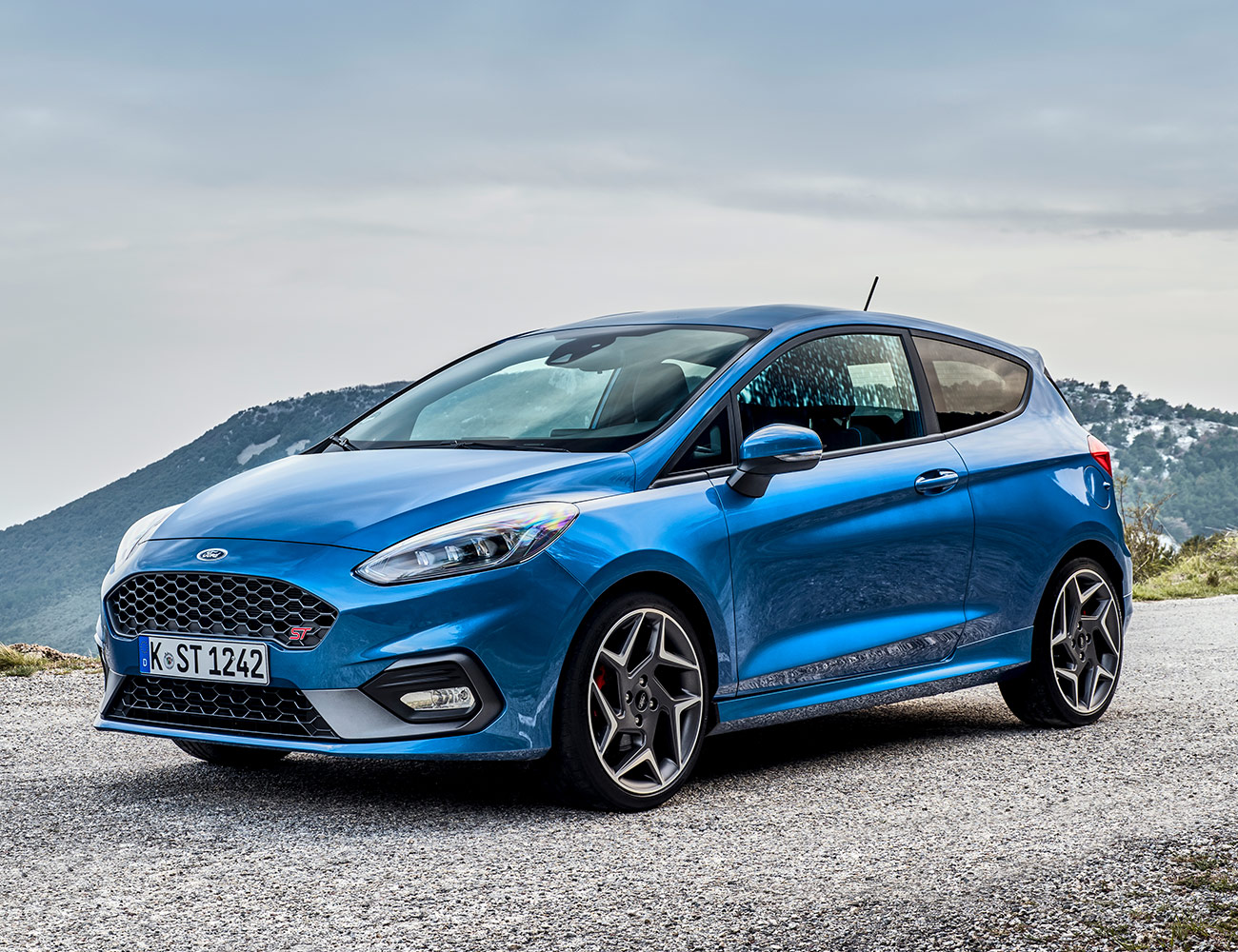
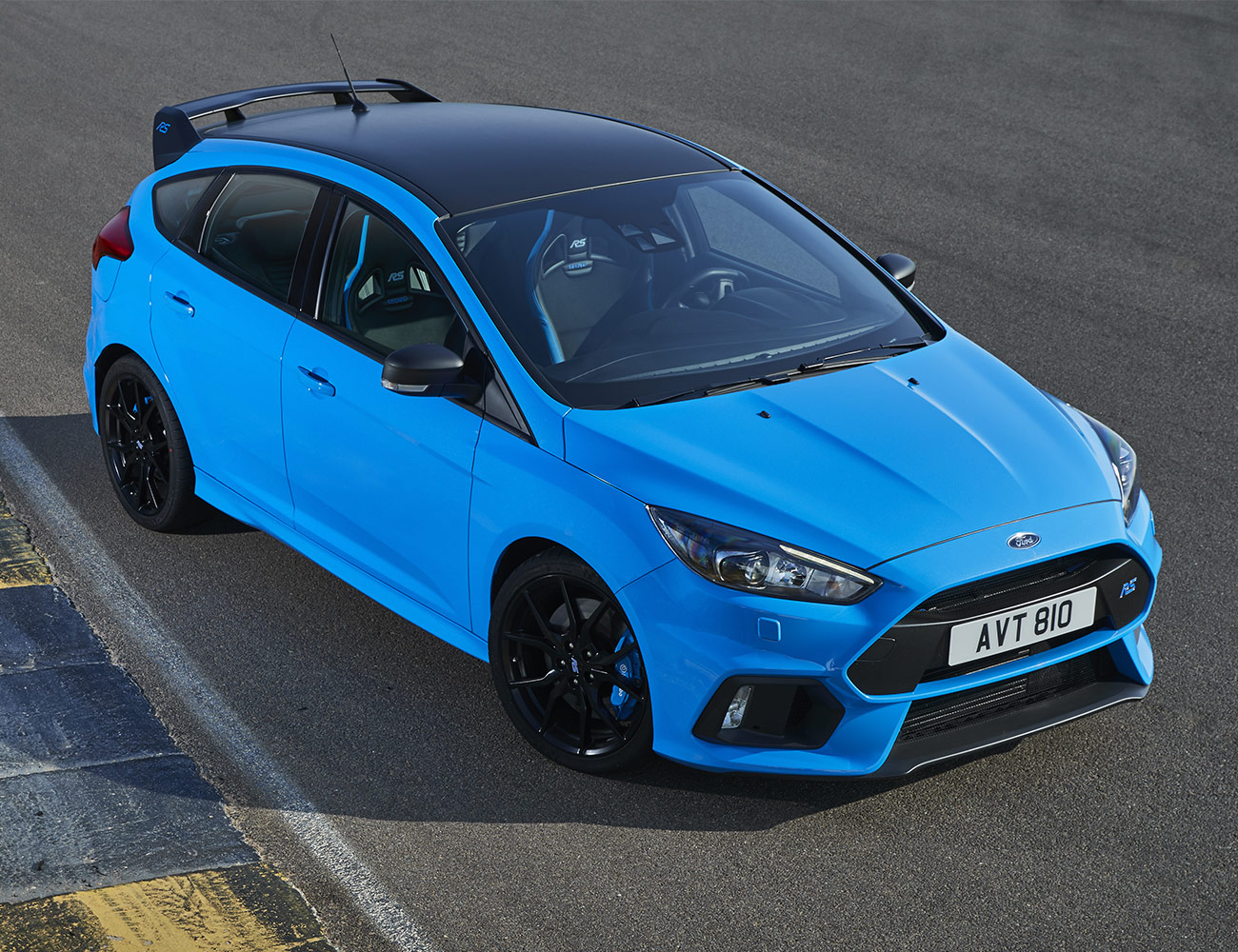
Do you like hot hatches? Rumors were afoot Ford was building a super-hot Fiesta RS based on their rally car. Ford decided against it because the turbo three-pot Fiesta ST was an already fiery hot hatch. That version, of course, won’t be sold in the U.S. as the model gets killed off. Ditto for a rumored 400hp hybrid version of the bigger Focus RS. Ford planned to placate U.S. buyers with the crossover/wagon Focus Active, which, you guessed it, won’t be sold in the U.S. because of the tariff war with China.

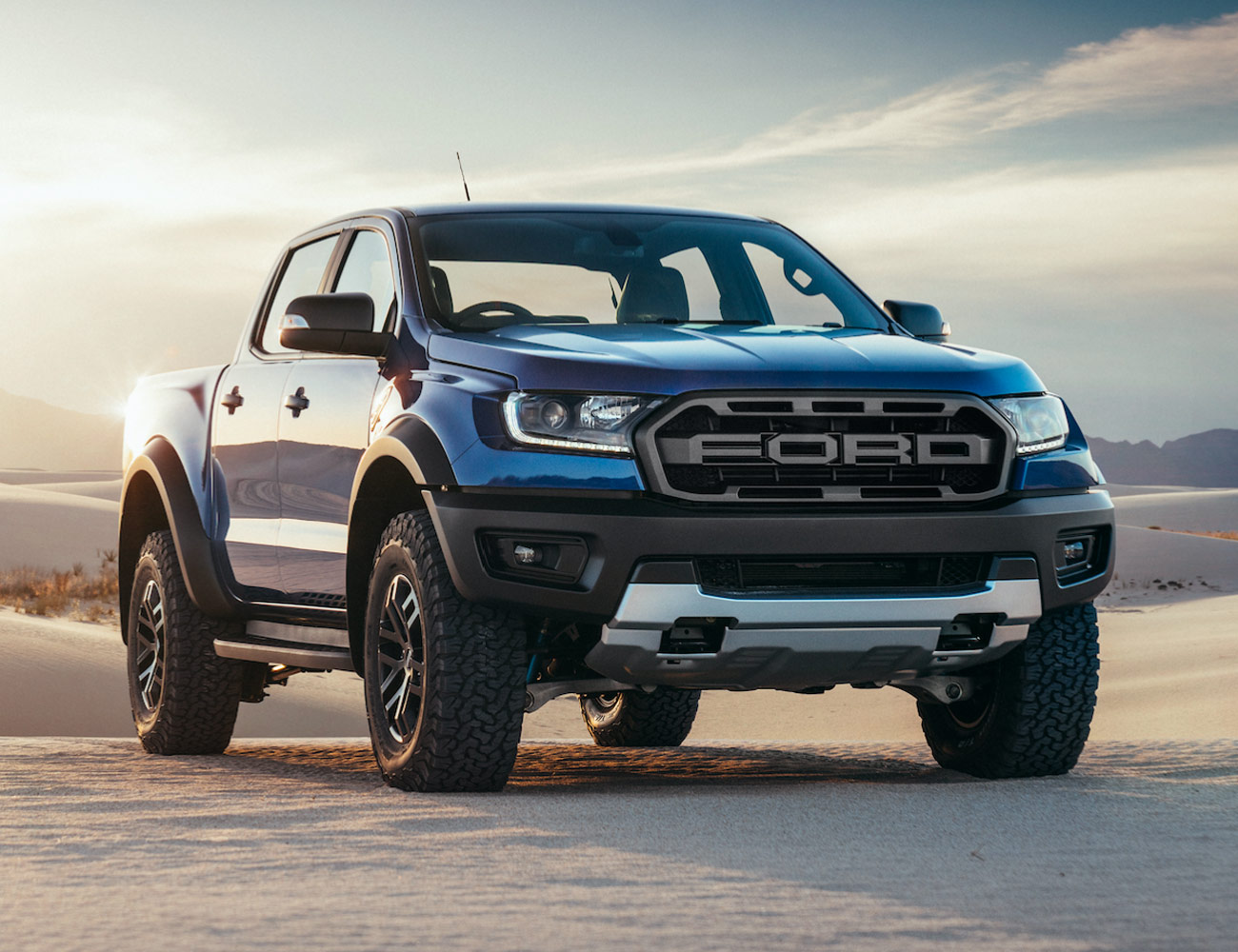
Well, trucks are still doing well, right? Ford announced the return of the fan favorite Ranger to the midsize pickup segment. Ford also announced the suped-up Ford Ranger Raptor with a YouTube video rated “B for Badass.” That, of course, won’t be sold in the U.S. at this time. Neither would the just-debuted Ford Ranger Storm.

Ford kept the iconic Mustang as its lone car. But, it’s no more apparent what is going on there. Ford teased a Mustang-based high-performance electric SUV for 2020 called the “Mach 1.” That vehicle should still materialize, without the name, which Ford shelved. The rumor mill has fired up again of late that Ford will develop a four-door V8 Mustang-based sports sedan.

Ford has generated much talk, but little end product.

We also have the still-on-track but yet-to-be-revealed Ford Bronco revamp for 2020 which rumors have roaring back with a seven-speed manual. Enthusiasts will hope it is more “robust Jeep Wrangler 4×4 competitor” and less “ubiquitous crossover vaguely Bronco-shaped.”

Need more Ford discussion material to get jazzed about and potentially disappointed over? There are ongoing negotiations about a partnership with Volkswagen on R&D for autonomous vehicles, self-driving vehicles and pickup trucks.

Ford has generated much talk, but little end product. Ford partisans are perplexed. Sales are down. Shareholders are antsy. Inquiring looks can be directed toward one man, chief executive Jim Hackett, who took over in May 2017. Understanding what Hackett is up to may require a look back at his previous high-profile gig: interim University of Michigan athletic director.

Hackett arrived in 2014 with a clear directive: fix the storied but moribund football program. There were a murky couple of months. Pressure mounted. National media circled like vultures ready to pick through the wreckage. Hackett, with no experience in college athletics administration, appeared to be out of his depth.

The story ended with Hackett convincing Jim Harbaugh, the NFL’s most sought-after head coach, returning to coach his alma mater. Hackett also landed Michigan a landmark $170 million dollar Nike deal before clocking out.

Perhaps a Bronco relaunch and radical restructuring for the automotive feature play out similarly for Ford?

Resto-Mod Power Wagons By Legacy Classic Trucks Are Made to Work

If any machine could claim the title of “official” vehicle of Jackson, Wyoming, it’s the Legacy Power Wagon. Both, after all, have a way of camouflaging wealth with actual hard work. In Jackson, for instance, this remote town, famed for its skiing and natural beauty — Grand Teton National Park sits just to the north — packs ranches instead of estates, denim in lieu of khakis. Similarly, the Legacy Power Wagon, a restoration/modernization (a.k.a., resto-mod) of Dodge’s famously tough postwar utility vehicles, melds hardscrabble functionality with a gentlemanly elegance that their original owners, 70-odd years ago, could be forgiven for not noticing. Each somehow pairs affluence and earthy grit with a rare degree of harmony.

The local preference became obvious when I had the pleasure of driving a pair of newly restored extended-cab Power Wagons around Jackson with company founder Winslow Bent in early October, at the same time I was in town to drive the new Rolls-Royce Cullinan SUV. When parked in front of the Hotel Jackson — another smooth integration of posh luxury into a decidedly rougher vernacular — locals passing by couldn’t help but gape at the pairing, They overwhelmingly directed most of their gushing toward the Power Wagons, though. They fit the personality of the town and its people much more perfectly. Though both get points for being rare, if not the only, production SUVs with proper, full-sized suicide rear doors, the high-riding vintage pickups beat the Roller to a pulp.

Bent launched Legacy Classic Trucks a decade ago, intent on breathing new life into the historic vehicles. His team of engineers and craftsmen track down candidate samples in restorable condition, strip them down to the bones, then refurbish and rebuild them, modernizing them along the way in a process that stretches to 1,000 hours for each truck. The chassis, cab and body panels are restored from the original parts, but the engine, transmission, brakes and electronics get robust upgrades. Out go the old flathead sixes and in come 430-horsepower, 6.2-liter Chevrolet LS3 small-block V8s mated to four-speed automatic transmissions or a 3.9-liter Cummins turbo diesel with a five-speed manual. Dana and Dynatrac axles, ARB locking differentials and Warn locking hubs ensure the trucks will function on the ranch, and on any other terrain, as needed, with high clearance and bead-locked wheels there for good measure. They also add a dominating profile, perfectly countered by the original curving lines of the Power Wagon’s cab, hood and fenders. The trucks are larger than life.

The conversions start at $185,000, and each is built to order. “Our customers tend to actually use the trucks as they’re intended,” Bent says. “They aren’t garage queens.” Further evidence, in case you need it: the Warn winch in the front, for helping clear trails or haul your buddies out of trouble, as well as many options the owners can spec out, from gun racks to stainless steel toolboxes to snowplows and snowblowers. Need an onboard welder or a cab-mounted shooting rest? Done.

It’s really a good thing that the Legacy Power Wagons are driven vehicles because doing so around Wyoming proved what a unique thrill the experience is. The trucks are easy enough to command, and the massive tires sure-footed on any terrain, but the whole vibe is appropriately old-school and understated. There’s some wind noise and tire roar, and the stereo could use a few extra watts to overcome them, but the wood steering wheel, vintage-styled gauges, wide-angle perspective from the vertical windscreen — where you can see both front corners clear as day — and occasionally jumping out to manually lock in the four-wheel-drive before going off-road, all keep you locked into the original era from whence this truck came.

Really, it’s not a bad place to be.

Best Stocking Stuffers For the Car Lover

It’s a common misconception that car lovers only want or need gifts with three- and four-digit price tags. While yes, an affordable vintage car or a well-designed watch wouldn’t go unappreciated, gifts that are $50 and under can still strike a chord with the motoring enthusiast in your life.

Petrolicious Tee

There are fewe better ways to profess your love of cars than to wear it across your chest. Sure, there are some incredibly tacky ways to do it – this tee isn’t one of them.

877 Workshop Keychain

Keys are a constant in the life of a car lover; therefore, key chains are an absolute necessity. The car lover can put all their keys in one with a sturdy and stylish 877 Workshop Keychain.

Velomacchi Tool Pouch

Whether you’re on a bike or in your car, a full tool box isn’t exactly the most practical way to carry your essential tools. The Velomacchi Tool Pouch lets you keep your most used and critical sockets, ratchets or extra bolts and washers in a compact pouch under your seat, in the trunk or even in the glove box.

Sunday and Sons Jersey Tee

Sunday and Sons is “driven by the passion of cafés racers, flat trackers, bobbers and scramblers… with the ambition to create an elegant and comfortable style.” As a lover of motorcycles, that’s an easy mantra to get behind.

TitanLight Waterproof Lighter

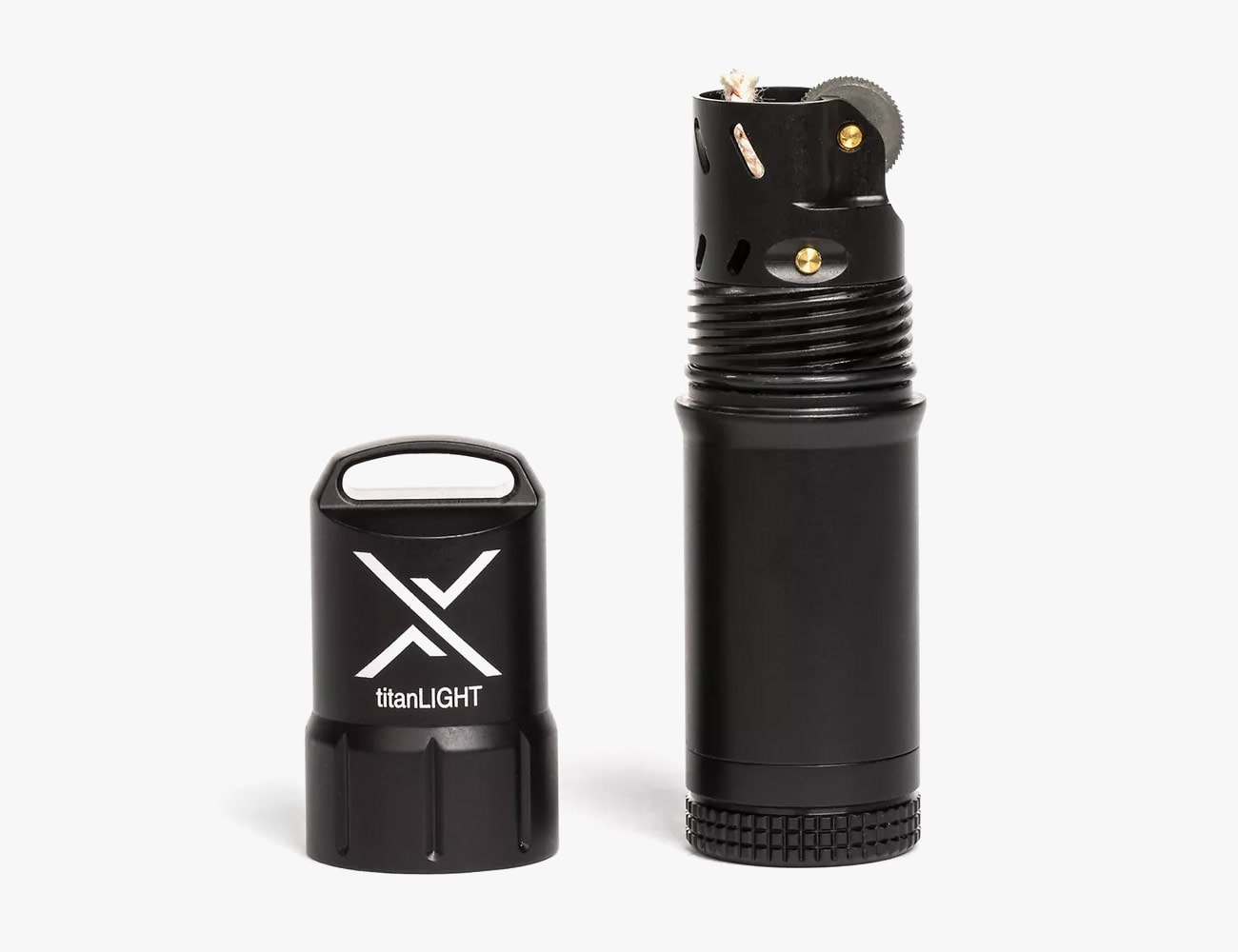
Camping off the back of a motorcycle or out of the back of a trusty overlander is one of the most enjoyable pastimes a motoring enthusiast can take part in — but only if they’re properly prepared. Instead of rubbuing two sticks together, the TitanLight Waterproof Lighter is a much less frustrating alternative. The machined aluminum body not only looks good, it’s also lightweight and durable — essential qualities for any overlanding gear.

Pintrill × Gear Patrol Air-Cooled Coupe Pin

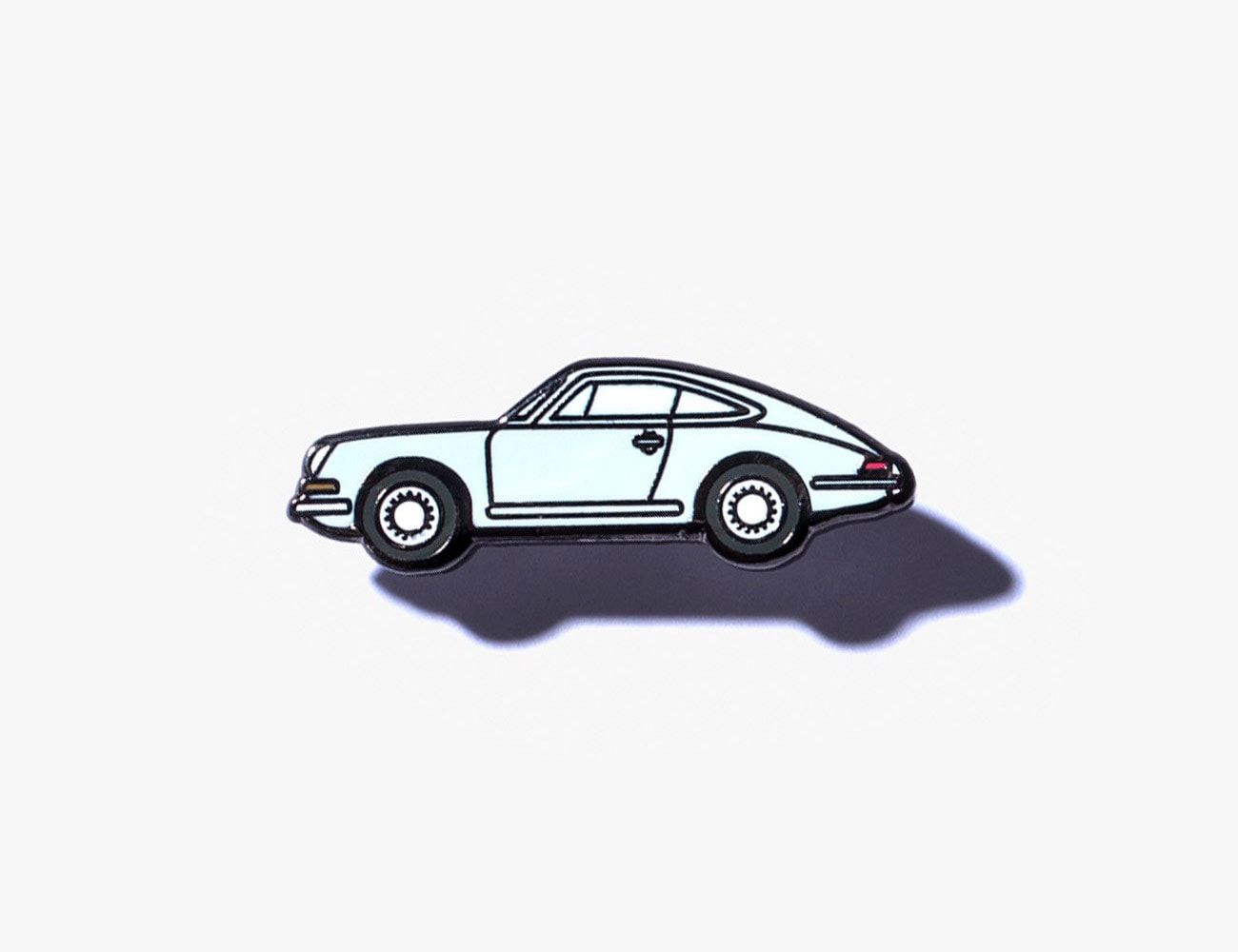
There’s more than one way to show your love for cars. You can always go the overt route with flags and banners. Or, you can employ a dose of subtle class with a Pintrill × Gear Patrol Pin.

Heritage Lensatic Compass

One look at the Heritage Lensatic Compass and you might think, although it looks incredibly classy and well made, it’s a bit archaic. Consider being out on the trail with no service or, worse yet, with a dead smartphone battery. Suddenly that handsome, archaic piece of brass is your best chance of getting home.

Roav Viva by Anker, Alexa-Enabled 2-Port USB Car Charger

Integrating Amazon’s Alexa into your life is incredibly easy these days. You probably have your home covered already, but plug the Roav Viva by Anker into your car and you have a two-port USB charger, in-car navigation, voice-activated dialing, music streaming and all the other voice assistant perks you’re used to.

Nomad Universal 1.5 Meter Charging Cable

Instead of untying the knotted mess of charging cables stored in the glove box, just carry one: the Nomad Universal 1.5 Meter Charging Cable. The multi-tip charging cable is a USB A to Micro USB base with USB Type C and iPhone tip converters.

MotoGeo Coffee and Mug

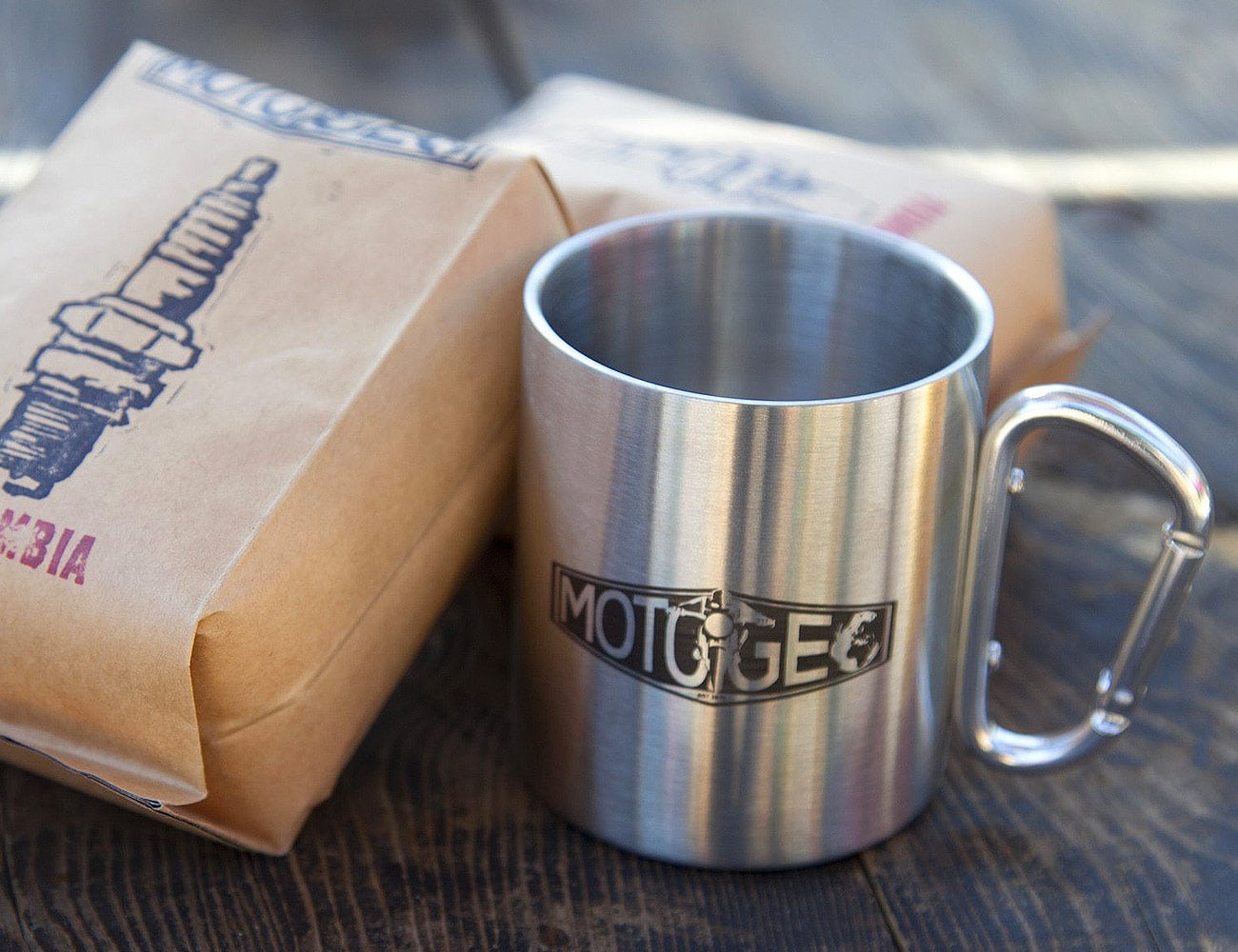
There’s nothing like a hot, fresh cup of coffee in front of the morning’s campfire a few days in to an epic ride. No one knows this better than MotoGeo, which is why its own coffee and stainless steel coffee mug make the perfect road trip companions.

Candy Lab Drifter 87

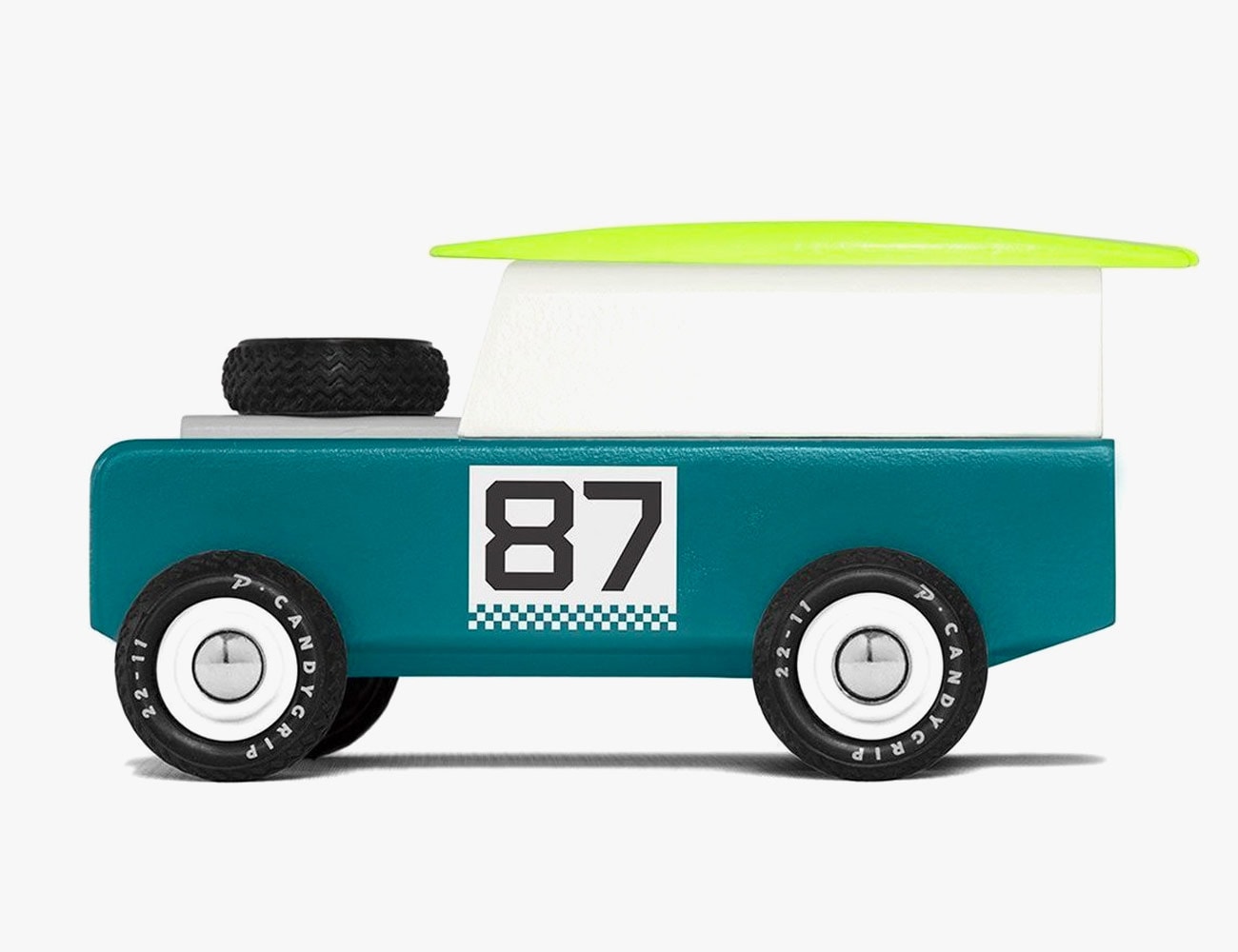
The beauty of Candy Lab cars and trucks is in their simple, clean design, which evokes mid-century romanticism few other modern toys can. The Drifter 87 is fit for car lovers of any age, but get it for someone as ‘desk art’ and you can still be damn sure they’ll be making ‘vroom’ noises before the work day is over.

YI 2.7″ HD Wide Angle Dashboard Camera

By now, we all know dash cams are more than just tools for making Youtube gold in Russia. But the market is prety crowded these days – finding one as compact as the YI 2.7-inch, that’ll take care of all your on-road recording needs is a rarity.

Leather Honey

When it comes to the car lover’s leather interior, you can bet they want it staying as supple and soft as possible throughout their ownership. Conditioning all sorts of leather since 1968, Leather Honey is one of the best conditioners available, especially since it rings in under $20.

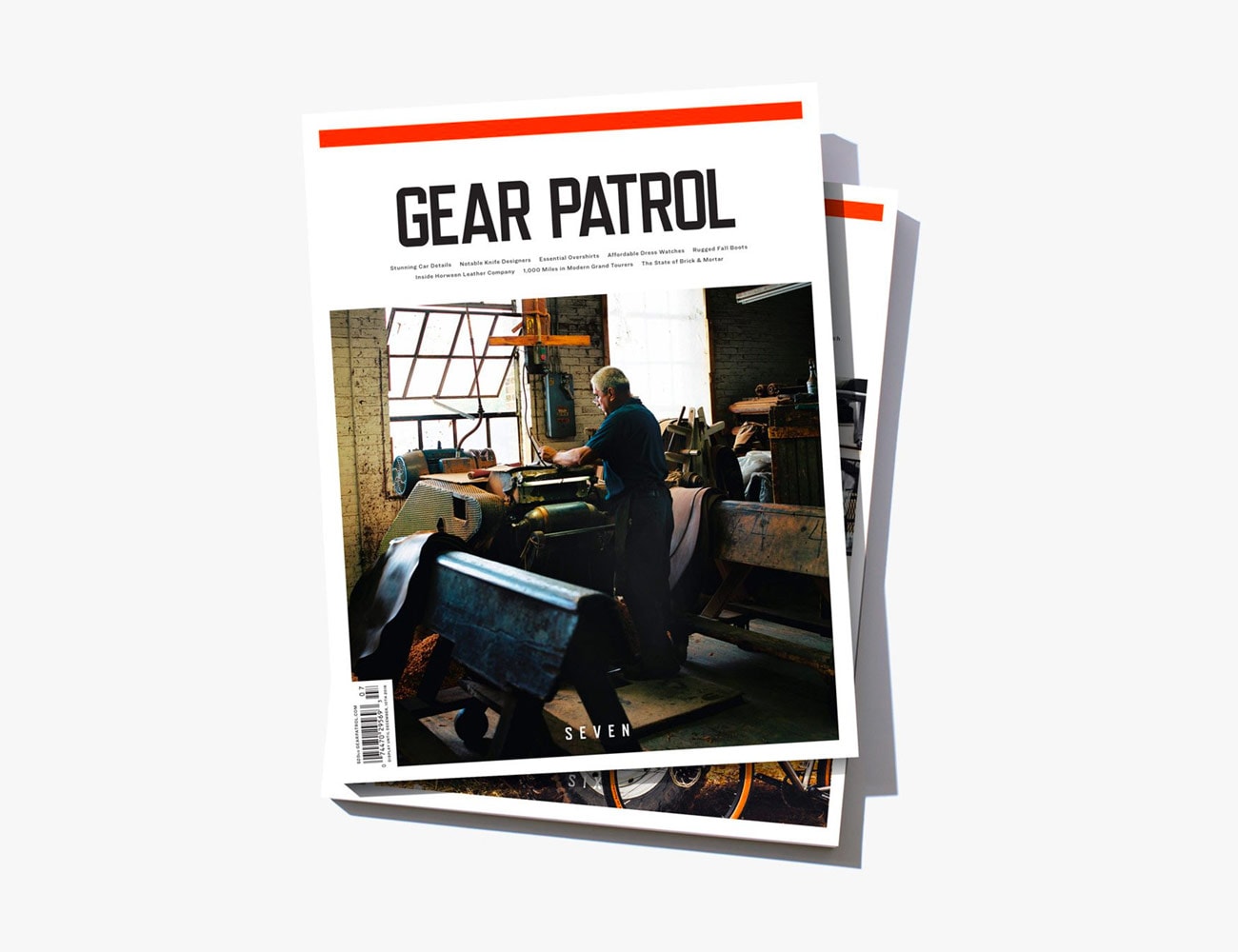
Gear Patrol Magazine

Perfect for whoever is manning the back seat. Inside its 200-plus pages, we explore what it takes to turn an office chair into a thing of beauty, an accidental invention into a culinary essential and a 1970s French automobile into one of the most evocative cars of the last century. Plus much more.

Note: Purchasing products through our links may earn us a portion of the sale, which supports our editorial team’s mission. Learn more here.

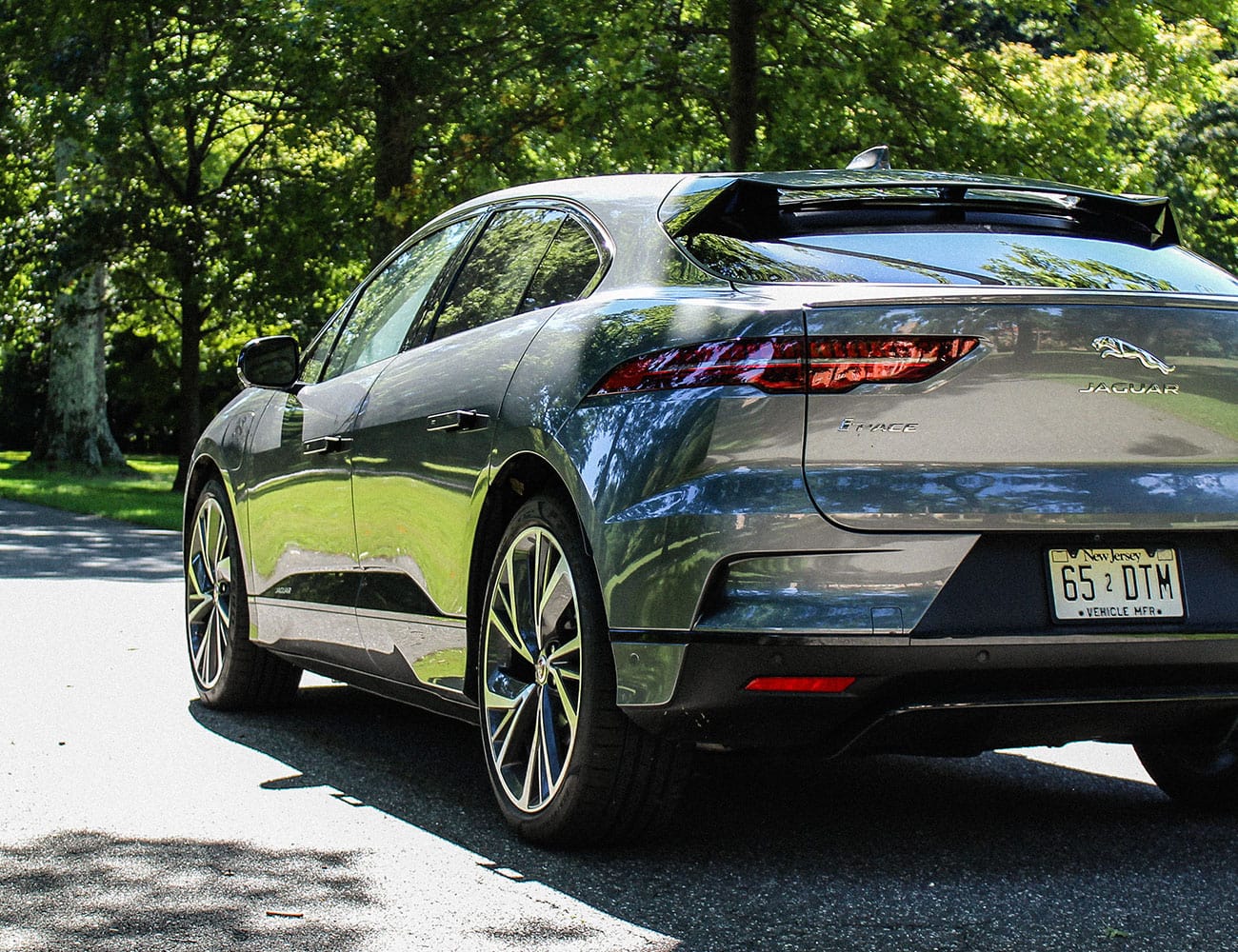
Jaguar I-Pace Review: Is It Better Than a Tesla Model X?

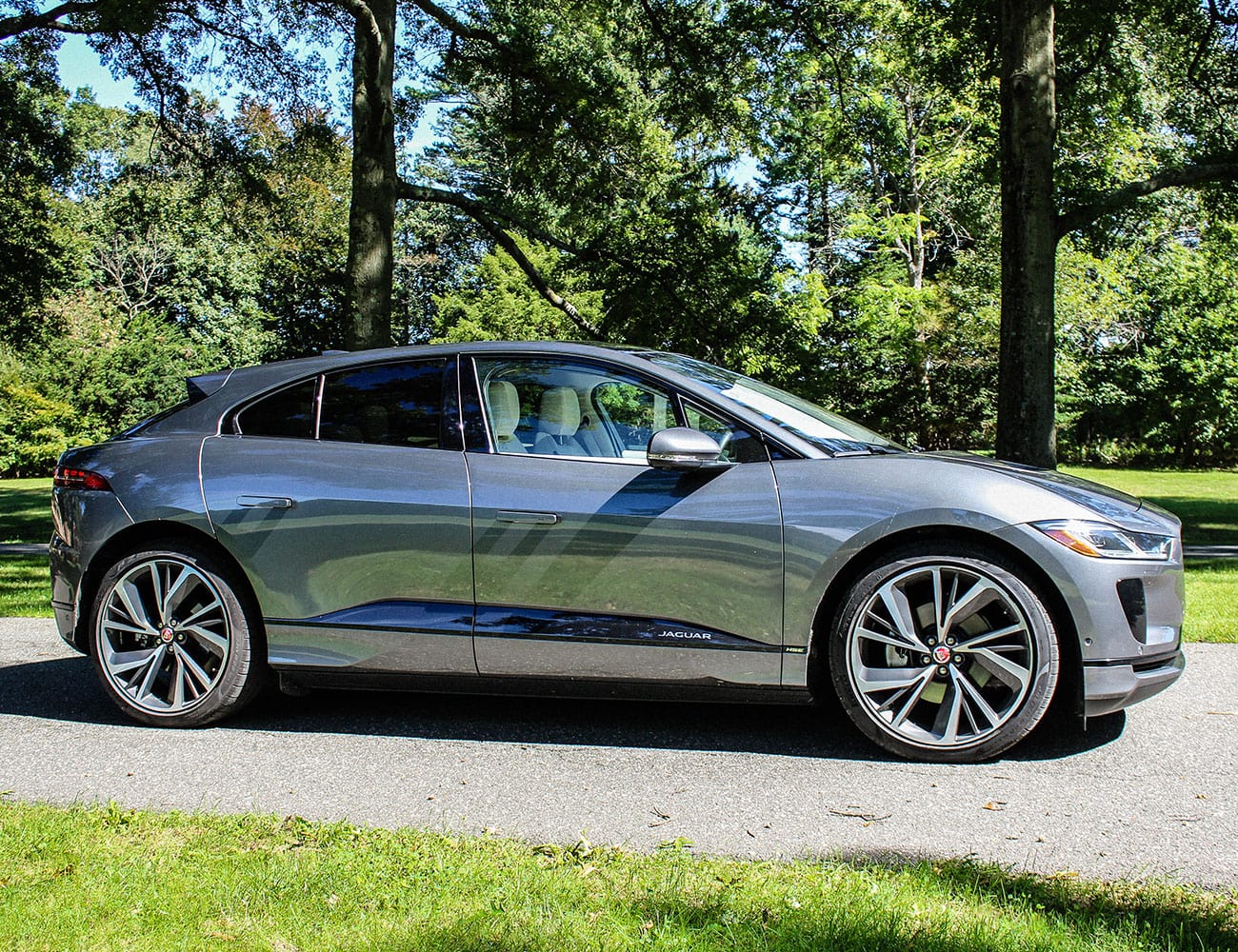
We’ve reached an intriguing time in the automobile’s timeline: SUVs have become the most sought out vehicle type and all-electric vehicles have begun to hit their stride. It’s hardly surprising, then, that the Tesla Model X ($83,000) was the talk of the town since the California-based company had previously established itself as a strong player in the EV market with the successful Model S sedan. Like Apple, Tesla’s products have very passionate critics on both ends of the spectrum, so the question for a long time has been who will its inevitable challengers be? It seems that Jaguar Land Rover has been the first to step up with the Jaguar I-Pace ($69,500).

While it’s a war on multiple fronts, it seems luxury automakers are going to be the ones who will produce the most threatening contenders. Audi, for instance, has just recently revealed its first all-electric SUV, the $75,000 E-Tron. This arrives in the middle of next year, but Jaguar’s I-Pace is already starting to make its way onto public roads. It isn’t a passive dipping of the toe into the segment just for the sake of it, either, as Jaguar has put its name behind many EV-promoting efforts such as fielding its own Formula E team. The I-Pace itself will even star in its own all-electric spec racing series.

Style

Superficially, the I-Pace immediately stands out against Teslas Model S and X in a few ways. First off, though not trying to compete with the Model X in terms of capacity, the five-seater I-Pace is smaller in person than I expected. What it lacks in stature though, it makes up for with elegant looks. One of my biggest gripes about Tesla vehicles is that their minimalist designs are perhaps too clean. Since most components of an internal combustion vehicle aren’t present, so there’s no need to design around them and Tesla has, in my mind, kept things too stark.

The I-Pace, on the other hand, has a great deal of Jaguar DNA flowing in its shape. Jaguar designer Ian Callum’s pen is strong here, and there’s a clear through-line between this car and his other works, like the Jaguar F-Pace, though I feel like there’s even a hint of Jaguar C-X75 in its overall form.

Same goes for the interior. Through the normally-hinged doors, the I-Pace looks like more thought has been put into making the interior a luxury space. Both the I-Pace and the Model X make use of the extra space left behind by unnecessary components, but the Tesla seems to make better use of it. Interestingly, though, both cars have been designed with incredible forward visibility that’s complemented with either a massive panoramic sunroof or a continuous, upward-flowing windshield. Both, however, have poor and near-useless rear visibility.

Technology

In comparison to Jaguar’s dual touchscreen infotainment system, the Model X pulls very far ahead.

The Tesla features what is essentially one huge 17-inch tablet, which sounds incredibly distracting but is, in fact, responsive, customizable and easy to use. It utilizes the same mobile-device gestures we’ve grown accustomed to. It can split itself visually to display functions like maps, media and system readouts – I ended up using the lower half as a full-time backup camera.

In the I-Pace, the dual-screen interface is a hindrance to the entire experience. A carryover from other JLR vehicles like the Range Rover SVR, the infotainment system is laggy, frustrating to use on the fly and unintuitive, and ends up being much more distracting than Tesla’s.

Tesla’s tech advantage only gets stronger from there, since the company benefits from a start-up-like approach to the industry. Beyond the commonly known autonomous Autopilot feature, there are many features in the Model X that should’ve been sorted out ages ago by a traditional automaker. Automatic parallel parking systems in other cars are multi-step gimmicks buried in menus, but in the Tesla, the process is seamless: when I began to park, the Model X recognized what I was doing and offered to take over. To the I-Pace’s credit, it has a host of very good safety features like lane-keep assist, adaptive cruise control and a series of cameras, but they’re not special in their own right. It’s more carryover tech and it can’t compare to what Tesla offers.

Performance

As far as battery capacity, the Jaguar I-Pace lauds a 90kh pack and 234 miles of range. Tesla’s Model X has a range of 237 to 295 miles depending on which battery – 75 kWh or 100 kWh – is chosen. Both are more than enough for daily commutes and heavy driving. Both have high-speed charging capabilities and are susceptible to a drop in range when certain systems like climate control are in play. Tesla famously boasts its own proprietary charging network, which the Jaguar cannot utilize.

The I-Pace, charges at my house, though, and that makes all the difference. I am not in the tax bracket to permanently bring home an I-Pace or Tesla. (Though both benefit from significant tax credits, lowering their overall price by thousands.) I live in an old house with standard 120-volt outlets. To those looking to adopt a luxury EV into their lives, the addition of a level 2, 240-volt charging station to the garage isn’t a deal-breaker.

I have to work with what I have, and the Model X was incompatible with my wiring. I knew it would be a slow drip, but I figured that, like my time with the Chevrolet Bolt (another thorn in Tesla’s side), overnight charging would make up a large chunk of the miles driven that day, if not replenish them all. This wasn’t the case – I had to plot out trips to not-really-nearby Tesla charging stations, which did nothing for my inherent range anxiety. Like the Bolt, though, the Jaguar slowly but surely filled its battery up throughout the evening, and having that ability takes a lot of pressure off.

So Jaguar I-Pace buyers don’t necessarily need to go through the hassle of installing a charging station into their house; it’s just a convenient option. It’s more versatile in this regard. I could very well upgrade my garage to suit both cars, but if I’m out in the wild with the I-Pace – at a friend’s house, at a business, or stuck in a rural town – there are ways to mitigate my dire situation if I’m caught short on juice.

Performance

It should be clear that Jaguar knows how to make a performance car. The years of experience JLR has garnered making cars that elevate the driver experience above all else comes through in the I-Pace. Powered by two electric motors ginning up 394 horsepower, the I-Pace handles all that electric grunt by utilizing a single-speed automatic and an all-wheel-drive platform. Torque-vectoring, an electronic air suspension with variable ride height and dynamic driving modes can supply sporty driving, comfortable cruising and even out lousy terrain.

The result is superb if a little jarring handling through corners. Power comes and goes instantaneously, so small driving style adjustments are needed, but you get used to it. Lifting off the throttle and “engine braking” at a corner entrance, for example, feels natural with practice. Since the floor is the battery, the center of gravity in both vehicles is low, but I had more confidence in utilizing it in the I-Pace than the Tesla due to how the rest of its handling characteristics behaved.

Torque delivery is instantaneous; there’s no doubt in my mind that the I-Pace can launch from 0 to 60 in 4.5 seconds as Jaguar claims. Still, I anticipated even stronger acceleration. This is perhaps because the Tesla P100D has brain-scrambling acceleration. which has spoiled me.

Fundamentally, both cars’ strengths and weaknesses originate in how their respective companies operate. JLR’s experience in traditional automaking has made the I-Pace a well designed, stylish car that has broad appeal, regardless of its all-electric underpinnings. It is, however, weighed down by the usual infotainment technology that has consistently felt outpaced by other basic consumer electronics. Tesla, however, approaches this area from a fresh perspective, making it just as important and well executed as the rest of the car. But Tesla’s using the same tech everyone else is, so there’s no reason others can’t do as well.

Is the I-Pace a “Tesla Killer”? Short answer is no, but what it threatens to do is bring normalcy to a niche segment. Tesla can dominate in this niche, but out in the open, larger traditional automakers can make good cars that people feel natural shopping for, buying a car they like without the burden of feeling like they’re being handed the torch of innovation to carry forward. It’s not a movement to them, it’s consumerism.

Some cynics will point at the news and say Tesla itself will be the mythic Tesla Killer, and that’s a stigma the Jaguar I-Pace is probably better without. It’s a cool-looking, sporty, all-electric SUV that may not have all the tricks the Model X comes packed with, but it also doesn’t come with any of the drama.

East Coast Defender’s Latest Resto-Mod Is this Gorgeous Range Rover Classic

Departing from their namesake Land Rover Defender build projects, East Coast Defender recently began offering completely restored and customized Range Rover Classics. The company just revealed its second RRC, which sports the appropriate moniker “Project Red Rover.” The build features a 6.2-liter GM V8 mated to a six-speed automatic. Its exterior styling is smoothed and streamlined and rides on simple but gnarly black five-spoke rims. The vehicle’s new name refers to its Carmen Red paint job, which uses a color offered on the original Range Rover Classic. Based on the first RRC build by ECD, which is specced similarly to Project Red Rover and cost its owner ~$180,000, it’s likely that this build cost its owner somewhere just south of $200,000 as well.

Originally offered from 1970 to 1996, the Classic was the Range Rover division’s first official vehicle. Powered by a variety of V8s and turbo-diesel inline-four engines with manual and automatic transmission offerings, the Classic began its lifecycle as a two-door (with rear liftgate); the four-door model was added in 1981. in the North American market, the first Range Rover was a rare sight, as it was hampered by regulations and financial problems, but those that came to these shores were largely grey market vehicles. In 1987, a revised Range Rover featuring fuel injection finally made it stateside in an official capacity. The ur-SUV was an instant smash hit for overlanding enthusiasts and luxury aficionados alike, and its cult status is now stronger than ever. And somehow, East Coast Defender’s builds improve on the old truck even further.

[embedded content]

How to Drift a Car Around A Tight Turn

One of the most famous tricks in motorsport is the Scandinavian Flick (or the Pendulum Turn). Rally drivers have been using it for decades to help get their cars around turns in conditions with little to no grip. The technique leverages the car’s ability to make a negative (no grip) a positive (speed). As a convenient byproduct, if you pull the flick off, you look like an absolute hero.

Of course, there’s more to the maneuver than just chucking the car into a turn and spinning the wheels. To break down how to properly execute a Scandinavian Flick, we spoke to Wyatt Knox, an instructor at Team O’Neil Rally School – a guy who does this maneuver on a daily basis.

Scandinavian-Flick-Step-By-Step-Gear-Patrol-2

Illustration by Henry Phillips

1Lift, turn, brake. This is where you counterintuitively turn the car in the opposite direction of the turn. By letting off the accelerator, turning the wheel and applying the brakes, you’re putting weight over the front tires. This motion gives you grip in the front and swings the rear end out. Think of it as winding up before a pitch.

2Turn back, release the brake and blip the throttle. This shifts weight back to the rear of the car, giving those wheels grip. With the front wheels pointed into the turn, the rear of the car will pivot and rotate back the other way. Make sure you have your eyes on the apex because that’s where you want to go.

3Countersteer as much as you need. Depending on the road surface, the back end can rotate at different speeds, so be prepared to adapt. With the wheels pointed at the apex, you should already be looking at your exit. The car will go where your eyes are looking.

4Be patient. Wait for the car to tell you what it’s doing. Modulating the throttle and brakes will keep the car under control as you come around the apex, but it’s possible that you won’t need to touch either pedal and you can just let the car do its thing.

5Exit smooth. The hardest part is behind you, so there’s no sense in rushing to get back on the gas and screwing it all up. As you straighten the car out, slowly lean into the accelerator and feel for the grip in the road. Now that you’re out of the turn and pointed down the road, get back on the gas and enjoy the adrenaline buzz.

About Our Expert

Wyatt-Gear-Patrol

Wyatt Knox has been the chief instructor at Team O’Neil Rally School for the better part of the past decade. Since he started rallying at the age of 21, he has rarely found himself finishing a rally off the podium. He’s the 2011 2WD National Rally Champion and has racked up victories at legendary rallies like the Sherwood Forest Eastern Regional and 100 Acre Wood Rally.

Road Trip Gifts: For Those Who Love the Open Road

Committing to a road trip — cross-country or just zig-zagging your way across a map for a couple of days — is a unique beast as far as traveling ventures go. It’s not like sitting on a plane for a few hours or riding a train through the country. A real road trip, whether solo or with companions takes planning, be it for fuel stops, on-the-go in-car meals, music, entertainment or (knock on wood) accidents and mishaps. If you don’t do it right, you’re asking for trouble.

The next time the road-tripper in your life decides to hit the open road, make sure it’s not on a wing and a prayer. Give them the tools they need to make the next road trip the best one yet.

National Geographic Guide to Scenic Highways and Byways

If you’re looking to provide the ultimate inspiration for an on-road adventure, the ‘National Geographic Guide to Scenic Highways and Byways’ is a perfect place to start. The goal is to skip the boring, featureless, never-ending highways and instead discover the 300 best drives in the country.

Oak Street Bootmakers Brush Brown Waxed Canvas Utility Tote

Long road trips don’t just take a toll on the driver. What you carry necessary in-cabin cargo matters too. The Oak Street Bootmakers Brush Brown Waxed Canvas Utility Tote is built to last – not to mention hold on to its style for its entire lifetime.

Rumpl Original Puffy Throw Blanket

For those cold nights under the stars or, you know, sprawled across the back seat because it’s raining, the Rumpl The Original Puffy Throw Blanket has road trippers, well, covered. It’s easily packable and water and stain resistant. Crucially, the insulation is compressable so it takes up little to no space.

Spotify Premium 3-Month Trial

Traveling with a companion on long road trips means most of the DJing responoibility rests on their shoulders. Make that job easier: Spotify Premium is super cheap for a three-month trial. All the music any driver and passenger could hope to endlessly argue over is right there at their finger tips.

KRAVE Jerky Variety Pack

When it comes to road trip essentials, not many food items rank higher than jerky. On the open road, it can even be considered acceptable as breakfast lunch and dinner. Luckily, the Krave Varity pack comes in a multitude of flavors so you can at least discern those mals from each other on those cross country drives.

Zojirushi Stainless Steel Insulated Mug, 20-Ounce

Unless your road tripper has a brand-new luxury car fitted with a fancy refrigorator in the arm rerst or heated cup holders, their coffee will cool and the ice in their soft drink will melt. The easiest solution — aside from buying them a new car — is getting a Zojirushi Stainless Steel Mug, which can keep beverages hot or cold for hours on end.

Yeti Hopper Flip 12

Some of the best road trips mean heading off-road and off the grid. When that’s the case, a proven storage unit is necessary. The Yeti Hopper Flip 12 is a soft, cubed-shaped cooler build to go anywhere. It’ll keep whatever is inside colder for longer.

NOCO Genius Boost Plus GB40 1000 Amp 12V UltraSafe Lithium Jump Starter

Mistakes happen on road trips, both big and small. Sometimes you take a wrong turn and go miles out of the way. Other times you leave the dome light on while you go to grab a bite to eat and the battery dies. For the former, turning around and heading back is the most simple solution. For the latter, however, you can pack the NOCO Genius Boost Plus and not even have to worry about asking for a jump. The NOCO is rated at 1,000 Amps or up to 20 jump starts on a single charge and can also charge smartphones and tablets like any other external battery.

Audible Audiobook Subscription Plan

Using music and podcasts to fill the silence on a road trip isn’t foreveryone. One of the best alternatives is access to Audible. After a free 30-day trial, the monthly subscription allows for streaming of one audiobook and two Audible originals, the brand’s own productions.

High Road TrashStash Hanging Car Trash Bag

Some people can let their cars get too messy and let garbage accumulate in the footwell, side pockets or under the seat. The High Road TrashStash Hanging Car Trash Bag is a move in the right direction. It’s not the masssive step-to-open trash can you have in your kitchen but this is easily the automotive equivalent.

Dash App/OBD-II Performance Tracker

The days of trying to guess what a check engine light means are over. OBD-II Performance Tracker plugs right into a car’s OBD outlet and doesn’t just transmit regular diagnostics, it also sends data right to the app on the your phone letting you know how to save fuel, when maintainance is needed and helps to save money on resale, sending remote alerts all in real time.

Viair Heavy Duty Portable Compressor

It’s one thing to fix a punctured tire on the side of the road, but it’s not like an inflatable pool toy you can blow up with lung power — an air compressor is necessary. The smart move is to pack one as compact as the Viair 00073 70P Heavy Duty Portable Compressor. It stows away in a bag not much bigger than a classic lunch pail, runs off your car’s electricity and can pump up to 100psi. The Viair is one of those things everyone should keep in the car, road trip or not.

Streamlight 88062 ProTac Professional Tactical Flashlight

The thing about flashlights is that you don’t always need one, but you’d better hope to have one when you do. It seems fairly obvious, but how many times have we all found ourselves crawling around in the dark, looking for change or eyeglasses dropped under the car? Solution: Streamlight 88062 ProTac Professional Tactical Flashlight. It’s compact EDC-sized, waterproof, impact resistant and can clip to your pocket — so it’s one less thing you have to go searching for. Plus, we named it one of the best EDC flashlights avbailable.

Gerber Center-Drive Multi-Tool

While it’s always smart to have a fully-stocked tool chest, bringing 100-plus pounds of wrenches and drivers on a road trip isn’t the most practical thing to do. But, give your giftee a fighting chance with more manageable jobs by arming them with a Gerber Center-Drive Multi-Tool, a 12-piece standard which includes, among other things, a center-axis screwdriver that provides torque and grip like a regular driver.

Tod’s Gommino Full-Grain Nubuck Driving Shoes

Just like running, hiking and formal occasions, driving is always more enjoyable with the proper footwear. The best part of Tod’s Gommino Driving Shoes? They’re full-grain nubuck leather and can double as more formal footwear if need be. If your point ‘B’ is quite a ways away and you need to look as dapper as possible when you get there, the Gommino leather driving loafers at least have your feet covered.

Best Made Co SWS CORDURA Field Case

Whether it’s insurance, registration, road notes or the road map, keep it safe in something you know will last. The Best Made Co Field Case made from tough as nails cordura is exactly what you’re looking for.

Outlier Ultrafine Merino Shirt

One of the more obvious tips for a long road trip would be to dress comfortably. Jeans and t-shirts work well for a grocery run, but spend an entire day getting in and out of a car to eat and refuel and you’ll soon find there are far better choices. The Outlier Ultrafine Merino Shirt is made with Mackenzie 17.5 micron Merino fibers, meaning it’s some of the finest, softest and lightest fabric on the market.

Wavian Red 1.3 Gallon Gas Can

Not all road trips keep you within spitting distance of gas stations — some of the best ones don’t. For drivers going the distance and tempting the remaining fumes left in the tank, it’s always good to have a spare can of fuel onboard. And if the 1.3-gallon Wavian can is good enough to be standard issue for NATO forces, you can bet it’ll handle the odd road trip.

District Vision Keiichi Standard Gray District Sky Sunglasses

Whether they’re heading west chasing the sun to the horizon or that fireball is lighting the easterly morning road, drivers need eyewear to battle back the rays. District Sky G15 is a shatterproof polycarbonate lens with a 15 percent light transmission and maximum sun protection.

Gear Patrol Magazine

Perfect for whoever is manning the back seat. Inside its 200-plus pages, we explore what it takes to turn an office chair into a thing of beauty, an accidental invention into a culinary essential and a 1970s French automobile into one of the most evocative cars of the last century. Plus much more.

Note: Purchasing products through our links may earn us a portion of the sale, which supports our editorial team’s mission. Learn more here.

The 11 Best Winter and Snow Tires You Can Buy

Updated for the 2018/2019 winter season: This post has been updated to include the best new winter tires for the 2018/2019 winter season. Links and specs have also been updated.


Every pro driver will tell you a car is only as good as its tires. You can go out of your way to get a car with the best handling and the most intelligent AWD system on the market, but if you can’t put the power down with proper traction, all those millions of dollars in R&D are worth precisely nil.

Winter tires are impressive feats of engineering: water, slush, snow and salt are controlled and pumped out from underneath via intricate channels between treads while the soft rubber composition molds to and grips the road surface, despite low temperatures. That’s why winter tires look so much more extreme in design than summer or all-season tires. Where a summer tire’s near-slick surface would simply aquaplane, the tread on a winter tire shovels and pumps water out of the way while gripping firmly to keep you going in the right direction. They are the right tools for the job; for cars that tackle winter weather, they are the most necessary upgrade.

Buying Guide: The 11 Best Winter Tires of 2018

The winter tire market is a vast one, and picking the right tires for your vehicle can seem to be the hardest part — but it can actually be quite simple. Woody Rogers, Tire Information Specialist at The Tire Rack, explains: “Think about the worst conditions you’ll encounter and how often that will happen. Prioritize your needs and wants, including snow and ice traction, clear road handling and driving fun.” There’s no need to spend hundreds of dollars on super high-performance tires if all you’re doing is commuting in the family sedan or truck. Likewise, if you’re looking to do winter autocross or you have a high horsepower sports car, specially-designed performance rubber may be what you want.

Standard Tires

These are the tires most buyers need: good for commuting, driving around town and sticking to paved and plowed roads.

Most Environmentally Friendly: Yokohama BluEarth Winter V905
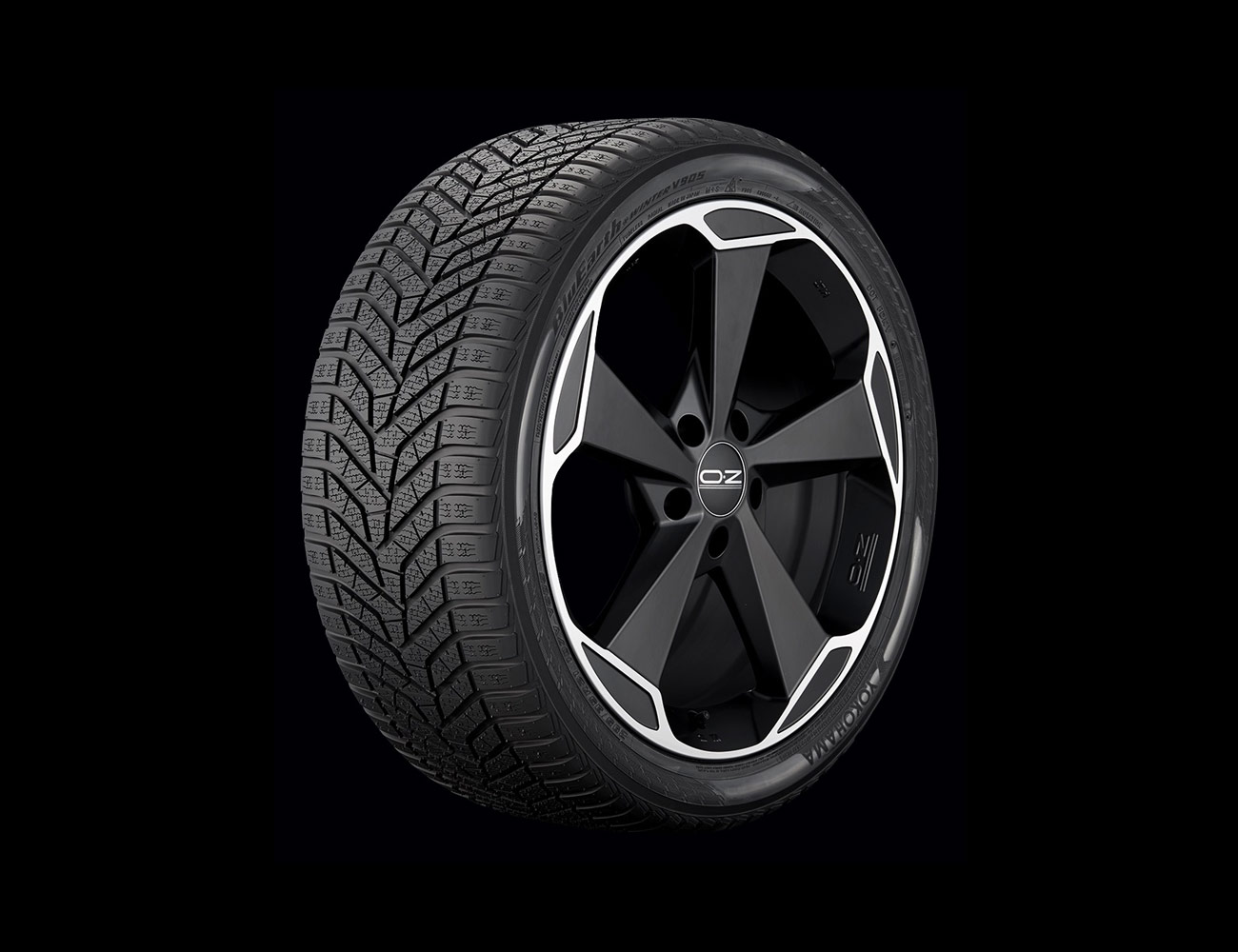
Not only does the Yokohama BluEarth Winter V905 fall closer to the perfromance end of the spectrum, but its high silica rubber and orange oil infused compund make it environmentally responsible. The surface tread pattern works to help funnel water and slush away in wet conditions. But the tread you can’t see — the tread in between the blocks — works to grip snow and also maintain its block rigidity despite a softer rubber makeup.

Three Peak Mountain Snow-Flake Cerified: Yes

Most Versatile Line of Tires: Goodyear Ultra Grip
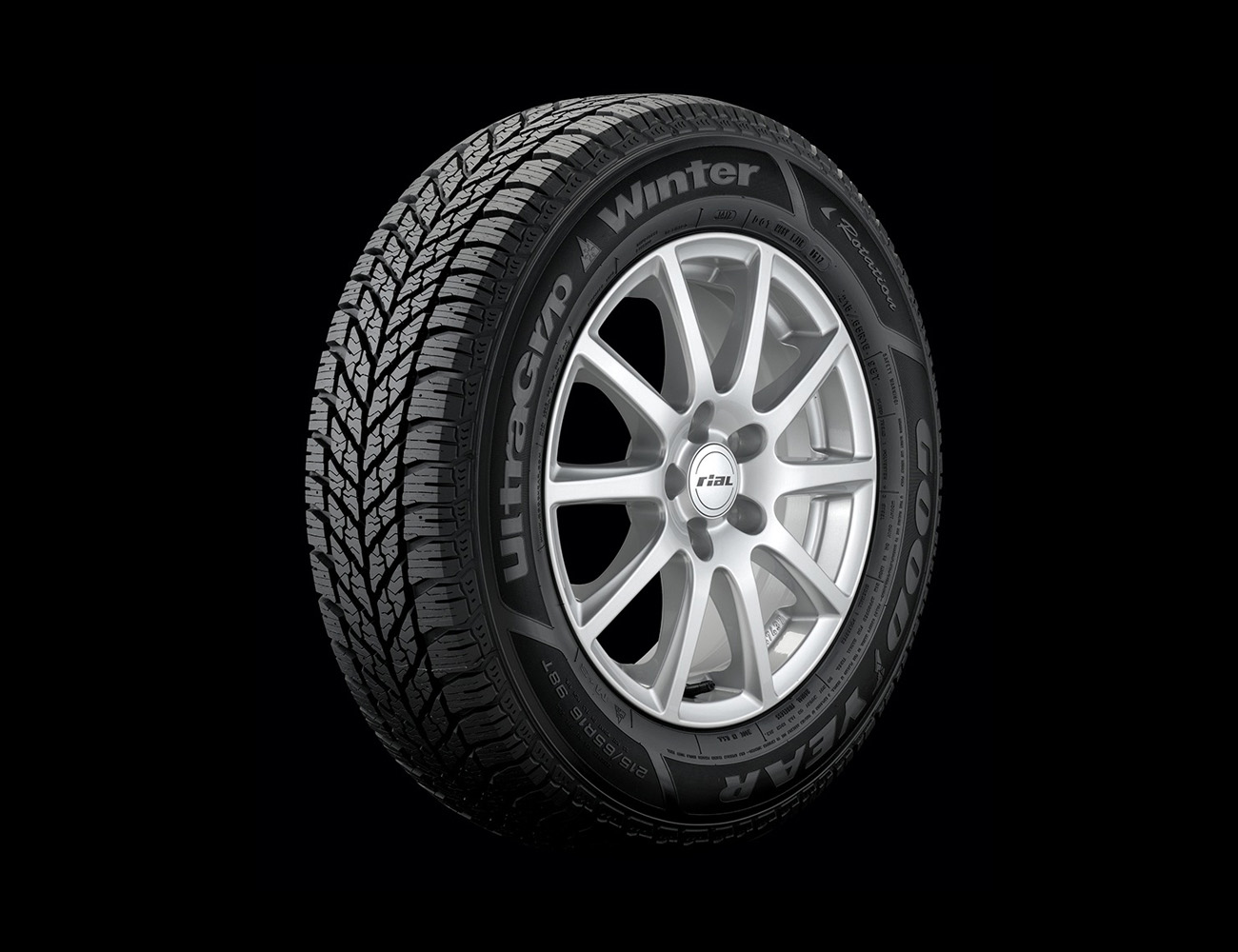
Where most tire are developed for one type of car, the Goodyear Ultra Grip’s design allows it to be put to use on anything from coupes and sedans to crossovers, minivans and SUVS. If you’re looking for dependable winter performance and have multiple, varying sized cars in the garage, the Goodyear Ultra Grip line is a one stop shop.

Three Peak Mountain Snow-Flake Cerified: Yes

Best High-Mileage Tire: Pirelli Cinturato Winter
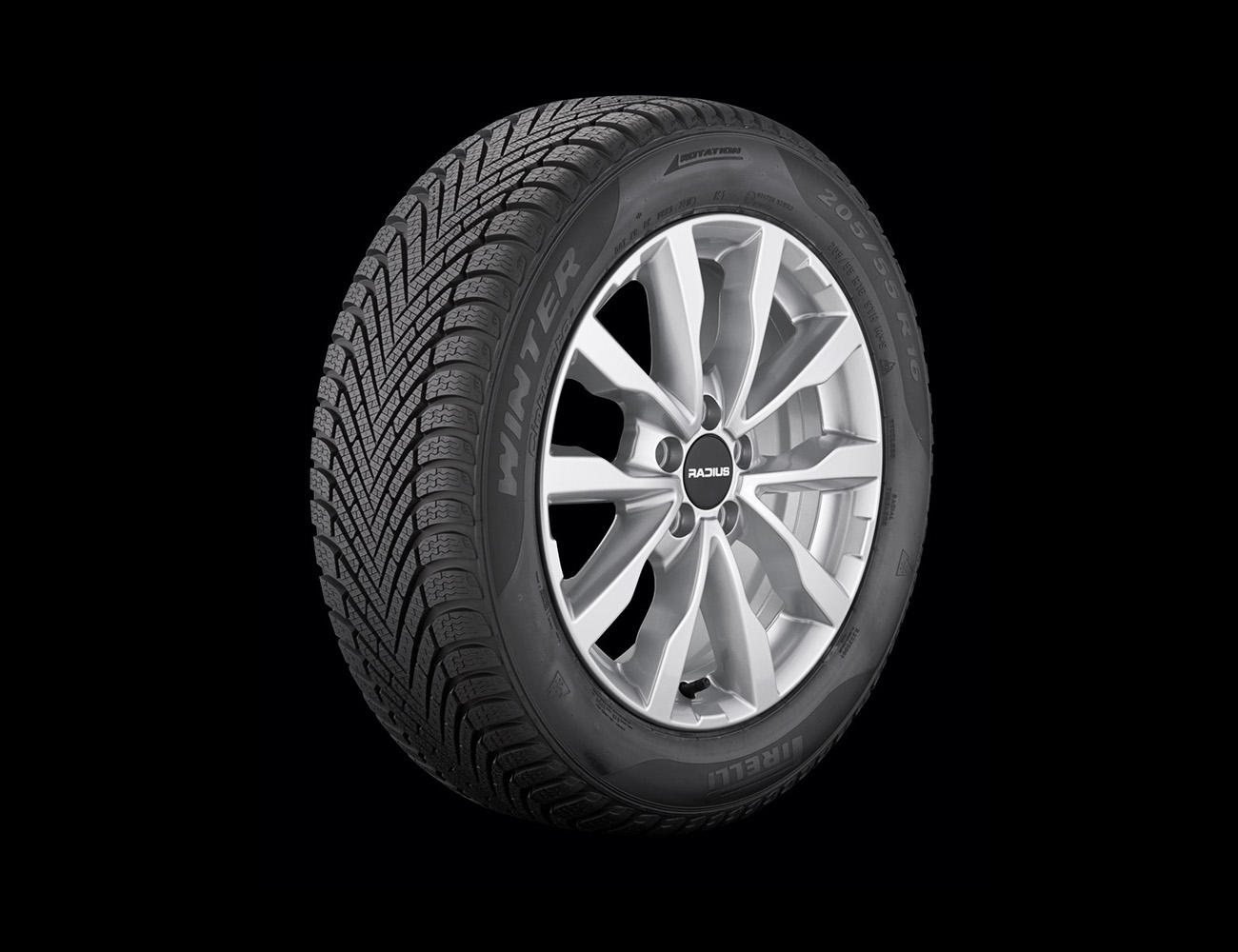
The Cinturato was designed with European winter driving in mind. That is to say, the Cinturato was built specifically for coupes and sedans and to handle a wide array of environmental changes over a greater chunk of the year. The steeply angled tread pattern helps evacuate water from underneath the tire, allowing for stabilty at highway speeds on clear or wet roads. The density of siping on each tread block greatly reduces the risk of hydroplaning, and, at the same time claws back grip on snow and ice.

Three Peak Mountain Snow-Flake Cerified: Yes

Best All-Around Winter Tire: Bridgestone Blizzak WS80
When it comes to balancing price and performance, Blizzaks are legendary. The unique NanoPro-Tech Multicell hydrophilic compound wicks water off the road while microscopic bite particles, blended into the rubber dig into icy surfaces.

Three Peak Mountain Snow-Flake Cerified: Yes

Truck Tires

Trucks are, generally, designed to optimize traction, and will do well with more aggressive, specifically designed rubber.

Best Shoulder (Transitioning) Season Truck Tire: Michelin Latitude X-Ice Xi2
Michelin’s X-tra-Ice silica-based winter tread rubber compound gives the X-Ice Xi2 a larger temperature window to work in. The compound remains stiff at higher temperatures for better traction in dry or wet conditions but is still soft enough at low temperatures to give you traction on snow and ice, regardless if you’re driving a compact crossover or light duty truck.

Three Peak Mountain Snow-Flake Cerified: Yes

Best All-Around Truck Tire: Bridgestone Blizzak DM-V2
Much like the standard Blizzak is a fantastic all-around tire for coupes and sedans, the DM-V2 carries that reputation over into the truck universe. The same hydrophilic, multi-cell compound and aggressive siping design pumps away slush and holds on to snow for more grip on ice, but with a size designed for pickups, crossovers and SUVS.

Three Peak Mountain Snow-Flake Cerified: Yes

Best Performance Truck Tire: Nokian Hakkapeliitta 9
Where most studdable winter tires actually carry a design, more akin to an all-season with stud holes throughout the tread pattern, the Hakkapeliitta 9 is designed as a grear winter tire, first and foremost. Perfromance on snow and ice is its main objective, the option to place studs is merely a plus should you find yourself in winter conditions that are really getting out of hand.

Three Peak Mountain Snow-Flake Cerified: Yes

Best Budget Truck Tire: Firestone Winterforce UV
When it comes tires in general, it’s always worth spending a little extra since the tires are the only thing touching the road and are therefore the most important aspect when grip is the topic of conversation. But it is understandable to say buying a whole new set of tires just to use for a few months out of the year is a costly endeavor. So if you are aiming for the economical route, Firestone Winterforce UVs are your best bet.

Three Peak Mountain Snow-Flake Cerified: Yes

Pure Perfromance Tires

Sports cars can definitely tackle winter conditions, so long as your skills are sharp and you take care to clean salt off your riade as often as possible.

Best Winter Performance Tire: Michelin Pilot Alpin PA4
Just because the skies aren’t blue and road conditions aren’t ideal for high-horsepower performance cars, it doesn’t mean your sports car has to stay hidden all winter. The Alpin PA4 is the winter equivalent of Michelin’s remarkable Sport Cup 2 summer tires. They’re designed to give high-end sports cars the grip they need even when the temperatures dip and the roads are miserable.

Three Peak Mountain Snow-Flake Cerified: Yes

Best Budget Performance Tire: Falken Espia EPZ II
If you’re looking for pure performance but don’t see the need to spend too much money, the Falken Espia EPZ II is your tire. The tread design and rubber compound mimic the higher-teir perfromance tires well, but doesn’t offer as much grip. The Espia EPZ II still offers great winter perfromance, just at the fraction of the price.

Three Peak Mountain Snow-Flake Cerified: Yes

Best Perfromance SUV Tire: Yokohama iceGuard iG51V
Now that manufacturers are building more and more street performance-oriented SUVs and crossovers — and the public are buying them up — there’s more demand for a specialized winter tire that can keep up. The Yokohama iceGuard iG51V brings together the best aspects of performance winter tires and also meets demands an SUV or Truck asks of its tires.

Three Peak Mountain Snow-Flake Cerified: Yes

Winter Tire Buying Advice

Understanding Winter Tire Design

All tires are not created equal, and the same goes for the winter tires subset. The most basic categories winter tires fall into are Studless Ice and Snow, Studdable and Performance. From there, things get more specific depending on vehicle type: passenger cars, trucks and SUVs.

Studless tires have incredibly complex tread design, specifically meant to pump standing water away from the tread. In addition, those designs also grip and hold onto packable snow and ice with super soft rubber and intricate, multi-layered tread-block patterns in order to — counterintuitively, perhaps — provide more traction.

Studdable tires are, compared to their studless cousins, less extreme in design with regards to the tread but are outfitted to accept metal studs. Studdable tires greatly improve traction on ice, but as Rogers points out “they come with a trade-off in the form of noisy clear-road driving, damage to bare road surfaces and are of no benefit when driving on snow. Many states restrict or ban the use of studded tires.” So quite often studdable tires never see their full potential.

Performance winter tires focus more on clear road handling than on actual snow and ice. Even though you may never see snow or ice, winter tires are still recommended for cold weather and low temperatures because of their softer rubber compound which grips the road surface despite the much lower temperatures. This focus lets the driver get more use out of their sports car’s performance.

Terms to Know:
Tread blocks – Tread blocks refer to the larger sections of rubber that give the tire’s pattern its overall design. Depending on how they are arranged and angled can affect a tires efficiency to pump away water and grip road surfaces.
Siping – Invented by John F. Sipe in 1923, siping is the process of cutting thin grooves across a tires tread blocks to increase grip in wet and wintery conditions. The tactic makes the rubber tread blocks more pliable and flexible and better at gripping snow, cold asphalt and pumping away water mitigating hydroplaning. (You’ve also seen siping on the bottom of Sperry boat shoes.)
Compound – The compound of the tire refers to the mixture of ingredients in the rubber of the tire itself. Modern winter tires have a higher silica content than say an all-season or summer tire because it allows the winter tire to stay softer at lower temperatures, stay malleable and grip the road better.

Pro Tip: Look for the Three Peak Mountain Snowflake (3PMSF) symbol. The 3PMSF symbol confirms the tire meets a minimum requirement for acceleration and traction on snow in conditions considered severe by the weather service. All dedicated winter tires will have the symbol. But be aware that a small but growing number of all-season tires also have this mark.

Winter Driving Tips

With large portions of the country soon to be blanketed in snow, you might find it challenging to get to work or even step out to get groceries. Even with a well-maintained road, appropriate tires and all-wheel-drive, you can still never be too careful about driving in snowy or icy conditions.

1. Look where you want to go. Instead of looking at what you don’t want to hit, look where you want to go. If you start to lose the control of your car, don’t look at oncoming traffic because your eyes and hands have a natural tendency to move in the same direction.

2. Don’t panic. In order to accomplish step 1, you have to keep your cool. Easier said than done? Probably, but it’s important. Prevent panic-inducing situations by driving smart, smooth and slowing down on the ice.

3. Allow time for the car to react. A lot of people don’t understand just how much the vehicle weighs; on slippery surfaces, it’s going to take a while for it to move around in response to your course corrections. The people who drive out of their means are the dudes always getting into accidents.

4. Let the vehicle find its way. If something happens, concentrate on relaxing your hands and moving them slowly, look where you want to go and let the vehicle find its way. The worst thing you can do if you’re coming around the corner and start to slide is slamming on the brakes to avoid obstacles or other vehicles; momentum is going to take you wherever it wants to take you.

The 10 Best SUVs Under $50,000
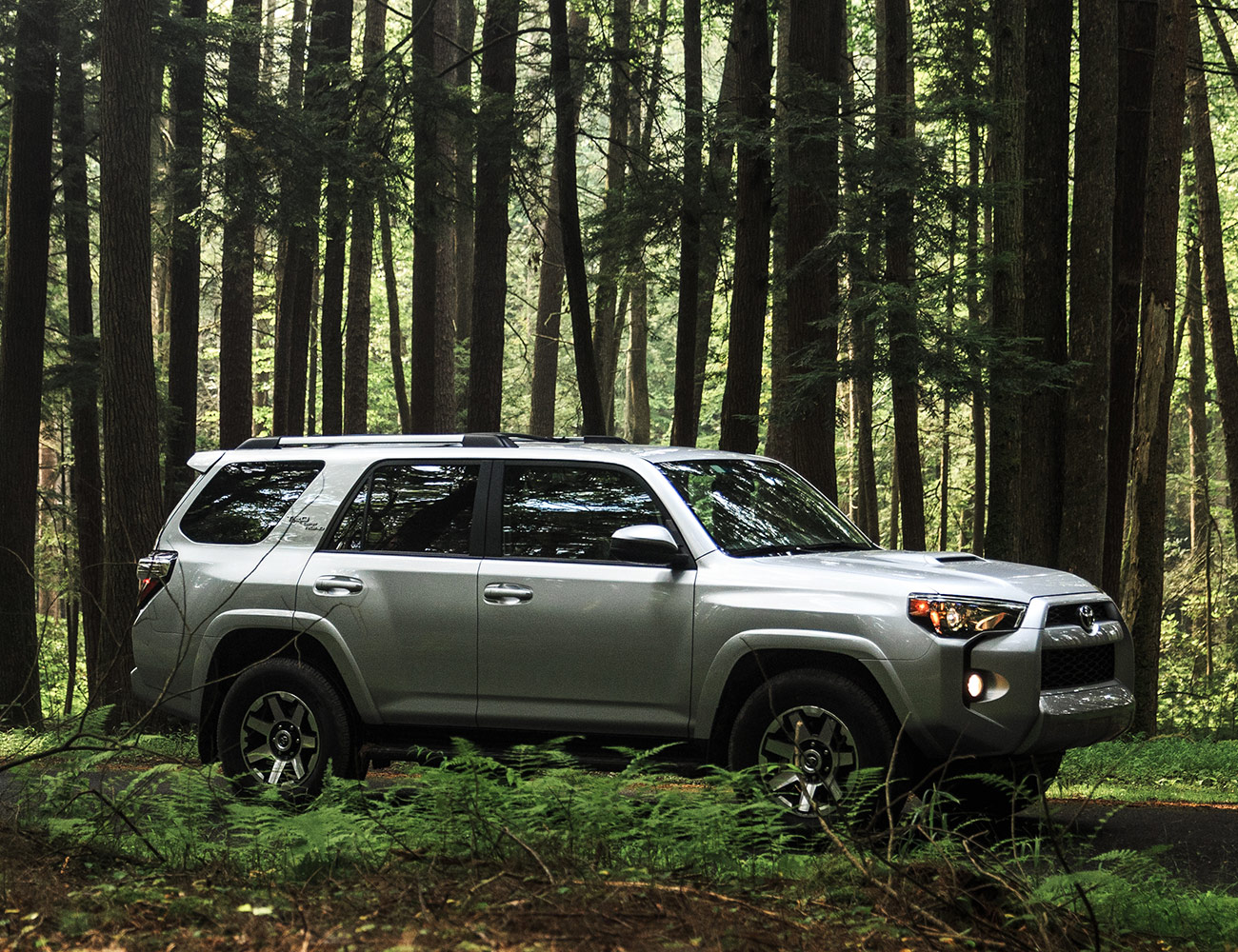
This list of the 10 best SUVs under $50,000 serves as a guide to one of the most popular consumer automobile segments and includes important terminology and recommendations for almost every driver.Read the Story