All posts in “Cars”

How to Navigate #Vanlife Problems with Your Partner

Lately I’ve been thinking about taking a road trip. Not the Jack Kerouac kind (too meandering, too many manic men, not enough food) or the Cormac McCarthy kind (too dystopic, too many bandits, not enough food). I’ve been thinking about the kind that starts with a hashtag and winds toward the edge of a canyon or the base of a mountain or a stand of redwoods. The kind where campfire dinners replace sushi delivery, and daily swims through crystalline lakes supplant the fluorescent-lit gym in an off-kilter Brooklyn brownstone. The kind of road trip where a destination isn’t really the point at all.

To my own cynical chagrin, I have become entranced with #vanlife. Un-ironic, #blessed and #grateful #vanlife.

It may have something to do with living in New York City shoeboxes for a decade, never having access to my own thermostat, craving closet space like a flittermouse craves darkness and listening to the children above me learn to walk, then run, then embark upon terrible twos with brassy zeal. Or the fact that I have spent much of my career living out of a suitcase. Maybe it goes back even further to the trauma of being shuffled in and out of something like 25 different houses before the age of 18. Home has always been somewhat of a moving target, often just out of reach. Now, it seems I have Stockholm syndrome for constant motion.
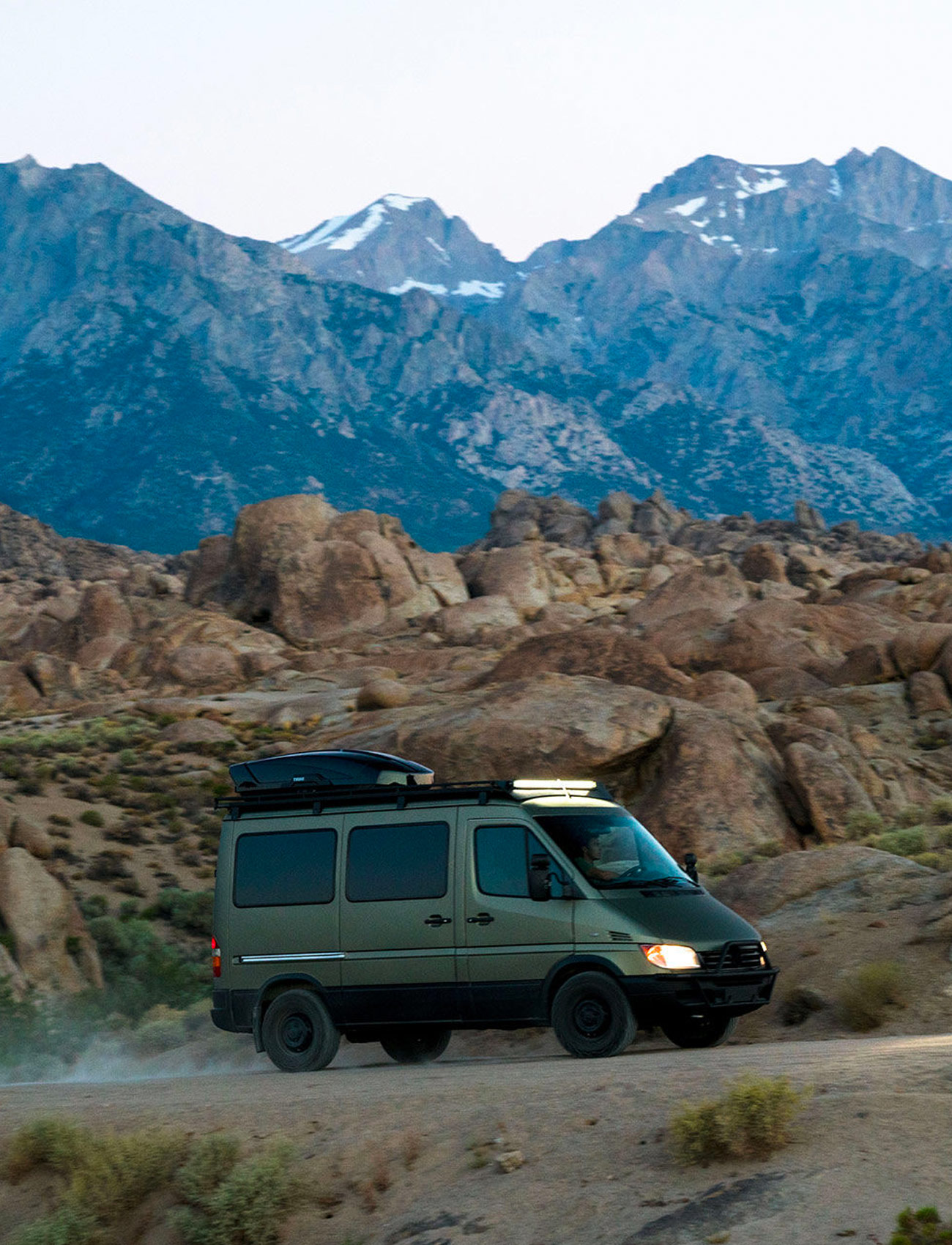
Chris Burkard’s Custom Mercedes-Benz Sprinter. Learn More

Problem: Objects in motion tend to stay in motion.
Solution: If I lived in a van I would never want for motion.

Every year around the same time, I get the itch to pack up and leave New York behind. To scatter my belonging across the sidewalk, list all of my furniture on Craigslist, bequeath a prolific booze collection to friends and neighbors. In the past, things have gotten tricky when I bring this up to my partner, Tony. Tony is easy-going, maybe the funniest person you or I have ever met and exceedingly curious. And yet somehow the concept of just picking up and going somewhere else eludes his ease and humor and curiosity. ‘We’re freelancers,’ goes my argument. ‘we can live anywhere we want.’ Should we go to L.A.? New Orleans? Do a year in Paris? A season in Barcelona? Inevitably, my suggestions are met with pleas to be logical. And yet, when I bring up #vanlife, inexplicably, Tony is enthusiastic.

Read our review of the 2019 Mercedes-Benz Sprinter van here.

His version includes a Mercedes-Benz Sprinter with a king size bed. He wants a space in which he can stand up (he’s a large man) and shower twice a day (a large, cleanly man). Mine is more like a converted Ford Transit with a stowaway sleeper that transforms into a writing desk. I need a shelf for books and a window perch for my cat. Thankfully, a Venn diagram presents itself: we both require a gourmet kitchen, and a reliable toilet. (We acknowledge we’re now in Airstream Touring Coach territory.)
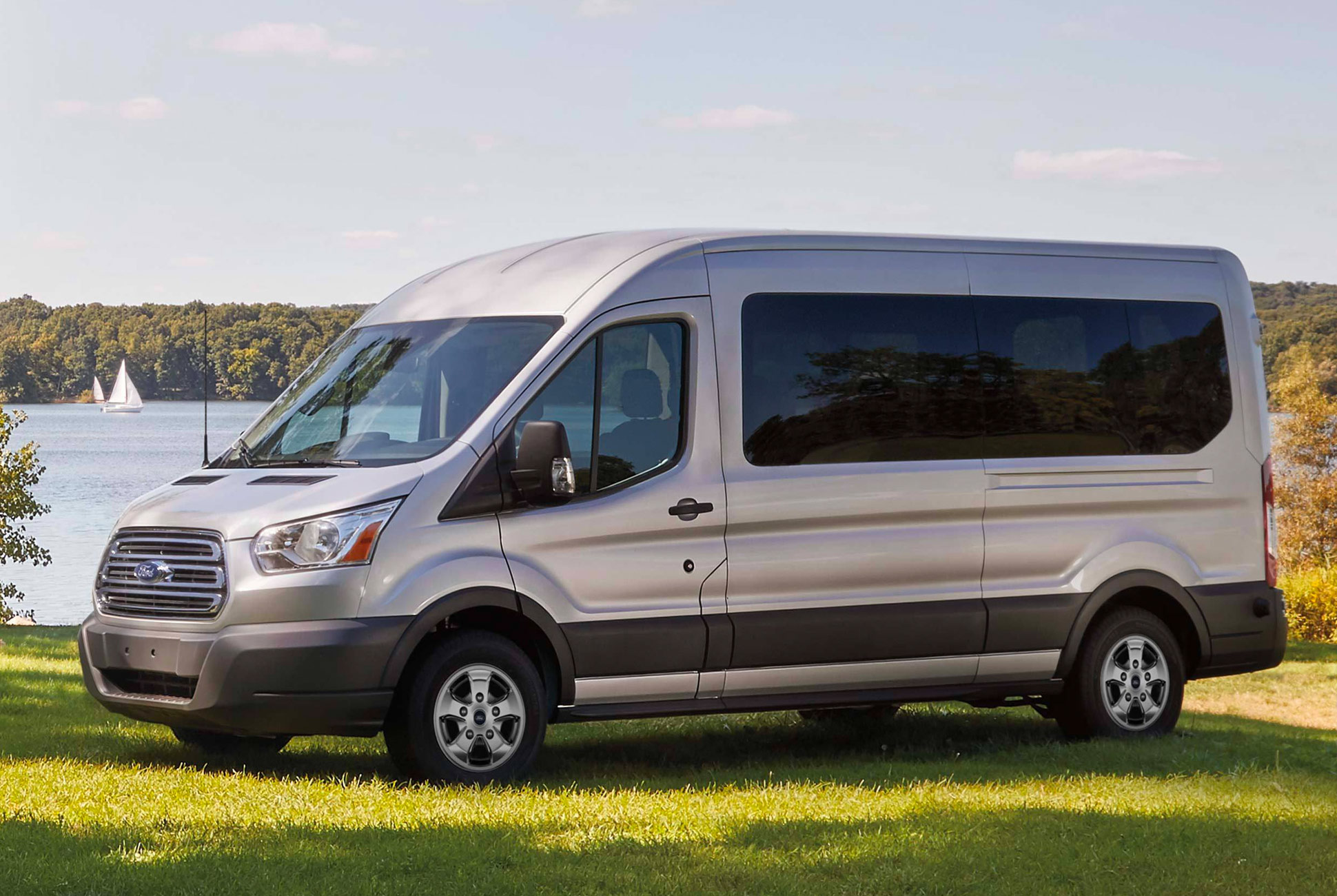
Photo: Ford

Theoretically speaking, this could work. But, inexorably, there will be issues. Using what evidence I have gathered over the course of our seven-year relationship, I’ve worked through several hypothetical complications that #vanlife with Tony might present.

Problem: Passenger responsibilities. Tony prefers to drive. I prefer to pretend Tony is my Uber driver.
Solution: Though I believe road trips are the most efficient way to work through a year’s worth of The New Yorker and a season of Book Reviews and a dozen novel galleys that are, by this point, already on shelves, Tony cannot bear when I do anything more than stare out the window. “Why aren’t you talking to me? Don’t you want to have a sing-along? Pay attention to me.” The pleading is relentless. Thus, I have begun stockpiling a library of epic-length audio books (George R.R. Martin, Harry Potter, Tolstoy, My Struggle, The Iliad, Ursula K. LeGuin’s entire oeuvre, Stephen King’s entire oeuvre) to distract from the fact that I am busy digesting 12 months of outdated media and literature.

Problem: Parking. Namely, parking a large recreational vehicle that contains your home and all of your belongings.
Solution: Did you know there’s a whole how-to-backup vehicles genre on YouTube? Everything from 18-wheelers to tractor-trailers. Some #vanlifers recommend using FaceTime to give your partner an extra set of eyes while performing this feat, and to avoid screaming matches in public parking lots. (We have yet to park anything larger than an SUV, but whenever we argue, Tony FaceTimes me from another room in our apartment to break the tension with a Cranberries serenade or an improvised dance routine, so we’re familiar with the concept.)

Problem: Allergies. Tony is allergic to many things, including bees, cats, pollen, and listening.
Solution: Back when we had that good health insurance, we stocked up on EpiPens. I have no problem stabbing him with a needle (in fact, sometimes I fantasize about it), but this doesn’t mitigate the possibility in which the EpiPen doesn’t work and Tony goes into anaphylactic shock. Dragging his 225-pound body down a mountain/across a grassy meadow/through a stand of redwoods and back to the van might prove challenging. In preparation, I have begun towing heavy things around at the gym and doing a lot of pull-ups. Also, I consistently beat Tony in leg wrestling, and everybody knows that half of heaving around large objects is in the legs.

Read about the perfect travel workout here.

Problem: I need a lot of space. Though I am half Tony’s size, I require a pretty wide physical and emotional buffer, whereas Tony prefers to be in a constant physical and emotional meld.
Solution: I haven’t totally solved this one yet, but I imagine I’ll get super into meditation. And noise-canceling headphones. And no-talking-until-noon policies. And sleeping in a camping hammock.

These Are the Best Noise-Canceling Headphones You Can Buy

Problem: Work. We were not bestowed with benevolent/wealthy dead relatives, and therefore, like good, hard-working Americans we sing for our suppers.
Solution: Tony sells and makes television and I’m a writer. Between us, we have the hustle and the skills to write, sell, and make a scripted pilot, a reality show, a documentary and a podcast about #vanlife detailing each and every gruesome problem-solution scenario imaginable. Tell me you wouldn’t want to watch a couple negotiate parking a 24-foot Airstream into an RV lot in Mississippi? Or root for a 5’1, 105-pound woman dragging a 6’1, 225-pound man down a mountain to save his life?

Photo: Eric Yang

Before I met Tony, my 1000-square foot apartment was populated with a bed and a lone, rather expensive sectional (the latter of whose purchase caused a crisis of conscience – I could no longer flee on a whim with such a large, pricy piece of furniture weighing me down). Now we have an entire life’s worth of stuff crammed into those square feet. A kitchen table, a full set of dishes, real linen napkins, a dozen matching wine glasses, back-up toilet paper and laundry detergent and kitchen sponges, and a “reading chair” that neither of us ever sits in. The place is, like, a real home. We made it all together. And now we’re thinking about leaving it all behind. Or at least putting it in storage for a while. What does this mean for our home? For our relationship?

The way we see it, there’s not a major difference between any of those hypothetical hurdles and the ones we face in our not-#vanlife. Tony and I are constantly considering how we navigate space with one another – a 3,000-square-foot house wouldn’t change that. Push and pull is a major part of our dynamic; we’ve realized we need a healthy amount of tension to drive us forward and understand one another. All a van does is shrink the world down; the road more readily reveals anything simmering beneath the surface.

The major difference actually lies in translating the idea of home from a steady, static address to a space that literally shifts with the geography. The thing is, my gravity – my idea of home – has never had a whole lot to do with street addresses or solid spaces. When I get the itch to get up and go, I’m always trying to figure out how to enlist my partner-in-crime. Because he’s the gravity. This large, allergic-to-everything, attention-hungry, two-shower-a-day, interpretive dancing man. So wherever he is – L.A., New Orleans, Paris, Barcelona, the hypothetical van, the theoretical Airstream – that’s the address where I want to live. After seven years of learning how to negotiate, doing a lot of personal work and building a feeling of home, we feel secure enough to untether ourselves, and take this show on the road.
Editor’s Note: Leslie Pariseau is a writer and editor in Brooklyn. She’s co-founding and features editor at PUNCH, and has written for The New York Times, Slate, Vanity Fair, AFAR, The Ringer, GQ and Esquire among others. Leslie is the co-author of the James Beard nominated SPRITZ and is earning her MFA in fiction at Hunter College. She’s at work on a novel. www.lesliepariseau.com

BMW Just Raised the Bar for CUVs

BMW just announced the X3 M and X4 M Competition trims will come with the most powerful straight-six engines ever fitted to one of its cars, rated at 510 horsepower. Yep, you read that right. BMW’s middle-of-the-road compact SUVs will put the current M3 to shame, at least on one line of the spec sheet.

With the massive shift in popularity to compact SUVs and crossovers from sedans and hatchbacks, these sort of hot rods were inevitable. Mercedes dove in head first with the 503 horsepower AMG GLC 63 S. Now it’s BMW’s turn – and they’re upping the ante. BMW took its turbocharged 3.0-liter straight-six and tuned it to 480 hp and 442 lb-ft of torque. Notably, that’s just for the standard X3 M and X4 M, which already outmuscle the current M3. The M division then coerced another 30 horses out of the turbos for the Competition trims.

To put all this newfound power to the road, BMW gave the CUVs the same M xDrive all-wheel-drive system currently on duty in the M5, plus an active differential and M-specific suspension and brakes. Once the 510 horsepower finally gets to the wheels, the M Competiton compact CUVs will go from 0-60 in 4.1 seconds, only down two tenths on the M3. And, for historical significance, that’s more than a second faster than a Ferrari Testarossa.

BMW has yet to mention the price tag, but seeing as how the AMG GLC 63 S set squarely in its sights, expect the X3 M and X4 M to start around the $80,000 mark. And don’t be surprised if Audi comes out swinging with the long-awaited RS Q5. The next step in this new age horsepower war? If history’s cyclical nature is anything to go by, it’s only a matter of time before brands from America, Japan and Korea build wildly more affordable, yet just as powerful crossovers. You don’t have to like the way the mini-SUVs look, but you have to admit they’re getting interesting.

This Study Says Electric Vehicles Are Cheaper to Own. Is that True?

The International Council for Clean Transportation released a study concluding that EVs were cheaper to own gas or diesel cars. The study examined gas, diesel, hybrid and EV versions of the Volkswagen Golf in Britain, France, Germany, the Netherlands and Norway. The study found that even factoring in the additional price, the VW e-Golf: ($30,495 base) was most economical over a four-year period.

So, EVs are now cheaper? Well, no.

The countries in question have some of the world’s highest gasoline prices. Norway and the Netherlands have average prices well north of $7 per gallon. The cheapest fuel country in the study, Germany, has an average price of $6.43 per gallon, more than double the fuel cost in the United States.

The U.S. took the politically expedient carrot route to promote EVs, offering a tax subsidy to relatively affluent buyers. We haven’t imposed the stick in the form of higher gasoline taxes. So, while Tesla sales are booming, so are those for pickups and big honking three-row SUVs.

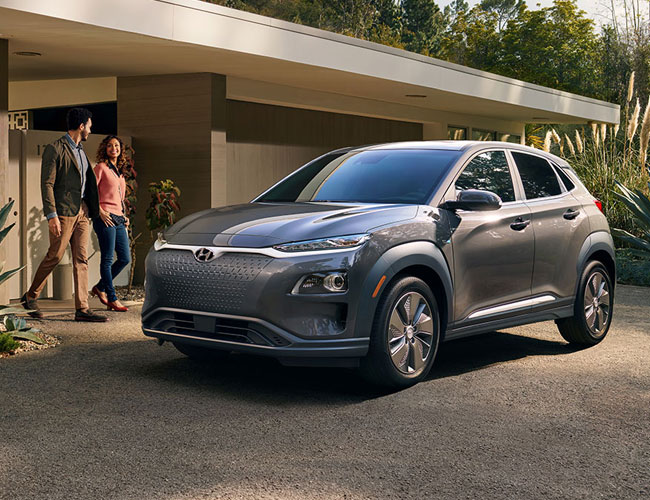
It does cost less to power an electric car vs. a gasoline vehicle. But, it still costs a lot more to buy one. The Hyundai Kona EV, for instance, has been earning great reviews. Getting its base price below $30,000, when the $7,500 federal tax credit gets factored in, will be a coup. That’s still about $10,000 more than the base Hyundai Kona, which gets about 30mpg combined.

The EPA estimates an annual fuel cost of $1100 per year for the gas Kona. Even making considerable changes over that would require a long time before the fuel savings from the EV Kona accounted for the premium to buy it. You will get a lot more torque from the EV Kona, though don’t expect millennials to dip into that avocado toast budget for torque.

More affordable EVs are coming to market. We are at a point with price and performance where buying one can be a reasonable option for more people. The costs of battery tech still need to come down for mass market EV adoption to be a purely economic decision.

|

Two-Seater Stories: How Car Enthusiasts do Valentine’s Day

We car folks are all alike: our happy place is behind the wheel. I personally love to cruise for hours in total silence, save the hum of the road and rev of the engine. I’ve also been told that a key component of romantic relationships is sharing your favorite parts of life with your partner. So far, I haven’t found anyone who wants to binge-watch The Real Ghostbusters cartoon series for an entire weekend while remaining completely silent and subsisting solely on coffee and Fudge Stripe cookies.

Anyway, sharing a quick drive or a long road trip can be deeply personal, if only because it’s so relaxing and joyful. Here is a collection of stories we’ve done this year on two-seat rides that will perhaps inspire your next romantic road trip. Even if you stay silent together.

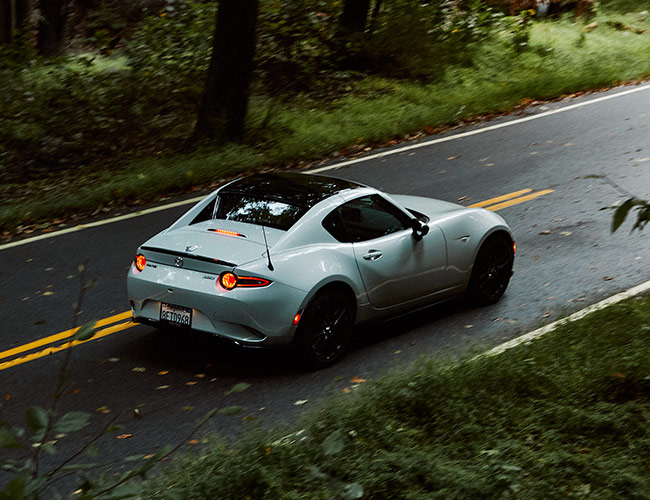
The Miata Is Mazda’s Best Car. Now They’ve Made It Even Better

The Miata Is Mazda’s Best Car. Now They’ve Made It Even Better

Mazda gave the MX-5 the hotrod treatment for 2019, bumping up the power, raising the redline, making this the car it was always meant to be.

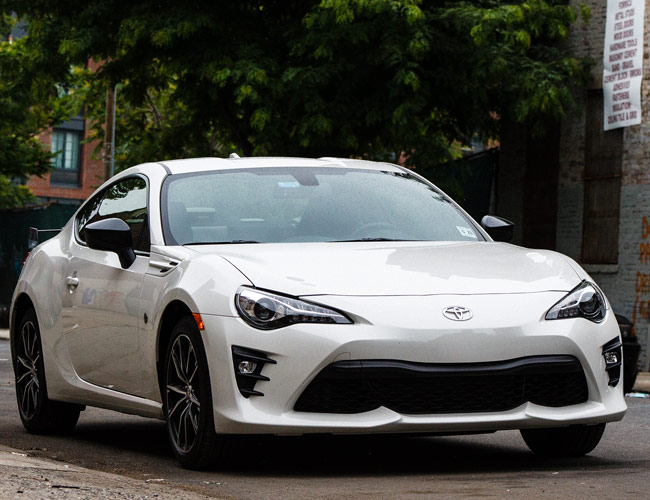
Toyota 86 GT Black Review: Is the New Looks Package Really Worth It?

Toyota 86 GT Black Review: Is the New Looks Package Really Worth It?

That’s where the GT Black is special: it takes an admittedly cult-classic car and ups the nerd cred a bit within its own circles.

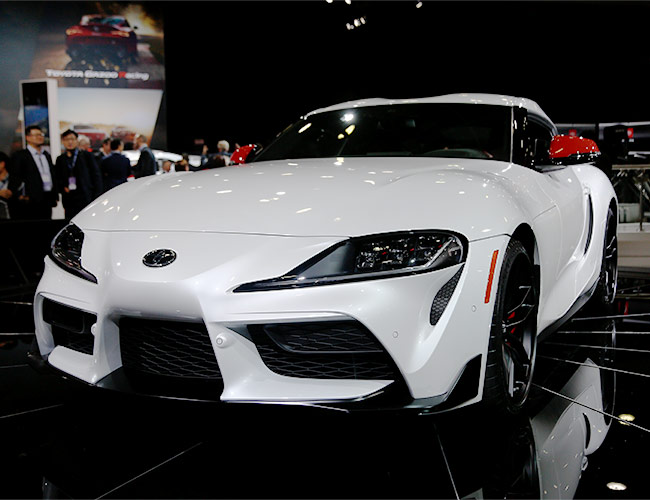
2020 Supra: Toyota is Hell-Bent on Reviving Its Reputation

2020 Supra: Toyota is Hell-Bent on Reviving Its Reputation

The Supra name returns to the Toyota lineup, making it clear Toyota is hell-bent on changing the world’s idea of its cars.

The Best Car of 2018 According to Jeremy Clarkson

The Best Car of 2018 According to Jeremy Clarkson

He isn’t back on our screens just yet, but in between filming and hosting the third season of The Grand Tour, Clarkson found time to name the Best Car of the Year.

The Benchmark for Every Modern Sports Car Is the Caterham Seven

The Benchmark for Every Modern Sports Car Is the Caterham Seven

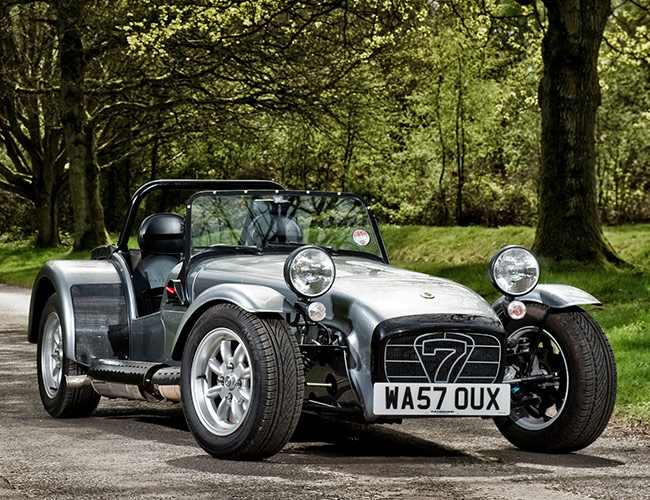
Every major modern car-making country has a calling card. For Britain, it’s the low-volume, lightweight sports cars.

Everything You Need to Know Before Buying a Used Toyota MR2 Spyder

Everything You Need to Know Before Buying a Used Toyota MR2 Spyder

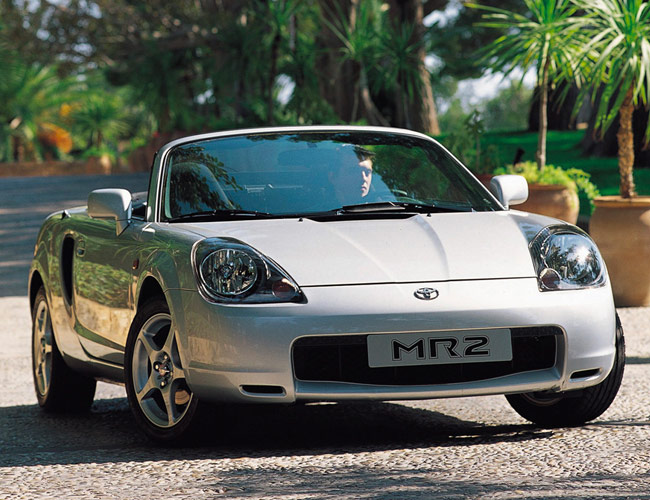
Toyota’s mid-engine swansong is one of the best performance car bargains out there.

A Legendary Name Will Return at the 2019 Geneva Motor Show

A Legendary Name Will Return at the 2019 Geneva Motor Show

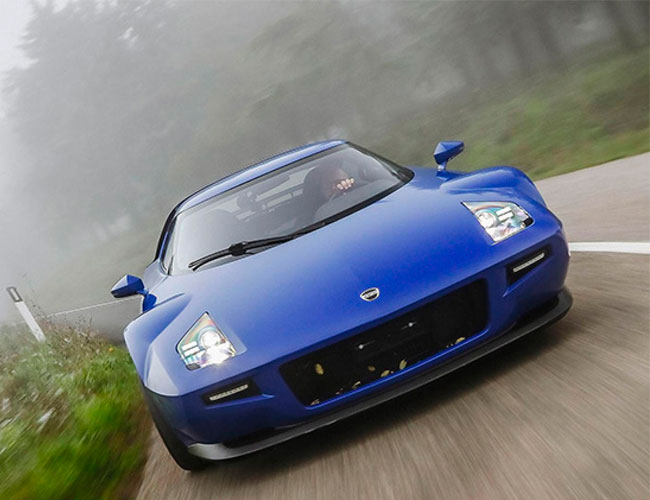
The New Stratos made it to production and of the 25 Ferrari-based coupes, at least one is making its way stateside.

The Future of the Audi TT Is in Doubt

The Future of the Audi TT Is in Doubt

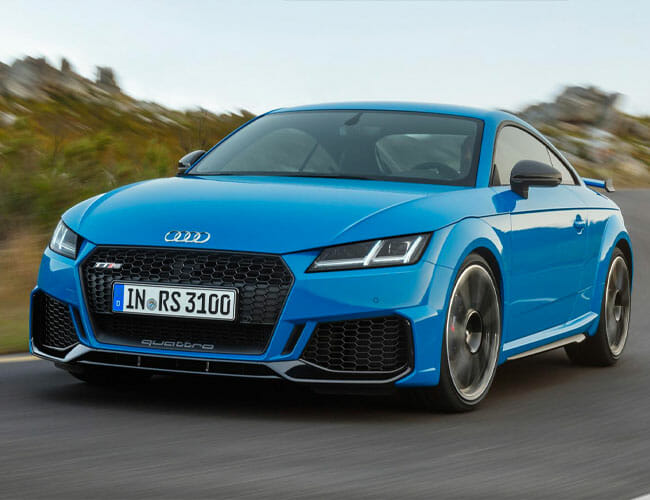
The TT RS receives a few cosmetic updates for 2019, but reports are surfacing Audi’s pint-sized supercar is in danger of extinction.

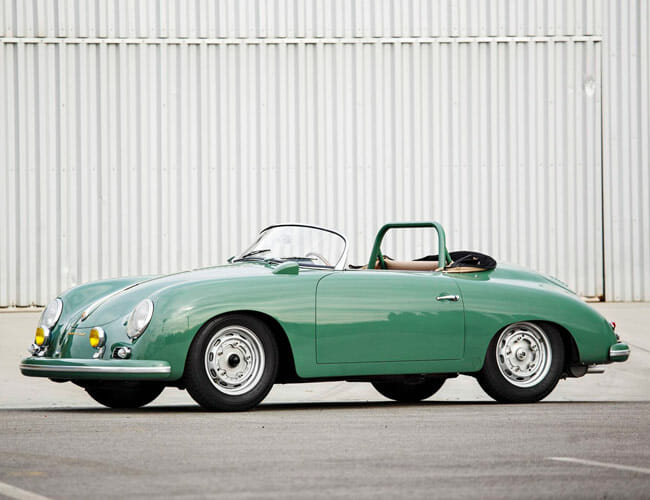
Jerry Seinfeld Is In Trouble Over This Rare Porsche 356 – Here’s the Deal

Jerry Seinfeld Is In Trouble Over This Rare Porsche 356 – Here’s the Deal

If it’s authentic, this particular 356 is exceptionally special. If it isn’t, well… not funny.

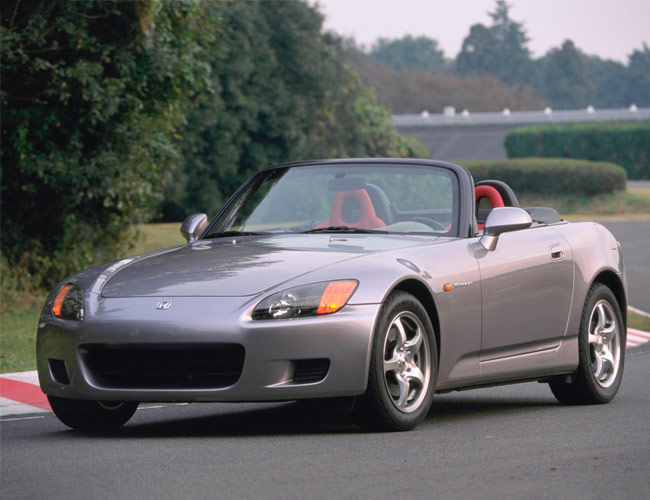
Affordable Dream Car: The Honda S2000 Is an Incredible All-Rounder

Affordable Dream Car: The Honda S2000 Is an Incredible All-Rounder

Of all the Japanese two-seater sports cars the Honda S2000 is easily the best all-rounder considering its performance and current value.

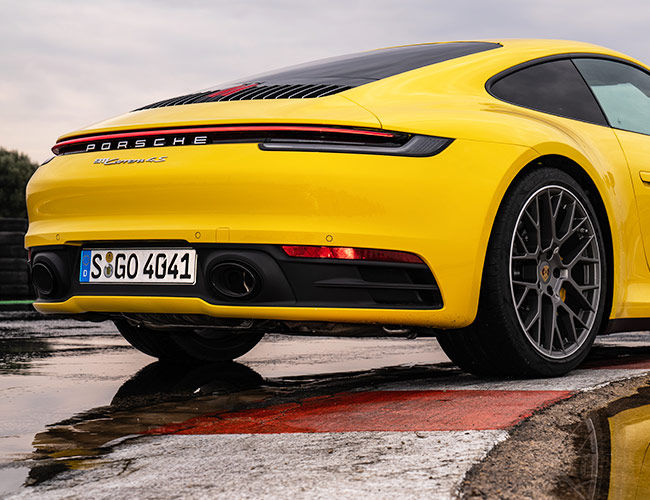
2020 Porsche 911 Carrera Review: Better In Almost Literally Every Way

2020 Porsche 911 Carrera Review: Better In Almost Literally Every Way

This eighth generation is bigger in many dimensions, wonderfully powerful and strikingly fast – more so than its predecessor by a longshot.

A Legendary Name Will Return at the 2019 Geneva Motor Show

At last year’s Geneva Motor Show, Manifattura Automobili Torino brought its show-stopping pet project, the New Stratos, and announced 25 examples are slated for production. The buzz around the Ferrari 430-based homage to the original Italian icon cooled down in the months since, but there’s some good news ahead of the 2019 show. MAT will have on display its original working concept car, a German market example and, most importantly… an American-market model. We’re considering this a win.

As these low-volume cars tend to go, whether due to strict emissions or safety standards, the U.S. is often left out and jealous; the best cars sometimes can’t make the jump stateside. Not the case with the New Stratos. Underneath the modernized yet faithful design is the architecture to a Ferrari 430 and its naturally aspirated V8 tuned to 550 horsepower. And if that wasn’t enough, MAT is offering an old-fashioned gated manual option.

The original Lancia Stratos lives in the history books as one of the first purpose-built cars for rally racing and as a result one of the most radical designs ever seen on a road car. Finding an original Stratos not currently sitting in a collection is near impossible, so credit to MAT for bringing the iconic wedge shape back to the road, albeit in micro-manufacturer production numbers.

In a world of sports cars where the analog experience is dying off, for the most part, small-batch cars like the New Stratos are offering a glimpse of simpler times. It’s just a shame that of the 25 set for production, not all of them will make it to our shores.

Toyota Beats the Aftermarket to the Punch With a TRD Body Kit

Finding a clean, unmodified, lightly driven Toyota Supra is no easy task. It’s so difficult, in fact, that an untouched, low-mileage example from the ’90s recently went for a staggering six-figure sum. It’s an excepted reality that nearly all Supras get modified in some way, as the car is a hit with – and, therefore, a victim of – the early-00’s tuner culture. For the 2020 Supra, Toyota’s TRD department is beating the aftermarket to the punch with a factory-designed body kit of its own.

As of now, the TRD upgrades are only visual, but Toyota claims the carbon fiber front spoiler, side skirts, diffuser and rear spoiler have a genuine effect onthe aerodynamics. The vertical fins at the front, side and back should, in theory, clean up the airflow around the car, while the lip on the deck lid should add a marginal amount of downforce. The package also comes with lightweight 19-inch alloy wheels and a slab of carbon fiber on either side, which Toyota refers to as a “door garnish.” Whether or not any of this actually does add performance remains to be seen.

In every performance car family, there is a base model and a top-tier version with power and handling upgrades, plus a few visual modifications. Then there’s the middle-ground model, which borrows the looks from the top-of-the-line model but is left without the performance upgrades. Here’s hoping this is just the middle-ground Supra to hold us over while Toyota’s TRD department is busy tinkering with the twin-turbo straight-six – working toward the real upgrades everyone wants.

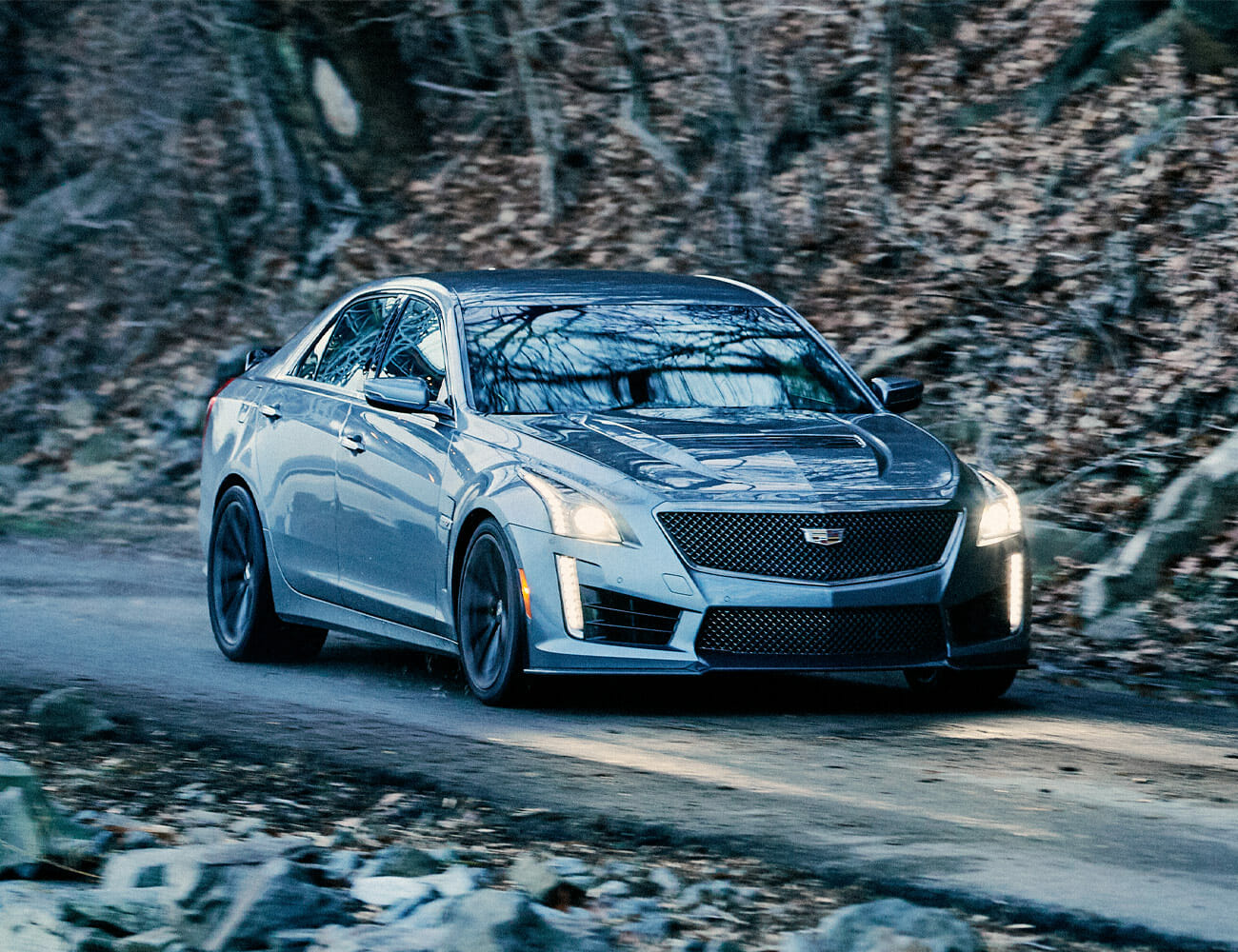
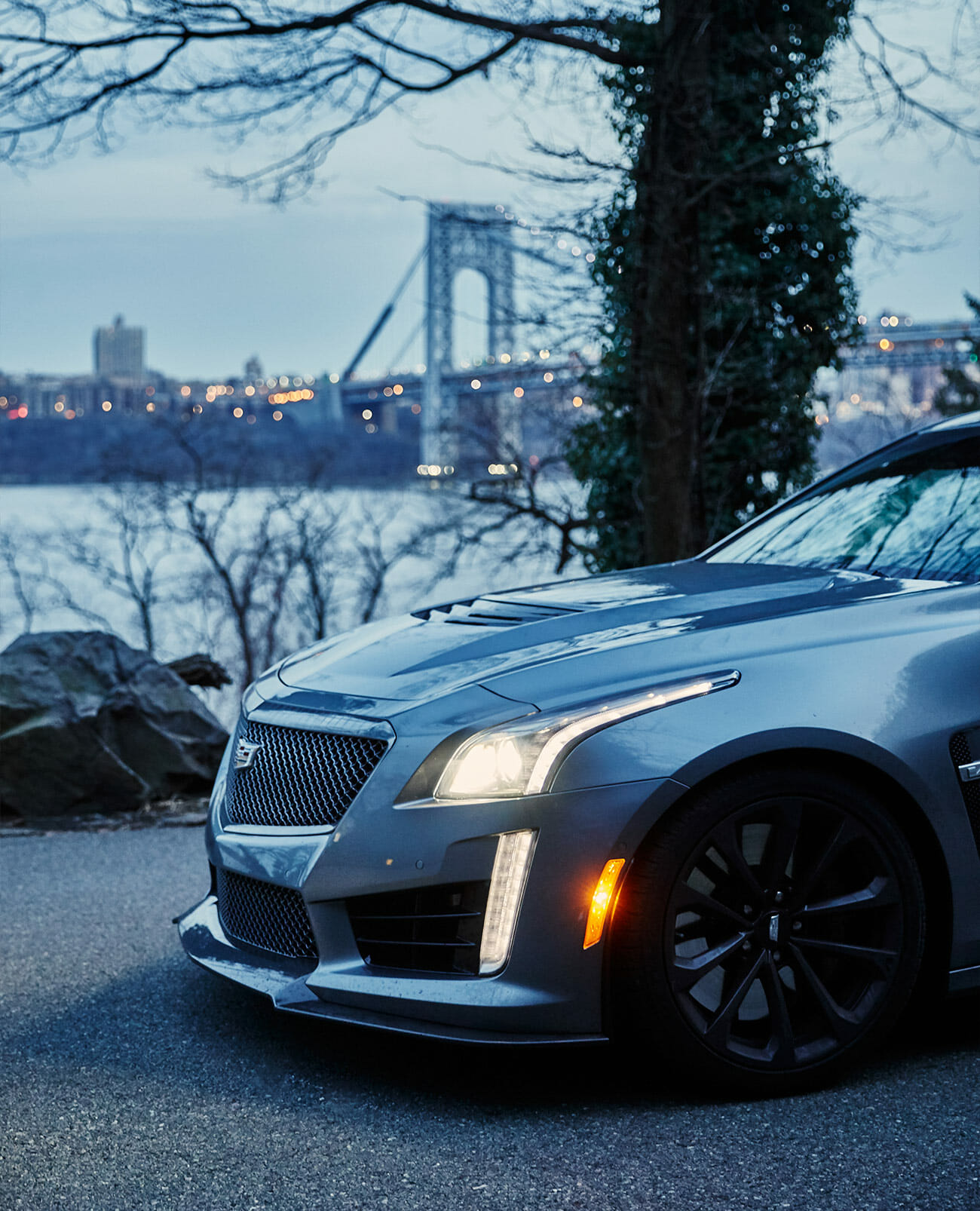
The 2019 Cadillac CTS-V Will Be One of the All-Time Greats

In the space of one week, I rolled over 1,600 miles – from NYC to Charleston and back – onto the new CTS-V’s odometer. If it weren’t for the overly aggressive Recaro bucket seats, this would be the perfect American road trip car. It became very clear to me that, thanks to a supercharged eight-cylinder heart working in unison with the expertly tuned chassis, the last generation of the CTS-V has earned a place in the pantheon of all-time greats.

I used the remote start without hesitation every time I started the car. Coaxing the Cadillac supercharged CTS-V’s 6.2-liter V8 to life is fun, but having a front-row seat to the quad exhaust barking in your face then simmering to a deep burble is another kind of pleasure. It primes you for the rest of the experience.

There’s no hard and fast rule about what makes a great car or what classifies one as an instant classic. The hall of fame is filled with vehicles like the Land Rover Defender, the Lamborghini Countach, the Citroen DS 21 and the DMC DeLorean, to name a few. It’s an eclectic group. Generally, design, timing, purpose and performance all factors into determining a car’s greatness. When it comes to the last generation of the CTS-V, it’s all of the above.

It took Cadillac just over a decade and three generations to get the CTS-V just right. Back in 2004, it was clear GM wanted to move in a different direction to take on BMW, Audi and Mercedes-Benz in the luxury-performance game. But the ghosts of unrefined ’90s-era Cadillacs still haunted the brand. The second generation got a boost in performance but didn’t look any different than the base CTS, and the interior still shouted “GM.” It seemed as though the company be bothered to bring the car to life as more than a glorified Chevy.

For the third generation, which bowed in 2015, everything seemed to come together. There was a bold design language inside and out. Granted, thin piano black plastic trim pieces still made their way to the dash, console and steering wheel. But, under the hood, the CTS-V got a 640 horsepower supercharged V8 from the Corvette. It cranked out 630 lb-ft of torque from a lowly 3,600 RPM. Some might say it’s too much power for any real-world driving, but that’s half the Caddy’s charm — how it earned its nickname, “the four-door Corvette.” But in reality, the CTS-V is more fine-tuned than that.

Barreling down the highway at 70 mph, southbound on I-95, the tachometer was barely above idle. The CTS-V is eerily planted, a sedate drive at legal highway speeds. Then the madness shows. When I put my foot down to overtake slower traffic, if I took too much liberty with the throttle the rear tires will spin. It’ll shimmy and a fishtail at moderate highway speeds. The CTS-V is built for cannonball runs and Autobahn cruising, where it’s most comfortable. That dual-personality powerplant is a major part of the CTS-V’s charm.

Not only is the CTS-V the most powerful and, with a 200 MPH top speed, the fastest production Cadillac to ever leave the assembly plant, it’s also one of the best handling cars ever to wear the crest. Thanks to Cadillac’s racing engineers, the suspension, aerodynamics, steering and brakes give the two-ton car a hugely stable character at high speeds. It was tuned for the track, but you can probably count on one hand the number of owners who’ve tracked their CTS-V. Instead, that high-speed stability is what makes the CTS-V so damn civilized on the highway, in the rain or carving through slower traffic.

The CTS-V has its quirks, just like any other great car, and there’s not a doubt in my mind the last generation CTS-V is an instant classic. It has no other competitors from the US – the Dodge Charger Hellcat has more power, but it’s nowhere near as classy as the Cadillac; the Chrysler 300 SRT8 is a 15-year-old Mercedes E-Class wearing a thin veneer of what FCA calls luxury. The CTS-V is just at home on the Nürburgring as it is I-95, and competes with Germans on style and design too.

But the 2019 model marks the end of an era at Cadillac. When 2020 rolls around, the incoming CT5-V will replace it, but the CTS-V is what put Cadillac back on the map, and that’s what makes it so damn special.

Note: Purchasing products through our links may earn us a portion of the sale, which supports our editorial team’s mission. Learn more here.

The 2020 Range Rover Velar Doubles in Price But Gets a Supercharged V8

For 2020, the Range Rover Velar will get the brand’s top-tier treatment with an SVAutobiography Dynamic Edition. The good news is the sleek, slab-sided SUV will get a monstrous V8. The bad news is the upgraded Velar comes with a price tag double that of the base model.

Unsurprisingly, the performance numbers look nothing like you’d expect from a two-ton-plus SUV. Rated at 542 horsepower, the 5.0-Liter supercharged V8 will help hustle the newest Velar from 0-60 mph in 4.3 seconds and top out at 170 mph. Not too long ago, that’d be bonafide supercar territory. Helping the Velar put all that grunt to the road is an eight-speed Quickshift transmission, an electronic active differential, adaptive dampers, SV-tuned anti-roll-bars and SV brakes. Inside, the SVAutobiography Dynamic Edition gets all the quilted leather and brushed aluminum you can handle.

In true Range Rover fashion, all that performance and luxury comes at a steep price. When the 2020 Range Rover Velar SVAutobiography Dynamic Edition becomes available later this year, it’ll have a $111,347 price tag hanging on it. And at six-figures, the newest trim is more than twice the going rate of the $49,600 base Velar. Land Rover sure has a knack for matching drool-inducing power with eye-watering prices, but damn it if it’s not a good looking SUV.

The New Volkswagen GLI Brings Much Needed Soul to the Practical Sedan

As handsome as the Volkswagen Jetta has always been, it was never going to light anyone’s hair on fire. The mid-sized sedan’s design certainly matured going into the current generation as it took on more DNA from Audi than they’d like to admit, but it generally lacks in the performance department. The 2019 Jetta GLI, just unveiled at the Chicago Auto Show, is here to counter that issue.

The GLI is targeted directly at those who adore the Golf GTI for its performance but lament the idea of a hatchback for one reason or another. With the Jetta GLI you get all the space that comes with the standard sedan, plus the GTI’s engine, brakes and suspension.

Volkswagen’s newest sleeper sedan gets the 2.0-liter inline-four with 228 horsepower and 258 lb-ft of torque on tap, an 18 hp and 41 lb-ft increase over the standard Jetta. To help put that power to the road and rein it in, the GLI gets a multi-link independent rear suspension, an electronically limited slip differential and adaptive dampers. You’ll also get brakes from the Golf R, tucker inside 18-inch wheels with a design unique to the GLI. It’s like a “best of” compilation from the Golf line, but with more trunk space.

Given how fun the Golf GTI is and how practical the standard Jetta is for everyday driving, the GLI should be the sedan of choice in VW’s lineup. There’s no word on pricing, but expect the Jetta GLI’s price tag to hang around the $30,000 mark. If you’re eye-balling the Golf GTI but want something a little more grown up and subtle, hold out for the springtime when this new sleeper sedan hits dealership floors.

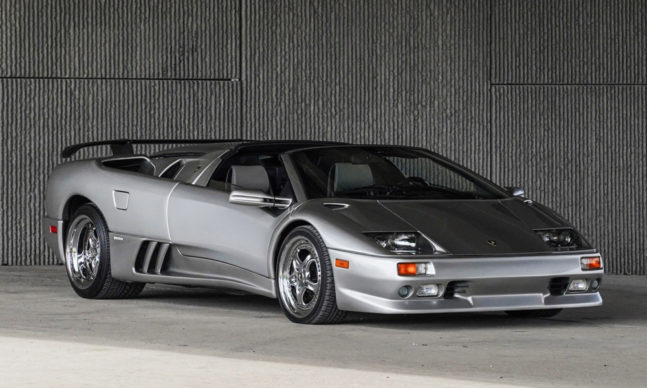
1999 Lamborghini Diablo VT Millennium Roadster

Everyone knows the Lamborghini Countach, as well as the current Aventador, both V12 monsters. But don’t let the bridges between them be forgotten. The Murcielago preceded the Aventador, but it was the Diablo that had…

The New Toyota Sequoia TRD Pro Is the Death of the Land Cruiser

Toyota announced today the Sequoia would finally get the TRD treatment. Seeing as how the SUV is 18 years old, it’s about damn time. Toyota’s biggest conundrum now is justifying the modernLand Cruiser’s existence next to the now-updated luxe off-roader Sequoia.

New for 2020, the Sequoia TRD Pro gets a suspension lift and upgrades courtesy of Fox Shocks, forged alloy wheels, new LED headlights, a TRD skid plate, cast aluminum running boards and a roof rack. Pulling everything along is the same 5.7-Liter found in the Land Cruiser, good for 381 horsepower and 401 lb-ft torque. The current-generation Sequoia is nearly a decade-old, so saying these upgrades are overdue is an understatement, but it’s an obvious move considering Toyota’s current performance renaissance.

Now more than ever, the Land Cruiser doesn’t make sense among Toyota’s current lineup. If you want an SUV for off-roading, the smart buy is the 4Runner. If you’d rather have a luxury family-hauler, the Sequoia is the way to go. For how expensive it is, and for what it offers, the current Land Cruiser is essentially obsolete.

At $85,000 — also decade-old — the current Land Cruiser already had a tough time justifying itself next to the arguably just-as-luxurious standard Sequoia. Now that the Sequoia TRD Pro is en route, you have two choices of luxurious off-roaders that are near identical. One – the Sequoia – just saves you $30,000.

With that said, Toyota didn’t mention pricing for the Sequoia TRD Pro or when it’ll be available. But, based on the price jump over the base 4Runner and what the Tundra TRD Pro goes for, expect the more rugged Sequoia to take on a $10,000 premium and land near the $50,000 mark. Once it hits the road, it’ll be interesting to get all of Toyota’s top overlanding SUVs lined up for a good old fashion sibling rivalry shoot out.

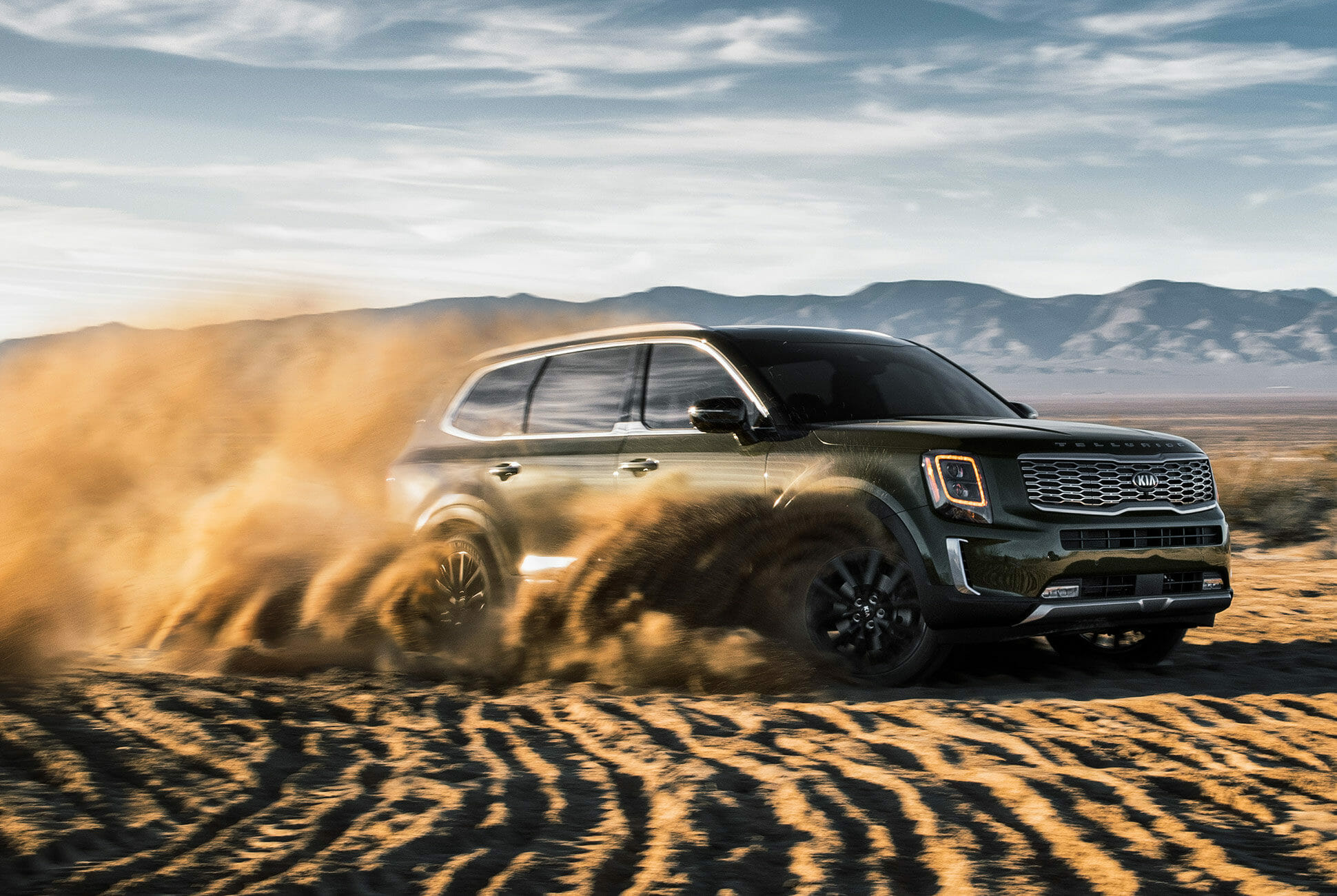
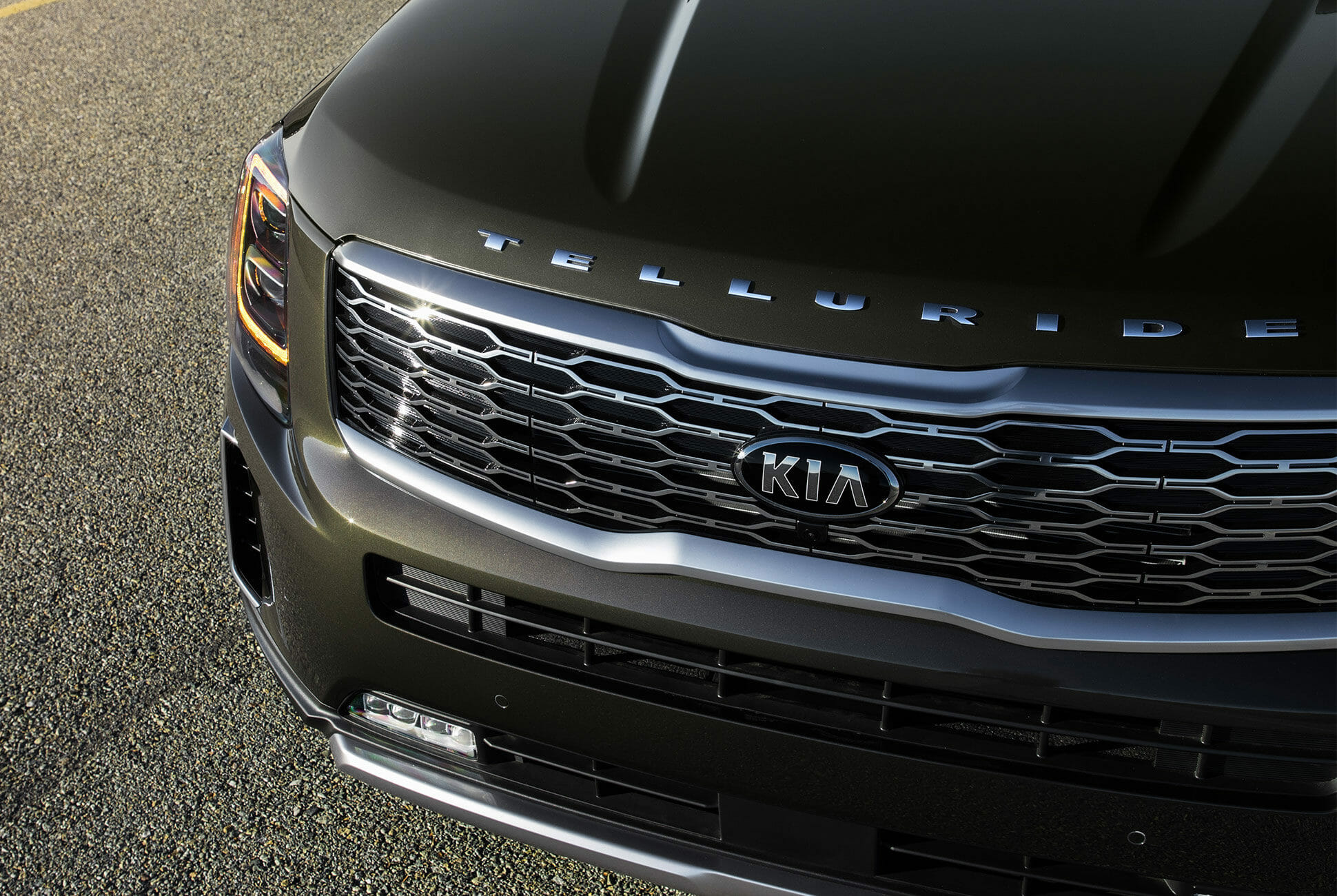
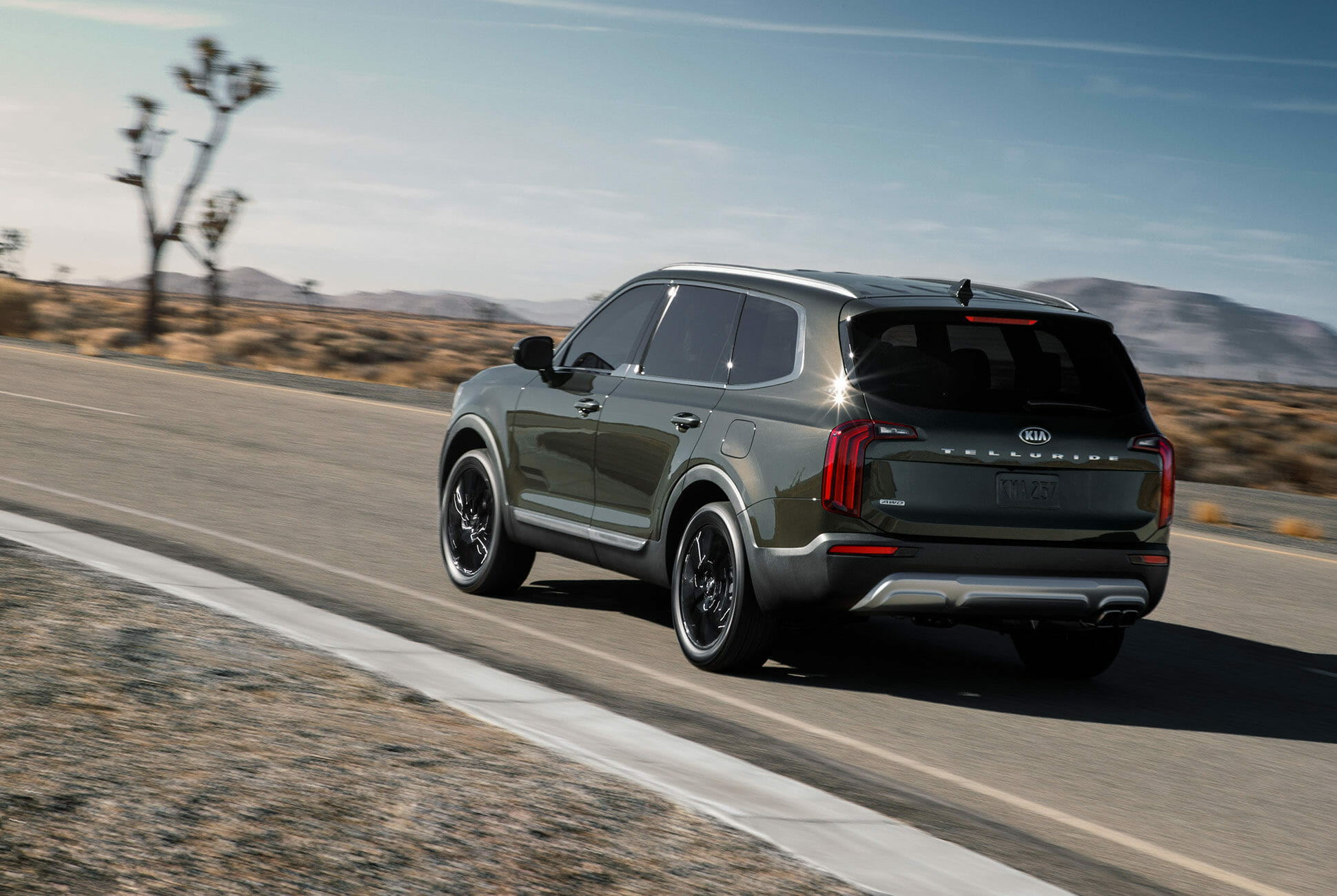
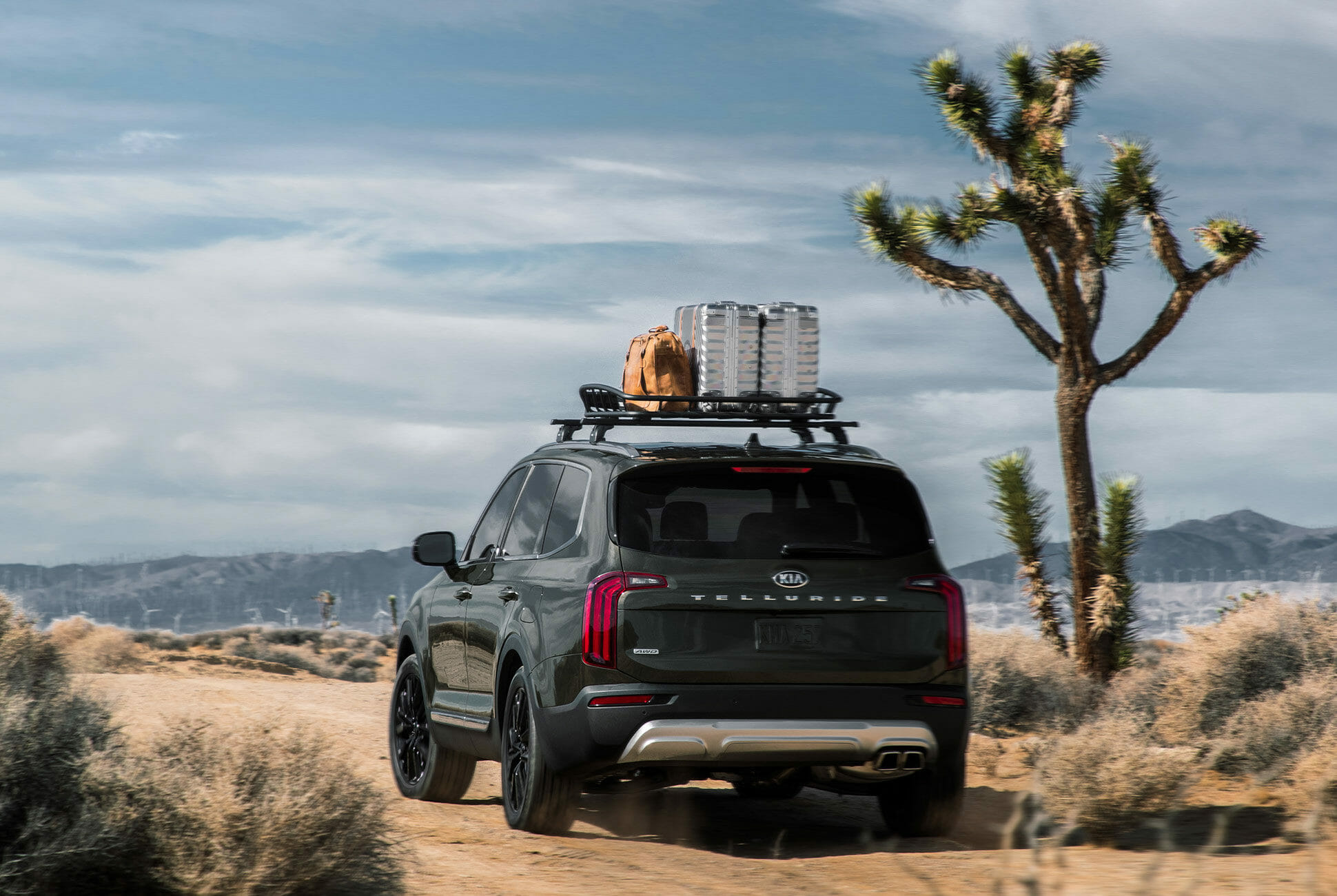
Kia Telluride Gets Pricing For All Trims

The 2020 Kia Telluride wowed car fans this past January at the North American International Auto Show, and less than a month later we finally have a word on pricing.

Kia says the base model will run you $31,690. At that price point, you don’t have to be a genius to realize what Kia is doing here. With matching specs to boot, the Telluride seems like a clear contender against the Subaru Ascent and the Volkswagen Atlas. The year has barely started and we already smell a meaty SUV brawl. Car fans should be delighted.

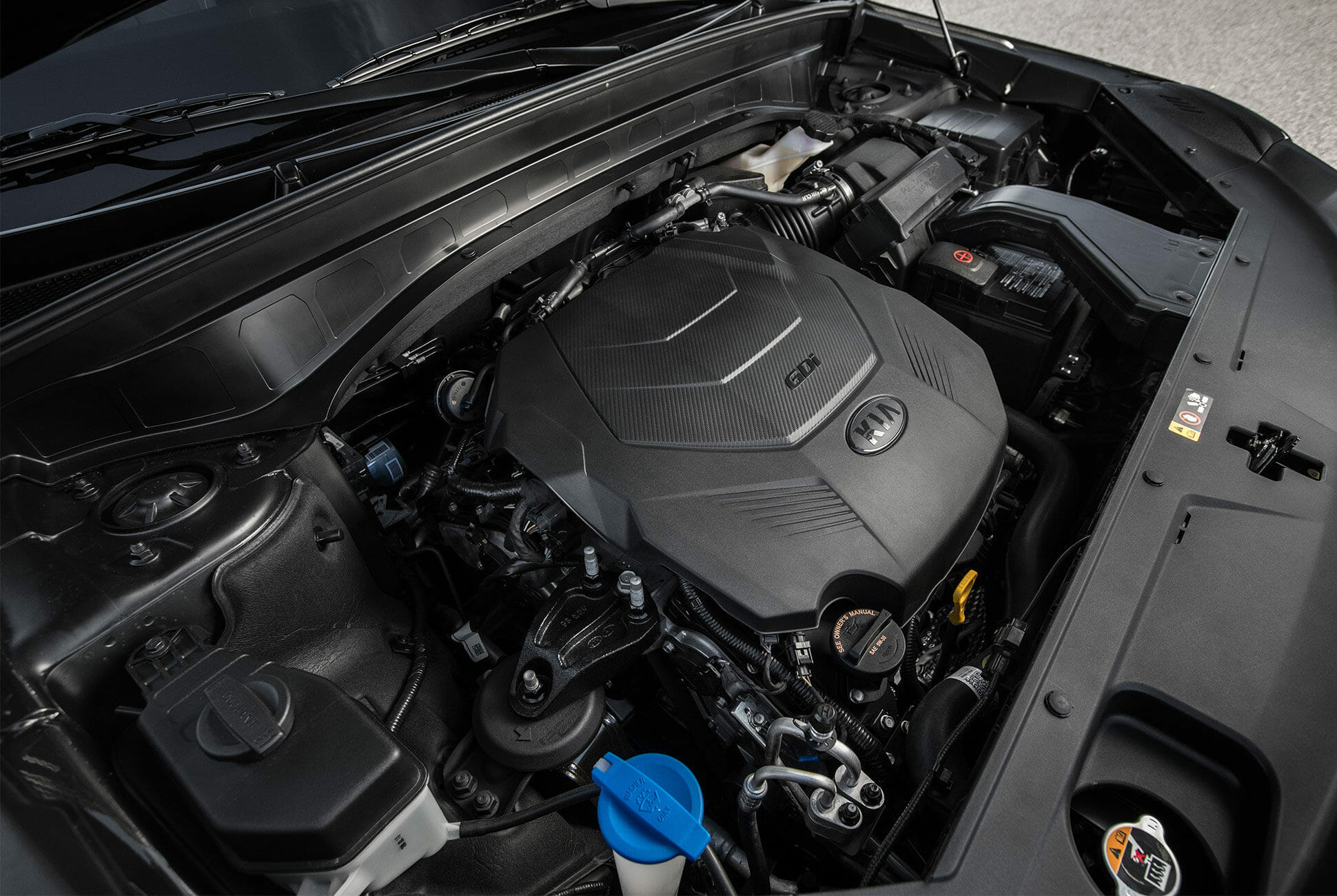
The Kia Telluride gets a 3.8-liter V6 engine making 291 HP and 262 lb-ft of torque. That’s standard across all trims, unfortunately. The top trim, called Telluride SX, will run you a bit more at $41,490, but think twice, really. The base Telluride LX model already comes with an array of luxury options.

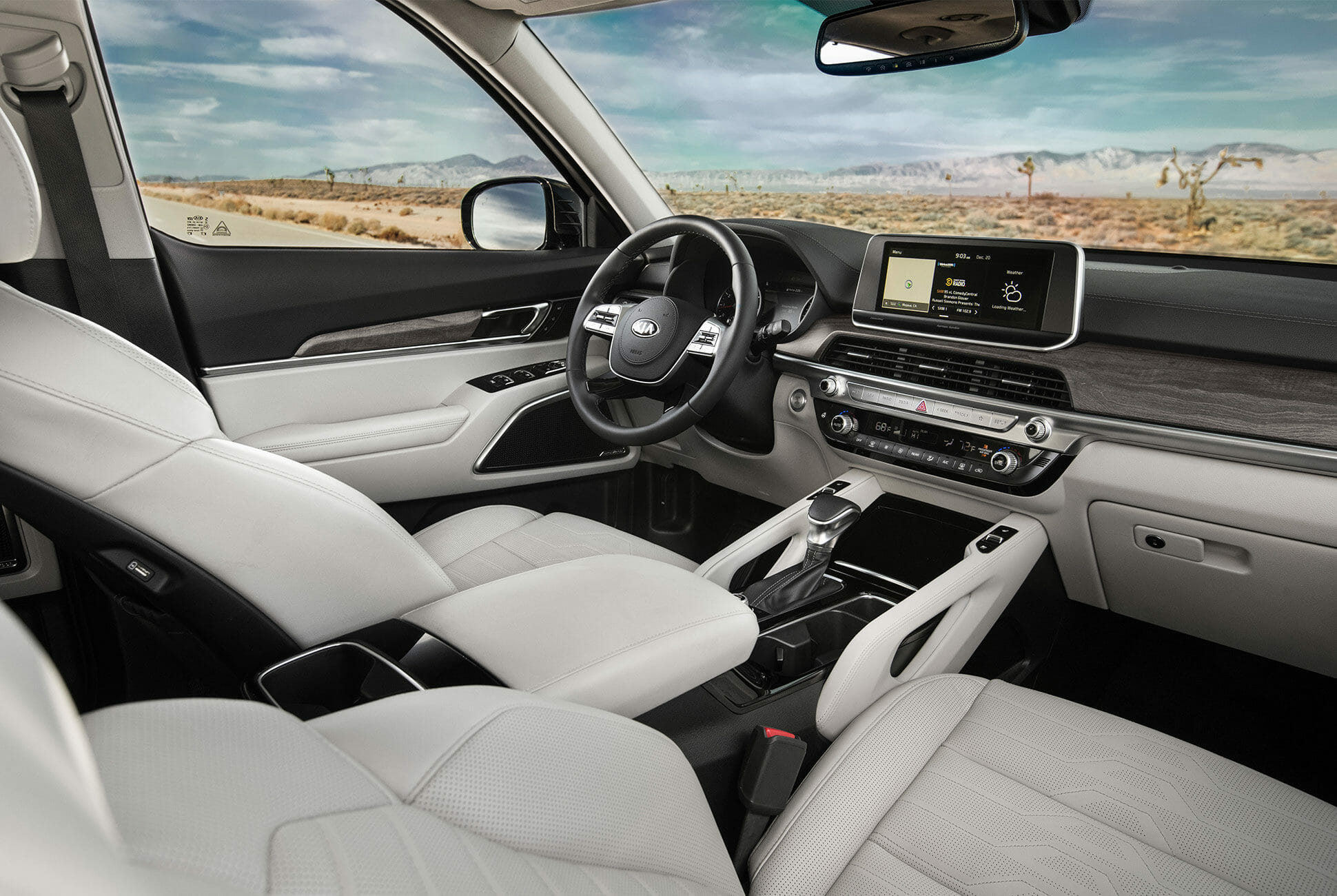
We’re talking a bevy of driver assistance systems, plus collision avoidance and automatic safety features. You can’t really go wrong with $31,690. But if you have a bit more cash to waste, consider moving up to the SX. That gets you second-row heated and ventilated captains chairs, an all-wheel-drive, dual sunroofs, and Harmon/Kardon speakers.

The Kia Telluride is off-road capable, too, or so the carmaker says. So you’re getting the best of both worlds here. Though we’d wait before someone tests the thing on unforgiving terrain first to see how it fares. We expect lots of clamor for this one, especially after its rather humble spot on the Super Bowl this past Sunday.

MORE INFO

Photos courtesy of Kia

The Subaru Ascent Has a Big Target on Its Back

We got our first glimpse of the Kia Telluride – and what the Korean manufacturer has in store for its all-new three-row SUV – at this year’s NAIAS. Today, with the announcement of the $31,690 price tag along with a few specs, it’s clear Kia is gunning for the Subaru Ascent, and the Volkswagen Atlas should watch its back.

A 3.8-liter V6 engine making 291 HP and 262 lb-ft of torque gives the Telluride life and is standard across all available trims. The base model comes in at just under $32,000 but the top trim Telluride SX starts at only $41,490. Considering all the luxuries that come as standard, the Telluride is priced to compete. Even the base LX trim comes with a slew of driver assistance, collision avoidance and safety systems, but move up to the SX, and you get second-row heated and ventilated captains chairs, all-wheel-drive, dual sunroofs, and Harmon/Kardon speakers as standard — all in a truck Kia is claiming is off-road capable, too.

It’s a bold move into territory fraught with stiff competition, but, it shouldn’t come as a surprise play from Kia. The Korean brand is riding a wild wave of momentum generated from its luxury sub-brand Genisis and, most notably, the Stinger sedan. Kia has already proven it can build quality cars at incredibly affordable prices, the problem is its name, and Kia knows it.

If you were one of the 98 million people to tune into Super Bowl last Sunday (and somehow make it through the excruciating mess of a half-time show), chances are you caught Kia’s commercial spot for the Telluride. The first full minute of the commercial was so laden with moody, blue-collar, small-town-America overtones that no one in the room would’ve batted an eyelash if a Chevy, Dodge, or Ford plowed into the water at the end. But it was a Kia, so naturally, everyone groaned.

Rewatch the commercial, knowing it’s for a Kia and listen to what the voiceover says. “We are not famous… We’re not known for who we are. We hope to be known for what we do, what we build. This thing we’ve assembled — it has a chance to be remembered. No, we are not famous, but we are incredible, and we make incredible things.” Kia is politely self-deprecating, admitting it’s not legendary like Subaru or Volkswagen while at the same time acknowledging its most recent run of form. If Kia can pour the same quality and care into the Telluride as it did the Stinger and Genisis line, groan all you want, but don’t be surprised when it becomes the top choice in its segment.

The Future of the Audi TT Is in Doubt

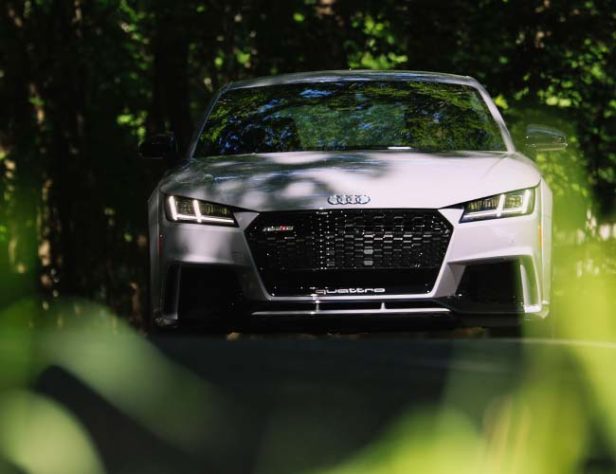
Trying to improve on the current Audi TT RS is a delicate situation. The coupe is already such a phenomenal car, giving it more power, a stiffer chassis, or more aggressive suspension and Audi runs the risk of over-cooking it. So it’s probably for the best the TT RS only receives cosmetic updates for 2019, but with the new facelift comes reports Audi’s pint-sized supercar is in danger of extinction.

Going into 2019 the TT RS keeps the 2.5-liter turbocharged five-cylinder cranking out 400 horsepower and 350 lb-ft of torque to all four wheels, all of which is available from barely-off-idle at 1,700 rpm. The sprint from a standstill to 60 mph is over within 3.6 seconds, which, for the record, threatens the first-generation R8.

According to an Audi insider , the TT as we know it will morph into something else entirely. The TT’s replacement will share a platform with the A3 to stay relevant, practical, and cost-effective and also to give the Mercedes CLA and BMW 2-Series Gran Coupe competition.

A two-door version might still be an option, but with cost-effectiveness and market trends on Audi’s mind, don’t be surprised if a four-door version of the two-door car comes to life. Audi internally floated the idea of spinning off the TT into its own sub-brand, but it was ultimately squashed in favor of building out the A3 line. So it looks like a mini RS7 will replace the tiny R8 we’ve come to know and love.

It’ll be a bittersweet moment should the TT line disappear after more than 20 years in the Audi lineup. We’ll lose a modern icon and gain a more practical version in the process.

Read the Review

In a flat out race, it’s entirely possible the new 2018 Audi TT RS would demolish the 2012 R8 4.2-liter V8, then Audi’s top-end sports car. Read the Story

Alfa Romeo Giulia Quadrifoglio Is Already a Legendary Car

SYou can’t be a genuine gearhead unless you’ve owned an Alfa Romeo. It’s a common axiom. That’s because Alfa Romeo, above all other automakers, understands that driving is a sensual, visceral experience. Alfas look gorgeous. Their engines sound explosive and sonorous. Their potency comes with a distinct personality. Driving an Alfa Romeo reminds you why you love cars.

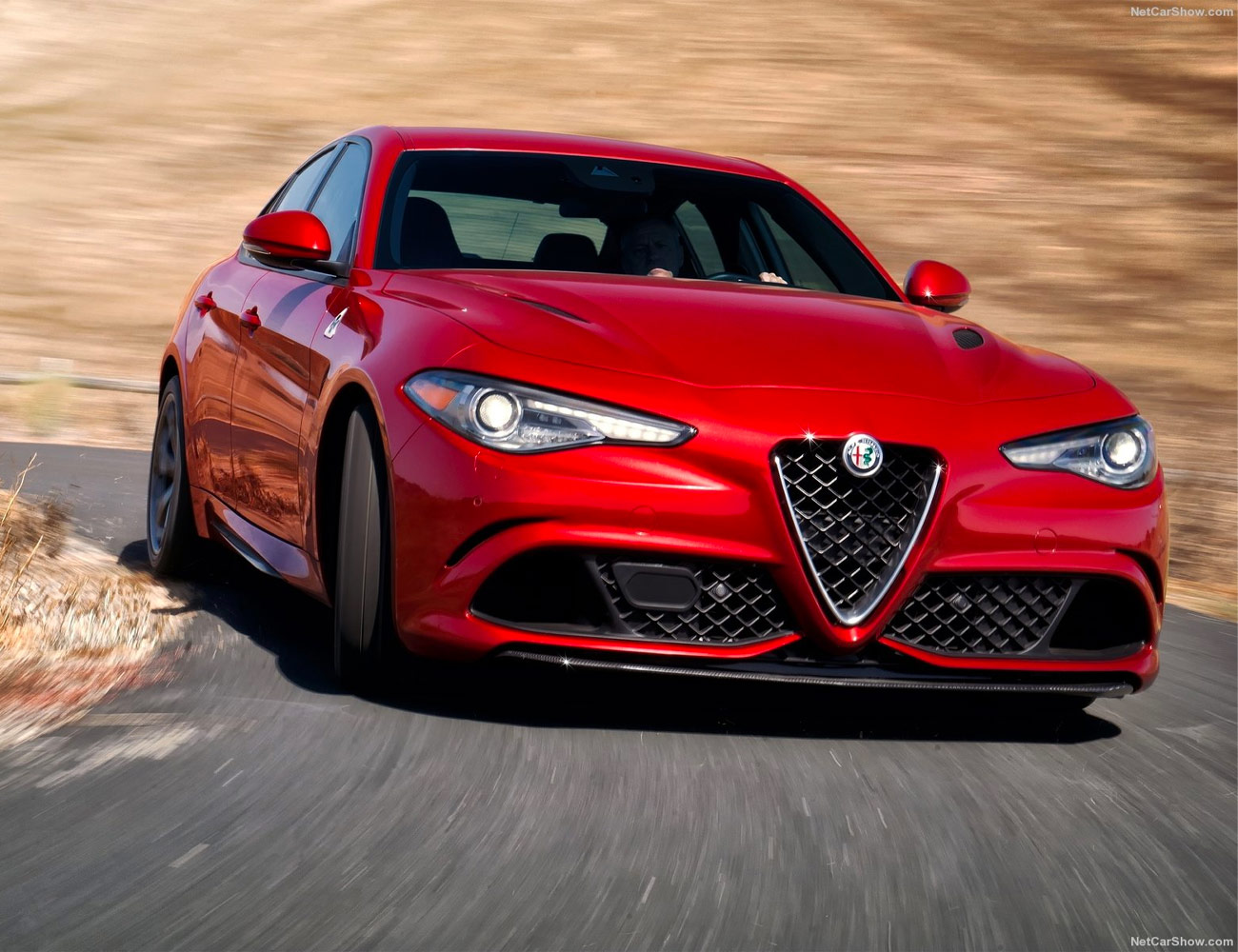
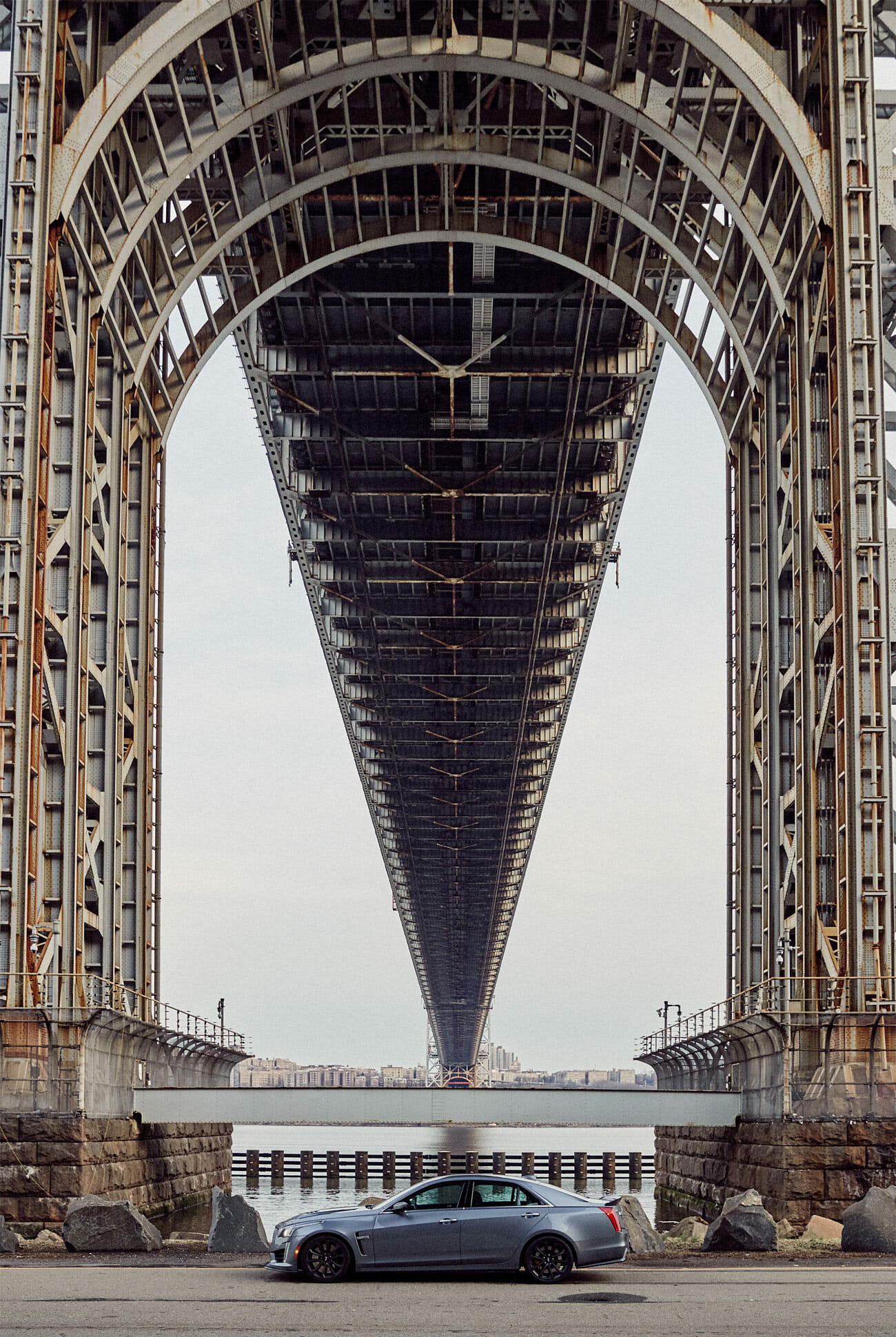
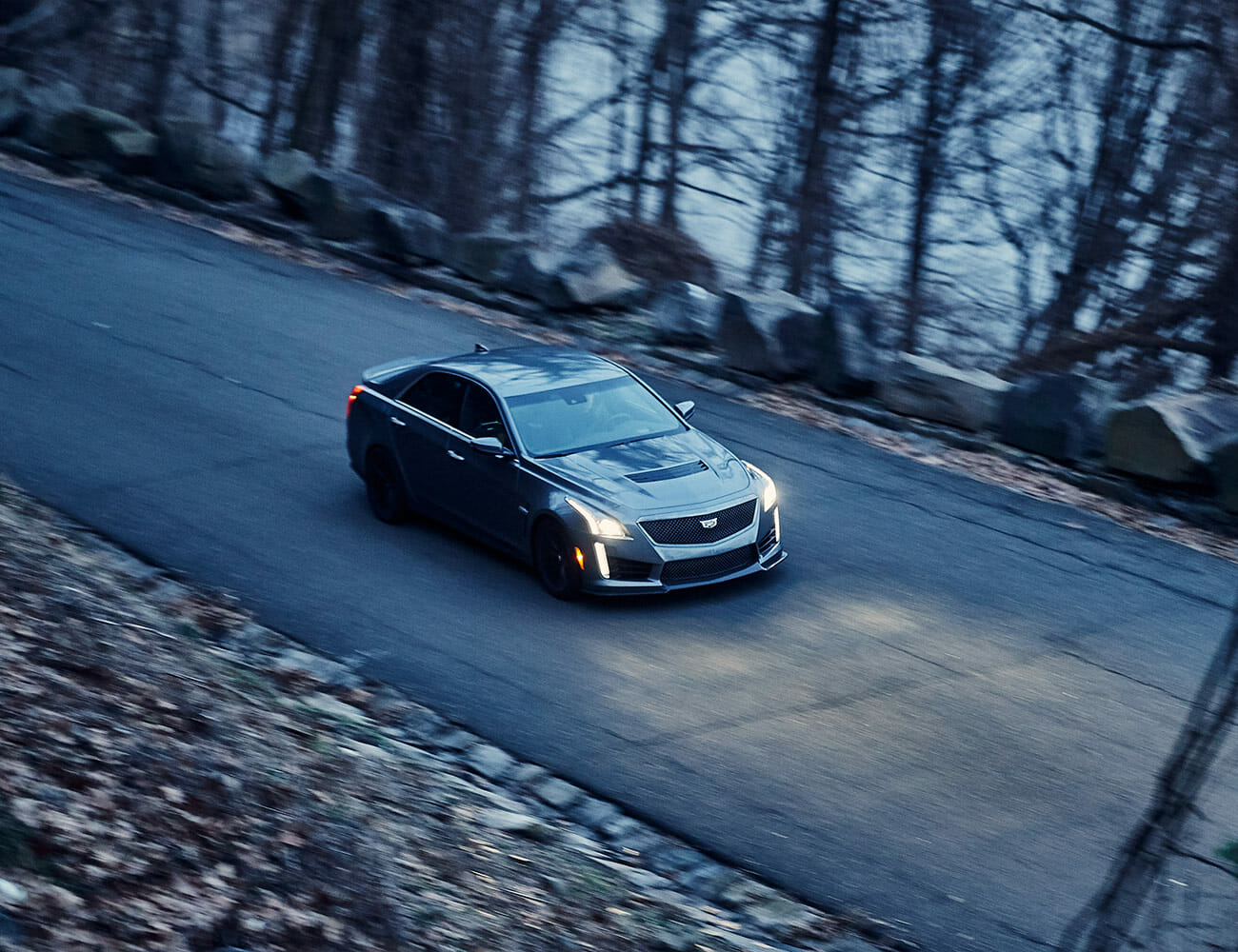
The current Giulia Quadrifoglio ($73,700) is a proper Alfa Romeo. It was the perfect car to reintroduce Alfa Romeo to the U.S. market. Already a legend, it is destined to be a modern classic.

One must appreciate Alfa Romeo’s sheer ambition. BMW’s M3 provides the benchmark for sport sedans. That reputation stems from decades of excellence. Alfa, with help from Ferrari, took on the M3 with the Giulia Quadrifoglio and blew it out of the water. The Giulia Quadrifoglio is faster. It’s more compliant. It looks better in metallic blue paint.

A German dad and former M3 owner hailed me in a grocery store parking lot. He asked whether the Giulia Quadrifoglio was as good as he had heard. The most forthright answer, after admitting the car wasn’t mine, was “yes, it’s incredible.”

Driving the Giulia Quadrifoglio thrills. It’s as close to a four-door Ferrari production sedan as we’ll ever get. The “Ferrari-derived” 505hp Twin Turbo V6 makes the Giulia QF lightning quick. It would be unnerving but for the supreme balance and laser-precise steering. It can be as maniacal or as composed as you want it to be. The German ZF transmission is dulcet and intuitive. You forget the paddles (or the absent manual option in the States) after a short while. The Giulia shifts better than you can.

The transmission misstepped once in a week’s worth of driving. When I accelerated from zero to 20mph over the speed limit, the Giulia Quadrifoglio presumed I wish to keep going. In true Alfa fashion, it was more in tune with my heart than my head.

Daily driving the Giulia Quadrifoglio is not annoyance free. Lane clogging SUVs will annoy you. Our oppressive regime of traffic laws will subdue your buzz. The Giulia QF can still provide a compelling drive at normal speeds. But, you’re ever cognizant of how much fun you could be having if not for other people.

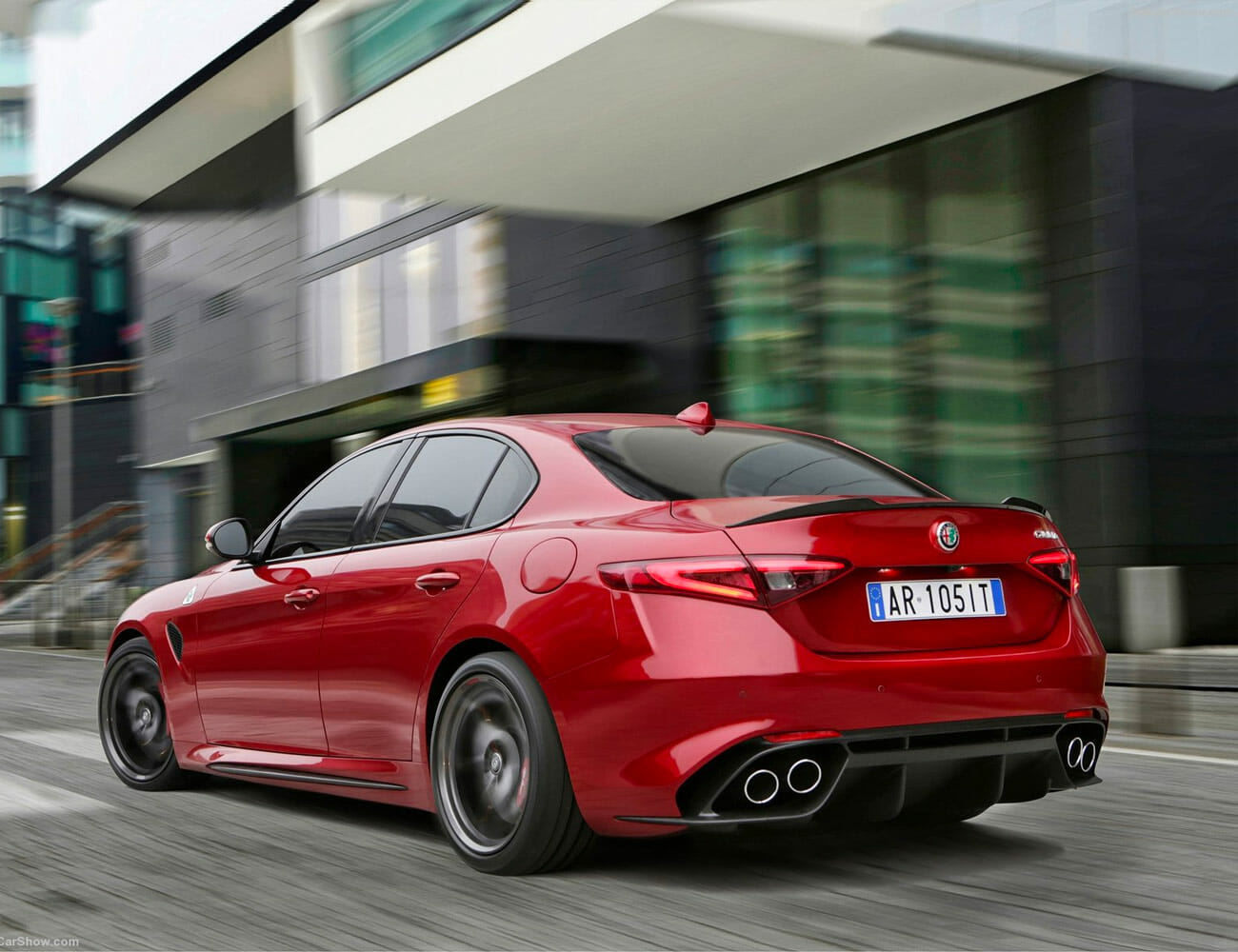
Performance comes with impeccable Alfa style. The Giulia is beautiful. Clear lines project the available power and aggression under the hood. But a subtlety and effortless restraint underlie the whole package. The Quadrifoglio version does not announce its hotness beyond the odd clover. It doesn’t need to. The Giulia looks like what it is, an M3 redone with better taste.

The sports sedan is the ultimate real-life driver’s car. The Giulia Quadrifoglio may be the ultimate high-performance variant. It may never be topped.

It also brings the noise. The Giulia Quadrifoglio’s engine is a purified raucousness. Think Beethoven over Metal Machine Music. You find yourself cranking up the revs to hear it again, at every stop sign, light, or gap in the traffic.

Alfa Romeos are perfect. Why doesn’t everyone who can afford one own one? They don’t always run. Stereotypes depict Alfas as notoriously unreliable. Some stereotypes are rooted in fact. My parents still remember the name of their old GTV 2000’s mechanic forty years later. They remain convinced he was sabotaging the car. It didn’t seem possible to them that many things could go wrong with a car.

In that respect as well, the Giulia Quadrifoglio has proved itself a proper Alfa Romeo. There are two general reviews of the car. The first rates it as at or near “best car on the road” status. The second describes where the reviewer was driving when the engine light popped on and the car died with an unclear prognosis. Mine had zero issues for what it’s worth. Though, I only drove it for a week and did not track it.

Issues, particularly in early press cars, no doubt stemmed from the development process. Alfa Romeo rushed the Giulia into production in two and a half years. Most cars take four-plus to put out. Working out some of the inevitable electrical gremlins happened with real drivers on the road. Things could get worse as these cars age. If you want a sedan to bore you with its obsessive reliability, buy a Toyota Camry.
Okay, so the Giulia Quadrifoglio is a great car. It’s a mind-blowing drive when it runs. Why, beyond that, will it be collectible?

Animalistic car performance will be at a premium moving forward. The sports sedan is the ultimate real-life driver’s car. The Giulia Quadrifoglio may be the ultimate high-performance variant. It may never be topped. A pocket rocket sedan with a 3/10 EPA smog won’t be on the menu moving forward. Manufacturers are phasing out both sedans and internal combustion. Even Alfa will be moving toward plug-in hybrids and EVs. Performance may well be “ludicrous.” But, it won’t feel or sound the same. This car will remind purists what they loved about gas and be worth what may be a crushing expense to fuel it.

The Giulia Quadrifoglio is part Ferrari, the important part. It’s not an affordable car. But, it’s more attainable than a true Ferrari. It’s a special and memorable collaboration. The notion is similar to the legendary Mercedes 500E from the early 1990s that had a Porsche designed chassis and was assembled on a Porsche line.

Giulia Quadrifoglios should be relatively rare. Alfa does not sell in huge numbers compared to Mercedes and BMW. The Italian company did have a record U.S. sales year in 2018. But, that was still fewer vehicles than Mercedes sells in the U.S. during one month. Most Giulias sold will be lower trims, not the Quadrifoglio. My local Alfa dealer has 86 2018 and 2019 Giulias listed in its present inventory. None are Quadrifoglios.

Finally, it’s an Alfa Romeo, a darn near impeccable one. Alfas charm car people. They charm non-car people. My wife scolded me for shifting out of dynamic mode and softening the suspension on the highway on the way back from dinner. My other passengers gushed about rides around the block. The Giulia Quadrifoglio’s charisma was infectious. Or, perhaps, it was my persistent glee rubbing off on everyone I met.

The Alfa Romeo Giulia Quadrifoglio Is Already a Legendary Car

You can’t be a genuine gearhead unless you’ve owned an Alfa Romeo. It’s a common axiom. That’s because Alfa Romeo, above all other automakers, understands that driving is a sensual, visceral experience. Alfas look gorgeous. Their engines sound explosive and sonorous. Their potency comes with a distinct personality. Driving an Alfa Romeo reminds you why you love cars.

The current Giulia Quadrifoglio ($73,700) is a proper Alfa Romeo. It was the perfect car to reintroduce Alfa Romeo to the U.S. market. Already a legend, it is destined to be a modern classic.

One must appreciate Alfa Romeo’s sheer ambition. BMW’s M3 provides the benchmark for sport sedans. That reputation stems from decades of excellence. Alfa, with help from Ferrari, took on the M3 with the Giulia Quadrifoglio and blew it out of the water. The Giulia Quadrifoglio is faster. It’s more compliant. It looks better in metallic blue paint.

A German dad and former M3 owner hailed me in a grocery store parking lot. He asked whether the Giulia Quadrifoglio was as good as he had heard. The most forthright answer, after admitting the car wasn’t mine, was “yes, it’s incredible.”

Driving the Giulia Quadrifoglio thrills. It’s as close to a four-door Ferrari production sedan as we’ll ever get. The “Ferrari-derived” 505hp Twin Turbo V6 makes the Giulia QF lightning quick. It would be unnerving but for the supreme balance and laser-precise steering. It can be as maniacal or as composed as you want it to be. The German ZF transmission is dulcet and intuitive. You forget the paddles (or the absent manual option in the States) after a short while. The Giulia shifts better than you can.

The transmission misstepped once in a week’s worth of driving. When I accelerated from zero to 20mph over the speed limit, the Giulia Quadrifoglio presumed I wish to keep going. In true Alfa fashion, it was more in tune with my heart than my head.

Daily driving the Giulia Quadrifoglio is not annoyance free. Lane clogging SUVs will annoy you. Our oppressive regime of traffic laws will subdue your buzz. The Giulia QF can still provide a compelling drive at normal speeds. But, you’re ever cognizant of how much fun you could be having if not for other people.

Performance comes with impeccable Alfa style. The Giulia is beautiful. Clear lines project the available power and aggression under the hood. But a subtlety and effortless restraint underlie the whole package. The Quadrifoglio version does not announce its hotness beyond the odd clover. It doesn’t need to. The Giulia looks like what it is, an M3 redone with better taste.

The sports sedan is the ultimate real-life driver’s car. The Giulia Quadrifoglio may be the ultimate high-performance variant. It may never be topped.

It also brings the noise. The Giulia Quadrifoglio’s engine is a purified raucousness. Think Beethoven over Metal Machine Music. You find yourself cranking up the revs to hear it again, at every stop sign, light, or gap in the traffic.

Alfa Romeos are perfect. Why doesn’t everyone who can afford one own one? They don’t always run. Stereotypes depict Alfas as notoriously unreliable. Some stereotypes are rooted in fact. My parents still remember the name of their old GTV 2000’s mechanic forty years later. They remain convinced he was sabotaging the car. It didn’t seem possible to them that many things could go wrong with a car.

In that respect as well, the Giulia Quadrifoglio has proved itself a proper Alfa Romeo. There are two general reviews of the car. The first rates it as at or near “best car on the road” status. The second describes where the reviewer was driving when the engine light popped on and the car died with an unclear prognosis. Mine had zero issues for what it’s worth. Though, I only drove it for a week and did not track it.

Issues, particularly in early press cars, no doubt stemmed from the development process. Alfa Romeo rushed the Giulia into production in two and a half years. Most cars take four-plus to put out. Working out some of the inevitable electrical gremlins happened with real drivers on the road. Things could get worse as these cars age. If you want a sedan to bore you with its obsessive reliability, buy a Toyota Camry.
Okay, so the Giulia Quadrifoglio is a great car. It’s a mind-blowing drive when it runs. Why, beyond that, will it be collectible?

Animalistic car performance will be at a premium moving forward. The sports sedan is the ultimate real-life driver’s car. The Giulia Quadrifoglio may be the ultimate high-performance variant. It may never be topped. A pocket rocket sedan with a 3/10 EPA smog won’t be on the menu moving forward. Manufacturers are phasing out both sedans and internal combustion. Even Alfa will be moving toward plug-in hybrids and EVs. Performance may well be “ludicrous.” But, it won’t feel or sound the same. This car will remind purists what they loved about gas and be worth what may be a crushing expense to fuel it.

The Giulia Quadrifoglio is part Ferrari, the important part. It’s not an affordable car. But, it’s more attainable than a true Ferrari. It’s a special and memorable collaboration. The notion is similar to the legendary Mercedes 500E from the early 1990s that had a Porsche designed chassis and was assembled on a Porsche line.

Giulia Quadrifoglios should be relatively rare. Alfa does not sell in huge numbers compared to Mercedes and BMW. The Italian company did have a record U.S. sales year in 2018. But, that was still fewer vehicles than Mercedes sells in the U.S. during one month. Most Giulias sold will be lower trims, not the Quadrifoglio. My local Alfa dealer has 86 2018 and 2019 Giulias listed in its present inventory. None are Quadrifoglios.

Finally, it’s an Alfa Romeo, a darn near impeccable one. Alfas charm car people. They charm non-car people. My wife scolded me for shifting out of dynamic mode and softening the suspension on the highway on the way back from dinner. My other passengers gushed about rides around the block. The Giulia Quadrifoglio’s charisma was infectious. Or, perhaps, it was my persistent glee rubbing off on everyone I met.

Jerry Seinfeld Is In Trouble Over This Rare Porsche 356 – Here’s the Deal

Noted car enthusiast Jerry Seinfeld is being sued over an allegedly fake Porsche 356. Seinfeld’s 1958 Porsche 356A 1500 GS/GT Carerra Speedster sold for $1.54 million at auction in 2016. The company that bought it, Fica Frio Limited, filed suit against him claiming the car is not authentic. It makes for a great entertainment headline. Here’s some actual background.

If legitimate, this is the purest of purist’s Porsche 356s, authentically restored. The 356 was the first factory production Porsche. The rough idea was to make a Beetle lighter and more powerful. The 356A was a more refined version that debuted in 1956. The Speedster, available from 1954 to 1958, is a pared down, open top, racier version coveted by collectors. The Carrera includes the four-cam engine Porsche used for racing.

There were 151 Carerra Speedsters built. Of those, 56 had the GS/GT trim with lightweight aluminum panels. This is also the only Carrera Speedster from the factory in Auratium Green. That rarity is why this one sold for $1.54 million while Seinfeld’s 1957 356 A Speedster ($687,000) and the 1963 B 2000 GS Carerra 2 ($825,000) sold for less. That $1.54 million was below the pre-auction estimate of $2-$2.5 million.

Keep that emphasis on “if legitimate.” This car was bought from the Porsche factory. Following that, the provenance is basically non-existent. It ended up in the U.S. somehow at some point. A California company called European Collectibles purchased the car unrestored from a broker representing an anonymous seller. Here is a description of that transaction from the car’s history file.

“Unfortunately we do not have a lot of information on the 1958 Porsche 356 A 1500 Carrera GT Speedster VIN 84908. We purchased the car from a broker who would not take me to the cars [sic] original location to meet the family that owned it originally. I tried very hard to find out more but never could.”

When trying to authenticate the car for resale, the near absent historical record and the “lack of photographical [sic] evidence” of the restoration drew scrutiny from Fica Frio’s Porsche expert. Per the lawsuit, “subsequent inspection and investigation revealed that the vehicle is not authentic.” They did not expound on that assessment.

The lawsuit also claims Seinfeld offered to rescind the sale and refund the money in a voicemail before coming to reason and requesting an independent assessment of the authenticity claim. Hence the lawsuit.

The Complete Land Rover Buying Guide: Every Model, Explained

These days, we find ourselves constantly dreaming of having a fully restored vintage Defender in our country house garage (barn?). Aside from Jeep, there isn’t a more storied brand that is so consistently dedicated to full-on adventure and overlanding as Land Rover. Furthermore, its vehicles have become synonymous with prestige; even if an owner isn’t traversing rocky, muddy terrain on the Scottish Highlands, their fine, British SUV will look the business on Rodeo Drive. If you’re in the market for a Landy, here’s everything you need to know.

Land Rover History

Land Rover is a British company that produces luxury four-wheel drive vehicles. The Rover Company launched the Land Rover Series in 1948. Land Rover became an independent brand under successive ownerships. Current owner Tata Motors created the current company, Jaguar Land Rover based in Whitley, a suburb of Coventry, England, in 2013. The company has had a Royal Warrant for supplying vehicles to the British Royal Family since 1951. While definite luxury cars, Land Rovers maintain a reputation for off-road capability. Currently, Land Rover and Jaguar are part of the same umbrella company, Jaguar Land Rover (or JLR).

How Land Rover Names its Cars

Naming conventions for Land Rover vehicles can get complicated. There are six current models. All six models are relatively similar looking, mostly five-door SUVs. Four of the six models are referred to as “Range Rovers” instead of Land Rovers. Each of the six models has at least three trim levels. Some trim levels follow similar nomenclature to the others. Some do not. To be extra confusing, the basically-named models, i.e. the Range Rover, are the premium brands.

Land Rover Terminology

HSE: Stands for “High Specification Equipment.” This is a higher-than-standard trim level offered on most Land Rover models.
SVO and SVR: SVO stands for “Special Vehicles Operations,” the brand’s high-performance wing. The highest-performance vehicles under the SVO wing replace the O with an R, which stands for “racing.” SVO and SVR trims aren’t available across the board, but vehicles that sport the trim level are, in scientific terms, “fun as hell.”
Autobiography: This is a Range Rover trim offered on the Range Rover, the Range Rover Sport and the Evoque. This trim is fancy. It will have luxury finishes, an array of standard features and come at a significantly higher price point.
Dynamic: This is a term affixed to Range Rover trims. These cars are more aggressive and dynamic than non-dynamic trims. That can mean styling. It can also mean a more powerful engine.
Landmark: A mid-level trim on the Range Rover Evoque and Discovery Sport meant to offer distinctive styling.
Range Rover: Land Rover has equity in “Range Rover” as a luxury brand. Thus, four of the six are “Range Rovers.” These cars tend to be referred to as just “Range Rovers” because “Land Rover Range Rover X” is a mouthful.
Sport: Smaller version. The Range Rover Sport is smaller than the Range Rover. The Discovery Sport is smaller than the Discovery.

Buying Guide

Range Rover

The Range Rover is Land Rover’s flagship, full-sized luxury SUV, first built in 1970. It defined Land Rover as a luxury brand. It recast the entire SUV segment as premium, fashionable and fit for important people. The Range Rover can have a standard or a long wheelbase with an extra 7.3 inches of rear legroom. It can be fitted with six different engine setups, including diesel and hybrid electric powertrains.

There are five trim levels, beginning with the base “Range Rover.” HSE adds another 40 horsepower, bringing the 3.0-liter V6 output to 380hp. Supercharged upgrades to the 518hp 5.0-liter V8. Autobiography takes Supercharged to another luxury level. Top-of-the-line SV Autobiography Dynamic ($177,500) offers a 557 hp from the V8 and, crucially, upgrades from the standard massaging seats to “hot stone” massaging seats.

The Diesel (254 hp) is available on the Range Rover and HSE trims. The plug-in-hybrid (398 hp) is only available in HSE. Long wheelbase versions are available in Supercharged, Autobiography and SV Autobiography (non-dynamic) trims.

Body Style: SUV

Seating: 4 or 5

Models:

• Range Rover
• Range Rover HSE
• Range Rover Supercharged
• Range Rover Autobiography
• Range Rover SV Autobiography Dynamic

Engines:

• 3.0-liter TD6 Diesel
• 2.0-liter P400e Plug-in-hybrid
• Supercharged 3.0-liter V6
• Supercharged 5.0-liter V8

Base MSRP: $89,160

Read about am incredible, classic V-12-powered Range Rover here.

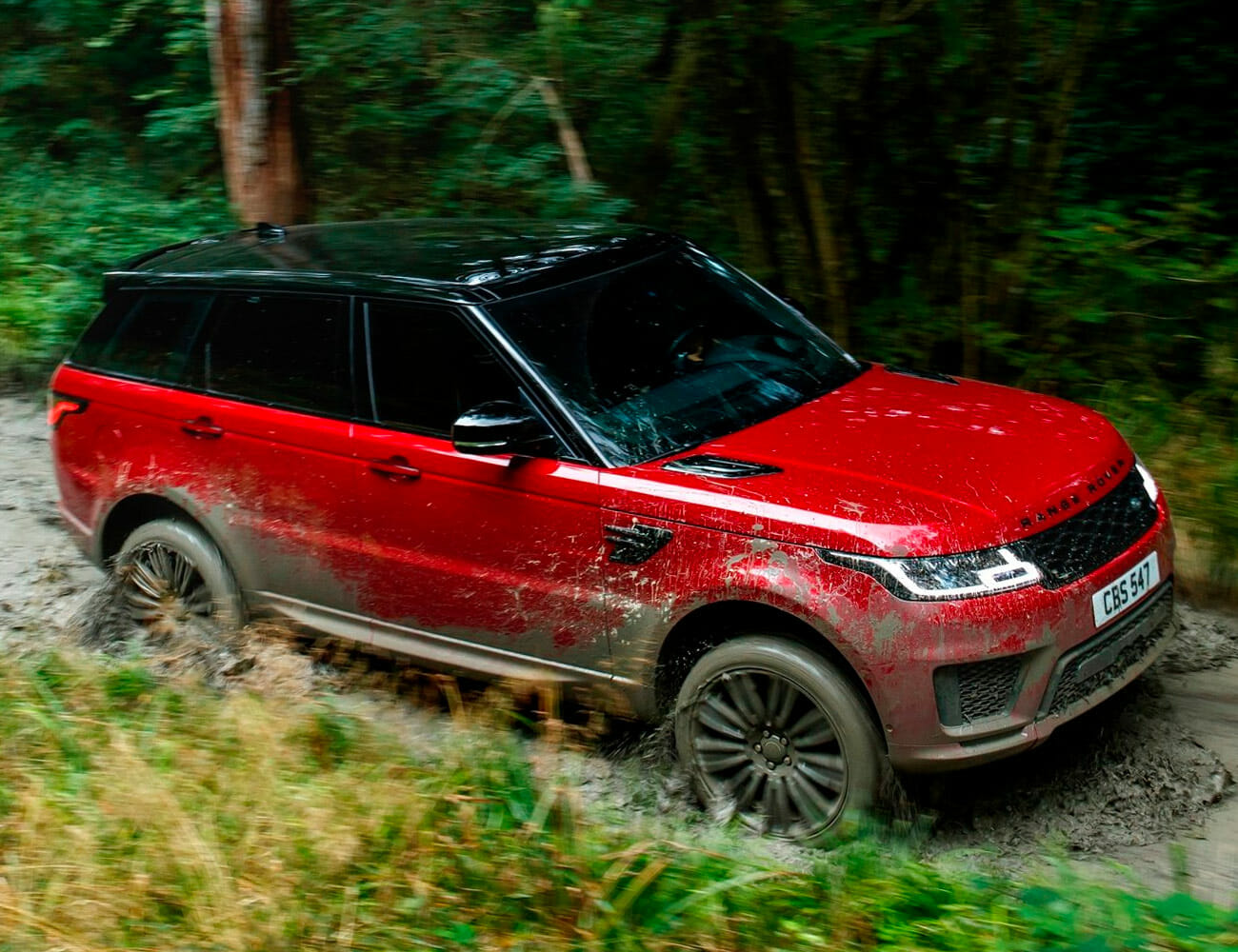
Range Rover Sport

The Range Rover Sport is the midsize Range Rover. It’s smaller and, yes, a bit sportier than the flagship SUV. It can be fitted with a third row of seats. The trim levels are similar to the Range Rover but with “dynamic” tags on lower-level trims. HSE Dynamic brings the 3.0-liter V6 to 380 hp. The Supercharged Dynamic trim upgrades to the 518 hp V8. Autobiography Dynamic is the luxed out edition. Like the Range Rover, the diesel can be had with SE and HSE trims. Buyers can opt for the plug-in hybrid with HSE.

The Range Rover Sport SVR ($113,900) is Land Rover’s on-road performance vehicle. It is the most powerful Land Rover with 575 hp from the 5.0-liter V8. It is the fastest Land Rover, acceleration from 0-60 mph in just 4.3 seconds. It also has some quite sporty features, including a carbon fiber hood.

Body Style: SUV

Seating: 5 or 7

Models:

• Range Rover Sport SE
• Range Rover Sport HSE
• Range Rover Sport HSE Dynamic
• Range Rover Sport Supercharged Dynamic
• Range Rover Sport Autobiography Dynamic
• Range Rover Sport SVR

Engines:

• 3.0-liter TD6 Diesel
• 2.0-liter P400e Plug-in-hybrid
• Supercharged 3.0-liter V6
• Supercharged 5.0-liter V8

Base MSRP: $67,050

Read our review of the Range Rover Sport SVR here.

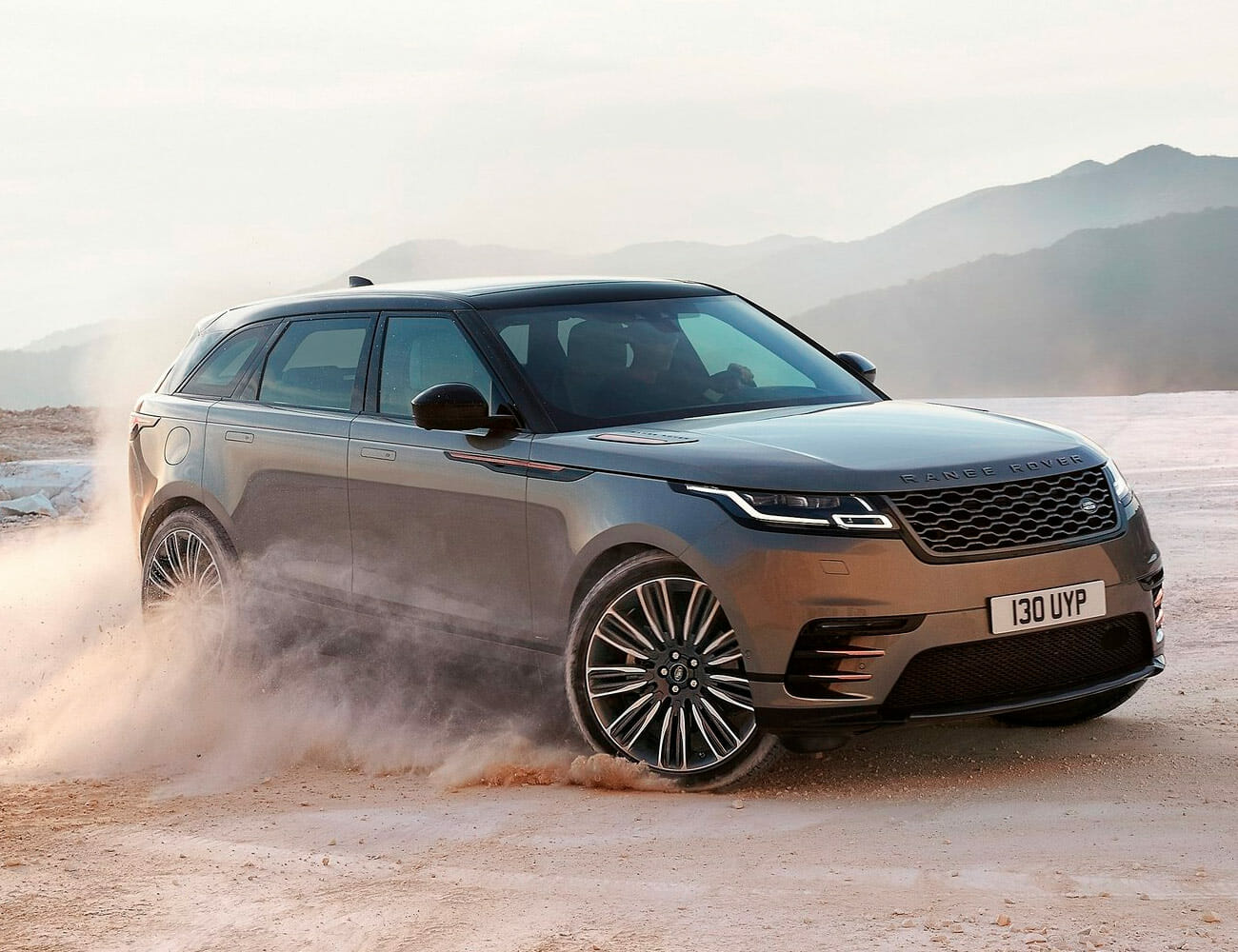
Range Rover Velar

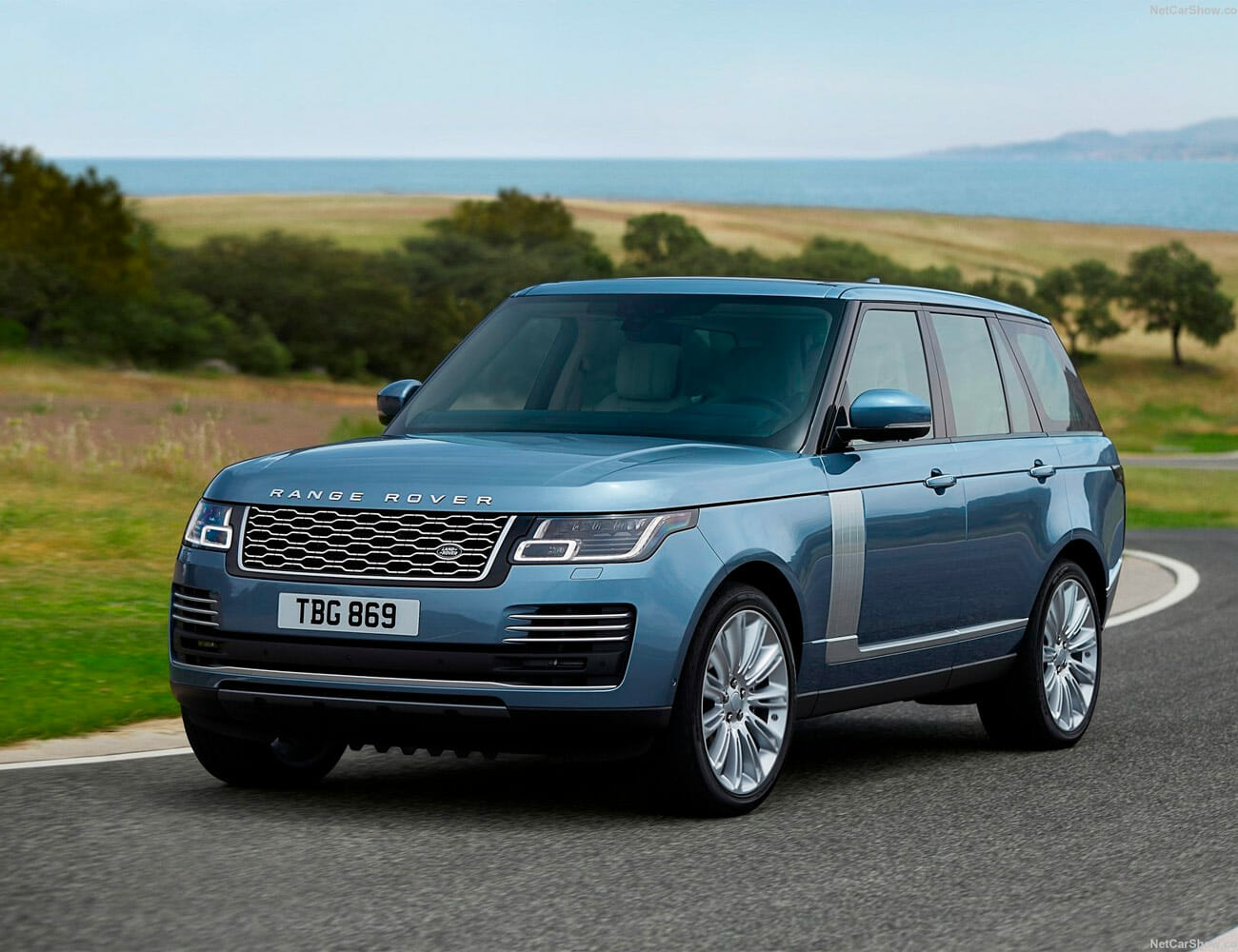
The Range Rover Velar is Land Rover’s more premium compact crossover SUV introduced in 2017. It’s sleek and aerodynamic with features such as recessed door handles. It is oriented toward on-road driving. It shares a platform with the Jaguar F-Pace. Land Rover describes the Velar as “avant-garde.”

The Velar comes in two broad styles, the Velar and the Velar R-Dynamic. The Velar comes in a base Velar and S versions. The Velar R-Dynamic has SE and HSE trims. Higher trims add luxury, tech and style features. Four and six-cylinder gasoline engines can come with any trim. The non-dynamic Velar can come with a diesel.

Body Style: Crossover SUV

Seating: 5

Models:

• Range Rover Velar
• Range Rover Velar S
• Range Rover Velar R-Dynamic SE
• Range Rover Velar R-Dynamic HSE

Engines:

• Turbocharged 2.0-liter inline-four diesel
• Turbocharged 2.0-liter inline-four
• Supercharged 3.0-liter V6

Base MSRP: $49,600

Read our review of the Range Rover Velar here.

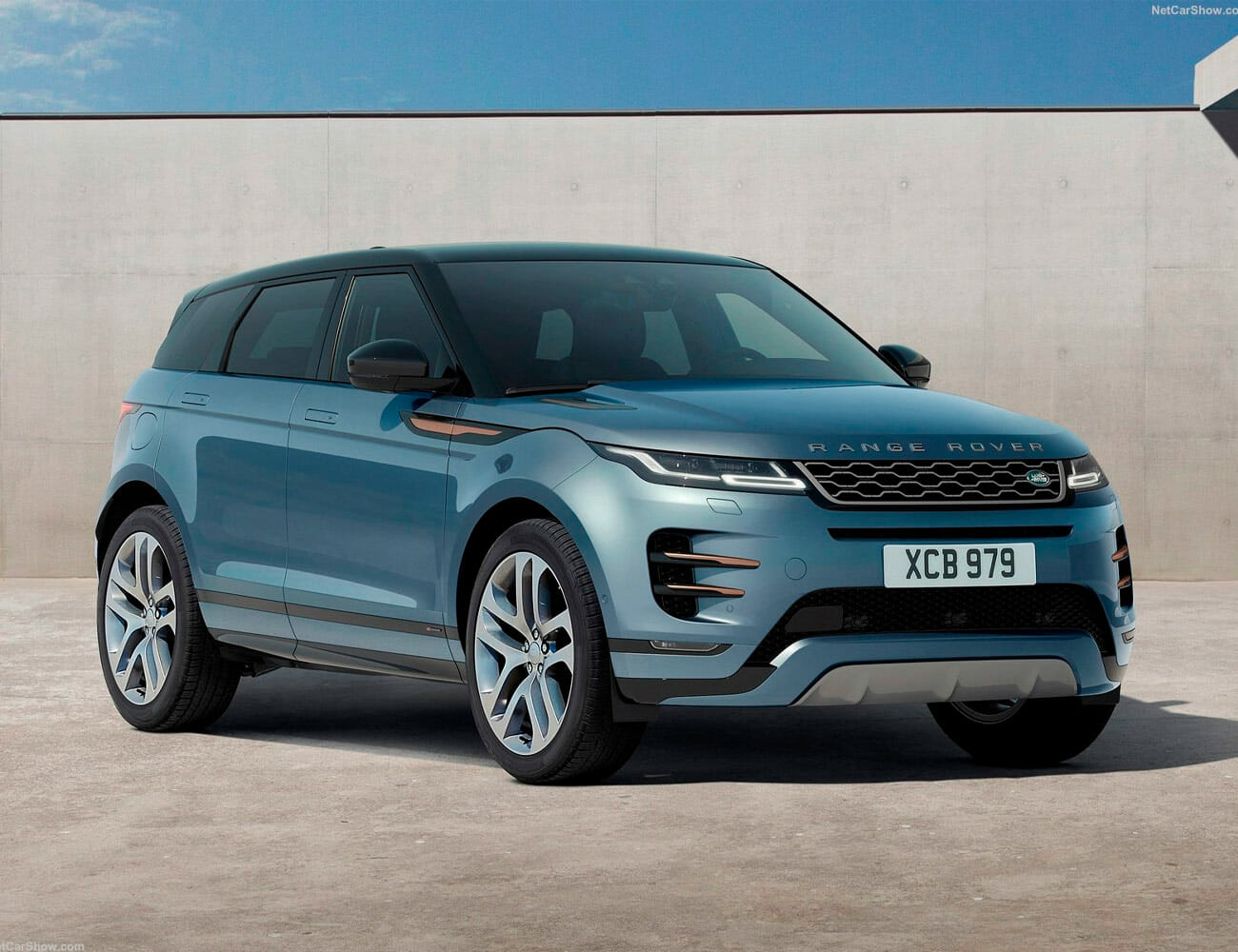
Range Rover Evoque

The Range Rover Evoque is a subcompact crossover. It’s the smallest Range Rover model with the cheapest base price. U.S. buyers can have it as either a five-door hard top or a three-door convertible. Every Evoque comes with a 2.0-liter I-4 Turbo. There are six hardtop trims (SE, SE Premium, Landmark, HSE, HSE Dynamic, Autobiography) and two convertible trims (SE Dynamic, HSE Dynamic). The HSE Dynamic and Autobiography trims of the hardtop get a bump from 237 hp to 286 hp.

Of Note: Victoria Beckham collaborated on a special limited edition of the Evoque in 2012. She sold her limited edition Evoque in 2016 after three years and 1,400 miles. Land Rover’s chief designer says that Mrs. Beckham overstated her involvement when she claimed to have designed the car.

Body Style: Crossover SUV, Convertible Crossover SUV

Seating: 4 or 5

Models:

• Range Rover Evoque SE
• Range Rover Evoque SE Premium
• Range Rover Evoque Landmark
• Range Rover Evoque HSE
• Range Rover Evoque HSE Dynamic
• Range Rover Evoque Autobiography
• Range Rover Evoque SE Dynamic Convertible
• Range Rover Evoque HSE Dynamic Convertible

Engines:

• Turbocharged 2.0-liter inline-four

Base MSRP: $41,800

Read our review of the Range Rover Evoque Convertible here.

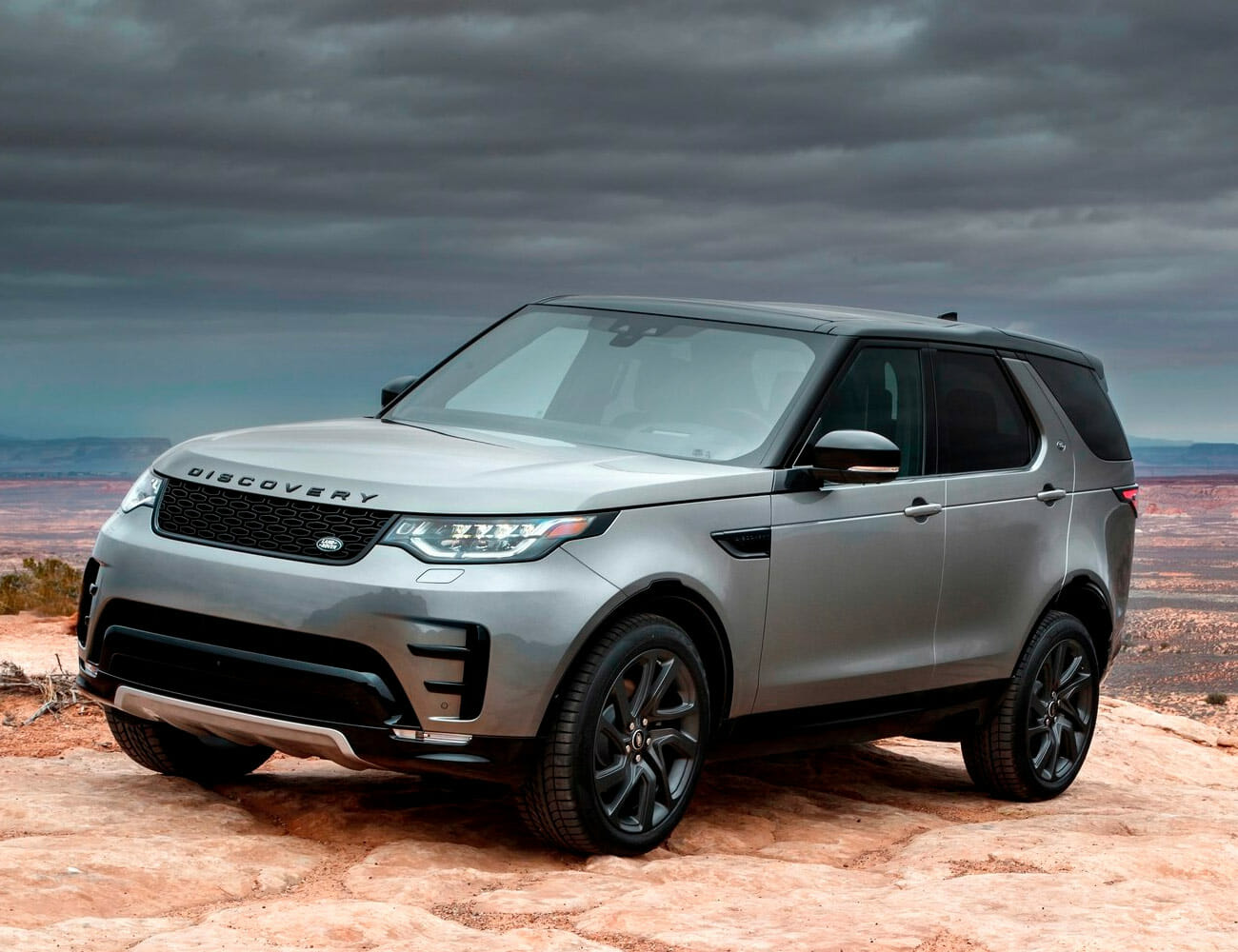
Land Rover Discovery

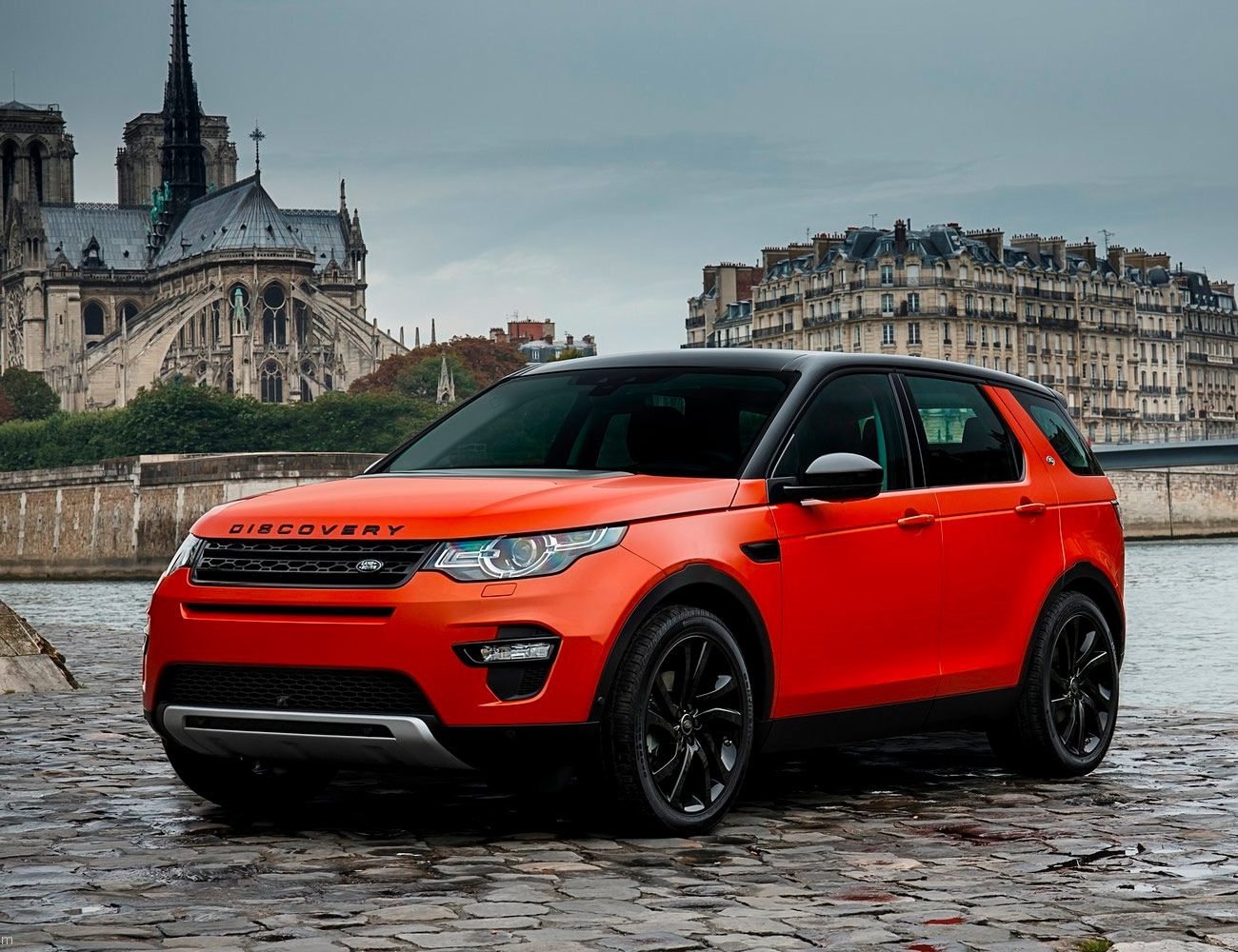
The Land Rover Discovery is Land Rover’s less premium, but still quite premium midsize SUV. It is less luxury-oriented and more family-oriented than the Range Rover Sport. It’s in its fifth generation since 1989. It comes with six-cylinder diesel and gas variants. Buyers can choose from three trims (SE, HSE, HSE Luxury). A seven-seat alignment is optional on SE and HSE trims and standard on HSE Luxury.

Of Note: Car folk will occasionally refer to the Discovery as “the Disco” and express annoyance about its asymmetrical back end.

Body Style: SUV

Seating: 5 or 7

Models:

• Land Rover Discovery SE
• Land Rover Discovery HSE
• Land Rover Discover HSE Luxury

Engines:

• Supercharged 3.0-liter V6
• Turbocharged 3.0-liter Diesel

Base MSRP: $52,600

Read our review of the Land Rover Discovery here.

Land Rover Discovery Sport

The Land Rover Discovery Sport is a compact SUV. It is the entry-level Land Rover with a base price starting below $40,000. There are four trim levels (SE, HSE, Landmark and HSE Luxury). HSE and HSE Luxury trims can opt for a 286 hp version of the 2.0-liter I-4.

Body Style: SUV

Seating: 5 or 7

Models:

• Land Rover Discovery Sport SE
• Land Rover Discovery Sport HSE
• Land Rover Discovery Sport Landmark
• Land Rover Discovery Sport HSE Luxury

Engines:

• Turbocharged 2.0-liter inline-four

Base MSRP: $37,795

Land Rover Defender

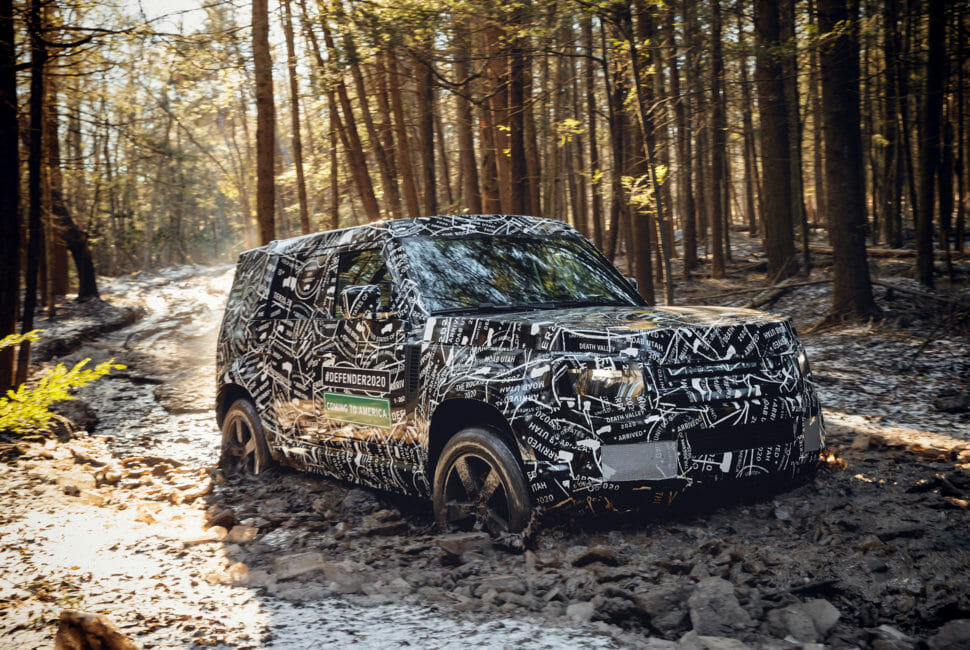
The Land Rover Defender is Land Rover’s original overland vehicle, the British equivalent of the Jeep Wrangler. Land Rover will debut a new version of the Defender for the 2020 model year. It will be the first time a new Defender will be sold in the U.S. since the 1997 model year. Above is an image of the forthcoming production vehicle, which Land Rover has begun to tease out.

Initially, the Defender was just known as “the Land Rover.” It was renamed “the Defender” in 1983 to differentiate it from other models. Its nearly 68-year production run ended in January 2016. It was produced with hard and soft tops, as models called 90 (93-inch wheelbase) and 110 (110-inch). Vintage Defenders have become popular and pricey. Modified custom restorations from companies such as E.C.D. Automotive Designs can stretch well past $100,000.

Body Style: SUV

Seating: 5 (likely)

Models:

•TBD

Engines:

• TBD

Base MSRP:TBD

Read what we know about the all-new 2020 Defender here.

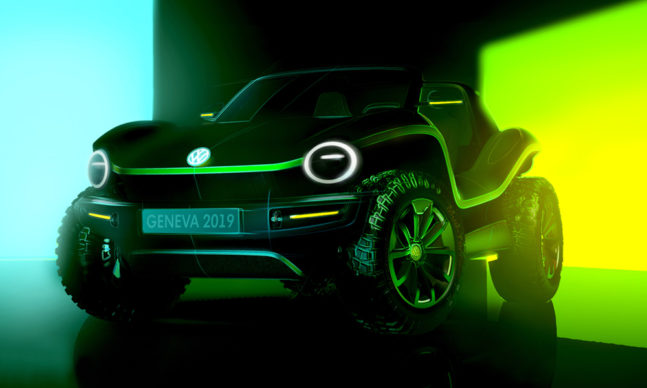
Volkswagen Is Making an All New Electric Dune Buggy Concept

Volkswagen just announced that they’re breathing new life into their lineup with a few teaser shots of a one-of-a-kind electric dune buggy. What they’re actually doing is resurrecting the idea of the Beetle-based buggy that…