
Porsche Cayenne EV Prototype Drive: The New 1000 Horsepower Electric SUV
[unable to retrieve full-text content]Porsche Macan Turbo EV & Taycan 4S Cross Turismo Review: EV Life is Better Than Ever
Living with an EV isn’t what it used to be. And after a week in Porsche’s latest electric offerings—the new Macan Turbo EV and second-generation Taycan 4S Cross Turismo—I’m more optimistic than ever that the tipping point has arrived. No hypermiling, no app-juggling charger hunts, just proper driving in proper cars. Both delivered on their promise of over 300 miles of range, even when driven as if they were combustion-engined. In fact, I barely thought about range at all.
Collected from Porsche GB with full batteries, both the Macan and Taycan showed range estimates of 300 miles. In reality, that number was remarkably accurate. My driving style didn’t change: air-con on full blast, cooled seats in the Macan, and every horsepower used as intended. I didn’t precondition the batteries or nurse them to chargers. I simply drove.
The Macan, finished in stunning Copper Ruby Metallic with massive wheels that looked spectacular but gave the ride a slightly brittle edge, felt every bit the Porsche SUV it claims to be. Control weights were perfect, the seating position spot-on. Despite its 2.6-tonne mass, the Macan Turbo EV moved with conviction, thanks to its 630bhp twin-motor setup and sophisticated chassis. On the road to Silverstone, I stopped at a Porsche dealership to charge, but spent more time taking photos than waiting for battery percentage to climb. Later, a 400kW supermarket charger delivered 32kWh in eight minutes, jumping from 15% to 51%, with the cabin cooling me in 35-degree heat, massage seats and all.
The Taycan 4S Cross Turismo offered a different flavour: a more dynamic seating position, less in-cabin tech frippery, and a marginally softer ride. It lacked cooled seats, which I sorely missed during London’s heatwave, but its drivetrain remained characteristically sharp. On my 50-mile daily commute, a five-minute top-up at a fast charger more than sufficed. Even without home charging in London, I never once experienced range anxiety or inconvenience.

The Taycan featured Porsche Active Ride, a new suspension system that quietly transforms the experience behind the wheel. Using high-speed hydraulic actuators at each corner, the system actively manages body movement, keeping the Taycan astonishingly level and composed—even during hard cornering or over poor surfaces. It enhances comfort, sharpens dynamics and helps disguise the cars’ weight. It’s also available with the latest generation Panamera.
That’s the real revelation. These EVs finally offer the ease and confidence of ICE cars, thanks to battery and infrastructure advancements. The second-generation Taycan uses a new 105kWh battery with improved cell chemistry, and the Macan’s 800V PPE architecture allows it to charge from 10 to 80% in just 21 minutes under ideal conditions.
But not everything is perfect. At over £100,000 as-tested, interior materials in both cars didn’t quite meet expectations. Some touchpoints felt plasticky and out of step with the badge on the bonnet. As with many EVs, both the Taycan and Macan face tough questions around depreciation and long-term desirability.
Still, there’s no mistaking the Porsche-ness. From the way they steer to the way they hunker down into corners, these are true products of Weissach. That the Macan, now in its second generation and 1 million units deep, has evolved into something so advanced yet still recognisable is impressive. With these cars, Porsche proves that the future can be electric with next to no compromise.
Road Test: 2025 Aston Martin Vanquish Volante – Helmet Off & Pray
[unable to retrieve full-text content]e46 BMW 3 Series Buyers Guide: The Perfect Recipe
[unable to retrieve full-text content]Review: 2025 Ford Ranger Raptor 4×4
[unable to retrieve full-text content]2025 Corvette E-Ray Review: Electrified Muscle Hits Europe & UK
[unable to retrieve full-text content]2025 Nissan Z – Complete Honesty
[unable to retrieve full-text content]Early Elegance: Mercedes 250 SE / W108 Drive
[unable to retrieve full-text content]Special Report: Lamborghini Supports Movember
This year Lamborghini partnered up with the Movember foundation to create awareness for men’s health. As part of this partnership Lamborghini owners all over the world met up for a one day drive to raise funds for this noble cause. We were there to attend the ‘bull run’ hosted by Lamborghini Munich.
About Movember
Movember is the leading charity changing the face of men’s health on a global scale, focusing on mental health and suicide prevention, prostate cancer and testicular cancer. Movember generate the most fame by men around the world growing moustaches in the month of November.
Movember was created because men on average die much younger than women. This is in part due to more dangerous work conditions but also generally unhealthier lifestyles and lack of prevention checks play a key role. Movember raises funds to deliver innovative, breakthrough research and support programmes that enable men to live happier, healthier, and longer lives.
In addition to tackling key health issues faced by men, Movember is working to encourage men to stay healthy in all areas of their lives, with a focus on men staying socially connected and becoming more open to discussing their health and significant moments in their lives. The charity’s vision is to have an everlasting impact on the face of men’s health.
Lamborghini Huracan EVO RWD
Lamborghini was kind enough to land us a bright orange Huracan EVO RWD to join 15 local Lamborghini owners for a drive through the German state of Bavaria. This rear-wheel drive Italian bull has a 5.2 liter V10 packing 610hp and 560Nm of torque. Thanks to a weight of only 1,389 kg the Huracan EVO RWD sprints from 0-100 km/h in just 3.3 seconds. At 325 km/h the top speed is reached.
The cockpit is very driver oriented with all relevant controles either mounted on the steering wheel or directly in reach without the need to take your eyes of the road. To add to the sense of experience you have to flip a red cover up to expose the start button and fire up the engine. Once you do the heavy base tone of the V10 fills the cabin. In Strada mode the Huracan is pretty quiet but once you switch to the sport or track modes it will become impossible to have a phone call and the V10 completely immerses you with all the emotions it has to give.
The Movember Bull Run
On this early Saturday morning in November the cold air penetrates my clothes as I walk to the Lamborghini dealership in Munich. The Lamborghini flags outside wave in the light breeze. But the sky is blue and the sun is about to pop-up from behind the surrounding buildings. The parking lot is already filled with ‘Bulls’ – from ‘my’ Huracan EVO RWD to several Huracans, Aventadors and a brand new Huracan STO that will be the lead car for today’s drive.
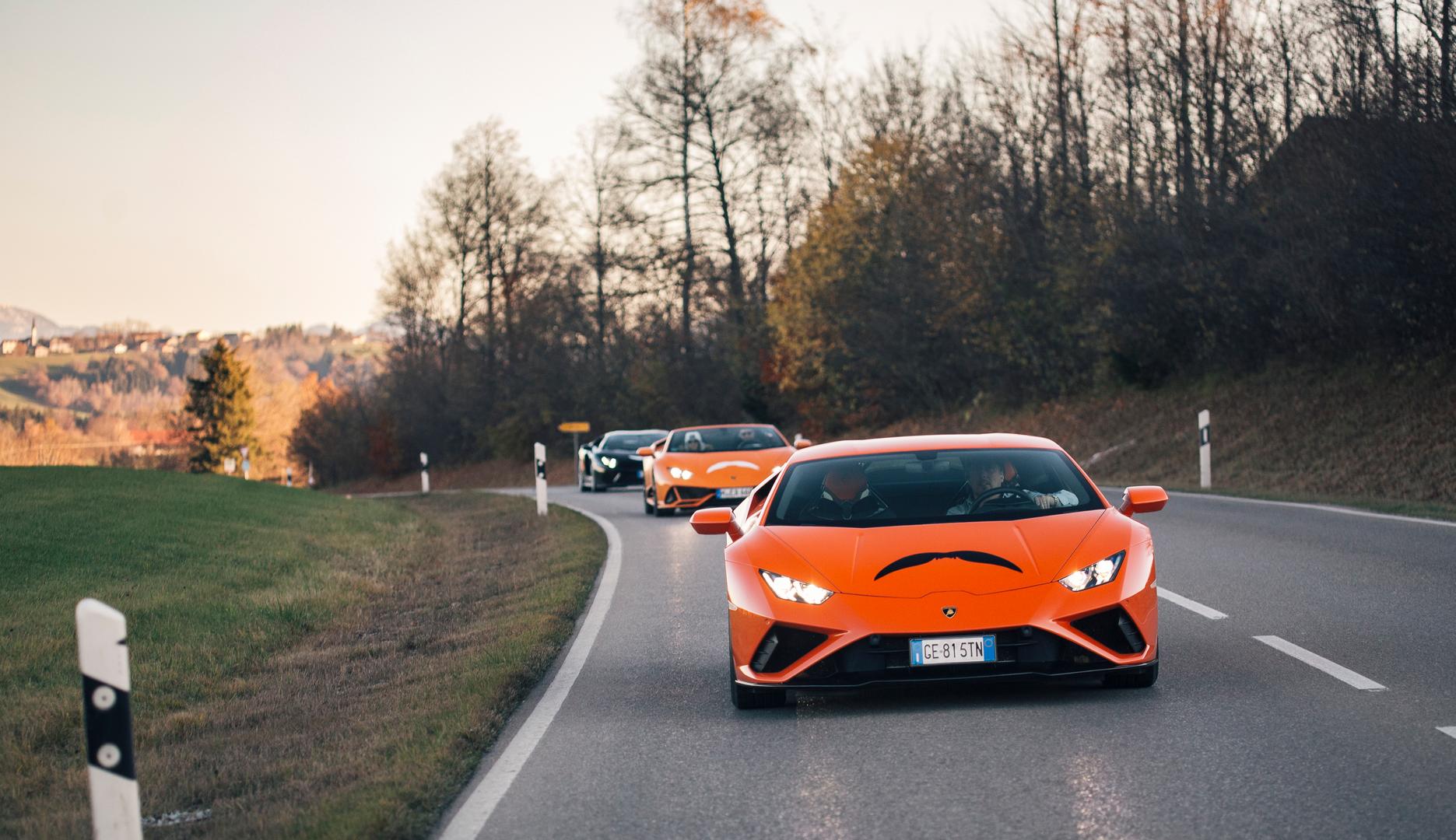
After a mandatory Italian coffee and short briefing the pack of 15 raging bulls sets in motion. The first part of our journey leaves the Bavarian capital behind and sees us heading west on the autobahn. Keeping the pack together goes surprisingly well and the sight of Lamborghinis front and rear traveling together is one to remember.
We leave the autobahn at Landsberg am Lech and here the first bystanders ask what the deal is with the moustaches on the front bonnet of our cars. Time to do what we came here to do and explain November in a few words. With barely time for a thumbs up and a wave we continue. Leaving the main roads behind we enter the twisty roads in the foothills of the Alps. The trees are colored in the typical pallet of fall made even brighter by the low stance of the sun this time of the year.
In the shade of the forest the roads are still damp so I have to keep taming the bull and wait with unleashing its ferocious power a little longer. Lamborghini developed a special performance traction control system for the rear-wheel drive version of the Huracan EVO to make sure it gets the power down and the opportunity to try it came sooner than expected. Due to some road works the group had to turn around after which I lost connection with the group along with another Huracan.
Clearly we missed a turn somewhere as chatter on the walky-talky disappeared. Luckily I knew the next way point so just continued down this beautiful twisty road with clear visibility and above all a dry surface. As I sprint from turn to turn and make my way through the gears I’m firmly pressed in the excellent seats. The solid click of the flappy paddles is followed by a loud scream of the V10 on every downshift. What a joy!
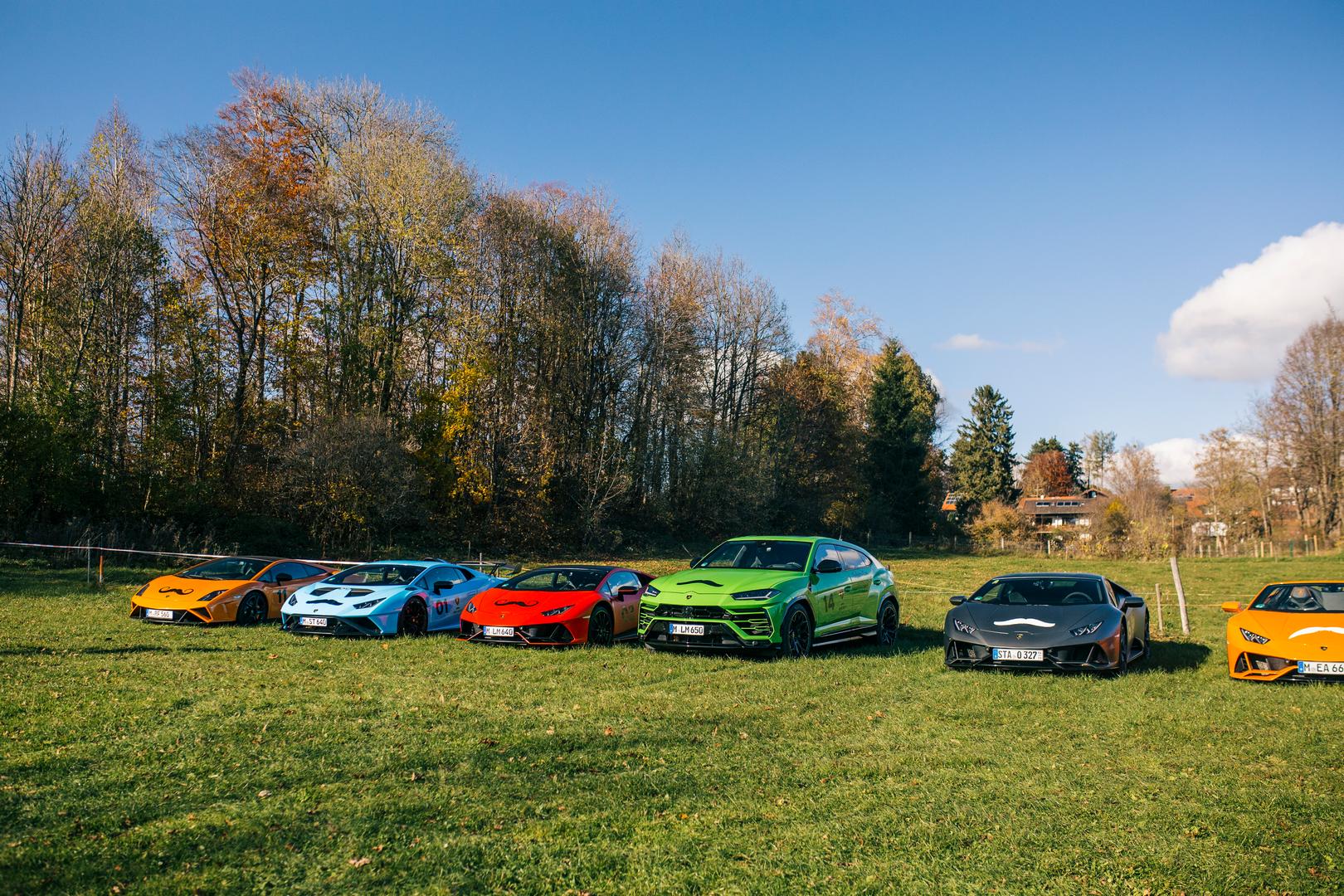
Soon we are reunited with the group and after a few photos continue our journey to lunch. Overlooking the Staffelsee with the German and Austrian Alps as backdrop we talk about Movember and the cause. Just like GTspirit readership the majority of the Lamborghini audience is male and all know someone who suffered from typical men’s health issues. But unlike female initiatives such as Pink Ribbon, the breast cancer awareness campaign, it is much less talked about among men.
After lunch we return to Munich once again in convoy. With the sun disappearing behind the trees the Aventador in front of me is showing flames from its exhaust regularly. It is an unusual sight on the countryside – a convoy of 15 Lamborghinis passing by. The responses from the few bystanders are mixed, some cheer and show thumbs up, others can’t help themselves but release some negative comments just at the sight of these exotic cars. Sad but true that the supercar is becoming more and more polarising.
Every year we make a Christmas donation at GTspirit and this year we have chosen Movember as our charity of choice. It was an honor to be part of over 1,500 Lamborghini drivers worldwide taking part in Bullruns organised by their local dealerships to raise awareness for Movember. For more information about Movember or to make a donation please visit movember.com.
Review: Dodge’s Delicious 2021 Durango SRT Hellcat AWD
Last year when we drove the the Dodge Durango SRT 392, we came away suitably impressed. The 392 had all the space and utility of the Durango with the heart and soul of a muscle car. It was the best of all worlds and we enjoyed it thoroughly. Still…there was a nagging desire in the back of our minds for something a bit…more. Not necessarily more space or more comfort or more amenities, but more…power. More…speed. More…untamed bottled rage. We wanted to see the Hellcat engine dropped into the chassis. Dodge must have been reading a few pages ahead of us because they were already hard at work at making our yet-to-be-realized dreams come true. Now that the dream has become reality, we got to spend some time putting it through the paces.
Dodge delivered a Redline Pearl example with twin black racing stripes to us. It looked meaner than the 392. I don’t know if it was the deep, sharp splitter or the huge cold-air intake on the wide hood flanked by enormous heat vents, but something about it seemed to emanate serious speed. Maybe it was the large twin exhaust pipes sticking out from beneath the tail. Or the chrome Hellcat badges on the flanks. Maybe it was all those little clues rolled up into one serious-looking speed wagon.
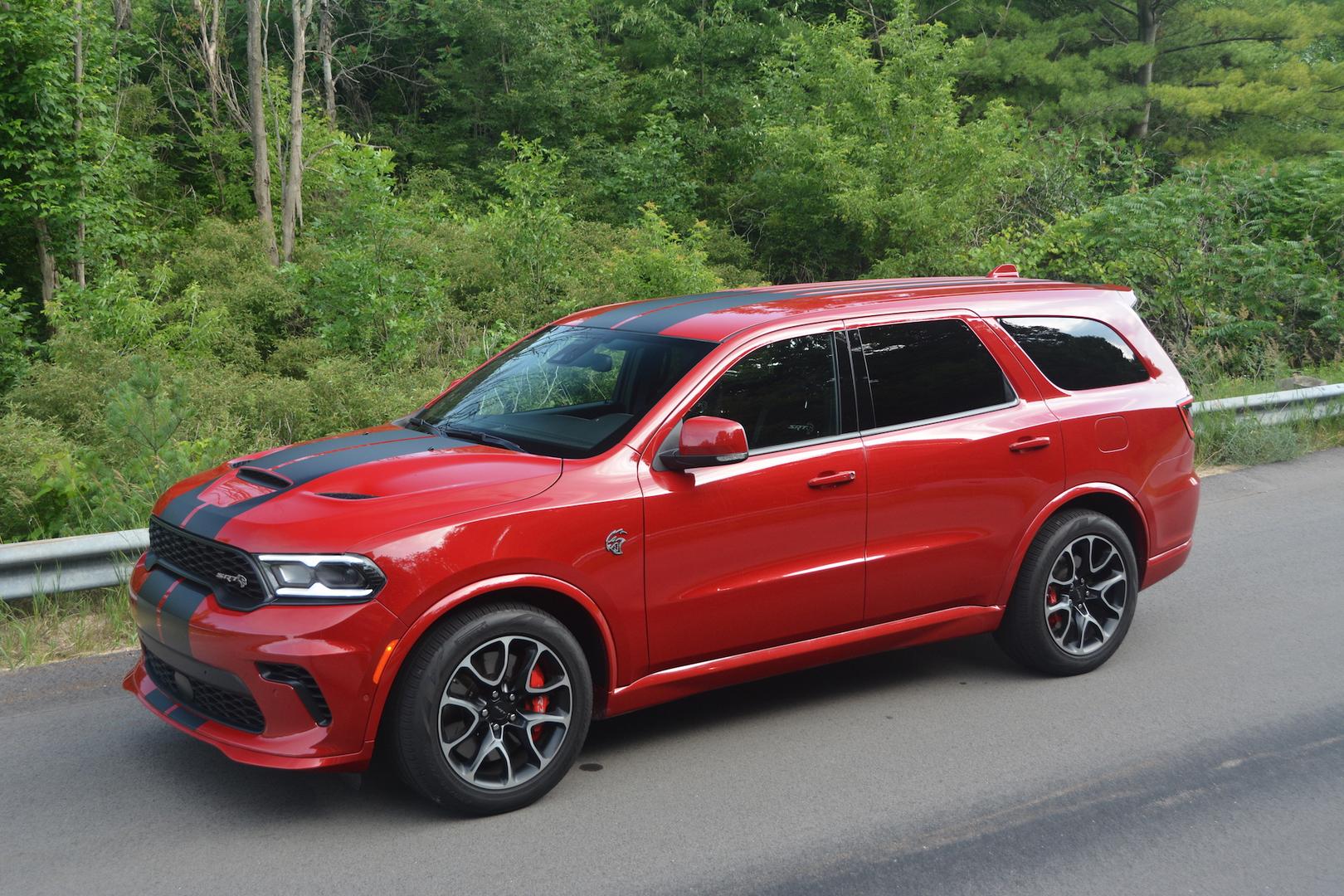
Inside was a mixture of monochromatic materials: black bolstered leather and suede seats with “SRT” and the Hellcat logo, black carpeting, black console and dash, with some chrome trim bits and the inimitable green and black of pressure-molded carbon fiber. With two extra rows of seats, there’s seating for six. All of it folds flat for enormous cargo capacity. The seats were quite comfortable, and with both heating elements and forced air ventilation you’d be hard-pressed to ever find yourself uncomfortable, no matter how long the trip might be.
Under the hood lay the legendary Hellcat engine, that 6.2L supercharged Hemi V8 that generates 710 hp and 645 lb-ft of torque. It’s the stuff that dreams are made of and at full-honk those dreams are fulfilled. The power is routed through an 8-speed automatic transmission connected to a set of paddle shifters behind the wheel and is transferred to the pavement through all four wheels. That’s right, the Durango SRT Hellcat is a full-time AWD, pavement-wrinkling land rocket. Plant the throttle and it launches, clicking through its gears until the gearing and aerodynamics can’t overcome the wind resistance any longer. What speed is that at? I’m not sure because we weren’t about to attempt those speeds on public roads but Dodge tells us it’ll top out over 180mph. We CAN tell you that 0-60 mph happens in under 4 seconds. We tried and proved that over and over and over again. Y’know…just for scientific research purposes.
Reigning in all that speed is done by massive Brembo performance brake calipers clamping down on huge dinner-plate sized two-piece ventilated brake rotors. The brakes are a little grabby but they do an exceptional job of scrubbing speed off when you’re coming in too hot. Surrounding the brakes are unique 20” wheels shod with Pirelli performance tires.
There are several drive modes available to choose from – auto, sport, track, tow, and snow. Each influences the behavior of the engine, the transmission’s shift speed, the all-wheel drive system, the steering, the suspension, and the stability control.
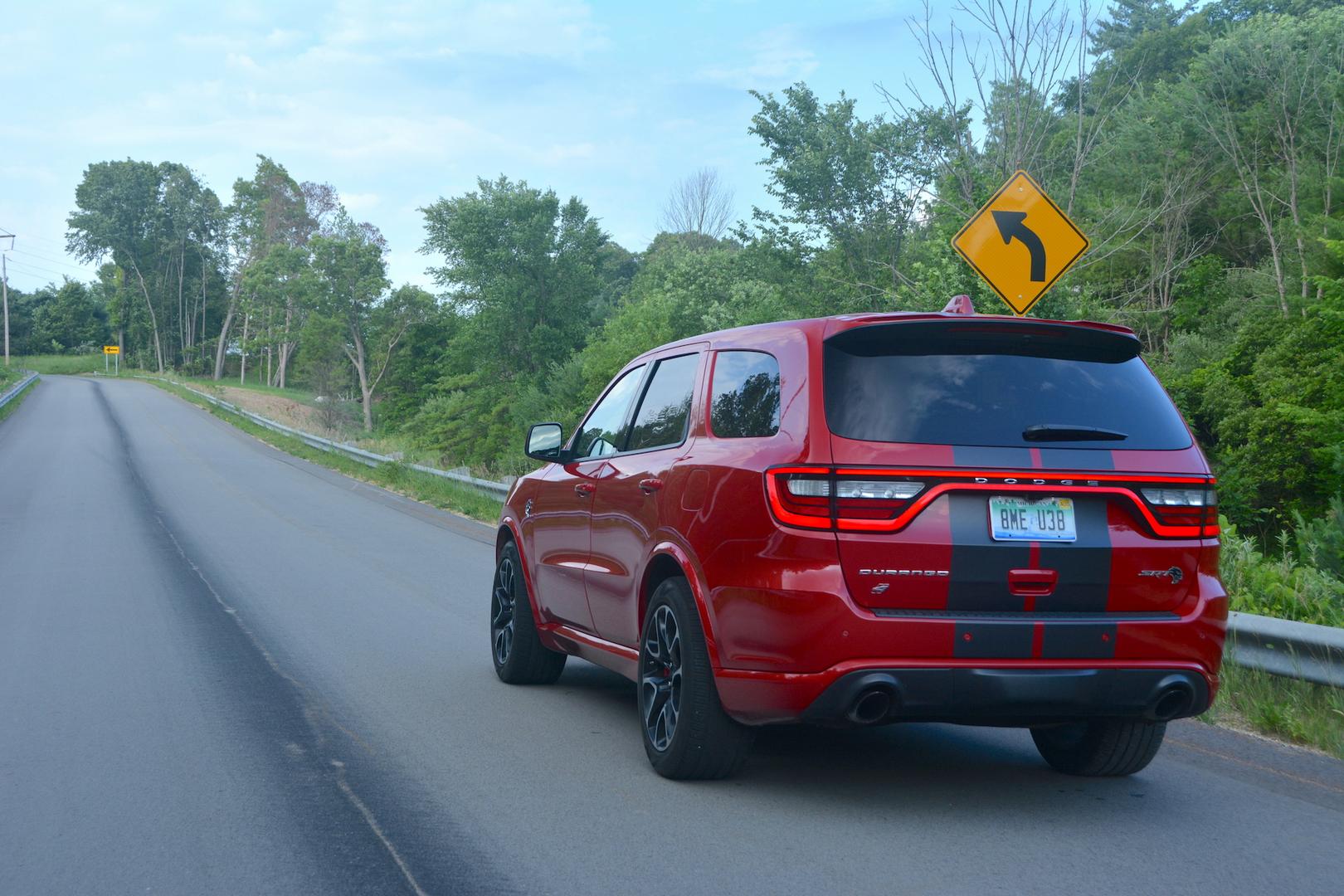
Driving the Durango SRT Hellcat is quite an experience. While acceleration is intoxicating and handling is impressive, the steering feels a little lighter than we’d like. A little more weighting would be nice. Given the kid-carrying capacity of the Durango though, perhaps Dodge is expecting moms to be the primary drivers of SRT Hellcat Durangos. Lucky moms! And while the engine generates oceans of torque and light-years of speed, the exhaust can get a little boomy inside. We noticed this with the 392 version and hoped that the SRT Hellcat model would eliminate it but it’s still there and it can get uncomfortable on the eardrums at certain revs.
The EPA estimates that the SRT Hellcat Durango will get 17 mpg on the freeway and 12 in the city. We were in the ballpark. After driving the Ram TRX, this iteration of a Hellcat-powered truck actually seemed efficient. But let’s be honest, if you’re buying a Durango Hellcat you already know you’re going to burn a lot of fuel. Worth it though.
The Hellcat SRT Durango starts at around $81,000. Ours optioned out around $91,000. That’s a lot but if you’re looking for the ultimate family hauler, boat tower, and unusual track weapon, this is your truck.
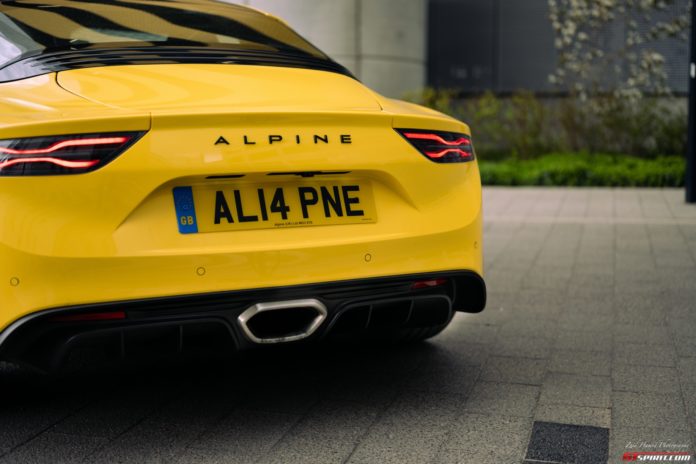
2021 Alpine A110 Colour Edition Review
Sports cars built with driving pleasure as their primary purpose are few and far between these days. Yes, there are super cars available in abundance, but sports cars without six-figure price tags are becoming rarer as business cases and the green revolution begin defining the industry. As a result, the world of enthusiasts was taken aback when Renault revived the name of a 70’s rally legend. The Alpine A110 was born again at the 2017 Geneva International Motor Show and journalists from across the globe salivated. Why? Well, with an 1,110 kilogram kerb weight, the A110 was the lightweight sports cars we had all been waiting for.
Initial road tests hailed the Alpine as a car that redefined the sector. A couple of years later, I have the chance to see what all the fuss was about. I’ll be honest, the first impressions were not good. The Alpine wears no Renault badges, but when you get in the quality is what you would expect in a £20,000 Clio, not a halo product designed to rival a Porsche Cayman which is built to feel as good as a Panamera or 911. Some of the plastics are sub par, the infotainment screen escaped 2009 and some of the controls, such as the cruise control switch on arm rest, are frankly bizarre. The Recaro seats are brilliant but outclass the rest of the cabin – it really feels like a mix of many different automobiles.
As ever, I spent the first day with this press car doing what I do on my day-to-day routine, trundling around the city getting coffee and running errands. The A110 feels small on the road which is surprising and pleasing in equal measure at a time when a 992 911 occupies almost every millimetre of a European lane. Being the Colour Edition, the A110 I am driving features 4mm lower suspension and 50% stiffer spring and 100% stiffer anti-roll bars then the standard A110 and it did feel a touch too firm at low speeds on poor surfaces. As you may have gauged, I was not understanding what the allure of the little sports cars was. I was more annoyed that there was no cabin storage space (not even door bins), the infotainment was slow, laggy and was not intuitive, that the front boot was as deep as an over baking tray and that the rear boot would barely fit a thick coat let alone any substantial shopping. Being mid-engined, the boot gets very warm adding to the issues. The front truck release is in the passenger footwell and is a struggle to reach from the driving seat, this is borderline comical.
Day two is all about exploiting a cars dynamic capabilities, finally the Alpine A110 came into its comfort zone. Sport Mode engaged, the punchy little 4-cylinder becomes more vocal, the steering weights up and the car feels much more engaging. Hold down the wheel mounted Sport button and track mode is engaged, the entire dash layout changes to display a whole host of information from steering angle to g forces. The ESC is slackened and this is where this 288bhp pocket rocket starts to make sense. Lightness is the overriding sensation, as is feel through that fixed bucket seat. The Getrag DCT even starts to feel well suited to the engine as the shifts are quick and accompanied by giggle educing parps on shifts. With 320Nm to pelt such a light car down the road, the sensation is speed is entertaining.
There is a balance and connection that is encouraging and brings confidence to push harder and harder as the drive becomes all the more rewarding. The steering is quick, there is little feel but enough to understand where grip levels are. With the ESC in track, the rear end comes into play too. Remember the ride I complained about? Well, despite not having adaptive dampers, the ride becomes much more refined as the speeds build. The entire package comes together to result in one of the most satisfying and exiting cars I have driven in a long time with fabulous poise. The feeling of lightness will stay in my memory for a long time to come.
Yes, it may not be practical or cheap (£62,958 as tested) but it offers something no other car on sale today aside from a Lotus Elise can come close to matching. I tip my hat to Renault for being so dedicated in their pursuit of driver engagement. I hope that many people get behind the wheel of the A110 to understand what the engineers in Dieppe have managed to achieve, this car is magnificent.
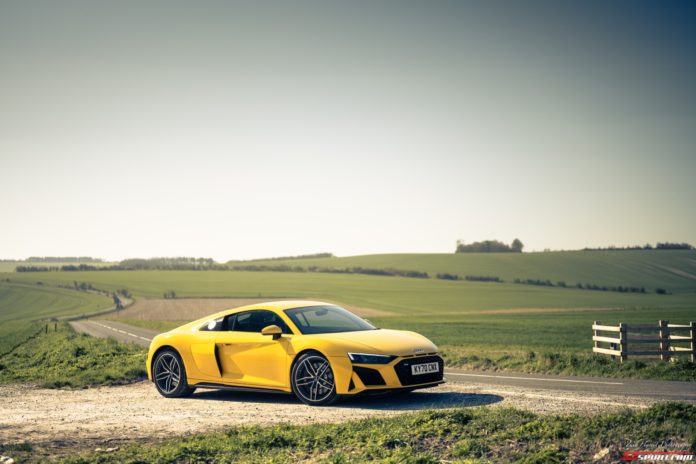
2020 Audi R8 Rear Wheel Drive Review
It is hard to believe that the Audi R8 is almost 15-years-old, seeing the first generation V8 on the road is still a treat – few cars have aged as well. Since its inception, the R8 has morphed from a mid-engined sports cars battling the likes of the Porsche 911 Carrera range, into a red blooded supercar with a heart shared with a Lamborghini and a price tag the makes it a very different proposition from the car Tony Stark used to daily. The current R8 range has shrunk to just three options, gone are the V8 or manual options. All powered by 5.2-litre V10 engines and available in Coupe and Spyder forms, perspective buyers can have the full fat Performance Quattro with 612bhp, the semi-skimmed 562bhp V10 Quattro or the entry level model that is the subject of this review, the V10 RWD with ‘just’ 533bhp. The difference is price between the range topper (£144,950) and the RWD (£114,435) is noteworthy and arguably makes the RWD on of the most attainable entry level supercars on the market, but does it make it any less desirable?
To me, the R8 RWD is the most compelling R8 in the current line up. The Performance variant is great, but to me it was too easy to find the limits, something I discovered just a handful of laps into my stint putting it to the test at the fearsome Ascari Race Resort in Spain in 2018. With all of the driver aids disengaged understeer would creep in earlier than expected before suddenly transitioning into snap oversteer. Admittedly, things were much better when pushing the AWD car when fitted with Cup 2 Michelins and not the PS4S.
The first impression of the 2020 R8 Rear Wheel Drive is that the front feels more immediate and communicative than the rest of the range. That being said, the numbness of the steering has not been cured, yes, you can feel a little more of the road, but there is a distinct lack of understanding of how the rubber is interacting with the surface. But let’s be realistic, this is not a Porsche GT3, the R8 is a car with a much broader appeal. Where the GT3 with its (optional) fire extinguisher, cage and harnesses is set to drive to a track day, set immense apex speeds and then drive you home, the R8 is better focused to being the daily driver that will double as the stylish supercar that will turn heads outside your favourite restaurant. There are no adjustable dampers (optional on the AWD variants) so the ride has to be as well suited to a country road as the city centre speed humps. It is well judged but it is a touch unrefined at lower speeds. Anything above 50km/h is well damped, below that it is what I would describe as ‘jiggly’. The interior is well designed and fairly spacious. Whilst the cabin still feels modern, the MMI does feel dated, CarPlay is a bonus but the entire interface does feel a generation old.
But what is it like to push on a fast flowing road? I drove the banana yellow (technically Las Vegas Yellow) RWD for 600 miles, most of which were on some of the best roads in England. Once you learn to modulate the grabby brakes and not expect to be able to feel the surface of the road you can start to find the limits of the 2020 Audi R8 Rear Wheel Drive. The experience is dominated by that mighty 5.2-litre V10 and the transmission. With a redline at 8,500 and no turbochargers in sight (woohoo!) you really have to eke out the revs. Nothing really happens before 3,000 but then things get interesting.
As you reach 4,000 the V10 really starts to come on song. Hang on and relish the bark of the V10 as it reaches peak torque (540Nm) at 6,400rpm and peak power all the way up at 7,900. By the time you’re at 8,500 you’ll be hurtling towards the next corner having enjoyed one of the greatest automotive symphonies in production today. As you hit the brakes (ceramics are not available on the RWD) you’ll pull on the disappointingly small and plastic downshift paddle and enjoy the yelps of the engine as the 7-speed DCT makes quick work of the shifts. When left to its own devices, the transmission is overly eager and seems to constantly be shifting, but the changes are smooth and seamless. Beware of kick down in the auto modes, the gearbox, alarmingly, likes to downshift into the redline.
The Pirelli P Zeros fitted to my test car and mighty and breaking traction is easier said than done. The traction control system is very quick to cut the power and stop any hooliganism so I was forced to set the traction control to its halfway/dynamic setting which was well judged and allowed a little freedom when really pushing on. But even with all of the systems off, this mid engined layout combined with the Pirelli rubber meant that the RWD would usually fire itself out of a corner with little to no drama unless you’ve got a very open space to let the R8 off the leash. Find some space and the R8 feels fast too, 0-100 is done in 3.1 and the 2020 R8 Rear Wheel Drive will keep going until it reaches 324km/h.
The 2020 Audi R8 Rear Wheel Drive is the cheapest R8 in the range, but it offers more excitement and entertainment than the other cars in the range. Day-to-day it is just as usable, practical and enjoyable as the all-wheel-drive models, aside from the jiggly ride. The engine is marvellous and that alone is a reason to seriously consider this car, after all, it seems this and the RWD Huracan are the only two-wheel-driven supercars armed with a V10 on sale. It may not be the most thrilling, driver focused supercar on sale today, but that does not mean that it is not a joy to jump into a drive.
2021 Genesis GV80 Review: Genesis Produces Another Winner
Over the last few years, we’ve had the opportunity to drive just about every iteration of Genesis luxury car they’ve introduced, from the limousine-like G90 to the sporty G70 and we’ve been impressed with them all. Hyundai, which the world once viewed as “entry level,” has given it’s luxury brand a free hand and Genesis is making better built and better thought-out cars than Lexus. The GV80, their first SUV, is no exception.
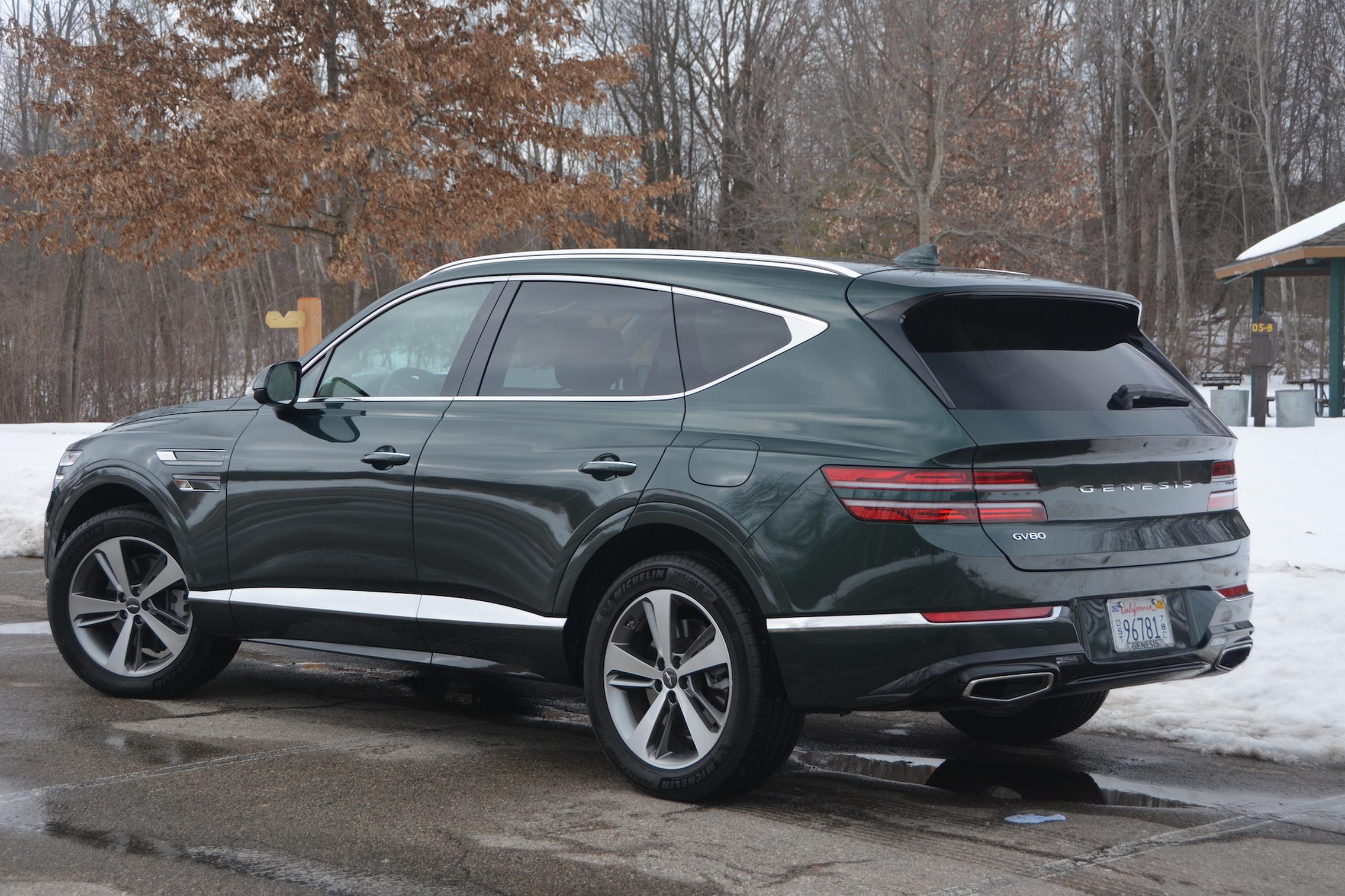
Available as a 2.5T AWD, a 2.5T RWD, and a 3.5T AWD model, we opted for the most sporting of the bunch – the 2.5T RWD. Three trim levels were available on the 2.5T RWD, Standard, Advanced, and Prestige. We opted for the Prestige, because hey – who doesn’t love bells and whistles? So Genesis dropped off a Cardiff Green Metallic 2.5T RWD Prestige for us to spend some time with. Like any Genesis, we immediately wanted to do a cross-country road trip with it as the comfort level lends itself to road tripping so well, but with over a foot of snow and freezing temperatures, we stayed local and safe.
It has a very fresh look to it. There’s an underlying hint of aeronautic inspiration to the design that we liked. The large front grille appears to mimic the spread wings of the Genesis badge above it; the split double-headlights and split side-marker faux-vents on the fenders coordinate with the lower front valence intakes for an aggressive and sporting look. They also match up to the taillights, carrying the theme through the entire design. The pinched waist and flared fenders give it a taut, muscular look. In a world of copycat SUV designs, the GV80 stands out like a lit road flare.
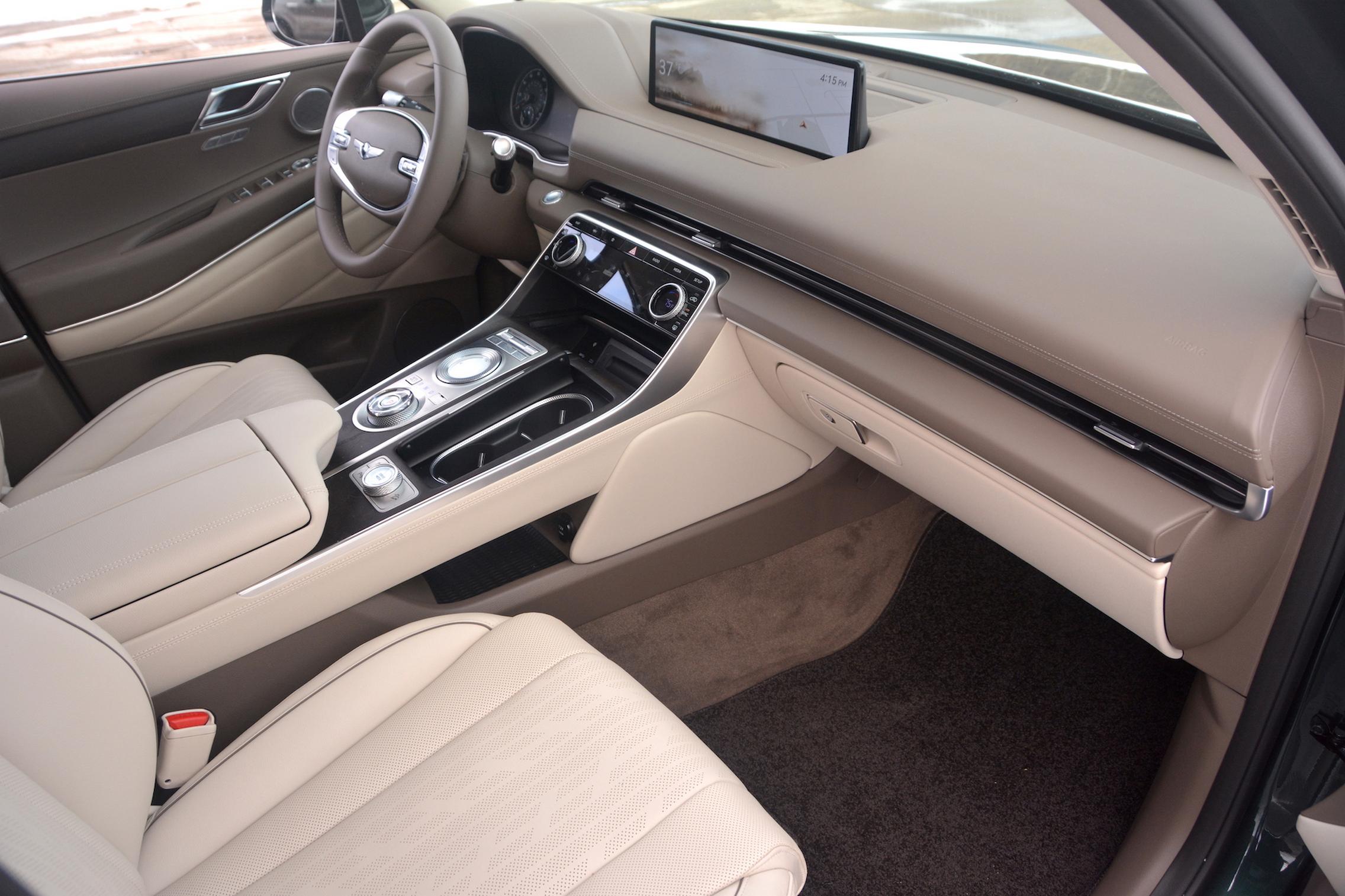
Inside is, as expected, the Genesis luxury we’ve come to expect – but we weren’t expecting this degree of luxury. The GV80 has a jeweled interior that is both inviting and tantalizing. The kind of interior you only find in the most expensive cars. From the satin-chromed switchgear to the jewel-like machined-aluminum-wrapped lucite knobs, the GV80 is full of thoughtful design cues and embellishments. Accent lighting lines run throughout the cabin. Dark woods line the center console. The leathers are top-notch and the stitching is nearly perfect. The seats are comfortable, as well as part of the climate system being heated and ventilated. The infotainment system is easy to use and has an enormous screen on the dash that also displays beautiful misty landscape scenes when not in use, giving a sense of serenity and a calm appreciation for nature. It lacks third-row seating but that’s fine – there’s really only enough room for second-row seating and it’s nice to have some legroom and usable storage space. I suspect that will appear in a GV90 model someday soon anyway.
As you can tell by the name, it has a 2.5L turbo-charged four-cylinder engine under the hood, linked to an 8-speed automatic transmission with paddle shifters behind the steering wheel. It makes 300hp and 311 lb-ft of torque. The engine has a great sound to it and moves the 4600 lb vehicle along quite quickly. It’s also a very flexible unit, providing plenty of power in nearly any situation, from leaving a stop light to passing other cars. The eight speeds do their best to make it efficient as well, and it largely succeeds. We only burned through a tank and a half of fuel the week we drove it.
The suspension has a multi-link arrangement in both the front and rear, with a self-leveling system for when carrying heavy cargo. The suspension gives the sizable SUV some moves that you wouldn’t expect and it feels very agile and confident in hurried cornering maneuvers. This is the kind of SUV you could hustle down back country roads exploring the countryside. The brakes are 14.2” anti-lock four-wheel disk brakes and they do a great job of stopping the GV80 from speed, while also giving intuitive feel around town in slow speed settings.
One of the things we’ve always like about Genesis is the little touches you discover as you drive it and live with it. Our favorite new technology has to be the automatic bolsters on the front seats. During spirited driving, the bolsters automatically expand to hold you in place better. As you slow, when coming off the freeway onto an off-ramp or braking for a stoplight, the bolsters deflate to allow you more range of motion. It was a thoughtful touch that made us giggle like kids the first time we experienced it. Or when we got home late and turned the car off in the driveway and the accent lighting strips continued to glow throughout the cabin as we gathered up our things before exiting the car.
Genesis estimates that you’ll get about 25mpg on the freeway and about 20mpg in the city. That’s about what we experienced. Not great but not terrible. Decent for the size and weight of it.
The 2.5T RWD starts at $48,900. The Prestige runs $57,050. Given the prices of today’s cars, and the unique design and fantastic interior of the GV80, we’d say that’s a bargain. Especially for such a safe and comfortable SUV. Beautiful car, Genesis. You’ve created another winner.
2021 Lexus LX570 Review: Luxury V8 SUV with Land Cruiser Genes
The Lexus LX570 is a gentle bruiser. To look at it, you’d suspect it was up to something – deep, black paint, black wheels, tinted windows – like one of the men-in-black that shows up in the middle of the night to issue a veiled threat against speaking out about something you shouldn’t have seen. Yet it coddles it’s passengers in luxury and a soft, relaxing ride like a dutiful butler working to make his lord more comfortable.
Maybe it’s the monochromatic appearance that makes it look so large. Maybe it’s the third-row seating. Maybe it just IS large. The monochromatic appearance does make a bold statement. Other than a few grey accents and it’s chrome light accents, it’s like a large, mildly-threatening shadow in the night. It rides on black 20” wheels and towers over most other vehicles on the road.
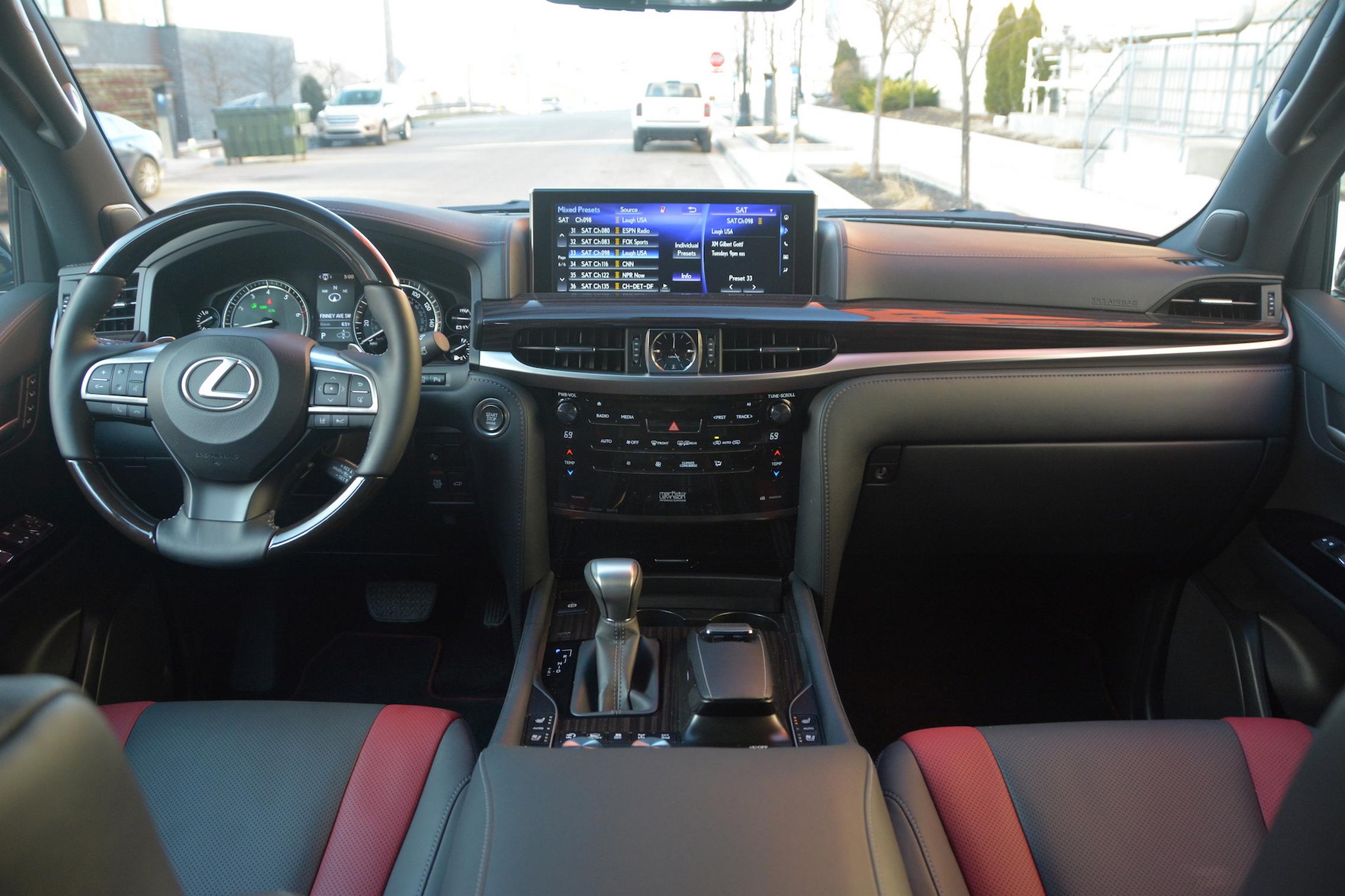
Inside everything is black leather, black plastic, black wood, and black carpet with red leather and satin-chrome accents. The interior is quite comfortable, and once you pull yourself up to the second floor, er- into the cockpit, you find you’re happy to stay there for extended periods of time. The seats are immensely comfortable, electrically adjustable, and both heated and ventilated. On our vehicle, we had the luxury package, which adds heated seating to the 2nd row outboard seats and the 2nd row is power-sliding and the 3rd row is power folding, coming to rest up against the outside walls of the truck. The view of the road and passing landscape is unequaled by anything short of a Peterbilt semi truck or large RV. You look out over other cars down the road into the distance, which gives you a great field of alertness.
There are also some knobs and switches in the center console for switching between 4H (four-wheel drive High) and 4L, as well as hill-descent control, rock-crawling settings, and suspension height settings. I can’t imagine anyone ever taking a Lexus LX570 out exploring Moab or the Rubicon Trail, but if they wanted to they certainly could. The technology is there and at the ready. We didn’t even have snow while we had it so it played the suburban transporter role and it did it magnificently.
Under the hood is a 5.7L 32-v V8 making 383 hp and 403 lb-ft or torque. It moves the enormous truck along decently, though it’s far from sports car territory. It will, however, tow up to 7000 lbs, so there’s that. Its 8-speed automatic transmission is geared for utility – towing, off-roading, and carrying heavy loads of gear. Still, slip it into Sport S or Sport S+ mode and it’ll surprise you but that’s not it’s intended role.
The adaptive suspension with height control does a great job of soaking up bumps and providing a comfortable ride while also giving it some adaptability in adverse conditions. The brakes are strong and intuitively responsive.
It’s really amazing to me how much technology they’ve crammed into this SUV. Between every comfort device known to man, from the adjustable steering wheel to quad-zone climate control; every ride-improving device, like adaptive suspension and self-parking programs; to off-road devices like 4-wheel drive and crawl control; to on-road performance devices, like adjustable suspension and sporting engine and transmission programs; and loads of towing and carrying capacity, it just boggles my mind. If you are looking for something that goes anywhere and does everything and even includes an cooler for beverages in the center console, look no further – the Lexus LX570 is probably your truck. It’s an amazing amalgam of technology.
What it doesn’t do so well is conserve fuel. Lexus estimates that you’ll get about 16 mpg on the highway and 12 mpg in the city. That’s about what we got and with it’s large fuel tank it easily requires $70-80 to fill the tank. But if you want one of the nicest, most capable SUV’s that’s the price you pay. Frankly this is one car Lexus should offer a hybrid of.
The fully-loaded Lexus LX570 comes in at $91,580 before options. After options (heads-up display, luxury package, upgraded Mark Levinson stereo system, Inspiration blackout package, and heated steering wheel), it passes the magic $100,000 mark and comes in at $100,605. I suppose if you can afford that, the fuel economy doesn’t matter quite as much. And you’ll have bragging rights over nearly every other SUV in the neighborhood along with the assurance that even your Jeep-driving, offroad-loving neighbors don’t have any bragging rights you can’t shoot down. An impressive vehicle for sure.
2022 BMW M3 Competition Review
The BMW M3 is one of the most important new performance cars launched this year. My personal experience with BMW’s iconic performance saloon goes back a few years so I jumped at the opportunity to test the new M3.
The all-new BMW M3 builds on the G20 BMW 3-Series Sedan launched in 2019. The 3-Series received a proper make-over from M GmbH to become a true performance limousine. The new M3 is offered in two variants; the ‘base’ M3 Sedan with manual gearbox and 480hp / 550Nm and the M3 Sedan Competition with 8-Speed M Steptronic and 510hp and 650Nm. We cheer the fact that BMW offers the M3 with a manual despite the fact it is slower (4.2 sec from 0-100 km/h vs 3.9 sec) and not offered in all markets around the world.
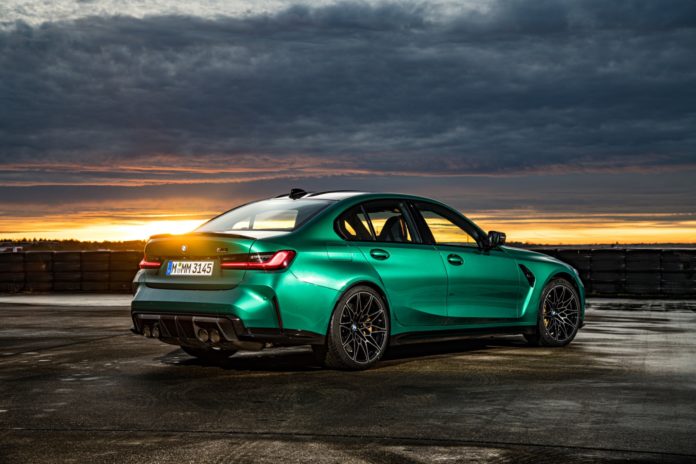
In this review we focus on the faster M3 Competition. Our Isle of Man Green M3 Competition came with M sport seats and all the bells and whistles BMW has to offer for the new M3, except adaptive cruise control. Optionally there are M carbon bucket seats available which give the car a very sporty look and feel. However tall people probably want to stick with the standard seats that come with a height adjustable headrest.
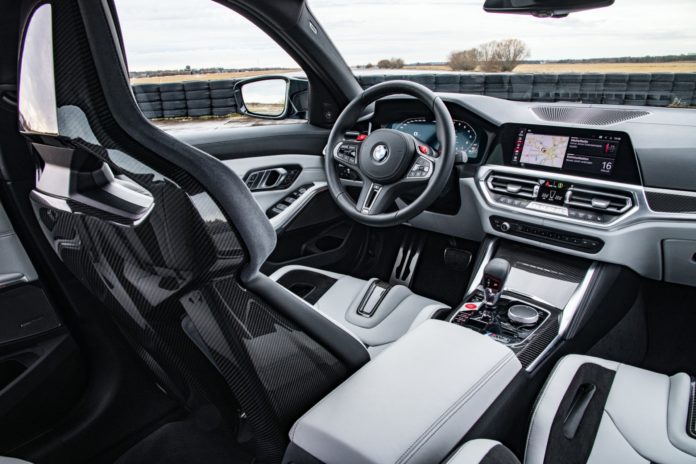
The M3 cockpit is very driver-oriented and all the relevant features are, still, available at the tip of a button. Again some praise is due for BMW’s conservative attitude to the interior. It may not look as sleek as the all-touch interiors from some competitors, but from a driver’s perspective it is a absolute pleasure. The software of BMW’s infotainment can do with a small user-friendly make-over but the controls itself with iDrive should stay as-is for as long as possible.
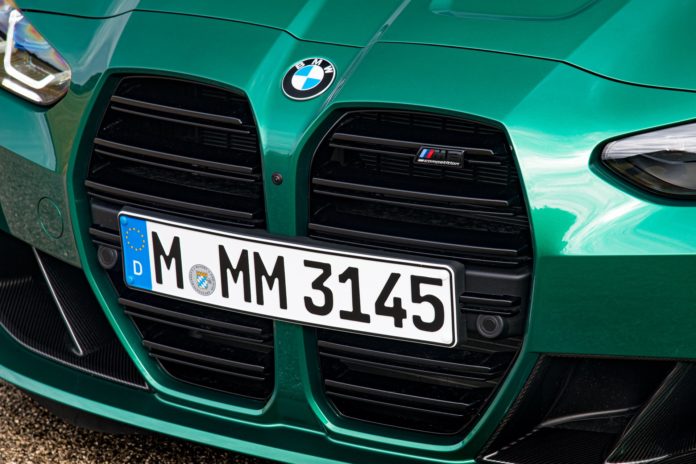
Now let’s talk about the pink elephant in the room. Design-wise the new BMW M3 and M4 are some of the most talked about new cars in recent years. This primarily due to the huge kidney grill that both cars received. I must say I wasn’t a fan from the moment I first saw this type of grill of the BMW 4 Concept at the IAA in 2019. It may not win a beauty contest but it is one of the most aggressive designs on the market at the moment and there might just be an audience for it.
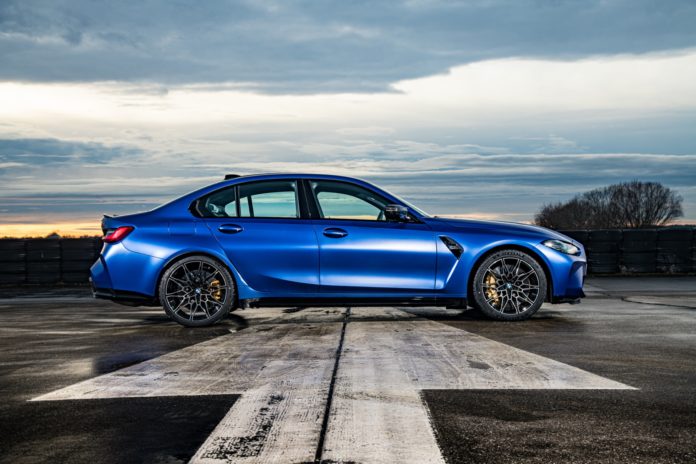
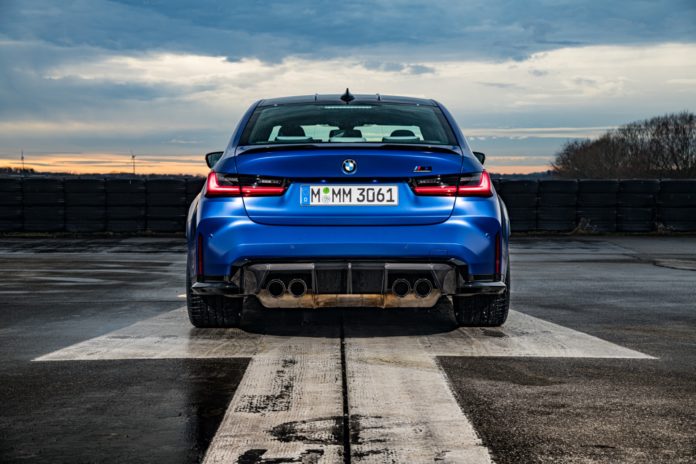
Another thing that strikes me is the sheer size of the new M3. The base 3-Series is already a big car but the M3 with the wider fenders looks huge. I hope we reach a point soon where cars become slightly smaller and nimbler again. But in times where an electrified compact car weighs over 2 tonnes already, there is little hope cars will really become smaller and lighter any time soon.
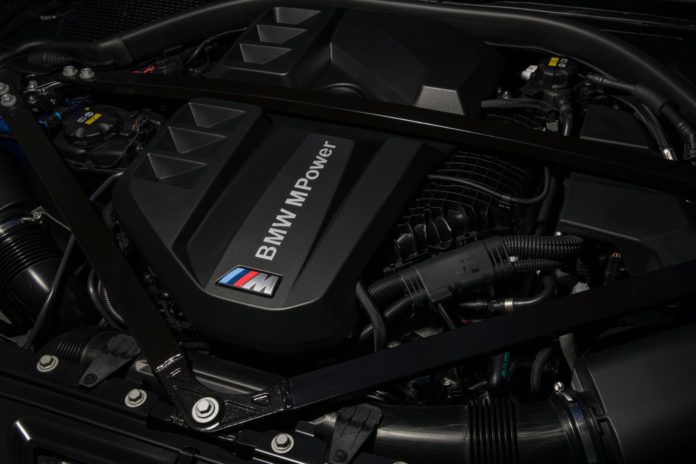
Firing up the three-litre six-in-line is accompanied with a full-bodied sound inside. Outside the soundtrack is not quite as voluminous but that is due to the meanwhile well-known EU restrictions. Customers in the US should be in luck as their M3 and M4s should be significantly louder as their European counterparts. Throughout the journey the engineered tune gives a great sense of performance and speed and never feels artificial.
Performance-wise there is very little to complain about. It beats the last generation M3 CS which was the strongest M3 to date. Fans of the brand know that the Competition badge stands for that extra level of sportiness. And totally in line with that philosophy the bandwidth between comfort and sport is quite narrow. In comfort mode the suspension is still stiff and the car feels properly planted to a point where the title comfort is almost misleading.
The two M buttons on the steering wheel allow the driver to setup two preferred driving profiles. In the profile everything from steering and brake feel to gear changes and ESP can be set to the users preference and activated at the tip of a button. A new feature is the M Drift analyser, similar to the drift aid found in the McLaren 720S, which allows novices to set an invisible hand from level 0 (no traction control) to level 10 (impossible to drift). Although this is a gimmick that few customers will use frequently to drift, it does come in very handy on the race track when the course is wet.
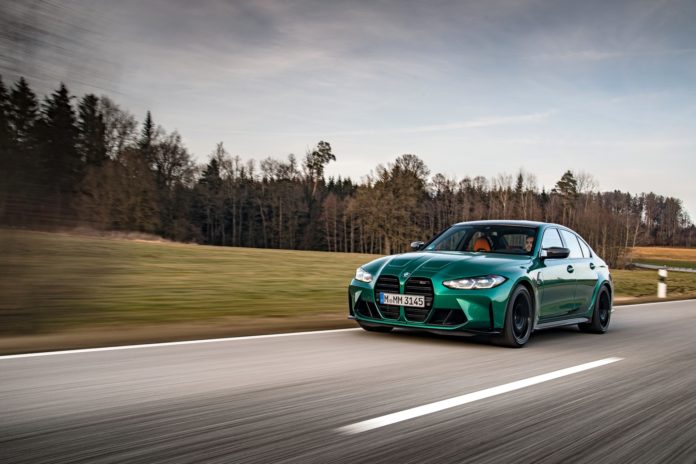
I drove the new M3 Competition on a mixed route with unlimited German autobahn and flowing German b-roads. On the autobahn it is perfect when driven hard but a bit nervous when just cruising along. The 290 km/h top speed is reached with ease and the various sprints show just how strong this engine is. Leaving the highways behind, the car just loves the smooth sweeping bends of the hilly countryside west of Munich. It is very tail-happy accelerating out of tighter bends, just as a true M3 should be.
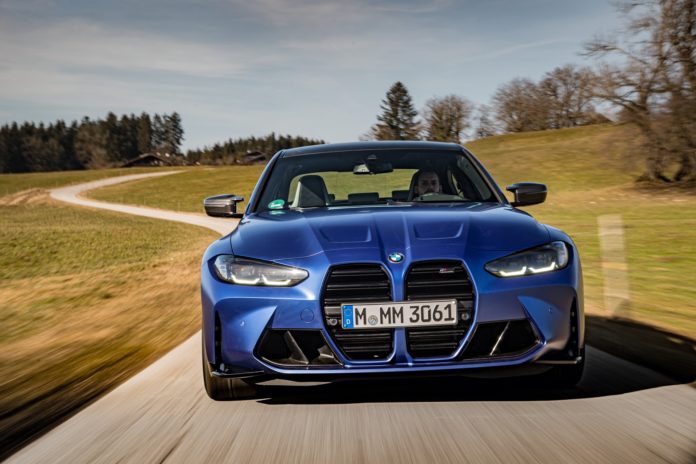
Overall the new BMW M3 Competition is a very good performance car. It has a great number of incredible details and the level of finishing is close to perfection. If you are looking for a performance car with aggressive styling and performance and handling to match; this is the car to get. It is very much a car to love or to hate.
First Drive: Maserati MC20 – The Start of a New Era
The launch of the Maserati MC20 supercar in September 2020 marked the tangible start of a new era for Maserati. The MC20 is only the first part of a 5 billion Euro investment program launched by FCA to strengthen its brands and production locations in Italy. And Maserati is taking a prominent role in the program. On this sunny day in November I find myself at the Viale Ciro Menotti plant in Modena to take a look at the revamped factory and see what the MC20 is like to drive.
Before we move on to the car itself Maserati is keen to show what the FCA commitment meant for the Viale Ciro Menotti plant in downtown Modena, home of Maserati since 1940. Up until the end of last year the GranTurismo and GranCabrios were built here along with specific Alfa Romeo performance models. All Maserati models and said Alfas used engines produced by Ferrari a mere 20 kilometers away. But with the Ferrari engine deal expiring next year Maserati has decided to take things in-house.

Walking through the gates at Viale Ciro Menotti feels a bit like time travel. The beautiful red brick factory buildings remind of past times. But these nostalgic feelings fade quickly once you see the modern and high-tech interior. Maserati invested a great deal of time and money into bringing the aging factory up to the latest standards while respecting the location’s heritage.
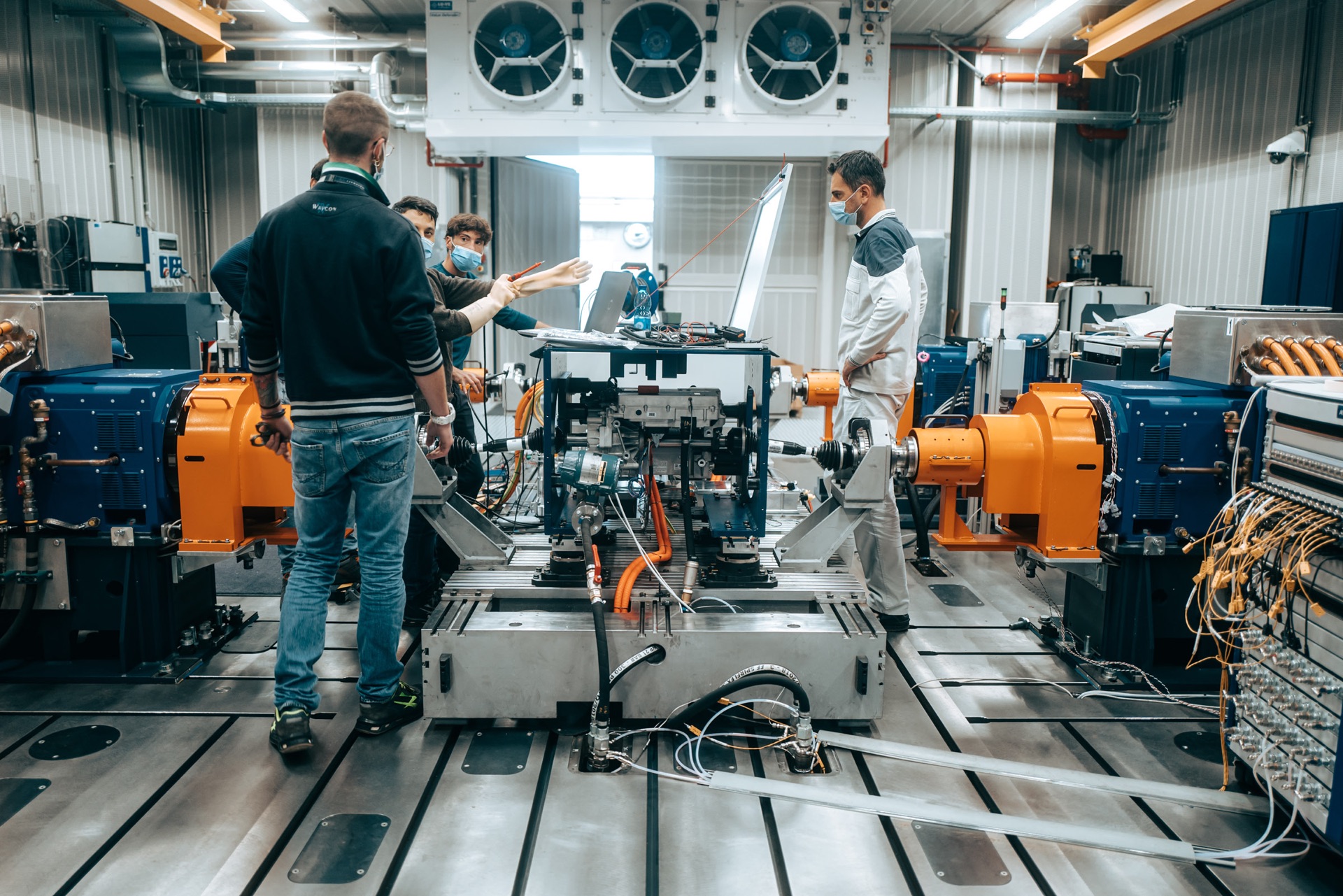
A new engine lab has been added to the Modena factory along with a new paintshop, an electric- and hybrid engine test center and an upcoming customization workshop. The Modena plant will be the key production location for the production of the MC20 and its derivatives. Other Maserati models like the Ghibli, Quattroporte, Levante and the successor of the GranTurismo will be built in Turin.
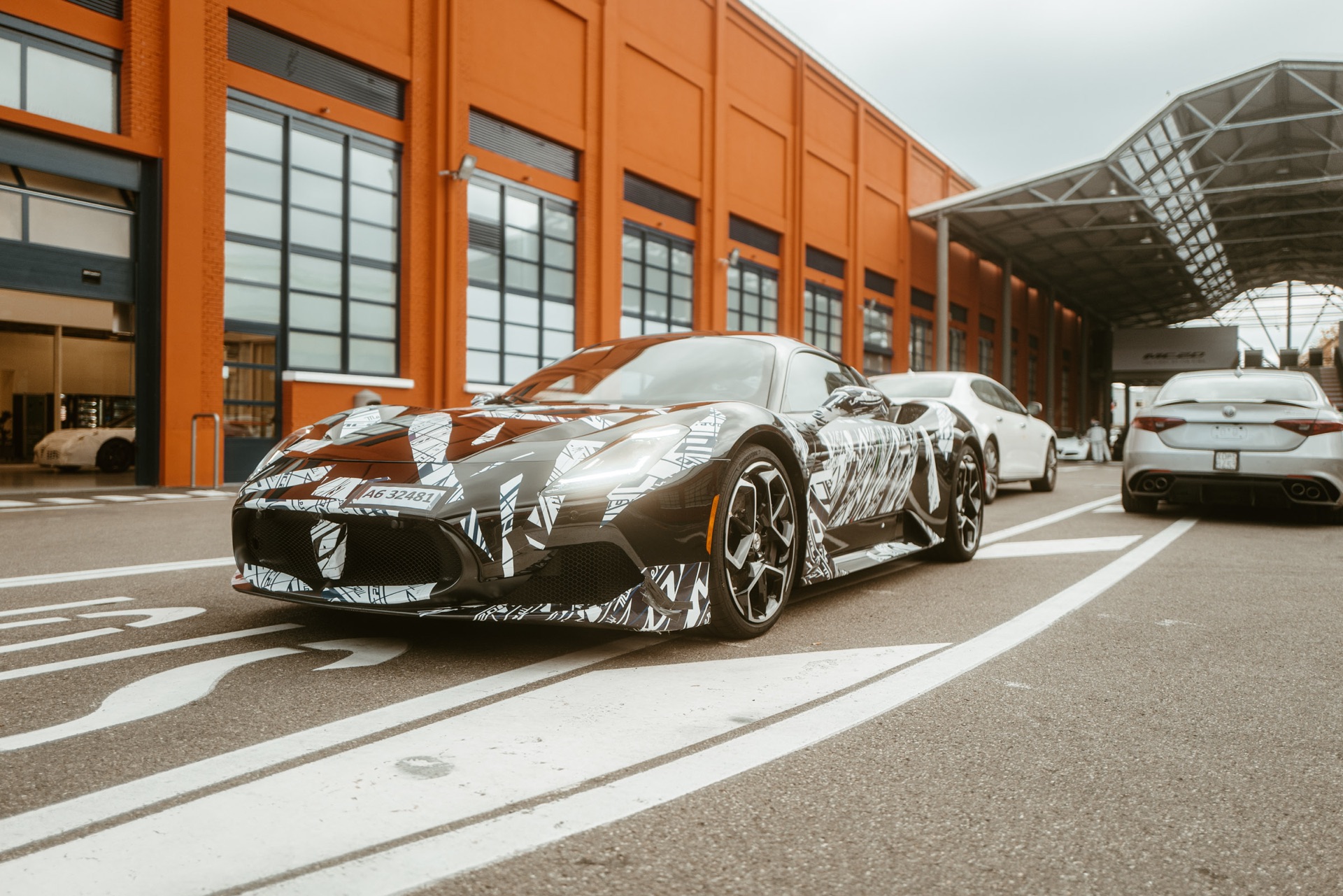
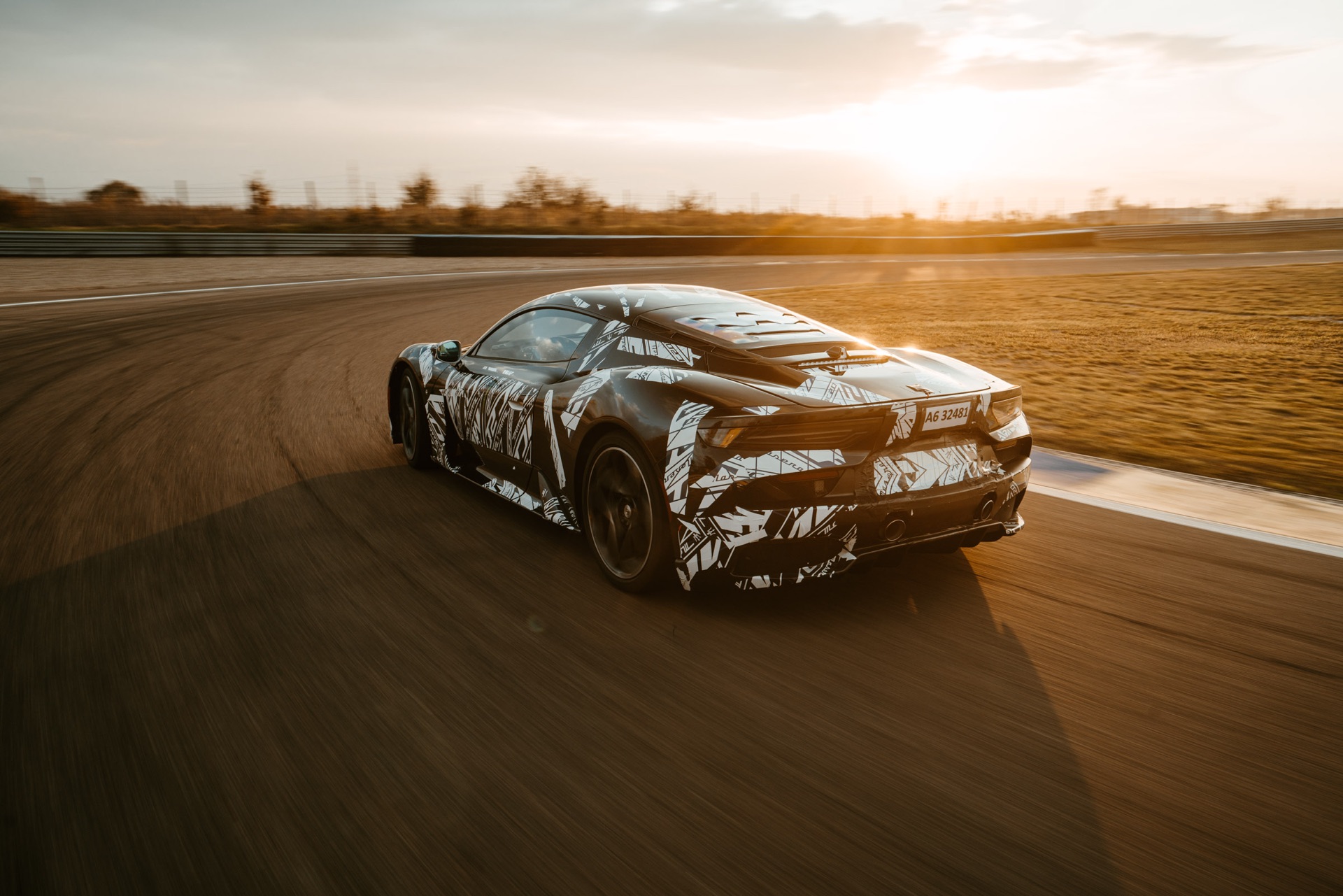
Following the tour of the factory it is time to take a closer look at the new Maserati MC20 and take it out of a spin on nearby Autodromo di Modena. The test car is still a pre-production prototype and covered in stickers. Since I was not able to attend the official launch beginning of September it is the first time seeing the MC20 in the flesh. And it is surprising how much wider the MC20 is in real life. The proportions or silhouette make it look a lot smaller than it really is in pictures.
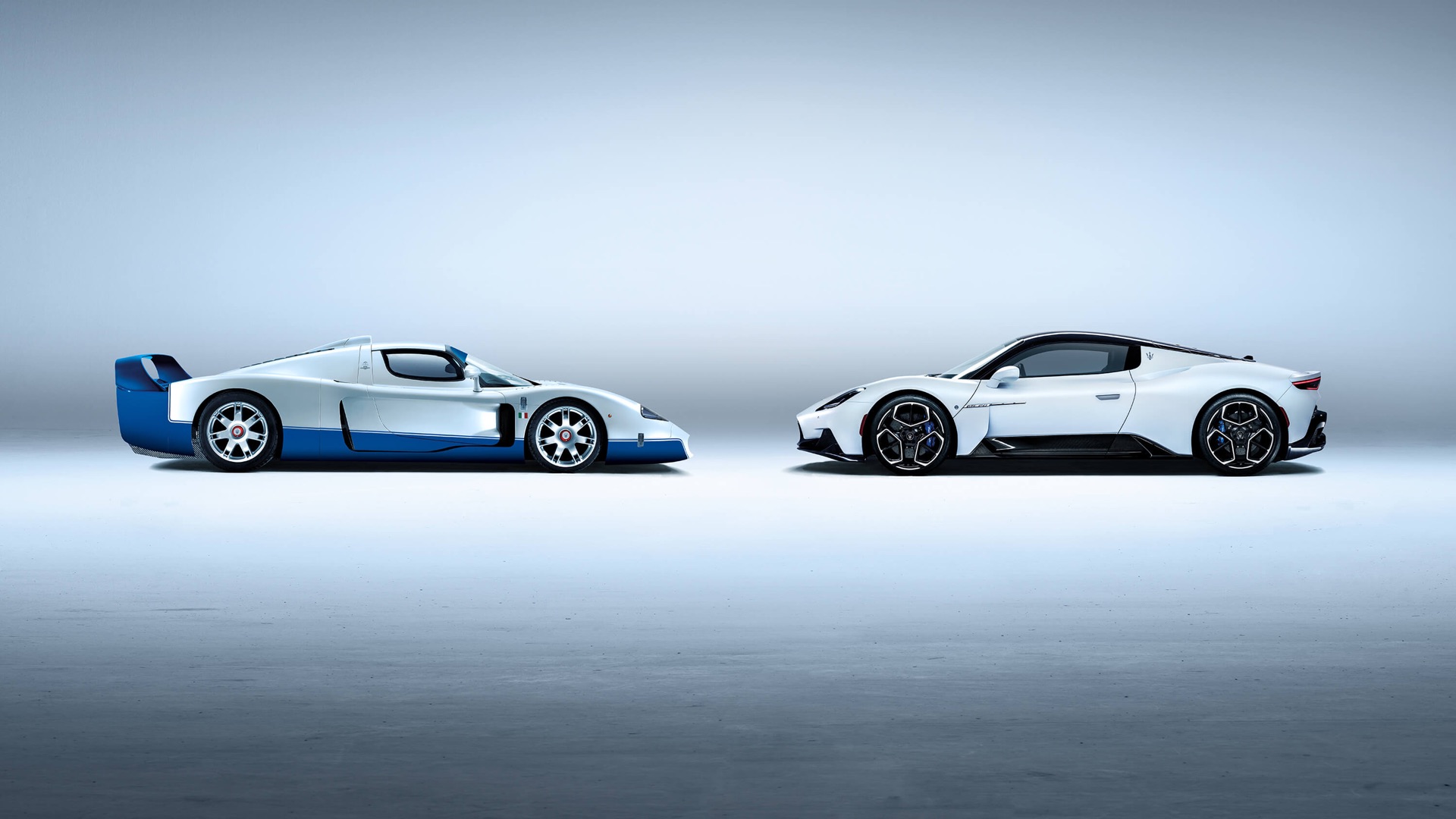
The front and the rear are unmistakingly Maserati. The front is characterized by a large mouth with centrally mounted Tridente and a front splitter running the full width of the car. The side profile is inspired by the famous Maserati MC12. The rear is characterised by the full width tail-lip, LED rear lights, a centrally mounted double exhaust and diffusor. A nice touch is the Tridente shape of the cooling holes in the engine cover below which the new engine is found.
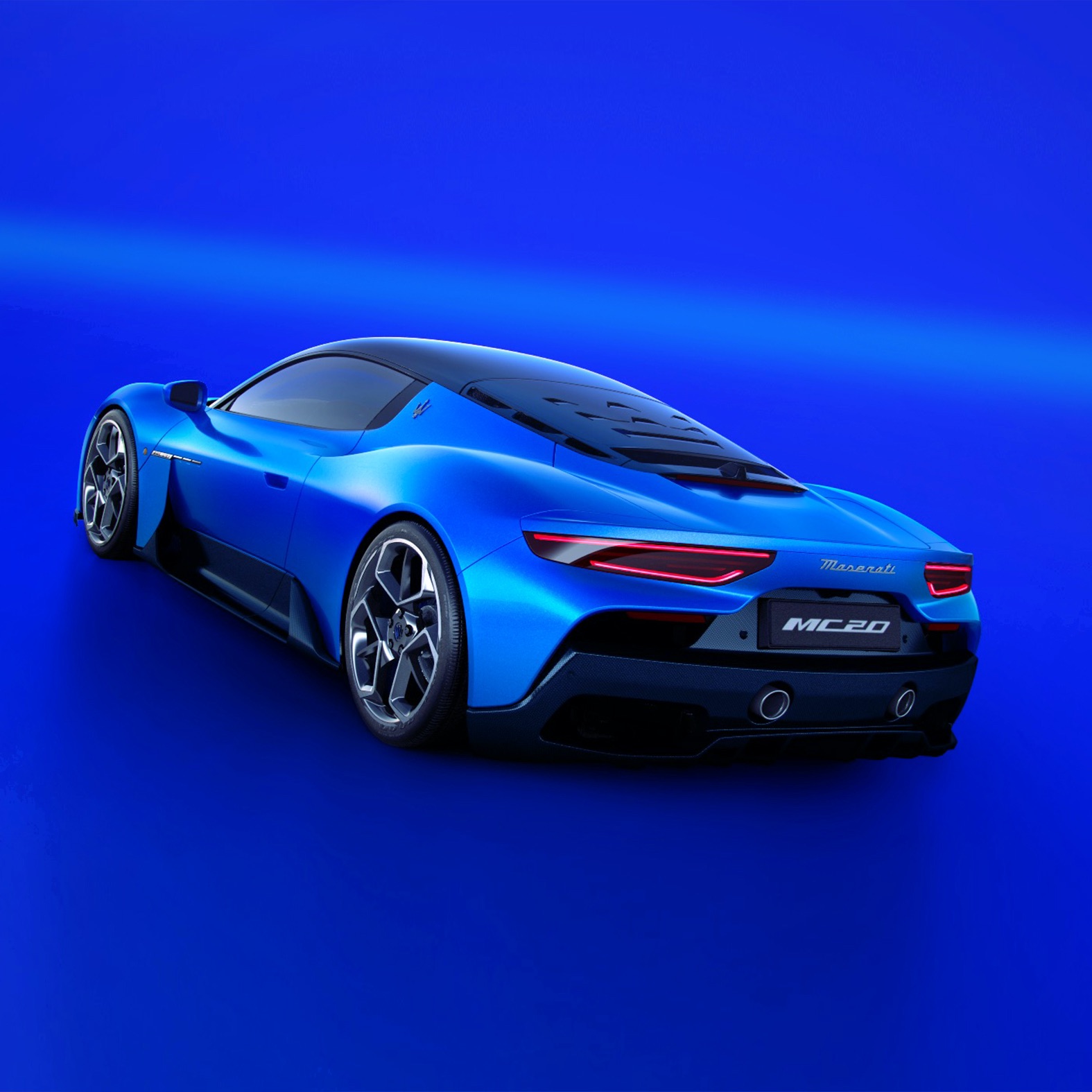
Unlike the famous MC12, the 20 in the name MC20 does not refer to the number of cylinders but to the year of release. The Maserati MC20 comes equipped with the brand new Maserati Nettuno engine, a 3.0 twin turbo V6 engine with twin combustion technology. This technology is derived from Formula 1 and helps reach new levels of performance. The performance figures are impressive; 630hp and 730Nm of torque. Enough for a sprint from 0-100 km/h in 2.9 seconds, 0-200 km/h in under 8.8 seconds and a top speed in excess of 325 km/h.
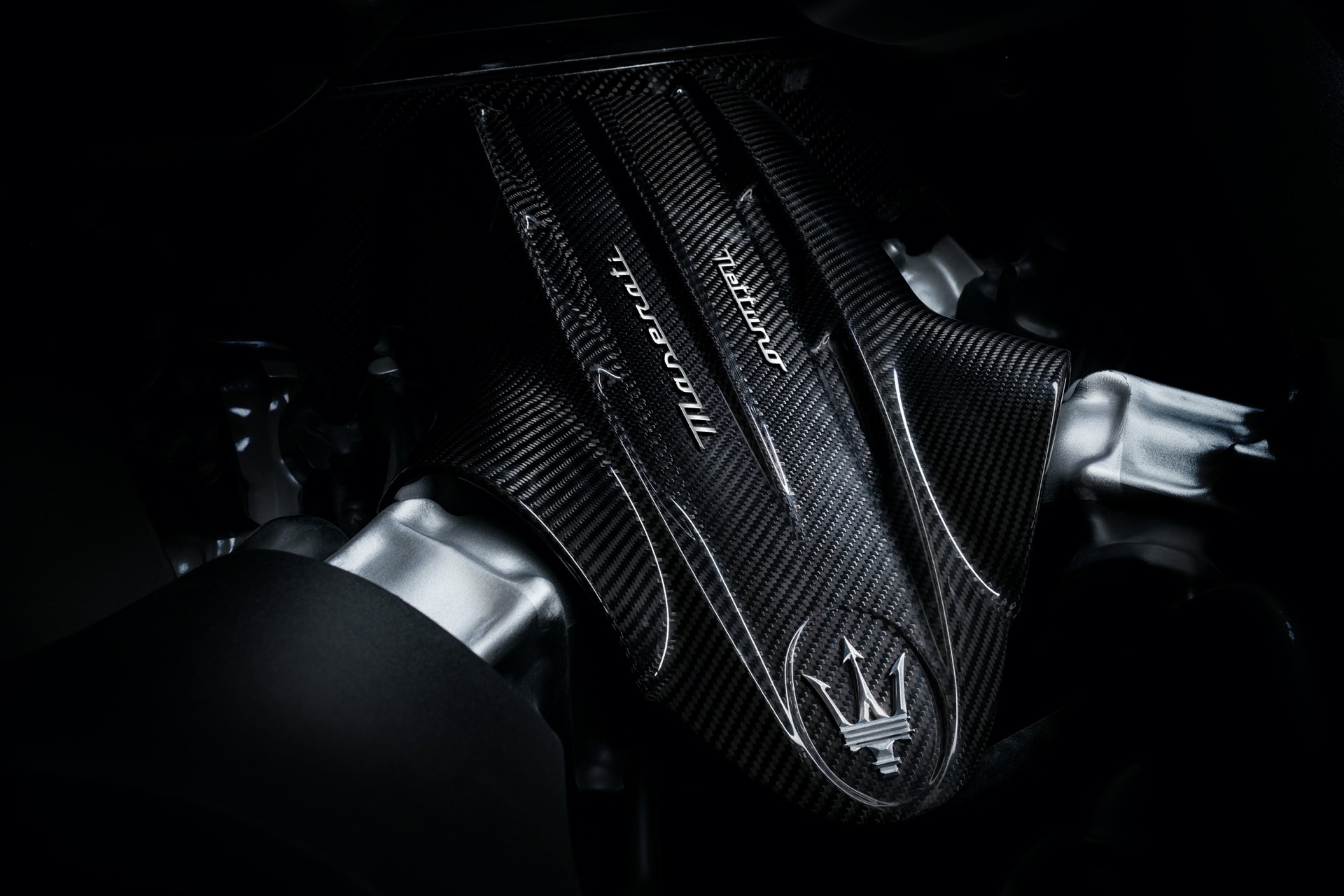
The V6 has a 90 degree configuration to lower the center of gravity with the turbochargers mounted below the engine. The engine is paired with an 8-speed double clutch gearbox which comes with a Mechanical (standard) or a Electronic (optional) Limited-Slip Differential.
From the start of the project about 2 years ago weight and a low center of gravity were among the key goals of the development team. The MC20 has a carbon fibre monocoque that weighs only 100 kg and ensures both safety as well as a rigid chassis. Instead of active aerodynamics the team decided to use passive aerodynamics only to save further weight. The efforts resulted in a kerb weight of less than 1,500 kg and a very low center of gravity. The MC20 has Double-wishbone suspension front and rear with adaptive dampers. The brakes are provided by Brembo and carbon ceramic brakes are available as an optional extra.
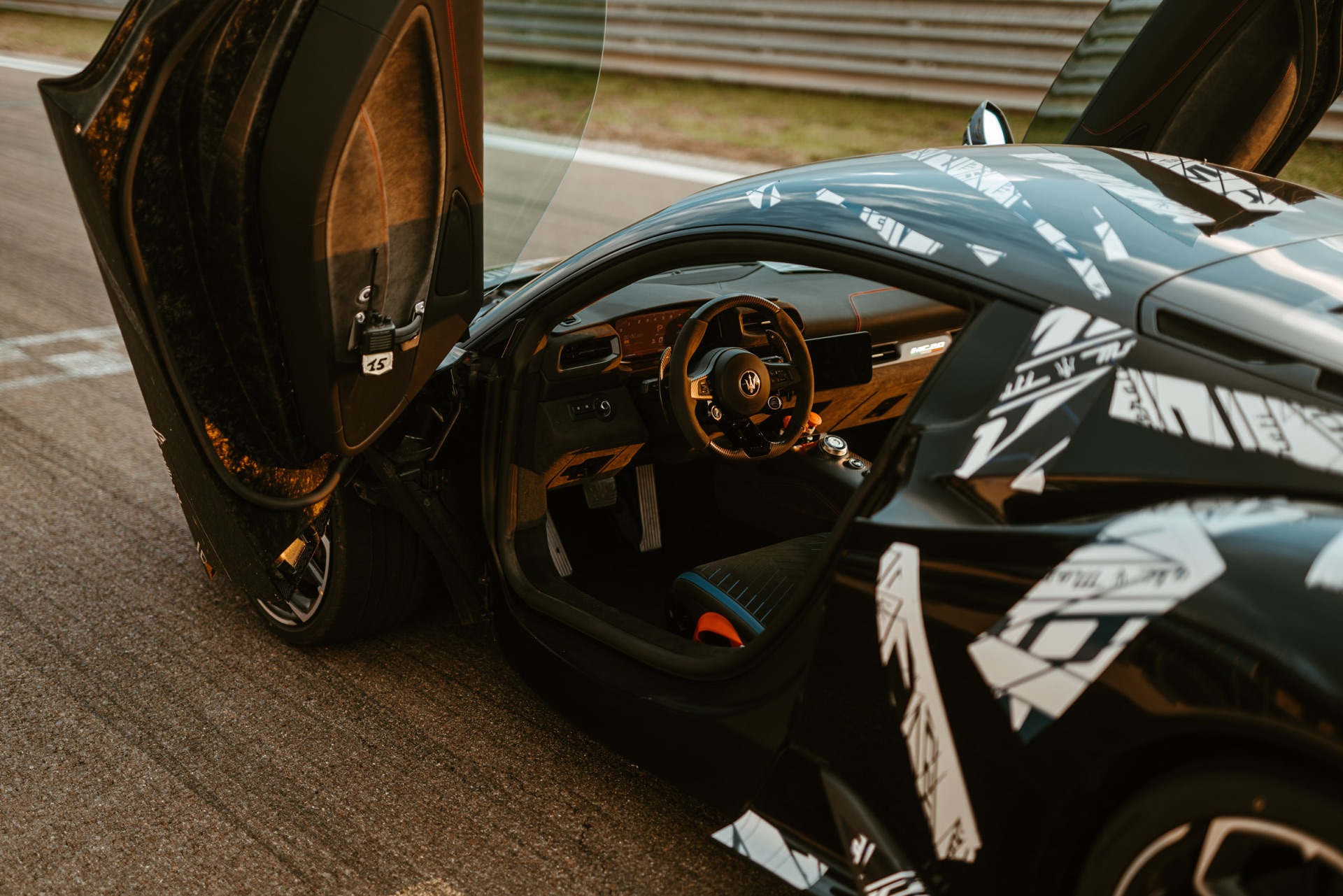
As I open up the butterfly doors I’m in for some surprises. Unlike other mid-engined supercars with a carbon tub the doorsill is very narrow and the door opening especially towards the front rather large so it is very easy to get in- and out of the car. As I slide into the driver’s seat I also notice there is a lot more space than I was expecting. The low sleek center console finished in carbon fibre not only looks great but also adds a lot to the sense of space.

The interior itself is crafted like a work of art. Leather, alcantara and carbon fibre are used in symbiosis to create a functional and driver oriented cockpit with very high aesthetic qualities. The number of buttons is reduced to a minimum with only the selection wheel for the five different drive modes (Wet, GT, Sport, Corsa and ESC off), the Drive / Manual gearbox selection button, reverse selection button, the window controls and a volume button on the center console. Nearly all other controls are either found at the wheel or in the landscape sized touchscreen display in the center. The driver display is also fully digital and displays all relevant information and adapts based on the chosen drive program.

Firing up the twin turbo V6 is done with a button on the steering wheel. It does sound quite good for a V6 but obviously is no match for the V8 of the GranTurismo or the V12 of the MC12. A problem that Maserati like other manufacturers have to deal with are the ever stricter regulations for emissions and noise. US customers will be lucky, their MC20s will be significantly louder than their European counterparts.
After a short drive through the center of Modena, with its cobblestone streets ideal to experience the MC20s relative comfort on rough roads, we arrive at the Autodromo di Modena. It is not my first time here and following a quick briefing it is time to find out what the MC20 is all about.

Already after the first lap I’m blown away by the new MC20. Accelerating down the main straight I’m pressed firmly into the seat all the way to the braking point for the first corner. The steering is direct, precise and body roll virtually non-existent. The stopping power is equally impressive but the carbon ceramics might be a bit much for customers who will use it primarily as a road car.
The gear changes are near instant but I don’t like the fact that it skips from 3rd to 1st gear when shifting down for a tighter corner. Although this will probably be changed in the production car. Switching back from Corsa to Sport and GT mode I can feel the car soften and become more forgiving for every day use.
It is worth mentioning that virtual vehicle development and one of the world’s most advanced driving simulators at Maserati’s Innovation Lab on the other side of Modena played a key role in development of the MC20. The use of simulation and virtual car mathematics allowed Maserati to test more parameters in a shorter time, reducing development time and reaching better results. Setups created digitally were then installed in real world prototypes and tested extensively on the road and track to validate the results. This process led to the MC20 I was able to test today.
In addition to the standard equipment customers can choose from a range of optional extras including a nose-lift system, Sonus faber High-Premium Audio System, exposed carbon fibre parts and carbon ceramic brakes.

The MC20 is just the start of a complete line-up. Next year we will also see a MC20 Spider followed by a battery-electric version the year after. It is no secret that Maserati also aims to return to motorsport with a dedicated racing version of the MC20. This platform versatility gives the MC20 a certain edge over the competition. Production of the MC20 starts in January 2021 with first customer deliveries expected at the end of Q1 in Europe followed by the US in July 2021.
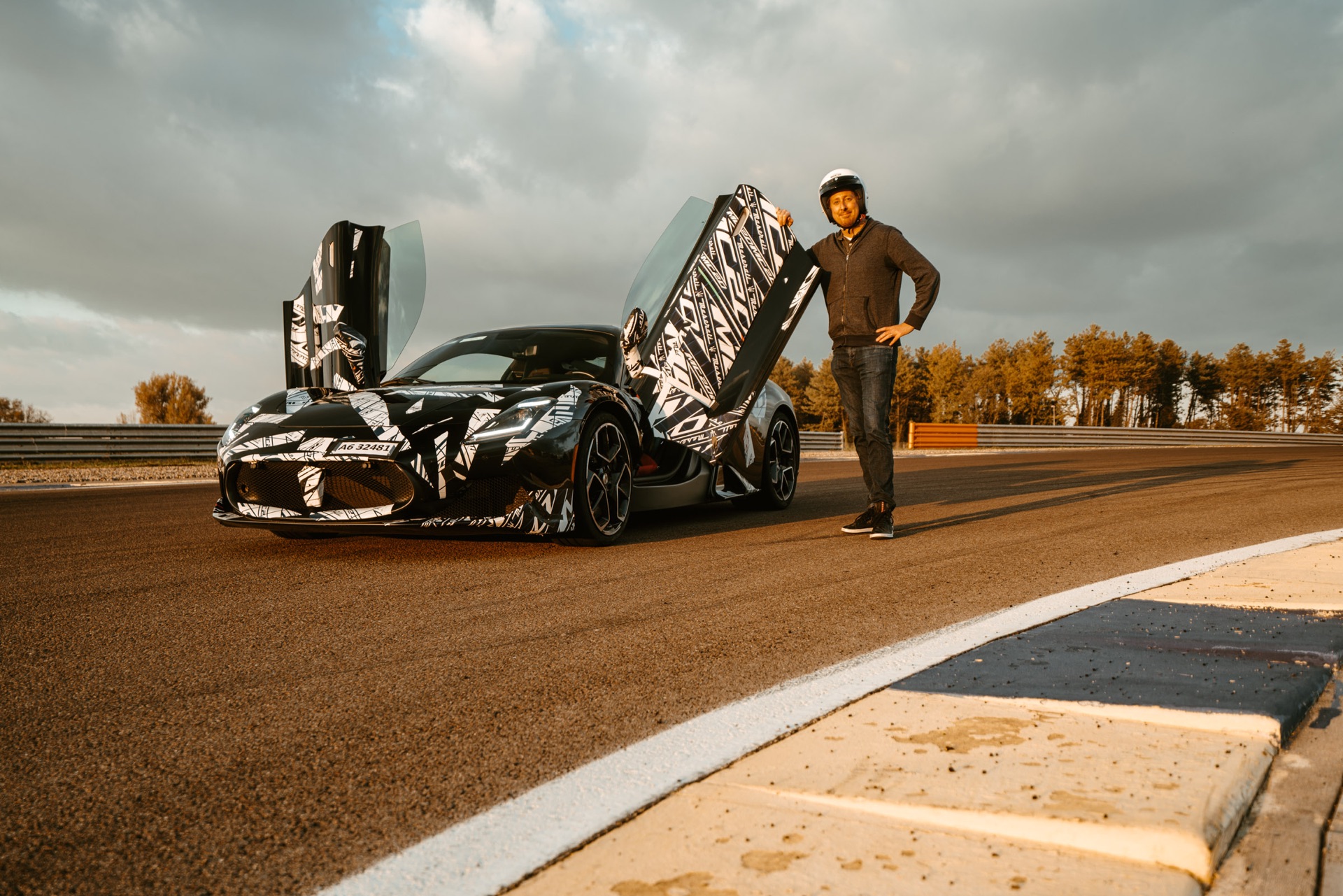
The Maserati MC20 is one of the most surprising new cars of this year and it exceeded my expectations in almost every regard. It truly marks the start of a new era for Maserati.
Ferrari F8 Spider Review – Roofless Driving Perfection
It is 9.30 sharp when I walk through the gates of the Ferrari factory in an eerily quiet Maranello. In one of the two parking spots in front of the iconic factory building a Giallo Modena yellow Ferrari F8 Spider is waiting for me. Following one of the quickest and easiest test car handovers in years I’m out through the gate as fast as I came in.
The Ferrari F8 Spider is the successor to the 488 Spider launched in late 2015. The 3.9 liter twin-turbocharged V8 engine internally known as F154CD delivers the same output as the 2018 488 Pista Spider. While delivering 720hp and 770Nm of torque the F8 Spider can sprint from 0-100 km/h in 2.9 seconds, 0-200 km/h in 8.2 seconds and continue to accelerate until the top speed of 340 km/h. Weighing in at just 1,400 kilograms the F8 has a power-to-weight ratio of less than 2 kg per hp. It is the most powerful and possibly last non-hybrid Ferrari V8 produced to date.

Despite my test drive taking place at the beginning of November the sky is blue and the outside temperature already passed 15 degrees this morning. So it is time to drop the folding hardtop by pressing the button in the center console. In around 14 seconds the roof drops down and this can be done up to speeds of 45 km/h. One of my favorite features of this kind of roof is the small rear window you can open while the roof is up; it keeps the wind noise out but let’s all the beautiful tunes of the mid-engined V8 in.
Design-wise the new F8 Tributo and F8 Spider continue in the footsteps of the stunning and incredibly sexy Pista. The S-Duct dominates the front of the car and the new side intakes and slimmer, longer LED lights give the front a wider and more aggressive appearance. The large air intakes are moved slightly further back to improve the airflow to the engine. The sideskirts taper outwards towards the rear wheel. It is a part of the car you will want to clean after every drive as they seem to catch a lot of dirt coming from the front wheels and seemingly the only part where form and function don’t go hand in hand.
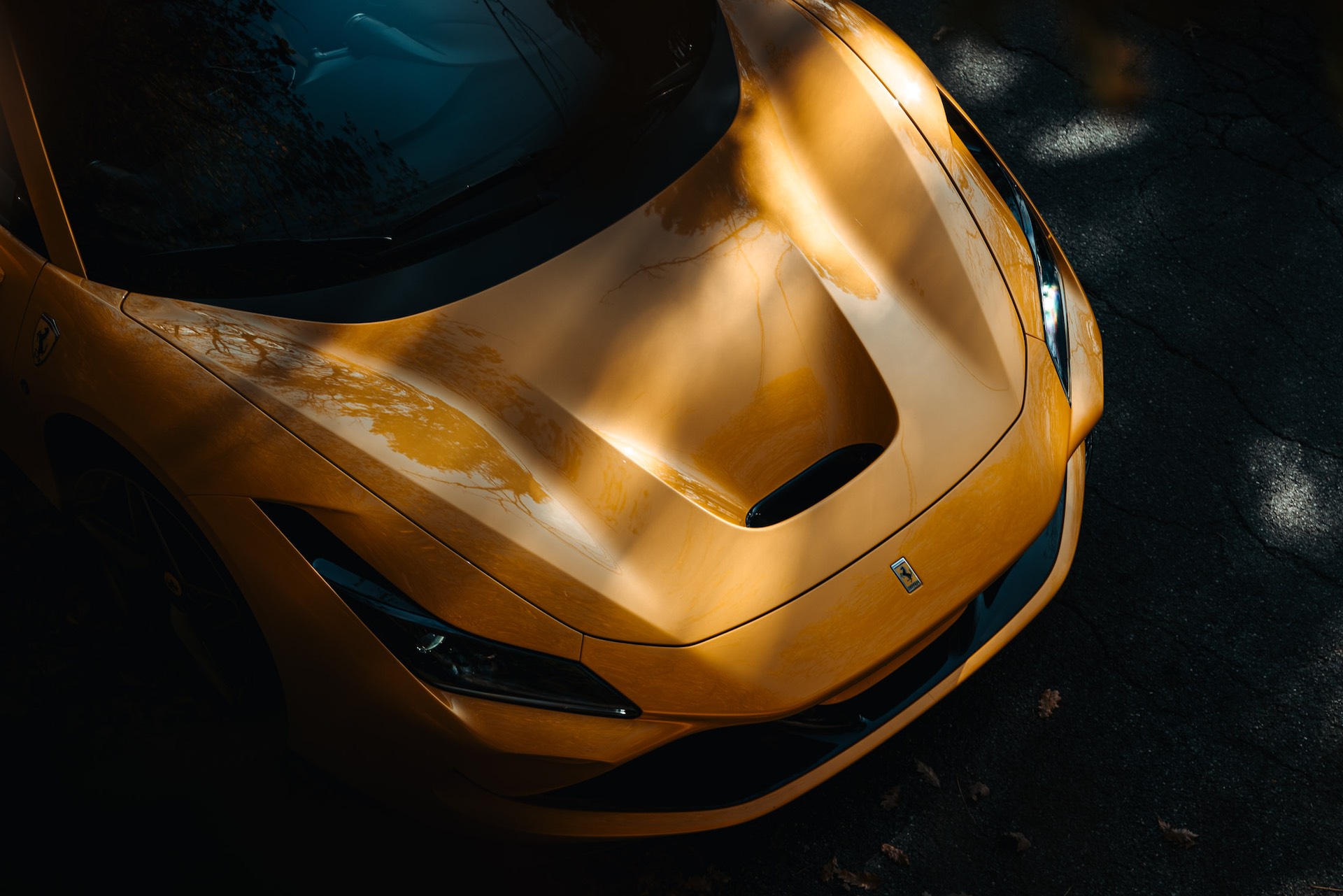
For the first time since the F430 quad tail lights returned. Photos don’t do justice to the level of depth these LED lights provide in real life. The lower part of the rear is very similar to the Pista with a wide diffuser and two large exhaust pipes. Being a spider the engine is hidden mostly below the foldable hard top.

The quality of the design continues beyond what you can see on first glimpse. Under the front bonnet beautifully sculptured carbon covers the inside around the actual trunk. It is details like this that set Ferrari apart from the competition.

The inside of the F8 Spider is dominated by leather and carbon fibre. The carbon fibre racing seats are a perfect fit. And although the convertible has slightly less space than the F8 Tributo there is enough space to sit comfortably even for taller people. Being 1,90m tall myself I struggle to sit well in many mid-engined sports cars but in the F8 Spider I had no issues at all. This also thanks to the extremely low and elegant center console that provides both excellent leg space as well as a general sense of space.
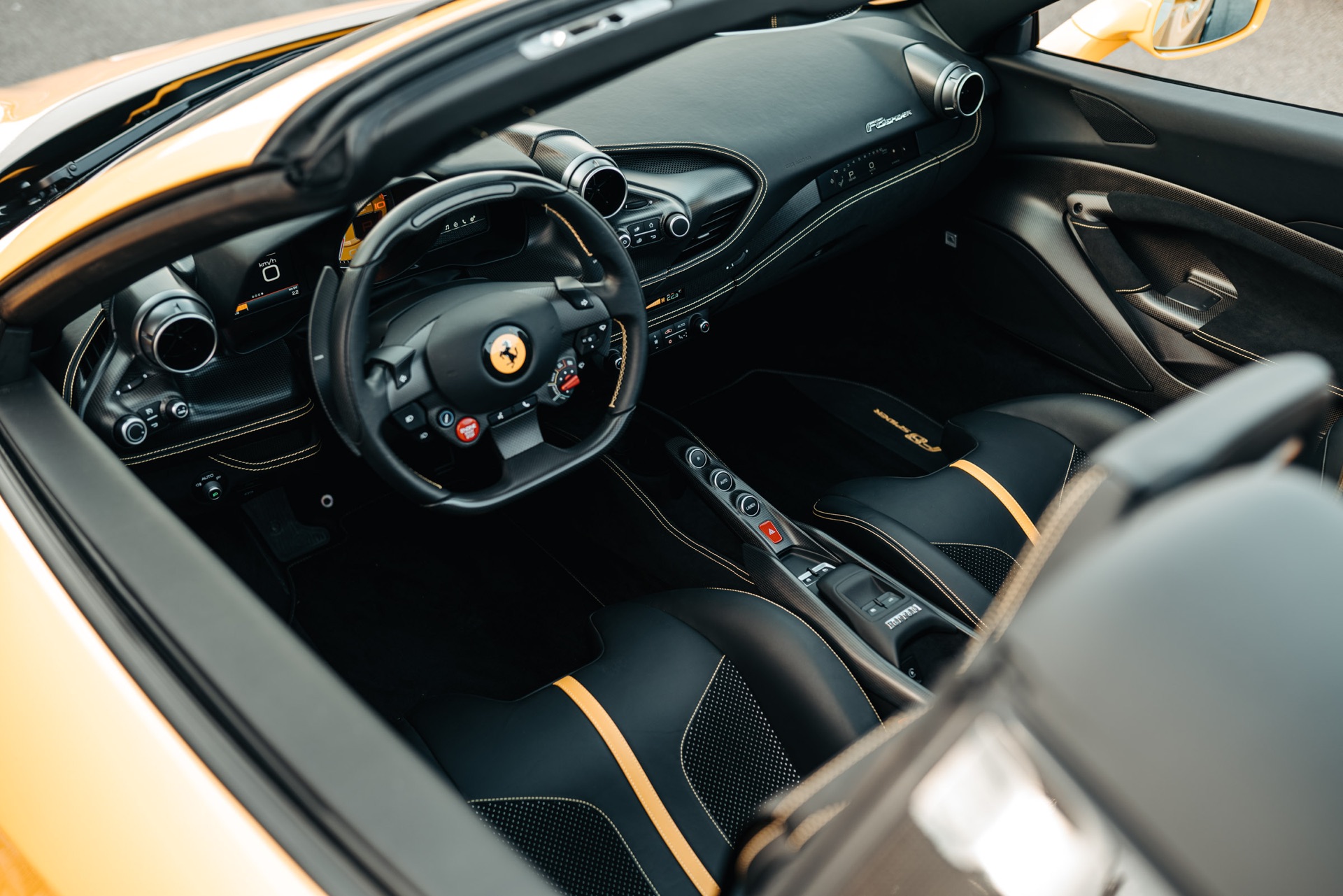
Ferrari’s have always been extremely driver oriented and the F8 Spider makes no exception. All vital controls are located directly on the steering wheel; including indicators (takes some getting used too), big beam, engine start / stop, dampers, voice control and phone, wipers and last but not least the Manettino which allows quick and uncomplicated change of drive programs from Wet and Sport to Race, TC off and finally ESP off.
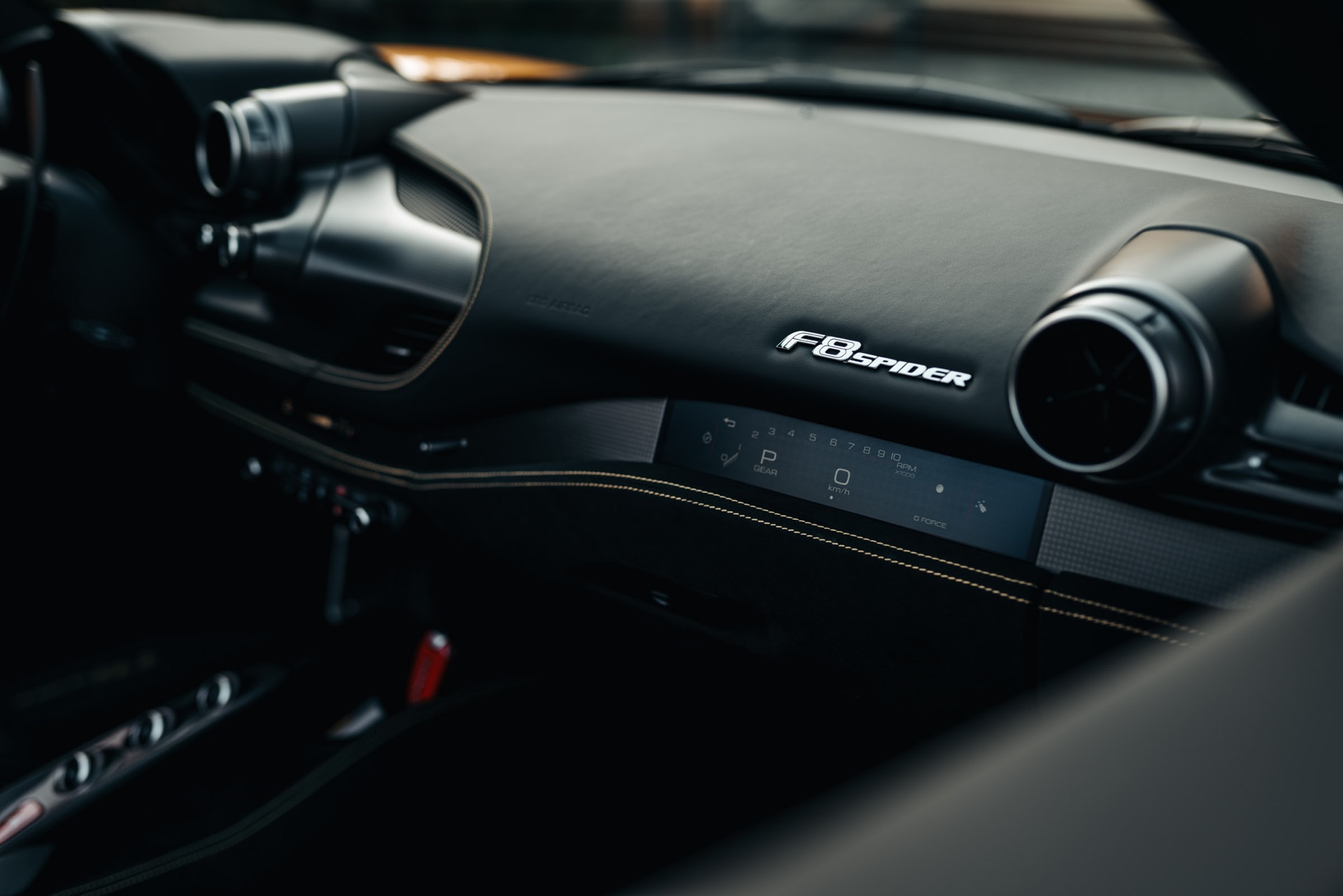
Unlike most other new cars the only touch screen is solely for the passenger. The driver can control everything by the touch of a button and I wish more manufacturers would follow this example. Key driver information is displayed only on two displays on either side of the rev counter.
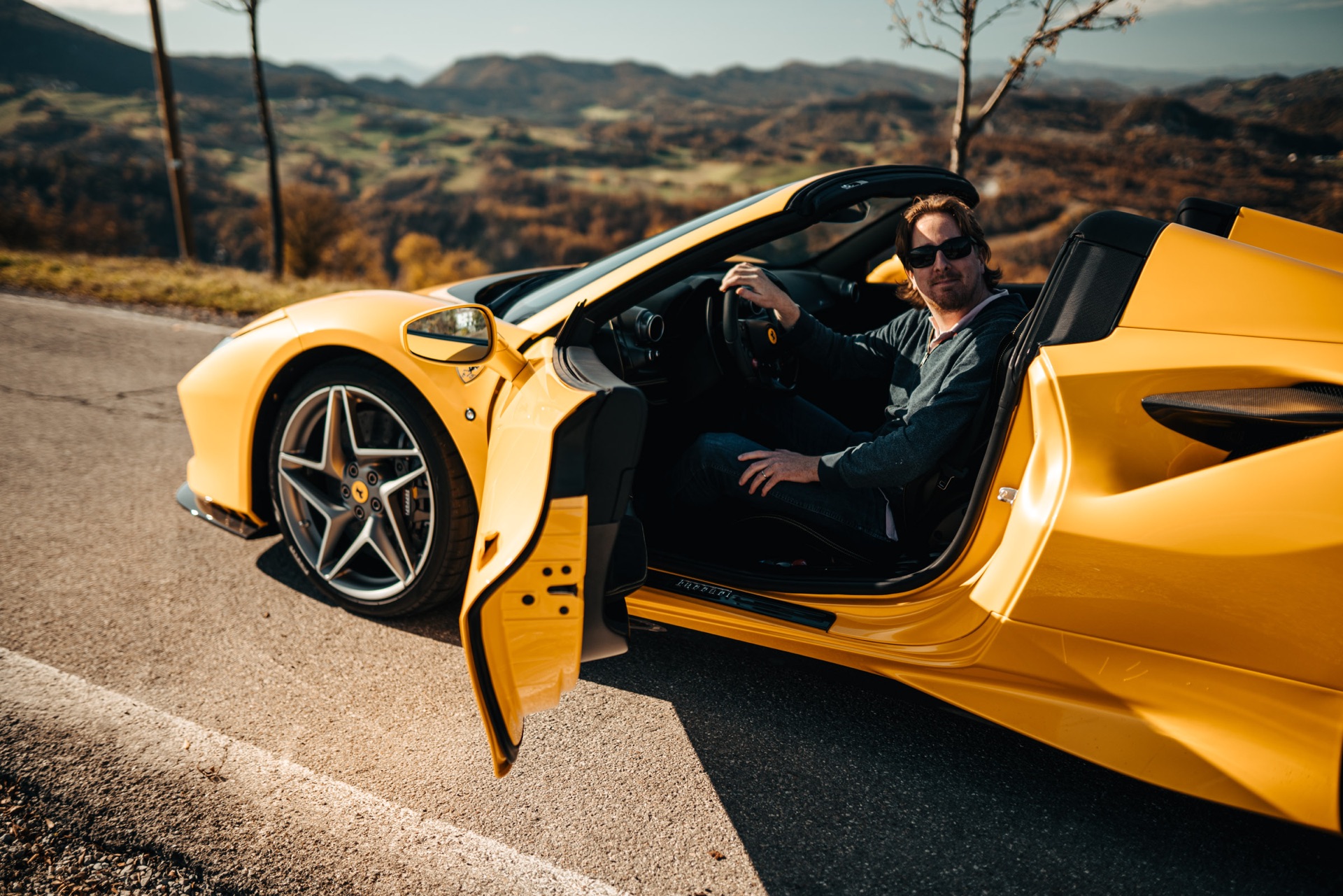
Time to find out what it is like to drive the F8 Spider. Normally I head South from Maranello straight into the mountains but this time I want to go East and find some new locations. The first part of the journey takes me via the truck heavy SP467 with its dense traffic and destroyed road surface. Not ideal for a 720hp V8 supercar but with the soft damper setting the F8 copes well.
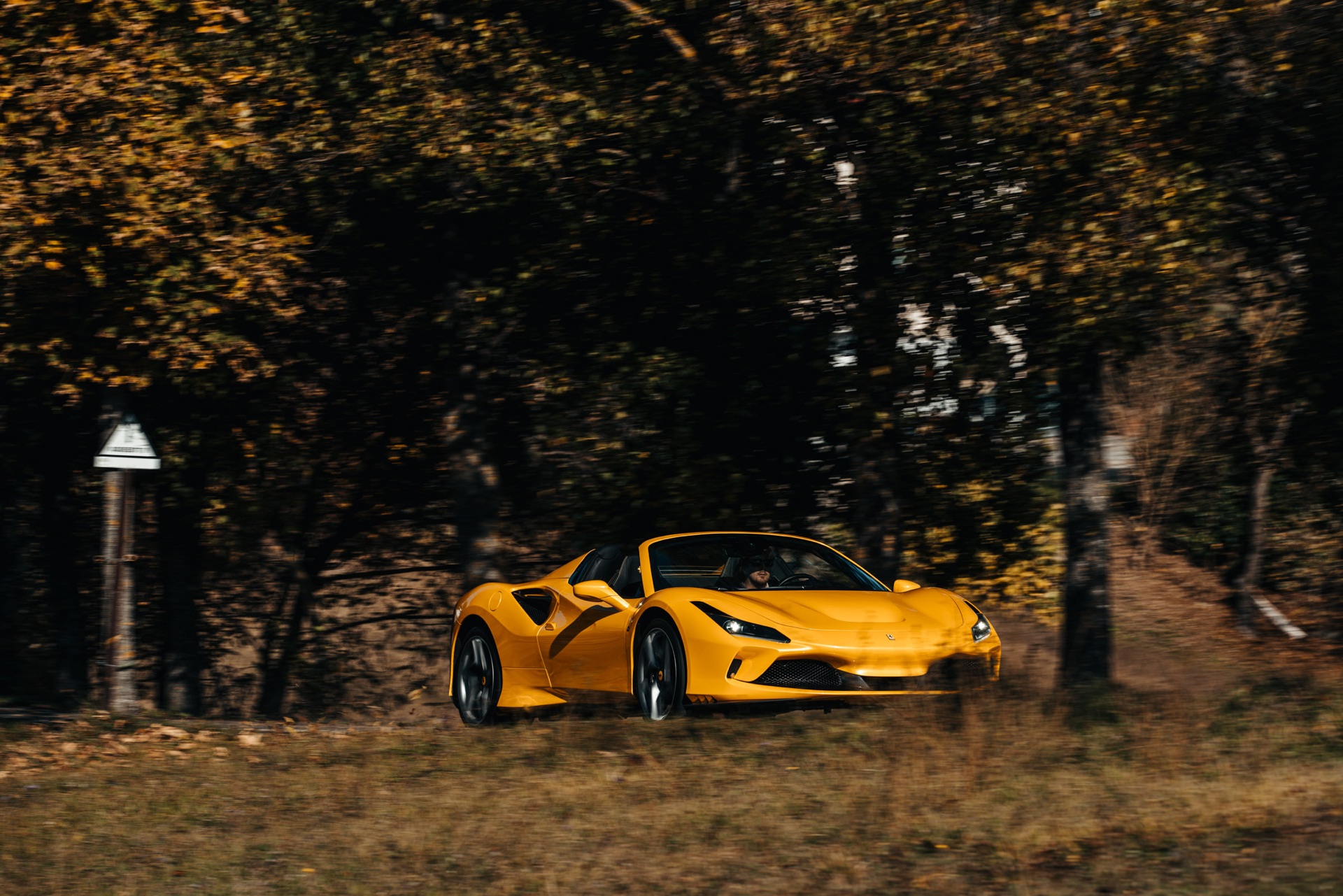
Leaving the main road and the traffic behind me as I head into the hills I can let the engine howl a bit more. The V8 packs an incredible punch and presses me firmly into my seat as I sprint from bend to bend on the first empty mountain road. The audible drama is not quite as it used to be but this is mainly due to the EU and their emissions (OPF) and sound restrictions that Ferrari has to comply with.
What is remarkable is the balance and predictability; the throttle, braking and steering are all equally easy to dose and give you a perfect sense of control. This makes that the Ferrari F8 Spider doesn’t feel like a 720hp supercar, and all the glitches that normally come with it, when you are cruising in town or in traffic but as soon as you find that perfect bit of road or hit the track it morphs into a breathtaking razor sharp machine within a split second.
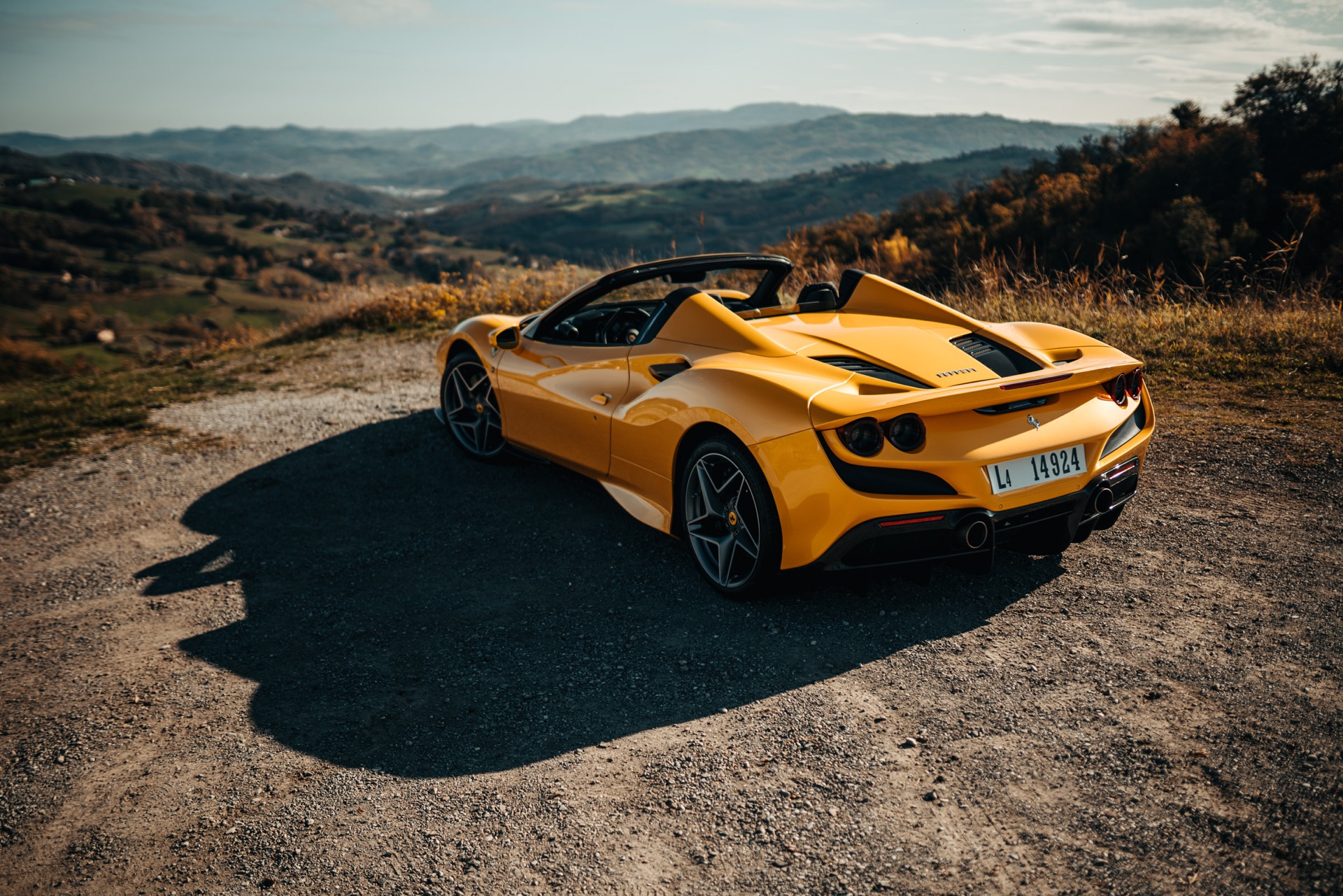
By chance we find a mountain road with sunlight peeking through the trees for our photographer Philipp Rupprecht to work his magic on the Ferrari F8 Spider.
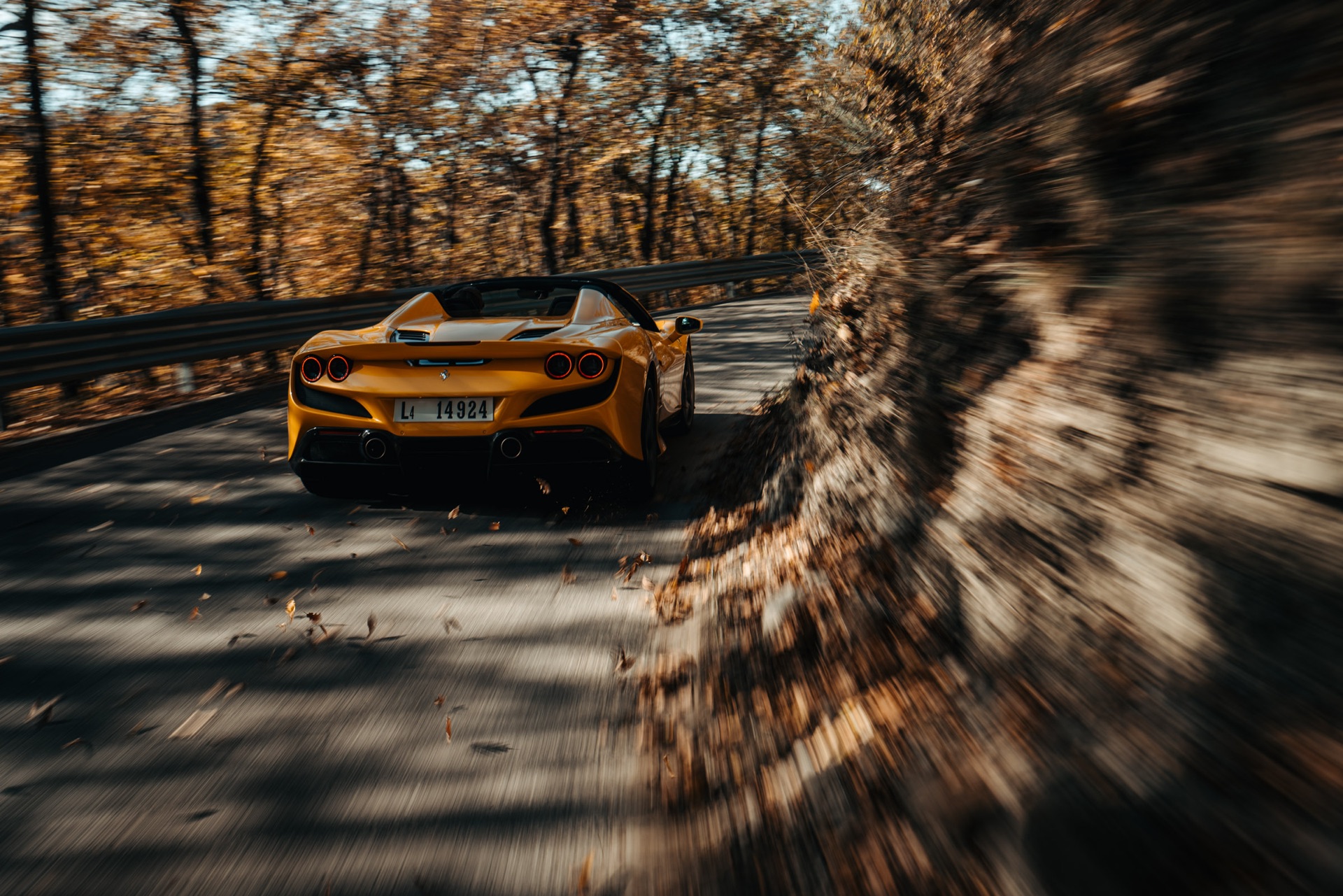
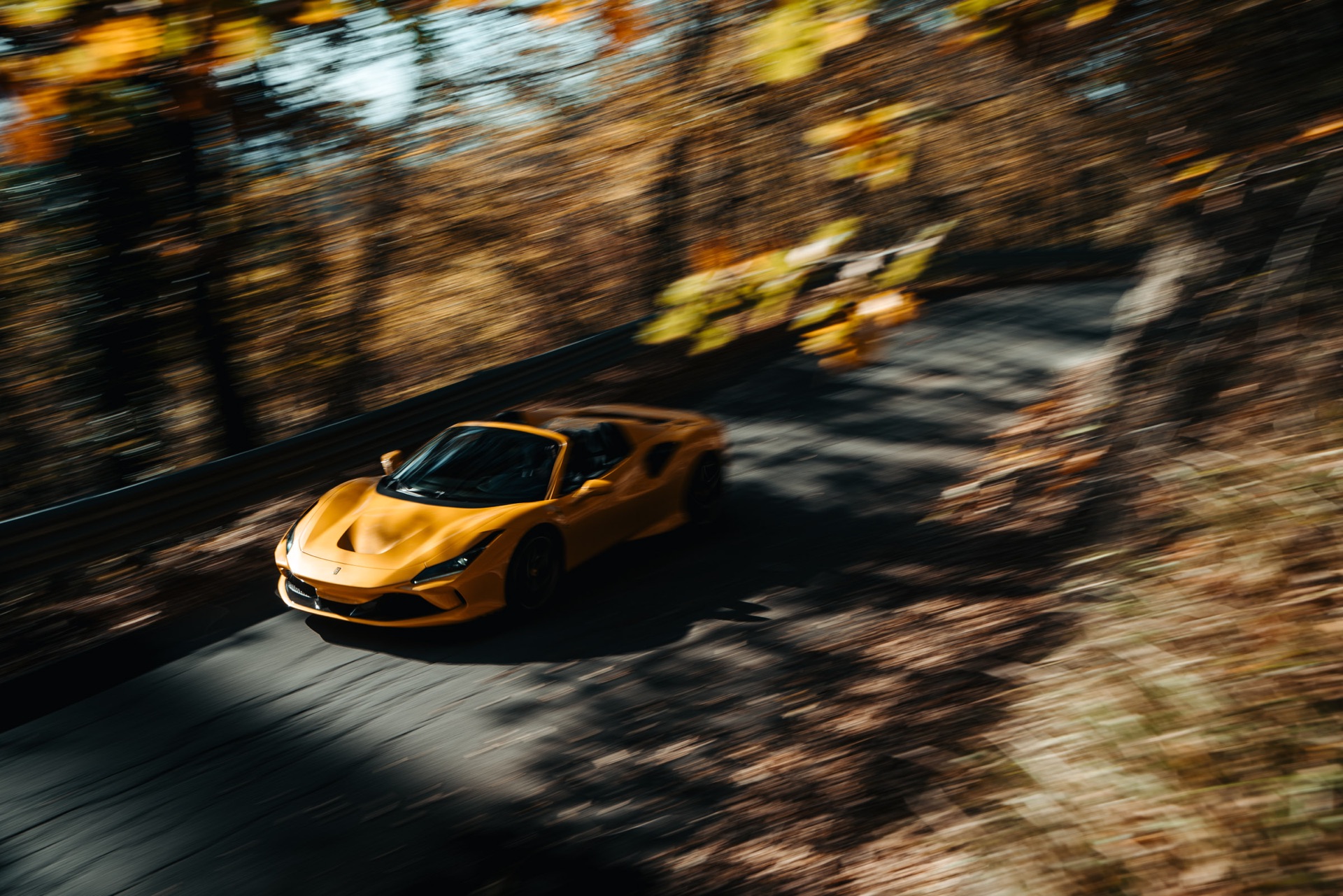
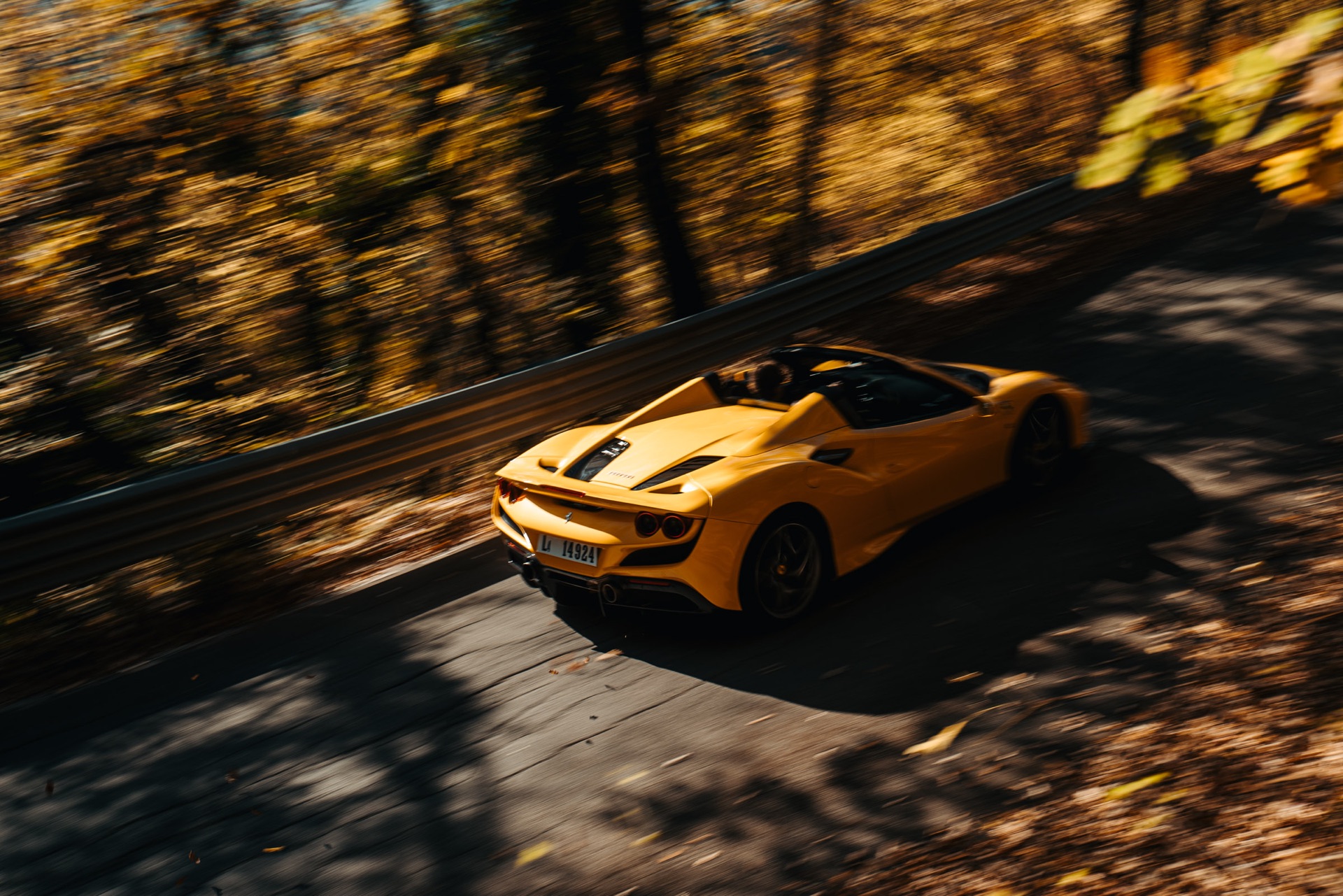
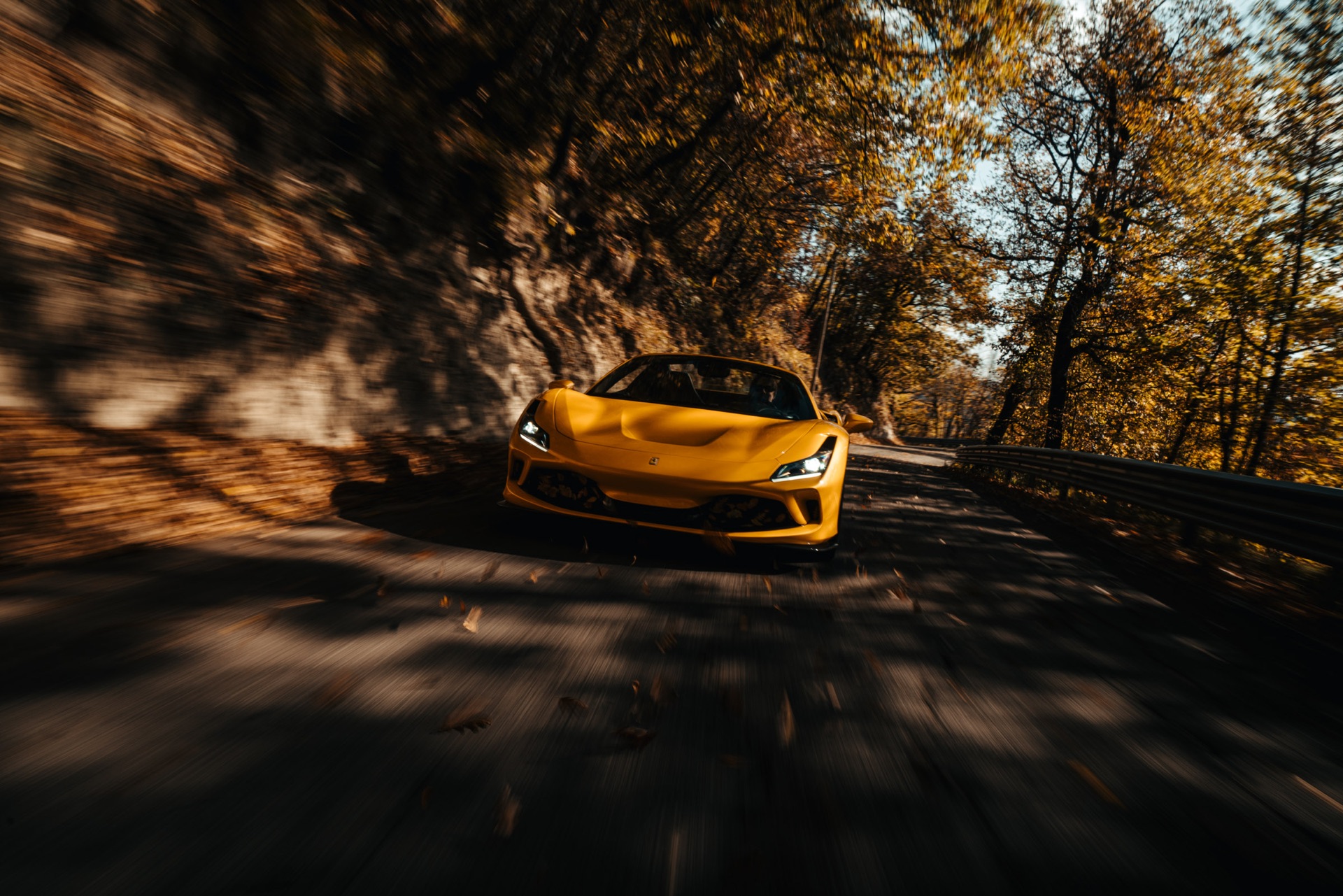
On the second part of my journey the roads straighten and are much smoother, yet the F8 is so incredibly fast that it is hard to enjoy the full potential on any public road. From an engineering perspective we live in incredible times that you have to take a mid-engined convertible on track to utilize it to its maximum. Nonetheless I can think of few things more enjoyable than driving through the Italian hills with a prancing horse while the wind rushes through my hair.
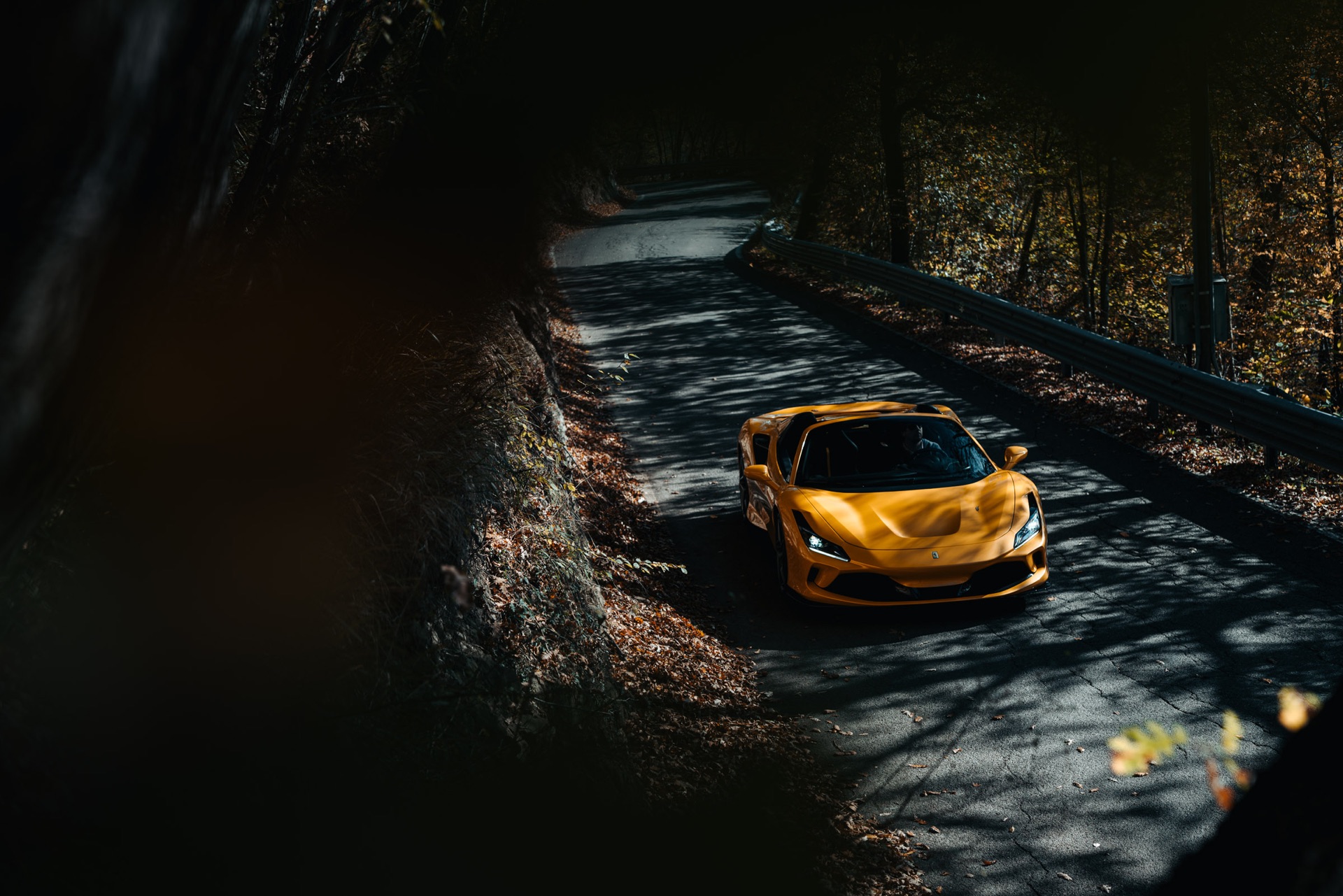
A day with a Ferrari is always too short. If it wasn’t just for the experience itself, it is for the wonderful things that just happen when you travel through Italy in such a car. A restaurant owner obliging you to park on the no-parking space directly in front of his locale, to kids smiling from ear to ear when they see the car.
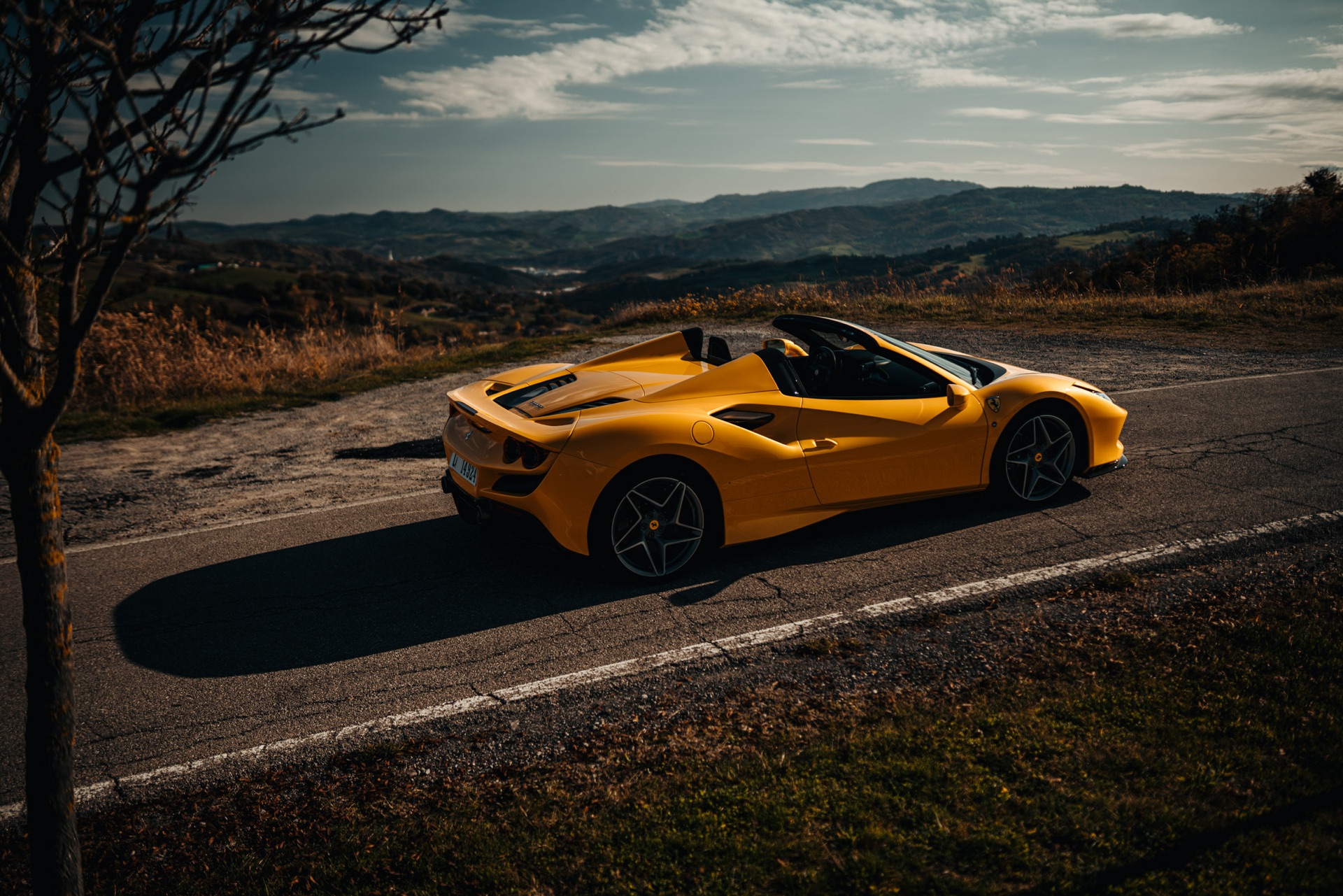
After returning the Ferrari F8 Spider at the same place where I picked it up this morning it is time to reflect. The F8 Spider is incredibly close to automotive perfection. Stunning design paired with a driver-oriented cockpit without touch screens which is a relief for true drivers. The available performance is more than sufficient in all situations except maybe at a hypercar trackday. All of my comments sound like whining at the highest level, only the lack of volume in the soundtrack is something that impacts the otherwise perfect score.
2021 992 Porsche 911 Turbo Review
The 992 Porsche 911 Turbo S took the world by storm in 2020 with many hailing it as the best 911 Turbo S ever to be unleashed my the team in Stuttgart. The numbers are bombastic. 650bhp, 800Nm, 0-100 in 2.7, a top speed of 330km/h and a price tag starting at £155,970 before options. Impressive, but is it necessary? This is a super-GT car that is more likely to find itself on the a morning commute with a child in the back than going flat out on the Nordschleife.
Porsche know this and offer a Turbo with the ’S’ knocked off the rear end. A Porsche Turbo, without the S, is still a speed and numbers freak, but not to the same extent as the biggest baddest S model. That being said, 580bhp, 750Nm, 0-100 in 2.8, a top speed of 320km/h and a £134,400 are certainly not modest, by any measure. 70bhp, 50Nm, 0.1 to 100, 21km/h at the top end and £22k are all that separate the two. Visually you’ll have to be a proper Porsche nerd to tell the two apart, especially now that S and non-S can be specced with the same wheels and badges on the rear deck. To my knowledge, the only badges that cannot be hidden are on the screens, door sills or the extendable front splitter. Debdage it and don’t let anyone in and they’ll never know you’re not in an S. The other telltale sign is the yellow brake callipers that are standard on the Turbo S to denote the PCCB ceramic brakes, but you can option identical brakes and callipers on the Turbo.
Can the Turbo show itself to be just as well rounded and the S? I flew to Germany to the Porsche Experience Centre, Hockenheim to find out. I will forever love Porsche for never messing around on launch events. I had almost an hour on track with the Turbo to gather my thoughts on how the car performed and I learnt a lot. Initial impressions are dominated by the tremendous and unrelenting force that the rear mounted 3.7-litre flat-six twin turbo engine send to all four wheel via an eight-speed PDK gearbox.
Why anyone would need the extra 70 horses, I’m not quite sure. The what the power in sent to the wheels along with the sublime PDK shifts means the Turbo launches itself from one apex to the next. Slowing down is just as impressive an experience as the car I am in is fitted with the PCCB brakes which cost around €10,000(!) and bring the 1,640 kilogram 911 to a halt with tremendous force and feel in the pedal – the confidence is unparalleled. The same can be said for the chassis, too. Th example I was piloting featured the firmer 10 mm lower PASM Sports suspension designed to enhance the agility of the new 911 Turbo. There was not a hint of roll in the body and through the fast Hockenheim GP sweeping bends the body composure was mighty. The adjustability on the limit was so soft, approachable and confidence inspiring.
This really is one of the finest allrounders on sale today. It is refined, quiet and comfortable on the road and an absolute joy to drive on circuit. That being said, it is not as focused as something like a McLaren 570S or Lamborghini Huracan, but they are not worthy of mention in the same breath when considering a daily driver. The 992 Turbo really is the Swiss Army Knife of the automotive world. It is perfectly at home in city traffic, crossing a continent or pounding around a racetrack. There really is no substitute. The Turbo offers a more affordable package than the Turbo S and one that, in the real world, left me wanting nothing more.
2021 BMW iX3 Review
I’ll be honest, I am not a fan of electric cars. Having experienced battery powered offerings ranging from the Renault Zoe to the Porsche Taycan Turbo S, I can categorically say that I am not ready to drop my addiction to fossil juice for the volt life. That being said, there are a few applications in which I can picture myself driving an electric car – short, mundane and preplanned journeys. I have suffered from the stress and anguish of range anxiety on road Trips on which I’ve spent more time staring at the battery percentage and range than I did enjoying the views or fabulous roads.
The BMW iX3 is not intended to be used for cross country cruises or for blasting up mountain passes. This is a car for the school run, weekly shop and the odd trip to visit friends and family on the weekends. That is not to say it cannot cross continents, it can but there are other X3s better suited to such applications. This is the first BMW model to be available with petrol, diesel, plug-in hybrid or full EV powertrains to choose from.
With ‘the power of choice’ in mind, I hit the road in the iX3 to see what this 286 horsepower ‘Sport Activity Vehicle’ with a claimed WLTP range of 460 kilometres felt like. I tried to be sensible and drive in a fashion I imagine a buyer of such a car would, but as with all electric cars, I immediately engaged sport mode and floored it. The instant torque was amusing, the way that 2.2 tonnes shifted was impressive and the accompanying, configurable ‘drive sound’ added some character. 0-100km/h is dispatched in a respectable 6.8 seconds with the top speed capped at 180.
After a few accelerations the novelty wore off and I set about driving the car the way it was intended to be. I turned my attention to the braking regeneration options starting with ‘one-pedal’ driving. This was surprisingly good fun, I challenged myself to not use the brake pedal at all, it took some focus but was achievable after a few minutes of experimentation. I could not get comfortable with was the ‘adaptive’ mode where the braking force would automatically adjust itself using the navigation system to bring the car to a standstill without using the brakes. The level two autonomous systems worked brilliantly, only requiring assistance at traffic lights, roundabouts and coming to a stop with no car ahead of you on the road. I found myself trusting the systems almost immediately. The steering was accurate and did not have iX3 bouncing between the white lines.
When the twisty roads between towns presented themselves, I took control and engaged sport mode with maximum regeneration and found myself having much more fun than expected. Yes, the inherent feel and feedback in minimal, but the steering is quick and sharp and when applying max power out of bends there were noticeable rear-wheel-drive characteristics to be felt. Back to real world testing – the iX3 handled its weight with grace, the ride was firm in sport but the adaptive dampers meant this could easily be remedied. Being electric meant that wind and road noise could be intrusive at higher autobahn speeds, but not to uncomfortable levels. The cabin was well appointed and the usual BMW iDrive goodies are all you could want from an infotainment system. You could never tell this is a BMW that had been built in China. There was almost as much space as in a conventionally powered X3, the only difference was the marginally shallower boot as the electric motors hid beneath the boot floor.
As mentioned in the opening of this review, I can see the application and allure of having an electric car and this 150kW offering which can be charged from 0-80% in 34 minutes on an IONITY fast charger, certainly makes a case for itself. It is as comfortable and capable as I hoped with an added sense of humour. If you’re in the market for an electric family car that can take care of your simple commutes this may well be the car for you!