All posts in “News”

Tesla – Autonomous Ride Sharing Service

Elon Musk Reveals Plan To Establish Tesla ‘Ride Sharing Service’ by 2020

From an investor’s perspective, t can be argued that Elon Musk’s eccentricity lands him in hot-water more often than what is desirable, but there is no denying that it is also what fuels his ambitions and vision for the future of our world (and beyond). Today, Musk announced his latest project at Tesla’s ‘Autonomy Day’ event which took place at the company’s California headquarters.

Though this new venture takes place on Earth, it is no less interesting or ambitious of a target than any of his other proclamations.  Musk made it very clear to investors at the event, that a Tesla-operated autonomous taxi service will be rolled out in 2020. I have a feeling that as he loves to shake things up in the tech-world, it should come as no surprise that this statement is being made after soon-to-be-rival ridesharing company, Uber, announced that it will become publicly traded in the beginning of May.

As opposed to functioning entirely on a fleet of commercially-designated Tesla vehicles, the service being offered will rely heavily on existing Tesla owners with compatible cars to ‘share’ their car on the ‘Tesla Network’, which in theory makes it more akin to ridesharing than a mainstream taxi service. The differentiating factor of course, is that Tesla’s service will be fully autonomous.

Musk cleverly made sure to convey that the service was not only appealing to its future users, but also to existing and potential purchasers of his electric cars. He made bold claims, such as stating that owners could earn as much as $30,000 per year lending their car to the Network during periods when they wouldn’t need it for personal use – such as during holidays, work trips or general down-time.


Powered by new Samsung chips, Tesla’s latest version of autonomous driving software and hardware will, as Musk explained, “…be able to drive themselves anywhere on the planet, on any road and in any/all possible weather conditions without anyone watching over the controls.” This means that Tesla’s autonomous cars in theory, are not limited to specific environments or circumstances and should be able to travel anywhere a human-operated vehicle can (and maybe more). It also means, that drivers (or more accurately, riders) won’t have to pay attention to the road – ever again – should they choose to embrace full-autonomy.

Fully self-driving vehicles, once and for all, plain and simple.

The Tesla boss confidently iterated that there will be over 1-million self-driving taxis on the road when the service is rolled out. Elon Musk at it again; making certain that his inventions are as practical as they are unconventional.

[embedded content]
Watch a Porsche GT3 and GT3 RS Go Head-to-Head at the Dragstrip

Some German-Engineered Fun

The Porsche 911 GT3 and GT3 RS are both amazing cars. On a racetrack, the GT3 RS is the obvious winner with more power and better aerodynamics, but what happens when you put them on the dragstrip? Is the RS really a faster car in a straight line? Well, the guys at the YouTube channel DragTimes decided to find out.

The GT3 RS comes with a significant price hike over the GT3 and seeing the two cars race side by side will put into perspective what the speed difference is in a straight line. It’s worth thinking about if you’re looking at the GT3 or a GT3 RS. The jump of $40,000 from the GT3 to the GT3 RS is a notable one, and you’ll have to decide if it’s worth it. 

The video below can help you do that. While you might not be drag racing your Porsche, it’s a good way to see the difference between the cars. We won’t spoil the results for you, but we can say it’s definitely worth the watch. Watch it and then we’ll go over the results below the video.

[embedded content]

As you can see, these two cars are extremely evenly matched on the drag strip. Both drivers got good launches and had no issues during the several runs. This suggests that you might be better off saving the $40,000. If you frequent the racetrack, though, the GT3 RS’s upgrades will still make a big difference, though.

Watch This Modified Nissan GT-R Stroll Up to 235 MPH Like It’s Nothing

It Makes It Look Easy

Hitting 235 mph is no joke in any vehicle. While 235 mph might seem a lot less than the Ford GT that was clocked breaking the 300 mph mark, it’s still insanely fast. This Nissan GT-R makes it look absolutely easy, though. Just a nice leisurely drive on a sunny day to a freakishly fast speed. No big thing. No, it is a big thing. That’s wicked fast.

This particular Nissan GT-R manages to hit that speed due to the fact that it’s been pretty heavily modified. The car still has its 3.8-liter twin-turbo V6 engine. However, that mill has been modified extensively. It now produces 1,100 hp and 850 lb-ft of torque measured at the wheels. As you can imagine, the result is noticeable.

You can check out the car in action in the video below and see it reach the 235 mph top speed. The interesting thing is that the car looked and sounded like it had more to give. On a longer runway or track, it probably could have gone faster. Carscoops suggests it could possibly hit 250 mph. It’s clear that the driver held it at 235 for a little while and then let off the throttle to keep the car on the runway’s tarmac, but it did seem to have more to give.

What’s so impressive about the video is how smooth the car looks doing the 235 mph run. It’s extremely undramatic. There’s nothing to worry about. You just watch the speedometer needle keep spinning. It’s insane and totally worth a watch.

[embedded content]

The Most Beautiful Details Hidden Throughout the New York Auto Show

Walking through the 2019 New York International Auto Show can be overwhelming. With all the shiny sheet metal on display—some of it for the first time—it’s easy to lose yourself in all of the big news and announcements. But, if you take some time and keep your eyes peeled, you’ll see there are a lot of beautiful design details peppered throughout the show’s attractions that you might have missed otherwise. Yes, concept cars will have bucket loads of futuristic moldings and supercars are packed with aerodynamic facets, but even something as mundane as a family sedan can hide an interesting quirk or two.

So, in case you missed them, these are the most beautiful details hidden throughout the cars at NYIAS 2019.

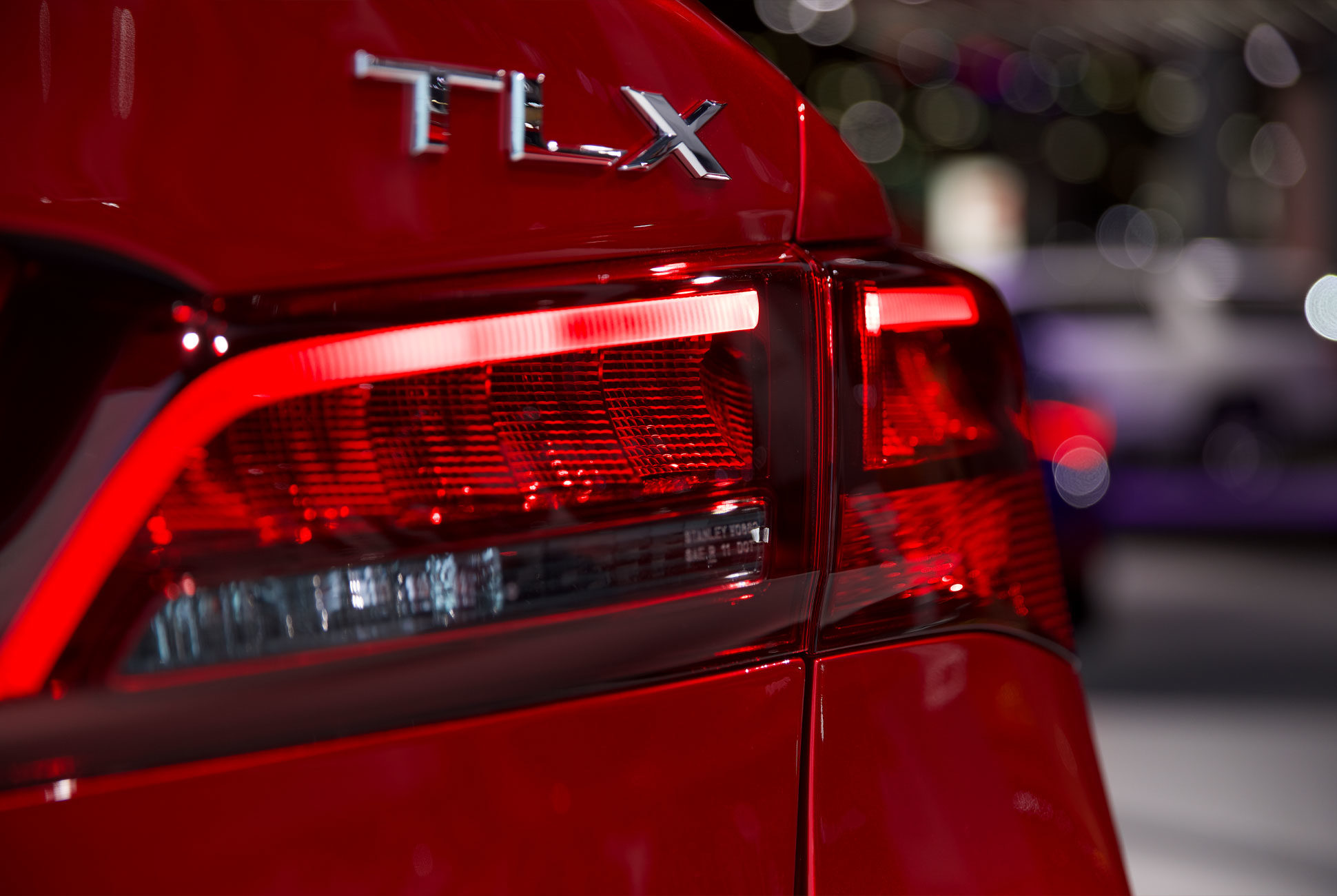
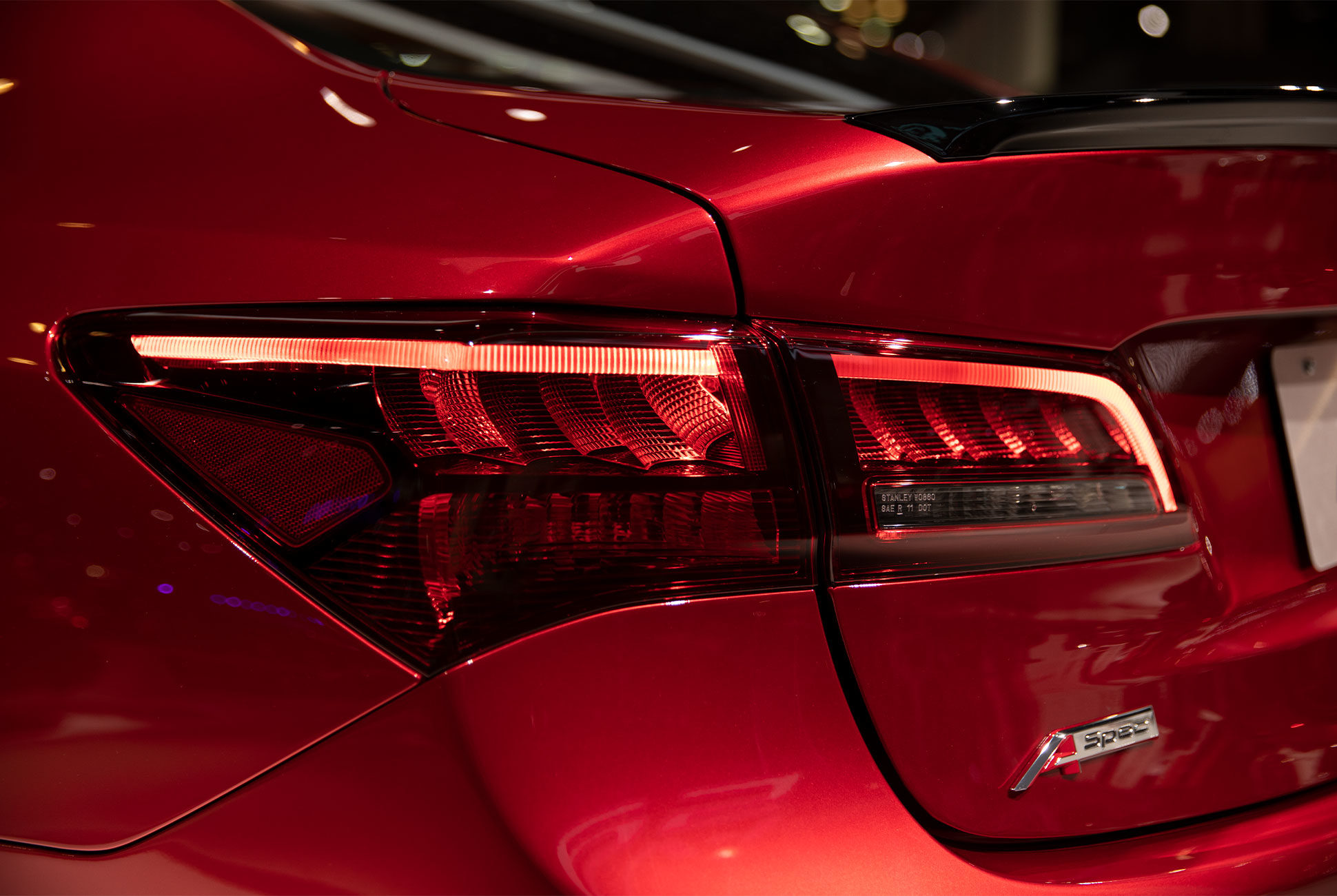
Acura TLX Taillights

NYIAS-Details-Gear-Patrol-TLX-Slide-1
NYIAS-Details-Gear-Patrol-TLX-Slide-2

Acura deserves a huge amount of credit for the bold design choices it’s made over the past few years. Acura’s design language is polarizing, to say the least, but if you look closely, you’ll spot intricacies that deserve appreciation. The taillights on the TLX are one of them: They mirror the car’s headlights, making what could’ve been a run-of-the-mill tail lamp into a delightfully complex display.

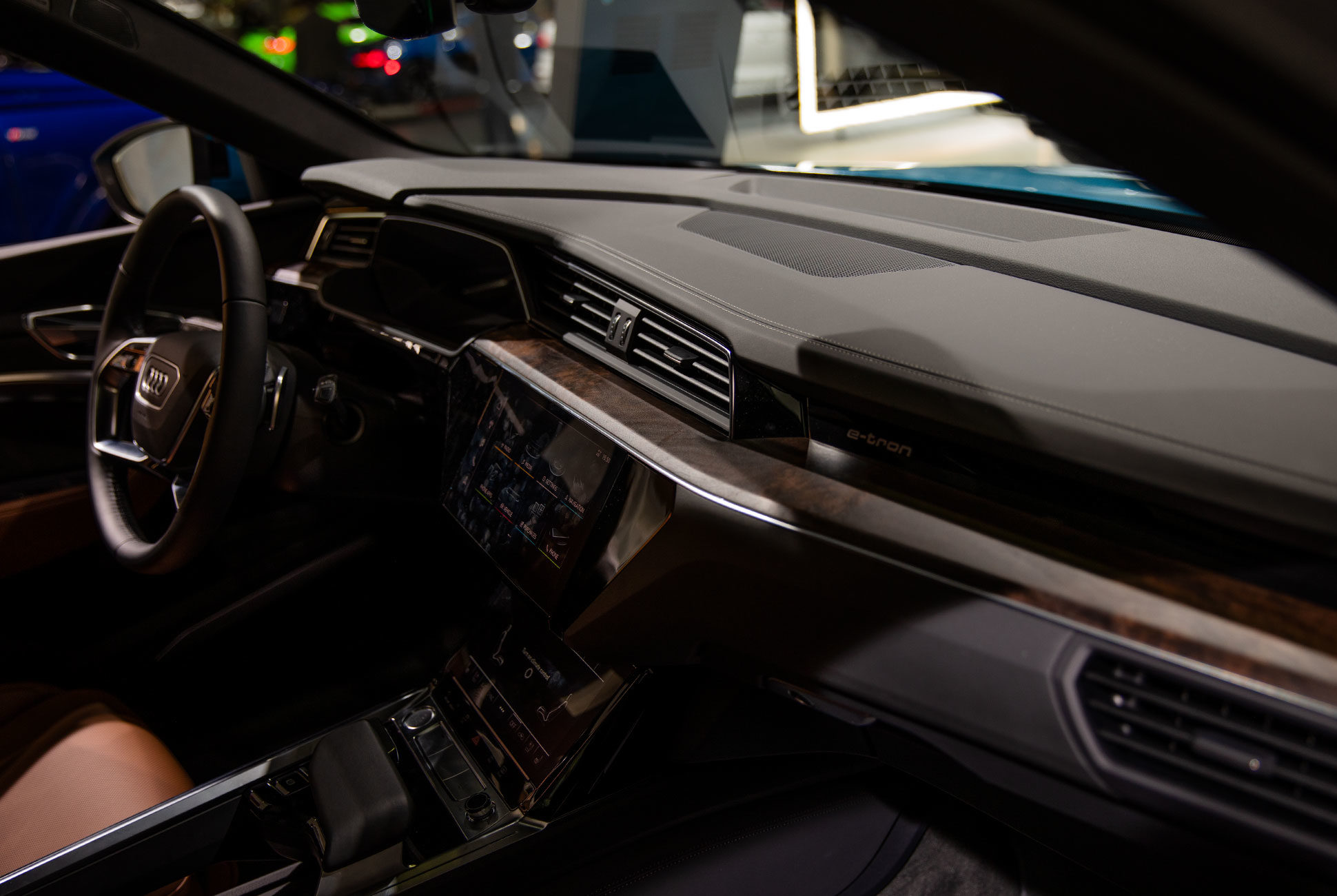
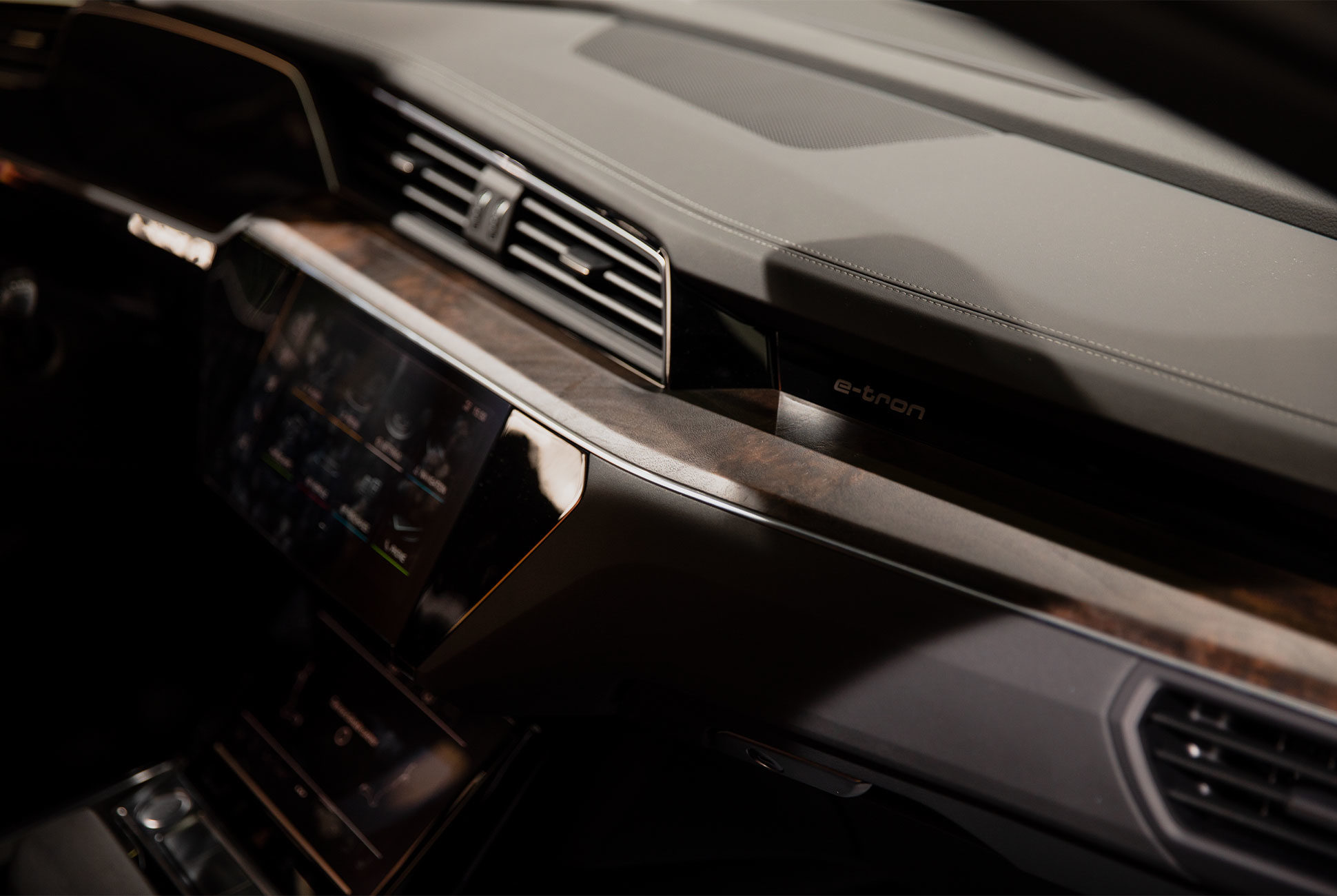
Audi E-Tron Dashboard

NYIAS-Details-Gear-Patrol-E-Tron-Slide-1
NYIAS-Details-Gear-Patrol-E-Tron-Slide-2

Open-pore wood isn’t anything new as far as car interiors go, but the Audi E-Tron pulls it off brilliantly. The all-electric SUV is a vision of the future for Audi, and the designers could have gone the usual clinical design route for such things, but it’s nice to see organic material in there instead; it nicely complements the future-forward E-Tron.

Genesis Mint Concept Seats

There are a lot of details to fawn over on the Genesis Mint concept car, but if one stands out above the rest, it’s the seats. If they look askew in the photo, that’s because when you open the door, they automatically slide back and rotate for easier ingress and egress. And it might only be a concept car for now, but Genesis brand boss Manfred Fitzgerald says he wants to see something like the Mint on the road in the near future.

The Whole Kia HabaNiro

When autonomous driving takes operational responsibility away from the passengers, the experience of driving as a whole will shift; there will more time to appreciate and interact with the interior, for one thing. Designers are starting to cater to that in concept cars like this funky Kia, by pouring more energy into details like seats and dashboard design. The Kia HabaNiro might look like the crossover of tomorrow on the outside, but the not-so-subtle crimson flair on the inside would be a welcome addition to the Korean automaker’s lineup.

Koenigsegg Jesko Rear Wing

The Koenigsegg Jesko’s rear wing isn’t exactly a “hidden detail,” seeing as how it’s one of the largest objects on the show floor. It helps the Jesko achieve 2,200 pounds of downforce when deployed, but can level out to reduce drag and let the Swedish supercar hit its supposed 300-mph top speed.

Lincoln Corsair Taillights

Lincoln is quickly becoming a powerhouse in the American luxury car market. It’s very rare an automaker adopts a design language which works on all of its cars, no matter the body style. The Corsair can easily be described as a mini-Navigator, but it also has its own unique details worth a mention. The taillights, for instance, look like the full-width setup Lincoln has applied elsewhere; move in closer and the design begins to resemble a stylized eagle’s wing.

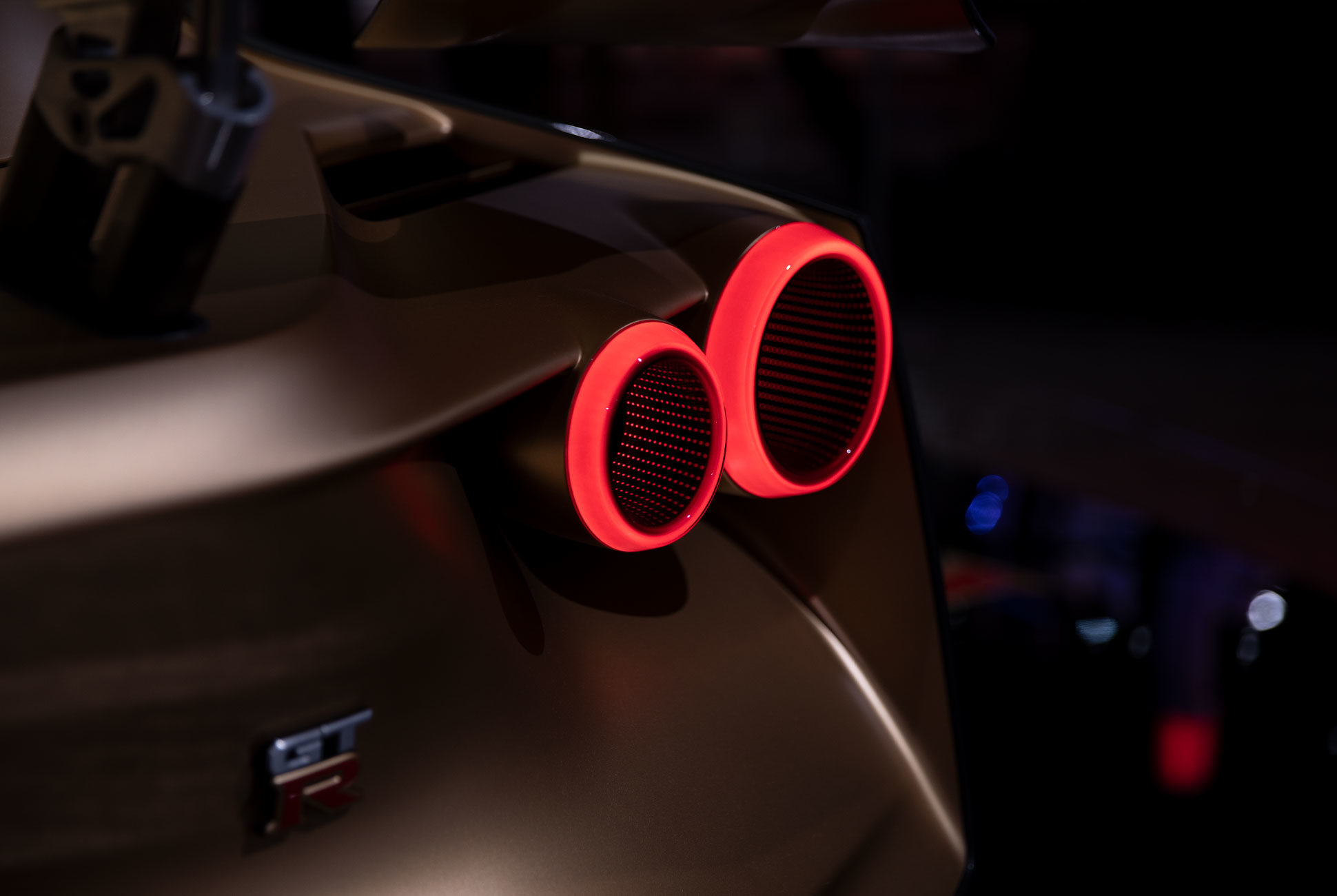
Nissan GT-R50 Taillights

NYIAS-Details-Gear-Patrol-GTR-Slide-1
NYIAS-Details-Gear-Patrol-GTR-Slide-2

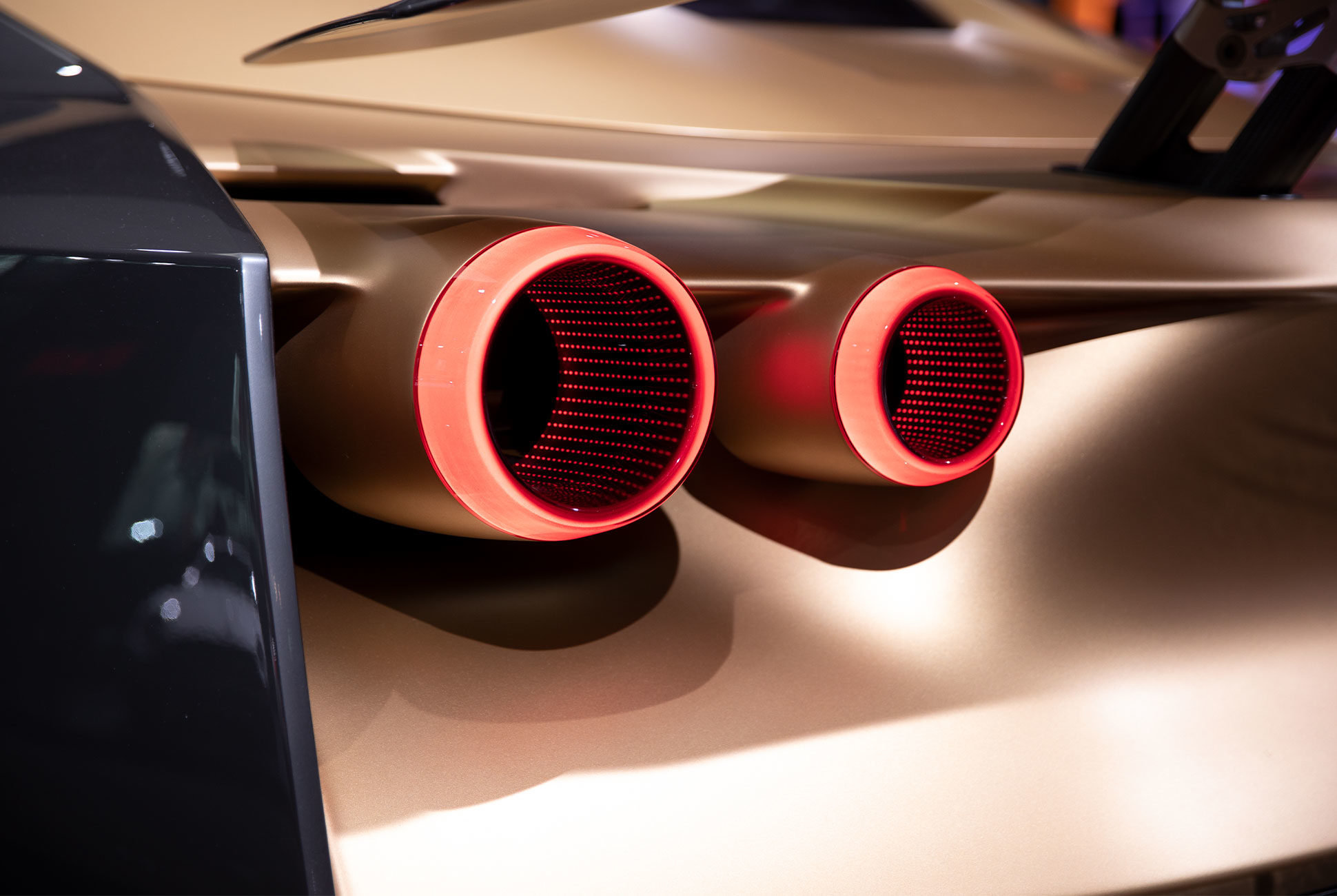
You’ve probably seen the Nissan GT-R50 by now, and drooled over as much as everybody else has. (Just ignore the $1.1 million price tag.) The car was a chance for Italdesign to flex its creative muscles, so it’s packed with design touches. Walk around the back, and you’ll see the semi-floating tail lights that look like jet engines; they compliment the moveable rear wing with its aircraft-like actuators.

Range Rover Velar SVAutobiography Dynamic Center Console

Range Rover has been moving towards minimalism for a while, but the new Velar SVAutobiography Dynamic highlights how far the company’s interiors have come—and how well they’re executed.

Note: Purchasing products through our links may earn us a portion of the sale, which supports our editorial team’s mission. Learn more here.

Watch the BMW M5 DMS and the BMW M5 Competition Pack Go Head-to-Head in a Drag Race

How Much Does the Horsepower Matter?

The BMW M5 Competition Pack is a seriously fast car. It has 616 hp and is a true sports sedan. So, there’s no need for more power, right? Wrong. The BMW M5 DMS ups the ante to 774 hp. That’s about a 160 hp bump up, and that’s quite a lot. It’s enough to feel the difference, but what does that look like in terms of straight line speed?

Well, Rory Reid of Top Gear decided to find out. He took the two cars to an airfield in the UK and decided to set up a little drag race to see how much faster the DMS version of the M5 really is. We won’t spoil the results. We’ll let you watch the video of the cars doing their thing below. 

[embedded content]

Now that you’ve seen the video, you can see how much of a difference it makes. Honestly, it’s a notable impact, but if you’re planning on using the car primarily as an everyday car, then we’re not sure the extra $3,000 for the DMS version of the M5 is worth it. 

There’s a lot of things to love about the M5 Competition Pack, and 160 hp bump for $3,000 isn’t enough to make us think it’s worth it. Still, if you want the fastest M5 on the road, it’s clear which car you should buy.

Chris Harris Says the McLaren 720S Track Pack Isn’t Worth the Extra Money

He Says Get a 720S Without It

It’s easy to tell that Top Gear’s Chris Harris absolutely loves the McLaren 720S. He likes it better than the McLaren Senna and makes the case that it’s the supercar you should buy. He even says the 720S is “like my comfort food of supercars.” Recently, the Top Gear present managed to get a McLaren 720S with the new Track Pack installed on it. What did he do? He took it to a racetrack, specifically the Autodromo Do Algarve in Portugal.

While Chris Harris seems absolutely infatuated with the 720S, he was obviously less than impressed with the Track Pack’s additions to the car. He said, “The dynamic impression is nothing like the Manthey kit on the [Porsche] GT2RS.” Instead of opting for the Track Pack and the extra goodies found on the track car Harris drives in the video below, he says you’re much better off buying a standard 720S that’s “nearly new” and saving yourself a lot of money.

We have to agree with him. The Track Pack alone costs nearly £28,360 ($37,000), according to the video. That’s a lot of money. You could buy a whole other car for that amount. It obviously won’t be a supercar, but it could be your practical everyday car and then you have the 720S for the weekend. Just a thought.

[embedded content]

Aston Martin DBS 59 Pays Enters Produciton

Remembering the 1-2 Finish

At the 1959 24 Hours of Le Mans, Aston Martin’s vehicles in the race managed a 1-2 finish. To honor that epic finish, the company built the Aston Martin DBS 59. The car is based on the DBS Superleggera. It gets Aston Martin’s Racing Green color scheme, special bronze touches across the car, a bespoke grille, 21-inch Y-spoke wheels, and an individually numbered roundel on the front fender.

The news recently came out that the car will enter production soon. Aston Martin will build the vehicle at its global manufacturing facility in Gaydon, UK, according to Carscoops. In total, the company will build 24 of the BDS 59.

“Each car represents one hour of this iconic victory in Aston Martin’s history, in which Roy Salvadori and Caroll Shelby took the chequered flag ahead of the sister car piloted by Maurice Trintignant and Paul Frere,” the company said.

The car is designed to pay homage to the DBR1 that competed in the race 60 years ago. Aston Martin even managed to analyze the interior upholstery of the DBR1 to recreate it in the new car. This includes the leather on the seats and the embroidery on the sun visor.

The entire interior is a gorgeous display of what Aston is capable of with large swaths of black and tan leather. It’s safe to say the interior of the car is just as beautiful as the exterior. 

Four Roses’s First Mainline Whiskey in 12 Years Riffs on a Cult Favorite Bourbon

After 12 years of nothing new but limited editions and one-offs, Small Batch Select is joining Four Roses’s small and highly praised permanent collection, and it has a lot in common with one of the brand’s most coveted drops ever.

According to Four Roses Master Distiller Brent Elliot, the brand wanted the new expression’s flavor profile to mirror that of its domineering 130th Anniversary Small Batch — a bottle that earned the title “World’s Best Bourbon” from the World Whiskies Awards. Thanks to Four Roses’ unique approach to recipes, bourbon blending and penchant for total transparency, we know this isn’t just smart marketing.

Where most distilleries select a mashbill and start distilling, Four Roses reaches into its toolbox of recipes. Each of the 10 recipes appears as a four-letter code that clues you into what the stuff is — the first letter tells you it’s made in Kentucky, the second tells you the mashbill, the third tells you it’s straight whiskey and the fourth tells you the specific yeast strain. (If you’re confused, Four Roses has a handy explainer on its website.)

Small Batch Select’s predecessor, the 130th Anniversary bottle, features OBSV, OBSF, OESV, OESK recipes. Small Batch Select is a blend of six Four Roses recipes, including every one of those found in the award-winning bottle — OBSV, OBSK, OBSF, OESV, OESK and OESF. Both bottles are cut to similar proofs, too, with Small Batch Select at 104 and the 130th at 108 (Small Batch Select has the highest proof of any mainline Four Roses).

From there, differences emerge. If you’re able to find the 130th Anniversary bottle, it can run you more than $500 — Go Bourbon is reporting Small Batch Select will run you between $50 and $60 and will eventually become.

Small Batch Select is also a non-chill-filtered bourbon, meaning it isn’t subjected to filtration processes that remove some residual fat and protein compounds in the juice (sort of like a natural wine). The effects of non-chill filtration are controversial — some say it’s just murkier bourbon, others say it gives the whiskey a more rounded mouthfeel. Elliot says it’s mostly a matter of preference. Finally, Small Batch Select is a mixture of six- and seven-year-old bourbon, significantly lower age statements than its pricey relative.

Four Roses says Small Batch Select is available now at the Lawrenceville, Kentucky distillery and will roll out to Kentucky, New York, California, Texas and Georgia soon in the coming weeks. Elliot also confirmed that the bottle will be pushed nationwide over the next couple years. No information on pricingn is available yet.

The Best Bourbon Whiskeys You Can Buy

Everything you ever wanted to know about America’s favorite brown spirit, including, of course, the best bottles you can actually buy. Read the Story

The Apollo IE Hypercar Is Updated and Ready for Production

A True Carbon Fiber Beast

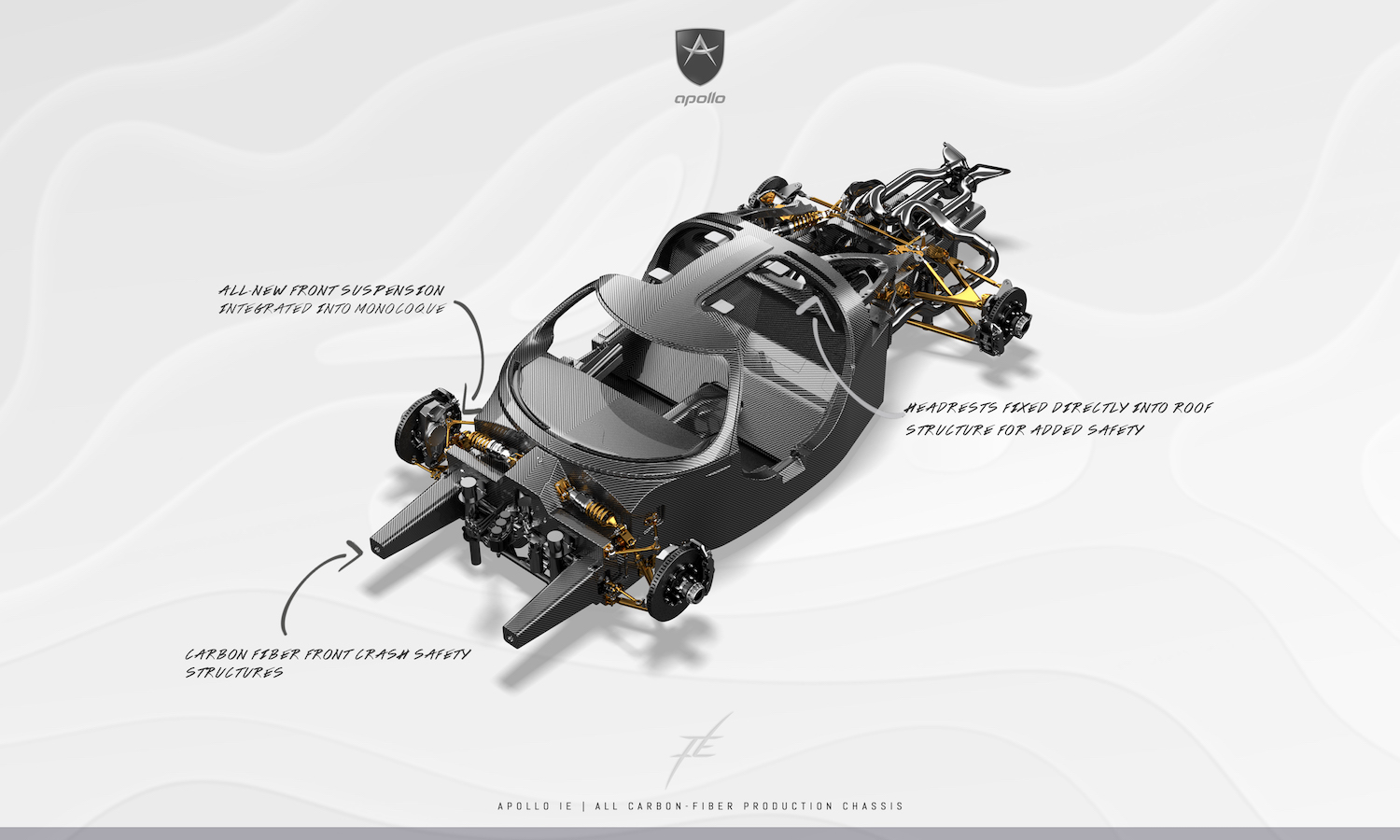
The Apollo IE hypercar is one of those cars that came out as a prototype a couple of years ago and then pretty much disappeared. Well, now it’s back and ready for production. According to a recent press release, the car is better than ever, too. The model features a full carbon fiber chassis that’s different than ever before. The company worked with HWA AG to make the handmade carbon fiber chassis.

Apollo IEApollo IE

According to the company, the chassis is built to “meet and to partly exceed respective FIA LMP2 safety requirements.” This could mean that the vehicle will have a shot at competing in the 24 Hours of Le Mans. Because of the way the carbon fiber chassis is built, the car doesn’t need to have a roll cage installed. This will help keep weight down and should help make it extremely stiff for track use.

The car also takes a step away from the prototype in the aerodynamics department. The production model is much more aerodynamic. This should allow the car’s massive, naturally aspirated 6.3-liter V12 engine, which makes  780 horsepower and 560 lb-ft of torque and is mated to a six-speed sequential gearbox, move the car through the air efficiently.

The car is capable of a 0 to 60 mph time of just 2.7 seconds and a top speed of 207 mph. Those sound like some Le Mans competing performance numbers to us. We’d love to see the Apollo IE hypercar at the race. Only 10 of the cars will be produced and each one will cost $2.71 million.

[embedded content]

The Porsche 911 Speedster Debuts In New York With Gorgeous Styling

The Best Looking Porsche?

We reported on the fact that Porsche was going to pull the cover off the 911 Speedster at the New York Auto Show, and now it’s happened. The car looks better than we expected. The car isn’t just all about looks, though. It has the same 4.0-liter flat-six engine that makes 502 hp and 346 lb-ft of torque that’s in the 911 GT3. It also uses individual throttle bodies like the GT3 RS racing car.

The Porsche 911 Speedster can make 0 to 60 mph in 3.8 seconds and it has a top speed of 192 mph. The car weighs just 3,230 pounds and has a special rear axle steering and dynamic engine mounts. The car will be for sale only with a six-speed manual transmission. Porsche made significant efforts to lighten the car. The company used plenty of carbon fiber and lighter weight door panels to keep the weight as low as possible.

The Speedster features a super lightweight fabric top so you can get out of the weather if things turn bad while you’re out driving around. Porsche came out with a Speedster concept last year. While the production model looks great, it doesn’t have some of the retro-inspired features of that concept car. Still, we’d argue it’s one of the best-looking cars in the Porsche lineup. 

Porsche only plans to build 1,948 units worldwide. Some of the models built will come to North America. If you want a chance at owning one of these super sleek convertibles, you’ll really have to pony up the big bucks. Porsche wants $275,750 (that’s including the destination fee of $1,250) for each 911 Speedster. If you do get the car Porsche has a special watch called the Porsche Design 911 Speedster Chronograph to go along. It’s inspired by the car and will look perfect on your wrist as you drive.

How Much Would You Pay for This Special 186 MPH BMW M1 Prototype

The Prototype Heads to Auction

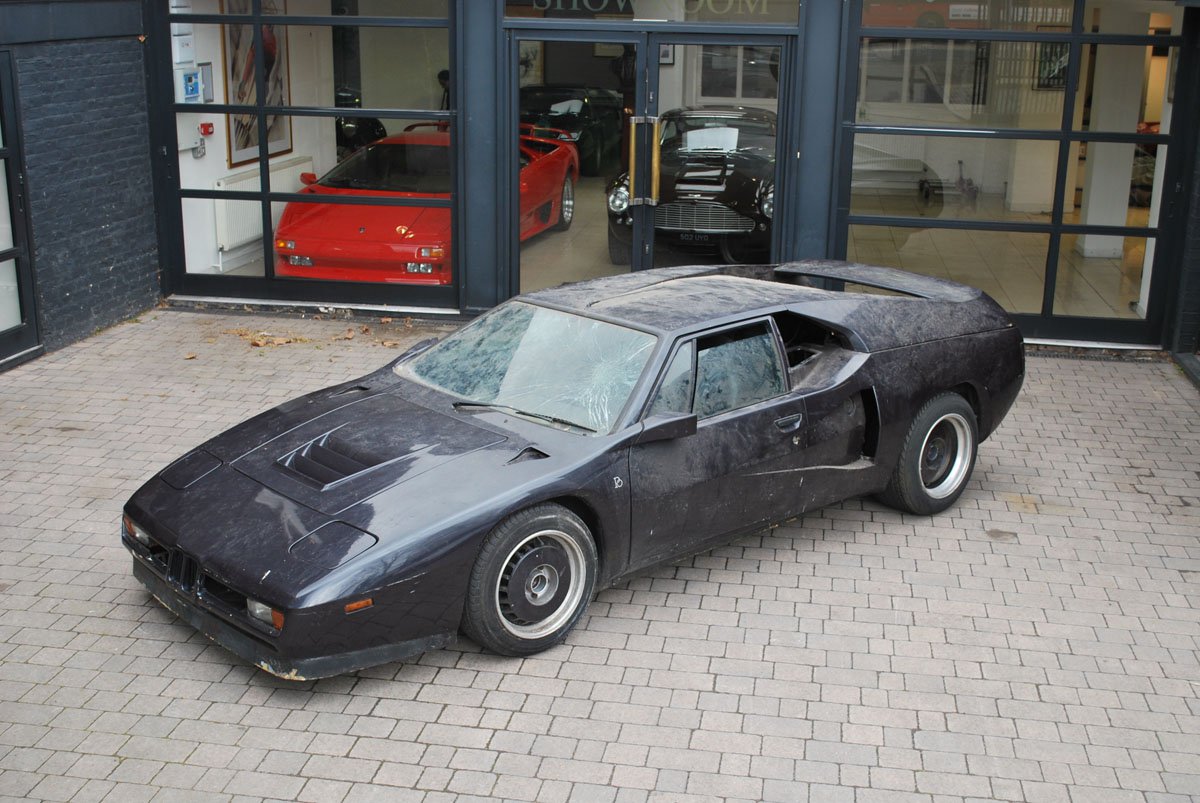
Are you looking for an ultra-rare supercar that has some history to it? Do you love BMWs? Then we have the perfect suggestion. Buy this unique BMW M1 Prototype. The car broke the 186 mph (300 km/h) speed barrier in the 1980s and is a piece of automotive history. The historic moment happened at a BP Autogas event in 1981.

Italdesign was the company that crafted the M1’s now iconic shape. However, this particular prototype has plenty of custom body panels on it. The car has huge air scoops and a big wing on the back, making it one of the coolest M1’s we’ve seen.

BMW M1 PrototypeBMW M1 Prototype

According to Carscoops, the vehicle’s 3.5-liter six-cylinder engine got two turbochargers that boosted its horsepower all the way up to 401. Coy Auction is the auction house that will handle the sale. The auction house told Carscoops the car was stored in a garage for around 25 years. Many people thought it had been lost to history. Eventually, someone found it in a garage in East London.

It’s a super rare car in part because BMW only made around 450 of the M1, to begin with. This unique car is a one-of-a-kind item, and it will come with a price that reflects that. Pre-auction estimates have come in at about $327,000. That’s quite a lot of money for a barn find, but then this is a super unique car.

Karma Reveals the 2020 Revero GT With 528 HP

An Impressive Hybrid

While most of the news out there is about electric supercars and hypercars, the Karma 2020 Revero GT is one that’s a hybrid that should get people pretty excited. The car is made by the Chinese-backed Karma, which used to be Fisker Karma. The company revealed its new Revero GT at the Shanghai Auto Show.

The Revero GT is based on the previous car from Karma, but it features new bodywork, new technology, and much-improved performance. The car gets an all-new powertrain that the company developed with the help of an engine sourced from BMW. The Twin-Power 3-cylinder engine. The engine is the same as the one found in the BMW i8 plug-in hybrid. The company added to the powertrain upgraded batteries and more powerful electric motors. 

Altogether the vehicle makes 535 hp and can go for 80 miles on battery power alone before the gasoline engine kicks in to extend the range. The car can make a 0 to 60 mph sprint in just 4.5 seconds and has an electronically limited speed of 125 mph. Overall, it’s a major step forward for the brand and a serious competitor to the other vehicles out there.

The company also showcased a special design from Pininfarina and a concept vehicle at the show. The concept is meant to showcase that the company will eventually transition its vehicles to fully electric powertrains.

The 2020 Audi R8 Makes Its U.S. Debut in New York

It Is Now Stateside

The 2020 Audi R8 has finally arrived in America. The car was officially unveiled last fall, but now it has come to America. The will appear at the New York Auto Show. The Audi R8 underwent a facelift recently. It now has more aggressive styling. It’s the best looking the R8 has ever been.

The front fascia is different, with a unique honeycomb grille, and most of the other elements of the front end, including the headlights, hood, and bumper have been reworked. The car also has new side skirts, a new rear bumper, new rear diffuser, and a new spoiler. Inside, the cabin looks more or less the same. It features two new colors, though. They include Pastel Silver and Palomino Brown.

The supercar gets a 5.2-liter V10 that produces 562 hp and 406 lb-ft of torque. That engine is connected to a seven-speed S tronic transmission that filters power to all four wheels via Audi’s renown quattro all-wheel-drive system. Zero to 60 mph comes in a quick 3.4 seconds, and its top speed is 201 mph.

If that’s not enough, you can make the jump to the Audi R8 V10 performance and get 602 hp and 413 lb-ft of torque. This bumps the 0 to 60 mph time to 3.2 seconds and the top speed to 205 mph. The Audi R8 has always been a true performer, and now it looks better than ever, too.

There’s a roadster version of the car, too. It’s a little slower but other than the drop top, not all that different from the coupe version of the car.

Will Ferrari Build a Modern Testarossa?

Bringing Back an Iconic Nameplate

There’s a new rumor floating around that Ferrari could bring back the Testarossa nameplate in a modern car. According to The Supercar Blog, a recent supercar collector told the publication about a collectors’ dinner with the company where it was revealed that the company would be bringing back the Testarossa name.

According to this unnamed source who is supposed to have insider information, the modern Testarossa will come with a V12 engine and produce over 1,000 hp. The insider was quite clear that it would be a Testarossa. He said that was all that he could say about the vehicle, though.

What that means is that Ferrari will reimagine one of its most iconic cars. However, we don’t know what it will be or when it will be coming. We’d assume it would happen fairly soon. If it wasn’t going to, Ferrari wouldn’t have spilled the beans to its collectors at the dinner.

The original Testarossa packed a 4.9-liter, V12 engine that made 390 hp. It had a sleek shape and was the epitome of 1980s excess. The Testarossa helped define the ’80s. It is well-regarded among Ferrari and sports car lovers. A new version of the car would have to do wonderful things in terms of styling and performance in order to live up to the previous car’s name. It will be interesting to see if these rumors ring true and Ferrari does really bring back the Testarossa in some fashion.

Roush Unveils Its 2019 Stage 3 Ford Mustang With 710 HP

Can’t Wait for the GT500? Get the Roush

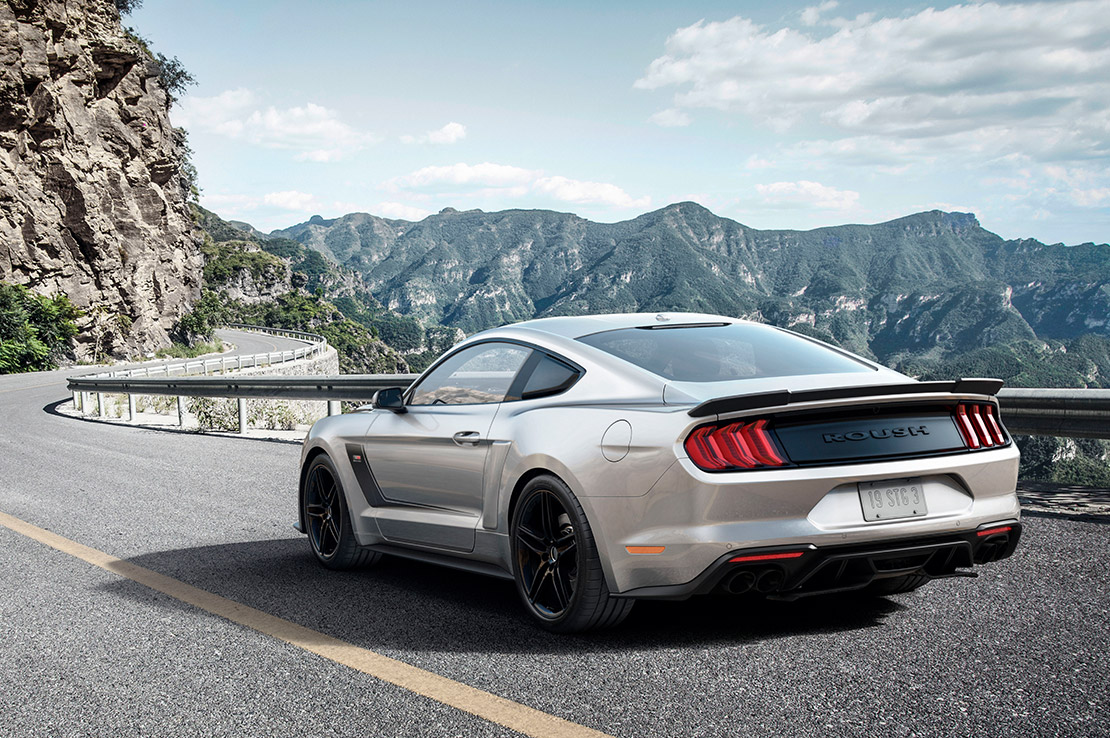
Tuner company Roush recently revealed its new 2019 Stage 3 Mustang and announced it will have the vehicle on display at the New York Auto Show. What’s special about the Stage 3 Mustang? It gets a Roush TVS R2650 supercharger. That brings the 5.0-liter V8 engine’s power up to 710 hp and 610 lb-ft of torque. This is the Mustang you always wanted, and if you can’t wait for the GT500, you should get it.

The car also gets a special Roush active exhaust system that allows the owner to choose from four different exhaust settings. One of those settings is a “Custom” setting that allows you to choose the exhaust note they want. Roush couldn’t let stop there, though, the vehicle also gets plenty of exterior styling updates to tell the world that this is no typical Mustang.

2019 Roush Stage 3 Mustang2019 Roush Stage 3 Mustang

There’s Roush badging on the front and rear of the car, a larger front splitter, special grille, new air intakes, different hood with special venting, side skirts, black wheels, rear lip spoiler, and new rear diffuser. While the car still looks like a Mustang, it’s like no other Mustang on the road.

The car will come with a 5-year, 60,000-mile powertrain warranty. It costs $21,925 on top of whatever it costs you to get your hands on a 2019 Ford Mustang GT. Roush will have this on display at the New York Auto Show next to its new version of the Ford F-150, that should be equally impressive.

You Can Buy a Brand-New Alfa Romeo 8C

A Once In A Lifetime Opportunity

Sometimes you get second chances, and that’s exactly what this sounds like to us. Fiat Chrysler Automobiles is now offering up one Alfa Romeo 8C Coupe and one 8C Spider for sale. Neither car had ever left the factory despite the fact that they were built in 2007 and 2010 respectively. This means they’re brand new. 

The 8C was the car that started the revitalization of the Alfa Romeo brand. The car was produced in limited numbers and was one of the most beautiful cars of the last several decades. Alfa made only 500 of the coupe and 500 of the spider. These two cars were a part of the Automobiles’ Reloaded by Creators, which is an FCA Heritage program. The department decided to sell the 8C cars it had, according to CarBuzz.

Both of the cars only have a few miles on their odometer and have been gone through and certified by FCA Heritage. When the cars were new, the coupe went for $265,000 and the spider went for $299,000. The value of the 8C has gone up considerably in recent years, so these two cars should fetch more than that. 

There’s a new 8C coming, but it won’t be like the old. It will be a mid-engine supercar capable of producing over 700hp. If you want the original, real deal item, then you’d better pony up the money for one of these special cars. There likely isn’t an 8C out there in better condition. 

Could Bugatti’s Next Vehicle be a Crossover Coupe?

Bunk or a Rumor Worth Listening to?

We recently reported that Bugatti wants to add to its lineup. At the time of that report, there was no indication as to what that vehicle might be. However, now it seems the automaker could be looking at a crossover coupe as its next model. The crossover coupe could be based on the Lamborghini Urus, according to CAR magazine.

The publication revealed that there is a proposal for such a vehicle that is awaiting sign-off from the high-level executives at VW. VW and Bugatti have said nothing of this, so there’s a chance it’s not true or that the company will not sign off on it and we’ll hear nothing else of it. With that in mind, with the way the automotive market is currently going, it would make sense for the automaker to do so.

Stephan Winkelmann, the head of Bugatti, previously worked on the Urus, so it would make sense. Also, the model is a true force to be reckoned with. It has a 0 to 60 mph time of just 3.6 seconds, and a top speed of about 190 mph.

If Bugatti were to tap the Urus for its own crossover, the reports indicate that it will be a smaller, two-door crossover that’s even more extreme in terms of performance. As Carscoops points out, there is the opportunity to hybridize the powertrain and still use the engine from the Urus to bring the power output closer to 1,000 hp.

All this goes against what Winkelmann said of the upcoming vehicle. As we reported a few days ago, Winkelmann seemed pretty adamant about the car having its own platform, and keeping it unique to the Bugatti brand. With that said, we could see Bugatti coming up with its own platform and then using things like the engine from the Urus. Time will tell, but reports indicated a 2023 projected date for the vehicle. Bugatti better get moving if it wants to make that happen.

2020 Karma Revero Gets a BMW Engine and More Power Than Ever Before

A Newer, Faster Revero

The Karma Revero will make its official debut at the Shanghai Auto Show in a few weeks. When it does you’ll get to see a faster and more advanced version of the car than Karma has ever produced before. The vehicle will sprint from 0 to 60 mph in 4.5 seconds, and it has a top speed of 125 mph.

Pair that with its advanced hybrid system and its sleek exterior, and you have a car worth getting excited about. Oh, and BMW helped the company with an engine and onboard generator. Yep, Karma and BMW worked together on the Revero.

While the company was very tight-lipped on the specifications for the car, it did say that BMW and Karma have collaborated since 2015 on the project. The engine that powers the generator, which is what BMW worked on with Karma, works to provide juice to the battery when needed and adds additional power when needed. The engine is a TwinPower Turbo three-cylinder engine.

The previous Revero used a 2.0-liter turbo four-cylinder to bring the combined power output up to 403 hp and a whopping 981 lb-ft of torque. The new car should have more than that. If it’s going to get the kinds of performance gains Karma says it has, then it will have to.

The 2020 Revero should come out near the end of 2019. Karma is building the car in California. When it comes available Karma may find the hybrid car space a little crowded.

Watch Porsche’s Most Iconic Racecars at the 77th Goodwood Members Meeting

You Might Not See This Again

Porsche is really going all out celebrating the 50th anniversary of the 917. The company released the modern concept car, has an exhibit in Stuttgart, and now has showcased several versions of the car at the 77th Goodwood Members Meeting. 

The company wanted to celebrate the 917’s prowess as a racecar, and showcase all of its victories of the 24 Hours of Le Mans, of which, the company has 19.

The showing at the 77th Goodwood Members Meeting showcased the original 917 as well as four other versions. At the Member’s Meeting, it was driven by none other than Richard Atwood who piloted the 917 to a victory at Le Mans, which was Porsches’ first. That victory started Porsche’s strong performances at the race. It also helped save the company from obscurity and bankruptcy at the time.

The video below shows some of the action at the Goodwood Meeting. That car’s more or less cruise around. It’s nice to see them out on the track moving. There are so many good shots of these iconic cars. It makes you imagine just what they must have been like in their time. Porsche at the moment has no plans to create a production car out of the modern 917 concept mentioned above, but we sure wish the company would.

[embedded content]

Watch this McLaren 720S Run an 8 Second Quarter Mile

The Driver’s Guts are Still Stuck to His Spine

When the McLaren 720S comes from the factory it has a very strong 4.0-liter twin-turbo V8. That engine creates 710 hp. That makes it good for a quarter-mile time under 10 seconds if all conditions are perfect. Apparently, with some fine-tuning, that’s not all the car is capable of. 

In the video below, there’s a McLaren 720S that’s been tuned to 943 hp. The owner of the car fitted some aftermarket turbochargers and a new exhaust, according to Carscoops. He also fitted some super sticky Toyo R888 tires. The result? A quarter mile time in the 8-second range. 

Of course, the team for the car had to get everything right. The tires needed to be properly warmed up, the track conditions had to be good, and the car had to be running at its peak. The day started with runs in the 9s and then after several more runs, the car manages to sneak one into the 8-second range. The best was an 8.993-second quarter mile at 159.55 mph.

That’s the fastest any street-legal McLaren car can do. The car also did 0-60 mph in 1.9 seconds, which is simply mind-bogglingly fast for a street car. You can watch the whole video of the whole adventure from the time the guys leave for the track to the time they complete the run. Skip ahead to about the 21-minute mark to see just the 8-second run.

[embedded content]