All posts in “Events”

The Mini Electric concept adds what compact EVs have been missing: Style

Share

  • Pinterest

Mini took the wraps off its next electric car concept ahead of the Frankfurt motor show, previewing a model expected to go into production relatively soon. We say “next” because Mini already fielded a low-volume EV a few years back; some 600 Mini Es were set loose in 2008 for a short period of time for parent company BMW to study EV use, contributing experience and knowledge to the BMW i3. Now it’s time for Mini to offer a truly mass-produced EV due in 2019 to complement the plug-in hybrid Mini Countryman currently on sale.

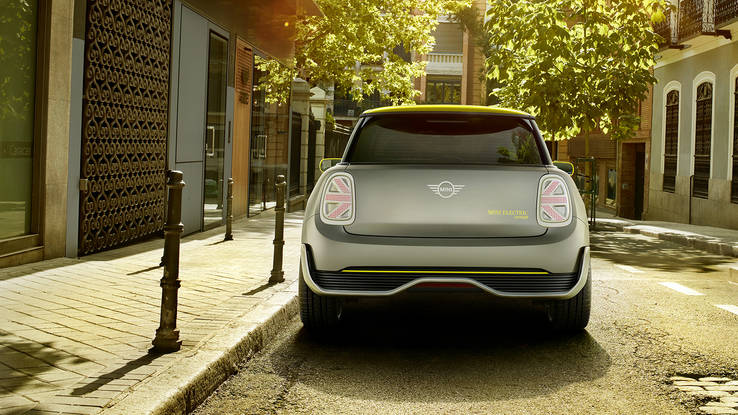
The Mini Electric Concept the automotive world will see in just a few days gives a glimpse of the marque’s evolving design more than anything else — asymmetric wheels, a filled-in grille now that the front of the car doesn’t need a functional radiator, and (our favorite) taillights featuring two halves of the Union Jack. The giant letter E probably won’t make it to production — it’s obvious enough this isn’t a gasoline or diesel-engined Mini Cooper — but other details like a restyled front fascia and spoiler, designed for improved aerodynamics, point to likely production details.

As we’ve seen it takes more than design to make or break an electric car these days — a number of production EVs have strongly suggested design is less of a priority for buyers — and it will take a range of more than 200 miles to make the Mini Electric make sense to buyers who’ll be cross-shopping it with other small EVs.

2017 Mini Electric Frankfurt concept rear

Mini is keeping quiet about the battery and range specs for now.

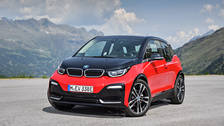
2018 BMW i3s revealed ahead of Frankfurt motor show

“The MINI Electric Concept is a quintessential MINI — compact, agile, simply the ideal companion for everyday driving. At the same time, it conveys a whole new take on the concept of sportiness,” said Adrian van Hooydonk, senior vice president of BMW Group Design. “Indeed, aerodynamics and lightweight design aren’t just important in the world of motor sport; they are also essential factors for maximizing electric range. The car’s surfaces have a sense of precision and contemporary clarity about them that lends added impact to the car’s efficient character. Plus, striking accents and vivid contrasts give the exterior that distinctive MINI twist.”

The automaker is staying mum on battery capacity and range, and it’s likely we won’t get closer to concrete figures even in Frankfurt. Whatever the range, we hope the Union Jack taillights not only stay, but migrate to the rest of the two-door and four-door models.

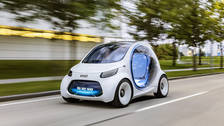
smart vision EQ fortwo revealed ahead of Frankfurtsmart vision EQ fortwo

Here’s what the 217-mph Mercedes-AMG Project One hypercar looks like driving through a dark tunnel

Share

  • Pinterest

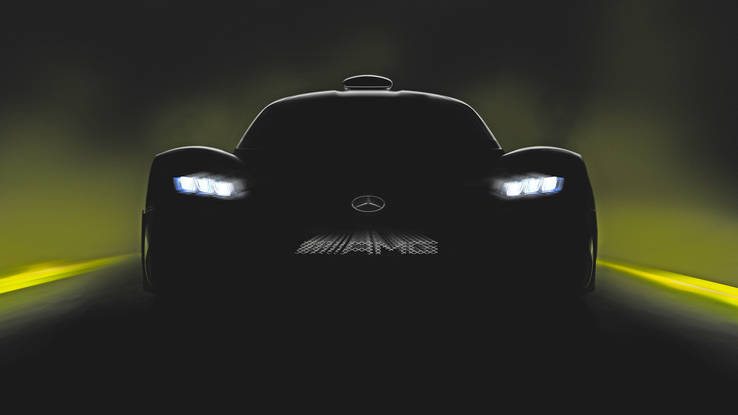
Mercedes-AMG is really drawing out the reveal process of its bonkers Project One hypercar, but the above image finally gives us a taste of what the thing is going to look like — when it’s driving directly at you through a dark tunnel, at least.

Yep, it’s a teaser image … and not a very enlightening one. But it does seem to indicate that, despite all the Formula 1-derived tech under its skin, it’s going to look more than a little like an endurance racing prototype on the outside. That’s not totally surprising, given that it’s meant to seat two, but with that snorkel intake sitting on top of the cabin roof, we’re getting CLK GTR vibes — or, dare we say, McLaren F1 vibes? — and we’re not complaining.

But why do you care about this thing? After all, it’s just another hypercar for the insanely wealthy, right?

That’s one way to look at it. The estimated $3 million dollar price tag certainly doesn’t help make the case for its attainability. But this car, along with Aston Martin’s equally nutso Valkyrie, represents a radically different approach to top-end performance than, say, the brutally powerful (yet delightfully refined) Bugatti Chiron. We’re very curious to see how it plays out.

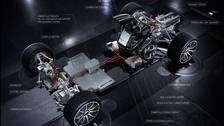
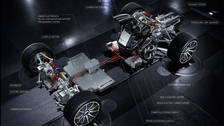
To recap, the Project One combines a ludicrously high-revving 1.6-liter turbocharged V6 — AMG claims it’s essentially today’s Formula 1 engine — with four electric motors to help achieve over 1,000 system hp and a top speed in excess of 350 kph (217 mph). A pushrod suspension setup helps keep it connected to the ground, hopefully striking a balance of day-to-day comfort and on-track capability in the process.

You can learn a little more about the tech in this thing here:

Mercedes AMG Project 1 powertrain details

Sometimes, you can mess around with these strategically darkened teaser images in Photoshop and draw out a few details hidden in the inky blackness. Not so here —  we couldn’t find much hidden, except for a honkin’ three-pointed star right there on the nose above a fairly wide grille.

We’ve been hearing about this car for a while now, but with a reveal promised at the Frankfurt motor show, we won’t have to wait too much longer.

Mercedes-AMG Project One hypercar front view

Photoshop tomfoolery doesn’t reveal much here, save for that prominent three-pointed Mercedes star on the nose.

Graham Kozak

Graham Kozak – Graham Kozak drove a 1951 Packard 200 sedan in high school because he wanted something that would be easy to find in a parking lot. He thinks all the things they’re doing with fuel injection and seatbelts these days are pretty nifty too.
See more by this author»

This is smart’s vision of your connected, electric future transportation pod

Share

  • Pinterest

What is the future of city transportation going to be like in, say, 2030? Who knows? But smart, the maker of small electric city cars, thinks it’s going to include a lot of small, electric city cars.

“We are pacemakers for urban mobility,” said Dr. Annette Winkler, CEO of smart, just before they pulled the cover off the concept you see here.

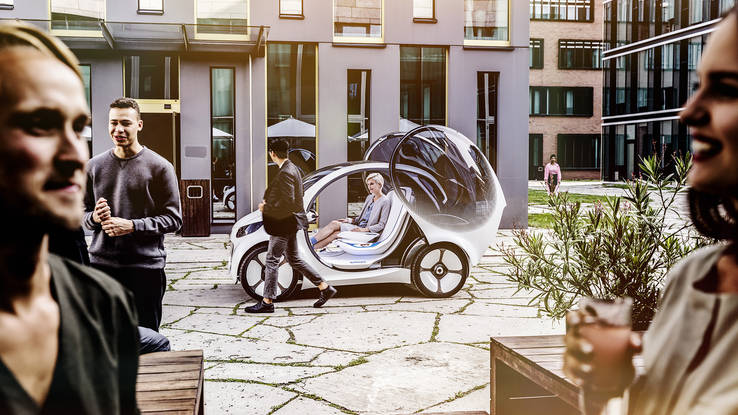
The concept is called the smart vision EQ fortwo. It looks about like the current smart fortwo except for a pair of big, round doors and the missing steering wheel and pedals. Those differences are there because the vision EQ is autonomous. A theoretical future city dweller would summon something like this smart vision EQ fortwo using a smartphone, the car would come running to the summoner like a happy puppy, with the words, “Hi Fred!” (or whomever) on the front, and Fred would climb in and be whisked to his destination. Or, the user could indicate he or she was willing to share the ride and the system software would find a compatible co-rider.

When not carrying passengers, the car would find a place to recharge its batteries through wireless inductive charging. It could even drive itself to a service center when maintenance is called for, though maintenance on an electric car is minimal.

smart vision EQ city photo

This is the future smart envisions for you.

The smart vision EQ fortwo is built around four assumptions about what will be needed for a city car in the future, and it incorporates all four of them in its design:

1. It will be shared. Unlike contemporary cars, which are owned by one person and are used only by him or her (and only for a small portion of the day), the vision EQ would be used by multiple riders each day. It would be similar to the operating model of car2go, which already has a presence in several cities around the world.

2. The transportation future will also be autonomous, something required for this car sharing model to work. As smart says, “… users do not have to look for the next available car — it will find them.”

3. The cars will all be connected, as they would have to be to work with so many different passengers.

4. And, to keep the air in the cities they serve clean, vision EQs would have to be electric. These cars would have rechargeable 30 kWh lithium-ion batteries onboard, with access to inductive recharging stations.

In the future, driving in the city won’t be like it is today. In fact, it won’t even be driving, it’ll be riding. But how much enjoyable driving do you do in city centers anyway? It’s not like you’re carving apexes during rush hour as you commute to and from downtown wherever. For much of the time spent behind the wheel, you’re just sitting there. You might as well be sitting in a car that drives you and frees you up to do something else.

smart says that with enough cars like this they could cut the number of vehicles in cities in half. That’s something we can all get behind. 

BMW i3s adds a small helping of sport to lineup ahead of Frankfurt motor show

Share

  • Pinterest

BMW took the wraps off a refreshed i3 ahead of the Frankfurt motor show, revealing a gently updated EV that will replace a model that’s been on sale since 2013. Bavaria’s wee EV keeps its overall shape — which is why it doesn’t look obviously different in the photos below — but will be joined by a more powerful if not significantly sportier i3s powered by a higher-output electric motor producing 184 hp and 199 lb-ft of torque. The base model, meanwhile, will keep its 170-hp and 184 lb-ft output.

The i3s model will set itself apart from the base i3 with a sport suspension dropped by a modest 0.3 inches, high-gloss black grille surrounds, roof accents and bumper inlays in addition to unique front and rear aprons. The revised suspension will feature specially developed dampers, springs and anti-roll bars, but perhaps more noticeable will be the exclusive 20-inch light-alloy wheels and a track widened by 1.5 inches. The i3s will serve up a slightly quicker sprint from 0 to 60 mph of 6.8 seconds, compared to 7.2 seconds on the base i3, and a higher top speed of 100 mph for a (purely) theoretically faster urban commute. Just like the base model, the i3s will be offered with a range extender that will bump the maximum “everyday use” range from 97 miles to a maximum of 180 miles.
 

How does Teslas Model 3 stack up against the Chevy Bolt

BMW tweaked a few things on both models when it comes to the interior, with the 2018 BMW i3 featuring an updated 10.25-inch i ConnectedDrive screen with an increased resolution of 1,440 × 540 pixels if buyers opt for the Navigation system Professional. This system features updated voice recognition technology as well as the new On-Street Parking Information search service, which informs drivers of the best locations to find a parking spot, as well as an outlined boundary of the i3’s real-time range displayed on a map.

When it comes to colors and options Melbourne Red Metallic and Imperial Blue Metallic will join the palette, in addition to a new interior cloth-leather trim combo called Giga Brown Natural Leather & Carum Spice Grey Cloth.

BMW will display the updated i3 and i3s at the Frankfurt motor show in a matter of days, but the i model that fans of hybrids sportier than the i3s will be looking for is the i8 Roadster, which won’t make its worldwide debut until the LA auto show in November.
 

2018 Nissan Leaf teaser

600-hp Polestar coupe will join Volvo at the Frankfurt motor show

Share

  • Pinterest

Volvo’s performance brand Polestar is bringing a 600-hp coupe to the Frankfurt motor show next month according to a report by Autocar. Volvo relaunched the brand as a stand-alone entity in July.

Polestar will enjoy specific technological and engineering synergies with Volvo cars and benefit from significant economies of scale as a result of its connection to Volvo. These synergies will allow it to design, develop and build world-beating electrified high-performance cars,” Volvo said in a statement.

Volvo bought the racing brand in 2015.

Volvo, owned by Geely, is working on two new flexible platforms for small and large cars. Autocar guesses that the new S60 sedan could eventually become a Polestar coupe.

Drivetrains will be hybrid, as well as mixed boost like its current turbo and supercharged offerings like the T6s. That powerplant produces 324 hp in the XC90, plus about 80 hp from the electric motor, so it would still need a good bit of massaging to hit the 600-hp mark.

Polestar insiders told Autocar that it would be keen to trade range for performance, if necessary. We’ll keep an eye out for this in September in Frankfurt.

Volvo S60 and V60 Polestar, model year 2016

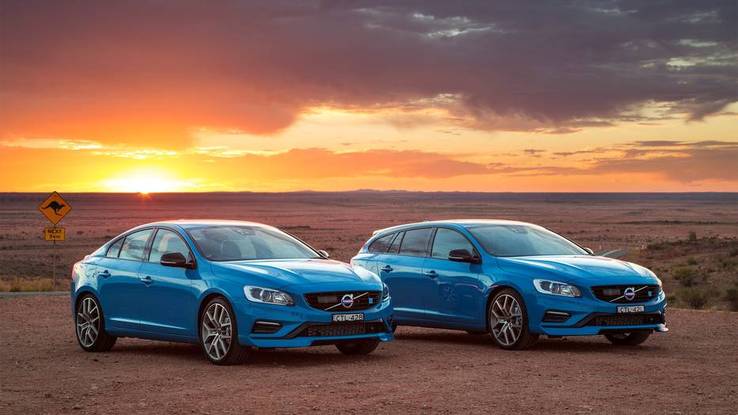
Volvo’s 2016 Polestar S60 and V60.

2017 Woodward Dream Cruise: Huge gallery from Friday

Share

  • Pinterest

The 2017 Woodward Dream Cruise — Detroit’s massive annual celebration of car culture — doesn’t technically kick off until Saturday, August 19, but anyone who’s attended the event will tell you it’s in full swing most of the week before. We were out on the Avenue Friday checking out the muscle cars, imports, exotics and just plain weird stuff; check out the gallery to see everything this event has to offer.

Make sure you find Autoweek on Facebook, Twitter (@autoweekusa) and Instagram for more of our 2017 Woodward Dream Cruise photos and videos.

By Autoweek Editors

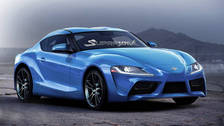
BMW Z4 concept arrives ahead of Pebble Beach debut, but where is the Supra?

Share

  • Pinterest

BMW has published a final preview of the upcoming Z4 on social media ahead of the car’s reveal in the metal this weekend at the Pebble Beach Concours d’Elegance. The all-new Z4 is expected to share many of its mechanicals, with the possible exception of engines, with the upcoming Toyota Supra.

What can we infer from the latest teaser image? It appears BMW is aiming wider and lower for the new Z4; the previewed prototype features a flat hood, wide wheel arches and a wide stance. The kidney grilles appear stretched horizontally in comparison to other current BMW models, and the doors retain the hockey-stick character line that debuted on the first-generation Z4, to some mixed reviews.

Is the Toyota Supra returning with only 335 hp?

Is the Toyota Supra returning with only 335 hp?

A post on the SupraMkV forum reveals a list of BMW internal codes that might help shed light on Toyota’s next Supra. According to the list, the U.S. market will get two different versions of the …

“The concept expresses the new BMW design language from all perspectives and in all details,” said Adrian van Hooydonk, senior vice president BMW Group Design ahead of the prototype’s reveal. “From the dynamic-looking front to the striking flanks to the clean-cut tail end: a few lines and the subtle interplay between surfaces are enough to generate a sense of power and emotion.”

The car that will debut at Pebble Beach will still be a prototype, but we should get a better sense of the engines that BMW will offer in the Z4 this weekend. Four- and six-cylinder turbocharged engines are expected in the Z4, but it’s not clear at this point if Toyota’s version will receive these or drop its own powerplants into the Supra.

The Z4 prototype won’t be the only Pebble Beach concept from BMW; the 8-Series will signal its return with a concept of its own.

The future of auto shows is in doubt; Frankfurt is the latest example

Share

  • Pinterest

The relevance of auto shows as a showcase for brands and new model debuts is being questioned as automakers are increasingly holding their own events or choosing to attend smaller, but more diverse, interactive showcases such as the UK’s Goodwood Festival of Speed.

The shift is underlined by the list of brands that will skip next month’s Frankfurt auto show The absentees will include Peugeot, Fiat and seven other marques (Alfa Romeo, DS, Infiniti, Jeep, Mitsubishi, Nissan, Volvo) that account for 20 percent of all sales in Europe.

Automakers are making the change because it’s becoming increasingly difficult for their brands to justify the huge amount of money spent to take part in a major auto show when they measure that investment against the perceived effect on sales, said Ian Fletcher, principal analyst for IHS Markit. “I would question what the translation rate is between attendance on public days to transactions — I bet most customers now are happier to do research online,” he said.

The static, hands-off nature of auto shows held in convention centers is being challenged by more vibrant outdoor events that provide more entertainment for potential customers. At the Goodwood Festival of Speed, brands set up their stands in a parkland setting and attempt to lure show-goers who are primarily there to see historically significant racecars driven at high speeds by famous drivers.

What to expect at the 2017 Frankfurt motor show Hypercars EVs and even more crossovers

More affordable

“The manufacturers are very keen to find different ways of showing their products and we’ve been part of that change,” Goodwood Festival of Speed organizer Lord March told Automotive News Europe.

The event draws about 200,000 visitors compared with the 931,700 people who attended the 2015 Frankfurt show, but Goodwood’s reach on social media is greater, March said.

“It’s all about the content — manufacturers are pushing out well over 1 million hours of downloaded video. There’s lot of noise around what you’re doing,” he said. He also estimates it costs automakers about three times less to participate at Goodwood than at a big auto show. Renault, for instance, spent less than $1.3 million to participate at this year’s event, a source within the company estimated.

6 of the most significant unveils from the Detroit auto show

Rule No. 1

Automakers also worry they won’t stand out in the frenzy of a traditional auto show. “The challenge is that you’ve got so many manufacturers with so many messages, it’s a violation of the communication rule No. 1, which is: be single-minded,” Roelant de Waard, head of sales and marketing at Ford of Europe said.

Ford now typically focuses on one message, for example, its Vignale luxury trim line, or performance-oriented cars.

The rules are different for shows and regions. For example, Ford’s de Waard likes the annual Geneva auto for its restriction on spend, which ensures no one automaker can dominate visually. “It means the message has to be about brand and product,” he said. Unlike Frankfurt or Europe’s other major show, Paris, Geneva is also on neutral ground where no local automaker dominates.

Automakers are increasingly holding their own events. For example, the Jaguar Art of Performance tour held in the U.S. and UK travels the country giving customers the chance to drive new cars.

Ford holds Go Further events where it introduces new models to media and dealers. The most recent, held in Cologne, Germany, last year, hosted 2,500 people. In June, Audi brought 2,000 media and dealers to an event complete with an auto show-style display in Barcelona based around the reveal of the A8 flagship sedan. Said an Audi spokesman: “It cuts out the noise of an auto show.”

Frankfurt, other big auto shows struggle as brands shift investment” originally appeared at Automotive News on 8/16/17.

By Nick Gibbs at Automotive News

Carmel Concours: Here’s how Car Week in Monterey gets launched

Share

  • Pinterest

That whole Pebble thing can be a little overwhelming, but at its heart, it’s all about our mutual and universal love of cool cars. Why do we love cool cars? Well, everyone has a story…

“I’m standing there in eighth grade in the high school seniors’ parking lot — where I don’t belong — and there’s a gorgeous R-Code four-speed Galaxie convertible parked there, dark blue with a light blue interior, and out come Janet Walford and Sandy Farrell.” This was Concours founder Doug Freedman, explaining why, after all these years, he still loves R-Code Galaxies — and maybe why you still love whatever car it is you long for, and whomever your own personal Janet Walford and Sandy Farrell are. “They get in and I am smitten, blown away, bamboozled. These were girls who, if you saw them coming down the hallway at school, you would press yourself against the wall to get out of the way because you’re not worthy, and they’re getting into a car that was simply overpowering.”

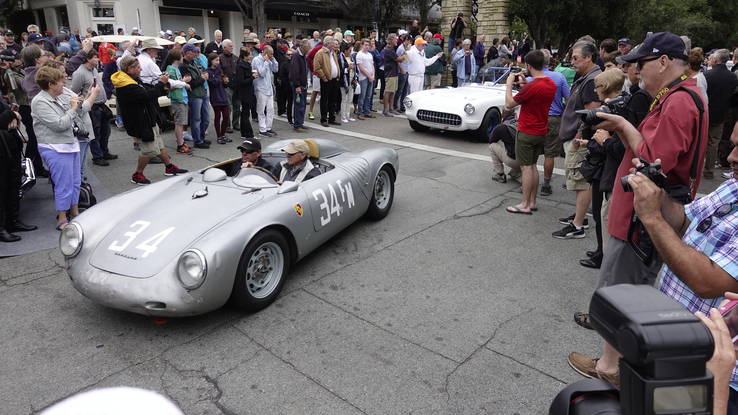
Porsche at Carmel Concours

Porsches were popular at Carmel Concours Photo by Ed Justice Jr.

He still can’t get over it all. Which explains, perhaps, why there was a triple-black R-Code four-speed Galaxie convertible at the Concours on the Avenue this year. And why there were 190 other cars, all equally cool in their own ways to their owners, at least, and maybe to others, too, strewn all over the normally bucolic streets of the fairy tale town of Carmel. Perhaps nowhere on the Monterey Peninsula is that unvarnished, easy autolove better represented than on Carmel’s Ocean Avenue, the town’s main drag, which, along with almost every side street for a block or two around, is closed off and crammed with cars.

This year, the cars were categorized into three groups of 13 classes each: Porsches from 1948 to 1989, Ferraris from 1947 (in case anyone ever shows up with a 125 S) to 1989, and the catchall “Multi Marques” from 1940 to 1973. The show takes up 18 blocks total, counting all the side streets that are also closed down, all filled up with curated cars. Curated, because this is not a Show N’ Shine, where just anyone shows up and parks his or her hooptie. You have to apply, and Doug and a squadron of dedicated volunteers choose what’s cool enough to cruise in. But nonetheless, the field was diverse, with cars everyone lusted after, as well as cars only a mother, or a kooky owner, could love.

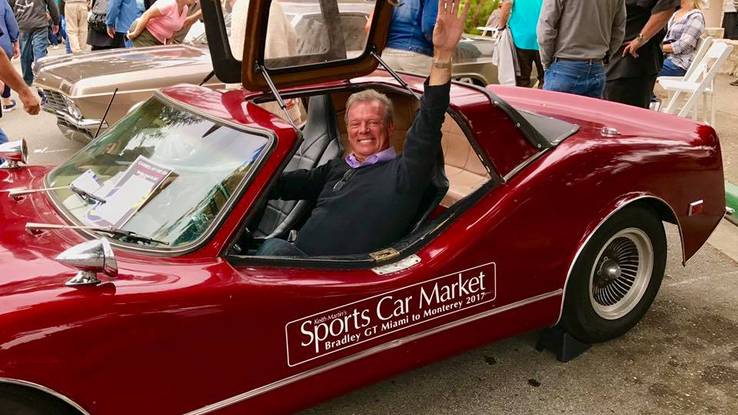
“It’s the greatest Cars n’ Coffee in the world,” said Keith Martin, publisher of Sports Car Market (now in its 30th year!). “It’s a very high-level place where people can just come and kick tires. This (the whole Pebble Beach phenomenon) is a week for high stakes and big egos and lots of pretension, in some cases, and you don’t find that at Concours on the Avenue. It’s a buffet of interesting cars.”

Indeed, Martin himself brought a Bradley, a kit car made of fiberglass built on a Volkswagen chassis.

“It’s a profoundly bad car,” he said.

The Bradley

The Bradley

But the rest of the show, while there was a class of Cyclops, had some lovely vehicles.

”They had a class of Carrera RS,” said Martin in amazement. “Those are $500,000 to $700,000, and they were stacked up like cordwood. It seemed like most of those cars were driven there.”

“It shows that the enthusiasm for collector cars is not somehow limited to the exclusive lawns of Pebble Beach and the Quail Lodge,” said collector car broker Andrew Reilly, who has lent his expertise to positions at the Mullin Automotive Museum as well as Gooding & Co., and Bonhams. “It’s unpretentious, free, well-attended and offers a broad variety of people — the people who are showing their cars are all in attendance and very approachable.”

“There were some really interesting cars,” said classic car expert Donald Osborne, whom you may recognize as the host of the “Assess and Caress” segment of “Jay Leno’s Garage.” They had a really terrific Citroen class, two absolutely fascinating classes for vintage racing karts and quarter midgets and a VW class. The number of long-term owners, people who have owned their cars for 30 or 40 years, was absolutely sensational. The fellow who won the Citroen class had owned his 1964 DS21 Chapron-bodied convertible for 12 or 15 years. It was just absolutely sensational.”

The enthusiasm was universal.

“It was a fantastic show,” said first-timer Gian Moriconi, whose 1971 Dodge Challenger R/T was one of the American muscle cars and who was like a kid in a carlike candy store. “The Porsche presence was amazing, the 1970s Carrera RSes were amazing to see, as well as the Speedsters. Also, the 502 Motorworks Spyder the Bentley B Special No. 1 was amazing! And the Silver Ferrari that GTO Engineering brought, along with the 1960 Ferrari 250 SWB was incredible.”

And it was big. A fairly good estimate by Freedman pegged attendance this year at 28,000.

“It was the largest crowd they’ve ever had,” said co-emcee Ed Justice Jr. “From opening to finish, it was full all day long. I really like this show because of all the variety in the cars that show up here. This is more about the car culture than some of the events in Monterey this week.”

So when you’re planning for next year’s Week, justify getting here a little early for Carmel. You won’t be disappointed. And if anyone sees either Janet Walford or Sandy Farrell, tell them Doug says hi.

What to expect at the 2017 Frankfurt motor show: Hypercars, EVs and (even more) crossovers

Share

  • Pinterest

The 2017 Frankfurt motor show, aka the Internationale Automobil-Ausstellung, or IAA, will take place this Sept. 14 to Sept. 24. Much of the buzz around the event earlier this year involved the major automakers — including Fiat Chrysler, Peugeot, Volvo and Nissan — that were skipping the exhibition, and indeed, even some of the automakers slated to be at the German event pulled the covers off their flagship models well before September (we’re looking at you, Audi A8).

But a ton of important reveals are set to take place. Many of the cars from the likes of Seat and Dacia are less than relevant to American buyers, so here we’re focusing on the cars that will eventually be sold in North America. We’ll update the list as we get wind of more impending reveals — and we’re hoping for a few surprises, too.

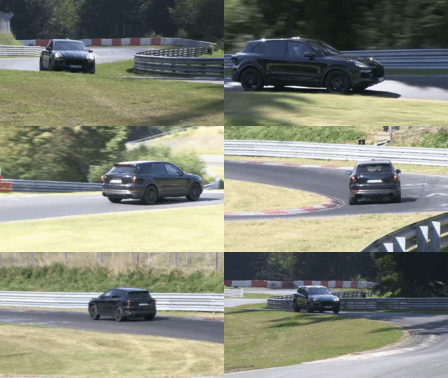
2018 Porsche Cayenne spy video

New Porsche Cayenne: Here’s what we expect

The 2018 Porsche Cayenne will debut later this year with an evolutionary look and a new platform, CAR magazine reports. Prototypes of the all-new Cayenne, which will enter its third generation, have …

Aston Martin: We may see the new Vantage minus camouflage as soon as the show.

Bentley: The Continental GT is finally getting a ground-up redesign.

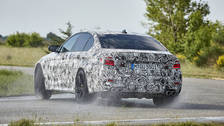
BMW: BMW has the busiest debut lineup so far, including the all-wheel-drive M5 sedan and 6-series GT. Additionally, we could see a 3-series electric vehicle or at least a concept; a “surprise” of some sort is said to be in the works as well, though whether that’s an i8 Spyder, an X7 crossover or the upcoming 8-series coupe remains to be seen.

Mercedes AMG Project 1 powertrain details

Hyundai: We expect to get another look at Hyundai’s Kona subcompact SUV, and the Korean automaker will show off some of its N-badged performance products (which aren’t headed to our shores just yet).

Jaguar: Jag revealed the E-Pace crossover (the internal-combustion-powered one) in July, but keep an eye out for a production version of the I-Pace (the all-electric one).

Kia: Kia’s Stonic, a compact-crossover platform-mate of the Hyundai Kona, will likely be in Frankfurt in production guise.

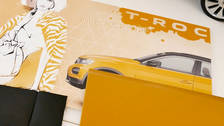
2018 Volkswagen T-Roc teaser

Mercedes-Benz: We’ll get another look at the production X-class pickup, which is interesting even if it doesn’t head to the North American market. Another EV concept — a follow-up to the EQ C crossover — is likely in the cards.

Mercedes-AMG: We should see AMG’s unreal Project One hypercar, perhaps the most hotly anticipated car of the show.

Porsche: We might get a look at the upcoming third-generation Cayenne SUV.

Volkswagen: VW signals its desire to jump into the subcompact crossover fray with the T-Roc concept.

Graham Kozak

Graham Kozak – Graham Kozak drove a 1951 Packard 200 sedan in high school because he wanted something that would be easy to find in a parking lot. He thinks all the things they’re doing with fuel injection and seatbelts these days are pretty nifty too.
See more by this author»

Is a Mercedes-Maybach 6 convertible headed to Pebble Beach?

Share

  • Pinterest

The annual Pebble Beach Concours d’Elegance has turned into a small luxury auto show right before the Frankfurt or Paris motor shows, with luxury automakers filling the increasingly jammed Concept Lawn with dramatic concepts created just for the concours. This practice has noticeably picked up in recent years, and automakers now use the concours for gauging customer interest in front of those with the money to buy just about any car in the world.

A recent Instagram video posted by Mercedes-Benz design boss Gorden Wagener is now teasing, via some intended misdirection, a new Mercedes-Maybach concept expected to take to the concept lawn at Pebble this year, with Mercedes designers shuffling around sketches of past concepts including the Vision Maybach 6 concept coupe that debuted at Pebble in 2016.

Autocar reports the concept due at Pebble will be a drop-top version of the Mercedes-Maybach 6 but hasn’t cited firm production plans for the model.

The four-wheel-drive 2+2 EV seen last year produced a total of 738 hp through its four electric motors, drawing juice from an underfloor battery, and it was said to be capable of sprints from 0-60 mph of under 4 seconds while boasting a range of more than 200 miles. The sleek 18.5-foot-long coupe sat on 24-inch wheels, as if intending to crowd out other Pebble concepts through sheer square footage alone, and featured a chrome grille said to have been inspired by pinstripe suits. The concept also featured a number of classic Mercedes and Maybach design elements along with gullwing doors, plus a Star Trek-style interior.
 

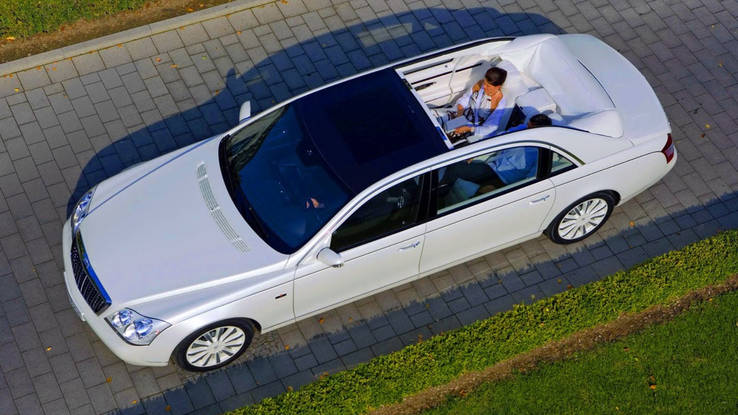
The second-most-recent revival of Maybach never actually produced a convertible version when the W140-generation Maybach lineup was its own separate brand, only offering what we’ll graciously call a president-for-life Landaulet model. The Landau retained the C-pillars and rear doors of the Maybach 62 sedan, with the only open section being a retractable canvas roof for the rear seat passengers (permitting them to wave at adoring throngs of citizens). Maybach was criticized at the time for not offering a simple two-door cabriolet priced akin to the short-wheelbase 57 sedan, which could have helped sales in the sunnier tax havens.

It remains to be seen whether Mercedes-Maybach will field a production cabriolet, but with the S-Class Cabriolet already on the market, it will surely be easy for the automaker to develop an even more luxurious model based on it.

Maybach M62 Landaulet

The earlier iteration of the Maybach brand produced the lavish 62 Landaulet for a short period of time towards the end of the model run, but Maybach had not fielded a true drop-top at the time. Photo by Mercedes-Benz

Of V12s and 48 volts: Five questions with Mercedes’ director of R&D

Share

  • Pinterest

Ola Källenius has been a member of Daimler AG’s board of management since January, 2015, and he’s currently director of Group Research & Mercedes-Benz Cars Development. Källenius is also widely expected to be heir-apparent to Daimler Chairman and CEO Dieter Zetsche, when the 64-year-old Zetsche’s current contract expires in December, 2019.

That could bode well for auto enthusiasts generally and Mercedes loyalists in the United States in particular. Källenius, 48, has spent six-plus years at the Mercedes assembly plant in Alabama, where he became a loyal fan of the Alabama Crimson Tide football team and ended his run as president & CEO of Mercedes-Benz U.S. International. His credits include a stint as director of operations at McLaren Automotive Ltd during development and launch of the Mercedes-Benz SLR McLaren hyper-car, managing director at Mercedes-Benz High Performance Engines Ltd. in Brixworth, U.K., and managing director of Mercedes-AMG GmbH. He’s also an impressive driver in the seat of an E63 AMG.

Källenius sat down with reporters at the recent launch of the updated S-Class and covered topics ranging from the return of the inline Mercedes six to the coming of autonomy to the staying power of V12s.

Ola image 2

Q: Your new 3.0-liter inline six is the first production engine we’ve seen that generates 48 volts. Do you expect a fairly rapid roll-out of 48 volt technology going forward? Not just for Mercedes, but in the industry as a whole?

Källenius: Absolutely. As far as Mercedes is concerned, 48 volts in the S-Class is the first car of many. The road ahead will see much, much broader coverage–really from top to bottom on 48 volt technology, paired with plug-in hybrids as well. As we are approaching lower and lower CO2 regulations in all relevant regions –Europe, North America, China—it’s the combination. That means 48 volt in very large volumes, plug-in hybrids in significant volumes and then battery electric vehicles. For us, it’s an all-of-the-above scenario, and I think you’ll see it across the industry as well. There are just too many things you can do with 48 volts to ignore it.

Q: And yet we’re not getting the inline six in the updated S-Class in the States. A lot of in-tune people were convinced we would, and at face value it doesn’t make a lot of sense.

Källenius: Let me talk about the engine and then I’ll talk about the rollout strategy. We’re trying to achieve superior performance with silk-like NVH. You know the benefits of an inline six, and an engine without the belts, and it’s the first application that I know of with an integrated starter-alternator, which makes better start-stop and host of advantages. It’s very power dense, and there’s a big pay-off in CO2 (reduction). The inline six is the first of a new breed. That technology will find itself in two other engines over the next few years.

With regard to the American markets, good things come to those who wait. When we introduce a brand new technology we often start with one car, we start in a region, and then step-by-step we kind of proliferate that technology into other regions and cars. Eventually, it will get to the US, as it will to all other big and relevant markets. Obviously, I know which car it is, but that’s a different press meeting. To tell you that I would have to reveal a few things that are not yet known to the public. I’ll throw you at least one bone: The S-class will not be the first car in the U.S. with the 48-volt six.
Why Mercedes new inline six matters even if no one is sure when well see it

Q: Nor is there a plug-in hybrid as you launch this S-Class, as there was with the previous generation. We thought we might see the inductive charging you’ve been working on.

Källenius: The plug-in comes this fall. We’ve extended (the electric-only) range on that, to about 31 miles in the European cycle, and the plug-in take rate is steadily growing. We started the inductive charging project relatively early and we will go to market with it next year, as a 2018 feature, though I’m not sure the line-up is set. The way it works is relatively simple for the user. Technically for us, it was a medium challenge to get there, but we’re close.

You basically just put a plate on the ground on your driveway or in your garage. You plug that in and then you have the corresponding plate underneath the car. When you drive in you can see in your instrument cluster how you’re driving over the plate, and it gives you directions so that you stop in the right place. If you have an electric tooth brush you know you put it on the little thing, it’s the same principle. Then you just step out of the car and that’s it.

It’s relatively expensive technology, so it’s an option. It’s about (35 percent) of the charge rate of a Level II plug-in charger, but this is the first generation and that will improve, and for a lot of people it might be worth the convenience.
Nissan Leaf plugless charger

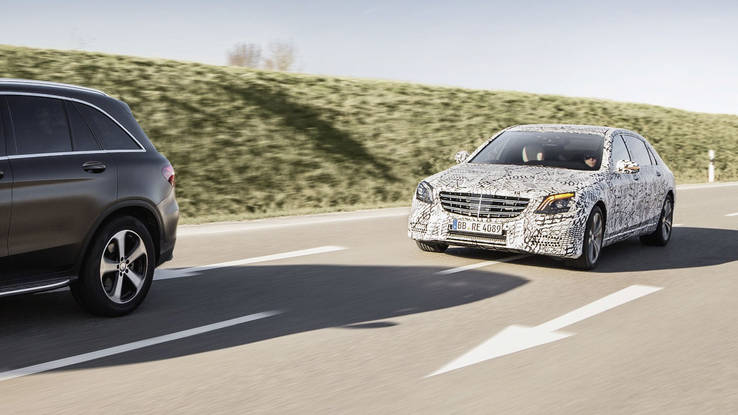
Q: This S-Class has some of the most sophisticated self-driving technology we’ve seen—as if it could almost deliver Level 3 autonomy. How far off is Level 3?

(Ed. note:  In Level 3 autonomy, the operator is able to completely shift “safety-critical functions” to the vehicle, under certain traffic or environmental conditions. The driver is still present and will intervene if necessary, but he or she is not required to monitor freeway travel, for example.)

Källenius: If you look at what the S-class can do … I would call it the Level 2-plus or a Level 2-plus, plus. If we would take the inhibitors out then it could do Level 3 in many, many, many driving situations. The problem is that the regulatory environment is still heterogeneous on Level 3 and above. At the moment we’re in discussions with authorities literally around the world to nail that down and try to create as a homogeneous set of requirements as possible, because for consistency reasons and also engineering reasons the closer those regulatory frameworks are the better.

You can in general terms say that Level 3 is a system by which you can let the car drive and you can look the other way, and you’re not responsible for a certain use case, but not all the time. When the regulatory environment is clear and when we feel it is absolutely safe–we’re carrying the star on the hood and it’s crucial that we don’t take a slightly reckless, maybe technologically optimistic position—we can introduce that technology, and it’s not that far away.
Ola image 3

A job opportunity for motorheads? Even autonomous cars need drivers during development.

In parallel, we have a Level 4 and 5 effort going. Is that something completely different or is it just more of the same? It’s both. I’m just going to bundle those in one bucket and call it a robot car that drives itself. And the most obvious use case for that in the beginning is a robot taxi.

Why? It’s phenomenally expensive to do this. The number of sensors you have to put on the car, the computing power and so on adds tens of thousands of dollars once you get it into production. Where do you have a business case for something like that? You have it in a robot taxi scenario, where you can take a city or a part of the city and say “okay I’m going to put a hundred, two hundred, three hundred, a thousand, robot taxis into this area.” The amortization comes through not paying the driver. You could have a very quick amortization, so our effort on Level 4, 5 is robot taxi first. In our case the commercialization of that happens between 2020 and 2025 where we start rolling that out—either through our own mobility services that we’re building up or as a partner with other mobility services. We’re pretty open-minded on that.

That, and on the truck side. It might be platooning in tandem with another truck with a driver. Or perhaps the driver in the second truck can be resting while the system is active, which would then lead to a total longer working time for that truck. Which is of course an economical benefit. The truck needs to make money for its owner. In an ideal case the truck is running 24/7.
Ola image 4

It will not be resting in peace anytime soon.

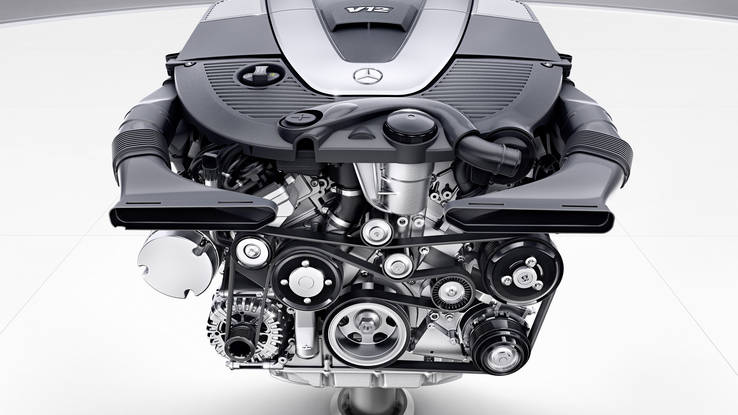
Q: You’re talking a lot about autonomy and efficiency, yet V12 engines continue with this updated S-Class. Will the next full re-do bring the end of the S600 or S65 AMG?

Källenius: The V12 is around here for the foreseeable future. It’s a small clientele of connoisseurs, granted, but strong. I once met a very big AMG customer, and we had a new V8 that we wanted to demonstrate. I asked, “Why don’t you go for a ride?” and he goes “No, no, no, no, no, no! I only get in V12s.” And he was serious. Turns out he had 35 Mercedes V12s in different versions and colors. That’s an extreme example, but for some customers the V12 is the only choice, and that’s not easy to walk away from.

We will cater to that clientele with a very, very capable V12 for the foreseeable future. Whatever the regulation, we’ll meet the regulation. There can always be a technical answer to any technical challenge. Twenty, 30 years–how long that segment has legs I don’t know precisely, but we have no plans to give up on it.

Why Mercedes’ new inline six matters, even if no one is sure when we’ll see it

Share

  • Pinterest

When Mercedes-Benz showed its new inline six-cylinder engine at this year’s Shanghai auto show, it was assumed the engine would reach the United States in the refreshed 2018 S-Class sedan. It will not.

Three months later, we have details on the rebirth of the Mercedes straight six. We can tell you it’s packed with new technology, including autodom’s first 48-volt electrical system, and even more power than initially reported. What we can’t tell you is when it’s coming to North America, or in what.

For decades, the I6 was the mainstay at Mercedes-Benz, from the E-Class to the SL to the G-Wagon, to the point where old-time Mercedes enthusiasts revered the straight six as Porsche geeks revered air cooling. Mercedes’ turn toward V6s began with the launch of the U.S.-built M-Class in 1997, and by the time the W210 E-Class ceased production in 2002, the straight six had disappeared. The old-time enthusiasts rued its demise.

The inline six — designated M256 in the holy halls of Stuttgart — in the S-Class at Shanghai starts a transition back in the other direction. Old-time enthusiasts may be salivating, but understand that the switch back has very little to do with the inherent smoothness, torque characteristics or aural splendor on an inline six. It has everything to do with managing cost and promoting production efficiency.

M256 image 1

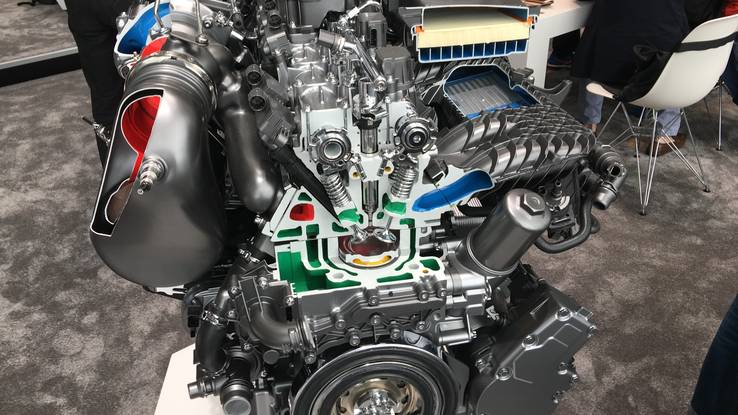
Turbo, electric compressor, 48 volts and streamlined assembly: This is what internal combustion’s future looks like. Photo by J.P. Vettraino

In the mid-1990s, as Mercedes began its shift to V6s, the market was moving toward more displacement and more V8s. The V6 allowed assembly with V8s, modular style, on the same line. Now, as the market and regulatory climate drive displacement back toward the smaller end of the spectrum, the inline six allows the modular concept to be tied to four-cylinder engines.

“We need the efficiency and flexibility of building two configurations on the same line,” says Oliver Vollrath, director of powertrain development for the S-Class. “We’ve chosen the inline architecture, and in certain respects, we’ve burned some bridges (if we’re wrong). And now the 50 percent of our engineers who favor the inline six are happy again, and the half that prefer the V6 are not so happy.”

The M256 has two camshafts, 24 valves and direct injection. It’s cast entirely of aluminum and displaces 2,999 cc, or about .5 liter per cylinder; subtract two pots and you have a 2.0-liter four. With a bore of 83 mm and a stroke of 93 mm, it’s undersquare (or long stroke), as straight sixes often are.

M256 image 2

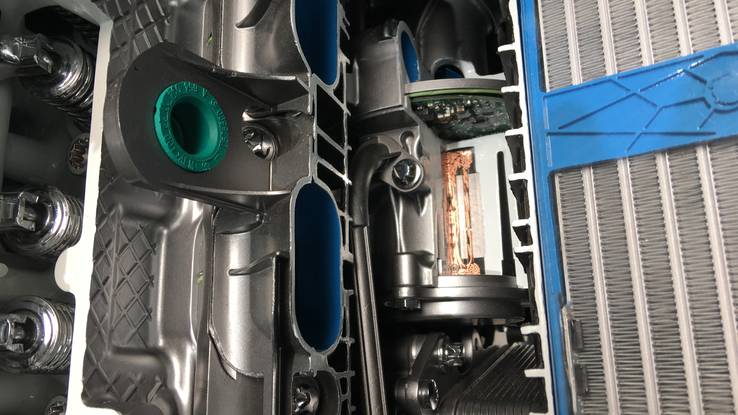
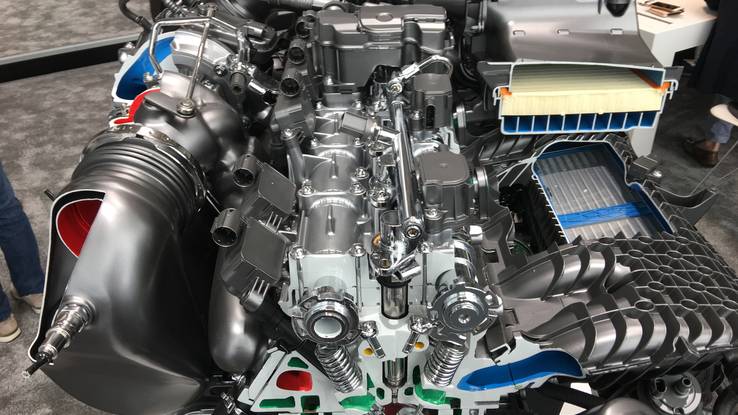
A cutaway of the electrically operated supercharger nestled under the intake manifold on Mercedes-Benz’s new inline six Photo by J.P. Vettraino

What else? Where to start? How about the electric compressor, mounted on the intake side of the M256. In concept, it’s similar to the belt-driven supercharger on Volvo’s most powerful turbo fours, which supplements the turbocharger as it builds boost. Yet because it’s electrically operated, the M256’s supplemental compressor goes from off to full boost in .3 seconds, according to Vollrath.

There’s a more conventional twin-scroll turbo on the other side of the M256 to do most of the heavy lifting, with peak boost of 29 psi. The electric compressor fills the gaps with about 7 pounds of boost as the conventional turbo builds steam. The trick is when to use either or both compressors, and that’s left to some complicated software developed by a staff of 10 in-house engineers, according to Vollrath. The result is a steady supply of forced air with virtually no gaps from idle to redline, generating forced-air power and torque with improved efficiency and no lag.

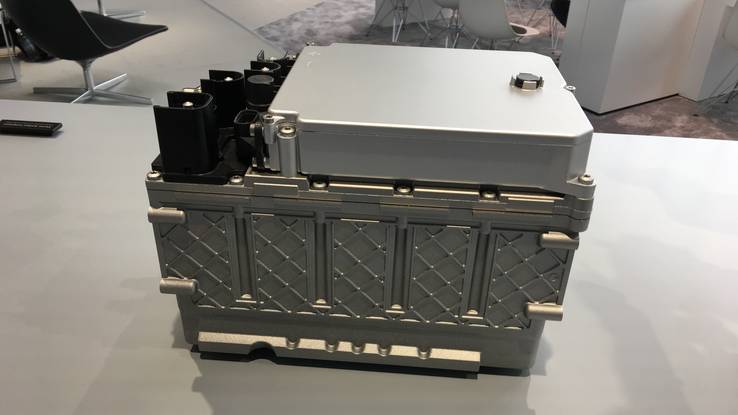
A new 48-volt electrical system helps enable that electric compressor. The M256 is the first automobile powertrain we’ve seen that generates electricity at 48 volts DC. The few 48-volt appliances in existing combustion automobiles, including Bentley’s motor-driven roll-control system, rely on current up-converted from conventional 12 volt DC and stored in sufficient quantity in supercapacitors. The M256 generates at 48 volts, then down-converts to 12 volts through a power-electronics pack for conventional systems like the stereo or engine ignition. It has both a conventional 12-volt battery and a 48-volt lithium-ion battery with 1 kWh capacity.

M256 image 3

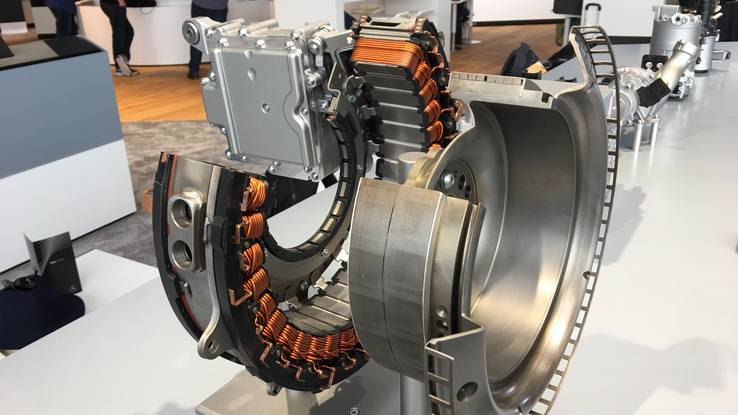
Packaged in a bell housing behind the engine, the Integrated Starter Generator forms the foundation for Mercedes-Benz’s 48-volt electrical system. Photo by J.P. Vettraino

The current comes from a motor/generator — Mercedes calls it an Integrated Starter Generator (ISG) — packaged in the bell housing between the engine and transmission. Its location smack in the middle of the driveline has value in itself.

The ISG manages the engine’s idle speed at a hair over 500 rpm, and it damps the low-frequency lope one might expect at that speed. It engages the stop/start feature in milliseconds, imperceptibly, and it allows the engine to stop while the car is coasting down. In similar fashion, the ISG allows what Mercedes calls GlideSlope — the ability to turn the engine off at high road speeds, like when the car travels down a long descent, as if the driver put it in neutral and switched off the engine. That’s because the ISG has enough torque to restart the engine and immediately get it to appropriate revs to safely re-engage at the high road speeds. Meantime, the ISG is recapturing kinetic energy from the coast-down and dumping it as electricity into the battery. Finally, the ISG can augment the engine’s motive power, hybrid-style, with its additional 22 hp and 180 pounds of torque in short bursts (based on the lithium battery’s 1 kWh capacity).

Yet none of those features is the key driver behind the 48-volt ISG. The key driver is the 48 volts, which means four times the electromotive force of a conventional 12-volt system. There’s just a lot more juice to power more things with electricity. The electric supercharger, for example, draws 5 kilowatts, or nearly 7 hp. Vollrath says that if it ran on 12 volts it would have to be much smaller, with less boost and slower response time.

M256 image 4

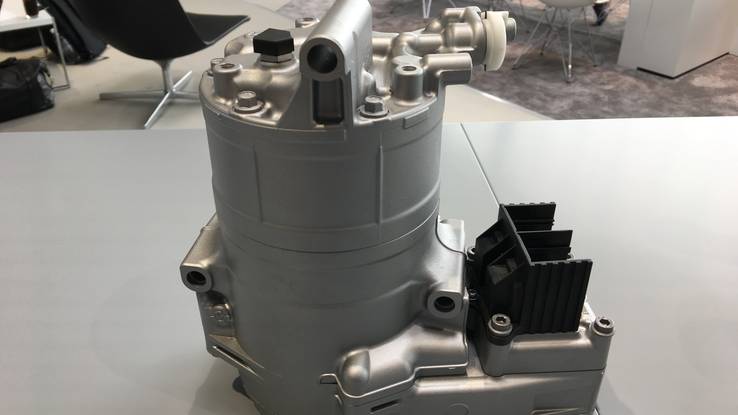
Haven’t seen an electrically driven automotive AC compressor before? Photo by J.P. Vettraino

The same applies to the M256’s electric AC compressor, which can run full bore when the engine is off or when it’s idling. And to the electric water pump, which generates twice the power and flow of a conventional belt- or gear-driven water pump. That increases cooling capacity, safely allowing greater power density in the engine, and it allows the pump to be operated (faster, slower) irrespective of engine speed. There isn’t a belt anywhere on the M256, which means reduced noise and vibration.

Then there’s the M256-equipped vehicle’s 48-volt electric defroster, which might clear a frozen windshield in seconds, as opposed to minutes with a conventional forced-air defroster. Lastly, there’s the opportunity to fit M256-equipped vehicles with 48-volt chassis systems, like Bentley’s roll control or true drive-by-wire electric brakes.

The advantages of 48 volts have nothing to do with the M256’s inline configuration, to be sure. The 48-volt charging system could just have easily been developed on a V engine. Yet there’s one more advantage to the straight six that helps trim development and assembly cost. Vollrath calls it the “hot” and “cold” sides.

On the hot or exhaust side, Mercedes has packaged the M256’s turbo and a close-coupled catalyst that achieves light-off temperature as quickly as any in production, according to Vollrath. The electric compressor, charge cooler and most accessories go on the cool side. Vollrath says the electric compressor couldn’t have gone on the hot side without water cooling or other serious heat mitigation because it isn’t robust enough. The same applies to some other components and sensors.

M256 image 5

Hot and Cold: On Mercedes-Benz’s M256 inline six, the primary turbo and close-coupled catalyst are packaged on the hotter exhaust side, while the electric supercharger, intercooler and more heat sensitive components are packaged on the cooler intake side. Photo by J.P. Vettraino

Now the bottom line: The M256 debuts in two variants in the S-Class — one generating 367 peak hp and 369 lb-ft of torque, and the other 435 hp, 384 lb-ft. The latter delivers a stout 145 hp and 128 lb-ft per liter. It’s only 6 percent less peak power than a new, 4.0-liter twin-turbo V8 headed to the States in the updated S560. Add the quick burst from the ISG, and the M256’s peaks actually surpass those from the V8. Yet the straight six delivers at least a 20 percent improvement in specific fuel consumption and a 20 percent decrease in CO2 emissions.

Only there’s no M256 for North America, for now. We’re getting a 3.0-liter turbo V6 for the bottom-rung 2018 S-Class, with less power and torque than either M256, and this publication cannot explain why, except to say that it appears to be purely a marketing decision. Vollrath says there are no federal or California certification issues and no capacity limitation for the M256. It’s hard to fathom the basis for that marketing decision, given that a straight six was the S-Class’s bread and butter for much of its 45-year run. Perhaps there isn’t enough power separation to justify the more expensive V8.

Whatever the thinking, Mercedes development director Ola Källenius says we will see the M256 in the not-too-distant future. It just won’t debut in the S-Class.

E-Class? GLE? GLS? Källenius isn’t saying, and we can only guess.

M256 image 6

Lead-acid no more: The primary battery for the MB M256 straight six is lithium-ion, with one kilowatt hour capacity. Photo by J.P. Vettraino

Our favorite cars from Mitsubishi Owners’ Day 2017

Share

  • Pinterest

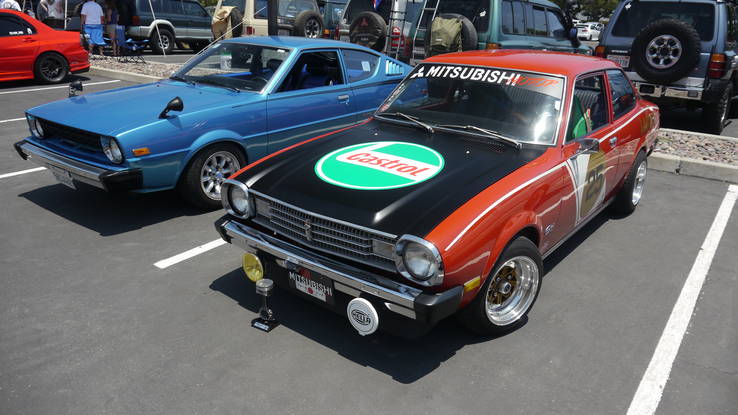
While Mitsubishi works toward a future under the control of its new owner, Nissan/Renault, the annual Mitsubishi Owners’ Day at the company’s U.S. headquarters in Southern California has become a reminder of all the great cars, trucks and SUVs the company made in the past, instead of a showcase for the cool cars that should still be in showrooms.

“Brings back memories of the era when Mitsubishi had the most notably unique and iconic cars,” said Moto Miwa, Japanese car enthusiast, founder of Club 4AG and the man who we would say brought drifting to America. “The ‘80s-‘90s had Galant VR4, GTO/3000GT/Stealth, the bulletproof Pajero/Montero, the stylish Starion/Conquest; the Eclipse/Laser/Talon which brought the turbocharger to everyone; GTO Spyders that were just downright rated-X; Tredia and Cordia which were the signature of their era, too, and the Mirage/Colt Turbo that out-punched the Civic and AE86 in its day.”

Mitsubishi did have a nice arrangement of the four nameplates it still sells here in the U.S.: the Outlander and Outlander Sport SUVs and the Mirage hatchback and Mirage G4 sedan. The Lancer is still lingering in showrooms but its days are numbered. Mitsubishi needs more product!

Though it sold almost a million vehicles worldwide last year, Mitsu failed to crack 100,000 here in the United States for the second year in a row. The model range has shrunk to just those four mentioned above. Dealers and consumers are waiting for something –- a truck, a sedan, a hovercraft — to be plucked from the Nissan and Renault menagerie and return Mitsubishi to its glory days. Mitsubishi sells the L200 pickup truck in other markets, but that Thai-built truck might not meet U.S. safety standards. There are any number of Nissan and/or Renault-built sedans that could be perfectly fine U.S.-spec Mitsubishis, but there is no word on any of them. We are pretty sure Mitsu’s model line expansion will consist of a plug-in hybrid Outlander and something called an Eclipse Cross compact crossover. But there is no new Evo, 3000GT or Starion anywhere on the horizon.

Arvin Padiernous' 2011 Evo X won Peoples' Choice

Arvin Padiernous’ 2011 Evo X won Peoples’ Choice

That didn’t keep the Mitsu faithful from making the pilgrimage to Cypress.

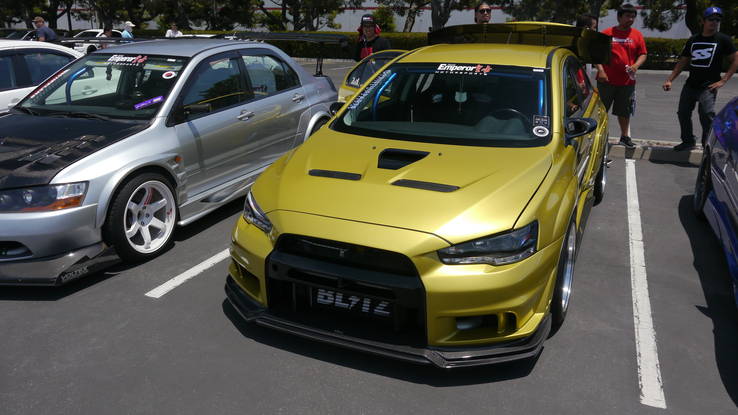
At Mitsubishi Owners’ Day, there was almost nothing but Evos. The acreage of parking around MMNA’s big headquarters building on Katella Ave. in Cypress, Calif. was almost door-to-door Evos. Mitsubishi doesn’t choose which cars take part in the annual fest, Mitsu enthusiasts do. And their favorite car was clearly the performance-minded Evo.

People’s Choice this year went to – ta da! – an Evo. It was far from stock. In fact, if you can find a stock Evo anywhere in the world, wrap it in shrink wrap and bury it in a basement. Arvin Padiernous of Team Emperor Motorsports has owned his 2011 Evo X for five years. In that time he’s “pretty much changed everything in the engine bay.” It was recently rated at 350 hp at the wheels, he said, but that was on a conservative dyno.

“It could hit 400 hp if I go to a different dyno,” he said.

Then, like a NASCAR driver, he rattled off all the sponsors’ parts on it: Chargespeed fenders, Voltex Type 5 wing, Spec V something or other (sorry sponsors). The car will be at SEMA in his sponsor’s booth, so look for it there. 

Dennis Aquino's 1977 Mitsubishi Colt

Dennis Aquino’s 1977 Mitsubishi Colt won the Judges’ Choice award

Another winner, the Judges’ Choice award with matching piston-and-conrod trophy, went to Dennis Aquino’s 1977 Lancer Colt, all done up in original WRC colors and stickers. He’s had it since 2012, when he bought it from a friend who saw it in a backyard for $800. It’s been in a couple shows already but this is its first win.

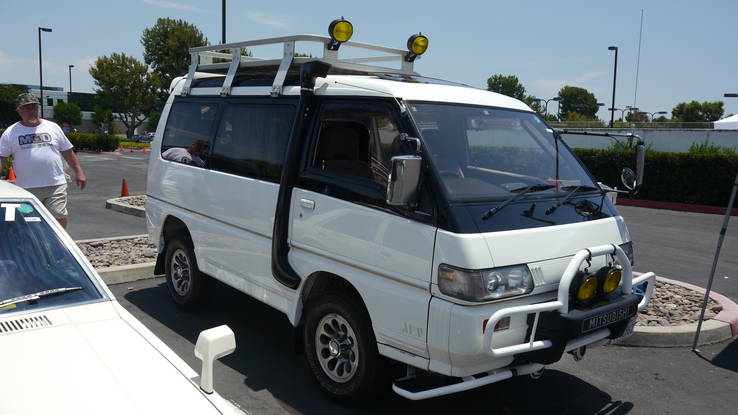
Next to Aquino’s Colt was Rodel Solo’s most excellent 4×4 L300 Delica van. Solo said the L300s are very popular in the Phillipines, where he has seen many of them, reminding us that Mitsubishis are very popular throughout all of Southeast Asia. One reason Nissan bought a controlling interest in the carmaker was to gain a foothold for Nissans in the region. If we could drive one vehicle away from the show…

One row over from Solo’s L300 were the Pajeros and Monteros. All were decked out for camping and serious off-roading. Troy Dezracer (probably not his real name but then neither is Cher’s) drove his very sound-looking ’89 Montero all the way from Scottsdale.

“When I bought it in Sacramento it was classified as a gross polluter,” Dezracer said. He’s fixed it up since then.

Dezracer has been desert racing (hence his “name,” we’re guessing) since 1983.

“Three-wheelers, motorcycles, quads, Jeeps, buggies,” he said. “Anything with wheels on it I raced in the desert.”

He brought an ’89 Montero to the show which he uses for desert exploring. He owns another one for rock crawling. He has slowed down on the racing to get his back fixed. The desert gets a reprieve, however temporary. 

Rodel Solo's L300 Delica

Rodel Solo’s L300 Delica

Next to Dezracer was a newer Montero, Rainier Aguilos’ 2006 model, with fab bumpers, crawling gears, a high-lift jack and just about everything necessary to survive off the grid, which he did on his drive down from the Bay Area, camping near Big Bear Lake.

There were parts makers and engine builders onhand, too. Road Race Engineering set up a four-wheel dyno to see who was king of the cams this year. An Evo X cranked out 1050 whp. Everyone cheered.

While making boring cars that sell to the masses seems to be the way to thrive in the auto industry, making cars that have character and are a blast to drive is what inspires fierce brand loyalty. Aspire to an Evo when you’re young and maybe you’ll buy a Delica when you get a family. While we wait for Mitsubishi to reinvent itself under Nissan/Renault’s tutelage, we hope they keep that in mind.

In the meantime, there was a lot of happy, soulful celebrating about the cars Mitsubishi enthusiasts love. Our friend Mike Kojima brought his Evo IX.

“Oh man, taking the EVO IX out of storage and driving it to MOD made me remember what a great, fast and fun to drive car this is,” said Kojima, president and motorsports engineer at GFOS Concepts Inc. and former engineer at Falken, Nissan and TRD. “5000 rpm, wide wall of powerband, fast, responsive steering, anchor-like brakes and a ton of cornering grip. I had a big grin and wasted a bunch of gas… until I noticed my tags had expired.”

Mitsubishi: don’t let your tags expire! Bring us some more cool cars with character!

All-electric BMW 3-Series coming this fall?

Share

  • Pinterest

BMW is planning on releasing an all-electric 3-Series at the Frankfurt auto show in September, according to sources who spoke to the German newspaper Handelsblatt.

BMW’s new EV is aiming directly for the Tesla Model 3, so while the rumored 248 miles of range feels a bit optimistic for now, it might not be too far from it when finally released. That number is most likely referring to European testing standards as well, which always produces a higher range number than U.S. testing does.

2018 BMW X3 gets more power, all-wheel drive, standard

Instead of aiming for more new electric and hybrid vehicles like the i3 and i8, it looks like BMW will be focusing on developing electric versions of its current lineup. An electric X3 is already confirmed for 2020 and an electric Mini for 2019. 

BMW has been consistently pouring money into its EV development, $5.87 billion last year according to Reuters, so electric versions of cars like the 5-Series and 7-Series could be following suit. The Model 3 and Chevy Bolt might beat others to market, but the field of long-range electric cars appears as though it will be crowded very soon.

We reached out to BMW for confirmation of and comment on the 3-Series EV, but haven’t heard back yet. We’ll let you know when we learn more.

Zac Palmer

Zac Palmer – Editorial Intern Zac Palmer has probably spent more time in a car than any other 20-year old in the country. He likes anything that can go around a corner, and is surely talking about a car wherever he might be.
See more by this author»

Billetproof is for sale!

Share

  • Pinterest

Hot rod entrepreneur Alan Galbraith has always championed the underdog. It was he who started the Concours de LeMons anti-concours as an affront to Pebble Beach. It’s an event that has grown to three shows in the U.S. and one in Australia (“Not content to ruin events in the northern hemisphere, the Concours d”LeMons oil stain spreads below the equator…”). And it was he who took command of Billetproof after fellow custom enthusiasts Kirk Jones (aka KIRK!) and Jay Ward (now the car czar at Pixar) decided to sell it.

Now Galbraith has rolled all six Billetproof shows on the block. Galbraith, who is a spry 52 years old, was diagnosed with colon cancer earlier this year (get your colonoscopy now!). He is doing well, considering, and is expected to finish chemotherapy soon. But the cancer made the workload a bit much. So the show’s up for sale.

“Yes, I’ve put Billetproof up for sale,” he told us this morning. “I’ve had some interest and have several parties that seem serious about it.”

How often do you get the chance to be the Bernie Eccelstone of hot rod shows?

Billetproof, now in its 21st year, is all about homemade hot rods. Galbraith summed it up:

“Billetproof is about hot rods and customs and is for those who appreciate the skill, ingenuity and creativity that went into building them during the early days of the hobby. A time when hot rods and customs were about what you could do in your garage rather than with your checkbook. A time when hotrodding was a little dirtier, less polished and still experimental.”

The show crosses the country every year with six stops from Ocala to Washington state. The cars you see here were part of Billetproof Northwest, held June 24 in Chehalis, Washington.

“Great weather and great hot rods,” Galbraith said. “The Washington Washout was anything but. Four hundred of the Northwest’s best hot rods and customs showed up for a fun day in the sun.”

There are two more shows to go this year, Antioch, Calif. Sept. 16 and Hot Rod Eruption Drags Aug. 27 at Riverdale Raceway in Toutle, Wash. Drag that rat rod out from behind the garage, borrow a battery and drive it down. Or better yet, buy all six shows and be a major player in the hot rod scene. Now may be the time to quit workin’ for the man and branch out on your own – pursue something you love instead of selling widgets or filing frivolous lawsuits or whatever it is you’re doing for a living now. And you love hot rods, right? Mix that with your already acute business sense and suddenly your life has meaning. Contact Billetproof and Alan at info@billetproof.com.

Everything you missed at the Pixar Motorama car show

Share

  • Pinterest

Pixar Studios is the place where they created everything from Toy Story to Monsters Inc. to Finding Nemo to Wall-e. And Cars — all three of the Cars movies. But it’s not like Universal Studios where you can buy a ticket, walk in and see everything from Jaws the shark to a thrilling Fast and the Furious chase to a Norman Bates lookalike dumping a mysteriously body-shaped object into the trunk of his car. No, Pixar is as secret a place as Willy Wonka’s chocolate factory and you’ll never get in. Until now. Consider us your little Oompa Loompa.

The Pixar Motorama started out as a small company car show for employees to show off their cars.

“Jay (Ward) and I started doing Cars way back in the early 2000s,” recalled Pixar chief John Lasseter. “We started doing all the research. So this history of Motorama weaves right into the history of the movie Cars.”

About the time they were working on the original Cars, Lasseter and Pixar creative director Jay Ward started noticing that many of their employees had cool cars. Ward had a side hobby of putting on hot rod shows. So they decided to have Ward organize a car show for Pixar employees on the Pixar grounds. Employees would park their cars on the walkway and on the lawn outside of the headquarters building at lunch. It was a popular event. 

Chrysler 300C

The Chrysler 300C was also a character in Cars 3

And then it grew. And grew.

“We started it and (held) it every year and now it’s gotten so big that we do it every two years,” said Lasseter.

This year they decided to hold the show on the same day that Cars 3 was being released nationwide. So the show, which had been a fairly small, sedate affair, became much bigger. The grounds were packed, cars were spread all over the lawn and along the walkways and families of employees crowded in. It was great.

As usual, there was manufacturer participation. Nissan brought a GT-R, Aston Martin brought a DB11, McLaren brought a 720, Porsche brought a beautiful black 911, AMG brought a blue GT, there was a beautiful new Corvette. Those were all on what Ward calls “the main bricks,” outside the entryway to Pixar’s Steve Jobs Building.

On the lawn adjacent to that were the Concours cars. GM brought a Turbine car. Jay Leno had two cars, members of the Petersen Automotive Museum brought their own collectibles, including ancient Alfas, Ferraris and Maseratis. The Blackhawk Collection brought a custom car. There was an original Prince sports car that looked like a Ferrari LM. John Lasseter brought his 1948 Chrysler Town & Country convertible (“It’s like your living room couch,” he said. “It’s so glorious.”)

One corner of the Concours lawn featured characters from the Cars movies: The King, Sarge, Doc Hudson and Junior Moon. 

Nissan GT-R

Nissan brought a GT-R

On the walkway were all the employee cars. Our favorite is still Brad Winemiller’s Westfalia camper, but we did like the Porsche Speedster, too.

But the public will never be invited in. So dust off your resume and contact Pixar HR. Can you write? Can you animate? If so, you may be Pixar material!

Jay: It’s a pretty nice show for employees.

John: Or if you’re a friend of Jay.

Jay: Or friend of John. Friend of Jay, works both ways.

Then they both dutifully plugged Cars 3.

“Cars 3 opens today,” said Lasseter. “Everybody go see it. You’ll love it. You will love it!”

The Lamp

The Pixar Lamp

These Lee Ferraris are just a hint at this weekend’s San Marino Motor Classic

Share

  • Pinterest

The Southern California collector-car scene is lucky to have a guy like David SK Lee around.

Lee’s first car as a youth was a humble 1978 Datsun pickup truck — an affordable and efficient vehicle, to be sure, but it gave no hint of the great collector Lee was to become. As he built his business over many years, he kept in mind the cars he wanted to someday own. He liked a lot of cars, but Ferraris were always at the center.

And Ferraris are still at the center. Two months ago, he won Best in Show at Concorso Ferrari in Pasadena with an achingly gorgeous 275 GTB4 2S. He brought five Ferrari supercars –- including a real GTO — to Concorso Italiano last year. And exactly a year ago, he brought those same five to the San Marino Motor Classic, a show held almost in his backyard in San Marino, California.

David Lee's P1 GTR

David Lee’s P1 GTR – not a Ferrari Photo by Ted7

This year, Lee will bring eight beautiful cars to San Marino, some of which we’ve seen before and some we haven’t. Our favorite may be the yellow 2017 F12 Tour de France. Or it may be the 1967 330 GTS CV. Or the 2015 LaFerrari. Maybe we can’t decide. The photo gallery above shows all the cars he’s bringing. Scroll through it. It includes non-Ferraris: a McLaren P1 GTR, Pagani Huayra Da Vinci and Porsche 918. Lee is always humble and pleasant. People talk to him about watches (his business) and cars with equal welcome.

But Lee’s cars make up just a handful of the over 300 that will be parked on the lawn for the seventh annual San Marino Motor Classic, a concours held on the ginormous lawn of Lacey Park in San Marino. The show runs 9 a.m. to 3 p.m. Sunday, June 11.

Among the rest of the field are everything from Abarths to Volkswagens. With Brass Era, Preservation and rows of CCCA American and European Classics, it’s like Pebble Beach without the those pesky sea otters. Except that at San Marino, there are also hot rods, muscle cars and (progress!) a class of Japanese cars.

You can order tickets online here for $25 or pay $30 at the gate. Who wants to wait all summer to drive all the way up to Pebble? 

Check out the first (and hopefully annual) ‘The Californian’ motorcycle show

Share

  • Pinterest

Is it just that we’re getting moto-happy, or are more and more cool motorcycle shows popping up in Los Angeles? Perhaps both.

On Sunday, we hopped on a BMW R nineT and rode over to the first and — hopefully, optimistically — the annual “Californian,” a two-wheeled motorcycle concours held on the infield of Santa Anita horse-racing track. While this inaugural running of the show was not exactly packed, it was a show with a lot of promise. (We were there for the first “The Quail, A Motorsports Gathering” in Carmel and that one had an awful lot of elbow room, too.)

Why do we think this one will succeed? First: location. Concours are supposed to be places where ladies can wear huge, floppy sun hats and elegant sundresses. There are always a lot of those in abundance at Santa Anita. Second: The day of the show was the same day as the Preakness Stakes, which was shown on screens all around Santa Anita, in between the track’s own races. So there was a lot of action all around the motorcycle show. Sometimes those daylong concours can wear on you or — more specifically — on the significant other you talked into attending. Third: gambling and alcohol! You can enjoy both at Santa Anita. And fourth: the motorcycles themselves. There were about 30 or 40 spread out on the infield lawn, representing an eclectic mix of old and new. Bikes ranged from an authentic Indian hillclimber that was about 90 years old to a new Jay LaRossa custom that was only a few weeks out of the shop. In between were plenty of the Honda CB remakes the youth are into now, as well as a smattering of custom Harleys and other cool one-offs.

“It’s pretty cool,” said organizer Brady Nelson, whom we’d met a month or two ago at a track day event he organized at Willow Springs racetrack. “The Santa Anita management really liked it, too. So we’re looking forward to next year.”

So are we.

Maserati builds its 100,000th vehicle — a Quattroporte Gransport sedan

Share

  • Pinterest

One-hundred thousand vehicles may not seem like much in a world where 17 million are sold in the U.S. alone every year, but for a niche luxury brand like Maserati it’s a milestone. At this year’s Shanghai motor show, Maserati unveiled its 100,000th car — a white Quattroporte Gransport sedan.

“China is Maserati’s largest market for Quattroporte in the world,” said Reid Bigland, head of Maserati. “Our remarkable performance in China last year was a major contributor to our record-breaking global sales. China’s elites are increasingly enamored by the Italian blend of luxury, exquisite craftsmanship and passion for driving that are poured into every Maserati.”

In 2016, sales in China broke 12,000 units (about the same as it sold in the U.S.), which contributed to the brand selling 42,100 cars worldwide. Maserati’s 100,000th car is finished in a white exterior with a tan interior, 21-inch Titano rims and red brake calipers, on the off chance you see it on the auction circuit in 30 years or so.