All posts in “Rides”

1 of 3 Bugatti EB112 super-sedans built is for sale

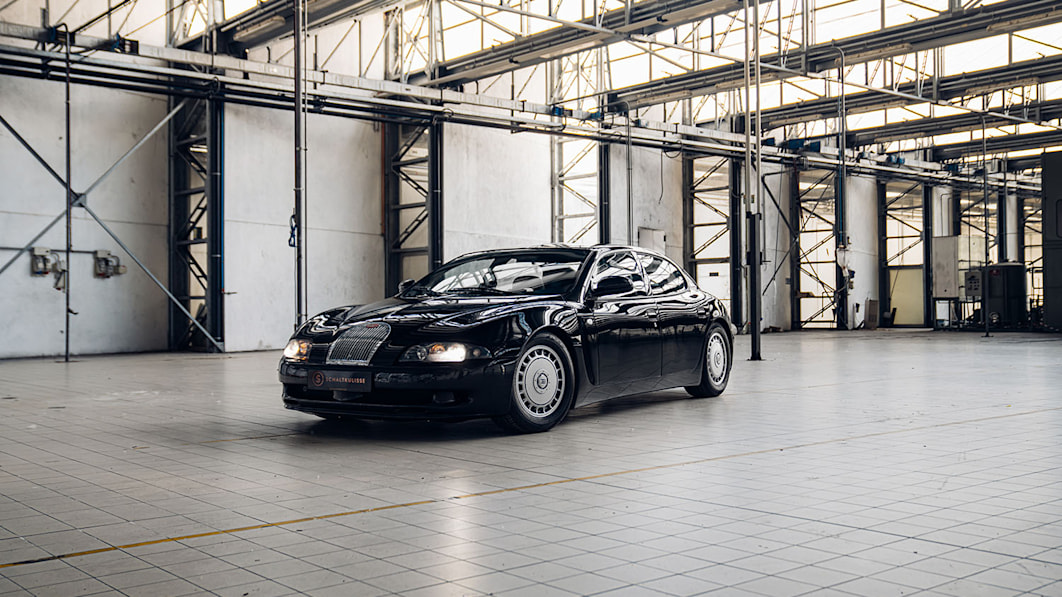
Bugatti has never strived to achieve volume, but some of its cars are rarer than others. One is the EB112, an obscure fastback-like sedan envisioned as a follow-up to the EB110, canned when the firm collapsed in 1995, and resurrected by a third-party company in the late 1990s. Historians agree that three examples of the EB112 were built, and the second one has been listed for sale by a dealer in Germany.

Presented as a concept at the 1993 edition of the Geneva auto show, the EB112 represented one of the ways that Italian entrepreneur Romano Artioli hoped to breathe new life into the storied French carmaker. It took the form of a large, four-door super-sedan with an aluminum body and a naturally-aspirated, 6.0-liter V12 tuned to send about 460 horsepower to the four wheels via a five-speed manual transmission. It offered passengers an interior that was luxurious without being over-the-top. In short, the modern-day Royale had arrived.

Bugatti quoted a 0-62-mph time of 4.3 seconds, which was remarkable considering the era and the car’s weight, and a top speed of 186 mph. Orders started coming in, but Bugatti filed for bankruptcy in September 1995 and the project was canceled. It closed its factory in Campogalliano, Italy, leaving behind 128 examples of the EB110 and one EB112, but the story doesn’t end there: two additional EB112s were left partially assembled inside the so-called Blue Factory. Gildo Pallanca Pastor bought some of the company’s assets and asked the Monaco Racing Team to complete the unfinished cars, according to dealer Schaltkulisse. The car that it’s selling is the first one of those.

Schaltkulisse notes that chassis number 39002 was ordered on April 27, 1993, by Bugatti’s Swiss importer and delivered in February 2000. It has been registered in Geneva since 2003 and its odometer displays around 3,900 kilometers, which represents approximately 2,500 miles. It’s presented as a one-owner car that’s still powered by a front-mid-mounted 6.0-liter V12. Pricing is only available upon request, but don’t expect this fascinating part of Bugatti’s multi-faceted history to come cheap. We wouldn’t be surprised if it costs more than a new Chiron.

Related Video:

Best New 4-Door Sporty Saloons ($50K–$100K USD)

Long gone are the days when the 2-door coupe had a monopoly on the best performance an automaker had on tap. In modern times, the 4-door saloon has become an increasingly popular platform for companies to showcase their greatest technologies, in a more utilitarian and family-friendly package to boot.

As a matter of fact, today’s market has demanded more versatility from products as consumers look to maximize the overall value of each and every purchase they make—automobiles are no exception.

This shift in philosophy has led to the creation of some incredible performance saloons over the years, and this now-very-competitive space has also fostered plenty of innovation as automakers dedicate significant resources towards the research, production and marketing of their sporty 4-door models.

Let’s also be clear that ‘sporty’ in this context doesn’t translate to some sort of watered-down or muted rendition of a company’s best offerings; rather, these cars are all contemporaries of their respective product line’s flagship models, if not already in that camp themselves.

Here are the Best New 4-Door Sporty Saloons you can purchase today, between $50K–$100K USD.

BMW M3 Competition

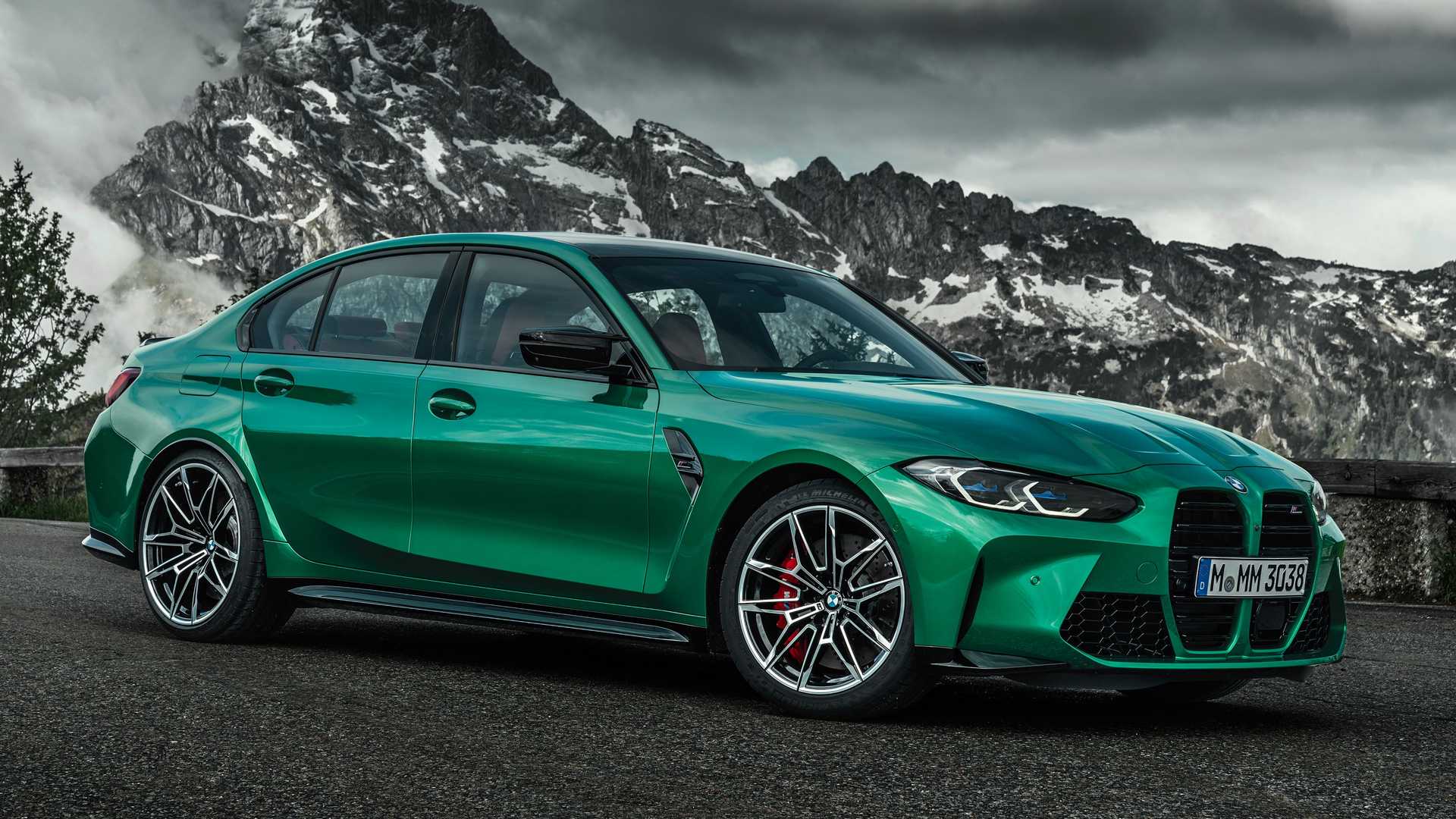
2021 BMW M3 on mountain road

Price: $69,900 USD

BMW has refreshed the M3 sedan and M4 coupe for 2021, and the 6th-gen siblings remain as driver-focused as ever. By not caving in to conventional wisdom—and in doing so, honoring the wishes of its enthusiast fanbase—BMW is offering the base versions of the cars with a 6-speed manual transmission as standard.

By all important metrics, the M3/M4 are superior cars to their predecessors in every regard; a bump in power, a better chassis, fresh styling, and more luxuries all coming together in a very formidable looking and high-performing package.

The Competition version of the incoming generation is going to be my pick of the lot. Besides the notable increase in power and torque (503 hp and 479 lb-ft in total) over the regular M3/M4, the Competition models will exclusively have the option of adding xDrive all-wheel drive. BMW has promised that the rear-biased system will offer all of the traction benefits, without any drawbacks on the thrill-o-meter.

Inevitably, the potent power plant was decidedly a better match for the 8-speed M Steptronic transmission. While this may not be the purists’ first choice, the Competition models are better equipped for those who find lap times to be the more pressing matter at hand.

Tesla Model 3 Performance

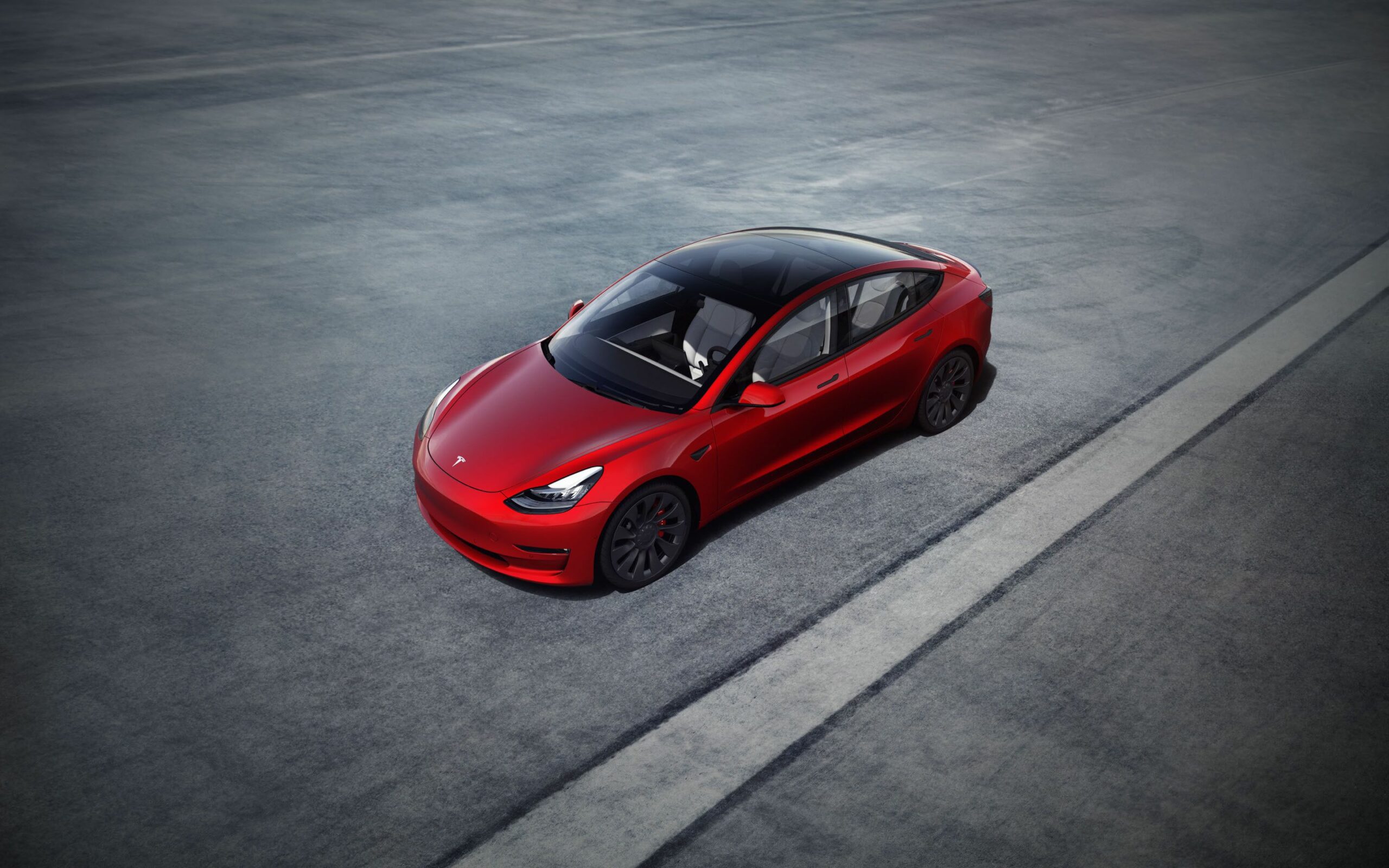
Tesla Model 3 Performance on road

Price: $58,990 USD

The Tesla Model 3 itself is a pretty revolutionary car, offering a currently unrivaled combination of performance, utility, range, and price. While the sub-$50k range restricts us to the Rear-Wheel Drive model (which uses a single electric motor), upgrading to the Long Range ($50,990) and Performance ($58,990) models would only take you just over the $50K mark, so they are certainly worth mentioning as well.

Aside from their dual-motor electric drivetrains offering better performance, these cars offer better range as well. The Long Range and Performance models offer well over 300 miles of range, while the Rear-wheel Drive is good for around 272 miles.

The Performance model would obviously be our pick of the lot, with its 450 hp and all-wheel drive allowing the car to accelerate from 0-60 mph in an impressive 3.1 seconds. It also benefits from a more sporty suspension, better better brakes, stickier tires, and a selectable Track Mode.

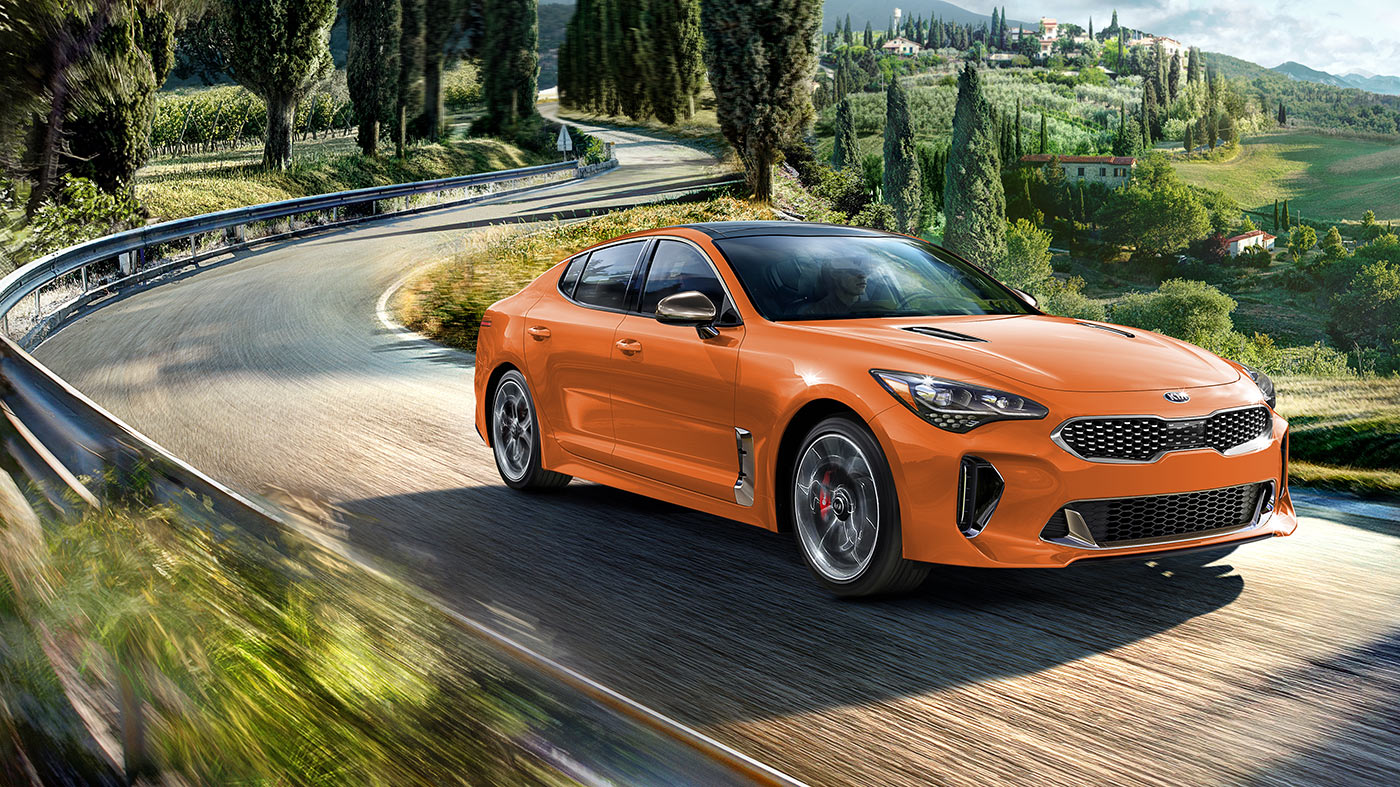
Kia Stinger GT2

Orange Kia Stinger GT2 on country road

Price: $50,390 USD

While the Kia Stinger hasn’t uprooted the market like some thought it would, it is still one of the most attractive buys in the luxury small car class. It looks impressive, performs well, and is priced about the same as most non-luxury brands’ comparable offerings.

It has been widely praised by the automotive press and generally receives high marks in all categories. That is what you would expect from luxury cars that command luxury prices, but you can get into a Kia Stinger for as low as $33,090.

That’ll get you the peppy 255 hp 2.0L turbocharged inline-4 GT-Line model, but stepping up to the GT, GT1 and GT2 trims will unlock the 3.3L twin-turbocharged V6 engine, which produces 365 hp. This transforms the Stinger from sporty 4-door to athletic sports sedan, with the performance-oriented models also benefiting from a more robust suspension and bigger brakes.

The range-topping GT2 would be our pick of the lot, and it also happens to be the only trim that crests into the $50K range before options.

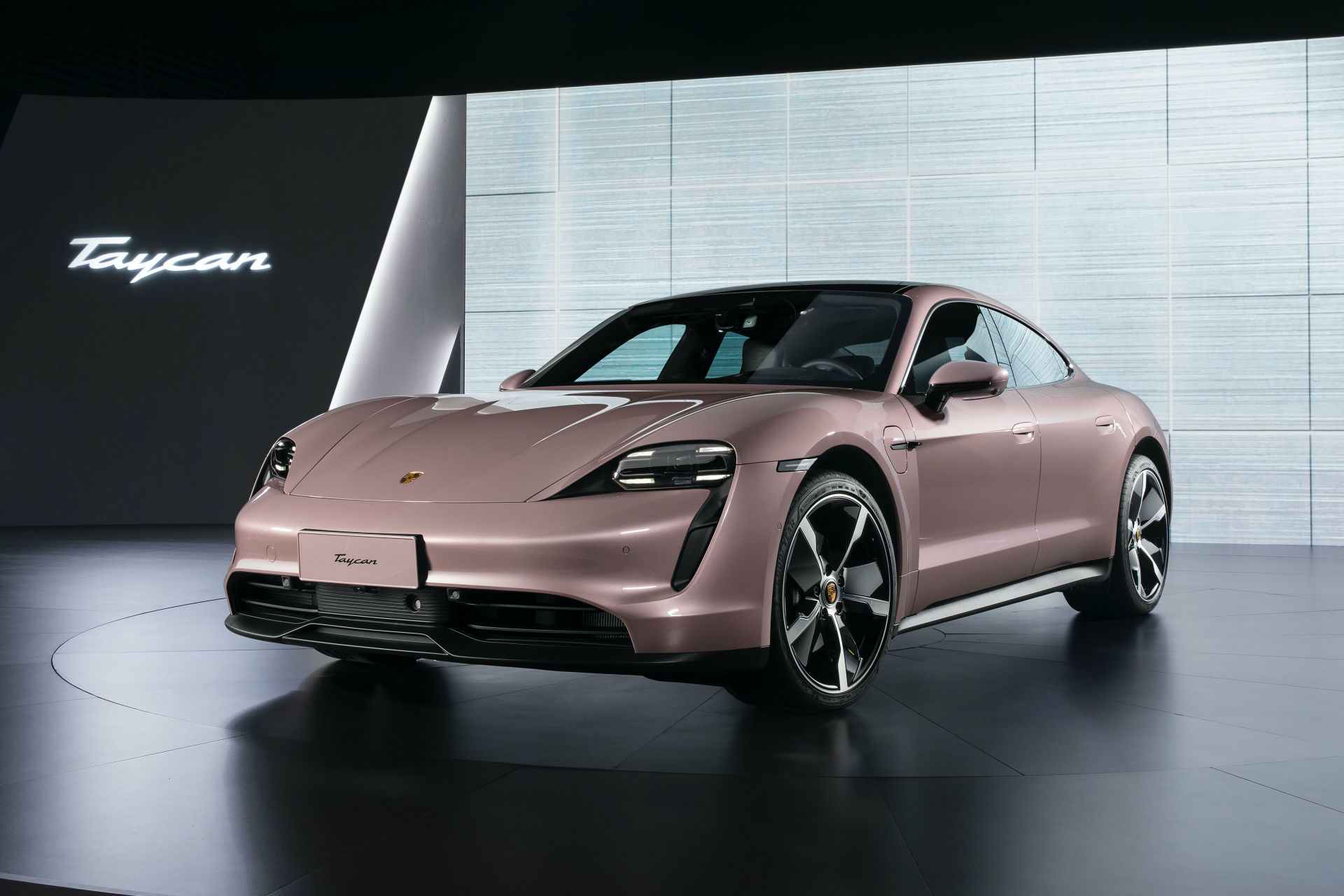
Porsche Taycan (Base Models)

Porsche Taycan RWD Base Model in showroom

Price: $79,900 USD (Sedan), $90,900 USD (Cross Turismo)

Porsche’s first EV was the statement car of 2020, proving that a future with electrification can still embody the soul of a true sports car in the Taycan Turbo and Taycan Turbo S.

Shortly after their release, Porsche added a slightly detuned version of the Taycan in a trim level known as the Taycan 4S. The company has since expanded the Taycan sports sedan lineup with even more versions, including a rear-wheel drive base model, with a GTS version just recently unveiled.

With the introduction of the new Cross Turismo range of Porsche Taycan models in 2021, we’ve now entered the second act of the company’s electrification strategy. The Porsche Taycan Cross Turismo carries over the EV-platform and performance from its sedan counterpart, then amalgamates them with the utilitarianism of a sporty crossover/estate.

What this means is that you can expect the same 800-volt battery architecture powering the car, with 93.4 kWh as the standard fare on all models (certain sedan trims could be had with a smaller 79.2 kWh pack).

Our focus for this list is on the base Taycan models. Our first choice is the RWD Sedan, which features the aforementioned smaller 79.2 kWh battery and is the only rear-wheel drive Taycan model in the range.

The second would be the sub-$100K Taycan 4 Cross Turismo, which costs more than the base Sedan, but does come standard with the 93.4 kWh battery and all-wheel drive (in addition to the crossover body-style).

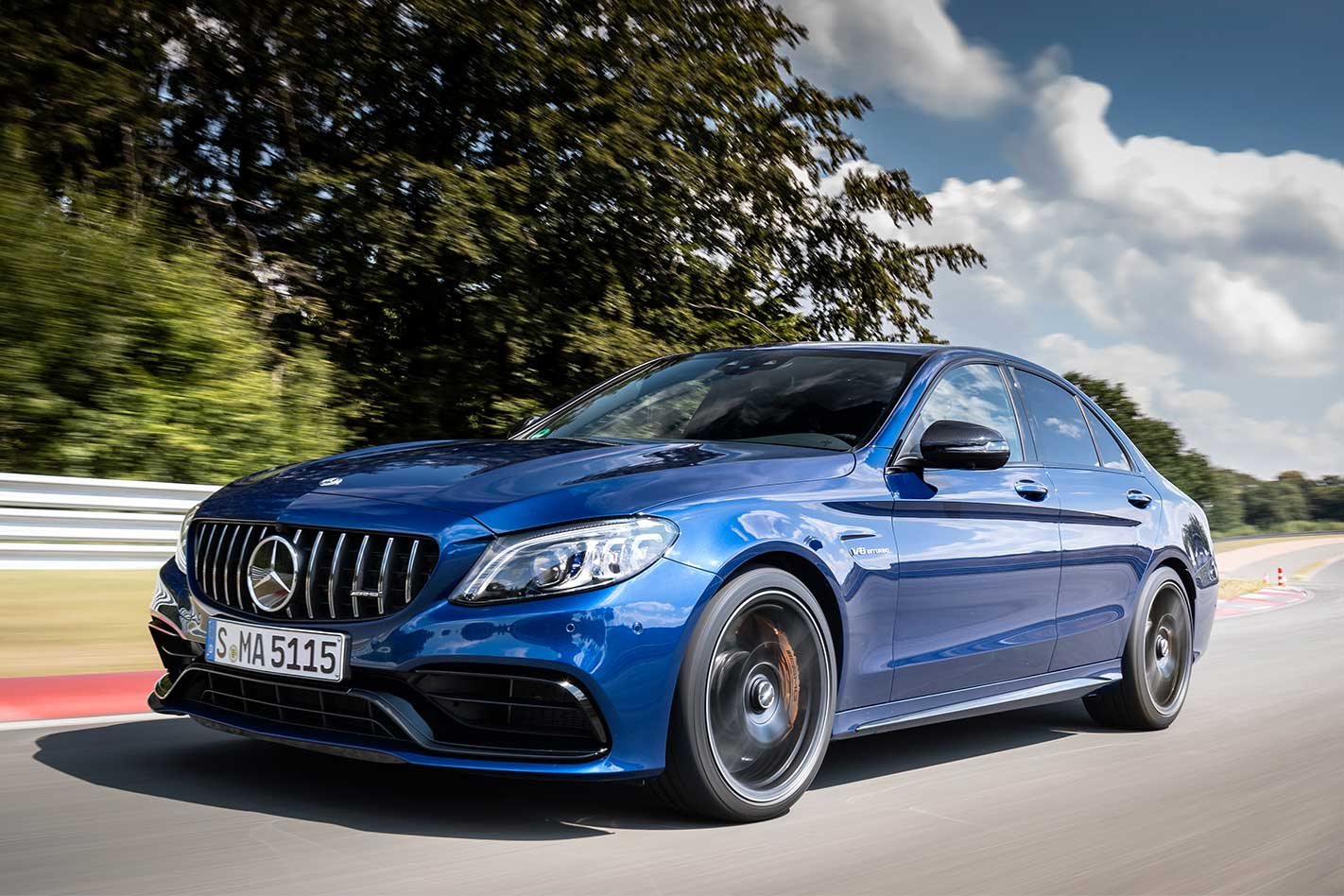
Mercedes-AMG C 63 / C 63 S Sedan

Blue Mercedes-AMG C 63 on country road

Price: $68,600 USD (C 63), $76,200 USD (C 63 S)

The C 63-series cars are the first step into “true” AMG territory, being the lowest point of entry in order to get one of those highly-coveted handcrafted AMG engines. The C 63 is the beneficiary of a 4.0L biturbo V8 mated to paddle-shifted multiclutch 9-speed, outputting 469 hp and 479 lb-ft of torque.

Standard Adaptive AMG RIDE CONTROL and a limited-slip differential make it quick on its feet. An exquisitely detailed cabin completes that “total package” feeling, which the C 63 provides in spades.

The Mercedes-AMG C 63 S is the top model in this range, equipped with the same handcrafted biturbo V8 as the C 63, but now unleashing 503 hp and 516 lb-ft of torque in this guise. Aggressive style envelops advanced new technologies, and from the cabin, drivers are immersed in innovation and superb build quality.

Both the C 63 and C 63 S are available in coupe, sedan and convertible configurations, meaning that buyers don’t need to fuss over how much (or how little) they can fit in their new AMG car.

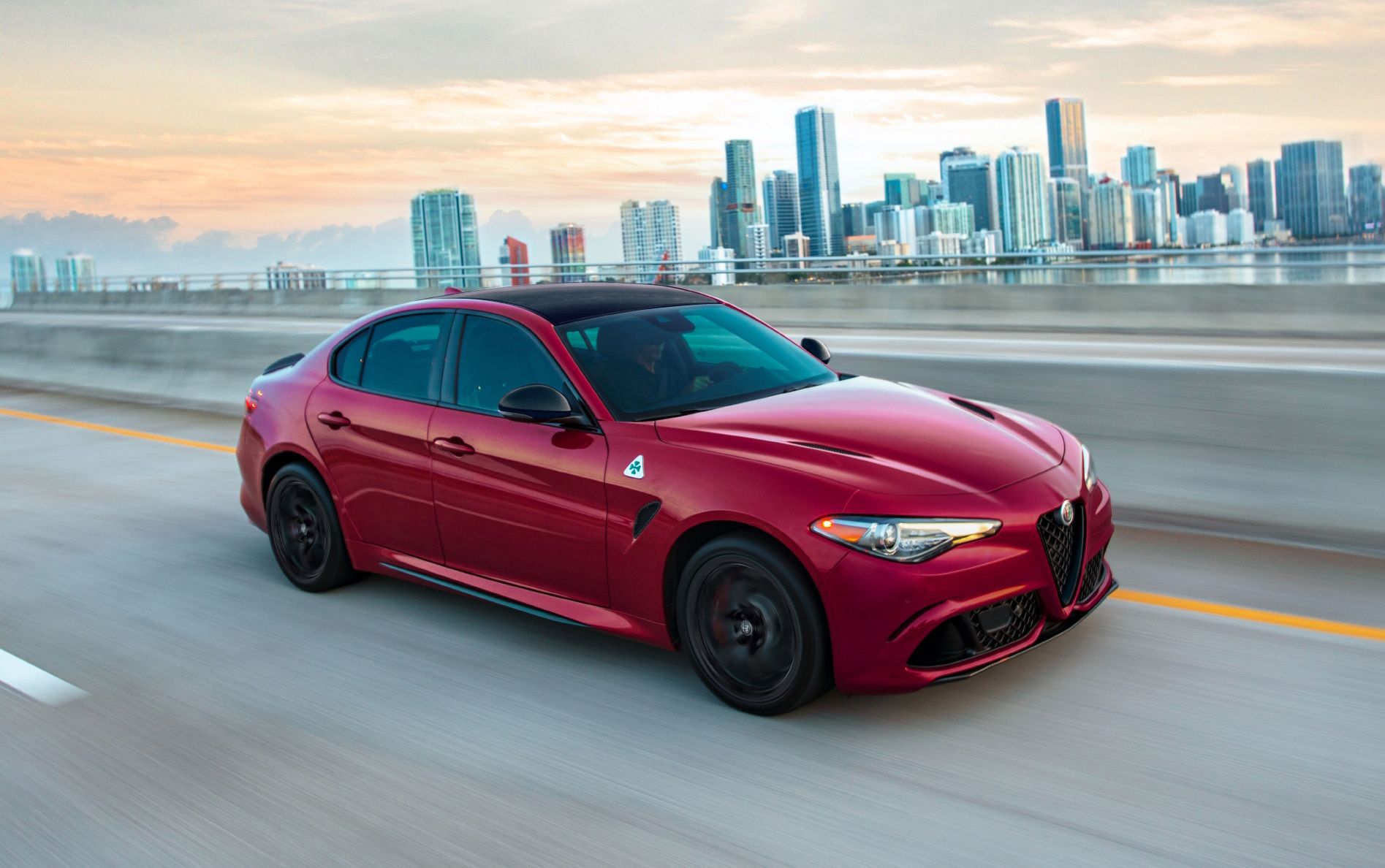
Alfa Romeo Giulia Quadrifoglio

2021 Alfa Romeo Giulia on city street

Price: $75,250 USD

The Alfa Romeo Giulia Quadrifoglio’s legitimate performance cred starts with its engine, which is upgraded to a 2.9L twin-turbocharged V6 with over 500 hp.

It has the handling to match, with substantive upgrades, which allow the Quadrifoglio to negotiate turns on the racetrack or back country roads with aplomb. In fact, everything is turned up a few notches in the sportiness department, with aggressive styling and a fantastic sounding exhaust to boot.

There were several changes in 2020 that also carry over into 2021, including a new driver-focused cockpit and impressive technology including available Level 2 autonomy features and an 8.8 inch touchscreen.

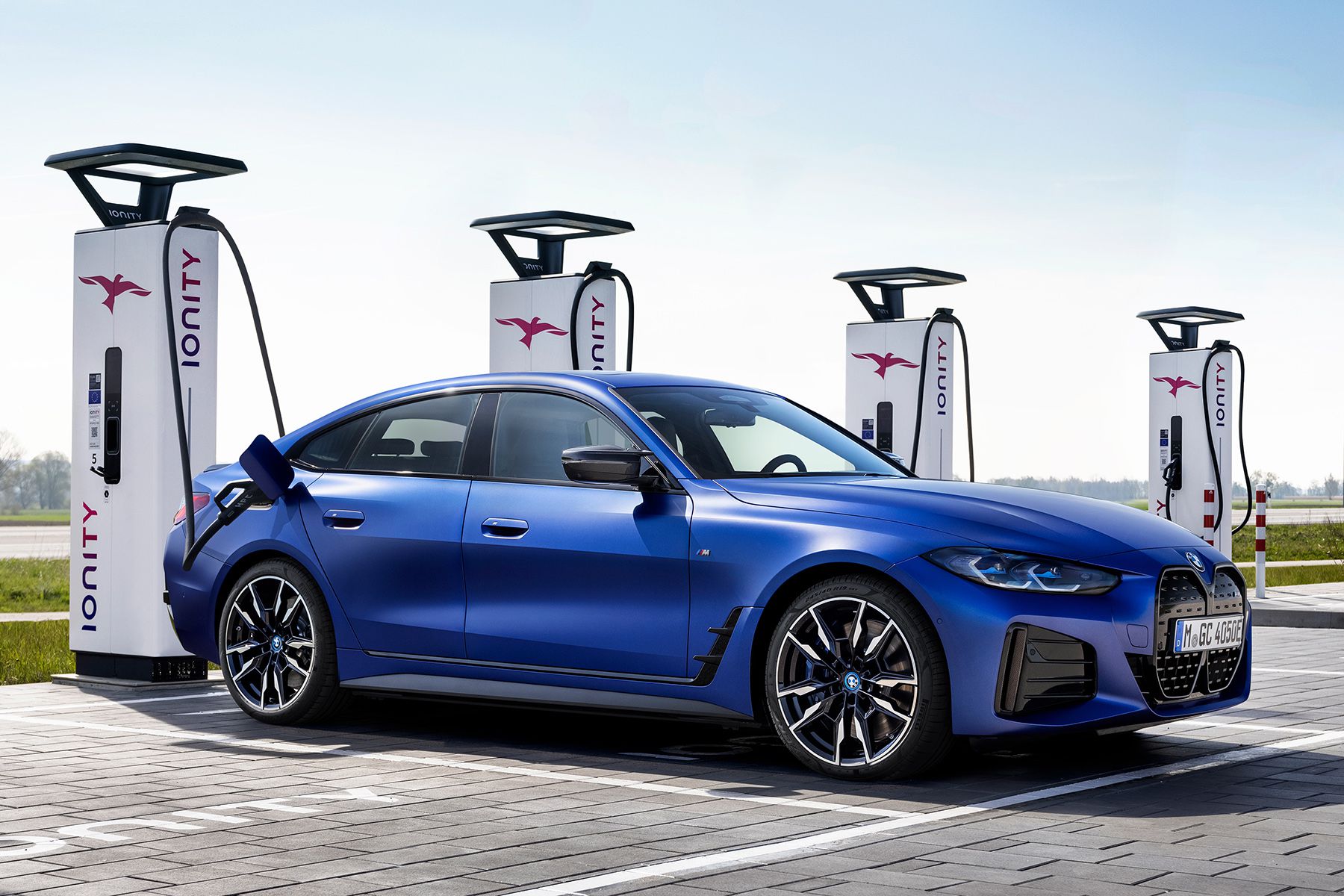
BMW i4 M50 xDrive

Blue BMW i4 M50 xDrive at charging station

Price: $66,895 USD

The BMW i4 M50 xDrive is one of a number of fully electric BMW vehicles set to debut in the short term. The M50 has the distinction of being the very first (and only, for now) BMW EV to part of the M family. With that said, you can be confident that this car will have all of the performance credentials required for it to be a contemporary within this distinguished group of automobiles.

The easiest comparison that can be made with the sporty sedan is that it offers M3-like performance with an all-electric drivetrain. An 84 kWh battery pack and two electric motors (through which 536 hp and 586 lb-ft of torque can be produced) certainly backs up those claims, while putting it in direct competition (power-wise) with the Porsche Taycan 4S and Audi e-tron GT.

BMW has also claimed range figures of around 250 miles, compared to 300 miles that the more tame and economical i4 eDrive40 (the platform on which the M50 is based) is capable of.

The BMW i4 M50 xDrive is not on public roads yet, but you can certainly order one today. The base price of the M50 is around $4,000 less than the entry-level M3–something to ponder, while we wait for deliveries to begin early in 2022.

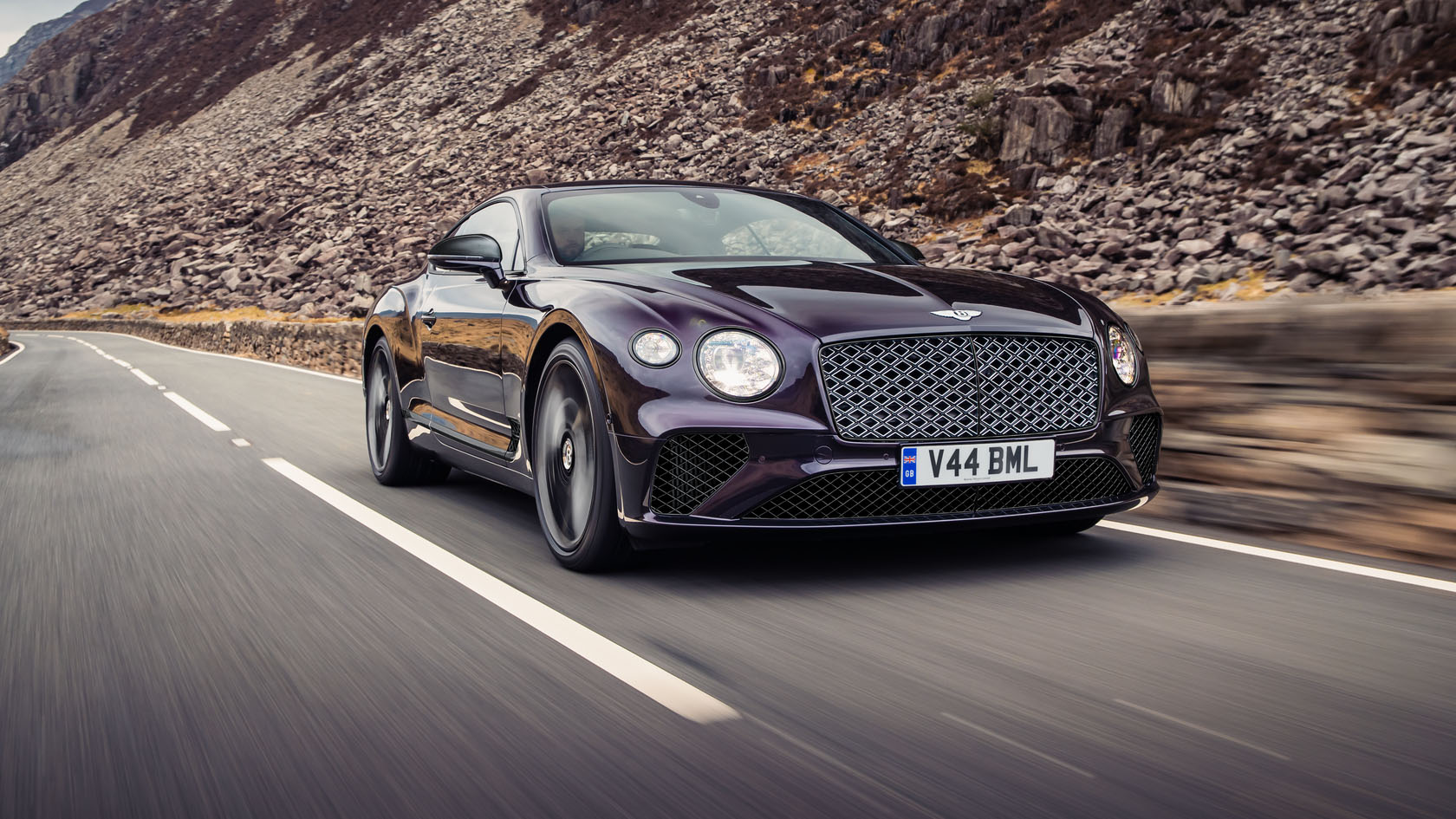
The Bentley GT Mulliner Blackline

Numbers prove that about 38 percent of new orders for a Bentley Continental GT come with the option of black bright ware, instead of having bright chrome on the outside of this luxurious Gran Turismo model from Crewe, it seems that just shy of half of the customer base prefer to see black details on their new Bentley, and until now this wasn’t an option for the special GT Mulliner edition.

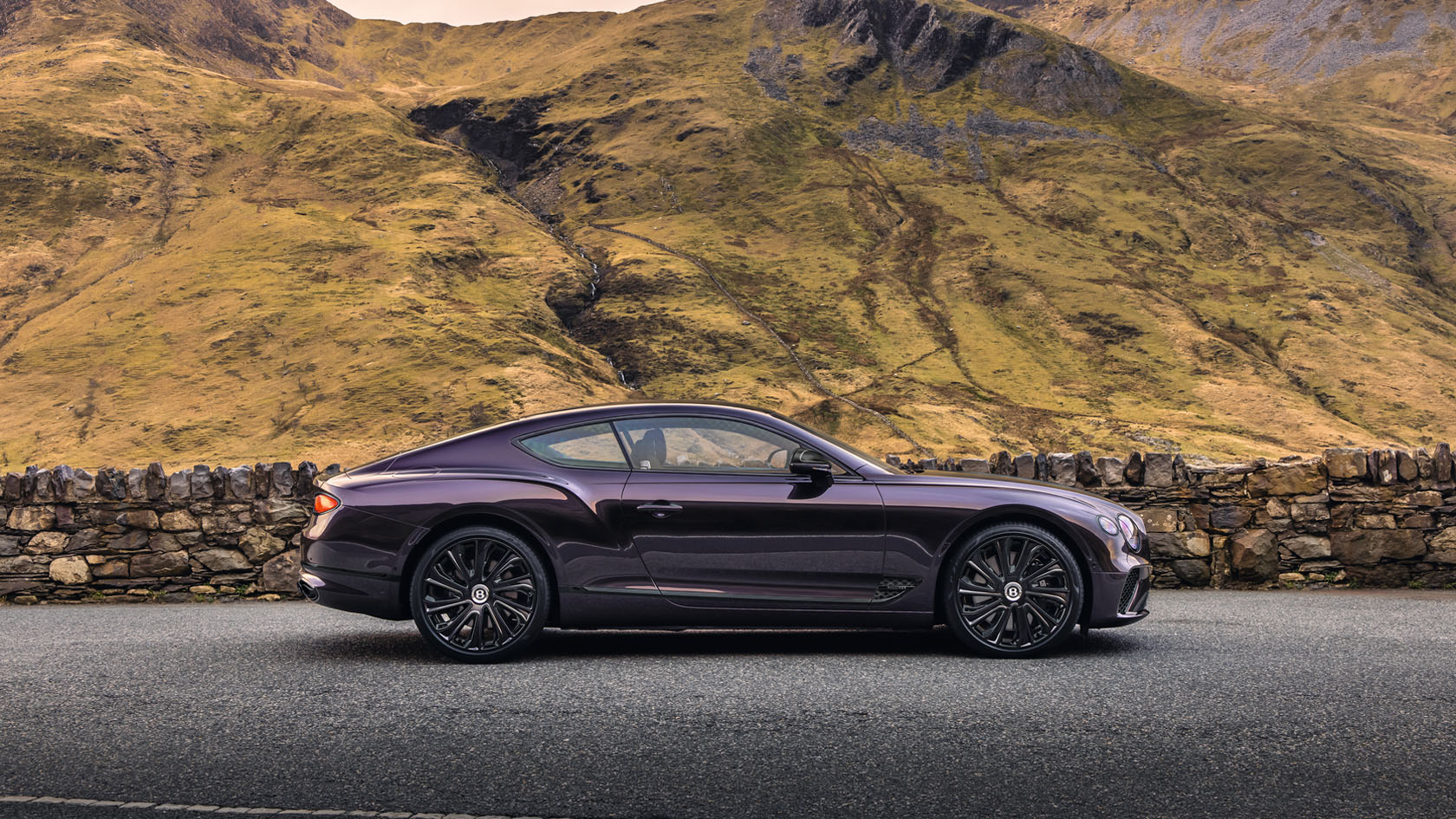
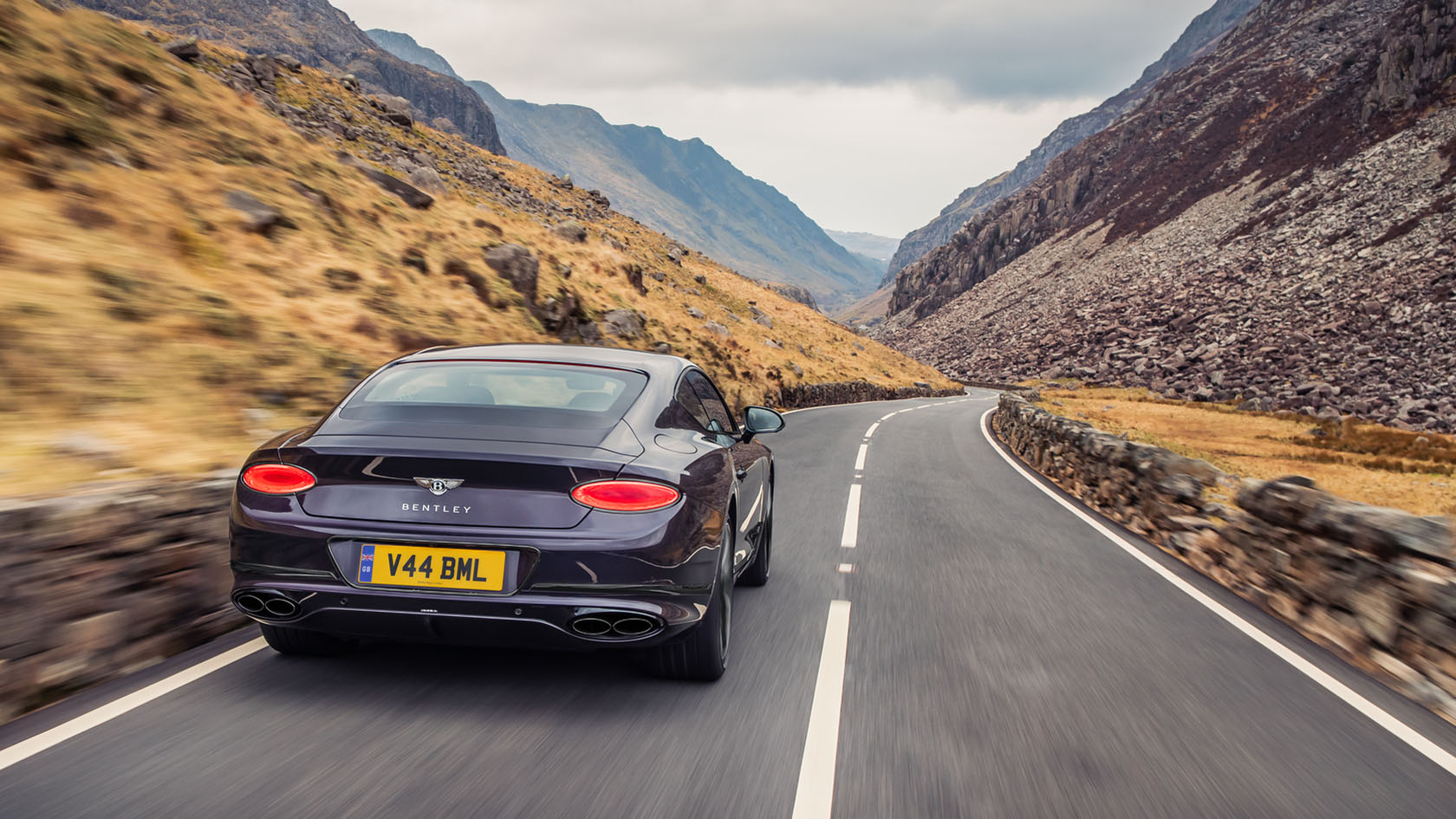
That has changed now, with the introduction of the GT Mulliner Blackline, a handbuilt car that comes with a myriad of changes compared to the regular GT Mulliner, and as of now this new Blackline option is offered on both the coupe and the convertible version, imagine this on a deep black metallic car, that must look so intimidating given the size of the Bentley GT, and while the press car is presented in a very dark metallic violet shade which looks great too, personally I would go all blacked out.

Having the otherwise chrome details on the outside of these Bentley GT Mulliner Blackline makes them look even more contemporary, while chrome oozes class, black trim completely transforms this high-performance four-seater GT into something completely different, more menacing, and surely appealing to a wide audience given the number of GT that are ordered this way already, now you can have it on your new GT Mulliner too.

On the special GT Mulliner Blackline, just about the only thing kept bright is the Bentley Winged B badge at the front and rear, but the radiator grille bezel goes black, the typical satin silver upper mirror caps on the regular GT Mulliner turn to Beluga Black on the Blackline version, while another Mulliner signature, the matrix wing vents go dark too with bright Mulliner branding. On the other hand, the radiator grille stays black with bright edges for a 3D look, and the grille insets in the lower bumper turn black too.

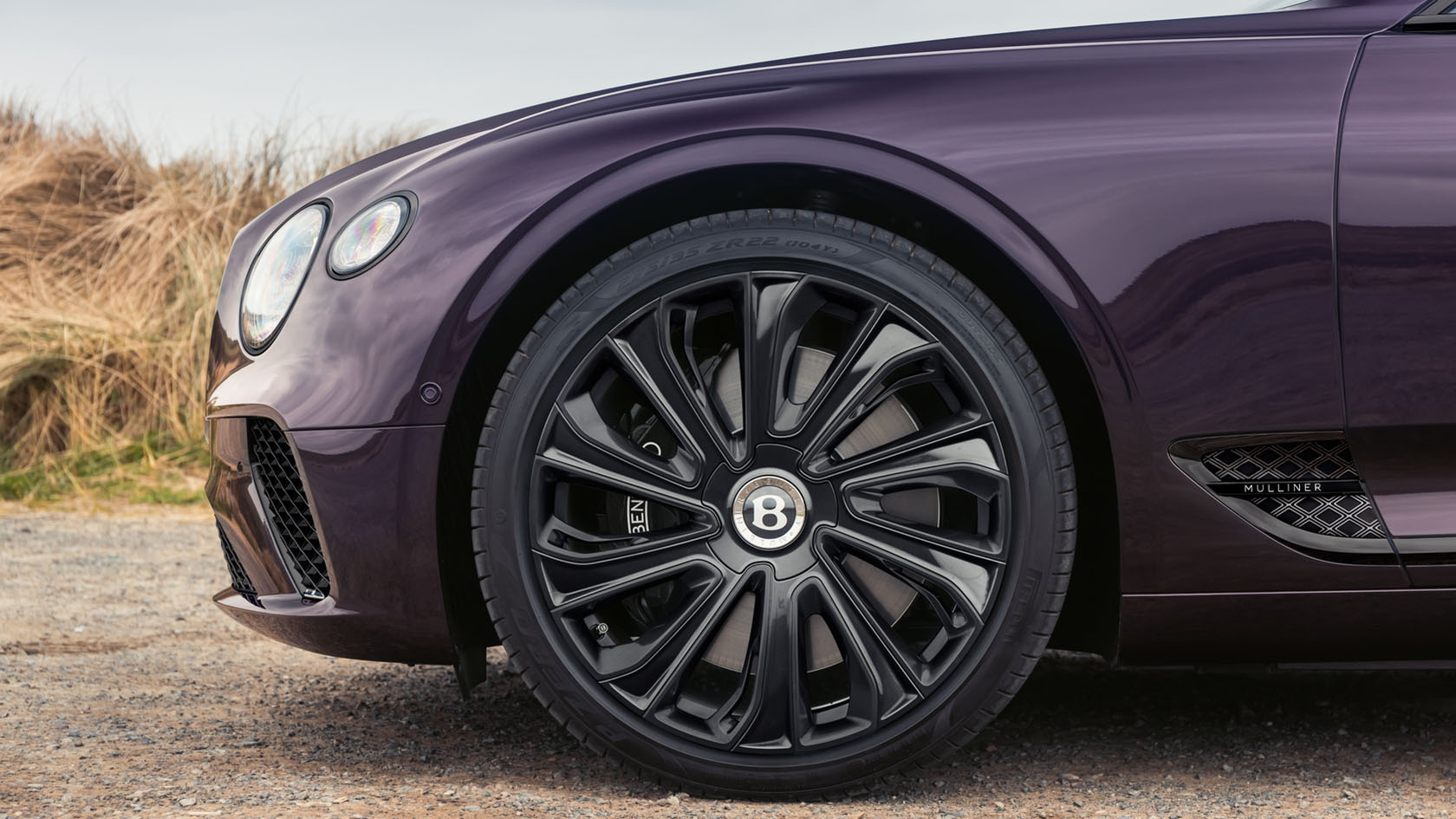
Massive 22-inch black wheels are standard on the GT Mulliner Blackline, naturally, these come with the self-leveling badge on the center cap, but as an option, you can go for a black wheel with contrast polished insets, personally, I would keep the all-black rims if I’m honest, they just suit this Blackline version perfectly, and that big B on the center is enough contrast to keep it interesting and luxurious looking, no need for more brightwork on these wheels.

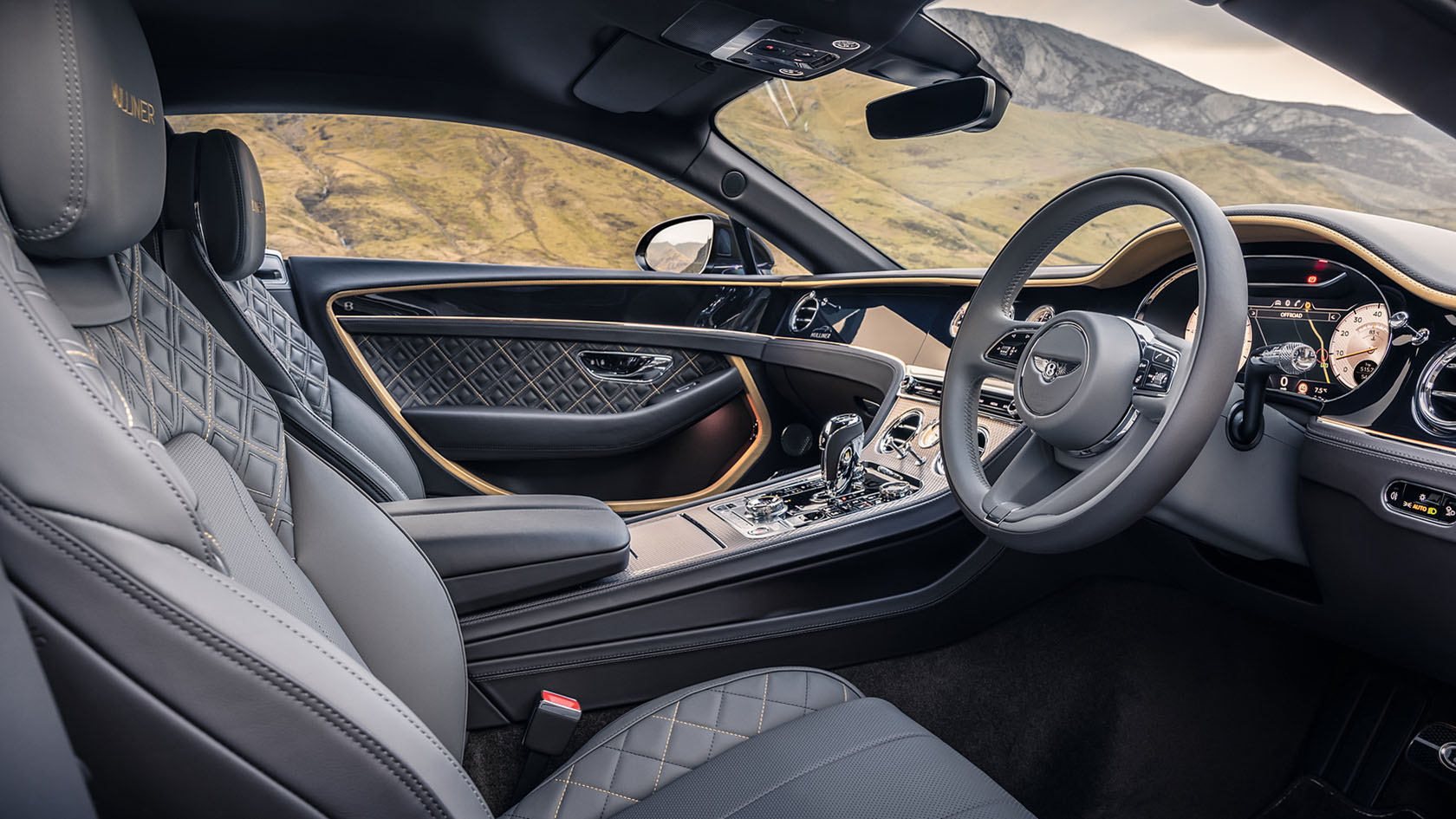
If you think you’ll have a hard time selecting an exterior color from the vast palette Mulliner offers, you’ll be in for a surprise when you start looking at the endless list of possibilities for the interior. If you take the easy way out you can opt for one of eight three-color combinations, but where’s the fun in that, so you’ll have to specify something really bespoke for your new GT Mulliner Blackline.

The press release states: “As part of the standard Mulliner Driving Specification, the interior incorporates Bentley’s unique “Diamond in Diamond” quilting for the seats, doors, and rear quarter panels, featuring both contrast and accent stitching running through the diamond layout. With almost 400,000 stitches in the cabin of each car, each diamond contains exactly 712 individual stitches, all precisely aligned to point to the center of the diamond it creates. A true mark of unrivaled automotive craftsmanship.” So you’ll even have to specify the color for the stitching next to just about any panel on the dashboard and central console, the time of just walnut wood is long gone at Bentley Mulliner.

Some might state you’ll just have to go for the largest engine possible, which in this case on the Bentley GT is the iconic W12 twin-turbo 6-Liter engine that delivers 635 PS, but some state the lighter 4-Liter V8 with ‘just’ 550 PS is the better option for this car, I’ve been told it is more agile compared to the more lazy W12 engine, while the latter does offer effortless performance.

New Bugatti Riyadh showroom

When the Bugatti Veyron was introduced back in 2005, it quickly became obvious there were a large number of potential clients to be found in Saudi Arabia, luxury, performance, and more importantly, exclusivity are very highly appreciated in the Middle East, and it didn’t take long before Saudi Arabia became one of the largest markets for Bugatti Automobiles S.A.S., and in a partnership with SAMACO Automotive, we now see the launch of Bugatti Riyadh.

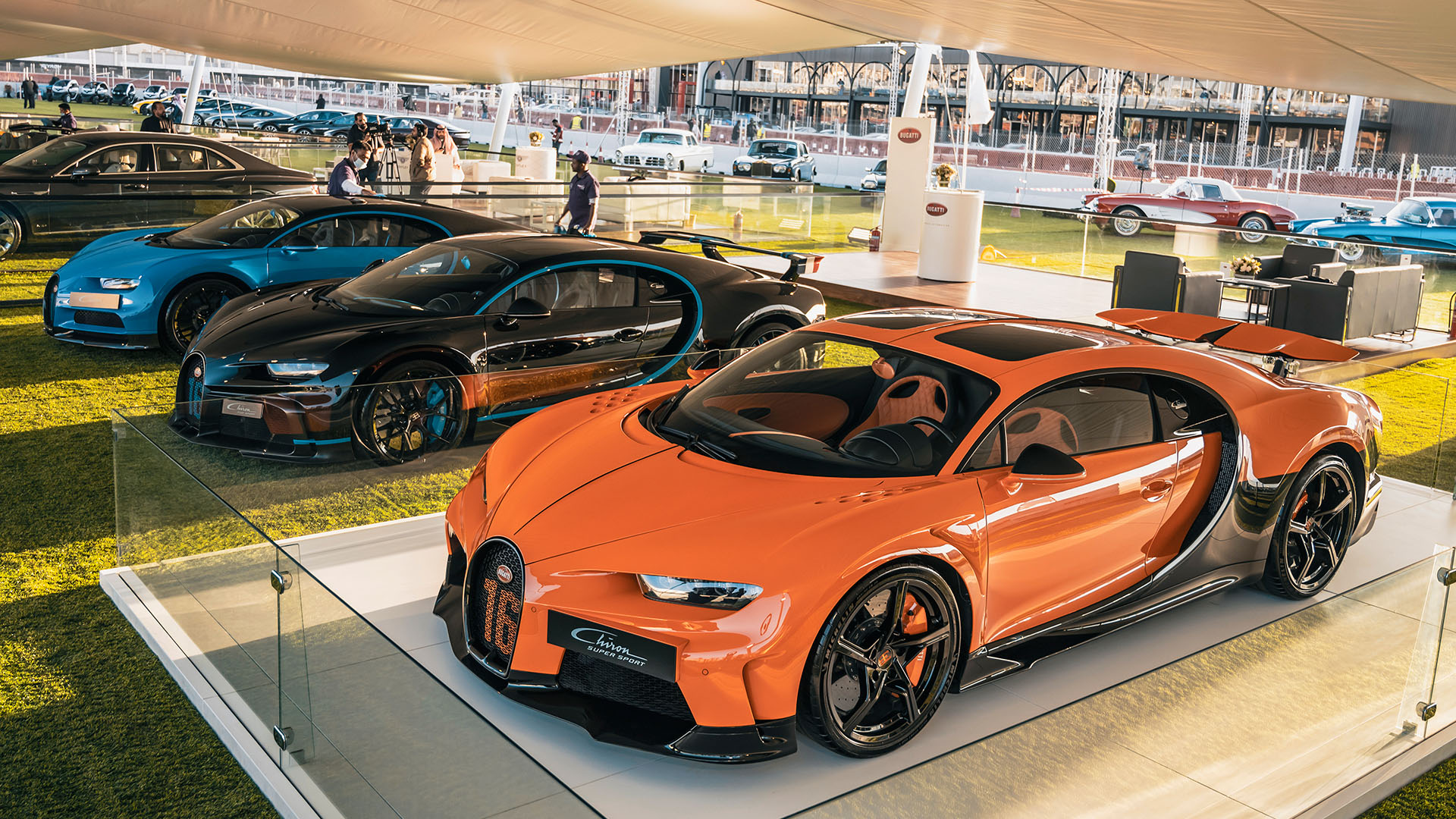
Located in one of Riyadh’s most highly sought-after regions, this new showroom is one of the largest in the world where visitors can emerge into the world of Bugatti, much in the same way they would when visiting the brand’s HQ in Molsheim, France. For the opening ceremony in mid-November no less than two of Bugatti’s latest and bravest were present, the stunning Chiron Pur Sport and the beautiful Chiron Super Sport.

Hendrik Malinowski, Bugatti’s Managing Director for Sales and Marketing said: “Saudi Arabia has historically been one of the strongest markets for us. So, to be able to establish a magnificent presence in Riyadh, with the help of our partners at SAMACO Automotive, is a remarkable milestone that we have been looking forward to. Saudi Arabia will only grow in importance as a hub for international trade and as a vibrant, prosperous society. And as it grows, we too will continue to thrive.”

Sheikh Mohammed Raffa, CEO of SAMACO Automotive, commented: “Bugatti’s creations are without equal. I am thrilled to welcome the brand to the Kingdom of Saudi Arabia and our capital city, Riyadh, which is already home to many of Bugatti’s passionate enthusiasts and customers. I have no doubt that this is the beginning of a long and prosperous partnership between us, and we have many exciting plans to instill the magic of Bugatti across the region which will see the brand’s presence grow significantly.”

Over the next weeks, Bugatti Riyadh will be inviting customers, possible clients, and dignitaries of the Kingdom to enjoy some of the best the French hypercar makes has to offer, making it possible to take a seat behind the wheel of both the Chiron Pur Sport or the Chiron Super Sport, both models will be available for the foreseeable future at this new showroom.

Copyright GF Williams

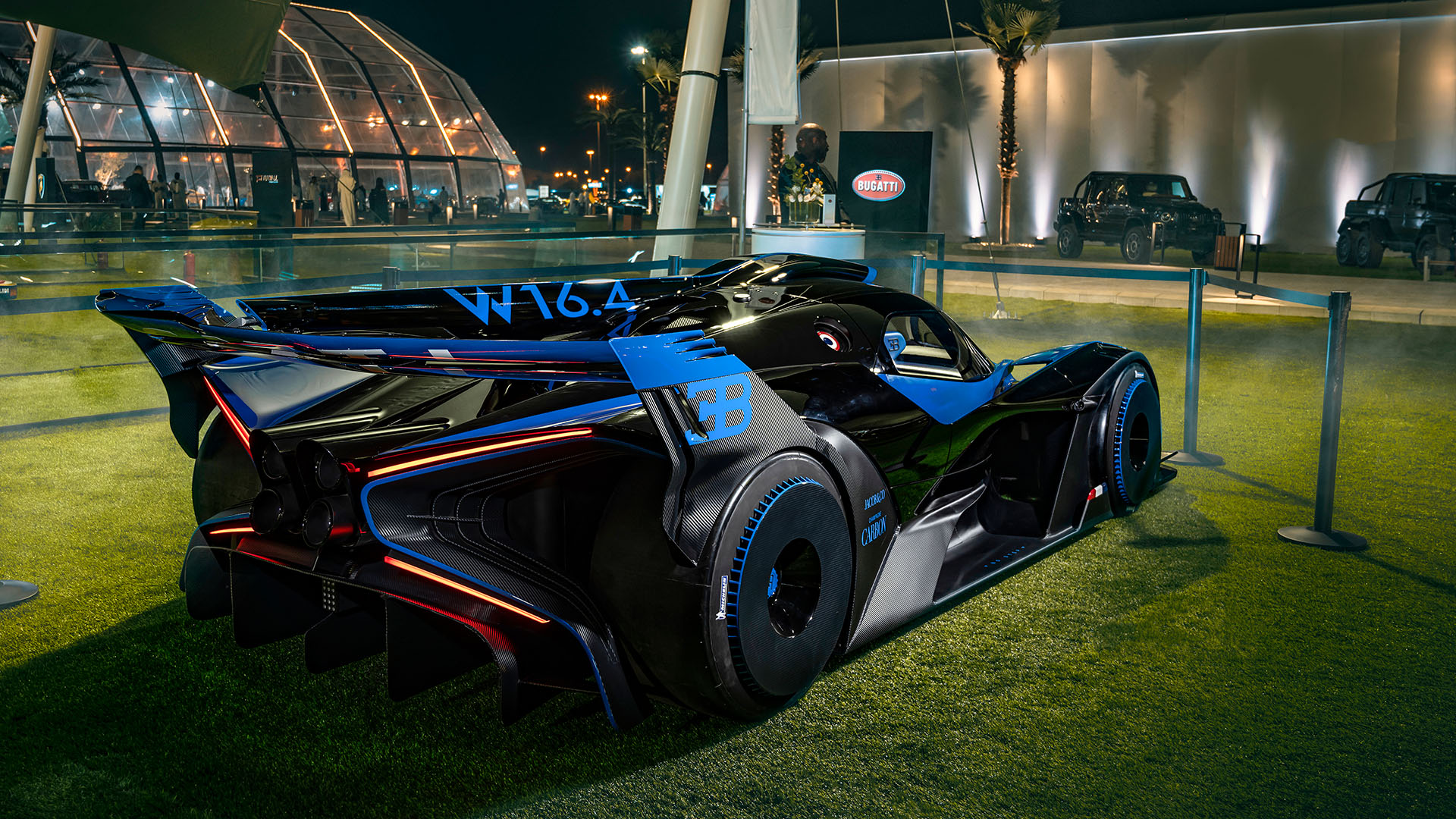
While the Bugatti Riyadh showroom might have just been officially opened, they have been in action already, more specifically during the famous Riyadh Car Show, where an even more impressive array of hypercars was shown, not only the Bugatti Chiron Super Sport and the Chiron Pur Sport, but also a Chiron Sport, and the magnificent Bolide … talking about coming in hot and in force, it’s clear this is a very important market for Bugatti.

Copyright GF Williams

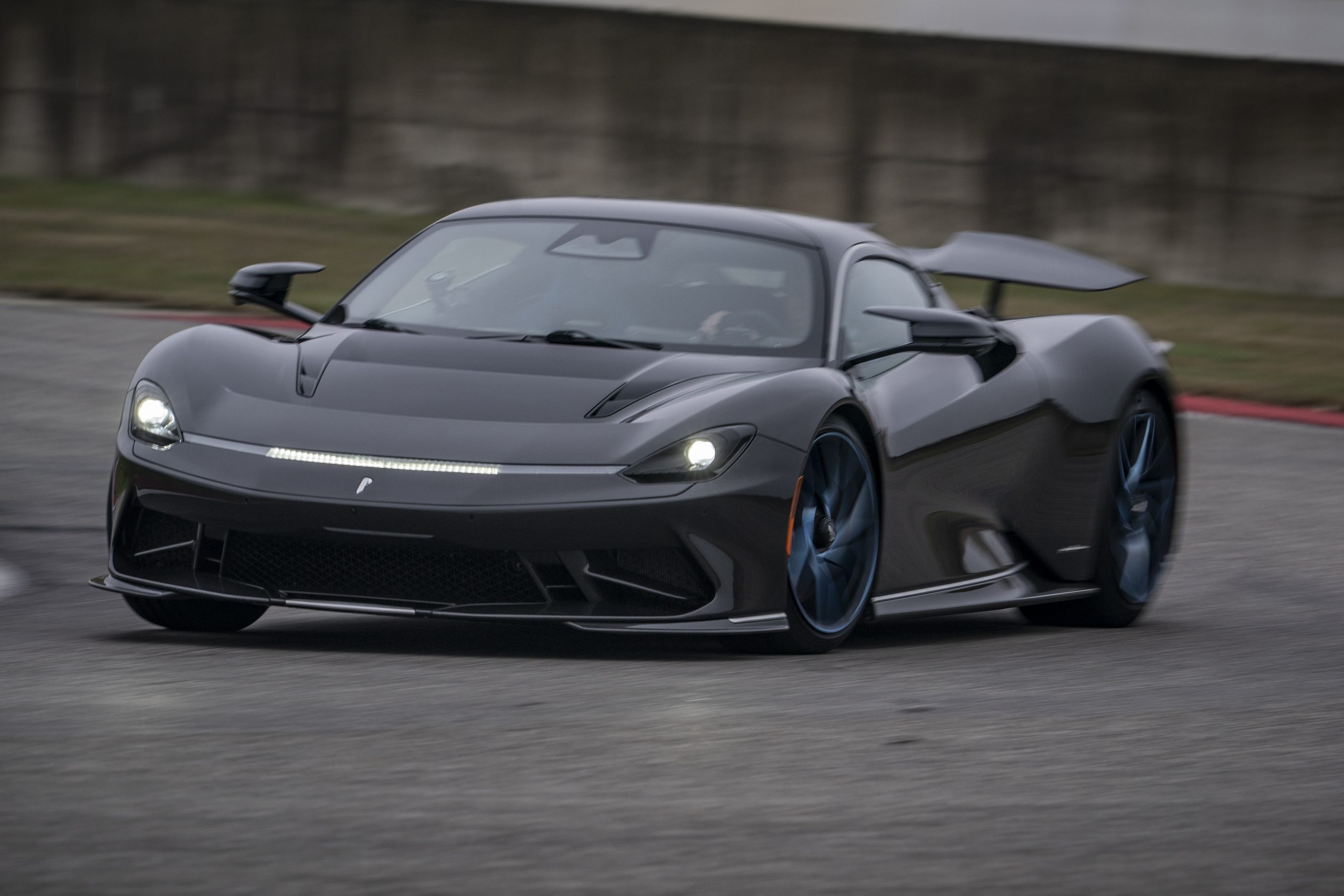
Automobili Pininfarina Battista Is “Hyper GT of the Year”

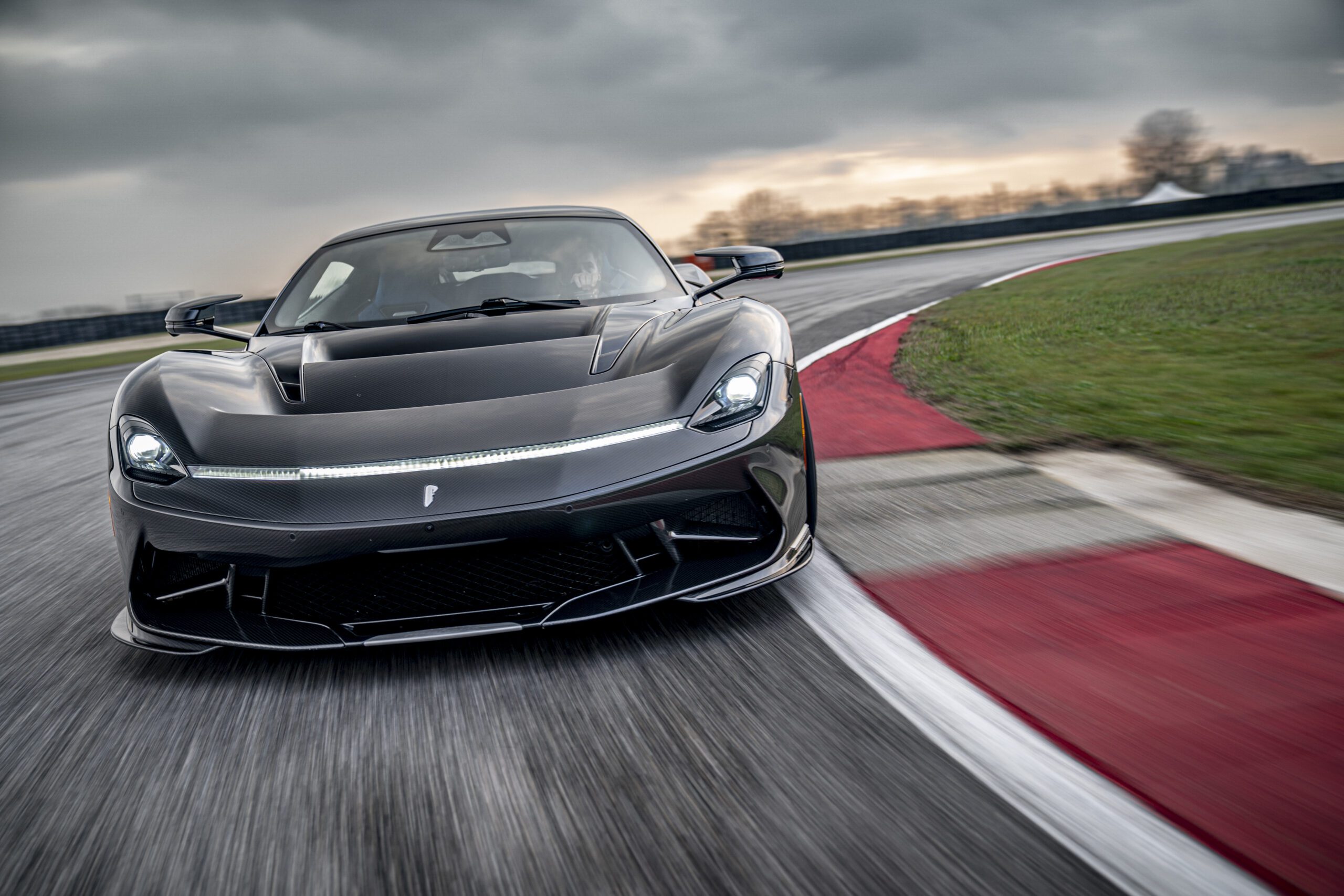
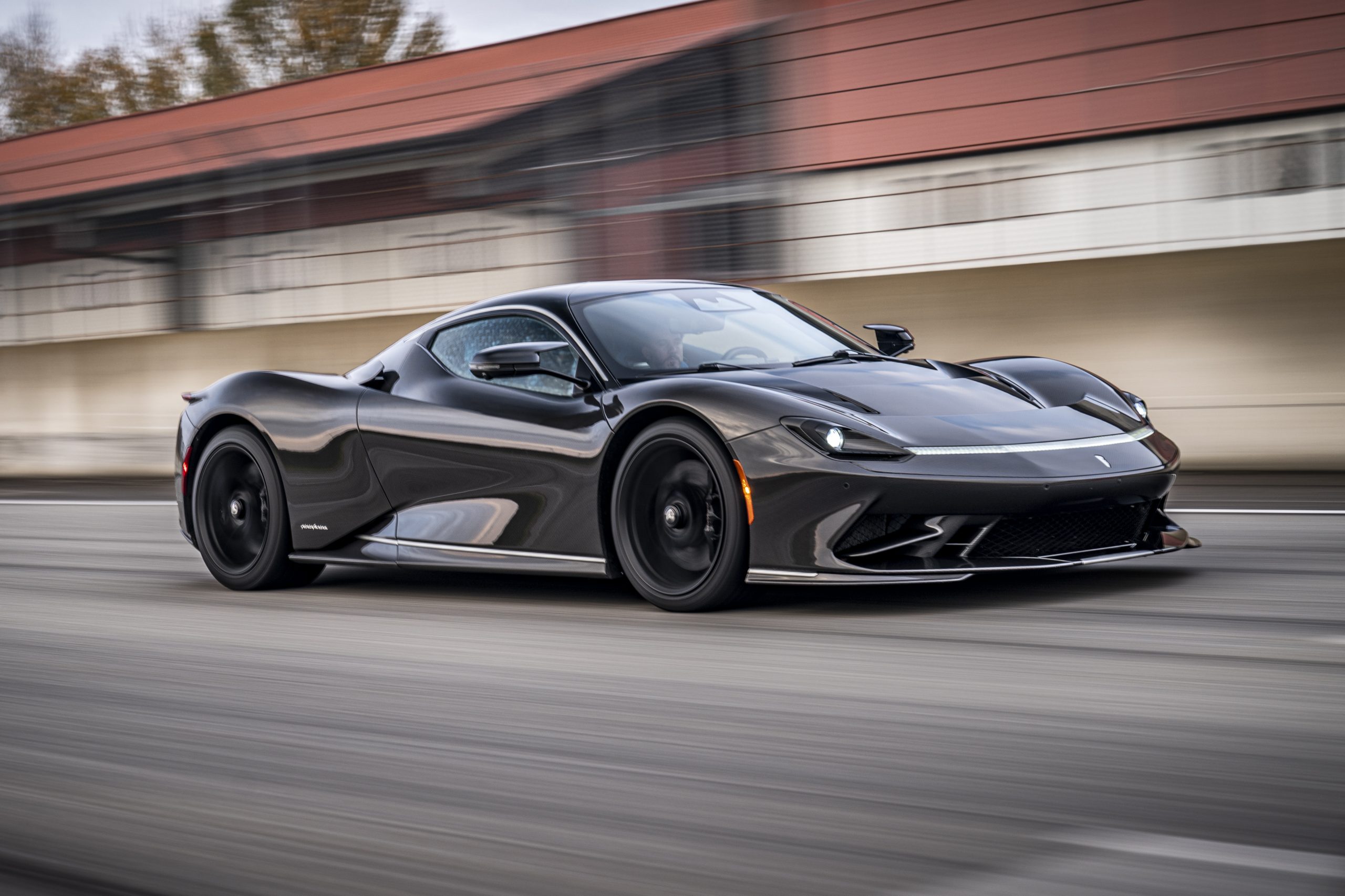
Automobili Pininfarina’s pure-electric Battista was awarded the ‘Hyper GT of the Year’ at the 2021 TopGear.com awards. The title’s expert panel of writers chose this year’s winners, and the judges were all praises for the Battista for its exhilarating performance and gorgeous design.

The ‘Hyper GT of the Year’ is the latest accolade it has received after just being awarded the prestigious Design Award at the Concorso d’Eleganza Villa d’Este in October. A production-ready hyper GT with a unique specification made its debut at Lake Como in Italy for the exclusive event. The example had an exquisite Verde Paradiso finish matched with a tan leather interior.

[embedded content] [embedded content]

Top Gear magazine editor Jack Rix stated, “The Battista is a triumph given what it set out to achieve. It’s beautiful inside and out, and violently fast. Mark my words, you will never get used to the Battista’s club-round-the-head acceleration, because the human body is simply not equipped to. At this stratospheric performance level, it’s all about conjuring up an experience that lodges in your brain and gets the adrenaline flowing. And it is impossible to drive this car and not be mesmerized.”

“The Automobili Pininfarina family is honored that the Battista has been named ‘Hyper GT of the Year,’ by Top Gear. It’s an award that captures exactly what the Battista is about: the very pinnacle of sustainable luxury and electrified performance combined with sensational design,” Automobili Pininfarina Chief Executive Officer Per Svantesson added. “We are now ready to begin handcrafting customer cars at the Battista Atelier in Cambiano, Italy. Every Battista will be bespoke to the taste of its owner, yet each will offer the sublime blend of exquisite design and incredible performance that are now recognized by the BBC Top Gear team. This award is a perfect reward for the team that has worked so hard to bring Battista to life.”

There will only be a maximum of 150 hand-built Battistas that will be produced and this already includes the five extremely exclusive Battista Anniversario models. The Battista already made its debut in the US and Europe and the powerful 1,900 hp and 2,360 Nm torque hypercar blew the clients away with its performance in a series of test events held weeks afterwards.

The Battista is nearing its final phase of development with customer deliveries expected in the near horizon – around early 2022. Since the start of the Battista development program, the engineers of Automobili Pininfarina worked hand in hand with former Formula One and Formula E driver Nick Heidfeld. The Automobili Pininfarina Test and Development Driver recently talked about the most powerful Italian sports car ever created both on the road and on track.

Nick Heidfeld driving the Battista

“It has been a real privilege to play a part in developing Battista, which represents a significant evolution in the world of hyper and luxury cars. From the first time I experienced Battista’s performance in 2019 in an advanced simulator, to today on road and track, I believe the Automobili Pininfarina team has successfully developed a unique hyper GT that is enormous fun, as well as incredibly fast.” Heidfeld shared.

Throughout the development process, engineering excellence has been of paramount importance as the Battista is currently the most powerful Italian production car. The advanced e-powertrain and bespoke driving dynamics gives the Battista its tailored driving experience which has impressed Heidfeld during the whole process.

In the Furiosa mode, you’ll experience the full 1,900 hp of the Battista as it also uses the full torque available from the four independent electric motors. The Battista can go from 0 to 100 kph in less than two seconds and it also has a recorded top speed of 350 kph. The original projection of the Battista was that it will be able to produce 2,300 Nm of torque, but in reality the great engineers were able to increase it to 2,360 Nm. The power comes from the two 250 kW and two 450 kW motors from the front and rear, respectively. Each front motor has 280 Nm of torque while the rear motors have 900 Nm.

Pininfarina Battista
Photo: James Lipman

“In this test I was able to drive Battista with full power available. The effect under acceleration is completely mind-bending – drivers will never bore of the experience, no matter how many times they feel it. This road car sprints faster than a Formula 1 car, and in Furiosa mode, I was left with a huge grin on my face every time. Every client that experienced Battista with me was positively overwhelmed by the experience – there is simply nothing like it.”

Heidfeld continued, “Battista is a beautiful piece of design, and its formidable presence is now enhanced by its unique exterior sound. With Battista in Furiosa mode, the exterior sound is at its most audible setting and it instantly made me smile on approach. You hear Battista before you see it – the car appears ‘alive’, and it helps develop an emotional connection that I honestly did not expect. The team had a tough target to hit here, and I believe this strategy is now proving a success.”

Using the Battista’s advanced torque vectoring system, the four independent high-performance electric permanent-magnet synchronous motors (PMSM) independently share the power to each wheel. This allows the Battista to deliver accurate and efficient shift of torque compared to torque vectoring by braking.

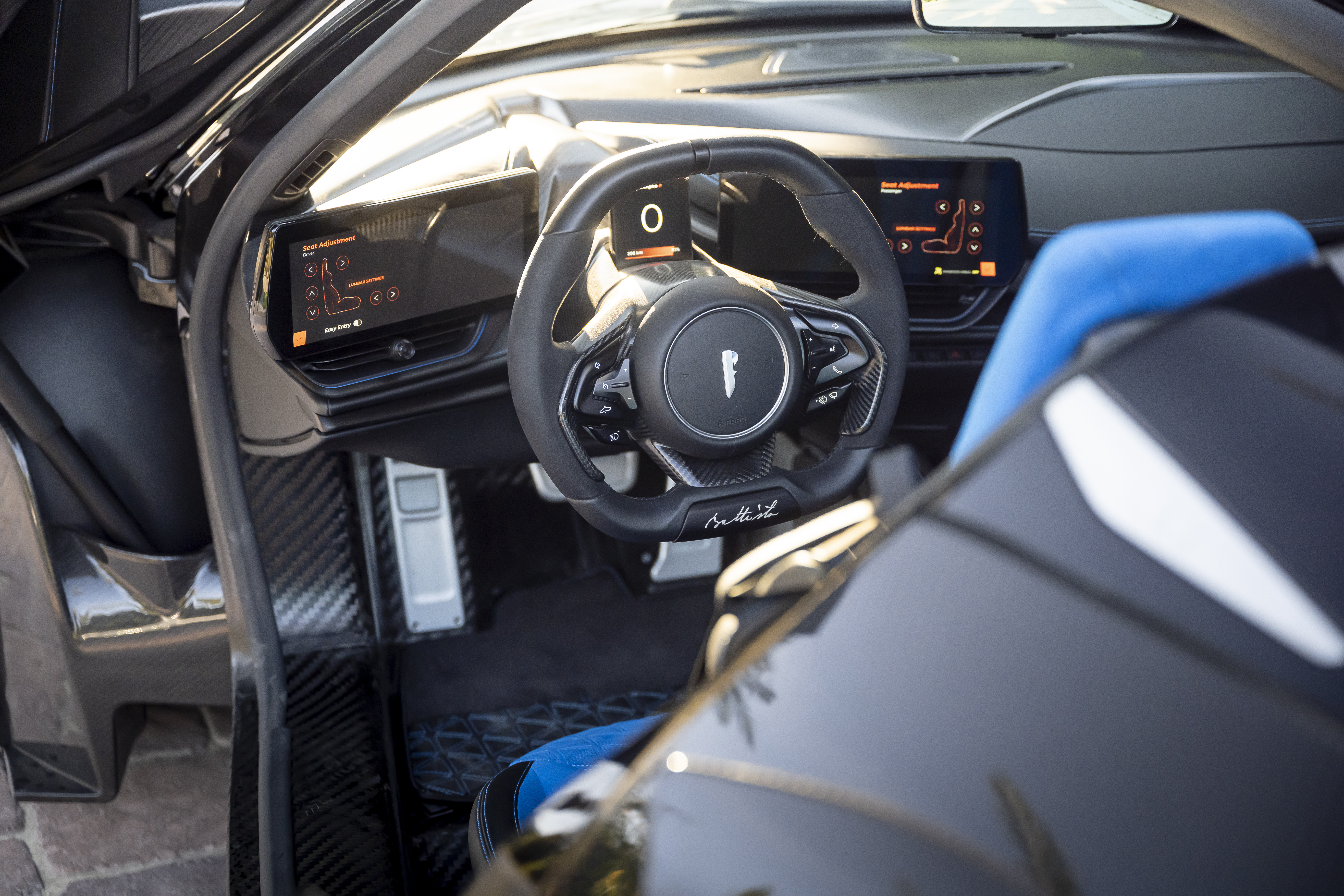
A beautiful rotary dial provides control of the driving experience. It is placed strategically next to the driver to easily allow for quick changes between driving modes settings namely: Pura, Energica, Calma, Crattere, and Furiosa. Each of them gives a unique character to the Battista’s drive, adapting perfectly to a variety of driving conditions.

“The handling on open roads – even on unpredictable surfaces – proved Battista to be beautifully balanced. Just how a hyper GT should feel. Battista’s performance on track had already surprised and impressed me after I experienced it in Nardo earlier this year, so my expectations on this occasion were set high. This test however confirmed that the team has achieved its target of creating a new type of hyper GT which is rewarding on all surfaces. The ride quality and damping both feel excellent, and the steering feels natural and the perfect fit for what we want to achieve in Battista. I am very sensitive to steering feel as a racing driver, and the sweet spot here is for it to feel light yet connected, and direct yet smooth,” Heidfeld shared.

The Battista went though thousands of miles of software simulation for calibration before it was even introduced to development. The driving modes enable the driver to fine-tune the driving experience and to unleash the full potential of the advanced torque vectoring system as well as the hyper GT characteristics of the Battista.

“Our cooperation with Nick Heidfeld started in 2019, when he participated in the first physical ergonomic test of the Battista interior model; evaluating the driving position and the proposed HMI system. This was followed by him ‘virtually’ testing Battista in an advanced driving simulator where we started to tune the hyper GT’s bespoke chassis dynamics set-up. Nick has been a brilliant partner throughout the whole development program, not only for his driving skills and unique experience in both Formula 1 and Formula E, but also for his ability to evaluate and improve the program in its various stages of development by delivering the anticipated view of our customers,” shared Automobili Pininfarina Chief Product and Engineering Officer Paolo Dellacha.

“This input was essential as we aimed to combine the extreme performance of a hypercar with a much wider spectra of usability in Battista, where outstanding power and torque are always accessible, safe and enjoyable on roads every day. Battista now has incredibly refined body and axle balance, perfect integration of e-powertrain and chassis domain controls, and optimum specific calibrations of its five Drive Modes. Coupled with its highly-connected User Interface and unique Sound Experience, Battista is now redefining the essence of Granturismo.”

BATTISTA TECHNICAL SPECIFICATIONS

PERFORMANCE
• Range: up to 500 km
• Acceleration 0-100 km/h: Under 2.0 seconds
• Acceleration 0-300 km/h: Under 12.0 seconds
• Power output: 1,900 hp
• torque: 2,360 Nm
• Top speed: 350 km/h
• Drive: All-wheel drive with full torque vectoring
• Driving modes:
o Calma
o Pura
o Energica
o Furiosa
o Carattere (The option drivers may select to modify Battista performance and dynamics to their own preference)
BRAKES
• Brembo CCMR carbon-ceramic 390 mm discs with six-piston calipers front and rear
WHEELS
• Standard: 20-inch forged aluminium front and rear ‘Prezioso’ wheels, or:
• Optional: 20-inch front and 21-inch rear forged aluminium ‘Impulso’ wheels
TIRES
• Michelin Pilot Sport Cup 2R
BODY
• Full-carbon fiber monocoque with carbon fiber body panels Aluminium crash structure front and rear
BATTERY PACK
• Layout: T-shaped liquid-cooled lithium-ion
• Supplier: Rimac Automobili
• Battery energy: 120 kWh
CHARGING
• DC fast charging capability at up to 250 kW

Aston Martin V12 Vantage shows off sound, will return in 2022

According to Aristotle’s fourth-century History of Animals, swans “are musical, and sing chiefly at the approach of death.” Scientists still debate the accuracy of this statement, but we don’t think anybody is going to argue with the melodic tones of the swan song that is Aston Martin’s V12 Vantage. Listen for yourself in the video up above.

We’ve been expecting this. We saw spy shots in August of a hardcore Vantage mule out testing on the Nürburgring that was fitted with all manner of enhancements that led us to believe a twin-turbo 5.2-liter V12 may be under its vented hood. Later, the rumormill was aflutter with reports that the British marque was planning to bestow its smallest car with big power courtesy of a V12 tuned to deliver a reported 670 horsepower. That’s 20 ponies fewer than the Speedster’s twelve-cylinder, which spins out 690 horsepower and 555 pound-feet of torque.

We don’t know much more than that, for now. Aston Martin’s teaser says the V12 Vantage returns in 2022, we’d guess as a 2023 model, and that it will be labeled a Final Edition. We’re certain the number produced will be limited, so if this is the beautiful swan song you’ve been waiting for, now would be a good time to get your finances in order.

Related video:

Why the Gemballa Marsien Is Billed as the Ultimate Adventure Sportscar

Marc Phillip Gemballa, son of the late Uwe Gemballa, has channelled his father’s spirit into a sports car unlike anything else on the road today. He is only 27, but his company, a tuning house called Marc Phillip Gemballa GMBH, has already given us its first creation. It is called the Gemballa Marsien, a performance machine that blends everyday utility and off-road capabilities into one package.

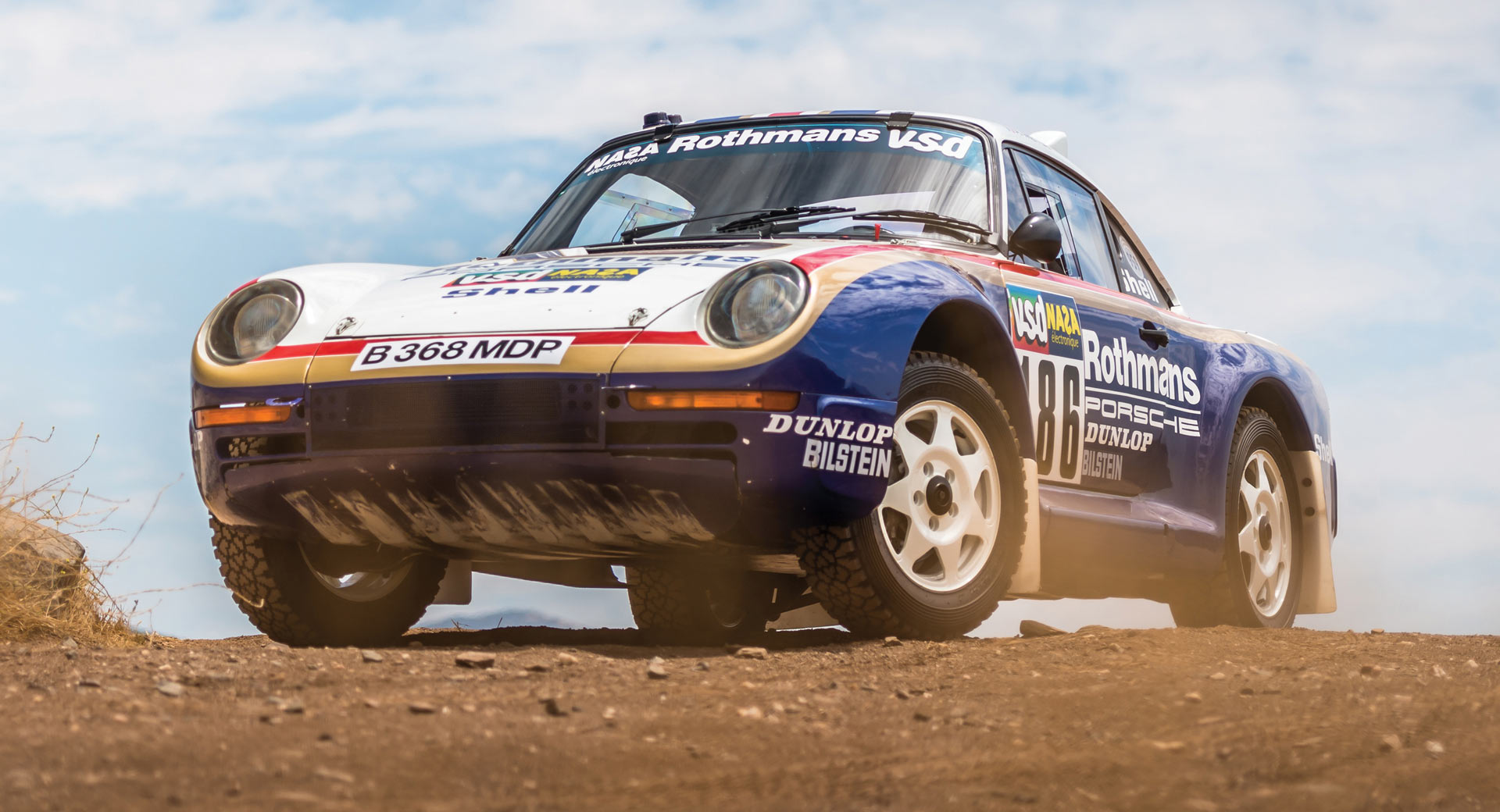
1985 Porsche 959 Paris-Dakar Rally CarVia Carscoops.

The Marsien draws its inspiration from the 1980s Porsche 959 rally monsters, arguably some of the greatest race cars to have ever competed at the famous Paris-Dakar rallies. What Marc has done is to take a 992 Generation Porsche 911 Turbo S and infuse it with serious off-roading DNA, resulting in what might be described as an all-terrain supercar.

Powertrain and Transmission

At the heart of the Gemballa Marsien is the same twin-turbo flax-six that powers the 911 Turbo S. In this case, though, the powerplant has been tuned by German powerhouse RUF to produce 750-hp—about 100-hp more than the 911 Turbo S.

There is a second stage upgrade that further bumps this output to 830 horses with enhanced turbochargers, a revised ECU mapping and transmission setting.​ Akrapovic was contracted to develop a custom-made titanium exhaust system that not only delivers a unique note but also helps boost the engine power output.

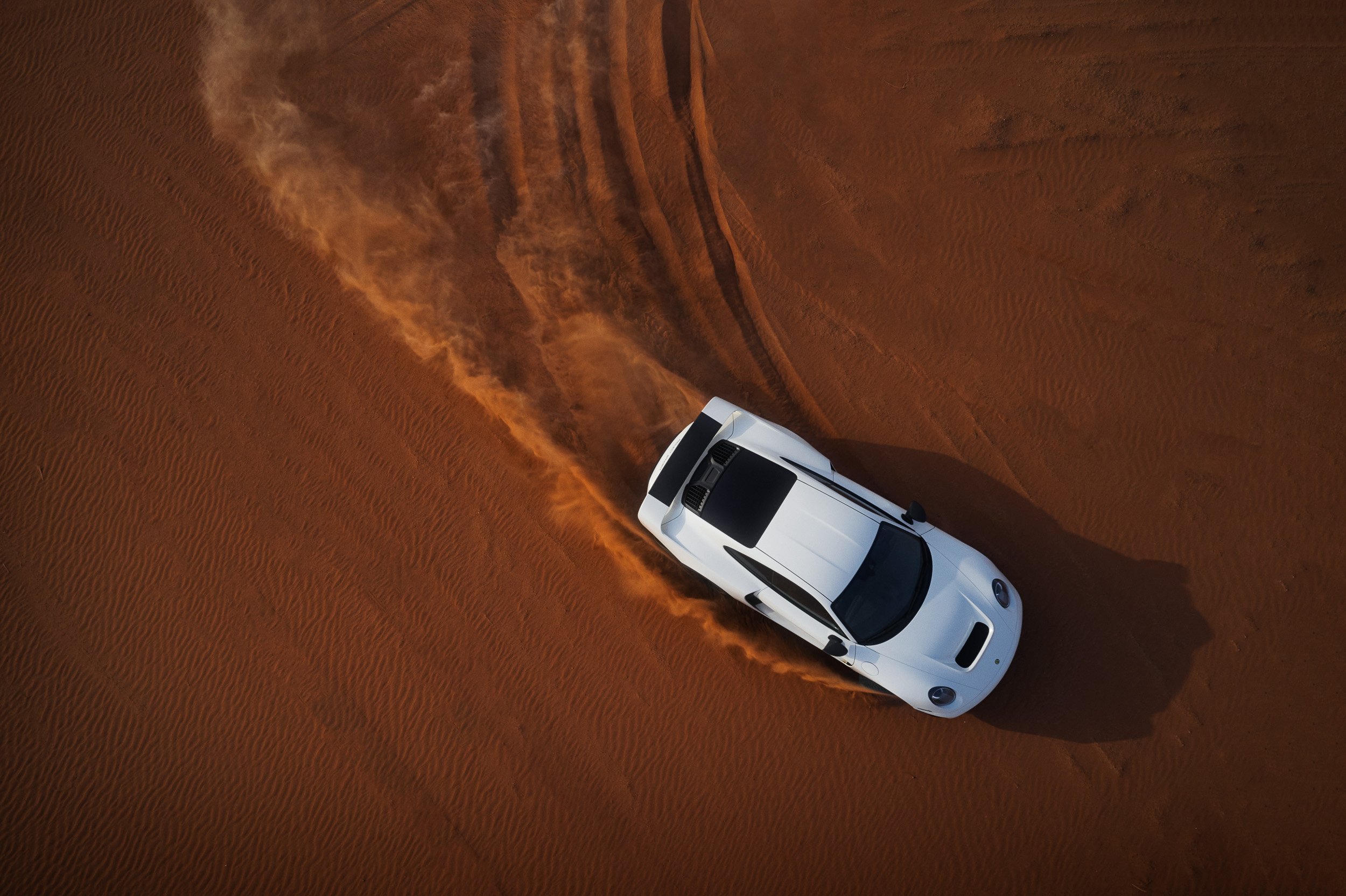
Gemballa Marsien kicking up a dust trailVia Marc Philipp Gembala.

This power is fed to all four wheels via an 8-speed PDK transmission. When equipped with road tires, Marc claims his car can sprint to 62 mph (100 kph) in a scant 2.6 seconds and continue on to a 208 mph top speed. In off-road mode, the Gemballa Marsien is restricted to a still-impressive 130 mph maximum speed.

Chassis and Suspension

The Gemballa Marsien sports a bespoke suspension system that was developed in partnership with KW Automotive, a leader in aftermarket suspension system technology. It features significant changes from the stock 911 Turbo S chassis, including a brand new double-wishbone front suspension. The setup also incorporates an intelligent active damper control and adjustable ride height system, perfect for the Marsien’s dual nature.

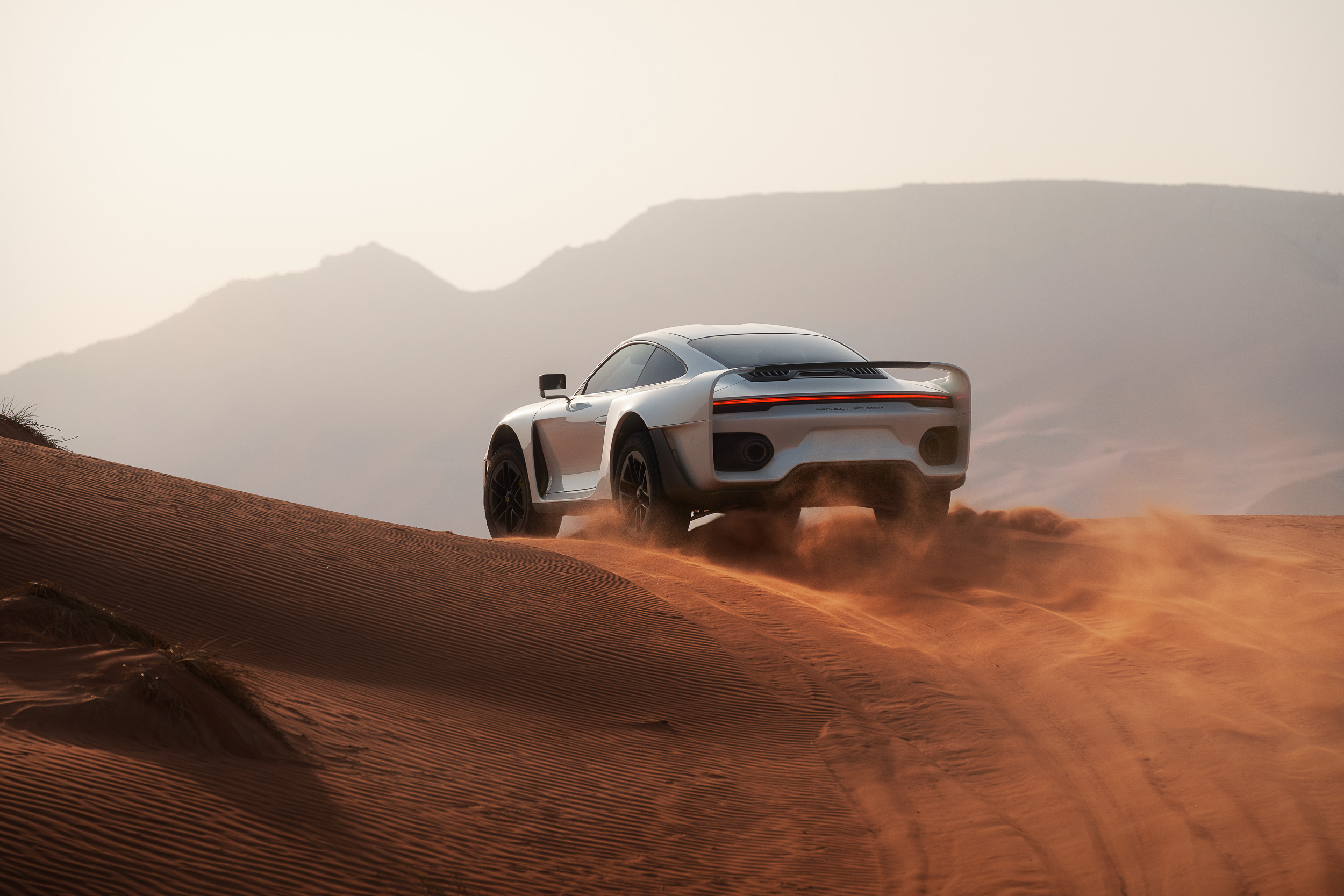
Gemballa Marsien showing impressive ground clearanceVia Marc Philipp Gembala

At the touch of a button, a hydraulic lift system can raise the Gemballa Marsien from 4.7 inches to 9.8 inches. The increased ground clearance ensures that the off-road supercar can venture off paved surfaces and tackle more challenging surfaces with relative ease.

In addition, the suspension was remapped and now supports Gravel, Mud, Snow and Sand driving modes. The Gemballa Marsien is offered with two sets of specially designed forged aluminum wheels. There is a set shod with Michelin Ultra High Performance (UHP) tires for road use and another with All-Terrain tires for when the Marsien is driven off-road.

Exterior and Interior Design

It might be based on the 911 Turbo S, but the Gemballa Marsien boasts an ultra-modern and timeless design that immediately sets it apart. First, all of the bodywork is made from lightweight F1-grade carbon fibre that can either be painted over or presented in its raw exposed form, depending on the customer’s request.

Apart from the Marsien’s overall beefy profile, other notable elements of the exterior design include massive wheel arches and prominent vents on the hood and along the sides of the car. You also have a huge spoiler and custom tail-lights, which contribute to the Marsien’s unique appearance.

Gemballa Marsien interiorVia Marc Philipp Gembala.

In Gemballa’s own words, the interior design ‘echoes the elegance of the exterior.’ An extensive suite of customization options is available, affording the client the opportunity to create a truly personalized feel for the cabin.

You can opt for a full leather or Alcantara interior, finished with materials of the highest quality. The raised middle console is inspired by the Carrera GT and offers easy access to various infotainment features and other vehicle control functions.

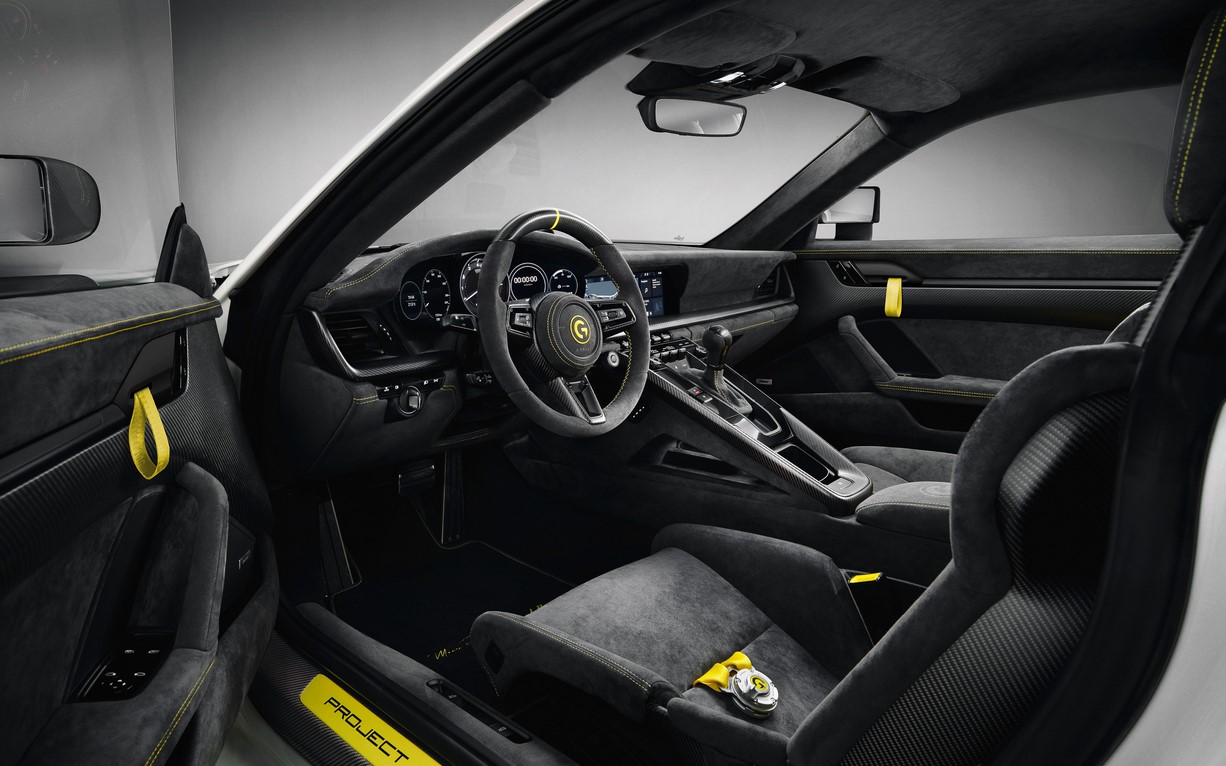
The bucket seats are specially designed with carbon fibre trim to reduce weight without compromising too much in the way of comfort. There are also other notable interior details, like the carbon fibre door sills with bright yellow entry guards and GT-style door lashes.

The Gemballa Marsien Is Only the Beginning

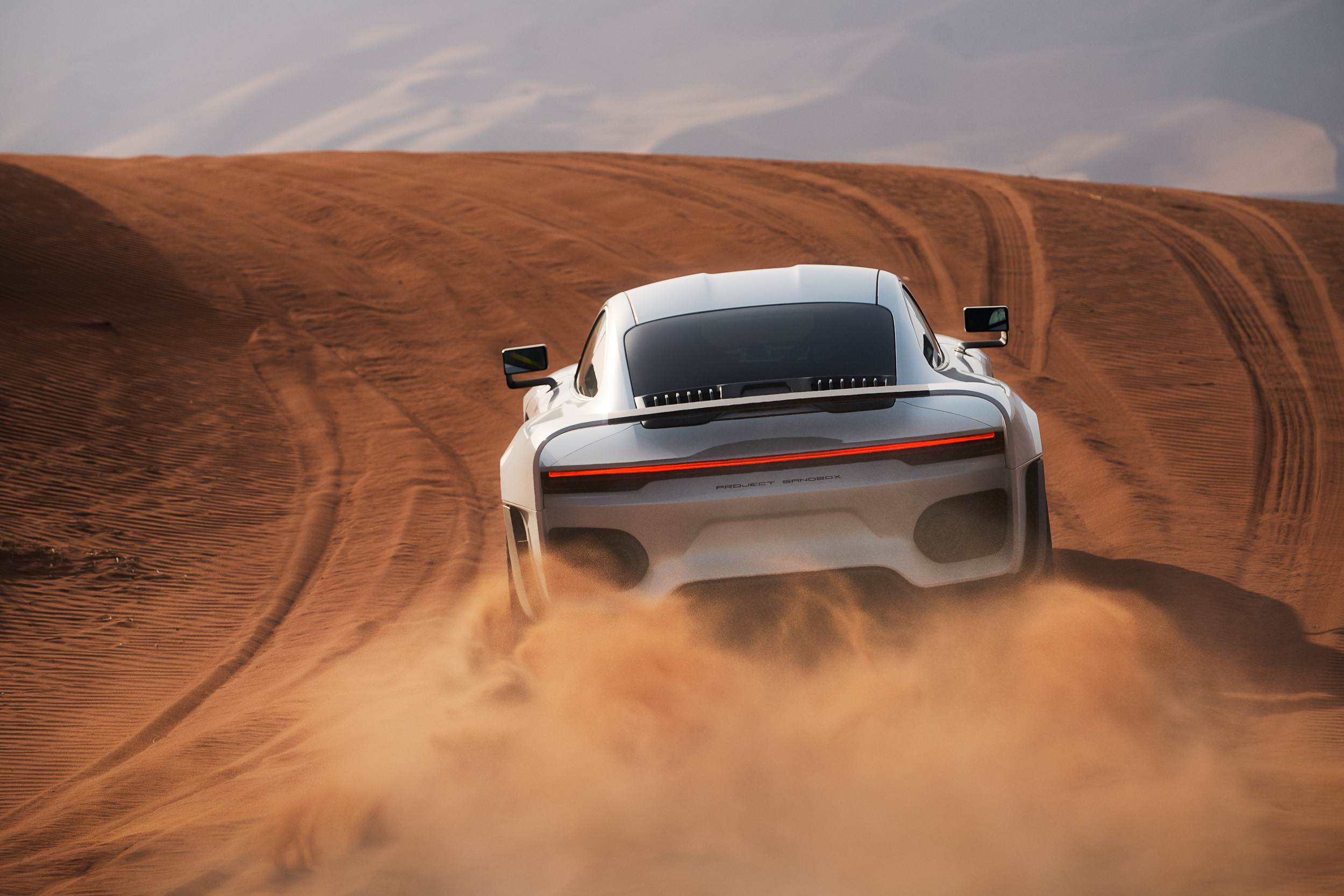
Gembala Marsien kicking up dust in desertVia Marc Philipp Gembala.

The marketing ad campaign shows the Gemballa Marsien strutting its stuff on the endless sand dunes of the Al Faya desert, located just outside Abu Dhabi in the United Arab Emirates. The location is a sensible choice for the company. It is not out of place to expect that a good chunk of Marc’s clients will come from the oil-rich region—bored billionaires seeking the ultimate thrill in the form of a dune-bashing desert toy just like this one.

Unsurprisingly, the Gemballa Marsien does not come cheap. Interested clients can expect to part with around $600,000 for the complete build, and that does not include the price of the donor Porsche 911 Turbo S sportscar. It is clearly not for everyone, something Marc knows only too well. The production run is limited to forty units, including ten special launch edition models, and more than half of them have already been sold according to the company.

It took two years of intense research and development to come up with the Gemballa Marsien, and Marc hopes this will mark the start of an epic journey for his young company. To be clear, Marc Gemballa is in no way associated with his late father’s company, Gemballa GmbH, which still exists. He is intent on carving his own path, starting with his vision of what an off-road capable supercar should look like. Marc Phillip Gemballa is confident that there is a market out there for specially designed vehicles like the Marsien, limited series cars with a fresh new design and cutting-edge technology.

These are early days yet, and the jury is still out on whether Marc’s company will stand the test of time. That will partly depend on whether the Gemballa Marsien can deliver on its promise as the ultimate adventure sportscar.

Renault Reveals their First Flying Car

Renault and TheArsenale have collaborated together to unveil the new AIR4, a reinterpretation of the 4L that can fly.

The original Renault 4 was built between 1961 and 1992, the model sold over 8 million units across more than 100 countries in a span of 30 years.

The Air4 has been built entirely from carbon fibre materials, its design is a modern reinterpretation of the original icon although re-engineered to accommodate the concept of thrust and lift.

The Air4 has been fitted with four two blade propellers one at each corner of the vehicle and the body has been fitted in the middle of the rota frame.

The Air4 is powered by 22,000mAh lithium-polymer batteries delivering a total power of 90,000mAh. The total power is sufficient for a horizontal top speed of 26m/s with a 45 degree inclination during flights up to a maximum inclination of 70 degrees.

The Air4 can fly as high as 700m with a take off speed of 14m/s although restricted to 4m/s with landing velocity of 3m/s for safety reasons. The propellers generate 95 kgs of vertical thrust each for a total of 380kg.

The Air4 will officially be unveiled to the public in the centre of Paris at the Atelier Renault on the Champs Elysees from next Monday until the end of the year alongside other historic versions of the Renault 4.

The Air4 will travel to Miami then New York before stopping in Macau.

Porsche Riding Giddy Heights With the Wildly Successful Taycan

In the first nine months of 2021, Porsche sold 28,640 Taycan units, about 13.2% of the carmaker’s total volume and a massive year-on-year increase of over 160%. More impressive is the fact that the EV outsold Porsche’s iconic 911 for the first time over the same period.

It is worth mentioning here that the Porsche Taycan is only in its 2nd full year of production, having been launched at the 2019 Frankfurt Motor Show. Sales likely would have been even higher, were it not for the effects of the ongoing COVID-19 pandemic and the global chip shortage ravaging the automobile sector. The sales volume paints a pretty upbeat picture when you remember that the Taycan’s prices range from $81,000 to $185,000, depending on the model variant.

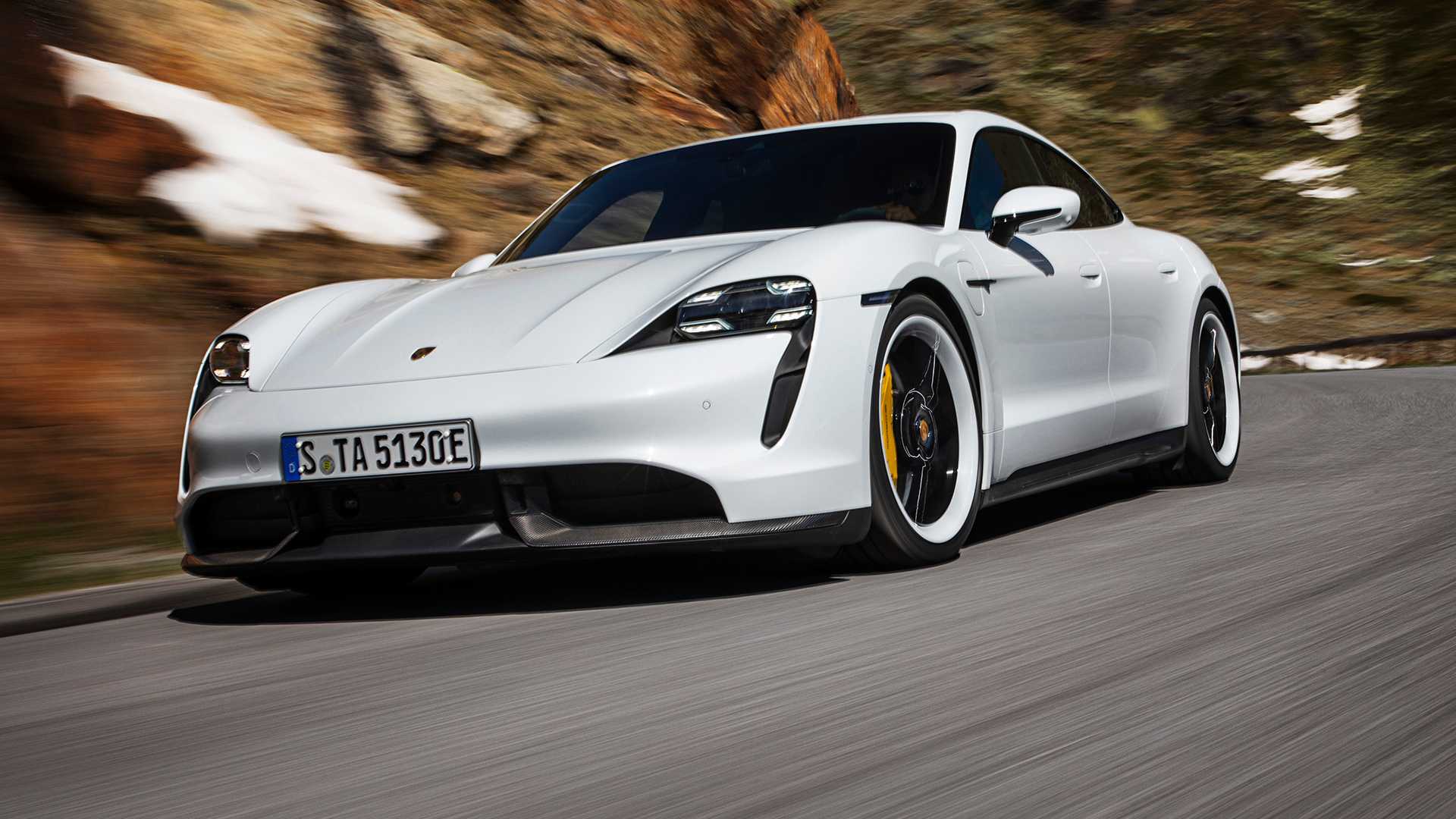
2020 Porsche TaycanVia Motor1.

Today, the Taycan ranks only behind the Cayenne and Macan (both SUVs) in global sales. Clearly, Porsche has hit a home run with its sole EV offering.

The Taycan’s remarkable achievement, in such a short period, perfectly sets the stage for Porsche’s electrification drive as the carmaker looks to expand its EV offering to other vehicle types in its lineup.

The Porsche Taycan: Sowing the Seeds

It is possible Porsche might not have anticipated the runaway success of what is currently the only all-electric vehicle in its lineup. However, that does not mean the carmaker did not put in the work needed to ensure the Taycan had a smooth introduction into the market. The launch of the Taycan was the result of several years of research and development rather than a quickfire ‘bandwagon’ approach.

Interestingly, you would have to go back to the roots of the carmaker’s history to establish Porsche’s connection with electrification. Ferdinand Porsche, the company’s founder, was always fascinated by electricity.

In 1893, Porsche was able to successfully install an electric system at his parent’s house. Four years later, he was Head of Testing at an electrical engineering firm called Vereinigte Elektrizitäts-AG Béla Egger in Austria, and the first vehicles he designed had electric drives.

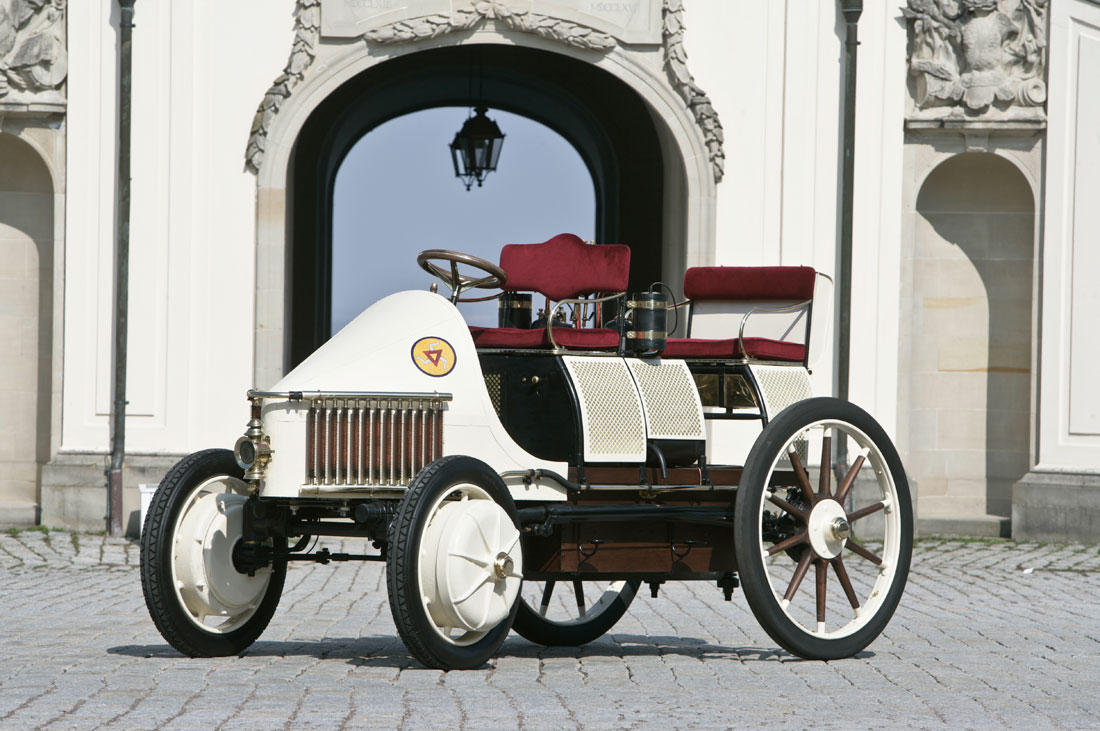
In 1900, Porsche was responsible for the world’s first functional hybrid car, dubbed the ‘Semper Vivus,’ Latin for ‘always alive.’ a year later, the production version of the vehicle, known as the Lohner-Porsche Mixte, was ready.

Lohner Porsche Semper VivusVia Cartype.

The Mixte was far ahead of the technology at the time, which ultimately proved to be its undoing. The available infrastructure just was not ready for any form of large-scale electromobility research and development.

The dream, though, never really died. The idea of electrification was finally revived at Porsche AG, about a century later, buoyed by advancements in the development of lithium-ion batteries.

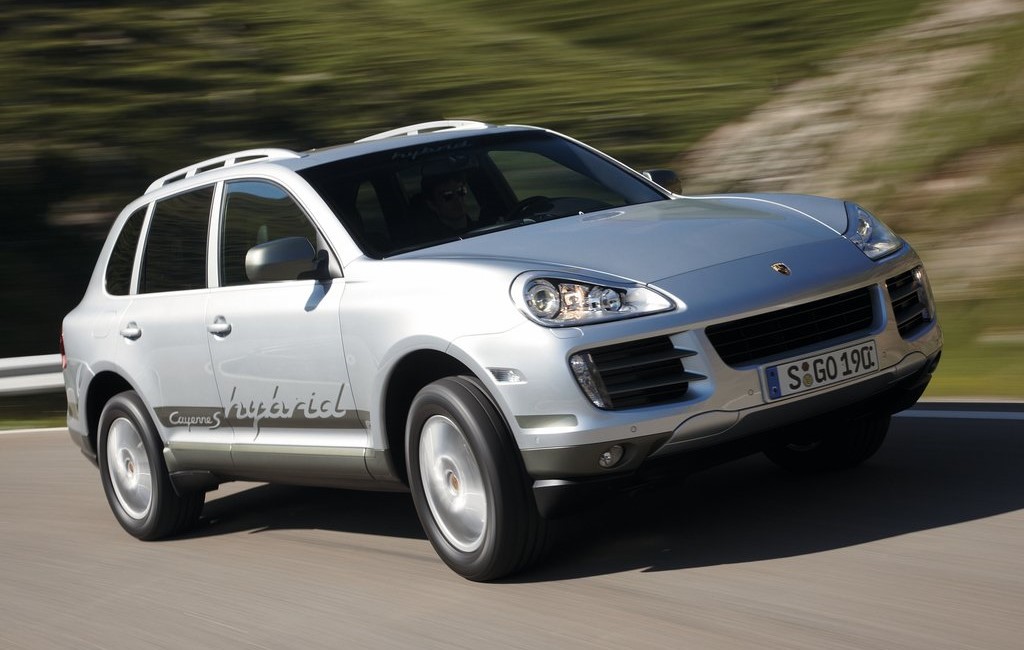
2010 Porsche Cayenne S HybridVia netcarshow.

First, there was the 2010 Porsche Cayenne S Hybrid, followed by the 2012 Panamera S Hybrid. Porsche also conducted tests with three all-electric Porsche 911s in 2011.

Other cars, like the 918 Spyder and 911 GT3 R Hybrid race car followed, with each breakthrough allowing Porsche to gain valuable experience to develop its first all-electric vehicle. There were no cutting corners with the Taycan. By the time the production spec was ready, Porsche had invested about $1 billion with over 1,000 employees involved during the development process at one point or the other.

From Mission E to the Porsche Taycan

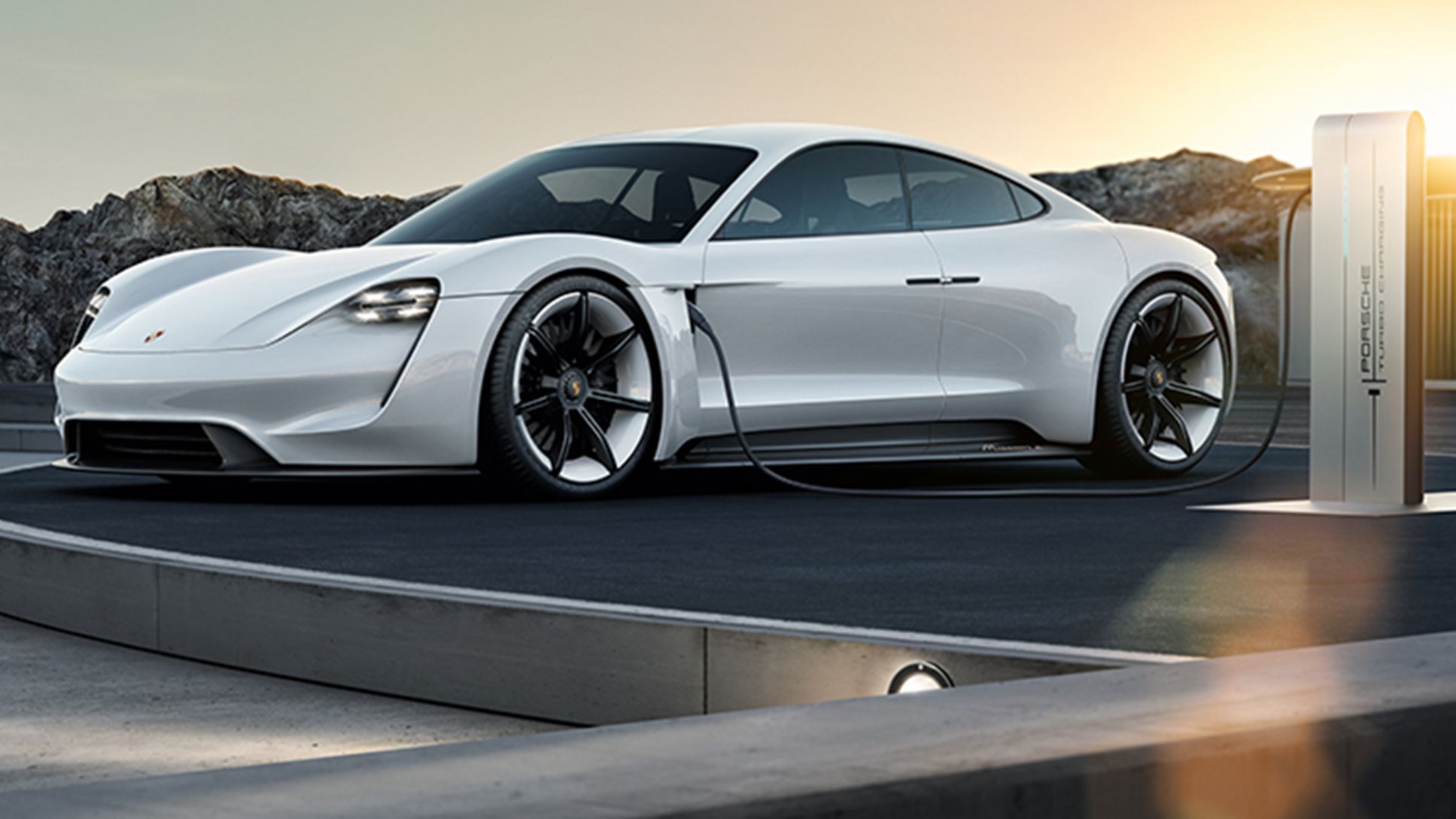
Porsche Mission E ConceptVia Porsche Newsroom.

One of the highlights at the 2015 Frankfurt International Auto Show was the Mission E, a concept car showcased by Porsche. The EV concept had an 800-volt drive system, boasted more than 600-hp and a battery range in excess of 300 miles.

The Mission E was very fast too, with the ability to rocket from 0 to 60 mph in as little as 3.5 seconds. The interior featured innovative technology with instruments controlled via eye-tracking and hand gestures. Porsche, with the board’s full support, were clear about their intentions to bring the car into production before the end of the decade.

By June 2018, the name of the planned production all-electric sports car was revealed as the Taycan. Picking the name was an elaborate process that involved whittling down a selection of over six hundred ideas.

Taycan is a blend of two Turkish terms that roughly translates to ‘soul of a spirited young horse.’ Interest continued to build up in the launch of the Porsche Taycan, and reservations hit 30,000 deposits by July 2019, forcing Porsche to revise initial production estimates of 20,000 units in the first production year.

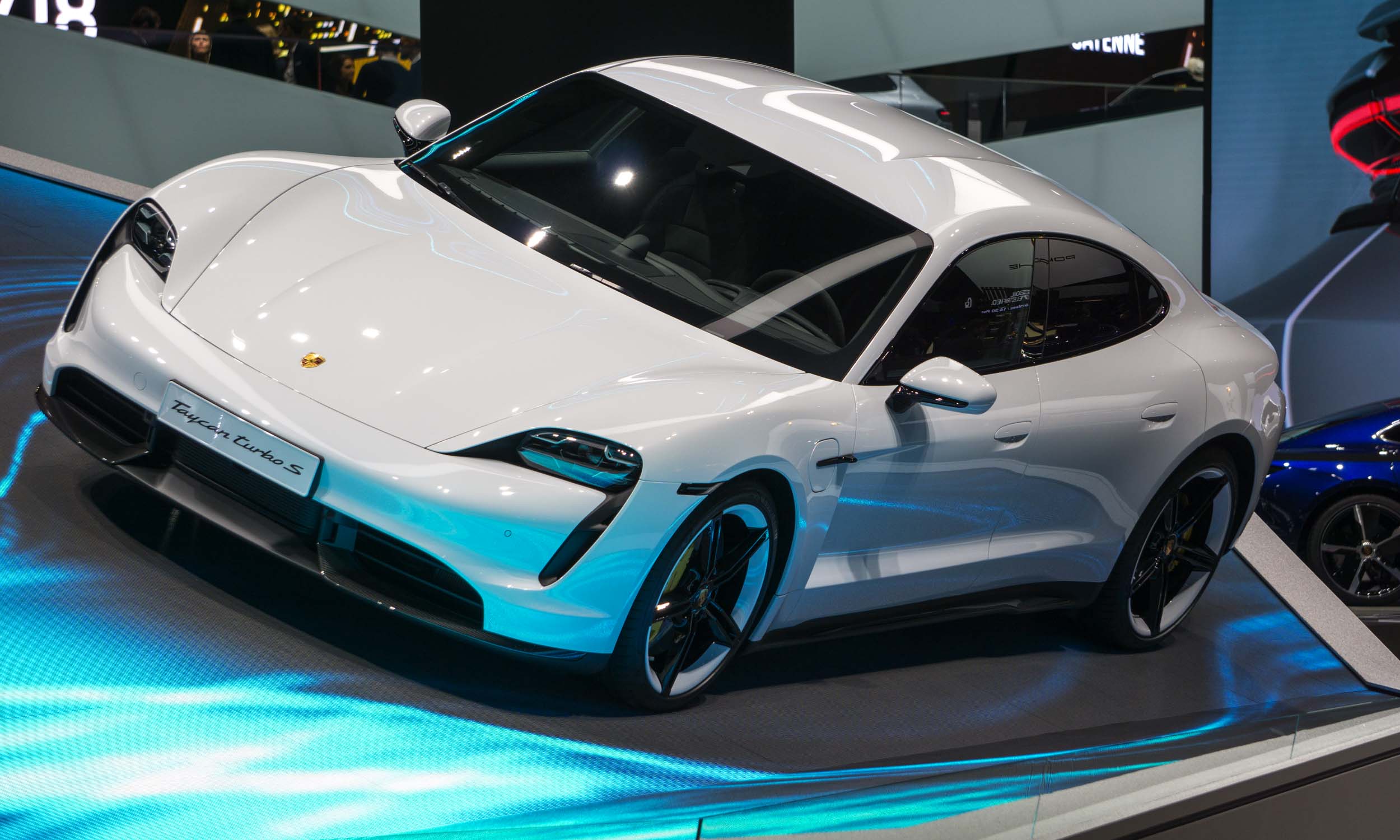
Porsche Taycan Turbo S at the 2019 Frankfurt Auto ShowVia Our Auto Expert.

Finally, in September 2019, after four years of hard, relentless work, the German carmaker debuted the production version of the Taycan. It was the first production all-electric vehicle to utilize a two-speed transmission and an 800-volt architecture for quicker acceleration and faster charging times.

Porsche tried as much as possible to stick to the design language of the Mission E, but there were differences—like the wider intakes and a deployable rear wing on the Taycan. The Taycan also ditched the suicide doors of the concept and adopted a flatter roofline to create more headspace for rear passengers.

Model Variants: Milking the Porsche Taycan

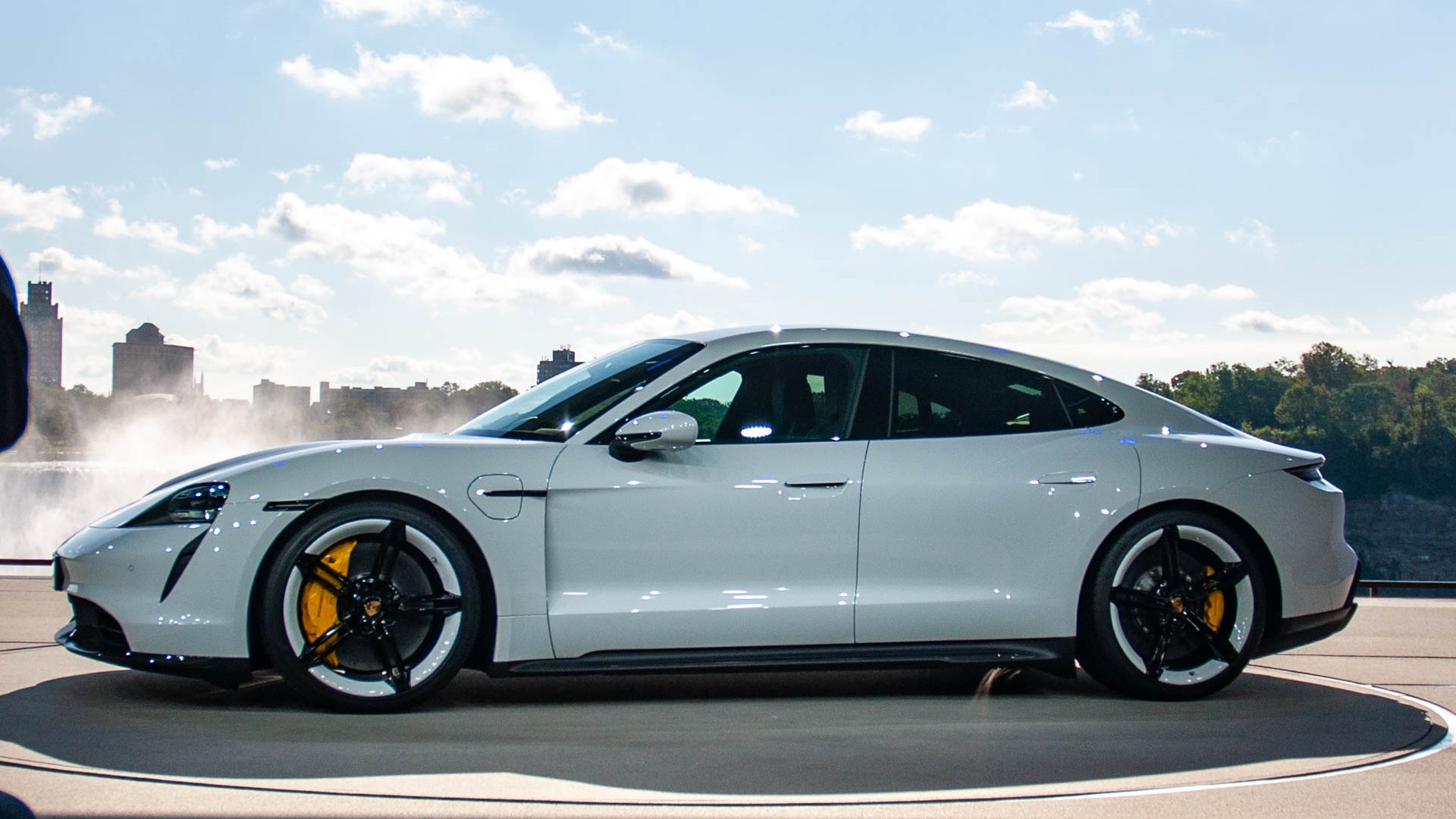
2020 Porsche Taycan TurboVia Motor Authority.

Porsche took advantage of the strong interest surrounding the Taycan and made the car available in two variants at launch. There was the Taycan Turbo and the more potent Taycan Turbo S version.

Both variants generate a restricted 616-hp to protect the drivetrain from overheating. Still, there’s an ‘overboost’ function that can briefly push this number out to 670-hp for the Turbo and a thumping 750-hp for the Turbo S.

The Taycan Turbo S, making full use of its instant torque and all-wheel-drive, could fly to 60 mph in a scant 2.4 seconds, matching the time set by the Tesla Model S in Cheetah mode. The Turbo version wasn’t far behind, with a 0 to 60 mph sprint clocked at 3 seconds flat.

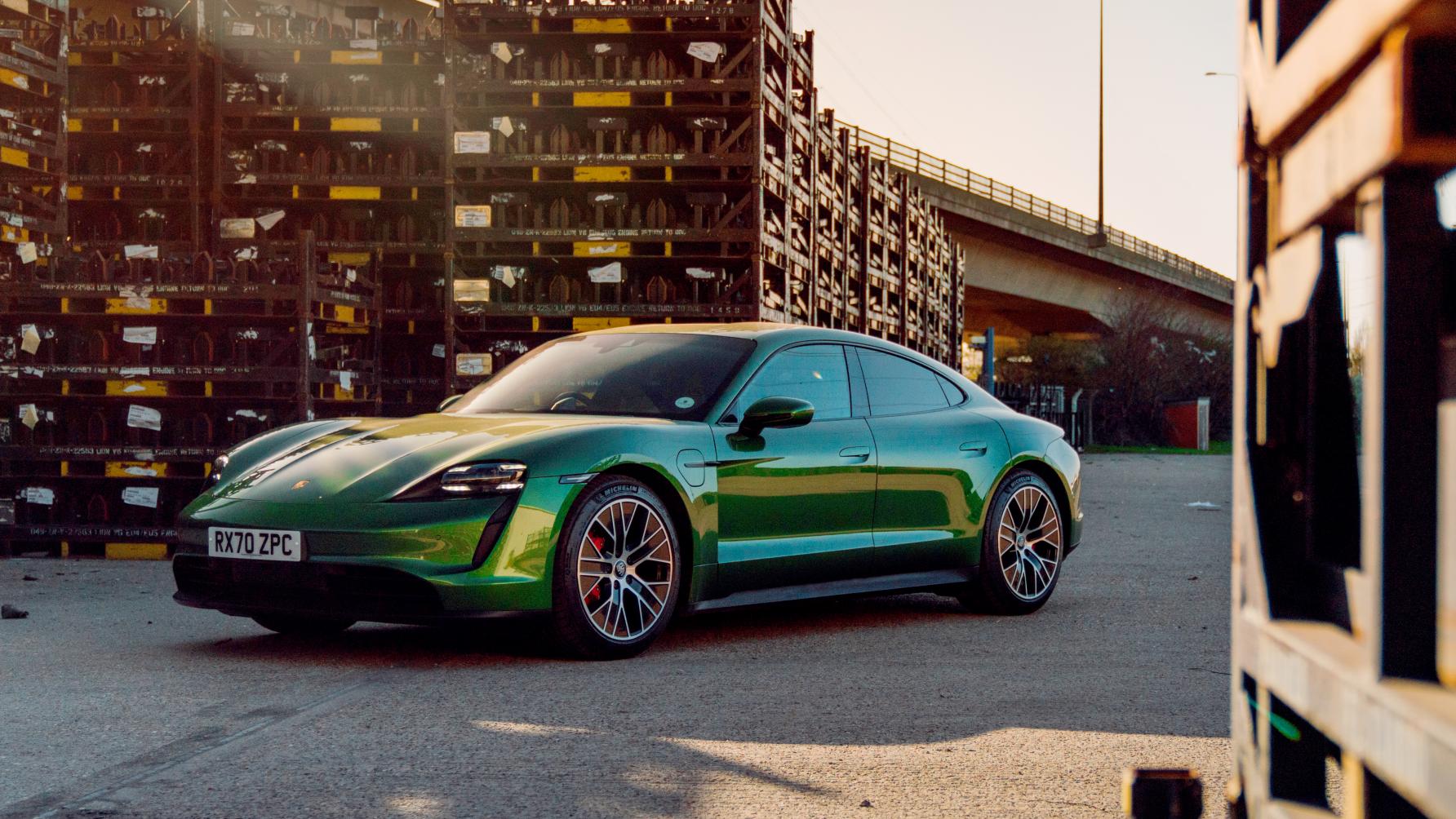
Green Porsche Taycan 4SVia Top Gear.

The launch models were quickly followed by the Taycan 4S, offered with a choice of two battery packs for different performance levels. The lower capacity 71 KwH battery pack was good for 522-hp, and the 83.7 KwH pushed up to 562-hp to all four wheels. They were not as quick as the Taycan Turbo models, but they cost less and allowed Porsche to capture more of the market.

In 2021, Porsche went further and introduced an even cheaper new base Taycan model that was rear-wheel-drive only. This one came with a standard 79.2-kWh battery and a rear permanent-magnet synchronous electric motor that made 402-hp. It cost over $20,000 less than the Taycan 4S and helped keep up the sales momentum for the Taycan brand.

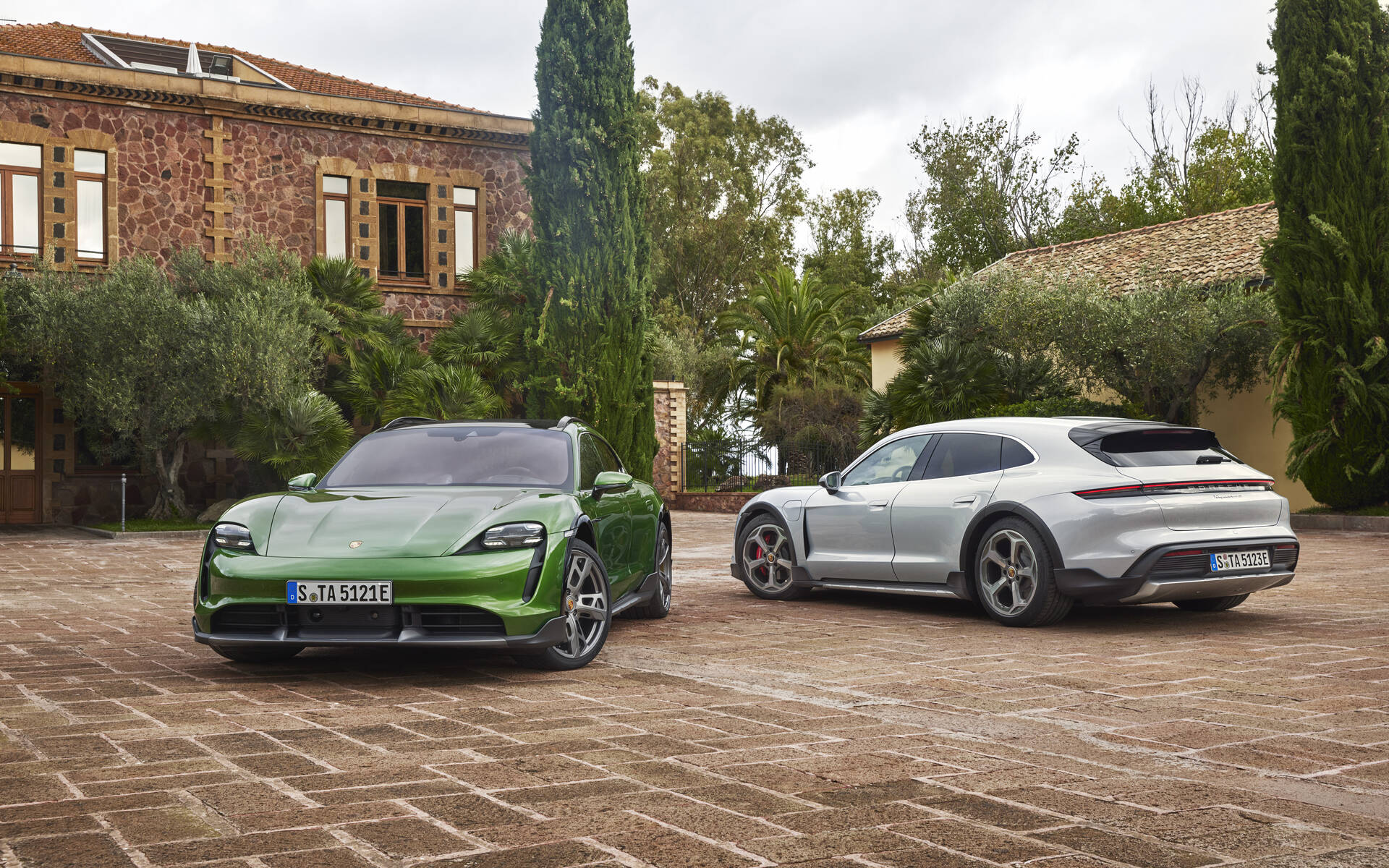
Two Porsche Taycan Cross Turismo carsVia Guide Auto Web.

Today, a quick visit to the Porsche website will show that you can now purchase the Taycan in eight different model variants. In addition to the ones earlier mentioned, there is now a Taycan Cross Turismo that can be obtained in four different variants—the Taycan 4 Cross Turismo, Taycan 4S Cross Turismo, Taycan Turbo Cross Turismo and the Taycan Turbo S Cross Turismo.

Apart from introducing new models, Porsche has also continued to tweak the architecture of the existing lineup, making the Taycan an even more capable performance EV. For example, the 2022 models feature better thermal management setups, an improved operating system, and can now be parked remotely using a smartphone.

The Journey Ahead for the Porsche Taycan

Porsche’s 2021 performance for the first three quarters shows a 13% increase year on year. SUVs like the Macan drive this growth, but the Taycan has also played a significant role with a nearly three-fold increase in deliveries, even though the Taycan generally costs significantly more than rivals in the same segment.

For example, the Taycan Turbo S costs about $80,000 more than the Tesla Model S Performance. Porsche executives will be undoubtedly pleased by this as it tells them their customers are quite receptive to their EVs. It bodes well for the carmaker, especially as an all-electric Macan is expected to join the Taycan next year.

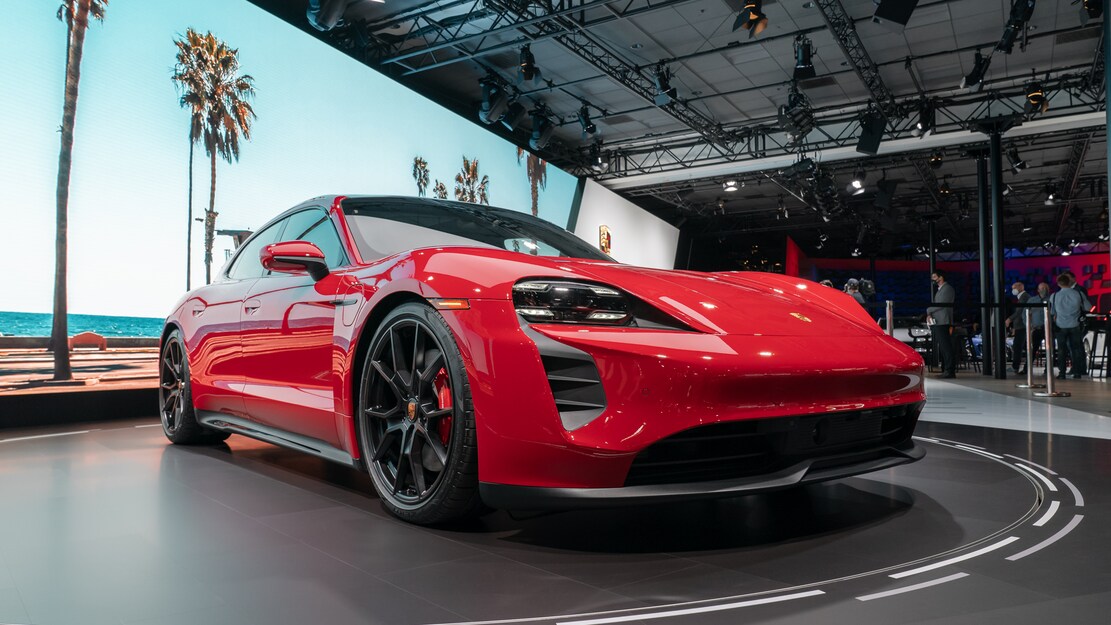
2022 Porsche Taycan GTSVia Motortrend.

The Taycan’s success is still on an upward trajectory, judging by recent happenings. There might be eight Taycan models currently available in the market, but Porsche is not done yet, and who can blame them?

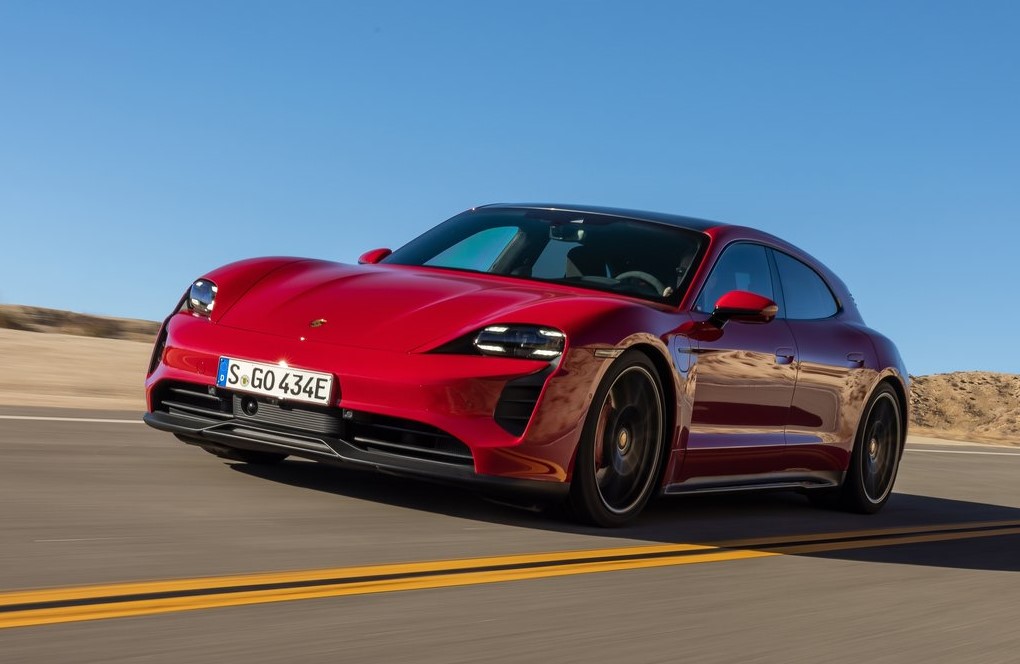
The carmaker just unveiled the 2022 Porsche Taycan GTS and the Taycan GTS Sport Turismo at the 2021 L.A. Auto Show. The Taycan GTS boasts a 504km (313 miles) driving range, the first Taycan model to crack the 500km barrier. The new additions will roll out to dealers in the Spring of 2022.

2022 Porsche Taycan GTS Sport TurismoVia netcarshow.

Prior to the announcement of the new additions to the Taycan family, Porsche CEO Oliver Brume gave another indication of how well the Taycan was performing during a September 2021 interview with Reuters.

Brume confirmed there’s now a six-month waiting list for a new Taycan. That’s up from the usual four-month wait. He added that the planned 2021 production limit was 20,000 Taycans, but the carmaker sold that amount in the first half of the year alone.

The challenge now would be for Porsche to find a way to ramp up production in the face of the automobile sector’s current challenges. It is a ‘good’ problem to have, but resolving it will be vital for preventing the Taycan from becoming a victim of its own success.

That may yet turn out to be an extreme scenario, though, and I wouldn’t bet against the German carmaker finding a way to turn things around as far as production capacities are concerned. For now, they can continue to bask in the Taycan’s success.

Up close with the 2022 Range Rover

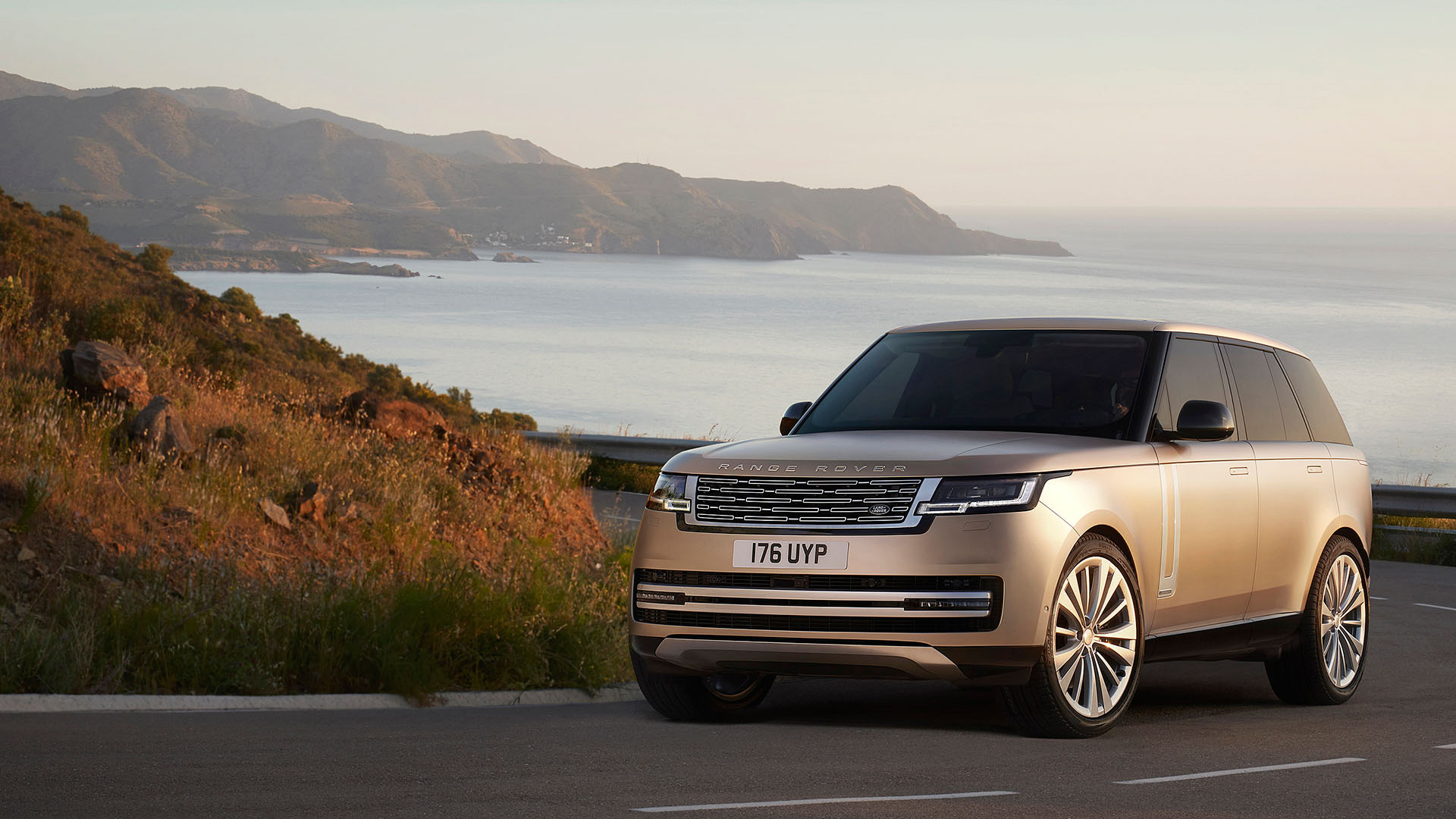
Remember we talked about the brand new 2022 model year Range Rover a while ago here on Supercars.net? Well, you can’t drive one yet as the first customer cars will only be available in the Spring of 2022, but there are pre-production prototypes around already, and it seems YouTuber Doug deMuro managed to find one to get close and personal to and talk about ‘all the quirks and features’ of it, unfortunately being a prototype he wasn’t allowed to drive it, but she’s a beauty, so let’s take a look at his 24-minute video before we talk details on this new full-size SUV from the famous Range Rover brand:

[embedded content] [embedded content]

Prof Gerry McGovern OBE, Chief Creative Officer, Jaguar Land Rover, said, “The New Range Rover is a vehicle with a peerless character, from the impeccable restraint of its exterior to the flawless tranquil sanctuary of its cabin. Informed by creative intellect and a desire for perfection, it doesn’t follow fashion or trend, but by a modernist design philosophy, combined with over 50 years of evolution, it is quite simply the most desirable Range Rover ever created.”

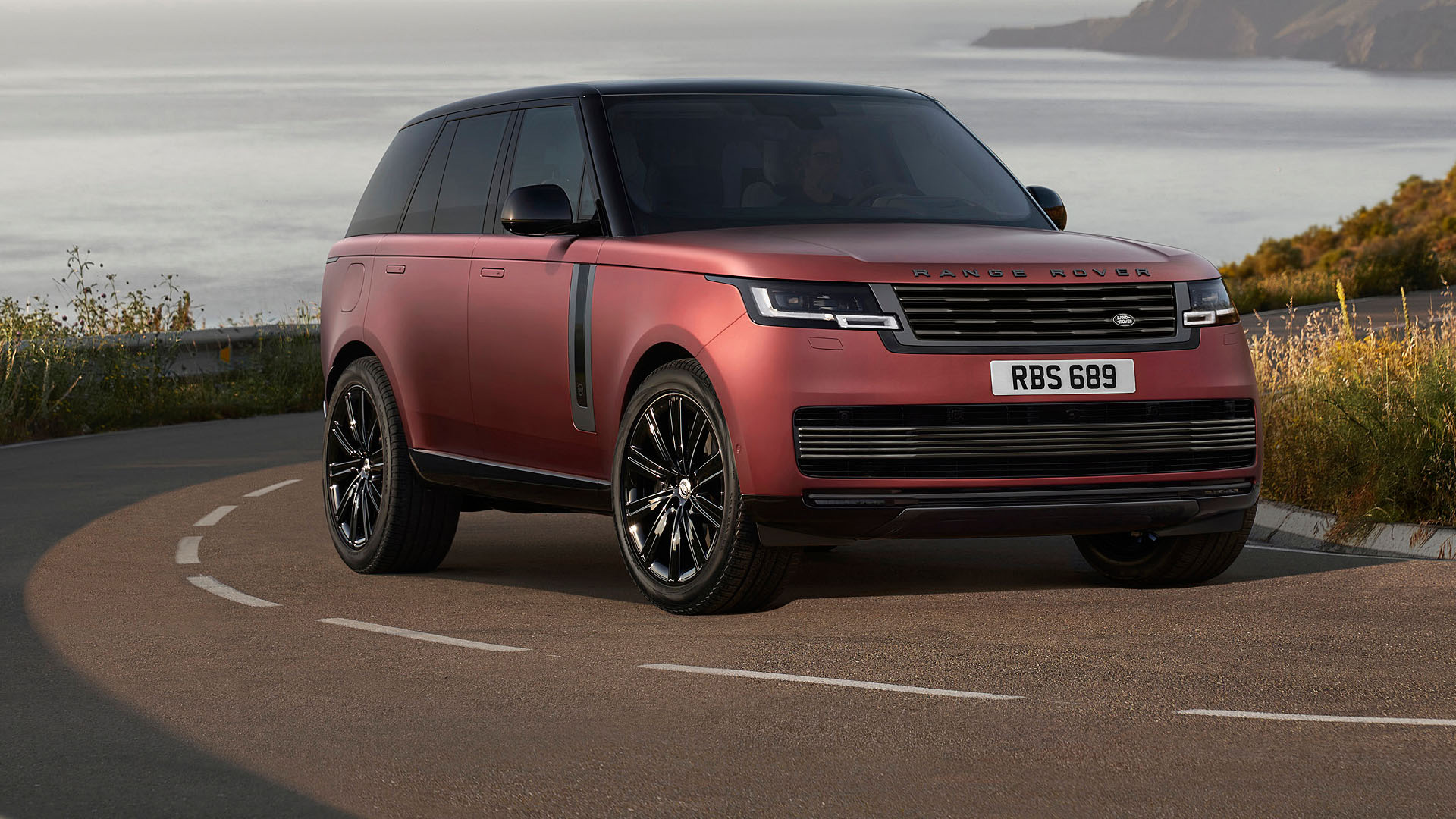
The MY2022 Range Rover is the first completely new model since 2014, and while it deliberately looks familiar, a lot is actually different compared to the outgoing model, base pricing starts at $105,000, but if you know anything about previous Range Rovers, you understand that’s just the start, and the massive options list and the possibility to create your bespoke model can skyrocket that price very quickly.

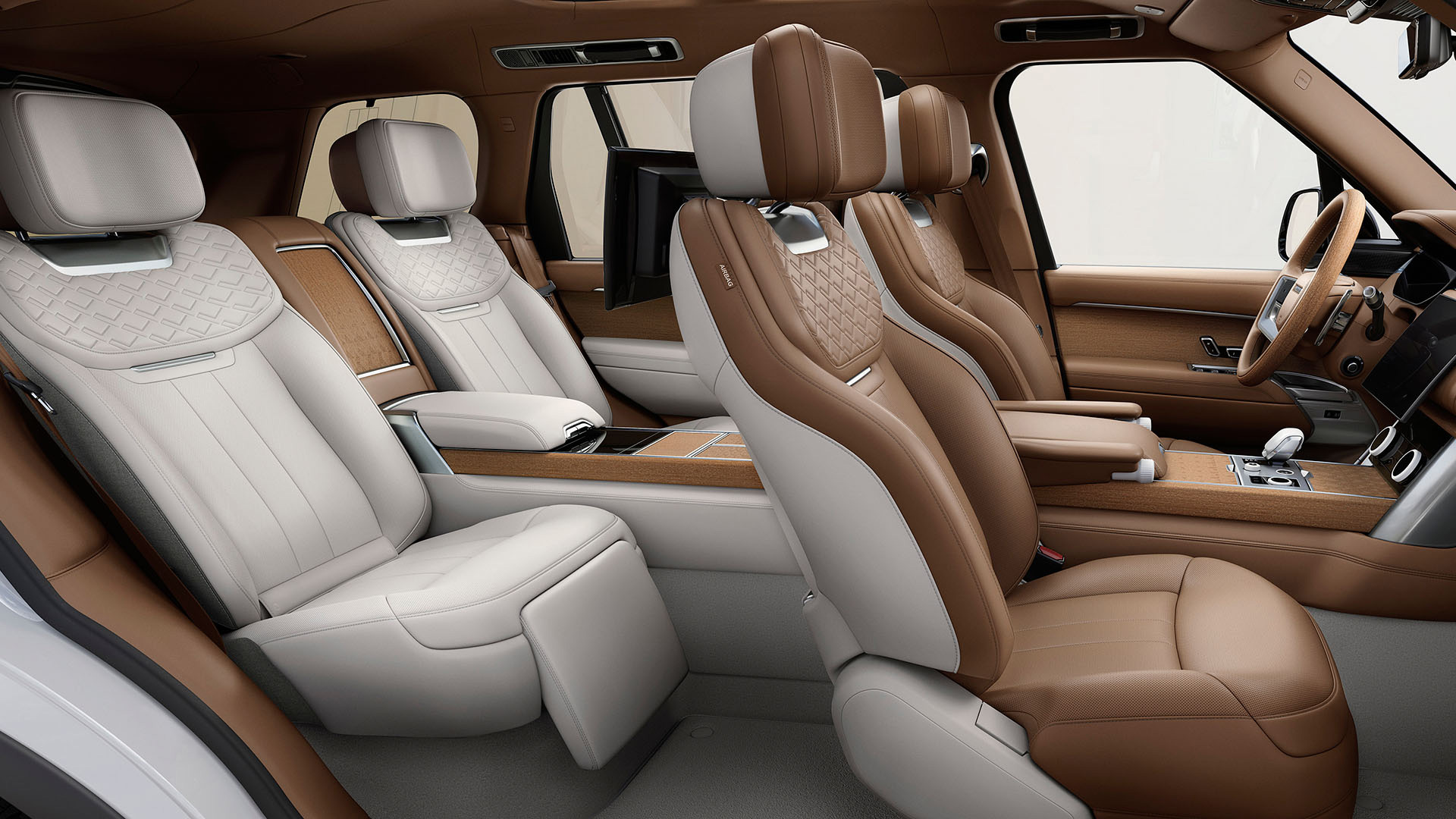
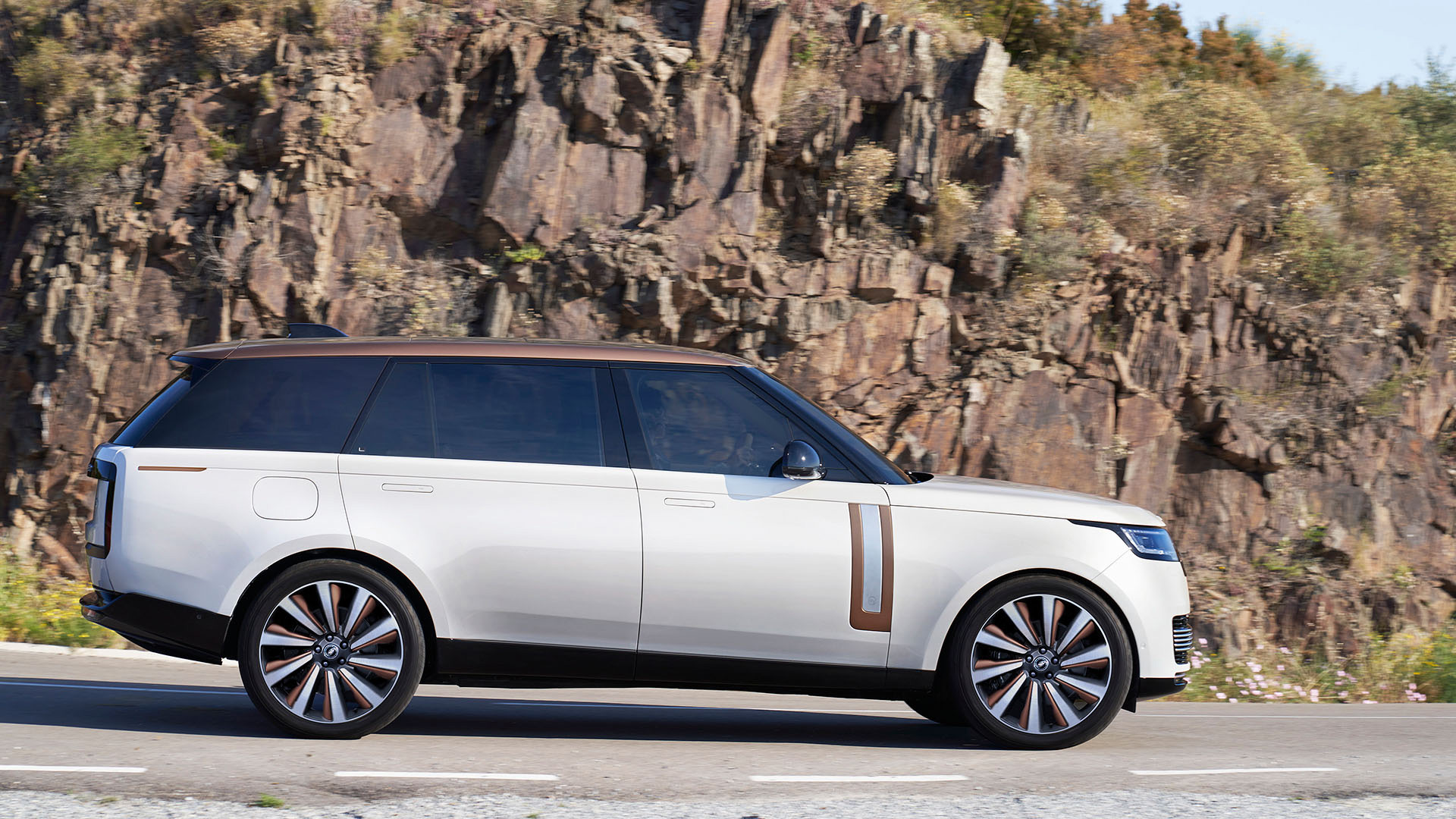
Wheels are a nice 21-inch as standard, but for the first time on a Range Rover you can opt for massive 23-inch tall wheels like the ones seen on the Autobiography LWB version of the above video, and another first for the MY22 Range Rover is the third row of seats, two additional units, only available on the Long Wheel Base model, but still, it’s possible now, but you can also opt to have your special Range Rover come with just four seats, and those rear ones are just absolutely stunning and immensely comfortable while that central console houses all kinds of amenities.

Nick Rogers, Executive Director, Product Engineering, Jaguar Land Rover, said, “The New Range Rover combines supreme on-road and all-terrain capability with electrified propulsion and new levels of connected capability. In the quest for comfort, we have been obsessed with human science and understanding brain activity to minimize cognitive impact and ensure these advanced technologies work in absolute harmony, creating a truly effortless driving experience. It’s an engineer’s duty to make people’s lives better, and that’s exactly what the New Range Rover will do for you.”

For the 2023 model year a PHEV will join the two petrol engines we’ll see in 2022, the extended-range plug-in hybrid (PHEV) will come with the inline 6-cylinder Ingenium engine coupled to a 105kW electric motor integrated with the transmission, power for this motor will come from a 38.2kWh lithium-ion battery, this setup will allow up to 62 miles of near-silent pure-electric driving, total power output will be 434 hp and this PHEV will be able to reach 87 mph on electric power only.

2022 BMW XM Specs and Pricing – Most Powerful SUV in the World

BMW M GmbH presented the new BMW Concept XM at the Art Basel 2021 Miami Beach Show in Munich. The new BMW Concept XM looks forward to being the most powerful BMW M car to go into series production and also shines the spotlight on stand out aspects of the M brand. Meet the latest Super SUV from BMW.

The new concept model will be built at BMW Group Plant Spartanburg in the USA from the end of 2022. It will be the first standalone vehicle from BMW M since BMW M1 and will be available in plug-in hybrid form only and exclusively as an M model.

BMW XM Specs and Pricing

Powertrain V8 Twin-Turbo Hybrid (V8 engine + electric motor)
Output HP 750 nm
Output Torque 1,000 nm
0-62 mph (0-100 km/h)
Top Speed 177mph est. (284km/h)
Price $150,000 est.

A new M Hybrid drive system installed in the XM combines a V8 engine and a high-performance electric motor to generate a maximum output of 750 hp and 1000 Nm of peak torque. The vehicle also features an all-electric range of up to 80km.

The front end of the new XM concept features a new progressive design for BMW’s luxury class model which will be seen for the first time in 2022 as part of the BMW model offensive in the luxury segment. The headlights have been split into two separate modules, the horizontal grille has been fitted between the headlights and tapers and the black kidney grille elements are enclosed within a surround that appears to be floating within a High-gloss Black surface.

The front end also features M-style double bars within the grille, unique contour lighting that ensures the kidneys and the daytime driving lights are recognizable in the dark as well and new XM logo on the kidney grille and on the large air intakes.

Additionally, the color of the roof contrasts with the black finish of the A-pillars, the windscreen has a heavier rake for injecting modern dynamism into the front end, Slim LED searchlights have been fitted on the roof above the A-pillars, the sculpted bonnet extend to the kidney grilles in the form of two domes and a pair of air intakes fitted in the bonnet mimics the appearance of the LED searchlights on the roof.

Furthermore, the clean-cut black surfaces of the front apron frame the statuesque body at its lower edge whereas the triangular blades on the outer edges accentuate the vertical air intakes while emphasizing on the sporty stance of the vehicle.

The new concept model has been finished in a two-tone paint finish, the upper section is in matt-gold bronze while the lower section is finished in Space Grey metallic. The two exterior colors have been separated by a high-gloss Black line known as ‘Black Belt’.

The rear exterior of the vehicle features L shaped rear lights extended into the car’s flanks, black cladding above the wheels and on the side skirts gives the body an elevated appearance and the elongated body has been mounted on 23 inch light-alloy wheels. The rear apron also features a dual-branch, twin-tailpipe exhaust system for reducing the backpressure of the engine and generating an M-typical soundtrack.

The interior design features powerful geometry and high quality materials on the instrument panel, door trim, centre console and on the seats. The cabin consists of brown vintage-look leather, copper and carbon fibre elements to create a bridge between luxury and motor sport.

The spacious and luxurious M Lounge features black tinted rear side windows for maximum privacy, large rear seat bench with deep seat recess and while the cockpit is dominated by brown leather, the rear is finished in a rich Petrol color shade. The lower section of the seats offer high comfort and an exclusive couch with luxurious velvet upholstery and diamond quilting.

The new BMW Curved display with M-specific user interface is based on the latest generation of BMW iDrive system. The user interface is showcased in three familiar M colors and provides the perfect stage for showing off the bespoke design of the vehicle.

Once more, the new BMW XM will be the first electrified high-performance model in the BMW M portfolio and will be available as an M hybrid only.

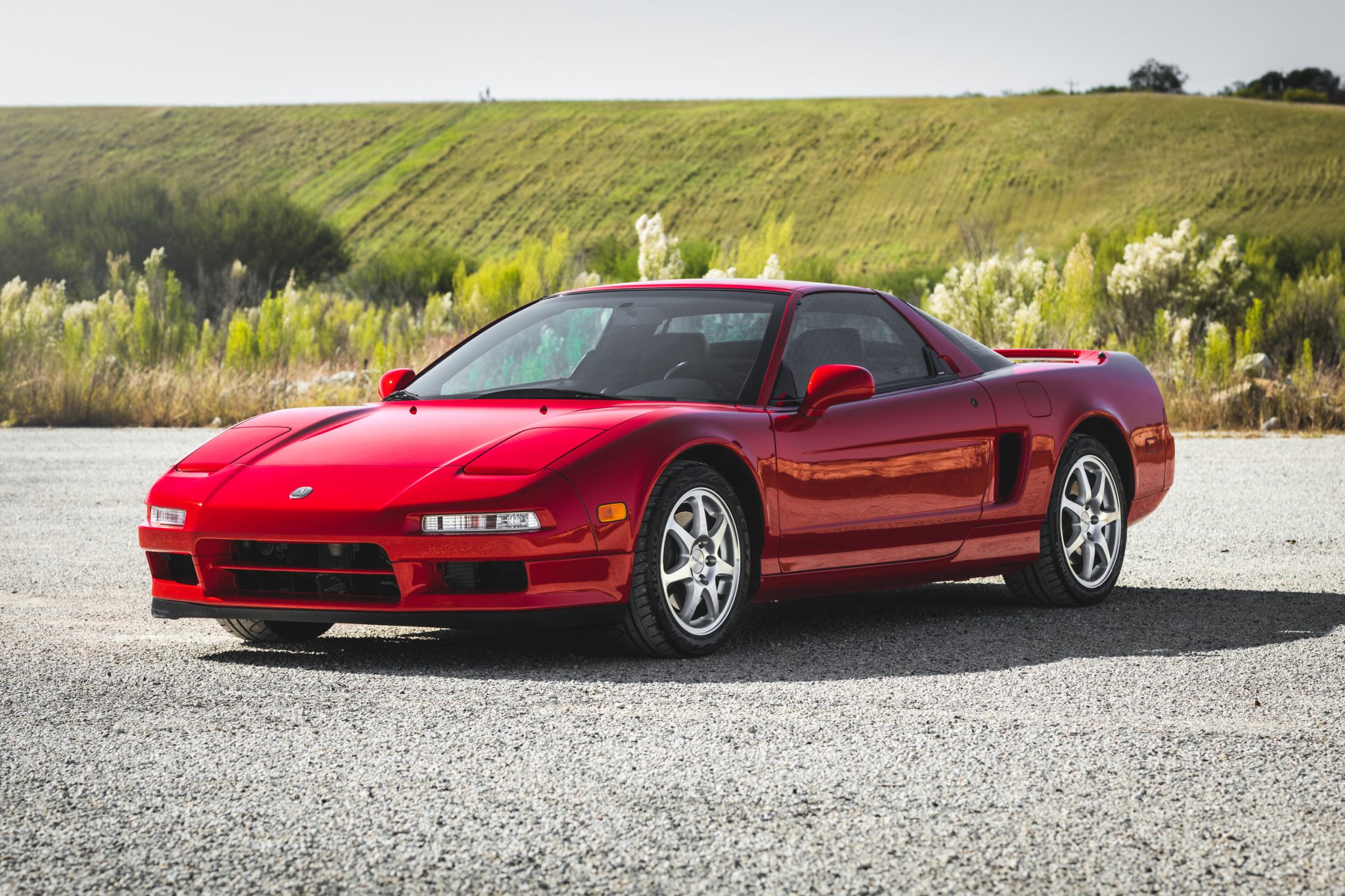
Low Mileage 1998 Acura NSX-T 6-Speed On Offer At Bring A Trailer

The Acura NSX hype is real and if you’re itching to get your hands on one of these rare examples, then you’re in luck as a low-mileage 1998 Acura NSX-T is currently on offer at Bring A Trailer.

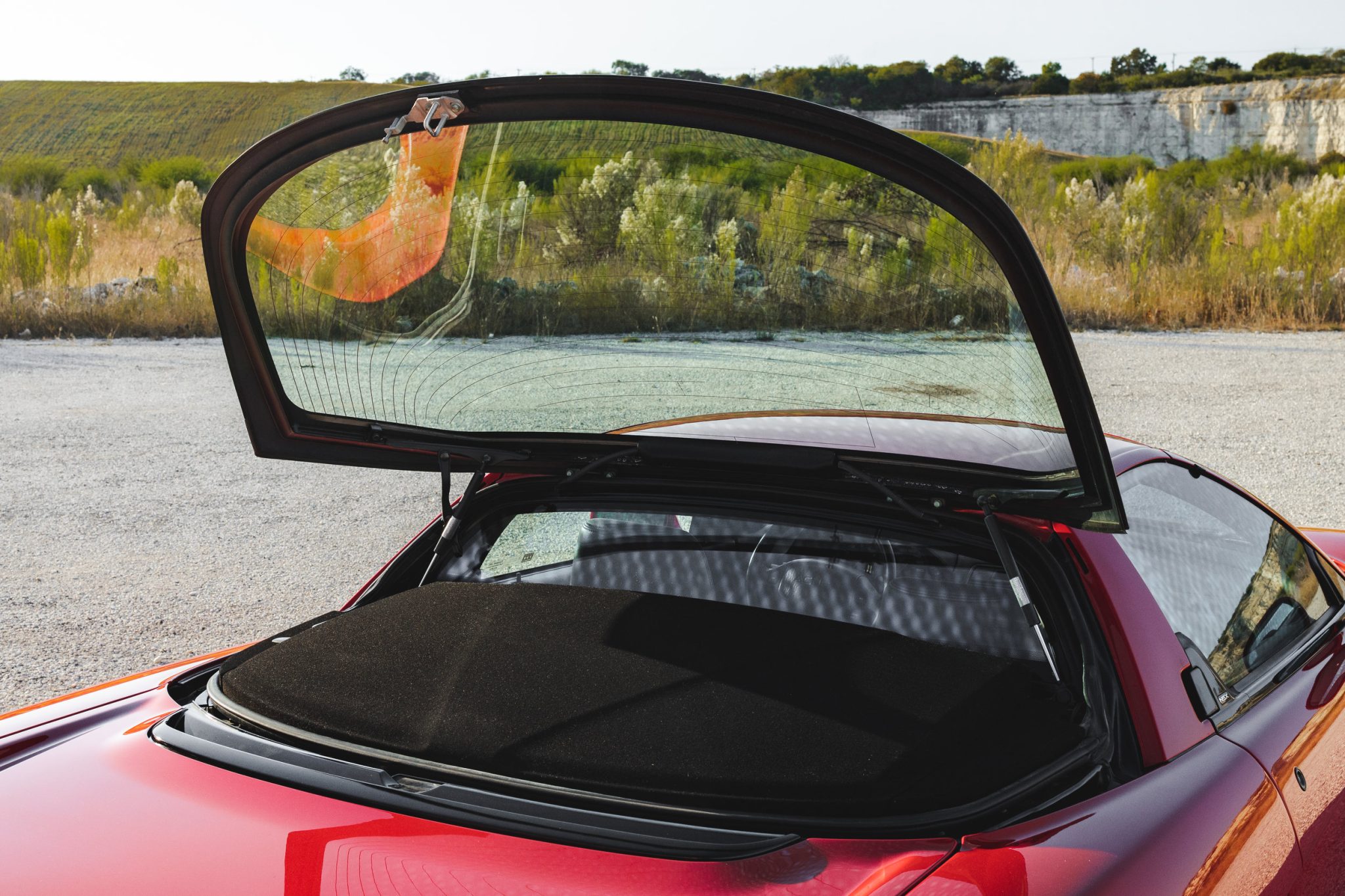
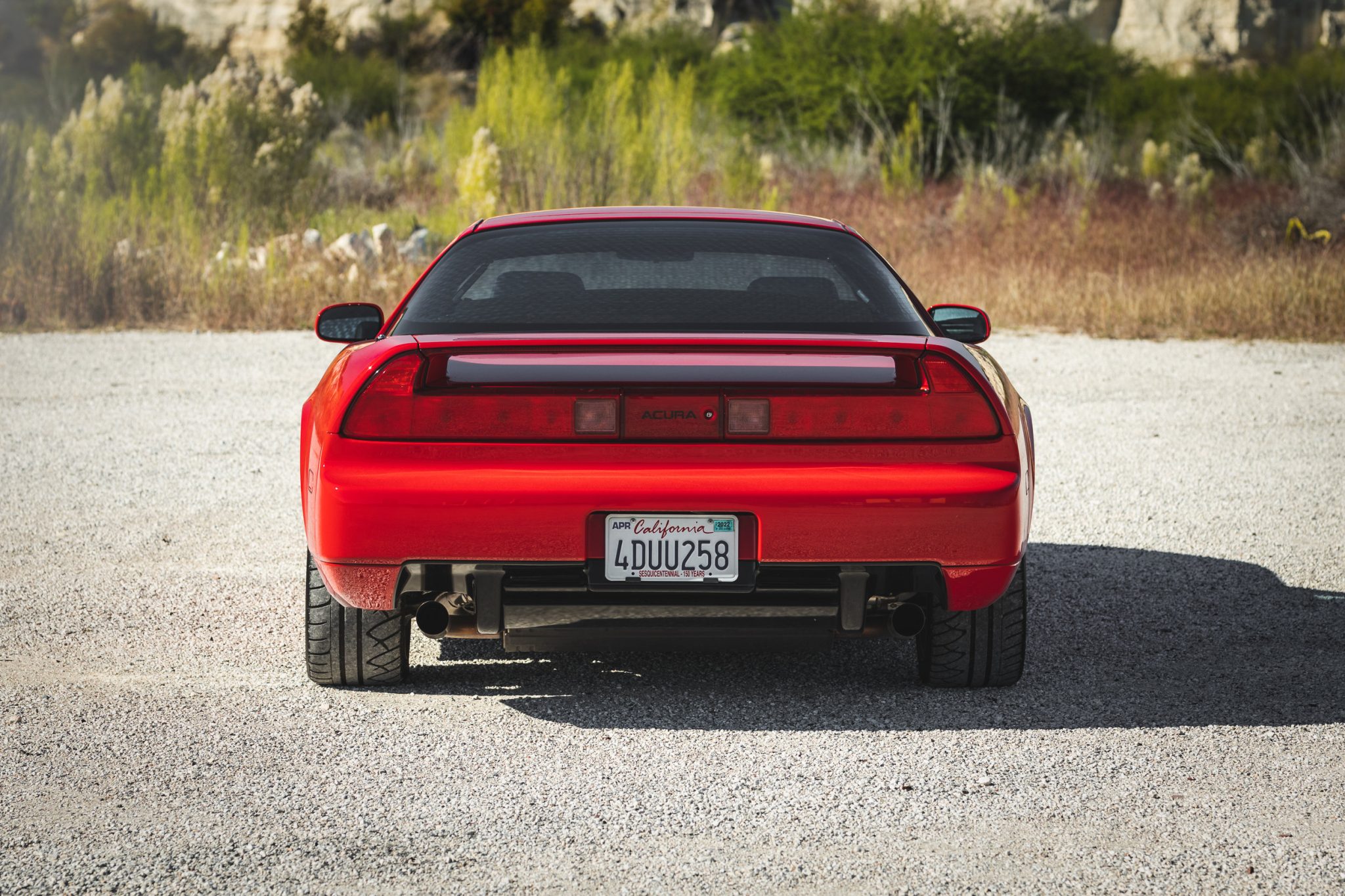
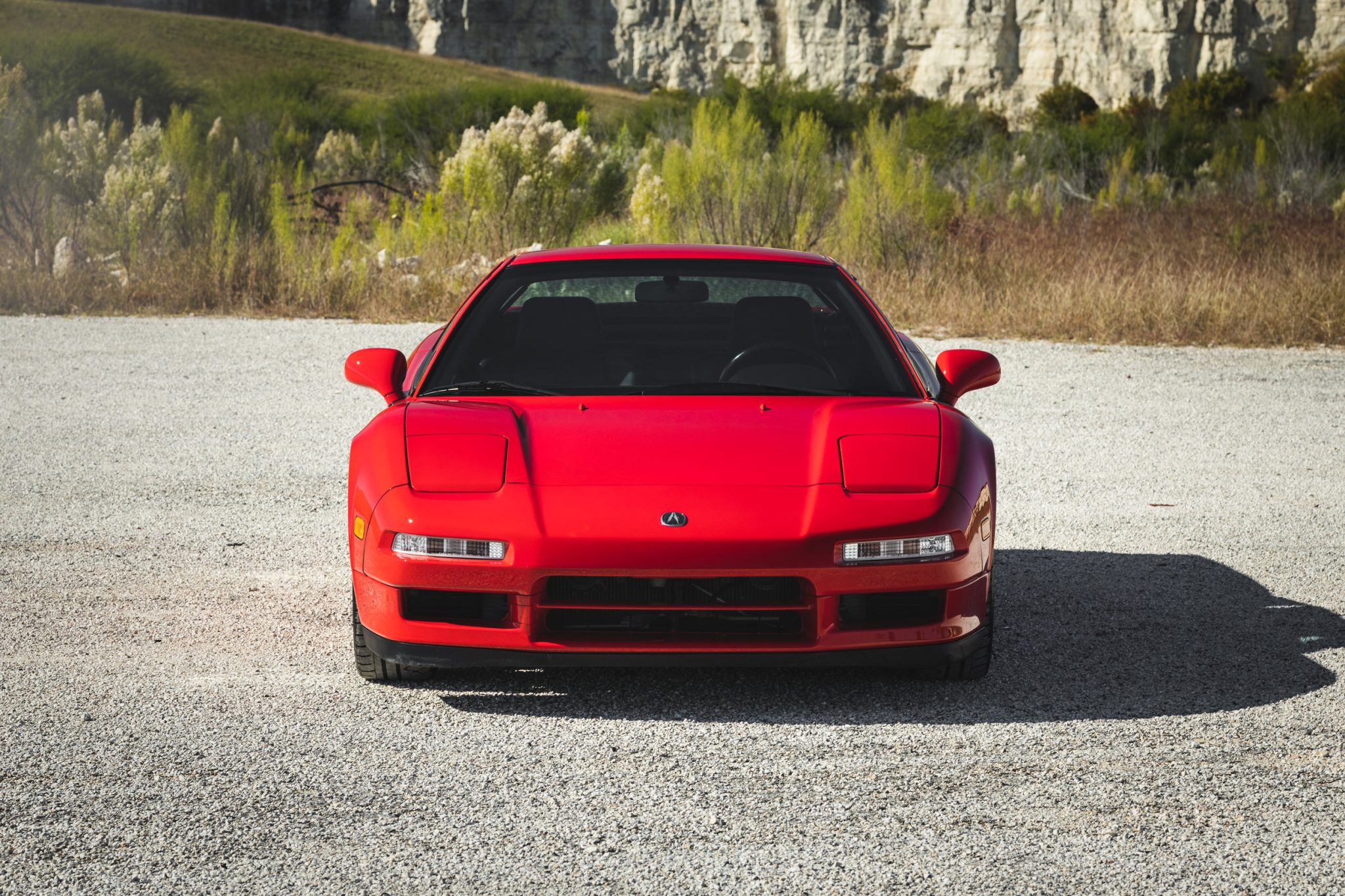
This NSX is only one of the 55 examples that were given a Formula Red (R-77) finish for the 1998 model year with a matching removable roof panel. The example has pop-up headlights and an integrated rear wing. It was also given 16- and 17-inch wheels with Kumho Ecsta XS tires, with the front tires measuring 215/45 while the rear measures 245/40. There is some curb rash on the wheels, with the tires have a mix of 2015 and 2013 date codes.

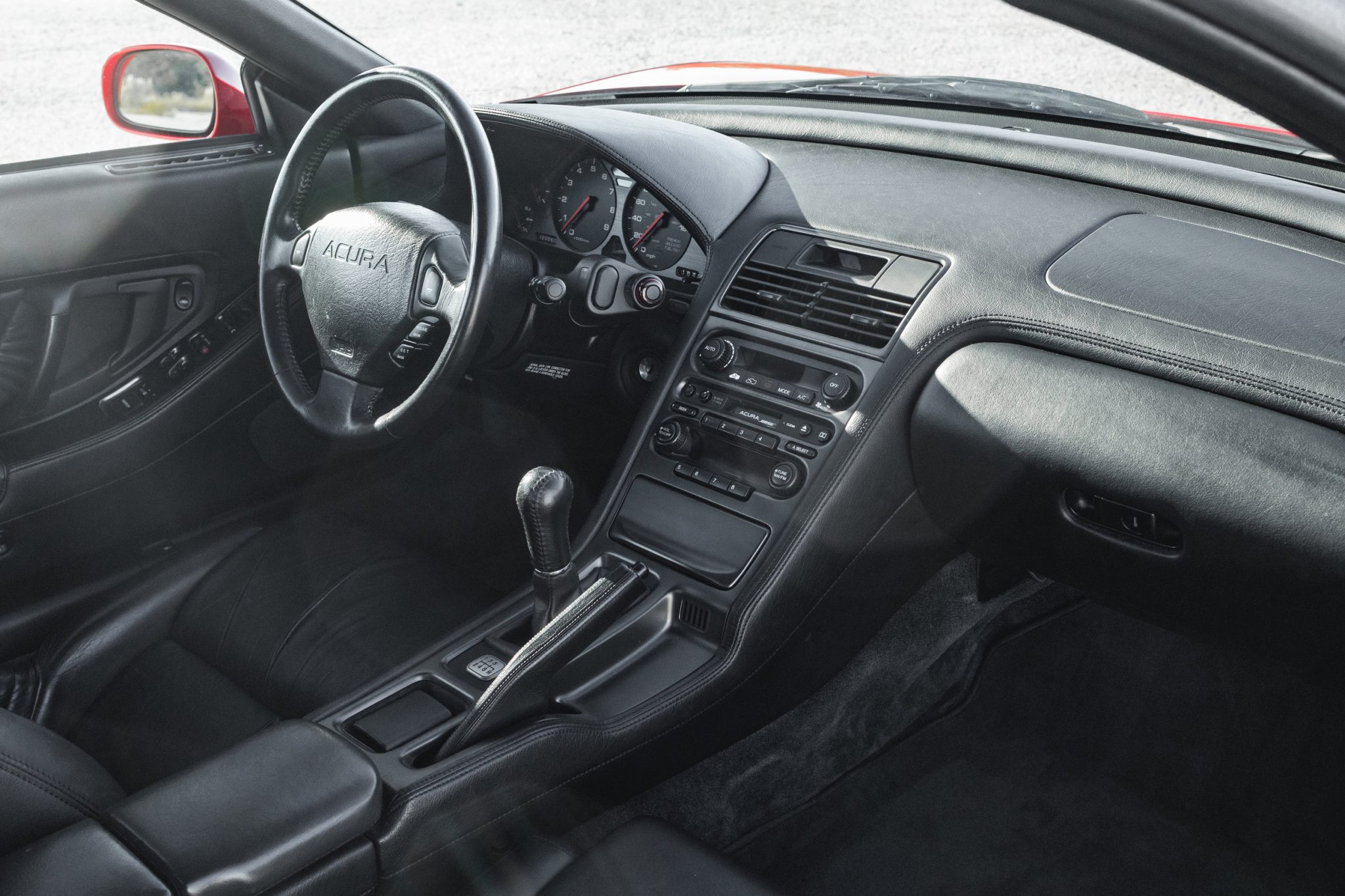
The interior is finished in black leather upholstery, and it extends up to the console, door panel inserts, and the dashboard. It is also equipped with power-adjustable seats, cruise control, automatic climate control, and a Bose cassette stereo.

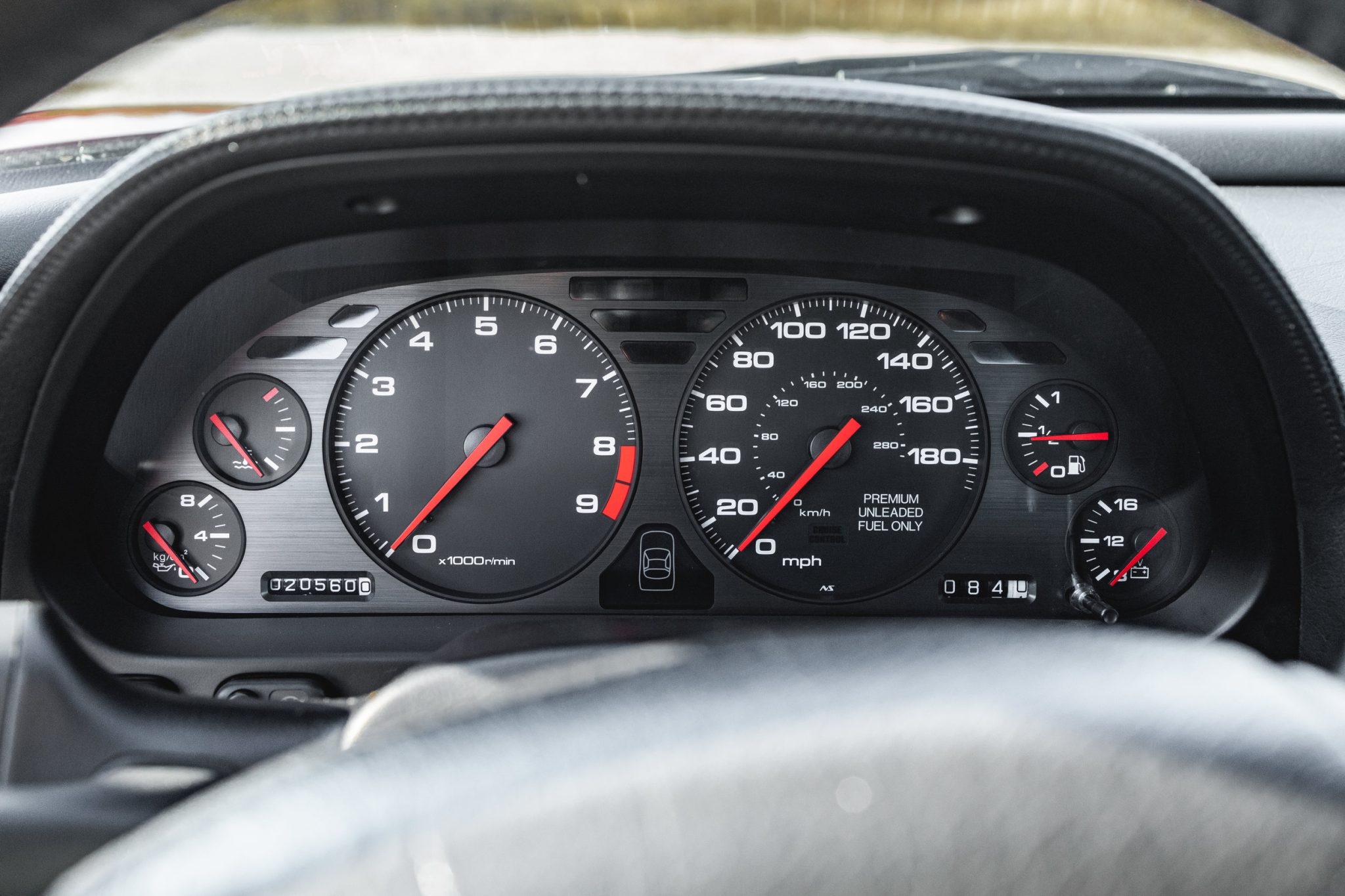
The dashboard features a 180-mph speedometer, a tachometer with 8k rpm redline, speedometer, and gauges for fuel, oil pressure, coolant temperature, and voltage. The mechanical speedometer shows 21k miles with roughly 50 miles added by the selling dealer.

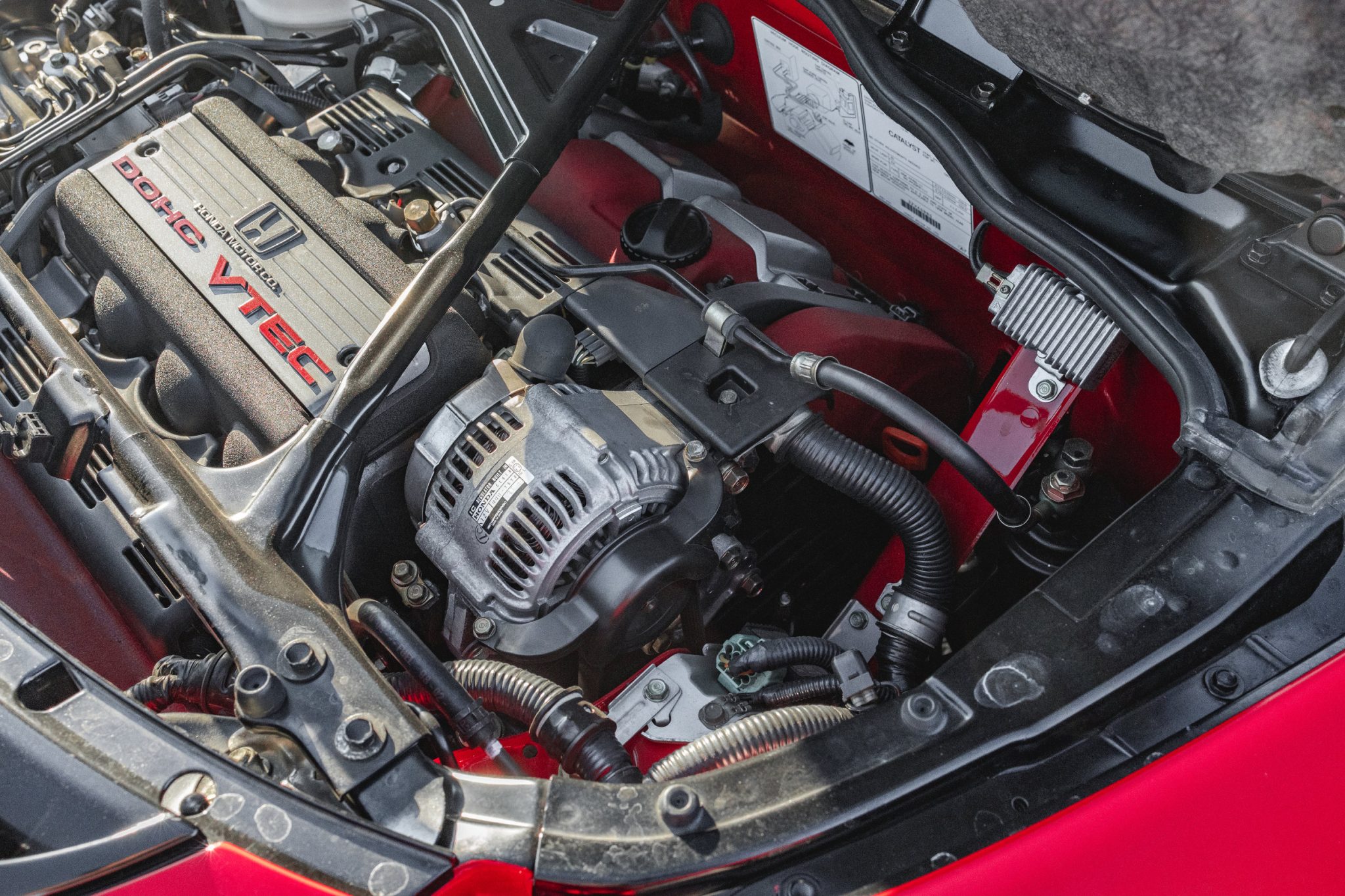
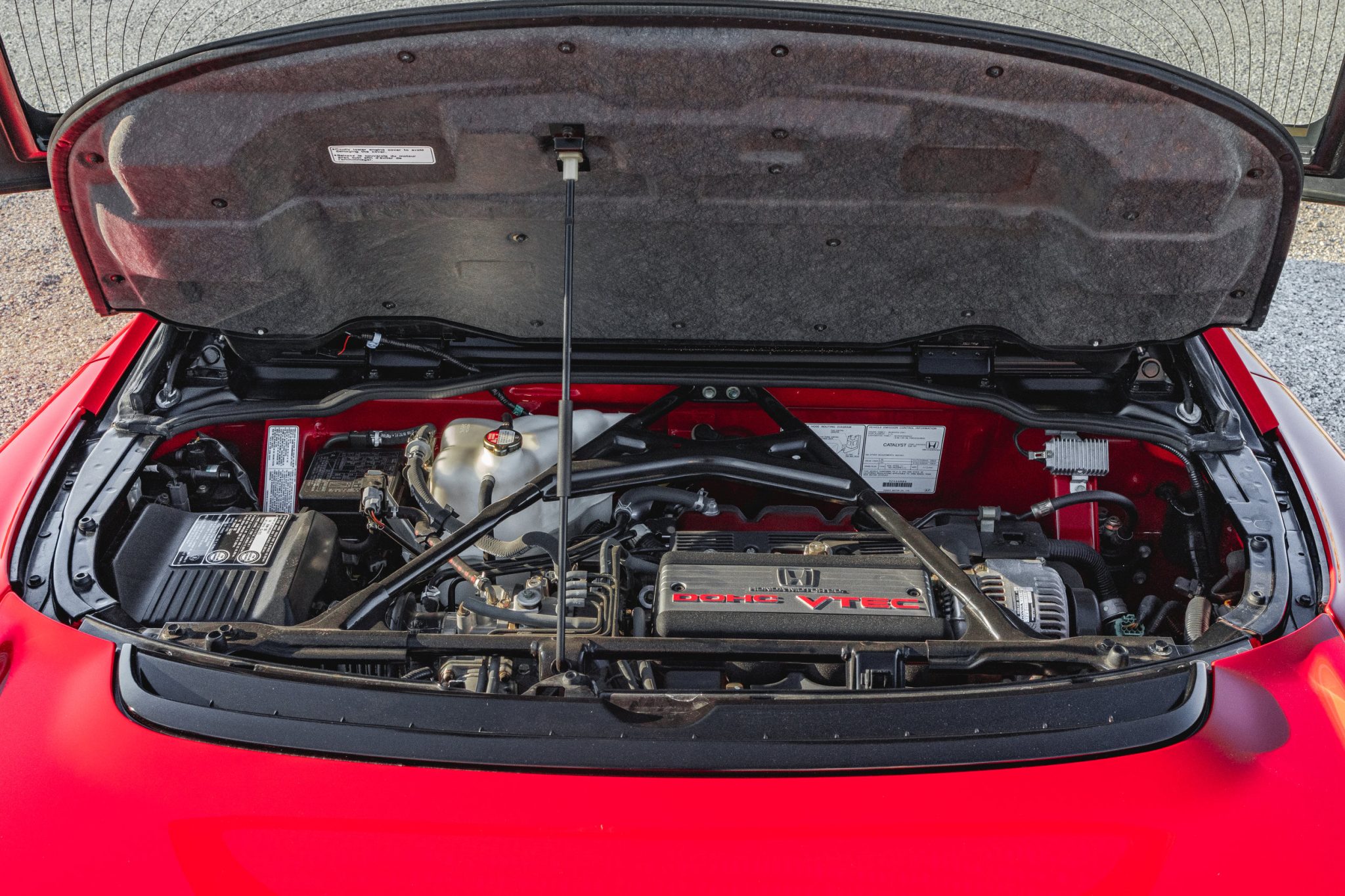
Under the hood is a 3.2-liter C23B V6 that uses VTEC variable valve timing matched to a six-speed manual transaxle with a Torsen limited-slip differential that gives power to the rear wheels. The NSX is factory rated at 290 hp and 255 lb-ft of torque.

As of writing the 1998 Acura NSX-T has a bid of $98,000 with the bidding ending in less than 19 hours.

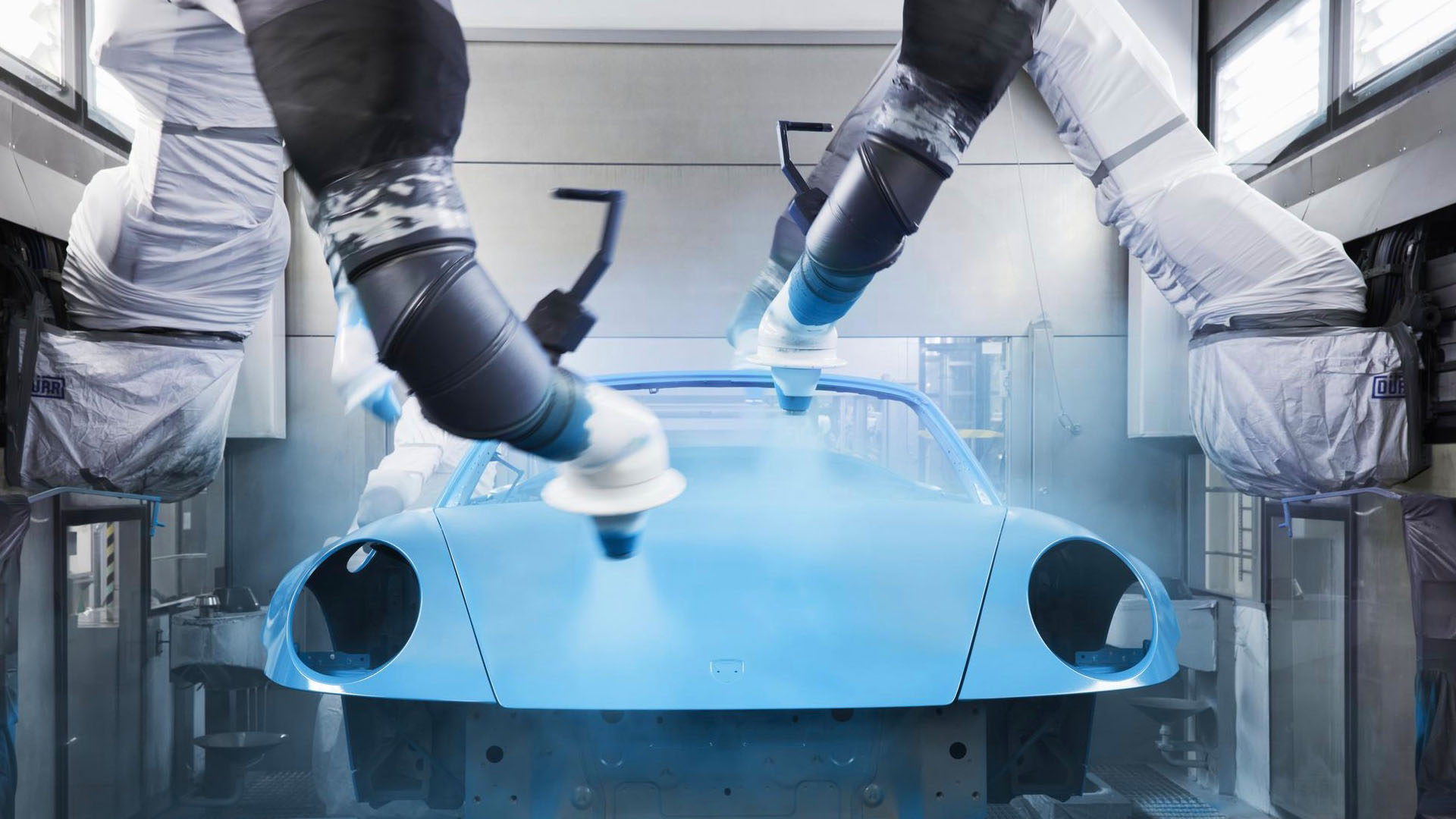
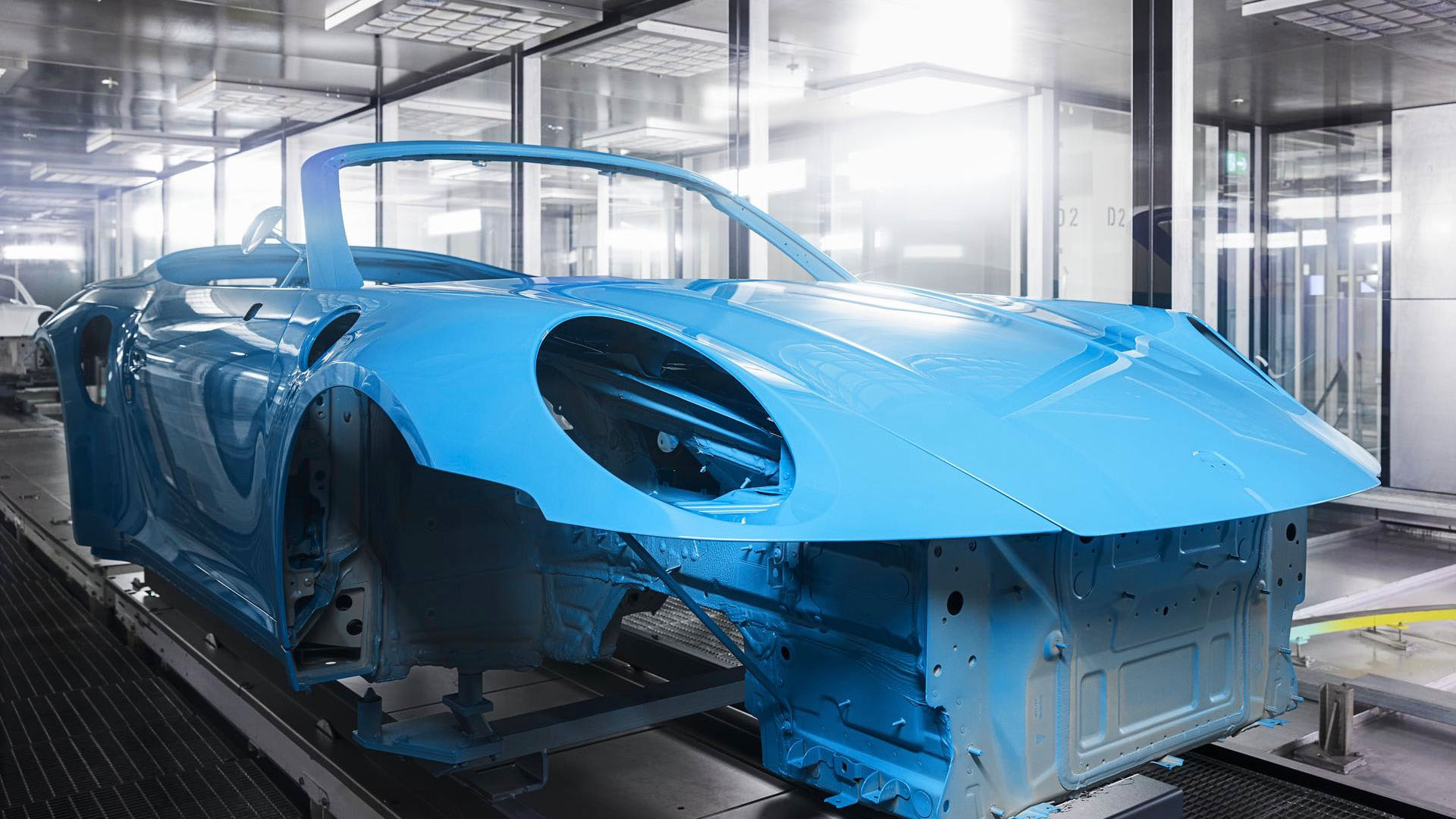
Porsche brings back classic paint colors with Paint to Sample

Porsche Exclusive Manufaktur is bringing back historic color shades on all Porsche models with the new Paint to Sample and Paint to Sample Plus option: “Unusual paint finishes have been familiar throughout the history of our brand and are an important differentiating feature,” says Alexander Fabig, Head of Individualisation and Classic. “With this offer, we are reviving cult-classic colors and expanding the extensive range of standard and special colors across all the model series by more than 160 shades.”

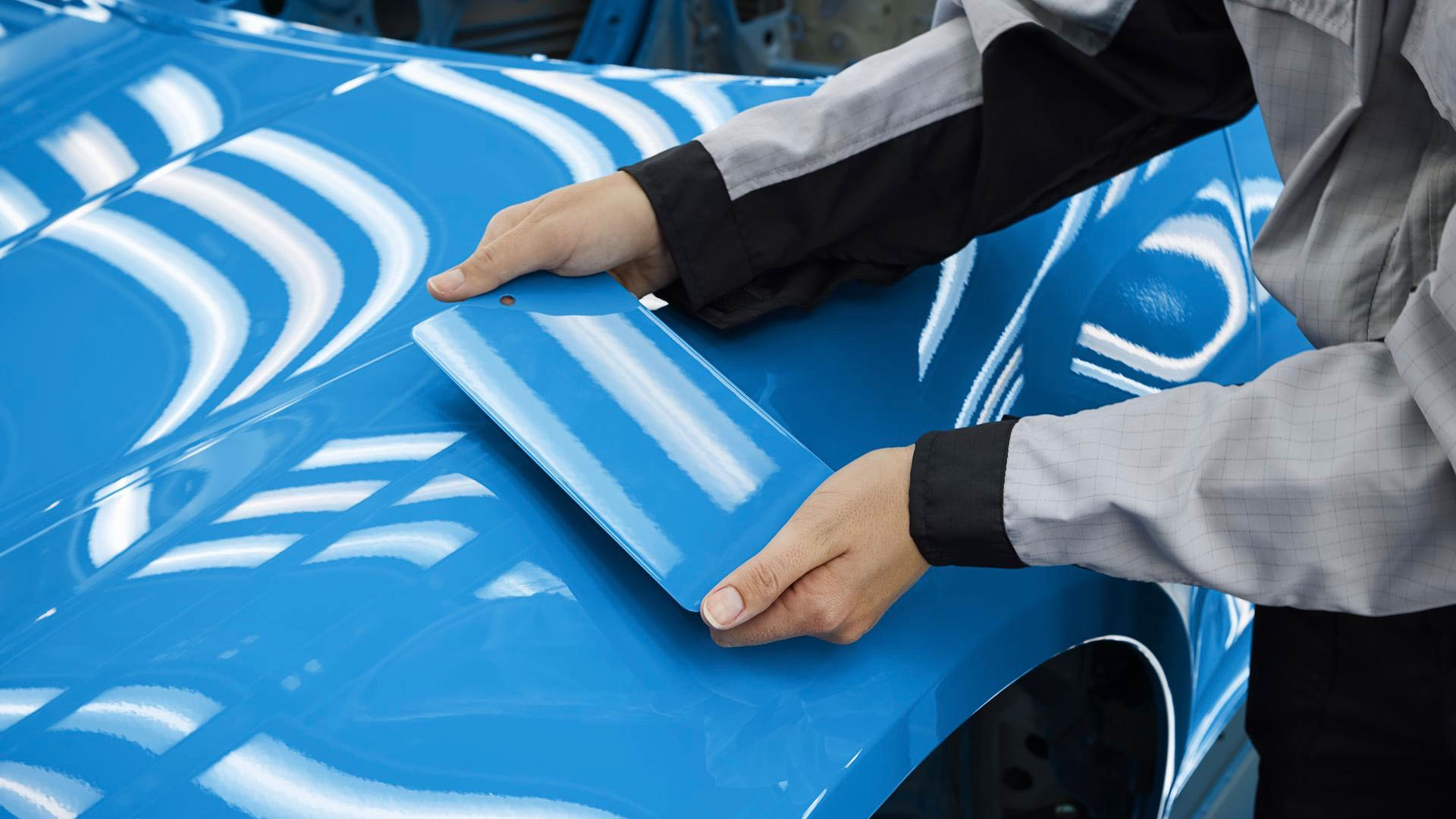
Custom-painted Porsches have been gaining popularity over the years, customers want to have a bespoke paint on their brand new car from Zuffenhausen, something that Porsche Exclusive Manufaktur is playing into with their Paint to Sample option, to accomplish this they’ve installed a brand new color-mixing system at the factory, allowing specialists to mix up the exact shade a client requested, from combining dozens of ingredients with milligram precision.

Each batch of paint is made for two paint pots, one that will be used for the bodywork of the new Porsche while the second one will be applied to the add-on parts, because the mix of aluminum parts, plastics, and carbon fiberglass, the mixture to be applied has to be slightly different depending on the surface that has to be coated … they even paint a comparison plate to reference against the finished car as a final inspection.

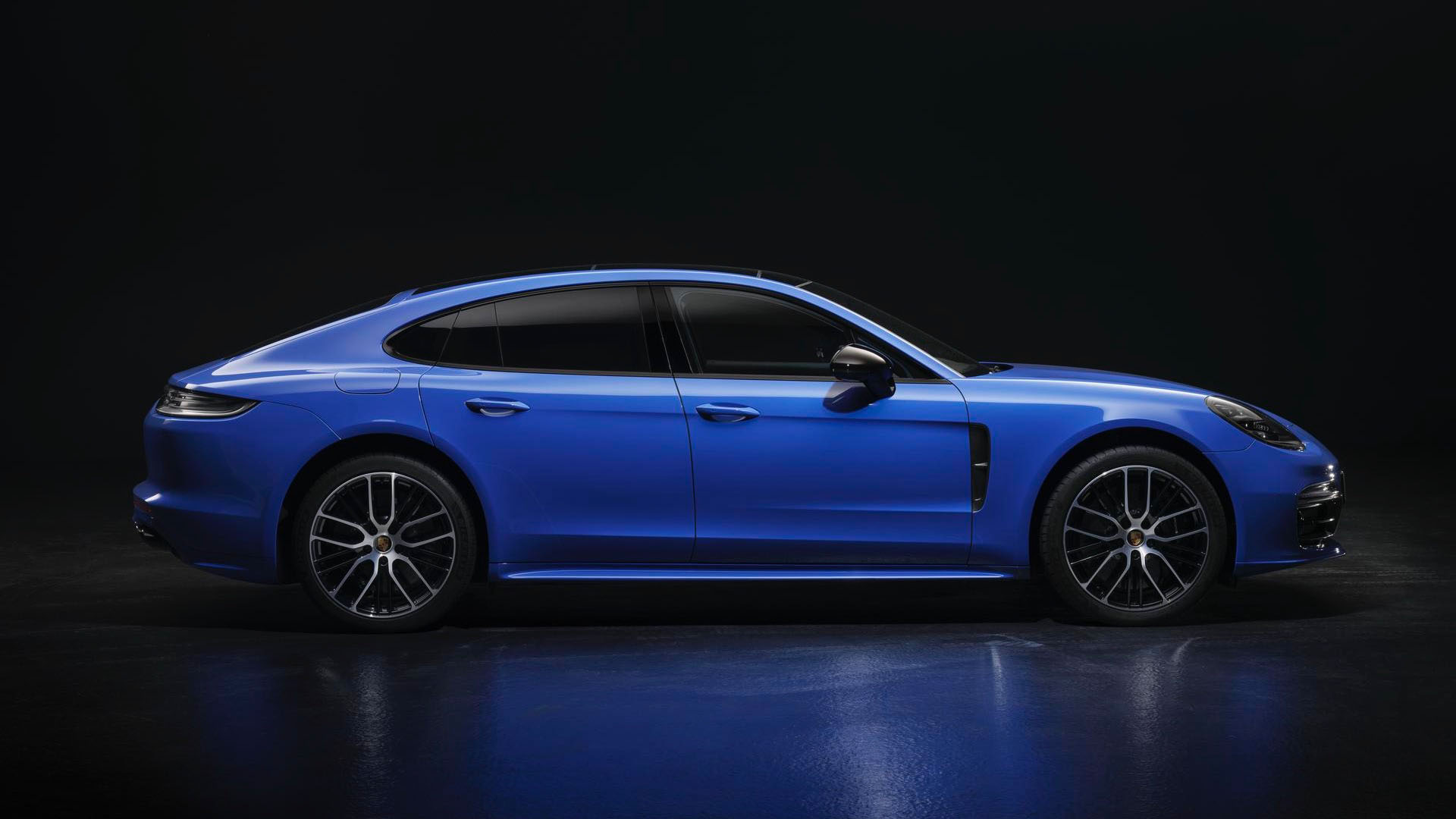
But Paint to Sample not only covers custom colors on special demand, but they also resurrected some classic shades from the 90s, color mixtures that are already known by Porsche’s paint specialists, like Maritime Blue as seen on the Porsche Panamera below, a deep, not too dark shade of blue that gives a classic but luxurious look to this four-door model, if you want to stand out even more a set of gold-painted wheels would do the trick.

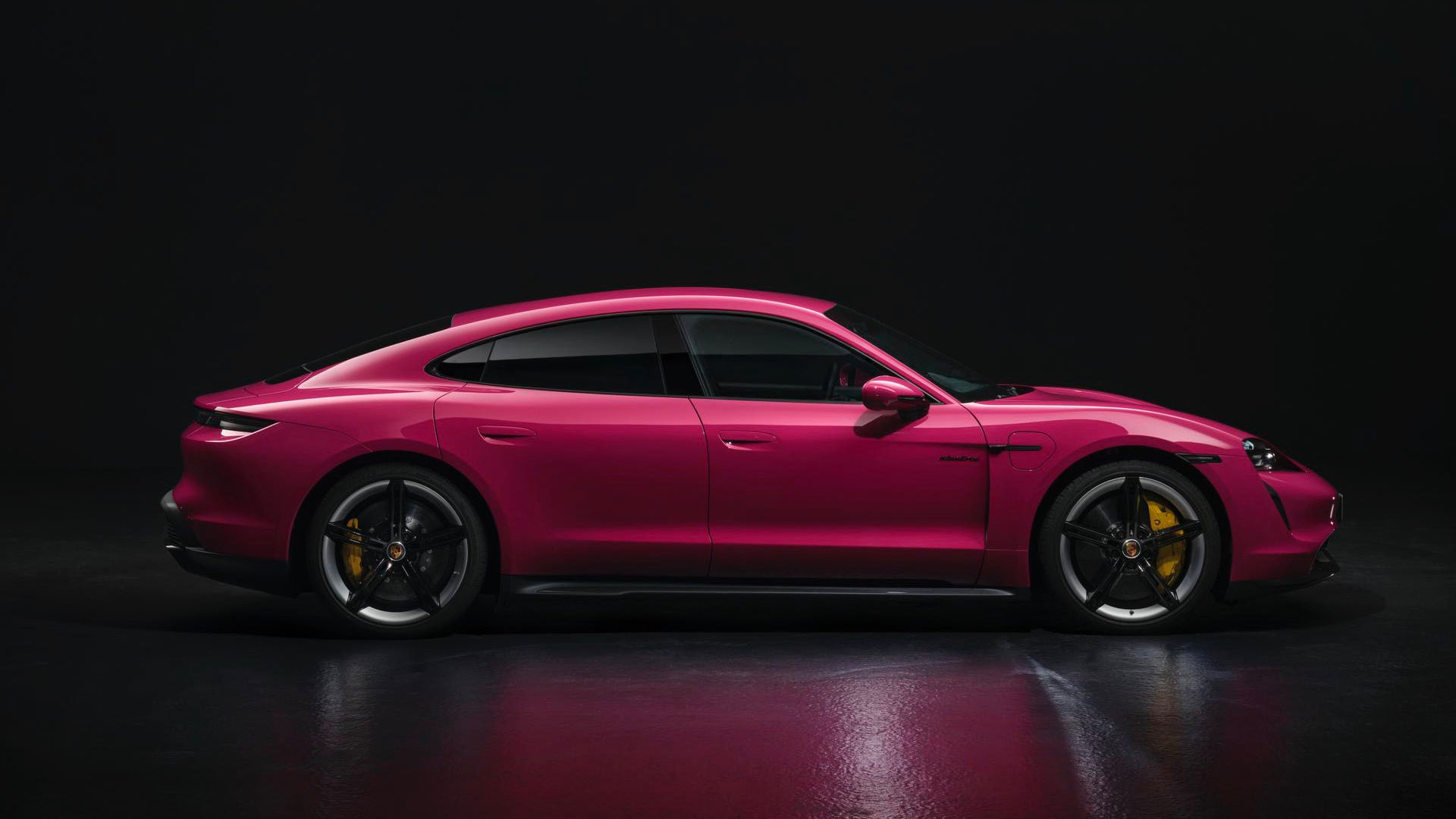
Or how about Rubystar Red, a rather special shade of red with a more pink hue to it, which looks amazing on this Porsche Taycan, at least it’s something different from the large amount of white Taycans I usually see driving around over here, it seems some markets only order black, dark grey, and white, while other markets have a much more diverse taste in colors on their luxury cars.

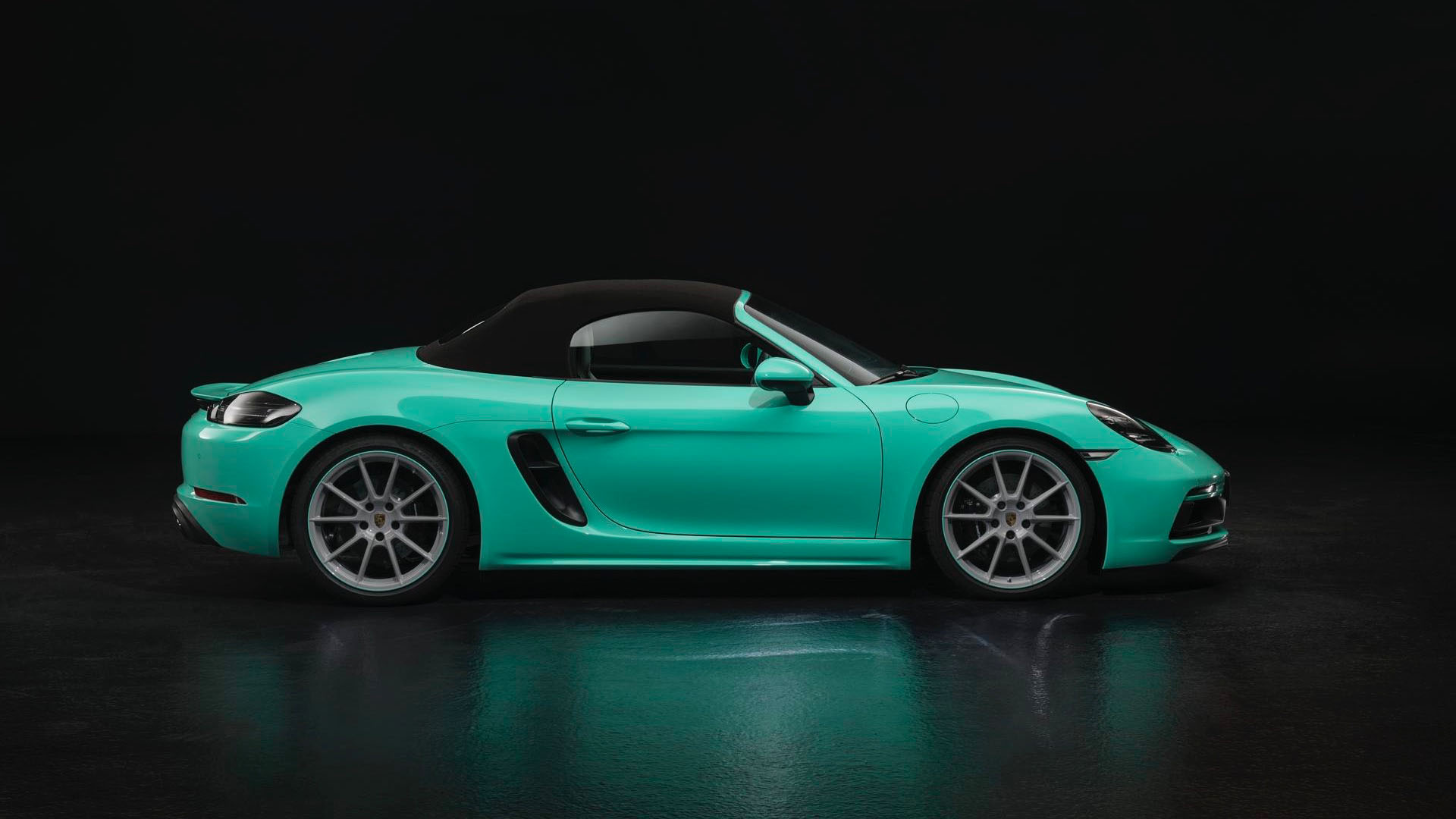
And let’s not forget about Mint Green, I remember seeing a 911 in this shade with color-coded leather seats, very special looking and perfect in tune with the Nineties, perhaps today a more subtle interior shade might be a better idea, but I still think black seats with their centers in matching Mint Green would look killer on this car:

The number of different paint color options largely depends on the specific Porsche model and where they are actually built, when looking at the 911 and the 718 model the list of paint colors goes beyond 100, while on the Panamera, Macan, and Cayenne, the list contains a little over 50 options, while a further 65 colors complete the palette on the all-electric Porsche Taycan.

While it is possible to order your ‘Paint to Sample’ specific shade for your new car right at the local Porsche Centre, you’ll have to keep in mind an additional three-month delivery time compared to the basic color options, and if you really want something unique, you can opt for the ‘Paint to Sample Plus’ finish, which is limited to the Porsche 911, 718, and Taycan … but here there is just about no limit whatsoever on which shade you want, it all begins with the customer supplying a sample of his or her color to a Porsche Center.

And this doesn’t need to be a piece of painted metal, how about a bottle of nail varnish, or a pair of shoes to match, a handbag, or a piece of clothing … anything goes, as it is sent out to Porsche AG for an initial feasibility check, which can take a few months, before Porsche’s color wizards create the magic formula to be tested on a car body and add-on parts … but that’s not the customer’s car yet, the first application of this custom shade is done onto a test-body, at Porsche’s expense, and only if all tests are good and they’ve determined the details, such as layer thickness, will the customer’s Porsche be painted in this bespoke shade.

Such individual vehicles can only be ordered through Porsche Exclusive Manufaktur, and not every Porsche Center will be a partner, at the time of writing about 100 Exclusive Manufaktur partners are present globally, these are specifically selected Porsche Centers who are specially equipped and have trained specialists able to provide advice on the Exclusive Manufaktur product range if you really want to get the best-of-the-best you can always travel to the heart of the brand in Stuttgart-Zuffenhausen, but you’ll need a commission number before you are able to visit the HQ.

Just in case you are wondering about just how much something like this would set you back, here are some indications of price, the Paint to Sample will set you back between €8,806 and €9,877 depending on the exact model, while the even more intricate Paint to Sample Plus goes from €17,612 to 19,754, note that all prices are MSRP for Germany including 19% VAT, if you want to know the exact cost in your case you should really visit a local Porsche Center and inquire about this when ordering your brand new, bespoke build Porsche supercar.

Mercedes-Benz X 350D 6-Wheeler “Black Edition”

Does anyone need an off-road Mercedes-Benz pickup truck capable of tackling any object in its path? The answer to that is probably not… especially when it has three axles, six wheels, and was almost completely…

The post Mercedes-Benz X 350D 6-Wheeler “Black Edition” first appeared on Cool Material.

Finali Mondiali Ferrari 2021

The most awaited Ferrari event of the year has finally concluded at the Mugello circuit. Finali Mondiali Ferrari 2021 took place as scheduled but still with a closed door format as last year, due to Covid restrictions, although with attendance of Media, Ferrari Fan Clubs and Ferrari employees.

The thick morning Fog didn’t stop the show, final round of Trofeo Pirelli and Coppa Shell took place crowning Finnish Luka Nurmi and Ernst Kirchmayr as winners respectively. On Saturday evening the awards ceremony for the European and North American Ferrari Challenge series winners took place, with the announcement of the venue for the 2022 Finali Mondiali, which will be held from 26 to 31 October at the Autodromo Enzo e Dino Ferrari in Imola.

The gala evening was a chance to celebrate the extraordinary sporting results of the 2021 season, starting with the WEC world titles the Le Mans and the 24 Hours of Spa triumphs. During the evening, alongside Antonello Coletta, Head of Ferrari Attività Sportive GT, speakers included Chairman John Elkann, Chief Executive Officer Benedetto Vigna, Vice Chairman Piero Ferrari, Chief Marketing and Commercial Officer Enrico Galliera.

Oh yeah, Ferrari means also road supercars, FFM was also the venue chosen to unveil to the public the New Icona Series Ferrari Daytona SP3 supercar as well as the new 812 Competizione and Competizione A.

Sunday, as final act of the event, it’s Ferrari Show time! This year, introduced by the flag bearers of Castel San Barnaba, symbolising Ferrari’s bond with the local area, the Mugello public could admire the evolutions of the Formula 1 F60 and SF70-H single-seaters, driven by Giancarlo Fisichella, Andrea Bertolini and Olivier Beretta, and the 488 GTEs and 488 GT3 Evo 2020s, the stars of the WEC, GT World Challenge Europe and DTM to celebrate one of Ferrari’s most successful seasons in GT championships.

The final part of the programme was met by enthusiastic applause, with the new Ferrari Daytona SP3, escorted by two ladies-in-waiting, the 330 P4 and a 412 P. Mission accomplished, well done Ferrari! And see you next year!

Photos and Words by Yaron Esposito

Sir Frank Williams Passes Away At 79

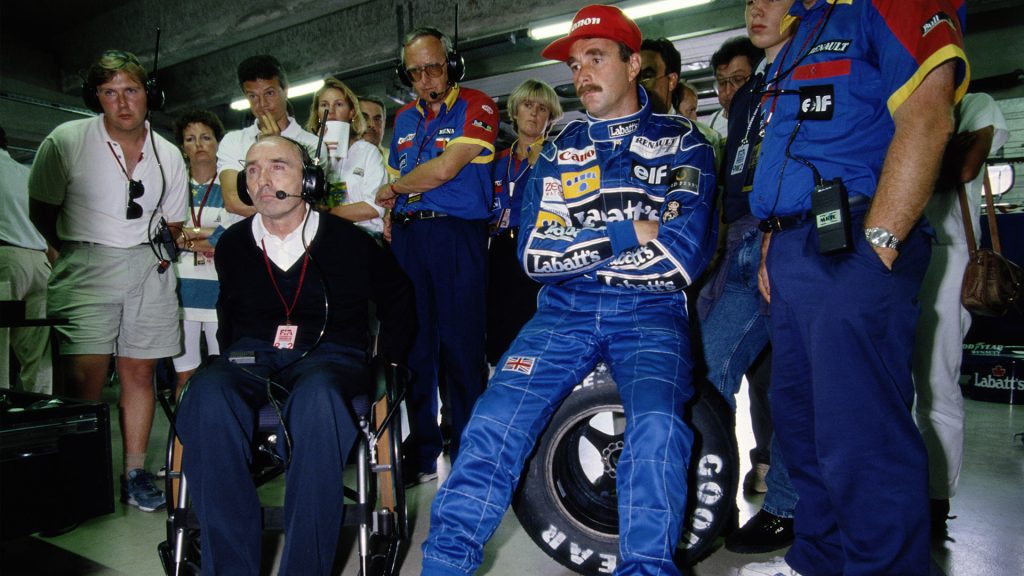
Those of us that follow Formula 1 woke up to the news today that Frank Williams, the namesake of the Williams Grand Prix Engineering Formula 1 team, has passed away at the age of 79.

Frank WIlliams and Patrick Head
Frank WIlliams and Patrick Head Patrick Head (L) and Frank Williams at the carpet warehouse that became the first HQ of Williams Grand Prix Engineering

Working out of a former carpet warehouse, Williams Grand Prix Engineering was born in 1978 after the financial struggles and near bankruptcy of his first attempt at Formula 1, Frank Williams Racing Cars. After being bought out by Candian Walter Worf in 1976, he left the team in 1977 with Patrick Head, his chief engineer, and formed the now legendary team with little more than a bank loan and promises to pay from winnings and sponsorships to cover the loan. Less than a year later, Clay Regazzoni drove an FW07 to victory at the 1979 British Grand Prix at Silverstone, and the rest, as the saying goes, is history.

A young Frank Williams during the FWRC days
A young Frank Williams during the FWRC days Frank Williams with the plight of a team owner in the 1970s

1980 saw the team win the drivers and constructors’ titles, supporting Alan Jones in a modified FW07. Between 1981 and 1997, WGPE went on to field some of the most technically advanced cars the sport had ever seen, such as the FW14B which introduced computer-controlled active suspension, in doing so powering six more drivers to the drivers’ championship and winning the constructors championship eight more times. However, not everything would go to plan during these wild years of success, as tt was during this time period that the day that changed Frank Williams’ life forever occurred.

On the 8th of March, 1986, Williams had been at the Circuit Paul Ricard in the South of France to watch the FW11 chassis undergo high-speed testing, but was registered to run in the London Half Marathon on the 9th of March. As such, after the testing had finished, Williams, with team sponsorship manager Peter Windsor, drove a Ford Sierra 1600 car at speed to get to the Nice Cote d’Azur Airport when he lost control on a left-hand bend, went over a low stone retaining wall, and landed in a field 8 feet below the road on the driver’s side. Williams suffered a spinal fracture just below his neck and partially severed his spinal cord, rendering him a tetraplegic. He nearly died a few times in the tense 48 hours after the accident, but after urgent repatriation and an emergency tracheotomy in the UK, he survived.

Frank Williams and Nigel Mansell, 1986
Frank Williams and Nigel Mansell, 1986 After recovering from his accident, Frank Williams was right back in the paddock before the season was over. Seen here with future champion Nigel Mansell

Frank Williams ultimately oversaw 114 grand prix wins as team principal. He was active with both the F1 team and the business side of Williams until 2012, when he stepped down from the board of directors and nominated his daughter Claire for the vacancy. From 2013 to 2020, he was a co-team principal with Claire, running more of the engineering side of things while his daughter oversaw the drivers and business delivery side. When Williams Grand Prix Engineering was bought out by Dorilton Capital Group in 2020, both Frank and Claire stepped down, ending the Williams family tenure of the team.

Ultimately, Frank Williams oversaw 50 years of competition as a team principal, and his team and company dominated the sport for nearly two decades. He survived bankruptcy, he navigated the politics of Formula 1 with skill, grace, and determination, and he didn’t let the fact that he was tetraplegic get in the way of his desire to push for every win, and have the best of the best drive and engineer for him and the team. He was made a Commander of the Order of the British Empire in 1986 after his recovery from his accident, and was made a Knight Commander of the OBE in 1999.

Sir Francis Owen Garbett Williams, CBE, born April 16 1942, will be sorely missed, and left a lasting legacy in the sport he loved so dearly.

Comments and Honours by teams and drivers on hearing of his passing:

Official Formula 1:

Williams Racing:

George Russell, the last driver personally signed to the team by Frank Williams:

Nico Hulkenberg (the Hulk), signed to Williams Racing in 2009:

The Bugatti Chiron Super Sport, the world’s fastest and most luxurious GT

Due to a plethora of technological enhancements and the vast scrutiny of optimization, the Bugatti Chiron Super Sport is the fastest car ever from Bugatti made in series production, with a top speed in excess of 440 km/h, the French-based luxury brand from Molsheim gave us the world’s fastest and most luxurious Grand Tourisme, the Chiron hypercar.

And Bugatti even made a faster version, the Chiron Super Sport 300+ limited edition managed to breach the 300 mph mark back in August 2019 already, in fact, this impressive hypercar managed to reach a top speed of 304.773 mph, which converts to 490.484 km/h, almost 500 km/h, but while the 300+ version was set for ultimate high speed, the Chiron Super Sport plays on another market, the ultra-high-speed GT, still extremely fast, but more a luxury edition for the discerning customer.

To be able to reach speeds well over 400 km/h you don’t just need a lot of horsepower, you also need an aerodynamically optimized car that remains stable and safe to drive at those insane speeds, just to put this into perspective, a Boeing 777 takes off at about 285 km/h (180 mph), and while you need lots of downforce for a car driven on the track, to reach the highest top speed you’ll need a careful balance between a low drag coefficient and just the right amount of downforce.

So let’s take a look at how Bugatti managed to achieve this amazing speed with a car that is the epitome of luxury at the same time:

New Air Curtains

Above 400 km/h, a balanced and safe driving behavior is paramount. “Only perfect incoming airflow at the front of the car will keep harmful turbulence at bay and ensure that the airflow around the car stays clean,” says Frank Heyl, Deputy Design Director at Bugatti.

In order to minimize turbulence on the sides, the team integrated newly developed air curtains in front, similar to wings, which help guide the air around corners in an optimal way. At the same time, the air curtains also make sure that the airflow follows the body’s contours as closely as possible to stabilize the car. This lowers pressure losses and resistance – the ideal skin for fast driving “shaped by speed”. To achieve a perfect airflow, Bugatti engineers ran numerous simulations to arrive at the ideal curvature and thickness of the component, as well the perfect spacing between it and the front section. Additional air outlets at the front wheel arches help balance the aero loads even further.

Air Flow through the Front Section

An ideal air flow over the front of the car is equally important for a balanced driving behavior at high speeds. The optimal amount of air must pass through the radiator, so it can provide sufficient cooling for the 8.0-liter W16 engine at full load. The airflow through the Chiron Super Sport’s radiator is about 8% higher than that of the Chiron in order to guarantee a perfect air balance. In addition, most of the flow passes the new air curtains at high speed. In top speed mode, the front diffusors are positioned more horizontally and guide less air into the wheel arches.

Newly Developed Wings

Nine air outlets on the front wings reminisce at the style of the iconic super sports car of the 1990s, the Bugatti EB 110. Bugatti built the EB 110 as a super sport variant between 1993 and 1995, employing principles of lightweight constructions, as well as power, luxury and exclusivity. It was the first super sports car with a carbon fiber body, all-wheel drive and four turbo chargers. The V12 turbo delivered more than 610 PS and enabled the EB 110 Super Sport to set several records, including one for its top speed of 351 km/h. The EB 110 SS featured five cylindrical air inlets to provide the proper air flow for the engine compartment. In the Chiron Super Sport, the front wheel arches also have nine cylindrical air outlets. Thanks to Computed Fluid Dynamics (CFD) simulations, experts were able to calculate the exact airflow rate to achieve a perfect aero balance. By using cylindrical air outlets, Bugatti avoids situations in which the dynamic pressure in the wheel arches of the Chiron Super Sport would lift the front of the car. So, this component creates a downforce without building further resistance, as would be the case with an additional spoiler. These air outlets generate approximately 20 to 30 kilograms of additional downforce at 380 km/h, thereby helping to balance all sources of downforce.

New Wheel Arch Ventilation Function

The nine cylindrical air outlets are 30-millimeter-deep wing penetrations, connected to the respective wheel arch by a special carbon air-guiding component, which ensures optimum air flow, while preventing stones from leaving the car. At the same time, the new wings improve brake cooling. Similar to a chimney, a vacuum caused by the airflow along the car’s body extracts air from the wheel arches. In addition, the air is guided through special venting ducts and sucked out of the wheel arches behind the front wheels. Stylistically, these elements are placed like gills behind the front wheels.

Handmade Wings

The wings weigh approximately four kilograms and are hand-crafted from clear-coated carbon, with fibers running across the edges. Each of the nine cylindrical vents is a different size. For aesthetic reasons, the visible openings are identical. In addition, the newly developed wings comply with global safety regulations regarding pedestrian and impact protection. For this purpose, the very rigid construction is weakened in certain places to absorb energy. Thereby, the wings can deform in case of slow-speed impact, while remaining extremely rigid at high speeds.

A Long Tail for High Speeds

The first thing one notices when looking at the Chiron Super Sport is its tail section – referred to as a longtail – which has been extended by 25 centimeters. At high speeds, it ensures that the air flowing along the top and bottom of the vehicle creates a break-away area that is as small as possible. To achieve a balance between down forces and lifting forces, Bugatti precisely aligned the performance of the rear wing and the diffusor, by enlarging the diffusor’s profile. This moves the break-away edge upward, so that the break-away area of the tail section is minimized. This significantly reduces the losses generated in this area, leading to much lower wind resistance – which is what slows the car down.

Larger Rear Wing

In handling mode, the blade of the rear wing, which has been extended by 23 millimeters and thereby gained 8 percent in size, makes the airbrake far more efficient, in combination with the larger diffusor. In top-speed mode, however, the rear wing is retracted almost completely, allowing the car to make full use of its longtail design concept. In this way, the laminar flow can establish itself across the entire length of the car’s body, until it breaks away at a defined location of the tail section. This reduces air resistance significantly.

“In top-speed mode, the Chiron Super Sport generates only minimal resistance, making it perfectly balanced and as aerodynamically efficient as possible,” says Frank Heyl. The goal was to perfectly balance downforce and lift at speeds above 400 km/h. “The Super Sport generates just enough downforce to stay stable above 400 km/h. That’s essential at this speed to avoid putting excessive pressure on the tires,” Frank Heyl continues. At these speeds, lift is enormous, meaning the Chiron Super Sport has to neutralize it by creating considerable downforce.

Larger Diffusor

To create as little resistance as possible and stabilize the car at speeds above 400 km/h, Bugatti also had to redesign the diffusor on the underside of the Chiron Super Sport. Due to the elongated tail section, the diffusor gains about 23 millimeters in length. To increase the diffusor’s effectiveness and give it more space, Bugatti moved the exhaust section from the center to the sides. The two tailpipes are positioned one above the other to reduce the effective area of the diffusor as much as possible. This increases the total size of the diffusor by 32 percent, compared to the Chiron. “In addition, the most efficient area, the center, is freed up for uninhibited airflow and the optimum effect,” says Christoph Dobriloff, Aerodynamics Development Engineer at Bugatti.
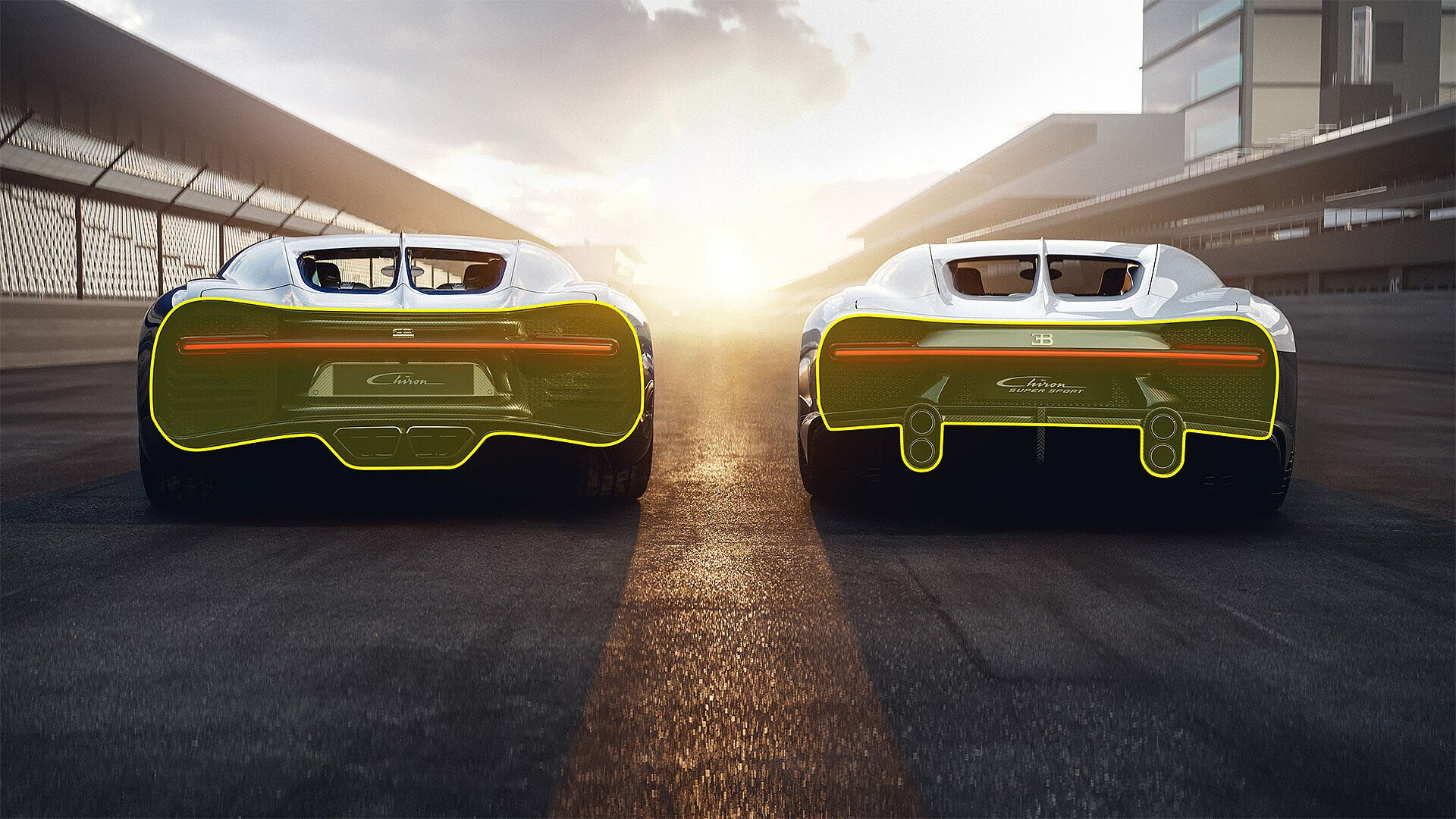
Exhaust System made with a Titanium 3D Printing Process

The two exhaust bezels are a special feature. Titanium 3D printing was employed to create an extremely thin double-wall structure, some of it as thin as 0.4 millimeters, pushing the envelope of what is technically feasible. A lattice structure gives the component stability, and also provides space for airflow channels.

The double-wall structure insulates the titanium bezel, while the airflow reduces its temperature. To protect the surrounding carbon parts from excessive heat, the Chiron Super Sport has additional air inlets in its undercarriage. Cold air circles around the exhaust components and exits through the tail pipe bezels. This way, the exhaust gas flow, which can reach temperatures of up to 850 degrees Celsius, is surrounded by a sheath of cold air. It prevents hot exhaust fumes from impinging on the car’s tail section.
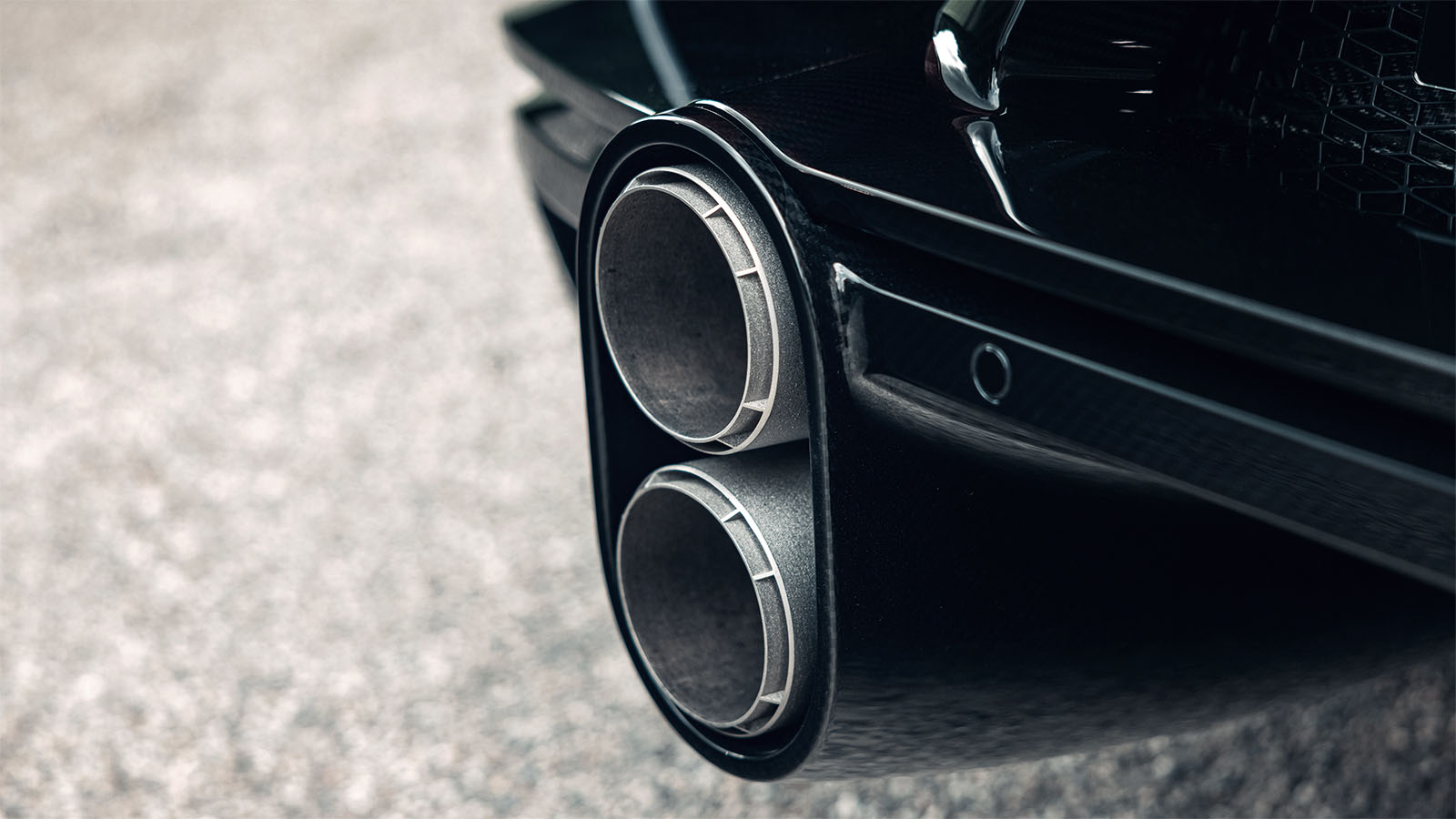
“Even at full power and top speed, exhaust gas does not influence any other components and is prevented from flowing back,” says Jens Wenge, Construction Engineer at Bugatti. Titanium itself reaches its melting point only at 1,668 degrees Celsius. Other advantages of titanium printing include precise edges and small gaps, leading to improved airflow properties and minimal rework. After the 3D-printing process is finished, a bezel is simply blasted and cleaned with compressed air. If desired, it can be painted black. In addition, a 3D-printed titanium component weighs only 930 grams, which is 570 grams or one-third lighter than a precision casting component.

W16-Engine with more Power and higher RPMs

In order to reach the top speed of 440 km/h, Bugatti stepped up the maximum power of the 8.0-liter W16-engine to 1,600 PS – an increase of 100 PS. For more agility, the engine delivers an additional 300 rpm and a higher power plateau at 7,100 rpm, up from 7,050 rpm. 1,600 newton meters of torque are available from 2,250 to 7,000 rpm, compared to 6,000 rpm before. To achieve this increase in power, engineers redesigned many components. Pistons have been reinforced. Thanks to a stiffer pressure control spring, the oil pump now supplies more lubricant at a higher pressure to engine parts like the crankshaft, valves, chain drive, camshaft adjustment and piston cooling. At full load and nominal rpms, more than 140 liters of oil flow through the pump every minute.
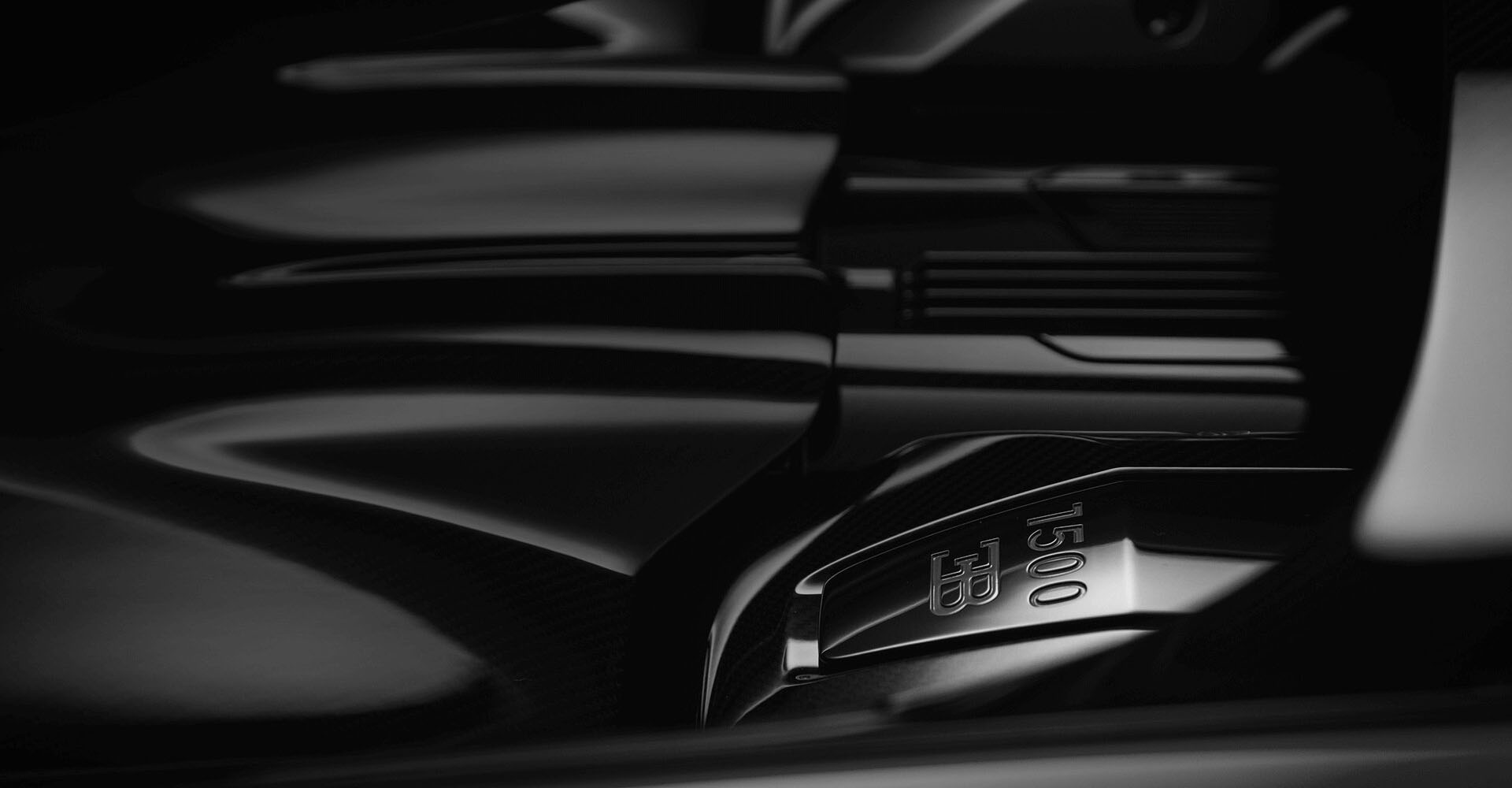
Higher performance and rpms have led to an increase in vibration which, in turn, creates more stress on the chain drive and the valve train, including the four camshafts and 64 valves. To improve durability at maximum rpms, Bugatti resized the bearing bolt of the chain tensioner, among other components. This also required a modification of the cylinder head. Modified valve springs with steel spring bases are now able to withstand the increased stress. In order to comply with current legal acoustic requirements, new, multi-layer, fiber-reinforced chain cases are used to reduce noise emissions. A modified torsional vibration damper at the crankshaft, which is mounted on the belt drive side, allows the engine to run much more smoothly. In addition, Bugatti adjusted the auxiliary component drive, including generator, air-conditioning compressor, water pump and tandem pump to compensate for higher rpms.

More Efficient Turbochargers

Apart from higher rpms, the increase in performance is also a product of optimized and newly developed turbochargers. All four turbos now use a compressor wheel that grew in size from 74 to 77 millimeters, to allow for a higher throughput. The turbine wheel grew from 64.4 to 67.2 millimeters in diameter, to be able to provide more compressor power, necessary for the increase in boost pressure. At full load, 4.8 tons of air flow through the four turbochargers every hour. Optimizing blade geometry improves thermodynamic efficiency. The throttle response is similar to that of the Chiron.
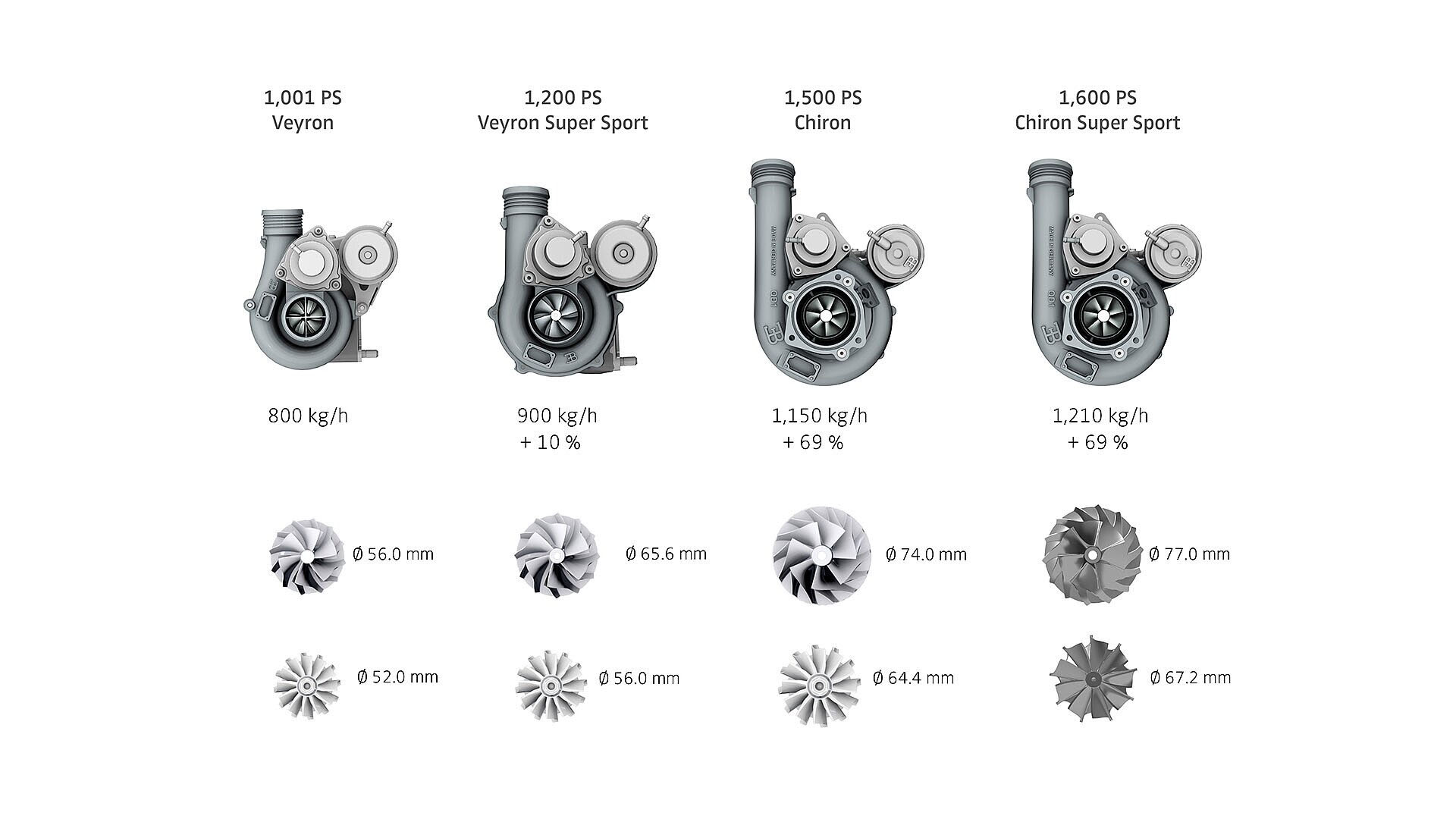
“Despite the increase in performance, the weight of the engine is unaffected, and the response of the turbochargers remains at the same positive level provided by the 1,500 PS engine,” says Andreas Kurowski, Engine Development Engineer at Bugatti.

New Gear Ratio

To achieve the top speed of 440 km/h, the 7-speed double clutch gearbox employs a new gear ratio. The seventh gear is 3.6 percent longer, compared to the Chiron. Due to the increased performance, at full load and full acceleration, the 7-speed double clutch gearbox shifts from sixth to seventh gear at 403 km/h. The Chiron Super Sport accelerates from 0 to 200 km/h in 5.8 seconds and reaches 300 km/h in 12.1 seconds. The difference is even greater for the acceleration from 0 to 400 km/h, a speed which the Chiron Super Sport achieves in 28.6 seconds. This makes it 12 percent, or four seconds, faster than a Chiron. To make traction interruptions during shifting imperceptible to driver and passengers, the boost pressure control has been refined for the individual gears. Even at 6,000 rpms, the acceleration continues relentlessly and gives the Chiron Super Sport an enormous push up to 7,100 rpm.

Newly Developed and Refined Chassis

Bugatti redeveloped the chassis of the Chiron Super Sport with utter focus on high-speed performance and the car’s new aerodynamics. For this reason, engineers increased the rear axle spring rate by seven percent, compared to the Chiron, in order to further stabilize the Chiron Super Sport at speeds above 420 km/h.

The longtail design leads to a shift in axle load distribution, which we have taken into account when we tuned the chassis,” says Jachin Schwalbe, Head of Vehicle Development at Bugatti.
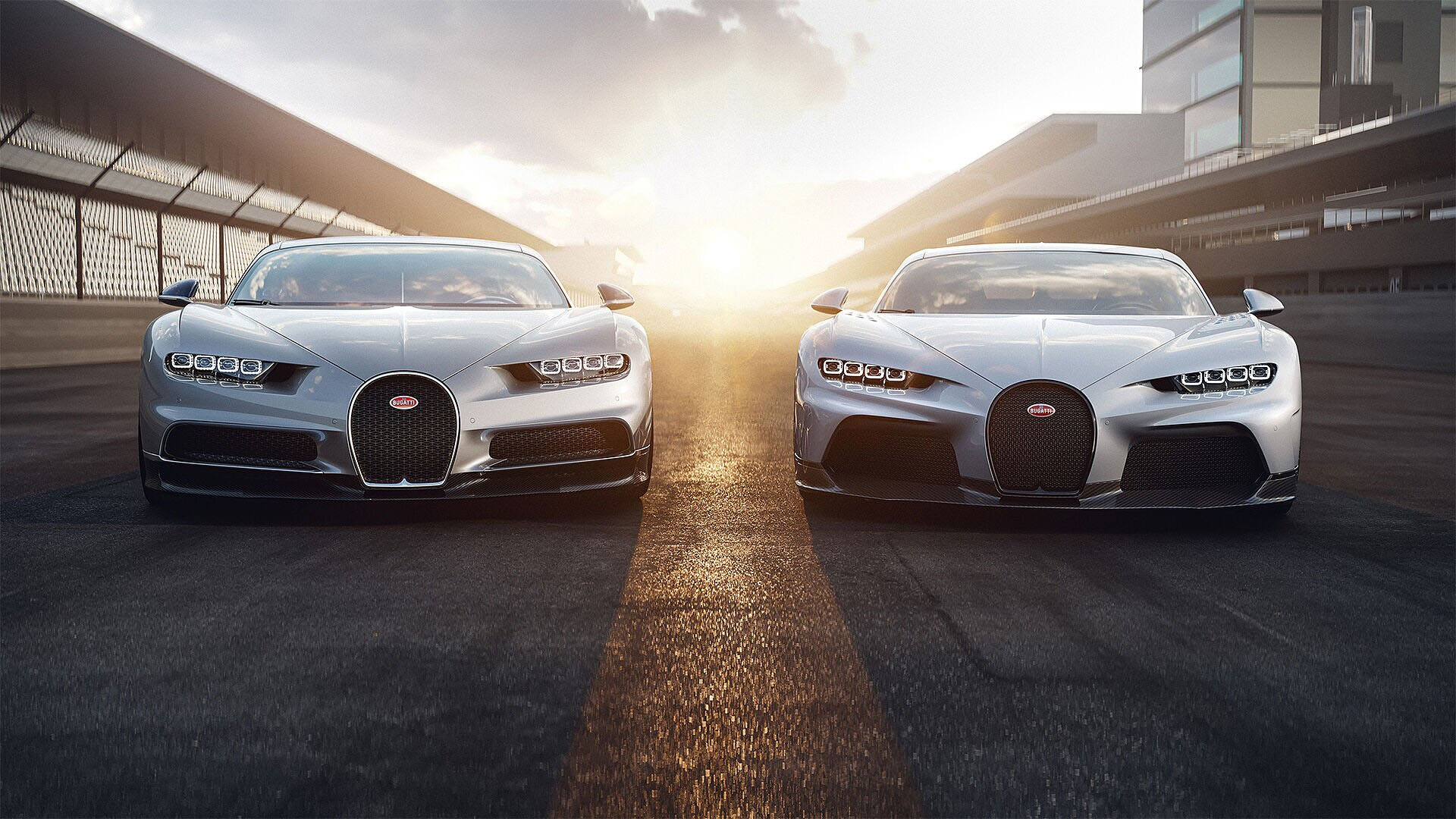

In combination with the longer tail section and the modified front, the Chiron Super Sport achieves an improved aero balance at high speeds. For this purpose, the engineers retuned the electronically controlled chassis and adjusted the damping of vehicle movement. Within six milliseconds, almost in real time, it adjusts the dampers and adapts to the vehicle’s movements.

New Michelin Tires for Top Speed

Newly developed Pilot-Sport-Cup-2 tires from Michelin, optimized for the higher top speed, offer more rigidity and running smoothness above 420 km/h than the Chiron. The individual tires were tested at speeds above 500 km/h. This has been made possible by a new technology using reinforced layers, capable of withstanding incredible forces – tested in a facility originally built for fighter jets. The front tires are sized 285/30 R20 ZR and the rear tires 355/25 R21 ZR. After production, every tire is x-rayed to detect even the smallest irregularities. Michelin Pilot-Sport-Cup-2 tires are designed for extreme longitudinal dynamics and therefore support the philosophy of the Bugatti Chiron Super Sport.
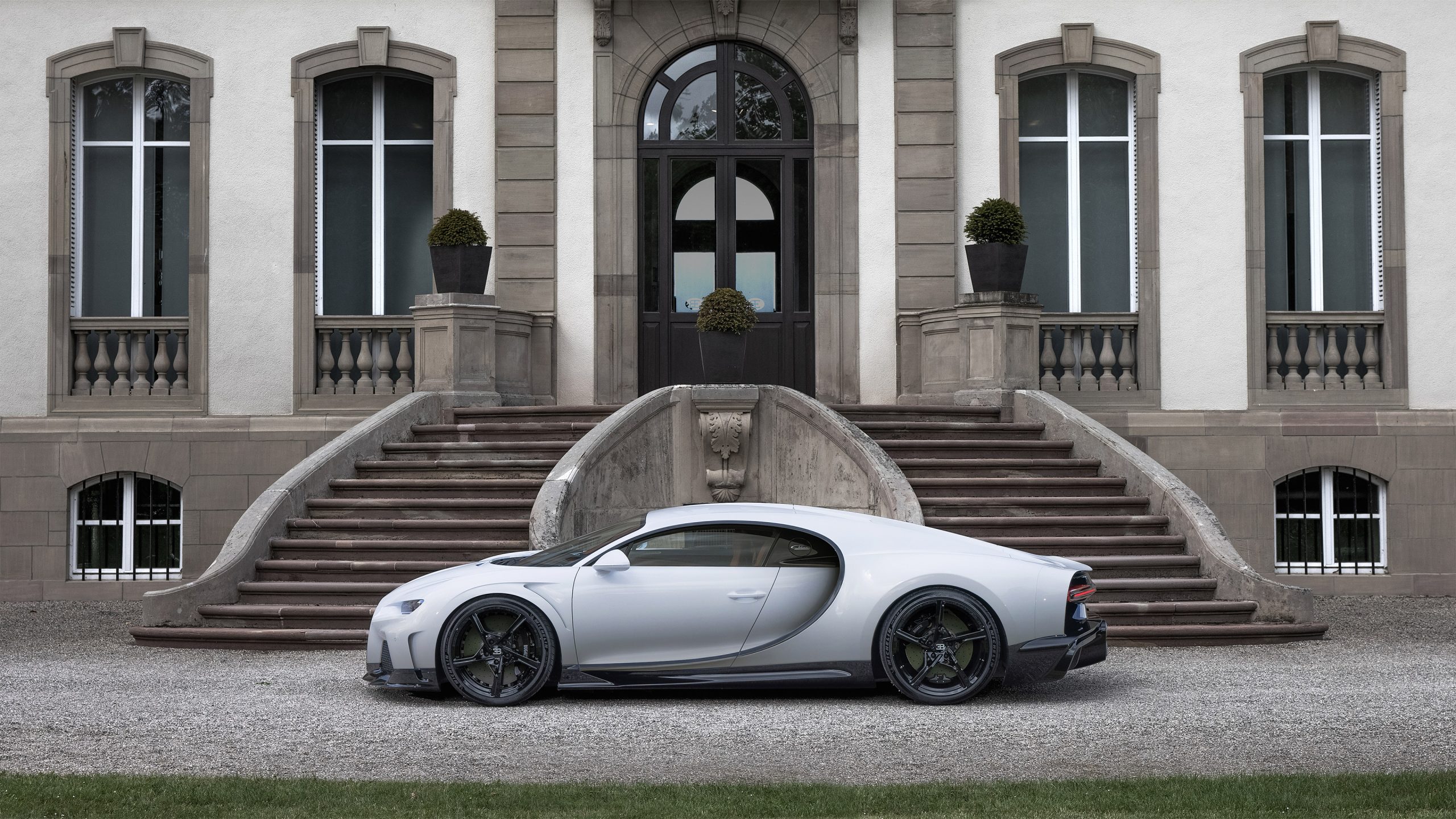
Lightweight Rims with a New Design

To reduce unsprung mass, Bugatti developed new five-spoke aluminum rims, weighing four kilograms less per set than those of the Chiron. They also increase rigidity for longitudinal dynamics, making them a perfect fit for the Chiron Super Sport. As an option, Bugatti offers a magnesium rim set that weighs 16 kilograms less than regular Chiron rims, thereby further reducing unsprung mass at the axles.

With the Chiron Super Sport, Bugatti developed an extreme hyper sports car. Many technical modifications and the pursuit of perfection make it the fastest production vehicle with a very own character, a unique design and an unrivaled level of luxurious comfort. Bugatti manufactures the Chiron Super Sport at its headquarters in Molsheim. The first vehicles will be delivered to their new owners in early 2022, at a net price of 3.2 million euros.

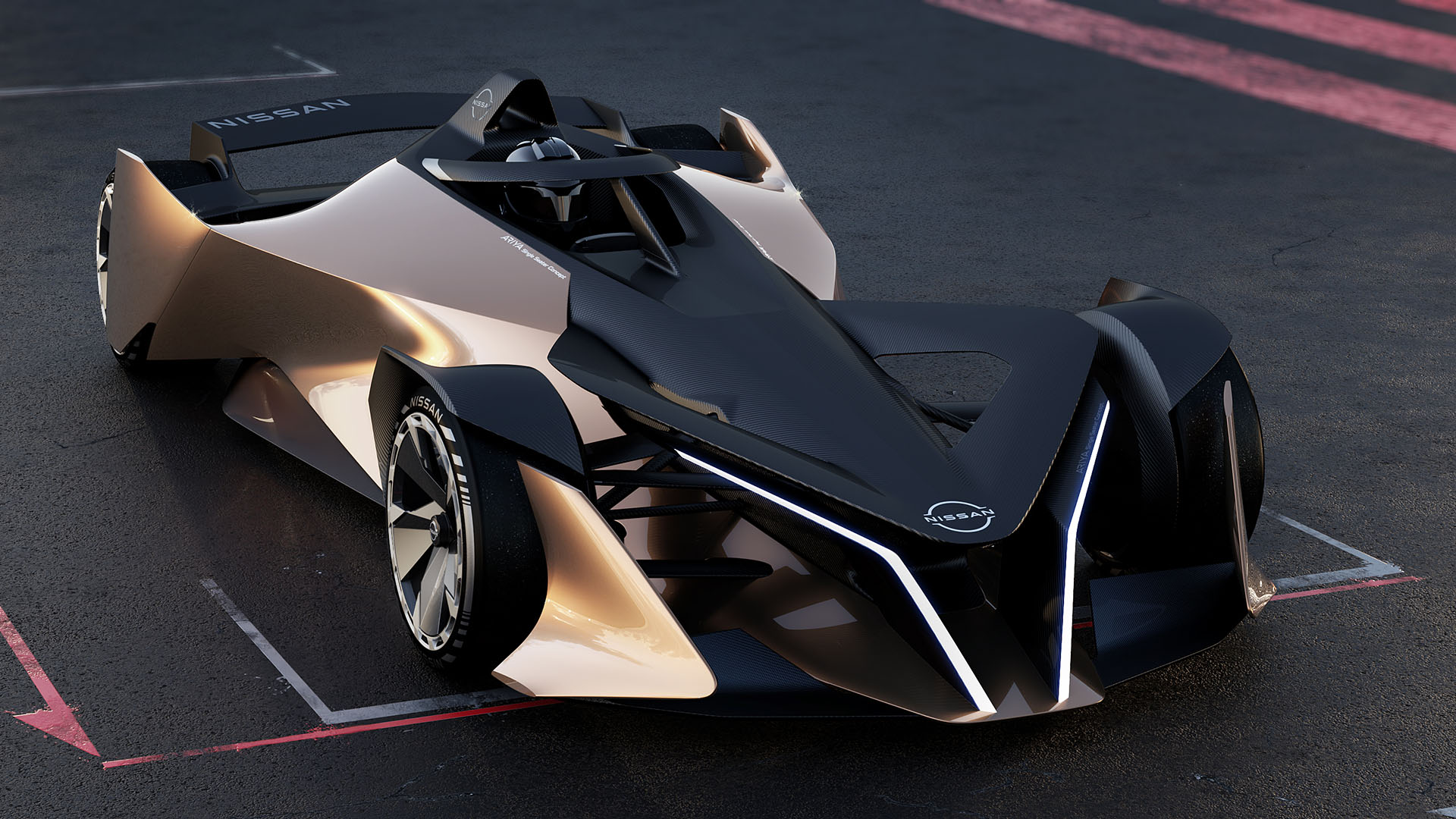
A visit to the 2021 Essen Motor Show

I know there is the world-famous SEMA show in Las Vegas, the ultimate event for tuning and customization, but over here in Europe, we have the Essen Motor Show, an annual show (the 2020 version was canceled thanks to the global pandemic) that combines sports cars, tuning & lifestyle, motorsport and classic cars all in one event, and tens of thousands of visitors from all over Europe and even from further away make the trip to Germany in late November to enjoy this impressive, mostly indoor event.

The 2021 edition was the first one after a year of absence, and sadly some strict safety and hygiene rules still exist to date, like wearing a face mask at all times, and I think this has scared away some exhibitors this year, I was able to visit the preview day as a member of the press, and it was obvious not all halls were open this year, and the halls that were in use still had some vast spaces open … it seems the organization really had a hard time filling up the space.

But that didn’t keep me from walking around the Essen Messe for hours and admiring some really amazing cars, all sorts of cars, and that’s what I like about this event, it’s not just about tuning, or classics, or any other segment of automotive interest, it’s about all of them, please enjoy some of the impressions I managed to capture today in the extensive image gallery below:

First up a series of racecars, or race-inspired concepts:

A classic Ford GT
Very menacing looking, black Ford GT racecar
A genuine Lamborghini Gallardo GT3 FL2 racecar prepared by Reiter Engineering GmbH
Amazing looking Audi R8 LMS GT3 evo II
A very wild looking VW Golf
Audi RS3 concept

How about something really different:

the odd ones at the 2021 Essen Motor Show

The massive Mercedes AMG G63 6×6
A classic rat rod, usually there are more on show in Essen
You can’t have an Essen Motor Show without a low rider … or two
A classic Mercedes 500 SEC on an airbag suspension
And then you find a genuine tractor pulling monster at the Essen Motor Show

Tuning mayhem:

A large amount of tuning is always shown at the Essen Motor Show, from the Nissan GTR over the Supra to just about any other make out there:

This extremely wide VW Golf 2 was in fact a mid-engine conversion
Really wide and low riding Nissan GTR
You simply can’t beat an RWB Porsche …
This satin white Wiessmann looked really amazing
It seemed the theme for this Essen Motor Show was widebody …
The Pandem kit does look very impressive, especially with that rear wing
A nice first-gen Honda NSX, in the USA this would be an Acura NSX I guess.
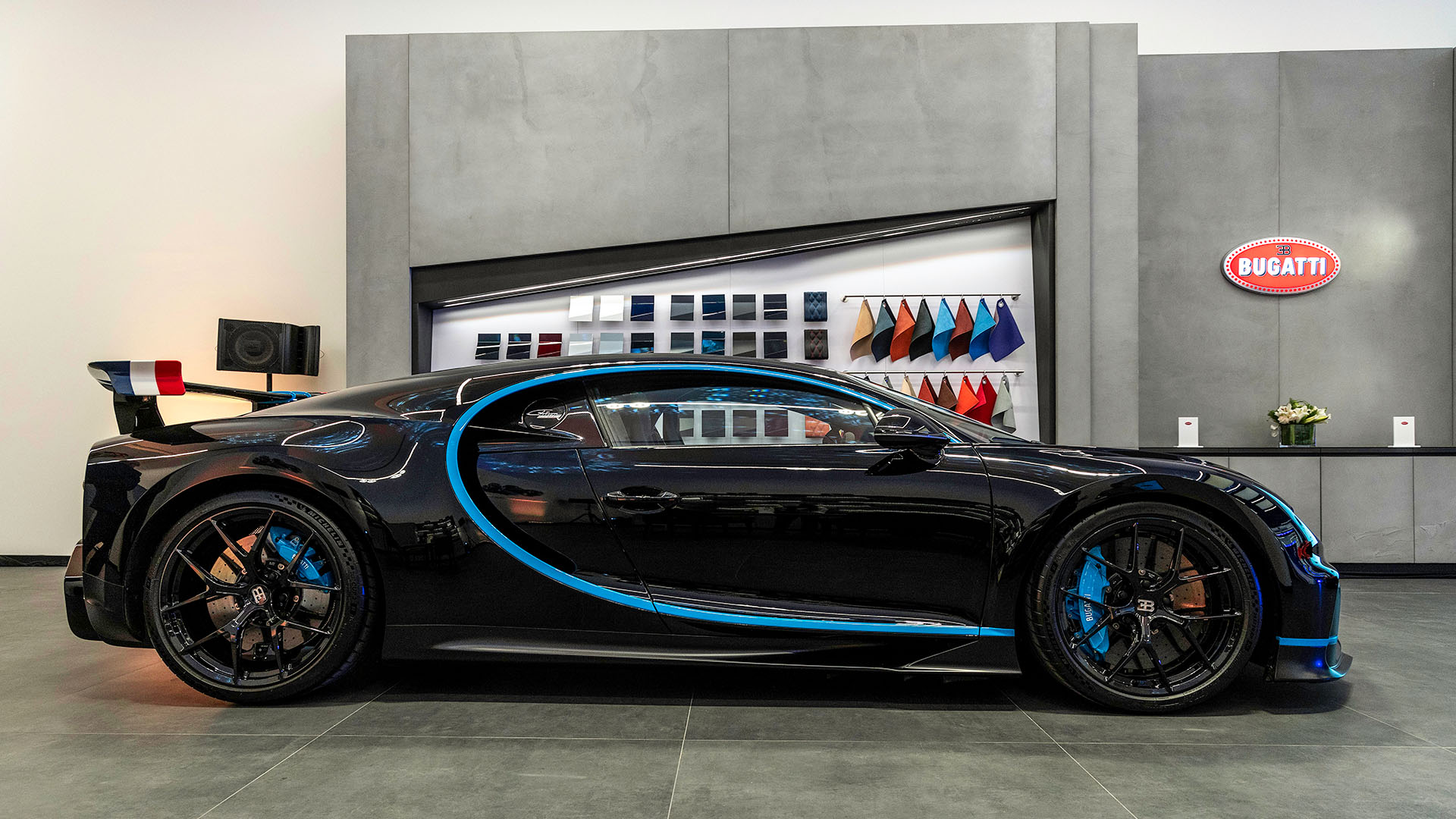
Low, wide, and white … beautiful Porsche on display
If you have it, flaunt it … even if that means leaving the rear bumper in your garage
Ultra wide old school VW Golf in Candy Apple red.
Wide body BMW 3-Series looking mean in this very dark metallic green
I do like the split rear wing on this widebody beauty
How low can you go? Audi R8 V10 on ‘bags’
Nope, the Stradman didn’t have a car in Germany, but it would match his LB-Works Limited Roadster.
Clean and mean, just another Nissan GTR at Essen
If you decide on adding a wrap to your car, get it right the first time and stand out from the crowd
This white Nissan GTR almost looks like it came straight from the track
I just noticed the rear fender and couldn’t resist taking a photo of this Porsche
Prior Design widebody Lamborghini Urus in ‘Lizard Lime’
Really nice Lamborghini Aventador S Roadster in matt black
Not sure what the 384 km/h stood for, but it was a special shade of red indeed

Movie cars

Usually, one or two movie cars are on display at the show, but this year there was a bundle of them

Who doesn’t remember the Dodge Charger from the Dukes of Hazzard series?
A few cars driven by Dominic from the Fast and Furious franchise
Three more cars from the earlier Fast and Furious movies
I just loved this Mustang from Gone in 60 seconds
The red Coyote, from Hardcastle and McCormick
I guess we all know where this car was used in, right?
The Mad Max movie car …
You can’t have a show with movie cars and don’t have this famous DeLorean on display.
Who you gonna call?

The final few, the odd ones:

Absolutely stunning Koenigsegg Regara on display at the 2021 Essen Motor Show, I love that interior.
BMW M4 drift car build, note the exhaust coming out where the rear window used to be!
Who needs a windshield right? Very special looking Mercedes shown here
Classic cars? You’ve asked for it, check out this amazing looking beauty

I had an absolute blast visiting the Essen Motor Show, I did miss a few of the regulars, and for once I walked away without buying one or more scale models for my collection, it’s only a two-hour drive for me, and this show is usually worth it, this year might have suffered a bit from the global pandemic that just doesn’t seem to go away any time soon, so I was already happy they didn’t cancel the show this year, let’s hope the 2022 edition will be back in full force next year.

Collecting Cars Offering Three Interesting Supercars: A Ferrari, A Corvette, And A Porsche Cayman

More than a hundred exciting and gorgeous examples are offered on Collecting Cars on a daily basis, but this time we’re concentrating on three very interesting examples: a 2010 Ferrari 599 GTB, a 2020 Chevrolet Corvette C8 Stingray, and a 2016 Porsche (981) Cayman GT4.

2010 Ferrari 599 GTB
2010 Ferrari 599 GTB from Collecting Cars

2010 Ferrari 599 GTB

The first notable thing about this example is its really low mileage of only 10,800 miles. The second thing is that the example is equipped with the Handling Grand Turismo Evoluzione (HGTE) handling package.

This 2010 Ferrari 599 GTB was given the Rosso Corsa finish with the paintwork protected by paint protection film (PPF). The exterior is matched with tan leather and Alcantara interior. The steering wheel and column, instrument binnacle, headlining and sun visors, dashboard top, and rear shelf surrounds are wrapped in contrasting Rosso leather with Alcantara highlights.

2010 Ferrari 599 GTB
2010 Ferrari 599 GTB from Collecting Cars

It is equipped with 20-inch five-spoke split-rim alloy wheels with the optional carbon ceramic brake discs with red calipers.

Powering this beauty is the ‘Tipo 140C’ 6.0-liter naturally aspirated V12 engine that can produce 612bhp matched with a six-speed ‘F1 SuperFast’ automated manual transmission with paddle shift.

The example was delivered new to Kuwait and it has since moved into its current location in Newbury, Berkshire, United Kingdom.

2010 Ferrari 599 GTB
2010 Ferrari 599 GTB from Collecting Cars

It was last serviced by specialist Sports Italia Ltd in October 2021.

As of writing the current bid for the 2010 Ferrari 599 GTB is £40,250 with the auction closing in 5 days.

2020 CHEVROLET CORVETTE C8 STINGRAY
2020 Chevrolet Corvette C8 Stingray from Collecting Cars

2020 Chevrolet Corvette C8 Stingray

This Corvette Stingray is practically new and had just come out of its first service which was done last November 4, 2021.

The example was given a bold Torch Red finish matched with a two-tone black and Adrenaline Red leather interior. Some features of the example include an eight-inch infotainment screen with the Infotainment 3 Plus system, 4G hotspot, Bluetooth connectivity, with Android Auto and Apple CarPlay compatibility. It was also given heated and ventilated electrically adjustable seats, heated rear screen, cruise control, 14-speaker Bose sound system, and air conditioning.

2020 Chevrolet Corvette C8 Stingray
2020 Chevrolet Corvette C8 Stingray from Collecting Cars

Under the hood are the naturally aspirated 6.2-liter LT2 V8 engine that can produce 496 hp, matched to a Tremec eight-speed dual clutch automatic transmission with paddle shift. The example was also equipped with an optional dual-mode performance exhaust system.

This Corvette C8 Stingray has been recalled for updates and preventive repairs.

2020 Chevrolet Corvette C8 Stingray
2020 Chevrolet Corvette C8 Stingray from Collecting Cars

With only 3,616 on the odometer, this example is practically new.

As of writing, the Chevrolet Corvette C8 Stingray has a bid of $200 with the auction ending in six days.

2016 Porsche 981 Cayman GT4
2016 Porsche 981 Cayman GT4 from Collecting Cars

2016 Porsche (981) Cayman GT4

This Cayman GT4 was given Carrara White Metallic finish and has a full paint protection film (PPF) around the front end. The interior is clad in black leather and Alcantara, while the seat belts and fabric door pulls are finished in yellow.

Featured equipped in the car include Porsche Dynamic Light System (PDLS), fire extinguisher, the Smoking Package, passenger-side storage net, and Sport Chrono Package.

2016 Porsche 981 Cayman GT4
2016 Porsche 981 Cayman GT4 from Collecting Cars

The exampled is powered by a mid-mounted 3.8-liter naturally aspirated flat-six engine matched with a six-speed manual transmission. It has graphite 20-inch GT4 wheels, black rear wing supports, and red brake calipers.

Its most recent service was done by Milton Volkswagen where they replaced the tires and front spoiler and did some paintwork correction.

The odometer shows a mileage of 33,694 km. The sale with come with the original owner’s manuals and spare key.

As of writing there is still no bid on the 2016 Porsche (981) Cayman GT4 with the auction ending in 7 days.

2016 Porsche 981 Cayman GT4
2016 Porsche 981 Cayman GT4 from Collecting Cars

Stallion 4×4 Will Exclusively Cater To Ford Bronco Owners

If you count yourself as one of the few whose new Bronco is shipping out soon, Stallion 4×4 might have something for your aftermarket projects. Over the years, surveys conducted by carmakers show that people love to tinker with their rides. With Ford’s new SUV generating a lot of buzz, owners are eager for more customization options.

These days, a selection of colors is no longer enough for buyers who want their machines to stand out. Given the highly anticipated return of the new Bronco after a lengthy 25-year hiatus from the automotive scene, the Blue Oval is prepared to impress the platform’s fans.

It’s doing so by offering the off-roader in a variety of trim levels and configurations. Stallion 4×4 knows official upgrades can be quite limiting when enthusiasts are going for bespoke. As such, they will soon market a wide array of unique accessories both in-house and third-party.

As an expansion of Jeep Wrangler specialist Quadratec, interested parties are assured of top-shelf craftsmanship and quality here. Stallion 4×4 is yet to share more details about the catalog, but gives us a glimpse of what’s possible instead.

For now, we have an image of a kitted-out Bronco that looks jaw-dropping. By default, the SUV already looks good, but Stallion 4×4 knows you can enhance the silhouette even further. Owners can switch out a few parts and throw on even more upgrades.

From what we could gather from the image, it sports additional LED lighting on the roof and front bumper. Stallion 4×4 also takes out the regular doors and installs a custom set with cutouts. The wheels are now shod in beefy MAXXIS all-terrain rubber. Stallion 4×4 will have more to share soon.

Learn more

Images courtesy of Stallion 4×4