All posts in “Rides”

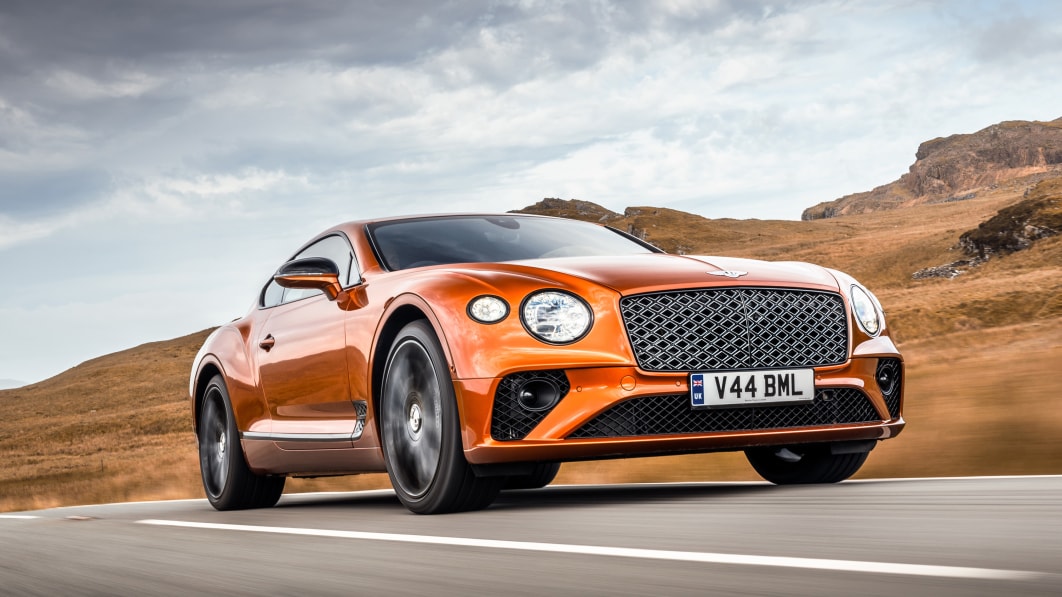
Bentley Introduces New ‘S’ Models: Continental GT S and GTC S

Bentley has launched a new S range focused on driving performance and visual presence. The S range emphasizes on Bentley’s “Wellbeing behind the wheel” concept and adjusts Bentley’s grand touring recipe to centre on the pleasure of driving through multiple enhancements.

The S range retains the 4.0 litre V8 engine delivering 550 PS and 770 Nm of torque and the acceleration from 0-100km/h is achieved in 4.0 seconds. Additionally, for the GT and GTC S, the engine is enhanced with a Sport Exhaust fitment as standard.

The lighter 4.0 litre engine gives the Continental GT S model a responsive and agile character amplified by Bentley Dynamic Ride. Motors within the anti-roll bars actively minimise body roll under hard cornering by generating upto 1300 Nm of torque in 0.3 seconds while also improving the ride comfort at cruising speeds.

The exterior of the new S models feature black gloss radiator grille, S badge on the front fenders, dark tinted headlights and rear lights, Bentley badge finished in bright chrome, gloss black wing, quad exhaust tailpipes in black, brake callipers finished in red and sill extenders in black.

The S range is offered with a set of 22 inch wheels with Y-shaped spokes finished in gloss black and also available in new Pale Brodgar Satin finish. 21 inch wheels in tri-spoke design will also be available as a second option.

The interior design of the GT and GTC S features metal S signature badge on the fascia, S design seats, S emblem on the headrests, suede-like properties of Dinamica on the steering wheel, gear lever, seat cushion and seat backrests and leather upholstery on the seat bolsters, door pads, instrument panel and on the centre console.

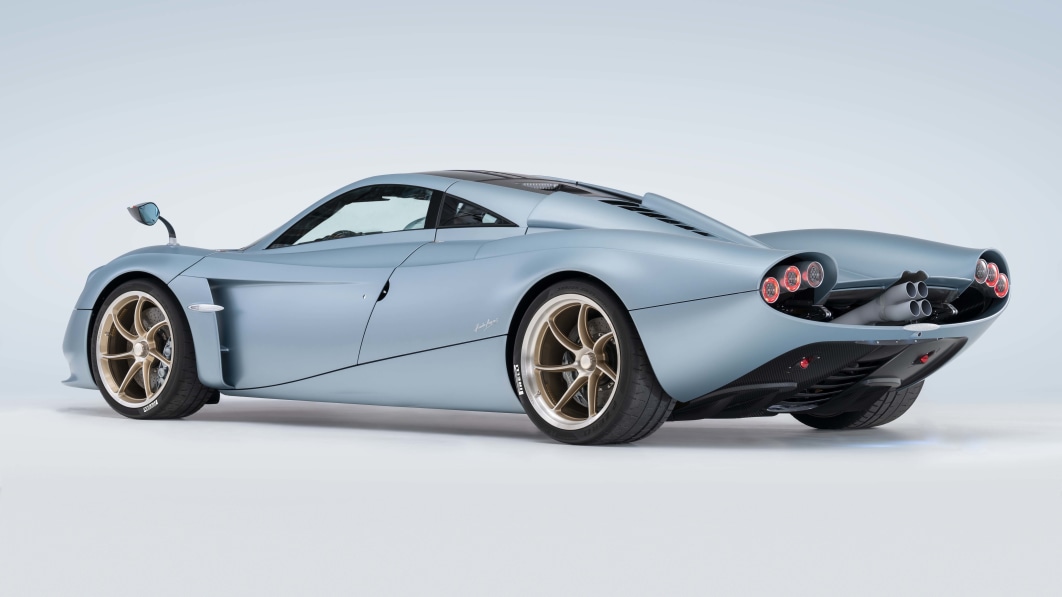
Pagani Huayra Codalunga is Italian for ‘longtail’

Have you ever taken a look at the Pagani Huayra in your driveway and wished that it was even more unique and exclusive? No? You say you don’t have one? Ah, well it’s surely because you’ve been waiting for that unique and exclusive version (and felt the other unique ones of late weren’t good enough). And that car is here. The Italian supercar builder has announced a stunning variant called the Huayra Codalunga that will cost $7.34 million and have a production run of just five units.

Codalunga means “longtail” in Italian, and describes perfectly what makes this Huayra unlike the others. Pagani says that it’s a tribute to the speed machines of the 1960s. Starting with the Huayra Coupé, Pagani stretched out the body and gave it some extra-sleek lines inspired by 1960s race cars and aircraft. 

“We drew inspiration from the long tails of the 1960s that raced at Le Mans,” explained Horacio Pagani in a statement. “We have taken away rather than added. Simplifying is not at all straightforward, and this vehicle is, above all, the result of a complex pursuit of simple ideas.”

The Codalunga was developed by Pagani Grandi Complicazioni, their in-house division for special projects. The genesis dates back to 2018, when two unnamed customers asked Pagani to create a long tail version of the Huayra. Since then, the two have worked closely with the company to usher the car into fruition.

Beneath the elegant bodywork, which includes an engine cover that is 14 inches longer than on the Huayra, sits a variant of the 6.0-liter AMG V12. In Codalunga guise, it makes up to 840 horsepower and 811 lb-ft of torque. Despite its increased length, the Codalunga actually weighs less than the Coupé, tipping the scales at just 2,820 pounds. An exposed exhaust system is fabricated from titanium and weighs only 9.7 pounds.

Since only five will be made, and there were two customers who commissioned the car, our rudimentary math skills indicate that there will be three left. Pagani didn’t say how one could go about asking for a quote, but when you’re dealing with this kind of money and exclusivity, it’s probably more of a “we’ll let you know” situation. And really, we wouldn’t be surprised if those other three examples have already been sold.

Related Video:

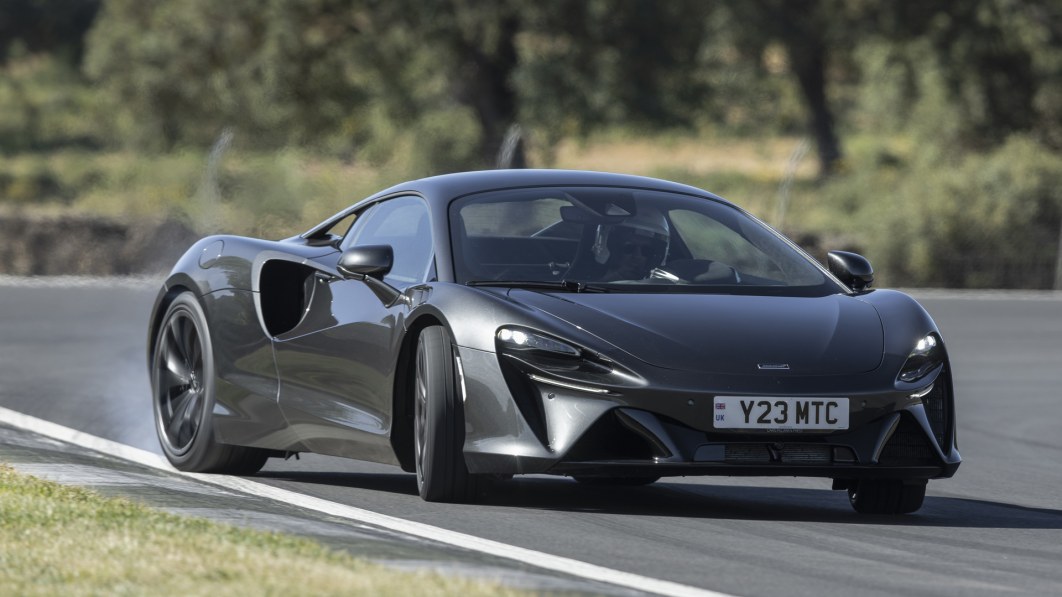
McLaren Artura First Drive Review: Twinsies with Ferrari

MALAGA, Spain — Back in the early 2000s, when my mother was still rapidly spending down the proceeds of a profitable divorce from her second husband, she would occasionally send gifts to me and my boyfriend. One Hanukkah, she mailed us a pair of matching flannel robes from L.L. Bean. At least three other male couples we knew received this gift from a mother that holiday season, so perhaps there was some osmotic zeitgeist wafting in the ether, but this did not make it any more appropriate. Not only do I feel about robes the same way I feel about sweatpants — that they epitomize the most tragic abdication of human effort — but, following a one-time visit to Saugatuck, Michigan, a haven for Midwestern queers in matchy-matchy polos and Bermuda shorts, my partner and I had developed a strict policy: No Gay Twinning.

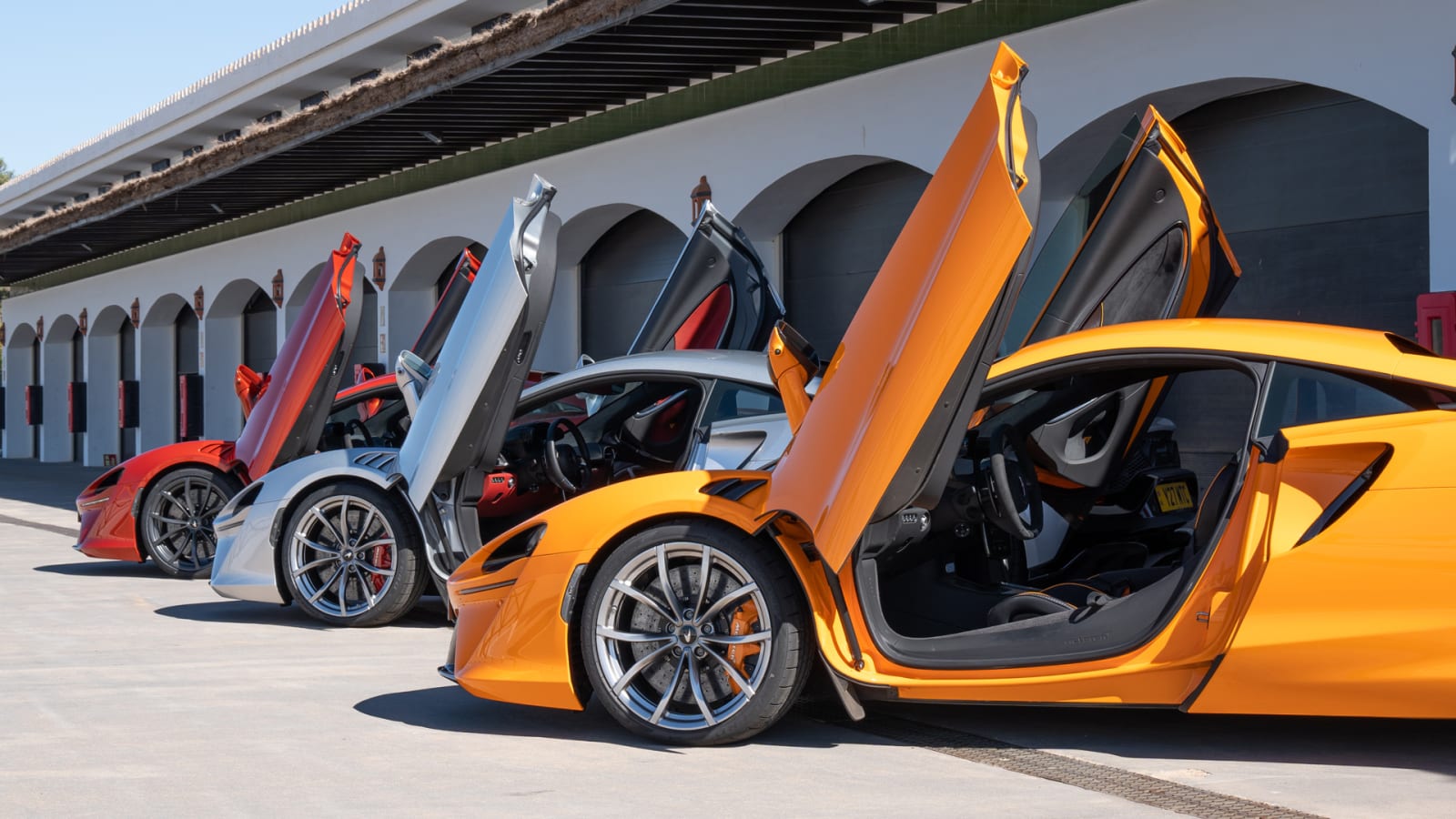
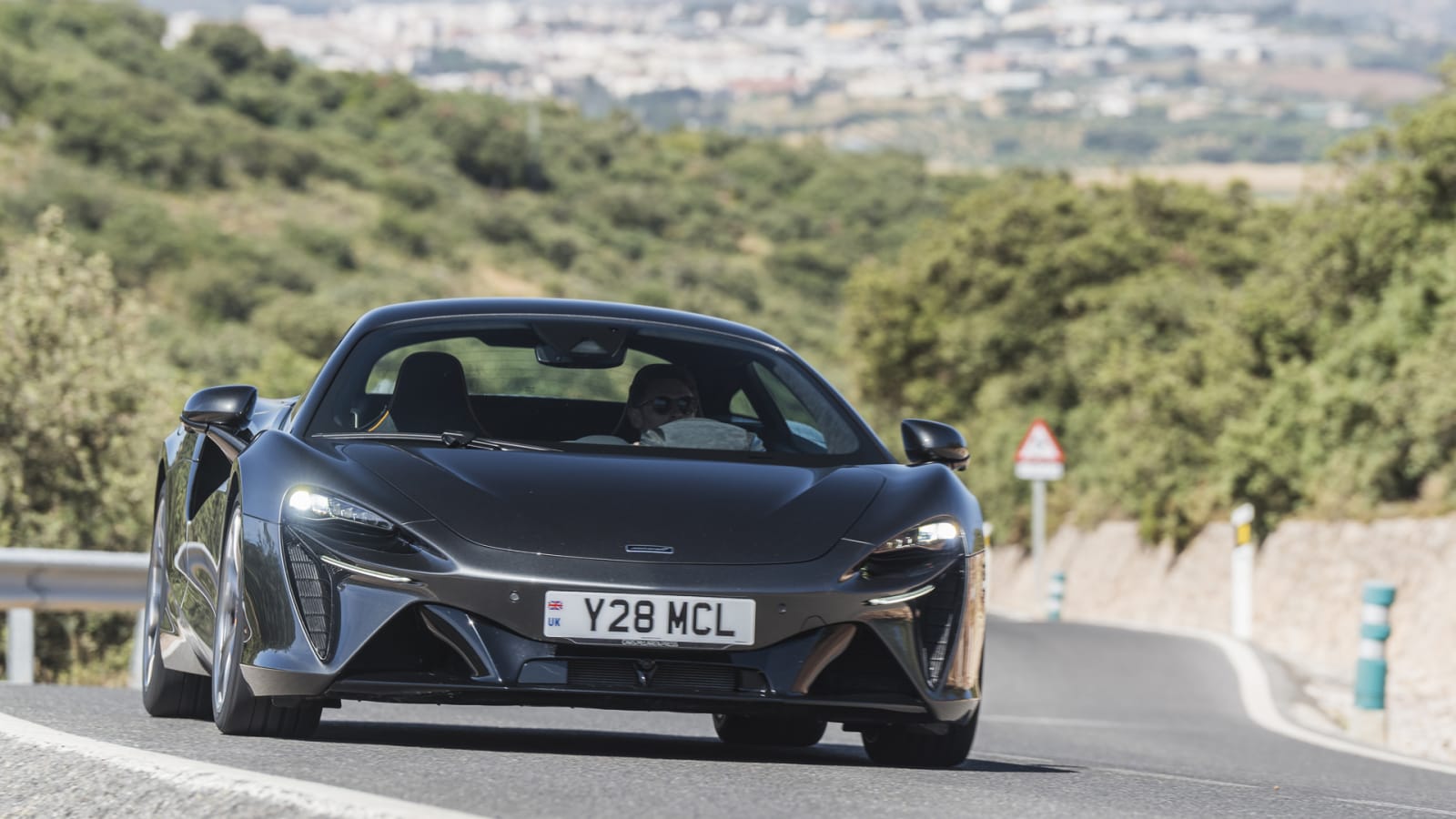
Decades later, Ferrari and McLaren have both released six-figure, mid-engined, entry-level, 180-inch, rear-wheel-drive sports coupes featuring twin-turbocharged 120-degree V6 engines combined with an electric motor and an integrated battery pack that can be plugged in. I just completed a road drive and track time with the McLaren Artura, and it raises the question: Is this some more of that osmotic zeitgeist, or are the companies twinning each other?

I haven’t yet driven the Ferrari 296 GTB, but I can speak to the ways these cars don’t precisely match. Unlike the Ferrari, which is among the Italian brand’s most potent regular production road cars, with a combined ICE/EV output of 818 horsepower and 546 pound-feet of torque, the McLaren Artura makes do with a paltry 671 hp and 531 lb-ft of twist, placing it downrank in the brand’s lineup. But whereas the Ferrari has 3,700 pounds to motivate, the McLaren has just 3,300. This means that their 0-60 times are evenly matched, at around the 3 second mark, and their top speeds are identical at 205 mph.

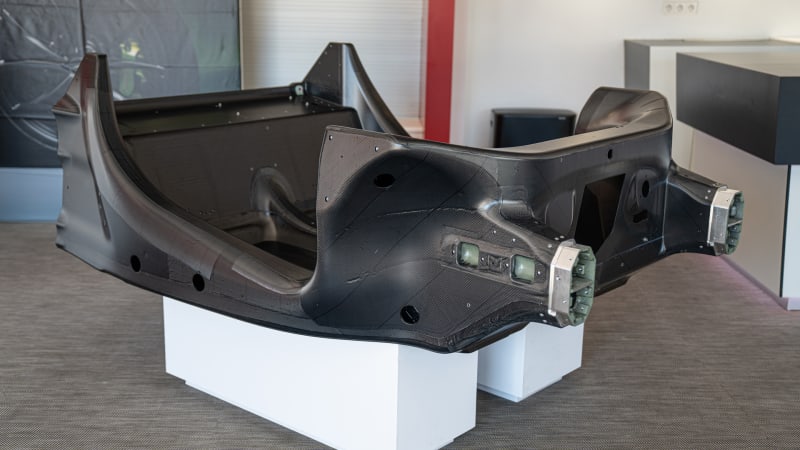
McLaren achieves this parity the same way it usually does, via a monomaniacal focus on weight saving. This includes such lunatic wizardry as utilizing an all-new carbon fiber and aluminum sub-structure, thinner front windshield glass, an electric motor light enough to wear as a bracelet, and the aforementioned compact V6. It also implements an ethernet-based electrical system to reduce the weight of all the wiring contemporary vehicles require for their innumerable infotainment features.

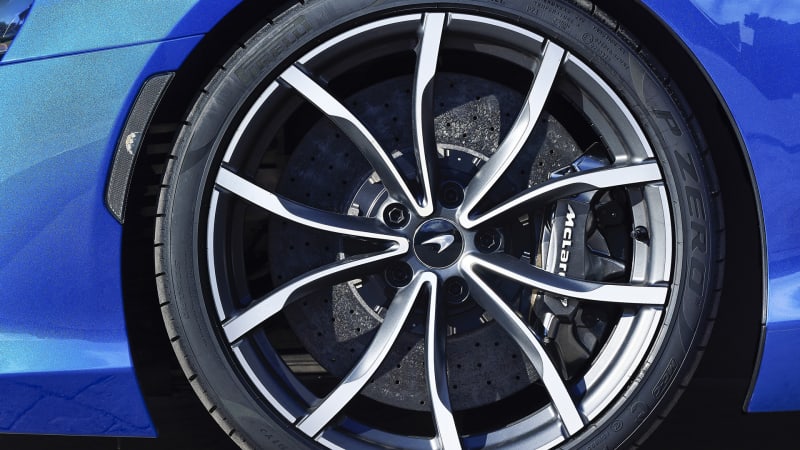
With its short wheelbase, overall compactness and all that power, the Artura actually feels lithe on its tires — which, by the way, feature Pirelli’s first production iteration of its sensor and Bluetooth-based Smart Tire, allowing the car to instantly know exactly which type of 235/35/ZR19 (front) and 295/35/ZR20 (rear) tires are on the car — street, track or snow — how warm the rubber is inside the sidewall as opposed to at the rim, and precisely how much air is contained within. George Orwell said ignorance was strength, so I’m not certain why we’d want to know all of this, and the one time I actually got to use the feature on the track, the McLaren tech who was present overruled the red warning light and deflated the rubber to a pressure he deemed more appropriate. Progress!

Because of, or despite, all this engineering effort, the Artura accelerates with commanding alacrity, and very little drama, particularly in manual (paddle-shifted) mode. And its combination of a very stiff carbon fiber structure and softer suspension settings, common to the brand’s grand touring-focused vehicles, gives it a compliance that is missing from other more hardcore supercars. Though it lacks the trick hydraulic body control system featured on other McLarens, its hydraulic steering, something of a rarity in modern cars, provides excellent feedback. Or maybe it was the smart tires communicating with the smart steering wheel, which now moves, along with the instrument binnacle, as the one on my 1977 Porsche 928. Progress, again!

In addition, big carbon ceramic discs provide excellent braking, handy when chunks of the local geology appear suddenly in a blind corner on a spaghetti-twisted mountain roadway. However, achieving bite, like getting into the forbidden fruit of a candy apple, requires some initial firmness, followed, oft-unpredictably, by a crunch or a squish.

The Artura’s ability to motivate itself, if only for 11 miles, solely on electric power, provides a kind of “oh, neat” factor, useful for gotcha sneak-ups on pedestrians or silent escapes to or from extramarital trysts after sneaking down the drainpipe. But I couldn’t detect as much of the “infill torque” that the tiny electric motor is meant to provide at very low rpm, particularly, as referenced above, when the transmission was in automatic mode. The Artura, like some other six-figure hybrids, has so much technology baked in that it has a tendency to hunt, meanderingly, for its algorithmically-derived ideal of potency and efficiency, especially in city driving or during aborted highway passing maneuvers — Second gear! Sixth gear! No gear at all! This results in a hiccup here and there, as frustrating as when your phone refuses to take a command, but perhaps a bit more dangerous. (Also, your phone doesn’t cost $233,000.) Shifting the new eight-speed transmission manually, or driving flat-out on the track, cures the car of this issue. So, just do that, whenever possible.

Fortunately, you kind of can with the Artura, because for an exotic supercar, in this age of outrageous power and performance, the whole package felt rather livable, every day. This is a brand attribute for McLaren, and reminded me of the company’s first production road car in its modern iteration, the MP4-12C (from the era when McLaren named cars after their own license plate numbers). It even looks kind of mild for a supercar, walking (or running) the line between anodyne and AI generated. It’s a supercar for those who don’t want to stand out. Is that a market segment?

I’m not going to attempt to answer this question. It’s rhetorical device, like the aforementioned red herring of comparing the McLaren to a car I haven’t driven. I ask that you indulge me, however, even if this piece may resemble the Zen-like sound of one robe flapping.

Related video:

Acura Integra to make its racing debut at Pikes Peak Hill Climb

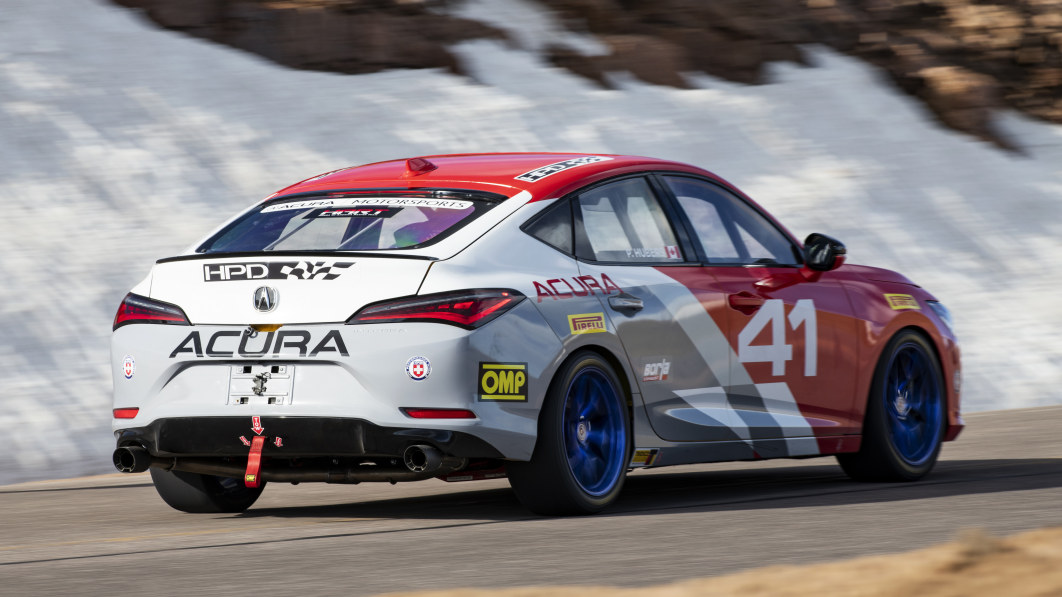
Acura is headed to this year’s Pikes Peak International Hill Climb with a bevy of race cars. Most notable of all is a Pikes Peak-prepped Acura Integra — yes, Acura is already getting the Integra out there for some racing.

Beyond the new hatchback making its motorsports debut, Acura is also bringing two TLX Type S race cars and two NSX Type S racers. For the icing on the cake, an NSX Type S will be serving as the official pace car for Pikes Peak this year, too. This particular running of Pikes Peak is special, for it’s the 100th running of the event. The first hill climb at Pikes Peak took place all the way back in 1916; the race went on hiatus during the world wars.

As for the cars themselves, Acura provided the greatest detail on the Integra. Modifications include upgraded brakes, new suspension, an HPD differential, wider (and lighter) 18-inch HRE wheels and 245-section-width Pirelli slick tires. The 1.5-liter turbocharged four-cylinder and six-speed manual transmission remain untouched, so it’ll be heading up the hill with the stock 200 horsepower and 192 pound-feet of torque. However, we’ll note the this Integra is sporting some extra-large exhaust tips out the rear, so Acura has clearly done something with the exhaust.

The livery for the Integra is an homage to Acura’s first endeavor into motorsports where the first-gen Integra competed in IMSA and won the 1987 and 1988 championships. Pikes Peak rookie Paul Hubers will pilot the Integra up the hill for Acura.

As for the other cars, Acura says that both the NSXs and TLXs are fully prepped for Pikes Peak with plenty of modifications, but doesn’t go into detail about them. The NSX Type S will be trying to beat the previous record set by an NSX in the hybrid fuel class.

All of these Acuras, and the rest of the field, will be running up the hill on June 26.

Relates video:

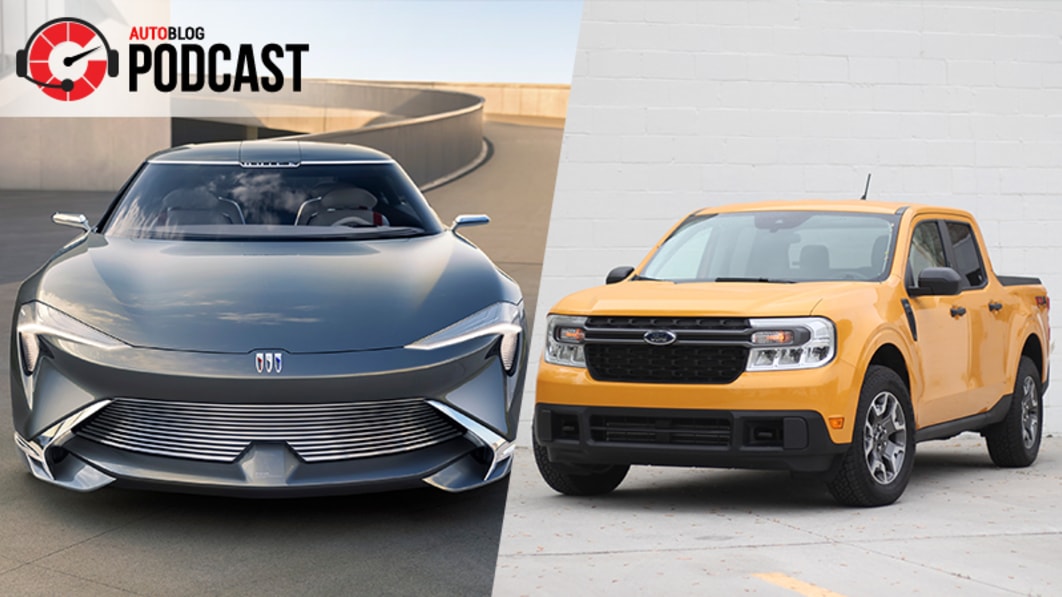
Buick Wildcat and Electra concepts, Ford Maverick | Autoblog Podcast #732

In this episode of the Autoblog Podcast, Editor-in-Chief Greg Migliore is joined by Road Test Editor Zac Palmer. They lead off with a discussion of the news. This section touches on the DeLorean Alpha5, Buick Wildcat EV Concept reveal, revival of the Buick Electra name, production reveal of the Mercedes-AMG One and some scuttle about Volkswagen’s recently-bought Scout brand. After that, they move on to the cars they’ve been driving, including the Ford Maverick and Chrysler Pacifica Hybrid.

After the pair finish with what they’ve been driving, the podcast transitions to an interview between Greg Migliore and former Car and Driver Editor-in-Chief Eddie Alterman. Finally, Greg and Zac wrap things up with some more spring and summer beer recommendations.

Send us your questions for the Mailbag and Spend My Money at: Podcast@Autoblog.com.

Autoblog Podcast #732

Get The Podcast

  • Apple Podcasts – Subscribe to the Autoblog Podcast in iTunes
  • Spotify – Subscribe to the Autoblog Podcast on Spotify
  • RSS – Add the Autoblog Podcast feed to your RSS aggregator
  • MP3 – Download the MP3 directly

Rundown

  • News
  • Cars we’re driving
  • Interview with Eddie Alterman

Feedback

Autoblog is now live on your smart speakers and voice assistants with the audio Autoblog Daily Digest. Say “Hey Google, play the news from Autoblog” or “Alexa, open Autoblog” to get your favorite car website in audio form every day. A narrator will take you through the biggest stories or break down one of our comprehensive test drives.

Related video:

Glickenhaus SCG004CS passes last hurdle, ready for deliveries

After five years of gestation, development, and crash tests for global homologation, Scuderia Cameron Glickenhaus is ready to begin customer deliveries of the 004CS this month. Conceived and developed as a GT3 racer that was then turned into a road car, the New England car company worked with Italy’s Podium Advanced Technologies honing the race version to do well at the Nurburgring. SCG namesake James Glickenhaus took the final ESC calibration prototype to the Concorso d’Eleganza Villa d’Este and talked to Road & Track about what’s ahead. In the immediate future, the Danbury, Connecticut factory expects to have 25 hand-built cars in customer hands by the end of the year, the three-trim lineup starting at $483,000

There’s the standard road-legal 004S — the only one that can be had with a six-speed manual transmission, the road-and-track 004CS, and the track-only 004C. The first two are powered by a supercharged GM 6.2-liter V8 in 650- or 750-horse tune. The track car drops the supercharger, taking it down to 520 hp in endurance racing trim, but that can be upped to 600 horses if the sanctioning body allows. SCG hasn’t disturbed the small block with insanely complicated engineering, R&T summarizing the SCG philosophy in a way that would make any DIY enthusiast weep: “Glickenhaus believes the moment you’re no longer able to get a supercharged Chevy small-block fixed at the local mechanic, the world as we know it would have ended anyway, and your car wouldn’t matter much.”

The other side of that garagiste credo is hardcore racing performance. Despite a software bug, crashes, and errant holes in some parts, the SCG004C finished last weekend’s Nürburgring 24 Hours race in 12th place overall — and first in its class. The four drivers finished just a lap down on the race-winning Audi Sport Team Phoenix R8 LMS GT3 Evo, same as every runner from seventh to 14th, keeping company with much bigger teams like Falken Motorsports with their Porsche 911 GT3R and Mercedes-AMG Team Bilstein in an AMG GT3. 

Despite the team’s entry in the World Endurance Championship, SCG might opt to narrow its focus to the ‘Ring event and Baja, where its off-roaders romp. James Glickenhaus is dubious about how much return on investment the WEC provides, where the disparity between top teams and smaller entries is much larger. “The only question is what we’re going to do going forward with the WEC and what we’re going to do going forward with our hydrogen pickup truck,” he said, in reference to the Baja Boot. “It’s dependent on the capital raise we are in the process of trying to finalize.”

Gordon Murray Automotive torture tests the T.50 hypercar

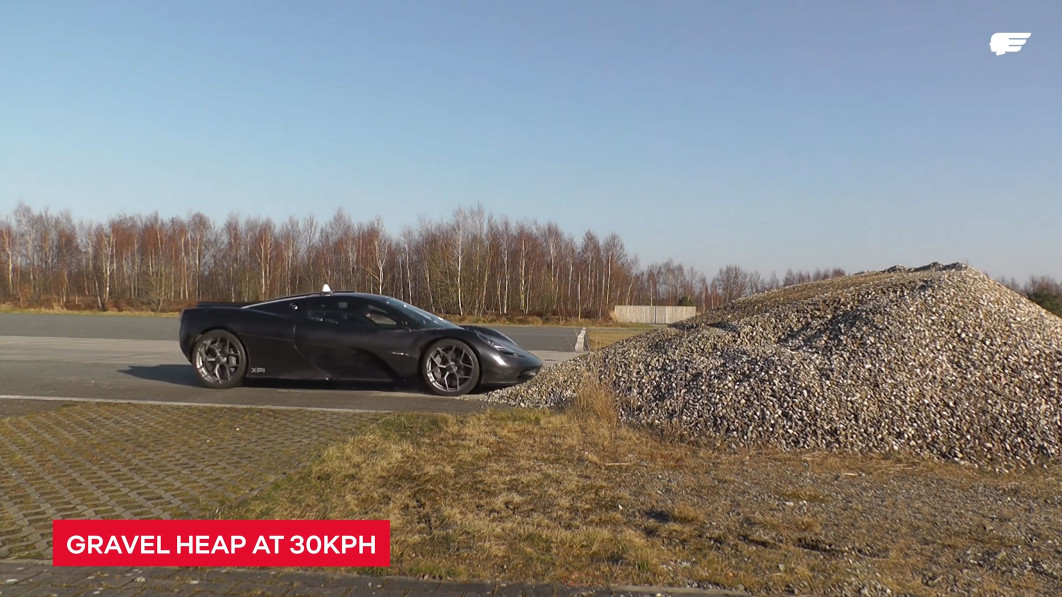
Prepping the Gordon Murray Automotive T.50 for customer deliveries around the world means testing its systems and safety akin to that of a regular production car. For GMA, this mean taking validation prototype XP1 to Automotive Testing Papenburg (ATP) in Germany for a series of torture tests that would be comical if they weren’t so brutal on a real live $2.9 million coupe. As narrator Dario Franchitti explains, many of the tests are to ensure that the airbag deployment systems know how to tell one extreme circumstance from another, so the bag deploys in a crash instead of when the T.50 is launched into a gravel pile. Yep, that’s real. The T.50 was run at nearly 20 miles an hour into — and then up — a seven-foot pile of rocks. We have no idea what the test is meant to simulate but the T.50 aced it, beaching itself over the crest, its airbag un-deployed.

The other challenges drew a more direct line to real-world driving. There’s a 37-mph dash over Belgian cobblestones and another at the same speed over a speed bump, a simulated pothole strike for “anyone who has the misfortune of driving on UK roads,” and a mad dash over a fake railway crossing. The ramp test sends the 2,173-pound, 654-hp coupe flying off a 10-inch ramp at 43 miles per hour. The steel beam test simulates plowing the wheel face into a curb, this experiment breaking a tie rod and damaging a tire. Then there’s washboard at nearly 50 miles per hour, and finally, plowing into a “simulated wild boar” that weighs 180 pounds.

The man behind the machine clearly hasn’t forgotten how to design fast cars that protect their drivers. If Murray had given the T.50 a bit more ground clearance, it might make a decent bug-out ride for anyone who knows how to travel really light.

Related Video

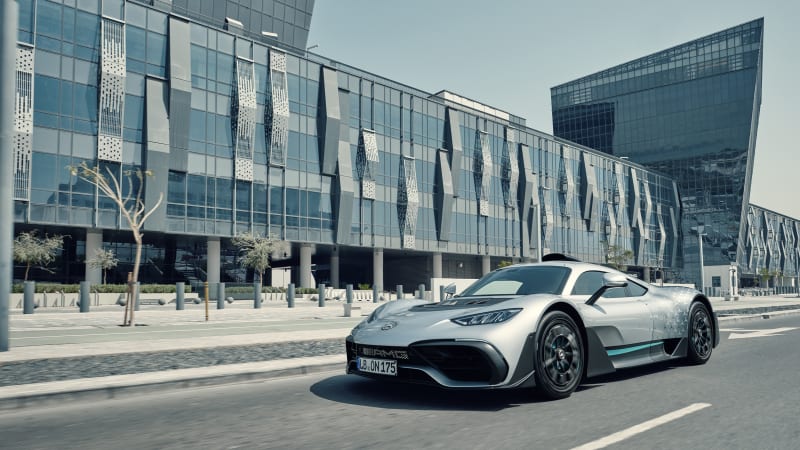
Mercedes-AMG One finally here with 1,049 hp of awesome

Dieter Zetsche and Lewis Hamilton presided over the debut of what was then called the Mercedes-AMG Project One at the 2017 Frankfurt Motor Show. Back then, “the hottest and coolest car” Mercedes-AMG had ever attempted was going to be released in 2019. Then the 11,000-rpm, 1.6-liter V6 engine and its dislike for low-speed urban driving met increasingly strict emissions regulations, and it took the carmaker’s engineering might five years to overcome that hurdle and others. Five years on, the delay provided AMG the chance to launch what is now the Mercedes-AMG One on the 55th anniversary of AMG’s first building, the foundation stone for which was laid on June 1, 1967. 

Not since the McLaren F1 have we seen a road car work so hard to adhere to Formula 1 principles, and in fact, the AMG One (and the Aston Martin Valkyrie) go further. Much has changed since the show car — Zetsche and Moers are no longer Mercedes execs, for instance — but not the vital hardpoints. The root is the E Performance powertrain, which is that 1.6-liter V6 boosted by two turbochargers. The 121-hp MGU-H turbo works off exhaust gasses but gets help spinning up to speed with an electric motor. The 161-hp MGU-K turbo is connected to the crankshaft via a spur gear. There’s 1,049 system horsepower. AMG declined to peg a torque figure, saying, “Specification not possible due to complex drive train.” AMG also declined to list an actual rev limit; the engine’s been designed to spin to 11,000 rpm, but the engineers decided “for longer durability and use of commercial super plus petrol, [the engine] deliberately stays below the F1 rev limit.” Engine output is marked as 566 horsepower at 9,000 rpm, so owners won’t be walled off far away from the physical limits. 

Output runs through a new seven-speed manual transmission with shift rods and four carbon clutches instead of the eight-speed manual in the Frankfurt show car. The fully locking differential is integrated into the gearbox.

Two more motors each contribute 161 hp to drive the front wheels, providing fully-variable all-wheel drive and torque vectoring. They also provide the car a pure-electric range of 11.2 miles thanks to an 8.4-kWh liquid-cooled lithium battery that mimics the unit from the Mercedes-AMG Petronas Formula 1 car, but with more cells. This being a PHEV, the charge port is on the rear left of the car, opposite the fuel filler cap for the 14.5-gallon tank. 

Getting access to the ICE power means pressing the red start button between the front seats. That activates the electric motors immediately. The driver must then wait for the exhaust aftertreatment subsystem to reach operating temperature. The subsystem consists of four metal catalytic converters, two ceramic catalytic converters, and two gasoline particulate filters, and it was the circuit that pushed engineers to their limits.

Once the engine’s given the okay to commence combustion, and given enough road, the 3,737-pound AMG One gets to 62 miles per hour in 2.9 seconds, 124 mph in seven seconds, 186 mph in 15.6 seconds. Maximum velocity is 219 mph.

There are six driving modes. Race Safe is the default on startup, using the electric motors and on-demand hybrid power once the ICE kicks in. EV mode does just what one would expect. Individual combines the driver’s personal preferences. Race keeps the 1.6-liter running constantly so as to keep the battery charged. Race Plus, only available on the track, lowers the AMG One a little more than an inch and tightens the adaptive suspension. A second track-only mode called Strat 2 is equivalent to qualifying setup, optimizing the active aero and firming up the suspension further. That active aero allows a further three settings depending on mode, either Highway, Track, or Race DRS. ABS and a three-mode ESP come standard, for drivers who favor prudence when finding the limit. 

As standard, the package sits on 10-spoke, 19-inch forged aluminum center-lock wheels in front, 20-inchers in back. They can be swapped for nine-spoke forged magnesium center-lock wheels. Both sets are hidden behind carbon covers, and themselves hide a carbon-ceramic braking system with six-piston fixed calipers in front, four-piston clamps in back. Rubber stock is a quartet of specially developed Michelin Pilot Sport Cup 2Rs.    

Dimensions are 15.6 feet long, 6.6 feet wide, and a hair over four feet tall. In the middle of all that is a cockpit built for two people and not much more. The seats are built into the monocoque, their backs able to recline at either 25 or 30 degrees, and an electrically adjustable steering wheel and 11-position pedal box are used to find a comfortable position. Mod-cons like air conditioning, power windows, and mini-USB ports are the most occupants will get for luxury. Luggage capacity is limited to the “high quality stowage compartment” atop the center tunnel.

The announced production run of 275 units is sold out at $2.75 million per. The patient owners and the public get the first glimpse of the coupe driven hard at this month’s Goodwood Festival of Speed. AMG’s latest will be winding its way through the horde of BMW M cars celebrating M’s 50th anniversary. Customer deliveries are expected to begin sometime after that, before the year is out.

Related video:
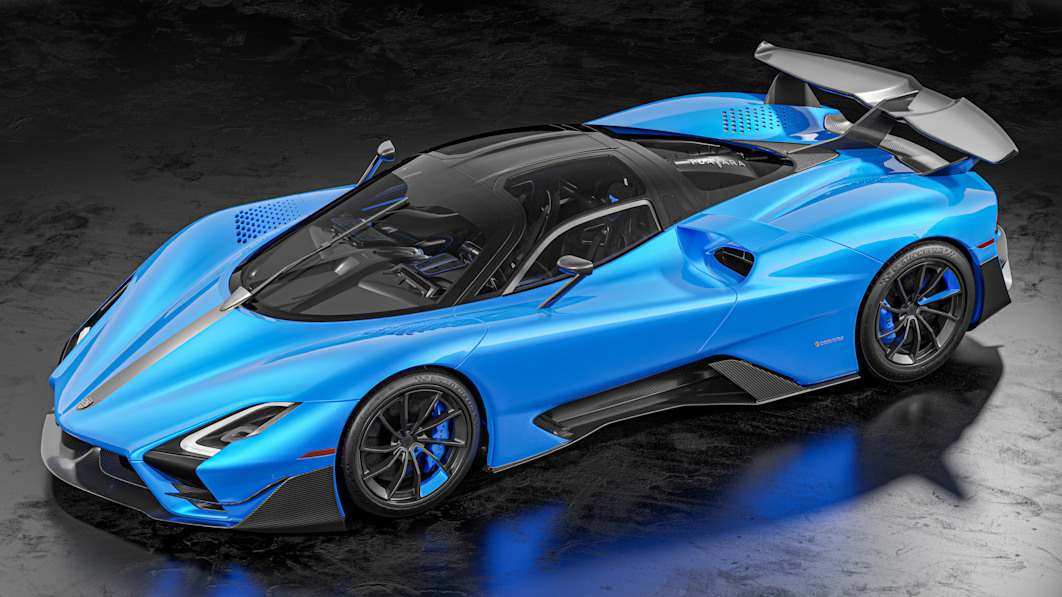
SSC will make a hybrid, all-wheel-drive hypercar alongside the Tuatara

Washington-based SSC announced it will expand its range of hypercars with a hybrid, all-wheel-drive model in the next few years. The limited-edition car is currently being developed, and it’s one of two new models that the firm plans to launch in the not-too-distant future.

Speaking to Motor Authority, company founder and CEO Jerod Shelby hinted that the hybrid model won’t necessarily be part of the Tuatara line. It’s too early to tell how many units will be made, but they won’t be part of the 125-car run that SSC is planning for the Tuatara. And, the gasoline-electric car might not even wear the Tuatara nameplate; SSC could use another name to dial in a further degree of differentiation.

Power will come from a hybrid drivetrain consisting of a gasoline-powered engine mounted behind the passenger compartment and a pair of motors integrated into the front hubs. This setup will give the car through-the-road all-wheel-drive, meaning that there won’t be a mechanical connection between the front and rear axles. SSC has chased speed records in recent months, but electrification isn’t a way to go faster.

“The electrification of the car will make it a more well-rounded vehicle,” Shelby told Motor Authority. He added that going hybrid will notably improve acceleration, on-track performance, and lower-speed characteristics. There’s no word yet on how powerful the model will be, but we’re expecting a significant amount of power: the Tuatara is powered by a 5.9-liter V8 that’s twin-turbocharged to 1,750 horsepower.

Meanwhile, the carmaker also hopes to open a bigger factory in about 2025 to manufacture a smaller (and presumably more volume-oriented) model that Shelby envisions as “a little brother” to the Tuatara. It sounds like SSC has its work cut out for the 2020s.

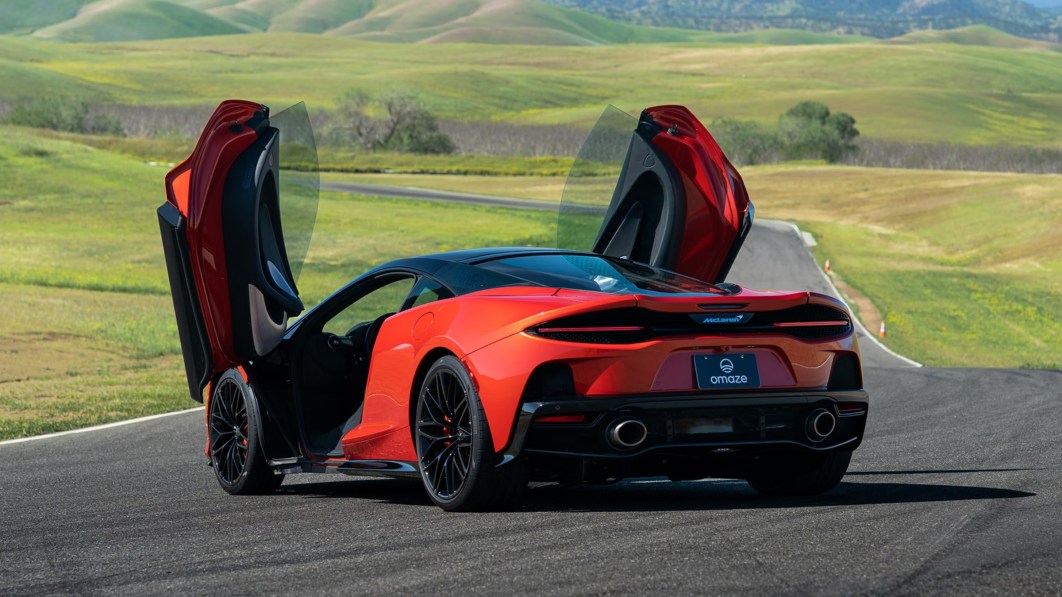
Make this summer one to remember by winning a 2022 McLaren GT

Autoblog may receive a share from purchases made via links on this page. Pricing and availability are subject to change. No donation or payment necessary to enter or win this sweepstakes. See official rules on Omaze. 

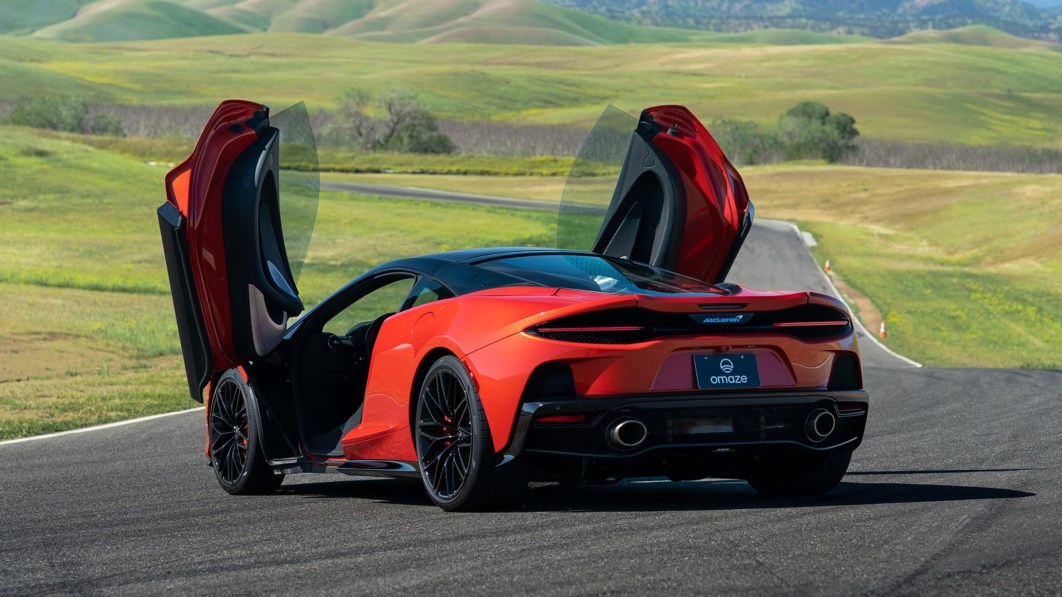
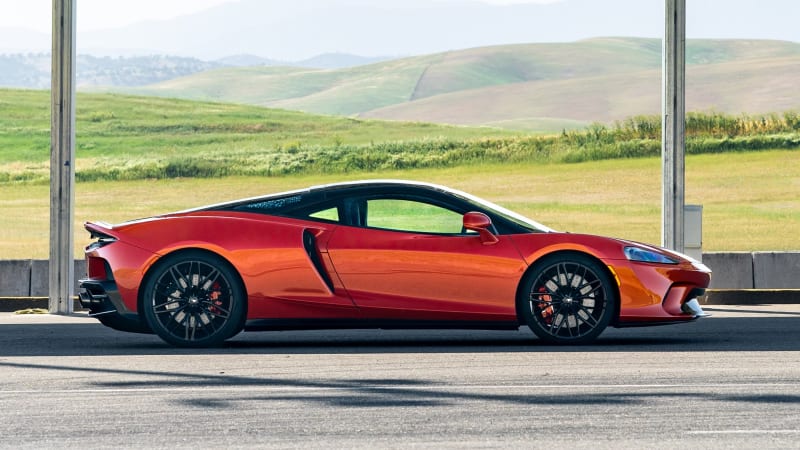
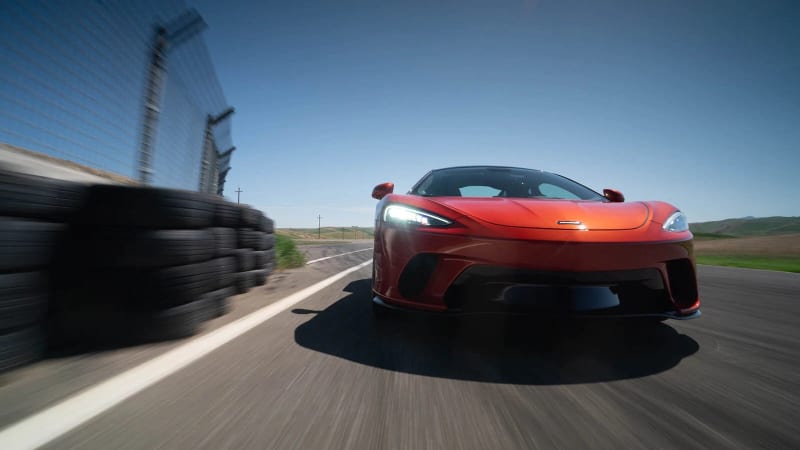
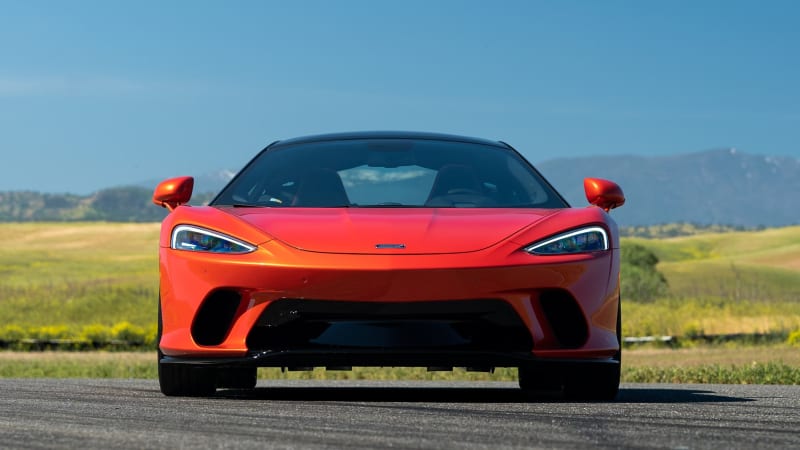
Unless you’re an only child, there’s no doubt you’ve experienced the competitiveness that Mother’s Day brings. This year you can take it up a notch beating out the bath bombs and brunch that your siblings are bringing to the table with something no one has any chance of topping: the keys to a 2022 McLaren GT.

Here are the specs for the McLaren GT, according to Omaze:

  • Max Seating: 2
  • Powertrain: Twin-turbocharged 4.0-liter V8 engine
  • Transmission: 7-speed dual-clutch automatic
  • Drivetrain: Rear-wheel drive
  • Exterior Color: Ember Orange
  • Interior Color: Black
  • Horsepower: 612 hp
  • Torque: 465 lb-ft
  • Acceleration: 0-60 mph in 3.1 seconds
  • Top Speed: 203 mph
  • Fuel Consumption: 15/21/17 mpg city/highway/combined
  • Fuel Capacity: 19 gallons
  • Approximate Retail Value: $243,875.00
  • Cash-Alt: $182,906.25
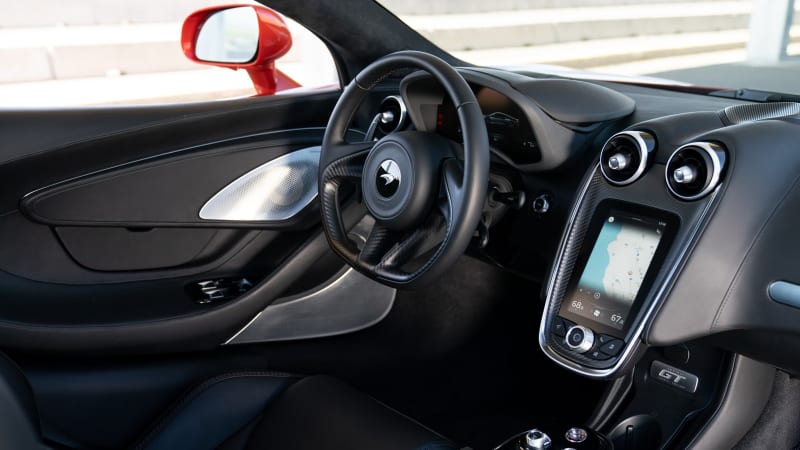
  • Special features: Dihedral “butterfly” doors; 20″ and 21″ MSO wheels; 12.3″ instrument screen; 7″ portrait infotainment screen; 12-speaker Bowers & Wilkins sound system

Here’s what we thought about it, the last time we drove one:

“As the winter settles in, I find myself reflecting on the most memorable cars that I’ve tested this year. Chief among them, the McLaren GT.

“I drove the GT on a damp midsummer evening. After a lengthy heatwave, temperatures dipped into the low 60s and it was raining lightly. Not the ideal time to drive a $263,000 supercar. And yet, it was impossible not to be excited and curious. 

McLaren has come a long way in a short time. With a decade under its belt as a standalone automotive operation, the company is delivering on ambitious growth plans and now counts four product lines in its portfolio, ranging from the Ultimate to this GT.

“It’s a surprising trajectory considering McLaren is best known for making shooting stars, like the 1990s F1 that captured the zeitgeist for supercars of that era. The F1 was followed by the indelible Mercedes-McLaren SLR from 2003-2010. 

“It wasn’t until 2011 that McLaren Automotive — freshly spun off from the racing team — attempted a credible road-going car that could actually be purchased and driven by normal enthusiasts. That car, the 12C, was a first step that ultimately led to proliferation of vehicles and technology for McLaren.

“After a few hours of spirited driving the GT, my conclusion boiled down to one word: maturity. It over-delivered as a grand tourer, though the car is about as much of a GT as the Ford GT, which is to say, not much. My back was a little tight when I returned home, fatigued but not abused. The McLaren GT is a driving workout on par with an Audi R8 or Lamborghini Huracán.

“Performance? It has plenty. But also notable, the fit-and-finish is solid, the looks are striking and it felt like the product of a company that’s been doing this for awhile, which McLaren hasn’t. Certainly competitive with Ferraris and Lamborghis and interesting in its own way. A small shop like McLaren is always going to face challenges achieving scale and consistent prosperity, and the pandemic wreaked havoc on the automaking and racing units. Still, the GT is indicative the company can expand without overreaching.”

According to Omaze, “no donation or payment is necessary to enter or win this sweepstakes.” If you do choose to donate, $10 will get you 100 entries, $50 will get you 1,000 entries, and $100 will get you 2,000 entries. Donations benefit Make-A-Wish. Per Omaze, “Make-A-Wish creates life-changing wishes for children with critical illnesses. Not only can these wishes help kids build the physical and emotional strength they need to fight a critical illness, they also restore hope for families, volunteers, medical teams and entire communities. Right now, for every wish granted, there are three more that need financial support. Your generosity will help Make-A-Wish grant even more life-changing wishes for children when they need it most.”

If you want this head-turning McLaren in your mom’s driveway, enter here. The deadline to enter is July 22, 2022, at 11:59 p.m. Pacific. 

Other Omaze sweepstakes:

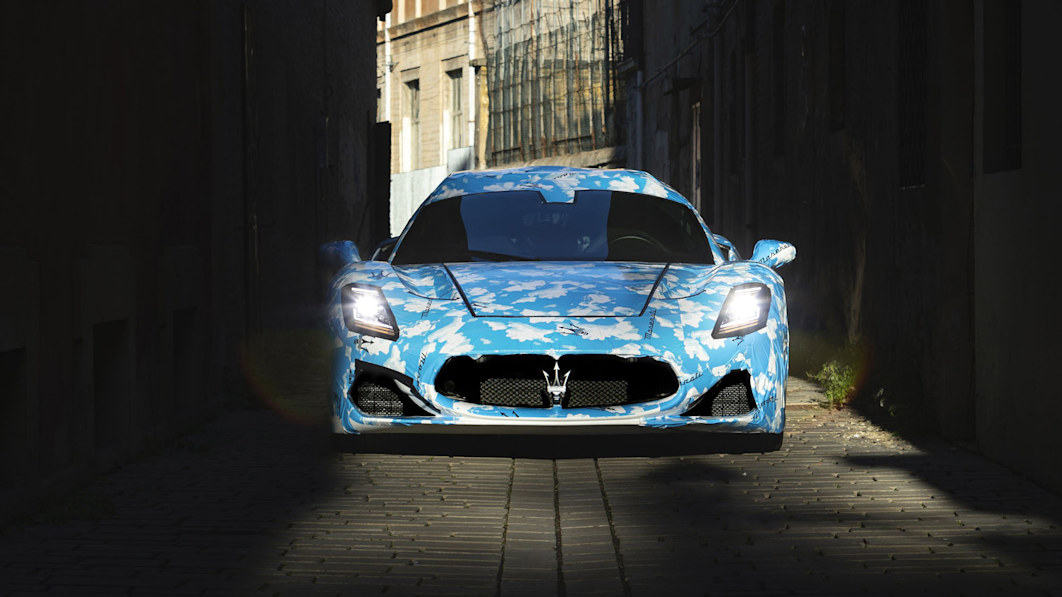
Maserati teases MC20 Cielo debut for May 25

A while back, Maserati’s product roadmap penciled in an MC20 Spider to hit the market this year. In December 2021, the Modena automaker teased frontal views of the droptop supercar wearing camouflage full of fluffy clouds. In a series of Instagram posts over the last week, Maserati posted photos from the point of view of someone with an uninterrupted view skyward — the same kind of view one would experience in a convertible, say. One of the captions was, “You will admire the sky in a new way on Wednesday 25 May.” That will be the reveal date for what the automaker is now calling the Maserati MC20 Cielo, with that last word being Italian for “sky.”

Since we got no views of the rear of the camouflaged car, we have no idea what design changes we’ll see in a little more than a week. Looking closely at the photos of the camouflaged prototype, it’s clear there’s are temporary panels between behind the B-pillar all the way to the decklid spoiler. An odd feature on the prototype is a trio of ribs running from the A-pillar to the rear of the car, with the middle protrusion looking like a papered-over roof scoop. That seems like a lot of work to hide a form we’re already familiar with, and a convertible mechanism we don’t expect to hold any surprises, so we’ll see what we see on May 25.

Maserati’s usual Spider formula hasn’t traditionally altered a car’s underpinnings, so the same carbon fiber monocoque should come bolted to the same 3.0-liter twin-turbocharged V6 making 621 horsepower and 538 pound-feet of torque. The skylight does traditionally jack up the price, so expect to pay more than the coupe’s $210,000 MSRP. We figure the model will arrive in showrooms late this year at the earliest, an appearance in the U.S. likely in 2023. After this, we know there’s an even more powerful electric version on the way that will be the flagship of the range.

Related video:
Ferrari Builds 1 of 1 Ferrari F8 Tributo Called SP48 Unica

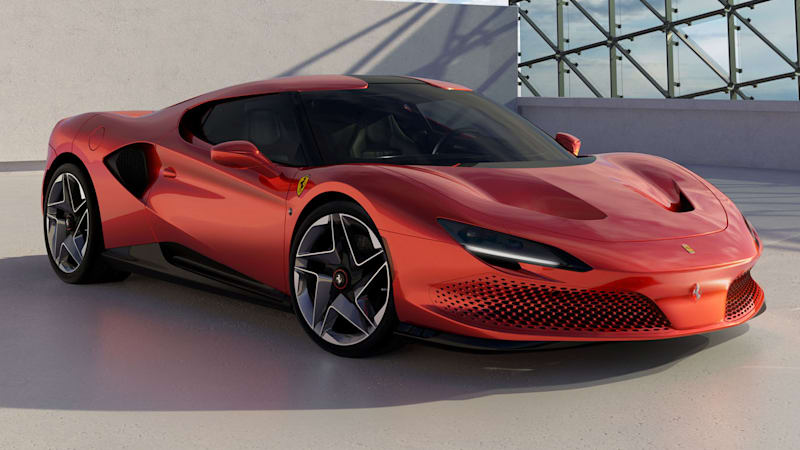
Meet the new Ferrari SP48 Unica, this new model is the latest addition to the Prancing Horse’s One-Off series, the most exclusive group in Maranello’s entire production.

The new SP48 Unica is a two-seater sports berlinetta developed on the F8 Tributo platform and designed by the Ferrari Styling Center under the Chief Design officer Flavio Manzoni.

The design of the new Ferrari features an arrow shaped front profile, re-designed headlights, relocated brake air intakes and completely redesigned grille and engine air intakes. A pivotal aspect of the design is the extensive use of procedural-parametric modeling techniques and 3D prototyping which resulted in perfect 3D grilles that seem curved from a solid volume.

In addition to the design, the vehicle has been transitioned from black to the body color which includes the windows, roof and engine cover, the visor effect has been heightened by reducing the size of the side windows and eliminating the rear screen and the central section of the roof includes a graphic representation of the air intakes on the rear carbon-fibre engine cover.

The thermal-fluid-dynamic design delivers different aerodynamic balance and guarantees all cooling requirements are met. The air intakes for cooling flows for the engine on the front bumper and beneath the rear spoiler are among the biggest changes compared to the F8 tributo’s styling and the intercooler intake behind the side window enables the engineers to reduce the dimension of the intakes on the flanks.

Additionally, the longer rear overhang reduces suction from the roof area which in return boosts the rear downforce. The interior of the new model features a specially developed black laser-perforated Alcantara on the seats and most of the cabin trim, polished sill covers with leather-embossed hexagonal motif and matte carbon-fibre cockpit complimented with Grigio Canna di Fucile accents.

Delage D12 prototype coming to tour the U.S. this summer

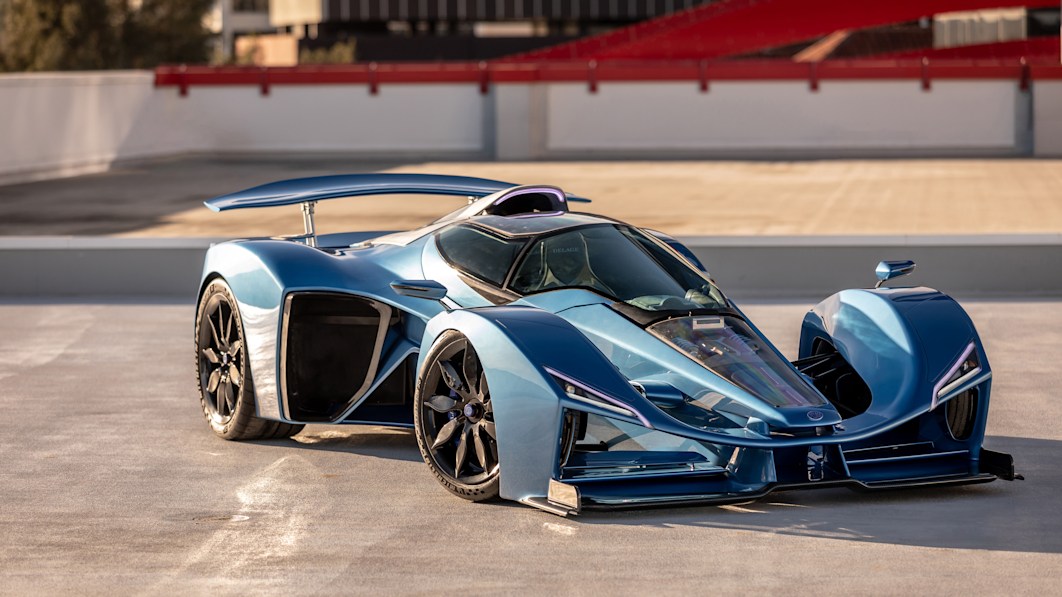
We’re sure someone can count how many plans were deranged by Covid over the last two years, but that someone isn’t us. What’s important is that we know the Delage D12 was one of those kicked off the tracks for a bit, but the revived French brand is still here and says its F1 car for the road is shortly headed for production. The outfit finally has a working prototype, and it’s already been sampled by potential European buyers. The wild blue looker was meant to take an honorary lap around the Miami Grand Prix circuit during last weekend’s festivities, but we’re not sure that happened. The south Florida city is home to one of Delage’s two dealers in the U.S., Specialty Car Collection. The other is Southern California Delage in Newport Beach. The D12 runner is planned to make another trip to Monterey Car Week in August this year, the same venue where Delage pre-sold a few units in 2020. 

Picking up where things left off in 2020, CEO Laurent Tapie unveiled the vehicle he wants to break the Nürburgring’s passenger car lap record. There are two D12 trims, both powered by a 7.6-liter naturally aspirated V12 developed in-house, putting out 960 horsepower and shifting through an eight-speed, single-clutch automated manual transmission. In the GT trim, the ICE gets help from a 110-hp electric motor, making a total 1,100 hp. In the track-focused Club trim, the e-motor makes just 20 horses, but the vehicle loses 200 pounds and is faster around a track than the GT. The Club’s electric motor is really just used for street driving, reversing and parking.

And yes, this is a passenger car. Two occupants sit in tandem in the cockpit, the bubble canopy opening like that of a fighter jet — two traits that make the Delage D12 similar to the Czinger 21C, four if you count the carbon fiber body panels and alliteration. Tapie says the D12 separates itself from all other road cars by having a pushrod suspension. French engineer Mauro Biancchi is said to hold the patent on the pushrod design, and gave his blessing to Tapie’s team. When we get a chance to speak to Tapie, we’ll ask how his pushrod design is different than the pushrod setup Lamborghini has used in the Aventador for a decade.

This fall, the two-seater enters a production run of just 30 examples, 10 for the U.S., the remainder for the rest of the world. First deliveries are scheduled for early 2023, and buyers will get the chance to sign up for driving lessons from Delage’s development driver, ex-F1 Driver’s World Champion Jacques Villeneuve. All it will take is €2 million ($2.1M U.S.) for a base D12 before options, and getting on that list of 30 customers. For everyone else, check out Tapie’s lengthy interview with Maxim to know more about how he got the idea for the D12, why he insisted on a naturally aspirated V12, and why he wanted a racing driver over an engineer to tune the dynamics.  

Related video:

Official: 2022 Bentley Bentayga Extended Wheel Base

Bentley is hoping to stretch its reach further into the realms of luxury with the 2022 Bentley Bentayga Extended Wheel Base. The Bentley Bentayga EWB is based on the second generation of Bentayga, extending the wheelbase and rear cabin space by an extra 180mm. The changes to the underfloor, side panels, door and roof were worked on by Bentley’s design team to ensure the sharp lines and proportions of the Bentayga remain elegant and stylish. The increased length results in the wheelbase of the car being stretched from 2995 to 3175mm brining the total length to 5322mm. All of the increase in in the rear door panel highlighting the focus in the creating an even more sumptuous rear cabin with an emphasis on comfort and wellness. This is reflected in the introduction of the world’s first auto climate and advanced postural adjustment rear seat.

The new cabin space allows for the new Bentley Airline Seat which Bentley claims to be the ‘most advanced seat ever fitted to a car, with 22-ways of adjustment’. Having attended to the preview of the car earlier this year, I can confirm that the rear seats in this configuration are sublime, with ample room and endless adjustability.

The front passenger seat can be pushed forward and a leather-trimmed footrest can be deployed whilst rear passenger seats sense the occupant’s temperature and determine whether to apply heat, ventilation or both simultaneously whilst the postural adjustment system automatically makes micro adjustments to the occupant’s seating position pressure points by measuring pressure across the seats surface: clever stuff! Elsewhere in the cabin, there is a more advanced stitching design, Bentley Diamond Illumination on the door sills and a total of 24 billion(!) trim combinations that can be chosen from. 

Bentley predicts that the EWB model will account for 45% of Bentayga sales, but for many the two Airline Seats in the rear may not be the most desirable set up. No problem, a standard 4+1 seating layout is offered with the two outer rear seats featuring 16 ways of adjustment, heating, ventilation and five massage programmes. 

Visually the 2022 Bentley Bentayga EWB can be spotted from its new ‘Vertical Vane Grille’ design, new 22 inch 10-spoke wheel, repositioned sunroof and, of course, that elongated rear door. 

Mechanically the car is identical to the V8 offering in the Bentayga range with the exception of the rear-wheel-steer system that is new to the EWB. It allows the turning radius to be reduced by up to 7% helping compensate for the additional length of the Extended Wheel Base.

Expect to see the 2022 Bentley Bentayga Extended Wheel Base on the road soon knowing that the occupants are enjoying levels of comfort never previously experience in a Bentley SUV.

Pagani C10 spy photos give us a peek at the Huayra successor

It’s been about a decade since the Pagani Huayra entered the supercar market. And since then, we’ve seen myriad variants with and without removable roofs. So it’s high time that a new Pagani supercar show up. That’s exactly what we have here, at least as far as we can tell. And it certainly appears to stick to Pagani styling tradition.

The proportions of this supercar, reportedly codenamed C10, are exactly what we’ve come to expect of the brand’s machines. It has a short nose and long rear. It has a low grille with a support in the middle that blends into a triangular hood section. And the rear is wide with signature quad tailpipes in between the taillights.

Looking closer, we can see some subtle differences from the Huayra. The lower grille opening is, well, lower, looking more like that of the Zonda. The cabin area looks shorter in length. There aren’t any apparent air intakes along the car’s flanks, possibly supplanted by intakes just behind the cabin. The tail looks more Zonda-like, too. Instead of the high-set, more flowing arrangement of lights, this C10 has just two simple lights on each side in square-shaped panels.

This prototype clearly isn’t quite production-ready, based on the large amount of camouflage and prototype components such as the headlights. But we’ll be seeing the production model soon. A previous report said that the car will make its debut this year. It will apparently use a version of the twin-turbo AMG V12 also used in the Huayra, though this time it will be available with a manual transmission.

Related Video:

Ferrari SF48 Unica one-off is based on the F8 Tributo

Ferrari has unveiled the SF48 Unica, the latest addition to its portfolio of customer-commissioned one-off models. Based on the F8 Tributo, the coupe was created by the Ferrari Styling Center for an anonymous client who participated in every step of the design process.

Nearly every part of the F8 Tributo‘s exterior has been redesigned. Up front, the SF48 Unica features new-look lights, a reshaped bumper with honeycomb-like inserts, and twin vents. Blacked-out a-pillars create the illusion of a wrap-around windshield. Even the door skins are specific to the model, and designers relocated an intercooler to move the engine’s air intakes down. Out back, thin rectangular lights replaced the F8’s quad round units and the rear bumper is new as well. One of the most striking styling cues is the lack of a rear window.

Creating a one-off model requires a tremendous amount of time and resources, especially because many of the changes alter the coupe’s aerodynamic profile. The SF48’s rear overhang is a little longer than the F8’s, and the extra inches increase downforce on the back wheels. Procedural-parametric modeling techniques and 3D prototyping helped the Prancing Horse’s designers make the one-of-a-kind car a reality.

Ferrari notes that the SF48’s cabin looks a lot like the F8’s, though it stopped short of releasing photos. The two cars aren’t exactly identical inside, however: the customer who commissioned the Unica requested black laser-perforated Alcantara upholstery draped over a layer of fabric that matches the body’s color, for example. Matte carbon fiber trim and Grigio Canna di Fucile accents were specified as well.

We’re guessing that no significant mechanical changes were made, meaning that power comes from a 3.9-liter, twin-turbocharged V8 rated at 710 horsepower and 568 pound-feet of torque. Mid-mounted, it spins the rear wheels via a seven-speed automatic transmission.

As is normally the case, Ferrari hasn’t revealed the identity of the SF48 Unica’s owner or how much the car cost to build.

Related video:

They Actually Did It! Mercedes EQXX Covers 1,008km on Single Charge, 140km Still Remaining

The new Mercedes Vision EQXX took on the roads of Europe to demonstrate its outstanding range and efficiency. This new model covered over 1000 km in everyday traffic on a single battery charge. On arrival, the battery charge was 15% which mounted to a remaining range of around 140 kms, the average consumption was a record-breaking low of 8.7 kWh per 100 kms.

The Vision EQXX completed the long-distance with the charging socket sealed accompanied by an independent expert from certification body TUV sud. The model is packed with innovations and the software-defined research prototype is part of the technology programme that combines the latest digital technology with Mercedes’s spirit, agility and speed of Formula 1.

The model has also been fitted with Bridgestone tyres with an extremely low rolling-resistance rating of 4.7, the tyres are specifically developed for the EQXX in partnership with Mercedes and also improves the overall efficiency of the vehicle.

Special features in the new EQXX includes comprehensive lightweight construction and design concept, examples of this are carbon-fibre-sugar composite materials also used in Formula 1, BIONEQXX rear floor manufactured using aluminum casting process, light metal structural components, aluminium brake discs and lightweight F1 subframe for the electric chassis.

The Vision EQXX also gets its energy from the fixed solar roof which increases the range by more than 2%. The 117 solar cells charge the 12-volt battery which then supplies power to auxiliary consumers like the navigational system.

In addition, the vehicle has also been fitted with the UI/UX which features a new one-piece display that spans the entire width of the interior.

Start of Trip Sindelfingen, April 5th, 2022, 7:00 a.m.
End of Trip Cassis, April 5th, 2022, 7:02 p.m.
Distance Travelled 1,008 kilometres
Time Travelled 12 hours and 2 minutes
Average speed 87.4 km/h
Max Speed 140km/h
Battery Remaining on Arrival 15% or 140km Range

Win Mother’s Day by giving your mom a 2022 McLaren GT

Unless you’re an only child, there’s no doubt you’ve experienced the competitiveness that Mother’s Day brings. This year you can take it up a notch beating out the bath bombs and brunch that your siblings are bringing to the table with something no one has any chance of topping: the keys to a 2022 McLaren GT.

Here are the specs for the McLaren GT, according to Omaze:

  • Max Seating: 2
  • Powertrain: Twin-turbocharged 4.0-liter V8 engine
  • Transmission: 7-speed dual-clutch automatic
  • Drivetrain: Rear-wheel drive
  • Exterior Color: Ember Orange
  • Interior Color: Black
  • Horsepower: 612 hp
  • Torque: 465 lb-ft
  • Acceleration: 0-60 mph in 3.1 seconds
  • Top Speed: 203 mph
  • Fuel Consumption: 15/21/17 mpg city/highway/combined
  • Fuel Capacity: 19 gallons
  • Approximate Retail Value: $243,875.00
  • Cash-Alt: $182,906.25
  • Special features: Dihedral “butterfly” doors; 20″ and 21″ MSO wheels; 12.3″ instrument screen; 7″ portrait infotainment screen; 12-speaker Bowers & Wilkins sound system

Here’s what we thought about it, the last time we drove one:

“As the winter settles in, I find myself reflecting on the most memorable cars that I’ve tested this year. Chief among them, the McLaren GT.

“I drove the GT on a damp midsummer evening. After a lengthy heatwave, temperatures dipped into the low 60s and it was raining lightly. Not the ideal time to drive a $263,000 supercar. And yet, it was impossible not to be excited and curious. 

McLaren has come a long way in a short time. With a decade under its belt as a standalone automotive operation, the company is delivering on ambitious growth plans and now counts four product lines in its portfolio, ranging from the Ultimate to this GT.

“It’s a surprising trajectory considering McLaren is best known for making shooting stars, like the 1990s F1 that captured the zeitgeist for supercars of that era. The F1 was followed by the indelible Mercedes-McLaren SLR from 2003-2010. 

“It wasn’t until 2011 that McLaren Automotive — freshly spun off from the racing team — attempted a credible road-going car that could actually be purchased and driven by normal enthusiasts. That car, the 12C, was a first step that ultimately led to proliferation of vehicles and technology for McLaren.

“After a few hours of spirited driving the GT, my conclusion boiled down to one word: maturity. It over-delivered as a grand tourer, though the car is about as much of a GT as the Ford GT, which is to say, not much. My back was a little tight when I returned home, fatigued but not abused. The McLaren GT is a driving workout on par with an Audi R8 or Lamborghini Huracán.

“Performance? It has plenty. But also notable, the fit-and-finish is solid, the looks are striking and it felt like the product of a company that’s been doing this for awhile, which McLaren hasn’t. Certainly competitive with Ferraris and Lamborghis and interesting in its own way. A small shop like McLaren is always going to face challenges achieving scale and consistent prosperity, and the pandemic wreaked havoc on the automaking and racing units. Still, the GT is indicative the company can expand without overreaching.”

According to Omaze, “no donation or payment is necessary to enter or win this sweepstakes.” If you do choose to donate, $10 will get you 100 entries, $50 will get you 1,000 entries, and $100 will get you 2,000 entries. Donations benefit Make-A-Wish. Per Omaze, “Make-A-Wish creates life-changing wishes for children with critical illnesses. Not only can these wishes help kids build the physical and emotional strength they need to fight a critical illness, they also restore hope for families, volunteers, medical teams and entire communities. Right now, for every wish granted, there are three more that need financial support. Your generosity will help Make-A-Wish grant even more life-changing wishes for children when they need it most.”

If you want this head-turning McLaren in your mom’s driveway, enter here. The deadline to enter is July 22, 2022, at 11:59 p.m. Pacific.

Other Omaze sweepstakes:

Koenigsegg Jesko Absolut gets its first prototype

If there is a Koenigsegg that will break through the 300-mph barrier, this is it. If there is a Koenigsegg that will be the fastest car the Swedish automaker builds, this is also it. Not long after watching the bewinged Jesko Attack dash through the snow, Koenigsegg has shown that car’s brother, the wingless and ultimately refined Absolut.

Created to go as fast as possible, company boss Christian von Koenigsegg said: “We spent thousands of hours in CFD calculations. We’ve streamlined this car from not just an aerodynamic and design perspective, but also from a high-speed stability perspective. As a result, the Jesko Absolut has a phenomenally low drag of only 0.278 Cd.”

The development model is done up in Graphite Grey with Tang Orange stripes. Remind us to ask Christian one day if that color really refers to the chemical concoction relentlessly advertised to kids decades ago as the favorite beverage of astronauts. 

To be fair to aerodynamicists around the world, we should clarify that it’s a “phenomenally” low drag figure on a relative scale. After all, cars looking to stretch gallons or kWhs of fuel do better; the Lucid Air claims a drag coefficient of 0.21 Cd, the current Mercedes-Benz S-Class a 0.24. But compared to other hypercars, the Koenigsegg is well ahead. Hennessey says its Venom F5 comes in with a drag coefficient of 0.39, the Bugatti Chiron Super Sport 300+ in Top Speed mode is 0.33 — 0.02 better than the standard Chiron — and SSC cites a figure of 0.279 for the Tuatara. If these numbers are accurate, Koenigsegg has claimed the hypercar aero crown from SSC by 0.001. Probably just a coincidence.

The Absolut’s internals almost entirely mimic those of the Attack, with a 5.0-liter twin-turbo V8 producing 1,600 hp and 1,107 lb-ft. Weight savings from changes like the lack of that rear wing mean the Absolut weighs 3,064 pounds compared to the Attack’s 3,131 pounds.

Koenigsegg hasn’t given a timeline for when customer units will be ready, but it shouldn’t be long. The Attack is expected to start reaching customers this quarter.

Related Video:

European dealer working with Koenigsegg on a CC12 secret project

We tuned into James Walker’s latest episode on YouTube because The Supercar Blog reported there’s a special Koenigsegg on the way called the CC12. There isn’t much known about the coming coupe, just that was supposedly commissioned by a European dealer in ultraluxurious things called Carage. Upon tuning in to the 51-minute video, we discovered that Walker talks about the CC12 for maybe ten seconds (38:47) — he doesn’t even call it by the name written on the wall next to it, and the project is so secret that his host won’t say a word about it. Here’s the thing: The episode is called “The Best Garage in the World?”, and the answer might be “Hell yes.” We showed up for one car, we stayed because of all the amazing car stuff.

We’d never heard of Carage before, a dealer with showrooms in Lucerne, Switzerland and Marbella, Spain that specializes in “modern hypercars [and] unusually sporty vintage cars.” If a line could win an award for Swiss understatement, this is it. Walker tours just some of the Swiss facility, which is five floors and nearly 54,000 feet of luxury architectural space housing many millions of dollars in cars. The Koenigsegg room is designed to create Swedish vibes. The five cars parked inside it include CC8S Chassis #002, the first customer car of the first model Koenigsegg built, one of two Trevita’s with white carbon and clearcoat with diamond dust, and the Agera Prototype Chassis #077 that was not only the development vehicle for every evolution of the Agera, it was customized with a trunk.   

There’s are a few rooms with Aston Martins (12:50) including James Bond’s DB10 (25:15), another with Ferraris, a modern Iso Rivolta (11:30), and the most magnificent tool and replacement parts sets we have ever seen (32:05) created for the Aston Martin DB4GT Continuation. Then there’s the garage, with the obligatory lifts and clean-room appearance. The garage also contains an indoor wash bay, because Carage washes every vehicle before working on it; there’s an exhaust vent on a rail that can be fitted to any vehicle in the garage; there are tire fitting and alignment machines in custom colors to match the garage; and a pump system to send used oil into a large containment tank beneath the garage. Plus the on-site carbon production and CNC machines. And other things. Carage is spectacular.

Back to that Koenigsegg CC12, though. It hasn’t been commissioned by Carage, it’s being built by Carage, CEO Kim Struve saying he’s working with Koenigsegg on the project, but he wants to show potential clientele what Carage can do. The form under the tarp looks like the CC8S that, earlier in the video, Struve says was bought “for a special project that’s going to be released in a year’s time.” But we can’t know if the two are related. What we do know is that Koenigsegg built just six examples of the CC8S, its name partly signifying the modular Ford V8 behind the cockpit. The re-engineered and supercharged 4.7-liter small block produced 646 horsepower and 553 pound-feet of torque. The automaker switched to CCR and CCX names after the CC8, never making a CC12. Whatever Carage is up to, we’re looking forward to it, and if the 12 in the name refers to the cylinder count, all the better.

Related video: