All posts in “Porsche”

2018 Porsche Macan finally certified and heading to dealers

Share

  • Pinterest

Lengthy delays getting 2018 models certified have hurt Porsche‘s U.S. sales the past two months, but many of the affected vehicles have now cleared the hurdles and are getting to customers.

The delays were spread across the brand’s lineup, hitting the Macan compact crossover most acutely in terms of lost volume. Porsche sales dropped 9.1 percent in August, breaking a 12-month streak of monthly sales increases for the brand.

Macan sales plunged 29 percent in August to 1,641 vehicles. The Macan is Porsche’s highest-volume vehicle, accounting for more than a third of the brand’s U.S. sales.

“These results reflect delays in our delivery of 2018 model year vehicles, many of which are still in the final regulatory approval process,” Porsche Cars North America said in a statement announcing August sales. “Porsche is working diligently to obtain all required approvals as soon as possible.”

A Porsche spokesman declined to elaborate on that statement or say when all 2018 certifications are expected. Porsche dealt with certification delays on some 2017 models, too. A longer certification process has been a reality for many automakers in ​ the wake of Volkswagen’s diesel cheating scandal.

2017 Porsche Macan GTS road test with specs, horsepower, price and photos

According to Porsche dealers and customers awaiting deliveries of 2018 model orders, the delays involved certifications from both the EPA and the California Air Resources Board. Porsche told customers that delays were expected to range from four to 12 weeks. An undisclosed number of vehicles were stuck in various U.S. ports awaiting certification.

The problem arose with Porsche’s sports car models in July, when 911 sales plunged 27 percent, Cayman sales tumbled 58 percent and Boxster sales fell 51 percent. The brand’s overall sales rose 0.6 percent in July, lagging Porsche’s year-to-date increase. Certifications of the sports cars were cleared in August, and their sales subsequently jumped — up 36 percent last month for the 911, 54 percent for the Cayman and 12 percent for the Boxster.

Certifications for the Macan and other models are now coming in. According to CARB’s website, a certification order for the base Macan was issued on Aug. 17. The Macan S and GTS and Cayenne S and GTS cleared certification on Sept. 1.

Porsche Club LA holds its Concours at the Santa Monica Museum of Flying356, A-4

Jeff LaPlant, general manager of Porsche South Bay in Hawthorne, Calif., said his dealership started getting 2018 Macan shipments on Aug. 30, but no sales were recorded until September.

Roger Jobs, who owns a Porsche store in Bellingham, Wash., another state subject to CARB, said he expected 2018 base Macans that had been held in a California port to arrive by this week. They’re already sold to customers. He said he expected other Macan variants to arrive in late September or early October, along with 2018 Cayennes and Panameras.

Jobs’ store hadn’t sold all of its 2017 Macans but was down to just a few left.

“So it will be a nice transition to the ’18s,” Jobs said. “It kind of stretched us a bit, but it also helped clean [the inventory] up.”

Certification delays tie up Porsches” was originally published at Automotive News on 9/12/17.

By Amy Wilson at Automotive News

Massive gallery of the Porsche Club LA Concours at the Santa Monica Museum of Flying

Share

  • Pinterest

If, as former Speaker of the House Tip O’Neill once famously said, “All politics is local,” then all Porsche enthusiasm is local, too. Sure, you have your Rennsport Reunions, your Werks Reunions, your Big Honkin’ Museum in Zuffenhausen, but on an entirely different level are the local Porsche club events. One of the nicest local Porsche gatherings on the calendar is the Porsche Club of America’s Los Angeles Region (and Zone 8)’s annual Concours d’Elegance. This year’s gathering was the 56th for the club and the fifth time they’ve held it at the Museum of Flying in Santa Monica. It was a pleasant panoply of Porsches and planes.

About 250 of Stuttgart’s finest made it out this year from the LA club’s 2,000 members.

“It’s definitely a significant event,” said Porsche Club social chair Donna J. Slatton. “This is the largest we’ve ever had.”

The Museum of Flying is easily worth the $5 it cost to go in. The LA area has spawned numerous aerospace companies over the last 100 or so years, and examples of the local product are strewn throughout, from a Cassutt III Formula One Air Racer to a Rutan Verriviggen and a Waco GXE Model 10.

Prior to discovering the Museum of Flying, the concours was held at The Greystone Mansion in Beverly Hills, site of the annual Greystone Concours. But that facility is owned and operated by the city of Beverly Hills and included a little more bureaucracy.

“Did you ever work with the EPA?” asked Scott Mann, concours emcee and chief driving instructor of PCA’s Zone 8.

“Everyone’s so dad-gummed nice,” said Slatton. “Everyone has been fabulous.”

The friendly, local quality of the event also helps to dispel certain Porsche stereotypes.

“People have a mystique of the rich lawyer cutting everyone off on the freeway,” said Mann. “Here the cars are something that can be accepted by everyone.”

Hey, we would have accepted any of the 250 cars on hand. While there were several 356s, the majority of the entries consisted of modern 911s, from a gray 50th Anniversary model to several GT3 RS supercars. Best of Show went to Pat and Betsy Wadman’s 1973 silver 911 Targa, a car that has won before at other events.

Best of all, concours like these are where new members join the club. Slatton had heard from 20 attendees who said they were going to go home and sign up. Welcome members! 

New car sales for August: Winners and losers

Share

  • Pinterest

U.S. light-vehicles sales slipped 1.8 percent last month and the seasonally adjusted, annualized pace of sales fell to the lowest level — 16.13 million — since February 2014 behind a late-month wallop from Hurricane Harvey.

It was the eighth straight monthly decline for an industry that a week ago was forecast to record its first sales advance of the year. That was before Harvey slammed into coastal Texas and left much of Houston, the nation’s fourth-largest metro area and a major truck market, paralyzed by floodwaters.

Ahead of Friday’s final tally, analysts polled by Bloomberg expected the August SAAR to drop to 16.4 million from 17.21 million a year earlier. There was one extra selling day last month compared with August 2016.

After exceeding 17 million in January and February, the SAAR slipped below that level in March and hasn’t topped it since April.

Even with the storm, General Motors and Toyota managed to record strong U.S. sales gains in August while their biggest rivals slipped.

GM’s 7.5 percent increase, helped by higher fleet and retail orders, marked a sharp rebound from four straight monthly declines. Toyota recorded its third straight monthly advance, up 6.8 percent, after a soft start to the year. August sales dropped at Ford Motor Co., Fiat Chrysler, Nissan Motor Co., Honda Motor Co. and HyundaiKia.

“Hurricane Harvey did have an adverse effect on deliveries during the last week of August for every automaker but the key U.S. economic fundamentals remain supportive of strong vehicle sales,” Mustafa Mohatarem, GM’s chief economist, said in a statement. “With the U.S. economy strengthening, we anticipate retail sales will be strong for the foreseeable future.”
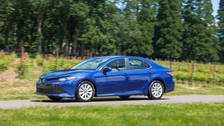
New car sales for July: Winners and losers

New car sales for July: Winners and losers

Ford, General Motors, FCA, Nissan and Honda posted U.S. sales declines in what is shaping up to be one of the rougher months so far in a down year.Ford’s 7.4 percent decline marked its biggest …

Company by company

Sales at GM’s Chevrolet division rose 11 percent and 12 percent at GMC, behind strong crossover demand, while volume dropped 23 percent at Buick and 8.1 percent at Cadillac. The automaker’s retail sales rose 4 percent while fleet deliveries advanced 24 percent, GM said.

At Ford, which has managed just one monthly gain this year, sales fell 2.1 percent on lower daily rental, car, crossover and SUV demand. Sales slipped 1.9 percent at the Ford division and 5.8 percent at Lincoln. Ford said its August fleet deliveries edged down 0.2 percent to 45,830 vehicles.

While storm assessments are still underway, Ford expects new-vehicle losses in Texas to be fewer than 5,000 units and isolated to a few dealers. Mark LaNeve, head of sales and marketing for Ford, said Friday that 13 of the company’s 114 Houston-area dealerships remain closed and 10 incurred extensive damage.

“It’s going to take a long time to really know the damage,” LaNeve said. “Water damage may crop up months down the road.”

Behind strong light-truck deliveries, sales rose 8.0 percent at the Toyota division, but slipped 0.4 percent at Lexus.
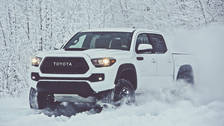
Toyota, Chevy and GMC midsize pickups earn top IIHS safety ratings

“Though demand softened in the last part of the month, August was still a good month for the industry. We continue to set records in light trucks,” said Jack Hollis, group vice president and general manager of the Toyota division.

Fiat Chrysler said August deliveries dropped 11 percent as fleet and retail shipments fell. Except for low-volume Alfa Romeo, all of FCA’s brands fell last month, including double-digit declines at Jeep, Fiat and Chrysler.

Nissan Motor deliveries dropped 13 percent on a 19 percent decline in car deliveries and 8 percent drop in truck sales. Volume decreased 15 percent at the Nissan division while rising 5.2 percent at Infiniti.

Honda Motor Co. sales dropped 2.4 percent on a drop of 1.8 percent at the Honda brand and 7.8 percent at Acura.

Hyundai-Kia’s sales slump continued, with volume off 26 percent at the Hyundai brand and 1.7 percent at Kia.

Subaru of America set an all-time monthly sales record of 63,215 last month, a 4.6 percent increase over August 2016. The August results eclipsed Subaru’s previous monthly sales record — 63,177 units in December 2016.

At Volkswagen Group, sales rose 9 percent at the VW brand and 2.8 percent at Audi.

Mazda’s U.S. sales dropped for the fifth straight month, falling 1 percent in August. Deliveries rose 11 percent at Mitsubishi.
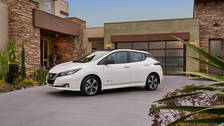
Nissan Leaf: 5 things we like about Nissan’s new EV

5 things we like about the new Nissan Leaf EV

The redesigned 2018 Nissan Leaf electric car looks ready to compete with the likes of the Chevy Bolt and the Tesla Model 3. While it might not have a pile of pre-orders placed long before anyone …

Harvey’s impact

U.S. new-vehicle sales had been expected to rise in August for their first monthly gain of the year until Harvey devastated metro Houston. Before the storm, which hit the shore as a Category 4 hurricane before weakening, sales were forecast to rise about 1 percent.

Some automakers and brands fared worse than others as a result of the storm. Texas is the top sales market for Ford, Ram, GMC, Cadillac and Mitsubishi, Edmunds says.

LMC said Harvey will directly reduce U.S. light-vehicle sales in August by about 1.3 percent, or 20,000 units, and another 1.2 percent, or 16,000 vehicles, in September, before a recovery begins.

“Harvey will depress one of the most critical selling periods of the year, spanning the August sales month close and Labor Day weekend,” LMC said in a report Thursday. “In 2016, these 11 days alone accounted for 4.1 percent of retail sales, or 580,000 units, nationally.”

LMC expects 15,000 sales to result this year from scrapped vehicles being replaced. “However, as replacement spills into 2018, a more significant positive impact could be felt — 250,000 units or more,” LMC said.

Damage to licensed and operating vehicles at the time of the storm is expected to total $2.7 billion to $4.9 billion, Cox Automotive Chief Economist Jonathan Smoke said Friday.

“We have estimated that 300,000 to 500,000 vehicles were likely damaged or lost in the Houston area alone… Households there averaged 1.8 vehicles,” said Smoke. “There is a more than 94 percent vehicle ownership rate [in Houston] — one of the highest in the country. If we’re correct, it would be the worst in terms of vehicle damage in history.”

Retail and fleet demand has softened, mostly on weaker car sales, in 2017 after a record 2016 fueled by a strong, incentive-fed December.

Ahead of today’s reports, analysts polled by Bloomberg expected August sales to rise 3.7 percent at GM, 5.5 percent at Volkswagen-Audi, 4.2 percent at Honda Motor and 7.8 percent at Toyota Motor. Volume was projected to drop 3.5 percent at Ford Motor, 5.9 percent at FCA, 0.6 percent at Nissan Motor, and 6.2 percent at Hyundai-Kia.

FCA and Hyundai-Kia are still looking for their first monthly sales gain of the year.
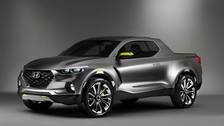
A Hyundai Pickup? You could own one

A Hyundai pickup is on the way

Hoping to reverse a sales slump, Hyundai is doing the obvious: building a truck. According to a recent interview with Reuters, the vice president of corporate and product planning for the U.S., …

More inventory, bigger deals

After seven straight years of growth and a record 2016, U.S. light-vehicle sales have now fallen 2.7 percent this year through August, even as new-vehicle stockpiles grow and automakers fatten deals. Much of the decline in industry volume reflects weaker car demand and reduced fleet shipments.

In August, car sales slipped 9.5 percent while truck demand rose 2.9 percent.

The industry’s average days to turn continues to hit levels not seen since July 2009. Edmunds says new vehicles sat on dealership lots an average of 77 days last month — two days higher than July.

Edmunds said inventory of 2017 model-year vehicles was “particularly plentiful” on dealer lots last month, even as 2018 models began to arrive. Edmunds estimates that only 8 percent of new vehicles sold in August were 2018 models, while in August 2016, 17 percent of vehicles sold were from the coming new model year.

Major automakers dangled end-of-summer and clearance deals throughout August. Honda, Toyota, Lexus and Chevrolet were among brands that spent heavily to advertise specials last month.

The average new-vehicle incentive rose to $3,856 through the third week of August, a level that would surpass the previous high for the month, $3,645, in 2016, J.D. Power said.

ALG estimates the biggest spenders among major automakers on incentives last month were Nissan ($4,743 average deal per new vehicle), FCA ($4,650) Ford ($4,577), GM ($4,546) and Kia ($4,112).

U.S. sales slip; SAAR falls to 16.13 million on Harvey impact” was originally published at Automotive News on 9/1/17.

By David Phillips at Automotive News

Sure beats flying: Crossing the country in a 1976 Porsche 912E

Share

  • Pinterest

Nobody told me it gets cold in Texas. Once I finally find my camping space and click the home button on my phone to illuminate the surroundings, the screen reads “4:00” in the godforsaken morning. The wind whips at my tent, biting my fingers as I assemble it. It’s only the third day of a 21-day drive across the country, and I’m already experiencing zombie-like exhaustion. Daylong stints in a Porsche sport seat saddle, combined with late nights, early mornings and a severe coffee deficit, are making this experience hell on earth.

Why am I doing this? I have to be in Atlanta for my little sister’s graduation, and I decided weeks ago, from the comfort of my living room sofa in Reno, that a simple six-hour flight was out of the question. In this moment, I hate the me who made that decision.

On the other hand, we’ve all been there, sitting alone in a three-seat row with fingers crossed. Boarding is nearly complete, and the door to the bridge has closed. A mother with an infant in her arms and a toddler wiping his runny nose on his sleeve in tow are heading your way. You’re stuck for six hours shooting across the country in a pressurized metal tube full of germs. No, that too, is hell. I trade one hell for a distinctly different hell.

Better to be out experiencing the world from behind the wheel of my 40-year-old, 160,000-mile, air-cooled Porsche 912E. The gray walls of an airport are no match for the vast open roads of America’s interstate system. People often joke about how the middle of the country is “flyover” because there’s nothing worth seeing, but they couldn’t be more wrong. The sensation of watching the terrain change before your eyes — there’s just nothing like it. 

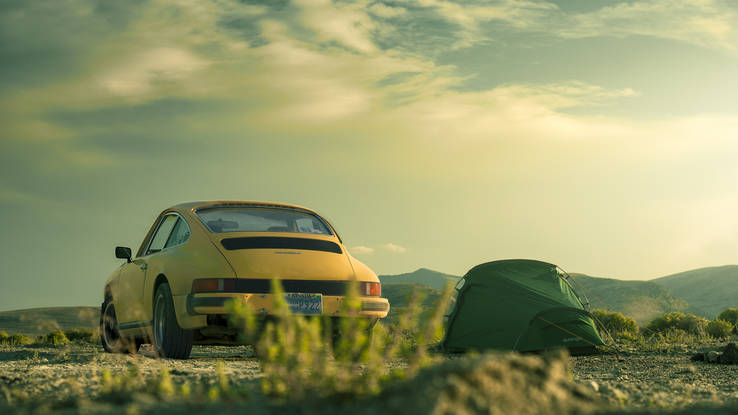
Porsche 912 image

Instead of taking a flight from Reno, Nevada to Atlanta, Georgia, Bradley drove his 40-year-old Porsche. Photo by Gil Folk

Cars are built to be driven, I tell myself as the sun bakes down on as I slog eastward, forcing me to reapply sunscreen to my left arm several times each day. Around Kentucky the rains begin, leaking through an ancient windshield seal and quickly soaking the floor.

Weeks later, more rain and a steady drumbeat of rainwater tap out the time on my left pant leg as I run back westward through Iowa and Nebraska. I creep up to 8,000 feet above sea level, and the thermometer falls below freezing in Colorado. Every night on the road the sun unravels, replaced by a blanket of surrounding darkness. Cars are built to be driven.

The funny thing about cars is that they really want to run. When I traded cash for title, this Porsche had seen better days. It’d been tucked in the back corner of a small California warehouse for a few years with a dead battery and flat tires. Within a week of my owning it, the 912E received a new battery. A tank full of fresh 87 octane fuel and a replacement fuel pump relay was all it took to turn this Porsche-shaped piece of yard art into a driver again. After the braking system was overhauled, the tie rods replaced and a new set of tires installed, it was ready for prime-time daily-driver duty.

I tested the car through the winter months and into spring with short trips, slowly gaining confidence to venture farther from home base. In March, I dived into the deep end, entering the car in a 1,700-mile vintage rally. When that test had been aced, I knew it was ready for the big game. I’d done long-distance, cross-country tours before, but always in modern machinery.

My sister’s graduation is the perfect excuse for an overly ambitious, ill-advised, potentially deadly and definitely life-changing drive. Where are my keys?

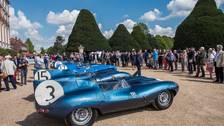
Concours of Elegance celebrates all that we love about Jolly OldYear of the D-Type at Concours of Elegance

So, how was the trip?

In the planning stages, I make sure to give myself time for something cool and interesting on each day; endless driving on the nation’s interstates in the slowest car from a brand known for high-speed cars isn’t generally a great time. So I visit a friend in Las Vegas and another in Scottsdale. The Petroleum Museum in Midland, Texas, home of the Chaparral collection, is not to be missed. A weekend of spectating races at Circuit of the Americas in Austin is a highlight. In Alabama, the Barber collection of motorcycles outside of Birmingham is a worthy stop. While in Atlanta, I have to give my 912 a tour of Porsche’s headquarters. BMW’s Zentrum, The Tail of the Dragon, the Gilmore Car Museum in Michigan, the Shelby collection in Boulder. Every day, something new.

The 912E performs better than could have been expected. A 21-gallon tank and an excellent 33 miles to the gallon make for long stints at the wheel. I’ll admit I am nervous about some kind of catastrophic failure early on, but by the third day that dissipates. Time with friends, family and hero-tier automobiles erases the thought. There is hardly a fear of not making my destination; every appointment made is kept. The car is nearly faultless.

The trip goes off without a hitch.

Porsche image 2

What good is a cross-country trip without some time under the stars? Photo by Gil Folk

No, really—how was the trip?

Louisiana claims an exhaust tip. Sea-level elevation disrupts the Bosch Jetronic engine tuning. Ancient wheel bearings chew up the front tires.

The car is quite simple to operate and repair, so I simply cut the other three tips free from the muffler and diagnose and seal a small vacuum leak. (The vacuum leak actually precipitates an engine compartment fireball when a spark-plug boot jiggles loose as I am spraying starter fluid.) Two Yokohama S.Drive 205/50R-15s are ordered from Tire Rack and installed while visiting family in Michigan.

Any air-cooled Porsche is going to be a bit cramped and uncomfortable for a long trip. Mine is no different. The Volkswagen-sourced Type 4 engine slung out back pounds out a drumbeat baritone exhaust note, and the broken muffler does little to quell the decibels. With just 88 hp under my right foot, I have a lot of time to think about the universe while ambling toward highway speeds. This car can sustain about 72 mph, which makes the big white “80 MPH” signs of Texas and Nevada intimidating. The factory-fitted sport seats provide excellent support, but the blown-out seat bottom cushion means the bolsters are poking at my thighs perpetually, insufferably.

This still beats flying.

Over three weeks on the road, temperatures range from an indicated 97 degrees in New Mexico down to an overnight low of 15 in Colorado, which makes camping each night an interesting proposal (though I do request one of the campground’s cabins the night it gets below freezing). The wild temperature swings are made all the better by the fact that the car does not feature any kind of air conditioning, and the heating system is middling at best. In a vintage car, hot days are hot, and cold days are cold. Pack accordingly.

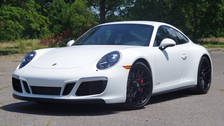
2017 Porsche 911 GTS quick take: What you need to know

One big lesson here:

You shouldn’t be afraid to use your old cars.

Life is too short to store your old cars. They demand to be driven, shared with the world. Across the country, I encourage friends and family to get behind the wheel and take it for a drive of their own. Their wide smiles when they hand back the keys make the whole trip worthwhile. Someone who’d never driven an air-cooled Porsche comments that it is an “old-school visceral sports car experience that rewards smoothness.” A friend in Ohio is afraid to properly thrash the old beast and punctuates the drive with laughter as I show him how I drive it.

Even my father, who has never believed in anything as firmly as his desire for American V8 muscle, cracks a smile when I take him for a ride through the old Georgia hills. Just rolling along at 70 mph for hours at a time, I see more thumbs up, smiling faces and phone cameras pointed my direction than I ever thought possible.

My Porsche isn’t perfect. It’s hardly a show car, but I bought the one I wasn’t afraid to drive. If I’d bought the world’s nicest example and parked it in my garage, how much would I actually enjoy it? Would sitting in a garage and staring at its shape bring me joy? Would a once-a-month dust-off for a cup of coffee be enough?

Though the seats provide about the same level of comfort, I’m glad I take my old Porsche instead of a plane. Instead of an 18-inch hole through which to view the world, I see thousands of miles of gorgeous countryside, watch a rose-tinted sun sink into the Gulf, witness the first peeks of morning wash over the Rocky Mountains. Instead of a 2-ounce pack of pretzels, I am treated to proper Southern barbecue, some exquisite spicy Cajun bites, hearty Midwestern fare and more than a few greasy-spoon breakfast spots with ads for local businesses printed on the coffee mugs. Instead of sitting silently, shoulder to shoulder with strangers, I lose myself in conversation with friends, old and new.

Perhaps best of all, I find out that I can. Live a little. Go for a drive. A long one. Visit hell. What’s the worst that could happen? 

This article first appeared in the July 27, 2017 issue of Autoweek magazine. Subscribe here

By Bradley Brownell

Classic car service? How about your current dealership?

Share

  • Pinterest

Servicing cars more than 30 years old might seem a losing proposition for most dealerships.

Who wants to take valuable time to train technicians in carburetor repair? Or to keep a vehicle in a service bay for days, waiting for unusual parts?

Yet brands such as BMW, Porsche and Chevrolet, and some of their franchised dealerships, are finding value in maintaining and repairing classic vehicles. Mark Rogers, a 20 Group consultant with the National Automobile Dealers Association, estimated that as many as 1,800 U.S. franchised dealerships service classic cars.

Automakers and dealers note the growing number of high-dollar classic and collectible cars. Unless their owners are mechanically gifted, these vehicles will need professional service to keep them running.

In 2015, Hennessy Porsche North Atlanta in Roswell, Ga., became one of just five factory-designated Porsche Classic dealerships in the United States, said Jeff Corey, the store’s service director.

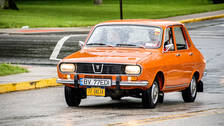
Dacia 1300

Hennessy invested in special tools (he declined to say how much) and set aside two service bays to fix classic Porsches, defined as 1998 models and older. He sent two technicians and two service advisers to California for extensive training.

When the dealership was remodeled last year, Hennessy included a Classic Center in its second-floor showroom, where visitors can view vintage Porsches.

“We’ll do 15 to 20 cars a year,” Corey said. “The average repair bill is $3,000, though we’ve done a couple at $20,000 and rebuilt the whole engine of a 964 for $42,000.”

Classic service is by appointment only. Hennessy Porsche asks customers to bring the vehicles in for review ahead of time.

“The oldest Porsche we’ve worked on was a 1963 356,” Corey said.

There are plenty of valid reasons for dealerships to shy away from working on older cars. Stocking and storing parts for such vehicles, training service employees and tying up service bays for extended repairs can be costly.

“Dealers are too busy selling and servicing new cars,” said NADA’s Rogers. “It is not financially feasible to dedicate the time and space” to classics service, he said.

Most buyers of mass-market vehicles don’t develop emotional ties to them, Rogers added. Classic service makes greater sense for luxury cars that are more than 20 years old, produced by European brands that stress their heritage, he said.

Harry Hollenberg, a partner in the Concord, Mass., automotive consulting firm Carlisle & Co., said a classic car in a service bay may not have the same halo effect as one on a dealership lot.

Even a dealership that specializes in fixing classic vehicles may see no more than four of them a year, Hollenberg said. And service technicians may have trouble pinpointing problems with classic vehicles.

“There is so much turnover among technicians now that it would be hard to locate one with a knowledge of older models,” Hollenberg said.

BMW of Ann Arbor in Ann Arbor, Mich., has been a BMW Certified Classic Center since 2014. It averages about one special repair a month, said the dealership’s service director, Mark Wade.

But that’s OK, Wade added, because the classic center’s prestige attracts other parts and service customers among owners of older BMWs.

“We do get plenty of early-to-mid-’90s cars, but those customers aren’t looking to restore their vehicles, usually,” he said. “They’re more concerned with the mechanical breakdown or driveability issues.”

The oldest BMW the dealership has serviced was a 2002 tii from the 1972 model year, he said.

Another time, Wade said, his service department faced the challenge of restoring a gray-market 1985 BMW M6 to factory condition. Tracking down parts for a car that was not produced for the U.S. was tough, he noted.

“But it’s a labor of love for us and the owners,” Wade said.

Wade remains optimistic about the growth of the dealership’s classics repair business.

“I would imagine the volume will increase once those cars from the ’90s hit the 30-year mark and the value starts to increase,” Wade said. “We would like to see more.”

Buds Chevrolet-Buick in St. Marys, Ohio, provides service to owners of Corvettes from the C4 (1984-96), C5 (1997-2004) and C6 (2005-13) generations.

Work on such classic Corvettes is sporadic — perhaps 15 a year, said the service adviser and shop foreman, Troy Jones.​

Yet the small-town dealership burnishes its reputation with a Corvette show each May.

This year’s event, Jones said, attracted the owners of more than 600 Corvettes.

Such enthusiasm can spread to repairs. Once, Jones recalled, technicians took five hours to replace a faulty heating core on a 1980 Corvette. It would have taken longer, he said — had the customer not brought the replacement part with him.

Bringing classic cars back to the dealership” was originally published at Automotive News on 9/5/17.
By Jenny King at Automotive News
2017 Porsche 911 GTS quick take: Not the fastest 911, but possibly the best

Share

  • Pinterest

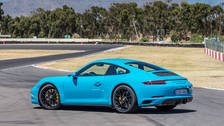
What is it: The latest-generation 911 sports car; GTS versions get better performance without losing daily drivability or jumping to stratospheric prices.

Key Competitors: Chevrolet Corvette Z06, Mercedes-AMG GT, Jaguar F-Type R

Base Price: $120,050 As-Tested Price: $129,560

Highlights: Porsche’s 911 GTS expands on the 911 S with 450 hp (up 30) and both the Sport Chrono Package and Porsche Stability Management (PSM) standard.

Our Opinion: Porsche’s 911 wears a $91,100 base sticker, with its flat-six cranking out 370 hp. A 911 Turbo has 540 hp and the starting price jumps to $162,850. Into that wide gap dashes the 911 GTS. With a horsepower boost over the standard Carrera, oodles of standard equipment and the Carrera 4’s wider, cooler-looking body, to some around Autoweek HQ a GTS is the ideal 911 whether you get rear- or all-wheel drive; manual gearbox or PDK; coupe, Targa or convertible.

No, it’s not as fast as the Turbo, but the GTS is faster than a base Carrera (60 mph arrives in 3.9 seconds compared to the S’ 4.1 seconds) and has quicker reflexes and a glorious wailing exhaust note. We’ve driven a GTS on a track in South Africa, where it was ideal, and again out near Lake Tahoe, ditto. Lately we’ve been tooling around Detroit in a PDK-equipped one, and again it’s been a joy. Even with the goosed performance (and believe me, this engine is a smooth, powerful, delight), the GTS is a comfortable, easy-to-drive around-town cruiser. Detroit’s roads can be choppy and can get crowded. The GTS worked just fine, always quiet and composed and oh so easy to enjoy as a daily driver when track time is hard to come by. That’s arguably as important as any performance increases, in fact.

Speaking of … get out of Detroit and away from the traffic and the GTS is forgiving and full of character. It also loves to hustle. The standard Sport Chrono package mentioned earlier? The four modes — normal, sport, sport-plus and individual — adjust the dual clutch’s quickness, throttle response, exhaust note and the like. The two sport modes bring the most joy. Want to hang the tail out some? Sport or sport-plus is all you, making the car faster and louder, and even letting it get a bit further out of line before electronic gizmos reel it in. Thing is, it still won’t let you get into too much trouble. In fact, it makes you look a hero. Driven quote-unquote normally, the car once again proved perfectly comfortable after a couple hours hustling on the freeway and country two lanes.

Driving any 911 is an event and a privilege. The GTS’ bottom line is there’s just no intimidation here. Good behavior and thrills. A terrific combination.

Wes Raynal

Wes Raynal – Wes Raynal joined Crain Communications’ circulation department while still in college. When he graduated in 1986, he became a reporter for Autoweek sister publication Automotive News. He has worked as Autoweek’s associate editor, news editor, motorsports editor and executive editor before being named editor in 2009.
See more by this author»

On Sale: Now

Base Price: $120,050

As Tested Price: $129,560

Drivetrain: 3.0-liter turbocharged H6, RWD, seven-speed PDK dual-clutch

Output: 450 hp @ 6,500 rpm; 405 lb-ft @ 2,150 rpm

Curb Weight: 3,241 lb

Fuel Economy: 20/26/23 mpg(EPA City/Hwy/Combined)

Options: Porsche PDK ($3,720); Front axle lift system ($2,590); Rear axle steering ($2,090); Heated front seats ($690); Automatically dimming mirrors ($420)

Pros: Perfectly bisects the 911 Carerra and 911 Turbo

Cons: So many great competitors at this price range

Meet the 1970 Porsche Tapiro, a concept car that met a violent death

Share

  • Pinterest

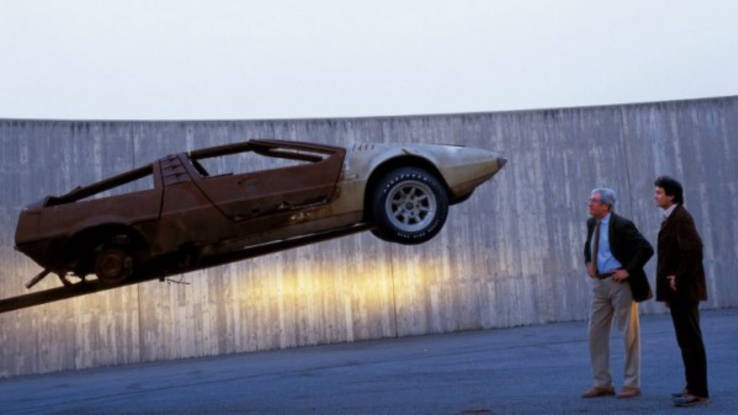
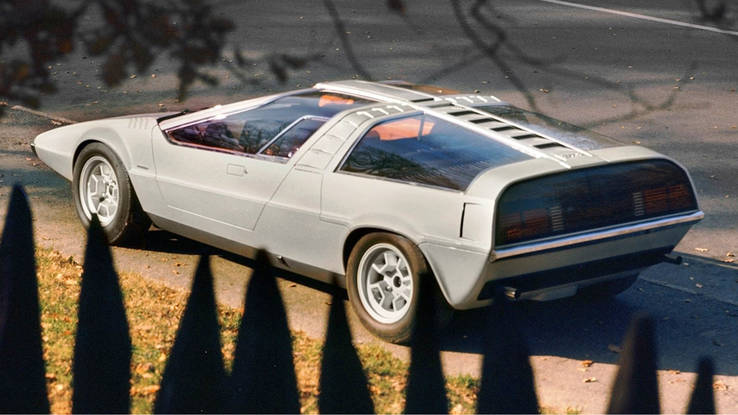
There’s a good chance you’ve never heard of the mid-engine 1970 Porsche Tapiro concept, a one-off Volkswagen/Porsche exercise designed by Giorgetto Giuigaro built on a 914-6 chassis for the Turin Motor Show in 1970.

The design is a clear departure from what other Porsches looked like at the time, and it resembled a lot of the wedge-shaped, sharp-edged sports cars that came after it (e.g., BMW M1). Behind the driver sat a heavily modified 2.4-liter H6 engine claimed to make 220 hp at 7,800 rpm. Of course, the “supercar” had rear-wheel drive, but what happened after it was shown in Turin and the Los Angeles Imported Automobile and Sports Car Show in 1971 is where things get a little murky.

Tapiro image

Here’s what the Porsche Tapiro looked like after going through its fiery death. Photo by Italdesign

An unnamed Spanish industrialist bought the car shortly after the LA show and ended up using it as his daily driver for quite a while. Following that, accounts begin to diverge. One rumor describes the car as being the victim of a terrorist attack — protesters against the owner’s labor policies blew it up with a bomb. Another source says the car was in a terrible accident and proceeded to burn to a crisp after that.

However it happened, there’s no doubt the Tapiro faced a cruel end, and it still hasn’t been restored — it sits in its burned state inside the Italdesign Museum to this day. 

Tapiro image rear

It looks a bit like an Alfa Romeo Iguana or even a DeLorean. Photo by Italdesign

Zac Palmer

Zac Palmer – Editorial Intern Zac Palmer has probably spent more time in a car than any other 21-year old in the country. He likes anything that can go around a corner, and is surely talking about a car wherever he might be.
See more by this author»

Owners of Porsches with beige interiors are in line for a free pair of sunglasses

Share

  • Pinterest

In the world of crazy lawsuits we live in, suing for a pair of sunglasses to reduce glare in your Porsche isn’t one we thought we’d ever hear, but it happened: Owners of Porsches from model years 2007 to 2016 with beige-colored interiors can now collect cash from the German sports car company for a pair of shades.

As reported by Carcomplaints.com; Porsche made the settlement last December. Owners of Porsches with interior colors including Cognac, Luxor Beige, Natural Brown, Platinum Grey or Sand Beige have been able to collect between $50 and $175 in compensation for a pair of polarized sunglasses. Apparently, the beige colors cause a glare annoying enough to sue Porsche over the issue.

Setting aside the absurdity of a Porsche owner with Porsche money suing for a pair of sunglasses, you are running out of time to get your Porsche-sponsored eye protection. All claims must be submitted by Sept. 21 of this year, so don’t dilly-dally about if you’ve been eyeing a new pair of Ray-Bans or Oakleys.

While Porsche did originally file a motion to dismiss the lawsuit, it eventually settled to avoid a costly court battle. Apparently nobody stopped driving their Porsches because of the issue, and no injuries were reported, either. However, if a pair of shades you can pick up for as little as $5 fixes the problem, we wouldn’t stop driving our Porsche, either. If we had a Porsche…

h/t Motor Trend

Zac Palmer

Zac Palmer – Editorial Intern Zac Palmer has probably spent more time in a car than any other 21-year old in the country. He likes anything that can go around a corner, and is surely talking about a car wherever he might be.
See more by this author»

2018 Porsche Panamera Turbo S E-Hybrid Review: All the power. All the money.

Share

  • Pinterest

Hoping to remind car enthusiasts of the emotions they felt when the 918 Spyder was introduced, Porsche now offers the 2018 Panamera Turbo S E-Hybrid. It’s the new range topper for its one, and only, sedan. It relates to the 918 Spyder in the sense that the new Panamera is both the highest performer of the model line and a hybrid.

The heart of the operation is a longitudinally mounted 4.0-liter V8 with 90-degree banks, four chain-driven camshafts with variable timing and direct injection. It’s a “hot-v” setup, meaning the intake ports are outside the V, and the exhaust ports are inside, where two twin-scroll turbochargers lie. Those compressors help spin up 550 hp at 5,750 rpm and 568 lb-ft of torque at just under 2,000 rpm.

The hybrid capability comes courtesy of a 136-hp and 295-lb-ft-of-torque electric motor, which bolts directly to the back of the V8 and ahead of the eight-speed PDK dual-clutch transmission. The parallel system includes an electric decoupler so that the internal combustion engine and electric motor can work in concert or on their own. Total system power comes to 680 hp and 627 lb-ft of torque, which is available, effectively, whenever.

That’s a lot. Good thing power is distributed to all four wheels. Unlike the 918, that power comes mechanically from the same package, no separate electric motor to drive the front axle. Instead, a slathering of differentials, clutches and software manages what power goes where. As a result, several computers decide how much the front and rear axle receive, and indeed how it’s distributed between the driver and the passenger side.     

Also unlike the 918, the Panamera carries four doors, stretches 199 inches and rests on a steel structure. Not to mention all the luxuries and niceties shoved in. All told, the E-Hybrid weighs about 5,100 pounds, which is within 300 pounds of a base Chevrolet Tahoe. Part of that heft comes from the 14.1-kWh battery in back, allowing the E-Hybrid to run on electricity alone for 31 miles.

Efforts to belie physics and usual penalties involved with weight, Porsche engineers mounted an air suspension to each corner in lieu of steel springs. These are standard equipment and give the E-Hybrid adjustable ride height. The high setting allows for better clearance up inclines like steeper driveways. It can ride low while cruising the interstate to slip through the air a little better and increase badassness while doing it.

The list of standard features is expansive. Without checking a single options box, you get actively adjusted anti-roll bars (dubbed Porsche Chassis Control Sport or PDCC Sport), 21-inch wheels, adaptive aerodynamics, electronically variable dampers (named Porsche Active Suspension Management) and, my favorite, Porsche Ceramic Composite Brakes. Normally a several-thousand-dollar option, Zuffenhausen made these fade-free stoppers part of the price of entry.

The Execution

Porsche built what it thinks a luxury flagship sedan should be. Big enough to comfortably accommodate four adults, but tough and sprightly enough to retain track prowess. The affluent among us never use the same vehicle to travel across the country and play on the track, but the point is you can with this one. A two-in-one, of sorts. To prove it, Porsche arranged time to drive the E-Hybrid on a track. A 1.4-mile, 19-turn track, no less. There we learned this isn’t two cars in one. One corner, really any given corner, revealed three cars.

At turn-in, and the braking zone leading up to it, it’s simply impossible to hide the considerable girth. Don’t confuse this with poor body control or overworked machinery — the exact opposite is true. Both the active anti-roll bars and air suspension mitigate pitch under braking. As you dial in, steering lean is also kept at an impressive minimum. Brilliantly done, really. But you feel lots of energy transfer. You can tell lots of inertia must be overcome to change the rate of motion. It understeers a bit and feels like a big sedan.

As you approach and clip the apex, the 275 mm front and massive 325 mm wide rear Michelin Pilot Sport 4 tires get to work, as does the double-wishbone front and multilink rear suspension geometry. Ultimate lateral grip is higher than expected. Constant-speed, left-right transitions, too, come on more willingly than the scales would suggest. As long as you don’t have any big brake zones in the mix, the feel quickly changes to a much smaller sport sedan.

Corner exit brought yet another new experience. The right-now electric motor torque and all-wheel drive made for a sense of bursting on to the straightaway. The track drive was a lead/follow experience, with a 911 Turbo S driven by a pro in front. But that combination couldn’t keep up there. The E-Hybrid gained ground every time. The best part? Throttle application was seamless. No weird surges or gotcha moments, just lots of power, all the time. And with all-wheel drive, you can maintain a tight line from apex to exit, like a full-on supercar.

On the road, these three distinct characters meld into one unique, highly competent road car. One that just happens achieve great mileage. By default, the Panamera Turbo S E-Hybrid starts in e-power mode, which exclusively uses energy from the battery unless you hit the throttle too hard (or the battery runs dry of juice), then the turbo V8 will spin up and contribute to forward motion. At that point, you’re in hybrid auto mode, which runs the engine, but moves the Panamera along with high regard to efficiency. Sport and sport-plus modes switch priorities to acceleration over efficiency to varying degrees.

2018 Porsche Panamera hybrid review with price and photo gallery

There’s also e-hold and e-charge modes. E-hold reserves the battery charge, using only the V8 to power the car, so that you can switch to e-power at a later point. Like re-entering a city after an interstate commute. E-charge uses the engine to simultaneously charge the battery and power the car. This is when you have no real concern for the environment but want to appear like you might sometime in the future.

Luxury comes from items like soft-close front and rear doors (which use electric motors to finish the job as long as you close hard enough to reach the first latch) and a nice long list of the usual accoutrements. Switch the chassis to comfort mode and it’s a big cruiser, full of power. It’s plenty soft for a comfortable ride, yet composed, perfectly at home on back roads. Overall, the E-Hybrid is capable on-track but more enjoyable on the road.

The Takeaway

The E-Hybrid costs $185,450, and that’s before extras like LED headlights, an assistance package that includes things like Night Vision assist, which uses a thermal-imaging camera to help spot living objects in your path before you can, and lane-keep assist. And a super-extra-fancy stereo. Out-the-door, our example runs $214,050. Yikes.

2018 Porsche Panamera Sport Turismo makes its Geneva motor show debut early

This is the 2018 Porsche Panamera Sport Turismo

Though the new Panamera is just now available for the 2017 model year, Porsche already is adding to the lineup with the 2018 Panamera Sport Turismo. Think of it as a sort of Euro wagon …

Perhaps you prefer a little more space anyway. In that case, Porsche now offers the Sport Turismo body style. It squares off the rear end a bit and, in doing so, adds room for a fifth passenger and more luggage space. The Sport Turismo offers several powertrain options, and prices range from $97,250 to $155,050 for a turbo model.

Or maybe you want the legroom but not the body style. Then the extended-by-nearly-6-inches-in-the-wheelbase Executive E-Hybrid is for you. Sport Turismo or no, Porsche offers a unique take on the luxury sedan segment. One that, within the model lineup, offers a wide variety of capability and price tag. A bounty of choices from Porsche, if you’re a One Percenter.  

Robin Warner

Robin Warner – Robin Warner is Editorial Manager at Autoweek. He once tried and failed to become a professional race car driver, but succeeded in learning about debt management and having a story to tell. A former engineer, Warner loves cars for their technology and capability.
See more by this author»

Base Price: $185,450

As Tested Price: $214,050

Powertrain: 4.0-liter V8 Hybrid, 8-speed dual-clutch transmission, AWD

Output: 680 hp from 5,750 to 6,000 rpm, 627 lb-ft from 1,400 to 5,500 rpm

Curb Weight: 5,100 lb

0-60 MPH: 3.2 sec

Pros: Immediate and immense acceleration

Cons: As expensive as a house, a pretty darn decent one at that

Who wins at VIR: 1987 Porsche 944 Turbo or 2017 Macan GTS?

Share

  • Pinterest

Porsche Panorama, the glossy mag for members of the Porsche Club of America, put together an entertaining new vs. old test for the latest issue. It features ace hotshoe David Donohue putting the 1987 Porsche 944 Turbo through its paces against one of the new breed, a 2017 Porsche Macan GTS at Virginia International Raceway.

The 944 Turbo has less power, but also less weight to throw around; it’s also in the proper front-engine, rear-drive format. And it has a manual transmission. The Macan GTS is about as far from the 944 as you can get and still be a Porsche. It’s all-wheel drive, tall and way more powerful (217 hp vs. 360 hp).

Who wins? Take a guess, and let Mr. Donohue do his thing.

Porsche Carrera GT Doing Some Donuts

At the Cars & Coffee Italy event the former rally driver and manager of RM Autosport Raul Marchisio entertained the crowd doing some very nice donuts in his Porsche Carrera GT. Not something you can see every day…

Report: Porsche faces German probe for diesel fraud and false advertising

Share

  • Pinterest

Prosecutors in Germany have expanded the diesel fraud probe to Porsche, Reuters reports, after several raids of Audi facilities earlier this spring. The Stuttgart’s prosecutor’s office indicated employees at Porsche’s U.S. subsidiary were also under investigation, which is focusing on possible fraud and false advertising in the U.S. and in Germany.

The expansion of the probe to include Porsche, which is part of Volkswagen AG, follows several months of intense scrutiny and searches at Audi and VW sites across Germany, which have included a police search of VW’s law firm. The German probe, which unexpectedly kicked into high gear at the start of 2017, has cast a shadow over Audi, which until that time had mostly managed to avoid the fallout from the VW diesel scandal despite recalls of its 2.0 and 3.0-liter vehicles in the U.S. and other regions. Porsche had also stayed under the radar of the nearly two-year-old crisis, which resulted in a sales freeze of its Cayenne Diesel model equipped with a 3.0-liter TDI engine.

The expansion of German authorities’ investigation into Porsche AG follows the arrest and charges against of a former Audi AG manager earlier this month. Giovanni Pamio, described as the head of Audi’s V6 engine development for the U.S. market, was charged by the U.S. Department of Justice with conspiracy to defraud the U.S., wire fraud, and violation of the Clean Air Act, for his role in allegedly defrauding U.S. consumers and regulators.

VW Passat TDI

“According to the complaint, after Pamio and coconspirators realized that it was impossible to calibrate a diesel engine that would meet NOx emissions standards within the design constraints imposed by other departments at the company, Pamio directed Audi employees to design and implement software functions to cheat the standard U.S. emissions tests,” the U.S. Department of Justice said in a statement released on July 6. “Dr Pamio and coconspirators deliberately failed to disclose the software functions, and they knowingly misrepresented that the vehicles complied with U.S. NOx emissions standards, the complaint alleges.”

Pamio was taken into custody in Germany by Munich police in a rare arrest of an executive charged in any part of the diesel investigation. Most engineers and managers charged by U.S. authorities are believed to be in Germany and face no real threat of extradition to the U.S. Only one person charged by the DOJ remains in custody in the U.S. awaiting trial; Oliver Schmidt was arrested by the FBI in Florida after traveling there voluntarily, on vacation. Schmidt is currently in U.S. custody awaiting trial.
 

Our top-5 performance car reviews from 2017 (so far)

Share

  • Pinterest

It’s great to read about affordable normcore cars, but those aren’t the machines we hang posters of up in our room. Supercars (and hypercars) are great too, but how many of us can actually afford them?

We’ve driven a lot of new performance cars already this year. These things pack all the power a typical enthusiast can handle, and you won’t necessarily have to win the lotto to afford one.

By the numbers, these were your favorites to read about in 2017 thus far. Apparently, Porsches and Corvettes are popular with our audience — what a surprise.

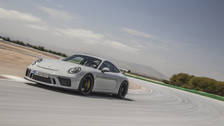
2018 Porsche 911 GT3 road test with specs, power, price and photos

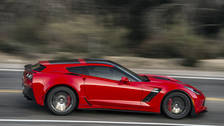
Drive Review Callaway SC757 Z06 AeroWagen Callaway SC757 Z06 Aerowagen

2017 Chevy Corvette Grand Sport review A true happy medium

Porsche 911 GTS coupe and convertible review

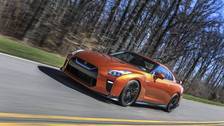
2017 Nissan GT-R Premium review and test drive

By Autoweek Staff

Hot or Not: The RAUH-Welt Begriff Porsche 911 makes purists cry

Share

  • Pinterest

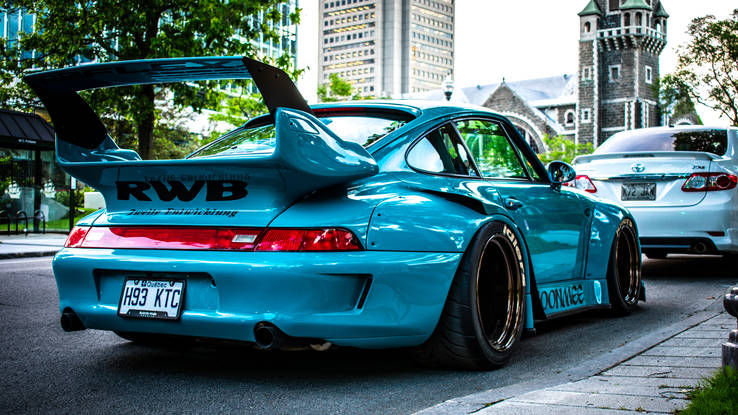
Take a pristine Porsche and add screwed-on fenders, offset wheels and a massive wing, and the Porsche Club of America could revoke your membership faster than you can say konnichiwa. So to say RAUH-Welt Begriff, the Japanese shop known for taking Porsche 911s and adding some unique visual flair, is controversial is a bit of an understatement.

This blue example, which you can see in all its glory via the beautiful photography on Frederic Rousseau’s Flickr page, has all of RWB’s hallmarks — fenders, wings and splitters, oh my. The light-blue paint, white-lettered wheels and massive spoiler give the Porsche character at the mercy of making it a caricature.

RWB Porsche Photo 1 6-23-17

The spoiler is big enough to seat six at a Thanksgiving dinner. Photo by Frederic Rousseau/Flickr

Are adding such modifications sacrilegious? Meh. People hitting RWB to modify their Porsches know exactly what they’re getting. And you can’t fault someone for making a car his or her own, even if you don’t like the outcome.

A quick Google search of “RWB Porsche” predictably finds results both praising and condemning the company. The court of public opinion is split. But who’s to judge another’s taste in cars? You like what you like, even if the internet is ready to let someone know why they’re wrong (or right). On that note, you can leave your opinions in the comments below.

Surprise: 700-hp Porsche GT2 RS debuts with ‘Forza Motorsport 7’ at E3

Share

  • Pinterest

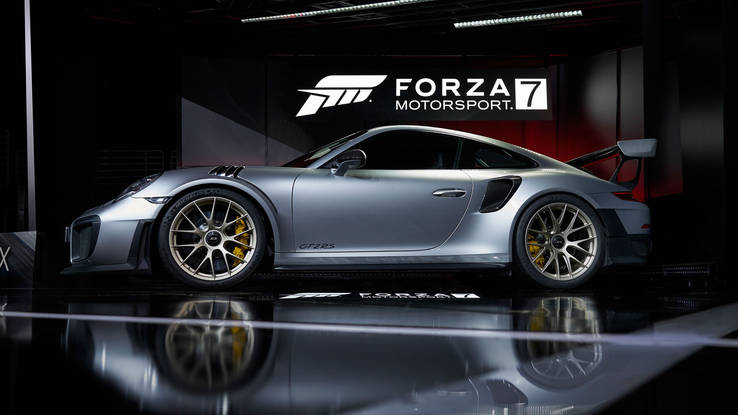
If you needed any more reason to believe that driving video games are a huge part of this industry, look no further than Porsche at the Electronics Entertainment Expo, aka E3, in Los Angeles this weekend. There, not Frankfurt or Shanghai, is where the company revealed its latest and most powerful 911 ever, the GT2 RS. It will be the cover car for “Forza Motorsport 7” on Project Scorpio, Xbox One and PC. Forza is a Microsoft series, hence the lack of Sony PlayStation support.

2018 Porsche GT2 RS in Los Angeles

The GT2 RS will get a 700-hp 3.8-liter twin-turbocharged H6.

The rear-wheel-drive 2018 GT2 RS will get a 700-hp version of the 911 Turbo’s 3.8-liter twin-turbo flat-six. In the just revealed 911 Turbo S Exclusive Series, it sends power to all four wheels, good for a 2.8-second sprint time. The GT2 is rear-wheel drive only, but with the extra power, we’d guess it’ll be close to that time, if not a little better.

“Forza Motorsport 7” will feature the GT2 RS, in addition to more than 700 (!) other cars “including the largest selection of Lamborghinis, Porsches and Ferraris ever assembled.” It also comes with 30 “racing environments,” which we think means tracks, as well as dynamic weather and 4K support for ultra HD TVs. Check out the launch trailer below, and stay tuned as we get more details on the new 911 GT2 RS.

[embedded content]

2018 Porsche 911 Turbo S Exclusive Series tops the quarter-mil mark

Share

  • Pinterest

Porsche is unleashing a limited-run 911 Turbo S into the world called the Exclusive Series Coupe. Yes, there will be more power, and yes, it will cost significantly more than the plebe Turbo S.

For a cool $257,500, you get 27 hp over a Turbo S, for a total of 607 hp, and a host of other Porsche Exclusive options. Acceleration isn’t changed much with the extra power; 0-60 mph is quoted at the same 2.8 seconds as the base Turbo S, but 124 mph is achieved 0.3 second quicker than before on the way to a 205-mph top speed.

You can add plenty of additional option$ through Porsche’s new Porsche Exclusive Manufaktur program, but the golden-yellow metallic paint and other appearance bits strewn about already make this car unique. Center-locking 20-inch wheels in black with golden accents, plus black and gold brake calipers, should fulfill all your color-matching dreams at the corners. 

Carbon fiber finds its way throughout, with strips of it in the roof and front trunk lid. A new rear fascia, twin tailpipes in black and plenty of badges adorn the exterior to finish off the 911 Exclusive look.

On the inside, Porsche keeps the gold accents going with stripes, linings and stitching everywhere. Copper thread is even woven into the carbon fiber. We’re starting to think the amount of gold this car features must be a hint at the pocketbooks of potential buyers.

If spending supercar money for your 911 Turbo S isn’t enough, Porsche also has a matching watch and luggage set to sell you. Five pieces of luggage will total $6,324, and the watch is yet to be priced … but if you have to ask.

Similar to other exclusive limited-production exotics, only 500 911 Turbo Exclusives will be sold worldwide — so don’t expect to see too many around. There’s no on-sale date yet, but orders can be placed through your friendly Porsche dealer soon.

Zac Palmer

Zac Palmer – Editorial Intern Zac Palmer has probably spent more time in a car than any other 21-year old in the country. He likes anything that can go around a corner, and is surely talking about a car wherever he might be.
See more by this author»

The new Porsche 911 GT2 RS will be a 640-plus-hp track monster

Share

  • Pinterest

Any Porsche fan knows the 911 GT2 RS is the ultimate Porsche when it comes to outright speed and lap times, even more so than the GT3 RS. The 991 generation hasn’t been given the treatment from Porsche’s GT team yet, but EVO Magazine got a chance to ride along in a prototype version where GT head Andreas Preuninger divulged some exciting details about the homologation racer.

Powertrain-wise we’re looking at a heavily revised version of the 3.8-liter twin-turbocharged engine found in the current Turbo S, making greater than 641 hp and 553 lb-ft of torque in its new form. To crank this extra twist from the already potent power plant Porsche added larger turbos, increased the boost pressure, used new engine internals and threw on a titanium exhaust to boot. 

The coolest addition has got to be a new water sprayed intercooler system like the one BMW utilized on the M4 GTS. Unfortunately, this great cooling system needs to be refilled with water after three times around the Nurburgring, not exactly ideal when you’re trying to set consecutive hot laps.

Preuninger left no questions on the table when it came to the transmission; this RS car will only be available with the seven-speed PDK. The torque output from the turbo engine is too much for the manual to handle.

Less than 3,300 pounds is the aim for this car, and Porsche will be offering a Weissach package reminiscent of the 918 to drop another 66 pounds or so. Magnesium wheels, a titanium cage and carbon fiber roof all contribute to what will probably be a wildly expensive box to check.

The whole suspension is essentially the same thing 911 Cup cars run around with. Spring rates are double that of the GT3 up front, and close to it in the rear. Clearly this car won’t be too comfortable on the road, but its purpose is to set fast lap times. Michelin Sport Cup 2s are expected to allow for a Nurburgring time under seven minutes, but sub-seven minute laps appear to be the norm these days.

Zac Palmer

Zac Palmer – Editorial Intern Zac Palmer has probably spent more time in a car than any other 21-year old in the country. He likes anything that can go around a corner, and is surely talking about a car wherever he might be.
See more by this author»

Porsche investigated for illegal emissions software, report says

Share

  • Pinterest

Germany’s transport authority (KBA) is investigating Porsche vehicles for the presence of software that can detect when a vehicle is being tested for emissions, the German weekly Wirtschaftswoche reports. The software has been found in a number of VW Group models since the outbreak of the diesel crisis nearly two years ago, though this is the first time Porsche models have been reported to be under the microscope.

The emissions software (which has not been found in any Porsche model to date) works by detecting steering wheel movement and adjusting a vehicle’s emissions outputs accordingly. The software is said to operate by allowing the vehicle’s emissions control system to emit more than the permitted level of nitrogen oxides if it detects steering inputs of greater than 15 degrees.

The KBA tests follow the ministry’s demand that Audi recall some 24,000 A7 and A8 models equipped with the 3.0-liter V6 diesel and 4.2-liter V8 diesel engines, which the ministry accused of emitting twice the permitted level of pollutants. VW Group CEO Matthias Mueller was reportedly summoned to the KBA last week in connection with the probe.
 

KBA demands Audi recall diesel A7 and A8 models

The Wirtschaftswoche report follows last week’s warning by Porsche Automobil Holding SE that the company’s offices may be searched as a part of the German government’s investigation into the diesel crisis. Multiple Audi offices and factory sites were searched by prosecutors and police in March of this year.

So far, the Porsche Cayenne Diesel is the sole Porsche model to be issued a Notice of Violation by the EPA for a different type of undisclosed software, which was said to be part of a diesel engine’s “warmup” technique. The EPA action effectively grounded a number of Audi and VW models as a part of the 3.0-liter diesel investigation, forcing VW Automotive Group to develop a software patch for the affected models that has only recently received approval.
 

Can a $2,000 Porsche go 2,000 miles?

Share

  • Pinterest

What’s the greatest distance you’d dare travel with an old and, more importantly, unknown car? Could 500 bucks get you 500 miles? Could a thousand get you 1,000 miles? Porsche fanatic, Panorama editor and friend of Autoweek Rob Sass bought a $2,000 1979 Porsche 924 (over the phone!) and is driving it 2,000 miles from The LeMay, America’s Car Museum in Tacoma, Washington, to Ann Arbor, Michigan. Says Sass:

“While at Tech Tactics East in New Jersey this past February, I bought a ’79 924 over the phone. I paid just under $2,000 for it, and it happens to be located on the other side of the continent in Seattle. The idea isn’t to do some Top Gear-esque stunt and watch the car expire in some allegedly comedic way, but to really see what kind of Porsche the average person might buy for credit card money.”

Days one and two are up on the Porsche Club of America’s website now. Sass comically includes a list of new Porsche options that are more expensive than this entire ’79 — and there are a lot of them. You can follow the journey there, and keep an eye out for Porsche Panorama magazine; the full story will hit that publication later.

Have you done more with less? Let us know in the comments!

1979 Porsche 924

This past February, Sass bought a ’79 Porsche 924 over the phone. Photo by Rob Sass

5 fun summer drop-tops for buyers on a budget

Share

  • Pinterest

It’s June, which means hot, sunny weather, so now’s the perfect time to fetch yourself a cheap little drop-top to really enjoy the season. Here’s a great place to start your search.

Boxster image

Prices are still low for this one, but values could be moving since the new Boxster is only available with a four-pot.

Porsche Boxster (1996-2004)

The original Boxster is everything most today’s cars aren’t: Light, small, naturally aspirated and without electronic nannies. Traction control was optional up until 2001, and turning it off was as easy as touching a button. Today, Porsche uses two fewer cylinders in its dedicated roadster but added a turbo to make up the difference. Older models can be had for around $10,000 in decent condition, which is a real bargain to get into an exotic mid-engine layout. Make sure to thoroughly inspect and get a detailed maintenance history if you do buy one, though, because like the 996 911, IMS failure is common. That’ll turn your cheap sports car into an expensive nightmare.

S2000 image

The AP1 generation is far cheaper than the refreshed AP2 typically, but the AP1 engine is the one that revs to 9,000 RPM.

Honda S2000 (1999-2004)

Honda’s high-revving rear-wheel-drive sports car is going up in value now, so if you want it cheap, the time to act is now. There are still plenty hovering around $10K, but a nicer example will probably run you a few dollars more. The first-generation models (AP1s) rev to 9,000 rpm — supercar territory, plus you’ve got Honda reliability on your side. Dropping the top and getting aurally treated to the upper rev ranges of the 240-hp 2.0-liter sounds like a superb way to spend the summer.

BMW Z3 image

Upgrading to the six-cylinder is worth it over the slower four banger.

BMW Z3 (1995-2002)

The BMW Z3 might be a car many forget about when it comes to shopping for a sporty drop-top, but it would be wise to consider it. While it doesn’t have the same performance prowess as the two previous cars on this list, it’s still a hoot to drive. With a naturally aspirated BMW inline-six available, there’s enough grunt to rocket through winding back roads. Unfortunately, this one is no cheaper than its competitors on the used market, and being an older German car, it won’t do any favors to your wallet if something were to go awry. The coupe version looks sporty and unique, but it has become wildly expensive compared to the convertible.

Miata image

Driving the Miata makes every other car out there feel huge and overweight. It’s hard to not have a good time behind the wheel.

Mazda Miata (1990-2005)

As the name suggests, Miata is always the answer. If you’re looking for a budget friendly summer sports car to tear up some country roads near you, here’s your car. Both the first generation (NA) and second generation (NB) Miatas are all the car a twisty road needs, and they cost pennies on the dollar compared to other convertible sports cars. They weigh next to nothing, and there’s bound to be a decent selection of them on your local Craigslist.

MR2 image

The MR2 was known as the baby Ferrari due to its mid-engine layout.

Toyota MR2 (1985-2005)

If you want to be different, you should hunt down a Toyota MR2. Either the first (W10) or second (W20) generation is your best bet at finding one at a decent price, but the third generation car can be found for cheap too. The last generation is still a good car, but the older ones are more charming. There’s no doubt the force inducted MR2s are awesome, but naturally aspirated versions will be cheaper and easier to find. Prices are still fairly low, far under $10,000 if you go for a higher mileage example, but it could be worth it to shell out a few bucks more for something with more life left.

Zac Palmer

Zac Palmer – Editorial Intern Zac Palmer has probably spent more time in a car than any other 21-year old in the country. He likes anything that can go around a corner, and is surely talking about a car wherever he might be.
See more by this author»