All posts in “Cars”

Development of a Limited Production 600 hp Acura Supercar

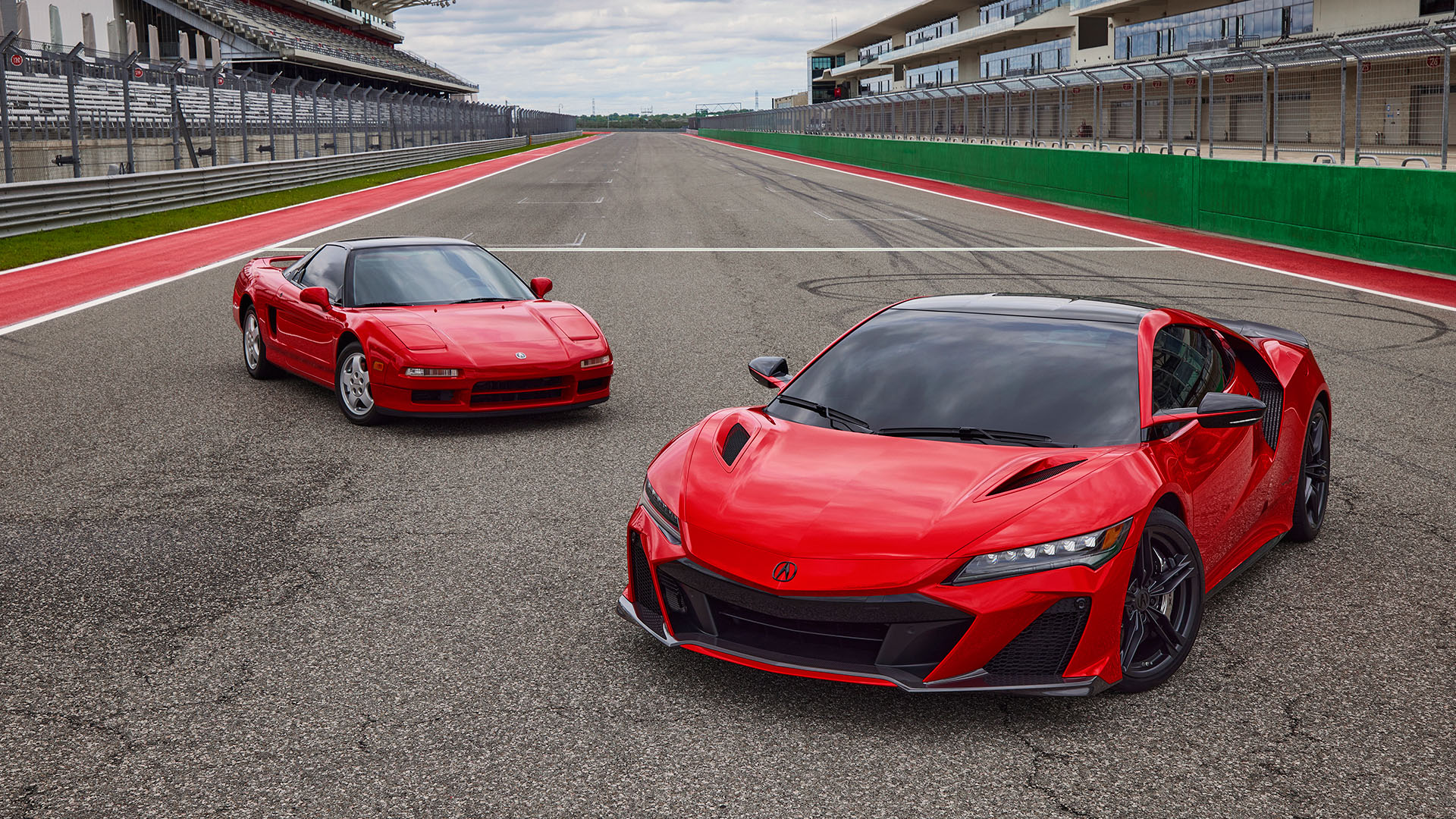
I have to admit I really liked the original Acura NSX or the Honda NSX as it was called over here in Europe, and I mean the early one with the pop-up headlights, not the later one with the fixed headlights, I wasn’t really a fan of those, but I did like the idea of an NSX with a removable roof panel … this looked like a supercar, I’m sure many mistook it for a Ferrari, especially in red, but it was a Honda, the same make that had the ‘pocket-rocket’ CRX over here, a car that would be tuned to the max … and then you had the NSX, a stunning beauty even in factory original form.

After showing the initial concept, Honda came up with the name NS-X, for New Sportscar eXperimental, eventually, the car was marketed as the Honda NSX, and as the Acura NSX for the North-America market, starting from 1990 powered by a 3-Liter V6 VTEC engine, initially with a 5-speed manual that was joined by a 4-speed automatic in 1993, two years later the NSX T was shown with a removable roof.

The first power upgrade came in 1997 when the displacement of the V6 engine grew to 3.2-Liters while a facelift was executed 12 years after the release, in 2002 the pop-up headlights were replaced with fixed units, sadly three years later, in 2005 production of the Honda/Acura NSX was halted after being in production for 15 years.

The next-generation Acura NSX had been rumored since late 2007, inspiration would be taken from the Acura ASCC, but the entire development was halted in 2010 until late 2011 Honda officially confirmed they were working on a new supercar, which they called the ‘second-generation NSX’, there was even a concept car shown at the 2012 NAIAS, but it would take three more years to unveil the final production model which would become an MY2016 edition, and not built in Japan this time, but designed and engineered in Marysville, Ohio, at Honda’s plant, led by chief engineer Ted Klaus.

The new 2016 Acura NSX still had a V6 engine, but this time a 3.5-liter twin-turbocharged evolution with a hybrid addition, three electric motors boost power to 573 hp, this time through a 9-speed dual-clutch automatic transmission, and while it’s a new, modern sports car, I still feel it lacks the intimidation the original car from the Nineties had … it’s just not that amazing looking, but that’s just my opinion.

Sadly the second-generation Acura NSX didn’t become a sales hit, between 2016 and 2020 only 1,386 were sold in the United States, with 2017 being the top-selling year with 581 units, unfortunately, Europe was even worse with only 215 units, in 2020 only 8 Acura NXS found customers in Europe … but for the final year of production, something new came around.

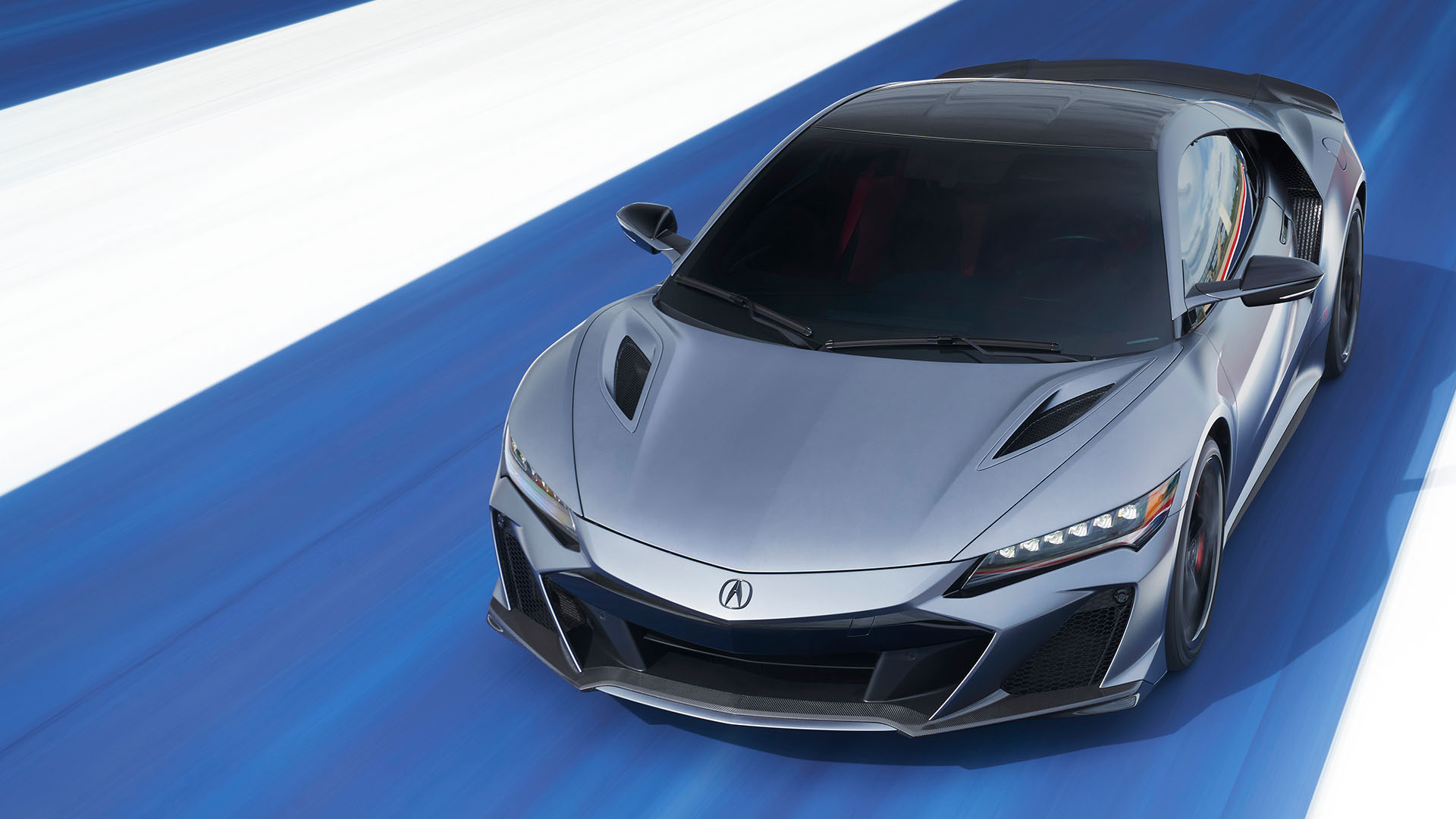
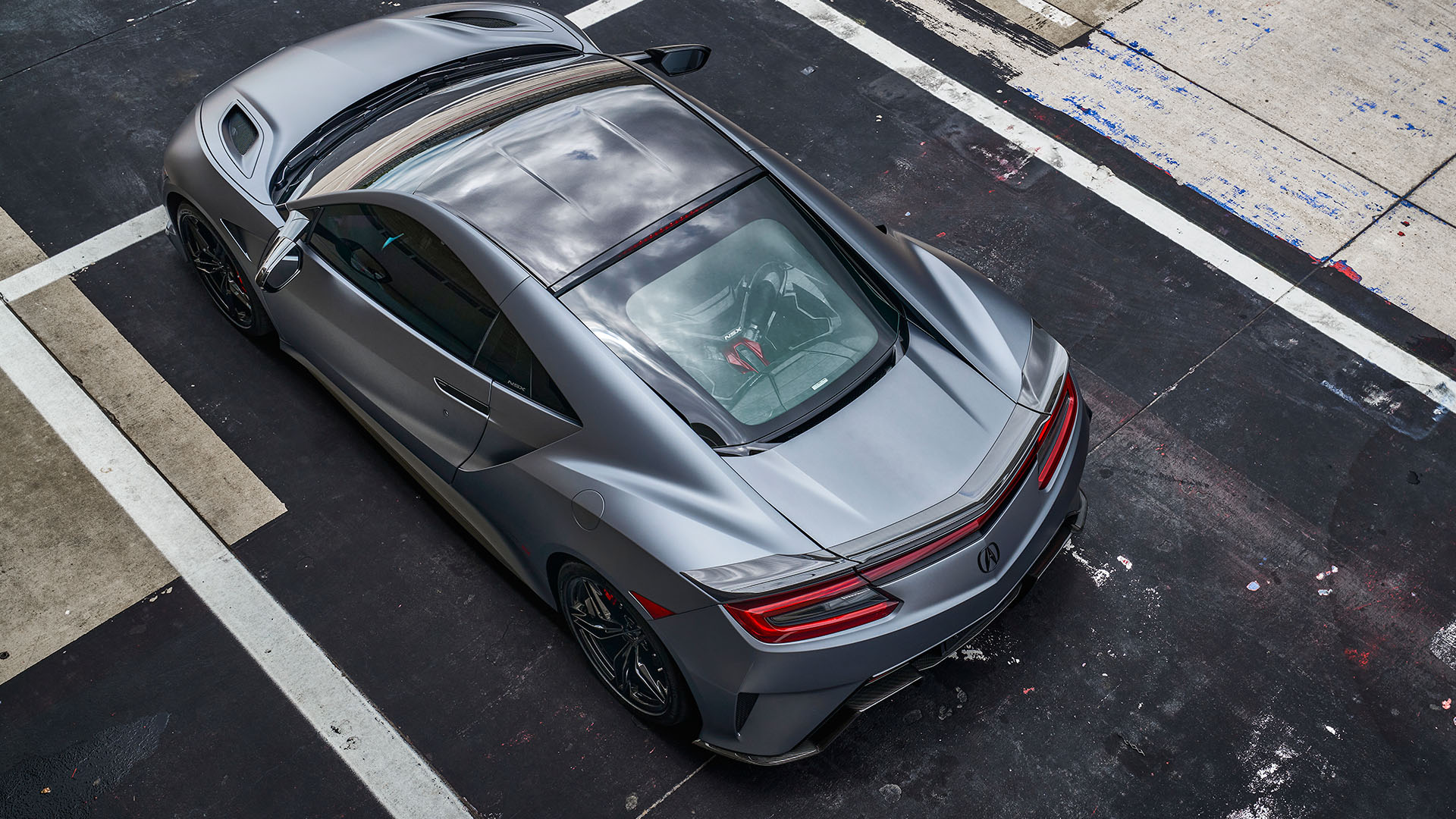
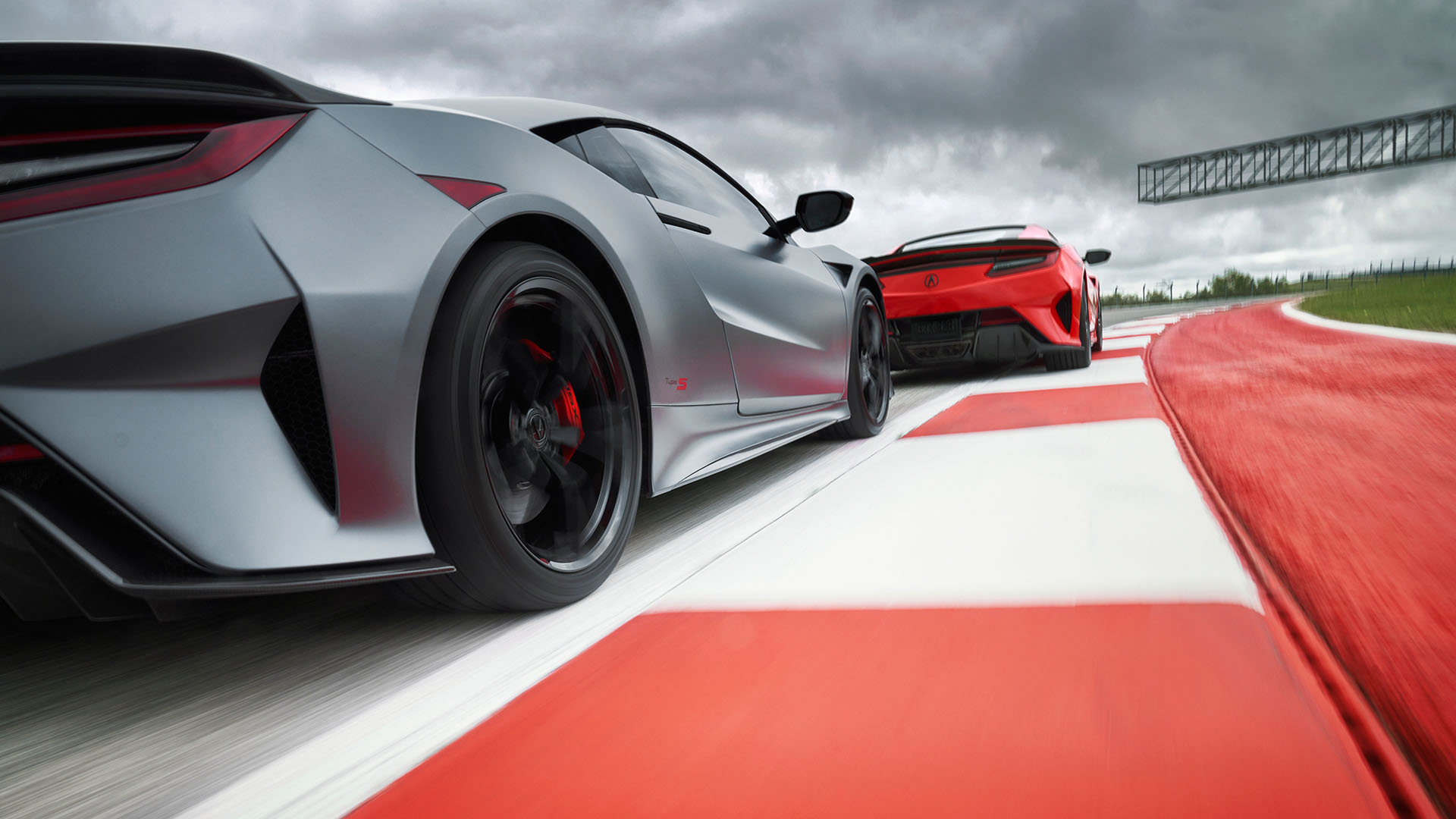
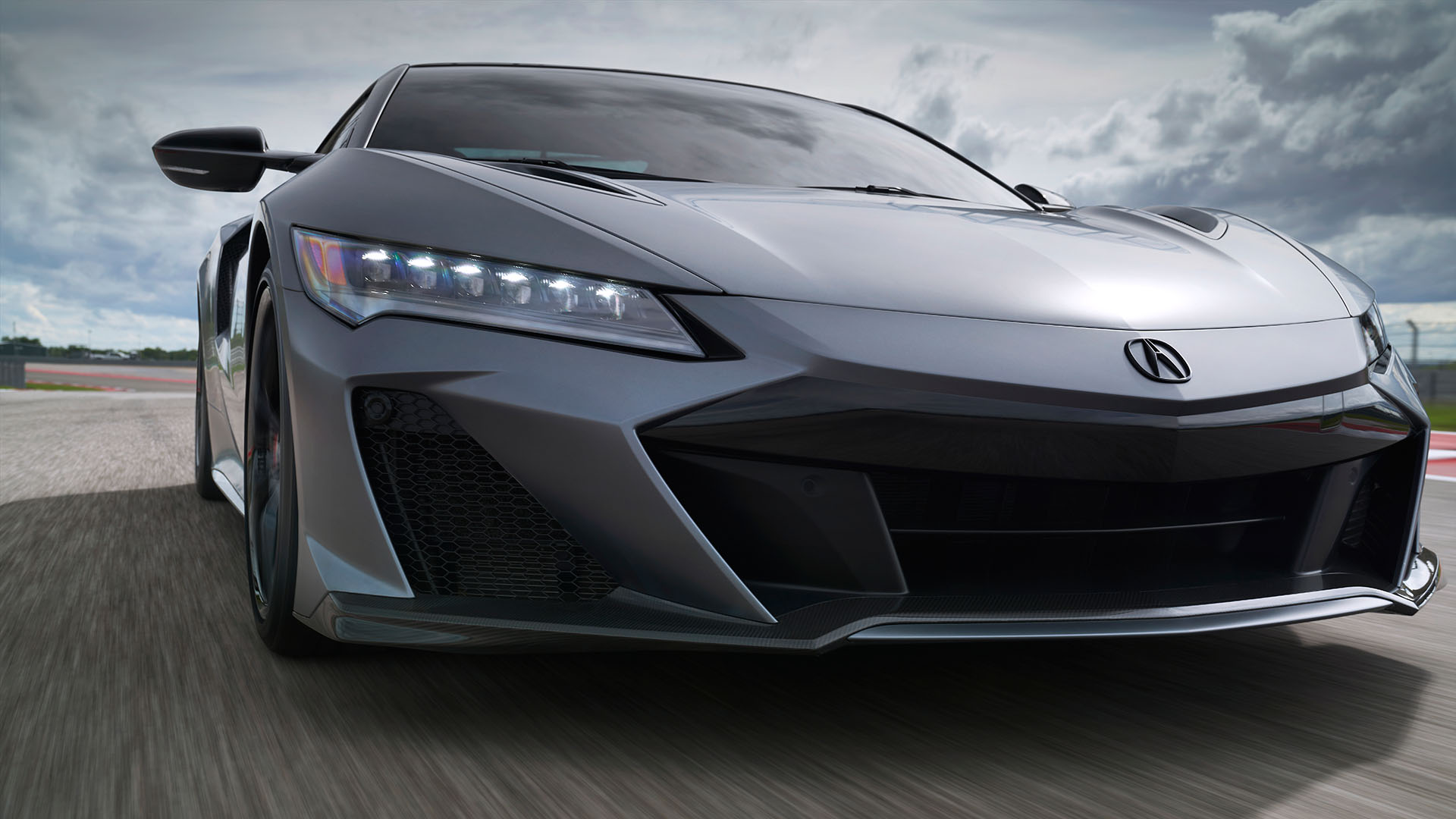
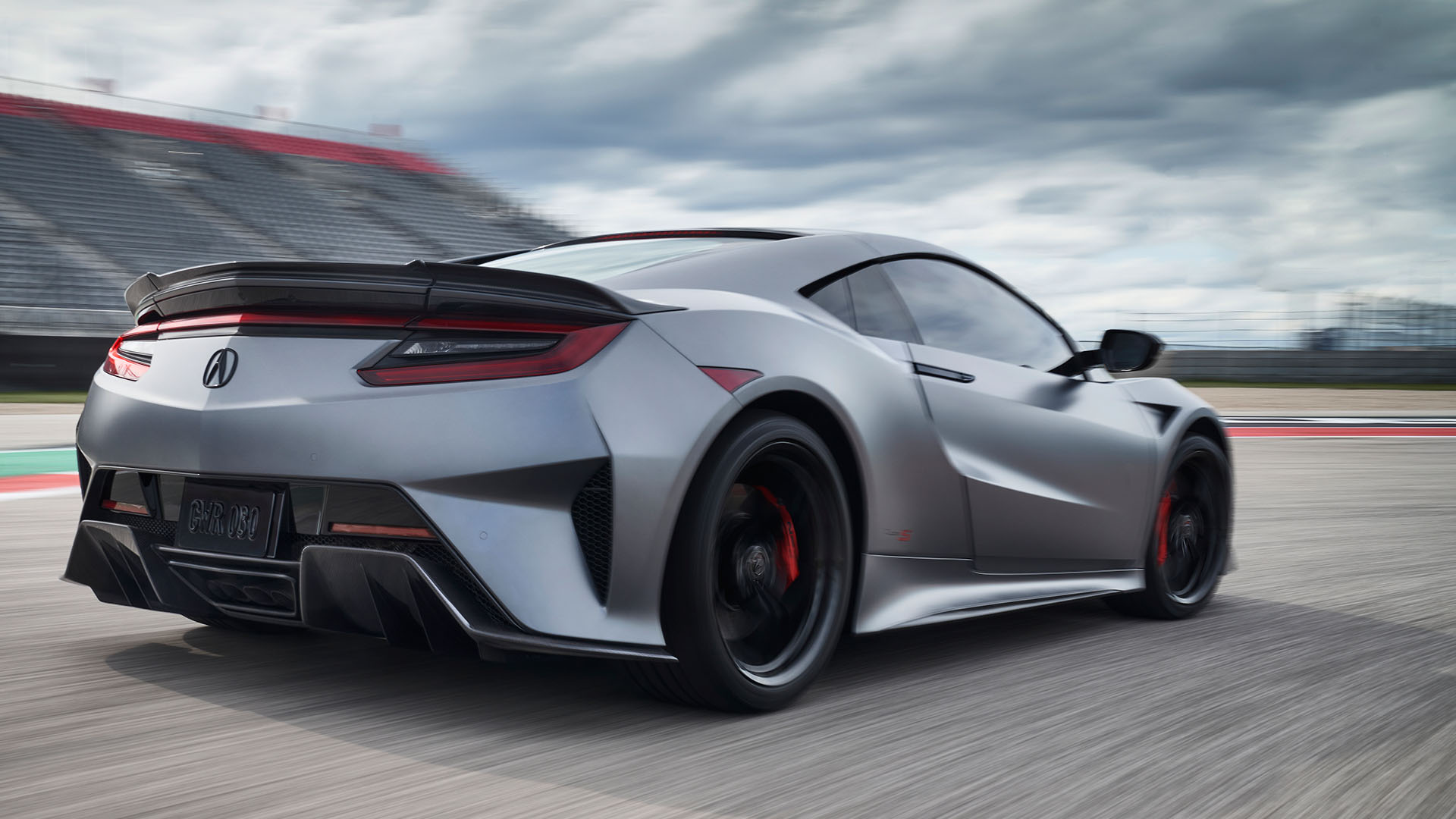
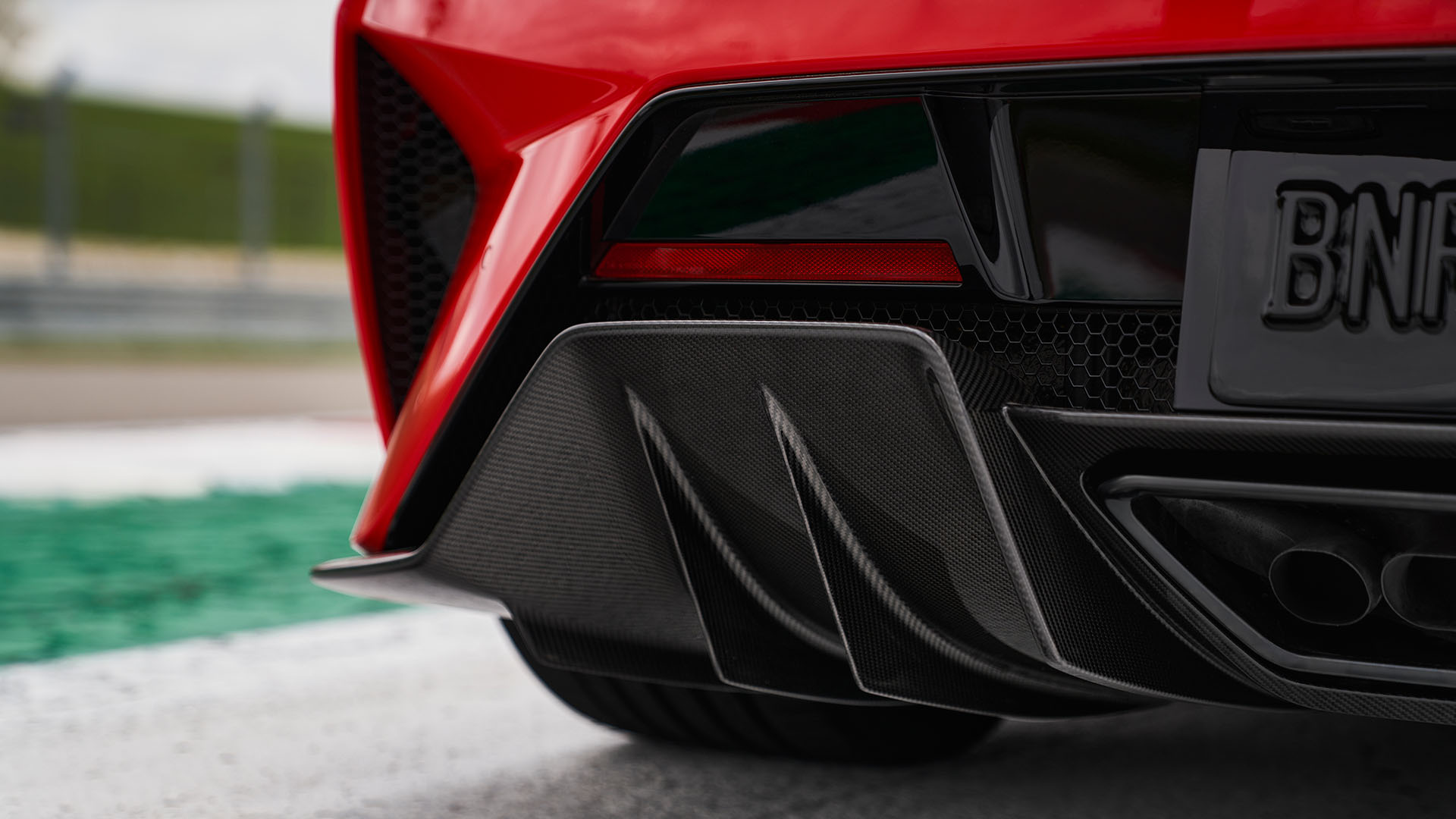
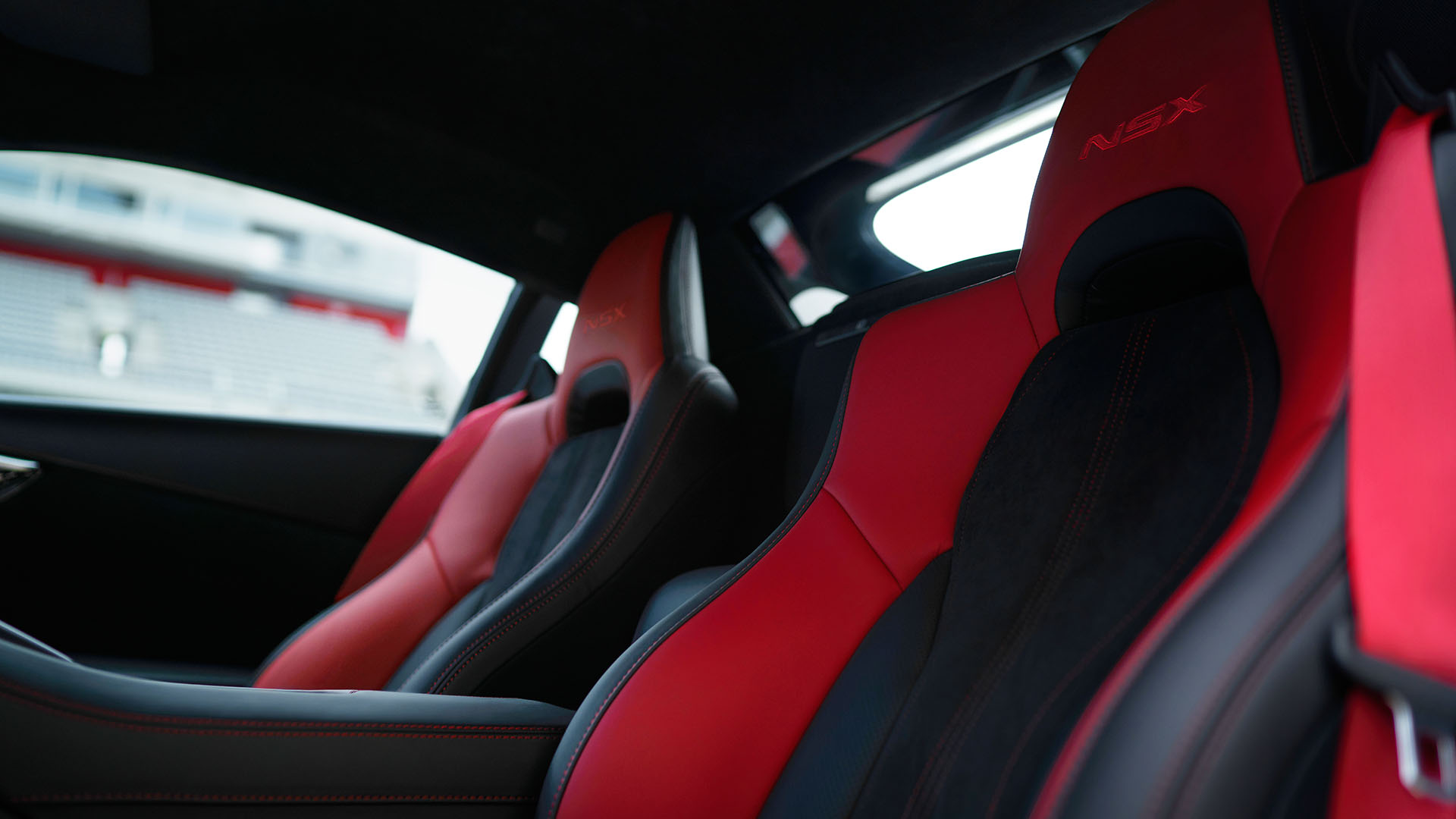
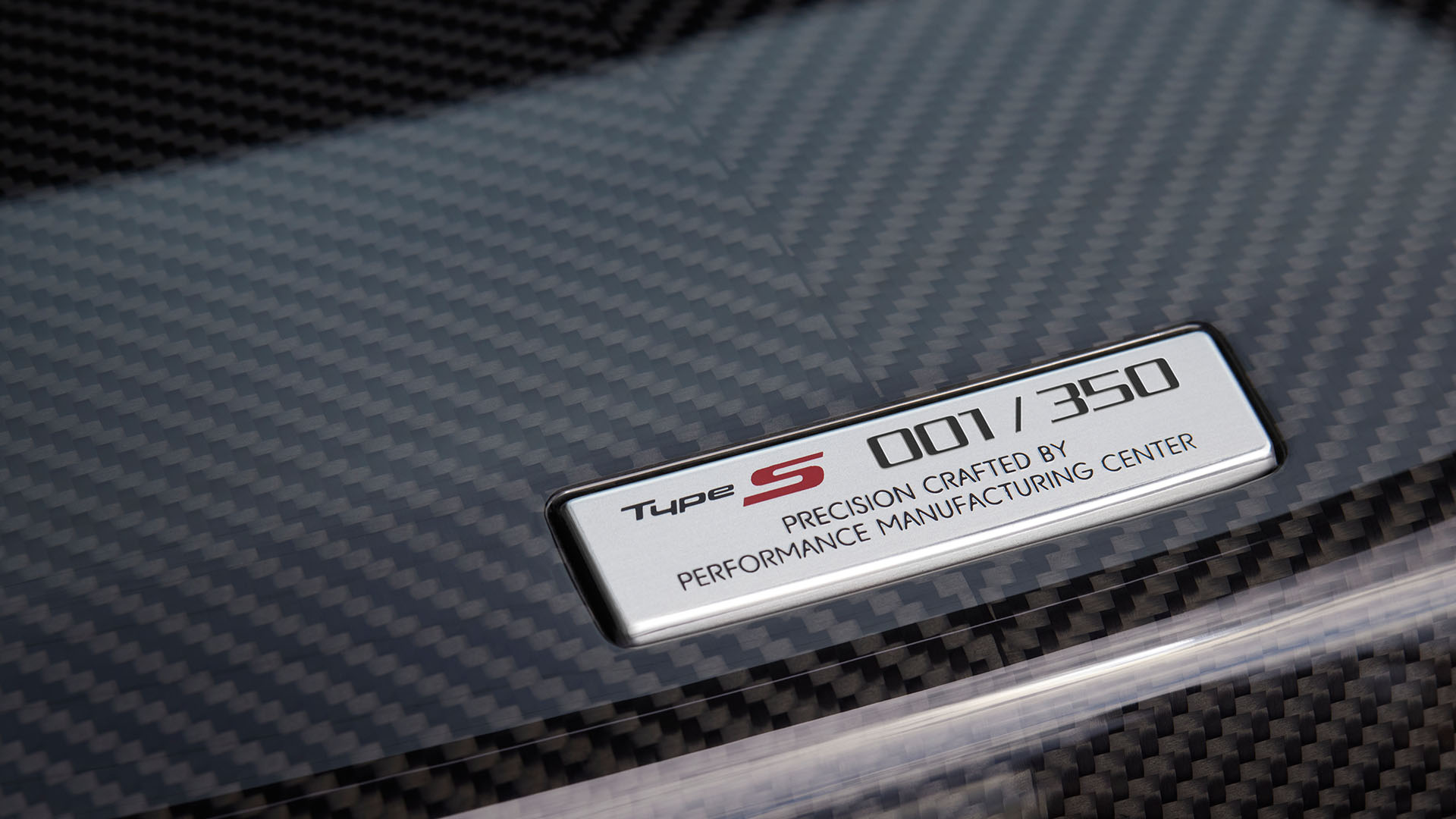
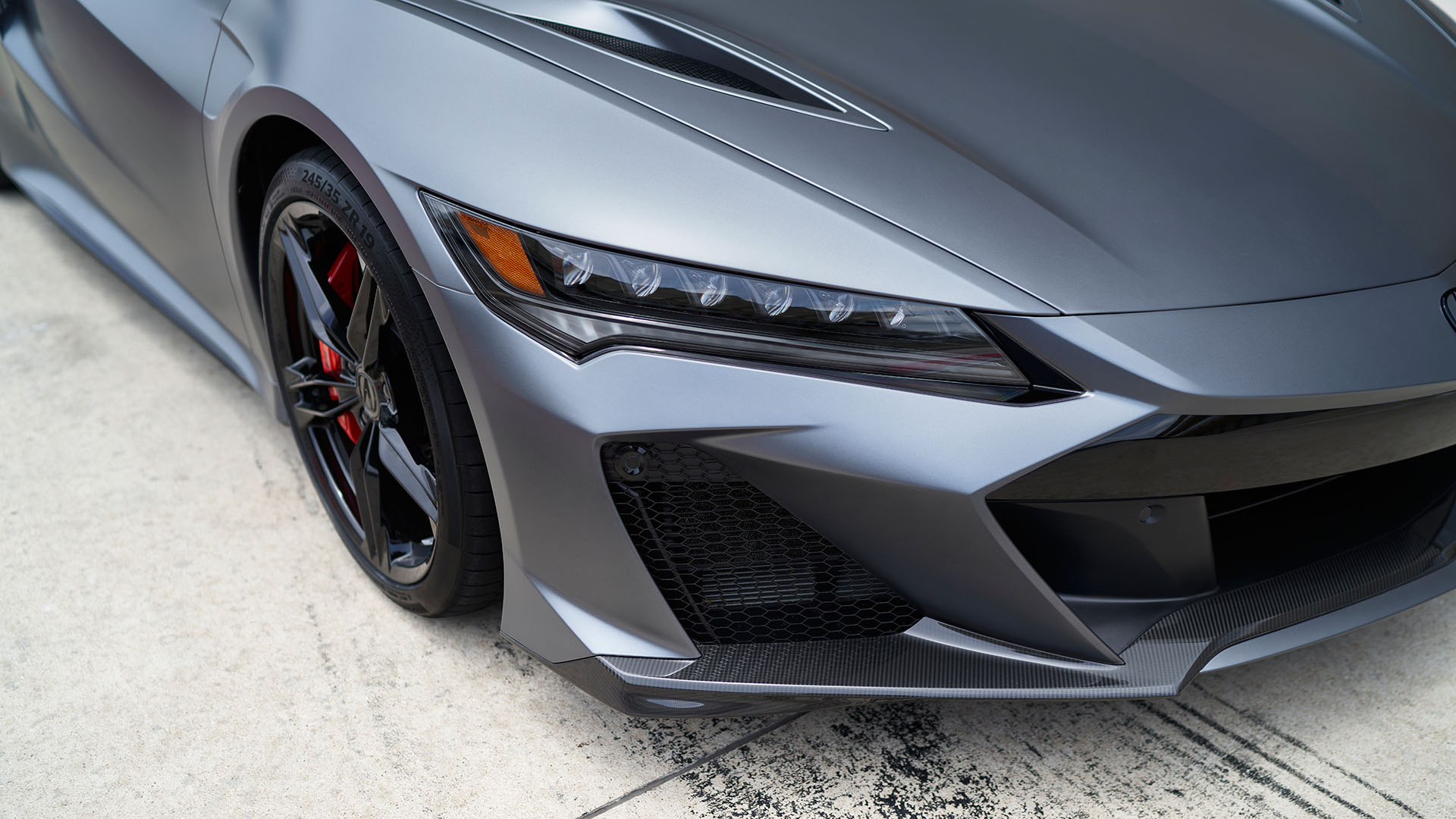
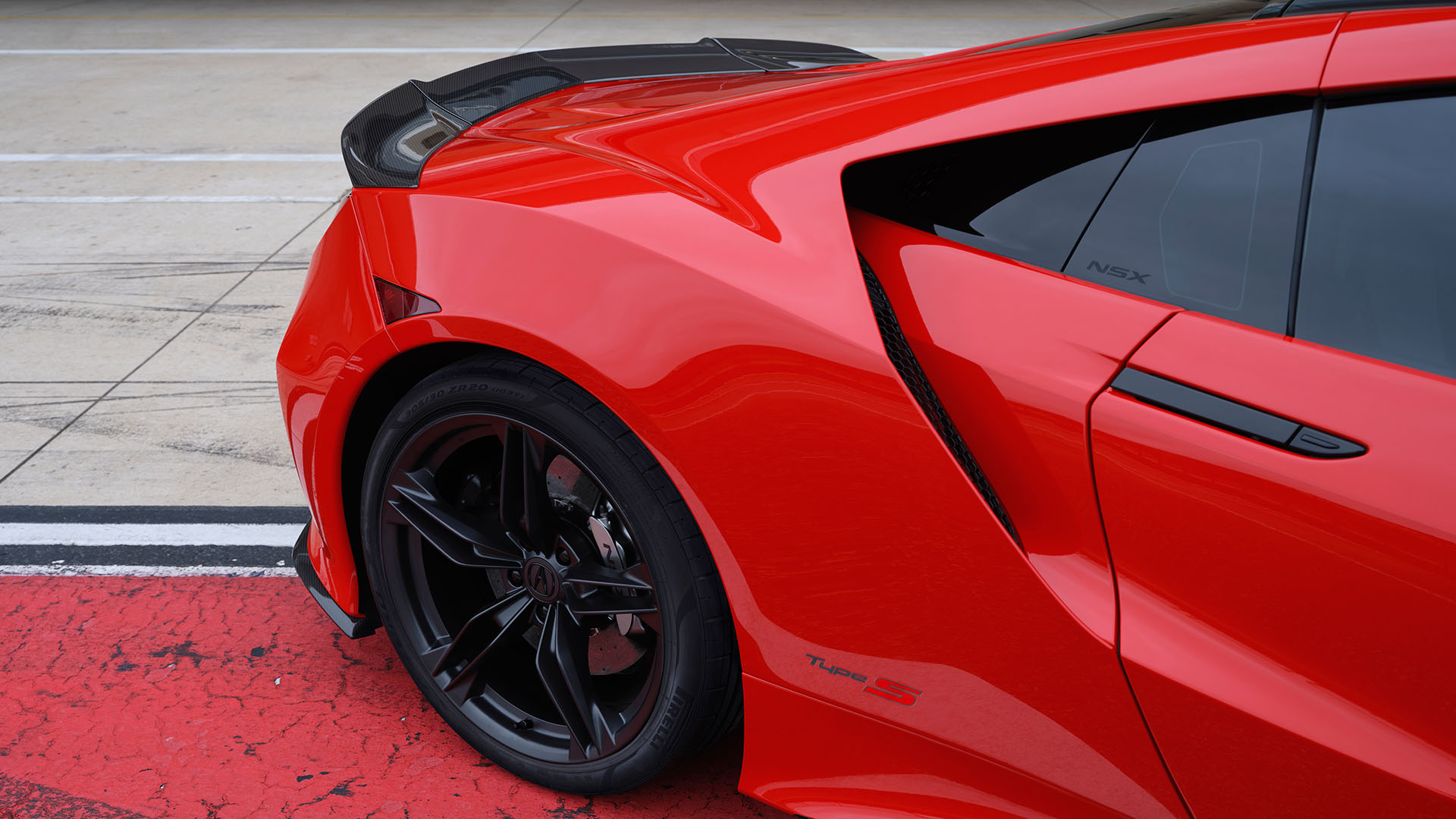
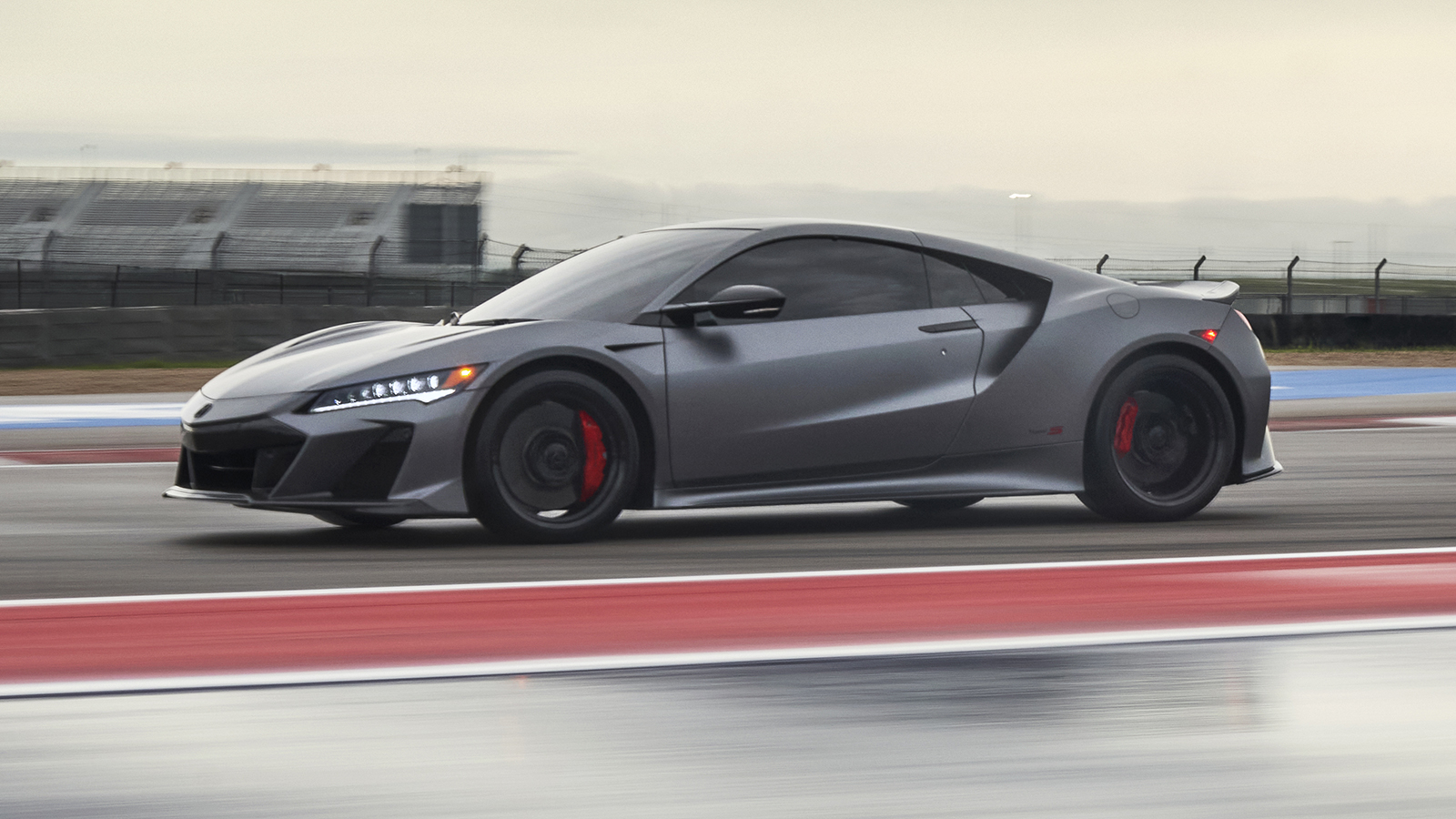
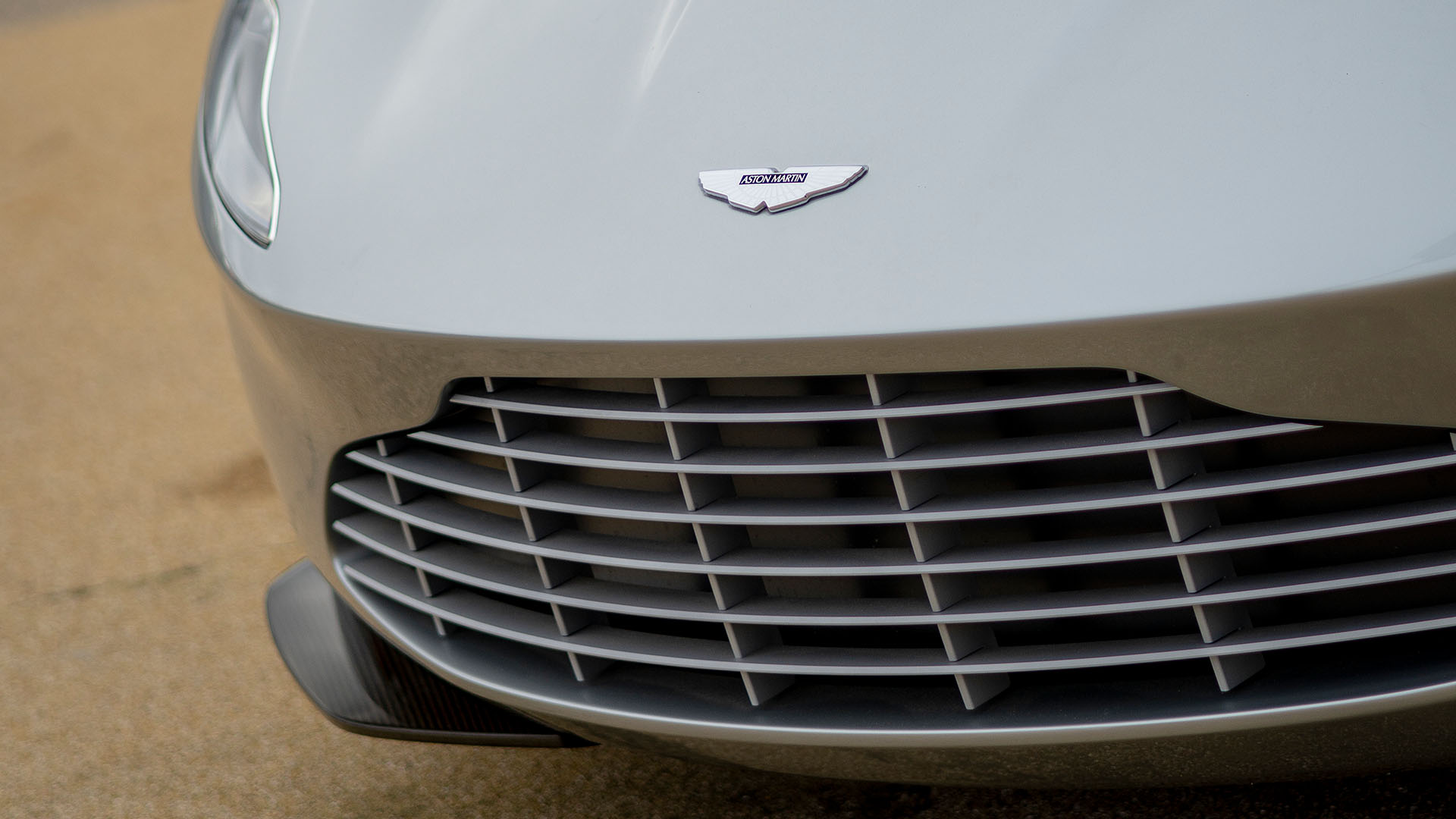
Production of the Acura NSX will be discontinued in 2022, so as a final farewell Acura came up with the NSX Type S, the most powerful NSX ever with 600 hp, unveiled during the 2021 Monterey Car Week, with a limited production run of only 350 units, and a redesigned look to make this 2022 NSX Type S the most aggressive looking one ever, with larger intakes in the front bumper and a GT3 style rear diffuser.

“Only NSX can go beyond NSX,” said Satoshi Mizukami, chief engineer and NSX Type S development leader. “Power definitely contributes to what we strive for, including the joy of driving, but that alone wouldn’t be enough. We want our customers to feel that performance deep inside, and if we were to enhance performance, we wanted to express the vehicle with designs that represent such performance.”

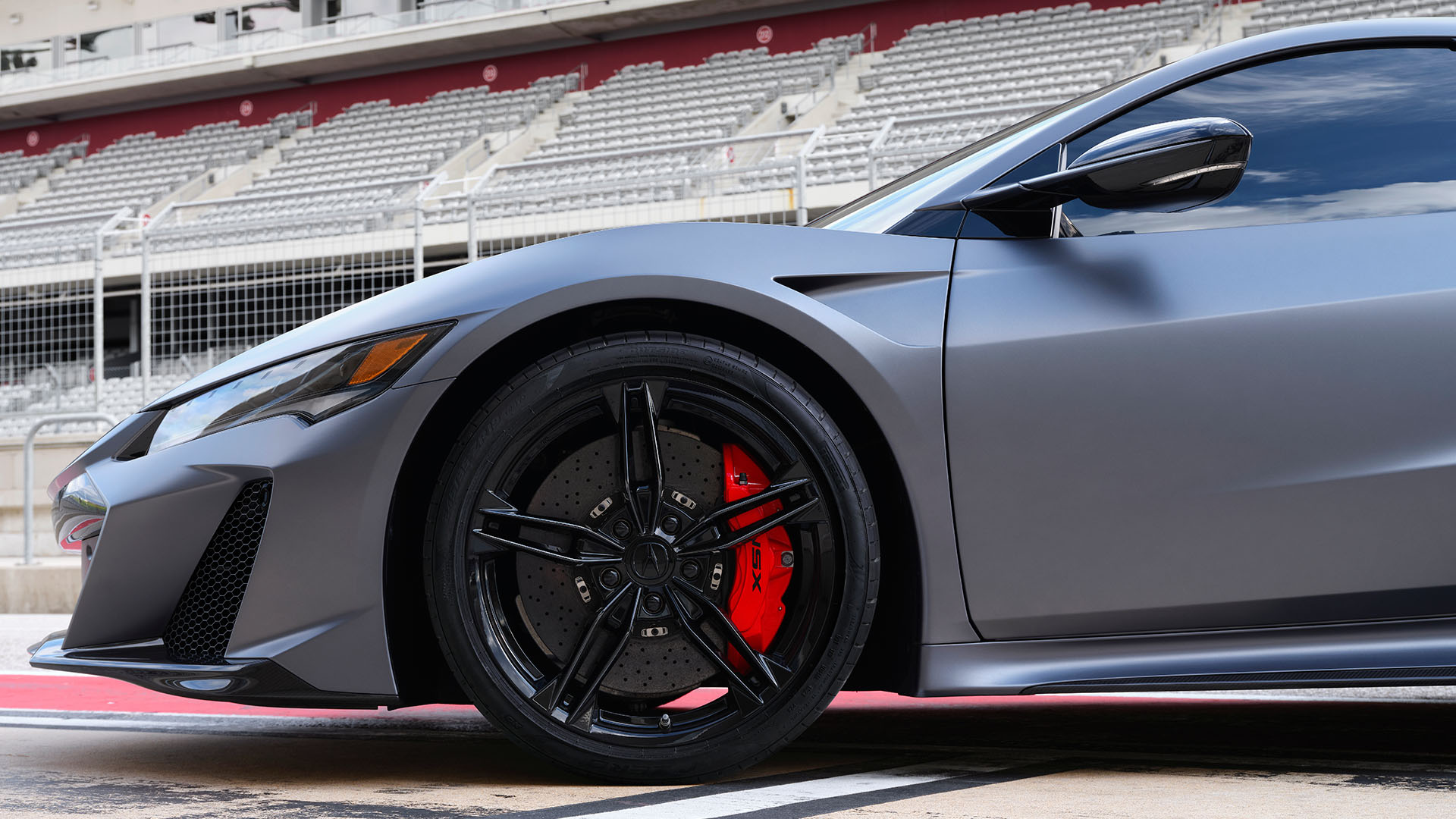
The 2022 Acura NSX Type S can be ordered in a stunning looking Gotham Gray matte paint that combined perfectly with the gloss black mirrors and door handles and let’s not forget the bespoke forged alloy wheels with their split-five spoke design. “At first glance, people will say it looks completely different,” said exterior designer Dai Hara. “It looks fast.”

The increase in power to an even 600 hp from the previous 573 hp has been achieved by using the larger turbos from the NSX GT3 racecar, to cope with that much power Acura installs stickier Pirelli P-Zero tires on these final edition models, in fact, the entire production for 2022 will be made up of Type S only at the Performance Manufacturing Center in Marysville, Ohio, 350 units are available globally with 300 of those reserved for the US market, this is the very first time an NSX Type S has been sold outside of Japan.

Make sure to take a look at the official ‘development’ video on the 2022 Acura NSX Type S below:

[embedded content] [embedded content]

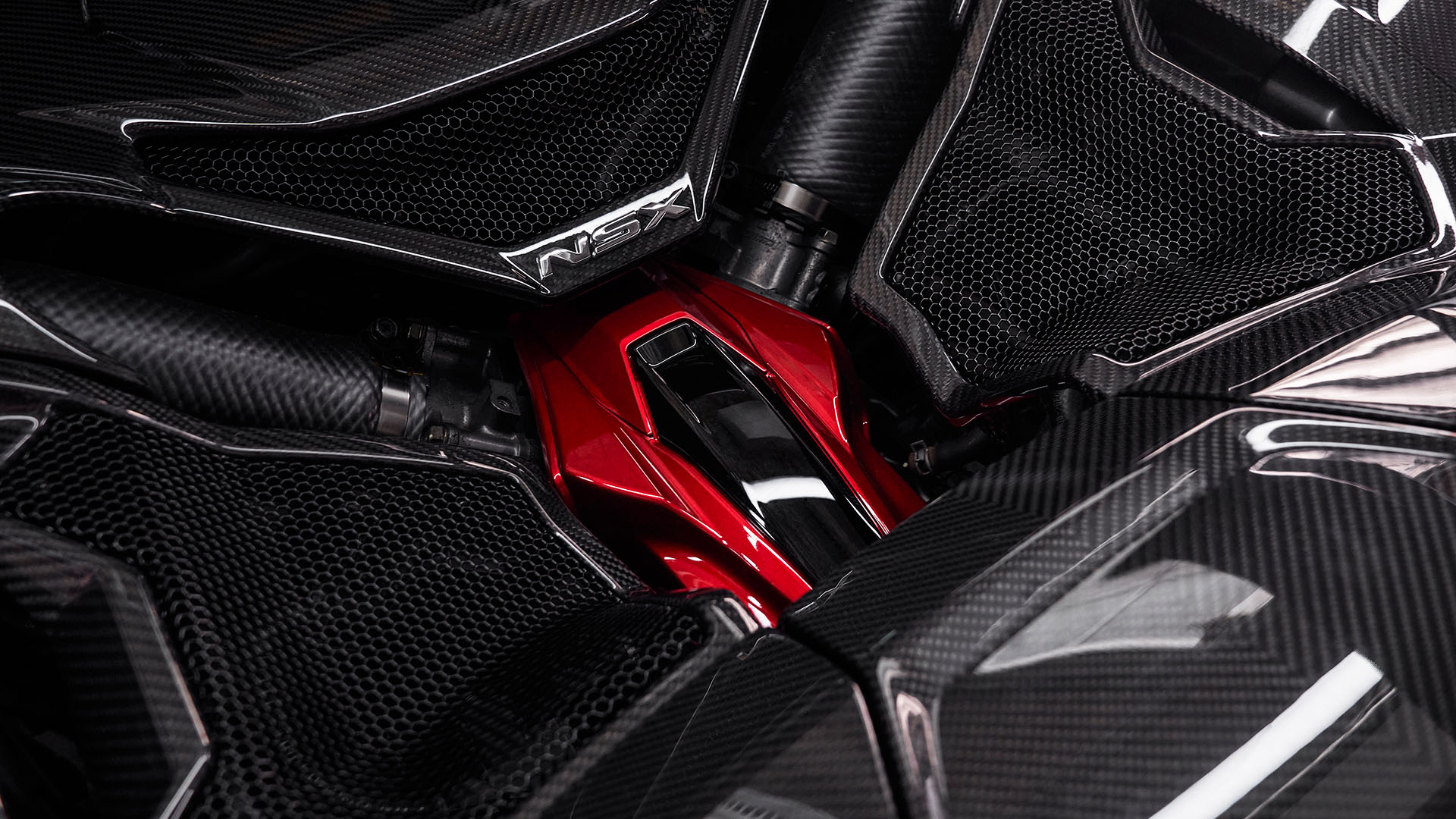
Enjoy some more detailed shots on this final edition supercar from Acura:

The End of Their Eras: Cars That Represent The last All-ICE Vehicles Made by Their Manufacturer

Let’s all face facts here. Despite the fact that we all admire purely petrol-powered speed machines, the fact of the matter is that supercars, and for that matter pretty much all cars are going either mild hybrid or performance hybrid. Some of the most exciting new hypercars coming out in 2022 are fully electric, with no internal combustion engine at all. We’re in the middle of a revolution in automotive history.

However, as come the hybrids and electrics, so too go the ICE cars. While many in the supercar space have already moved to hybrid, and many major manufacturers have joined in on the unofficial “Green Promise” to be fully hybrid or electric by 2030, some cars are still in production, or coming, that are still powered by recycled dinosaurs.

Here are 8 of the best, as well as confirmed last, road-legal cars to use no electrical assistance at all in their engines or powertrains, a celebration of controlled explosions and loud noises!

Aston Martin V8 Vantage
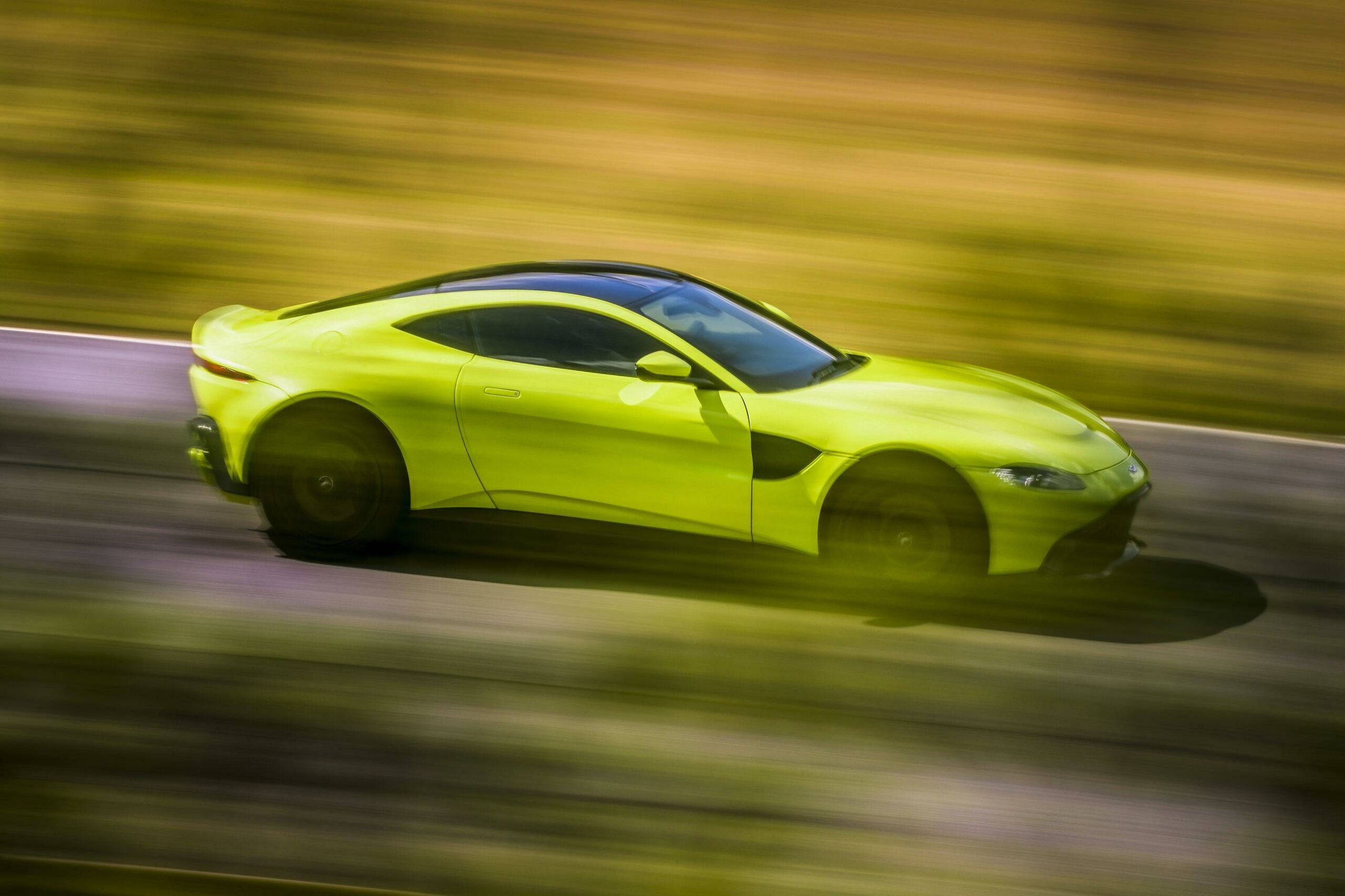
A side view of a neon yellow Aston Martin V8 Vantage driving down a road

The Aston Martin V8 Vantage, in its current form, started production in 2018 as a 2019 model year car. In a sort of parting shot at the future of hybridization, there are two engine options, both fuel hungry ones that make a lovely roar as you feed them more gas. The “standard” engine is a 4.0L Mercedes-AMG M177 twin-turbo V8 that smacks you in the face with 503 HP.

It’s the uprated, limited-to-88-units V12 Speedster model that is the big hurrah in terms of an ICE engine. A 5.2L behemoth known as the Aston Martin AE31, it uses two big turbos and a whole hell of a lot of dead dinos to give you 700 HP under your right foot. It is expected to be one of the fastest non-hybrid Aston Martin’s as well, possibly even faster than the DBS as it is a much more streamlined and lighter car.

The next two major cars that Aston Martin are releasing are the hybrid Valkyrie and Valhalla, both limited production models. As far as production cars, the Vanquish name is expected to quietly disappear, and the next Vantage, which is rumored to be announced after the Valhalla enters production in 2024, is expected to use a version of the Aston Martin F1 team hybrid system. This is not entirely a bad thing, as the dual-capture systems on F1 cars (MGU-H and MGU-K) allow for exceptional performance with minimal loss of energy, which means future Vantages will more than likely be more powerful that the current generation.

Bugatti Chiron
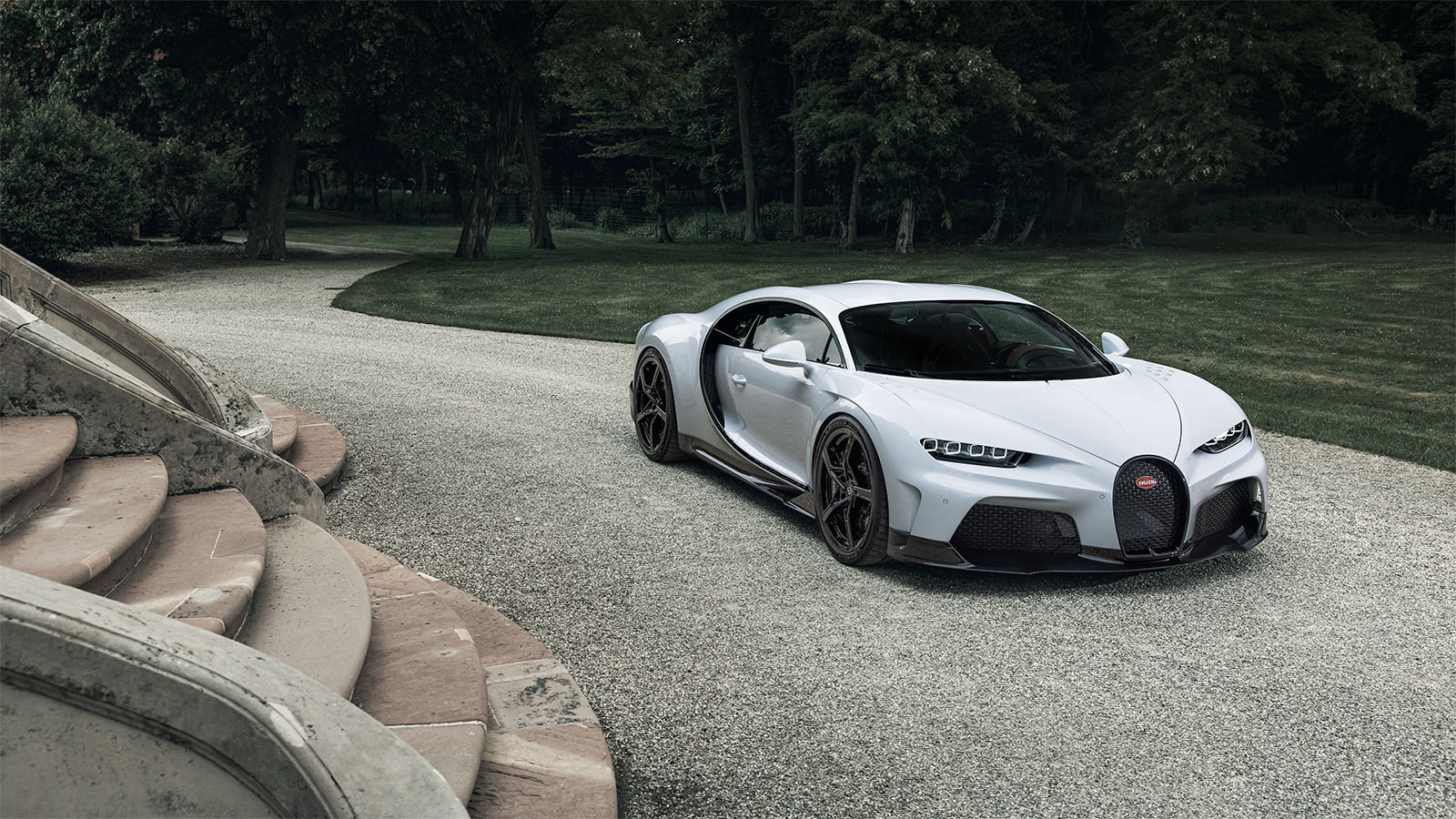
A view of a Bugatti Chiron parked at a driveway of a large staircase.

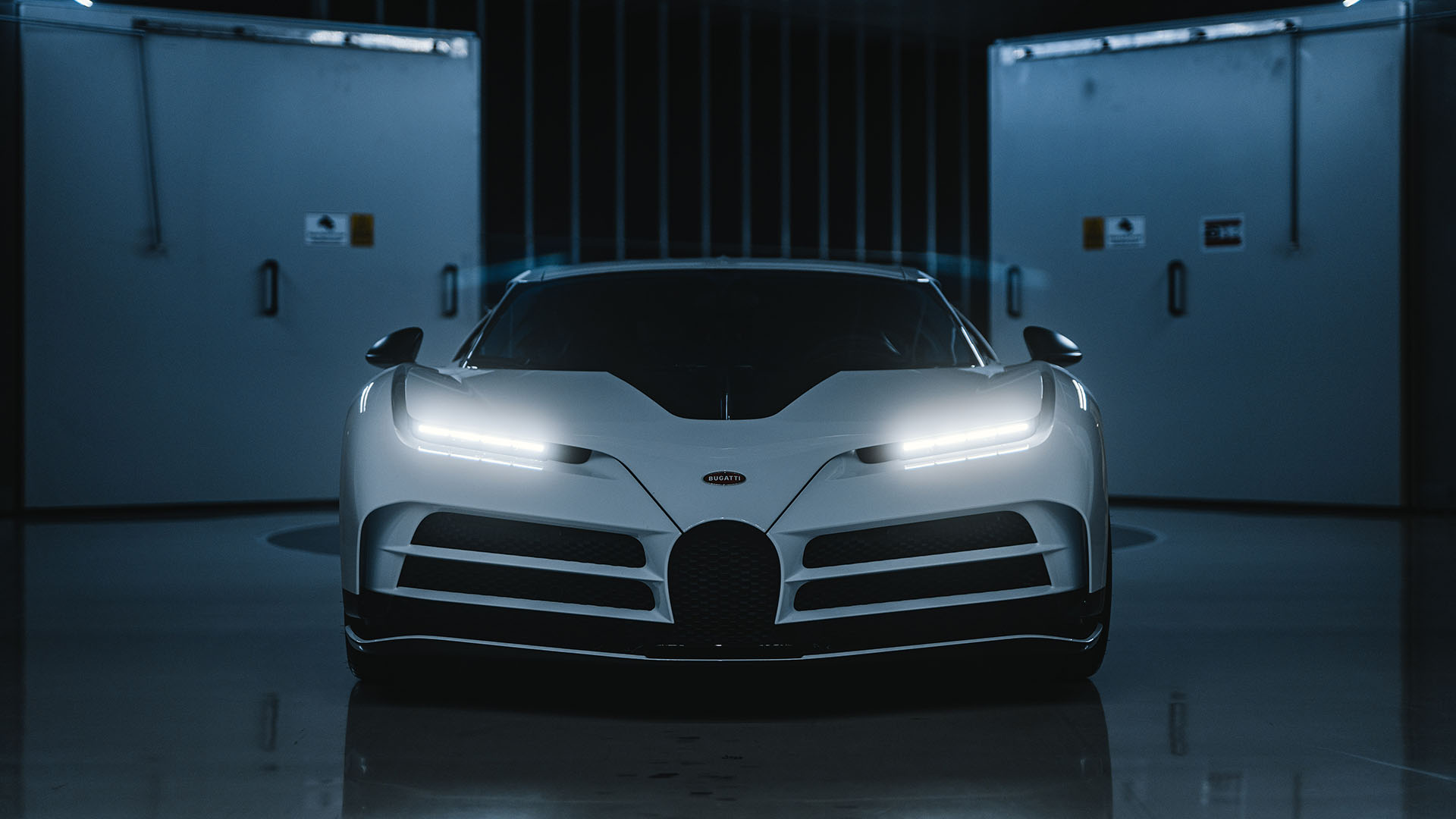
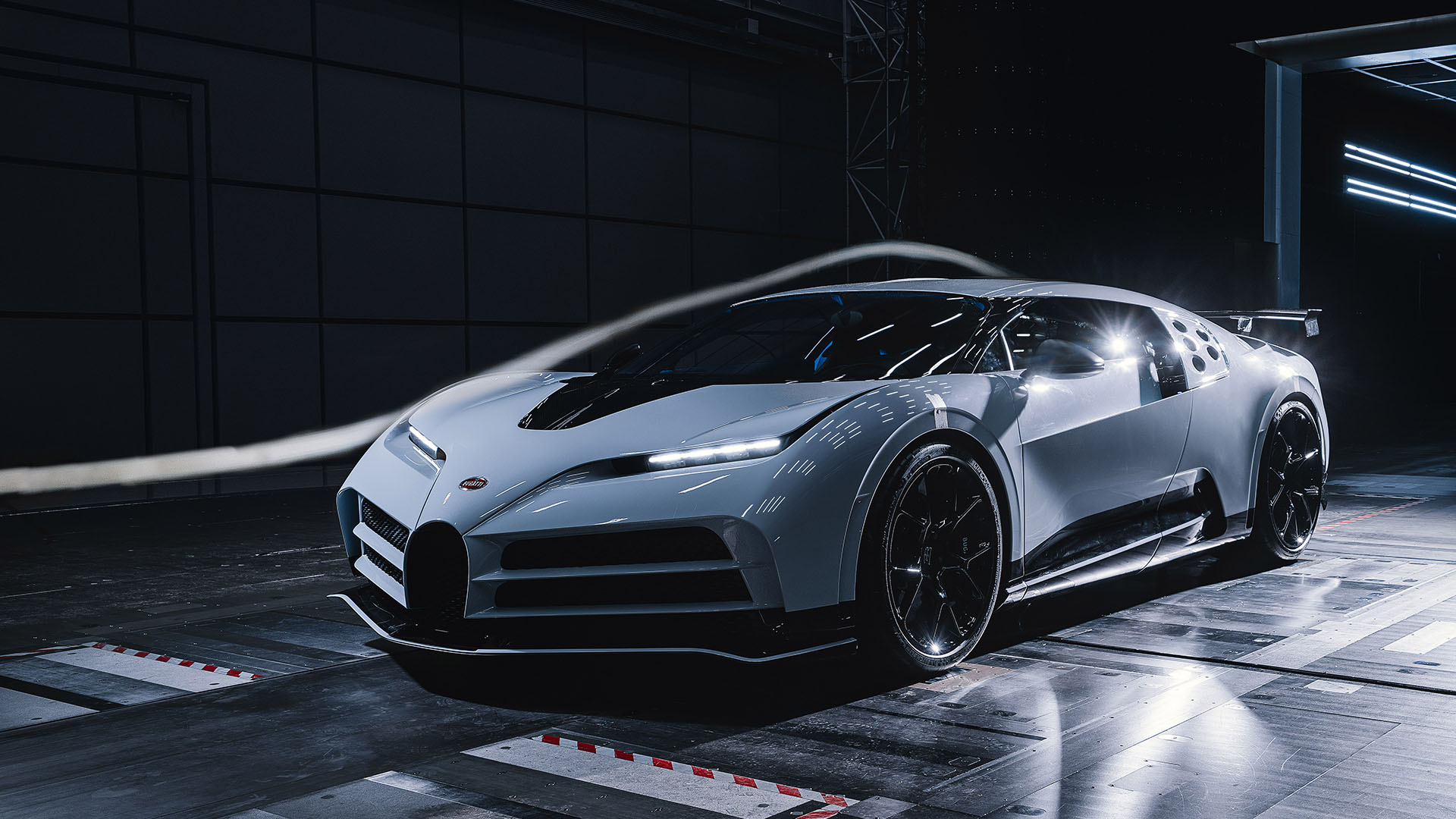
As announced recently at the Monterey Car Week in August 2021, the Bugatti Chiron is the last road-legal car that the company will make that is purely ICE powered. It is also the second to last car that the famed manufacturer will make that is powered by a W16 engine, with the track-only Bugatti Bolide being the swan song for the massive power unit.

The fact that the next Bugatti hypercar will be hybrid or very possibly fully electric is evidenced in one simple fact: Bugatti has, in the most technical of senses, been bought from VW by Rimac Automobili, and has merged with them to form Bugatti Rimac.

We say technically, because while Rimac now owns a 55% share of Bugatti, VW’s sub-brand Porsche owns the other 45%. So, technically, VW sold Bugatti then bought just under half of it back… It’s more confusing than it needs to be.

Still, with Porsche owning 45%, and having already released their own all-electric GT in the form of the Taycan, it can only be assumed that the next Bugatti will not be powered by gas. Also, with the combination of Rimac’s superb “t-spar” battery and electric control chassis component, Porsche’s and Bugatti’s excellence in materials and aerodynamics respectively, and in-house developed electric motors from all three, the next Bugatti promises to be one hell of a car. It’s even possible it could dethrone the Lotus Evija as the current hypercar power king with its 2,000 PS (1,974 HP).

Ferrari F8 Tributo
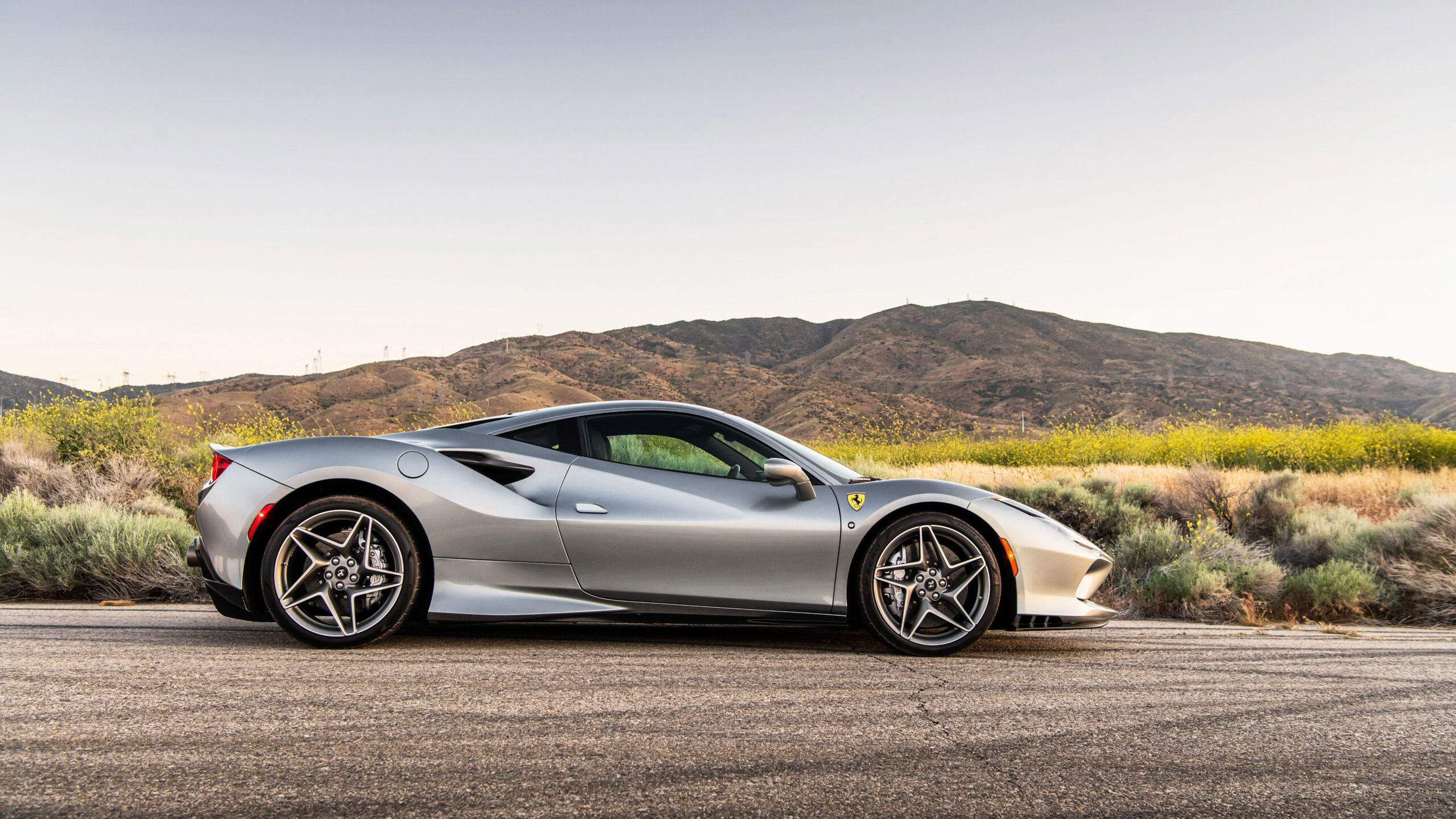
A side view of a silver Ferrari F8 Tributo, in the country.

The fact that the Ferrari F8 Tributo is not a hybrid is, frankly, unprecedented. Development started way back in 2010 on the Italian company’s take on a performance hybrid system, which resulted in the Ferrari F140 FE V12 hybrid engine in the Ferrari LaFerrari. That hypercar, one of the first to be labelled with that moniker, produced 903 HP and used a hybrid motor to power the rear axle along with the V12.

After that, in 2019, the Ferrari SF90 Stradale, celebrating the 90th anniversary of the Scuderia Ferrari racing team, came out, more powerful and even faster than the LaFerrari. It uses a 4.0L twin-turbo V8, coded F154 FA, producing 770 HP, combined with three electric motors, one at each front wheel and one in the rear transaxle, to provide an extra 217 HP, for a combined 986 HP.

And then, in 2020, the Ferrari F8 Tributo started production and… it’s powered by a F154 twin-turbo V8, but at 3.9L and without the hybrid, coded as the F154 CG. It produces a monstrous 710 HP all on its own, and is probably the last Ferrari that will have the classic V8 screaming howl. With the SF90 being, as stated by the company itself, the basis for all future cars, we can only assume that whatever comes after the F8 will be a hybrid.

Keep in mind, the 812 Superfast could have qualified here as well, but it was released in 2018, while the F8 was released very late in 2019, so it technically is the last of the Ferrari pure-petrol cars that we know of.

Koenigsegg Jesko
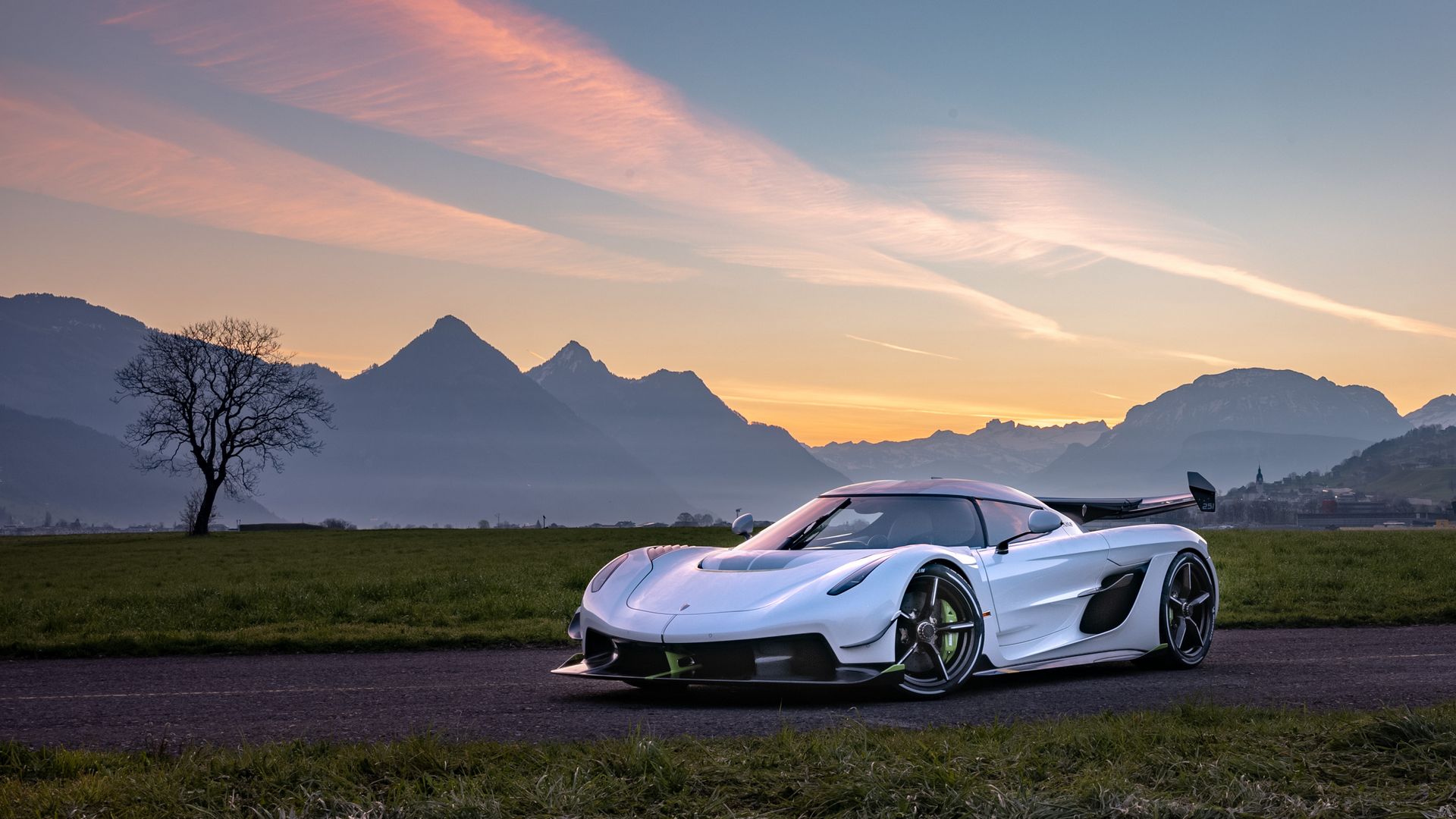
A frontal side view of a Koenigsegg Jesko, in front of a rugged landscape.

Koenigsegg is one of those companies that is amazingly hard to read. Throughout the past few years, all you would hear about was Project 500, the “Dragon Cars,” and the like. And then, in 2020, out pops the Koenigsegg Gemera, a massively hybrid 2+2 GT car. Granted, it does have the Tiny Friendly Giant 2L 3-cylinder twin turbocharged petrol engine that chucks out a whopping 600 HP, but it uses three hybrid electric motors to bump its total power to 1,700 HP.

The Koenigsegg Jesko, on the other hand, is what was hiding under the Project 500 codename. There are two versions of the car, both of which are road-legal… barely. The Jesko itself is designed to be a monster performance car, with huge aerodynamic ducting, underbody venturi tunnels, and a GT wing that wouldn’t look out of place at Le Mans. All the aerodynamics, as well as the shape of the car, produce 1,400 kg (3,068 lbs) of downforce.

All this downforce-producing aero is needed because the Jesko’s engine is a 5.1L twin-turbocharged V8 that uses a flat-plane crankshaft, Koenigsegg’s own camless valve system, and is tuned to use E85 biofuel to produce a nigh-unbelievable 1,600 HP. And if you use regular recycled dinosaurs, you’ll still get 1,280 HP.

The more important of the two, however, is the Jesko Absolut. It is the entire reason the car was under the codename of Project 500. By removing the wing and using vertical stabilizer fins instead, as well as making all the aerodynamics as smooth as possible, the Absolut is designed to do one thing, a last hurrah for purely internal combustion engined cars: Break 500 KPH (310 MPH).

Through simulations, computer-aided fluid dynamics, and wind tunnel testing, if given enough room, running E85 biofuel, and set up in its most streamlined mode, it is estimated that the Jesko Absolut could reach 530 KPH (330 MPH). The only issue is that there are maybe one or two places on the planet where there is enough room for the car to go for it, and it would have to be an absolutely perfect day for the attempt.

Lamborghini Aventador LP780-4 Ultimae
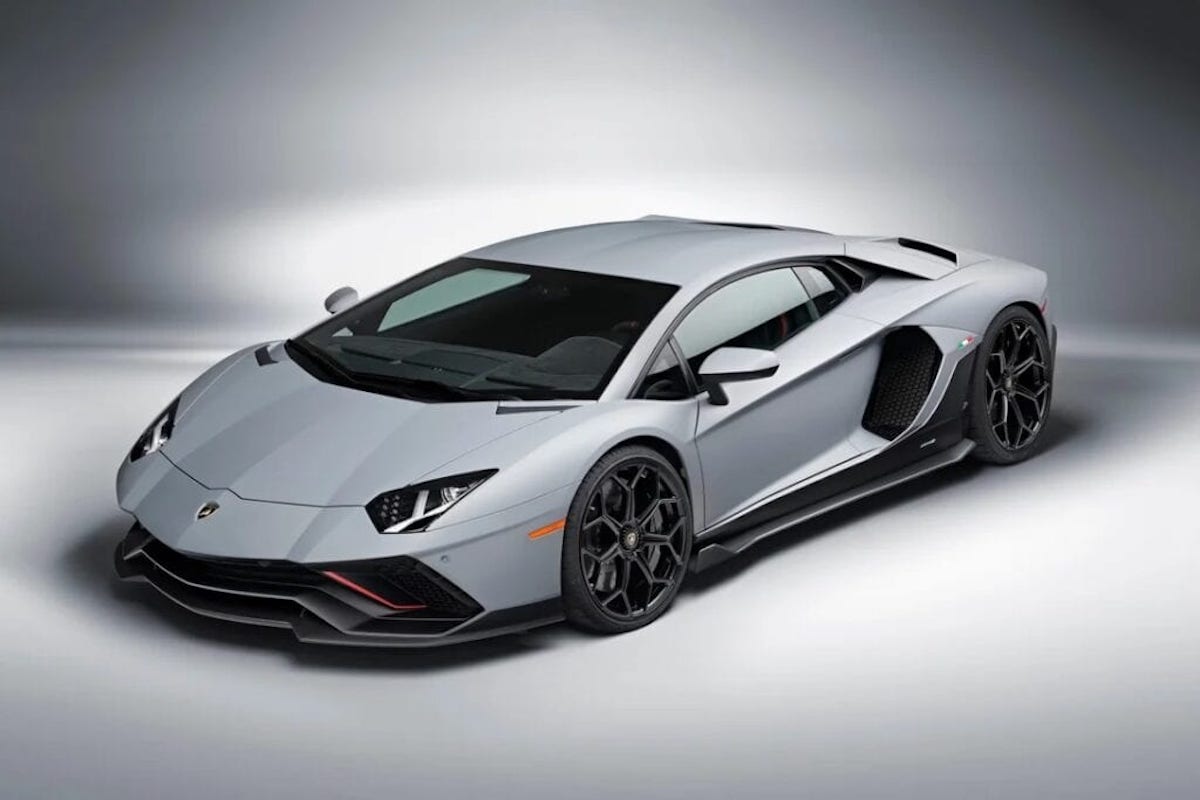
A view of a silver Lamborghini Aventador LP780-4 Ultimae, in studio lighting.

Lamborghini, of all companies, is one of the major manufacturers at the absolute bleeding edge of hybrid technology. Believe us, we were surprised when we sat down and looked at who was pushing for performance hybrids the earliest. The Lamborghini Asterion concept was the first to really tease at it, a 2014 show car that was officially known as the LPI 910-4. LPI stands for Longitudinale Posteriore Ibrido, or Longitudinal Posterior Hybrid in English. 910 is the combined HP number. And the -4 denotes four wheels are powered.

From this car, the Lamborghini Sian FKP37 project came along, and it is the first limited production car to use a graphene-based supercapacitor, after a 3 year study done along with MIT graduate students. However, before the legendary Lamborghini V12 disappears, the Italian company announced the ultimate version of the Aventador.

Known as the Ultimae LP780-4, the last 600 cars from the Aventador model will feature a 770 HP version of the V12, similar to the one used in the SVJ model. It is streamlined, lightened, uses the absolute latest in carbon composites that Lamborghini has developed, and is stated to have a top speed of 221 MPH, 4 MPH more than the “standard” Aventador SVJ.

With the Aventador set to end production at the end of 2021, and the Huracan starting to wind down already, the future of Lamborghini flagship and production cars is anyone’s guess. However, it is known that the Aventador is the last V12, confirmed by their own press release for the Ultimae. As well, the latest limited production car, the Countach LPI 800-4, uses the LPI tag denoting a hybrid, meaning that we may never see the old LP tag again.

Lotus Emira
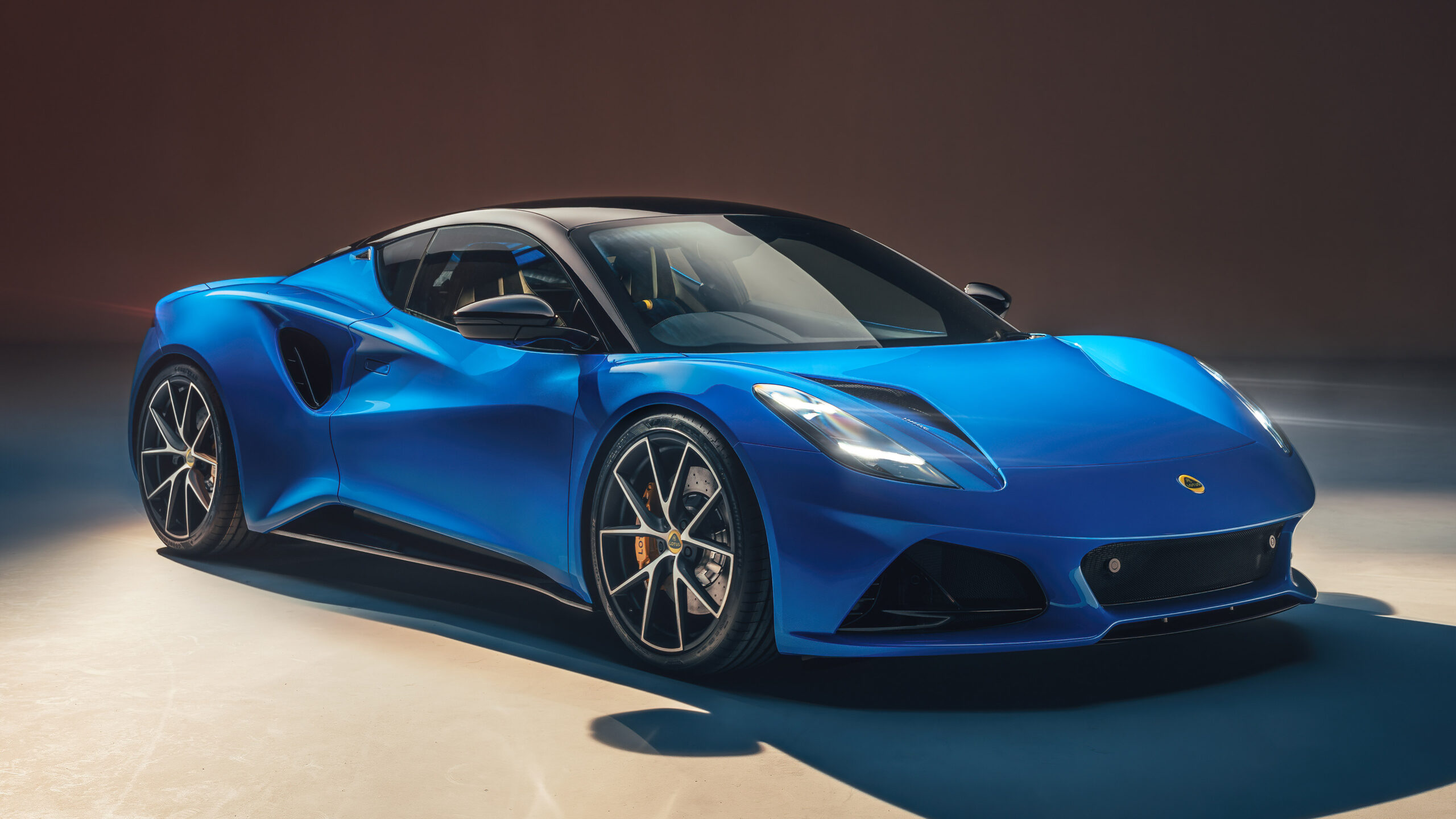
A side view of a blue Lotus Emira, in studio lighting

Lotus, while not a major manufacturer, is still highly regarded for the superb sports cars and supercar variants of their sports cars that they make. The Lotus Elise and the Lotus Exige are legendary lightweight drivers cars that may not have a whacking great V8 in the back, but can drive circles around pretty much any car that does.

This made it all the more surprising when in 2017, Lotus announced that they were going to make the most powerful, the fastest, and the most extreme electric hypercar. Lo and behold, four years later, in 2021, the Lotus Evija had finished prototyping, and it lived up to their announcement. It is the most powerful limited production car ever made with 1,974 HP, through four electric motors, one per wheel. It is extreme in that it will get you to 60 MPH from a dead stop in a hair over 2 seconds, and it will sail past 200 MPH while still accelerating hard.

However, with a limited production of 130, and each car losing money even at $2.8 million USD per, the company needs to keep producing what it is known for throughout its history. Enter the Emira, Lotus’ love letter to internal combustion. Styled as classically Lotus as possible, while also taking some influence from the Evija, the Emira will replace the Evora, Exige, and Elise models when it is released in the summer of 2022.

It is also classically Lotus in that it is lightweight at 1,405 kg (3,097 lbs), and comes with both an inline-four and V6 engine option, both using some form of forced induction, planted right behind the cockpit of this road missile. Handling is already reported to be Lotus-sharp, and many customers have already put down deposits sight-unseen on the car, based entirely on the fact that this is Lotus’ last petrol car.

For the engines, the inline-four is a 2.0L AMG Mt39 turbo, an extremely advanced engine that can produce up to 416 HP, but will be set to 382 HP in the Emira. The V6 will be a 3.5L Toyota 2GR-FE supercharged unit, which was used in the Exige Cup 430. With assistance from TRD, that engine produced 430 HP, and propelled the car to 60 MPH in a touch under 3.3 seconds. Similar performance can be expected with the Emira.

McLaren Sabre
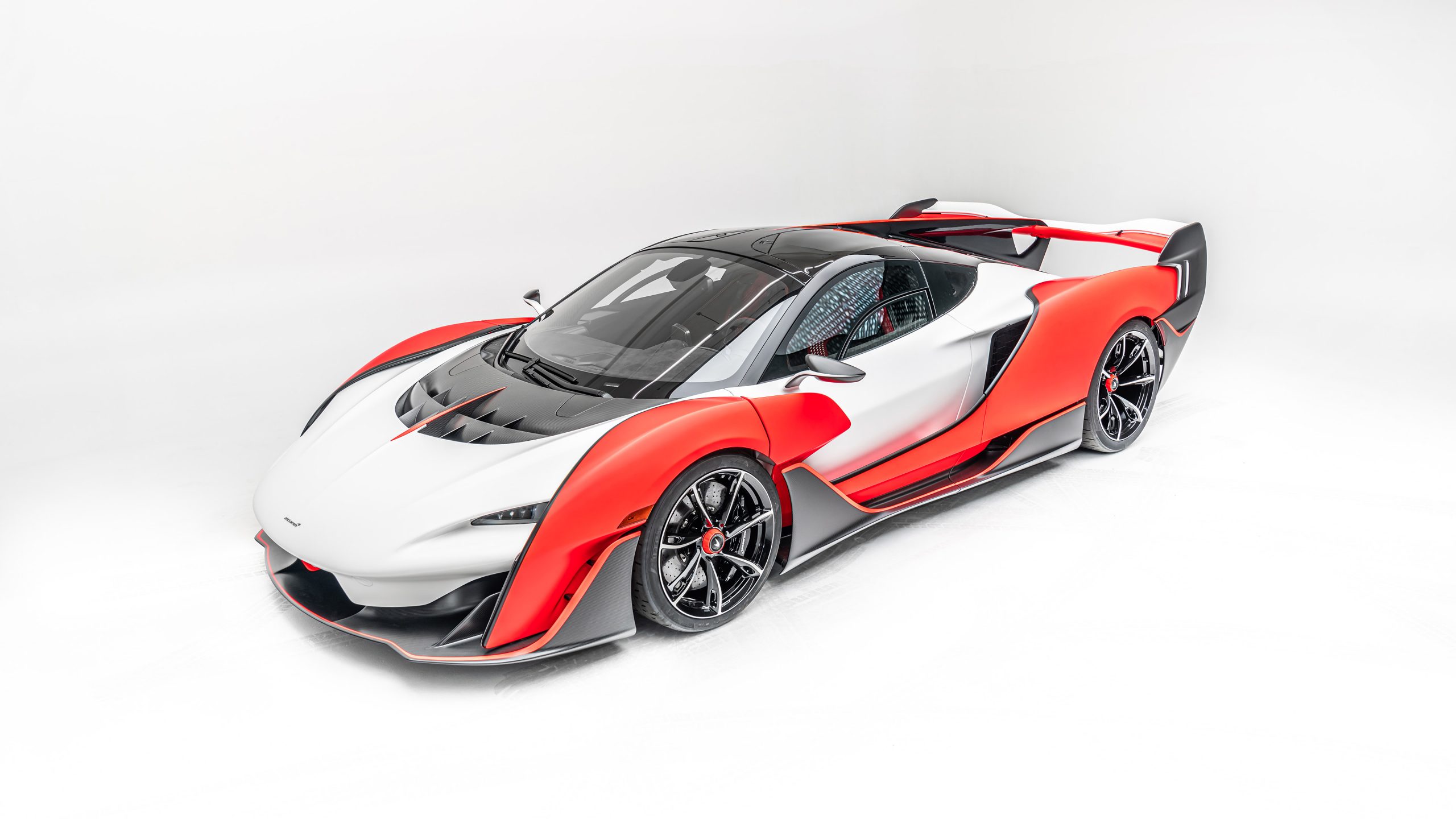
A view of a red and white McLaren Sabre, in studio lighting

McLaren’s skunk works, McLaren Special Operations, is fast becoming the department of the company that we think has the most fun. A predecessor version was assembled to make the McLaren F1 in the early 1990s, and when McLaren formally entered road car production with the MP4-12C, some of the best and brightest were taken aside again and formed MSO. They have been responsible for most of McLaren’s greatest hits in the last 15 years, including the P1, the Senna, and the Speedtail, the official successor to the McLaren F1.

So when, in December of 2020, McLaren Special Operations announced that there was a US-only new supercar coming, many ears and wallets perked up. Called the Sabre, the supercar will be based off of the McLaren Ultimate Vision Gran Turismo, which was a completely virtual design exercise to be put into the Playstation game Gran Turismo Sport. Only 15 units will be made, and each sold prototype-unseen because MSO, so far, has hit every performance and vehicle design goal they’ve set.

The car will use the same carbon fiber monocoque as the McLaren Senna, and will be powered by a tuned version of that car’s 4.0L M840TR twin-turbo V8. With the original engine producing 790 HP, the Sabre will get 824 HP, and be much more aerodynamically streamlined compared to the Senna, which was a car designed for downforce.

The future of McLaren’s cars is already known, with the McLaren Artura announced as the replacement for the mainstream 570S and 600LT cars. The Artura will use a mid-mounted twin-turbo V6 producing 580 HP, with a mild-hybrid assist of about 100 HP at the transaxle, and all other production replacements are expected to follow the mild-hybrid or massively-hybrid routes.

Porsche Type 992 911 Turbo S
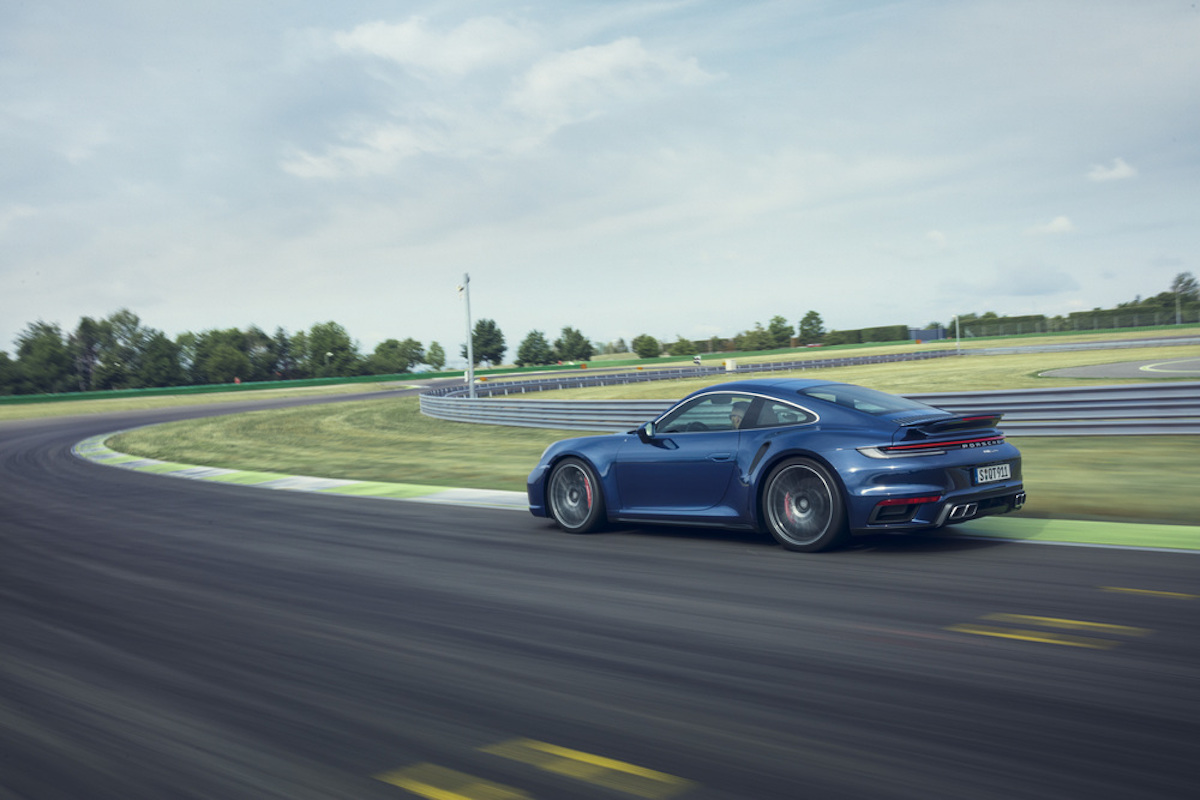
A side/back view of a navy blue Porsche Type 992 911 Turbo S trying out the twisties on a track.

The only truly unknown on this list of supercars, the Porsche Type 992 911 Turbo S is the most powerful Turbo model ever released by the German manufacturer, at 641 HP from a 3.8L twin-turbo flat-six. It delivers the trademark Porsche burble at idle, and howls through the upper revs with wild abandon, behavior befitting a well-designed engine.

The uncertainty about Porsche’s future comes from the fact that the 911 customer base, in general, prefers the petrol-powered engine. When Porsche went from air-cooling to water-cooling for the engine in the late 1990s, it quite literally split the customer base in two. Some considered the 911 as a dead car, with the only “true” models being air-cooled. Others accepted the benefits that water-cooling brought along, including being able to push more power from the engines.

By turning the 911 into a hybrid, that same split could happen again. However, there is also the possibility that the 911 might join the Taycan and become a fully electric car, which could potentially start World War 3 from the expected reaction some customers would have. This is evidenced by the same reason that Bugatti’s next car may be fully electric: Porsche owns 45% of Bugatti Rimac.

Without putting too much speculation out there, as a company, you don’t invest that heavily, buy up that much of a new company, unless you are expecting a massive return on investment. That return is very likely going to be in powertrains, as Rimac has cemented itself as one of the premier suppliers of batteries and electric control units for supercars and hypercars. If Porsche can somehow balance the car so that it still is rear-heavy, all-wheel-drive, and be as stupidly fast as the current 911 Turbo S is, there is hope. It will just require Porsche customers to accept that the internal combustion engine has had its day, which, knowing the average Porsche customer, will be a hard, bitter pill to swallow.

Best New Performance Hybrids & Electric Cars

No one would argue that the past year-and-a-half has been a truly challenging period for human civilization, though it has not seemed to put even a dent in the momentum of the vehicle electrification movement. If anything, automakers were presented with a unique opportunity to showcase their credentials in this space; with the disruption of routine living circumstances, this was a moment when the global audience’s attention could be more easily procured, if done in the right way.

As it happened, a slew of new electric vehicles would be announced and even enter production during this time, bringing with them much excitement, fanfare, and most importantly a positive outlook on the future, albeit through an automotive lens. Nevertheless, automobiles are a topic that most people have in common, and the industry certainly didn’t fall short on providing its fair share of feel-good moments during this gloomy time – definitely for the car enthusiasts, and probably for the green movement too.

EVs (such as the Porsche Taycan) ordered by customers before the pandemic started, were generally delivered on-time if not ahead of schedule (like mine). During the pandemic, production levels remained vigorous, along with the unveiling of new models – some of which are simply game-changing. The emergence of cars such as the Rimac Nevera, Lotus Evija and Pininfarina Battista proved that automakers were generally unfazed by the chaos of the past 2 calendar years, delivering the goods as promised and not finding any reasons to have done anything but.

There’s no shortage of hybrid options either, with many of the world’s most impressive machines displaying the incredible potential of this technology. The likes of Ferrari’s SF90 Stradale and Lamborghini’s Sián have been showcasing that hybrid engines are not just a stop-gap measure before electrification proliferates. Rather, they are viable complement to fully-electric cars, both now and likely into the distant future. Bio fuels could play a key role in this development, and possibly even prolong the existence of the combustion engine for some time to come.

Here are 15 of the Best New Performance Hybrids & Electric Cars, you can buy today.

Acura NSX Type S

Acura RSX Type S at Race Track

Acura has just announced that they will be producing a limited-edition NSX Type S variant for the 2022 model year, which will also serve as the swan song for the brand’s halo car (now in its second generation). Officially unveiled during Monterrey Car Week, the Type S will be the “quickest, most powerful and best-handling production NSX ever” according to the automaker, with an enhanced version of the 3.5L twin-turbocharged hybrid engine now producing 600 hp and 492 lb-ft of torque. The 9-speed DCT and Super Handling All-Wheel Drive (SH-AWD) have also been optimized to get the most out of the car’s improved performance. The NSX Type S will also come standard with a carbon-fiber roof, as part of its weight reduction protocols.

Distinctive design cues and more aggressive aerodynamics are also at the core of the car’s improved driving character, with race car components – such as a GT3-inspired rear diffuser – being among the most easily distinguishable features. The NSX Type S will also come with redesigned front and rear bumpers, unique 5-spoke wheels, Pirelli P-Zero tires, and a retuned adaptive suspension system. Optional features such as Gotham Gray exterior paint and an available Lightweight Package – which includes carbon-ceramic brakes and more carbon fiber components – are also exclusive to the Type S. Limited to a production run of only 350 units.

Rimac Nevera

Rimac Nevera

Although it is not the first EV to be powered by 4 permanent magnet electric motors, the Rimac Nevera does come with its own unique electric drivetrain design. By strategically placing a pair of 200 kW electric motors in front and another two 500 kW electric motors in the rear, the engineers were able to give the rear-biased Nevera an ideal 48:52 (front:rear) weight distribution. However, a deeper inspection reveals more intricacies in the design, as the planetary gears for each of the 4 wheels are purposed in such a way that the Nevera is also optimally balanced from left to right as well. Genius.

It’s probably a good thing that this Rimac was built with a predisposition to exhibit ballet-like agility, because it’s going to need all the grace in the world to tame all that’s brewing within. In combination, all of the 4 electric motors can generate up to 1,914 hp (1.4 mW) and 1,740 lb-ft of torque (2,360 Nm). This allows the Nevera to absolutely annihilate the popular 0-60 mph benchmark in just 1.85 seconds, with an equally impressive 1/4 mile time of just 8.6 seconds – good enough to make it the fastest production vehicle ever made, by some margin. Top speed is stated as 258 mph (412 km/h).

Ferrari SF90 Stradale

Ferrari SF90 Stradale at Race Track

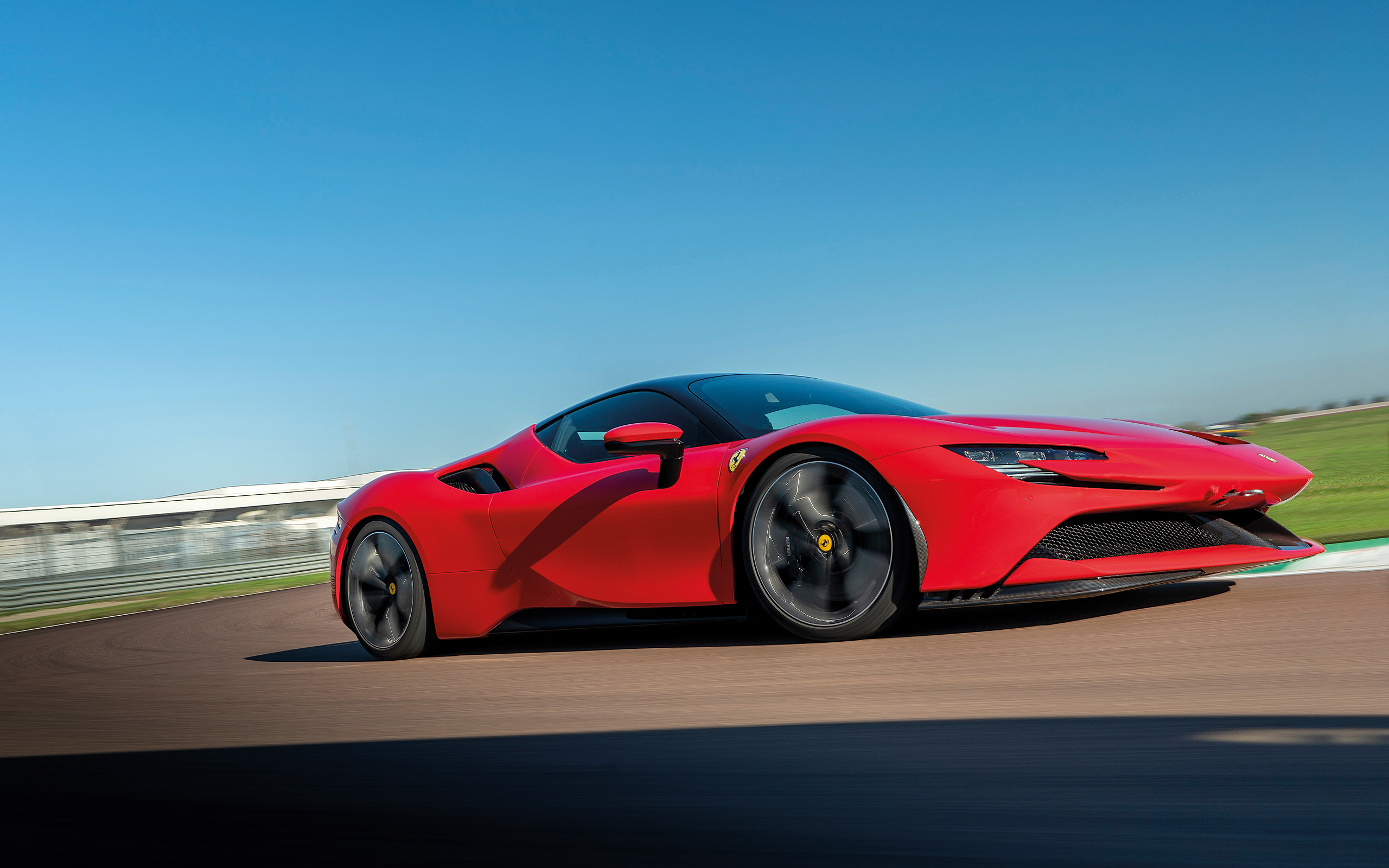
At first glance the SF90 Stradale sounds like a car we should all fear; a soul crushing proposition. It is a plug-in hybrid electric vehicle (Ferrari’s first) with four-wheel-drive, built on a new ‘multi material‘ platform and has even more electric driver aids than ever before. It is enough to make old-school Ferrari fans and drivers run straight for the exits (probably to pick up a 458 Speciale instead). But those who are willing to consider the outcomes with an open-mind are sure to be satiated, if not entirely blown-away.

In the Ferrari SF90 Stradale, the company has partnered its F154 V8 engine with a 7.9 kWh battery, which allows the twin-turbocharged V8 hybrid to produce up to 986 hp in total. The three electric motors combine to deliver 217 hp, an can even bring the SF90 Stradale to a speed of 84 mph and complete over 15 miles, all on their own power. Aside from a mind-boggling 0-60 mph time of 2.1 seconds, this configuration also makes the SF90 the first mid-engined Ferrari to be all-wheel drive. Handling is also greatly enhanced with torque vectoring now being available on the front-axle. The car also features an all-new chassis made of carbon fiber and aluminum. The sleek body panels and its aerodynamic shape help the model make a whopping 860 lbs of downforce at speed, and the whole profile of the car is extremely low so it can slash through the air at high speeds.

Porsche Taycan Turbo S

Mamba Green Porsche Taycan Cross Turismo

The Taycan Turbo S is the ultimate Porsche EV. The absolutely mind-boggling 750 hp and 774 lb-ft of torque it instantaneously produces, rockets the car from 0-60 mph in 2.6 seconds – hypercar territory, that is. It manages to combine this with 911-level handling characteristics and is infused with the same essence we’ve come to expect in all Porsche sports cars. Porsche ceramic composite brakes (PCCB) are standard fare on the Turbo S, as are the otherwise optional 21” Mission-E Design wheels. To provide even more extra stopping force, the Turbo S is also fitted with larger front and rear rotors than what is installed on the 4S and Turbo models.

With the introduction of the new Cross Turismo range of Porsche Taycan models, we’re now entering the second act of the company’s electrification strategy. The Porsche Taycan Cross Turismo carries over the EV-platform and performance from its sedan counterpart, then amalgamates them with the utilitarianism of a sporty crossover / estate. While a number of the Cross Turismo models’ design elements bear an obvious resemblance to the sedans, they offer something very distinct as well.

Lamborghini Sián

Lamborghini Sian

Amongst this list of very special cars, the Sián is perhaps the most special. That’s because the Lamborghini Sián is the most notable example of an automobile which uses a supercapacitor – the ‘super’ added because, well, you need a really, really big capacitor to help power a car. In this configuration, the supercapacitor collects and stores energy (primarily from regenerative braking). In certain moments (such as a launch), the supercapacitor dumps all of its energy into an electric motor which immediately and briefly adds an extra 34 hp on top of what the Sián’s 785 hp 6.5L naturally-aspirated V12 engine produces. This means that up to 819 hp is sent to all 4 wheels, with the electric motor integrated into the transmission to reduce weight and improve responsiveness.

As long as the supercapacitor keeps getting recharged – which can be achieved with just seconds of hard braking – there will always be that extra bit of power boost at the car’s beckoning. Compared to an EV battery which takes much, much, longer to fully recharge, and weighs substantially more, you might be wondering why supercapacitors aren’t the dominating technology in electric or hybrid vehicles today. Well, there are a few very important reasons for this. For one, supercapacitors aren’t able to store energy for long periods of time like a battery, making them unviable to be the primary food source for an electric vehicle… at least for now.

Tesla Model S Plaid+

Tesla Model S Plaid+ Rolling Shot

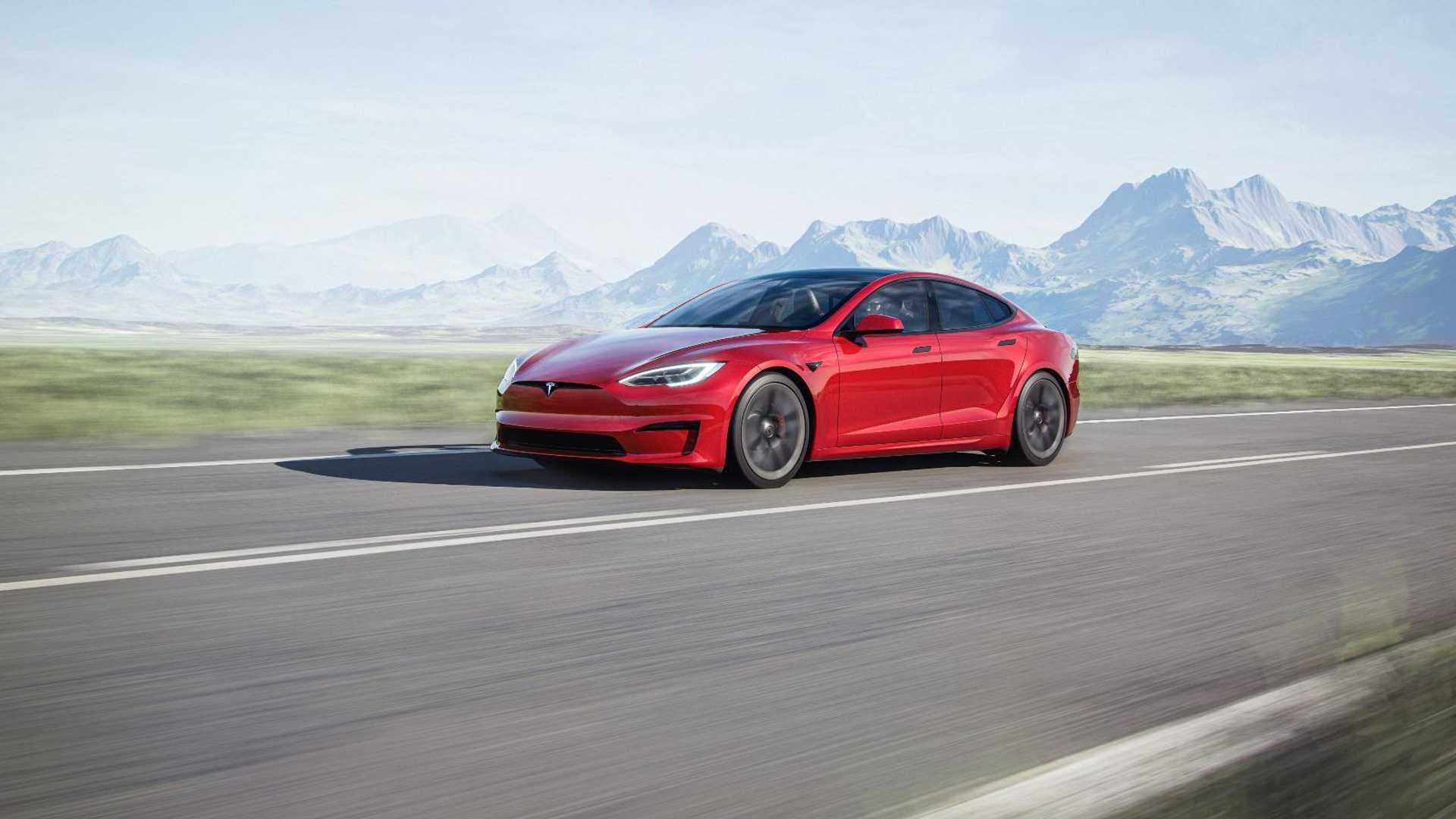
Tesla recently announced that they’ve added a new trim for their Model S and Model X. The base “Long Range” models will still use dual-motors, while the new high-performance models will be replaced with “Plaid”. While this is mostly down to marketing and rebranding, the Model S will have also have a Plaid+ option later this year; for performance junkies, this is the most significant news as this package incorporates Tesla’s latest battery technology. The Plaid+, with it’s brand new architecture, is said to be capable of 0-60 mph in under 2 seconds and a range of up to 520 miles on a single charge.

Needless to say, figures like those will surely lead to an upheaval of the current status quo in EV-land and will have competitors scrambling to keep up. Word is, these claims are far from anecdotal, as an 1,100 hp prototype version of the Tesla Model S Plaid+ has already beat the Mclaren P1’s lap time at the legendary Laguna Seca raceway in California, USA. Tesla is already taking orders on its website, where it starts at a price of $131,100.

Koenigsegg Regera

Koenigsegg Regera

Koenigsegg unveiled its Regera hybrid hypercar model at the 2015 Geneva Motor Show, and since then it has generated plenty of hype amongst car enthusiasts and performance junkies. Besides a regular combustion engine, the Koenigsegg Regera also utilizes 3 electric motors which dole out 700 hp and 663 lb-ft of torque via a 4.5 kWh liquid-cooled battery pack. As a result, the car now produces 1,500 hp (which the company likes to market as 1.11 MW), making it the most powerful hybrid supercar in the world. Its combustion engine is a 5.0L twin-turbocharged V8 which produces an out-of-this-world 1,100 horsepower and 922 lb-ft of torque without electric assistance.

Koenigsegg has gone on to claim that the Regera can theoretically reach top speeds of over 400 km/h, although this has not yet been made official.

Lotus Evija

Lotus Evija in London

Lotus has been hyping their new fully-electric automobile, going as far as saying that the Evija will be a “mind-blowing supercar”. The car features two electric motors which output its outrageous 2,000 hp. The battery is placed in the middle of the car where a typical internal combustion mid-engine car would have its beating heart, helping it to achieve an ideal weight distribution. Lotus sought to strike the perfect balance between a track car and a road car, and that extends to the cabin – a minimalist, driver-focused interior design but with plenty of the comfort and convenience features you’d expect in a civil grand tourer. The Lotus Evija has been named as ‘The One to Watch‘ in Top Gear’s 2021 Electric Awards .

The Lotus Evija was built with a simple goal – to be the absolute pinnacle of world-class engineering and the most powerful performance car ‘For The Drivers’. It harnesses Lotus’ technical expertise, fine-tuned over more than seven decades, to create a masterclass of automotive excellence. Judges at the IDA commented that the Lotus Evija “paves a way towards a more sustainable future whilst embodying an exceptional aerodynamic aesthetic”, and that “its seductive style elevates the Evija to be the world’s most premium sustainable car”.

Audi e-tron RS GT

Audi e-tron GT Rolling Shot

The 2022 Audi e-tron GT is the four-ringed company’s first entrant into the high-performance EV weight class. It looks to shake up a playing field which includes the likes of the Tesla Model S and Porsche Taycan, the latter of which it shares many of the same underpinnings. Audi has marketed the e-tron GT as a fully-electric grand tourer, as a opposed to a sports saloon EV like the Porsche Taycan. This sets clear expectations right away of what makes the e-tron GT an entirely unique offering – not quite as powerful (compared to the Turbo and Turbo S), a little less nimble and sharp in the handling department, slightly more utilitarian with extra cargo room and a typically impressive Audi-esque interior.

The entry-level e-tron GT  produces 469 hp, which can be boosted up to 523 hp when using launch control. This is good for 0-60 mph in 4.0 seconds and a top speed of 152 mph, making it most comparable to the Porsche Taycan 4S which ends up being a smidge quicker using the same measuring stick. Stepping up to the RS model will net you 590 hp with 637 hp available in overboost mode. This allows the RS e-tron GT to complete the 0-60 mph sprint in 3.3 seconds, which is slower than Tesla’s and Porsche’s quickest EV models by 1.3 seconds (Model S Plaid) and 0.8 seconds (Taycan Turbo S) respectively.

Pininfarina Battista

Pininfarina Battista Canyon Drive

When the Pininfarina Battista was unveiled at the Geneva Motor Show in March 2019, it was touted as the first fully-electric hypercar. Having been teased with bits and pieces up to that point, the Battista would finally secure its place in history as the first complete amalgamation of a zero-emissions hypercar. I doubt that anyone would be offended – least of all, Pininfarina – if the Battista was mistaken as ‘just another’ one of Ferrari’s super cars. Afterall, the design elements are deliberately signature from the company; and that’s really the best part of it all.

Beneath the silhouette lies something less familiar – the absence a typically mid-mounted combustion engine, for one. The Ferrari…. I mean…. Pininfarina Battista is fully-electric, and beyond that very notion, things only start to get even more crazy. The Battista utilizes 4 motors – one for each wheel – which produce a combined 1,900-horsepower and 1696 ft-lb of torque. That level of performance and technological sophistication won’t come cheap either, with each car priced at around $2.3 million USD.

Aston Martin Valkyrie AMR Pro

Aston Martin Valkyrie AMR Pro Side Profile

The new Aston Martin Valkyrie AMR Pro isn’t just another version of the original Aston Martin Valkyrie with some added aerodynamic parts. They’ve also increased the wheelbase of the original chassis by 380 mm, and added 96 mm and 115 mm to the front and rear track width respectively. These changes effectively lengthen the entire car by 266 mm, essentially making it a ‘longtail’ version, as their rivals McLaren would call it.

The Aston Martin Valkyrie AMR Pro still uses the same Cosworth-built naturally-aspirated V12 engine with a 6.5L displacement – but now with 1,000 hp available at a screaming 11,000 rpm. Significant weight has been shed on the Valkyrie AMR Pro by removing the entire hybrid system, using an extremely light carbon fiber body, and incorporating carbon fiber suspension components. Thanks to its aerodynamic efficiency, the Valkyrie AMR Pro offers track performance previously only seen on Formula One cars.

Mercedes-AMG Project One

Mercedes AMG Project One at Race Track

After months of teasing and speculation, Mercedes-AMG has officially unveiled the world’s first road legal car equipped with a Formula 1 powertrain – the 1,000 hp Project One. Its 4-digit power output comes from an improved version of the hybrid system found inside the W08 F1 car, which also includes a turbocharged 1.6L V6 engine and four electric motors. The two front electric motors on the Project One are of the latest and greatest technologies available, with each unit being capable of revving up to 50,000 rpm and producing 160 hp on their own.

The third electric motor is integrated into the turbocharger, while the fourth is mounted directly on the car’s combustion engine, producing another 120 hp of the Project One’s total power output of “beyond 1,000 hp”. Mercedes-AMG has also claimed that the turbo lag on the Project One is not only eliminated in this setup, but the response times should now be shorter than those cars powered by a naturally-aspirated V8.

Porsche Panamera Turbo S E-Hybrid

Porsche Panamera E-Hybrid Sport Turismo Rolling Shot

Porsche has provided no shortage of options within any of its model line-ups, with the relatively recent addition of E-Hybrid models serving up even more choices for those seeking a more eco-friendly experience from the brand. While the Taycan is the only model fully-committed to electrification, the E-Hybrids are an impressive alternative for those who aren’t quiet ready to make the big step over to the other side. Currently, E-Hybrid models can be found within the Panamera and Cayenne model line-ups, and are destined to be in the mix with other models such as the Cayman, 911 and Macan in the not so distant future.

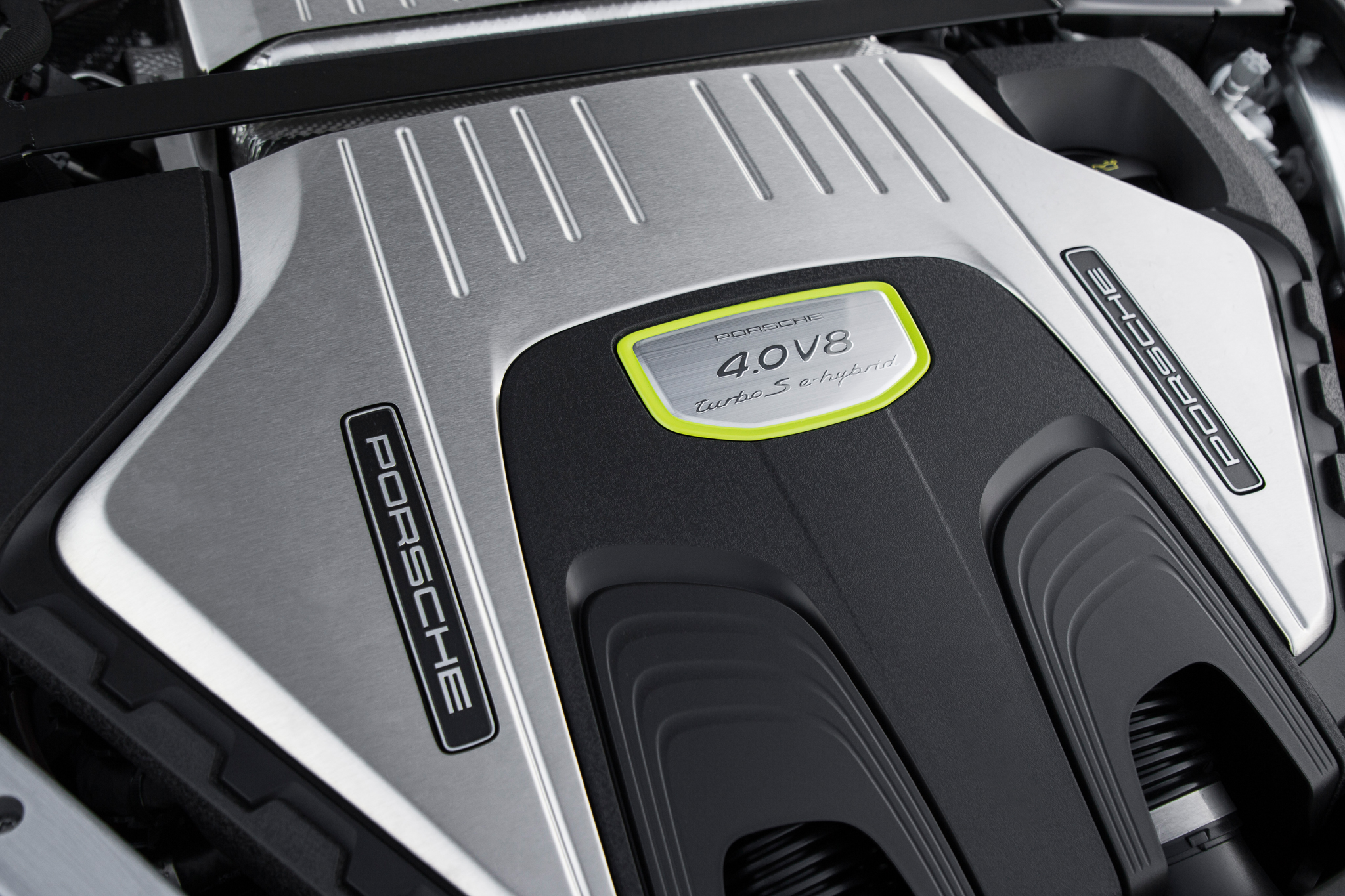
The Panamera Turbo S E-Hybrid is at the top of the food chain when it comes to the range, and is the only model (notwithstanding the Cayenne Turbo S E-Hybrid) to feature a hybridized version of Porsche’s 4.0L twin-turbocharged V8. On its own, the petrol engine produces 563 hp and 567 lb-ft of torque, with the E-Hybrid electric motor adding up to 134 hp and 295 lb-ft of torque. The Sport Turismo estate-style body would definitely be our pick, as it also provides a greater sense of both utilitarianism and style to boot.

Koenigsegg Gemera

Koenigsegg Gemera

Hinted at for a long time under the codename ‘KG12′, the latest Koenigsegg megacar has been revealed: The 2022 Koenigsegg Gemera. The Gemera is Koenigsegg’s first proper 2+2 GT car, or due to the power it produces, ‘mega-GT’ if you will. The car outputs a combined total of 1.27 MW of power, or by more traditional measurements, 1,700 HP and 2,581 lb-ft of torque. This is achieved through the combination of an extremely powerful, 2.0L twin-turbocharged camless + freevalve inline-3 engine – nicknamed the ‘Tiny Friendly Giant’ – which produces 600hp all on its own, and is partnered with three electric motors.

Two electric motors are placed at each rear wheel, with a third motor attached to the crankshaft of the engine to boost power to the front axle. All three motors have a combined output of 1,100 HP. Koenigsegg has confirmed that orders can be taken through the Expressions Of Interest website, and that the base price is $1.7 million USD.

McLaren Speedtail

McLaren Speedtail Wallpapers

Meet the new Speedtail – an aptly-named addition to McLaren’s Ultimate Series of automobiles. This limited-edition car – of which only 106 examples will be built – represents McLaren’s unyielding pursuit of maximum top-speed. Whereas other McLarens blend handling, acceleration, and driving dynamics in a harmonious package, the Speedtail has a more singular focus. That focus is speed; ludicrous amounts of it. McLaren has labeled the Speedtail a Hyper GT, which seems fitting given the excess of the car and its abilities.

This 1,055 hp car will take you to 250 mph, and then to the Opera, on the same set of tires (to paraphrase McLaren spokesperson, Wayne Bruce). More than that, the Speedtail is a car that reminds us that the automotive world serves to inspire and excite us, as much as it does in moving us from one place to the next. Though, in the case of the Speedtail, it moves us unlike anything else out there.

2022 BMW 2 Series Production Starts in Mexico

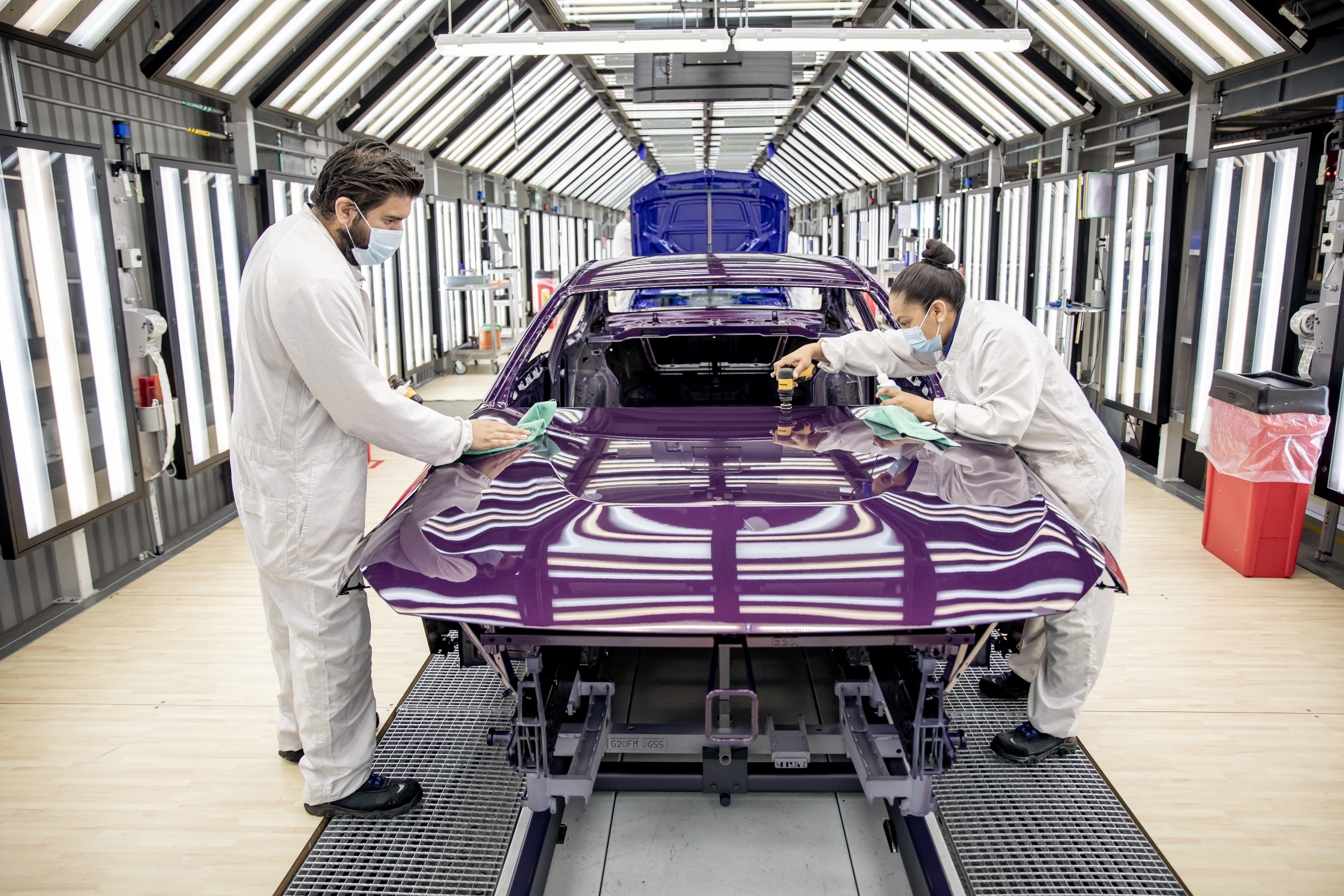
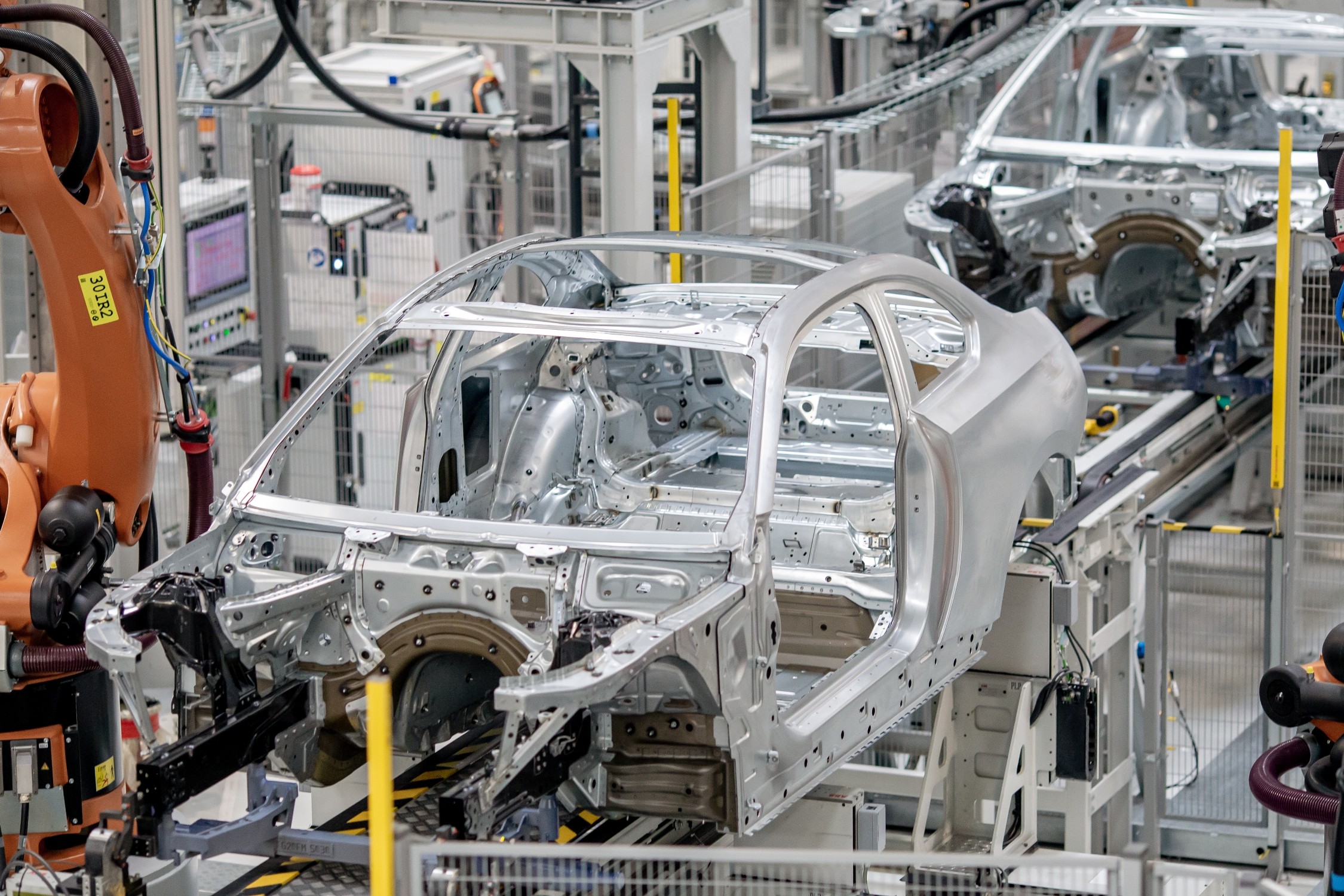
BMW Group Plant in San Luis Potosi started the production of the new 2 series coupe for the global market. This is BMW’s first launch to be fully executed and put to operation in Mexico.

The San Luis Potosi Plant is the newest within BMW’s global production network. The plant has been constructed and designed to easily adjust to producing different models and has successfully improved the operations to include the manufacture of Plug-in Hybrid Electric vehicles as well as expand the distributions to cover the world in a span of just 2 years.

With an addition of $125 million dollars investment, the facilities have been enhanced to incorporate the second vehicle to its production line.

Thunder Night BMW 2 Series paint

Part of the investment was also used to expand existing facilities and acquire additional equipment required for assembling the new model. This included the installation of 82 new robots in the body shop, the launch of two new specific colors; Brooklyn Gray and Thunder Night Metallic which are specially developed for the new 2 series and training personnel of the assembly to work with a coupe.

In addition, the new BMW 2 series coupe focuses on dynamic excellence and its athletic and modern line was envisioned by Jose Cansas, a Mexican senior exterior designer for BMW in Munich.

The BMW Group Division in Germany collaborated with the Production Planning in San Luis Potosi to prepare the launch of the new model in Mexico after the design stage of the vehicle was completed.

The commercialization of the new model is scheduled for later this year in North America and early 2022 in Europe.

BMW Plant Mexico

Is this How a Modern Lamborghini Miura Would Look Like?

Envisage Group presented their latest projected at the Salon Prive 2021, it’s called ‘Rayo’ and has been designed around a Lamborghini Huracan by 7X Design.

The vehicle was unveiled at the Concours of Elegance at Hampton Court and is based on the Lamborghini Huracan LP 610-4 with enhanced elements designed to significantly improve the performance and aesthetics of the vehicle.

The Rayo is powered by a twin-turbocharged V10 engine delivering a maximum output power of 1900bhp, the creators claim it can achieve a top speed of 300mph. This is a significant increase from the Huracan’s factory output which is rated at 610bhp.

The new design has improved the drag and downforce of the vehicle with a Cd of just 0.279 from the standard figure of 0.39. 7X Design involved the Envisage Group which supports the automotive industry from start-up to OEMs in engineering the new body of the Roya. They ensured the design vision could be realised, each panel was carefully engineered and designed to align with the base sub-structure of the vehicle without affecting the monocoque.

In addition, Envisage Group also created a new carbon-fibre body, assembled the car in one of the studios equipped with 3D measuring equipment to ensure the car matched the design precisely and painted the vehicle in Sport Orange in an advanced paint technologies division.

The final vehicle could be re-certified through the IVA process.

Best Turbocharged Engines Ever Produced

Ever since turbochargers started featuring on road cars in the mid-1960s, they’ve become an integral piece of the puzzle in the global effort to reduce emissions and in most cases, also set the performance threshold higher than what was once possible. By design, turbochargers improve fuel efficiency without increasing power (and with all other things being equal) compared to a naturally-aspirated unit. Conversely, the use of turbochargers has also become the conventional method of achieving high horsepower figures in both factory and aftermarket applications.

It’s only now that we’re starting to see that pendulum swing the other way, with hybridization and electrification now taking the automotive landscape by storm. That’s not to say that turbochargers don’t remain prevalent today, nor will they cease to be in the near future; they’ve been improved as much as any other technology that has been around for the past few decades, and are capable of producing more power, emitting less emissions, and consuming less fuel than ever before. Even some of their more traditional drawbacks, such as “turbo lag”, have for the most part been factored out of the equation in modern applications.

We’ve compiled a list of the best turbocharged engines ever made. Along with limiting our selection to road-going production models, our criteria uses performance as the primary metric. While this naturally tends to favor newer and more recent technologies, we’ve also made some ‘vintage’ picks; such were their roles as revolutionaries in their day, that their presence is now immortalized by those who worship the automotive deities.

Here are 10 of the Best Turbocharged Engines Ever Produced, curated for your viewing pleasure.

Nissan RB26DETT

Nissan RB26DETT

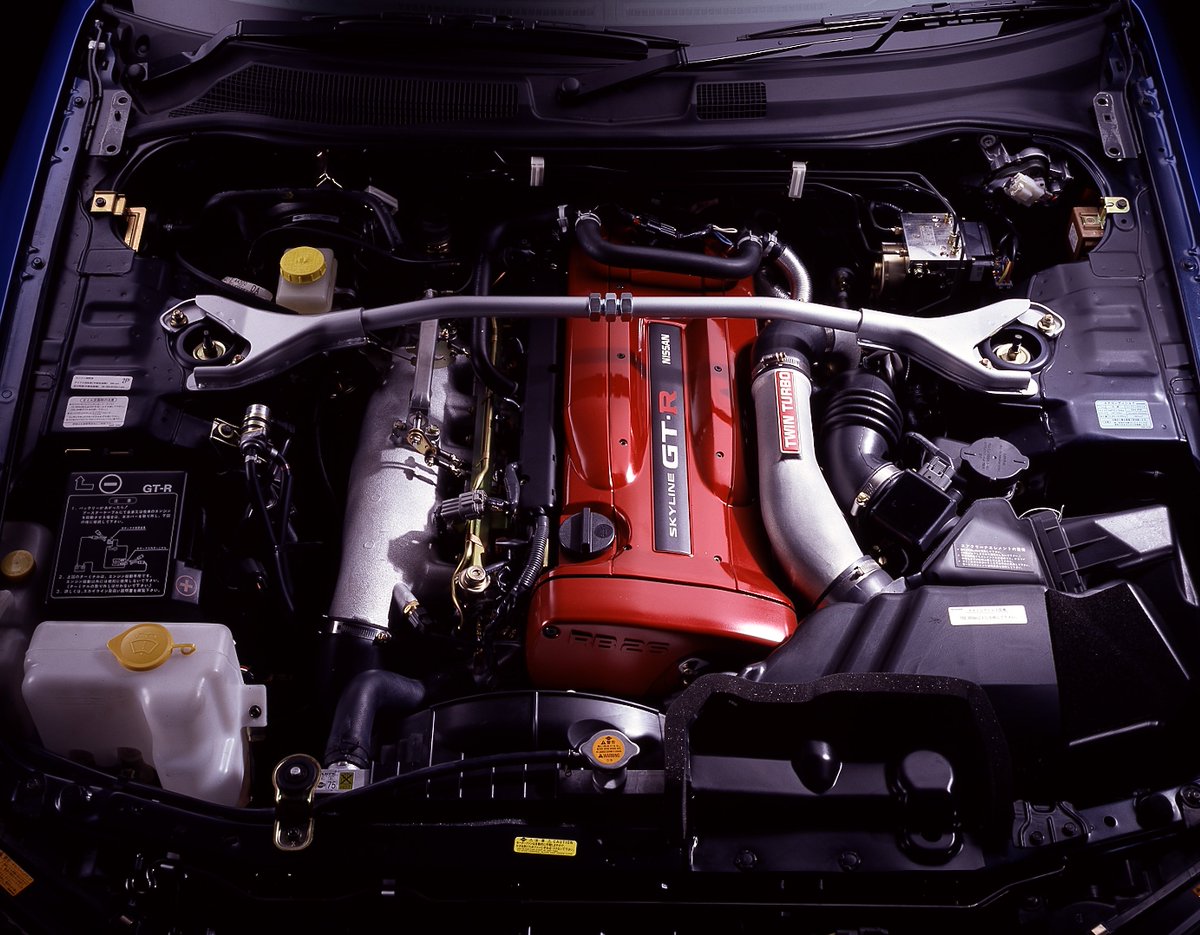
The 2.6L twin-turbocharged inline-6 from Nissan – the RB26DETT – has become something of a legend. It would take nothing short of the absolute best from the Japanese automaker to produce something worthy of powering a car amicably referred to as “Godzilla”, and the RB26DETT has never disappointed. While it was limited to 280 hp from the factory – thanks to the gentleman’s agreement between Japanese manufacturers to cap engine outputs at the time – the R34 Skyline GT-R was anything but docile, even when left untinkered.

The engine’s true capabilities were the worst kept secret in the industry, with a simple flash of the ECU (to effectively remove the restrictions) plus a few bolt-on performance modifications allowing the RB26DETT to produce much, much more. While the power plant has become popular as a swap option these days, it doesn’t feel quite at home in anything other than a proper Skyline; both the car and its engine are synonymous with the legacy that has been created by this iconic duo.

Porsche MDH.NA

Porsche MDH.NA engine

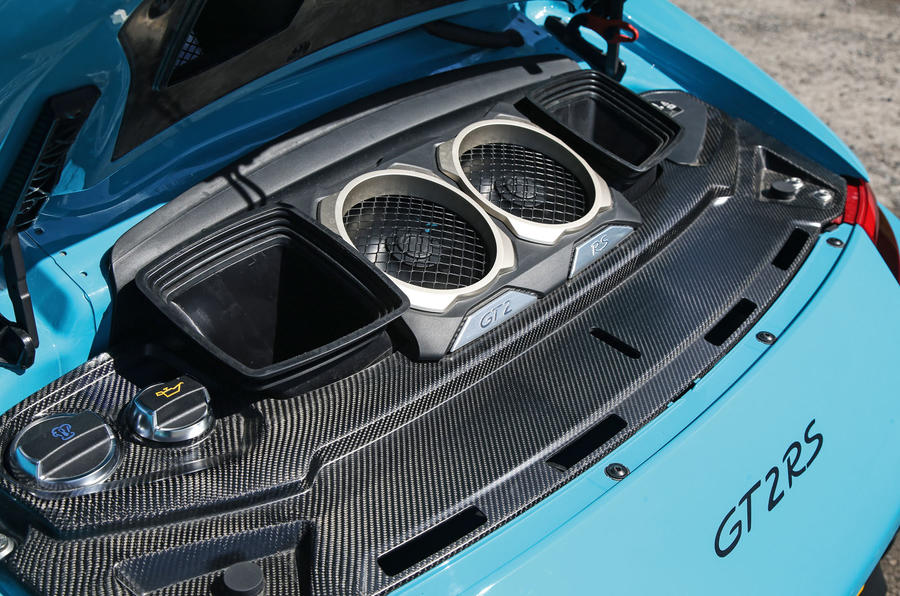
Suffice to say, the 991 GT2 RS is the absolute peak of 6-cylinder performance. The GT2 RS in its entirety is more closely based on a Turbo S than it is to its closest GT relative, the 911 GT3 RS. After all, at the heart of the GT2 is a revamped version of the Turbo S engine (known as MDH.NA), while the GT3 has its own unique naturally-aspirated 4.0L power plant. The 3.8L flat-6 was fitted with larger variable-geometry turbos and was given an increase in peak boost to 22.5 psi, which is 24% higher than the Turbo S.

Larger intercoolers, a water-spray system, larger exhaust manifold primaries and redesigned pistons work in synergy with the aforementioned to provide the GT2 RS with 700 horsepower @ 7,000 rpm and 553 lb-ft of torque. Porsche has long buried the traditional notion of “turbo-lag” in its cars with VarioCam Plus and the GT2 RS is no different, making peak torque from 2,250 rpm to 4,000 rpm. Want to set record lap times on the Nürburgring? Just remember that it’s ‘do so at your own peril’: 700 hp in a rear-engine, rear-wheel drive car is no joke.

Bugatti 8.0L Quad-Turbocharged W16

Bugatti 8.0L Quad-Turbocharged W16

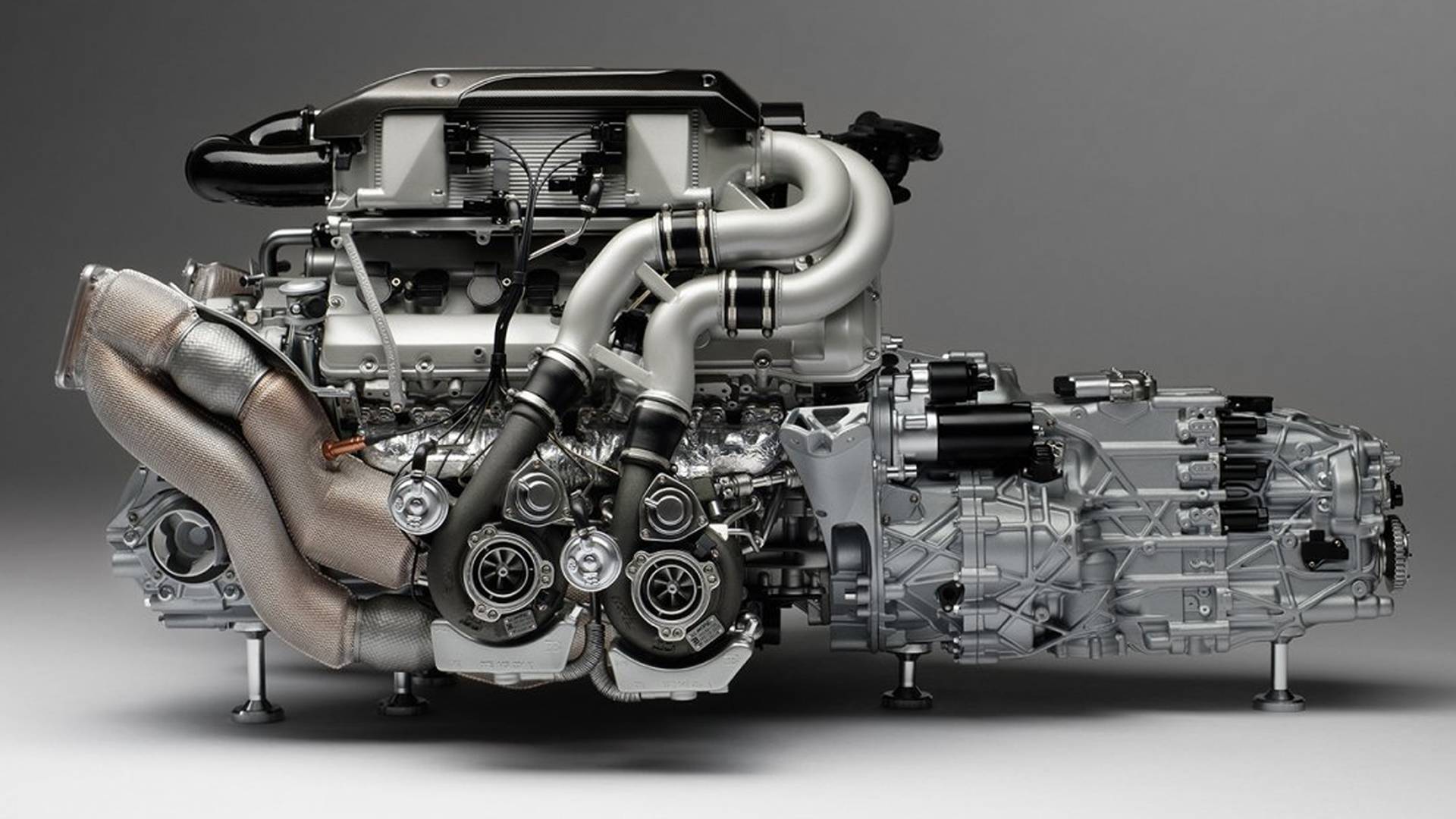
Needless to say, the 16-cylinder engine (commonly referred to as the W16) has a lot of things going for it. For starters, it’s the only one of its kind in the world being produced by a mainstream automaker – Bugatti’s parent company: The Volkswagen Group. The quad-turbocharged unit – which is the amalgamation of two V8 engines – is the platform upon which all Bugatti hypercar models are powered.

When it first debuted in 2005, the W16 was a spectacle. In the Bugatti Veyron, it produced over 1,000 hp and could hit a mind-boggling top speed of 254 mph. This made the Veyron the fastest production sports car in the world by all meaningful metrics. This story was just beginning though, as the W16 would continue to evolve since then. Today, the engine retains the same architecture but is a much stronger, faster, and better version of itself. In its modern form, the W16 powers the likes of the Bugatti Divo and Bugatti Chiron Super Sport, where it produces 1,479 hp and 1,600 hp respectively; the latter car is able to reach a top speed of more than 400 km/h!

Mercedes-AMG M178

Mercedes-AMG M178 engine

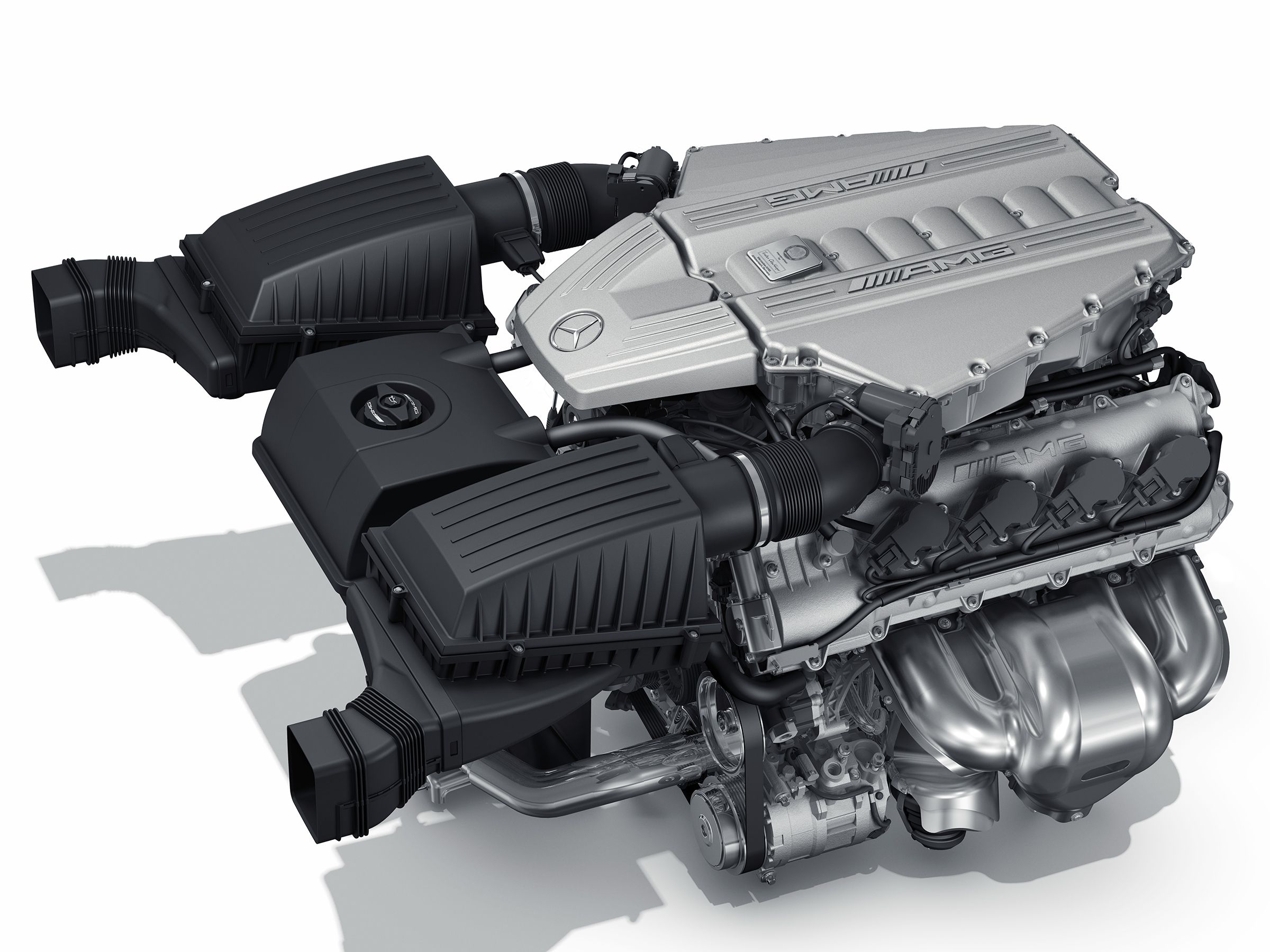
The modern day Mercedes-AMG line-up is blessed with their omnipotent ‘M178’ 4.0L twin-turbocharged V8, which itself deserves all the plaudits and is a shoo-in for selection. While it’s the most advanced iteration of the automaker’s V8, our personal favorite would have to be the ‘M156’ 6.2L V8 first powered the 467 hp naturally-aspirated C63 AMG. Like its successor, the M156 would feature in almost every Mercedes-AMG model of that era, including the SL63.

The ultimate version of this V8 motor would be the ‘M159’, which was equipped in the automaker’s flagship SLS supercar, producing 622 hp. The SLS has since been succeeded by the Mercedes-AMG GT Black Series, which produces 720 hp from its twin-turbocharged ‘M178’, and recently set the new production car lap record at the Nürburgring. This ultimately proves that AMG is still very much at the forefront of the perpetually evolving performance car segment, and is doing more than its fair share in helping to set the bar higher.

Toyota 2JZ-GTE

Toyota 2JZ-GTE engine

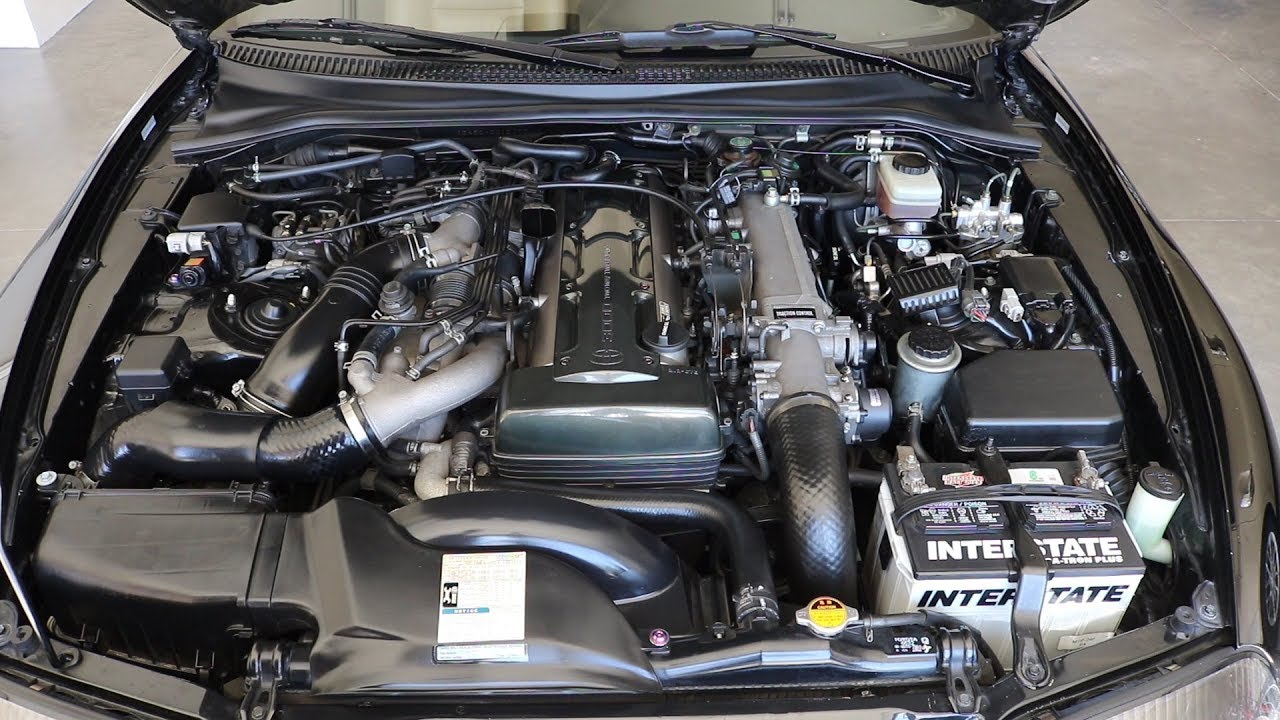
The Toyota Supra was equipped with the ubiquitous 3.0L inline-6 2JZ engine in all its models. The most recognized version of the Supra – the Turbo – possessed a twin-turbocharged engine known as the 2JZ-GTE, which was specced with up to 326 hp. The two turbochargers operated sequentially and not in parallel. This essentially meant that one of the turbochargers was designed to provide near-maximum torque as early as 1,800 rpm, while the second turbine would be engaged in a “pre-boost” mode until around 4,000 rpm where thereafter both turbochargers would be spinning at full blast.

This translated to better low-end throttle response, less ‘turbo lag’, increased boost at higher engine speeds, and a relatively linear delivery of power – all of which was difficult to achieve in unison, with the technology available at the time. The 2JZ-GTE-equipped Turbo model was able to sprint from 0-60 mph in just 4.6 seconds and complete the standing ¼ mile in an impressive 13.1 seconds. Top speed was recorded at 155 mph. Today, the 2JZ-GTE remains amicably referred-to in performance tuning and sports car culture.

McLaren M838T / M840T

McLaren M838T / M840T engine

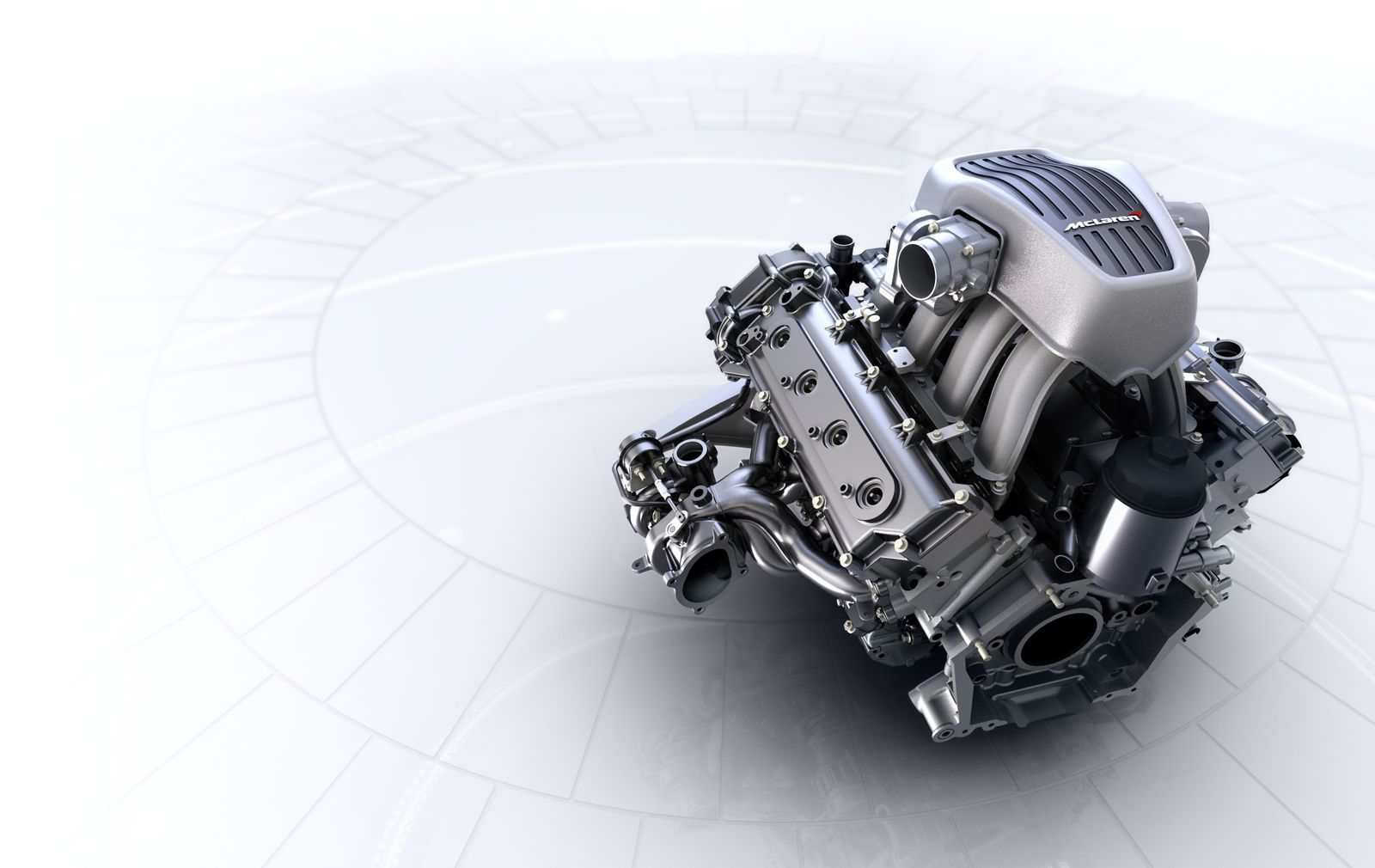
Despite only producing V8-powered automobiles since as recently as 2011 (via the MP4-12C), you could argue that McLaren are now the world’s artisans of the V8 engine, and few would dispute that. After all it’s virtually all they know these days, with every single McLaren model – bar the V6-hybrid McLaren Artura – fitted with some adaptation of their M838T or M840T twin-turbocharged V8 motors.

The 3.8L M838T is found in its Sports Series range of cars, which includes the entry-level McLaren 540C and goes all the way up to the indomitable 666 hp McLaren 675 LT. The 4.0L M840T features on all of the Super Series cars, which covers the ‘700 range’ of models, plus the addition of the McLaren GT. In its Ultimate form, the 4.0L unit – dubbed the M840TR – produces 814 hp in the McLaren Senna GTR. The McLaren Speedtail hybrid ‘hyper-GT’ produces some 1,035 hp through the combination of an M840T and electric motor.

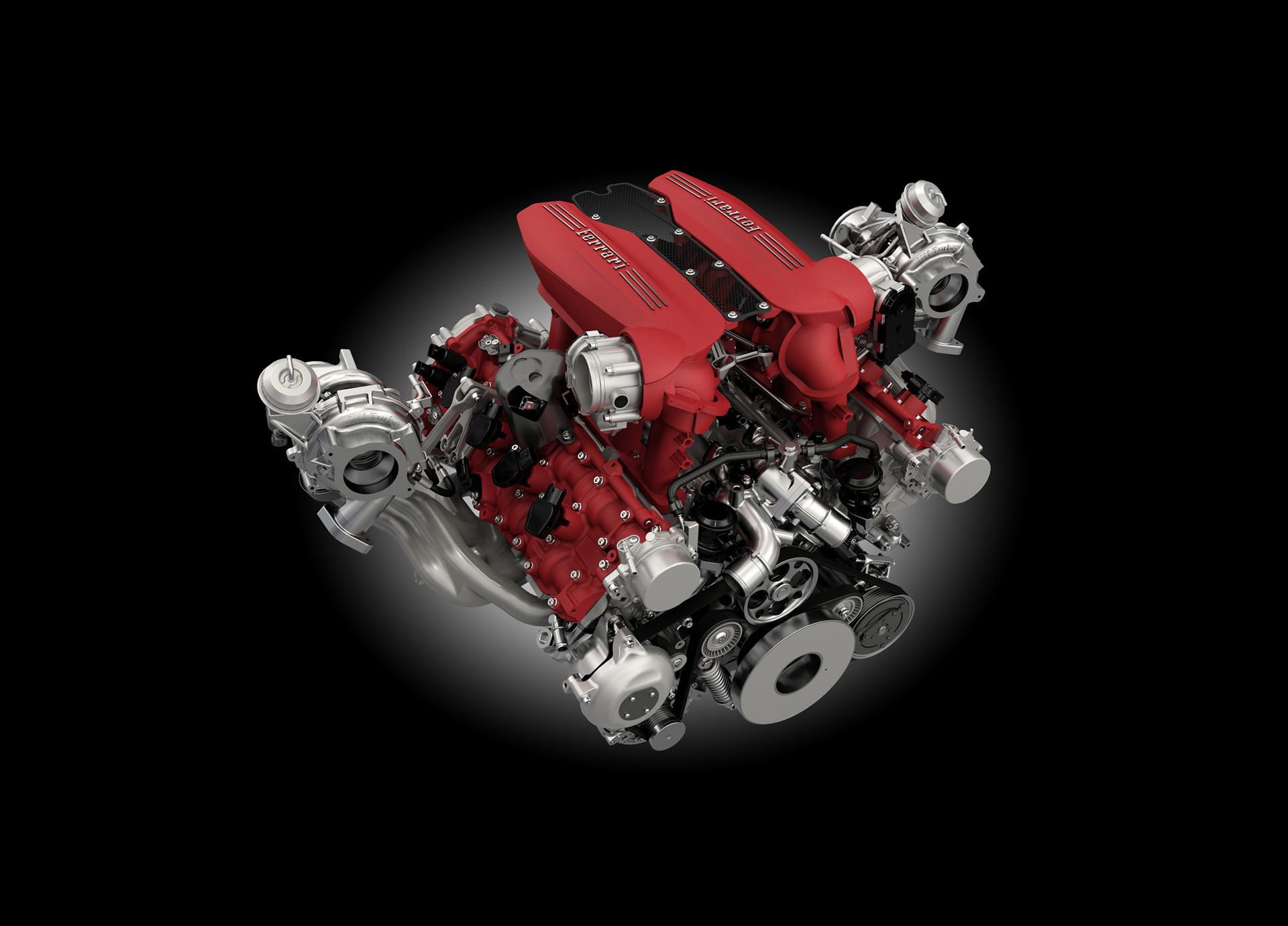
Ferrari F154

Ferrari F154 Engine

Ferrari’s F154 family of V8 engines could very well go on to become the G.O.A.T; especially when it has been scrutinized under the incredibly high standards that have been set in the modern era of automobiles. The engine is as potent as it is versatile, powering just about every flavor of Ferrari car since being introduced in 2014; the comfortable California convertible, the grand-touring Roma, the race-bred 488 Pista and F8 Tributo, and even the 986 hp SF90 Stradale hybrid hypercar.

While some continue to jeer at the F154 for its unfortunate role in closing the chapter on naturally-aspirated Ferrari V8 engines, it has on the other hand, been received with critical acclaim by those who base their verdict on performance and engineering merit. The F154B and F154C variants have dominated the awards spectrum since 2016, winning four straight ‘Best Performance Engine’ awards through to 2019. In total, the F154 has won 14 awards in the International Engine of the Year competition included a ‘Best of the Best’ award in 2018. Still not convinced? Just get behind the wheel of any one of Ferrari’s current V8 models and see what all the fuss is about…

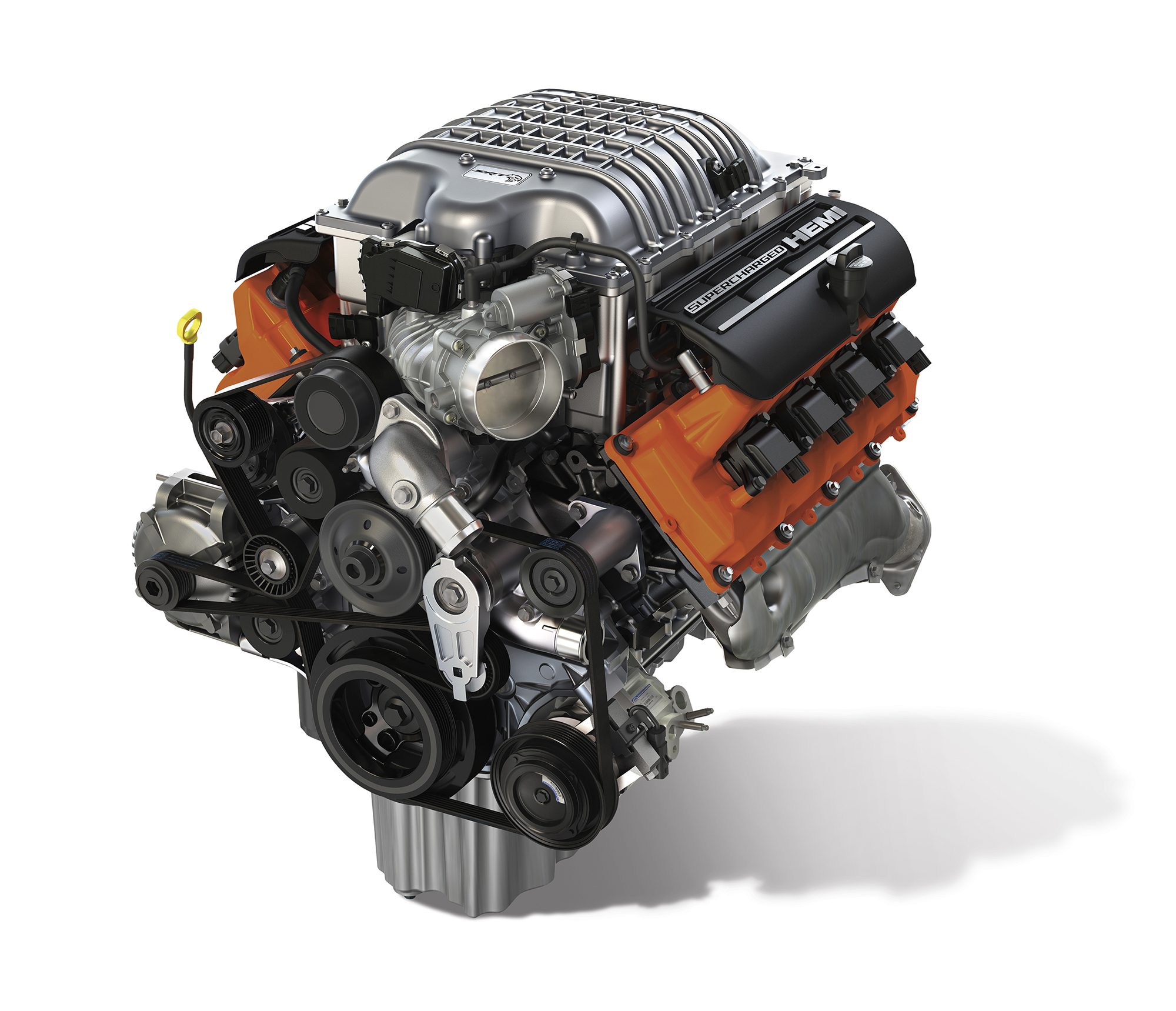
Dodge Supercharged Hemi

Dodge Supercharted Hemi Engine

Mind you, this is a supercharged engine – and the only one on this list – but we consider it to be a contemporary of our other selections. Dodge’s Hellcat series of cars have really taken the world by storm, offering almost unfathomable power in a non-exotic production vehicle – or any vehicle for that matter.  It’s truly a revival of the “American muscle” movement, with the supercharged Hemi able to produce as much as 807 hp and 717 lb-ft of torque via the Dodge Challenger Hellcat Super Stock. Handling, agility, and all that other kind of stuff aside, this makes the Hellcat Challenger/Charger the quintessential American sports car which can be had for well under the 6-figure mark brand new.

The automaker is now offering the 6.2L ‘Redeye’ V8 as a crate engine (aptly nicknamed ‘Hellcrate’) through Mopar. It can be purchased at a starting price of US$21,807. The ‘Redeye’ version comes with a larger supercharger than the previous Hellcrate engine, and has been tuned for more boost, a slightly higher redline, and a host of other improvements. These are what has allowed it to improve from 707 hp and 650 lb-ft of torque, to its current 807 hp state. An absolute unit.

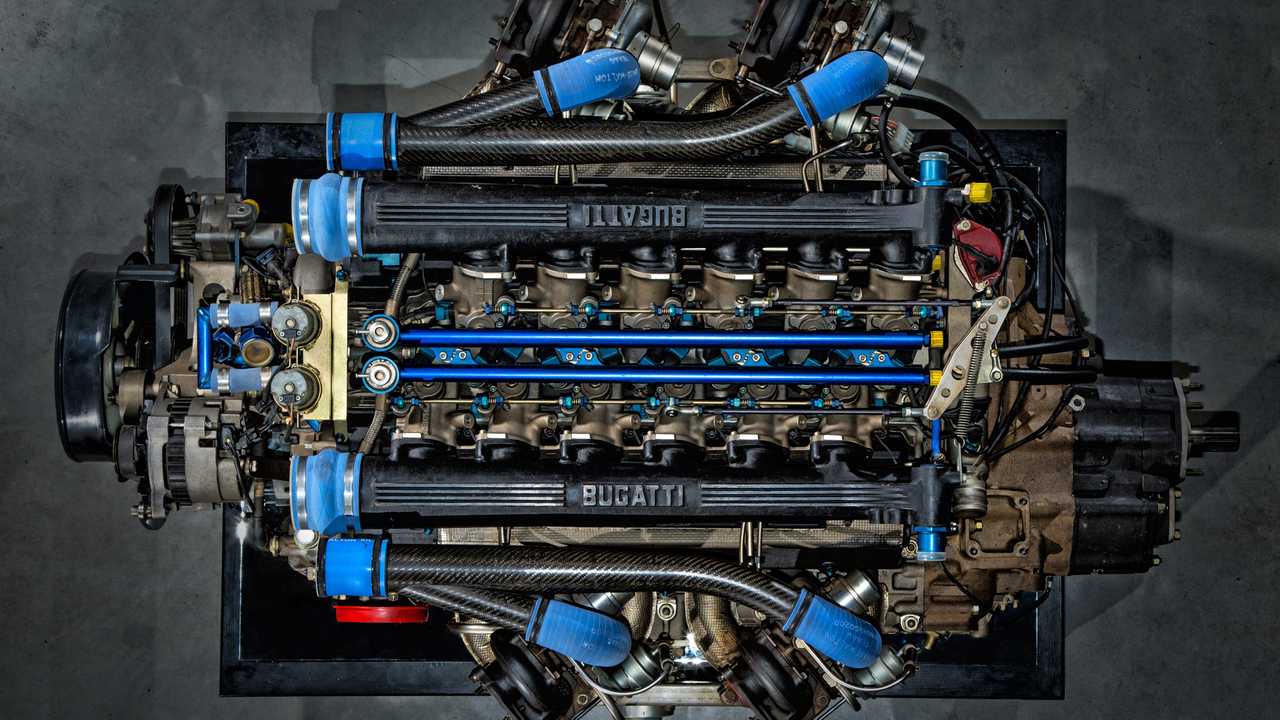
Bugatti 3.5L Quad-Turbocharged V12

Bugatti 3.5L Quad-Turbocharged V12 engine

This Bugatti engine has had a very decorated career, albeit a short one, which makes it all the more impressive. Featured exclusively on the (1991-1995) Bugatti EB110, this 3.5L quad-turbocharged V12 is responsible for some very notable distinctions. First, that would indeed make it the first quad-turbocharged engine to power a Bugatti before the W16 came along. It is also widely regarded as being one of the catalysts in the revival of the French marque, even though it failed to be directly responsible for this. It became the world’s fastest production car of its time, beating the Jaguar XJ220 in the process.

Suffice to say, it grabbed all the headlines, and really, that was the whole point. I mean, for what other purposes would the use of four turbochargers be given the green light for? Sure, it produced a whopping 553 hp and 450 lb-ft of torque, but you would have to argue that this likely could’ve been achieved with a more conventional design. After all, quad-turbocharged engines never really proliferated, and there’s probably good science behind why that’s been the case. Yes, the W16 does put that notion into some question, but technology has improved substantially since then. Nevertheless, there’s nothing un-iconic about a V12 engine with almost as many turbochargers as you can count on one hand; and we love it all the same.

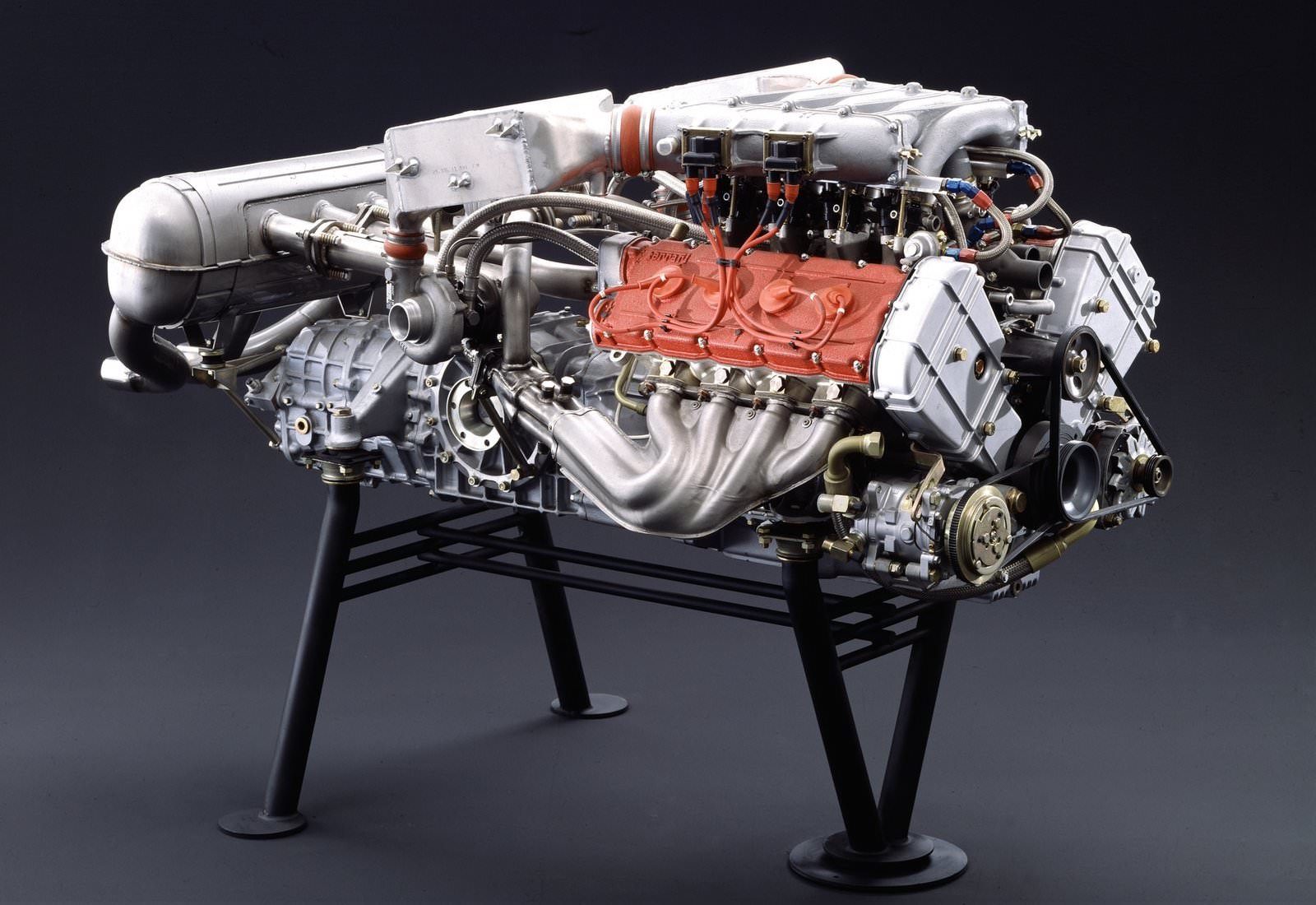
Ferrari F106

Ferrari F106 engine

Ferrari’s F106 V8 engine dates as far back as 1973, where it first featured in the Dino 308 GT4. Right from the get go, it produced an impressive 250 hp from a 2.9L naturally-aspirated engine, which featured a flat-plane crank and dual-overhead cams. As proud as they were of their creation, surely even the Ferrari engineers didn’t foresee what was to come for the F106 and the venerable roster of cars it would go on to power.

Such was the longevity and capability of the F106 unit, that it continued to be used – with significant updates and revisions along the way, including electronic fuel injection and multi-valve heads – for more than 30 years. Notable models which were equipped with the engine include the F355, 360 Modena and arguably the most famous Ferrari of them all; the Ferrari F40, which fashioned a twin-turbocharged version of the F106 producing 471 hp. It really doesn’t get more epic than that; and while some would say that the engine is riding on the coat-tails of the famous car it powers, it remains nothing short of an absolute legend on its own.

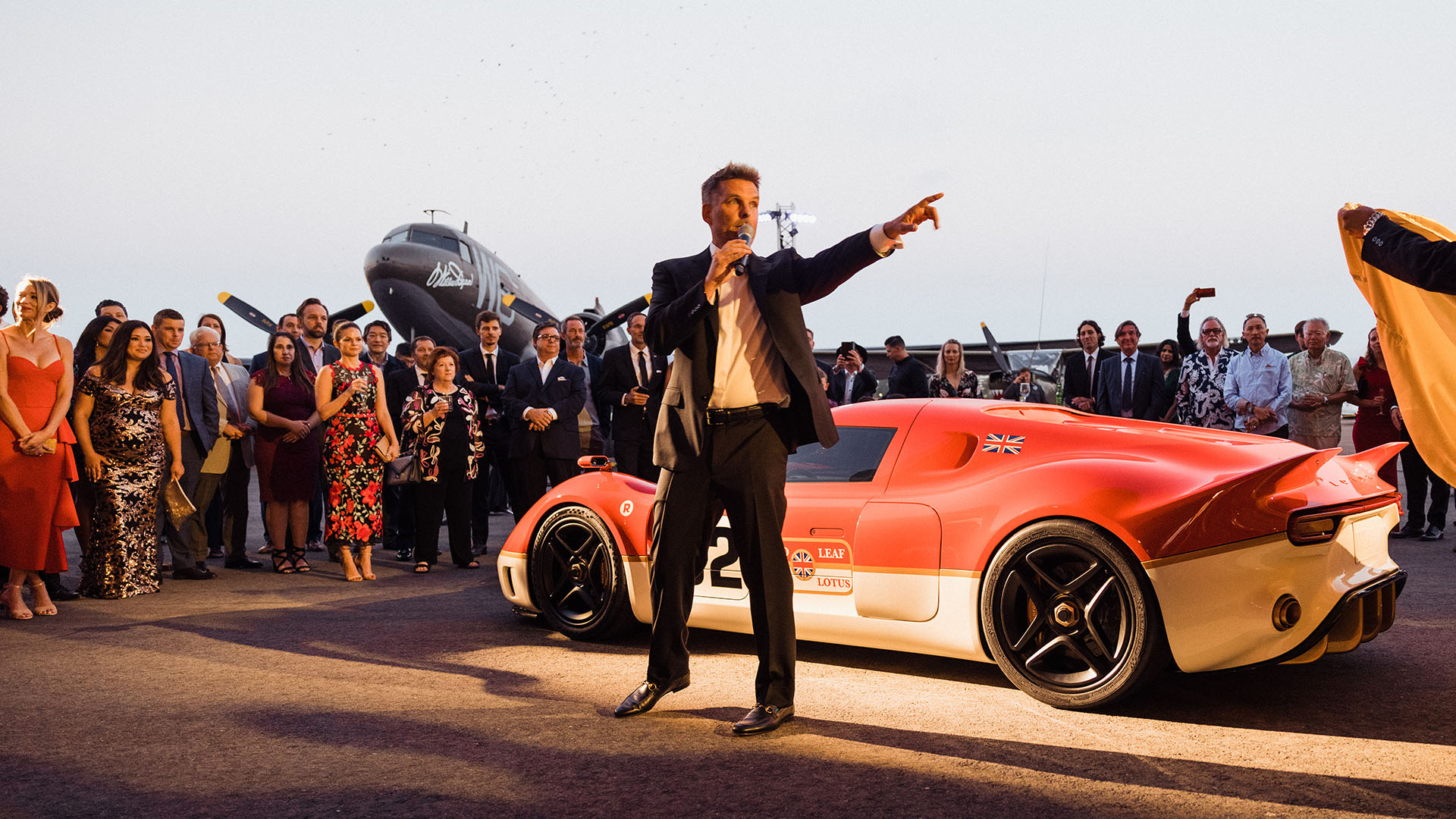
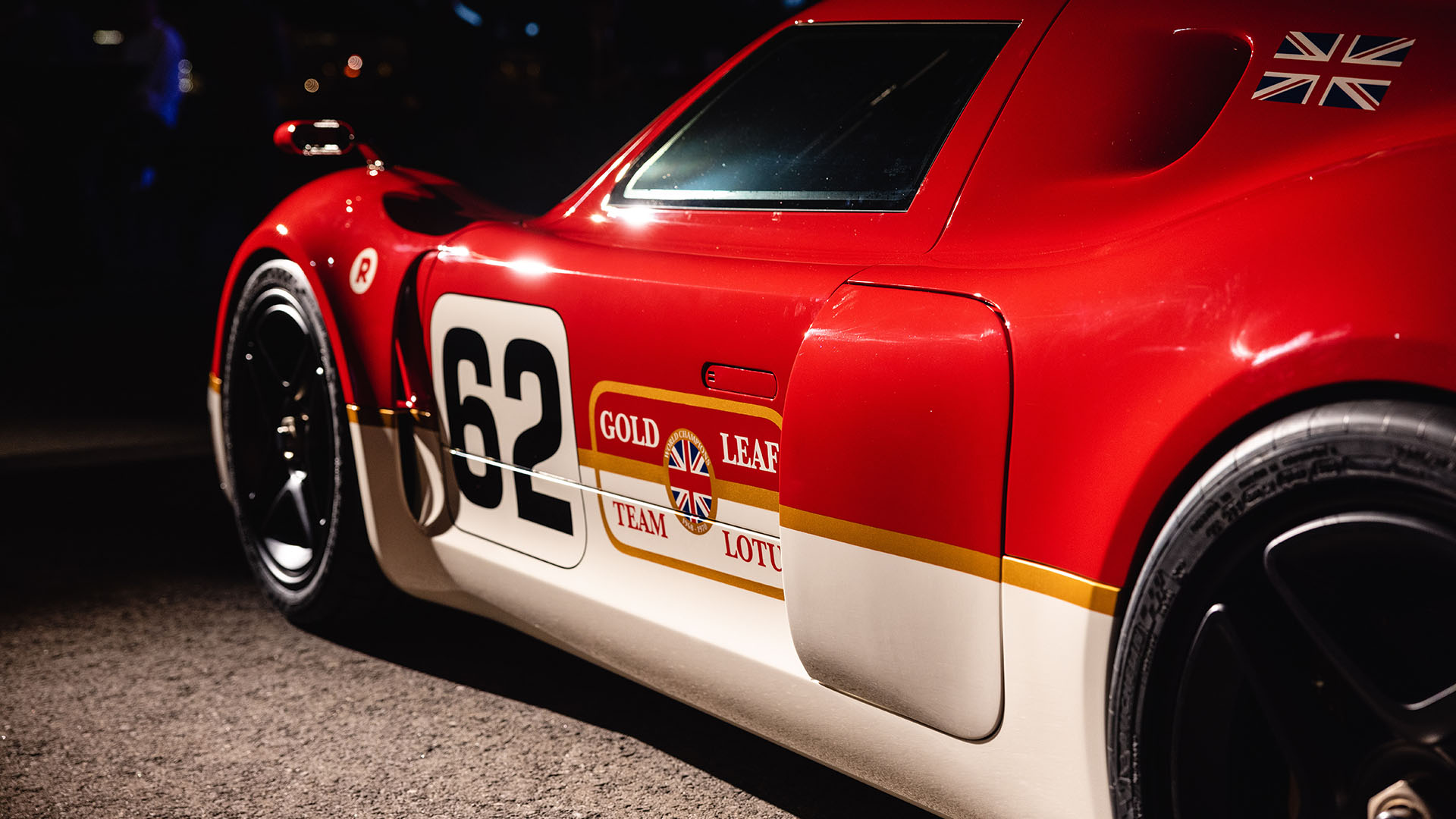
The Radford Gold Leaf Type 62-2

We have already published an article on Radford’s Project 62 a while ago, where we talked about the revival of the UK based, founded by Harold Radford back in 1948 to create bespoke builds for the more wealthy customers in the world,  it would take Harold a few years to unveil his first creation, the 1951 Bentley Countryman, an estate car like the world hadn’t seen yet, with the best of the best in the Fifties, unfortunately, that didn’t keep the company from going into liquidation fifteen years later.

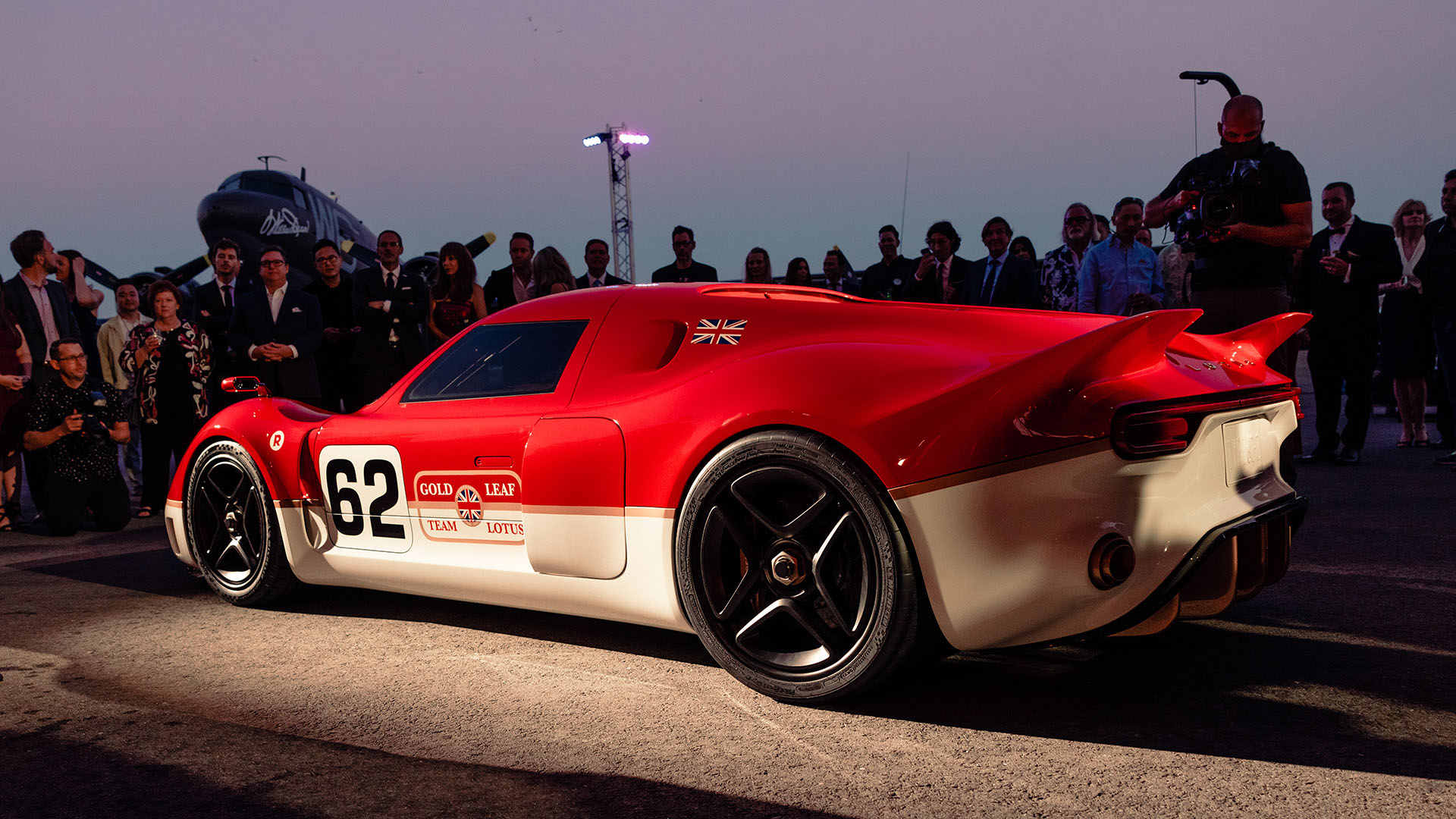
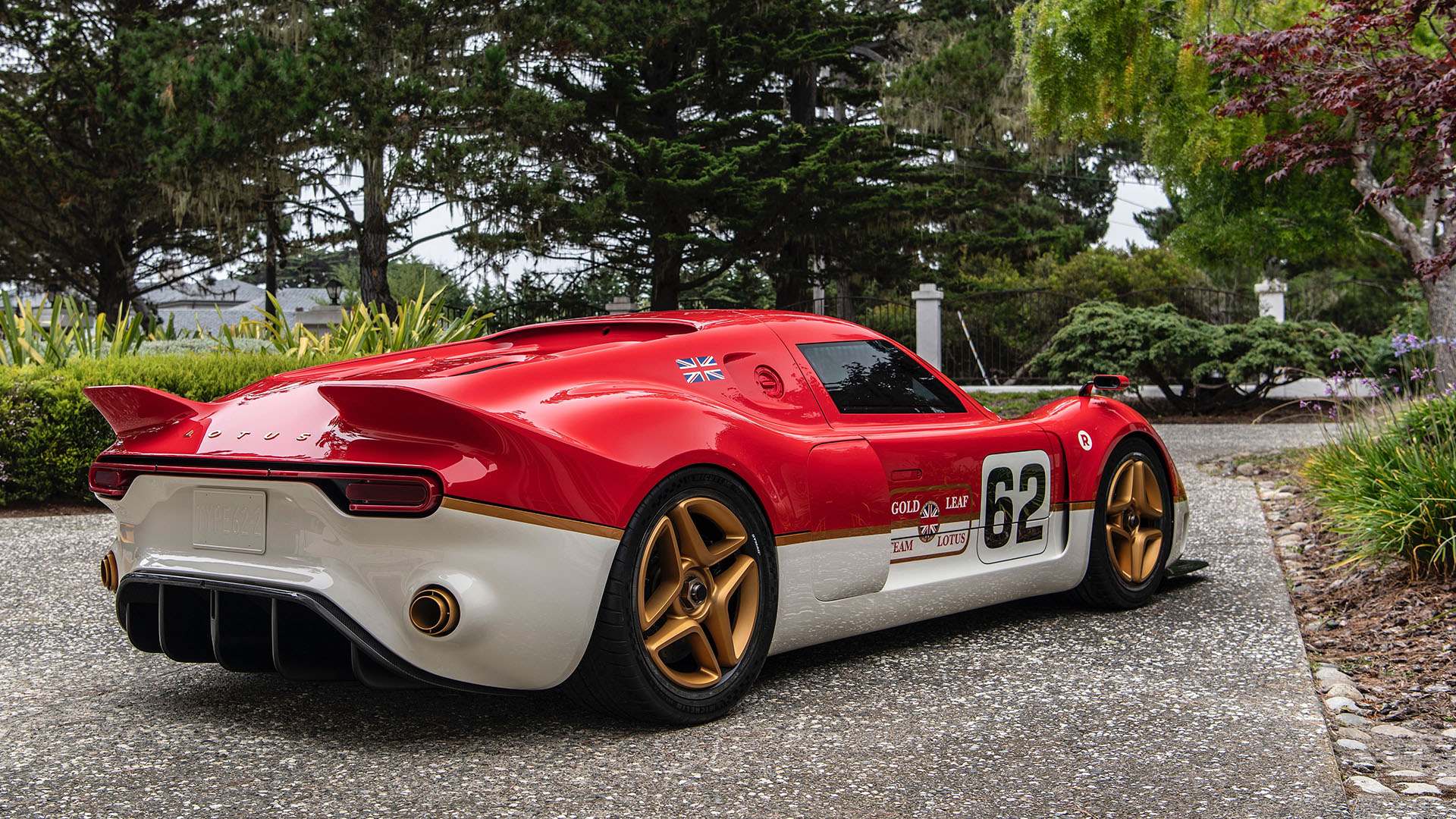
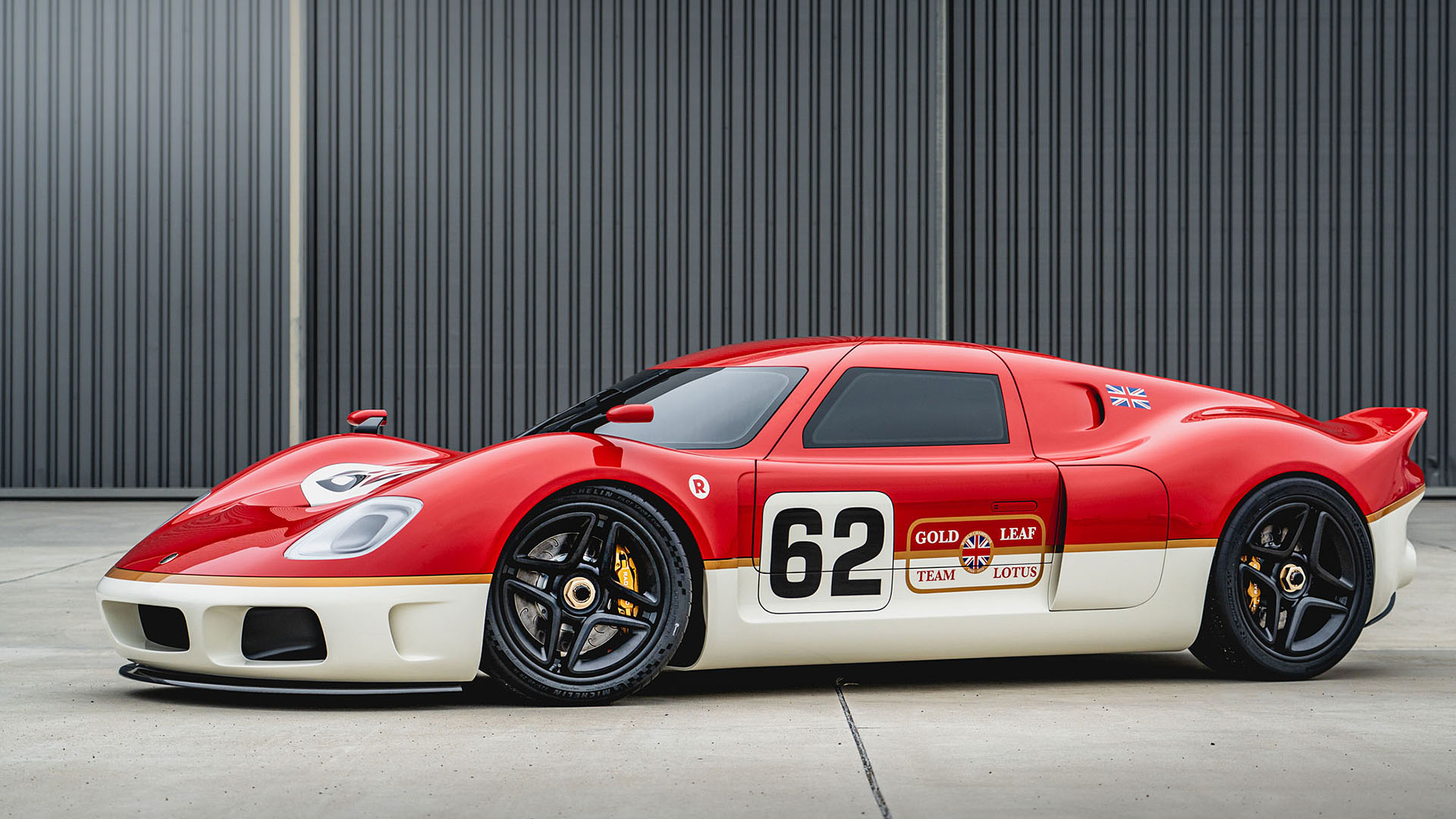
55 years later, car designer Mark Stubbs acquired the Radford name, and he’s working with some interesting names in the automotive scene to unveil a new Radford car, codenamed Project 62 as production will be limited to 62 units worldwide, and during Monterey Car Week in 2021, at The Quail, we finally saw the first completed car … the Radford Gold Leaf Type 62-2 Quail Lodge edition.

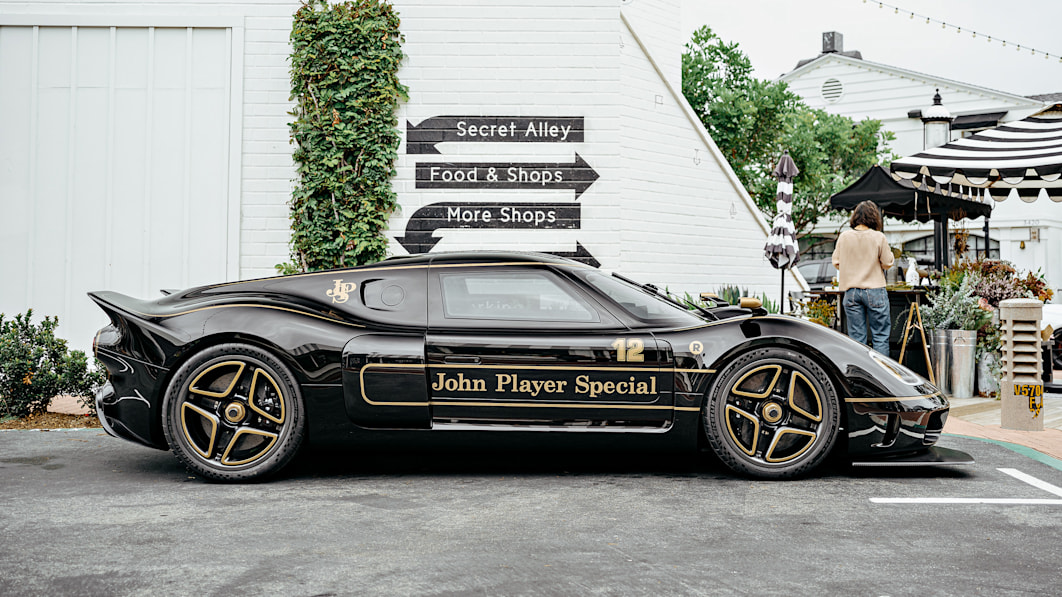
But it gets even more interesting, from the 62 units, Radford will only build 12 in this Gold Leaf livery, and six of them are already spoken for, so you’d better hurry if you would like one of these rare cars for your collection. Each of the 62 Radford will be a bespoke build, specified by the client to the littlest detail, next to the Gold Leaf livery, you can also specify the ‘Classic’ and the ‘JPS’ version, more on those below.

The Lotus 62-2 by Radford in the Classic version comes with a Twin-scroll supercharged 3.5 liter V6, 24 valves, dual VVT-i, water-cooled engine delivering 430bhp, in the Gold Leaf this engine gets upgraded piston, con-rods, camshafts, and a different calibration to boost power to 500bhp, but the most powerful version will be the JPS which adds a Harrop TVS1900 Supercharger to increase power even further to a total of 600bhp.

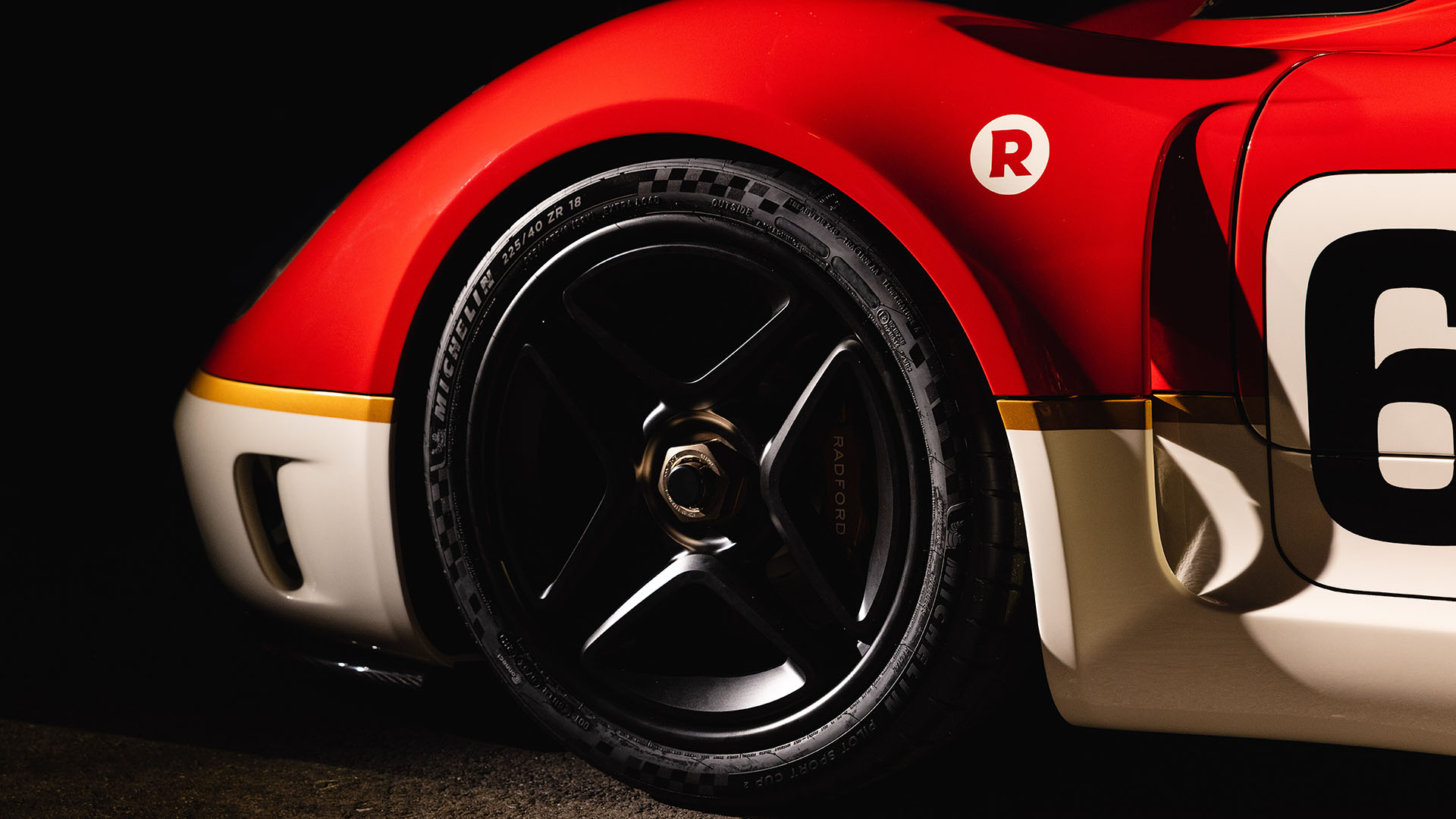
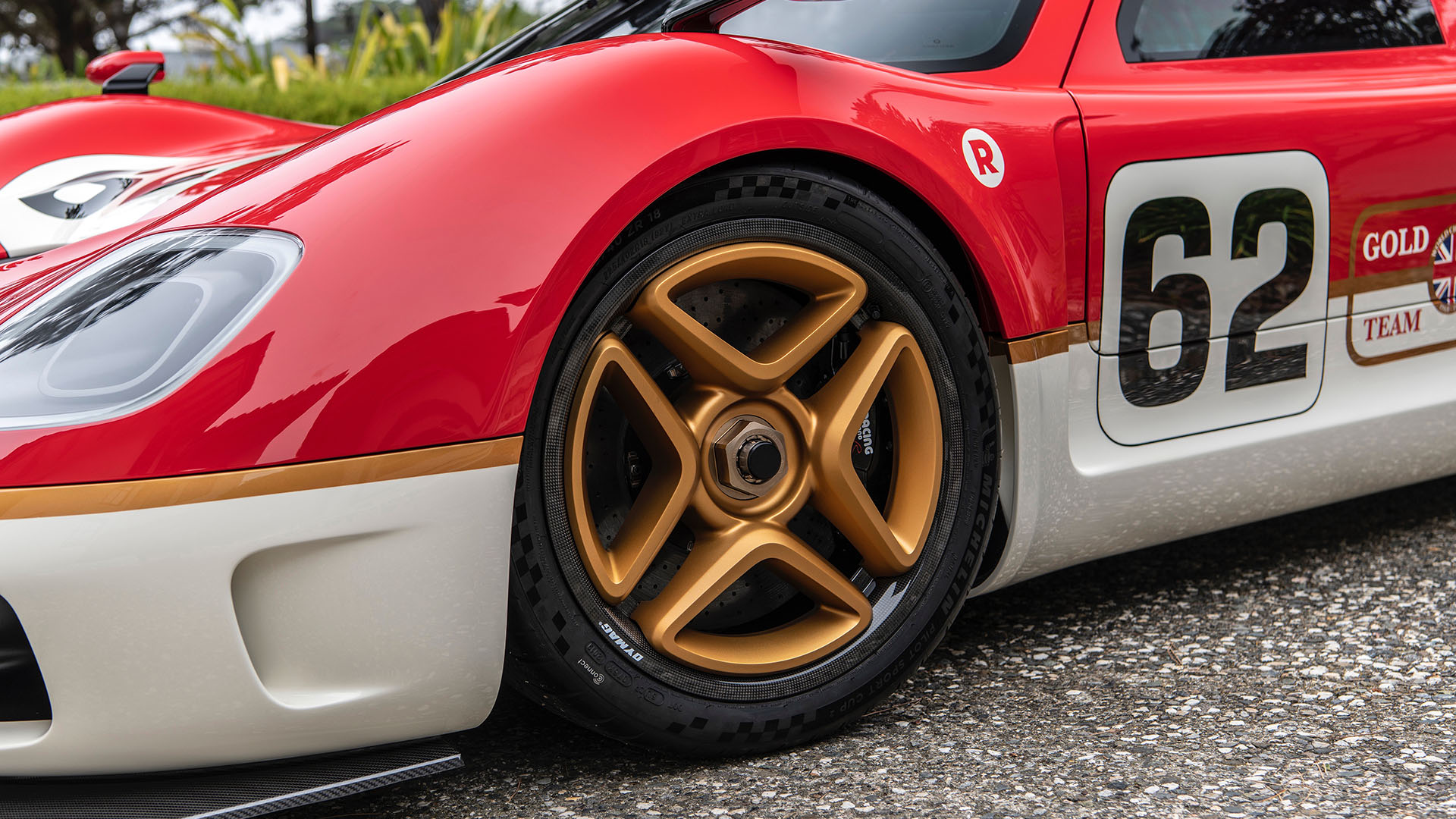
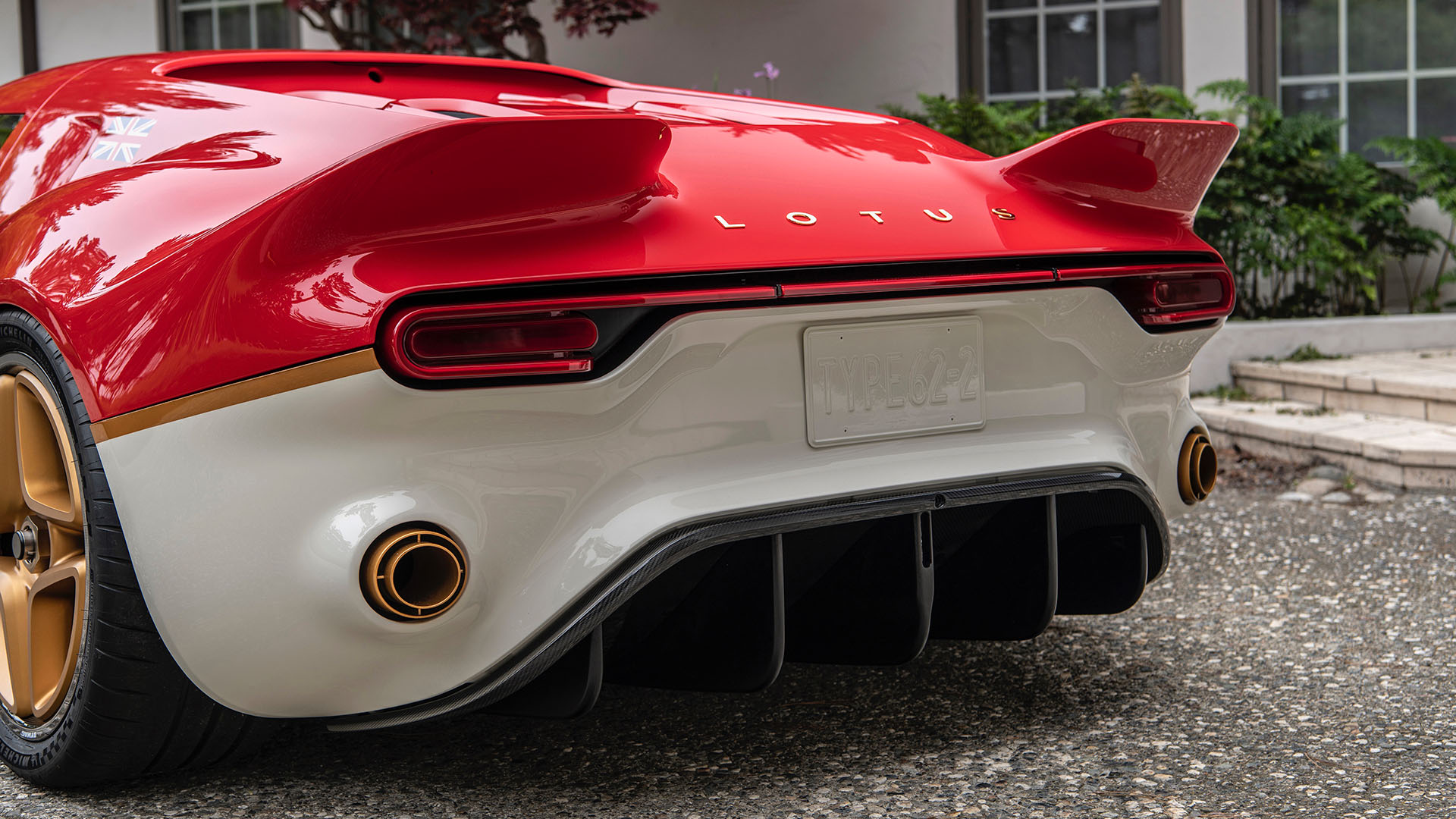
Both the Gold Leaf and the JPS come with a dual ducktail rear wing and hollow driveshafts with center-lock hubs, the Classic has solid driveshafts and a five-bolt hub for her 17 and 18-inch staggered wheel setup, the Gold Leaf comes with 18 and 19-inch forged aluminum wheels, while the JPS sets the bar even higher with 18 and 19-inch 2-piece Dymag Carbon Composite & Mag wheels covering Carbon Ceramic disk brakes.

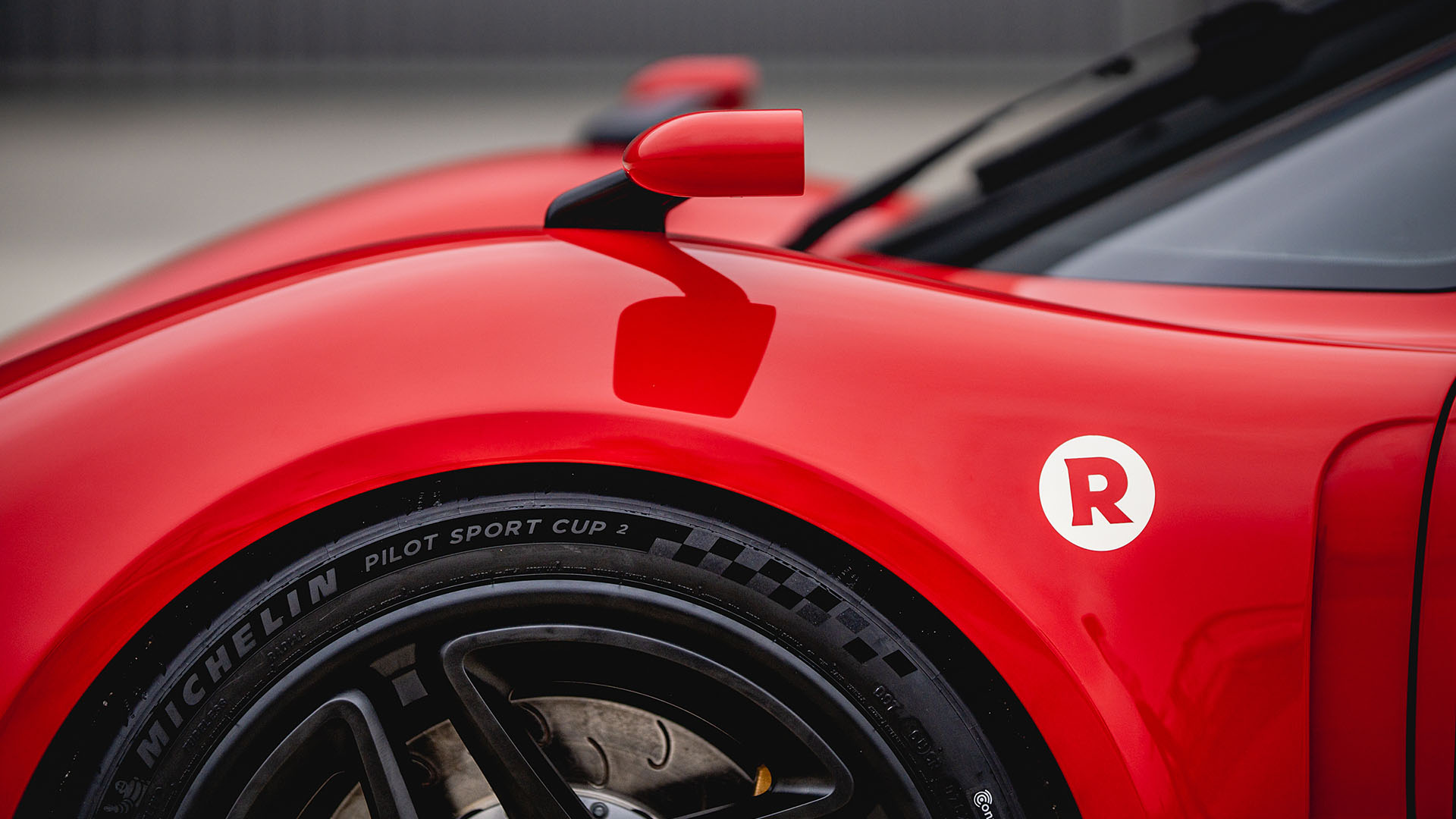
It is obvious the Lotus 62-2 by Radford JPS is the flagship model, it also gets a larger rear diffuser, a large front splitter, and even larger side vents compared to the Classic and Gold Leaf, it does seem however that after the initial press release, they changed the name to the Gold Leaf Type 62-2 Quail Edition, with a bespoke carbon fiber composite front splitter and rear diffuser. It also features AP Monobloc calipers and fully carbon-ceramic brake rotors housed within larger 18-inch front and 19-inch Dymag carbon composite wheels which lower the unsprung mass and improve the nimble handling characteristics of the car, shod in Michelin Pilot Sport Cup 2 tires… which really resembles the JPS specs from their own ‘Technical Specifications’ sheet.

Mark Stubbs “The Radford Type 62-2 in Gold Leaf guise, is a really special car. From a design perspective, the Gold Leaf car with these bespoke additions really stands out, with larger diffusers, and wheels. And sporting one of the most iconic racing liveries ever to grace a Formula 1 car, gives the car a real presence and sense of occasion. We’re only making 12 of these iconic cars, meaning they are already one of the rarest cars that money can buy. And most of them are already allocated to their owners.”

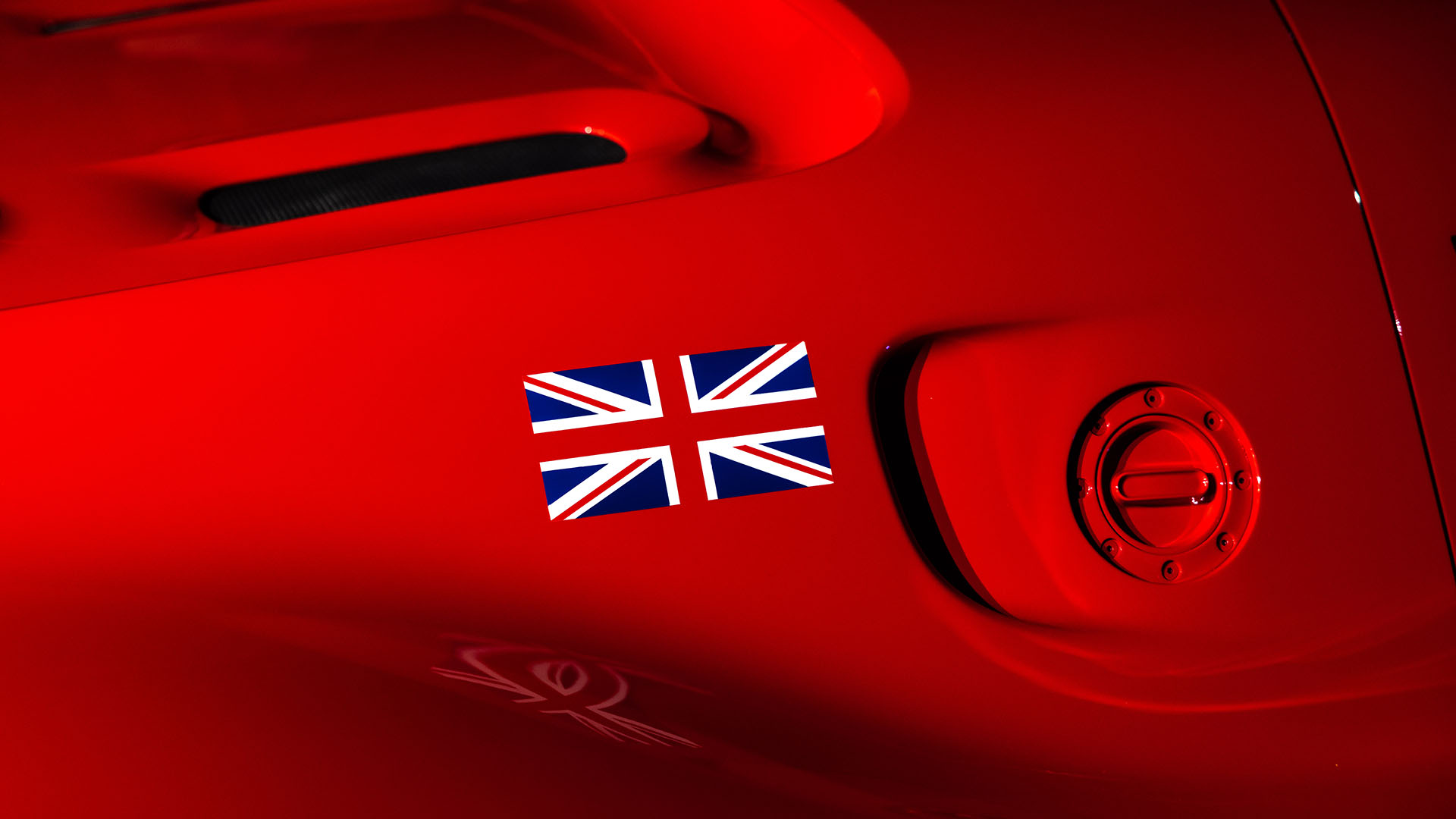
The Gold Leaf Type 62-2 Quail Edition boasts a contemporary version of the iconic Gold Leaf livery, one of the most famous and important racing car liveries seen on a Formula 1 car. The legendary red, white, and gold color scheme was used after Colin Chapman signed a huge deal with Gold Leaf, and is most well-known on the Type 49B car Graham Hill piloted in the 1968 season, later the same livery was also found on the famous Lotus 72 F1 car raced by Emerson Fittipaldi and Jochen Rindt in the 1970 season.

Ant Anstead “The Gold Leaf Type 62-2 that we’re showing at Quail is at the more extreme end of Type 62-2s that money can buy. It is low, sleek, and powerful and sports one of the most iconic racing liveries ever created, one of the liveries that the heroes of Formula 1 such as Emerson Fittipaldi and Graham Hill used to race with, in the cars that started my passion for cars.”

Lotus 62-2 by Radford was officially unveiled to the public for the first time ever at The Quail, showing this extremely exclusive edition from the outside … the interior remains a mystery for now as it hasn’t been shown yet, and while the styling of this car was inspired by a classic Lotus, the base used to create this low-riding beauty come also from Lotus, but it’s the latest and greatest that’s available.

The Type 62-2 evokes the spirit of Lotus and the original Type 62 as a homage to the marque’s illustrious motorsport history. With support from Radford’s engineers, former FIA Formula OneTM World Champion Jenson Button has fine-honed the dynamic response of the Type 62-2 to ensure a superlative driving experience, production of customer cars is set to start in late 2021 with first deliveries being foreseen in 2022.

Elegend EL1 is a Full EV that Looks Familiar, 816hp and $1 Million Price Tag

This is the new Elegend EL1 – a two seat full electric sports coupe. It will be revealed officially at the IAA Mobility 2021 on September 6th. You are right to spot the eerie close resemblance to the Audi Sport Quattro S1 rally car, that’s because the EL1 is a modern interpretation of the infamous Audi rally car.

The idea of “modern” take on classic and historic cars is not always welcome, and that’s because there is always a catch. In our case, the EL1 goes modern by incorporating an electric drivetrain together with sophisticated chassis design and tuning. Nonetheless, the EL1 is unlike anything on the market today, it’s a completely new development from the ground up with select industry specialists involved in both the design and manufacturing.

Elegend EL1 Specs

Electric Motors 3
Power 600 kW / 816hp
Torque 1,600nm
Gearbox ESingle-gear transmission
Limited-slip differential front and rear
Transmission AWD
Battery 800v
Battery Capacity with 22 kW onboard charger
DC fast charger up to 300 kW
Range 425km
Weight 1,650 kg
0-100km/h 2.8s
Top Speed 300km/h

The monocoque is uniquely tailored for the Elegend EL1 and the chassis will be developed by Roding
Automobile GmbH – specialists in prototype cars. The front features a long hood with a scoop and three cooling vents. The front and rear lighting is made up of thin LED strips while the overall design including the wide wheel arches resemble that of the Audi Sport Quattro S1. The EL1 rides on 19-inch wheels at the front and 20-inch wheels at the rear.

The suspension comprises of Double-wishbone axle with triple-adjustable dampers while the brakes measure 360 mm discs all around with Four-piston brake calipers.

Powering the EL1 is a set of 3 electric motors, 2 at the rear axle and 1 at the front axle. The rear motors are rated at 225kW each while the solo motor at the front is rated at 150kW, altogether the system power output is rated at 600kW or 816hp. The EL1 will do 0-100km/h in just 2.8s and 0-200km/h in just 8.5s. The top speed is limited to 300km/h.

Fast charging of the 90 kWh battery is possible with a 300 kW DC charger, a 22 kW AC/DC onboard charging converter will allow for fast charging at home. To lower the center of gravity, the battery cells are arranged in a “T” shape along the center tunnel and behind the first row of seats.

Standard and Sports modes are the only two driving modes available to maintain the spirit of simplicity, a lift system will be available to allow driving on uneven road surfaces. The interior will come with all the necessary amenities including a multimedia system, Bluetooth, power windows, reverse camera and parking sensors.

Only 30 Elegend EL1 will be made from 2022, each priced at 890,000 Euros. They will all be hand built.

No Time To Die campaign by Aston Martin

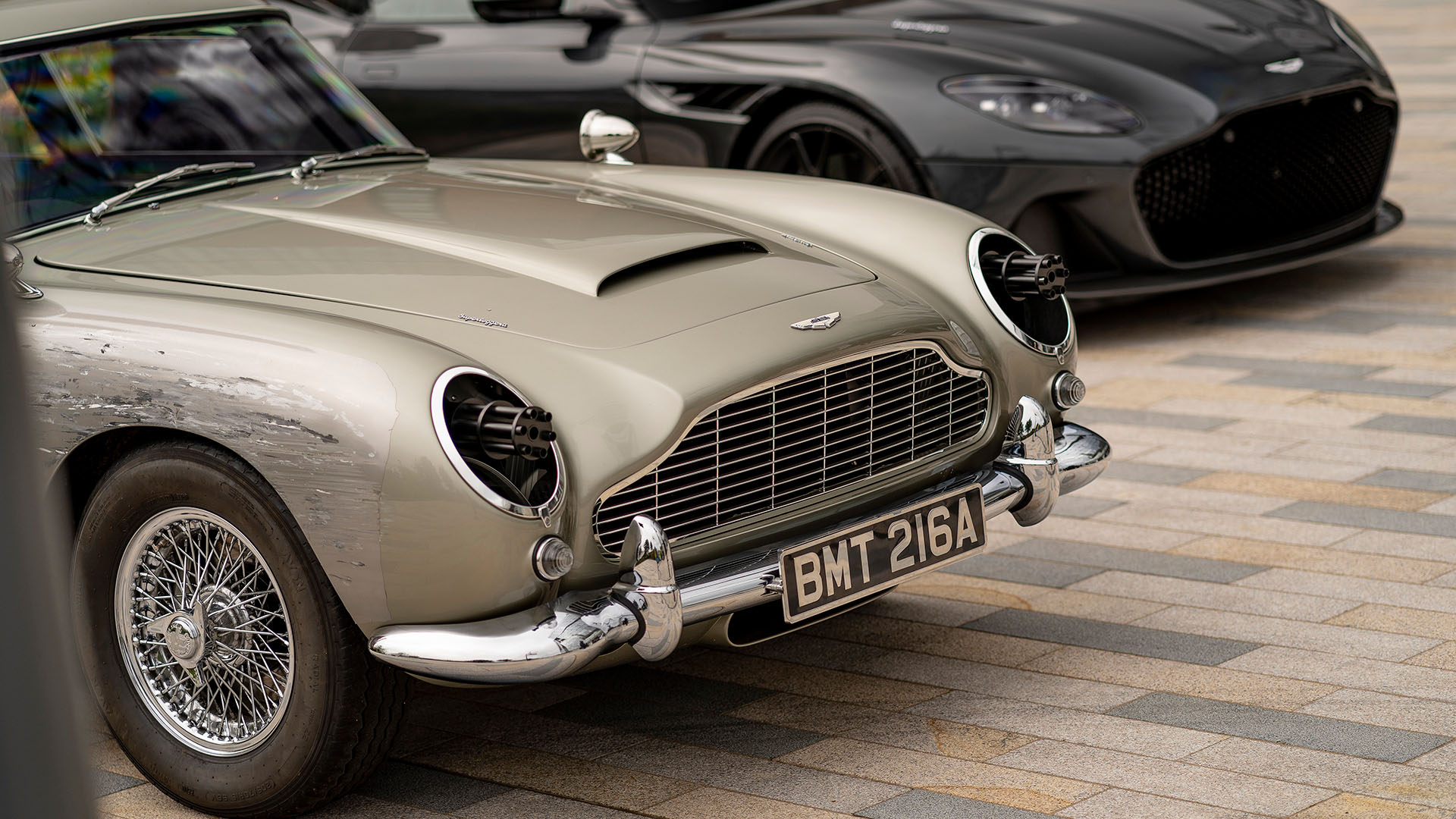
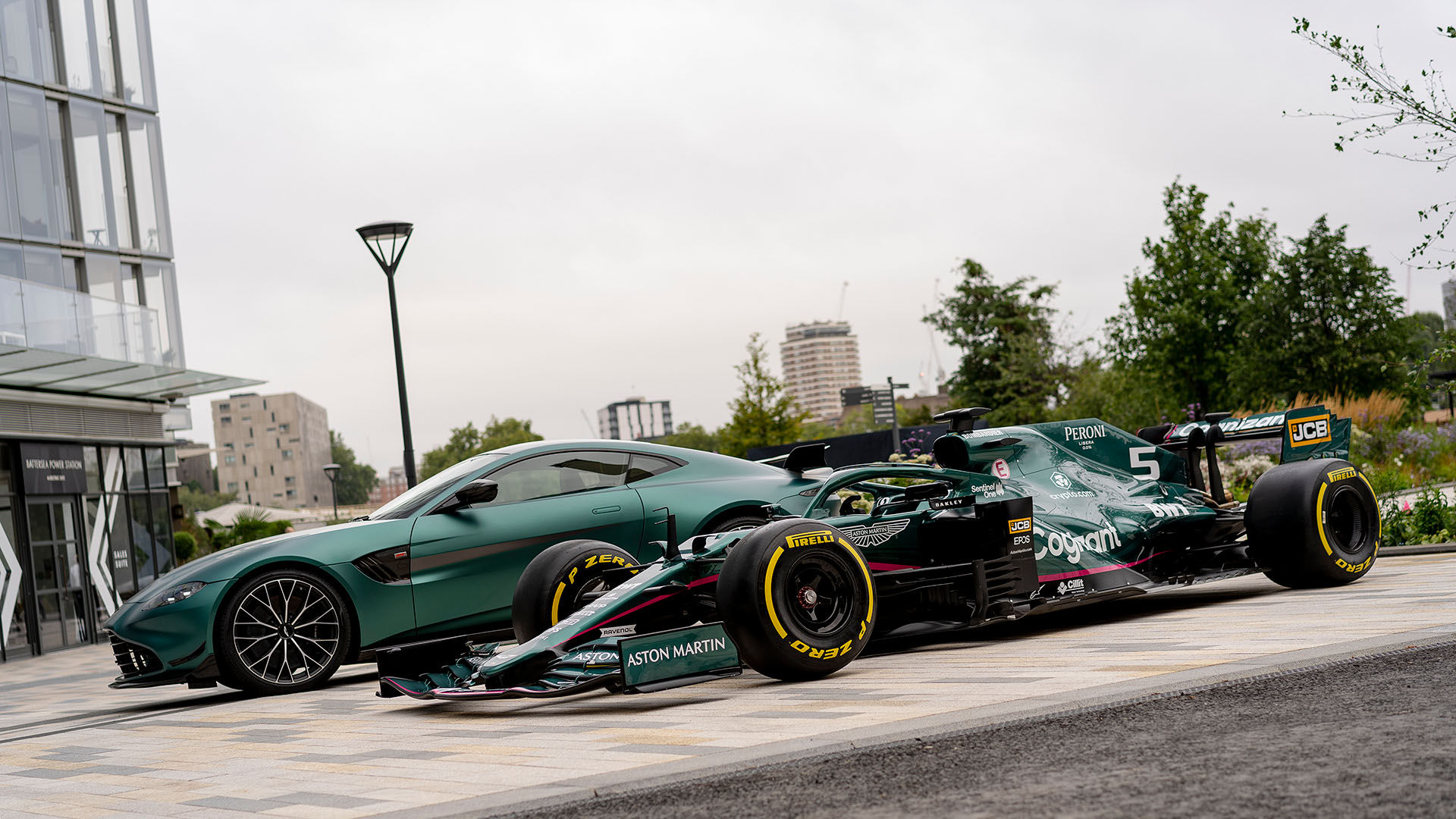
If you ask people what car James Bond drives, chances are you’ll get Aston Martin as an answer, sure Pierce Brosnan drove a few BMWs in his movies, but Sean Connery, Roger Moore, Timothy Dalton, now also Daniel Craig, were all driving Aston Martin, with the classic DB5 probably being the most famous one, complete with passenger ejection seat and machine guns behind the lights.

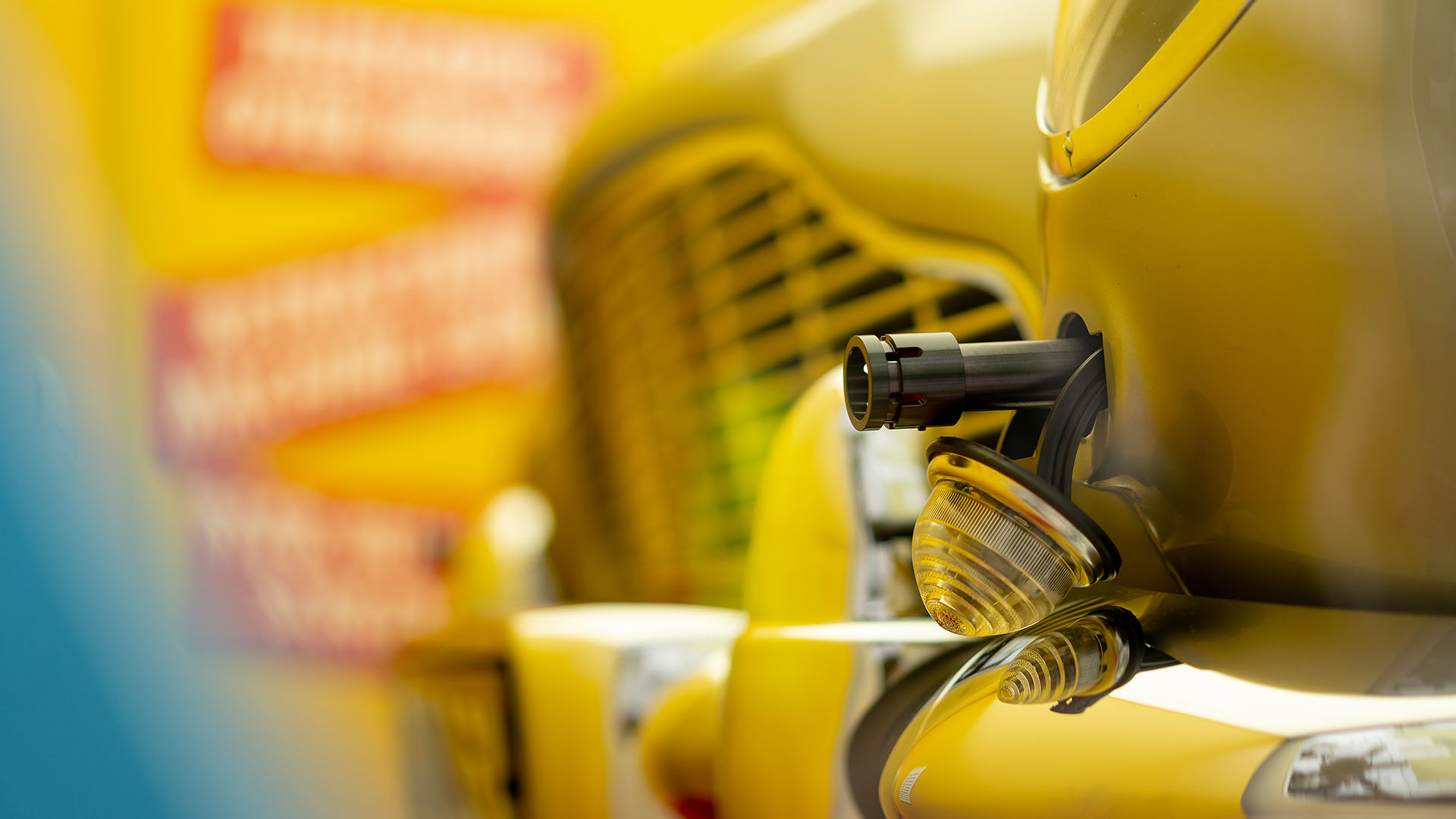
I’m sure many, just like me, once owned the Corgi made toy version of this 1965 Aston Martin DB5, with the small figurine to put on the passenger seats, only to press a lever underneath the model that opens the roof and shoots the guy into the air, mine even came with the bulletproof panel to rise behind the rear window and the retractable machine guns at the front, even the risers on the front bumper came out … I had so much fun with this model, and it all kept working even after I lost the little guy to shoot out the roof.

That specific car has become so important in both Aston Martin history and in movie history, that they decided to create the Aston Martin DB5 Goldfinger Continuation car, complete with a large array of working gadgets that fans will recognize from the classic James Bond film: rotating number plates, a retractable bulletproof rear shield, extending front over-riders and of course pop-out machine guns.

After the original DB5 has been out of production for 55 years, this very special Continuation model will be built only 25 times, all as an authentic reproduction of the classic DB5 used in the Bond movie, and you can only get it in one specific color called Silver Birch, just like the 1965 car, but this modern recreation does come with some mild modifications and enhancements to ensure the highest levels of quality and reliability expected in today’s world.

The original 1965 Corgi Toys are highly sought-after, and very expensive these days, as with all scale models, it is important the car itself is in perfect condition, but also that it comes with the original accessories and it’s still inside the original box, where the plastic window hasn’t turned yellow, back in 1965 the Corgi James Bond Aston Martin DB5 from the movie Goldfinger earned the UK ‘Toy of the Year’ and ‘Best Boys Toy’ titles at the National Association of Toy Retailers Awards … but Corgi is still making this model today, after numerous retooling, but you can still buy one.

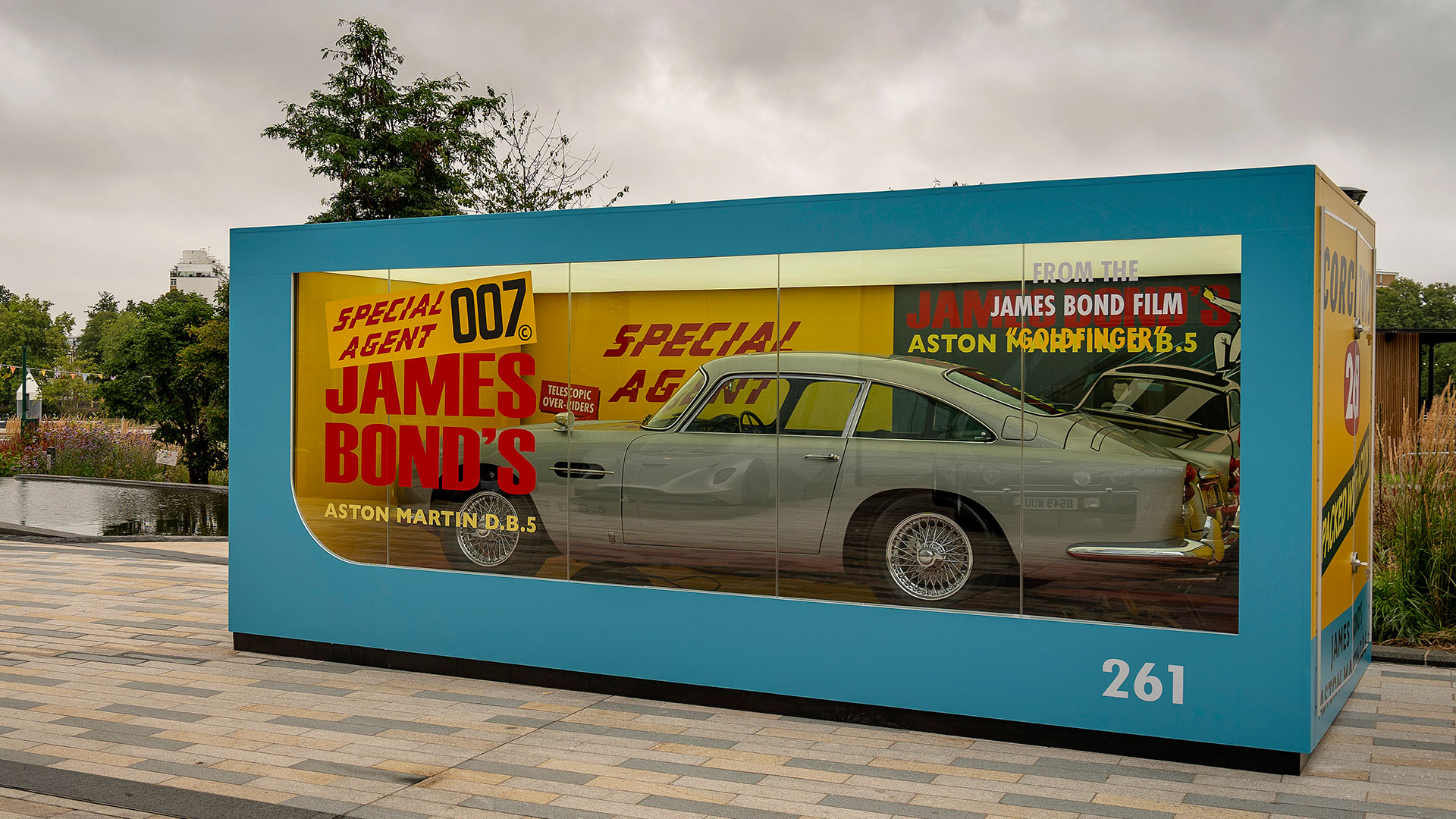
Obtaining an original 1965 version of the Corgi toy might be expensive, but one of the 25 Continuation cars will most likely be even more expensive, just as a celebration of the return of 007’s iconic Aston Martin DB5 to the big screen, Aston Martin, and Corgi unveiled a full-size replica of the original 1965 Corgi DB5 model. Shown at The Coaling Jetty, outside Battersea Power Station, this 1:1 model measures 5.66 meters long, 2.7 meters tall, and 2.7 meters deep, and it’s shown inside an original Corgi Toys box … only massively larger.

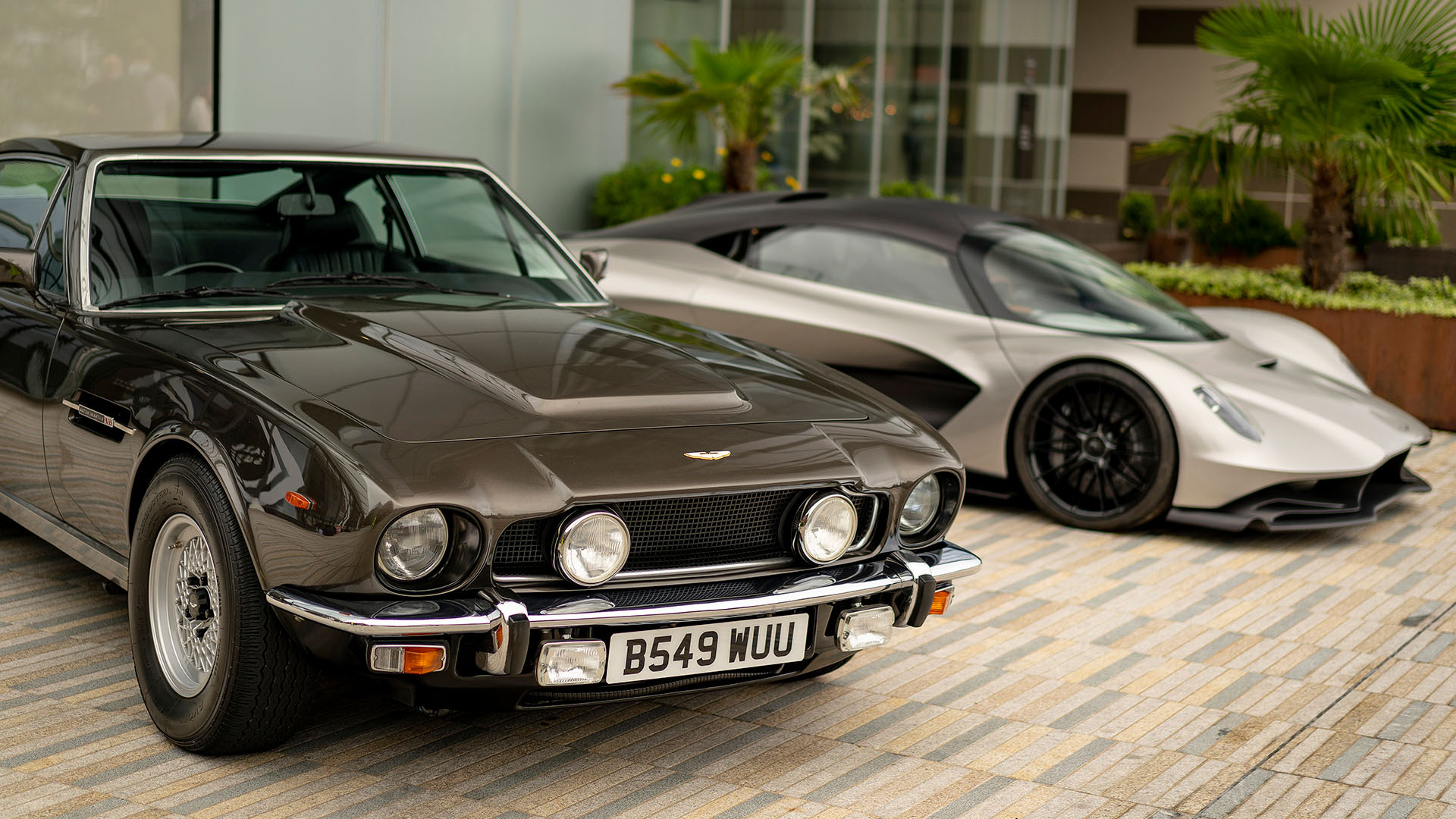
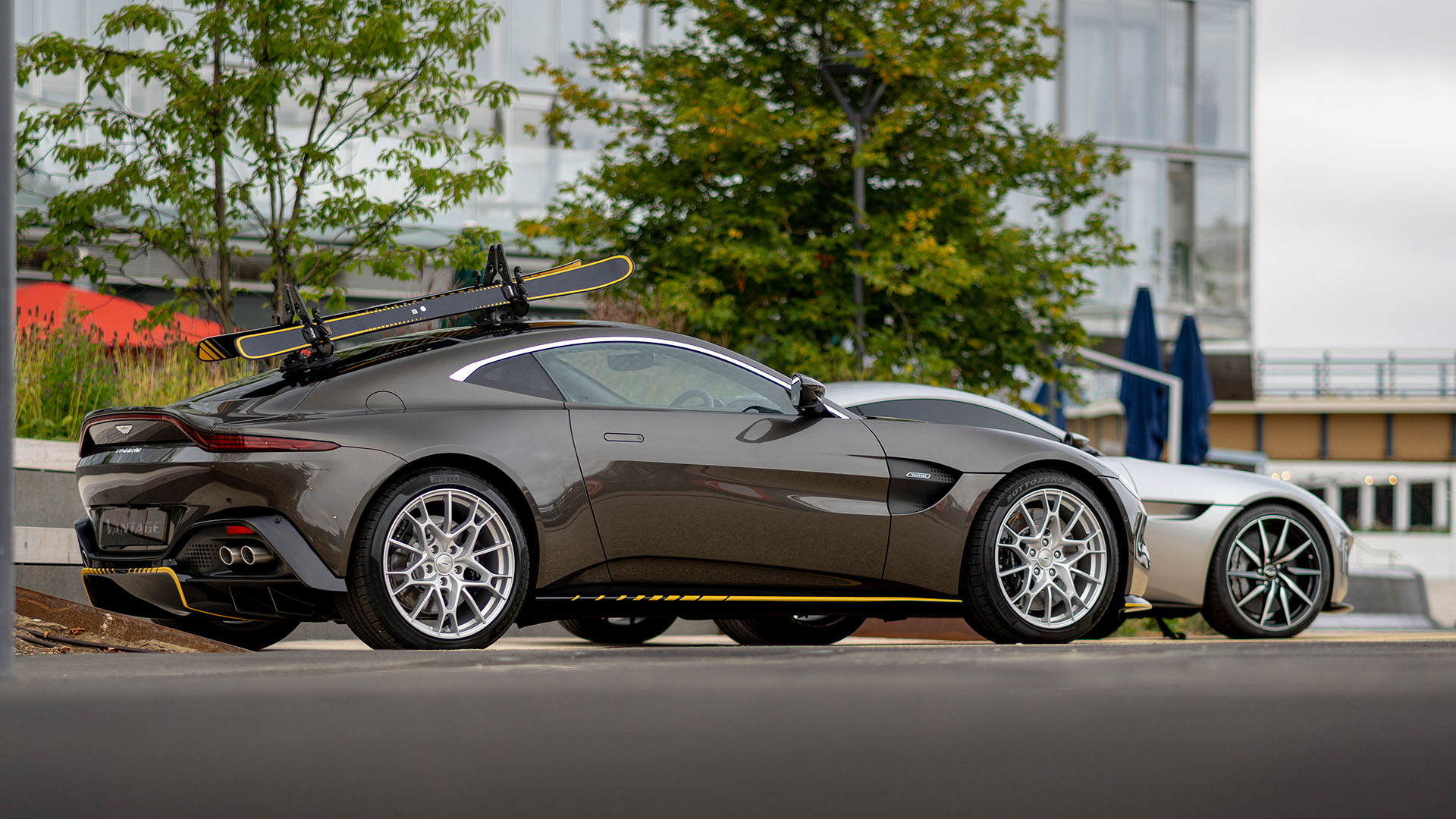
In about a month the 25th James Bond movie will be released, so it was the perfect timing for Aston Martin to launch their own No Time To Die campaign, complete with a bespoke TV spot, in the movie itself we’ll be recognizing a total of four different Aston Martin models, naturally the famous DB5 will be seen again, but this time the classic Aston Martin V8 will make a return too, while the DBS super GT comes with skis mounted on the rear window … and as a piece de resistance the impressive Valhalla mid-engined hypercar makes an appearance too.

Marek Reichman said “We are really honored to be marking the start of the No Time To Die campaign today with this exciting unveil.  Aston Martin’s relationship with James Bond spans decades and the DB5 is, without question, the most famous car in the world by virtue of its 50-plus year association.  Working with EON Productions and Chris Corbould to build 25 of the DB5 Goldfinger Continuations was a truly unique project for everyone involved at Aston Martin.  Now, to work with Corgi – another quintessentially British brand – and to see James Bond’s most cherished car sitting inside a to-scale toy box in central London is quite outstanding”.

The full-size replica Corgi DB5 box will remain on display at Battersea Power Station in the UK for the general public to admire until 1 October 2021, check out the TV spot below:

[embedded content] [embedded content]

Best Hybrid Engines Ever Produced

As we begin to crest into the era of automobile electrification, it has become increasingly difficult to recall all of the outstanding hybrid technologies we already have on tap. With all the noise being made (or lack thereof when it comes to the engine sounds) amidst this monumental shift, it would be completely unfair to acknowledge hybrid engines as being merely a stopgap solution while we wait for electric EVs to take over as the dominant product.

In fact, hybrids currently offer a “best of both worlds” outcome in most cases, particularly when it comes to the high-performance class of cars. This is especially true with electrification still in its infancy, meaning that technology – and most importantly charging infrastructure – still have huge strides to take before we can globally embrace fully electric cars as the convention. Add to this, the research and development of biofuels by some of the biggest players in the industry, and hybrid engines could very well remain a part of the conversation for the years and decades to follow.

Some of the most groundbreaking supercars and hypercars in the world have utilized hybrid technology to impressive effect, all while not neglecting the honest work of reducing emissions. They not only showcase incredible performance credentials (where 0-60 mph in 2.5 s is now the benchmark) but also make a strong case for hybrid technology being as viable (at the very least) for the long haul as it is today.

Here are 10 of the Best Hybrid Engines Ever Produced, curated for your viewing pleasure.

Disclaimer: Our list is likely to include some cars you didn’t realize were actually hybrids. Viewer discretion is advised.

Porsche MR6 V8 HybridA view of a Porsche MR6 V8 Hybrid engine

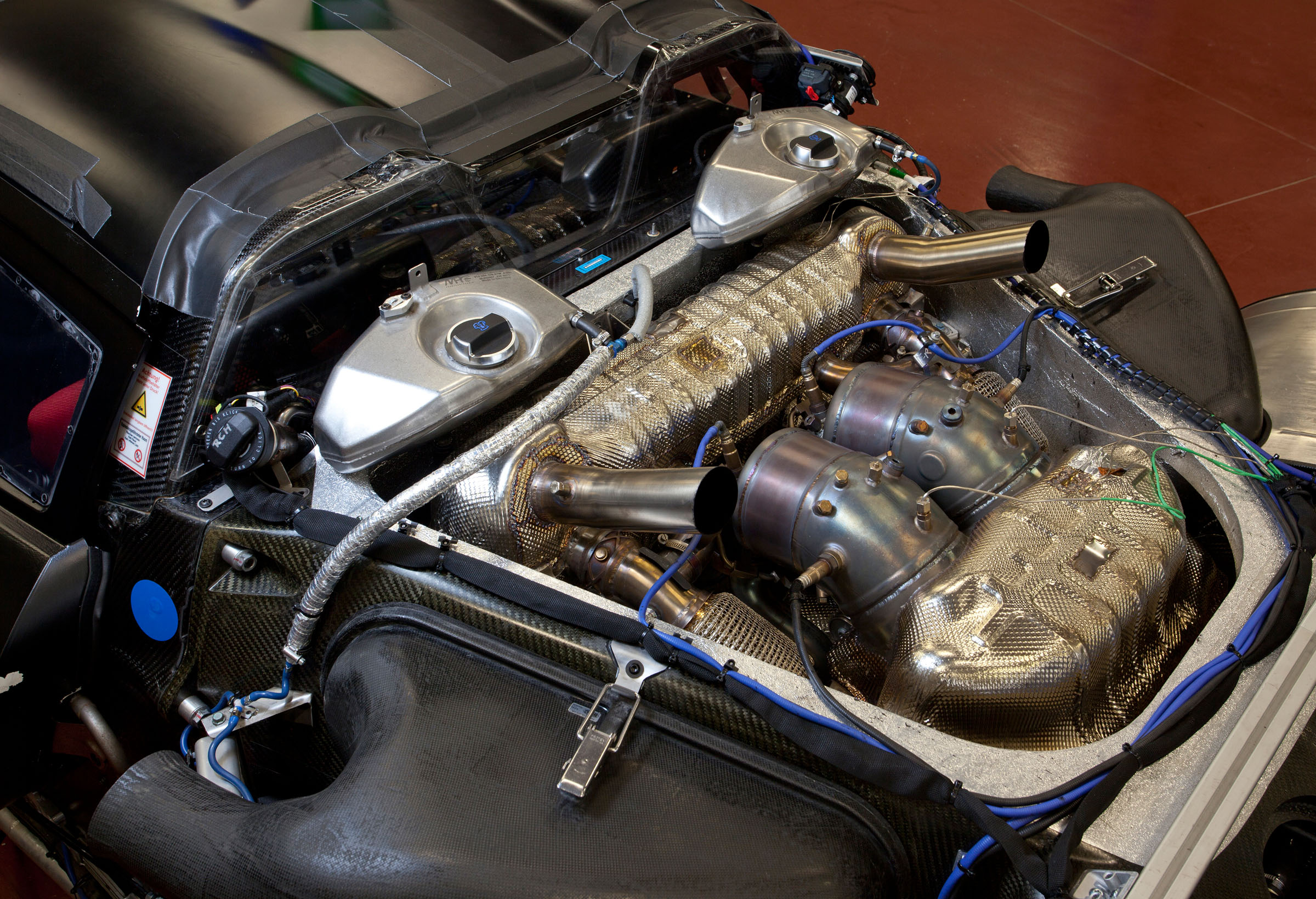
As the spiritual successor to Porsche’s first widely-acknowledged hypercar – the Carrera GT – the 918 Spyder was always going to have to follow its predecessor’s opening act with something quite spectacular of its own. Mission accomplished, I’d say, thanks in huge part to its race-derived MR6 V8 engine. Derivatives of this powerplant were used extensively in ALMS racing competition by the RS Spyder race car, which was designed and built in-house by Porsche in collaboration with Penske Racing. It’s easy to see where the 918 Spyder got its name, but the road-legal car would create its own legacy through the use of a modified drivetrain which increased the engine displacement to 4.6L (from 3.4L in the race versions) and most notably featured a hybrid system with 2 electric motors powered by a 6.8 kWh lithium-ion battery.

The naturally-aspirated combustion unit produced 608 hp by itself while the 2 electric motors – one in the front and one in the rear – provided up to an additional 127 hp and 154 hp to their respective axles. The combined output of the whole system is rated at 887 hp. The 0-62 mph sprint is completed in a blistering 2.2 seconds, with a top speed somewhere north of 211 mph. Being a plug-in hybrid, the 918 Spyder can do all this and run silently in ‘electric-only’ mode for a quoted range of 12 miles. Not exactly an eco-warrior, but hey, at least it provides the framework for its successors to build on.

Ferrari F154FA V8 HybridA view of a Ferrari F154FA V8 Hybrid engine

Ferrari’s F154 family of V8 engines could very well go on to become the G.O.A.T; especially when it has been scrutinized under the incredibly high standards that have been set in the modern era of automobiles. The engine is as potent as it is versatile, powering just about every flavor of Ferrari car since being introduced in 2014; the comfortable California convertible, the grand-touring Roma, the race-bred 488 Pista, and F8 Tributo, and even the 986 hp SF90 Stradale hybrid hypercar.

In the latter form, a 7.9 kWh battery compliments the 4.0L twin-turbocharged V8 and can even bring the SF90 to a speed of 84 mph and complete over 15 miles, all on its own power. By delivering a combined 217 hp via three electric motors, the car is able to produce up to 986 hp with the entire drivetrain on full blast. Aside from a mind-boggling 0-60 mph time of 2.1 seconds, this configuration also makes the SF90 the first mid-engined Ferrari to be all-wheel drive. Handling is also greatly enhanced with torque vectoring now being available on the front axle.

Lamborghini 6.5L naturally-aspirated V12 HybridA view of a Lamborghini 6.5L naturally-aspirated V12 Hybrid engine

The Lamborghini Sián is the most notable example of an automobile that uses a supercapacitor – the ‘super’ added because, well, you need a really, really big capacitor to help power a car. In this configuration, the supercapacitor collects and stores energy (primarily from regenerative braking). In certain moments (such as a launch), the supercapacitor dumps all of its energy into an electric motor which immediately and briefly adds an extra 34 hp on top of what the Sián’s 785 hp 6.5L naturally-aspirated V12 engine produces. This means that up to 819 hp is sent to all 4 wheels, with the electric motor integrated into the transmission to reduce weight and improve responsiveness.

As long as the supercapacitor keeps getting recharged – which can be achieved with just seconds of hard braking – there will always be that extra bit of power boost at the car’s beckoning. Compared to an EV battery which takes much, much, longer to fully recharge, and weighs substantially more, you might be wondering why supercapacitors aren’t the dominating technology in electric or hybrid vehicles today. Well, there are a few very important reasons for this. For one, supercapacitors aren’t able to store energy for long periods of time like a battery, making them unviable to be the primary food source for an electric vehicle… at least for now.

McLaren M840T w/ eMotorA view of a McLaren M840T w/ eMotor

Despite only producing V8-powered automobiles since as recently as 2011 (via the MP4-12C), you could argue that McLaren is now the world’s artisans of the V8 engine, and few would dispute that. After all, it’s virtually all they know these days, with every single McLaren model – bar the V6-hybrid McLaren Artura – fitted with some adaptation of their M838T or M840T twin-turbocharged V8 motors.

The 4.0L M840T features on all of the Super Series cars, which covers the ‘700 range’ of models, plus the addition of the McLaren GT. In its Ultimate form, the 4.0L unit – dubbed the M840TR – produces 814 hp in the McLaren Senna GTR. The McLaren Speedtail hybrid ‘hyper-GT’ produces some 1,035 hp through the combination of an M840T and parallel system eMotor. This setup – in addition to applying the most genius drag-reduction principles in existence today – has allowed the Speedtail to become the fastest production McLaren ever made. Its top speed? 250 mph.

Ferrari F140FE V12 HybridA view of a Ferrari F140FE V12 Hybrid engine

If the F140 had only powered the (2002-2005) Ferrari Enzo – the first Prancing Horse model where it featured – it would have been no less significant or legendary than it is today. The 65-degree V12 engine debuted on the Enzo as a 6.0L naturally-aspirated V12 unit which produced a staggering 651 hp @ 7,800 rpm and 458 lb-ft of torque @ 5,500 rpm. Over the years, 6.3L versions of the F140 have powered the likes of the hybrid LaFerrari and the F12berlinetta. Eventually, the F140 would evolve into what is today, a 6.5L power plant, where it now powers the 812 Competizione.

The Ferrari ‘so nice they named it twice’, also happens to be a hybrid.  The Ferrari LaFerrari’s hybrid version of the F140 6.3L V12 power plant produces a total of 950 hp – 788 hp from the naturally-aspirated V12 and 160 hp courtesy of the electric motor, which delivers that power through the differential. This means that 0-60 mph is dispatched in under three seconds, while top speed is rated by Ferrari as somewhere north of 217 mph. Ferrari said that while a side effect of the KERS system – which is tethered to the V12 to continuously recharge itself – was a reduction in emissions, the car would not be capable of running in any type of ‘electric-only’ mode. Ferrari simply was not interested in EVs during the development of the LaFerrari. In fact, the hybrid system’s only function on the halo car was to enhance its performance, and that its relative emissions-friendliness was more of an afterthought than a goal.

BMW B38A15T0 1.5L turbocharged I3 HybridA view of a BMW B38A15T0 1.5L turbocharged I3 Hybrid engine

In many ways, the BMW i8 is the least remarkable car on this list. Released during what feels like the olden days now, the 2014 BMW i8 should, however, be credited with revolutionizing the automotive landscape as it pioneered what many consider to be the first high-performance hybrid sports car. Well ahead of its time when it first came out, its powertrain technology was the result of BMW’s visionary approach to a rapidly shifting narrative towards a future focused on sustainability. The eventual overthrowing of the combustion engine would be at the forefront of this movement, with EVs taking their place. The BMW i8 – with its 7.1 kWh lithium-ion battery – would be the earliest creation in this image.

The BMW i8 provides more of a transitional approach to this, rather than a radical one – being a plug-in hybrid as opposed to fully-electric – but would nevertheless be disrupting the status quo.  Since its 2014 release, however, the platform fell short of delivering any truly meaningful changes or upgrades until being discontinued in 2020. As time passed, its 369 hp B38A15T0 hybrid engine would appear meager next to emerging hybrid and fully-electric technologies which would go on to make 1,000 hp + figures conceivable in a production road car. But it gave us a hopeful glimpse into the future of automobile electrification, and look where we are now.
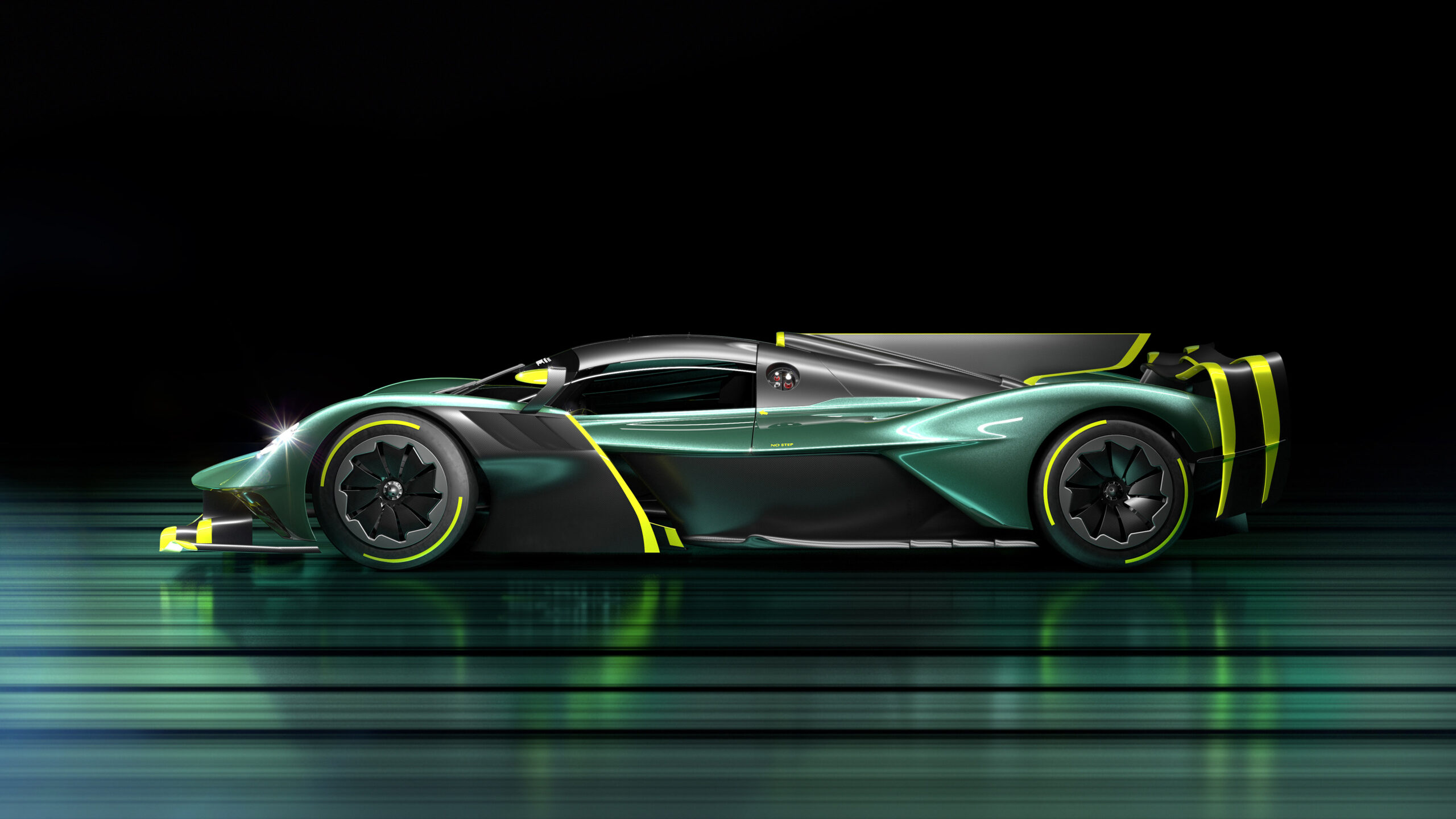
McLaren M838T w/ eMotorA view of a McLaren M838T w/ eMotor engine

The McLaren P1 is considered to be one of three members (the other two being the LaFerrari and 918 Spyder) of the holy hybrid hypercar trinity; the old boy’s club of hypercars, if you will. Like its contemporaries, it fashioned a hybrid drivetrain which allowed it to deliver performance that was once considered unimaginable on a road car. That power comes primarily from a 3.8L twin-turbocharged V8 – the same M838T engine used across the McLaren range but revised to output 727 hp and 531 lb-ft of torque on its own.

Combined with a lightweight and KERS-fed electric motor, that adds a further 176 hp and 192 lb-ft of torque at the driver’s disposal. The 903 hp Ultimate Series model sends all that power to the rear wheels via a 7-speed dual-clutch transmission, allowing it to make the dash from 0-62 mph in just 2.8 seconds. The P1 is also able to hit 186 mph in a mere 16.5 seconds from a standstill, on its way to an electronically-limited top speed of 217 mph. As we learned from Spiderman, “with great power comes great responsibility”; the McLaren P1 exhibits both in abundance, with its plug-in hybrid “twin powerplant” allowing it to run in zero-emissions mode for up to 6.8 miles.

Koenigsegg 5.0L twin-turbocharged V8 w/ Electric DriveA view of a Koenigsegg 5.0L twin-turbocharged V8 w/ Electric Drive engine

Koenigsegg unveiled its Regera hybrid hypercar model at the 2015 Geneva Motor Show, and since then it has generated plenty of hype amongst car enthusiasts and performance junkies. Besides a regular combustion engine, the Koenigsegg Regera also utilizes 3 electric motors which dole out 700 hp and 663 lb-ft of torque via a 4.5 kWh liquid-cooled battery pack. As a result, the car now produces 1,500 hp (which the company likes to market as 1.11 MW), making it the most powerful hybrid supercar in the world. Its combustion engine is a 5.0L twin-turbocharged V8 that produces an out-of-this-world 1,100 horsepower and 922 lb-ft of torque without electric assistance.

Power is sent to the wheels via Koenigsegg’s new powertrain known as “Koenigsegg Direct Drive”. According to the automaker, “This revolutionary technology removes the traditional gearbox, making the car lighter and more efficient. As the powertrain already produces a combined 1500 hp and with electric propulsion providing instant torque from the Direct Drive system, we did not have to go as extreme on ICE power. Instead, we installed even smaller, faster-spooling turbos on the Regera, further enhancing the car’s drivability and response.” Koenigsegg has gone on to claim that the Regera can theoretically reach top speeds of over 400 km/h, although this has not yet been made official.

Honda/Acura JNC1 3.5L twin-turbocharged V6 HybridA view of a Honda/Acura JNC1 3.5L twin-turbocharged V6 Hybrid engine

The second-generation NSX is the beneficiary of a hybrid drivetrain that produces 573 hp via a twin-turbocharged V6, with 3 electric motors and a 9-speed DCT. It still delivers supercar looks and performance in an everyday livable package. Some pundits call it a “Porsche 918 light” and that says more than anything else about how good the car is. While it is true that the new Acura NSX cannot currently compete with the nostalgia and charm of the car that it replaced, we feel that it is a massively under-appreciated, but worthy supercar. This highly capable vehicle is inostensibly backed by its revolutionary hybrid drivetrain and overall performance figures.

Acura has just announced that they will be producing a limited-edition NSX Type S variant for the 2022 model year. Officially unveiled during Monterrey Car Week, the Type S will be the “quickest, most powerful and best-handling production NSX ever” according to the automaker, with an enhanced version of the 3.5L twin-turbocharged V6 hybrid engine now producing 600 hp and 492 lb-ft of torque. The 9-speed DCT and Super Handling All-Wheel Drive (SH-AWD) have also been optimized to get the most out of the car’s improved performance. While the NSX was never about all-out power, the hybridized powerplant is still good for 0-60 mph in under 3 seconds and a top speed of 191 mph.

Porsche 2.9L, 3.0L V6 E-Hybrid & 4.0L V8 E-HybridA view of a Porsche 2.9L, 3.0L V6 E-Hybrid & 4.0L V8 E-Hybrid engine

Porsche has provided no shortage of options within any of its model line-ups, with the relatively recent addition of E-Hybrid models serving up even more choices for those seeking a more eco-friendly experience from the brand. While the Taycan is the only model fully committed to electrification, the E-Hybrids are an impressive alternative for those who aren’t quite ready to make the big step over to the other side. Currently, E-Hybrid models can be found within the Panamera and Cayenne model line-ups, and are destined to be in the mix with other models such as the Cayman, 911, and Macan in the not-so-distant future.

The Panamera 4 E-Hybrid is the entry-level E-Hybrid model – at least in size – combining a 2.9L twin-turbocharged V6 which produces 325 hp and 331 lb-ft of torque, with the E-Hybrid electric motor adding up to 134 hp and 295 lb-ft of torque. The lower-priced Cayenne E-Hybrid fashions a hybridized version of the base model’s 3.0L twin-turbocharged V6, while the Cayenne Turbo S E-Hybrid is married to the more robust 4.0L twin-turbocharged V8 which produces a combined 670 hp. The Panamera Turbo S E-Hybrid is at the top of the food chain when it comes to the range, and is the only model (notwithstanding the Cayenne Turbo S E-Hybrid) to feature a hybridized version of the 4.0L twin-turbocharged V8. On its own, the petrol engine produces 563 hp and 567 lb-ft of torque, with the E-Hybrid electric motor adding up to 134 hp and 295 lb-ft of torque. 

Mercedes-AMG Just Announced Their First Performance Hybrid

Mercedes-AMG is on a bit of a roll these days. Their cars often sound like Thor gargling some gravel, and their cars are seriously, seriously quick. On top of that, the Petronas Mercedes-AMG Formula 1 team has been dominant for years in the highest tier of motorsport.

So, today, in a complete blindside, Mercedes-AMG decided that September 1, 2021, would be the perfect day to announce their first official performance hybrid car.

Mercedes-AMG GT 63 S E PERFORMANCE

Mercedes-AMG GT 63 S E PERFORMANCE

This isn’t the first Mercedes-Benz hybrid, far from it. There is a difference between engine-assist hybrid and performance hybrid. One is a technology that is designed to make the famously smooth Mercedes ride even quieter, more comfortable, and for longer ranges. The other is designed to enhance the petrol-swigging twin-turbo V8 performance of an already pretty mad car, and take off its straight jacket.

Mercedes-AMG GT 63 S E PERFORMANCE

Mercedes-AMG GT 63 S E PERFORMANCE

So say hello, everyone, to the 2022 Mercedes-AMG GT 63 S E Performance. Designed with input from the F1 team, this is Mercedes’ answer, albeit a few years late, to performance hybrids that started with the hypercars of McLaren, Ferrari, and Porsche. Then again, this thing comes swinging through the door with the title of “The Most Powerful Production Vehicle From Affalterbach,” and it is carrying one hell of a sledgehammer.

The petrol heart of the beast, that 4.0L bi-turbo V8, sits under the front hood and roars out 639 HP with some serious attitude. Its power goes through a 9-speed MCT 9G dual-clutch gearbox, and is then fed through a complex transfer system as the car is AWD. The rear axle is supported by a 204 HP, two-speed hybrid motor, which can also send its power up to the front if needed.

It’s an incredibly complex system, but the end result is 843 HP, and over 1,400 Nm, or 1,032 lb-ft, of torque at full noise. Take a moment and let those numbers sink in.

Mercedes-AMG GT 63 S E PERFORMANCE

Mercedes-AMG GT 63 S E PERFORMANCE

The batteries that power the hybrid drive are also extremely high tech, as they are based on the ones in the F1 car. Using up-to-the-minute new lithium-ion cell technology, the battery uses extremely conductive intermediary materials to allow for up to 150 kW of power to be instantly available and uses regenerative braking to charge at up to 100 kW, with a power unit capacity of 6.1 kWh. This system weighs in at only 79 kg (174 lbs) and has another innovation that is a production car first, in that it is the first production battery that is actively liquid-cooled. A millimetrically thin sheath surrounds each individual battery in the pack, with the combined system carrying 14 liters of coolant. That coolant then flows through its own dedicated radiator, allowing the battery pack to remain at optimal performance temperatures no matter how hard you push the car.

Mercedes-AMG GT 63 S E PERFORMANCE

Mercedes-AMG GT 63 S E PERFORMANCE

If it sounds complex, believe me, this is the simplified version of what is in the press release. In simple terms, when you’re cruising, you’re tapping both the petrol engine and a constant 94 HP from the hybrid to keep you happily rolling along. When you brake, the electric motor becomes a generator and charges the battery rapidly. If you wanted to plant your foot through the carpet when the light went green, the combined power of those 1,032 plus lb-ft of torque and all 843 German horses at your command would literally catapult you to 60 MPH faster than a McLaren Senna, a dedicated high-performance hypercar.

Mercedes-AMG GT 63 S E PERFORMANCE

Mercedes-AMG GT 63 S E PERFORMANCE

Then again, for once, Mercedes have been uncharacteristically non-Germanic in their marketing and tagline for the car. It even points to the fact that the Germans do, in fact, have a sense of humor. That official tagline of the car?

Mercedes-AMG GT 63 S E PERFORMANCE

Mercedes-AMG GT 63 S E PERFORMANCE

“Everything but quiet.”

Lotus Just Announced Their Future EV Plans

Lotus Cars, famous for the names of everything they make starting with the letter E, and for making some of the best handling sportscars in the world, just went all-in on EVs. Not one, not, two, but a full four more Lotus EV’s will be coming in the next 5 years, after the Lotus Evija hypercar proved that Lotus has some serious credibility in the electric market.

The 2022 Lotus Evija hypercar

In a press release on August 31, 2021, the very not-starting-with-an-E “Type 132” SUV has been announced as arriving next year. In 2023, a “four-door coupe” Type 133 will arrive, followed by a smaller SUV in 2025 named, you guessed it, the Type 134.

The last new EV is probably going to be the most exciting, the Type 135, as it will be a small, light-as-possible two-door sports car that Lotus knows how to make so very well. It will also be the “trickle-down” recipient of all the lessons learned while making the Evija, meaning it should be one hell of a car.

The Lotus Cars electric vehicles range
The Lotus Cars electric vehicles range From left to right: The Evija, the Type 132 SUV, Type 133 four-door coupe, Type 134 mini-SUV/CUV, and the Type 135 two-door sports car

This all-in on electric is being supported by the establishment of a new technology and development center in Wuhan, China, which when completed will become the new Lotus Technology HQ (the header picture for this article). Notably, Lotus is owned by Geely (more properly known as Zhejiang Geely Holding Group Co., Ltd), who also own Volvo (who have the Polestar EV brand) and a few other car brands that serve the European and Asian continents with hybrids (Lync & Co, Proton) and EVs (Geely Cars).

Lotus Cars' technology manufacturing facility
Lotus Cars' technology manufacturing facility The planned Lotus Technology Manufacturing Facility. The Lotus Proving Grounds are to the right of the main buildings, with the “Start line” beside the small water feature

Accompanying this new tech center will be a dedicated EV manufacturing plant, also located in Wuhan. There will also be a 16 turn proving grounds track directly attached to the factory for rapid prototyping of new technologies, and is one of the first in the world that is being designed to provide feedback and data regarding autonomous driving modes for electric vehicles. Adding to the green push by Lotus and other manufacturers in recent years, all charging of test cars and prototypes at the factory will be done via renewable sources, including solar panels installed on the factory grounds, hydro, and wind farms.

The last time a company went all-in on EV and pulled it off was with Audi, who launched the unofficial “Green Promise” by announcing in 2019 that all of their cars, in the next generation across all their model lines, will be electric. They’ve already started with the E-Tron GT as they phase out the R8 supercar, and with Lotus tossing their hat in the ring, we can’t wait to see the Lotus Type 135 vs its Audi competitor in 5 years’ time!

Land Rover Defender V8 Bond Edition Revealed: 300 Units Worldwide

To celebrate its role in 25th James Bond film, Land Rover SV released the new Defender V8 Bond Edition based on the ‘No Time To Die’ film.

The interior features an illuminated ‘Defender 007’ tread plate and a start-up animation for the inherent Pivi pro infotainment system which is specially designed for the Defender V8 Bond Edition. The touch screen display honours the long partnership between Land Rover and the James Bond’s franchise.

Customers will be presented with the opportunity to spot the ‘007’ puddle lamp graphics at night.

The Defender V8 Bond edition is limited to only 300 units world wide, the interior further features ‘one of 300’ detailing and the SV Bespoke logo. 15 Bond V8 edition vehicles will be sent to the UK, 5 units will be the Defender 90 and 10 units of Defender 110 body styles. Each vehicle will be authorized by experts at the SV Bespoke in the UK.

The James Bond ‘No Time To Die’ film will feature the new Defender model alongside two Range Rover SVRs, Range Rover Classic and a Land Rover Series lll. The film is expected to premiere in cinemas worldwide from September 30th 2021.

The Defender V8 Bond Edition is powered by a 5.0 L V8 supercharged petrol engine. The engine delivers a maximum output power of 525hp and 625 Nm of torque and has been equipped with an eight-speed automatic transmission. The acceleration from 0-60mph is achieved in 4.9 seconds at a top speed of 149mph.

The new model provides new levels of performance as well as driver engagement by combining the V8 with the enhanced suspension and transmission to create a fast and dynamic Defender.

Bond, James Bond … the limited edition Defender

I have to admit, I rather like the Bond movies, I do prefer the older ones with Sean Connery, Roger Moore, or Pierce Brosnan, and not so much the more recent ones with Daniel Craig, but that’s a personal preference, I love the gadgets that are used in Bond movies, and those haven’t been abundantly present in the later movies, but still, they are all great action movies, and I will catch the new one in the cinema probably when it is finally released.

For me, the ultimate Bond car is still an Aston Martin, despite the side step onto BMW in some movies, but in recent movies, the Land Rover Defender had an important role too, so much so that their SV Bespoke department decided to create a new Land Rover Defender V8 Bond Edition as a celebration of the latest Bond movie to be released on September 30, 2021, which happens to be the 25th official Bond movie, a total of only 300 Defender V8 Bond Editions will be made, either in 90 or 110 styles, at a price slightly over £105,000 (about US$ 150,000).

This special Defender V8 Bond Edition is inspired by the cars used in the new No Time To Die movie, with their stealth look from the extended Black Pack complete with 22-inch wheels in Gloss Black over signature Xenon Blue brake calipers … and finally a bespoke ‘Defender 007’ badge on the rear, and then you also get ‘007’ puddle lights for visibility when it’s dark, while you open the door, the doorsills are illuminated with … you guessed it ‘007’.

Finbar McFall, Land Rover Brand Director, said: “The Land Rover Defender V8 Bond Edition is an exclusive take on the most powerful production Defender ever made, inspired by vehicles on screen in No Time To Die. It represents a meeting of two great British brands and is a unique celebration of Land Rover’s 38-year association with James Bond.”

On the central console, you’ll find a specially developed start-up animation for the intuitive Pivi Pro infotainment system touchscreen that honors Land Rover’s long partnership with the James Bond franchise, while the interior boasts a laser-etched ‘one of 300’ detail complete with the special SV Bespoke logo.

And this limited edition 5-Liter V8 with 525 PS from a supercharged petrol engine also delivers 625 Nm of torque through an eight-speed automatic transmission, in the Defender V8 90 this results in an acceleration of 0 to 60 mph in only 4.9 seconds while a top speed of 149 mph is possible, the larger 110 style is only marginally slower.

With only 300 units built by Land Rover SV Bespoke, this Defender V8 Bond Edition isn’t just limited to the UK market, in fact, only 15 units are available in the UK, 5 in the 90 style body and 10 in the larger, four-door 110 style, the rest will be distributed globally, but each and every single unit will be commissioned by the vehicle personalization experts at SV Bespoke in the UK.

No Time To Die is directed by Cary Joji Fukunaga and stars Daniel Craig, who returns for his fifth and final film as Ian Fleming’s James Bond 007. The film will be released in cinemas from 30 September 2021 in the UK through Universal Pictures International and in the US on 8 October 2021, from Metro Goldwyn Mayer (MGM) via their United Artists Releasing banner.

007 © 1962 Danjaq, LLC and Metro-Goldwyn-Mayer Studios Inc.
007 is a trademark of Danjaq, LLC. All Rights Reserved.

Everrati Electric Land Rover Series IIA

To this day, the Land Rover Series IIA is one of, if not the most iconic SUVs that has ever been produced. And it’s been out of production for half a century. Now that British…

The post Everrati Electric Land Rover Series IIA first appeared on Cool Material.

Bugatti took the Centodieci to the wind tunnel

The Bugatti Centodieci is a few-off from the famous Molsheim company, as a celebration of the classic EB 110 that was created about three decades ago when Romano Artioli revived the Bugatti name and built a factory in Campogalliano that would eventually build 96 units of the EB 110 GT and a mere 32 units of the EB 110 Super Sports … the last car left Campogalliano in 1995.

The super sports car of the Nineties was built around a carbon-fiber monocoque and had a mid-mounted V12 engine capable of 550 PS with the help of four turbochargers, the all-wheel-drive would deliver a top speed over 350 km/h, unseen at that time, but figures that are dwarfed by the new Centodieci with her 8.0-liter W16 engine boasting 1,600 PS that is capable of speeds over 350 km/h … only ten will be built, with a starting price of €8,000,000, and no, you can’t order one … they were sold out in a matter of hours.

So selling the 10 Bugatti Centodiece for a total of more than €80,000,000 didn’t pose a problem, now it’s time to live up to the expectations and create a car worthy of that price tag, the Centodieci has obtained a legend status even before the first client car is delivered, and development of such a high-end hypercar means taking her into a state-of-the-art wind tunnel … which is exactly what Bugatti did recently.

This allows the aerodynamics and cooling setup to be tested in a way that wouldn’t be possible on the open road, remember supercars were tested in the Sixties with small tuffs of wool taped to the body and taken onto the road with a follow vehicle to see how those tuffs react to the airflow … those days are gone now, in comes a 9,300 PS engine with an eight-meter propeller generating a wind force larger than a hurricane … in fact, it would allow an airplane to take off easily, so the aerodynamics of the Centodieci better be on point, or this multi-million dollar prototype goes flying into the air.

But it’s not only the wind that blows onto the new Bugatti, on the floor of this wind tunnel are five bands, one under each wheel and a fifth one underneath the body itself, but this also allows the wheels to be spun and the airflow underneath the car to be simulated to speeds up to 300 km/h to get a full impression of how the Centodieci should be tuned according to André Kullig, Technical Project Manager for one and few-off projects at Bugatti.

It doesn’t matter if Bugatti will build one unit like the La Voiture Noire, or ten as is the case with this Centodieci, they all are thoroughly trialed and tested before being given the ok, every single unit built has to meet or exceed the quality and safety standards applicable to mass production, in case of the Centodieci, the small but flat front design with the typical horseshoe shape, influences the airflow considerably when compared to models like the Chiron or Divo, especially at speeds above 350 km/h.

Bugatti development engineers first start with computer simulations to achieve initial targets that have been pre-calculated in development, once those computer simulations are finished the development prototype is taken into the wind tunnel, as is the case with the Centodieci now, once wind tunnel testing is completed, it’s finally time to take the new hypercar into the wild for actual high-speed testing on a test track … which is where the fun begins for the test drivers.

But back to the wind tunnel, the Centodieci gets her initial test to see what can be improved, and then they start working on changing the angle of the front diffuser flaps and that massive rear wing, modifying the angle minutely to see what the best position is, keep in mind the Centodieci will come with a fixed rear wing, so it has to be perfect at every speed. “Even once we have identified the ideal settings, we continue to try others in order to see how the Centodieci responds,” says André Kullig.

After that the Bugatti development engineers start looking at downforce for each wheel individually, it has to be set up as close to neutral as possible so the Centodieci is handling correctly at the tremendous speeds this hypercar is capable of thanks to her 1,600 PS. “No matter what speed and what driving situation, the Centodieci is sportily neutral and can be managed at all times in spite of its immense power,” according to  André Kullig.

And while we are still talking about a development prototype, not even a pre-production prototype in this case, just take a look at the amazing blue leather interior, it is perfect and reminiscent of the one inside the customer cars, Bugatti doesn’t cut corners, not even on a prototype that will likely be seeing thousands of kilometers during testing, and probably in the harshest conditions … but the car looks good, and will still be amazing after she is put aside and production begins, and let’s not forget, each one of the 10 production cars is sold at €8,000,000 net, this development prototype is valued at a multitude of that number.

Bugatti even published a short YouTube video of the wind tunnel testing of the Centodieci … enjoy it below:

[embedded content] [embedded content]

Morgan 3 Wheeler Production to End in 2021, Switch to Electric Model in Play

The Morgan 3 Wheeler retro sports car will be discontinued in England as it goes against the European vehicle emissions regulations.

The company hinted the model could be reinvented with electrical power however the plans have not been officially confirmed yet. The current 3 wheeler will finish production this year with 33 P101 special editions together with other limited bespoke models.

The current 3 wheeler was unveiled at the Geneva Motor Show in 2011, the vehicle was inspired by the early 20th century Classic Morgan ‘tri-cars’ which were originally designed and classified as motorcycles to bypass the British automobile taxes.

The front of the vehicle has been mounted with a 2.0 L V2 motorcycle engine that delivers an output of 112hp of power and the acceleration from 0-100km/h is achieved in 4.5 seconds. The power is transferred to the rear wheel through a five speed manual transmission. The three wheeler weighs 500kgs.

VW Will Kill the Manual Transmission in 2023 to Save Costs

Manual Golf Alltrack
6 Speed Manual Golf Alltrack

The third generation VW Tiguan will mark the first VW model without a clutch pedal in 2023, the VW Passat as a further model will follow in the same year, as the entire production range moves away from the manual transmission.

A classic model cycle from 2030 will no longer have a model with manual transmission for the European market, USA as well as China.

As of 2021, VW still offers manual transmission both on regular and performance models. The Golf 8 GTI comes with an option for a 6 speed manual while the Golf 8 R has the same option albeit in the North American market only.

The decision supports VW’s transformation towards electromobility, the company will offer electric cars with input gears only by 2030 in Europe.

Across all manufacturers, 1,870 manual transmission vehicles out of 5,838 models are currently on offer in Germany. Therefrom, 218 fitted with a five-speed gearbox and 1,652 with a six-speed gearbox. Out of 353 VW models from 15 series without the Multivan, 214 units are equipped with an automatic transmission including DSG while 139 units are fitted with a manual transmission.

Volkswagen is following Mercedes with the switch, however, the counter rate is higher for VW.

via auto-motor-und-sport

A 2017 Holden HSV GTSR W1 Ute Could Sell for Over $1 Million in Australia

A rare Australian collectible, this 2017 Holden HSV GTSR W1 UTE has been put to auction in Australia, this car is the only one ever finished in the original VS GTSR XU3 Yellah color.

The GTSR W1 has had two previous owner, and has only travelled 19km from new. This is car number #001 out of 4 that were ever manufactured.
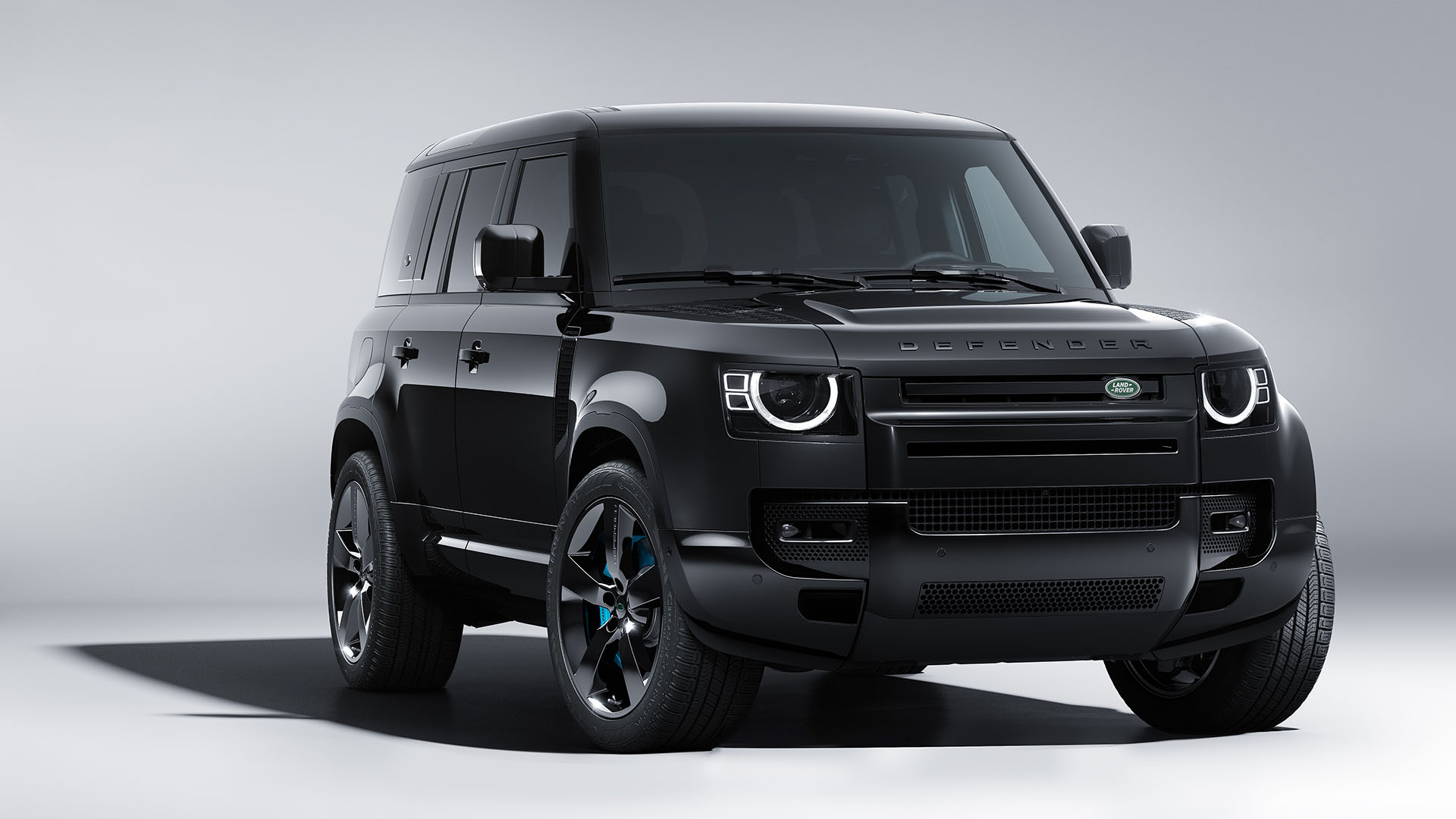
The GTSR W1 Maloo features carbon fibre fender vents, carbon fibre airbox, a performance Aeroflow rear spoiler with carbon fibre elements and a distinctive W1 badge depicting Walkinshaw Performance.

The GTSR W1 has been equipped with a hand-built 6.2L supercharged LS9 generation IV alloy V8 engine, the power plant is fitted with titanium connecting rods and inlet valves, a dry-sump oiling system and a supercharger with twin four-lobe rotors that pump 2.3 L of air per revolution. The engine delivers an output of 474kW and 815 Nm of torque.

Furthermore, a close-ratio Tremec TR-6060 (MH3 spec) 6-speed manual transmission has been designed to optimise track performance as well as improve the drivability.

The vehicle has been fitted with a set of SV Panorama forge alloy wheels finished in Matte Black and wrapped in Pirelli P Zero Trofeo R track tyres. The wheels fitted measure 20×9 inches at the front axle and 20×10 inches at the rear axle.

The interior of the vehicle features a W1 I.D plate and W1 badging on the key fob, headrests and the sill plates. The interior further consists of an 8-way electrically adjustable HSV Podium front seats designed and finished in Alcantara with diamond-quilted stitchings, a steering wheel wrapped in Alcantara and a gear lever that enhances grip and control.

The exterior features a bi-modal twin exhaust system, a high-performance SupaShock suspension system and dampers that offer the lowest frictional losses. As a result, the handling and cornering of the vehicle has improved.

In addition, the vehicle also features forged 6-piston AP Racing monoblock calipers with huge 410mm front rotors, air conditioning, power windows, power seats, tinted windows, cruise control and a reverse camera.

The current bid is $495,000.

The 2021 Concorso Italiano

2021 Concorso Italiano

By Michael Rockich

Although there are a few hot spots lingering from the worldwide pandemic, the worst appears to be behind us.  I can’t think of a better way to celebrate than to have attended the 2021 Concorso Itmoaliano, which was conspicuously absent last year.  The Concorso took place on the grounds of the Bayonet Black Horse Golf Course, in Monterey Bay California on August 14th.

30th Anniversary, Lamborghini Diablo

The 2021 Concorso is celebrating the 30th anniversary of the Lamborghini Diablo (1990–2001), Lamborghini’s first production car capable of reaching speeds of over 200 mph (322 kmph).  Big shoes were waiting to be filled by the Diablo following the successful the Miura and Countach models. The story is well known about the founding of Lamborghini in 1963 by tractor magnate Ferruccio Lamborghini after a spirited encounter with Enzo Ferrari regarding Ferruccio’s personal Ferrari.

The name Diablo continued Lamborghini’s practice of naming its cars after breeds of fighting bulls.  The most notable evolution in the Diablo VT (viscous traction) was the addition of all wheel drive via a viscous center differential.  The VT system made available up to a quarter of the engine’s torque to the front wheels.

The design of the Diablo was contracted to Marcello Gandini, who had styled its precursors. When Chrysler Corporation bought Lamborghini in 1987 they completed the Diablo’s design with their own particular vision.  Today, Audi owns Lamborghini.

Diablo production ran from 1990 to 2001 yielding 2,884 units with several models produced. Assembly took place in Sant ‘Agata, Italy.  The 2-door coupé employed scissor doors which, when open, remind strongly of a large bird’s wings.  A roadster was made in 2-door retractable hard-top format.  The engine layout is longitudinal mid-engine, employing a V12 with displacement of 5.7 liters or 6.0 liters driven through a 5-speed manual Transmission.  Curb weight is 1,576 kg (3,474 lb.) on the Diablo), and 1,625 kg (3,583 lb.) on the Diablo VT.

Lamborghini Countach, 50th Birthday

Concorso Italiano is celebrating the Lamborghini Countach’ s 50th birthday this year.  That’s a big one!  The Countach, following the very successful Miura, was a big hit too, which is further substantiated by the recent issuance by Lamborghini of a newborn Countach, the LPI-800-4.  Just over 100 units were made available at a price approaching three million dollars.  But if you don’t have yours, it’s too late.  They’re all sold!

Desiring to repeat the Miura’s success, Ferruccio Lamborghini introduced the Countach in yellow paint at the Geneva Motor Show in 1971.  The Countach (1,983 produced) is a rear mid-engine, rear-wheel-drive vehicle produced from 1974 to 1990, and was styled by the Italian design firm of Bertone which initiated and promoted the tight-angled “Italian Wedge” shape.  The Countach’s scissor doors began the trend that characterize Lamborghini’s V12 models.  Horacio Pagani, now of Pagani Automobili, was on the Lamborghini team then.  

Countach’s V12 is mounted longitudinally and offered in displacements of 3.9 L, 4.8 L, and 5.2 L applying power through a 5-speed synchromesh manual transmission.  Curb weight of the Countach is 1,301 kg (2,867 lb) for the LP400, 1,351 kg (2,978 lb) LP400S, or 1,488 kg (3,280 lb) LP5000QV.

Aventador

Launched at the 2011 Geneva Motor Show, the exotic Aventador was named after a Spanish fighting bull of Zaragoza, Aragón, Spain.  Designed to replace the Murciélago as Lamborghini’s top model, styling is not unlike that of Lamborghini’s limited-edition Reventón and the Estoque concept car.  For the first several years Lamborghini built the Aventador at roughly 1,000 units annually.

Several models have been made as two-door coupé with some roadster configurations.  The Aventador is mid-engined, all-wheel-drive, and employs the scissor doors.  The engine is a 6.5 liter V12 providing from 690 hp to 770 hp (per model), and a top speed of 350 km/h (217 mph).  Curb weight is model and fluid dependent between 1,575 kg (3,472 lb) and 1,853 kg (4,085 lb).

De Tomaso P72, a Reincarnation


Guests at Concorso were treated to a revival of the popular De Thomaso Pantera in the reincarnated form of the De Tomaso P72.  The exotic new creation results from the purchase of the De Tomaso brand by Hong Kong based Ideal Ventures.  The P72 is intended as a grand touring car and incorporates a carbon fiber monocoque chassis.

The two-door, two seat coupe introduced in 2019 has a mid-engine layout of a 305 cu in supercharged V8.  Unofficially, the 72-unit production Ford-based engine will yield over 700 bhp at 7,500rpm applied through a six-speed manual gearbox.

The original De Thomaso Pantera was found on the fairways in the form of many well-presented owner’s cars.  Some sported aftermarket changes and modified, gleaming chrome-plated engines, not uncommon in this cult car.  

Tuatara, World Speed Record

Jerod Shelby, an engineer with a craving for racing and cars, founded a company known today as SSC North America, headquarted in Richland, Washington, which is by the way, unrelated to Carroll Shelby International, just as Jerod is unrelated to Carroll.  Jerod was singular in focus on creating a hypercar that would not take a back seat to any supercar in the world.  Looking at his results to date, it appears that he is not to be trifled with.  Because if the SSC Tuatara were not the fastest car in the world, it would certainly be among them!

What’s true is that on September 13, 2007 on a paved rural road in Eastern Washington State the predecessor car, the SSC Ultimate Aero, became the fastest production car in the world reaching a top average speed of 256.14 mph.  SSC North America reset the world record again on January 17, 2021, when the SSC Tuatara took the title of fastest production car when it averaged 282.9 mph over 2.5 miles at the Florida Kennedy Space Center.

SSC North America not only designed and developed the Tuatara, they also produce it.  SSC collaborated on the design with Jason Castriota.   Power is supplied by a twin-turbocharged V8 engine of 5.9 liters turning 8,800 rpm rated at 1,350 hp or 1,750 hp using E85 fuel (flex fuel, ethanol 51% to 83%, gasoline 49% to 17%).

Eclipsing world records in any sport ain’t easy!  It’s a rare opportunity.  There has been discussion about the top speed of the Tuatara when talk was of 315 mph.  Debate is probably normal with world records at stake.  Many factors come into play: barriers and complexities like running times in both directions, verification by satellite tracking, new procedures, training, innovative equipment, parts, and mainly the immense technical challenges and the ability to execute on course without defeating yourself.  

Let’s keep the big picture in mind.  This car is more of a hare than a tortoise – it operates at warp speed!  It seems Jerod Shelby has finally achieved his goal.  The only apparent item he may lack is a moniker maybe similar to that of former Olympic sprint champ Usain Bolt, nicknamed “Lightning Bolt”!

In late May SSC announced two new models, the Tuatara Striker and the Tuatara Aggressor.  Along with the Tuatara, three models are now available.  The Aggressor is for track use only, and the Striker generates massive downforce.  Striker’s downforce results from adding a fixed wing and an active wing in the rear plus a new diffuser.  In front unified dive planes have been added and the splitter is larger.  New vaned side rockers are found on the side. Production will approach 100 units.

The calling card of the Aggressor says power, which has been raised to a lofty 2,200 horsepower.  Being track-only, it’s not surprising the Aggressor will be outfitted with a roll structure, five-point race harness, and race seats.  Production is about 10% of the Striker’s.  With the basic Tuatara priced just beyond $1.5 million, the two special models will add dollars.

Ferrari

A couple of rare Ferrari types were noted at Concorso Italiano.  One Ferrari 288 GTO was on the fairways.  Its exotic looks conjure up burning rubber, hot brakes, and fuel in the air.  Production ran from 1984 to 1987 with only 272 produced.  Just over a dozen were seen at a prior Concorso, which was said to have been the most ever seen in one place at one time of this rarity.  Layout is a rear, mid-engine, 2.9 liter twin turbo V8.

Its successor, the Ferrari F40 was nearby.  Designed to celebrate Ferrari’s 40th anniversary, it was produced from 1987–1992 with 1,315 units made.  The power for the F40 was supplied by a 2.9 liter twin-turbocharged 90° V8 generating 478 hp.

We don’t want to forget the exotic, planar appearing Ferrari Testarossa, a handful of which were also present.  The Testarossa employed Ferrari’s “flat” V12 engine, with cylinders 180° opposed, and DOHC (double overhead camshafts).  Over 9,000 units were made from 1984 to 1996 including models 512 TR and F512 M and variations. 

Ford GT supercar

The Ford GT supercar may not be Italian, but such immigrants are always welcome at the Concorso Italiano.  Its lovely lines looked great in metallic charcoal livery.

More Event Coverage