All posts in “Cars”

Is This 48-Inch-Wide Car Touchscreen Really Necessary?

Byton wants to “turn the car into the next generation smart device.” At CES 2019, the automotive startup revealed the production-ready version of its “smart intuitive vehicle,” the M-Byte. The car grabbed immediate media attention, not for design or performance, but for its titanic dashboard screen.

The M’Byte’s curved “Shared Experience Display” stretches 48 inches from A-pillar to A-pillar. It’s the width of seven iPads stretched lengthwise. The display dwarfs the 17-inch touchpad in the Tesla Model S. Though, the latter can still send a curated array of fart noises to specific seats.

Because 48 inches was not quite enough screen, the M-Byte will also have touchscreens in front of the steering wheel (7-inch), between the seats (8-inch) and behind the rear seats to manipulate it. The display will also respond to gestures and voice commands. Byton asserts this array of digitalia will distract the driver less than current vehicles.

The 48-inch touchscreen sounds like a great leap (forward?). But, it’s more of a natural evolution from where things were heading. The next step from having separate large, customizable digital displays in the center console and behind the steering wheel was to merge them into one bigger screen and maybe throw a bone at the poor passenger.

Screens have been a positive innovation in cars. Rear cameras have made reversing easier and safer. The same goes for porting essential smartphone functions – phone/text, navigation, audio libraries – to the more easily accessed dashboard. If texts could be more easily heard and spoken, they would be a godsend.

But, as we move toward “peak display,” it’s worth asking how much functionality drivers actually need. Was anyone hampered by the analog speedometer? Are these innovations a solution in search of a problem?

I ask, not because I’m a Luddite, but because, in this age of mechanical precision, the techy digital bits tend to be the least well-made parts of the car. Everything in my 2016 Golf Sportwagen works without flaw, except the touchscreen. It freezes. It fails to recognize my phone. It goes haywire when a microscopic bit of moisture hits the screen.

A particular highlight of driving the new Sierra Denali last August was needing to pull over, remove the key fob, and wait three minutes so the digital display could reset and we could tell how fast and how far we were going.

Tech tends to get more capable. Only under immense consumer pressure does it get more reliable and durable. Converting cars into the “next generation smart devices” inevitably means bringing all of the trials, tribulations, software updates and bugs popular from smart devices to your automotive experience. To what end?

Fortunately, you won’t have to travel to be condescended to by a “Byton Genius” in the future. The smart device that broke down was your means of transport.

Is This 48-Inch-Wide Dashboard Display Really Necessary?

Byton wants to “turn the car into the next generation smart device.” At CES 2019, the automotive startup revealed the production-ready version of its “smart intuitive vehicle,” the M-Byte. The car grabbed immediate media attention, not for design or performance, but for its titanic dashboard screen.

The M’Byte’s curved “Shared Experience Display” stretches 48 inches from A-pillar to A-pillar. It’s the width of seven iPads stretched lengthwise. The display dwarfs the 17-inch touchpad in the Tesla Model S. Though, the latter can still send a curated array of fart noises to specific seats.

Because 48 inches was not quite enough screen, the M-Byte will also have touchscreens in front of the steering wheel (7-inch), between the seats (8-inch) and behind the rear seats to manipulate it. The display will also respond to gestures and voice commands. Byton asserts this array of digitalia will distract the driver less than current vehicles.

The 48-inch display sounds like a great leap (forward?). But, it’s more of a natural evolution from where things were heading. The next step from having separate large, customizable digital displays in the center console and behind the steering wheel was to merge them into one bigger screen and maybe throw a bone at the poor passenger.

Screens have been a positive innovation in cars. Rear cameras have made reversing easier and safer. The same goes for porting essential smartphone functions – phone/text, navigation, audio libraries – to the more easily accessed dashboard. If texts could be more easily heard and spoken, they would be a godsend.

But, as we move toward “peak display,” it’s worth asking how much functionality drivers actually need. Was anyone hampered by the analog speedometer? Are these innovations a solution in search of a problem?

I ask, not because I’m a Luddite, but because, in this age of mechanical precision, the techy digital bits tend to be the least well-made parts of the car. Everything in my 2016 Golf Sportwagen works without flaw, except the touchscreen. It freezes. It fails to recognize my phone. It goes haywire when a microscopic bit of moisture hits the screen.

A particular highlight of driving the new Sierra Denali last August was needing to pull over, remove the key fob, and wait three minutes so the digital display could reset and we could tell how fast and how far we were going.

Tech tends to get more capable. Only under immense consumer pressure does it get more reliable and durable. Converting cars into the “next generation smart devices” inevitably means bringing all of the trials, tribulations, software updates and bugs popular from smart devices to your automotive experience. To what end?

Fortunately, you won’t have to travel to be condescended to by a “Byton Genius” in the future. The smart device that broke down was your means of transport.

We’ve edited an earlier version of this post, which mistakenly identified the display as a touchscreen.

McLaren 600LT Spider to show its drop top next week

McLaren is adding yet another Longtail variant to its expanding stable of supercars, as teased in the video above. The company doesn’t explicitly say it, but it’s clearly the McLaren 600LT Spider. The upturned exhaust is the first clue that it’s based on the 600LT, and as the camera pans around, we see the car’s shadow has a gap where the roof is missing.

Since this new McLaren is a derivative of the 600LT coupe, we assume it will make the same 592 horsepower and 457 pound-feet of torque. Those ponies ought to sound much sweeter without a roof in the way. The 600LT Spider will probably weigh about 200 pounds less than the regular 570S Spider, similar to the weight difference between the coupes. And if the 570S Spider is anything to go by, there shouldn’t be much, if any, difference in performance between fixed- and removable-roof 600LT models.

McLaren will reveal the car on January 16, so we won’t have to wait long for all the delectable details. When it launches, it will be the fifth McLaren model to have the Longtail’s LT designation. It won’t be the first convertible, though, since McLaren made a 675LT Spider a few years ago.

Related Video:

5 Used Car Websites: The Best Places to Car Shop Online

Shopping for a used car is a daunting task from the very minute you decide you want one. The whole process can feel like a chore to anyone who’s been on the market before and a concentrated source of stress to the shoppers new to the undertaking. Luckily, you no longer have to comb through the print classifieds outside your local grocery store – there are hundreds of used car websites to use instead. To narrow down the options and help you focus your search, these are the best used car websites to use.

Car Gurus

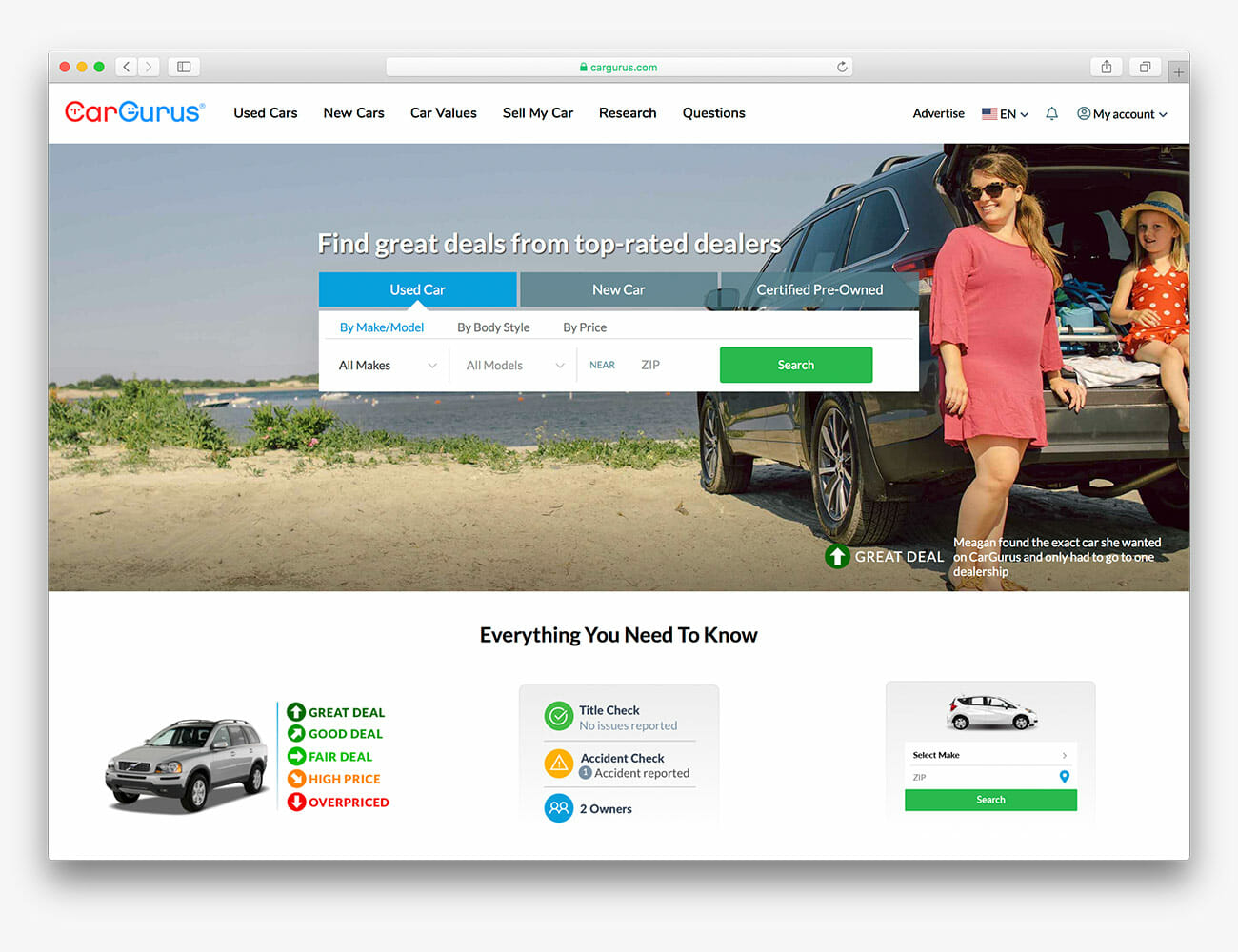
Car Gurus is the gold standard when it comes to general used car shopping. Not only do they drive and review popular models, but their pros advise on whether a deal on offer is above, average or below the going market value. Car Gurus also provides the same information for new and certified preowned vehicles.

Bring a Trailer

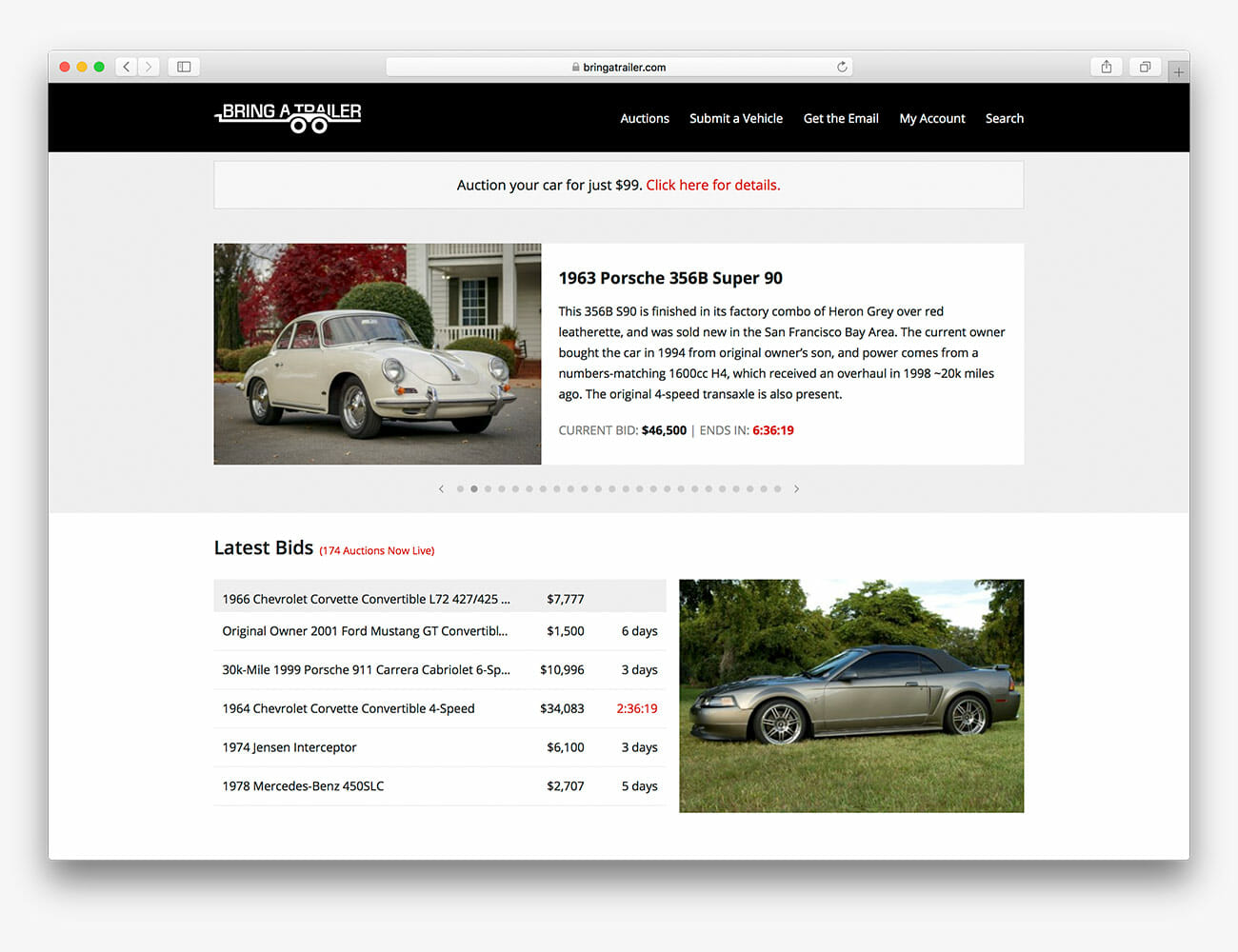
Over the past couple of years, Bring a Trailer established itself as one of, if not the best, vintage car auction site. The number of cars listed on the site seems to grow every day, and BaT now offers newer cars too. One of the advantages BaT has over the other sites is its active community. Members of the BaT community regularly comment on auctions, offering personal insights and experiences with the featured cars. Sellers usually respond to questions and interact in the comments section too. Unlike the rest of the internet, the majority of the comments section here is genuinely constructive.

Read: How To Sell a Used Car Successfully with 5 tips from the founder of Bring a Trailer.

Hemmings

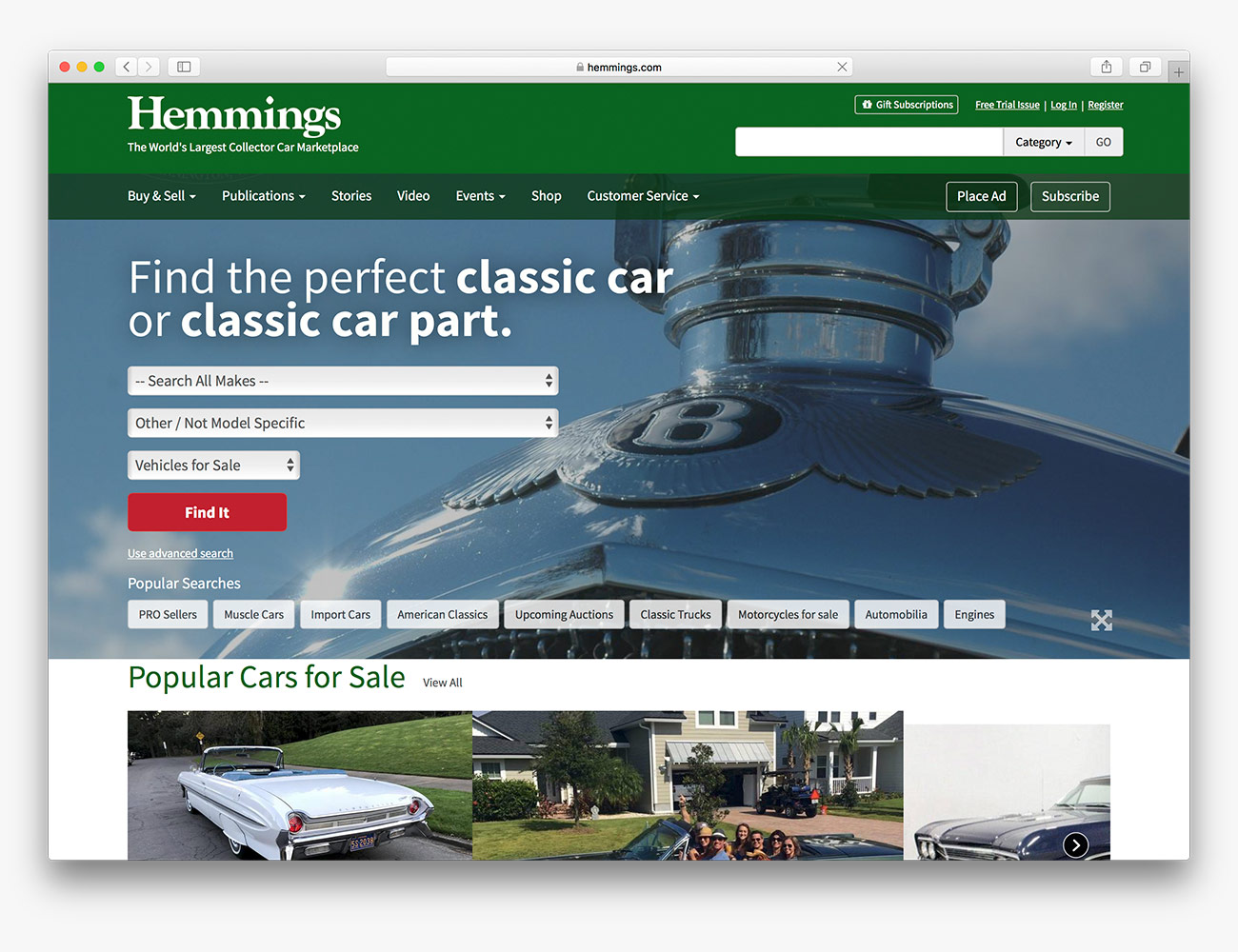
Hemmings is another reliable site that features classic cars, but unlike Bring a Trailer, Hemmings offers both auctions and straightforward sales. Hemmings also operates like a more convential used car site where buyers contact the seller directly, instead of through a forum environment like on BaT.

Kelley Blue Book

Kelley Blue Book is best of the old breed of used car websites, but that’s not a knock against it. It features a straightforward user experience where you can search new and used cars by category, make, price or best-selling models. However, Kelley Blue Book’s calling card is listing each car’s value compared to the market, based on the options fitted, trim levels and condition.

Japanese Classics

There’s no hiding this site’s forte – it’s right there in the name. However, these aren’t the ’96 Honda Civics you remember from High School. These cars are imported from overseas and weren’t originally available on US shores. Most of the models available have just qualified for the 25-year old law, so they might be right-hand-drive. That also means there are real gems all over the site you’ve probably never laid eyes on.

Read: The 25 Best Cars You Can Finally Import

Note: Purchasing products through our links may earn us a portion of the sale, which supports our editorial team’s mission. Learn more here.

Sim Racing – Now An Official Motorsports Discipline

Pictured above: Mario Andretti in a Red Bull Racing F1 simulator

Sim Racing Officially a Recognized Motorsports Discipline in Germany

Germany’s motorsports governing body – Deutsche Motor Sport Bund (DMBS) – has declared Sim Racing as an official motorsports discipline. To me, this comes as no surprise as these days the proliferation of technology has blurred the lines between what is real and what is well… simulated, I suppose. In fact I myself am a sim racer and the part owner of a sim racing rig/business – so, this also comes as wonderful news.

Sim Racing

Sim Racing

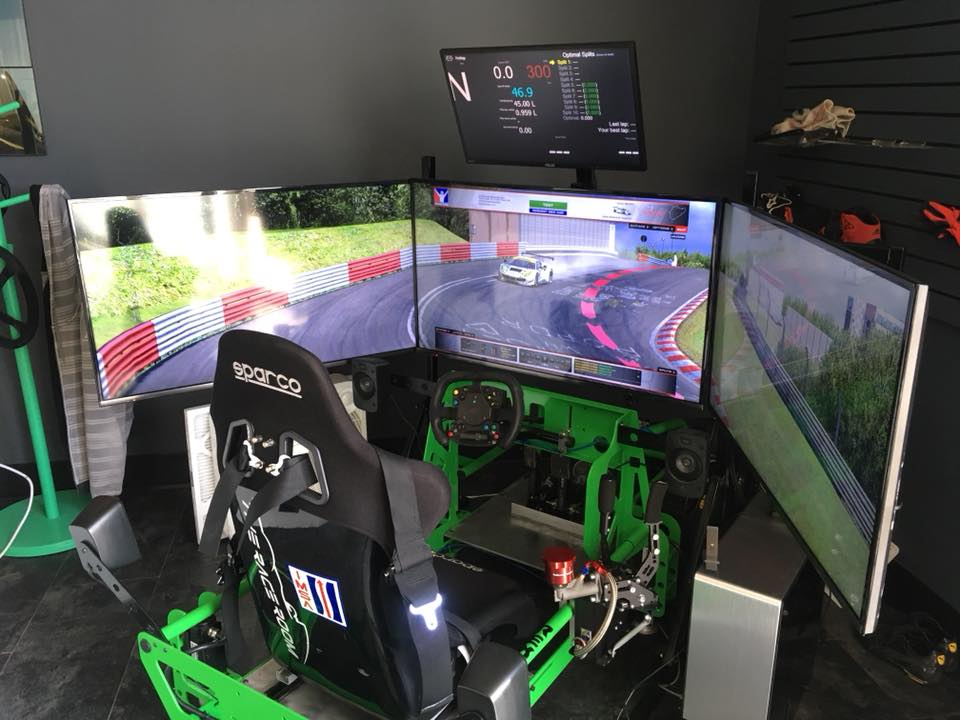
Pictured above: Our business’ racing simulator rig

Racing simulators – via a combination of software and hardware peripherals – have benefited immensely from these ongoing advancements. Platforms such as iRacing, Assetto Corsa, Forza Motorsport and Gran Turismo provide the playing field on which users can experience and race a variety of real-world cars and tracks. Peripherals such as direct steering motors, motion actuators, hydraulic pedal systems and VR headsets generate tactile realism and provide the level of immersion necessary to make you feel like you’re controlling a real car, from inside a real cockpit.

Gone are the days when racing-inspired programs were just your kids’ video games, with their only connection to the real world being the themes on which they were based. The level of detail, accuracy and “true-to-life” physics modelling in the aforementioned platforms is such that racing simulators are renowned as a legitimate training tool for many of the world’s top real life racers.

Sim Racing

Sim Racing

Speaking from personal experience, I can say that this is certainly the case. For example – if you’re both fortunate and good enough –  you might find yourself in a race with the likes of Formula 1 drivers, such as Lando Norris and Max Verstappen in the sim racing world. Out of your own curiosity, you can also view their online profiles (in this case, on iRacing.com) and see that they’ve dedicated a significant amount of hours and laps into the platform.

You can also see that they’re putting down lap times which humbly remind you why they’re professional F1 drivers – and you’re not…not yet, anyways – and perhaps more importantly, that the simulator has accurately reflected this. Lando Norris has also gone on the record to credit sim racing in having played a key role in developing his driving skills, on his journey to become an F1 driver. His instagram account for example, has media related to his home-based simulators for which he clearly shows much enthusiasm.

Sim Racing

Sim Racing
Sim RacingSim Racing

Pictured above: Lando Norris and Max Verstappen (2nd) in racing sims

The DMBS’ decision to give sim racing this much recognition is a step in the right direction, and hopefully propagates its popularization on a more international basis. Already, Formula 1 and Formula E have their own dedicated eSports leagues while titles such as iRacing and Gran Turismo are known to have afforded the top talents in their respective pools with professional opportunities in real-world racing. Being a dedicated sim racer can be financially lucrative at the highest levels too, should one decide that they prefer to keep their racing online, rather than outside.

The fact that sim racing can stand on its own as a motorsport discipline – in a country where motorsports is extremely popular – is proof that it is a legitimate and proper platform in which one can train and compete in motorsports. This is in addition to the fact that sim racing has some very notable benefits to it; no barrier to entry (age, experience, etc.), relatively low financial costs vs. real racing (free gas, tires, brake pads, engines, repairs, etc.), and no real-life risks of physical harm to either car or driver.

While it could still be some time before sim racing is considered more than ‘just another video game’ by the mainstream community, I can only see things getting better as time goes on and advancements continue to improve and promote the genre.

Sim Racing

Sim Racing

You Can Still Buy a Brand New Lexus LFA

Who Knew Lexus Would Have Trouble Selling These

Many regard the Lexus LFA as one of the best supercars ever made. Lexus only made 500 units, and I assumed those 500 sold out quickly. I was wrong. Despite the fact that Lexus hasn’t made the LFA since 2012, there are still seven brand new LFA supercars for sale in the U.S., according to Carscoops

Lexus mentioned months ago that it still had 12 LFAs in stock. Since that time, five of the cars sold. That leaves seven still sitting on dealer lots across the country. 

The LFA was a revelation when it came out in 2011. People had to wait a long, long time for it to come but once it did, it wowed many in the automotive press and consumers.

With that said, it had a price tag of $400,000. Perhaps that was too much for potential buyers. Today the car can be found for around $350,000 and some exceptional models are reportedly priced at $500,000. 

With all that said, the LFA came with one of the best V8s ever produced by a Japanese automaker. The 4.8-liter V8 made 552 hp and 352 lb-ft of torque. It was a free-revving engine with an exhaust note that could give you chills. 

I would imagine someday these cars will be worth a lot more than their original price tag. They’ll be a collectors car I would imagine. At the moment, though, it seems there are few willing to fork over the money for the car. If you’re one of the willing few, you have seven cars to choose from. 

Could the Koenigsegg Agera Successor Appear in Geneva This Year?

A New Koenigsegg Sooner Than You Think

Supercar manufacturer Koenigsegg made a very public announcement in June of 2018 that a successor to the Agera was coming. Since then, we heard nothing. The name Ragnarok made the rumor rounds, but then that seemed unlikely. Now, a new rumor suggests the car will appear at the 2019 Geneva Motor Show, according to CarScoops

Koenigsegg has yet to say a word about whether or not the car will appear in Geneva. I doubt the company will respond. Instead of saying anything, it will just slowly let out a stream of teaser images. They will be a lot like the one back in June of last year to get people’s blood pumping. 

What Will the New Car Be?

According to information from CarScoops and the Swedish publication Dagens Industri, the Agera successor will be a super-limited edition car with only 125 units made in the entire world. Of those 125 cars, 72 are said to be already purchased. 

What the car will actually have and look like is still a bit of a mystery. However, I’ll tell you what’s known or at least believed to be the case.

The car should get an updated version of the twin-turbo 5.0-liter V8 that’s in the Agera. It should have 1,440 hp or more. While your guess is as good as mine as to the top speed, you can bet that Koenigsegg will try to beat its previous record of 277.9 mph. 

Other than that, there isn’t much to report, so you’ll have to gaze at the image above and dream of what the Agera successor will look like.

Dallara Automobili Stradale

Image from Dallara

On November 16, 2017, after 45 years of constructing race cars and collaborating on some of the most iconic road cars, Dallara Automobili released their expression of what a road car should be.

Potent Pedigree

As sole chassis supplier for the IndyCar series and defacto winning platform used in competitive Formula car racing across Europe, Dallara is a juggernaut. One of the most prolific constructors in motorsport, Dallara has designed chassis or consulted in most classes of motorsport from Rally to Formula 1. Lancia, Ferrari, Maserati and numerous other marques competing at the highest levels of competition have trusted Gian Paolo Dallara and his concern to get them to the winner’s circle.

Less known than their racing accomplishments is Dallara’s involvement in some of the most iconic road cars. Prior to starting Dallara Automobili Gian Paolo was technical director at Lamborghini Automobili, leaving his impression on the 350 GT, Espada, and legendary Miura. His company helped design modern legends including the KTM X-Bow, Bugatti Veyron and Chiron, the Maserati MC12 and Alfa Romeo 8C amongst others. No doubt their experience collaborating on these greats helped to pinpoint what they wanted out of their own creation.

“The Pursuit of Excellence”

With a strong admiration for Colin Chapman’s philosophies on vehicle design, Gian Paolo designed the Stradale as a true driver’s car.

Chassis & Suspension

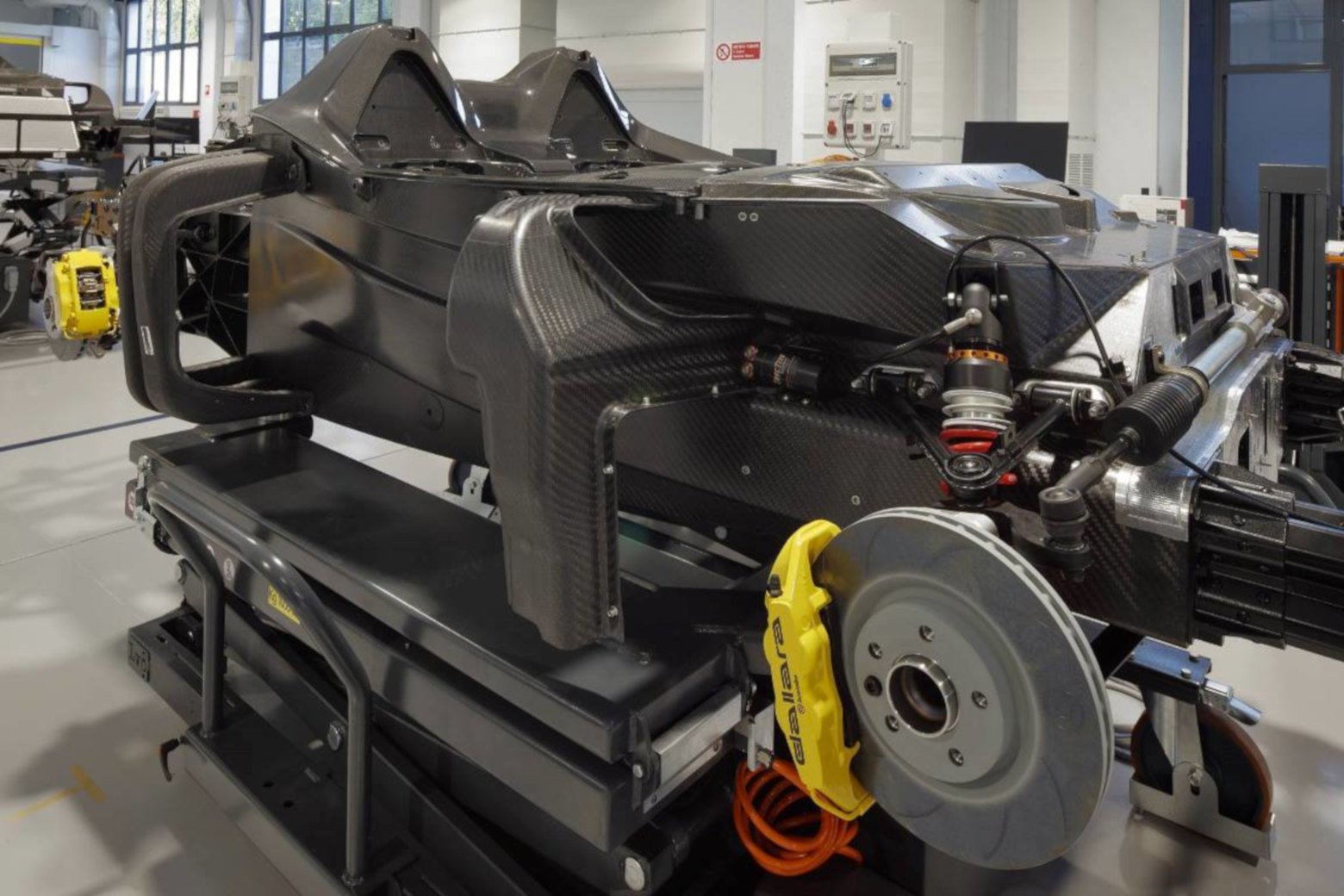
Dallara Stradale carbon fibre chassis and front suspension.Dallara Stradale carbon fibre chassis and front suspension.

Image from Automotive Press

For Dallara, only a light and stiff carbon fiber chassis would do for the ultimate driver’s car., helping to achieve the scant dry weight of 1885 lb. The suspension is a standard race-layout with double wishbones front and rear.

Keeping everything in check are dampers developed by the Dutch specialist Tractive Suspension. At the top of the range, Tractive provides a height-adjustable package with compression and separate high/low-speed rebound adjustment. A collaboration with Bosch gifts the Stradale with an extensive but unobtrusive ESP 9.1 stability program.

Body

Blue Dallara Stradale with optional wing and Bosch livery.Blue Dallara Stradale with optional wing and Bosch livery.

Image from Bosch

A balance of form and function, the Stradale’s shape was penned by the Italian automotive design firm Granstudio with functionality driven by CFD and wind tunnel development. Dallara reports the shape will generate over 1800 lb of downforce!

Uniquely, the Stradale is available as a Barchetta (no doors, no windshield), Roadster (windshield, no doors), Targa (windshield, t-frame) or Coupe (windshield, t-frame +2 doors). Granstudio showcases the evolution of the design in this slideshow.

Cockpit

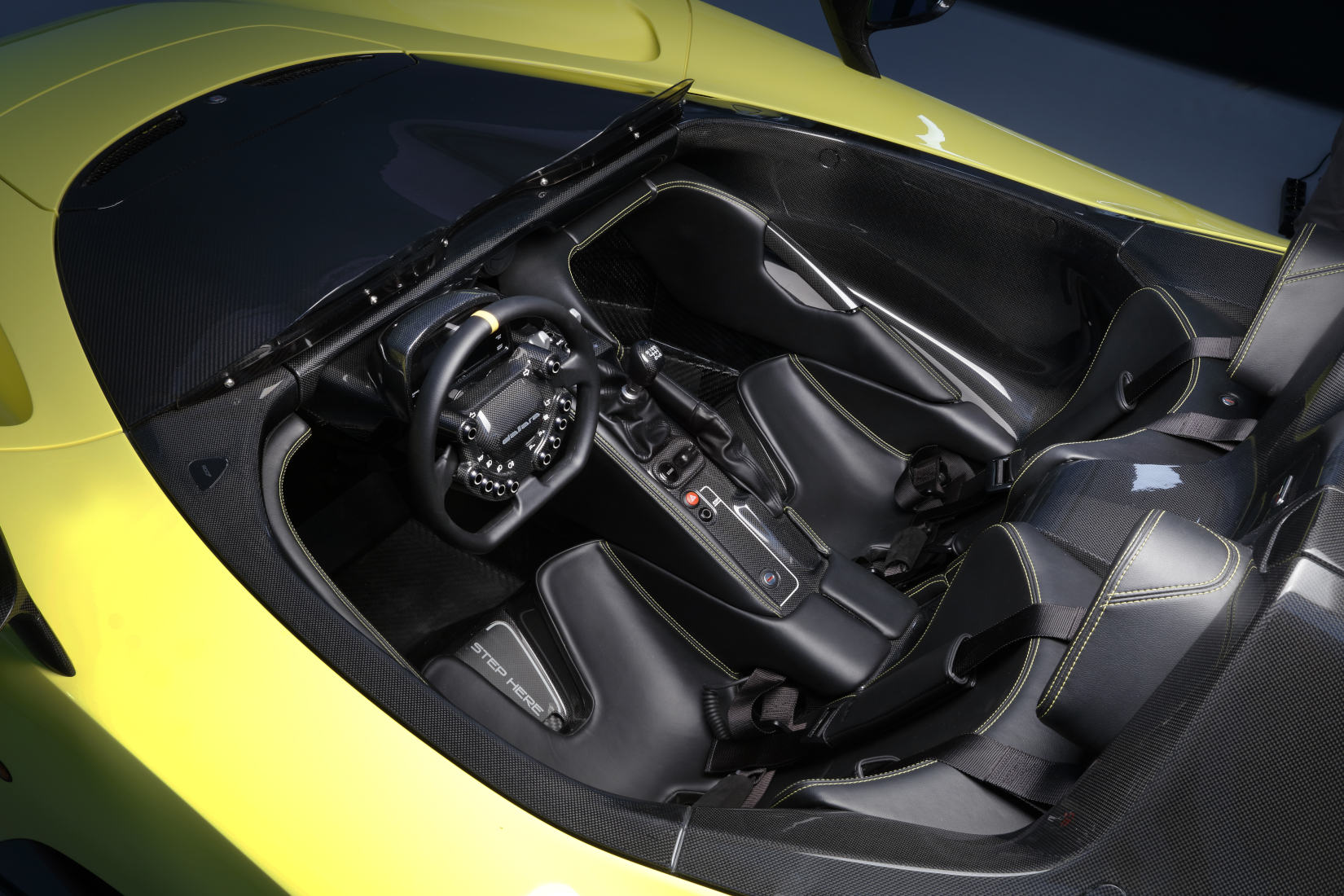
Dallara Stradale cockpit/interior viewDallara Stradale cockpit/interior view

Image from Dallara

The interior is as spartan as the curb-weight dictates, with not much more than the essentials. With the fixed seating position the controls adjust to the driver through a movable pedal box and adjustable steering column. Steering is unassisted, the dash and wheel would be at home on any contemporary GT race car.

Engine

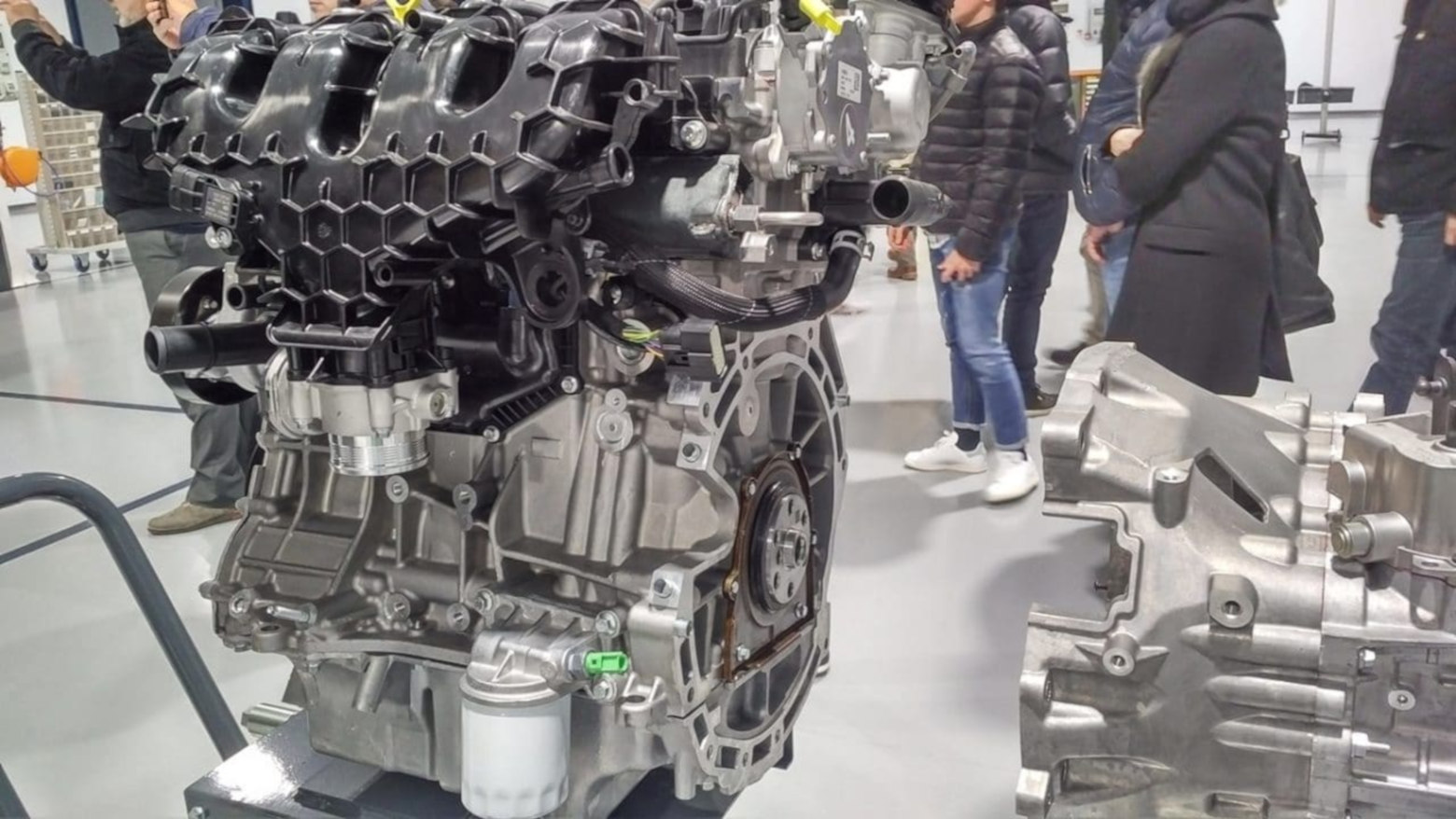
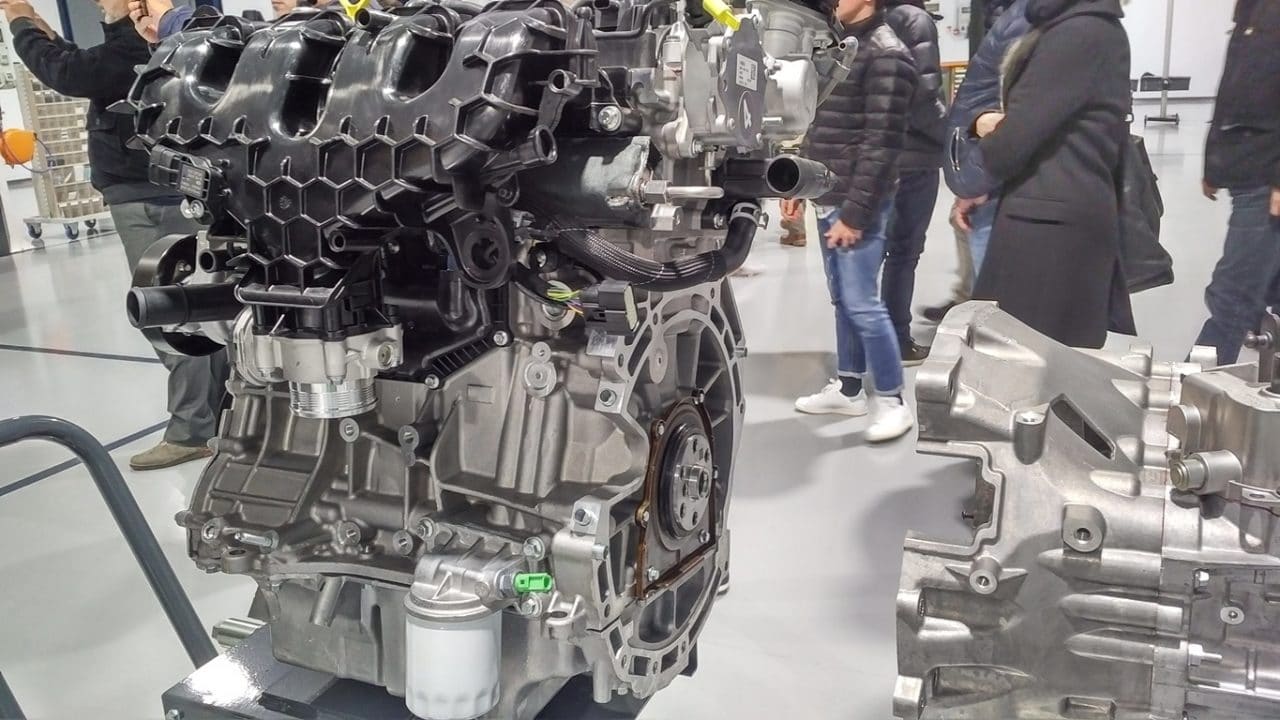
Perhaps the most conventional part of the Stradale is its powerplant. Equipped with a Bosch-tuned 2.3l Ford Ecoboost engine the driver can unleash up to 400HP, moving the featherweight to 60 MPH in just 3.25 seconds and ultimately to over 173 MPH.

2.3l Ford Ecoboost engine for the Dallara Stradale2.3l Ford Ecoboost engine for the Dallara Stradale

Image from Automotiv Presse

Driving Impressions

Since its release, last year videos have revealed details of a driving experience that most of us can only dream of being a part of.

[embedded content] [embedded content]

Specifications

  • Horsepower: 400 hp
  • Torque: 369 lb-ft
  • 0-60 mph: 3.25 seconds
  • Top Speed: 173 mph
  • Weight: 1,885 lbs

Audi e-tron GT Concept

Audi’s Electric Grand Tourer Green-Lighted For Production

Showing that they are fully committed to a future with EVs, Audi unveiled its electric grand tourer earlier this quarter at the 2018 L.A. Auto Show. Audi believes that the broad appeal of the e-tron GT will give the automaker mainstream status as an EV manufacturer.

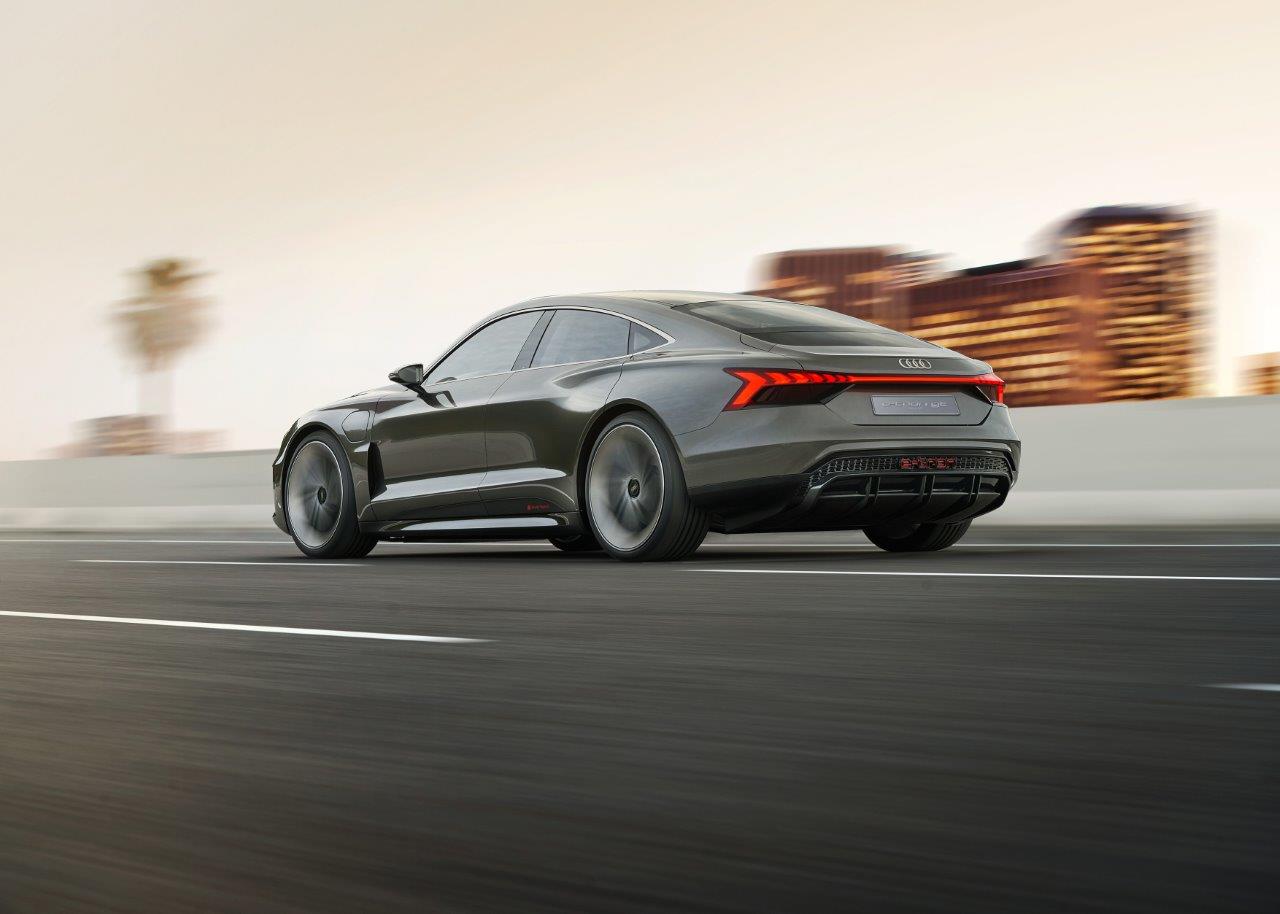
This is huge part due to its emphasis on sleek styling, which takes the form of a four-door coupe/fastback silhouette. Audi intends to use this as a differentiator in the EV market, where the majority of vehicles – past and present – are either bland, peculiar looking, or lacking the charisma needed to captivate customers at first sight.

In short, the Audi e-tron GT is an EV with sex appeal with the cosmetic underpinnings of the Audi A7. “This is a very low car with big wheels. It still has classic proportions, but gorgeous proportions.” according to Marc Lichte, Head of Audi Design.

The Audi e-tron GT shares the same platform as the Porsche Taycan, though Audi and Porsche are said to have been in regular correspondence to ensure that both cars would take different design paths and deliver distinguishable end products. The e-tron GT will have similar range as its e-tron SUV which offers 248 miles on a single charge, based on the new standardized WLTP test.

Audi e-tron GT

Audi e-tron GT

Aside from its design, the e-tron GT will also be steered more towards performance than its SUV counterpart. Rumoured to be at around the 600-horsepower mark, the e-tron GT will set its sights on its intended rival – the Tesla Model S P100D – which does 0-62 mph in 2.7 seconds and has a top speed of 155 mph.

Audi has set a target of having 12 EV models in its line-up by 2025, and intends for the e-tron GT to become its flagship vehicle. The car will be in production by 2020 and will not be far off from the Concept. The e-tron GT is certainly not deprived of marketing fanfare either, as the car is set to feature prominently in the upcoming ‘Avengers 4: Endgame’ movie, as part of the illustrious fleet of vehicles and gadgets owned by Tony Stark/Iron Man (played by Robert Downey Jr.).

Audi e-tron GT Image Gallery

The 2016-2019 Volkswagen Golf GTI May Be the Best Ever

Base MSRP: $27,595
• 228 horsepower and 258 lb-ft of torque
• Exceptional balance and utility
• “The GTI is subtle and understated, a car for adults.”

The Volkswagen Golf, as James May noted in his BBC documentary series, is the preeminent people’s car. The well-regarded hatchback offers fun driving and practicality at an affordable price. The Golf has seen off all comers during a production run approaching 50 years. It killed off the old Beetle. It will bury the new Beetle, which, truth be told, was a Golf beneath its retro styling.

German engineers designed the Golf. So, it took all of a few minutes before someone inserted a more powerful engine, tuned it for racing and stumbled upon something brilliant. That brilliant creation became the Golf GTI. The Mk1 version debuting in 1975 became an icon, birthing a new market segment for the “hot hatchback.” The latest and perhaps greatest GTI, the Mk7, should prove a collectors’ item in its own right.

|

VW has come up with some goofy catchphrases for the current GTI. A brief sampling includes “the stylish hot hatchback” and “raw power, fully cooked,” whatever that means. The trouble stems from VW not being able to touch on what the Mk7 GTI is: perfection. Doing so would leave no reason to upgrade to the Golf R (raw power, burnt?). It would make buying a standard Golf or any other Volkswagen, by definition, imperfect.

The GTI has a proven basic formula: precise handling, peppy engine with strong torque and a smooth manual transmission. VW has refined that formula for 40-plus years. Some batches have been a touch weak, heavy or outmoded. But, the Mk7 came out just right, capturing all of the car’s heritage and accrued wisdom. It may be the best-balanced car on the road, not only for its price point.
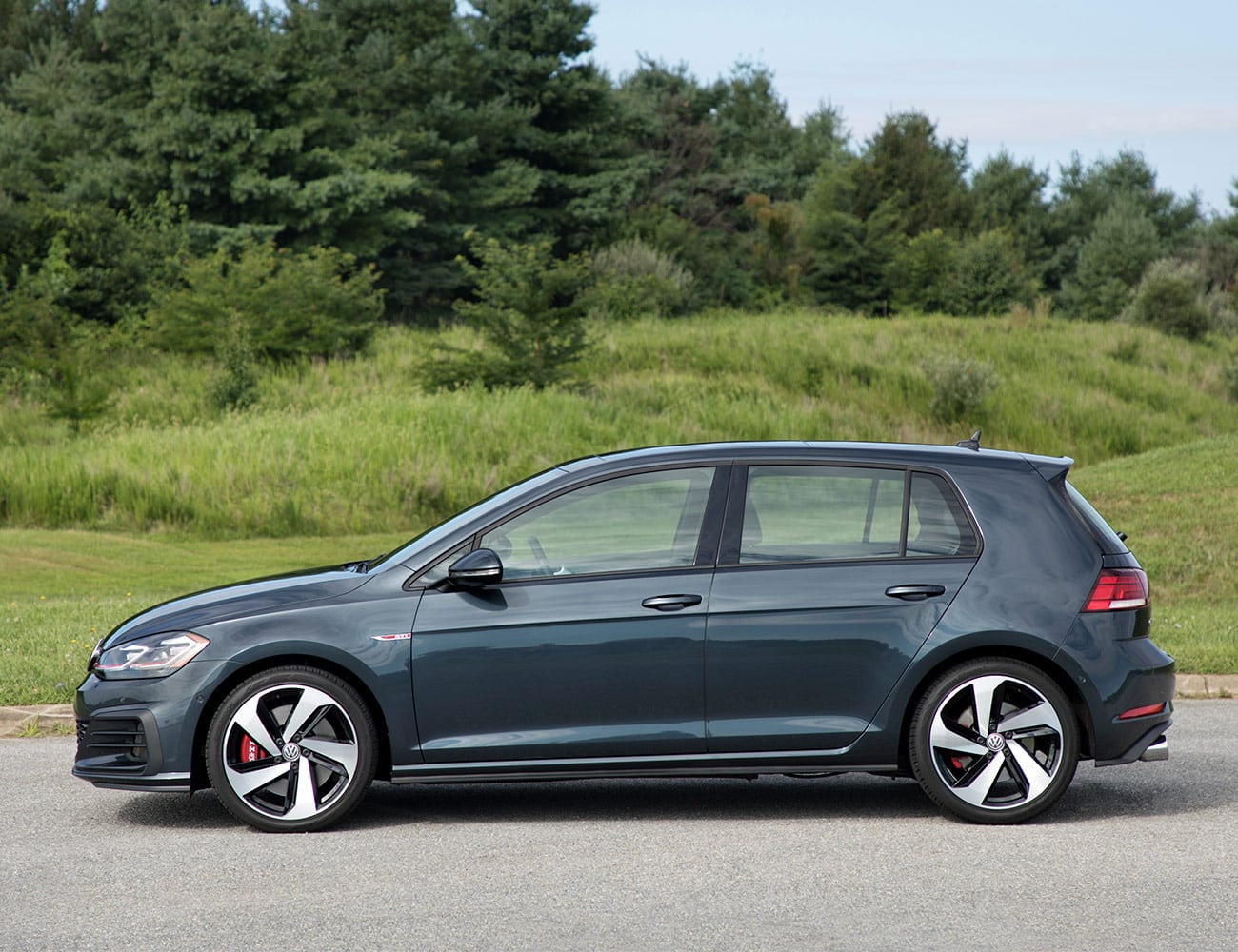
With 228 horsepower and 258 lb-ft of torque, the GTI offers the exact power optimal for exuberant driving. You can push the GTI on real roads at speeds that won’t see you carted away in handcuffs. Automobile writers have extolled the car’s handling with every synonym of the word “sublime.” It rounds corners masterfully. Despite packing all that performance, the GTI is also still a Golf. You can park it easily, help a friend move and get a well-equipped base model for less than $30,000.

The GTI’s style exhibits its refinement. Other “hot” cars (the Honda Civic Type-R, for example) announce their presence like young rock stars, strutting around in the automotive equivalent of indescribably tight, red leather pants. The GTI is subtle and understated, a car for adults. It has a clean exterior and an elevated interior. What flair the GTI does offer – the red grille lipstick, the tartan seats, the golf ball shift knob – is traditional. You don’t know what you’re looking at with the GTI unless you know what you’re looking at.

The Mk8 GTI will arrive in 2020. Changes, mild and drastic, will be afoot. The best GTI we have yet seen – the current Mk7 – may be the best we ever get, or at least the purest incarnation of the GTI’s initial vision.

VW developed the new GTI during an awkward transition period. Dieselgate has cost Volkswagen AG $33 billion and counting, sapping resources and forcing a complete reorientation of production strategy. VW plans to phase out the combustion engine in 2026. Meanwhile, trucks and SUVs continue dominating the market. Plowing R&D into further perfecting an already perfect gasoline-powered hatchback, when well enough would do, makes little sense.

Golf sales have dipped in the U.S., so moving toward the market may work against getting an optimal GTI. To sell more Golfs, the hatchback will have to get longer and wider to be more viable families. The purist-favored three-door alignment may be scrapped altogether. We can presume VW won’t drop the manual (yet). But, development will go toward more fuel-efficient hybrid powertrains and improving the automatic transmission. VW has also hinted at a fully digital cockpit overhaul, which, if it does not annoy present buyers, will date the car, as technology tends to do, in the decades to come.

An MK7 GTI, tastefully modified for winter conditions – Photo: Hunter Kelley

If the base Golf goes more family-friendly, the Volkswagen likely would differentiate the GTI further by making it hotter. Expect more power. Ditto for more aggressive styling. The “Rabbit” and “Autobahn” trims, as well as the bevy of metallic paint options, may prove a harbinger of what is to come. It may be faster. Though, the balance and sophistication of the present model, not to mention the reasonable MSRP, may be difficult to preserve.

The Mk7 GTI arrived when Volkswagen was a car manufacturer and the best modern technology went toward producing an optimal driving experience. The Mk8 GTI will be a showcase for the Volkswagen Group’s broader ambitions as a mobility-oriented tech firm. The driver will always be connected, for better or more probably worse. We may get objectively more efficient and better-performing GTIs moving forward (and the climate will be better for it). But, they won’t feel the same.

Cars of the future will be electric or powered by other eco-friendly means. Many will be automated. Fewer than now will be individually owned. Driving a classic internal combustion car will be an expensive pastime, if not outlawed in some areas altogether (Aston Martin is prepping for that eventuality).

“Ludicrous” performance will be obtainable from EVs. The gas-powered cars that still resonate will be those that provide a unique, well-tailored and deep-rooted driving experience that disconnects the driver. The Mk7 GTI, perhaps the best Volkswagen creation to date, does that.

So, cover a Mk7 Volkswagen GTI in bubble wrap and store one in a climate-controlled garage, right? No. Save for retirement like a normal person. Use the GTI as the extraordinary daily driver it was designed to be.


£150,000 Will Buy You a Road-Legal Brabham BT62

The ultimate in money moves for any car collector is to buy a hypercar that can only be used on the race track. The LaFerrari FXX K, the McLaren P1 GTR, the Aston Martin Vulcan, these are the cars that billionaires own!

Brabham Automotive’s market launch of the Brabham BT62 confirmed that the car it intends to sell to customers will be limited to track use only. As it cost north of £1 million, the Brabham BT62 joins this group of illustrious hypercars. But what if you don’t have regular access to a racetrack? Brabham have you covered.

For an additional £150,000, Brabham will make your BT62 road-legal. The road-legal Brabham BT62 conversion will be carried out by Brabham Automotive. For now, the road-legal conversion is limited to the UK market. Brabham have confirmed that they are working on a version for the Australian market and will cater to individual requests where possible.
So what could you be driving on the roads? The BT62 was announced as a no-limits, trackday tool. The finished product should prove to be exhilarating on the road considering it has a 5.4 litre V8 engine which produces 710 hp and 667 Nm of torque.

Much work has gone into weight reduction. As a result, the Brabham BT62 weighs just 972 kg. The road-legal Brabham BT62 will be heavier as the process requires installation of items the BT62 does not have as standard. Aerodynamics should also excite. Downforce totals 1,200 kg thanks to that massive rear wing.

The conversion process will necessitate raising the ride height with a front and rear axle lift kit, increasing the steering lock range, adding air conditioning, fitting door locks and immobilisers and installing additional upholstery in the interior. The car will then be assessed by the DVSA (Driver and Vehicle Standards Agency) through their IVA (Individual Vehicle Approval) test.

The first road-legal Brabham BT62’s are expected to be ready for Summer 2019.

Don’t Wait For the New Jeep Pickup. Just Get This ’84 J10

If you’re in the market for a mid-sized pickup in 2019, you’re spoiled for choice. The Ford Ranger recently joined the fray, taking the fight to the Toyota Tacoma and Chevy Colorado. Later this year, Jeep will hop in the ring with the hotly anticipated Gladiator. But, if you’ve been chomping at the bit for the new Jeep pickup and can’t stand to wait any longer, this 1984 Jeep J10 Pickup should hold you over.

Not only are mid-sized pickups coming back into fashion, but brands are putting energy into trims that focus less on work-truck aesthetics and performance and cater more toward off-road and adventure lifestyles. Back in ’84, however, the J10 pickup was already one hell of a workhorse – and the perfect canvas to make an open-bed overlander.

Even in stock trim, the J10 was a capable machine. But this modified example comes with custom bumpers with recovery points, an LED lightbar, roll bar and a suspension lift to provide room for massive 33-inch mud tires. The interior is also refurbished and comes with a modern Pioneer stereo.

One thing to keep in mind is that the five-digit odometer reads 91,000 miles, and it’s easy to assume this truck rolled past 99,999 at least once. The extensive list of replaced parts — distributor, spark plugs, and ignition wires, battery, and starter, valve covers and gaskets, belts and hoses, air cleaner, fuel and oil filters, brake master cylinder and steering box — seems to back up that assessment, too.

Even considering its list of new parts and unknown mileage, this J10 looks well taken care of from the photos. Sure, it’s a little dirty, and there’s some surface rust here and there, but the body is in fantastic condition, especially for an off-roader. If you need to scratch that Jeep pickup itch before the 2019 Gladiator lands this spring, this J10 will undoubtedly do the trick.

Brabham to make BT62 supercar road-legal

When Brabham Automotive showed its BT62 supercar last spring, it was announced to be track-day only — in other words, not designed to be road legal. The BT62 was first aimed at customers with a trailer and the means to enjoy the supercar’s potential outside of regular traffic. However, the company has now confirmed a conversion package to make the BT62 fit for the road.

As David Brabham stated: “We designed the BT62 to be an unrestricted, thoroughbred track car, and our extensive test program has revealed it to be all of those things. This isn’t a car designed for the road. With that said, it’s clear some customers are keen to have a road compliant option with their BT62, particularly to drive to and from the track. My father Jack was always customer focused, and we will continue with that ethos.”

The UK price for the “Road Compliance Conversion” option means a £150,000, or $190,000, increase in the BT62’s base price, which is $1.4 million. All European-market BT62 cars ordered with the package will be converted in the UK by Brabham Automotive, and the work includes an Individual vehicle approval test. But it’s not just paperwork and testing that’s worth £150K, as the road-legal BT62 cars will also receive a lift kit of sorts to raise the front and rear, altered steering, air conditioning, door locks, immobilizers and additional interior upholstery. All to make the track-day special a little more livable in the real world, and to make driving to the track perfectly legal.

While £150K would buy a perfectly agreeable “real world” car to supplement a spartan, trailered BT62, we don’t think that’s likely to be a concern for Brabham’s clientele. The company says the modifications are meant to pose a minimal compromise to the car’s abilities, and while the curb weight is slightly increased, engine output will remain the same at 700 horsepower.

Brabham expects to have the first road-legal BT62 readied and delivered by summer. Currently, the conversion work is offered with European customers in mind, but the company is said to be working with authorities elsewhere as well.

Related Video:

Koenigsegg Plans For Recession, Reveals More Details on Ragnarök

Swedish news outlet Dagens Industri recently conducted an interview with Christian von Koenigsegg which reveals some extra details on the upcoming replacement for the Koenigsegg Agera replacement. Koenigsegg talks extensively on plans to safeguard the company against volatile market conditions too. Plainly this is an issue of concern for many manufacturers these days.

In the interview, Koenigsegg confirms that Ragnarök is the working name for the Agera replacement but that a new name will be revealed closer to the Geneva Motor Show 2019 in March. The Ragnarök will be displayed as a display version which we take to mean that it will not run.

Koenigsegg will produce the Ragnarök in very limited numbers. Just 125 examples are planned for the production run with 72 sold out. The production run will begin in 2021, once development of the new model have completed.

The Agera RS used Koenigsegg’s own engine. We suspect that the replacement will use a variation of that same engine with the possibility that it gets a hybrid drivetrain or Koenigsegg’s innovative gearbox, although the Swedish article references a nine-speed gearbox that Koenigsegg have been working on.

On the prospect of a recession, Koenigsegg points out that during the 2008 recession, while its US sales took a dive, they were more than made up by a move into the Chinese market. Koenigsegg revealed that it has deposits for 2-3 years of production.

For the full details on the Koenigsegg Ragnarök, or whatever its name will eventually be, we will need to wait until the Geneva Motor Show 2019 in March!

Off-Road Bugatti Chiron Concept

Here at Men’s Gear, we love writing about all kinds of cars. Heck, most of what we publish here are often fictional ones, or in other words, concept cars. This one, from an incredible Estonian artist called Rain Prisk, reimagines the Bugatti Chiron as an off-road beast. The result is nothing short of breathtaking.

Seriously, just look at the photo above. Believe us, we’re just as vehemently wishing it’s actually a real car as you are.

Impressive as the Bugatti Chiron may already be, the supercar isn’t meant for off-road adventures. Which is why Prisk applied some enhancements on the million-dollar vehicle for it to be able to chart the harshest terrain and come out unscathed.

Notional as these enhancements may be, Prisk’s handiwork is still quite fascinating. In fact, it’s on par with most of the artist’s renderings, which are usually monster versions of production cars, complete with beefed-up wheels and suspensions. For this particular project, Prisk gave the Bugatti Chiron a winch and roof rack, and it looks stunning.

We hope Bugatti’s research and development team stumbles upon this work by Prisk, because it’s too gorgeous to pass up. This being a concept, it’s hard to ascertain whether the design is feasible. And we can only imagine how hard it will be to engineer a car that’s as slick and curvaceous as this one.

The rear details in black are particularly interesting to ponder construction-wise, and suppose Bugatti does take up the challenge and attempts to produce a car just like this one, it would be interesting how they’ll approach the tiny little details that make this design a punch above other off-roaders.

SEE MORE HERE

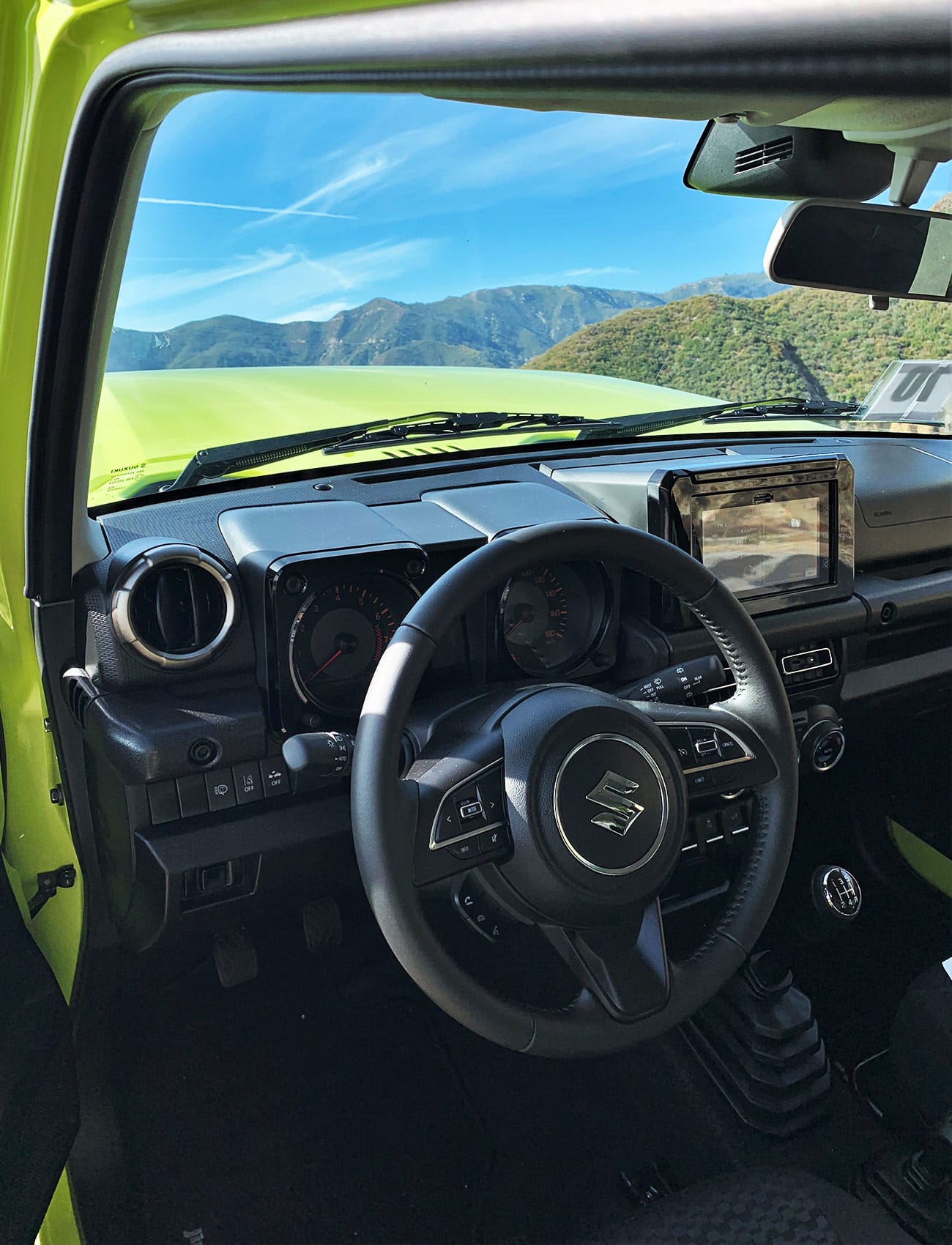
2019 Suzuki Jimny 4×4: Super Functional and Super Small

Just after Thanksgiving, automotive Twitter erupted in a micro flame war over a micro-SUV, the Suzuki Jimny. When images of the fourth-generation, Jeep-like 4×4 began circulating, and a pair of banana-yellow samples showed up in Los Angeles during a media drive just before the auto show, debate about its merits ran rampant. Half the tweets bemoaned the fact that the model isn’t for sale in the United States; the other half laughed at those in the former group for being such gullible chumps. The core question emerged: Is it even worth getting into a tizzy about?

The two that were spotted cruising up and down Angeles Crest Highway, north of Pasadena, were shipped stateside by Suzuki so that jurors in the World Car of the Year Awards – a group of 48 journalists from around the world – could sample the cars during the large test-drive event held just before the L.A. auto show. It happens that I’m one of those jurors, and I took one out for a spin to see what all the fuss was about.

Because it’s meant to be an economical off-roader, 4×4 aficionados scoffed at its presumably cheap and flimsy construction and likely negligible ability to manage any serious terrain challenges. The car, which presumably would sell here in the U.S. for around $20,000, if not less, is small and light, and much of the pro-Jimny enthusiasm centered on its ‘cuteness’ – a kiss-of-death of you’re trying to win a Twitter battle. After all, cute don’t feed the bulldog when you’re trying to wriggle through a rocky slot canyon before sunset.

While I didn’t get to test the vehicle in an off-road setting, I can say two things about it from my drive up into the mountains on the pavement: 1) It’s not a piece of junk, and 2) it is awfully cute. Remember, the Jimny was introduced in 1970 as a compact and affordable 4×4 that smacked of a micro-Land Rover Defender. That means it’s fully a 50-year-old model, one that the company has nurtured more or less with respect through the years. Though there was definitely an awkward phase in its third generation, with a design crippled by too-rounded corners and too many soft details, the new one is appropriately butch and properly proportioned. It’s back to being Defenderesque, in a good way. After all, there’s twee cute and there’s earnest cute, and the Jimny is very much the latter. It’s a good-looking, functional 4×4 that just happens to be super small.

Its 4×4 trail-creds are perfectly acceptable: body-on-frame construction for maximum stiffness, solid live axles and smart ABS for traction distribution across a wide swath of challenges. No, it won’t be able to get out of the same jams that a Jeep Wrangler can, and its 1.5-liter, 100-hp, 101 lb-ft of torque three-cylinder engine won’t triumph in any OHV-course stare-downs. But its power is right-sized for its mass, which is just 2,500 pounds, by the way.

On the road, I didn’t feel the least bit perturbed by any excessive vibration or tire roar. There was the expected wind noise at highway speeds, given its cubic construction, but it otherwise felt solid and nicely tuned for on-road comfort. It was also tons of fun to drive the five-speed manual transmission up and down the steep (paved) inclines. It’s roomy enough for tall adults in the front seats, and never lacked for power on the highway, despite its minuscule motor and modest 90 mph top end. With the window down and your arm on the sill, it’s a blast, both on the highway and while inching around at low speeds. Early reports from those who have taken the upgraded new model off-road indicate it’s just as startling there, Twitter trolls be damned.

Would this car thrive in the U.S.? Sure. It’s cool and fun and will take you where you want to go for thousands less than its closest competitor. And yeah, it’s cute, too.

Super Limited Edition 2018 Audi R8 V10 Plus

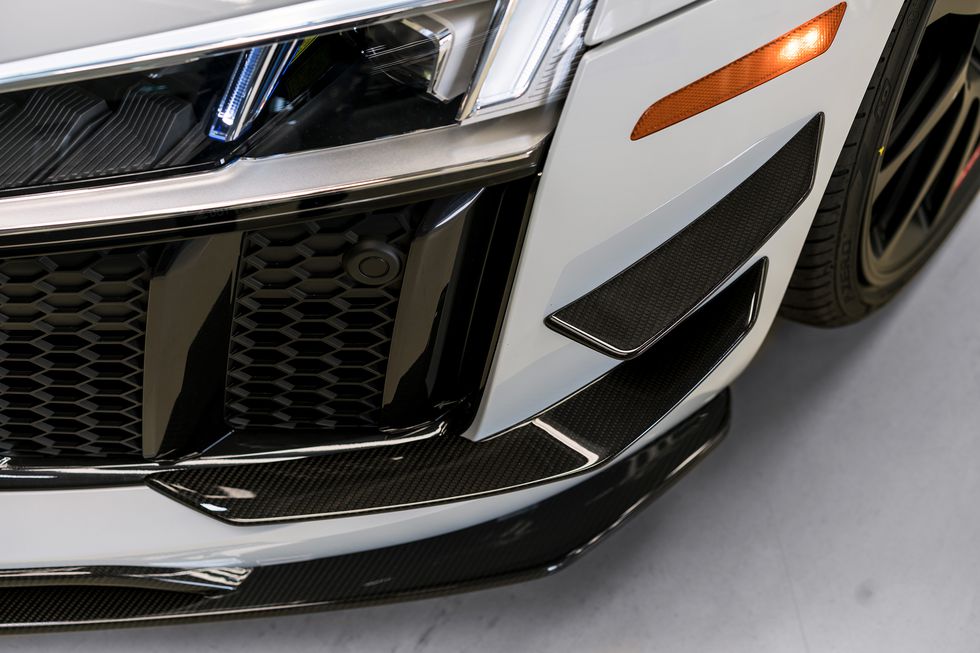
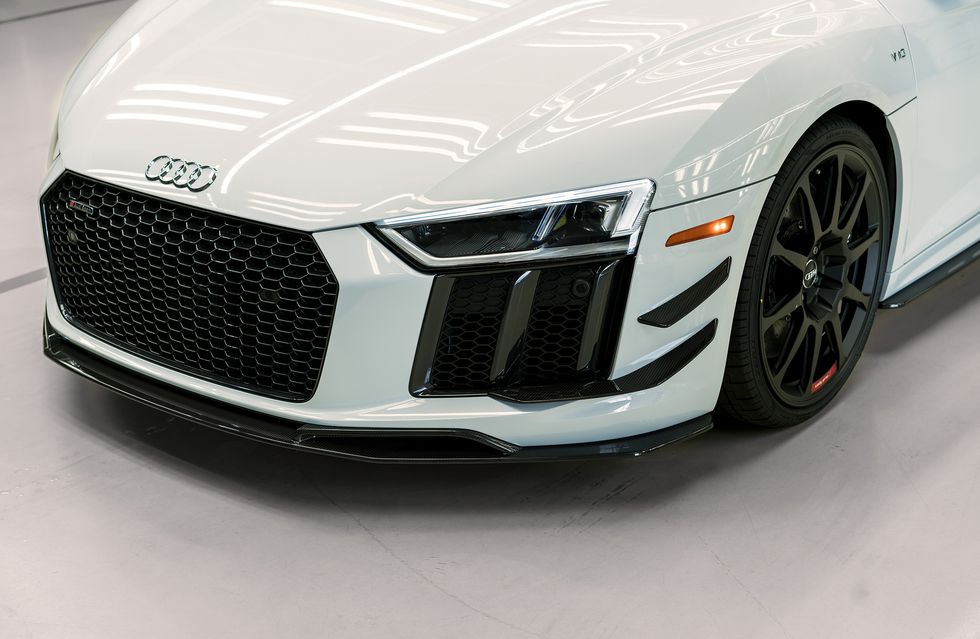
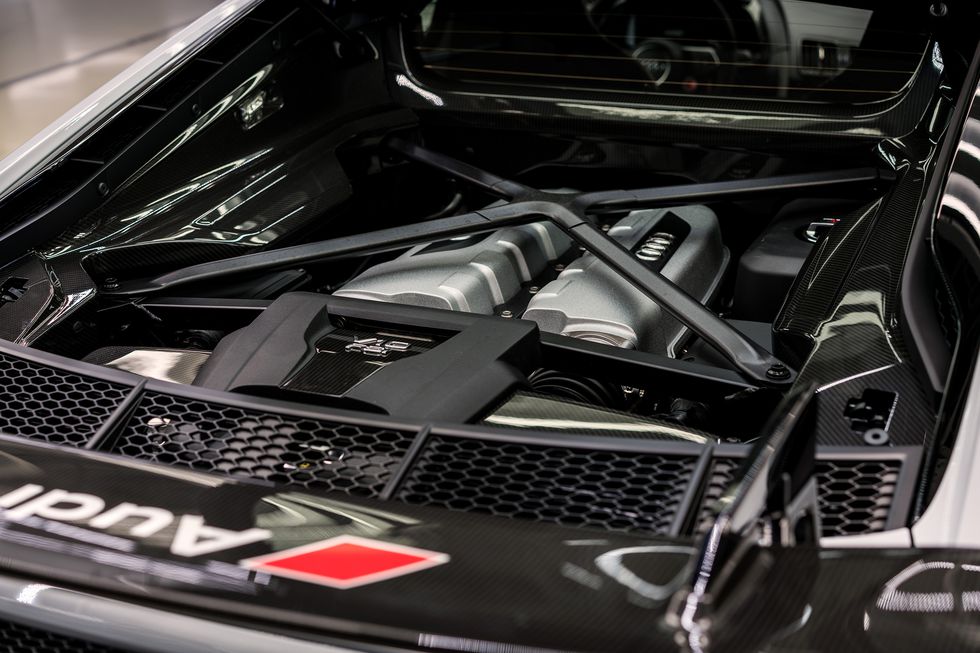
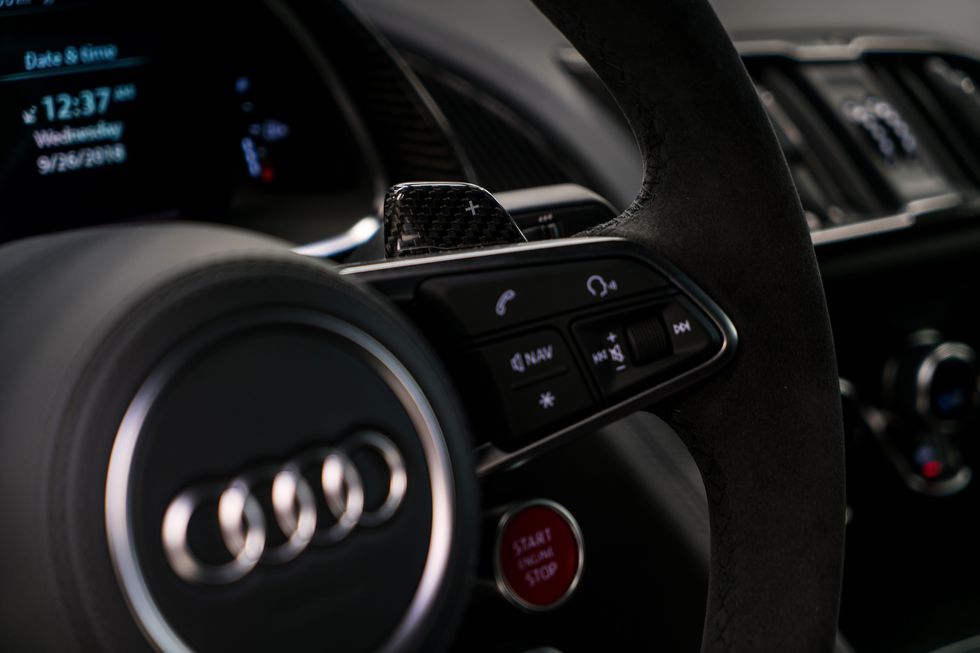
Audi is currently working on an improved version of its R8 model, so tide fans over in the meantime, the automaker has officially unveiled the ultra-limited edition R8 V10 Plus Coupe Competition. And by limited edition, we mean Audi is only making 10 units.

Yes, you read that number right. Audi is billing the car as the most “performance-oriented production R8 model ever produced,” and that’s no surprise considering it comes equipped with all of the components offered by Audi Sport performance parts.

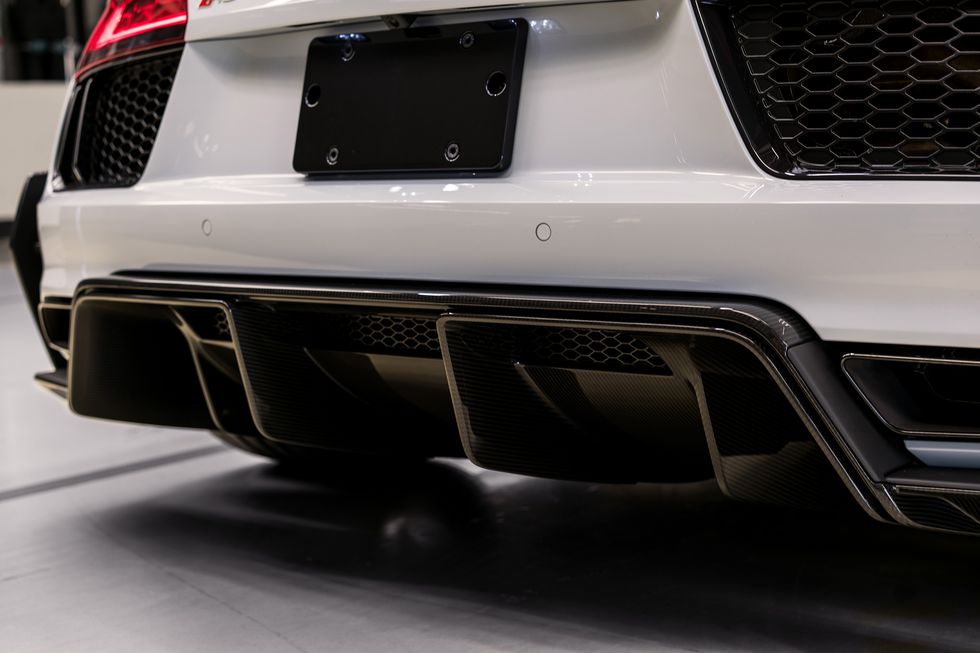
The result of such a radical upgrade is an aggressive carbon fiber body kit that includes a front spoiler, flics, and side skirt extensions. Carbon fiber also arrives on the fixed rear wing and the sporty rear diffuser.

The carbon fiber treatment isn’t just for aesthetic improvements, however. Audi explains that it also helps increase downforce. This thing tops up to 114.6 pounds of downforce, says the carmaker. In other words, twice the amount of base R8 V10 Plus.

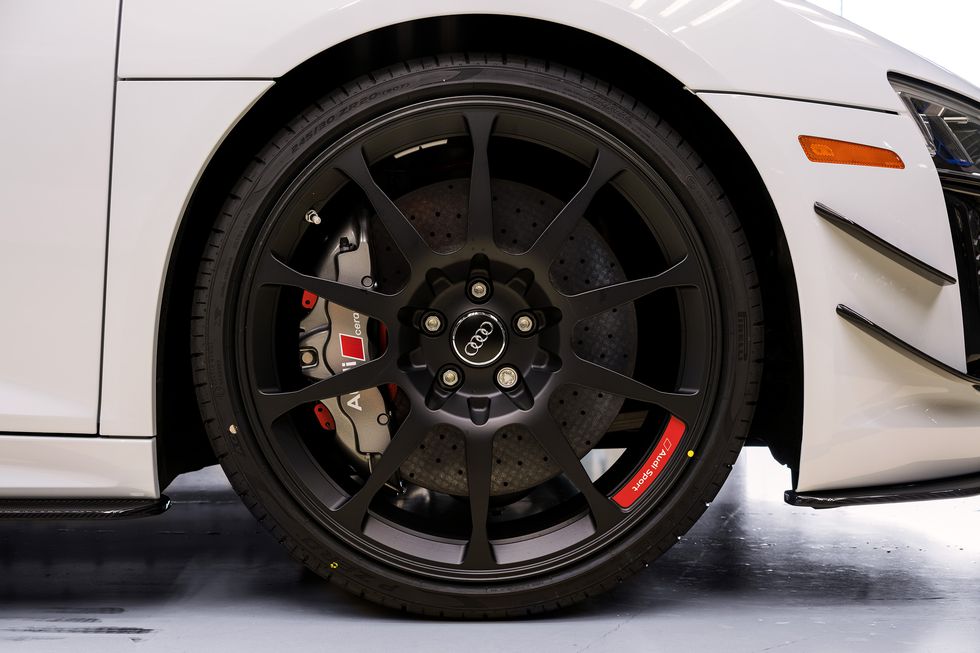
You’ll also find new Titanium backing plates for the R8’s carbon-ceramic brakes. Through this, Audi shaves off 2.2 pounds off the car’s curb weight. Audi also threw in new 20-inch alloy wheels that are just like the one used in the R8 GT4 race car, cutting off an additional 26.4 pounds.

You’ll find the powertrain unchanged, though. It’s still the same 5.2-liter V10 that produces 602 horsepower 413 pound-feet of torque, fed to all four wheels through a seven-speed dual-clutch transmission. The only difference is that this model has a specific three-way adjustable coilover suspension.

The car hits dealerships in the United States in November at a whopping $239,900. You’ll be one of only ten owners in the country, though.

MORE FROM AUDI

Photos courtesy of Audi

2020 Lamborghini Huracan EVO Images Leaked

Here’s Your First Look

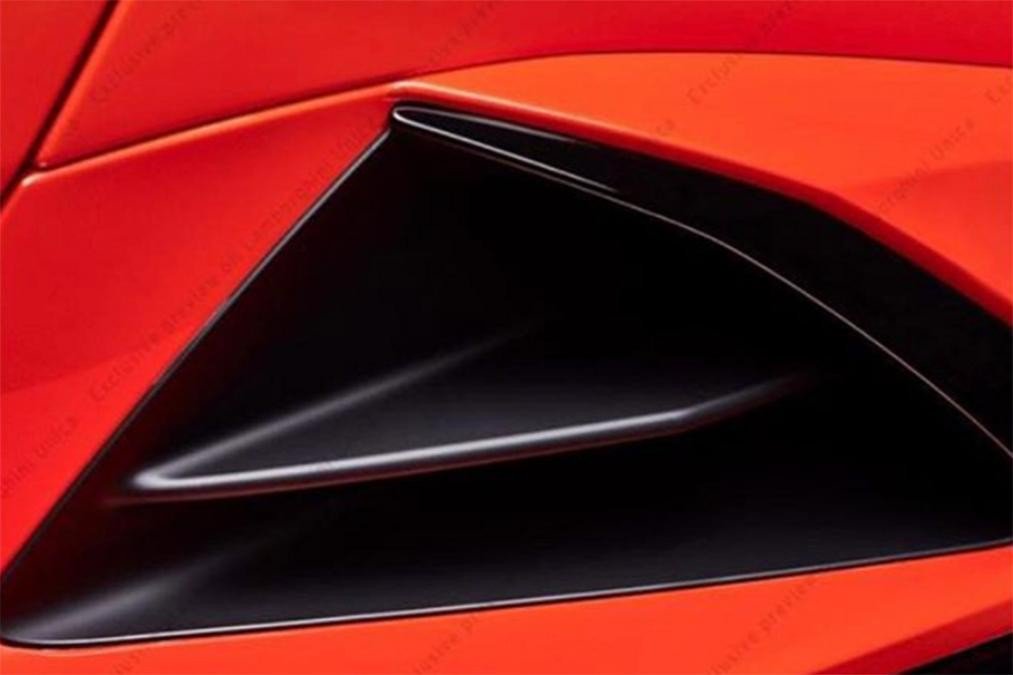
The 2020 Lamborghini Huracan EVO was teased earlier this week on the Unica app. Those images were the two close up shots you see below. Now, it seems another image of the full car, shown above, has made its way onto the wonderful World Wide Web. 

The new leaked image come from Huracan Talk. The shot shows that the car will have a center-exit exhaust and a short wing at the back as opposed to the Huracan Performante’s large wing.

The thread on Huracan Talk says the car does not have Lamborghini’s active aero ALA system. However, The Supercar Blog reported that the 2020 Huracan EVO will have the ALA system, but it won’t be quite as extreme as the one on the Performante. 

The publication points to the ALA logo at the bottom of the engine cover to show that the car will, in fact, have the system installed. 

Other changes include a pretty much all new rear fascia. The rear of the car as a whole looks more aggressive. Also, the leaked image gives you a good look at the new and absolutely gorgeous five-spoke wheels. The new image along with the two teasers, which can be easily viewed at Driver’s Magazine, gives you a pretty good idea of how the entire model will look. Overall, it’s a beautiful machine. 

The Huracan EVO will likely use the 5.2-liter V10 engine that is in the current model. Lamborghini could always revamp certain parts and components of the engine to make it spin faster and produce more power. I think the new model should get a bump over the current car’s 620 hp. I don’t think 650 hp is too much to ask for, but then that may be a little greedy.

2020 Lamborghini Huracan EVO2020 Lamborghini Huracan EVO
Image from Driver’s Magazine
2020 Lamborghini Huracan EVO2020 Lamborghini Huracan EVO
Image from Driver’s Magazine

Maxlider 1966 4-Door Ford Bronco ‘Four Horseman’ Custom

Maxlider Brothers Customs is a classic car and restoration shop built on the idea of reliving or making new memories with old school rides. Unlike other shops out there, they’re not afraid to use their…

McLaren 720S Spa 68 Collection Celebrates Bruce McLaren’s Legacy

Only Three Cars Will be Made

To commemorate 50 years since Bruce McLaren secured the first Grand Prix victory for McLaren, the company will build a limited edition 720S Spa 68 Collection model. McLaren Brussels commissioned only three of the cars, and no more will be built. 

Built by McLaren Special Operations (MSO), the cars get several special touches that identify them as part of the Spa Collection. All three of the cars will feature a Bespoke Anniversary Orange paint job to match the car that won the 1968 Belgian Grand Prix at Spa-Francorchamps.

The seats have the racetrack outline embroidered on the headrests. The racetrack outline is also featured in front of the rear wheel arch. Carbon fiber sill covers feature the words “1st McLaren F1 victory Belgian Grand Prix 9th June 1968 – Bruce McLaren” on them. The ignition key also pays homage with bespoke keys painted in the same color as the rest of the car and “Spa 68” text. 

Additionally, the car features MSO five-spoke lightweight wheels painted satin black. This contrasts from the bright orange paint job. Inside, there’s McLaren Orange contrast stitching to give the car plenty of visual flare inside the cabin. From a performance standpoint, McLaren did not alter the cars.

Bruce McLaren’s win in 1968 was the start of McLaren’s motorsport history as a true contender. The win in 1968 was actually Bruce McLaren’s fourth Formula 1 victory, but it was the first in his own car with his fledgling team. That win set McLaren on the right track. Since then, the team would go on to win eight World Constructors’ Championships and 12 World Drivers’ Championships.

The Spa 68 Collection cars were available from McLaren Brussels. However, at the time of McLaren’s press release, two of them already had buyers. The third is likely to follow suit if it has not already.