All posts in “Cars”

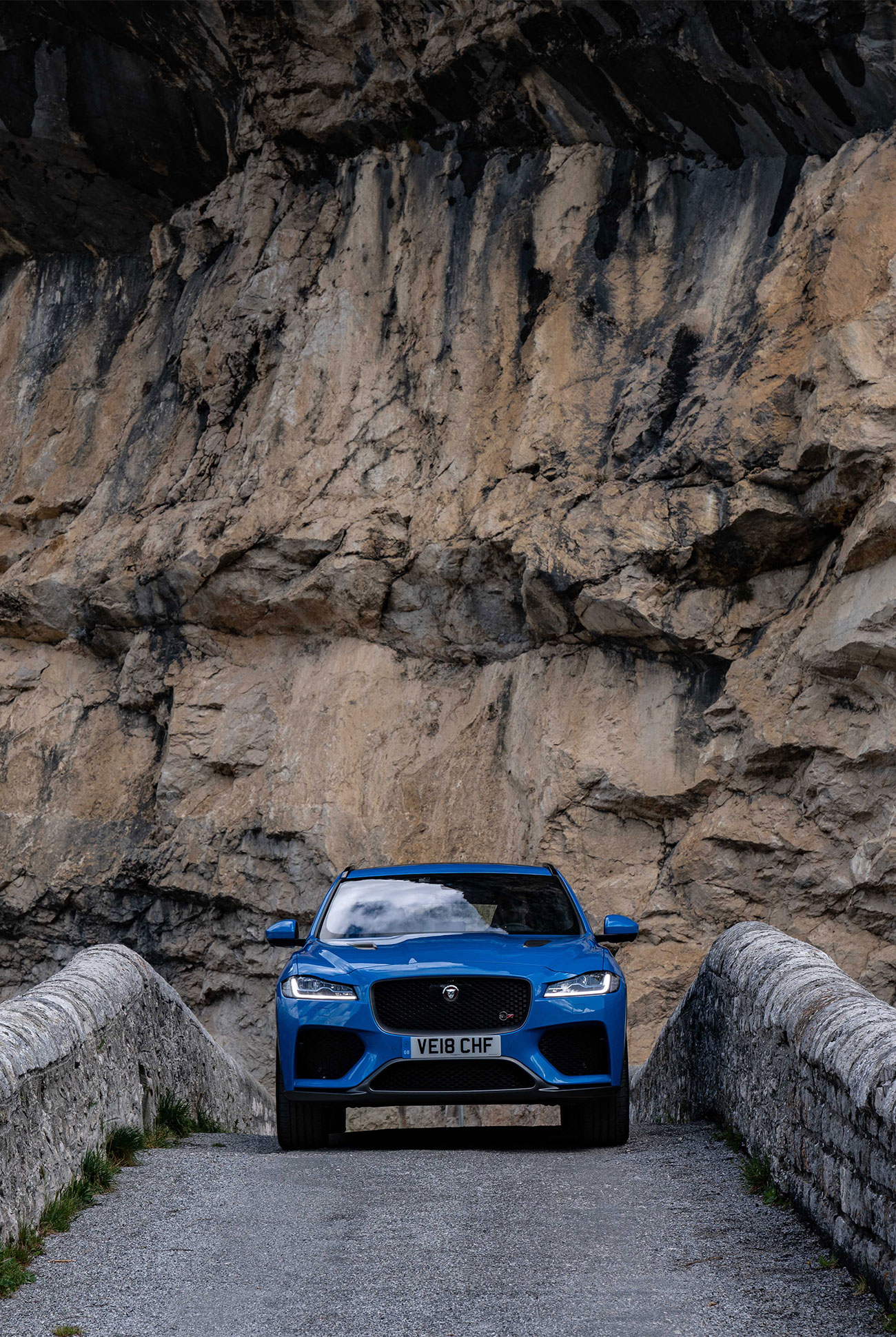
2019 Jaguar F-Pace SVR Review: The Saber-Toothed Cat of Sporty SUVs

This year could very well go down in history as the year of the legitimization of the super-sporty SUV. The new Lamborghini Urus is enough to make the case for that on its own—but others from Porsche, Mercedes-AMG, and BMW abound as well, bringing such high-powered enablers as active anti-sway bars and hyper-responsive suspension systems to the crossover game.

Now, Jaguar is entering the fray with the SVO—that’s Special Vehicle Operations—version of its F-Pace. It doesn’t deploy many fancy performance parlor tricks, but it uses a lot of engineering finesse and know-how to reign in this SUV’s top-heavy mass and make it a legitimate performance vehicle…one that can also make Ikea runs.

The Good: Significant grunt from the supercharged V-8 makes this an unquestionably fun SUV. Its sleek aerodynamic treatment, including functional hood vents and side ports, work to keep temperatures in check and improve aerodynamics. That means plenty of power and grip under hard driving. It’s got ultra-growly acoustics, of the sort not seen on a Jaguar seen since the F-Type roadster popped onto the scene with its crackling, popping exhaust note. The F-Pace SVR isn’t quite that over-the-top, but it’ll still grab people’s attention.

Who It’s For: Anyone who wants a morning blast of giddyup on the way to work. The F-Pace delivers both the commanding view of an automotive high-rise along with the firm cosseting of a true performance vehicle. In other words, it feels like a fantastic place to be—and conquer the world from. So the meek shall not apply. (Nor should the particularly eco-conscious, as the supercharged V-8 delivers a scant 18 miles per gallon combined.)

Watch Out For: The F-Pace’s occasionally awkward design touches—though “quirky” is a more generous interpretation. Example: the window controls, which are used frequently, sit high up on the door sill out of natural reach—while the seat memory controls, used only rarely, are right at your fingertips on the armrest. 

Alternatives: The Mercedes-AMG GLC 63 S would be a good start, followed by the BMW X5 M. Both offer similar power and performance numbers, but for tens of thousands more than the Jag’s $80,000 price tag. Also, consider the basic Porsche Cayenne, which isn’t as fast or powerful, but is still fun—and comes in more than $10,000 less than the F-Pace SVR.

Review: Southern France, I found, has some of the best roads in the world. Of course, this is entirely personal preference; some drivers love abundant hairpin turns in mountain twisties, others are all about 12-mile-long desert straights. I prefer long stretches of gently swaying racing lines and sweeping arcs—speed over acceleration, with a reasonable expectation of being able to push the steering to the limits at ridiculous speeds as you dive into the occasional bend. But by any objective measure, the pavement of the French countryside just north of the Riviera is enthralling, adequately challenging anyone with an itchy right foot. So testing the F-Pace along the countryside near Nice and Saint Tropez yielded much in the way of perspective—and visceral thrill.

The thing that struck me first about the F-Pace SVR was actually the seats. They’re tight, firm, and remarkably thin, compared with the bulky thrones most luxury vehicles arrive with. Once my drive partner and I set off on our test drive, I suddenly found myself fixated on the F-Pace SVR’s headrest, noting how remarkably thin it was, and how that must have major benefits for rear-seat room and overall cabin airiness. I’m sure my drive partner was freaked out by my fixation on his headrest, but I couldn’t help it. I’d never seen one so slim. (Turns out, of course, that Jaguar is well aware of the benefits; the slimline performance seats are standard on the SVR SUV.)

It’s only once the person in the driver’s seat starts to engage with the Jag that things really spring to life. Pushing the SVR through its paces proved that the tweaks are far more than skin deep: The chassis enjoys new tuning with better damping and spring rates, while the aero package adds lower, sharper sides and a rear spoiler. An assortment of functional vents enhance brake and engine cooling and zap pressure from inside the wheel well, cutting drag and helping contribute to the downforce generated elsewhere.

When powering up a mountain road, the electronic active rear differential combines with the rejiggered responsiveness of the chassis and the engine’s mighty power to deliver sublimely persistent acceleration, with no interruption to the power flow or hiccup in its targeted application. The big Jag simply kept pushing, taking whatever the mountain could throw at it in stride.

Ultimately, that’s the real value of the F-Pace SVR’s improvements—the way SVO adjusts the tuning and calibration to created a highly advanced performance package. You see it in the steering, in the lightened brakes and wheel systems and the adaptive sport suspension designed to work with them, and the promptness of the eight-speed automatic transmission’s shifts. It’s not a dual-clutch affair—that’s the current gold standard for performance cars—but it worked exceptionally well in this vehicle, and never left me wanting for something faster or more punchy. There are plenty of aggressive, ’roided-up SUVs out there, but one that can give you such smooth yet forceful performance without breaking traction or the bank is a valuable machine indeed. 

Verdict: Jaguar’s performance-oriented SVO division has been kicking in earnest since 2014, developing hard-charging variants of the cars like the F-Type and the wicked XE-based Project 8. If those machines got our attention, then the F-Pace SVR held it, mile after mile. It’s a fun, aggressive, hyper-responsive trouble magnet of a crossover, and we wouldn’t have it any other way.

2019 Jaguar F-Pace SVR Specs

PRICE: $79,990
POWERTRAIN: 5.0-liter supercharged V-8, eight-speed automatic, all-wheel-drive
POWER: 550 horsepower, 502 pound-feet of torque
0-60 MPH: 4.1 seconds
TOP SPEED: 176 mph

Jaguar hosted us and provided this product for review.

Read More Gear Patrol Reviews

Hot takes and in-depth reviews on noteworthy, relevant and interesting products. Read the Story
Note: Purchasing products through our links may earn us a portion of the sale, which supports our editorial team’s mission. Learn more here.

The Most Beautiful Engine Bays of All Time

Enzo Ferrari once said, “I don’t sell cars; I sell engines. The cars I throw in for free since something has to hold the engines in.” There’s no doubt Ferrari put his heart and soul into making beautiful cars to hold those engines—but then again, he did need something worthy to frame the masterpiece under the hood.

Generally, if a car’s engine — as well as the bay it sits in — is beautiful, the rest of the car’s design follows suit. And since most of a car’s moving parts are under the hood, there are nigh-infinite possibilities for masterful design work. That’s why it’s a shame to see most modern manufacturers cover up the engine with cheap plastics and crowd the engine bay with machine-stamped, mass-produced parts; it conceals the magic beneath. As you’ll see below, many of our favorite engine bays mechanical works of art of all time date back to before that trend was common — but we still found a few newer cars with gorgeous guts beneath their hoods.

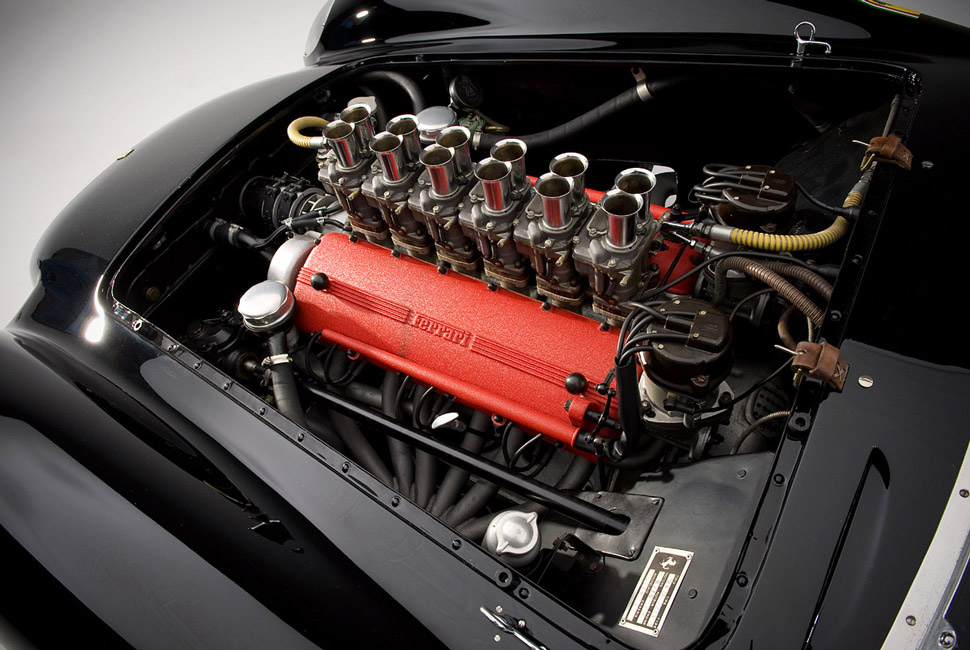
1957 Ferrari 250 Testa Rossa

Making a case for redheads since 1957.
The Ferrari 250 Testa Rossa is one of the most beautiful, exotic cars in the history of the automobile. Each curve can steal your gaze for longer than you ever though sheet metal could — and that’s just the outside. However, the true masterpiece, as Enzo Ferrari would say, is under the hood. The deep black compartment frames the bright red cam covers that give the car its name — “Testa Rossa” translates to “redhead.”

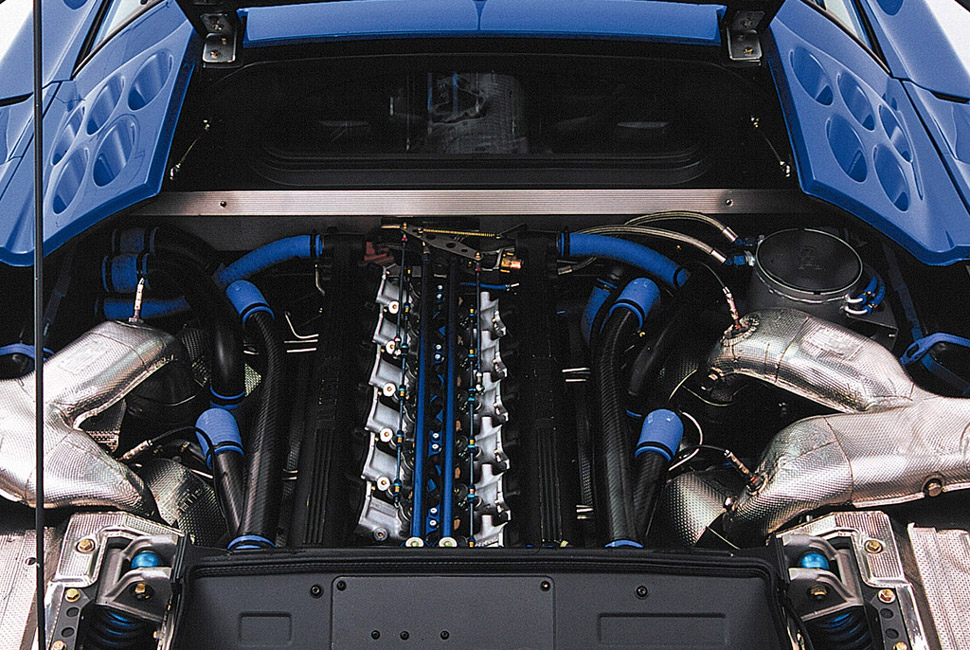
1991 Bugatti EB110

Seeing the throttle bodies at work is like watching a tiny ballet on the valve covers.
The Veyron did a magnificent job of bringing the Bugatti name back into the headlines — but where that car is an engineering marvel, its EB110 predecessor was impressive in its own right. It’s not very often you get to see exposed throttle bodies on top of a V-12.

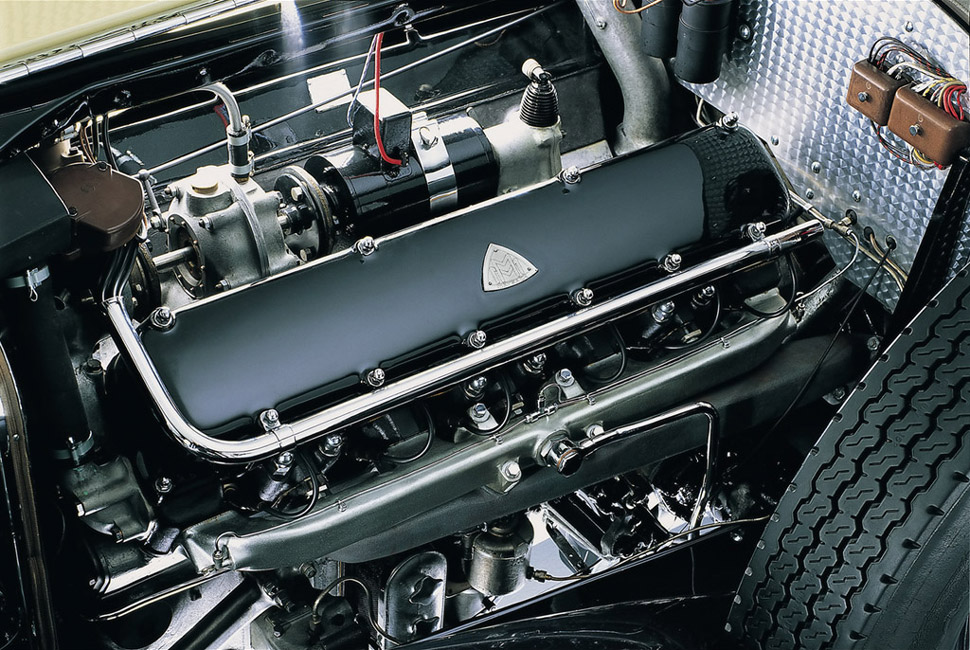
1932 Maybach Zeppelin DS8 Sport Cabriolet

Even the engine was given a luxurious amount of space.
Maybach built its name on being the ultimate distillation of luxury, delivering incredible comfort, performance, and design. If you think that stops when you lift the side-hinged hood, you’re wrong.

1992 McLaren F1

Even the most opulent cars in the world aren't lined with gold.
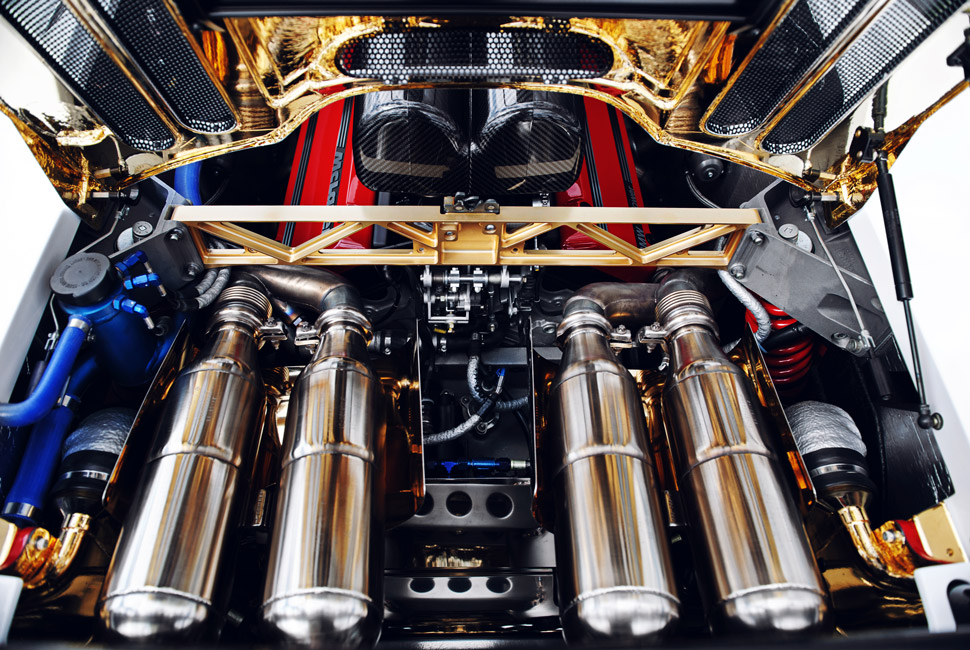
There are ultra-luxury cars with rare metals and wildly expensive materials throughout their interiors, but only the McLaren F1 put gold in its engine bay to help with heat soak so it could hit its 243-mph top speed.

2001 Alfa Romeo 156 GTA

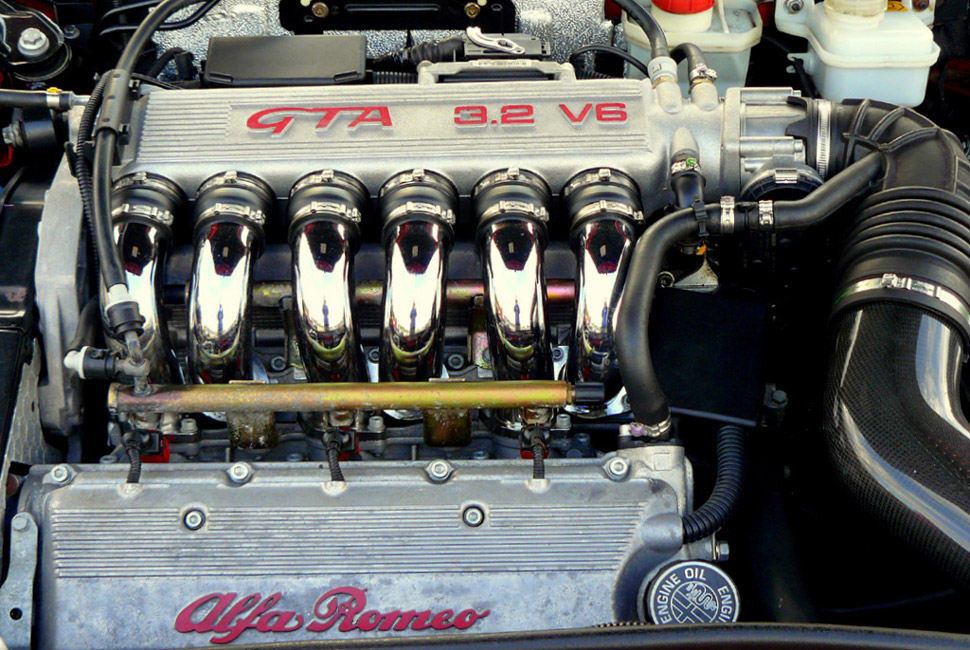
Bravo to Alfa Romeo for leaving that beautiful chrome waterfall exposed.
Not only is the Alfa Romeo GTA V-6 one of the best sounding engines of all time, but the polished works of art that are its intakes also make it one of the most beautiful. It’s not often you get an engine that sounds like honey to the ears and is just as sweet to the eyes.

1966 Lamborghini Miura

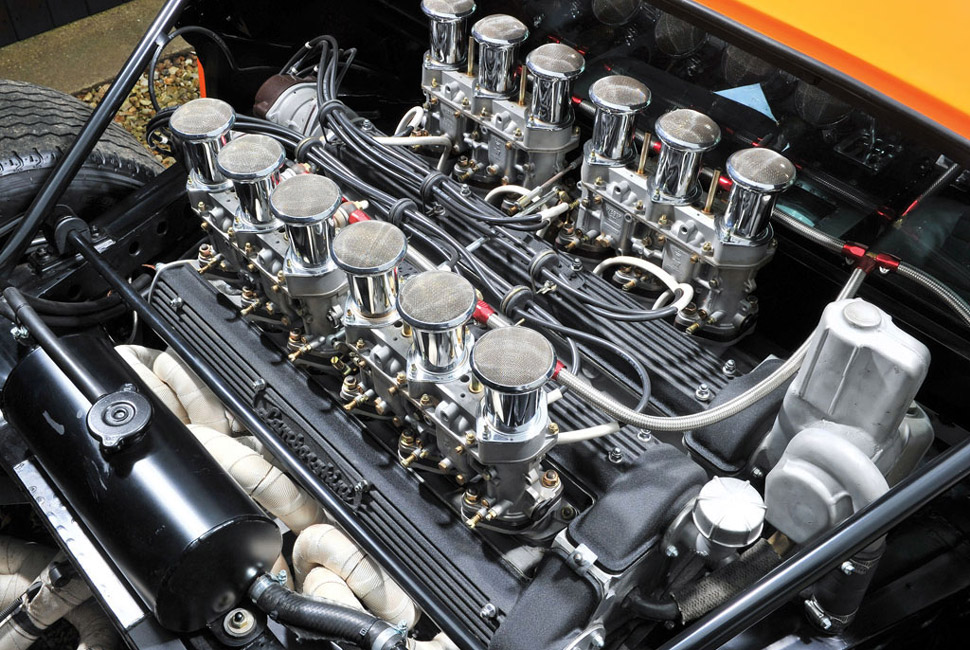
A transverse V12 sprouting Velocity stacks? It would have been a sin not to include the Miura's V12.
When you lift the hood of the Lamborghini Miura, the engine appears to be floating between the wheels and the firewall — and half the beauty comes from knowing that it all comes together to make one of the most legendary supercar experiences of all time. The transverse-mounted V-12 helped dictate the Italian supercar’s design, but the visceral nature of the engine itself gave the car its sound and spirit.

2014 Rolls-Royce Phantom Drophead “Waterspeed” Edition

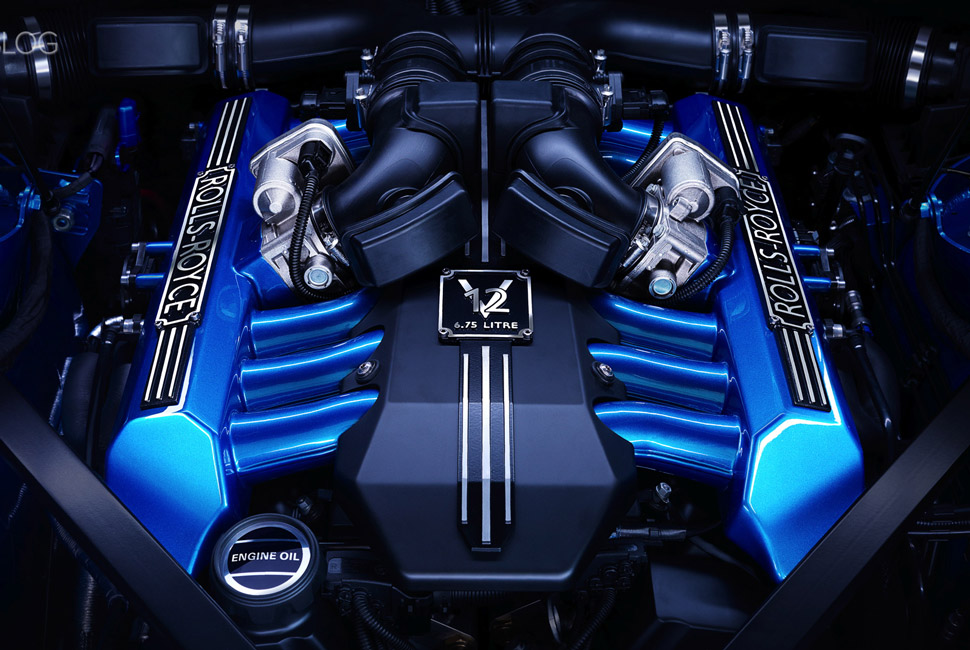
As far as modern engine bays go, Rolls Royce does not disappoint.
The problem with most modern engine bays: Manufacturers insist on throwing heaps of plastic over them to hide the fact the rest of the engine is unsightly. The 2014 Rolls-Royce Phantom Drophead “Waterspeed” Edition, on the other hand, displays bright sapphire intakes swimming in a deep sea of uniformly-packaged black metal.

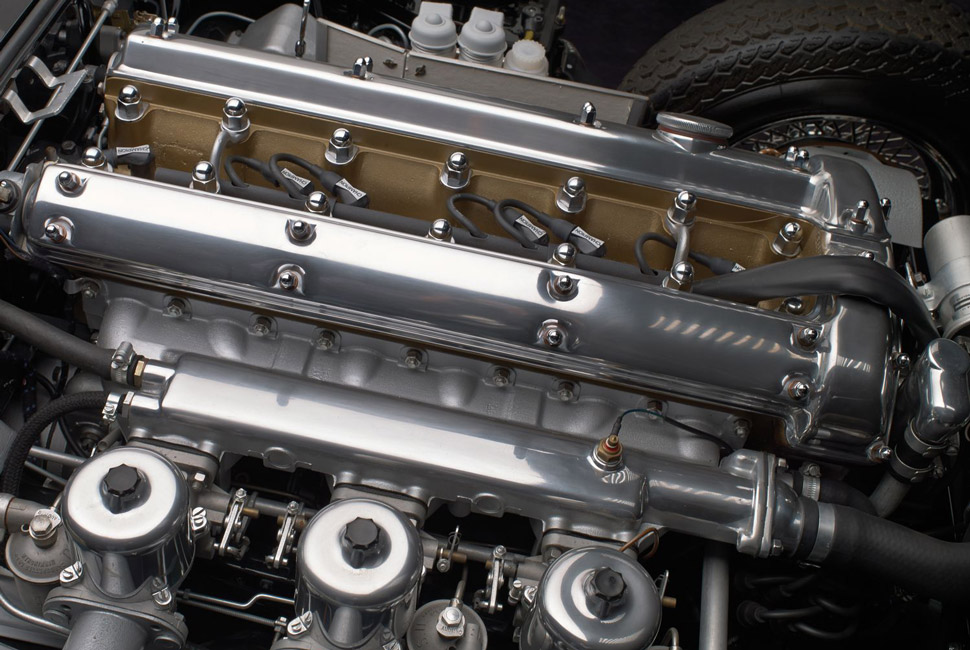
1961 Jaguar E-Type

We're very happy to hear Jaguar is making a move back to straight-six engines. (Photo: Hemmings)
Enzo Ferrari himslef once claimed the E-Type was the most beautiful car ever made. Knowing his affinity for engines, he probably included what was under the Jaguar’s long clamshell hood as well.

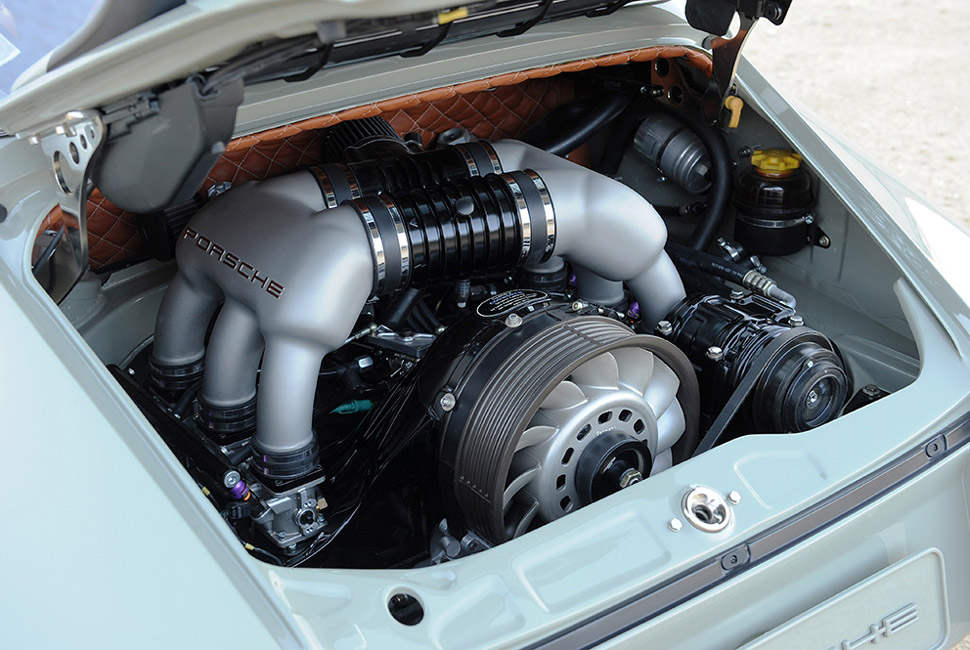
Porsche 911 Reimagined by Singer

There's not much room creativity in the back of a standard 911, but give Singer some quilted leather and they'll work wonders.
Singer is known for poring over every detail and not taking any short cuts, including in the (incredibly cramped) Porsche 911 engine bay. There’s not much room for creativity in the back of a standard 911, but give Singer some quilted leather, and they’ll work wonders.

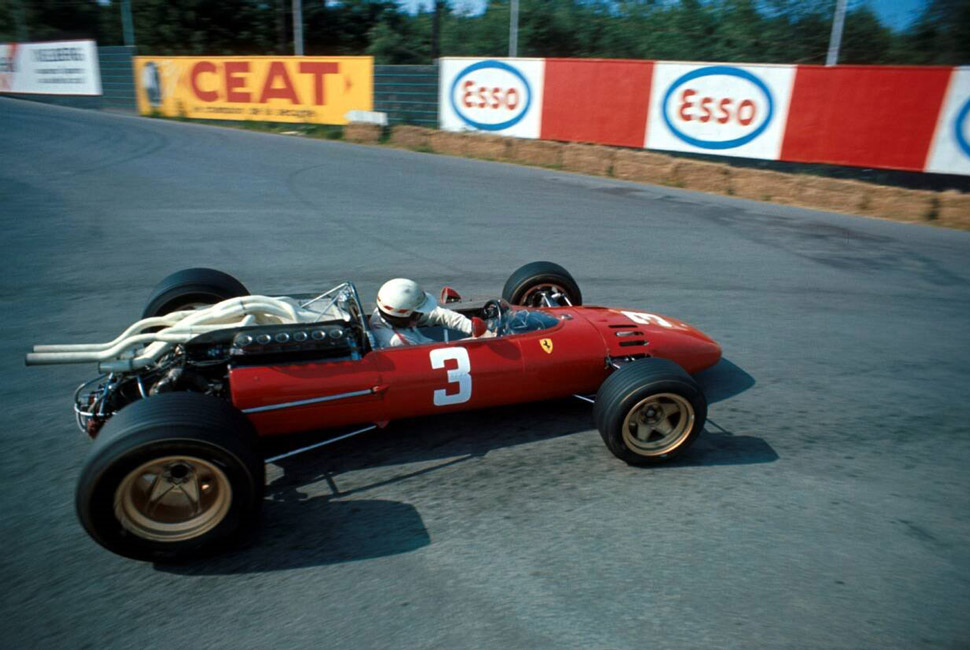
1967 Ferrari 312 F1

Whether this qualifies as an engine bay is debatable -- but as a work of art there's no question.
Whether this qualifies as an engine bay is debatable — but as a work of art, there’s no question. The Ferrari 312’s powder-coated center-mounted equal-length exhaust pipes are a thing of absolute beauty.

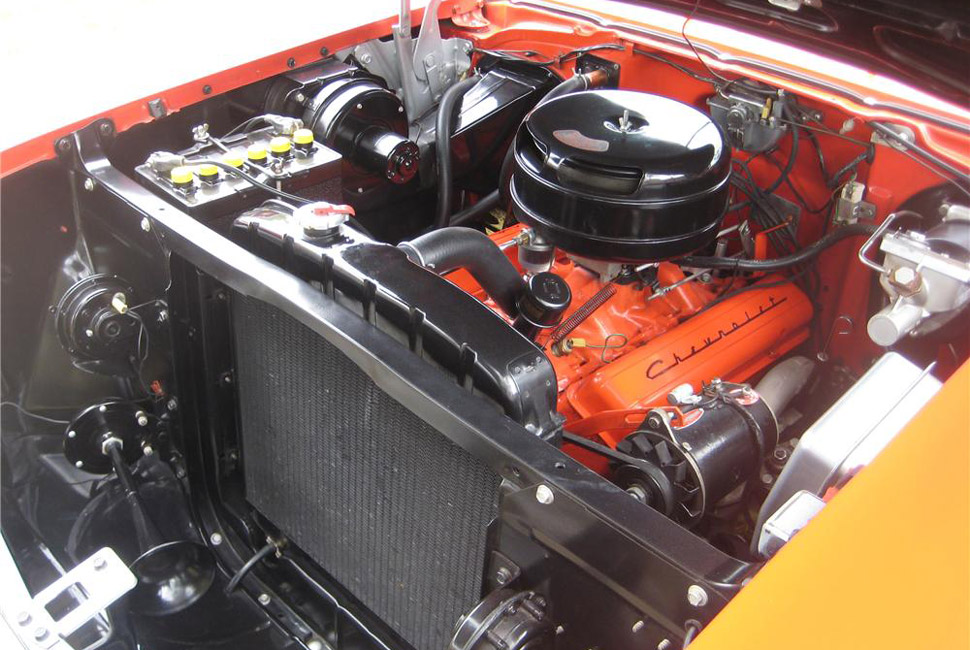
1957 Chevrolet Bel Air

Even with a 4.7-liter V8, there's still enough room to fall in on either side.
The 1957 Chevrolet Bel Air might be one of the more mechanically-simple engine bays on the list (there’s practically enough room to  fall in next to the engine), but there’s something about the simple industrial style of the space that deserves praise.

1930 Cadillac V16 Convertible

Can you believe this is a (very distant) relative of the ETC? [WHAT'S ETC?]
Cadillac is fighting to resurrect the world-beating standard it once held, but it’s unlikely to ever reach the heights it was at when the V16 Convertible was rolling around the streets of America. It wasn’t efficient and it didn’t produce all that much power, but the sheer excessiveness of the V16 puts it in the same breath as the Bugatti Veyron.

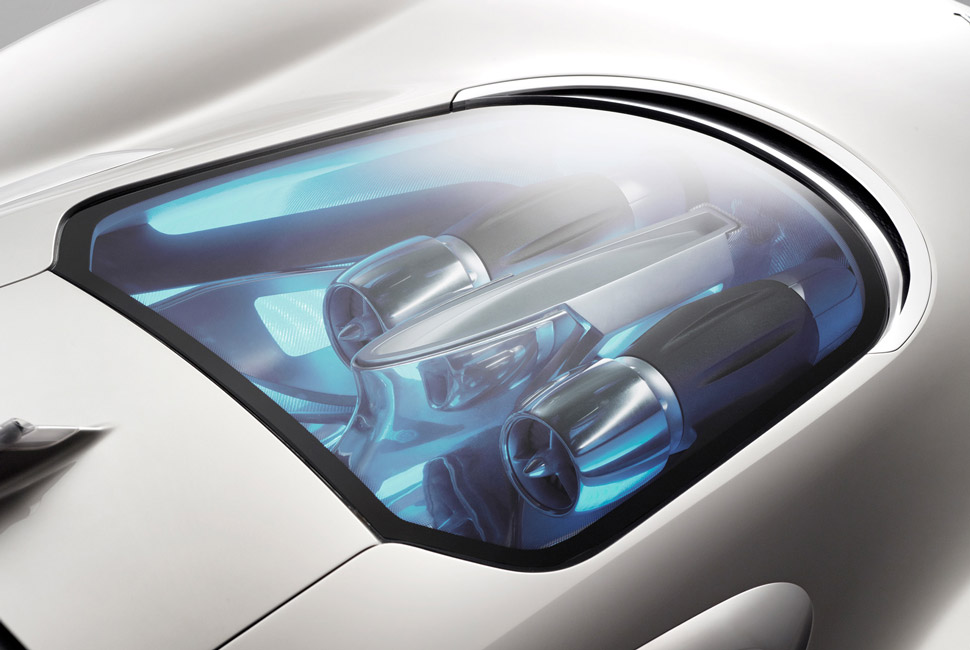
Jaguar CX-75

If you have a pair of mid-mounted turbines, you have to make sure they're properly illuminated for everyone to see.
This Jaguar will likely remain a concept forever, which is a shame. Even as we move into a futuristic world of all-electric cars and fully autonomous driving, the well-lit turbines under the CX-75’s hood still look ahead of our time.

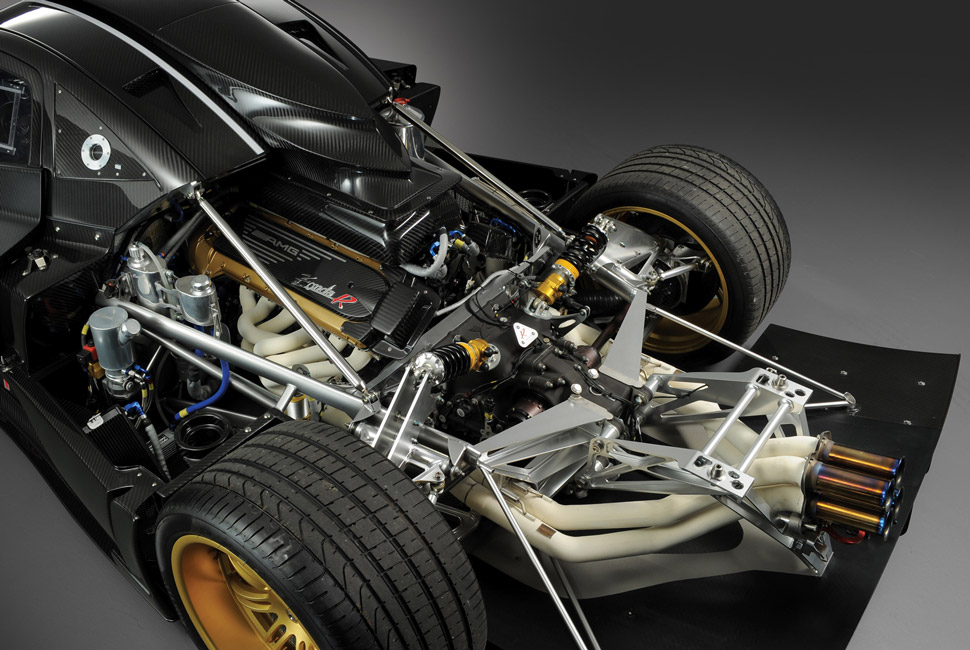
2011 Pagani Zonda R

Suspension, chassis, engine -- all are bolted together like one mechanical nervous system of high-strung performance.
The beauty of the Pagani Zonda R is the mechanical system of the suspension, chassis, and engine, all bolted together to create a structural web of metals and carbon fiber. Well, that and the sonorous tune that bursts forth from it.

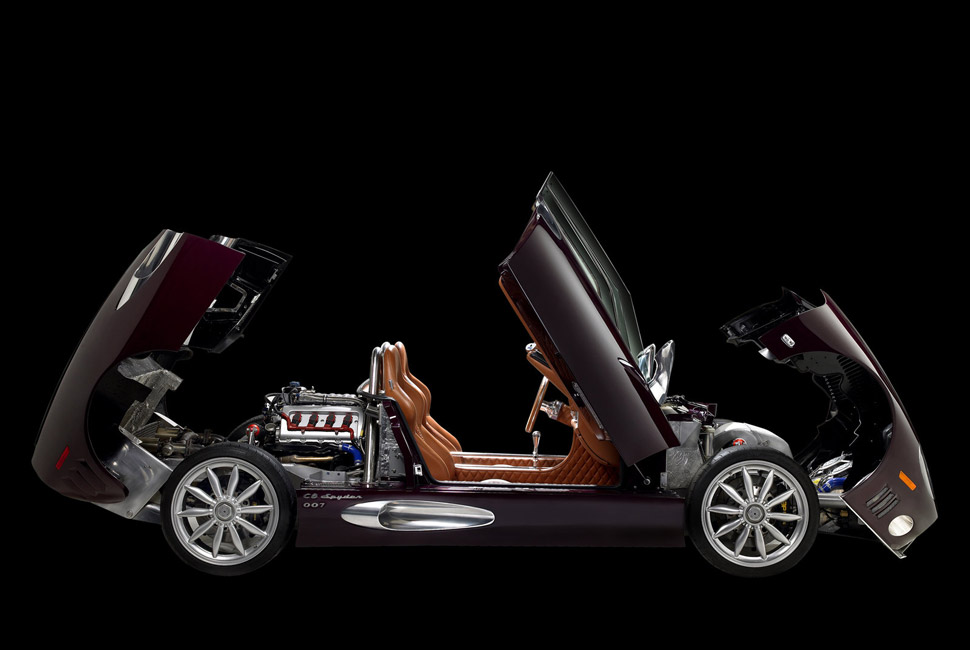
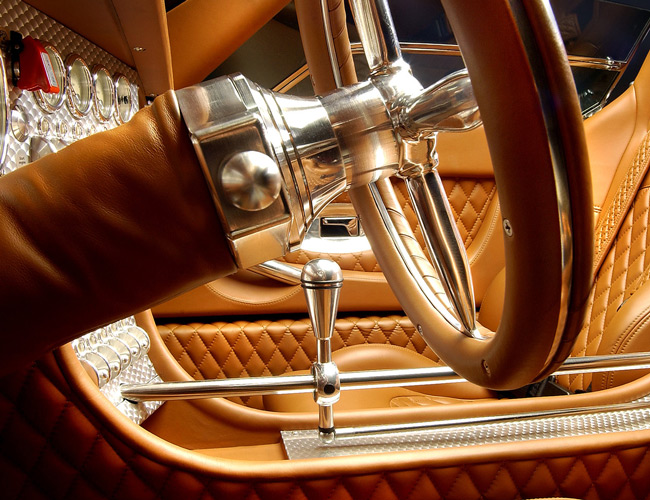
2001 Spyker C8

Almost everything on the C8 is designed to perfection. That includes the details you can't always see.
If there was such a thing as a “designer car,” the Spyker C8 would qualify. Every detail inside and out is beautifully overdone and over-the-top, but somehow, tastefully so — like a modern suit that borders on high fashion.

Other Gorgeous Details

Automotive-Features-Gear-Patrol-Lead-Featured

Engine bays aren’t the only beautiful little details we love. Look over our favorite finishing touches (superficial and functional). Read the Story

Bugatti Should Build This Open-Top Chiron

A Rendering Well Crafted

Bugatti has made some of the most amazing cars of all time recently. From the Veyron to the Divo to the Chiron to the amazing one-off that is the La Voiture Noire. One thing that is missing from its lineup is an open top Chiron. The Instagram profile called Car News Network recently showed off a rendering of just that. Bugatti should make it. 

The car in the photo shared by Car News Network was accompanied by a simple “What if?” caption along with the name for the car Chiron Gand Sport. What if, indeed. Honestly, it doesn’t seem all that far fetched. Bugatti could sell these things quite easily, but it’s unclear what cutting the roof off your Bugatti would actually do to the car. There would have to add in additional support to keep the structural integrity of the car. That would likely add a lot of weight.

Still, the rendering shared by the Car News Network is almost exactly what we’d like to see. As Carscoops points out, there isn’t actually much changed, or doesn’t appear to be. It’s just a roofless Chiron. It’s absolutely gorgeous. A Chiron Grand Sport could go for millions of dollars. It wouldn’t rival the high price of the La Voiture Noire, but it would be a pricey machine non-the-less. Bugatti should make this happen.

Watch the McLaren Senna Drive Around Regular Roads Then Honor Senna’s Legacy

A Fitting Tribute to the Man Who Inspired the Car

Henry Catchpole of Carfection takes the McLaren Senna on a drive through some British B-roads and around the countryside to see just how good the car actually is on the road or if it works at all. The McLaren Senna is a beast of a machine, and at first glance, you might expect it to not fit in on country roads. While it looks a little silly as Catchpole finds out, it’s actually reasonably well-suited for them.

Catchpole also digs into the history of the man the car is named after. He discusses his time spent living in England and how he managed to shock the world at Donington. The film seeks to honor one of Senna’s greatest ever moments, and one of the best moments in motorsports history—his iconic lap in the wet at the track and his subsequent win in an amazing fashion.

What’s interesting about the film is that it hits on what was important about Senna. Also important is how the new car named after him and driven on this track 25 years after his death works to encapsulate all that he was known for in the world of F1. The film is a heartfelt and well-produced one, and it’s worth the 12 minutes it takes to watch it. 

[embedded content]

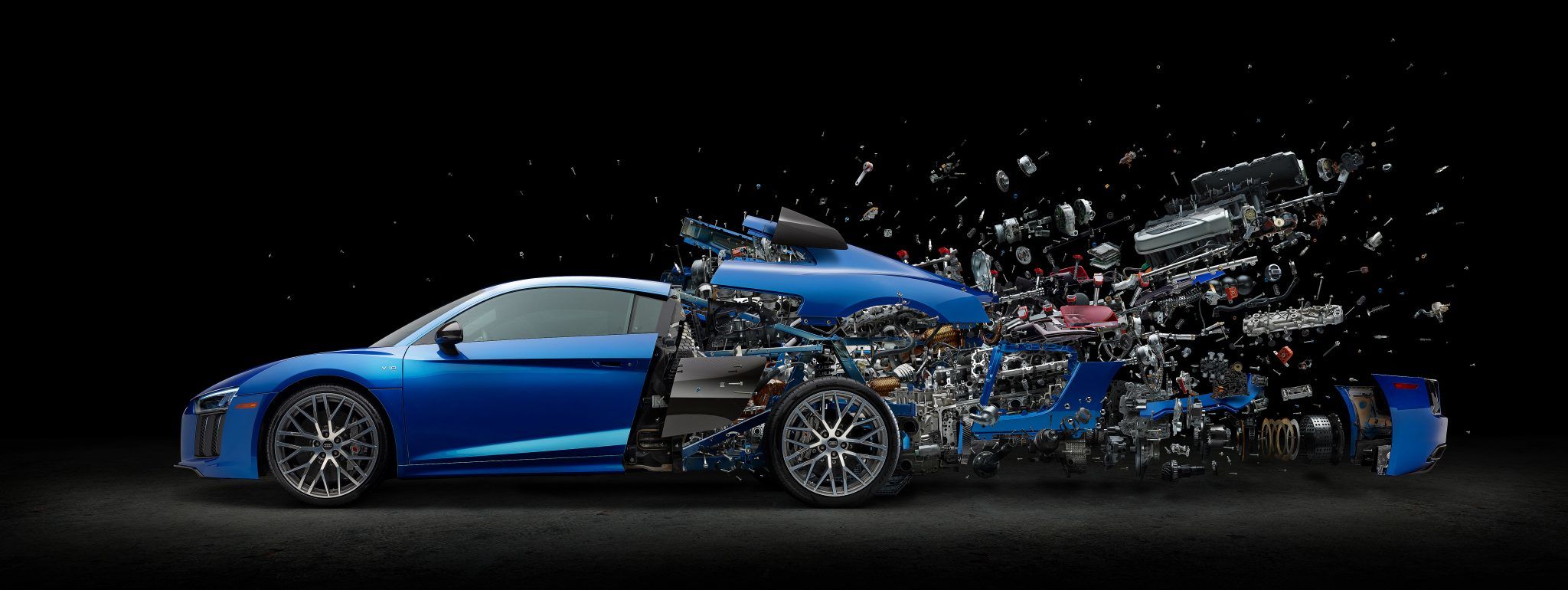
Watch this artist disassemble an Audi R8 V10 for an extremely awesome poster

Earlier this year, Audi announced a special limited-edition variant of the R8 to celebrate ten years of V10 power. Only 222 R8 V10 Decenniums will be built with a base price of $217,545. The original Audi R8 V10 launched in 2009 and was sold alongside the V8-powered R8, a model that hit dealers in 2006. When the second-gen model made its debut in 2015, it dropped the V8 and manual transmission completely. If you want to take a good look at what makes Audi’s V10-powered sports car really tick, watch this amazing “disintegration” video that shows the each and every nut and bolt of the car’s guts.

This isn’t the first time artist Fabian Oefner has created one of these disintegration images. Earlier this year, he worked with Lamborghini to create a similar image with the iconic Miura. A few years back, he did the same with a Porsche 956 Le Mans prototype. With the Porsche, Oefner appears to have used a model, but based on the video, real cars were used for both the Lamborghini and Audi.

From what we can tell, each car is partially disassembled, with each piece being photographed from multiple angles with a Hasselblad medium-format digital camera. Each piece is digitally manipulated and arranged into place to create the exploding effect you see in the video. It seems pretty time intensive, but the final result is one of the coolest car posters we’ve ever seen. If you like it, you can even pick up a poster of Oefner’s image on Audi’s website for $24.95.

Disintegrating Audi

This 1993 Subaru WRX Is Rare and Wildly Affordable

Thanks to the passing of the Import Motor Vehicle Safety Compliance Act in 1988—a law that restricts cars not originally available in the US from being imported until they reach the ripe old age of 25—we’re perpetually waiting two and a half decades to drive forbidden fruit on our home soil. But that just means each year that passes is like a new entry in an automotive advent calendar, opening the doors to new treats as time passes—treats like this first-generation Subaru WRX.

Right now, over on Japanese Classics, there’s a mint condition 1993 Subaru WRX GC8 for sale—and at just $12,995, it’s wildly affordable. It does show 112,000 miles on the odometer, but seeing as how the WRX is a cult favorite—and America didn’t get the WRX until a decade later—this first generation example is poised to be a serious collector car.

Inside, the cloth racing seats look barely used, with hardly any wear and tear. The contrasting accents on the seats match the Cardinal Red exterior, and brighten up the dark interior with the sort of ’90s-chic fashion many brands are clamoring to replicate these days. The rest of the interior and dash are in surprisingly good shape as well, with no apparent cracks or damage—although the steering wheel looks like it has seen a lot of use.

Pop open the hood, and the good news continues. The engine bay looks almost factory-fresh, so there’s a good chance the punchy little 2.0-liter flat-four is still good for 238 horsepower. Combine those specs with the world-famous symmetrical AWD, characteristically direct steering, and just 2,689 pounds worth of WRX, and it’s not hard to see why Subaru dominated the World Rally Championship back in this car’s day.

Luckily for any buyer, considering how rare and well-kept as this Subaru is, the sale isn’t an auction; $12,995 is the going price, not an offer to be bid up further. Whether you’re looking to invest in a possible collector car or just want a vintage WRX for some good old-fashioned ’90s-spec hoonage, this is your chance to do it on the cheap.

The Bugatti Chiron Sport ‘110 Ans’ Insurance Cost Is Outrageous

You Could Buy Another Nice Car for the Annual Cost

Anyone buying a Bugatti Chiron Sport “110 Ans” likely has more than enough money to pay for insurance for the hypercar. However, they might not have realized that it would cost $50,000 a year. Yep, that’s how much it insurance costs for the special edition Chiron Sport. According to ValuePenguin, the annual insurance estimate for the car rests at $50,000.

To be fair, the Bugatti Chiron Sport “110 Ans” is an expensive car. The MSRP is over $3.2 million, and some dealers are charging even more than that. According to Carscoops, one dealer in Munich, Germany has the price for a build slot set at $4.5 million.

If you’re dropping that kind of money on a new Bugatti, then the $50,000 in insurance costs per year probably don’t worry you that much. However, if you’re not used to dropping millions of dollars on a car, then the $50,000 a year sounds completely ludicrous.

The insurance was calculated using a 30-year-old male living in New York City who wants full coverage on the vehicle. There’s room to reason that the $50,000 annual cost could be dropped depending on the location and information of the person. With that said, it’s probably not going to bring the cost down too much. If you had your eye set on the new Bugatti, hopefully, you’ll be able to pay your insurance.

New Land Rover Defender Pictures Reveal a Curvy-Faced Off-Roader

There are, no doubt, thousands upon thousands of Land Rover enthusiasts scattered across the world clamoring with baited breath for any crumb of news about the all-new 2020 Defender—folks who set Google News alerts for “2020 Land Rover Defender,” contribute to forums dedicated to boxy British off-roaders, and order vanity plates like “4WDKING” for their classic, doted-upon Defenders.

Presumably, these are also the same sort of people who knew April 30th was also known as “World Land Rover Day,” a fact that had escaped us until now. But to mark that occasion—and throw a bone to the ravenous fans out there—Land Rover has released a new batch of images of the 2020 Defender, including one that gives us our best look yet at the next generation of JLR’s burliest, boxiest vehicle.

Well, “boxiest” is somewhat of a relative term. While the Defenders pictured still wear camouflage, one example—a prototype soon headed to Kenya’s Borana Conservancy to help the Tusk Trust, a British wildlife conservation non-profit, with its work—is clad in less cloaking material than the others—a skin-tight wrap instead of a three-dimensional disguise.

It’s that Tusk Trust Defender that gives us a look at the new model’s lines—and unexpected curves. While the shape after of the A-pillar looks every bit as square as expected from a Defender, the front fascia looks much more rounded than earlier images had led us to believe. Indeed, the curved headlights and rounded hood and chin bring to mind nothing so much as the original Land Rover Freelander.

Land Rover also took advantage of its self-titled holiday to reveal that, so far, the 2020 Defender development fleet has covered almost 750,000 miles during testing at locations across the planet, including vehicle dynamics development work at Germany’s famed Nurburgring Nordschleife, rock-crawling in Moab, Utah (where Jeep sends its own experimental off-roaders for work and play), winter driving work in Sweden, and city driving tests here in Gear Patrol‘s own hometown of New York.

As we mentioned earlier this month, the 2020 Land Rover Defender is expected to debut in September. Will it be a disappointment, or live up to all our expectations? Guess we’ll find out in a few months.

2020 Toyota 86 Hakone Edition Is a Killer Green Machine

Named After the Hakone Turnpike

The dark green 86 you see before you is the special edition of the car called the Hakone Edition that’s named for one of Japan’s best roads to drive. The car is designed to pay homage to international racing, according to Toyota.  However, the company didn’t touch the 86 for the Hakone Edition from a performance standpoint, but it sure took the car to new heights in the styling department.

The company added a deep, dark green color to the exterior along with some additional equipment to complete the look. It has some 17-inch wheels with a bronze finish and a rear spoiler painted black.

Inside, the car gets two-tone leather and Alcantara seats. The armrest between the seats also has the two-tone treatment. Additionally, there’s tan contrast stitching and some embroidered 86 badges.

The car still has the 2.0-liter naturally aspirated four-cylinder engine with 205 hp and 156 lb-ft of torque. Buyers have a choice between a six-speed manual or an automatic transmission. The car also comes equipped with all of the best goodies of the 86 line, including LED lighting, a dual-exhaust system with chrome tips, and a remote keyless entry system.

This special edition of the 86 will be available in the fall of this year. Pricing has not yet been announced, but it’s bound to be a significant upcharge from the standard model.

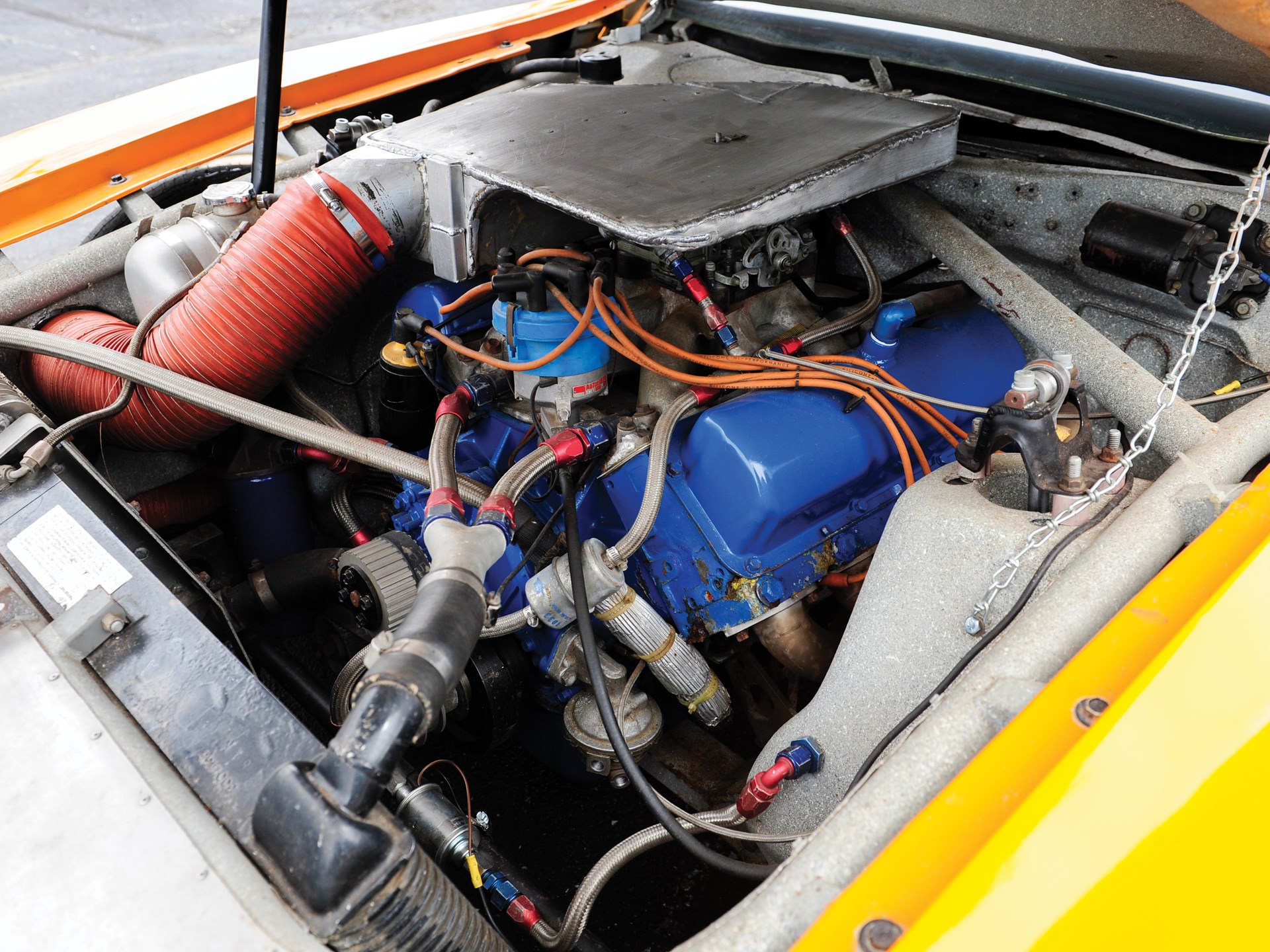
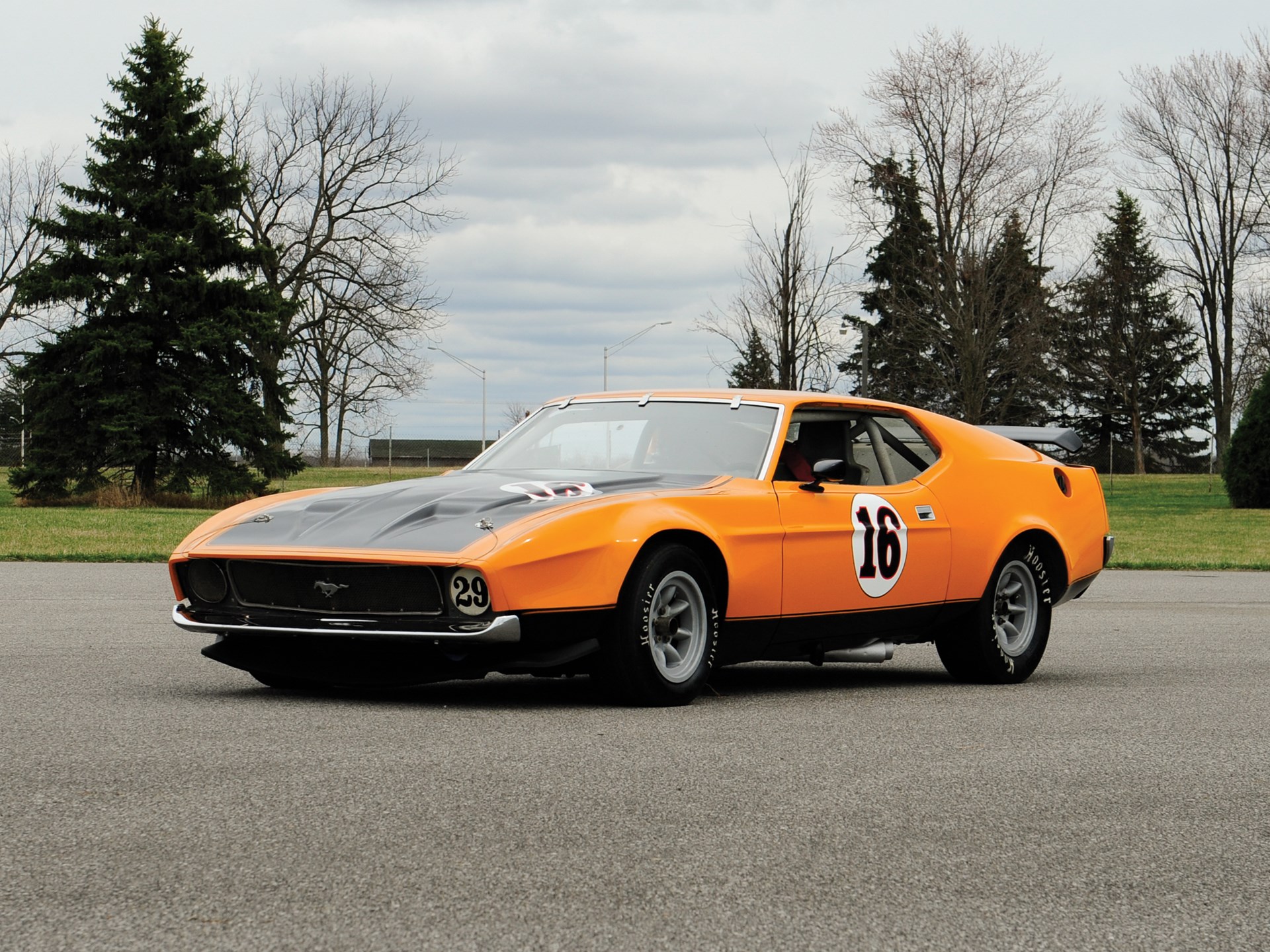
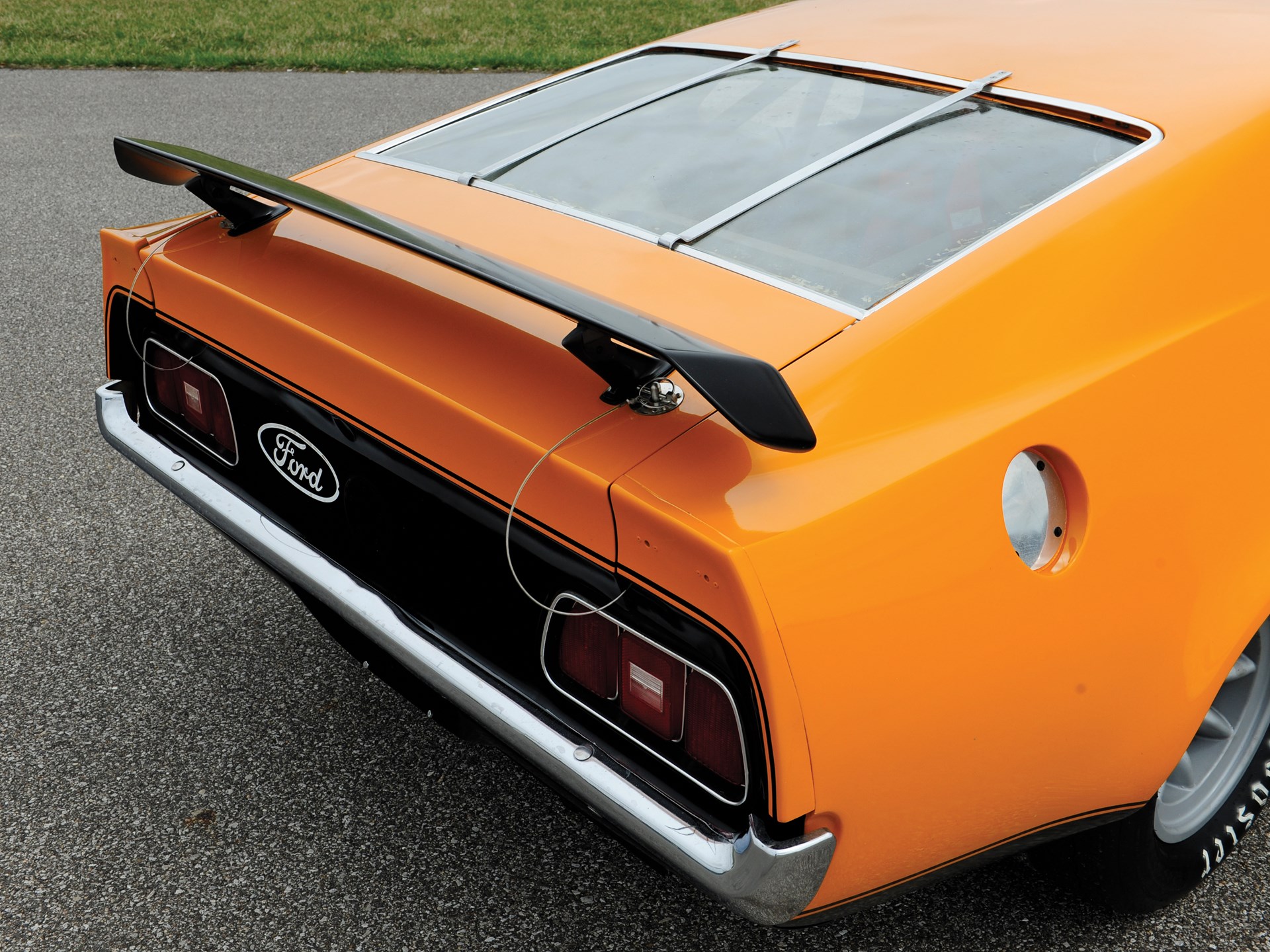
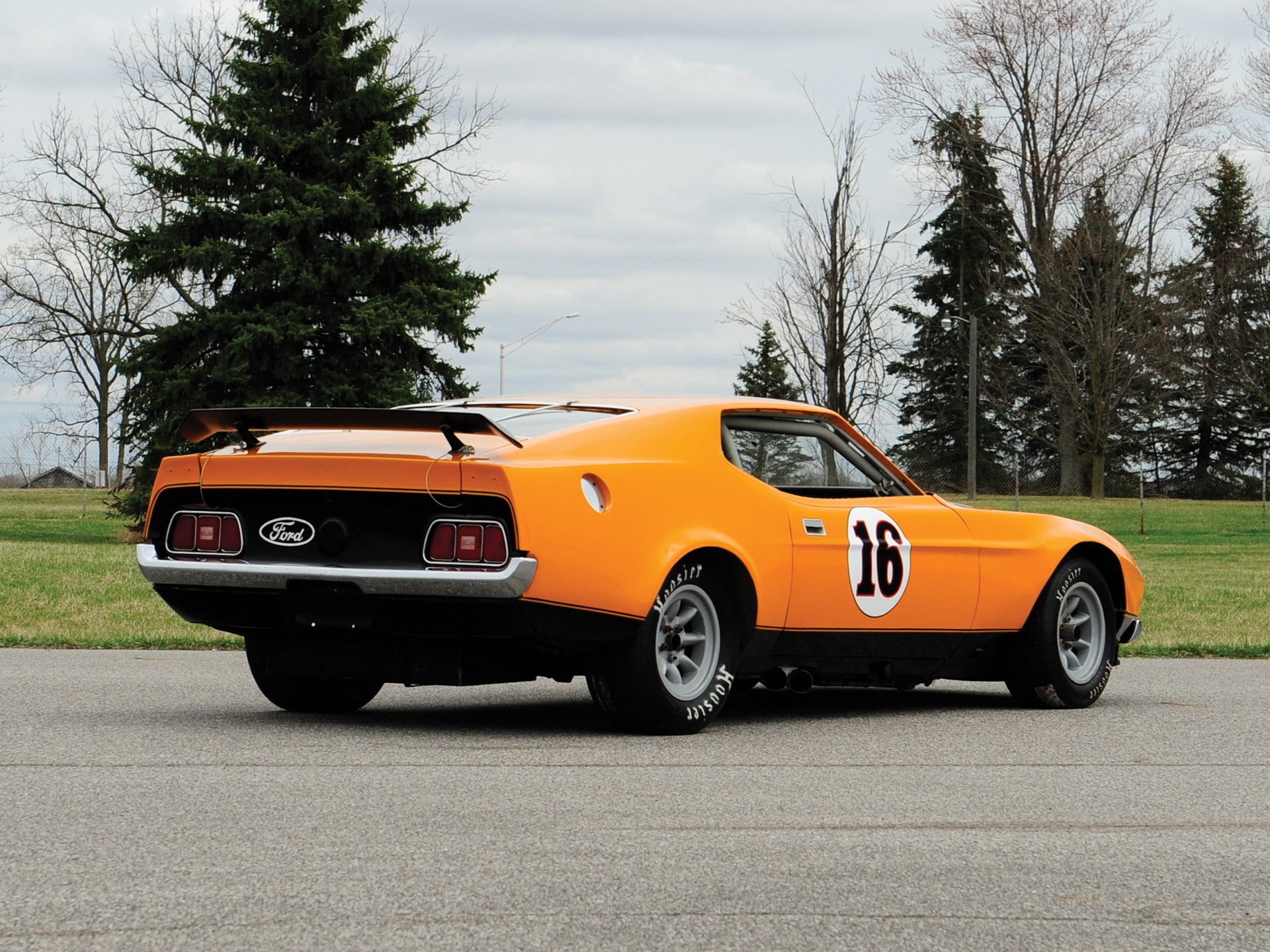
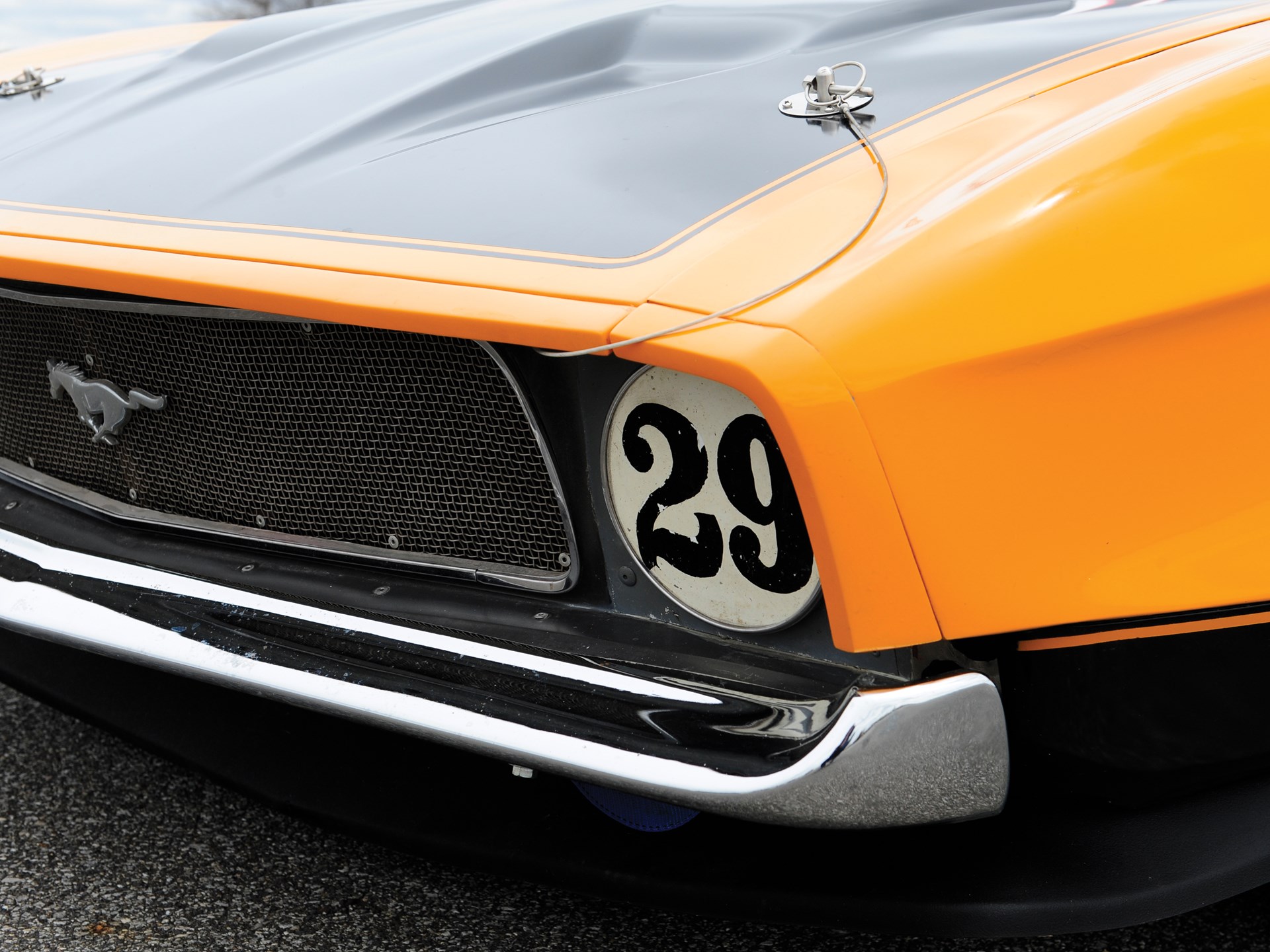
1973 Ford Mustang Trans-Am Coupe

This beaut is now up for auction, a 1973 Ford Mustang Trans-Am Coupe that’s reminiscent of Ford’s Pony era in 1965.

Now more commonly known as Trans-Am, Trans-American Sedan Championship cars was a racing series that served as the Sports Car club of America’s first attempt at a manufacturers’ championship formula for modified sedans and coupes. This series has ran on a bevy of different courses, including streets, airport circuits, modern road courses, and race tracks.

According to RM Sotheby’s, this particular unit up for auction is one of two body-in-white cars sent to Ford after Kar Kraft shut down, which ended Ford support for factory racing. Warren Tope, of Tope Racing, assembled the other unit’s chassis and swiftly pushed it to the track. Ed Hinchliff, of Hinchliff Racing, assembled the car you see above, using factory parts and Kar Kraft blueprints. He even sought the help of Lee Dykstra and Mitch Marci, two former Kar Kraft engineers.

It features a heavily modified 351 cubic-inch V8 engine from Rousch. And it includes proper documentation, too. Gawk at its storied racing history to get a sense of the places it’s been. Unfortunately, the ride needs a proper restoration, still. A little TLC might go a long way toward reviving this golden age racer back to its classic, sophisticated roots. You likely won’t bring back its original, fresh verve. But don’t fret. With a little tuning up, this might still be eligible for vintage racing events across the country. Hit the link below to find out more.

CHECK IT OUT

Photos courtesy of RM Sotheby’s

Alfa Romeo 4C Mole Costruzione Artigianale 001 to be Auctioned

A special Alfa Romeo 4C will cross the auction block next month. A one-off Alfa Romeo Mole Costruzione Artigianale has been announced for RM Sotheby’s Villa Erba auction. It is the first chassis to come from Mole Costruzione, fresh from its debut at the Geneva Motor Show 2019.

The Alfa Romeo Mole Costruzione Artigianale is built upon a well-used 4C chassis. RM Sotheby’s have confirmed that the donor car carried 40,000 km prior to its conversion. It uses a 1.75 litre inline four-cylinder turbocharged engine, most likely sharing the 240 hp power rating of the donor car.

It’s the bodywork that impresses the most though. It is virtually unrecognisable compared to the standard 4C. Pumped up front and rear bodywork gives a more muscular appearance. Additional louvres over the rear hatch, new rear tail lights and a new interior make this 4C a cut above the rest.

It joins a world class auction docket. Among the highlights are an Aston Martin Vanquish Zagato Shooting Brake, Delahaye 135 S and a rare Ferrari 500 Mondial Spider.

Here’s Why the BMW E30 M3 Sport Evo Will Always Be Amazing

A True BMW Legend

There are few cars that have a bigger fanbase than the BMW E30 M3 Sport Evo. The car is simply a legendary car and it’s what started the M3 on its current path of greatness. The guys over at Carfection somehow got their hands on a slew of M3s from multiple generations and decided to put together a multi-episode video series on the car, and its impact on the world of motorsports and motoring in general.

The E30 M3 Sport Evo famously shares only its hood with the standard car. The vehicle was tweaked in every way to build it into one of the best racing cars out there. The engine was a naturally aspirated four-cylinder that was built to rev out. The transmission for the Euro-spec cars was a dogleg five-speed. Other areas of the world got the traditional H-pattern transmission.

BMW only made 600 of these cars, and that makes them exceedingly rare, though not the rarest of the special editions out there. The car that the publication gets its hands on happens to be a single-owner vehicle. It’s a stunning example. When compared to modern cars, the E30 M3 is really quite slow, but that doesn’t make it any less of a legend, and as the presenter says in the video below, it still lives up to its reputation. 

[embedded content]

Koenigsegg preparing its cars for crash tests is an ugly affair

Christian von Koenigsegg has opened up his Angelholm shop again to show us another facet of producing hypercars for worldwide export. This time the subject is crash testing, and the resulting video looks like a mashup of a YouTube supercar fail compilation and “Mythbusters.” This is because in between the footage of a Regera being run over a curb or through a trench, Koenigsegg employees slamming the doors and beating on raw carbon parts with mallets.

As company homologation manager David Tugas explains, Koenigsegg can’t simply pull a dozen cars off a production line for crash testing. The carbon monocoque that forms the passenger cell is the crucial structure; everything else is expendable. A supercomputer in the company basement runs simulations on how carbon fiber structures behave in crashes, helping the company design a monocoque that can withstand the necessary impacts. So unless the monocoque breaks, the same passenger cell gets used in all the crash tests. After that, it’s cheaper for Koenigsegg to simply rebuild the body panels and mechanical parts attached to the monocoque that break during in-house testing. It’s all rather Formula 1.

It takes three months to prepare a crash test car for testing at a facility in Barcelona. That will cover everything from getting the smart airbags to blow in just the right way with just the right force, to getting them not to blow when someone hits the undercarriage with a sledgehammer. The knowledge and the carnage help explain where the $2 or $3 million goes in ever Koenigsegg.

Ready for the Ring Record: The Volkswagen ID.R

For many years, EVs have figured at the top of many a government’s wish list. The promise: To solve a plethora of issues, including raw material shortages, emissions problems and traffic issues. Now the industry is ready to roll. The grinding question is: Are the customers? Many of them need to be be convinced that EVs are actually fun.

Volkswagen has set out to prove just that – with the race car ID.R, which has become something of an ambassador for the ID sub-brand ever since it distinguished itself so remarkably at the Pikes Peak in Colorado and in Goodwood. In late September, VW’s board gave the green light: Get the electric record at the Nürburgring, currently held by the Nio EP9. Since then, getting the ID.R ready for the Nordschleife has been Volkswagen Motorsport’s top priority.

It’s not that Volkswagen Motorsport had nothing else to do: Switching from internal combustion engines to EVs within a year is a massive challenge and achievement. But the incentive to take the ID.R to the Ring is great: “If you make it there, you will make it anywhere,” says VW Motorsport’s head Sven Smeets. Next week, VW aims to go forward. We took part in the preparations.

There are many similarities between the Nürburgring-Nordschleife and Pikes Peak, says François-Xavier Demaison, Technical Director at Volkswagen Motorsport: After all, the race is about covering 20 Kilometers on asphalt. Nevertheless, aerodynamics, drive ratio and battery management need to be adjusted: The velocitites on the Nürburgring are greater.

[embedded content]

Willy Rampf, previously Technical Director and now an advisor, explains the changes: The spoilers up front and in the rear are smaller, the rear spoiler sits closer to the diffuser, and the “flat floor” spoiler on the sills has been optimised. On top of that, there is a drag reduction system (DRS) that is active about ten times per lap. The work is made easier by the absence of regulation, as opposed to the Pikes Peak race: VW was limited only by its own timing and by cost.

The engineering approach is rather different: In a traditional race car, the engine and powertrain are paramount, while in an EV racer, you begin with the battery pack. And the learning curve is steep. In developing the car, the constant feedback by race driver Romain Dumas was invaluable – even though about 1000 sensors in the car are collecting vast data.

The ID.R provides 500 kilowatts of power, and recuperation is a major topic on the Ring: About 20 per cent can be recuperated on the track. Some segments can’t be driven at the limit in order to save charge. That’s also why top speed is limited to 155 mph. For comparison’s sake, Porsche’s record car reaches 230 mph.

The mechanical suspension has been tweaked and improved; VW thinks that even the Pikes Peak could now be driven ever faster. The basic design of the ID.R’s chassis has remained unchanged, but now there are three cars: One is a Pikes Peak cars, the other two have Nürburgring setup. While VW had to commit to a specific chassis number at Pikes Peak, they can now switch between two testers: While one of them is charging for 20 minutes – enough to get the 80 per cent charge for one lap -, the other one is out, testing. The batteries are cooled with large fans and kept at 30 to 40 centigrades.

One of the main challenges was optimising the drive pedal so it always feels natural, even when the ID.R is not recuperating. That’s the case at the beginning of a lap, when the batteries are still full. The tires have changed: VW has ditched Michelin and moved to Bridgestone – for strategic reasons.

VW is not aiming for an overall record; the Vmax is far too low, compared to conventional race cars. And Romain Dumas explains that he had to adjust his driving: Driving over the curbs would damage the ID.R. On the other hand, the low floor makes for superior ground effects. Testing was done on the racetracks in Almeria and Le Castellet – and with the Time Attack simulator by Race Room.

The Nürburgring posed yet another problem: Its electric infrastructure is not suficient for the ID.R. That’s why VW brought their own generators. They are powered by glycerine, supposedly an especially environmentally friendly fuel. Diesel generators, the default choice in the real world, have been shunned for somewhat obvious reasons.

If the notoriously unreliable weather in the Eifel mountains plays along, VW will shoot for the record next week. And attempt to dethrone the Nio EP9, the British-built supercar that has earned its Chinese brand a lot of respect. The EP9, in fact, had just one major problem: It was far removed from Nio’s series production cars. About as far, we submit, as the ID.R from VW’s upcoming mass-market EVs.

McLaren GT spied in detail running around the streets of Spain

The McLaren GT is on its way, and today we get a more detailed look at the British supercar. McLaren previously released a few photos of the car in camouflage, but these are much more revealing with close-up shots included.

We’d like to turn your attention to the middle and rear of the car, where this McLaren stands to differentiate itself most with the rest of the lineup. There’s a bit of a stretching effect from the long, gently tapering engine cover and rear deck. It’s unclear how much of that area will be usable storage space, but there’s bound to be more than the 570 GT allows for now. McLaren has said it’s aiming for a full set of golf clubs or two pairs of 6-foot long skis with boots. So for all you McLaren owners upset about not being able to drive your supercar to the golf course or into snowy mountain passes, rest assured that McLaren is remedying this problem.

Even though McLaren is calling this a grand tourer, the general supercar shape and supercar characteristics appear ever-present. It’s still extremely low to the ground, positions the engine right behind the driver’s ears and it’ll probably have even more power than the current 570 series of cars. Autocar recently chatted with McLaren CEO Mike Flewitt about the car, and he said it will have a more dedicated focus on the characteristics you want in a GT. That means high levels of comfort from the suspension and also increased cabin luxury. He went on to say that there will be more McLarens like this to come.

The DRL, headlight and taillight signatures are clear for us all to stare at now, too. McLaren hasn’t showed much restraint when it comes to the air intakes behind the doors, as they’re as large as ever. Camouflage on supercars like this McLaren never looks all that bad — we wouldn’t be surprised to see somebody do a wrap like this for a rally, as those are generally pretty out-there designs.

McLaren is expected to launch the car relatively soon, presumably as a 2020 model year vehicle. It’s looking ready to go in these spy photos, so don’t expect to wait terribly long to see the new McLaren GT.

Watch the Dodge Demon Rage to 211 MPH

We Knew It was Fast on the 1/4 Mile, but Dang

So, the Dodge Demon is electronically limited to 168 mph. Take that limiter away and the big 6.2-liter supercharged V8 engine can make the car go a heck of a lot faster. How fast? Well, some guys took one of the cars minus its speed limiter to the Johnny Bohmer Proving Grounds, which is a lovely little place in Florida to find out.

The description of the video below says previous attempts without all of the goodies included in the Demon Box that comes with the car for the low price of one extra dollar yielded the result of 203 mph. That’s insanely fast.

The video attempt below takes things even further, though. It lets the Demon stretch its legs a little more to 211 mph. The car was equipped with the Demon Box equipment, and we assume running high octane gasoline to get the result. 

The car seems to have no problem whatsoever reaching 200 mph. It then keeps ticking up the speedometer to 211 mph where it holds for a couple of seconds before the driver seems to run out of runway. The car appeared to have no more to give, though, even if there was more runway available. 

You can watch the full run below.

[embedded content]

Watch the Upcoming 2020 Mercedes-AMG GT R Black Series at the Nürburgring

Mercedes-AMG Has an Amazing Car

The 2020 Mercedes-AMG GT R Black Series is the range-topping coupe for the manufacturer. According to Car Magazine, the vehicle is supposed to be the fastest-accelerating Mercedes-AMG of all time. It will be beaten, of course, by the AMG One hypercar. However, it’s still going to be one amazing machine.

Recently, the YouTube channel Automotive Mike spotted the 2020 Mercedes-AMG GT R Black Series testing at the Nürburgring. The film shows the car driving around on public roads around the track and then it shows a few minutes of the car taking on the various corners at the illustrious racetrack.

The car features a heavy camo wrap so you can’t see many of the details of the model. One thing you can tell is that it’s going to sound really wonderful. The test driver of the car is, at times in the video, really getting after it on the track. This kind of rigorous testing is exactly what Mercedes-Benz needs to do to see just what the car can do and where it needs to be tweaked.

The Black Series is bound to have more horsepower than the other versions of the AMG GT. Currently, the top-of-the-line AMG GT R has 577 hp. The Black Series should have well over 600 hp, making it the true sharp end of the stick for the automaker.

[embedded content]

Look How Crazy the Franco Scribante Racing Hillclimb Nissan GT-R Is

Despite All the Wings, They Still Plan to Drive It

The wild Nissan GT-R you see here is ready to take on the Jaguar Simola Hillclimb in South Africa in May. The obviously heavily modified car was built by Franco Scribante Racing. The team added, among other things, some of the most outlandish aerodynamic elements to the exterior of the car. Most notably the wings.

The car has a massive front splitter and then an even bigger wing at the front. Then it gets another big wing at the rear of the car. all of this should help smash the car down into the tarmac when it’s at high speeds, which is exactly what the team wants. Carscoops was the first outlet to post a story about the car and Jalopnik dug a little deeper, revealing the vehicle has other changes, too.

It gets upgrades to its 3.8-liter twin-turbo V6 that makes it good for 1,600 hp to the wheels. The team built the car in collaboration with Dodson Motorsport. They went to Pikes Peak last year. This year the team is ready to take on the Jaguar Simola Hillclimb in South Africa. Jalopnik notes the team has been working 18-hour days to prepare for the race. 

Prepare Your Ears for the Sonorous Lamborghini Centenario

If Sound Can be Pornographic, This is It

The Lamborghini Centenario often gets written off as a tarted up Aventador, but it’s really much more than that. The car offers a full carbon fiber chassis and body panels. It was made in extremely low numbers and cost an obscene $1.9 million in 2016. Today, the cars are going for well over $2.5 million and some low mileage examples fetch more than that.

The car features a 759 hp naturally aspirated 60-degree V12 engine with a displacement of 6.5-liters. That paired with its low weight, aerodynamic shape, and dashing and angularly aggressive good looks make it a truly special car. The vehicle is was a force to be reckoned with when it first came out. Today it’s a legendary car from Lamborghini, with only 20 being made.

One of the nearly countless reasons it’s an amazing car is its exhaust note. You can go on all you want about Ferrari’s V12s and how they sound, and they do sound wonderful, but the Lamborghini Centenario’s engine’s song is perhaps the most beautifully angry thing we’ve ever heard. You can listen to it in the video below and see the car from all angles and up close, too.

[embedded content]

The Complete BMW Motorcycle Buying Guide: Every Model, Explained

BMW automobiles have long set themselves apart in the crowded luxury marketplace by being driver-oriented machines, offering a dynamic experience behind the wheel while maintaining a high degree of refinement. Products from BMW Motorrad are no different, bringing equal amounts of sportiness, capability and luxury to the table.

But just as BMW’s cars have adapted to changing times, so too have BMW’s motorcycles. Constant innovation, with a focus on safety and accessibility, have made their efforts to mint new riders among the most successful in the industry. Entry-level single-cylinder bikes and scooters seek to bring the joy of riding to urban mobility. Adventure and heritage motorcycles equipped with the brand’s signature boxer engine are instantly recognizable, thanks to the horizontally opposed cylinders—and even those Beemers that don’t bear such obvious marks can still be clearly identified, as all of them wear the iconic blue-and-white roundel on the gas tank.

BMW Motorrad History

BMW stands for “Bavarian Motor Works” (or Bayerische Motoren Werke, in German) and while the company is best-known for its cars, its motorcycle engine manufacturing predates their first automobile by nine years. BMW AG was founded in Munich in 1916 and produced airplane engines during World War I; in 1921, it began building motorcycle engines for other manufacturers before building their first bike, the R32, in 1923. (That R32 was the foundation of BMW motorcycles for decades; its shaft drive was in use until 1994.)

Following World War II, the company was given permission to start building motorcycles again in Western Germany in 1947; however, it had to start from scratch, as all its surviving blueprints and plans were at the facility in Eastern Germany under Soviet control. Following a trademark lawsuit in 1952, motorcycles produced at the Eisenach plant in East Germany wore a red-and-white roundel bearing the name EMW (Eisenacher Motoren Werke)to distance them from BMW. (If you think those bikes are highly sought-after collector’s items these days, you’d be correct.)

How BMW Names its Motorcycles

As is the case with its cars, BMW Motorrad uses an alphanumeric naming system for their motorcycles. The first part of the name is a letter, which corresponds to an engine type; currently, the BMW Motorrad lineup has six engine types that vary from scooters names start with a C (parallel twin-cylinder engines attached to a constantly variable clutch) to sport bikes like the $78,000 HP4 Race (high-performance four-stroke four-cylinder). Between those extremes, you have bikes starting with the letter S (four-cylinder sport motor), R (opposed twin-cylinder), G (single cylinder), F (parallel twin-cylinder), and K (three or more cylinders).

The second part of the name is comprised of numbers, which represent the size of the engine’s displacement in cubic centimeters….except when it’s actually just a random series of numbers instead, which does happen.  Currently, models with the numbers 310, 400, 650, 750, 850, 1000, 1200, 1250, and 1600 fill up the lineup.

Lastly comes the letter or letters following the numbers—the part of the name that explains the purpose of the bike: A (for Adventure, sometimes spelled out), S (sometimes Sport or Strasse, the German word for street), G (from the German word Gelande, which means terrain), GT (sport touring), RR (road racing), RT (road touring), L (luxury), T (touring), GTL (luxury sport touring), B (bagger), R (road), X (extreme), and GSA (grand sport adventure, sometimes spelled out) all see use in 2019.

BMW Motorrad Terminology

BMW Motorrad: Pronounced “Moto-rad” (meaning “motorcycle” in German), this has been BMW AG’s motorcycle division since 1923.

Beemer/Beamer: Traditionally, “Bimmer” is the nickname for BMW cars, while “Beemer” or “Beamer” applies to the motorcycles. Why? Well, the etymology comes from the post-WWII era. BMW was competing with British bike company BSA, whose bikes were nicknamed “Beesers.” The “Beemer” nickname was attached to the BMW bikes in an effort to keep it from seeming like the staunch German brand.

Flat Twin: BMW’s iconic engine layout of choice, with two horizontally opposed cylinders mounted across the frame.

Airhead:  The flat twin engine with two valves per cylinder produced from 1969 to 1995 that is cooled by air.

Oilhead: Partial oil cooling, which came to the flat twin boxer in 1995, when the cylinders gained two valves for a total of four.

Precision Cooling: A glycol/water coolant mixture is sent to the hottest part of the engine around the combustion chamber. This accounts for 35% of engine cooling; air and oil account for the other 65 percent. Precision water cooling arrived on the GS line of bikes in 2013.

GS: The literal translation of Gelände/Straße is “Off-road/Road,” but GS is also used interchangeably to mean Gelände Sport. The first BMW GS produced was the R80/GS in 1980 and continues through today;  the line is easily identified by the long travel suspension and upright riding position, and bikes are often optioned with long distance touring accessories.

Shaft Drive: The final drive system of choice for BMW since the R32 arrived in 1923, consisting of a shaft that connects a gear inside the gearbox to another gear inside a hub on the rear wheel.

Urban Mobility (Scooters)
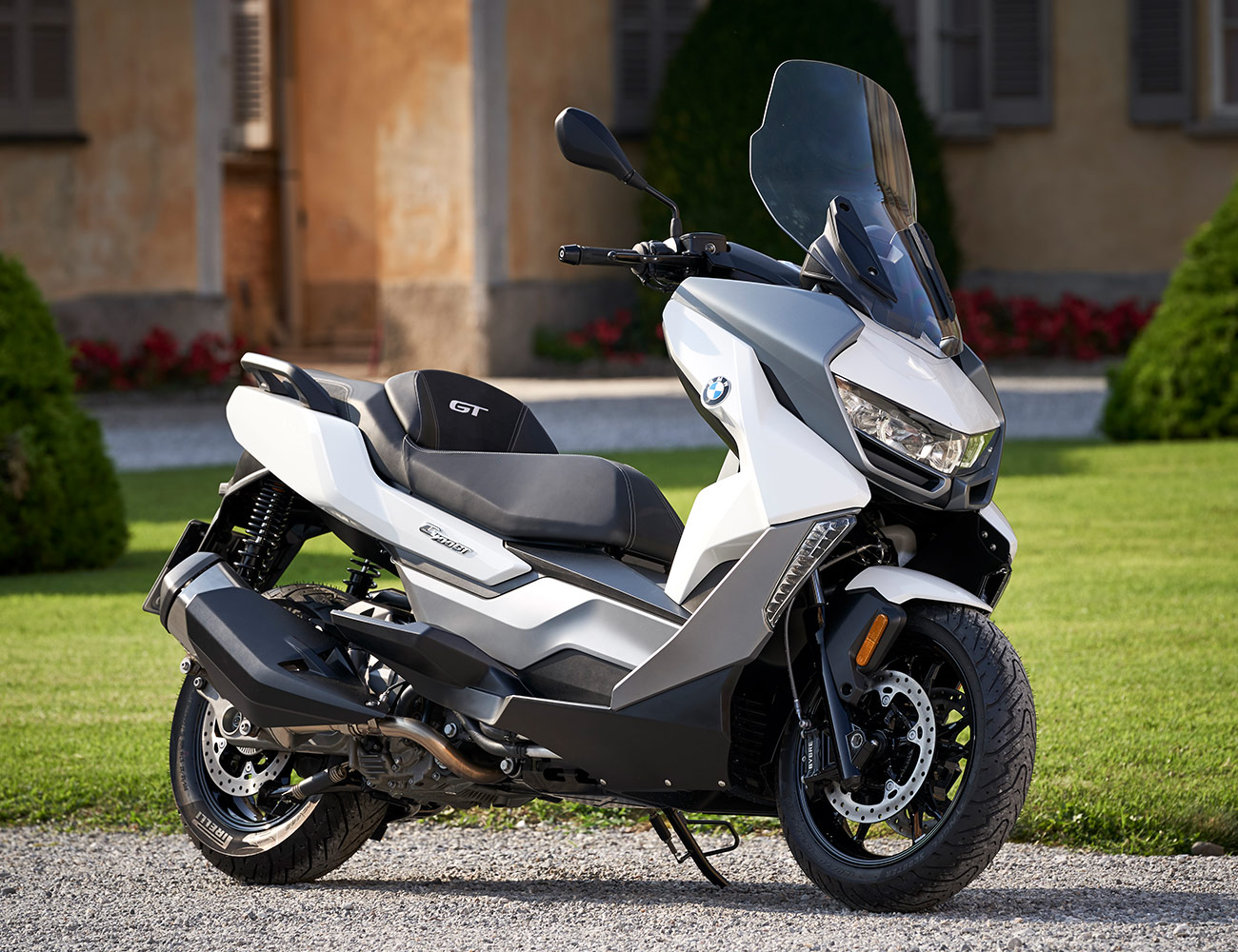
BMW Motorrad’s Urban Mobility segment consists of three scooters: two gas-powered models and a fully-electric model. The fuel burners are the C650 GT ($10,995) and C400 X ($6,795); the former is capable of covering long distances easily in addition to being a premium two-wheeled city street slayer, while the latter is a modern mid-size commuter with built-in smartphone connectivity. The single cylinder in the 400 X delivers 34 hp and 67 mpg, while the twin cylinder of the 650 GT offers 60 hp, 51 mpg, and a 112-mph maximum speed.

The fully electric C evolution ($13,995) has a powerful little electric motor with 48 hp and 53 lb-ft of torque, good for a 0-30 time of 2.8 seconds. It’s quick, futuristic looking and has a 99-mile range.

Models:
• C400X – $6,795
• C650GT – $10,995
• C evolution – $13,995

Engines:
• 350cc single
• 647cc inline twin
• 133v air-cooled lithium-ion high voltage battery

Adventure
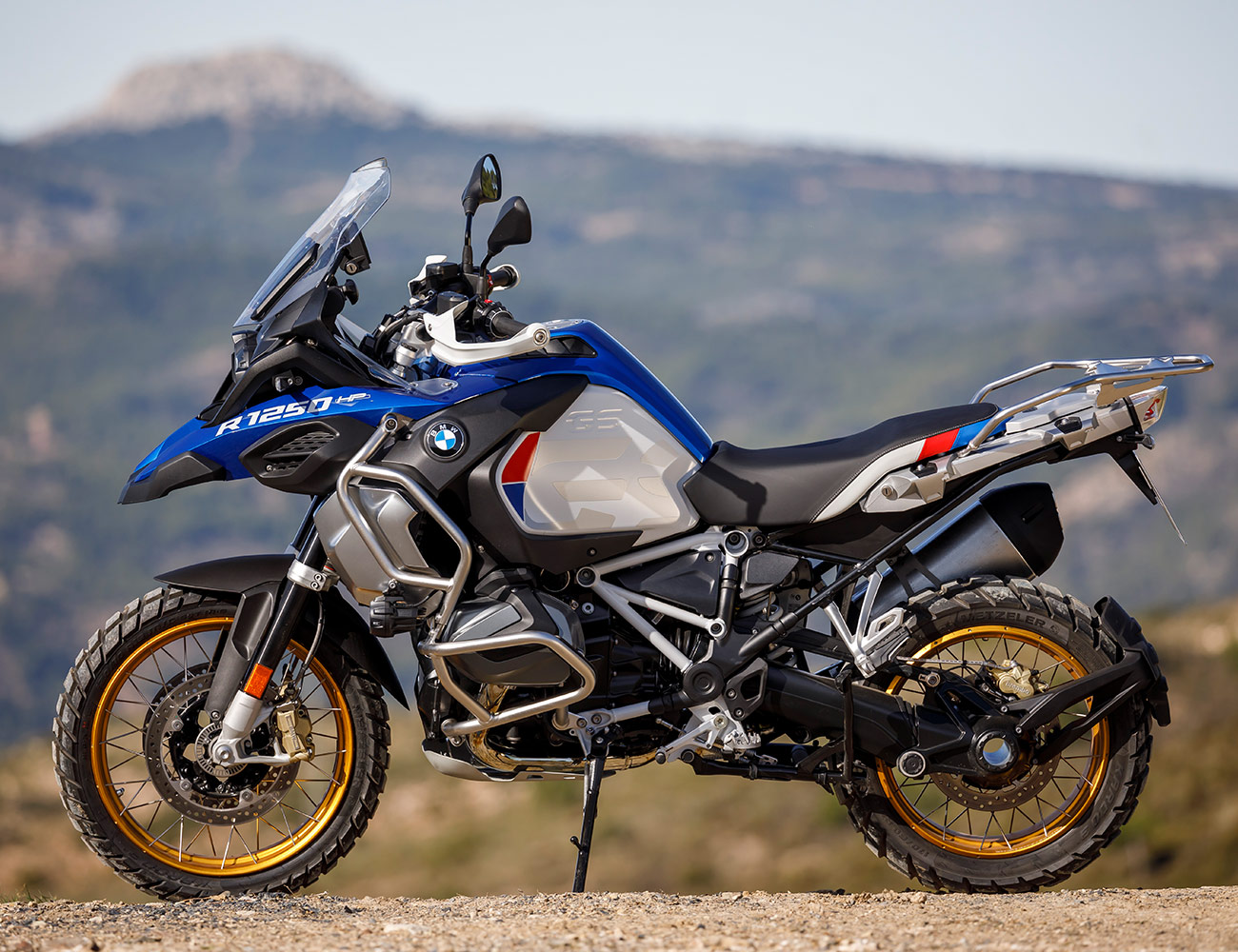
When BMW introduced the R80 G/S in 1980, it kicked off a whole new segment—one that has risen to new heights of popularity in the past few years, as smaller, more approachable adventure bikes have hit the market. So it stands to reason that the company that started it all would be producing the bikes to beat.(Car nerds, you can think of BMW’s “GS” motorcycles as the 3 Series of Motorrad.)

They range from the very accessible, fun-to-ride single cylinder G 310 GS ($5,795) up to the iconic R 1250 GS Adventure ($19,945), which can be found conquering continents with its 136-hp four-stroke flat twin. In between these two ends of the spectrum lie a number of great rides, including the F750 G S($10,395) with standard stability control and ABS, and the new F850 GS Adventure ($14,295) with a new 90-hp parallel twin cylinder engine and a smoother, more easily-operated clutch to reduce fatigue in tricky situations. Also noteworthy is the S 1000 XR ($16,895) which combines a 165-hp inline four-cylinder engine and sport bike riding dynamics with GS ergonomics and styling. There are countless ways to set up these bikes, but regardless of how you spec it, a GS is ready to eat up a ton of miles.

Models:
• G 310 GS – $5,795
• F 750 GS – $10,395
• F 850 GS – $13,195
• F 850 GS Adventure –$14,295
• S 1000 XR – $16,895
• R 1200 GS – $16,895
• R 1250 GS – $17,695
• R 1250 GS Adventure – $19,945

Engines:
• 313cc single
• 853cc parallel twin
• 853cc inline twin
• 999cc inline four
• 1,170cc stroke flat twin

Heritage
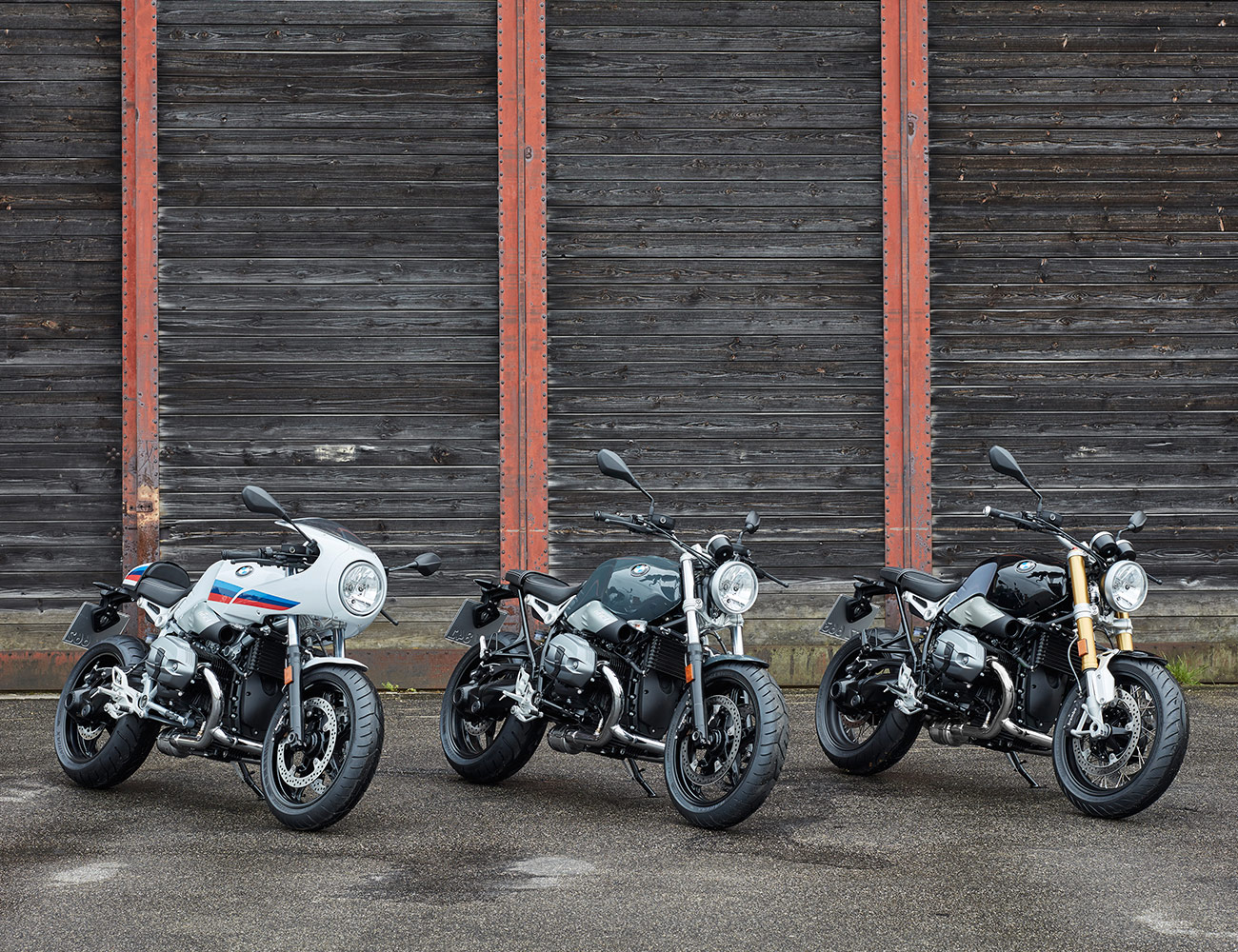
It was only a matter of time before stripped-down retro themed bikes had their moment. When BMW launched the R NineT in 2013, it was that moment. Here was an air-cooled boxer BMW with classic lines, but with optional heated grips and a factory warranty.

Since the launch, the R NineT family has expanded to five distinct models, ranging from the stripped-down, ready-for-customization R NineT Pure ($9,995) to the original R NineT ($15,495). There’s an R NineT Racer ($13,545), which boasts a sexy throwback front cowl and one of the most aggressive seating positions on the market. Then there’s the homage to the R80 G/S, the R NineT Urban G/S ($12,995); finally, there’s the R NineT Scrambler ($12,995) which brings knobby tires, a brown leather seat, and high-mounted dual exhaust. All five bikes use the same air/oil cooled twin cylinder boxer engine making 110 hp 86 lb-ft of torque. Oh and regardless of whether you go for the stock exhaust or optional Akropovic setup, they all sound phenomenal.

Models:
• R nineT Pure – $9,995
• R nineT Scrambler – $12,995
• R nineT Urban G/S – $12,995
• R nineT Racer – $12,545
• R nineT – $15,495

Engines:
• 1,170cc flat twin

Roadster
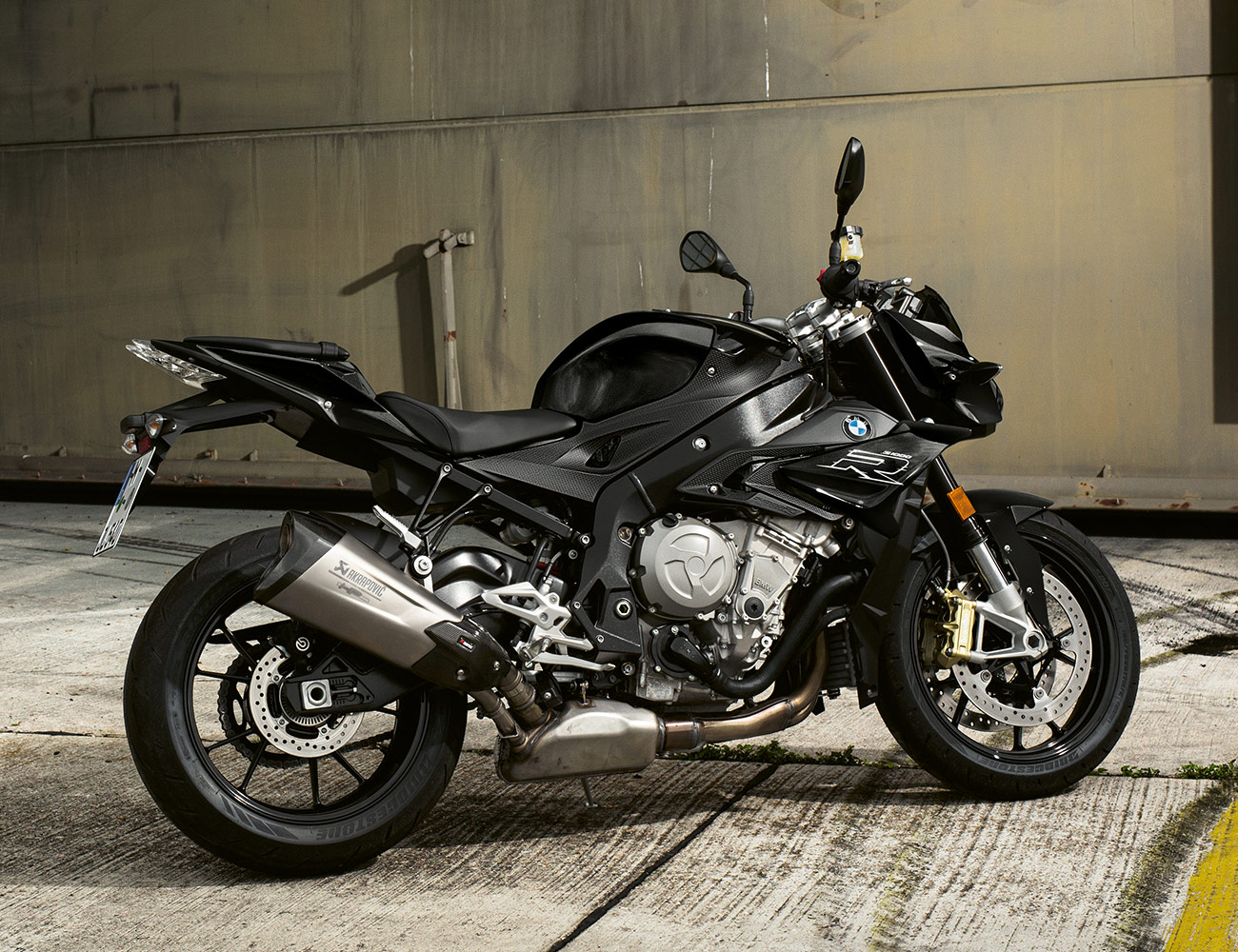
The Roadster segment is comprised of just two bikes, but the G 310 R ($4,750) and S 1000 R ($13,995) are hardly afterthoughts. The former represents an incredible value-for-money proposition, while the latter is a 165-hp beast with a standard titanium exhaust. The G 310 R is the more urban-oriented of the single-cylinder entry-level bikes, has already attracted a wide-ranging audience from new riders to custom builders. With a low center of gravity that’s been shifted towards the front wheel by rotating the cylinder head 180 degrees (thus giving the whole cylinder a rearward tilt) and a fully-fueled weight shy of 350 lbs, it offers an engaging riding experience that novices and veterans can both enjoy.

The S 1000 R, on the other hand, is just shy of being a full-blown sport bike. It’s an enthralling, stripped-down piece of machinery that somehow remains comfortable enough for commuting. It notably comes standard with Gear Shift Assist Pro, which lets you skip the hassle of engaging the clutch when ratcheting off shifts at full tilt.

Models:

• G 310 R – $4,750
• S 1000 R – $13,995

Engines:

• 313cc single-cylinder
• 999cc inline-four

Touring
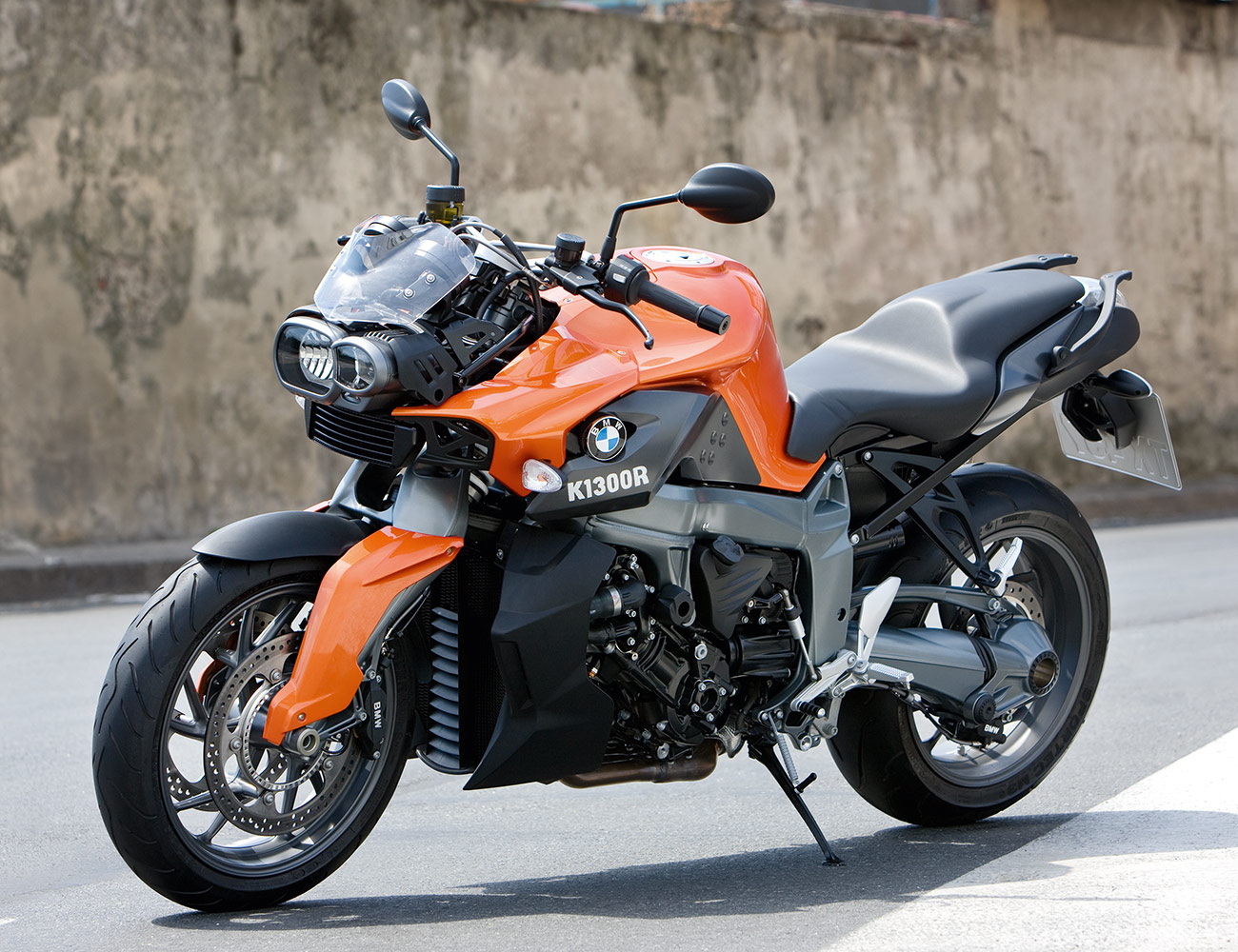
This is the other big segment for BMW, next to their Adventure bikes. BMW touring bikes can be found covering large swaths of land around the globe—and if you swing through notable riding zones like the Tail Of The Dragon, you’re guaranteed to spot a few well-to-do folks cruising in comfort on them. It’s kind of outrageous that the K 1600 B ($20,095) even exists; after all, when you think of BMW motorcycles, you don’t think of baggers. But there it is: six cylinders all in a row, a low-slung silhouette, taillights you can’t ignore, and an incredible amount of road presence.

The R 1250 RT ($18,645) boasts a new twin-cylinder boxer making 136 hp and 105 lb-ft, and makes use of a new variable camshaft control system dubbed “BMW ShiftCam” that gives access to more torque across the powerband by using variable valve timing. On a big bike like this, that’s exactly what riders are looking for: ease of riding, comfort, and doing the long rides in style. None do it better than especially the K 1600 GTL ($25,995) which has dual adaptive xenon headlights and an electrically-adjustable windscreen. (Yes, you read that right.) Other than the HP4 Race, it’s BMW’s most expensive motorcycle—but read the build sheet and you’ll understand why.

Models:
• K 1600 B – $20,095
• K 1600 Grand America – $25,595
• K 1600 GTL – $25,995
• K 1600 GT – $22,995
• R 1250 RT – $18,645
• R 1200 RT- $18,395

Engines:
• 1,170cc boxer twin
• 1,649cc inlin- six

Sport
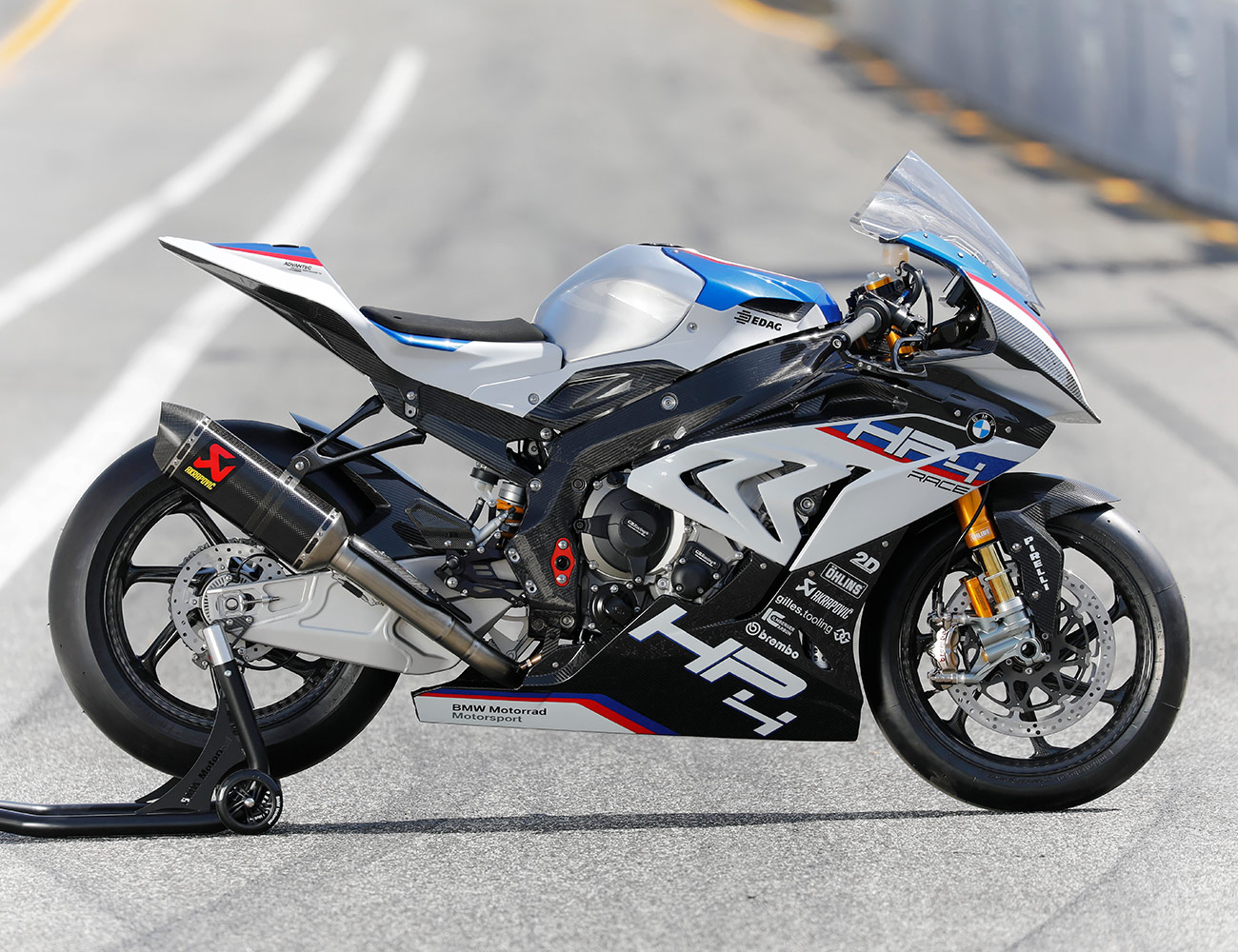
For a brand that’s had so much success in racing and is generally associated with “sportiness” by consumers, oddly enough, sport bikes aren’t the first thing that comes to mind when most people think of BMW Motorrad. Perhaps it’s because the Adventure and Touring bikes dominate in their respective categories and all those Italian sport bikes just scream “FAST”—but make no mistake, BMW builds seriously capable sport bikes.

A new S 1000 RR ($16,995) is on the way; the release date is still unconfirmed, but when it arrives, it’s going to shake things up in the sportbike scene faster, lighter, and nuttier than the current S 1000 RR ($15,995). The inline four-cylinder engine is now making 205 hp at 13,000 rpm, and redline doesn’t arrive until 14,600 rpm. With the optional M Package selected, weight is reduced by an extra 7.7 lbs to bring the bike down to 427 lbs.

Should you want to take your track day to the ultimate level, there’s the HP4 Race ($78,000) with carbon-fiber frame and wheels. Here the inline four-cylinder makes 215 hp, while the curb weight rings up at 322 lbs. It’s their ultimate handmade two-wheeler, and BMW’s building just 750 of them, so plan accordingly—and act fast.

Models:
• HP4 Race – $78,000
• S 1000 RR – $16,995

Engines:

• 999cc Inline Four