All posts in “Cars”

3rd Gen Bentley Flying Spur Revealed with 333km/h Top Speed

Bentley’s Flying Spur has today been revealed. Updated off the back of a successfully updated Continental GT platform. The mid-range sedan will get many of the same technical features alongside its new look. The Flying Spur is all-new with a new chassis, suspension, W12 engine and eight-speed dual-clutch automatic gearbox.

Bentley has torn apart the old model and started from scratch. The launch engine will be the twin-turbocharged W12 engine which was recently refreshed for the Bentley Continental GT. it packs performance figures of 635 hp and 900 Nm of torque. The limo gets a top speed of 333 km/h and a 100 km/h sprint time of 3.8 seconds as a result. An entry-level V8 will be added to the range at a later date, followed by a V6 petrol-powered plug-in hybrid at some point in the future.

The engine sits within the MLB structure which also underpins the Porsche Panamera. All-wheel steering is key to the Flying Spur package, together with an active system that favours rear wheel drive until it feels that the front wheels need to get involved. Improvements have been made with the addition of Bentley’s version of the 48V electric active roll control system and a new three-chamber air springs suspension setup.

In terms of design, the Flying Spur is longer than the outgoing model with shorter overhangs. The grille is the first difference you notice. The Flying Spur does not share the matrix grille of its smaller family members. Instead, Bentley has fitted veins which shroud the matrix. The Flying B mascot has been redesigned with illuminated wings, it sits on an electronically retractable plinth. The design lines are longer and lower than before with the rear arches noticeably dominant.

It’s on the inside that the differences need to be felt though. Bentley has not disappointed. Bentley has fitted a new set of seats finished in 15 hide colours. The traditional round ‘bullseye’ vents have been moved from the centre of the dashboard to a slightly lower location and re-shaped to sit either side of the Bentley clock. There is plenty of diamond quilted leather, a new Crown Cut Walnut veneer and a range of 7 other alternatives.

The dash has been redesigned using the centrepiece of the rotating display. The main display is a 12.3in touchscreen with the option of a single display or 2:1 split showing the functions of the car. Three audio systems are on offer, a standard 650-watt system featuring 10 speakers, a Bang & Olufsen 1,500-watt system with 16-speakers and illuminated grilles. The top of the range option, unique to Bentley, is a Naim, 2,200-watt, 19 speaker system.

The Bentley Flying Spur is available to order, except in EU28 countries, Israel, Norway, Switzerland, Turkey and Ukraine where it will launch later this year. Pricing has yet to be announced.

Bentley’s All-New 2020 Flying Spur Said to be World’s Best Luxury Sports Sedan

A Big Sedan With Strong Performance

Bentley finally graced us with the appearance of the third-generation Flying Spur. The car features the same underpinnings as the new Continental GT and is said to be sportier than ever before. The company claims the car is the “world’s most advanced luxury Grand Touring sports sedan.” We hope that’s correct. 

Judging by some of the additions to the car, we’d speculate Bentley is right about that. The car gets an aluminum and composite chassis, active 48-volt anti-roll bars, all-wheel steering, all-wheel drive, and Bentley Dynamic Ride for wonderful ride quality. 

Powering the big sedan is a variety of engines with the range-topping one getting a 6.0-liter twin-turbo W12 engine. That powerplant puts out 626 hp and 664 lb-ft of torque. An eight-speed dual clutch transmission wrangles all that power in a way the all-wheel-drive system sees fit. 

The new Flying Spur can do a 0-60 mph time of just 3.7 seconds and has a top speed of 207 mph. It’s not all about straight-line speed, though. The company adjusted the weight of the car, too, which ensures it’s a better handling car on the road. 

Inside, you get an obscene amount of luxury materials and technology, including luscious leather throughout the cabin, real metal and real wood trim, a 12.3-inch touchscreen, a digital instrument cluster, and remote control for the infotainment system for the rear passengers.

The wheelbase of the car was stretched by over five inches. Most of that length went to making the interior as spacious as possible. It also helps further smooth out the ride of this luxurious beast of a machine. We can’t wait to see one in the flesh. 

Nissan Built a Fleet of Custom Overlanders. We Drove Them to the Grand Canyon

The great thing about the Grand Canyon — apart from the obvious — is that you never really know it’s there until you almost fall in. The terrain near the South Rim is high in elevation but flat in aspect, so unlike most of the world’s signature natural landmarks, such as mountains, glaciers, and buttes, there’s nothing looming in the background when you’re in the vicinity. You just wander out of a pine forest and get the wind knocked out of you by the sight of the the striated abyss. It’s a fantastic effect, a clever twist Mother Nature chose to inflict on the unsuspecting.

To score that thrill, you can cruise up the smooth asphalt of Arizona State Route 64, pull into the South Rim visitor’s center and mosey on over to the fence, selfie stick in hand. Or you can do what I did with a group hosted by Nissan: Scramble through the woods along the same trail used by stagecoaches to get from Flagstaff to the Grand Canyon more than a century ago. (Fun fact: Back then, the trip cost $20—the equivalent of $500 in today’s money.)

We didn’t do the entire stretch — most of the trail has yielded to civilization — but we bounced over enough miles of ancient, hard-packed ground to get a sense of what a grand, miserable adventure the whole experience must have been riding on top of a stagecoach, cutting-edge as its suspension may have been at the time. We, on the other hand, were tackling the terrain in vehicles designed in the 21st Century for just this sort of adventure — a fleet of Nissans modified for overland expeditions.

This included, most notably, the new Destination Frontier, a variant of the company’s compact pickup designed to keep overlanding costs down to Earth. For less than $40,000, the Frontier Crew Cab Midnight Edition (base price: $32,295) can be fitted with a Nisstec three-inch lift kit, a Leitner bed rack, Baja Designs lights, rock sliders, a WARN winch, and even a Dometic freezer/refrigerator among other gnarly overland accessories. A CVT Mt. Shasta tent sat perched on the roof, though unfortunately, we didn’t get to try it out.

On the trail, the seemingly-top-heavy truck made the extra load feel nonexistent as it gamely rolled over the undulating terrain. Everything felt as secure as the contents of a true Conestoga wagon — absent the tin pans clattering about on the sides.

Our other rides included a selection of conventionally-outfitted Titan XD pickups and a beastly orange Nissan Armada dubbed Mountain Patrol. This vehicle, built on a stock 2018 Armada 4WD, debuted last year at the Overland Expo West—where the Destination Frontier debuted during the 2019 event—and it features 17-inch Icon Bronze Rebound wheels with 35-inch Nitto Ridge Grappler tires. These sit beneath a Calmini six-inch lift kit and Icon coil-over suspension with extended A-arms. Up top, it has Baja Designs lights mounted on a Rhino Rack Backbone cargo system. It also has a Warn winch, Calmini rock rails and its own roof-mounted Mt. Shasta tent, as well as ARB drawers, air compressor and refrigerator.

Not to be outdone—and easily the greatest surprise of the group—was a NV3500 SL van similarly tricked out for overland expeditions. That’s right: Nissan’s homely passenger transport, most commonly seen as an airport shuttle or church-mobile. With the right tires, a lift kit and a partial drivetrain transplant from a Titan to give it four-wheel-drive, it too can conquer Forest Road 320 on the way to the Grand Canyon.

On our drive in this armada of the Armada, the Titans, the Frontier, and the NV, we stopped at Moqui Stage Station, which still possesses the remains of a watering hole for replenishing stagecoaches and their horses, before reaching the Grandview Lookout Tower on the Arizona Trail. This structure, tucked in the Kaibab National Forest, rises above the trees and gave us our first glimpse of the Grand Canyon, which — unbeknownst to us — was lurking barely a mile away.

We covered the short remaining distance quickly to reach the end of the trail, then finally emerged from the pine trees for our first full, all-its-glory view of the Canyon. Sure, we ultimately wound up in the same place as everyone else, doin the same thing everyone else did — parking at the visitor’s center and moseying over to the fence, selfie-sticks in hand — but I’d wager that our approach to the massive maw made our visit all the sweeter. Absent the modern road, countless billboards, roadside restaurants, hotels, and souvenir stands that line Route 64, we experienced the G.C. the way Mother Nature intended: a breathtaking surprise at the end of a long trail through an ocean of green pines. Having seen it like that, I wouldn’t have had it any other way.

Ultima RS is a British track machine with 1,200 horsepower, 250 mph top speed

You may not hear much about Ultima here in the States, but it’s worth grabbing your attention for this British bomber the small Leicester company just released today. It’s called the Ultima RS, and this road-legal (in the UK) track car has 1,200 horsepower and a 250 mph top speed. Now, where can you send your money, right?

In addition to the ludicrously high top speed, the RS can do the sprint to 60 mph in only 2.3 seconds and complete the quarter mile in just 9.2 seconds. Under the engine cover of this mid-engine British rocket is true American muscle. Ultima starts with the LT5 crate engine (Corvette ZR1 motor) from GM for this application, and then gets to work tuning it up from there. The standard Ultima form of the supercharged LT5 produces 800 horsepower, but can be pushed to 1,200 ponies, like we mentioned earlier. All that power is then fed through a six-speed manual gearbox from Porsche. It’s the GM-Porsche partnership we never could’ve predicted, come to life. If that amount of power sounds rather intimidating to you, Ultima will also be producing versions of the RS with the 480-horsepower LT1 and 650-horsepower LT4. Additionally, the LS3, LS7 and LSA GM engines can be dropped in if you so desire. Truthfully, they’re all going to be entirely bonkers, and you won’t come anywhere near to exploiting the car’s true potential on the street.

Ultima quotes a weight for the lightest version of the car at 2,050 pounds. There are carbon fiber bits all over it to smash it into the asphalt with plentiful amounts of downforce. Lightweight, forged 19-inch Ultima-designed wheels wrapped in an array of Michelin performance tires adorn all four corners. Six-piston AP brake calipers do the stopping, with a quoted 100-0 mph time of 3.3 seconds. Ultima thinks its car in the highest output settings will be able to trounce any current hypercars on the block when it comes to lap times.

As for its streetability, Ultima is offering a front hydraulic lift kit and quieter, adjustable stainless steel exhaust system. The interior is rather sparse. It’s just you, the gauges, three pedals and a gear lever. If you want one, Ultima says it’ll ship the car worldwide. Of course, the Ultima isn’t road legal in the U.S., but it could be a pretty epic track car. Pricing isn’t out yet, but Ultima claims you’ll be able to buy one starting at around the same price as a new BMW M3. Think somewhere in the $70,000 range, with the extra powerful versions getting much more expensive beyond that.

The 2019 Ultima RS Will Come to the Goodwood Festival of Speed with 1,200 hp

A Killer Mid-Engine Machine Prepped for GM V8s

Ultima makes some amazing cars, and it’s RS might just be the company’s most impressive. The top-of-the-line Ultima RS features a GM-sourced LT5 V8 with 1,200 hp. In a car that only weighs a little over 2,000 pounds, you can imagine how fast that makes the car. To showcase the model, the company will bring the RS to the Goodwood Festival of Speed. 

Ultima made the RS so it would take a wide variety of GM engines. The most basic model comes with an LT1 V8 that makes 480 hp. That engine in the car makes it possible to shoot from 0 to 60 mph in 3 seconds. It’ll do 100 mph in just 6.2 seconds, and it’ll hit a top speed of 180 mph. 

The next engine available for the car is the LT4 borrowed from the Z06 Corvette. This engine makes 650 hp and can move the car from 0 to 60 mph in 2.5 seconds. One hundred mph comes in 5.2 seconds and top speed sits at 210 mph. Ultima also offers the RS with two versions of the LT5 V8. The first is an 800 hp version that can shoot the car from 0 to 60 mph in 2.3 seconds and 100 mph in 4.8 seconds. With this engine, the car has a top speed of 250 mph.

Lastly, Ultima offers the RS with a tuned LT5 V8. That engine puts out 1,200 hp. Performance numbers have not yet been determined, but as you can imagine, it puts the car on the same level as some of the most impressive hypercars available today. 

The cars are officially sold as kit cars. They can be bought and assembled by the buyer or purchased and then assembled by the factory. There are right and left-hand drive versions available. 

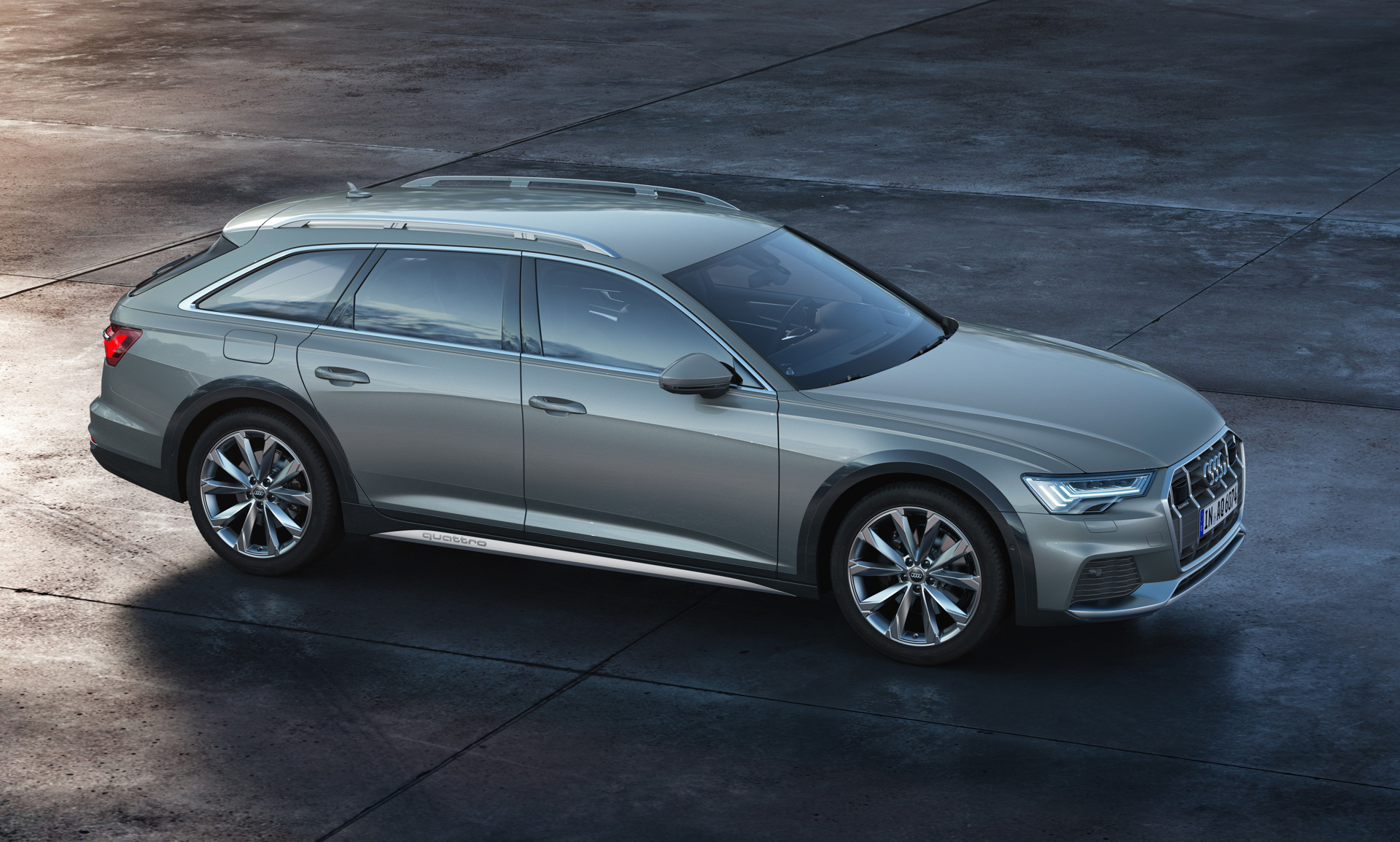
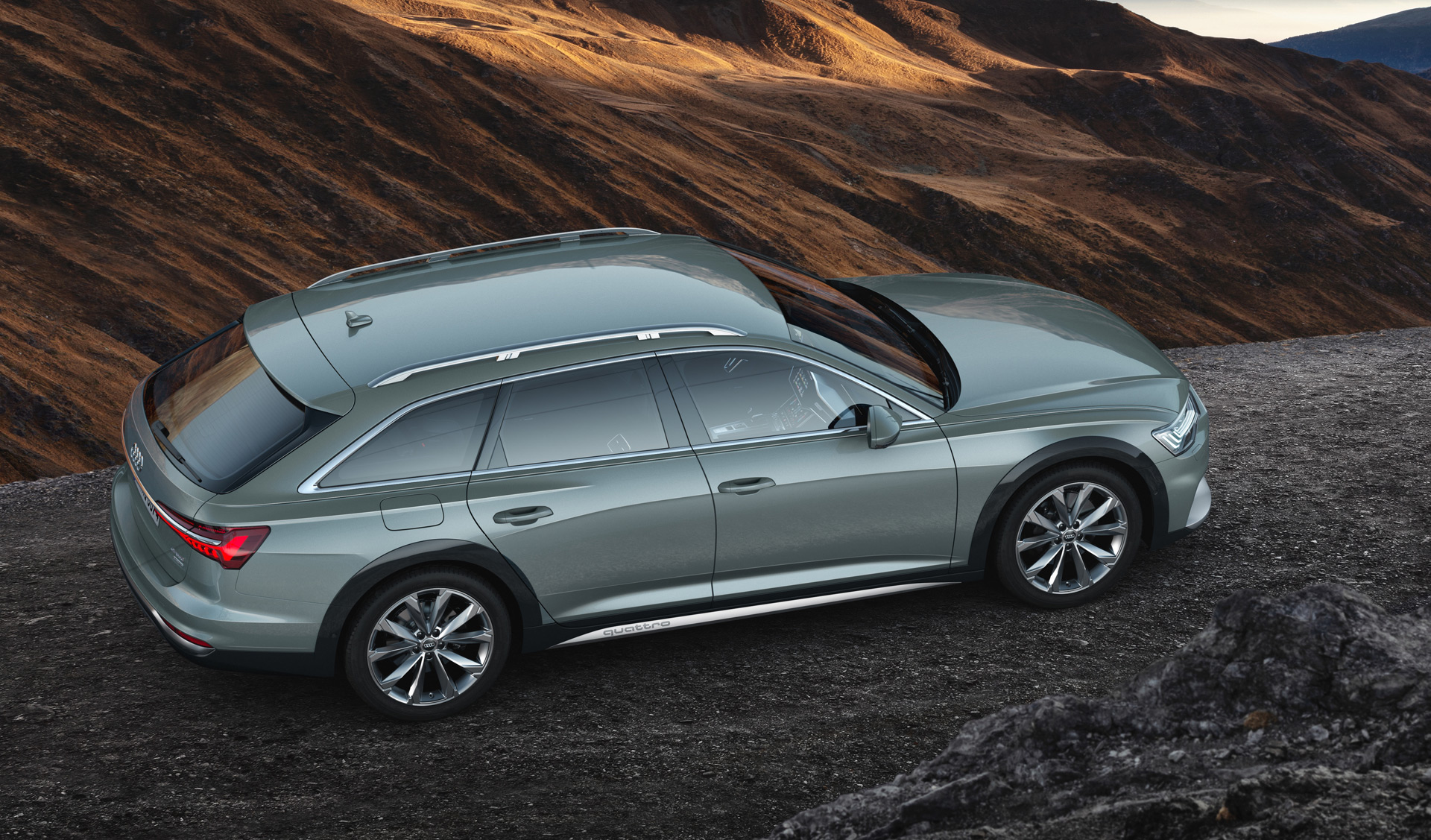
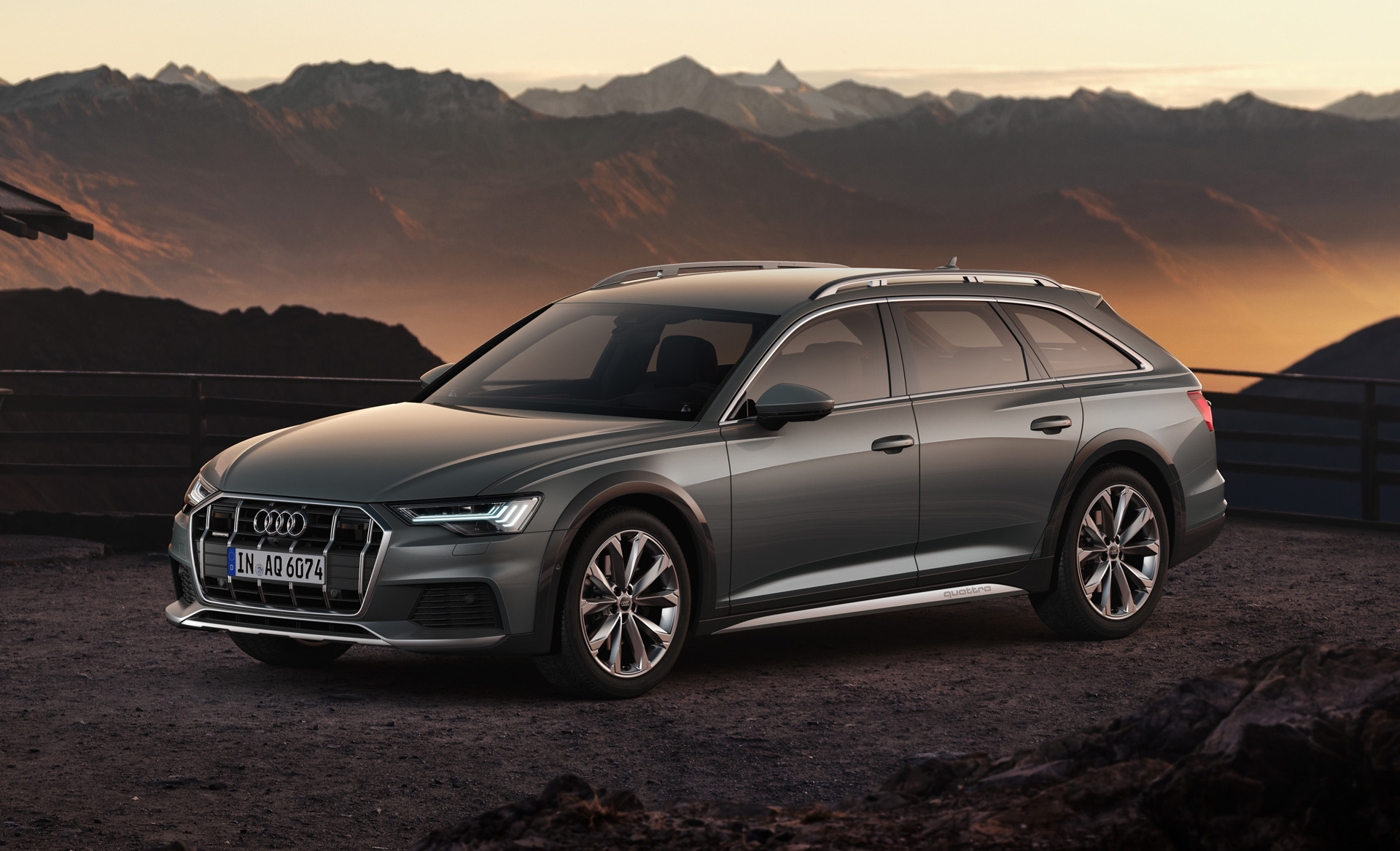
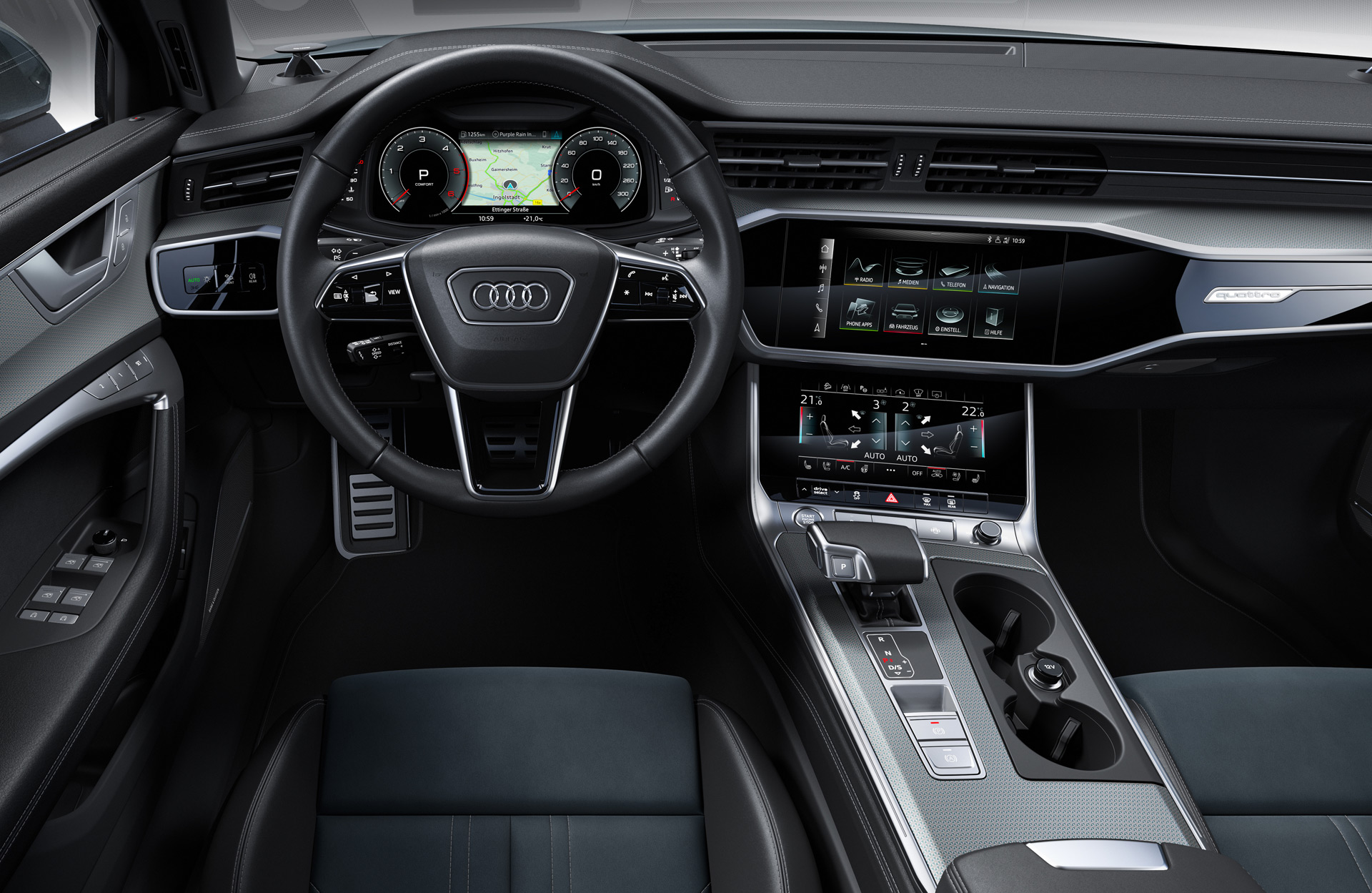
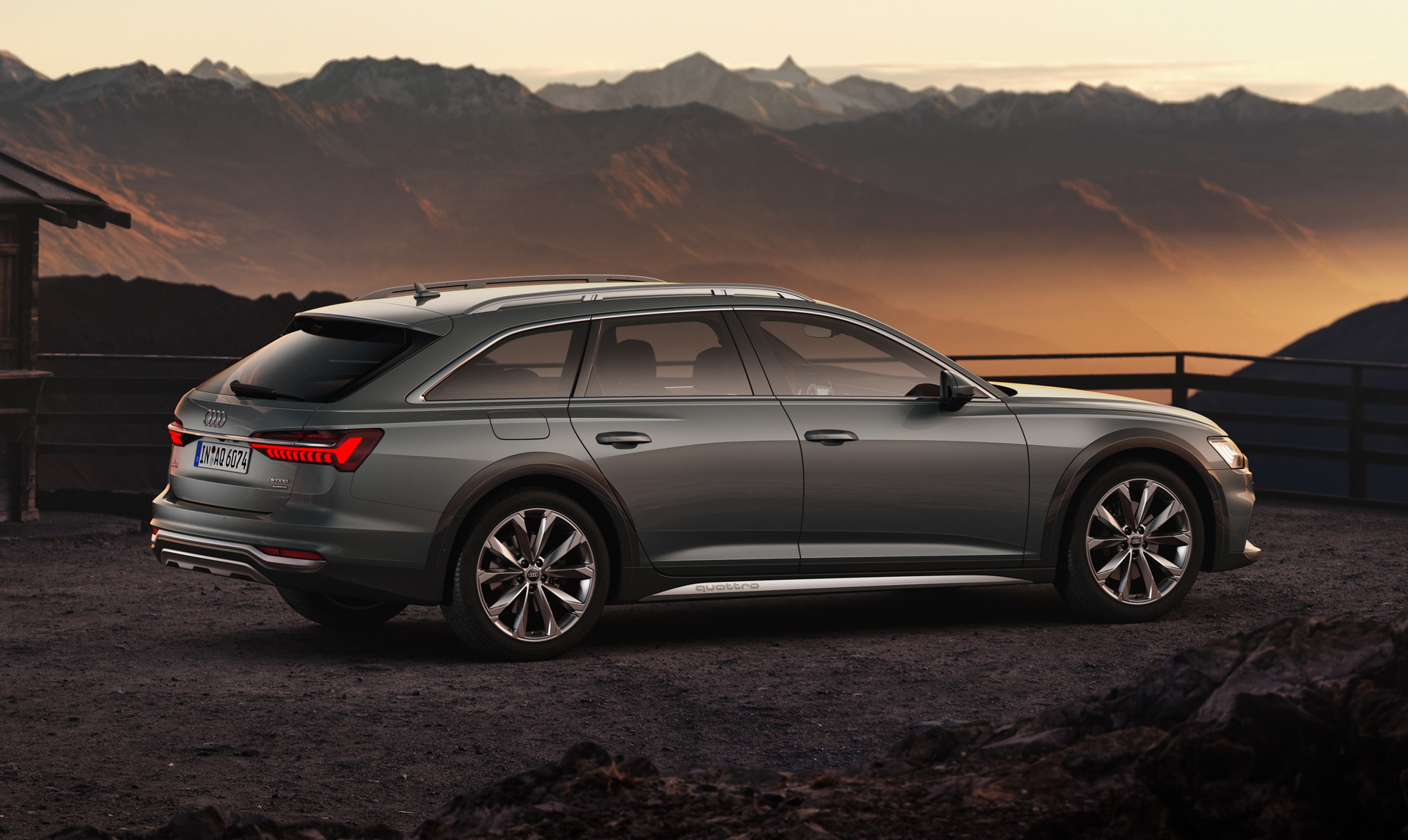
Audi A6 Allroad

Audi has officially revealed its new A6 Allroad, which includes a handful of updates to the adaptive air suspension. This new iteration makes the iconic classic more beastly on the tarmac.

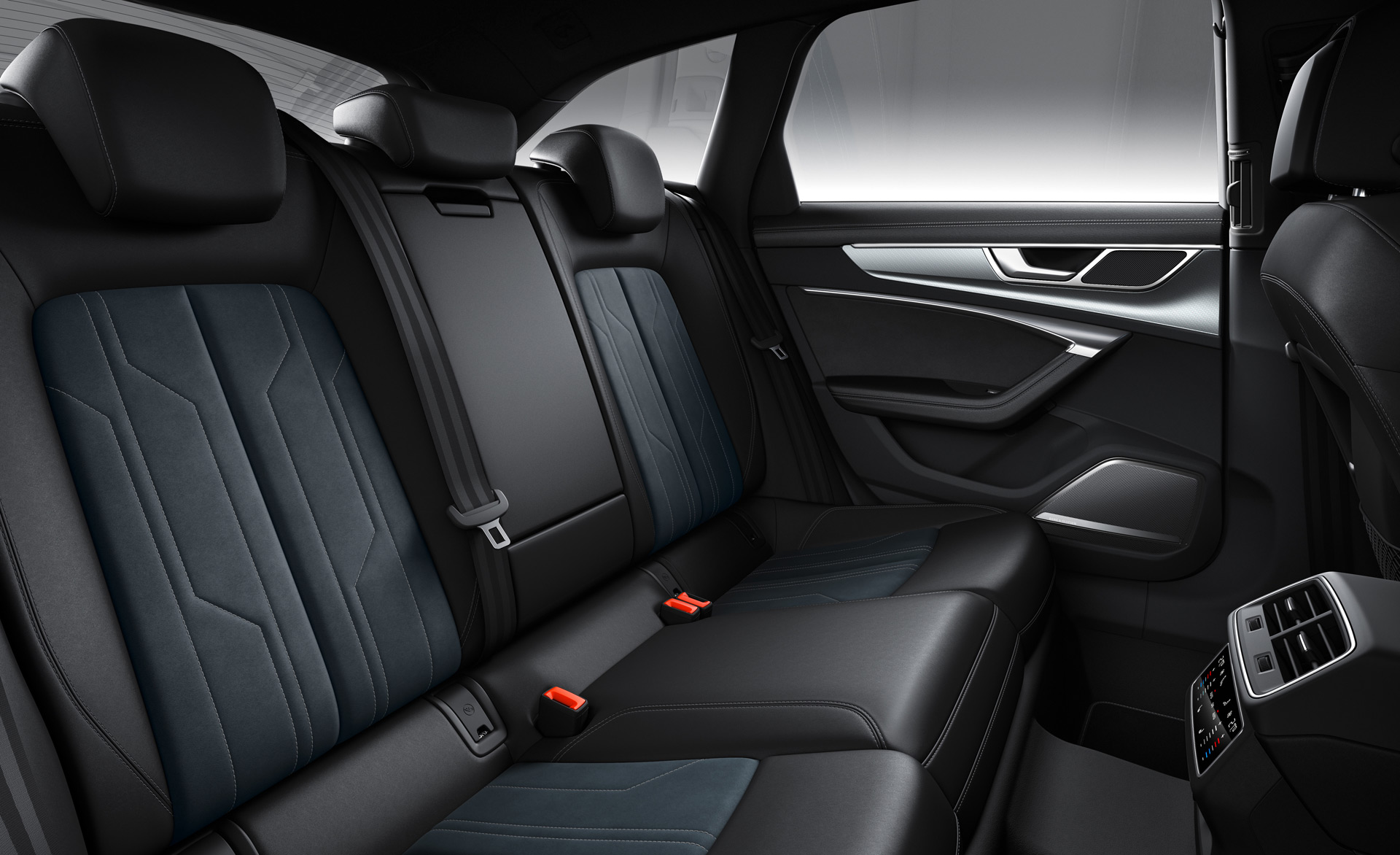
The Audi A6 Allroad is meant to compete with the Mercedes-Benz E-Class All-Terrain and Volvo V90 Cross Country. Drawing from the fifth-generation mid-size Z6 launched in sedan form, the new platform brings weight savings, extra cabin space, and compatibility with plug-in hybrid options.

Audi increased the ground clearance to 7.3 inches at maximum height, and the adaptive air suspensions now comes with self-levelling. As a result, that should provide customers with an alternative to the crossover SUV. Other allroad additions include steeper departure angles, underbody protection, hill descent control, and tilt angle assist.

Thus far, Audi has only announced powertrain, though it offers three outputs. There’s a 3-liter turbocharged V-6 diesel engine that delivers 349 ponies and 516 pound-feet of torque in its most potent. With an eight-speed automatic transmission, the engine hits zero to 62 in just 5.2 seconds and tow up to 5,000 pounds. As standard, the engines also comes fitted with mild-hybrid technology. This consists of a belt-drive electric motor-generator that acts as the starter motor. It recovers energy even under braking. This setup also allows the Audi A6 Allroad to coast even when the engine’s switched off over wide speed ranges.

The ride will hit the road in July. To commemorate 20 years since Audi last rolled out the A6 allroad, the carmaker will offer a special version of the latest model with black exterior accents.

LEARN MORE HERE

Photos courtesy of Audi

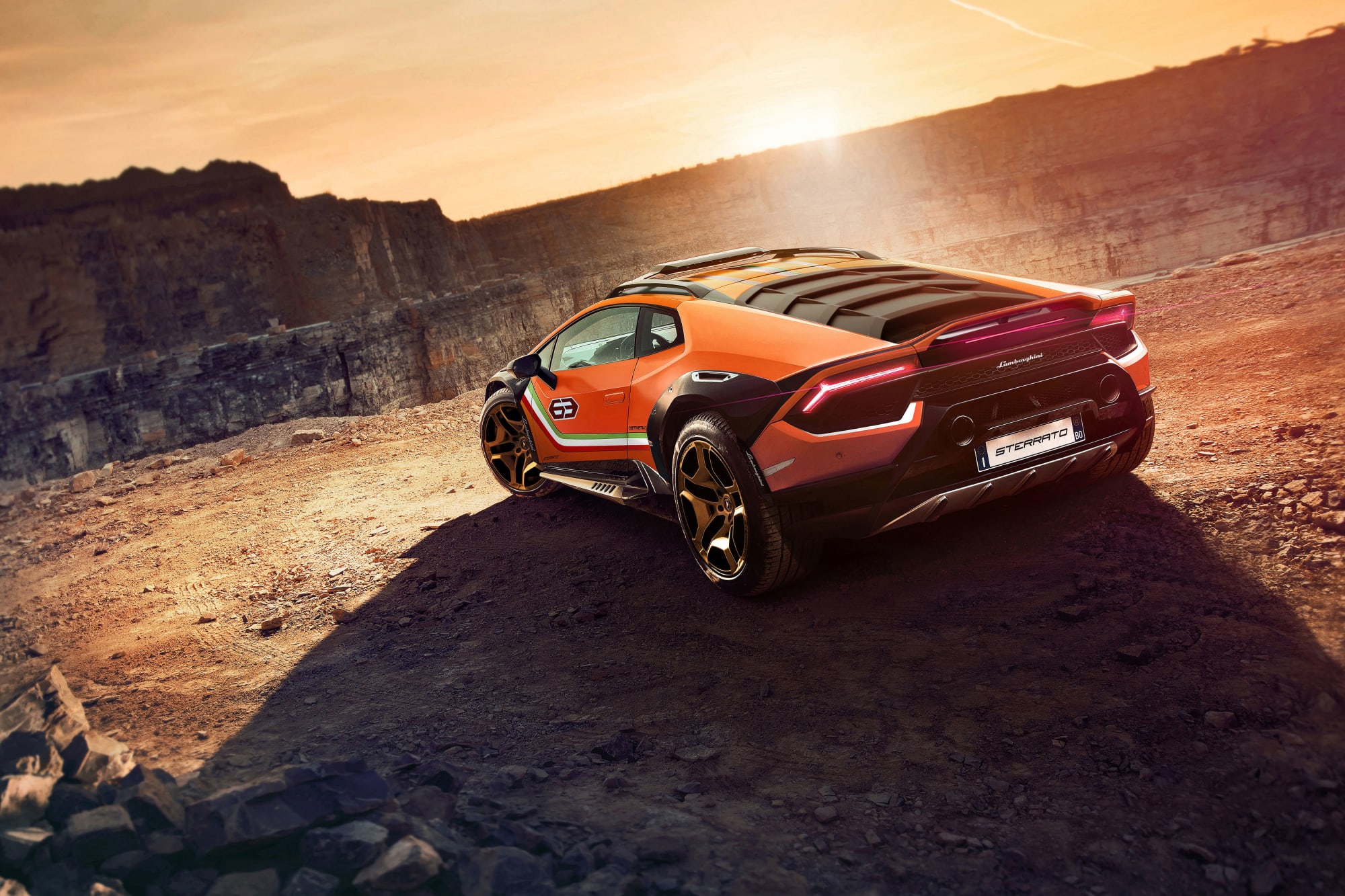
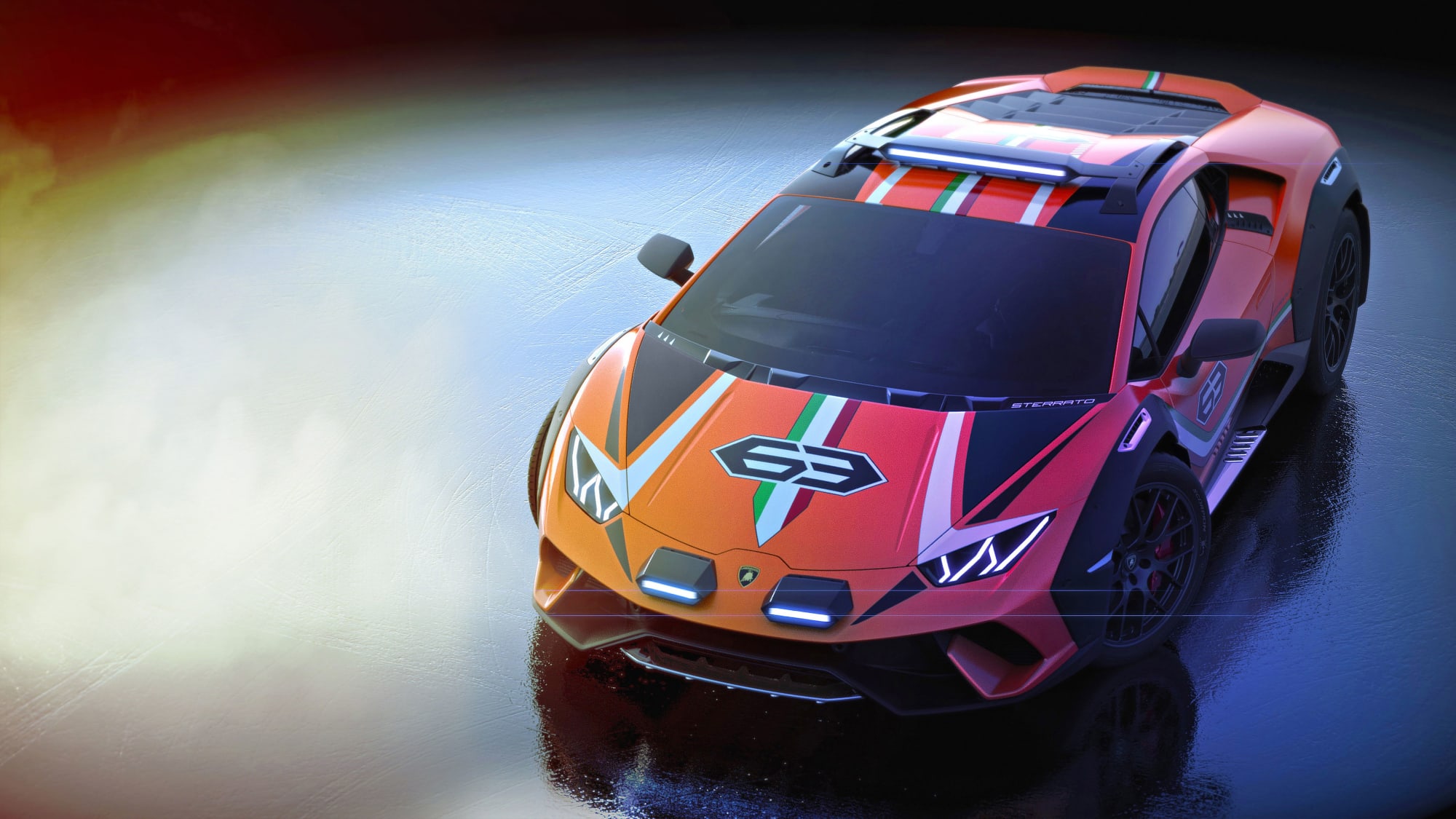
Lamborghini Shows Off Beastly Huracán Sterrato Concept Off-Roader

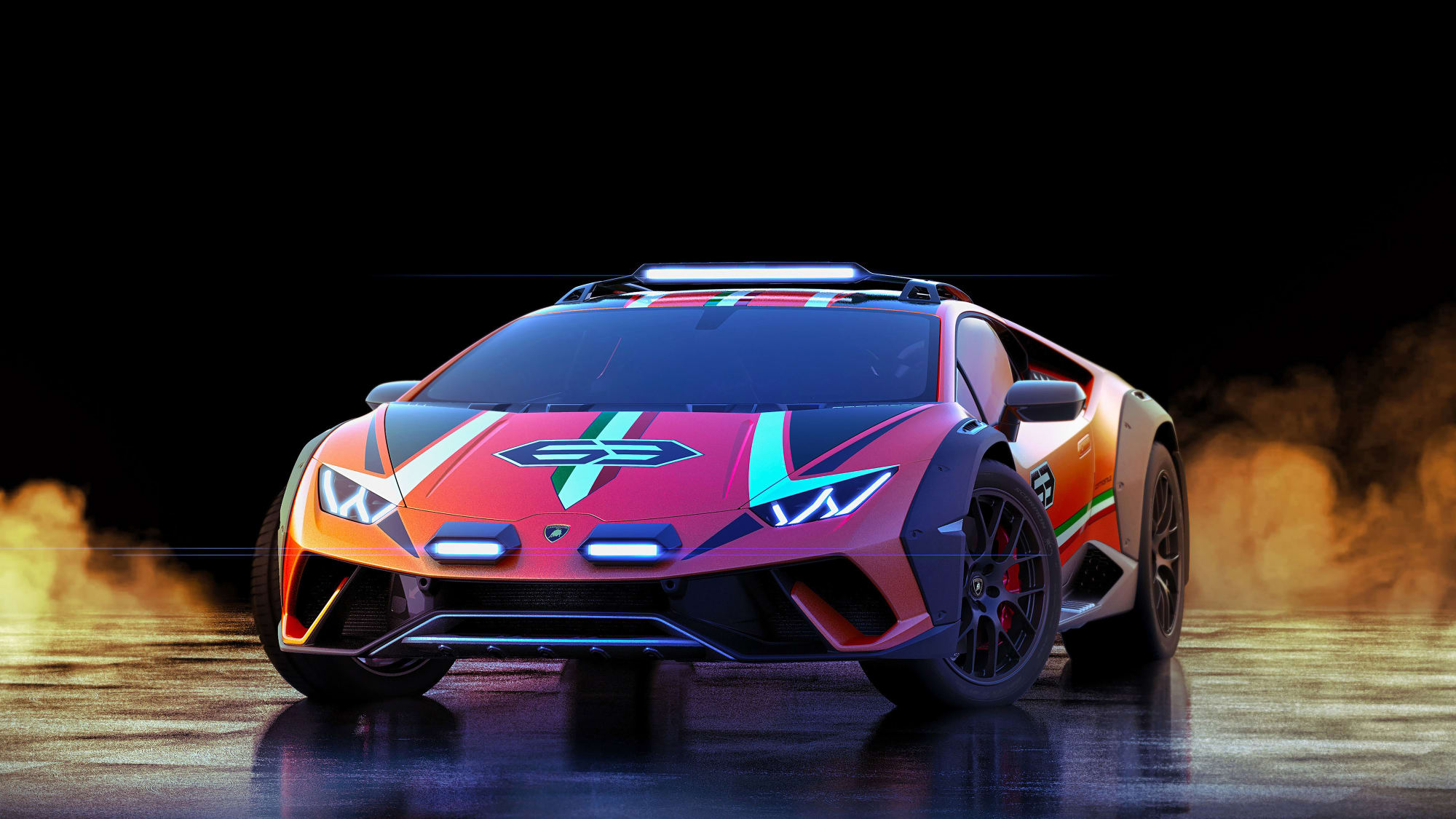
Here’s the Huracán Sterrato, Lamborghini’s latest concept off-roader. Seemingly a course-correction of the imperfect Urus, the ride’s a supercar based off the Huracán EVO. It keeps the 640 horsepower, 5.2-liter V10 engine, which comes with the EVO’s LDVI system. Specifically tuned for gruesome off-roading.

First up, the exterior. A number of noticeable upgrades here, including a higher ground clearance by almost two inches. That makes for an improved front approach and departure angle. The wheel track is wider this time, too, both on the front and rear. It’s just a hair over an inch, but that’s significant enough. The 20-inch wheels come fitted with balloon tires. With body wheel arches with integrated air intakes, no less.

Right you are if you’re expecting underbody reinforcements and body protections. This Huracán Sterrato concept build gets a rear skid plate doubling as a diffuser. And a front aluminum skid as well that covers aluminum reinforcements on the front frame. Sides skirts are aluminum-reinforced, too. And you get a composite bodywork with stone-deflecting protection around the engine and air intakes. Let’s not forget the carbon fiber and elastomeric resin mudguards, plus the off-road LED lighting package.

There’s more, of course. The car boasts a lightweight aluminum roll cage, four-point seat belts, carbon bi-shell sport seats, and aluminum floor panels. In a word, this car is scary. But scary in a good way. With terrifying specs to match its formidably stylish exterior, we really wish the Huracán Sterrato wasn’t just a concept. Check out more photos of the fantasy off-roader below. Hit the link to read more information.

MORE INFO HERE

Photos courtesy of Lamborghini

Some of the Best Modern Coffee Table Books for Car Lovers

Books and cars may not seem like an obvious pairing, but the two have more in common than you might think. A well-written book and an expertly-built car can be objects of beauty to behold, and they both can transport their users to distant locales, in their own way.

Of course, car lovers would likely rather drive a car than read about one. But you can only experience one car at a time that way — and unless you have a cavernous warehouse of a dream garage, your selection of four-wheeled transportation available to play with is probably capped at one or two options. There’ll always be new cars, new roads, new experiences just out of reach.

A good coffee table book, however, can be a literary remedy for your mechanical conundrum. Here, then, are some of the best modern coffee table books for car lovers: packed cover to cover with insider information and filled to the brim with stunning photography, letting you fawn over and appreciate vehicles of all kinds from all across the globe.

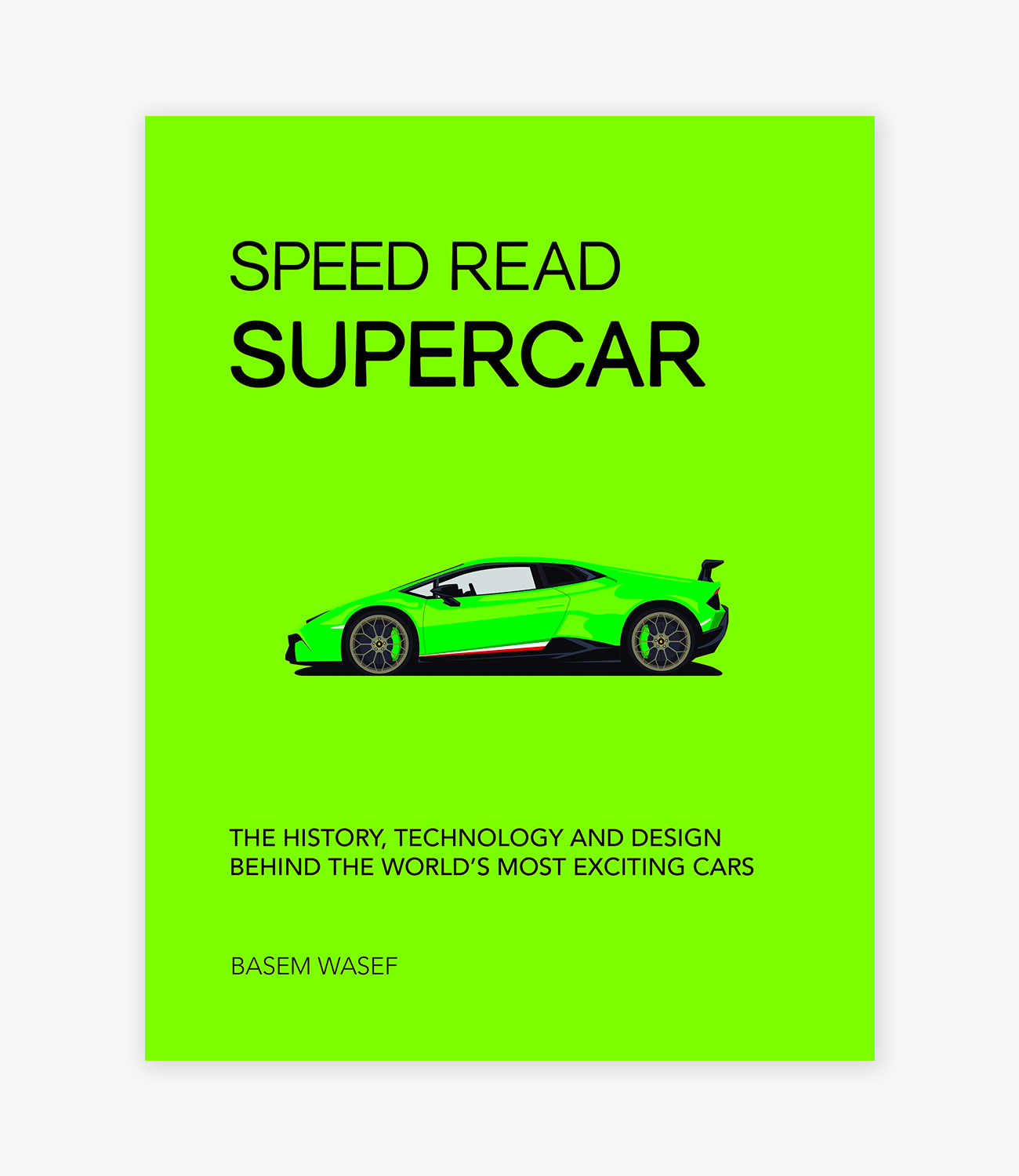
Speed Read Supercar: The History, Technology and Design Behind the World’s Most Exciting Cars

Only a minuscule percentage of the population has regular access to supercars — and while that adds to their mystique, it also keeps the engineering marvels out of reach of many of their their biggest admirers. Speed Read Supercar: The History, Technology and Design Behind the World’s Most Exciting Cars, penned by veteran automotive journalist Basem Wasef, puts the lofty thoroughbreds in the hands of the masses with a deep dive into supercar history and culture, providing explanations about why they exist and the creative decisions that went into their designs and mechanical makeup.

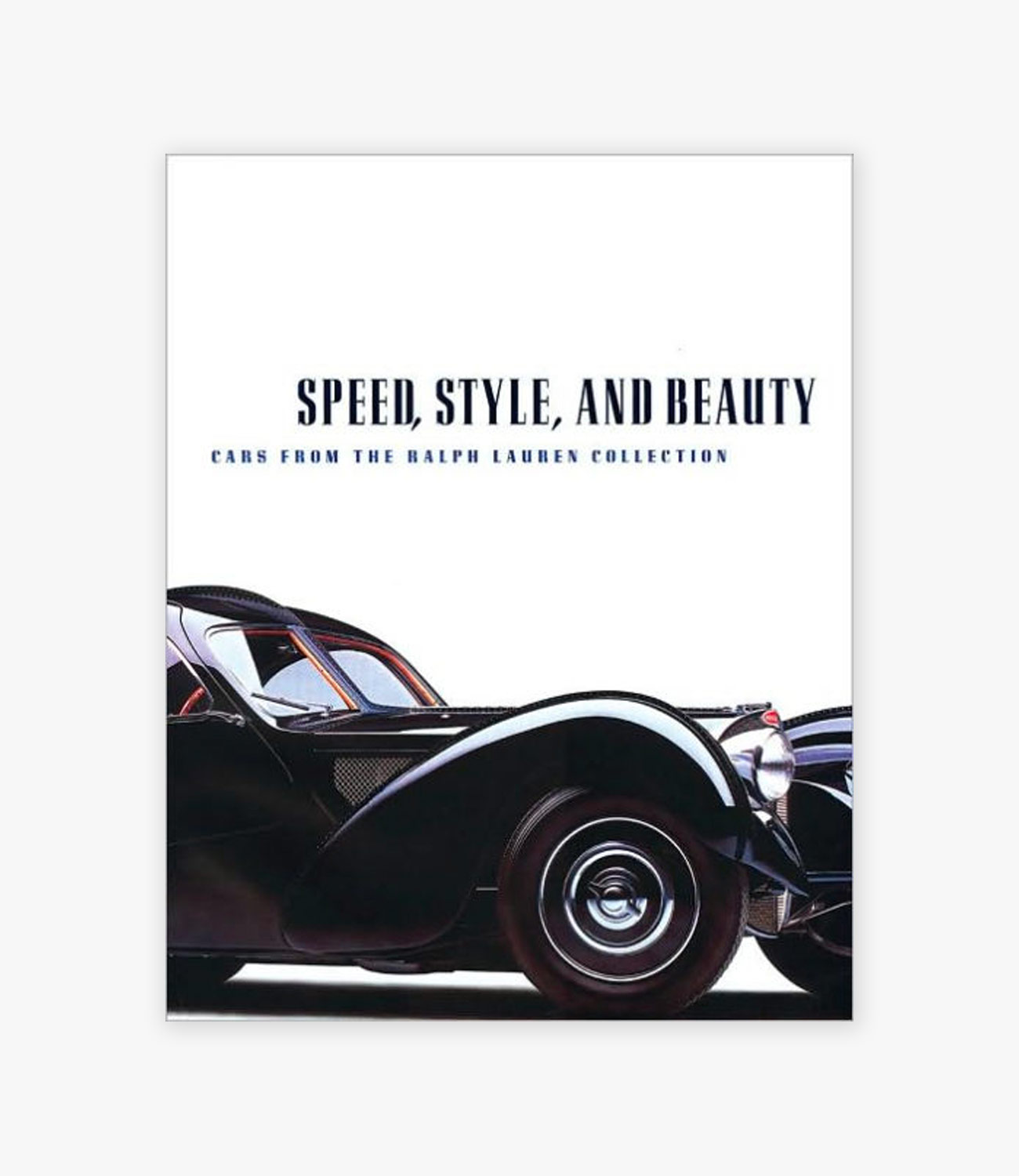
Speed, Style, and Beauty

Not many people around the world can boast about having dozens of cars cars in their personal collection, and even fewer people put said car collections on display. Ralph Lauren, however, is one of those few. Speed, Style, and Beauty is 210 pages of full-page photographs depicting 29 automotive legends hand-picked by Ralph Lauren’s from his personal collection. Highlights include a 1938 Alfa Romeo 8C 2900 Mille Miglia and the iconic beauty that is the 1938 Bugatti Atlantic Coupe, as well as stunners from Jaguar, Ferrari and Porsche.

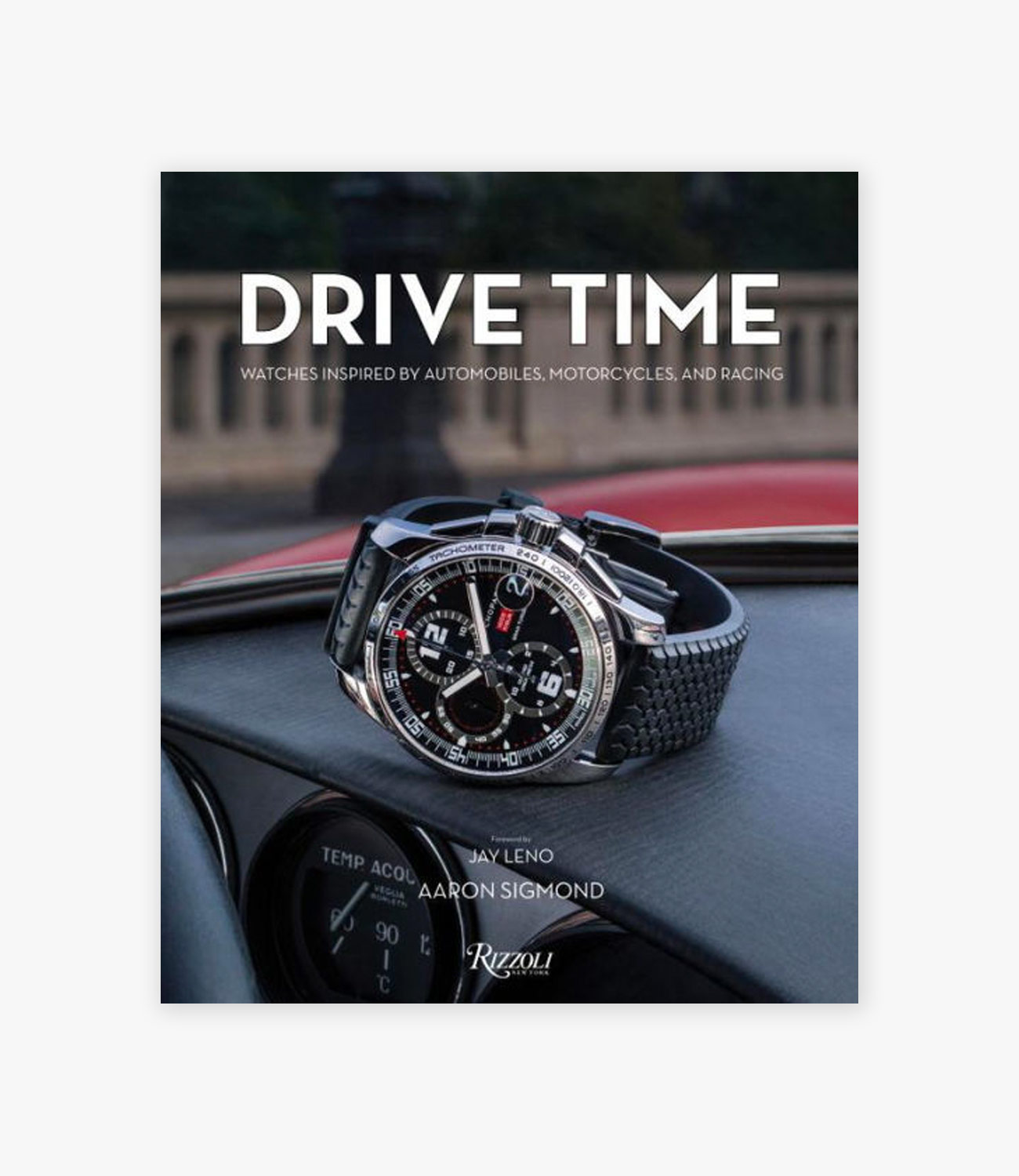
Drive Time: Watches Inspired by Automobiles, Motorcycles and Racing

It might not be a book focused on the automobile per se, but Drive Time: Watches Inspired by Automobiles, Motorcycles and Racing celebrates the iconic timepieces that have the strongest relationships to the automotive world. Culture, inspiration, design — any aspect that connects the watch and car worlds is fair game for Drive Time.

The Impossible Collection of Cars

The title pretty much says it all. The Impossible Collection of Cars is a collection of 100 of the most significant cars from the 20th Century, or, as the title suggests, an unbelievable group of machines never seen all in one place at the same time. You know, aside from the pages of this book.

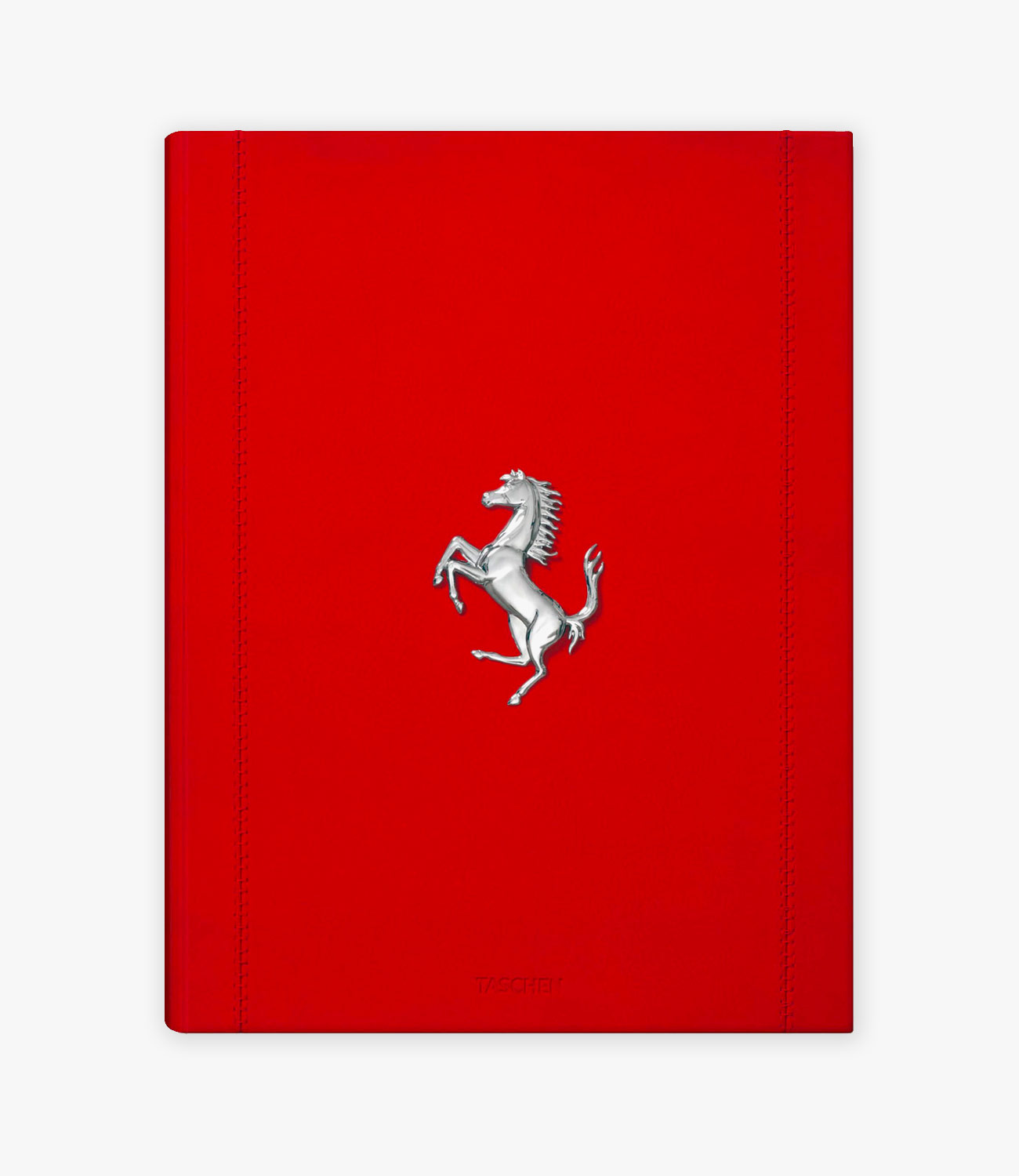
Ferrari Book by Pino Allievi

Old man Enzo Ferrari didn’t mince words, especially about putting more emphasis on what was under the hood of his cars than the surrounding sheet metal. “I build engines and attach wheels to them,” he once said. However, that doesn’t mean the rest of us can’t fawn over the rolling Italian artwork that came out of the Maranello factory — and that’s exactly what Ferrari Book by Pino Allievi is meant for. Not only does the book catalog and celebrate every Ferrari ever made, but it does so in spectacular fashion, coming in an aluminum case designed to emulate the company’s iconic Testa Rossa valve covers. The $6,000 price tag is definitely worth a mention — but then again, this is the Ferrari of coffee table books.

Note: Purchasing products through our links may earn us a portion of the sale, which supports our editorial team’s mission. Learn more here.

The Latest From Maranello

ferrari sf90 stradale gear patrol hybrid

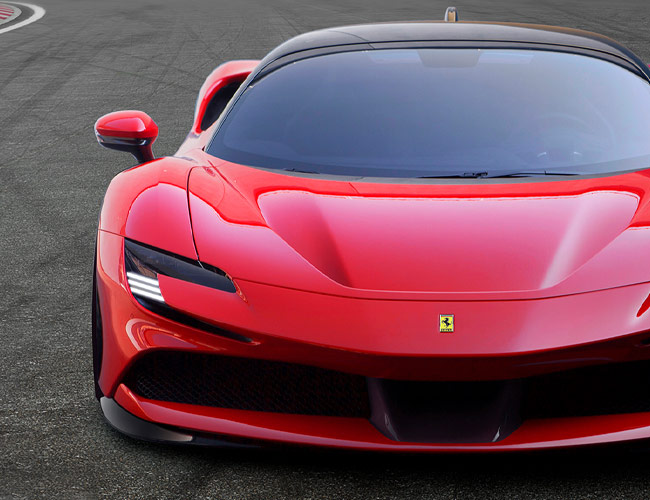
Packing three electric motors and all-wheel-drive, the new range-topping SF90 Stradale deviates farther from the front-engined/rear-wheel-drive layout originally used by Enzo Ferrari than any F-car before. Read the Story

Michael Douglas is Selling his Mallorca Retreat for $32.5 Million

Hollywood acting legend Michael Douglas is best know for his role in the production of films such as One Flew Over the Cuckoo’s Nest and as an actor in Romancing the Stone. Yet his latest role is far removed from those Hollywood blockbusters. It recently emerged that Douglas’ latest work was a voiceover for a promotional video, a video that promotes the sale of his own house!

Douglas is reportedly selling a mansion in the Spanish Balearic island of Mallorca. The $32.4 million property is idyllic. Douglas bought it in 1989 for $3.5 million with his ex-wife, Diandra Lufer. Douglas originally listed the property at $60 million back in 2014 but have been unable to attract a buyer. The promotional video is likely a move to perk some interest in the mega mansion.

[embedded content]

In the video, Douglas explains that the mansion was built in the mid-19th century by Archduke Ludvig Salvator. He explains that he spent the past 30 years modernising and redecorating it. With 250 acres of land, two cottages, five apartments with 10 bedrooms total, a pool, a private vineyard, an olive grove and a wine cellar, there was clearly plenty to do!

The mansion is idylic with views out to sea and acres of private land. It makes it the perfect retreat for a celebrity to looking to get away from it all. The property is located 45-minutes outside of the island’s capital, Palma. The property is listed with Eddy Barrera from Engel & Völkers Mallorca West – DeiàEngel & Völkers Mallorca West – DeiàEngel & Völkers Mallorca West – Deià.

The Best Sports Cars of the 1940s

Our List of the 14 Greatest Sports Cars of the 1940s

We mentioned in our best 1940s supercars list that the early 1940s weren’t exactly a time for lots of fun sports cars. Most countries were distracted by WWII and the focus for car companies were using their factories for the war effort.

After the war ended it was returning troops who really kicked off the sports car movement in the biggest automotive market in the world, the United States. Returning GIs started to bring small two-seat sports cars from Europe home with them.  People initially saw these cars in rich enclaves like California and New York. U.S dealers bringing in cars from Jaguar, Porsche and MG, coupled with higher incomes thanks to a booming U.S. economy and the late 1940s were a time where sports-car excitement really picked up speed.

Sports car momentum picked up in the United States because Americans were sick of the same old thing coming out of Detroit. Big, heavy and horrible to drive, the American cars were boring and uninspiring. Small sports cars from Europe were different. The best 1940s sports cars from Europe were modern, great looking and fun machines with advanced engines that inspired a new generation of car fans.

In the back half of the 1940s, sports cars were seen more and more on American roads and interest from the general public picked up. It was the European manufacturers who took the lead largely because they had been ravaged by the war and needed export earnings fast to get themselves back to financial stability. The American manufacturers were basically ok delivering the same kinds of cars they had during the pre-war era (albeit tweaked and updated versions).

By the end of the 1940s most U.S automotive manufacturers were asking themselves how they could get themselves into the sports car business. Sports cars like the Jaguar XK120 were making an impression in rich American buyers and it did not go unnoticed by the big wigs at GM, Chrysler and Ford. Dealers like Max Hoffman did their part too by bringing Delahaye, Porsche and other makes into the U.S.

Here are the best sports cars of the 1940s.

Our Favorite 1940s Sports Cars

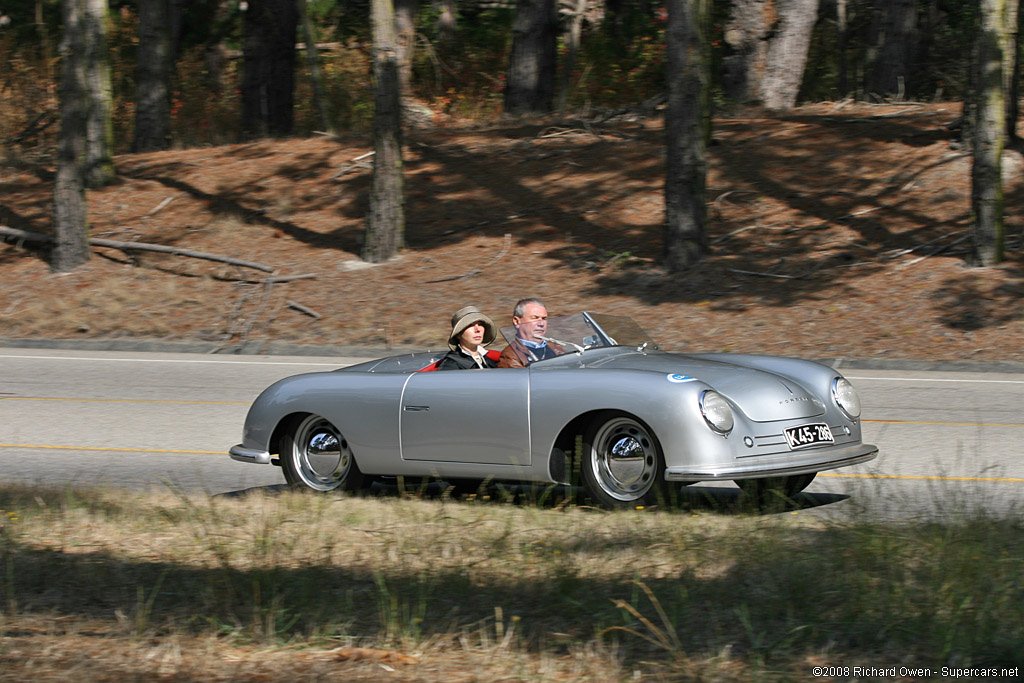
1948 Porsche 356 No. 1 Gallery1948 Porsche 356 No. 1 Gallery

Porsche 356 No. 1

The first Porsche, chassis 356-001, was produced in Gmünd as two-seat roadster using VW parts. Work on the project started as early as 1947 and was authorized by Ferry Porsche to begin construction in March of 1958 of the new Sportwagen Typ 356. He was undoubtedly influenced by Cisitalia which was making cars based on Porsche designs from basic Fiat components. The prototype, called the first Porsche by many and known as Porsche No. 1 was completed in March on 1948 in Austria. It was tested in chassis form before Erwin Komenda designed the bodywork. Details such as pop-out door handles, integrated bumpers and a decorative aluminum license plate surround separated the car from its VW roots. Inside Komenda fitted a bench seat, spartan controls and minimal upholstery.

Learn more: Porsche 356 No. 1
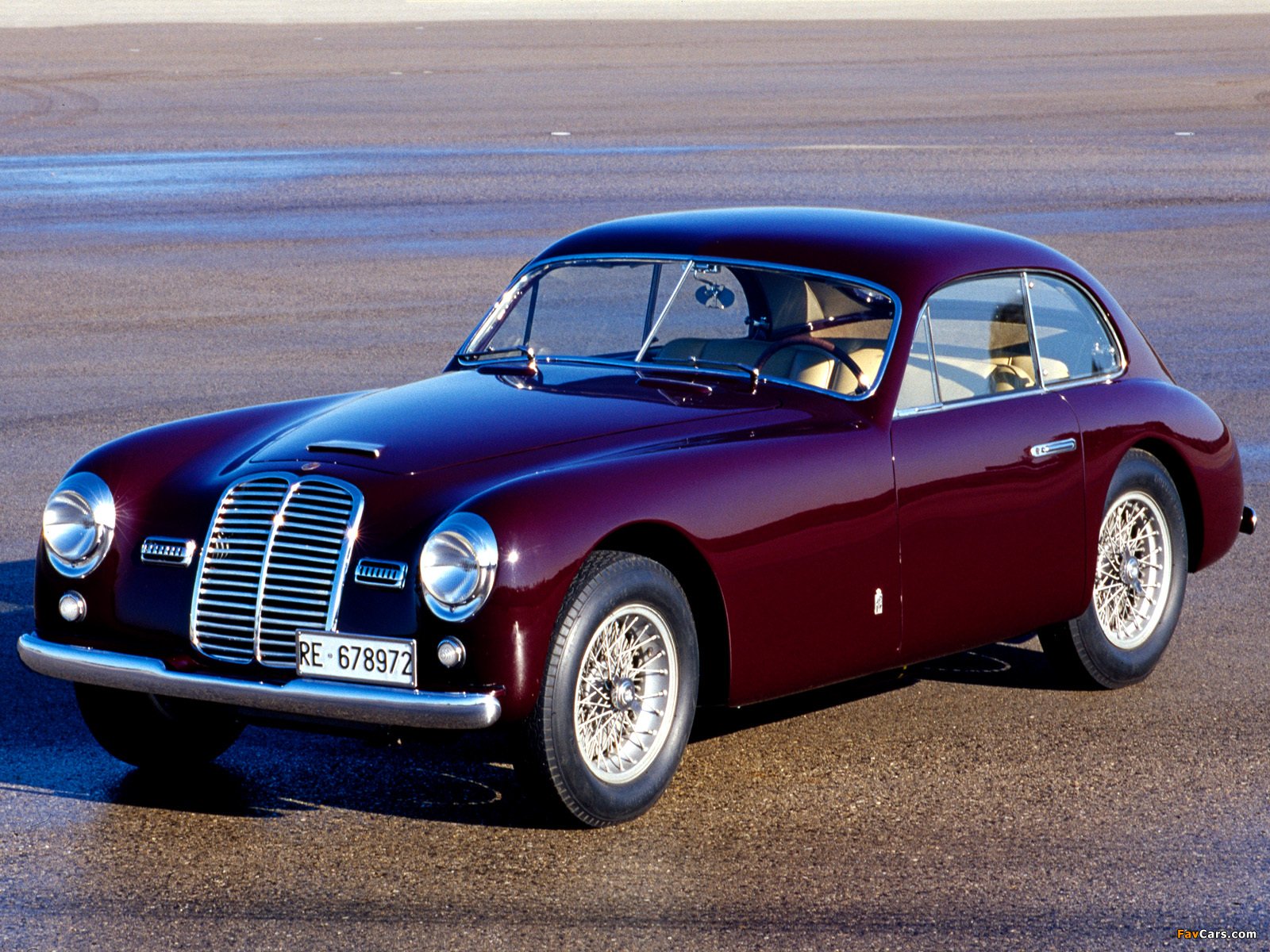
Maserati A6 1500Maserati A6 1500

Maserati A6 1500

The first Pinin Farina 1500 appeared on the stand at the 1947 Geneva Motor Show. Painted in grey, the car was well received. At the time, the car’s aluminum 1.5-litre engine produced only 65 bhp which was ample for the roads of Italy. Most cars were fitted with a single Weber 36 DCR, but a few were fitted with a triple carburetor setup and even more were retrofitted with it.

Maserati’s A6 1500 A6 1500 Pininfarina was the legendary brand’s first road production vehicle. It was first designed in 1941, but production and completion of its development had to wait until after WWII. The two door, two seater gem had a 1.6 liter straight six engine and a four speed manual transmission. The A6 1500 Pininfarina came along with a huge dose of style, but since less than 80 cars were built it’s a rarity today.

Learn more: Maserati A6 1500
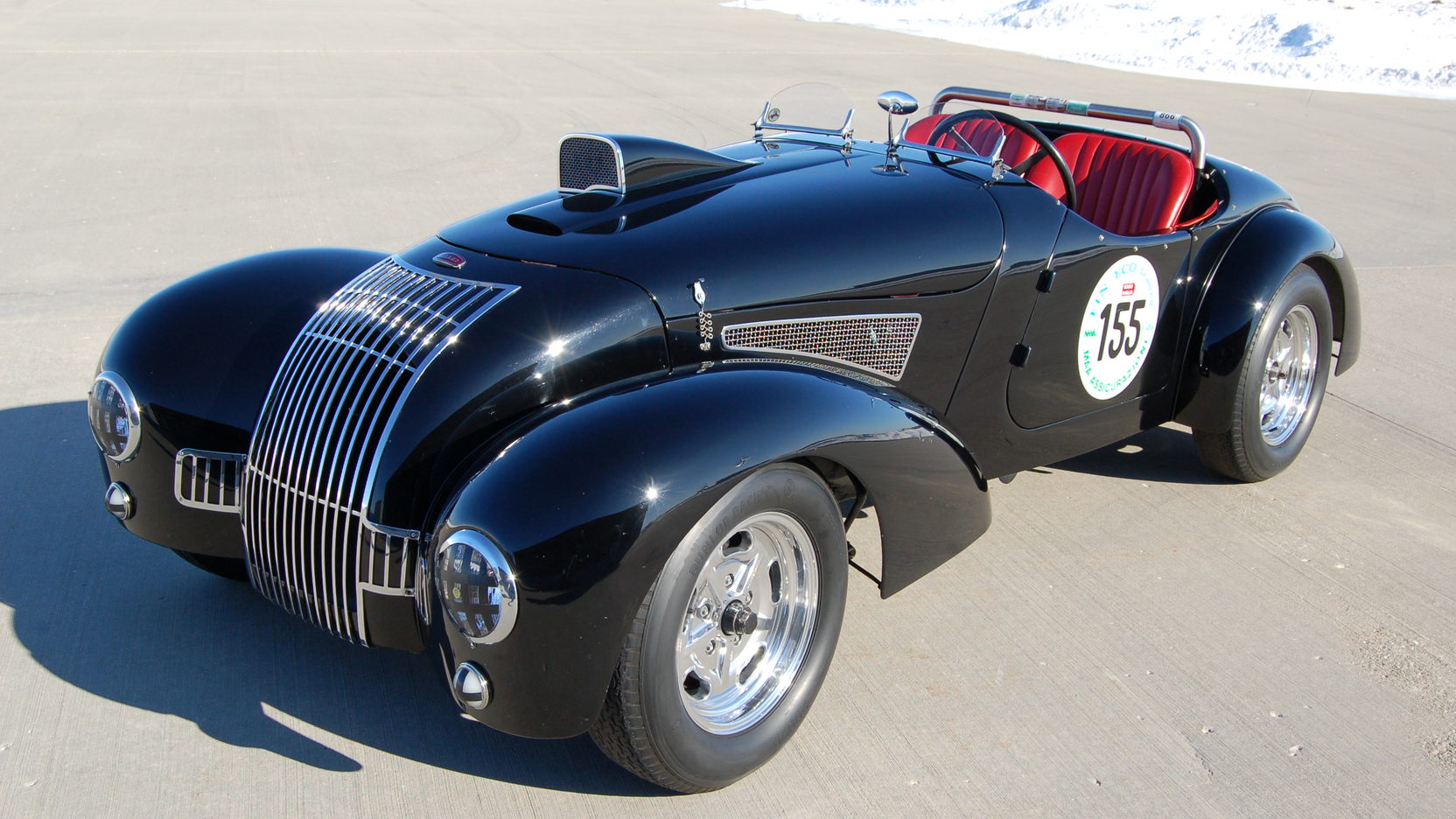
Allard K1Allard K1

Allard K1

Allard’s first postwar vehicle was the K1, a very stylish sports car with a specially designed and built steel frame. The attractive model had a V8 engine and three speed manual transmission, plus it packed an impressive amount of power.

The first Allard K1 cars were built in 1946 and produced until 1950. A box frame chassis was built, 106 inches compared to the longer 112-inch L-type and M-type. A live rear axle sat at the rear whilst at the front the Ballemy split axle front suspension. The engine was usually a Ford Pilot 3622cc V8 or a Mercury 4,400cc V8, but other engines were also available.
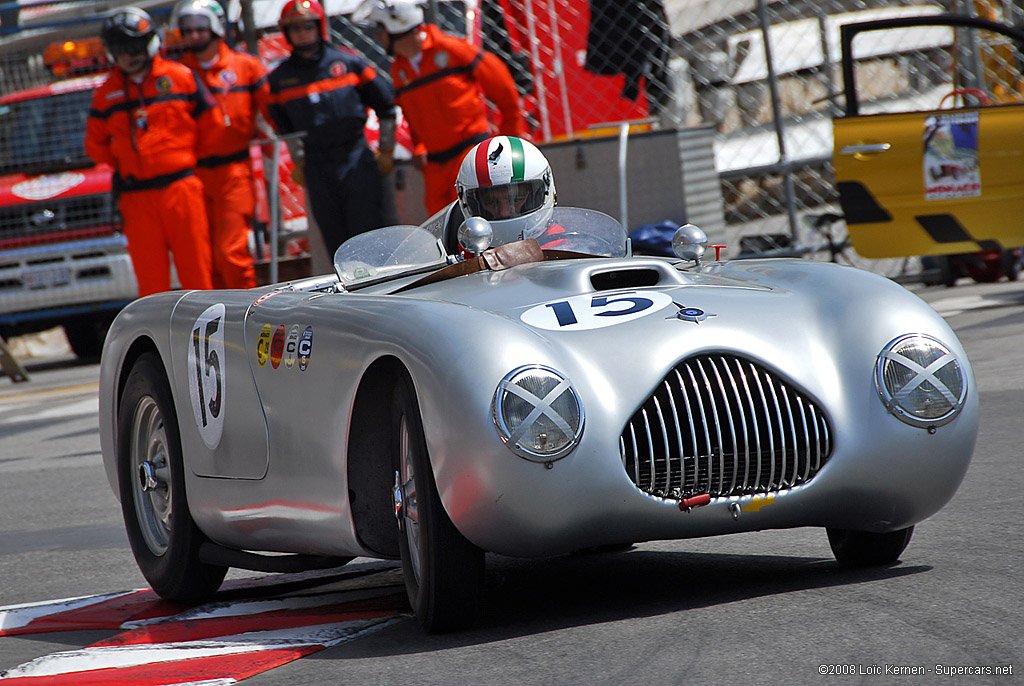
1948 Veritas Rennsport Gallery1948 Veritas Rennsport Gallery

Veritas Rennsport

In many ways the Veritas was a re-built BMW 328 with a new aerodynamic body. Some cars used the original 328 chassis with a complex network of tubes to support the larger aluminum body. The very first cars actually raced as BMW-Veritas. Later, objection from BMW meant that the model would be simply known as the Veritas Rennsport. Around the BMW power train, the Veritas used a steel chassis and slab-sided aluminum body. Many cars were built from customer-supplied parts. Veritas could offer engine tuning upwards of 125 bhp. This package set a 2-liter speed-record of 147 mph on the Belgian Autoroute at Jabbeke. Direct competition came from the emerging Ferrari 166, Frazer Nash Le Mans and Osca MT4.

Learn more: 1948 Veritas Rennsport
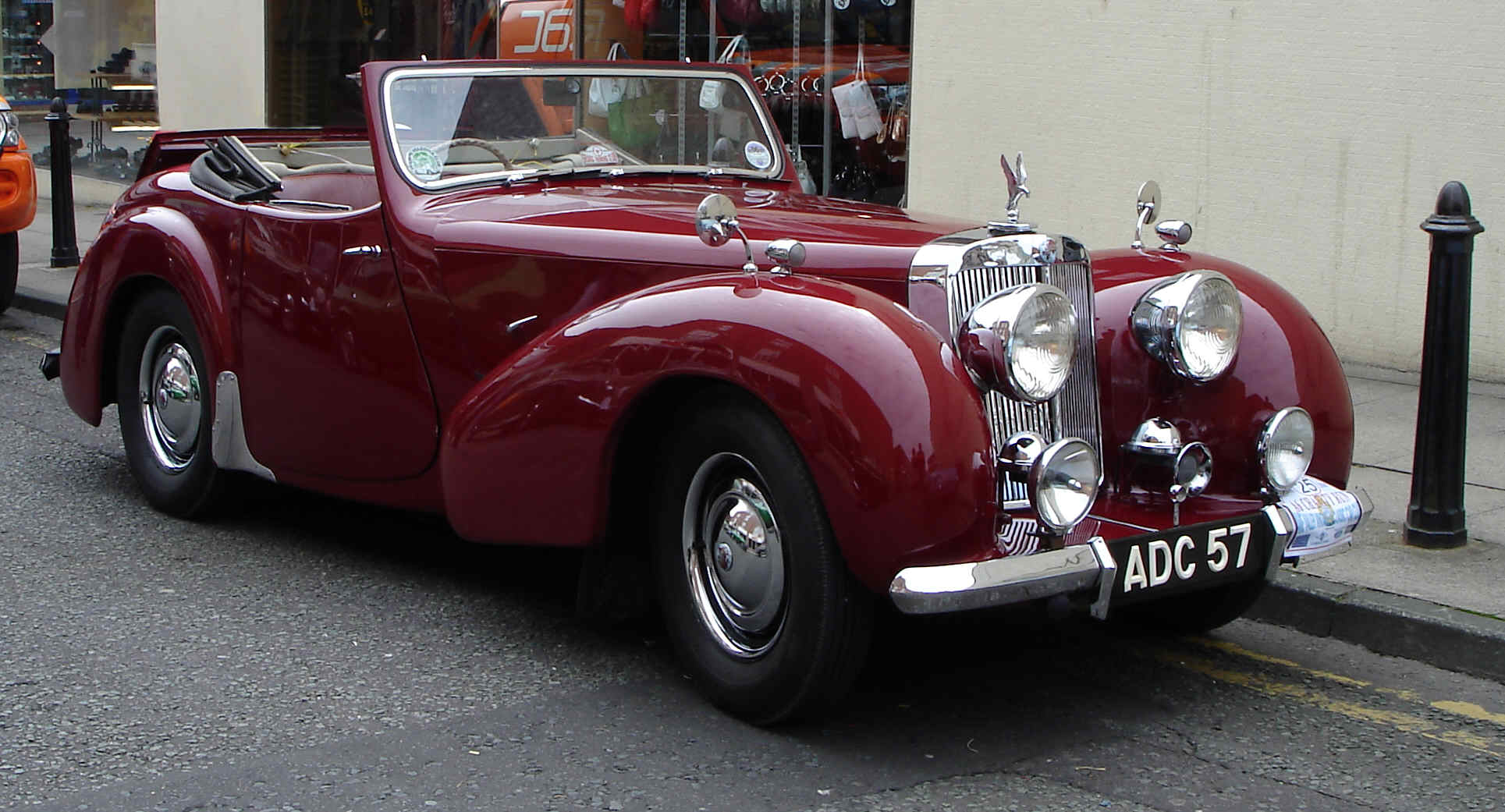
Triumph RoadsterTriumph Roadster

Triumph Roadster

Competition drives innovation, and Triumph’s challenger to the XK120’s crown is proof that a bit of healthy sparring between car manufacturers can yield some spectacular shapes. The roadster has the Cruella Deville proportions that would make it a terrifying sight to anyone out for a quiet Sunday stroll with their Dalmatian along a back road in late-40s England.

Designed just at the War was ending in 1944, the Roadster was offered at launch with a 1.8-litre four-cylinder engine based on a pre-War 1.5-litre (which, cheekily, had been designed initially to go in Triumph’s competing Jags) but converted to run with overhead valves as opposed to side-fitted valves.

The Roadster was not well received by critics at the time, and with a 0-60 time of 34.4 seconds and a top speed of 75mph, it’s easy to see how their criticisms could be justified. While the motoring press panned not only the performance but the looks; the swooping wings, googly headlamps and indented radiator grille, I think Triumph’s answer to Jag’s utter dominance of the British sportscar scene at the time has aged rather well, in a cartoonish, caricature sort of fashion.
Healey SilverstoneHealey Silverstone

Healey Silverstone

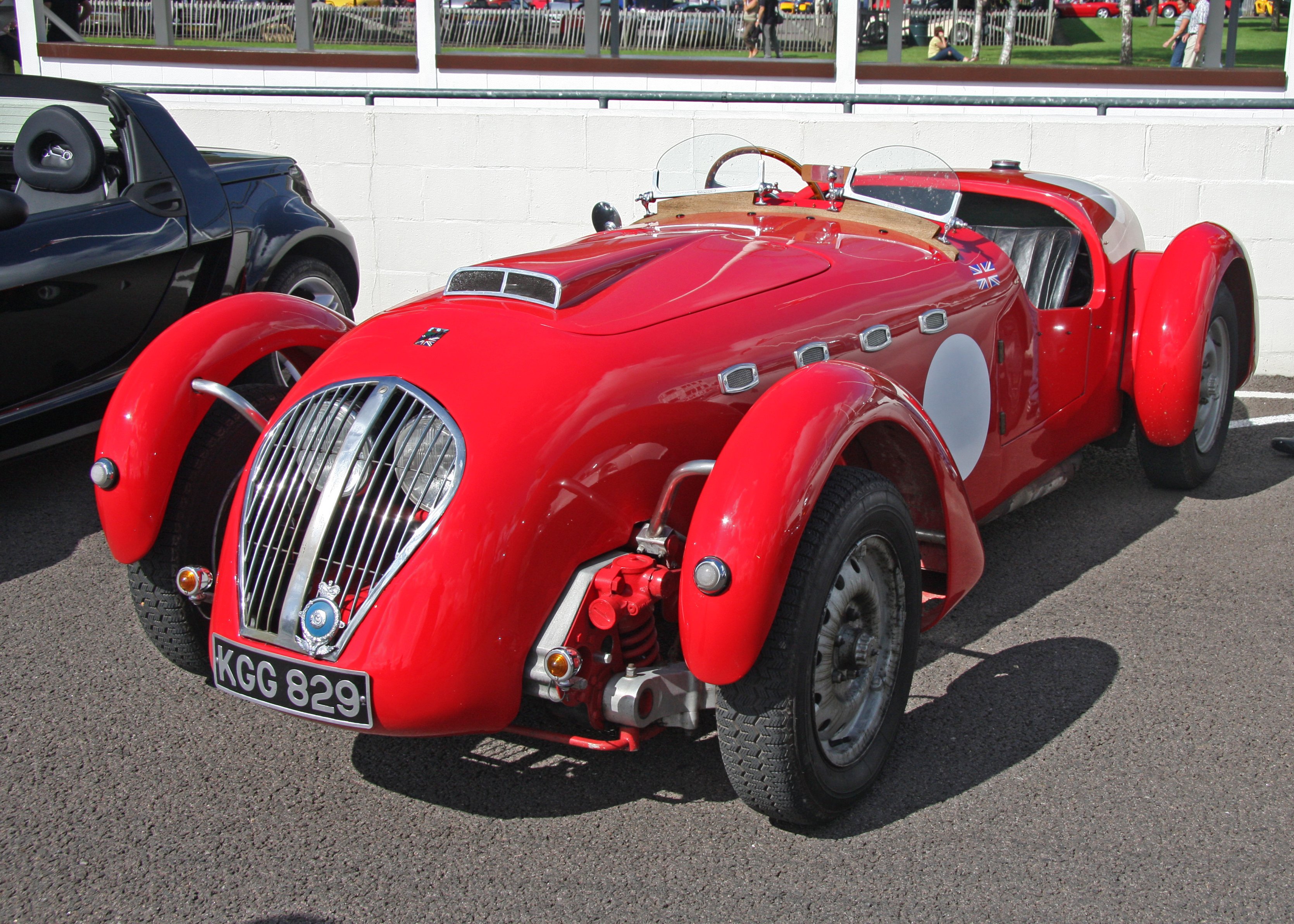
The Donald Healey Motor Company produced the Silverstone sports car from 1949 to 1950, and it’s one of the most distinctive looking cars of the decade and a genuine late 1940s sports car. The car weight only 2100 pounds and was lightweight for a 1940s sports car. The model’s headlights are positioned behind its grille to boost its aerodynamics, and it was an open two seater. The Healey Silverstone had a 2.5 liter Riley inline four engine, four speed manual transmission, and produced 104 hp. This car was built for both road and track and it has come competitions success by winning both the 1949 and 1951 Coupe des Alpes.
1949 Bristol 401 Coupé1949 Bristol 401 Coupé

Bristol 401

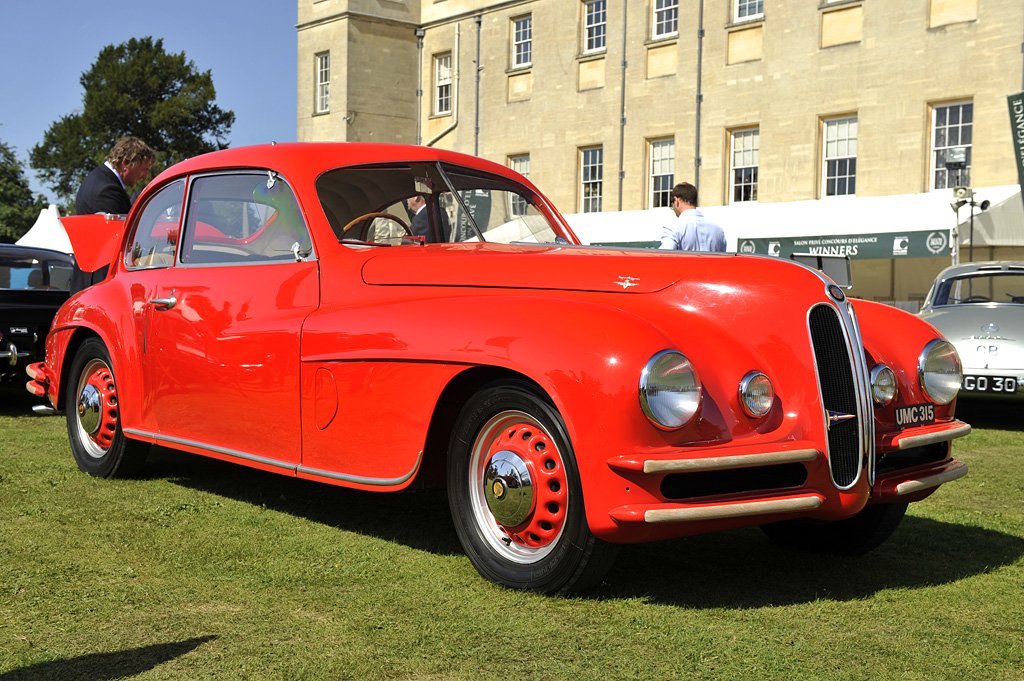
British car maker Bristol Cars produced the 401 between 1948 and 1953. It had a unique suspension system and Lockheed hydraulic brakes, along with a straight six engine and four speed manual transmission that helped the car reach 97 mph. The 401 accelerated from 0 to 60 in just over 15 seconds — that sounds terribly slow considering today’s vehicles, but at the time it was an impressive stat.

Learn more: 1948 Bristol 401
1947 Fiat 1100 S Gallery1947 Fiat 1100 S Gallery

Fiat 1100 S

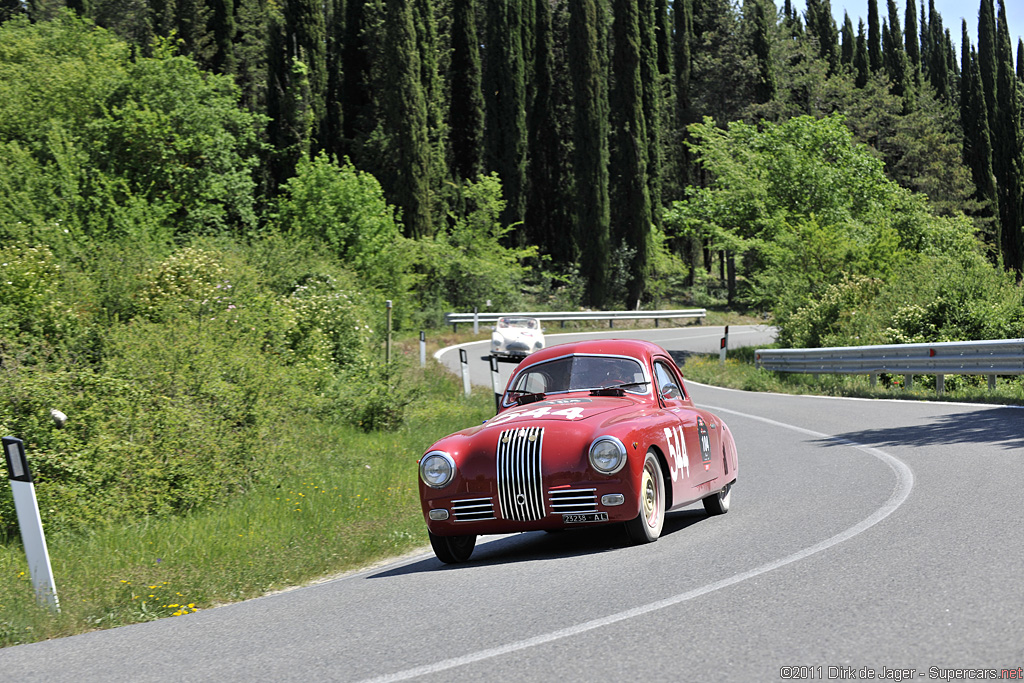
One of Fiats first post-war efforts was a racing variant of the 1100 known simply as the 1100 S. It featured a tuned engine and a dramatic streamlined body by Fiat which was loosely based off the pre-war 508 CMM and helped the car achieve nearly 100 mph.

The two-seat body was produced by Carrozzerie Speciali at Fiat’s own Officine Lingotto under the direction of Giuseppe Cogno. Several of the early cars don a badge with this script.

The structure itself was an aluminum body built over the Fiat 1100B chassis.

Learn more: 1947 Fiat 1100 S
Alfa Romeo 6C 2500 ‘Villa D’Este’Alfa Romeo 6C 2500 ‘Villa D’Este’

Alfa Romeo 6C 2500 ‘Villa D’Este’

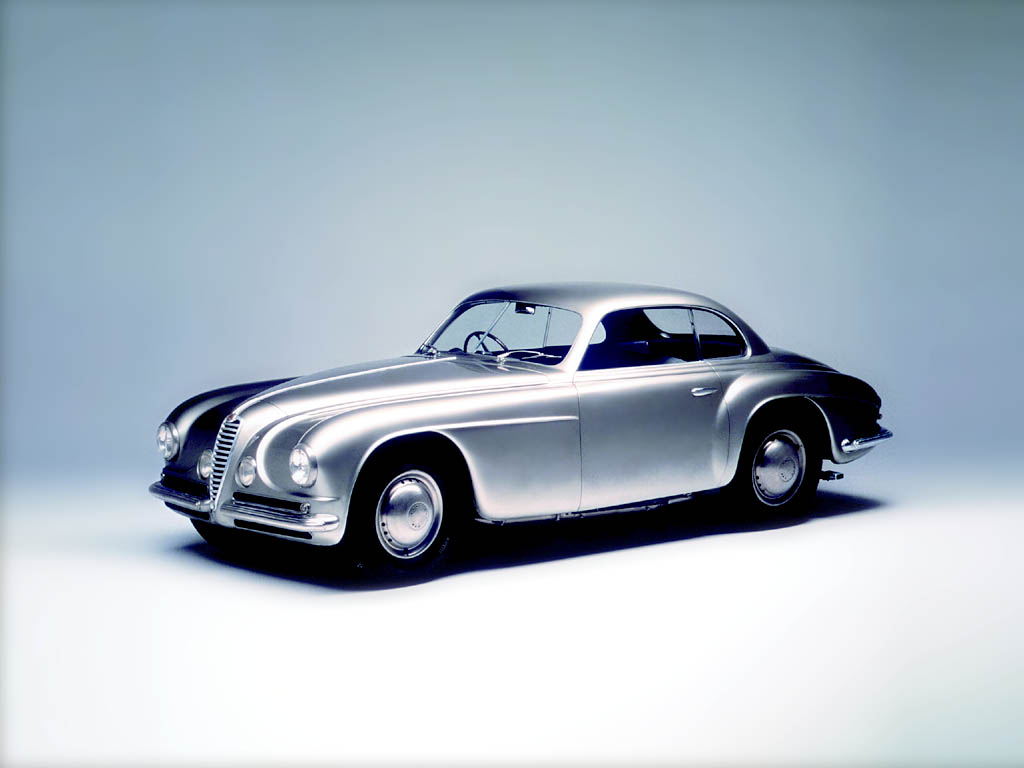
The classic Villa d’Este version of the 6C 2500 introduced in 1949 was named after its triumph in the concours d’elegance of the same name and is a perfect example of how the lines of a truly successful car are timeless. Its 2,443 cc six-cylinder engine has triple Weber carburettors. Not only that , it was capable of a top speed of 165 km/h with its Superleggera (extra lightweight) body, by Touring. Only 36 were built.

1949 Alfa Romeo 6C 2500 ‘Villa D’Este’
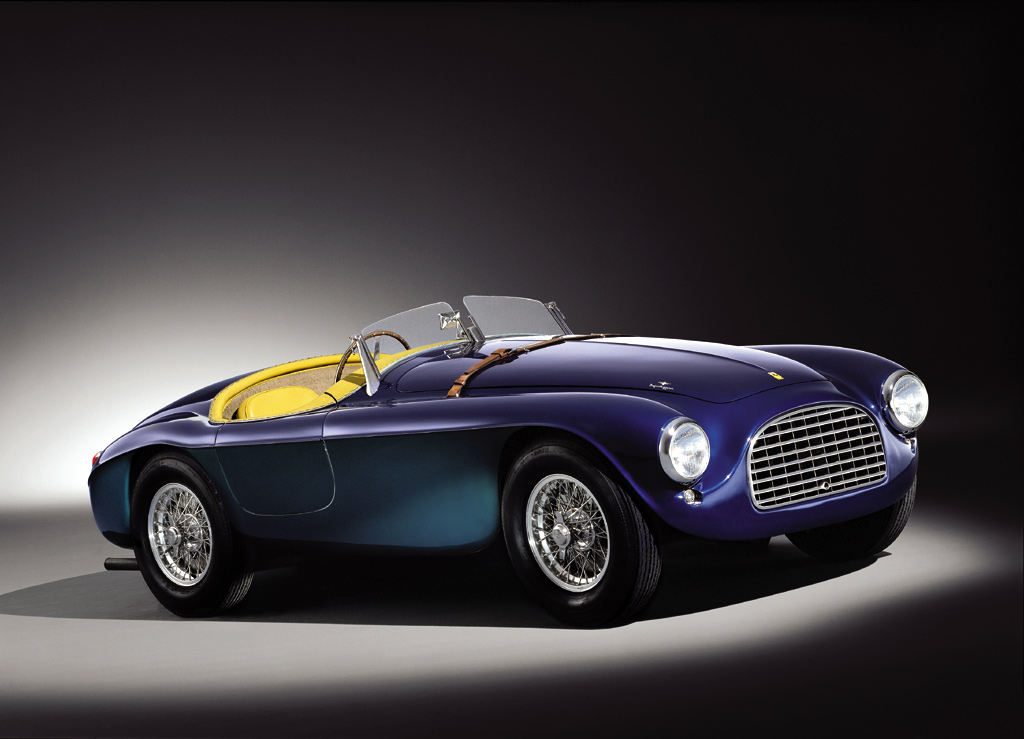
Ferrari 166 MM Touring BarchettaFerrari 166 MM Touring Barchetta

Ferrari 166 MM Touring Barchetta

To commemorate their first major success at the prestigious 1948 Mille Miglia, Ferrari upgraded their successful 166 Sport and made a series of cars called the 166 MM. These contributed more than any other previous type, scoring many of Ferrari’s first international victories and established the company as a serious manufacturer of sports cars.

For their new series, Ferrari outsourced production of the bodies to Touring of Milan who made 25 roadsters using their patented Superleggera technique. It fixed aluminum-alloy panels directly to a tubular space frame which was both light and rigid.
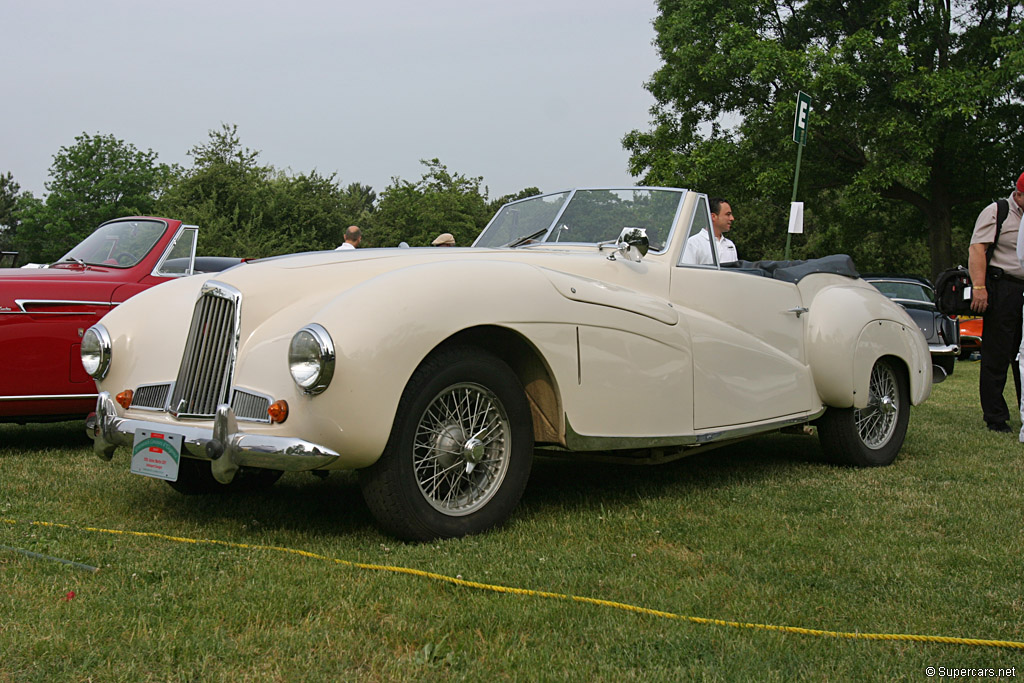
Aston Martin DB1Aston Martin DB1

Aston Martin DB1

After David Brown briefly tested Aston Martin’s Atom prototype, he paid 20 000 GBP and the company was his. He had grand ideas for his new purchase, but started out with a new drop-head coupe that became the DB1.

The underpinnings for the DB1 came from a 1939 Aston Martin prototype called the Atom. It used a SOHC, 8-valve, 2-liter engine that produced 90 bhp. The chassis was a unique multi-tube affair and provided support for an awkward 4-seat sedan. David Brown decided that a convertible or drop-head coupe version of the Atom would be a good launch point for this new venture. He had Claude Hill stiffen the chassis to accept a new flowing body. The design used lateral supports that were tall enough to support the top of the body.

The Aston Martin DB1, also known as the 2-Liter Sports, was a serious beauty. Just 15 of the models were produced between 1948 and 1950, before the DB2 came along. The two seater car had a 2.0 liter Claude Hill engine that produced 90 hp. At a June 2016 auction, an Aston Martin DB1 that was horribly rusted with cobwebs and a faded paint job was still estimated to sell for between $600,000 and $1 million. In decent condition, this classic model can sell for well over $2 million.

Learn more: Aston Martin DB1
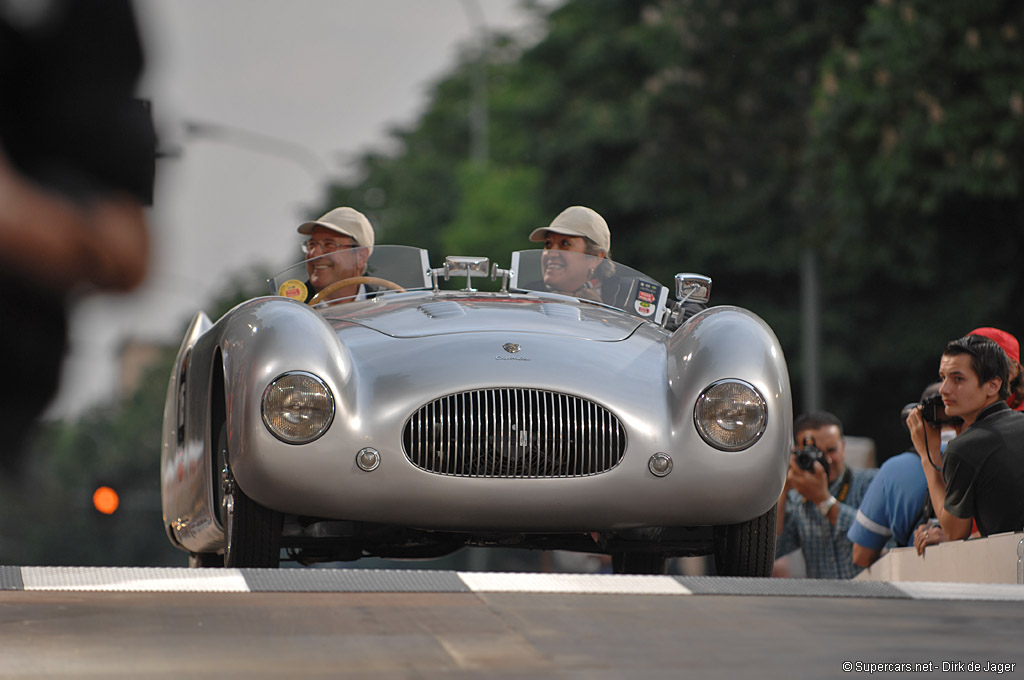
1948 Cisitalia 202 SMM Nuvolari Spider Gallery1948 Cisitalia 202 SMM Nuvolari Spider Gallery

Cisitalia 202 SMM Nuvolari Spider

The company employed a wealth of talent to develop limited production sports cars that were based around upgraded Fiat components. Cisitalia’s first product was the D46, a small single seater which used a space frame to support its Fiat 1090cc engine and Fiat 500 suspension.

After producing several customer D46s Cisitalia focused on building small passenger car based on the D46. All cars were finished as a rolling chassis and bodied by various design houses. Pinin Farina was responsible for the first coupe which was implemented by Vignale, albeit with subtle changes.

Since the 202 never made large scale production and all the cars were handmade, the small talented group at Cisitalia, including Carlos Abarth, Dante Giacosa and Giavonni Savonuzzi, made several variants of the 202. Of the more important versions, the SMM Nuvolari Spider was built and named after a class victory at the 1947 Mille Miglia. It is easily identified by its large rear fins, twin windscreens and usual Italian blood red paint scheme.Partly due to expensive construction of the mid-engine, four wheel drive formula one car, designed by Ferry Porsche, Cisitalia went into receivership in 1949 and was sold in 1952. In total, around 200 cars were made which made a large impact on the later marques, including Abarth’s later range of cars.

Learn more: 1948 Cisitalia 202 SMM Nuvolari Spider
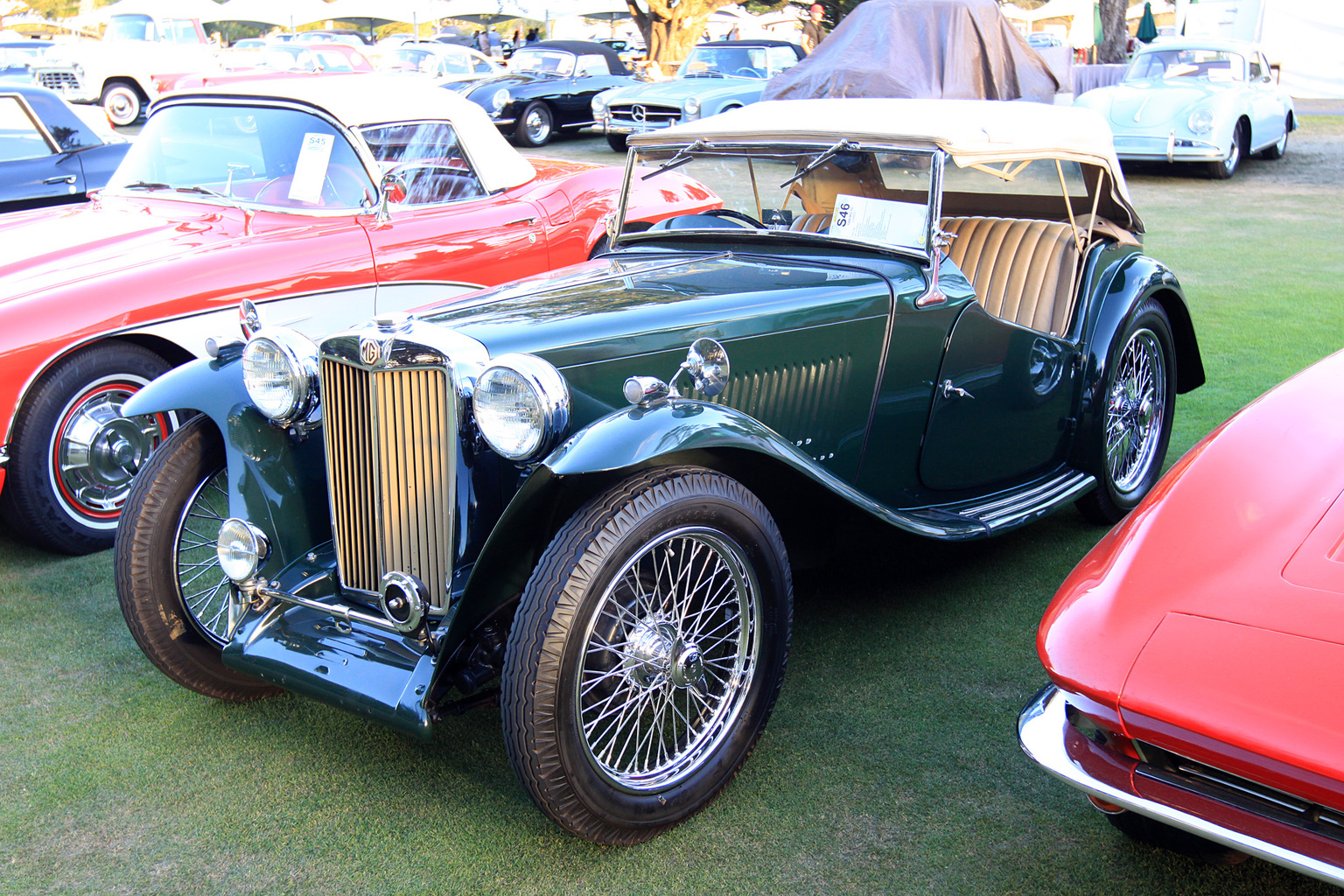
1947 MG TC Gallery1947 MG TC Gallery

MG TC

After the war, the men at Abingdon quickly got back into car production with the TC. It was really a slightly developed version of the prewar 1939 TB, which was the smallest MG and one of the few sports cars available right after the war. Due to material rations, most of the TCs were built for export, thus it was the first MG to be shipped in good quantity to the USA where MG would become established as the most popular import name.

While the TC didn’t feature any bumpers, heater or left-hand drive and many other luxuries, what it provided was as a responsive, exciting ride. Coupled with a very affordable price tag, it should be no surprise that the TC outsold all previous models.

Learn more: 1947 MG TC
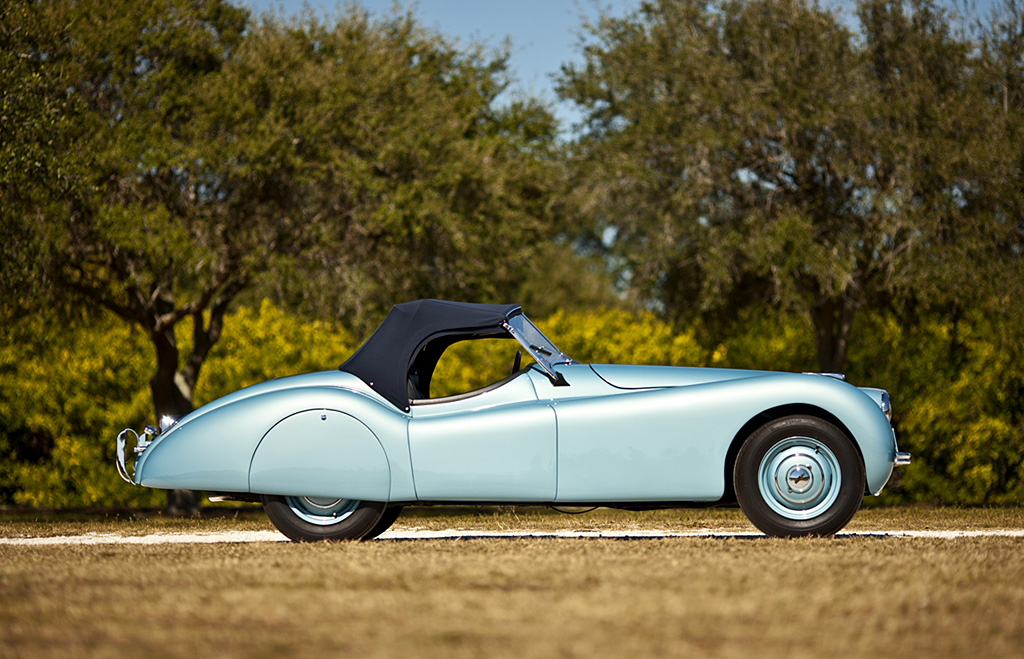
Jaguar XK120 Alloy RoadsterJaguar XK120 Alloy Roadster

Jaguar XK120 Alloy Roadster

With its French curves, 120 mph performance and a price tag of £988, the XK120 was Jaguar’s most important roadster. In 1948 it set a new standard of post-war performance which progressed into a comprehensive motor sports campaign and won the 24 Hours of Le Mans five times in seven years. Before it was allowed to race, Sir William Lyons personally tested an XK120 at Silverstone himself. He called it the ‘Super Sports Two Seater’, but after reaching 120 mph in Belgium, it was simply known as the XK120.

Inspired by Italian sports cars and the streamlined styling of the French design houses, Sir William Lyons personally sketched out the basic silhouette for the 120. In what must have been a difficult task, the panel beaters slowly embodied the simple steel chassis with a sweeping hand-hammered aluminum body. The resulting prototype was timeless, simple and instantly recognizable.

The Jaguar XK120 was the fastest production car in the world when it was first released in 1949, with a top speed of 120 mph – and it had the looks to boot. Its interior was remarkably cramped, but with a car this sexy, who cares.

Learn more: Jaguar XK120 Alloy Roadster

One Man Designed the Sexiest British Cars of the Last 30 Years. These 5 Are His Best

On June 4th, legendary automotive designer Ian Callum announced that he will be leaving his position as Jaguar design director after two decades. While he plans to stay affiliated with Jaguar as a consultant, he will also be using his newfound freedom to pursue other projects.

The announcement of Callum’s quasi-retirement quickly resonated throughout the industry. Besides being a universally-acknowledged good fellow, he has produced some of the sleekest, sexiest, and most forward-thinking car designs of the past 30 years. 

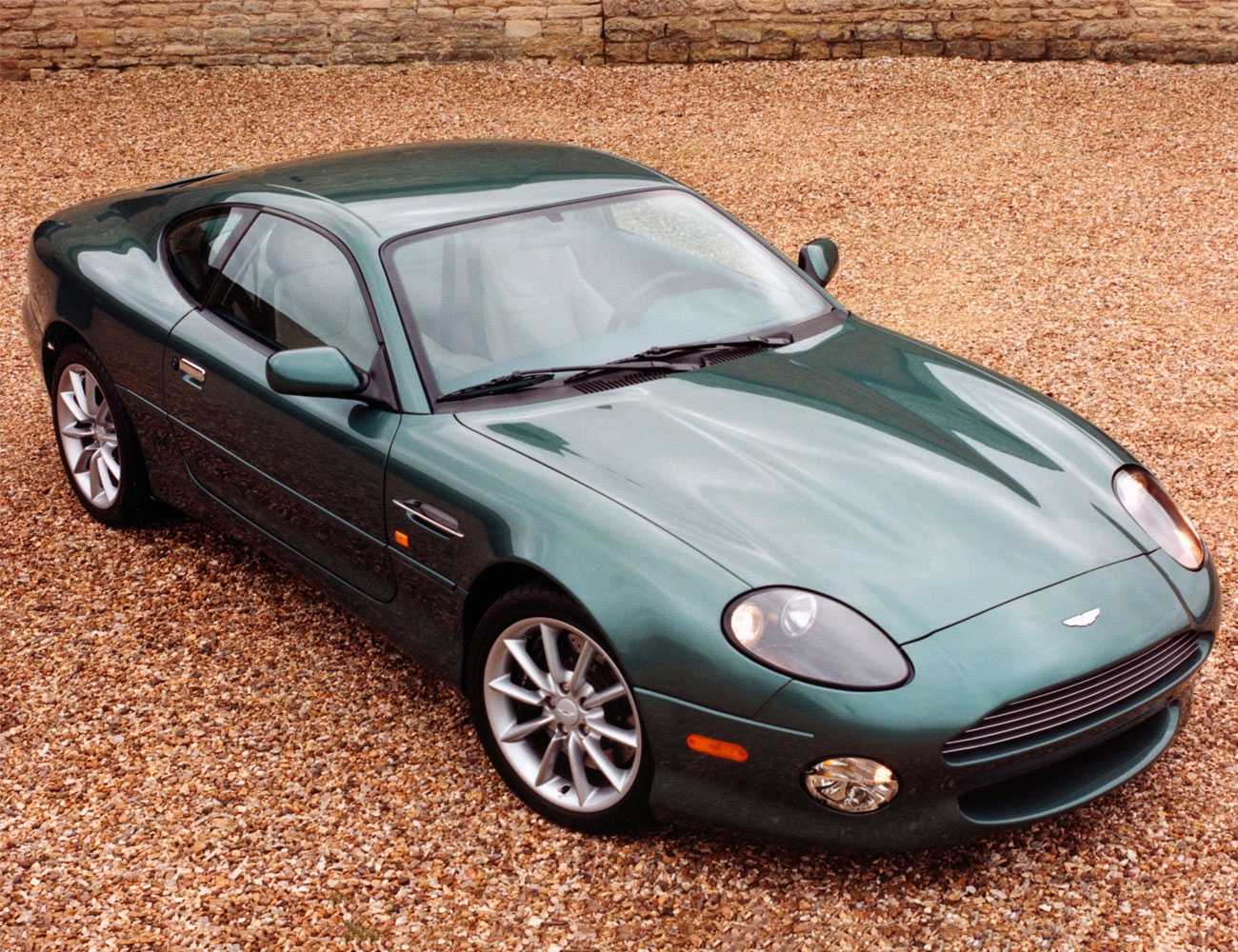
Callum had a distinguished early career at Ford and TWR, before going on to designed the classic Aston Martin DB7 and the Aston Martin Vanquish — two vehicles that helped stabilize the brand and set the table for its move into the modern era. He also contributed to Ford of Europe icons like the Ford Escort Cosworth and Ford Puma.

But Callum will be most remembered for revitalizing Jaguar during the 2000s. He broke the brand out of a nostalgia trap, retiring the staid, aristocratic dad cars in favor of a fresh, aggressive look. His bold-yet-refined design language recaptured Jaguar’s sporting ethos and made the carnaker a progressive force at a time of significant change in the automotive industry.

If there’s a surprising part to the news, it’s that Callum is not stepping back during the victory lap phase of his career, but at its apex. Under his guidance, Jaguar has produced three World Car Design of the Year award winners – the F-Type, the F-Pace, and the I-Pace – since 2013. The I-Pace, the most exciting electric vehicle to date not produced by Tesla, also won World Car of the Year and World Green Car of the Year in 2019.

While the automotive world awaits his “other design projects,” we at Gear Patrol have pulled together five of Callum’s most notable car designs, both in honor of his hard work…and because, well, we’ll take any excuse to ogle these beauties.

Aston Martin DB7 (1994-2004)

grey_placeholder

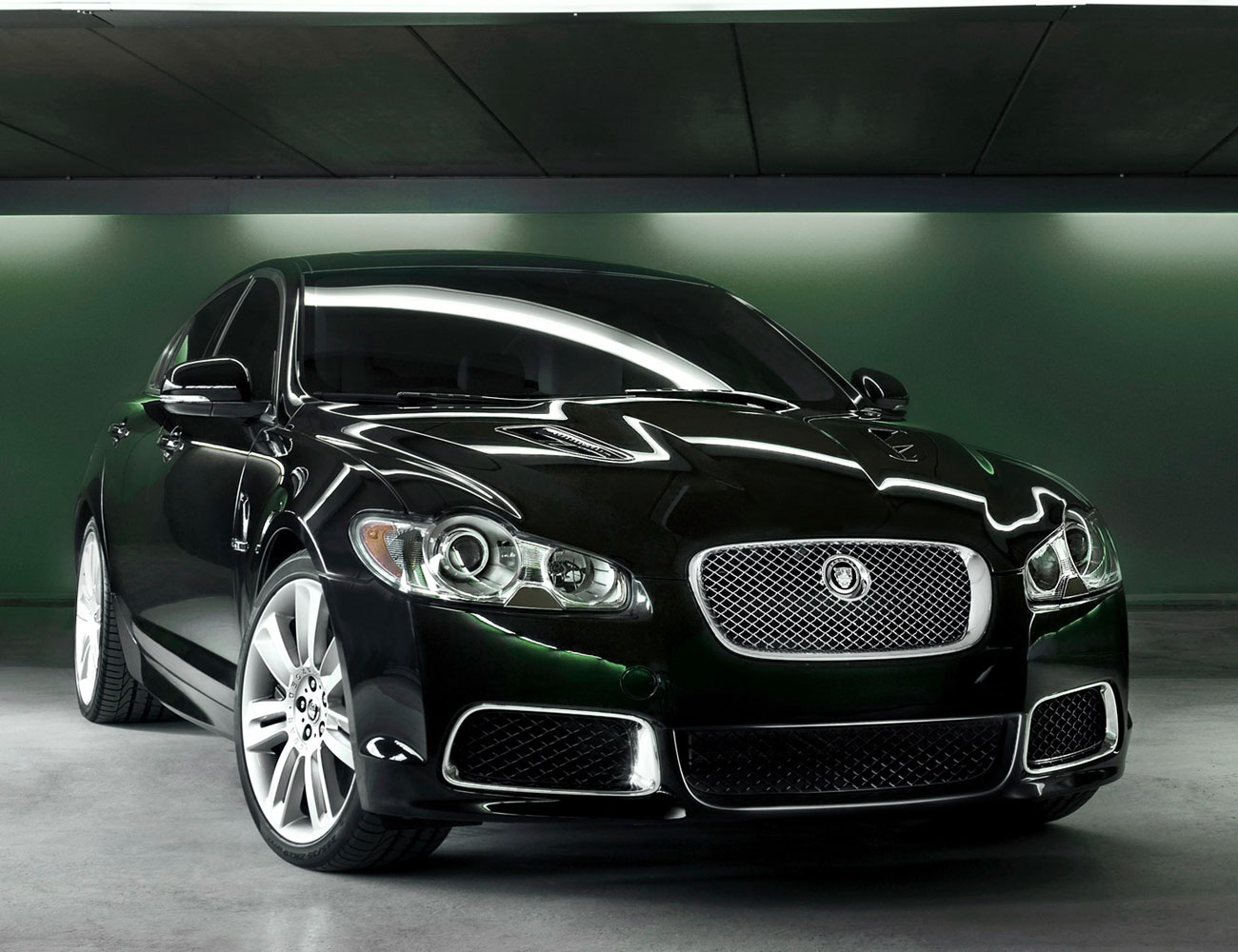
Jaguar XF (2007-2015)

grey_placeholder

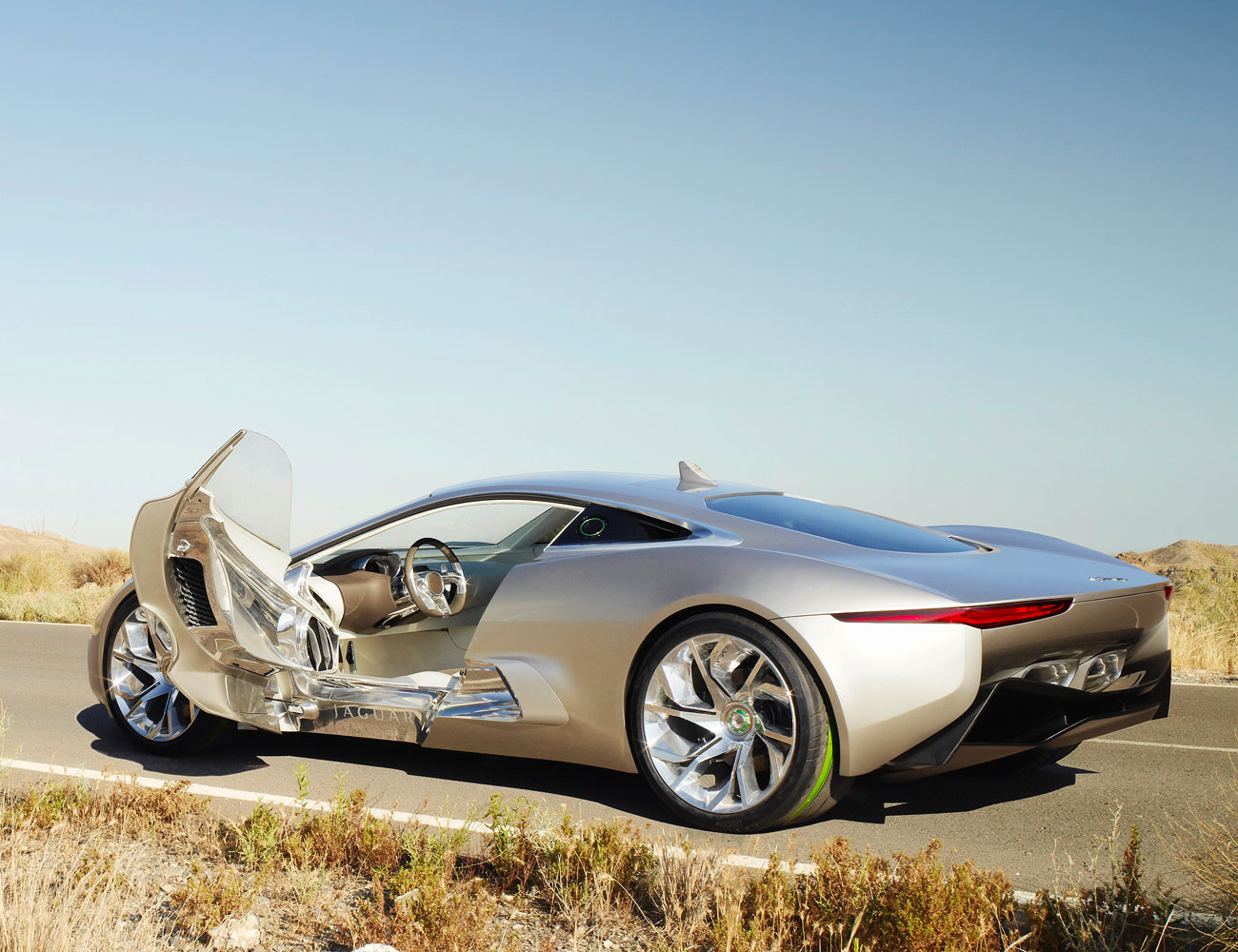
Jaguar C-X75 (2010 Concept)

grey_placeholder

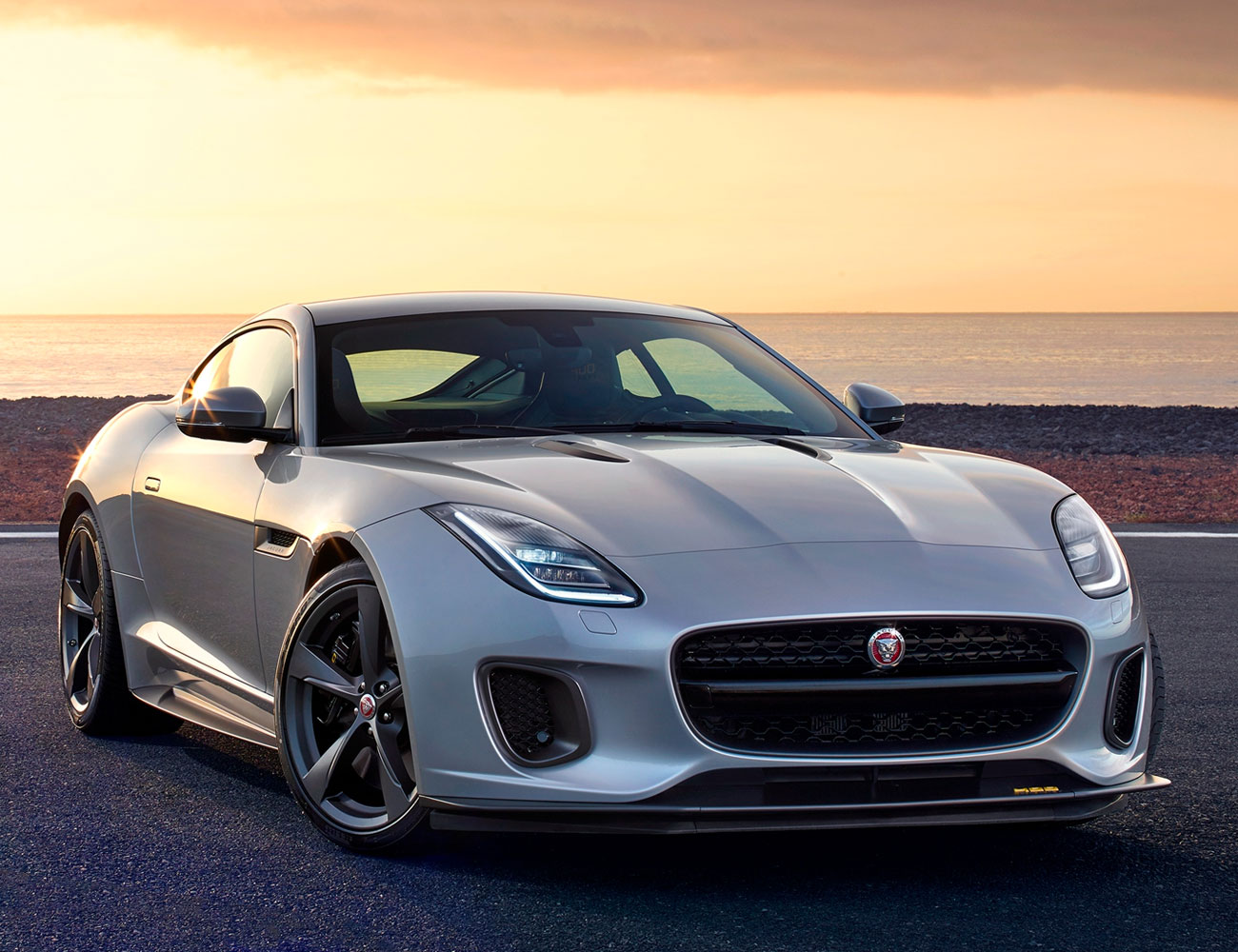
Jaguar F-Type (2013-Present)

grey_placeholder

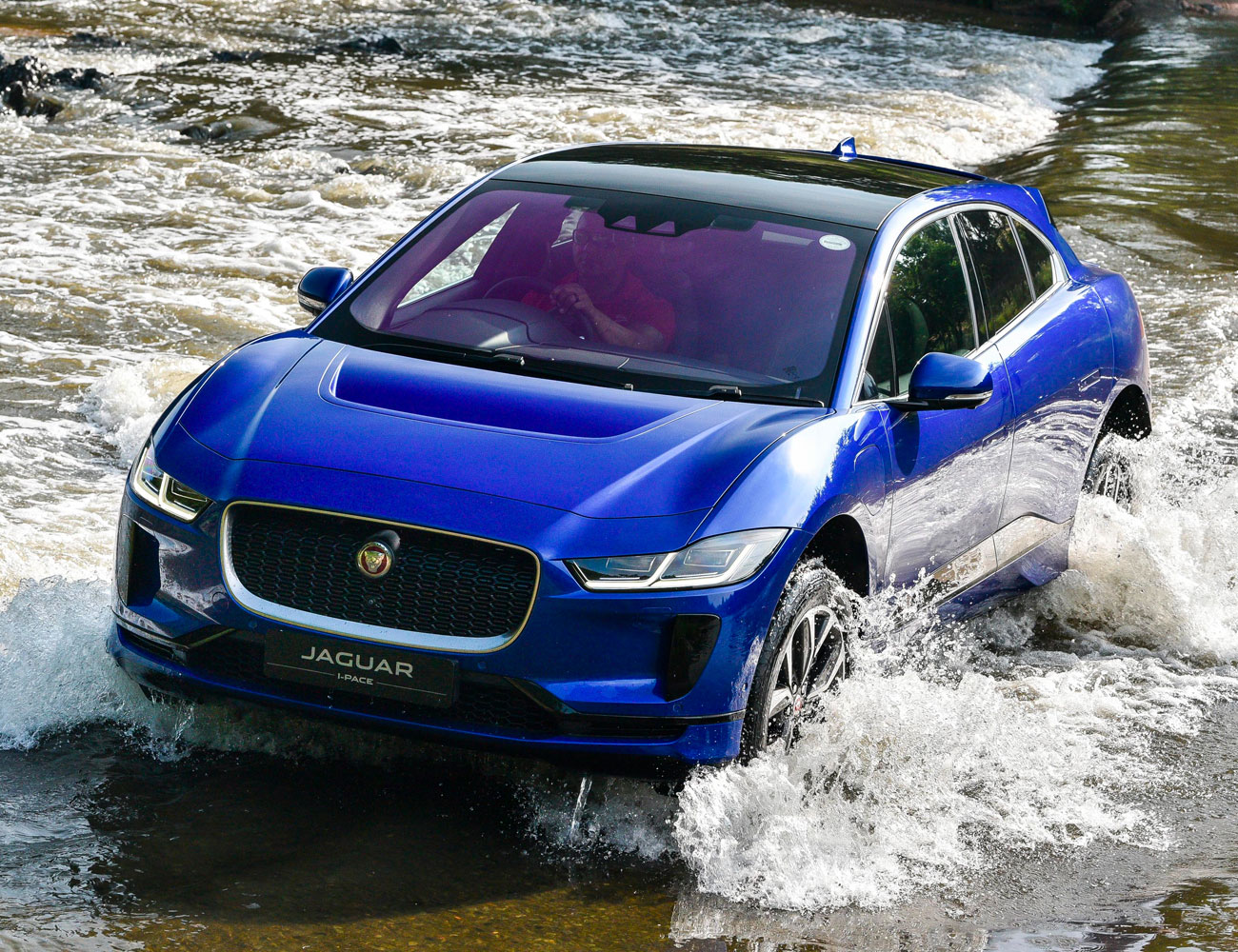
Jaguar I-Pace (2019-Present)

grey_placeholder

Note: Purchasing products through our links may earn us a portion of the sale, which supports our editorial team’s mission. Learn more here.

This Pagani Zonda ‘Zun’ Is One of the Last One-Offs

A Purple, One-Off Hypercar

The Zun is one of the last Pagani Zondas that’s a special one-off project. It’s also one of the wildest projects the car company has ever taken on. The car features a unique purple paint finish. It also comes with oodles of carbon fiber, including a custom hood, air extractors, arrowhead accent, splitter, canards, air intakes, and fin for the roof scoop that’s connected to the rear wing. 

The car is a sight to behold and the person who commissioned this build will have one of the most eye-catching cars in the whole world. According to Carscoops, the images shown here are official renderings and the car has yet to be delivered to its future owner. It’s also unclear what specific variant of Zonda the car is designed and built on. The publication speculates it will have the AMG-sourced 7.3-liter naturally aspirated V12 that produces 760 hp. 

There’s always the chance that the engine was up-tuned for this particular model although there has been no indication of that from Pagani. Another unique thing about this car is that its right-hand drive. Most Pagani Zondas are left-hand drive, making this one even more unique. If we come across any other information about the Zun, we’ll keep you posted. Until then, feast your eyes on this beautiful hypercar. 

BAC Will Unveil Faster Mono at Goodwood Festival of Speed

Taking Things Up a Notch

The Briggs Automotive Company (BAC) came out with a wild car in 2011 called the Mono. It was one of the closest things to an F1 car you could drive on the road. It still sells the Mono today, but now the company has a new car in the works that it plans to unveil at the Goodwood Festival of Speed. 

The company posted a teaser video to its YouTube channel earlier this week, which we’ve included below. All that it said about the car, though was that it would come July 4. There’s no other information out there. The company did release a few photos of the upcoming car, though, so we know it will look similar to the Mono that the company previously produced. 

Talking to Autocar, the company’s co-founder, Neil Briggs sounded excited and optimistic for the new model. He said the experience so far with the Mono has been an “incredible and truly humbling journey.” He said the new car is an effort to “turn the dials up a notch.” Briggs said a new prototype of the car tested at the Shelsley Walsh and it “blew our class away.”

That’s not surprising. The Mono weighs only 1,300 pounds. It’s an open wheel sports car with a 2.5-liter Ford-sourced turbocharged four-cylinder engine that makes around 300 hp. According to Autocar, the Mono has broken five production car lap records since 2011. If the new car is much better than that, you can expect BAC to break a few more records. 

[embedded content]

2020 BMW M8 Competition Revealed in Coupe and Convertible Shapes

BMW’s M8 has been a long time in gestation. We have been hearing about it for quite some time. Leaked images were also discovered late last year. Yet the official release has only just taken place.

The BMW M8 Competition Coupe and Convertible versions have been released at the same time. Both models get some additional styling. The front bumper is completely new with larger air intakes and carbon fibre surrounds. The kidney grilles have been replaced with a new black piece.

At the rear, the BMW M8 gets a new rear diffuser, larger rear wheel vents and a boot lid spoiler. The tailpipe surrounds will please those that prefer the conventional look, four large traditional style exhausts.

The BMW M8 gets the 4.4-litre V8 engine tuned to 600 hp in the BMW M8 Coupe and BMW M8 Convertible, 625 hp in the Competition models. The power is routed through an eight-speed M Steptronic transmission with Drivelogic, and an M-specific xDrive all-wheel-drive system. The xDrive system is the latest with configurable 4WD, 4WD Sport and 2WD.

The M8 sprints to 100 km/h in 3.3 seconds, the M8 Competition Coupe hits the same benchmark in 3.2 seconds, the convertible is 0.1 seconds slower.

The chassis gets new performance optimised damper and suspension settings together with new bracing elements. The engine mounts are stiffer and there is increased camber at the front. The braking system features two selectable settings, Sport and Comfort.

Inside, BMW offers the latest M-Sport steering wheel, stainless steel pedals, M-Sport seats, a unique M-Sport digital instrument display, M-specific graphics for the infotainment system and a new M-sport gear lever to replace the crystal version in the standard M850i.

Costs are yet to be announced, however, expect this to be the most expensive M car yet!

Gordon Murray T.50 V12 Hypercar: McLaren F1 Successor to Debut in 2022

Gordon Murray’s T.50 hypercar will be the successor to the McLaren F1. It’s the car we have been waiting for all these years. Designed to the engineering standards that made Gordon Murray a household name, the Gordon Murray T.50 is a greatest hits of Murray’s design elements. Screaming V12, central driving position, extreme focus on weight reduction, it is all there.

The T.50 was announced earlier today. It is expected to debut in 2022 at a price in excess of £2 million (before taxes). 100 lucky customers will get the opportunity to purchase this extreme hypercar. The draw is that Murray has positioned it away from the current trend of hybrid or fully electric cars.

The press release describes the T.50 as the “purest, lightest, most driver-focused supercar ever built”. The design revolves around a naturally-aspirated, all-new V12 engine. Supplied by Cosworth, the 3.9-litre unit revs through to an extraordinary 12,100 rpm. It produces power of 650 hp and 450 Nm of torque. A roof-fed ram-air induction system increases power up to 700 hp.

Sounds interesting so far. Yet it is the combined elements of the package that make the Gordon Murray T.50 such an exciting prospect. Weight, despite such a large engine, is stated to be 980 kg. It uses a sandwich-panel carbon monocoque with carbon composite panels and double wishbone suspension front and rear.

One of Murray’s most famous innovations, which featured on the unique Brabham BT46B Formula 1 car, also makes a return. Gordon Murray’s ground-effect returns with an all-new underbody airflow system which incorporates a 400mm fan at the rear.

Inside, there are three seats. To keep the focus on the purest driving experience, Murray has also opted for analogue instruments and driver-centric controls. It will be interesting to see how this project develops. The release confirms that T.50 is in the advanced stages of development.

Check out 9 of Ian Callum’s best car designs

Please consider whitelisting Autoblog.

Hi! We notice you’re using an ad blocker. Please consider whitelisting Autoblog.

We get it. Ads can be annoying. But ads are also how we keep the garage doors open and the lights on here at Autoblog – and keep our stories free for you and for everyone. And free is good, right? If you’d be so kind as to whitelist our site, we promise to keep bringing you great content. Thanks for that. And thanks for reading Autoblog.

Hey again!

You still haven’t turned off your adblocker or whitelisted our site. It only takes a few seconds.

The Huracán Sterrato Concept is the Off-Road Lambo You’ve Only Imagined

This Lambo Looks Built for Rambo

Based on the Huracán EVO, the Huracán Sterrato Concept is the off-road vehicle that you only see in dreams, movies, and children’s drawings. There have been some wild ideas for concept off-roaders, but the fact that Lamborghini decided to actually build a concept car is amazing. 

The Sterrato Concept still has most of the Huracán EVO’s bits, including the 5.2-liter V10 that makes 640 hp. The drive systems have been recalibrated to handle the rigors of off-road terrain. The vehicle has all-wheel drive, four-wheel steering and torque vectoring. 

The car sits up only 0.3 inches higher, so it’s more of a desert sand-slinger rather than a rock-crawler. Approach and departure angles were improved and the decks widened by 1.18 inches. The car receives 20-inch wheels wrapped in off-road rubber. The car gets some added underbody protection and exterior enhancements to protect it from the elements. It gets stone-deflecting protection around the engine and air intakes. There are also various LED lighting additions include a large light bar and LEDs added to the bumper. 

While this might not be the typical Lamborghini, it sure is interesting. Who needs a Urus when you can have this? Oh, right. You can’t have this because it’s a concept, but you know Lambo would sell them if you could. 

Gordon Murray’s superlight T.50 supercar: 650 hp Cosworth V12, manual transmission

Gordon Murray Automotive, the company bearing the name of the legendary designer, has released official information on its upcoming T.50 supercar. Aimed to be “the last and greatest” analog supercar ever built, the T.50 will have an all-new 3.9-liter Cosworth V12 and a six-speed manual gearbox.

The T.50 should really appeal to fans of the original 1990s McLaren F1 supercar, one of Murray’s greatest works. It will feature the same center-steer, three-seat configuration of the F1, and it has a screamer of a V12 — the 650-horsepower Cosworth unit, shared with no other car, will rev to a staggering 12,100 rpm. But the superlight T.50, said to weigh 2,161 pounds, has a few more tricks up its sleeve.

One of those tricks is its extremely advanced use of aerodynamics. The T.50 will in fact feature a 15.75-inch fan for underbody airflow control, which means the body design can remain uncluttered by wings. The point isn’t to make a mere tribute to the ’90s legend that is the McLaren F1 — the idea is to beat it. “Our experienced team is applying the same uncompromising approach to design and engineering that shaped every facet of the F1, and they are able to deliver substantial improvements over that car in every meaningful way,” says Murray.

The curb weight undercuts the heft of comparable supercars by about a third, and it’s a result of a strict diet extending to every single component. Murray says the T.50 isn’t about top speed or power, but about ultimate lightness. “The reality of chasing top speeds only adds weight, notably through ever-more-powerful engines, which increase the requirement for larger, heavier ancillaries. We are taking a very different approach.” The T.50 will be smaller than a Porsche 911, for instance, at 14.37 feet long and just over 6 feet wide. Still, there is said to be ample comfort and luggage space for three.

While the fan is powered by a 48-volt electrical system, the bespoke engine has no turbo or hybrid assist, just classic naturally aspirated power. Normally, the engine produces 650 horsepower, a McLaren F1-besting figure despite the V12 being far smaller than the BMW-derived 6.1-liter unit of the predecessor, but there’s also a ram-air induction system to raise available power to 700hp. “By working with the team at Cosworth Powertrain, we have created the greatest naturally-aspirated engine ever designed for the road. It is the highest revving, highest power density, lightest and fastest-responding naturally-aspirated V12 ever made for a road car.” It is paired to a H-pattern gearbox developed by Xtrac in the UK, and all of the power goes to the rear wheels.

The T.50 will be built in Surrey, UK, and its price will soar past $3 million. Just 100 units will be made, with production slated for 2022.

A Ferrari SF90 Stradale Build Slot For Sale With a Price of About $1.5 Million

Do You Want Ferrari’s Latest? 

With the Ferrari SF90 Stradale only being revealed less than a week ago, it’s surprising to see a build slot for the car already up for sale. That’s exactly what’s happened, though. The build slot is available for purchase at Mobile with a price tag of $1.46 million. The buyer of that build slot will be able to configure the car however they want and can expect delivery of the model in the first quarter of 2020, according to the listing. 

As Carscoops points out, there have been lawsuits against people who have tried to flip supercars and hypercars to make money. The Ford GT springs to mind first. Because of this, the publication suggests reaching out to Ferrari before proceeding. We would echo this sentiment. Of course, if you’re spending that much money on a car, you’re bound to take every precaution, and you should. 

For those living under a rock, the Ferrari SF90 Stradale is the most advanced Prancing Horse ever with a new fancy hybrid powertrain that makes a combined 989 hp. It’s sleek and modern while still looking like a Ferrari. It’s worth every penny of the $1.46 million asking price for the build slot. 

If you’re wary of buying an SF90 Stradale under these circumstances, just wait. Ferrari has hinted that the hybrid technology used here would make its way to other Ferrari vehicles, which is a good thing, indeed. 

Gordon Murray Automotive T.50 Hypercar Details Come to Light

The Man Behind the McLaren F1 Has a New Car

We reported a while back that Gordon Murray had a new hypercar he was working on. Details about the car were extremely scarce at the time of that writing. Now, some of those details have come to light. According to his website, the car will use a carbon fiber tub, a naturally aspirated V12 engine, a good-old-fashioned six-speed manual transmission, and be rear-wheel drive. The car will also seat three people. The driver will be front and center with the two passengers to either side. 

The car will begin production in 2022. Right now the car is in advanced stages of development. The vehicle is said to cost upwards of $2.5 million. Murray plans to only build 100 versions of the car, too, meaning it will be a rare model. The model is supposed to have the most advanced aerodynamics of any car and an unmatched power-to-weight ratio. 

Murray doesn’t seem too interested in what people think, which is refreshing. He’s here to build the best-driving car out there. “I have absolutely no interest in chasing records for top speed or acceleration. Our focus is instead on delivering the purest, most rewarding driving experience of any supercar ever built – but, rest assured, it will be quick,” he said. 

It’s this focus on the actual driveability of the car that has us so excited. Chasing top speeds and faster acceleration times is all well and good, but if you have to ruin the driving experience to get there, then you’ve missed the point. Murray knows what it takes to build an engaging car and the T.50 should be impressive.