All posts in “Cars”

BMW’s Vision M Next Concept Looks to the Future

BMW Showcases New Tech in This Wild Concept

BMW has a vision for the future and that is the Vision M Next concept car. The vehicle pulls from the i8 hybrid as well as other previous BMW vehicles for inspiration. The model also has unique Laser Wire headlights, a new version of the BMW twin-kidney grille design and an overall sporty and futuristic look. 

The car’s focus is on the driver. According to Adrian van Hooydonk, the company’s senior design VP, the vehicle’s design is really about the future of sporty driving. 

Where the BMW Vision iNEXT illustrated how autonomous driving is set to transform life on board our vehicles, the BMW Vision M Next demonstrates how state-of-the-art technology can also make the experience of driving yourself purer and more emotionally engaging. In both models, the focus is firmly on the people inside. Design and technology make the ‘Ease’ and ‘Boost’ experiences more natural and more intense.

According to Carscoops, the Ease and Boost reference comes from the drive modes. Ease is the autonomous mode and Boost is the driver mode. The big news about this car is the Boost Pod, which is the instrument cluster and an augmented reality head-up display. The idea behind it is to eliminate distractions, so the driver can just focus on driving. 

The powertrain of the Vision M Next is a plug-in hybrid system that uses electric motors and a turbo four-cylinder engine. Combined power output sits at 592 hp. That makes the car good for a 0-62 mph time of three seconds flat. The car has a top speed of 186 mph and an electric-only range of 62 miles. 

[embedded content]

These Are the Most American Cars and Trucks On Sale

“Buy American.” It’s a saying with deep roots in the national psyche, a two-word phrase that unites patriotism and capitalism into a single expression. Well-made products can be built anywhere, of course, but we take special pride in those goods made right here in the U.S.A. And that goes double for cars, where brand loyalties can run thick as blood and companies often define themselves as much on their country of origin as they do any other trait.

But badges, like looks, can be deceiving. Many cars made by Detroit’s Big Three are actually assembled abroad, while plenty of vehicles coming from companies headquartered in other countries are screwed together right here between sea and shining sea. To help cut through the confusion, the folks at Cars.com have put together a list of the new cars and trucks on sale today that qualify as the most American-made rides you can buy off a showroom floor, based on both where they’re built and where the parts used to make them come from.

As it turns out, American brands make up only four of the top 10 cars and trucks on the list. (And in fact, one of them isn’t represented there at all; Ford doesn’t even show up until spot no. 13.) The other six, interestingly enough, not only come from a “foreign” brand, they all come from the same automaker: Honda. The carmaker pops up again once more before the 15-car-strong list wraps up, giving it nearly half the entries on the list between its Honda and Acura brands. Toyota comes in strong at the end, as well — thus giving Japanese automakers 60% of all the most American-made cars and trucks on sale today.

The complete list of the 15 most American-made vehicles, starting with the most American and working on down:

  1. Jeep Cherokee
  2. Honda Odyssey
  3. Honda Ridgeline
  4. Honda Passport
  5. Chevrolet Corvette
  6. Acura MDX
  7. Honda Pilot
  8. Chevrolet Colorado
  9. GMC Canyon
  10. Acura RDX
  11. Chevrolet Camaro
  12. Toyota Avalon
  13. Ford F-150
  14. Honda Accord
  15. Toyota Tundra
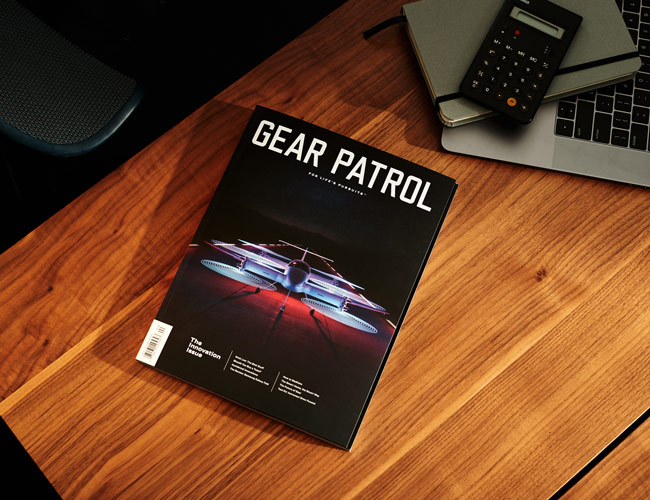
Gear Patrol Magazine: Issue Ten

We’re proud to present the Innovation Issue. In our newest magazine we take a look at how boundaries are being pushed in everything from virtual reality, to coffee farming and more. Learn More Here

BMW Vision M Next concept debuts, shows the way forward for BMW M

Today marks the next step in BMW’s “Next” concept program, previewing the company’s future. It’s the most exciting step, too, because this particular concept is called the BMW Vision M Next. As this “Next” ground is still relatively untrodden, we’ll make it clear that M means the same thing here as it does for every BMW M car. This particular firecracker is meant to give us a taste of what’s coming to BMW’s M division, electrification and all.

The shape and stature of the car instantly screams i8 at us. However, the actual design and styling is new and unique to itself. More than anything, it looks like a worthy evolution of the i8, previewed in concept form. When we get to the powertrain details, it sounds even more like such a vehicle. BMW didn’t make it a fully electric car. Instead, it’s a plug-in hybrid with a turbocharged four-cylinder drinking gasoline. We aren’t privy to the engine’s specs, but BMW says the combined system output is 600 horsepower. That’s good for 0-62 mph in 3.0 seconds and a top speed of 186 mph. Recalling the i8, that car has a turbocharged three-cylinder combined with an electric motor that makes 369 horsepower in total. The M Next is capable of driving 62 miles electric-only on a full charge, while the i8 is only capable of 18 miles. Needless to say, the M Next is a huge step forward in every way.

BMW likes to use a lot of colorful language to explain and detail its styling decisions, but we can stick to the important stuff. Those kidney grilles are rather eye-catching. Even though it may not look it at first glance, they’re blanked off with a transparent layer of bodywork. The pattern visible in the grille was actually laser-etched in there, and is also illuminated. Fancy stuff. Another interesting bit is the headlight technology. BMW calls it “Laser Wire” lighting. Glass fibers coated with phosphorous are used to produce the elements, which results in an extremely thin form that we see with one stacked on top of each other. BMW used the same tech to create the taillights, and you’ll notice floating BMW roundels floating inside the element, too. The rear “window” design is meant to remind of the BMW M1, which happens to be a glorious car design to take inspiration from. In the M Next’s case, the three-piece louvres are made of glass. We’d be remiss if we didn’t mention all the glorious orange used throughout the car. BMW calls it “Thrilling Orange,” and it’s thrilling indeed.

Also worthy of discussion is the rather spartan and technology-infused interior. We’re not so sure about the design from the photos BMW provided us with, but make your own judgments. There are three displays, all directly in front of the driver. Massive infotainment screens need not apply in the M Next. The first display comprises two tiny screens on the steering wheel, followed by a curved glass display where one would expect an instrument cluster. Finally, an AR (augmented reality) head-up display stretches across part of the windshield to offer even more information at a glance. The point here is to make all the displays fall in the driver’s line of sight. Whether that distracts the driver with display overload, or takes pressure away from looking to the center infotainment display is still up to the jury to decide. BMW does point out that it’s opposite the goal of the Vision iNext, which attempts to make the technology accessible to everybody in the car.

One neat interior feature we’d love to see on today’s cars is a gyroscopic cup holder. BMW says it’s able to compensate for strong lateral and longitudinal forces, which would be great when you’re trying to accelerate through an on-ramp with the morning coffee in tow. There’s no indication of when we might see any of the technologies previewed in the M Next, but it could serve as a point of reference for an i8 successor or even a standalone M car.

$381,000 Electric Ford Mustang to Debut at Goodwood 2019

British start-up, Charge Automotive, are set to present an electric version of the Ford Mustang at the Goodwood Festival of Speed 2019. It isn’t the first futuristic Ford Mustang Goodwood has seen either. Last year, Siemens presented an Autonomous Ford Mustang which took part in the hill climb to showcase the technology.

The Charge Automotive vehicle is a Ford Mustang in shell only. The bodywork is a recreation of a fastback Ford Mustang with modern underpinnings. Few details are known about the sub-frame. Charge have released some details for the powertrain, which has been developed with another fledgling British company, Arrival.

Arrival have supplied a 64 kWh battery pack which puts out 885 lb-ft of maximum torque to all four wheels. Range should be around 200 miles with a sub-four-second zero-to-60-mph time, and a top speed of 149 mph. Electronic tinkering will allow the owner to switch between all wheel drive and rear wheel drive, it isn’t clear if this will affect system power.

The electric Ford Mustang won’t be taking part in the hill climb but will apparently sit on the Michelin Supercar stand. Charge plan to produce around 499 of the electric Mustangs at a cost starting from £300,000. Customer cars will be delivered from September 2019. Charge are apparently happy to work with customers on bespoke models too.

Porsche Has Retro-Inspired Special Editions Planned

Drawing Inspiration from the 1950s and 1980s

Porsche Exclusive Manufaktur made an announcement that it will build some retro-inspired models based on cars from the 1950s and 1980s. There isn’t a lot of information at this time, but the company said it’s building these cars as lifestyle cars and that means they will follow a similar playbook to the Porsche 911 Speedster with the Heritage Design Package, according to Carscoops.

So what can you expect of the cars? They’ll all be based on the 911. The cars will feature specific design elements that harken back to the era of Porsches that they draw inspiration from. This will include things like updated, custom interiors with corduroy and tartan.

The cars themselves will be quite expensive, though Porsche has not yet stated an actual price for the vehicles. We would imagine they’ll let some more details and maybe an image leak out before announcing pricing. The company will also produce different Heritage Design Packages for the regular 911.

This means there will likely be a design package for the regular version of the car that you can add for a lower price than the special editions planned. This will let you get some of that specialty without having to fork over the big bucks. Just what’s in those packages has not yet been determined. 

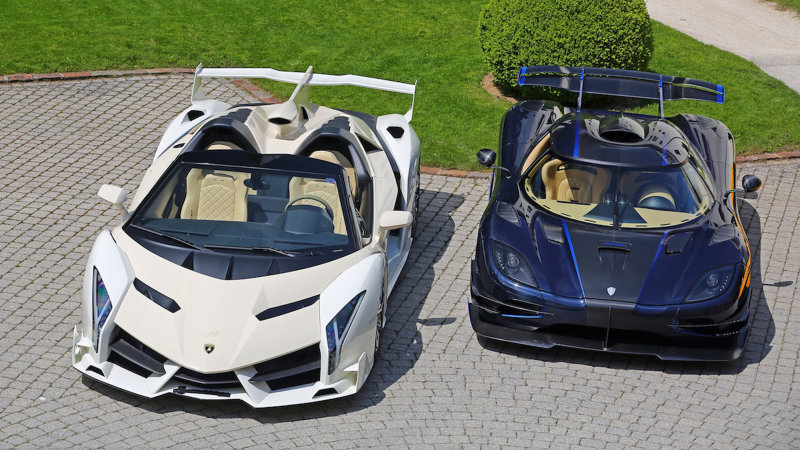
Veneno Roadster, One:1, One-77, LaFerrari, P1, Veyron headline 25-car Bonham’s auction

Bonhams is holding a no-reserve auction in fall 2019 that includes some of the most valuable and sought-after supercars of the past decade. The lot of 25 beautiful collector items includes a Lamborghini Veneno Roadster, a Koenigsegg One:1, an Aston Martin One-77, a Ferrari LaFerrari, a McLaren P1, and a Bugatti Veyron. The collection, which was seized from a corrupt politician from Equatorial Guinea, is valued at roughly $13 million.

If selling off future classics that are still in their infancy as collector items seems strange, it’s because this is not a straightforward situation. These cars will be sold off by the State of Geneva, not a person. The collection was previously owned by the vice president of Equatorial Guinea, Teodoro Obiang, but the cars were seized when he was placed under investigation for money laundering and unfair management of public interests.

These 25 cars, which were located in Geneva, were first sequestered in fall 2016. A trial court ordered them sold off, and the money earned from the sales would be invested in social programs that benefit Equatorial Guinea. And so, Equatorial Guinea is about to see an influx of cash, as every vehicle is valued in the hundreds of thousands, if not millions, of dollars.

Supercar Collection Auction

The rarest might be the Koenigsegg One:1. One of only six remaining, it has 371 miles on the dial, and is valued at roughly $1.8 million. The Lamborghini Veneno Roadster, one of nine in the world, is a close second. It has 202 miles logged, and is valued at about $5.1 million.

The Aston Martin One-77 is another rare bird. It is example No. 35 of 77, holds a 7.3-liter V12 engine, and is valued at about $1.4 million. A McLaren P1, Ferrari LaFerrari, and Bugatti Veyron 16.4 round out the top of the list. The remaining cars are not fully detailed, but they include examples from Mercedes-Maybach, Bentley, Maserati and Porsche.

The auction will take place on Sunday, Sept. 29, at the Bonmont Golf & Country Club near Lake Geneva. For more photos and information, visit Bonhams.

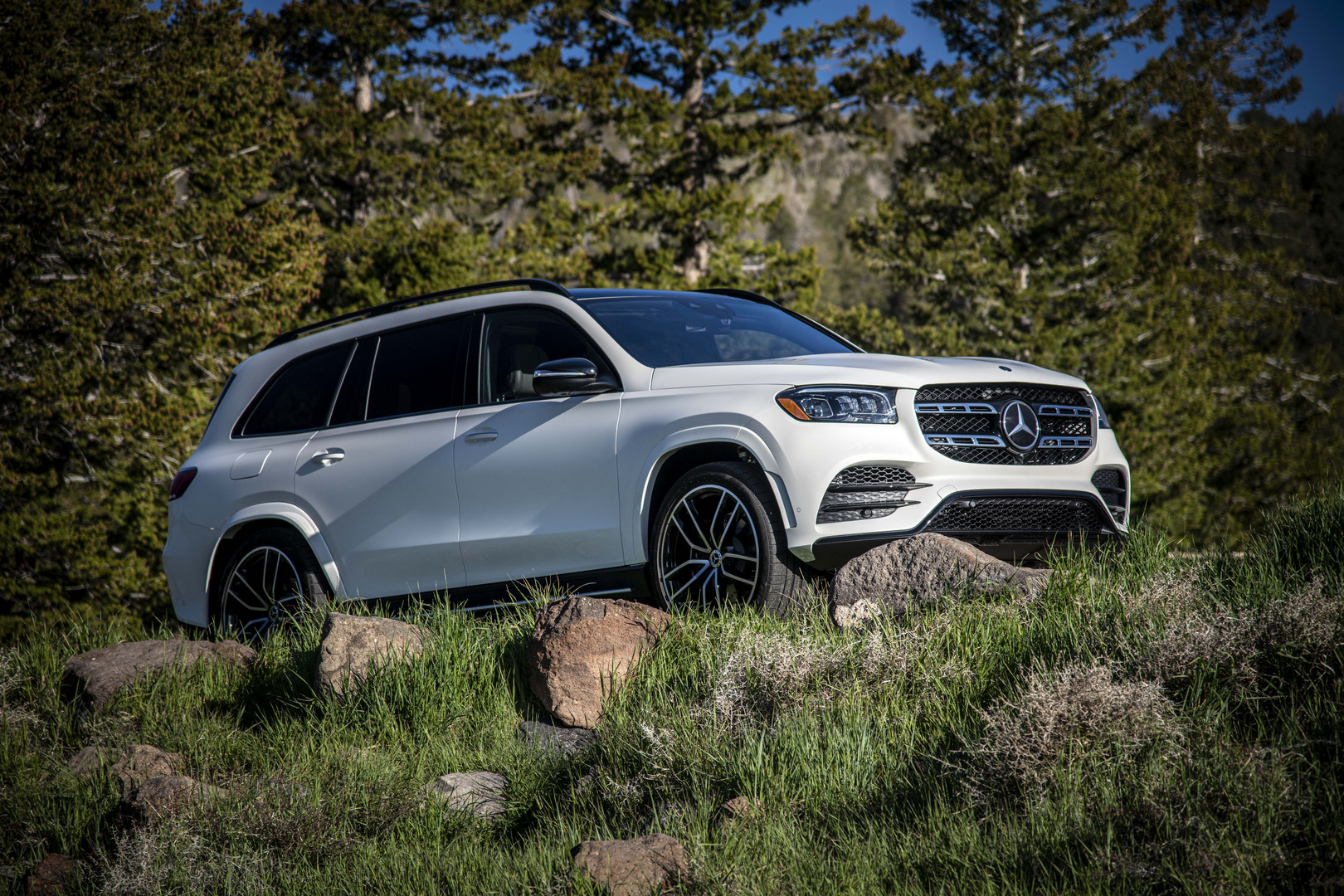
2020 Mercedes-Benz GLS Review

The third generation of the Mercedes-Benz GLS flagship SUV celebrated its debut in New York. As a nearly all American affair we had the opportunity to test the 2020 Mercedes-Benz GLS 580 4Matic in Utah.

Nearly two thirds of all Mercedes-Benz GL and GLS models built since its first introduction in 2006 have been sold in the United States. I once dubbed it the ‘Beverly Hills Golf’ as the GLS is more common in Beverly Hills than a Volkswagen Golf in an average town in Germany.

The new Mercedes-Benz GLS will roll off the line in Tuscaloosa with four different engines. The entry-level 3.0 liter six cylinder diesel engine is tailored to the European market and meet the strict 6d emission standard. As a GLS 350d the engine delivers 286hp and 600Nm of torque. As a GLS 400d it delivers 330hp and 700Nm of torque. Outside of the Europe the new GLS is also available with a electrified petrol engine. This 3.0 liter six cylinder engine produces 367hp and 500Nm of torque. Thanks to 48V technology it can give extra 250Nm and 22hp of electric boost over short periods.

The main innovation and highlight of the new Mercedes-Benz GLS range however is the GLS 580 4Matic. As the world’s first electrified petrol V8 this 4.0 liter engine produces 489hp and 700Nm of torque with an additional 250Nm and 22hp boost available. 0-100 km/h is done in a respectable 5.3 seconds and the top speed is limited to 250 km/h. The 48V system with integrated starter generator allows for energy recuperation and powers things like the water pump and air-conditioning.

We had the opportunity to test and review the capabilities of the new GLS in Utah on the road as well as off-road. The first thing you will notice when you start the 4.0 V8 in the GLS 580 4Matic is that is significantly quieter than the 4.0 V8 found in the G500. Clearly the GLS 580 is trimmed for comfort rather than sportiness. Also in its power delivery it is quite linear and not as fierce as a non-electrified V8. I’m quite a turbo fan so I found characteristics a bit underwhelming. It is faster than it feels and it is easy to underestimate the speed at which you are traveling in the new GLS.

The last generation GLS was not worthy to be considered a SUV version of the S-Class as it lacked comfort and luxury. Mercedes-Benz changed that fundamentally with the new GLS. It is equipped with virtually every thing you can wish on the luxury front including individual rear seats with seat cooling and massage function. The new E-Active Body Control – which I hope they rename to something cool and easy to remember like Flying Carpet Suspension – is amazing and adds a whole new dimension to passenger comfort as well as driving dynamics. In comfort and eco driving modes it filters out nearly every bump and hole in the road. Switch to curve mode and the car leans into the corner as if you are on a jetski. But switch to Sport or Sport+ and the electronically controlled system reduces body roll of the massive SUV to a bare minimum.

2020 Mercedes-Benz GLS 3rd Row Seats

Inside the GLS is available as 6- or 7-seater version with a lot of convenient options. The seats on the second and third row can be adjusted or folded electronically. The third row can have its own climate controls with air vents in the ceiling. The 6-seater setup with two individual rear seats is standard in the US and makes it a lot easier to access the third row.

In the front the cockpit is dominated by two large screens which provide all relevant driver information and infotainment. The design mimics that introduced on the GLE including the really annoying low position of the start / stop button at the spot where normally my right knee would be. That issue aside the rest of the ergonomics and usability are very good and leave little to be desired.

What so spec?

Planning to get a GLS and not sure what to spec? Here are a few things we would recommend!

– E-Active Body Control – The Airmatic air suspension is not bad but the e-active body control takes ride comfort and driving dynamics to a whole new level. An absolute must.
– Driver Assistance Package – Includes a range of driver assistance systems that make driving safer and more relaxing. Includes adaptive cruise control and lane assist with a range of advanced features like assistance in stop and go traffic, automatic adapting to the speed limit and active brake assist.
– Panoramic Sunroof – Normally I’m not a fan of the small hole in the roof that car manufacturers call a sunroof but the nearly all glass roof of the GLS adds a lot of light to the interior.

What about the competition?

Mercedes-Benz clearly set a new benchmark in the 7-seater SUV segment but in the ultra-luxury SUV market there are a few other contenders to be considered.

The Bentley Bentayga and Rolls-Royce Cullinan are both a lot more expensive than the top of the range SUV from Mercedes-Benz. For that extra buck they provide finer materials, more exclusivity and more personalization. However they cannot match the comfortable driving dynamics and the infotainment system of the GLS.

2020 Mercedes-Benz GLS

The two direct rivals include the Audi Q7, which feels a bit dated already, and the BMW X7 which launched last year. The X7 offers a very similar package to the GLS but cannot quite deliver the same level of innovation and luxury as the GLS.

Conclusion

The new Mercedes-Benz GLS sets a new benchmark in the segment. For the first time it is a true SUV version of the S-Class with all luxury possible. The E-Active Body Control is an incredible piece of engineering that takes comfort and driving dynamics to unexpected new levels. The new electrified 4.0 V8 in the GLS 560 on the other hand is not quite as sporty as I had hoped which leaves me with a strong craving for a GLS 63 AMG.

Ferrari shows off SF90’s four powertrain modes in new video

The Ferrari SF90 is the newest foal in the Maranello stable, and Ferrari continues to parade it for the crowds. A new video shows how the plug-in hybrid’s four powertrain modes work, controlled by buttons on the lower left side of the steering wheel. The greenest mode gets a button marked “eD,” for electric driving (now that Smart’s effectively dead here, someone had to pick up the eD moniker). In that guise, the 7.9-kWh battery mounted transversely behind the seats sends energy to the two e-motors up front, and can power the SF90 for up to 15 miles as a front-wheel-drive coupe.

Next up, the “H” button turns the SF90 into a hybrid, with a priority on maximum efficiency. The battery sends its power to the dual e-motors in front and the third e-motor between the engine and transmission, with the 4.0-liter twin-turbo V8 firing to work the rear wheels as well. Under low loads, the control logic can switch from Hybrid mode to pure electric driving, then reengage the ICE on demand.

Above that, a checkered flag icon represents Performance mode. Here, the ICE is always running, with the priority on keeping the battery charged.

The gutsiest mode gets a clock icon, representing Qualify. This extracts all the performance available, the video indicating this is where the 1,000 CV, or 986 horsepower, comes into play. It isn’t clear if Qualify is the only mode that unlocks peak horsepower, of if Performance can do so as well. In fact, we’re still not sure what the SF90’s effective horsepower is; Ferrari added the V8’s 769 hp to the three e-motors’ 217 hp to reach that total output figure, which isn’t how this is usually done.

We’ll undoubtedly get more answers once the first drives hit the interwebs. We already have a lot of questions about that intense steering wheel and its “View Max” touch controller, and the rather comely 16-inch display.

Ford Has a New Version of the GT It Will Show at Goodwood

A More Extreme Ford GT?

The 2019 Goodwood Festival of Speed should be a fantastic event with some of the most impressive and amazing cars in the entire world. Now, there is another good reason to pay attention to the event. Ford recently teased a shot of a new version of its GT that will appear at Goodwood. The company released the images and the information that it would share “exciting Ford GT supercar news” on July 4 at 4:45 a.m. EDT.

Hermann Salenbauch from Ford Performance and Larry Holt from Multimatic will be the two people who will give the announcement. Right now, what those two men will be discussing is a bit up in the air. Ford did not let any more information slip out beyond the fact that it will be exciting news. 

The car in the teaser image is just more or less a dark outline. However, that dark outline does show a huge rear wing and what appears to be a roof scoop. There are a few possibilities. It could be a special one-off build, a new limited edition run of the car, or some kind of new racing variant. 

Ford already has plenty coming to Goodwood, including the new Focus ST, the Mustang Shelby GT500, the Ranger Raptor, and Ken Block’s vehicles and Vaughn Gittin Jr.’s wild rides. We have a feeling, though, that the GT news will steal the show.

Another Ford GT is coming, and this is it

Get excited, everyone. There’s another Ford GT coming. Ford just dropped this teaser of a shadowy, winged GT supercar staring back at us, and it certainly has our hearts pounding.

Sadly, information about the unnamed GT version is even scarcer than most teasers we typically get. Here’s the text direct from the Blue Oval: “Ford will make a special Ford GT supercar announcement during a dedicated press conference from 4:45 a.m. EDT, July 4, at the 2019 Goodwood Festival of Speed.”

Multimatic will be on site for the announcement, with chief technical officer Larry Holt in tow. If you’re in the UK for Goodwood, you’ll want to be at the Ford stand in the Drift Paddock for the news. And that’s all the official information available for the time being.

So for now we’re left to gaze at this great teaser photo Ford provided us. The wing is absolutely massive, like race car levels of massive. Also, it has a roof scoop, which is something the normal Ford GT doesn’t have. Beyond these couple of details, it’s hard to tell much of anything apart from the Ford GT we already know and love. Clearly, Ford is after something a bit racier with this version. We’ll have to wait until Independence Day to see the car in full, as a new American supercar makes its world debut in the country we declared independence from on that day’s anniversary.

The Complete Electric Car Buying Guide: Every Model, Explained

Electric cars are the future. At least, that’s the idea most automakers are banking on. Elon Musk and Tesla have shown off the immense potential for battery electric vehicles (also known as BEVs), delivering models that offer prodigious range equal to gas-powered equivalents and “ludicrous” acceleration that exceeds most internal-combustion cars.

The biggest hurdle for automakers looking to build new EVs is battery technology; power storage units remain heavy, cumbersome and expensive compared with gasoline. So far, battery limitations have been one of the main constraints what types of BEVs can be made, who can afford them, and how much — if any — profit automakers can make from them. But that’s starting to change. The 2020 model year should be a tipping point for EVs, with heavyweight manufacturers like Porsche and Mercedes-Benz diving into the mix, as well as intriguing startups like Rivian launching new vehicles.

That’s not to say the electric car marketplace is barren right now, however: Early adopters can still choose from an array of compelling options. Here, then, we present the Gear Patrol guide for every battery electric vehicle currently available for sale in the U.S.

Charging

Level 1 Charging: A standard 120-volt wall outlet. It can take 24 hours or more to fully charge an EV.

Level 2 Charging: Most home charging systems and public charge points; they deliver power at 240 volts, and charge vehicles about five to six times faster than Level 1. These can add significant range in a few hours, or fully charge a vehicle overnight. Almost every electric vehicle is compatible with a Level 2 charger.

Level 3 Charging: Refers to a number of methods that generally deliver a “fast charge,” raising a battery to 80 percent in less than an hour. These chargers are less common. Not all EVs accept Level 3 charging.

Plugs

SAE J1772: The standard five-pin connector used on most Level 2 charging systems.

CCS: “Combined charging system.” Combines the five-pin SAE J1772 “J-plug” with an additional plug to accommodate DC fast-charging.

CHAdeMO: DC-only fast-charging connector, most commonly used on Japanese and Korean vehicles.  

Tesla Supercharger: Tesla uses its own proprietary connectors that accommodate fast charging, which they call “Supercharging.” Tesla sells SAE J1772 and CHAdeMO adapters. European Teslas are fitted with a CCS plug.

Other Useful EV Terms

BEV: “Battery-electric vehicle.” Used interchangeably with “EV” to describe electric vehicles.

Federal Tax Credit: In America, EVs come with a $7,500 federal tax credit that lowers the effective cost of purchase. The tax credit begins to phase out after a manufacturer sells 200,000 electric vehicles.

ICE-ing: Internal combustion enthusiasts parking their large trucks in a manner to block public charging points.

kWh: “Kilowatt-hour.” This is the energy unit used to measure battery capacity. 

MPGe: Miles per gallon equivalent.” Designed to measure how many miles an EV will travel on the energy equivalent of one gallon of gas. Works as a vague basis of comparison between internal-combustion and electric vehicles.

One-Pedal Driving: Many EVs use a regenerative braking system, where lifting off the accelerator causes the electric motor to create resistance and braking, sending electricty to the battery. This permits the driver, for the most part, to drive without using the brake pedal. It improves efficiency in stop-and-go traffic. Most cars will let the driver adjust the system’s strength.

Range Anxiety: Fear that an EV won’t be able to travel sufficiently far on a charge. Considered a major barrier to widespread EV adoption.

Torque: The rotational equivalent of linear force, which provides forward acceleration in a vehicle. Internal combustion engines must build their revolutions to a specific speed range to achieve peak torque, while EVs reach peak torque immediately, enabling tghem to accelerate more quickly and feel quicker still.

WLTP: The World Harmonized Light Vehicles Test Procedure, used for testing efficiency and energy emissions in non-U.S. markets. Manufacturers often cite it because it gives a more favorable range estimate than America testing, which is closer to real-world driving.

Audi

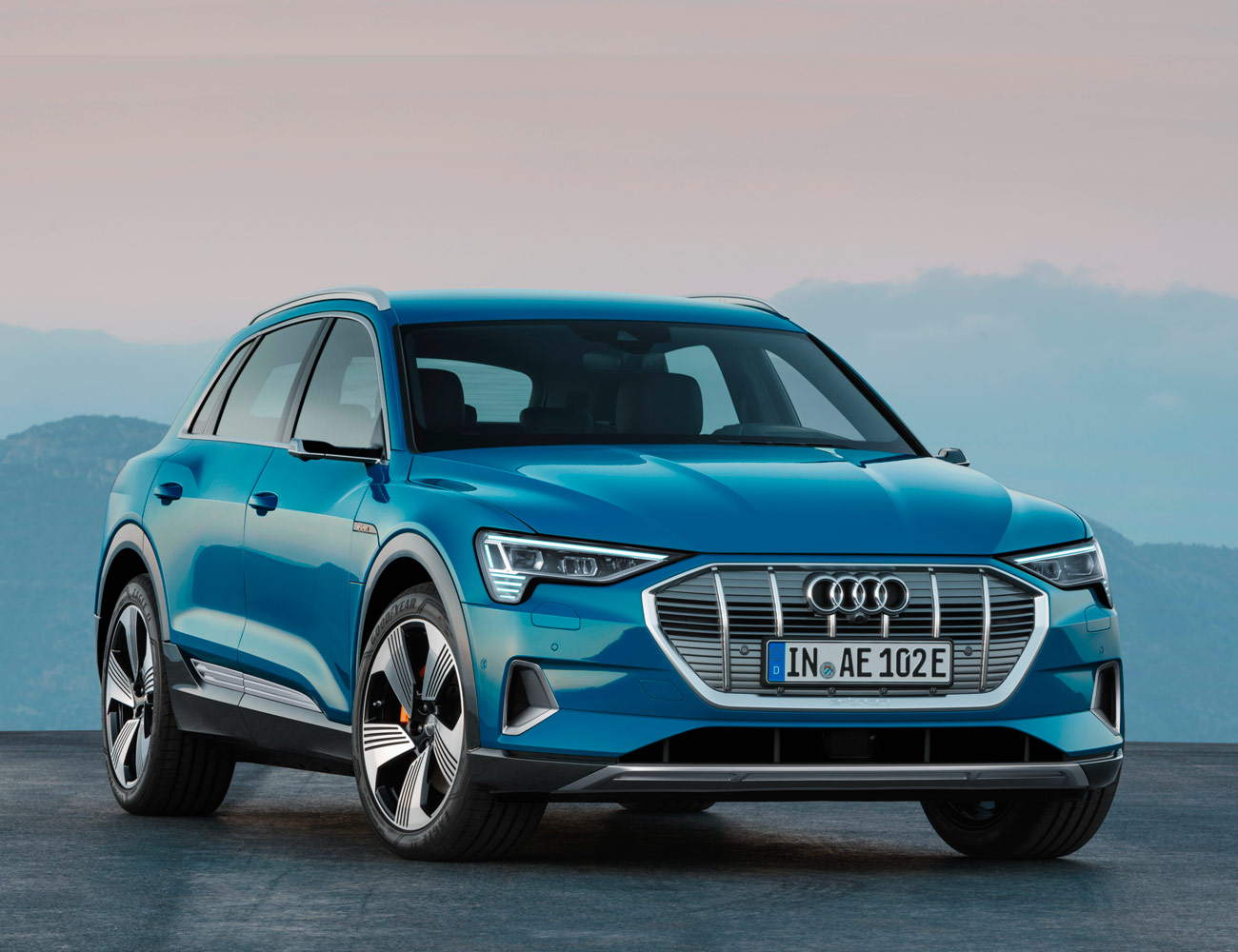
Audi recently debuted the E-tron, a midsize luxury crossover. It is the first of 12 electric Audi models set to launch by 2025. The E-tron looks like a standard Audi SUV, all the way down to the (unnecessary) grille. The e-tron SUV’s two electric motors generate a maximum of a combined 402 horsepower and 490 lb-ft of torque, and accelerate it from 0 to 60 mph in 5.5 seconds.

While the E-Tron SUV’s EPA range of 204 miles disappoints compared to its closest competitors, the Jaguar I-Pace and Tesla Model X, Audi would counter that by saying using only 88 percent of battery capacity improves battery lifetime and reliability. Nevertheless, at 74 MPGe, the e-tron SUV is the least energy efficient electric vehicle produced by a major manufacturer.

Model:

  • Audi e-Tron SUV

Engine:

  • Dual motors, all-wheel-drive, 95-kWh battery

EPA Range:

Base Price: $74,800

BMW

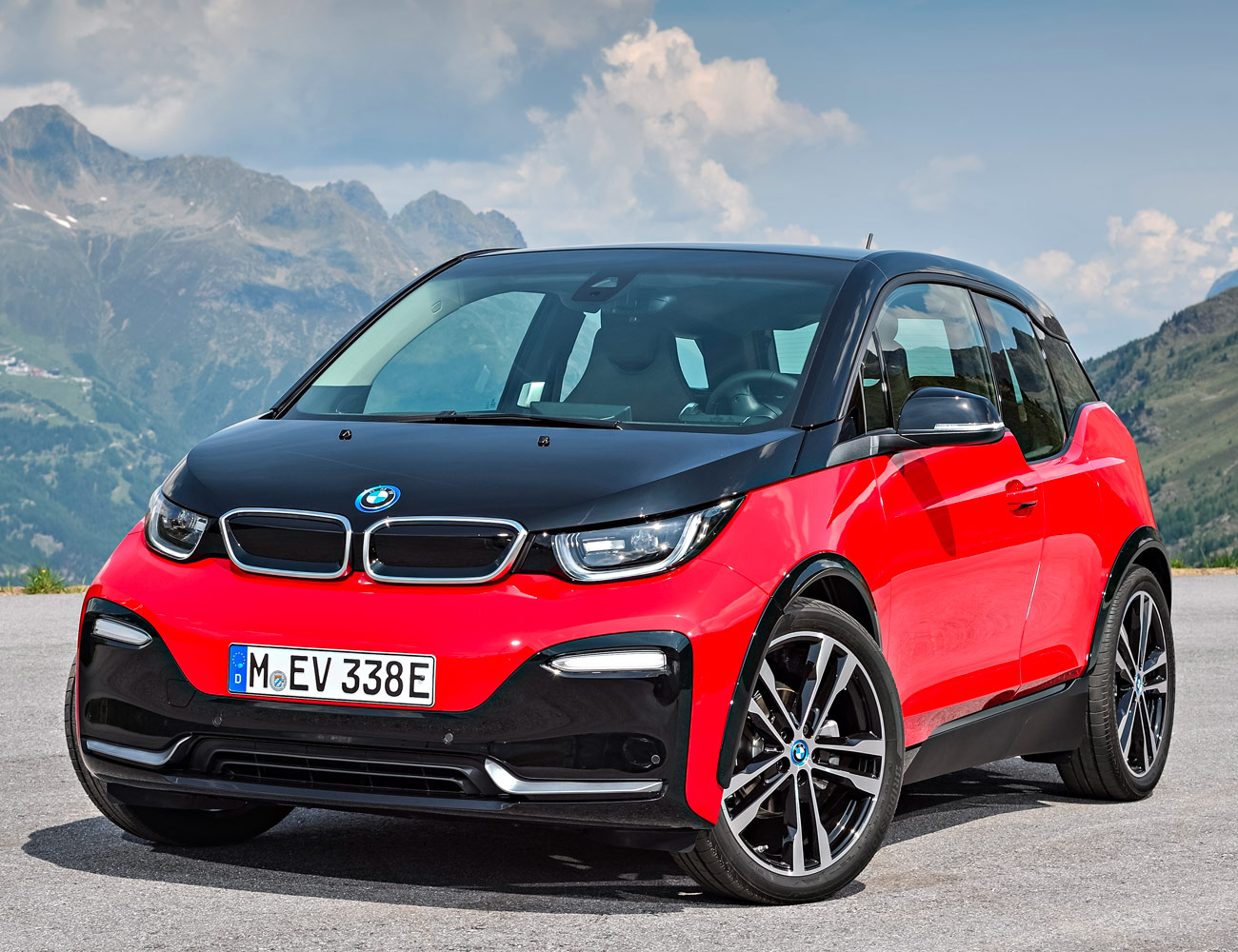
BMW’s only pure electric vehicle, for now, is the i3, a subcompact hatchback that debuted in 2013. The i3 is a bit of a throwback to the early 2010s, when EVs needed quirky, avant-garde designs to appeal to early adopters. There are two trims: the standard i3 that makes 170 hp and a sportier i3s making 181 hp. Both can achieve 153 miles of EPA range. Those willing to tolerate some vehicular emissions can bump the range to 200 miles with a gasoline range extender.

The major knock on the i3 is that the competition has caught up since 2013. Cars like the Chevy Bolt and Tesla Model 3 offer far better performance, space and range, at a similar–if not lower–price point.

Models:

Engine:

  • Rear motor, rear-wheel-drive, 42-kWh battery

EPA Range:

Base Price: $44,450

Chevrolet

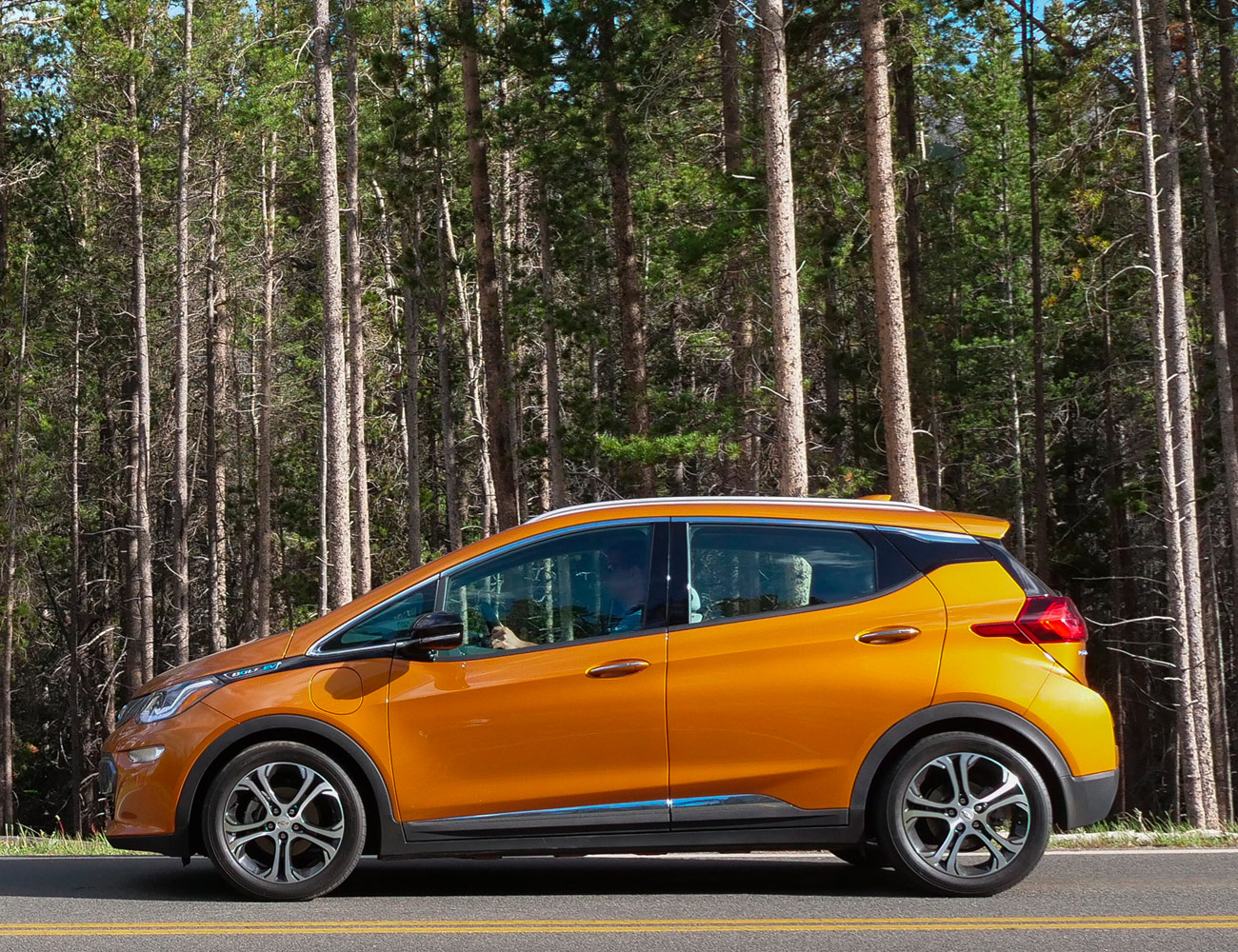
Chevrolet makes the pure electric Bolt, which is not to be confused with the soon-to-be-discontinued Volt, a plug-in hybrid. The Bolt is a small hatchback with an engine producing 200 hp and 266 lb-ft of torque. It has an EPA range of 238 miles. The Bolt is well-regarded for its capability, but not so much for its looks. Chevy markets the Bolt as the affordable EV, with a base price of $36,060 before any tax incentives. But the Bolt and is about to become less affordable; the $7,500 federal tax credit began its graduated phase-out in April 2019.

Model:

  • Chevrolet Bolt EV

Engine:

  • Front motor, front-wheel-drive, 60-kWh battery

EPA Range:

Base Price: $36,060

Fiat

>

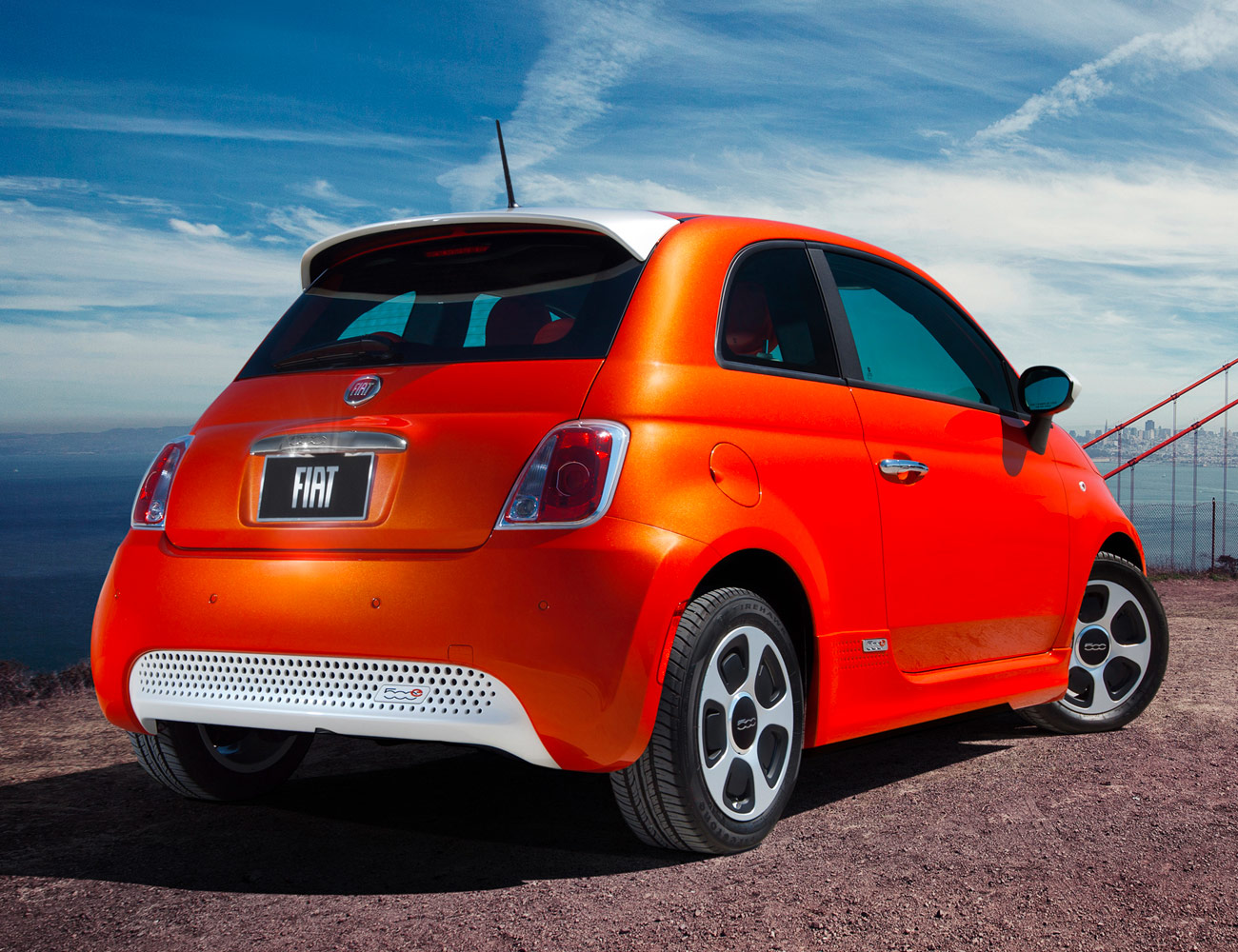
Fiat is expected to reveal its exciting electrified future at the 2020 Geneva Auto Show. For now, Fiat offers the ill-supported 500e. It has all the practicality drawbacks of the standard Fiat 500, with the added charm of only being sold in California and Oregon. The 500e is reasonably powered, at 111 hp and 147 lb-ft. The trouble is the 84-mile EPA range, which limits the 500e to being a city car, and makes it a poor value compared to the alternatives.

Model:

Engine:

  • Front engine, FWD, 24-kWh battery

EPA Range:

Base Price: $33,210

Honda

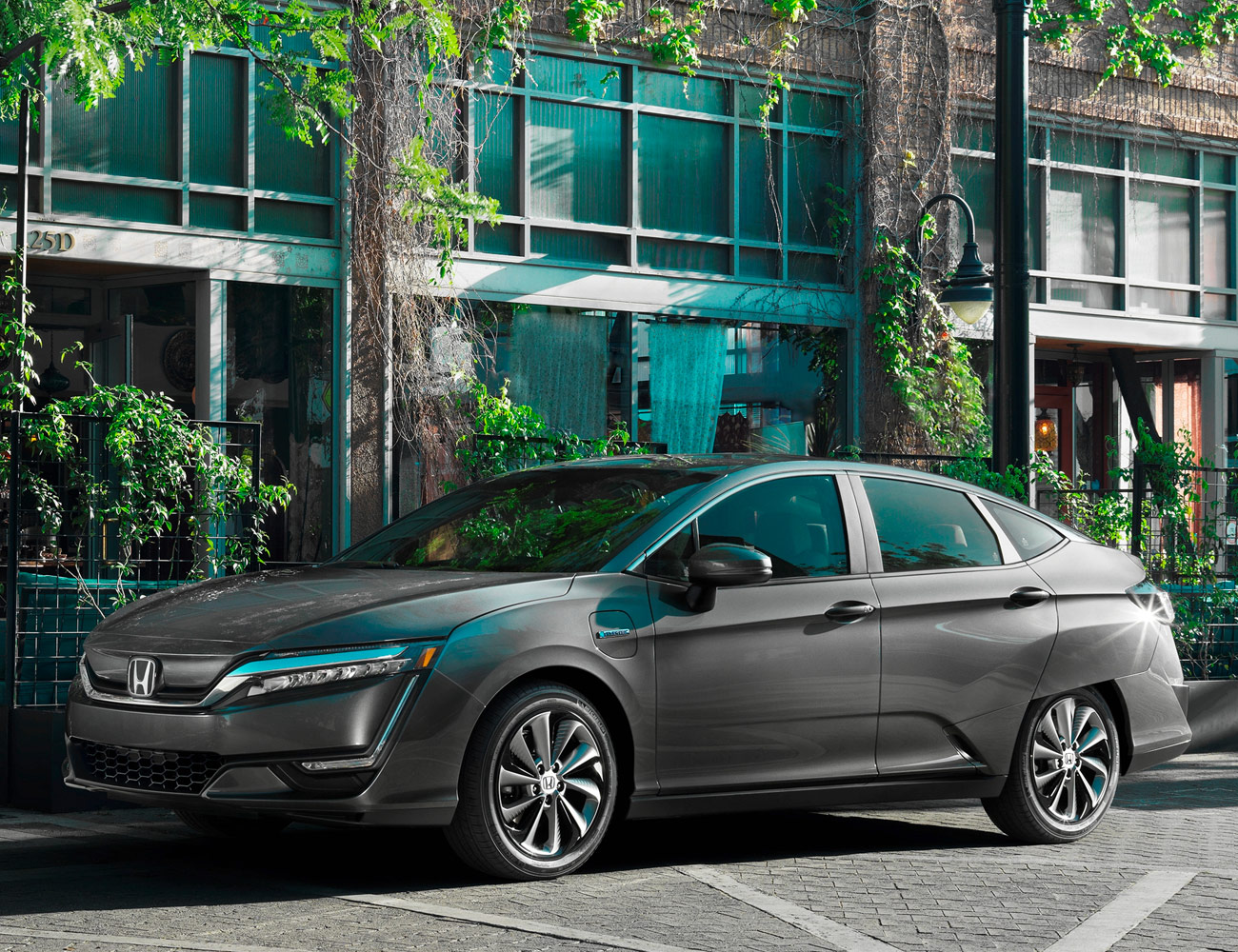
Honda uses the “Clarity” name for its stable of super-clean vehicles, including a pure BEV, a plug-in hybrid, and a hydrogen fuel cell car. The Clarity Electric debuted for the 2017 model year. It’s a midsize sedan making 160 hp and 221 lb-ft. But,there are some downsides: the Clarity Electric’s EPA range is only 89 miles; it is only available in California and Oregon; and we can’t give you a base price because you can only lease it, for $199 per month on a three-year lease with $1,799 down.

Model:

  • Honda Clarity Electric

Engine:

  • Front engine, FWD, 25.5-kWh battery

EPA Range:

Base Price: $199 per month lease

Hyundai

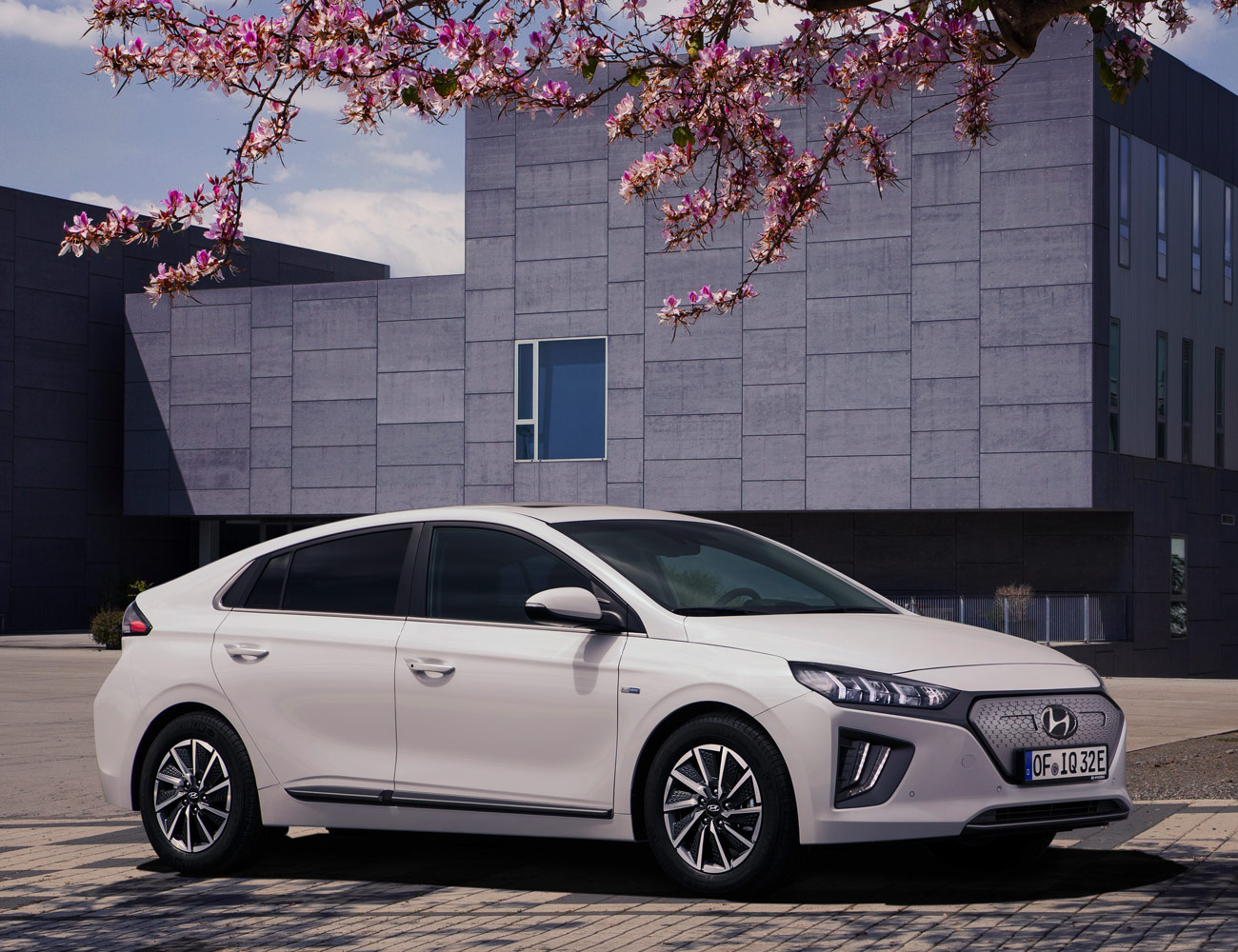
Hyundai offers two electric vehicles. The first is the Ioniq, a compact four-door hatchback that debuted in 2017. Its engine produces 118 hp and 218 lb-ft and it boasts a 124-mile EPA range. At 136 MPGe, the Ioniq Electric is the most efficient EPA-rated electric vehicle. It is only sold in 10 states: California, Connecticut, Maine, Maryland, Massachusetts, New Jersey, New York, Oregon, Rhode Island and Vermont.

The other option is the Kona EV, which debuted in the U.S. for the 2019 model year. The Kona EV is more of a mass-market vehicle, a full-fledged competitor for the Tesla Model 3. It’s an electrified version of the Kona subcompact crossover, with 201 hp and 291 lb-ft of torque. Its EPA range of 258 miles is the highest among non-Tesla electric vehicles. The Kona Electric was named the North American Utility Vehicle of the Year.

Model:

  • Ioniq Electric
  • Kona Electric

Engines:

  • Ioniq: Front engine, FWD, 28-kWh battery
  • Kona: Front engine, FWD, 64-kWh battery

EPA Range:

  • Ioniq: 124 miles
  • Kona: 258 miles

Base Price:

Jaguar

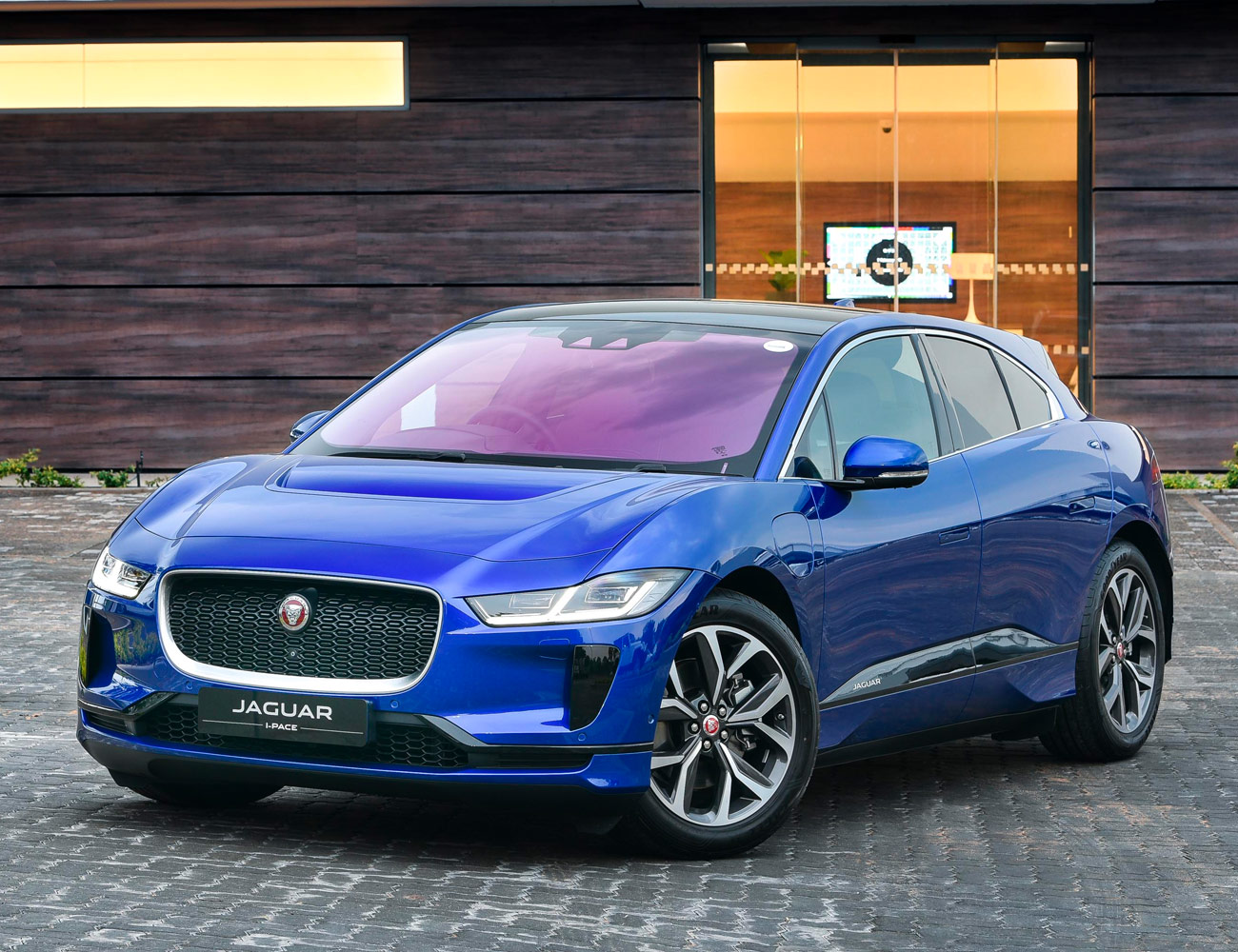
Designed by famed British designer Ian Callum, the Jaguar I-Pace is an electric performance SUV. The dual-motor system produces 394 hp and 512 lb-ft of torque. It can hit 60 mph in 4.5 seconds and a top speed of 124 mph. The impressive I-Pace won Car of the Year, World Car of the Year, and Design of the Year at the World Car Awards. All that performance and style do come with an efficiency drawback, though: The EPA rates it at just 76 MPGe, only slightly above the Audi e-tron SUV.

Model:

Engine:

  • Dual motor, AWD, 90-kWh battery

EPA Range:

Base Price: $69,500

Kia

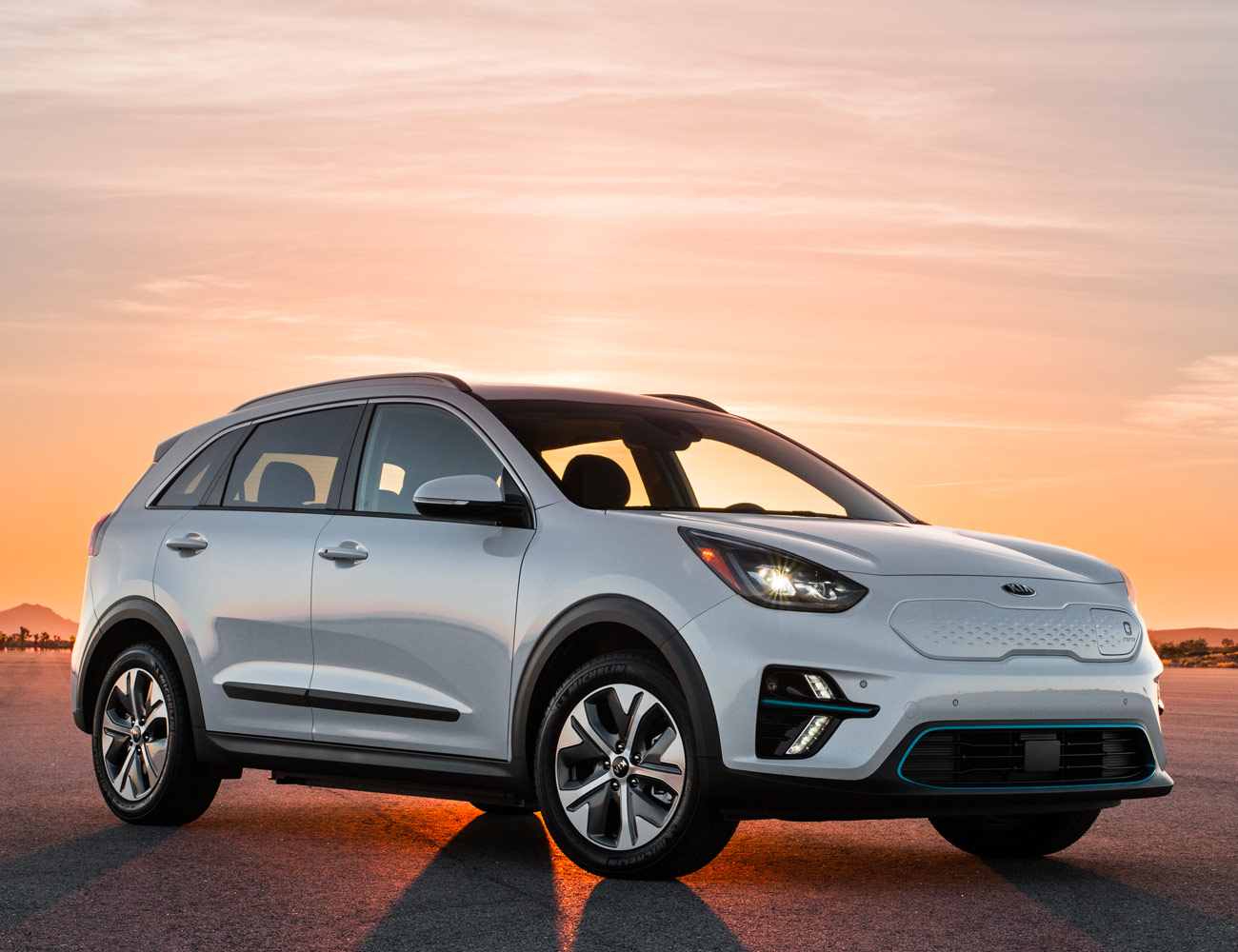
Kia offers the Niro EV, a small crossover. It is similar — though not identical — to its corporate cousin, the Hyundai Kona EV. The Niro is built on the same platform as the Kona; its engine also makes 201 hp and 291 lb-ft, and battery size  is the same at 64 kWh. The Kona EV is more efficient, per EPA ratings, while the Niro EV is bigger and slightly more expensive. 

Model:

Engine:

  • Front motor, FWD, 64-kWh battery

EPA Range:

Base Price: $38,500

Nissan

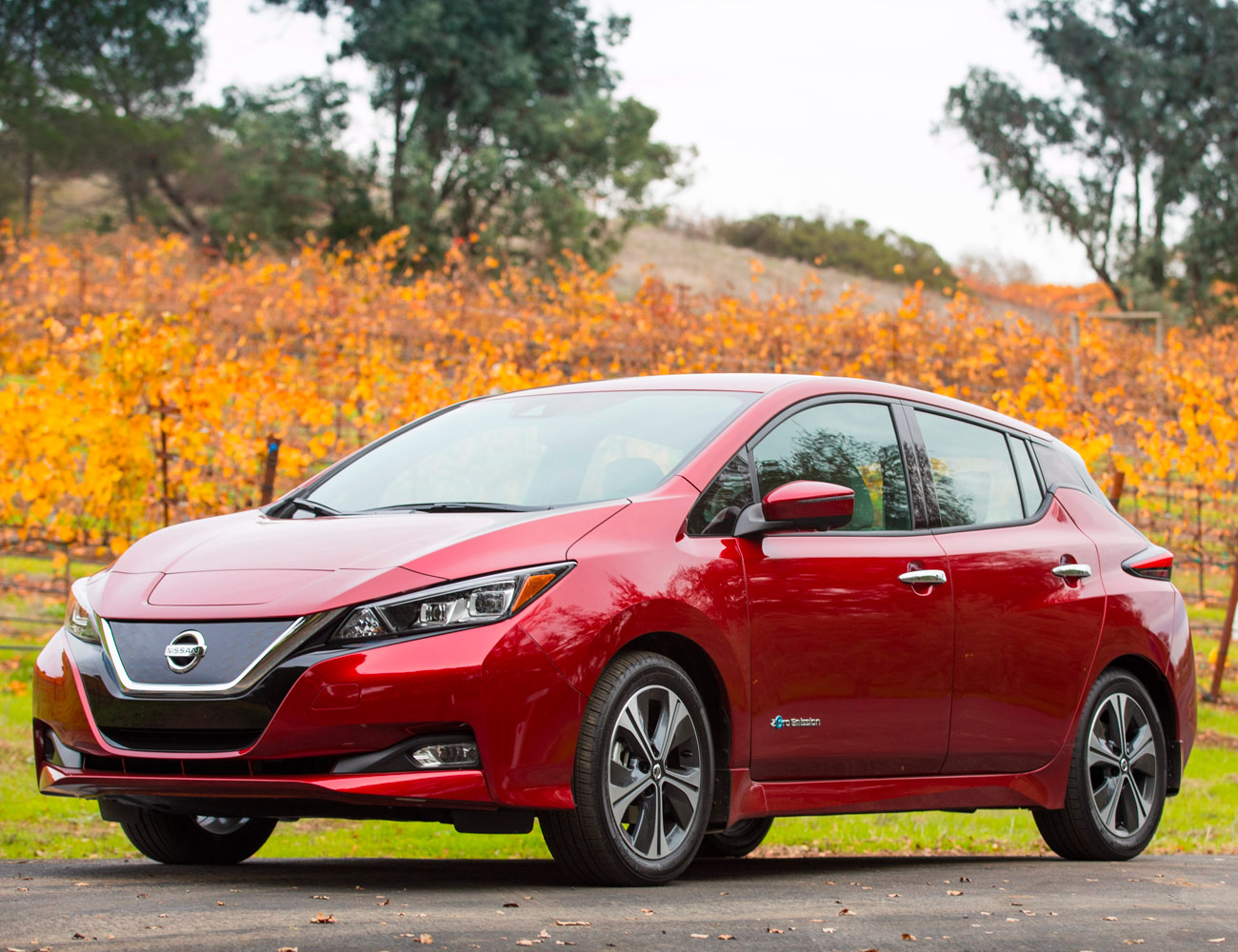
The Nissan Leaf is a compact four-door hatchback. It first debuted in 2010, with the second generation coming out for the 2018 model year. The Leaf comes in two versions, the Leaf and the Leaf Plus. The Leaf is the entry-level EV, offering 147 hp and 236lb-ft, a base price under $30,000, and a range of 150 miles. The more expensive Leaf Plus is a competitor for the Kona EV, Bolt and Model 3. It is more powerful, packing 214 hp and 250 lb-ft, and has a longer EPA range of 226 miles thanks to its a bigger 62-kWh battery.

Model:

  • Leaf
  • Leaf Plus

Engine:

  • Front motor, FWD, 40-kWh battery
  • Front motor, FWD, 62-kWh battery

EPA Range:

  • Leaf: 150 miles
  • Leaf Plus: 226 miles

Base Price: $29,990

Tesla

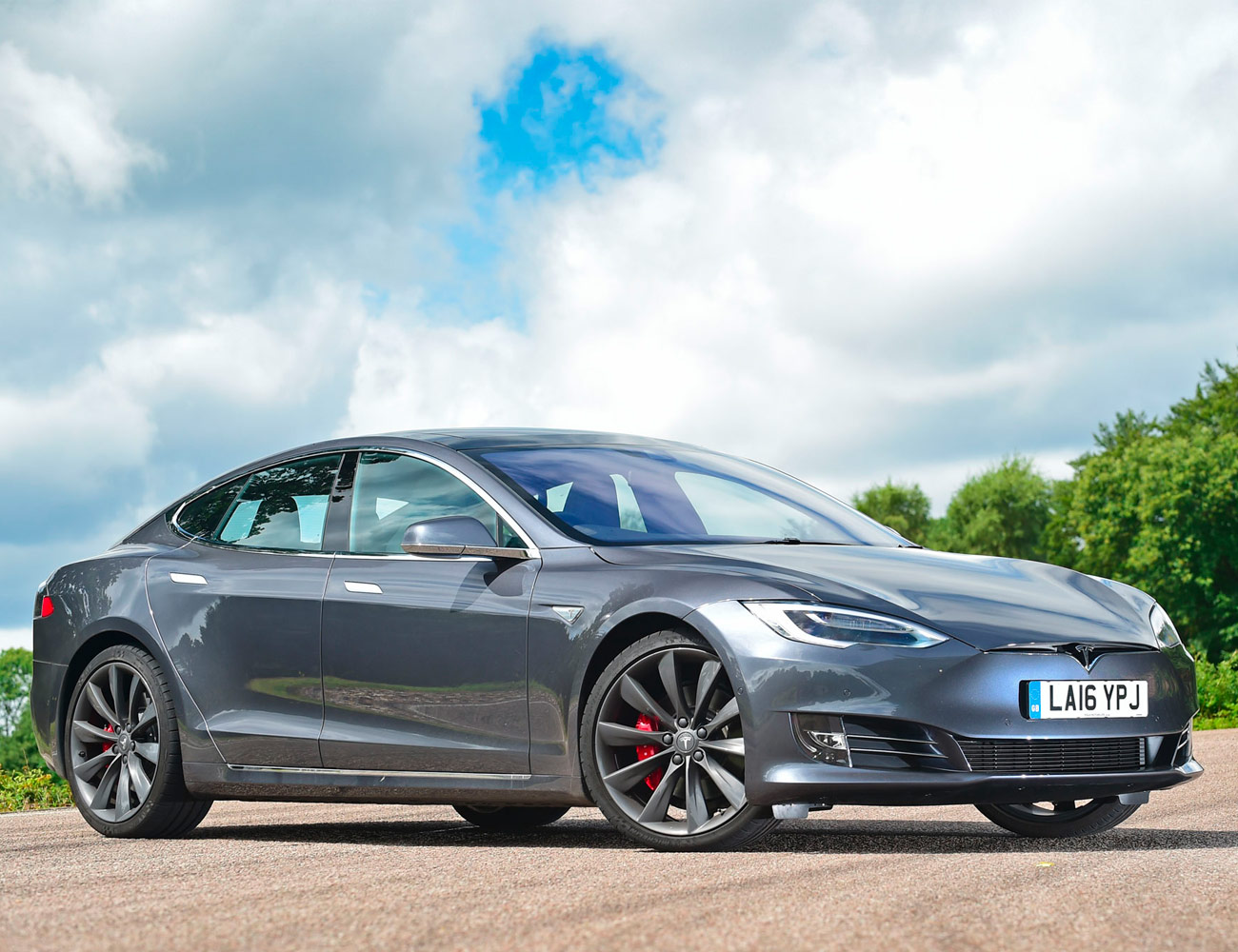
Tesla has redefined the paradigm for electric vehicles, producing cars with an unmatched combination of performance, range and practicality. With more than 250,000 sales in 2018, the brand has also shown the mass-market potential for BEVs. Tesla’s ambition and success, however, have been tempered by concerns about build quality, safety and the company’s long-term stability. Tesla’s federal tax credit dips to $1,875 on July 1, 2019, and expires at the end of the year.

At present, Tesla offers three electric vehicles. The Model S is a four-door liftback sedan that entered production in 2012. It comes in three trims: Standard Range (285 miles of range, 0-60 mph in 4.0 seconds), Long Range (370 miles of range, 0-60 mph in 3.7 sec), and Performance (345 miles of range, 0-60 mph in 3.0 sec). For an additional $20,000, you can purchase “Ludicrous Mode” for Performance models; that improves the 0-60 mph acceleration to just 2.4 seconds.

The Model X is a mid-size luxury SUV Tesla began producing in 2015. Like the Model S, it has been simplified to three trims: Standard Range (255 miles, 0-60 mph in 4.6 sec), Long Range (325 miles, 0-60 mph in 4.4 sec), and Performance (305 miles, 0-60 mph in 3.4 sec). Ludicrous Mode will bring the latter Model X’s 0-60 time down to 2.7 seconds.

The Model 3 is a four-door fastback sedan that entered production in 2017. It was both the best-selling electric vehicle and best-selling luxury vehicle in the U.S. in 2018. There is a base RWD model, the Standard Range Plus (240 miles of range,  0-60 mph in 5.3sec) that comes with what Tesla describes as a “partial premium interior.” There are also AWD Long Range (310 miles,  0-60 mph in 4.4 sec) and Performance (310 miles, 0-60 mph in 3.2 sec) trims. None of the Model 3s offer Ludicrous Mode.

The company is taking orders on the upcoming Model Y compact crossover. Tesla also has a pickup truck purported to be more capable than the Ford F-150 and Porsche 911 in the works, as well as the Tesla Roadster, which purportedly will do 0-60 mph in 1.9 seconds, top out at more than 250 mph, and offer a 620-mile range.

Models:

  • Model S
  • Model X
  • Model 3

Engine:

  • Model S: Dual motor, AWD, 100-kWh battery
  • Model X: Dual motor, AWD, 75-, 90- or 100-kWh battery
  • Model 3: Rear motor, RWD 50-kWh battery; Dual Motor AWD  62- or 75-kWh battery

EPA Range:

  • Model S: 285-370 miles
  • Model X: 255-325 miles
  • Model 3: 240-310 miles

Base Price:

Volkswagen

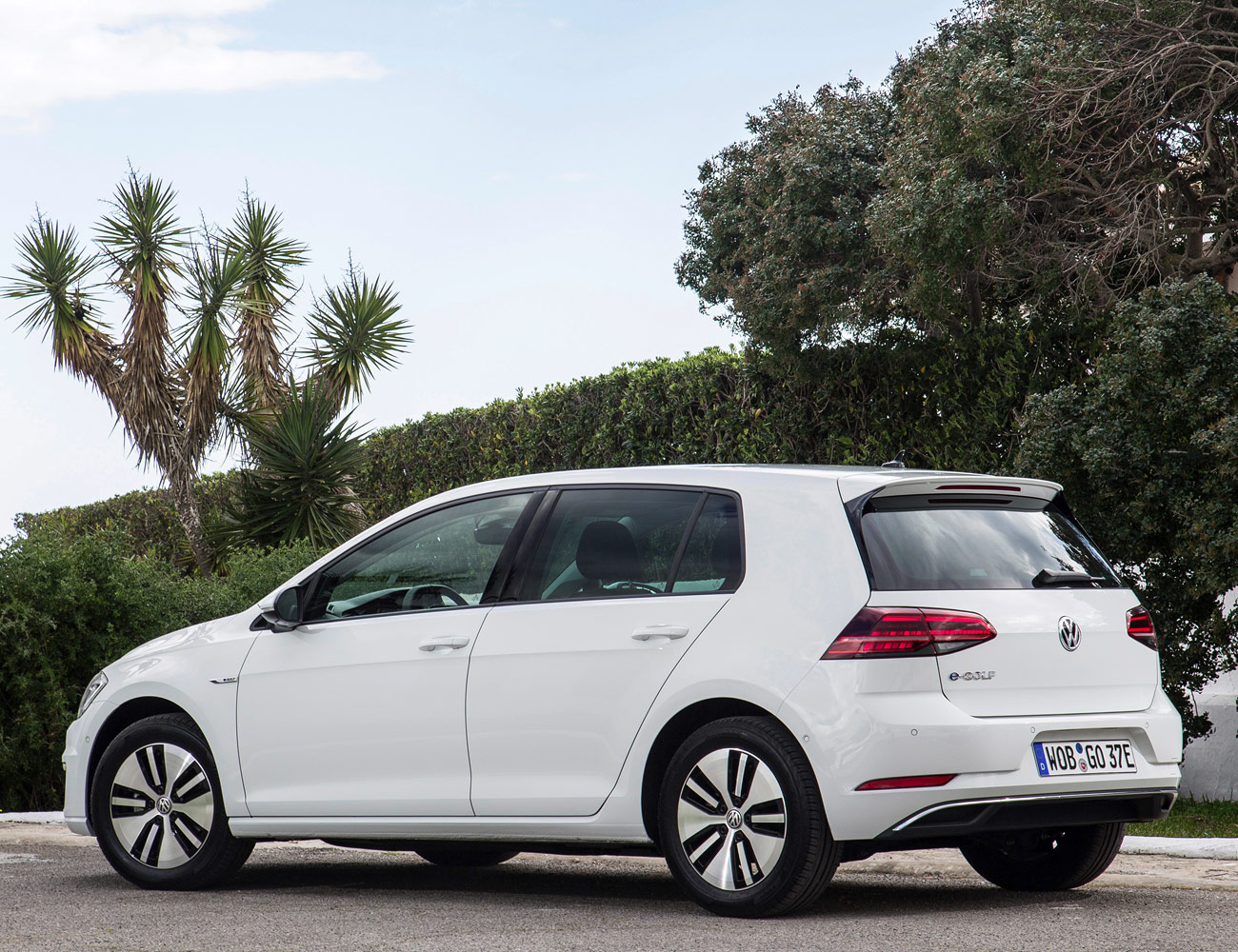
The E-Golf is Volkswagen’s early attempt at an EV, one that launched in 2015. It got somewhat lost in the shuffle following the Dieselgate scandal and the carmaker’s decision to launch the upcoming ID range of electric vehicles. It’s a well-hidden gem, a practical-yet-fun-to-drive VW Golf that happens to run on electricity. Its 134-hp, 214-lb-ft powertrain gives it a fun-to-drive dynamic much like the rest of its siblings. The major sticking point, however, is the 125-mile range — which may be adequate for most driving, but doesn’t match up to the competition in 2019.

Model:

Engine:

  • Front motor, FWD, 35.8-kWh battery

EPA Range:

Base Price: $31,895

Note: Purchasing products through our links may earn us a portion of the sale, which supports our editorial team’s mission. Learn more here.

2017 Lamborghini Aventador S

For all its likeably flamboyant design and visceral performance, the Lamborghini Aventador never quite delivered on its promise. The chassis in particular tended to feel a little leaden. So now Lamborghini is upping the ante with the Aventador S.

The Aventador’s frankly stunning performance figures, from the 2.9sec 0-62mph time to the 217mph top end, remain unchanged. But to judge the improvements Lamborghini has implemented based on data alone is to entirely miss the point. Because a) the Aventador always had plenty enough performance, and b) the S version is a dramatic improvement over went before.

Design boss Mitja Borkert hasn’t messed too much with the looks, but you might notice the new fangs on the front bumper, the cleaner side intakes and the new BBS-like cross-spoke wheels (which look a little flat to our eyes). Don’t worry, it still turns heads.

Inside, it’s business as usual: you glimpse the carbonfibre monocoque as you raise the dramatic doors, the windscreen races over your head, the centre console seems so rakish it’s almost flat, and you’re still a bit too aware of Audi switchgear. However, there is a new TFT display in the instrument binnacle. This changes according to driver mode, but always features an arcade-game-like font – it fittingly emphasises the Aventador’s sci-fi otherworldliness, like you’re driving a spaceship.

But no, really, this isn’t about the facelift, it’s about the driving dynamics.

The key difference is the new rear-wheel steering system, which works much like the systems fitted to the Porsche 911 GT3 and Ferrari F12 TdF. Below 81mph, the rear wheels turn in the opposite direction to the fronts by up to three degrees, just 5ms after you’ve made a steering input. It effectively makes the wheelbase feel shorter, much like a forklift truck. Above 81mph, all four wheels turn in the same direction, with the rears turning by up to 1.5 degrees. This effectively makes the wheelbase longer.

There’s new rear suspension hardware to account for the turning rear wheels, the springs are 20% stiffer and the magnetorheological dampers have been recalibrated. The Pirelli P Zeros are a new design – even the tread appears different – with 355/25 ZR21s on the rear.

The all-wheel drive system is also tuned to be more rear-biased, and sends less torque forwards when you decelerate. The idea is you’ll get a more agile, rear-drive feel when you turn in to a corner.

As before, the system also changes its torque split based on the drive mode, with up to 90% of torque flowing rearwards in Sport mode, less in Strada (Street) and Corsa (Race) modes – the latter to prioritise clawing grip for faster lap times in the most hardcore setting. A new Ego drive mode debuts too, allowing you to mix and match your choices for the powertrain, chassis and steering settings. Lamborghini Active Vehicle Dynamics – a new brain – takes care of marrying everything up.

Handily, Lamborghini let us drive old and new Aventadors back-to-back, on a short slalom they’d set up at Circuit Ricardo Tormo. The difference isn’t subtle. Where the old car feels very nose-led and slightly stubborn, its steering lethargic where you need flighty flicks left-to-right, the S dances through the slalom with a balance that feels much more in line with your hips, and steering that feels light years faster. You’re also more aware of that heavy V12 shifting about behind you, helping point the nose just to the left or right of the cones we’re dodging.

Not only does the S feel a giant leap in terms of agility, it also feels much lighter too, because of the increased hunger for direction changes. And yet it weighs exactly the same.

The V12’s been downsized and turbocharged… only joking. No, the Aventador sticks with the glorious 6.5-litre V12 engine, naturally aspirated and a fantastic riposte to everyone who says they had no choice but to give us smaller blown units. The noise is heaven, all raucous yelps at high revs and theatrical thunderclaps on down shifts, the instant response flings you forward at seemingly any revs, and the power builds ferociously all the way to 730bhp at 8400rpm, and now screams 200rpm higher at 8500rpm. Technologically off-the-pace, maybe, but its soul, emotion and passion more than compensates.

The differences in feel between old and new engine specs is less obvious than the chassis, but there’s 39bhp extra, if no additional torque at 509lb ft. Despite its 730bhp being just 10bhp shy of the hardcore Aventador SV, the philosophy is different: the SV’s 100kg weight loss gives it permission to focus more on power, where Lamborghini’s engineers have also targeted driveable torque for the S. So the new airbox can be virtually split into smaller or larger sections by the use of four separate drive-by-wire throttles – all throttles deployed for full power, fewer throttles to increase low-speed torque. Trust me, you won’t want a turbo.

A lighter exhaust is said to offset the weight gain of the rear-steering system, meaning the chunky 1575kg dry weight remains unchanged.

The seven-speed automated manual gearbox of course remains. There’s still a little hole in the delivery when you shift at lower speeds – a Ferrari dual-clutch transmission feels far more sophisticated in this respect – but Lamborghini says they’ve targeted low-speed refinement, and it surely won’t be a deal breaker if you’re already prepared to use a car as radical as this in town. And when you’re flat-out on the racetrack, pulling those paddles as the revs zing towards 8500rpm? You don’t need faster changes, and there’s a lovely physicality to the shift that stops short of unnecessarily theatrical brutality.

Amazing. We were privileged to follow Lamborghini test driver Mario Fasanetto, who was piloting an SV and not hanging about. The Aventador S is a fantastically quick supercar with some old-school rawness to it, but it’s still highly accomplished.

On racetrack corners much faster than the slalom we also tested on, you can feel the effects of the rear-wheel steering, the extra torque that’s been kept at the rear wheels when you decelerate and the weight of the V12 behind you; the S really wants to turn in – it’s almost nervously keen to do so – and it’s here you’re most likely to overcook things and get a slide on. You might also need to add steering correction even when you’re off-throttle in a slower corner, so keen is this Lambo to point its snout down the next straight. But otherwise, this is a very sure-footed all-wheel drive chassis, with immense traction combined with a lovely rear-biased adjustability.

It allows you to work that 730bhp very hard and have fun, with very little understeer – make it scrub and, really, you’re just doing it wrong.

If the Aventador was a disappointment, the S is a revelation. Don’t let the similarity of design or performance fool you, this is a very different feeling supercar, and the key to its new-found engagement is its revised chassis, particularly the new rear-wheel steering system. An SV still manages to be the driver’s choice, but the S feels far more closely aligned to that hardcore range-topper than it does its predecessor.

The Aventador has always been unique in its segment, but the S takes it to a whole new level. Would we buy one? Absolutely.

2017 Lamborghini Aventador S Press Release

The Lamborghini Aventador S: Elevating the benchmark for super sports cars

• The next generation of the V12 Lamborghini flagship • New iconic design features focused on aerodynamic performance • New four-wheel steering system • Significantly enhanced suspension and electronics, and customisable driving modes • More powerful naturally aspirated V12 engine outputting 740 hp • 0-100km/h in 2.9 seconds, top speed of 350 km/h
S a n t ’ A g a t a B o l o g n e s e , 1 9 D e c e m b e r 2 0 1 6 – The new Lamborghini Aventador S is characterized by new aerodynamic design, redeveloped suspension, increased power and new driving dynamics. The ‘S’ is the suffix of previous enhanced Lamborghini models and defines a new benchmark for the V12 Lamborghini.

“This is the next generation Aventador as well as the expression of new technological and performance milestones in super sports car development,” says Automobili Lamborghini Chairman and Chief Executive Officer Stefano Domenicali. “The Aventador S is visionary design, cutting-edge technology and driving dynamics in pure harmony, and elevates the concept of super sports cars to a new level.”

Design and Aerodynamics

The design of the new Aventador S clearly indicates the new Aventador generation. The Aventador S features a number of exterior developments, particularly in front and rear, while its profile remains clearly an Aventador. Every modified component is redesigned for a purpose, achieving maximum aerodynamic efficiency while accenting the Aventador’s complex, muscular dynamism. Furthermore, Lamborghini Centro Stile has intelligently integrated certain elements of past icons, such as the lines of rear wheel arches reminiscent of the original Countach.

A more aggressive nose and longer front splitter redirect airflow for better aerodynamic efficiency, improved engine cooling and increased cooling to the radiators. Two air ducts in the side of the front bumper reduce aerodynamic interference from the front tires and optimize wake flow to the rear radiator.

The rear of the Aventador S is dominated by a black diffuser, available on request in carbon fiber, characterized by a number of vertical fins that amplify the airflow effects, reduce drag through pressure recovery and generate downforce. Three single exhaust outlets exit through the rear bumper.

The active rear wing is movable in three positions depending on speed and drive select mode, and optimizes the car’s improved overall balance, working with vortex generators created in the front and rear of the chassis’ underside that maximize air flow as well as assist in brake cooling.

The Aventador S design results in significantly enhanced aerodynamic performance. Front downforce has been improved by more than 130% over the previous Aventador coupé. When the wing is in its optimum position the overall efficiency at high downforce is improved by over 50%, and in low drag by more than 400% compared to the previous model.

Four masterpieces evolve driving emotion: Four-wheel drive, new active suspension, new four-wheel steering system and the new EGO driving mode

The Aventador S chassis retains the Aventador’s unique and extremely rigid lightweight carbon fiber monocoque with attached aluminum frames resulting in a dry weight of just 1,575 kg.

The Aventador S is redeveloped around a ‘total control concept’ to provide a superior drive, ride and performance; every aspect of the car’s suspension and electronic control systems has been advanced, with the goal of particularly enhanced control and driving emotion.

Enhanced lateral control comes from new four-wheel steering, adopted for the first time on a series production Lamborghini. The system provides improved agility at low and medium speeds and more stability at high speed. On the front axle it is combined with Lamborghini Dynamic Steering (LDS), tuned for a more natural and responsive feel with a sharper turn-in. It is specially adapted to integrate with the active Lamborghini Rear-wheel Steering (LRS) on the rear axle: two separate actuators react in five milliseconds to driver’s steering movements, allowing a real-time angle and cornering stiffness adjustment.

At low speeds, rear wheels wheels face in opposite direction to the steering angle, thereby virtually reducing the wheelbase. With less steering wheel angle required, the Aventador S is more agile with a reduced turning radius, ensuring higher performance in curves and making it easy to maneuver in town and at low speeds.

Conversely at higher speeds both front and rear wheels share the same steering angle, thus virtually extending the wheelbase, providing increased stability and optimizing the responsiveness of the car.

Vertical control comes from Lamborghini’s updated pushrod and Lamborghini Magneto-rheological Suspension (LMS), with revised kinematics adapted to the new four-wheel steering. New suspension geometry, optimized for Lamborghini Rear-wheel Steering, includes upper and lower arm and wheel carrier to reduce caster and load on the system. A new real-time variable damping system optimizes wheel and body control, and balance and ground stiffness is maximized. New rear springs also enhance the car’s balance.

Longitudinal control is achieved via an improved ESC strategy with faster and more precise control of traction control and vehicle dynamics, depending on the driving mode selected. Extensively tested on surfaces such as snow and ice, the Aventador S has improved adhesion detection to maximize grip in all conditions and enhance its handling capabilities. The Aventador S permanent four-wheel drive has been calibrated for the stabilizing effect of the new Lamborghini Rear-wheel Steering, allowing more torque to the rear axle: when powering off the throttle, less torque is shifted to the front axle to allow oversteer behavior and a sporty, but safe drive.

Lamborghini engineers have integrated the smart Lamborghini Dinamica Veicolo Attiva (LDVA) control unit to manage these systems in the car. LDVA is the new brain of the car, which receives real time and precise information on body motion via input from all sensors of the car. It instantly defines the best set-up of all active systems in order to guarantee the best vehicle dynamics in each and every condition.

EGO concept – customizable driving modes

The Aventador S allows the driver to select between four different driving modes: STRADA, SPORT, CORSA and the new EGO mode, which influence the behavior of traction (engine, gearbox, 4WD), steering (LRS, LDS, Servotronic) and suspension (LMS).

STRADA stands for maximum comfort and daily use. SPORT provides a sporty, rear-wheel drive feel and CORSA is suitable for maximum track performance.

EGO is the new driving mode option. This provides several additional and individual set-up profiles, customizable by the driver, selecting his preferred criteria for traction, steering and suspension within the STRADA, SPORT and CORSA settings.

All driving modes have been recalibrated in the Aventador S, improving ESC integration with all-wheel drive and the interface between engine torque management system and traction control reaction. The continuous torque split to front and rear axles in each driving mode is recalibrated for the Lamborghini Rear-wheel Steering and the differentiation between the driving modes is enhanced.

In STRADA, the progressive damping is smoothed for better comfort and stability on rough roads. Torque is split 40/60 to the front and rear as standard: safe and stable with maximum adhesion, the car is easily driven and controlled.

In SPORT mode, the stabilizing effect of the Lamborghini Rear-wheel Steering allows up to 90% torque to the rear wheels for maximum sportiness and driving fun on curving roads. Driving precision and driver feedback is improved, while maintaining safety and without compromising on comfort. When powering off the accelerator, less torque is shifted to the front axle to enhance the car’s agility, with oversteer and drifting easy using light throttle and steering wheel control.

In CORSA, drivers experience less intrusive dynamic and traction control intervention while maintaining driving precision and traction. High levels of damping force maximize driver feeling and feedback from driver inputs including steering, braking and throttle. Counter-phase steering is enhanced in high-performance situations and torque is balanced to both axles, with a maximum 20/80 split to front and rear for more neutral behavior and to maximize track-oriented performance.
The engine and exhaust

The Lamborghini Aventador’s naturally aspirated twelve cylinder, 6.5 liter engine outputs an additional 40 hp over its predecessor, to a maximum 740 hp, with a 690 Nm of torque at 5,500 rpm. To achieve the power increase, both VVT (Variable Valve Timing) and VIS (Variable Intake System) have been optimized in order to obtain an enriched torque curve. Additionally, the maximum engine revs have been increased from 8,350 to 8,500 rpm. A dry weight of just 1,575 kg provides a weight-to-power ratio of just 2.13 kg/hp. Acceleration from 0-100 km/h is reached in 2.9 seconds, with a top speed of 350 km/h. Transmission is provided by Lamborghini’s lightweight Independent Shifting Rod (ISR) 7-speed shifting system, providing robotized gear shifts in up to 50 milliseconds.

The Aventador S adopts a new exhaust system developed as the result of a significant R&D project. More than 20% lighter than its predecessor and the product of testing multiple configurations, the results are an enhanced

Lamborghini sound and resonance from the already inimitable V12 aspirated engine, with the three single pipe outlets at the rear of the Aventador S a visual reminder of the new exhaust system.

As in its predecessor, the Aventador S is equipped with a stop-and-start system and cylinder deactivation for optimized engine efficiency. When full engine capacity is not required, six of the twelve cylinders are temporarily deactivated by switching off one cylinder bank. When the driver accelerates, the system switches back instantaneously to twelve-cylinder mode, with the changeover virtually impossible to detect by the driver.

Tires and braking system

The Aventador S sits on a new, specially developed set of Pirelli P Zero tires. Designed to optimize steering, traction, lane changes and braking efficiency, the tires are specifically designed to respond to the dynamic behavior induced by the Lamborghini Rear-wheel Steering, ensuring handling consistency and driver feedback. With improved force generation from both front and rear tires, the Pirelli P Zero tires provide a higher lateral acceleration and reduce understeer characteristics.

Carbon ceramic brakes are standard equipment for the Aventador S. The ventilated and perforated carbon ceramic discs (Ø 400 x 38 mm – Ø 380 x 38 mm) enhance braking performance from 100 km/h to standstill in 31 m. Aventador S – a driver’s environment

The cockpit of the Aventador S brings new functionality and refinement. A new TFT digital dashboard can be customized according to the driver’s preferences, with different kombi screens for STRADA, SPORT and CORSA in conjunction with the EGO mode. Selected from the driving modes options on the control panel, the EGO button reveals further options on pop-up digital screens, allowing the driver to choose his preferred settings.

AppleCarPlay comes as a standard specification, allowing the cockpit’s occupants to manage voice activated communications and entertainment from personal Apple devices.

The Lamborghini telemetry system is an optional specification: recording lap times and track performance as well as trip data, the telemetry system is especially appealing to the owner who wants to take his car on track.

The interior specification of the Aventador S is virtually limitless through Lamborghini’s Ad Personam customization program.

Price of the Lamborghini Aventador S and market delivery

The first customers will take delivery of the new Lamborghini Aventador S in Spring 2017 at suggested retail prices as follows:

Europe: EUR 281.555,00 (suggested retail price taxes excluded)

UK: GBP 225.955,00 (suggested retail price taxes excluded)

USA: USD 421.350,00 (suggested retail price – GGT included)

China: RMB 6.739.673,00 (suggested retail price taxes included)

Japan: YEN 41.578.179,00 (suggested retail price taxes included)

2017 Lamborghini Aventador S Photos

2017 Lamborghini Aventador S Specs

Mileage

EPA Fuel Economy Est – Hwy : MPG 18 (Est)
Cruising Range – City : mi 261.80
EPA Fuel Economy Est – City : MPG 11 (Est)
Fuel Economy Est-Combined : MPG 13 (Est)
Cruising Range – Hwy : mi 428.40
EPA MPG Equivalent – City : N/A
EPA MPG Equivalent – Hwy : N/A
EPA MPG Equivalent – Combined : N/A
Battery Range : mi N/A

Fuel Tank

Fuel Tank Capacity, Approx : gal 23.8
Aux Fuel Tank Capacity, Approx : gal N/A

Cargo Area Dimensions

Trunk Volume : ft³ N/A

Brakes

Brake Type : N/A
Brake ABS System : 4-Wheel
Brake ABS System (Second Line) : N/A
Disc – Front (Yes or ) : Yes
Disc – Rear (Yes or ) : Yes
Front Brake Rotor Diam x Thickness : in 15.7
Rear Brake Rotor Diam x Thickness : in 15
Drum – Rear (Yes or ) :  
Rear Drum Diam x Width : in  

Emissions

Tons/yr of CO2 Emissions @ 15K mi/year : 13.6 (Est)
EPA Greenhouse Gas Score : N/A

Transmission

Drivetrain : All Wheel Drive
Trans Order Code :  
Trans Type : 7
Trans Description Cont. : Auto-Shift Manual w/OD
Trans Description Cont. Again :  
First Gear Ratio (:1) : 3.91
Second Gear Ratio (:1) : 2.44
Third Gear Ratio (:1) : 1.81
Fourth Gear Ratio (:1) : 1.46
Fifth Gear Ratio (:1) : 1.19
Sixth Gear Ratio (:1) : 0.97
Reverse Ratio (:1) : 2.93
Clutch Size : in N/A
Final Drive Axle Ratio (:1) : 2.86
Seventh Gear Ratio (:1) : 0.89

Vehicle

EPA Classification : Two-Seaters

Interior Dimensions

Passenger Capacity : 2
Passenger Volume : ft³ 50
Front Head Room : in N/A
Front Leg Room : in N/A
Front Shoulder Room : in N/A
Front Hip Room : in N/A
Second Head Room : in N/A
Second Leg Room : in N/A
Second Shoulder Room : in N/A
Second Hip Room : in N/A

Weight Information

Base Curb Weight : lbs 4085

Trailering

Dead Weight Hitch – Max Trailer Wt. : lbs N/A
Dead Weight Hitch – Max Tongue Wt. : lbs N/A
Wt Distributing Hitch – Max Trailer Wt. : lbs N/A
Wt Distributing Hitch – Max Tongue Wt. : lbs N/A

Engine

Engine Order Code :  
Engine Type : Premium Unleaded V-12
Displacement : 6.5 L/397
Fuel System : Sequential MPI
SAE Net Horsepower @ RPM : 691 @ 8250
SAE Net Torque @ RPM : 507 @ 5500

Electrical

Cold Cranking Amps @ 0° F (Primary) : 380
Maximum Alternator Capacity (amps) : 190

Cooling System

Total Cooling System Capacity : qts N/A

Suspension

Suspension Type – Front : Double Wishbone Pushrod
Suspension Type – Rear : Double Wishbone Pushrod
Suspension Type – Front (Cont.) : Double Wishbone Pushrod
Suspension Type – Rear (Cont.) : Double Wishbone Pushrod
Shock Absorber Diameter – Front : mm N/A
Shock Absorber Diameter – Rear : mm N/A
Stabilizer Bar Diameter – Front : in N/A
Stabilizer Bar Diameter – Rear : in N/A

Tires

Front Tire Order Code :  
Rear Tire Order Code :  
Spare Tire Order Code :  
Front Tire Size : P255/35YR19
Rear Tire Size : P335/30YR20
Spare Tire Size :  

Wheels

Front Wheel Size : in 19 X 9
Rear Wheel Size : in 20 X 12
Spare Wheel Size : in  
Front Wheel Material : Aluminum
Rear Wheel Material : Aluminum
Spare Wheel Material :  

Steering

Steering Type : Rack-Pinion
Steering Ratio (:1), Overall : N/A
Lock to Lock Turns (Steering) : N/A
Turning Diameter – Curb to Curb : ft 41
Turning Diameter – Wall to Wall : ft N/A

Exterior Dimensions

Wheelbase : in 106.3
Length, Overall : in 188.2
Width, Max w/o mirrors : in 79.9
Height, Overall : in 44.7
Track Width, Front : in 67.7
Track Width, Rear : in 66.9
Min Ground Clearance : in 4.1
Liftover Height : in N/A

2017 Lamborghini Aventador S Videos

[embedded content] [embedded content] [embedded content]

Pininfarina Battista gets a small redesign, still looks the business

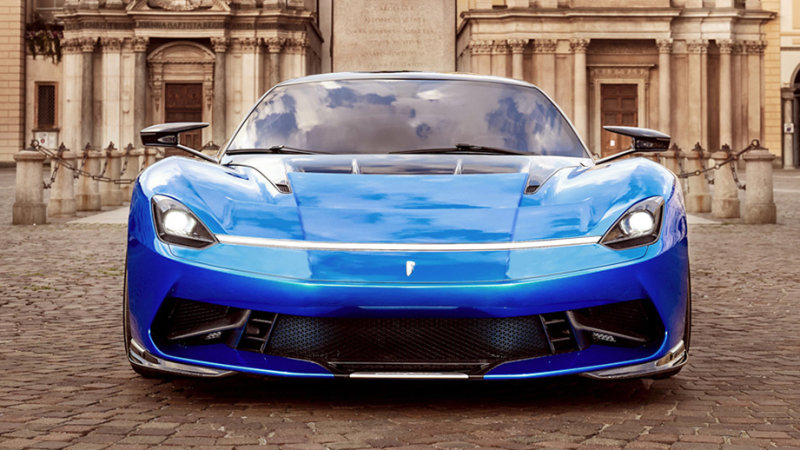
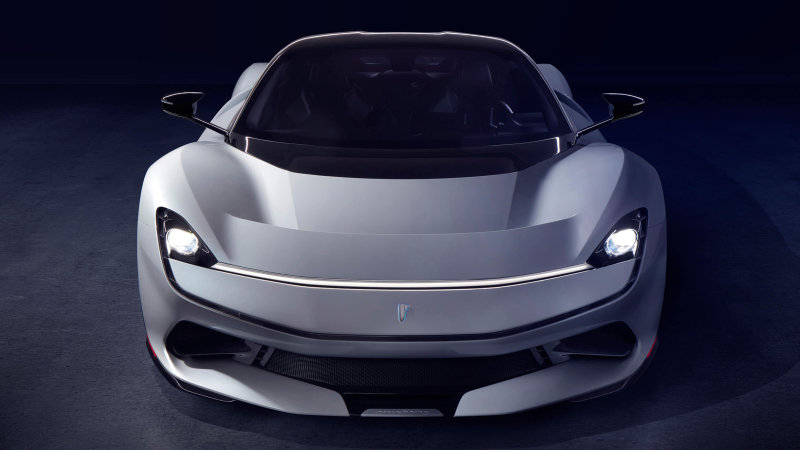
The Pininfarina Battista may be the wildest car revealed this year. It’s an all-electric supercar with 1,900 horsepower that promises a 0-60 mph time of under 2 seconds. Piloting one sounds akin to a jump to hyperspace. The only bad thing we can say about it now is that you can’t buy one yet — even so, a small redesign was revealed at the Turin Motor Show. None of the performance specs have budged, but there are a few styling elements that have been tweaked.

Pininfarina justifies the changes in the name of aerodynamics. Testing done after the car’s initial debut in Geneva showed that things could be improved, so Pininfarina set out to do so. The lower front grille area has been massaged with some reshaping. Additional elements have been added inside the front opening with a couple extra slats framing the honeycomb grille. Also, the side mirrors have been drastically redone, looking far more exotic and slippery than before. It’s safe to say that all these noticeable changes don’t do anything to change our opinion about how fantastic it looks.

Here’s a comparison — the redesigned Battista in blue is on top, the original is below in white.

Pininfarina Battista updateBattista old front end

We’re told to expect the next stages of wind tunnel and road testing to take place this summer in Italy. Will there be further changes to the design after this? Who knows. We do know that the plan for making just 150 of them hasn’t changed, though. The latest from Pininfarina says to expect a driving range of about 280 miles and a top speed of 217 mph. A 0-180 mph time of 12 seconds is quoted as an official acceleration figure, too. Production is supposed to begin in 2020, and we expect that to go on for some time after in order to build all 150 cars.

The Pininfarina Battista Gets a Design Update

A New Face for a Car That Will Rip Your Face Off

The Turin Auto Show in Italy is in for a treat. The Pininfarina Battista will be there sporting some design updates. A concept version of the car appeared at the Geneva Motor Show, and the one at the Turin Auto Show will be an updated design, featuring a new face for the car

The car gets a single wide, low piece up front instead of the dual-fin setup that was on the concept. It’s actually a much more attractive car. It will be shown in a gorgeous new color, Blu Iconica (blue). The new look comes after extensive aerodynamic testing was performed on the car. Luca Borgogno, the car’s designer seemed pleased with the finished result. He also sounded thrilled with the ability to showcase the next stages of the vehicle.

Since its debut at this year’s Geneva auto show, the Battista has stunned audiences all around the world with its beauty and purity of design. I am pleased to be presenting it with these latest masterstrokes that make the form of the car even more beautiful and elegant, and true to Pininfarina’s design principles.

The Battista features a four electric motor powertrain setup. The car offers 1,877 horsepower and 1,696 pound-feet of torque. That translates to a 0-60 mph time of two seconds and a top speed of 217 mph. Pininfarina will build only 150 of the cars and they will each cost $2.26 million. 

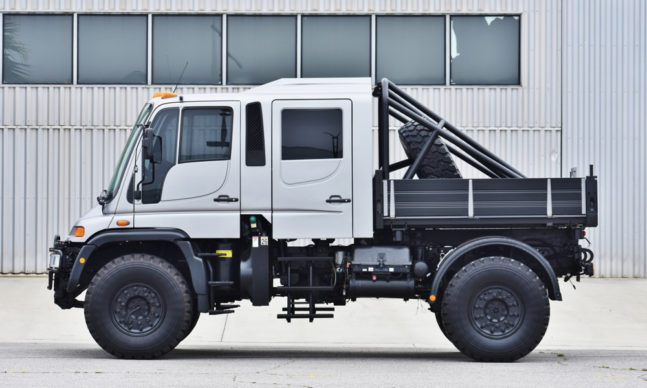
Now’s Your Chance to Own a 2004 Mercedes-Benz Unimog U500

When it comes to commercial off-road vehicles, there’s the Unimog and then there’s everything else. Whether you’re using it for hauling, climbing or as the base for a sweet expedition camper, the Unimog is a…

VIDEO: Watch Chris Harris Wrangle the Ferrari 488 Pista

Our favorite automotive hooligan Chris Harris does his thing in the Ferrari 488 Pista. As always, Mr Harris does not hold back in describing his thoughts. As always, he also doesn’t hold back from getting the Pista very very very sideways. We love that guy. 

[embedded content]

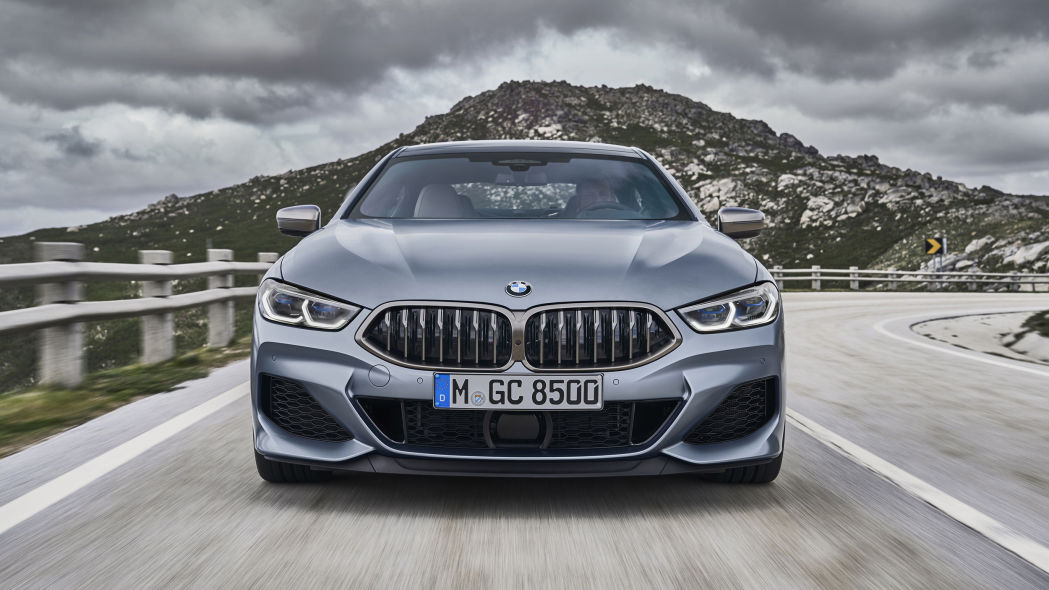
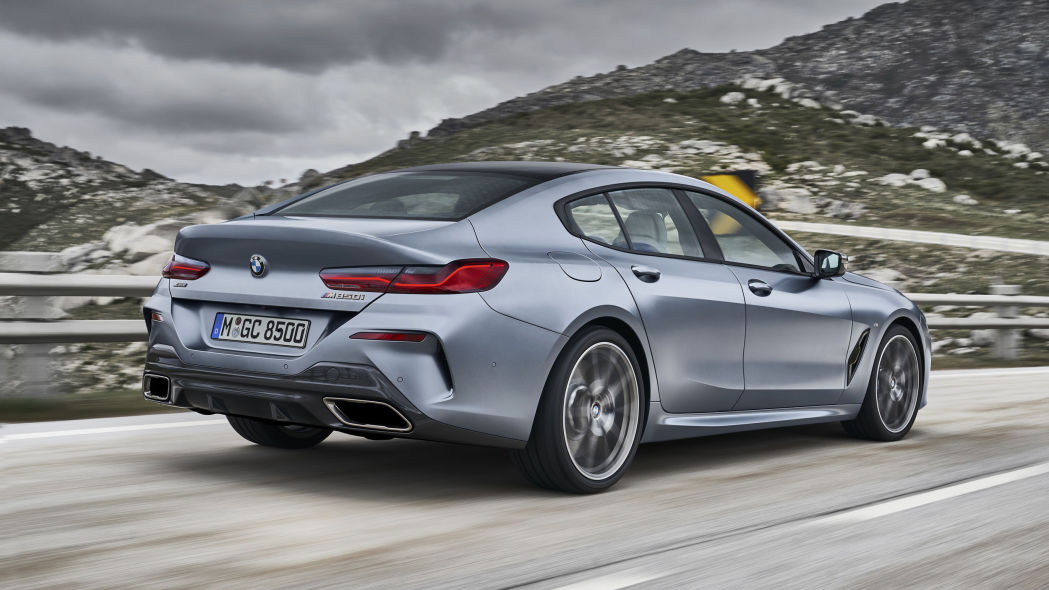
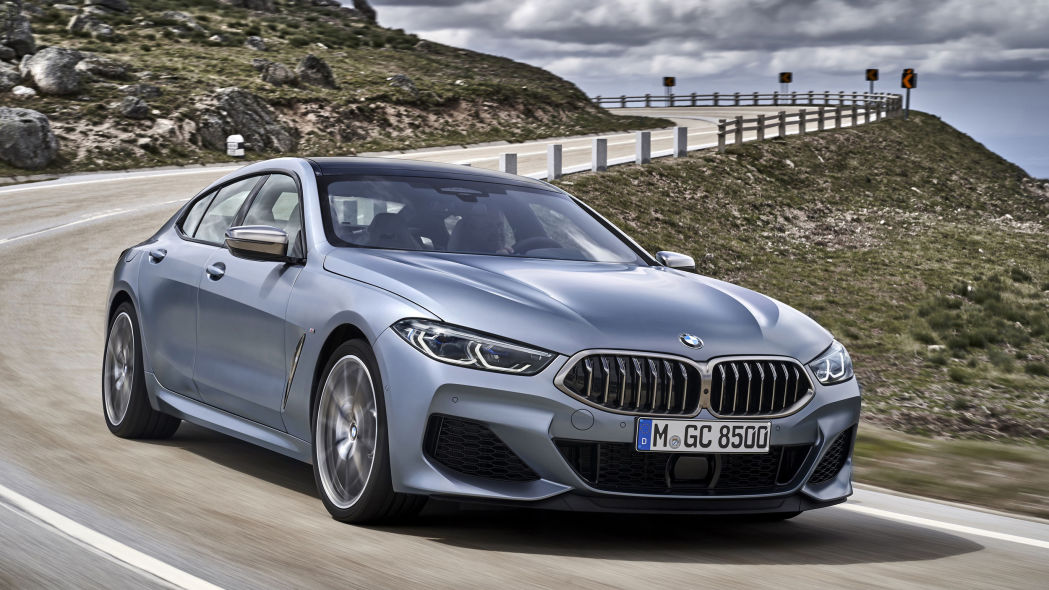
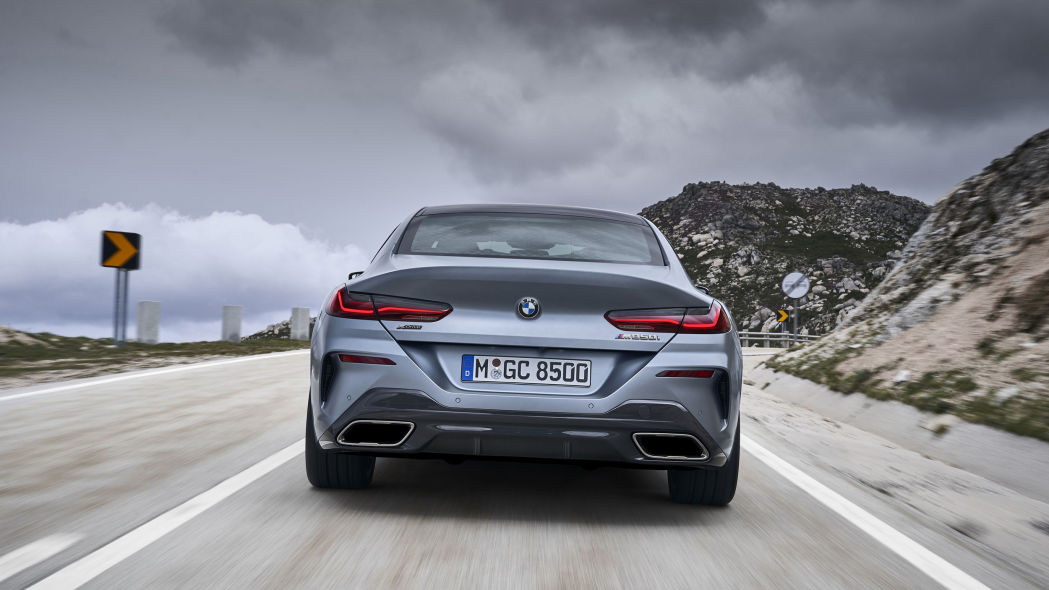
BMW 8 Series Gran Coupe

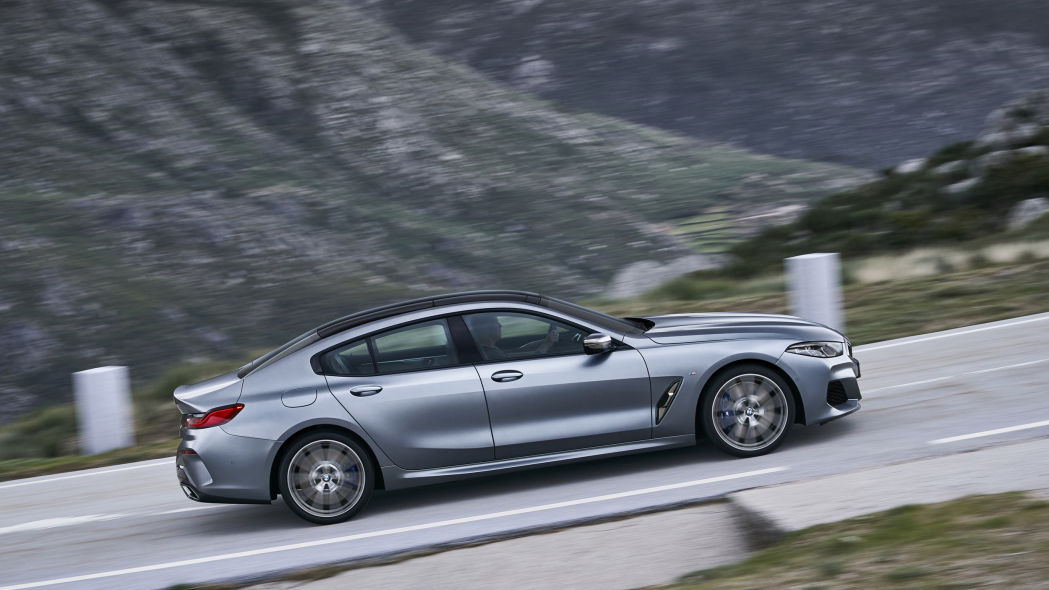
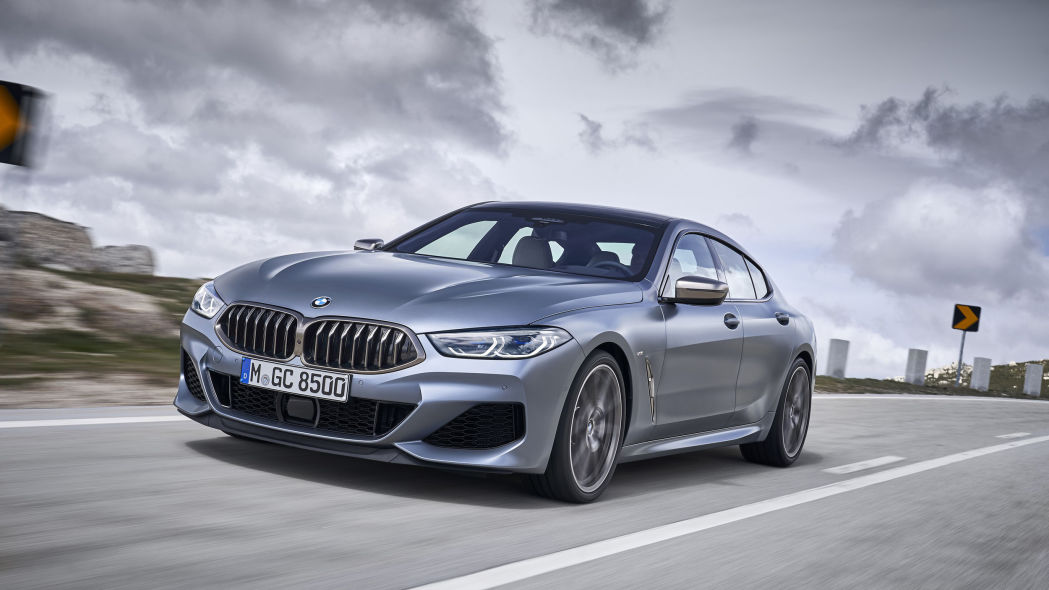
The new BMW 8 Series Gran Coupe comes with 523 horsepower and a twin-turbo V-8 engine. It’s based on the two-door model introduced just a year ago. This time around, the revamped unit boasts more space and easier entry, as well as the first-ever inline-six engine option for the 8 Series lineup.

The sportier M850i variant is BMW’s most expensive models ever. This one’s due out in showrooms sometime this September with an unspecified six-figure asking price. That’s when all option boxes are checked, though.

The four-door coupe is nine inches longer and 1.2 inches wider than its two-door predecessor. BMW will offer both rear-wheel-drive and all-wheel-drive variants with a choice of 335 ponies on a six-cylinder engine. Or, if you really want to up the ante, a 4.4-liter V-8 with 523, as we’ve mentioned.

The six-cylinder rear-wheel-drive 840i clocks 4.9 seconds to reach 60 mph, while the all-wheel-drive gets there in just 4.6 seconds. Both models have 130 mph speed cap with all-season tires. They can reach 155 mph with performance tires, though.

As for tech and interiors, the 8 Series Gran Coupe boasts an extensive set of standard and optional driver assist systems. This includes safety systems that could help prevent collisions and other optional features like an Extended Traffic Jam Assistant, which lets the car take over when there’s heavy traffic.

Also included is BMW’s latest-generation Heads-Up display system that fronts crucial information like vehicle speed, route guidance, and overtaking restrictions right in your field of view. There’s also CarPlay, Live cockpit Professional, and iDrive 7.

The 8 Series Gran Coupe launches sometime this September.

CHECK IT OUT

Photos courtesy of BMW

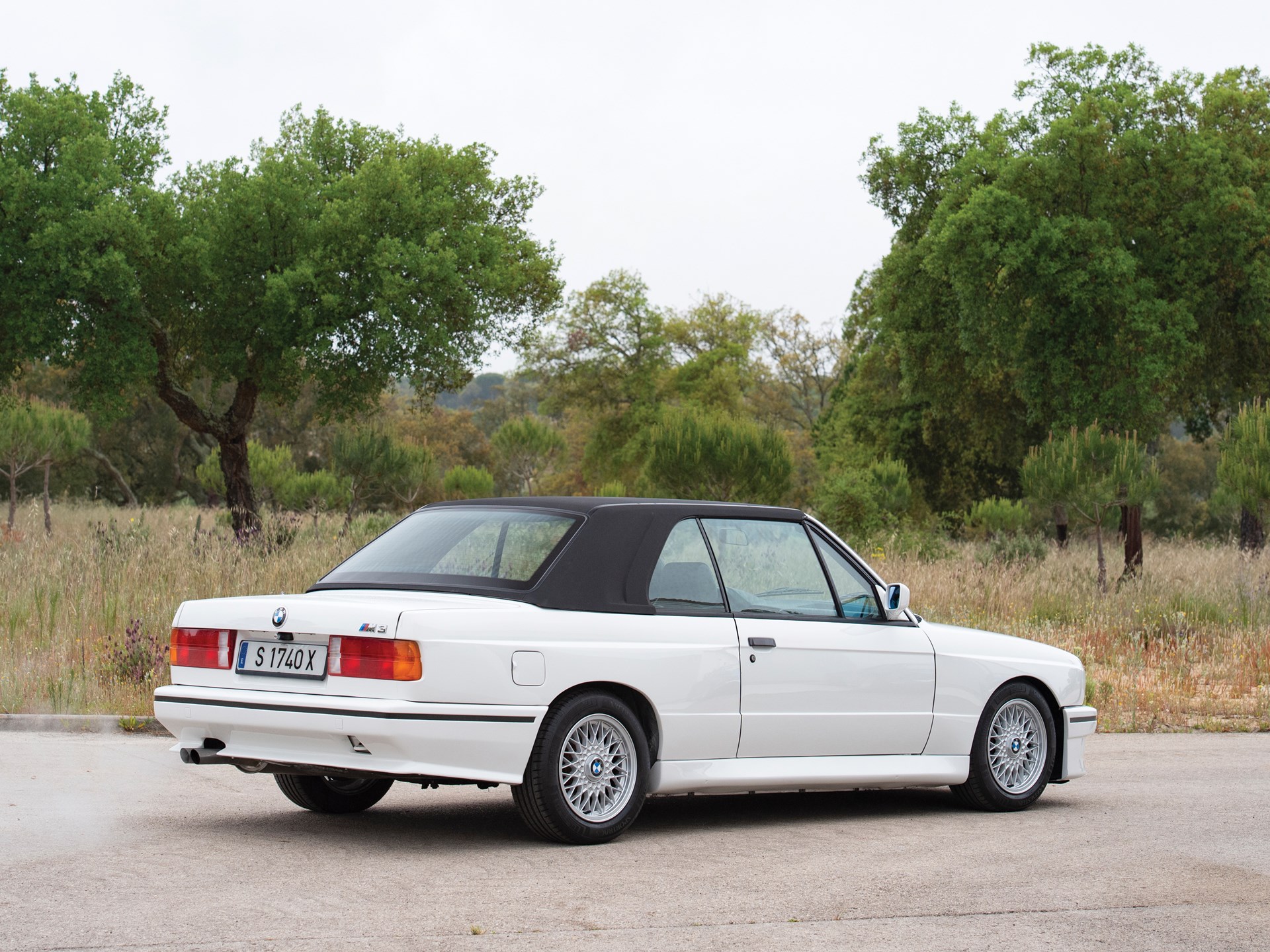
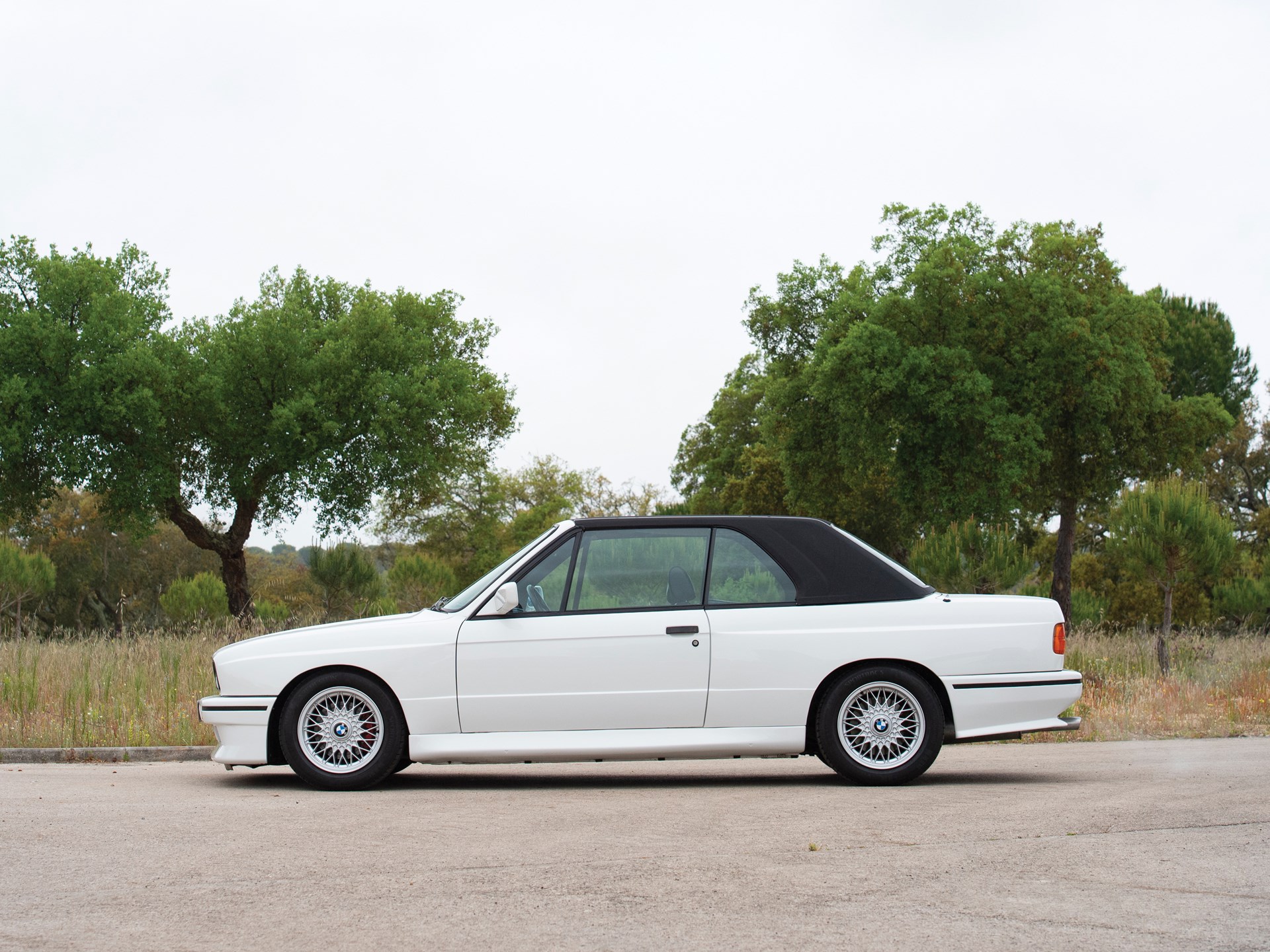
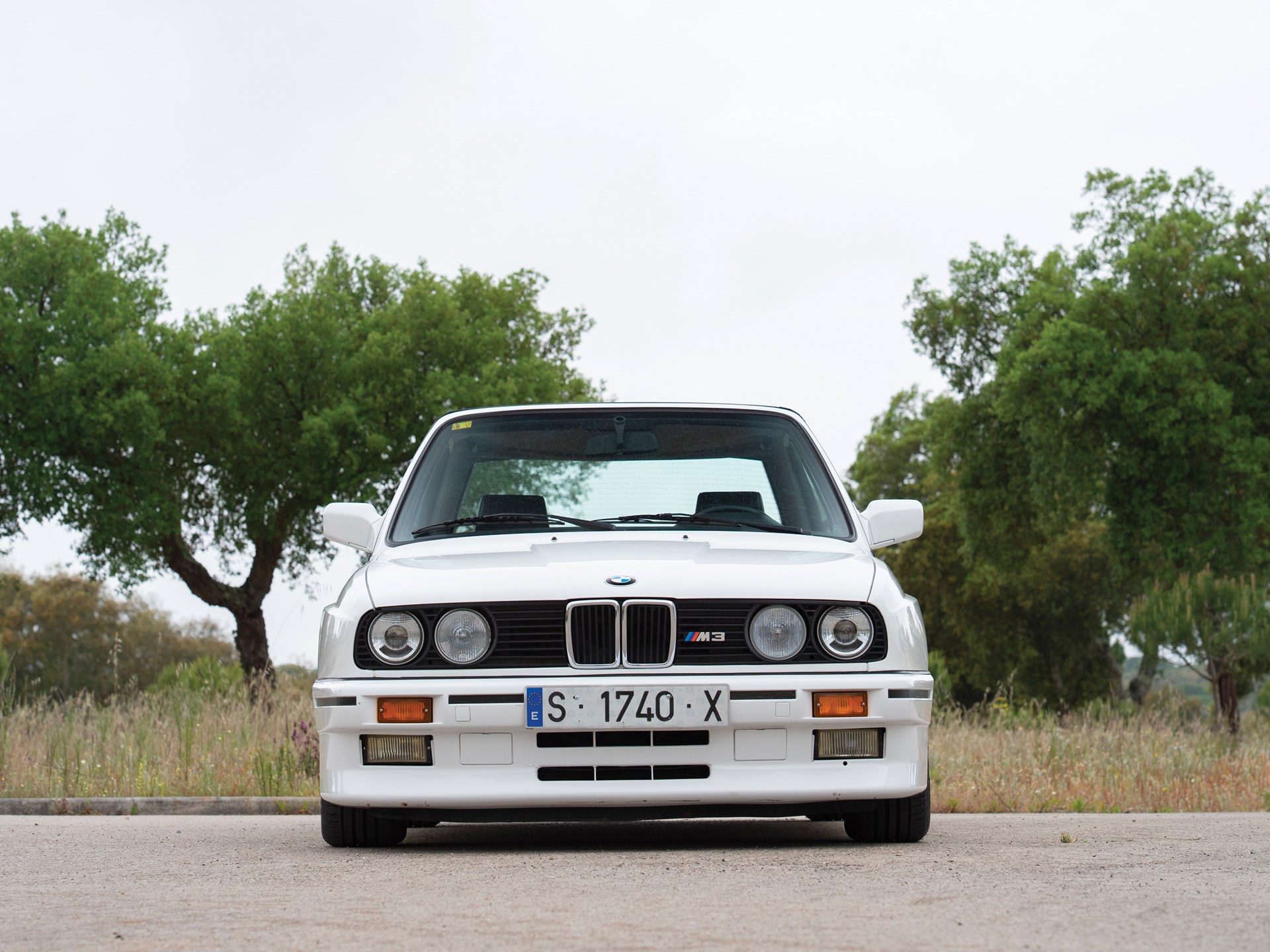
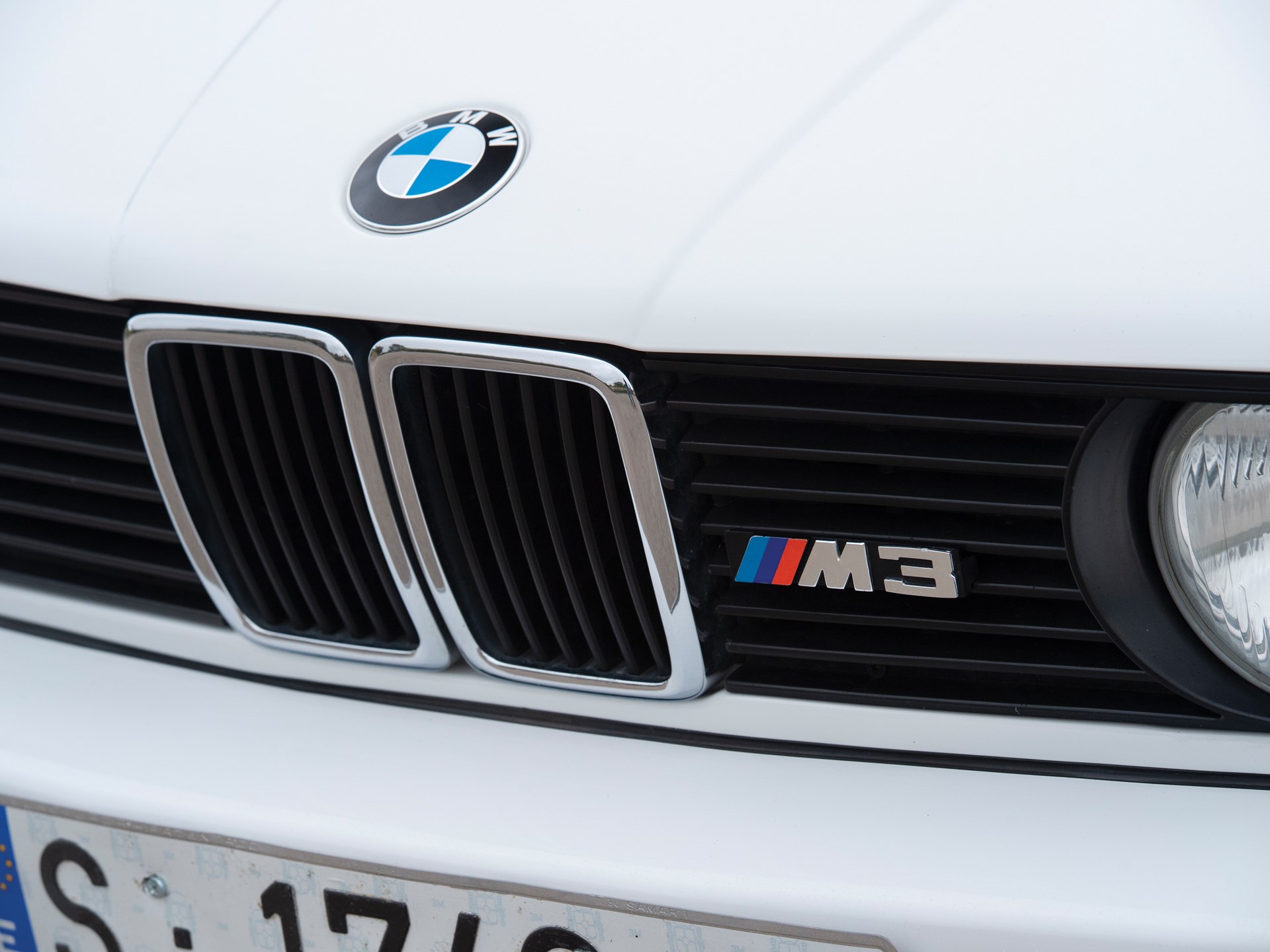
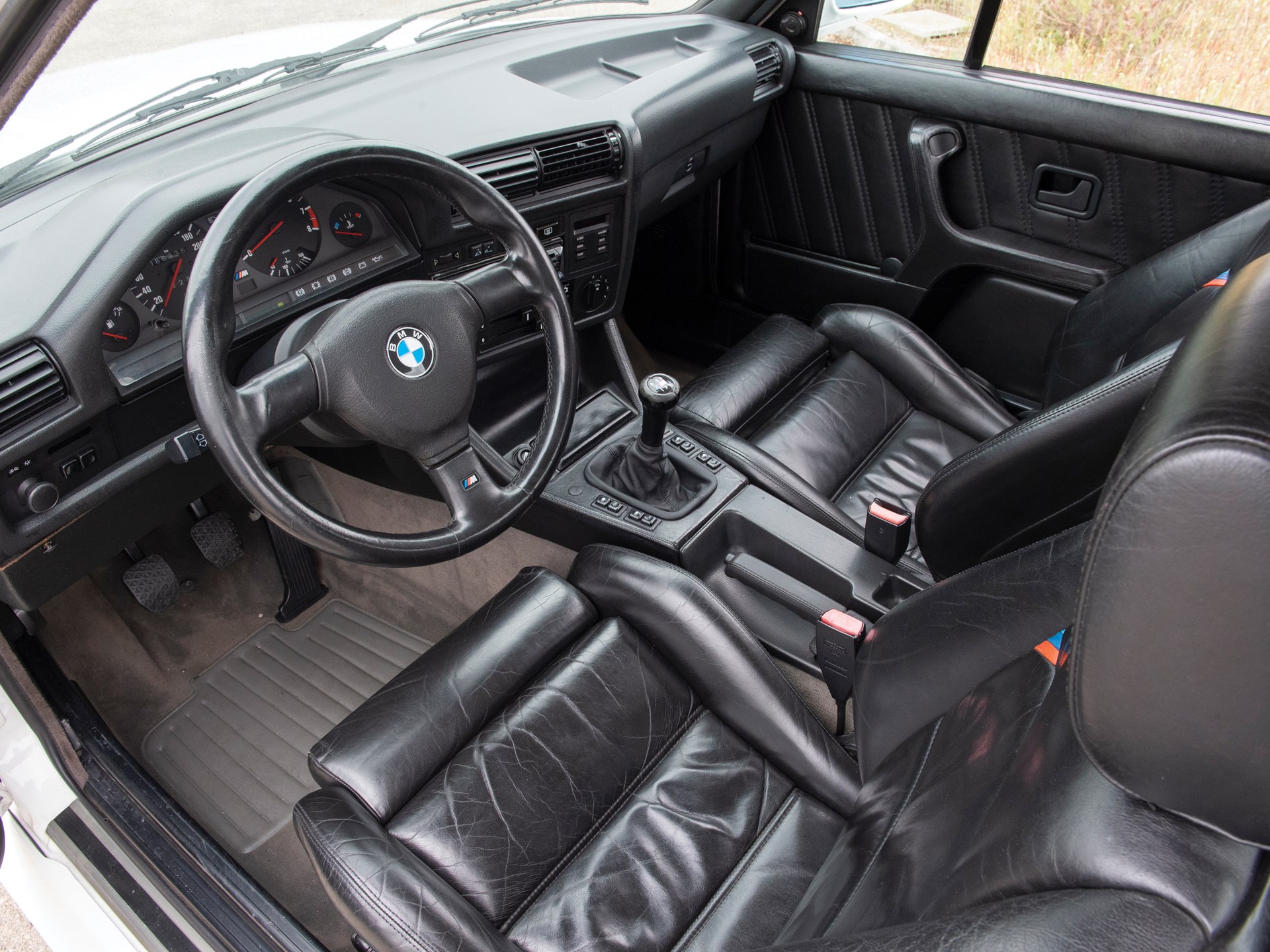
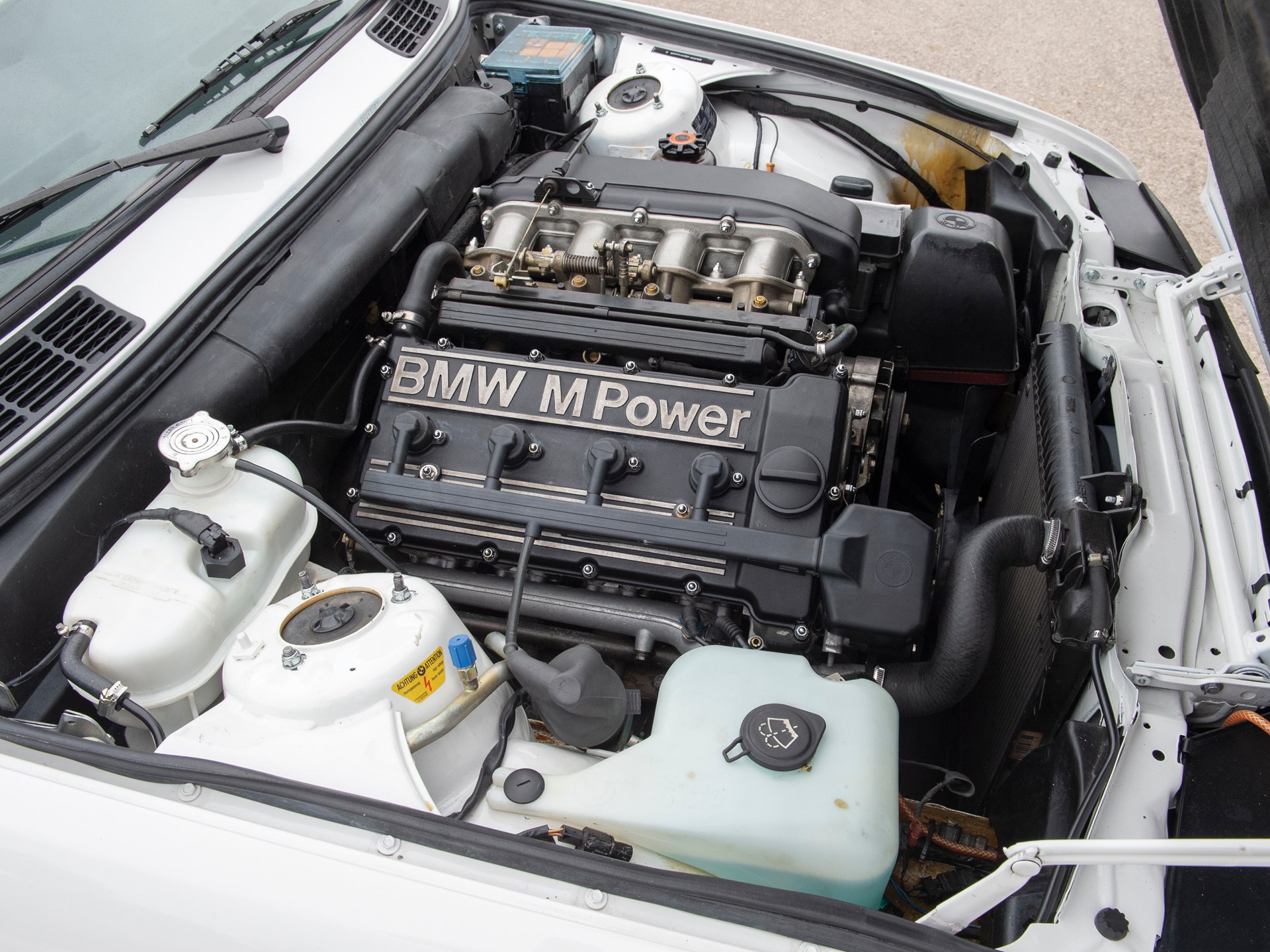
1990 BMW M3 Convertible

On auction now is this 1990 BMW M3 Convertible. It’s not dramatically vintage, to be sure, though time moves so fast that 1990 is basically a bygone era now. An era brimmed in punk-rock and Happy Meal toys that are actually cool.

But we digress. This car is one of only 786 convertibles examples built between 1986 and 1992. Needless to say it’s not that rare, but still quite unique, as it’s also one of the only 12 Spanish-market models with no catalytic converters.

Though it was finished in May 1990, the car benefits from recently renewed brakes. It also comes equipped with a revamped exhaust system and a new soft top. In the correct factory material, too, which will definitely sit well with purists.

The first-generation BMW M3 is a cool-enough car. It looks pretty good, though it lacks the sleek lines and cramped profile of the usual sports car. Still, it’s still perceived today as one of the best drvier’s cars of that era.

The car is extremely well preserved, and the parts are nearly all original save for a handful of bits and bobs. It’s also just on its third owner since new, which means it’s more than ready for a new set of hands. Sure, it’s no Ferrari. And it’s not the best on-auction BMW ride we’ve featured here. Still, there’s something to be said about simplicity, and in that department, this one nails it. More info from RM Sotheby’s when you hit the link below. Car offered without reserve.

ON AUCTION

Photos courtesy of RM Sotheby’s

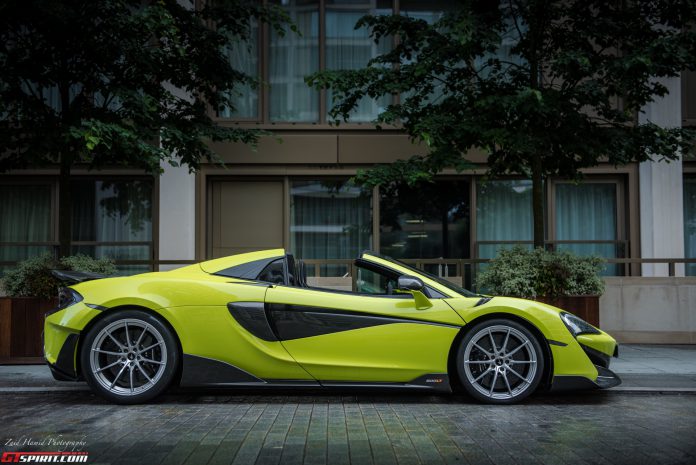
Special Report: Intoxicating Drives With The McLaren 600LT Spider

Saturday, 0800. It’s June just outside London, summer is taking its sweet time to make an appearance – instead it’s more of a hybrid of autumnal dull juxtaposed with greens of spring. I am on a road I’ve opened many stories, such as this one, on and I’ve got butterflies akin to those of a 15-year-old being alone with his high school crush for the first time. My senses are heightened – my ears are being hammered with abusive whip cracks on gearshifts, up and down, harsh V8 noises fill the gaps in between.

My eyes are focused on the ribbon of road ahead; I’m at the head of a needle ducking and diving, stitching apexes together. They are being bordered by boisterous lime green a-pillars, a racing horse with blinkers. The smells of the morning are concentrated and heavy, courtesy of the dense country damp – I can taste it. My palms and fingers are wrapped around the soft warmth of an alcantara steering wheel that is wriggling with feel and communication, a sixth sense. This is what the McLaren 600LT is about – sensory overload.

The 600LT is a car that caused quite an upset, and not just for its competitors. McLaren invited esteemed members of the press (including GTspirit) to experience the LT just a few weeks after they had driven the McLaren Senna – with the thrill and adrenaline of the Senna likely still coursing through their veins, wordsmiths such as Henry Catchpole and Chris Harris openly claimed that they would prefer to own a 600LT than the Senna hypercar that costs almost four time the price.

You would assume that this is because the Senna is so extreme, but they went further than that, saying that the 600LT is more engaging, playful and absorbing on the edge. Bold. Then came this, the 600LT Spider and rumour had it that the 600LT really took the levels of excitement and driving experience a step further with the removal of the roof, surely then this is the ultimate adrenaline hit on four wheels for a fan of topless motoring and track day speed. An un-compromised Spider based on what many claim is the most hair-raising McLaren since the F1.

To find out what was what, I called the friendly people at McLaren and a few weeks later the vivaciously specced car you see pictured here arrived. As statements of intent go, this car screamed street legal race car with lashings of exuberantly expensive carbon, alcantara and other exotic materials. For me personally, one element above everything is the real statement of intent – the seats.

It’s for this reason that I insisted on having a test car fitted with the extraordinary ‘Senna seats’. These hallow carbon sculptures blur the lines between race and street car saving an incredible 24.6 kilograms, a feat and one that contributes heavily (pardon the pun) to the 100 kilogram saving between 570S and 600LT. Not only are they light, they are comically impractical, but in the coolest way possible. The shoulder and thigh support bolsters are enormous and share a shape more welcome in something at Le Mans than your local high street. These shells are clad with seven sponges wrapped in alcantara. Being one piece, they are frozen and cannot be adjusted. The driver’s seat moves forwards and back on traditional rails, manually of course. The passenger seat cannot be moved – at all. As statements of intent go…

It’s not just the seats that hint at what you’re letting yourself in for. McLaren removed most of the carpeting from the inside saving a few kilos, the glovebox saves one more. You could remove the AC and speakers and save around 13 kilos – don’t. Elsewhere, the wheels and Trofeo R rubber combined save 21 kgs, wishbones and uprights 10.2, exhaust 12.6, wiring 3.3, thinner glass 2.1 and a host of body panels in carbon save a further 7.2 kilograms. That’s 100 – spec the Spider and you undo half of McLaren’s hard work and stuff 50 kilograms of roof motors back in, still 50 kilograms lighter than the 570S Coupe and believe me when I say it is worth every gram.

If you’ve read or watched any reviews of the LT Spider you’ll be aware of the hype and why everyone fell in love with it. As many before me have reported, there’s a hack – keep the roof up and the rear window down. Put the drivetrain in Sport, not track, and hit it. The sound from the V8 is not tuneful but its intense. The top mounted exhausts that are situated so close to the rear window and the lack of wind noise from having the roof up combine to concentrate the brutality into an angry, merciless cacophony of tyranny. It’s like nothing else. The gear shifts in sport are just as barbarous and put the infamous Aventador changes to shame, even with a dual clutch gearbox courtesy of Ignition cut.

Want to be fast and smooth? Engage track and the LT stops being a drama queen and becomes a speed freak. Ignition cut is traded for inertia push which harnesses the engine’s torque for a feeling of positive acceleration throughout the shift. It’s wizardry that makes the shifts feel supple, smooth and blooming quick. It’s a shame that the downshifts are not always available upon command as they are with Porsche’s PDK. The dramatic shifts in sport compensate and will have you laughing.

Another point of contention is turbo lag. McLarens are heavily turbocharged and you can feel it. There is a fatty wall of lag that melts away into tyre shredding torque in the midrange, but below 3,000rpm you feel it slugging away before the explosive turbos are spinning at their best. One element that few could ever criticise is the uncorrupted steering that features a traditional hydraulic rack. Like all McLarens it is a joy to flow through the bends being fed granular, accurate feel from the front tires.

Enough technical ‘torque’, what is it like drive? As my Saturday morning introduction highlighted, the 600LT is all you could ask for and so much more if you’re looking for a car that looks, feels and is special. It gets better the harder you push and you learn more about how to access that intoxicating speed the more you drive it. It gets under your skin, one of those cars you’ll empty the milk down the sink for so you can have an excuse to tell your partner you need to nip down to the shops. For me, that’s what these cars are for, not just to set lap times on track days, that’s where the Senna is in a class of one, but to test and goad you to learn their idiosyncrasies and make you a better driver – to bring a smile to your face and hit you with a sensory overload on the way. There may be 592 brake horsepower and 620 Nms, but you feel the LT is on your side.

It’s makes you feel alive and it’s why the 600LT Spider is correctly heralded as one of the greatest car that McLaren has built – it has soul and character. Know someone that says McLarens are cold and not engaging to drive? Put them in an LT Spider and watch them smirk at the antisocial sounds and struggle to articulate to sensation of speed.